THE CHANGING THE CONTENTS OF SRI LANKA RUPEE AND ALLEGORICAL VIEWS OF THE OPPOSITION

March 13th, 2023

BY EDWARD THEOPHILUS

People who know the history of the Sri Lanka rupee would not panic about the surprising changes if the sudden change in foreign and domestic value of it because of the changes in the economy after the Covid-19 backwardness as many has been incurred to the economy. The Sri Lanka rupee value gradually commenced to fluctuating the results of several reasons such as the change of the world economic prospectus,  decline in tourism development and downward trend of export revenue. This situation created as a result of uncontrollable reasons to the government of Sri Lanka and policy actions of the Central Bank further affected the opportunities to improve Sri Lanka rupee, the temporary postpone of repayment of debts has limited the opportunities to come up of the currency value. If debt repayment has been continued Sri Lanka rupee would not face to decreasing trend.   

The history of the Sri Lanka rupee has displayed how its value fluctuated since 1930s and it has been vulnerable to various factors such as economic, social and cultural incidences.  Before beginning the use of the Rupee, Sri Lanka was gradually adapting to RIX Dollars and it was changed as required by the British controllers. Under the Currency Board System, the Sri Lanka rupee was strongly backing from the British pound and the situation unexpectedly changed the official depreciation of the British pound in 1967. Sri Lanka had to officially devalue its currency unit by a higher percentage than the British currency devaluing.  In this environment advisors of the IMF concluded that the Sri Lanka rupee should be linked to the US Dollar and since then the stability of the Sri Lanka rupee fluctuation has become a natural situation and maintaining a higher value was a dream for many years, after 1978 changes in the peg system, the Sri Lanka rupee became like an uncontrollable financial instrument that administered by the country. In this environment Sri Lanka haven’t had sufficient foreign currency reserves to protect the currency value.

During the British rule the Sri Lankans had limited the international transactions and the main factors related to the demand for Sri Lanka’s rupee was importing goods and services and this situation was to Asian countries and Sri Lanka had been in a stable situation because its needs were limited. The foreign currency demand and supply was in a manageable situation. The Beginning of the Central Banking System in 1951 which was given four major objectives that were lost at the beginning by the mismanagement of monetary board members before 1955, and the control of the Central bank lost in 1956. In this situation the environment created after the Korean war cannot under estimate. Since 1956 Sri Lanka’s rupee has been fluctuated by various international and domestic reasons, the knowledge of this situation was too little it was showing the people were too much praising economically disadvantaged policies. When Dr N.M. Perera became the Minister of Finance who could not play a cardinal role to achieve a miracle increasing the external value of rupee and attempted to maintain drastic controls that were like an attempt to keep a bird in a cage.

There were many opportunities for Sri Lanka to change the economic environment, especially concentrating on foreign exchange earnings and restructuring the economy to address economic issues. Despite the changing these factors related to contents of Sri Lanka rupee, politics of ruling parties significantly mainspring the declining value of Sri Lanka Rupee. The education of the country misled people to praise socialism without knowing the negative impact.  Political system had shown a political displacement with allegorical views of political parties. Especially JVP had many stupid views in relation to management of the economy and they haven’t had any knowledge about rupee value. The public addresses of JVP leaders seem they never talk about strengthening of rupee value, increasing foreign reserves and other vital issues are not talking pints of them.

J.R administration admitted that the Sri Lanka rupee should be exposed to a peg system subject to turning more exchange earning by methods of bringing foreign investments, developing tourism, promoting non-traditional exports, improving the quality of exports and many others, but opposition political parties especially JVP and other Marxist political parties had faith on stupid views, which were rejected by the world.  They have no logical policies for the improvement of the value of Sri Lanka rupee and the left political parties to needed to develop positive policies to stabilise Sri Lanka rupee.  The main supportive factor to stabilize the Sri Lanka rupee is earning more foreign exchange than the demand and the excess transferring to reserves and building a healthy reserve level such as more than $ 10 billion. If this policy works in the country, the changing contended of the Sri Lanka rupee will have an upward trend.

Policy making to achieve this situation is the hardest task for political parties and the government policy officers, because all countries in the world make positive attempts to increase exchange reserves through competitive earnings. These efforts could not be done by a political party such as JVP which was responsible for the decline in the Sri Lanka rupee by the negative work of them and destruction of the economy by many annihilations.

If JVP wants come to power they should be good policy people to improve the domestic and foreign value of Sri Lanka rupee. When established the Central Bank of Sri Lanka it had very good objectives on the foreign and domestic value of Sri Lanka rupee, however, the act of Central Bank has been subject to changes as the bank as the monetary authority has been doing many operations works such as rural credit management, superannuation management, stock market management and many other operational works which should not be done by regulatory authority. I have no idea new act changes proposed and suggested to maintain as a regulatory authority. If the regulatory authority performs market operation activities it could not independently perform regulation services.

Students can use latest digital knowledge hub to find solutions to major economic, agricultural and scientific issues – Prime Minister

March 13th, 2023

Prime Minister’s Media Unit

Prime Minister Dinesh Gunawardena said in today’s digital world, a digital hub is an essential resource base for students to have access to modern knowledge. Opening the new Digital Hub at the BMS, premier university on business management, he said the move by BMS to set up its Digital Hub to connect all those involved in learning to a common net is timely and in line with the government policy.

Like the income divide between the rich and the poor countries, there is a digital divide also between them. This need not be the case. The government has taken effective action to eliminate this divide by improving the digital literacy of fellow Sri Lankans. It is a difficult path but not an impossible one. The government expects the private sector entities to join hands with it in this enterprise,” he said.

The Prime Minister pointed out that digital systems could be used to create ideas, information and to define, design and implement digital solutions, and evaluate these solutions and existing information system against specific criteria. Fundamentally a digital hub creates a space for academics and students to develop technical skills, literacies skills, and ways of thinking that we understand to be essential to their long-term effectiveness as professionals.”

Stressing the importance of time resource of students, the Prime Minister pointed out that there are no undue delays in declaration of results of school and university examinations in most of the countries. He said the government is legally bound to declare results of GCE and university examinations without any delay to prevent wasting of valuable time of the students.

Premier Gunawardena, praising the private sector universities and institutions that utilize their resources from morning to late night holding several teaching sessions for different batches of students, lamented that the government sector school resources are locked up from 2.00 p.m. to 8.00 a.m. on the following morning totally unutilized.

Today, the BMS, with its excellent track record behind, has evolved into a degree awarding institution approved by the government. I expect BMS to offer its own degrees in management, law, nursing, and biomedical and biotechnology fields soon,” he said.

BMS President Dr W A Wijewardena said it was on a request made by the Prime Minister that BMS has opened a Digital Hub to facilitate high-tech learning facilities to students.

Students in Sri Lanka as well as in neighbouring countries can secure access to university degree studies with the partnership which BMS has formed with Northumbria University, UK and several other top universities abroad.

Former BMS President Dr Jayatissa de Costa, PC, BMS Board Members Dr Gamini Samaranayake and Dr Sriyani Peiris, faculty and students were present on this occasion.

Buddhism’s place in the history of China-India ties 

March 13th, 2023

By P.K.Balachandran/Ceylon Today

Buddhism’s place in the history of China-India ties  

Colombo, March 13: Besides trade, Buddhism played a major role in the creation of ties between India and China in ancient times. These religious ties were established in the First Millennium of the Common Era (CE or AD). But they weakened gradually, to the point of vanishing in the Second Millennium, when Buddhism disappeared in India, the land of its birth, and China developed its own brand of Buddhism through a process of Sinification”.

The growth and decline of Buddhism in Sino-Indian relations are described in fascinating detail by Shyam Saran, a former Indian Foreign Secretary in his book: How China sees India and the World” (Juggernaut Books New Delhi 2022).

Saran quotes John Keischnick (author of The Impact of Buddhism on Chinese Material Culture) to say that in the First Century CE, Buddhism began influencing Chinese culture in terms of concepts, beliefs, practices, and patterns of behavior. Buddhism-based Chinese culture included a new pantheon of deities, making offerings to idols and images, and rituals of consecration. Chinese culture also incorporated Indian Buddhist beliefs such as the incarnation, the law of ‘karma’ and meditation. China even adopted the gesture of pressing one’s palms together in veneration, Saran points out.

During the first millennium, Chinese Buddhist monks and scholars acknowledged that the India of the time represented a superior culture and was an intellectual powerhouse, a teacher that China could learn from,” Saran says. And the Indian monks who came to China to preach wanted to make it a replica of their sacred land, he adds.

The immense body of Chinese translations of the Buddhist scriptures brought a new vocabulary, new expressions and metaphors, which over time, became embedded in Chinese colloquial language, Chinese literature and conceptual thought,” Saran observes.

As in other countries which took to Buddhism, China also adopted the relic culture”. Chinese rulers acquired items associated with the Buddha, including ashes and bones from his funeral pyre” for their stupas. A diplomatic mission from a Tang ruler to King Harsha’s court in the 7 th.Century CE went back with a rubbing of the footprint of the Buddha engraved on stone.

But the physical connection began to wane in the 8 th.Century CE and accelerated in the 2 nd., millennium after 1000 CE. This was because, by that time, China itself had developed its own version of Buddhism which Saran calls a Buddhism with Chinese characteristics” much like Xi Jinping’s socialism with Chinese characteristics”.

In fact, Saran asserts that in the Second millennium, China was emerging as an alternative Buddhist universe with itself as its center.” China was radiating Buddhism to countries on its periphery like Korea, Japan and Vietnam.  Buddhism helped China establish its centrality in East Asia,” Saran says.

As in India, China had sacred mountains. There were four sacred Buddhist mountains: Mount Emei in Sichuan; Mount Putuo in Zhejiang; Mount Jiuhua in Anhui; and Wutaishan in Shanxi.

Wutaishan for example was dedicated to Manjusri, the Bodhisattva of Supreme Wisdom. This mountain even attracted pilgrims from India.

The Sinicization” of Buddhism meant the development of Chinese schools of Buddhism such as: Tiantai (Celestial Platform); Huayan (Flower Garden); Qing tu (Pure Land); and Chan (better known as Zen in its Japanese version). According to Saran, these schools of thought followed the Indian Guru-Sishya Parampara, in which knowledge is imparted personally by the teacher to the pupil rather than through books or other formal means.  Interestingly, the original patriarchs of these Chinese Buddhist schools of thought were acknowledged as Indian, in some cases the Buddha himself.

According to Saran, the Tiantai” school revered the Lotus Sutra (Saddarma Pundarika Sutra) as constituting the highest teaching of the Buddha. The Pure Land” doctrine was the cult of the Buddha Amitabha” who lived in his Western Paradise” of Sukhavati.  It was believed that the chanting of the name of Amitabha (A-mi-tu-fu in Chinese) ensured entry into Sukhavati, where there would be neither pain nor sorrow. The foundational texts of the Pure Land” doctrine were the Amitayus-Vipasyana-Sutra (Discourse Concerning Meditation on Amitayus) and the Sukavati-Yyuha-Sutra (Description of the Western Paradise).

The Huayan school drew inspiration from the Madhyamika (or the Middle Way) teachings of Nagarjuna, the great Indian Buddhist philosopher of 2nd.Century AD, and the Yogachara school of Buddhism taught at Nalanda University in present-day Bihar in North India. The name Huayan is derived from the Avatamsaka Sutra (the Flower Garden Sutra).

As stated earlier, the Chan school is the same as the Japanese Zen school. It is derived from the Sanskrit word Dhyana or contemplation. Dyana is the journey of the mind” (‘dhi’ being the mind, and ‘yana’ meaning movement). This is based on Patanjali’s Yoga Shastra (2 nd or first century CE) and adopted by Buddhism. Dyana was taken to China by the Buddhist monk Bodhidharma from Kanchipuram in present-day Tamil Nadu in the 6 th.Century CE. He was the son of a Tamil Pallava king. In China, Bodhidharma became the patriarch of the Chan school of thought, which is characterized by contemplation, stillness and becoming aware of the essence of things through meditation.

Dhyana is akin to Tao (The Way) founded by the Chinese philosopher Zhuang Zi.  Saran points out that the Chan school gave rise to the art of monochrome impressionistic painting as opposed to realistic or meticulous representation of objects. Chan or Zen, he points out, delves into one’s own mind to find the essence of things.

Saran asserts that India gave to China the revolutionary idea of seeking truth from within oneself. It was an idea that germinated in India and wound its way to China and Japan, gathering local color, fragrance and sensibility.”

Then there is the cult of the Goddess Guanyin, a female incarnation of Avalokiteswara, the Bodhisattva of Compassion. Avalokiteswara is regarded as the earthly manifestation of the self-born and eternal Amitabha Buddha. Avalokiteswara’s female incarnation, Guanyin, is purely Chinese, Saran says. Guanyin means one who hears and listens.” These cults became popular in China, and through China, in other parts of South East and East Asia.

As India was witnessing the decline and eventual eclipse of the Buddhist faith in the new millennium,  China became its alternative centre with its own revered masters preaching new interpretations of the received scriptures and establishing sacred centres of pilgrimage. Whereas in an earlier age, pilgrims and scholars headed to India to seek the authentic faith, it is to China they were now travelling for the same purpose,” Saran says.

The diplomat-turned historian regrets that India has not used its Buddhist heritage to spread its relevance to Buddhist Asia. Admittedly, independent India under Prime Minister Jawaharlal Nehru began well by celebrating the 2500 years of Buddhism as an international event in 1956. The celebrations enhanced India’s cultural, political and diplomatic profile.  But there was no follow-up. However, in recent years, under Prime Minister Narendra Modi, there is a revival of interest in asserting India’s rightful place in international Buddhism. A lot is being done for Buddhist tourism in India. India is assiduously building its Buddhist links with Sri Lanka, for example

Saran notes that Communist China is consciously using its Buddhist past for diplomatic outreach. There is immense scope for Sino-Indian collaboration in Buddhist studies he points out.

China has a rich store of Buddhist manuscripts, including in Sanskrit, unmatched anywhere in the world. Much of India’s history and culture lie embedded in these documentary collections and their study could be a most productive collaborative project between the two countries.”

It is unlikely that Finance Ministry would release sufficient funds: EC

March 13th, 2023

Courtesy The Daily Mirror

A highly disappointed chairman of the Election Commission (EC) Nimal G. Punchihewa yesterday lamented that it is unlikely that the Finance Ministry would release sufficient funds to the EC to conduct Local Council (LC) polls as ordered by the highest court in the country and therefore the only remedy is to seek redress from the Supreme Court once again as a last resort.

But it has to be done by the petitioners – the main opposition Samagi Jana Balawegaya (SJB) – who obtained the Supreme Court ruling that ordered the Finance Ministry to release funds to the EC promptly, he added.

We as the EC, the constitutionally mandated authority to conduct elections in time are ready to put our side of the story before the Supreme Court if and when the SJB moves the Supreme Court to take further action in respect of the Treasury’s continuous repudiation of the Supreme Court interim order,” Mr. Punchihewa told Daily Mirror last morning.

Mr. Punchihewa said the EC would meet today or tomorrow to decide on the next course of action in the backdrop of Finance Ministry’s repeated rejection to release funds for the EC ignoring the Supreme Court ruling.

Asked by the Daily Mirror, Mr. Punchihewa said there was no legal impediment to announce another date to hold LG polls in the event of the EC’s inability to conduct LG polls on April 25 as scheduled.

The General Secretary of the main opposition SJB, Ranjith Madduma Bandara filing an FR petition was able to obtain an interim order from the Supreme Court on March 3 preventing the Secretary to the Treasury, the Attorney General who represented the President and any other public official from withholding funds allocated to the EC from the budget 2023 and thus protected the voting rights and Fundamental Rights of 22 million Sri Lankans.

The three-judge Supreme Court bench comprising Preethi Padman Surasena J, Janak De Silva J, and Priyantha Fernando, J further granted leave to proceed with the FR petition.(Sandun A. Jayasekera)

Govt. to double mid-day meals for school children

March 13th, 2023

Courtesy The Daily Mirror

A national program that currently provides a mid-day meal for schoolchildren will be doubled from the start of the next school term, Education Minister Susil Premajayantha said.

He said the ministry is currently providing a mid-day meal for 1.1 million schoolchildren.

The program was kicked off in January with the support of US AID, the World Food Program (WFP), and the government. (Chaturanga Pradeep Samarawickrama)

NCPA proposes to establish Infant Receiving Centres in Hospitals

March 13th, 2023

Courtesy The Daily Mirror

The Child Protection Authority has proposed to establish Infant Receiving Centres in Hospitals in all nine provinces where parents could hand over their new born infants without claiming their identity, Chairman of the National Child Protection Authority Udayakumara Amarasinghe said today.

He told a news conference that a set of proposals were drafted by the NCPA in 2021 in this regard.

He said according to the proposal, it was proposed to open Infant Receiving Centres in Hospitals covering all nine provinces allowing parents who were unable or unwilling to bring up their new borns due to various reasons to hand over their infants without revealing their identity.

The Chairman said this set of proposals were submitted to the Cabinet in 2021 and said the legal officer of the Cabinet Office pointed out that the Cabinet Paper should be presented through the Department of Probation and Child Care Services.

He said it was a timely need to expedite the process after considering the escalating incidents of deserting the newborns by the parents.

He said these centres were successfully functioning in India. (Ajith Siriwardana)

Govt has taken principled decision to expand fuel distribution – President

March 13th, 2023

Courtesy Adaderana

During a discussion with the representatives of the Sinopec Group held at the Presidential Secretariat this morning (March 13), President Ranil Wickremesinghe said that the government has taken a principled decision to expand the distribution of fuel which is expected to commence shortly.

The representatives from the Sinopec Group confirmed their readiness to invest in the import, storage, distribution, and marketing of fuel to cater to Sri Lanka’s energy requirements.

The representatives informed the Sri Lankan Government that their organization has adhered to the existing system and has applied accordingly. They further conveyed their readiness to fully finance the construction of a refinery in Hambantota, which has been identified as a central energy hub by the government.

Moreover, the representatives stated that their company is prepared to respond to future solicitations that align with the aspirations of the country.

They also presented their proposal to the President who spoke about the import, storage and distribution of petroleum products.

Expressing his views, President Ranil Wickremesinghe further stated that Sri Lanka expects rapid development following the program with the International Monetary Fund.

President Wickremesinghe also expressed his desire to promote and attract foreign businesses to operate within the country in the future.

Minister of Power and Energy Kanchana Wijesekera, Senior Advisor to the President on National Security and Chief of Presidential Staff Sagala Ratnayake, Secretary to the President Saman Ekanayake, Secretary of the Treasury Mahinda Siriwardena, Secretary of the Ministry of Power and Energy Mapa Pathirana and government officials and representatives of the Sinopec Group participated in the discussion.

–PMD–

Immigration Dept apologizes to Mahindananda; probe underway into airport mishap

March 13th, 2023

Courtesy Adaderana

The Department of Immigration and Emigration says an investigation is underway after MP Mahindananda Aluthgamage, who arrived at Katunayake Bandaranaike International Airport (BIA) to depart for a foreign visit, was turned away last week.

Issuing a statement, the department explained that, as per the information received, the situation arose after an employee incorrectly entered the data of someone else into the system as the MP’s passport data.

Accordingly, the employee who is responsible for the mishap has been suspended, pending an inquiry, the department said further.

Sri Lanka Computer Emergency Readiness Team (SLCERT) and the Criminal Investigation Department (CID) have initiated further investigations regarding the incident, it added.

The Controller General of Immigration and Emigration, in his statement, apologized to MP Aluthgamage for the inconvenience caused to him.

On Friday night (March 10), MP Aluthgamage was turned away at the Katunayake airport citing an overseas travel ban imposed by the Matugama court.

Subsequently, the parliamentarian had informed the Controller General of Immigration & Emigration that no such order has been issued against him.

Of British Colonial Administrators with Special Reference to C.J.R. Le Mesurier, Assistant Government Agent of Nuwara Eliya District and British Planters in the Central Province of Ceylon in 1870 -1895

March 12th, 2023

By Sena Thoradeniya

(Excerpts from a Forthcoming Publication Titled Dumbara Rata”)

(1) Introduction

Still our Kalu Suddhas lament that Ceylon lost British planters owing to granting of Independence” to the country and then impending nationalisation of the plantations. They add that the brown sahibs left the country owing to Sinhala Only” Act and later Land Reforms carried out by Mrs. B’s Government. The theory behind this lamentation is that British speculators, adventurers, wanderers and risk-takers (before they became Planters) came here with the good intention of developing a colony, bringing new technology and transferring technology and entrepreneurship to locals, investing their profits in other ventures for the advancement of the country and so on and so forth. If one takes the tea industry it continued for more than a century having a very simple manufacturing process from withering, rolling, firing, sifting and packaging and marketing black tea in bulk without any innovation, automation or value addition.

In this essay we do not intend to discuss about the plantation system, how it was established, evolved and financed, planters’ life styles, their psyche and management style and the Agency House system as they do not come under the purview of this essay.

Objectives of this essay are (1) to discuss some selected engagements of some British Colonial administrators who served in the Central Province with a segment of their own countrymen, Planters, and (2) to show how some Colonial policies were injurious to the Kandyan peasantry in the period from 1870 to 1895.

Central Province consisted of four administrative districts, viz. Kandy, Matale, Nuwara Eliya and Badulla. In 1886 Uva with Badulla District was declared a separate province. 

(2) Extension of Nanuoya Railway

Continuous agitation by the planters for the extension of Nanuoya Railway line to Haputale and beyond was not to the liking of some colonial administrators.  Government Agent of the Central Province P.A. Templer’s   observations (1884) are important to our investigation.

He writes: This is a question whatever may be the financial condition of the Colony which is never allowed to rest by the owners of estates cultivated by means of English capital. The reason is not far to seek. The planter who is working here with his own or with borrowed capital is desirous to make what money he can in a few years and then sell out and return to England with his increased capital. There are no settlers who seek to make Ceylon their home: they are sojourners who wish to make money and go away never to return. Hence that happens, that railway extension in Ceylon means in the daily press and in common talk.”

Templer sees that the extension of the railway (is) for the benefit of certain estates”. Thereby their value will be greatly increased”.

Railway extension will not be considered in this report in this spirit. It will be regarded as a question of great importance to future and permanent good of the country and of the landowners and settled inhabitants of the country”.

Salient features of Templer’s observations are:

(i) Agitators for more and more railways had not considered the financial condition of the Colony;

(ii) Agitation was done by planters and the press;

(iii) Owners of estates had planted estates with English capital: his own or borrowed capital;

(iv) He is desirous of making a quick buck and sell his property and return to England with increased capital;

(v) They are not settlers who seek to make Ceylon their home;

(vi) Then we see Templer’s harshest condemnation: they are sojourners who wish to make money and go away never to return;

(vii) Extension of railway will benefit certain estates; their value will be greatly increased allowing the owners to sell them at a higher value.  

The same thing happened at the time of construction of cart roads. Planters agitated for more and more cart roads. They saw the value of their properties increasing with the construction of cart roads. Speculators with the connivance of officials who worked in the Survey Department and the officials themselves bought properties where cart roads had been traced.

(viii) Templer regarded railways as of great importance to future and permanent good of the country and of the landowners and settled inhabitants of the country”. Thereby he had envisaged a landowning class of British origin and British settlers in the country.

In a few isolated cases only, this did not happen in Ceylon as in other British colonies such as colonies in the Caribbean, South Africa, Rhodesia and Kenya. America, Canada, Australia and New Zealand should be added to this list. There are many reasons for this, physical, economic, cultural and demographic factors and supply of labour.

It will be fascinating to study what railway lines Templer and some other British administrators had suggested instead of extending the railway to Badulla via Haputale; they were railway lines from Kandy to Batticaloa via Dumbara Valley (connecting it to Badulla) and from Matale to Mannar respectively.

C.J.R.  Le Mesurier the Assistant Government Agent of Nuwara Eliya District, (or Assistant at Nuwara Eliya to the Government Agent for the Central Province), held a different view about the Haputale line.  He wrote: Although the Haputale Railway Extension will be of the greatest direct utility to the Uva Province it will indirectly confer a very great benefit on this District from the great extent of waste and uncultivated land it will open up. Almost from present terminus of the railway until the end of the new extension at Haputale Pass the line will pass through a long unbroken extent of unoccupied Crown forest and Patana land ; when this is opened up and cultivated – as most of it must be when the railway passes through it- the benefit to the District will be great. There is no reason why the valley on the Dimbula side of Middle Camp should not become a second Nuwara Eliya. It is as well sheltered and it has a fine river running through it and it is one of the most beautiful places in the hills of Ceylon”.

Le Mesurier does not say that the extension of Haputale line will benefit the planters. Although he uses the word waste” he should be pardoned because he was advocating the benefits the railway will bring to Uva Province and opening up a Second Nuwara Eliya”, may be a second sanatorium” for fellow colonial administrators!

But W.E.T.Sharpe, Government Agent of Central Province (in 1887) saw its benefits differently; Railway extension to Uva, now happily sanctioned by the Secretary of State”, will not only relieve that long-suffering Province but will prove of incalculable  benefit to the Province…..leading to the opening out of cultivation along the line …”   

G.S. Williams the Assistant Government Agent of Matale(in 1870) was hoping for large receipts in land sales in future, connecting Matalewith Kandy by railway leading to the opening of the fine tract of forests which extends from Laggala to the back of the Knucles Range”.  He disapproves the prevailing idea” that the Laggala lands are subject to severe blowing and says that sheltered slopes” favourable for growing coffee” are available with the introduction of belts of trees”.

Availability of Laggala lands were brought to the focus again by Robert Massie, the Assistant Government Agent of Matale in 1873.  He was of the opinion that the violence of wind can be greatly checked by leaving belts of forests here and there instead of pursuing the old plan of a general burn” regardless of the quantity of timbres”. Thus, the British administrators had to admit that the devastation done by the coffee cultivators to virgin forests of the highlands. Massie thinks only of quantity”, disregarding quality” of timbre resources destroyed.

(3) Le Mesurier and Grain Tax  

Le Mesurier and his superiors were involved in a long-drawn ding-dong battle over the imposition of the obnoxious Grain Tax which drew Kandyan peasantry to starvation and compelled them to sale their fields.

In 2020, I have published an article entitled Le Mesurier: The Hero of Kandyan Peasantry” (The Island: 05 November). In my novel Madaran” (2020) I have celebrated Le Mesurier’s efforts in alleviating poverty of Kandyan peasants and how he fought with his superior officers against the sale of paddy fields for default of Grain Tax, portraying him as a powerful character.  

From the day he assumed duties as the Assistant Government Agent, Nuwara Eliya in June 1881, Le Mesurier had an entirely different view about the Grain Tax and how it was recovered from the peasants. Where default was made and repeated attempts to recover the amounts due failed, he seized the fields on behalf of the Crown but did not dispossess the owner or sign the certificate of sale. The fields did not change hands at all and each proprietor was allowed to possess and cultivate his field as before. The cultivator was allowed to pay the arrears of the tax together with the tax for the current year from the next harvest. If not ¼ of the crop was appraised and was sold by public auction to the highest bidder. The same course was repeated at the next harvest and if the amount due is recovered in full the field was handed back to the cultivator.

Although this scheme on paper looks beneficial to the cultivator, as theorised that the cultivator was not deprived of his property and arrears recovered at harvest time only , no seizure and sale of whole crop, and no sale of household goods and chattels did occur, had not given adequate to the majority of farmers of Walapanewhere the most number of evictions took place.

We do not intend to discuss here different modes of paddy tax or commutation tax (Mada Badda in Sinhala) its origins, how it was collected from the peasants, different amendments made to it and finally the Grain Tax Ordinance of 1876 as they are well documented by Professors K.M. De Silva and Michael Roberts and Dr. D. Wesumperuma  although in different perspectives. Incidentally Dr. Wesumperuma’s Masters’ Thesis was on Evictions of Walapane.

P.A. Templer, Government Agent, Central Province in 1885 had to admit that the present assessment both as regards to extent and yields of crop” too high”.  Unfortunately, the people had to pay the survey fees to rectify the errors they complained in the extent of their land.

R.W.D. Moir, the Government Agent in 1888 also admitted that in some cases tax is too high”; a complete reassessment was not made of all fields”; no such assessment has been made for seventeen years”. This amply shows that the peasants for well over 17 years were forced to pay exorbitant rates without any reassessment. 

Le Mesurier’s successor G.A. Baumgartner was rather sympathetic towards peasants. He reports extreme poverty in greater part of Walapane, failure of native coffee, protracted drought, fever and other sicknesses and the people were on the borders of starvation”. He differed carrying out sales of their only property-their fields, allowing the defaulters to gather their crop. He too found that the assessment of many fields in Walapane was excessive.

Why then the poor peasants signed the commutation register knowing that their fields were over assessed? For the sake of collateral advantage as securing a record of ownership, than they accepted the agreement. Complaints were made regarding the excessiveness of the assessment. But the assessment was being carried out on the principle of making little changes. The owners of over-assessed fields abandoned them. Funny part of this tax was that allowing the defaulter to buy his own land from the Crown! 

The headmen who were ordered to distrain property for recovery of the paddy commutation found that there was hardly any property to seize and that the only property available was some materials in the dwelling house or a single coconut tree. There was no movable property whatever in the cases of 9/10 ths of the defaulters. 

I am personally aware that many people living on the brink of starvation and without any clothes but rags hardly sufficient to cover them decently.”  But Baumgartner shows his English egoism saying that they are the people most reluctant to go to work away from their villages, that is in the European estates. 

Cecil John Reginald Le Mesurier was again appointed as the Assistant Government Agent of Nuwara Eliya in 1886 and continued until 1891. A new tax was introduced in 1878. 

He provided some startling figures, the results of the policy of selling out land of unfortunate villagers for their arrears of commutation tax during the four years preceding 1886;  80% of the number of lands  in constant cultivation at the last commutation have been abandoned; fields sold; many families had left the district; a decrease of  over 10% of total population; their fields were purchased by fellow Kandyans, low-country men, Moors and the Crown. The causes for high default were over-assessment of the fields and the high rate enforced for a bushel of paddy as compared with the market price at harvest time. Paddy selling at Maha in Walapane and Uda Hewaheta was 50-75 cents a bushel whereas the commutation rate was Re. 1/= and Rs.1/30 in Walapane and Uda Hewaheta respectively.  

Le Mesurier’s solution for this was, to have made a clean sweep and to have started afresh”. If not, results will be disastrous; a decrease in land revenue to the Crown; a diminution of area under paddy; decrease in the village population; influx of low-countrymen, many of questionable reputation; lawlessness in the villages; and a large increase of thieves and in vagabond population in the district.

Le Mesurier answers to the question why these people don’t go to estates; estate pay hardly compensates their efforts; villagers were paid a quarter of a bushel of rice for 6 days’ labour; distance they had to travel was too far from their abodes.

Le Mesurier was bold enough to make his own observations regarding Governor’s remarks about the Grain Tax. He criticised Sharpe’s arguments as untenable”. He said Sharpe’s criticisms do not touch the questions at all”. If Mr. Sharpe’s arguments were the only ones in its favour it would not difficult to show how fallacious they are.”

Le Mesurier’s main contention was that the Grain Tax is now a land tax instead of a tax on the produce of the land and the cultivator instead of giving 1/10 th of his produce to meet that tax is taxed more than that, often as much as 1/5 th. He illustrated the points he had raised taking into consideration annual yields and value per bushel at the threshing floor; but the Grain Commissioners had computed the tax according to the market rate. With the approval of Sharpe, Le Mesurier computed rates in Walapane and Uda Hewaheta and found that the value of paddy at the threshing floor was as 64 cents per bushel. Uda Hewaheta and Walapane fell into arrears because of the high rate of over assessing.

He concludes that all the fields on which the tax was too heavy had been already sold.” Land became the property of wealthy persons having bought them for a song at the default sales. He debunks Sharpe’s assertion that the Crown buys in where lands do not fetch their fair value at the sale for default. Le Mesurier stresses that the land did not fetch its fair value.  The highest value paid per acre at such default sales in the district was Rs. 23/=. Crown bought land when there were no bidders. He ridicules Sharpe that his explanations were a greater confession of the injustice of the present system”.  

Le Mesurier proposed amendments to the Grain Tax Ordinance, to make the crop of the field liable for the tax and not the land itself” and to fix the price of paddy per bushel for the purposes of tax at the rate ruling at the threshing floor at harvest time. He firmly believed that the Grain Tax has effected a drastic change in land ownership. This was not contemplated by the framers of the Ordinance. Something should be done to arrest the change before it leads to disastrous results”. He predicted what would be befallen on the peasantry. Describing the plight of the peasants he was courageous enough to say that it would be better that the revenue should suffer than the people”. The greatest inducement a native can have to be honest and hardworking is the possession of a paddy field.”

He said that depriving a person of his landed property rather than his person and movable property was an act against new criminal codes”. While arguing that a new commutation system was introduced to do away with the abuses of the older systems, illegal profits of and extortion by the collectors, now what had happened was exaction of more than the Crown is entitled to”. Loss of population in the country is a far greater evil than loss of revenue.”

The price of paddy in this district ranges from 50 cents to 87and ½ per bushel at harvest time at the threshing floor, according to locality” but the Grain Commissioner has fixed Re. 1.20 as the rate to be paid, that I would wish to see amended”. I would therefore suggest that the Grain Tax should be continued as a commutation tax on the produce of a field; that it should be levied only when there is a crop on the land.”.

He estimated the production of rice (in bushels) in each division of Nuwara Eliya District and calculated a Nuwara Eliya peasant receives for his annual consumption. It was 3 and 2/3 in Kotmale, 4 in Uda Hewaheta and 4 and 1/6 in Walapane respectively. Even this supply was not available for consumption as 1/10 ths had to go in payment of Grain Tax.” He wrote that prisoners in jail get about 8 bushels per head per annum!

Le Mesurier repeatedlywrote about the evils of the Grain Tax. In my Administrative Reports for the last two years I have persistently advocated a change in the rate of the grain tax; and last year also gave my reasons at length why the grain tax should in my humble opinion be abolished altogether. I have no reason in the interval to alter my opinion in any way.”

He replied to his critics who brought counter arguments against his suggestions. One such argument was that the expenditure on irrigation would cease. Revenue from whatever source it is derived would still be spent for the good of the people and irrigation where necessary would go on as before”. He said that the revenue that will be derived from his proposed land tax replacing the Grain Tax would be a considerable one and this could be spent on irrigation.

What he proposed was a moderate land tax” as a fairest method of raising revenue; it would soon enable the government to do away with the salt tax and the road tax”. He proposed to establish an excise tax instead of the present – most objectionable method of taxing arrack”. His suggestions were to reduce establishments and continue taxation to three sources- the land, the liquor and the customs; to curtail the profits of the middlemen i.e. arrack renters. He also proposed a tax on imported liquor, a considerable addition to the exchequer”.

As compared with other colonies the better classes of Ceylon are very lightly taxed and with the abolition of the inland paddy tax and the imposition of a graduated land tax the poor would be relieved of a great burden, while rich would contribute more fairly and equitably towards the cost of administration”.

The present high-income agitators of Sri Lanka who protest against excessive taxes should learn from Le Mesurier and forward an alternative method of taxation.

W.E.T. Sharpe, Government Agent of Central Province in 1886 understood that value of paddy (Re. 1/= per bushel) was not sufficient to pay the tithe and road tax, but was callous enough to say that it will induce in increasing number of villagers in the vicinity of European estates to seek employment there”. He had thought that sudden increase in tea cultivation would affect the labour supply in the estates. Getting Sinhalese labour is a safeguard against” failure to get labour from India in time. Sinhalese labourers are easily managed and give no trouble if paid weekly wages and allowed to return at the close of each day to their homes outside the estate.” I know a gang of Sinhalese are now residents in lines and treated in every way as Tamil coolies are.” In time however they may prove a valuable addition to the labour force of the district”. 

Sharpe says that the new commutation agreement which was in force from 1887 was in extreme accuracy”; redresses grievances and eases the burden where possible. He does not forget to censure Le Mesurier: practical relief given, forms the best answer to the criticisms of my Nuwara Eliya Assistant on the working of the Grain Tax Ordinance”.

Sharpe ridicules Le Mesurier’s sympathy” for the peasants.  In reply to Le Mesurier, Sharpe writes: It would be I contend, premature to adopt Mr. Le Mesurier’s proposals and to reverse the policy of recent legislation by relieving the land of the liability and throwing it as of old on the produce only.”: it is the only tax which will reach the village population at all… we must choose that form of taxation……and secure the largest return.”

(4) Bodi Ela Irrigation Scheme

The grateful peasants of Uda Hewaheta named a new settlement as Lamasuriyayagama, in recognition of Le Mesurier’s services rendered to the poor peasants who suffered as a result of different types of Grain Taxes. His monumental work was Bodi Ela Irrigation Scheme which was carried out to help those who had lost their lands by sale for default of Grain Tax during the preceding seven years, to stop  internal migration of peasants owing to the sale of fields and encouraging the peasants who had lost their land to take up land  under this scheme. He formed an Association for this with an 8-point constitution. By 1989 around 300 families took up lands to cultivate paddy, corn, kurakkan, cotton and tobacco. People received advances of rice, tools and seeds etc. to be repaid with 5% interest in kind of the harvest, not more than a ¼ share of their harvest until their debt is paid off.

What Le Mesurier wrote about relief work is heart rending: Large number of people who notwithstanding the inclement weather are turning out every day to work for the lowest possible wage on relief work”. It is really pitiable to see these poor half-starved people, principally women and little children and disease-stricken men, with scarcely a rag to their bodies and emaciated as they are, all coming forward eagerly to avail themselves of the opportunity of earning enough to feed themselves”.  

What a misery had brought by the Colonialists on the heroic people of Walapane who fought against the Britishers in 1818 to drive them out?

Le Mesurier  proposed the same system to other projects to safeguard peasants from village usurers who had migrated from low country areas; proposed to set up Government rice milling in large paddy producing areas such as Batticaloa; proposed establishment of small colonies of the poor classes as nuclei under  large irrigation works as they are restored; to give land to cultivators at a merely nominal rent of say 5 to 10 cents per acre per annum and advance other requirements such as rice, tools, seeds etc.  at 5% interest per annum.

In his 1890 report the new Government Agent of Central Province, R.W.D. Moir disputes what Le Mesurier had stated about Bodi Ela Irrigation Scheme, that sofar as official records show no promise” was ever made that the channel would be completed within any given time.” Moir held a complete opposite view about the scheme, that it would be rather rash to undertake to supply all the settlers until they were able to raise a crop off the ground and that the success of the experiment is still uncertain”.

After a visit to Bodi Ela, Moir writes: Those who came before me seemed to be weak and unfit to work”. No wonder. They were the people who lost their land; rice supplied to them was insufficient, each adult getting 3 and ½ seers of rice a week and children 1 and ½ to 2 seers. It was thought that when water from Bodi Ela comes people would set to work preparing the land for cultivation.

Le Mesurier’s immediate successor G.M. Fowler (1891) was arrogant to call the scheme a pauper settlement”. He says that the people are afflicted with sickness; that they still live in same miserable huts”; Lamasuriyagama must be considered a failure in view of the extravagant anticipations indulged in”.    He proposed to treat the people there in the same manner as estate labourers.

In spite of initial failure due to a breach in Bodi Ela masonry work owing to heavy rains Lamasuriyagama became a prosperous village. In its reconstruction ela followed the line pointed out by the villagers.  

Le Mesurier in 1889, whilst commending the indomitable courage, energy and perseverance of European Planter who saved the credit of the Colony”,  admires the wonderful change in the Planting enterprise”; the conversion of the barren wilderness of coffee stumps into thousands of acres of luxuriant tea shows what British enterprise and capital can accomplish in the midst of difficulties”. He does not fail to extol  British enterprise and capital”. But adds, one sad blot alone marked the administration of the District”; that was the oft-told tale of Walapaneand Uda Hewaheta evictions” as a result of excessive tax and of recovering by forced sales hopeless arrears from a people who had lost the means of paying their dues.”

This was the result of over assessment of the fields by government appointed assessors. Le Mesurier showed figures for the whole district yield over assessed 15-fold. How cruelly the people have been over taxed;” What wonder that they fell into arrears when they had nothing but their paddy crops to depend on and that they lost their lands”.   

Le Mesurier wrote extensively about the importance of paddy cultivation to villagers. To hamper the paddy cultivation is to make him unsettled and discontented and to endanger the village communal system”. So long a villager has a paddy field and can spend his time and energies upon and get a living from it, so long will he remain happy and contented.” 

He was of the opinion that no one can induce European capitalists” to take up paddy cultivation. I should consider it an unfortunate day for the villager when Europeans embark in this enterprise”. Although he had not gone into details of this unfortunate situation, he must have thought what harm the Enclosure Movement” during 1760-1822 did to the small landholders in England.

Calculating the costs of each operation associated with paddy cultivation he computed that the total cost was in the range of Rs.110.61 to cultivate two acres of paddy and the cost to produce one bushel was Rs. 1.84.  A crop of 60 bushels was sold at Rs. 60 at harvest time and the farmer loses Rs. 50.61.

He searched for papers in the Kandy Kachcheri record room for several days regarding the 21 years’ commutation of 1838 and redemption of fields in 1835 onwards and found that the Government held out no promise whatever that they would abolish the tax.

(5) Le Mesurier and Road Tax

Furthermore, Le Mesurier again and again pressed the Government for abolishing the exemption of Indian labourers from paying the Road Tax.

 it is most unjust that he should escape this liability and that others who are worse off in every respect than him should have to meet.” Here Le Mesurier was referring to poor villagers who were overburdened with road tax in addition to paddy tax.  I think the time has come when the exemption of Indian agricultural labourer from road tax should be abolished. Whatever effect it might have had on the supply of labour at the commencement of the planting enterprise, it is difficult to imagine that it would make any difference now. A cooly who receives 33 cents a day and who does not mind running up a debt of 10 or 15 pounds to his kangani would never be deterred from coming to Ceylon because he has to pay Re.1.50 a year as road tax there and why the poverty-stricken villager of Walapane who scarcely see money from one year’s end to another should have to pay the tax and the well paid, well-fed and well-cared for Tamil cooly escapes altogether is not now very apparent.”

During this period nobody had pilloried Le Mesurier that he was colluding with Sinhala-Buddhist Chauvinists” who upheld Majoritarianism” and Xenophobia” to the detriment of marginalised Indian labour.

Although we condemn the inhuman road tax, it should not be forgotten that in this instance also Le Mesurier thinks about the plight of the poverty-stricken villagers of Walapane. Le Mesurier suggested to use Indian labour to work on roads close to their plantations or on the railway, whereas Sinhala villagers had to travel 30-40 miles away from their homesteads unable to return for several days.

Indeed, I would even go to that extent of repealing the road tax altogether”, he wrote.

Plantation labour was constantly referred to as Malabar coolies by the Britishadministrators.Only Le Mesurier identified them in a more dignified manner as Indian Agricultural Labourers

G.M. Fowler’s comment on road tax is startling: he says that as the Tamil labourers were exempted from the road tax, In some cases Sinhalese labourers have adopted Tamil names in the hope of evading their liability” to pay the tax! Fowler succeeded Le Mesurier in 1891.

H.L. Moysey , Assistant Government Agent of Matale wrote that in 1885 alone  492 were sent to jail for defaulting the Road Tax. They were employed in stone breaking”, that is to induce all to pay. But Moysey wanted to get better value” from the Kandyans. He says more can be obtained from them in katty and mamoty work than in breaking stones”.

Moysey says that Laggalapeople never get any rice to eat at all”.  What was his proposal? The forests contain a large variety of fairly nutritious food and a mistake is often committed in saying that people are suffering from famine …. they have to make use of more forest food than usual”. What a nice suggestion? The men who colonised this country to bring their civilisation” asking the people to eat bush vegetables! 

S.M. Burrows, Assistant Government Agent of Matale (from 1887, who called himself His Honour the Administrator), openly held views as against Le Mesurier with respect to Grain Tax and other matters. He wrote: There is for the moment a fashionable outcry against this tax, but so far as the writer’s experience of this District goes, its operation is exceedingly fair and its provisions remarkably lenient”. For him the opposition to the tax was a fashionable outcry”, its operation is exceedingly fair” and its provisions are remarkably lenient”. Although he does not mention this is about the opposition to the Grain Tax by the press, and Cobden Club of London in addition to the opposition of some Civil servants such as Le Mesurier.

Burrows brings an East -West binary” to taxation: If the principle is a just one that every inhabitant is bound to contribute something towards the revenue, it would be difficult to find a scheme for securing this with a more equitable instance. Granting generally the advisability of abrogating taxes on necessary foodstuffs and the comparative advantages of indirect over direct taxation is it quite clear that these considerations necessarily apply to the condition of life that obtain in the East? It would not be difficult to prove that most foolish mistakes have been made by an indiscriminate application of approved Western Principles to the vastly different circumstances of the East”.

What he says is Principles” of their West do not apply to the conditions of the East. Did the British colonialists follow this so-called Principle” in all the matters they dealt with? Did not they indiscriminately apply the so-called approved Western principles” in dealing with the freedom fighters, peasantry and agrarian relations, religion etc. Paradoxically their present-day sons and daughters strangle Sri Lanka at their Geneva altar!

He writes that in his district Grain Tax was satisfactorily collected in spite of many difficulties and disputes”.  He repeats his dogmatic views of East-West binary: Notwithstanding sensational literature which has appeared during the year on the subject of this tax the present writer does not see reason to think that it presses with undue severity on the people of the district. Objections can easily be raised to any tax whatsoever, especially by the taxed; and there are of course theoretical objections to a tax on food; but the real question, is it safe to apply the principles of European Political economy to such conditions as prevail in an Eastern country under English rule?

Burrows attacks Le Mesurier and others who proposed a land tax instead of the grain tax: Nor does it appear that the objectors to the tax have any workable substitute to propose:  for the general land tax may be regarded chimerical”!

Does Ranil Wickremasinghe echo in 2023 what Burrows said in 1989?

What type of a man this Burrows was?

While on circuit in Elahera – Attaragallewa area he went to see a large statue of Lord Buddha. He calls it a monster; quite as large as the monster at Polonnaruwa…..”. Monster means huge or extremely large also; but in this instance he does not use this word in that sense; otherwise why does he use as large as the monster at Polonnaruwa”.

His interpretation of Sigiriya frescoes shows what a dim-witted man he was. He further shows his philistine, crude, macabre nature and English arrogance having breakfast on top of the Sigiriya Rock. We had breakfast up in this curious place, probably the first European meal ever eaten there. Nor do I suppose that many more meals will be eaten here, for the frescoes once copied, nobody will have any particular object in risking his life up here again and the ladders and jumpers will all be taken tomorrow”. (One Murray was copying the frescoes). The man had not thought about Sigiriya’s historical, archeological and aesthetic value, that the place will be visited by millions of people after its restoration and future excavations.

We were British enough to smoke our pipes here as we set and enjoyed the view and wondered whether the fragrant weed have ever penetrated to this quaint little fumoir before.  We climbed up to the picture gallery again and deposited there a sealed bottle containing an account of our ascent and doings; and then all means of access were removed and the swallows and bees resumed possession”.

Badulla Assistant Government Agent, Aelian King thought (1884) that the      Kandyan   peasants are lightly taxed”; if he will only exert himself there is no reason why he should suffer want or find any difficulty about paying his dues to Government. The only direct taxes he pays are the road tax (Rs.1/50) and a tax adjusted to the value of 1/10 ths of his field an amounting to about Rs. 3/= an acre”. King echoes the popular myth created by the colonial administrators that the Kandyan peasants are lethargic.

We do not want to go into details showing statistics related to arrears of road tax, how the total value of labour produced increased instead of paying the tax, number of defaulters and number of villagers sent to jail although King thought that Rs. 1/50 is a small amount. King had a fine way of calculating taxes; as Rs. 1/50 was the tax paid by the head of a family in a year each individual pays not more than 50 cents!

For him, sharp measures in operation”, for the recovery of paddy tax have not really resulted in much hardship or suffering”. He was inhuman to write that many of the defaulters who sold their land had other lands. Where in a man’s only paddy field has been sold, he probably has a garden or chena. He can always

find work either in cultivating the fields of his neighbors or in engaging himself on estates or on public works.”  Colonial administrators knew that the peasants evicted from their lands can be absorbed by plantation agriculture. This is what had actually happened. After the completion of the Nawalapitiya Railway Extension train loads of villagers went to estates in search of work. Then they were exploited first by the middleman, the kangani.

King exactly saw that those people who have lost all their paddy fields will usually become tenants under the new owners”. Thereby the traditional farmers were forced to become tenants in their own fields probably under low country speculators, Moors and Tamils. For example, in 20 fields out of 28, David Perera bought from Kumbalwalavillage, former owners worked as ande cultivators. How delighted King was? This is the sort of arrangement I have been expecting; would happen in many cases”. .

(6) Le Mesurier’s Other Proposals

Le Mesurier also proposed amendments to the Forest Ordinance to provide right to pasturage and water, to collect forest produce, firewood, charcoal, honey and fence sticks from large forests in which villagers had from time immemorial rights which were denied to them by various legislation. Some of these rights were enjoyed by communities.

Reforestation of Hanguranketha abandoned lands (property of De Soyza family) to restore water supply, establishing pasturelands in patanas of Uva, Walapane, Elk Plains and Elephant Plains in Nuwara Eliya and Thotupolawith decent fodder grass” , to make it worthwhile to European capitalists to start sheep and cattle farms on the extensive plains” were among his proposals.

Only now Sri Lanka’s Minister for Agriculture Amaraweera has thought about growing fodder grass, 132 years after!    

Le Mesurier suggested leasing of small plots of land in Nuwara Eliya plateau for garden cultivation on easy terms, an industry for small capitalists” and a means of livelihood to many a poor man” which would populate what is now a desolate wilderness”. He encouraged potato cultivation and maintained an experimental plot of his own.

He planted a very large number of ornamental trees around the town and some willows. A plot of land was levelled for a cricket ground.

He suggested the establishment of a Government Agriculture Department; took a great interest in propagating fish culture in the District; called for the preservation of the game and acted against poaching. 

He despised giving salt-and water for able-bodied prisoners.

Le  Mesurier (in 1889) did not forget to write about the collapse of the Oriental Banking Corporation: In the midst of this crisis came the failure of the Oriental Banking Corporation- a disaster that had it been allowed to take the course, would have done  more to ruin people of the district, the small traders and landowners than any other calamity that would have been conceived.” It is very noteworthy that he does not say how it affected the plantation industry.

Earlier in 1884, P.A.Templer Acting Government Agent of Central Province,  mentioned about the failure of the Oriental Banking Corporation and said that the Government account was opened with Chartered Mercantile Bank. G.A. Baumgartner, Assistant Government Agent of Badulla wrote that as a consequence of this 10 Rupee OBC notes were sold for 6 Rupees at the bazaar. Matale and Nuwara Eliya Assistant Government Agents were silent about the whole issue. Thanks for e- Con e -News, otherwise the above will go unnoticed by the writer. 

(7)  His Scholarly Works

Le Mesurier translated Niti Nighanduwa” into English, the Vocabulary of Law that existed in the last days of the Kandyan Kingdom with a 39-paged Introduction in 1880. His Manual of the Nuwara Eliya District” with its Gazetteer (1893) situates with other Manuals and Gazetteers prepared by colonial administrators. (incidentally with the concurrence of a publisher I translated this into Sinhala during the Covid lockdown but the publisher showed his reluctance to publish it owing to high cost of printing paper). Le Mesurier was a pioneer to write about Veddhas of Ceylon (in 1886). C. G.  and Brenda Seligmanns’ The Veddahs” was published only in 1911. The other scholarly articles Le Merurier contributed to the Journal of the Royal Asiatic Society include A Short Account of the Principal Religious Ceremonies Observed by the Kandyans” (1881) and Ankeliya” (1884).  His Sinhalese Proverbial Sayings” (1884) was also a pioneering study.   

A medical doctor who served in Nuwara Eliya District told the writer that people of Theripehe,a village in Nuwara Eliya District attribute the Sinhala saying Awwai Wessai Sivalage Mangulai to Le Mesurier. While he was attending a wedding of a villager nicknamed sivala” there was intermittent showers as well as sunshine, so he instantly came out with this expression.  This has spread to other areas as Nariyage Mangulai”.

 (8) End of an Illustrious Career  

In 1891, Le Mesurier left Nuwara Eliya after serving there five years and was appointed as Assistant Government Agent Matara in 1891and Assistant Government Agent, Hambantota in 1892 respectively. In 1982 the Grain Tax was abolished.

In 1986 he was dismissed from the Ceylon Civil Service by the Acting Governor of Ceylon establishing a legal precedent. Reason was contracting a second marriage becoming a Mohammedan while his legal wife was alive and not divorced. Colonial Government did not understand that if he was not divorced and his legal wife was still alive there was no need for him to become a Muslim. This was sheer racist and religious intolerance the preachers of Democracy did not follow. Sheer British bigotry!

We have shown earlier how he had become a thorn in the Colonial administration from his Nuwara Eliya days.  The other Assistant Government Agents who were eyeing the coveted Government Agent post of the Central Province were all against him. His Bodi Ela experiment was condemned. The village Lamasuriyagamawas scorned as ego inflation”. It was dubbed as Lama (child) +Suriya (sun) + Gama (village).

 I have with me all the law reports in respect of Le Mesurier’s divorce case but I do not like to come down to the level of a court reporter!

Later Le Mesurier was involved in many land cases. Michael Powell in his lengthy essay titled Fragile Identities: The Colonial Consequence of CJR Le Mesurier in Ceylon” (2007) gives a detailed account of Le Mesurier becoming a Muslim, his dismissal and his land claims and litigation based on Administrative Reports of Government Agents and Assistant Government Agents of Southern Province and Matara District respectively.  An abridged plagiarised version of this essay without any acknowledgement appeared in a Sunday English Weekly recently.

Le Mesurier was fighting on behalf of the impoverished peasants of Walapane defying the dictates of his superior officers. But it is sad to state that present day Sri Lankans writing to Colombo-based English weeklies make merry on how Le Mesurier contracted a second marriage becoming a Muslim.

 Dr. S. A. Megama in his Guns, Taverns and Tea Shops, The Making of Modern Ceylon” (2019), briefly discusses Le Mesurier’s land deals quoting aforementioned Administrative Reports. But his short description does not give its true picture to the readers. To understand the extent of Le Mesurier’s land claims one should thoroughly study the Administrative Reports of E.M. De C. Short Assistant Government Agent of Matara (1898)

The Colonial Government proclaimed a new ordinance named the Waste Lands Ordinance No. 1 of 1897 and appointed a Special Officer, J.P.Lewis,  author of Manual of the Wanni District” (1895), who later became the Government Agent of Central Province, to investigate the claims to forest or jungle land where there were prospects for plumbago, their acreage and sales of land by villagers. He describes the plan of action taken by the claimants and brings to light the chief claimants: a good instance being that of a valuable forest land which is now found to be the private property (on paper) of the very gentleman (Mr. Le Mesurier ) who a few short years ago was emphatic in support of the Crown title”.

The Crown had sued Le Mesurier to recover possession. According to this report Le Mesurier was a claimant of very extensive tracts of land and had paper title to something like 12,000 acres of land’. It is very strange that Lewis reporting that Le Mesurier left the public service so late as January 1896”, shy to state that he was dismissed. We do not intend to go into details of Le Mesurier’s legal squabbles and accompanying matters which are very intricate.

Herbert Wace, Government Agent of Southern Province wrote in 1899 that the Special Officer in his investigations had discovered systematic forgery of Dutch deeds in the Matara district to support claims to considerable areas of crown land.   According to Wace wholesale manufacture of forged deeds against the Crown in this district” justifies the introduction of the Waste Lands Ordinance; without such enactment it would have been impossible to deal with the evil”. Mr. Le Mesurier’s conduct when Assistant Government Agent of the district in negotiating for others the purchase of waste and villagers’ land has considerably lowered the standard of official integrity and even those highest in office under him as shown above had scrupled to benefit themselves in the scramble for land in the district.”

When Short left on leave he was succeeded by Saxton, Le Mesurier’s bête noire at Matale. In his 1899 report he finds the opportunity to attack Le Mesurier. Saxton as District Judge cancelled the warrant of the Notary for writing 10,000 acres of land for Le Mesurier.

Le Mesurier had written number of letters to the Special Officer Lewis. Much time has been taken up by the preparation of detailed replies to numerous letters of Mr. Le Mesurier on various subjects,” writes Lewis. Some interestingpoints were raised by Le Mesurier which remind the reader his Nuwara Eliya days such as, spoliation of land by the Ceylon Government, oppression by its officers, iniquity of all land legislation. The most important was his request for the preservation of Dutch and other records.

W.E. Davidson, Assistant Government Agent of Matara in his report in 1900 quotes extensively from Lewis’ report; its many parts were related to Le Mesurier’s land claims and connected legal action and judgements given. The Crown claimed damages against Le Mesurier to the extent of Rs. 36,000 and costs in two cases which went to trial.   

Lewis says that many imitated Le Mesurier showing false or shadowy claims.   Lewis quotes a quip which was prevalent about imitators: Balasuriya ended what Lamasuriya began”! in other words both had made unsuccessful efforts to get hold of Crown land. The first part of each name Bala” and Lama” respectively suggest infancy. This is a contemptuous attack on Le Mesurier which challenges his erudition and knowledge of Sinhala language who wrote an article titled Sinhalese Proverbial Sayings” in 1884 to The Orientalist”, another pioneering work. This quip cannot be an invention of an ordinary man! 

 Le Mesurier was involved in land purchases only after his dismissal from Civil Service.  Allegation against him that he did get assistance from his officers to copy Wattorus and used them for his own advantage did not arise while he was holding office.How do we know that he had used Sannas, Wattorus and Dutch Tombos (land grants) in his research work? By this time, he had published an article on customs and superstitions connected with the cultivation of rice in the Southern Province. While in Nuwara Eliya he compared the cost of rice cultivation in Nuwara Eliya District with some other districts of Ceylon. 

Ironically Government Agents and Assistant Agents facilitating the planters in the scramble for land was rewarded by the Government.

We cannot deny the suggestion that Le Mesurier did all these to embarrass the Government to take revenge for his unjust removal using his knowledge of land related documents as mentioned above, in a confrontational style”. Powell says that it was more of a crusade than land grab”. Le Mesurier’s action forced the Government to examine and index Dutch records,” something which modern researchers have Le Mesurier to thank” writes Powell.   As explained earlier the Government had to amend the Waste Land Ordince (Ordinance No. 1 of 1897) and appointing a Special officer to institute legal action against Le Mesurier and other land grabbers.  But the Government was forced to take action under ordinary law against him as a result of protracted communication between him and Lewis.

Le Mesurier’s criticisms of Grain Tax and Road tax may have surfaced at this juncture, what the authorities could not do while he was in service.

(9) Partners in the Same Colonial Agenda

 P.A. Templer’s observations regarding Nanuoya Railway Extension as explained in part (2) of this Essay should not be interpreted as there was an animosity between British Colonial Administrators and British planters. The truth was that they were partners in the same Colonial Agenda. In other words, there was no tussle between Colonial administrators and Colonial planters.

 In all their writings the Government Agent in charge of the Province or Assistant Government Agents of the districts showed their great dismay over the ruination of coffee plantations owing to leaf disease. They wrote delightfully about the opening up of tea plantations and its subsequent success and introducing of other crops such as Liberian coffee, cinchona, India rubber, cocoa, cardamoms, tobacco, cotton and even barley and sunflower. Negotiations were held to grow fiber plants in Matale East. The company had requested for 5000 acres for this in Kalu Ganga area.  Another crop introduced was Annatto (Bixa Orellana; anaththa in Sinhala), Wikipedia explains it as poor man’s saffron.  Colonial administrators took great efforts to propagate cocoa cultivation among villagers in Matale District with the British planters.  

Tea acreage has increased and almost every estate which formerly used to be under coffee is now planted up with tea. Cardamoms continue to thrive.”

The best average of tea prices for the year was secured by a Matale planter, Mr. E. Gordon Reeves of Hulankanda estate.”

The writer may be permitted again to testify his admiration of the indomitable energy and pluck which have enabled the planters of Matale to face a period of unexampled depression and disaster and to arrive out for themselves a  prospect of new fortunes which if not so sensationally brilliant as in the days of coffee, promise to be eminently satisfactory”. (From the Administrative Report of S.M. Burrows, AGA, Matale District).

It is impossible not to rejoice heartily in the fact that the enterprise and the determination of the planters have so successfully retrieved disasters which would have been crushing to any less able and courageous body of men.” See the words Burrows was using; praising his own set of colonisers. 

Colonial administrators in their official Diaries had included the contents of letters they had received from planters under captions such as: A planter from Medamahanuwara writes”; A planter of Rangala writes”; A planter from a large property writes from Dimbula”; from Bogowantalawa a planter writes”;  A gentleman in Madulkelle writes”; of Matale a resident Superintendent writes”; A Visiting Agent of great experience in the Kandy District writes”, so on and so forth;. all give details of the flourishing tea industry.

This shows how British administrators treated the planters in great respect and their words were taken as gospel truth as the Colonial administrators knew that the future of the Colony lies in the prospects of the plantation industry. They praised the planters as they were the people who saved the colony reviving its economy from the ashes of coffee.

While on circuit Government Agents and Assistant Government Agents occasionally stayed the night with planters.

There are instances that the Government Agent through Rate Mahattayas had helped the planters to secure village labour to work on their estates. Moir on circuit to Medamahanuwara in Uda Dumbara said that the planter was willing to pay them either daily or weekly to labourers themselves or through kangani.

Contrary to the earlier methods adopted in alienation of Crown” land to speculators after the promulgation of the Waste Lands Ordinance”, later the Assistant Government Agent of Badulla W.E.T.Sharpe (1875) got Kandukara and Buttala  Koralas Rate  Mahattaya  J.A.L. Rambukpotha  to find suitable land in Badulla and Moneragala (Maragala and Mundaragala range)  forests for coffee cultivation. Rate Mahattaya’s Report submitted to the Assistant Government Agent covers an area of 8000-10000 acres giving details of altitude and topography, soil, drainage system etc. This is admirably situated for coffee planting”, soil is exceedingly fertile being equal to any flourishing coffee district of the present day.” In 1877 F.B. Templer, Government Agent of Central Province succeeded in bringing into land market 3425 acres of this at a rate of Rs. 60/= per acre.

All valuable timber did not bring any return to the Crown: cutting of choice and valuable timber from the Mundaraga forest before sale of lands for coffee cultivation was not very successful, the locality being too remote for the exercise of due supervision and for the removal of the timber at reasonable rates of transport to central depots.” 

Who benefited remains a question even after more than a century!

Fine forest lands at Kalupahana below Haldummulla and Horton’s Plains and forests in Ohiya valley, splendid land for coffee” were surveyed. The sale was suspended until the Uva railway question is settled, the lots being actually along the line”.  

A German planter from Sumatra, Meyer in 1887 introduced tobacco in Rajawella, Dumbaraand in Matale on a large scale with the blessings of the colonial government.  The German Syndicate” as it was known then have decided to make Matale estate formerly Dorakumbura village lands, the headquarters of its operations. (Some foreign funded Social Scientists” in Sri Lanka had argued that the British planters never set up plantations in traditional Kandyan villages. To disprove this one evidence is more than enough. The majority of estates carry names of old Sinhala villages; some were anglicised such as Oodoowerre for Uduwara in Badulla, Oonoogala” for Hunugala in Matale, Goomera” for Gomarain Patha Dumbara).  .

G.S. Saxton, Acting Assistant Government Agent of Matale wrote in 1891 that villagers at Ukuwela , Warakamura and other places  in Matale selling their property to planters right down to the edge of their paddy fields; in no time paddy fields were filled with silt from new clearings. In 1892 an earth slip carried down around 60 acres of tea lands from Kandenuwara Estate, Matale and covered a similar area of villagers’ paddy lands in Esingammedda, Alakolamada and Galekoluwa

Planters began to buy chena lands from the villagers for tea and cocoa cultivation. The villgers were driven away from the villages. Population in Kandyan areas further diminished as a result of migration of men in search of employment in coconut plantations in Kurunegala. Some villages have completely disappeared.

J.B.A. Bailey, Government Agent of Central Province wrote (1894) that selling their chena lands to planters by villagers was advantageous to have land brought under permanent cultivation and that the people will be better off under the altered circumstances as they will always be able to obtain work and good wages on tea estates”.  Sell your land and become a wage owner in your own land! This is only a repetition of what had happened to the peasants who had to sell their paddy lands for default of Grain Tax.  

Although the registration of marriages was made compulsory there was a reluctance of the Kandyans to do so. Saxton followed the dreadful policy of refusing chena lands to adult men whose marriages were not registered.

(10) Conclusion

There are no references to planters returning back to Ceylon except those who went on home leave or furlough. Other than the early pioneers the succeeding planters were employed as managers by either plantation companies or Agency Houses.  So, the question of leaving or remaining in Ceylon owing to Independence” or looming nationalisation of plantations does not arise. It is another myth propagated by Empire worshippers” like suddha hitiya nam mehema wenne ne”.  This anti-national catchword gained prevalence during the Galle Face Carnival revealing that the protesters had no elementary knowledge of either country’s history or how the Britishers subjugated our country.

(Assistance given by Mr. Bimal Amarasekera, Archival Research Assistant of Sri Lanka National Archives and security personnel of SLNA is greatly appreciated).

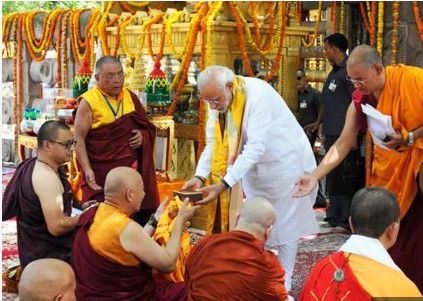
Proposed Central Bank of Sri Lanka Bill -OPINION

March 12th, 2023

By T Lalithasiri Gunaruwan Professor in the Department of Economics University of Colombo

The Government has Gazetted a Bill to repeal the existing Monetary Law Act, which is presently Governing the Central Bank of Sri Lanka (CBSL), and to replace it with a new Central Bank of Sri Lanka Act. The purpose of this new Bill is to make the CBSL an autonomous entity, as per the Clause 5(3).

While it is acknowledged that any undue intervention into internal management of any Statutory body, including regulators, is undesirable, and therefore should be prevented, the scope for legitimate policy intervention by the Executive of the Country and also by the Legislature should be preserved and upheld. This imperative requirement of democratic governance appears to be disregarded in the subject bill.

Policy making” is the purview of the people. They endeavour to change policies and /or continue with the prevailing policies through democratically elected agents”, namely the Parliament (the Legislature) and the Cabinet of Ministers (Executive). Economic policy is of no exception. The sovereignty of the people to make/sustain/change policies will be badly impacted if one part of the economic policy”, namely Monetary Policy”, is detached and removed” away from the reach of the people’s sovereign representatives”. Clause 5(4) prevents CBSL seeking instructions from anybody, including Cabinet / Parliament, which is a clear violation of Parliamentary control of public finance (Article 148).  Besides, as per this provision in Clause 5(4), when read with clause 85, the possibility of the CBSL becoming an organ functioning under the advice of international bodies”, could not be excluded.  Therefore, it is my opinion that the Clause 5 of the Bill violates people’s sovereignty.

The Clause 6 appears to have been conceived on a theoretical/conceptual premise which considers price stability” as a supreme policy objective”.  However, it is not rational to believe that other macroeconomic policy objectives such as growth, equity, employment level, etc, are of any less importance.  Keynesianism, for instance, suggests that public expenditure could drive effective demand, which (fiscal policy) may be desirable under sluggish economic conjunctures to stimulate growth, regardless of their possible inflationary effects. Therefore, there is no conceptual rationale to suggest that price stability” (or, in other words, inflation control) objective is of any superior importance compared to such other macroeconomic objective.

The economic policy” is a composite package, and one part of it, namely monetary policy” cannot be removed from it and assigned to an independent body” which stays beyond the control of the overall economic policy making”.  Fiscal policy, which is not within the CBSL’s purview, for instance, may necessitate government borrowings”. When the Government borrows, it influences interest rates (if borrowed locally), and exchange rate (if borrowed internationally). Thus, fiscal policy directly affects monetary system. Similarly, if CBSL raises interest rates unilaterally (under the powers intended through this ACT), it will push up interest cost” of the already existing debts stock of the Government, thus affecting its fiscal expenditure. Therefore, it is very clear that both monetary policy and fiscal policy have to work hand-in-hand, without any separation” of authority. If separated, one integral part of the policy system becomes dislodged, and even the remaining part will become uncontrollable”.

Therefore, any policy formulation in regard to achieving macroeconomic objectives has to be essentially an overall endeavour, and compartmentalising price stability”.  Granting powers to CBSL to unilaterally make monetary policy interventions without any overall harmonious control”, as apparently envisaged by this Bill, could result in conflicting situations within the system. Therefore, it is my opinion that separating the policy making function pertaining to monetary policy dimension autonomous” from other macroeconomic policy making organs of the Government, can be sub-optimal, if not very harmful.

As per the Clause 26(1) of the Bill, it is required that the Minister and CBSL shall sign an Inflation Targeting Agreement”. But, nowhere in the Bill, is there any provision for the Minister to give his opinion / instructions/overall policy guidelines to the CBSL, and as per the clauses 5 and 6 of the Bill, the Minister cannot instruct/direct or influence the CBSL. The Clause 28 merely provides for the CBSL to inform the Minister” through its reports about the economy and policies adopted by the CBSL and also on the impending conjunctures. These provisions, read together, are tantamount to pushing the Minister to become submissive to a policy determined by the CBSL” while being a mere receptor of post-implementation information”.  Besides, Clause 84 of the Bill appears providing for the CBSL to advise the Government”, but there is no provision that the Government could advise the CBSL”.  This could amount to the Executive surrendering to a Statutory Body, and, therefore, cannot be considered as desirable.

Confidentiality clauses, enumerated under Clauses 10 (1), and 13(8), also raise concerns when read together with Clauses 7(1), which gives powers to determine” and implement”, without having to receive any directives/instructions/guidance [Clauses 5 and 6] from even the Legislature and Executive. The question therefore arises as to whether the decisions pertaining to functioning of a central economic organ of the country could be hidden” from the general public, at least until their implementation.

Clause 47(2) is of particular relevance in this regard. This is because, it appears to be enabling the CBSL to authorise any currency other than the Sri Lankan Rupee as legal tender for transactions within Sri Lanka, with complete confidentiality” under Clauses 10(1) and 13(8), and on unilateral determination, as per Clause 7(1). This provision could give rise to a violation of sovereign rights of the people of Sri Lanka when such authorisation of any other currency than Sri Lankan rupee for transactions within Sri Lanka, or in any part of the country, could be effected by the CBSL with no approval sought, or no intervention made, by their democratic agents, namely the Parliament or Cabinet of Ministers, being possible, as per the Clauses 5 and 6 of the Bill.

This concern would not arise if the powers of the CBSL are made limited to analysis”, formulation of policy perspectives”, and making recommendations” to the Government, thus enabling the Executive, and also the Legislature, as it may be appropriate, to make the final decisions prior to implementation. Such provision would not only make the decisions transparent, but also will take care of the sovereignty of the people.

It is pertinent to note that economic policy”, though a very important dimension, is not the sole concern of a nation. There are many other strategic objectives, including, inter-alia, social welfare, regional development, international relations, geopolitics, national defence, environmental protection, and above all, the sustainable national sovereignty. Economic policy decisions will inevitably have a direct bearing on each of these important strategic dimensions. It is in that respect that the provisions in the Clause 37 of the Bill, which appears to be giving unilateral carte-blanche power for the CBSL to deal with the nation’s Foreign Exchange policy, with no check or balance to enable the parliament / Executive to intervene in national interest, cannot be considered desirable.

Last, but not least, it can be observed that there is no explicit clause in the Bill to the effect that CBSL’s policies/implementations/action shall always be in accordance with the national economic sovereignty of Sri Lanka”; economic sovereignty being an essential component of national sovereignty. This could pave the way towards CBSL’s autonomous and independent policy decisions” be guided by anti-national drivers, and against national economic sovereignty interests”.

Even if the overall object of the Bill, and particularly its Clause 5, is to ensure that the CBSL would be able to function professionally with no undue influence from external forces, the absence of a specific proviso to enable the Executive and the Legislature to provide policy instructions”, within which the CBSL’s professional functions should be performed,  is a clear and substantive lacuna in the proposed Bill.  The proponents of the Bill could consider introducing appropriate provisions to that effect, in order to rectify this lacuna, and to ensure that the supremacy of the people’s policy making sovereignty exercised through their democratic representatives, namely the Parliament and the Cabinet of Ministers, is upheld.

11th March 2023

Professor Yunus needs to stop calling foreign friends

March 12th, 2023

Ishtiaq Fardin  journalist, columnist, and author.

Recently, 40 global figures expressed their “deep concerns for the well-being” of Nobel Peace Prize Laureate Muhammad Yunus in an open letter to prime minister Sheikh Hasina, which appeared as a full-page ad in the Washington Post on Tuesday, 7 March 2023. Citing the achievements of Yunus and Grameen Initiatives, global figures including former UN General Secretary Ban-Ki Moon and former US Secretary of State Hillary Clinton asked Bangladesh to stop government investigation on these organizations to end the ‘harassment’ of the Noble Laureate.

This is not the first-time global leaders tried putting pressure on Bangladesh regarding Professor Yunus. Since the current ruling party of Bangladesh came into power, Yunus accused he was becoming the target of the government’s hateful politics. Previously when he was asked to step down as head of the Grameen bank, he tried to gather mass attention by involving international big fishes. But it is a matter of sorrow that these efforts are not doing anything good but defame Bangladesh. Now as a veteran professor and economist, Yunus needs to go by the law rather than playing the victim card.

Allegations against Professor Yunus in home

Dr. Muhammad Yunus, who was once applauded at home and abroad for his efforts to end poverty, has seen a significant decline in his reputation because of his controversial role in Bangladesh on several issues, ranging from influencing the World Bank to scrapping the Padma Bridge financing, tax evasion, illegal transfer of donor funds, misuse of power and violating foreign travel regulations. He has been embroiled in controversy in 2015 as he was summoned by the National Board of Revenue (NBR) authorities over non-payment of taxes to the tune of Tk 153.9 million against Tk 770 million that his family members and others got as a gift.

There are also widespread allegations that Dr. Yunus, the Grameen Bank founder, had illegally transferred funds from foreign donors to different private organizations to serve his own interests. Besides, a stunning allegation has recently surfaced against Dr. Yunus that he unlawfully settled all the 110 cases, filed against him by Grameen Telecom union of workers and employees, with Tk 250 million.

However, his organization was the subject of numerous inquiries and accusations due to its allegedly shady organizational structure. There are widespread allegations that Dr. Yunus, the Grameen Bank founder, had illegally transferred funds from foreign donors to different private organizations to serve his own interests. Besides, a stunning allegation has recently surfaced against Dr. Yunus that he unlawfully settled all the 110 cases, filed against him by Grameen Telecom union of workers and employees, with Tk 250 million.

His role after the country’s 1/11 political changeover had drawn strong criticism from different quarters, particularly civil society members. Since then, he became a controversial person in the country. Also, people at home and abroad know very well that he played a role of a key perpetrator in scrapping WB’s credit for Padma Bridge as he has special intimacy with Hillary.

Professor Yunus needs to stop calling foreign friends

The Yunus controversy in Bangladesh began decades ago. But in 2011, when Bangladeshi government authorities pressured him to step down from the bank’s MD, international pressure began to come. Some global leaders and friends of Yunus called the Prime Minister of Bangladesh several times, but Sheikh Hasina told them that the law didn’t allow Dr. Yunus to remain as MD of Grameen Bank. As per the law, the retirement age is 60. Yunus was 70 at the time. His review petitions were rejected by the Supreme Court of Bangladesh in May 2011.

Then Yunus had hatched a deep conspiracy against the Awami League-led government only to cling to the post of managing director of the Grameen Bank. He had engaged then-US Secretary of State Hillary Clinton and Cherry Blair, spouse of the then British Prime Minister Tony Blair, to lobby for him in getting back the MD post. Throughout the process, he pleaded for help in messages routed to Clinton, and she ordered aides to find ways to assist him.

Previously he had ordered the American affiliates of his non-profit Grameen Bank which had been working with the Clinton Foundation’s Clinton Global Initiative programs as early as 2005, to donate between $100,000 and $ 250,000 to the foundation. Grameen Research, another Grameen wing chaired by Dr. Yunus, donated between $25,000 and $50,000 to Clinton’s Foundation. These donations might be well linked with Hillary’s support to empower him as a political leader in Bangladesh. Later, it was revealed that sacked Dr. Yunus had desperately asked for Hillary Clinton’s help in ending his feud with Sheikh Hasina-led government over the control of Grameen Bank.

It is important to note that the government has no selective outrage for Professor Yunus and Grameen Bank. After the 1998 devastating flood, the AL government invested Tk 4 billion in Grameen Bank for the sake of the people hit by the natural calamity. After assuming office for the first term, Sheikh Hasina gave a license to Grameen Phone and to Dr. Yunus in the name of Grameen Bank. At that time, it was stated that money from Grameen Phone will be credited to Grameen Bank. Even now the government is trying to find corruption and irregularities in Grameen bank, not blaming Yunus. It seems Professor Yunus’ insecurity leads him to believe that these lawsuits and investigations are aimed at harassing him. His insecurities came from his imprudent political decision and over-reliance on influential global friends.

Today, there is no open investigation against Professor Yunus. The Investigations are against the social business entities he established, not him. The State apparatus, including ACC and NBR, is only doing its routine work probing into the Grameen firms, not into the individual, Professor Muhammad Yunus. The Investigations are only routine work, and they are not ‘harassment’. The only harassing part, perhaps, is the extra attention from the media into such regular probes by ACC and NBR, and the press covers attentively due to the news value of Professor Yunus. As a responsible citizen, Yunus must comprehend the situation and refrain from any controversial act that is against Bangladeshi laws. Also, he needs to stop calling his foreign friends to put advertisement in foreign media as that may only pressure and defame the government.

Significance of ‘India-Bangladesh friendship pipeline diplomacy’

March 12th, 2023

Dr Arpita Hazarika  Gauhati University, Assam, India

India will begin exporting diesel to neighbouring Bangladesh through a pipeline this month after Indian Prime Minister Narendra Modi and his Bangladeshi counterpart Sheikh Hasina inaugurate the cross-border oil pipeline on 18 March.

Good news is India will send us diesel, the (oil) pipeline has been completed. The two premiers will inaugurate the pipeline on 18 March,” Bangladesh Foreign Minister Dr AK Abdul Momen said.

The India-Bangladesh cross-border pipeline will be inaugurated by the Prime Ministers of Bangladesh and India virtually.

India-Bangladesh friendship pipeline

Till now, Bangladesh used to import diesel from India through railway carriages. The announcement of India-Bangladesh friendship pipeline (IBFPL) launch by Momen came a week after he held talks with Indian counterpart, India’s External Affairs Minister Dr S Jaishankar on the sidelines of the G20 Foreign Ministers’ meeting last week in New Delhi.

India-Bangladesh oil pipeline

India would export diesel to Bangladesh through the 130-km pipeline.

The India-Bangladesh oil pipeline has been constructed at a cost of Rs 3.46 billion and has been drawn from the Indian line of credit (LoC).

The pipeline stretched 125-kilometre inside Bangladesh territory and 5-kilometre inside India.

The cross-border pipeline will carry fuel from Assam-based Numaligarh Refinery Ltd’s (NRL) marketing terminal at Siliguri in eastern Indian state of West Bengal to the Parbatipur depot of Bangladesh Petroleum Corporation (BPC).

The mechanical works of the project was completed on 12 December last year. The ground breaking ceremony for IBFPL was held in September 2018 in the presence of PM Modi and PM Hasina through video conferencing.

During his meeting with Hasina in 2017, Prime Minister Narendra Modi had agreed to finance the cross-border pipeline with a capacity of one million metric tonne per annum (MMTPA)..

The project once completed will solve the problem that 100,000-ton tankers cannot dock at Chittagong Port, Bangladesh, and must rely on maritime ships to transport crude oil.

The pipeline with India will cut transportation cost of fuel oil for Bangladesh by 50 percent, State Minister for Power, Energy and Mineral Resources Nasrul Hamid has said. State Minister for Power, Energy and Mineral Resources Nasrul Hamid on Friday said the Bangladesh-India Friendship Pipeline will effectively contribute to the country’s energy security. 

“It [the pipeline] will be a milestone in providing quick and uninterrupted fuel supply to the northern region of the country in a cost-effective manner,”

During a visit to the receipt terminal at Parbatipur in Dinajpur on Friday, Nasrul described the India-Bangladesh Friendship Pipeline as groundbreaking in Bangladesh’s energy history. It will ensure energy security and low-cost fuel.”

In the near future, Bangladesh needs to transition from conventional energy sources to ensure its energy security and long-term sustainability. Following the Ukraine crisis, energy security has become a major concern for developing and least-developed countries. In this context, cross-border energy cooperation and revitalising the idea of the power corridor could perhaps help Bangladesh to mitigate its energy crisis.

Friendly and warm relations between Bangladesh and India since the birth of Bangladesh in 1971. In any time of crisis, India and Bangladesh have got each other’s side just like a close mother. Be it the current corona epidemic, or the liberation war of 1971. However, the whole world is currently in a turmoil due to the post-pandemic wartime global crisis. Along with the political and economic crisis, the energy crisis has also intensified. Bangladesh is also in the grip of this crisis. To solve this global energy crisis, Bangladesh government has decided to reduce energy consumption. Importing fuel oil at an affordable price was very important for Bangladesh to reduce this cost. Although talks were started with countries like Saudi Arabia, Malaysia and Brunei about the import of fuel oil, Bangladesh’s neighboring friendly country India was the first to come forward to supply fuel.

The initiation of multi-dimensional avenues of cooperation with Bangladesh is only possible because of its geographical proximity to India. A prime example of this is the import of diesel from India through pipelines. These imports will ensure maximum utilization of Bangladesh’s geographical proximity to India. Diesel will arrive in the pipeline from India in June this year. Once this diesel starts coming in, it will be profitable for both Bangladesh and India. In this diesel trade, both countries will benefit economically and Bangladesh will be able to face its energy crisis more firmly. India will also benefit from it. India will earn revenue through this diesel export. India has already expressed a positive attitude towards increasing cooperation with Bangladesh. Not only that, recently Bangladesh-India has signed several agreements and memorandum of understanding to increase bilateral trade and investment.

Bangladesh-India diesel trade

Since 2017, India-Bangladesh diesel trade has been going on through railways. About 2,200 tonnes of diesel is sent from Numaligarh Refinery Limited through West Bengal Railway every month. This transportation cost was very expensive for Bangladesh Petroleum Company. When this pipeline is operational, the supply of fuel in the country will increase significantly and the cost of transporting fuel by rail will be reduced. As the demand for diesel is highest in 16 districts of northern region during Aman and Boro season, the government decided to import this fuel through pipeline. If the project is implemented, diesel will reach consumer level in 16 districts of Rangpur and Rajshahi divisions within a short period of time. As a result, besides saving a huge amount of money, it will be able to provide it to the farmers at a low cost in a short period of time. This export of India will not only strengthen Bangladesh’s economic relationship with India but also strengthen the bond of friendship during energy crisis as well as dollar crisis. Apart from ensuring uninterrupted, cheap and fast fuel supply, the cross-border pipeline is also expected to help reduce system losses through petty pilferage due to rail transport.

India-Bangladesh Partnership Pipeline Agreement

An agreement was signed between the two countries in November 2018 to implement the India-Bangladesh Partnership Pipeline Agreement project. The work of this project started in March 2020. whose term was till June 2022; But the project has been extended till July 2023 as the pace of work has slowed down due to the Covid-19 pandemic. Now the construction of this Bangladesh-India friendship pipeline is almost at the final stage. The 131.57 km long pipeline project connects Siliguri and Parvatipur, Dinajpur in West Bengal. Out of the total length of the pipeline, 126.50 km is inside Bangladesh and the remaining 5.07 km is in India. Out of the construction cost of Tk 520 crore, Government of India is contributing Tk 303 crore and BPC is paying the remaining Tk 217 crore. About 1 million metric tons of diesel can be imported from India annually through this pipeline. However, in the initial phase, two and a half lakh tons will be imported. According to the 15-year agreement, the import volume will increase by 4 to 5 MT annually.

Light of hope in times of crisis?

When Bangladesh along with the rest of the world is troubled by the energy crisis, this diesel business is showing a kind of light of hope. An alternative source of diesel import is being created for Bangladesh through this pipeline. According to Bangladesh Petroleum Corporation data, Bangladesh imports 6.5 million tons of fuel oil annually. Among these imported fuels, 4 million tons of diesel are imported annually. About fifty percent of the imported fuel will come to this country by reducing the significant amount of transportation cost through this pipeline.

Moreover, according to Bangladesh Petroleum Corporation data, currently the average premium cost per barrel (159 litres) of fuel oil (including freight) is $10. If this fuel is imported from India, it costs eight dollars. A reduction of two dollars per barrel can save about $1.5 million per 100,000 tons. Apart from taking less time for fuel supply, the people of 16 districts of the northern region will be able to enjoy this benefit. So, importing from India will also save foreign exchange. Now if it is possible to import in rupees instead of dollars, our dollar crisis will be reduced to some extent. Later, if India gives some price concession to Bangladesh, Bangladesh may benefit more.

Exporter India on the other hand can earn foreign currency inflows from its export earnings and invest it in other sectors to benefit economically. Even if India exports refined oil to Bangladesh at cheaper prices, it will bring overall economic benefits to both countries. India and Bangladesh through bilateral and multilateral energy cooperation can address the global problem of high energy prices in the wake of the Russia-Ukraine war. When diesel starts coming in, the India-Bangladesh alliance pipeline, if properly managed, could be a prime example of bilateral energy cooperation. Not only this, it will usher in a new dimension in energy cooperation between India and Bangladesh.

Global signature campaign in favor of an immoral Nobel Peace Laureate: International politics on Bangladesh’s Dr Yunus case?

March 12th, 2023

Sufian Siddique Independent researcher and freelance columnist, Dhaka

Recently, 40 global figures wrote an open letter to the Prime Minister of Bangladesh expressing their concern over Professor Yunus’ well-being. The letter was published in the Washington Post as an advertisement. A wide range of global personas signed the letter, including former UN General Secretary Ban-Ki Moon, U2 singer Bono, Former US Vice President Al Gore, Actress Sharon Stone, and many more. Citing the achievements of Yunus and Grameen Initiatives, the global figures asked Bangladesh to stop government investigation on these organisations to end the ‘harassment’ of the Noble Laureate.

Against this backdrop, it is worth revisiting the question, is the government merely ‘investigating’ Professor Yunus? Or is it the corruption and irregularities that the state apparatus is investigating into?

The open letter addresses the Prime Minister of Bangladesh directly. Interestingly, the letter came as something other than a statement or through the traditional method of public circulation. The letter was published as an advertisement in the Washington Post. Approximately the five-column advertising costs USD 73000. Due to the advertisement category, the letter is also not endorsed by its publisher, the Washington Post.

However, the letter endorsed that Professor Yunus does not earn any profit from Grameen Phone or Grameen Telecom. Therefore, it is ‘painful’ to watch him being investigated. The letter also directly termed the ongoing investigations against Grameen Social Business Initiatives harassment.

The sensitive minds in the country are bothered by an open letter of 40 eminent personalities of the world to Prime Minister Sheikh Hasina in which they expressed their deep concerns for the well-being” of Nobel Peace Prize Laureate Dr. Muhammad Yunus. The signatories of the letter, instead of publishing it as a statement or sending directly to Sheikh Hasina, published it as a full-page advertisement in the Washington Post on March 7, 2023, spending as much as Tk.78,14,584. Thus, the hidden agenda of the publicity stunt appears to be a smear campaign against the government of Bangladesh. And, you do not have to be a wizard to guess whose wish was whose command.

While raising a baseless allegation that Dr. Yunus is being harassed, the open letter doesn’t provide any evidence exactly how the Nobel laureate is being harassed. The ongoing investigation by Anti-Corruption Commission (ACC) of Bangladesh into alleged money laundering allegations against Dr. Ynusu cannot be called harassment. Neither the NBR’s investigation about his tax affairs fall into the category of harassment. The agencies are doing their routine duties, and if someone thinks that they are being harassed, they can seek justice in the appropriate court. Corruption and Irregularities are targeted, not Professor Yunus. There is hardly any news report to justify that Dr. Yunus is being subjected to harassment in Bangladesh, and we wonder what actually happened that he had to launch a global signature campaign and publish it in an international newspaper spending millions of takas.

It can’t be anyone’s intention to disgrace any individual. We do not target individuals; we target systems which are harmful. But at the same time, it is the government’s duty to ensure that none is beyond accountability or rule of law. Therefore, we think that monitoring against tax evasion, money laundering and all other types of crimes should be more thorough. The government is accountable for the well-being of the people and it cannot afford to let someone rob the poor in the guise of philanthropy.

In reality, the status apparatus, including the Anti-Corruption Commission (ACC) and the National Bureau of Revenue (NBR), only do their routine work investigating corruption and irregularities. It is worth mentioning that there is no open investigation against Professor Yunus. The Investigations are against the social business entities he established—for instance, the Grameen Worker’s writ demanding profit-sharing against Grameen Telecom.

Foreign Minister AK Abdul Momen on Thursday questioned intentions of some people who are talking against Bangladesh and its leader Prime Minister Sheikh Hasina, noting that to them “grapes are sour.”

“It does not matter much. It’s unrealistic and not objective,” he told reporters at the Ministry of Foreign Affairs when a reporter sought his comment on an appeal by 40 world leaders regarding Prof Muhammad Yunus.

Information and Broadcasting Minister Hasan Mahmud on Friday said the statement of 40 world leaders about Bangladesh’s one and only Nobel laureate, microcredit pioneer Muhammad Yunus, is an advertisement, not a statement.

“There is a difference between an advertisement and a statement,” Hasan Mahmud explained. “It cannot be called a statement; it is an advertisement. An advertisement in the name of 40 people has been printed in The Washington Post at a cost of crores of money.

Bangladesh’s Dr. Yunus: Story of an immoral Nobel Peace Laureate

Dr Muhammad Yunus, who was once applauded at home and abroad for his efforts to end poverty, has seen a significant decline in his reputation as a result of his controversial role in Bangladesh on several issues, ranging from influencing the World Bank to scrapping the Padma Bridge financing, tax evasion, illegal transfer of donor funds, misuse of power and violating foreign travel regulations. It wouldn’t be an exaggeration to say that Prof. Yunus was respected in Bangladesh for receiving the Nobel Peace Prize, even though his organization was the subject of numerous inquiries and accusations due to its shady organizational structure.

The Nobel Peace Prize has frequently caused controversy. There’s almost always controversy around the Peace Prize — in part because it’s so political. Myanmar’s Aung San Suu Kyi is also a Nobel laureate! But what about her contribution to promoting human rights in her country? Thus, there is no logic to compare a Nobel laureate with an angel.

For instance, Dr. Muhammad Yunus won the Nobel Peace Prize. He is the only Bangladeshi to have received the prestigious prize, which may have improved perceptions of Bangladesh abroad. He was obviously expected to rest on his achievements and uphold the high regard in which he was regarded by both his countrymen and others. But his pursuit of a few trivial personal interests cost him the prestigious position. Currently, Dr. Yunus is a contentious figure in the nation

Bangladesh desperately needed a bridge over the powerful Padma. The Padma Multipurpose Bridge, which might have a big impact on the GDP expansion of the nation. However, Yunus is accused of doing everything in his power to prevent the building of the dream bridge” and of succeeding in getting the World Bank to refuse finance for the Padma Bridge project.

In addition, he is accused of illegally moving money from foreign donors to other private organizations and of arbitrarily resolving up to 110 complaints that employees of Grameen Telecom had brought against him. How a man of his stature could descend to such low levels and rebel against the nation for his limited personal benefit is beyond our comprehension. Yunus can now only apologize to the nation’s citizens for the devastation he has done to them.

Nobel laureate economist Dr. Muhammad Yunus. Several financial irregularities and corruption allegations against him are now in the hands of the government. Especially in recent times, unusual transactions for the withdrawal of cases puts Yunus in an embarrassing situation. This Nobel laureate economist is under pressure in recent times.

He played a notorious role during Bangladesh’s military-backed regime in 2007-2008. The quasi-civilian government wanted to oust both of Bangladesh’s largest political parties, the Awami League (AL) and Bangladesh Nationalist Party (BNP). Many allege that the western institutions and their local office were behind such conspiracies to establish a puppet regime for their purposes. Amid that murky water, Professor Yunus established his party with the blessing of the then-incumbent government named the ‘Nagorik Shakti Party’. Leaders from both AL and BNP saw his venture as skeptical at that time. Thus, the Professor took an undemocratic decision to side with the incumbent regime against the democratic struggle of Bangladesh.

According to political analysts, if he truly intended to get into politics, he should shed his current mask and declare the formation of a new political party with a clear policy and program to convince the masses. Otherwise, if he continues his current sabotage role against the government of Bangladesh, he will gradually lose his good reputation day by day.

We need to note that the Nobel Prize, which has simply become a modern pseudo-political agenda, can’t save him from national and global condemnation as seen in the case of Nobel Peace Prize winner Aung San Suu Kyi, who has shown little interest in protecting the Rohingya, the world’s most persecuted people”. As a responsible citizen, Dr Younus must comprehend the situation and refrain from any controversy that is against Bangladeshi laws.

Minsitry of Public Security is not issued summons – HRC

March 12th, 2023

Courtesy Hiru News

HRCSL wishes to clarify that certain reports circulating to the effect that summons had been issued on the ministry of public security are inaccurate and that no such summons has been issued at this stage. “This statement is made to clarify the erroneous statements carried out in the media” the Commission informed in a press release issued today

US Federal Reserve Hijacks Sri Lanka’s Central Bank to Hinder Industrialization

March 12th, 2023

e-Con e-News

‘Give me control of a Nation’s money supply, and I care not who makes its laws’

– Mayer Rothschild

There should be no room left for monetary policy decisions to become popular decisions.

– Central Bank Governor N Weerasinghe on the latest Monetary Law Act (ee Economy)

The Central Bank of Sri Lanka is no longer independent.

It constitutes a clear and present danger to the country as an agent of the IMF.’

 Ahilan Kadirgamar ( ee Economists, Inflation, Interest Rates & Economic Depression)

‘One political leader who represents a certain political party said he will

be able to convince ‘the international community’ through his English language skills.

Another says that they will convince ‘the international community’

by doing away with perks given to ministers and MPs.

These are just petty remarks made in response to complicated issues.’

– MP Patali Champika Ranawaka (ee Economists, No Commitment from Opposition)

When they get some money from the World Bank, they light skyrockets & fireworks.

– National People’s Power (NPP)’s Sunil Handunnetti

‘They talk of transparency & democracy. But they are now gazetting a new Monetary Law Act,

which is actually going to eliminate democratic control over

Sri Lanka’s most important institution – the Central Bank.

The US Federal Reserve is portrayed as our role model, and they say it is independent.

What most people don’t realize is that it is controlled, and was set up

by private US commercial banksto bypass scrutiny of the US Congress.

This ‘US Fed’ is called the most undemocratic institution in all of the USA.

It does not present any accounts.

No one is allowed to question its policies in the US Congress

Oh, the US says, ‘We are a democratic country’ and so on.

The most powerful body in the US & the world, is unelected!

Before Donald Trump became President, he made this one of his most

important election promises: ‘I am going to force an audit of the US Federal Reserve’.

He gets elected, calls Janet Yellen. She goes to the White House, to the President’s room.

15 minutes later, Yellen walks out, & Trump walks behind her, head bowed.

‘I am perfectly satisfied what I have heard from the head of the Federal Reserve’.

Because he was told: ‘You can touch anything you want but you don’t dare touch this.

Because this is the bank of the rich elites. This is the bank we use all over the world’.

They want this shift towards ‘Central Bank independence’, for us to lose

democratic control over the most important institution, and after we lose that

we can elect who we want, but we will not be able to control our country any longer.

– Howard Nicholas (ee Focus)

Dollar Outflows Restored –

London’s Financial Times Stock Exchange Group, now FTSE Russell,

a subsidiary of the London Stock Exchange Group, linked to Unilever, is thrilled.

It informs ‘global investors that investing in listed equities of Sri Lanka

is business-as-usual from now on

FTSE Russell said it has received feedback from market participants

that the repatriation issue for Sri Lanka no longer exists

and all the backlogs have been cleared,

therefore all corporate actions/events & review changes for Sri Lanka

will be implemented as normal with immediate effect.’

– ee Economy, FTSE Russell tells global investors

business as usual now at the Colombo Stock Exchange

‘The Central Bank of Sri Lanka Bill, if passed,

would enable President Ranil Wickremesinghe

to come to Parliament one day and state that

there had been no Central Bank robbery

for there had been no Central Bank to rob…

The Latvian Central Bank Governor was accused

of bribery and money laundering.

The Latvian Parliament voted 55 to 0 against him.

However, when he was barred, the European Union stated

it was against the EU law because

the Latvian Central Bank was an ‘independent’ institution.

– Frontline Socialist Party, ee Economists

‘Central Bank data shows the Rupee has also appreciated

against the Euro, the Pound Sterling, the Australian Dollar,

the Indian Rupee, the Canadian Dollar and the Japanese Yen’

(ee Finance, Rupee continues upward climb)

This ee examines the hijacking this week of the Central Bank by the US government. Set up by the US Treasury in 1950, the Central Bank of Sri Lanka, with the highest concentration of PhDs per-square-foot, has always opposed the country’s true independence. More precisely, the CB has always been aimed at preventing the industrialization of the country. In this issue, economist Howard Nicholas argues for export-oriented industrialization, while offering fascinating insights into the rush to ensure the Central Bank remains an instrument of foreign powers.

     ee also begins excerpting in this issue, SBD de Silva’s final chapter in his classic, The Political Economy of Underdevelopment. In this chapter, de Silva examines the changes that took place that sabotaged the weak import substitution policies enacted in the 1960-70s, and the ‘orchestration’ of export-oriented industrialization, and began to impose what is more like foreign-controlled export-substitution.

     This export substitution is laid bare by a contrived scarcity-comedy, which appears more like deathly satire, when we see headlines like ‘59% families in SL unable to meet food requirement’, and it turns out that this statistic is from the US Soya Bean Export Council (USSEC).

     The US Soya lobby’s local agents discussing the matter include: ‘The Regional Agricultural Attaché, US Department of Agriculture, and Regional Director of South Asia & SubSaharan African USSEC, Sri Lanka’s representative, Agricultural Science & Food Technology of Peradeniya University Prof Iresha [Eresha?] Mendis and other ‘scholars!’ Agricultural institutions in this country have clearly been hijacked & undermined. Another Peradeniya agriculture professor, Buddhi Marambe, who turns out to be a director of English multinational and chemical importer CIC-ICI, led the attack on organic fertilizer policy (ee Agriculture,59%).

Full Story

Transport Ministry to register assembled motorcycles with higher engine capacity

March 12th, 2023

Courtesy The Daily Mirror

The Transport Ministry has decided to register unregistered motorcycles with high engine capacity under a legal framework.

Minister c instructed the ministry officials to prepare a proper system soon for the above matter.

The decision was taken following requests made by several sports clubs. Those associations had requested the minister provide a proper way to register the motorcycles that were brought to Sri Lanka and assembled with engine capacities above 450 cc. (Chaturanga Pradeep Samarawickrama)

IGP orders probe over Bandarawela HQI’s conduct over arrest of woman

March 12th, 2023

Courtesy The Daily Mirror

The Inspector General of Police (IGP) has instructed the Special Investigation Division to immediately initiate an investigation against the HQI of the Bandarawela Police in connection with his action following the arrest of the mother of the infant who was abandoned at Fort Railway station on Friday.

Police said the investigations will be carried out over the conduct of the Chief Inspector of Police with regard to the arrest, questioning and inappropriate steps during the process, inconveniencing the mother.

Also,  it was revealed that the officer had not acted according to the circulars issued by the IGP on how to deal with children and women.

The couple who had abandoned a 13-day-old infant in the toilet of an express train was arrested by police on Friday.

Police said the 25-year-old father who had kept the baby in the toilet was a resident of Meeriyabadda area Koslanda and he was arrested by the area police while the 26-year-old mother was arrested by Bandarawela police.(DSB)

Kanchana says int’l development agencies conveyed support to restructure CEB

March 11th, 2023

Courtesy Adaderana

Power & Energy Minister Kanchana Wijesekera says several international development agencies have communicated the assistance they can offer to restructure the Ceylon Electricity Board (CEB).

In a tweet, the lawmaker mentioned that the Asian Development Bank (ADB), the World Bank, the US Agency for International Development (USAID) and the Japan International Cooperation Agency (JICA) have conveyed support for the process.

A meeting has been convened on Friday (March 10) to discuss the progress of restructuring the state-owned electricity utility.

Wijesekera said the roadmap and the timeline of the CEB restructuring process are expected to be duly submitted to the Cabinet of Ministers, highlighting that the reforms that can be implemented before the final Act would be initiated next week.

Rupee set to strengthen with IMF loan and increased receipts

March 11th, 2023

Courtesy Hiru News

Professor Aminda Methsila of the Faculty of Management and Finance of Wayamba University stated that the rupee will continue to strengthen due to the loan facility from the International Monetary Fund and other receipts.

He stated this while commenting on the opinion presented by Fitch Ratings that the value of the rupee may depreciate again by the end of this year.

Meanwhile, The Government of Japan has contributed an additional 6.6 million dollars to the United Nations World Food Programme to provide critical food and nutrition assistance to over one million Sri Lankans.

Through this funding, WFP will provide families with food baskets comprising rice, pulses and cooking oil, to meet half their monthly food needs for a period of two months.

The donation will also be used to procure maize and soybean for the production of Thriposha, a fortified food product, for a period of four months, which will be supplied to pregnant and breastfeeding mothers and young children at risk of malnutrition.

මිලින්ද මොරගොඩ සර්

March 10th, 2023

චන්ද්‍රසිරි විජයවික්‍රම, LL.B., Ph.D.

ගෝඨාභය ජනාධිපති මිලින්ද මොරගොඩට සර් කියා ඇමතුවාය යන කතාව අසා මගේ හිත බලවත් ලෙස සසල වූයේ, පුද්ගලයෙකු වශයෙන් ගෝඨාභය කෙරෙහි මා තුල පැවති ගෞරවය හා ආදරය නිසාය. විජේවීරගේ වෛද්‍යවරයා මෙන් ක්‍රියාකල වෛද්‍ය වසන්ත බණ්ඩාර සමඟ චමුදිත සමරවික්‍රම කල සාකච්චාව රටේ හැම සිංහල බෞද්ධයෙක් විසින්ම කියවිය යුතු වාර්තාවකි. (30) ගෝඨාභය මරලා මහින්ද ජනාධිපති කිරීමේ කුමන්ත්‍රණයක් තිබුණේ. රනිල් ප්ලැන් B @TruthwithChamuditha – YouTube

එක අතකින් සේපාල් අමරසිංහලා ඇතුළු පිරිසත් අනිත් පැත්තෙන් බෝන් අගේන් කල්ලිත්, දෙමළ බෙදුම්වාදීන්, ශාරියා කාරයින් හා න්ගො නඩ විසින් වටකරගෙන සිංහල බෞද්ධ ශිෂ්ටාචාරයට කරගෙන යන පහරදීම් ඉදිරියේ වසන්ත බණ්ඩාර, මාවරල් භද්දිය හිමියන් (දෙරණ චතුර අල්විස් සමඟ සාකච්චාව) යන අයගේ ජාතික මෙහෙවර අප අගය කල යුතුය. (30) අවුරුදු 60, 70ක් දේශපාලනය කරලා ලැජ්ජ වෙන්න ඕනෙද? | TALK WITH CHATHURA – YouTube

මීට කලින් මෙවැනි සර් කතාවක් ගැන මම ලිව්වේ මෛත්‍රීපාල ජනාධිපති වූ පසු ඔහු තවදුරටත් රනිල්ට සර් කියා දිගටම ඇමතීමට පුළුවන්දැයි රනිල්ගෙන් ඇසුවාය යන වාර්තාව දුටුවිටය. මට තිබූ කුහක මෙන්ම අහිංසක ප්‍රශ්ණය වූයේ ඉන් පසුව රනිලුත් මෛත්‍රීපාලට පෙරලා සර් කියා ආමන්ත්‍රණය කලාද යන්නය.  මිනිස් පංචස්කන්ධවල මෙම සිදුවීම් ඔවුන්ගේ චරිත පිළිඹඳ මිණුම් දඬු (මාපක, yardsticks, index)  වැනිය. ඇමෙරිකාවේ නම් ජැනිටර්ලාවත් අමතන්නේ සර් කියා වුවත් ලංකාවේ සර් කියන්නේ තමන්ගේ ගුරුවරුන්ට හා ගරුකලයුතු ශ්‍රේෂ්ඨ පුද්ගලයින්ට පමණක් යයි මම සිතමී.

LankaWeb – රනිල් මල්ලී සහ චන්ද්‍රිකා අක්කා සර් ටෙස්ට් එක පාස්ද? කමත ටෙස්ට් එක (2016)

වසන්ත බණ්ඩාර විසින් පෙන්වා දෙන්නේ මිලින්ද මොරගොඩ තිරයෙන් පිටුපස සිට චීනය කොටු කිරීමේ ඉන්දු-ඇමෙරිකන් යුද දේශපාලන ව්‍යාපාරයට මුක්කු ගසන ආකාරය පිළිඹඳවය. ලංකාවේ සිට  පී. බී. ජයසුන්දර, කුමාරස්වාමි, ජයනාත් කොළඹගේ ලා මෙන්ම, කැබිනට් ඇමතිකෙනෙකුගේ බලය සහිත එකම තානාපති ලෙස මොරගොඩ දිල්ලියේ සිට ජයටම සිය දේවකාරිය ඇමෙරිකාව වෙනුවෙන් ඉෂ්ටකරමින් සිටී. ඔහුත් බෝන් අගේන් දැයි මම නොදනිමි. නමුත් ඇමෙරිකන් තානාපති කාර්යාලයට අනුව ඇමෙරිකන් සුරතලෙක් බව ඔහු සම්බන්ධයෙන් යවා ඇති විකීලීක් විසින් එලිකල කේබල් පණිවුඩ 150 න් ඔප්පුවන බව වසන්ත බණ්ඩාරගේ කතාවෙන් පැහැදිලිවේ. අධික වැටුප්ගෙවා පාත් ෆයින්ඩර් ජාලයට අල්ලාගෙන සිටින පංචස්කන්ධ ප්‍රමාණය අති විශාලය. 2005-2008 කාලයේ ඇමෙරිකවේ ලංකා තානාපතිව සිටි, විදේශ අමාත්‍යාංශයේ ලේකම්ව සිටි, දැන් පාත් ෆයින්ඩර් පදනමේ සභාපතිව ඉන්නා බර්නාඩ් ගුණතිලක මා දන්නා එක උදාහරණයක් පමණය. මෙවැනි ලිපියක් පලකිරීමට ඉතිරිව ඇත්තේ ලංකාවෙබ් වෙබ් අඩවිය පමණක් බව බොහෝ අය දන්නේ නැත.

==========


පාත් ෆයින්ඩර් මිලින්ද මොරගොඩ ට්‍රෝජන් අශ්‌වයෙක්ද?
Posted on April 19th, 2020.

චන්ද්‍රසිරි විජයවික්‍රම, LL.B., Ph.D.

මෙහි පහතින් දැක්‌වෙන්නේ මිලින්ද මොරගොඩ ගැන අන්තර්‌ජාල විකිපීඩියාවේ සඳහන් වා‌ර්‌තාවකි. මෙහි ඇත්ත-නැත්ත මම නොදනිමි. එහෙත් ගින්නක් නැතුව දුමක් නඟින්නේද නැත. ඒ කාලයේ තමන්ට එල්ලවූ අල්ලස්-දූෂණ චෝදනා වෙනුවට අද රටේ විශාල ඩොලර් බලයක් සහිතව මහ ඉහළින් වැජඹෙන මිලින්ද ගෙන් ප්‍රවේශම් වන ලෙස හාමුදුරුවරු වත්මන් ආණ්ඩුවට ප්‍රසිද්‌ධියේම අනතුරු ඇඟවීමක් කලේය. නිදහස් සංවාද වැඩබිමේ චපා බණ්ඩාර විසින් මිලින්දව සළකන්නේ මිලේනියම් උගුලේ ඔත්තුකරුවෙකු ලෙසය. මෙහි පහතින් ඇති ඇමෙරිකන් තානාපති කාර්යාලයේ රහස් කේබල් පණිවුඩය අනුව මිලින්ද නියමම, කදිම ඇමෙරිකන් ඒජන්ත කෙනෙක් බවට විවාදයක් නැත. මිලින්ද ගැන තොරතුරු රට වැසියාට පෙන්වාදීමට වගකීමක්, යුතුකමක් ඒ ගැන යමක් දන්නා අයට ඇත. මිලින්දට කරුණු පැහැදිලි කිරීමට අචස්‌ථාවක් ලැබෙන්නේද මෙසේ ඔහු ගැන ලිව්වොත් පමණය.

ඇමෙරිකාව ඒජන්තලා සොයා ගන්නා ආකාරය විෂ්මය දණවයි. එය ඔවුන්ගේ දක්‍ෂතාවයයි. උදාහරණයක් වශයෙන් 2010 රොබට් බ්ලේක් ගෙනා සරත් ෆොන්සේකා වෙනුවට 2019 දී හදිසියේම කඩාවැටුන මහේෂ් සේනානායක, ඇමෙරිකන් තානාපතිනියගේ ඉත්තෙක් බව දැනගන්නට ලැබුණේ චන්දයෙන් පසු මහේෂ් ඇමෙරිකා යුද කඳවුරක පරණ රක්‍ෂාවට පලාගිය පසුවය. සර්වෝදයේ වින්ද්‍යා ආරියරත්න හා තවත් ඉංජිනේරුවෙක් සමඟ මහේෂ් තානාපතිනිය මුණ ගැසී තුන්වන බලවේගයක් වශයෙන් නොමිනේෂන් දුන්නේය. සිදුවූයේ ඒ නිසා ගොඨාභයගේ චන්ද කැඩීයාම නොව තව තවත් වැඩිවීමය!

මිලින්ද උපන්නේ ඇමෙරිකාවේය. මිලින්ද විවාහ වුනේ ඇමෙරිකන් කාන්තාවක් සමඟය. ඒ කාලයේ කතාව වුනේ ඇය ජනාධිපති බුෂ් පවුලටද දුරින් සම්බන්‌ධ කෙකෙන් යනුය. මිලින්ද සුරතලෙක්‌වූයේ ඇමෙරිකන් රිපබ්ලිකන් පක්‍ෂයේ සෙනේට් සභිකයින් අතරය. ඔහු ප්‍රසිද්‌ධකල, විත් අ වෝම් හාර්ට්, අ කූල් හෙඩ් ඇන්ඩ් අ ඩීප් බ්‍රෙත්, නම් ලිපි එකතුවට (2003) පෙරවදනක් ලිව්වේ 2008 ජනාධිපති අපේක්‍ෂක‌වූ ජෝන් මැකේන්‌ය. සරත් ෆොන්සේකාට, රොබට් බ්ලේක් හෝ මාදුළුවාවේ සෝභිත හිමියන්ට මිචෙල් සෙසන් හෝ රංජන් රාමනායකට ඇලිනා ටෙප්ලිස් හෝ මෙන් නොව මෙවැනි මිලින්දගේ සම්බන්‌ධකම් හොඳින් අක් මුල් සහිතය. උදාහරණයක් වශයෙන් සමන්තා පවර්ස්ගේ මුද්ද ඉම්බ මංගල සමරවීරව, ඇමෙරිකන් රහස් සංදේශයේ සඳහන් කර තිබෙන්නේ ජෝකර් කෙනෙක් කියාය.

බිම් බෝම්බ ඉවත් කිරීමේ, පාත් ෆයින්ඩර් ක්‍රියාවෙන්, ලංකාව හැදීමේ පාත් ෆයින්ඩර් කමට මිලින්ද ඉබේම පාත් විය. මිලින්ද හා කෙළින්ම සම්බන්‌ධ දෙන්නෙක්ම (ජෙනරාල් දයා රත්නායක හා අද්මිරාල් මහාචාර්ය ජයන්ත් කොළඹගේ) ගෝඨාභය පාලනයේ ඉහළම තනතුරු දෙකක් දරණ බව චාපා බණ්ඩාර එලිකලේය. හාමුදුරුවරු එකනමක් වත් (ඔහුගේ සංවිධානයේ පඩි ලබන?) මිලින්දට ස්ත්‍රොත්‍ර ගායනා කලත් (ලිට්‍රෝ ගෑස් සල්ලි ලබාගෙන දඹරාවේ අමිල හිමි යහපාලන වේදිකාවේ සිවුර ගැලවෙන තරමට යකා නැටුවා මතකද), 2019 නොවැම්බර් 18 දා ගෝඨාභය දිනවා රටේ හාමුදුරුවරුන් කල විප්ලවය බකල් කිරීමට, මිලේනියම් හුටපටය කෙසේ හෝ රටට රිංගවීමට ඇමෙරිකාව ගන්නා නොනවතින උත්සාහයට ජනාධිපති අසුවේද යන සාධාරණ බියක් රටේ සිංහල බෞද්‌ධයින්ට ඇත. මහින්ද රාජපක්‍ෂ මහතා නම් දැන් නැතත්, අතීතයේ නම් හොඳ මිලින්ද වාදියෙකි.

මිලින්දගැන ඇති බියට හේතුව නම් ඔහුගේ අතීත හා වත්මන් ක්‍රියා යුරෝපය උතුම්‌ය යන ආකෘතිය මත පදනම්‌ව තිබීමය. ඔහු යෝජනා කරණ පාත් එක (ප්‍රතික‌ර්‍ම) ලෝක බැංකු පාරය. කොරෝනාවට පෙර තිබූ දුප්පත් රටවල් සූරා කෑ කොම්පැනි ධනවාදයට, මොන අන්‌දමින් හෝ පැලැස්තර දමා කොරෝනාවට පසු ලෝකයේ ඒවා දිගටම ගෙන යාමේ ඇමෙරිකන් ප්ලෑනට අඩතැබීම මිලින්දගේ අළුත් ප්‍රොජෙක්ට් එකේ අරමුණ බව පැහැදිලි වන්නේ, දැන් ඒ අළුත් උපක්‍රමය සඳහා ඔහු පත් කල 20 දෙනාගේ කොමිටියේ සාමාජිකයින්ගේ වතගොත සොයා බලන විටය. ඉන් බොහෝ දෙනෙක් යහපාලන කාලයේ රනිල්-මංගල-මලික්-රවි ගැත්තන්‌විය. මේ අය ඇල්ලේ ගුණවංශ හාමුදුරුවන් කියන බුදු අම්මෝ අයද්, ඕ මයි ගෝඩ් අයද? පැහැදිලි එකම දේ නම් රටේ සිංහල බෞද්‌ධයින් වෙනුවෙන් ප්‍රසිද්‌ධියේ කතාකරණ එක් අයෙක්‌වත් මිලින්දගේ කොමිටිවල නොසිටීමය. එවැනි සුදුස්සන් නැද්ද, එවැනි අය ආරාධනාව ප්‍රතික්‍ෂේප කලාද,එසේත් නැත්නම් එවැනි අයවළුන් මේ වැදගත් කොමිටිවලට සහභාගි කරගන්නවාට විරුද්‌ධ බලවේගයක් යටින් තිබෙනවාද?

උදාහරණයක් වශයෙන් සංවර්‍ධනය සඳහා, නාස්තිය, කුණු කසළ හා වස-විස කළමනාකරණය පිළිඹදව ධර්‌මපාල පරපුරේ නිර්‌මාතෘ ඉඳුරාගාරේ ධම්මරතන හිමිඳුන් හා, අතුරැලියේ රතන, බොදු බල සේනාවේ ඥානසාර යන හාමුදුරුවරුන් ඉදිරිපත් කරණ පාත් එකට මිලින්දගේ පාත් එකේ ඉඩක් තිබේද? ග්‍රාම රාජ්‍ය සංකල්පය ගැන මිලින්දගේ අදහස කුමක්ද? රට යායුතු මෙග ව්‍යාපෘති පාරේද, නැත්නම් කර්‌ක් පැට්‍රික් සේල් ගේ හියුමන් ස්කේල් නම් පරිසරවාදී තිරසර සංවර්‌ධන පාරේද? මේ සියල්ලටම වඩා වැදගත් වන්නේ මිලින්ද, ජනාධිපතිට දෙන සංදේශ ප්‍රසිද්‌ධ නොකරන්නේ මන්ද යන කරුණය. ඒවා රහස් ලියවිලි වන්නේ මොන ප්‍රජාතන්ත්‍රය යටතේද?

තවද මිලින්දගේ ඩී.එන්.ඒ (ජාන) වල මහාවංශ විරෝධී අංශු තිබිය හැකිය. ඔහුගේ සීයාගේ පියා රෙස්ට්‌හවුස් කීපර් කෙනෙකුගේ පුතෙකි. මේ පුතා (එන්. යූ. ජයවර්‌ධන) ඉගෙනගෙන අන්තිමේදී මහ බැංකුවේ අධිපති විය. ජේ. ආර්.මුදල් ඇමතිව සිටියදී නීති විරෝධි වැඩක් කරණ ලෙස ඔහුට කල ඉල්ලීම ඔහු ප්‍රතික්‍ෂේප කලේය (සර් ජෝන්ට එංගලන්තයේ වත්තක් ගන්නට විදේශ විනිමය දීමට). මේ නිසා ඔහුගේ රක්‍ෂාව අහිමි කලේය. ඔහු ලුනාව දේවාලයේ භාරයක් වෙමින් දේවාල මිදුල දිනපතාම අතුගෑවේය. පසුව බණ්ඩාරනායක අගමැති ඔහුව එම බොරු අල්ලස් චෝදනාවෙන් නිදොස් කලේය.

එහෙත් මේ දක්‍ෂ, අවංක සීයාගේ පුතා (ලාල්) හා ලේලි (විශාඛා කුමාරි සොයිසා) යුවල රට කැඩීමේ ඊළම් ව්‍යාපාරයට වක්‍රව හෝ දායක විය. තම්බයියාගේ (බොරු කරණාද ඇතුලත්) බුඩිසම් බිට්‍රේයිඩ් (1992) යන පොතේ පිටකවරයට තරුණ මාදුළුවාවේ සෝභිත හිමියන්ගේ යක්‍ෂාරූඪ වූවා වැනි පින්තූරය සැපයූවේ සුදු මවක් සමඟ එංගලන්තයේ හැදී වැඩුණු මේ විශාඛා තොමෝය. සමහරු හිතුවේ ආනන්ද තිස්ස ද අල්විස් ගේ නම මෙන් මැයද ඇගේ නම අනුව හොඳ සිංහල බෞද්‌ධ උපාසිකාවක් කියාය! බෞද්‌ධයින් කුහකයින්‌ය යන ලේබල් එක ගෙනා ආ ඈ උග්‍ර මාක්ස්වාදියෙකි (ඒ පොත ලංකාවේ තහනම් කිරීමට මේ පින්තූරයද හේතුවක් විය. ගණනාත් ඔබේසේකරලා පොත තහනම් කිරීමට විරුද්‌ධ ලිපි ලියුවේය). ලාල්, ඊට යූ. එන්. ඕ. සරසවියේ වයිඩර් ආයතනය හරහා අරමුදල් සපයා, දිග පෙරවදනක්‌ද ලිව්වේය.

ඇන්.යූ. ජයවර්‌ධනගේ දුවගේ සැමියා, පින්තු මොරගොඩ (මිලින්දගේ පියා) ලෝක වාර්‌තාවක්ද තැබු අයෙකි. ගුණපාල මලලසේකර මහතා යූ.එන්.ඕ. සභාපති ධූරයට චන්දය ඉල්ලූ අවස්ථාවේදී එවකට එහි සේවය කල පින්තු, මලලසේකරට චන්දය දෙන ලෙස ඉල්ලා, ඔහුට පක්‍ෂ යයි සිතූ රටවලට යැවීමට පිලියෙල කල සංදේශය, මලලසේකරට විරුද්‌ධව චන්දය දේය සිතූ රටවලට යවා, මලලසේකරට පක්‍ෂව චන්දය දේයයි සිතූ රටවලට, ඔහුට විරුද්‌ධව චන්දය දේ යයි සිතූ රටවලට යැවීමට පිලියෙල කල අනිත්, වෙනස් සංදේශය යැව්වේය! මෙසේ පින්තු සිදුකල බරපතල අකරතැබ්බය අත්වැරදීමක්ද නැද්ද යන්න ගැන මලලසේකර මහතා සිතුවේ කුමක්දැයි අපි නොදනිමු. දිණන්නට සිටි මලලසේකර පැරදුණේය. පින්තෝ තවමත් ජීවත්‌ව සිටින නිසා ඔහුට අවංකව මෙය පැහැදිලි කල හැකිය. යූ.එන්.ඕ. වනාහි ලෝක හොර ගුහාවකි. යම් රහසක් කතාකරන්න ඕනෑ නම් ඒ සඳහා බිල්ඩිමෙන් ඉවත්‌ව මිදුලට එන්නේ චරපුරුෂ සේවය ඒතරමටම උග්‍ර නිසාය!

Political career of Milinda Moragoda

United National Party
During his political career of almost 10 years, Moragoda has worked in a number of key areas. He was a principal Government negotiators in the peace talks of 2002–2004. He was Minister of Economic Reform. He also gave leadership to the development and implementation of Sri Lanka’s ICT policy, E-Sri Lanka.
Moragoda was first entered to Parliament as a National List Member in 2000 with the United National Party (UNP) and was re-elected in 2001 and in 2004 from the Colombo District.[6]

Sri Lanka Freedom Party
Upon crossing over the government Moragoda was appointed as the Minister of Tourism by President Mahinda Rajapaksa. During his tenure, he was able to successfully implement the Tourism Act of 2001. In July 2009 he was appointed as Minister of Justice and Law Reform. Even though he sat and voted with the government, he remained a member of the opposition UNP until 2010 when he started the Sri Lanka National Congress (SLNC). The SLNC was disbanded in 2011 when Milinda joined the Sri Lanka Freedom Party, the main party of UPFA led by President Mahinda Rajapaksa. In the 2010 general election he lost his parliamentary seat.

In 2011 he became the UPFA’s mayoral candidate in the October 2011 municipal election in Colombo. He was elected to Colombo Municipal Council, becoming its opposition leader.

Allegations of Corruption
In 2007 Moragoda’s party was in the opposition having lost the 2005 elections to the UPFA. As the UPFA Government sought to expose corruption during the UNP regime the Parliamentary Committee on Public Enterprises (COPE) released a report accusing Moragoda of widespread corruption and abuse of power.
Mercantile Credit Ltd, a subsidiary of Mercantile Merchant Bank, founded by Moragoda was found to defaulted on loans of 4.7 Billion Rupees (which had been obtained by providing false information) while Moragoda was Minister for Economic Reform. COPE conducted three inquiries into these loans and their defaulting but on each occasion the investigations were never allowed to reach the final stages due to political pressure.
In 2002 Lanka Marine Service (Pvt) Limited owned by state-owned Ceylon Petroleum Corporation which sat on an 8.5-acre plot in the Colombo harbour was sold to the Sri Lankan conglomerate John Keells Holdings. The Supreme Court ruled that as then PERC chairman, Dr. P.B. Jayasundara and Executive Director of JKH Susantha Ratnayake had acted with dishonest intent in the sale of LMSL shares. The Bribery Commission also began investigations into criminal charges against Dr. Jayasundara, former Ministers Milinda Moragoda (PERC was under him) and Karu Jayasuriya (CPC was under him) on the charge of abusing public property in connection with this deal.
Before the investigation could reach conclude both Moragoda and Jayasriya crossed over to the government. Reporting on the privatisation of Lanka Marine Service COPE stated that by his actions Moragoda had at the very least incurred a loss of 1.7 Bn rupees for the government.

The COPE report also alleged severe irregularities in the privatisation of Sri Lanka Insurance which happened under the tenure of Moragoda. The report stated that Moragoda created a loss of over 3 Bn Rupees for the government solely through non-compliance with the 4th term of the contract. These investigations too were not concluded before Moragoda crossed over to the government.

Links to the USA
US Embassy cables released by WikiLeaks show Moragoda to be a long time information source of the US Embassy in Colombo. The cables also state the US Government’s interest in Moragoda as their key partner in Sri Lanka. Writing to Washington in 2003, then US Ambassador to Sri Lanka Ashley Wills says of Moragoda:

[Regarding] the U.S., the intelligent, articulate Moragoda is a perfect fit. born in Washington, D.C, he is a dual national Amcit (please protect) married to an American, with plenty of Washington connections, many from his days as a visiting fellow at the Heritage Foundation and at Harvard. A big picture” person, Moragoda is also highly aware that the U.S. is the most powerful country in the world, and he feels that it is better that Sri Lanka recognize that fact and work within it.

Other work
Moragoda has served as a member of the Commission on Legal Empowerment of the Poor, which was co-chaired by Madeleine Albright and Hernando de Soto.
He has founded a number of non-profit organisations. Among them is the Milinda Moragoda Institute for People’s Empowerment, under whose aegis operates a humanitarian de-mining programme in the North and East which has been in operation since 2002 and Apeksha, a free English Education Programme for children of low income families.

Honors….

One Response to පාත් ෆයින්ඩර් මිලින්ද මොරගොඩ ට්‍රෝජන් අශ්‌වයෙක්ද?”

  1. Hiranthe Says:
    April 19th, 2020 at 11:07 pm

This Moragoda can not be considered as a son of the land and a true son of Mother Lanka.

I agree 100% with Chapa of Nidahas web programme. MM is a dangerous visus you should not associate closely. I also feel very uncomfortable to see this fellow with the President because his organisation is like Corona Virus, waiting to infect and grab the land of Mother Lanka for their masters in the US.

Path Finder are very clever in recruting Kolambage and Daya Ratnayaka. Who knows how many other patriots who have been recruited by them??? Traitors never rest.

President Putin and His Special Operation

March 10th, 2023

Priyantha Hettige 

At present, President Putin is conducting what he calls a special operation” in Ukraine.  This is not a fully-fledged war. It is constrained and is limited in its objectives. He is fulfilling his well-known and often stated objectives of:

(1) Protecting the Russian speaking peoples of the Luhansk, Donbass, Kherson and Mariopol regions of eastern Ukraine from indiscriminate shelling. They were getting incoming shells fired by the Ukrainian far-right or Fascists who are to be found throughout the ranks of Ukrainian army, and even 20% or 30% of the population as a whole. Ever since the Maidan Square uprising and the toppling of the existing democratically elected government. (A US instigated affair) the US has fanned the embers of fascism that was already smoldering there. (It is suggested that the reader should familiarize himself about Fascism and what it stands for! It is an unsociable opposite to Communism!)

Russia has lost 26 million people fighting Fascism in World War II, so, having Fascism re-installed in so close a neighbor was highly provocative and irritating (cruel?) to those Russians who had lost so many relatives in the last war. It is worth noting that Russia has been invaded many times by ruthless thugs, armed to the teeth with the latest weapons, searching for gold, wealth and of course, pretty girls of which Russia of course, has in abundance!

(2) Challenging the Ukrainian army and preferably reduce their numbers by shelling and gunfire – just as they have done to the Russian-speaking residents in Eastern Ukraine by indiscriminate firing. Russians are returning the complement! This is the steady hand of Mr. Putin at work! This is why the Russian people cheer him on – not in national fervor but in a heart-felt sense of relief that something is being done to right a wrong – tit for tat, arriving on the heads of heartless Fascists!

FULL – SCALE WAR

President Zelenski is very much guided by the Americans. These US White house officials dislike Putin intensely. He has disrupted their plans for breaking up Russia and going in and robbing the riches that are to be found there – a familiar motive of invaders, well known and experienced by Russians over the Centuries. The fact is that the US Whitehouse has a narrative, a plan that is not realistic! Russia is not simply a gas (petrol) station with Nukes.

Mr. Putin has set in motion over the years the wheels of munitions and arms development, building on what was developed under Communism. They have been active and innovative in their development of weapons and are themselves armed to the teeth, unbeknown to the powerful but brash, careless, fake news believing US and the West. Unfortunately for the US plan, their narrative is unrealistic, it does not match with reality.  They are believing in their own fake news! They are fixated on their plan and have no other! But it is failing!

Because their plan is failing ill-advised measures may be taken which may cross Mr. Putin’s red line.

If Ukraine crosses this red line, by bombing Russia or Transnistria, considered a Russian territory close to Moldova, this will automatically trigger a full scale war against Ukraine and its leadership.

That entails deadly rockets raining down on the heads of Zelenski and his officials in a short time! No warnings given! This would leave Ukraine decapitated, leaderless and weak. – And this in turn will allow Russia to advance across all the country up to the Polish border in the west. But how to get a negotiated peace – with whom?

The great problem for Russia is that there is no-one in the west with any credibility after all the lies and false promises of the recent past. Who can Mr. Putin talk to who is reliable and be trusted to follow any agreement that is made? No-one, not the US, not NATO, nor Ukraine is known to be reliable enabling a legally binding peace agreement, is the answer. As nothing can be negotiated, so it must all be settled on the battlefield. A sad day for the majority of Ukrainians, who, by being Slavic in culture have close affinity, friendship with Russia. Ukrainians have lost terribly in this conflict.

Mr. Putin can order a deadly strike on the Ukrainian leadership at any time, but as a good (cunning) lawyer and head of state, his actions must correspond to the dangers faced by Russia, and be proportionate. Hitler was not highly trained, unlike Putin. Mr. Putin is a highly qualified lawyer and was also a top KGB officer. Hitler made fatal mistakes, hopefully Mr. Putin will not!

He knows the limits: actions must arise from just causes. For example, after the bombing of the Kersh Straight bridge leading to Crimea, Putin felt justified to unleash heavy fusillades of rockets on Ukrainian infrastructure as a just response; a reply in kind.

POLAND’S SUPPORT FOR UKRAINE

Many Polish men have joined the Ukrainian army to fight the Russians. Also Poland has sent many weapons to Ukraine, including Leopard Tanks – a definitely unfriendly act.

If Ukraine is fully occupied by Russia, the presence of the Russian army on the borders of Poland will make the Poles shiver in their shoes because of their past indiscretions! And there would be only the little, ill equipped and trained Polish army standing in the way of Russia invading Poland and clearing out the Fascists out from there, too!

NEW EAST EUROPEAN BLOCK

But Russia has to do its calculations first. He, Mr. Putin needs a just cause to invade Poland and also, how favourably or unfavourably would Russians be received? How many Poles would tolerate Poland joining in a new Warsaw Pact alliance -like in previous times? These are major questions for Mr. Putin.

Putin’s colleagues must be debating this very same thing even now – can they return and resurrect a new buffer alliance to act between them and NATO? – but of course, an alliance divorced from Communism.

A further great annoyance to Russia is that Russian speaking Latvians, Estonians, and Lithuanians are also being harassed and discriminated against in these three countries. These would easily fit back into a new eastern block to counter NATO.

But Putin is savvy enough to know about conquered people disliking their conquerors – He does not want such bad feelings to arise against Russian people who only fight for righteous causes, these days.

Putin is patriotic in that he wants the best for the people of the Federation (of Russian States) and including any Eastern European block. He wants to bring people out of suffering – to some kind of prosperity and happiness. It could be seen as a human right! To live without any dark threats hanging over their heads.

RUSSIAN TRUTH”: A WORD OF EXPLANATION

The West sees facts, news as extremely flexible these days. And so the term Fake News” has entered our lives. But notice that Russian news has a tendency to be to be a little more factual – but that is not a hard and fast rule.

As an example, progress in the military Special Operation” in Ukraine seems to be reported a little more accurately than in the West, amounting to be fairly, satisfactorily accurate, especially on the number of casualities on both sides.

Now, a possible explanation for this directness and honesty is that, because Russia has been obliged to fight off so many invaders, armed to the teeth with the latest weapons, seeking to rob Russian riches and its pretty children to enslave. This time Russians have armed themselves to the teeth with modern technology: drones, heat seeking missiles, smart bombs. They know what to do just to survive.

 Also, reporting in a war has to be accurate and report truthfully all successes and failures. This allows for corrective action to be taken, with successful results. Anything less than factual reporting can be (and must have been) leading to deadly failure and death.

So, you have two laws of consequences operating as a result of war:

Truth and honesty are the guardians of our own safety and well-being”, but also regarding weapons:  Science is the engine of prosperity.”   

Sri Lanka needs institutional changes for long-term debt sustainability, expert says

March 10th, 2023

Courtesy Adaderana

Sri Lanka needs institutional reforms in order to achieve long-term debt sustainability, said Steve Hanke, who played a key role in establishing new currency regimes in emerging markets like Argentina and Montenegro.

The South Asian country is grappling with its worst financial crisis in decades and needs to unlock a $2.9 billion IMF loan that was agreed to in September, to get its public finances in order.

Unless you change the institutions and the rules of the game governing these countries, they’re always going to remain in the same … situation that they’ve been in for a long time,” Hanke, who is now professor of applied economics at Johns Hopkins University, told CNBC’s Squawk Box Asia” on Thursday.

In fact, most of the personalities involved in Sri Lanka at the high level are exactly the same as they’ve been for years. So nothing has changed.”

Sri Lanka has struggled with severe shortages of food, medicine, fuel and electricity since last year. This has led to angry protests that forced then-President Gotabaya Rajapaksa to flee from the country and resign. The country’s lawmakers chose six-time Prime Minister Ranil Wickremesinghe as president last July as his successor.

Hanke, who was previously economic advisor to former U.S. President Ronald Reagan, was also skeptical whether the IMF bailouts will help Sri Lanka’s crisis-stricken economy in the long term. He pointed out that the country has gone to the fund several times cap in hand for relief.

You have to remember that we have a country that since 1965 has had 16 IMF programs and they’ve all failed,” he said. You get temporary relief in anticipation of a bailout. But in the long run … none of these IMF programs work.”

In September, the IMF outlined a series of steps that it wanted Sri Lanka’s government to implement prior to loan approval, which included major tax reforms.

Debt relief from Sri Lanka’s creditors and additional financing from multilateral partners will be required to help ensure debt sustainability and close financing gaps,” the fund said at the time.

The IMF declined to comment to CNBC.


China support

On Tuesday, Wickremesinghe said that China has given crucial debt restructuring assurances that could pave the way for final approval of the IMF’s $2.9 billion four-year bailout.

We received the letter of financial assurance from EXIM Bank of China last night. Accordingly, on the same night, I and the Governor of the Central Bank signed the letter of agreement and forwarded it to the IMF. Now our duties are done,” he told parliament, according to the transcript in local media.

I hope that before the end of this month, by the fourth week, the IMF will do its duty.”

In a follow up tweet, the president said he has spoken with IMF Managing Director Kristalina Georgieva and U.S. Treasury Secretary Janet Yellen on this matter.

He also mentioned he expects financial assistance from the World Bank and the Asian Development Bank to start coming soon after the IMF deal is reached.

In its readout, the U.S. Treasury Department said: During their meeting, Secretary Yellen expressed support for Sri Lanka’s steps towards an IMF-supported program to advance economic reform and achieve a strong and durable recovery.”

The Secretary welcomed Sri Lanka’s commitments to transparency and comparable treatment for all bilateral official and private creditors.”

IMF’s Georgieva also commended Sri Lanka on its progress in resolving its financial situation.

I welcome the progress made by Sri Lankan authorities in taking decisive policy actions & obtaining financing assurances from all their major creditors, incl. China, India & the Paris Club,” she wrote in a tweet.

Look forward to presenting the IMF-supported program to our Exec. Board on March 20.”

Still, JHU’s Hanke said IMF programs do not tend to go down well with the Sri Lankan people.

You get the IMF in there trying to manage something,” said Hanke. The IMF tends to be … very unpopular because they’re going to try to introduce and ram through these old institutions that they have in Sri Lanka all kinds of things that the Sri Lankans won’t like.”

During his speech Tuesday, Sri Lanka’s president underlined there is no room for failure in completing every task agreed upon with the IMF, unlike the previous 16 occasions.”

The agreement with the IMF is of special importance to restore our economy, and there is no alternative path to be seen at present,” said Wickremesinghe.


Source: CNBC
-Agencies

Semasinghe’s request on privilege issue raised over SC interim order on LG polls

March 10th, 2023

Courtesy Adaderana

State Minister Shehan Semasinghe has requested the Deputy Speaker of Parliament to instruct relevant authorities not to act on the interim order issued by the Supreme Court regarding the 2023 Local Government polls until the inquiry carried out by the Parliamentary Committee on Privileges comes to an end.

Furthermore, he also asked the letter sent to the Finance Minister by the Election Commission Chairman, to be referred to the Parliamentary Committee on Privileges.

The state minister made these remarks referring to the issue of privilege raised by MP Premnath C. Dolawatte in parliament recently regarding the Supreme Court’s interim order pertaining to the Local Government election.

MP Dolawatte on Tuesday (March 07) told the House that the powers and privileges of the parliament have been violated by this interim order.

On March 03, upon considering a petition filed by SJB’s General Secretary Ranjith Madduma Bandara, a Supreme Court judge bench issued an interim order directing the Secretary to the Finance Ministry and the Attorney General, preventing them from withholding the funds allocated for elections in the budget 2023.

Delivering a statement in parliament today, State Minister Semasinghe further noted that the Speaker Mahinda Yapa Abeywardena has accepted the question of breach of privileges raised by MP Dolawatte and that the matter has been presented it to the Committee on Parliamentary Ethics and Privileges.

It is a serious offence to implement the interim order of the aforesaid case before hearing the said matter and making a decision,” the lawmaker stressed.

He added that by tabling the letter of the chairman of the Election Commission, he seeks the Deputy Speaker to refer the same matter to the Committee on Parliamentary Ethics and Privileges to conduct an inquiry. This letter has further breached the privileges of the members of this House.

Further, by raising this privilege matter, I request the Deputy Speaker to advise all relevant authorities not to proceed further or take any action on the interim order until the committee concludes its inquiry.”

Commenting on the privileges matter raised by the government MPs, the opposition raised deep concerns about attempts to pressurize the judiciary and further defer the Local Government election.

A heated debate ensued between the lawmakers of the ruling party and the opposition in parliament today over the privileges matter.

COMPETENCE OF MR RANIL WICKRAMASINGHE DIRECT HIM FOR ANOTHER TWO TIMES FOR PRESIDENTSHIP IN SRI LANKA

March 9th, 2023

BY EDWARD THEOPHILUS

Many left politicians in Sri Lanka look at Mr Ranil Wickremasinghe as a capitalist agent but after Mr Gotabaya Rajapaksa, Mr Wickremasinghe became president giving hope for Sri Lankans to come out of economic backwardness. Mr Wickremasinghe is not a person like barking dog in stages expecting cheers and clapping from the crowd. The nature of left and Marxist politicians in Sri Lanka, they organize protest, rallies and various actions on the roads to attract people, not to show their capabilities of policy development and implementing. Mr Ranil Wickremasinghe who has a clear political history from King Parakramabahu 6, know how to invent policies to get out from miseries.

If any other person appointed after Mr Gotabaya Rajapaksa Sri Lanka other than Mr Ranil Wickremasinghe, the country would have gone to further dwindle than an improvement. Internationally, people acknowledged that the policy development capabilities of Mr Wickremasinghe and his competent to economically improve Sri Lanka, and this stewardship promote Sri Lankans to give more opportunities to Mr Wickremasinghe.  People were misled that Gotabaya was a capable person, but his actual behaviour did not demonstrate that Gotabaya Rajapaksa would be a feeble person of working for the expectation of common men. As political science books interpreted Mr Churchill was good for war period, but for the peace Clement Atlee was the choice. Mr Gotabaya well-coordinated during the war time despite that nature he failed to command the country during the most difficult situation.

The weak aspect in Ranil Wickremasinghe administration is, he has no policy men who are capable of assisting for policy development. Sri Lanka doesn’t want people like JVP who are shouting on the road while working in the office, they are feeble to policy development, when they were working as ministers, they proved incompetent vagabond nature. and other left parties to economic improvements could not trust as the intention of them is to exploiting the country. Economic growth should be increased to more than 7% while reducing the population growth to 0 5%, the combined total of all communities Sinhala, Tamil and Muslims. If people want to go overseas for migration, employment or any other reason, Mr Wickremasinghe should not concern about it but he needs to reduce the population of Sri Lanka between 15 million to 16 million as the population of the country is higher than the size of the country. If this situation be created the size of Sri Lanka’s economy would be sufficed to provide all services to 16 million population and the country will become a developed nation.

Mr Ranil Wickremasinghe needs to redesign the inter-industrial plan reviewing the changes in economy and some industries have become priority than in the past. Government policy makers have not identified the changing nature and many policy makers stuck in past mud field without changing. Mr Wickremasinghe must command his policy direction for radical changes and the beginning industry structure from basic four, Agriculture, Industrial, construction and services to a new structure. Because of policy makers hang on the past structure, they are impotent to identity changes and policy invention in new industry structure.

The obligation of Politicians to the Society

March 9th, 2023

By Engr. Kanthar Balanathan DipEE (UK), GradCert (RelEng-Monash), DipBus&Adm (Finance-Massey), C.Eng., MIEE, Former Director of Power Engineering Solutions Pty Ltd, Consulting Electrical Engineers

  1. Politics

The goal of human understanding is to enhance knowledge in political science to execute political action(s) to develop tools for a political meaningful phenomenon. Politics in governance is a science by which a country is governed to achieve effective and efficient order in economics, finance, defence, and resources.

Politics is a way in which people collectively make decisions so that they can live together in countries.

The basic type of political ideology is Democracy, Communism, and Socialism, however, a part of humanism should be incorporated into every ideology to be effective.

To be effective and operative the political behaviour shall include political skill, internal control, high investment, and expectations of success.

The different political parties shall be competent and competitive to provide the community’s requirements and shall not be eager for power and individual wealth accumulation. In Sri Lanka, politicians are eager for power and wealth. The parties concentrate on the disgraceful demise of the party in power so that they can conquer power.

  • Prerequisites for politicians

The author’s view is that the Politicians to contest elections and enter parliament must have the following:

  • Not involved in bribery & Corruption
  • Must have a degree or recognised equivalent qualification in an appropriate discipline.
  • To consider a cabinet portfolio, either a post-graduate qualification or a mixed degree (Arts & Science).
  • For a state minister or Deputy Minister; a degree.
  • These people should be able to deliver from the appreciation of their academic training and the subsequent training and experience positive products suitable to the citizens.

If SL wants to be listed as a third-world or a bush country, then the Election Commission can choose to accept any bush qualification and illiterates. SL does not need any more people like Dahanayake, Alidong Sirisena, or Mervin Silva.

We need are people like RW, GL Peris, Kanchana Wijesekera, CV Wigneswaran, Harsha de Silva etc.

They shall limit their racial talks but think reliably about economics, finance, and technology for the economic growth of SL.

  • Demonstrated Knowledge, Ability and Personal Attributes

The MPs, Ministers and State Ministers shall have demonstrated knowledge to direct and manage following:

Strategic Management, Asset Operations, Financial management, HR management,

  • Ability

The investigation, Communication, Budgetary Control and Teamwork.

  • Personal Attributes

Flexibility, Innovative, Creative, Methodical, Initiative, Leadership, Decisive, Analytical skills and Self- Disciplined.

Just because the people are in the parliament, they shall not be people with no Attributes, Abilities and Demonstrated Knowledge. After all, they are the people who are governing the country and shall have some credible qualifications and experience. There are highly qualified engineers, doctors, and scientists depending on the parliamentarians. The top scientists shall not depend on donkeys who are not qualified and become ministers.

  • Financial Situation

It is speculated in the media that SL has been approved for a loan with China being the guarantor. That’s good news for the people of SL but not for the cabinet ministers.

The issue in SL is that when adequate FOREX is owned in the CB, the ministers and the president, order to buy of luxury motor vehicles for the ministers and state ministers. They also order luxury items and equipment, for their bungalows etc. If the parliament portfolios need luxury items then how about the people?

Recently today the author viewed a marketing advert for a luxury vehicle (superdeluxe).

What is required now is the items: food, technology and spare parts that are required for the people and the industry. Any deviation from this will warrant people be back on the streets quite soon. It is hoped that SL has learnt a lesson from the 2020 and 2021 incidents and hopes that the present government will not be another bunch of Rajapaksas.

For good Economic & Financial management, a good accounting system is a must. SL has a good effective and efficient Central Bank TEAM now headed by Dr. Nandalal Weerasinghe. (Free of the Rajapaksas)

  • Obligation of Politicians to the Society

The obligation of a politician to his society is to deliver the requisites needed by the people, protect the borders, and make available the facilities required by the people to keep peace in the country and….. The different political parties shall be competent and competitive to provide the community’s requirements and shall not be eager for power and individual wealth accumulation. In Sri Lanka, politicians are eager for power and wealth. The parties concentrate on the disgraceful demise of the party in power so that they can conquer power.

The correct depiction of the identity of Sri Lanka taking into account its ethnic and religious composition

March 9th, 2023

Senaka Weeraratna

Sri Lanka is Multicultural, Multi-Religious, and Multi-Lingual. 

This is a fact.

Sri Lanka is predominantly Buddhist. About 70% of Sri Lanka’s population is Sinhala Buddhist.

This is a fact. 

Therefore taking into account these ground realities Sri Lanka’s identity can be defined as follows:

Sri Lanka is a predominantly Sinhala Buddhist country with a multi-religious, multi-lingual, and multi-cultural background.

Some hide the Sinhala Buddhist component in the identity of Sri Lanka. This is wrong. Sri Lanka has always been identified as a Buddhist country. 

Sri Lanka has the longest uninterrupted history of Buddhism in the world. 

Sri Lanka is a civilizational nation with a unique Buddhist Civilization that had won the admiration of the world even before the advent of the colonial period i.e. 1505 ( common era).

It is a cause for national pride.

Senaka Weeraratna 

see also

Sri Lanka’s debt to Buddhism 

Sri Lanka’s debt to Buddhism and the way forward in strengthening its Buddhist identity | sinhalanet.net

තායිලන්තයේ රැකියා ලබාදෙන බව පවසා පුද්ගලයින් ලාඕසයේ අතරමං කිරීමේ ජාවාරමට සැකපිට ජාතික ජන බලවේගයේ ප්‍රාදේශීය සභා අපේක්ෂකයා අත්අඩංගුවට

March 9th, 2023

manusha media

තායිලන්තයේ රැකියා ලබාදෙන බව පවසමින් පුද්ගලයින් සංචාරක වීසා මත ලාඕසයට රැගෙන ගොස් අතරමං කර රුපියල් ලක්ෂ විස්සකට ආසන්න මුදලක්  වංචා කිරීමේ චෝදනාව මත විමර්ශන අංශ මගහරිමින් සිටි අම්බලන්තොට ප්‍රාදේශීය සභාවේ ජාතික ජන බලවේගයේ අපේක්ෂකයා අද (09) සවස අත්අඩංගුවට ගෙන තිබේ.

මෙම පුද්ගලයා අත්අඩංගුවට ගැනීම සදහා ශ්‍රී ලංකා විදේශ සේවා නියුක්ති කාර්යාංශයේ විමර්ශන අංශය විසින් විමර්ශන කටයුතු සිදුකරමින් සිටි අතර දිගින් දිගටම ඔහු විමර්ශන අංශ මගහරිමින් සිටියේය. ඔහු අද දිනයේදී නීතීඥයෙක් මාර්ගයෙන් ශ්‍රී ලංකා විදේශ සේවා නියුක්ති කාර්යාංශයේ විමර්ශන අංශය වෙත භාරවී තිබූ අතර ඉන් පසු ඔහු මෙසේ අත්අඩංගුවට ගෙන ඇත.

තායිලන්තයේ සමාගමක රැකියා ලබාදෙන බව පවසමින් සංචාරක වීසා මත පුද්ගලයින් ලාඕසයට රැගෙන ගොස් අතරමං කිරීම සම්බන්ධයෙන් ශ්‍රී ලංකා විදේශ සේවා නියුක්ති කාර්යාංශයට පැමිණිලි ලැබීමෙන් පසුව, කාර්යාංශය විසින් විශේෂ විමර්ශනයක් ක්‍රියාත්මක කළේය. ඒ අනුව කාර්යාංශයේ වැටලීම් අංශයේ නිලධාරීන් විසින් ජාවාරමට සම්බන්ධ බවට සැකපිට එක් අයෙක් අත්අඩංගුවට ගෙන හම්බන්තොට මහේස්‍රාත් අධිකරණයට ඉදිරිපත් කිරීමෙන් පසුව රක්ෂිත බන්ධනාගාර ගත කර තිබුණි.

මේ සමග ජාතික ජන බලවේගයේ අම්බලන්තොට ප්‍රාදේශීය සභාවට තරග කරන අපේක්ෂකයාත් අත්අඩංගුවට ගැනීම සදහා විමර්ශන ක්‍රියාත්මක කළ අතර ඔහු දිගින් දිගටම විමර්ශන අංශ මගහරිමින් සිටියේය.

මේ අතර කම්කරු සහ විදේශ රැකියා අමාත්‍ය මනුෂ නානායක්කාර මහතාද අද (09) උදෑසන පාර්ලිමේන්තුවේදී මේ සම්බන්ධයෙන් කරුණු දැක්වූවේය.

ඉන් පසුව මෙම සැකකරු මෙසේ විදේශ සේවා නියුක්ති කාර්යාංශයේ විමර්ශන අංශයට භාරවී ඇති අතර ඉන් පසුව අත්අඩංගුවට ගෙන තිබේ.

අත්අඩංගුවට ගත් සැකකරු හෙට (10) දිනයේදී හම්බන්තොට මහේස්ත්‍රාත් අධිකරණයට ඉදිරිපත් කිරීමට නියමිතව ඇත.

ඇමරිකානු රහස් ඔත්තු සේවා රට බිල්ලට ගෙන සිදුකිරීමට යන මෙහෙයුම ගැන වෛද්‍ය වසන්ත බණ්ඩාරගෙන් ප්‍රබල හෙළිදරව්වක් (වීඩියෝ)

March 9th, 2023

Lanka Lead News

පසුගිය දා මෙරටට ඇමෙරිකානු ගුවන් හමුදා යානා 2කින් පෙන්ටගනයේ නිලධාරීන් 20 දෙනෙකු  පැමිණ ක්‍රියාත්මක කළ ටොප් සීක්‍රට් මිෂන්” එක කුමක්ද? ඔවුන්ගේ මෙරට පැමිණිමට පෙර ශ්‍රී ලංකා රාජ්‍යය ඔවුන් කළමනාකරණය කරනු ලැබූවේ කුමන ආකාරයෙන්ද? යන්න පිළිබදව දේශ හිතෛෂී ජාතික ව්‍යාපාරයේ ලේකම් වෛද්‍ය වසන්ත බණ්ඩාර මහතා ප්‍රබල හෙළිදරව්වක් සිදුකර තිබේ.

සමාජ මාධ්‍ය නාලිකාවක් හා සාම්මුඛ සාකච්ඡාවකට එක් වෙමින් වසන්ත බණ්ඩාර මහතා පවසන්නේ වික්ටෝරියා නූලන්ඩ්ගේ ආගමනයත් සමගම සිදුවූ මෙම ඇමරිකානු රහස් ඔත්තු සේවා නිලධාරීන්ගේ රහස් ගොඩබැසීම මෙරටට දැඩි තර්ජනයක් එල්ල කරන බවයි.

මෙම මෙහෙයුමේ සිටි ප්‍රබලම පුද්ගලයා වන්නේ නේටෝ සංවිධානයේ හිටපු ප්‍රතිපත්ති සහ සැලසුම් අධ්‍යක්ෂක මෙන්ම මේවන විට ඇමරිකානු රාජ්‍ය දෙපාර්තමේන්තුවේ ඉන්දු පැසිෆික් ආරක්ෂාව බාර ලේකම් ගෙට් රෝයල් බවයි වෛද්‍ය වසන්ත බණ්ඩාර මහතා පවසන්නේ.

‘සෝෆා ගිවිසුම‘ මේ වනවිටත් අත්සන් කර ඇති බවද ඔවුන් විසින් මේ මෙහෙයුම හරහා සිදුකරනු ලැබුවේ එක්තරා පෙරහුරුවක් බවද ඒ මහතා පවසයි.

සවිස්තරාත්මක වීඩියෝව නරඹන්න…

IMF’s US$2.9 billion bailout an ‘endorsement’ for Sri Lanka’s economic recovery: analysts

March 9th, 2023
  • Sri Lanka has been waiting since September for the IMF loan, as the broke country seeks a desperate path to recovery
  • People have been struggling to make ends meet and afford basic supplies, with sharp increases in electricity charges and income taxes taking a toll
A vendor waits for customers at his vegetable stall at a main market in Colombo, Sri Lanka, in February 2023. Photo: Reuters

A vendor waits for customers at his vegetable stall at a main market in Colombo, Sri Lanka, in February 2023. Photo: Reuters

The long-awaited IMF financing will not drastically change the trajectory of things” for Sri Lankans struggling with rising costs of living, but it could provide a much-needed confidence boost that the country’s economic recovery is on the right track, experts have said.

The International Monetary Fund (IMF) is expected to give final approval later this month for its US$2.9 billion, four-year bailout package after Sri Lanka had secured financing assurances from China, India and all its major bilateral creditors.

IMF money itself will not drastically change the trajectory of things. But, what is more important is the overall improvement of the sentiment and the confidence built about the programme,” said Chayu Damsinghe, product head of macroeconomic and thematic research at Frontier Research, a Sri Lanka-based macro advisory firm.

Approval would also help release the billions of dollars in bilateral aid and loans that could trigger processes to initiate gradual recovery, even if it did not offer direct help out of the crisis, Damsinghe added.

The sentiment was echoed by government spokesman Bandula Gunawardana, who said: Our problems can’t be solved with this US$2.9 billion, but what is really important for us is the endorsement of the IMF that our economy is now on the right path.”

Sri Lanka was plunged into a debilitating economic crisis last year amid depleting foreign currency reserves, resulting in its 22 million people struggling to access fuel, food and medicine, facing extended blackouts and suffering from soaring inflation.

The island nation has been waiting since September for a US$2.9 billion loan from the International Monetary Fund (IMF) as it struggled to secure adequate debt restructuring terms from China, its largest bilateral lender holding 19.6 per cent of the total government external debt, which was US$45.5 billion as of the end of 2022.

Sri Lankan President Ranil Wickremesinghe on Tuesday said he expected final approval from the IMF in the third or fourth week of this month after he revealed he had secured new support from China for its debt restructuring plans.

When asked about Wickremesinghe’s statement that Beijing had agreed to help, foreign ministry spokesperson Mao Ning said on Wednesday: The Export-Import Bank of China, as the official bilateral creditor, issued a financial assurance letter to Sri Lanka on March 6.

China is ready to work with relevant countries and international financial institutions to play a positive role in helping Sri Lanka cope with its current difficulties, ease its debt burden and achieve sustainable development.”

Sri Lanka bakery forced to cut staff after country’s latest electricity price hike

The IMF programme would enable other important creditors, including the Asian Development and the World Bank, to restart lending, perhaps on better terms”, Damsinghe added, so that Sri Lanka could get a head start on critical reforms such as restructuring state-owned enterprises (SOEs).

According to the government’s 2023 budget speech, 52 major SOEs including Sri Lankan Airlines collectively made an annual loss of 86 billion Sri Lankan rupees (US$260 million) the previous year.

If there is funding for more welfare, then this would also help with the ground-level situation in the short term,” Damsinghe added, referring to the everyday struggles of the people amid rising costs of living.

Last year, funding from the World Bank and Asian Development bank went into buying fertiliser for farmers, and cooking gas for citizens.

Sri Lanka has been maintaining strict controls on imports to save foreign exchange. Fuel is still rationed and essential medicines are in short supply, and while inflation is down from its highs of 70 per cent in September, it is still around 50 per cent.

Professionals and workers in many other sectors have been protesting for months over sharp increases in electricity charges and income taxes to strengthen state revenue, a prerequisite for the IMF package.

Government statistics showed the Sri Lankan economy contracted by 11.8 per cent during the third quarter last year, with industries shrinking by 21.2 per cent.

A World Food Programme (WFP) report published in December 2022 said 36 per cent of Sri Lankan families were food insecure and had to reduce food intake to cope.

People protest over sharp increases in electricity charges and income taxes in Colombo in February 2023. Photo: AFP

People protest over sharp increases in electricity charges and income taxes in Colombo in February 2023. Photo: AFP

Mala Ilukpitiya, a vendor from Hanwella about 30km from Colombo city, sells herbal porridge and other snacks to workers from a nearby garment factory. But she says her daily income of 1,500 rupees (US$4.30) is now under threat.

Now the factory is closed on some days, and also the workers have less money to spend on food, so fewer people buy from me,” Ilukpitiya, 61, said.

Others like Sudarshan Selvarathnam are struggling to cover medical expenses. The 44-year-old from Passara in Sri Lanka’s central hill country lost his job after suffering severe spinal injury that has left him confined to a wheelchair.

The family is now dependent on his wife’s salary of 25,000 rupees. But the increasing living costs mean the family has already exhausted its savings and can barely make ends meet. Selvarathnam is now unable to afford daily medical necessities, or the recommended treatments.

Customers buy plastic cutlery at a market in Colombo. Government statistics showed the Sri Lankan economy contracted by 11.8 per cent during the third quarter last year. Photo: AFP

Customers buy plastic cutlery at a market in Colombo. Government statistics showed the Sri Lankan economy contracted by 11.8 per cent during the third quarter last year. Photo: AFP

I need about 60 diapers per month, [but] they are getting more and more expensive, and I cannot afford them,” he said, adding that he was looking for jobs that would allow him to work from home to ease the financial strain.

Ilukpitiya, the food vendor, said the increases in electricity bills would burden her even more, as her meagre earnings could barely cover essential expenses.

Things come one after another, it is hard to survive,” she said.

Reforms are essential to come out of the crisis stronger – EU

March 9th, 2023

Courtesy The Daily Mirror

While welcoming the progress made on debt restructuring, the European Union today said that reforms are essential to come out of the crisis stronger.

As the EU States gave early financing assurances to the Sri Lanka Government, the Delegation of the European Union to Sri Lanka welcomes the progress made on debt restructuring. Reforms are essential to come out of the crisis stronger. The EU will continue supporting Sri Lankans, including through renewed efforts on social protection,” the EU in Sri Lanka tweeted today.


Copyright © 2026 LankaWeb.com. All Rights Reserved. Powered by Wordpress