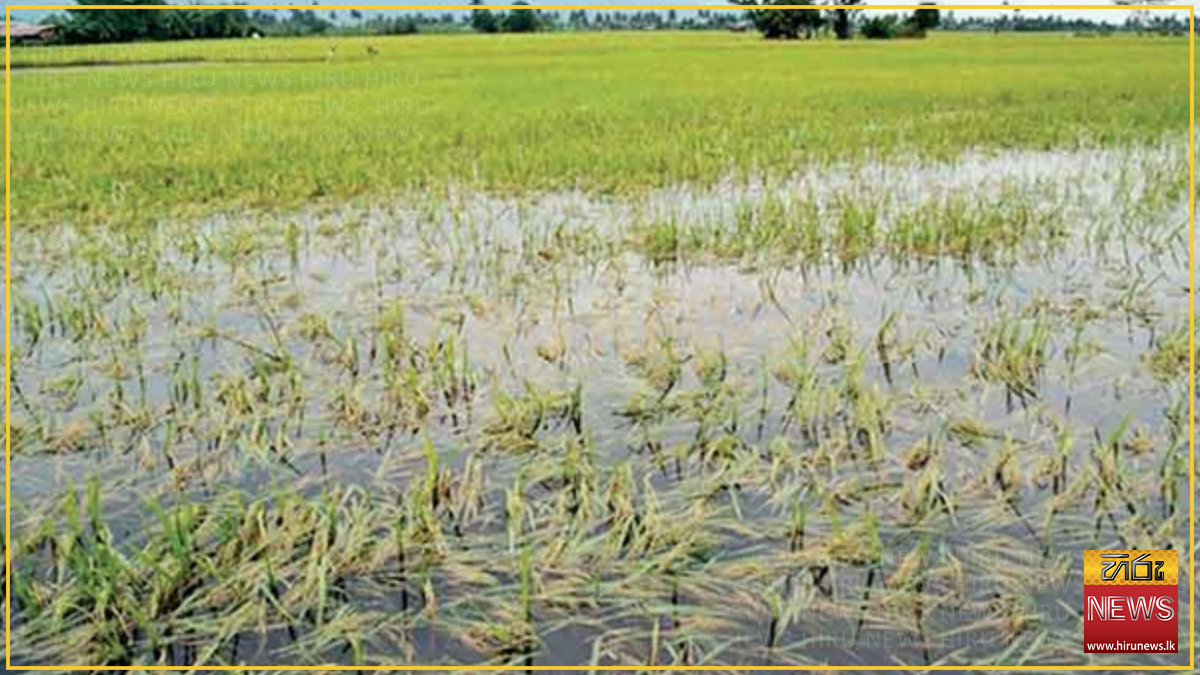
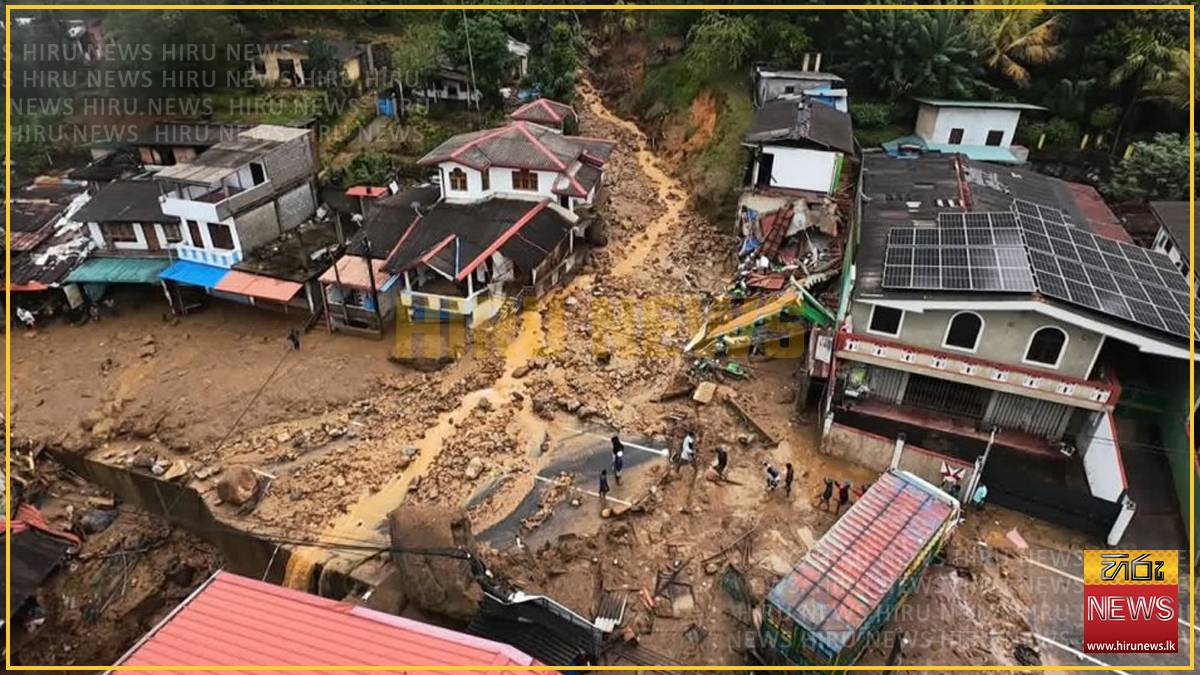
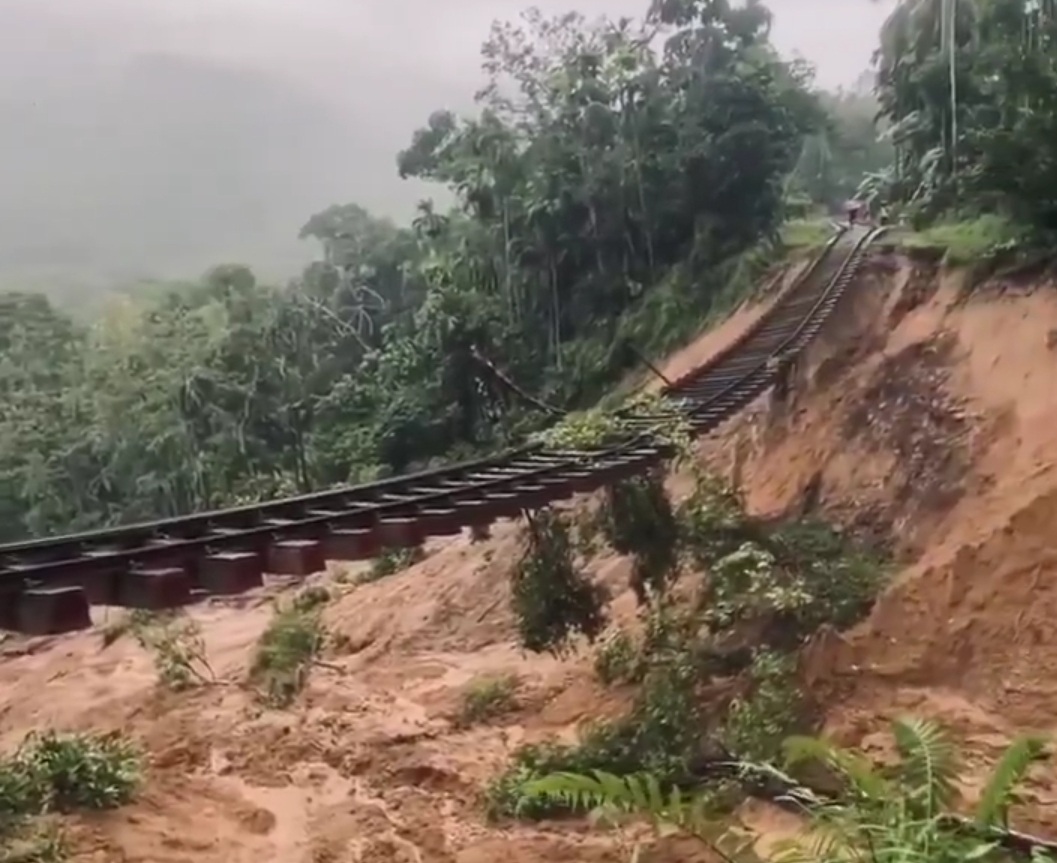
President Anura Kumara Dissanayake instructed officials to prepare the farmers in the Anuradhapura District whose paddy cultivation was destroyed due to floods to re-cultivate during the upcoming Maha season.
Highlighting the need for all relevant institutions to work in proper coordination, treating this as a national necessity, the President instructed the authorities to provide compensation to farmers without delay and to ensure temporary irrigation water supply through provisional repairs.
The President further noted that the government is providing the highest amount of compensation in the country’s history for crop damages, with the expectation that cultivation activities will be commenced again promptly.
President Anura Kumara Dissanayake gave these instructions this morning (07) while attending a special coordination committee meeting at the Anuradhapura District Secretariat to review the programme being implemented to restore normalcy to the lives of people affected by the disaster situation and to rehabilitate damaged infrastructure in the district.
The President instructed officials to present, before this Friday, a report detailing the number of farmers who were completely affected, the extent of damaged farmland and the required financial allocations. He emphasised that compensation must be granted only to those who are genuinely entitled and that no one should receive it unjustly.
The President stated that the government is committed to providing compensation to the farming community and directed officials to foster confidence among farmers so that they will be encouraged to resume cultivation.
The President also inquired, separately, from the relevant institutions about the measures taken for the development of the district’s infrastructure including highways, irrigation and communication networks.
The President examined the programme for reopening obstructed roads and instructed that temporary repairs be expedited to meet the public’s transportation needs until permanent road development plans are implemented.
Officials of the Ceylon Electricity Board informed the meeting that 473 out of the 580 electricity transformers damaged due to the disaster have already been restored and that full electricity supply to the district could be achieved by tomorrow.
They further stated that 49,000 water connections had been affected, of which about 99% have now been restored, while water is being supplied by bowsers to the remaining areas. They noted that total restoration of water supply is expected within the next two days. Damaged community water projects are also being restored.
Well-cleaning activities are currently being carried out with the support of the Navy and the President instructed officials to complete these tasks swiftly through community participation coordinated by Divisional Secretariats.
Discussions were also held regarding the provision of compensation for crops such as Maize, restarting cultivation, restoring the livelihoods of those engaged in animal husbandry, normalising health services and rehabilitating religious sites including damaged temples.
The floods have caused total damage to 228 houses in the district. The President instructed officials to gather accurate information on whether affected families should be resettled on the same land or relocated elsewhere and to begin identifying suitable land for resettlement.
Officials reported that all schools in the district could reopen by 16 December. The President instructed that the Rs. 15,000 allowance promised by the Treasury for schoolchildren affected by the disaster be fully distributed before 31 December and that the list of beneficiaries be prepared without delay.
The President also expressed his gratitude to government officials, the Police and the Tri-Forces for their service in providing relief to the public and restoring infrastructure.
The meeting was attended by Co-Chair of the Anuradhapura District Development Committee, Minister of Trade, Commerce, Food Security and Cooperative Development Wasantha Samarasinghe, Minister of Housing, Construction and Water Supply Susil Ranasinghe , Anuradhapura District MPs Susantha Kumara Navaratna and Sena Nanayakkara, North Central Province Governor Wasantha Jinadasa, Chief Secretary J.M.R.P. Jayasinghe, representatives of local authorities; Secretary to the Treasury Dr Harshana Suriyapperuma, Anuradhapura District Secretary K.G.R. Wimalasuriya, ministry secretaries and other government officials.
-PMD
Comments Off on President urges speedy compensation for Anuradhapura farmers
The total damage caused by the recent adverse weather in Sri Lanka is estimated to be between US$6 billion and US$7 billion, according to Commissioner General of Essential Services Prabath Chandrakeerthi.
Speaking to the media, he said this amount represents between 3% and 5% of the country’s Gross Domestic Product (GDP).
An Economist’s estimate
In an interview with us, economist Dr. Kenneth De Zilwa offered a lower—but still substantial—estimate of the destruction.
He stated that his team’s current assessment is Rs. 320 billion, which is equivalent to a little over US$1 billion, or more.”
Right now, we are taking a very conservative approach, and the projected figure of Rs. 320 billion will likely need to be revised upward, in my view. The damage to infrastructure, people’s livelihoods, and supply-side assets all place a significant burden on the country’s cash flow. So this estimate represents only one part of the overall impact on the nation,”
Dr. De Zilwa noted that agriculture and plantations are among the worst-affected sectors.
However, he stressed that Small and Medium Enterprises (SMEs) face a particularly severe blow.
SMEs hit after multiple crises
These SMEs have just come out of three major crises: first, the Easter attacks, then COVID, and then the financial shock. They were already struggling, and now, on top of all that, we have the all-island floods, which will take a significant toll,” he said.
He explained that the banking sector could also feel the ripple effects:
If you look at the average loan or lending book of the banking sector — around Rs. 1.2 trillion — we believe at least 10% of that will be affected, which is roughly Rs. 120 billion. This impact will feed through to the banking sector because the banking sector is the mirror image of the real economy. So even though the sector recorded significant profits, it will now have to brace itself to absorb a substantial rise in non-performing loans.”
Impact on credit ratings and the external position
Dr. De Zilwa also highlighted Sri Lanka’s vulnerable external sector:
We currently have a large negative net international investment position of around US$52 billion. On top of this, we will need significant external borrowing for infrastructure.”
He warned that supply-side disruptions will force higher import dependence, adding pressure on the current account and the fiscal deficit.
So we are looking at a kind of triple whammy. First, the external debt component will rise, which will negatively affect the overall rating that is due to be announced. Second, fiscal space — already highly constrained — will be squeezed further. And third, the deficit is likely to increase as more clarity emerges regarding domestic financing needs.”
Revenue challenges ahead
He noted that raising government revenue will be difficult in the coming year, adding that income from vehicle imports will likely be lower compared to this year.
Can the Central Bank print money?
Asked whether the Central Bank can inject liquidity by printing money amid these challenges, Dr. De Zilwa responded:
Absolutely, yes. Once the current account deficit begins to widen, the depreciation of the rupee will automatically push working capital balances higher. As a result, the banking sector liquidity will need to be supplemented by the Central Bank. Challenges in the movement of stock and inventory will also affect liquidity. Therefore, the Central Bank and the government will have to ensure that adequate liquidity is maintained in the market.”
Call to revisit the IMF programme
He also emphasised the need for the IMF to reconsider Sri Lanka’s current Extended Fund Facility (EFF):
The government has to intervene because the overall parameters set under the previous conditions no longer exist. They must revisit these frameworks and take a pragmatic approach. Multilateral agencies will also need to step in to smooth out cash flows. Therefore, the IMF agreement must be revisited… If not, Sri Lanka will be severely constrained, because fiscal and monetary policy are already tightly restricted.”
Central Bank Governor: ‘We have the buffers’
Meanwhile, during the Economic Summit organised by the Ceylon Chamber of Commerce, Central Bank Governor Dr. Nandalal Weerasinghe said that the Central Bank possesses sufficient buffers to address the shocks from Cyclone Ditwah.
What is most important in facing a shock like this is having sufficient buffers across the macroeconomic framework — fiscal, monetary, and external. This situation presents an opportunity, even for the banking sector, to use those buffers. That is precisely why we build them.”
He added:
I know the government is currently in a comfortable position, particularly in terms of short-term fiscal buffers for immediate relief. On the external side, too, compared to where we were in terms of foreign reserves, we are now in a much better position. On the monetary side, we are ready to provide any liquidity support needed by the banking system. The banking sector is also stable — capital buffers, liquidity buffers, and even profits have strengthened.”
Comments Off on What could be the cost to the economy from Ditwah?
The completion of the Fifth Review of Sri Lanka’s Extended Fund Facility (EFF) of the International Monetary Fund (IMF) will be delayed, as the Board prioritises emergency aid following Cyclone Ditwah.
The IMF released the following statement to the media:
In light of the Sri Lankan authorities’ request for emergency financing, IMF Board consideration of the Rapid Financing Instrument (RFI) request is the priority at the current juncture. An IMF team will visit Sri Lanka in early 20206 to resume discussions for the completion of the Fifth Review of the Extended Fund Facility (EFF). The support under the RFI is in addition to Sri Lanka’s EFF access.”
Sri Lanka had requested USD 200 million as emergency assistance under the RFI following the devastation caused by cyc;one Ditwah.
The Board was earlier slated to take up the Fifth Review on December 15, with the sixth tranche of funding (approximately USD 342 million) expected to be disbursed soon after.
Comments Off on IMF Fifth Review completion to be delayed
Kandy, Kegalle, Badulla, Nuwara Eliya and Anuradhapura are the districts most affected from Dithwa cyclone. Hundreds of people died and many are missing. The casualty figure is likely to surpass the 1,000 mark.
About 35% of our island’s population lives in high risk landslide prone areas.
This is why Dithwa hit the central hills so badly.
Hanwella, Angoda, Kolonnawaa, Wellampitiya in the Western province – closer to Colombo, are now severely flood affected areas. In the past 20 years, frequent flash and river floods have claimed many lives in these areas. Therein, many people displace quite often.
Gampaha is a new area that frequently goes under water very badly.
Lately, haphazard development, irresponsible construction, ignoring proper planning have brought forth much destruction to Sri Lanka.
Especially after the war, the unscientific and environmentally unfriendly construction of expressways (Southern, Katunayake and Kandy), other infrastructure like a useless port and an airport in the South, deforestation, water source damage, illegal gem/sand mining etc have led to severe environmental ruin. In fragile areas, this has been very severe.
Due to severe land scarcity, people in most provinces – except the North and East, live in cramped up conditions. Often people live in land plots that are not larger than 10 perches. The writer is aware of people that live in two perches lots.
It is reported that many of the hillside survivors and some Anuradhapura district victims wish to relocate. They are shocked by what they experienced. They believe that next time they will not be lucky.
Furthermore, some have lost kith and kin in the floods; obviously they do not wish to live in the same land anymore.
Their predicament is quite understandable.
The only areas where there is good livable land are in the North and East.
If these people are willing, they should be resettled in those areas. There is abundance of good arable land above Vavuniya towards Mannar, Kilinochchi, KKS/Valvetithurai and Mulativu in the North and above Pottuvil towards Trincomalee via Batticaloe in the East.
Article 14 (i)(h) of the Constitution provides that citizens are entitled to have freedom of movement and the ability chose residence anywhere they like within Sri Lanka. This is a fundamental right that promotes national integration by ensuring free internal mobility of citizens.
There is a severe criticism that the government failed to protect people from the Dithva calamity. There is some truth in this.
It is reasonable to argue that the government’s reactive, rather than the proactive approach contributed to the high death toll.
Despite prior warnings, there was a lack of preparedness and an overall failure to act on the part of the government.
It was reasonably foreseeable that releasing reservoir waters in one go would worsen the situation.
It seems this is what happened in Kandy, Gampola, Kothamale and some places in Anuradhapura district.
Rather than opening sluice gates in one go, they should have been carefully released in stages, with prior warnings given.
There was 2 weeks for the government to act.
According to Anuradha Jayarathne MP, 80% of Gampola deaths were due to the government’s inaction.
It is unknown how he came to this figure.
It is probable that the poor construction of the Ambuluwawa tower by the UPFA government may have caused severe environmental degradation in Gampola area.
Prima facie, the fact that the irrigation department opened up sluice gates at various reservoirs haphazardly, without any warning seem to have contributed to severe flooding that caused numerous deaths.
A government MP trying to apportion blame on the Department of Meteorology is a farce.
If negligence is proven, not only the irrigation department hierarchy but the Irrigation Minister and the President may also become liable.
Only a Court of Law can determine this precisely.
Of course the President is currently immune from any legal action whatsoever – criminal or civil.
The onus is very high to prove criminally negligent homicide/injuries.
YouTubers demand that the opposition must initiate criminal law action against the government. In Common Law countries, law does not work that way. Only the State (in Sri Lanka – the Attorney General) can initiate criminal prosecutions – in this instance criminal negligence causing death (manslaughter) and/or injury.
But, civilians who have suffered damage can initiate civil law action against the government. This can be done jointly or severally. If successful, they could recover handsome damages.
In a civil suit, the Plaintiff will be required to prove that the government breached the duty of care that it owed them.
Furthermore the availability of fundamental rights applications to the victims.
Some demand that the President and the government ought to resign henceforth over the calamity. This must not happen.
This must be further vigorously argued in the parliament.
Of course there is a lot of criticism about the government’s handling of Dithva, but majority of the people still want the government to continue.
True the government failed to garner financial aid from Europe and the EU (Sajith would have done this very well) – the UK and Switzerland did help us; overall the government seems to be handling the post disaster work well. They have done a lot of good work in the past week.
Mr Trump’s US government gave us a big financial aid. Thank you Ms Chung.
The IMF is going to dig into its deep wallet. This is very good news.
If the government resigns now, who will take over the leadership? There is none capable at the moment.
We do not want the country to move out of the frying pan into the fire.
Sri Lankans are a resilience lot, like many other past calamities, we will bounce back from this as well.
Comments Off on Willing victims should be resettled in the North and the East
he International Monetary Fund (IMF) said it expects Sri Lanka’s economic activity to take a hit following the widespread destruction caused by Cyclone Ditwah, noting that the scale of damage will become clearer once authorities complete a rapid post-disaster assessment.
IMF’s Director of the Communications Department Julie Kozack said, the Fund is closely engaging” with the government, development partners and other counterparts as the country grapples with the humanitarian, social and economic fallout.
Large parts of Sri Lanka have been affected by the floods, and on that basis, we do expect economic activity to be adversely affected, in addition to the significant human toll,” she said at a briefing this week.
The IMF is continuing its engagement under the existing Extended Fund Facility (EFF), with staff and Sri Lankan authorities having reached a staff-level agreement on the Fifth Review in October, prior to the cyclone. A Board meeting on the review is expected on December 15.
Kozack said IMF staff is examining options to further support Sri Lanka in the recovery process”, signalling possible adjustments or additional assistance once damage assessments are finalised.
We will provide more details as the assessment of economic needs and damages moves forward,” she added, noting that the findings will shape the Fund’s next steps in bolstering the country’s recovery and resilience.
Comments Off on IMF says Sri Lanka’s economic outlook to weaken after cyclone
The losses are estimated at between US$ 6 and US$ 7 billion. In 2004, they ranged from US$ 1.5 to US$ 2 billion. The recovery plan is waiting for detailed assessments. Twenty-two out of 25 administrative districts and 416 factories were affected. Three billion rupees have been allocated in subsidies; raising the public spending limit is being considered to meet needs.
Colombo (AsiaNews) – The economic losses caused by Cyclone Ditwah in Sri Lanka are estimated at US$ 6 to US$ 7 billion, more than three times the damage caused by the 2004 tsunami, one of the worst natural disasters of modern times.
Prabath Chandrakeerthi, Commissioner General of Essential Services, who was appointed last week, told reporters that this was a rough estimate, while “The economic damage of the 2004 tsunami was estimated only at US.5 to 2 billion,” he said.
Now an assessment by the World Bank is pending before an economic recovery plan can be developed.
The Ministry of Industry and Entrepreneurship Development, which reported that Cyclone Ditwah affected 416 manufacturing and export factories across Sri Lanka, is proposing to immediately pay 25 per cent of the total damages to the affected factories.
Efforts are underway to collect damage data, while factory owners have been asked to report the extent of the destruction via an emergency number by 16 December.
The highest number of affected factories is in the districts of Gampaha, Colombo, Puttalam, Trincomalee, Kegalle, Kurunegala, Matara, Kandy, and Batticaloa.
A notification published in the Extraordinary Gazette states that 22 of Sri Lanka’s 25 administrative districts were affected by Cyclone Ditwah, underscoring the magnitude of the event. Galle, Matara, and Hambantota, in the Southern Province, are the three districts untouched by the disaster that struck the country as well as many parts of Asia.
The tea industry has been hit hard and may take months to return to normal. Damaged machinery must be sent abroad for repair, while road damage could impact export flows, according to an official from the Colombo Tea Traders Association. The economic losses to the tea industry have not yet been calculated.
The ministry has allocated three billion rupees (US$ 9.7 million) in non-repayable grants to support the reconstruction of these industries, with urgent steps taken to release the funds.
Many industrialists have called for action to repair water, electricity, and road infrastructure to speed up the recovery.
Opposition lawmaker and economic analyst Harsha de Silva told parliament that the budget ceiling for 2026 under the Public Finance Management Act allows for adjustments in extraordinary circumstances.
He noted that parliament may consider raising the capital expenditure limit from 13 per cent of GDP to around 14-14.5 per cent to address urgent needs, adding that the Treasury has over 1.2 trillion rupees (US$ 4.2 billion) in liquidity that can be used immediately, and the planned retirement of 500 billion rupees (US$ 1.6 billion) in Treasury bonds in 2026 could be postponed by a year to prioritise recovery spending.
The government already has significant fiscal leeway to assist communities affected by Cyclone Ditwah, de Silva explained, insisting that there is “no excuse” for delays in relief and cleanup operations.
He also stated that the government has currently LKR 30 billion (IS$ 100 million) earmarked for recurrent expenditure and an additional LKR 20 billion (US$ 65 million) that can be reallocated, for a total of LKR 50 billion that can be used immediately for disaster relief.
According to the Disaster Management Centre (DMC), the death toll reached 607 this morning, with 214 people still missing due to severe weather conditions.
The adverse conditions, which began on 16 November, have so far affected 2,082,195 people or 586,464 families across the country, the agency reported.
Additionally, the DMC said that 4,164 homes were destroyed, while at least 67,505 more sustained partial damage.
Comments Off on Cyclone Ditwah causes three times the economic damage as the 2004 tsunami
Rapid Financing Instrument request under review as IMF expresses support for recovery efforts
ANKARA
The International Monetary Fund (IMF) said on Friday that it is reviewing a request by Sri Lanka for $200 million in emergency financing following the devastation caused by Cyclone Ditwah.
Evan Papageorgiou, IMF mission chief for Sri Lanka, said in a statement that the government had applied for financial assistance under the Rapid Financing Instrument (RFI) totaling 150.5 million Special Drawing Rights (SDR), equivalent to about 26% of Sri Lanka’s IMF quota or approximately $200 million.
“This request is currently under consideration and subject to approval by the IMF’s Executive Board,” said Papageorgiou, according to the statement.
The cyclone, which brought widespread destruction to the island nation earlier this week, has led to significant humanitarian and economic challenges.
“In the wake of the devastating impact and widespread destruction caused by Cyclone Ditwah, we extend our deepest sympathies to the people of Sri Lanka,” Papageorgiou added.
The IMF reaffirmed its commitment to the country’s recovery and future resilience efforts.
“The IMF remains closely engaged with Sri Lankan authorities during this challenging period and is committed to supporting the country as it undertakes urgent efforts to recover, rebuild, and promote resilience for the future,” the statement read.
The RFI is designed to provide rapid financial assistance to member countries facing urgent balance-of-payments needs, including those stemming from natural disasters.
Approval from the IMF Executive Board is required before funds can be disbursed.
In Sri Lanka, the death toll from Cyclone Ditwah has risen to 607, with 214 people still missing since the storm struck on Nov. 17, the country’s Disaster Management Center said in a report on Friday.
The UN said at least 185 people have died in southern Thailand, while 367 others remain missing. Four deaths were reported in India and three in Malaysia amid severe weather conditions.
Comments Off on IMF considers Sri Lanka’s $200M emergency aid request after cyclone disaster
The death toll due to the adverse weather conditions experienced in the country over the past few days has climbed to 618 as at 8.00 p.m. today (06), according to the Disaster Management Center (DMC).
It confirmed that another 209 individuals remain missing as search operations continue.
The extreme weather has impacted all 25 districts of the island, affecting a total of 2,078,436 people from 583,030 families.
The districts of Gampaha (362,664), Puttalam (347,211) and Colombo (328,846) are the worst affected.
Of these, approximately 100,124 individuals from 29,874 families are still sheltered in 990 relief centres, the DMC stated.
Furthermore, 4,071 houses have been completely destroyed, while another 71,121 houses have sustained partial damage as a result of the disaster, it added.
Comments Off on Death toll from adverse weather rises to 618 with 209 still missing
The Department of Meteorology’s 36-hour forecast (issued at 4:00 PM) indicates that the Northeast Monsoon condition is gradually establishing across the island.
Consequently, several spells of rain are expected in the Northern, North Central, Eastern, and Uva provinces, as well as in the Matale and Nuwara Eliya districts.
Rain or thundershowers may occur in the remaining parts of the island after approximately 1 PM.
The department warns that fairly heavy falls of over 50 mm are likely at some places in the Western and Sabaragamuwa provinces, and in the Galle and Matara districts.
Furthermore, misty conditions can be expected during the early hours of the morning at some locations in the Western, Sabaragamuwa, Central, and Uva provinces.
Comments Off on Heavy rain expected in South and West
The National Building Research Organisation (NBRO) has extended the landslide early warning notice for another 24 hours, covering 13 districts across the country.
The districts currently identified as being at risk are: Badulla, Colombo, Gampaha, Kalutara, Galle, Matara, Kandy, Matale, Nuwara Eliya, Kurunegala, Kegalle, Monaragala, and Ratnapura.
The public in these areas is urged to remain vigilant due to the continued threat of landslides.
Comments Off on Landslide warning extended for 13 districts
The Chairman of the National Water Supply and Drainage Board (NWSDB), Chandana Bandara, announced that the recent disaster caused nearly Rs. 5 billion in damage to the water supply infrastructure.
The worst damage occurred at the Katugastota pumping station near the Mahaweli River in Kandy.
Additionally, part of the pumping station in the Nillambe area of Kandy is affected by a landslide.
Serious damage also occurred at the pumping station near the Mahaweli River in Mahiyanganaya.
The disaster impacted 156 water pumping stations in total. Of these, 148 are restored and operational, with efforts underway to restart the remaining eight.
The Chairman expects the Mahiyangana pumping station, in particular, to be operational by this evening.
Army, Navy, and NWSDB officials are making strenuous efforts to restore the Nillambe pumping station.
If the restoration of the Nillambe pumping station takes time, a temporary water supply system will be implemented for the area.
Restoration work on three pumping stations in the Hemmathagama and Matale districts will also likely be completed quickly.
Bandara further stated that approximately 90% of the areas where the water supply was disrupted by the emergency disaster situation now have restored water supply.
Comments Off on NWSDB estimates Rs. 5 billion in damages
Sri Lanka already has a national, well-structured school curriculum created by the NIE (National Institute of Education). Our Health & Physical Education syllabus teaches students the essential knowledge they need: puberty, reproductive biology, hygiene, disease prevention, respect for others, responsible behaviour, and age-appropriate life skills. This curriculum isscientific, culturally rooted, legally compliant, and protective of children.
However, the current Education Minister proposes to replace or align” Sri Lanka’s curriculum withComprehensive Sexuality Education (CSE)based on the International Technical Guidance on Sexuality Education (ITGSE) — a framework created by external agencies such as UNESCO, UNFPA, UNICEF, WHO and UNAIDS.
While the name sounds harmless, the content promoted by ITGSE introducesnew ideological, sexual, and identity-based teachings to children from as young as 5 years old.
· National traditions regarding childhood, family, morality, and education
CSE isnota simple update to health education.
It is acomplete shift in how sexuality, gender, identity, and childhood itself are taught— replacing Sri Lanka’s duty-based, family-centred approach with a rights-based, identity-political, Westernised model.
This analysis shows, with evidence, thatSri Lanka already teaches everything necessary for student health and protection, while ITGSE-aligned CSE introduces unnecessary, harmful, and culturally disruptive elements that no responsible government should impose on its young population.
SRI LANKA —NIE (National Institute of Education)— Health & Physical Education (Teachers’ Guide, Grade 9) —official Sri Lankan curriculum material.
Note: NO sexuality content is taught for Grades 1–8.
ITGSE wishes to introduces content of sexuality from age 5 onwards.
These subjects are not age-appropriate!
(Primary PDF I used: Teachers' Guide – Grade 09 Health & Physical Education— NIE website).
1. Where sexuality / responsible sexual behaviour appears in Sri Lanka’s Grade 9 guide
· Teachers’ Guide — Grade 9 — See the section Competency 10 : Leads a happy life facing the obstacles in day to day life”
· Explains the concept of human sexuality; Describes responsible sexual behaviors; Acts according to gender without injustice…”.
· The guide explicitly instructs teachers to Explain the following facts associated with sexuality” including: the reproductive system, social roles after marriage, and the harms of irresponsible sexual behaviours” (listed harms include unexpected pregnancies, STIs, disruption to education, mental harm, etc.).
2.How the NIE frames sexual content
· The NIE framing isprotectiveand culturally contextual — it emphasisesresponsible sexual behaviour, marriage, protection from harm, and parental/community values
Sri Lanka’s official Grade 9 Health & Physical Education Teachers’ Guide Includes content on human sexuality, responsible sexual behaviour, reproductive biology, and safeguarding against irresponsible sexual behaviour — and it frames these in conservative/locally contextual terms (emphasis on marriage, harms of irresponsible behaviour, parental/community values).
What Sri Lanka’s NIE Curriculum Covers
Sri Lanka’s official syllabi focus on:
1. Biology-based reproductive health
· Basic anatomy
· Puberty
· Bodily changes
· Menstruation
· Hygiene
· Prevention of disease
NOT included:
· Instructions on sexual acts
· Promotion of sexual experimentation
· Gender identity options”
· Sexual orientation as a behavioural category
· Pleasure-based education
2. Values-based moral and religious education
· Buddhist, Hindu, Christian, Islamic moral teachings
· Family values
· Self-discipline, modesty, respectful behaviour
· Social responsibility
This ensures sexuality topics are taught within a cultural, ethical, and religious framework, not as purely individualistic self-expression.”
3. Age protection & safeguarding
· No sexual content presented to young children
· Only basic puberty content introduced around Grade 6–8
· No exposure to adult sexual concepts under 14
4. Focus on Sri Lankan cultural norms
· Marriage, family, responsibilities
· Avoidance of sexual misconduct
· Respect for parents and teachers
IGTSE – CSE
Comprehensive Sexuality Education (CSE) is the specific content framework and program approach that is guided by the International Technical Guidance on Sexuality Education (ITGSE).
The ITGSE acts as the international standard and master-framework for designing and implementing CSE programs.
Essentially, ITGSE is the set of guidelines, and CSE is the actual educational content and process that governments and organizations are encouraged to implement based on those guidelines.
Key Points:
· ITGSEprovides technical advice and a recommended set of topics and learning objectives. It divides the curriculum into eight key concepts with objectives.
· The guidance is developed and promoted by UN agencies including UNESCO, UNFPA, UNICEF, WHO, and UNAIDS.
· CSEis the curriculum-based process of teaching and learning about the cognitive, emotional, physical, and social aspects of sexuality, which aims to equip children and young people with knowledge, skills, attitudes, and values to make informed choices about their bodies and relationships.
Therefore, ITGSE is the guiding document for the implementation of CSE.
What ITGSE CSE Comprehensive Sexuality Education Introduces (and why they conflict)
Everything listed is directly verifiable from the ITGSE CSE Framework,
Conflict 1 —
ITGSE CSE normalises sexual diversity” & gender identity” concepts for children
Sri Lanka NIE:
Does not teach:
· Gender identity categories
· Sexual orientation categories
· LGBTQIA+ ideological frameworks
· Gender expression” as a concept
ITGSE CSE:
Introduces:
· Sexual orientation as identity
· Gender identity & gender expression
· Understanding diverse sexualities”
Conflict: Sri Lanka’s Constitution, penal code, culture, religions, and NIE standards do not treat sexual orientation as an identity to be promoted in school.
Teaching these creates:
· Identity confusion in young children
· Conflicts with Buddhist, Hindu, Islam, and Christian/Catholicism teachings
· Leads to a breakdown of cultural norms regarding family and sex
· Opening the door for ideological foreign influence
Conflict 2 —
ITGSE CSE introduces sexual content to children as young as 5–8year olds
Sri Lanka NIE:
· No sexual content taught at primary level
· Only hygiene & good behaviour
ITGSE-CSE:
Recommended topics at ages 5–8 include:
· Basic concepts of gender”
· Different types of families” (including same-sex families)
· Understanding one’s own body”
· Protected vs unprotected touches” (which is fine)
· But also early introduction to sexuality as part of being human”
Conflict: Sri Lanka keeps sexual topics away from small children to protect innocence and reduce early sexualization.
Conflict 3 —
ITGSE CSE frames sexuality as rights” and autonomy”, but Sri Lanka teaches duties & responsibility
Sri Lanka NIE:
· Focus on discipline, respect, and behaviour
· Boundaries are linked to social responsibility
· No teaching of sexual rights” for minors
ITGSE CSE:
· Introduces sexual rights”, bodily autonomy, gender expression freedom
· Encourages children to challenge family norms
· Encourages young people to make decisions about their sexuality”
Conflict: Sri Lankan law does not recognise sexual rights” for minors. Introducing them contradicts:
· Penal Code
· Child Protection Authority guidelines
· Cultural and religious norms
· Parental authority
Conflict 4 —
ITGSE CSE introduces risk-normalising topics about sexual behavior
While ITGSE CSE states it teaches risk reduction, its content includes discussion of:
· Sexual relationships
· Condom negotiation
· Pleasure
· Sexual decision-making
· Consent frameworks often designed for older teens but trickling down to lower age levels in practice
Sri Lanka NIE:
None of these appear in Sri Lanka’s curriculum at any level.
Conflict: Introducing sexual behaviour discussion accelerates:
· Curiosity
· Experimentation
· Exposure to pornography
· Early sexual activity
· Vulnerability to exploitation
Sri Lanka’s approach is preventive.
CSE claims is harm-reduction but assumes sexual activity will occur, which misaligns with Sri Lankan moral foundations.
Encourages children to learn condom negotiation skills.
Sri Lanka does not assume sexual activity among schoolchildren.
Encourages sexual behaviour by normalising adult content.
Different Types of Sexual Acts
NONE.
CSE modules include sexual behaviours for informed decision-making.”
Direct misalignment with SL law and culture.
Exposure to adult sexual concepts could traumatise or confuse minors.
Consent Education
Taught within safety/abuse prevention ONLY.
Taught within romantic/sexual contexts.
SL treats consent as safety, not sexual readiness.
Encourages minors to think sexual consent is relevant to them.
5. SOCIAL & POLITICAL FRAMEWORKS
Category
NIE Sri Lanka
ITGSE / CSE
Conflict
Risk
Gender Politics & Ideology
NO ideological content.
Introduces social constructs, power dynamics, gender activism.
Sri Lanka does not include political gender ideology in school.
Imposition of foreign socio-political constructs.
Challenging Norms
Encourages respect for hierarchy and culture.
Encourages challenging family, societal, religious norms.
Opposes Sri Lanka’s social foundation (family →school →religion).
Creates conflict between students & families.
Human Rights Framing
Rights taught through Civics in a general way.
Sexual rights, LGBTQIA+ rights, bodily autonomy.
SL law does NOT recognise these categories.
Potential legal conflict; confusion about lawful behaviour.
6. PEDAGOGICAL APPROACH
Category
NIE Sri Lanka
ITGSE / CSE
Conflict
Risk
Teacher Role
Teachers follow content closely with strict boundaries.
CSE encourages open discussions about personal beliefs, sexuality.
SL teachers are NOT trained for such sensitive content.
Risk of inappropriate discussions or boundary violations.
Parental Rights
Parents are core stakeholders.
ITGSE assumes educator autonomy over sexuality topics.
Parents excluded from decision-making.
Erosion of parental oversight; distrust in education system.
Cultural Adaptation
NIE adapts to SL culture and religion.
ITGSE designed for global use, with Western assumptions.
One-size-fits-all approach inappropriate for SL.
Cultural displacement and identity dilution.
7. LEGAL COMPATIBILITY
Category
NIE Sri Lanka
ITGSE / CSE
Conflict
Risk
Alignment with Penal Code
Fully aligned.
Promotes ideas contradictory to Sections 365/365A and child protection laws.
Direct legal conflict.
Confusion among teachers/students about what is legal/illegal.
Child Protection Laws
Strict: no sexual content for minors.
Sexuality content begins at age 5.
Violates child safeguarding practice.
Potential psychological harm.
Why ITGSE/CSE Conflicts With Sri Lanka’s NIE
Sri Lanka’s curriculum is:
· Biology-based
· Morality-based
· Duty-Respect based
· Religion-compatible
· Culture-protective
· Legally compliant
· Developmentally safe
ITGSE/CSE is:
· Identity-based
· Sexuality-centered
· Rights-framed
· Western socio-political
· Early-sexualisation oriented
· Legally incompatible in Sri Lanka
Introducing sexuality topics that have ruined lives of children in the West so much so that the Western governments are reversing their laws, closing down gender-affirming clinics and banning hormone treatments & puberty blockers.
Therefore, integrating ITGSE/CSE would:
· Introduce Western identity politics
· Remove cultural and parental oversight
· Sexualize children prematurely
· Increase confusion among pre-teens
· Conflict with Sri Lankan religious values
· Contradict national law and child protection standards
· Undermine national education sovereignty
The Government MUST STOP attempting to introduce ITGSE CSE for Sri Lankan Schools
Comparing Sri Lanka’s legally approved NIE curriculum with the ITGSE-based CSE model promoted internationally, the conclusion is unmistakable:
Sri Lanka already provides age-appropriate, scientifically accurate health education — WITHOUT compromising culture, religion, or child protection.
The proposed ITGSE-aligned CSE, however:
Conflicts with Sri Lankan law
— especially child protection laws and Penal Code provisions that do not recognise sexual rights” or gender identity” frameworks for minors.
Undermines cultural and religious values
— by promoting identity politics, sexual orientation categories, gender ideology, and individualised sexual autonomy” for children.
Introduces sexual content to children too early
— beginning at ages 5–8, leading to premature exposure, confusion, and potential psychological harm.
Erodes parental authority and community values
— shifting control away from families and local educators towards external ideological frameworks.
Has no educational necessity
— because the NIE already covers biology, puberty, behaviour, safety, ethics, and health in an age-appropriate, culturally safe manner.
Risks destabilising the moral foundations of future generations
— by moving from a duty-based moral system to a Westernised rights-first” approach that is not compatible with Sri Lanka’s social fabric.
Final Message to the Public and Government
Sri Lankan children do not need a foreign-designed sexuality curriculum.
They need protection, guidance, discipline, moral grounding, and age-appropriate education — which the NIE already provides.
Therefore:
Parents, teachers, religious leaders, and citizens have every right — and responsibility — to demand that the Government DOES NOT adopt ITGSE-aligned CSE in any part of Sri Lanka’s school system.
This is not a rejection of health education. This is not even health education that is being proposed.
It is a defence of:
· Sri Lanka’s sovereignty
· Sri Lanka’s culture
· Sri Lanka’s religions
· Sri Lanka’s legal system
· Sri Lanka’s children’s childhood
· And the mental & physical well-being of the future of our nation’s children
Sri Lanka must continue its own, locally grounded Health & Physical Education curriculum — not surrender its educational values to external agendas or simply because funding bodies or loan conditions demand its inclusion.
Shenali D Waduge
Comments Off on Why ITGSE-aligned CSE should not be adopted in Sri Lanka – A Legal, Cultural, and Educational Analysis