A letter from the press secretary asking for money and security

March 9th, 2023

Courtesy Hiru News

Government Printer Gangani Liyanage has sent letters to the Finance Ministry Secretary and the IGP requesting for fuinds and security to print ballot papers.

She said that the relevant letters were taken to the Ministry of Finance and Police Headquarters and handed over.

It is stated in the letter sent by the Government Printer to the IGP that 35 police officers are needed during the day and 28 at night during the period of printing the ballot papers.

Also, it is reported that out of the 500 million rupees estimated by the Government Printing Department for the printing work related to the local government election, only 40 million rupees have been received in cash.

Meanwhile, the Election Commission announced yesterday that it has been proposed to conduct the postal voting for the local government election from the 28th to the 31st of March

TRUE HISTORY OF SEVENTY-FIVE YEARS OF INDEPENDENCE

March 8th, 2023

By Rohana R. Wasala

I concluded a previous article published in Lankaweb on January 28, 2023 (Is recolonisation the final solution II) touching on the deplorable situation that innocent Sri Lankans have been plunged into not only by the current economic crisis but also by the so-called Tamil ethnic problem, both aggravated by unjust direct foreign intervention in Sri Lanka’s internal affairs, subversive NGO activities and various forms of imported religious fundamentalism, with the following words:

The solution is not to try to return to the alleged Utopia that the British are believed by some to have bequeathed to us at independence (for such wasn’t the reality), or to overlook the 1972 change as insignificant, but to make way for the young of the country today to make a correct assessment of what has been achieved and what has not been achieved by the previous generations since independence (who were no less patriotic, no less proactive than them) and forge ahead with new insights, new visions, and appropriate course corrections as our ancestors did during crises to ensure our survival for so long as one people in spite of manifold differences among us.”

Now a large proportion of the young of the country today”, unfortunately, are not aware of the unspoken truth behind the growing political instability and the artificial economic ruin that is engulfing the nation. The criticism often repeated these days that all post-independence governments mismanaged the economy, ruined everything through corruption and did nothing for nation building is not a valid one. It is deliberate disinformation chiefly peddled by anti-national political and religious extremists, that is, Tamil federalists/separatists, and Christian/Catholic and Islamist fundamentalist groups. Ordinary Tamils and Muslims have lived peacefully with the Sinhalese majority as equal citizens of one country for many centuries.  Although extremists are only a handful among the relevant mainstream minority communities, they are a power to reckon with in Sri Lanka’s current besieged condition.

The aforementioned misrepresentations and corresponding misconceptions are accepted as indisputable facts, particularly by the sadly uninformed credulous section of the young population today. They are largely ignorant of the origin of the alleged Tamil ethnic problem and its exploitation by the former colonial powers and their allies to destabilize our little island that is located in a geostrategically and geopolitically sensitive region. The future that the genuinely concerned young people envisage for the country could end up as a mere pipedream unless they make a serious study of what truly happened within the past seventy-five years of independence and shape their strategies, learning from the formidable challenges the older generations had to meet, and the admirable successes as well as the dismal failures that they had experienced in the course of the past three quarters of a century. 

Had these misguided young people including the yellow robed ones among them been properly instructed about the sharp political awareness and inspired activism that the brave youth of their parents’ generation involved in the second JVP insurrection of the 1986-1990 period displayed, they would be ashamed of themselves. Had they learned about the ideologically even more sophisticated fresh young men and women of their grandparents’ time who took to arms in the first JVP rebellion of 1971 against the popular, newly elected left-of-centre United Front government of Mrs Sirima R.D. Bandaranaike without any provocation except a self-denying

revolutionary zeal to force a real system change in the country’s politics, the strange bedfellows of the so-called Galle Face Aragalaya  would have died of self-loathing. 

Of course, it must be remembered that the majority of the Aragalaya protestors were genuine. I would not include among them the handful of religious extremists who staged an ‘Aadaraye Aragalaya’ (Struggle of Love). The authentic agitators were similar to, if not identical with, the countless groups of spontaneously inspired young boys and girls from diverse communities who volunteered to adorn the city walls across the country with beautiful paintings (some with historical themes) to celebrate what they thought was the dawn of a new era with the eagerly awaited ‘system change’ made possible by Gotabaya Rajapaksa’s election as president in 2019. The expectations of the youth of the country were dashed to the ground when president Gotabaya, earlier universally believed to be the iconic leader the country needed to salvage it from the mire of corrupt politics and the Yahapalanaya, Good Governance, misadventure (now conveniently forgotten), failed to deliver due to countervailing internal and external forces assisted, as suspected,  by the treachery of his family as well as his own lack of pragmatic political skills, in spite of his undoubted moral uprightness. These genuine protestors should be distinguished from the few political and religious extremists who wanted to hog media attention by making the loudest noises. 

Corruption among politicians is a fact. ‘Dealer politics’ is also a perennial issue. Mahinda Rajapaksa embodies a striking example of both. He, whose political leadership helped to rid the country of LTTE terrorism, has almost totally nullified the benign results of that success through his horse trading with extremists aimed at perpetuating his family’s ascendancy over Sri Lanka’s political landscape. Corruption charges against him remain yet to be substantiated. But the notoriety he has been already accorded in the media cannot be any worse if the allegations turn out to be true. These evils – corruption in high places and abuse of democracy for selfish gain – must be fixed by the enlightened youth of the country. But the present economic crisis and political instability cannot be totally attributed to these evils alone. Such simplistic generalization in itself is a grave error. It is a graver error, a crime against the nation in fact, to dismiss the history of the past seventy-five years since independence as one of unchecked thievery and erroneous policy making by unpatriotic politicians.   

Within the first two decades after severing ties with the British monarchy, thousands of pure-hearted idealistic young men and women (over 5000 in 1971 and over 60,000 in 1986-90, almost totally from the majority Sinhalese Buddhist community) paid the ultimate price, laid down their lives, in the name of their Motherland. They fought for the country, not for a particular race or community. Their battle cry was: mau bima naeththam maranaya” Motherland or Death”. The 1971 JVP rebellion provided a major stimulus for the government to introduce many progressive measures to build a self-reliant national economy through new state enterprises (such as the tyre and steel corporations, paper mills, sugar mills, and chemical fertilizer plants) as well as through increasing domestic food production. Similarly, the second JVP uprising of 1986-90 became a watershed for a profound change of course in Sri Lankan politics. The deluded, impractical modern day Aragalakarayas who are merely adding to the hardships of  the suffering masses by their exasperating antics must remember that they are by no means pioneers in the struggle for a system change in Lankan politics. (Of course, today’s JVP is not what it was then. Its new leaders do not seem to understand the meaning of simple concepts like nationalism, racism, secularism, religious fundamentalism, culture, and the rest.)

Ceylon (as Sri Lanka was known to the outside world before 1972) was under Christian European domination for roughly four and a half centuries from the beginning of the sixteenth to the middle of the nineteenth century. With the annexation (through conspiracy rather than conquest) of the Kandyan kingdom (or the Kingdom of Sinhale as it was called then) to the British empire in 1815, the whole of the country came under colonial rule. The British left in 1948 having granted Ceylon what was known as dominion status independence. That is, it became one of the “autonomous communities within the British Empire, equal in status, in no way subordinate one to another in any aspect of their domestic or external affairs, though united by a common allegiance to the Crown and freely associated as members of the British Commonwealth of Nations”. It is clear from the Wikipedia definition quoted in the previous sentence that the ‘independence’ given in 1948 was subject to lingering colonial restraints. Full independence was achieved in 1972 through the promulgation of the first republican constitution under the United Front government headed by prime minister Sirima R.D. Bandaranaike.  

In talking about the eventful seventy-five years since 1948, we need to take a quick retrospective look at the immediate pre-independence years. The minority leaders, particularly, Tamil leaders, feared that the majority Sinhalese would dominate the government on the basis of their superior numerical strength to their disadvantage when the proposed Westminster type parliamentary system would come into operation with the departure of the colonial British. It was to avoid such potential Sinhalese dominance emerging that the Ceylon Tamil Congress leader and lawyer G.G. Ponnambalam demanded a 50-50 allocation of parliamentary seats for the Sihalese and all the minorities put together, which was grossly unfair by the former. The proposal was scornfully rejected by the Soulbury commissioners who drafted the independence constitution. Sinhalese leaders headed by D.S. Senanayake assured a government representative of all the communities without discrimination. The aim of his United National Party founded in 1946 was for the various communities in the country to evolve into one Ceylonese nation living in unity. But Tamil leaders always thought in communal terms. They wanted the privileged status that the Tamil elite of the time had enjoyed under the British to continue. But they knew this was going to change after 1948 when the native Sinhalese majority would try to restore their long lost rights. So, S.J.V. Chelvanayagam founded the Ilankai Tamil Arasu Kachchi or Lanka Tamil State Party in 1949. They popularized it as the Federal Party. The misleading English name was meant to conceal the ultimate goal of the party, a separate state for Tamils within the territory of Ceylon/Sinhalay (since this was not possible to achieve within the strong gigantic Union of India where Tamil Nadu, Tamils’ real homeland, lies). 

At independence, the British colonialists left a country that was able to flaunt relatively high economic indices due to volatile external factors associated with the end of World War II in 1945 (such as the increase in the price of rubber exports from Ceylon). A 1948 UN report described the Sri Lankan economy as agricultural and industrially underdeveloped; low productivity and unavailability of resources relative to the country’s population hampered its economic development. The people were socially and communally divided as a result of the imperial policy of ‘divide and rule’. A minuscule minority of citizens that emerged as an English speaking, Westernized and generally Christian elite was privileged over the rest of the downtrodden population. (Today some members of the same class are looking forward to a return to the good old days.) The vast majority of the people lived in grinding poverty then. The reality was a far cry from what (probably the majority of) today’s young people have been brainwashed to believe through propaganda, a pre-independence Utopia of sorts.

The seventy-five year post-independence history of Sri Lanka is the  record of one long national struggle conducted according to democratic norms from the very beginning for the historic goal of building a Sri Lankan nation that stands on its own feet as a single sovereign state that is second to none in the world. In my opinion, six iconic leaders gave leadership to this struggle, whose approaches were different, though the goal remained the same. Prime Minister D.S. Senanayake (1947-52) regarded all citizens as ‘Ceylonese’, not as Sinhalese, Tamils, Burghers, etc who were at loggerheads with each other. He began his national service decades before independence. As minister for agriculture and lands in the State Council in the 1930s, he brought in legislation to bring bare lands into cultivation through irrigation schemes. Under his multipurpose Gal Oya Development project, 250,000 landless peasants were settled in uninhabited areas in the eastern province. Some communal-minded Tamil politicians objected to this to no avail. It was Senanayake who proposed the use of hydroelectricity, as Sri Lanka had no coal or gas for energy production. He was popular among ordinary people of all communities as well as among the British who were leaving. His unexpected death in 1952 removed his sound leadership. Like D.S. before him, S.W.R.D. Bandaranaike (1956-59) was elected at a parliamentary election to lead the nation as prime minister in 1956. He was a true nationalist like Senanayake. As such, he took steps to redress the harsh discrimination that the majority Sinhalese were subjected to under the colonial British. Communalist Tamil leaders vehemently opposed him. Tamil MPs opposed him even when he had the Prevention of Social Disabilities Act No. 21, 1957 passed. The particular act was  meant as a check on caste discrimination, a social evil that was especially severe among their own community. (Some hooligans among the Aragalakarayas at Galle Face wanted to pull down the Bandaranaike statue there for obvious reasons.) It was his widowed wife Sirimavo Bandaranaike (1961-65, 1970-77, 1994-2000) who was able to turn the Dominion of Ceylon into the fully independent Democratic Socialist Republic of Sri Lanka, which was the most profound system change that any post-independence leader ever achieved in the name of the Sri Lankan people (nation). She pioneered certain economic policies, that harked back to the D.S. Senanayake era of agricultural development just as well as they looked forward to a future of local industrial advancement. The austerity measures her government introduced were too much for the people. The opposition made use of the spreading public disaffection with her administration and the emergence of a streak of authoritarianism on her part in undemocratically prolonging the government’s term of office by two years. J.R. Jayawardane (1977-89), who was himself a staunch nationalist like his predecessors, had the second republican constitution promulgated by which he instituted the all powerful executive presidency. The institution of the executive presidency has to date protected the unitary status of the Sri Lankan state. J.R. saw to it that it survived even the Indian imposed 13A, at least tenuously. He introduced the open market economy model for national development. He implemented the Accelerated Mahaweli Programme, the largest multipurpose development project ever undertaken in the history of the country. It was the fruition of an plan proposed by Sirima Bandaranaike as (the world’s first female) prime minister in 1961. Following J.R. Jayawardane, R. Premadasa (1989-93) made history as the first ‘commoner’ to become head of state of Sri Lanka. He got elected as president at a time when the country was literally being torn apart by civil strife by the JVP in the South and by the LTTE in the North. The JVP violently opposed the UNP government of JRJ for giving into Indian expansionist intervention in Sri Lanka). Premadasa himself, though prime minister under Jayawardane, had demonstrated his angry disapproval of the Indo-Lanka accord by absenting himself from the signing ceremony between JR and Rajiv Gandhi. Premadasa put an end to the JVP insurgency in1989 through ruthless violence. The LTTE was mounting terrorist attacks on civilian as well as military targets in pursuit of their dream of establishing a separate state on Sri Lankan territory. On becoming president, Premadasa flatly asked India at a public rally to withdraw the Indian Peace Keeping Force. He was determined to resolve the Tamil problem peacefully as an internal matter. He made peace overtures to the LTTE. He was said to have given arms to the LTTE to fight the IPKF. But finally, Premadasa was assassinated by an LTTE suicide bomber. Mahinda Rajapaksa was able to militarily defeat the LTTE terrorism through his political management skills. But he gravely mismanaged the aftermath through personal hybris as well as family bandyism. Even his nationalist credentials are in doubt now. But his past achievements cannot be forgotten.

The great nationalist achievements of the past seventy-five years, which belong to all the communities that make Sri Lanka their home, are a memorable part of the country’s history, whatever its future is going to be. This truth must be revealed to the global powers – the America-led West, India, and China – who have remained our friends throughout the last seventy-five years and helped us generously in their different ways in spite of their own conflicting national interests. Sri Lanka is indispensable for each of them because of its geostrategic location. The highly cultured peaceful Sri Lankans of diverse ethnicities have been living in peace and harmony for centuries. Disinformation by the few separatists and the handful of religious extremists who are exploiting the misplaced generosity of charitable international donors should not be allowed to prolong the suffering of these innocent people, who pose no threat to any of those powers. All Sri Lankans want the geostrategic location of their island to be a blessing for them, not a curse.

Nuclear Power.

March 8th, 2023

Sugath Kulatunga

In a recent media article with the title’ Govt’s amazing death wish for nuclear plant on Lankan soil’ was typical of selective reporting. It would have been fair by the reading public if the scales of the Chernobyl plant and the proposed Sri Lanka plant were indicated. Chernobyl was of 720 MW capacity. I understand that the proposed units in Sri Lanka would be only of 100 MW. It is noted that the present nuclear submarines and aircraft carriers have 194 MW power units. To complete the picture the information on the current status of our neighbor India could be of relevance.

India currently has 22 operational nuclear reactors in 7 nuclear power plants with an installed capacity of 6780 MW and plans to build more nuclear power plants to increase the production of clean energy. The government has approved five new sites for nuclear power plants to build 10 700-MW pressurized heavy water reactors.

The major nuclear disasters were Fukushima in (2011) and Chernobyl disaster (1986), Since then technology and safety measures have vastly improved. It has been estimated that over a 25 year period in an average town of 150,000 people number of deaths by energy source due to pollution would be as follows:

  • Coal: 25 people would die prematurely every year;
  • Oil: 18 people would die prematurely every year;
  • Gas: 3 people would die prematurely every year;
  • Nuclear: In an average year nobody would die – only every 33 years would someone die.

Let there be a proper cost benefit and risk analysis before rejecting any proposal. There is no need to create a bias.

අපි ඩොලර් වැස්සේ තෙමෙමු

March 8th, 2023

රජිත් කීර්ති තෙන්නකෝන්

ලංකාව මෙයට පෙර අවස්ථා 16 ක ජාත්‍යන්තර මුල්‍ය අරමුදල සමඟ ගිවිසුම්ගත වී ඇත.  නමුත්, එයින් අවස්ථා 10 ක දී සම්පූර්ණ ණය මුදල් ලැබුණු අතර, 6 ක දී මුළු ණය මුදල රටට ලැබුණේ නැත. කොන්දේස ඉටු නොකිරීම, දේශපාලන බලපෙරළි, රට තුල ඇතිවූ අස්ථාවරත්වය ණය ගිවිසුම අතරමඟ කඩාකප්පල් කළේය.

උන්ඩියල් සහ මනී එක්ස්චෙන්ජ් මිල බැංකුවේ මිලට වඩා අඩු වී ඇති නිසා ඩොලර් ලැබෙන්නේ බැංකු පද්ධතිය හරහා ය.  අපනයනකරුවන් සිය ඩොලර් වහා රුපියල්වලට හරවා සිය පාඩුව අවම කර ගනී. අර්බුදයත් සමඟම ඩොලර් මිලදී ගෙන අර්බුදය තීව්ර කළ ලංකාවේ මධ්‍යම පන්තිය ඩොලර් විකුණමින් සිටී. පිටරට සැඟවූ මුදල් රටට එමින් ඇත.  

මීගමුවේ ක්‍රියාත්මක මෙරට ලොකුම මනී එක්ස්චේන්ජ් කඩ අද (මාර්තු 8) තවත් රු. 8 සිට 10 කින් ඩොලරය පහත වැටිය හැකි බව අනුමාන කරයි. මෙරට විදේශ මුදල් මිල තීරණය කිරීමේ හෘර්ද ස්පන්ධනය තියෙන්නේ මීගමුවේ ය.  කිසිවෙකු නොසිතු ලෙස මීගමුවේ මිල රු. 310 – 300 අතර විචලනය වූවේ වසර 15 කට පසුවය.  ශුර ව්‍යාපාරිකයින්ට පවා පූර්ව කථනය කළ නොහැකි ලෙස මුදල් හුවමාරු අගය වෙනස් වෙමින් ඇත. හෙට මැදපෙරදිග අලුයම රැල්ල ‘Middle East sun rising  effect‘ අද ලෙසම ඒක දිශානතියක් ගන්නේ නම්, අන්තර් බැංකු හුවමාරුවේ ඩොලරයේ මිල රු. 300 දක්වා පහත වැටීම නොවැලැක්විය හැකි වනු ඇත.  

මාර්තු 7 (ඊයේ) පමණක් ශ්‍රී ලංකා මහ බැංකුව, වානිජ්‍ය බැංකු පද්ධතියෙන් ඩොලර් මිලියන 140 ක් මිලදී ගෙන ඇත.  (පසුගිය සතියේ මිලියන 308 ක් මිලදී ගෙන තිබුණි)  මේ සතියට ඩොලර්  මිලියන 500 ක් පමණ මිලදී ගෙන ඩොලරය ස්ථාවර කිරීමට මහ බැංකුව උත්සහ දරයි.  සඟවා ගෙන සිටි ඩොලර් එකවරම පැමිණීම නිසා එය පහසු වන්නේ නැත.

ජාත්‍යන්තර මුල්‍ය අරමුදල, ලෝක බැංකුව, පැරිස් ක්ලබ් සහ ජපානය වෙතින් මෙරටට මුදල් ලැබීම දැන් කාලය පිළිබඳ ප්‍රශ්නයක් පමණක් බවට පත්ව ඇත. ඒ අනුව, ඉදිරි සතියේ දී ඩොලරය පහත වැටීම සිදු වනු ඇත. එය වලක්වා ගැනීමට මහ බැංකුව අඛණ්ඩව ඩොලර් මිලදී ගැනීම සිදු කරනු ඇත. දෙසැම්බර් මාසයේ මිලදී ගත් මුළු ඩොලර් ප්‍රමාණය එක් දිනක දී අඛණ්ඩව දිගටම මිලදී ගැනීම මහ බැංකුවට හැකියාවක් පවතී ද යන්න සැක සහිතය.

මේ ඩොලර් අතිරික්තය තවත් සති දෙකක් හෝ පවතිනු ඇති බවත් ඉන් පසු ඩොලරය  ස්ථාවර වනු ඇති බවත් මුල්‍ය විශේෂඥයින්ගේ තාර්කික පූර්වකථනය යි.  මහ බැංකුවට ඇති අභියෝග නම් ඩොලරය රු. 275  සීමාව ඉක්මවා වඩා පහත වැටීම වලක්වා ගැනීමයි.   ඩොලරය රු. 300 ට ස්ථාවර වී වෙළඳපොල සාධක මත තීරණය වන ක්‍රමික උද්ධමනයකට ලක්වීම සිදු වනු ඇත.

‘ලංකාව ණය ගෙවන්නේ නැති නිසා රුපියල ශක්තිමත් වෙනවා. ණය ගෙවීම ආරම්භ කළ වහාම ආය අර්බුදය ඇති වෙනවා‘‘ කියන මිත්‍යාව දේශපාලනයෙන් ඇස් අන්ධ කර ගෙන සිටින පිරිස මිස බහුතරයක්  විශ්වාස කරන්නේ නැත.  

ජාත්‍යන්තර මුල්‍ය අරමුදලට සමඟ ලංකා රජයට මුලික එකඟතාවයන් 15 කි.  වහා ණය ගෙවීම එහි කොන්දේසියක් නොවේ.  නමුත්, ලංකා රජය විසින්, අපගේ රාජ්‍ය නිලධාරීන් විසින්ම යෝජනා කළ කරුණු 8 ක් නිසා රටට, එහි ජනතාවට කෙටි කාලීන පීඩාවක් දැරීමට සිදු වීම අනිවාර්ය ය.  (වෙන විකල්පයක් ද නැති බව අවධාරණය කළ යුතුයි)    මේ වසර තුල ගෙවිය යුතු විදේශ ණය හා පොලිය (ප්‍රතිව්‍යුහකරණයෙන් පසුව) ඩොලර් බිලියන 1.2  නොඉක්මවනු ඇත. කඩාගෙන බිඳගෙන ඩොලරය ඉහළ යාමට ඒ අනුව අවස්ථාවක් නැත.

අද දින පාර්ලිමේන්තුවට ඉදිරිපත් කරන නව මුදල් පනත නිසා මුදල් අමාත්‍යාංශයේ ලේකම් හා මහ බැංකු අධිපතිවරයා (ලක්ෂමන් කබ්රාල් යුගය මෙන්) හිතෙන හිතෙන විදිහට සල්ලි අච්චු ගැසීමට අද තියෙන හැකියාව නැති වී යන්නේය. කුමන දේශපාලන ප්‍රතිපත්තියක්, ජනාධිපතිවරයෙකු, මුදල් අමාත්‍යවරයෙකු, මුදල් ලේකම්වරයෙකු යටතේ වුව ද, ජාත්‍යන්තර මුල්‍ය අරමුදලේ වාරික සියල්ලම ලබන්නට නම් මේ මුල්‍ය විනය පවත්වා ගැනීම අනිවාර්ය වනු ඇත. එසේ නොවන්නේ නම්, මෙයට පෙර අවස්ථා 6  ක දී සිදුවී ඇති අයුරින්ම, ජාත්‍යන්තර මුල්‍ය අරමුදල් ණය අතර මඟ අඩාල විය හැකිය.  1965 ඩඩ්ලි ට, 1970 සිරිමා ආණ්ඩුවේ ඇන්.එම්. – ෆීලික්ස් ගැටුම නිසා, 1983 ජේ.ආර්. රජයට, 1991 ගිවිසුම් ගත වූ කරුණු චන්ද්‍රිකා රජය විසින් 1994 අත හැර දැමීම නිසා, මේ තත්වය උදාවිය.  2002 රනිල් වික්‍රමසිංහ අග්‍රාමාත්‍යවරයා ගේ රජයේ ඇමති ධූර 3 පැහැර ගැනීම නිසා එදා චන්ද්‍රිකා – මහින්ද – ජවිපෙ රජයට මුල්‍ය අරමුදලින් ලබාගත හැකි වූවේ 14% ක්  වැනි සොච්චමක් පමණී.  

අද වන විට මේ රටේ පවතින මුල්‍ය විනය දිගටම පවත්වා ගත නොහැකි නම්, අනිවාර්යයෙන්ම 1965, 1970, 1983, 1991, 2002 රජයන් මුහුණ දුන් මුල්‍ය අර්බුදය, දේශපාලන වියවුලට රට පත්වීම නොවැලැක්විය හැකි වනු ඇත.

2021 බැසිල් රාජපක්ෂ පස්සා දොරින් ජාත්‍යන්තර මුල්‍ය අරමුදලට ලිපි යොමු කර වසර දෙකකට පසු අරගලයේ පිහිටෙන් රටේ මුල්‍ය අර්බුදය යම් පමණකින් සමනය වෙමින් ඇත.  මේ ණය වළෙන් ආර්ථිකය ගොඩ ගැනීමේ අවස්ථාව පැමිණ ඇත. රටක් ලෙස අප එම අවස්ථාව ජය ගත යුතුව ඇත. නැතිනම්, රටක් ලෙස අපට ආර්ථික විනාශය කරා අපගේ ගමන නොවැලැක්විය හැකිය.

කාන්තාවන් සවිබල ගන්වන බැංකු ක්‍රමයක ආරම්භයක් කරා..”කාන්තාවන් සවිබල ගන්වමින්,බැංකු ක්ෂේත්‍රයට කාන්තාවන් ආකර්ශනය කර ගැනීමට නව දිරිගැන්වීම් අවශ්‍යයි” – අග්‍රාමාත්‍ය දිනේෂ් ගුණවර්ධන මහතා.

March 8th, 2023

අග්‍රාමාත්‍ය මාධ්‍ය අංශය.

විදිමත් අයුරින් ක්‍රියාත්මක බැංකු සේවාව සඳහා කාන්තාවන් ආකර්ශනය කර ගැනීමට නව දිරිගැන්වීම් අවශ්‍ය බව අග්‍රාමාත්‍යවරයා ප්‍රකාශ කළේ 2023.03.07 දින

අරලියගහ මන්දිරයේදී ශ්‍රී ලංකා මහ බැංකුව, සියලුම රාජ්‍ය හා පෞද්ගලික බැංකු ප්‍රධානීන්,  විධායක නිලධාරීන් අමතමිනි.

“මෙම ක්‍රමවේදය ඔස්සේ ආර්ථිකයේ නාගරික, ග්‍රාමීය, වතු, කාන්තා භූමිකාව ශක්තිමත් කිරීමට හැකියි. එමෙන්ම අධික පොලි අනුපාත අයකර කාන්තාවන් සූරා කන අවිධිමත් ණය දෙන්නන් ගෙන් ඔවුන් ආරක්ෂා කර ගැනීමට ද මෙය ඉවහල් වේ. සුළු හා මධ්‍ය පරිමාණ ව්‍යවසායකයින් මෙන්ම වතුකරයේ කාන්තාවන් සඳහා සහන ණය යෝජනා ක්‍රම පුළුල් කළ යුතුයි. බැංකු ක්‍රමය තුල විධිමත් ලෙස නව තාක්ෂණික පහසුකම් සලසමින්

ග්‍රාම නිලධාරි වසම් දාහතර දහසකට වැඩි  සංඛ්‍යාවක ක්‍රියාත්මක ආහාර සුරක්ෂිතතාව හා ග්‍රාමීය පුනර්ජීවන යෝජනා ක්‍රමයට බැංකු ක්ෂේත්‍රයේ සහයෝගය හිමි විය යුතුය. මෙම වැඩසටහන සඳහා මාර්ග සිතියමක් සකස් අත්‍යවශ්‍යයි.

ආර්ථික අර්බුදය පැවති සමයේ ඉටුකරන ලද කාර්යභාරය පිළිබඳව අප සියලු බැංකුවලට ස්තුතිවන්ත වෙනවා.

ශ්‍රී ලංකා මහ බැංකුවේ ජ්‍යෙෂ්ඨ නිලධාරීන් මෙහිදී පැවසුවේ නව ආකර්ෂණීය යෝජනා ක්‍රම ප්‍රකාශයට පත්වීමෙන් පසු එය කඩිනමින් ක්‍රියාත්මක කිරීම සඳහා මූල්‍ය ආරක්ෂාව සහ ඇපකර අවශ්‍යතා පිළිබඳ ගැටළු විසදීමට මහ බැංකුවට හැකි බවයි.

ජාත්‍යන්තර මූල්‍ය සංස්ථාව (IFC) අඩු ආදායම්ලාභී පවුල් ඉලක්ක කරමින් ග්‍රාමීය ප්‍රදේශවලට බැංකු කටයුතු ව්‍යාප්ත කිරීම අරමුණු කරගත් දැනුවත් කිරීමේ වැඩසටහන් සඳහා දායකත්වය ලබාදී තිබේ. දිවයින පුරා ඇති බැංකු ශාඛා දහස් ගණනකට මෙම ඉලක්ක ගත කාන්තාවන් මිලියන කීපයක් ගිණුම් හිමියන් ලෙස එක් කර ගැනීමෙන් එම බැංකුවල කාර්යක්ෂමතාව ද පුළුල් වේ.

පාර්ලිමේන්තු මන්ත්‍රී      යදාමිණි ගුණවර්ධන මහතා මෙහිදී සඳහන් කළේ සමුර්දි සහන ,විශ්‍රාම වැටුප් ඇතුළු රජයේ සුභසාධන පහසුකම් ජනතාවට කඩිනමින් ළඟා කිරීමට බැංකු සිය ජාල කටයුතු භාවිතා කළ යුතු බවයි. පවතින විදුලි සන්දේශ අවකාශය digital  මාර්ගගත බැංකුකරණය පුළුල් කිරීමට භාවිතා කළ හැකි බවද  ඒ මහතා කීවේය.

අග්‍රාමාත්‍ය ලේකම් අනුර දිසානායක, අග්‍රාමාත්‍ය ආර්ථික උපදේශක තෙන්නකෝන් රුසිරිපාල, මුදල් අමාත්‍යාංශය,මහ බැංකුව, රාජ්‍ය බැංකු සහ පෞද්ගලික බැංකු නිලධාරිහු මෙම අවස්ථාවට එක්වූහ.

අග්‍රාමාත්‍ය මාධ්‍ය අංශය.

The woman who makes use of new technology can efficiently contribute to the national produce. – Prime Minister Dinesh Gunawardena

March 8th, 2023

Prime Minister’s Media Division

The Prime Minister mentioned that the woman who makes use of new technology can efficiently
contribute to the national produce. He said at a function International Women’s Day held in
appreciation of the women working in the Prime Minister’s Office today (08) .
The following are excerpts from the speech delivered by the Prime Minister.
A large number of women hold many responsibilities in the Prime Minister’s Office in various
capacities.
The Prime Minister’s office implements various programs for the benefit of the country and the
people.
At this time, it is special to come together as the Prime Minister’s Office to strengthen the main
theme of International Women’s Day 2023 DigitALL: Innovation and technology for gender
equality”. This program can be made more successful by adding digital technology to the process
to include women in the banking sector.
Women are playing an exceptional role for the national development in different parts of our
country. Today, when women around the world announced their rights and commitments to
international conventions, the government lead by President Ranil Wickramesinghe has taken
measures to further improve existing charters in order to ensure women’s welfare.
At present we are facing the most difficult period in the recent history after independence. But in
the belief that the challenge can be overcome, the women are fulfilling a special responsibility.
In this difficult time, it is the woman who takes the lead in providing the foreign exchange
needed by the country. They are providing a major contribution in the plantation sector, apparel
industry and foreign employment.
Further, they can play a considerable role moving towards new technologies in the process of
national production. It should be highlighted that our women are committed themselves to time
management and reduce the waste in the economy.
Prime Minister’s Secretary Mr. Anura Dissanayake, Additional Secretary Mrs. Deepa Liyanage
were among the participants at this occasion.
Prime Minister’s Media Division

French-Cameroonian commission to turn light on colonial era

March 8th, 2023

Courtesy Africa News

French-Cameroonian commission to turn light on colonial era | Africanews

A joint French-Cameroonian commission started Friday (Mar. 3rd) work on delving into France’s role in the nation’s colonial past and post-independence years.

It is jointly headed by a Cameroonian artist Blick Bassy and a French historian Karine Ramondy.

The composition of the team tasked with digging into a chapter of the central African country’s history clouded by bloodshed and silence has stirred controversy.

“We only have 14 seats, or 14 selected if I may borrow football’s metaphor. Some people were lucky enough to be able to work on this commission, but instead they chose to criticize it, even though they had agreed to join it in principle. Well, It’s their choice, I can only regret it,” Ramondy said.

Ramondy will spearhead a team of 15 historians from both countries, while artist Bassy will oversee collection of oral testimony in Cameroon. Where some are still haunted by the past according to a university professor.

“You can imagine, there are deep wounds that have never healed. this commission is supposed to, not to creating resentment, not demands, no, there are no claims, there is the recognition of historical facts. I’m waiting for France to say ‘we’re sorry’,”  Soh Charles explained.

France ruled a part of Cameroon first under a League of Nations mandate from 1919 to 1960, brutally repressing independence fighters.

The French president promised during is visit to Cameroon last year that historians will be given access to state archives to investigate the past and establish “responsibilities”.

The commission is due to submit its findings by the end of 2024.

Three key women instrumental in helping SL during its troubled period: President

March 8th, 2023

Courtesy The Daily Mirror

President Ranil Wickremesinghe today said that three women were instrumental in helping Sri Lanka during its troubled period.

When reflecting upon those who contributed to freeing the people from the sufferings experienced during the past, I think it is important to mention the names of three women who played a significant role,” the President said addressing the International Women’s Day National celebration in Colombo.

He said that the three women the Finance Minister of India Nirmala Sitharaman, the US Treasury Secretary Janet Yellen and the Managing Director of the International Monetary Fund (IMF) Kristalina Georgieva – were instrumental in helping Sri Lanka during its turbulent period.

I would like to acknowledge Nirmala Sitharaman, the Finance Minister of India, who played a vital role in providing a US$3 billion loan to Sri Lanka after the country was declared bankrupt last April. 

Her decision to discuss the matter with the Prime Minister and the Cabinet and to provide the loan to a country in such a dire financial state was a remarkably courageous act. 

Without the availability of those funds during those three to four months, the current situation in the country would be far more challenging and for that we must express our gratitude to her.

Additionally, a crucial role was played by several key countries in supporting us during this challenging time.

Notably, our talks with the US, led by Janet Yellen, the Treasury Secretary were instrumental in securing aid for our country. 

I extend my sincere gratitude to her for her efforts in this matter.

I must also mention that Kristalina Georgieva, the Managing Director of the International Monetary Fund, made a personal sacrifice for Sri Lanka by taking the lead to negotiate with the countries, the Paris Club, the World Bank and others. 

If these three women had not supported us, we would have been in a dire situation, the President added.

Committee headed by judge to probe irregularities within Central Cultural Fund

March 8th, 2023

Courtesy Adaderana

The Committee on Public Enterprises (COPE) has recommended that a committee, headed by a retired court judge, be appointed to investigate the issues raised by the special audit report of the Central Cultural Fund for the period between 2015 and 2019.

It was also recommended that the report of the newly-proposed committee be presented before COPE within 03 months.

These recommendations were amongst five recommendations given during a COPE meeting held yesterday (07 March), under the patronage of Prof. Ranjith Bandara.

The meeting was held in order to investigate the matters raised by the special audit report on the functioning of the Central Cultural Fund and to examine the progress of the implementation of recommendations previously given by COPE on 24 November 2022.

The Internal Inquiry Committee, appointed by the Secretary to the Ministry of Buddhasasana, Religious and Cultural Affairs, to investigate the matters raised in the said Special Audit Report for the purpose of reporting to COPE, was also discussed at length, with COPE recommending that the committee be dissolved.

Meanwhile, the validity of the 209th meeting of the governing council of the Central Cultural Fund was also discussed, after concerns in this regard were raised at the previous COPE meeting.

Accordingly, the Auditor General pointed out that only seven of the 11 members have agreed to the decisions of the 209th meeting and four, including the former Prime Minister, have not signed. 

Stating that there is a discrepancy between the signatures used by the seven signatories on the signature list of this meeting and the signatures used by them in the previous governing board meetings, the Auditor General pointed out that the decisions of the 209th governing board meeting have not been adopted in the 210th meeting.

The Auditor General also stated that the then Prime Minister’s Secretary and the current President’s Secretary, who were members of the relevant governing body, confirmed that he was not a party to such a meeting.

Thus, COPE recommended that the validity of the signature list of the 209th meeting be checked and that the relevant list be referred to the Criminal Investigation Department (CID) and the Government Inspector.

As per COPE’s recommendations, the Central Cultural Fund is due to be recalled before COPE to review the progress of the previous recommendations made by COPE.

State Ministers Janaka Wakkumbura, Lohan Ratwatte, Indika Anuruddha Herath, D. V. Chanaka, Shantha Bandara Members of Parliament, Anura Priyadarshana Yapa, Mahindananda Aluthgamage, Rohitha Abegunawardhana, Eran Wickramaratne, Nimal Lanza,  Nalin Bandara Jayamaha, (Mrs.) Rohini Kumari Wijerathna, Chaminda Wijesiri, SM Marikkar, Sanjeeva Edirimanna, Jagath Kumara Sumithraarachchi, (Major) Sudarshana Denipitiya, Premnath C. Dolawatte, Upul Mahendra Rajapaksha, M. Rameshwaran, Rajika Wickramasinghe, Madhura Withanage, (Prof) Charitha Herath were present at the Committee meeting.

Sri Lanka’s rupee will reverse gains and plummet 20%, Fitch says

March 8th, 2023

Courtesy Adaderana

Sri Lanka’s rupee, which became the world’s best performing currency this year amid hopes of an International Monetary Fund bailout, may resume declines and lose a fifth of its value against the dollar by end-2023, according to Fitch Solutions.

We are optimistic that Sri Lanka will be able to secure an IMF board approval by early 2Q 2023,” said Seah Wang Ting, country risk analyst at Fitch Solutions. Nevertheless, there’s potential for disruptions after the initial board approval as authorities may find it challenging to stay on track with the IMF program amid a weakening economy and a local election likely on the horizon, he said.

Fitch maintained its forecast for the rupee to weaken to a record low of 390 per dollar by year-end. The rupee advanced 3% to 317.7 per dollar on Wednesday, taking its annual gains to over 15%. That’s after the IMF said it plans to decide on a $2.9 billion bailout for Sri Lanka following China’s assurance that it will support the nation’s debt restructuring. 

Sri Lanka has increased taxes, cut energy subsidies and loosened its grip on the currency to secure the IMF loan. The central bank recently lifted borrowing costs further to ensure that inflation which has slowed from nearly 70% doesn’t flare up.

Sri Lanka still has significant external debt repayment needs and will need to build up its foreign reserve buffer over the coming months, which would put downside pressure on the exchange rate,” Fitch said in a report Wednesday.

Sri Lankan President Ranil Wickremesinghe said on Tuesday the country needs to repay about $6 billion-$7 billion foreign loans on average each year until 2029.

The Sri Lankan rupee may also be pressured by tightening global monetary conditions, according to Fitch. Federal Reserve Chair Jerome Powell told the Senate Banking Committee on Tuesday that the ultimate level of interest rates is likely to be higher than previously anticipated.

Source – Bloomberg

-Agencies

Sri Lanka Negotiating to Extend $1 Billion Credit Line from India & IMF Loan Approval

March 8th, 2023

Courtesy Hiru News

Sri Lanka is negotiating with India to extend a 1 billon dollar credit line by a few months, according to sources, as the island nation tries to line up funds for the rest of the year while the IMF looks set to approve a 2.9 billion dollar loan for it soon.

The credit line is due to expire on March 17 with Sri Lanka having used only about two-thirds of it, mainly for medicines and food.

The extension talks come as the economy improves and forex reserves rise for Sri Lanka.

A source at the Sri Lankan Finance Ministry said the government wanted to extend the credit line by 6 to 12 months because there was about 300 million dollars of it left unused.

Lanka set to get IMF sign-off on March 20th

March 8th, 2023

Courtesy Hiru News

IMF Managing Director Kristalina Georgieva said The International Monetary Fund welcomes the progress made by Sri Lanka in “decisive” policy actions and in obtaining financing assurances from all major creditors.

IMF Chief said the IMF looks forward to presenting what will be the island nation’s 17th IMF programme to the international lender’s executive board on March 20.

She said “The Extended Fund Facility will support the authorities’ program of ambitious reforms, which will help Sri Lanka emerge from its current crisis and set it on a trajectory of strong and inclusive growth,

Approval by the Board would also catalyze financing from other creditors, including the World Bank and the Asian Development Bank.

“INDEPENDENT CENTRAL BANK” Sri Lanka must take lessons from what happened to Latvia

March 7th, 2023

Shenali D Waduge

It is advised that people should not be too mesmerized by the word independent”. Who can be independent in this interlinked world. Even decisions in the halls of the UN end up determined by a simple threatening phone call. The arm-twisting methods used would shock most. When Funding/AID is tied to numerous conditions & subject to interference in internal affairs of states, where is the independence? This thought should be in the background of the present attempt to make Sri Lanka’s Central Bank independent”. Sri Lanka is likely to face a similar situation to that faced by Latvia.

Latvia is a former Soviet Republic securing independence in 1991. In 1992 Latvia’s Central Bank was declared independent” of the Latvian govt. Latvian Central Bank was not to be subject to the decisions and regulations adopted by the Government or its institutions. This is similar to what is being proposed for Sri Lanka – by whom no one knows!

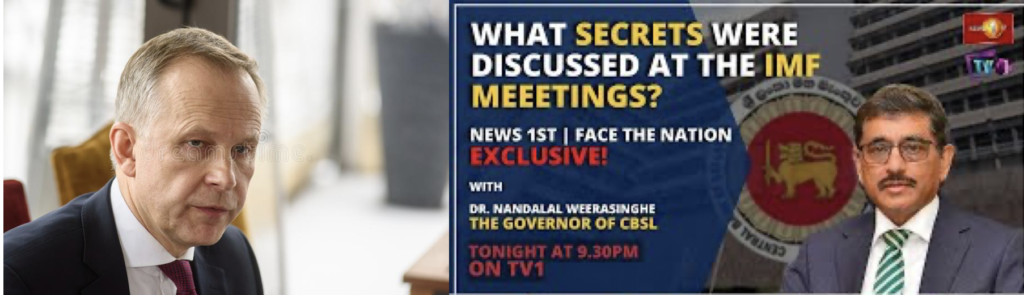
Ilmars Rimsevics, was appointed governor to Latvia’s Central Bank in 2001 & led Latvia into the Euro in 2004. He also sat as a member of the European Central Bank governing council.

He was accused of taking bribes from a bank in 2018. He was the first European Central Bank governor (19 other EU governors of the eurozone) to be put on corruption trial.

June 2018 – Latvia’s Central Bank Governor Ilmars Rimsevic was charged by the Latvian public prosecutor for accepting bribes. Rimsevic refused to resign. The Latvian authorities prohibited him performing duties as Governor in February 2018 but Latvia had no authority to dismiss him because the Latvian CB was independent” while the Governor was a governing council member of the European Central Bank where he was dependent” & abiding ECB laws.

Inspite of Rimsevic being accused of bribery/money-laundering, EU declared that Latvia does not have sufficient evidence to dismiss the Latvian central bank governor. ECB even challenged the Latvian governments decision. Latvian govt could not even appeal against the decision. This was the first time EU judges were asked to preside over dismissal of a ECB governing council member claiming that EU law provided protection to the central bank from political interference. European Court of Justice claimed Latvia had failed to provide evidence to justify dismissing Rimsevics.

Rimsevics took courage from his status at ECB to challenge Latvian govt in EU Court of Justice

Rimsevics sued the Latvian government in Europe’s top court- European Court of Justice, for restricting his ability to work at the ECB.

EU Court of Justice gave its judgement on 26 February 2019

Fellow members of the ECB Governing Council also brought action before the EU Court of Justice activating Article 14.2 of the ECB statute that a decision to relieve a governor from office may be referred to the Court of Justice by the Governor concerned or by the Governing Council of the ECB on grounds of infringement of this Treaty or of any rule of law relating to its application”.

This meant that the powers Rimsevics had as a member of the governing council of the ECB protected him from any prosecution by a national government in which he was serving as the governor of its central bank. This was the level of independence” the Latvian Central Bank Governor was enjoying. The national government had no power over the governor of its Central Bank!

The Latvian government argued that the Central Bank of Latvia was bound by legal & institutional links & that article 14.2 was not applicable. However this was rejected by the EU CoJ.

National acts were set aside in favor of the independence” of the European Central Bank. Both Rimsevic & the Board of the ECB sought the CoJ to declare that the national measure is unlawful. The ESCB is a ‘novel legal construct in EU law” highlighting a new EU legal order against national legal orders.

Is there a clash between EU law & Member State law?

The current case proved so. What is likely to happen is to neutralize Member State law & bring it under a single EU order. The EU court declared a national act void – what if a national court declared an EU act void too?

Rimsevic obviously was hiding from one entity & shielding himself under another. This is the scenario likely to happen in Sri Lanka if the Central Bank Bill is passed. What if Sri Lanka’s Central Bank Governor is also given an international position providing him immunity over any litigation which Sri Lanka may bring against him as in the case of Latvia’s Central Bank Governor who was saved because he was on the Governing Council of the ECB! Is this the independence” we seek?

Shenali D Waduge

Are Secretaries of Ministries playing the role of the 3 wise monkeys.

March 7th, 2023

Sugath Kulatunga

The Constitution of the country provides for the appointment of a Secretary for each Ministry,who is empowered to exercise supervision over the departments of Government or other institutions in the charge of his Minister.vide the following Articles of the Constitution.

52. (1) There shall be for each Ministry a Secretary who shall be appointed by the President.

(2) The Secretary to the Ministry shall, subject to the direction and control of his Minister, exercise supervision over the departments of Government or other institutions in the charge of his Minister.

In most cases Ministry Secretaries are the most senior members of the SLAS. Normally they have had over 25 years of service in different fields and have undergone post graduate training abroad. They are the crème de la crème of the public service.

With persons of such caliber in charge of the administration of Ministries it is difficult to explain the numerous misdemeanors exposed in the postmortem exercises of the Parliamentary Committees of COPA and COPE. Each ministry would have an internal auditor directly responsible to the Secretary who would be reporting to the Secretary any planned and ongoing transgressions.

It is suggested that the Internal Auditor works closely with the external auditor and bring to the notice of the Secretary of the Ministry any wrongdoing. To make the two auditors work in harmony the internal auditor could be an officer seconded from the Audit Department. With such a system in place both the Secretary and the internal auditor should be made accountable for any wrongdoing in the Ministry.

These high-powered officials should not be allowed to be like the 3 wise monkeys. After all they are paid more than peanuts.

Sugath Kulatunga

CIA Chief Slithers into Colombo & the Rupee Levitates!

March 7th, 2023

e-Con e-News

The Sunday Times asked the question above of the much-promoted Shanta Devarajan, ‘Professor of the Practice of International Development at the Edmund A Walsh School of Foreign Service of Georgetown University, US, advisor to the Government of Sri Lanka on the International Monetary Fund (IMF).’

No comment,’ replies the much-promoted and seemingly mired professor.

• What is the relationship between China’s silken exposé of the role of the World Bank and other ‘multilateral banks’ in Sri Lanka’s economy, the sudden rise in the value of the SL Rupee against the US Dollar, and the frenetic visits and threats from a phalanx of US heavies, from the CIA Director to the World Bank?

And what ‘help’ is the USA providing?

     After funding and provoking a seemingly aimless ‘Aragalaya’ to oust a popular President (see ee Focus, Protest & the Left), their media machine and their ‘columnists’ have now taken to decrying the ‘anarchism’ of the protestors (ee Politics). The opposition SJB wants the US to intervene to ensure local government polls are held. Others have even called for the US to fund elections in Sri Lanka! They may next propose that ‘free and fair’ Sri Lankan elections be held in Washington!!

     One national commentator notes the failure of the US, Canada, England and EU to condemn the attacks on demonstrators, as they did when President Gotabhaya Rajapakse was in power. They only ask for elections. He points out: it may be due to the time differences: When we are awake, the US is asleep, and when we are asleep the US is awake. However, when the UNP is in power, the USA appears to sleep both night and day.

‘CIA-instigated jockstrap-insurrection

delivered Sri Lanka to the jaws of the IMF’

(see ee Sovereignty)

• CIA Enters Minus Guard of Honor – As a panicking government in India reneges on its popular ‘time-tested’ friendship with Russia, US Secretary of State Antony Blinken visited New Delhi, from March 1-3. A public visit by Blinken to Sri Lanka was not deemed necessary. Director of the US Central Intelligence Agency (CIA) William Burns had already covertly crept into Sri Lanka on February 14, their Valentine’s Day, as part of a ‘top secret visit’ to lay down their ultimata:

     ‘For over 3 weeks we have been questioning as to who visited the country, but the government and the US have maintained their silence’ charged MP Udaya Gammanpila:

     The US plans to set up ‘an Intelligence Analysis Centre for intelligence sharing with them. This proposal first came in 2002 when the current President was Prime Minister. The-then government attempted to implement this project amidst strongest objections from the local intelligence community.

     ‘The 2nd proposal is the gifting of a biometric immigration control system to Sri Lanka, to which US will retain access.’ The move aims ‘to discourage Chinese & Indian investors’ from investing in Sri Lanka.

     ‘The 3rd proposal includes access to submarine telecommunications cables & data’, with US guarding it to prevent terrorist attacks in Sri Lanka. ‘This is the biggest joke of the year.’

     ‘The final proposal was the Status of Forces Agreement (SOFA) between the 2 countries’. It appears the first 3 proposals are meant to create diversion, while acceding to Number 4: ‘If our national security is compromised in this manner, Sri Lanka will soon follow the fate of Panama.’

     Meanwhile Nepal’s government, which has agreed to sign on to the US MCC, prevented a visit by Central Intelligence Agency (CIA) Director William J Burns because ‘the timing of the trip was not seen as so conducive’, due to their upcoming presidential election on March 9’ (see ee Random Notes).

     MP Wimal Weerawansa declares the SL government is planning to place the State Intelligence Service’s responsibility for ‘information handling & decision-making’, under the US CIA: ‘A similar shifting of responsibility had happened in 2001, but was suspended in 2004.’ The subsequent confusions over the Easter terrorism are meant to reinforce this demand.

            Two weeks ago, the 20-member Pentagon delegation, headed by US Principal Deputy Assistant Secretary of Defence for Indo-Pacific Security Affairs (PDASD), Jedidiah P Royal (stuffed in bullet-proof vests), visited Sri Lanka’s State Intelligence Service (SIS) office in Colombo, and also met the President, Defence Secretary and heads of intelligence services, carrying concealed weapons that they did not disclose.

     Weerawansa also asked Foreign Minister Ali Sabry to explain to the House the purpose of the US delegation’s visit and meetings with local authorities. Sabry said the Foreign Ministry was unaware of the visit and that it had been handled by the Defence Ministry (ee Sovereignty, Plans underway to bring SIS under CIA).

•Full Story

Beijing okays restructuring of loans to Sri Lanka

March 7th, 2023

Courtesy RTHK

Sri Lanka’s president said on Tuesday that China had agreed to restructure its loans to the bankrupt island nation, clearing the final obstacle to a long-awaited International Monetary Fund bailout.

An unprecedented economic crisis has seen Sri Lanka’s 22 million people suffer acute food, fuel and medicine shortages, along with extended blackouts and runaway inflation.

President Ranil Wickremesinghe’s government has been working to repair Sri Lanka’s ruined finances and secure the sorely needed IMF rescue package.

But it was held up by debt negotiations with China, its largest bilateral creditor.

Wickremesinghe told parliament Beijing had now agreed to a restructuring and that he expected the first tranche from the Washington-based lender’s promised US$2.9 billion in funds to be released within the month.

“We have done our part, I hope the IMF will do theirs,” he said in a special address to lawmakers.

Wickremesinghe said the state-owned Exim Bank of China had sent a letter to the IMF on Monday night signalling its willingness to go ahead with a restructuring.

“Sri Lanka has now received financing assurances from all major bilateral creditors,” said Krishna Srinivasan, director of the IMF’s Asia and Pacific Department.

This paves the way for the fund’s board to approve a loan earlier agreed upon by its staff.

“Approval by the board would also catalyze financing from other creditors, including the World Bank and the Asian Development Bank,” he said.

The arrangement will help authorities’ programme of ambitious reforms to aid Sri Lanka in emerging from its current crisis, he added.

Sri Lanka defaulted on its US$46 billion foreign debt last April. (AFP)

What Happened to ‘Full Implementation of 13th Amendment’?

March 7th, 2023

By Shivanthi ranasinghe Courtesy Ceylon Today

Earlier this year, President Ranil Wickremesinghe pledged to implement the 13th Amendment to the Constitution (13A) in full. Currently, it is in effect except for Police and land powers (granted partially), which are still exercised by the Central Government. This was a surprise announcement made on 15.01.2023 during the National Thai Pongal Festival held in Jaffna. 

The President noted a number of valiant points including, 

– fundamental issues as poverty, hunger and deprivation is suffered by all indiscriminately in Sri Lanka;

– All must return to the Sri Lankan identity, established by the late D.S. Senanayake 75 years ago, if all are to enjoy coexistence and economic prosperity.

To address these problems, the President pledged to:

– establish a Social Justice Commission to resolve relevant community issues to ensure harmonious cohabitation by addressing,

– issues of all communities, not just that of the North and East Tamils;

– further protecting Tamils in the Hill country for earning forex for the country even though they are fully integrated into our society and enjoy the same rights and privileges as other communities,

– the many problems faced by Muslims, Sinhalese and Christians, 

– the marginalising faced by those in poverty. 

– fully implement 13A because it is being demanded by Chief Ministers in both the North and South. 

It was also promised to discuss, with all political party leaders, the steps needed for reconciliation. According to this promise, this meeting was to take place in the following week, which would have been the third week of January. The decisions taken was to be made public in February 2023. However, such a discussion did not materialise. 

In this gift bag, was also the promise to:

– accelerate the Truth and Reconciliation Commission work to provide relief to the families of the disappeared and to answer allegations against the military,

– Replace the Prevention of Terrorism Act (PTA) with a ‘new law’ to ‘create stability’ in the country,

  • Handover the bulk of the remaining 3,000 acres of land that are still under Military control from the original 30,000 acres during the war. 

 Out of these commitments, only one has thus far been fulfilled. On 11.02.2023, President Ranil Wickremesinghe ceremoniously awarded land deeds and Rs 38,000 as financial compensation to 197 families at the Jaffna District Secretariat. According to the President’s Media, these were the original settlers, who got displaced 33 years ago during the war against terrorism. It is however unclear if the Sinhalese forced out by the LTTE were also part of this group. These lands were being used by the Security Forces. 

Though the President made many promises, only one caught the attention of the nationalists – the pledge to implement the 13A in full. This means to handover pending Police and land powers to the Provincial Councils (PC), which none of the previous Presidents had dared to do. 

Agitation of the Nationalists

The agitation of the nationalists over the President’s 13A promise is understandable. For nearly 40 years, it is these nationalists who stood guard over the country’s unitary status. While various governments experimented with all sorts of solutions to contain terrorism, it is the nationalists who stayed resolute that terrorism cannot be a tool of negotiations. It is they who challenged the hypocrisy and falsehoods that went hand-in-hand with terrorism in Sri Lanka. 

While many nurture the dream of nullifying the 13A altogether, it is unfortunately a poisoned seed that has now taken root. The extra political layer created with the PCs will be very hard to uproot without antagonising that mid-level politicians. Though castigated as an unnecessary expense that had failed to deliver tangible benefits, it is not possible to eliminate this layer without hurting the political hierarchy of all political hues. Once a power is given, it is very difficult to take it back. 

The 13A is a constant reminder that the efforts to divide our country and exacerbate ethnic tensions still persist – despite ending terrorism 14 years ago.  However, without the land and Police powers, this is a toothless threat (keeping in mind that a bite from a toothless gum is not painless).  

Why is 13A Such a Thorn? 

Though many are under the impression that the land powers are fully with the Central Government, this is not the case. The management of State land is already vested with the PCs. Even the Executive President can use a State land for whatever purpose only on the PC’s advice. 

The power not yet with the PC is the recognition that all lands, not identified as archaeological sites, belongs to the PC. However, explains MP Udaya Gammanpila, up to date, none of these heritage sites have been recognised in Parliament as important nationally. Therefore, warns the Parliamentarian, all the sites in North and East that are of historic significance to the Sinhala Buddhists as Nagadeepa, Thanthirimale Temple, Girihandu Seya, Deegavapiya and Seruwila will come under the respective PCs, run by racist politicians. 

It is their earnest plans to erase all evidence of Sinhala Buddhist heritage – an act already in operation. This allows them to establish the North and East as an exclusive Tamil Homeland. 

The other contentious clause is the power to merge two or three provinces to be under one PC. Indeed, when the 13A was forced into our Constitution, the North and East were merged under emergency laws. Once the emergency law was lifted, the Supreme Court determined that the merger was also invalid. Yet, the possibility of such a merger still exists. 

The effort of the separatists is to merge the North and the East. The North on its own, with its limited natural resources, will find it difficult to exist on its own. The East is home to all three ethnic groups with the domineering Muslim community. As such, if the East was allowed its own PC, the Eastern Tamils will be dominated by the Muslims. This would defeat the very purpose of this whole exercise of dividing the country into nine provinces. 

Granting Police powers so the respective Police force of that PC comes under its Chief Minister is the most dangerous clause of all. It leaves the path for another LTTE to emerge. The difference would be simple and stark. 

LTTE was a terrorist organisation and as such illegal. This prevented most foreign governments from openly lending its support. However, a PC Police force that may decide on its own weaponry and training and ruled by a politician is the legitimising of a force as the LTTE. As a legitimate force, any foreign government can openly support its cause. 

13A Supersedes All Other Concerns 

Given these dangers, it is a little wonder that President’s verbal commitment to implement the 13A in full created the stir it did. Even the venerable Sangha wrote to President advising him against such foolishness. For a moment, people put aside the matter of the ongoing economic crisis or the efforts to delay the Local Government elections to oppose this act. 

It is not only the 13A that came to be challenged. MP Wimal Weerawansa reminded the President that he does not have a mandate of his own yet. The Government, until the next major election, must therefore adhere to the mandate given to President Gotabaya Rajapaksa. 

The 13A is without argument a matter of extreme concern. However, this is not the only problem present” in the President’s Thai Pongal gift bag. Some gifts need clarification. For instance, what did the President mean by further protecting Tamils in the Hill country for earning forex”? 

The other main forex earners for our country are often as vulnerable, if not more, than those working in tea estates. The girls who leave their villages to work in the apparel sector face many social issues. The women who leave for overseas to work as domestic aides are often not entitled to any rights in their host countries. Some of their experiences are simply horrifying, whilst others are degraded in numerous ways. Some return home in a coffin. 

Truth and Reconciliation Commission must expand their investigations to answer the allegations of not only that against the Military but also against the LTTE and the IPKF. Otherwise, it would amount to cherry-picking the crimes. Simultaneously, in determining the fate of the disappeared, the Commission must amend the clause that if such a person is located, the records must reflect as such. Currently, the status ‘disappeared’ cannot be updated without the consent of the ‘disappeared’ person. 

The current PTA should not be arbitrarily replaced with a ‘new law’. There needs to be proper public discourse with the local stakeholders than foreign experts who are clueless on the real issues we face or those with a geopolitical agenda. 

For the moment, there is a silence on the status on the fulfillment of these pledges. We do not know if the President decided to listen to the concerns via-a-vis the 13A and decided to shelve it or simply kept it aside until the hue and cry dies. 

Whether President Wickremesinghe will carry out with these plans is beside the point. While these contentious issues are allowed to exist – even in limbo – it poses a threat to our national security. Therefore, instead of agitating every time a politician makes a pronouncement, there needs to be a steady plan to address these concerns methodically and eliminate the threat forever. Otherwise, both the promises and the protests amount to nothing more than political fodder. 

ranasingheshivanthi@gmail.com

(The views and opinions expressed in this article are writer’s own and do not necessarily reflect the official policy or position of
Ceylon Today)

By Shivanthi Ranasinghe

Udaya urges govt., US embassy to come clean

March 7th, 2023

By Shamindra Ferdinando Courtesy The Island

CIA Chief’s cloak-and-dagger visit:

Pivuthuru Hela Urumaya (PHU) leader, Udaya Gammanpila, MP, yesterday (06) said that the Wickremesinghe-Rajapaksa government and the US embassy in Colombo should come clean on CIA Director William Joseph Burns’ Colombo visit.

The former Power and Energy Minister said so in response to The Island query whether the government had challenged his claim on the CIA chief’s visit.

I’m 100 percent sure Burns was here on February 14,” MP Gammanpila said, challenging the government and the US Embassy here to contradict him, if they could.

Pointing out that Foreign Minister Ali Sabry, PC, in response to Jathika Nidahas Peramuna (JNP) leader Wimal Weerawansa’s disclosures in Parliament about the alleged CIA intervention in the State Intelligence Service (SIS) had denied any knowledge of the secret visit of the top CIA spook.

Responding to another query, the former minister said that there was absolutely no doubt that Burns accompanied US Principal Deputy Assistant Secretary of Defence for Indo-Pacific Security Affairs (PDASD), Jedidiah P Royal. He emphasised that there were altogether 29 persons including the crew of two C-17 Globe Masters and the delegation.

The Defence Ministry released pictures of Jedidiah meeting with State Defence Minister Pramitha Bandara Tennakoon and Defence Secretary Gen. (ret) Kamal Guneratne, separately, the

MP pointed out, asking who Burns had met in Colombo during the whistle stop visit.

Referring to media reports that Nepal had not permitted the CIA Director’s visit, MP Gammanpila said that Burns was to fly from Colombo to Kathmandu, in the third week of February, but had been compelled to fly home.

Gammanpila said that the government should set the record straight if it truly felt JNP leader Wimal Weerawansa, General Secretary of the Communist Party Dr. G. Weerasinghe and he had misconstrued facts regarding the recent controversial US visit.

Declaring that the US was seeking enhanced access to Sri Lanka, MP Gammanpila claimed that among the issues raised by the US was the signing of the Status of Forces Agreement (SOFA), also known as the Visiting Forces Agreement (VFA).

Pointing out that Sri Lanka had entered into another military agreement, Acquisition and Cross Servicing Agreement (ACSA) in August 2017, MP Gammanpila said that in spite of extremely close Indo-US relations in line with American Indo-Pacific strategy, New Delhi would still be uncomfortable against the backdrop of much-expanded US role here.

Regardless of their differences India and China skipped the vote at the UN General Assembly to pressure Russia to withdraw forces from Ukraine. Sri Lanka, Pakistan, Bangladesh and Vietnam were among those countries that abstained.

MP Gammanpila urged the government to come clean on the CIA Director’s visit as Sri Lanka couldn’t afford to become a member of any alliance. The PHU leader pointed out how Quad countries, namely the US, Japan, Australia and India, pursued an agenda that may not help peaceful resolution of disputes.

Gammanpila said the economic-political-social crisis had weakened the country and opened the way for external powers to enhance their influence through various means. The MP cited as example the recent joint statement issued by the US Embassy and Sir John Kotelawela Defence University at the launch of what they called a shared vision for the Indo-Pacific.

IMF chief welcomes Sri Lanka’s progress in taking policy actions, securing creditor assurances

March 7th, 2023

Courtesy Adaderana

The Managing Director of the International Monetary Fund (IMF) has welcomed the progress made by the Sri Lankan authorities in taking decisive policy actions and obtaining financial assurances from all major creditors including China, India and the Paris Club.

In a statement, Kristalina Georgieva said she looks forward to presenting the IMG-supported program to the organization’s Executive Board on March 20.

The Extended Fund Facility (EFF) will support the authorities’ program of ambitious reforms, which will help Sri Lanka emerge from its current crisis and set it on a trajectory of strong and inclusive growth.”

IMF board poised to approve USD 2.9 Bn Sri Lanka bailout on March 20

March 7th, 2023

Courtesy Adaderana

The International Monetary Fund on Tuesday said Sri Lanka has secured financing assurances from all major bilateral creditors, paving the way for the IMF board to consider approval of a long-awaited $2.9 billion four-year bailout agreed last year.

The IMF said its board will meet on March 20 to review a preliminary staff-level agreement first signed in September, offering a lifeline to the South Asian country which faces its worst financial crisis since independence from Britain in 1948.

Approval is expected since the board generally will not add items to its agenda unless its members are ready to act.

Sri Lanka has now received financing assurances from all major bilateral creditors,” Krishna Srinivasan, director of the IMF’s Asia and Pacific Department (APD) said in a statement.

This paves the way for consideration by the IMF’s Board on March 20 the approval of the Staff Level Agreement reached on September 1, 2022 for financing under an Extended Fund Facility,” Srinivasan added.

A source familiar with the matter said China had agreed on Monday to back Sri Lanka’s debt restructuring with stronger financial assurances, allowing the IMF to move forward.

The announcement comes days after the IMF praised Sri Lanka’s surprise decision on March 3 to raise interest rates and move toward a market-determined exchange rate as evidence of a commitment to reducing inflation and enacting reforms.

Sri Lanka, which has been facing shortages of food, fuel and medicines, has been waiting for more than 180 days for approval of the IMF loan, mostly due to IMF concerns over the quality of the initial financing assurances offered by China and other bilateral creditors, and its insistence on painful reforms.

Central bank Governor P. Nandalal Weerasinghe said last week that Sri Lanka had fulfilled its conditions with the rate hike and he was hopeful the IMF bailout would be approved this month.

The IMF said the board’s approval of a new loan for Sri Lanka would help catalyze financing from other creditors, including the World Bank and the Asian Development Bank.

The arrangement will support the authorities’ program of ambitious reforms, that they have already embarked upon, which will help Sri Lanka emerge from its current crisis and set it on a trajectory of strong and inclusive growth,” he said.

Source: Reuters
-Agencies

CSE’s ASPI gains nearly 200 points

March 7th, 2023

Courtesy Adaderana

The All Share Price Index (ASPI) of the Colombo Stock Exchange (CSE) has increased by nearly 200 points during today’s (07 March) trading. 

Accordingly, the ASPI increased by 198.02 points (2.10%) to close at 9,642.94 after today’s trading. 

This is also the highest close of the index for the year so far, after starting 2023 on 8,489.66 points.

Meanwhile, the S&P SL20 showed an increase of 1.09%, after it gained 30.96 points to increase to 2,869.14 points at the close of trading. 

Today’s total turnover was recorded s Rs. 3.43 billion.

EC informs ‘most suitable’ date to hold LG polls

March 7th, 2023

Courtesy Adaderana

The Election Commission has deemed April 25 as the ‘most suitable’ date to hold the 2023 Local Government polls.

The election body informed the Returning Officers that the local government election cannot be conducted on March 09 as scheduled due to unexpected and unavoidable reasons” pertaining to the printing of ballot papers.

In a special gazette notification, dated January 30, 2023, issued by the respective District Returning Officers for the LG bodies of each district, under Sub-section 38(1)(c) of the Local Authorities Elections Ordinance, it was announced that the LG election would be held on March 09.

However, the LG election was later deferred as the government insisted that polls cannot be funded amidst the prevailing economic crisis.

Later, the election commission convened several meetings to decide on the LG polls and a conclusive decision on the election date was scheduled to be taken on March 03. Nevertheless, announcing the new election dates was put off following a meeting held by the members of the Commission that day.

The postponement of the decision came in the background of an order issued by the Supreme Court in this regard, instructing that a date for the 2023 polls be announced before 09 March.

Meanwhile, a group of parliamentarians of Samagi Jana Balawegaya (SJB), National People’s Power (NPP), Freedom People’s Alliance, Tamil National Alliance (TNA) and other parties representing the opposition convened a meeting at the Election Commission this morning to discuss the matter.

Sri Lankan Rupee appreciates further against USD

March 7th, 2023

Courtesy Adaderana

The Sri Lankan Rupee (LKR) has appreciated further against the US dollar (USD) today (07 March) as the buying rate reached Rs. 318.30 and the selling rate recorded Rs. 335.75. 

At the same time, the Middle Rate of the USD/ LKR SPOT Exchange Rate was recorded at Rs. 337.66.

The Sri Lankan Rupee has also appreciated against the Euro, the Pound Sterling, the Australian Dollar, the Indian Rupee, the Canadian Dollar and the Japanese Yen, the Central Bank of Sri Lanka (CBSL) reported.

Economic collapse of Sri Lanka-Pakistan and the economy of Bangladesh

March 6th, 2023

Sufian Siddique Independent researcher and freelance columnist, Dhaka

Pakistan’s economy is on the brink of bankruptcy like Sri Lanka’s. Pakistan’s foreign exchange reserves have fallen below $3 billion. They have asked the IMF for a ‘bailout loan’ a long time ago, but the IMF is trying to impose strict conditions that Pakistan’s current ruling coalition has no capacity to meet. Even China and Saudi Arabia, Pakistan’s long-standing loyal friends, are now reluctant to shoulder Pakistan’s burden. China has stopped power supply from the power plants built by Pakistan on China’s loan after Pakistan failed to pay the long-delayed installments. Due to this terrible load shedding is going on all over Pakistan. Frequent grid failure. The value of the dollar in Pakistani rupees has increased dramatically, currently Pakistan has to pay 277 rupees to get 1 dollar.

Inflation in Pakistan’s economy has reached such an alarming level that the price of a kg of flour now exceeds Rs 160 and a kg of sugar is over Rs 300. The main reason for this crisis is the burden of a huge armed force of seven lakhs including five and a half lakh army. It is not economically feasible for Pakistan to raise such a large army just for war with India. Hostilities between the two countries began with the Kashmir War of 1947-49, which ended with a UN-imposed ceasefire. Although the 1965 war was not decided by either side, the diplomatic victory in the war that was settled by the Tashkent accord went to India. In the 1971 war, the Pakistani armed forces surrendered in Dhaka after being defeated by the Bangladesh-India joint forces, through which Bangladesh declared independence on 26 March 1971 and marched in victory on 16 December. In the last Kargil war of 1999, Pakistan was forced to accept a ceasefire that failed to achieve its objective. But as an inevitable consequence of this war game, the actual governance of the Pakistani state came from behind the scenes in 1948-58 and directly in the hands of the military establishment in 1958-71. After losing Bangladesh, it is not possible to keep the military away from the role of the ruler of Pakistan for a long time even in the period of 1971-2023, military dictators are occupying the power of Pakistan for a few days. And when the military is forced to give up power to the civilian rulers for some time, they still keep the real reins of governance under their control. In the current phase, Imran Khan came to power through the election as a favorite of the military, but within a few years, due to power struggle with the army chief Qamar Bajwa, no one had any difficulty in understanding that the military establishment was also behind the installation of Shahbaz Sharif after ousting him a few days ago. ISI, the intelligence agency of the armed forces of Pakistan, is playing a role as a powerful tool of the military establishment in this power grab game.

In 2007 Dr. The book Military Incorporation: Inside Pakistan’s Military Economy by Ayesha Siddiqui caused a stir around the world after its publication. Dr. in this book. After presenting the history of how Pakistan’s military took control of Pakistan after 1947, Ayesha Siddiqa describes and analyzes in detail how army officers, led by generals, came to dominate Pakistan’s economy.

In 2005, the military economy became a major force in Pakistan’s economy, with four armed forces-created organizations, the Fauji Foundation, the Army Welfare Trust, the Shaheen Foundation and the Baharia Foundation, becoming the country’s four largest business and industrial enterprises. Fauji Foundation has 25 projects, Army Welfare Trust has 41 projects, Shaheen Foundation has 14 projects and Baharia Foundation has 19 projects—99 projects are mentioned in the book as of 2005. Military officers trump all others in Pakistan as the neo-landlord class all over Pakistan now due to the absolute preference of armed forces personnel to lease government-owned or encroached rural or urban land. Around 1.1 million acres of land across Pakistan has gone to the ownership of serving or retired officers and employees of the military. Several Defense Officers Housing Societies have now become the largest residential area in any large or medium city in Pakistan. The state of Pakistan will not be freed from the occupation of military forces in the near future. Conclusion of Siddika’s Pain.

Since 1948, the defense sector has been the main sector of the budget of the government of Pakistan, from which the sector could not be removed even in the last 75 years. Defense sector in such a state

There is no doubt that any government in Pakistan has the audacity to put its hands on the budget.

But the fact that this unbearable burden is driving Pakistan’s economy into the ‘valley of meltdown’ is going to be exposed nakedly in front of the world. The world’s sixth largest populous country, Pakistan’s population has grown rapidly to over 250 million, whose food, clothing, shelter, education and medical care are beyond the reach of any ruling party or coalition in Pakistan after bridging the gap of such a large armed force. The country’s annual export earnings still remain below $25 billion, while import spending is reaching $80-90 billion per year. Every year, after meeting the huge expenditure allocation for the defense sector, it is beyond the government’s ability to carry out the minimum necessary expenditure on public education and health. Pakistan’s position in the world ranking of the United Nations Human Development Index is going down every year. In 2022, where Bangladesh has risen to the 129th position in this regard, Pakistan’s position has dropped to 147th. During the 1947-71 period, East Bengal/East Pakistan as an internal colony was made a helpless victim of exploitation, deprivation, unlimited discrimination and plunder by the rulers of Pakistan, as a result of which the per capita GDP of the people of Bangladesh in 1971 was 60 percent less than that of West Pakistan. But in 2015, Bangladesh surpassed Pakistan in terms of per capita GDP. In 2023 Bangladesh and Pakistan may see a comparable picture.

1) In terms of per capita GDP, Bangladesh has surpassed Pakistan by 80 percent. Bangladesh’s per capita GDP in 2021-22 is $2793 and Pakistan’s is $1547. 2) Bangladesh’s export earnings are more than double that of Pakistan’s, exceeding $52 billion in FY 2021-22. 3) Bangladesh’s foreign exchange reserves reached $48 billion in August 2021, declining over the past 17 months to $24 billion in January 2023 as per IMF calculations, more than eight times Pakistan’s. (According to the Bangladesh government’s account, the reserve of Bangladesh is 32 billion dollars). 4) The average life expectancy of the people of Bangladesh is 73 years, 66 years in Pakistan. 5) The literacy rate of the people of Bangladesh is 76 percent, while that of Pakistan is 59 percent. 6) The total GDP of Bangladesh is 465 billion dollars, and that of Pakistan is 346 billion dollars. 7) Population growth rate of Bangladesh is 1.2 percent and Pakistan is 2.1 percent. As a result, the population of Pakistan has increased to 22.5 million, and the population of Bangladesh is 16.98 million. 8) 1 dollar is available for maximum 107 taka in Bangladesh, 277 rupees to buy 1 dollar in Pakistan. But till 2007 the foreign exchange value of rupee was 8 percent higher than taka. 9) Bangladesh’s total foreign debt is 20.48 percent of GDP, while in Pakistan it is

46 percent of GDP. 10) 36 percent of women in Bangladesh work outside the home yard, compared to only 14 percent in Pakistan. 11) In Bangladesh the infant mortality rate is 21 per thousand, and in Pakistan it is 59. 12) 100% population of Bangladesh is covered by electricity facility, while 73% population of Pakistan is getting electricity.

The above data shows that Pakistan will never catch up with Bangladesh in the race of economic development. The GDP growth rate of Bangladesh increased gradually to 8.13 percent in the fiscal year 2018-19. In 2020-22, the impact of the novel coronavirus pandemic and the Russia-Ukraine war slowed down the growth rate of Bangladesh, but it was much higher than that of Pakistan and the growth rate is estimated to exceed 6.5 percent again in the fiscal year 2022-23. Development thinkers are optimistic that the economy of Bangladesh, a low-middle-income country, will rise to the upper-middle-income category very quickly if harmful activities like corruption, looting and money laundering are strictly controlled. But for this, the root problems like corruption, looting and money laundering need to be tackled properly.

Political instability premeditated by the Leftists may lead to the Collapse of Sri Lanka as a Nation/Republic

March 6th, 2023

By Engr. Kanthar Balanathan DipEE (UK), GradCert (RelEng-Monash), DipBus&Adm (Finance-Massey), C.Eng., MIEE, Former Director of Power Engineering Solutions Pty Ltd, Consulting Electrical Engineers

  1. Political System

The political system in Sri Lanka (SL) is in chaos. The prime factors, for this, are the fundamental, innate mindset of Buddhism, racism, jealousy, avidity, the shortfall in perception, non-flexibility, incapability to accomplish what they entail, and zero knowledge of political science.

The general theory is the fact that both the Sinhala and Tamil races are immature and have limited scientific knowledge of political, social, and economic topics. The rowdy-characterised politicians were able to fool and terrorise the citizens with religion, race, culture, and language to achieve their objectives. The process gave birth due to some politicians’ greed and voracity, target for power and wealth. Maybe that’s third-world human culture.

  • Terrorist Act 1

In 1972 Sri Lanka announced a republic and was free from the British throne. In 1971 a group headed by Rohana Wijeweera initiated an act of terrorism on insurrection on the 5th of June 1971. Rohana Wijeweera was a student at Lumumba University. The police and the army were called in and Srimavo declared a state of emergency and suppressed the resurrected terrorism. They were addressed as the JVP, also known as Che Guevara”, a communist revolt organisation. Somehow later during the JR Jayawardene’s period the JVP was pardoned and gave birth as a political party. However, the JVP was never ever able to get more than adequate seats to represent in parliament. This unit of JVP was from the South. Maybe the Yakka people and the assimilated crowd were members of this unit.

Terrorism: Quote Ref: FBI: Violent, criminal acts committed by individuals and/or groups to further ideological goals stemming from domestic influences, such as those of a political, religious, social, racial, or environmental nature.

Who were the international drivers of this JVP? It could be assumed that they were either Russia or North Korea. With SL having not enough foreign resources and people becoming lazy as is the culture of the Sri Lankan people, the JVP wanted power so that they can accumulate wealth. JVP’s policy is to capture positions in government organisations and thereby claim superiority and claim power in the government. However, they failed in all elections.

The main issue and differences here are the regional differences between the Low Country Sinhalese” and the Upcountry Sinhalese”.

Terrorism has a negative impact on the economy of a country, thus debarring development and making people poorer. The focus of the JVP terrorists in SL is to capture power and convert into a communist republic and be an ally of a communist nation. The JVP fools did not do any research and analysis on the economy and growth.

  • Terrorist Act 2

In 1971 along with the JVP insurrection, another group gave birth among the Tamils. Later in 1972, they merged as the LTTE from the Tamil sector. The destruction caused by the LTTE was immense and they killed politicians, ministers, civilians etc. India gave motherhood as a mother giving compassionate, endearing, kind protective, extraordinary intuitive caring and mindful to the LTTE and other terrorist organisations that gave birth among the Tamils in SL. There are reasons for Late Indra Gandhi and MGR giving support and caring to the terrorist groups. This is the main cause for the LTTE to become quite strong and destroy assets in the North and SL in general.

Tamils in SL are quite a small minority, and they can’t prolong the terrorist act for a long time as other international liberation groups. This condensed the enthusiasm of the other groups, and they became political groups supporting the government in the political path. LTTE, however, somehow was able to collect funds and become a strong terrorist group claiming that they were a liberation group.

  • Economic Downfall
  1. Overall, the economy of SL declined and perished, and people started to move out of SL, both legally and illegally by boat.
  2. Since 2005 the politicians who governed SL were corrupt and commenced to practice bribery and corruption, especially during the Mahinda Rajapaksa period.
  3. The country faced a new dictatorial autocrat, Gotabaya Rajapaksa as the President and he had no clue of who he is and what his obligation to the society was. The economy drastically moved down to zero FOREX resources.

The political differences between the politicians, JVP and Sajith Premadasa gave birth to the people coming to the road and chasing the Rajapaksas out of the government. The main people here are the JVP and the Sajith party.

With zero-dollar FOREX Ranil Wickremasinghe took the office of the President and appointed the cabinet. The shortfall here in SL is that the people behaved like animals, and everyone wants a portfolio. While preaching austerity measures the people have no knowledge and how to handle the austerity measures.

JVP uses this opportunity to campaign against the government and the JVP wants the government to collapse. It is the writer’s view that the members of the JVP are not patriots and are intelligent to practice austerity and support the government to recuperate the economy. The result is people suffer and JVP wants the country to face a calamity and breakdown.

Quote: Ref: English meaning of modus operandi?  A distinct pattern or method of operation especially one that indicates or suggests the work of a single criminal in more than one crime.

JVP’s tactics were:

  1. JVP took up arms at one time and failed to fight against the government forces.
  2. They planned next to cripple the economy of the country so that the people will rise against the government and make a suitable time for the JVP to capture power. They used the people and some politicians with their cunning acts and drove the country to poverty.

JVP also infiltrated into government organisations, and it is believed that the Institution of Engineers-Sri Lanka also has members of JVP infiltrated into the org. It is an insult to the engineering arena to have such an Institution with members of the JVP and involve in politics.

Today the JVP and Sajith’s members are on the road protesting against the government for the increase in taxes, non-availability of fuel, power etc. Whose fault is that? It is the fault of the people and the JVP for not making the country self-sufficient in food etc. Well, they know that SL has no petroleum, Coal, and technological products. People did not pay taxes for donkey’s years and did not pay the dues for what they received in terms of electricity and water. The government provides free health, education, subsidised travel etc. Do not people have the perception to understand the facts and truths?

Well, communism is a blunder from the ideological perspective and will lead a country to failure.

  • Vasantha Mudalige:

Who is this guy? What does he want? Does he want to be the President/PM or a Minister? Did not he know that the President took up the office as president with zero dollars FOREX? What is his level of education? Can he explain the obligation of a politician to society?

What is the reason for bringing Prabakaran to be alive now and that he is coming back? It is a tactic to bring Mahinda Rajapaksa back into power because people think that MR defeated the LTTE. It’s a wrong concept initiated by crooks to bring MR back to power so that they can enjoy the fruits of power. India may be playing into this wrong concept. India wants SL to be bankrupt so SL will always look to India for funds, help and loans.

Vasantha Mudalige: If you have something called Brain and perception”, please use the brain and think of the people if you are patriotic. This concept is also applicable to the leader of the JVP and Co.  Get out of the road and go home and think of how you can help the government to achieve its objectives to recoup the economy and help the people.

All those who want portfolios: The secretaries and the administrative staff are the permanent staff who can add value to the country. Ministers come and go. They do not do work but add expenditure and be a burden and a liability. All the vultures who want portfolios: do they have brains and perception and understand the areas in which they want the power? Mervin Silva, a cleaner/labourer was also a minister under the Mahinda Rajapaksa government.

Just contribute your thoughts in parliament, but not as a minister.

Buddhism – an antidote to violence and war.

March 6th, 2023

Senaka Weeraratna

Had the Roman Empire under Constantine embraced Buddhism rather than Christianity we would have had a more peaceful Europe and a more peaceful world.

Historically speaking despite all the rhetoric on Peace and Human Rights, Europe remains the same. The biggest battlefield in history compared to other continents. The track record of Europe is constant War, Religious Crusades, Holocaust, Colonialism, and the like.

Both the First World War (1914 – 1918) and the Second World War ( 1939 – 1945) originated in Europe.

We are now on the threshold of another World War originating in Eastern Europe.

Denials will not alter the fact.

Europe was in need of the likes of Emperor Asoka of India who renounced violence and spread Buddhism and peace throughout the then-known world rather than Constantine who remained a warrior until his death and never renounced war and violence as means of settling disputes.

The entire world has been paying a heavy price because of adopting belief systems that advocate violence and conquests to spread religion.

Buddhism is the answer. The antidote for warlike countries and civilizations. 

Dr. Paul Dahlke, a German Buddhist pioneer, was one of the first Europeans like the celebrated German Philosopher, Artur Schopenhauer, who saw the value of spreading Buddhism in European countries, to overcome the spread of religious wars in Europe. 

see also

Asoka Weeraratna – Germany’s ‘Mahinda Thera’

https://www.buddhistchannel.tv/index.php?id=9,11192,0,0,1,0

  ” there would never be anything more important for Western civilization than the need to become more familiar with Buddhism”.  

                                                                       Dr. Paul Dahlke

                                                                        German Buddhist Pioneer

Source

CREATING A FOCAL POINT FOR BUDDHISM IN THE WEST 

The German Buddhist pioneer Paul Dahlke 

Martin Baumann  

BUDDHIST STUDIES FROM INDIA TO AMERICA   

Essays in Honour of Charles S. Prebish

Edited by Damien Keown

Routledge: London

2006

13 ව්‍යවස්ථා සංශෝධනය බලාත්මක වීමෙන් උතුරේ සාමාන්‍ය දෙමළ ජනයාට සිදුවන්නේ කුමක්ද? – අරුන් සිද්ධාර්තන් පැහැදිලි කරයි

March 6th, 2023

 Lanka Lead News

13 වන ව්‍යවස්ථා සංශෝධනය ක්‍රියාත්මක කිරීමට රනිල් වික්‍රමසිංහ මහතා ගන්නා උත්සාහය සම්බන්ධයෙන් උතුරේ පීඩිත ජනයා දක්වන අදහස් සම්බන්ධයෙන් ලංකා ලීඩ් වෙබ් අඩවිය යාපනය සිවිල් ජනතා සංවිධානයේ කැඳවුම් කරු අරුන් සිද්ධාර්තන් මහතා ගෙන් කළ විමසීමකදී ඔහු මෙමගින් උතුරේ සිදුවන සැබෑ අර්බුදය පැහැදිලි කළේය.

එහිදී ඔහු අදහස් දක්වමින්,

මට තිබෙන ප්‍රශ්නය රනිල් වික්‍රමසිංහ වැනි බටහිර න්‍යාය පත්‍රයට අනුව ක්‍රියා කරන නායකයෙක්ගේ හැසිරීම නෙවෙයි. මේ රටේ වාමාංශික පක්ෂවල නායකයින් යාපනයේ සාමාන්‍ය ජනයා පීඩාවට ලක් කරන ඉතා සුළු පිරිසක් වන වෙල්ලාල කුලයේ පාර්ලිමේන්තු බලය හොබවන කොළඹ ජීවත්වන දෙමළ වචනයක් හරියට කතා කරගන්න බැරි වෙල්ලාල කුලයේ , දෙමළ ජනයාට කුළ පීඩනය උපරිම මුදා හරින දෙමළ ජාතික සංධානයේ මන්ත්‍රීවරුන්ගේ ඉල්ලීමට අත් දෙකම ඔසවා එකඟ වන බව පැවසීමයි. ජාතික ගැටලුවට අපේ විසඳුම ” පොතේ රෝහන විජේවීර සහෝදරයා බොහොම පැහැදිලිව අපේ ගැටලුවට උත්තර සපයා දී තිබියදී ජනතා විමුක්ති පෙරමුණ දෙමළ ජනයා දැඩි පීඩාවට ලක් කරන මම ඉහතින් සඳහන් කළ දෙමළ ජන පීඩකයන්ට දෙමළ පීඩිත ජනයා තව තවත් මර්දනය කිරීමට ව්‍යවස්ථා ප්‍රතිපාදන සලසා දීමට මරා ගෙන මැරෙන උත්සාහයක් ගන්නේ ඇයිද යන්නයි. ජනතා විමුක්ති පෙරමුණ, පෙරටුගාමී සමාජවාදී පක්ෂය වගේම අත් දෙකම ඔසවලා 13 + දෙන්න පාර්ලිමේන්තුවේ කටයුතු කරනවාය කියන සමහර වාමාංශික පක්ෂ වල නායකයින්ට රෝහන විජේවීර සහෝදරයා යාපනයේ දෙමළ ජනයා වෙනුවෙන්ම ලියපු ජාතික ගැටලුවට අපේ විසඳුම” පිළි ගන්න බැරි නම්, එක්සත් ජාතින්ගේ මානව හිමිකම් කවුන්සිලයේ පනස් එක් වන සැසියේ න්‍යාය පත්‍රයේ අයිතම අංක තුන සම්බන්ධයෙන් අවධානය යොමු කරන ලෙස ඉල්ලා සිටිනවා.”

එහිදී ඔහු වැඩිදුරටත් අදහස් දක්වමින්,

2022 සැප්තැම්බර් 12 වනද සිට ඔක්තෝබර් 7 දක්වා පැවැත්වුනු එක්සත් ජාතින්ගේ මානව හිමිකම් කවුන්සිලයේ පනස් එක් වන සැසියේ න්‍යාය පත්‍රයේ අයිතම අංක 3 න් දක්වා තිබුණේ ශ්‍රී ලංකාවේ සියලුම මානව හිමිකම් ප්‍රවර්ධනය සහ ආරක්ෂා කිරීම, සිවිල්,දේශපාලන, ආර්ථික, සමාජීය සහ සංස්කෘතික අයිතිවාසිකම් සංවර්ධනයට ඇති අයිතිය” යනුවෙනුයි.

මෙම වාර්තාව සකස් කිරීමට 2021 නොවැම්බර් 26 සිට දෙසැම්බර් 3 දක්වා කාලය තුල වහල්භාවයේ සමකාලීන ආකාර පිළිබඳ විශේෂ වාර්තාකරු” ශ්‍රී ලංකාවේ සංචාරය කළා. ඔහු රටේ විවිධ ප්‍රදේශ වල සංචාරය කර විවිධ පුද්ගලයන් සහ විවිධ ආයතන වලට ගොස්  වාර්තාවක් සකස්  කළා. ශ්‍රී ලංකාවේ වහල් භාවය සම්බන්ධයෙන් ඉදිරිපත් කළ එම වාර්තාවේ වැදගත් මාතෘකාවක් වූයේ කුලය මත පදනම් වූ වෙනස්කම් කිරීම” යන්නයි.
එම මාතෘකාව යටතේ අංක 61, 62 සහ 63න් ඒ සම්බන්ධව වාර්තාකරුගේ නිරීක්ෂණ ඉදිරිපත් කර තිබුණා.
ඒවා මෙසේයි ,

අංක 61.

තවද, විශේෂ වාර්තාකරු කුලය මත පදනම් වූ වෙනස්කම් කිරීම දිගටම පවතින බව සොයා ගන්නා ලදී.
ශ්‍රී ලංකාවේ සමහර ප්‍රදේශවල, විශේෂයෙන්ම උදාහරණයක් ලෙස උතුරු පළාතේ ග්‍රාමීය ප්‍රදේශවල , පීඩිත කුලවල බොහෝ සාමාජිකයින්ට කෘෂිකාර්මික ව්‍යාපාර සහ ජීවනෝපාය සුරක්ෂිත කිරීම ආරම්භ කිරීමට සුදුසු ඉඩමක් හිමිකර ගැනීමට නොහැකි බව වාර්තා වේ. එලෙසම ජලය සහ වාරිමාර්ග සඳහා ප්‍රවේශය සීමිතය.

මෙම තත්වය විසින් බොහෝ දෙනෙකුට ප්‍රමුඛවම කුල හාම්පුතුන් සඳහා, කර්මාන්තශාලා වැඩ හෝ කෘෂිකර්මාන්තයේ දිවා කම්කරුවන් ලෙස හෝ ගෘහාශ්‍රිත රැකියා වල වැඩ කිරීමට බල කර ඇත. සමහර අවස්ථාවලදී බලහත්කාර ශ්‍රමය, වහල් සේවය හෝ වෙනත් වහල් ක්‍රියාවන් දක්වා පැතුරුණු සේවා කොන්දේසි ප්‍රමාණයන් පැනවීම පවා දැකිය හැක. විශේෂ වාර්තාකරුට එම ප්‍රදේශ වල මින්සුන්ට ක්ෂුද්‍ර මූල්‍යකරණයෙන් ගොඩගැසූ ණය බරපතළ බවට තොරතුරු ද ලැබිණි. පීඩිත කුලයන් කෙරෙහි අධිපති කුලවලට අයත් පුද්ගලයන් විසින් අසභ්‍ය භාෂාව භාවිතයට ගැනීමද සිදු වන බව අනාවරණය විය. පීඩිත කුලවල සාමාජිකයන්ට රැකියා ස්ථානයේ උසස්වීම් අපේක්ෂාව බෙහෙවින් අඩු යැයි වාර්තා වුණි. උසස්වීම් වෙනුවට හිරිහැර කිරීම මෙන්ම ප්‍රහාරාත්මක භාවිතාවන් දක්නට ලැබේ.

අංක 62.

ශ්‍රී ලංකා ආණ්ඩුක්‍රම ව්‍යවස්ථාවෙන් නිදහස් අධ්‍යාපනයට ඇති අයිතිය පිළිගෙන තිබියදීත්, උතුරු පළාතේ යථාර්තයේ පවතින ව්‍යුහාත්මක ගැටළු කුල හීන ජනයාට අධ්‍යාපනයට යොමු වීමට ඇති ඉඩ ප්‍රස්ථා කුලවත් ජනයා සමඟ සැලකීමේදී අසමානතාවයකට ලක්ව ඇති බව දක්නට ලැබුණි. ඒ අනුව ,උතුරු පළාතේ පීඩිත කුලවලට අයත් දරුවන් බොහෝ විට අධ්‍යාපන කටයුතු කරගෙන යාමට නිවසේ ප්‍රමාණවත් පහසුකම් නොමැති වීම සහ නිල ඇඳුම් මිලදී ගැනීමට තරම් ප්‍රමානවත් ආර්ථික ශක්තියක් නොමැති තත්වයකට මුහුණ දෙන බව පෙනී යයි. එලෙසම ආධිපත්‍ය දරණ කුලවලට අයත් ගුරුවරුන් පීඩිත කුලවල දරුවන්ට වෙනස් කොට සලකනු ලැබීම බොහෝ විට දක්නට ලැබේ. සමහර රාජයේ පාසල්වල බලධාරීන් පීඩිත කුලවල දරුවන් පාසල් වලට බඳවා ගැනීම ප්‍රතික්ෂේප කිරීම් වාර්තා වීම සුලබ කරුණකි. තවද,පිඩිත කුලවල දරුවන් ඉගෙන ගන්නා පාසල්වල අධ්‍යාපන පහසුකම් අධිපති කුලවල දරුවන් ඉගෙන ගන්නා පාසල්වලට වඩා ගුණාත්මක බවින් අඩු බවටද වාර්තා විය.

අංක 63

පීඩිත කුලවල සාමාජිකයන්ට එරෙහිව ආධිපත්‍ය දරණ කුලවල සාමාජිකයන් නිරන්තරවම ප්‍රචණ්ඩත්වය මුදා හරිනු ලැබීම් පිළිබඳව විශේෂ වාර්තාකරුට වාර්තා විය. නමුත් මෙවැනි ක්‍රියා සිදු කරණු ලබන ඉහළ කුල වල වගකිව යුතු පුද්ගලයන් නිවැරැදිව හඳුනාගෙන නීතිය හමුවට පමුණුවා අධිකරණ ක්‍රියා මාර්ග ගැනීම සහ දඬුවම් කිරීම සිදු නොකරනු ලබන බවද වාර්තා විය. තවද, කුලය පිළිබඳ ප්‍රශ්නය සම්බන්ධයෙන් බලධාරීන් නිශ්ශබ්දව සිටින අතර සාමාන්‍ය ප්‍රජාවගේ පාර්ශවයෙන් මෙම ගැටලුව සම්බන්ධයෙන් ප්‍රමානවත් සාකච්ඡාක් කර විසඳුම ලබාගැනීමට අකමැත්තක් දක්වනුද දැකිය හැක.

කරුණාකර මේ වාර්තාව හෝ කියවා බලා දෙමළ පීඩිත ජනයා තවත් පිඩාවට ලක් කරන ඉඩම් සහ පොලිස් බලතල කුල පීඩකයන් වන වෙල්ලාල කුලයේ කොළඹ ජීවත් වන බටහිර ගැති පුද්ගලයන්ට ලබා දීමට කටයුතු නොකරන ලෙස ඉතාමත් ගෞරවයෙන් වාමාංශික පක්ෂවලින් ඉල්ලා සිටිනවා.

EC rules out conducting LG polls before Avurudhu

March 6th, 2023

Courtesy The Daily Mirror

While stressing that the date for the Local Government (LG) polls remain in the hands of the Treasury, the Election Commission (EC) ruled out yesterday the possibility of holding the election before the Sinhala and Hindu New Year which falls in mid-April.

EC Chairman, Nimal G Punchihewa told Daily Mirror that even if the treasury releases funds for the election immediately based on Friday’s Supreme Court ruling the election has to be held between 5 – 7 weeks from the day of declaration of the polls. Hence, the LG polls have to be held in the second half of April, 2023.

Punchihewa told Daily Mirror last morning that the EC was ready to announce a short date for the LG polls if the Treasury Secretary Mahinda Siriwardene promises to release adequate funds to the EC to conduct polls at the meeting scheduled to be held tomorrow morning at the EC also attended by the IGP, Chandana Wickramaratne and Government Printer Gangani Liyanage.

I can’t give you an assurance whether the EC could hold the LG polls or if that is the case when. All depends on the availability of enough funds to the EC. If the Treasury takes the responsibility to release sufficient funds at tomorrow’s discussion, we are ready to hold the LG polls on a nearest possible day. The ball is in Treasury’s hands” Punchihewa emphasized.

However, the Treasury can also tell us that it is more than happy to release funds to the EC but they don’t have enough cash to do so at the moment. They can release funds only in a few months only. But I don’t think this kind of scenario would arise tomorrow at the discussion,” he added.

If the EC failed to obtain a firm pledge from the Treasury immediately for sufficient funding to conduct much delayed LG polls, there will be another legal issue. The highest court in the country has given ruling to the Secretary to the Treasury not to retain funds allocated to the EC from the budget 2023. Therefore, the Treasury is officially and legally bound to release funds to the EC. If not, it will amount to contempt of court. The EC does not want to involve in another legal battle. The petitioners either who obtained this court ruling will need this, Punchihewa stressed.

If the Treasury promises to release funds immediately, the EC will try its best to release the gazette notification indicating the day of the polls through 25 District Returning Officers (DROs) on Wednesday (8) and unless on Thursday.

Commenting on the remarks coming from certain quarters that he did not call the all-important meeting at the week-end, Punchihewa said it was a long week-end and many public servants go out of the city and also they are officially not bound to attend officials meetings. (Sandun A Jayasekera)

Sri Lanka’s northern fishermen ‘fiercely oppose’ proposal to issue license to Indian fishermen

March 6th, 2023

Courtesy Adaderana

Sri Lanka’s northern fishermen on Sunday said they fiercely oppose” the government’s plan to issue licenses to Indian fishermen to enter Sri Lankan waters, terming the move a serious setback” to their nearly 15-year-long struggle.

On February 22, Foreign Minister Ali Sabry told Parliament that authorities were looking into possibly issuing licences to Indian fishermen, as part of Sri Lanka’s efforts to find a solution to the long-persisting fisheries conflict, through cordial” bilateral talks. This was discussed this with Indian Foreign Minister Jaishankar…Sri Lanka’s priority is to safeguard fishermen’s livelihoods, the country’s marine resources, and find a long-term solution…India has proposed this licensing system as a solution, and we are holding discussions on it,” he said, adding that such a system would help Indian authorities better regulate their fishermen, and will also bring in money that could be used for Sri Lankan fishermen’s betterment. About 2,000 to 3,000 [Indian trawlers] come to our seas every day and our Navy is unable to control that,” Mr. Sabry further noted. 

The Minister’s remarks have sparked serious concern among northern fishermen, said Annalingam Annarasa, who leads a Jaffna-based fishermen’s association. We are very worried, this will be a serious setback to our struggle for the last 15 years to stop Indian trawlers from entering our seas,” he told  The Hindu. Moreover, some political actors are trying to turn fishermen of our two countries against each other, using this problem. We need an urgent solution to this.”

Fisher leaders including him on Sunday put forward this view to Tamil MPs representing northern districts and sought their support to resist the Sri Lankan government’s proposal, and to urge Colombo to fully implement Sri Lankan laws that ban bottom trawling and illegal fishing.

Following the meeting, Jaffna MP M.A. Sumanthiran — whose Bill against bottom trawling was passed by the Sri Lankan parliament in 2017 — said the legislators across parties agreed that no permits should be issued to Indian trawlers. Even without permits, Indian trawlers are already entering Sri Lankan waters and destroying marine resources. Issuing licenses will only aggravate the problem,” he said, adding that the MPs and fisher leaders would make a joint call to the government. 

The fisheries conflict affecting fishermen of Sri Lanka and India has remained a thorny issue in Indo-Lanka bilateral ties. From the time Sri Lanka’s civil war ended in 2009, Tamil fishermen living in Sri Lanka’s northern districts have consistently protested Indian trawlers — originating from Tamil Nadu — fishing along their coastline, citing the destruction they cause to marine biodiversity and their livelihoods that are closely tied to it. Sri Lankan fishermen also frequently report serious damage to their fishing nets and gear, and huge losses, owing to the bottom trawlers.

Despite several rounds of bilateral talks and discussions among fishermen’s representatives from either side of the Palk Strait, the problem is yet to be resolved, leaving the northern Sri Lankan fisher folk, who are struggling to resurrect their war-battered livelihoods, in a precarious situation. In 2016, the two governments agreed to expedite the transition towards ending the practice of bottom trawling at the earliest”, acknowledging the Sri Lankan fishermen’s demand as genuine”.

However, with no solution in sight, northern fishermen have continued to agitate. Last year, they wrote to Tamil Nadu Chief Minister M.K. Stalin, seeking his intervention to decisively address the issue. They submitted multiple petitions to the Indian missions in Sri Lanka as well.

The proposed licensing system will undermine fishing as a way of life” for the next generations of Sri Lankan fishermen, according to Ahilan Kadirgamar, a senior lecturer at the University of Jaffna, who researches northern livelihoods. The fishermen’s struggle since the end of the war has been to find a diplomatically negotiated solution to this serious problem caused by Indian trawlers. They feel both the Sri Lankan and Indian governments have betrayed them,” he said.

Source – The Hindu
-Agencies

MRIA facilitates over 11,000 tourist arrivals in February.

March 6th, 2023

Courtesy Adaderana

Mattala Rajapaksa International Airport (MRIA) has facilitated 11,926 international tourists in February 2023, says the Airport and Aviation Services Pvt. Ltd. of Sri Lanka (AASL).

While Sri Lanka’s tourism industry has recorded 107,639 international tourist arrivals in the month of February 2023 with a growth of 11.5% compared to the month of February 2022, the MRIA has facilitated 11,926 international tourists in February. 

This includes 6259 arrivals and 5667 departures with over 72 international aircraft movements.

Further, after 2021, the MRIA has facilitated the first flight of SCAT Airlines of Kazakhstan today (March 06) with 188 international tourists arriving in the country. 

Altogether, 602 international tourists arrived in Sri Lanka through the exotic gateway on Monday, including Red Wings Airlines, a Russian regional leisure airline based in Moscow, which carried 414 international tourists onboard to the country, while 407 tourists departed on the same flight.

Meanwhile, the AASL had made all necessary arrangements to welcome the guests and facilitate smooth operations to process 1009 tourists. 

If the trend continues, the year 2023 would be one of the best recovery years for Sri Lanka and tourism will support rebuilding the economy, the AASL added.


Copyright © 2026 LankaWeb.com. All Rights Reserved. Powered by Wordpress