The opposition party is not showing any sign of commitment to resolving the current economic crisis, opposition MP Patali Champika Ranawaka said.
“One political leader who represents a certain political party said he will be able to convince the international community through his English language skills. Another says that they will convince the international community by doing away with perks given to ministers and MPs. These are just low remarks made in response to complicated issues” the MP said during a public function.
“One is mistaken if he thinks it will be possible to run the nation if they grab power from the incumbent President Ranil Wickremesinghe, ” he added. (Yohan Perera)
In June, 2016 (IMF) approved a 36-month extended arrangement under the Extended Fund Facility (EFF) with Sri Lanka for an amount equivalent to US$1.5 billion,
The program aimed to provide a policy anchor for macroeconomic stability and structural reforms, while strengthening external resiliency in a challenging global environment” To achieve these objectives, the program envisaged the implementation of a set of reforms under six pillars:
(i) Fiscal consolidation;
(ii) Revenue mobilization;
(iii) Public financial management reform;
(iv) State enterprise reform;
(v) Transition to flexible inflation targeting under a flexible exchange rate regime; and
(vi) Reforms in the trade and investment regime.
In an article titled ‘The IMF In Sri Lanka: Bull in a China Shop’ in the Island News Paper of October 6, 2016, C. R. de Silva an ex-World Bank staffer wrote a scathing account pointing out the irrelevancy of IMF reforms in the context of the critical problems faced by the country. He mentioned the difference of opinion between Sri Lanka and IMF of an enhanced VAT level to 15% and to revise the income tax structure to bring direct and indirect taxes in a 20%/80% ratio, respectively.
CR was appalled that IMF ignored the foreign debt issue which stood at near $ 50 Billion and annual debt service payments at about $ 5 Billion. Several prominent economists had commented that this high level of foreign debt is not sustainable, and concluded that the country is already in a debt trap. According to the U.K.-based Jubilee Debt Campaign (JDC), a global movement demanding relief from the slavery of unjust debts”, countries like Sri Lanka with a foreign debt over 30% of GDP and debt service payments exceeding 15% of external revenue, have unsustainable foreign debt. JDC classifies Sri Lanka in a group of 22 countries already in a debt crisis, which include the Eurozone countries of GREECE, Portugal, Ireland, Spain and Cyprus, which have all at some point received the tender, loving care of IMF economic and financial panacea. Vide ‘ Sri Lanka – Avoiding the ‘Road to Greece’ in The Island of 13 June 2016.’ Sri Lanka should raise at the highest level of the IMF/World Bank Annual Meetings the question of restructuring its massive foreign debt, and stretching out periodic repayments to make them affordable, without waiting for last minute IMF intervention.
CR commented that the IMF’s very controversial judgement that the 3-year reform program under the EFF which it outlined for the Government, narrowly focused mainly on fiscal issues, will help the Government to achieve ‘lift off’ of the economy…”. For a middle income developing country at the lower ranges to achieve that kind of giant economic leap forward or ‘lift off’ to the next level of development, will require very much more planning, innovation, investment and structural change, than satisfaction of a few identified, mostly unpopular, policy reform measures, supported by a very modest $ 1.5 Billion EFF, doled out in $ 168 million tranche payments over a three-year period. He pointed out that revolutionary structural changes are called for in education curricula, vocational training and technical education to prepare the work force to be able to cope with coming information and communication technology (ICT) developments.”
IMF was looking at trees and missing the forest. The question is are they doing the same thing today in Sri Lanka?
A caustic comment made by insider Stiglitz, on the World Bank’s ‘investigations was that it involves little more than close inspection of five-star hotels. It concludes with a meeting with a begging finance minister, who is handed a ‘restructuring agreement’ pre-drafted for ‘voluntary’ signature”. This may be relevant to IMF as well which is there to look after the interest of the creditors.
Government should follow the dictum Caveat emptor.
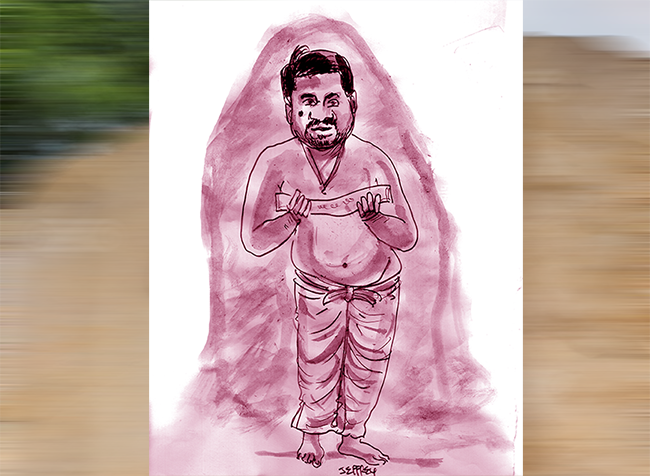
Arun Siddharth has an opinion & he has a right to his opinion. How many have listened to him or believe him? Why is his narrative different from the rest? What makes his narrative different from the rest? The UN/UNHRC/Western diplomats have for years felt comfortable in believing the lies of a bunch of ailing oldies. Would they ever take Arun & other Tamils who were victims of LTTE & give them a voice in Geneva?
The People’s Convention for Good Governance was held at the BMICH on 25 February 2023 with Dr & Mrs. Walter Jayasinghe invited as Guest of Honor. Richard de Zoysa was the convener. The Speakers included Maithri Gunaratne, Omar Khan, Prof Arjuna Parakrama moderated a panel on education that included Dr. Tara de Mel, Prof Harendra de Silva & Nile Anandappa. Shehara Parakrama, Sharhan Muhseen & Murtaza Jafferjee of Advocata spoke on economic reforms. Dr. Pakiasothy Saravanamuttu moderated panel on ethnicity which included Selvi Sachithanandan, Ishan Jalil, Jeremy Liyanage & Arun Siddharth. A poverty alleviation program across districts in Sri Lanka as envisioned by Dr. Sarath Seneviratne some 15 years ago is to commence by raising funds from local & international donors.
Arun Siddharth introduced himself as hailing from Jaffna, born in Jaffna, educated in Jaffna & still living in Jaffna. He apologizes for any grammatically incorrect English and attributes it to not studying in English.
Arun raised some significant points that thus far so-called Tamil politicians & Tamil NGOs as well as Tamil society leaders have failed to admit or conveniently brushed under the carpet for their own benefit, as funding would not have come their way, if they presented a notion that there was no ethnic conflict in Sri Lanka.
Thus, when Arun confidently declared there was no ethnic conflict in Sri Lanka, there was naturally pin-drop silence. He echoed what majority of people have been trying to tell the world ‘there is no ethnic conflict between Sinhalese, Tamils, Muslims, Burghers or Malays, though there may be issues” & Arun attributes this to politicians which is absolutely correct. All politicians are guilty of fanning ethnic politics for their own political & personal gains. In addition to politicians another bunch of people wish to present notion of conflict as it is only when such happens a bunch of people calling themselves ‘conflict-resolutionists’ can enter & meddle in internal affairs of countries & advance their agendas.
Arun refers to Maithri Gunaratne’s claim that the 1956 Official Language Act is the root cause of the conflict. This is the conveniently flagged hyped reason promoted by the educated & their followers, primarily because its real objective is an anti-Sinhala Buddhist campaign.
Arun presents why he disagrees & it aligns with many others who question how 1956 Official Language Act can be the root cause of the conflict. Arun cites the formation of the All Ceylon Tamil Congress based on ethnicity in 1944 by G G Ponnambalam, an elite politician from Colombo. This was 12 years before the Official Language Act of 1956 & 4 years before independence. ACTC was formed during colonial British rule.
Arun then shows how S J V Chelvanayakam separated from the ACTC to form the ITAK – Illankai Tamil Arasu Katchchi in 1949, just a few months after independence in 1948. Both ACTC & ITAK were based on ethnicity & not based on unity, Arun quite rightly points out.
Arun goes on to say that there are some elite politicians living in Colombo, who cannot speak even in Tamil nor do they live in Jaffna. Interestingly it was alleged even Chelvanayagam could not read or write in Tamil! Even C V Wigneswaran (born 1938) was living all his life in Colombo & wen to live in Jaffna only after become the first Northern Chief Minister in 2013. For 74 years he was living in Colombo.
This is the point that many should take serious note of. Arun says that it was these elite non-Tamil speaking, Colombo living Tamil politicians who spoke on behalf of all Tamils & claimed the Sinhalese were discriminating Tamils, marginalizing Tamils, not giving Tamils rights & because of these elite non-Tamil speaking Colombo living Tamil politicians, majority of Tamils are today suffering. This is a key factor that the international community & the researchers in the UN should take note of, in case they too have ignored this ground reality & facts.
Arun humbly declares that his grandparents are toddy tappers & that he has gone through terrible caste-based discriminations by fellow high-caste Tamils. He says that while some may say the conflict in Sri Lanka is 30 or 40 years old, the caste-based conflict between Tamils is over 700 years old.
Arun shows a copy of the 1957 Prevention of Social Disabilities Act – he says that for 66 years the Act was not applied in the North & East & the some animals who are more equal than others” are together discrimination their own for over 700 years. Arun says that to avoid another armed conflict emerging the caste discrimination must be resolved first. It brought to light how Tamil militants were all low caste who took up arms as that was the only means to show their might over the high caste Tamils.
Arun says that they do not want power sharing based on ethnicity. Power sharing should be as Sri Lankans not for individual wishes of people.
Arun refers to the June 1987 Eagle Mission 4 by India, dropping parippu over Jaffna violating Sri Lanka’s airspace to show off their might. Arun says that the IPKF committed many war crimes including killing his uncle in the Jaffna university. He asks why nobody is asking justice for the killings by Indian soldiers. Arun asks the UN Representatives at the conference why they are not questioning the Indian crimes in Sri Lanka? If they do not wish to talk about all the crimes – then all crimes should be forgotten. In short Arun says, no one should hand pick crimes.
Arun takes up 13th amendment & Tamil political demands for land & police powers. Arun says that these elite Tamil politicians denied land rights to low-caste Tamils through a foreign land law known as Thesavalamai that was applicable to Malabars (who came from India) which was codified during Dutch rule in 16th century. Arun says that he cannot buy land in Jaffna because of this law. Arun rightly says that what people seek is an independent police not a politicized police. Police powers under 13th amendment will only lead to a politicized police per every province, as police has to report to a political party leader who is the chief minister of a province.
Arun says that there are over 30 women members who have arrived from Jaffna who are from the Jaffna Womens Front. He says amongst the audience, there are also many who have had their parents abducted by the LTTE and other Tamil militant groups. Arun says that his wife lost her father when she was 5 years old. Her father had been abducted & remains disappeared” as they have not found the body only rumor that his dead body was burnt on tyres. Arun says there are many who have had their sons, daughters, brothers, fathers abducted by LTTE & other Tamil militant groups, but no one is talking about these abductions. Perhaps the UN, international bodies & even the HR & civil society organizations may like to respond.
Arun says he is denied entry to the Jaffna Press Club as it is an elitist club of only high castes/class Tamils. Arun is banned because his truth is inconvenient for them. Arun says that because people hide the truth, the truth does not come out & those that speak the truth are sidelined (like him). Arun quite rightly says that if people start to speak the truth, problems can be solved.
Arun says he attended workshops related reconciliation & peacebuilding and adds that the Tamil NGOs do not invite him but some South NGOs had invited him. Peacebuilding was to be discussions & dialogue. He says that the participants from Jaffna at the conference could not speak Sinhala. Arun says the problem was communication not ethnic. He says the communication connection is what is dividing the people not the ethnicity. Arun quotes Mandela if you speak to a man in a language he understands, it goes to his head, if you talk to a man in his mother tongue, it goes to his heart”. Arun says that until a solution to the communication gap is found, there is no reconciliation.
Arun was asked to wind up his speech by Pakiasothy Saravanamuthu who should himself provide answers to most of Arun’s questions. Pakiasothy asked Arun to elaborate on the communication aspect. Arun asks why Tamils do not want to study Sinhala though they willingly study languages of other countries to migrate. Arun says his 3 sons do not have any opportunity to study in Sinhala because the administrators have not provided Sinhala teachers. He gives example of Malaysia & says Sri Lanka should follow a similar solution.
Arun says he & likeminded people would like to contribute to the country’s economy and get close to the South & rebuild the country.
During the presidential election of 2019, many candidates and people publicly talked about education reforms. Except for Mr Gotabaya Rajapaksa, other candidates and the public have not expressed clear views on this subject and are reluctant to talk about what kind of reforms are needed for Sri Lanka. Education is a broader subject area that involves an ocean of topics, views, and ideas. Although education is working as a right of the people political platforms in the presidential election presented the idea that education should be inserted into the constitution as a human right. There is no doubt that education has been working as a right and an essential role in human life since the beginning of the first human to this world. It is quite difficult to identify what are essential reforms to the country as the dynamism and changes in society force it to focus on the requirements of education and training in distinct areas. I have broadly written about this subject area based on my experience in developed and developing countries. Education is a policy matter as well as practical application and, the ability to successfully implement reforms countrywide would be buttressed the success.
Since the beginning of the education policy of Mr.C.W.W. Kannangara during the era of the State Council, education reforms have been a subject of talking and some attractive policy actions have been successfully implemented in the country while talking was going on among limited interested people, the main reason for current urgency may have been contributed by politics and economic predicaments faced by the majority of the country. Without understanding the purposes or the way reforms should be implemented in the country, education reforms might not be successfully achieved. On the other hand, educational reforms would not be successful if policymakers don’t clearly understand the quantum and the approach they needed to make as well as the limits in the country to launch reforms successfully. Many people in the country talk about education reforms with individual interest or with self-centred attitudes such as a finding job or gaining the opportunity to go overseas or providing opportunities for their group community. These are the completely self-centred focus.
Education reforms should be beyond self-centred attitudes and they must be firm actions with a national focus providing broader benefits to different people in the social structure the reforms shall involve capacious objectives consistent with international experience, which align on different focus based on technological innovations and timely human needs. The other important point is that education reforms are continuing process beyond the election promises. Election promises are concerned with short-term interest and education reforms go beyond the short-term requirements.
Before initiating education reforms, policymakers, as well as the public who are supposed to gain benefits from reforms need to understand fundamental economic issues and limits of the country. The status of the economy at present indicates that upliftment and the forward movement of the economy would be depended on timely educational reforms. Economic issues in Sri Lanka are associated with macroeconomic factors and the management of public and private enterprises and service firms concern with microeconomic considerations. Education reforms in Sri Lanka should go along with economic reforms, which essentially need to reform the existing education system. In addition to economic issues and status, education reforms need to consider other important areas such as value education, which included anti-discrimination and equality of citizens, and elimination of mythical attitudes of people, which are hindrances to development and growth. They are factors involved in the development of the human quality of the country. Although religions are operating in the country for centuries human quality has not been improved in the process and the result of this situation is less quality and demand for the human capital of the country. The other vital area is key knowledge and skills development about environment, health and communication in students in all contexts of education. This is a significant issue that should be specially considered by the reforming policy process.
Essential economic reforms might be a considerable temperament to the public in the short-run and it appeared in Western countries after the cold war, and Western countries and Communist countries understood the essence of reforms and they successfully dealt with human temperaments and implemented reforms tackling many problems such as unemployment, workplace reforms and multi-skills requirement against reforms to maintain the economies pushing to an upward trend. Now the most important economic reforms are policy corrections and deviation policy focus while inventing new policies for the future.
The people of Sri Lanka have many expectations, which may not be achieved quickly within the expected time framework as Sri Lanka has many limits or impediments to growth. No country can achieve social and economic expectations overnight through a reform process. Positive results from education reforms could be achieved only in the medium term.
The limits of education reforms are associated with many factors, which are beyond economic considerations and they are involved in social, cultural, legal, religious and international relation-related factors.
Traditional societies in history had no regulations, and impediments were limited, but modern society has many regulations and impediments which are difficult to defeat by an independent country like Sri Lanka. Sometimes Sri Lanka needs to work with other countries. Economically, countries in the modern world are in a competitive circle and Sri Lanka cannot work alone ignoring the factors limit to growth.
Generally, education reforms are concerned with contextual education, curriculum development and management, education administration, teachers’ and trainers’ development (teacher education and training), policy initiating and review of the current policy framework and remedial management of policy consistent with the dynamism of the world. These are quite difficult activities that are involved massive costs and quality human services. Therefore, the capacity of the economy to spend money on these activities is the key point for the success of education reforms. In the meantime, these reforms would generate massive employment and sometimes job losses and diverting jobs from one area to others should be a part of reforms. Finally, education reforms would be highly advantageous to the country despite the cost involved and the productivity generated from reforms will outweigh any cost.
International structure or acceptance for a million of the population (as a Model), must include one university for higher education and research in a variety of fields, at least two technical colleges for each five hundred thousand population for technical vocational education and training for current staff in workplaces and newcomers, five high schools for secondary context, ten or more schools for primary education context and twenty or more for early childhood contexts, and in addition, there may be several colleges to absorb dropouts in all contexts focusing on a different level of contextual education. The general structure of education must be organized according to this basic principle and requirements and there may be more educational institutions with private investments with greater supervision and review of the government. This basic structure is highly expensive and lots of economic, social, cultural and religious issues are involved in the situation and the nature of organizations. When education reforms consider this basic requirement, it is needed to eliminate divisions such as religion, language and any other differences, which might hinder providing equal education opportunities for people. As Sri Lanka consists of 24 million population the country needs to consider implementing the structure without any difference based on population. It is a horizontal expansion of education, which eliminate current vertical expansion to give priority to urban areas. Horizontal provision of education brings justice and opportunities for the rural community and the current competition for popular schools, colleges and schools will be exterminated by a horizontal model.
When the population changes the structure would be changed in the future and the general assumption is to implement the structure as government investment, but investments for education and training could be contributed by non-Government and private investors, especially religious organizations could participate with qualitative and strict government supervision. The provision of education should be free, but according to the affordability of parents and it needs to insist on fee-based education provision on individual cases and parents under the new model would be saved a large sum of spending in the current system as private tuition spending and many others will be eliminated by new structural reforms. The structure will give dignity to all students with any differences. In terms of structure, Sri Lanka needs many universities and technical colleges to provide good and quality education and training concerning different fields. The current available infrastructure and facilities would help to successfully build the proposed structure.
The economy of the country should be expanded to absorb more than 85% of graduates and there is no harm in 10% to 15% going overseas in terms of democratic freedom. Sri Lanka should not be a free education and training place for attracting labour from developed countries. If the economy of Sri Lanka is prosperous educated citizens and professionals will not migrate overseas to offer hard labour to developed countries. It entirely depends on the preference of the individual and the government has no responsibility for them unless they are subject to discrimination overseas. This situation can be seen in all developed countries and the government may impose various regulations considering the requirements. The government is not directly responsible for individual cases; however, the operation of international relations would force the government to intervene case by case.
Within this basic structure, the other essential reform is to change the current attitudes of people toward good schools or bad school feeling and the elimination of such feelings would be depended on the improvement of the quality of education for kids providing equal knowledge and skills from whichever school studied without a difference in rural or urban. This should be a key aspect of education reforms. The government can promote private investment through incentives for investors and eliminate various expensive competitive exams such as scholarship exams and private tuitions, which will not necessary under the reforms. The new structure allows for each student to attend university or technical education, in other words, every student can gain tertiary education.
Structural reform’s curriculum reforms, which is a broader aspect that eliminates unnecessarily aligning too many students to a certain area of education such as science, commerce, and arts. Many Western countries allow students to learn arts, science, and commerce together and sometimes to select other pathways in health, engineering, agriculture, services, sports, and many other areas. Curriculum reforms would direct to solve current major problems and needs including value education. Sri Lanka has many religions but followers are not consistent with the policies of religions. It seems that religion has become a symbol and religion is not working in homes or workplaces or society. In this situation, curriculum reforms need focusing to offer value education in all educational contexts. In Western countries, value education is key in practical knowledge and application. For example, care and compassion are vital values that mean care for self and others. In any education context, safety is a value, which broadly applies to any subject area and when value education is included, the behavioural pattern of students dramatically changed and the quality of knowledge and skills improve with a higher demand for knowledge and skills. Part two of this article focuses on reforms related to curriculum and teaching.
IMF funding is often the sole financial lifeline available to countries in a debt crunch, and key to unlocking other financing sources, with delays putting pressure on government finances, companies and populations.
For Zambia, it took 271 days between reaching a $1.3 billion staff-level agreement with the IMF — a preliminary financing deal usually agreed during a country visit — and the fund’s executive board signing off, a prerequisite for actual disbursements.
The first African country to default in the Covid-19 pandemic era in 2020, Zambia’s continuing debt relief negotiations involving China have been closely watched by other countries as a test case for the major emerging market lender.
Though staff agreements can be reached without financing assurances, the IMF board needs them to approve the programme. These are guarantees that sovereign lenders — and to some extent commercial creditors — will negotiate a restructuring in line with the IMF’s debt sustainability analysis, providing relief and financing when needed.
Sri Lanka has been waiting for 182 days to finalise a bailout after a $2.9 billion September staff level deal while Ghana, having defaulted on its overseas debt in December following a preliminary IMF deal, has yet to get board approval 80 days later.
This compares to a median of 55 days it took low and middle-income countries over the last decade to go from preliminary deal to board sign-off, public data from over 80 cases compiled by Reuters shows.
These delays have been caused by a number of reasons, but debt experts mainly point to the fact that China is still reluctant to offer debt relief in comparable terms with other external creditors.
Chinese Premier Li Keqiang said on Wednesday the country was willing to constructively” participate in solving debt problems of relevant countries under a multilateral framework. But Beijing has always emphasised all creditors should follow the principle of joint action, fair burden” in debt settlements.
An IMF representative said it was a very small number of countries” that suffered significant delays,” acknowledging this was in particular where there was a need to restructure debt owed to official bilateral lenders.
However, the time from staff level agreement to lending approval had remained broadly consistent for a vast majority of countries,” the representative added.
Besides members of the Paris Club of creditor nations such as the US, France and Japan, cash-strapped nations now have to rework loans with lenders such as India, Saudi Arabia, South Africa and Kuwait — but first and foremost China.
Beijing is the largest bilateral creditor to developing nations, extending $138 billion in new loans between 2010 and 2021, according to World Bank data.
For countries such as Sri Lanka facing shortages of food, fuel and medicines as well as painful reforms to alleviate a debt crisis after years of economic mismanagement, the delays can be devastating. The war in Ukraine added pressure as global commodity prices soared.
Sri Lanka going beyond March without an IMF programme will be challenging for us,” said the country’s State Minister of Finance Sehan Semasinghe.
We need the programme to justify the reforms that need to be made for the economic stabilisation process.”
After the Covid-19 pandemic raised pressure on highly-indebted economies, the Group of 20 economies launched in 2020 the Common Framework, a platform designed to help low-income nations restructure sovereign debt. For the first time, China joined a multilateral effort aimed at reworking sovereign debt.
Chad, Ethiopia and Zambia signed up in early 2021. Chad secured a deal in November with its creditors, including Swiss commodities trader Glencore, an outcome without debt reduction that some analysts said undermined the Common Framework efforts. Ethiopia’s progress was delayed by civil war, and Ghana joined the platform earlier this year.
Nilanthi Gunasekera, 49, holds her family’s last remaining handful of dried fish. She is one of the millions of Sri Lankans battling a sharp decline in living standards. All photos: Reuters
In a recent letter sent to Sri Lanka, a non-Common Framework country due to its middle-income status, China’s Export-Import Bank offered a two-year debt moratorium, raising concerns over how much of a hit Beijing was prepared to take.
The question remains whether China is willing to accept a real extension of maturities that locks in a concessional interest rate for a long period of time,” said Brad Setser, senior fellow for international economics at the Council on Foreign Relations, in Washington.
Gregory Smith, emerging markets fund manager at London-based M&G Investments, said China had a legacy of providing debt relief but it typically involves maturity extensions or temporary freeze in interest payments”, while face-value reductions in the principal are rare.
Unlike the Paris Club, Chinese lenders tackle restructuring or cancellation on a loan-by-loan basis rather than for the entire portfolio, according to a working paper of the China Africa Research Initiative, which found 1,000 Chinese loans commitments in 49 African countries since 2000.
Adding another layer of complexity to these debt talks, the Common Framework doesn’t lay out precise rules on how a debt restructuring with bilateral creditors should work.
The IMF recognised that greater clarity on the different steps and timelines” is vital, as well as clear mechanisms to enforce the comparability of treatment.
For Mr Setser, time is slipping away for Zambia.
If there isn’t an agreement at least on the basic outlines of the financial terms of restructuring in Zambia by this quarter, it’ll be time to declare the Common Framework a failure,” he said.
Sri Lanka’s decision to raise interest rates shows the crisis-hit country’s commitment to reducing inflation quickly towards single-digit levels, the International Monetary Fund (IMF) said on Saturday.
In a surprise move, the South Asia nation’s central bank raised rates by 100 basis points on Friday to battle inflation, which is at 50.6 per cent. The government is awaiting approval of a $2.9 billion IMF bailout package as it endures its worst financial crisis since independence from Britain in 1948.
“Sri Lanka’s inflation is declining but remains at a very high level, which has been disproportionally hurting the poor, the IMF said in a statement. “Upside inflation risks could reverse the trend and lead to persistently high inflation which is extremely costly to the economy.”
Durable disinflation would help boost market confidence in the island nation, reduce excessive risk premia of government securities and ease the financing conditions for companies, which supports recovery, the global lender said.
The central bank raised its standing deposit facility rate to 15.50 per cent and its standing lending facility rate to 16.50 per cent, and said it would relax its currency band to move towards a market-determined exchange rate as it seeks to secure the bailout. The bank raised rates by 950 bps in the first half of last year to contain the country’s financial crisis. But Friday’s rate hike, the first since July, was largely unexpected by analysts and economists.
The IMF also backed tax hikes and power tariff increases implemented this year, which have drawn protests from public workers who have demanded a fairer taxation policy from the government.
Sri Lanka is pushing for finalisation of a four-year Extended Fund Facility and is expecting IMF board level approval this month, its central bank chief said on Friday.
By P.K. Balachandran/The Diplomat Courtesy NewsIn.Asia
Colombo, March 4: The natural endowments and strategic value of Trincomalee harbor in eastern Sri Lanka have been well known for a long time. Yet, to date, very little concrete action has been taken to develop and use the port. There has been no dearth of reports and plans, but – except for the partial development of the giant oil tanks in collaboration with India – there has been no development of the port and the hinterland.
According to an Asian Development Bank report, Trincomalee is a large natural harbor with water depths ranging from CD -20 m to CD -40 m. It is also the only entirely sheltered natural harbor in the South Asian subcontinent.
ADVERTISEMENT
In the Polonnaruwa era of Sri Lankan history (1055-1232 CE) it was a major commercial port. The Western powers sensed Trincomalee’s strategic value in the 18th century. British Prime Minister William Pitt the Younger (1759-1806) said that Trincomalee was the most valuable colonial possession on the globe” as it gave Britain’s Indian Empire a kind of security that it had not enjoyed since the Empire’s establishment.” When the British took over Trincomalee in 1796 from the Dutch, Napoleon remarked: He who controls Trincomalee controls the Indian Ocean.”
The first Indian to write about the strategic importance of Trincomalee for India was the historian and diplomat K.M. Panikkar. In his seminal work India and the Indian Ocean: an essay on the influence of sea power on Indian history,” published in the 1940s, he stressed the importance of Colombo and Trincomalee ports for the defense of India.
As war clouds gathered in the 1930s, the British turned Trincomalee into an energy hub and built 101 giant oil tanks. Wanting to retain their security assets on the island even after Sri Lanka’s independence, they took the precaution of entering into a Defense Pact in 1947. After these assets were taken back by the nationalist government of S.W.R.D. Bandaranaike in 1957, Trincomalee port and the oil tanks fell into disuse. Successive Sri Lankan governments concentrated on the development of the western coast and the Colombo port for political and logistical reasons.
However, in the 1980s, Trincomalee again attracted the West’s attention. According to Port to Port, a high-level U.N. committee reported that Trincomalee port has controllable space for the creation of a Free Port” and made recommendations for its use. The Overseas Coastal Area Development Institute of Japan (OCDI) submitted a similar report in 1984, entitled Master Plan and Development project of Trincomalee Port,” which suggested a container trans-shipment facility and a berth for passenger cruise liners. In 1986, Sri Lanka’s National Aquatic Resources Agency (NARA) also recommended the development of the port.
But in the 1980s, geopolitical factors came into play. A reference in a 1981 Pentagon map to the possibility of a U.S. naval base in Trincomalee raised hackles in New Delhi. India was pro-Soviet and anti-U.S. at that time. When Sri Lanka called for worldwide tenders for the development of the Trincomalee oil tanks in 1982, India suspected that the deal favored bidders with links to the U.S. Navy. The tender was canceled.
In letters exchanged between Indian Prime Minister Rajiv Gandhi and Sri Lankan President J. R. Jayewardene as part of the India-Sri Lanka Accord of 1987, it was stated that Trincomalee (or any other port in Sri Lanka) will not be made available for military use by any country in a manner prejudicial to India’s interests. It was also stipulated that the restoration of the Trincomalee oil tanks will be undertaken by an Indo-Lankan joint venture.
However, due to nationalist opposition to the Accord, it was only in 2003 that the 99 surviving oil tanks were given to the Indian company Lanka Indian Oil Corporation (LIOC) on a 35-year lease. Fifteen of the 99 tanks were refurbished and put to use. But it was not until 2015 that LIOC started its bunkering business at Trincomalee port. Questions over the legality of the 2003 deal, the issue of land rights, the 30-year war, and calls by nationalists to take over the tanks stymied further development.
In 2022, another deal was signed according to which the Ceylon Petroleum Corporation (CPC) got 24 tanks, the joint India-Lankan venture Trinco Petroleum Terminal (TPT) got 61 tanks, and the LIOC got 14. However, in the context of the ongoing financial crisis in Sri Lanka, implementation faces a fresh challenge.
As for Trincomalee port, the Ministry of Shipping and Ports had proposed the creation of ship repair and ship-building and bunkering facilities. An ADB report noted that Trincomalee’s sheltered bay is ideal for calm water vessel operations such as ship-to-ship transfer, lay-up of vessels, loading and discharging submersible structures and other shipping-related services.” There is no shipbuilding yet, but the afloat repair service” of the Colombo Dockyard Co. was extended to Trincomalee in 2021.
Facilities in the port badly need to be upgraded. Due to a lack of adequate lights, buoys, and lighthouses, vessels are only allowed to enter and exit the port during daytime,” the ADB pointed out. But night navigation has now been installed at the Trincomalee harbor, with the assistance of Japan through a 1 billion yen grant.
Rohan Samarajiva of the Colombo-based think tank LIRNEasia wrote in a paper on the Trincomalee port in 2017 that the port has been in the doldrums partly because the Bay of Bengal has not been a hotspot of maritime trade, given the state of economic development of the littoral states (such as Sri Lanka, Bangladesh, and Myanmar). But he saw bright prospects with south India and Bangladesh developing fast. Myanmar’s Sitwe and Kyaukphyu ports should also boost prospects for Bay of Bengal trade, but for this, the security situation in Myanmar’s Rakhine State would need to improve, he cautioned.
Sri Lankan President Ranil Wickremesinghe said in 2022 that it would take another 10 to 15 years for economic activity in the littoral states of the Bay of Bengal to pick up.
Wickremesinghe’s immediate plan is to develop Trincomalee as an energy hub with Indian help. To begin with, Sampur will have a 100 MW solar plant. To develop the hinterland, he has roped in Singapore’s urban development organization Surbana Jurong. He plans to integrate Trincomalee with the North Central and Northern provinces, which have agricultural export potential.
Samarajiva envisioned Trincomalee port developing as a secondary port” of Sri Lanka along with Hambantota. Colombo will continue to be Sri Lanka’s principal port given its established facilities and the more developed hinterland, which accounts for 42 percent of Sri Lanka’s GDP as against 5.8 percent contributed by Eastern Province, in which Trincomalee is located.
But even to be a secondary port, Trincomalee will have to have better connectivity with Colombo, Samarajiva wrote. In 2018, the ADB had initiated a comprehensive development plan for the Colombo-Trincomalee Economic Corridor (CTEC), but there has been no progress on the modernization of the railway. The port has no railyard of its own.
Samarajiva suggested connectivity in the form of a dry canal,” or a seamless container rail line between Colombo and Trincomalee. Samarajiva also suggested upgrading the China Bay airport in Trincomalee to serve as a civil airport.
Trincomalee is not located in an arid zone, as it gets more than 50 inches of annual rainfall, Samarajiva pointed out. But as a port and industrial zone, it will have to have a lot of water, he warned. It will also require adequate social infrastructure in terms of housing, educational and medical facilities for the large number of Sri Lankan and foreign personnel who will congregate there as development gets underway.
Even as it faces these problems, another obstacle has come to light, namely, the rumor that the United States and India are aiming to establish a naval base in Trincomalee, triggered by the sudden visit of U.S. Principal Deputy Assistant Secretary of Defense for Indo-Pacific Security Affairs Jedidiah Royal. Though baseless, the rumor has the potential to stall Trincomalee port’s development – as has happened so many times in the past.
By Bram Nicholas and Shiran Illanperuma/The Diplomat
March 02, 2023: Sri Lanka’s debt default – announced in April of last year amid foreign currency shortages that had triggered rolling blackouts, fuel queues, and street protests – has been subject to endless debate by local and international observers. The root causes of the country’s debt problem have been attributed to various factors, including corruption and nepotism, alleged predatory lending from China (the so-called Chinese debt trap”), and a structural balance of payments deficit. These debates aside, it is increasingly clear that the immediate cause for Sri Lanka’s collapse is the structure of the country’s debt itself – specifically, its deep and growing exposure to international sovereign bonds (ISBs) issued at high interest rates.
In the immediate aftermath of Sri Lanka’s civil war in 2009, the country embarked on a mainly bilaterally-financed infrastructure investment program. However, alongside these borrowings for investments in ports, energy, and transport, the Sri Lankan government also binged on international sovereign bonds, issuing $17 billion worth of ISBs from 2007 to 2019, in face value terms. According to a 2021 report by the Advocata Institute, Sri Lanka’s ISBs were issued at high coupon rates (often between 5-8 percent), with some 36 percent of these ISBs being subject to classic collective action clauses, which make restructuring much harder for debtor governments. As a result of this debt-fueled growth strategy (or lack thereof), the country’s ratio of public external debt stock to GDP grew from 29 percent in 2010 to 44 percent in 2021.
The ISB Debt Trap
In historic terms, Sri Lanka’s current external debt ratio is hardly a precedent. The country endured higher external debt burdens, crossing 60 percent of GDP, in the 1990s, but managed to avoid a total default. The difference between now and then is that a greater share of the country’s external debt is borrowed from international capital markets at high interest rates.
From 2010 to 2021, the ISB share of Sri Lanka’s external debt stock tripled, going from 12 percent to 36 percent. Yet in 2021, ISBs accounted for a monster 70 percent of the government’s annual interest payments. These figures highlight the extent to which high interest borrowing from international capital markets can eat into the foreign currency cash flows of a country, especially when it is wracked by external shocks such as the COVID-19 pandemic and conflict in Ukraine.
In underdeveloped countries like Sri Lanka, borrowing from international capital markets is exceptionally risky. Typically, ISBs are not linked to projects and therefore do not produce a corresponding asset or economic growth, nor is there much transparency on how governments budget and spend funds accrued from these bonds. The bondholders themselves comprise a diverse set of interests who are difficult to coordinate with to negotiate a restructure. For example, bondholders like Hamilton Reserve have held out and sued the Sri Lankan government.
Additionally, the bonds themselves are tradable and their prices subject to the decisions of credit ratings agencies. When credit ratings agencies downgrade a country, the price of that country’s bonds decreases and its yield rises. Since the yield acts as the benchmark for coupon rates on future bonds, this makes future borrowing more expensive, and can lead to a snowball effect where a country takes on more debt at higher interest rates to pay back outstanding obligations, which were borrowed at lower rates.
Sri Lanka’s experience is not unique among underdeveloped countries, many of which have fallen for the same ISB debt trap. The allure of low interest rates in the wake of the 2008 financial crisis was seized upon by underdeveloped countries to cover chronic balance of payments issues linked to deteriorating terms of trade from an unindustrialized production base. At the same time, low rates pushed Western institutional investors to seek profits from other sources of income, including the stock market, CDOs, and emerging market debt. The consequences of this shift in debt structure among underdeveloped countries has devastating consequences for citizens who have to bear the brunt of the ongoing debt crisis.
A glance at the composition of total debt stock and debt servicing of underdeveloped countries is telling – the higher the share of ISBs in outstanding debt, the greater the annual interest paid. We find that some of the most debt distressed countries in the world, including those that have defaulted after 2019 – such as Argentina, Lebanon, Ecuador, and Ghana – all have in common a deep exposure to bond markets.
The high level of ISB interest payments tends to exacerbate stresses from external and cyclical shocks, which underdeveloped countries are vulnerable to. For example, the COVID-19 pandemic brought global tourism to come to a virtual standstill in 2020 and 2021, causing Sri Lanka to lose around 24 percent of its annual export revenue. Shortly thereafter, global oil and other commodity prices rose sharply due to the war in Ukraine.
IMF Offers No Solutions
Sri Lanka desperately needs bridge financing to shore up its reserves and ensure a steady supply of essentials such as fuel and fertilizer so that it can resume basic economic activity and restore a sense of normalcy for workers and businesses. As it stands, the country expects to sign its 17th agreement with the IMF in March, nearly a year after negotiations first began. To call the IMF package a bailout would be a misnomer, as the $2.9 billion on offer (to be disbursed in tranches), is scarcely enough to cover Sri Lanka’s annual fuel bill, let alone the $4-5 billion it would normally require for annual debt servicing.
What an IMF agreement will do is restore international creditor confidence and improve the country’s credit ratings. Steps have already been taken to depreciate the currency, increase taxation, implement cost-recovery based pricing for utilities, and privatize state-owned enterprises. Some experts frame this as a positive and an end in itself, as it would help Sri Lanka regain access to international capital markets.
However, taking on more debt from international capital markets is the last thing Sri Lanka needs if it is to find a way out of its debt problem, as this would simply contribute to a snowballing of ISB debt. A good example of this is the case of Egypt, which secured an IMF deal in December 2022 and now plans to issue sukuk (Islamic bonds) at a yield of 11 percent to pay off an outstanding Eurobond, which carries a fixed interest rate of 5.557 percent.
This pattern of going to the IMF and then relying on ISBs for external financing was already tried by the Sri Lankan government from 2016 to 2019, during the country’s 16th IMF program. At the time, Sri Lanka had entered into a three-year extended arrangement with the IMF for a paltry $1.5 billion. Using the credibility” gained from this arrangement, Sri Lanka issued around $12 billion in sovereign bonds (around 70 percent of the face value of total bonds issued in the country’s history). This was done on the justification that these funds were needed to refinance bilateral project loans. As the data on structure of outstanding debt and interest payments bears out, this refinancing strategy has been disastrous for Sri Lanka, making its annual interest repayment bill higher than it would have been had it stuck with bilateral loans.
Sri Lanka’s long-term prospects for recovery will require a paradigm shift from what it has done up to now. One of the country’s immediate goals should be to deleverage from ISBs exposure, and be more strategic about the kinds of debts it takes on. In the medium to short term, bilateral borrowing remains the country’s safest and most reliable method for financing its external commitments. Curiously, recent revelations by local media suggest that Sri Lanka’s finance minister had secured bilateral financing from China to avoid defaulting in the first place, but was blocked from pursuing this path for political (likely geopolitical) reasons.
This is not to say that Sri Lanka should go to bilateral partners with a begging bowl or accept unsolicited project proposals without due diligence. Rather, the country must take its fate in its own hands and formulate its own industrial development strategy, in which bilateral partners can play a constructive and supportive role. In a sense, this would mean tackling the root cause of Sri Lanka’s debt itself – the massive and protracted trade deficit.
END
Bram Nicholas is COO of economic training and services company, ETIS Lanka.Shiran Illanperuma is an independent journalist and researcher based in Colombo, Sri Lanka.
The International Monetary Fund today praised the Central Bank of Sri Lanka’s decision to raise the policy rate and said it shows its commitment to reduce inflation more quickly and firmly towards the single-digit target.”
CBSL’s decision to raise the policy rate is appropriate and in line with its objectives set under the inflation targeting framework,” Peter Breuer, Senior Mission Chief for Sri Lanka, and Masahiro Nozaki, Mission Chief for Sri Lanka said in a statement.
The CBSL yesterday raised policy interest rates by 100 basis points, though many predicted the monetary authority to either maintain the status quo or signal a dovish tilt by cutting rates.
It reflects CBSL’s commitment to the inflation target and is an important part of the disinflation strategy in the EFF program, which is fully committed by the Sri Lankan authorities and supported by the IMF,” the IMF statement said.
Sri Lanka’s inflation is declining but remains at a very high level, which has been disproportionally hurting the poor,” the IMF said.
Upside inflation risks could reverse the trend and lead to persistently high inflation which is extremely costly to the economy.
Therefore, CBSL’s decision to raise the policy rate shows its commitment to reduce inflation more quickly and firmly towards the single-digit target.
Durable disinflation would help boost market confidence, reduce excessive risk premia and ease the financing conditions for the corporates, especially the small and medium enterprises, which supports recovery.”
The government will honour the Supreme Court’s decision preventing withholding any funds allocated to conduct Local Government Polls 2023 and will proceed accordingly, State Minister of Finance Ranjith Siyambalapitiya said.
He said everyone should respect the court’s decision.
“It can be the Ministry of Finance, the government or an institution, It is everyone’s responsibility to act on the court’s decision. According to the court decision, we have to align expenses,” he said.
Supreme Court three-judge-bench comprising Justices Preethi Padman Surasena, Janak De Silva and Priyantha Fernando yesterday issued an interim order preventing the Treasury Secretary, the Attorney General who is representing the President and any other state official from withholding any funds allocated for the polls.(DSB)
Renowned British supermodel Naomi Campbell features a pack of Sri Lankan made “Samahan,” as an essential product she keeps with her for a strong immune system.
In a recent interview with Vogue India titled What does Naomi Campbell carry in her bag?,” she says ‘Samahan’ is a good tea for the immune system.
Samahan, is a trusted herbal drink by Link Natural Products Ltd., which is a leading manufacturer of herbal products. They recently announced the debut of its flagship brand and iconic herbal drink Link Samahan at Costco Wholesale stores in Japan.
Samagi Jana Balawegaya (SJB) MP Harsha de Silva has stated that although the International Monetary Fund (IMF) bailout Sri Lanka currently awaits is necessary, it is not, in fact, sufficient for the growth of the nation.
Taking to Twitter, Harsha warned that Sri Lanka’s current challenge is to create growth, adding that the number of jobs lost will also likely increase amidst the deteriorating demand.
He further emphasised that in order to create the growth needed, Sri Lanka needs to ‘breakdown walls and build bridges to the world’, as ‘internally driven non-tradable growth’ will no longer suffice.
Commenting on certain remarks made by politicians at recent political rallies in this regard, the SJB MP said promises made by certain groups at political rallies of creating growth without reforms is pure conjecture that a homegrown solution exists without the IMF is only an attempt to fool the people”.
Mr Ranil Wickremasinghe, the president of Sri Lanka, is a traceable person with a preeminent heritage in Sri Lanka his patrimony is traceable to king Parakramabahu six and he has rich knowledge, skills and experience in policy development and implementation. The major weakness in Sri Lanka since independence was the lack of capable people for policy guidance, development and implementation. Rajapaksa group was dishonest and concerned with gaining financial advantages from various members of the generation and compared to Mr Wickremasinghe they were fogs seen the sun.
Mr Wickramasing has long experience and after becoming the president of the country attracted support in Sri Lanka from all over the world and he won the support from all countries. However, many have not understood these capabilities and the country needs to allow him to work a further two presidential periods to change the entire policy framework of the country. Media in Sri Lanka seems very partially support incapable left parties, which have not expressed policies acceptable way to citizens and their prime motive of them is to go against Mr Wickramasinghe. Mr Wickramasinghe needs to call all political parties and develop workable policies for the country.
Former Chief Economist and Senior Vice President of the World Bank, Joseph Stiglitz, slammed the IMF for callously unleashing riots on nations the IMF is dealing with; he pointed out that the riots are written into the IMF plan to force Nations to agree with the average 111 conditions laid down by the IMF, that destroys a country’s democracy and independence.
Having captured political power in Sri Lanka on the back of a CIA instigated jockstrap-insurrection that delivered the country to the jaws of the IMF, there are ominous signs that the Americans are now hatching the classic IMF-riot to consolidate their triumph and create a climate to induct Quad military forces into the island; American occupation of Sri Lanka would then be a fait accompli.
The IMF (one of the two global money lenders purposefully favoured with the monopoly and authority to lend to world governments, from Bretton Wood days) controls Sri Lanka’s Executive, the Administration, and the Legislature.
The words attributed to Amschel Rothschild are perhaps relevant here; he reportedly said, I care not who makes a country’s laws; any fool can do it. Give me control of that country’s money supply and I shall rule that country.”
To give context to these words in today’s geopolitical situation, a watershed in history, during WW2, is briefly visited.
Completely overwhelmed by Heinz Guderian’s “blitzkrieg” approach to warfare, a dispirited British Army, routed in battle, fled in disarray abandoning their armaments and deserting their French allies on the beaches of Dunkirk in 1940.
With no munition to fight with, with no money to re-equip a weaponless Army, with an army left with no stomach to do battle, Britain faced the stark reality of being overrun by an unstoppable Wehrmacht.
A desperate Allied high command sought a meeting with Roosevelt.
At that secret meeting held on the seas of the Atlantic, the Allied forces begged of the US, which had artfully kept out of the war, to join them in their fight against the Nazis.
Resorting to patent blackmail the US responded that it would do so, on condition that Britain and France agree to decolonize all their colonies and release them from their respective jurisdictions at the end of WW2.
Churchill and De Gaulle capitulated to American blackmail; this was the basis of the ‘Atlantic Charter’ of 1941 and of the New ‘World Order’ that emerged, with the US at the helm.
So much for the tommyrot of many leaders in the former colonies who boast that it was their valour which won independence for their countries.
With the colonies now unshackled from European colonialism, American imperialism had a carte blanch to prey and devour these former colonies in Africa and Asia, in a manner and time appropriate to the US; a major impediment to US hegemony and ambitions were the Soviet Union and subsequently the NAM (Non-Aligned Movement).
To lure the former European colonies into their net, Washington adopted a long-term strategy; they set-up the ingenious debt-trap that Rothschild had previously alluded to.
At the Bretton Woods conference of 1944 that followed the Atlantic Charter, two institutionalised money lenders, the IMF, and the World Bank, were granted a right to lend to World Governments.
The IMF and the World Bank are governed by member-nations whose voting rights are not based on ‘one- country-one- vote,’ but rather on monies that each country has invested in these two organisations.
The Americans have the largest share of votes in both the IMF and the World Bank; consequently, the IMF and the World Bank operate as extensions of Washington foreign policy.
Bretton Woods established America as the money-lender to the world with a virtual monopoly to lend to World governments.
%22The IMF%27s Four Steps to Damnation%22 – Bing Intelligent search from Bing makes it easier to quickly find what you’re looking for and rewards you.
This economist, prolific writer, and Nobel Prize winner, does not mince his words when in a series of scathing and damning critiques of this American money-lender, accuses it of causing great damage to countries through the economic policies it has prescribed countries to follow, to qualify for IMF loans.
In his analyses, Stiglitz justifies the intermix in the use of terminology relating to the IMF, the World Bank, and the WTO; ‘they are interchangeable masks of a single governance system.’ (The IMF, the World Bank and the WTO are three of the five traps laid out by the Americans at Bretton Woods to re-ensnare the former European colonies, this time into the American pen. The two other snares laid by Washington were the ‘United Nations,’ in its present format, and the ‘non-governmental organisations’, a concept first propagated at Bretton Woods).
Stiglitz expressed grave concern that IMF plans, devised in secrecy and driven by an absolutist ideology, are never open for discourse or dissent. He confessed that the so-called ‘Poverty-Reduction- programs’ for the developing world, undermines democracy and the economy.
Often, IMF remedies made things worse for Nations” said a chastened Stiglitz, critically at odds with the IMF and who had the discernment only an insider could possess.
Stiglitz had the intestinal fortitude to rubbish the disinformation-lineoften parroted by Washington and their liegeman, when he said, It is not China, which has a large trade surplus, that makes “trade wars”; it is the United States, which has a large trade deficit.”
Stiglitz let the world in on a secret when he revealed that the IMF adopts a single template to destroy the sovereignty of the Nation States established after Bretton Woods; he traced out the deadly 4-phase strategy.
The IMF’s Four Steps to Damnation”
Stiglitz states that the IMF process begins with an ‘investigation’ that usually takes place in a 5-star hotel where a mendicant finance minister is handed a pre drafted ‘restructuring Agreement’ for his ‘voluntary’ signature.
The IMF hands every minister the same exact four-step program.
(In 2015, Sri Lanka’s Finance Minister at the time – Karunanayake –responding to summons from Washington, just days prior to the first bond-scam, reported to IMF’s Lagarde for a briefing. Following that briefingKarunanayake hurried back to Colombo and, on his tail, came a high-powered IMF team, led by Todd Schneider and Pacific Department Director, Changyong Rhee, charged with monitoring at first hand the goings-on atthe Central Bank; the bond- scam was done virtually under the watchful eyes of the IMF monitoring team).
Step one – In this phase, Privatisation of State assets is the aim; Stiglitz says that it is better described as ‘Briberization’ of State assets. National leaders are bought off, to facilitate the sale of State assets
When a nation sells-off its national assets there is a discontinuation of revenues flowing into State coffers from that asset. It is one sure method of depleting a country’s financial reserves as would, the exercise of slashing taxes, spurring multiple scams in the commodity market, engendering new imports by deliberately destroying entire sectors of the economy such as agriculture and peculating directly from the country’s ‘vault,’ the Central Bank and Treasury.
With the promise of monies being deposited in off-shore bank accounts, leaders happily flog the National assets of the country.
Step two – The objective in this phase is to ultimately reduce a country’s financial reserves to zero; to this end, the ‘Capital Market Liberalization’ plan (popularly referred to as the Hot Money Cycle” plan) is often executed; capital is ‘steered’ into the country as speculative investments in real estate and currency; at the first whiff of trouble, an exodus of this investment takes place.
As was the experience in Indonesia and Brazil, the reserves were drained out within days. (In Sri Lanka, described later in more detail, the modus-operandi of emptying the coffers differed a trifle).
And when the investment flees, to seduce speculators into returning a nation’s own capital funds, the IMF demands that high interest rates be set, rates ranging from 30% to 80%.
“The results are predictable; the higher interest rates demolish property values, savage industrial production and drains out national treasuries”, said Stiglitz.
Simultaneously, the temperature of social unrest is brought closer to the boil.
Step Three – IMF initiated Riots.
Stiglitz says, without a degree of ambiguity, Riots are written into the IMF plan”. The IMF drags the gasping nation to ‘Market-Based Pricing;’ this, as Stiglitz explains, is a fancy term for raising prices of food, water, cooking gas, medicines, and all essentials necessary to sustain life.
This leads to the painfully predictableIMF riots. New flights of capital, resulting from the IMF riots, lead to even more pronounced social unrest and government bankruptcies.
The food and fuel riots in Indonesia, the water riots in Bolivia and cooking gas riots in Ecuador are examples.
Step 4 – “Poverty Reduction Strategy”
When this phase is reached, the country put through the wringer is all but done. The IMF has the country eating out of its hand, be it postponing elections, rolling-up Constitutions, turning a blind eye to dictatorial tendencies, interfering in, and obstructing the judicial process or selling strategic ports or be it anything.
When IMF-riots cause capital to flee the country, it gives the money-lender a further opportunity to add more conditions.
The IMF holds the key to life and death of the people in a country reduced to this phase; it controls the ‘money’ supply that buys the ‘essentials’ needed by the people; the money for these essentials will be forthcoming, only if that country were to do the IMF’s bidding.
Stiglitz states that on an average, the IMF imposes 111 conditions on National governments, dictating to the Executive, the Judiciary, and the Legislature in those countries the courses of action they should take, grossly violating in the process the sovereignty of the people, the essence of a democracy.
In this scenario, the IMF has replaced the National government as the sovereign authority; the sovereign power of a country is now vested with Washington.
When this phase is reached, America has successfully colonised that country.
When Stiglitz was asked whether any nation facing this dilemma was able to avoid this fate, he identified Botswana which had told the IMF To go packing.”
In comparison, Sri Lanka has a decided advantage; it has a friendly nation, China, which had proffered – even at the time of the bizarre conduct of Nandasena and Sabry to declare the country bankrupt when it was not so – to underwrite all of Sri Lanka’s external debts and gave the island nation the opportunity to negotiate with self-respect the repayment terms of the underwritten value, with no attached conditions.
This information is somehow deliberately kept out of the public domain.
And Sri Lanka has another friend too, India, which could match China’s benevolence.
To go the path of the IMF is self-destructive with the 111 plus conditions that the country is required to comply with; it is diabolical that the people’s transitory representatives refuse to divulge to the very people with whose sovereignty they reside in the legislature, the 111 conditions laid down by the IMF.
It is good to hear that the courts have recognized the right of information on the names of members of Parliament who have declared their assets. Some time back before the Right of Information law was introduced, the civil society organization CIMOGG made a similar request to the then Speaker who did not even acknowledge the receipt of the request. It is urged that this admirable precedent is extended to the payment of income tax as well.
If the names of taxpayers (who have tax files) of each electorate or Division is made available on a website, citizens can give information on tax evaders. As only the taxpayers’ names are to be displayed there should be no objection to this measure by current taxpayers. In fact, the expansion of the tax base could result in the reduction of taxes.
Secrecy in the payment of taxes is not tenable as taxpayers earn their money from citizens and most times by exploitation. When direct taxes are not collected the citizens are penalized with indirect taxes even on what they eat.
PS
Judging from the crowds demonstrating against tax proposals, one is encouraged to see that we have so many lakshapathiyas. We are not a poor nation.
Tourism, as it is well known, is a major industry in Sri Lanka. The foreign exchange it brings into the country and the hundreds and thousands of people who are directly and indirectly employed in this sector makes this industry a vital one for the country. It is one of the most effective windows to the world provided the country develops and displays an image that is both unique, culturally and geographically, and offers an interest based, value for money option for tourists.
It is evident that there is a renewed focus on tourism in Sri Lanka. Rightly so considering what it has to offer to potential tourists. Its ancient and more modern cultural history, geographical beauty, its rich flora and fauna habitats, unparalleled beaches and its trekking adventures are all part of a package of diverse interests that are offered to tourists. It needs to be noted that tourism is not limited and should not be limited to non-Sri Lankan overseas domiciled foreign nationals, but also to the ever-growing Sri Lankan Diaspora, many of whom still call Sri Lanka their home” and who would wish to enjoy the beauty of the country. One hopes that the potential arising from Sri Lankan origin foreign nationals are not overlooked when it comes to promoting tourism.
A news report appearing in the Daily FT notes that India, Russia, China, the UK, France, Germany, the Middle East, Nordic countries and Australia as focus markets for tourists according to Sri Lanka Tourism (https://www.ft.lk/top-story/Sri-Lanka-to-focus-on-9-key-markets-to-woo-tourists-in-2023/26-745624. Tourist arrivals in the first two months of 2023 have reportedly exceeded 100,000 each month.
However, tourism also brings in unwanted negatives such as crime, drugs and cultural degradation While genuine tourists need to be protected, equally importantly, the Sri Lankan people and its culture also needs to be protected.
Madison Mussio goes on to say Citizens of cities like Barcelona and Venice are now heavily protesting the development of tourism in their cities. They have seen prices for their homes increase due to the loss of housing to hotels. They have seen entire neighbourhoods bought up by real-estate investors, only to never use them. The thing is, the government of these cities want tourism, they provide many jobs to the local people and tax revenue for them. Barcelona alone has 1.6 million residencies (2016) but had close to 8 million tourists in 2014. Twenty years ago, they had less than 2 million, in 2000 a little over 3 million. At what point does a government look at the number of tourist to residence in a city and say they need their biggest industry to slow down? Barcelona has recently voted in an anti-tourism mayor. Her biggest claims were that the rising pricing of housing and loss of culture is due to the mass tourism that is unnecessary and that the city should focus on its citizens, not the tourists. Currently, the building permits for hotels have stopped for at least one year and she has now required all Airbnb properties to have tourist licences to operate. She was also the first person to fine Airbnb in history (30k). They are now increasing the fine to 600k for every illegal listing.
Venice on the other hand, is trying to separate from Italy. In 1866 it because part of Italy, before then it was an independent kingdom. It has seen massive tourism since it became part of Italy. Fishing and agriculture jobs have been replaced with tourism jobs. The culture of a great and powerful nation surrounded by water and farmland has been destroyed. In 2014 in an unofficial vote, 89% of citizens voted to leave Italy. One of the biggest reasons was because they claim the city has been lost to them in favour of tourists. To be fair, I am part of the tourism industry, and my job is provided by tourists. However, even I agree sometimes it can be too much and that governments need to plan for tourism and local sustainability, rather than just developing the tourism industry blindly”.
Long term strategic planning however is a must to maximise on the opportunities that are there now and may be there in the future. Such opportunities may be lost if planning is not done.
The Borgen Project, a nonprofit organization that is addressing poverty and hunger and working towards ending them, states that unless well planned, the disadvantages of tourism may greatly outweigh the advantages in a country (https://borgenproject.org/advantages-disadvantages-of-tourism/). It says that A major factor to take into consideration is environmental damage. Many countries with ancient ruins or natural attractions are also in danger of destruction or erosion with significant foot traffic and human interaction. Additionally, flora and fauna can decrease in areas or change their growth and migration patterns when there is an overflow of humans interact. Foot traffic and continuous touching can also slowly degrade the stability of ancient structures. As previously stated, the profit gained from tourism is often reinvested into the industry. However, with unequal infrastructure development, the tourism industry can inadvertently sustain itself without aiding a country’s other vital sectors. As such, many countries end up developing tourism hot spots while the rest of the country suffers. In these countries, there are visible socioeconomic gaps between the wealthy and the poor. Focusing mainly on the tourism industry and places of mass attraction could leave disadvantaged communities at risk of financial instability”.
Econsult solutions Inc (ESI), a US based consulting company, emphasises the importance of strategic tourism planning efforts that achieve comprehensive and successful results. They mention four critical ingredients for such planning (https://econsultsolutions.com/tourism-strategic-planning-the-tried-and-true/)
Attractions: Creating a compelling experience for visitors to enjoy
Determine gaps in the tourism products.
Enhancement and new product / event opportunities
Support for and partnerships with attractions
Tourism Infrastructure: Helping visitors successfully navigate their experience.
Availability, variety, quality, and competitiveness of accommodations, restaurants, transportation, signage, visitor centers, retail, and visitor domains
Marketing: Getting the right message to the right audience
Addressing the appropriate target audiences and ensuring that the destination’s marketing helps:
Attract new and repeat visitation; extends stays; increases tourist spending;
Reflects the destination so that the visitors’ expectations are met.
The right mix of paid, earned, owned and shared media for promoting the destination.
Organizational Structure: Effectively and efficiently improving local tourism
The most appropriate organizational structure to meet various responsibilities and achieve a strong return on investment.
Ensure that the tourism organization figures prominently in political, policy, and planning discussions.
The role to be played in determining and collecting public and private funding.
The value and opportunities of partnerships
ESI states that this framework is the starting point rather than the end point for the crucial discussion of the prioritization of opportunities, resources, and efforts to address gaps. Through collaborative discussions with key stakeholders, the most effective planning processes arrive not at a laundry list of recommendations, but at an identification of the most important priorities, and the initial implementation steps needed to address them”.
Sri Lanka Tourism is said to have developed a tourism policy. Presumably this will be in the public domain soon. Hopefully this policy is of strategic nature and is a long-term policy that addresses the positives of tourism and how to ensure tourism potential is matched to global trends in tourism, as well as its negatives and what measures can and will be taken to address such negatives.
If not already included, such a policy should include a promotional strategy based broadly on interest priorities of potential tourists. Is the emphasis of this policy about providing a composite package of everything the country has to offer say within a period of two weeks? Or are there interest-based packages such a sea and beach packages, cultural packages, wildlife experience packages, sports packages (for example, why not Golf tours that include Colombo, Digana, Nuwara Eliya, Trincomalee, and Hambantota?). If such interest-based packages are included, there will be a potential to improve the infrastructure associated with such interests through investments in these areas, and an overall benefit to tourism in general within the country.
While individual travel companies may undertake such interest assessments, it would benefit the country in the longer term if the national tourism policy, developed in consultation with all relevant stakeholders, includes this approach as a composite of such a policy.
It is also worth considering a zone based tourism approach from an interest and an infrastructure aspect. For example, a Southern zone with Hambantota as the centre of it, a Northern zone with perhaps Vavuniya as the centre of it, an Eastern zone with Trincomalee as the centre of it, and a Central zone including the cultural triangle with Kandy as the centre of it, could become the epicentres of an investment policy on tourism.
These zones are mentioned considering the proximity they have to various, current, and potential tourist interests. Hambantota has the advantage of having an international airport, a bustling port that could have the potential for cruise ships to call over, a network of roads that connects it to beach hotels in popular sea spots, wild life and bird sanctuaries, and the potential to link Hambantota to the East and places like Passekudah and Potuvil by extending the highway beyond Hambantota.
Unchecked, unplanned tourism could spell disaster for Sri Lanka from several aspects. The quality of tourists is as important or more important that the economic benefits they accrue to the country. Tourists will come and go, but the culture of the country, its environment, its fauna and flora and its natural beauty has to remain for the benefit of many generations to come.
The Quality-of-Life Index (QLI) is a metric used to assess individuals’ and communities’ overall well-being.
It considers a wide range of factors, such as health, education, income, the environment, social support, and political stability.
The QLI provides a comprehensive picture of a specific area’s quality of life and can be used to compare different regions or countries.
Policymakers, researchers, and social scientists frequently use the QLI to identify areas that need attention and improvement.
Policymakers can develop policies and programs that address the needs of the community and improve overall well-being by measuring the quality of life in a specific area.
Some of the factors that are commonly included in the QLI include:
1. Health: This factor considers life expectancy, the prevalence of diseases, access to healthcare, and other indicators of physical well-being.
2. Education: This factor measures the literacy rate, school enrollment, and other indicators of educational attainment.
3. Income: This factor considers the average income and the poverty rate.
4. Environment: This factor measures the quality of air and water, access to green spaces, and other indicators of environmental quality.
5.Social Support: This factor measures the level of social cohesion, social capital, and other indicators of social support.
6. Political Stability: This factor considers the level of political stability, freedom of speech, and other indicators of political stability.
The QLI is a useful tool for policymakers and researchers interested in improving individual and community well-being.
It can assist in identifying areas that require attention and resources, as well as measuring the effectiveness of policies and programs over time.
It should be noted, however, that the QLI is not a perfect measure and may not capture all aspects of quality of life. It is only one of many tools available for assessing the well-being of individuals and communities.
A massive Sinhala -English was out recently by Buddhadasa Hewage, marketed by the e-Lanka website in Australia at U.S. $50. The writer ordered the dictionary from them. It has 1,500,000 English words, similar to 95,000 Sinhala words, and contains 2432 pages. It is published after professor G.P. Malalasekera’s Sinhala-English dictionary, but Buddhadasa Heage’s dictionary has more words. It was the first time a professional or an institution published a Sinhala-English dictionary of this magnitude. It was available at the Book Exhibition, also held at the B.M.I C.H.
The author was born to a low-income family in a southern rural village in Sri Lanka. Buddhadasa Hewage prioritised his early life. He took on the frightening task of learning English on his accord. In late 1980, he managed to enter the Teachers’ Training College in Mirigama and started a distinguished teaching career. In 1977 he began teaching English at Ananda College in Elpitiya, where he served the college for twenty-one.
Author’s Literary Achievements
He has authored seventeen books, including six novels and five short-story books in Sinhala and English. His Sinhala novel Yathrawawaka Minissu” was selected as the best novel in 1992. Additionally, he won multiple awards in 2012. The Sri Lankan government recognised his literal talents and offered the Kalabushana” status.
The massive Sinhala-English dictionary is the product of Buddhadasa Sewage’s fifteen years of effort. His personal experience inspired him as a student and a teacher to embark on this project. The Sinhala-English dictionary will undoubtedly go a long way in simplifying the learning experience of students and journalists.
Ministry of Education.
This dictionary has accepted been accepted by the Ministry of Education as a library book. He started working on the dictionary in 1998 when he was working as an English teacher. He noted every word in a notebook as a habit but never considered using it in the dictionary. In his attempts, he noticed that he had to deal with many English and Sinhala words and found out that there are many similarities between Sinhala and English words. It was the basic foundation. Furthermore, it helped to compile the dictionary as he wrote many Sinhala and English novels and short story books.
If you are an English journalist, you must know the relevant Sinhala words in English. For instance, the Malalasekera dictionary deals with English words to Sinhala, but it is only possible to use the English language if, to a certain extent, use the Malalasekera dictionary. Buddhadasa Hewage’s dictionary contains pages of 1,500,000 English words. His primary intention was to help the Sinhala native people to find English synonyms for Sinhala.
History of Dictionaries
The author has categorised words in the dictionary into nouns, adjectives, verbs, adverbs, idioms, abbreviations, and prepositions so that sophisticated individuals benefit from the dictionary. Ceylon’s history of dictionaries goes back to the British rulers, especially the British Civil Servants who needed to learn Sinhala to understand the locals’ thoughts. Once they conquered Ceylon, they wanted to know the local language, so it made them learn Sinhala – English vitally. It is on record as the first governor to Ceylon, Sir Fredrick North, between 1798 and 1805, compiled the first dictionary of English to Sinhala with the aid of another British civil servant, John Wine, but they could not finish the job. Later the task fell on another British civil servant, but suddenly, he died. Later compilation of the dictionary was handed over to a Christian Father, Benjamin Clough, who ultimately printed the dictionary in 1821. It became the first Sinhala-English dictionary comprising 628 pages and was published in 1830. Buddhadasa Hewage said it was the best Sinhala-English dictionary ever published in Sri Lanka (Ceylon) up to date.
After Father Carter’s dictionary, several dictionaries were published. The first was by Mudliyar Gunasekera in 1915. The English Dharma Samaya published another dictionary in 1948. There was a line of Sinhala-English dictionaries published ever since. Somapala Jayawardene published the most contemporary dictionary in 1994 and Somapala Dematapiya in 1995. Buddhadasa Hewage consulted seven Sinhala English dictionaries and linked the recent authors.
Publishers.
There is a funny story about publishers. Buddhadasa Hewage had consulted a publisher, and the publisher promised to give only a 10% royalty, which meant if they published 1000 (one thousand copies). The dictionary’s author would get only Rs.10,000.00, whereas the publisher could earn Rs.90,000.00. Buddhadasa Hewage thought it was unfair because the author had put in so much energy and effort to compile 2,500 pages.
The. Buddhadasa Hewage’s dictionary was published for the third edition. He has donated 100 copies to the University students who entered the University from rural villages and were bright and poor. To achieve this, he has contacted the universities constantly to fathom the brightness and to find out about students’ financial status.
The author faces a fatal situation.
Before launching the dictionary, Buddhadasa Hewage faced a critical problem. A good friend of the author suddenly disappeared with all the type-setting and the pen drive. The culprit was desperate for money as he had a police complaint for stealing a woman servant’s three months’ wages. The author visited his home in Kurunegala and sought lawyers’ advice. The lawyer advised the dictionary’s author that his friend could sell the pen drive and the entire work on the dictionary for money. The author was left with no option but to report to the police. He listened to his lawyer and went ahead with the publication.
Another journalist once asked why the Oxford Advanced Learners Dictionary includes versions appearing in other countries in various languages, including Tamil. Still, only it is available in Sinhala to English in Sri Lanka? The dictionary’s author replied, Yes, you are correct. We cannot see such a version, and it is up to the Sri Lanka government, or the relevant authorities must look into this matter. In my case, I only focussed on Sinhala because it became difficult. After all, there are many meanings for each Sinhala word. It is why we need a dictionary with example sentences like in Oxford Advanced Learner’s Dictionary.’
Compiling a dictionary is a challenging job. Invariably dictionary compilers end their lives before they see the final output. When considered, only the publishers take advantage of the dictionary compilers, as royalty is limited to only 2 or 3%. In Sri Lanka, book publishing is a field that exploits authors, especially in compiling dictionaries which are precise for compilers.
The author says he is also ready to add Tamil words to the dictionary. It will be a complete dictionary of Sinhala, English and Tamil words.
ඉංද්රිය පහේ ප්රසාදය සමග ඊට අනුකූලව සිදුවන පස් ආකාර ස්කන්ධ ක්රියාවලිය ‘පංච ස්කන්ධ’ ක්රියාවලිය වන අතර එය (ප්රසාදය + ස්කන්ධය) sensory experience ලෙස හැදින්විය හැකිය. According to Buddhist teachings, The ‘sensory experience’ is define what a human being is.
A video clip doing the rounds on web-based media platforms shows a former secretary of the agriculture ministry stating at a JJB (Malimawa) press conference that when Anura Kumara Dissanayake was the Minister of Agriculture, Livestock, Lands and Irrigation in the Chandrika Kumaratunga government in 2004, there was a surplus of paddy in the country and that on the instructions of the minister, a part of this surplus was sold to the World Food Programme and that this was akin to exporting rice during the time of King Parakramabahu.
This was sycophancy at its worst, targeting a gullible audience made up mainly of young people with very little awareness of history and whose opinions are formed by whatever comes to them via the internet. We all know that AKD was never a member of any government before April 2004. Hence if there was a surplus of paddy in the year that he assumed ministerial office for the first time, that can only be the result of development projects implemented by preceding governments. It should be obvious to anyone that AKD could not have done anything to deserve any credit for a paddy surplus in 2004.
The Mahaweli Project is the main reason for Sri Lanka becoming more or less self-sufficient in rice. Hence the full credit for any paddy surplus in the year 2004 should go entirely to the UNP government of 1977-94. The JVP vehemently opposed the Accelerated Mahaweli Project of the J.R.Jayewardene government in the 1980s. If the then UNP government had heeded what the JVP said at that time about the Accelerated Mahaweli Project, AKD would not have had a paddy surplus to sell to the WFP in 2004. It is indeed strange to see parties that opposed the Accelerated Mahaweli Project in the 1980s claiming credit for its results today.
Throughout its history, the JVP has only opposed or sabotaged development projects. A phase of the Udawalawe Project was being implemented in the late 1980s during the JVP’s second insurrection and a report of the International Water Management Institute has described how JVP death squads extorted money from the contractors and murdered workers on the project thus causing a delay in its implementation.
Opposition to all and sundry
The JVP has a history of opposing all development projects initiated by all governments. In the 1980s, they opposed the Accelerated Mahaweli Project. When the Colombo Port City was being built, the JVP claimed that there wasn’t enough sand and metal in the country to complete a project of that magnitude, and opposed it. They opposed the construction of highways during the Rajapaksa government. The anti-development project mentality of the JVP can best be illustrated by their opposition to the Uma Oya Project which commenced construction in November 2011. The aim of the project was to construct a dam and a reservoir in the central highlands across the Uma Oya and to carry water from this reservoir through a system of tunnels into yet another reservoir and then onwards to a hydro-power project and finally into the Kirindi Oya to supply water to the Moneragala and Hambantota districts.
Around 2015-2017, water started seeping into one of the tunnels being constructed in the Uma Oya project. In drilling a tunnel, it is natural for ground water above it to seep into the tunnel and it would be necessary to seal the tunnel to prevent such seepage as the machine drills further. However, the German machine used to drill this tunnel had not been equipped with the accessories necessary to seal the tunnel. It was revealed later that this was due to some error on the part of the project consultants. Be that as it may, in 2017 on the advice of some Norwegian experts, the accessories necessary to seal the tunnel as the machine moved forward were obtained and the water seepage issue ceased to exist. The Uma Oya Project is now nearing completion and is due to be commissioned some time during this year.
When the water seepage issue gained media attention, the main political force in the country that rose up against the Uma Oya Project was the JVP. Anura Kumara Dissnayake made impassioned speeches in Parliament describing how thousands of wells, streams and springs in the Bandarawela area had dried up and how thousands of agricultural land had been abandoned due to the lack of ground water as a result of the seepage into the Uma Oya tunnel. He described how the walls of thousands of houses and other buildings in the area had cracks appearing as a result of the change in the ground conditions. He stated that construction work on the Uma Oya Project had commenced despite objections by environmentalists and other experts and that water was to be diverted through this project to the Hambantota port and airport to fulfill the desires of the Rajapaksa government.
The ground level campaign against the Uma Oya Project was led by the Badulla district JVP stalwart and ex-Parliamentarian Samantha Vidyaratne. He described this project not as a multi-purpose project but as a ‘bahu vinashakaree’ project and stated that this project has been planned by those willing to even ‘give their mothers for money’ and that all this was the doing of ‘rulers who did not think about the country’. He called for an immediate halt to the Uma Oya Project and gave examples from France, Thailand and South Korea where large scale development projects had been halted half way.
Uma Oya is a project that had been under discussion since the Bandaranaike era in the 1950s. The Dudley Senanayake government of the late 1960s, the Premadasa government in the early 1990s, the Chandrilka Kumaratunga government of 2000, and the UNP government of 2001, all carried out studies regarding this project. After all those studies and discussions, cabinet approval was obtained to commence the project on 26 January 2005. This was on the basis of cabinet paper No. 05/0036/039/002 which was presented to cabinet by Anura Kumara Dissanayake who was the Minister of Agriculture, Livestock, Lands and Irrigation at that time. AKD had stated as follows in that cabinet paper:
For the development of the South East Dry Zone in Sri Lanka, particularly the Hambantota and Moneragala districts, there is no other alternative unless water is diverted from Uma Oya to the South East Dry Zone.”
Strategy for economic development of both Hambantota and Moneragala districts changed during the recent past and diversion of Uma Oya to Kirindi Oya is now seen in the perspective of recently conceived Ruhunupura development. The infrastructure of Ruhunupura development consists of the development of the Hambantota harbour into one of the modern harbours in the region, international airport in the Moneragala district, and an oil refinery…For all these new developments, projected water requirement has been estimated as 100 MCM in the year 2030. In the absence of a reliable source of water in the area, water from Uma Oya is seen as the only alternative to supplement this requirement.”
Therefore high priority should be given for this project.”
A party of protest
Even though AKD claimed in parliament that the Uma Oya Project had been inaugurated to fulfil the desires of the Rajapaksas, the cabinet paper presented to the CBK led cabinet by AKD himself, in January 2005, many months before Mahinda Rajapaksa became President in November 2005, has explained very well, the reasons for commencing the Uma Oya Project. In 2017, JVP activists had actually opposed a project that they themselves had initiated through a cabinet paper! This illustrates the mentality of the JVP. This is a party that has opposed every development project brought forward by every political party in power. Ultimately, they opposed the only development project that they themselves had initiated in their six decade long history.
Let us for a moment forget that it was AKD himself who had presented the initial cabinet paper on Uma Oya. Even if some problem emerges in the implementation of a development project initiated by someone else, the immediate reaction of a responsible political party should be to seek ways and means of solving the issue and moving forward rather than demanding that the project be abandoned. Problems do emerge in the implementation of large scale development projects. If the JVP reacted the way they did in 2017 to a minor issue which was easily resolved by procuring a few pieces of additional machinery, one can only imagine how they would have reacted in a case of a more serious issue.
The JVP is essentially a party of protest. When an opportunity to oppose something presents itself, they tend to quite literally, forget themselves. They do not possess the attitude of mind necessary to be able build or develop anything. A political party that seeks to rule the country should have the capacity to look rationally at problems that emerge in the day to day running of the country as well as in implementing major development projects. A party that sees demonstrations and agitation against all and sundry as the solution to all problems will never be able to make a positive contribution to the country.
IRCTC will start the ‘Shri Ramayana Yatra’ through a special tourist train on 7 April 2023. The Shri Ramayana Yatra is a theme based pilgrimage tour by Bharat Gaurav Deluxe AC Tourist train on Ramayana circuit which covers the prominent sacred places associated with the life of Lord Rama.
Apart form this, the IRCTC is also offering an extended optional trip of the Ramayana trail to Sri Lanka.
The Bharat Gaurav Tourist Train launch is in line with the Government of India initiative Dekho Apna Desh” to promote special interest circuits in domestic tourism.
The train will depart from Delhi Safdarjung will cover places including Ayodhya, Janakpur, Sitamadhi, Buxar, Varanasi, Manikpur Jn, Nashik Road Hospate, Rameshwaram, Bhadrachalam Road, Nagpur and then back to Delhi.

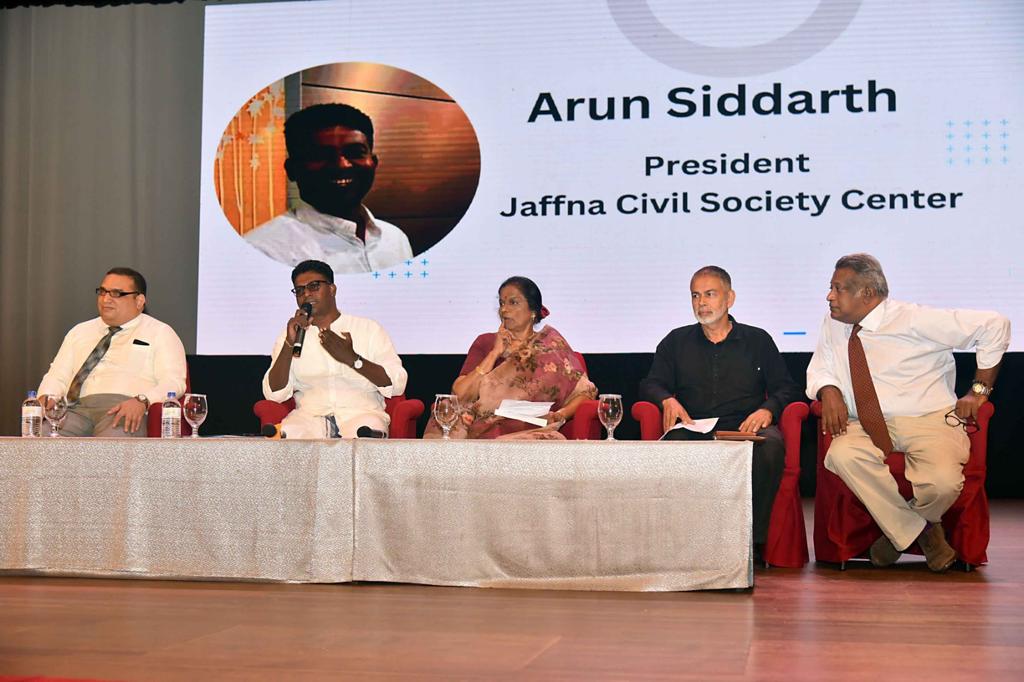
:quality(70)/cloudfront-eu-central-1.images.arcpublishing.com/thenational/I5SQVGSW7FFPHGW2E5BP7IEBJY.jpg)
:quality(70)/cloudfront-eu-central-1.images.arcpublishing.com/thenational/ZGNXDOKIHNDBRBIJGCSAUVTJQQ.JPG)
:quality(70)/cloudfront-eu-central-1.images.arcpublishing.com/thenational/2VOAN565UNEXI7IOT5R7XW576Y.jpg)
:quality(70)/cloudfront-eu-central-1.images.arcpublishing.com/thenational/TSOASRPMS3RHCQZSMJMR5VNALM.jpg)
:quality(70)/cloudfront-eu-central-1.images.arcpublishing.com/thenational/YD5EEBK3BVEQ7O3KDGNLXARDOQ.JPG)
:quality(70)/cloudfront-eu-central-1.images.arcpublishing.com/thenational/YIEARYPBCFUJAYZBTJGD62ERTY.jpg)
:quality(70)/cloudfront-eu-central-1.images.arcpublishing.com/thenational/QTR3IPWFRGT2AXXQ5K7IRXEV3E.jpg)
:quality(70)/cloudfront-eu-central-1.images.arcpublishing.com/thenational/LPPFKOKUPLOQRDTH3VK6AUV6TU.jpg)
:quality(70)/cloudfront-eu-central-1.images.arcpublishing.com/thenational/JQUKIYZYDDRTA5RQBFYQRLPPV4.jpg)
:quality(70)/cloudfront-eu-central-1.images.arcpublishing.com/thenational/V6ZPAPHDOXGDDQKE4MJLI6EQSY.jpg)
:quality(70)/cloudfront-eu-central-1.images.arcpublishing.com/thenational/U3OYTOF6HZFJJKIMW2IQIT5OKU.JPG)
:quality(70)/cloudfront-eu-central-1.images.arcpublishing.com/thenational/3RNIHCHXZBHRDL2YK5ZBYYUFUA.JPG)
:quality(70)/cloudfront-eu-central-1.images.arcpublishing.com/thenational/4HBVLMYAORCHJGO6RKOIQHPNFU.JPG)
:quality(70)/cloudfront-eu-central-1.images.arcpublishing.com/thenational/5YZXXXGORFBUDKJTB5Z6S5DUXE.JPG)
:quality(70)/cloudfront-eu-central-1.images.arcpublishing.com/thenational/GE7LAWXAMZDJJGANI2KJNVRVXI.JPG)
:quality(70)/cloudfront-eu-central-1.images.arcpublishing.com/thenational/WPWAURZD3NBFNP73CIJ36R3UKU.JPG)
:quality(70)/cloudfront-eu-central-1.images.arcpublishing.com/thenational/4IDLHU56INBCNM5TGP37TZAMV4.JPG)
:quality(70)/cloudfront-eu-central-1.images.arcpublishing.com/thenational/3Y6NILAMKNG4ZHDGTOCMFTCLFU.JPG)