Debt restructuring:President to intervene to finalise Chinese deal?

January 28th, 2023

Courtesy The Morning

  • Debt restructuring and IMF EFF delayed due to Chinese stance
  • Govt. informed by IMF that Chinese proposal not adequate
  • China asks Govt. to continue negotiations with Exim Bank

President Ranil Wickremesinghe is expected to open a line of communication with Chinese Government leaders in order to finalise the ongoing debt restructuring negotiations with Sri Lanka’s key bilateral creditors including China, The Sunday Morning learns.

The delay in finalising Sri Lanka’s debt restructuring programme, especially with the key bilateral creditors – Japan, India, and China – has also resulted in the delay in moving ahead with the proposed Extended Fund Facility (EFF) with the International Monetary Fund (IMF).

However, India was the first among Sri Lanka’s creditors to officially communicate to the IMF its support for Sri Lanka’s debt restructuring and financing programme.

Japan last week also expressed support for Sri Lanka’s debt restructuring programme through the Paris Club, leaving only China to make an official statement on the matter.

The Export-Import (Exim) Bank of China recently sent a letter to the Finance Ministry stating that it supported Sri Lanka’s EFF with the IMF and that China could offer a two-year debt moratorium.

A highly-placed Government source told The Sunday Morning that the IMF had however informed the Sri Lankan Government that the Chinese proposal was not adequate to proceed with the fund’s planned programme.

The IMF has been very clear on its expectations on the debt restructuring programme and it has said that in relation to bilateral creditors, it should be a uniform programme for all such creditors. India and Japan have understood and agreed. But China has not responded as expected,” the source noted.

China has so far not supported the debt restructuring programme,” the source added.

When asked if President Wickremesinghe would reach out to Chinese Government leaders to reach a consensus on the debt restructuring issues, the Government source explained that the Chinese Government was continuing to direct the Sri Lankan Government to negotiate with the Exim Bank of China on the issue of debt restructuring.

The President will therefore intervene this week to open a line of communication with Chinese Government leaders in order to reach an agreement on debt restructuring,” the source observed.

Everything is hanging in the balance until China comes around,” the source noted.

It is also learnt that Paris Club is expected to release a statement this week extending support to Sri Lanka’s debt restructuring programme.

The Paris Club, it is learnt, has proposed a 10-year debt moratorium and 15-year debt restructuring for Sri Lanka, which will provide the country adequate time to get its financial issues in order.

According to the source, several countries outside the Paris Club like Saudi Arabia and Kuwait have also agreed to support Sri Lanka’s debt restructuring programme.

It is in such a backdrop that Central Bank of Sri Lanka (CBSL) Governor Dr. Nandalal Weerasinghe had told a foreign media outlet that he was hopeful of completing debt restructuring negotiations in the next six months.

Breathe in! Traveller films heart-stopping video of her ascent up ‘crazy narrow’ spiral steps on the outside of a spectacular tower in Sri Lanka, with barely enough room for two to pass

January 28th, 2023

Courtesy Daily Mail

  • The staircase at Ambuluwawa Tower is shielded only by a waist-high handrail
  • Footage by blogger Janet Newenham shows the climb isn’t for the faint-hearted
  • She said: ‘The busier the tower, the more claustrophobic one can feel’

The views from the top of Ambuluwawa Tower in Sri Lanka are heavenly, but some may find the climb up there pure hell, as a traveller’s footage of her ascent shows.

Ambuluwawa Tower looks innocent enough from a distance – but get up close and visitors will see that wrapped around the outside is an extremely narrow spiral staircase that winds its way to the top, with a stone handrail that’s barely waist high. To enjoy the spectacular views from the 157ft (48-metre) summit, visitors must brave these stairs, which towards the top are barely wide enough for two people.

Janet Newenham, who runs a tour company called ‘Janets Journeys‘, filmed herself conquering the ‘crazy narrow’ staircase, with her nerve-shredding clip showing that the climb is definitely not an experience anyone with a fear of heights or who suffers from claustrophobia would enjoy.

Janet, 36, told MailOnline Travel: ‘I’ve actually climbed this tower five times on various trips, and it’s been different each time. The busier the tower, the more claustrophobic one can feel. It can get a bit scary, especially if you’re scared of heights.’

Any moments of panic?

‘Not for me,’ she said, ‘but many of my friends refused to go up and some definitely had their moments as we got higher and higher. The wall isn’t very high, so it can feel very daunting the higher you get.’

The ordeal, however, is worth it.

Irish travel blogger Janet continued: ‘The view is absolutely spectacular, and it gets better the higher you get. You get 360-degree views of the surrounding countryside. You can see down to nearby towns and villages, rivers and rolling hills.’

Janet made her video during a 20-day tour of Sri Lanka with her friend Veronica and described climbing the tower as ‘one of the highlights’, adding that ‘driving a Tuk Tuk up to the base point is an adventure in itself’.

Cone-shaped Ambuluwawa Tower houses a pagoda of a Buddhist temple, reveals Visit Sri Lanka, and is located on the summit of Ambuluwawa mountain, 3,567ft (1,087m) above sea level.

The nearest major city is Kandy, which lies around an hour’s drive to the north.

For more on Janet’s tours visit janetsjourneys.com. For more videos from Janet visit www.youtube.com/@JanetNewenham.

President vows to take country’s economy to positive growth

January 28th, 2023

Courtesy Adaderana

President Ranil Wickremesinghe warns that the country will fall into a crisis again similar to the situation in May and June 2022, if the economic and agricultural program implemented by the government and the debt restructuring program being carried out with the countries as per the IMF program are disrupted in any way.

He made this remark addressing an event at Sri Maha Bodhiya in Anuradhapura this evening (Jan 28), during which he presented ‘Akta Pathra’ (credentials) to the new Atamasthanadhipathi, Most Ven. Dr. Pallegama Hemarathana Nayaka Thero.

The Head of State also spoke of the tax concessions granted in 2020, which reduced the 1.6 million income tax, VAT and national development tax files that existed in 2019 to around 400,000 by December 2021.

He attributed the primary cause of the country’s economic crisis to the decrease in government revenue due to the said tax concessions.

President Wickremesinghe, who mentioned that the growth rate of the economy is expected to contract by -3.5% or -4% this year from -11% in 2022, pledged to take the country’s economy to positive growth. We are creating a strong country that does not bow down to anyone and is debt-free, as in the Anuradhapura period.”

What is the position of the SLPP with regard to 13A

January 27th, 2023

Shenali D Waduge

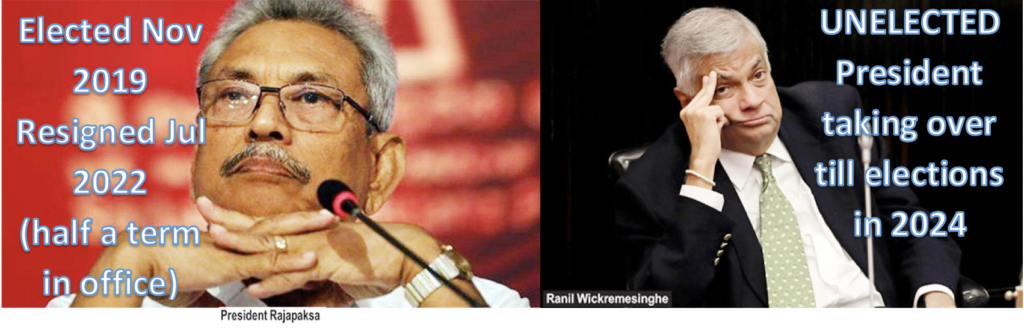
The 13A was implemented in November 1987 after the signing of the Indo-Lanka Accord in July 1987. Both were forcibly pushed down Sri Lanka’s throat by India & constitutes an act of aggression. It is the dangers of its implementation that compelled every President not to use powers under Article 33(d) or implement Police Powers. The current President is only in office for the remainder of the term of the 2019 elected President who resigned. The current President cannot implement 13A as he does not have the mandate to do so. He may promise to implement 13A by contesting election for President in 2024. Politicians are responsible for a lot of damage to this country, from dividing the people, abusing powers delegated to them by the people & now attempting to divide the country as deals to remain in power. Why is the SLPP not pointing this out to the sitting President?

Provincial Council Elections

  • 1988 Elections held in all of the Provinces with NE being merged in 1987.
  • 1993 Southern Province
  • 1994 Southern Province
  • 1999 Elections held in all provinces except NE
  • 2004 Elections held in all provinces except NE
  • 2008 Elections held in North Central & Sabaragamuwa & East for the first time after 1988
  • 2009 Elections held in Western, Central, North Western, Uva, Southern
  • 2012 Elections held in Eastern, North Central, Sabaragamuwa
  • 2013 Elections held in Central, North Western & North for the first time after 1988
  • 2014 Elections held in Western, Southern & Uva

No Provincial elections were held under the Yahapalana Govt from 2015-2020. But the alliance of UNP, pro-UNP SLPF, TNA, JVP made changes to the PC election law & indefinitely postponed elections (Article 154E)

It has become an ugly practice to abuse the provision allowing minor technical changes to Bills at Committee Stage to introduce new insertions & pass. This is one key area that politicians & political parties have digressed from ethics of governance & democracy. This was how PC & Local Govt election laws were changed in 2017 by inserting 31 pages of new amendments at Committee Stage to a Bill that was only 1 ½ pages. This changed the PC election system days prior to automatic dissolution of the first 3 PCs. Political Parties voting demanded electing by PR system to increase from 40% to 50% & it was immediately granted prior to vote.

When the Supreme Court had given a ruling that extension of terms of PCs or postponement of elections require a referendum plus 2/3 majority in Parliament – how could the then govt change PC election law?

All political parties are today hated by the People. The election process needs to be changed. All the corrupt in Parliament are unlikely to give up all that they enjoy pretending to fight each other for the sake of fooling the people.

The SLPP is in power given a 2/3 majority by the People. How many of the SLPP MPs have even read their own manifesto to understand what they have promised to uphold once elected & sent to Parliament.

Do people elect them to go striking deals with foreign countries, foreign companies or local private sector? This is exactly what is happening & it is as a result of these deals that even the Public Sector have become corrupt. Then we have a bunch of people calling themselves civil society” majority of whom are paid by foreign governments or foreign think tanks.

Can we trust an O/L passed” elected MP or an educated” civil society working for foreign agendas?

Sri Lanka is a sovereign state.

India can influence – but we presume we elect people with spine able to tell India that we are a sovereign state. If we lack leaders with spine – it is our own fault.

The TNA is a communal party created by LTTE.

It hardly has even the Tamil people’s mandate.

Since holding control of Northern PC since 2013, TNA’s popularity has only diminished.

The Tamil people do not want to separate Sri Lanka – they would rather have jobs, food, education for their children. They cannot eat a separate Sri Lanka!

Majority of the political parties in Sri Lanka have turned communal primarily due to the voting system – to woo voters, they promise everything under the sun but not with intent to give. Naturally this leads to not only animosity but creates unnecessary rifts between people. The politicians happily watch people fight each other for no reason & oft times it is the politicians & their cronies that create the conflicts.

We are a nation in default. The private sector & the top companies have shown their hypocrisies by maintaining silence knowing their $53b could ease the debt burden & not commit Sri Lanka to the $2.9b IMF aid which is coming with a plethora of conditions that are only burdening the people & taxing them beyond measure.

In such a scenario – why is the SLPP & other political parties not objecting to 13A implementation for it would mean creating a new police force for every Province, with 9 new DIGs and additional employment & salaries while IMF is demanding Sri Lanka cut its military!

Shenali D Waduge

The 13th Amendment Land & Police – averting chaos

January 27th, 2023

Shenali D Waduge

13th Amendment was signed on 14 Nov 1987. Sri Lanka had several choices over the years – it could have used 2/3 majority in Parliament to annul it altogether or it could have brought amendments that would have negated the clauses in the 13A. Successive governments did neither & simply passed the pillow. What needs to be clearly understood is that State Land as a RIGHT is not vested in the Provincial Councils but the 13A allows the President to vest State Land to the Provinces. There are reasons why Police & Land powers were not devolved & it is time people especially politicians & political parties, understood why.

STATE LAND

  • Appendix II – 13A was forced upon Sri Lanka by India immediately after forcing Sri Lanka to sign the Indo-Lanka Accord in July 1987.
  • 13A is a virtual cut & paste of the Indian quasi-federal set up.
  • Appendix II of 13A states that State Land has be vested in the Republic & may be disposed as per Article 33(d) There is mandatory requirement to vest land in provinces. Exclusive power of land has not been vested in the Provincial Councils (Article 33 (d)
  • Article 33(d) states that the President has powers to execute grants & dispositions of lands & immovable property vested in the Republic. (This is the dangerous aspect where vesting land to provinces is at the discretion of the President)
  • Therefore, it is the decision of the President on granting State land to the provinces not an entitlement given under 13A to the provinces.
  • Land & Land Settlement though in the Provincial List – its disposition is with the President. State land remains with the Republic & under the Presidents control. The Centre controls State land.
  • The tragic scenario is that judgements of the judiciary is also subject to controversy – a bench giving a judgement today can be overturned by another bench on another day. These areas need to be addressed in a new constitution. Thus the 2013 SC Judgement delivered by Justice Sripavan concluded that State land shall continue to vest in the Republic”. The Courts must first identify State land” is with the Republic & ensure no conflicts arise in judgements.
  • Appendix II (1.2) Provincial Council can only utilize State land” if it is made available by the President to the Provincial Councils. Is this what the current President with a deaf ruling Govt attempting to do?
  • The powers that the Provincial Councils have is to only administer, control & utilize State Land” as per laws by Parliament & by statutes made by the Provincial Councils only after State land is vested to them.
  • Provincial Council statutes are limited to administering, controlling & utilizing State land which the Govt vests to the Provincial Council. The issue at hand is that while the Constitution does not provide the Provincial Councils direct access over State Land, it allows the President to vest State Land to the Provinces after which the Provincial Council is free to administer it. The danger at hand is what an unelected President is proposing to do! 

POLICE POWERS – Appendix 1 / Police & Public Order 

  • Appendix 1 – 9th Schedule says IGP is head of Police.
  • Police is divided as National & Provincial Police.
  • 9 Provinces will have 9 Provincial Police plus divisions of National Police & IMF says to reduce the armed forces! 
  • The 9 Provinces will have 9 Deputy IGPs (DIGs).
  • The 9 DIGs of the Provincial Police are selected from the National Service & appointed by the IGP ONLY after concurrence” of each of the 9 Chief Ministers. This is where the politicization of police becomes an issue.
  • The 9 Provincial DIGs report to the 9 Chief Ministers of the 9 Provinces
  • The 13A does not provide how the Chief Ministers are to control the 9 DIGs. This is likely to result in further chaos & confusion at operational level if a DIG refuses orders.
  • 3 member Provincial Police Commission – DIG of Province (indirect selection of the Chief Minister), person nominated by Central Public Service Commission & nominee of Chief Minister. This means the Chief Minister has a bigger say in the selection of the provincial police
  • A Chief Minister is elected by a Political Party. DIGs reporting to the Chief Minister means the Police are under control of a political party. A police force cannot come under 9 different political parties! For this very reason Police Powers should not be vested to the Provinces.
  • Imagine at a time of an election when the police are under a political party.
  • Recruitment to Provincial Police – by Provincial Police Commission.
  • Imagine the confusion & the chaos within the police itself with 9 chief ministers ordering police as & how they like with the IGP having little or no control of a police force & at the mercy of 9 Chief Ministers while the 9 DIGs have to take orders from the 9 Chief Ministers. This scenario will result in a plethora of grievances that require time to solve impacting public order & destabilizing the country further.
  • National Police will handle national security aspects only.
  • Executive powers of the State is vested only in the country’s President – thus, the 9 Chief Ministers CANNOT be vested executive powers on par with the President or above the President.
  • Sri Lanka has a history of unexpected violence – 1970s-1980s JVP, 1980s to 2009 LTTE, 2019 Easter Sunday & thereafter the violence that ensued after May 2022. All of these incidents have covert/overt ties to external players given the geopolitical importance of Sri Lanka.
  • Foreign intel repeatedly warn of more security threats. In national security interest, the national police cannot come under political parties.
  • Sri Lanka is an island & only the State must be responsible for Public Law & Order & the protection of its borders not political parties controlling police force.

Though eventually the final say over Police even at Provincial level vests with the IGP & President, the confusion & chaos likely to occur in the operation of this bizarre set up warrants not to venture into it.

STATUS OF LAND & POLICE POWERS

  • Land is a reserved subject & cannot be devolved by Supreme Court.
  • Police powers should not be devolved
  • There have been 3 instances that 13A could have been annulled with 2/3 majority – CBK & Mahinda Rajapakse both failed to do so despite requests.

ISSUES

  • 36 of the 37 subjects are already devolved to the Provincial Councils. What is prudent is to ascertain what the PCs have done to the People & the Provinces since being set up against the expense incurred for them. It is a costly affair to maintain 9 PCs.
  • The Divisional Secretary is a Govt official responsible for Central Govt functions but he has been placed under the Ministry of Home Affairs & he is supervised by the District Secretaries. District Secretaries are not directly linked to the PCs. The Divisional Secretary has to not only take care of Central Govt functions but provincial subjects & functions delegated by the Governor too. This means the Divisional Secretary is serving both the Govt & the PC. This conflict of interest needs to be addressed & a proper structure set up.
  • Exercising of devolved powers varies from province to province. The districts have a better arrangement & are in unison. The haphazard manner that PCs function against a structured district level function showcases the futility of continuing with PCs.
  • The PCs cannot attribute their poor performance to the lack of Land & Police powers. PCs had administrative control over 36 subjects since implementation of 13A.
  • The primary reason for PCs to fail is that the system was a cut & paste of India’s quasi-federal system. This is another example of a failed political solution & joins a string of other political solutions that have failed – CFA, PTOMs, ISGA, Indo-Lanka Accord.

With 13A, Sri Lanka is constitutionally unitary, but with a quasi-federal set up. The aim of the separatist lobbies is pretending to demand more federal” but insert confederal provisions so as to eventually secede in a scenario similar to US confederation where lack of cooperation was argument used to separate. This is the gameplan of parties like ITAK. If only we had a Parliament that could read & understand instead of making foolish promises that are constitutionally impossible & likely to create chaos & destabilize Sri Lanka further.

Shenali D Waduge

මේ රටට කිසිම දිනක නොලැබුණු නිදහසක් සැමරීමට ඇස්තමේන්තුගත මුදල  රු. කෝටි 57 යි?

January 27th, 2023

ආචාර්‍ය සුදත් ගුණසේකර  මහනුවර

ඩී. ඇස්. සේනානායක  පිලිරුවට පැළැඳවීමට  නියමිත මල් මාලයට පමණක් රු 97,000

මේ වසරේ නිදහස් සමරුවට නියමිත මුල් ඇස්තමේන්තු මුදල රු කෝටි 57ක් වූ බවද ජනාධිපතිවරයාගේ මැදිහත් විමෙන් එය කෝටි 20 දක්වා අඩුකළ බවද, ඩී. ඇස්. සේනානායක  පිලිරුවට පැළැඳවීමට  නියමිත මල් මාලයට පමණක් රු 97,000 ඇස්තමේන්තුකොට තිඹුණු බවද 27 වන දින උදෑසන දෙරණ රූපවාහිනී ප්‍රවුර්ති වලින් කියවින

රාජ්‍ය භාන්ඩාගාරය පතුලටම හිඳී තිබියදී

රාජ්‍ය භාන්ඩාගාරය පතුලටම හිඳී ඇති මෙවැනි අවස්ථාවක ජාතික ධනය රු.කෝටි 20ක් නාස්තිකොට නූපන් ළමයෙකුවෙනුවෙන් පැවැත්වෙන උපන්දින සාදයක් වැනි  කිසිදිනක අපට නොළැබුණ  නිදහසක් සැමරීම සඳහා  රු කෝටි 20 ක් වැය කිරීම  රටත් ජාතියත් කබලෙනුත් ලිපටම තල්ලුකිරීමකි.එසේම සහගහන ජාතික අපරාධයකි.

අද රටේ 60 ලක්ශ ගානක් හාමතේය. රෝහල්වල තබා පුද්ගලික ඔසු සැල් වලද ලෙඩට බෙහෙත් නැත.දේශපාලකයින්ට සහ සුපිරි ධනවතුන්ට හැර වේලක් ඇර වේලක් කෑමට පවා  මුදල් නැත. මුදල් තිබුණද බඩු නැත.සෑම භාණ්ඩයකම මිල අහස උසට නැග ඇත.විදුලියද නැත.විදුළි මෝලට ගල් අඟුරු ගෙන්වාගන්නෙත් එදා වේල පිරිමසාගන්නා හැටියටය.අද ගල් අඟුරු නාවොත් හෙට විදුලිය නැත. ජාතියේ ප්‍රධාන ආහාරය වන බත නිපදවෙන රටේ ප්‍රධාන ආහාර භෝගයනවන වී වගාව, ඒ වගේම ප්‍රධාන අපනයන භෝග වන තේ,පොල් සහ රබර් සියල්ල කඩාවැටී ඇත. බීමට පවා ජලයද නැත. මේ සෑම දෙයකම ගාස්තුද දිනපතා ඉහල යයි

කොටින්ම කියනවානම් අද රජයේ සේවක්යින්ට මාසික පඩිය ගෙවා ගැනීමටද රජයට සල්ලි නැත. පෙන්ශන් කාරයාගෙ පෙන්ෂන් එකෙන්ද අදායම් බදු අයකරයි.මේ මාසයේ සිට රජයේ සේවකයින්ට මාසික වැටුප දීමටවත් රාජ්‍ය භාණ්ඩාගාරයේ සල්ලි නැතිළු. ඒ නිසා රජයේ සේවකයින්ට මේ මාසේ පඩියත්  පමාවෙනවාළු.බදු ගැසීමට දැන් ඉතිරිව ඇත්තේ බල්ලන්ට පමණි.  ඔන්න ඔකයි අද රටේ ආර්ථිකයේ තත්වය.

රටේ ආර්ථිකයේ තත්වය එසේ තිබියදී මේ සා විශාල ධනස්ඛන්ධයක් විනාශකර පුහු සාටෝප  උත්සව  පවත්වන්නේ මොන කෙන්ගෙඩියකටද?වඩා වැදගත් ඉහතින් දැක්වු මිනිසුන්ගේ ජීවත්වීමේ මූළික ප්‍රශ්න විසඳීමද එසේත් නැත්නම් වරප්‍රසාදලත් කීප දෙනකුගේ විනෝදය සහ  පුහු ආටෝපය ප්‍රදර්ශනය සඳහා  පොදු මහජනතාවට කිසිදු ප්‍රයෝජනයක් නැති උත්සව පැවැත්වීමද කියාවත් තෙරුම්ගත නොහැකි පාර්ලිමේන්තුවක් රටක් පාලනය කරන්නේ කෙසේදැයි මටනම් නොතෙරේ.

අනිත් අතින් ඩොලර් බිලියන 60-70ක් ලෝකෙට ණය. කලින් ලබාගත්  නය ගෙවා ගැනීමට නොහැකිව මහපොලව අතුලු රටේ සම්පත් චීනෙට, ඉන්දියාවට විකුනයි. කොයි මොහොතේ චිනෙ හෝ ඉන්දියාව දීපු ණය ආපහු නොදෙන නිසා අපේ රටට එරෙහිව ණඩු දමා ඇස්කීසි ගහයිද කියන්ටත් අමාරුයි. කොටින්ම කියනවානම් ජාතියක් රටක් වෂයෙන් අපි අද එදා වේලවත් කන්ට නැති රටක් බවට පත්ව ඇත.

මෙන්න මෙවැනි තත්වයක රට තිබෙද්දි තමා රුපියල් කෝටි 20කට අදික  රාජ්‍යමුදල් කන්දරාවක් නාස්තිකොට ලබාගත් කිසිදු නිදහසක් නැති නිදහස් දින උත්සව පවත්වන්නේ.

ඊටත් අමතරව  පෙබ 4 වන දින නිදහස් දිනය වශයෙන් සැලකිය යුතුයි කියන එසේම ජාතික ධනය කෝටි ගණනින් නාස්තිකරමින් පෙබ 4 ජාතියේ නිදහස් දිනය සමරණ සියලුම දේශපාලකයින්ගෙන් පහත සඳහන් ප්‍රස්න 12 ද අපි අසමු

1.1815 දී ඉන්ග්‍රීසින් විසින් උඩරට ගිවිසුමෙන් භාරගත්  මාලදිවදියින අතුලු සින්හලේ රාජධානියට අයත් සියලුම දූපත්වල මහපොලවේ  සහ මුහුඳු සීමාවන් වල අයිතිය 1948 දී අපට ආපසු ලැබුණාද?

2. 1815 මාර්තු 2 උඩරට ගිවිසුමෙන් භාරදුන් රටේ නම වූ සින්හලේ කියන මේ රටේ නමවත් 1948 දී ලබාගත්තාද?

3.මේ රටේ හා ජාතියේ හදවත වූ කන්ද උඩරටින්, සුද්දන් විසින් තේ වගාව සඳහා බලහත්කාරයෙන් අල්ලාගත් ලක්ෂ 13  ක් පමණවූ මහපොලවේ නිරවුල් අයිතිය සහ භුක්තිය මුල් අයිත්කරුවන්ට ලබා දුන්නාද.

4.වසර 2500 ක් පුරා සින්හලයින් සතුව තිබුණු එම ඉඩම්වල සුද්දන්ගේ තේ වතුවල වහල් මෙහෙයට දකුණු ඉන්දියාවෙන් ගෙනවිත් පදින්ච්කළ ලක්ශ දොලහක් පමණවූ දෙමළ කම්කරු හමුදාව ආපසු ඉන්දියාවට හෝ එන්ගලන්තට රැගෙනගොස් සින්හල අපගේ ඒ මව්බිමේ නිරවුල්  භුක්තිය අපට ආපසු දුන්නාද  

5. වසර 2500 ක් පුරා පැවති එසේම 1815 දී ද පැවැති මේ රටේ රාජ්‍ය භාෂාව වූ සින්හල භෂාව සහ රාජ්‍ය ආගම වූ බුද්ධාගම්, රාජ්‍ය භාෂාව සහ රාජ්‍ය ආගම වෂයෙන් ප්‍රකාෂ කලාද

6 වසර 2500 ක් පුරා මේ රටේ පැවති සින්හල නීතියෙන් රට පාලනය කිරීමේ පරම අයිතිය ලබාගත්තාද? යටත් පිරිසෙයින් මේ රට තුලදීම අවසාන අභියාචන බලයක් හෝ ඇති අධිකරණ ක්‍රමයක්වත් අපට ලැබුනාද

7. 1815 සිට ඔවුන් පාලනය කළ අපගේ මව්බිම නිදහස්, නිවහල් ස්වාධීන රටක් වශයෙන් අපට අවශ්‍ය අන්දමට පාලනය කරගැනීමේ පූර්ණ අයිතිය අපට දුන්නාද?

8 එන්ගලන්තේ නීතිඥ්යෙක් විසින් ඒ රටේ සන්ස්කෘතියට අනුව නිර්මාණය කරනලද ආණ්ඩුක්‍රම ව්‍යවස්ථාවක් වෙනුවට අපගේම රාෂ්ට්‍ර පාලන හා සන්ස්කෘතික පදනම අනුව සකස්කළ, එසේඔම සදාකලිකාව් අප පාලනාය් කිරීමට හැකිවන පරිදි තෝන් ළණුව ඔවුන් අතේම තබාගෙන ආණ්ඩු ක්‍රම ව්‍යවස්ථාවක් වෙණුවට අපගේම ආණ්ඩුක්‍රම ව්‍යවස්ථාවක් නිර්මාණය කරගැනිමේ අයිතිය හා නිදහසින් පසු මේ රට පාලනය කලයුතු ක්‍රමය අතුලු සියලු කරුනු ඇතුලත් අපේම ආන්ඩුක්‍රම ව්‍යවස්ථාවක් සකස්කරගැනීමේ අයිතිය ලබාගත්තාද

9.එවැනි අපේම ආන්ඩුක්‍රම ව්‍යවස්ථාවක් නිදහස වෙනුවෙන් සටන්කළායයි කියන  දෙශපාලකයින් සකස්කොට බ්‍රිතාන්‍ය රජයට ඉදිරිපත් කලාද.

10 වසර 2500 ක් පුරා  ලෝකයේ ශ්‍රේෂ්ඨ රාජ්‍ය පාලනයක් තිබුණු මේ රටෙ අපගේම පාලන ක්‍රමයක් ඇතිකර ගැනීමේ නිදහස ලබාගත්තාද.

11 පේ රටේ අභ්‍යැන්තර සහ විදේශ කටයුතු අපට අභිමත පිලිවෙලකට පවත්වාගෙන යාමේ නිදහස ලබා ගත්තාද?.

12 ලෝකයේ ඔනෑම රටක් සමඟ රාජ්‍ය තාන්ත්‍රික මට්ටමින් ස්වාධීනව කටයුතු කළහැකි පරිදි යටත්විජිත වාදීන්ගේම කොම්පැණියක් වූ ඊණියා පොදුරාජ්‍ය මණ්ඩල සමාගමේ ග්‍රහණයෙන් මේ රට මුදා ගත්තාද

සිහිමොලේ ඇති ඕනෑම පුරවැසියෙකුට මෙයට දිය හැකි එකම පිලිතුර නම් කිසිසේත්ම නැත යන්නය.

පූර්ණ නිදහස් රාජ්‍යක් වශයෙන් ලබාගතයුතු මෙබඳු කිසිම අයිතියක් 1948 ෆෙබ් 4දා  නොලැබුණේනම් ඇත්තවශයෙන්ම පෙබ 4 නිදහස් දිනය වශයෙන් සලකන ඔබලාට ලැබුණා යයි මහත් උජාරුවෙන් කියන ඒ නිදහස ලැබුණේ කුමණ රටකටද?  ඒ කාටද? අද වන තුරුත් අපට ලැබී නැති ඒ නිදහස තියෙන්නේ කොහේද යන ප්‍රශ්නවලට මෙවැනි නිරර්ථක බොරු උත්සව පවත්වන අය ජාතියට පිළිතුරු දිය යුතුය.1815 දී අප ජාතියට අහිමිවූ මේ කිසිවක් 1948 පෙබ 4 වනදා නොලැබුණේනම් මේ රටට නිදහස ලැබුණු දිනය වශයෙන් රජය තවමත් එදින සමරන්නේ කුමන පදනමක් මතදැයි මුළු රටම ඔබගෙන් අසයි.

1948 ලැබුණායයි කියන නිදහසේ හැටි මෙන්න.

January 27th, 2023

ආචාර්‍ය සුදත් ගුණසේකර.මහනුවර

1948.පෙබ 4 දා.අපට ලැබුණේ අධිරාජ්‍යවාදි යදම්වළින් බැඳි තවමත් බ්‍රිතාන්‍ය මහරජ අපගේද මහරජ වශයෙන් පිළිගන්නා ඔවුන් විසින්ම සකස්කරණලද ආණ්ඩු ක්‍රමව්‍යවස්තාවක් යටතේ පාලනයවන බ්‍රතාන්‍ය පොදුරාජ්‍ය මණ්ඩලය තුල ඩොමිනියන් තත්වයක් හා මේ රටේ මිනිසුන්ගේ චන්දයෙන් පත්කරගත් කලුසුද්දන්ගෙන් සැදුම්ලත් පාර්ලිමේන්ත්ව සහ උත්තර මන්ත්‍රී මණ්ඩලයක් සහිත සීමිත නිදහසක් පමණි. ඒ බව   1948 පෙබරවාරි 10 වනදා පැවති පළමු නිදහසේ නිළ උත්සවයේ ප්‍රධාන අමුත්තා වූ ග්ලොසෙටර්හි ආදිපාදවරයා විසින්ම  එදින  ඔහුගේ කතාව ‘ message From His Majesties king of Ceylon”  යනුවෙන් ප්‍රකාශකිරීමෙන්ම තවදුරටත් සනාත වෙයි.

එසේම සෝල්බරී ව්‍යවස්ථාවේ 45 වන වගන්තිය අනුව1948න් පසුවද මේ රටේ විධායක බලය රැඳී තිබුණේ බ්‍රතාන්න්‍ය මහරජ අතය. ඔහු වෙනුවට එම බලය මෙහි ක්‍රියාත්මක කළේ ඔහු විසින්ම පත්කරණු ලැබූ අග්‍රආණ්ඩුකාරයෙකු විසිනි.

1948 ඉන්ග්‍රීසීන් විසින් ලන්කාවට ඊනියා නිදහස දීමේ පසු බිම

1948 පෙබරවාරි 4දාසිදුවුයේ1947දී ඉන්දියාව බ්‍රතාන්ය ග්‍රහනයෙන් ඉවත්වීමත් සමග කඩාවැටුණු ඉන්ග්‍රීසි බල අධිකාරීය ආරක්ෂාකර ගැනීමට ලන්කාව හෝ හොඳින් තබාගැනීම වාසිදායක බව සිතු බැවින් ඔවුන්ගේ ඔනෑ එපාකම් ඉටුකර ගතහැකි සුවච කීකරු ගෝලබාල පිරිසක් අතට මෙහි පාලන බලය දී තෝන් ලණුව තමන් අතේ ම තබාගෙන යාම සදහා අග්නිදිග ආසියාවේ සුදුසුම රට ලන්කාව බව බව ඔවුන් කල්පනාකල බැවිනි. ඒ ඉන්දියාව නැති උනත් අග්නිදිග ආසියාවේ තම අධිරාජ්‍යයේ අනාගත වැදගත් කටයුතු කරගැනීම සදහා ශ්‍රී ලන්කාව උපාය මාර්ගික වශයෙන් තබාගතයුතු බව ඔවුන් උපකල්පනය කළ බැවිනි.

ගෝලීය පිහිටීම අනුව වානිජමය සහ යුධමය වශයෙන් ඉන්දීය සාගරයේ හරි මැද පිහිටීම, මානසික වශයෙන් බුද්ධිශෝධනය කළ තමන්ට අවනත පාලක පැලැන්තියක් එහි සිටිම, ඔවුන් රටින් පිටවී ගියද ඔවුන්ගේ අවශ්‍යතා අනුව ක්‍රියාකරන පිරිසක් ඒ වනවිටත් ඔවුන් විසින් මෙහි නිර්මාණය කොට තිබීම නිසා. හමින් කලු වුවද සුද්දන්ටත් වඩා හොදින් තමන්ගේ කටයුතු ඔවුන් සිදු කරන බව දිවැසින් මෙන් දැක ඇත. අදටත් මේ රටේ ක්‍රියත්මකවෙන දේශපාලනය දෙස බලන ඕනෑම කෙනෙකුට ඒ බව මැනවින් පැහැදිළි වේ.  

සෝල්බරී ව්‍යවස්ථාව ජෙනින්ග්ස් සකස්කළේ ඊනියා නිදහසින් පසුව වුවද බ්‍රිතාන්‍ය අධිරාජ්‍යයේ අරමුණු ඉටුකර ගැනීමේ උපාය මාර්ගයක් වශයෙනි.ඒ බව මෙම ව්‍යවස්ථාවේ එක් එක් වගන්තියක් පාසා ගැබ්ව ඇත.

සෝල්බරී ව්‍යවස්ථාව ජෙනින්ස් විසින් නිර්මාණය කළේ ඉහත සඳහන් වැඩපිලිවෙල ක්‍රියාත්මක කරගැනීමේ තෝන්ලණුව වශයෙන් මිස අපගේ රට දියුණු කිර්‍රිමට සකස්කළ නිති ලේඛ්යණක් වශයෙන් නොවේ. අපේ මෝඩ දේශපාලකයින් සෝල්බරි විවස්ථාව ධාතු කරඬුවක් මෙන් පිළි ගත් බව පෙනේ.  එහි අන්තර්ගතය දෙස විමසිල්ලෙන් බලන ඔනෑම කෙනෙකුට, කපටි සුද්දන්ගේ එම යටි අරමුණ පැහැදිළිවම දැකගත හැක. ඔවුන්ගේම වෙස්ට්මින්ස්ටර් පාර්ලිමේන්තු ක්‍රමය, නිලතල ධූරාවළිය, අභියාචන කෙලවර ප්‍රිවිකෞන්සලේ (සාමිමණ්ඩලයේ) තබාගත් අධිකරණ යාන්ත්‍රණය, රාජ්ය පාලනක්‍රමය, භාෂාව, ආණ්ඩුකාරයා පත්කිරීමේ බලය, නීති අණපනත් සම්මත කිරීමේ විධි විධාන, අපගේ ආරක්ෂාවට වඩා අදිරාජ්‍යයේ අරක්ෂාව රැකෙන ක්‍රම සහ විධිවලින් එය පිරී ඇත.

  ඒ අතරම ඔවුන්ගේ බෙදා පාලනය කිරීමේ උපායක් වශයෙන් 1948 වන විට මේ රට තුල ජාතීන් කීපයක් සිටින බව ව්‍යවස්ථාවෙන්ම ප්‍රකාශකොට 29 වන වගන්තියෙන් ලන්කා ඉතිහාසයේ පළමු වතාවට කිසිම දවසක මෙහි නොසිටි සුලුජාතීන් නම් අමුතුම ජාතියක් ඇතිකොට ඇත. ඒ අනුව 1832 මේ රට බෙදා පාලනය කිරීම සදහා ඔවුන් රට බෙදු පලාත් පදනම් කරගෙන සින්හල දෙමල හා මුස්ලිම් ආදී වශයෙන් ජනකොටස් බෙදා රට අවුල්කිරීම සහ සින්හලයින්ද සතුරු කන්ඩායම්වලට බෙදීමට පක්ෂ දේශපාලන ක්‍රමයද හන්දුන්වා දෙමින් සෝල්බරී විවස්ථාව නම්වූ මලතොණ්ඩුව අපේ ගෙලේ එල්ලා එය මාරුවෙන් මාරුවට තමන් විසින්ම වසර 133 ක් තිස්සේ හදා වඩා මනස් ශෝධනය කල කලුසුද්දන් පිරිසක් ලවා දක්කා මේ රට විනාශකිරිමට අවශය සියළු විධිවිධාන යොදා ජාතියක පන්සකූලය දීමට පමණක් ඉතිරිකොටය, ඔවුන් ගියේ.

මීට අමතරවව මේ රට සදාකාලිකව අස්ථාවර කිරීම සදහා ඔවුන්ගේ ව්‍යාපාර සහ වතු අධිරාජ්‍යයේ වහල් මෙහෙයට දකුනු ඉන්දියාවෙන් මෙහි ගෙන ආ ලක්ෂ 12 කට වැඩි බ්‍රතාන්‍යය පුරවැසියන් ද මෙහි අතරමන්කොට යාමෙන් මේ රටේ අනාගත දේශපාලන, ආර්ථික, සාමාජික හා සන්ස්කෘතික වශයෙන් මහා ගිනිකන්දක් නිර්මාණයකොට යාමටද සුද්දා අමතක කළේ නැත. 1948 පසුවී 75 වසරක් ගතව ඇතත් රටක් වශයෙන් ජාතියක් වශයෙන් අප තවමත් හිර වී සිටින්නේ ඒ අධිරා ජ්‍යවාදී මාරාන්තික මළපුඩුවේම නොවේද.

එපමණක් නොව 1948 සුද්දන් මේ රට්න් පිටවී ගියත් ජාත්‍යන්තර මට්ටමින් රිජුව කෙරෙන විවිධ බලපෑම් වලට අමතරව ඊනියා ජාත්‍යන්තර සන්විධාන හරහාද ඔවුන් විසින් කරණුලබන තර්ජන ගර්ජන දෙස බැලීමෙන්ද අප තවමත් ඔවුන්ගේ යටත් විජිතයක්ය යන මානසිකත්වයෙන් ඔවුන් කටයුතු කරන බව ඉතා පහැදිලිය. මේ රටේ නිදහස් දිනය පැවැත්වෙන දවස පවා ඔවුන් අපට නියමකොටදී ගොස් ඇත. පෙබරවාරි 4 දින 1948 ව්‍යවස්ථාව ලියූ ජෙනින්ස්ගේ බිරිඳගේ උපන්දිනය යයිද කියවේ.

මේ රටට තවමත් කිසිදු නිදහසක් ලැබී නැතිබව මා ප්‍රකාශ කරණුයේ මේ නිසාය.මෙසේ පිට රැටියෙකුගේ බිරිඳකගේ උපන්දින සැමරීමට වසර 2500 කටත් වැඩි අභිමානවත් ඉතිහාශයක් ඇති කිතුවසින් පෙර 543 සිට රජුන් රැජිනියන් 193 දෙනෙකු විසින් පාලනය කරනලද ශ්‍රේෂ්ඨ ඉතිහාසයක් හා සම්ප්‍රදායක් ඇති මෙ රටේ ලෝකයේමකයේම ප්‍රථම කාන්තා අගමැතිවරීය  වෂයෙන් නිදහසින් වසර 24කට පසු අගමැතිවරු 6 දෙනෙකුටබැරිවූ නිදහස් ජනරජය බවට ප්‍රකාශකල 1972 මැයි 22 නිදහස් දිනය වෂයෙන් මේ රටේ කුහක දේශපාලක්යින් නොසලකන්නේ ඇයි?

අප ලබා ඇති නිදහසේ නියම තත්වය එසේ වුවද වසරක් පාසා  පෙබරවාරි 4 දා නිදහස සැමරීමට යයි කියා ජාතික ධනය කෝටිගනනින් මෙන්ම  රටේ  සන්වර්ධනයට ඵලදායක අන්දමින් යෙදියයුතු වටිනා මිනිස් සම්පත් ද නාස්ති කරමින් 75 වන වරටත් අපේ රටේ දේශපාලකයින් මේ පවත්වන්ට කඩි මුඩියේ සූදානම් වන්නේ කාට ලැබුණු නිදහසක් අරභයාදැයි මම අසමි.

මගේ අදහසේ හැටිය 48 නිදහස ලැබුනායයි කියන්ට අපට ඉතිරිව ඇත්තේ නමෝ නමෝ මාතා සින්දුව පමණි. එයද 2015 සිට දෙමලෙන්ද ගයයි.

1815 දී ජාතියට අහිමිවූ අපේ ජාතික කොඩියද 1948 දී නැවත් නොඉසවූ නිසා අපට ජාතියක් වශයෙන් කොඩියක්ද නැත. ඒ වෙනුවට දැනට ඇත්තේ 1953 දී පටිදෙකක් ගසා දේශපාලකයින් හදාගත් අපබ්බ්‍රන්ශ නිර්මාණයකි. මේ අතර යාන්තමින් වසර 24 කට පසු හෝ 1972 දී සිරිමා බන්ඩාරනායක මැතිනිය මේ රට ජනරජයක් බවට පත්කොට, බ්‍රතාන්‍ය ප්‍රිවිකවුසලයේ අභියාචනා ග්‍රහණයෙන් අධිකරණයද නිදහස්කොට එක්තරා අන්දමක ස්වාධීන බවක් ඇතිකලාය. එතුමිය එදා එසේ නොකළානම් අදටත් අපේ ශ්‍රේෂ්ඨාධිකරණයේ අභියාචනා සියල්ල පසිඳලණු ලබන්නේ එන්ගලන්තයේ ප්‍රිවි කවුන්සලයේමය.

ඊනියා නිදහස ලබුණායයි කියන 1948 න් පසු 

පළමු වරට1972 මැයි මස 22 දා පහත සඳහන් දෑ සිදුවිය,

1ශ්‍රි ලන්කාව  ස්වාධීන ජනරජයක් වශයෙන් ප්‍රකාශ කිරීම

2එතෙක් විධායකයේ ප්‍රධානියා වූ බ්‍රිතාන්‍ය රජ/රැජින   වෙනුවට අපේම  අග්‍රාණ්ඩුකාරයා  මේ රටේ මහජන චන්දයෙන් පත්වූ  රජයේ අගමැතිවරයා විසින් පත් කිරීම

3 ශ්‍රී ලන්කාපාර්ලිමේන්තුවේ සම්මත වන අනපනත් බ්‍රිතාන්‍ය රැජිනගේ නමින් සම්මත කිරීම අහෝසිකොට ශ්‍රී ලන්කා පාර්ලිමේන්තුව විසින් සම්මත කිරීම

4 රජයේ ප්‍රධානියා වන අග්‍රාමාත්‍යවරයා මේ රටේ අග්‍රා ණ්ඩුකාරයා විසින් පත්රණු ලැබීම

5 1948 සිට බ්‍රිතාන්‍ය රජයට තිබුණු ආරක්ෂක බැඳීම් අහෝකිරීම.

6 1948 න් පසු පළමු වරට මේ රටේ වසර 2500 ක් පුරා පැවති සම්ප්‍රදාය අනුව බුද්ධාගමට ප්‍රමුඛස්ථානය දීම සහ බුද්ධ සාශසනය සුරක්ෂිත කිරීම සහ පෝෂනය කිරීම රජයේ වගකීම වශයෙන්ම  ව්‍යවස්ථාගතකොට නීතිගත කිරීම

7 ජනතාව විසින් පත්කොට ගත් නියෝජිතයින් විසින් විෂේශ ව්‍යවස්ථා ශභාවකින් නව ජනරජ ව්‍යවස්ථාවක් සම්මතකොට ගැනීම.

ඒ අනුව ඇත්තවසයෙන්ම මේ රටට දේශපාලන නිදහස ලබාගත්තේත්  පූර්ණ  නිදහස ළැබුණේත් 1948 පෙබ් 4 නොව, 1972 මැයි මස 22 දායයි මම අවධාරණයෙන් ප්‍රකාශ කරමි.

එමනිසා මේ ර රටේ නිදහසේ මාතාව වසයෙන් උපහාර කළයුත්තේ බන්ඩාරනායක මැතිනියටයයි යයි මම සිතමි.

එහෙත් තවමත් බටහිර ගැති අපේ දේශපාලකයින්ගේ කුහක කමේ මහත කොපමණදැයි කිවහොත් අද දක්වාම රටේ සුදුසු තැනක ඇයගේ පිළිරුවක්වත් පිහිටුවා නැත. මා හිතන අන්දමට 1948 ලබා නොගත්, එසේම 48 දී නොලැඹුණු නිදහසක් සිහිකිරීම සදහා ගොඩනැගූ ඊනියා නිදහස් මන්දිරය දැන්වත්   ජනරජයක් බවට පත්වූ දිනය සිහිකිරීම සදහා ජනරජ මන්දිරය වශයෙන් නම්කල යුතුය. ඒ අනුව එම චතුරස්ශ්‍රය ජනරජ චතුරස්ශ්‍රය වශයෙන් නම්කල යුතුයයිද මම යෝජනා කරමි. මේ  රටේ නියම නිදහසේ මාතාවවූ  බන්ඩාරනායක මැතිනියගේ පිලිරුව සෑදිය යුත්තේද එහිමය. ඊට අමතරව  කටුනායක බන්ඩාරනයක ගුවන් තොටුපලේ ප්‍රධාන ඇතුල්වීම අබියසද මහනුවර නගරයේ මහමලුව වැනි ප්‍රසිද්ධ තැනකද රත්නපුර බලන්ගොඩ නගරයේ හෝ බලන්ගොඩ වලව්වට අතුල්වන තැන හෝ  පිහිටුවිය යුතුයයිද  මම යෝජනා කරමි. ඒ ශ්‍රේෂ්ඨ නායිකාව අප අතහරින් නික්මගොස් දැනට වසර 23කටම ආසන්නය.මේ රට කොල්ලක්කාපු එසේම දසදහස් ගණනින් මිනිසුන් මරාදාපු අධිරාජ්‍යවාදී සොල්දාදුවන්හ්ගේ මෙන්ම තුට්ටුදෙකේ දේශපාලඥ්යින්ගේද පිලිරූවලින් අඩුවක් නැති මේ රටේ මෙවැනි ශ්‍රේෂ්ඨ නායිකාවගේ පිළිරුවක් හෝ ඉදිකිරිමට අපොහොසත් වූ ශ්‍රී. ලන්කාකාරයින්ට දෑස් ඇරීම සඳහා හෝ ඇය වෙනුවෙන් ඊලඟ ජනරජ දිනයට් හෝ සුදුසු තැනක එක පිළිරුවක් හෝ ඉදිකර ඇයට ගරුකලයුතුයයි මම සිතමි.

නිදහසට පසුවදනක්

පුන්චි කාලයේ අපට කියා දී තිබුණේ ලන්කාවට නිදහස ලැබුණේ 1948 පෙබරවාරි 4 දා කියල. ඔහොම සුරන්ගනා කථා කියා අප රවටන්ට පුලුවන්කම ඒ කාලේ තිබුණා. නමුත් හය හතර තේරෙනකොට අපට තේරුනා 48 මේරටට හා ජනතාවට සැබෑ නිදහසක් නොලැබුණු බව. පාසැලේදීත් එහෙම එකක් 48 ලැබුනා කියා උගැන්ණුවා. ප්‍රජාචාර පොත්පත්වලත් තිබුණේත් එහෙමයි. වසරක් පාසා පත්තරවලත් මහත් උජාරුවට අතිරේක දැම්මා. වසරක් පාසා ඒ සදහා මහජන මුදල් කෝටිගණන් වැයකොට කලින්කළ බලයට ආපු දේශපාලකයින්ගේ පුහු උජාරුව පෙන්වීමට  ගෝල්පේස් එක පැත්තේ ත්‍රිවිධ හමුදා ආචාර, රථ පෙලපාලි. ගුවන් සන්දර්ශන, පාසැල් ලමුන් සියදහස් ගානක් කට්ට අව්වේ වේ ල වේලා පෙලපාලියේ ගෙන යමින් වසරක් පාසා අපේ රටේ දේශපාලකයින් කරන මේ නාඩගම ජාතික ධන විනාශයක් මෙන්ම හුදු සේතාම්බර පඨසලු සන්දර්ශනයක් බව තේරුනේ ලොකු මහත්වී රට තොට ගැන අවභෝධයක් ඇති උනාට පස්සෙ.

මම මේ ගැන පළමුවරට ලියන්ට පත්ටන්ගත්තේ 1997 දිවයිනේ නිදහස් දින අතිරේකයෙන්

එවකට දිවයින පුවත් පතේ ප්‍රධාන කතුවරයා වු මගේ මිත්‍ර උපාලී තෙන්නකෝන් මට ඇරයුමක් කලා ඒ වසරේ නිදහස් දින පුවත්පත් අතිරේකයට ලිපියක් ලියන්ට කියල. ඒ අනුව යැවූ ලිපියෙන් කරුණු දෙකක් මට කියන්ට ඔනෑකලා. පලමුකරුණ 1948 මේ රටට කිසිම නිදහසක් ලැබුනේ හෝ ලබාගත්තේ නැති බව.

මා පලමු වතාවට 1948 දී මේ රටට හෝ මහජන්තාවට කිසිදු නිදහසක් නොලැබුණු බව ප්‍රකාශකලේ එම ලිපියෙනි.  එදා සිට මේ දක්වා මට ලැබුණු හැම අවස්ථාවකදීම තවත් කරුණු ද එක් කොට මා මේ ගැන ලියා ඇත. විවිධ අවස්ථාවල රැස්වීම්වලදී කථාකොට ඇත. එහෙත් කිසිම රජයකට මා කියන පනිවිඩය තේරුම් ගැනීමට අද දක්වාම පුලුවන්වී නැත. අපේ රටේ ජාතිකත්වය හඳුනන, ඇත්ත තේරුම් ගන්ට හැකි එසේම ජනමතයට කන්දෙන දේශපාලකයින් නැතිබව එයින්ම පැහැදිළිවේ. 1948 වන විට ආසියාවේම ජපානයට පමණක් දෙවැනි වූ දියුනුම ආර්ථිකය තිබුණු මේ රට වර්තමානයේ ආර්ථික වශයෙන් ඇෆ්ගනිස්ථානයට පමණක් දෙවැනි වන තත්වයට වැටීම ගැන මේ අනුව අපි කිසිසේත්ම පුදුම විය යුතු නැත.

මෙවැනි අතිශයින්ම සෝචනීය තත්වයක් තිබියදී ලබන වසරේත් 75 වන වරටත් මේ ප්‍රෝඩාව සහ රජ විහිලු සන්ධර්ශනය පැවැත්වීමට යලිත් සුදානම් වීමෙන්ම දසක දෙකකුත් වසර තුනක්ම තිස්සේ මා කියන, ලියන මේ කථාව නායක දේශපාලන බීරි අලින්ගේ කන්වලට ඇසුණු බවක් නම් මට නොපෙනේ.

ලබන වසරේත් ඉනියා නිදහස් උත්සවය පැවැත්වීම්මට දැන් ලහි ලහියේ රජය කටයුතුකරන බව ඇසේ. මේ ලිපිය පලවන විට සමහරවිටත් ඒ සේතාම්බර පටසලු සන්ධර්ශනයට විශාල මුදලක් වැයකොට තිබිය හැක. එහෙත් මාගේ මේ තනි සටන කවදාහෝ දිනන බව මට ඉස්තිර වශයෙන්ම විස්වාශය. මන්ද මේ රට නිදහස් ජනරජයක් වූයේ 1972 මැයි මස 22 දා යන සත්‍ය කිසිවෙකුට කිසිදිනක ඉතිහාසයෙන් මැකිය නොහැකි බැවිනි.එබැවින් එය දිනන තුරු හෝ මා මැරෙනතුරු හෝ රට වෙනුවෙන්, ජාතිය වෙනුවෙන් සහ සාශනය වෙනුවෙන් මම මගේ මේ සටන දිගටම හුදකලාවම හෝ ඒකචාරි සින්කයකු මෙන් ගෙනයමි

මෙම ලිපිය අවසන් කිරීම සන්දහා අවසාන වශයෙන් මේ ඇස්නැති, කන් නැති, මොලයක් නැති එසේම රටට හා ජාතියට අබමල් රේණුවක ආදරයක් නැති දේශපාලකයින් සියලුදෙනාගෙන්ම පහත සදහන් ප්‍රශ්න කීපය මම අසමි.

1.විදේශ ආධිපත්‍යකින් කිසියම් රටකට නිදහස ලැබෙනවා කියන්නේ මොකක්ද.

1948 දී ලන්කාවට දුන්නායයි කියන කථාවෙන් පමණක් නිදහස්, නිවහල් නමුත් ක්‍රියාවෙන් අධිරාජ්‍ය වාදයේ යදම්වලින් දස අතට විළන්ගු දැමූ සෝල්බරී ව්‍යවස්ථාවෙන් අපට ලබා දුන්නායයි කියන  නිදහස කුමක් ද?

2.1948 දී ලැබුණායයි කියන නිදහස එසේම එදා සිට මෙදා දක්වා ජාතියේ අපමණ ධනස්කන්දයක් වැයකොට මහත් උජාරුවෙන් සමරණ ජාතික නිදහස තියෙන්නෙ කොහෙද, එය ලැබී ඇත්තේ කාටද.මාරුවෙන් මාරුවට දේශපාලනය කරන අයට පමණක් නොවේද

3.වසර 2500 කට වැඩි කාලයක් අපට උරුමව තිබී 1815 දී අපට අහිමිවූ 1815 දි සුද්දාට භාරදෙනකොට සින්හලේ රාජධානිය සතුව තිබුණු, මාර්තු 2 උඩරට ගිවිසුමෙන් සුද්දාට භාර දුන් මාලදිවයින් ඇතුලු සිහලේ රාජධානිය 1948 දී අපට ආපසු ලැබුණාද.

4.1815 පැවති රටේ නම වූ සින්හලේ කියන නමවත් (සුද්දා සින්හලයින්ගේ රට යන අරුතෙන් එය සිලොන් කී) ආපසු 1948 දී ලබාගත්තාද.

5.1815 මේ රටේ රාජ්‍ය භාෂාව වූ සින්හල භාෂාව අද වනතුරුත් මේ රටේ රාජ්‍ය භාෂාව, පාලන හා අධිකරන භාෂාව වෂයෙන් ස්ථාපිත වුනාද.

6.කිතු වසට පෙර 307 සිට මේ රටේ රාජ්‍ය ආගම වූ බුද්ධාගමට  නිසිතැන ලබුණාද

7.1815 සුද්දට භාරදුන් ලක් පොලවේ නිරවුල් හිස් භුක්තිය 48 දී ලබාගත්තද, අදවනතුරුත් නැති බව ඔබ දන්නවාද

8.1815 වනතුරු රටේ ජාතිය වශයෙන් හැදින්වූ සින්හල ජාතිය යන නමවත් 1948 දී ලබාගත්තද.

9.ඉතිහාසයේ වරින් වර පැමිණි සහ සුද්දන් ඔවුන්ගේ වතුවල සහ ව්‍යාපාරවල වැඩට ඉන්දියාවෙන් ගෙනා සුද්දන්ගේ වහල්ලු මේ රටෙන් සුද්ද්දන් යනවිට ආපසු ගෙනියන්ට කියා බලකොට සින්හලයාගේ ජන්ම භූමිය නිදහස් කරගත්තද.

10.සුද්දාගේ පාලනය සදාලිකවම තවදුරටත් මේ රටේ පවත්වාගෙන යාම සදහා අයිවෝ ජෙනින් විසින්, මේ රට බෙදා පාලනය කිරිම, දෙම ළ සහ මුසල්මානු සුළුජන කොටස් 29 වන වගන්තියෙන් බලවත්කොට සින්හල ජාතිය සහ සම්බුද්ධ සාශනය මේ රටින් තුරන් කිරීමේ මරඋගුල වයෙන් සකස්කල සෝල්බරී ව්‍යවස්ථාව අනුවම එන්ගලන්තයේ සුද්දන්ගේ නියෝජිතයින් වන කලු සුද්දන් විසින්ම තවදුරටත්  මේ රට පාලනය කරන බව ඔබ දන්නවාද.

11 ඒ මරඋගුලෙන් ගැලවී මේ රටේ පාලනයට පදනම වියයුතු රටට ගැලපෙන රටේ 2500 ශිෂ්ඨාචාරයේ පදනම මත ආණ්ඩුකරම විවස්ථාවක් හදාගත්තද. (ඉන්දියව තම විවස්ථාව හදන්ට පටන්ගත්තේ 1935. ඒක භාර කලේ ශ්‍රේෂ්ඨ භාරත පුත්‍රයෙක්වූ ඇම්බෙඩ්කාර්ට බව ඔබලා    දන්නවාද)

12.අපගේ දේශයට හා සන්ස්කෘතියට ආවේනික වු ශිෂ්ඨාරය මත පදනම්වූ නීති ක්‍රමයක හා පාලන ක්‍රමයක අවශ්‍යතාව ගැන ඔබ සිහිනෙන් හෝ සිතා තියෙනවාද

13.1948 ඊනියා නිදහස ලැබී වසර 75 ක් ගතවීත් 2500 පුරා මේ රටේ සිෂ්ඨාචාරය ගොඩනැගූ, ඉන්දීය සහ බටහිර ආක්‍රමනිකයින්ගෙන් සිය ජීවිත පුදා රට ජාතිය බේරාගත් උඩරට  සින්හල භූමිපුත්‍රයින්ගේ අහිමිවූ උරුමයන් හා අයිතිවාසිකම් ආපසු ලබා දුන්නාද.

14.ඊනියා නිදහසින් පසු 75 වසරක් ගතව ඇතත් ස්වාධීන, ස්වයිරී හා සැබෑ නිදහස් හා ආර්ථික වශයෙන් සමුර්ධිත රටක් ඔබලා මේ පොලව මත ස්ථාපිත කලාද

15.1948 දී නිදහසක් ලැබුනානම් 1961 දි රජයට විරුද්ධව ලියනගේ ඇතුලු කණ්ඩායම කළ කුමන්තරණය සහ 1971 දී J.වි. පී කැරැල්ලද රැජිනගේ ආණ්ඩුවට එරෙහිව කරනලද කුමන්ත්‍රණ වසයෙන් හැදින්වුයේ ඇයි?

16.1948 දී නිදහස ලබා තිබුනානම් 62 රාජ්‍ය විරෝධී කුමන්ත්‍රණයේ විත්තිකරුවන් බ්‍රිතාන්‍ය සාමිමණ්ඩලයට අභියායාචනයක් කලේ ඇයි

17.1947 දී ඉන්ග්‍රීසි පාලනයෙන් නිදහස ලබාගත් භාරතය 1951 දී ජනරජයක් වසයෙන් ප්‍රකාශ කලානම් 1972 දී බන්ඩාරනායක මැතිනිය කරනතුරු  වසර 24 ක් තිස්සේ කිසිවෙකු එය නොකලේ ඇයි?.

තවද,

අදටත් අපි කිසිදිනක නොලැබුණ නිදහසක් සැමරීමට මන්දිරයක් සහ චතුරස්‍රයක් අපි නම්කොට ඇත. එහි පළමු නම වූයේ 1848 මාතලේ නිදහස් සටනේදී වීර සින්හලයින් දහස් ගණනින් මරාදමා ඇතැම් අවස්ථා වලදි මළමිනී දින ගනන් මිනිසුන් භය ගැන්වීම සඳහා මහජන ප්‍රදර්ශනය සඳහා ප්‍රසිද්ධ ස්ථානවල එල්ලා තැබූ මිනිමරුවකුවූ ටොරින්ග්ටන් ආණ්ඩුකාරයාගේ නමය.1948න් පසු එය අද වනතුරුම කිසිදාක නොලැබූ නිදහසක් නමින් නිදහස් චතුරස්‍රය විය. එමනිසා දැන්වත් එය මේ රට පුර්ණ නිදහස් ජනරයක් බවට පත්වූ 1972 මැයි මස 22 දින ඒ අයිතිහාසික සිද්ධිය අනුස්මරණය කිරීම සඳහා වහාම එය ජනරජ චතුරශ්‍රසය වශයෙන් නම්කොට එහි ප්‍රමුඛ තැනෙක රට ජනරජයක් බවට පත්කළ ඒ වීර මාතාවගේ පිලිරුවක් නොපමාව ස්ථාපිත කිරීමට රජය පියවර ගතයුතුය.

ශ්‍රී ලංකාව – පළාත් සභා වලට ඉඩම් සහ පොලිස්  බලතල ලබාදීම භයානකයි – එය සිදු නොවිය යුතුයි

January 27th, 2023

චානක බණ්ඩාරගේ

Vanguard Postහි පළ වුනු  ‘Sri Lanka – Giving Land and Police powers to the Provinces is dangerous – it should not happen’ නමැති ඉංග්‍රීසි ලිපියේ සිංහල අනුවාදය, එම මුල් ලේඛකයා විසින්ම.

උතුරු නැගෙනහිර පළාත් සභා වලට ඉඩම් සහ පොලිස් බලතල ලබාදීමේ ප්‍රවනතාවයක් පැන නැගී තිබෙන බව ශ්‍රී ලංකාවෙන් එන ප්‍රවෘති වලින් පෙනී යයි. ශ්‍රී ලංකා රජය TNA (දෙමළ ජාතික සංධානය) සහ අනෙකුත් දෙමළ දේශපාලනඥයන්ගේ පීඩනයකට ලක්ව සිටී; මේ නිසා, අවසාන දේශපාලන ‘විසඳුමේ’ මෙම බලතල දෙක සහ වෙනත් බලතල පළාත් සභා වලට ලබා දීම බොහෝ දුරට සිදුවිය හැක.

උතුරේ සහ නැඟෙනහිර ප්‍රදේශවල හමුදා සංඛ්‍යාව අඩු කරන ලෙසද  රජයට බලපෑම් එල්ල වී ඇති අතර, රජය මෙය නොසැලකිලිමත් ලෙස සිදු කළහොත් එය රටේ ස්වෛරීභාවයට සහ භෞමික අඛණ්ඩතාවට විශාල තර්ජනයක් වනු ඇත. මේ වන විටත් හමුදාව සිය උතුරේ ඉඩම් විශාල ප්‍රමාණයක් දෙමළ සිවිල් වැසියන්ට සහ උතුරු පළාත් සභාවට පවරා දී ඇත. කලින් යාපනයේ HSZ කලාපයේ තිබු හමුදා ඉඩම් අද නැත්තටම නැති තරම්ය.

දෙමළ ජාතික සංධානය වළි කන්නේ උතුර යුධ හමුදා කඳවුරු 2කට හෝ 3කට පමණක් සීමා කිරීමටයි. රජය මෙයට යටත්වේද? මෙය බොහෝ දුරට රඳා පවතින්නේ පාර්ලිමේන්තුවේ සිංහල දේශපාලන පක්ෂ තුන වන SJB, SLFP සහ JVP හැසිරෙන ආකාරයද  මතය.

යහපාලන සමයේදී (2015 – 2019) එවකට ජනාධිපති මෛත්‍රීපාල සිරිසේන මහතා පුරසාරම් දොඩමින් හමුදාව සතුව තිබූ ඉඩම්වලින් වැඩි ප්‍රමාණයක් දෙමළ ජනතාවට සහ උතුරු පළාත් සභාවට (ප්‍රශ්ණගත ඉඩම්වලින් 90%ක් පමණ) ලබා දුන් බව කීවේය. ඉඩම් නොමැතිව ගොඩනැගිලි හිමිකරගෙන පමණක් හමුදාවක් මෙහෙයුම් සිදු කරන්නේ කෙසේද? නමුත්, සිදුවී ඇත්තේ මෙයයි. හමුදාව විසින් වගා කරන ලද විශාල ගොවිබිම් එයට අත්හැරීමට සිදු විය.

පළාත්සභා වලට (විශේෂයෙන් උතුරු නැගෙනහිරට) ඉඩම් සහ පොලිස් බලතල ලබාදීම භයානක වන්නේ ඇයි?

මෙයින් අදහස් කරන්නේ ඉඩම් සහ පොලිස් සම්බන්ධව නීති සම්පාදනය කිරීමේ ප්‍රධාන බලය ඔවුන්ට හිමිවන බවයි. එවිට, මූලික වශයෙන්, පළාත් සභා ආණ්ඩුවලට ඔවුන් කැමති ඕනෑම ආකාරයකින් පළාත්  සභාව සතු ඉඩම් විකිණීමට, පැවරීමට, බදු දීමට, උකස් කිරීමට, පරිත්‍යාග කිරීමට සහ අත්පත් කර ගැනීමට හැකිය.

මධ්‍යම රජයට එය සතු ආවේනික ඉඩම් (රක්ෂිත භුමි, වනජීවී ඉඩම් පවා) අත්හැරීමට සහ මුහුදු වෙරළ ද නව පළාත් සභා බලතල නිසා අහිමි වුවහොත් අප පුදුම විය යුතු නැත (මේවා පළාත් සභා වල ඉඩම් බලතල වලට යටත් නොවේ).  මෙසේ කියන්නේ TNA ඉතා දක්ෂ සටනක් කරගෙන යන නිසාය. ශ්‍රී ලංකාවේ වෙරළබඩ ප්‍රදේශයෙන් ¾ පමණ ප්‍රමාණයක් උතුරු සහ නැගෙනහිර පළාත් සතුය.

එවකට ලොව භයානකම ත්‍රස්තවාදී සංවිධානය වූ LTTEය ඊලාම් ඉල්ලීම කියා සටන් කලේද මෙවැනි දේ දිනා ගැනීමටය  (මේවා වෙනම රාජ්‍යක අංගෝපාංගය). දැන් TNA විසින් LTTEයට කර ගත නොහැකි වූ දේ කෙසේ හෝ කර ගැනීමට බලයි. LTTEය ජීවමානව සිටිද්දී TNA පාර්ලිමෙන්තුවේ ඔවුනගේ ‘ප්‍රොක්සි’ ලෙස කටයුතු කළේය. ඉඩම් සහ පොලිස් බලතල ඉදිරි දේශපාලන පැකේජයේ කොටසක් නොවන්නේ නම් ඔවුන් රජය සමඟ කතා නොකරන බවට වැනි ඉඟි දෙමළ ජාතික සන්ධානය පළ කරයි.  

මෙම සිංහල ලිපියට නව ආදේශනයන් ඇල අකුරු වලින් –

උතුරේ සාමාන්‍ය දෙමළ ජනයා මෙවැනි දේ නොඉල්වයි. සම්බන්ධන්, සුමන්තිරන්, ශ්‍රී ධරන්, සිවාජිලිංගම්, රාසමානික්කම්,  විග්නේස්වරන්, පොන්නම්බලම් වැනි මහතුන් වෙනම දෙමළ රාජ්‍යක් ගැන දිගු කලක සිට සිහින මැවීමයි මෙවැනි අසාධාරණ දේ ඉල්ලීමට හේතුව වී තිබෙන්නේ. ඔවුන්ගේ මන දොළ පිරවීමට අප රට පාවා දිය යුතු නොවේ.

ශ්‍රී ලංකාව ඉතා කුඩා වන අතර එය දැනට දිනෙන් දින වර්ධනය වන ජනගහනයෙන් යුක්තය. ජන ව්‍යාප්තිය සඳහා දකුණේ ඉඩම් නැති තරම්ය. දකුණේ මිනිසුන් පර්චස් 2න් ද නිවාස තනා ජීවත් වෙති. හිස්  ඉඩම් ඇත්තේ උතුරේ සහ නැගෙනහිරය.

අනාගත රටේ සියළු මිනිස් වාස/ජන ප්‍රසාරණය සඳහා ඉඩම් ඇති හොඳම ප්‍රදේශ වන උතුර (වව්නියාවෙන් ඉහළ) සහ නැගෙනහිර සිංහලයාට තවමත් තහනම් බව පෙනේ. TNA ඒ ගැන සාකච්චා නොකරයි. සෑම සිංහල පක්ෂයක්ම මේ පිළිබඳව ගොළු වත රකී.

උතුරට සිංහල ආණ්ඩුකාරයන්ද පත් කල යුතුය.

ඉදිරියේ සිදු වීමට යන තත්ත්වය නිසා මධ්‍යම රජයට මෙම ප්‍රදේශවල සම්පූර්ණ වූ පාලනය අහිමි වූවහොත්, සිංහල ජනතාවට මෙම පළාත් දෙකේ ජීවත් වීමට කිසිසේත්ම හැකියාවක් නොමැති වනු ඇත.  මෙය රටේ සිංහල ජනගහනයට අතිශය අසාධාරණ වූ තත්ත්වයකි. ආණ්ඩුක්‍රම ව්‍යවස්ථාවේ 12 වෙනි වගන්තියෙන් ප්‍රජාවට ‘ගමන් කිරීමේ නිදහස’ ලබා දී ඇත (එනම්, තමන් කැමති ඔනෑම ප්‍රදේශයක ජීවත් වීමේ අයිතිය).

මෙම බලතල දෙක ලබා දීමෙන් පසු විග්නේස්වරන් මහතා වැන්නන්ට උතුරු පළාතට දකුණේ වැසියන් (සිංහලයන්) ඉඩම් මිලදී ගැනීමට පමණක් නොව එම ප්‍රදේශවලට පැමිණීම ද නිත්‍යානුකූලව අවහිර කිරීමට උත්සහ දැරිය හැක. නාගදීපයට යාමට සිංහලයනට විසා ගැනීමට සිදුවන දවසක් ඒද?

ඉඩම් බලතල ලැබුණු පසු, උතුරු සහ නැගෙනහිර පළාත් සභා දෙකට අවශ්‍ය නම් මධ්‍යම රජය මඟ හැර ඉන්දියාවේ සිටින තම සගයන්ට ඉඩම් ලබා දිය හැකි වනු ඇත. වයිකෝ, නෙදුමරන්, සීමන් වැනි ශ්‍රී ලංකාවට සතුරුකම් කල අයට පළාත් දෙකේ මහ ඇමැතිවරුන්ගේ ආරාධනයෙන් ශ්‍රී ලංකාවේ පැරා-මිලිටරි ගණයේ කඳවුරු පවා පිහිටුවීමට  පහසු වනු ඇත.

ඉඩම් බලතල ලැබීමෙන් පසු, උතුරේ මහ ඇමති තම ඉඩම් බලය පාවිච්චි කර තලේමන්නාරමේ සිට ධනුස්කොඩි දක්වා පාලමක් ඉදි කර දෙරට යා කලහොත්? අනාගත දෙමළ සිංහල සටනකදී තමිල්නාඩුවේ (ජනගහනය කෝටි 7 ) සිට ද්‍රවිඩයනට කැති පොලු රැගෙන පාලම දිගේ දකුණට දිව ආ පැමිණිය හැකි නොවේද? මනංකල්පිත අදහස්ද මේ ලොව  සැබෑ වී තිබේ. 

පොලිස් බලතල උතුරු හා නැගෙනහිර පළාත් ආන්ඩු වෙත පැවරීමෙන් පසු නීතිවිරෝධී සංක්‍රමණිකයන් බෝට්ටු වලින් ඉන්දියාවේ සිට ශ්‍රී ලංකාවට නිදහසේ යාත්‍රා කළ හැකි වනු ඇත. සමහරු ධීවර වේශයෙන් පැමිණිය හැක (දැනටත් එසේ සිදුවෙන බවට වාර්ථා පලවී තිබේ).

ශ්‍රී ලංකාවට දකුණු ඉන්දියාවෙන් දෙමළ ජනයා නීතිවිරෝධී ලෙස සංක්‍රමණය වීම පැරණි සංසිද්ධියක් පමණක් නොවේ, එය 20 වැනි සියවසේ දී 1964 සිරිමා – ශාස්ත්‍රී ගිවිසුම අත්සන් කරන තෙක් පුළුල් ලෙස සිදු විය. උතුරු හා නැගෙනහිර පළාත්වලට ලබා දීමට නියමිත නව බලතල යටතේ මෙම ක්‍රියාකාරකම්  වර්ධනය විය හැකිය.

පොලිස් තනතුරු – පළාතේ යෝජිත නව පොලිස් අධිපති තනතුරු පුරවනු ලබනු ඇත්තේ පළාත් ආණ්ඩුවල ප්‍රධාන  අමාත්‍ය විසින් වේ. LTTE කාලයේ පොලිස් හමුදාවක් උතුරේ විය.

දකුණේ දරුණු අපරාධයක් කර උතුරට පනින ද්‍රවිඩ සැකකරුවකු කොටු කර ගැනීමට උතුරේ පොලිස්පති දකුණට සහාය ලබා දේද?

කාලයත් සමඟ මෙම පොලිස් බලකායන් දෙකට – උතුරු සහ නැගෙනහිර, දෙමළ කතා කරන පුද්ගලයින් පමණක් සේවය කරනු ඇත, නැගෙනහිර පොලිසියේ දෙමළ කතා කරන මුස්ලිම් පොලිස් භටයන් වැඩිපුර සිටිනු ඇත (දෙමළ ජාතික සන්ධානය සමඟ දැන් මුස්ලිම් මන්ත්‍රී වරු ද මේ වැඩි බලතල ඉල්ලා සිටින බවක්  පෙනේ).

සිංහල ජනතාවට උතුරු, නැගෙනහිර පොලිස් සේවාවනට බැඳීමට ඉඩ නොදීමේ බලය මහ ඇමතිවරුන් සතුවනු ඇත. විග්නේෂ්වරන් හිටපු උතුරු පළාත් ප්‍රධාන අමාත්‍යවරයා සිංහල ජනතාවට උතුරේ පදිංචි වීම වැලක්වීමට ගන්නා ලද දැඩි උත්සාහයන් අපට මතකය.  

මෙම බලතල දෙක ලබා දීමෙන් පසු, එම පළාත් දෙක නැවත ඒකාබද්ධ කිරීමටත්, පසුව එයට ශ්‍රී ලංකාවෙන් වෙන් වීමටත් අවස්ථාවක් උදා වනු ඇත (එය රටේ මුළු භූමි ප්‍රමාණයෙන් 1/3කි).  මන්ද, මේ නව බලතල සමඟ ඔවුනට තමන්ගේම කියා වෙනම රටකට හිමිකම් කීමේ මුලික අමුද්‍රව්‍ය සපිරෙන නිසාය. 2019 වසරේදී යහපාලන රජය උතුරට ජාත්‍යාන්තර ගුවන් තොටුපළක් ලබා දුනි.

වරක් උතුරේ හිටපු මහ ඇමතිව සිටී  වර්ධරාජා පෙරුමාල් මහතා උතුරේ වෙනම රාජ්‍යක් ප්‍රකාශ නොකළේද?

ජාත්‍යාන්තර නීතිය වඩා බලවත් මේ කාලයේ නව ජාතීන් නිරන්තරයෙන් නිර්මාණය වේ. කොසවෝ  යනු සම්පූර්ණයෙන්ම ජාත්‍යාන්තරය විසින් නිර්මාණය කරන ලද නව රාජ්‍යයකි. එය, එහි හිටපු ‘අයිතිකරු’ සර්බියාවේ දැඩි විරෝධය මැද නිර්මාණය කරන ලද්දකි. සර්බියාවට රුසියාවේ සහ චීනයේ සහය හිමි වූ නමුත්, කොසවෝ නව රාජ්‍යය බිහිවීම ඒ අයටද නැවත්වීමට නොහැකි විය. නව රටවල් නිර්මාණය කිරීමේ අනෙකුත් මෑත උදාහරණ වන්නේ – දකුණු සුඩානය, නැගෙනහිර ටිමෝරය සහ එරිත්‍රියාවයි.

South Ossetia, Abkhazia සහ Ingushetia යනු රුසියාව විසින් පමණක් පිළිගත් නව ජාතීන් වේ.

පැරණි සෝවියට් සංගමය බිඳවැටීමෙන් පසු තවත් නව ජාතීන් (රටවල්) ගණනාවක් (12) පිහිටුවන ලදී.

ඉන්දියාවේ දැවැන්ත පීඩනය යටතේ 1987 දී එවකට ජනාධිපතිව සිටි JR ජයවර්ධන මහතා ශ්‍රී ලංකාවට පළාත් සභා ආණ්ඩුක්‍රමයක් හඳුන්වා දුන්නේය. මෙය ශ්‍රී ලංකාව තුළ කිව නොහැකි තරම් ගැටලු ඇති කර ඇති අතර ඒවා දිගටම පවතී. පළාත් සභා ශ්‍රී ලංකාව දුප්පත් කිරීමේ සහ උද්ධමනය ඉහල දමීමේ ක්‍රියාවලියේ ප්‍රබල පංගු කාරයෙකි.

පළාත් සභාවලට පෙර ජනතාවට ඉවසා සිටීමට සිදු වූයේ මධ්‍යම රජයේ දූෂණ පමණි. 1987 න් පසු දූෂණ පිළිකාවක් සේ පළාත් මට්ටම දක්වා ඉතා ඉක්මනින් ව්‍යාප්ත විය. රටේ නිලධාරී තන්ත්‍රය ඉතා විශාල ලෙස වැඩි විය. මේ පත්වූ බොහෝ නව නිලධාරින් (දේශපාලනඥයන් මෙන්ම) අන්ත දුෂීත වූ බව කීම අතිශෝක්තියක් නොවේ.

පළාත් සභා යනු රටට ඉසිලිය නොහැකි තේරුමක් නැති, අමතර බරකි. එය සුදු අලියෙකි.

1978 ට පෙර, 1972 දී සිරිමා බණ්ඩාරනායක මැතිණියගේ රජය විසින් සුළු වශයෙන් සංශෝධනය කරන ලද ‘සෝල්බරි ආණ්ඩුක්‍රම ව්‍යවස්ථාව’ශ්‍රී ලංකාවට ඉතා මනා ලෙස ගැලපුණි.  1978 දක්වා ශ්‍රී ලංකාවේ ශක්තිමත් රජයන් බිහිවුයේ එහෙයිනි. ප්‍රමුඛ පක්ෂ දෙකේ අපේක්ෂකයන් පරදවා ස්වාධීන මන්ත්‍රීවරුන්  පාර්ලිමේන්තු ගියහ. මෙය නියම ප්‍රජාතන්ත්‍රවාදයයි. ගැඹුරු සාක්කු ඇති දේශපාලනඥයන්ට, සල්ලි විසිකර ජය ගැනීම සඳහා ‘මනාප’ චන්ද ක්‍රමයක් අද සකසා ඇත.

එකළ, මන්ත්‍රීවරයෙක් ඉල්ලා අස් වුවහොත් හෝ මැරුණු විට රටේ අතුරු මැතිවරණ පැවැත්විණි,  මේ සැබෑ ප්‍රජාතන්ත්‍රවාදය අහෝසි කළේ ජේ ආර් ජයවර්ධන මහතායි.

ශ්‍රී ලංකාව ඉතා කුඩා වන අතර මධ්‍යම රජයක් මඟින් එය මනා ලෙස පාලනය කල හැක. අද විධායක  ජනාධිපති කෙනෙක්ද සිටී. මෙයද ඉතා අනවශ්‍යය.

ශ්‍රී ලංකාවට නැවතත් සෝල්බරි පන්නයේ ව්‍යවස්ථාවකට යා හැකි නම්, එය රටට තිබෙන හොඳම විසඳුමයි.

එංගලන්තය, කැනඩාව, ඕස්ත්‍රේලියාව, නවසීලන්තය වැනි රටවල ඇත්තේ මෙවැනි ව්‍යවස්ථායි. ඒ රටවල ව්‍යවස්ථා සංශෝධන ගෙන එන්නේම නැත.

සබරගමුව, ඌව, වයඹ පළාත්වල මිලියනයකට වඩා අඩු ඡන්ද දායක පදනමක්ය ඇත්තේ. ඔවුනටම කියා  වෙනම උසාවි, අගවිනිසුරුවරයෙක්, පොලිස්පතිවරයෙක්, නීතිපතිවරයෙක්! ශ්‍රී ලංකාවට පිස්සු හැදීද?

ත්‍රිවිධ හමුදා රණවිරුවන් රටේ ස්වෛරීභාවය සහ භෞමික අඛණ්ඩතාව ආරක්ෂා කිරීම සඳහා උත්තරීතර කැපකිරීම් කළහ. ඉඩම් සහ පොලිස් බලතල දැන් පළාත් සභා දෙකට දීමෙන් සිදු වන්නේ ඒ අය කරන ලද  කැපකිරීම් වතුරේ යාමක් නේද?

ශ්‍රී ලංකාවේ ජනවාර්ගික ගැටලුවක් නොමැත.  2009 දී විසඳුණේ 30 අවුරුදු ත්‍රස්තවාදී ප්‍රශ්ණයකි. අද රටේ ප්‍රධාන ජාතීන් දෙක (සිංහල සහ දෙමළ) එක පවුලක ආදරණීය සහෝදර සහෝදරියන් මෙන් සමගියෙන්, සහයෝගීත්වයෙන්  ජීවත් වෙත්. මෙය තව තවත් දිරිමත් කළ යුතුය. ඉඩම් සහ පොලිස් බලතල ලබාදීමෙන් සිදුවන්නේ දෙපිරිස අතර සමගිය ගොඩ නැගීම නොව බෙදීමක් සිදුවීමකි.  දැන් කරමින් සිටින ආකාරයටම උතුරු හා නැඟෙනහිර පළාත් ඇතුළු සියලුම ජනතාවගේ ජීවන තත්ත්වය නඟා සිටුවීමට උත්සාහ කිරීමයි රජය විසින් කළ යුතු වන්නේ.

ෆෙඩරල් ක්‍රමයක් මේ රටේ ඇති කිරීම සඳහා TNA සහ අනෙකුත් දෙමළ දේශපාලන පක්ෂවලින් රජයට දැවැන්ත පීඩනයක් එල්ල වන බව සත්‍යයකි. මෙම බලතල දෙක මෙන්ම නීති සම්පාදනය කිරීමේ අයිතිය - එනම් තමන්ගේම නීති නිර්මාණය කිරීම, අපරාධ නඩු පැවරීමේ අයිතිය, රෝහල් පාලනය,  මහාමාර්ග ඉදිකිරීම්, පාසැල්, පොදු ප්‍රවාහනය - මේ සියළු බලතල මුළුමනින්ම ඔවුන් අනිවාර්යයෙන්ම ඉල්වා සිටිනු ඇත. 

පාර්ලිමේන්තු මන්ත්‍රීවරුන් 225 දෙනෙකුගෙන් යුත් මධ්‍යම  රජයට ඉතිරි වන්නේ ඉතා සුළු සැබෑ බලයකි – ආරක්ෂක, විදේශ කටයුතු සහ  ආගමන. පළාත් සභා සමඟ සමගාමී ලැයිස්තු බලයන් එසේම පවතිනු ඇත.

උතුරු නැගෙනහිර අන්තවාදී බෙදුම්කරුවන් තෘප්තිමත් කිරීමට ශ්‍රී ලංකාව තුළ ‘අළුත් රටවල්’ 9ක් අප නිර්මාණය කළ යුතුද?

මේ අසාධාරණ ඉල්ලීම්වලට යට නොවීමට රටේ නායකයන්ට ධෛර්යය, බුද්ධිය ලැබේවායි ප්‍රාර්ථනා  කරමු. විරුද්ධ පක්ෂ (SJB, SLFP සහ JVP) ජාතියේ ඒකීයත්වය තහවුරු කිරීමට උත්සාහ කළ යුතුය. අවාසනාවකට මෙන්, මෙම පාර්ශ්ව තුනද ඉඩම් හා පොලිස් බලතල ලබාදීමට පක්ෂව සිටින බව පෙනේ. මෙයට හේතුව ඔවුන්ගේ හුදු දේශපාලන වාසීයි.  

ඊනියා සිංහල දේශපාලන පක්ෂ සියල්ලම සිතන්නේ තමන්ට උතුරු/නැගෙනහිර සුළු ජාතික ඡන්ද දිනාගත හැකි බවයි; නමුත් එය කිසිදා සිදු නොවන්නකි. ඒ ජනයා සැමදා ඡන්දය දෙන්නේ තමන්ගේ දෙමළ, මුස්ලිම් දේශපාලන පක්ෂවලටය.

සිංහල දේශපාලන පක්ෂ ජාත්‍යාන්තරය (බටහිර) සතුටු කිරීම අවැසි කරුණක් ලෙස සලකයි. මෙය අනවශ්‍ය වූ විශ්වාසයකි. ඊශ්‍රාලය හැසිරෙන ආකාරය මේ අය අධ්‍යනය කල යුතුයි; එයින් පාඩම් ඉගෙන ගත හැකිය. වැරදි කලත්, නොකලත් ඊශ්‍රාලයට බටහිර කිසිදා නොබනී.

දේශප්‍රේමී සිංහලයන් කිහිප දෙනෙකු හැරුණු කොට උතුරට ඉඩම් හා පොලිස් බලතල ලබාදීමේ යෝජනාවට එරෙහිව රට තුළ බලවත් විරෝධයක් නැගීමට තරම් පිරිසක් ඉදිරිපත් වී නොමැත. සිංහල බහුතරයට මෙය ප්‍රශ්නයක් නොවේ. ඔවුන්ට වැදගත් වන්නේ ඔවුන්ගේ එදිනෙදා ජීවිතය, තමනට/තම පවුලට පමණක් ආවේනික ප්‍රශ්ණය.  මෙය දේශපාලනඥයෝ හොඳින් දනිති. 1987 දී, මේ දුර්වලතාවයෙන් ප්‍රයෝජනය ගත් JR ජයවර්ධන මහතා ශ්‍රී ලංකාවට අතිශයින් අහිතකර 13 වන ව්‍යවස්ථා සංශෝධනය ඉදිරිපත් කර එය සම්මත කර ගත්තේය.

ශ්‍රී ලංකාව එහි දෙමළ සුළුතරය හොඳින් බලා ගනී (මෙය සත්‍යයකි). අතීතය පසෙකලා, අද සිංහලයන් මුහුණ නොදෙන, වත්මන් දෙමළ ජනතාව පමණක් මුහුණ දෙන නිශ්චිත ගැටලු කවරේ දැයි  ද්‍රවිඩ දේශපාලන නායකයන්ගෙන් ඉල්ලා සිටින විට ඔවුහු නිරුත්තර වේ.

සිංහලයන් ඔවුන් පමණක් මුහුණ දෙන ගැටලු රාශියකට මුහුණ දී සිටිති. ඒවාට සවන් දී, ඒ ප්‍රශ්ණ විසඳීමට කිසිවෙක් නැත. කලින් කීවාක් මෙන් සිංහල යයි කියා ගන්නා දේශපාලන පක්ෂවලට සිංහල ප්‍රශ්ණ ප්‍රශ්ණ නොවේ.

උදා: සියළුම ශ්‍රී ලංකා සහ ඉන්දීය රජයන් උඩරට දෙමළ ජනතාවට ඉමහත් සේ උදව්, උපකාර කරයි. මෙය හොඳ දෙයකි. එහෙත්, උඩරට සිංහලයන්ගේ තත්ත්වය ගැන කිසිවෙක් කථා නොකරයි. ඒ අයද තේ වතුවල වැඩ කිරීමට කැමතිය, නමුත් ඔවුන්ට මෙම අවස්ථාව/අයිතිය අහිමිය. උඩරට තේ වතු වටා ඇති සිංහල ගම්මානවල ජීවත් වන ‘ළහිරුලා ‘ සහ ‘දමයන්තිලා’ දිනකට වේල් 2කින් වත් තම පවුල පෝෂණය කිරීමට ඉමහත් වෙහෙසක් දරත්. වතු කම්කරුවන් මෙන් නොව ඔවුනට ස්ථිර පඩියක් හෝ නිවහනක් නොමැත. කටු මැටි, ටකරං ගෙවල් වල ජීවත්වන උඩරට ළහිරුලා, දමයන්තිලාගේ බොහෝය. ඔවුහු කිසිවෙකුටත්  නොපෙනේ.

බ්‍රිතාන්‍යයන් තේ වතු ගොඩනැගුවේ ලහිරුලාගේ සහ  දමයන්තිලාගේ මුතුන් මිත්තන්ට අයත් ඉඩම් බලහත්කාරයෙන් අත්පත් කරගෙන බව සැමට අමතකය.  තේ (සහ රබර්) වතුවල වැඩ කිරීම සඳහා බ්‍රිතාන්‍යයන් දකුණු ඉන්දියාවෙන් දෙමළ ශ්‍රමිකයන් ආනයනය කළහ. නමුත් උඩරට දෙමළ වෘත්තීය සමිති අද සිංහලයන් තේ වතුවල වැඩ කරනවාට විරුද්ධය. මෙය අසාධාරණය. මෙය, උඩරට වෙසෙන දහස් සංඛ්‍යාත වූ ළහිරුලා සහ දමයන්තිලාගේ මූලික අයිතිවාසිකමක් කඩ කිරීමකි.

සිංහලයන් මුහුණ දෙන ප්‍රධානතම අසාධාරණයක් වනුයේ ශ්‍රී ලංකාවෙන් 1/3 ක් වන උතුරු නැගෙනහිර ප්‍රදේශ වල ඔවුනට ජීවත් වීමට ඇති නොහැකියාවයි. දෙමළ ජාතික සන්ධානය සහ දෙමළ දේශපාලන පක්ෂ සිංහලයන් උතුරේ සහ නැගෙනහිර ජීවත් වීමට යාමට බාධා පමුණුවත්.

දෙමළ ජාතිකයෙකුට කිලිනොච්චියෙන් පිටවී තංගල්ලේ පදිංචි වීම ඉතා පහසුය. මුස්ලිම් ජාතිකයෙකුට අක්කරෙයිපත්තුව අතහැර ගම්පහ ප්‍රදේශයේ පදිංචි විය හැකිය. නමුත් තංගල්ලේ හෝ ගම්පහ ප්‍රදේශයේ ජීවත් වන සිංහලයෙකුට කිලිනොච්චියේ හෝ අක්කරෙයිපත්තුවේ පදිංචි වීය නොහැකිය.

වත්මන් ශ්‍රී ලංකාවේ මෙය කිසිදා නොවිය යුත්තකි. නමුත් එය එසේ සිදුවේ.   

මේ ගැන සුමන්තිරන් සහ ශානක්‍යන් මහතුන්ගේ උත්තරය කුමක්ද?

ශ්‍රී ලංකාව තුළ ෆෙඩරල් ක්‍රමයක් ඇති කිරීම ප්‍රායෝගික නොවේ. ශ්‍රී ලංකාව ඉන්දියාව නොවේ. ෆෙඩරල් ක්‍රමයක් ඉන්දියාවේ ක්‍රියාත්මක කළ හැකිය – එහි ජනගහනය බිලියන 1.4කි. ශ්‍රී ලංකාවේ ජනගහනය මිලියන 22කි. සැමදාම ශ්‍රී ලංකාව තිබුනේ ඒකිය රාජ්‍යයක් ලෙසිනි. දැන් ඒ තත්ත්වය නැති වීමට යන හැඩය.

13 වැනි ව්‍යවස්ථා සංශෝධනයේ ( 9 උපලේඛනයේ) සමගාමී ලැයිස්තුවට ඉඩම් සහ පොලිස්  බලතල ඇතුළත් බව සත්‍යයකි. නමුත් ඒවා මුලාරම්භයේ සිටම යටපත් කර තිබුනි. ඒ සඳහා ඉන්දියාවේ එකඟතාවයද විය. දැන් කඩිනමින් (වසර 35කට පසු) මේ යටපත් කිරීම ඉවත් කිරීමට කිසිම හේතුවක් නැත. ඉන්දියාව අද මේ ගැන අපට දැඩි බලපෑම් නොකරයි. මෝදී මහතා ශ්‍රී ලංකාවේ හොඳ මිතුරෙකි. එසේ බලපෑම් කලත්, ඔවුනට නිවැරදි ලෙස කරුණු පැහැදිලි කිරීමට රජය දක්ෂ විය යුතුය.

දෙමළ ජාතික සන්ධානය ඉල්ලා සිටින්නේ ශ්‍රී ලංකාව 13 වැනි සංශෝධනය අකුරටම ක්‍රියාත්මක කළ යුතු බවයි. LTTEය සමඟ රට කඩන ව්‍යාපාරයේ මේ අය අනියම් අයුරින් සිටීයහ. අදත් විදේශගත වූ විට රටට වින කරන වැඩද  මේ අය කරති; ශ්‍රී ලංකාව ගැන බොරු වැරදි  ගොතා කියත්. ජෙනිවා ගොස් අපට බොරු යුධ අපරාධ චෝදනා නගත්. බටහිරට ගොස් අපට ආධාර නොදෙන ලෙස ඉල්ලා සිටිත්.  රටේ ස්වෛය්රීත්වයට සහ භෞමික අඛණ්ඩතාවයට වින කරන වැඩය මොවුන් සැමදා මෙන් කර ඇත්තේ. . මේ ලියුම්කරු මොවුන්ගේ බොරු ප්‍රසිද්ධියේ විදෙස් රටවල දී  පෙන්වා දී ඇත. බොරු අසුවී, ඔවුන් ප්‍රසිද්ධියේ සමාව ගත් අවස්ථාවක් ඇත.

මෙවැනි අයගේ අසාධාරණ ඉල්ලීම් වලට අප සවන් දිය යුතුද?

ඔවුන්ගේ රට කඩන ඉල්ලීමට එකඟ නොවීමට සියළු දකුණේ දේශපාලන පක්ෂ එකඟතාවයට පැමිණිය යුතුයි. පුද්ගලික දේශපාලන වාසියට වඩා මවු රට වැදගත් වේ.

දෙමළ ජාතික සන්ධානයට සහ අනෙකුත් දෙමළ මන්ත්‍රීවරුන්ට රජය පැවසිය යුතු දෙය නම් ශ්‍රී ලංකාවේ උතුරේ දෙමළ සුළුතරය ඉතා සතුටින් එහි ජීවත් වෙන අතර ඔවුන් ආර්ථික වශයෙන් වේගයෙන් ප්‍රගතියක් ලබමින් සිටින බවයි. TNA ඉල්ලා සිටින ෆෙඩරල් ක්‍රමය කිසිසේත් මේ රටට යෝග්‍ය නොවේ. TNA ඉල්ලීම අප්‍රායෝගිකය, වියදම් අධිකය, නිෂ්ඵලය, අසාධාරණය, භයානකය.

සම්පූර්ණ 13 හෝ ඉන් එහා ගොස් 13+ ලබා දීමට දැන් සර්ව පාක්ෂික සමුළුවක් කැඳවීම ආණ්ඩුවේ  වරදකි.  වසර 75 කට පෙර නිදහස ලබා ගැනීමෙන් පසු රට මුහුණ දී ඇති දරුණුතම ආර්ථික අර්බුදයේ ප්‍රතිපලය  ලෙස රට රක්තපාත වෙමින් පවතී. ශ්‍රී ලංකාව තුල දැවැන්ත දේශපාලන, පරිපාලන හා ව්‍යූහාත්මක වෙනස්කම් ඇති කිරීමට අද කාලය නොවේ.

නැති ජනවාර්ගික ප්‍රශ්නයක් ඇති කර, ජාතීන් අතර අසමගිය ඇති කරනවා වෙනුවට, කල යුත්තේ ශ්‍රී ලංකාවේ දුක්ඛිත ආර්ථික තත්ත්වය නිවැරදි කිරීම සඳහා සියලුම පක්ෂ, දෙමළ දේශපාලන පක්ෂ ද, රජය සමඟ එක්ව කටයුතු කිරීමයි.

ශ්‍රී ලංකාවට එල්ල වී ඇති යුද අපරාධ චෝදනා සම්බන්ධයෙන් ශ්‍රී ලංකාව දැන් සිය නිවැරැදි ස්ථාවරය ප්‍රකාශ කර ඇත. එනම්, ඊනියා යුධ අපරාධ පිළිබඳ සෑම විශ්වසනීය චෝදනාවක්ම තමන් වෙත ඉදිරිපත් කරන ලෙසත්, ඉන්පසු ඒ සියල්ල විමර්ශනය කර වරදක් කළ බව පෙනෙන අයට විරුද්ධව නඩු පවරන බවත්ය. යුද්ධය අවසාන සමයේ ඊනියා ම්ලේච්ඡ ක්‍රියා සිදු වුයේ නම් ඒ පිළිබඳව තොරතුරු ඉදිරිපත් කිරීම චෝදනා ඉදිරිපත් කරණ අයට භාරය. සැක සහිත ‘විශේෂඥ’, පුවත්පත් වාර්තා සහ ව්‍යාජ රූපවාහිනී වාර්තා චිත්‍රපට මත පදනම්ව ශ්‍රී ලංකාවට පරීක්ෂණ ආරම්භ  කළ නොහැක. නිසි පැමිණිලි පළමුව ශ්‍රී ලංකා පොලිසියට සහ/හෝ වෙනත් අදාළ ශ්‍රී ලංකා රජයේ ආයතන වෙත පාර්ශ්වයන් විසින් ඉදිරිපත් කළ යුතුය. මෙය සිදුවී නැත.

සමස්ථයක් වශයෙන්, ශ්‍රී ලංකාව ස්වාධීන ස්වෛරී රටකි; ඉතා බරපතල මානව හිමිකම් කඩකිරීම් සිදුවී නොමැති නම්, ඇයගේ කටයුතුවලට මැදිහත් වීමට වෙනත් ජාතීන්ට අයිතියක් නැත. එසේ ඇත්නම්, ඒවා ශ්‍රී ලංකා රජය විසින් විමර්ශනය කළ යුතුය. බ්‍රිතාන්‍යයේ චැනල් 4 නාලිකාව විසින් එල්ල කරන ලද බරපතල චෝදනා බොහෝමයක්ම ගොතන ලද ඒවාය. ඒවා ගැන සවිස්තරාත්මක විග්‍රහයන් මේ ලේඛකයා විසින් සපයා ඇත.

ධනවත් බටහිර රටවල ඉතා බරපතළ මානව හිමිකම් කඩවීම් සිදුවී ඇති බවත්, තවමත් සිදුවන බවත් අප අමතක කළ යුතු නැත. ඔවුන්ගේ කටයුතු අන් අය විසින් විමර්ශනය කරනවාට ඔවුන් විරුද්ධය. නමුත් ඔවුන් කුඩා ශ්‍රී ලංකාව තෝරා ගෙන එයට දිගටම පහර දේ. ශ්‍රී ලංකාව ගෝලීය භූ දේශපාලනයේ තදබල පාපන්දුවක් බවට පත්ව ඇත .

මෙම ලේඛකයා සිංහල සම්භවය ඇති, ශ්‍රී ලාංකික පුරවැසියෙකි. ඔහු ජාත්‍යාන්තර නීතීඥයෙකි. ඔහු City First Solicitors හි  Canberra සහ Sydney නගරවල ශාඛාවන්හි ප්‍රධාන බැරිස්ටර් වරයා විය. ඔහු ශ්‍රී ලංකා ආධාරක  කණ්ඩායමේ (ලෝක ව්‍යාප්ත) සභාපතිවරයා වේ.

ගෝඨාභය රාජපක්ෂ සනිටුහන් කළ දෙය | මේවා අරගල කරුවන්ට පේන්නේ නැහැ

January 27th, 2023

Ceylon Diary – SBPC Official Channel

යුධ ස්වෙච්චා හමුදාවේ හිටපු ලුතිනන් කර්නල් විජේසුන්දර මුදලිගේ අශෝක මහතා සමග සාකච්චාව මෙහයවිම දෙශාභිමානී සුර්ය වංශ රත්න විභූෂණ පාලිත ආරියරත්න විසින්. නිවැරදි දේ අගය කරන්නත් වැරදි දේ හෙළිදරවු කර නිර්භයව එයට පහර දෙන්නත් හෘදය සා‍ක්ෂියක් මාධ්‍යවේදියෙකුට තියෙන්න ඕනෑ බව සිංහලේ දිනපොත විශ්වාසයයි ! පර්යේෂණාත්මක පුවත් පත් කලාව ! මෙහයවීම දේශාභිමානී සුර්ය වංශ රත්න විභූෂණ පාලිත ආරියරත්න විසින්…

‘’TARTAGETED SANCTIONS AND FOREIGN POLICY’’

January 27th, 2023

Sarath Wijesinghe (President’s Counsel, former Ambassador to UAE and Israel, President Ambassador’s Forum)

Sanctions to countries and organizations

Sanctions are imposed on individuals or countries under international law/diplomacy by a country organization or an individual as a punishment deterrent or a warning on a wrongdoing or a wrongdoer or difference of views or an opinions. Sanctions can be arbitrary or jointly by an organization or a group of countries or group of individuals as the case be. There is no court or a tribunal to impose or remove sanctions on another country or an organization. It could be understanding or misunderstanding based on diplomacy and diplomatic relations. UK and Europe imposed sanctions on Iran arbitrarily on the decision taken by the two governments on policy matters based on foreign policy. Europe imposed sanctions on Sri Lanka on illegal fishing also a decision taken by the group of European countries and Sri Lanka had no choice but to accept as the International Commission of Justice will not entertain complains of sanctions. Former Army commander of Sri Lanka is prevented from visiting USA when a travel ban is imposed on him by the US government on a policy matter also connected to the foreign policy issue. UN High Commissioner of Human rights Michel ‘Bacheelet’ urged the states to impose sanctions on Sri Lanka based on the findings of the High Commissioner is also an issue based n foreign policy and diplomacy implementation. There are numerous  such examples but the sanctions on the two former leaders of Sri Lanka is rare and exceptional  yet there is nothing Sri Lanka could do unless relations with Germany and the world over is brought back to normal eradicating misunderstandings on diplomacy. Foreign policy foreign relations and diplomacy are sides of the same coin interrelated, and interwoven, changing from time to time based on the behaviour of individuals or nations on policy views and conduct of international affairs ever changing. Foreign policy is an extension of the domestic policy generally managed by the head of the country advised by the advisors from time to time. This shows a nation must have a sound domestic policy as well as a foreign policy to live among the nations with no differences or conflicts. A proper and correct domestic policy on international affairs is a pre requisite for the development of a nation. Foreign or External policy is one of the main ingredients/requirement for a member of the world family to conduct themselves in the family of nations based on diplomacy and moreover on conventions of diplomatic relations and agreements entered into with the nations or organizations  mainly  Vienna Convention on Diplomatic relations followed by many before and after the convention. Foreign policy is how the country acts and reacts with the rest of the world family members living in harmony and in spirit of friendship with each other. Family of nations is a brotherhood with human beings with human feelings as leaders of nations with different views, ideologies and opinions joined in a group under international law which is not a codified legislation but in practice with the help of the experts writings, opinions, finding of the International courts of Justice and many other documents, books and opinions of learned international law experts currently UN in the apex body yet international law exists and in practice quite successfully with the help of leaders of states , diplomats, diplomacy, conventions treatises and agreements academics and Experts on Law and International relations. Some say the international law is akin to law of the jungle in that the strong exists over others as in the jungle based on the principle survival of the fittest. UN Is mainly funded by powerful and wealthy nations and there is a school of thoughts the UN is biased or contorted by them in some way. Main human rights instrument is the UN Charter followed by convention on human rights and many others in which many countries have become signatory means are morally bound to respect. A nation must be respected and believed by the rest of the nation’s generally supervised by the UN the world body with limited powers. Five world powers and the general UN body controls the world affairs with many subsidiary bodies actively involved in world affairs assisted by the International Commission of justice which is the legal arm of the organization that clarifies and decides matters before the tribunal for clarification and judgement.

International Bombshell

Most recent international ‘’Bomb Shell ‘’ is the sanctions imposed on ‘’Mahinda Rajapasa and Gotabaya Rajapaksa’’ brothers – two former heads of Sri Lanka  world who are no longer in power and two other former members of the Sri Lankan security forces, for allegations of human rights violations during the last phase of the war in Sri Lanka that took over three decades to end with ferocious war against the most ferocious and ruthless fighters (LTTE liberation of Tamil Tigers)named by non-other than USA naming most dangerous and ruthless combatants according to academics and terrorists according to Sri Lankan State. The alleged atrocities of Tigers and alleged violation of human rights by the Sri Lankan state are catalogued by the human rights commission/committee which has given ample publicity by the media and academic circles worldwide. Some brother nations targeted Sri Lanka on resolutions led by a battery of NGOs and anti Sri Lankan diaspora in respective countries settled initially as refugees and obtained full citizenship with lot of privileges and facilities capable to air their voices loud on Sri Lanka and the atrocities committed by the security forces led by the leader of the country naming the two brothers responsible on the Principe ‘’Command Responsibility’’ in that they are responsible for the actions of the subordinates is supressing the war waged on behalf of the aspirations of the Tamil Minority they say were targeted and persecuted. The war was so ferocious that at some stage the fighters nearly invaded the part of the country claimed by separatists in the Unitary state  but it is the joint effort of ‘’Rajapaksa’’ Brothers leadership that saved the breakaway of the country which is in the hearts and minds of the citizen despite the allegations of corruption, bribery and nepotism.

Why Sri Lanka?

Is Sri Lanka the only country? in violation of human rights and targeted to be persecuted and sanctioned is an interesting matter when there are many other countries  facing more serious allegations yet untouched  due to their economic/financial  strength and power behind United Nations and subsidiary organizations  Gross violation of human rights are frequent and common in various degrees in the world family  catalogued by human rights organisations mainly by powerful countries on expansionism and forcible acquisition of  wealth/resources directly or tacitly from  other  nations or organizations for various reasons. Click of a button on the net will give the gross violation of individual and collective human regents committed for a long time buried unnoticed and unearthed by the media which is catalogued during wars, suppressions colonisations fighting for wealth and resources world over. Sri Lanka is a classic example of targeted accusations of human rights allegedly supressing the minority rising against the majority for self-rule by an armed struggle  the government resisted led by ‘’Rajapaksa’’ brothers and the group  had the popular support then and not any longer. Sri Lanka had a sound foreign policy during ‘’Bandaranayaka’’ regimes and today faced with a brink of disaster economically and politically due to mismanagement of successive governments to date for decades. Sri Lanka has been the topic of discussion in the human rights commission in various occasions initiated by member nations in the human rights commission mainly on the violation of rights of minorities during the last phases of war in 2009 and now extended to general violations and Sri Lanka is struggling to meet the arguments due to the pressure exerted by international organizations backed by NGO’s based in Sri Lanka and world over backed and supported by the diaspora in countries with majority of influential Tamil community now resident in many western nations.

Foreign Policy and diplomacy in Sri Lank

Sri Lanka is a senior member of the United Nations respected by the world at some stages of post independent rule after independence as an educated nation that maintained close diplomatic relations with the world community especially during ‘D S Senanayaka’ regime when he conducted the post-independence short regime until S W R D and ‘Sirimavo Bandaraneika’ who managed the foreign policy and not necessary the economic management as has been done by all previous regimes. ‘Mahinda R’ managed the foreign policy during the war fairly well with the help of his extravagant yet able foreign minister until the war was won but did not continue the process of recondition for peace and amity among all ethnic groups an excellent opportunity missed. Ethnic groups left the country in large numbers and settled in powerful counties as a politically powerful groups to be able to show power in marginal electorates in the host countries and vehemently canvassed against Sri Lanka on violations of human rights – especially during the last phase of the war in 2009 backed by NGO’s and other international organizations in various countries and organizations. Unfortunately the Sri Lankan Diplomats and the foreign Ministry and the government was inactive inefficient to meet the adverse propaganda with no proper foreign policy nor directions to meet the adverse propaganda that has gone deep into the foreign media and the international network. Dealings with states and international organizations have not been deep rooted and professional leaving the non-governmental organizations and the international media to speak on Sri Lanka freely with their vision backed by the biased international organizations. Sri Lanka developed a nonaligned foreign pricy with the motto friendly with all and angry continued in the foreign policy agendas yet Sri Lanka was shown to be biased due to economic deals such as ‘Hambantioa’ Harbour and Port City Deals were mega deal with China subject to debts incurred. Governments from 2015 did not give special attention on foreign policy when the government was shaky and full of conflicts. If Sri Lanka was vigilant with a vibrant policy the issues would not have aggravated to the pleasant situation. The situation today is grave and lot of efforts and hard work in required to bring the matters back to normal in the international arena.

‘’Targeted sanctions and Way out proposed by Ambassador’s Forum on Foreign Policy’’

Sanctions are common but targeted sanctions are generally uncommon especially on world leaders. Sanctions on the two former world leaders are uncommon and abrupt. It seems it is due to Pressure from international organizations and countries working with the knowledge and tacit support off some UN organizations which is an unfortunate situation. It is the duty of the Sri Lankan state and the Sri Lankans worldwide to work together with a joint plan of action to arrange a plan a long term strategy with the Sri Lankan Government and the Minister of Foreign Affairs to formulate a proper and effective foreign policy to attract the international community and to get all the groups and races together with a concerted plan of action. Ambassadors Forum has published eight volume on varied topics on foreign policy containing over 200 chapters on varied topics  by learned academics and practitioners on the flowing topics namely,  Foreign Policy Perspectives  for Sri Lanka in 2020, Foreign Policy Perspectives international Port City and Financial Centre , Colombo, Foreign Policy Perspectives after Coved 19, Foreign Policy perspectives  Sri Lanka First, Geneva Process and the way forward, Peace and Reconciliation, Foreign Policy perspectives on  promoting tourism employment investment agriculture foreign policy and education and  foreign Policy Perspectives on  Human Rights Development and New World Order. Topics speaks itself of the intentions and the visions of the volumes as a guide and strategy for the nation in the formulation of foreign policy and other policies domestic as well as foreign. We have chosen topics from leading renewed academics and interties in Sri Lanka and worldwide to whom we are grateful to. Topics have been chosen from current and important topic in order to use as a guidance to the state ministry and the Sri Lankans to work together aiming at a common goal as matters are completely out of control and immediate and correct steps re to be taken as a matter of urgency. This is the contribution by the Ambassador’s forum in addition to the rest of the projects on workshops seminars and discussions and publications. Let us work together to formulate a violable and proper Foreign Policy for Sri Lanka to be an acceptable and proud member of the intentional community.

ලංකාවේ දෙවන නැවි තටාකාංගනය වසා දැමේ

January 27th, 2023

සේවකයන් පිරිස

2014 දි ඩොලර් මිලියන 12 ක ආයොජනයක් යොදා මෝදර ධීවර වරාය තුල සථාපිත කරත ලද walkers Colombo Shipyard  වෝකර්ස් කොලඹ නැවි තටාකාංගනය මෙම වරාය අයිති ධීවර වරාය සංස්‍්ථාව මගින් බලයෙන් සේවකයන් ඉවත්තර පාලනය සියතට ගැනීමට උත්සහ කරන බව වාර්තා වෙනවා

බදුවාරික ප්‍රමාද වීම නිසා මෙම කටයුතු කරන බවට සංස්ථාව සදහන් කරනවා

මෙස තටාකාංගනය  තුල අති නවීන නැවි ඔසවනය කොමර්ෂල් බැංකුව විසින් නය වාර පමාද වීම නිසා කපා පරන යකඩ සදහා විකුනා දැමීමට කොමර්ෂල් බැංකුව කටයුතු  කරන බවටද වාර්තා වී තිබෙනවා

ධීවර අමාත්යාංශයේ අනුදැකුම  සහිතව කරන්‍ර ලබන මෙම ක්‍රියාවලිවයට රජය වහාම මැදිහත් වන ලෙසට රැකියාව අහිමි වන සේවකයෝ ඉල්ලා සිටිති

මෙම ආයතනය වසා දැම්‍රවහොත්  නැවි නිශ්පාදනයෙන් සහ අළුත් වැඩියාවෙන් ලබා ගතහැකි විදේශ විනිමය සහ රැකියාද අහිමි වන්‍ර ඇත

දේශපාලකයන්ගේ අන්‍රග්‍රහයද ඇතිව කරනනු ලබන මෙම ජාතික වස්තුව විනාස කිරීම රජව විසින් මැදිහත්ව වලැක්ව්‍මට කටයුතු කලයුතුය

Sri lanka Scrambling for Dollars!

January 27th, 2023

By Garvin Karunaratne

We are begging everyone for dollars today. Even the power cuts may be increased if we do not find dollars. We may even not have dollars to get our food supplies and medicines!

It may surprise many to know how we are somehow not collecting the dollars we can legitimately collect without having to beg from outside sources.

For some years now in my Papers and books I have been quoting how we do not collect the dollars we are entitled to.

Let my quote from my book: How the IMF’s Structural Adjustment Destroyed Sri Lanka (Godages:2022):

It is absolutely necessary that we collect every dollar that comes in. Sadly now we do not control the dollars that come in. The foreign exchange that comes in is in charge of the banks and the private money changers to make a profit. They fix the exchange rates. This has been happening since 1978.

What did really happen in January 2001, reveals the stark fact that our country is not in charge of the dollars that come in. What did happen was as follows:

On 25-1-2001 when the two State banks- the Bank of Ceylon and the Peoples Bank did not have sufficient funds to pay a large oil bill and approached a private bank in Sri Lanka that had collected the incoming foreign exchange, that private commercial bank increased the price of a dollar to Rs 106 per $, when the current rate was $85. Our two banks were forced to buy the dollars at the higher rate

and this effectively devalued our rupee by over 15% immediately. Our Central Bank admitted that it controlled only the Rupee and not the incoming foreign currency”(The Island: 17/2/2001)

It is important to note that this is the situation even today, two decades later. The fact is that the banks and private money changers collect foreign currency that comes in and fix their own exchange rates. This has been happening even earlier as did happen to me when I ordered pounds from my account at Bank of Scotland in Edinburgh before 2001, to my NRFC at the Bank of Ceylon, to my amazement the dollars came to my NRFC account in rupees. The Bank of Ceylon said that that was how many foreign banks credited money. I had to have a bitter fight with the Standard Chartered Bank to get the money in dollars. The details are narrated in my book: How the IMF Ruined Sri Lanka & Alternative Programmes of Success at pages 98-100.

It is important to note that the Government can claim only the foreign exchange that is collected by the Bank of Ceylon and the Peoples Bank. When Cabral was the Governor of the Central Bank the Banks had to cede to the Government Central Bank 50% of their collection of foreign funds. When Nandalal Weerasinge took charge as the Governor he reduced this 50% to 25%, which means that the banks had 75% of their collection to be sold to the public. Go to any Super market and there are many food items which are not essential but have somehow been imported and we go begging for dollars. Before 1977, the Government through the Central Bank collected almost 100% of the collection of foreign exchange.

Once Mahatir Muhammed, the Prime Minister of Malaysia said that:

Any country at all which says it cannot control its banks and its banking system… they are not fit to be Governments and should either resign or be overthrown.”(Daily News: 1/2/1999)

In view of the present situation it may be necessary for the total collection of foreign exchange by banks as well as foreign money changers to be collected by the Government Central Bank. Before 1978 we had no private currency dealers.

One can also look into what happens when foreign investors come in. All foreign investors do bring in some foreign money at the initial stage but what is important is to look at the activities of the foreign investors and what benefit accrues to Sri Lanka.

Take a foreign investor who comes in to develop a hydro electicity scheme. He spends to build the scheme, and sells the electricity to people who will pay in the local currency but when the investor sends off his profits in dollars from our reserves the country is the net loser.

Take Macdonalds, Pizza Hut etc. They will bring some foreign funds at the initial stage but will use our reserves to import cartons etc, sell goods in local rupees but draw from our foreign reserves to repatriate their profit. Sri Lanka is the net loser.

Take tourism, we talk great about tourists increasing in numbers and their bringing in money. Most tourists come in after making hotel reservations via foreign booking agencies, where the booking agency inform the tourist to pay local Rupees to the hotel. However the booking agency sends an invoice of 15% to the hotelier who has to take it to a bank and it gets paid from Sri Lanka’s reserves. We are the net loser.

In own experience in my foreign travel in India, Thailand, Vietnam and every foreign country I have had to pay my hotel accomodation in dollars. We talk much about the influx of tourists, but I have seen with my own eyes foreign tourists who rent out a room in a home and cook for themselves, which means that they do not spend dollars.

We have to think and follow Myanmar. I went there twice. On both occasions we were admitted to the country only after we deposited dollars sufficient for the stay. The Myanmar officials did a calculation taking into account the days we stayed and the number of persons entering and insisted that we change the dollars we had in order to enter the country. We were issued with Chards and I could not spend all the Chards, even spending lavishly.

Take foreign companies that come in here to trade in the local Rupee. The country is the net loser in foreign exchange as they trade in rupees, calculate their profit in rupees but repatriate their profits in dollars from our reserves. We are the net loser.

Long ago- before Sri Lanka came under the rule of the IMF in 1978, when the USA sold flour to our countries under the PL 480 Law, we paid them in Rupees and not in dollars. It was upto the USA to find methods of using the Rupees.

Time for deep thinking.

Garvin Karunaratne, former SLAS, G.A.Matara. 25/01/2023

Author of:

Microenterprise Development:a Strategy for Poverty Alleviation & Employment Creation in the Third

World: The Way out of the World Bank & IMF Stranglehold, Sarasavi, 1997

How the IMF Ruined Sri Lanka and Alternative Programmes of Success, Godages, 2006

How the IMF Sabotaged Third World Development, Godages,2017

How the IMF’s Structural Adjustment Destroyed Sri Lanka, Godages, 2022

Sri Lanka under Siege by US Cowboys & Indian Sahibs

January 27th, 2023

e-Con e-News

What is the relationship between the 19th-century origins of the Bank of Ceylon (BoC) and the Oriental Bank Corporation (OBC). The BoC & OBC were first set up by the English to exploit Sri Lanka’s recently stolen lands and impose the coffee plantations,. Their HR (Human Resources, ahem) expertise was  based on American (yes, this term includes the Caribbean) chattel slavery. The OBC in 1863 effected ‘the largest transfer of property ever in Ceylon’.

The OBC later lent 500,000 silver dollars in 1868 to the Japanese government
‘to finance its path of modernization’, to industrialization,
as ee reported last week.

That loan to Japan did not prevent the Oriental Bank Corporation from soon declaring bankruptcy. So where did the interest from that huge loan of silver dollars go? And what did all this have to do with setting up an English spy network alongside its mercantile ‘agency houses’? (see ee Focus)

• India’s Foreign Minister Subramaniam Jaishankar buzzed in to Colombo imposing the usual conditions for India’s support for the US IMF’s debt restructuring. The IMF wishes to delay any assistance as long as possible to buy off some of Sri Lanka’s top national assets for a song (a rock’n’roll dirge perhaps?).

  In exchange for India’s playing along with Washington, Sri Lanka has to fully implement the 13th Amendment imposed by the bloody 1987 Indo-Lanka Accord. Sri Lanka will also have to conduct local government elections ‘as soon as possible’.

  India itself could not fulfill its own part of the accord and disarm the Tigers they armed and trained. The media refuses to mention these discomfiting truths. Nor was there any clamor for ‘local elections’ when the US- and Indian-installed Yahapalana regime kept postponing them.

• More and more questions are now being asked about the so-called bankruptcy declared by the present Central Bank leadership. And also about the demand to rob national assets for a mere $3billion bailout by the IMF (see ee Economists, $53 billion).

  This week, it was reported that the IMF is purposely delaying their pittance, so as to get the best discounts from a Sri Lanka driven to & up the wall (see ee Economists, Jayati Ghosh). Delay was the IMF tactic & playbook in the 1997 Asian Financial Crisis also. (ee Random Notes)

  The Minister of Justice Wijeyadasa Rajapakshe said $53billion has been stolen from the country by the Import-Export sector. The Central Bank after promising to demand the return of these dollars, apparently participated in a flimsy coverup claiming exporters had returned 2 months’ worth of dollars! (ee Economists, $53 billion)

• As if to reinforce India’s imperial dictat, a US warship sailed into Colombo harbor to take part in war games with a Japanese shiba (poodle?) in tow, from January 19-26. There was no hullabaloo, not even a whimper, yelp or squeak by the anti-social media, only so prickly about China’s ‘intrusions’. 

  This week’s US & Japanese naval and aerial war games will also intrude into strategic Trincomalee and energy-rich Mannar (Mullikullam). The US & Japanese warships splash in the tinkling of US naval spy chief ‘Rear Admiral’ Eileen Laubacher’s visit last week.  As noted, Laubacher, the US ‘National Security Council (NSC)’s South Asia Senior Director’, is an expert in their ‘Integrated Undersea Surveillance System’.

England’s Standard Chartered Bank Blames Lanka for Pussyfooting on Selling National Assets

January 27th, 2023

e-Con e-News

So why did a US Navy spy and expert in their ‘Integrated Undersea Surveillance System’ meet our frangible fungible finance minister? What fortunes fee-fi-fo-fum are being sniffed under the sea lanes? Is it coincidence that Sri Lanka this week announced it had finalized ‘oil exploration rules, earmarking 900 offshore blocks’ in the Mannar Basin in northwest Sri Lanka, which ‘may’ hold around $260billion worth of oil & gas resources? The US Navy Sopy appears just as the US is escalating war games in the region (see Random Notes, Japan).

     State Minister of Finance Shehan Semasinghe apparently met ‘Rear Admiral Eileen Laubacher, the US National Security Council (NSC)’s South Asia Senior Director’, for matters more mundane: 

the US ‘enjoys effective veto power’ at the IMF….

And the beast must be soothed…

     ‘Any country seeking support from IMF will have to tackle the pressure exerted by the US with regard to the economic reforms,’ editorializes the Daily Mirror. So Semasinghe promised the US Navy spy Laubacher (‘Love’s Baker?’), that Sri Lanka is working ‘to implement IMF-agreed economic and financial reforms’. The US National Security Council Director then sang of the US government’s ‘shared values of democracy’. (Semasinghe was accompanied by Treasury Secretary Mahinda Siriwardhane, and Deputy Treasury Secretaries AK Senevirathne & RMP Rathnayake to assure bureaucratic fealty). Thus it came to pass:

‘Sri Lanka began a fresh austerity drive Monday,
freezing Government recruitment as new taxes
and higher electricity prices kicked in
with authorities trying to secure an IMF bailout
The IMF has also asked Colombo to trim
its 1.5million-strong public service,
sharply raise taxes
and sell off loss-making State enterprises’.

     The US Senate Committee on Foreign Relations has also demanded – their IMF loan must fulfill 3 preconditions: making the Central Bank independent, observing the rule of law, and setting an effective anti-corruption machinery.

     Despite all such US threats, the English media can merrily prattle over and over again that it is somehow China, which is blocking the IMF pittance. Then again, this is their job…

• England’s Standard Chartered Bank’s latest ‘global’ report on Sri Lanka sweeps away any pettifoggery about democracy: While declaring ‘Polls could delay IMF deal progress, but won’t cause large deviation from current policies’ they insist: ‘Polls or no polls, the risk of political unrest remains high in 2023.’ They also accused the government of ‘pussyfooting on State-owned Enterprise & other institutional sector reforms’ (Random Notes). So let’s recall: Standard Chartered’s origins are in the Indian opium forced on China, in slavery, in apartheid…

• US Undersea spy Laubacher also met President Ranil Wickremesinghe on January 12. Here again, Laubacher was eager to hear the President elocute correctly in Royal College accents: the US government’s IMF mantra, maritime matters, the narcotics trade… (Ranil may not have mentioned that the flooding of drugs is largely a high-net-worth product of US wars in the region, raging from Afghanistan to their infamous Southeast Asian ‘golden triangle’).

     Laubacher met Minister of Energy Kanchana Wijesekera as well, who sang those global icing tunes of ‘energy & climate goals’, and Foreign Minister Ali Sabry who sang ‘preserve human rights & promote reconciliation’.

     Laubacher was provided cover by US envoy Julie Chung, NSC Director for South Asia Regional Affairs Brian Luti, State Department Director of the Office of Nepal, Sri Lanka, and Bangladesh Scott Urbom, Embassy Notetaker Daniel Moon, and USAID Acting Country Director Debra Mosel.

• Rear Admiral Laubacher surfaced her submarine in Colombo after dipping into Dhaka for a 4-day visit.

     In Bangladesh, media asked her about the US ‘shifting to democracy & human rights from its war on terror policy.’ Laubacher and other NSC representatives duly visited Rohingya refugee camps in Cox’s Bazar. The US has provided ~$1.9billion in ‘humanitarian assistance’ to support refugees, blaming ‘the Burmese military’ for ‘this humanitarian crisis’. Rohingya refugee camps are famed recruiting grounds for US mercenaries (recall the USA’s initial covert war on Afghanistan).

CEB officials, Ministry Secretary threatened by HRCSL officials: Kanchana

January 27th, 2023

Courtesy The Daily Mirror

Secretary to the Ministry of Power and Energy and the officials that took part in the discussion with Human Rights Commission were pressurized over the matter with regard to proving continuous electricity supply during the A/L examination, Power and Energy Minister Kanchana Wijesekara said.

The Minister said in a twitter post that the Secretary and the officials have informed him that they had been pressurized by two members of the Human Rights Commission of Sri Lanka to sign two documents that they did not agree.

The Minister tweeted that the Secretary and the officials were threatened with jail sentences.

He said the officials have already consulted legal opinions on the steps to be taken against the HRC members and has submitted in writing on the events that had taken place.

I have informed the President, yesterday morning and will inform the Constitutional council in writing,” he said.

The CEB officials and Public Utility Commission of Sri Lanka (PUCSL) Chairman were summed before the HRCSL and instructed them not to have power cuts until the A/L examination is over.

The Human Rights Commission announced following the meeting that the CEB and PUCSL agreed not have power cuts until the A/L examination is over on February 17.(Ajith Siriwardana)

Cabinet agreeable to fully implement 13th Amendment, President tells all-party conference

January 27th, 2023

Courtesy Adaderana

President Ranil Wickremesinghe has expressed the Cabinet’s willingness to the full implementation of the 13th Amendment.

Speaking at the all-party conference held yesterday (26 Jan.), Wickremesinghe stated that the Cabinet was agreeable to fully implementing the 13th Amendment, unless it is decided by the Party Leaders as to whether or not the Amendment should be abolished.

He noted that he is bound to implement the existing law, as per the Executive powers vested with the President.

Accordingly, the Head of State stated that the 13th Amendment will be implemented, in full, adding that any Member of Parliament has the right to file a private member’s proposal pertaining to the abolishment of the 13th Amendment.

Legal action to be sought against HRCSL officials over coercion

January 27th, 2023

Courtesy Adaderana

The officials who took part in the recent discussion with the Human Rights Council of Sri Lanka (HRCSL) pertaining to the uninterrupted supply of electricity during the 2022 GCE Advanced Level Examination, intend on taking legal action against officials of HRCSL, following the incident where the group was coerced into signing certain documents.

Accordingly, Minister of Power and Energy Kanchana Wijesekera stated that the officials who took part in the discussion have already sought legal opinions pertaining to the steps required to be taken against the HRCSL members in question.

Wijesekera added that President Ranil Wickremesinghe too, has been informed of the incident, adding that written submissions of the event that transpired have also been handed over.

Meanwhile, the Minister himself is due to inform the Constitutional Council, in writing, of the incident.

Wijesekera was informed by the Secretary to the Ministry yesterday (26 Jan.) of the incident in which the officials in question, who had taken part in the discussion, had been pressurized into signing two documents by two officials of the HRCSL, after having been threatened with jail sentences.

On Wednesday evening (25 Jan.), the HRCSL convened an urgent meeting with the top officials of the CEB, the Public Utilities Commission of Sri Lanka (PUCSL) ,the Ministry of Power & Energy and the Ceylon Petroleum Corporation (CPC), during which an agreement was reached not to impose power cuts during this period in order to minimize the inconvenience caused to the students sitting for the exam.

HRCSL files defamation complaint against recent claims of coercion

January 27th, 2023

Courtesy Adaderana

The Human Rights Commission of Sri Lanka (HRCSL) has decided to file a defamation complaint against recent claims made following the inquiry into the uninterrupted supply of electricity during the 2022 GCE Advanced Level Examination.

The complaint was also filed on the grounds of neglect, a statement issued by the HRCSL read, as scheduled power cuts of two hours and 20 minutes continued, despite the agreement decided upon by all parties at the said inquiry – to refrain from imposing power cuts during the period in which the exam will be held.

Accordingly, all relevant documents and certificates were also submitted to the Supreme Court today (27 Jan.), the statement confirmed.

The Secretary to the Ministry of Power and Energy, M. P. D. U. K Mapa, Chairman of the Ceylon Electricity Board (CEB), M. S. Illangakoon and the Attorney General have been named as respondents in the complaint.

Earlier today, Minister of Power and Energy Kanchana Wijeskera claimed that officials who took part in the discussion intend on taking legal action against officials of HRCSL, following the incident where the group was allegedly coerced into signing certain documents.

He noted that the group have already sought legal opinions pertaining to the steps required to be taken against the HRCSL members in question.

Wijesekera was informed by the Secretary to the Ministry yesterday (26 Jan.) of the incident in which the officials in question, who had taken part in the discussion, had been pressurized into signing two documents by two officials of the HRCSL, after having been threatened with jail sentences.

On Wednesday evening (25 Jan.), the HRCSL convened an urgent meeting with the top officials of the CEB, the Public Utilities Commission of Sri Lanka (PUCSL) ,the Ministry of Power & Energy and the Ceylon Petroleum Corporation (CPC), during which an agreement was reached not to impose power cuts during period in which the Advanced Level examination is being held, in order to minimize the inconvenience caused to the students sitting for the exam.

The 2022 GCE Advanced Level examination began on 23 January, and is scheduled to go on until 17 February.

Third session of the 9th Parliament to end tonight

January 27th, 2023

Courtesy Adaderana

The gazette notification on the prorogation of the 3rd session of the 9th Parliament has been issued by President’s Secretary Saman Ekanayake, and will be effective from midnight today (27 Jan.).

Accordingly, President Ranil Wickremesinghe is scheduled to ceremonially inaugurate the 4th session of the 9th Parliament at 10.00 am on 08 February.

It is a tradition for the President to deliver his Government’s Policy Statement at the commencement of a new session of Parliament.

Accordingly, the Policy Statement to be implemented in the country from the 75th Independence celebration in 2023 until the Centenary celebration in 2048, consisting of new policies, new laws and acts proposed to be implemented for the betterment of the country, irrespective of party, colour or caste discrimination, will be presented to Parliament.

13TH Amendment goes beyond the Indian Constitution.

January 26th, 2023

Sugath Kulatunga

India is using the carrot and the stick formula to insist on the pound of flesh of the 13th Amendment to the Sri Lanka Constitution. Big brother turned good samaritan has again raised their persistent demand for the full Implementation of the 13th Amendment. It is noted that India does not now invoke the infamous Accord as they realize that it is now a dead letter.

13th Amendment to the Constitution of Sri Lanka was forced on the political leadership of the country as a consequence of the Indo- Sri Lanka Accord of 1987. The bonafides of the Indian Government in the naked intervention in the domestic politics of Sri Lanka have been widely questioned. A solution to the issue of power sharing in Sri Lanka was not the primary objective of the Indian intervention. The Accord was a covert intrusion to impose outrageous conditions on Sri Lanka, which was done through the Exchange of Letters” to coerce a small country to submit to the strategic objectives of India. It was an unwarranted intervention aimed at imposing Indian hegemony in South Asia. Most of the conditions, which were to prevent US influence in Sri Lanka, have no relevance today. India is now a most favored nation of USA and a conniving member of the QUAD. The Accord itself became a dead letter when India failed to make the LTTE accept it. Most importantly, it was also not an agreement between the Tamil community and the Government of Sri Lanka.

The Book by former High Commissioner of India J. N. Dixit titled ‘Assignment Colombo’ reveals the pressures, threats and the coercion used to get President Jayawardhane to accept the Agreement and its byproduct, the 13th Amendment. Dixit, who was also a prime mover in this despicable intervention, records the almost unanimous and intense opposition to the Indian proposals by the Cabinet of Ministers. Dixit recounts how the final draft of the Accord was hatched at the India House (Residence of the Indian High Commissioner) between himself and one minister of the Jayawardhane cabinet. When the draft was discussed with the rest of the Cabinet the Cabinet members raised their strong doubts and vehement objections, which were haughtily dismissed by Dixit. He describes with glee how he bludgeoned the Sri Lankan Ministers to submission. He reveals that there was no approval of the Cabinet, which left the decision on it solely to the President.

A few days after the signing of the Accord, in the first public statement made by Prabhakaran on August 4, 1987, he stated very clearly This agreement did not concern only the problems of the Tamils. This is primarily concerned with Indo-Sri Lankan relations. It also contains within itself the principles; the requirements for making Sri Lanka accede to India’s strategic sphere of influence. It works out a way for preventing the disruptionist and hostile foreign forces from gaining footholds in Sri Lanka. This is why the Indian government showed such an extraordinary keenness in concluding this agreement.”

Rodney Tasker; Far Eastern Economic Review, Hong Kong, August 13, 1987, pp.8-9, under the caption Rajiv’s gunboat peace”, reported that” Jayewardene has allowed Gandhi to extend Indian hegemony beyond its shores. In an exchange of letters between the two leaders attached to the accord, Jayewardene has granted New Delhi the right to vet his country’s strategic stance – including any foreign military presence on the island.”

This Accord, in the words of the opposition washatched under a veil of secrecy and signed in haste under a nationwide curfew followed by tight press censorship, a ban on meetings and a military presence which prevents people affected by it from expressing their views publicly.” [Far Eastern Economic Review, Aug.13, 1987]. Where is the morality and the justification of the Accord and its derivative the 13th Amendment. 

Accord was thereafter, approved by the Parliament, which was itself not one elected by a popular vote but continued in power through the device of a highly questionable referendum.

JR used the threat of dissolving the Parliament if the Accord was not accepted.The public opposition to the Accord and the 13th Amendment was violent and widespread. It is estimated that over 40,000 lives were lost in the government efforts to control the violence in the ensuing years. It cannot be over-stressed here that the LTTE and the major Tamil political parties rejected it outright.

When the 13th Amendment was challenged in the Supreme Court four out of nine Judges of the Supreme Court, held that the provisions of the 13th amendment were inconsistent with Articles 2, 3, 4 or 9 of the Constitution.

A subsequent statement of a later CJ, Sarath N Silva confirmed the problems of hastily grafting certain provisions in an alien Constitution into a totally different local situation. The 13th amendment is not a document that was formulated with much thought. It is one that was put together in haste to go with the Indo-Lanka accord. This amendment compiled by taking parts of the Indian constitution doesn’t suit Sri Lanka at all. As India is a large county they have to decentralize power. However, practically, it is not possible in our country. Specially, devolving police and land powers is not practical at all.”

On the statement of the former CJ on the size of India, It must be noted that the average population and the average geographical area of a State of India are more than 18 times the population and the physical area of a Province in Sri Lanka.

There is no doubt that the inspiration for the 13th Amendment was derived from the Indian Constitution and under the unequivocal and inauspices intervention of the Indian government. Most Articles and the Schedules so transposed, are identical with those found in the Indian Constitution. According to Dixit (Page 181-‘Assignment Colombo’) the authors of the proposals in the 13th Amendment were the Indian Ministers Natwar Singh and Chidambaram. There were no discussions with a broad section of the Sri Lanka stakeholders in the formulation of these proposals. The conclusion can only be that the India had a predetermined ‘made in India package’ and was bent on ramming it down the throat of a distraught government of Sri Lanka.

Legal luminaries like H.L.de Silva and R. S. Wanasundera have pointed out that the 13 th Amendment violates the unitary status of the Constitution. Although Tamil parties consider that the 13th Amendment does not meet Tamil aspirations for self-government it is on record that Rajiv Gandhi, who was the chief architect of the Indo- Sri Lank Accord, had given an assurance to Prabhakaran that ‘the newly-created North-Eastern Province for Tamils will enjoy as much powers as Tamil Nadu enjoys in India.” (Triumph of Truth: The Rajiv Gandhi Assassination-Investigation by Kaarthikeyan and Radhavinod Raju Karthikeyan)

The following is an attempt to show that the ‘13th Amendment goes well beyond the  Indian Constitution.

Some important provisions of the Indian Constitution relating to central government power have been omitted in the 13th Amendment to the Constitution of Sri Lanka.

  1. The key provisions of the Indian Constitution on the Center- State relations have been watered down in favor of the Provinces in Sri Lanka.
  2. There is more power devolved to the Provinces in Sri Lanka than the power enjoyed by the States of India.

(In the following text, 13th Amendment refers to the 13th Amendment to the Constitution of Sri Lanka. The sequence of the comparisons is based on the order of the Articles in the Indian Constitution.)

1.In terms of Article 3 of Indian Constitution the Parliament of India may

(a) Form a new State by separation of territory from any State or by uniting two or more States or parts of States or by uniting any territory to a part of any State;

(b) increase the area of any State;

(c) diminish the area of any State;

(d) alter the boundaries of any State;

(e) alter the name of any State:

This can be done with a simple majority of votes in the Parliament provided that the President seeks the views of the States on the proposal.

2.In the case of Article 154(A) of the 13 th Amendment it is mandatory on Sri Lanka to establish a Provincial Council for every Province. The Parliament of Sri Lanka can join one or more Provinces but cannot resort to other options as provided for in the Indian Constitution. For example boundaries of a Province cannot be altered even with the concurrence of the Provinces affected.

3.Article 44 of the Indian Constitution requires the (Indian) State to endeavor to secure for the citizens a uniform civil code throughout the territory of India. The 13th Amendment to the Sri Lanka Constitution has no such requirement, the absence of which could lead to many legal tangles.

4.Article 76 (3) of the Indian Constitution gives the Attorney General of India, the right of audience in the performance of his duties in all courts of India.

The 13A Amendment has no such provisiArticle

  • 136 of the Indian Constitution enables the Supreme Court, in its discretion, to grant special leave to appeal from any judgment, decree, determination, sentence or order in any cause or matter passed or made by any court or tribunal in the territory of India.

 In 13 A (Article 154 P (6) the right of appeal is to the Court     of Appeal.

6. Article 139 A of the Indian Constitution empowers the Supreme Court, in cases where questions of substantial and general importance are involved to withdraw cases pending before High Courts and dispose of the cases by itself.

The Supreme Court may, transfer any case, appeal or other proceedings pending before any High Court to any other High Court.

13th Amendment does not have any such provisions.

7. Article 141 of the Indian Constitution stipulates that the law declared by the Supreme Court shall be binding on all courts within the territory of India.

 There is no parallel provision in the 13th Amendment.

8. Article 141 (1) of the Indian Constitution enables the Supreme Court to pass such decree or make such order as is necessary for doing complete justice in any cause or matter pending before it, and any decree so passed or order so made shall be enforceable throughout the territory of India.

There is no parallel provision in the 13th Amendment to the Constitution of Sri Lanka.

9. Power of the Central Government under the Constitutions of both India and Sri Lanka are vested in the post of Governor and exercised by him where necessary in consultation with the President.

As per Article 156. (1) of the Indian Constitution, the Governor appointed to an Indian State shall hold office during the pleasure of the President.

In the 13th Amendment, Under Article 154B (4) (a) a Provincial Council, with the approval of a two thirds majority of the members of the Council, may present an address to the President advising the removal of the Governor on the ground that the Governor

  • Has intentionally violated the provisions of the Constitution.
  • (ii) is guilty of misconduct or corruption involving the abuse of the powers of his office; or
  • (iii) is guilty of bribery of an offence involving moral turpitude.

This power vested with a Provincial is not conducive to independent action by the Governor, particularly as an offence of misconduct and abuse of power are subject to wide interpretation. 

Sarkaria Commission on Centre State Relations, appointed by the Government of India, chaired by Justice R. S. Sarkaria, published in the year 1988, states that While discharging his role as a constitutional sentinel and a vital link between the Union and the State, the Governor may have incurred the displeasure of the political executive in the State. Therefore, the removal of a Governor through the process of impeachment by the State Legislature or in pursuance of a written request from the Chief Minister, following a resolution of the Legislative Assembly, may not ensure objectivity and impartiality”.

10. Article 165. (1) of the Indian Constitution requires that the Governor of each State shall appoint a person who is qualified to be appointed a Judge of a High Court to be Advocate-General for the State.

(2) It shall be the duty of the Advocate-General to give advice to the Government of the State upon legal matters. Article 177 empowers the Advocate-General for a State the right to speak in, and otherwise to take part in the proceedings of, the Legislative Assembly of the State.

There is no parallel provision in the 13th Amendment to the Constitution of Sri Lanka.

11. By Article 192 (1) of the Indian Constitution the Governor is vested with the power of deciding on whether a member of a House of the Legislature of a State has become subject to any disqualifications mentioned in clause (1) of article 191 and his decision on the matter shall be final.

There is no parallel provision in the 13th Amendment to the Constitution of Sri Lanka.

12. Reference Article 203 (3) of the Indian Constitution a Legislative Assembly in a Province cannot demand a money grant except on the recommendation of the Governor.

There is no such role for the Governor in a Province in the 13th Amendment to the Constitution of Sri Lanka but has been introduced by Article 26 (3) of the Provincial Council Act No 42 of 1987.

13. Article 205 of the Indian Constitution requires that the Governor present Supplementary Budgets to the Legislative Assembly.

There is no parallel provision in the 13th Amendment to the Constitution of Sri Lanka, but has been introduced by Article 26 (3) of the Provincial Council Act No 42 of 1987.

14.  Reference Article 207 of the Indian Constitution a Money Bill cannot be introduced in a Legislative Assembly without the recommendation of the Governor.

The 13th Amendment to the Constitution of Sri Lanka does not give such a power to the Governor but has been introduced by Article 26 (3) of the Provincial Council Act No 42 of 1987.

15. Reference Article 211 of the Indian Constitution, no discussion shall take place in the Legislature of a State with respect to the conduct of any Judge of the Supreme Court or of a High Court in the discharge of his duties.

There is no such provision in the 13th Amendment. 

16. Reference Article 213 of the Indian Constitution the Governor, under certain circumstances is empowered to promulgate ordinances.

There is no parallel provision in the 13th Amendment to the Constitution of Sri Lanka.

17. Under Article 222 of the Indian Constitution 222 it is the President who may, after consultation with the Chief Justice of India, transfer a Judge from one High Court to any other High Court.

Reference Article 154P (2) of the 13th Amendment the transfer of Judges is vested in the Chief Justice.

18 Article 6[239AA of the Indian Constitution provides for the creation of a Capital Territory which does not come under any State.

There is no parallel provision in the 13th Amendment to the Constitution of Sri Lanka.

19. Reference Article 243 of the Indian Constitution, a number of institutions for the empowerment of the people at sub State level shall be constituted in every State. These are

i). Panchayats at the village, intermediate and district levels.

ii) Finance Commission to review the financial position of the Panchayats and Municipalities,

iii) Nagar Panchayats

iv) Wards Committees, within Municipalities.

v) District Planning Committee to consolidate the plans prepared by the Panchayats and Municipalities.

Under the Indian constitution it is a mandatory requirement that the States establish the village level Panchayats for people’s participation in governance. The Indian Constitution devotes a whole chapter to the subject of Panchayats. In the 13th Amendment it is relegated to a mere subject in the Provincial Council List, thus vitiating the very rationale of empowerment of the people.

In the 13th Amendment, there is provision in Item 4.4 in the List of Subjects in the Provincial Council List, for the establishment of Gramodaya Mandalayas, with the powers vested in them under existing law. It will be open to a Provincial Council to confer additional powers on Gramodaya Mandalayas.

There is no constitutional compulsion on the Provincial Councils to implement even the current dubious Gramodaya Mandala Scheme.

The wording of Item 4.4 does not allow any change in the form and the structure of the village level institution. It is on record that no Gramodaya Mandala in the country is active at present. 

20. Residual Powers

Reference Article 248 (1) of the Indian Constitution, Parliament has exclusive power to make any law with respect to any matter not enumerated in the Concurrent List or State List and such power shall include the power of making any law imposing a tax not mentioned in either of those Lists.

The 13th Amendment to the Constitution of Sri Lanka has the following vague provision.

154 G (10) Nothing in this Article shall be read or construed as derogating from the powers conferred on Parliament by the Constitution to make laws, in accordance with the Provisions of the Constitution (inclusive of this Chapter), with respect to any matter, for the whole of Sri Lanka or any part thereof.

21. Under Article 249 (1) of the Indian Constitution 249. (1) if the Council of States has declared by resolution supported by not less than two thirds of the members present, that in the national interest it is necessary that Parliament should make laws with respect to any matter in the State List it shall be lawful for Parliament to make laws for the whole or any part of the territory of India with respect to that matter, while the resolution remains in force and shall remain in force for such period not exceeding one year as may be specified therein:

22. In terms of Article 154 G (2) of the 13th Amendment even if one Provincial Council does not (b) agree to an amendment or repeal of the provisions of the 13th Amendment or the Ninth Schedule (Provincial Council List) such a Bill has to be passed in Parliament by the special majority required by Article 82 of the Constitution.

23. Article 250. (1 of the Indian Constitution) vests the power in the Parliament, while a Proclamation of Emergency is in operation, to make laws for the whole or any part of the territory of India with respect to any of the matters enumerated in the State List. Such law would be valid for a period of six months after the Proclamation has ceased to operate and any law made by a State repugnant to the extent to the law made by Parliament shall be inoperative.

There is no provision in the 13th Amendment on vesting in the Parliament the power to make laws on matters in the State List when a Proclamation is made under the Public Security Ordinance.

 However, during the continuance in force of a Proclamation issued in the event of Failure of administrative machinery under paragraph (1) of Article 154L of the 13th Amendment, laws can be made by Parliament or the President or other authority referred to in sub-paragraph (a) of paragraph (1) of, Article 154 M (2) but they can be amended or repealed by the Provincial Council without a time bar.

24. Article 254 of the Indian Constitution empowers the Parliament to enact at any time any law with respect to a law made by a State on the same matter including a law adding to, amending, varying or repealing the law so made by the Legislature of the State.

In terms of 154G(5)(a) of the 13th Amendment, Parliament may make laws with respect to any matter set out in “the Concurrent List”) only after such consultation with all Provincial Councils as Parliament may consider appropriate in the circumstances of each case. In the case of India there is no requirement for consultation with the States.

25. Under Article 257 of the Indian Constitution, the executive power of the Union shall also extend to the giving of directions to a State as to the construction and maintenance of means of communication declared in the direction to be of national or military importance:

There is no parallel provision in the 13th Amendment to the Constitution of Sri Lanka.

26. Under Article 258 (1) of the Indian Constitution the President may, with the consent of the Government of a State, entrust either to that Government or to its officers, functions to which the executive power of the Union extends.

Neither the President nor the Parliament of Sri Lanka has parallel powers under the 13th Amendment to the Constitution of Sri Lanka.

27. Under Article 258 A of the Indian Constitution the Governor of a State may, with the consent of the Government of India, entrust to that Government or to its officers functions to which the executive power of the State extends.]

The Governor of a Province in Sri Lanka has no parallel power.

28. Reference Article 263 of the Indian Constitution, the President may establish a Council to inquire into and advise upon disputes between States and also recommend better co-ordination of policy and action in respect to that subject,

There is no parallel provision in the 13th Amendment to the Constitution of Sri Lanka.

29. Under Article 280 (2) of the Indian Constitution it is left to the Parliament  to determine by law the qualifications which shall be requisite for appointment as members of the Finance Commission and the manner in which they shall be selected.

30. Under Article 154 R of the 13th Amendment there is the requirement that the three unofficial members should represent the three major communities.

31. Reference Article 302 of the Indian Constitution, Parliament may impose such restrictions on the freedom of trade, commerce or intercourse between one State and another or within any part of the territory of India as may be required in the public interest.

In the 13th Amendment, inter Province Trade and Commerce is a Subject in the Reserved List, but no specific power is given to impose restrictions on the freedom trade within any part of Sri Lanka. For example the Center may not impose restrictions on inter District trade or commerce within a Province.

32. Under Article 312 of the Indian Constitution, Parliament may create all India services [(including an all-India judicial service)] common to the Union and the States.

At present the All India Services are the Judicial Service, Indian Administrative Service, Indian Police Service and the Indian Forest Service. The officers of the All India Services are recruited and trained by the Union Government (“the Centre”).

There is no parallel provision in the 13th Amendment to the Constitution of Sri Lanka.

The objective of the framers of the Indian Constitution in providing for the Scheme of All India Services was:

  1. facilitating liaison between the Union and the States,
  2. ensuring a certain uniformity in administration,
  3. enabling the administrative machinery at the Union level to keep in touch with the realities at the field in the States,
  4. helping the State administrative machinery to acquire a wide outlook and obtain the best possible training and experience for its senior post holders.
  5. ensuring that political considerations either in recruitment or in discipline and control are reduced to the minimum, if not eliminated altogether.

     (Sarkaria Commission Report Part I-page 219, section 8.9.07)

With reference to the All India Services, the Administrative Reforms Commission of India, (1969), confirmed that:

  1. All India recruitment makes possible minimum and uniform standards of administration throughout the country. It enables the induction of the best available talent to these services.
  2. With personnel drawn form different States, each State cadre gets a leavening of senior officers from outside, whose vision and outlook transcend local horizons.
  3. Systemic deputation from the State to the Union broadens the vision of the officers so deputed and brings to the Union an experience of closeness to actual realities.

In response to requests by a few States to do away with the All India Services, the Sarkaria Commission observed that it would be retrograde step for a State to opt out of the All India Service Scheme and it will be harmful to the larger interest of the country. Such a step is sure to encourage parochial tendencies and undermine the integrity, cohesion, efficiency, and coordination of the country as a whole”.

33. Under Article 315 (4) of the Indian Constitution, the Public Service Commission for the Union, if requested to do so by the Governor of a State, may, with the approval of the President, agree to serve all or any of the needs of the State.

34. Reference Article 315 (1) of the Indian Constitution there shall be a Public Service Commission for the Union and a Public Service Commission for each State.

There is no provision in the 13th Amendment for the establishment of Provincial Public Service Commissions. However under Article 33 of the Provincial Act No 47 of 1987 there is the following provision.

(1) There shall be a Provincial Public Service Commission for each Province which shall consist of not less than three persons appointed by the Governor of that Province. The Governor shall nominate one of the members of the Commission to be the Chairman.

Moreover, unlike in the Indian Constitution there is no stipulation on the qualifications of the members of the Commission.

Under Article 315 (4) of the Indian Constitution the Public Service Commission for the Union, if requested so to do by the Governor of a State, may, with the approval of the President, agree to serve all or any of the needs of the State.

There is no parallel provision even in the Provincial Act of 1987.

35. Article 316. (1) of the Indian Constitution stipulates that one-half of the members of every Public Service Commission shall be persons who should, at the dates of their respective appointments held office for at least ten years either under the Government of India or under the Government of a State.

The Provincial Act of 1987 does not specify such a qualification for members of Provincial Councils.

36. Under Article 345 of the Indian Constitution Legislature of a State may by law adopt any one or more of the languages in use in the State or Hindi as the language or languages to be used for all or any of the official purposes of that State: and in terms of Article  347,on a demand being made in that behalf the President may, if he is satisfied that a substantial proportion of the population of a State desire the use of any language spoken by them to be recognized by that State, direct that such language shall also be officially recognized throughout that State or any part thereof for such purpose as he may specify.

But in terms of the Indo- Sri Lanka Accord, Article 18 of the Constitution was amended to make Tamil also an official language for the whole of the Island.

 37.  Under Emergency Provisions, Article 352 of the Indian Constitution, the President is empowered to make a Proclamation which remains valid for one month unless before the expiration of that period, it has been approved by resolutions of both Houses of Parliament:

Under Article 154 L (3) of the 13th Amendment to the Constitution of Sri Lanka such a Proclamation under the Public Security Act will cease to operate at the expiration of fourteen days, unless before the expiration of that period it has been approved by a resolution of Parliament:

36. Under Article 356 of the Indian Constitution, in a situation where the Government of a State cannot be carried on in accordance with the provisions of this Constitution, The President may (a) assume to himself all or any of the functions of the Government of the State and all or any of the powers vested in or exercisable by the Governor or any body or authority in the State other than the Legislature of the State;

(b) declare that the powers of the Legislature of the State shall be exercisable by or under the authority of Parliament;

(c) make such incidental and consequential provisions as appear to the President to be necessary or desirable for giving effect to the objects of the Proclamation, including provisions for suspending in whole or in part, the operation of any provisions of this Constitution relating to any body or authority in the State:

Under 154(L) in the 13th Amendment of the SL Constitution under a similar situation the President may by Proclamation –

(a) assume to himself all or any of the functions of the administration of the Province and all or any of the powers vested in, or exercisable by, the Governor or any body or authority in the Province other than the Provincial Council;

(b) declare that the powers of the Provincial Council shall be exercisable by, or under the authority of Parliament;

But the 13th Amendment does not empower the President to suspend the operation of provisions of the Constitution relating to any body or authority in the State, which the President of India can do under Article 356 sub section (1c) quoted above.

Moreover a Proclamation made by the President of Sri Lanka unless approved by the Parliament is valid only for 14 days whereas, such a Proclamation made by the President of India is valid for two months before it is submitted to Parliament. 

While adopting verbatim certain relevant Articles of the Indian Constitution the authors of the 13th Amendment have ignored not only the non compatibility of the scales of the population and physical areas between the peripheral units of the sub continent and the island, but also ignored the fundamental differences in the structure of government in India and Sri Lanka.

It is clear that the effort of the ghost writers of the13th Amendment was to provide self government in the areas of historical habitation of Sri Lankan Tamil speaking peoples” and not for the devolving of power to the people of the whole of Sri Lanka.

The fact that Sri Lanka has an Executive President elected by the popular vote of all citizens of the land has not been taken into account in the imposition of these extraneous constitutional provisions. While the President of Sri Lanka can dissolve the Parliament after one year, without adducing reasons he cannot dissolve a Provincial Council! It can be done by the Governor of the Province and only on the advice of the Chief Minister of the Province. This is a clear derogation of the powers of the Sri Lanka President vis a vis the powers enjoyed by the Indian President under that Constitution.

The bicameral structure of the Legislature of the Indian State provides a desirable check on hasty legislation and promotes good governance. In the absence of a second chamber, a Provincial Council becomes the sole governing power in the Province.    

Parties which advocate the case for more powers than now enjoyed under the 13th Amendment to Provincial Councils, especially to the North and East, argue that the Tamil Community has agitated for self government for a prolonged period and made immense sacrifices including thousands of lives. The same argument, multiplied several fold, can be adduced by the majority community which was immensely traumatized during three decades of brutal terrorism, which needlessly crippled the economic and social development of the country as a whole for an extended period of time.

 The pertinent and valid question that is being posed by concerned citizens at this critical juncture is the rationale for devolving more power to the Provinces when the powers now enjoyed by them transcend by far the powers given to the States in India under the Indian Constitution. The pressing need is to re-examine the whole issue of power sharing in the context of the current radically changed social and political environment of the country, focusing on empowering the people of the entirety of Sri Lanka on the basis of principles of subsidiarity, rather than succumbing to importunate external pressures promoting fantastic mythical claims to territorial exclusivity and hegemonic governance.

The 13th Amendment was an Indian solution intended to appease the LTTE and Tamilnadu. As stated by Dixit it addressed the security concerns of India and to suppress the revival of Tamil secessionism in India. Dixit admits that India was also concerned with the LTTE ideology of Greater Eelam” including Tamil Nadu, of which India had documentary evidence (Page 335,Assignment -Colombo).

The Indian solution was riveted on the issues of the North and the East. The unit of devolution was made the Province and a combined Northeast Province was created to correspond to the ‘traditional homeland. From the time of British rule when the number of Provinces was increased and thereafter when the functions of Provincial Administration were redistributed to Districts, and when the number of Districts was increased there was a progressive commitment to make the District the unit of decentralized administration. Key institutions such as the District Coordination Committee, District Agriculture Committee were based at the District as the center. The concept of Provincial Councils smuggled into the country through the Accord was not based on the principals of subsidiarity, nor with a view to catalyze development. The only purpose was to justify the homeland concept.   

The impact of its application island wide was not taken into account and today the Provincial Council system has become a white elephant. It has not brought democracy closer to the people. There is no further need to explain the utter disillusion of the people with the Provincial Councils when they cannot even ensure an error free question paper for a term test in schools under them.

Finding a lasting solution to the national problem should not be beyond the ingenuity of the Sri Lankan nation, which amply displayed an incomparable leadership, resourcefulness and determination to win the war against the brutal terrorism, which held the nation to ransom for over three decades. Such a solution’ needs to avoid the stereotyped solutions oversold by conflict resolution” experts. It should also not be a short- term knee-jerk response like the Indian solution. It should be based on a long -term vision, have legitimacy and meet the aspirations of all Sri Lankans and ensure nation building and be geared to transform the Sri Lanka State to deal with the contemporary challenges of rapid social and economic development.

The past transgressions of India should not be a constraint on renewing a dialogue with India on the 13A. At present one aspect to the advantage of Sri Lanka is that this tendentious proposal was an imperious act of the Gandhi era. The other is that BJP is not dependent too much on Tamil Nadu for power.

Sugath Kulatunga

බුද්ද කාලයෙන් පසු ලංකාවේ ධර්ම යුද්දයක්.. සමනභද‍්‍ර හා ධම්මවිජය හිමිවරුන් මුහුණුට මුහුණ ගැටෙති..

January 26th, 2023

උපුටා ගැන්ම ලංකා සී නිව්ස්

මෑත කාලයේ සමාජ ජාල වල අවස්ථා කිහිපයකදී ම මත ගැටුම් ඇතිකරගත් පූජ්‍ය සිරි සමන්තභද්‍ර හිමියන් සහ කිරුලපන ධම්ම විජය හිමියන් අතර විවාදාත්මක සාකච්ඡාවක් අන්තර්ජාල නාලිකාවක පැවැත්විය.

සංගීත ශිල්පී ඉරාජ් වීරරත්න මහතා විසින් තම අන්තර්ජාල නාලිකාව ඔස්සේ එයා සංවිධානය කර තිබින.

රටේ කොඳු නාරටිය යළි ගොඩනගමින් ආහාරයෙන් ස්වයංපෝෂිත වන දේශයක් කරා ගමන් කිරීමට රට පුරා විසිරී සිටින  සියළු නිළධාරීන්  අද එකතු වී සිටිනවා. -අග්‍රාමාත්‍ය දිනේෂ් ගුණවර්ධන මහතා.

January 26th, 2023

අග්‍රාමාත්‍ය මාධ්‍ය අංශය

මහරගම තළපත්පිටියේ ස්ථාපිත කළ කෘෂිකර්ම පර්යේෂණ නිලධාරීන්ගේ ජාතික සංගමයේ මූලස්ථාන ගොඩනැගිල්ල වීවෘත කිරීමට 2023.01.25 දින  එක් වෙමින්  අග්‍රාමාත්‍ය වරයා මේ බව සඳහන් කළේය.

මෙහිදී වැඩිදුරටත් අදහස් දැක් වූ අග්‍රාමාත්‍ය වරයා –

 මිනිස්සු ඉන්න රටක අප කාගේත් කෘතවේදිත්වය කෘෂිකර්ම පර්යේෂණ නිලධාරීන්ට  පළකළ යුතු වෙනවා.  අපේ රට ආහාරයෙන් ස්වයංපෝෂිත වීමට, සහලින් ස්වයංපෝෂිත වීමට කෘෂිකර්ම පර්යේෂණ නිලධාරීන්  රටපුරා  ගම් දනවු   හරහා ගමන් කරමින් අපේ රටට ලබා දෙන ශක්තිය සහයෝගය අගය කරනවා. අළුත් දෑ එකතු කරන්න, අළුත් අත්දැකීම් හඳුනාගන්න, අළුතින් ඇතිවන  ගැටලු හඳුනාගෙන ඒවාට  ලබා දෙන විසඳුම් පිළිබඳව ගොවි ජනතාව සමග ක්‍රියා කරන්නට පුළුවන්කම ඔවුන් ඇති කළා.  

 1983 දී මේ අවට තිබුණ ඔක්කොම ඉඩම් එක ගැසට් එකකින් රජයට අරගත්තා. ගැසට් හතර පහක් පාවිච්චි කළේ නැහැ. අද පරම්පරාව දන්නෙ නැති උණත් මෙතන ඉන්න පැරණි අයට මතකයි මේ ඔක්කොම ඉඩම් ගත්තා එහා පැත්තේ තිබෙන පාර්ලිමේන්තුව හදන්න.  මේ වෙල්යාය රජ දවසේ ඉඳලා ඉතිහාස කතාවක් තියෙන වෙල් යායක්. මේ වෙල්යාය මෙතන ඉඳලා එහා පැත්තේ කැලණි ගඟ දක්වා පැතිරෙනවා. එහෙම වෙල්යාය ගොඩවී පුරන් වී තිබුණු කාලයක් තිබුණා. ඒ වගේම ජලය එකතු වෙන්නෙත් නැතුව තිබුණු පුරන් වූ භූමි යළි අස්වද්දන්න ඔබතුමාලා සහයෝගය දැක්වූවා. නව සංවර්ධන සංකීර්ණයන් මේ අවට ඉදිවුනා. ඒ නිසා විශාල සම්පත් ප්‍රමාණයක් එකතු වුණා.

දෙවෙනි ලෝක යුද්ධයේදී ජපානය  ඇති කළ ගැටුම් සමනය කිරීම පිළිබඳව ඇමරිකාවේ සැන්ෆ්‍රැන්සිස්කෝ නුවර සමුළුවක් තිබ්බා. ඒ සමුළුවට සහභාගී වූ  ශ්‍රී ලංකාවේ   මුදල් අමාත්‍ය  ජේ. ආර්. ජයවර්ධන මහතා  ලෝකයට කියා සිටියේ ″අපට කිසිවෙකුගෙන් පළි ගන්නට අවශ්‍ය නෑ. දෙවන ලෝක යුද්ධය අවසානයි.   සියලු දෙනා සමගියෙන් අපේ රටවල් ගොඩනගනිමු” කියලා. මේක තමයි ජපානය ශ්‍රී ලංකාවට දක්වන විදේශ ප්‍රතිපත්තියේ තියෙන පළවෙනි සාධකය.

ඒ අනුව ජේ ආර් ජයවර්ධන මැතිතුමා ජනාධිපති උණාට පස්සේ ජපන් ආණ්ඩුව කිව්වා ශ්‍රී ලංකාවට විතරක් නෙවෙයි ජපානයටත් සහයෝගය දැක්වූ ඔබතුමා වෙනුවෙන් අපි ශ්‍රී ලංකාවට ලබා දිය හැකි සෑම සහයෝගයක්ම ලබා දෙනවා කියලා. මේ එහා පැත්තේ තියෙන ජපන් රෝහල  ඉදිවුණේ ඒ අනුවයි.

 ඒ වෙනකොට මම මහරගම මන්ත්‍රීවරයා ලෙස විවෘත කිරීමේ උත්සවයට සහභාගි වුණා.  ජපන් අගමැතිතුමා ජේ. ආර් ජයවර්ධන ජනාධිපති තුමාගෙන් ඇහුවා   රෝහලේ කොයිතරම් ඇඳන් තිබිය යුතුයි ද කියලා. ඔබලාගේ ලොකුම රෝහලේ තියෙන ඇඳන් ප්‍රමාණය කොපමණද කියලා ජනාධිපතිතුමා ඇහුවා. ඔහු කිව්වේ 1000 කියලා. එහෙනම්  ඇඳන්1001ක් කරන්න කියලා කිව්වා. ඒ නිසා ඇදන් 1001 ක් තියෙන රෝහලක්  ජපානය ලංකාවට ලබා දුන්නා. ඇයි එකක් ජපාන අගමැති තුමාගේ ප්‍රශ්නයට ජනාධිපතිතුමා කිව්වේ ඒක මට කියලයි. කොයිතරම් විශ්වාසයෙන් අපේ රටට අත හිත දෙන දියුණු රටවල් තියෙනවද. පසුව මේ ප්‍රදේශයේ තරුණ සේවා සභාව ඇතුළු ව්‍යාපෘති රාශියකට ජපානය ඒකාබද්ධ වුණා.

ජපානය කියන රට සහල් ගොවිතැන අතහරින්නෙ නෑහැ.   ජාතික ආර්ථිකයේ ආඩම්බරය හැටියට වැඩි වියදමක් ගියත් ජපන් ගොවියා ආරක්ෂා කරනවා. ජපානය ගොවියාව ආරක්ෂා  කරන්න දියුණු වගා ක්‍රම මෙන්ම  සුරක්ෂිත ක්‍රම භාවිතා කරනවා. ඒ නිසා ජපානය කෘෂිකර්මාන්තය අතින් ඉතාම දියුණු අවස්ථාවකට  පැමිණ තිබෙනවා.

රජය හැටියට ගොවි  ජනතාව සමඟ සමීප මතයක් තිබෙන නිසා ගෙන ඇති තීරණය  රට  ආහාරයෙන් ස්වයංපෝෂිත කිරීමයි. ගොඩනැගිලි, වෙන වෙන යාන වාහන ගැන කතා කරත් ඒ හැම දෙයක්ම නවත්තලා ගොවි ජනතාව කෙරෙහි විස්වාසය තබා තිබෙන්නේ.  අපේ රටේ කොඳු නාරටිය යළි ගොඩනගමින්   ආහාරයෙන් ස්වයංපෝෂිත වන දේශයක් කරා ගමන් කිරීමට රට පුරා විසිරී සිටින  සියළු  නිලධාරීන් එකතු වී සිටිනවා. ගොවි බැංකු පන්සියයකට අධික ප්‍රමාණයක් රටේ තිබෙනවා. එයට ලබා දියහැකි සහයෝගය ගැන රජයේ අයවැය ලේඛනය වෙලාවෙත් විශේෂ සාකච්ඡාවක් පවත්වා ඔබතුමාලගේ අදහස් විමසුවා.

මෙම අවස්ථාවට ගොවිජන සේවා කොමසාරිස් ජනරාල් ඒ. එච්. එම්. එල් අබේරත්න මහතා ඇතුළු නිලධාරීන් රැසක් සහභාගී වූහ.

අග්‍රාමාත්‍ය මාධ්‍ය අංශය

ප්‍රතිසංස්කරණ කඩිනම් කිරීම කෙරෙහි වූ දේශපාලන අභිලාෂය අගය කළ යුතුයි. – ජාත්‍යන්තර මූල්‍ය අරමුදලේ විධායක අධ්‍යක්ෂ ආචාර්ය සුබ්‍රමනියන්.

January 26th, 2023

අග්‍රාමාත්‍ය මාධ්‍ය අංශය

 ආර්ථිකය පුනර්ජීවනය කිරීම සඳහා සිදු කරන ප්‍රතිසංස්කරණ කඩිනම් කිරීමට සහ දුෂ්කර අවස්ථාවන්  හිදී සිදු කරන බදු වැඩිකිරීම් ක්‍රියාත්මක කිරීමට ශ්‍රී ලාංකේය නායකත්වය විසින් ප්‍රදර්ශනය කරන දේශපාලන අධිෂ්ඨානය ඉතා අගය කළ යුතු බව ජ්‍යාත්‍යන්තර මූල්‍ය අරමුදලේ (IMF) විධායක අධ්‍යක්ෂ ආචාර්ය ක්‍රිෂ්ණමූර්ති සුබ්‍රමනියන් පවසයි.

 2023.01.26 දින කොළඹ අග්‍රාමාත්‍ය කාර්යාලයේ දී අග්‍රාමාත්‍ය දිනේෂ් ගුණවර්ධන මහතා හමුවූ ආචාර්ය සුබ්‍රමනියන් මහතා පැවසුවේ ශ්‍රී ලංකාව සඳහා වන ජාත්‍යන්තර මූල්‍ය අරමුදල් සහන පැකේජයට ශ්‍රී ලංකාව විසින් සපුරාලිය යුතු අවශ්‍යතා සියල්ලම පාහේ සම්පූර්ණකර ඇති අතර ප්‍රධාන ණය දෙන රටවල අවසාන සහතික කිරීම් සිදු කිරීමෙන් අනතුරුව අදාල  ක්‍රියාවලිය අවසන් වනු ඇති බවයි.

 2018 සිට 2021 දක්වා ඉන්දීය රජයේ ප්‍රධාන ආර්ථික උපදේශක ලෙස කටයුතු කළේ ආචාර්ය සුබ්‍රමනියන් මහතායි.  අපි ඔබ වෙනුවෙන් සෘජුව ඉදිරියට ක්‍රීඩා කරන අතර අවශ්‍ය විටෙක, අපි කවර් ඩ්‍රයිව් ද ක්‍රීඩා කරනනෙමු යැයි ක්‍රිකට් ක්‍රීඩාව ආශ්‍රිත වාග් මාලාවෙන් ඒ මහතා මෙහිදී සඳහන් කළේය.

රට මුහුණ දී ඇති පෙර නොවූ විරූ ආර්ථික අභියෝගවලට මුහුණ දීම සඳහා  දේශීය ඉල්ලුමට සරිලන පරිදි සහ අපනයනය වෙනුවෙන් කෘෂිකාර්මික නිෂ්පාදන ඉහළ නැංවීමට රජය  ගෙන ඇති පියවර පිළිබඳව අග්‍රාමාත්‍යවරයා  මෙහිදී IMF නියෝජිත පිරිස දැනුවත් කළේය.

අත්‍යවශ්‍ය නොවන ආනයන අඩු කිරීමට සහ අපනයන නිෂ්පාදන ඉහළ නැංවීමට ගෙන ඇති ක්‍රියාමාර්ග  මෙන්ම සමාජයේ දුප්පත්ම කොටස් සඳහා සුබසාධනයේ අවශ්‍යතාවය අග්‍රාමාත්‍යවරයා අවධාරණය කළේය.

අග්‍රාමාත්‍යවරයා පෙන්වා දුන් පරිදි  ණය ප්‍රතිව්‍යුහගත කිරීමට සහ ආර්ථිකය පුනර්ජීවනය කිරීමට සැලසුම් සකස් කිරීමේදී ආර්ථික වශයෙන් අවදානමට ලක්විය හැකි කණ්ඩායම් සඳහා ආරක්‍ෂිත දැලක් අත්‍යවශ්‍ය වන බව ද ආචාර්ය සුබ්‍රමනියන් මහතා පැවසීය. කෙසේ වෙතත්, රාජ්‍ය අංශයට අවම වශයෙන් වැටුප් සහතික කර ඇති නමුත් තවත් බොහෝ දෙනෙකුට ආදායම් මාර්ග අහිමි වී ඇති බැවින් කැපකිරීම් කිරීමට සූදානම් විය යුතු බව ද ඔහු අවධාරණය කළේය.

අග්‍රාමාත්‍ය ලේකම් අනුර දිසානායක, ජාත්‍යන්තර මූල්‍ය අරමුදලේ විකල්ප විධායක අධ්‍යක්ෂවරයා වන මහ බැංකුවේ නියෝජ්‍ය අධිපති ආචාර්ය චන්ද්‍රනාත් අමරසේකර, අධ්‍යක්ෂ ආචාර්ය පී. කේ. ජී. හරිස්චන්ද්‍ර සහ මහ බැංකුවේ ආර්ථික පර්යේෂණ දෙපාර්තමේන්තුවේ නියෝජ්‍ය අධ්‍යක්ෂ ආචාර්ය වී. ඩී වික්‍රමාරච්චි යන මහත්වරු ද මෙම අවස්ථාවට සහභාගි වූහ.

අග්‍රාමාත්‍ය මාධ්‍ය අංශය

IMF Executive Director Dr. K.Subramanian sees political will to carry out reforms in Sri Lanka

January 26th, 2023

Courtesy NewsIn.Asia

Colombo, January 26 (Prime Minister’s office): The International Monetary Fund (IMF) Executive Director Dr. Krishnamurthy Subramanian has said that the political will displayed by the Sri Lankan leadership to speed up reforms and implement difficult tax increases in order to revive the economy deserves appreciation.

Dr Subramanian, who called on Prime Minister Dinesh Gunawardena at the Prime Minister’s Office in Colombo on Thursday said that almost all the requirements for the IMF relief package for Sri Lanka have been completed and the moment the final assurances from major lending countries is completed, the process would be finalized.

We will bat for you,” the IMF Executive Director said using cricket jargon. We play forward with a straight drive for you and whenever necessary, we play cover drives too,” said Dr Subramanian who was Chief Economic Advisor to the Government of India from 2018 to 2021.

The Prime Minister briefed the IMF delegation about the steps taken by the government to face the unprecedented economic challenges faced by the country and to enhance agricultural production to meet local demand and also for export.

While elaborating the measures taken to reduce non-essential imports and increase export production, he stressed the need for ensuring the welfare of the poorest segments of the society.

Dr Subramanian said as the Prime Minister pointed out a safety net for economically vulnerable groups is an essential requirement when plans are formulated to restructure debts and revive the economy.

However, he emphasized that the public sector should be ready to make sacrifices as they are at least assured of salaries, while many others have lost their sources of income.

Secretary to the Prime Minister, Anura Dissanayake, Deputy Governor of the Central Bank Dr Chandranath Amarasekara, who is an IMF Alternate Executive Director, Dr. P K G Harischandra, Director and Dr. V D Wickramarachchi, Deputy Director of Economic Research Department of the Central Bank also took part in the discussion.

India’s Gautam Adani accused of pulling the ‘largest con in corporate history’

January 26th, 2023

Courtesy The Daily Mirror

Indian billionaire Gautam Adani who has his businesses in several countries including investments in Sri Lanka’s wind and renewable energy sector, has been accused of pulling off the ‘largest con in corporate history’ through the Indian-based Adani Group Corporation. 

US investor Hindenburg Research, which has begun short selling the conglomerate through bonds, conducted a two-year probe against head Gautam Adani, who is worth $125 billion. 

The firm alleges that Adani and his family controlled a web of offshore shell accounts that it used to carry out corruption, money laundering and taxpayer theft, all while siphoning money from the companies they owned. 
Adani has pulled off this gargantuan feat with the help of enablers in government and a cottage industry of international companies that facilitate these activities,’ the firm wrote in its report published Tuesday. 

The Adani Group immediately denied the claims and expressed their shock at the allegations which cost the company $12billion in market value and saw its flagship firm Adani Enterprises fall nearly 4 percent on Wednesday.
In its scathing report, Hindenburg questioned how the Adani Group used its offshore entities in tax havens like Mauritius, the Caribbean Islands, and the United Arab Emirates, adding that certain offshore funds and shell companies tied to the group ‘surreptitiously’ own stock in Adani-listed firms, according to UK’s Daily Mail.

The short seller alleged that at least 28 of the shell entities were operated by Adani’s older brother, Vinod, or his ‘close associates,’ as Hindenburg highlighted Indian officials’ investigation into fraud allegations against the group. 
According to the officials in those investigations, Vinod would move money from offshore entities into private offshore trusts and companies owned by the family. That money would then go to the entities in Mauritius before being used to invest in Adani Group stocks.

‘If the Adani Group secretly controls significant amounts of publicly traded stock without disclosure, the resultant share price of Adani listed companies could be easily manipulated to meet the immediate needs of the Adani Group,’ Hindenburg concluded. 

The alleged money laundering would not only allow the conglomerate to manipulate stock, but it would also allow its companies to ‘maintain the appearance of financial health and solvency’ despite their debt, the short seller added.  

Hindenburg said that key listed Adani companies had ‘substantial debt,’ which has put the entire group on a ‘precarious financial footing.’

The short seller asserted that shares in seven Adani listed companies have an 85 percent downside on a fundamental basis due to what it called ‘sky-high valuations’.

The report also highlighted that the Adani Group has been the subject of four government investigations, alleging that the conglomerate illegally benefited from government tax credit programs.   

The research report, Hindenburg said, was based on an investigation over two years that involved speaking with dozens of individuals, including former Adani Group executives as well as a review of documents.

The Adani Group dismissed the US short-seller’s claims as baseless, saying it was timed to damage its reputation ahead of a large share offering.

Adani Enterprises is set to launch India’s biggest public secondary share offering on Friday, aiming to raise $2.5billion to fund capital expenditure and pay off some debt. 

Adani Group’s Chief Financial Officer, Jugeshinder Singh, said in a statement the company was shocked by the report, calling it a ‘malicious combination of selective misinformation and stale, baseless and discredited allegations.’

‘The Group has always been in compliance with all laws,’ the company said, without addressing specific allegations made by Hindenburg.

‘The timing of the report’s publication clearly betrays a brazen, mala fide intention to undermine the Adani Group’s reputation with the principal objective of damaging the upcoming follow-on Public Offering from Adani Enterprises,’ it added.

Along with the dip in Adani Enterprises, shares in Adani Transmission fell 9 percent, Adani Ports And Special Economic Zone slipped 6.3 percent. Adani’s fledgling ACC cement firm fell by more than 8 percent. 

On bond markets, US dollar-denominated bonds issued by Adani Green Energy dropped nearly 15 cents to just under 80 cents on the dollar, Tradeweb data showed. 

International bonds issued by Adani Ports And Special Economic Zone, Adani Transmission and Adani Electricity Mumbai saw similar declines.

The dips reflected Hindenburg’s findings. The short-seller is a prominent research firm best known for its report taking down electric car maker Nikola.  

Hindenburg described the company as being built on ‘dozens of lies,’ leading to Nikola founder Trevor Milton stepping down as chairman and found guilty of securities fraud. 

Nitin Chanduka, a Singapore-based analyst told Bloomberg: ‘These are renowned short sellers. Their track record has been strong, with recent allegations against Nikola Corp. leading to a 40 percent drop in share prices.’

Chanduka said if the allegations pan out, it could result in ‘more regulatory oversight and a deeper scrutiny given Adani Group’s systemic importance’ in Asia. 

President urges ministries to minimize Independence Day expenses

January 26th, 2023

Courtesy Adaderana

President Ranil Wickremesinghe has instructed all relevant authorities to minimize expenses incurred within ministries when celebrating the 75th Independence Anniversary without burdening the Treasury.

The Head of State said this while speaking at a pre-discussion held at the Presidential Secretariat this morning (26 Jan.), the President’s Media Division (PMD) reported.

Man arrested over social media posts against Independence Day celebrations

January 26th, 2023

Courtesy Adaderana

An individual is under arrest for uploading threatening posts on Facebook against the attendees of the 75th Independence Day celebration, Ada Derana correspondent says.

The officers of the police cybercrimes division arrested the suspect following an investigation into a complaint received in this regard.

During its investigations, the cybercrimes division uncovered that the man in question had uploaded multiple intimidating posts on his personal Facebook account pertaining to the upcoming Independence Day celebrations, inciting public disturbances.

Accordingly, the 40-year-old was placed under arrest in the area of Maharagama. He will be produced before the Gangodawila Magistrate’s Court in Nugegoda later.

Introducing modern technology essential to transcend digital economy – President

January 26th, 2023

Courtesy Adaderana

President Ranil Wickremesinghe has pointed out that the industrial education and training opportunities in Sri Lanka should be improved by introducing modern technology required to surpass the new industrial technology and digital economy of the fourth and fifth industrial revolutions.

The President made this observation on January 25, during a preliminary discussion on the International Conference and Exhibition on the New Digital Economy” scheduled to be held in Sri Lanka in the last quarter of this year. The discussion was held under the patronage of the President at the Presidential Secretariat.

This international exhibition aims to utilize technology to improve productivity and efficiency to overcome the current crisis. It is to be done by recognizing means to accelerate various industries in this country from the current technological level to the technologies in the digital economy at times of new industrial revolutions.

It is also expected to make Sri Lanka an export hub infused with modern technology, able to support the government by promoting Foreign Direct Investment (FDI) in service and export sectors, bring the best international practices to local industries and network with industry leaders.

This exhibition will also introduce modern technology tools to the industrial sector of Sri Lanka to achieve this new digital economy by focusing on technical methodologies such as Cyber-Physical Systems (CPS), Internet of Things (IoT), Internet Services (IoS), Robotics, Big Data, Cloud Computing and Manufacturing and Advanced Augmented Reality Artificial Intelligence.

During this discussion, attention was drawn to passing the dividends of the digital economy which would be developed in various fields, among the people of different social strata across the island.

The exhibition is to be organized by a steering committee consisting of representatives of 13 line ministries including Finance, Foreign Affairs, Industry, Education, Transport, Trade, and Agriculture under the leadership of State Minister of Technology Hon. Kanaka Herath.

State Minister of Technology Hon. Kanaka Herath, secretaries of line ministries, representatives from the Export Development Board (EDB), Sri Lanka Board of Investment (BOI), Chamber of Commerce and Sri Lanka Information and Communication Technology Agency, and private sector representatives attended the discussion.


-PMD

Why India refused Pfizer vaccines to Indians

January 25th, 2023

Shenali D Waduge

An unknown virus initially dubbed Wuhan virus, later on became known as Covid-19. It caused the deaths of 6.7million (6,746,906) people the world over & affected 673,382,625 people globally. India lost 530,735 lives. India approved the Oxford-AstraZeneca vaccine that was manufactured under license by Serum Institute of India (Covisheld) and Covaxin (a vaccine manufactured by Bharat Biotech). India did not approve Pfizer, Moderna or Johnson & Johnson. The bottom line was that India chose indigenous vaccine over the high profile Big Pharma products. The reason behind this was that Pfizer & Moderna had demanded indemnity clause which means that a person dying after taking the vaccine cannot be held accountable & prosecuted under Indian law. The Indian Government thought this unwise & refused to comply with Pfizer & Moderna. We applaud the stand taken by the Indian government despite the pressures to stand firm & protect the people of India. Given the recent court case findings against Pfizer, Indians must be proud of its Govt.

When Pfizer proposed vaccines to be given to a hugely lucrative market in India, India requested local clinical trials.

Pfizer refused local clinical trials

India refused Pfizer indemnity clause

Pfizer next went on to lobby locals in a bid to change the local laws. Which implies changing the laws advantageous to the Pharma companies – US, Australia, EU and most of the major countries worldwide are using Pfizer with that immunity clause in place. US has given vaccine manufacturers immunity since 1980s. US govts have always protected pharmaceutical companies by creating vaccine courts where trials took place under closed doors. Compensation eventually ended up being paid by the taxpayer not the pharmaceutical company. This same scenario was envisaged for India with the indemnity clause request.

Thought leaders were roped in to promote Pfizer – author & journalist Chetan Bhagat (no different to how Sri Lanka’s civil society & NGOs are the first to promote anything foreign)

Even Rajiv Gandhis’ only son came in support.

Fast forward to January 2023 – Pfizer is on world stage. People who had voluntarily taken their vaccine & people who were forced to take the vaccine by respective governments are worried. Rightly so. However, their governments have signed immunity clause, so nothing will happen to Pfizer.

India is proud that it is the only large market in the world where Big Pharma does not have legal immunity.

Pfizer CEO is being questioned about not feeling ashamed for what the company has done – https://www.facebook.com/100000597769076/videos/681964300327469/

As Anu Lall says, Indians may hate Indian laws, but not having the law at times is a good thing!

https://www.facebook.com/589292737/videos/689834519448368/

We are really proud of India’s stand – to protect the health of its citizens.

We cannot expect such from any of Sri Lanka’s leaders and that is unfortunate.

Shenali D Waduge

Is recolonisation the final solution?

January 25th, 2023

By Rohana R. Wasala Courtesy The Island

First of all, let me express my sincere respects to Mr D.L. Sirimanne, the writer of the interesting article entitled ‘Celebrating 75th Anniversary of Independence’ (The Island/Opinion/January 18, 2023). He struck me as a venerable old man, who, at 103 years of age, still thinks about the welfare of his fellow Sri Lankans. It is rare for a person of that age to be so clear-headed and lucid in his writing. His generous spirit and his literary activity may be one reason for his healthy longevity, I think. His mention of retired aviator turned writer Elmo Jayawardana, whom  I highly admire for the same altruistism of character and the same literary gifts that Mr Sirimanne displays, made me check out whatever other information is available about him online. Actually, I had never come across the name D.L. Sirimanne before I read his Sat Mag feature in The Island ‘An epic Air Ceylon charter flight…….’ on October 24, 2020, which I re-visited today and which enabled me to relive the delightful experience of reading it. I also watched an old TV interview uploaded to the You Tube, featuring him. We have very few unsung heroes like Mr Sirimanne. It was time well spent, I thought, although I do not share his views about the history of Sri Lanka, the hallowed and historic homeland of the Sinhalese, their inalienable Motherland, or his opinion about the primary cause of the economic mess that Sri Lanka is currently undergoing. But the old ghosts he recalls in the otherwise excellent essay that he’s written had better be exorcized once and for all, for denigrating the majority Sinhalese community and belittling their history which is synonymous with that of their island home, based entirely on wrong assumptions, will definitely undermine all attempts to bring political stability, economic prosperity, and intercommunal harmony to Sri Lanka.

Please rest assured, Mr Sirimanne, my writing this will not detract in the least from my deepest admiration for you. You are not wrong in holding the views that you are sharing with the readers, given the time that you spent your youth, the most vibrant years of your life. It is only that times have changed, new discoveries have been made in science leading to the emergence of new technologies, and corresponding advances in the ever expanding universe of human knowledge, including such domains as astronomy, psychology, social sciences, art, culture, politics, history and archaeology and so on, in the light of which we are developing a better, more accurate idea of our past among other things. Something that has not changed, though, as far as our country is concerned, is the interfering ghost of departed Western colonialism, that is largely responsible for our problems. 

The fact that we are surrounded by the ocean has determined the nature of our evolution as an independent civilization, and the character of our commercial, cultural and political/diplomatic relations we have had with the outside world. As island dwellers, quite naturally, we have always been wary of foreigners though we have always treated them hospitably; we have been always independent spirited, and protective of our land, and our Buddhist culture. Before the depredations of European occupation, we, as an island nation had an extensive global reach on account of trade and our Buddhist spiritual culture. Groups of people and individuals travelled into as well as out of the island in connection with the last mentioned. The main body of the original inhabitants of the island were saved from being numerically overwhelmed by the influx of large numbers of immigrants from the relatively less hospitable or less inhabitable lands around, due to the sea barrier. Foreign commercial-cum-military powers that made incursions into the island from the legendary Vijaya to the British mercantile/imperial power at the end of the 18th century had first come as traders, attracted by the natural riches of the country. (According to new scientific findings in historiography and archaeology, the legendary Vijaya and the later invader Elara who ruled at Anuradhapura (205-161 BCE) were actually connected with trade.)

Mr Sirimanne seems to come from the minuscule Westernized,English speaking, Christian ‘elite’ society, the comprador class of the native population, that lived in relative comfort and  probably didn’t worry too much about independence from the British.They were akin to the ‘mimic men’ in Trinidad-born English novelist V.S. Naivpaul’s novel by that name, who tried to be what the imperial British did not allow them to be. But this was at the expense of the vast mass of the downtrodden  colonized ‘natives’, who were subjected to flagrant exploitation and relentless dehumanization, something that reminds me of what journalist and novelist Robert McCrum says about the lack of moral justification for the comfortable lifestyle of the rich upper crust of the Anglo-American society today: No one dwelling in comfort on the higher ground of Anglo-American society should ever forget that a brutal trade in human lives was a motor of the British and American economies throughout the eighteenth and part of the nineteenth century….”. (Globish, Viking, 2010). McCrum, of course, is referring to the slave trade.

In the case of Sri Lanka and its large northern neighbour India, this period of European imperial exploitation became most virulent for the two centuries from around the mid-18th to the mid-20th century. (It looks as if, in the West dominated global media, this history is being fast sanitized.)  Former Indian diplomat and writer Dr Shashi Tharoor (who served at the UN for twenty-nine years, ending his stint there as Under Secretary General), in his ‘INGLORIOUS EMPIRE: What the British did to India’ (Scribe, Melbourne and London, 2018) tells the thoroughly researched true story of the British in India – from the arrival of the East India Company to the end of the Raj – and reveals how Britain’s rise was built upon its plunder of India. However, the careful reader understands that Tharoor’s purpose is not to narrate a sequence of events and tell a story as such, but to critically study the legacy the British left in India and to demolish arguments that try to support claims for alleged benefits of colonial rule. (However, Tharoor does not deny that the British did leave, incidentally though, a few treasures, such as a democratic form of government, and the English language.) Delhi-based historian William Dalrymple’s ‘THE ANARCHY: The Relentless Rise of the East India Company’ (Bloomsbury Publishing Company, London, 2019) is a riveting narrative that tells the story of how the (British) East India Company transformed itself from an international trading corporation into something quite different: an aggressive colonial power in the guise of a multinational business run by English merchants collecting taxes from the impoverished natives using a ruthless private army. 

Sri Lanka is very small compared to India in terms of area. India is roughly 46 times the size of Sri Lanka and its population roughly 64 times. But internationally, we are accepted as an independent sovereign state similar to India that enjoys full fledged membership of the United Nations. There is nothing unusual about this. There are dozens of countries with even smaller populations than ours, such as Burkino Faso, Chile, Malavi, Mali, Romania, Zambia, etc., that stand as independent sovereign states. We are not, by any means, inferior to India as a sovereign nation.     

To liken Ceylon (or Sri Lanka) to ‘a brilliant emerald on the beautiful pendant of Mother India’ is to imply that our country is/was an appendage of India! It never was, but present day Indian politicians appear to wish it was, and even to behave as if it already is, and some of our own worthless unpatriotic politicians seem to agree! How can a Sri Lankan celebrate a ‘Mother India’, instead of Mother Lanka? To be colonized by foreign invaders is not an experience that can be or should be forgotten with glib talk. No self-respecting nation in the world will relish that humiliating experience. We are a people with an honourable history. Our country has been called Sihele or Sivhela or Sinhale or Sinhaladipa (the europeanized ‘Ceylon’ is a derivative of Sihele), or Lanka, as it is often referred to in the 5th century CE Mahavansa or the Great Chronicle and as it is usually called in colloquial Sinhala even today, and Tamilized as Ilankei. (Incidentally, all the quotations from the Mahavansa and its continuation the Cuavansa found in this essay are from Mudaliyar L. C. Wijesinghe’s translation of 1889.) 

Sri Lanka had survived 17 invasions from South India before the European phase of colonization actually started at the beginning of the 17th century (1602), though the fortuitous arrival of the Portuguese happened almost a century earlier in 1505. The Portuguese were in Sri Lanka till they were driven away in 1658 by the Dutch, who in their turn gave way to the British in 1796. The British helped themselves to the maritime provinces of the country previously occupied by the other two European powers. All these invasions and occupations met with the fiercest resistance from the native Sinhalese  population. They did not bring Tamils from South India to fight these wars. Jayantha Somasundaram claimed in an article published in The Island a couple of months ago that the Sinhalese did not go to war against invaders because as Buddhists they did not want to kill. This is a deliberate falsehood. Of course, it is true that when there was internecine strife, Sinhalese kings sometimes brought in mercenaries from South India as when Mugalan did in order to challenge his half-brother Kasyapa of Sigiriya in the 5th century CE. Invader Magha of Kalinga brought an army of Kerala mercenaries (according to Chapter 80 of the Mahavansa (in the form of Culavansa written in the 13th century CE by a Buddhist Bhikkhu named Dhammakitti) to fight against the ruler of Lanka at the time Parakrama Pandyan of Polonnaruwa in 1215 CE. By the time of the British advent at the end of the 18th century, the interior part of the island formed the Kandyan kingdom or the diminished kingdom of Sinhale hemmed in all sides by occupied territories; but it had itself repeatedly and heroically foiled European military occupation. It was only through subtle diplomatic intrigue that it was annexed to the British Empire in 1815.  

Even my father (who was of Mr D.L. Sirimanne’s generation), though he was no historian, scoffed at the implausibility of the Mahavansa story about prince Vijaya. How could we be descendants of a lion, an animal, and still be humans?” he used to say. He also ridiculed the Aryan claim in the Hitlerian sense. He only believed in the word ‘Arya’ as it is used in Buddhism, that is, to refer to a spiritually advanced person. But Mr Sirimanne seems to have no issue with the ‘Aryan’ identity of the Sinhalese, who had allegedly come from Sinhapura in North India.  Mr Sirimanne believes that the tribes that inhabited the place when prince Vijaya landed at Tambapanni, known as Yakkas and Nagas, were ‘probably Hindus from South India’. He has left out the Devas and the Rakshas, the other two of the four indigenous tribes who are believed to have inhabited the island then. 

However, the Vijaya legend must have a nucleus of historical truth in it. It might be based on an actual invasion by a north Indian prince, who initiated a dynasty that imported princes from the mythical Sinhapura to rule at Tambapanni. The subject Yakkas’ Sinhalese identity must have derived from the natural admixture at that stage of the native Yakkas with the members of the invading north indian ‘Aryan’ clan. There definitely had developed a struggle between the invaders and the local elite over sovereignty by the time of the death of king Panduvasudeva (who reigned at Tambapanni from 504 to 474 BCE). In fact, Pandukabhaya (born in 474 BCE, the year his grandfather died) who ascended the throne at Anuradhapura after a protracted military struggle against his uncles is considered the first truly Lankan monarch (but the 6th king overall) since Vijaya. The Mahavansa story (found in Ch. 10) about the emergence of Pandukabhaya features a number of real Yakkhas and Yakkhinis, who are shown to be as much human as those who had come from Sinhapura (though they are presented with a supernatural touch.) 

But today we know for sure that the Yakkas were the real ancestors of the Sinhalese (Kuveni was a Yakka princess), and that they were also contemporaneous with the Veddas. The fake classification of the Veddas as ‘aadivasin’ (aborigines) by Western anthropologists was probably meant to deny the Sinhalese their autochthonous origin in this island.  Yakka language inscriptions have been found and deciphered, one of which, according to archaeology Professor Raj Somadeva, declares api yakku” we are yakkas. The Mahavansa says that the missionary Mahinda Thera preached Buddhism ‘in the language of the islanders’, which was undoubtedly, the Yakka language, the ancient version of Sinhala, that was in circulation then. 

The most powerful factor, next to genetics, that distinguishes one race from another is its language. In the case of the Sinhalese it is the Sinhala language with its unique vocal sound system, its own grammar and vocabulary. (Words like vatura for water, vee for rice paddy, haal/sahal for(rice, bath for cooked rice, kamata for threshing floor, gala  for rock, and so on are original Sinhala words, not borrowed from any other language; another original Sinhala word is ‘wewa’ (turned into Pali form in the chronicles as waapi)), meaning an artificial water reservoir constructed by building a dam across a valley for storing water for agricultural irrigation during rainless months. However, down the ages, contact with the North Indian languages of Pali or Magadi and Sanskrit has heavily hybridized the Sinhala vocabulary. This is the reason why Sanskrit-derived Hindi and Bengali languages sound more familiar and are more easily intelligible to the Sinhalese than the Dravidian languages of South India such as Tamil or Malayalam (a few elements from the last two can also be detected, particularly in spoken (non-formal, non-literary) Sinhala……

Continued   


Copyright © 2026 LankaWeb.com. All Rights Reserved. Powered by Wordpress