‘Ape Amma’ identified as SL’s highest revenue-generating YouTube channel

January 31st, 2023

Courtesy The Daily Mirror

Culinary YouTube channel ‘Ape Amma’ has been identified by CashnetUSA.com as the largest revenue-generating handle in the country on the social media platform. 

A worldwide survey by the top online lender revealed that Ape Amma is among the list of all-time top-earning YouTube channels in the rest of the Asia and Oceania region. 

Ape Amma has generated a revenue amounting to US $ 962,386 and as of January 30, 2023, the channel has about 2.72 million subscribers. The channel took off on April 15, 2016 and has over 495 million views. 

Ape Amma is run by a 60-year-old trained graduate teacher, where much of the content is focused on Sri Lankan recipes. She also runs three other channels: Wonder of Asian Life and Cooking, Ape Amma Vidyalaya and Ape Amma Cooking Academy. 

The Asia Pacific region contributes to about 30 percent of YouTube views across the world. Most of the viewership is from India. Along with South Korea, half of the 20 most subscribed YouTube channels are also based in India. 

ChuChuTV became the first kids’ channel in India to reach 50 million subscribers and went on to make US $ 81.7 million since its launch in 2013.

It must be noted that many of the official Bollywood and K-Pop channels were excluded from the research. 

With more than two billion people now using YouTube regularly, the platform is bigger than ever. Content creators can earn vast amounts of income through advertising on their videos. 

The platform’s growth shows no sign of slowing, even in the face of generation-defining competitors like TikTok and Instagram. 

According to CashnetUSA.com, YouTube’s popularity among Gen-Z will give Google’s content giant long-term staying power over Facebook and Instagram. While natural competitor Twitch gained mainstream popularity during the pandemic, YouTube’s broad appeal is the key to its superiority.

RW gets stern on Public officers – ’Do not take goods, services on credit’

January 31st, 2023

Courtesy The Daily Mirror

President Ranil Wickremesinghe, in a note to the Cabinet, has stressed that public officers should refrain from obtaining goods and services on credit basis, and any officer who violates this will be held personally responsible for such expenditure.

The President, in his capacity as the Minister of Finance, has said that the Government revenue at present (January 2023) is far below the monthly expenditure for the month of January 2023 and that the Government expenditure will have to be curtailed further and postponed until planned revenue to be raised on the recent tax revisions is realized.

As a result, the President noted that the General Treasury finds it challenging to meet all expenditures at this moment, except for payments for salaries, pensions, welfare, pharmaceuticals and debt servicing.

He noted that the General Treasury will formulate a priority criterion for this purpose. Until then, the release of imprest will be curtailed. Furthermore, the President pointed out that public officers should refrain from obtaining goods and services on credit basis, and any officer who violates this will be held personally responsible for such expenditure.

US-India military base in Sri Lanka? Vasu questions

January 31st, 2023

Courtesy The Daily Mirror

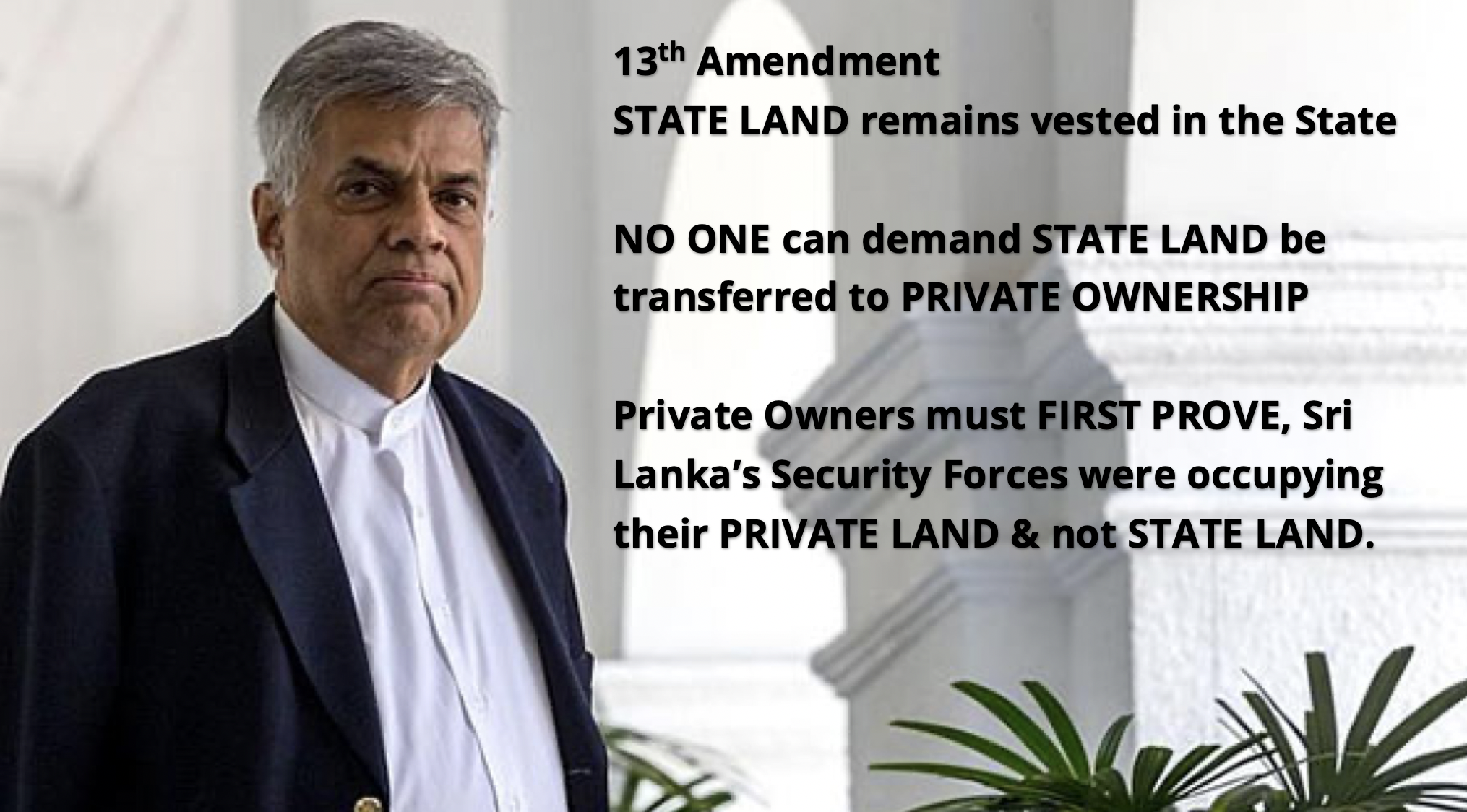
MP Vasudeva Nanayakkara charged that the 13th Amendment to the Constitution is in spotlight once again due to the impending visit of the United States Under Secretary of State for Political Affairs Victoria Nuland to Sri Lanka.

He said that a conspiracy is afoot to establish a US-India military base in Sri Lanka.

Self-retirement for inefficient public sector employees: Bandula

January 31st, 2023

Courtesy The Daily Mirror

Steps were being taken to reduce the number of public sector employees in all government institutions and a self-retirement mechanism would be introduced for that effect, Cabinet Spokesman Bandula Gunawradena said today.

He told the weekly Cabinet briefing that inefficient public sector employees would be removed through this self-retirement mechanism.

The Minister said the decision was taken in accordance with the instructions given by the Treasury to all Ministries to curtail their expenses in all departments and added that all the Ministry Secretaries are bound to adhere to the circulars issued by the Treasury.

He said no new recruitment would be made in the government service and pointed out that any vacancies in a particular state institution would be filled by the existing cadre of the government sector institutions.

“For example, steps are being taken to recruit 29,000 new teachers.They would be recruited from the exciting cadre of the government sector through an examination,” he said.( Ajith Siriwardana)

President’s Media responds to Daily Mirror article on Treasury allocations

January 31st, 2023

Courtesy The Daily Mirror

In reference to the article carried in the Daily Mirror today titled ‘Despite Economic Crisis Treasury Allocates Billions for Offices of President, PM, Ministers’, the President’s Media Division has issued the following clarification.

Writer’s note

– The article clearly exposes figures from a Treasury report which has been allocated for the Offices of the President, Prime Minister and Cabinet of Ministers under a ‘Special Spending Unit’ for 2023. It reveals to the general public, the allocations made by the Treasury for these offices under this unit for 2023 which runs into billions even amidst the economic crisis and there have been comparisons with the last year figures. No where in the article is it mentioned that the allocations were made for the President, Prime Minister or cabinet alone. The writer stands by the story.

President’s Media Division Clarification

Despite economic crisis, Treasury allocates billions for Offices of President, PM, Ministers”
 
The President’s Media Division (PMD) brings to your kind attention the news article published on the front page of the Daily Mirror on 31-01-2023 under the title Despite economic crisis, Treasury allocates billions for Offices of President, PM, Ministers” which is incorrect.
 
Therefore, while refuting the allegations made by your newspaper claiming that the budget allocated for the President’s Office, the Prime Minister’s Office and the Office of the Cabinet of Ministers still remain in billions with no major cost cuts in sight, we kindly urge you to carry a clarification and rectify the error made.
 
The factual data is submitted below and the PMD kindly request you to give equal priority to our clarification and publish the actual facts in your esteemed newspaper.
 
Clarification of provisions assigned for the Office of the President and Special Expenditure Units:
 
The state budget makes allocations directly to the expenditure head of the relevant institution for special expenses such as the Presidential Secretariat, the Prime Minister’s Office , the Supreme Court, etc., which are not grouped under any specific ministry, and for the institutions established to fulfill the objectives of commercial services.
 
These provisions are reserved only for the continuation of selected essential government services, such as providing essential relief to the people, payment of government employee salaries, loan interest payments and continuation of essential development works.

Accordingly, given below is a summary of the allocations for 2023.

Rs. Billion 2023 estimates

Recurring Expenses 4,634

Employee salaries 1,110

Interest payments 2,193

Subsidies & Welfare expenditure 985

Other recurring expenses 346

Capital 1,220

Debt repayment 2,025

Total 7,879

Advance accounts 6

Total Expenditure 7,885

Under this, provisions are also allocated for institutions such as the Presidential Secretariat, the Prime Minister’s Office, Cabinet Office and the Supreme Court, identified under the category of special expenditure units which do not come under the scope of a ministry.
 
Allocations of these provisions are for maintenance and functions to be implemented under the Constitution and various laws and ordinances regardless of the government in power.
 
These provisions include personal allowances, stationery, water and electricity bills, building and other asset maintenance costs of the institutions which must be incurred to fulfill the statutory requirements. Accordingly, it is baseless to interpret the entire allocated expenditure as the expenditure of the President or the Prime Minister.
 
About 6% of the money allocated under the expenditure head of the President’s office expenses, is allocated for salaries and basic facilities for the President and his staff. It is the expenses allocated for the tasks to be performed by the President as the Executive and Head of the Government.
 
Further, allocations are also made under the presidential expenditure head for the provision of facilities of the former presidents and their widows, the Salary and Cadre Commission, the Presidential Commission/ Task Force and the supervision of development work.
 
Therefore, when there is an economic crisis, these expenses cannot be recognized as a big expense compared to the tasks assigned to the executive to recover from that situation. Furthermore, it is very clear that the allocations made for these institutions have not been increased in comparison with the high inflationary background where the prices of fuel, stationery, travel expenses, auto spare parts etc. have increased several fold compared to the previous year.

In 2022, Rs. 1.4 billion was earmarked for the Prime Minister’s Office, which has been reduced to Rs. 1 billion in the 2023 budget. Compared to the previous year, a substantially low provision has been allocated for all activities such as salaries, services, maintenance etc. and the capital expenditure has also reduced remarkably.

 Further, Rs. 263 million has been allocated for the year 2023 for the Cabinet Office, which has increased by 7.6% compared to the previous year. The main reason for this increase is due to the fact that Rs. 60 million has to be allocated for essential maintenance works of the building (it is over 100-years-old) in which the office is maintained, in addition to the many other activities including salaries, etc. which is significantly less in 2023 in comparison to 2022.

 
Dhanushka Ramanayake
Director General (Media)
President’s Media Division (PMD)

Maithripala says he will contest next presidential election

January 31st, 2023

Courtesy Adaderana

Former President Maithripala Sirisena says he expects to contest the next presidential election with the support of the Sri Lanka Freedom Party (SLFP). 

Joining a media briefing today (Jan 31), the SLFP leader expressed confidence about winning the election race.

I am not the type of person to move backward. I am not scared of the conspiracies [against me]… Despite being harassed, I will contest the next presidential election with the support of my party. No matter how many votes I receive, I am confident that I can win the election.”

Sirisena went on to apologize for the coordinated suicide bomb attacks that devastated the country on Easter Sunday in 2019 while he was in office as the Head of State.

The former president stated that the Catholic community does not harbour any feelings of hatred towards him over this tragic incident.

Speaking on the sum of Rs. 100 million that the Supreme Court ordered him to pay in compensation to the victims of the Easter Sunday suicide bombings for violating human rights, Sirisena pointed out that according to the top court’s judgment, he was held responsible for the mistakes committed by the officials appointed by him as the Head of State.

Sirisena said, as a person who respects the country’s judiciary and the law, he accepted the judgment of the Supreme Court.

On January 12, the Supreme Court found the former President, along with former Defence Secretary Hemasiri Fernando, former IGP Pujith Jayasundara, former National Intelligence Chief Sisira Mendis and former Chief of State Intelligence Nilantha Jayawardena in violation of the Fundamental Rights of petitioners, by failing to take action to prevent the Easter Sunday attacks despite receiving sufficient intelligence information.

Sri Lanka’s export earnings in 2022 hit record high of USD 13 billion

January 31st, 2023

Courtesy Adaderana

Earnings from exports in 2022 surpassed USD 13 billion per year for the first time, recording an increase of 4.9% from the previous highest recorded in 2021, the Central Bank of Sri Lanka (CBSL) says.

This improvement was a result of increased earnings from industrial exports, including garments, gems, diamonds and jewellery, machinery and mechanical appliances and petroleum products.

Meanwhile, total import expenditure in 2022 amounted to USD 18,291 million, recording a decline of 11.4%, year-on-year, resulting from measures to restrict non-urgent imports and liquidity constraints that prevailed in the market for the most part of 2022.

As a result, the deficit in the trade account in 2022 narrowed to the lowest level since 2010 to USD 5,185 million, from USD 8,139 million recorded in 2021.

According to the CBSL, major contributory factors for the decline in the cumulative trade deficit in 2022 were textile garments; gems, diamonds and jewellery; transport equipment; telecommunication devices; building material; medical and pharmaceuticals; base metals; and machinery and equipment.

The deficit in the merchandise trade account narrowed to USD 358 million in December 2022, from USD 1,085 million recorded in December 2021, helped by a larger decline in imports, compared to the decline in exports.

Meanwhile, earnings from merchandise exports declined by 7.7% in December 2022, over December 2021, to USD 1,068 million. The decline in earnings from industrial exports mainly contributed to the decline in export earnings in December 2022.

According to the CBSL, expenditure on merchandise imports declined by 36.4% in December 2022 to USD 1,426 million, compared to USD 2,241 million in December 2021, continuing the year-on-year declining trend observed since March 2022. The higher base in December 2021 and declines in volumes across all major categories resulted in this outcome.

Workers’ remittances in 2022 amounted to USD 3,789 million, in comparison to USD 5,491 million in 2021, recording a decline of 31.0%, though a notable recovery was witnessed during the latter part of the year.

Meanwhile, workers’ remittances increased to USD 476 million during December 2022, in comparison to USD 384 million in the previous month, recording the highest monthly remittances during 2022.

Total departures for foreign employment during 2022 were recorded at 299,934, contributed mainly by the unskilled (101,786), skilled (88,215) and domestic aid (73,781) categories. Total departures for foreign employment were recorded at 23,407 during the month of December 2022.

The CBSL stated that a total of 719,978 tourist arrivals were recorded in 2022, compared to 194,495 arrivals in 2021, recording the highest tourist arrivals after 2019.

Tourist arrivals increased notably in December 2022 to 91,961, from 59,759 arrivals recorded in November 2022. Russia, India, the United Kingdom, Australia, and Germany remained the main source countries for tourist arrivals in December 2022.

Earnings from tourism are estimated at USD 1,136 million in 2022, compared to USD 507 million in 2021. Earnings from tourism in the month of December 2022 are estimated at USD 127 million, in comparison to USD 81 million in the previous month and USD 233 million in the corresponding month in the previous year.

Foreign investments in the government securities market recorded a cumulative net inflow of USD 51 million during 2022, with a marginal net inflow in December 2022.

Meanwhile, on a cumulative basis, the Colombo Stock Exchange (CSE), including primary and secondary market transactions, recorded a net inflow of foreign investments amounting to USD 182 million in 2022. The foreign inflows to the CSE, including primary and secondary market transactions, recorded a notable net inflow in December 2022.

The exchange rate remained stable through December 2022, following the introduction of daily permissible band from mid-May 2022. Annual depreciation of the rupee in 2022 was 44.8% against the US dollar, and reflecting cross-currency movements, the Sri Lanka rupee depreciated against the euro, the Australian dollar, the Indian rupee, the pound sterling, and the Japanese yen in 2022.

Meanwhile, the rupee recorded an appreciation of 0.3 per cent against the US dollar during the year up to 31 January 2023. Reflecting cross-currency movements, the Sri Lanka rupee depreciated against the euro, the pound sterling, the Indian rupee, the Australian dollar, and the Japanese yen during the year up to 31 January 2023.

The real effective exchange rate (REER 24) depreciated notably during Mar-May 2022 and remained largely below the threshold of 100 index points, indicating an improvement in Sri Lanka’s external competitiveness

Easter Attacks: Catholic Church refuses to accept Sirisena’s apology

January 31st, 2023

Courtesy Adaderana

Father Jude Chryshatha, the National Director for Social Communication, has asserted the Catholic Church’s refusal of former President Maithripala Sirisena’s recent apology for the Easter Sunday terror attacks of 2019.

Accordingly, Father Chryshantha noted that the Catholic Church will not accept the apology made by the former President.

Speaking at a press conference earlier today (31 Jan.), Sirisena publicly apologized to the Catholic community of Sri Lanka for the 2019 attacks, which took place during his tenure as President.

He also assured that he is currently taking all means necessary to pay the fine of Rs. 100 million imposed on him by the courts in this regard.

CCPI-based inflation further drops to 54.2% in January

January 31st, 2023

Courtesy Adaderana

he Year-on-Year (Y-o-Y) inflation based on the Colombo Consumer Price Index (CCPI) decreased to 54.2% in January 2023 from 57.2% seen in December 2022, the Department of Census and Statistics reported.

Meanwhile, Y-o-Y inflation of Food Group has dropped to 60.1% in January 2023 from 64.4% in December 2022, it said quoting the latest data.

According to the department’s report, Y-o-Y Non-Food Group inflation decreased to 51% in January 2023 from 53.4% in December 2022.

The CCPI for all items for the month of January 2023 was 244.3 and it recorded an increase of 1.1 in index points which is 0.43 percentage compared to the month of December 2022 for which the index was 243.2.

The report said that Month on Month expenditure change was contributed by increases in Food and Non-Food categories of 0.23% and 0.20%, respectively.

Meanwhile, annual average inflation rose to 49.6% in January 2023 from 46.4% in December 2022.

The core inflation (Y-o-Y), which reflects the underlying inflation in the economy, decreased to 45.6% in January 2023 from 47.7% in December 2022, whereas annual average core inflation increased to 37.6% in January 2023 from 34.6% in December 2022.

The general price level has increased by 144.3% compared to the base year (2013).

The CCPI is an economic indicator constructed to measure inflation which is defined as percentage change in CCPI over the year. 

There are two measures of inflation in general use. One measure is Year on Year base or Point to Point inflation (The percentage change in the CPI during the last 12 months). The other measure is Moving Average Inflation (The percentage difference between the average Price Index of last 12 months & the average Price Index of previous 12 months).

In a statement in this regard, the Central Bank of Sri Lanka (CBSL) stated that looking ahead, based on its latest macroeconomic projections, the declining trend of inflation is expected to continue through 2023, supported by subdued demand conditions owing to tight monetary and fiscal policy measures, anticipated improvements in domestic supply conditions, and the expected passthrough of easing global energy and food prices to domestic prices, along with the favourable statistical base effect.

However, there are upside risks to this disinflation path arising from possible upward adjustments in domestic energy prices and any associated second round effects, delays in passing downward adjustments of global energy and food prices to domestic consumers, etc.

Nevertheless, factors such as the reduced purchasing power of the public could soften inflationary pressures, exerting downside risks to inflation projections.

Over 80,700 candidates contesting LG election

January 31st, 2023

Courtesy Adaderana

Over 80,700 candidates from 58 registered political parties and 329 independent groups are due to contest the upcoming Local Government (LG) election, the Election Commission of Sri Lanka stated.

Accordingly, a total of 80,720 candidates will be contesting for 339 local bodies in the election.

The 2023 LG election is scheduled to be held on 09 March.

Meanwhile, all relevant documents received from District Returning Officers to hold the election have been sent to the Government Printer to be gazetted, the Chairman of the Commission assured, while the initial work required for the printing of ballot papers is also underway.

Open Letter to JVP, Weerawansa and Weerasekara 

January 30th, 2023

By Engr. Kanthar BalanathanDipEE (UK), GradCert (RelEng-Monash), DipBus&Adm (Finance-Massey), C.Eng., MIEE, Former Director of Power Engineering Solutions Pty Ltd, Consulting Electrical Engineers

Please pass this on to the MPs with no ‘O’ level qualifications. An explanation is given in terms of the number of staff and expenses. I am writing this open letter to JVP, Weerawansa and Weerasekara as you two (Weerawansa & Weerasekara) have been noted as the most racial and fanatic (insane) politicians with no background education and intelligence. Weerasekara is a champion in killing and murders in the Navy and you are another racist in SL. I know when you came to Victoria to work out a scheme against Tamils. The system with the PCs and without PCS.

Now let us discuss the pros and cons of PCs. Governance has only two sets of governing in small underdeveloped poor nations like SL. Sri Lanka has no natural resources and people have not yet trained in hi-tech technology. SL has a minimum number of small industries. Even to put up an industry politics plays an important part. Like Mahinda Rajapaksa’s Matale airport and the Hambantota harbour.

For the last few years since independence, SL has been governed by two sets of governance. People when they accumulate money get greedy and avidity for power and more wealth. More Ministries and State Ministers are examples. What do the State ministers do? They have a car, security, a house and money. A proverb: We have lots of Chiefs but no Indians to work”.

Just think:

If you have PCs, SL will have nine PCs. You (Weerasinghe” stated that if Tamils are given PC, then Tamil Eelam will be born. A blood path will occur. How about the seven other PCs? Do you think they will not want a separate country for the Yakkas”?

I have followed the war for the last 37 years. The SL military was a lazy unintelligent fool. Why could not they finish Prabakaran before 1980? It was prolonged for a war. Why is that? The Sinhalese themselves had split groups. How was the LTTE able to get information about Colombo? Now that the war is over SL has been pushed into poverty and bankruptcy. Why do you want to have nine PCs with nine Chief Ministers, 36 Ministers, Secretaries, Cars, Houses for the CM, and the Ministers etc? This will drain the SL coffer, and the dirty politicians will grow with wealth. If you notice Tamils are taking boats.

The action you need to do:

  1. Revoke the 13th amendment of the constitution in another amendment 22 as the President stated. This will be beneficial to SL in lots of monetary value, and the savings can be noted liability for salaries and payments. There shall be no other form of government. This means that we are eliminating the middle section of governance. The country will benefit.
  2. SL has 24 Municipal Councils. Why do not you think of augmenting the powers of the MCs? We do not need to provide police powers, except maybe land powers which the MCs already have to a certain level. The Mayor and the Deputy Mayor can be given certain powers like that of the UK and the USA. If the number is too much, then merge some MCs and reduce the number of MCs. You can work it out. We need not fight among ourselves for this. The Pradeshiya Sabas can be brought under the MCs.
  3. Remove the State Ministers. Appoint Permanent Secretaries to do the functions. Permanent Secretaries are government staff and discipline can be taken against the PS at any time. Carefully think: What do the State ministers do, apart from campaigning for the party? Party politics is not everything for the country. The country should have food and technology for the people to survive.
  4. Open the University of Moratuwa and other leading Universities like Colombo University to international students. Earn some foreign exchange.
  5. Convert Anuradhapura into a city of Digital Technology”. Let foreign bodies come and invest in IT and Computing and Computer manufacturing. Maybe India is the first case. Sri Lankans are leading IT specialists overseas. Both in hardware and Software. We do not need Lotus tower and Port Cities.
  6. Give up racism, please. How long are you going to play racial politics at the expense of the country’s growth?
  7. Tamils shall learn a lesson: For the last 75 years, what have they achieved? Nothing but cheating Tamils. Made Tamils take boats. Sambanthar and the politicians are quite rich.
  8. If they want to enjoy power, then they should join the governing party and get a couple of portfolios. Quite obviously Tamils will be better ministers than Mervin Silva and some goons at present.
  9. Think about what type of investment will give growth.
  10. Do you know the Central Bank issued Rs 95 billion notes on the 18th of January 2023 and 120 billion on the 25th of January 2023? This may lead to another form of indirect privatisation.
  11. Please move a resolution to revoke the 13th amendment forthwith.
  12. Seriously postpone the local government elections and review the powers to be invested in the MCs. Review the local government governance. We already have local government governance. Do not need new things.
  13. Someone files a case to postpone the local government elections in the high court. No one can blame anyone.
  14. Just think and analyse the wasteful expenditure because of the PCs and state ministers.

Comrades: This island was ruled and developed by great kings

King Pandukabhaya; The first king established Anuradhapura as the capital. , King Devanampiya Tissa/King Dutugamunu / Parakramabahu /King Vala gamba /King Mahasen / King Dhatusena/ DS Senanayake / Dudley Senanayake.

Let us not leave the country to go to animals and become bankrupt and people leave the country. Please give a hand to President RW and build this nation. Let us be patriotic and truly contribute to building this nation. JVP: You have a responsibility to protect this nation. Let us not believe and support behind doors to the people who plundered this country through bribery and corruption. Please do not trust the Rajapaksas.

There shall be NO Provincial Councils in Sri Lanka. Two levels of governance are adequate.

29th January 2023

Statement of the National Joint Committee on the Decision Taken by the President and the Cabinet of Ministers to Fully Implement the 13th Amendment

January 30th, 2023

Lt Col. A.S.Amarasekera.(Rtd.) Co-President National Joint Committee

The 13th Amendment was enacted in 1987 consequent to the signing of the Indo-Lanka Accord between the Government of India and the Republic of Sri Lanka. The Accord was signed in Colombo by President J.R Jayawardena and Rajiv Gandhi while the country was under curfew. The Government of India violated Sri Lanka’s airspace and sovereignty by dropping food parcels from Indian air crafts on Sri Lankan territory. Gunboats were placed near Sri Lanka’s territorial waters. Subsequently, under the pressure exerted by the Government of India, the 13th Amendment was enacted by Parliament whilst President Jayawardena had letters of resignation from members of Parliament in his pocket.

When the 13th Amendment Bill came up before the Supreme Court four Judges of the nine Bench constituted determined that the Bill in its entirety was unconstitutional. Thus, although the Bill was deemed as having passed in view of the five Judges who supported the enactment of the 13th Amendment, there is real doubt about the constitutionality of the 13th Amendment. The four Judges who expressed the dissenting view expressed their opinion that the 13th Amendment could not be passed without the approval of the people at a Referendum. Thus, the 13th Amendment was enacted without the approval of the people. Therefore, the legitimacy of the 13th Amendment is questionable.

The 13th Amendment provides for the amalgamation of the Northern and Eastern provinces on the basis that these two Provinces constitute the traditional homelands of the Tamils. Constituting a unit of devolution on ethnic grounds is a threat to racial amity and mutual coexistence. Governments must try to unite the people and not divide them. We believe that the Government intends to amalgamate the Northern and Eastern provinces utilising the provisions of the 13th Amendment when they declared that they agree to the full implementation of the 13th Amendment”.

The 13th Amendment empowers the Provincial Councils with regard to seventy three subjects enumerated in the Provincial Council and Concurrent Lists. There are thirty seven subjects in the Provincial Council List alone including Police powers, land powers, and powers relating to ancient and historical monuments and records. Even religious societies and associations are included in the Provincial Councils List which empowers Provincial Councils to enact statutes which would override laws of Parliament. Thus, the 13th Amendment will lead to the enactment of a new Police Statute and a Criminal Procedure Code which may replace the existing Police Ordinance and the Criminal Procedure Code. There is express provision to the effect that no police officer of one Province could exercise any powers in another Province thus for example the Anuradhapura Police will not be in a position to investigate an offence committed in Vavuniya.

Item 11:1 of Appendix I of the Ninth Schedule provides that the Head of the Provincial Police is responsible to and under the control of the Chief Minister”. The investigation entrusted to national Police is limited to national security, and security of VIPs.” The Security relating to ordinary citizens is entrusted to the Provincial Police. Thus, the people of respective provinces will be at the mercy of a police force controlled by the Chief Minister. Two members of the three member Provincial Police Commission are appointed with the consent of the Chief Minister. With these provisions in place, the security of the Sinhala and Muslims in the North and East will be disastrous.

There is ample evidence that secessionists have engaged in the destruction of archaeological sites to establish their false assertion that the Sinhala people have no right to live in the North and East, the TNA openly objects to the settlement of Sinhalese and Muslims in the North. With the police powers handed over to the Provincial Councils one wonders about the plight of our archaeological sites under such administration. Even the dayaka sabhawa of a temple can be regulated by the Provincial Council.

Therefore, the National Joint Committee strongly condemn the decision of the Government and urge them to withdraw that decision forthwith and call for a parliamentary and presidential election so that the people of this country can elect a government of their choice and remove the politicians of the present Cabinet that have taken this decision to implement the 13th Amendment. It is pathetic that Prime Minister Mr. Dinesh Gunawardena and the leader of the largest political party in Parliament Mr. Mahinda Rajapakse is supportive of this move, having come into power with the votes of the patriotic citizens of the country. We urge them and their party members to resign forthwith and call for fresh elections. . We are thankful to the Hon. Leader of the Opposition for declaring their stand supporting the 13th Amendment which would enable the Public to make their own decision with regard to the future of this country.

Lt Col. A.S.Amarasekera.(Rtd.)

Co-President National Joint Committee

සිංහලයා මුළුමනින්ම ක්ෂය නොවෙනු ඇත

January 30th, 2023

චානක බණ්ඩාරගේ

සිංහලයා ක්ෂය වෙන ජාතියක්?

අද රටේ සිංහලයන් අතර කථිකාව ‘ශ්‍රී ලාංකික අනන්‍යතාවය’ තව තවත් ප්‍රවර්ධනය කල යුත්තේ කෙසේද යන්න මිස රටේ  සිංහල ජනගහනය ක්ෂය වීම හෝ  සිංහලයාට වන අසාධාරණකම්  නොවේ. බෞද්ධ අයිතීන් ගැන නම් යම් කථිකාවක් ඇත.

ශ්‍රී ලංකාව දෙකඩ කිරීමේ ඊලාම් ඉල්ලීම අදද රටේ සහ ඉන් පිටත තදින්ම ක්‍රියාත්මක වන බව පිළිගැනීමට අප අකමැත්තක් දක්වමු.  ඒ අපගේ මෝඩ කම විය හැකියි.

උතුරේ සාමාන්‍ය දෙමළ ජනයා ඉඩම්, පොලිස් බලතල නොඉල්වයි.  සම්බන්ධන්, සුමන්තිරන්, ශ්‍රී ධරන්, සිවාජිලිංගම්, රාසමානික්කම්,  විග්නේස්වරන්, පොන්නම්බලම් වැනි මහතුන් වෙනම දෙමළ රාජ්‍යක් ගැන දිගු කලක සිට සිහින මවන්නෝයි. මේ  අයගේ මන දොළ (fantasy) පිනවීමට, අප රණ විරුවන් ජීවිත පරිත්‍යාගයෙන් රැක ගත් මේ රට,  බන්දේසියක තබා ඒ අයට පුජා කල යුතුද?

වරක් උතුරේ හිටපු මහ ඇමතිව සිටී  වර්ධරාජා පෙරුමාල් මහතා උතුරේ වෙනම රාජ්‍යක් ප්‍රකාශ කළේය.

මේවා දැන දැනත් ඉඩම්, පොලිස්  බලතල දීමෙන් රට දෙකඩ වීමේ අවදානමක් නැති බව දියවන්නාවේ දේශපාලනඥයන් කියන්නේ ඇයි?

මුළු ලොවම තම ත්‍රස්තවාදී පනත් වැඩි දියුණු, ශක්තිමත් කරන මේ අවධියේදී අප අපට තිබෙන එකම පනතත් අහෝසි කල යුතුයයි කියා උද්ඝෝෂණය කරන්නෙමු. ත්‍රස්තවාදය යලි හිස ඔසවා දකුණේ බෝම්බ පිපිරෙන විට මැරෙන්නෙත් අපි බව මේ අයට නොතේරේද?

රටේ මිනිසුන්ට හරිහැටි එක වේලක්වත් කෑමට නොමැති මේ මොහොතේ ඒ පිළිබඳව සිය උපරිම කාලය සහ ශ්‍රමය වැය කරනු විනා හදිසියේම ඉඩම්, පොලිස් වැනි සියළු බලතල උතුරු නැගෙනහිරට ලබාදීමට දේශපාලකයෝ බලවත් සේ උත්සුක වීම කනගාටුදායක තත්ත්වයකි. මැතිවරණයක් ළඟ මානයේ නිසා මෙය ද්‍රවිඩ චන්ද ලබා ගැනීමේ ගුන්ඩුවක් බව පාසැල් යන දරුවා පවා දනී. මෙය හුදු, TNA සහාය තමන්ගේ පැත්තට හරවා ගැනීමට තැත් කිරීමකි.

මේවා දුන්නාය කියා විශාල වශයෙන් නව ද්‍රවිඩ චන්ද ඔවුනට නොලැබුණු ඇත, නමුත් සිංහල දේශපාලනඥයෝ මෙවැනි ව්‍යාජ බලාපොරොත්තු තබාගෙන සිටීමට රුසියෝය.

පාර්ලිමෙන්තුවේ සිංහල විපක්ෂයෙන් මේ ගැන විමසන විට ඔවුන් දෙන උත්තරය වනුයේ ‘Yes, we are for full devolution’ යන්නයි.

ඉතා නුදුරේම ඉඩම්, පොලිස් බලතල ලබාදීමට යාම පිළිබඳව, පාර්ලිමේන්තුවේ ප්‍රධානතම  සිංහල මාක්ස්වාදී පක්ෂය (3%), තම ස්ථාවරය ප්‍රකාශ කල යුතුය. ජනතාවට මෙය ඔවුන්ගෙන් දැන ගැනීම ඉතා වැදගත්ය. ඔවුන් දැනට ‘මුහුණ වැලි ගොඩේ හංගා ගෙන’ සිටිත්. ජාතික ප්‍රශ්නයකදී එසේ සිටිය නොහැක.

අද ඉඩම්, පොලිස් බලතල බෙදීමට පක්ෂව කථා කරන, දේශපාලනයෙන් සමු ගැනීමට ආසන්න අවධියේ සිටින බොහෝ දේශපාලනඥයන්, තමන්ගේ හුදු දේශපාලන පැවැත්ම උදෙසා නැතිකරන්න යන්නේ දැනට ඉපදුනු සහ ඉපදීමට සිටින සිංහල දරුවන්ගේ අනාගතයයි. දියේ ගිලෙන්න යන්නා තුත්තිරි ගසේ හෝ එල්ලෙයි.   

දැන් මේ අනවශ්‍ය කරුණක් එකෙනෙහිම ඉස්මතු කිරීම නිසා නැති සිංහල, දෙමළ අසමගියක් රටේ ඇතිවිය හැක. තමන්ගේ හුදු පුද්ගලික වාසිය තකා ජනතාව බෙදීම දේශපාලනඥයන් විසින් නොකළ යුත්තකි.

ශ්‍රී ලංකාවේ සිංහල ප්‍රතිශතය අඩු වීම ගැන ගරු සංඝයාවහන්සේලාද කථා කරනවා මදිය. ඇතැම්හු තවමත් රටේ සිංහල ප්‍රතිශතය 70% යන ව්‍යාජ මතයේ එල්බ සිටිත්.  මෙයින් පරිහානයට පත් වන්නේ සිංහල ජාතියය.

ව්‍යාජ සංඛ්‍යාලේඛන ඉදිරිපත් කිරීමට රජයන් ඉතා දක්ෂය. ඒවා ඒ අයුරින්ම පිළිගැනීමට අපද සැදී පැහැදී සිටිමු.

රටේ 2000ක් පමණ හෝ  ඊට අඩුවෙන් අලි සිටින අවස්ථාවක, ඒ සංඛ්‍යාවද සීග්‍රයෙන්  පහත බසින විට,  එවක පැවතී  රජය කලේ හොර අලි සංගණනයක් පවත්වා රටේ අලි  5000ක් සිටිනවා යන බොරු සංඛ්‍යාලේඛන ඉදිරිපත් කිරීමය.   එකම අලියා දෙතුන් වතාවක් ගැන්න බව එක් පරිසරවෙදියෙක් මෙම ලියුම්කරු සමඟ පැවසීය.

1948 සුද්දා යනවිට රටේ වන ගහණය මුළු බිමෙන් 49% විය (ඔවුන් විසින් ඉතා වටිනා කඳුරට වර්ෂා වනාන්තර (සිංහරාජය වැනි), කපා දමා ඒවායේ තේ වැනි වැවිලි බෝග සිටවන ලදී). යාල, විල්පත්තු අභය භුමි තුලට පවා, ඒවායේ මායිම් අසළ, මිනිස් නිවාස ඉදිවී තිබෙනු දක්නට ලැබේ. අති සුඛෝපභෝගී හෝටල මේ අභය භුමි තුල ඉදි කර තිබේ. මේවා ඉදිරියට තවත් ඉදිවෙනු ඇත. අහිංසක වන ජීවීන්ට කවදා හෝ සිදු වනුයේ මෙම හෝටල්වලින් ඉඳුල් ඉල්ලා කෑමය.

අද රටේ නියම වන ඝණත්වය 12%ක් වත් වේද?

කඩිනම් මහවැලි සංවර්ධන වැඩපිළිවෙල යටතේ මහියංගනය, නොච්චියාගම, සෙවණගල, මොරගහකන්ද  වැනි ප්‍රදේශ සහ ඒ අවට අක්කර ලක්ෂ ගණනින් වන ගහණය අහිමි කරගතිමු.  1980 පමණ පැල්වත්ත සිනී යයි කියා අම්පාරේ වනාන්තර අක්කර දහස් ගණනක් නැති කර ගතිමු. එදායින් ඇරභී හෝ වැඩි දියුණු වූ  මහා අලි – මිනිස් ගැටුම අදත් තදින්ම ක්‍රියාත්මකයි. රටේ අසාර්ථක භාවයට හොඳම නිදසුනකි මෙය. දක්ෂ, දුරදර්ශී නායකයෙක් සිටියේ නම් මේ ප්‍රශ්ණය විසඳා බොහෝ කල්ය.

මේවා විසඳිය හැකි ප්‍රශ්ණය. ප්‍රශ්ණය නම් හොරා කෑම, තම ‘ගොඩ’ වැඩි කරගන්නේ කෙසේද, තනතුරු වලට නුසුදුසු පවුලේ ඥාතින්, යහළුවන්ට රජයේ තනතුරු ලබා දෙන්නේ කෙසේද, ලිංගික විෂමාචාර, කොමිස් ගැසීම වැනි දේ ගැන ප්‍රමුඛත්වය දී වැඩ කරන දේශපාලුවන්ට මේවා රටේ බරපතල ප්‍රශ්ණ ලෙස නොපෙන්.

සිංහලයා ක්‍රමයෙන් සංඛ්‍යාවෙන් අඩුවී යන ජාතියක් බවත් සිංහල භාෂාව ක්ෂය වෙන භාෂාවක් බවත් රහසක් නොවේ. මහනගරවල දැනටමත් සිංහල ජන සංඛ්‍යාව සීග්‍රව අඩුව ඇත. මේවා ක්‍රමානුකුලව පළාත්, නගර, ප්‍රාදේශීය සභා ප්‍රදේශවලද සිදුවනු ඇත.

1980 මුල් භාගයේදී බම්බලපිටිය මහල් නිවාස (Bambalapitiya Flats) වල සිංහල ප්‍රතිශතය 80% එහා විය. අද එහි ද්‍රවිඩ ප්‍රතිශතය 80% එහාවී ඇත. කොළඹ සිංහලයාට අත්වී ඇති ඉරණම ගැන මෙයටත් වඩා හොඳ උදාහරණයක් තවත් අවශ්‍යද?

කොළඹ මහ නගර සභා සීමාව තුල අද සිංහල, දෙමළ, මුස්ලිම් සම සමව වාගේ වෙත් (1/3 බැගින්). 1980 මුල් කාලයේදී මෙය සිංහල 70%ක් පමණ විය.

සිංහල පරිහානිය ගැන සුළු ජාතීනට දොස් කීමෙන් පලක් නැත. තමන්ගේ ජාතිය වැඩි කර ගැනීමට ඔවුන් කටයුතු කිරීම ඔවුන්ගේ වරදක් නොවේ. සිංහලයෝ සෙල්ලක්කාරයන් මෙන් ජීවත් වෙති. ඔවුනට සිය ජාතිය, බුද්ධාගම ගැන, ඒවා ආරක්ෂා කර, ප්‍රවර්ධනය කිරීම ගැන දැඩි හැගීමක්  නැත. අප සියල්ල ‘ශ්‍රී ලාංකිකයෝ’ යයි ඔවුහු කියති. ඒ වෙනුවෙන් සිංහලත්වය, බෞද්ධත්වය යට යන බව ඔවුනට නොවැටහේ. එසේ වැටහුනත් ඔවුනට ගානක් නැත.

2000 පමණ වන තෙක් ශ්‍රී ලංකාව දැඩි බහු සංස්කෘතික රටක් විය, එනම්, සියළු ජාතීන් තම තමන්ට ආවේනික වූ සංස්කෘතීන් තුල ජීවත්වෙමින්, ශ්‍රී ලාංකික පුරවැසියන් ලෙස කටයුතු කළහ. 1990 ගණන්වල මැද භාගයේ හඳුන්වා දුන් සංහිඳියා වැඩ සටහනින් වුයේ දකුණේ සිංහලයන් තම සිංහල බෞද්ධත්වය – සිංහල සංස්කෘතිය පසෙකලා ශ්‍රී ලාංකික අනන්‍යතාවය – ශ්‍රී ලාංකික සංස්කෘතියක් වැලඳගැනීම වෙනුවෙන් කැපවී වැඩ කිරීමයි.  

සංහිඳියාවේ මුළිකම ඉලක්කය වුයේ සිංහලයායි. සිහලයා වැරදි යයි, ඔවුන් වෙනස් විය යුතු යයි උදේ සවස මන්ත්‍රයක් මෙන් මතුරන ලදී. මේවා රජයන් විසින් සිතා මතා කරන ලද දේය.

බොහෝ දෙනෙක් දෙමළ ඉගෙන ගත්හ. කෝවිල් ගියහ, සිංහල පසෙක ලා දෙමළ චිත්‍රපටි, සින්දු රස විඳින්නට වඩාත් යොමු වූහ. දෙමළ ක්‍රමයට ඇඳුම් (සරම්, සාරි, පොට්ටු, කරාබු) ඇන්ඳහ/පැලඳූහ, දෙමළ/මුස්ලිම් කෑම සෑදීමට/අනුභවයට, උඩරට නැටුම් වෙනුවට දෙමළ නෘත්‍යයන් ඉගෙනුමට වඩාත් යොමු වූහ. දෙමළ/ මුස්ලිම් අය තම සමීප මිතුරන්/අසල්වැසියන් බවට පත් කර ගත්හ. තම විවාහ සහකරු/සහකාරිය ලෙස පෙර නොවූ විරූ ලෙස සිංහල නොවන ද්‍රවිඩ/ මුස්ලිම් අයව තෝරා ගත්හ.

මේ දේවල් විවේචනය කරනවා නොවේ.

දකුණේ සිංහලයෝ තමනට ‘ශ්‍රී ලාංකික සංස්කෘතිය’ ආරෝපණය කර ගැනීම උදෙසා ද්‍රවිඩ/මුස්ලිම් සංස්කෘතින් හා සමීප වීමට බලවත් ලෙස උත්සාහ කරද්දී, උතුරේ හා නැගෙනහිර අය (දෙමළ, මුස්ලිම් – විශේෂයෙන්ම උතුරේ දෙමළ) සිංහල කථා කිරීම, බෞද්ධාගම, සිංහල සිරිත් විරිත් ඉගෙනුම ගැන සුවිශේෂ උනන්දුවක් දැක්වූ බවක් අසන්නට නොලැබුණි.

සංහිඳියා ක්‍රියාදාමයේදී, ජනවාර්ගික ප්‍රශ්ණයේ සියළු වැරදි සිංහලයන් තුල පැටවුවා වැනි පණිවුඩ නිරන්තරයෙන් නිකුත් කෙරිණි.

සිංහලයෝ සිංහල, බෞද්ධත්යෙන් මිදී ‘ශ්‍රී ලාංකිකයන්’ බවට පත්වීම ඉතා සාර්ථකව සිදුවී  ඇත; තවදුරටත් එය සීග්‍රයෙන් සිදු වෙමින් පවතී.

මේ නිසා, 1990 පසු කිසිම ජාතිභේදයක් නැති දරුවන් දකුණෙන් බිහි වුණි. මෙය හොඳ දෙයකි.

නමුත්, උතුරේ සහ නැගෙනහිර සංහිඳියා යාන්ත්‍රණය දකුණේ මෙන් උග්‍රව ක්‍රියාකෙරුනේ නැත; ජාතිවාදය ඒ ප්‍රදේශවල, විශේෂයෙන්ම උතුරේ, අදත් තදින් ඇත. රජයන් මේ ප්‍රදේශවල සංහිඳියා යාන්ත්‍රණය උවමනාවෙන්ම දැඩි ලෙස ප්‍රචලිත නොකරන ලදී. 

‘ශ්‍රී ලාංකිකයන්’ බවට පත්වීම සඳහා උතුරේ සහ නැගෙනහිර වැසියන් තම දෙමළ සහ මුස්ලිම් සංස්කෘතීන් ‘පාවා’ දුන්නේ නැත. ඔවුන් තම ද්‍රවිඩත්වය, මුස්ලිම්භාවය තව තවත් තීව්‍ර කරගත්හ. ඒ සඳහා ඔවුන්ගේ දේශපාලනඥයෝ ඔවුනට අනුබලය/සහාය දුන්හ.

ශ්‍රී ලංකාවෙන් සිංහලයා සදහටම වඳවී නොයනුඇත.  නමුත්, ශ්‍රී ලංකාව තුල සිංහලයා සුළු ජාතිකයෙක් ලෙස ඉදිරි දවසක ජිවත් වීම නියත වනු ඇත (30% – 35% ක පමණ ලෙස).  එදාට මෙය කියවන ඔබ – මෙම ලියුම්කරු – වර්තමානයේ බොහෝ  මැදි වියේ/වැඩිමහළු අයවලුන්, දිවි මඟ හැර ගොසිනි.

දැනට සිදුවෙමින් පවතින මහා පරිමාණ ක්‍රිස්තියානිකරණයත් (සිංහල බෞද්ධයන් ක්‍රිස්තියානි වීම),  හින්දු, මුස්ලිම් ජනගහනවල  සීග්‍ර වර්ධනය, රටේ චීන ජනපද ඇති වීම, වෙනත් නොයෙක් විදේශිකයන් මෙහි නීති විරෝධී ලෙස ජීවත්වීම ආදිය   සමඟ තවත් අවුරුදු 75 කින් එහා, වර්ෂ 2100දී,   මේ රටේ මුළු සිංහල බෞද්ධ ජනගහනය 20% – 25% පමණ වනු ඇතැයි යන මෙම ප්‍රකාශය ගැන ඔබ පුදුම නොවිය යුතුය.

අපගේ අනාගත සිංහල පරම්පරාව ගැන සිතන විට ඉමහත් ශෝකයක් දැනේ.

සම්ප්‍රදායනුකුලව, සිංහල කාන්තාවක් ද්‍රවිඩ/මුස්ලිම් පුද්ගලයෙක්ව බැන්ඳහොත් ලැබෙන දරුවන් දෙමළය/මුස්ලිමය.  එසේම, සිංහල පිරිමියෙක් ද්‍රවිඩ/මුස්ලිම්  කාන්තාවක් බැන්ඳහොත් ලැබෙන දරුවන් සිංහලය.  උතුරේ සහ නැගෙනහිර මේ අවුල නොමැත්තේ මිශ්‍ර විවාහයන් එම ප්‍රදේශවල ඉතාම හිඟ නිසාය. ස්වකීය ජාතියේ ‘පාරිශුද්ධ බව’ ආරක්ෂා කර ගැනීමට ඔවුහු දිවි හිමියෙන් කැප වී වැඩ කරති. අමිශ්‍ර දෙමළ, මුස්ලිම් දරුවන් ඒ ප්‍රදේශවළ (උතුරු, නැගෙනහිර) බිහිවේ.

අද දකුණේ සිදුවන දැවැන්ත මිශ්‍ර විවාහයන් නිසා තමන්ගේ ජාතිය කුමක්ද කියාවත් එම විවාහ වලින් බිහිවෙන සමහර දරුවන් දන්නේ නැත. මේවා නොකරන්නැයි කියනවා නොවේ.

දෙමළ, මුස්ලිම් ජනගහණයන් සීග්‍ර ලෙස වර්ධනය වුවද බර්ගර් සහ මැලේ ජන කොටස් අඩුවී යාම කණගාටුවට කරුණකි. මේ ජාති දෙකද බලවත් ලෙස ශ්‍රී ලංකාව තුල ක්ෂය වී යාමේ තර්ජනයට මුහුණ පා ඇත.

මුලිකම ප්‍රශ්ණය

සිංහලයා, ශ්‍රී  ලංකාවට, සිංහල ජාතියට,  බුද්ධාගමට බලපාන ප්‍රශ්ණ පිළිබඳව උකටලීය (complacenct). ඔහු/ඇය සිංහලයනට ආවේනික ප්‍රශ්ණ පිළිබඳව බුද්ධිමත්ව/ශිෂ්ටසම්පන්න ලෙස නැගී නොසිටීයී.  සිංහලයාට පොදු වූ අසාධාරණකම් ගැන කථා නොකරයි. සිංහලයා සිංහලයාටම ගරහයි.  

අද සිංහලයා තමන් සහ තම පවුල ගැන පමණක් සිතයි.  රට ගැන නොසිතයි. සිංහල ජාතියේ, විශේෂයෙන්ම එහි දිගු කාලින පැවැත්ම ගැන ඔහුට/ඇයට ඇත්තේ අල්පේච්ච වූ හැඟීමකි. කොටි ත්‍රස්තවාදීන් සමඟ පවා ඩීල් දැමු සිංහලයෝ වුහ.

ජාතියක් වශයෙන් සිංහලයනට ඔවුන් ඉදිරියේ ඇත්තේ මහා ප්‍රශ්ණ/අභියෝග ගණනාවකි.

අනිවාර්යයෙන්ම සිංහලයා නොයෙක් අසාධාරණ වලට මුහුණ දී සිටී. සිංහල බහිනකලාව  දැන් අප තදින්ම අත් විඳිමින් සිටින්නේමු.

සිංහල වගකීම

සිය සිංහල  ජාතිය,  උතුම් වූ බෞද්ධාගම දිවි හිමියෙන් රැක ගෙන,  අපේ අයිතීන්/සම්පත් ක්ෂය වීමට නොදී;  සුළු ජාතින්,  අන්‍යාගමිකයන්ද  සතුටින් සිටින, සුළු ජාතීනට/අන්‍යාගමිකයනට අසාධාරණ/අවඩැන් සිදු නොවෙන, රටේ සියළු දෙනාටම වාසනාව, සෞභාග්‍යය  උදාවෙන, පින්බර ශ්‍රී  ලංකාවක් ගොඩ නගා ගැනීමයි සිංහලයාගේ මුලික වගකීම විය යුත්තේ. (තවමත් ) මහ ජාතිය වශයෙන් ඒ පිළිබඳව  වැඩි භාර දුර වගකීම සිංහලයා සතුවේ.    

සිංහලයාටම ආවේනික වූ දැවෙන ප්‍රශ්ණ ඇත; ඒවා ගැන කිසි කෙනෙක් කථා නොකරයි. සිංහලයාට උතුරු නැගෙනහිර පදිංචි වීමේ නොහැකියාව රටේ තිබෙන බරපතලම මානව හිමිකම් ප්‍රශ්ණයයි.

උතුරේ බොහෝ සහ නැගෙනහිර සමහර ප්‍රදේශවල රජයේ කාර්යාලයකින් සිංහලයෙන් කිසිම වැඩක් කර ගැනීමට බැරිය.

විග්නේස්වරන් මහතාගේ කාලයේදී උතුරේ පොදු ස්ථානයක නව බුද්ධ රුපයක් වත් ප්‍රදර්ශනය කිරීමට ඉඩ නුදුණි (දකුණේ නම් නව හින්දු කෝවිල්, මුස්ලිම් පල්ලි දිගටම ඉදිවේ). ඉදින්, ඉඩම් සහ පොලිස් බලතලද දුන් කල ඔහු හෝ ඔහු වැනි වෙනත් ද්‍රවිඩ දේශපාලන නායකයෝ කෙසේ හැසිරේද?

සිංහලෙන් ද උතුරේ සහ නැගෙනහිර සෑම පොලිසි, අධිකරණ පද්ධති වල වැඩ කිරීමේ අවස්ථා රජයන් විසින් ඇති කල යුතුයි.

උතුරේ බොහෝ පාරවල සිංහල නාමපුවරු නැත. යාපනයට කොළඹ සිට දුම්රිය පැමිණයේය යන්න සිංහලෙන් විකාශනය නොකරන අවස්ථා ඇත. ශ්‍රී ලංකාවේ කිසිදා සිටී බවට පිළිනොගැනෙන දෙමළ රජවරුන්ගේ පිළිම මෑතකදී යාපනයේ ඉදි කර ඇත.

වතුකරයේ ද්‍රවිඩ සහෝදරයනට රජය මැදිහත්වීමෙන් ඉඩම්/නිවාස/වෙනත් නොයෙක් පහසුකම් ලබා දෙනවා මෙන්, ඒවා නොමැති, උඩරට සිංහලයාට ද ඒවා ලබා දිය යුතුයි. සිංහලයාටද වතුවල කම්කරු වැඩ කිරීමේ අවස්ථා ලබා දිය යුතුයි.

සිංහල ප්‍රශ්ණවලට පිළිසරණ ලබා දීමට දේශපාලනඥයන් බැඳී සිටියත් ඔවුන් එවැනි ප්‍රශ්ණ නැති ගානට සිටිති. සුළු ජාතීන්, ජාත්‍යාන්තරය තරහ වේ යයි යන බිය සහ වෙනත් විවිධ හේතුන් නිසා  සිංහල ප්‍රශ්ණ ගැන නොබියව, එඩිතරව කථා කරන, ඒ පිළිබඳවම අවංකවම කැපවූ දේශපාලනඥයන් සොයා ගැනීම ඉතා අපහසුය.  

මලයාසියාවේ භුමිපුත්‍ර සංකල්පයේ නිර්මාතෘ මහාතීර් මොහමඩ් මතක් වේ.

තරුණ ද්‍රවිඩ දේශපාලනඥයෙක් වන රාසමානික්කම් මහතා සිංහල අයට වඩා ඇතැම් විට සිංහලයාට අවේනික ප්‍රශ්ණ ගැන කථා කර තිබේ (ඔහු හොඳ යයි කියනවා නොවේ; ඔහු සිංහලයාට සීනි බෝල කවන්නෙකි).

බෞද්ධ ප්‍රශ්ණ ගැන කාදිනල් තුමා සමහර විට මහානායක හිමි වරුන්ටත් වඩා උද්යෝගයෙන් කථා කර ඇත. ආණ්ඩුක්‍රම ව්‍යවස්ථාවේ බෞද්ධාගමට ප්‍රමුඛස්ථානය දෙන 9වෙනි වගන්තිය අදටත් රැකී තිබෙන්නේ කාදිනල් තුමා විසින් එය රැක ගැනීමට නායකත්වය ලබා දීම නිසාය.

මඩිහේ පඥාසීහ, කීතලගල සරනංකර  වැනි මහා සංඝයාවහන්සේලා නොමැති වීමේ පාඩුව සිංහලයාට  අද තදින්ම දැනේ.

සිංහල බේරා ගැනීමේ මේ සටනට මනා පැවිදි නායකත්වයක් ලබාදීම අත්‍යාවශ්‍යය.  

ගරු සංඝයාවහන්සේලාට පහර පිට පහර ගසන අවධියකි මේ, විශේෂයෙන්ම සමහර යුටියුබ් මාධ්‍යකරුවන් විසින්. දුස්ශීල භික්ෂුන්ට විරුද්ධව විනය නීති ක්‍රියාත්මක වෙනවා දක්නට නොලැබේ.

ගරුතර සංඝරත්නයද තවදුරටත් නිහඬ ව සිටියහොත් සිංහලයාට අබ සරණ පැතීම හැර වෙන අන් කල හැකි දෙයක් නොමැත. උන්වහන්සේලා ද ශ්‍රී ලාංකිකත්වය දැඩිව ප්‍රවර්ධනය කරත්. සිංහල ජාතිකත්වය ගැන කථා නොකරත්.

සිංහල ජාතියේ ආරක්ෂකයන්, මුර දේවතාවූන් සැමදා වුයේ ගරුතර මහා සංඝරත්නය බව අප අමතක නොකළ යුතුය. එය දෙවන පෑතිස් රජ සමයේ මිහිඳු හිමියන් මෙරටට වැඩම කල දා පටන් සිදුවන දෙයකි.

සිංහලයා සැහැල්ලුව භුක්ති වින්දාට කම් නැත.  නමුත්, බුද්ධිමත්ව, නැණවත්ව, අවධානශිලිව ඔවුන් ජිවත් විය යුතුය.  නැත්නම් සිදු වන්නේ අප සියළු දෙනාගේම අනාගතය තව තවත් අඳුරු වි යාමකි.

ඉතාම  කණගාටුවෙන් කිව යුතු වන්නේ ලොව වෙසෙන ඉතාම කුඩා ජන කොටසක් වන සිංහල අප ඉතාම දුර්වල වී යාම දැන් ක්‍රමානුකූල ලෙස  සිදුවෙමින් පවතින බවයි.

ප්‍රශ්නයකදී, රටේ සිටින සෙසු ජාතීනට කෙසේ වෙතත්,  සිංහලයාව භාර ගැනීමට ලොව අන් කිසිම රටක් නැත.  

පසුගිය වසර 30 තුල සිංහලයාගේ බහිනකලාව අතිශයින්ම  සීග්‍රවී ඇත.

ඒ ගැන – අපට  නොපෙනීම/නොදැනීම, නොසැලකිලිමත් වීම, එඩිතරව කථා නොකිරීම, දේශප්‍රේමීන් ලෙස සාමුහිකව සංවිධානය නොවීම  අන් සියල්ලටම වඩා බරපතල කාරණයයි.

චානක බණ්ඩාරගේ, සභාපති, සිංහල සංවර්ධන සංවිධානය  sinhalasanvardhanasanvidhanaya@gmail.com

Paddy farming, organic versus agrochemical based methods.

January 30th, 2023

Chandre Dharmawardana

The amount, 3.2 metric tonnes/ha claimed in a Sinhala article by Upali de Sarem (Jan 2023) using modern fertilizer is still very low compared to the usual yields in Sri Lanka (4-5 metric tonnes/ha).

Furthermore, if optimal agronomy is used (as in Batalagoda or MahaIlluppallama research stations), 6-8 metric tonnesor more  may be achieve with the right variety of seed, with less water and no-tilling or ploughing (but using benign herbicides) to remove weeds. 

Comparisons of organic paddy and modern fertilizer-based farming outputs, costs etc., were done about a decade ago in the Agricultural Research Stations and also at Peradenitya University (Bandara et al).

I discussed one of those in detail in Newspaper articles, and in the Colombo Telegraph in 2015. If I remember correct, various writers who are prominent in Lanka web, and linked with Ven. Ratana criticized me, and Mr. Dilrook Kannangara sided largely with them. He re-iterated his position when I criticized the Hiru-Govi Sangramaya sponsor by Hiru TV, eulogizing traditional agriculture.

There too Dr. Ivan Amarasinghe (IA) stated how he even now cultivates his paddy lands in a traditional way using only “Gerikatu pohora (bone emal)” and “gendagam” (sulphur, a toxin used by organic farmers). The same line of thinking led them to claim that the Corona virus and the Covid-19 pandemic can be treated using traditional herbal cures. Jayasumana went on TV supporting the Dhammika Paeniya.

IA used to end his email messages with the slogan Prof. Jayasmana will have the last laugh”.

We don’t have to go to Egypt to learn about the best paddy cultivation practices. There are 24 booklets issued by the agriculture Dept. for the 24 districts, giving the best approach, depending on the soil type, based on recommendations from the Agricultural research Institutes.

 All the leading scientists of the world, be them from USA or Egypt or Japan and India, made pilgrimages to Maha Illuppallama and Batalagoda (as they were must vsit” places), until about the late 1980s, early 1990, as they had become world famous for their rice research.

But in Sri lanka we don’t value the work of SL scientists, instead even a bit of idiocy, if it comes from somewhere else, is held to be better, esp. by the NGO green lobby. The research stations declined due to increasing lack of government support, with the JRJ government leaving everything to the Free Market.

Then came the nationalists Ven. Ratana, Nalin de Silva, Jayasumana types talking about ancient agriculture and some other nationalists pushing “traditional seeds” claiming that they have “immense health and nutrient benefit” –  it is exactly that myth that people like Malinda Seneviratne had also picked up, at least in part.

But one must by now see that these so-called huge nutritional benefits” are mere deviations of the order of a few percent found for in vitro chemical analysis, and NOT from clinical trials. At the food preparation level under heating, washing etc, and with several foods on the plate, these differences get wiped out even with rice being the staple. 

What matters is the difference among raw rice, par-boiled rice, and polished rice, irrespective of the variety. The rice which is less polished and most fresh is nutritionally the better rice. The variations in fats, anti-oxidants, and carbohydrate level, vitamins etc., are too small to mount to anything significant in the overall diet unless strong fortification is used by genetic modification as in Golden rice, a GMO rice developed in India.

Vanadana Shiva, the Indian equivalent of Nalin de Silva-Ratana cabal, prevented the use of Golden rice for decades, and at last it has been approved for use.

Today, the controversial Arhath” Samanthabadhra with his followers have also popularized a false model, show casing Umandawa, where he claims that he can produce crops without fertilizers. It is this sort of nonsense that misleads ignorant politicians and even educated members of the public who may know little about agriculture, but think they know it as if by instinct!

If tonnes of harvest (made up of nitrogen, phosphorous, carbon etc., are removed from the field, they should be put back if the soil is to remain productive. That is why fertilizers are added. If not, after a few harvests, the land has to be left fallow (for a significant length of time) for it to recover. In the olden days people left the land to fallow for a few years and opened up a new chena by burning up forest (that produced mineral fertilizer as ash), but today we don’t have land to engage in such wasteful types of agriculture.

This ensures that soil nutrients are not washed off by water (used to flood the paddy fields to kill weeds, a practice used in organic and traditional farming. Filling up the kumbura” with water also encourages anaerobic microbial processes and produces excess Green House Gases like Methane which is 30 times worse than CO2. So organic farming is BAD for the environment, contrary what Eco-extremists and Western funded NGO, so-called “Environmental Justice” and MONLAR activists say. They are uncritically following the completely unscientific, politically motivated erroneous policies of the European Green Deal popular in the EU.

Chandre Dharmawardana

SOVEREIGN MONEY.

January 30th, 2023

Premalal Fernando

In a recent news item (link given above), I heard a politician saying that foreign countries are giving us loans out of their tax payers money and that we should understand that those countries have to take it back from their people out of their tax money. This is  rubbish!. When countries or private banks give out loans they create brand new money – money that never existed. Perhaps the attached article would explain how money is created.

Sovereign-Money,-An-Introduction-Dyson-Positive-Money-2016.pdf (insearchofsteadystate.org)

Today’s Source of Money Creation – Prof. Richard Werner (GDI)

January 30th, 2023

Werner Economics

Prof. Richard Werner provides an overview of how money is created across the world and the impact it has on us. In 2014, Prof. Werner published the first empirical test on how banks create new money – he explores the response of central banks and unveils their ultimate game plan… The Monetary Institute’s “Our Money, Our Banks, Our Country – Money Creation in the Modern Economy” conference was held in Zurich, Switzerland on February 5, 2018.

කිසිම  රාජ්‍ය ආයතනයක් වහල දාන්න තීරණ අරගෙන නැහැ.-අග්‍රාමාත්‍ය දිනේෂ් ගුණවර්ධන මහතා

January 30th, 2023

අග්‍රාමාත්‍ය මාධ්‍ය අංශය

රටේ වත්මන් ආර්ථික, සමාජීය තත්වයන් පිළිබඳ වෘත්තීය සමිති නියෝජිතයින් සමග 2023.01.30 දින අරලියගහ මන්දිරයේදී සාකච්ඡාවකට එක්වෙමින් අග්‍රාමාත්‍ය දිනේෂ් ගුණවර්ධන මහතා  මේ බව සඳහන් කළේය.

මෙහිදී වැඩිදුරටත් අදහස් දැක් වූ අග්‍රාමාත්‍යවරයා..

වෘත්තීය සමිති වල අදහස් ගැඹුරින් සාකච්ඡා කරලා ඉදිරියට ගෙන යා හැකි වැඩපිළිවෙලකට  සියලු දෙනා එකඟතාවය පළ කළා. ඒ අනුව අද දින මේ සාකච්ඡාවට පිවිසීමට තාවකාලික අනුකමිටුවක් ඇති කළා.

මේ වෙලාවේ අපි කටයුතු කලයුතු දළ එකඟතාවයන් කිහිපයක් තිබෙනවා. ත්‍රයිපාක්ෂික එකඟතාවයකට පිවිසීමේදී වෘත්තිය සමිති ඒවාගේම රාජ්‍ය දෙපාර්තමේන්තු  සහ පෞද්ගලික අංශයත් ඒ වගේම රාජ්‍යයත් නියෝජනය කිරීම ඉතාවැදගත්. මේ අනුව වර්තමාන ආර්ථික ගැටලු වගේම රජය මුහුණ දී ඇති ගැටලුත් විසඳීම සඳහා වූ ගමනකට අපි එකඟතාවය ප්‍රකාශ කළා.

එසේ අන්‍යෝන්‍ය විශ්වාසයෙන් වැඩකළ හැකි නම් ඒ වැඩ කළ හැකි කාල සටහන හෝ වැඩසටහන තමයි අප සාකච්ඡා කිරීම වැදගත් වෙන්නේ. ඊට අවශ්‍ය මූලික කරුණු රාශියකට උදව් වීමට  භාණ්ඩාගාරයේ අදහස් ලබා ගන්න පුළුවන්.  

ආර්ථිකය ගමන් කළ යුතුයි. ක්‍රියාකාරී විය යුතුයි. එහි දී පෞද්ගලික අංශයටත්  විශාල වගකීම් සම්භාරයක් තිබෙනවා.   පෞද්ගලික අංශය තවම අපි කැඳවලා නැහැ. ඔබතුමාලගේ එකඟතාවයෙන් ඊළඟ රැස්වීමට කැඳවන්න පුළුවන්. ඒ අයත් බොහොම ඕනෑකමින් බලාපොරොත්තුවෙන් ඉන්නවා ජාතික එකගතාවයකට සමාජ ගිවිසුමකට එකඟතාවයකට එන්න.අමාරුකම් පීඩනයන් දුෂ්කරතාවයන් තිබෙන බව ජනාධිපතිතුමත් රජයත් අපි පිළිගන්නවා.  

විශාල වෙනස්කම් ඇති නොකොට එදිනෙදා ආදායම් මාර්ග වැඩි කර ගත හැකි ආයතන සහ ඒ සඳහා වූ පියවර  වෙන වෙනම සාකච්ඡා කර  අමාත්‍යාංශ හරහා ක්‍රියාත්මක  කරගැනීම අවධානයට ගත යුතුයි. මේ වැඩපිළිවෙලේදී යම් යම් කාරණා ශාක්ෂාත් කර ගන්න සියලු පාර්ශවයන්ගේ සහයෝගය බලාපොරොත්තු වෙනවා. ඒ වගේම අමාත්‍ය මණ්ඩලය මේ සම්බන්ධීකරණය කිරීම පිළිබඳව විශේෂයෙන් ව්‍යාපෘතියක් ලෙස  සලකනවා.

මෙහිදී  ස්ථානගත වල ප්‍රශ්න වලට වඩා ඉහළින් ආර්ථික තීරණ  පිළිබඳ අවධානය යොමු කරනවා. ප්‍රතිව්යුහගත කිරීමට නියමිත ආයතන  ලාභ ලැබීමට පරිවර්තනය කිරීම එක් ඉලක්කයක්.  එය සාර්ථක කර ගැනීමට යම් යම් එකගතාවයන් අනුව විශ්වාසයෙන් වැඩ කටයුතු කළ යුතුයි.

ආර්ථිකය යම්කිසි  පණගැන්වීමට එනවනම්  රාජ්‍ය සේවකයන්ගේ වැටුප් වැඩි කිරීමට බලාපොරොත්තු වෙනවා. අමාරු කම් තියෙනවා. විදේශ විනිමය ගලා ඒමේ දොරටුව විවෘත කර ගත්තොත් විදේශ රටවල් සමඟ ගනුදෙනු කිරීමට දොරටුව විවෘත කර ගත්තොත් එතැන සිට ආර්ථික ඉඩකඩ විවෘත වෙනවා.

අපි කිසිම ආයතනයක් වහල දාන්න  තීරණ අරගෙන නැහැ. ඒවා එක එක විකල්ප පමණයි. එකට ගමන් කරනවද, ආයෝජනයක ගමන් කරනවා ද, කළමනාකාරිත්වය පමණක් භාර දෙනවා ද, විවිධ ක්‍රමවේද තිබෙනවා.  දැනට කෙරීගෙන යන සාකච්ඡා පමණයි.  

මේ අමාරු කර්තව්‍යයේදී රටත්,  වැඩ කරන ජනතාවගේ අයිතිවාසිකම් සහ   සේවා තත්වය ආරක්ෂා කළ හැකි, ඵලදායි ක්‍රමවේදයකට රට පරිවර්තනය කරගන්න සහාය වෙන්න.

මෙහිදී වෘත්තිය සමිති අවධාරණය කළේ රජය තීන්දු තීරණ ගැනීමේදී වෘත්තිය සමිති සමග සාකච්ඡා කර අවසන් තීරණයකට එළඹෙන්නේ නම් සුදුසු බවයි.

අග්‍රාමාත්‍ය ලේකම් අනුර දිසානායක, ජනාධීපති වෘත්තීය සමිති අධ්‍යක්ෂ සමන් රත්නප්‍රිය යන මහත්වරුන් ඇතුළු වෘත්තීය සමිති නියෝජිතයින් රැසක්   මෙම අවස්ථාවට සහභාගී වූහ.

අග්‍රාමාත්‍ය මාධ්‍ය අංශය

ශ්‍රී ලාංකීය  ආර්ථිකය ශක්තිමත් කළ හැකි ප්‍රභලම ක්ෂේත්‍රය සංචාරක කර්මාන්තය යි.

January 30th, 2023

අග්‍රාමාත්‍ය මාධ්‍ය අංශය

ශ්‍රී ලංකාව සංචාරක ගමනාන්තයක් ලෙස  ප්‍රවර්ධනය  කිරීම සඳහා ගරු කොන්සල්වරුන් පත් කළ හැකියි.-අග්‍රාමාත්‍ය දිනේෂ් ගුණවර්ධන මහතා

 විදෙස් විනිමය ඉපැයීම තුළින් ශ්‍රී ලාංකීය ආර්ථිකය  ශක්තිමත් කළ හැකි ප්‍රභලතම ක්ෂේත්‍රය සංචාරක කර්මාන්තය බැවින් එහි අභිවෘද්ධිය වෙනුවෙන් නවමු පියවර ගන්නා ලෙස අග්‍රාමාත්‍යවරයා සංචාරක කර්මාන්තයේ නියැලෙන සියළු පාර්ශ්වකරුවන්ගෙන් ඉල්ලා සිටියි.

ජෙට්වින්ග් හෝටල් සමූහයට අයත්  මීගමුව Blue Oceanic Beach හෝටලයේ ස්වර්ණ ජයන්ති උත්සවය  අමතමින් අග්‍රාමාත්‍ය දිනේෂ් ගුණවර්ධන මහතා  සංචාරක කර්මාන්තය සහ හෝටල්  අංශයේ පාර්ශවකරුවන් සමඟ එක්ව “Destination Sri Lanka”  හෙවත්  සංචාරක ආකර්ෂණය දිනාගත් රටක්  ලෙස ශ්‍රී ලංකාව  ප්‍රවර්ධනය කිරීම සඳහා විදේශයන්හි ගරු කොන්සල්වරුන් සහ නියෝජිතයින්ගේ ජාලයක් ගොඩනැගීමේ අවශ්‍යතාවය අවධාරණය කළේය.

රාජ්‍ය තාන්ත්‍රික සේවයේ නිලධාරීන් ලෝකයේ දේශපාලනික වශයෙන් ද්විපාර්ශ්වික ගැටළු ආශ්‍රිතව ඉතා කාර්යබහුල සන්නිවේදන  කටයුතු සිදුකරන බැවින් මෙවැනි සමාන්තර ගරු කොන්සල් කාර්යාල පිහිටුවා සංචාරක කර්මාන්තය ප්‍රවර්ධනයට කඩිනම්  පියවර ගත හැකි බව අග්‍රාමාත්‍යවරයා මෙහිදී පෙන්වා දුන්නේය. සංචාරක ව්‍යාපාරය ප්‍රවර්ධනය කිරීමට කැමැත්තෙන් සිටින ශ්‍රී ලංකා හිතවාදීන් විදේශයන්හි සිටින බැවින් ගරු කොන්සල්වරුන්ගේ සේවය සඳහා ශ්‍රී ලංකාවට කිසිදු වියදමක් දැරීමට සිදු නොවේ.

පුනර්ජනනය කළ හැකි මෙන්ම  ස්වයංක්‍රීයව බලශක්ති උත්පාදනය කළ හැකි ආයතන නිර්මාණය කිරීමේ හැකියාව සොයා බලන ලෙස අග්‍රාමාත්‍යවරයා හෝටල් ක්ෂේත්‍රයෙන් ඉල්ලා සිටි අතර, අදාළ සියලු පාර්ශ්වකරුවන් සමඟ මෙම ගැටලුව සම්බන්ධයෙන් සාකච්ඡා ආරම්භ කිරීමට රජය අපේක්ෂා කරන බව සනාථ කළේය.

සංචාරකයන්ට සිතැඟි පරිදි විද්‍යුත් ගෙවීම් ක්‍රමවලින් ගෙවීමට පහසුකම් සැලසීමේ ක්‍රමවේදයක් හඳුන්වා දීමට මූල්‍ය අංශය සහ මහ බැංකුව සමඟ එක්ව කටයුතු  කිරීමේ හැකියාව කෙරෙහිද අවධානය යොමුකළ යුතුව ඇත.   අපි මේ මොහොතේ ජාත්‍යන්තර ක්‍රෙඩිට් කාඩ්පත් භාවිය දිරිමත් කරනවා සේම, ආසියානු දැවැන්තයන් ලෙස සලකන රටවලින් පැමිණෙන සංචාරකයින්ට  තවදුරටත් පහසුකම් සැළසීම හරහා ඔවුන්ගේ පැමිණීම දිරිමත් කළ යුතුයි”  යැයි  අග්‍රාමාත්‍යවරයා  කීය.

ප්‍රාදේශීයව ආහාර නිෂ්පාදනය දියුණු කිරීම සඳහා ප්‍රජාවන් සමඟ සම්බන්ධ වූ හෝටල් පිළිබඳව මෙහිදී අග්‍රාමාත්‍යවරයාගේ ප්‍රශංසාව පළ විය. ඒ වෙනුවෙන් සංචාරක ආකර්ෂණයෙන් යුතු  ස්ථාන අවට වෙසෙන ප්‍රජාවට කෙටි කාලීනව වගා කිරීම සඳහා වැඩි ඉඩම් ප්‍රමාණයක්  ලබා දීමට ඉඩම් අමාත්‍යවරයා ද වන  සංචාරක අමාත්‍යතුමා එකඟ වනු ඇතැයි තමා  විශ්වාස කරන බවද අග්‍රාමාත්‍යවරයා වැඩි දුරටත් ප්‍රකාශ කළේය.

අපේ ලොකුම ධනය අපේ මානව සම්පතයි.  අපි නිවැරදිව ආයෝජනය කළ යුත්තේ එයයි.  මීට වසර 50 කට පෙර හර්බට් කුරේ මහතා පවුලේ ව්‍යාපාරයක් ලෙස ආරම්භ  කළ හෝටල්  ව්‍යාපාරය තරුණ තරුණියන් සඳහා ව්‍යාප්ත කිරීමට පටන් ගත් විට එය වර්ධනය වූ අතර අද එය ලෝක මට්ටමේ සන්නාමයක් බවට පත් කර ඇත්තේ ඔබ සියලු දෙනාම යි”  

 සංචාරක පැමිණීම් අඩුවීම හමුවේ ඇති  අභියෝගවලට ධෛර්ය සම්පන්නව මුහුණ දෙමින් හෝටල් සමූහය ව්‍යාප්ත කළ ජෙට්වින්ග් පුරෝගාමී දිවංගත හර්බට් කුරේ මහතා විසින් ඉටු කරන ලද සේවාවන් පිළිබඳව අග්‍රාමාත්‍ය ගුණවර්ධන මහතා මෙහිදී  සිහිපත් කළේය.

 මෙම අවස්ථාවට හිටපු ජනාධිපතිනි චන්ද්‍රිකා බණ්ඩාරනායක කුමාරතුංග, සංචාරක අමාත්‍ය හරීන් ප්‍රනාන්දු, පාර්ලිමේන්තු මන්ත්‍රී යදාමිණී ගුණවර්ධන, ජෙට්වින්ග් සභාපති හිරාන් කුරේ, අභාවප්‍රාප්ත හර්බට් කුරේ මහතාගේ බිරිඳ මැණිකේ කුරේ, අධ්‍යක්ෂ ශිරෝමාල් කුරේ යන මහත්ම මහත්මීන් ඇතුළු හෝටල් ක්ෂේත්‍රයේ ඉහළ පෙළේ නියෝජිතයන් එක්ව සිටියහ.

අග්‍රාමාත්‍ය මාධ්‍ය අංශය

Animal-abusive Human Birth Control Drug to Replace Dog Steriliations?

January 30th, 2023

Champa Fernando Secretary – KACPAW (Kandy Association  for Community Protection through Animal Welfare)

It is laudable that successive governements since 2008 had continued to-date with the intrinsically HUMANE National Dog Sterilization Programme for dog Population Management  (DPM), recommended by world bodies such as the WHO, OIE (Office International des Epizooties – World  Organization for Animal Health) and, GARC (Global Alliance for Rabies Control). 

Sterilization is the only successful DPM method providing sustainable results that benefit Dog Rabies Control (DRC) and eradication as it reduces dog populations permanently towards zero growth if consistently done, enabling achievement of the Globally recommended 80% rabies  vaccination coverage of the lessening and most importantly nonreplacement of the dog population,  needed towards achieving  herd immunity, leading to eventual rabies eradication. 

With such technologically and scientifically sound  approaches practiced in Sri Lanka both in terms of DPM and DRC, it is sad that both these programmes have not been able to provide the desired sustainable  results, not because the  method is faulty, but because the application of these vital  programmes has not been followed up dilligently enough and with annual feedback, monitoring and improvement. 

In this backdrop, a haphazard plan to give a human birth control drug called Depo-provera to “free-roaming domestic bitches” has been drawn up by the Director of the Public Health Veterinary Services  (PHVS), who as a Veterinarian is fully aware of the damning and fatally detrimental effects of this drug, even given once, and particularly on a set of unmonitorable free-roaming dogs, whom he says will be monitored by Human-Health Workers – Medical Officers of Health (Doctors) and handled by PHIs and staff. 

Female dogs given one dose of this injection will inevitably suffer from a complex set of progressively worsening and extremely detrimental and fatal health effects, of which Pyometra (pus filling up in the uterus) is what some of us Animal Welfarists who carry out sterilizations witness most commonly in dogs  and cats given depo-provera, offen by quack vets, a plague which the SLVC should address.  

Scientifically too it has been highlighted and explained  that this injection should not be given.

So with the immense suffering and sure death of all of the free-roaming dogs administered with 50,000 WHO-provided doses of Depo-provera as per PHVS Director’s haphazard unscientific plan, bereft of any impact on rabies or dog population control, the only thing that will happen is tarnishishing  the hitherto practiced HUMANE and Science-based DPM and DRC in Sri Lanka with inhumanity and unprecedented Animal Abuse. 

The Sri Lanka Veterinary Council (SLVC) wants this plan stopped immediately as Depo-provera is immensely detrimental to the health of animals, and the same professional  sentiments have been intimated to the Health Ministry  by the Sri Lanka Veterinary Aasociation (SLVA)  and State Veterinary Surgeons’ Association (SVSA).  

Several Animal Rights/Welfare (AR/AW) Groups have written to the SLVC requesting that Depo-provera be banned in Sri Lanka  from being used on animals. 

These AR/AW Groups have also written to the WHO, expressing their dismay that the animal-abusive human drug Depo-provera is to be provided by WHO  to Sri Lanka  Health Ministry to be used on Sri Lanka’s “free-roaming domestic bitches.” 

Another grave concern the AR/AW Group raises with WHO is if WHO provides this drug to Sri Lanka to activate this short-sighted animal-abusive plan, similar plans may get pilot-tested or even established as widespread practice as a DPM (dog population management) measure in other rabies endemic countries, countering  its own recommendations of DPM and DRC.  

The AR/AW Groups urged WHO that the drug should not be provided to be given to dogs in Sri Lanka.

They have also written to the Minister of Health to stop this planned inhumanity. 

A Change.org petition on this animal abuse issue can be signed at 

https://www.change.org/p/stop-abusive-plan-to-slow-kill-sri-lanka-s-dogs-and-cats

Champa Fernando

Secretary – KACPAW (Kandy Association  for Community Protection through Animal Welfare)

Gandhi’s influence on Sri Lanka’s non-violent Independence struggle

January 30th, 2023

By Sugeeswara Senadhira Ceylon Today

Colombo, January 30 (Ceylon Today): Mahatma Gandhi, the apostle of peace and non-violence, was shot dead exactly 75 years ago, on 30 January 1948, five days before Sri Lanka’s Independence and slightly short of six months after the success of the nonviolent movement for India’s Independence led by him.

The first Prime Minister of India, Jawaharlal Nehru sobbed at the funeral saying: What is the use of my government, which could not protect our nation’s biggest treasure?”

Mohandas Karamchand Gandhi’s strategy was a combination of truth, sacrifice, nonviolence, selfless service and cooperation. Gandhi said that one should be brave and not a coward. One should present ones’  views, suggestions and thoughts without being violent.

Truth as a Weapon

Gandhi advocated that one should fight a war with the weapons of truth and nonviolence and changed the policy path of India’s freedom struggle. Radical leaders such as Subhas Chandra Bose believed that the only way to freedom was to defeat the British through an armed struggle. With Hitler’s Germany and Mussolini’s Italy he formed an  Indian National Army in Japan to fight the allied forces in Indonesia, Singapore and Malaysia. But eventually, Gandhi’s nonviolent policy proved to be correct.

Sri Lanka’s independence struggle was also heavily influenced by Mahatma Gandhi’s policy of nonviolence. The independence struggle in Sri Lanka manifested different forms from time to time marked by heroic rebel movements, courageous noncooperation movements and determined nonviolent struggles.

The first act of defiance of foreign domination was even before the British flag was unfurled in Kandy in 1815. Sri Lanka’s dislike of foreign domination and the spirit to resist began on 2 March 1815 itself when Venerable Wariyapola Sri Sumangala Thera removed the British flag when it was hoisted a few hours before the surrender agreement was signed on that mournful day.

Rebellion against foreign rule

Three years after the surrender in 1815, the first rebellion against foreign rule erupted in Uva-Wellassa. The British dispatched troops under the command of chieftain Monarawila Keppetipola Disawe, who, as a proud Kandyan leader, refused to fight his countrymen and took over the rebellion’s leadership. The brave soldier he was, Keppetipola Disawe sent back his British troops without imprisoning them or punishing them.

British troops were brought in from other colonies to suppress this struggle, which they eventually did with their superior numbers and firepower. All the rebel leaders were executed and their properties were confiscated. However, the valiant rebel leader Monarawila Keppetipola Disawe won even the admiration of the British for his bravery, as he was unafraid and unbowed up to the point of his beheading at the Bogambara grounds in Kandy. The British took his skull to England for scientific experiments as they were astonished by his unusual courage, which was beyond the capacity of an ordinary human being.

At the same time, the colonial army devastated the entire Uva Wellassa region. By the time the ruthless suppression was over, there was not a single house or paddy field standing, as everything had been burnt down. Not a single youth was left after the brutal massacre.

Although the rebellion was crushed, the British could not extinguish the embers of the spirit of independence. In 1848, the Matale Rebellion, led by Veera Puran Appu and Gongalegoda Banda, erupted. It started as a protest against the unfair acquisition of land and the imposition of new taxes by the British. Later, the rebels attacked the British military camp in Matale. That rebellion was also ruthlessly crushed by the British with superior arms and trained troops. Heroic leaders, Puran Appu and Gongalegoda Banda and scores of others were executed.

After the devastation, deaths, untold sacrifices and miseries suffered in the two rebellions, there was a lull until the nonviolent non-cooperation movement commenced in the 20 th. century.

The galaxy of leaders from Anagarika Dharmapala, D.B. Jayatilaka, F.R. and D.S. Senanayake, Henry Pedris, T.B. Jayah, Ponnambalam Ramanathan, Ponnambalam Arunachalam, N.M. Perera, Philip Gunawardena, S.A. Wickremasinghe and many others carried forward the independence movement towards success.

It was Mahatma Gandhi’s movement of non-violence that inspired Anagarika Dharmapala’s non-violent movement for independence and the revival of nationalism. Inspired by the actions of the leaders of the Indian National Congress, he launched a movement based on nationalism and temperance.

He also adopted the Gandhian practice of boycotting foreign clothes and promoted locally produced clothes. He was also instrumental in global Buddhist missionary work, to promote the religion. He was assisted by the founders of the Theosophical Society, Colonel Henry Steel Olcott, an American and Helena Blavatsky, a Russian. Their joint efforts resulted in the revival of nationalist sentiment. It called for both greater autonomy and independence from colonial rule.

In parallel, the socialist movement spearheaded by Dr. N.M. Perera, Philip Gunawardena, Dr. Colvin R. de Silva, Dr. Sugeeshwara Abeywardena Wickremasinghe, Pieter Keuneman and others, gave solid strength to the anti-imperial struggle across the country. The Lanka Sama Samaja Party (LSSP) was formed out of the Youth Leagues in 1935. It was the first party to demand national independence, in line with the Indian National Congress demand of Purna Swaraj (total independence).

Thus, by adopting Mahatma Gandhi’s concept of non-violent Satyagraha, Sri Lanka too gained independence. This is an occasion for us to remember with gratitude, not only the heroes of our freedom struggle, but also Mahatma Gandhi, who became a martyr 75 years ago on January 30, 1948.

NPP books highest number of buses for poll campaigns, from where do they get their funds? Gemunu

January 30th, 2023

Chaturanga Pradeep Samarawickrama Courtesy The Daily Mirror

While commenting on spending money on private buses to transport people to political campaigns, the Lanka Private Bus Owners’ Association (LPBOA) today said the highest number of buses were hired by the National People’s Power (NPP) party, which intends to contest the upcoming election under the compass symbol.

Addressing the media LPBOA Chairman Gemunu Wijerathne said nearly 150 private buses were provided for the meeting held at Nugegoda a few months ago.

“We do not have limitations on providing any number of buses for any political party to continue with their local government election campaigns, but only for cash,” he said.

“These days, the income of the majority of the private buses is good due their buses being used to transport people to public meetings targeting the local government election,” he added.

The private buses are getting their payments, but the parties cannot even find out how they get their funds for their election campaigns. To travel at least 50 kilometers, a single private bus costs a minimum of Rs. 30,000, he added.

However, he explained these politicians bring people to their political meetings while spending the money for buses to run up to 300 kilometers.

With the current economic situation in the country, the LPBOA chairman questioned how politicians were able to raise such large sums of money for their election campaigns.

Therefore, he requested the political parties to let the youth come to power through politics. 

Lanka’s bankrupt tag will be removed in a few months of this year

January 30th, 2023

Courtesy Hiru News

Sri Lanka will bounce back from its bankrupt status in the coming few months of this year, Minister of Labour and Foreign Employment Manusha Nanayakkara said.

Addressing a public gathering, he said that Sri Lanka is not a bankrupt nation, but a nation known for rising back up and will be able to rip off the label of bankrupt nation soon.

We have started repaying loans. We are able to bring in new investments. Salaries will be increased. Taxes and bank interest rates will drop. Thereby, the country will commence its path to move forward,” he said.

Minister Nanayakkara further said that many people are unable to accept this progress and hence will do anything to sabotage it.

President Ranil must tell ITAK – Annul Vaddukoddai Resolution before demanding 13A

January 29th, 2023

Shenali D Waduge

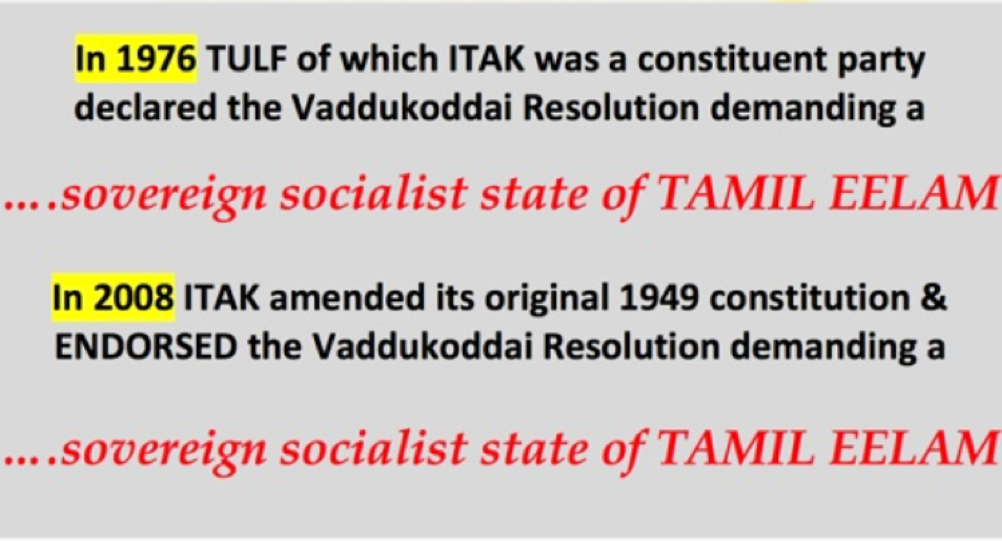
The people of Sri Lanka should ask themselves some questions and seek answers given the connection of 1987, 13Amendment  & the 1976 TULF Vaddukoddai Resolution which ITAK endorsed in 2008. Demands by Tamil militant groups/ LTTE / LTTE Diaspora /Tamil academia in Jaffna University/ Tamil political parties especially TNA & ITAK all echo what TULF originally demanded via Vaddukoddai Resolution on 14 May 1976. This document is what continues to keep alive the quest of separatism. This is why it must be annulled first.

Here are the questions:

  • Who is ITAK 

– ITAK was formed in 1949 months after gaining partial independence in 1948. It is partial independence because the Queen remained Head of the State, the UK Privy Council was the highest court & UK continued its military bases in Sri Lanka. ITAK in Tamil meant Tamil State Party but that meaning was craftily camouflaged by presenting ITAK as Federal Party. Therefore, there is confusion whether ITAK is seeking federalism or in reality confederalism which aims at eventual separation. What People must understand is that it was Tamil politicians who first sought separatism not LTTE.

  • What is the Vaddukoddai Resolution by TULF, ITAK

When ITAK continues to commemorate the Vaddukoddai Resolution, people must ask themselves why?

Vaddukoddai Resolution seeks direct self-determination.

Vaddukoddai Resolution seeks an independent Tamil Eelam State

Vaddukoddai Resolution was unanimously adopted by TULF on 14 May 1976.

Vaddukoddai Resolution calls for a free Sovereign, Secular, Socialist State of Tamil Eelam”.

Vaddukoddai Resolution was included to the TULF election manifesto

Vaddukoddai Resolution claims the State of Tamil Eelam consists of North & East provinces (though these were created after 1833 by Colonial Britain) ITAK must first prove there was a Tamil kingdom in 1619 & up to 1833 – if Portuguese took that Kingdom away, ITAK or LTTE must fight the Portuguese, the Dutch or the British! But then, the term Ceylon Tamils or Tamils of Ceylon was only coined in 1911 & prior to that all Tamils were known as Malabars (coming from Indian coast)

Vaddukoddai Resolution called to launch ‘struggle’ to win the ‘sovereignty & freedom of the Tamil Nation”

Vaddukoddai Resolution called upon the Tamil Youth to throw themselves ‘fully into the sacred fight for freedom”

(note 19 year old Prabakaran created Tamil New Tigers on 22 May 1972 day of the Republican Constitution & renamed TNT as LTTE on 5 May 1976 – weeks before the Vaddukoddai Resolution)

Vaddukoddai Resolution alienates pro-separatist Tamils from assimilating. Why are the pro-reconciliation lobbies silent on this?

Vaddukoddai Resolution was hurriedly resurrected in 2008 (before collapse of LTTE) by ITAK, a key signatory of the 1976 Resolution.

ITAK amended its 1949 original constitution by endorsing the Vaddukoddai Resolution for a ‘sovereign socialist state of Tamil Eelam” & replacing word Shamashthi” with Innaipatchchi” in 2008. What this meant was that ITAK was taking over TULF quest for a separate Tamil Eelam”.

  • LTTE sought separatism by Gun – Tamil politicians seek separatism by Vaddukoddai Resolution

LTTE attempt to separate Sri Lanka was eliminated by the Sri Lanka Armed Forces in May 2009.

LTTE used terror to separate Sri Lanka by hijacking the separatist quest launched by TULF.

The attempt by Tamil politicians to separate Sri Lanka is enshrined in the Vaddukoddai Resolution.

Tamil politicians are demanding periodic political compromise to eventually separate Sri Lanka

Same objective – both deploying different tactics. This is what People need to understand.

When Tamil politicians directly use LTTE insignia it directly connects the 2 objectives.

At the 2020 General Elections – TNA displayed the LTTE Tamil Eelam Map.  https://www.tamilguardian.com/content/tna-parades-tamil-eelam-maps-and-ltte-links-campaigning-draws-close

LTTE Diaspora issued statements to vote for former Supreme Court judge Wigneswaran.

  • Let’s look at the demands of ITAK 

 In 1949 ITAK used shamasthi” to connote their demand for federalism.

In 2008 ITAK replaced shamasthi” with innaipatchchi” – is it because while shamasthi meant federalism / innaipatchchi means confederaiism/ confederal / federation. Innaipatchchi did not mean federalism.

It is important for people to find out the meanings of Shamasthi (used by ITAK in 1949) & Innaipatchchi (replaced by ITAK in 2008) & realize that with the fall of LTTE, ITAK is seeking not a federal set up but a confederal form of power-sharing, which Sumanthiran explains.

https://www.facebook.com/senaka.rajapakse/videos/10215483270588656/UzpfSTEwMDAyNDc3Mjg5MzQ5MjozMjEzMTYyMTIwMzc0NzM/?q=sumanthiran%20federal&epa=SEARCH_BOX

How did ITAK amend its 1949 constitution in 2008?

Clause 17(d)

The General Committee of the Illangai Tamil Arasu Kadchi decided on 24.04.2008 and 03.08.2008 to approve all resolutions and actions taken by the Tamil United Liberation Front (TULF) and the Illankai Tamil Arasu Kadchi from 14 May 1976”.

This means in 2008 – ITAK endorsed what TULF in 1976 sought via Vaddukoddai Resolution.

Noteworthy is how immediately after the 2008 ITAK amendment to its 1949 constitution, a plethora of LTTE fronts began forming to continue the quest that the LTTE had failed to do.

  • How is 13A connected to the Vaddukoddai Resolution

Vaddukoddai Resolution 

  • Sought a Tamil Eelam State for people living in North & East (13A merged NE & claimed it was a historical habitat of the Tamil speaking people)
  • Sought right to self-determination which LTTE demanded in 1985 Thimpu Talks
  • Sought Tamil as Official Language of N & E (though opposing Sinhala as Official Language)
  • Indirectly encouraged Tamil youth to take up arms (India began training Tamil youth after late 1970s)

So long as Tamils quote from Vaddukoddai Resolution the quest for a separate Tamil Eelam state, citizens of Sri Lanka are justified in demanding that govts do not implementanything that attempts to fulfil quest for a separate Tamil state.

Evidence of continuing Vaddukoddai Resolution ideology 

LTTE only hijacked a quest to separate by Tamil politicians.

This means Tamil political separatism remains alive.

GoSL must take action to prevent political separatism

Having power over land & police is important to fulfill this confederal quest.

This is why 13th amendment cannot go beyond what has been given.

Given that it was forcibly introduced, given that it is a colossal waste of money & a den for corruption, given that Sri Lanka is not going to give land or police powers to the provinces, people must demand annulment of 13th amendment.

The bigger problem is India. Let India not forget that self-determination for Tamils was launched initially in India. Its intel took side of Sri Lankan Tamil militants over Indian soldiers, Indian intel failed to prevent an Indian Prime Minister getting assassinated in Tamil Nadu. That assassination team comprised many Indians as well. Did India indirectly help Sri Lanka defeat Prabakaran knowing that India itself is earmarked to be balkanized as the Soviet Union & Yugoslavia. If so, it is to India’s advantage that 13th amendment is annulled. LTTE Tamil Diaspora have support of West & this should pose a threat to India while West’s foot soldiers (Evangelical Movements, Local NGOs etc) are fully operational in the North & East & able to influence Tamil society more than India.

Majority of People do not wish to continue with 13a primarily due to the cost of maintaining it & the corruptions prevailing. President Ranil Wickremasinghe must tell the Parliament to take necessary legislative action to annul it. President Ranil must clearly inform that State Land remains vested in the Central Govt & to return private lands held by the military, the ownership must be legally proved while it makes no sense to have 9 Police Divisions reporting to 9 Chief Ministers, politicizing the police force.

Shenali D Waduge

13A ඉල්ලීමට පෙර ITAK – වඩ්ඩුකෝඩ්ඩෙයි යෝජනාව අවලංගු කරන්නැයි ජනපති රනිල් කිව යුතුයි

January 29th, 2023

ෂෙනාලි ඩී වඩුගේ

ශ්‍රී ලංකාවේ ජනතාව ප්‍රශ්න කිහිපයක් ඇසිය යුතුයි. 1987 13 වැනි සංශෝධනය සහ 1976 TULF වඩ්ඩුකොඩ්ඩෙයි යෝජනාව සමඟ ඇති සම්බන්ධය කුමක්ද සහ 2008 දී ITAK එය අනුමත කළේ ඇයි?1976 මැයි 14 දින වඩ්ඩුකොඩ්ඩෙයි යෝජනාව හරහා TULF මුලින් ඉල්ලා සිටි දෙය, දෙමළ සටන්කාමී කණ්ඩායම් / LTTE / LTTE ඩයස්පෝරාව / යාපනය විශ්වවිද්‍යාලයේ දෙමළ විද්වතුන්/ දෙමළ දේශපාලන පක්ෂ විශේෂයෙන් TNA සහ ITAK විසින් ප්‍රතිරාවය කරයි.දිගටම සජීවීව පවත්වාගෙන යන්නේ වඩ්ඩුකෝඩ්ඩෙයි යෝජනාවයි.ශ්‍රී ලංකාව දෙකඩ වීම වැලැක්වීමට පළමුව වඩ්ඩුකෝඩ්ඩෙයි යෝජනාව අවලංගු කළ යුත්තේ මේ නිසාය.

• ITAK යනු කවුද?– 1948 දී අර්ධ නිදහස ලබා මාස කිහිපයකට පසු 1949 දී ITAK පිහිටුවන ලදී.

එය අර්ධ ස්වාධීනත්වය වන්නේ රැජින රාජ්‍ය නායකයා ලෙස කටයුතු කිරීමත්, එක්සත් රාජධානියේ ප්‍රිවි කවුන්සිලය ඉහළම උසාවිය වූ නිසාත්, එක්සත්රාජධානිය ශ්‍රී ලංකාවේ සිය හමුදා කඳවුරු පවත්වාගෙන ගිය නිසාත් ය.

දෙමළ භාෂාවෙන් ITAK යන්නෙන් අදහස් කළේ දෙමළ රාජ්‍ය පක්ෂය නමුත් ඉංග්‍රීසි තේරුම ෆෙඩරල් පක්ෂය ලෙස කූට ලෙස සැඟවී ඇත.එබැවින්, ITAK අපේක්ෂා කරන්නේ ෆෙඩරල්වාදය ද නැතහොත් යථාර්ථයේ දී වෙන්වීම අරමුණු කරගත් ෆෙඩරල්වාදය ද යන්න ව්‍යාකූලත්වයකි. ජනතාව තේරුම් ගත යුතු දෙය නම් මුලින්ම බෙදුම්වාදය සෙව්වේ එල්ටීටීඊය නොව දෙමළ දේශපාලනඥයන් බවයි

§   ITAK විසින් අනුමත කරන ලද TULF වඩ්ඩුකොඩ්ඩෙයි යෝජනාව කුමක්ද?

ITAK දිගටම වඩ්ඩුකොඩ්ඩෙයි යෝජනාව සමරන්නේ ඇයිවඩ්ඩුකොඩ්ඩෙයි යෝජනාව සෘජු ස්වයං නිර්ණය අපේක්ෂා කරයි.වඩ්ඩුකොඩ්ඩෙයි යෝජනාව ස්වාධීන දෙමළ ඊළාම් රාජ්‍යයක් අපේක්ෂා කරයිTULF විසින් 1976 මැයි 14 දින වඩ්ඩුකෝඩ්ඩෙයි යෝජනාව ඒකමතිකව සම්මත කරන ලදී.වඩ්ඩුකොඩ්ඩෙයි යෝජනාව නිදහස් ස්වෛරීලෞකිකසමාජවාදී දෙමළඊළාම් රාජ්‍යයක් ඉල්ලා සිටී.

1977 TULF මැතිවරණ ප්‍රකාශනයට වඩ්ඩුකෝඩ්ඩෙයි යෝජනාව ඇතුළත්විය

වඩ්ඩුකොඩ්ඩෙයි යෝජනාව මගින් දෙමළ ඊළාම් ප්‍රාන්තය උතුරු සහනැගෙනහිර පළාත්වලින් සමන්විත බව ප්‍රකාශ කරයි (මෙම පළාත් 2, යටත්විජිත බ්‍රිතාන්‍යය විසින් 1833 න් පසු නිර්මාණය කරන ලදී)

ITAK ප්‍රථමයෙන් 1619 සහ 1833 දක්වා දෙමළ රාජධානියක් තිබූ බව ඔප්පු කළ යුතුය – පෘතුගීසීන් එම රාජධානිය පැහැර ගත්තේ නම්, ITAK හෝ LTTEය පෘතුගීසි, ලන්දේසි හෝ ඉංග්‍රීසින්ට එරෙහිව සටන් කළ යුතුය!

නමුත්, Ceylon Tamils හෝ Tamils of Ceylon යන යෙදුම 1911 දීපමණක් නිර්මාණය කරන ලද අතර ඊට පෙර සියලුම දෙමළ ජනයා මලබාර්(ඉන්දියානු වෙරළෙන් පැමිණි) ලෙස හඳුන්වනු ලැබීය.

දෙමළ ජාතියේ ස්වෛරීභාවය සහ නිදහස දිනාගැනීම සඳහා ‘අරගලයක්’ දියත් කරන ලෙස වඩ්ඩුකොඩ්ඩෙයි යෝජනාවෙන් ඉල්ලා සිටියේය.

වඩ්ඩුකෝඩ්ඩෙයි යෝජනාව දෙමළ තරුණයන්ගෙන් ඉල්ලා සිටියේ ‘නිදහසසඳහා වන පූජනීය සටනට’ සම්පූර්ණයෙන්ම යොමු වන ලෙසයි.

(19 හැවිරිදි ප්‍රභාකරන් ජනරජ ආණ්ඩුක්‍රම ව්‍යවස්ථාවේ 1972 මැයි 22 දිනදෙමළ නව කොටි නිර්මාණය කළ අතර 1976 මැයි 5 වන දින ටීඑන්ටී (TNT) එල්ටීටීඊ (LTTE) ලෙස නම් කරන ලදී – වඩ්ඩුකෝඩ්ඩෙයි යෝජනාවටසති කිහිපයකට පෙර)

වඩ්ඩුකොඩ්ඩෙයි යෝජනාව බෙදුම්වාදී ගැති දෙමළ ජනයා උකහා ගැනීමෙන්ඈත් කරයි. සංහිඳියාවට පක්ෂ ලොබි මේ ගැන නිහඬ ඇයි?

1976 යෝජනාවේ ප්‍රධාන අත්සන්කරුවෙකු වූ ITAK විසින් 2008 දී (එල්ටීටීඊය බිඳවැටීමට පෙර) වඩ්ඩුකොඩ්ඩෙයි යෝජනාව කඩිමුඩියේ නැවත මතු කරන ලදී.

ITAK සිය 1949 මුල් ව්‍යවස්ථාව සංශෝධනය කළේ ‘දෙමළ ඊළාම් ස්වෛරීසමාජවාදී රාජ්‍යයක්’ සඳහා වූ වඩ්ඩුකොඩ්ඩෙයි යෝජනාව අනුමත කරමින්සහ 2008 දී Shamashthi” යන වචනය වෙනුවට Innaipatchchi” යන්නයෙදීමෙනි.

මෙයින් අදහස් කළේ වෙනම දෙමළ ඊළමක්” සඳහා වූ TULF ගවේෂණයITAK විසින් අත්පත් කර ගනිමින් සිටින බවයි.

  • එල්.ටී.ටී.. තුවක්කුවෙන් බෙදුම්වාදය සෙව්වා  දෙමළදේශපාලනඥයන්වඩ්ඩුකෝඩ්ඩෙයි යෝජනාවෙන් බෙදුම්වාදය සොයයි

TULF විසින් දියත් කරන ලද බෙදුම්වාදී ගවේෂණය පැහැරගෙන එල්ටීටීඊයශ්‍රී ලංකාව වෙන් කිරීමට ත්‍රස්තවාදය භාවිතා කළේය.

එල්ටීටීඊ ශ්‍රී ලංකාව වෙන් කිරීමට ගත් උත්සාහය 2009 මැයි මාසයේදී ශ්‍රී ලංකා සන්නද්ධ හමුදාව විසින් තුරන් කරන ලදී.

ද්‍රවිඩ දේශපාලනඥයින් ශ්‍රී ලංකාව වෙන් කිරීමට දරන උත්සාහයවඩ්ඩුකෝඩ්ඩෙයි යෝජනාවේඅන්තර්ගතයි.

දෙමළ දේශපාලනඥයන් ශ්‍රී ලංකාව වෙන් කිරීම සඳහා කාලානුරූපී දේශපාලන සම්මුතියක් ඉල්ලා සිටිතිඑකම අරමුණ – දෙකම (LTTE & ITAK) විවිධ උපක්‍රම යෙදවීම. ජනතාව තේරුම් ගත යුත්තේ මෙයයි.දෙමළ දේශපාලනඥයන් සෘජුවම එල්ටීටීඊ ලාංඡන භාවිතා කරන විට, අරමුණු 2 සෘජුවම සම්බන්ධ කරයි.

2020 මහ මැතිවරණයේදී – TNA කොටි දෙමළ ඊළාම් සිතියම ප්‍රදර්ශනයකළේය.

https://www.tamilguardian.com/content/tna-parades-tamil-eelam-maps-and-ltte-links-campaigning-draws-close

හිටපු ශ්‍රේෂ්ඨාධිකරණ විනිසුරු විග්නේෂ්වරන්ට ඡන්දය දීමට කොටි ඩයස්පෝරාව ප්‍රකාශ නිකුත් කළේය.

  • ITAK හි ඉල්ලීම් දෙස බලමු

1949 දී ITAK ෆෙඩරල්වාදය සඳහා වූ ඔවුන්ගේ ඉල්ලීම හැඟවීමට”ශමස්ති” යන නම භාවිතා කළේය.

2008 දී ITAK විසින් shamasthi” වෙනුවට innaipatchchi” ආදේශ කරන ලදී – එය එසේ වන්නේ shamasthi යන්නෙන් ෆෙඩරල්වාදය / innaipatchchi යන්නෙන් අදහස් වන්නේ කන්ෆෙඩරයිස් / ෆෙඩරල් / ෆෙඩරේෂන් යන්නයි. ඉන්නයිපච්චි කිව්වේ ෆෙඩරල්වාදය නෙවෙයි.Shamasthi (ITAK විසින් 1949 දී භාවිතා කරන ලදී) සහ Innaipatchchi (2008 දී ITAK විසින් ප්‍රතිස්ථාපනය කරන ලදී) යන වචනවල අර්ථයන් සොයා ගැනීම සහ එල්ටීටීඊයේ වැටීමත් සමඟ බව අවබෝධ කර ගැනීම මිනිසුන්ට වැදගත් වේ.

ITAK අපේක්ෂා කරන්නේ ෆෙඩරල් පිහිටුවීමක් නොව, සුමන්තිරන් පැහැදිලිකරන බලය බෙදාගැනීමේ කොන්ෆෙඩරල් ආකාරයකි.

https://www.facebook.com/senaka.rajapakse/videos/10215483270588656/UzpfSTEwMDAyNDc3Mjg5MzQ5MjozMjEzMTYyMTIwMzc0NzM/?q=sumanthiran%20federal&epa=SEARCH_BOX

ITAK සිය 1949 ව්‍යවස්ථාව 2008 දී සංශෝධනය කළේ කෙසේද?

17(d) වගන්තිය

දෙමළ එක්සත් විමුක්ති පෙරමුණ (TULF) සහ Ilankai Tamil Arasu Kadchi විසින් 1976 මැයි 14 දින සිට ගන්නා ලද සියලුම යෝජනා සහ ක්‍රියාමාර්ග අනුමතකිරීමට ඉලංගෙයි තමිල් අරසු කච්චි මහ කාරක සභාව 2008.04.24 සහ 2008.08.03 යන දිනයන්හිදී තීරණය කරන ලදී.”මෙයින් අදහස් වන්නේ 2008 දී – ITAK විසින් 1976 දී TULF වඩ්ඩුකොඩ්ඩෙයි යෝජනාව හරහා ඉල්ලා සිටි වෙනම දෙමළ රාජ්‍යයක් අනුමත කරනලදී.

2008 ITAK එහි 1949 ව්‍යවස්ථා සංශෝධනයෙන් පසුව, එල්ටීටීඊයටකිරීමට අපොහොසත් වූ ගවේෂණය දිගටම කරගෙන යාමට එල්ටීටීඊ පෙරමුණුරාශියක් ගොඩනැගීමට පටන් ගත් ආකාරය සැලකිය යුතු ය.

§   13A වඩ්ඩුකොඩ්ඩෙයි යෝජනාවට සම්බන්ධවන්නේ කෙසේද?

වඩ්ඩුකොඩ්ඩෙයි යෝජනාව

Vaddukoddai Resolution 

–      උතුරු සහ නැගෙනහිර ජීවත්වන ජනතාව සඳහා දෙමළ ඊළාම් රාජ්‍යයක් ඉල්ලා සිටියේය (13A NE ඒකාබද්ධ කර එය දෙමළ කතා කරන ජනතාවගේ ඓතිහාසික වාසස්ථානයක් බව කියා සිටියේය)

– 1985 තිම්පු සාකච්ඡාවේදී එල්.ටී.ටී.ඊ.ය ඉල්ලා සිටි ස්වයං නිර්ණඅයිතිය ඉල්ලා සිටියේය

– උතුරු සහ නැගෙනහිර රාජ්‍ය භාෂාව ලෙස දෙමළ (නමුත් සිංහල රාජ්‍යභාෂාව කිරීමට විරුද්ධ විය)

– ආයුධ අතට ගැනීමට දෙමළ තරුණයින් වක්‍රව දිරිමත් කිරීම (ඉන්දියාවදෙමළ තරුණයින් පුහුණු කිරීම ආරම්භ කළේ මේ අතරතුර)

වඩ්ඩුකෝඩ්ඩෙයි යෝජනාව භාවිතා කරමින් වෙනම දෙමළ රාජ්‍යයක් සඳහාවන ගවේෂණය පවතින තාක් කල්, මෙම යථාර්ථය පහසු කිරීමට කිසිදුප්‍රතිපාදනයකට ඉඩ නොතබන බවට ශ්‍රී ලංකා රජය සහතික විය යුතුය.

ශ්‍රී ලංකාව වෙන් කිරීමේ න්‍යාය පත්‍රයට පහසුකම් සලසන කිසිදු විධිවිධානයකට ශ්‍රී ලංකා රජය ඉඩ නොදෙන ලෙස ඉල්ලා සිටීමට ජනතාවට පූර්ණ අයිතියක් ඇත.13 වැනි සංශෝධනය සම්පූර්ණයෙන් ක්‍රියාත්මක කරනවාට ජනතාව විරුද්ධ වන්නේ එබැවිනි.

දේශපාලන පක්ෂ මෙම වැදගත් මාතෘකාව සමඟ සෙල්ලම් නොකළ යුතුය.

ශ්‍රී ලංකාව දෙකඩ කිරීමට පාර කපන 13 වැනි සංශෝධනය ක්‍රියාත්මකකිරීමට එකඟ වනකිසිදු දේශපාලන පක්ෂයකට හෝ දේශපාලනඥයකුටඡන්දය නොදෙන තත්ත්වයකට ජනතාවපැමිණ ඇත.

වඩ්ඩුකොඩ්ඩෙයි විභේදන මතවාදය අඛණ්ඩව පවත්වාගෙන යාමේ උදාහරණ

දෙමළ දේශපාලනඥයන් විසින් ලංකාව දෙකඩ කිරීමේ උත්සාහය එල්ටීටීඊයවිසින් පැහැර ගන්නා ලදී

මෙයින් අදහස් කරන්නේ දෙමළ දේශපාලන බෙදුම්වාදය තවමත් ජීවමාන බවයි.දේශපාලන බෙදුම්වාදය වැළැක්වීමට රජය පියවර ගත යුතුය

මෙම ෆෙඩරල් ගවේෂණය ඉටු කිරීම සඳහා ඉඩම් සහ පොලිසිය පිළිබඳ බලයපළාත් පාලනයට ලබා ගැනීම වැදගත් වේ.

ශ්‍රී ලංකාව දෙකඩ කිරීමට TULF-TNA-ITAK දරන ප්‍රයත්නය ඉටු කිරීමටඔවුන්ට පළාත් පාලනය යටතේ පොලිස් සහ ඉඩම් බලතල අවශ්‍ය වේ.

මේ නිසා, 13 වැනි ව්‍යවස්ථා සංශෝධනයට දී ඇති දේ ඉක්මවා යා නොහැක්කේ මේ නිසාය.

13 වැනි ආණ්ඩුක්‍රම ව්‍යවස්ථා සංශෝධනය බලහත්කාරයෙන් ගෙන ආ බැවින්, එය විශාල මුදල් නාස්තියක් සහ දූෂණයට තෝතැන්නක් වන බැවින්, පළාත්වලට ඉඩම් හෝ පොලිස් බලතල ලබා නොදීම යෝග්‍ය බැවින්, 13 වැනි සංශෝධනය අවලංගු කරන ලෙස ජනතාව ඉල්ලා සිටිය යුතුය.

ලොකුම ප්‍රශ්නය ඉන්දියාවයි. දෙමළ ජනයා සඳහා ස්වයං නිර්ණයආරම්භයේදී ඉන්දියාවේදී දියත් වූ බව ඉන්දියාව අමතක නොකළ යුතුය.

ඉන්දියානු බුද්ධි අංශ දෙමළ සටන්කාමීන්ගේ පැත්ත ගත් අතර ඉන්දියානු සොල්දාදුවන්ට උදව් කළේ නැත

තමිල්නාඩුවේදී ඉන්දීය අගමැති ඝාතනය වැළැක්වීමට පවා ඉන්දීය බුද්ධි අංශඅසමත් විය. එම ඝාතන කණ්ඩායමට බොහෝ ඉන්දියානුවන් ද ඇතුළත් විය.

සෝවියට් සංගමය සහ යුගෝස්ලාවියාව මෙන් ඉන්දියාව දෙකඩ කිරීමටඉලක්ක කර ඇති බව ඉන්දියාව දන්නවාද?
ප්‍රභාකරන් නැති කිරීමට ඉන්දියාව වක්‍රව ශ්‍රී ලංකාවට උදව් කළේ මේ නිසාද?

එසේ නම් 13 වැනි සංශෝධනය ඉන්දියාවට තර්ජනයක් ලෙස ඉන්දියාව බැලිය යුතුය.බෙදුම්වාදී ගැති දෙමළ කණ්ඩායම්වලින් කී දෙනෙක් ඉන්දියාවේ පැත්තේ ඉන්නවාද?කොටි ඩයස්පෝරාව බටහිර රටවල ජීවත් වන නිසා බටහිර ජාතීන්ගේ පැත්ත ගනීබටහිර රජයේ අරමුදල් ලබන එවැන්ජලිස්ත ව්‍යාපාර ශ්‍රී ලංකාවේ සහ ඉන්දියාවේ හින්දු භක්තිකයන් සෙමෙන් පරිවර්තනය කරයි

බටහිර රජයේ අරමුදල් ලබන රාජ්‍ය නොවන සංවිධාන ද දෙමළ සමාජයටබලපෑම් කරයි

මේ සියල්ල සිදු වන්නේ බටහිරයන් ඉන්දියාව ඔවුන්ගේ මිතුරෙකු ලෙස පෙනීසිටින අතරතුර ය.

ශ්‍රී ලංකාවේ දෙමළ ජනයා කෙරෙහි වැඩි බලපෑමක් ඇත්තේ කාටද – ඉන්දියාවහෝ බටහිර සහ එහි මිත්‍ර රටවල්?

මෙය අනවශ්‍ය ලෙස කරදර සඳහා වේදිකාවක් සකස් කිරීමකි.

13 සංශෝධනය ඉදිරියට ගෙන යාමට බහුතරයක් මිනිසුන් කැමති නැත, මූලික වශයෙන් එය නඩත්තු කිරීමට යන වියදම සහ පවතින දූෂණ හේතුවෙන්.

එය අවලංගු කිරීමට අවශ්‍ය ව්‍යවස්ථාදායක ක්‍රියාමාර්ග ගන්නා ලෙස ජනාධිපති රනිල් වික්‍රමසිංහ මහතා පාර්ලිමේන්තුවට පැවසිය යුතුය.

රජයේ ඉඩම් මධ්‍යම රජයට පැවරී ඇති බවත්, හමුදාව සතු පෞද්ගලික ඉඩම් ආපසු ලබා දීමටත්, එහි අයිතිය පුද්ගලික අයිතිකරුවන් නීත්‍යානුකූලව ඔප්පු කළ යුතු බවත්, පොලිසිය දේශපාලනීකරණය කරමින් මහ ඇමැතිවරුන් 9 දෙනෙකුට පොලිස් කොට්ඨාස 9ක් වාර්තා කිරීම තේරුමක් නැති බවත් ජනාධිපති රනිල් ශ්‍රී ලංකා පුරවැසියන්ටපැහැදිලිව දැනුම් දිය යුතුය. .

ෂෙනාලි ඩී වඩුගේ

Shenali D Waduge

Jaishankar’s visit reset bilateral relations, says Sri Lankan envoy

January 29th, 2023

Courtesy The Hindustan Times

Milinda Moragoda said India and Sri Lanka have sort of overcome the fallout of a Chinese surveillance vessel’s visit to Hambantota port last year.

India and Sri Lanka have been able to address the impact of a Chinese surveillance vessel’s visit to Hambantota port last year and Colombo is looking to New Delhi to help drive economic recovery through investments in key sectors such as energy, Sri Lankan envoy Milinda Moragoda said.

We have sort of been able to get over it, but we have to always be vigilant,” he added.

Expressing appreciation for the economic aid of nearly $4 billion extended by New Delhi without any conditions” for Colombo amid last year’s economic crisis, Moragoda said India had also taken the lead in providing guarantees to the International Monetary Fund (IMF) to help Sri Lanka access a $2.9-billion bailout package.

In every way, India led the stabilisation and was the bridge to the IMF,” he said. The reality is that our social explosion would have been much worse and would have been clearly violent if India had not stepped in.”

Sri Lanka is keen on Indian investments in key areas, including renewable energy, especially wind and solar energy in the island’s northwest, development of the Trincomalee oil tank farm as a regional energy hub, and the Sri Lankan government’s planned divestments in telecommunications, insurance and hotels, he said. The framework is being set up for a power grid between the two countries, he added.

A subsidiary of Indian Oil Corporation (IOC) signed a deal with Sri Lanka last year to develop the 850-acre oil storage facility at Trincomalee with a capacity of nearly one million tonnes. Moragoda said storage of fuel at the facility will help Sri Lanka’s energy security and there is also scope for building a refinery with the possible involvement of a third country.

The tourism sector is low-hanging fruit. We need tourism to get the economy moving quickly. India was the main source of tourists before the pandemic,” he said.

The two sides are also looking at expanding trade through Indian rupee settlements. India has allowed Sri Lankan banks to open Indian rupee accounts with Indian banks. RuPay would be another possibility for tourism,” he said, adding there was agreement at the policy level on RuPay and technical discussions were on to finalise arrangements.

Moragoda, who recently met National Security Adviser Ajit Doval and Chief of Defence Staff Gen Anil Chauhan for discussions on security issues, said defence cooperation between the two sides has picked up pace. Sri Lanka currently has about 400 military personnel being trained in India, the highest for any country, and work is underway on a floating dock being built at Goa shipyard for the Sri Lankan Navy.

Following the supply of a Dornier reconnaissance aircraft to Sri Lanka last year, the two sides are in negotiations for a second aircraft. India and Sri Lanka are set to hold their annual bilateral defence dialogue during February 23-25 and there is significant cooperation through the Colombo Security Conclave that brings together India, the Maldives, Sri Lanka and Mauritius, he said.

We should build towards a strategic dialogue. At the moment, the strategic dialogue happens at the political level, but over time it could be more structured,” he said. Noting that the Yuan Wang 5 episode occurred when there was an element of dysfunctionality” in Sri Lanka, Moragoda said the continuing dialogue with India helped build trust. I think we should develop ways of predicting some of these things. There may be other unknowns, may not be a ship. It may be something else, but what is important is an open line of communication, especially in what is essentially an asymmetrical relationship of India and Sri Lanka,” he said

Proposal to Fully implement the 13th Amendment to the Constitution

January 29th, 2023

Mahinda Gunasekera

His Exellency, Mr. Ranil Wickremasinghe
President of Sri Lanka
Colombo, Sri Lanka

     Copy to:  Hon. Dinesh Gunawardena, Prime Minister of Sri Lanka
         ”     ”     Hon. Dr. Wijedasa Rajapashe, Minister of Justice, Sri Lanka

Your Excellency,

Proposal to Fully Implement the 13th Amendment to the Constitution

I would like to refer you to the inception of the need to incorporate the 13th Amendment  creating nine Provincial Councils including the temporary merger of the Northern and Eastern Provinces in the year 1987 granting a list of devolved powers plus a shared list together with power over land and policing within the Unitary State of Sri Lanka, following the signing of the infamous Indo-Lanka Accord by the then Prime Minister of India, Honourable Rajiv Gandhi and Sri Lanka’s President, His Excellency J. R. Jayawardene.  As a Cabinet Minister of President J.R. Jayawardene’s government, you would no doubt recall the military threats and duress applied on the Sri Lankan authorities by the then government of India, the regional super power, that engaged in gunboat diplomacy against her friend and small neighbour of Sri Lanka in forcing the hand of President J.R. Jayawardene to accept the terms laid down by India totally ignoring the Pancha Seela principles to which India was a leading proponent .

You would also recall that the 13th Amendment was adopted by the United National Party government which enjoyed a 5/6th majority in Parliament without having consulted the people and where President Jayawardene manipulated the vote by threatening to take up Letters of Resignation he had previously obtained from members of his caucus in order to ensure that the required two-third majority was received.  Furthermore, the Accord between the two leaders fails due to the threats and duress adopted by India, and also India’s failure to disarm the main terrorist group known as the Liberation Tigers of Tamil Eelam (LTTE) which they undertook to accomplish in 72 hours thereof, whereas India’s Peace Keeping Force went on to engage the LTTE in military warfare for a period of nearly three years after which they withdrew having suffered heavy casualties. It must also be pointed out that the LTTE which called itself the sole representative of the Tamil community and so acknowledged by the Tamil National Alliance, did not sign nor accept the terms of the Indo-Lanka Accord as they sought a separate state called “Eelam” encompassing 1/3rd of the island’s land area and 2/3rds of the coastal belt and surrounding ocean, towards which they engaged in an armed confrontation lasting over 30 years including suicide terrorism.  Even the Supreme Court of Sri Lanka which reviewed the constitutionality gave its consent on a 5/4 split after certain changes were made to the original bill.

The people of Sri Lanka consider the Provincial Councils as a White Elephant which only has another set of corrupt politicians beholden to the main political parties, who remain an added burden on the public purse.  At a time when the flow of information is instantaneous, it is the height of stupidity to have nine Provincial Councils at an extravagant cost to administer the nine regions especially for a small developing country such as Sri Lanka when modern communications enables efficient administration from a central location. The reserved list of devolved powers makes it anomalous to refer to Sri Lanka as a Unitary State, when the Centre surrenders its rights to the Provinces as in a Federal system.

What the Tamil and Muslim minorities have mainly sought is a voice in the day to day governance of the state, which can be accomplished by sharing more power at the Centre by appointing members of the minorities and other opposition parties to Consultative Committees or Advisory Bodies to each of the key ministries or all ministries if necessary with a right to participate in the drafting of policies, monitoring implementation of programs and reviewing final outcomes as opposed to majoritarian rule as seen in the present system where the majority community dominates the governance.  In addition, experts from outside parliament too could be drawn to serve on Experts Committees to guide the ministers and officials in their day to day work for which a fee may be paid.  The Provincial Councils could be replaced by Multi-District Councils comprised of two to three districts to which powers may be delegated to deal with matters directly relating to the districts concerned.

We should avoid the devolving of powers to the Provinces as it could lead to the break up of Unitary state into two or more units with hostile borders and associated complications in settlement issues of such a division.  A separate memo has previously been submitted to the Ministry of Constitutional Affairs incorporating guidelines for the establishment of Multi-District Councils, election of Executive Chairpersons for each multi-District Council and member councillors, a copy of which could be re-submitted if required.  The report presented by the Special Committee headed by Mr. Romesh de Silva to draft a Revised Constitution by the former President has still not been released for public consideration even though public funds have been expended for this purpose.

Trust that you nor your government would take the unpopular step  to add on more powers to the existing Provincial Councils, nor take steps to re-merge the Northern and Eastern Provincial Councils which were demerged by the Supreme Court of the country.  We hope that your government which is faced with an enormous financial crisis will not add further constraints on the national budget by not making the Provincial Councils a greater strain on the public purse and instead resolve to strengthen the unitary character and solve the issues at hand with further savings to the nation’s budget.      

Yours sincerely,

Mahinda Gunasekera

Charge sheet ready to remove PUCSL Chairman: Minister

January 29th, 2023

Courtesy The Daily Mirror

Power and Energy Minister Kanchana Wijesekara said that a charge sheet related to the removal of the chairman of the Public Utilities Commission of Sri Lanka (PUCSL) Janaka Ratnayake is being prepared and will be presented to the Parliament soon.

Speaking at a media briefing, the minister said legal action will also be taken against the PUCSL Chairman.

“The necessary legal proceedings against the PUCSL chairman and the charge sheet for his removal have been prepared by now. All the members of the ruling party in the parliament have expressed their agreement for this and steps will be taken to remove him according to the provisions in parliament,” he said.

The minister also claimed that before being appointed as the PUCSL Chairman, Janaka Ratnayake, he had requested then President Gotabaya Rajapaksa to appoint him as the Chairman of the Commercial Bank.

“His name had been forwarded to the Central Bank. But the CBSL has refused to issue an Assessment of Fitness certificate citing some previous allegations against Ratnayake. Also, a parliament selection committee in 2012 has recommended that he should not hold any position in a government institute. The minister questioned as to how he was appointed as the PUCSL Chairman by the Constitutional Council despite those recommendations,” he said.

He also alleged that Janaka Ratnayake has approached through some political parties to appoint him as a national list MP.

Meanwhile, the minister said the Ceylon Electricity Board will be able to provide uninterrupted power supply from the day after the PUCSL approved the new electricity tariff structure.

The minister said the PUCSL Chairman is placing the whole country against the wall and is responsible for this power cut. (Darshana Sanjeewa Balasuriya)

Is recolonisation the final solution?- II

January 28th, 2023

By Rohana R. Wasala

Continued from January 26, 2023

To assert, as Mr Sirimanne does, that From ancient times the Northern region in the island was a kingdom occupied by Tamils due to its closeness to South India…….. during the reign of King Elara, a Tamil, there was a war between the Sinhalese and Tamil kingdoms…..” is completely wrong. It is a very irresponsible statement. The factual situation is that the young prince Dutugemunu of Magama in the south, after a long military campaign involving a series of hardwon battles, defeated usurper king Elara who had come from India as an invader. There had been no Tamil kingdom in the north or a permanent Tamil population in the north before the 13th century CE, as Professor Kingsley de Silva argues with evidence in his ‘A History of Sri Lanka’ (Penguin Books, London, 2005). Magha of Kalinga’s cataclysmic invasion with a massive army of twenty thousand Kerala and Tamil mercenaries and his ruinous occupation of Lanka for twenty-one years (‘moved thereto by the lust of wealth and power’ as the Mahavansa puts it), laid waste to the kingdom and the religion, and put an end to the achievements of the dry zone- based hydraulic civilization that the Sinhalese kings had built over the centuries. But during Magha’s reign ‘… there dwelt, scattered in the beautiful cities and hamlets that they had built for themselves in the great strongholds and mountainous parts of the country, some great and good men who defended the people and the religion from the disturber’ (Chapter 81 of the Mahavansa). This means that the Magha invasion caused the disintegration of the Lankan kingdom into a number of regional strongholds from which ‘great and good men’ (such as Subha Senadhipathi of Yapahuwa, a general, Sankha of Gangadoni, another military chief, and Bhuvaneka Bahu on the top of the Govinda rock) defended the rest of the country, until king Vijayabahu III of Dambabeniya’s son and successor, Parakrabahu II, was finally able to drive away the despoilers. In earlier times, South Indian invaders, when defeated and driven away, sailed back to India, but this time, Magha with his retreating army made a permanent Tamil settlement in the north. 

Since a millennium before that time, the interactions between the island and the southern and eastern regions of the subcontinent were almost exclusively at the trade and cultural or religious levels, and the island’s sovereignty was not challenged. But occasionally, right from the earliest times, traders became invaders. Thus, as the Mahavansa (Ch.11 ) records, ‘Two damila (malabar) youths powerful in cavalry and navy, named Sena and Guttika’ (Sena and Guttika were horse traders with a fleet of ships.), after killing the reigning monarch Suratissa, who must have been very old by that time, ‘righteously reigned for twenty-two years’ from 237 to 215 BCE. But Suratissa’s youngest brother (most probably nephew) Asela defeated and put to death the usurpers, and restored Sinhalese sovereignty, and ruled at Anuradhapura for ten years. Then, another powerful trader (as recently concluded by historians) from South India named Elara killed king Asela, and ruled the country for forty-four years. But see how the Mahavansa (Ch. 11) records this event: ‘A damila named Elara of the illustrious Uju” tribe, invading this island from the Cola country, for the purpose of usurping the sovereignty, and putting to death the reigning king Asela, ruled the kingdom for forty-four years, – administering justice with impartiality to friends and to foe.’  

Following is how king Dutugemunu treated his fallen enemy king Elara, fully recognizing the latter’s noble reputation as a righteous ruler, though a usurper, as recorded in the Mahavansa Ch. 25: (Mr Sirimanne alludes to this episode in a rather offhand manner.)

‘Summoning within the town the inhabitants of the neighbourhood, within the distance of a yojana, he held a festival in honour of king Elara. Consuming the corpse in a funeral pile on the spot where he fell, he built a tomb there; and ordained that it should receive honours (like unto those conferred on a Cakkavatti). Even unto this day, the monarchs who have succeeded to the kingdom of Lanka, on reaching that quarter of the city, whatever the procession may be, they silence their musical band.’

(This royal decree is honoured by the Sinhalese Buddhists even today, after over two thousand years.)

Isn’t this something hard to come by in the history of war in the world, war being an ever present necessary evil, as it were, in human affairs? King Dutugemunu’s magnanimity in victory came from his Buddhist upbringing. At the beginning of his campaign against Elara, prince Dutugemunu declared: ‘This enterprise of mine is not for the purpose of acquiring the pomp and advantages of royalty. This undertaking has always had for its object the re-establishment of the religion of the Supreme Buddha…..’. (The country’s ancient Buddhist culture is a world heritage that must be protected.) The same compassionate and generous spirit was alive in the hearts of the young soldiers and their commanders who took part in the humanitarian operation in the north that put an end to the armed separatist terrorism in 2009. They could have brought the war to a quicker end and suffered a lot fewer casualties among themselves than they did, had they chosen to defy what was inherent in their cultural DNA. Unfortunately, the geo-poiltics driven superpowers have not recognized this fact, and have visited punitive afflictions on Sri Lanka for alleged violation of human rights that make life miserable for all Sri Lankans.

To return to my subject, geographical proximity no doubt was a factor in the stimulation of interactions between the two countries, but mass movements of population to and fro were not so easy as to be a usual occurrence. The fact that Sinhala kings sometimes brought queen consorts from South India (due to complicated succession problems that had nothing to do with the then existing demography of the country) is not something unique to them. Just look at the Wikipedia: The recently deceased queen Elizabeth II’s family tree has ancient roots in Germany, Denmark, Russia, etc.; but citizens of those countries do not seem to think of claiming that she was of their ethnicity or of assuming that the fact had any political significance.

Of course, as a result of these interactions, the Sinhalese acquired a great deal of Indian culture. But the important thing to remember while appreciating that fact is that over the past twenty-three centuries the Sinhalese have cherished their own language, their own distinct spiritual doctrine (Buddhism), and their island home with its rich abundance of recorded and unrecorded evidence of their prehistoric insular ancestry and their  ancient Buddhist heritage. When it comes to sharing the natural resources of the land with minorities with different religious cultures, languages, ethnicities, etc. that joined them later in different contexts, there is no other race of people who are more humanely accommodating than the Sinhalese Buddhists in spite of the fact that they were the most persecuted community during the past half a millennium under the jackboot of three European colonial powers. Why were they singled out for such suppressive treatment? It was because the colonialists correctly identified the Sinhalese (under the benign sway of their spiritual masters, the Buddhist monks) as their only implacable enemy.   

Traditionally, whenever the country and the Buddha Sasanaya were in jeopardy, the monks have  come forward as defenders, on rare occasions even as armed soldiers. Warrior king Dhatusena who ruled at Anuradhapura from 455 to 473 CE, having defeated six Dravidian usurpers, was a Buddhist monk in his youth. King Senerath of Kandy (who reigned from 1604 to 1635 CE) was originally a monk. He disrobed to become king in order to try to rid the country of invading foreign powers. He fought against the occupying Portuguese and expanded the territory of his kingdom. The Sinhalese only thought of the country, the Buddha Sasanaya, and the commonality of people, not so much about their race. In modern times, sometimes Buddhist monks have cause to feel threatened by non-Buddhist extremists who forcibly enter the Buddhists’ religious space or when they vandalize or lay claim to ancient Buddhist archaeological sites (even violating the antiquities ordinances established in British times). It is natural that they try to raise awareness among the citizens about these things and to get the political authorities to set things right according to the law. People who have political or sectarian or religious axes to grind have no qualms about excoriating the monks and lay Buddhists for alleged racism,  chauvinism, extremism, xenophobia, and so on, simply because they raise their voice against the covert and overt excesses of extremists that go undetected or unrecognized by local political authorities and the hostile foreign NGO brigade. Of course, it must be remembered that Tamil Hindus face the same threats from religious fundamentalists. Actually, Tamil Hindu and Sinhala Buddhist solidarity is indispensable for mutual protection from the proselytizing zealotry of mindless fundamentalists. Certain foreign funded NGOs and their local allies do everything possible to prevent the Sinhalese Buddhists and Tamil Hindus from uniting for making common cause against unethical conversion projects.

Mr Sirimanne seems to imply that colonizing of Sri Lanka by three European nations happened as a matter of course, apparently unopposed by the native Sinhalese and Tamils, and that they somehow benefited from the experience. The truth is otherwise. Our people were massacred, our places of worship were vandalized, desecrated, burned down, or alienated to strangers or converts, while the country’s natural resources were plundered, and the sons of the soil were oppressed, downtrodden, and exploited. Because of this historical reality, for all the missionaries’ efforts of four and a half centuries, only about six percent of the local population had embraced Christianity/Catholicism by 1947, and the rest 94% had willingly forfeited all claims to possible material rewards by refusing to abandon their no less humanizing hereditary faiths.

At first, under the Portuguese, Sinhalese Buddhists in coastal areas embraced Christianity under duress, but later, as Mr Sirimanne says  ‘Many Sinhalese in towns and cities for favors changed their religion and acquired Portuguese names’. Serving or saving the Sinhalese was not the real concern of the Portuguese. They thought of their own people back home, just as the foreign powers involved in our internal affairs currently do. Portugal  at that time was not as resource-rich as Sri Lanka, its people were enjoying a far lower standard of living than the contemporary Sinhalese. Provocation for plunder was high. And it didn’t go unheeded. (See Dr Susantha Goonatilake’s ‘A 16th Century Clash of Civilisations: Portuguese Presence in Sri Lanka’, Vijitha Yapa, 2010) The Dutch who followed them introduced a network of canals for transport of local products for export for their own revenue, and introduced Roman Dutch Law for ease of administering the provinces they were occupying. It is true that in the course of time, these innovations became useful to the descendants of the people that they had indifferently robbed.

On February 4, 1948, Sri Lanka was granted dominion status (within the British Commonwealth) which was short of full independence. It was not something remarkable or memorable by any means. India was given the same status on August 15, 1947. But the wiser and more dignified Indian leaders implicitly eschewed the ‘benefits’ of membership of that body, and officially quit it on January 26, 1950, and asserted their country’s full independence, worthy of their many millennia of glorious civilization, which produced the great Buddhist emperor Ashoka, who introduced Buddhism to our country, and about whom H.G. Wells said: ……..amid tens of thousands of names of monarchs, Ashoka shines, shines almost alone, a star”

The patriotic progressive people of Sri Lanka under the leadership of Mrs Sirimavo Bandaranaike declared Sri Lanka a republic on May 22, 1972. Now that was a momentous occasion for the whole nation to celebrate. But it was less than an ideal choice to remain a member of the Commonwealth. Probably the choice was made for us by the powers that be.  Has any special benefit accrued to Sri Lanka as a result? Has it done anything to relieve the suffering inflicted on the peaceful citizens for having defeated terrorism and saved democracy? Has it ever intervened on our behalf in such situations? 

Mr D.L. Sirimanne ends his interesting article Celebrating 75th Anniversary of Independence” (The Island/Opinion/January 18, 2023) with the following paragraph, which prompted this response:

‘It is almost 75 years since Sri Lanka obtained Independence from Britain and unfortunately the country was misruled and ruined by ignorant avaricious unpatriotic Sinhalese leaders fighting for power. It is now a bankrupt nation and 80% of the population is starving without food, fuel and medicine. It a disgrace to plan celebrating 75 years of ‘misrule’ as ‘75 years of Independence.’ The 4th February 2023 should be a day of repentance and religious prayers to God, Allah and all the Devas to make Sri Lanka a prosperous and happy nation, with freedom and equality to all its multinational and multireligious citizens in the very near future.’

That within the last seventy-five years since the end of British occupation there have been some  ‘ignorant avaricious unpatriotic Sinhalese leaders fighting for power’ is undeniable. We have living examples in the highest places even today. But to say that the country has been misruled and ruined solely by these unpatriotic Sinhalese leaders is a crass generalization that arbitrarily transfers all blame to the leaders of the Sinhala majority, while exonerating the few communalists among the minority politicians, who are actually even more responsible for retarding the forward march of post-independence Sri Lanka by adopting hostile attitudes to nationally beneficial changes proposed by Sinhalese leaders. 

The Sinhalese voters, whenever they have the chance to do so, democratically elect their parliamentary representatives, hoping or requiring that they make laws for governing the country for the good of all its citizens regardless of multifarious differences among them. On every occasion that they felt persuaded that the leader who would be able to bring in necessary changes to transform the country so that this goal could be fully realized, they elected him or her with tremendous majorities, which were augmented by at least some votes from the minorities as well, such as when they elected Mr Bandaranaike in 1956, Mrs Bandaranaike in 1970, Mr Jayawardane in 1977, Mrs Chandrika Bandaranaik Kumaratungae in 1994, Mahinda Rajapaksa in 2010, and Mr Gotabaya Rajapaksa in 2019. In all these cases, they were elected on a nationalist platform, not on a communalist basis. Although ordinary Tamil and Muslim voters are as fair-minded and as democratic as the ordinary Sinhalese voters, the ruling elite of each minority community rouse communal feelings among its polity against the majority for their own advantage, rather than for that of the community they claim to represent. The evil practice of political horse-trading between majority and minority politicians seems to have come to stay. Global and regional superpowers exploit this situation to push their geopolitical agendas at the expense of Sri Lanka. 

 Mr Sirimanne’s wish for ‘a prosperous and happy nation, with freedom and equality to all its multinational and multireligious citizens’ is what all right-minded Sri Lankans have shared and have been slowly but surely moving towards since 1948. The British adopted the infamous divide and rule imperial policy, which is still being used against us. The term ‘multinational’ is problematic for our small country in that it denotes a number of nations, which means it promotes division. To say that we are a multiethnic or multiracial and multicultural nation is better for establishing ‘freedom and equality’ for all Sri Lankans. They already enjoy these. If there are any lapses, they are common to all communities. 

The solution is not to try to return to the alleged Utopia that the British are believed by some to have bequeathed to us at independence (for such wasn’t the reality), or to overlook the 1972 change as insignificant, but to make way for the young of the country today to make a correct assessment of what has been achieved and what has not been achieved by the previous generations since independence (who were no less patriotic, no less proactive than them) and forge ahead with new insights, new visions, and appropriate course corrections as our ancestors did during crises to ensure our survival for so long as one people in spite of manifold differences among us.    

13th Amendment: LAND – Demanding State or Private Land

January 28th, 2023

Shenali D Waduge

Over 80% of land belongs to the State while some 14% land are privately owned land. There are some facts that need to be made clear.

State Land & State Land given to Provinces

Appendix 1 of the 13th Amendment includes provision for State Land. It clearly states that State land is vested in the Republic but it also allowed Provinces to administer the State land that had been vested to it by the President using Article 33(d).

No well-funded campaign claiming land” has been confiscated by Sri Lanka’s security forces, can be simply handed over to the provinces WITHOUT confirming if this land that the Sri Lanka Security Forces held were State Land or Private Land.

NO ONE can claim entitlement to STATE LAND as it is land that belongs to the State & the Security Forces cannot be evicted out of this state land as they are using the land for security measures to protect the State.

Therefore, someone needs to legally challenge all STATE LAND that had been unfairly disposed post-2009. STATE LAND cannot be transferred as private land.

Private Land

These are where urban & rural citizens live & get passed on from deeds & are registered in the land registry. During the war, some of these private lands had been taken based on national security requirements & naturally they required to be returned.

  1. Where are these private lands?
  2. Who owns them?
  3. Do the owners have legal papers to prove ownership?

It is only those who can show ownership to a private land that is being used by the State, that can claim ownership & demand its return.

No leader or Govt should be coerced into forfeiting state land & transfer to private hands.

State Land has to remain vested in the State. State land is only released to people or businesses (this lease” also needs to be revisited)

Private lands if occupied by the State, has to be returned to private ownership ONLY after private owners can legally present their case, that they owned the land which the State apparatus occupies.

When President Ranil says land occupied has to be given – he must be told that it is only private lands that are occupied by the State that should be given & NOT STATE LAND, as the constitution clearly says that STATE LAND IS VESTED IN THE STATE (REPUBLIC) and NOT THE PROVINCES.

Someone, please make this clear to the President. Any state land that has been erroneously given to private hands SHOULD BE RETURNED/TAKEN BACK. No Govt can give State Land to private parties unless it is for a venture beneficial to the State & only for a fixed period.

Shenali D Waduge

Uninterrupted power:CEB vs. PUCSL clash worsens

January 28th, 2023

By Maheesha Mudugamuwa Courtesy The Morning

The Ceylon Electricity Board (CEB) yesterday (28) reaffirmed that the existing power cuts would continue despite recommendations by the Human Rights Commission of Sri Lanka (HRCSL) to provide an uninterrupted power supply during the period of Advanced Level examinations, which are being held until 17 February.

The CEB’s stance comes as the Ministry of Power and Energy and the utility regulator remain engaged in a war of words over electricity tariff hikes and power load shedding options. Meanwhile, students are preparing for the examination period amidst planned power outages.

Speaking to The Sunday Morning, CEB Chairman Nalinda Ilangakoon said the CEB would like to suspend the ongoing power cuts during the A/L examination period, but under the current technical circumstances, it had no option but to continue power cuts.

We would like to abide by the recommendations given by the HRCSL, but nothing has been changed within the CEB technically as we are not given the required fuel free of charge nor has a loan been approved to obtain fuel from the Ceylon Petroleum Corporation (CPC). We have also not been given permission to impose the requested tariff hike to enable the board to recover the losses incurred on a daily basis,” Ilangakoon explained.

He stressed that without the necessary resources, the CEB had no option but to impose power cuts.

On 26 January, the Public Utilities Commission of Sri Lanka (PUCSL) informed the CEB Chairman that the commission would not approve any scheduled power interruption from 26 January to 17 February and the commission directed him to provide an uninterrupted power supply until 17 February, in accordance with the agreement entered into on 25 January between representatives of the Ministry of Power and Energy, PUCSL, CEB, and the CPC, on the recommendation of the HRCSL.

The agreement had been reached with the aim of providing an uninterrupted power supply during the period of Advanced Level examinations until 17 February.

However, on Friday (27), Minister of Power and Energy Kanchana Wijesekera took to social media, charging that the representatives from the CPC had been coerced into signing the agreement by members of the HRCSL, who had allegedly threatened the representatives with jail sentences if they failed to do so. Minister Wijesekera stated that the ministry was seeking legal advice on how to respond to the HRCSL’s action.

PUCSL Chairman Janaka Ratnayake has further stated that the commission had observed that the scheduled power interruptions had been imposed on 25 January despite the above agreement and that it would therefore take the necessary legal actions over the violation of Condition 30 (10) of Electricity Transmission and Bulk Supply License No. EL/T/09-002 under the provisions of the Sri Lanka Electricity Act, No. 20 of 2009 and the PUCSL Act, No. 35 of 2002, upon failure to adhere to the above. 

When contacted, CEB Spokesman and Additional General Manager (Generation Division) Dhammika Navaratne confirmed the stance expressed by the CEB Chairman – that the CEB was technically incapable of honouring the HRCSL’s recommendations.

If power cuts are suspended during the A/L examination period, the length of the power cuts that it would have to impose towards the end of March and early April would have to be extended given the current hydropower status,” he explained.

According to Navaratne, the hydropower reservoir catchment areas are currently experiencing a very dry weather condition and therefore, the board will have to protect the existing hydropower resources for utilisation in the coming months.


Copyright © 2026 LankaWeb.com. All Rights Reserved. Powered by Wordpress