FROM THE MAY FOURTH MOVEMENT OF 1919 TO GALLE FACE GREEN 2022 

October 8th, 2022

By Sena Thoradeniya

Preamble

This essay was originally written in April 2022, attempting to provide information in a nutshell of protest movements and demonstrations that had taken place demanding either anti-imperialist interventions, political reforms or ouster of rulers, beginning from the May Fourth Movement in China in 1919. Our aim was to provide new insights to a few selected Protest Movements to the Galle Face Protesters, the political parties behind the Protest, newly emerged ideologues and patron saints of the Protesters, inviting  all of them to  study these movements well, their consequences and draw from their learning aspects to map out a course of action suitable to concrete conditions of Sri Lanka. In this essay we have left out Uprisings of the Slaves and Serfs, Peasant Wars and Uprisings, Civil Wars, Democratic and Socialist Revolutions and National Liberation Struggles. Protest Movements were selected at the writer’s discretion.     

Unfortunately, we could not find space in print media to publish this essay. Had the editors of print media were mindful of the contents of this essay, we could have taught some important lessons beneficial for the Galle Face Protesters as well as their Godfathers.

1. The May Fourth Movement of 1919

We begin with the May Fourth Movement in China which was an anti-imperialist political and cultural movement that began on May 04, 1919 inspired by the Great October Revolution in Russia.  

On May 04, 1919 the students of Peking started a march and a protest campaign, soon after they discovered that the ministers were concurring with the Japanese diplomats to allow Japan to legalise Japanese seizure of some territories in China in accordance with the Treaty of Versailles. After the marchers were fired on by police forces and a number of students were arrested the protest movement spread throughout the country like a prairie fire. Chinese national bourgeoisie, workers, miners and railway men joined the struggle resulting in removal of pro-Japanese officials and China announcing that it would not sign the Treaty of Versailles.

This was the beginning of the New Democratic (not Socialist) Revolution of China. Chinese revolutionists became disillusioned with their previous ideal, western capitalist democracy. It was the Chinese Marxists that had provided key slogans to May Fourth Movement. Hundreds of Chinese intellectuals participated in the struggle and they differentiated themselves from the liberals and fought against feudal classicism. Culmination of this struggle was the formation of the Chinese Communist Party in 1921.

This Movement laid the groundwork for the First Revolutionary Civil War of China (1924-1927).  

Chairman Mao in his article The May 4 th Movement” (1939), said that the May 4 th Movement marked a new stage in China’s bourgeois-democratic revolution against imperialism and feudalism. The cultural reform movement which grew out of the May 4 th Movement was only one of the manifestations of this revolution.”  Mao in this article, whilst praising the role played by the intellectuals in this movement emphasised that the intellectuals will accomplish nothing if they fail to integrate and identify themselves with masses of people.

One aspect of this movement was cultural revival. This marked a new chapter in Chinese academic and cultural development. The foundation for this was laid by Lu Xun (1881-1936), considered as the pioneer of the Cultural Revolution of China. Lu Xun, in a poem written in 1934 said that thunder comes from where the silence is”.  

Some relevant learning points good to know by the Galle Face Protesters are given under each sub-heading:

FIRST: The May Fourth Movement was an anti-imperialist movement, whereas Galle Face Protesters were ignorant of the manipulations of the imperialists and neo-colonialists and no one protested against the selling of national assets to foreigners.

SECOND: The May Fourth Movement spread throughout the country and the country arose against imperialism. Sri Lanka’s Protest spread to suburbs of Colombo as a pots and pans” struggle, called by the Protesters themselves as a Kussiye Vilapya (lament of the kitchen).

THIRD: The May Fourth Movement resulted in the formation of a broad united front; Galle Face Protest was destined to disintegrate even before the eviction by security forces.

FOURTH: Participants of the May Fourth Movement became disillusioned with western capitalist democracy: very soon it was disclosed that Galle Face Protest was a brainchild of Western Powers, foreign-funded NGOs and MNCs.

FIFTH: Hundreds of Chinese intellectuals participated in the struggle and they differentiated themselves with the liberals, integrated and identified with the masses of people. At Galle Face some so-called Professionals including a few medical men held press conferences and issued press statements forming new NGOs, upholding their personal agendas. It was like feasting on somebody else’s nuptial night. One or two of them would seek elections to the legislature using the Protest as a pedestal.

SIXTH: The May Fourth Movement aimed at a cultural revival too. At Galle Face we saw a hotchpotch of feudal, decadent, moribund and lumpen cultures.

SEVENTH: The May Fourth Movement paved the way for the formation of the Chinese Communist Party which liberated China from the shackles of comprador-bourgeoisie and feudal lords.  JVP and FSP wormed their way into Galle Face and tried to use the Protest as an avenue to accomplish their ulterior motives.   

EIGHTH: The May Fourth Movement brought forth a cultural giant like Lu Xun. Galle Face was a haven for third grade soap opera actors and actresses.

2. December 09 th Student Movement, 1935

The December 09 th Movement is one of the greatest patriotic student movements in China. On that day over ten thousand Peiping (present Beijing) students carried a petition campaign and demonstrations in support of the demand that the Kuomintang Government resist Japanese aggressors. It turned into a struggle against Japanese imperialism and the Kuomintang reactionaries. Very soon it turned into a nation-wide movement. There was a serious depression in the capitalist world towards the end of 1929. Japanese imperialists launched a large-scale attack on China hoping to conquer the whole country and was able to occupy China’s North Eastern Provinces and by 1935 stretched out to Northern China. Kuomintang Government tried to please the aggressors at the expense of national interests. 

On December 09, 1935 Peiping students broke through many barricades put up by the Kuomintang troops and police. Kuomintang Government suppressed the Protesters with utmost cruelty. Ice cold water was sprayed regardless of bitterly cold winds. Troops attacked students with broad swords, knotted whips and wooden stakes. Plainclothesmen arrested students.

A larger demonstration was held on December 16. Students of other big cities joined the struggle. They travelled throughout the country arousing the peasants for about three weeks spreading the message to resist against Japan. Doing so they integrated with the workers and peasants and other broad masses. This alerted the nation for the War of Resistance Against Japan. Under the leadership of the Communist Party they founded a progressive youth organisation and became a part of the revolutionary movement. After the War of Resistance began students in batches went to Yanan, the cradle of Chinese Revolution and enemy rear to take part in the struggle.

Yang Mo’s The Song of Youth”, translated into Sinhala as Yawwana Geethaya”,magnificently portrays the students’ struggle.

FIRST: December Ninth Movement was against Japanese aggression and inaction of local reactionaries.

SECOND: Although brutally suppressed the students travelled throughout the country and integrated with the masses of people.

THIRD: This heralded the beginning of the War of Resistance against Japan.

FOURTH: Students did not occupy Chiang Kai-shek’s mansions or set ablaze houses of other politicians.

FIFTH: A fair amount of Galle Face Protesters was led by JVP and FSP, with its arm Anthare; none of them had such a trailblazing programme.

3. Protests Over Occupation of Okinawa, Japan

In 1945, with the defeat of Japan, Okinawa was occupied by the US. A protest movement began against the Japanese-American Security Treaty of 1960 and US military bases in Japan, supposed to be the largest US military bases outside US. Hundreds of Protesters stormed Japan’s National Diet building and forced Prime Minister Nobusuke Kishi to resign. But it was only in 1972, after 27 years, Okinawa was returned to Japan. The strong Japanese student movement splintered after severe disagreements over whom to blamed for the failure to stop the revised Security Treaty being signed.

FIRST: Despite the Protests US kept their bases for well over 27 years.

SECOND: Disagreements arose in the Japanese student movement, one of the strongest in the world.    

4. Prague Spring” in 1968

In former Czechoslovakian Socialist Republic. When reformist Alexander Dubcek was elected as First Secretary of the Czechoslovakian Communist Party a period of pollical liberalisation and protests followed from January to August 1968. Dubcek attempted to grant additional rights and to divide the country into three republics. Dubcek’s programme of liberalisation was known as socialism with a human face.” Sri Lankans may remember how CBK was brought to power with the tag line, market economy with a human face”, which resulted in selling government assets including the plantations nationalised by her mother. After Soviet and Warsaw Pact tanks entered Prague, Dubcek was replaced by Gustav Husak. Later after the fall of the USSR, Czechoslovakia was divided into two Republics as Slovakia (Slovak Republic) and Czech Republic (Czechia).

FIRST: What had happened in Czechoslovakia was an attempt of restoration of capitalism in the guise of liberalisation and socialism with a human face”.

SECOND: It was the forerunner of Solidarity” in Poland, the so-called Euro-Communism” in Europe and Glasnost” and Perestroika” in the USSR which brought the collapse of Communism in the Soviet Union, Eastern Europe and Central Asia. 

5. May 68 Paris”

This is the protest movement that began in Paris spearheading demonstrations, general strikes and occupation of universities and factories. The then President of France Charles de Gaulle fearing a civil war secretly fled to Germany. Left-oriented students protested against capitalism, consumerism and American imperialism and opposing the Vietnam War as well. Sympathy strikes were organised by trade unions and it was estimated around 11 million workers participated in these strikes.  Conflicts arose amongst trade unions and left parties. Counter demonstrations were organised by the Gaullists, National Assembly was dissolved and at the ensuing elections Gaullists emerged stronger than before.

May Paris, inspired several protest movements in Europe and elsewhere in general and particularly protest art”.

It was the time that rural plebian revolutionaries in Sri Lanka were preparing for an armed revolt; but we have no evidence to support that they were inspired by May 68”. In 1967 Regis Debre, a young Parisienne published his book, Revolution in Revolution”. In some Latin American countries, this book was used by the guerillas as a handbook. Imprisoned for 30 years in Bolivia he was pardoned with the interventions made by the Pope and De Gaulle. Later he functioned as an advisor to French President Francoise Mitterrand.

Some in Sri Lanka including the writer studied this English translation and tried to identify whether there were any parallels between the revolutionary cells” described by Debre in his book and JVP grassroot level small groups.  But Wijeweera was averse to any theory except his own! Only inspiration he got was from his contemporary at Moscow, who overtook the tiny island of Zanzibar in one night, of the size of Colombo, governed by a Sultan which had no army of its own.

FIRST: Paris 68” was against capitalism, consumerism, US imperialism and Vietnam War. Galle Face Protesters’ main objective was ousting the President. We have not heard any slogan against imperialism, capitalism or consumerism, and any slogan showing solidarity to people struggling in other countries against oppression and exploitation. How can they? When they were funded by imperialists and business conglomerates?

SECOND: Millions of workers participated in protests in Paris. At Galle Face a handful of trade union leaders showed their faces. One of them got an appointment as President’s Trade Union Advisor with RW’s ascendance.

THIRD: The pseudo-revolutionary Regis Debre’s case is an interesting one. He was pardoned with the interventions of the Pope and De Gaulle. Later he became an advisor to Mitterrand. This reminds us the upward mobility of some rehabilitated” revolutionaries”  ‘who participated in the 1971 insurrection, later as Professors, Vice Chancellors, UGC Chairmen, Ministers, top bureaucrats, Media barons and the middle rung of the NGO coterie.

6. Aboriginal Tent Embassy”

Originated in 1972, this is a movement started by Australian Aborigines against White supremacists demanding justice, land and political rights and sovereignty to Aborigines and the Torres Islander people. It is a permanent protest movement originated in Canberra opposite the Old Parliament House. The Tent Embassy” first, was established with four men under a beach umbrella. In 2003 it was damaged by arsonists.

These traditional custodians of the Australian Continent dislike being called aborigines” or indigenous people”. They proudly identify themselves as Kooris. It is evident that the Australian Government has not taken seriously the issues related to the Tent Embassy”. Still aborigines” are deprived of better educational, health and housing facilities. They are the most impoverished, the most disease-prone, the most marginalised, the most discriminated segment of the society. The highest unemployment percentages and lowest life expectancy percentages are recorded among them.  Nevertheless Tent Embassy” continues as the longest protest movement in history which celebrated its 50 th anniversary this year. Problems of the Aborigines remain unresolved.  

Mention should be made of the annual NAIDOC Week (National Aborigines and Islanders Day of Celebration) in which the Aborigines and Islanders of Torres Straits participate in a massive demonstration and meet at the Federation Square, Melbourne.

This writer’s novel Yaara Yaathrika” (2015), is also a cultural expedition to Aboriginal Sacred Sites, which celebrates Aborigine art and its philosophy and spirituality Dreamtime”.

FIRST: Tent Ambassadors” remain where they were because they have no hidden political agenda, to create anarchy and destabilise the country or ousting the incumbent rulers, calling for a system change” or regime change.

SECOND: Giving some solid reasons I have stated in an earlier article that the Galle Face Protest would have erupted into a violent uprising even without an attack on the Protesters on May 09.

7. Protests in South Korea

During the Japanese occupation Korean Students and people fought against Japanese rule demanding Korea’s independence. After the establishment of the Republic of Korea (South Korea) protests grew against military dictatorships and suppression, forcing governments to hold elections and institute democratic reforms.

 Students in South Korea rose against the Government of Syngman Rhee, the authoritarian ruler backed by the US after he rigged elections in 1960. This protest movement is known as the April Revolution. Students in a march to the Presidential Palace demanded new and fair elections. Police shot at demonstrators of Masan University. The demonstrations forced Rhee to resign. CIA flew him to Hawaii. 

Park Chung-hee, an Army General, came to power leading a military coup in 1961. In 1972 he declared Martial Law, introduced an authoritarian constitution and carried out a brutal dictatorial rule repressing political dissent.  Park having complete control of the military and media easily suppressed students’ uprising. He was assassinated in 1979 following Bu-Ma (Busan and Masan Universities) student demonstrators who called for democratic reforms.

In 1980, in what was known as Gwangju Uprising against military rule armed citizens fought against soldiers and police. Chonnam University students who were fighting against martial law government were brutally suppressed, fired upon, killed and some were raped.

June Democratic Struggle in 1987, a pro-democracy movement forced the government to hold elections and carry out democratic reforms.  Protests led to the eventual end of south Korea’s dictatorship in 1987.  

FIRST: In South Korea students rose against military dictatorships and suppression calling for democratic reforms.

SECOND: The Protesters were brutally suppressed, killed and raped.

THIRD: At the Galle Face it was a struggle against an imaginary dictator, an example for modern myth-making and a fantasy, a fight against a Tin Tin (Katin Putin- Weda Tin Tin”) as the sloganeers chanted.

8. Thammasat University Massacre in October 1976

This is the violent crackdown by Thai police and lynching by para-military units and bystanders against the leftist protesters who occupied Bangkok’s Thammasat University and adjacent areas, protesting against the return of former dictator of Thailand, Thanom Kittikachorn. More than 40 protesters were killed and hundreds were injured by Thai police and so-called village scouts. Unofficial reports state that more than 100 demonstrators were killed. Some were assaulted, sexually abused, shot and burnt alive and thousands were arrested.

FIRST: It was a struggle against a dictator.

SECOND: Protesters were assaulted, killed, sexually abused and burnt alive.   

9. Sandinista Revolution of 1978-1979 in Nicaragua

This signifies the struggle waged by Sandinista National Liberation Front to oust Nicaraguan dictator Anastasia Somoza. Although the forces led by Daniel Ortega governed Nicaragua after ousting its dictator, it had to meet resistance from Contras (Contra War), a rightist group backed by the U.S.  At the election held in 1990 anti-Sandinista coalition defeated the party of Ortega. Daniel Ortega’s brother Humberto defected. From then onwards a see-saw battle began.

FIRST: Even when liberators” come into power US does not allow them to have a trouble-free administration.

SECOND: US installs their proxies and civil wars begin. 

10. Iranian Revolution in 1978-1979

It culminated with the overthrow of Shah Mohamed Reza Pahlavi, popularly known as King Shah. In 1953 King Shah gained power in the country in a coup d’état supported by the Americans. Shah overthrew the democratically elected progressive Prime Minister Mohamed Mossadegh who nationalised Anglo-Iranian Oil Company, a British oil company that enjoyed monopoly over extraction and sale of Iranian oil.

Demonstrations began in 1977 leading to a civil disobedience campaign. It was supported by religious groups, Islamist[U1]  organisations as well as leftists. Although Shah left Iran as an exile, street fighting began between guerillas and other militant groups and troops loyal to Shah. University of Teheran was used as a center of student protesters and movie theatres, super markets, government and police buildings were either seized, looted and burnt. By about 1982 Khomeini crushed the rival factions and consolidated his power. He became the supreme leader of Iran; power being grabbed by Islamic fundamentalists.

In 1958 Sri Lankan women also wept when Shah divorced his beautiful wife Soraya who were not able to give him an heir-apparent and married Farah Diba a woman 19 years younger to him. 

FIRST: Protesters at Galle Face should have known that there were local Ayatollahs in saffron robes and white cassocks who had become their messiahs.

SECOND: Iran was not able to go back to Mossadegh era.

THIRD: Now after 43 years, Iranian students are protesting, some uncovering their heads without mandatory hijab and cutting their pony tails in protest over the death of a girl called Mahsa Amini. Inspired by social media and internet Iran’s Gen Z are shouting slogans against the Islamic Republic. The rulers of Iran had identified it as planned foreign plot by US and Israel Zionists. In accordance to the Western narrative as happened in relation to Galle Face Protest, protests are being held in the US, Canada and West European capitals against Iran. 

FOURTH: It is very tragic that in Sri Lanka none of the Pohottuwa politicos was able to voice his/her opinion to point out the foreign connexons of the Galle Face Protest. They saw only the enemy within.

11. Peoples’ Power” in the Philippines in 1986

When Marcos declared martial law in the Philippines thousands of people were either killed, disappeared or tortured.

A series of public protests began in Metro Manilla in 1986 and ended Ferdinand Marcos’ dictatorships aided and abetted by the US. Sometimes it was called Yellow Revolution due to the yellow ribbons worn by the Protesters, a symbol of protest following the assassination of Beningo Ninoy” Aquino in 1983 upon his return to the country from exile. Marcos fled to Hawaii. Aquino’s widow, Corazon Aquino, a housewife was installed as the President. The protest movement was supported by over two million people consisting of civilians, political and military groups and Catholic religious groups led by the Archbishop of Cebu Province.

A significant factor of this struggle was Fidel Ramos, later a 5-star General breaking away from Marcos and supporting the newly established government of Corazon Aquino. Later he became the President of the Philippines.

Rodrigo Duterte who became the President in 2016 became famous for his brutal war against drug lords. Sirisena said that he had learned a lot from Duterte in combating drugs and organised crime. He wanted to reintroduce capital punishment. But he could not prevent the Easter Sunday attack. He was holidaying in Mount Elizabeth, Singapore!  

FIRST: Archbishop of Cebu Province did not have an axe to grind with Marcos, we suppose. 

SECOND: In Sri Lanka, Fonseka has found an easy path to power piggybacking on IUSF and FSP becoming their redeemer. Has he heard of Fidel Ramos? We do not know. No wonder. JVP supported him in his Presidential campaign.

THIRD: It was an irony of history that Marcos’ son, Ferdinand Bongbong” Marcos becoming the President of the Philippines this year. This has stimulated some Sri Lankans to have hopes of a comeback of Rajapaksas. A meeting was held at Kalutara on 08 October. Nava Lanka Freedom Party of Welgama has appointed many political rejects as electoral organisers of his new party, some who were responsible for MR’s downfall. One of them has stated that CBK can lift the country out of its present predicament. Now the unfortunate voters have to think whether they are enthroning the mother, son or the holy ghost”.

In South Korea Park Chung-hee’s daughter became President in 2013 and was sentenced for a 24- year prison term in 2018. Thaksin Shinawatra’s sister Yingluck became the Prime Minister of Thailand and was removed by a constitutional court.

12. Tiananmen Incident in 1989

Since the death of Chairman Mao in 1976 capitalist-roaders inside and outside the party hastened their plotting to overthrow the Communist rule in China. In 1989 an open revolt erupted at the Tiananmen Square in Beijing, using university and high school students influenced by capitalist ideas as protesters and demonstrators, calling for more individual rights and freedom. After a military crackdown the authorities were able to clear the Square from protesters.

13. Red Shirts” in Thailand

Following the 2006 coup d’état which deposed Thai Prime Minister Thaksin Shinawatra, groups of demonstrators supporting him commenced a protest campaign, wearing red shirts. Among the demonstrators were various groups representing diverse political groups, left-wing progressives, liberals and academics, students, rural workers outside Bangkok and some business people. Around 90 protesters were killed and more than 2000 were wounded during clashes between Protesters and Thai security forces. Protests continued.  Arson attacks in Bangkok caused a loss around billions of Thai Bahts.

The last major protest began in March 2009. Tens of thousands of people occupied Bangkok, stormed the Parliament forcing the Members of Parliament to flee. When the forces tried to disperse the protesters, 17 protesters were killed. But the Red Shirts” took their positions in the Central Business District (CBD) of Bangkok and continued the protest for several weeks. Government troops moved into the Red Shirt” camps, smashing the barricades and cleared the camp. Some leaders were arrested and some were killed.

Later the Red Shirts” supported Yingluck Shinawatra, sister of Thaksin. In 2011 Yingluck became the first woman Prime Minister of Thailand. Mass protests began against her government too. She was removed from office in 2014 by a Constitutional Court decision.

Yingluck visited Sri Lanka in 2013, as the Thai government dignitary to attend the 260 th anniversary of the founding of the Siam Maha Nikaya in Sri Lanka. She addressed the Sri Lankan Parliament at Kotte, the third visiting foreign dignitary to do so at Kotte. Earlier her brother Thaksin too had addressed the Sri Lankan parliamentarians.

FIRST: The Red Shirts” protested against the ouster of a Prime Minister.

SECOND:  Military crackdown dismantled protesters’ barricades and they were severely beaten; some leaders were arrested, some were killed.

THIRD: Arson attacks in Bangkok.

FOURTH:  Later Red Shirts” supported the sister of the deposed PM, she herself was removed by a court decision. Whom we are propping up cannot be our saviours. We are absolutely not certain to whom the Galle Face Protesters would support, out of the corrupt lot when it comes to an election.

14. Arab Spring”

The so-called Arab Spring” commenced in the beginning of 2010 s turned into an Arab Winter” in no time.  Arab Spring”, was associated with a series of anti-government protests, uprisings, violent clashes, armed attacks, violent crackdowns and ouster of some authoritarian rulers. Instead of giving a detailed description of it what is more important in the current Sri Lankan context is the role played by the social media and the aftermath of the so-called Spring. Protesters of any country should be aware of the present conditions of Tunisia, Egypt, Yemen, Libya, and Syria whether the Protesters had found the Promised Land.

In Tunisia the President Ben Ali was forced to stepdown. Hosni Mubarak in Egypt left office ceding power to military officers. Protests in Yemen developed into a civil war. In Bahrain protests were violently suppressed by security forces aided by forces from Saudi Arabia and UAE. An international coalition led by NATO launching air strikes reduced Libya into ashes. Protests calling for the resignation of Bashar al-Assad in Syria resulted in a brutal crackdown and superpower intervention. Muslim Brotherhood” in Egypt that supported the protest campaign formed a political party of its own and Mohammed Morsi was elected as its representative. Later a massive protest called for Morsi’s resignation and he was removed and placed under house arrest. Violence erupted in 2013; security forces attacked Muslim Brotherhood” supporters killing nearly 50 protesters and wounding hundreds of people. Muslim Brotherhood” was banned by a Cairo court. Its activities were suppressed and the outfit was designated as a terrorist organisation.

FIRST: In a TV interview a Galle Face Protester stated that they learnt a lot from the social media used in Arabi Wasanthaya”. But there was no need for the Protesters to worry about the reach of their social media platforms as almost all TV stations in Sri Lanka, their anchormen and reality show presenters and judges had become an integral part of Galle Face Green. Free wi-fi and data cards were provided by big businessmen. On the 09 th of May we saw how some TV anchormen acting as agent-provocateurs. For them showing torched palatial mansions, hotels, luxury vehicles and busses was like showing Wesak pandals erected during normal Wesak nights.

SECOND: Galle Face Protesters were more advanced than their Arab Spring” brethren in the use of social media. WhatsApp groups sent registration numbers of busses that had transported Pohottuwa supporters to Temple Trees meeting and exact locations of the houses and other properties of Pohottuwa politicians. A Christian priest stationed at a nearby five-star hotel used his YouTube channel to incite viewers not to allow any outbound bus to pass unchecked. Within a few minutes the island was turned into an inferno. It was not a spontaneous response as some Colombo cocktail party scribes had written. A former Minister whose house was set on fire had alleged that preliminary plans were made on 03 rd and 04 th May, days before the goon attack.

THIRD: July 09, was the day all TV channels enjoyed extraordinary pleasure in telecasting the on-going events.  People thronging into occupied buildings”, cooking, feasting, enjoying luxuries were good news for them for several days. In a subtle way they all justified vandalism that took place. One of these TV anchors described a man sleeping on the President’s bed as a man who may not possess even a cardboard to rest and those dipping in the swimming pool as men who had not seen such a luxury in their lives.

THE TIME IS NOT STILL RIGHT TO EVALUATE THE OVERALL REPERCUSSIONS OF THE SO-CALLED SRI LANKA SPRING”.

15. Occupy Wall Street” (OWS) in 2011

Protests erupted in New York City’s Wall Street against economic inequality, corruption and influence of corporates on government and in politics. OWS slogan We are the 99%”, referred to income inequality of the US, between the wealthiest 1% and the rest. Occupation of public space, civil disobedience, picketing were the means used by the Protesters.  They occupied banks, business conglomerates, college and university campuses.

FIRST: One similarity with the Galle Face Green was OWS also having a library. What they called The People’s Library” was staffed by professional librarians unlike our showmen.

SECOND: Unlike our Protesters who had beautiful tents, OWS Protesters slept either in sleeping bags or under blankets in severe weather conditions.

THIRD: Total cost of their meals was $ 1000 per day. Galle Face Green food supply stunted the Mahapali Dana Shalawa” in ancient Anuradhapura.

FOURTH: OWS Protesters used bathrooms of nearby business establishments or friends provided facilities for shower. How our protesters became more affluent than their American counterparts having mobile toilets and gully bowsers to remove solid waste? Have they become a part of 1 % of Sri Lanka with the funds provided by unknown sources?

FIFTH: OWS protesters were not allowed by the law enforcement authorities either to use amplifiers or megaphones. When the New York City Mayor announced that the occupying areas should be vacated Protesters clashed with the police. Police dispersed the Protesters and over 200 were arrested. OWS protesters did not have a set of clear-cut demands and it fizzled out without achieving anything worthwhile.

SIXTH: Galle Face Protesters as OWS Protesters did, did not oppose income inequalities in the society.  In their ghetto- like enclave they enjoyed all luxuries including free sex. Security forces did not do any harm to them. They were merely watching with thrill and awe.

16. Guatemala

In 2020 protests began in Guatemala City and several other parts of Guatemala.  Hundreds of Guatemalans protested outside Presidential Palace, setting fire to tires, throwing paint all over and blocking roads holding banners demanding the resignation of President Alejandro Giammattei. These protests were supported by Guatemalan indigenous leaders, social activists and student organisations.  They also called for the resignation of 125 of 160 members of the Congress. Protesters stormed National Congress building, broke windows and threw inflammable devices.

In an earlier article we described how the JVP and the Galle Face Protesters incited people to rise against Rajapaksasa as happened in Guatemala.

17. Conclusion

Some learning points are given in the above text itself while describing each struggle under different headings.  Others do not need any elaboration because the leaning points are clearly manifested and drawing conclusions is easy.

It is very difficult to say that Galle Face Protest brought forth new ideas and new leaders. Some say generally any Protest transforms the consciousness of the Protesters. In Sri Lanka it can be measured only by future events. But the present signs show that it has fizzled out.   The Protest seemed to be successful as the Protesters achieved their immediate objective, ousting GR. Only a few Protesters and their handlers and behind the scene manipulators knew its outcome.

Because of the inherent features of informal groups, they cannot continue after achieving the main objective. Although Galle Face Protesters went back promising to regroup so far only JVP and FSP cum IUSF were able to flex their muscles sporadically. So, the next proclaimed surge” is being limited to rhetoric.

Economic woes and the price hikes are being absorbed by the resilient people.  Middle class is gradually returning back to its own life style. Colombo Book Fair, Lotus Tower, musical shows, Hellfire”, Odyssey Railway Trips”, safari parks, Colombo Octoberfest, proposed Bungy Jumping have become pull factors to return to normalcy.

Theoreticians with their esoteric theorising who saw the Middle Class as the driving force/ the midwife of their fantasy revolution and who were engrossed in modern myth-making should re-educate themselves about the class characteristics of the Middle Class. Their mouths water copiously when they see respect in which those small moneybags are held”. So wrote Mao. Many leading Galle Face Protesters succumbed to dollar bags is common knowledge.   

Absence of formal organisational structures, not used to work within formal organisational settings, obstinacy and unwillingness to negotiations were the hallmarks of the Galle Face Protesters. When MR invited them for negotiations, we had our doubts: of them who has negotiation skills and who can negotiate at the negotiation table. They denounced their opponents, using vituperative, strongest possible language showing how they lack communication skills. A set of black clad, unshaven, yellow turbaned, pigtailed, partly-qualified Junior Manager level youth were unleashed by some handlers as orchestrated by   foreign masters. Handlers do not need them any further as they have achieved their main objective and will think about a new set of Protesters in future.                                 

What we need today, is a movement similar to that of the May Fourth Movement. Start from the beginning. But this cannot be expected from those who were in the forefront of this Protest who represented elements of sub-culture including underwear fetishism”.
 [U1]

If UN can shut lid on China’s Uighurs, why not wind up bogus allegations against Sri Lanka?

October 8th, 2022

Shenali D Waduge

The statement by the Chinese foreign affairs spokesperson is poignant & relevant to Sri Lanka as well this is a victory for developing countries & a victory for truth & justice…. Human rights must not be used as a pretext to make up lies & interfere in other countries internal affairs or to contain, coerce & humiliate others”. In 2009 Sri Lanka became the only nation to militarily end a terrorist movement while rescuing close to 300,000 people being used by LTTE as human shields, hostages and some even shot dead. Without applauding Sri Lanka for this achievement, the UN, Western bloc of nations and their cohorts the Church & NGOs sided with LTTE Diaspora drumming a series of accusations that continue based on well-funded propaganda sans facts or evidence. The attacks are sustained for the very reasons that the Chinese spokesman has highlighted human rights” used as a pretext to make up lies & interfere” in the internal affairs of Sri Lanka and to contain, coerce and humiliate” those who ended 3 decades of terror in Sri Lanka. There are plenty of may have been killed” in Sri Lanka’s allegations too but no names, no dead bodies, no skeletons – so what war crimes or ‘genocide’.

In 2018 UN announced a network of detention centres in Xianjiang claiming at least one million Uighurs were being held. UNHRC head Michelle Bachelet called for ‘unfettered’ access to the region.

https://theconversation.com/un-report-on-chinas-abuse-of-uyghurs-is-stronger-than-expected-but-missing-a-vital-word-genocide-189917

UN was allowed and Bachelets report did not mention ‘genocide’ but claimed ‘serious human rights violations’ had been committed and that detention of Uighurs and other Muslims may constitute ‘international crimes in particular crimes against humanity’. https://news.un.org/en/story/2022/08/1125932

However, the UNHRC will not be debating Uighurs inspite of UNHRC alleging Uighur abuses may amount to crimes against humanity” this echoes the UNSG’s panel report claiming 40,000 ‘may have been killed”. Both cases the use of ‘may’ does not confirm that anything did actually happen. May certainly does not connote to mean such crimes did happen.

https://www.bbc.com/news/world-asia-62744522

The motion to debate Uighur issue was defeated with 19 votes against the debate, 17 votes for debate and 11 countries abstaining. Ironically, many of those that voted against the debate were from Muslim-majority countries – UAE, Qatar, Pakistan, Somalia, Indonesia. Even Ukraine abstained as did India.

Michele Taylor the US representative at UNHRC is right about one thing ‘no country represented here today has a perfect human rights record’ – however the US knows that more countries are treated different than others & small countries like Sri Lanka are often the punching bag. Powerful countries only want to use international forums to advance their interests and their interests alone. Human rights has become a fashionable means to exert international pressure against countries. Sri Lanka is one good example.

While China was able to strike politicized issues off the UNHRC table within 4 years of becoming a political issue – Sri Lanka has been struggling to meet the lies and coercions since 2009. Annually, new sets of non-conflict related items gets plugged into resolutions that use Tamils” as a camouflage for political agendas.

The flipside of gathering more witnesses against Sri Lanka’s Armed Forces means that they have an overwhelming challenge to produce the names and details of the dead without simply holding memorials and commemoration ceremonies. These events that are mostly to mourn dead LTTE are promoting the event as mourning civilian” dead. Sri Lanka cannot be accused of killing LTTE terrorists and claiming LTTE dead is ‘genocide’.

We live in times of fake news, fake stories and false flags. We saw how a distinguished war veteran like Colin Powell lied to the UN General Assembly holding a test tube! Who remembers this lie that led to the bombing of Iraq?

Maybe those blowing hot & cold over the decision regarding the Uyghurs would like to recall the lies and false flags used to invade & occupy Iraq, Afghanistan, Libya, Syria and so many other countries by US & NATO & these nations continue to be occupied illegally.

Thus, we question, how much of the Uyghur narrative is actually factual?

When powerful majority-Muslim states voted against debating the issue siding with China, we have to wonder how much of this issue is politically based given that it is being drummed by the anti-China bloc claiming to be siding with the Muslims. Weren’t these the very countries that have blown the Middle East into the cave days since 2001?

Funnily enough the same anti-China bloc are the one’s that keep on passing resolutions against Sri Lanka. It has become an annual farce where lies get drummed and no evidence gets shown. Sri Lankan delegation returns home slapped with conditions tied to loans/aid and other trade transactions.

Naturally, the decision has bugged the Uyghur Diaspora no different to the LTTE Diaspora operating from overseas holding foreign passports. Both diaspora operating from western countries.

It is now 13 years since UN has been drumming baseless allegations against Sri Lanka wasting time annually on taking up Sri Lanka & plugging issues that can easily be addressed during the UPR sessions. Country-specific resolutions and picking on a conflict that has already ended and 13 years old is creating ugly precedents that will impact other countries too.

Thankfully, Muslim majority countries have realized the hidden objective behind the Uyghur issue targeting China and voted to not debate the issue.

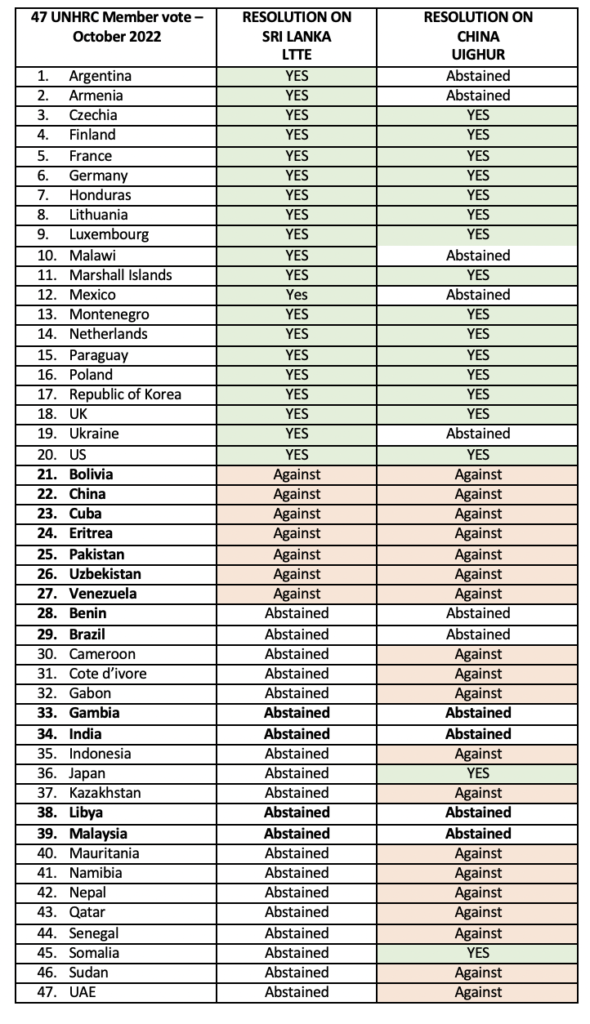
The countries that voted for Sri Lanka’s resolution (Argentina, Armenia, Malawi, Mexico & Ukraine decided to abstain from voting to debate China’s Uyghur issue.

Benin, Brazil, Gambia, India, Libya, Malaysia abstained from voting on Sri Lanka & China.

Indonesia that abstained in Sri Lanka’s vote, voted against the debate on China.

It is time the UN stopped being childish and continuing the charade for political gains of select bloc countries.

It is time Sri Lanka do more than reject resolutions thrown at us unfairly. It is time Sri Lanka asked some hard questions & demand answers – the legality of the resolutions that are country-specific and on a conflict that has ended using a personally commissioned report which was never tabled at the UN General Assembly, UN Security Council of the UNHRC is what Sri Lanka should be asking and demanding answers at every session without committing to any of the demands the resolutions expect Sri Lanka to abide by. It is time Sri Lanka gets some answers for a change and start placing some hard questions on the UNHRC table.

We are happy that China does not have to put up with the bandwagon of lies that Sri Lanka has been having to deal with since 2009.

Shenali D Waduge

ත්‍රස්තවාදය වැළක්වීමේ පනත අහෝසි කිරීම නොව සංශෝධනය කිරීම ප්‍රමාණවත්

October 8th, 2022

චානක බණ්ඩාරගේ

ශ්‍රී ලංකාව වනාහි ත්‍රස්තවාදයට ඉක්මනින් ගොදුරු වන රටකි – ලොව ත්‍රස්තවාදයෙන් උපරිමව බැට කෑ රටවල් අතරින් ශ්‍රී ලංකාව ඉහලින්ම සිටී.

ප්‍රභාකරන් නායකත්වය දැරූ LTTEය යනු ලෝකයේ තිබු දරුණුතම ත්‍රස්තවාදී සංවිධානයකි.  

පසුගිය වසර 50 තුල අප නිරන්තරයෙන් කෘර ත්‍රස්තවාදී ග්‍රහණයට ලක්වීමු. ඒ, 1971 සහ 1988 ජවිපෙ (සිංහල) ත්‍රස්තවාදය, 1976 පමණ ඇරභී 2009 දක්වා පැවතී ද්‍රවීඩ ත්‍රස්තවාදය (LTTE සහ අනෙක් කණ්ඩායම්), සහ 2019 දී අප මුහුණ පෑ දරුණු මුස්ලිම් (සහරාන්) ත්‍රස්තවාදයයි.

1979 න් පසු සියළු ත්‍රස්තවාදයන්  සාර්ථක ලෙස අවසානයේ මැඩලීමට රජයනට හැකි වුයේ  ත්‍රස්තවාදය වැළක්වීමේ පනතට ස්තුති වන්ත වෙන්න බව රටට ආදරේ කරන මධ්‍යස්ථ මතධාරීහු පිළිගනිති.

අද රටේ ත්‍රස්තවාදයක් නැති බවත් ඒ නිසා ත්‍රස්තවාදය වැලක්වීමේ පනත අහෝසි කල යුතු බවත් කීම මෝඩ තර්කයකි. මෙම පනතින් කෙරෙන්නේ ත්‍රස්තවාදය පැන නැඟීමට පෙර එය නතර කර දැමීමය. එය ඉතා අත්‍යාවශ්‍ය කාර්යයකි.

විශාල ගණනක් අහිංසකයන් මැරූ දෙහිවල දුම්රිය බෝමබ කරුවෝ සිරගත කලේ මෙම පනතට ස්තුතිවන්ත වෙන්නය. පිටකොටුව, CTO, මරදාන, කටුනායක ගුවන්තොටුපොළ, මහ බැංකුව, අකුරැස්ස, ජාඇල, අනුරාධපුරය, මහනුවර, කැබිතිගොල්ලැව ආදී ප්‍රදේශ වල, 2019 පාස්කු ඉරිදා – දහස් ගණනින් අහිංසක ජනයා – සිංහල, දෙමල, මුස්ලිම්, බර්ගර්, විදේශිකයෝ – ත්‍රස්තවාදී බෝම්බ වලින් මියගියහ, තුවාලකරුවන් බවට පත් වුහ. සමහරක් එම අපරාධකරුවෝ අදත් සිරබත් කති.

මෙවැනි පනත් අද ලෝකයේ සෑම රටකම පාහේ ඇත.

ත්‍රස්තවාදය මැඬලීමේ පනත අහෝසි කල යුතුයයි යනුවෙන් අද රට තුල අති දැවැන්ත ව්‍යාපාරයක් ගොඩ නැඟී ඇත. එයට දේශප්‍රේමින් යයි අප සිතා සිටියවුන්ද එක්වී සිටිනු දැකීම කණගාටුවට කරුණකි. මොවුන් මේ සිදු කරන්නේ රට නැවත අඝාධයට ගෙන යාම යයි මේ අයට නොවැටහෙන්නේ ඇයි?

මෙම දැවැන්ත ව්‍යාපාරයේ නායකත්වය දරන්නේ TNA බව සැමට නොරහසකි.  සුමන්තිරන් සහ රාසමානික්කම් ‘ත්‍රස්තවාදය වැළක්වීමේ  පනත අහෝසි කරනු’ යයි කියා ඉල්ලන, රට පුරා ක්‍රියාත්මක වන ජංගම වැඩ සටහනක් ඇත. මෙය ඉතා සක්‍රීයය. කුරුනෑගල, මහනුවර, දෙවුන්දර, හම්බන්තොට ජනතාව පවා වල නොකැඩි මොවුන්ගේ පෙත්සමට අත්සන් තබත්. ජනතාවගෙන්  අත්සන් ලබා ඔවුන් සකස් කරන අවසන් පෙත්සම මොවුන් යවනුයේ ජෙනිවා වලට, බටහිර රාජ්‍යයනට සහ බටහිර  නොයෙක් NGO වලට නොවේද?

ජෙනිවා වලදී, වෙනත් බටහිර රටවලදී සහ NGO වලදී මොවුන් ඉල්ලන්නේ ශ්‍රී ලාංකික යුධ විරුවන් නොකළ අපරාධ වලට නඩු අසා දඬුවම් කිරීම, ශ්‍රී ලංකාවට සම්බාධක දැමීම, ශ්‍රී ලංකාවට විදෙස් ආධාර ලබා නොදීම,  අසාධාරණ වූ දෙමළ අයිතිවාසිකම් ඉල්ලීම වැනි දේයි. ඉදින්, සත්‍ය වශයෙන්ම රටට ආදරය කරනවුන් මෙවැනි අය හා සම්බන්ධ වන්නේ ඇයි?

TNA මේ රටේ බෙදීම අපේක්ෂාවෙන් කටයුතු කරයි. ඒ බව නොතේරෙන්නෝ මෝඩයෝය.  

TNA පාර්ලිමේන්තුවේ LTTEහි proxy පක්ෂය ලෙස වැඩ කල බව කාටත් දැන් අමතකය.

සුමන්තිරන්, රාසමානික්කම් දේශප්‍රේමින් නොවේ. දකුණේ ජනතාවට අද ‘සීනිබෝල’ කථා කියන ඔවුන් විදේශගත වූ විට රටට විරුද්ධව වැඩ කරති.

‘ශ්‍රී ලංකාව දුර්වලව වැටි සිටින මේ අවස්ථාවේ අප අපේ අරමුණු ඉෂ්ට කර ගැනීමට උපරිමව වැඩ කරමු’  වැනි අදහසක් රාසමානික්කම් කැනඩාවේ රැලියකදී මෑතකදී ඉංග්‍රීසී බසින් කීය. රාසමානික්කම් එදා දෙමළ බසින් දීර්ඝ, වේගවත් කථාවක් කළේය. ඔහු දෙමලෙන් කීවේ කුමක්ද? සුමන්තිරන් වනාහි විදේශගත වූ සැනින් ශ්‍රී ලංකාවට හතුරුකම් කල අයෙක් බව මෙම ලියුම්කරු අත්දැකීමෙන් හොඳාකාරව දනී.  

නැවතත්; මෙවැන්නන්ගේ යටි අදහස් සිංහලයාට  නොතේරෙන්නේ මන්ද?

‘සිංහලයා මෝඩයා කැවුම් කන්න යෝධයා’ කියා රොබර්ට් නොක්ස් එදා කීවේ ඒ නිසාය.

ත්‍රස්තවාදය වැළක්වීමේ පනත ඉතා දරුණු, ම්ලේච්ච එකක් ලෙස එයට විරුද්ධව කටයුතු කරන්නෝ පවසත්. එය වැරදිය. කලින් සඳහන් කලාක් මෙන් එය නිසා විවිධ ස්වරුපයෙන් ආ ත්‍රස්තවාදය මැඩලීමට රජයනට හැකි විය.

ශ්‍රී ලංකාවේ ත්‍රස්තවාද මර්ධන පනත එතරම් දරුණු නම් 9/11 වලින් පසු ඇමරිකාව සහ බටහිර රටවල් සම්මත කරගත් ත්‍රස්තවාදය වැළක්වීමේ පනත් ගැන මේ අය කියන්නේ කුමක්ද? ඇමරිකාව ඒ රටේ නිතියට ප්‍රකාරව   ග්වන්ටානමෝ බේ සහ අබුග්රයිබ් හි මුස්ලිම් ත්‍රස්තවාදී සැකකරුවන්හට සැලකුවේ ඉතා ම්ලේච්ඡ, අමානුෂික භාවයෙනි. එංගලන්තයේ ත්‍රස්තවාදය සම්බන්ධ වරදකරුවෙකුට අවමව වසර 14ක සිරදඬුවමක් හිමිවේ.  ප්‍රංශය ත්‍රස්ත සිරකරුවන් දීර්ඝ කාලයන් චෝදනා ගොනු නොකර, නීතීඥ සහාය නොදී,  සිර කර තබා ගනී. ස්පාඥ්යයේ ත්‍රස්ත සැකකරුවන්ව අමානුෂික,කෘර වධ හිංසා වලට ලක් වන බවට නිරන්තර චෝදනා නැගේ. ඕස්ත්‍රේලියාවේ ක්‍රියාත්මක වන දැඩි ත්‍රස්ත මර්ධන පනත් වල සඳහන් ‘control orders’ මඟින් ත්‍රස්ත සැකකරුවන්ගේ සෑම ක්‍රියාවක්ම ඔවුන් නිදහස් වූ පසු පවා අධීක්ෂණයට ලක්කල හැක. අහිංසකයන් වූ වෛය්ද්‍ය මොහමඩ් හනීෆ් (බ්‍රිතාන්‍ය ජාතික) සහ ශිෂ්‍යයෙක් වූ මොහොමඩ් කාමර් (ශ්‍රී ලාංකික) ඕස්ත්‍රේලියාවේ ත්‍රස්ත පනත යටතේ අත් විඳී ඉතා කටුක, දුෂ්කර තත්වයන් මුළු ලොවම දනී.

ශ්‍රී ලාංකාවේ ත්‍රස්තවාද මර්ධන පනතේ කෘර වගන්ති වශයෙන් විචාරකයන්ට දැක්විය හැක්කේ පහත ඒවාය. වෙනත් රටවල ත්‍රස්ත මර්ධන පනත් හා සසඳන කල මේවා එතරම් දරුණු වගන්ති නොවේ. කෙසේ නමුත්, මෙම ප්‍රශ්ණය සාමකාමිව නිරාකරණය කර ගැනීම උදෙසා, එකී පනත අහෝසි නොකර, එහි ඇති ‘දැඩි’ වගන්ති පිළිබඳව රජය විසින් සිදු කල හැකි සංශෝධන මෙම ලියුම්කරු මෙසේ පහතින් සඳහන් කරයි:

  1. 9 (1) – සැකකරුවකු මාස 18 දක්වා, චෝදනා ගොනු නොකර ආරක්ෂක ඇමතිගේ නියෝගයෙන් රඳවා තබා ගත හැක.

සංශෝධිත පනතේ මේ කාලය අඩු කල හැක – මාස 9ට වැනි.

  1. 10 – ආරක්ෂක ඇමතිගේ උක්ත නියෝගය අවසාන තීරණය වන අතර කිසිම අධිකරණයකට එය විභාග කල නොහැක.

අත් අඩංගුවට ගැනීමෙන් මාස 4කින් පසු, ගරු අභියාචනාධිකරණයට රිට් පෙත්සමක් මඟින් ඇප අයදුම් පතක් ඉල්ලා සිටීමට අවස්ථාව ලබා දිය යුතුයි. කෙසේ වෙතත් ගරු අභියාචනාධිකරණය මඟින් ඇප ලබා නොදෙන තත්වයන් තවදුරටත් පවත්වා ගත යුතුයි. ඇප ලබා දිය යුතුම අවස්ථාවක් නම්  ඉතා දැඩි කොන්දේසි යටතේ පමණක් එය ලබා දිය යුතුයි – දිනපතා හෝ අඩුම තරමින් සතියකට දින 4ක් ලඟම ඇති පොලිස් ස්ථානයට වාර්ථා කිරීම, විදේශ ගමන් තහනම, නියමිත ග්‍රාම සේවක වසම තුල පමණක්  වාසය කිරීම වැනි.

  1. 2 – ‘ත්‍රස්තවාදය’ පිලිබඳ පවත්නා නිර්වචනය ඉතා පුළුල් වන අතර එය ආණ්ඩුක්‍රම ව්‍යවස්ථාවේ 14වෙනි වගන්තියෙන් ලබා දෙන භාෂණමය නිදහස සමඟ ගැටේය යන්න.

මෙම නිර්වචනය මීට වඩා පටු කල හැකියි; නමුත් එය ඉතා ප්‍රවේශමින් සිදු කල යුතුයි. මෙම නිර්වචනයෙන් ජනතාවට ඇති භාෂනමය නිදහස කිසිසේත් මොට නොකළ යුතුයි. එම නිදහස තරයේ සුරැකිය යුතුයි. නමුත්, මෙයින් අදහස් කරන්නේ මියගිය ත්‍රස්ත නායකයන් සිහි කිරීමේ උත්සව, ශ්‍රී ලංකාව තුල වෙනම රාජ්‍යක් බිහි කිරීමේ දේශපාලනමය රැස්වීම්/ප්‍රකාෂණ කිරීමේ දැනට තිබෙන තහනම ඉවත් විය යුතු බව නොවේ (බෙදුම්වාදීන් පනත අහෝසි කරන්නැයි කියා ඉල්ලන්නේ මෙවැනි දේට ඉඩ දෙන ලෙසය).  

  1. 6(1) – පොලිස් නිලධාරියෙකුට ත්‍රස්ත සැකකරුවෙකු අත් අඩංගුවට ගත හැකි වීම.

මේ බලය වෙනස් නොකළ යුතුයි.

  • 7 (1) – මහේස්ත්‍රාත් තුමෙකුට ත්‍රස්ත සිරකරුවෙකුට ඇප ලබා දිය හැක්කේ නීතිපති එකඟ වුවහොත් පමණි.

මෙය වෙනස් කල යුතුය. නමුත් ඇප කොන්දේසි ඉතා දැඩි විය යුතුයි.  උක්ත ii. බලන්න.

  • 7 (3) – පොලිසියට ත්‍රස්ත  සැකකරුවෙකු ප්‍රශ්ණ කිරීමට විවිධ ස්ථානවලට රැගෙන යාමේ ඇති නිදහස.

මෙයට, සැකකරුගේ නීතිඥයාට සහභාගී වීමට ඉඩ දිය යුතුය වශයෙන් සංශෝධනය විය යුතුය.  

  • 15 (a) – ත්‍රස්ත සැකකරුවකු රඳවා තැබිය යුතු ස්ථානය ආරක්ෂක ලේකම් තුමා සතුවේ.

මෙම බලය ආරක්ෂක ලේකම් නොව ආරක්ෂක අමාත්‍යතුමාට පැවරිය යුතුයි.

  • 16 – ත්‍රස්ත සැකකරුවෙක් ලබා දෙන ප්‍රකාශයක් ඔවුනට විරුද්ධව නඩු විභාගයකදී භාවිතා කල හැක.

තමන් කෘර වධ හිංසා යටතේ එවැනි ප්‍රකාශයක් ලබා දුන්නේ යයි සැකකරුවකු නඩු විභාගයකදී ප්‍රකාශ කල හොත් එහි නිරවද්‍යතාවය ගරු අධිකරණය විසින් නඩු විභාගය්දී විභාගයට ලක් කල යුතුය. එම ප්‍රකාශය සත්‍යක් බව සනාථ වුවහොත් එකී සාක්ෂි ගරු අධිකරණය විසින් නිශේධනය කළ යුතුයි.

  1. 26, 28 – සැකකරුවන් කෘර වධ හිංසාවට ලක් කිරීමට මෙම වගන්ති ඉවහල් වේ යයි පනතේ විවේචකයෝ පවසත්.

මෙවැනි වගන්ති ලොව සෑම රටකම පාහේ ත්‍රස්තවාදය මර්ධන පනත් වල අඩංගුය. සංශෝධිත 16 වගන්තිය මඟින් (ඉහත) කෘර නිලධාරින්ව නඩු විභාගයේදී හෙළිවනු ඇත. එවැනි සාක්ෂි නිෂ්ප්‍රභා වනු ඇත.

ත්‍රස්තවාදී පනත හඳුන්වා දුන් දිනයේ පටන් (1979) බෙදුම්දීන්ට උවමනා වුයේ මෙම පනත කෙසේ හෝ අහෝසි කර දැමීමටය. මෙතෙක් කල් ඔවුන් ජයග්‍රණය නොකළහ. දැන් ඔවුන්  ජයග්‍රහණය  අභිමුඛව සිටී. ඔවුන් ප්‍රීති ඝෝෂා නගන්නේ එහෙයිනි.

මෙම පනත අහෝසි කල පසු වෙනත් පනතක් සම්මත කර ගත හැකි බව ඔවුහු කියති, නමුත් ඔවුන් කිසිදා නැවත ත්‍රස්තවාදය අහෝසි කරන පනතක් සම්මත කර ගැනීමට ඉඩ නොදෙන බව බුද්ධිමතුන් දනී. ජෙනිවා සහ බටහිර රටවල් නව පනතක් ගෙන ඒමට විරුද්ධව නොයෙක් තහංචි පනවනු ඇත.  මේ නිසා කළ යුත්තේ දැනට තිබෙන පනත අහෝසි කිරීම නොව ඉහත දක්වා ඇති පරිදි පනත සංශෝධනයට ලක් කිරීමයි. එවිට එය ඉතාම සාධාරණ පනතක් බවට පත්වනු ඇත.

ජෙනිවා, බටහිරට බියවී අපට ජීවත් විය නොහැක. අප හරි දේ කර, ඒ බව මුළු ලොවටම පැහැදිලි කර පෙන්වමු. දක්ෂ, අවංක ඇමතිවරු, තානාපතිවරු සහ රජයේ නිලධාරීන් අවශ්‍ය මේ නිසයි.

විරෝධතා කරුවන් සමහරෙකුගේ අවශ්‍යතාව කෙසේ හෝ ඊළම පිහිටුවා ගැනීමටය. ත්‍රස්තවාදී මර්ධන පනත අහෝසී වූ වහාම රජයට ප්‍රධාන වශයෙන් ඉතිරි වන්නේ අපරාධ නඩු විධාන සංග්‍රහයයි (Criminal Procedure Code – Act No 15 of 1979).  මෙයට ත්‍රස්ත ක්‍රියාවන් හසු කරගැනීම ඉතා අපහසුය.

ශ්‍රී ලංකාවේ රජයන් මෙම අගනා ත්‍රස්ත පනත ඉතා නින්දිත ලෙස අවභාවිත කල බව රහසක් නොවේ. තමන්ගේ සතුරන්ට ‘පාඩම් ඉගැන්වීමට’ සෑම රජයක්ම මෙම පනත යොදා ගතී. ඔවුනගේ හුදු ආත්මාර්ථකාමී, පළිගැනීමේ ආශාවන් නිසා අද අමාරුවේ වැටි තිබෙන්නේ ශ්‍රී ලංකා මාතාවය. ඔවුන්ගේ මෙවැනි දේ බෙදුම්වාදීන් උලුප්පා පෙන්වා දෙති; එයින් වාසි ලබා ගනිති.

උද්ඝෝෂකයන් කල යුත්තේ රජයන් විසින් ත්‍රස්ත පනත භාවිතා කර සිදු කරන නිතී විරෝධී ක්‍රියාවලට විරුද්ධව සටන් කිරීමය. රටට අත්‍යාවශ්‍ය වූ ත්‍රස්ත මර්ධන පනත අහෝසි කරන මෙන් ඉල්ලා සිටීම නොවේ.

නැවතත්; වරද ඇත්තේ රජයන්ගේ  අමනොඥ්ය ක්‍රියාවන් වල මිස ත්‍රස්ත මර්ධන පනතේ නොවේ. බස් රථයක රියදුරු බීමත්ව ගොස් එය නිතර හප්පන්නේ නම් නැණවත් බස් රථ හිමියා කරනුයේ බස් රථයේ රියදුරුව ඉවත් කිරීම මිස මුදල් ආකරයක් වූ බස් රථය විකුණා දැමීම නොවේ.

7 පෙබරවාරි 2022 දින ඇමරිකාවේ Human Rights Watch ආයතනයේ වාර්තාවක පහත සඳහන් චේදය මෙසේ පල කරමි:

In June 2021, a Tamil opposition politician, Shanakiyan Rasamanickam, claimed in parliament that over 100 people had been arrested under the PTA for social media posts.[115] In Batticaloa, police detained 19 people in November 2020 for allegedly posting online birthday wishes for the late LTTE leader Velupillai Prabhakaran, who was killed in 2009.

ත්‍රස්තවාදය පිලිබඳ  පනත අහෝසි කිරීමෙන් පසු කිසි බියක් නොමැතිව උතුරේ සහ නැගෙනහිර ප්‍රභාකරන්  උපන්දිනය, වෙනත් දෙමළ ත්‍රස්තවාදී වැඩ සටහන්/උත්සව මහ ඉහලින් පැවැත්වීමට බෙදුම්වාදීන් කටයුතු කරනු ඇත. LTTE සොහොන් බිම් නැවත ඉදි කරනු ඇත. ඊලම ඉල්ලා ඔවුන්  උතුරේ සහ නැගෙනහිර හර්තාල් කරනු ඇත. හමුදා කඳවුරු වටලනු ඇත.  දැන් පලාලි වල ජාත්‍යාන්තර ගුවන්තොටුපලක්ද ඇති නිසා, රට ඉතා දරුණුව ආර්ථිකව වැටී තිබෙන මේ සමයේ, උතුරේ වෙනම රාජ්‍යක් ප්‍රකාශ කිරීමට පවා ඔවුන් පසුබට නොවනු ඇත.  

රට ඉතා දුර්වලව ඇති නිසා, ඉන් අනියත වාසි ලබා, ප්‍රභාකරන්ට යුද්ධයෙන් ජය ගත නොහැකි වූ ද්‍රවිඩ ඊලම ‘මොළයෙන්’ ලබා ගැනීමයි මේ අයගේ වෑයම (රාසමානික්කම් කැනඩාවේදී ඉංග්‍රීසියෙන් කීවේ මෙය නොවේද?).

මෙවර ජෙනිවා චන්දයෙන් ඔවුන් දිනුවේ අති බහුතරයෙනි.  

මෙවැනන් හා සම්බන්ධව වැඩ නොකිරීමට සියළු දේශප්‍රේමින් වග බලා ගත යුතුය.

මෙම ලිපිය අවසන් කිරීමට මෙම විශේෂ සටහන් දැක්වීම උචිත යයි මෙම ලියුම්කරු කල්පනා කරයි:

යුධ හමුදාවේ ගජබා රෙජිමේන්තු පලඛයක දෙමළ භාෂාව සඳහන් නොවුණි කියා රාසමානික්කම් මැසිවිලි නැගීය. වව්නියාවෙන් උතුරට A9 මාර්ගයේ සවිකර තිබෙන පළාත් සභාවෙන් අනුමත අති දැවැන්ත බිල්බෝඩ් වල සඳහන් වනුයේ දෙමළ (සහ සමහරවිට ඉංග්‍රීසි) භාෂාව පමණක් බව, උතුරේ පාරවල සිංහල නාම පුවරු ඇත්තේ ඉතා අල්පව බව රාසමානික්කම්ට නොපෙනෙන්නේ මන්ද? කිසිදා ශ්‍රී ලංකාවේ සිටියා යයි වාර්තා වී නැති දෙමළ  රජවරුන්ගේ පිළිම මෑතකදී යාපනය නගර මධ්‍යයේ සහ එක් ප්‍රධාන කෝවිලක් ඉදිරියේ ඉදිකර තිබීම ගැන රාසමානික්කම් පවසන්නේ කුමක්ද?

අදත් සිංහල ජාතිකයෙකුට උතුරේ (සහ ඇතැම් නැගෙනහිර) ඉඩම් කොටසක් මිලදී ගැනීමට, බද්දට ගැනීමට, ගොවිපලක් ආරම්භ කිරීමට නොහැකිය/ඉතාම අපහසුය. සිංහලයෙක් මඩකලපුවේ ඉඩමක් මිලදී ගෙන එහි පදිංචි වෙනවාට රසමානික්කම් විරුද්ධ නොවන්නේද? ඔහු වරක් මේවා වෙනුවෙන් දීර්ඝ පාගමනක් සංවිධානය නොකළේද? මේ නිසා, ඔහුව එවකට සිටී ඇමරිකන් තානාපතිනියගේ ප්‍රශසංසාවට ලක් නොවිනිද?

බෙදුම්වාදීන්ගේ මෙවැනි අසාධාරණකම්, දෙපිට කාට්ටුකම් ජෙනිවා වලට, බටහිරට ගිය විට පැවසීමට රජයනට හෝ දේශප්‍රේමිනට නොහැකි වී ඇත. අපේ ඇති මුලිකම දුර්වලකම මෙයයි. අප විදේශගත ‘සතුරාට’ කිසිදාක නිසි ලෙස පිළිතුරු සපයා  නැත; කරුණු පැහැදිලි කර දී නැත.

ද්‍රවිඩ ජාතිකයෙකුට කිලිනොච්චි අත් හැර ගම්පහ පදිංචි වීමට හැකියාවක් ඇත. මුස්ලිම් ජාතිකයෙකුට අක්කරෙයිපත්තු  අත්හැර තංගල්ලේ පදිංචි විය හැක. මෙය රටේ දෙමළ, මුස්ලිම් ජනගහණයන් වර්ධනයට ඉමහත් රුකුලකි. නමුත්, ගම්පහ හෝ තංගල්ලේ වෙසෙන සිංහලයෙකුට කිලිනොච්චි හෝ අක්කරෙයිපත්තු ඉඩමක් මිලදී ගෙන ගෙයක් සදා ගැනීම ගැන ද්‍රවිඩ (සහ මුස්ලිම්) දේශපාලඥයන් තදින්ම විරුද්ධ වෙත්.  

ඕනෑම කෙනෙකුට රටේ ඕනෑම ප්‍රදේශයක ජීවත් වීමේ හැකියාව සහ නිදහස ආණ්ඩුක්‍රම ව්‍යාවස්ථාවේ  14වෙනි වගන්තියෙන් රටේ සියළු රටවැසියන්ට ලබාදී ඇත (freedom of movement). සිංහල පවුලක් වැල්වැටිතුරේ ගොස් ජීවත්වීමට තේසවලාමේ නිතිය ඍජුව හරස් නොවේ. උතුරේ ඉඩම් පිළිබඳව තේසවලාමේ නීතියේ බලපෑම ඉතා අල්පය.

නියම සන්හිඳියාව වන්නේ රටවැසියෙකුට තමන් කැමති ඕනෑම පලාතක ජීවත්වීමේ අයිතිය හිමිවීම බව රාසමානික්කම්ලා, සුමන්තිරන්ලා ප්‍රසිද්ධියේ ප්‍රකාශ කිරීමයි. සිංහලයන් ගොස් උතුරේ පදිංචිමට (සංවිධානාත්මකව, රජයේ අනුග්‍රහයෙන් ජනාවාස තැනීම නොවේ) ඔවුන් සහාය ලබා දිය යුතුයි.

අද දකුණ ජනයාගෙන් පිරි ඉතිරි ගොස් පර්චස් 2න් පවා මිනිසුන් නිවෙස් තනා ගනිති. කොළඹ නගර සභා බල ප්‍රදේශය තුල අද සිංහල, දෙමල, මුස්ලිම් ජනතාව 1/3 පමණ බැගින් සම සමව  ජීවත්වෙත් (1970 දශකයේ දී කොළඹ ජනගහනයෙන් 70%ක් පමණ සිංහලය).

ජනාවාසයට සුදුසු හිස් ඉඩම් විශාල ප්‍රමාණයෙන් ඇත්තේ උතුරේ සහ නැගෙනහිරය – මෙය මේ රටේ 1/3 ක භුමි භාගයකි. මුහුදු තීරයෙන් 2/3ක්  පමණ වේ. සිංහලයා ද ගොස් මේ ප්‍රදේශවල පදිංචි විය යුතුය. නැවතත්; එය ආණ්ඩුක්‍රම ව්‍යාවස්ථාවෙන් ඔවුනට ලැබී ඇති ව්‍යවස්ථාත්මක අයිතියකි.

මෙම මූලික අයිතිය – සිංහලයන්ට උතුරේ සහ නැගෙනහිර නිදහසේ පදිංචි වීමේ අයිතිය – ඉල්ලා උද්ඝෝෂකයන්, අරගලකරුවන් සටන් පාට කිව යුතුය. එය අරගලයේ ප්‍රධාන ඉල්ලීමක් විය යුතුය.

TNA සහ වෙනත් ද්‍රවිඩ නායකයන්ගෙන් මේ පිළිබඳව වූ ඔවුන්ගේ ස්ථාවරය කෙලින්ම ප්‍රශ්ණ කල යුතුය.

මෙයට විරුද්ධ වන්නෝ ජාතීවාදීන් (racists) වශයෙන් ප්‍රසිද්ධියේ නම් කල යුතුය.

Special train to A’pura every weekend from today

October 8th, 2022

Courtesy The Daily Mirror

The Railway Department will operate a special express train service on every Saturday from today to facilitate the tourists and pilgrims travelling to Anuradhapura from Colombo Fort.

The train will leave for Anuradhapura every Saturday and return to Fort every Sunday.
 
The train would haul 10 first-class air-conditioned compartments with 480 seats.

The fare for one-way journey will be Rs. 2,500, the department said. (Chaturanga Samarawickrama)

“We see great revival of Buddhism in India under Modi govt”: International Buddhist Confederation

October 8th, 2022

Courtesy ANI

“We see great revival of Buddhism in India under Modi govt”: International Buddhist Confederation
Read more At:
https://www.aninews.in/news/national/general-news/we-see-great-revival-of-buddhism-in-india-under-modi-govt-international-buddhist-confederation20221008235750/

Hambantota Port – Myths and Realities

October 8th, 2022

Nadir Mumtaz Courtesy The Maritime Executive

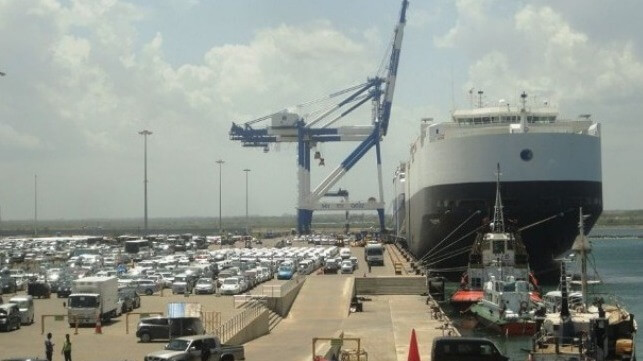
Port of hambantota cargo operations with ro/ro vessels
Ro/ro operations at the Port of Hambantota (file image)

The Port of Colombo is located near the route between the Strait of Malacca and the Suez Canal, which is one of the busiest shipping lanes in the world. Around 36,000 vessels pass annually on this key corridor between Asia and Europe, including about 4,500 tankers. As the Port of Colombo has been traditionally used as a transshipment hub for container ships, the Sri Lankan authorities thought it wise to construct the new Port of Hambantota on the island’s southern tip as a bunkering and repair hub.

The Port of Hambantota commenced operations on a small scale in 2010, prior to China’s Belt and Road Initiative (BRI). The BRI is a contemporary response to the post-WWII European Recovery Program, better known as the Marshall Plan, which was designed by the US to bolster Western European economies after the war. The Belt and Road Initiative has over 140 signatory parties, including EU members. China has so far initiated around 3500 BRI-related projects worldwide, mostly in low- and middle-income countries, and Hambantota Port is one such initiative.

The government of Sri Lanka’s first significant loan for Hambantota was obtained from China’ Export Import Bank (Exim) for a sum of $307 million. Accompanying this loan was a condition that China Harbor Engineering Construction (CHEC) would construct the port. It is not unusual for China to insist that its state-owned enterprises have exclusive rights to build projects financed by Chinese banks.

Long-term lease

Contrary to popular belief, the debt servicing costs on account of the loans obtained from Exim bank were not significant in the overall context of the external loan portfolio of Sri Lanka, with loan installments (including interest) amounting to less than five percent of Sri Lanka’s total external debt repayments. As the second phase of the Hambantota port project has not commenced, loans for this phase have not been obtained.

Five loans for the port (excluding loans obtained for a bunkering facility project) were acquired in the period from 2007 to 2014. Including concessionary loans, the entire loan portfolio pertinent to the construction of Hambantota port amounted to $1.263 billion. One possible disadvantage to the concessionary loan structure could be that the payback period was not too long and had an in-built shorter grace period, but Chinese loans in such projects are regularly rolled over.  

The scandal surrounding the Hambantota port sale” is not justified as the acquiring transaction was not contingent on default by Sri Lanka on its external debt to China’s Exim bank; rather it was a lease arrangement for a period of 99 years at a consideration of $1.12 billion. Sri Lanka has not transferred ownership of the port. The arrangement of the lease is distinct from loans pertinent to port construction and it is noteworthy that the lease was not accompanied by cancellation of debt due by Sri Lanka to China.

Substantive port operations and accompanying revenues are now the exclusive domain of China Merchants Port Holdings Company (CMPort), which was transferred an 85 percent stake  effective December 2017. For the sake of appearances, Sri Lanka retains a 15 percent stake in the joint stock company. Significantly, foreign countries are not permitted to use Hambantota’s port facilities for military purposes without obtaining permission from the Sri Lankan government.

Maritime Wisdom

The debate over the wisdom of developing Sri Lanka’s second port will remain until Hambantota port is in full swing commercially. Despite government-commissioned feasibility studies finding that a port at Hambantota was not economically viable, the project went ahead. Emboldened, CMPort sought an additional 15,000 acres of land around the port to develop an industrial zone. The business model of the project catered to bunkering, but the creation of the turning basin itself disrupted the ill-conceived project. After dredging and then flooding of the land, a huge boulder was exposed which would be an impediment for the entry of oil tankers. It took CHEC almost a year to blast it away, and speculations abounded over whether the charges of the contractor ($40 million) were justified.

From a port construction point of view, facilities have been developed for refuelling, quays and four berths for ships. For protecting the port from the ocean swell, two breakwaters measuring 312 meters and 988 meters in length were constructed using material excavated from the construction of other parts of the port. The project incorporates interlocking concrete blocks to protect the port from high seas. The access channel for the port is 210 meters wide and 17 meters deep to cater to vessels up to 100,000 dwt. The project envisages an oil depot housing eight tanks for marine fuel, three for aviation fuel and three for liquid petroleum gas (LPG). The first phase of the project was completed in the year 2010. The next proposed phase is ambitious and includes dredging for a deeper basin, quays, berm breakwater revetment and the fashionable artificial island (a typical feature in the East, Far East and Middle East).

Business modeling indicated that Colombo and Hambantota are appealing as domestic and transshipment container handlers respectively. As Hambantota Port was floundering commercially in its early years, car carrier vessels were diverted to give it some traffic, but the situation remained dismal: only 34 ships berthed at Hambantota in 2012, while 3,667 vessels berthed at Colombo in that year.

Can Hambantota Port Divert Bunkering from Singapore?

Singapore retained its position as the world’s prime bunkering destination in 2018 with annual bunker sales volume nearing close to 50 million tonnes. The hallmark of Singapore’s bunkering success is transparency, driven by mandatory installation of flow meters,  stringent regulatory checks  and a one-window digitalized approach. Over decades, Singapore has developed its infrastructure for refining and storage to supply vessels with fuel.

For Hambantota Port to thrive, Sri Lankan policymakers need to appreciate the Asian bunkering fuel market. Only about 10 ports sell bunker fuel in significant quantities, since ships can traverse long distances without refueling. China’s bunkering destinations are behind Singapore with annual bunker sales of 16.9 million tons. Chinese maritime policy makers are establishing the Zhoushan archipelago as a bunkering hub and establishing advanced crude oil refineries to produce greater volumes of very low sulfur fuel oil, accompanied by tax exemptions so that marine fuels produced by these refineries are internationally competitive. The provincial authorities have pumped in almost $80 million to expand the anchorage and construct additional shipping channels at Zhoushan.

Fledgling bunker destinations like Hambantota also need to envisage the development of supply chains for LNG bunkering, which is increasingly available in the leading bunkering destinations. In the current economic scenario prevailing in Sri Lanka, whether Hambantota Port’s sponsors can arrange additional investment for LNG infrastructure remains a question mark.

LNG bunkering stations are constructed with LNG storage facilities equipped with multiple LNG bunkering facilities integrating divergent bunkering mechanisms. Europe is the leader in LNG bunkering, having most of 50 bunkering stations in operation and 13 more bunkering stations under construction. Singapore, China and South Korea are striving to join the fuel supply chain revolution. In China, an inland LNG bunkering station network has come of age, a coastal LNG bunkering station is being explored and around 300 vessels converted to LNG powered fuel. These established LNG players have a head start over Hambantota Port.

Nadir Mumtaz is a maritime analyst based in Pakistan. 

Russia’s Aeroflot to resume flights to Sri Lanka from tomorrow

October 8th, 2022

Courtesy Adaderana

Aeroflot, Russia’s state-owned airline, will resume flights from Moscow to Sri Lanka with effect from tomorrow (October 09). 

Starting from October, Aeroflot will resume regular flights to Colombo, Bangkok, and Goa. Flights will be operated on Airbus A330 aircraft,” the airline had said earlier in a statement.

Accordingly, from October 09, the airline will resume Colombo flights, which will initially operate twice a week on Thursdays and Sundays.

Mahinda pledges support for President Ranil

October 8th, 2022

Courtesy Adaderana

Former Prime Minister Mahinda Rajapaksa says he will extend his support to President Ranil Wickremesinghe.

He made these remarks addressing a public rally in Kalutara earlier today (Oct. 08).

The rally titled Let’s Rise Together from Kalutara”, organized by SLPP MP Rohitha Abeygunawardena, was held at his coordination office.

Prime Minister Dinesh Gunawardena and many other ruling party MPs were seen at this rally.

Speaking further, Rajapaksa said the SLPP would support President Wickremesinghe as he is now on the right path.

Why does Sri Lanka go to Geneva to get bashed annually at UNHRC?

October 7th, 2022

Shenali D Waduge

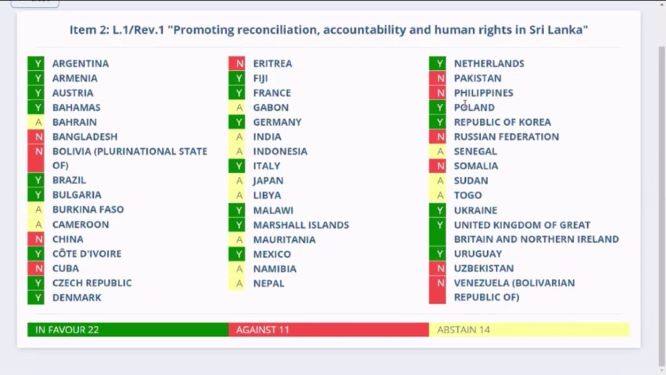
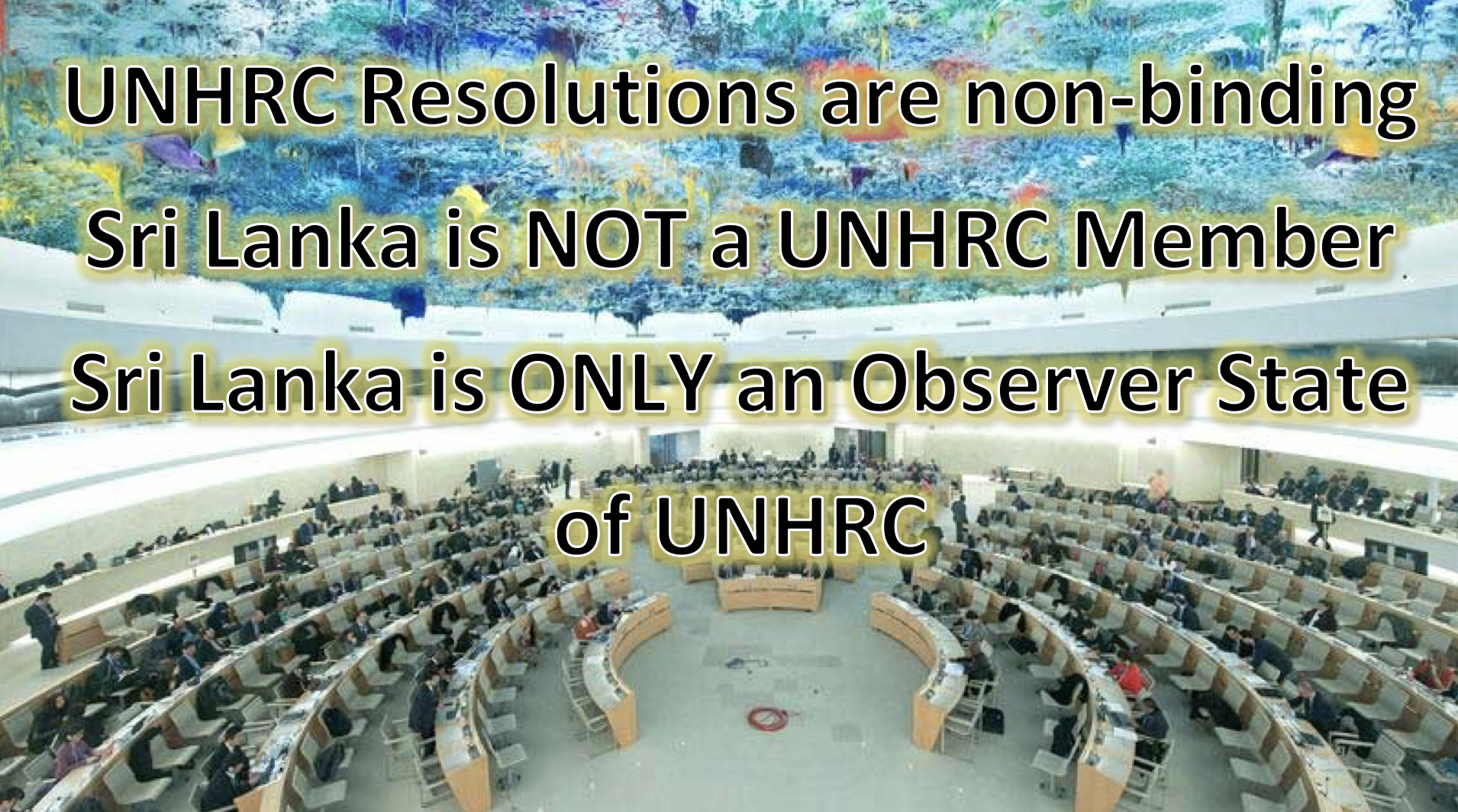
The UNHRC comprises 47 member states. The UNHRC members are elected by the General Assembly for 3 years. The UN General Assembly comprises 193 Member States of which Sri Lanka is one. Sri Lanka is not a MEMBER of UNHRCSri Lanka is merely an OBSERVER state.As Sri Lanka is not a member, Sri Lanka does not have voting rights. UNHRC Resolutions are non-binding. So if Sri Lanka is only an Observer State & UNHRC Resolutions are non-binding, why are we wasting money to send a delegation to get humiliated in Geneva? All that ends up happening is the Minister in charge makes a political talk meant to make him a hero back home. Political talk has no action and UNHRC recommendations get tied to numerous conditions for handouts given by the countries that voted against Sri Lanka. This annual show is nothing but a bargaining podium where allegations get drummed & these get plugged into conditions for aid, investment & other coercions for their geopolitical advantage. Sri Lanka should just allow UNHRC to pass resolutions & not send any delegation except to get our representative in Geneva to read the official position of Sri Lanka. Attending or not attending makes no difference in Geneva!

Let us first look at the present (2022 October) Resolution.

20 states voted in favor of Resolution, 7 voted against and 20 abstained.

Generally, abstentions are tilted against a resolution rather than for it.

However, in a 47 Member state when less than half of the Membership have voted for the resolution and more than half are on the other side (against + abstentions) how can UNHRC pass such a resolution? This itself highlights the bias of the UNHRC

For Resolution:

  1. Argentina
  2. Armenia
  3. Czechia
  4. Finland
  5. France
  6. Germany
  7. Honduras
  8. Lithuania
  9. Luxembourg
  10. Malawi
  11. Marshall Islands
  12. Mexico
  13. Montenegro
  14. Netherlands
  15. Paraguay
  16. Poland
  17. Republic of Korea
  18. UK
  19. Ukraine
  20. USA

Against Resolution:

  1. Bolivia
  2. China
  3. Cuba
  4. Eritrea
  5. Pakistan
  6. Uzbekistan
  7. Venezuela

Abstaining from voting for or against Resolution:

  1. Benin
  2. Brazil
  3. Cameroon
  4. Cote D’ivoire
  5. Gabon
  6. Gambia
  7. India
  8. Indonesia
  9. Japan
  10. Kazakstan
  11. Libya
  12. Malaysia
  13. Mauritania
  14. Namibia
  15. Nepal
  16. Qatar
  17. Senegal
  18. Somalia
  19. Sudan
  20. UAE

What most people would have forgotten is that the initial resolution was about the last 3 months of the conflict, but successive resolutions went on to take topics not related to the conflict and transgressed the UN Charter itself by interfering into the internal affairs of Sri Lanka. Why doesn’t the UNHRC take these non-related topics at the Universal Periodic Review sessions held annually?

It was obvious that the UNHRC however much it bragged & boasted had no evidence beyond doubt and certainly no credible evidence to declare Sri Lanka committed war crimes.

The architects & supporters of the resolutions have found common ground on several fronts. Some wish to take revenge for defeating LTTE whom they had invested heavily on. Some see the resolutions as a golden opportunity to advance their diplomatic agendas.

The bias of the OHCHR head Pillay was seen in the manner OISL investigation (A/HRC/25/1 adopted in March 2014 ) was to cover period under LLRC (2002-2009) but included up to 2011. If the investigation was to cover both parties – when LTTE was eliminated in 2009, why did Pillay include upto 2011?

The GoSL should have immediately objected and refused to cooperate.

What is also noteworthy about the resolutions against Sri Lanka, was that the OHCHR was investigating FOR THE FIRST TIME a country that had ended a conflict. This was creating a precedent and would be applicable to other countries thereafter.

If so, this begs to ask why the OHCHR investigation was covering only 1/3 of the entire conflict? How fair was this on the victims?

There was also a question of whether the OHCHR Head had a mandate to investigate a country?  The more pressing question was how a personally commissioned report could be the basis of successive resolutions and be quoted by the OHCHR head. The legality of this is still not answered.

So annually, the Sri Lankan team pays to travel & get battered in Geneva & returns expecting a hero’s welcome simply because the Minister makes a political talk & that is supposed to set off the intrusive resolutions that have been passed. This charade must stop.

It is clear from the manner of voting that the powerful nations simply have to dial numbers & give instructions on how they should vote. If Sri Lanka has friends it is the friends that have consistently voted for Sri Lanka – these countries are China, Cuba, Pakistan, Russia and we must be grateful to Eritrea, Uzbekistan, Bolivia and Venezuela for voting in 2022. It is time Sri Lanka not only know who its friends are but ensure they are shown gratitude and given a greater role in Sri Lanka’s development without going behind unrequited love of the oppressors (voted against/abstained)!

Shenali D Waduge

AGEING & Space for an EXECUTIVE SERVICE.

October 7th, 2022

Sugath Kulatunga.(1)

Today we see a revolution in longevity. The percentage of old people in the total population is growing steadily. In this background, all over the world, increasing attention has been focused on old people. Ageing is being considered only as a factor of social differentiation and not one of social discrimination.  The Madrid International Plan of Action on Ageing, 2002- stated that , Whereas specific policies will vary according to country and region, population ageing is a universal force that has the power to shape the future as much as globalization. It is essential to recognize the ability of older persons to contribute to society by taking the lead not only in their own betterment but also in that of society as a whole. Forward thinking calls us to embrace the potential of the ageing population as a basis for future development.”

At Article 10 of the declaration of the Second World Assembly on Ageing it is stated that The potential of older persons is a powerful basis for future development. This enables society to rely increasingly on the skills, experience and wisdom of older persons, not only to take the lead in their own betterment but also to participate actively in that of society as a whole.”

Age is one of the characteristics of social differentiation. While being a biological fact, the perception of age is nevertheless socially constructed. The connotation of age is inescapable, regardless of cultural environment. Whereas in some regions of the world, older persons are treated with respect and are well-regarded, in other parts of the globe, societal value is given to youth and signs of age have a rather negative image. Isolation, exclusion and marginalization of older persons are the usual consequences of age discrimination, which not only undermines the status of older persons in society but also threatens overall societal development.

Challenges arise as social and economic structures try to adjust to the simultaneous phenomenon of diminishing young cohorts with rising older ones, and opportunities present themselves in the sheer number of older individuals and the vast resources societies stand to gain from their contribution.

Ageing of the population permeates all social, economic and cultural spheres. Revolutionary change calls for new, revolutionary thinking, which can position policy formulation and implementation on sounder footing. In our ageing world, new thinking requires that we view ageing as a lifelong and society-wide phenomenon, not a phenomenon exclusively pertaining to older persons.

Environments for growth, learning and moving toward creative fulfillment should be within the reach of all. What we are learning today about the extraordinary range of abilities and interests of older persons can help us in the task of creating such environments and remove obstacles for new environments for growth, learning and moving toward creative fulfillment should be within the reach of all. What we are learning today about the extraordinary range of abilities and interests of older persons can help us in the task of creating such environments.

If the ageing of populations is revolutionizing our social and economic infrastructure, globalization and technological advancement are revolutionizing our “tool” system – that is, management and workplace skills, creative synthesis, political and social development. One element of this system is information technology, which, in the last few decades alone, has transformed the speed and manner in which access to information is rendered and received. Older individuals are increasingly tapping into this culture in varying degrees, often in multigenerational settings, meeting the educational demands to stay informed of new technologies and systems. The majority of older persons, however, mostly in developing countries, do not have access. When whole communities are sidelined in this information tidal wave, existing gaps and imbalances become all the more apparent.

But knowledge and images are often mutual passengers in the information voyage and the image landscape conveyed by the western media weighs heavily on the side of glorifying youth, while either omitting older persons or depicting them in stereotypes. This has a particular impact on the lives of older women, as they tend to suffer greater political, social, and economic exclusion than do older men. 

The new architecture of ageing requires policies that remove obstacles and facilitate contributions. It also requires seminal thinking and images that reflect reality and potential, not stereotypes and myths. So relative are the experiences of ageing in different parts of the world, and so complex and multiple their roles, that the world can no longer accept images of ageing as a panorama of near homogeneity.

Old age policies were designed, for most of the 20th century, with a youthful society in mind. From this point onward, policies for older persons, younger persons and those in between, must be designed with an ageing society in mind, society where soon, every third individual will be over the age of 60. International, national and local communities must begin now to adjust and design their infrastructures, policies, plans and resources.

Policy interventions that include social and human, as well as economic investments, can prevent unnecessary dependencies from arising whether in late life for individuals or downstream in ageing societies. When judicious investments are made in advance, experts suggest that ageing can be changed from a drain on resources to build-up of humane social, economic and environmental capital. This requires investing in the phases of life, fostering enabling societies, and creating flexible but vibrant collaborations in the process, through which the future building of a society for all ages can take hold in the present.

Finally, recognition of the uniqueness that unfolds throughout one’s life is core to igniting society’s embrace of the contributions of its older citizens. The “package” of knowledge, wisdom and experience that so often comes with age is part of an inner awareness that cannot be traded, sold or stolen. It should, however, be activated, amplified and utilized in all the crossroads, fields and storefronts of society, and in the windows of our creative imaginations.

Many older people want to work, learn and earn but are encountering difficulties in doing so. Main barriers

include: actual or perceived age discrimination, especially by employers; lack of local retraining opportunities; employer reluctance to train older people; the cost of learning and retraining; and difficulties in finding support agencies with staff who have the experience and expertise to assist older age groups – including listening, empathizing, and providing the right forms of practical help.

Challenges arise as social and economic structures try to adjust to the simultaneous phenomenon of diminishing young cohorts with rising older ones, and opportunities present themselves in the sheer number of older individuals and the vast resources societies stand to gain from their contribution.

This ageing of the population permeates all social, economic and cultural spheres. Revolutionary change calls for new, revolutionary thinking, which can position policy formulation and implementation on sounder footing. In our ageing world, new thinking requires that we view ageing as a lifelong and society-wide phenomenon, not a phenomenon exclusively pertaining to older persons.

Environments for growth, learning and moving toward creative fulfillment should be within the reach of all. What we are learning today about the extraordinary range of abilities and interests of older persons can help us in the task of creating such environments and remove obstacles for new environments for growth, learning and moving toward creative fulfillment should be within the reach of all. What we are learning today about the extraordinary range of abilities and interests of older persons can help us in the task of creating such environments and remove

If the ageing of populations is revolutionizing our social and economic infrastructure, globalization and technological advancement are revolutionizing our “tool” system – that is, management and workplace skills, creative synthesis, political and social development. One element of this system is information technology, which, in the last five years alone, has transformed the speed and manner in which access to information is rendered and received. Older individuals are increasingly tapping into this culture in varying degrees, often in multigenerational settings, meeting the educational demands to stay informed of new technologies and systems. The majority of older persons, however, mostly in developing countries, do not have access. When whole communities are sidelined in this information tidal wave, existing gaps and imbalances become all the more apparent.

But knowledge and images are often mutual passengers in the information voyage and the image landscape conveyed by the western media weighs heavily on the side of glorifying youth, while either omitting older persons or depicting them in stereotypes. This has a particular impact on the lives of older women, as they tend to suffer greater political, social, and economic exclusion than do older men. 

The new architecture of ageing requires policies that remove obstacles and facilitate contributions. It also requires seminal thinking and images that reflect reality and potential, not stereotypes and myths. So relative are the experiences of ageing in different parts of the world, and so complex and multiple their roles, that the world can no longer accept images of ageing as a panorama of near homogeneity.

Old age policies were designed, for most of the 20th century, with a youthful society in mind. From this point onward, policies for older persons, younger persons and those in between, must be designed with an ageing society in mind, society where soon, every third individual will be over the age of 60. International, national and local communities must begin now to adjust and design their infrastructures, policies, plans and resources.

Policy interventions that include social and human, as well as economic investments, can prevent unnecessary dependencies from arising whether in late life for individuals or downstream in ageing societies. When judicious investments are made in advance, experts suggest that ageing can be changed from a drain on resources to build-up of humane social, economic and environmental capital. This requires investing in the phases of life, fostering enabling societies, and creating flexible but vibrant collaborations in the process, through which the future building of a society for all ages can take hold in the present.

Finally, recognition of the uniqueness that unfolds throughout one’s life is core to igniting society’s embrace of the contributions of its older citizens. The “package” of knowledge, wisdom and experience that so often comes with age is part of an inner awareness that cannot be traded, sold or stolen. It should, however, be activated, amplified and utilized in all the crossroads, fields and storefronts of society, and in the windows of our creative imaginations.

While there is growing international awareness of the important place of senior citizens in general, in modern society and their special needs, the distinctive role of senior citizens who have retired from executive positions in both the public sector and the private sector has been recognized by most modern societies and special associations of such groups have been formed today in many countries to harness their proven talents and cater to their particular needs.

Most retired persons wish to work, learn and continue to develop and utilize their abilities during their retirement  to the benefit of the community and themselves. Many enjoy working and work provides purpose, status, scope to use one’s skills and abilities, and the opportunity to express their values, interests and objectives, and to progress.

The information and communication technology has revolutionized the way, where and when of work. More and more people are able to work from home rather than face the hazards of commuting to work. In the future physical mobility will cease to be a vital factor of capacity to work. 

It should also be noted that the present retirement age has been determined when the life expectancy was in the region of 50 to 60 years. Today life expectancy has risen over 70 of age and at the present age of retirement of 60 years most persons are not only physically and mentally fit to continue working but also, they are at the peak level of competency. When the value of the pension paid on retirement is as high as 80% the continuation of these persons in service costs the government only 20% of the salary, which is very much lower than the salary of a new recruit.

EXECUTIVE SERVICE

In many developed countries executive service organizations make available the services of retired executives experienced in special fields even to foreign countries at a nominal cost to the recipient of the service.

It is accepted that in the context of Sri Lanka, particularly in the public sector, there is a wide generation gap in competence at the executive level. This has led to inefficiency and ineffectiveness in management. A good example is the very low utilization of donor assistance for development projects. Retired executives can fill this gap successfully.

There are numerous opportunities for external consultancy in both the public and the private sector. At present information on the opportunities and the available personnel is not well organized leading to misfits. It is proposed that a comprehensive data bank on retired executives is established to cater to the needs of both the employer and the consultants.

Most retired executives are not  intent on making a livelihood of service to the community. They are prepared to offer their services free of charge or at a nominal cost to  endeavors which serve the community at large. There are many such opportunities. If voluntary services are available potential for such endeavors are plentiful.

Retired executives are well equipped to act as mentors, mediators and advisers. Many retired executives would wish to offer such service in their preferred locations e.g. their native villages.

An organized pool of retired executives could be a strong force to tap during times of emergencies.

(1)This note comprises of extracts from a longer paper prepared for the civil society organization named Sri Lanka Association of Retired Executives Professionals and Academics

Enter the ‘God-Police’ amid liberal aiders and abetters

October 7th, 2022

Malinda Seneviratne

Rosy is out of order. Colombo’s liberals and leftists are out of order. Democracy-advocating NGO personalities are out of order. Funded Voices, Rent-a-Protest Agitators, Born Again Nazis, Candlelight Ladies, Colombots, Stink Tanks and other Kolombians are out of order. And that’s good, for they reveal themselves when they shout and when they are silent. 


In some corner of the world, atop a mountain, in a cave, by a stream, in a coffee shop or a corporate office, there could be someone who is a saint. Right next to such a person there could be someone else who may have acquired marga-pala — sovan, sakrudhagami, anagami or arahat. The vast majority of people in this world, regardless of what religious or philosophical doctrine they identify themselves with, it is safe to say, are not even close to achieving those lofty states of being.  This side of Enlightenment (of any kind) we find faith and the faithful. Believers rather than, say, the enlightened.

In a world made of multiple and utterly tragic deprivation, insults and humiliation, the community of the faithful, one can conclude, is a considerable majority. They are marked by helplessness and dispossession of one kind or another. For relief if not succour, religion offers salve. Extremist adherents who are marked by intolerance and have a fundamentalist bent there are. They instigate, engage in and revel in blood-letting. Even if we counted them out, we still have a vast majority who are all citizens, let’s say, in a country called ‘Faith’. At some level, they and their faith are benign. At some level, they are innocent.

This is why it is harsh to mock faith and the faithful, regardless of church and denomination. And yet, it is typical for people to take wide swipes at entire populations belonging to a particular faith when taking on the unpalatable who claim to subscribe to the same tenets.

This, however, is not an essay on inter-faith tolerance. It is about strange (and telling!) silence on body blows to the notion of ‘Freedom of Expression.’ The nimiththa just happens to be religious. The parenthetical introduction above, therefore, should be taken as a qualification — no ill is intended to those of any faith, the particular faiths or, as in this case, the purported anti-theses and their adherents, for they too are ‘faithful,’ they too are ‘believers’ and they too have ‘churches’ of one kind or another.

The Colombo Municipal Council (CMC), upon the advice of Mayor Rosy Senanayake, had objected to a music festival on the basis that its title included the word ‘hellfire,’ which the Mayor believes is disrespectful of certain religions. Apparently she has instructed Municipal Commissioner Badrani Jayawardena that the organisers should change the name of the show and that ‘it  should be held without disrespecting any religion or any form of worship that is accepted and practiced in Sri Lanka.’ The CMC has given the green light to the festival if ‘hellfire’ is changed to ‘fire.’

A record of a phone conversation between Senanayake and the festival organiser, Thorz’ has since gone viral on social media. She insists, ‘I will not allow you to venerate Satanic music for Stan in my city.’ Thorz insists it is not about Satan. Well, for argument’s sake, it should not even be an issue. Indeed it would have been so much more fun had he been a Satan-worshipper and the festival celebrated Satan. He could have thrown the Constitution at Rosy, metaphorically speaking.

For the record, god-worshippers of all faith have, in the name of the particular god, sacked cities, bloodied the earth, raped women and shackled children into slavery across time and space. God-worshippers cannot, as such, claim any moral high ground. Satan-worshippers, if such there are, can simply point out the hilarity. Atheists too.

Article 10 of the Constitution says, ‘every person is entitled to freedom of thought, conscience and religion, including the freedom to have or to adopt a religion or belief of his/her choice. No mention here of ‘religions or forms of worship that are accepted and practiced in Sri Lanka. We don’t have such a list. It applies to any faith. In other words, faiths/beliefs that contradict each other have parity of status as per the constitution. In other words, it’s ok to worship god and it’s also fine to worship satan. No hierarchy of belief systems, although the Mayor seems to think so.

Rosy Senanayake is the Mayor of Colombo. She’s not the Bishop of Colombo and Sri Lanka is not a Christian State.  She’s not the IGP of a non-existent God Policy, but she’s certainly behaving as though she is. ‘We should be venerating God if at all to save this country.’ I won’t go into ‘god’ here because of the sensitivities mentioned at the beginning. However, is ‘hell’ is to be axed, considering the call for all kinds of genocide in religious texts (Rosy would know, perhaps) certain religious books need to be outlawed too.

Let’s go to the Constitution for help here. Article 14 (1), in particular lays it all out: ‘Every citizen is entitled to: (a) The freedom of speech and expression including publication; (b) the freedom of peaceful assembly; (c) the freedom of association.’
Have the organisers violated Article 10 or Article 14(1)? No they haven’t. Rosy has. Now Article 9 says ‘The Republic of Sri Lanka shall give to Buddhism the foremost place and accordingly it shall be the duty of the State to protect and foster the Buddha Sasana, while assuring to all religions the rights granted by Articles 10 and 14(l)(e).’ Essentially Articles 10 and 14 negate the ‘foremost’ clause of Article 9, but these two Articles are essentially buttressed by Article 9. Thorz and his pals have not violated any of this. Rosy is out of order. Absolutely.

What is most interesting here is the silence of those who champion Articles 10 and 14; those who wax eloquent about democracy, freedom of expression and such. They, who vent and froth if any self-appointed representative of the Buddhist community object to anything considered hurtful to the sentiments of Buddhist, quoting these articles of the Constitution, are not upset by Rosy’s moral policing. Why not?

Why are the Sri Lankan liberals, leftists and self-appointed guardians of democracy and related freedoms who people so many Colombo-based NGOs and ‘think tanks’ silent? Where are the Funded Voices, the Rent-a-Protest Agitators, the Born Again Nazis, the Candlelight Ladies, Colombots, Stink Tanks and other Kolombians? Are they endorsing Rosy here? If so, aren’t they abdicating the right to object to anyone who they would believe are not affirming Articles 10 and 14?  Why aren’t they saying now, ‘keep religion and state separate!’? What does this selectivity indicate? They who are conspicuously silent about the Muslim Marriage and Divorce Act are also navel-gazing over Rosy giving the finger to freedom of expression and freedom of religious belief (if we are to believe her assertion that the said festival was a celebration of Satan).

Rosy is out of order. Colombo’s liberals and leftists are out of order. Democracy-advocating NGO personalities are out of order. Kolombians are out of order. And that’s good, for they reveal themselves when they shout and when they are silent.

malindadocs@gmail.com

Ethnic Discrimination in Giving a Diwali Allowance of 15,000 Rupees Only to One Ethnic Group

October 7th, 2022

Dilrook Kannangara

The nation and the people are in a deep economic crisis. In the midst of the crisis, the government has decided to dish out 15,000 rupees each only to Hindus in the plantations sector. This is highly discriminatory and is a violation of the Constitution which guarantees equal rights to all individuals. If the government spends taxpayer funds, it must spend it equitably. Spending it only for the benefit of one ethnic group is highly discriminatory.

There are many Buddhists, Muslims and Christians within the Upcountry regions and also elsewhere who are also poor and cannot afford basic needs. They too must get the Diwali allowance of 15,000 rupees.

On the other hand, giving away 15,000 rupees each does not generate additional food. It only gives an unfair advantage to one creed to stock up on very scarce food items at the expense of others. Non-Hindus will be far worse off following this targeted and discriminatory 15,000 rupee donation to Upcountry Hindus.

Uphold equal rights in every donation from taxpayer funds or do not donate any. Creating discrimination will worsen the social impacts of the economic crisis and make it nearly impossible to overcome.

ඔබේත් අපේත් මාතෘභූමිය වෙනුවෙන් කරනු ලබන කාරුණික ආයාචනයයි

October 7th, 2022

SPUR  (Society for Peace, Unity and Human Rights for Sri Lanka Inc)

ගරු කථානායකතුමා  ඇතුලු සියලු ම පාර්ලිමේන්තු මන්ත්‍රීතුමන්ලා වෙත.

ගරු මැතිතුමනි / මැතිනියණි,!

ඔබේත් අපේත් මාතෘභූමිය වෙනුවෙන් කරනු ලබන කාරුණික ආයාචනයයි

ශ්‍රී ලoකාවේ සාමය, ඒකීය භාවය සහ මානව අයිතීන් රැකීම උදෙසා, දැනට දශක දෙකකට අධික කාලයක් ඕස්ට්‍රේලියාවේ සිට අඛණ්ඩව කටයුතු කරනු ලබන, දේශහිතෛෂි ශ්‍රී ලාoකිකයින්ගෙන් සැදුම්ලත් ‘ස්පර්’ නමින් හදුන්වන අප සoවිධානය, පසුගිය ජනාධිපතිවරණයේදි  69 ලක්ෂයක වරමක් ලබාදුන් ජනතාව අතිමහත් ආර්ථික දුෂ්කරතාවයකට මැදිව  සිටීමට අමතරව, ඔවුන් අපේක්ෂාකල දේශප්‍රේමී අරමුණුද අනපේක්ෂිත ලෙස බාධක සහ අභියෝග රැසකට මුහුණ පා ඇති බැවින් පහත සඳහන්කර ඇති කරුණු සහ ක්‍රියාදාමයන් පිළිබඳව ඔබගේ කාරුණික අවධානය යොමු කිරීමට කැමැත්තෙමු. 

  •  යෝජිත ව්‍යවස්ථා සංශෝධන

ඉතිහාසයේ නොයෙකුත් අවස්ථාවලදී විදේශීන්ගේ මැදහත්වීම හේතු කොටගෙන අපගේ මාතෘ භූමියේ ස්වෛරීත්වයට හා ස්වාධීනත්වයට හානි පැමිණ ඇත. ඉතාමත් මෑත යුගයේ, ඉන්දියානු, නෝර්වේජියානු  හා වෙනත් බටහිර රටවල්වල මැදිහත්වීම නිසා බෙදුම්වාදී ත්‍රස්තවාදය වර්ධනයවූ හැටිත්, රටට තිස්වසරක ශාපයක්වූ හැටිත් අපට හොදට මතකය.   පරාධීන යුගයක අඳුරු සෙවණැලි හෙවත් බැටළු  වෙස්ගත් විදේශ බලවේග නැමති වෘකයින්ගේ සම්ප්‍රාප්තියක් යලිත් වරක් සිදු වෙමින් පවතී.

ගෝඨාභය රාජපක්ෂ ජනාධිපති තුමා විසින් පත්කරන ලද,  ජනාධිපති නීතීඥ රොමේෂ් ද සිල්වා මහතා ප්‍රමුඛ නව දෙනෙකුගෙන් යුත් විද්වත් කණ්ඩායමක් මගින් සකස් කරනලද ව්‍යවස්ථා කෙටුම්පතෙහි ඇතුලත් නිර්දේශ මෙන්ම එතුමා විසින් පත්කරන ලද, දහතුන් දෙනෙකුගෙන් යුත් ජනාධිපති කාර්ය සාධක බලකාය විසින්  එකම රටක්, එකම නීතියක්” සංකල්පය ක්‍රියාත්මක කිරීම සඳහා සකස්කල  පනත් කෙටුම්පතෙහි තොරතුරු කිසිවක් මෙතෙක් ජනතාව හමුවේ තබා නැත.

එසේ වුවද, වත්මන් ජනාධිපති රනිල් වික්‍රමසිoහ මහතා, බ්‍රිතාන්‍යයයේදී ද්‍රවිඩ ඩයස්පෝරාව අමතමින් තමා ව්‍යවස්ථා සමාලෝචනයකට එකඟ බවත්, 2018 වසරේ දී උත්සාහ කළ ආකාරයට ප්‍රධාන ඇමැතිවරුන් විසින් පාළාත් සභා බලවත් කිරීම සඳහා ඉදිරිපත් කළ යෝජනා අනුව ඉදිරියට යාහැකි බවත් පවසා ඇතිබැව් මාධ්‍ය වාර්තාවල සඳහන්වේ. 2018 දී යෝජනා වූයේ 13 වෙනි ව්‍යවස්ථා සංශෝධනය මුලුමනින්ම බලාත්මක කිරීම බැවින් ජනාධිපතිවරයා වක්‍රව ඩයස්පෝරාව ඉදිරියේ මෙවරත් සඳහන් කරන්නේ තමා 13 වෙනි සංශෝධනය මුලුමනින්ම බලාත්මක කිරීමට එකඟ වන බව යැයි අප අදහස් කරමු.

ජනාධිපති රනිල් වික්‍රමසිoහ මහතාගේ උක්ත ප්‍රකාශය සහ පසුගිය දිනෙක ජිනීවාහී පැවති එක්සත් ජාතීන්ගේ මානව හිමිකම් පිළිබඳ සැසිවාරයේදීත් 13 වෙනි සංශෝධනය මුලුමනින්ම ක්‍රියාත්මක කලයුතුයයි  පවසමින් අසල්වැසි ඉන්දියාවද දෙමළ ඩයස්පෝරවේ අවශ්‍යතාවයන් සපුරාලීමට තවදුරටත් උත්සුක විම, මේ වන විටත් දේශහිතෛෂි ජනතාව තුල පවතින සැකය, එනම් වත්මන් පාලනය මගින් යෝජිත 22 වන ව්‍යවස්ථා සංශෝධන ක්‍රියාවලිය තුළ කාරක සභා අවස්ථාවේදී සිදුකරන කිසියම් වෙනසක් මගින් 13 වෙනි සoශෝධනය මුලුමනින්ම ක්‍රියාත්මක කරමින් මේ රට පූර්ණ ෆෙඩරල් රාජ්‍යයක් බවට පත් කර ගැනීමේ බිහිසුණු අනතුරක් තිබේය යන්න තවදුරටත් තහවුරු වෙමින් පවතී.

දහතුන්වෙනි වෙනි සoශෝධනය  මුලුමනින්ම ක්‍රියාත්මක කිරීමේදී  මෙතෙක් අනුයුක්ත නොකල පොලිස් හා ඉඩම් බලතල හෝ 13 වෙනි සoශෝධනය අභිබවා දෙමළ සoධානය ඉල්ලන පූර්ණ ෆෙඩරල් පාලනයකට තව තවත් බලතල, විශේෂයින්ම වාර්ගික පදනමකින්  පෙළෙන, උතුරු හා නැගෙනහිර පලාත් සභා වලට පවරා දුනහොත්  යලි කිසි දිනෙක එම බෙදාදුන් බලතල වෙනස් කල නොහැකි වන බැව් පැහැදිලිය.  කිසියම් හේතුවක්මත එම බලතල ඵසේ ආපසු පවරා ගැනීමට තැත්කලහොත් එහි ප්‍රතිථල රටට අතිශයින් අහිතකරවනු ඇත. 

  • රාජ්‍ය දේපල විකිනීම/පෞද්ගලීකරණය

රජයේ සමහර ආයතනවලින් සිදු වූ පාඩුවලට හේතු වී ඇත්තේ කළමනාකාරිත්වය සහ මෙහෙයුම් සඳහා දේශපාලන ඇඟිලි ගැසීම්, වාර්ෂික වියදම් වත් පියවිය නොහැකි අයකර ගැනීම්, කාර්ය මණ්ඩල සoඛ්‍යාව අනවශ්‍යලෙස ඉහල දැමීම සහ රජයට ගෙවිය යුතු ණය මුදල් නිසිපරිදි පියවා නොගැනීම ය. පාඩු ලබන සේවා සපයන්නන් පිළිබඳව නිසිලෙස අධ්‍යයනය කර සැලකිය යුතු ප්‍රතිව්‍යුහගත කිරීමක් අවශ්‍ය වන අතර එම  විමර්ශනවල ප්‍රතිඵල විනිවිදභාවයෙන් යුතුව ප්‍රකාශයට පත් කිරීම සහ නියමිත ඉලක්ක සහ කාල සීමාවන් සමඟ ප්‍රතිකර්මදායී ක්‍රියාමාර්ග ගැනීම අත්‍යාවශ්‍ය වේ.                                                          

ජාතික ආරක්‍ෂාව සහ දිගුකාලීන ආර්ථික තිරසාරත්වය අවදානමට ලක් කරන බැවින් ජාතික වැදගත්කමක් ඇති වත්කම් (infrastructure of national significance and essential services) වෙනස් ලෙස සැලකිය යුතුය. ජාතියට උපායමාර්ගික වැදගත්කමක් ඇති ජාතික වැදගත්කමක් ඇති වත්කම් විකිණීම නොකළ යුතුය. ඒවා ප්‍රතිව්‍යුහගත කළ යුතු අතර වසර පහක කාලයක් තුළ ඒවා බිඳවැටීම වළකාලමින් ලාභ ලබන තත්ත්වයට පත් කිරීමට රජය අවශ්‍ය සියලු පියවර ගත යුතුය. ශ්‍රී ලංකා රක්ෂණ සංස්ථාව වැනි ලාභ ලබන ආයතන අලෙවි නොකළ යුතු බැව් අපගේ අදහස වේ.

ගරු මැතිතුමණි / මැතිනියණි,

එබැවින් පහත දැක්වෙන ක්‍රියාදාමයන් පිළිබඳව ඔබගේ කාරුණික අවධානය යොමු යොමු කොට, වසර දෙදහස් පන්සීයකටත් අධික කාලයක ලිඛිත ඉතිහාසයක උරුම වූ රටේ ජාතික හා ආගමික අනන්‍යතාවය සදහටම අහිමි කරවන බෙදුම්වාදී අරමුණු වළකාලමින්, ශක්තිමත්   ආර්ථිකයකට  මඟ පාදන, දූෂණයෙන් තොර  සාමකාමී   සමාජ වතාවරණයක් ගොඩනැගීමේ අරමුණෙන් ගතහැකි සෑම ක්‍රියාමාර්ගයක් ම ගන්නා ලෙස ඔබේත් අපේත් මාතෘ භූමියේ නාමයන් ආයාචනාකරමු.

  1. ජනාධිපති නීතීඥ රොමේෂ් ද සිල්වා මහතා ප්‍රමුඛ විද්වත් මණ්ඩලය මගින් සකස් කරනලද ව්‍යවස්ථා කෙටුම්පතෙහි ඇතුලත් නිර්දේශ මෙන්ම, ජනාධිපති කාර්ය සාධක බලකාය විසින්  එකම රටක්, එකම නීතියක්” සංකල්පය ක්‍රියාත්මක කිරීම සඳහා සකස්කල  පනත් කෙටුම්පතෙහි තොරතුරු පිළිබඳව ජනතාව දැනුවත් කරලීමට පියවර ගැනීම.
  2. ශ්‍රී ලoකාවේ ඒකීය භාවය ආරක්ෂා කර ගැනීමට ගත යුතු සියලුම ක්‍රියාමාර්ග ගැනීම.
  3. සිoහල බෞද්ධ ශිෂ්ඨාචාරය මත ගොඩනැගූ බහුතර සිoහල බෞද්ධ ජනතාවගේ සoස්කෘතිය හා ශ්‍රී ලාoකීය සුලුතර ජනතාවගේ අයිතිවාසිකම් පවත්වාගෙන යෑම ගැන වගබලා ගැනීම.
  4. දේශීය/විදේශීය රාජ්‍ය නොවන සoවිධාන වලින් එල්ල වන අභූත චෝදනා වලින් වීරෝධාර ත්‍රිවිධ හමුදා භටයින් ආරක්ෂා කර ගැනීම.
  5. උතුරු නැගෙනහිර පළාත්වල ඇති පුරාවිද්‍යා ස්ථාන ආරක්ෂා කර, ඉදිරි පම්පරාවලට දායාද කිරීම පිණිස ප්‍රායෝගික ක්‍රියා මාර්ග ගැනීම.
  6. පළමු ශ්‍රේණියේ සිට ඉගැන්වීමේ මාධ්‍ය ලෙස ඉංග්‍රීසි හඳුන්වාදීමට ප්‍රමුඛත්වය නොදීම (ඉංග්‍රීසි ඉගැන්වීමේ මාධ්‍යයක් ලෙස හඳුන්වා දීමට පෙර, දැනට බොහෝ පාසල්වල පවතින, සුදුසුකම් ලත් ගුරුවරුන් නොමැතිකම ඇතුළු කැපී පෙනෙන අඩුපාඩු කෙරෙහි අවධානය යොමු කල යුතුය). ජාතික රාමුවක් තුල අපගේ ජාතික අධ්‍යාපන ක්‍රමය වෙනස් කිරීම, සියලුම සිසු සිසුවියන්ට තමන්ගේ හරපද්ධතයන්, ජාතික ජයග්‍රහණයන් හා විශේෂයෙන්ම ජාතික ඉතිහාසය ඉගැන්වීම.
  7. ආර්ථික, පරිසර, සමාජීය සහ සoස්කෘතික පැතිකඩයන් ආවරණය වන පරිදි, ඉදීරි 10 වසර ආවරනය වන පරිදි ජාතික සැලැස්මක් සම්පාදනය කරගැනීම සඳහා කටයුතු කිරීම සහ රටේ ස්වෛරීභාවය සහ ජාතික ආරක්ෂාවට අදාල යටිතල පහසුකම් (assets and infrastructure of national and strategic significance) පිටරැටියනට විකිනීම වැලැක්වීමට කටයුතු කිරීම.
  8. බලතල අවභාවිතා නො කිරීම මෙන්ම අගතිගාමී ඥාති සoග්‍රහයන්ගෙන් වැළකීමද,වoචා හා දූෂණ සම්පූර්ණයෙන්ම නවතා දැමීමටද කටයුතු කිරිම.
  9. මත්ද්‍රව්‍ය භාවිතයට මඟ අහුරා, මත්පැන් බලපත්‍ර සීමා කිරීමෙන් මද්‍යසාරවලට ඇබ්බැහිවීම හැකිතරම් දුරට පාලනය කිරීම.
  10. පරිහානියට පත්වීගෙන යන පරිසරය හා වන සoහාරයන්ට ගොදුරු වීමෙන් ඉතිරිව ඇති වනආවරණය ආරක්ෂා කරගැනීම.

ස්තූතියි!

ආචාර්ය දසරත් ජයසූරිය

සභාපති, ස්පර් oවිධානය ( ඕස්ට්‍රේලියාව )

’Prime Minister urges Indian investments in new areas

October 7th, 2022

Prime Minister’s Media Unit

 Indian CEOs to promote trade and investments thru ‘Shine Sri Lanka Indian CEO Forum-Sri Lanka (ICF) called on Prime Minister Dinesh

Gunawardena at the Prime Minister’s Office yesterday (6). The Prime Minister stressed the need for further growth in bilateral trade and increase Indian investments in new areas, where Indian techno knowhow could be introduced.
He thanked the Indian companies for their significant input and support to the Sri Lankan economy by way of bringing substantial investments into the country, export earnings, employment generation, and contribution of treasury through direct and indirect taxes.
The CEO team led by Form’s President, T.S. Prakash, stated that the member companies represent diverse industries from automobile, banking, cement, and FMCG to fuel, glass, hospitality, infrastructure, logistics, packaging, paint, and pharmaceuticals.
Referring to the Prime Minister’s proposal to venture into new areas, he said the ICF has launched ‘Shine Lanka’ platform to promote trade and investments as well as tourism, which has a huge potential.
The Prime Minister briefed the CEO’s about the steps taken by the government to solve the unprecedented economic crisis faced be the country.
Airtel’s Ashish Nanda said his company has access to over 65% Indian households through mobile telephones and Sri Lanka could promote tourism in the vast Indian market using IT.
The Indian CEOs expressed appreciation over the initial successes made by Sri Lanka in its plans to recover from the economic crisis and emphasized the need to sustain the efforts. They also called for relaxation of some outdated regulations to enhance growth of trade and attract investments.
Mr Prakash said the Indian companies make a valuable contribution to the economy by providing gainful employment to thousands, providing best-in-class management, technical skills, and contributing substantiality to Sri Lanka’s foreign exchange earnings despite the current economic challenges.

He said the objective of ICF is to promote economic growth in Sri Lanka through Indian investment, safeguard and strengthen existing economic co-operation, foster new economic ties between India and Sri Lanka, and provide an open forum for business leaders of Indian origin employed with Indian multinationals and Sri Lankan business organisations in Sri Lanka.
The delegation included Past President – Umesh Gautam, (Lanka Ashok Leyland PLC)., Vice President, Kishore Reddy, (Platinum Realty), Manoj Gupta, (Lanka IOC), Ashish Chandra, (Bharti Airtel), Harikrishnan Sundaram (Colombo West International Terminal), Girish Manjeswar (UltraTech Cement) and Anurag Sharma, (Reckitt). Secretary to the Prime Minister Anura Dissanayake also attended the meeting.

ශ්‍රී ලංකා ආර්ථිකයට සැලකිය යුතු  දායකත්වයක් ලබාගත හැකි  නව ක්ෂේත්‍රයන් හී ඉන්දීය ආයෝජන  ප්‍රවර්ධනය කිරීම අත්‍යවශ්‍යයි…. -අග්‍රාමාත්‍ය දිනේෂ් ගුණවර්ධන

October 7th, 2022

අග්‍රාමාත්‍ය මාධ්‍ය අංශය

ශ්‍රී ලංකා ආර්ථිකයට සැලකිය යුතු  දායකත්වයක් ලබාගත හැකි  නව ක්ෂේත්‍රයන් හී ඉන්දීය ආයෝජන  ප්‍රවර්ධනය කිරීම වර්තමානයේ  අත්‍යවශ්‍ය බව
අග්‍රාමාත්‍ය දිනේෂ් ගුණවර්ධන මහතා අවධාරණය කරයි.
 ‟ෂයින් ශ්‍රී ලංකා″ වැඩසටහන සම්බන්ධයෙන් දැනුවත් කිරීම සඳහා ඉන්දියානු විධායක නිළධාරීන්ගේ සංගමයේ (ICF) නියෝජිතයින් 2022.10.06 දින අග්‍රාමාත්‍ය කාර්යාලයේදී හමු වූ අවස්ථාවේදී අග්‍රාමාත්‍ය වරයා මේ බව අවධාරණය කළේය.
ද්විපාර්ශ්වීය වෙළෙඳාම තවදුරටත් වර්ධනය කිරීමේ අවශ්‍යතාව සහ ඉන්දීය තාක්ෂණික දැනුම හඳුන්වා දිය හැකි නව ක්ෂේත්‍ර සඳහා ඉන්දීය ආයෝජන වැඩි කිරීමේ අවශ්‍යතාව පිළිබඳව මෙම සාකච්ඡාවේදී වැඩි අවධානයක් යොමු කෙරිණී.
ශ්‍රී ලංකා ආර්ථිකයට සැලකිය යුතු ආයෝජන ගෙන ඒම, අපනයන ඉපැයීම්, රැකියා උත්පාදනය , සෘජු හා වක්‍ර බදු හරහා භාණ්ඩාගාරයේ දායකත්වය  වැඩි කිරීම වැනි ක්‍රම මගින් මෙරට ආර්ථිකයට  සහයෝගයක් ලබා දීම පිළිබඳව අග්‍රාමාත්‍ය වරයා ඉන්දීය සමාගම්වලට ස්තුතිය පළ කළේය.
 ඉන්දියානු විධායක නිළධාරීන්ගේ සංගමයේ නියෝජිතයින්ගේ සභාපති ටී.එස්. ප්‍රකාශ් මහතා මෙහිදී සඳහන් කළේ මෝටර් රථ, බැංකු, සිමෙන්ති සහ FMCG සිට ඉන්ධන, වීදුරු, සංචාරක ක්ෂේත්‍රය,, යටිතල පහසුකම්, සැපයුම්, ඇසුරුම්, තීන්ත සහ ඖෂධ දක්වා විවිධ කර්මාන්ත සාමාජික සමාගම් නියෝජනය කරන බවයි.
 
නව ක්ෂේත්‍ර වෙත පිවිසීමේ අග්‍රාමාත්‍යවරයාගේ යෝජනාව ගැන සඳහන් කරමින් ඔහු කියා සිටියේ විශාල විභවයක් ඇති වෙළඳාම සහ ආයෝජන මෙන්ම සංචාරක ප්‍රවර්ධනය සඳහා ICF විසින් ‘Shine Lanka’ වේදිකාව දියත් කර ඇති බවයි.
 ඉන්දියානු ආයෝජන හරහා ශ්‍රී ලංකාවේ ආර්ථික වර්ධනය ප්‍රවර්ධනය කිරීම, පවතින ආර්ථික සහයෝගීතාව ආරක්ෂා කිරීම සහ ශක්තිමත් කිරීම, මෙන්ම ඉන්දියානු සම්භවයක් ඇති ව්‍යාපාරික නායකයින් සඳහා විවෘත සංසදයක් සැපයීම ICF හි අරමුණ බව ද ඔහු පැවසීය.
 වෙළඳාමේ වර්ධනය සහ ආයෝජන ආකර්ෂණය කර ගැනීම සඳහා යල් පැන ගිය ඇතැම් රෙගුලාසි ලිහිල් කරන ලෙස ද ඔවුහු ඉල්ලා සිටියහ.
 ආර්ථික අර්බුදයෙන් ගොඩ ඒමේ සැලසුම් තුළ ශ්‍රී ලංකාව ලබා ඇති මූලික ජයග්‍රහණ පිළිබඳව ඉන්දීය ප්‍රධාන විධායක නිලධාරීහු සිය ප්‍රසාදය පළ කළ අතර එම ප්‍රයත්නයන් අඛණ්ඩව පවත්වා ගැනීමේ අවශ්‍යතාව අවධාරණය කළහ.
 මෙම හමුවට ඉන්දියානු විධායක නිළධාරීන්ගේ සංගමයේ  උමේෂ් ගෞතම්,   කිෂෝර් රෙඩ්ඩි මනෝජ් ගුප්තා , අශිෂ් චන්ද්‍ර, හරික්‍රිෂ්ණන් සුන්දරම්, ගිරීෂ් මන්ජෙෂ්වර්, අනුරාග් ෂර්මා යන මහත්වරැන් මෙන්ම අග්‍රාමාත්‍ය ලේකම් අනුර දිසානායක මහතා ද සහභාගී විය.

Lanka loses vote in UNHRC but the nays and abstentions outnumber the ayes

October 7th, 2022

By P.K.Balachandran Courtesy NewsIn.Asia

Colombo, October 6: Sri Lanka lost the vote on the human rights situation in the country at the UN Human Rights Council (UNHRC) in Geneva on Thursday.

Out of the 47 members, 20 voted in favor of the resolution that castigated Sri Lanka for a variety of human rights violations and for disregarding calls for accountability. Seven voted against and 20 abstained.

The last time a vote taken on a similar resolution in March 2021, 22 had voted for the resolution, 11 against and 14 abstained.

Just like it did in March 2021, Sri Lanka is likely to claim that the nays and abstentions put together outnumber the ayes and therefore the resolution cannot be considered an outright victory for the movers of the resolution that are White Western nations and their allies in the Global South. Those countries which voted against the resolution and those who abstained were all from the Global South except Japan. Japan broke away from its Western alliance and abstained like India, Nepal and Brazil. Those countries which had always voted against th resolution continued to vote against it. India, which has tended to abstain, abstained this time too.   

The resolution on promoting reconciliation, accountability, and human rights in Sri Lanka” was presented at the 51st session of the UNHRC by the Permanent Representative to the UK in Geneva, Ambassador Simon Manley. The resolution was proposed by the core group on Sri Lanka, comprising Canada, Germany, Malawi, Montenegro, North Macedonia, the United States, the United Kingdom, and 30 other countries.

Presenting the resolution, Manley said the text is largely based on last year’s resolution but has been updated to reflect some of the key developments over the last 18 months in what has been a rather dramatic time for Sri Lanka – an economic crisis, mass protests, and a change in government, all of which have had a significant bearing on the human rights situation in the country.

Speaking earlier, Sri Lanka’s Foreign Minister Ali Sabry categorically rejected the new draft resolution presented against Sri Lanka at the United Nations Human Rights Council (UNHRC) in Geneva.

Rejecting the new resolution, Minister Ali Sabry said the draft resolution had been presented without Sri Lanka’s consent or consultation.

Foreign Minister Ali Sabry further said the new resolution will not be helpful to the country. 

Meanwhile, China had also called on the other nations to reject the new draft resolution. Pakistan had also called for a vote on the resolution, stating that it will vote against it as it is outside the purview of the Council’s mandate and does not include provisions for atrocities committed by the LTTE. Japan said that it will abstain from voting on the resolution presented against Sri Lanka at the UNHRC.

Sri Lanka top court allows proceedings against former president

October 7th, 2022

Courtesy Khaleej Times

It has also allowed trials against ex prime minister Mahinda Rajapaksa, finance minister and two central bank governors

Sri Lanka’s top court has granted permission for proceedings against former President Gotabaya Rajapaksa, the rights group which filed the case against him said in a statement on Friday.

The court also agreed to allow proceedings against the country’s former Prime Minister Mahinda Rajapaksa, its former finance minister and two of its former central bank governors.

The case, filed by rights group Transparency International, calls for accountability for the island nation’s leadership for its worst financial crisis in more than seven decades.

Lotus tower to offer world’s highest Bungee jump

October 7th, 2022

Courtesy The Daily Mirror

The Colombo Lotus Tower and Singapore Go Bungy company has signed a contract to start bungee jumping for the first time in Sri Lanka, which would be the world’s highest bungee jump after it is launched.

The adventure jumping will be launched in Sri Lanka from January 1 next year.

The company, ‘Go Bungy’ headquartered in Singapore, is currently operating bungee jumping sites in three countries, Japan, China and Nepal.

David Horodezny, General Manager of Go Bungy and Bungy Lanka said they have 8 sites in Japan and the highest site in Japan is 216 meters.  They have a 260 meter tall bungy site in China which is operating from the world’s highest glass bridge.

He said Go Bungy safely jumps over 50,000 customers per year and they are planning to carry 130 jumps once they set up the site at Lotus Tower. It will include 100 jumps during the day time and 30 jumps during the night.

David said this would be a massive project to attract tourists to Sri Lanka after it is launched in January.

The CEO of the Colombo Lotus Tower (Private) Company Major General (Retired ) Prasad Samarasinghe said the investment is 100 per cent funded by the Singapore company and the Colombo Lotus Tower Company will get 15 per cent from each jump.

He said local adventurers will also be able to engage in the sport after fulfilling all health requirements.

However, he said the company had not finalized the rates and packages for the jump and this would be announced later.

CEO of Go Bungy and Bungy Lanka, Beau Retallick said they expect to bring down at least 17,000 tourists next year. The jump will be available for those above the age of 15 years who fulfill all the health requirements. However those between 15 and 18 years will have to provide written permission from their parents or guardians.

The Lotus Tower management said that once this sport is launched, a large number of tourists will arrive in the country and the government will not have to make much efforts to attract tourism. (Darshana Sanjeewa Balasuriya and Chaturanga Samarawickrama)

Sri Lanka among 10 friendliest countries

October 7th, 2022

Courtesy The Daily Mirror

Sri Lanka became among the ten friendliest countries in the world at the 2022 Readers’ Choice Awards, the Condé Nast Traveller official website said.

They said the friendliest ten countries were selected while asking the readers to vote for the countries they considered to be home to the friendliest people in our 2022 Readers’ Choice Awards.

From the ever-beaming people of Sri Lanka to the famously open-armed population of New Zealand, our planet is home to some seriously friendly countries, ready to share the love they feel for their country with the world. 

French Polynesia has been voted the friendliest country in the world.

The Friendliest Countries in the World:

1. French Polynesia

2. Colombia

3. New Zealand

4. Thailand

5. Costa Rica

6. Botswana

7. Peru

8. Belize

9. Sri Lanka

10. Philippines

‘Don’t Leave Anyone Behind’: Welfare benefit prog for vulnerable individuals & families to be expedited

October 7th, 2022

Courtesy Hiru News

President Ranil Wickremesinghe has instructed to expedite the programme to provide welfare&nbsp;benefits to 3.1 million low-income families in Sri Lanka.<br /> <br />This program has been planned to cover all the districts of the country under the theme &lsquo;Don’t&nbsp;Leave Anyone Behind’. State Minister of Finance Shehan Semasinghe revealed this while&nbsp;attending a media briefing held this afternoon (06) at the Government Information Department&nbsp;Auditorium.<br /> <br />Under this programme the benefits will be available for the families or individuals receiving&nbsp;benefits under Samurdhi, Elderly Person, Disabled Person and Kidney Disease Assistance&nbsp;Program. <br /><br />Also, people who are on the waiting list expecting subsidies as well as people who are&nbsp;affected by the current economic crisis and who are expecting government welfare benefits will&nbsp;also receive this benefit, the Minister revealed.<br /><br />Minister also said that calling for applications have already started and the closing date has been&nbsp;extended to October 15.<br /><br />The relevant application form can be downloaded via the <a href=”http://www.wbb.gov.lk“>www.wbb.gov.lk</a>&nbsp;<br /><br />By calling for new applications, the government hope to include all eligible beneficiaries and to&nbsp;provide benefits to all those who deserve benefits through the Social Welfare Benefit Board, the&nbsp;Minister further said.<br /> <br />Denying on the rumour that been circulating among the public regarding the cut-down of the&nbsp;allowances according to the agreements with the International Monetary Fund (IMF), he said the government needs organise the data in a correct system. <br /><br />It needs to include the group who are&nbsp;currently receiving welfare benefits as well as the group who are not receiving welfare benefits&nbsp;but are expecting. It is our expectation to gather all the information and give the allowance to the&nbsp;necessary, appropriate and correct individual.<br /><br />We are united in the national responsibility that no one should be left behind. Currently there is a&nbsp;group receiving public assistance, welfare allowances and disability allowances. <br /><br />It is mandatory&nbsp;for them to be registered at the Divisional Secretariat. At present, only a small group of&nbsp;beneficiaries have been registered. Therefore, we have extended the registration. Extending this&nbsp;date further means that the date of receiving the benefits will also be delayed. This should be&nbsp;done quickly.<br /><br />For that, we need a data system. By receiving these applications, the data system is prepared. It is&nbsp;mandatory for the people who are currently receiving benefits to register for this. We have&nbsp;prepared a data system to do this transparently. The young people of the village have a great&nbsp;responsibility in this regard.<br /><br />It is also possible to find out about the needy people of the rural level and educate them about&nbsp;them. Elderly people, people with disabilities, kidney patients, and destitute families are in some&nbsp;rural areas. All those people are included in this data system and taken care of by the welfare&nbsp;benefit board.<br /><br />After the application is submitted, the officers of the Divisional Secretariat will go and&nbsp;investigate the families and take further action. There is a scoring system. Accordingly, they are&nbsp;included in the data system. <br /><br />In this process, if they are not selected, they can file an appeal, and&nbsp;if an ineligible person has entered the system, they can file an objection. This process is done to&nbsp;provide benefits in a transparent manner and not to cut down the allowances.<br /><br />Chairman of the Welfare Benefit Board B. Wijayaratne, Director of the General Secretariat for&nbsp;the Disabled, Anuradha Herath, Director of the Elderly Secretariat, KG Lanarole and other&nbsp;officials were present at this occasion.

2022 A/L and Grade 5 Scholarship exams postponed

October 7th, 2022

Courtesy Adaderana

The dates of the 2022 G.C.E. Advanced Level Examination and the Grade 05 Scholarship exams for the year 2022 have been pushed back, the Department of Examinations announced.

Accordingly, the Grade 05 Scholarship exam will be held on December 18, 2022.

Meanwhile, the A/L exam will commence on January 23, 2023, and will continue until February 17, 2023, according to the Examinations Department.

The A/L and Grade 05 Scholarship exams were initially scheduled to be held on December -4, 2022 and December 05, 2022, respectively.

However, a decision was taken to postpone the two exams after taking into consideration the appeals made by the students and public representatives.

Namal Rajapaksa appointed chairman of second National Council sub-committee

October 7th, 2022

Courtesy Adaderana

Member of Parliament Namal Rajapaksa was appointed today (07) as the Chairman of the National Council Sub-Committee on Identifying Priorities in Formulating Short, Medium and Long-Term Policies.

The name of Namal Rajapaksa for the post of Chairman was proposed by the Member of Parliament Sagara Kariyawasam, which was seconded by Member of Parliament Ali Sabri Raheem.

The members of the subcommittee presented their opinions and suggestions on the formulation of state policies, a statement said. 

The members agreed to call the experts in the relevant fields before the sub-committee to get ideas and proposals related to modernization of public administration, modernization of health policies, modernization of education policies, modernization of fisheries and food policies, modernization of power and energy policies, and modernization of climate change policies. 

According to those comments and suggestions, the sub-committee members agreed to submit short-term proposals within one-month, medium-term proposals within two months and long-term proposals within three months.

Minister Naseer Ahmed and Members of Parliament Pavitra Vanniarachchi, Sagara Kariyawasam, Vajira Abeywardena, Asanka Navaratne, Mano Ganesan, Ali Sabri Rahim, Johnston Fernando, A. L. M. Mr. Ataullah and Chief of Staff and Deputy Secretary General of the Parliament Mrs. Kushani Rohanadeera were present at the meeting.

Commit to fulfill responsibility of publishing accurate information – President tells media secretaries

October 7th, 2022

Courtesy Adaderana

President Ranil Wickremesinghe emphasized that if the country is to overcome the current challenges, stability must be created in the country, and in order to achieve that, accurate information must be circulated among the public.

Pointing out that nothing can be achieved without propaganda, the President called on all the media secretaries to commit to revealing the government’s ‘Rebuilding the Country’ program to the people without delay.

President Ranil Wickremesinghe said this while addressing the workshop held today (07) at the Government Information Department to apprise the press secretaries of all cabinet ministers, state ministers and governors about the state communication mechanism.

It is noteworthy that the President joined the event without prior notice, the President’s Media Division said.

The President noted that ministry press secretaries hold the prime responsibility in publicizing the development and policy programs of the government, and in this workshop, the press secretaries were informed about the importance of maintaining optimal coordination between the Government Information Department, the President’s Media Division and the Ministries to maintain a strong state communication mechanism.

President Wickremesinghe further commented,

Holding such workshops is a timely. I do not expect to comment at length here. I have spoken enough. Now it is time to convey the essence of my utterances to the country. The program of the government has to be conveyed to the country. We are facing very difficult times. I don’t think such a situation has been faced during the 20th century or even prior to that. We have to get out of this. Many people have lost hope. We must correct that situation. We have to publicize the government’s program.
We are aware of the problems that the country is facing. Even if we cannot find solutions for all the problems, still, we are aware of those problems. This message should be carried to the people.
Everyone should be aware of what the government is undertaking. If there are mistakes, they should be corrected. We need to get out of this problematic period. If there is instability in the country, we will not recover. There should be stability in the country. It is necessary to provide the correct information to create that stability.

Unlike Print and electronic media, currently we are all facing social media problems. It carries positive as well as negative information, which is one of the major problems that the entire world is facing. This bad impact affects us especially at this time. Therefore, it is the responsibility of each and every one of you to address this challenge appropriately. If you do not accomplish your responsibility, the whole country will face more problems. The reason that you are here today is for you to understand this message. I learned that all media secretaries have been invited to this workshop. However, according to the attendance sheet, only about 83% have participated in this workshop. We need to find out who was not present today. Since these people have a responsibility of conveying news to the media and how to correct the misconceptions, there is a major publicity campaign in this regard. Nothing succeeds without publicity.

In addition, there are numerous other programs. You should be aware of that too. The programs such as the 75th Anniversary of Independence in 2023. According to the idea of the former Speaker, forming of Public Councils (Jana Sabha) will take place next week. There is a great responsibility in organizing such programs. It is important to get publicity for these programs.

Also, I have suggested to convene this group once in 03 months and discuss with them. I would like to thank the chiefs in charge of our media departments who are conducting this program as well as the Editor-in-Chief of Lankadeepa.”

Minister Bandula Gunawardena, State Minister Shanta Bandara, Senior Media Adviser to the President Prof. Sunanda Maddumabandara, Director General of President Media Division Dhanushka Ramanayake and Chairman of the Independent Television Network Sudarshana Gunawardena (Attorney-at-law) and Editor in Chief of Lankadeepa Siri Ranasinghe were presented at this work shop which was organized under the guidance of the Director General of Government Information Dinith Chinthaka Karunaratne.

Champika appointed chairman of National Council sub-committee

October 7th, 2022

Courtesy Adaderana

Member of Parliament Patali Champika Ranawaka was elected today (07) as the chairman of the National Council sub-committee on identifying short- and medium-term programs related to economic stabilization.

The first meeting of the said sub-committee was held today (07) in Parliament. The name of Patali Champika Ranawaka for the post of Chairman was proposed by Member of Parliament Vajira Abeywardena, which was seconded by Mano Ganesan and Naseer Ahmed.

The committee members expressed their views on the measures that can be taken for the future economic security of the country, such as developing tea cultivation, increasing milk production, restructuring agriculture, fertilizer production, tourism industry, etc.

The members also agreed to discuss with experts in various fields and submit a report to the National Council on the 20th that includes economic development proposals related to each field.

Accordingly, the members agreed to call experts on foreign exchange issues, debt restructuring, as well as officials from the Central Bank and the Ministry of Finance before the committee on the 13th to get their views.

Also, it was decided to invite experts and relevant officials in the fields of food, health, transportation, energy etc.. to the committee on the 14th to get their opinions and suggestions.

The MPs also agreed to hold the next meeting of National Council sub-committee on identifying short- and medium-term programs related to economic stabilization on the 19th.

Minister Naseer Ahmed, State Ministers Sisira Jayakodi,  Sivanesathurai Chandrakanthan, and Members of Parliament  Vajira Abeywardena,  M. Rameswaran,  Mano Ganesan, A. L. M. Ataullah and  Rauff Hakeem and Assistant Secretary General of the Parliament Mr. Tikiri Jayathilaka, were  present.

Pipeline Terror Is the 9/11 of the Raging Twenties

October 6th, 2022

By Pepe Escobar Global Research,

There’s no question that future unbiased historians will rank Russian President Vladimir Putin’s address on the Return of the Baby Bears – Donetsk, Lugansk, Kherson, and Zaporizhzhia – on September 30 as a landmark inflection point of the Raging Twenties.

The underlying honesty and clarity mirror his speech at the 2007 Munich Security Conference, but this time largely transcending the trappings of the geopolitical New Great Game.

This was an address to the collective Global South. In a key passage, Putin remarked how the world has entered a period of revolutionary transformations, which are fundamental in nature. New development centers are being formed, they represent the majority.”

As he made the direct connection between multipolarity and strengthening of sovereignty, he took it all the way to the emergence of a new anti-colonial movement, a turbocharged version of the Non-Aligned Movement of the 1960s:

We have many like-minded people all over the world, including in Europe and the United States, and we feel and see their support. A liberating, anti-colonial movement against unipolar hegemony is already developing in various countries and societies. Its subjectivity will only grow. It is this force that will determine the future geopolitical reality.”

Yet the speech’s closure was all about transcendence – in a spiritual tone. The last full paragraph starts with Behind these words stands a glorious spiritual choice”.

Post-post-modernism starts with this speech. It must be read with utmost care so its myriad implications may be grasped. And that’s exactly what tawdry Western spin and a basket of demeaning adjectives will never allow.

The speech is a concise road map to how we got to this incandescent historical crossroads – where, to venture beyond Gramsci, the old order refuses to acknowledge its death while the new one is inexorably being born.

There’s no turning back. The key consequence of a largely documented fact – a hybrid war is being waged against Russia because it stands in the way of the neocolonial world order” – is that Russia is getting ready for an all-out collision with the Empire of Lies.

Alongside top Eurasian powers China and Iran. Imperial vassals in this case are at best collateral damage.

Moreover, it’s quite telling that Putin’s speech followed India’s External Affairs Minister, Dr. S. Jaishankar, stressing the pillaging of India by the colonial power” at the UN General Assembly.

Putin’s speech and Russia’s resolve to fight the – hybrid and otherwise – war against the collective West set up the Macro Picture.

The Micro Picture regards the see-saw in the battlefields in Ukraine, and even the blow-up of the Nord Stream and Nord Stream 2 pipelines: a desperate gambit, a few days before the result of the referendums and their official recognition on September 30.

Where’s Osama when we need him?

As working hypotheses swirl on how the deed was done, a few things are quite clear.

Russia had absolutely no motive to destroy billions of dollars of Gazprom’s energy infrastructure: they could always use it as leverage; and they could just turn it off – as they did, because of the sanctions dementia – and re-route the gas to Asian customers.

A White House led” by a senile teleprompter reader, mired in a black politico-economic void, was most certainly clueless.

The prime suspect is a rogue National Security/State Department faction – part of what is known in the Beltway as The Blob. Call them Straussians or neo-con fanatics, these are the players who are conducting a US foreign policy” whose central premise is the destruction of Russia – with the European allies” as collateral damage.

An inevitable – certainly unforeseen – consequence is that in this new twist in the War of Economic Corridors, all bets are off: no pipeline or undersea cable, anywhere in the world, is now safe and may become fair game in retaliation.

So the blow-up of the twin pipes – NS and NS2 – is 9/11 remixed Pipeline Terror. With no Islamist with a Kalashnikov hiding in an Afghan cave to take the fall.

Financial losses will involve quite a few weighty players. The shareholders of Nord Stream AG are Gazprom (51%); Wintershall Dea AG (15.5%); PEG Infrastruktur AG, a subsidiary of E.ON Beteiligungen (15.5%); N.V. Nederlandse Gasunie (9%) and Engie (9%).

So this is an attack not only against Russia and Germany but also against major European energy companies.

NS2 is an engineering marvel: over 200,000 pipe segments coated with 6” of concrete, each weighing 22 tons, laid out on the bottom of the Baltic Sea.

And just when it seemed that all was lost, well, not really. The engineering marvel theme resurfaced: the pipes are so strong they were not broken, but merely punctured. Gazprom revealed there’s an intact string of NS2 that may potentially” be used.

The bottom line is that reconstruction is possible, as Russian Deputy Prime Minister Aleksandr Novak stressed: There are technical possibilities to restore the infrastructure, it requires time and appropriate funds. I am sure that appropriate opportunities will be found.”

But first, Russia wants to conclusively identify the perpetrators.

Henry Kissinger, sore loser

US establishment oracle cum notorious war criminal, Henry Kissinger, could not get rid of his trademark Return of the Living Dead act, saying Russia has already lost the war” because its capacity to threaten Europe with conventional attacks, which it had enjoyed for decades or even centuries, has now been demonstrably overcome.”

Moscow was not threatening” Europe with anything conventional or otherwise; it was trying to do business, and the Americans blocked it with a vengeance, even resorting to Pipeline Terror.

This American tactical victory was achieved in only seven months, and cost next to nothing. The results may seem impressive: US hegemony over the whole EU spectrum is now undisputed, as Russia lost its economic leverage. But that will only deepen Moscow’s resolve –as stressed by Putin’s speech – to take the fight against the Empire and its vassals to the limit.

On the Ukraine battlefields, that means forcing them to the negotiating table on Russia’s terms. And then force them to agree to a new European indivisibility of security” arrangement.

And to think that all that could have been accomplished with a simple phone call in late 2021, when Moscow sent letters to Washington proposing a serious discussion.

In fact, it’s the US that has already lost the war”: at least 87% of the world – including virtually the whole Global South – has already concluded this is a rogue, rudderless empire.

Losing”, Kissinger-style, also means that in only 7 months, Russia annexed 120,000 km2 – or 22% of Ukrainian territory – that produces nearly 90% of GDP and has over 5 million citizens. Along the way, the allied forces basically destroyed the Ukrainian army, which they continue to do 24/7; billions of dollars of NATO equipment; accelerated the demise of most Western economies; and evaporated the notion of American hegemony.

As for Stupidistan Unplugged, the Oscar goes to Secretary Blinken, who gave away the game by saying the blow-up of the twin pipelines was a tremendous strategic opportunity”.

Just like 9/11 was a tremendous strategic opportunity” for indiscriminate invasion/bombing/killing/plunder across the lands of Islam.

Shock’n Awe is back

The EU is on the way to surefire Trade Devastation. From now on, any possibility of energy trade with Russia would have to be a consequence of the collapse of both NATO and the EU. That may happen, but it will take time. So what next?

The EU cannot rely on Asia: far away and impossibly expensive in terms of LNG liquefaction and re-gasification costs. Any pipeline – for instance, from Kazakhstan – would be crossing Russia or coming from China via Russia. Forget about Turkmenistan; it already ships its gas to China.

The EU cannot rely on West Asia. Turk Stream is fully booked. The whole production of the Persian Gulf is already bought. If – and that’s a major if” – there was more gas available, it would be a small amount from Azerbaijan (and Russia might disrupt it). Iran remains sanctioned by the Empire – a fabulous own goal. Iraq and Syria are still plundered by the US.

That leaves Africa – where, as it stands, France is being unceremoniously kicked out, nation after nation. Italy may eventually pipe gas to German industry from Algeria, Libya and the Cyprus-Israel fields. There will be an absolutely mad scramble for Saharan gas fields and gas in central Africa – from Uganda to South Sudan.

The Baltic may be a NATO lake, but Russia could easily decide to make waves, for instance transporting LNG in barges to German ports via Kaliningrad – which is ice-free during winter. If Lithuania would try to block it, Mr. Khinzal could settle the issue by presenting his business card. Russia could also use the Gulf of Finland, not a problem for those massive Russian icebreakers.

This means Russia could easily destroy the competition – as in absurdly expensive LNG coming from the US. After all, St. Petersburg to Hamburg is only about 800 nautical miles; and from Kaliningrad, only 400 nautical miles.

The whole chessboard is about to be radically changed before the arrival of General Winter. 9/11 led to the bombing, invasion and occupation of Afghanistan. Pipeline 9/11 is leading to a Shock’n Awe on NATO – to take place in Ukraine. Blowback is back – with a vengeance.

මික්සර් පැකට් කජු කෑලි ටික වගේ විපක්ෂය පාර්ලිමේන්තු කමිටු බදාගන්න හදනවා

October 6th, 2022

රජිත් කීර්ති තෙන්නකෝන් 

මික්සර් පැකට් කජු කෑලි ටික වගේ විපක්ෂය පාර්ලිමේන්තු කමිටු බදාගන්න හදනවා

පැකට් එක කැඩුව ගමන්, මික්සර් එකේ කජු කැළි හතර පහ කටේ දාගනවා වගේ පාර්ලිමේන්තුවේ කමිටු සියල්ලම කටේ දාගන්න විපක්ෂය ආසයි.  මුදල්, කෝපා, කෝප්, Ways and Means ඇතුළු පාර්ලිමේන්තු කමිටුවල කජු කෑලි ටික ඔක්කොම විපක්ෂයේ තනි පක්ෂයකට දෙන්න බැරි බව අවබෝධ කර ගන්න ඕනි බව ප්‍රජා කටයුතු පිළිබඳ ජනාධිපති අධ්‍යක්ෂ ජෙනරාල් කීර්ති නෙන්නකෝන් පවසයි. 

පාර්ලිමේන්තු කමිටුවල සභාපතිවරු පත්වෙන්නේ සමාජිකයිගේ ඡන්දයෙන්.  ආණ්ඩු පක්ෂයේ එකඟතාවය නැත්තම් මේ කමිටු එකකවත් සභාපතිකම විපක්ෂයට ලැබෙන්නේ නෑ.

රනිල් වික්‍රමසිංහ අග්‍රාමාත්‍යවරයා 2001 දී කෝප් පුටුව විපක්ෂයේ ජෙයරාජ් ප්‍රනාන්දුපුල්ලේ ට දුන්නා.  2015 දී ජවිපෙ සුනිල් හඳුන්නෙත්තිට දුන්නා. ඔවුන් විශිෂ්ඨ ලෙස සභාපති වගකීම සිදු කළා.  පාර්ලිමේන්තුවේ ප්‍රධාන කමිටුවල පුටු විපක්ෂය දීම ජනාධිපති රනිල් වික්‍රමසිංහ ගේ ප්‍රතිපත්තියයි. 

ඒ අනුව, මුදල් හා කෝපා කමිටු දෙක හර්ෂ ට හා කබීර් හෂීම් ට දුන්නා. Ways and Means එම විෂයේ ප්‍රවීණයෙක් වන චම්පික රණවක මන්ත්‍රීතුමාට දෙන්න එකඟයි.  

පාර්ලිමේන්තු කමිටු මික්සර් පැකට් එකේ කජු කෑළි ටික තමයි මුදල්, කෝප්, කෝපා යන්නේ. කජු කෑලි ටික ඔක්කොටම තනි පැත්තකට දෙන්න පුළුවන් ද? ඉල්ලන එක සාධාරණ ද?

මම දැක්කා ආංශික අධීක්ෂණ කාරක සභා ඔක්කෝගේම සභාපති ධූර විපක්ෂයට දෙන්න කියලත් ඉල්ලලා තිබුණා. කෝප් කමිටුවේ සභාපතිකම කමිටුවේවත් නැති මහාචාර්ය චරිත හේරත්ට දෙන්න කියලත් කිව්වා.

කෝප් කමිටුවේ සභාපති ධූරයට (අද) ඡන්දයක් තිබ්බොත් විපක්ෂය ඉදිරිපත් කරන අපේක්ෂකයාට වැඩිම වුනොත් ගන්න පුළුවන් ඡන්ද 9 යි. ආණ්ඩුවට ඡන්ද 17 ක් ලැබෙනවා. තරඟකට ගියොත් ආණ්ඩුව දෙගුණයකට ආසන්න ඡන්ද ගන්නවා.

 විපක්ෂය කිසිම වගකීමක් ගන්නේ නැතුව, ආණ්ඩුව කරන හැම වැඩේම විවේචණය කරන්න ප්‍රතිපත්තියක ඉන්නවා.  ජාතික සභා කමිටුව බෑ කියනවා.  මුදල්, කෝපා, Ways and means  කමිටුව පැනලා බදාගන්නවා. කෝප් ඉල්ලනවා.  තව ආංශික කමිටු 17 මත් දෙන්නලු.  කජු කෑල්ලට ආසයි.  හැබැයි වගකීම් ගන්න පට්ට බයයි.

දැන්වත් පාර්ලිමේන්තු කමිටු සම්බන්ධයෙන් එකඟතා දේශපාලනයකට විපක්ෂය පැමිණිය යුතුයි.  නැත්තම්, කෝප් කමිටු ඡන්දයේ දී ආණ්ඩුව දාන අපේක්ෂකයා දෙගුණයක් ඡන්ද අරගෙන  දිනනවා. පාර්ලිමේන්තු කමිටුවකට එකඟ වෙන්න බැරි 225 ක් කොහොම ද, ග්‍රාම නිලධාරි වසම් 14,022 ක් ජන සභා හදලා මිනිස්සුන්ට එකට වැඩ කරන්න කියන්නේ.

රජිත් කීර්ති තෙන්නකෝන් 

N. U. Jayawardena Charitable Trust donates electric motorcycles to St. Benedict’s College

October 6th, 2022

The N. U. Jayawardena Charitable Trust

The N. U. Jayawardena Charitable Trust donated two electric motorcycles to St. Benedict’s College, Colombo 13, to be used in the Technical Education Division of the school. These motorcycles were imported by the MMBL-pathfinder Group for a pilot project and are being donated after the completion of the initiative. Deshamanya N. U. Jayawardena, was the first Sri Lankan Governor of the Central Bank, a senator, and a leading financier.

Mr. Dharmin Perera, Son-in Law of Deshamanya  N. U. Jayawardena, handed over the electric motorcycles to Rev. Bro. Niran Perera, Deputy Director of St. Benedict’s College, Colombo 13, on behalf of the N. U. Jayawardena Charitable Trust.

Mr. K. Balasundaram – Group Director/CEO, MMBL-Pathfinder Group, Mr. Nandana Dewage – Director Operations, Mr. K. D. Liyanage – Director Legal & Secretarial,  Mr. A. A. Jawad – Director, Pathfinder Foundation and students were present at this occasion.

Well Done, Sri Lanka -UNHRC vote – A moral victory for Sri Lanka

October 6th, 2022

Senaka Weeraratna

The number of abstentions (20) and the number of ‘No’ votes (7) add up to 27 whereas the ‘Yes’  votes totaled 20. 

In the previous year, the same type of Resolution had 22 countries voting in favour. This time the ‘YES’ vote had come down to 20. Last year 25 countries did not support the Resolution. This year 27 countries have decided not to support the Resolution. A gain of two not in support of the Resolution.

The adoption of the Resolution by a majority of 13 votes disregarding the Abstentions does not tell the real story.

In the bellicose environment of the UNHRC which is a modern version of an inquisitorial institution with a lynch mob mentality, it is next to impossible to defeat a joint USA and UK sponsored Resolution against a poor weak former colony asserting its national sovereignty. However, the fact that most Asian and African countries deliberately and consciously abstained or refused to budge despite high-handed intimidation by powerful western countries and vote against Sri Lanka is significant and worthy of note. They were not prepared to be a party to browbeat a fellow Third World nation.  

Except for one Asian country i.e., South Korea, totally dependent on the USA for its defense and survival, the rest of Asia stood with Sri Lanka in not voting against Sri Lanka including India, Japan, Indonesia, and Malaysia. 

In 2012 and 2014 India voted against Sri Lanka due to domestic compulsions. But not this time.

Seven countries comprising China, Pakistan, Cuba, Venezuela, Bolivia, Uzbekistan, and Eritrea voted against the Resolution.

Sri Lanka is grateful to all the countries that did not vote in favour of a Resolution meant to name and shame Sri Lanka before a world audience.

Asia and Africa have a shared past of being subject to western colonialism for several centuries. The solidarity that grew through a common cause in joint resistance to western domination and colonial rule was evident in the pattern of voting at the UNHRC. The battle lines were drawn on the lines dividing the East and the West.   

In terms of the population of the world, the countries that did not vote for the Resolution including the ones that abstained have more people in their lands than the ‘ Yes’ countries. 

Sri Lanka’s belligerent conduct

Sri Lanka’s belligerent posture must be admired. If you are to go down, then go down fighting. A warrior mindset has a luster that is unseen in cowardice or capitulation at the drop of a hat. Cuba is a shining example of a small country prepared to stand alone without giving in to bullying countries. Never cave in and never give up.

Never bow down to aggressive countries. It is they who are accountable when you look carefully at their track records for violating the Human Rights of the colonized non–white races for centuries. The cynicism with which the Human Rights discourse is increasingly viewed today all over the world says it all. The countries which have committed genocide of native populations, plundered the wealth of Asian and African countries in a mad scramble to grab the land of others, and then transplanted settlers while at the same time dispossessing the natives of their homelands lack the moral authority to lecture on Human Rights and/or take others to task for Human Rights violations.

Some Countries are peddling Human Rights as a Red Herring to divert world attention from their own accountability to Universal Justice or Providence. The countries that truly matter to Sri Lanka have not really deserted Sri Lanka.  

Absenting at the UNHRC essentially means saying ‘No’ to a Resolution in the context of the crude backbiting horse-trading atmosphere that prevails at the UNHRC

That is the proper and correct interpretation, morally speaking.

Well done, Sri Lanka for standing up in accordance with the principles underlying our Constitution.

Senaka Weeraratna

KHALISTAN TO DALIT LAND

October 6th, 2022

ALI SUKHANVER

Freedom of expression is no doubt one of the most precious basic human rights; unluckily there are a very few countries where the people enjoy this basic human right; Canada is surely one of those fortunate countries. The Canadian constitution guarantees not only freedom of expression but also freedom of conscience, religion, thought, belief, opinion, expression to the people living there. Moreover it also guarantees the right to equal protection and benefit of the law without any discrimination to the followers of all religions. Different religious groups are never asked to register themselves but some groups get them registered so that they may receive tax-exempt status. According to the Wikipedia all Canadians are free to have their own beliefs and opinions, to practise religion or refrain from it, and are free to establish media organizations with or without religious content. Canada is founded upon principles that recognize the supremacy of God and the rule of law. The basic principle around which the whole social system there revolves is that law should govern a nation. These are the reasons that at present Canada is closer to the hearts of the Sikh community than India which is the ‘home-town’ of more than 28 million Sikhs. In Canada there live more than one million Sikhs whereas the total population of the Sikh community is somewhere around 30 million. The remaining one million are scattered in different parts of the world. The Sikh community has been demanding a separate homeland for the last many decades because a handful of Hindu extremist element has deprived them of all basic human rights. They are unsafe, their Gurdwaras are unsafe and even their whole future is unsafe at the hands of those extremists. They need a separate homeland where they could live according to their own will and desire. They have been demanding secession of Punjab from India and formulation of a separate homeland for the Sikh community. Sikhs For Justice (SFJ) is a US-based organization which has been striving and struggling for an independent Sikh land for the last many years.

SFJ was founded in October 2007 and primarily was headed by lawyer Gurpatwant Singh Pannun. With its head-quarter in New York, the organization was banned in India in 2019. Now this movement for a separate Sikh land run by the SFJ has become a world-wide movement and millions of Sikhs are providing all possible support to it. Last month, on 19 September a referendum for the independent Sikh land Khalistan was organized by the SFJ in Brampton, Canada. The Sikh community from all over the world stood by the side of the organizers of this referendum but unfortunately, the BJP government did all its best to create hurdles in the way to that referendum. According to different media reports, the BJP government had many times urged the government of Canada to put a strict check on the leaders of the Khalistan movement in Canada but the Canadian government always plainly refused to do so. In a press conference in response to Indian objection on referendum and the Khalistan Movement, a spokesman of the Canadian government said that their country would never stop Canadian Sikhs from expressing their views by holding the Khalistan Referendum as the legal parameters of the country’s laws consider it a democratic process. He furthermore said that it all was a peaceful process. According to the media reports, even after that flat refusal, the Indian government did not stop from urging rather pressurizing the Canadian government to act against the rising pro-Khalistani sentiment in Canada.

As far as the Khalistan movement is concerned, it is getting day by day stronger all over the world; since in Canada, there are more than one million Sikhs, the strength of this movement cold be felt more there. The leaders of Khalistan movement say that they are not against the Hindu community; they have no hatred against any religion but they hate the BJP extremists who don’t let them live in India. These extremists very bluntly and openly claim that India is only for the Hindus and no one from any other religious school of thought must strive and desire to stay in India; particularly the Sikhs, the Buddhists and the Muslims. For the purpose of defaming all these communities the Indian intelligence agencies are doing their utmost. Recently on 13th September, the walls of a prominent Hindu temple in Toronto Canada, known as BAPS Shri Swaminarayan Mandir were defaced by scrawling pro-Khalistan and anti-Indian slogans. The BJP government without wasting any time and without any proof and investigation started condemning the Sikh community living in Canada for defacing the temple walls. Some social media users started sharing a video of the defaced shrine where Khalistani sentiments can be seen written on the walls but according to the Livemint, the legitimacy of the video could not be confirmed.

On the other hand the Canadian government simply rejected the Indian point of view by saying that the Canadian nationals have every freedom to express their views under the country’s laws relating to the right to freedom of expression and right to free speech and assembly. Here an important point to be noted is that this so-called ‘hate-incident’ took place just five days ahead of the Khalistan Referendum voting. There is another side of the incident too. The Canadian police claimed that it had arrested an Indo-Canadian man for tearing a picture-banner of the martyred Sikh leader Jarnail Singh Bhindranwale in the city of Caledon, Ontario. This incident occurred a few days before the defacing incident of the Shri Swaminarayan Mandir. It means these two incidents were ‘designed’ in a very calculated manner. The perpetrators tried to target the peace and harmony of the Canadian society where everyone is allowed to do anything living within the boundaries provided by the law of the country. Certainly the BJP government is not happy with the Canadian government as it has granted legal freedom to the Sikh community of raising its voice for the Sikh rights. It is a sheer misconception of the Indian government that by pressurizing the Canadian government, it would succeed in crushing the Sikh demand for a separate and independent Sikh homeland. The same cruel behavior of the Indian government could be noticed in the Illegally Occupied valley of Kashmir where the local people are being treated as if they are the slaves. Certainly the stubborn behavior of the Hindu extremists would compel all minorities living in India to strive for a separate homeland of their own. The most shocking demand for a separate homeland would be from the Dalits who are no doubt facing the worst basic human right’s exploitation at present in India. Certainly one day this community would also be in the queue of the Fighters for Liberation.

රටේ සමස්ත බදු ආදායමෙන් 115% ක් රාජ්‍ය සේවක වැටුප් හා සහනාධාර දෙන රටක් කවදා ඉදිරියට යයිද?

October 6th, 2022

නිලන්ත සත්සර ගමගේ

2020 රාජ්‍ය බදු ආදායම – 1,216,542 ( රු.මි )

ආදායම් බදු – 268,249

එකතු කල අගය මත බදු 233,786

නිෂ්පාදන / සුරා බදු – 321,932

ආනයන මත බදු 114,183

  • අනෙකුත් බදු 278,392
  •  

2021 රාජ්‍ය බදු ආදායම – 1,298,019 ( රු.මි)

ආදායම් බදු – 302,115

එකතු කල අගය මත බදු 308,213

නිෂ්පාදන / සුරා බදු – 306,861

ආනයන මත බදු 64,339

අනෙකුත් බදු 316,490

මුලාශ්‍රhttps://www.cbsl.gov.lk/

මේ අනුව බදු අදායමින් පහත පරිදි වියදම් දරා ඇත.

2020

රජයේ බදු ආදායම – 1,216,542

රාජ්‍ය වැටුප් හා විශ්‍රාම වැටුප් – 1,051,991

සමෘද්ධි 52,434

පොහොර සහනාධාරය – 36,687

අනෙකුත් සහනාධාර – 263,532

එකතුව – 1,404,644

ප්‍රතිශතය – 115.4%

2021

රජයේ බදු ආදායම – 1,298,019

රාජ්‍ය වැටුප් හා විශ්‍රාම වැටුප් – 1,115,507

සමෘද්ධි 55,400

පොහොර සහනාධාරය – 21,235

අනෙකුත් සහනාධාර – 249,233

එකතුව – 1,441,375

ප්‍රතිශතය – 111.0%

මුලාශ්‍රhttps://www.cbsl.gov.lk/

ඉහත දත්ත සලකා බැලීමේදී වසර 74 අතීතයක අප ශාප කල යුත්තේ කාටද…?

ඔබ ඔබගේ හදවතට තට්ටු කර බලන්න.

රටේ සාමාන්‍ය ජනතාව තමන් උපයන මුදලින් තමන් මිලදී ගන්නා සෑම භාණ්ඩ හා සේවාවකටම වක්‍ර බදු ගෙවද්දි රටේ ධනවත් ව්‍යාපාරිකයො විශාල ලෙස බදු ගෙවීම් පැහැර හැර ඇති බව පසුගියදා පාර්ලිමේන්තුවෙදි හෙලිදරව් විය.

බදු පැහැර හැරී ව්‍යාපාරිකයන් අතර ප්‍රකට කැසිනෝ ව්‍යාපාරිකයන් සහ ප්‍රකට වී මෝල් හිමියන්ද ඇත.

එසේ එකතු වන බදු වලිනුත් ඊට වඩා ප්‍රතිශතයක් පඩිනඩි ගෙවීමට සහ සහනාධාර සඳහා ගෙවන රටක් මෙහෙමවත් පවතිනවා පුදුමය.


Copyright © 2026 LankaWeb.com. All Rights Reserved. Powered by Wordpress