Lankan flights refuel at Kerala T’puram airport to trim fuel expenses

May 29th, 2022

Courtesy The Daily Mirror

Long-haul flights from Sri Lanka, which is grappling with fuel shortage, have been making a pitstop at the Thiruvananthapuram International Airport in Kerala for refuelling, Indian media reported.

The SriLankan Airlines’ Airbus 330, heading to Melbourne in Australia from Colombo, landed at the Thiruvananthapuram airport on Saturday for refuelling. An airbus, from Colombo to Frankfurt in Germany, had also recently made a stopover in Thiruvananthapuram to refuel.

The flights from Sri Lanka chose to head to Thiruvananthapuram, which is the nearest international airport, after the economic crisis led to fuel shortage and soaring prices in the island nation.

Four more flights, operating services to Melbourne and Frankfurt, will land in Thiruvananthapuram on June 1 and 2 for refuelling. Though several flight services to international destinations from Sri Lanka were suspended after the fuel shortage became severe, the services to Melbourne and Frankfurt are being continued as they have been profitable.

The shorter distance and lower cost than in Chennai airport attract SriLankan Airlines to the Thiruvananthapuram airport.

The fuel is being supplied to the SriLankan Airlines at the same rate as that for the flights from Thiruvananthapuram. Currently, the Bharat Petroleum and Indian Oil Corporation are supplying fuel Thiruvananthapuram.

A proposal has already been submitted to the Centre for converting the Thiruvananthapuram airport to an aviation fuel station for the international flights, in a bid to generate additional revenue. But this requires agreements between the countries.

Additional funding from China will not complicate ties with India: Ranil

May 29th, 2022

Courtesy The Daily Mirror

  • Says no issues as long as SL doesn’t do any harm to India’s national security
  • Shares additional aid and loan from China quite substantial
  • Will reach out to Beijing after IMF deal is sealed

Prime Minister Ranil Wickremesinghe expressed confidence that Sri Lanka’s relationship with India would not be impacted as it reaches out to China for further assistance to bail out the crisis-hit economy.

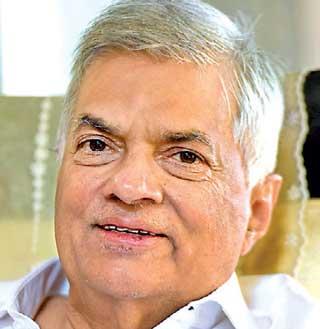
Ranil Wickremesinghe 
Pic by Pradeep Pathirana

In an interview with Financial Times this week, Wickremesinghe dismissed concerns that additional funding from China could complicate the ties with India.


The neighbouring giant has continued to extend support to the island nation with financial assistance and also advocated with the International Monetary Fund (IMF) to facilitate the much-needed loan programme. India has offered credit lines, swaps and other assistance amounting to more than US $ 3 billion.


However, acknowledging that the support from India would be limited going forward, Wickremesinghe said Sri Lanka would have to rely on its ties with Japan and China for further funding.


With India we’ve had a special relationship and as long as we don’t do anything to harm India’s national security, we can get along,” he told Financial Times.


Wickremesinghe shared that the government would reach out to Beijing and other creditors, including private bondholders for restructuring talks, only after the negotiations with the IMF have been finalised.


China has agreed to provide aid and additional loans to Sri Lanka, after it refused the request to renegotiate the debt amounting to US $ 3.5 billion.


It’s quite substantial. It would be a few hundred million dollars. It’ll still help us get hold of essential consumer items, fertilisers … the Finance Ministry is having discussions on some of the items,” he said at the interview. 
Wickremesinghe told Financial Times that securing the IMF funding is likely to require politically contentious reforms such as cutting public spending and privatising state-owned companies.


The status of Sri Lanka’s debts to China is being closely watched by the policymakers and analysts, who said Beijing had been reluctant to accept losses on its loans in other Belt and Road Initiative participants such as Zambia. 

New committee system to strengthen Parliament’s financial powers – PM

May 29th, 2022

Courtesy Adaderana

Sri Lanka’s Prime Minister Ranil Wickremesinghe says a new committee system will be introduced to strengthen the Parliament’s financial powers and a National Committee will be established to make the President and Prime Minister answerable to the Parliament. 

He stated this while delivering a special statement on the 21st Amendment to the Constitution and proposed political reforms

The PM said that the country’s main issues today are not limited to the financial sector. 

He said that at the same time, in the political sphere there are two major issues with one being the need to do away with the 20th Amendment and the implementation of the 19th Amendment to the Constitution once again. 

With regard to that now, we as the party leaders are currently preparing the 21st Amendment,” he said. 

The second is to work towards abolishing the Executive Presidency, he said, adding that the party leaders can decide on that time period and the method. 

In addition to this, there is another issue with regard to the Parliament, the premier said. 

He stated that because the parliament was weakened by the 20th Amendment to the Constitution and because the Executive obtained more powers, the process of the Parliament has been crippled. 

One of the main accusations today is that the Parliament is not working to end this economic crisis. The powers vested with the Parliament will increase through the 21st Amendment to the Constitution, however we cannot be satisfied by that alone.” 

He stated that there is also an allegation that under the current Westminster cabinet system, the cabinet ministers controlled everything and due to the ruling party having a majority in the House the affairs of the parliament were neglected. 

We don’t always have to keep questioning what happened in the past. However, there needs to be a system to include the Parliament in the governance of this country,” he said. 

At the same time, we need to have transparency. The MPs of all parties need to convene those committees and work according to the policies and programmes, that is the environment we are creating.”

He stated that the existing laws need to be strengthened if parliament is to be given powers to execute financial powers.  He also said that they are preparing to pass a set of new financial regulations after taking a look at the existing laws.  

Wickremesinghe stated that are three committees related to the state’s financial affairs and that the Leader of the House Dinesh Gunawardena has presented several proposals to strengthen these committees and further empower them. 

He said that in addition to that they are also putting forward a proposal to establish two more finance-related committees, which include a ‘Committee on Ways and Means’ and a ‘Committee on Banking and Financial Services’.

He stated that these five finance committees and ten oversight committees will be chaired by backbencher MPs and not ministers. 

He said they also need to pay attention to a crucial point. What the youths are saying is that the existing system needs to be changed and they need to be aware of the current issues.” 

Therefore he proposes that four youth representatives are appointed each of these fifteen committees with one of them from the Youth Parliament while the other three selected from the protesting groups and youth groups as decided by them.  

He said in addition to this they also expect to get specialist with experts knowledge involved in this and that this will provide the youth with an opportunity to become aware of the issues and to present their solutions. 

The Prime Minister also proposed to establish a National Council comprised of the Speaker, the Prime Minister, the Opposition Leader and the leaders of the major parties.

Speaking on the importance of this National Council, he said that it can discuss the country’s policies and the decisions of the Cabinet as well as discuss the reforms of the Parliament. He said it will be a political council with the authority to summon the Cabinet and the committee chairs.   

If there are any young representatives for this, those appointed separately, we can also consider that,” he said.

Wickremesinghe said that under this new system the President, the Cabinet of Ministers, committees and the National Council need to be answerable to the Parliament and thereby complete power will be vested in the House.

He said that several organisations have presented similar proposals. Let’s consider those proposals as well and come to an agreement how the Parliament’s powers are implemented in the future.”

Police arrest more suspects for illegally storing and selling fuel

May 29th, 2022

Courtesy Adaderana

Sri Lanka Police says that another 37 persons have been arrested for illegally storing fuel for the purpose of selling at a higher price.

The suspects were arrested in 38 raids carried out within yesterday (28), police spokesman SSP Nihal Thalduwa said.

A police spokesman said that 814 liters and 800 milliliters of petrol and 4,328 liters and 500 milliliters of diesel in total were seized from the suspects.

He stated that about 450 vehicles had received fuel twice or more between 12.00 pm last night (28) and 2.00 pm today. He further stated that an investigation is being carried out regarding those vehicles.

An application introduced by the Police Headquarters has been installed at more than 1,400 petrol stations and 2,800 vehicles have been observed refueling twice or more a day, the police spokesman said.

Sri Lanka to pay $34 per barrel(US) for Russian oil

May 29th, 2022

Sri Lanka News

Sri Lanka will pay $US72.6 million to buy a 90,000-tonne shipment of Russian oil docked at Colombo’s port for weeks, its energy minister says, as the island nation works to restart its only refinery and address a crippling energy crisis. That means Sri Lanka pays only $34 per barrel(US) when the market price is around $110 per barrel (based on 1 ton reg =23.75 barrels(US)

Sri Lanka has struggled to pay for fuel, food and medicine imports due to a severe shortage of foreign currency. An unprecedented financial crisis has also forced the country to default on some external debt.

Like the rest of Asia, Sri Lanka wants to shift to long-term crude tenders to hedge against high crude spot prices, but dwindling foreign exchange reserves have hampered its ambitions, the power minister said on Saturday.

I have reached out to multiple countries, including Russia, for support to import crude and other petroleum products,” Power and Energy Minister Kanchana Wijesekera told reporters.

The 90,000-tonne consignment was ordered through Dubai-based Coral Energy, Wijesekera said, adding that the payment would facilitate restarting the country’s sole refinery, which has been closed since March 25.

The next shipment will also be ordered from the same company. Another consignment will be needed within the next two weeks to keep the refinery running continuously,” Wijesekera said.

Queues of two-wheelers and cars outside fuel stations, sometimes miles long, have become a familiar sight for Sri Lankans this year, with high global oil prices exacerbating their misery.

Wijesekera estimates that Sri Lanka will need $US568 million to pay for a dozen fuel shipments needed in June.

The country is struggling to pay $US31 million for a furnace oil shipment docked at Colombo’s port. State-run Ceylon Petroleum Corporation (CPC) needs $US735 million to clear letters of credit for previous oil purchases.

Total foreign reserves were $US1.82 billion at the end of April.

Protests have rocked Sri Lanka in recent days, with demonstrators demanding the resignation of President Gotabaya Rajapaksa over the financial crisis.

The unseen hands behind the Aragala, by no longer “ peaceful”

May 28th, 2022

Dr.  Chula Rajapakse MNZM Wellington NZ

The Aragalaya is the work of youth brain washed by the JVP  and supported and fed ( for 50 days now) by funds from Catholic Church, Vatican, Tiger Diaspora and Islamic state .They have  no coherent plans or ideas of what happens after Gota goes” . All of them , born after 1990, have no experience or knowledge  of the havoc wreaked by the JVP  on SL in 1971 & 1989. In the latter event life was brought to a stand still in all of SL or parts of it at the whim and fancy of the JVP leader at that time , masquarading as a plantar til found out. The Aragalaya leaders need to be educated on these

    For any one having any doubts, of the JVP role,  they only need to see and reflect on  the images of  the 9th May to see how Anura K was received like a hero on arrival at the Aragala boomy after they were attacked, and how Sajith P, and his body guards had to unceremoniously  flee for dear life a few moments later at the same site at the hand of the same Aragala leaders.

Aim of the various unseen hands behind the Aragalayais clearly  is  Anarchy” , with each of these arms hoping to come out on top there after. SL is very near to seeing a repeat of the violence of July ’83 and 1989/90, this time with addition of shortages of food, fuel and energy. No  one  will be exempt, from the violence. Not even high walls and plush gates will protect any, They all need to wake up to this reality before all implodes.

Media too has responsibility to expose this by talking and interviewing   the so called youth leaders of the Aragalaya, to expose how shallow their thinking and ideas are .

Sadly it was  the sheer stupidity and pig headedness of   the President badly mislead in particular by DBJ  ( Press.Sec), ANC (CB Governor) and Padeniya ( GMOA) , and the  greedy, selfish & callous designs of Kaputas Basil , that were the immediate reasons that  led to the creation of the fertile soil for these different hands to exploit , with  each having their different agenda in mind .

The petty political still at play is at best pitiful.

   All who have SL’s interests at heart should wake up to these realities immediately 
  

Dr.  Chula Rajapakse MNZM

Wellington NZ

Export Development and EDB

May 28th, 2022

Sugath Kulatunga

It was reported that the EDB Chairman Suresh de Mel insists boosting exports and celebrating exporters must be made a national priority, noting that it is the only sector generating a steady foreign exchange inflow to keep the economy afloat. He has stressed that we cannot grow as a country without exports. Any rational Sri Lankan will strongly endorse the Chairman’s opinion.

The adverse balance of trade has been a perennial problem in the economy of the country. In many years imports have been double the value of exports and the gap was covered by borrowings. With the open economic policies of 1977 imports were liberalized and the flood gates were open for imports. In the last few years before the Corvid pandemic the foreign exchange earnings from tourism and repatriation from foreign employment helped the balance of payments position. The pandemic demonstrated the vulnerability of returns from these sources.

The panacea adopted to solve the trade deficit was to devalue the currency with a view to discourage imports and induce exports. Devaluation has been a futile exercise in Sri Lanka where at the time of independence in 1948 the US dollar was only 3 rupees and now it is over 350 rupees. We continue to chase the dollar without focusing on the real problem of poor export performance. The Export Development Act of 1979 was designed to address this lacuna. In 1980 there were 3 lead projects i.e. EDB, GCEC and the Accelerated Mahavali. It is noted that the Export Development and Investment Promotion institutions were conceptualized by a handful of dedicated staff of the Export Promotion Secretariat of the past.

The Act envisaged the commitment of the highest political level for export development. This was guaranteed by an Export Council of Ministers chaired by the president of the country. The EDB Act ensured that the export development be truly a national effort by accommodating in the management Board secretaries or additional secretaries of all the Ministries responsible for production of exports and providing services. In addition, the private sector was well represented on the Board. Professionals in relevant fields were roped into several Advisory Committees. Exporters and Producers Association were formed to cater to their specific interests and an apex body of the Association was also established.

It was also envisaged that to be effective the EDB should have both financial adequacy and independence. To achieve this the Act provided for a cess to be charged on non-essential imports. In order to serve the special needs of the wide range of products and functions the Act authorized the Board to form subsidiary companies.

Production for export carries far greater risks than production for the local marker or any other form of investment. Investors are reluctant to put their money on long maturing export projects with higher risks when import and construction business carry lower risk and ensure fast returns. The Banks too were comfortable in lending money to the latter type of investments. This was the actual experience in 1977 when there was import liberalization.

Government of Sri Lanka had established the National Development Bank for the purpose of promotion of industrial, agricultural, commercial and other evelopment of the economy of Sri Lanka having regard inter alia to the development of the rural sector. One of the objectives of the NDB was to undertake development projects, including pilot projects, in order to achieve the purposes of the Bank. Unfortunately, the NDB acted like any other commercial bank and was finally privatized. It is no more national.

In consideration of the absence of any other financial institution to provide funds for innovative investments with risks, the EDB Act provided for investments in selected export projects. A special Division was created in the EDB to evaluate and participate as a Venture Capital provider in inventive pioneering projects.

In the initial period the EDB was privileged to have as Chairman the former Head of the International Trade Centre (UNCTAD/WTO) and be inspired by the dynamic and smart Minister Lalith Athulathmudali.

In the early part of 1980s Sri Lanka had an ideal institutional arrangement and best of leadership. The tale of what happened to the EDB is a disgrace and is bordering on criminal.

The Council of Ministers was not convened for 35 years as EDB had no policy innovations to take up with the Council and the Ministers after Lalith and the Chairmen of EDB were diffident to face the Council.

The later Chairmen of the EDB had no development vision as their background was only Trade Promotion. The result was that not only the venture capital conception was rejected the Projects Division with trained and dedicated staff was disbanded.

We also had a Minister who terminated export incentives well before the mandated time of the WTO. He also is alleged to have allowed the import of Kankung from abroad. He was so cussed that when exporters of gherkins requested for a short-term incentive to retain their markets in the face of an advantage gained by their Indian competitors due to a currency devaluation in India, the Minister advised them to take their business to India.

While the shortsighted Chairmen of the EDB abandoned the Pioneering Project Scheme and the scheme to reward exporters on performance over the previous year, recently India has announced an outlay of INR 1.97 Lakh Crores for the Production Linked Incentive (PLI) Schemes across 14 key sectors, to create national manufacturing champions.

Another novel program discarded by the management of the EDB was the Export Production Village EPV) program which was aimed at mobilizing rural production potential to produce for export and linking the production collective with exporters. This was a very imaginative and popular scheme which inspired the global program on Export Led Poverty Reduction Programme (EPRP) of the International Trade Centre’s (ITC). This program covered countries in Latin America, Africa, India and even China. The EPV program in Sri Lanka was implemented under the patronage of the Assistant Govt Agent (Divisional Secretary). When the Gamudawa program of President Premadase was launched the AGAs were made to understand that their priority should be only the President’s pet scheme. Thus, the EPVs lost the leadership of the AGA and the EDB too neglected them. In later years the EDB which also had a financial stake in the EPVs were not aware even on the location of most EPVs. What was good globally was considered irrelevant by the EDB which originated the concept.

While political leadership were blind to the critical problem of the adverse balance of trade they made detrimental decisions which affected export development and the economy of the country. The turning point was the decision taken by the first Prime minister DS to focus on paddy cultivation in the dry zone to the exclusion of industrial development. This was in spite of DS ardently supporting In the State Council in 1944 to launch a State Project of Industrialization in Ceylon and the  Industrial Corporation Bill.

 Later, when in South Korea President Park directed the leading business houses to venture into high tech industries, president Premadasa forced leading business houses in Sri Lanka to invest in low tech garments industry in rural areas to generate employment. While South Korea through industrialization developed into a leading industrial powerhouse in the world, Sri Lanka continues to excel as a superior tailoring shop.

Even in the 1977 regime the GCEC was keener to fill up the Zone rather than attracting technology. The result was GCEC became a haven for apparel quota seekers.

In 1983 the Black July resulted in Sri Lanka losing high tech investments by firms like Samsung and Motorola. The greatest setback in all aspects of development was caused by the war against separatists. This internal war had cost the country around US$ 200 billion according to India’s former National Security Adviser and Foreign Secretary, Shivshankar Menon.In his book Choices: Inside the Making of India’s Foreign Policy, Menon says that this estimate does not include the opportunity cost” to Sri Lanka which was once the fastest growing and the most open economy in South Asia. htps://www.newindianexpress.com/world/2016/dec/13/sri-lankas-internal-war-cost-us-200-billion-1548433.html” If this money and the human effort was invested in development Sri Lanka would have been a different place.

While the EDB was not responsible for the wrong political decisions, EDB continued to dismantle many useful instruments introduced by the first Board of management.

The popular Exporters Forum which was an effective trouble shooting mechanism was not conducted. The prestigious Presidential Export Awards was not held, and the statutory requirement of the National Export Plan was not formulated. It is not clear whether undoing the good things done by previous regime was political one-upmanship or sheer lack of understanding and interest of the EDB leadership. Well, a minister had suggested that the EPV scheme be revisited under a different name.

The sad decline of the EDB was mainly due to the poor leadership of Chairmen who were merely time servers in retirement. There were a few professionals who adorned the post, but they sought for inspiration from Western models. They were not interested in the developments of excellence in the Far East. There were others whose appointments could only be justified with the Premadasa philosophy of preference for the mechanic over the engineer.

Now with the massive devaluation of the currency there is an excellent opportunity to push for a concerted export development drive. It appears that the political leaders have got into their thick heads that the only solution to get out of the dollar crisis is to produce for export and export more.

Exports cannot be increased overnight. It is necessary to have both short term and long term programs. In the short term we could concentrate on adding value to existing products and making the best use of our existing physical and human resources. But in the long run the country has to improve its expor supporting services and industries.

Taiwan is an Island smaller than Sri Lanka with a similar population. It was a predominantly an agricultural economy. Today it is a high tech powerhouse leading the world in a number of high tech industries. It has a per capita income of 36, 000 dollars. At the beginning of the 1980s, Taiwan increased the ratio for senior vocational schools and general high school to 7:3. By 2012 there were 155 senior vocational schools, 14 junior colleges, and 77 universities/colleges of science & technology, totaling 246. It is the education system that has sustained the significant development of this small nation. Our education policy must be revamped if we are to progress in technology and expand high valued exports. Far back in 1944, the Kannangara education reforms proposed practical schools (vocational) but this aspect of reform has not been implemented seriously. The private sector should be encouraged to conduct Technical and Vocational training. It could be useful to request India to establish a branch of their IIT in Sri Lanka.

If the government is serious about giving priority to export development the export cess should be made available in full and directly to the EDB. The EDB should use these funds on export incentives and for venture capital investments in pioneering projects. Export and investment promotion should be made the primary function of our representatives in foreign countries who should be given targets for FDI and market access. Business leaders should be encouraged with incentives as done in South Korea to venture into selected high-tech industries. One effective incentive would be to give them import quotas which could be resold. EDB should again be made a lead project of the government. I wish the Chairman of the EDB good luck.

 Sugath Kulatunga

ගෝල්පේස් අරගලය (2022) හා කෝල්බෲක් කොමිෂම (1832)

May 28th, 2022

චන්ද්‍රසිරි විජයවික්‍රම, LL.B., Ph.D.

‘ලංකාවේ පොලිස් OIC ලා 184 දෙනාගෙන් 182 ක්ම පොහොට්ටු දේශපාලකයින් විසින් කරණ ලද පත්කිරීම්’– පොලිස්පති වික්‍රමරත්න ඔහුගේ ගැලවීමට දුන් උත්තරය

හැඳින්වීම

මෙය 2022 අප්‍රියෙල් 19 දා සිට ලියන මෙම ලිපි මාලාවේ හත්වන කොටසය. එම පෙර ලිපිවල මාතෘකාව වූයේ <ගෝල්පේස් වනාන්තරය, ගෝඨාභයගේ දෙවන යුද්ධය හා බෞද්ධ මධ්‍යම ප්‍රතිපදා විසඳුම> යන්නය.  මා ලියූ <වනාන්තර> අදහස මේ වනවිට තහවුරුවී ඇත. එය ජ්වීපි පෙරටුගාමි අන්තරේ අය සැඟවුන, තරුණ හා වයසක, කොළඹ කළු සුද්දන්ගේ කැළෑවකි. මහින්ද ඉවත්කර රනිල් අගමැති කිරීම ගෝඨාගේ <දෙවන යුද්ධයේ> ආරම්භයය. රනිල්, මියගිය මංගල සමරවීරගේ අවතාරයක්සේ පාවි නොයෑමට වගබලා ගැනීම ලේසි පාසු කාරියක් නොවේ. 2009 මැයි 18 දා අවසන්වුණ පලවෙනි යුද්ධය දිණන්න පුළුවන් යයි කී එකම ඉහළ රාජ්‍ය නිලධාරීයාවූයේ ඔහුය (තෝසේ කෑමට ගිජුවූ එරික් සොල්හයිම්ගේ වචන). හරීන්-මනුෂ දමණය හරියට බල්ලන් නාවන්න ඇදගෙන යනවා වගේය. ඔවුන් තාමත් කතාකරන්නේ ඇදේටය (bad-mouthing).

රට අරාජිකව කැබලිවී යාම  වැලැක්වීම

මීට කලින් සිටි ජනාධිපතිලා, අගමැතිලා කවුරුත් නොකල දෙයක්වන තමන්ගෙන් සිදුවූ වැරදි පිළිගෙන, නියත වශයෙන්ම සිදුවීමට යන,  රට අරාජිකව කැබලිවී යාම  වැලැක්වීමට අනිත් පක්ෂ දේශපාලකයින්ගේ කොන්දෙසි වලට යටනොවී,  රනිල්ට රාජ්‍ය සුක්කානම භාරදීම දෛවයේ සරදමක් සේ  ඔහු ගත් නිර්භීත පියවරකි. එය ලෝකයේ බොරු නියෝජිත ප්‍රජා-තන්ත්‍ර (නාස්ලණූ) වාදයේ ඉතිහාසයට එක්කල ගිනස් වාර්තාවක් නොවේද? (සූත්‍රය: චන්ද දායකයින් ලක්ෂ 69 + ලැයිස්තු මන්ත්‍රී 1 = රටේ හඳහන) ඇමෙරිකන් සිවිල් යුද්ධයේදී ලින්කන්ට නිතරමවාගේ තම සේනාධිපතිලා මාරුකර දැමීමට සිදුවිය. එළුවා පස්සේ යන නරියා මෙන් මෙම දේශපාලන මංගල්‍යය එන සතියේ… ලබන මාසයේ… කඩා වැටෙන තෙක් තලුමරමින් ඉන්නා දේශපාලකයින්, කළුසුද්දන් හා දෙස් විදෙස් තැරව්කාරයින් බොහෝය. හර්ෂ, චම්පික හා සරත් ෆොන්සේකාට තාමත් බස් එකේ ඉඩ තිබේ. 13-A ප්ලස් පප්පා වන දයාන් ජයතිලකගේ ලණු ගිල්ල සජිත් කරගත් අනුවණකම නම් අගමැතිකමට රටේ කෙනෙක් නැතිව ගෝඨාභය අසරණවේය යන නිගමනයය.

13 වන සංශෝධනය තිබෙනතාක්, මේ චන්දක්‍රමය තිබෙනතාක්, විධායක ජනාධිපති ධූරය අහෝසි කිරීම රට කැබලිවීයාමට හේතුවන බව පෝලිම් වල ඉන්නා කුපිතවූ ජනයා නොදනී. දේශපාලකයින් හා නිලධාරීන් කාලයක් තිස්සේ කල වැරදි නිසා අන්තිමේදී පුපුරාගිය මේ අර්බුදය, රට බංකොලොත්වීම, දඩමීමා කරගෙන, ජනයාගේ ඇස්වලට වැලිගසා, 1995 දී සිටම බොහෝ සිංහල  දේශපාලකයින් ගෙනගිය රට කැඩීමේ ව්‍යාපාරයට ඔක්ෂිජන් සපයමින්, සජිත්ලාත්, අරගලයත්, බාර් ඇසෝසියේසන් එකත්, දෙස් විදෙස් ngo නඩත්, ටැමිල්නාඩුවත්, ඊලම් අරමුදල් හා චන්ද ලබන කැනඩාව, එංගලන්තය වැනි බටහිර සුදු රටවල දේශපාලකයිනුත් ඉන්නේ, දේශ ද්‍රෝහී සිංහල බෞද්ධ විරෝධී, මාදුළුවාවේ සෝභිත හිමියන් රැවටුන තැටිය රත්වූ විට රොටිය පුච්චා ගැනීමේ හෙවත් කල දුටුකල වල ඉහගැනිමේ කුමණ්ත්‍රනයකය.

.

පැතුම්ගේ පැතුම, නිරාගමික සමාජයක්!

ගෝල්පේස් පිටියෙන් ඉවත්කරවී ඉන්නා දොස්තර පැතුම් කර්නර්, අරගලය <නිරාගමික> යයි කියන නිසා ඔහු විජේවීරගේ පුතා, උවිඳුගෙන් ඉතිහාස හා භූගෝල විද්‍යා පාඩමක් ලබාගත යුතුමය. මෙම කොටසේ මාතෘකාවට කෝල්බෲක් සාමිව සම්බන්ධ කරගන්නා ලද්දේත් ඒ නිසාමය. ලංකාව ප්‍රදේශ පහකට බෙදා ආරම්භ කල, කෝල්බෲක්ගේ සිස්ටම් එකෙන් ගැලවීමේ අවශ්‍යතාවය පැතුම් ඇතුළු අරගලකාරයිනුත්, බාර් ඇසොසියන් කට්ටිය, පක්ෂ දේශපාලකයින් 1931, 1948 කාලවල සිට මේ දක්වාම වටහාගෙන නැත්තේ ඔවුන් රටේ ඉතිහාසය නොදත් කළුසුද්දන්වීම නිසාය. කාල් මාක්ස් බුදු දහම ගැන දැන සිටියා නම් ඔහු ආගම අබිං කියන්නේවත්, සමහරවිට ඔහුගේ දුවක් සියදිවි නසා ගන්නේවත් නැත.

බුදු දහමේ දුක්ඛ සංකල්පය පසු කාලයක උපන් මැක්ස් වෙබර්ට තේරුණේද නැත. 1935 සිට 1964 දක්වාම ලංකාවේ මාක්ස්වාදීන් නන්නත්තාරේ යන්නේවත්, 1971, 1988/9 දී jvp කැරලිකරුවන් කෲර මිනිස් ඝාතන කරන්නේවත් නැත. 2022 දී උමංදාවට පහරදීමත්, ගීතා කුමාරසිංහගේ සම්මාන කුඩු කිරීමත් නිරාගමිකවීමේ විපාකය. ලෙසබියන් ජෝඩුවල වුනත් පිරිමි සතෙක් හා ගෑණු සතෙක් ඉන්නවා මෙන් <නිරාගමික> කියන්නේද ඕමාර් ඛයියාම් වර්ගයේ තවත් ලබ්ධියකි. සිස්ටම් චේන්ජ් එක කජු කනවා වගේ යයි සිතමින් පොර ටෝක් දෙන, කෝනාරගේ සැබෑ කැරට්ටුව එලිකරමින් ඔහුගේ පෙම්වතිය රටට කල අනාවරණය බොරුවක්ද? පොලිස් බැරියර් කඩන්නට යන අන්තරේ ගෝලයින්ගේ වියරු මුහුණුවලින් එලිවන්නේ විචාර බුද්ධියෙන් තොර අන්ධ ලබ්ධියක්ය.  දුවන්නන් වාලේ අනුන් පස්සේ ඔහේ දුවන යම් ආකාරයක වහල් මනසක්ය. ගාන්ධි සිටියා නම් මොනවා හිතයිද?

මේ අරගලය වනාහී, ගෝල්පේස්, අරලියගහ මන්දිරය හා ජනාධිපති නිල නිවස අසල කෑගසමින් <තරුණයින්> විසින් ඉල්ලමින් සිටින, හා විශේෂයෙන් 69 ලක්ෂයක් ගෝටාභයට චන්දය දුන් ජනයා විසින් ඉල්ලා සිටි සිස්ටම් චේන්ජ් එක නම් (හිට්ලර් කෙනෙක්වී හෝ රට හදන්න!), දැන් ඊට විරුද්ධවන කිසිවෙක් නැත. මෙසේ වෙනත් පාපකාරී, සිංහල බෞද්ධ විරෝධී jvp, සජබ, TNA යනාදී කොටස්, අරගලය තම න්‍යායපත්‍ර වලට පාවිච්චි කිරීමක් බව ඇත්තවශයෙන්ම අවංක යයි සිතිය හැකි, එහෙත් දැණුම හා දැකුම අතින් නොමේරු තරුණයින්ට තවමත් ඒත්තු ගොස් නොමැති බව එම දුෂ්ට ක්‍රියාව (උමංදාවට පහරදීම හෝ ගීතා කුමාරසිංහගේ සම්මාන කුඩුකර ගෙය විනාශ කිරීම වැනි ) හෙලා දකින පෝස්ටර් තවමත් නොමැතිවීමෙන් පෙනේ.

බුදු දහම ආගමක් නොව අධ්‍යාත්මික/විද්‍යාත්මක දර්ශනයකි

තාරුණ්‍යයට අවංකභාවය හා එඩිතරකම තුබුණත්, රැවුල් වැවීම හැර ජීවන යාත්‍රාව ගැන අත්දැකීමක් නොමැති නිසාවෙන් ඔවුන්ට මහ පොලොවේ යථාර්ථය නොපෙනේ. රටේ ඉතිහාසය හා භූගෝල විද්‍යාව නොදන්නා නිසා ඔවුන් සිංහල බෞද්ධ විරෝධී සන්නස්ගලගේ බුදුන්ගේ රස්තියාදුවට යටවී ඇත. කාදිනල් විසින් රටපුරා සටන් කරණ ලෙස ඉල්ලීමත්, උමංදාවේ හාමුදුරුවන් බෞද්ධ විසඳුම් ක්‍රියාවෙන්ම පෙන්වා දීමත් අතර වෙනස එයය. සජිත්ගේ සජබය පෙරටුගාමීන් හා රහස් සාකච්චා කරන්නේත්,  jvp නායකයින්, ලෝකේ කා වතුර බීපු චරිතයක් වන, ඇමෙරිකන් තානාපතිනිය සමඟ  සාකච්චා කරන්නේත් මේ වෙනස, දැනුමේ අඩුව, නිසාය. අරගල අදහස අනුමත කරණ උමංදාවේ හාමුදුරුවන් අවුරුදු පහකට තමන්ට රට භාරදෙන ලෙස කරණ ඉල්ලීම අරගලයට සහාය දෙනවා කියන අගමැති රනිල්ට කරණ විවෘත අභියෝගයකි. ඒ හාමුදුරුවන්ට තිබෙන්නේ සිංහල බෞද්ධ ශිෂ්ටාචාරයේ ආභාෂයය. එය රටේ 2600 කට වඩා පැරණි ඉතිහාසය හා භූගෝල විද්‍යාව (ඉතිහාසය කියන්නේ අතීත භූගෝල විද්‍යාවටය) පිළිඹඳව ඇති දැණුමෙන් පෝෂණය වූවකි.

සිතීමේ නිදහස – එව බලව (come and examine)

අන්තරේ හරියට, jvp -පෙරටුගාමීන්ගේ කුලී හේවා පිරිසක් වගේයයි ගැමියෙකුවූ අළුත් උප කතානායක කල ප්‍රකාශය පිළිඹදව ගැඹුරින් සිතා බැලීමට අවස්ථාවක් මට ලැබුනේ Reader’s Digest (June 2022) සඟරාවේ පලවූ ‘I never thought of it that way: how to talk to people even if you disagree’ යන ලිපිය කියවූ විටය. ගම්වල දුකසේ කාලය ගතකර විශ්ව විද්‍යාලයට ගියදා සිට jvp-පෙරටුගාමී අඥාදායකත්වයට (ගල් රෝලට) මිරිකී ජීවත්වන සිසුන්ගේ මනසට වෙනත් කිසි සමාජ-දේශපාලන-ආගමික අදහස් ඇතුළුවීමට අවකාශයක් නැති නිසා ඔවුන්ගේ මොලය ඒ අංශයෙන් අකර්මණ්‍යවී ඔවුන් නායකයින්ගේ මානසික වහළුන් බවට පත්වෙන්නේය. මා මේ ලිපියෙන් පෙන්වාදෙන්නේද ඕනෑම පංචස්කන්ධයට සිදුවිය හැකි මෙම අකරතැබ්බයය. අනිත් පුදගලයාගේ අදහස්, මත, ගැන විමසා දැනගැනීමෙන්, තමන් ගේ අදහස් වඩාත් ඵලදායි කරගෙන මානසිකව හා භෞතික/ප්‍රායෝගික සතුටින් පිරි ජීවිතයක් ලඟාකර ගත හැකි අන්දම මෙම රීඩර්ස් ඩයිජෙස්ට් ලිපියට අදාල පොත ලියූ  Monica Guzman පැහැදිලි කරයි (යුද්ධයක් වුවත් දිනන්නේ සතුරාගේ ප්ලෑන් අධ්‍යයනය කිරීමෙන්ය). මේ අනුව සිතන විට අන්තරේට කඩේයන සිසුන් ඔල්මාදයකින් (delusion) පෙලෙන ලෙඩ්ඩුන් වැනිය.

මොනිකාගේ තේමාව සමානකල හැක්කේ බුදු දහමේ ඉගැන්වෙන එව බලව  රීතිය සමඟය. අනිත් ලබ්ධීන් කියන්නේ එව අදහව කියාය (come and believe). උදාහරණයක් වශයෙන් ඉස්ලාම් ලබ්ධියට අනුව දවස්ට පස් වරක් මක්කම දෙසට හැරී යාඥා කල යුතුය. විශ්ව විද්‍යාල හාමුදුරුවරු පාරේ කඳුළු ගැස් කන්නේ බුදුදහමේ ඇති නම්‍යශීලී බව අවභාවිතා කරමින්, ඔවුන් ivp පෙරටුගාමී සබන් පැක්ටරියෙන් පිටවෙන සබන් කෑලි නිසාය. කතෝලික ක්‍රිස්තියානි පල්ලිවල මෙන් රෝමයේ පෝප්ගෙන් එන චක්‍රලේඛන නැති නිසා ලංකාවේ පන්සල් වල සිවුර කැලයක් කරගෙන හොර වැඩ කරණ හාමුදුරුවරු එමටය. මාක්ස්වාදීන්ද මේ එව අදහව ලබ්ධීන් ගනයට අයත්ය.

මෙහිදී සන්නස්ගල-සේපාල් යනාදීන් අමතක කරණ දෙයක් නම් ඉන්දියාවේ හා වෙනත් බොහෝ රටවලින් (සවුදි අරාබියේ පවා බෞද්ධ නටබුන් හමුවී ඇත) බුදු දහම නැතිවී ගියේ කුමක් නිසාද යන්නත්, ලංකාවේ එය රැකුණේ කෙසේද යන්නත්ය.  බෞද්ධ දර්ශනය හා ත්‍රිපිටකය සේපාල්ගේ ආච්චිට රැක දුන්නේ ලංකාවේ හාමුදුරු පරම්පරාය. මෙම සංඝ සංස්ථාව මේ වනවිට මුහුණපා සිටින මූලික ප්‍රශ්ණය නම් දුශ්ශීලයයි හඳුනාගත් භික්ෂූන් නෙරපා දැමීම සඳහා අවශ්‍ය සංඝාධිකරණයක් පිහිටුවීමට සිංහල පක්ෂ දේශපාලකයින් ක්‍රියානොකිරීමය. මේ නිසා යම් දුශ්ශීල භික්ෂුවක් සිටී නම් ඔහුව එලිකරනවා මිස, හීරේ යාමට පෙර රන්ජන් රාමනායක කලා මෙන් සිවුරට පොදුවේ නිග්‍රහ කිරීම දුෂ්ට ක්‍රියාවකි. අරගල භූමියට එන හා පාරේ කදුළු ගෑස් කන හාමුදුරුවරු යහපත් අය ලෙසත්, අනිත් හාමුදුරුවරු දේශපාලකයින්ට කඩේ යනවා කීමත් ව්හිළුවකි.

ලිච්චවි මාවත හා කෙළෙස්පිරි පංචස්කන්ධ

රනිල් අගමැති , විජේදාස අධිකරණ ඇමති, ජනාධිපති ගෝටාත් සිස්ටම් චෙන්ජ් එකට එකඟ නිසා <ගෝටාගෝහෝම්> යන කතාව පස්සට දමා, නම්‍යශීලීව, මධ්‍යම ප්‍රතිපදාවට අනුව යමින්, බොහෝ සිස්ටම් චේන්ජ් වැඩ දැන් ඉෂ්ට කරගත හැකිය. Jvp, පෙරටුගාමී-අන්තරේ හිතන ආකාරයේ විප්ලවයෙන් කරන්නට යන සිස්ටම් චේන්ජ් එකක් වෙනුවට, ලිච්චවි පාරේ යමින් ගත හැකි පියවර රාශියක් ඇත. ලේ වැගිරෙන රට විනාශමුඛයට දමන ලිබියා මාවත ලංකාවේ සිංහල බෞද්ධ ජනයා අනුමත කරන්නේ නැත. උමන්දාවේ හාමුදුරුවන් දෙන අවවාද අරගලයේ තරුණයින් විසින් අනුගමනය නොකර මුරන්ඩු, මුග්ධ හා අසාධාරණ ලෙස හැසිරීමෙන් අරගලය වෙනුවෙන් මේ වනවිට කතාකරණ තරුණයින් හා පුරෝහිතයින් වන සේපාල්, දර්ශන හඳුන්ගොඩ, බ්‍රදර් චාල්ස්, සන්නස්ගල, සුදත්ත තිලකසිරි, අභිශේකා ප්‍රනාන්දු කෙළීලා, තරිඳු උඩුවරගෙදරලා, රට බලවත් ව්‍යසනයකට ඇද දමන්නේය. හිරු නිව්ස් ඇත්ත වැඩසටහනේදී අන්තරේ මුදලිගේ අළුත්ම සාකච්චාවේදී දුන් පිළිතුරු වලින් පෙනීගියේ ඔහුට නොතේරෙන දේ කෙතරම්ද යන්නය.

සන්තානගත විප්ලවය හා බාහිර විප්ලවය

1977 දී JR වෙනුවෙන්, ධර්මිෂ්ට සමාජයක් ගොඩනැඟීම උදෙසා රට වටේ ගිය, බෞද්ධ දර්ශනය පිළිඹඳ මහාචාර්යවූ W. S. කරුණාරත්න, රටවැසියාගේ සිත් තුල අභ්‍යන්තර විප්ලවයක් සිදුවිය යුතු යයි පෙන්වා දුන්නේය. එහෙත් අදවන විට සමාජය කෙතරම් පිරිහී, අශීලාචාරවී ඇද්ද යන්න රටේ උත්තරීතර ආයතනය යයි කියන දියවන්නා හෝටලයේ අයගේ හැසිරීමෙන්ම පෙනේ. ලංකාවේ තිබෙන ප්‍රශ්ණය නම් නීති නැතිකම නොව අවංක දේශපාලකයින් නැතිකමය. කෙතරම් හොඳයයි සළකන ව්‍යවස්ථාවක් වුවත් දුෂ්ට පුද්ගලයින් විසින් අවභාවිතා කරන්නේමය. අනිත් අතට නරක යයි සළකන ව්‍යවස්ථාවක් වුවත් ගුණවත් පුද්ගලයින් විසින් සැබෑ යහපාලනයක් පිණිස යොදාගන්නේය.

අවංක නොවීමේ විපාක

මෙතරම් අමාරුවේ වැටී සිටියදීත් මේ දේශපාලකයින් අමු අමුවේ අතේ පත්තුවෙන බොරු කියන්නේ ලැජ්ජා-භය නැතිවය. අරුන්දික ප්‍රනාන්දු ඔහුගේ පයිලට් සහතික ගිනිබත් කලා යයි කියුවත් ඔහු පයිලට් කෙනෙක් වශයෙන් ගුවන් හමුදාවේ සේවය නොකල බව ගුවන් හමුදාව පෙන්වාදේ. හරීන් ප්‍රනාන්දු ඇමතිකම භාර ගත්තේ අප්පිරියාවෙන් ජනාධිපතිගේ මුණවත් නොබලා යයි මාධ්‍යවලට කිව්වත්, එය ගල් පැලෙන බොරුවක් විය. මින් ලැබෙන අනතුරු ඇඟවීම නම් මේ අළුත් කැබිනට් පිරිස රටගොඩ ගැනීමට ඇත්තවශයෙන්ම කැපවූවන්ද යන්නය. මහජන බැංකුවට බිලියන දෙකක පොල්ලක් තැබුවා යයි කෝප් කමිටුවේදි එලිවු දයා ගමගේ වැන්නෙක් අළුත් අගමැති රනිල් ලඟ පන්සලේ සිටීම හා එය එලිවූ විට බැංකුවේ ලොක්කා මන්ත්‍රී රාසමානික්කම්ට එවූ ලිපිය මෙහිදී අප සිත් සසළ කරලයි.

රෝහණ විජේවීරගේ අන්තිම කැමැත්ත

රෝහණ විජේවීරව අල්ලාගත් විට ඔහු, ඔහුගේ ක්‍රිස්තියානි බිරිඳගෙන් කල ඉල්ලීම වූයේ දරුවන් ක්‍රිස්තියානි නොකරන්නය යන්නයයි මා අසා ඇත. උවිඳු විජේවීරට බෞද්ධ පදනමක් ලැබුණේ මේ නිසා වියයුතුය. පැතුම් කර්නර්ගේ කතාවලදී රටේ සිංහල බෞද්ධ පදනම ගැන, මධ්‍යම ප්‍රතිපදාව දර්ශනය ගැන ඔහු දන්නා බවක් එලි නොවේ. මේවා බයිපාස් කරමින්, නොසළකා හරිමින් යා හැකි ප්‍රගතියක් නැතිවග ඔහුට ඉක්මණින්ම වැටහුණ තරමට හොඳ වන්නේ අරගලයේ නියෝජිතයින් අන්තවාදී ලෙස කතාකරණ නිසාය. ජාතිවාදය හා ජාතික වාදය පටලවා ගෙන  ඉන් ගැලවීමට වාසුදේවට සෑහෙන කාලයක් ගතවිය. බල්ලව නාවන්න ඇදගෙන යනවා මෙන් මේ 225 සිස්ටම් චේන්ජ් එක සඳහා බලෙන් තල්ලු කල හැක්කේ අරගලයේ තරුණයින්, බුද්ධිමත්, යුක්තිගරුක, මධ්‍යම ප්‍රතිපදාව අනුගමණය කරණ බලවේගයක් වශයෙන් ක්‍රියාත්මකව, එම තල්ලු කිරීමට සහභාගී විමෙන් පමණය. උදාහරණයක් වශයෙන් මේ අවස්ථාවේ චන්දයක් ඉල්ලීම හා ගෝටාගෝහෝම් කීම අඥාන ක්‍රියාය.

යුද්ධය පරදින සිස්ටම් හා යුද්ධය දිණූ සිස්ටම් එක

තිස් අවුරුදු යුද්ධයක් අවුරුදු තුනකටත් අඩු කාලයකින් නිමකල හැකිවූයේ පැවති යුද්ධ කිරීමේ සිස්ටම් එක වෙනස් කිරීමෙනි. මේ අන්දමට 1978 න් පසු ලංකාවේ පවතින චන්ද සිස්ටම් එකද ඊට පෙර තිබූ සිස්ටම් එකට ගෙනයාමට බලකිරීම ගෝල්පේස් අරගලයේ ප්‍රධානම ඉල්ලීමක් විය යුතුව තිබුණේය. JR හා ප්‍රේමදාසගේ චන්ද සිස්ටම් එක රට විනාශකල සිස්ටම් එකක් විය. 21/22 සංශෝධන වල මේ ගැන නිහඬය. ජනාධිපති හා අගමැති දැන් සඳුන්ගසේ එතෙන සමන් වැලක්සේ ක්‍රියාකරණවා සේ පෙනෙන නිසා ද්විත්ව පුරවැසියන් ගැන ඇති සංශෝධනය මිස වෙන කිසිවක් හදිසියේ ලහි ලහියේ කිරීමට යෑම ජුගුබ්සාජනකය. ජාතික සංවිධාන එකමුතුවේ ගුණදාස අමරසේකර මහතා පෙන්වා දෙන්නේද මේ කලබලයෙන් කරන්නට යන්නේ අනවශ්‍ය දෙයක් යන්නය.

රට ආහාර හිඟයකින් බේරා ගැනීම හා පෝලින් නැති කිරීම හැමෝගේම ප්‍රධාන කාර්යය විය යුතුය. තම වෘත්තීය සමිති මඟින් චන්දය නොමිලේ කරදෙන්නට ඉදිරිපත්වන jvp එක එම සංවිධාන ශක්තිය, ලැබෙන තෙල්, ගෑස්, භූමිතෙල් වත් නිසියාකාරව බෙදා හැරීමට අපොහොසත්ව සිටින රාජ්‍ය යන්ත්‍රනයට ලබාදීම ඔවුන්ට සිය චන්ද ප්‍රතිශතය වැඩිකර ගැනීමට හේතු උපකාර වනු ඇත.

මත්ස්‍ය න්‍යාය, හීනමානය හා මරණ භය

ලංකාවේ සමාජය මෙතරම් අශීලාචාර, ප්‍රචන්ඩ, ආත්මාර්ථකාමී, දීන මාන්සිකත්වයක් ඇති මිනිසුන්ගෙන් පිරි රටක් බවට පත්වුනේ, පෙරළුණේ, කෙසේද යන ප්‍රශ්ණයට සරල උත්තරද තිබේ.

1. පක්ෂ දේශපාලකයින් විසින් ජනයා රතු, නිල්, කොල වශයෙන් බෙදා පාලනය කිරීම (සුද්දාටත් වඩා හොඳින් කළුසුද්දා මෙය කලේය) දේශපාලකයා ජාවාරම්කාරයෙක් විය

2. ගම දඩමීමා කරගෙන කොන්ත්‍රාත් ක්‍රමය හරහා දුගී හා හිඟාකණ ගමක් බිහිකිරීම. සංවර්ධනය වන, දියුණු රටක් කියන්නේ බටහිර දේ කොපිකරණ, නැවෙන් බඩට ණයට කන සමාජයකට නොවේ.

3.වැසියා අලස ජීවිතයකට ණයට කන පිරිසක් බවට පත් කිරීම නිසා මේ වන විට පිටිපස්ස බිම ඇණුන, ආණ්ඩුවට දෙස් තියන පෝලිම්වල දුක්විඳින පංචස්කන්ධවී සිටීම.

4.වැසියා ගම්මටටමේ සිටම දේශපාලකයාගේ වහලෙක් බවට පත්කිරීම මඟින් සුද්දාගේ කාලයේ ඇතිකල හීනමානය තව තවත් තීව්‍ර කිරීම

5. 1977 සිට JR-RP දෙන්නා විසින් නිදහස් වෙළඳ පොල ආර්ථික ක්‍රමය යටතේ ලොකු මාළුවා පොඩි මාළුවා ගිලගන්නා මත්ස්‍ය න්‍යාය රජකරවීම හා ඉන් පසු බලය අල්ලා ගත් අය එය දිගටම අනුගමණය කිරීම. මේ නිසා සල්ලි දෙයියන්ගේ මල්ලිවී, ජනයා මුදල් උදෙසා ඕනෑම ජඩ වැඩක් කරණ මැස්සන්ගෙන් බැටකන වලිගේ නැති ගොන්නු වීම.  දොස්තරලා හා ලෝයර්ලාද ටියුෂන් දෙන රජයේ පාසැල් ගුරු පිරිස්ද මෙම විපරියාසයට යටවිය.

6. තිස් අවුරුදු යුද්ධය නිසා මිනිසුන්ගේ යටිහිතේ කිඳා බැස තිබූ මරණ භය නිසා අසරණව දැඩිසේ ආත්මාර්ථකාමීවී, භය මතුවී ලැජ්ජාව යටට කිඳා බැස අතුරුදහන් විය.

7. මැද පෙරදිග වැසිකිළි සේදීමට ගම්වල ගැණුන් යවා ඔවුන් ආපසු එනවිට හීනමානයෙන් පිරි මානසිකව වැටුණු පිරිසක්වීම හා ඔවුන්ට කිසි මානසික හෝ වෙනත් වෛද්‍ය හෝ ශුභසාධක සේවයක් නොලැබීම. මෙම වහල් සේවය නිසා අම්මා ගෙදර නැති ගෙවල් වල දූ දරුවන් අනාථවීම

8. සුද්දියන්ගේ යට ඇඳුම්, ජංගි මැසීම සඳහා මුලින් ඇරඹුණා කියන ගාමන්ට් පැක්ටරි ක්‍රමය යටතේ ගම්වල තරුණියන් කාමුක සුපවයිසර්ලාගේ අර්ධ-වහල් සේවිකා පිරිසක් ලෙස තම තරුණ ජීවිත අපේක්ෂා බංගත්වයට පත්වීම

9.තරුණයින් ලේසි ජීවන ක්‍රමයක් ලෙස ත්‍රීවීල් රියදුරන්වීම. කොරියාවට හෝ වෙන ඕනෑම රටකට යෑම ඔවුන්ගේ අනාගත අභිප්‍රායය.

10. jvp හා පෙරටුගාමී පක්ෂ විසින් විශ්ව විද්‍යාල සිය ග්‍රහණයට ගෙන ඒවායේ ශිෂ්‍යයින් තම වහළුන් කර ගැනීම

11. විශ්ව විද්‍යාල ගුරුවරුන්ගේ නොමනා දේශපාලනය හා රාජකාරිය නිසිලෙස ඉෂ්ට නොකිරීම

12. තරඟකාරී 5 ශිෂ්‍යත්ව විභාග, OL-AL විභාග, ටියුෂන් යන්ත්‍රයකට යටවීම නිසා මඟින් තරුණ පරම්පරාවල ළමා-ගැටවර කාලය විනාශ කිරීම

මෙම කාරණා 12 ට අමතරව තව කොතරම් දේ ඇද්ද? මේ කාරණා වල කලවම් වීමෙන් ඇතිවෙන කොක්ටේල් එක මොනතරම් උද්වේගකාරී, කඩාකප්පලකාරී සමාජයක් බිහි කර තිබේද? මිට අමතරව සංඝ සමාජයේ ඇතිවී තිබෙන පරිහාණිය තරුණ පරම්පරා නරුමයින් කිරීමට බලපා ඇත. ඉරිදා දහම් පාසැල දවසේ ටියුෂන් පන්තියට නොගිහින් පුළුවන්ද යන ප්‍රශ්ණය අසන්නේ දෙමව්පියන්ය!

බාහිර, විදේශ බලවේග

ලංකාවේ සිස්ටම් චේන්ජ් කතාවට , පිටින් රටට එන බලපෑම් අමතක කල නොහැකිය.

1. ලෝකය ක්‍රිස්තියානි කිරීමේ ව්‍යාපාරය. අයුතු ලෙස අන්‍යාගමීකරණය

2. ශාරියා-වහාබි ඉස්ලාම් ව්‍යප්තවාදය (අරාබිකරණය)

3.බටහිර දේශපාලකයින් උඩගෙඩි දෙන ඊලම් ව්‍යාපාරය

4. මල්ටිනැෂනල් යෝධ කොම්පැනි (Multinationals come to Africa to steal, to create conflict and finance armed groups. Despite its riches Africans still remain poor, National Geographic, June 2022, p.10). මෙම කියමන ලංකාවටද අදාලය.

5.රාජ්‍ය නොවන ලෝක සංවිධාන (INGO) හා ඒවාට ඇමුණුන ලංකාවේ NGO

6. රටතුල ක්‍රියාත්මකවන විදේශ ඔත්තු සේවා

7. විදේශ තානාපති කාර්යාල විසින් එලිපිටම කරණ සිවිල් මැදිහත්වීම්. මේ රටවල් ලංකාවේ තානාපතිලාට ඒ රටවල කටයුතු ගැන කතාකරන්නට ඉඩ දේවිද?

8. හැම ලබ්ධියක්ම එකයි කියනා, ඉන්ටර්ෆේත් ආක්‍රමණය (හරක් මරණ ලෙබ්බේලා සමඟ හාමුදුරුවරු එක මේසේ ඉඳගෙන අනුභව කිරීම)

9.පාත් ෆයින්ඩර් ආයතනය හරහා එන MCC ට්‍රෝජන් අස්පයා

10.WTO ලෝක වෙළඳ සංවිධානය හරහා එන වානිජ ආධිපත්‍යය (කොතල හිඹුටු හොරාකෑම වැනි)

අරගල කරුවන්ව ගොනාට ඇන්ඳවීම

සිස්ටම් චෙන්ජ් එකක්  කිරීමේදී වැදගත්ම දේ නම් මහජනයාට බලය පැවරෙන සිස්ටම් එකක් ඇති කිරීමය. බොරු නියෝජිත ප්‍රජාතන්ත්‍රවාදය වෙනුවට සම්මුතිවාදය ගමට ගෙනයාමය. මේ වෙනුවට හැමදෙනාම කතාකරන්නේ මධ්‍යම ආණ්ඩු ක්‍රමය වෙනස් කිරීම ගැනය. 19 ට ආපසු යෑම්, 19 ප්ලස්, 21, 22 සංශෝධන, වහාම චන්දයකට යෑම යනාදිය බොරු නියෝජිත ප්‍රජාතන්ත්‍රවාදය නම් ඌරාට ලිප්ටික් ගෑමක් වැනිය.

කෝල්බෲක් විසින් 1832 දී ඔවුන්ගේ වාසිය හා සූරාකෑම පිණිස ඇතිකල පාලන ක්‍රමය හා ජාතිවාදී නියෝජනය පලාත් සභා නමයක් වශයෙන් අදටත් රට විනාශ කරමින් පවතී. 1818 හා 1848 කැරලි දෙක අතරදී කෝල්බෲක් සාමි කලේ, ඉන්දියාවේදී මැකෝලි සාමි කලා මෙන් (Indian Education Minute, 1835) කළු සුද්දන් පිරිසක්  බෝකිරීමට පදනම දැමීමය. මීට විරුද්ධව වලානේ සිරි සිද්ධාර්ථ හිමියන් විසින් පානදුරේ සිට <සටන් බිම> දෙසට පැමිණ, රත්මලානේ පරම ධම්ම චේතිය පිරිවෙන ආරම්භ කලේය (1841). රටට සම්පත්වූ විද්යෝදය (හික්කඩුවේ ශ්‍රී සුමංගල, 1873)  හා විද්‍යාලංකාර (රත්මලානේ ශ්‍රි ධර්මාලෝක, 1875) මහ පිරිවෙන් දෙක පිහිටුවූයේ උන්වහන්සේගේ ගෝලයින් දෙනමක් විසින්ය.

කළුකොඳයාවේ මොඩලය: ගම-වැව-දාගැබ,  සමාජ ආර්ථික ත්‍රිත්වය

1940 ස් ගණන් වලදී විද්‍යාලංකාර හා විද්යෝදය පිරිවෙන් කෝල්බෲක් ක්‍රමයෙන්, කොළඹ පැරඩයිම් එකෙන්, කළුසුද්දන්ගේ පාලන රටාවෙන්, රට ගලවා ගැනීමට බලවත් උත්සාහයක් ගත්තේය (එක් නිදසුනක් නම් අගනුවර අනුරාධපුරයට ගෙනයාමේ ඉල්ලීමය). විද්යෝදයේ කළුකොඳයාවේ ප්‍රඥාශෙඛර හිමියන් ඉතා සාර්ථක ලෙස ආරම්භකල දීප ව්‍යාප්ත, අපරාද මර්දන හා ග්‍රාම ප්‍රතිසංස්කරණ ව්‍යාපාරයට, ඩී. බී. ජයතිලක, ඩී. එස්. සේනානයක හා S.W.R.D බණ්ඩාරනායක යන ඩොනමෝර් ඇමතිලා සහායක් දුන්නේ නැත. මැලේරියා පලාත්වලට ලොරි වලින් ගොස් බඩු බෙදාදුන් මාක්ස්වාදීන් ඊට සහාය නොදීම පුදුමයට කරුණක් නොවේ.

ලංකාවේ  අද ඇති අර්බුදයට කළුකොඳයාවේ මොඩලය කෙතරම් උචිතද  යන්න අරගලයේ පිරිස් හෝ රනිල්-විජේදාස ඇතුළු කැබිනට් හා රාජ්‍ය ඇමතිලා දන්නේ නැත. ගෝඨාභයගේ චන්ද ප්‍රකාශනයේ ජනමූල සභා ගැන සඳහන් වූවා පමණය. ලංකාවේ ඇත්තේ භූමිය මත පදනම්වූ  සමාජ-ආර්ථික විෂමතාවක්, අයුක්තියක්, අසාධාරණයක් බව අවභෝධ කරගෙන  (spatial inequality/inequity), ජන සභා හරහා ක්‍රියාත්මක වන සම්මුතිවාදී දේශ-පාලනයකට (consensus) යෑම නියම සිස්ටම් චේන්ජ් එකය. එය කෝල්බෲක් ක්‍රමය වෙනුවට රටේ භූගෝල විද්‍යාවට හා සිංහල බෞද්ධ ශිෂ්ටාචාරයට  අනුගත වීමකි.

Sri Lanka to pay $72.6m for 90,000-tonne Russian oil shipment, minister says

May 28th, 2022

The 90,000-tonne consignment of Russian oil was ordered through Dubai-based Coral Energy, according to Sri Lankan Power and Energy Minister Kanchana Wijesekera.

Sri Lanka will pay $72.6 million to buy a 90,000-tonne shipment of Russian oil docked at Colombo’s port for weeks, its energy minister said on Saturday, as the island nation works to restart its only refinery and address a crippling energy crisis.

Sri Lanka has struggled to pay for fuel, food and medicine imports due to a severe shortage of foreign currency. An unprecedented financial crisis has also forced the country to default on some external debt.

Like the rest of Asia, Sri Lanka wants to shift to long-term crude tenders to hedge against high crude spot prices, but dwindling foreign exchange reserves have hampered its ambitions, the power minister said on Saturday.

“I have reached out to multiple countries, including Russia, for support to import crude and other petroleum products,” Power and Energy Minister Kanchana Wijesekera told reporters.

The 90,000-tonne consignment was ordered through Dubai-based Coral Energy, Wijesekera said, adding that the payment would facilitate restarting the country’s sole refinery, which has been closed since 25 March.

“The next shipment will also be ordered from the same company. Another consignment will be needed within the next two weeks to keep the refinery running continuously,” Wijesekera said.

Queues of two-wheelers and cars outside fuel stations, sometimes miles long, have become a familiar sight for Sri Lankans this year, with high global oil prices exacerbating their misery.

Wijesekera estimates that Sri Lanka will need $568 million to pay for a dozen fuel shipments needed in June.

The country is struggling to pay $31 million for a furnace oil shipment docked at Colombo’s port.

State-run Ceylon Petroleum Corporation needs $735 million to clear letters of credit for previous oil purchases.

Total foreign reserves were $1.82 billion at the end of April.

Protests have rocked Sri Lanka in recent days, with demonstrators demanding the resignation of President Gotabaya Rajapaksa over the financial crisis.

(Reuters)

Stay, Gota, STAY! 

May 28th, 2022

by Dr Asoka Weerakkody Courtesy The Island

Nobody knows how the signature battle cry of the suffering masses ‘GOTA GO HOME’ started or by whom. But by now it is everywhere including on the back of three-wheelers, which is the high altar of social comment in Sri Lanka. The other day I found one even on a ‘higher’ plane; on the small traditional budu-ge in a house in our village, just beneath the offered flowers, was the message, GOTA GO HOME!

At first, the protests erupted spontaneously and independently throughout the country by the masses who had had enough. Whereas these were ad hoc, the march on Galle Face became THE permanent site of protest against a corrupt government that had also become inept. Whereas masses will put up with the corrupt, it will not with the inept, and certainly not with the disastrous combination.

At first, the young protesters were the darlings of every free-thinking man and woman in the country, of the society elders and of the religious leaders. Their strength was their spontaneity, indefatigability and especially their apolitical nature.

But, now?

There are worrying signs that the once-blooming flower of the ‘Sri Lankan Spring’ is wilting. Is it going the same way as the Pohottuwa?

In today’s world of mass communication, no protest movement can remain apolitical for long. Sooner than later, they will be consumed and become controlled by the dark forces of extremism, on the far left (or the far right). Be it the Black Lives Matter marches, the LGBT rights marches or the environmental protests, fate is the same. Whereas the original marches were spontaneous and peaceful, those which followed became violent and destructive. After such a destructive spree across Pittsburgh, USA, one distraught Black man wailed, ‘they vandalised and ransacked my shop. I don’t know where they came from. They are not from here. They are not even Black’.

We went for a walk around the Gota Go Gama before it was attacked. One could not but admire the dedication and the staying power of these youngsters, camping in the sun and the rain, and shouting slogans, till they become hoarse. However, one could also see a comprehensive organization behind the face of spontaneity. And a lot of funds seemed to be pouring in. From where? The Aragalaya, which is accusing the members of the government of receiving funds from dubious sources, must itself be open about its own sources of funding if it were to remain credible.

For e.g., one sight caught my eye. Set back from all that froth and fury in the street, there was a very long orderly queue of people. First, I wondered whether it was for toilets! No, it turned out to be the queue for food – biriyani, provided free! There is something incongruous about this. Who is spending vast amounts of money to provide same – and more importantly, why?

Non-party? Apolitical?

The novelty of the Aragalaya is that it is largely driven by young people who have hitherto been apolitical and fiercely independent.Whereas this was true at the beginning, there are disturbing signs that it is no longer the case:

The slogans they shout do not sound spontaneous but orchestrated. This is also evident in the ‘sister’ protests in the provinces. They are reading from a script, the leader as well as the chorus – rather like schoolchildren practising for a play.

 (In contrast to those of the weather-beaten farmers: ‘we don’t need your handouts. Just give us fertiliser. We will do the rest’) Once the camps in Galle Face were destroyed by the MR goons, they were re-built in no time. Who provided the funds and the organisation for this? When the leaders of the Opposition came to inspect the carnage left by the MR goons, Sajith Premadasa was hooted, attacked and had to be rescued, whereas the JVP leader was welcomed. Non-party? Apolitical? How is it that within hours of Gota Go Gama being attacked, houses and offices of government MPs were looted and burned by mobs, in widely different parts of the country? This was obviously done according to a pre-planned list. Some of the affected members never came anywhere near the Temple Trees.

Gota Go Home – and then what?

People who shout themselves hoarse have not stopped to contemplate the above question. The phrase has become a meaningless sound bite rather than a genuine demand for change. If one is demanding to get rid of something, one must have a clear idea of a credible alternative. The shouting masses have none. They have become mouthpieces of the anarchists in the background, who simply want disorder.

Sadly, the Parliamentary Opposition is no better. The response of the SJB and in particular that of Sajith P has been pathetic. Whereas he is good at working himself to apoplexy that Gota should go, he is blissfully silent on what happens next. When MR resigned, as the Leader of the Opposition, he was the natural heir. Yet he was pussy-footing around and drawing up some absurd ‘conditions’ for him to accept the mantle. Maybe he believed he was the only ‘suitor in town’. When the word got around that Ranil was going to be sworn in, he panicked and sent an urgent message to the President that after all, he was ready to be sworn in next morning. Too late. Ranil has already ‘run away’ with the bride and was already honeymooning.

All those who are demanding ‘Gota Go Home’ simply have no idea of its consequences. It is sad to see some responsible society and religious leaders, who should know better making the same demand. According to the Constitution (Clause 31.3.a.1) the President cannot call for an election before the expiry of four years of his term. If he dies in office or resigns, the PM will serve out the term (as D B Wijetunga did when R Premadasa was killed). Next in line to succession to the interim Presidency, is the Speaker! God help us!

Similar provisions in the Constitution prohibit the dissolving of the Parliament before the expiry of four years. Even more idiotic demand of the Galle Face crowd is for ‘all 225’ to go. If they do, it would be a one-man Presidential rule in the interim. Is that acceptable?

The only way to elect a new President or a new Parliament, is for the current one to approve such by a 2/3rds majority. Can you see turkeys voting for Christmas? In any event, is this the time to hold an election? What madness is this?

The crying need of the hour is a stable government, followed by Law and Order. The need for the former was brilliantly expressed by the new Governor of the CB (paraphrasing): ‘For heaven’s sake give me government, any government as long as it is stable. The foreign aid agencies demand it. Nothing will be forthcoming without a stable government. Otherwise, I might as well pack up and go back’.

Ranil has offered to provide same while others are too busy talking. For heaven’s sake, let us give the man a chance! We need a war-time mentality. Political legitimacy is less important now than a willingness to put one’s head on the block, experience and international recognition and respect. Ranil has all these. Some amuse themselves by mocking that he did not win his own seat; they must ask themselves, how did the lot who won 2/3rds of the seats perform? To those who questioned his legitimacy, he has correctly invoked Churchill, who would never have become the PM had it not been for the war. Fellow Tories did not like him and hated his guts. He became the wartime leader only because the Labour leader Attlee told the Sovereign that Churchill was the only Tory, he was willing to serve under.

What now?

Now is the time for all politicians of ability to come forward and support the new interim government. Let them stop preaching and start working. The likes of Harsha de Silva, instead of touring TV studios national and international, should come forward and show what he can do, rather than preach. Unfortunately, the supine and introspective leadership of the SJB prevents him and others from doing so. SP is behaving like the proverbial dog on the haystack. Some have already dared to break free. I hope others would follow.

The new interim government must publish a road map with an approximate timeline on how they plan to get us out of this mire.

The President must stick his head out of his tortoise shell and make a definitive statement to the effect that:

He is NOT going, but staying to sort out his own mess;

He has electoral legitimacy bestowed upon him by the people and this could only be taken away by the very same people and not by a motley of people shouting slogans in the street, however upset or loud they may be;

Along with legitimacy comes responsibility; while apologizing for the past errors, he firmly intends to fulfil his responsibility and live up to the oath he took under the Sri Maha Bodhi;

He is happy to work with anybody who is willing and able to achieve this end;

When the time is ripe, he will call for elections;

In the meantime, he firmly intends to take back control of the streets from the mobs – spontaneous or orchestrated, so that peaceful civilian life will prevail;

Looting and destruction of the property will be firmly dealt with and any looters will be shot on sight.

The religious and society-elders should cut down on pontificating on the TV and offer their advice to the new government, even if behind the scenes. They must also desist from continuing to provide unqualified support and solidarity to the protesters at the Gota Go Gama and preach to them about the realities of life as opposed to the ideal and fanciful.

The TV channels should stop rushing camera crews to wherever there is trouble and disorder and from playing such images over and over again, ad nauseam. This could only provoke copy-cat episodes.  Internationally, now we need positive images of cooperation and collaboration instead of negative and destructive ones.

The ex-pats must help by sending in dollars through the banking system and start talking positively about our country, rather than keep shaking our heads in despair.

So, what of the Aragalaya?

This is my message to the well-intentioned but misguided youth at the Gota Go Gama.

We salute your dedication and energy. Your efforts did make a difference. After all, you did manage to get rid of MR and his corrupt Cabinet (although your slogan was different)

But now is the time to STOP. Your slogans are beginning to sound silly. When you say ‘Gota go home’, ‘Ranil go home’, ‘all 225 go home’, who would be left to run the country? You?

Although up to now you have been the darlings of the media and lovable David of the masses, the TV channels would not keep sending crews to film you. The news agenda will move on (as it always does), and you will be demoted from the headlines to ‘news in brief’. Once the fuel starts flowing, people will be busy getting along with their lives. You will become an object of curiosity to the passers-by.

You are no longer in control, but being controlled. You are no longer telling, but being told. From an admirable patriotic protest, you are becoming a pantomime. Without realizing you have lost your two biggest strengths – being spontaneous and independent.

You have now become the visible arm of a dark invisible anarchic hard-left movement.

Finally:Children, it was good while it lasted. You had your say. You had your fun (and biriyani). All this time, you have been telling everyone else to ‘Go Home’. Now, the time has come for YOU, to:

GO HOME!

Dr Asoka Weerakkody

Sri Lankan crisis: State-owned insurance firm likely to incur losses in excess of LKR 1 billion

May 28th, 2022

Courtesy The Daily Mirror

Sri Lanka’s state-owned insurance firm may incur losses in excess of LKR 1 billion due to the violent clashes between anti- and pro-government protesters in the country earlier this month, New York-based ratings agency Fitch has said.

On May 9, violence erupted in Sri Lanka after supporters of former prime minister Mahinda Rajapaksa attacked peaceful anti-government protesters demanding his ouster over the country’s worst economic crisis that led to acute shortages of staple food, fuel and power.

The clashes killed at least 10 people, injured over 200 others, and the properties of 78 government parliamentarians faced arson.

State-owned National Insurance Trust Fund Board (NITFB), which provides strike, riot, civil commotion and terrorism cover (SRCCT) to the island nation will bear the brunt of the losses due to the violent clashes, while primary insurers would experience little impact, Fitch said in a statement on Friday, the PTI reported.

We believe gross losses from the riots are likely to exceed LKR1 billion, the EconomyNext news website quoted Fitch as saying.

However, NITFB’s losses will be limited to LKR1 billion, as the insurer can recover the additional losses under its excess loss reinsurance cover of up to a maximum of LKR10 billion.

NITFB’s net loss will be limited to this amount due to the protection provided by its excess loss reinsurance cover. We expect it to have sufficient liquid assets to meet its claim obligations, it said.

Primary insurers have net retention of LKR 2.5 million for motor claims under the SRCCT cover with aggregate losses of over LKR 10 million rupees passed onto the NITFB.

Non-motor claims are fully passed on to NITFB, subject to any excess borne by the policyholder, it added.

NITFB’s reinsurance cover for SRCCT, which is placed with international reinsurers, is effective from February 2022 to July 2023.

During the violence, irate mobs destroyed several tents and other structures erected at Galle Face and also attacked some of the demonstrators.

The violence saw arson attacks on the homes of several politicians, including the ancestral home of the Rajapaksas in Hambantota.

Sri Lanka has been witnessing large-scale protests against the government’s handling of the debt-ridden economy — the worst-ever economic crisis in the country’s history.

The country of 22 million is grappling with unprecedented economic turmoil since its independence from Britain in 1948.

The crisis is caused in part by a lack of foreign currency, which has meant that the country cannot afford to pay for imports of staple foods and fuel, leading to acute shortages and very high prices.

SL tells India: bridge financing needed till IMF programme worked out

May 28th, 2022

Courtesy The Daily Mirror

  • The possibility of increasing and restructuring the India’s assistance in the form of credits for essential commodities and fuel, and balance of payment support was explored
  • It was agreed that the established official-level mechanism for  conducting the economic dialogue between the two countries should  continue

 By Kelum Bandara   

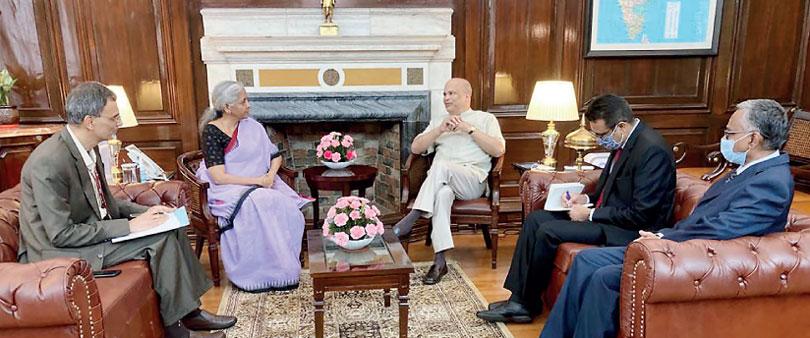
Sri Lanka’s High Commissioner to India Milinda Moragoda who met Indian Finance and Corporate Affairs Minister of India Nirmala Sitharaman yesterday said that Sri Lanka needs bridge financing till the programme with the International Monetary Fund(IMF) is worked out.  

According to the Sri Lankan mission in New Delhi, the India Minister and the High Commissioner explored the possibility of increasing and restructuring the assistance provided by India in the form of credits for essential commodities and fuel, as well as balance of payment support.  


 Mr. Moragoda thanked Minister Sitharaman for the continued assistance.   


 He particularly appreciated her taking up the case of Sri Lanka on the sidelines of the IMF Spring Meetings in April in Washington D.C. with the IMF, other multilateral institutions and bilateral development partners.  


 High Commissioner Moragoda briefed Minister Sitharaman on the present developments in Sri Lanka.  
 The High Commissioner reiterated that Sri Lanka would require bridge financing until the economic adjustment programme with the IMF could be negotiated and finalised.   


 In this regard, both sides agreed that the established official-level mechanism for conducting the economic dialogue between the two countries should continue.  


 Chief Economic Advisor of the Indian Government Prof. Anantha Nageswaran who leads the Indian side at the official-level discussions, and senior officials of the Sri Lankan High Commission also participated in the meeting. 

  • The High Commissioner reiterated that Sri Lanka would require bridge financing until the economic adjustment programme with the IMF could be negotiated and finalised 

President assures fullest support for CBSL to function independently

May 28th, 2022

Courtesy Adaderana

This was conveyed at a meeting held with Central Bank Governor Dr. Nandalal Weerasinghe and Monetary Board member Sanjeeva Jayawardena, PC earlier today, President’s Media Division (PMD) said in a statement.

President Gotabaya Rajapaksa today assured the Central Bank’s governor and the Monetary Board his fullest and unqualified assurance of freedom to discharge their functions independently and without any extraneous constraints.

At the meeting, the President also sought a briefing on the progress of the IMF programme, as well as on the economic recovery process.

Accordingly, the CBSL governor gave a full briefing on the satisfactory progress of the talks with IMF at the technical stage and emphasized the importance of advancing towards securing IMF assistance expeditiously, which would, in turn, facilitate the all-important, debt restructuring process.

He also briefed the President on the numerous, multi-pronged measures put in place by the Governor, with the support of the Monetary Board, in respect of the economic recovery process. 

The President expressed his confidence in these measures and thanked the governor once again for accepting this post during very trying circumstances.

The President also assured an interactive process and indicated that the Governor and the Monetary Board would be accorded any assistance required in his capacity as the Head of State, including engaging with his international counterparts, at the highest level of state engagement, in order to assist Sri Lanka’s economic recovery process. 

The CBSL governor thanked the President for reposing his confidence and for the assurance of full independence and autonomy.

Electricity tariffs proposed to be increased

May 28th, 2022

Courtesy Adaderana

The government is of the view that electricity tariffs need to be revised after nine long years, Minister of Power and Energy Kanchana Wijesekara says.

According to the Ceylon Electricity Board (CEB), the last tariff revision was made in 2014, when electricity tariffs were slashed by 25 percent.

Addressing a special media briefing this evening (May 28), the lawmaker said the CEB has made regular requests in this regard. The Public Utilities Commission has also tabled several proposals pertaining to the matter, however, none of these requests and proposals have been given the green light, he added.

We discussed this at the meeting of the Cabinet of Ministers and the President is also aware of this.”

Minister Wijesekara noted that it is impossible to implement an increase to low-income earner categories and certain government buildings such as hospitals. Accordingly, it is proposed to revise the tariffs for sectors with high electricity consumption such as industries and hotels.

While plans are underway to implement an electricity tariff hike, the government also intends to commence a rapid renewable energy generation plan from the 1st of June to overcome the power crisis.

One such suggestions under this plan is the installation of rooftop solar panels in industries, hotels, and in government buildings during the month of June as a possible revision in electricity tariffs are expected to triple in most of these sectors.

We will inform government institutions and private industries in writing about the level of the tariff hike they will be subjected to once a tariff revision is implemented. If they invest their monthly cost incurred for electricity on installing rooftop solar panels, we will discuss with these companies in settling the investment on a monthly basis. Then we can provide them with solar panels. With that they can reduce their electricity costs and the national grid too will be relieved because they do not obtain electricity from it. They can operate from electricity generated by the solar panels during the daytime. They can obtain electricity from the national grid when its cloudy.”

Speaking further, the minister said the discussions are underway with the Central Bank of Sri Lanka and the Finance Ministry on purchasing relevant equipment.

We are exploring the possibility of importing solar panels to private companies via the Indian credit line.”

Under the rapid renewable energy generation plan, the Ministry of Power has also ordered the Sustainable Energy Authority (SEA) and the CEB to provide provisional approvals for the proposed renewable energy protects.

It is said that approvals cannot be given to renewable energy projects without a transmission line and due to the lack of grid capacity. What is being said is to develop grid capacity and the transmission line to grant the approval. We changed that. We asked for project approval and to get the transmission line constructed by the investor, rather than the project being approved now and commencing 3 years after the transmission line is made with CEB funds.

U.S ambassador stresses need for political reforms desired by people

May 28th, 2022

Courtesy Adaderana

U.S. Ambassador to Sri Lanka, Julie Chung says she is hopeful the government, including the new Prime Minister, would be able to bring about political stability and overcome the current economic crisis.

Her remarks came during a meeting with Speaker Mahinda Yapa Abeywardena on Friday (May 27) at the Parliament Premises.

The U.S. envoy also emphasized the need to carry out the political reforms desired by the people and to safeguard democracy in the country.

Ambassador Chung further said that she hopes to enhance relations between the two countries through the Sri Lanka-USA Parliamentary Friendship Association.

She appreciated the role played by the Women Parliamentarians Caucus and discussed the need to increase the representation of women.

The Speaker also expressed his gratitude to the United States of America for its continued support to strengthen democracy in Sri Lanka.

This is the first meeting between Ambassador Chung and the Speaker since her appointment as U.S. envoy to Sri Lanka.

The U.S. envoy and the Speaker were joined by Secretary General of Parliament Mr. Dhammika Dasanayake during this meeting.

මාරාන්තික රංගනයේ පිටපත කාගෙද?කුහක විචාරකයෝ සහ ගල් ගහන භූතයෝ..

May 28th, 2022

උපුටාගැණීම මුහුනුපොත

.විමල්ගේ දේශපාලන භූමිකාව ශිෂ්‍යයෙකු ලෙස ලාංකීය ශිෂ්‍ය ව්‍යාපාරය තුලත්, 89 මහා ජනසංහාරයෙන් දිවිගලවා ගැනීමෙන් පසු මානව හිතවාදි පත්තර කාරයෙකුගේ සිට මරා පොළොවට සමතලා කොට මැච් එක ඉවරයැයි වහසිබස් දෙඩු ජනතා විමුක්ති පෙරමුණ නැවත දේශපාලනයට රැගෙන ඒම සදහාත්,එය ජනතාව තුල මහජන ව්‍යාපාරයක් දක්වා ඔසවා තැබිම වෙනුවෙනුත් ඔහු කල සුවිශේෂී කැපකිරිම ලෙහෙසියෙන් මකා දැමිය නොහැක.

එවිට නම් එය රංගනයක් යැයි කීමට කවිරුත් ඉදිරිපත් නොවුණි. තවලම්,සුදුනෙළුම් ආදී දවටනයන්ගෙ ඔතා කරළියට රැගෙන එමින් තිබු රට බෙදන යෝජනා සහිත පෑකේජය නොහොත් පෙඩ්රල් ආණ්ඩුක්‍රම යෝජනා වලට එරෙහිවත් ,උතුර සහ නැගෙනහිර ඒකාබද්ධ කොට වෙනම ස්වයං පාලන කලාප දොළ පිදේනිය කොටින්ට ලබා දිමට එරෙහිවත් (විමල් එදා උතුරු නැගෙනහිරෙන් වෙන්කර ගැනිමට ගත් ක්‍රියා මාර්ග නොවන්නට අදටත් එය එක් පලාතක් ලෙස පවතිනු ඇත.)

එ සදහා විමල්ගේ මැදිහත් විම ඉතාම ප්‍රශංසනීය විය. ප්‍රභාකරන් සමග සටන් වීරාම ගිවිසුම් ගසාගෙන උතුරු නැගෙනහිරට කොට් අන්තර් පාලන යෝජනා රැගෙන එනවිට එය පැරදවිම සදහා පෙරමුණ ගන්නා විට විමල් ඔය කරන්නේ කාගේ හෝ පිටපතකට අනුව කරණ රගපැමක් යැයි කවිරුන් හෝ කිවේ නැත

.රට මතට කඩා වැදුණු සුනාමි ව්‍යසනය පවා දඩමීමා කරගෙන ප්‍රභාකරන්ට “සුනාමි සහන මංඩල” ලෙස වර්ණ ගන්වා බන්දේසියේ තබනවිට හෝ අධිකරණ ,පොලීසි,හමුදාව,අතැතිව බලවත්ව සිටි LTTE යට පරිපාලන බලතල ලබා දිමට කටයුතු කරන විට හෝ එයට එරෙහිව නැගී සිටි විමල් මේ කරන්නේ රගපැමක් කියා කවිරුන් හෝ කීවේද නැත.

මානෙල් මල් ව්‍යාපාරය,දේශහිතේශි ජාතික ව්‍යාපාරය තුල ඔහු වැඩකරන විට විමල්ගෙ හඩ,විමල්ගෙ රිද්මය,ඔහු අනුයන දේශජ දේශපාලන භුමිකාව මත විමල් ගැඹුරු මකා දැමිය නොහැකි දේශපාලන මුද්‍රාවක් තබා තිබුණි,

පසු කලෙක ජවිපෙ ලාල්කාන්ත ප්‍රසිද්ධියේ ප්‍රකාශ කර පිළිගත් ආකාරයට විමල් ජවිපෙන් වෙන්වුයේ ජවිපෙ ජාතික මතවාදයෙන් විතැන්ව මව්බිමට එරෙහි ස්ථාවරයකට තල්ලුවෙමින් සිටි නිසා එයට එරෙහිව කල අභ්‍යන්තර ප්‍රතිපත්තිමය අරගලය නිසාය.

සාමාන්‍යයෙන් අප දන්නා ලාල් කාන්ත සහෝදරයා බොරු කියන්නෙ නැත. අනිත් අයනම් කට ඇරියම බ්‍රේක් නැතිව දිව උල්කර බොරු විදින්න උපන් හපන්කම් ඇති අය බව දනිමු.

කුමර් ගුණරත්නම් කියලා කෙනෙක් දන්නෙ නැ කියලා කියන්න පුළුවන් නම් අන්දේවල් ගැන කතාකර තේරුමක් නැත.

එය රගපැමක් ,එකම නාට්‍යයේ කොටස්,එකම තිරපිටපතක් කියා කවුරුන් හෝ කියනවා මා අසා නැත.ඉන්පසු එළඹියේ 2008 පසු විමල් ප්‍රමුඛ කණ්ඩායම ජනිපෙ ලෙස එල්ටීටීඊය පරාජය කිරිම සදහා විමල්ගේ පසමිතුරුන් නගන අවලාදය නොහොත් “රගපැමේ භුමිකාව” අතට ගැනිමයි,

අයවැය පරාද කර ආණ්ඩුව වට්ටවා යුද්ධය වැලැක්විමට එරෙහිව රට වෙනුවෙන් රටට හතුරුවුවන් කියනා ලෙස විමල් දුෂ්ටයාගේ භූමිකාව රගපැ බව සෑබැය.

වැඩ වරජනය කර ආර්ථික සටන් පාඨ පෙරට ගෙන එල්ටීටීඊය පරාජය කිරිම වැලැක්විමට දෙස් විදෙස් බලවේග කටයුතු කරන විට ඔවුන්ට අනුව විමල් රට වෙනුවෙන් දුෂ්ඨයා ජවනිකාව අත් හැරියෙ නැත.

ඔහුට ඉන්පසුවද එළඹුනේද සුව පහසු චරිතයකට පණ පොවන්නට නම් නොවේ. බැසිල් ,පිබි වැනි පිල්ලිවලට එරෙහිවි නව වටයකින් රට වෙනුවෙන් ජවනිකා දිග හැරෙන්නට විය. එහි උච්චතම අවස්ථාවල රහස් පොලීසි කණ්ඩායම්,චර පුරුෂ සේවාවන් රෝ ඔත්තු කරුවන් ඔහු වටා සැරිසරන්නට විය.

රාජපක්ෂ ආණ්ඩු ඇතුලේ ඔහුට මුහුණ දිමට සිදුයේ එළිපිට සහ සැගවි සිට ප්‍රහාර එල්ල කරණ පිල්ලිවලට එරෙහිවය,එය බිහිසුණුය,එය ජීවිත අවදානමද දරාගෙන ප්‍රතිප්‍රහාර දියයුතු විය,මෙහිදි සමහර ඔහුගේ සටන් සගයන්ද ඔහු හැර යන්නට විය.

එහෙත් විමල් දේශපාලන ලකුණු වෙනුවෙන් නොව රට වෙනුවෙන් කොන්දේසි විරහිතව සටනට අවතීර්ණ ව් සිටියහ.එය සමහරුන්ට අනුව ජවනිකාවකි සමහරුන්ට නාට්‍යක පිටපතකි.එය රාජපක්ෂලා වෙනුවෙන් කරන රග පැමකි.රාජපක්ෂලා පවා නොසිතුවිරු ලෙස විමල් තම මතය වෙනුවෙන් කටයුතු කරන විට ඔහු අන්ද මන්ද විය.විමල් කියවා ගැනිමට ඔව්හු අපොහොසත්විය.

කිරින්ද ඛනිජ වැලි නිදිය ඉන්දියානු සමාගමකට විකිණිමට චමල් රාජාපක්ෂලා තැත් කරන විට හම්බන්තොට රාජපක්ෂලාගේම වැයික්කියට ගොස් එය විකුණිමට ඉඩ නොදෙන බවත් ජාතික සම්පත් විකුණා ස්වරගයට යනවට වඩා එය විකිණිමට ඉඩ නොදි උවමනාවෙන් අපායට යන බව කියා ආවාය,

සමහරුන්ට එය රංගනයකි, රාජපක්ෂලා හිතන්නේ වෙනත් ඇමතිවරුන් වගේ විමල් දෙන දෙයක් කලා වෙන දෙයක් බලාගෙන ඉන්නෙ නැති නසරාණියෙක් කියාය.

හොදම රංගනය දිග හැරෙන්නෙ කොළඹ වරායේ නැගෙනහිර ජැටිය ඉන්දියාවේ අදානි සමාගමකට විකිණිමට තැත් කල විටයි.වෘත්තීය සමිති දේශපාලන පක්ෂ ,සිවිල් සංවිධාන ,ශිෂ්‍ය සංවිධාන ,ජාතික සංවිධාන එයට එරෙහිව කදවුරු බදින විට,විමල් ආණ්ඩුව ඇතුලේ අරගලයට අවි මුවහත් කලාය,

තුනෙන් දෙකේ බලයක් සහිත ආණ්ඩුවක් ඇතුලේ පක්ෂ 11 වෙනම සංවිධානය විය ඇත්තෙන්ම ආණ්ඩුවේ නායකයින්ගේ මරාන්තික උදහසට සෘජුවම ගොදුරු වන්නෙ එදාය, ඇත්තෙන්ම මේ ආණ්ඩුව දණ ගැස්විම ආරම්භය සනිටුහන් වුනේ එතැන් සිටය, සමහරුන්ට අනුව එයද රග පැමකි,

ඉන්පසු ගොවියා අසරණකර 69 ලක්ෂයේ ජන වරම කිළිටි කල පොහොර තහනම සිදුකල විට බෝහෝ අය එයට හූ මිටි තියද්දී, විමල් ඇතුළු කිහිප දෙනෙක් එයට දැඩිව පහර පිට පහර දෙන්නට විය. එක් අවස්ථාවක ඔහු කිවේ ගත්‍ත තීන්දුව වැරදි බවත්, එය නිවැරදි කිරිමට ලැජ්ජාවියයුතු නැති බවත්ය ,එය කෙළින්ම කිවේ ගෝඨාභය රාජපක්ෂටය.(දිනේශ් වගේ අය පවා රාජපක්ෂලාගේ කිකරු ඉත්තන් වි සිටි පසු බිමක විමල් ගේ කශේරුකාව අන් හැමෝටම වඩා ශක්තිමත්වු බව නොකියාම බැරිය.) මොකද එම තීන්දුව ගත්තේ ගෝඨාභයගේ තනිමතයට වන බැවිනි.

විමල් එසේ කියන විට ගොවි දිස්ත්‍රික්ක වලින් පැමිණි ඇමතිවරු මුඛවල් පුට්ටු කරගෙන ලැජ්ජා සහගතව සිටින අයුරු දැක ගත හැකි විය,

ඒ රාජපක්ෂලාට බියෙනි.ඉන්පසු යුගදනවි බලාගාරය විකිණිම කැබිනට් එක නොමග යවන විට(ඉල්ලා අස්වු මුදල් ලේකම් දැන් එදා විමල් කියු කතාව අනුමත කර ඇත.) එයට එරෙහිව කැබිනට් සාමුහිකත්වයට වඩා රටේ සම්පත් සුරකිම වටින බව කියා අමාත්‍යවරු තිදෙනෙක් ලෝක ඉතිහාසයේ පළමු වරට අධිකරණයට යන විට සමහරුන්ට එය රග පැමකි,

ඒසදහා මහජන මන්ත්‍රණ සභාවක් කැදවන විට එයත් රග පෑමක් යැයි සුපුරුදු අවලාදය දමා ගැසුවාය.රටේ ආර්තික අර්බුධය උත්සන්න කොට රට බංකොලොත් භාවයට පත්කරන විට එයට එරෙහිව මාර්තු 02 පක්ෂ 11 රට හරි මගට ගැනිමේ ප්‍රතිපත්තිය රට හමුවේ තබන විට බුදු අම්මෝ මෙන්න විමල් රගණවායැයි නහයෙන් අඬන්නට විය.

පසුදිනම ඇමතිධුර වලින් පහකරන විටදි පවා ඔවුන් හොටු පෙර පෙරා අඩන ගමන් කිවේ ඕකත් රඟපෑමක් කියාය,

දවසින් දවස රට වලපල්ලට යනවිට සර්ව පාක්ෂික අන්තර් කාලීන ආණ්ඩු යෝජනාව කරන විට කිවේ ඕක පිස්සු යෝජනාවක් කියාය ,විමල්ට නැතිවෙච්ච ඇමතිකම ගන්න කරන උප්පරවැට්ටියකට ආදලා රග පෑමක් කියාය,

මහින්ද රාජපක්ෂ ප්‍රමුඛ ආණ්ඩුව ඉල්ලා අස්වියයුතු බව කියන විට ජොන්ස්ටන් සනත් නිශාන්ත රෝහිත,මහින්ද පතිරණ සාගර කාරියවසම් ,තිස්ස කුට්ටි ආරච්චි වැන්නන් බැසිල්ගේ මෙහෙය විමට මාධය සාකච්ඡා කැඳවා විමල්ට තඩි බැවාය.

සර්ව පාක්ෂික සමුළුවෙදි ගොත ගගහා බැසිල් කිවේ රටට හරි මග කියන්න ආපු අය මහ මගට වැටුනු බවය. නමුත් මහ මගවත් නැති වුනේ රාජපක්ෂලාටය,ආයේ රාජපක්ෂලාට රටේ කිසිදාක බලයට ඒමට බැරිබව කිවේ විමල්ය.

අද විමල්ගේ යෝජනාව වෙන විදිහකට බටහිර තානාපතිලාගේ උවමනාව අනුව කඩා බිද දමා බැසිල්, මිලින්ද මොරගොඩ, බටහිර තානාපති කාර්යාල තීන්දු කර රනිල් අගමැති කර ඇත්තෙත් විමල් දේශපාලනිකව වැට්ටවිම සදහායි.

පසුබා සැගවි සිට්න බැසිල් රනිල් හරහා විමල් වැට්ටවිම සදහා තවත් මොට්ට ආයුධයක් භාවිතාකර ඇත.

ඒ උපන් දින දෙකක් සදහන් කර පෙර සහ පසු ලබා ගත් ගමන් බල පත්‍ර දෙකක් සම්බන්ධවය.

සමහරුන්ට අනුව එයත් රග පෑමකි, ඒවා නම් මාර රගපැමිය.ඒ රගපැම වෙනුවෙන් වසර දෙකක් බිරිද හිරෙ යවන්නේය.

සමහරු සොහොන් ළඟින් යද්දි බයට කුණුහරුපයෙන් බැන බැන යන කතාව මා අසා ඇත. මෙයත් ඒසේමය. විමල්ගේ දේශපාලනයට බයවි ඇති අය ඔහුට දිගටම එකම අවලාදයක් දමාගසමින් සිටි ඒ “රගපෑමක්” ගැන කියමින්ය.

ඇත්තෙන්ම බය වු අය කියන කථාව වෙනස් කරලා මහ පොලොවට බහින්න වෙන කාලය පැමිණ තිබේ

ඒ දේශපාලනය වේගයෙන් කැරකෙමින් පැවතිම නිසාය, විමල් මේ රගපාන්නේ මව්බිමේ තිර පිටපතයි.බෝහෝ අය එය අත් හැර තම තමන්ගේ වැඩක් බලාගෙන සිටි. විමල්ද එය අත් හැරිය හොත් රටට අත්වන කලදාසාව අපි දන්නෙමු.නමුත් කිසිදා විමල් එය අත් නොහරින වගකිමක් ලෙස කරට ගෙන ඇති බව දනිමු.

සමහර සතුරු බල මුළු තාවකාලික ජයග්‍රහණ ලබනු ඇත.එහෙත් ස්වදේශික ජනතාව මව්බිම යටත් කිරිමට ඉඩ නොදෙනු ඇත.

ඒ යන ගමනෙදි භූතයෝ ගල් ගසාවි,බධාකරවි,අනේක විධ මර්දන උපක්‍රම භාවිතා කරාවි.මතක තබා ගතයුතු දේ වන්නේ ගල් ගසා,ගෙවල් ගිණිතබා ,බිරිද හිරේයවා විමල් සිපිරි ගෙට දමා ,විමල්ගේ දේශපාලනය නැවැත්විය නොහැකි බවයි…!!!

Capitulating to IMF will cause massive unemployment, warns economist

May 28th, 2022

Courtesy The News

The World Bank and the IMF have taken over total control of the Pakistani economy and have established their stranglehold on it,” Dr Kaiser Bengali said.Share

The International Monetary Fund (IMF) has one-point agenda in Pakistan, namely the privatisation of all the assets of the country which will cause large-scale unemployment.

Economist and former adviser to the Sindh and Balochistan chief ministers Dr Kaiser Bengali stated this while speaking on Thursday evening at a consultation meeting, titled ‘The current economic scenario and its effects on the common man’, at the Arts Council of Pakistan.

The event was held under the aegis of the Pakistan Institute of Labour Education and Research (Piler) and the Shaheed Zulfikar Ali Bhutto Institute of Science and Technology (Szabist).

Dr Bengali said he feared that after selling off all the national assets to foreign conglomerates, the government would also sell off the natural resources. He maintained that the PTCL, which was privatised in the Musharraf era, owed $800million to the Pakistani government which was still not forthcoming.

According to the economist, the State Bank of Pakistan (SBP) had been in the grip of the IMF-World Bank duo for the last 16 years during which period it was overseen by Dr Mohammad Yaqub, Dr Ishrat Husain and Dr Shamshad Akhtar.

Talking about technocrats, he said any technocrat who did not have their roots in the masses was no better than a contractor and they just would not be bothered about national or public welfare.

Now”, he said, The World Bank and the IMF have taken over total control of the Pakistani economy and have established their stranglehold on it.” Talking about Dr Hafeez Sheikh’s reported obstinacy, he said, It’s because he knows that he is just answerable to Washington.”

Dr Bengali attributed the failing economy to the decisions of increasing non-productive expenditures. He said many new ministries were made without any good reason like the ministry of national reconciliation.

By increasing expenditures, we were increasing the dollar gap, he said, adding that when our imports outstripped our exports, the dollar gap would widen.

He said that till recently for every $100 of exports, we had $125 of imports. Now, he said, for every $100 of exports there were $230 of imports. He added that in most of our cities, department stores were just stacked with imported consumer items so much so that a locally manufactured product was really hard to come by.

The speaker predicted that by the coming December, a dollar would be worth Rs200 and next year around this time, it would be worth Rs250. He firmly asserted that we had to cut back on non-development expenditures right away, otherwise, things would get totally out of hand.

According to Dr Bengali, foreign companies in Pakistan converted their profits into dollars and then remitted them back home, which drained the country’s dollar reserves. He said the country right now was in the grip of ‘Mir Jaffers’. He remarked that there could be no revolution as the era of revolutions was over. However, he said industrialisation could break the back of feudalism.

Zehra Khan of the Home-Based Women Workers Federation said it was after a great struggle that they had made the provincial government pay the mandated Rs16,200 to a labourer but even that was a pittance under the present circumstances given the back-breaking inflation.

She said that the public would have to be mobilised to launch a struggle for their genuine rights. Political parties, she said, were least bothered about the plight of the toiling have-nots.

Piler Executive Director Karamat Ali quoted a recent World Bank study which stipulated that a large majority of Pakistanis were living on $2 per day, which was well below the poverty line. Tracing Pakistan’s involvement with the IMF from 1988 onwards, he said real incomes had dropped by 50 per cent since then. He said, The Nawaz Sharif government went on a privatisation spree as a result of which we stand de-industrialised today.”

Dr Riaz Shaikh, dean of the Szabist social sciences department, towards the beginning of the consultation, pointed to the air of fear that had been bred in the country whereby people were scared of speaking their minds out on issues affecting them for fear of punitive reprisals. He pointed out the repressive measures that the media was being subjected to in order to stifle freedom of thought and expression, and debate on vital issues.

The speeches of the main speakers were followed by an animated and highly charged question-answer session.

Sri Lanka’s Parliament: 29 Member National List should not be given Ministerial Portfolios

May 27th, 2022

Shenali D Waduge

The national list comprises 29 people nominated by political parties. They are not nominees of the People but the political party they are aligned to or have been named by. That they are included in a particular party automatically displays a tilt of bias towards that party.  The rationale behind the insertion of 29 member national list was to bring people who had knowledge & skills into Parliament without them having to contest elections. Bringing knowledge & skills into Parliament does not mean they should be given Ministerial portfolios. This takes away the entire meaning of holding elections. However, the electoral system needs to be revisited to place a list of criteria that allows knowledgeable politicians to contest, get elected and enter Parliament so they do not become secondary to the professionals nominated into Parliament. The bonus comes in the ability of the 29 member national list to provide professional inputs in terms of policy planning, implementation strategy, evaluation & auditing as an icing to the services expected of the 196 elected by the People.

The National List SHOULD

  • Should comprise only professionals & not people nominated by political parties. 29 Names should be nominated by Industry chambers / State Universities & local NGOs that are not funded from foreign sources (rationale behind this is that foreign funded NGOs will have mixed loyalties)
  • 29 National List nominees will function on an advisory role but will be given a remuneration / an official vehicle/driver only. There will be no security /no official residence / no other perks & privileges.

The National List SHOULD NOT ALLOW

  • Politicians to enter
  • Rejected politicians to enter – it is a violation of the voters franchise.
  • 29 National List nominees should not be given title of Minister or enjoy any perks & privileges paid by the taxpayer.
  • To become a Prime Minister (because the next step is President)
  • National List nominee should not hold Ministerial position (rationale behind this is that National List nominees are not people’s representatives as first preference must be given to people’s representatives)

Why should 29 National List nominees not be made Ministers

  • This will prone them to corruption or to be corrupted
  • They do not have the voters franchise
  • The National List was created to enable people with knowledge & skills to enter Parliament without contesting. Their role therefore, has to differ from politicians who have to move with the people and based on this popularity & trust, the people vote the politicians. We have to separate the elected politicians and the nominated National List members.
  • The National List nominees should function as ADVISORS only but their mandate should be clearly defined so that their opinions are not discarded by either President or Parliament.
  • 29 National List cannot demand to be made Ministers because most have no political experience or service to demand positions that as per Parliamentary system is allocated to elected nominees.

REMOVE Section 99A of 14th Amendment

The National List was introduced via the 14th amendment. However a case filed by Nagahananda Kodituwakku claims that the Section 99A passed on 4 May 1988 was not what the Speaker E L Senanayake certified on 24th May 1988 and what was signed allowed political parties to ignore lists given by them & return rejected MPs to Parliament which was not what had been deliberated for 5 years from 8 July 1983.

Examples of this abuse is taking place to such an extent that a 5 time PM, who was rejected by his party, overruled the national list given by his own party to return to Parliament from the national list. Similarly, JVP too violated the spirit of the national list by bringing back rejected Sunil Handunetti after removing Auditor General Sarachchandra Mayadunne who was number of 1 on the JVP list. ITAK too fielded a rejected candidate through the National List. Therefore, if the SC has not made a determination on the case filed by Nagahananda, a future constitution or constitutional amendment must forbid rejected politicians from re-entering through the national list.

What good does it serve to boast about parliamentary democracy, voter franchise and sovereignty is inalienable & with the people, if 29 people that the people do not vote for, enter Parliament, are made Cabinet Ministers or worst case scenario, a bunch of rejected politicians also enter and become Ministers including the present situation of even becoming the country’s Prime Minister. To add to injury, this caretake prime minister rejected by his party is drafting a constitutional amendment to transfer the executive President’s powers to himself.

If the Judiciary allows such to take place, the judiciary would be undermining the core feature of the constitution – that being the sovereignty with the people and the people delegating their powers temporarily to the government & the President to act as custodians of the State on behalf of the People. Parliament delegates powers to the Judiciary therefore, the Judiciary is also bound by the Public Trust doctrine.

With the people’s eyes on the President & Parliament regarding corruptions, the Judiciary too is under the radar and should also realize they are being watched as well. The people in particular do not expect the Judiciary to be politicized and the Judiciary invariably requires to be biased – but it has to be biased towards protecting the Sovereignty of the People, the Sovereignty of the Nation & the Territorial Integrity of Sri Lanka. The judiciary cannot be unbiased because its powers are delegated to protect Sri Lanka & its People, not to compromise Sri Lanka or its People.

Shenali D Waduge

Sri Lanka’s Independence – a by product of India’s Freedom Struggles

May 27th, 2022

Senaka Weeraratna

The transition from a colony to political freedom was a peaceful one in Ceylon unlike in a  large majority of Asian countries. Independence was attained by Ceylon relatively painlessly as a by product of India’s Freedom Struggles that were assisted by Japan through its support to Netaji Subash Chandra Bose and his Indian National Army (INA).

During the Second World War and thereafter freedom fighters all over Asia under the original leadership of Japan, fought under the banner ‘ Asia for Asians’, while the opposing forces comprising the Western colonial countries such as Britain, France, Netherlands, and USA, fought more or less on the footing ‘ Asia for Westerners’ ( to exploit and plunder the resources both natural and human). India and Ceylon were dragged into WW2 without the prior consent of the people. Some of the highly respected Asian freedom fighters were Mahatma Gandhi (India),  Ho Chi Minh (Vietnam), Sukarno (Indonesia), Aung San and U Nu ( Burma), among others. Anagarika Dharmapala was Sri Lanka’s only credible figure of international stature in the pantheon of freedom fighters, though he passed away before the outbreak of WW2.

Ceylon was a Dominion from 1948 to 1972 when it was declared a Republic.

One of the main purposes of gaining independence is Restitution (Restitutio in Integrum) of what was lost under colonial rule and the Rectification of Historical Injustices and in respect to Ceylon  committed during the Euro – Christian era of foreign occupation of Ceylon. All three colonial powers Portuguese, Dutch and the British were anti – Majoritarian from the day they set foot on this land. They had to be because their primary objective was to colonize and dominate the colony and so long as the locals worshipped and remained loyal to a different belief system, colonial rule was not going to be easy. That was the rationale for religious conversion. When you embrace the religion of the conqueror or conquistadors, your loyalty to the foreign sovereign is more or less assured.

Section 29 (2) of the Soulbury Constitution was artfully designed to prevent Restitutio in Integrum on the part of the majority community of independent Ceylon. Buddhism is deeply embedded in the Sinhalese people and by legislatively preventing Buddhism from being given its rightful place due to Section 29(2), it was meant to prevent a  Buddhist resurgence in Sri Lanka.

When Prime Minister D.S. Senanayake refused to appoint a Commission of Inquiry to probe into the Injustices committed on the majority community during colonial rule, acting under pressure from the Catholic Church, the All Ceylon Buddhist Congress under the leadership of Dr. G.P. Malalasekera, appointed a Committee of Inquiry in 1953 which published its findings in 1956.  L.H. Mettananda was a prominent figure on that Committee and was the ghost writer of that Report, assisted by several other eminent personages  including senior Buddhist monks and lay scholars.

The Report was firmly against the Soulbury Constitution and particularly Section 29 (2). Thereafter Mettananda and his Bauddha Jatika Balavegaya (BJB) campaigned heavily for a Buddhist Constitution and Buddhist Social Order for this predominantly Buddhist country, that would give Buddhism its rightful and foremost place among the religions. It was an outright rejection of Section 29 (2) of the Soulbury Constitution of 1947 and for the restoration of Article 5 of the Kandyan Convention (Sinhala – Ingrisy Givisuma) of 1815. 

Article 9 of the 1978 Constitution is a reproduction of the substance of this concept. The State is obliged not only to protect but also to foster Buddhism,  whilst assuring protection to all other religions. 

The purpose of a country becoming a Republic has nothing to do with economic betterment. The benefits are political not economic. It is an assertion of a country’s sovereignty. India became a Republic in 1950 and Burma in 1948 ( without becoming a Dominion).

There was a powerful hidden message from the State and people of Sri Lanka to the British Raj in 1972 on the eve of Declaration of Independence as follows:

” We are no longer subordinate to your authority even as a Dominion. We have now cut the umbilical cord”

People of Sri Lanka are highly respected in former colonies because of the role that our leaders of the calibre of Mrs. Sirima Bandaranaike have played in world affairs in the past as assertive leaders of Republican countries.

Senaka Weeraratna

21a cannot pass powers to a Rejected National List Caretaker PM

May 27th, 2022

Shenali D Waduge

Democratic principles are being questioned following the scurry to pass the 21st amendment, drafted by a caretaker Justice Minister and aspiring to pass powers from a directly elected President to a caretaker Prime Minister rejected by voters & undemocratically returning to parliament as a National List MP. All norms and ethics of parliamentary democracy are being questioned. Sri Lanka’s Judiciary cannot allow such a precedence to take place.

FACTS

  • Sovereignty is inalienable & with the People – the People delegate their powers to the 3 pillars (Executive-President / Legislature-Parliament / & the Judiciary)
  • The Executive & Legislature are only temporary custodian of the powers delegated by the People.
  • The President is the only pillar who is directly elected by the People
  • The Prime Minister is not elected by the People – he is selected by the Parliament, therefore, the Prime Minister is answerable to the Parliament.
  • The current PM is not elected to Parliament.
  • The current PM has been rejected by his Party
  • The current PM has wrongfully entered Parliament from the backdoor
  • The current PM has no mandate of the People /Parliament or his own Party supporters
  • 225 Member Parliament comprises 196 elected MPs and 29 National List nominees of political parties.
  • National List created to enable professionals to enter Parliament without contesting elections.
  • 19a and 20a have shortcomings and before 21a is also hurriedly passed with shortcomings, there should be debate & conclusions to what should remain in 19a & 20a and what should be revised in 19a and 20a. All this does not require a marathon to pass 21a.

QUESTIONS

  • If the People elects the President & delegates people’s powers to the President, can that elected President transfer the powers given to him to anyone without asking the People? Should he not have to seek the approval of the People via a referendum?
  • If the key argument of the 21amendment is to claim the President has too much powers and requires these powers to be reduced – shouldn’t the People and not Parliament decide whether the President has too much powers?
  • If 21a seeks to bring back the Dual Citizenship clause – it will require all MPs in Parliament who are dual citizens as well as Top Public Officials who are also dual citizens to be unseated without hiding their dual citizenship. Will this happen?
  • If 21a seeks to return the Independent Commissions it must ensure that no eminent persons who are attached to foreign funded entities are nominated. Clauses to remove them and take action against them must also be included. They cannot be given immunity. If they are acting professionally, they do not require immunity! All the loopholes and shortcomings in the composition of the Constitutional Council & Independent Commissions must be addressed, if not there is little point in returning to 19a CC and Independent Commissions. If any independent commission member wishes to file FR on any matter, they must resign from their position and proceed filing FR.

21a & THE CARETAKER GOVERNMENT

  • How can the present Caretaker Government clip the powers of the President via 21st amendment without asking the People?
  • The present Prime Minister held position of Prime Minister 5 times previously but was rejected by the voters in 2020 General Elections. His party could not win any district seats but was given 1 national list seat which was to go to a member of the UNP National List. UNP working committee did not nominate a member of the national list & 10 months after the General Election, returned the rejected former PM to Parliament as a national list member in Jun 2021. This was an unethical democratic action.
  • In May 2022, this same former rejected PM has been appointed as PM not by Parliament but by the President. Is this act legal or in the least democratically ethical.
  • A new cabinet was also appointed by the President comprising not only the winning party members but members of opposition parties as well. Is this act legal or in the least democratically ethical by the people who gave a resounding victory in the government that people elected in 2020?
  • We have a caretaker PM who has no mandate of the People, who has been rejected by his own party supporters, who unethically entered from the backdoor via national list.
  • We have a caretaker Government comprising people of different parties who are also not representative of the People.
  • How can such a caretake PM and caretaker Government draft legislation to clip the powers of the President via a Bill and transfer powers to a rejected caretaker PM? It is an insult to even seek approval from the People via referendum given the undemocratic practice at play.
  • The silence of the people who refrained from objecting to giving a rejected MP returning from the national list the position of PM, was primarily because of foreign pressures to appoint him as a collateral to obtaining foreign aid assistance. This also questions how sovereign Sri Lanka is to have to take permission to make appointments!
  • This caretake PM was appointed because foreign aid bodies and foreign governments wanted him to be appointed & his key role was to solve the economic crisis though his government was one of the key architects of the economic crisis from issuing international sovereign bonds that were maturing for payment from 2020 onwards.
  • The people were silent even after appointing a rejected MP as PM
  • The people were silent when a caretaker cabinet from different parties was appointed
  • The people should not be silent as every day new Ministers are getting appointed to again create a burden to the people amidst so much suffering.
  • The people should not be silent when a caretake PM is trying to usurp the powers of an elected President.
  • The people must think of the issue not taking the person seated in the position but the title and the mandate given to the title and the democratic principles that has to accompany the governance.

Taking this into consideration the Judiciary who will be asked to make a determination on the 21a must disallow all efforts to dilute, transfer or reduce the powers of the President without asking the people at a referendum. In this economic crisis when there is no money to buy basic essentials, we do not require any referendum/elections, therefore 21a should not be a priority and should not be entertained. Parliament should not be wasting time on trying to divide power between themselves but to find ways and means to gain revenue for Sri Lanka reducing unnecessary expenses.

19a and 20a were both unnecessarily hurried for no reason. 21a should not be hurried too. Why is this hurry to pass 21a? Who wants 21a passed & why? What is the purpose & to whose advantage is 21a being hurriedly passed? We want answers before passing anything.

Amendments to Sri Lanka’s Constitution has unnecessarily diluted the constitution & the Judiciary must step in to not be politically pressurized to repeat.

If a rejected MP, can return to Parliament via National List and becomes the PM do we need to hold elections, do we need to elect MPs, do we even need a Parliament? We can run the country with a 29 Member National List only!

If a rejected MP now caretaker PM tries to pass a constitutional amendment to transfer powers given by the People to himself, should this be allowed? 

Shenali D Waduge 

වෙල් එක්ස්පිරියන්ස්ඩ් මෑන් ගෙන් සල්ලි

May 27th, 2022

ජයන්ත හේරත්

රනිල් ‘මුදල් අගමැතිය’.

ගිය පාර දුන්නේ පොඩි ගානක්ය.

මෙදා පාර

එක කුටුම්භයකට

රුපියල් ලක්ෂය බැගින්

දෙනවානම්  

මරුය.

මිලියන් 20 ට ම

ලක්ෂය ගානේ දුන්නත්

ඕනා

ට්රිලියන 2 ය.

අච්චු ගසා බෙදුවාම හරිය.

ක්‍රෙඩිට් උනත් ප්‍රශ්නයක් නැත.

ජනතාව ප්රීති ප්රමෝධයට පත් වී

තව දෙතුන් පාරක් 

මුදල් අගමැති ලෙස

රඳවා ගන්නවාට

සැකයක් නැත.

ලෝකය පාලනය කරන්නට

බිය නැතිවාක් මෙන් ම 

කෑදරකම ද තිබිය යුතුමය.

ජපානය

හැම රට වැස්සෙකුටම

යෙන් ලක්ෂය ගානේ දුන්නේ

මෑතකදීය

රටවැස්සෝ ප්රීතියෙන් තියා ගෙන ඉඳීම

නම්බර් වන් ප්රයෝරිටිය වන්නේය.

ඇමෙරිකාව කරන්නේද එයය.

අච්චු ගසන්නේය

බෙදන්නේය

රටවැස්සෝ මීක් කියන්නේ නැත.

ජපානෙට ඇමෙරිකාවට

පුළුවන් නම්

අපට අපේ සල්ලි අච්චු ගහන්න

බැරි හේතුවක් නැත.

අපට තියෙන්නේ

ඇමරිකාව දිහා බලාගෙන

ඇමරිකන් කාරයා

කරන දේ කරන්නය

interest rate එක

අඩු කරන විට

අඩු කරන්නය

වැඩි කරන විට

වැඩි කරන්නය.

බෙදනවිට බෙදන්නය

අච්චු ගහනවිට ගහන්නය.

උඩ පැන පැන  ගහන්නය

ලංකා රුප්යල්

සල්ලි

ලබන ආත්මෙදී

පාවිච්චි කරන්නට බැරිය

ගිනියන්නත් බැරිය

දැන් කරන්නට ඇති දේ

දැන් නොකිරීම

තව තව ප්රශ්න ඇති කරන්නේය.

නැත්තේ සල්ලි නම්

කඩදහි තිබේ නම්

තීන්ත තිබේ නම්

අච්චු ගසා බෙදීම කල යුතුය.

සල්ලි අච්චු ගසා බෙදීමට විරුද්ධ

සියලුම ආර්ථික විශේෂ-ගවයිනට 

කස පහරවල් දී

රටින්

පලවා හැරිය යුතුය.

ලෙඩ ඇතිවීමට

පෙර

ලෙඩ වලක්වාලිම

ඉතාමත් හොඳ සෞඛ්යය ප්රතිපත්තියක්ය,

ලෙඩේ හැදුනට පසු

ප්රතිකාර කර

ගලවා ගැනීමද නරක නැත,

ලෙඩේ අසාධ්ය

වන තෙක් ඉන්නට ගියොත්

ඔපරේෂන් කරන්නට වෙන්නේය 

සාර්ථක වුනොත්

වෙදා ගේ කීර්තිය

දසත පැතිරෙන්නේය.

ලෙඩා මලාට

පසු

කිසි වෙදකමක්

අවශ්ය නැත.

රටක ගැටළු

කල් ඇතුව අවබෝධ කර ගෙන

කලට වෙලාවට

නිවැරදි

ප්රතිචාර දැක්වීම

නායකත්වයේ

නිපුණතාවයි.

මුදල් ඇමතිගේ ඇඳුම වැදගත්ය.

ටයි

කෝට්

මැදපු ෂර්ට්

කලිසම්

බඳ පටිය

හදිස්සියකට මුණ බලන්නට තරමට

පොලිෂ් කල සපත්තුද දා ගත යුතුය.

ඔලුවේ කෙස්

ජෙල් ගා

සුළි සුළඟකටවත් නොහෙල්ලෙන පරිදි

පීරා තිබිය යුතුය.

තට්ට ඔළු වල

කෙස් ගස් ඉන්දවා ගන්නට

කල්පනා කල යුතුය.

ට්‍රම්ප් ගේ කොණ්ඩය මරුය.

බඩ ගෙඩිය

ඉදිරියට නෙරා

නොතිබිය යුතුය.

හමේ පාටද

සුදට බර විය යුතුය.

ක්වින් ඉංගිරිසි කථා කරන්නට

පුළුවන් විම

වඩාත් වැදගත්ය.

ක්වින්ගේ රටෙන් උපාධියක් ගැනීමත්

පිළිගැනීමට කාරණයක්ය.

තියෙනවද කියා දන්නේ නම් නැත.

වෙල් එඩියුකේටඩ් ජෙන්ටල්-මෑන්

වෙන්නට එය ප්රමාණවත්ය

රනිල්

වෙල් එක්ස්පිරියන්ස්ඩ් මෑන්ය.

මුකුත් වැඩක්

නොකර

හය පාරක් කළේය.

පාන් ගෙඩිය ගන්නට

සල්ලි

වීල් බැරෝ එකක

ලොරියක

පටවා ගෙන යන්න වෙනවෝ

කියූ විශේෂ-ගවයෝ

රනිල් ආගමනයෙන් පසු

ආසාවකට දකින්නට නැත.

මාධ්ය වේදීන්ට

NGO කාරයින්ට

විවේචනය කරන්නට

මාතෘකා කොතෙකුත් තිබේය.

විවේචන මිසක

වැඩ නැත,

අඩු කථා,

වැඩි වැඩ

තිබ්බා නම්

රටකට මෙහෙම වෙන්නේද නැත.

මේ වෙන විට

හරක් කිරි පිටි තිබහ

අඩු වී ගොස්ය.

පහු ගිය කාලයේ

හරක් කිරි පිටි ලේබලය

ගසා

බලු කිරි පිටි

දුන්නත්

බී ගෙන බී ගෙන යන තරමේ

පිපාසාවක් තිබුන

කුඩ්ඩෝ රංචුව

තම තමන්ගේ ගෙවල් දොරවල් මතක් වී

ඇති හැඩය,

ගෝල්පීසය පාළුවට

ගොහින් ඇත්තේ ඒනිසා වෙන්නට ඇත.

අපි නරඹන්නේ

අත් දකින්නේ

වෙල් එක්ස්පිරියන්ස්ඩ් මෑන් ගේ

ආණ්ඩු ක්‍රම සංදර්ශනයයි.

High Commissioner of Sri Lanka and the Finance Minister of India evaluate the status of ongoing economic cooperation and discuss the way forward

May 27th, 2022

High Commission of Sri Lanka New Delhi

Following his meeting in mid-April, Sri Lanka’s High Commissioner to India, Milinda Moragoda again met with the Finance and Corporate Affairs Minister of India Smt. Nirmala Sitharaman to evaluate the status of ongoing cooperation and to discuss the way forward.

High Commissioner Moragoda thanked Minister Sitharaman for the continuation of assistance that India is extending to Sri Lanka in the form of credits for essential commodities and fuel, and also for balance of payment support extended.

He particularly appreciated her taking up the case of Sri Lanka on the sidelines of the IMF Spring Meetings in April in Washington D.C., with the IMF, other multilateral institutions and bilateral development partners.

High Commissioner Moragoda briefed Minister Sitharaman on the present developments in Sri Lanka.

The High Commissioner reiterated that Sri Lanka would require bridging finance until the economic adjustment programme with the IMF could be negotiated and finalized. In this context, the Minister and the High Commissioner explored the possibility of increasing and restructuring the assistance provided by India in the form of credits for essential commodities and fuel as well as balance of payment support.

In this regard, it was agreed that the established official-level mechanism for conducting the economic dialogue between the two countries should continue.

Chief Economic Advisor of the Government of India Prof. Anantha Nageswaran who leads the Indian side at the official-level discussions, and senior officials of the High Commission of Sri Lanka in New Delhi also participated in the meeting.  

High Commission of Sri Lanka

New Delhi

Sri Lanka Debt ‘unsustainable’, Need Adequate Assurances On Reforms: IMF On Debt Reconstruction

May 27th, 2022

Courtesy Outlook

The IMF-Sri Lanka discussions focused on fiscal sustainability, monetary policy, exchange rate regimes, financial sector stability and structural reforms.

The International Monetary Fund (IMF) has assessed Sri Lanka’s public debt as “unsustainable” and has said it requires “sufficient assurance” from that Sri Lanka will restore debt sustainability during the debt restructuring process, according to a media reort.

“Since Sri Lanka’s public debt is assessed as unsustainable, approval by the Executive Board of an IMF-supported programme for the country would require adequate assurances that debt sustainability will be restored,” said IMF, as per a report by EconomyNext website. 

The IMF team welcomed the appointment of financial and legal advisors to engage in a collaborative dialogue with their creditors and said it is an important step towards restoring public debt sustainability, said the IMF, according to the report. 

The report surfaced after the end of technical level negotiations between the Sri Lankan officials and IMF. 

Sri Lanka’s Prime Minister Ranil Wickremesinghe, who is also the finance minister, on Thursday said he would quickly prepare an economic reform programme and seek approval from the IMF.

He said, I have placed my special attention on this because of the present global situation, the war in Ukraine and global inflation. From what we can see, a number of countries may have to face economic problems like ours.”

On Thursday, Wickremesinghe met the chairmen and top management of all state and private banks in the country and inquired from them issues such as the dollar deficit and credit expansion as well as the amount of savings, as per media reports.

Sri Lanka is currently going through its worst economic crisis, which has triggered a political crisis as well. The country, which has nearly gone bankrupt, faces an acute foreign currency crisis that has resulted in foreign debt default. The government announced last month that it is suspending nearly $7 billion foreign debt repayment due for this year out of about $25 billion due through 2026. Sri Lanka’s total foreign debt stands at USD 51 billion.

The crisis has led to acute shortage of vehicular fuel, cooking gas, thermal fuel for power production resulting in long power cuts, and even essentils such as food and medicines. The country also witnessed widespread protests as people expressed against the ruling Rajapaksa brothers, which got violent and resulted in deaths. Mahinda Rajapaksa, the brother of President Gotabaya Rajapaksa, had to resign as prime minister. 

Protesters have occupied the entrance to Gotabaya’s office for nearly 50 days now, demanding his resignation as well.

New Prime Minister Wickremesinghe has promised to propose constitutional changes to curtail presidential powers, strengthen Parliament and resolve Sri Lanka’s economic difficulties.

The IMF on Thursday also said that the inflation had accelerated “driven by many factors, including the shortages of goods, fuel price increases, and currency depreciation”.

It said, “In this context, we are deeply concerned about the impact of the ongoing crisis on the people, particularly the poor and vulnerable groups.

“The IMF team held technical discussions on a comprehensive reform package to restore macroeconomic stability and debt sustainability. The team made good progress in assessing the economic situation and in identifying policy priorities to be taken going forward.”

The IMF comments also came as details of how Sri Lanka’s Monetary Board at the central bank and the Finance Ministry last year failed to address the debt sustainability issue despite the IMF in April 2020 advising Sri Lanka to go for debt restructuring.

It added that the discussions on Thursday “focused on restoring fiscal sustainability while protecting the vulnerable and poor; ensuring the credibility of the monetary policy and exchange rate regimes; preserving financial sector stability, and structural reforms to enhance growth and strengthen governance”.

“We expect that these discussions will help the authorities formulate their reform programmem,” said IMF.

Former Finance Minister Ali Sabry has said that badly timed tax cuts led to a reduction in the government revenue, reducing Sri Lanka’s ability to borrow.

Also releasing existing reserves to maintain the US dollar at a fixed rate against the local currency triggered the foreign currency crisis in the country already hit by the Covid-19 pandemic that severely reduced tourism revenue, which is one of the country’s economic lifelines.

(With PTI inputs)

150 JVP members arrested MPs blame AKD, a murderer

May 27th, 2022

Sandasen Marasinghe and Camelia Nathaniel Courtesy The Daily News

A tense situation arose in Parliament yesterday when several SLPP MPs began to obstruct JVP Leader Anura Kumara Dissanayake’s speech during the debate on the recent violence in the country.

Some Parliamentarians began calling Dissanayake a murderer and blaming him for the violence. In response, Dissanayake said that he was unafraid of such threats.

He said that if there is any doubt that any JVP member is involved in the recent violence, they were not afraid of being investigated. MP Arundika Fernando said that the IGP had said that out of the some 400 arrested over the recent violence, around 150 of them were JVP members. Anura Kumara Dissanayake quipped that it is perhaps the IGP that would have given them JVP membership. MP Shantha Bandara said that among the mob that had attacked his house there was a prominent JVP activist.

With that many of the SLPP parliamentarians started shouting various allegations at Dissanayake.

In response, Dissanayake said that the violence erupted as the people had got roused over the attack on the peaceful protesters.

India, Japan to work together to assist Sri Lanka

May 27th, 2022

Courtesy The Daily News

India and Japan have agreed to work together on assisting crisis-hit Sri Lanka, the Japanese Government said, following a recent meeting between Prime Ministers Narendra Modi and Fumio Kishida in Tokyo.

Modi and Kishida met on May 24 on the sidelines of the Quad summit and held bilateral talks on close cooperation” to promote efforts to realise a ‘Free and Open Indo-Pacific’, in addition to collaboration in spheres including defence, clean energy, and investment.

Following the meeting, Japan’s Ministry of Foreign Affairs said the leaders discussed the situation in Sri Lanka and confirmed that they will cooperate with each other in light of the current economic crisis and deterioration of the humanitarian situation in the country.”

Further, they shared the view to work together to develop the Indo-Pacific Economic Framework into an inclusive framework that will bring substantive benefits to the region,” according to a statement.

Indian Ministry of External Affairs made no specific mention of Sri Lanka. The two leaders exchanged views on recent global and regional developments. They noted the convergences in their respective approaches to the Indo-Pacific and reaffirmed their commitment towards a free, open, and inclusive Indo-Pacific region,” read its May 24 statement.

For over half a century, Japan has been one of Sri Lanka’s top donors and development partners, although its grants and investments have received much less attention compared to those from China or India.

Japan’s announcement of collaborating with India to help Sri Lanka, assumes significance, coming shortly after Prime Minister Ranil Wickremesinghe’s proposal that Quad members— United States, India, Japan, and Australia — take the lead in setting up a foreign aid consortium to assist Sri Lanka, that is reeling under the worst economic crisis since Independence. India has extended about US$ 3.5 billion assistance since January this year, by way of loan deferments and credit lines for essential imports.

Lanka on the brink of economic collapse: Prez seeks international help to overcome crisis

May 27th, 2022

Courtesy The Island

President Gotabaya Rajapaksa, addressing the 27th International conference on ‘Future of Asia’, yesterday, called upon the international community to help Sri Lanka overcome its economic crisis.

Addressing the virtual summit, the President said that it was no secret that the last several months had been extremely difficult for Sri Lanka.

We are currently undergoing a severe economic crisis, which has profoundly impacted the lives of all Sri Lankans, resulting in social unrest. The virtual shutting down of the tourism industry and the sharp decline in inward remittances from expatriate workers due to COVID19 in the past two years and increasing inflation due to other events combined with Sri Lanka’s high outstanding debt obligations to cause a severe financial crisis,” he said.

President Rajapaksa said that in April, Sri Lanka announced a ‘Debt Standstill’ with the intention of restructuring this external public debt through negotiations with our creditors, whilst simultaneously approaching the International Monetary Fund for a suitable programme.

In parallel to these efforts, we have appointed a new Prime Minister and a Cabinet of Ministers with representation from multiple political parties, and we are fostering ongoing discussions in Parliament towards forming a national consensus on the way forward,” he said.

Given below are excerpts of his speech: Sri Lanka is Asia’s oldest democracy. It is crucial that the solutions to our present national crisis are supported through our nation’s democratic framework.

As we work through such solutions, however, we urgently require the assistance of our friends in the international community to ensure that our immediate needs in terms of the importation of essential medicines, food supplies, and fuel are met.

We are also in urgent need of bridging financing to restore confidence in our external sector and stabilise our economy until the debt restructuring process is completed and an IMF programme commences.

Sri Lanka is grateful for the support provided by India, our close friend and neighbour, which responded with generosity in our time of need. The support extended by our other neighbours and development partners, as well as regional and global institutions, is also deeply appreciated.

Japan remains one of Sri Lanka’s key development partners, and we hope that the negotiations now underway regarding bridging funds from Japan will conclude soon, and support Sri Lanka as we try to stabilise our economy and our nation.

I appeal to the other friends of Sri Lanka present here today, to also explore the possibility of extending support and solidarity to my country at this very difficult time.

A positive aspect of recent events in Sri Lanka has been the increased engagement of our youth in the nation’s politics.

We have seen similar activism in other countries too, where the loss of confidence in prevailing systems has led to strong displays of opposition against governments.

It is important to ensure that these systems undergo the reforms that are essential to their improvement so that future generations will benefit from better opportunities in education and employment, leading to an increase in their productivity.

The grave difficulties facing Sri Lanka are an early indication of the long tail effects of the COVID19 pandemic, made worse by the ongoing conflict in Europe that may affect other vulnerable nations too.

Supporting such vulnerable nations through these difficulties is essential for regional as well as global stability.

It is therefore earnestly hoped that nations able to do so, lend a helping hand to these countries as they seek to overcome the very serious threats they face. An even more widespread problem that the world will face in future concerns food security.

The shortages of food items and sharp increases in food prices likely to occur in the months ahead will place considerable strain on many countries.

It is therefore essential that we pay attention to this crucial problem and prioritise agricultural production locally and improve our resilience in the face of this coming issue.

Increased cooperation amongst nations will also be necessary to ensure that we overcome this issue.

As we look to the future, it is no secret that even more widespread challenges caused by human induced climate changes lie ahead for the Asian region as well as the world.

The adverse impacts of such climate change, including loss of biodiversity, water scarcity and pollution, degradation of air quality and ecosystems, will all contribute to significant challenges for many nations including in food security.

Maritime security in Asia is another thorny issue that require serious policy attention. In addition to traditional security concerns involving the projection of naval power, many non-traditional issues including piracy, human trafficking, drug-smuggling, and illegal, unreported and unregulated fishing continue to pose challenges in this region.

Sri Lanka has a great interest in the security of the Indian Ocean region, and the protection of the sea-lanes has established a strong relationship between Sri Lanka and dominant regional players including Japan.

Sri Lanka has responsibility over protecting sea routes, maritime resources and combating maritime crime over a significant region of the Indian Ocean, and we look forward to partnering with the Asian community as we seek to expand our capacities in these areas in future.

Another enduring regional concern has been civil unrest, conflicts, and communal violence. Sri Lanka too has been marred by sectarian tensions throughout its history. I am of the view that policymakers must come together to devise collaborative regional mechanisms on such issues.

Exchanging expertise and experience to build capacity in the fields of peacebuilding and reconciliation is essential. So too is the empowerment of the underprivileged, because this is one of the root causes of unrest.

In this context, I respectfully submit to this forum that the core objectives and functioning of some existing regional bodies are presently affected by conflicts of member countries on matters relating to economic, political, or strategic interests.

It is my hope that member countries will be able to overcome such impasses and work together in the true spirit of Asia to fulfil the region’s priorities.

In concluding, I once again thank Nikkei for having organised this conference, and the Government of Japan for hosting this event.

As Sri Lanka overcomes its present difficulties and starts rebuilding for tomorrow, we look forward to constructively participating in future such events too, for the betterment of Asia.”

Shashi Weerawansa files appeal challenging prison sentence

May 27th, 2022

Courtesy Adaderana

The attorneys representing the wife of MP Wimal Weerawansa have filed an appeal challenging the two-year prison sentence handed down to their client earlier today.

The appeal was lodged before the Colombo Magistrate’s Court, to be forwarded to the High Court.

Taking up Weerawansa’s appeal, Colombo Additional Magistrate Harshana Kekunawala said it would be called for consideration on the 30th of May.

Shashi Weerawansa was sentenced to two years of rigorous imprisonment this morning after she was found guilty of producing forged documents to obtain a diplomatic passport. She was also imposed a fine of Rs. 100,000.

The Criminal Investigation Department (CID) had filed the lawsuit against Shashi Weerawansa during the administration of the Yahapalana Government, charging her with submission of falsified documents to secure a diplomatic passport.

All-party reps unanimously decide to submit 21A in Cabinet

May 27th, 2022

Courtesy Adaderana

Minister Nimal Siripala de Silva says a unanimous decision was taken at the all-party meeting to present the draft 21st constitutional amendment to the Cabinet of Ministers on the 6ht of June.

A meeting of political party leaders, chaired by PM Ranil Wickremesinghe, was convened on Friday (May 27) to discuss the draft 21st amendment to the constitution.

The party leaders had presented their observations regarding the draft amendment during the discussion.

Taking to his official Twitter handle, PM Wickremesinghe said a final meeting was scheduled for next Friday (June 03) as the Tamil National Alliance was unable to attend Friday’s meeting.

He also said he is pleased that there was a general consensus regarding the need to amend and pass a 21st amendment to the constitution.

The Janatha Vimukthi Peramuna (JVP), which did not take part in the meeting, said its proposals for the constitutional amendments will be submitted to the Ministry of Justice.

Energy crisis: Russia confirms SL request for assistance – under consideration

May 27th, 2022

Courtesy Hiru News

Russia has received an appeal from Sri Lanka for help in overcoming the energy crisis in the country and Russia is now considering the next steps to provide assistance, the Russian Foreign Ministry said on Thursday according to foreign media.

Last Thursday, Sri Lankan Energy Minister Kanchana Wijesekera told reporters that Colombo is counting on Moscow to help overcome the energy crisis and acute shortage of energy resources by receiving Russian oil supplies.

“We can confirm that such appeals have indeed been received by the Government of the Russian Federation and the Russian Embassy in Sri Lanka,” the ministry has told the media.

The ministry added that the question of how Moscow can help Colombo is still under consideration and that it is too early to talk about concrete steps.

Court issues order preventing protesters from entering key economic areas in Colombo

May 27th, 2022

Courtesy Hiru News

Court issues an order preventing protesters from entering several roads including York Street, Bank Street, Chatham Street and also preventing them from forcibly entering or damaging state or official buildings in Fort Police Division on Saturday 28 May.

The court documents state that it has been informed or a planned protest on Saturday 28 at 2.00pm from the Kollupitiya junction to several key economic areas such as the World Trade Centre, Bank of Ceylon, Central Bank of Sri Lanka, Presidential Secretariat, Ports Authority, Police Headquarters, Ministry of Finance, Presidents house and several other key areas.

Therefore court has given an order restraining them from entering to Chaithya road &amp; Janadhipathi Mawatha from the N S A Roundabout, Ceramic junction to York Street, Lady Bastian Mawatha, Mudalige Mawatha, Hospital Street, Bank street, Baron Jayatilake Mawatha, Chatham Street and Canal Road on 28 May.


Copyright © 2026 LankaWeb.com. All Rights Reserved. Powered by Wordpress