While external debt restructuring remains a top priority for the Sri Lankan government, domestic debt in the form of government securities and Sri Lanka Development Bonds will not be restructured, Central Bank Governor Dr. Nandalal Weerasinghe announced Thursday (April 28).
Dr. Weerasinghe made these comments while addressing a meeting of the Committee of the Ceylon Chamber of Commerce at which he was the Guest Speaker.
During the meeting, he also provided an update on the progress made during the recent discussions with the International Monetary Fund and World Bank last week.
Noting that encouraging progress had been made towards establishing a macro-fiscal policy framework and initiating structural reforms, he expressed confidence that a staff-level agreement with the IMF is likely to be reached within the next two months.
Dr. Weerasinghe also announced that additional measures will be implemented in order to address urgent economic concerns. The measures include introducing regulations to encourage USD flows currently transacting in the informal market to be channeled through the formal banking system. As a result of policy measures already introduced by the Central Bank of Sri Lanka (CBSL) and the government, he is of the view that expenditure on imports will be declining further to more sustainable levels.
The Governor also highlighted the need to strengthen the social safety net with the rising cost of living. To this effect, multilateral agencies such as the World Bank will be looking to reallocate funds committed for projects towards assisting vulnerable segments of the population, he stated.
While expediting IMF negotiations and implementing sustainable economic policy reforms being the main priority, he added that IMF action will continue irrespective of the political landscape, and also stressed that all creditors will be treated equally in the debt-restructuring process. The Governor sought the assistance of the private sector in successfully implementing measures to stabilize the economy.
The following Order was delivered by the Supreme Court Bench comprising Chief Justice Sarath N. Silva and Justices Shiranee Tilakawardena and A.M. Somawansa;
Chief Justice Sarath N. Silva read out the Order in Court, as follows;
The proceedings in this case commenced with an application by the Trustees of the Kapuwatte Mohideen Jumma Mosque of Weligama impleading the action of the 2nd Respondent, (A.S.P. Weligama) in not issuing a loudspeaker permit under Section 81 of the Police Ordinance to the extent permitted in previous years and in imposing restrictions on such use, as being in breach of their fundamental rights.
When the matter was supported on 25.2.2007 for leave to proceed the Court noted that the application raises fundamental issues with regard to sound pollution and the standards that should be enforced by the Central Environmental Authority, and the guarantee of the equal protection of the law (Article 12(1) in this regard.)
Accordingly notice was issued on the Central Environmental Authority which was later added as the 6th Respondent.
The Environmental Foundation Limited being a non-governmental organization that has consistently engaged in public interest litigation to preserve and protect the environment was permitted to intervene in the case in view of the general concern that emerges in this case requiring adequate legal safeguards to protect the People from exposure to harmful effects of sound pollution.
Mr. Senaka Weeraratna, Attorney at Law, sought to intervene representing the interests of persons affected by noise pollution. He was added as the 8th Respondent.
In his affidavit dated 29.6.2007, he contradicted the claim of the Petitioners for unrestricted use of loudspeakers in the call to prayer from the Mosque. He also contended inter alia that such unrestricted use makes:-
Captive listeners of people of other religious faiths and violates the fundamental rights of the general public, such as the right to silence and the right to quiet enjoyment of property.”
As a matter of personal experience, he contended in paragraph 4 of his affidavit that he is an aggrieved party as a result of similar conduct of a place of worship situated on the Marine Drive between Jaya Road and Nimal Road in a residential area in Colombo where
the high pitched sound of a call to prayer is amplified five times a day beginning in the early hours of the morning, that is at 5.00 a. m and ending at 8.15 p.m and repeated daily and which conduct is causing unnecessary hardship and much disturbance, to residents in the neighbourhood the majority of whom belong to other religious faiths and which locality comprise in addition to residential dwellings, schools e g. Holy Family Convent, private Accountancy Studies Institutions, Buddhist temples, Kovils, Churches .
With the inclusion of the aforesaid parties, and considering the material presented and the submissions that were made the Court proceeded with the matter as being of public interest, to make a determination as to the effective guarantee of the fundamental right enshrined in Article 12(1) of the Constitution for the equal protection of the law in safeguarding the People from harmful effects of noise pollution. The impact of pollution is pervasive and its effect cannot be identified with the right of any particular person. The matter has to be viewed as being of general and public concern affecting the community as a whole.
The second Respondent whose action has been impleaded in this case filed an affidavit supported with several other affidavits and documents. It appears that the particular dispute with regard to the action of the 2nd Respondent, the A.S.P., being himself a Muslim, arose as a result of loud speaker permits granted to three mosques situated in close proximity in the village of Kapuwatte in Weligama.
The dispute is between the Kapuwatte Mohideen Jumma Mosque and Jiffery Thakkiya Mosque on the one hand and the Jamiul Rahman Jumma Mosque on the other.
In paragraph 5 of the affidavit the 2nd Respondent has stated that to the best of his knowledge from about April 2004 residents in the area where the three Mosques are located have complained of noise pollution due to the excessive use of the loudspeakers by the three Mosques.
That subsequently a dispute had arisen between the persons associated with the Mohideen Jumma Mosque and Jamiul Rahman Mosque with regard to the use of loudspeakers which resulted in the parties lodging complaints against each other at the Weligama Police Station. The Police conducted investigations into the incidents and being apprehensive of an imminent breach of peace filed a B” Report bearing No. 2154/04 in the Magistrate Court of Matara citing persons associated with the said Mosques as parties. It appears that the proceedings are continuing. The allegation now appears to be that the 2nd Respondent has given more favourable treatment to the Jamiul Rahman Mosque.
The 2nd Respondent has produced marked 2R4A” to 2R4G” photocopies of some of the complaints and affidavits of persons, all of whom are Muslims that specifically state that noise pollution resulting from excessive noise emitted from loudspeakers of the Mosque, has caused severe health problems. Two of the deponents have coronary ailments and have produced medical evidence in support. The ASP has stated that it was in these circumstances that he reduced the use of loud speakers in the call for prayer to 3 minutes since in his view as a Muslim that period is adequate. The Petitioners have not sought to contradict the material adduced by the 2nd Respondent.
It is seen that complaint emerge from Muslims themselves as to the harmful effects of excessive emission of noise from loudspeakers in Mosques. Thus Mr. Weeraratna does not stand alone as a victim of such excessive noise.
Although there is no contest in the case as to the harmful effects of noise pollution the case has gone on for more than 2 years to enable suitable regulations to be made to be implemented by the Central Environmental Authority effectively.
Section 23P to Section 23R of the National Environmental Act No. 47 of 1980 as amended provided for restrictions on noise pollution. The scheme of Section 23P and 23R is that it would be an offence to emit noise in excess of the volume intensity and quality of the standards or limitations that are prescribed which thus becomes a pre – requisite for the effectiveness of these provisions. Deputy Solicitor General submitted that the standards and limitations that have now been prescribed in relation to industrial noise cannot be used in respect of community noise (Vide. proceedings 28.3.05).
In the circumstances the parties agreed for adjournments to facilitate the formulation of Regulations. Draft regulations have been tendered from time to time to Court.
The Environmental Foundation limited made a comprehensive written submission that the initial draft regulations would be unworkable and ineffective and that in contrast the existing legal regime as contained in; Section 80 of the Police Ordinance regarding the grant of permits for the use of loudspeakers, amplifiers and the like; Section 261 of the Penal Code with regard to the offence of public nuisance; the provisions of the Code of Criminal Procedure with regard to the abatement of any nuisance and the National Environmental (Noise Control) Regulations No. 1 of 1996; are adequate and that suitable directions could be issued by this Court in terms of Article 126(4) of the Constitution to assure the people equal protection of the applicable legal regime.
The Court noted that it is desirable to grant further time to formulate suitable Regulations and the added parties were permitted to make representations to the relevant authority to improve the draft. Several postponements have been granted but there appears to be indecision, disputes, vacillation and on the whole a lack of collective will to take positive action. Deputy Solicitor General now submits that she has received instructions to move to add the Ministry of Religious Affairs as a party. This, in our view puts the matter back to square one.
It has to be firmly borne in mind that Sri Lanka is a secular State. In terms of Article 3 of the Constitution, Sovereignty is in the People at common devoid of any divisions based on perceptions of race, religion, language and the like. Especially in the area of preserving the environment and the protection of public health, being of immediate concern in this case, there could be no exceptions to accommodate perceived religious propensities of one group or another. No religion advocates a practice that would cause harm to another or worse still as would cause pollution of the environment, a health hazard or a public nuisance being an annoyance to the public.
We have had in this country probably the oldest jurisprudential tradition of a secular approach in dealing with matters that constitute a public nuisance. I would refer to the Judgment of this Court handed down in the year 1895 in the case reported in Marshall vs Gunaratne Unnanse – (1 NLR page 179). In that case the principal trustee of a Buddhist vihare in Colombo was charged for creating noise in the night and disturbing the inhabitants of the neighbourhood. The report to Court was under the then applicable Section 90 of the Police Ordinance. Considering the particular circumstances of the case Bonser C.J., upholding the conviction stated as follows
(at page 180):
……the idea must not be entertained that a noise, which is an annoyance to the neighbourhood, is protected if it is made in the course of a religious ceremony. No religious body, whether Buddhist, or Protestant, or Catholic, is entitled to commit a public nuisance, and no license under Section 90 of The Police Ordinance, 1865 will be a protection against proceedings under the Penal Code, though it may protect them from proceedings under the Police Ordinance.”
It is to be noted that in terms of Section 261 of the Penal Code a person is guilty of public nuisance who does any act or is guilty of an illegal omission, which causes inter alia any annoyance to the public or to the people in general who dwell or occupy any property in the vicinity. Section further states as follows
A public nuisance is not excused on the ground that it causes some convenience or advantage.”
The proposition of Bonser C.J., which could be cited as a classic statement of a secular approach in dealing with a public nuisance is referable to the final sentence of Section 261 cited by me above. A perceived convenience or advantage to some based on a religious practice cannot be the excuse for a public nuisance which causes annoyance to the public or to the people in general who dwell or occupy property in the vicinity”.
Subsequent jurisprudential developments in other countries follows a similar trend of reasoning.
In the case of Church of God (full gospel) in India vs K.K.R.M.C Welfare Association – AIR 2000 SC page 2773 the Supreme Court of India posed the selfsame question as follows:
Whether a particular community or sect of that community can claim right to add to noise pollution on the ground of religion?”
Shah J, in his Judgment at page 2774 stated as follows in answer to that question:
Undisputedly no religion prescribes that prayers should be performed by disturbing the peace of others nor does it preach that they should be through voice-amplifiers or beating of drums. In our view, in a civilized society in the name of religion, activities which disturb old or infirm persons, students, or children having their sleep in the early hours or during day-time or other persons carrying on other activities cannot be permitted. It should not be forgotten that young babies in the neighbourhood are also entitled to enjoy their natural right of sleeping in a peaceful atmosphere. A student preparing for his examination is entitled to concentrate on his studies without there being any unnecessary disturbance by the neighbours. Similarly, old and infirm are entitled to enjoy reasonable quietness during their leisure hours without there being any nuisance of noise pollution. Aged, sick people afflicted with psychic disturbances as well as children upto 6 years of age are considered to he very sensitive to noise. Their Rights are also required to be honoured.”
It transpired in the course of the submissions that at times there is rivalry between respective religious groups. In this case the rivalry appears to be between different places of worship of one religious group. It is commonly known that when there is call to prayer in the early hours of the morning at about 5.00 am, on the other hand amplifiers and loudspeakers blare forth recorded chantings of pirith”. The proceedings in this case evoked much response of persons who are buffeted by the countervailing forces of such amplified noise.
It may be appropriate here to state albeit briefly some matters with regard to the chanting of pirith” which dates back to the time of the Buddha. The chanting of pirith” takes place only upon an invitation addressed three times to the Maha Sangha. Chanting follows with compassion to the devotees who address the three-fold invitation.
Much respected Piyadassi Thero in his work titled The Buddha’s Ancient Path” has stated as follows (at page 17). That benefit could be derived only, by listening intelligently and confidently to paritta sayings because of the power of concentration that comes into being through attending whole-heartedly to the truth of the sayings.”
Thus there must necessarily be a close proximity between the person chanting and the person who is listening. Blaring forth the sacred suttas and disturbing the stillness of the environment, forcing it on ears of persons who do not invite such chant is the antethesis of the Buddha’s teaching.
I would finally refer to the important case in India In Re. Noise Pollution AIR 2005 S.C page 3136 especially because in that case the Supreme Court of India issued several directions in order to safeguard the people from the harmful effects of noise pollution.
The motion of the intervenient 6th Respondent is that similar directions be issued pertinent to our legal context in terms of Article 126(4) of the Constitution.
The Chief Justice of India commences his judgment delving into the etymology of the term ‘Noise’ itself and has noted that it is derived from the latin Nausea’ defined as unwanted sound. He has cited a leading authority which describes unwanted sound as a potential hazard to health and communication dumped into the environment without regard to the adverse effect it may have on unwilling ears and has continued to state that
noise is more than just a nuisance. It constitutes a real and present danger to people’s health. Day and night, at home, at work, and at play, noise can produce serious physical and psychological stress. No one is immune to this stress. Though we seem to adjust, to noise by ignoring it, the ear, in fact, never closes and the body still responds – sometimes with extreme tension, as to a strange sound in the night.”
Further, that noise is a type of atmospheric pollution. It is shadowy public enemy whose growing menace has increased in the modern age of industrialization and technological advancement.” (pages 3141 and 3142).
The Supreme Court of India has firmly rejected the contention that there is a fundamental right to make noise associated with the freedom of speech and expression. The Chief Justice observed –
Nobody can claim the fundamental right to create noise by amplifying sound of his speech with the help of loudspeakers. While one has a right to speech, and others have a right to listen or decline to listen. Nobody can be compelled to listen and nobody can claim that he has a right to make his voice trespass into the ears or mind of others. Nobody can indulge in aural aggression.” (page 3 141)
In an exhaustive survey, the Supreme Court of India has dealt with the developments in many other jurisdictions where comprehensive provisions have been made to safeguard people from the harmful effect of the public nuisance of noise pollution and finally the Court issued several directions (pages 3164 – 3165) including a direction that no one shall beat a drum or torn tom or blow trumpet or beat or sound any instrument or use any sound amplifier at night (between 10.00 and 6 am) except in public emergencies”.
There is no dispute in this case that People have been denied the equal protection of the law by the failure of the executive to establish by way of regulations an effective legal regime as mandated by Section 23P of the National Environmental Act No. 47 of 1980, as amended by Act No. 56 of 1988 to safeguard the public from the harmful effects of noise pollution. The facts also reveal that there are no guidelines for the effective implementation of the applicable provisions of law so as to provide to the people equal protection of the law guaranteed by Article 120) of the Constitution.
Directions
Accordingly, we consider it to be just and equitable in the circumstances of the case to make the following directions in terms of Article 126(4) of the Constitution:
i) That the emission of noise by the use of amplifiers, loudspeakers or other equipment or appliances which causes annoyance to the public or to the people in general who dwell or occupy property in the vicinity be considered a public nuisance in terms of Section 261 of the Penal Code and that the Police should entertain complaints and take appropriate action for the abatement of such public nuisance;
ii) That all permits issued by the Police under Section 80(1) of the Police Ordinance shall cease to be effective forthwith
iii) That no permits shall be issued in terms of Section 80(1) of the Police Ordinance other instruments for the amplification of noise as specified in that section covering the period 10 p.m. (night) to 6 a.m. (morning). Such permits may be issued for special religious functions and other special events only after ascertaining the views of persons who occupy land premises in the vicinity, a record of such matters to be maintained and the grant of any such permit shall be forthwith reported to the nearest Magistrates Court;
iv) That in respect of the hours from 6.00 a.m. to 10.00 pm permits may be issued for limited periods of time for specific purpose subject to the strict condition that the noise emitted from such amplifier or loudspeaker or equipment does not extend beyond the precincts of the particular premises.
v) Where a permit is issued in terms of Section 80(1) as provided in direction (iii) and (iv) sufficient number of Police Officers should be designated and posted to the particular place of use to ensure that the conditions imposed are strictly complied with;
vi) That the Police will make special arrangements to entertain any complaint of a member of the public against any person guilty of an offence of public nuisance as provided in Section 261 of the Penal Code or of using any loudspeaker, amplifier or other instrument as provided in Section 80 of the Police Ordinance contrary to any of these directions and take immediate steps to investigate the matter and warn such person against a continuance of such conduct. If the conduct is continued after that warning to seize and detain the equipment as provided in Section 80(4) of the Police Ordinance and to report the matter to the Registrar of this Court.
Copies of this Judgment to be sent to the Secretary, Ministry of Defence and the Inspector General of Police for immediate action to be taken in regard to – Directions stated above.
The Inspector General of Police to submit a report to Court as to the action taken on the judgment.
End
………………
Complaint against use of Loudspeakers at Temple Trees
The complainants staging demonstrations outside the Temple Trees have used the precedent of a Supreme Court Judgment of Chief Justice Sarath Silva delivered on November 09, 2007 in case No. 38 / 2005 as the legal basis of a complaint to the Police against Prime Minister Mahinda Rajapakse for using loudspeakers and amplifiers to broadcast Pirith at high decibel levels at Temple Trees to drown the sounds of the protests on April 28, 2020.
The Interim Order of the Supreme Court issued on November 09, 2007 required all Loudspeakers at Mosques to be dismantled and fresh applications be made for permits to use Loudspeakers under strict guidelines. The Police was required to seek the consent of the people in the neighborhood of the Mosques before deciding on the grant of a permit.
Apparently the caretakers of Temple Trees have not obtained a prior permit from the Police as required under the guidelines of the Interim Order of the Supreme Court before using the loudspeakers to broadcast Pirith.
That is the basis of the complaint to the Police. The public have a Right to Silence. Loudspeaker is not part of the fundamental right of freedom of worship.
Colombo, April 28 (DailyMirror) – Prime Minister Mahinda Rajapaksa is presently facing one of the toughest challenges in his political career with certain sections of the population calling on him to step down with the present crises.
In an exclusive interview with Daily Mirror, Mahinda Rajapaksa has urged the people to be patient, stating it was not practical for him and the President to resign because they had been elected through a mandate. He further said, there was no split between the two brothers and they were resolving the issues to restore normalcy soon.
Excerpts –
Q Prime Minister, today, I am meeting you at a time when certain sections of the population are calling on you to resign and go home. Just last year no one would have imagined this. What do you feel about this?
It is alright for me to see this. In a country like Sri Lanka, there is a democracy where people are against me and for me, so people can express their views and opinions. They have a right to do that. Back then when I delivered what the public wanted by ending the war, doing development, bringing in investments, strengthening the economy etc., they wanted me. But today certain sections do not want me anymore, so they are calling on me to go. So that is alright. That is human nature to forget what has been done for the people of this country. They are free to express their opinions because of the very democracy that we protected and gave them.
It is alright for me to see this. In a country like Sri Lanka, there is a democracy where people are against me and for me, so people can express their views and opinions. They have a right to do that. Back then when I delivered what the public wanted by ending the war, doing development, bringing in investments, strengthening the economy etc., they wanted me. But today certain sections do not want me anymore, so they are calling on me to go. So that is alright. That is human nature to forget what has been done for the people of this country. They are free to express their opinions because of the very democracy that we protected and gave them.
We have got a mandate and if people want to change us, they can do it through an election”
Q You polled in with the highest preferential votes at the 2020 General Elections. But today people are on the roads against you and the President. What can you say about that?
Only certain sections of the people are saying this. There are some groups within these sections who are those who were always against us. It is these people who are asking us to go. But it is not practical. We came in through a mandate. Just because certain people want us to go does not mean we will go. We have got a mandate and if people want to change us, they can do it through an election.
Q But even now do you think your vote base is intact?
Absolutely. These same voters will vote for me again at the next elections, because they know who I am and what I am. I have that confidence. See, those masses are not protesting against me. Just because certain sections are calling on me to go, does not mean those hundreds of thousands who voted for us, want us to go. These protestors alone do not represent the entire population, although their views are also respected.
Q Prime Minister, the Rajapaksa name has been severely tarnished because of the present issues. People are carrying out the ‘GoHomeRajapaksa’ campaign in full swing. How do you feel about this?
This is not new to us. This has been going on for many years. But still, we are here. We came in through a mandate because we are the people’s choice. We are with the people. We are from the people. When we are with the people, we have confidence as well and we perform accordingly. We are here because the people want us. The day the people want us to go, we will go. In 2015, we lost the elections. And then in 2019, we came back. So the majority are with us.
Q Right now there are reports of a split between your brother President Gotabaya Rajapaksa and yourself. There are reports of infighting between the two brothers and this has led to severe political instability in the country. What can you say about this?
This is all false. Gotabaya Rajapaksa is the President. So I must always respect him as the President. He maybe my younger brother, but that is a different matter. That is a personal relationship. But he is the President and I respect him for that. Like everyone else we also argue, even in the cabinet we argue. But our arguments stop there. He is the President and I am the Prime Minister and we are on the same page. If there are arguments between both of us we cannot continue to function as President and Prime Minister. It is not good for the country. So there is nothing of that sort what you have said in your question. We are able to sit together and discuss all the present issues and reach agreements on how to move forward.
We are in discussions with several countries. We are meeting the Ambassadors here very frequently.”
Q Prime Minister, you presented your brother Gotabaya Rajapaksa as the presidential candidate in 2019. You convinced the people to vote for him. Today, see where we are. Do you have any regrets?
Not at all. I personally feel Gotabaya Rajapaksa has performed well and done a fantastic job. It is true that we are facing issues today, but we are also working hard to restore normalcy as soon as possible. All we care about right now is providing relief to the people and seeing ways in which we can get the economy back on track. You must realize when Gotabaya took over the Presidency we had the COVID-19 pandemic and that impacted us. Our foreign exchange inflow was severely impacted. But at the same time, we also vaccinated the population when countries were still struggling. So it is not true when anyone says the President failed. Together, we are now looking at ways and means to sort the ongoing economic issues and we are confident this will all be over soon and the people will get relief.
Q So you are confident that these issues can be sorted by you and the President?
Absolutely and we are already working on it. With the cabinet, and with the MPs, we can definitely get out of this and resolve these issues soon.
Q You say you are working on it, but even today people are not getting their basics. There is a fuel shortage, power cuts are continuing, there is a shortage of medicines and food. You have not been able to give the basics to your citizens. So how are you confident that you can end all this?
You see every government had faced this issue. Not only this government. We are short of money at this moment. And we have to pay for the oil as we depend on other countries for our oil purchases. Although there have been delays we have been making payments and getting the consignments released. We are ensuring that these basic essentials are supplied to the citizens as much as possible. Today we have been able to reduce the duration of power cuts. We are distributing fuel to the sheds as soon as the consignments are unloaded. Parties such as the World Bank and other agencies are assisting us in getting the much needed medical supplies. We are ensuring the people have food. Of course, we cannot deny there is an issue. But we as a government are also ensuring that the supplies continue and it reaches the public as soon as possible. Just be a bit patient as we will resolve this economic crisis soon. And we are being able to do that is because this government, its cabinet and its MPs are strong.
Back then when I delivered what the public wanted by ending the war, doing development, bringing in investments, strengthening the economy etc., they wanted me. But today certain sections do not want me anymore, so they are calling on me to go. So that is alright”
Q You say this government will resolve this crisis soon to restore normalcy. But how exactly do you plan to do that?
As an immediate solution there are countries which are willing to help us. And we have started discussions with them and they have responded positively.
Q Do you think your government can end these shortages and resolve the economic issues by this year?
Yes. We are confident of that. That is why we are asking people to be patient. Because once this is resolved we have a lot of investments and development planned. A roadmap to economic recovery. Just be a bit patient. Any government would have faced this today. Not only us. But it is because this government is so strong that we can resolve this soon. I am confident we will come out of it.
Q What are the countries you’re in discussions with to seek economic assistance?
We are in discussions with several countries. We are meeting the Ambassadors here very frequently. The Finance Minister met many leaders on the sidelines at the IMF meetings. They have all promised to help us and now our discussions with them have begun.
Q Where did you all go wrong Prime Minister? How did it reach the situation we are in today?
We are studying this. We have already sought the advice of some top economic experts regarding this.
Q On the political front the SJB has moved a no-confidence motion against you. Now your own MPs- who were loyal to you at one time- are against you and gathering support for this motion. Some of the examples I can take are Udaya Gammanpila, Wimal Weerawansa and Tiran Alles. There are other names as well. What can you say about this?
There has to be a reason for them to do what they are doing to go against me. I do not know what this reason is, but that is something only they know. They have not come and met me, but when I see them, I do speak to them. But they should have come and spoken to me, before they made any decision. If we had worked together that would have been the right thing to do rather than go against me like this. Even today I am ready for discussions with them and see what their concerns against me are. But it is up to them.
It is true that we are facing issues today, but we are also working hard to restore normalcy as soon as possible. All we care right now is providing relief to the people and seeing ways in which we can get the economy back on track. You must realize when Gotabaya took over the Presidency we had the COVID-19 pandemic and that impacted us. Our foreign exchange inflow was severely impacted. But at the same time we also vaccinated the population when countries were still struggling”
Q On Monday Gammanpila went far as to say that 120 MPs were now ready to vote against you in the NCM. He said you have also conveyed to certain groups that you are ready to resign as the Prime Minister. Is this true?
At this moment I still hold the majority seats in Parliament. But I do not know if this would change. That is politics. If a majority of the MPs feel I must go, then I must go. There is no question about this.
Q So if you lose your 113 seats and lose the majority, would you step down?
Yes I will. Why should I hold on to my position then? I will not hang on. I am not a leader like that. After my defeat in 2015, I returned to power because a majority of the citizens in this country wanted me back. I came in through a mandate.
Q If you lose the majority, what would your plans be? Will you quit the government and sit in the opposition?
It all depends on how many MPs are with us. If we have the majority we would continue being in the government. If we lose the majority we would have to go sit in the opposition. The opposition is not a strange place for me.
Q Right now there is a protest outside Temple Trees. Can you hear the protestors saying your government has failed?
This is democracy. This is not the first time though. There have been protests earlier against me as well. People have the right to voice against me. But when an election approaches the people will vote for us, because we have delivered over the years.
Q There are rumours that you are in talks with UNP Leader Ranil Wickremesinghe to form a fresh government, under Ranil’s presidency. Is there any truth in that?
Not at all. I have not discussed any such thing with him. I have not held talks with Sajith as well, because Sajith thinks he can be the President, if not the Prime Minister.
Q You mentioned in Parliament that you want to bring in the 19th amendment and abolish the Executive Presidency. What is happening to that?
A subcommittee has been appointed to study how we can bring back certain clauses from the 19th and 20th amendment and incorporate this into the 21st amendment. So that is being worked on. But that will take a short while. Till then we have to accept that people have voted for an executive president.
Q My final question. You have a son in Parliament. Do you think the present situation has put an end to his political career?
It all depends on him. He (Namal) cannot sell his father’s name, or his uncle’s name or his grandfather’s name to be in politics. He has to come up with the people. If you are with the people, no one can remove you. This is what happened with me. I was with the people, and I am still with the people. For 55 years I have been with the people. No one can deny that. From 1970s I have dedicated myself to the people every day, to this day and will continue doing so. (Jamila Husain)
The case filed against former Minister Namal Rajapaksa and five others, for allegedly purchasing stocks using ill-gotten funds amounting to Rs 30 million has been fixed for further hearing.
When the case was called today, the accused including Namal Rajapaksa appeared before Colombo High Court Judge Navaratne Marasinghe.
Further examination of evidence in the case was postponed to September 14 and the witnesses were issued summons to appear before the court on that day.
The case was filed during the Yahapalana government, pursuant to the Prevention of Money Laundering Act, against six individuals including MP Namal Rajapaksa for allegedly investing misappropriated money of Rs 30 million to purchase stocks from the Gowers Corporate (Pvt) Ltd.
The concept of democracy for government administration arrived in Sri Lanka with foreign invasion, especially by Europeans. In the book of John Doily, the sketch of the Kandian Kingdom attempted to give reasonable details of the system of administration in Sri Lanka in the past and it indicated that Sri Lanka had an authoritative rule and people did not attempt to question the administration anything about the rules and the format of the government and attempted to bear the consequences of administration as they were own problem but not the issue of the government. People did their work for a living and they did not want to earn qualifications and experience and skills to go overseas. The environment has been changed during the past several decades and leftists educated people to fist against the administration on the role of contribution. Current Galle Face Protest reflects the reality of misleading politics.
It was the nature of administration in other countries and tourists arrived in Sri Lanka for example Marco Polo also confirmed the nature of administration and it is clear that there was no proof of democracy in political administration in Sri Lanka. However, John Doily noted that the king had been listening to the views of chief Buddhist monks because if the decision of the government went against Buddhist feelings it could be an administrative problem in the country and people would have gone against the administration of the king.
The current protest indicates that protestors have neither vision nor a plan to administer the country. How to solve current problems they have no idea and many were motivated by alcohol and other individual incentives. The rule of a free market system could be used to destroy the society and the education obtained by protestors is not used to critical think about the outcomes of protests.
Sri Lanka had complicated issues that were related to the economy, religions, castes, languages and many others, despite these issues, people did not ignore performing production and service activities and they performed their work, Robert Knox pointed out a crisis and how the king attempted to solve the problem. A similar situation may have been in other countries, but they are ignored and their approach of them seems to be different from one country to other.
Mahinda Rajapaksa gave leadership to settle an ethnic issue, later Rajapaksa family misunderstood the role and allowed many members of the family to enter political administration people did not like such authority and the opposition people gradually developed and Rajapaksa was silent on this matter.
The current crisis in Sri Lanka is associated with many issues and it has gone to the international level, people who are motivated are in a difficult situation to manage the problem. The main issue is those who provided food and drinks to protestors are relegated to spending their wealth to maintain the protest and motivators have become vindicated. For a short period, they can financially afford it, but they expected this type of cross to carry. One way, motivated and associated leaders of the protest were relegated to many difficulties spending their wealth for work like charities and deteriorating the expected result and it is a gradually coming to a situation explains in a traditional saying of Sri Lanka, if you go home your wife will be killed and if you stay on the road you would be killed by the secret lover of own wife”. This is also an example of another traditional Sinhala saying Think before Jump to a conclusion”.
It seems that university students manipulated the crisis and certain capitalist media owners supported it, now all want to give up and they (supporters) don’t want to show that they lost money and many others. According to a general estimate based on the past information, this is the outcome of the leftist and Marxist based struggle in Sri Lanka. The biggest mistake done by the Rajapaksa family as they attempted to get power into their hands and it was reflected by people and had sufficient evidence to go against it.
It seems that president Gotabaya Rajapaksa has wisely handled his situation, one thing his decisions were reviewed and made decisions without allowing protesters to break the law and giving them time to get tired of the protestors. The probable reaction of protestors may go against leaders who have no answers to the problems of the country and although they expected the killing of more protestors by the government forces such actions have not come to be realized. The history of Sri Lanka has confirmed this type of outcome many left political parties dead at their birthplace and financial contributors to protest lost an unexpected volume of money.
Many supporters of the struggle have no idea that radical university students are associated with the struggle and have honestly support for protest or not and they are following the statement of Rohana Wijeweera that we have nothing to lose but there is a world to win. This was a blind idea based on Marxism. Where is that world on this planet or somewhere else, nobody knows? Finally, all supporters need to understand that there is no medicine for stupidity. After the revolution in 1917 people had to bear many difficulties.
One thing true in the current situation is if the Rajapaksa family got away from the politics, the crisis would have not come effective and they should have wisely thought about the situation. India, China, Japan, America and other countries knew about this situation and ethnic leaders and religious leaders knew about the situation. Why didn’t religious leaders advise the Rajapaksa family about this situation? The Rajapaksa family has been in the wrong footage that people would agree with them. Sri Lanka has many economic problems that cannot solve overnight.
On 21st April 2019, 8 suicide bombers carried out attacks on 3 churches, 3 hotels and 1 guest house. This mass suicide killed close to 300 people and has injured many more. It took place during the government of President Maithripala Sirisena & Prime Minister Ranil Wickremasinghe. The suicides took place inspite of over 90 intel warnings from India before the attacks, giving even names of the suicide bombers & locations of the attacks. These facts are well known to all in particular the Cardinal. The subsequent investigations reveal that a number of people (politicians, public officials & others) were also aware of the intel on the attacks while weeks previously there was enough of evidence to presume something was brewing after discovery of weapons & other untoward incidents. However, suddenly, the whole narrative is being changed & the key to returning to the correct narrative is found in the tape released by Zaharan & his suicide team hours before the suicide attacks.
The link will enable you to listen to the entire tape & the English translation, however to facilitate the discussion & to ensure Cardinal & his team are not led astray Zaharan’s reasons for the attacks are given below.
Zaharan begins by acknowledging his allegiance to Allah as the Supreme.
Here, we are told that Zaharan & team are only carrying out a ‘noble’ deed ‘encouraged in Islam’ – we presume this to be taking one’s life for one’s faith.
This confirms that Zaharan & team are sacrificing their lives & they view the suicide attack as a ‘heroic death attack’ and towards martyrdom.
Zaharan has also provided the answer to why he is carrying out the suicide attack. Unfortunately, it is not to bring any political party or individual to power as is being suddenly promoted. Zaharan refers to a village in Syria which had been victim of over 80 crusades & the village had been completely destroyed after showering white phosphorous.
Zaharan says that he is doing the suicide attack on behalf of these people who were burnt by the crusade countries.
We do not need to remind Cardinal Malcolm Ranjith of that dark past as he will know only too well how white phosphorous was also used in the recent past.
Zaharan goes on to bewail the deaths that occurred to have children lose their parents, their husbands and killing of mujahideens but his assertion that the people whom he killed committed these murders is wrong & unfair by the dead. Zaharan says that he and his team are avenging the murders during the crusades.
So for crimes that took place hundreds of years earlier Zaharan & his team is carrying vengeance to follow an eye for an eye revenge triggered by the New Zealand mosque attack.
The Cardinal must seriously address this issue for obviously there are many who are holding grudge against the crusades & likewise vice versa. It is unfortunate that people who had nothing to do with the crimes during the Crusades or the crime that took place in New Zealand were targeted & killed.
That the Cardinal needs to revisit this dark past is imperative because Zaharan said that this struggle is a Creed Struggle & that they will not think twice about become martyrs for a cause. This issue is something between these 2 parties & unnecessarily impacting on others.
Zaharan has made clear what the ultimate goal is – to turn a nation into Shariah and use jihad to do so. There is no negotiations & we are to expect bombs. This was exactly what happened. There is again no mention of any political party, elections of preference for any politician.
Zaharan warns everyone of the consequences.
We are told that his men would travel in vehicles laden with explosives & this was exactly what happened. Each of them had no skull left.
Zaharan next says to go after ‘disbelievers’ – who are they?
Zaharan next gives further examples of why he & his associates are carrying out the attacks.
Zaharan says that Islam does not differentiate a civilian & army and Islam has only 2 divisions – Believer and Disbeliever. A Disbeliever is spared only if he pays taxes. These are all topics separate to the discussion. But it does however highlight a historical angst that the Cardinal may need to deal with & provide closure. This is where real reconciliation is needed. This is an anger getting carried forward through centuries.
Luckily this guy is no more!
Once again Zaharan reiterates that the suicide is for Allah & his religion – Cardinal it is not to put anyone in power as someone has led you to believe.
The other important fact mentioned here is that the explosives were prepared by them with. The money used for this was their own & no disbelievers money was used. This also nullifies any of Cardinal’s overtures that the Easter Attack had political motives in planning or execution.
This is a premonition of what was to come. The tapes came to be known only after the attacks but the tapes tells us of the reasons why Zaharan & team desired to sacrifice their lives & attain martyrdom.
This is the first reference to Sri Lanka. Zaharan has throughout the tapes made mention of only 2 Sri Lankan names – one being Gnanasara Thero & the other is probably Mohammadu Ibrahim Mohamed Naufer, the mastermind behind the Easter Sunday attacks or Mohamed Ibrahim the father of the 2 suicide bombers.
Listen to the entire transcript of the declaration hours prior to the suicide attacks. Their body language does not show any signs of remorse, sorrow or hesitancy for the acts of crime they were about to commit. From the tapes it is clear that martyrdom is viewed as a gift and suicide in the name of religion is not a crime in their eyes. These are certainly topics for debate yet the reason at this juncture is the erroneous manner the Easter Sunday attacks are being diverted to which is completely contradictory to what the suicide bombers planned to do as given in their own confessions.
Therefore, having listened to the tapes it completely nullifies the notions the Cardinal and the Church are suddenly peddling & it would be best that they listen to the tapes & relieve their doubts.
However, innocent people whatever their religion or ethnicity should not have to be victims of ancient rivalries. The Church & Islam must separately sort out their differences.
In the case of Easter Sunday mass murders – the reasons for the suicide is confessed by the main suicide bomber himself.
Therefore, the Cardinal & others peddling a political twist should allow the dead to rest in peace.
The sign “The Buck Stops Here” that was on President Truman’s desk in his White House office was made in the Federal Reformatory at El Reno, Oklahoma. Fred A. Canfil, then United States Marshal for the Western District of Missouri and a friend of Mr. Truman, saw a similar sign while visiting the Reformatory and asked the Warden if a sign like it could be made for President Truman. The sign was made and mailed to the President on October 2, 1945.
Buck passing, or passing the buck, or sometimes (playing) the blame game, is the act of attributing to another person or group one’s own responsibility. It is often used to refer to a strategy in power politics whereby a state tries to get another state to deter or fight an aggressor state while it remains on the sidelines -Wikipedia
Going by experience, if President Truman was a Sri Lankan, he may have to change the sign on his desk to The BUCK DOES NOT STOP here. One cannot recall a single instance when a President or a Prime Minister or a Minister accepted responsibility for actions, or inaction, that resulted in the breach of the social contract they have with the people. There have been many such instances. Politicians including those holding the highest office in the land, are elected to hold an office for a given period as representatives of the people, by the people. As Dr Deepika Udagama, former chairperson of the Human Rights Commission of Sri Lanka said at a recent interview, they are not elected to power” but elected to an office. That office has constitutional responsibilities and unwritten moral and ethical responsibilities.
The office holder at the apex, the President of the country, is elected to that office as the voters opine that he or she is the most suited to hold it. There is an expectation therefore that the office holder will act in a timely, wise, and informed way to ensure the people are not disadvantaged and lead to situations that could have been avoided had suitable action been taken in a timely, wise and informed manner.
The economic and increasing social calamity that has befallen the country is different to a Tsunami that could hit any country without notice, perhaps a days’ notice as experienced by Sri Lanka. The economic and social Tsunami that has hit Sri Lanka now did not unleash itself in a day, or two or a month, but waves were gathering at least for 18 months if not more, giving ominous signs of the impending disaster.
The worldwide impact of the Coronavirus was known that long ago. Its impact on Sri Lanka was known that long ago. It did not manifest in February or March this year. Sri Lanka knew the financial impact on its foreign income due to the hit on tourism, and on foreign remittances. Sri Lanka knew its foreign debt and debt interest commitments for 2020, 2021 and 2022, and well beyond into decades from now.
It knew the impact on its rupee income arising from a very injudicious decision taken to reduce numerous taxes, done entirely if not mostly to meet the demand of cronies who supported and perhaps funded the ruling party to come to power. It knew that it was subsidizing loss making State enterprises and bleeding the country for years. The worst of all such institutions being Sri Lankan Airlines which reportedly had an accumulated loss of Rs 316 billion as at 2020.
It printed rupees to cover the drop in income in a situation where the budget deficit was very high and unbridgeable for the foreseeable future. It printed money knowing inflation will rise very steeply, and cause prices to rise. Then, to make matters worse and compound the disaster, the suicidal decision to float the rupee was taken, causing the absolute calamity it has given rise to.
The rupee depreciate has exceeded 70 % now in less than 3 months, with no signs of any stability of the rupee. Many experts are of the view that had the depreciation of the rupee been done progressively, over a period, the catastrophe caused by the floating could have been avoided or at least mitigated.
Whoever the Executive President or Executive Prime Minister is, the office holder has access to the best brains of the country and the opportunity to seek advice from overseas experts as well. However, the availability of expert advice, and the ability to seek, listen and make a final considered judgement and decisions of course are two different things. This ability depends on the capability of the office holder to listen to advice offered, often by too many experts, weigh the advice given for its pros and cons, and make decisions that are more common sense oriented rather than on an ideological basis.
Given all of above, readers could make up their minds about how our leaders have taken responsibility for their actions or their inaction.
In 1983, the worst ever attack on innocent Tamils took place during a pogrom organized by a section of the government. No apology was offered by the then President and no action taken against anyone for the heinous incident. In more recent times, Sri Lanka had a President under whose watch 290 people were killed during a preventable terrorist attack on Easter Sunday in 2019. The buck certainly didn’t stop with the President, and to the best of the writer’s knowledge, not even an apology was offered to the families of people who lost their lives and to the country for letting this debacle happen. That buck roamed free and found some scapegoats.
In 2022, Sri Lanka has been subject to its worst ever economic shock and a never before bankruptcy of the country. Again, at least the severity of the hardships faced by the country could have been prevented had action been taken at least 12 to 18 months ago. This could have been done and no amount of excuses could exonerate the leaders from responsibility for not doing so. No one has taken responsibility for this catastrophe and the buck is roaming free once again looking for scapegoats!
It is unclear whether those at the top of the political heap genuinely feel and understand the pain felt by virtually all people of the country. Cooking gas shortages, huge price increase of gas when available, medicine shortages, food shortages, fuel (diesel, petrol and kerosine) shortages, power cuts, small business being shut due to their inability to exist, unbearable price increases of all essential items, queues for all essentials, have all become the day-to-day life for millions of people.
In this desperate situation, people are being subject to a political drama with each side crowing they could do a better job than the other side. At a time when political parties should have got together to agree on immediate steps that need to be taken to alleviate the pain experienced by ordinary people, and work together on the steps agreed, the campaigns being fought are to secure power, not to address the immediate problems and the suffering of the people.
If there is any genuineness on the part of the political parties, they should defer their quest for power and work together at least for the next 12 months until the suffering of the ordinary people could be alleviated, and their essential needs made available to them along with a financial compensation package considering the sky-high cost of living experienced by them. The tax cuts that were made late in 2019 should be reversed and the revenue generated utilized to meet the cost of such a compensation package.
Experts of all shades are doing a great analysis as to what led to the current situation. This is good although most of these experts were not airing their views and analysing the flawed policies when successive governments followed these flawed policies. The challenge now is an immediate one. That is to find money to buy food, medicines, fuel and gas. The country cannot debate the flaws on the cart and its wheels when the horse is about to die. There will be a time for that when the horse is well enough to pull the cart.
This article represents the Sri Lankan version of <Manufacturing Consent> a topic which Prof Noam Chomsky has written extensively in his book about the US Media. The youtube video link is attached.
If this is a statement by the FBI or the CIA, saying that they are going to inquire into the Rajapaksa money, then it is a valid piece of information. However, this guy who is just like a member of a our parliament, has promised to TELL someone else to ask the authorities to start an inquiry. So most probably some Sri Lankans living in the US have got hold of this guy and told him the story and this story is published in Sri Lanka to <make an opinion> among the readers. This politician is most probably doing this to get the votes of the Sri Lankans living in the US, like what any politician would do. What I am trying to say is that this is a typical case of <Manufacturing Consent> against the Rajapaksas – Your Slip is Showing Sir!
Yes. That’s right ! Inflation is not the problem we have today. In fact, inflation is the perfect solution to our problems. Read carefully!
Why did we run out of dollars? Why do we have huge rupee and dollar debt ? Why did we continuously borrow? Even after the default, why are we going behind lenders and begging for more loans ?
Because we are a nation of consumers, not a nation of producers! We are a population of 22 million consuming more than we are generating ( or producing ) . Obviously, if you spend more than you earn, you end up borrowing!
Our politicians, for decades, made us slaves to subsidies. Fuel subsidies, fertilizer subsidies, free houses, subsidized water and electricity, free education, free healthcare, free cash etc etc. These politicians did not do this because they love you and me, they did it just to buy our votes and to make us their slaves! That’s the culture we need to change now. Out of the total debts of ours, yes, politicians may have busted max 10%, but the balance 90% was busted by all of us as a nation by consuming subsidised goods and services for 30+ years!
Do you know that, if we had not subsidized fuel and fertilizer for the last 25 years , our foreign debts would have been less than half of what it is today? Do you know that this country has 1,500,000 government servants, 800,000 three wheelers, 200,000 boutique shops and 50,000 salons, spas,cosmetic and photo shooting centers ? If you are a person traveling abroad regularly, have you ever met a Sri Lankan taxi driver abroad ? A Sri Lankan spa attendant, Sri Lankan Mobile or boutique vendor ? Never! Why is that?
Unlike in India , Pakistan , Bangladesh, Philippines , Indonesia, Thailand etc, in Sri Lanka , people can live a normal life without starving, even if you don’t do a productive job, because almost every basic need here free or subsidized! If you are fed , why hunt ? This is the culture our political vultures gifted us . We should not only chase away those vultures, but must change that culture and society also! If we expect only to chase those vultures away but after that come back, relax and live in the same unproductive, subsidized ,mediocre society, then this change we are asking for has no meaning whatsoever .
Let’s not subsidize anything except health and education. Let everyone pay the right price for what they consume, if they need to consume . Poverty is something that shall be defeated, not something to be embraced ! Our political culture encouraged us to embrace poverty and never to defeat poverty. They gave us free/discounted things and we got addicted to that. They bred a generation of unproductive individuals, consumers, to be slaves of a subsidized society. What we are going through today is a direct result of that.
Inflation will get rid of this anomaly. Inflation will push people to be productive to survive. Inflation will adjust the prices of goods and services and will demand consumers to pay the cost of their consumption, by themselves. Inflation will ensure that by running a three wheeler, wayside boutique shop, or small salon/spa, an individual cannot maintain a family. In short, inflation will demand you be more productive, or perish! Inflation shall be addressed by productivity and not by adjusting the policy rates. We must implement more productivity focused economic policies and not consumer based policies. Going on age-old theories, recently, the Central Bank drastically increased the policy rates. The objective was to curb the inflation. This is sadly a wrong move and will not encourage productivity, but discourage it! Higher interest rates for deposits is always a subsidy given to deposit holders at the expense of productivity.
No friendly country or lending institution shall lend money to Sri Lanka to re-implement or maintain this unproductive, subsidized society. Because if they do, these lenders will also not get their money back and the country will declare bankruptcy again in a few more years! Lenders including IMF must insist that no imported goods , including fertilizer and fuel shall ever be subsidized. They must insist that the dolling out of money by way of various other subsidy schemes be stoped. They must insist that retirement age of all government employees must be at 60 years and not 65! Lenders must demand that loss making government business ventures be shut down or to privatized. Don’t lend us to defend our currency artificially. If our currency has no value, let it be 4000 ruppees per dollar , not 400! Please , please, please! Don’t lend us a penny to be wasted . If you lend us to waste, you are not a friend, you are an enemy! You are not managing our problem . You are worsening it!
This economic collapse is the best thing that happened during our lifetimes! We need to wake up, not only to chase these political vultures away, but also to change ourselves, our attitudes, and our society. There will never be a chance like this again!!!
Implementing the IMF’s recommendations will be a daunting task for the Rajapaksa government as it will be resisted by the masses, opposition parties, and trade unions.
On April 12, Sri Lanka announced that it was suspending external debt repayment and seeking a consensual restructuring of these obligations in a manner consistent with an economic adjustment program supported by the IMF.” This is Sri Lanka’s first sovereign default.
The decision does not come as a surprise as Sri Lanka’s post-pandemic economic recovery has been slow. The situation has been made worse by mismanaged government finances and ill-timed tax cuts. Foreign reserves were at historic lows, major debt repayment is coming up, and the Sri Lankan currency is in a free fall, depreciating close to 65 percent since the restrictions on exchange were relaxed in early March.
Food and fuel shortages, power cuts, and inadequate supply of medicines, among other items, have become a daily occurrence in the country.
Two weeks later, and several rounds of discussions between Sri Lankan and IMF officials in Colombo and in Washington, the two sides have begun a process to finalize the securing of a Rapid Financing Instrument and an Extended Fund Facility.
Anne-Marie Gulde-Wolf, acting director of the IMF’s Asia and Pacific Department, said on April 26 that Sri Lanka must tighten monetary policy, raise taxes, and adopt flexible exchange rates to address its debt crisis.
Even before defaulting, Sri Lanka had floated the rupee and following the ascension of Dr. Nandalal Weerasinghe as the governor of the Central Bank, had tightened its monetary policy. It has also increased petrol and diesel prices to reflect market prices.
Following the discussions Sri Lankan officials had with the IMF in Washington between April 18 and 22, the Sri Lankan government is expected to submit a Letter of Intent to the IMF, outlining the country’s roadmap toward economic stability.
Since opening the economy in 1977, the gap between Sri Lanka’s exports and imports has been growing. The gap has been filled for the most part through foreign loans, which must be repaid in hard currencies.ADVERTISEMENT
Given that the gap between exports and imports continued to widen, successive governments depended on remittances and tourism for foreign exchange, and turned to foreign loans to repay debt and pay for imports. Since 2007, Sri Lanka has depended on international capital markets through issuing International Sovereign Bonds (ISBs) for loans, but this had to be stopped in 2019 due to the country’s rapidly falling credit ratings after President Gotabaya Rajapaksa took recourse to ill-advised tax cuts, which reduced the government income by a quarter.
The severe blows to tourism following the Easter Sunday terror attacks and drastically reduced worker remittances, due to artificially keeping the exchange rates low and the lack of faith in the government, contributed to Sri Lanka not being able to pay for imports and debt repayments.
Debt restructuring usually means a loss for the creditors, as they often need to take what is called a haircut.” Moreover, they need to be reassured that they will receive the money a country owes them. A country like Sri Lanka, small and with a proven track record of mismanaging public finances, can only give such guarantees by entering a program with the IMF.
Usually when a country enters a program with the IMF, it must adhere to certain conditions. Such conditions often include changes to the tax regime, reduction of government expenditure, and introduction of a fuel and utilities pricing formula that reflects market prices.
While Sri Lankans in principle agree that the government needs to change the way it operates and that there is a need for economic reforms, there is little consensus over what needs to be done.
Sri Lanka had sent Letters of Intent to the IMF 2009 and 2016 promising a number of adjustments ranging from changing the tax regime to introducing pricing formulas for fuel and electricity. Almost none of them were implemented. Governments have been hesitant to fully implement the promises given to IMF because they come with steep social and political costs.
As mentioned earlier in the article, Sri Lanka has floated the rupee, tightened its monetary policy by raising interest rates, and removed any controls over the prices of most products, from fuel to soap. Despite fuel prices almost doubling from February, it is estimated that the price of a liter of diesel must be further increased by 75 Sri Lankan rupees ($0.21) and the price of petrol by 15 rupees. Kerosene, which is currently sold at 87 rupees per liter, must be increased to 300 rupees to reflect market prices.
As critics of the IMF policies point out, these policies disproportionately affect the poor and would exert major pressures on the middle class. In his article Why the IMF is bad for Sri Lanka, in 7 points,” Indi Samarajiva lists out the most common criticisms against the recommendations that the IMF usually makes. IMF recommendations like removing price controls, depreciating the currency, trade liberalization, privatization, etc., would be wildly unpopular and not democratically approved,” he says.
Umesh Moramudali, a leading Sri Lankan researcher on debt, told The Diplomat that in a year the current crisis in Sri Lanka will be known as the IMF Crisis.” This is similar to how the 1997 financial crisis in South Korea came to be known as the IMF crisis.”
Most of the IMF policies that the Sri Lankan government will implement are likely to be resented by the Sri Lankan poor and the middle classes and are sure to be opposed by Sri Lanka’s opposition parties and trade unions. This will make it difficult for the Rajapaksa government to implement the IMF recommendations, especially in the context of the government’s immense unpopularity already.
However, the government cannot keep the economy running without IMF support.
If the Rajapaksa government survives the current political turmoil, it has a number of tough choices to make.
PM Mahinda Rajapaksa says President Gotabaya Rajapaksa has never asked him to resign from his position.
During an audience with the chairpersons, mayors, and members of local government institutions today (April 27), PM Rajapaksa also expressed confidence that the President would not ask him to do so, the Prime Minister’s Office said in a statement.
These remarks came amidst growing agitations against the incumbent government, with protesters calling for the resignation of the President, the Premier, and the Cabinet of Ministers.
At the meeting, the local government authorities passed a unanimous resolution that the Prime Minister should not vacate his position at the moment, according to the PM’s Office.
PM Rajapaksa also told the local government authorities that the government would rebuild the country even with foreign aid.
However, earlier today, it was reported that the President, on principle, is willing to form an all-party government with the political parties representing the parliament.
He had conveyed this in a letter directed to the political party leaders representing the ruling faction.
The structure, the tenure, and the portfolios of this all-party government, which is to be established after the resignation of the Prime Minister and the Cabinet of Ministers, need to be agreed upon following discussions, the President had said further in his letter.
As the first step for this purpose, the President has also called a meeting this Friday (April 29) with the participation of all political party leaders in the ruling faction, the leaders of political parties that represented the government after the 2020 general election and currently sit independently in the House.
The Colombo Stock Exchange (CSE) recovered today (April 27) with the All Share Price Index moving up by 5.43% and the S&P SL20 Index moving up by 13.52% at the market closure.
At the time of the market closure, the ASPI was recorded at 7,280.52, an increase by 375.12 points.
Meanwhile, the S&P SL20 Index went up by 287.46 points to 2,413.42.
More than 144 million shares were traded overall within the day and the market turnover was recorded above Rs. 2.18 billion.
The International Monetary Fund (IMF) is forecasting the economy of Sri Lanka to grow by 2.6% this year down from 3.6% in 2021.
In its World Economic Outlook (WEO), a survey published twice a year, the IMF showed a projection of 2.7% for Sri Lanka’s real GDP growth.
The IMF has meanwhile urged Sri Lanka to tighten its monetary policy, raise tax and adopt flexible exchange rates to address its debt crisis.
The acting director of the IMF’s Asia and Pacific Department, Anne-Marie Gulde-Wolf said the requirement for fund lending will be progress toward debt sustainability.
She called on Sri Lanka for measures to increase tax revenues to address critical spending needs.
Monetary policy has to be tightened to keep inflation in check,” she said, adding that there is a need for flexible exchange rates.
Several ill timed and unconventional decisions and taking huge amounts of foreign credit by successive governments and also by this administration had led Sri Lanka to this current economic crisis, Minister of Mass Media Dr. Nalaka Godahewa said.
Sri Lanka’s public debt has risen from 94% in 2019 to 119% of GDP in 2021. Sri Lanka currently has to settle around USD 51 billion by 2026.”
He said that key time bound decisions like going to the IMF on time were not taken by some former government top officials and they should be made accountable. The Minister said that while they could negotiate debt pay back with some countries the IMF assistance and support was needed to talk to some western donor agencies. Sri Lanka called for a ‘debt default’ and due to this Sri Lanka could have faced some global financial limitations and the fact that the IMF is behind Sri Lanka will be a great advantage to overcome this. If we did not go to the IMF even now the ‘default’ would have been severe.”
Dr Godahewa also said that the revenue that came annually to Sri Lanka to the tune of around USD 10 billion from key areas like tourism, foreign remittances, foreign direct investments also dried up in the past two years while the government had to unexpectedly spend heavily on safeguarding people from the C-19 pandemic.
He also stressed that the IMF has not advised Sri Lanka to increase taxes. The IMF currently wants a plan from Sri Lanka on debt sustainability which we have provided.”
Dr.Godahewa also disclosed that the government has decided to provide new methodology instead of previously existing visa issuance methodology for long – term residence visa issuance. Depending on the amount of investment of United States Dollars, issuance of long – term residence visa from 5 to 10 years for foreigners and directors, their spouses and their dependents of foreign companies who invest at least United States Dollars 75,000 or more than that in condominium properties.
He also said that the Cabinet of Ministers approved the proposal presented by the Minister of Energy to advise legal draftsmen to draft a bill to amend the Petroleum Products Act, making provisions to issue licenses to properly identified parties. This will allow priority export product manufacturing parties to import fuel on their own.”
One of the largest exporter clusters in Sri Lanka with high expatriate employees, Free Trade Zone Manufactures Association Secretary Dhammika Fernando hailed both the visa and fuel proposal by the Cabinet and said it will have a very positive impact on the economy and also for FDI.
The Serenity Group Ltd. in Uganda has vehemently denied the social media reports which have said that Sri Lankan Prime Minister Mahinda Rajapaksa has invested USD 10,000 million (USD 10 billion) in the group of companies.
In a public statement, the company said it was brought to their attention that an article is circulating rampantly on social media, alleging Sri Lankan prime minister Mahinda Rajapaksa to have invested USD 10,000 million (USD 10 billion) in their group of companies in Uganda.
We categorically and vehemently reject these claims and allegations to be inaccurate, baseless and untrue,” the Company said.
It is apparent that these were written by misguided individuals who have no knowledge of our inception and the growth we achieved through debt financing from reputed private banks in Uganda and Sri Lanka.”
Not only have they taken most information such as company names, photographs and locations from our official website and social media accounts without our consent and reposted with distorted meaning. They neither contacted any of us for comments or feedback up-to-date,” the company said. The Serenity Group of Companies in Uganda says it initially chose not to engage and respond to such baseless, cheap political propaganda, but later decided to issue the notice to the public for clarity and full disclosure in protection of their goodwill and the reputation of the group.
The company hopes to issue a detailed statement in the future and has posted an email id (info@serenitygroup.net) for further inquiries.
Ordinary people can hardly afford to buy a motorbike, leave alone SUVs
The expected stasis in the economy due to the current crisis is something we Sri Lankans would have to get used to. Industry has faced the most difficult of times due to import restrictions, and the unfavourable dollar rate at which raw materials are imported.
But the economy did not stand-still. Entrepreneurs took out cash loans and kept the economy going under the most trying circumstances.
This situation has now changed. Of course, it has to. Interest rates have been raised by several percentage points, and are almost double what they were a few months back. It would mean that the economy is now bound to go through a period of relative inactivity, which may be bitter medicine to swallow despite the fact that the disease — i.e. our economic meltdown — was not so pleasant in the first place.
Kuala Lumpur, Malaysia
Business is bound to face more discouragement as a result of what would happen in the next few months due to the possible measures we would have to take after negotiations with the International Monetary Fund (IMF). Is the country ready for this?
Ready or not, it would be the new reality. The hustle and bustle even during the most difficult of times has not been lost on keen observers of ordinary life in Sri Lanka. During the worst of the crisis, the roads were all clogged with an unending stream of traffic. People got about their business. Some may not have had much to eat. Some may have stood for hours on end, in fuel queues. But what stood between the people and a real upheaval in the order of a revolution, was the fact that civilians were getting about their business despite everything.
That almost bucolic past reality of frenzied economic activity may be at an end. This is not to make any value judgement about it. The bitter pill would have to be swallowed, period. But even though it is required medicine, any diminishing of economic activity would be hard to take.
GOVERNANCE MANTRAS
Sri Lankans are not used to it. During the worst phase of the war, Sri Lankan people laboured hard and kept the engines of the economy humming.
But the rich lived beyond their means. Look at the number of SUVs on the streets. In Malaysia, you wouldn’t see one-tenth of the number of SUVs you see here in this country, but Malaysia is a relatively developed economy compared to us.
It’s of course often the same successful businessmen that kept their businesses going that plied these SUVs. Could the country afford the vast outlay in dollars to export these behemoths?
It’s clear now that the nation could not afford it. Even today, it is the governance debate that takes precedence over the discourse about the economy. People do not talk about how productive we can be.
Instead, the TV talking-heads seem focused on the relative merits of governance mantras. Which form of constitutional change would best serve us at this moment, they ask. That query is common because it is assumed that the right type of governance ‘alchemy’ would automatically lift us out of the hole we have fallen into.
But there would be a very disappointed citizenry that might discover at the end of any governance experience that our economic woes still remain despite the fact that we changed our approach to governance.
Economy-related issues require economy-related solutions, but that has never been the imperative in this country. The economic stasis that is expected due to the recent bitter medicine — high-interest rates etc. and what measures would probably come out of IMF negotiations — may of course be viewed as a necessity.
GLOBALIZED
Greece, say, was one of the countries that was prescribed this same medicine some years back. The country went through a lengthy period of miserable economic stagnation. But the good news is that eventually Greece pulled through. The country’s economy is now on the rebound, having grown rapidly after several years of stagnation.
Our balance of payments crisis has often been due to the fact that we sustained untenable lifestyles. But the policy was to ban the imports of tyres before we considered banning the import of SUVs.
Our crony-capitalistic high-income earners have been bettering themselves at the expense of the ordinary folk for a very long time and this has not been conspiratorial — it has happened flagrantly while the entire country watched. The ordinary folk have been left out of the narrative altogether of course.
When government bonds mature the question that has been asked by the rich at the very worst of times is ‘when are we going to be paid?.’ They didn’t ask what would happen to the ordinary folk if we missed one interest payment?
This current economic meltdown is also the culmination of the profligacy that was encouraged in this country after the robber-barons were invited in by JR Jayewardene when the economy was opened up for business in the late seventies.
That early entry into the so-called globalized liberal economy paid us dividends in some ways. For example, we were declared a middle-income country some years later. But how soon has all that unraveled?
IMF Headquarters in Washington, D.C.
After we were declared a middle-income country, we were unable to control our commercial borrowings when we became no longer entitled to concessionary loans in the form of aid.
In other words, we were better able to manage our own affairs when we were officially poorer and not a middle-income country. The mismanagement that has followed particularly in terms of the high debt we managed to accumulate as a middle-income borrower, is colossal.
Successive governments did this to us, but often they were in an unspoken conspiracy with the upper classes. Who thought it was proper to earmark monies for the import of obscenely large SUVs?
INSATIABLE DEMAND
Successive rulers did, but it was because there was an insatiable demand for these types of vehicles among the business classes and the upper income professionals etc. It is now thought that the current crisis would finally bring us to a point where we would think of reforms that reject these types of useless appurtenances.
But whether the ruling-classes and their upper-income fellow conspirators would get around to doing those reforms is moot. We would be prescribed the so-called structural reforms.
But the rich may take out the brunt of the repercussions of these reforms on the ordinary people of this country while they try to maintain the lifestyles that they were used to. In other words, the SUV-mania would not stop, to put this tendency in a form that it is given graphic representation.
Should the IMF or any other organisation try to keep our governing classes disciplined and restrained because we cannot be seen to live beyond our means? It’s not their job.
They would prescribe the structural reforms — a lot of which are without a shred of doubt, going to impact badly on the ordinary people of this country. There cannot be many complaints on that score, when we have come so far down the road of economy-meltdown.
But at least this bitter pill when swallowed would pay off in the long run if the ruling classes and their fellow high-income conspiratorial friends in the upper echelons of society turn the page on their profligate lifestyles.
Will they? I would not bet on it. There would be nobody holding their feet to the fire, forcing them to be circumspect, not even those who give us the structural adjustment facilities in the international lending agencies. They are lenders and advisors, not matrons helping to run a nanny state.
It is somehow expected that the social outcry resulting from the current crisis would help our leaderships — future leaderships — reform. Unfortunately, this writer would not bet on that either.
Once the dust settles on this crisis, who would be there to hold the feet of the ruling elite to the fire? What guarantee would be there that they would not lapse into the state of profligacy that they had always been used to? None. That is the unfortunate reality, period.
LankaPropertyWeb Sri Lanka’s number one real estate platform celebrated its 15 year anniversary since inception on the 22nd of April 2022. The real estate company was founded in 2007 offering digital listings for the real estate market in Sri Lanka. Currently it is the largest real estate platform in the country providing a complete service in property buying, selling and investing.
The 15 year celebration marks a significant milestone in the company’s history as now the website has over 500,000 monthly visits from more than 70 countries including Sri Lanka. It has also become a pioneering platform in assisting property buyers and sellers to connect virtually without geographical restrictions.
Commenting on the growth of the company, Daham Gunaratna, Managing Director of LankaPropertyWeb (LPW) said, Since the inception in 2007 as a digital online property portal, we have expanded to many other areas throughout the last 15 years, to help the country’s property buyers and sellers. Now LPW is not only the No.1 property site, but also operates the No.2 site as well, through House.lk and also idealhome.lk, which helps homeowners and builders to find products and services. We plan to continue our expansion into the future years to bring more facilities, insights and assistance to the public to help them with their property needs.”
Besides offering a platform for digital listings, through its LankaPropertyWeb Research wing the company releases monthly data-based informative articles and content on the Sri Lankan real estate market. While LankaPropertyWeb Digital provides digital marketing solutions to the majority of the real estate agents and property developers in the country. Property buyers and investors are also connected with lawyers, valuers and other property related consultants through idealhome.lk and the Buyer and Seller Assistance service that was launched in 2018.
Since 2017, LankaPropertyWeb has also been organizing its annual property show, the Lanka Property Show. With the pandemic striking Sri Lanka, the initiative to launch the first virtual property show in the South Asian Region was taken up in 2020. The event had seen massive success and will be hosted alongside the physical event from here onwards. The property show is Sri Lanka’s largest real estate gathering and with the virtual property show it has now managed to successfully remove the geographical barriers related to the real estate purchase in Sri Lanka.
As a part of this year’s 15th anniversary LankaPropertyWeb will be launching a new and improved ad posting and management section, along with relaunching its app with upgrades to facilitate the purchase and sale of property easier.
While the new upgrades make it easier to post and manage ads from whichever devices you use, it’ll also include new features and technology that have become widely used by property seekers around the world since the pandemic, such as ability to shoot and upload property videos and 360 walkthroughs straight from a standard smartphone, without requiring any additional hardware or software, which facilitates remote viewings of properties.
The launch of the invest section in 2020 was another significant milestone of LPW in its 15 year journey. In Sri Lanka, the real estate sector contributes up to 6% of the GDP. While the typical rental yield from an apartment for rent in Colombo amounts to 6% and the return on investment is 8%. However, due to the lack of financial literacy, the number of investments taking place is low and those profiting off of these is less.
In the dynamic real estate sector of Sri Lanka being the No. 1 property portal of the country LPW is getting prime properties available for sale in Sri Lanka. Going a step further LPW research and strategy team evaluate these properties with a series of internal and external analytics and advise real estate investors to make viable investment decisions making their property search easy and fast. We have supported first time home buyers to multi billion projects like the Port City Colombo in making their decisions” commented Tharindu Jayaratna Head of Research & Strategy of LankaPropertyWeb.
LankaPropertyWeb also launched a complete Property Buying Guide earlier this year in all 3 languages Sinhala, Tamil and English, offering buyers, sellers and investors information on buying, selling and investing in property in Sri Lanka. The guide compiled along with industry experts and lawyers is aimed at bridging the gap in the lack of information in the real estate market in Sri Lanka.
Continuing on with the tradition this year as well LankaPropertyWeb will be hosting the Lanka Property Show 2022 virtually and physically on the 25th and 26th of June, while celebrating its 15th year anniversary. More details on the event will be released in the near future.
The right to vote and the right to be elected are two of the most fundamental rights that we cherish. We would never imagine that they could also be an obstacle to our country’s development. Most, despite their limited civic knowledge, would never consider exchanging this franchise for any other political system with lesser rights.
Any argument contrary to the preservation of these democratic rights would be anathema to a majority of the people even if there are political systems that have achieved better societal and developmental outcomes without these rights. Despite the frustrations that people feel about the current political environment and the dismal political and economic realities that are expected to unfold in the future, people would still want the status quo to continue.
Article 3 of the 1978 Constitution states that sovereignty includes franchise and it is in the people and is inalienable. So, the Constitution grants us the right to vote and participate in public administration and elect our representatives to Parliament. What is the significance of these rights? How have they served us?
Fundamentally, the right to vote gives us a sense of equality regardless of our wealth, income, gender, social status, race, religion, ethnicity, and political affiliations. Concerning politics, the right to vote allows us the freedom to choose a political party and candidate that validates our social and political identities; someone we think would bring prosperity to ourselves and the entire nation.
Moreover, we feel rewarded knowing the part our vote plays in influencing beneficial outcomes if the outcome is such. So, on the whole, the right to vote or active suffrage” is beneficial.
The right to be elected or hold public office which we call passive suffrage” is more nuanced and perhaps less fundamental than the right to vote. This right should come with a great deal of responsibility, accountability, and integrity. Furthermore, the person who has earned this right must possess the knowledge and competence to hold public office.
An elected official’s decision-making has a far-reaching and highly significant impact on the general population and the nation’s wellbeing. In a democratic system, we entrust this right to the elected persons hoping that they would do their utmost to represent and serve us and maximise the nation’s wellbeing. Increasingly it is evident that competent individuals with the above-mentioned traits are in the minority in all governing parties at all levels of the Sri Lankan Government.
Active suffrage and passive suffrage
The real problem here is that of ‘passive suffrage’ that gives anybody the right to participate in the administration of the country, regardless of competence. As such, a person not having passed the ordinary-level or the advanced-level examination nor having the necessary background and competence to command a Government portfolio can still become an elected official in the Parliament.
Naturally, with such individuals, the policy decision-making becomes inferior even when guided by policy advisors, who themselves are in their positions through affiliation with political power.
Why are political parties surrounded by such individuals and not by those possessing the necessary competence in the first place? One simple answer could be that these individuals possess the skills of bringing votes or providing necessary financial means solely for bringing the party to power.
What has happened over time is that all the significant parties have accommodated such individuals, leaving the voter no choice but to vote for these incompetent politicians. This is not a democratic ideal because the voter does not select these individual(s) based on any deserving criteria in the first place.
Although we have the right to change a candidate or a party at the elections, this franchise becomes purposeless if we continuously replace incompetence with incompetence. Furthermore, if elections are held every 4-5 years, substantial damage can be done by these individuals in the interim. Passive suffrage is problematic. It needs careful examination and revision if the country is to be put on a path toward long-term development.
It is highly improbable that laws requiring all parliamentarians to demonstrate competence can be implemented. Now that these individuals are the legislators in the Parliament, it is unlikely that they would want to change the laws that pose an existential threat to them. So, what can Sri Lanka do to emulate countries such as China, Singapore, Taiwan, South Korea, and Japan where successful development has been highly correlated with competent governance?
For a start, we need to educate the average voter about the shortcomings of passive suffrage and how the present politicians have taken advantage of the voter’s active suffrage. The voter must be made to understand why it is better to vote for a person with skills, competence, and aforementioned qualities rather than settle for dubious false promises they have been repeatedly given.
Furthermore, the voter needs to understand that their vote is worth a commitment by a politician who is willing to uphold accountability, integrity, and responsibility.
The legal fraternity should look into passive suffrage” and suggest ways for incorporating competence as a legal necessity for holding political office. The right to hold office alone should not be sufficient, but other necessary ingredients such as the level of education, skills, past performance in any political/other offices, demonstration of integrity, police history, etc. should be taken into consideration.
The citizen’s right to be governed by the most competent also needs to be addressed. It is time that these archaic suffrage ideas need reexamination. Some may oppose or be cautious about such changes as they may lead to elitist arrangements, but experience in countries such as Singapore and China show that it is a worthwhile endeavour. If constitutional changes are necessary, these are the quintessential changes that can bring the greatest value to the country.
Another alternative would be to encourage forming new political parties based on political meritocracy. Both Singapore and China have successfully incorporated meritocratic principles into their political systems. Today, their enormous success has been mainly attributed to this system of meritocracy where political leaders with above-average ability and virtue are selected by a mechanism designed to choose such leaders to manage their respective countries.
In China, this system is called selection plus election” which is rooted in Confucian political tradition. Here, competent leaders are selected based on merit, rigorous examinations, popular support, the vigorous process of screening, opinion surveys, internal evaluations, and various small-scale elections.
Recent surveys have shown that there is widespread support for this idea of political meritocracy in East Asian societies. It is true that meritocracy and liberal democracy are inconsistent. However, forming political parties based on meritocracy distinguishes those parties from the current ineffective and corrupt political parties.
Whatever the path Sri Lanka takes, it should eliminate the incompetence in political office. The political and economic woes of the last seven decades have shown that leaving the country’s governance to passive suffrage is a detrimental idea that requires a rethink.
(Given below is an excerpt of the Friday Sermon delivered by Hazrat Mirza Masroor Ahmad, Supreme Head of the world-wide Ahmadiyya Muslim Community in Islam, on 22nd April, 2022, at ‘Masjid Mubarak’, Islamabad, Tilford, U.K. gave a discourse on Essence of Taqwa (righteousness).
Ahmadiyya Head (Khalifa) His Holiness, Hazrat Mirza Masroor Ahmad (may Allah strengthen his hands) after reciting Tashahhud, Ta‘awwuz and Surah al-Fatihah, said that these days we are passing through the month of Ramadan and about 20 days have elapsed.
His Holiness may Allah strengthen his hands) said that by the grace of Allah, believers do their best to take full advantage of this blessed month. God has stated that the reason why fasting has been prescribed is so that we may become righteous. Thus, we can only truly benefit from Ramadan when we strive to increase in righteousness.
Fasting is a Shield
His Holiness may Allah strengthen his hands) said that fasting is a shield for us. Does this mean that it is enough for us to keep our fast in the morning and break it at night? No – instead we must reflect upon the true purpose of fasting, which is to establish righteousness. Thus, if we wish for our fasting to attain the pleasure of Allah and His nearness, then we must bring ourselves to that standard desired and outlined by God.
Ahmadiyya Khalifa (may Allah strengthen his hands) said that we claim to be Muslims and those who act upon the teachings of the Holy Prophet, peace and blessings of Allah be upon him, and have thereby accepted the latter day Messiah whose advent he foretold who manifested in the personage of Hazrat Mirza Ghulam Ahmad (Founder of Ahmadiyya Muslim Community in Islam and Promised Messiah), peace be on him, of Qadian. We have accepted that the victory of Islam will come through him. Thus, in order to inculcate the true spirit of Islam within ourselves, we must seek and obtain guidance from the Promised Messiah, peace be on him.
Attaining the Stages of Righteousness
His Holiness (may Allah strengthen his hands) said that the Promised Messih, peace be on him, has explained to us the true essence of Taqwa, righteousness. The Promised Messiah, peace be on him, said that the first stage of belief is establishing Taqwa. In order to establish Taqwa, we must abstain from all forms of evil. We must analyse ourselves to see whether we fulfil the rights of God and His creation. These things can only be achieved when we have knowledge of them, thus we must attain knowledge of what God has commanded and what He has forbidden. In order to attain knowledge, we must study the Holy Qur’an and note down those evils which God has forbidden.
Studying the Holy Qur’an with Due Diligence
Ahmadiyya Khalifa, (may Allah strengthen his hands) said that during the month of Ramadan we increase our focus on reciting the Holy Qur’an. Thus, we should read it while searching for those things which God has enjoined and the things which He has forbidden. We must search for, study and implement these things.
His Holiness (may Allah strengthen his hands) said that until a person adopts righteousness, their prayers cannot achieve acceptance, as God states:
Ahmadiyya Head (may Allah strengthen his hands) further explained in light of the Promised Messiah’s, (peace be on him), writings that when prayers are accepted, it refers to the blessings and results of prayer that have an impact upon the worshipper. If a person remains engulfed in wrongdoing and even despite offering prayer, then such prayers are merely physical actions.
His Holiness (may Allah strengthen his hands) said that if we do not remain mindful of these things, then our fasting cannot be considered a shield for us. We may have begun the fast in the morning, broken it at sundown, remained hungry all day, but we will not have achieved the true essence of doing so.
Allah Fulfils the Needs of the Righteous
Ahmadiyya Khalifa (may Allah strengthen his hands) said that true Taqwa is when a person becomes purified to the degree that angels embrace them. A thief steals to fulfil their needs, but had they remained patient then it could have been that God fulfilled this need for them. Hence, there is a saying of the Holy Prophet(sa) in which he stated that when a person steals it is when they are in a state of disbelief. In other words, they forget that Allah is watching and become disbelievers in that moment. This is not only stealing things but even being dishonest in business dealings. On the other hand, if a person establishes Taqwa then God removes all such things from their path which leads them towards disbelief and fulfils their needs.
The Difference Between the Success of a Believer and a Disbeliever
His Holiness (may Allah strengthen his hands) said that there is a verse in the Holy Qur’an which states:
‘As for those who say, Our Lord is Allah,” and then remain steadfast, the angels descend on them, saying: Fear ye not, nor grieve; and rejoice in the Garden that you were promised.”’ (The Holy Qur’an, 41:31)
This means that once a person has believed in God, they should remain steadfast in this belief and not let their faith become weak over the smallest of matters. By remaining steadfast in faith, a person is given the glad tidings of Paradise and the help of God in this world and the hereafter.
The Khalifa (may Allah strengthen his hands) said that there is a difference between the success of a believer and a disbeliever. The Promised Messiah, peace be on him, explained that upon receiving any success or blessings, a believer is humbled, because they realise that whatever they have been granted or whatever they have achieved is not due to their own abilities or skills etc., but instead realise that whatever they have attained is solely due to God. On the other hand, disbelievers take sole credit for anything they attain which leads them down a path of darkness.
His Holiness(may Allah strengthen his hands) further quoted the Promised Messiah(as) who said that one who gives priority to God will be given priority by God. Thus, a person who adopts Taqwa begins reaping its rewards in this very life. Hence, if our efforts are drawing us towards a closer connection with God and are encouraging us to do more good deeds, then this is the best way of knowing whether our efforts are finding acceptance in the court of God.
Taqwa Requires the Proper Use of Our Faculties
Ahmadiyya Khalifa (may Allah strengthen his hands) continued quoting the Promised Messiah, peace be on him, who explained that adopting Taqwa includes the proper use of that which we have been bestowed by God Almighty. We must use our eyes in the proper manner and abstain from seeing bad things. We must use our ears in the right manner and abstain from listening to foul things. We must use our heart in the right manner and root our evil thoughts by reciting Istighfar (prayer for seeking forgiveness). Furthermore, adopting Taqwa entails fulfilling the rights of God’s creation and serving them even in the minutest of ways, whilst also keeping in mind to continue fulfilling the rights of God. Hence, Taqwa has been likened to a garment, which indicates that true spiritual beauty can only be achieved when one strives to tread upon the finest paths of Taqwa.
Ahmadi Muslims Must Remain Firm in their Faith
Ahmadiyya Supreme Head (may Allah strengthen his hands) further quoted the Promised Messiah, peace be on him, who said that Taqwa entails staying away from all kinds of innovations. The Promised Messiah, peace on him, said that true piety has left the earth. His Holiness (may Allah strengthen his hands) narrated an incident from his time in Ghana when a minister mentioned that most of the people in jail were Muslim. He was told however that if he investigated, he would find that none of them were Ahmadi Muslims. Upon investigation this proved to be true. Thus, true believers are those who tread with the fear of God at every step and adopt purity and piety in everything they do.
His Holiness (may Allah strengthen his hands) said that while our society continues to fall to new depths, Ahmadis must remain resolute in their faith because Ahmadiyyat has the true answer of bringing society back from this state. In the end, the promises made to the Promised Messiah, peace be on him, will be fulfilled; it would be our misfortune if our actions render us outside the pale of his teachings.
His Holiness (may Allah strengthen his hands) said that the Promised Messiah, peace be on him, explained that there are those who are bestowed bounties by God but try to hide them, however this is also a form of ungratefulness. Thus, if God has bestowed blessings upon someone then they should benefit from those bounties in thanks to God. At the same time, it is necessary to treat one’s family at home in a virtuous manner, rather than committing injustices at home with one’s wife and children. As the Holy Qur’an states, one must consort with them in kindness. Thus, it is necessary to adopt Taqwa in society and within one’s home. When a person establishes Tawwa, they become enlightened; their actions, words and thoughts become naturally inclined towards virtue.
To Truly Love God Requires a Sacrifice
His Holiness (may Allah strengthen his hands) explained that all of these things require true recognition of God. True fear of God can only be established when a person truly recognises God. It is then that Taqwa is achieved. Similarly, one cannot truly love God until they are ready to offer sacrifices for His sake. In fact, the very word ‘Islam’ means to sacrifice one’s self. Similarly, one cannot love God until one truly recognises God.
Ahmadiyya Khalifa (may Allah strengthen his hands) said that these are the standards of Taqwa expected of us by God, the Holy Prophet (PBUH) and the Promised Messiah, peace on him, It is in order to attain Taqwa that God has instituted fasting. His Holiness (may Allah strengthen his hands) said that we should pray for the ability to complete the rest of our fasts with the intention of attaining Taqwa and may the fasts already kept have been towards achieving the same purpose.
God Looks Not to One’s Status, But to their Righteousness
Ahmadiyya Khalifa (may Allah strengthen his hands) said that once a person went to the Promised Messiah, peace be on him, and asked how he could pledge allegiance to him when he was not from the Syed caste. These days, some Arabs also raise the same allegation that the Messiah should have been from among the Arabs. However, the Promised Messiah, peace be on him, replied to the man saying that God is not merely pleased with one’s status or the people he belongs to, rather God looks to a person’s righteousness and bestows ranks accordingly. Even the Holy Prophet (PBUH) told Hazrat Fatimah(ra) that she should not be proud merely on account of being a prophet’s daughter, as God does not look to a person’s rank. In fact, God is the one Who bestows rank, which He does by looking to a person’s Taqwa. The Promised Messiah, peace be on him, said that God Almighty states in the Holy Qur’an:
‘And he who fears Allah — He will make for him a way out. And will provide for him from where he expects not.’ (The Holy Qur’an, 65:3-4)
The Promised Messiah, peace on him, asked whether this promise was made to those who are Syed or those who have adopted Taqwa? Thus it is of paramount importance to inculcate and establish Taqwa.
His Holiness (may Allah strengthen his hands) said that righteous people are not merely those who others consider to be righteous, rather they are those who are righteous in the sight of God. Such who may lose everything but remain true to their faith and belief in God. Thus, simply having some good qualities are not enough to encompass Taqwa, rather one must adhere to all aspects of Taqwa, which entails fulfilling both the rights of God and His creation to the highest degree. Thus, the people referred to by God as having adopted Taqwa are those who did their best and strove their hardest to achieve Taqwa in all its aspects.
His Holiness (may Allah strengthen his hands) said that the Promised Messiah, peace be on him, responded to those who labelled him as a disbeliever by saying that the signs foretold for the advent of the latter day Messiah have all been fulfilled, so how can those who reject the Messiah be considered to have Taqwa? The Holy Qur’an states that Jesus, peace be on him, passed away yet they consider him to be alive; how then can this be considered Taqwa? True Taqwa cannot be in contradiction to the Holy Qur’an, rather true Taqwa can be understood through the Holy Qur’an which teaches the finer paths of righteousness.
Ahmadiyya Khalifa (may Allah strengthen his hands) said that he presented various quotations so that we may understand the true meaning and essence of Taqwa so that we may implement them as well. His Holiness Khalifa (may Allah strengthen his hands) said that we should spend the rest of Ramadan understanding the true essence of Ramadan and strive to become those who fulfil the rights of God and His creation. Ahmadiyya Supreme Head (may Allah strengthen his hands) prayed that may Allah grant us the ability to do so.

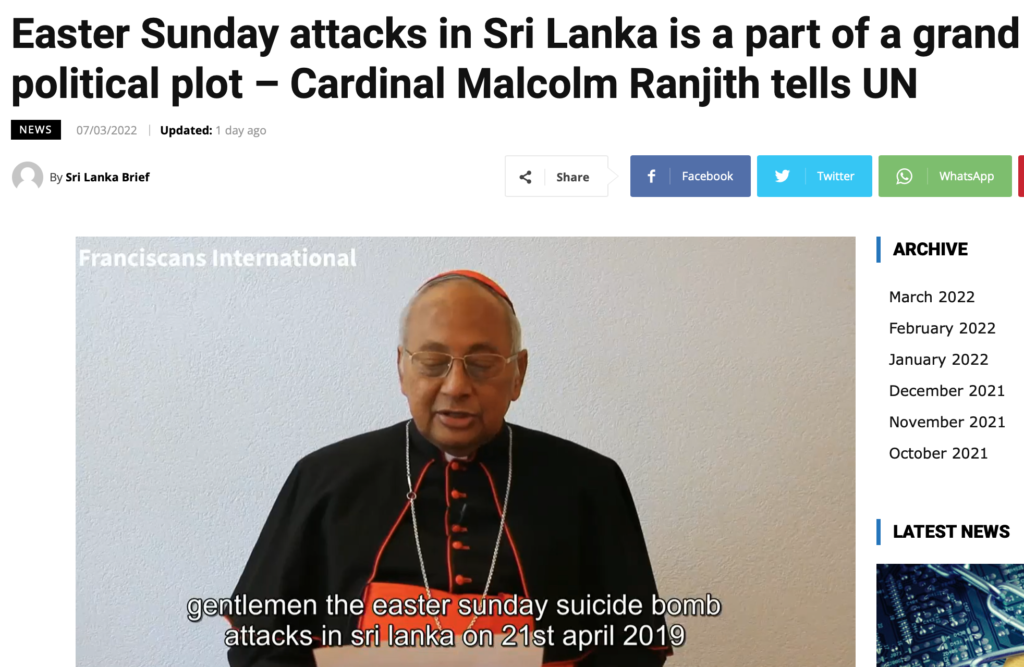
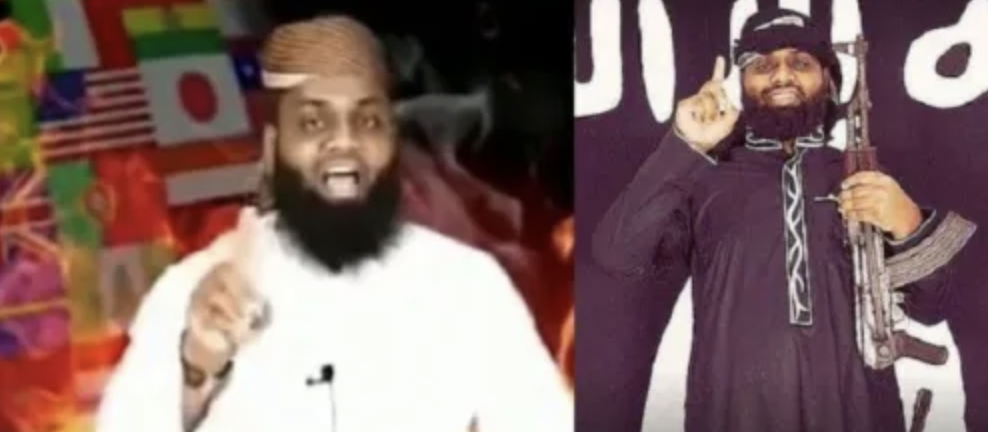
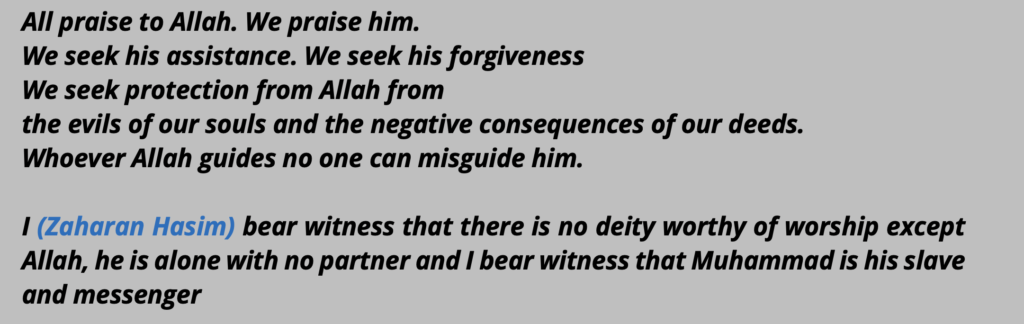


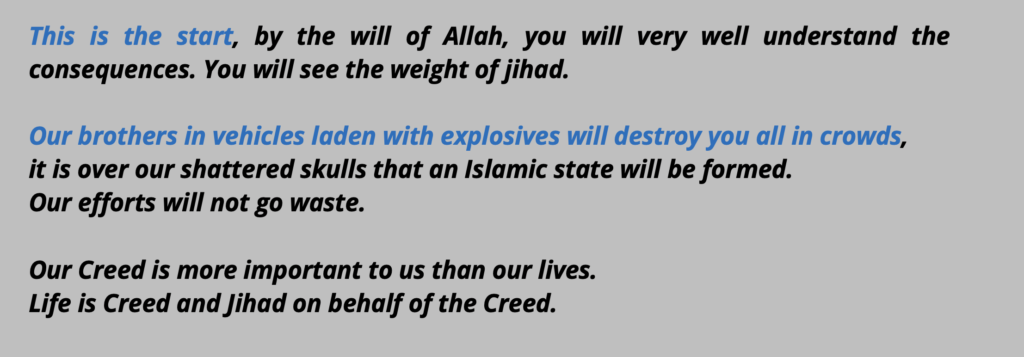
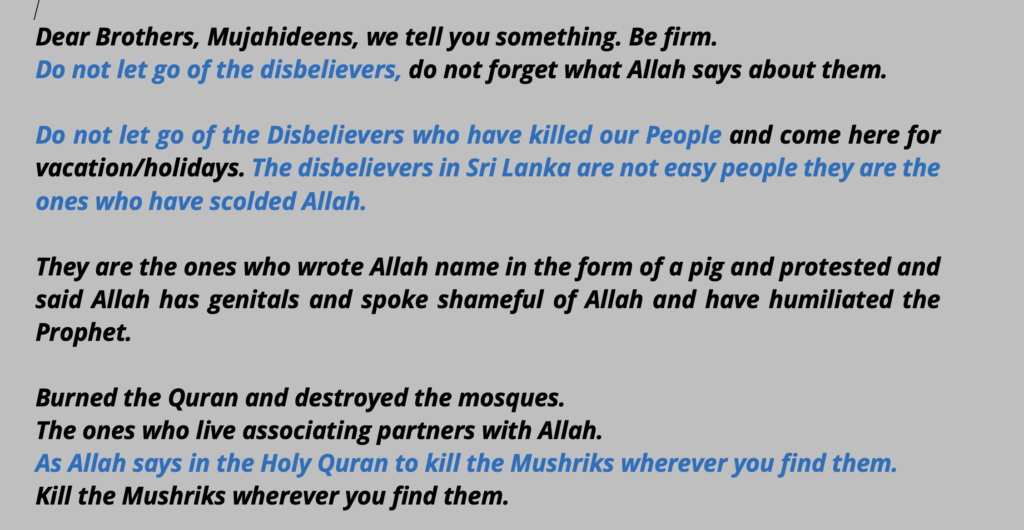
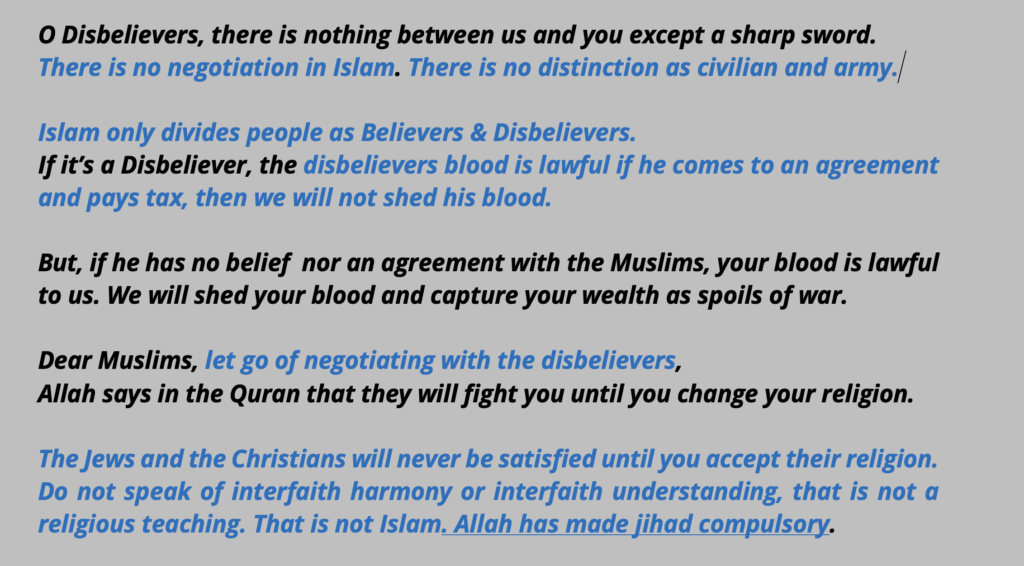

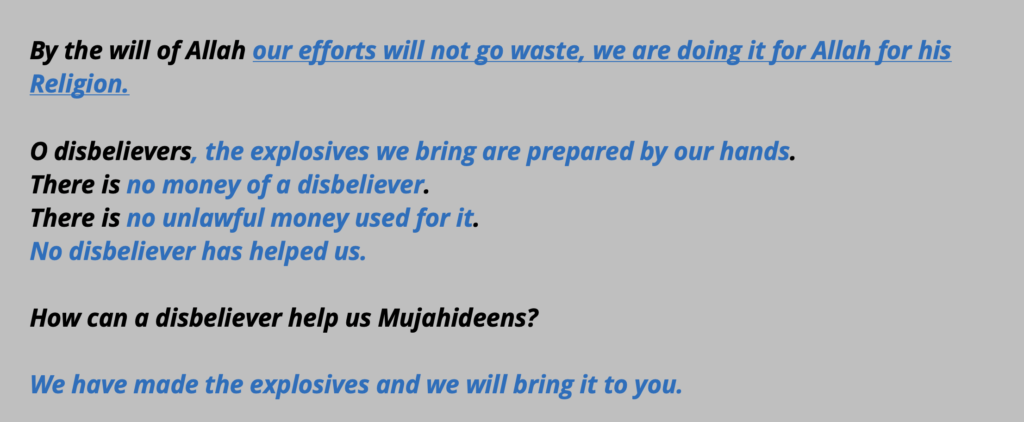

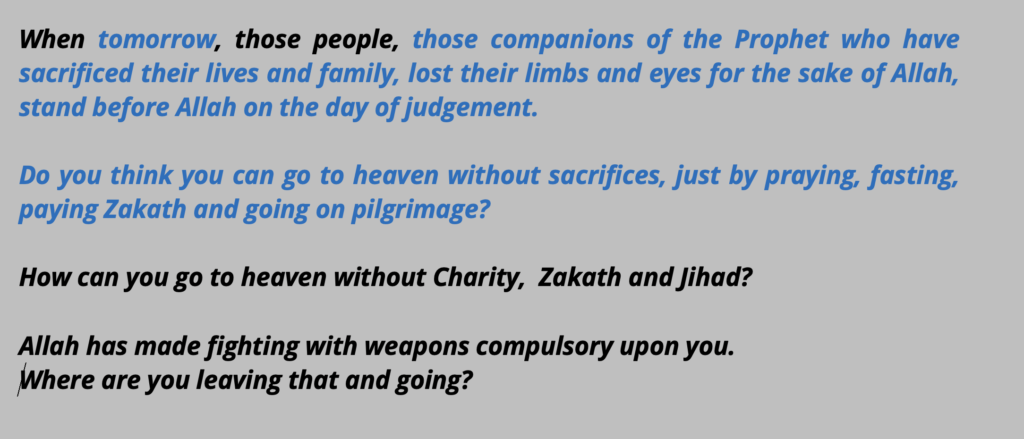
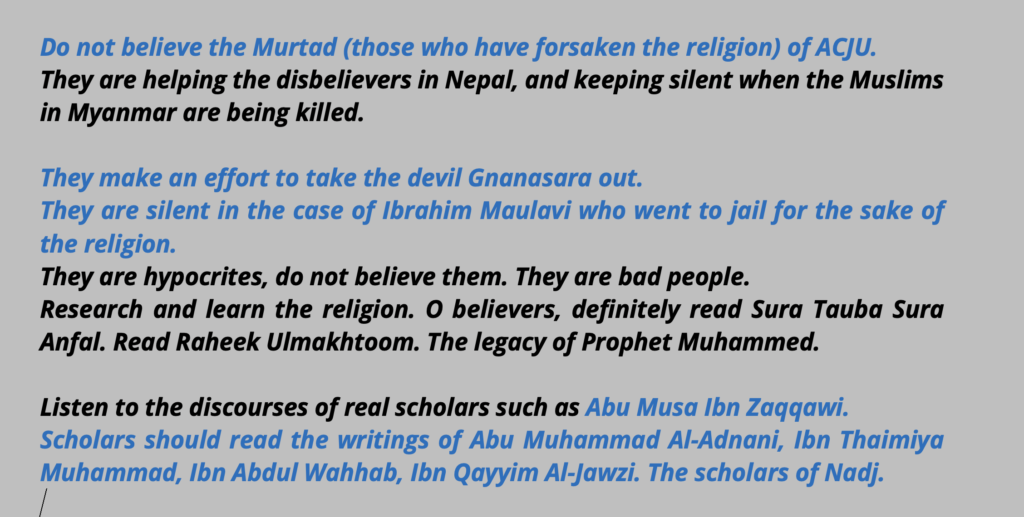



 Instead, the TV talking-heads seem focused on the relative merits of governance mantras. Which form of constitutional change would best serve us at this moment, they ask. That query is common because it is assumed that the right type of governance ‘alchemy’ would automatically lift us out of the hole we have fallen into.