How Four Powerful Brothers Broke an Island Nation
March 22nd, 2022By Ruth Pollard Bloomberg
The Rajapaksa clan may have defeated the Tamil rebellion, but they’ve lost control of Sri Lanka’s economy after two years of worsening crisis.
Ruth Pollard is a columnist and editor with Bloomberg Opinion. Previously she was South and Southeast Asia Government team leader at Bloomberg News. She has reported from India and across the Middle East and focuses on foreign policy, defense and security. @rpollard+ Get alerts forRuth Pollard
In just over two years, Sri Lanka’s first family has presided over a series of crises mostly of its own making.
The island nation of 22 million people is facing its worst economic upheaval in a decade. From an ill-fated fertilizer ban that led to a dramatic fall in yields of crops like rice and tea, to its failure to deal with a foreign-currency crisis that’s now a humanitarian emergency, the government of President Gotabaya Rajapaksa is fast running out of solutions. Relying until now on help from its two major backers — India and China — and stubbornly refusing wider international aid, the country is on the verge of default.
Protests roiled Colombo on Tuesday, with upwards of 10,000 opposition supporters gathering outside the president’s office to call for his resignation. Shortages of electricity, fuel, food and medicine are widespread and causing real pain for everyone from daily wage earners to operators trying to jumpstart the key tourism industry after two years of Covid interruptions and the 2019 Easter Sunday bombings that targeted churches and luxury hotels, killing nearly 270 people. Inflation has soared to 15% — the worst in Asia.
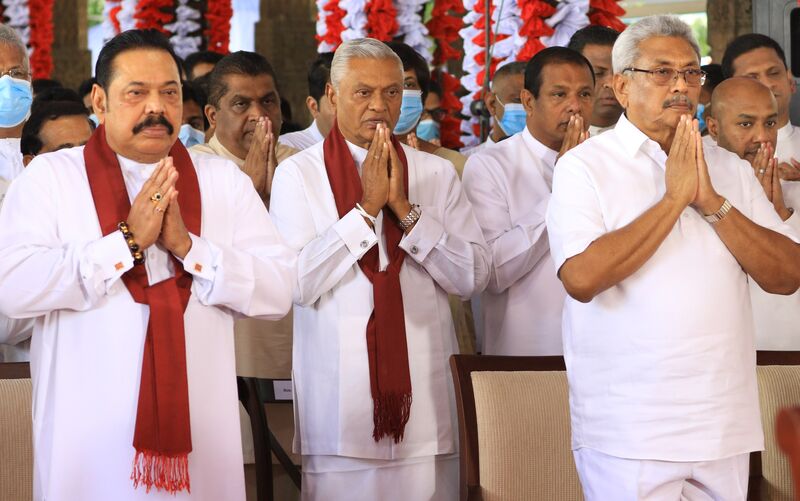
It’s hard to overstate the influence of the Rajapaksa clan in all this. Gotabaya, who won office in the November 2019 presidential elections, appointed his brother, Mahinda, as prime minister. If this pairing sounds familiar, it’s because it is. Mahinda first came to power in 2004, initially as prime minister and then as president. At the time, Gotabaya was defense secretary and was notorious for his role in the 2009 operation to end the civil war with Tamil rebels. Thousands died or disappeared amid allegations of torture, rape, extra-judicial killings and the abduction and assassination of Tamil separatists, journalists and opposition figures. Gotabaya denies all these allegations.More fromBloombergOpinionPeople Think Putin Is Losing. What If He’s Not?The SEC Will Regulate ClimateTheranos Show on Hulu Highlights Risk of Jury InfluencePutin May Finally Be Gearing Up for Cyber War
The Rajapaksas were out of power briefly from 2015, when Maithripala Sirisena and Ranil Wickremesinghe led the country, until Wickremesinghe was removed from his post in 2018, sparking a constitutional crisis. Their party won a landslide victory in the August 2020 general election, and quickly restored sweeping executive powers to the presidency that had been previously curbed. Another brother, Basil, was appointed finance minister in July 2021. He was already a controversial figure due to his American-Sri Lankan nationality — his entry into Parliament was only made possible when the government removed a constitutional provision barring dual citizens.
Their eldest brother, Chamal, is a Cabinet minister, while his son is a non-Cabinet minister. One of the prime minister’s sons is also in the Cabinet, another is his chief of staff, and a nephew is a member of Parliament. According to some estimates, about 75% of the budget is under the control of Rajapaksa ministers in government. It is dynastic politics at its purest.
But all the Rajapaksas in power haven’t been able to do what needed to be done to help Sri Lanka out of this mess.
Basil was in India March 16-17, where he secured a $1 billion credit line to help stave off the crisis, exacerbated by spikes in oil prices driven by Russia’s invasion of Ukraine. The war is also badly affecting the travel sector: About 30% of visitors so far this year were from Russia, Ukraine, Poland and Belarus, while Russia is also one of the biggest buyers of Sri Lankan tea, its main goods export.
Things are bad enough that the brothers’ resistance to seeking support from the International Monetary Fund is softening, Bloomberg News reported earlier this week. Sri Lankan officials began talks with the IMF on Monday and may present policy proposals by early next month.
Authorities have recently allowed the rupee to weaken and borrowing costs to rise, in line with expectations of IMF conditions. But experts have criticized the sequencing of these moves. Debt restructuring was the first priority, said economist and executive director of the Colombo-based Verité Research, Nishan de Mel, told me. Increasing interest rates and depreciating the rupee should have come next.
The situation has snowballed because it was mismanaged for some time, de Mel said. What Sri Lankans are facing now is unprecedented, he said, and beyond anything experienced during the decades of civil war. Sri Lanka has about $2 billion of foreign-currency reserves against total debt repayment of as much as $7 billion for 2022, including a $1 billion dollar bond maturing in July. It has three months, maybe less, before a default, de Mel said.https://platform.twitter.com/embed/Tweet.html?dnt=true&embedId=twitter-widget-0&features=eyJ0ZndfZXhwZXJpbWVudHNfY29va2llX2V4cGlyYXRpb24iOnsiYnVja2V0IjoxMjA5NjAwLCJ2ZXJzaW9uIjpudWxsfSwidGZ3X2hvcml6b25fdHdlZXRfZW1iZWRfOTU1NSI6eyJidWNrZXQiOiJodGUiLCJ2ZXJzaW9uIjpudWxsfSwidGZ3X3NrZWxldG9uX2xvYWRpbmdfMTMzOTgiOnsiYnVja2V0IjoiY3RhIiwidmVyc2lvbiI6bnVsbH0sInRmd19zcGFjZV9jYXJkIjp7ImJ1Y2tldCI6Im9mZiIsInZlcnNpb24iOm51bGx9fQ%3D%3D&frame=false&hideCard=false&hideThread=false&id=1504353267848925186&lang=en&origin=https%3A%2F%2Fwww.bloomberg.com%2Fopinion%2Farticles%2F2022-03-17%2Fthe-rajapaksa-brothers-power-isn-t-enough-to-stop-sri-lanka-going-broke&sessionId=9a91789df09de7a4bd9ede3607a2cdb73117ef01&siteScreenName=bopinion&theme=light&widgetsVersion=2582c61%3A1645036219416&width=550px
There is now a growing demand for the government to clearly articulate some concrete solutions, said Dushni Weerakoon, executive director of the Institute of Policy Studies of Sri Lanka. There is no painless way out of this,” Weerakoon noted. The economic conditions will tighten before they get better.”
It all began with the government’s capital market borrowing back in 2007, she said. (Mahinda was president then.) That now accounts for 38% of the country’s foreign debt, while loans from China accounted for 10%. Given the severity of Sri Lanka’s plight, the initial reliance on government-to-government deals to finance the foreign exchange gap hasn’t been sufficient, she said. Approaching the IMF is now the best option, complemented by efforts to access financing from India and China. Sri Lanka has asked both Beijing and New Delhi to consider restructuring its debt repayments after India in January extended a $400 million swap line and deferred an Asian Clearing Union settlement of $500 million.
The country is also seeking to negotiate a new loan with China. The Hambantota port — part of China’s Belt and Road Initiative — is widely viewed as an example of what can go wrong with Beijing’s infrastructure drive. Sri Lanka borrowed heavily to build the port, couldn’t repay the loans, and then gave China a 99-year lease for debt relief.
Gotabaya is hardly the unifying figure Sri Lanka needs right now. However, with a two-thirds majority in Parliament and elections not due until 2024 and 2025, the opposition protests are unlikely to loosen the family’s grip on power. Opinion. Data. More Data.Get the most important Bloomberg Opinion pieces in one email.EmailSign UpBloomberg may send me offers and promotions.By submitting my information, I agree to the Privacy Policy and Terms of Service.
He addressed the nation Wednesday evening, vowing to work with the IMF to resolve the crisis and saying he was sensitive to the many sufferings the people have had to experience over the past two months.” But the clock is ticking and people are angry — and hungry. Any delay in an agreement with the IMF brings the country one step closer to a hard default. And that is a road no one wants Sri Lanka to travel.
More From Bloomberg Opinion:
- What Will Be the Inflation Hit From Ukraine?: John Authers
- A Tropical Paradise Brews a Storm in a Tea Cup: Andy Mukherjee
- An Oil Price Rally Is Bad. A Diesel Crisis Is Worse: Javier Blas


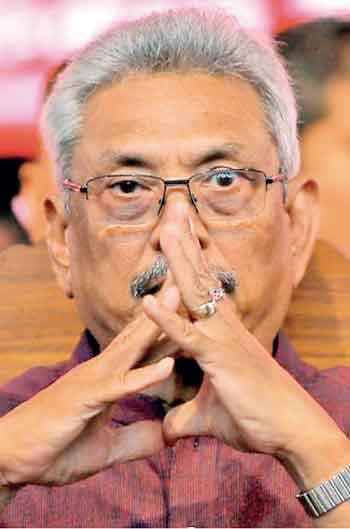
 Last week President Gotabaya Rajapaksa addressed a nation in crisis. Instead of calming the masses, a good part of whose life is now spent in everyday queues, he managed to further enrage them. What could probably be the operating para of his speech was ‘this crisis was not created by me’. Our country is not the only country in the world affected by the prevailing crisis situation. The entire world is engulfed with various hardships,” he said. Fair enough, President Rajapaksa inherited an economy that was loaded with an unsustainable amount of foreign debt, much of which was obtained during the two-term presidency of his elder brother. While some of them were invested in useful infrastructure projects, Mahinda Rajapaksa misallocated a good deal of foreign loans on a dynastic enterprise-in development projects which had no immediate, perhaps, not even medium-term, economic viability. Mahinda Rajapaksa misallocated a good deal of foreign loans on a dynastic enterprise-in development projects which had no immediate, perhaps, not even medium-term, economic viability
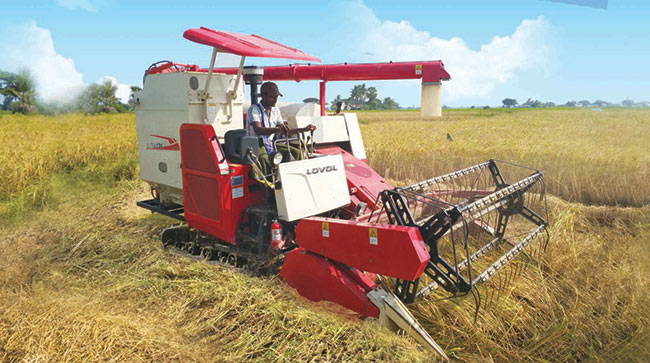
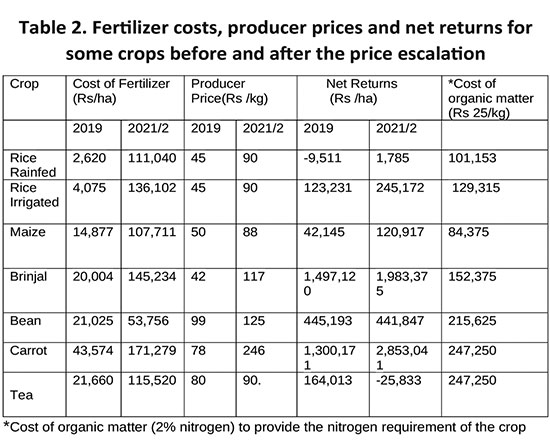
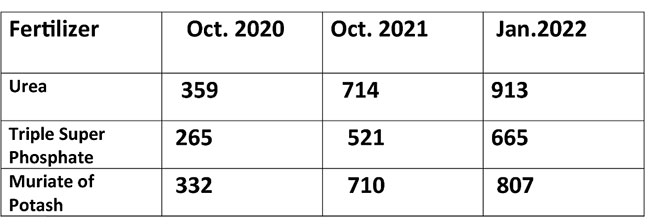
 But, only Gotabaya Rajapaksa is responsible for mismanaging the latent economic crisis, which could have been handled with economic common sense. Instead, he turned it into a national disaster. Without a series of flawed policies adopted by his administration, Sri Lanka would not have been in the throes of a crisis as acute as it is at present. But, the president did not admit any of his blunders; they broke the back of this nation. Perhaps, his ego blinded him. Or he is simply ignorant and his advisors sycophantic. Here are four cardinal mistakes he committed, and they turned an otherwise manageable foreign exchange crisis into an unprecedented national catastrophe. 1.His extensive tax concessions made the government bankrupt Mr Rajapaksa started on the wrong foot. The government revenue in Sri Lanka as a percentage of the GDP is one of the lowest in the world – not just in comparison to peer lower Middle/Middle-Income nations but even compared to the least developed nations. To address the lower government tax revenue, Rajapaksa’s predecessors, the Yahapalanaya, partly guided by the IMF, adopted a revenue-based fiscal consolidation programme. Tax revenue as a percentage gradually increased, from 2015 to 2019, when Rajapaksa was elected to power. The new president thought he knew better and cut VAT from 15% to 8% and abolished NBT, PAYE tax, etc. As a result, the government revenue in 2020 declined by 526 billion rupees. And the number of registered taxpayers in the country declined by 33.5 per cent, according to Verite Research, a think tank. In order to fill the shortfall, the government printed money, fuelling inflation. Public finances were weakened while the country was due to pay over US$ 24 billion of foreign loans by 2024, which itself reveals the economic acumen of the president and his advisors. 2.The self-made disaster in the agricultural sector The president’s overnight ban on chemical fertiliser would be remembered as the dumbest, yet one of the most callous policy decisions in recent memory. It is more ludicrous if the real reason as he claims was to save public health (instead it seriously damaged Sri Lanka’s food security, Sri Lanka now ranks behind a number of South Asian peers in terms of food security). If the unsaid motive was to save limited foreign reserves, it reveals the misplaced priorities of his government. Fertiliser subsidy cost about US$ 250-300 million annually. In the meanwhile, his government continued to service international sovereign bonds, the last one of US$ 500 million that was paid in January effectively emptied the foreign reserve. The ban on chemical fertiliser decimated the local agricultural sector, paddy harvest declined by two-thirds. The cost of the folly was, according to conservative estimates, is US$ 2 billion. It impoverished 1.8 million farmers, which account for every one in four of the Sri Lankan workforce. The new president thought he knew better and cut VAT from 15% to 8% and abolished NBT, PAYE tax, etc. As a result, the government revenue in 2020 declined by 526 billion rupees. And the number of registered taxpayers in the country declined by 33.5 per cent 3.Unsustainable Rupee peg and continuation of bond payments If there is a government that continued to pay its foreign lenders against a net negative foreign reserve, it is this one. The real motives may be much less sincere than lofty claims of non-existent creditworthiness, which is ranked below the junk by rating agencies. The government effectively drained US$ 7.6 billion of foreign reserves of 2019 to pay for foreign lenders and to maintain an unsustainable peg of the Rupee. The peg resulted in a further squeeze of foreign remittance by the Sri Lankan workers abroad. Exporters parked their earnings in foreign banks. The President in his speech admitted that the workers’ remittance, which would have been US$ 2 billion under the peg would now increase to US$ 5 billion after the rupee was floated. However, the rupee was floated when the country ran out of hard currency, with the government having no effective instrument to manage the free fall of its value. While the rupee is traded at 275 for a dollar in banks, it is still traded for 300- 305 per dollar in the parallel markets. That might suggest further depreciation is on the way. If the peg aggravated the shortage, now the free-falling rupee would make most essential items, ranging from milk powder to cooking gas beyond the reach of average folks. The promised Saubagyaya (prosperity) has been proved to be an unmitigated self-made disaster. 4.Self-isolation from the West Now when the government begs for short changes from Bangladesh, and pleads for oil on credit from Russia, at its hour of global infamy, one should know, that its friends are few and far between. This was not the case when it launched into power. The Japanese were funding a Colombo metro rail project, the Americans offered a US$ 480 million grant under the Millennium Challenge Cooperation. Gotabaya Rajapaksa’s administration suspended the Japanese project and shunned the Americans. It effectively self-distanced itself from the West and its allies. A common-sense foreign policy followed in the national interest would have made it possible for the country to seek help from a greater number of states at its hour of need. But, the Rajapaksa’s personal political calculations had always ranked above the national interest. Those are only the most salient of blunders, which are directly instrumental in our flight. There is a separate long list, from the 20th Amendment to racist dog-whistling and to the compulsory cremation of Muslim Covid dead, that further discredited the nation. Connect the dots, and you will see why and how Sri Lanka ended up here, our daily ritualistic humiliation at queues and our daily struggle to make ends meet.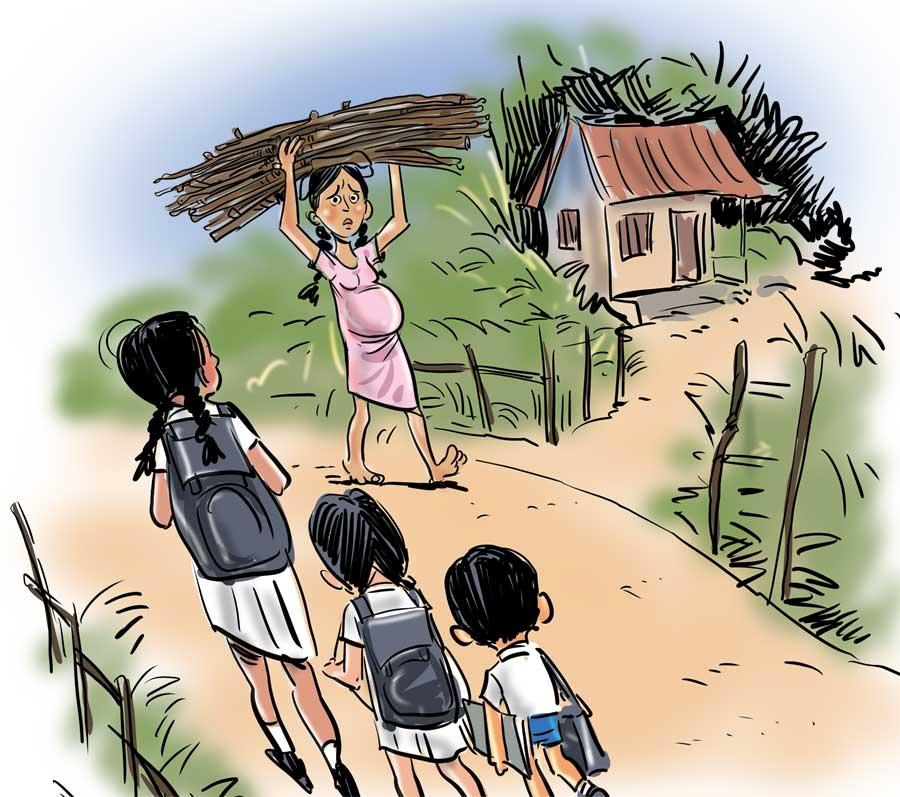
 off their daughters due to various reasons such as poverty, tradition and gender inequality. The debate on child marriages in Sri Lanka has been focused too much on Muslims. But, in reality, the evidence shows that the child marriage problem is not a Muslim or Sinhalese problem, but a national problem.