Posturing in Sri Lanka for the March UNHRC session

January 23rd, 2022

By P.K.Balachandran/Weekend Express Courtesy NewsIn.Asia

Colombo, January 23: With the situation in Sri Lanka coming up for discussion at the UN Human Rights Council (UNHRC) on March 3, the Sri Lankan government as well as the Tamil parties have begun posturing either to get off the hook, as in the case of the Sri Lankan government, or to corner the adversary, as in the case of the Tamil parties.

The Sri Lankan government is expecting censure following the report of Human Rights Watch (HRW) for 2021. And the Tamil side is worried as the international community may, as in the past, not walk the talk. The Tamils are trying to rope in India, which is influential among Asian and African countries. They had a meeting with the Indian High Commissioner on January 18.

It was clearly with an eye on the forthcoming session of the UNHRC that President Gotabaya Rajapaksa mentioned the question of ethnic reconciliation in his address to the opening session of the Lankan parliament earlier in the week. He said that the Tamil problem is economic and not political, and that the solution is equitable economic development. He also promised to act on the long standing problem of missing Tamils. And to placate the hounded Muslims, the Gotabaya government informed the Court of Appeal that the detained Muslim lawyer Hejaaz Hizbullah could be granted bail. Hizbullah was arrested in April 2020 in the 2019 Easter Sunday suicide bombings case.

Be that as it may, Colombo would find it tough going at the UNHRC. According to HRW, there had been a comprehensive deterioration in the rights situation in Sri Lanka during 2021. The UNHRC had mandated the Office of the UN High Commissioner for Human Rights (OHCHR) to collect and prepare evidence of grave crimes for use in future prosecutions.” 

HRW says: Under the administration of President Gotabaya Rajapaksa, Sri Lankan security forces harassed and threatened human rights defenders, journalists, lawyers and the families of victims of past abuses, while suppressing peaceful protests. The government continued to target members of the Tamil and Muslim minority communities using the country’s overbroad counterterrorism law, and policies that threaten religious freedom and minority land rights.”   

After Rajapaksa’s election in November 2019, he withdrew Sri Lanka from a 2015 council resolution agreed by the previous government to promote truth, justice, and reconciliation. Rajapaksa said he would not tolerate any action against ‘war heroes’ and instead appointed several officials implicated in war crimes to his administration. The UN human rights chief, Michelle Bachelet, noted that Sri Lanka remains in a state of denial about the past, with truth-seeking efforts aborted.”

The Prevention of Terrorism Act (PTA) has for decades been used to enable prolonged arbitrary detention and torture. In 2021, President Rajapaksa issued two ordinances that would make the law more abusive.  An order issued in March, which has been challenged in the Supreme Court, would allow two years of rehabilitation” detention without trial for anyone accused by the authorities of causing religious, racial, or communal disharmony.”

Many prisoners, especially from minority communities, remain in pretrial detention lasting many years under the PTA, or are serving lengthy terms following convictions based on confessions obtained using torture.

UN rights Commissioner Michelle Bachelet called upon UN member countries to consider imposing targeted sanctions against alleged perpetrators, and to pursue prosecutions in national courts under universal jurisdiction. The core group on Sri Lanka (the UK, Canada, Germany, Montenegro, North Macedonia, Malawi) at the Human Rights Council successfully led the adoption of Resolution 46/1, which established an international evidence-gathering mechanism, which has now been established as the OHCHR Sri Lanka Accountability Project. However, among Sri Lanka’s key trading partners, India and Japan abstained, while China opposed the resolution. In June, the European Parliament passed a resolution calling upon the European Union to ensure Sri Lanka abides by its human rights commitments under the GSP+ program. However, the EU, like other foreign partners including the United States, Australia, and the United Kingdom, was reluctant to publicly call upon the Sri Lankan government to end abuses, HRW said.

The Tamil parties of the North and East have rejected President Gotabaya Rajapaksa’s proposal for ethnic reconciliation made on the opening day of parliament earlier in the week. Speaking on the President’s speech in parliament on Wednesday, Ilankai Tamil Arasu atchi (ITAK) MP, M.A.Sumanthiran, said that contrary to the President’s notion, economic development of the Northern and Eastern provinces will not bring about reconciliation. What the Tamils need is meaningful devolution of power based on the concept of self-determination and self-rule, he stated.

Sumanthiran demanded the full implementation of the 13 th. Amendment (13A) of the constitution as it was a bilateral commitment made to India. But the 13A is not the solution to the Tamil question, he pointed out. The 13A safeguarded India’s security, but it was not the solution to the Tamil question in Sri Lanka. The permanent solution lies in a federal structure based on the concept of self-determination and not the 13A which distributes power within the framework of the existing Unitary constitution.

For India’s Security

To rope in India, the leaders of eleven Sri Lankan Tamil parties met the Indian High Commissioner in Sri Lanka, Gopal Baglay, on Tuesday told him that only fully empowered provincial councils in the Sri Lankan North and East can ensure that forces inimical to India, like China, do not get a foothold there.

Although the High Commissioner did not raise the issue of China’s determined bid to get foothold in the North and East, Suresh Premachandran, leader of the Eelam Peoples’ Revolutionary Liberation Front (EPRLF), told the envoy that strengthening the Tamils in political and economic terms will enable them to stop the entry of forces inimical to India. He pointed out that without powers over land the Northern provincial council cannot stop any project or foreign involvement desired by the central government in Colombo..

M.A. Sumanthiran of the Ilanka Tamil Arasu Katchi (ITAK) said that under one pretext or the other, the Gotabaya government has been taking over lands which were returned to the Tamils after the end of the war in May 2009. The Tamils feel that such things will not happen if the 13A is fully implemented. The 13A had given powers over land to the provinces but no government has handed over this power to the provinces. Hence the Tamils’ demand for the full implementation of the 13A with land and police powers.

However, the Tamil parties of the North and East do not feel that the 13A is really adequate for the protection of the Tamils because it is embedded in a Unitary” Sri Lankan constitution. In a unitary constitution, powers handed over to the provinces or any other unit in the periphery, can always be taken away. But in a federal constitution, powers given, cannot be taken back. This is why, in the letter addressed to the Indian Prime Minister, the parties of the North and East gave primacy to the demand for federalism and sought Indian support for it.

UK hints at restart of police training in Sri Lanka despite human rights abuse

January 23rd, 2022

The UK Government may ­continue training police officers in Sri Lanka despite Police Scotland pulling out of the contract amid escalating concern around human rights abuses.

Human rights campaigners and politicians had urged the Scots force to stop the training programme when survivors, who endured rape, electric shocks and torture while being held by Sri Lankan police, told of their ordeal after fleeing to Scotland.

Police Scotland, which had insisted its long-standing contract had improved the standard of policing in Sri Lanka, dropped the training contract last month but the UK Government has now signalled its willingness to resume the programmes with another force.

A letter from the Foreign Office said: Police Scotland’s decision does not mean that there will be no future programme of UK-funded support to the Sri Lankan police. The British High Commission is considering its approach to any future programme and the ongoing review will be taken into account alongside a number of other factors. We continue to engage with the Government of Sri Lanka on these important issues.”

However, Frances Harrison of the International Truth and Justice Project said: The news is deeply disappointing. When Police Scotland announced it would not continue with its contract, it sent out a powerful statement and showed the UK was taking a stand against the abuses going on in Sri Lanka. But this opens the door once again.”

Torture victims told The Sunday Post last year of abuse suffered after being snatched off the streets in Sri Lanka by police and special forces. They endured days of waterboarding, electric shocks, being burned by cigarettes and branded, and were sexually assaulted repeatedly by their captors.Read more:

Scottish politicians are planning to invite survivors to Holyrood to hear the victims’ experiences first-hand, and MSP Mercedes Villalba criticised the UK Government.

There is no evidence to suggest previous support from British police helped improve human rights in Sri Lanka,” she said. In fact, there have been reports that abuses ‘surged’ during the pandemic. It is therefore inexcusable for the UK Government to countenance further support for Sri Lankan forces. ”

Scottish Conservative Shadow Social Justice Secretary Miles Briggs said: This is simply unacceptable and I will be writing to the Foreign Commonwealth and Development Office to ask for clarification.”

The FCDO said: All of HMG’s security engagement in Sri Lanka is subject to ongoing Overseas Security & Justice Assistance review assessments to ensure it supports UK values and is consistent with our human rights obligations. Our police training programme in Sri Lanka is undergoing a review due to the broader human rights situation.

The Minister of State for South Asia, Lord (Tariq) Ahmad of Wimbledon, has raised human rights on several occasions with the Sri Lankan High Commissioner and Sri Lankan Foreign Minister GL Peiris last year.

The Foreign Secretary raised the importance of upholding human rights when she met with Foreign Minister Peiris on October 26.”

Trincomalee is a big win; more to do to get Lanka off China addiction

January 23rd, 2022

Seshadri Chari, Courtesy Deccan Herald

India’s assertive ‘neighbourhood first’ policy was once again in full view recently in Sri Lanka, providing Delhi with the much-needed window of opportunity to regain a larger foothold in the island-nation. Not too long ago, it had seemed that our so…

Read more at: https://www.deccanherald.com/opinion/trincomalee-is-a-big-win-more-to-do-to-get-lanka-off-china-addiction-1073674.html

President to support green gram cultivation in lands not suitable for paddy

January 23rd, 2022

Courtesy Adaderana

The Government intends to support Green Gram (Mung bean) cultivation as an intermediate crop in the lands where paddy cannot be cultivated, according to the President’s Media Division.

President Gotabaya Rajapaksa has taken this decision considering the information received during the observation duties at the Department of Agrarian Development.

President Rajapaksa has instructed the Ministry of Agriculture to provide financial assistance to farmers who cannot cultivate paddy in the Yala season and obtain required seeds for green gram cultivation as an intermediate crop during the Yala season due to lack of irrigation facilities, it said.

Daily COVID cases exceed 800 for fifth straight day and Fifteen more people succumb to Covid-19

January 23rd, 2022

Courtesy Adaderana

Meanwhile, the count of new Covid-19 cases surpassed the 800-mark for the fifth consecutive day as 838 people in total were confirmed positive for the virus today (January 23).

According to the Government Information Department, the newly-detected cases include 01 individual who recently arrived on the island from overseas.

The latest development has brought the total number of confirmed cases of coronavirus reported in the country so far to 601,886.

As many as 576,114 recoveries have been confirmed in Sri Lanka since the outbreak of the COVID-19 pandemic.

The Director-General of Health Services has confirmed another 15 coronavirus-related deaths for January 22, increasing the death toll in the country due to the virus to 15,299.

This includes 09 males and 06 females, according to the Department of Government Information.

One of the victims is aged below 30 years, and 05 others are in the age group of 30-59 years. The remaining 09 patients are aged 60 years and above.

More than 10,473 active cases in total are currently under medical care and 15,299 in total have succumbed to the virus infection, official figures showed.

Farmers grappling with low harvest in Maha season, while Yala failure looms

January 22nd, 2022

Courtesy News 1st

COLOMBO (News 1st); The fertilizer crisis is continuing to aggravate in the public, leaving farmers helpless, and potentially affecting the country’s food supply.

Although the Government continues to maintain its organic fertilizer policy, permission has been granted to import chemical fertilizer.

However, the rising cost of imports has caused fertilizer prices to rise significantly, leaving them with no fertilizer.

Farmers say they are grappling with two issues at present; they lament that they are unable to begin farming for the upcoming Yala cultivation, and that their harvests have declined this season.

Previously, a stock of organic fertilizer imported from China’s Qingdao Seawin Biotech company was rejected over issues relating to its standards.

The Government has paid 6.9 million US dollars to the Chinese company.

Subsequently, a controversy arose over nano nitrogen liquid fertilizer imported from India, after revelations were made in Parliament on a fraudulent deal.

Farmers have been at the receiving end of these problems as they continue to face multiple issues.

Farmers in Medamulana and Kinchigune in Hambantota say that despite using much compost, it has not resulted in any benefit to the farmers, while the crop growth has been decidedly low.

Another farmer stated that he used to reap about 60,000 or 70,000 bundles of paddy from his field, which he inherited. However, today, he has given up as there is no fertilizer.

About 500 families earn a livelihood through farming in Medamulana.

Another farmer recalled that the current President’s father was nominated for the election while he used to work in the very same paddy fields. However, his successors have not paid back for the services he rendered.

Farmers in Uhana in Ampara have also been affected by the fertilizer crisis, as they stated that their crops have not recorded a proper growth despite the cultivation commencing about 65 days ago.

We began cultivating about 60 – 70 days ago. Farmers wouldn’t be facing the current situation if they were simply given urea. They obtained our money, paid it to other countries and imported waste. If they had not used that money to pay it to ships carrying waste, then the people will be able to eat today,” a farmer added.

China to donate one million tons of rice before Sinhala-Hindu New Year

January 22nd, 2022

by Amani Nilar  Courtesy News 1st

COLOMBO (News 1st); The Minister of Foreign Affairs, prof. G.L. Peiris says that China will donate one million tons of rice before the Sinhala and Hindu New Year, which would enable the public to celebrate the festival in a prosperous manner. 

Speaking during his visit to the Maha Sangha on Saturday (22), the Minister explained how foreign assistance has been obtained to overcome the economic crisis.

Accordingly, the Minister pointed out that Sri Lanka will receive USD 2.5 million from India as a result of discussions held by the Minister of Finance Basil Rajapaksa with Indian authorities in New Delhi.

Speaking further, the Minister stated that although Sri Lanka can solve the economic crisis in isolation, there is no such need, as maintaining relations with other countries such as India and China are important as well.

Meanwhile, the Chief Prelate of the Asgiriya Chapter, Ven. Medagama Dhammananda Thero emphasized that if the public is at the expense of the deals entered, to not to enter such deals, however negotiations with such parties is possible. 

Moreover, Ven. Dhammananda Thero stated that it is best to not to enter into certain agreements under conditions that cannot be fulfilled, as many investors get discouraged due to the demand for commissions and the lack of incentives, therefore to make environment to bring in more investors to stabilize the economy.

අග්‍රාමාත්‍යතුමා ජය ශ්‍රී මහා බෝධින් වහන්සේ වැඳ පුදා ගනී

January 22nd, 2022

අග්‍රාමාත්‍ය මාධ්‍ය අංශය

අග්‍රාමාත්‍ය මහින්ද රාජපක්ෂ මහතා අද (22) පෙරවරුවේ අනුරාධපුර ජය ශ්‍රී මහා බෝධීන් වහන්සේ වැඳ පුදා ගනිමින් ආශිර්වාද ලබා ගත්තේය.

අටමස්ථානාධිපති, උතුරු මධ්‍යම දිසාවේ ප්‍රධාන සංඝනායක ආචාර්ය අතිපූජ්‍ය  පල්ලේගම සිරි නිවාස නායක ස්වාමීන්වහන්සේ බැහැ දුටු අග්‍රාමාත්‍ය මහින්ද රාජපක්ෂ මහතා පළමුව උන්වහන්සේගේ සුව දුක් විමසා බැලුවේය.

කිසිදු ලාභ ප්‍රයෝජනයක් අපේක්‍ෂා නොකර ජය ශ්‍රී මහා බෝධිය වන්දනාමාන කිරීමට පැමිණෙන බැතිමතුන් වෙනුවෙන් අවට මං මාවත් පිළිසකර කරමින් ගල් අතුරා අලංකාර කරනු ලැබුවේ අග්‍රාමාත්‍ය මහින්ද රාජපක්ෂ මහතා බව අටමස්ථානාධිපති අතිපූජ්‍ය  පල්ලේගම සිරි නිවාස නායක ස්වාමීන්වහන්සේ මෙහි දී සිහිපත් කළහ.

අනතුරුව රුවන්වැලි මහ සෑ චෛත්‍යාරාමාධිකාරී නුවර කලාවියේ ප්‍රධාන සංඝනායක පූජ්‍ය පල්ලේගම හේමරතන නායක ස්වාමීන්වහන්සේ බැහැ දුටු අග්‍රාමාත්‍යතුමා උන්වහන්සේගේ ආශිර්වාද ලබා ගත්තේය.  හේමරතන නායක ස්වාමීන්වහන්සේ මෙහි දී සිය දොළොස් වසරක ගී අස්වැන්න ඇතුළත් සඳ මඬල වී” ගීත ග්‍රන්ථය අග්‍රාමාත්‍යතුමා වෙත පිළිගැන්නූහ. අග්‍රාමාත්‍යතුමා රුවන්වැලි මහ සෑය වැඳපුදා ගත්තේ ඉන් අනතුරුවය.

අග්‍රාමාත්‍යතුමා පසුව සඳහිරු සෑය වෙත ගොස් ආගමික වතාවත්වල ද නිරත විය.

අග්‍රාමාත්‍යතුමා ඉන් අනතුරුව  අනුරාධපුර ශ්‍රී සම්බුද්ධ ජයන්ති විහාරාධිපති පූජ්‍ය නුගේතැන්නේ ශ්‍රී පඤ්ඤානන්ද නායක ස්වාමීන්වහන්සේ බැහැ දැක ආශිර්වාද ලබා ගත්තේය.

පූජ්‍ය නුගේතැන්නේ ශ්‍රී පඤ්ඤානන්ද නායක ස්වාමීන්වහන්සේ අග්‍රාමාත්‍යතුමාට ආශිර්වාද කරමින් මෙසේ පැවසූහ.

ත්‍රස්තවාදී ප්‍රශ්නයේ දී ඔබතුමා මේ රට ජය ගන්න කොට සිංහල, දෙමළ, මුස්ලිම්, බර්ගර්, බේදයක් නැතුව රටේ සියලු දෙනාම එකට එකතු වෙලා එය කළේ. අපේ ජනාධිපතිතුමා, ඔබතුමා මේ රට එක්  සේසත් කරාට පස්සේ එදා සිංහ කොඩි අරගෙන සියලු ජාතීන් එකට පාරට බැස්සා.

මේවා ඉවසගන්න බැරි කොටසක් මේ රටෙත් ජාත්‍යන්තරයෙත් ඉන්නවා. ඒ වගේම දෙමළ මිනිස්සු වුණත් ඔබතුමාට ජනාධිපතිතුමාට ආදරේ ගොඩක් මිනිස්සු  ඉන්නවා. මොනම වෑයමක්වත් නැතිව උතුරෙන් කොච්චර ඡන්ද හම්බ වුණාද ? ඉතින් ඒ අය ඔබතුමාගේ වැඩපිළිවලට කැමතියිනේ.

අපේ අගමැතිතුමනි, ඔබතුමා මේ රටේත්  ජාතියේත් සියලු   ජාතීන් ඒ වගේම සම්මා සම්බුදු සාසනයේත් සියලු අභිවෘද්ධිය හදපු හදන ඉතාමත් උතුම් නායකයා. මේ රටේ මිනිස්සු ඔබතුමාට ගොඩක් ආදරය කරනවා. ජාතිකව හා ජාත්‍යන්තරව හැමදෙනාම ඔබතුමාගේ ආදරයට ලක් වෙච්ච ඉතාමත්ම සුහද සත්පුරුෂයෙක්, ඒ වගේම ඔබතුමා හොඳ මිත්‍රයෙක්. දශක පහක හයක දේශපාලන  ඉතිහාසයේ ඔබතුමා හදවත් වල ජිවත් වෙන්නෙ.ඉතින් ඒක කවුරු හරි විනාශ කරන්න හැදුවත් මොන දැන්වීම් දැම්මත් මුහුණු පොතේ අප්‍රසන්න ප්‍රකාශ කළත් ඒවා ඔබතුමාට වදින්නේ නෑ.

මේ රටේ යුද්ධය කාටවත් ඉවර කරන්න බෑ කියලනේ කිව්වේ.  මට අද වගේ මතකයි   ඔබතුමා මගේ අතින්  අල්ලාගෙන කැබිතිගොල්ලෑවේ දී මගේ අත මිරිකගෙන කිව්වා මම මේක ඉවර කරනවාමයි  කියල.

ඔබතුමා ඒ අධිෂ්ඨානය ගත්තා ඒ අධිෂ්ඨානය අරගෙන මේ රටේ නෙමෙයි ලෝකයේම මිනිස්සු විශ්මයට පත්කරමින් යුද්ධය නිමා කළා. එදා මිනිස්සු හඬා වැටුණේ අපට මොනවත්  එපා අපේ ජනාධිපතිතුමනි, මේ යුද්ධය ඉවර කරල දෙන්න  කියලා. හැබැයි දැන් යුද්ධය කෙරුවද කියලවත් කාටවත් මතක නෑ. එහෙත් අද අපි හැමෝටම පාරක බැහැල යන්න පුළුවන්.

අධිවේගී මාර්ග හදල ඒ වගේම අලුතින් පිබිදීමක් දැන් රටේ හදල තියෙනවා. මේ කොරෝනා වසංගතය කවුරුත් හදපු එකක් නෙමෙයි. මේක අද මුළු ලෝකෙම ව්‍යාප්ත වෙලා තියෙනවා. ඉතින් මේක අපි තේරුම් ගන්න ඕනෑ.

ඔබතුමා අපේ ජාතික නායකයා. ඉතින්  අදත් හෙටත් නිවන් දක්නා ජාති දක්නා තුරුත් අපි ඔබතුමාත් එක්ක ඉන්නවා යැයි ශ්‍රී පඤ්ඤානන්ද නායක ස්වාමීන්වහන්සේ පැවසූහ.

ඉන් අනතුරුව අග්‍රාමාත්‍යතුමා රජරට විශ්වවිද්‍යාලයේ කුලපති ඓතිහාසික මිරිසවැටිය චෛත්‍යාරාමාධිකාරී ආචාර්ය පූජ්‍ය ඊතලවැටුණුවැවේ ඥාණතිලක නායක ස්වාමීන්වහන්සේ බැහැ දැක ආශිර්වාද ලබා ගත්තේය.

ආචාර්ය පූජ්‍ය ඊතලවැටුණුවැවේ ඥාණතිලක නායක ස්වාමීන්වහන්සේ මෙහි දී අග්‍රාමාත්‍යතුමාට අවවාද අනුශාසනා ලබා දුන්හ.

ඓතිහාසික ලංකාරාම විහාරස්ථානයට ගිය අග්‍රාමාත්‍යතුමා උතුරු මැද පළාතේ ප්‍රධාන අධිකරණ සංඝනායක අනුරාධපුර ලංකාරාමාධිකාරී පූජ්‍ය රැළපනාවේ ධම්මජෝති නායක ස්වාමීන්වහන්සේගේ සුව දුක් විමසා බැලුවේය.

අනුරාධපුර ලංකාරාමාධිකාරී පූජ්‍ය රැළපනාවේ ධම්මජෝති නායක ස්වාමීන්වහන්සේ අග්‍රාමාත්‍යතුමාට අනුශාසනා කරමින් මෙසේ පැවසූහ.

ශ්‍රී ලංකා මාතාවගේ වාසනාවට යුගයෙන් යුගයට යුග පුරුෂයෝ වාසනාවන්ත පුද්ගලයෝ මේ මාතෘ භූමියේ පහළ වෙනවා. ඒ නිසා මේ යුගයේ  මිහිපිට පහල වෙච්ච රටටත් ජාතියටත් ආගමටත් අවංකවම ආදරේ කරන මිනිස්සුන්ට ආදරේ කරන ජනතාවට ආදරය කරන විශේෂයෙන් දරුවන්ට ආදරය කරන යුග පුරුෂයෙක් තමයි අපේ ශ්‍රී ලංකාවේ ප්‍රජාතාන්ත්‍රික සමාජවාදී ජනරජයේ  පස්වන විධායක ජනාධිපති අතිගරු මහින්ද රාජපක්ෂ මැතිතුමා. වර්තමාන අපේ අග්‍රාමාත්‍යතුමා.

 ඔබතුමා පිළිබඳව ශ්‍රී ලංකාවේ මිනිස්සුන්ට අමුතුවෙන් යමක් කියන්න අවශ්‍ය කරන්නේ නෑ.

මහින්ද  රාජපක්ෂ ජනාධිපතිතුමා අගමැතිතුමා කොයි විදිහේ කෙනෙක්ද කියන එක බහ තෝරන හොඳට තේරෙන වයසේ ඉන්න දරුවන්ගේ ඉඳලා වැඩිහිටියො දක්වා ඒ හැමදෙනාගෙම හදවත්වල සටහන් වෙච්ච නමක් තමයි මහින්ද රාජපක්ෂ කියලා කියන්නේ.

මං මේවා හිතට එකඟව කියන්නේ.අද හුඟක් දෙනා නොයෙක් නොයෙක් දේ විවේචනය කළත් අද අපිට මේ රටේ එහා කෙළවරේ ඉඳලා මෙහා කෙළවරට යන්නටත් ඔය කොයි කොයි කාටත් දේශපාලන පක්ෂ ඇති කරගෙන ඒ අයට දේශපාලනය කරන්නත් මේ රටක් ඉතුරු කරලා දුන්නේ තමුන්නාන්සෙ. අපි යුද්ධයෙන් බැට කාපු මිනිස්සු. අපි මෙහෙ හිටපු මිනිස්සු. අපි උතුරු මැද යාපනයට කිට්ටුව වව්නියාවට කිට්ටුව හිටපු මිනිස්සු. එතකොට  මේ  යුද්දෙ බිහිසුණුකම අපිට තදින් දැනුණා. ඉතින් කිසිම කෙනෙකුට මේ යුද්ධය නතර කරගන්න බැරිවෙච්ච වෙලාවෙදි ජනතාවට මම මේ යුද්ධය නතර කරනවා කියල පොරොන්දුවක් දීලා තිස් අවුරුදු යුද සාපය අපේ රටෙන් තුරන් කෙරුවෙ තමුන්නාන්සේයි.

ඒ වගේම අපේ වර්තමාන ජනාධිපති ගෝඨාභය රාජපක්ෂ මැතිතුමා ආරක්ෂක ලේකම් වෙලා ඉන්න කාලේ. ඒ වගේම මේ අයියගෙයි මල්ලිගෙයි ත්‍රිවිධ හමුදාව, පොලිසිය , සිවිල් ආරක්ෂක බලකාය කියන මේ හැමෝගෙම සහයෝගයෙන් තමයි මේ ජයග්‍රහණය කරගන්න පුළුවන් වුණේ. ජයග්‍රහණය  කරගත්තා. ඉතින් අපි නිදහසේ ජීවත් වෙනවා. කාටත් අද දේශපාලනය කර ගන්න පුළුවන්කම තියෙනවා. ඊට කලින් අපි දන්නවනේ වේදිකාවල මැරිච්ච හැටි පාරවල් වල මැරිච්ච හැටි. ඇයි මෙව්වා මිනිස්සු අමතක කරන්නේ මෙව්වා ජනතාවට අපි විශේෂයෙන් කියන්නේ මේවා අමතක කරන්න එපා. මේ නාමයන් අමතක කරන්න එපා. උන්නැහේලා මේ රටට ජාතියට සේවය කරන්න ආපු අය. අතපසුවීමක් වැරැද්දක් අපෙන් සිද්ධ වුණා. ඒත් ජනතාව කොහොම කොහොම හෝ ඔබතුමා නැවත කරළියට ගෙනාවනේ. ඒ නිසා ජනතාව ඔබ දෙපළ ගෙනල්ලා අද හොඳ තැනක තියාගෙන ඉන්නවා.

කොරෝනා වසංගත  රෝගී තත්ත්වය ගන්න. මිනිස්සු කෑ ගහනවා. පේන්නැද්ද මේ මිනිස්සුන්ට අපිට විතරක් ද කොරෝනා වසංගතය තියෙන්නෙ ?  අමෙරිකාවට එංගලන්තයට චීනයට හැදිලා ඒ මිනිස්සු පවා උඩුයටිකුරු වෙලා ඉන්නේ. කොහොම හරි තමුන්නාන්සේලා මේ එන්නත අපේ රටට ගෙනල්ලා මේ වෙනකොට ලංකාවෙ බොහෝ දෙනෙකුට එන්නත් තුනම දැන් එන්නත් කරලා අවසානයි. පාසල් දරුවන්ටත් එන්නත් කරා. ඒ හින්දා මේ සියලුම කටයුතු ආර්ථිකය බිඳ වැටිච්ච වෙලාවක තමුන්නාන්සෙලා ඉටු කළා

කොරෝනා නැමැති වසංගතය කාටත් පේනවා. අමුතුවෙන් කියන්න ඕනේ නෑ. කෑගහන්න ඕනෙ නෑ. ආර්ථිකය කඩා වැටුණා. කවුරුත් දන්නවා කවුරුවත් කියන්න ඕනෙ නෑ. විදේශිකයෝ එන්නැත්නම්, අපේ නිෂ්පාදන දේවල් පිටරට යවා ගන්න බැරිනම් ඉතිං අපි කොතනද ඉන්නේ කියලා අපිට තේරෙනවා නේ. ඒ නිසා ඔන්න දැන් ඉතින් අවස්ථාවක් ආවා තුණුරුවන්ගේ පිහිටෙන් ජයසිරිමහ හාමුදුරුවන්ගේ පිහිටෙන් මේ වසරෙ ඉඳල ඉස්සරහට යන්න. මං හිතනවා අපේ ජනාධිපතිතුමාටත් අපේ අග්‍රාමාත්‍යතුමාටත්  මේ තිබුණු හැමදේම සකස් කරගෙන හොඳ ආර්ථිකයක් ගොඩනඟා ගෙන හොඳ ජන ජීවිතයක් මිනිස්සුන්ට සැකෙන් බයෙන් තොරව හොඳින් ජීවත් වෙන්න පසුබිමක් හදලා දෙන්න දැන් අවස්ථාව සැලසිලා තියෙනවා කියලා. ඒ නිසා මේ වසර කිහිපය තුළ මේ සියල්ලම අපි ඉෂ්ට සිද්ධ කර ගනිමු . මිනිසුන්ගේ හදවත් වලට දැනෙන විදිහට යමක් කරන්න යැයි නායක ස්වාමීන්වහන්සේ පැවසූහ.

ආචාර්ය පූජ්‍ය අග්‍රාහැර කස්සප හිමියෝ ද අග්‍රාමාත්‍යතුමාගේ මෙම ආගමික වතාවත්වලට වැඩම කළහ.

මෙම ආගමික වතාවත්වලට අමාත්‍ය එස්.එම් චන්ද්‍රසේන, උතුරු මැද පළාත් හිටපු අමාත්‍ය එච්.බී සේමසිංහ, අග්‍රාමාත්‍ය බෞද්ධ කටයුතු සම්බන්ධීකරණ ලේකම් ඒ. එම් රත්නායක මහත්වරු ද එක්වූහ.

කතානාද සිනමාවට වසර 75ක් හා ජාතික චිත්‍රපට සංස්ථාවට වසර 50 පිරීමේ සමරු උත්සවය

January 22nd, 2022

අග්‍රාමාත්‍ය මාධ්‍ය අංශය

ලාංකේය කතානාද සිනමාවට වසර 75ක් සම්පූර්ණ වීම හා ජාතික චිත්‍රපට සංස්ථාවට වසර 50ක් පිරීම නිමිත්තෙන් සංවිධානය කළ සමරු උත්සවය අග්‍රාමාත්‍ය මහින්ද රාජපක්ෂ මහතාගේ ප්‍රධානත්වයෙන් ඊයේ (21) පස්වරුවේ ජාතික චිත්‍රපට සංස්ථාවේ දී පැවැත්විණි. 

සමරු උත්සවය ආරම්භයේ දී ජාතික චිත්‍රපට සංස්ථාව ආරම්භ කළ දිවංගත අගමැතිනි සිරිමාවෝ බණ්ඩාරනායක මැතිනියගේ ඡායාරූපයකට ප්‍රවිණ රංගන ශිල්පීන් දෙපළක් වන රවින්ද්‍ර රන්දෙණිය සහ මාලනී ෆොන්සේකා, චිත්‍රපට සංස්ථාවේ ජ්‍යෙෂ්ඨ නිලධාරීන් දෙදෙනෙකු වන අතුල රෝහණසිරි, චන්ද්‍රිකා ශ්‍රීමතී හෙට්ටිආරච්චි මහත්ම මහත්මීහු විසින් පුෂ්පෝපහාර දක්වනු ලැබූහ.

ජාතික සිනමාව අතික්‍රමණය කරමින් ජගත් අවධානයට පාත්‍ර වූ ප්‍රවීණ චිත්‍රපට අධ්‍යක්ෂිකා ආචාර්ය සුමිත්‍රා පීරිස් මහත්මියට අග්‍රාමාත්‍ය මහින්ද රාජපක්ෂ මහතා අතින් මෙහි දී ගෞරව සම්මාන පිරිනැමිණි.

ජාතික චිත්‍රපට සංස්ථාවේ සිනමාකරණ ඩිප්ලෝමා පාඨමාලාව සාර්ථකව අවසන් කළ අරුණ ජයවර්ධන, සංජය නිර්මාල්,  රංජන් ප්‍රසන්න, රනිල් ඉන්දික රුවන්පතිරණ, අසංක මිහිර වර්ණකුලසූරිය, හසන්ත ප්‍රභූති දිසානායක, චින්තක දුමිත් බණ්ඩාර යන නවක සිනමාවේදීහු ද අග්‍රාමාත්‍ය මහින්ද රාජපක්ෂ මහතා අතින් මෙහි දී සම්මාන හිමි කරගත්හ.

චිත්‍රපට සංස්ථාවට වසර 50ක් පිරීම නිමිත්තෙන් අග්‍රාමාත්‍යතුමාගේ ප්‍රධානත්වයෙන් 50වන සංවත්සරය සඳහන් රුපියල් විසිපහක වටිනාකමින් යුතු සමරු මුද්දරය සහ මුල්දින කවරය නිකුත් කිරීම ද මෙහි දී සිදුවිය.

තැපැල්පති රංජිත් ආරියරත්න, නියෝජ්‍ය  තැපැල්පති රාජිත කේ රණසිංහ, මුද්දර කාර්යාංශයේ අධ්‍යක්ෂ ශාන්ත කුමාර මීගම මහත්වරු අදාළ සමරු මුද්දරය හා මුල්දින කවරය පළමුව ජනමාධ්‍ය අමාත්‍ය ඩලස් අලහප්පෙරුම මහතාටත් එතුමා විසින් අග්‍රාමාත්‍ය මහින්ද රාජපක්ෂ මහතාටත් පිරිනමන ලදි.

ජ්‍යෙෂ්ඨ සිනමා ශිල්පීන් 25දෙනෙකු වෙනුවෙන් විශ්‍රාම වැටුප් ප්‍රදානය කිරිමද මෙහිදී සිදු විය. බුද්ධශාසන, ආගමික හා සංස්කෘතික කටයුතු අමාත්‍යාංශයේ ලේකම් මහාචාර්ය කපිල ගුණවර්ධන මහතා අතින් ප්‍රවීණ චිත්‍රපට අධ්‍යක්ෂ රත්නවීර ද සිල්වා, ප්‍රවිණ සංස්කරණ ශිල්පී ගිවන්ත අර්ථසාද්, ප්‍රවීණ ශබ්ද පරිපාලක ලයනල් ගුණරත්න, ප්‍රවීණ රංගන ශිල්පී ජයසේකර අපොන්සු, ප්‍රවිණ චිත්‍රපට පසුබිම් ගායිකා රූපා ඉන්දුමතී මහත්ම මහත්මීහු පිරිස මෙහි දී විශ්‍රාම වැටුප් හිමිකර ගත්හ.

චිත්‍රපට සඟරාව”, පශ්චාත් නූතන සිනමා ග්‍රන්ථය” සහ සිංහලේ මහා සිනමා වංශය” යන ග්‍රන්ථ මෙහිදී  එළිදැක්විණි.

ශ්‍රී ලාංකේය සිනමාවේ එදා මෙදාතුර ගමන් මග මැයෙන් ප්‍රවීන සිනමා විචාරක ආචාර්ය නුවන් නයනජිත් කුමාර මහතා විසින් මෙහි දී සමරු දේශනයක් පවත්වන ලදි. චිත්‍රපට සංස්ථාවට වසර 50ක් පිරීම නිමිත්තෙන් සමරු ආවර්ජනය ප්‍රවීණ රංගන ශිල්පී විජේරත්න වරකාගොඩ මහතා පැවැත්වීය.

ජනමාධ්‍ය අමාත්‍ය ඩලස් අලහප්පෙරුම,  කුරුණැගල දිස්ත්‍රික් පාර්ලිමේන්තු මන්ත්‍රී බී.වයි.ජී රත්නසේකර, බුද්ධශාසන, ආගමික හා සංස්කෘතික කටයුතු අමාත්‍යංශයේ ලේකම් මහාචාර්ය කපිල ගුණවර්ධන, චිත්‍රපට සංස්ථාවේ සභාපති ජයන්ත ධර්මදාස, සාමාන්‍යාධිකාරී රවි ප්‍රසාද් කළුපහන, තැපැල්පති රංජිත් ආරියරත්න, මාලනී ෆොන්සේකා, රවින්ද්‍ර රන්දෙණිය මහත්ම මහත්මීන් ඇතුළු ප්‍රවීණ රංගන ශිල්පීන්, චිත්‍රපට අධ්‍යක්ෂකවරුන්, නිෂ්පාදකවරුන් ඇතුළු පිරිසක් මෙම අවස්ථාවට සහභාගී වුහ.

අග්‍රාමාත්‍යතුමාගේ ප්‍රධානත්වයෙන් කොළඹ රාජකීය විද්‍යාලයට නවීන බස් රථයක්

January 22nd, 2022

අග්‍රාමාත්‍ය මාධ්‍ය අංශය

අග්‍රාමාත්‍ය මහින්ද රාජපක්ෂ මහතාගේ ප්‍රධානත්වයෙන් ඊයේ (21) පස්වරුවේ අරලියගහ මන්දිරයේ දී කොළඹ රාජකීය විද්‍යාලයට නවීන බස් රථයක් පිරිනැමිණි. 

කීර්ති මන්ත්‍රීරත්න මහතා විසින් පරිත්‍යාග කළ මෙම බස් රථය ජපානයේ නිෂ්පාදිත ආසන 54කින් යුතු සුඛෝපභෝගී බස් රථයකි.

අග්‍රාමාත්‍ය මහින්ද රාජපක්ෂ මහතා කොළඹ රාජකීය විද්‍යාලයේ විදුහල්පති එම්.වී.එස්. ගුණතිලක මහතා වෙත බස් රථයේ යතුර පිරිනැමුවේය.

අනතුරුව අග්‍රාමාත්‍යතුමා විසින් බස් රථයේ පහසුකම් නිරීක්ෂණය කරන ලදි.

මෙම බස් රථය පරිත්‍යාග කළ කිර්ති මන්ත්‍රීරත්න මහතා වෙත ද අග්‍රාමාත්‍යතුමා අතින් සමරු සිහිවටනයක් පිරිනැමුණු අතර කොළඹ රාජකීය විද්‍යාලයේ විදුහල්පති එම්. වී.එස්. ගුණතිලක මහතා විසින් අග්‍රාමාත්‍යතුමාට ද සමරු තිළිණයක් පිළිගැන්වීය.

අග්‍රාමාත්‍යතුමා මුදල් අමාත්‍යවරයා ලෙස කටයුතු කළ සමයේ අධ්‍යාපන අමාත්‍ය දිනේෂ් ගුණවර්ධන,  පාර්ලිමේන්තු මන්ත්‍රී ප්‍රේමනාත් සී දොලවත්ත මහත්වරුන්ගේ මැදිහත්වීමෙන් මෙම බස්‍ රථයට අදාළ සියලු තීරු බදු සහන ලබා දී තිබිණි. විශ්‍රාමලත් සහකාර විදුහල්පති අශෝක ගලහිටියාව මහතා ඊට අදාළ ව්‍යාපෘති සම්බන්ධීකරණය ඉටු කළේය.

පාර්ලිමේන්තු මන්ත්‍රී නීතිඥ ප්‍රේමනාත් සී දොලවත්ත, කොළඹ රාජකීය විද්‍යාලයේ නියෝජ්‍ය විදුහල්පති ක්‍රිශාන්ත සිල්වා, විද්‍යාලයීය දෙමාපියන් නියෝජනය කරමින් මහේෂ් ගුණරත්න මහත්වරු ඇතුළු පිරිසක් මෙම අවස්ථාවට සහභාගී වූහ.

නැන්දා සහ මාමා පිලිබඳ මතකය

January 22nd, 2022

වෛද්‍ය රුවන් එම් ජයතුංග 

අද දිනයේ නැන්දා සහ මාමා ජීවතුන් අතර නැත. එහෙත් ඔවුන් පිලිබඳ මතකය තවමත් මා තුල තිබේ නැන්දා ගේ නම සෝමා කිරිඇල්ලය. ඇය විශාකා ළදරු පාසලේ විදුහල්පතිනිය වූවාය. එසේම ළමා පොත් , ළමා නාට්‍ය  , ළමා ගීත ලියූ නිර්මාණශීලීතාවයෙන් හෙබි කාන්තාවකි. මාමා පියදාස කිරිඇල්ලය. ඔහු සාන්ත තෝමස් සහ කොලඹ රාජකීය විද්‍යාල වල උගන්වන ලද ගුරුවරයෙකි.

නැන්දා සහ මාමා මුල් කාලයේ පදිංචිව සිටියේ දෙහිවලය. ඔවුන් ගේ අසල්වාසීන් වූයේ ක්‍රිකට් ක්‍රීඩක අජිත් ද සිල්වා සහ දෙහිවල සුප්‍රකට කායික වෛද්‍ය ගුණවර්ධන මහතාය. ඒ කාලයේ අජිත් ද සිල්වාට කිව්වේ ගස් බෝටියා කියාය. මෝ‍ෂක නමින් අජිත් ද සිල්වාට ඥාතී මල්ලී කෙනෙක් ද සිටියේය.  කායික වෛද්‍ය ගුණවර්ධන දෙහිවල ප්‍රදේශයේ සිටි ප්‍රභූවරයෙකි. ඔහුට ලස්සන මල් වත්තක් සහ මානෙල් මලින් පිරි පොකුණක් තිබූ අතර වරක් අප (මා ඇතුළු සොහොයුරන්)  ඔහුගේ අලංකාර පොකුණට බැස පොකුණ මඩ වලක් කලෙමු. නැන්දා වහා පැමිණ අපව රැගෙන ගොස් වෛද්‍ය ගුණවර්ධන ගේ දෝස් මුරයෙන් අපව බේරා ගත්තේය. පසු කාලයක මම දකුණු කොලඹ ( කළුබෝවිල රෝහලේ) වැඩ කරන විට වෛද්‍ය ගුණවර්ධන ගේ පුතා (ඔහුද විශේසඥ කායික වෛද්‍යවරයෙකු විය) යටතේ සේවය කලෙමි. එහෙත් ඔහුගේ පියාගේ පොකුණ බොර කිරීමේ කේස් එක මම ඔහුගෙන් සැඟවූයෙමි.  

පසු කාලයක නැන්දා සහ මාමා මොරටුව ප්‍රදේශයේ ගෙයක් තනා වාසයට ගියෝය. ගේ හදන කාලයේ අප වැඩ බිමට ගොස් කරාටේ පුහුණු වෙමින් ගේ සැදීමට ගෙනා ගඩොල් කැඩුවෙමු. අප අතින් ලොරි කාලක වත්  ගඩොල් කැඩෙන්නට ඇත. එහෙත් නැන්දා සහ මාමා අපට ගඩොල් කැඩීම ගැන දොස් කිව්වේ නැත. එසේම නැන්දා සතුව බොහෝ සංගීත උපකරණ; තබ්ලා, සර්පිනා , වයලීන් , එස් රාජ් , යනාදී බොහොමයක් තිබුනේය. සති අන්තයට නැන්දා සහ මාමා ගේ නිවසට යන අප තබ්ලා පැලුවෙමු. ඩෝල සර්පිනා හිල් කලෙමු. සිතාරයේ තත් කැඩුවෙමි.  එහෙත් නැන්දා සහ මාමා අපට බැන්නේ නැත. ( වර්තමානයේ මාගේ පුතාට ගිබ්සන් ඉලෙක්ට්‍රික් ගිටාරයක් ඇති අතර ඔහු එය මට අල්ලන්නටවත් දෙන්නේ නැත්තේ තාත්තා ඒක කඩයි කියාය) නැන්දා විසින් අධ්‍යක්‍ෂණය කරන ලද නෙළුම් කුමාරි , පැංචා, මහදැණමුත්තා යන නාට්‍ය වල අප රඟපෑවෙමු. මේ නාට්‍ය වල ගීතද ලියන ලද්දේ නැන්දා ය. නැන්දා මෙම ළමා ගීත එකතු කොට කැසට් එකක් කල අතර මල්වත්ත පාරේ නිර්මාණ මංකොල්ලකරුවෝ ඇයගේ ළමා ගීත සොරාගෙන කැසට් ගැසූහ. ඉන් පසුව නැන්දා යලි කැසට් එකක් කලේ නැත. නැන්දා විසින් තම නාට්‍ය හරහා කළා ලොවට හඳුන්වා දුන් නළු නිලියන් ගායක ගායිකාවන් රැසකි. මින් එක් තැනැත්තියක වූයේ සාගරිකා ගෝමස් ය.

නැන්දාගේ ලොකු පුතා අශෝක් අයියාය.  මට අවුරුදු 5 පමණ කාලයේදී මම අශෝක් අයියාට නසරානි වැඩක් කලෙමි. ඒ කාලේ අශෝක් අයියලා හිටියේ දෙහිවලය. අශෝක් අයියා ඒ කාලයේ ටැංකියක මාළු ඇති කලේය. මම ටැංකියට අත දමා මාළු අතගෑවෙමි. ටික වේලාවක් යන විට ගෝල්ඩ් ෆිශ්ලා ප්ලේටි , ගුරාමි කූරියා ගසා ටැංකිය මතුපිට පාවෙන්නට විය. තවත් වරක් මම අශෝක් අයියා නැති වේලාවක අශෝක් අයියා ගේ කාමරයට ගොස් රතු පාට ලස්සන මාළුවෙකුගේ හැඩැති  සහ කොල පාට ගෙම්බෙකුගේ හැඩය තියන බල්බ් දෙකක් ඉස්සුවෙමි. ඒ බල්බ් දෙක ගෙදර ගෙනවිත් බැස්ටියකට සම්බන්ධ කොට පත්තු කලෙමි. අශෝක් අයියා ඉන්ජිනේරුවරයෙකු වන අතර දැන් ජීවත් වන්නේ ඕස්ට්‍රේලියාවේය

අශෝක් අයියා අපේ පරම්පරාවේ ජ්‍යෙෂ්ඨතම සාමාජිකයා වූ අතර ඔහු ඉගෙනීමටද දක්‍ෂයෙකු විය. පසු කාලයක අශෝක් අයියා පේරාදෙනිය විශ්ව විද්‍යාලයට තේරුනේය. මගේ මතකය නිවැරදි නම් ඔහු පේරාදෙනියේ වීරසූරියගේ බැච් එකට අයත් විය. අශෝක් අයියා පේරාදෙනිය විශ්ව විද්‍යාලයට තේරුනු අතර ඔහුගේ සොහොයුරිය කොලඹ වෛද්‍ය විද්‍යාලයට ඇතුලත් වූවාය. ඇය විශේසඥ වෛද්‍ය නිහාල් රාජපක්‍ෂගේ   බැච් එකට අයත් වූවාය. මම හලාවත රෝහලේදී  විශේසඥ වෛද්‍ය නිහාල් රාජපක්‍ෂගේ ශල්‍යකර්ම වලදී නිර්වින්දන වෛද්‍යවරයා ලෙස සහභාගි වූයෙමි. අශෝක් අයියා පේරාදෙනිය විශ්ව විද්‍යාලයට තේරුනු පසුව නිවසේ සාදයක් තිබූ බව මතකය.

අශෝක් අයියා අපගේ දෙමාපියන් ගේ පරමාදර්ශී චරිතය විය. පාසල් යන කාලයේදී අප ස්කූල් කට් කොට චිත්‍රපට බලා නිවසට අසු වූ විටදී පෝරියල් වලට අමතරව අශෝක් අයියා මෙන් හැදෙන්නට කියා අපට අවවාද ලැබුණි.  අපගේ පියා තම දරුවන්ටත් වඩා අශෝක් අයියාට විශේශ ඇල්මක් දැක්වූ බව නොරහසකි. හේතුව ඔහු ඥාතී පරම්පරාවේ පළමු දරුවා වීම නිසාය. ඒ නිසා ඥාතීන් ගේ සැලකිල්ල සහ අවධානය ඔහුට නොඅඩුව ලැබුනේය. අශෝක් අයියා කුඩා කාලයේ සිදුවූ සිද්ධියක් මට අසන්නට ලැබුණි. ඒ කාලයේ ඔහුගේ වයස අවුරුද්දක් හෝ දෙකක් වෙන්නට ඇත. කුඩා දරුවාට මුත්‍රා අඩස්සියක් රෑ දෙගොඩහමාරේ හැදුනි. මේ නිසා මගේ පියා දොස්තර කෙනෙකු ගෙන එන්නට ගියේය. වෛද්‍යවරු කීප දෙනෙකුගේ නිවසට ගියද කිසිවෙකු සිටියේ නැත. මේ නිසා පියා හිස් අතින් ආවේය. එහෙත් අශෝක් අයියා ගේ දෙමාපියන්ට ඔහු කීවේ වෙන කතාවකි. වෛද්‍යවරයෙකු හමු වූ බව සහ වෛද්‍යවරයා එක්තරා බාම් එකක් ( මෙය මීතයිල් සැලිසිලේට් අඩංගු වූ බාම් එකක් විය යුතුය) කුඩා දරුවාගේ යටි බඩ ගාන්න කියා කී බවත්  පැවසීය. මේ නිසා දෙමාපියන් අදාල බාම් එක දරුවාගේ යටි බඩ ගෑවෝය. ගතවූයේ පැය භාගයකි. දරුවාට මුතා පහ විය. උදේ වන විට දරුවා පූර්ණ සුවය ලබා තිබුනේය. 

නැන්දා උයන කෑම ඉතා රසවත් ය. නැන්දා සහ මාලා අක්කා එක්ව හදන සැමන් හොද්ද තරම් රසවත් හොද්දක් මා මේ දක්වා කා නැත. ඒ කාලයේ අවේලාවේ ගියද ඔවුන් ගේ නිවසින් බත් වේලක් වැරදුනේ නැත. අප කා අවසන් වන විට මාමා පවුලේ අයට කන්නට පාන් ගේන්න යයි. නැන්දා ජපානය , බල්ගේරියාව යනාදී රටවලට ගියාය. ඒ එන විට අපට සෙල්ලම් බඩු ගෙන ආවාය. 1970-77 කාලයේ ළමයින්ට සෙල්ලම් කිරීමට තිබුනේ කුරුම් බැට්ටි මැෂින් සහ සේලයින්  බෝතල කපා නිම කරන ලද ප්ලේන් ය.  ඒ නිසා නැන්දා ගෙනා සෙල්ලම් බඩු අපි අනෙකුත් කොල්ලන්ට පෙනෙන සේ උන් ගේ ඉරිසියාව අවුලවමින්  සෙල්ලම් කලෙමු.

මාමා නිහඞ චරිතයක් විය. ඔහු කිසි විටක කෝප නොගත්තේය. සමහර විට මාමා රස කතා කියයි. භරතනාමේ යන පුද්ගලයා විසින් කල විනෝදජනක ක්‍රියා මාමා අපට කියා දුන්නේය. භරතනාමේ යනු අන්දරේ මෙන් පුද්ගලයෙකි.  එසේම මාමාට නියම හාස්‍ය රසයක් තිබුනේය. නැන්දාගේ නිවස අසල පාර අද්දර ” මෙහි නිකරුනේ ගැවසීම තහනම් ” කියා බෝඩ් එකක් ගසා තිබුනේය. දිනක් අප ඔවුන් ගේ නිවසට යන විට අයියා මේ බෝඩ් එක පෙන්වා මේක ගහලා තියෙන්නේ නැන්දා විසින් අපේ  මාමාට  කියා කීවේය. එවකට හය වසරේ ඉගෙනුම ලැබූ මට බ්‍රේක් නොතිබුනු නිසා මෙය මා නැන්දා සහ මාමා ඉදිරියේ කීවෙමි. මා එය කියන විට අයියා එතනින් මාරු විය. ඉන් පසුව සුමාන දෙක තුනට පසුව මම ඔවුන් ගේ ගෙදර යන විට බෝඩ් එක අතුරුදහන්ව තිබුනේය. මගේ අනුමානය අනුව මාමා විසින් එය ගලවන්නට ඇත.

සුපිරි භාණ්ඩ, සුපිරි වාහන යනාදී අයිතම නොතිබුනු යුගයක සරළ අන්දමින් ජීවත් වූ මිනිසුන් සිටි කාලයක නැන්දා සහ මාමා සමග ජීවිතය විඳීමේ භාග්‍ය අපට හිමි විය. එහෙත් අපගේ දරුවන්ට ඒ රසවත් කාලය ලැබුනේ නැත. ඔවුන් ගේ කාලයේ සිටි නැන්දලා සහ මාමලා බිසි වූ අතර ඔවුන් කිසිවෙකුට ජීවිතය විඳීමට ඉස්පාසුවක් තිබුනේ නැත. ඒ නැන්දලා සහ මාමලා නිරන්තරයෙන්ම සුඛෝපභෝගය පසු පස දිවූහ. එම නිසා අපට මෙන් රසවත් කාලයක් ඔවුනට නොලැබිනි. ඔවුන්ට ලැබුනේ යාන්ත්‍රික ඩිජිටල් ළමා කාලයකි.

Colombo Port City clarifies: No fee for personal photography and videography

January 22nd, 2022

Courtesy NewsIn.Asia

Colombo Port City clarifies: No fee for personal photography and videography

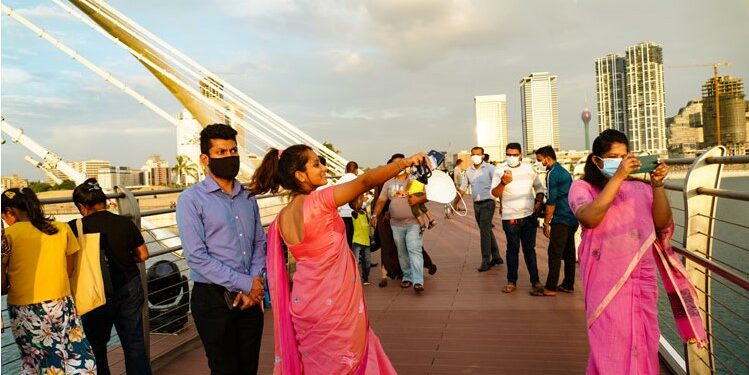
Colombo, January 22 (newsin.asia): The authorities of the Chinese-built US$ 1.4 billion Colombo Port City on Saturday clarified that they will not charge any fee for personal photography and videography but will charge a variable fee for professional photography and videography.

A press release issued by the Colombo Harbor Engineering Company Port City Colombo Pvt. Limited, said: Port City Colombo wishes to reiterate that a fee will be charged only for PROFESSIONAL photo or video shoot requests (for personal or commercial reasons) at public locations at Port City. There is NO truth to the social media posts that speculate the public needs to pay to take selfies, pictures, or videos during casual visits.”

Charges will only be applicable for filming/photography of personal ceremonies, weddings, product or fashion promotions, music videos, advertisements or other types of commercial filming. Income received from these will be used for the maintenance of public spaces, lavatories and garbage clearing done by the Estate Management Company (EMC) which manages the public areas of Port City Colombo.”

The clarification followed the appearance of stories in the social media and TV news channels on Friday which, showing the fee rate card, that said that the port city will charge at least Rs.30,000 for taking pictures (presumably even with cellphones). A front-page story in Daily Mirror said on Saturday that a payment sheet introduced by Port City stated that if people wished to take professional pictures and videos for personal use, a payment ranging between Rs.30,000 to Rs.50,000 would have to be made.

According to the payment sheet for ‘personal’ shoots, if the shoot involved 2 to 5 people for one to three hours, a sum of Rs.30,000 should be paid, and if there were 6 to 10 people, for the same duration of time, the sum would be Rs.50,000. If there were more than 10 people involved in the project for the same period of time, then the payment was listed as ‘variable’.

For commercial purposes”, if there are less than 10 people involved in the photo or video shoot for the same duration of time, a sum of Rs.100,000 would be charged. And if there are more than 10 people for the same time period, the sum charged was listed as ‘variable’.

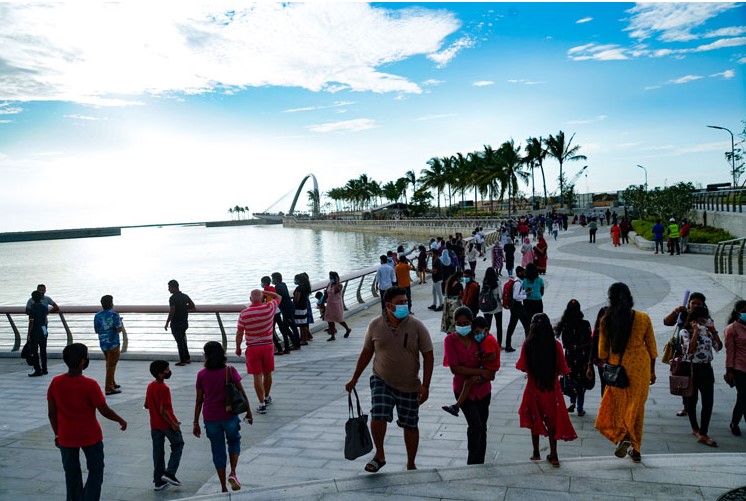
Colombo Port City walkway. Photo: Tang Lu/Xinhua.

The Head of Public Relations at the Colombo Harbor Engineering Company Port City Colombo Pvt. Limited, Kassapa Senarath, confirmed to Daily Mirror the authenticity of the payment requirements but clarified that they did not apply to those who wished to take selfies, pose for pictures or videos at the public viewing area when they visit the Marina.  

He said that when the public gallery of the Port City Colombo opened its doors recently, there were many social media users, musicians and even companies who came with professional camera equipment to shoot to advertise their products.

Kassapa pointed out that this was a hindrance to the workers on the site as the Port City is still a construction site and the safety of the workers and others has to be maintained while observing all health guidelines relating to the pandemic.  

On why the public should make the payment to the Bank of China, Kassapa said that the organization maintains an account with the local branch of the Bank of China.

Over 90,000 people, the young and old, the rich and the poor, locals and foreigners, had visited the Marina in the first week itself. The Marina was getting overcrowded. One daily paper pointed out that this could pose a threat of COVID infection if there was no crowd control. Reports said that the authorities will from now on allow only 700 visitors at a time.  

Former President expresses views over extension of term of office of President (Video)

January 22nd, 2022

Courtesy Hiru News

Former President Maithripala Sirisena today (22) expressed his views regarding the extension of the term of office of the President.

He expressed these views after a ceremony held at the Bandaranaike Memorial International Conference Hall in Colombo.

Outlook for Sri Lanka in the “Unlocking Year” 2022

January 22nd, 2022

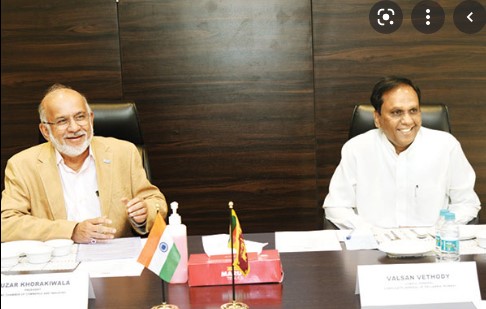
By Valsan Vethody Courtesy NewsIn.Asia

Outlook for Sri Lanka in the “Unlocking Year” 2022

Mumbai, January 22 (newsin.asia): 2022 would be the Unlocking Year”. If so, there will be no more fear and anxiety; the masks would disappear; cosmetics and business suits would once again be out on display; work-from-home-battalions would go back to the usual hustle and bustle and to the intimidating presence of their bosses in offices; webinars and zoom meetings sans live presence would cease; more and more pompous grumblings about jet-lag would resonate in clubs and board-rooms; MBA brains would get overstressed; ‘ambitious-graphs’ for  operational targets of corporates would peak; bank accounts in tax havens will swell; computers at the income tax and enforcement departments will overwork; and the Central bank officials will break their heads to deal with the complexities of an overheated economy showing high consumer demand, supply chain disruptions, excessive money supply, asset bubbles, inflationary pressure, low interest rate, reduced purchasing power that affects savings and investment, foreign exchange volatility, widening income inequality, malnutrition and a surge in the BPL numbers.

This sort of an economic concoction, in which all sorts of positive as well as negative socio-political-economic elements would certainly be a challenge for policymakers to get the macroeconomic fundamentals aligned with democratic realities of the polity, especially, in the context of high expectations from citizens and businesses, who hope their leaders can pilot them out of the Covid-19 induced socio-politico-economic muddle.

These challenges and expectations would be an enticing topic of debate for the so-called ‘aandolan-jeevis’, trade union leaders and political and economic pundits, in the media and on the political platforms that might even impact the future electoral outcomes. This also would have its own international ramifications as the world continues to remain economically multipolar, with its own complexities of competitive economic whims and fancies. These ramifications would be even more intense in the middle-income economies with high economic aspirations, especially if the macro-economic fundamentals of their domestic economies are not strong enough and if they are dependent on external resources to fulfil the economic aspirations of their citizens. Moreover, it becomes progressively worse along with the periodical auctioning of the non-existent resources by politicians in the name of an egalitarian democracy.

These economies are typically those that become easily vulnerable to the geo-strategic susceptibilities that are increasingly becoming polarised into a bipolarity between the USA and China. This bipolarity is the  outcome of a decade-long lingering dispute between these two nations over the traditional global economic governance structure, which has been by and large under the dictation of the Western-led, neo-liberal multilateral institutions based on Western values such as strict governance conditionalities, fundamental rights and religious freedoms. This, according to many Third World nations, is designed to interfere in the internal affairs of a nation and therefore imperialistic. China challenged this with its monetary fund – the Global Stability Mechanism – modelled after their governance model based on tech-authoritarianism combined with state-led capitalism and most importantly without any governance conditionalities. China’s political stability, unilateral quick-decision-making mechanism and stronger economic power not only further complemented this model but also harmonised the consolidation of their dominance over the global financial system with their long-term foreign policy interest, while the US has been stumbling with its arbitrary and heedless military-power based foreign policy.

However, the positive development of this geostrategic dimension is the launch of the ‘Global Gateway’ strategy by the EU with an ambitious 300 billion Euros of investments between 2021 and 2027 in various socio-economic sectors across the world with the intention of countering the Chinese global investments and attaining ‘strategic autonomy’ for EU.

When it comes to South Asia, the region which is a vital intersection of maritime trade, connecting the Indian Ocean to the Pacific in the East and the Mediterranean in the West, the geo-strategic bi-polarity becomes a chaotic-tri-polarity. The third polar being dominated by India, the regional superpower, which wields regional superiority over the other two powers due to its geographic and economic dimension, technological capacity, geo-strategic location, cultural identity and most importantly its military power.

Nevertheless, China’s ‘pervasive economic investments’ in the key strategic sectors in South Asia, such as infrastructure, high-tech, information technology, data management, green economy and artificial intelligence, and their assertive border disputes have created a sense of ‘neo-security-threat-perception’ in India, which has not only led to Indo-China face-to-face military stand-off and arms race both in conventional and cyberspace, but also to both India’s as well as China’s discrete meddling in the internal decision-making processes of some of the South Asian nations. In this context, it should be noted that the cornerstone of India’s foreign policy in the South Asian region has always been this so-called ‘security-threat-perception’.

Sri Lanka, with its unique geo-strategic position in the centre of the Indian Ocean, is the worst affected in this regard, as the global geostrategic stakeholders today view Sri Lanka primarily through the prism of Indo-Sino-American geo-strategic competition. Therefore, going forward, Sri Lanka will need to navigate cold-blooded power competition between Beijing, Washington, and New Delhi as much as it did during the Cold War as well as during the thirty years of civil turbulence.

Sri Lanka has the experience as well as plenty of institutional memory with the dynamics of great power competition. Moreover, Sri Lanka has a proud history of safeguarding its sovereignty and integrity even during the most difficult period of its political history.

Therefore, Sri Lanka’s most difficult task lies not at the geo-strategic level, but at the national level, where it must adapt to highly professional governance skills to manage a mix of economic, health, foreign exchange, environmental, and internal socio-political stability challenges. Most importantly, to get the macro-economic fundamentals at the internationally accepted levels.

However, the Sri Lankan diplomatic dispensation has to be mindful that any sort of outreach to China to address Covid-19 economic distress would perpetuate the inaccurate perception that Sri Lanka is prone to advancing Beijing’s geostrategic ambitions.

These post-pandemic challenges are nothing unique to Sri Lanka alone, but also applicable to most other (Covid-19) pandemic hit countries.

(Valsan Vethody is the Consul General of Sri Lanka in Mumbai, India)

Colombo Port City now says no fee for personal selfies, videos

January 22nd, 2022

Courtesy Ceylon Today

Colombo Port City now says no fee for personal selfies, videos

The Colombo Port City now says no fee is charged for taking personal selfies of videos within the city.

It says in a statement that a payment structure was introduced for personal events, professional and/or commercial filming and photography due to the unprecedented number of such requests.

The statement goes onto say the income received from these will be used for the maintenance of public spaces, lavatories and garbage clearing.

According to its website, rates for taking pictures or videos for personal purposes will be Rs. 30,000 upwards, while it is Rs. 100,000 upwards for commercial purposes.

The payments have to be made to the Colombo branch of the Bank of China Ltd.

‘Father of mindfulness’ Buddhist monk dies aged 95

January 22nd, 2022

Courtesy Ceylon Today

'Father of mindfulness' Buddhist monk dies aged 95

Thich Nhat Hanh, an influential Vietnamese Buddhist monk, has died at the age of 95.

His Zen teaching organisation, Plum Village, said the monk “passed away peacefully” at the Tu Hieu Temple in Hue, Vietnam on Saturday.

A prolific author and peace activist, Thich Nhat Hanh, is often referred to as the “father of mindfulness”.

On Twitter, his organisation called for its followers to hold Thich Nhat Hanh “in our hearts”.

Thich Nhat Hanh, was exiled from Vietnam in the 1960s after opposing the war.

During the height of the Vietnam War, he met with Martin Luther King, persuading the civil rights leader to speak out against the conflict.

King later nominated Thich Nhat Hanh for a Nobel Peace Prize, describing him as “an apostle of peace and non violence”.

After hearing of the monk’s death, King’s daughter Bernice shared an image of the pair together.

The monk spent decades in France after being exiled and went on to establish monasteries and meditation centres around the world, known as the Plum Village Tradition.

During his lifetime, he wrote more than 100 books that were translated into more than 40 languages. His last book was published in October 2021.

He travelled on regular speaking tours of Europe and the US, talking about the practice of mindfulness.

But his movement was hindered by Vietnam’s communist government in 2009, when his Zen centre in Lam Dong was forced to close.

In 2018, he returned to Vietnam and was permitted by authorities to spend his final days at the Tu Hieu temple.

It is not yet clear how the government will react to his funeral, which is set to begin in Hue on Saturday and last five days.

(BBC)

Sinhalese the result of a tidal wave of migration or long process of non-linear development

January 22nd, 2022

By Seneka Abeyratne Courtesy The Island

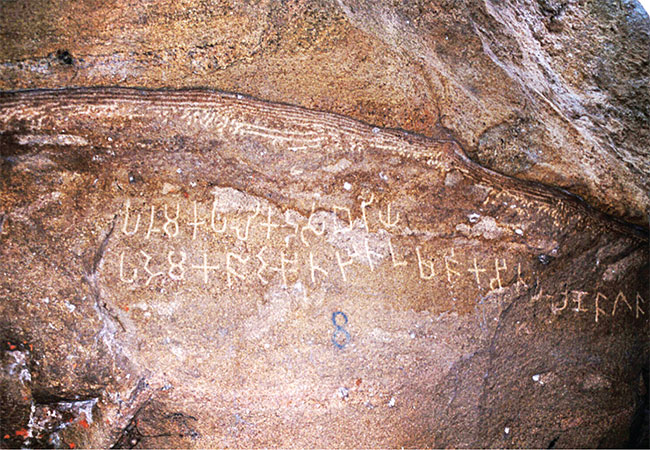
Brahmi inscription on a drip ledge at Vessagiriya, Anuradhapura. Pic courtesy: Preethi de Silva

Ruminations on Sri Lanka’s ancient past – Part X

By Seneka Abeyratne

A distinguishing feature of the Early Historic Period, between 500 BCE and 300 CE, is the dramatic appearance of lithic Brahmi inscriptions, which indicates a ‘leap’ from protohistory to history, a kind of ‘explosive’ transformation accompanied by the widespread use of the proto-Sinhala language. Brahmi inscriptions represent the earliest extensive writings on The Island. In the 3rd Century BCE, superior iron tools for engraving these inscriptions on hard rock surfaces were developed.

Brahmi inscriptions

The majority of Brahmi inscriptions were engraved on the drip-ledges of caves in various parts of the dry zone. Since they are mainly in the form of donative inscriptions offered to forest-dwelling monks, they are a key source of information on Sri Lanka’s early historic communities in respect of economic activity, social structure, religious conditions, and political organisation (Senanayake, A.M.P. A Study on Social Identity Based on the Brahmi Inscriptions of the Early Historic Period in the North Western Province, 2017). Brahmi inscriptions are also to be found on rocks, slabs and pillars widely scattered in the dry zone.

As noted by Siran Deraniyagala (The Prehistory and Protohistory of Sri Lanka, 2007), it is the first appearance of Brahmi inscriptions on pottery at Anuradhapura (almost identical to the Asokan script some 200 years later) at ca 600 to 500 BCE that heralds the commencement of the Early Historic Period in Sri Lanka. These ancient inscriptions are in North-Indian Prakrit.

Archaeological evidence also reveals the following: The settlement at Anuradhapura was over 10 ha in extent by ca 900 BCE and around 50 ha by ca 700-600 BCE. Thus it was already a ’town’. To date no other settlements of the Protohistoric Iron Age have been clearly identified in Sri Lanka though a rudimentary settlement may have existed in Aligala and another in Tissamaharama…In the time of Emperor Asoka in the third century BCE, the city of Anuradhapura was nearly 100 ha in extent…making it (on present estimates) the tenth largest city in India/Sri Lanka at that time and the largest south of Ujjain in northern India…” (Deraniyagala, S. 2007). It is, therefore, safe to assume that urban development in pre-modern Sri Lanka commenced in the Early Historic Period.

The scarcity of settlements in the Late Stone Age continued to persist in the Early Iron Age despite iron and farming technology. This scarcity ended with the Early Historic Period (500 BCE to 300 CE) when numerous settlements sprang up in the dry zone. The growth in the number of settlements seems to have accelerated during the Middle Historic Period (300 to 1200 CE). In addition to iron technology and farming, a third element appears to have entered the equation: increasing medium- and long-distance trade leading to a corresponding increase in wealth which acted as the catalyst for an exponential increase in the density of settlements” (Deraniyagala, S. Pre- and Protohistoric Settlement in Sri Lanka, 1998).

The contribution the research community has made to our knowledge and understanding of the island’s pre- and protohistory is immeasurable. But as Deraniyagala (Deraniyagala, S. 2007) admits, there is still a great deal we do not know about the transition from prehistory (corresponding to the Mesolithic Balangoda culture) to protohistory (corresponding to the Megalithic Early Iron Age culture) in Sri Lanka. There are others who have expressed the same view as per the following quote: Only in recent years have Sri Lankan archaeologists placed the investigation of the country’s relatively brief protohistoric period as an important item on the agenda of national research. This research, I must emphasise, is still at a very early and inconclusive stage. Unlike the subcontinent, we know almost nothing about the transitions and transformations of this period in Sri Lanka” (Bandaranayake, Senake. The Settlement Pattern of the Protohistoric-Early Historic Interface in Sri Lanka, 1989). Let us hope the present and future activities of the Archaeology Department and allied agencies (such as the universities and research institutes) will yield fruitful results in this regard.

The traditional view that in ancient times a tidal wave of migration of a linguistically homogeneous cultural group occurred in the island, is based largely on the fact that the language found in the early Brahmi inscriptions was remarkably homogeneous and that it was used extensively in areas where there were well-established agricultural settlements. A more radical interpretation offered by Bandaranayake views the emergence and widespread adoption of a proto-Sinhala language as the apex of several centuries of historical development which had its roots in the island’s protohistory.

We may note, in passing, that the proto-Sinhala language underwent local adaptation and eventually lost its Indian character and identity. Though a large number of dialects are spoken in India, none of them resemble the Sinhala language. The three main languages spoken in Sri Lanka today are Sinhala, Tamil, and English.

The current population of the island is 21.9 million of which around 74 percent are Sinhalese. To quote Samanti Kulatilake (The Peopling of Sri Lanka from Prehistoric to Historic Times: Biological and Archaeological Evidence, 2016): Sixteen million Sri Lankans speak Sinhala, or Sinhalese, as a first language. It is an Indo-European language (associated with the north Indian Prakrit branch) that evolved from the foundational Sinhala Prakrit (which was in use until the third century CE), to Proto-Sinhala (until the seventh century CE), medieval Sinhala (twelfth century CE), and modern Sinhala (twelfth century CE to the present).” We can assume therefore that the starting point for writing in modern Sinhala is the 12th century CE. All the ancient Brahmi inscriptions found on the island are in Prakrit. The earliest Brahmi cave inscriptions have been traced back to the 3rd century BCE.

Emergence of the Sinhalese

At what stage in our history did the Sinhala language assume a common Sinhala identity? We shall turn to Leslie Gunawardana (The People of the Lion: The Sinhala Identity and Ideology in History and Historiography, 1979) for an answer: It is only by about the 12 th century that the Sinhala grouping could have been considered identical with the linguistic grouping. The relationship between the Sinhala and the Buddhist identities was even more complex. There is a close association between the two identities, but at no period do they appear to have coincided exactly to denote the self-same group of people.” In his assessment, Anagarika Dharmapala was probably the first to use the term Sinhalese Buddhist” in the early twentieth century to define a distinct ethno-religious group on the island (Gunawardana, L. 1979).

The early Sinhalese did not consider themselves a distinct ethnic group as the concept of race to denote a group of people sharing a common identity in respect of physical features as well as biological or genetic characteristics did not exist in ancient times. Gunawardana cogently explains that the social group brought together by the Sinhala consciousness does not appear to have coincided with a linguistic grouping in the island or to have represented a single physical type, and that it is only after about the seventh century that it could have been linked with a religious grouping. It is the social and political criteria which clearly stand out in an examination of the factors that united the Sihalas.”

To return to the megalithic people of the dry zone, it seems very likely that their culture, which was locally adapted and ‘indigenised’, resulted from a creative synthesis of the indigenous culture with the South Indian megalithic culture. The distinctive features of this culture included burial sites, pottery, and iron technology. In the same way it could be reasoned that the emergence of a distinctive Sinhala culture and civilisation was the result of a similar creative synthesis that occurred during the early historic and later periods, a process initiated by the arrival of the northern Indian settlers on the island. But had not the indigenous population already attained a high level of internal development and dynamism, it is doubtful whether the island would have surged from protohistory into early history in the way it did.

Therefore, according to the radical view (pioneered by Senake Bandaranayake), the emergence of the Sinhalese as a distinctive ethnic group in The Island was the culmination of a long process of non-linear development dating back to our prehistory and not the product of a single, linear historical period associated with a sudden wave of migration. The evidence indicates that even in recent times this synthesis has played a significant role in shaping the evolving character of the Sinhala-speaking people and the culture associated with them.

What is true of the Sinhalese is also true of the two largest minority ethnic groups, the Tamils and Moslems. The distinctive culture and ethnos of each of these groups could also be viewed as the product of an exotic ‘blending’ of exogenous and endogenous elements. It is reasonable to assume that the ethnic composition of the Tamils and Moslems, like that of the Sinhalese, is also the result of a complex non-linear process that began in the past and will surely continue into the future.

But one thing is for certain. The island is not, and has never been, despite its geographical location, a cultural extension of South India. Sri Lanka has borrowed a great deal from India, yet it is not quite India. There is something else that gives the island its distinctiveness and special charm. The discerning foreigner may call it, as Carl Gustav Jung did when he visited Sri Lanka in 1937, a touch of the South Seas … and a touch of paradise …” (Memories, Dreams, Reflections, 1989).

“Sensationalized and biased”: Sri Lanka hits out at HRW ‘World Report 2022’

January 22nd, 2022

Courtesy Adaderana

Sri Lanka today slammed the World Report 2022” compiled by the Human Rights Watch, stating that it depicts an exaggerated and unduly negative picture of the current human rights situation in the country.

In a statement, the Foreign Ministry noted that Sri Lanka Lanka follows a policy of constructive engagement with the international community including with international NGO’s such as HRW on matters related to human rights, and we recognize their constructive role as human rights defenders.

However, sensationalized and biased reporting during a particularly challenging global economic and social environment risks igniting and aggravating domestic discord. We highlight the importance of responsible, balanced and impartial reporting.”

At the Human Rights Council in Geneva in September last year Foreign Minister Prof. G.L. Peiris stated that Sri Lanka is engaged in pursuing sustainable peace, through an inclusive, domestically designed and executed reconciliation and accountability process. Sri Lanka also reiterated its long-standing commitment to the promotion and protection of human rights in line with our own constitution and our international obligations.

This message was reiterated recently by the President at the opening of the 9th Session of the Parliament of Sri Lanka on January 18, 2022.

The statement read: The Government of Sri Lanka remains accountable to its people in discharging its mandate on all fronts including economic, social and human development as well as the achievement of the SDGs. At the same time and despite operational, economic and human constraints caused by the Covid-19 pandemic, the Government has made important progress in delivering on post-conflict reconciliation, accountability and human rights as undertaken before the people of Sri Lanka and reiterated internationally. The work of the independent domestic institutions – the Office of Missing Persons, the Office of Reparations, the Human Rights Commission of Sri Lanka, the Office of National Unity and Reconciliation and the Sustainable Development Council of Sri Lanka is an important supportive pillar of this effort. We have empowered these institutions with financial and other support in order to execute their independent statutory mandates. Regular updates related to progress made through these domestic processes on human rights and reconciliation are contained in Sri Lanka’s statements to the Human Rights Council in Geneva.”

The Foreign Ministry stated that in its response to HRW, Sri Lanka has highlighted the progress made in recent months relating to a number of areas addressed by them such as amendment to PTA, accountability, release of detainees under PTA, freedom of association, the COVID pandemic and the proposed amendments to the Muslim Marriage and Divorce Ordinance.

We have also stated that with regard to international actors, the Government greatly values the goodwill and advice from our international partners, the United Nations as well as local and international NGOs. We have continued our ongoing interaction with them and encouraged regular engagement with Sri Lanka.

During numerous such exchanges including from visiting bilateral dignitaries as well as senior officials from the United Nations and UN human rights special mandate holders, we have facilitated access to all domestic interlocutors and been open to their encouragement, advice and concerns. We value in particular our interaction with our domestic civil society partners given their established outreach and expertise on many issues related to development reconciliation and human rights. We have engaged them in our efforts to realize the SDGs as well as on matters related to reconciliation. On a broader front, Sri Lanka has also invited the Sri Lankan diaspora groups to partner with us as we move forward.

With regard to Sri Lanka’s position at the Human Rights Council, as we have stated at the September 2021 session of the Council”, Sri Lanka will continue its long-standing cooperation with the United Nations human rights mechanisms as well as with the Council . We are delivering on our commitment to address accountability and reconciliation through domestic processes and institutions. As stated by Foreign Minister Prof. G.L. Peiris We are open in acknowledging our challenges and as a responsible and democratic government, we are committed to achieving tangible progress on the entire range of issues relating to accountability, reconciliation, human rights, peace and sustainable development”. Sri Lanka is of the view that the evidence gathering mechanism that was contained in Resolution 46/1 and which led to division in the Council is unwarranted and unhelpful and will lead to politicization and polarization in Sri Lanka.”

Sri Lanka’s inflation rises to 14% YoY in December 2021

January 22nd, 2022

Courtesy Adaderana

Headline inflation, as measured by the year-on-year (Y-o-Y) change in the National Consumer Price Index (NCPI, 2013=100)1, increased to 14.0 per cent in December 2021 from 11.1 per cent in November 2021, according to the Statistics Department of the Central Bank of Sri Lanka.

Meanwhile, on an annual average basis, the NCPI increased to 7.0 per cent in December 2021 from 6.2 per cent in November 2021, a statement issued by the CBSL said.

Inflation was driven by monthly increases of prices of items in both Food and Non-food categories. Subsequently, Food inflation (Y-o-Y) increased to 21.5 per cent in December 2021 from 16.9 per cent in November 2021, while Non-Food inflation (Y-o-Y) also increased to 7.6 per cent in December 2021 from 6.2 per cent in November 2021.

Monthly change of NCPI recorded at 3.68 per cent in December 2021 due to increases observed in prices of items in both Food and Non-food categories which were 3.00 per cent and 0.68 per cent, respectively. Accordingly, within the Food category, prominent increases were observed in prices of vegetables, rice, and green chillies. Further, prices of items in the Non-Food category recorded increases mainly due to price increases observed in the Restaurants and Hotels, and Alcoholic Beverages and Tobacco (Arrack, Betel leaves) sub-categories during the month.

The core inflation (Y-o-Y), which reflects the underlying inflation in the economy increased to 10.8 per cent in December 2021 from 8.8 per cent in November 2021, while annual average core inflation increased to 5.5 per cent in December 2021 from 5.0 per cent in November 2021, the statement read further.

COVID: 75 new Omicron variant cases found in Sri Lanka

January 22nd, 2022

Courtesy Adaderana

A total of 75 new cases of Omicron and 3 new cases of Delta have been confirmed in Sri Lanka, according to the latest SARS-CoV-2 variant report published by the Allergy Immunology and Cell Biology Unit of the Department of Immunology and Molecular Medicine of the Sri Jayewardenepura University.

The new Omicron and Delta variant cases were detected from 78 samples, the media release published in the university’s website read.

These 78 samples were sequenced from the 1st 2nd and 3rd weeks of January from the community.” said Dr. Chandima Jeewandara, the Director of the Allergy, Immunology and Cell Biology Unit of the Faculty of Medicine.

The 78 Omicron cases include a mix of the two main Omicron lineages BA.1 and BA.2.

Omicron sublineages were detected in the following locations. 56 cases of BA.1 were detected in Colombo, Avissawella, Borelesgamuwa, Homagama, Katugoda, Kosgama, Madapatha, Padukka, Parakudawa and Wellampitiya. 12 cases of BA.2 were detected in Avissawella, Badulla, Colombo, Galle, Konnawala, Mount Lavinia, Nugegoda, and from one passenger from India.

Meanwhile, 07 cases of B.1.1.529 were detected in Angoda, Colombo, Ruwanwella, Mt Lavinia, Nugegoda and Padukka.

Different Delta sublineages have been detected in the following locations:
• One case of AY.98 (Sri Lanka delta sub-lineage) from Thalangama
• One case of AY.104 (Sri Lanka delta sub-lineage) from Kaduwela
• One case of B.1.617.2 from Wellampitiya

Currently, 8% of the sequences of Sri Lanka are BA.2, which was named as a variant of interest by the UK Health security agency.

Other variants identified within Sri Lanka are B.1.411: Sri Lankan variant, B.1.1.25, B.1.258, B.1.428, B.4, B.4.7, B.1.1.365, B.1.525, B.1, B.1.1.

Sri Lanka records 12 more COVID deaths and 845 new cases

January 22nd, 2022

Courtesy Adaderana

The Director-General of Health Services has confirmed another 12 coronavirus-related deaths for January 21, increasing the death toll in the country due to the virus to 15,272.

This includes 09 males and 03 females, according to the Department of Government Information.

One of the victims is in the age group of 30-59 years and the remaining 11 patients are aged 60 years and above.

Meanwhile, the count of new Covid-19 cases surpassed the 800-mark for the fourth consecutive day as 845 people in total were confirmed positive for the virus today (January 22).

According to the Government Information Department, the newly-detected cases include 04 individuals who recently arrived on the island from overseas.

The latest development has brought the total number of confirmed cases of coronavirus reported in the country so far to 601,048.

As many as 575,932 recoveries have been confirmed in Sri Lanka since the outbreak of the COVID-19 pandemic.

More than 9,832 active cases in total are currently under medical care, official figures showed.

SHOULD PRESIDENT’S TERM BE EXTENDED BY TWO YEARS?

January 21st, 2022

BY EDWARD THEOPHILUS

It is widely published the view expressed by Ms Diana Gamage in the parliament that the term of the president should be extended by two years and the reason for this change as pointed by Ms Gamage was the COVID-19 pandemic that has been limited the ability of president working to people. This is a critical constitutional issue and I do not know whether there is a constitutional provision to extend the period of the president. The reason given by Ms Gamage is shown as a valid point. It is a critical point for the country and lawyers could argue the issue looking at different perspectives. As it recorded, no country has extended the governing period because of the pandemic.

Ms Diana Gamage may have honest intention, but individual intention might not agree with the justice system in the country. Ms Diana Gamage wants to implement her idea through the parliament approval of a proposal by confirmation of two-third majority. What is the constitutionality of the way Ms Gamage expresses and the constitutional provision are more drastic than a simple expression of view?

The point raised by Ms Gamage is reasonable and people of the country agree with the view and the point need to consider is the pandemic has been a worldwide situation and has the pandemic reasonably limited the ability of presidents working and the other point is same idea may apply to members of the parliament too and the point may complicate if the issue goes to the court.

What is the opinion of the president? President is democratically elected officer and the individual view of the president might not be considered by the court.

The person expressed the view is also questionable because did she express the view to attract opinion of voters and without knowledge of constitutional provision? In other word, was it purposed to attract popularity?

What are the opinion of learned layers of the country?

Prime Minister Requests for More Employment Opportunities for Sri Lankans in South Korea

January 21st, 2022

Prime Minister’s Media Unit

Prime Minister Mahinda Rajapaksa requested South Korea to consider increasing the number of employment opportunities allocated for Sri Lanka.

The Prime Minister made the request during a meeting with the Speaker of the National Assembly of South Korea Park Byeong seug yesterday at Temple Trees. Speaker Park is the first South Korean speaker to visit Sri Lanka in 10 years,

The Korean Speaker responded positively to the request stating, I’m pleased that young, talented Sri Lankan workers have contributed to income growth of both our countries.”

According to the Foreign Ministry, currently, approximately 22,000 Sri Lankan migrants are employed in South Korea. In 2019, they collectively remitted approximately $520 million back to the country. The contribution of remittances from the Sri Lankan migrant workers in South Korea was 7.75% of the total foreign remittances, equivalent to 0.62% of Sri Lanka’s total GDP.

In year 2019, South Korea allocated 3,600 employment opportunities to Sri Lankan migrants. That allocation decreased to just 500 in 2020 due to the COVID-19 pandemic. Since then, approximately 400 Sri Lankans have already secured employment in South Korea and are looking forward to traveling. After a lapse of 20 months, the first batch of 33 Sri Lankan migrants arrived in South Korea last month.

Speaker Park thanked the Prime Minister for supporting the vaccination of the South Korean community in Sri Lanka and for including the Korean language as a foreign language in the Advance Level curriculum.

The Sri Lankan delegation also requested South Korea for support with vocational training programs, noting Sri Lanka’s highly-skilled human resources and a workforce with good IT knowledge. Responding positively, Speaker Park said Sri Lanka’s young workforce with good English knowledge, together with South Korea’s technological capabilities can open up collaboration possibilities in the areas of education and vocational training.

In other areas of discussion, Prime Minister Rajapaksa requested South Korea to encourage more Korean investments in Sri Lanka, pointing out that, at one time, South Korea was among the countries that had the most investments in Sri Lanka.

Speaker Park also suggested that the two countries explore cooperation in the areas of climate change and renewable energy resources.

This year, Sri Lanka and South Korea are celebrating 45 years of establishing diplomatic relations. Speaking about the many years of close cooperation between the two countries, Speaker Park said, I hope this visit will be a catalyst for a new chapter of prosperity.”

නොමිලේ පිරිනමන වෛද්‍යාධාර හදිසි අනතුරු රක්ෂණය කලාකරුවන් වෙනුවෙන් අපට දෙන්න පුළුවන් හොඳම තෑග්ගක් – අග්‍රාමාත්‍ය මහින්ද රාජපක්ෂ මහතා

January 21st, 2022

අග්‍රාමාත්‍ය මාධ්‍ය අංශය

  • ඉතිහාසය වර්ණවත් වුණේ කලාකරුවන්ගේ නිර්මාණ මතින්
  • නාට්‍ය ක්ෂේත්‍රයෙන් අපි පටන්ගත් වෛද්‍යාධාර හදිසි අනතුරු රක්ෂණය අද සියලු කලාකරුවන් වෙනුවෙන් තැබූ යෝධ පියවරක් වෙලා
  • කලාකරුවන්ට දත්ත පද්ධතියක් නිර්මාණය කරන්න ලැබීම ජයග්‍රහණයක්
  • කලා නිර්මාණවලට ජාතික හා ජාත්‍යන්තර වටිනාකම් හොයා දෙන මූලාරම්භයක්

කිසිදු මුදලක් අය නොකර පිරිනමන වෛද්‍යාධාර හදිසි අනතුරු රක්ෂණය කලාකරුවන් වෙනුවෙන් අපට දෙන්න පුළුවන් හොඳම තෑග්ගක් යැයි අග්‍රාමාත්‍ය මහින්ද රාජපක්ෂ මහතා පැවසීය.

කලාකරු රක්ෂණ ඔප්පු ප්‍රදානය, ජාතික උරුම ප්‍රාසාංගික කලා හා ග්‍රාමීය කලා ශිල්පී ප්‍රවර්ධන රාජ්‍ය අමාත්‍යාංශයේ නිල වෙබ් අඩවිය www.heritage.gov.lk හා ඊට සමඟාමීව කලාකරු දත්ත පද්ධතිය එළිදැක්වීමේ උත්සවය එක්වෙමින් අග්‍රාමාත්‍යතුමා ඊයේ (20) පස්වරුවේ අරලියගහ මන්දිරයේ දී මේ බව සඳහන් කළේය.

මෙහි දී කලාකරුවන් සඳහා අග්‍රාමාත්‍ය මහින්ද රාජපක්ෂ මහතාගේ ප්‍රධානත්වයෙන් රක්ෂණ ඔප්පු ප්‍රදානය කෙරිණි. අග්‍රාමාත්‍යතුමා, රාජ්‍ය අමාත්‍ය විදුර වික්‍රමනායක, බුද්ධශාසන ආගමික හා සංස්කෘතික කටයුතු අමාත්‍යාංශයේ ලේකම් මහාචාර්ය කපිල ගුණවර්ධන මහත්වරු සහ රාජ්‍ය අමාත්‍යාංශයේ ලේකම් නිශාන්ති ජයසිංහ මහත්මිය රක්ෂණ ඔප්පු ප්‍රදානයට එක්වූහ.

සොෆ්ට්ලොජික් රක්ෂණ ආයතනය විසින් පිරිනමන රක්ෂණ ඔප්පු 50ක් කලාකරුවන් වෙනුවෙන් ඊයේ දිනයේ දී සංකේතාත්මකව ප්‍රදානය කරන ලදි.

ජාතික උරුම ප්‍රාසාංගික කලා හා ග්‍රාමීය කලා ශිල්පී ප්‍රවර්ධන රාජ්‍ය අමාත්‍යාංශයේ නිල වෙබ් අඩවිය www.heritage.gov.lk  මෙහි දී අග්‍රාමාත්‍ය මහින්ද රාජපක්ෂ මහතාගේ සුරතින් අන්තර්ජාලයට එක් කෙරිණි.

කලාකරු දත්ත පද්ධතිය එළිදක්වමින් ප්‍රවීන රංගධර රවීන්ද්‍ර රන්දෙණිය සහ නර්තන ශිල්පී කොටහේවගේ ග්‍රැන්ටින් සිල්වා මහත්වරුන්ගේ දත්තයන් රාජ්‍ය අමාත්‍ය විදුර වික්‍රමනායක මහතා විසින් අනුමත කර දත්ත පද්ධතියට ඇතුළත් කරන ලදි.

කලාකරුවන් වෙනුවෙන් නොමිලේ රක්ෂණාවරණයක් ලබා දීම සහ සියලුම කලාකරුවන් වෙනුවෙන් දත්ත පද්ධතියක් ආරම්භ කිරීම පිළිබඳව උත්සව සභාව අවසානයේ අග්‍රාමාත්‍ය මහින්ද රාජපක්ෂ මහතා ඇතුළු රජයට කලාකරුවෝ රැසක් ප්‍රශංසා කළහ.

කලාකරු රක්ෂණ ඔප්පු ප්‍රදානයට එක්වෙමින් අග්‍රාමාත්‍ය මහින්ද රාජපක්ෂ මහතා කළ සම්පූර්ණ කතාව මෙසේය.

ආදරණීය කලාකරුවනි,

සංස්කෘතිමය දායද වලින් අලංකාර වූ අපේ රට ප්‍රෞඩ ඉතිහාසයකට උරුමකම් කියනවා. මේ ඉතිහාසය වර්ණවත් වූයේ ඔබ වැනි කලා කරුවන්ගේ කලා නිර්මාණ මතින් බව අපි අමතක කළ යුතු නැහැ. අපි රටක් විදියට අදටත් ලෝකය ඉදිරියේ විසල් සංස්කෘතියකට උරුමකම් කියන ජාතියක්.

සාහිත්‍ය, නර්තනය, නාට්‍ය, චිත්‍ර, රූකඩ, මූර්ති, ගීත,සංගීතය, සිනමාව මේ සෑම කලාවකින්ම සමාජ යතාර්ථය නිර්මාණශීලීව ජනතාව අතරට ගෙන යන්න  කලාකරුවන් විශාල උත්සාහයක් දරනවා. එදා වගේම අදටත් ඒ උත්සාහය ජනතාව රසවිඳිනවා.

මිත්‍රවරුනි,

අපේ රටේ කලාකරුවෝ මුළු ජීවිත කාලය පුරාම කැපවෙන්නෙ තම කලාව වෙනුවෙන්. ඒ අය තමන් නියැලෙන ක්ෂේත්‍රයට ගෞරව කරනවා. ඒ වගේම ආදරය කරනවා. ඔවුන්ගෙ ජීවිතයට බද්ධ වෙලා තියෙන්නෙ මේ කලාව. ඔවුන් තමන්ගෙ ආර්ථිකයට වඩා වැඩි වටිනාකමක්  ලබා දුන්නෙ කලාවට.

පසුගිය කාලයේ අපි දන්නවා කොවිඩ් වසංගතය නිසා මේ අය නොයෙක් දුෂ්කරතාවලට මුහුණ දුන්නා. අපි මේ ගැන අවධානය යොමු කළා. අපේ විදුර වික්‍රමනායක රාජ්‍ය අමාත්‍යතුමා පෞද්ගලිකවත් ඒ ඒ කලාකරුවන් මුණ ගැහිලා ඒ අවශ්‍ය කටයුතු ඔවුන්ට ඉටුකර දෙන්න ඉදිරිපත් වුණා.

හැබැයි, මිත්‍රවරුනි,

මොන තරම් දුෂ්කරතා තිබුණත් මේ කලාකරුවෝ, පහුගිය කාලේ ස්වෙච්ඡාවෙන්ම ඉදිරිපත් වෙලා ගෙදරට කොටුවෙච්ච ජනතාවගේ මනස සුවපත් කරන්න විවිධ කලා නිර්මාණවලට දායක වුණා. ඒ විතරක් නෙමෙයි රෝහල් හා ප්‍රතිකාර මධ්‍යස්ථානවල සිටි කොවිඩ් රෝගීන්ගේත් මනස සුවපත් කරන්න සෞඛ්‍ය අංශ සමඟ කළ කැපකිරීම අපට අමතක කරන්න බැහැ. එවැනි කලාකරුවන් ගැන අපට තියෙන්නේ සුවිශේෂී ආඩම්බරයක්.

ඒ නිසා තමයි රජය විසින් රක්ෂණ වියදම් ගෙවන ප්‍රේක්‍ෂා රක්ෂණයක් ඉතිහාසයේ ප්‍රථම වතාවට  හඳුන්වා දෙන්න අපට හැකිවුණේ. එදා නාට්‍ය ක්ෂේත්‍රයට සීමා වුණු වෛද්‍යාධාර හදිසි අනතුරු රක්ෂණය අද වෙනකොට සියලු කලාකරුවන් වෙනුවෙන් මුලපුරන යෝධ පියවරක් බවට පත්ව තිබෙනවා.

අපේ ආදරණීය කලාකරුවන්ගෙන් කිසිඳු මුදලක් අය නොකර ලබා දෙන මේ  රක්ෂණය  කලාකරුවන් වෙනුවෙන් අපට දෙන්න පුළුවන් හොඳම තෑග්ගක් කියලයි අපි විශ්වාස කරන්නෙ.

මිත්‍රවරුනි,

ඒ විතරක් නෙමෙයි මේ රක්ෂණය පිරිනමද්දි අපි එක් කලා ක්ෂේත්‍රයකට සීමා වුණේ නැහැ. ග්‍රාමීය කලා ක්ෂේත්‍රයන් සම්බන්ධයෙන් පවා අපි විශේෂ අවධානයක් යොමු කළා. මේ වැඩපිළිවෙලේ තිබෙන සුවිශේෂී ජයග්‍රහණය එය බවයි මා විශ්වාස කරන්නෙ.

මිත්‍රවරුනි,

ඒ විතරක් නෙමෙයි ස්ථිර ආදායම් මාර්ගයක් නැති  අඩු ආදායම් ලාභී කලාකරුවන්ටත්, කොවිඩ් වසංගතය හමුවේ වෘත්තීය හා රැකියා සුරක්ෂිතභාවය අහිමි වූ කලාකරුවන්ටත් මෙම රක්ෂණයෙන් ප්‍රමුඛතාවය හිමිවෙනවා.

අපි දන්නවා. කොවිඩ් මාරයාට ගොදුරුවීමෙන් අපේ රටේ කලාකරුවන් කිහිප දෙනෙකුට ජීවිත අහිමි වුණා. සෞඛ්‍ය මාර්ගෝපදේශවල විවිධ සීමාවන්ට යටත්වෙන්න සිදු වුනු නිසා ඇතැම් කලාකරුවන්ට අවසන් ගෞරව දක්වන්න තිබුණු අවස්ථාව පවා  අහිමි වුනා. අපි ඔවුන්වත් මෙවැනි අවස්ථාවක ගෞරවයෙන් සිහිපත් කළ යුතුයි.

මිත්‍රවරුනි,

සෑම කලාකරුවෙක්ම රටට සම්පතක්. ඔවුන් දරන මතවාද මුළු මහත් සමාජයක් විනිවිද දකිනවා. කලාකරුවන්ටත් සමාජයේ අනෙකුත් ජනතාවට හිමි අයිතිය හිමියි. ඒ නිසා රටේ ප්‍රජාතන්ත්‍රවාදී නිදහස අත්විඳින්න කලාකරුවන්ට අයිතියක් තියෙන්න ඕන. මේ අයිතියත් කලාකරුවන්ගෙන් උදුරගත්ත අඳුරු අතීතයක් අපේ රටේ තිබුණා. අද එවැනි තත්ත්වයක් නොමැති වුනත් ඒවා මුළුමනින්ම අමතක කරලා අපිට අනාගතයට පියනගන්න පුළුවන් කමක් නැහැ.

මිත්‍රවරුනි,

එදා කලාවට වාරණ පනවලා, අදහස් සීමා කරලා ඔබවත් පාලනය කරන්න කල්පනා කරපු යල් පැන ගිය මතවාද ආපහු කරළියට ගේන්න ඔබට අවශ්‍ය නැති බව අපි දන්නවා.  එදා පටන් අද වන තුරු කවදාවත් අපි කලාවට සහ කලාකරුවන්ට සීමා පනවන්න ගියේ නැහැ. හෙටත් අපි ඒ ස්ථාවරයේමයි ඉන්නෙ. අපි දන්නවා සැබෑ කලාකරුවකුගේ  හද ගැස්ම. මේ ගොඩක් අය මම ඒ කාලයේ ඉඳන් අදුරන අය. ඒ නිසා ඔබේ හද ගැස්ම මම හඳුනනවා.

මිත්‍රවරුනි,

ඔබට මතක ඇති අපේ ටෙලි නාට්‍ය කර්මාන්තයට කණකොකා හඬලපු කාලයක් තිබ්බා. එදා විදේශීය ටෙලි නාට්‍ය ගෙන්නලා හඬ කවල එක දිගට විකාශය කිරීමෙන් අපේ රටේ ටෙලිනාට්‍ය කලාව විශාල අභියෝගයකට මුහුණ දුන්නා. කලාකරුවන්ගෙ ජීවිතවලටත් මේවා බලපෑවා. ඒ වෙලාවේ විදේශීය ටෙලිනාට්‍ය සඳහා බදු මුදලක් පැනවීමට අපි ගත් පියවර නිසා අද වන විට විශිෂ්ට දේශීය නිර්මාණ බිහි වන තැනට පත්ව තිබීම සතුටට කරුණක්.

අපි රන්මිහිතැන්න හැදුවෙත් අපේ රටේ කලාකරුවන් වෙනුවෙන්. එවැනි ටෙලි ගම්මානයක අවශ්‍යතාවය අපි හොඳින් දැන සිටියා. කලාකරුවනුත් අපට විටෙන් විට ටෙලි ගම්මානයක අවශ්‍යතාවය පෙන්වා දුන්නා. එදා අපි ඒ ඉදිකරපු  රන්මිහිතැන්න අපේ රටේ කලාකරුවෝ වගේම අසල්වැසි ඉන්දියාවේ නිර්මාණකරුවනුත් සිය නිර්මාණකරනයට දායක කරගත්තා. අපි මේ පාර බලයට එනකොට මේ තැන් පහුගිය යහපාලන ආණ්ඩුවෙන් විනාශ මුඛයට ඇද දාලා තිබුණා.

මිත්‍රවරුනි,

අපේ රටේ සිනමාව  වසර 75 ක් තිස්සේ පැවතියේ කලාවක් ලෙසයි. දීර්ඝ කාලයක් තිස්සේ සිනමා ක්ෂේත්‍රයේ රැදී සිටි කලාකරුවන්ගේ පොදු ඉල්ලීමක් වුනේ සිනමාව කර්මාන්තයක් ලෙස පිළිගන්න කියලයි. වාණිජ වශයෙන් අපේ රටේ සිනමාව ගොඩ ගන්න සිනමාව කර්මාන්තයක් බවට පත් කරන්න සිනමා කලාකරුවො කරපු ඉල්ලීමත් අපි පිළිගත්තා.

මිත්‍රවරුනි,

කලාකරුවන් වෙනුවෙන් දත්ත පද්ධතියක් නිර්මාණය කරන්න ලැබීමත් රජයක් විදියට අප ලැබූ විශේෂ ජයග්‍රහණයක්. මීට කලින් අපේ රටේ කලාකරුවන්ගෙ තොරතුරු මේ විදියට එකම තැනකින් ලබා ගන්න පුළුවන් කමක් තිබුණෙ නැහැ. ඒ විතරක් නෙමෙයි ඩිජිටල් යෙදුමක් මඟින් ජාතික හා ජාත්‍යන්තර වශයෙන් කලාකරුවන්ගේ නිර්මාණවලට වාණිජ වටිනාකම් හොයා දෙන තැනට ගමන් කරන්න අපි අද මූලාරම්භයක් තබලා තිබෙනවා.

මිත්‍රවරුනි,

කලාකරුවන්ගේ අනාගතය ගැන කල්පනා කරලා ඔවුන් වෙනුවෙන් මේ වගේ හොඳ දෙයක් කරන්න ලැබීම ගැන විෂය භාර අමාත්‍යවරයා විදියට සතුටට පත්වෙනවා වගේම, මේ කාර්ය පිටුපස සිටින අපේ රාජ්‍ය අමාත්‍ය විදුර වික්‍රමනායක මැතිතුමාටත්, අමාත්‍යාංශ ලේකම්තුමා, රාජ්‍ය අමාත්‍යාංශයේ ලේකම්තුමිය ඇතුළු සියලුම නිලධාරීන්ටත් මාගේ ප්‍රණාමය පුද කරනවා.

ඔබ සැමට කලා නිර්මාණවලට තව තවත් අලුතින් සම්බන්ධ විය හැකි නිරෝගීමත් සුබ අනාගතයක් ප්‍රාර්ථනා කරනවා යැයි අග්‍රාමාත්‍යතුමා පැවසීය.

කලා මණ්ඩලයේ අධ්‍යක්ෂ මණ්ඩල සාමාජික ජ්‍යෙෂ්ඨ මහාචාර්ය පූජ්‍ය පාතේගම ඤාණිස්සර ස්වාමීන්වහන්සේ ද මෙහි වැඩම කර සිටියහ.

මෙම අවස්ථාවට රාජ්‍ය අමාත්‍ය විදුර වික්‍රමනායක, අග්‍රාමාත්‍ය ලේකම් අනුර දිසානායක, බුද්ධශාසන ආගමික හා සංස්කෘතික කටයුතු අමාත්‍යාංශයේ ලේකම් මහාචාර්ය කපිල ගුණවර්ධන, ජාතික උරුම ප්‍රාසාංගික කලා හා ග්‍රාමීය කලා ශිල්පී ප්‍රවර්ධන රාජ්‍ය අමාත්‍යාංශයේ ලේකම් නිශාන්ති ජයසිංහ, පුරාවිද්‍යා අධ්‍යක්ෂ ජනරාල් මහාචාර්ය අනුර මනතුංග, ටවර් හෝල් පදනම අධ්‍යක්ෂ ජනරාල් ආචාර්ය ඩී.එම්.එස් දිසානායක මහත්ම මහත්මීහු සහ රාජ්‍ය අමාත්‍යාංශයේ සහ සොෆ්ලොජික් රක්ෂණ ආයතනයේ නිලධාරීන් හා කලාකරුවෝ රැසක් එක්ව සිටියහ.

TV commentators ignite debate on DRS authorship

January 21st, 2022

By Bipin Dani www.srilankasports.com

The Sri Lankan lawyer Senaka Weeraratna, who has been running from pillar to post to be recognized as the author of the DRS (Decision Review System) was over the moon when, for the first time in the history of cricket commentating in Sri Lanka, Roshan Abeysinghe had said that there was a claimant from Sri Lanka (and named him) who has yet to get formal recognition from the ICC. He had dwelt on this subject for about three minutes.

This DRS is a technology-based system used in cricket to assist the match officials in their decision-making. Roshan Abeysinghe and South Africa’s Jon Kent were discussing (for about six minutes between Over number 29 & 30 when the visiting Zimbabwe team was batting) that if the name Duckworth Lewis & Stern (DLS) can be tagged on to a mechanism being used to determine the winner of rain-affected one-day international matches, why not the DRS be named after the inventor of the player referral mechanism?DRS is applied in all formats of the game. Test, one day international and T20. DRS has been hailed as the most revolutionary step taken to reform cricket rules since the inception of the game.

DRS is a Sri Lankan achievement.Perhaps things may have been moving in the right direction. I want the world to know that it was first my idea to suggest the players be given the right to challenge the umpire’s decision, if they wish so, Senaka Weeraratna, speaking exclusively.However, the Sri Lankan commentator on TV also discussed and cited the article written by the late Christopher Martin-Jenkins (he was a cricketer, writer and the MCC president) in The Daily Telegraph on 18th May 1993.

The Test and County Cricket Board’s idea for a walkie-talkie link with a third umpire was first suggested in a written paper to the International Cricket Board (now Council). Credit for this basic concept has been claimed by South Africa and the TCCB but belongs instead, it transpires, to a Sri Lankan cricket journalist and administrator, Mahinda Wijesinghe.”Interestingly, Mahinda has framed this CMJ’s article and retained it as memorabilia.

The International Society of Female Professionals Recognizes Anjalika Silva

January 21st, 2022

The International Society of Female Professionals

Anjalika Silva’s background includes a mix of Bioscience, Management and Technology Management combined into a special area that includes technical writing, Human Resources and Benefits.  These areas of knowledge and experience were applied to Scientific Society Program Management in technical employment opportunities with scientific employers, and promotion of science education.  Her work involved being liaison to committees that brought significant contributions from the corporate and academic areas with input into steering scientific programs that drew the attention of Canadian and Singaporean scientific communities in addition to the United States.

https://www.theisfp.com/the-international-society-of-female-professionals-recognizes-anjalika-silva/

RANIL WICKREMESINGHE INTERVIEW WITH WION

January 21st, 2022

Chula Rajapakse MNZM

Ranil Wickramasinghe is the one who sponsored Arjuna Mahendran to lead the Central Bank of Ceylon . Mahendran now stands accused in the Courts,  of Sr Lanka hearings for which are proceeding ,for the biggest financial fraud in Sri Lanka’s over 2500 yr history . Even after Mahendran was dismissed by the the then President MS, RW tried to reappoint him as CBC governor again.  This  has irrefutably exposed himself as unprecedentedly corrupt , with no integrity and vey likely to have provided the blessings for this unprecedented fraud. These are established FACTS , NOT  ALLEGATIONS

He tried to pin this label  of financial frauds”  between  2015 & 2019  on his predecessors using all of  the govt’s resources and more establishing an unprecedented wing of the police called the FCID, sending teams overseas including to Dubai to investigate fraud and failed to find a shred of evidence, let alone bringing any to court for financial fraud.

He  cleverly manipulate the constitution through the 19th Amendment to transfer unto  himself despite being an an unelected Prime Minister only  appointed by the President  many of the presidential powers that the nation bestowed on the President  through his election,  

Through out his tenure he lead a a more and more dysfunctional govt as PM from 2015 to 2019, that ran down the economy to ground , with nearly no growth, no new revenue earning ventures evidenced by a decline in annual growth rate from over 6% to less than 3%, , a static per capita income which had doubled and tripled in the preceding 9 yrs, , saw the Rupee depreciate from 135./ US $ to 185 /Us $ when he finally was forced out.

He kept the people happy by funding unrestrained import based consumerism  funded  by raising  over $5 billion through market borrowings manly as sovereign bonds,, accounting for vast proportion  of the debts that the administration is now having to service.His government did not initiate a single new revenue earning venture neither local currency or foreign currency.

The dysfinctionality of his govt  peaked after October ’18 when his main coalition partner  the SLFP led by President  MS withdrew support.  He then led a govt scraping a majority through the mercy of minority parities whose unsupervised authority enabled the Islamic Mujahidine conspiracy to climax with the  2019 Easter Sunday bombing.

If not for the fact that he had cunningly  shorn off with his 19th amendment Presidential powers to dissolve parliament after one year following election as envisaged by JRJ, , parliament would have been dissolved in Oct ’18 , and fresh elections Called with almost certain avoidance of the 2019 Easter Sunday bombing  and all it’s many consequences that are also impacting on SL’s current Challenges.

I do  agree  with the comment of a friend of mine and RW who characterised RW as  ”  a non-inspirational character who lacks leadership qualities. His arrogance is clearly seen when asked about hand over of the party leadership. A 70+ year old failed politician claims that a young cadre of leadership is not yet ready!

When it rains more, there’s less economic growth (Bad news: There’s more rain now)

January 21st, 2022

BY TALIB VISRAM Courtesy Fast Company

Our current climate brings plenty of disastrous examples of extreme rainfall. Floods have caused death and displacement around the world, from Sri Lanka to Colombia. In Canada, British Columbia’s unprecedented heavy rains caused mud- and rockslides, putting the province into a state of emergency and displacing 18,000 residents. Germany experienced its worst flooding in 200 years, which killed more than 150 people.

Scientists later found the German floods were up to nine times more likely due to climate change. The heating of the globe—caused by the burning of fossil fuels—intensifies rainfall. Most industries, like agriculture, benefit from more annual precipitation. But a new study has found that as the number of rainy days increases—both in the form of extreme rain and gentle drizzles—economic growth slows. And it found that the impact was more pronounced in wealthier countries. Those effects will likely continue to worsen until the world reaches net-zero emissions.

The biggest problem of climate change will be, and already is, the increase and intensification of weather extremes,” says Anders Levermann, professor of dynamics of the climate system at the Potsdam Institute for Climate Impact Research in Germany. And rainfall is a huge part of this.”

The globe’s temperature has risen about 1 degree Celsius (roughly 2 degrees Fahrenheit) since 1880, but it’s been rising at double the previous rate since about 1981. And with each degree it climbs, precipitation increases by about 7%. That’s because a warmer atmosphere can simply hold more water vapor. Separately, more evaporation from the ocean occurs when it’s warmer, and that water must eventually return to the earth.

Levermann is one of the authors of the study, which examines economic output data from 1,554 regions across 70 countries from the 40-year span of 1979 to 2019. First they looked at annual mean precipitation, finding that an increase had a positive effect on economic growth rates. That seems to make sense because farming needs more water throughout the year, as do other industries. This is consistent with the interpretation of net water supply as an economic good,” the study reads.

However, when researchers looked at daily rather than annual rainfall, the results differed. First, as the extreme daily rainfall—when precipitation is dangerously high—increased, economic growth rates were negatively impacted. Again, that makes sense: Extreme rainfall can cause floods, such as those seen around the world last year, which slow the economy. Levermann clarifies that the study didn’t assess the short shocks of flood destruction, which are also harmful, rather the effect on economic output. It’s the perturbation of the normal flow of things,” he says.

What makes the finding even clearer is that economic growth also slowed with an increase in the number of wet days,” defined as any day with more than 1 millimeter of rain. That’s really little rainfall,” Levermann says. It’s hardly measurable.” Still, that light rain resulted in strong reductions in growth rates.

It’s quite natural that extreme rainfall events will perturb our daily life,” Levermann says. But what I think is surprising is that if we have more rainy days, that normal drizzle will harm our economy.”

The study also examined individual sectors, finding that even the services and manufacturing industries slowed due to more days with light rain. Increased rain may cause transport delays, for instance, leading to postponements in package deliveries, or in employees not being able to get to work on time. While those effects may seem trivial, Levermann notes that We’re talking about percentages here, which are relevant because that’s what we rely on. We think it’s a bad year if we have 1% less economic growth.”

Perhaps surprisingly, researchers also found the increase in rainy days affected richer economies more. We may tend to think they’re more resilient, but perhaps because systems are so automated and efficient, they leave little room for adaptation to small grains in the machinery,” Levermann says, adding, We are confident in the rich countries that nature cannot really disturb us. And that’s not true.”

Lankan minister says FTA with Pakistan yet to tap full potential

January 21st, 2022

Courtesy The News

KARACHI: Sri Lankan Minister of Trade Dr Bandula Gunawardhane on Thursday said Pakistan Sri Lanka Free Trade Agreement (PSFTA) has moderately enhanced bilateral trade volume, but the real potential still needed to be achieved by both countries.

Dr Gunawardhane visited the Karachi Chamber of Commerce and Industry (KCCI) office with a Sri Lankan delegation, where he also said that in 2020, despite the debilitating impact of the Covid-19 pandemic on all businesses, Sri Lanka’s total exports to Pakistan reached $74 million, of which $53 million worth of exports or 73 percent took place under PSFTA.

The Sri Lankan trade minister said that Pakistan was the only market for Sri Lankan betel leaves, which was mostly associated with the income of the rural population of Sri Lanka. We are hopeful that Pakistani government will soon do away with the regulatory duty which adversely impacted the export of betel leaves from Sri Lanka,” he added.

On the trade front, Pakistan has been a long-standing partner and a close ally of Sri Lanka. In mid-70s, Pakistan was the largest buyer of Sri Lanka, accounting for 8 percent of total exports due to high intake of Ceylon tea. Today, Pakistan was the second largest trading partner of Sri Lanka in the SAARC region.

He hoped that the business visit of Sri Lankan delegation would pave the way for trade, investment and tourism.

Businessmen Group Chairman Zubair Motiwala requested the Pakistani and Sri Lankan government to sit together and revisit the FTA as soon as possible, to benefit from the existing trade potential of around $2.5 to $3 billion. He also spoke about Pakistani goods replacing Indian goods in the Sri Lankan market.

He requested the Sri Lankan trade minister to convince his government to revisit the investment policy announced recently, which would certainly create a win-win situation for both the countries.

Sri Lanka possesses huge raw material for paper industry, hence relevant Pakistani businessmen can set up their paper industries in Sri Lanka, but they must be provided single window facility,” BMG chairman said, while asking the Sri Lankan experts and businessmen in gems cutting and polishing to explore opportunities in Pakistan.

We will also guide you to Afghanistan where there is a huge potential for the gem stones industry,” he added.

Suggestion to improve air and sea linkages was also given to promote tourism and to enable frequent visits of business delegations between the two countries.

Earlier, while welcoming the Sri Lankan delegation, KCCI President Muhammad Idrees said in 2020, Pakistan’s exports to Sri Lanka totalled $324.7 million, while the imports from Sri Lanka were recorded at $78.9 million.

Pakistan has a huge market for spices, which Sri Lankan exporters should explore. In 2020, Pakistan imported $9.91 million worth of cloves from other countries whereas, Sri Lanka exported around $15.87 million worth of the commodity to other countries. Trade in this particular commodity does not exist between Pakistan and Sri Lanka.

He also stressed that Sri Lanka should look into importing pharmaceutical products from Pakistan. During 2020, Sri Lanka imported medicaments consisting of two or more constituents worth around $2.14 million from countries excluding Pakistan, while Pakistan exported $9.70 million worth of the commodity.

Idrees urged businessmen and investors to capitalise on the opportunities in agriculture, textile, tourism, real estate, energy and IT sectors. He also invited Sri Lanka to participate in My Karachi Exhibition scheduled to be organised at Karachi Expo Centre from February 11 to February 13, 2022.

Assembly speaker seeks support for Korean businesses in Sri Lanka

January 21st, 2022

Courtesy The Korea Herald

National Assembly Speaker Park Byeong-seug and Sri Lankan President Gotabaya Rajapaksa pose for camera in their meeting in Sri Lanka on Thursday. (National Assembly Speaker’s Office)

National Assembly Speaker Park Byeong-seug met with Sri Lankan President Gotabaya Rajapaksa and Prime Minister Mahinda Rajapaksa of Sri Lanka on Thursday to discuss expanding economic cooperation and minerals investment.

Park made the two-day trip to Sri Lanka to celebrate the 45th anniversary of the two countries’ diplomatic relations.

In the meeting with the Sri Lankan president, Park stressed how the economic structures of South Korea and Sri Lanka complement” each other and has a lot of untapped possibilities for stronger economic cooperation.

Our two countries have yet to fully tap our potential for bilateral cooperation. We need drastic measures to expand Korean companies’ investment in Sri Lanka and strengthen trade,” Park said.

When the two countries established diplomatic ties in 1977, the trade volume hovered at only about $12 million. But in the past decades, the exchange between Korea and Sri Lanka rose by over 30 fold to $391 million in 2021, according to the speaker’s office.

Sri Lankan government expressed the wish for more Korean companies, particularly those in the IT and pharmaceutical sectors, to invest in its market, according to the press release from the speaker’s office.

To encourage more Korean companies to advance into the Sri Lankan market, Park noted on the importance of making more success stories of Korean companies to encourage them to advance into the Sri Lankan market.

On that part, Park also requested to the president for Sri Lanka to issue a long-term visa valid for five years, as Korean employees currently have to renew the visa every one year.

To this, the president said it would review the visa expansion, and also on the plan on launching a special investment zone for Korean companies.

As Sri Lanka is rich in natural resources, such as graphite, and other rare minerals including rutile and zirconium, Rajapaksa called for Korea’s active investment.

Sri Lanka is rich in mineral resources such as graphite. We look forward to active investment by Korea,” the president told Park.

Sri Lanka annually produces about 5,000 tons of graphite, which is used in making lithium batteries and vehicle parts. While graphite is acclaimed for high commercial value, the country has been experiencing difficulties in mining due to outdated facilities and lack of technology.

Park and Rajapaksa also agreed to speed up the discussion on the Double Taxation Avoidance Treaty.

The Double Taxation Avoidance Treaty stipulates that the foreign-source income of a company should be taxed by either its native country or the country of the source of income, but not by both.

On this, the two countries have been discussing on the revision of the treaty, to specify the exchange of OECD-level information to prevent tax avoidance by multinational companies through income shifting, according to the speaker’s office.

The two sides also exchanged opinions and ideas on climate change and energy issues in the meeting.

I sincerely hope that the Korea-Sri Lanka Climate Change Cooperation Treaty will be concluded and go into effect soon to contribute to fortifying our bilateral cooperation,” Park said.

President Rajapaksa responded, Sri Lanka also takes the climate change issue very seriously. Sri Lanka has taken great interest in renewable energy sources. We await Korea’s investment to promote solar power and wind power generation in Sri Lanka.”

On the same day, Park met with Sri Lankan Prime Minister Rajapaksa, who is the incumbent president’s elder brother and served as the president from 2005 to 2015.

Park and the prime minister agreed to expand human resources exchanges between the two countries.

On Friday, Park is set to meet with his parliamentary counterpart Mahinda Abeywardena.

By Jo He-rim (herim@heraldcorp.com)


Copyright © 2026 LankaWeb.com. All Rights Reserved. Powered by Wordpress