මෛත්‍රීගේ හොරු ඇල්ලිම බොරුවක්. රනිල් වජිර රිෂාඩ් හොරු අල්ලපු මාව ගෙදර ඇරියා -Truth with Chamuditha

November 12th, 2021

බරපතළ වංචා සහ දූෂණ සෙවීමේ ජනාධිපති කොමිසමේ හිටපු ලේකම් ලැසිල් ද සිල්වා. Lacille de Silva, former Secretary to the Presidential Commission of Inquiry into Serious Acts of Fraud and Corruption On Truth with Chamuditha

“එක රටක් එක නීතියක්” කාර්යසාධක බලකායට කුහකයන් පහර දෙද්දේ ජාත්‍යන්තරයෙන් පැසසුම්

November 12th, 2021

Courtesy Colombo Today

එක රටක් එක නීතියක්” ජනාධිපති කාර්ය සාධක බලකාය පත් කිරීම සඳහා ජනාධිපති ගෝඨාභය රාජපක්ෂ මහතා අති විශේෂ ගැසට් පත්‍රය නිකුත් කිරීමෙන් අනතුරුව එම කාර්ය සාධක බලකායේ සභාපති පූජ්‍ය ගලගොඩ අත්තේ ඥානසාර හිමි ඉලක්ක කරගෙන පක්ෂ විපක්ෂ දේශපාලකයන් මෙන්ම සිංහලයාගේ අයිතිවාසිකම් දිනාගැනීම සඳහා යැයි පවසමින් පෙනී සිටි සංවිධාන දැඩි ලෙස පහර ගැසීමට පටන් ගෙන ඇත.

ඒ අතර ආණ්ඩුව සහ විපක්ෂය නියෝජනය කරන මන්ත්‍රීවරු, රාජ්‍ය නොවන සංවිධාන ක්‍රියාකරුවන්, තමන් දේශප්‍රේමින්යැයි පවසමින් විදෙස් බුද්ධි අංශ සඳහා ඔත්තු ලබාදෙන පුද්ගලයින්, මඩ මාධ්‍ය බලකායන් ඇතුළු කුහකයන් විශාල පිරිසක් සිටියි.

කෙසේවෙතත් ජාත්‍යන්තර මාධ්‍යයද ඥානසාර හිමියන් ඉලක්ක කරගෙන පළකර ඇති පුවත් සඳහා තම අදහස් පළකර ඇති විදේශීය සාමාන්‍ය ජනතාව ජනාධිපතිවරයාගේ මෙම ක්‍රියාව සඳහා සුභපැතුම් එක්කර ඇත.

Sri Lanka calls for collective efforts at Goa Maritime Conclave

November 12th, 2021

By Sugeeswara Senadhira/Daily News

Colombo, November 12: Considering that half of the world’s container ships, one-third of the world’s bulk cargo traffic and two-thirds of the world’s oil shipments traverse through the Indian Ocean, the importance of peace and security of the ocean cannot be overestimated. Furthermore, maritime transport and logistics are a major component of the Blue Economy, which is the future hope for the economies hit by the pandemic and recession.

Sri Lanka’s ardent wish as an island strategically located at the centre of the Indian Ocean is peace in the ocean in which the country is an important hub that connects the East and the West. Sri Lanka has no desire to get caught in a power game between the global and regional powers for supremacy or to choose between power blocs. Today, Sri Lanka has an outstanding port infrastructure that can facilitate transhipment and provide world-class services even for the largest container ships. It can contribute greatly towards maintaining maritime security in this region, helping protect vital sea lines of communication on behalf of all nations.

All littoral nations of the Indian Ocean hold deliberations from time to time on ocean security issues in different forums.Earlier this week, peace and security issues were discussed at the Goa Maritime Conclave (GMC)-2021 held in Goa in Western India. Navy Chiefs and Heads of Maritime Forces from 12 Indian Ocean littorals, including Bangladesh, Comoros, Indonesia, Madagascar, Malaysia, Maldives, Mauritius, Myanmar, Seychelles, Singapore, Sri Lanka, and Thailand took part in the two-day Conclave.

Interestingly, all the nations represented at the Conclave are members of either the Indian Ocean Rim Association (IORA) or of Bay of Bengal Initiative on Multi Sectorial Technical and Economic Cooperation (BIMSTEC). Hence, the participating countries displayed their strong focus on maritime security at the Goa Conclave as they have been emphatic at other forums.

Collective Effort

Addressing the Conclave on Monday, the Commander of the Sri Lanka Navy Vice Admiral Nishantha Ulugetenne pointed out that it is commonly accepted that a single country cannot ensure the freedom of the seas and emphasized the need for a collective effort.

Emerging unorthodox, unprecedented threats from the sea demand sharing intelligence among nations. The Navy’s role in active engagement in the maritime operations in collaboration with other interested nations without antagonizing their national interests is a huge challenge ahead of us,” he said and added, Therefore, we should be determined to maintain progressive and positive relations with all the concerned stakeholders in maritime operations linear with our own national interests.”

The Indian Government initiated the Goa Maritime Conclave with the stated objective of bringing together regional stakeholders and discussing joint implementation strategies in addressing contemporary maritime security concerns, with the IOR being a focal point of the 21st Century strategic landscape.

Initiating the dialogue, Vice Admiral AK Chawla, Flag Officer Commanding-in-Chief, Indian Southern Naval Command, highlighted the importance of the maritime domain and the Indian Navy’s commitment towards ensuring safety, security, and inclusive growth in the IOR.

Foreign Secretary Harsh Vardhan Shringla said that countries of the Indian Ocean Region inhabit a particular contemporary geopolitical and geo-economic reality. We are a part of the greater Indo-Pacific space. This is a construct that has, for very good reason, attracted much diplomatic and strategic attention. It is at the centre of a defining strategic event of our time – an ongoing rebalancing.”

The Indian Foreign Secretary also said that domain awareness is central to any preventive security strategy. The joint coastal radar surveillance systems that India has worked on with Sri Lanka, Mauritius, Maldives and Seychelles; the India-Bangladesh MoU on coastal radars; information fusion centres and multilateral maritime coordination centres in India, in Abu Dhabi, Seychelles and in Madagascar; and, White Shipping Information Exchange agreements, have, we can agree, improve not just domain awareness, but also the security situation,” Shringla said.

Global Economic Centre

The rapid growth of Asia’s share in global output, the business prowess of Asian companies and the growing Asian technological abilities are driving the global economic centre of gravity to the East. Changes of this nature are bound to have geopolitical and geo-economic consequences and generate a power transition. The transition is manifest in the waning of the unipolar moment following the end of the Cold War and in the emergence of a multipolar world.

Vice Admiral Nishantha Ulugetenne said the Indian Ocean figures prominently not only in the lives of people in the littorals, but also of the people of distant lands. This recognition has been accompanied by growing militarization throughout the area, which has included a naval build-up both by littoral states and the great powers of the world.

The Navy Commander lamented that outsiders often forget that the Indian Ocean, far from dividing lands, has been one of the strongest unifying factors in history. For centuries, it is the waters of this ocean which have carried religions, cultures, languages, traditions, and people, across thousands of miles from one shore to another.”

Today, the main activities in Indian Ocean Region can be characterized by extensive trade, energy exchanges and a spectrum that ranges from political turmoil at one end, to threats from piracy, terrorism and transnational crime on the other. Transnational Organised Crimes (TOC) such as drug trafficking, human trafficking, money laundering, weapons smuggling, financial fraud, illegal immigration and piracy are the major threats common to the key and the peripheral States in IOR.

In addition, other non-traditional security issues such as natural disasters, Climate Change and maritime pollution cannot be ruled out. Recent incidents of fire onboard MV New Diamond and MV X-Press Pearl in Sri Lankan waters certainly opened the forum to think differently on these issues.

Vice Admiral Ulugetenne said maritime security must address a broad spectrum of concerns and situations, not only with respect to these traditional friction points, but the many natural and human threats that we face today.

We all have a greater obligation to prevent criminal activities, piracy, arms smuggling, and other illegal activities in our waters and beyond it,” he told fellow maritime and Navy Chiefs of the Indian Ocean nations. Emerging unorthodox and unprecedented threats from the sea demands the need for sharing intelligence among the nations. We should determine to maintain progressive, positive relations with all the concerned stakeholders in maritime operations linear with our own national interests.”

The Indian Defence Secretary Ajay Kumar said that maritime security and economic prosperity are inter-related and inter-dependent from time immemorial. He also highlighted India’s engagement and continued efforts towards reaching out to the nations in the region bilaterally and under the framework of IONS, IORA, BIMSTEC, Colombo Security Conclave and other structures.

The Defence Secretary emphasised that India will work with all willing nations for peace in the region. Standing for a rules-bound world, he said that India will continue to oppose attempts of aggression and to deter them on land and the sea.

The Maritime domain is so vast and challenges are so diverse that going alone is not an option for practically any country. We welcome all nations which respect rules and shun aggression, to collaborate in our region,” he said.

Bilateral discussions

In the sidelines of Goa Conclave, Indian Navy Chief Admiral Karambir Singh held bilateral discussions with the Commander of the Sri Lanka Navy Vice Admiral Nishantha Ulugetenne. They discussed modalities for further enhancing mutual support and interoperability and maritime cooperation on information sharing.

Vice Admiral Ulugetenne said in his concluding remarks that the seas do not just make us all neighbours, they also provide unlimited opportunities for us to work together in a common cause; certainly in good times, but even more so when our neighbours need help. We must develop capabilities and linkages to work with partners from within and outside the region for the common good of our people”.

Indian billionaire Ambani’s Reliance Industries acquires amanté from MAS Holdings

November 12th, 2021

Courtesy NewsIn.Asia

The acquisition by Reliance ensured that amanté would benefit from Reliance’s scale and retail expertise, and that the brand we created and our employees in India and Sri Lanka will continue to benefit from being a part of a well-established retail company”

Colombo, Nov 12 – MAS Holdings announced that one of its subsidiaries, MAS Brands, which owns and operates the retail lingerie business under the brand amanté, was acquired by Reliance Retail Ventures Limited, a subsidiary of the Ambani-owned Reliance Industries. The amanté business, which was established by MAS in 2007/8, engages in the retail and wholesale distribution of premium lingerie brands amanté, Ultimo and every dé by amanté. The company sells its product through its own stores and multi-brand outlets, as well as through its e-commerce channels across India and Sri Lanka.

In 2018, MAS Holdings completed an assignment with a leading global consultancy to develop a long-term stra- tegic plan for the conglomerate, which identified areas of growth based on its core competencies. Furthermore, the strategy prescribed that MAS source strategic partners for businesses outside of MAS’ core competency. The divestiture of amanté was an outcome of this plan, with MAS intent on finding the right partner to invest in the business enabling it to grow.

This is a significant foreign investment in a Sri Lankan-owned lingerie business by a retail giant, which in turn, is owned by one of India’s leading and diversified conglomerates, Reliance Industries. Reliance Retail will continue to invest and develop the business both in India and Sri Lanka.

READ: Nykaa’s founder becomes India’s wealthiest self-made female billionaire

A transaction of this nature and the ability to attract the largest retailer in India during these times of uncer- tainty is a testament to the strength of the business that MAS and the management team of amanté have built over the past decade.

The acquisition by Reliance ensured that amanté would benefit from Reliance’s scale and retail expertise, and that the brand we created and our employees in India and Sri Lanka will continue to benefit from being a part of a well-established retail company” stated Mahesh Amalean, Chairman MAS Holdings. This was a business MAS built from the ground up, leveraging on years of expertise in the lingerie business, so we are excited to see it transition to new shareholders and a parent organisation that, without doubt, will enable the brand and the company to thrive” added MAS Co-Founder Ajay Amalean, who was directly responsible for overseeing the amanté business from its inception.

Ms. Isha Ambani, Director, Reliance Retail Ventures Limited, said, At Reliance, we pride ourselves in offering the best and enhancing choices to our customers and we are proud to bring high quality and design led products of ‘amante’. MAS is a well-recognized product innovator and manufacturer for some of the iconic global brands in this segment, the partnership and collaboration we build together with them will offer Indian customers world- class product quality and greater choices in this segment.”

The teams at MAS Brands are excited at the new opportunities and prospects that this acquisition brings about, and are anticipating the strategic advantages and new learning that will come from working as part of a retail giant such as Reliance” said Vivek Mehta, the CEO of MAS Brands.

Sri Lanka sees budget deficit falling, but strain on economy remains

November 12th, 2021

Courtesy Channel News Asia

COLOMBO :The Sri Lankan government will reduce the budget deficit to around 8.8per cent of gross domestic product in 2022, finance minister Basil Rajapaksa said in his budget speech on Friday, though it missed its deficit target for 2021.

The government will also roll out a goods and services tax announced in the 2021 budget from January 2022, the minister said.

“We are living through history’s most challenging period in terms of people’s lives, livelihoods, sources of income, and job security,” said Rajapaksa, whose brother, Gotabaya Rajapaksa, is the island nation’s president.

“I strongly believe that, even amidst these challenges, we are equipped with all the necessary strengths to manage the economy and to overcome such challenges.”

The new projected 11.1per cent budget deficit for 2021 is higher than the 9.5per cent target set by the government in June which itself was revised up from 8.9per cent.

“This budget is a credit positive,” Dimantha Mathew, Head of Research for First Capital told Reuters.

“There is a significant amount of taxes coming in and the government is looking to increase revenue by 46per cent next year while expenditure is expected to rise only by 16per cent. So the fiscal concerns are being addressed.”

However, he warned that there could be some tightening of the economy due to public and capital expenditure cuts that could see consumer spending being hit. Sri Lanka has a large public sector that makes up about 2 million of the 21 million population.

Sri Lanka’s central bank announced in October that it would keep its 2021 target of 5per cent growth unchanged. Growth numbers for next year are yet to be announced by the government and no projections were included in the budget speech.

The budget also included support because of the COVID-19 pandemic for specific sectors such as tourism, apparel, plantations, and agriculture as the government looks to boost growth.

In late October, Moody’s downgraded Sri Lanka to Caa1 from Caa2 on debt sustainability concerns and a challenging external environment. Moody’s estimates that revenue will remain around 10per cent of GDP over the next few years while interest payments will continue to absorb around 60-70per cent of revenue.

Sri Lanka has to repay US$4.3 billion in debt in 2022 and reserves dipped to US$2.6 billion at the end of October.

(US$1 = 201.0000 Sri Lankan rupees)

Will Bangladesh Be A Victim Of Chinese Debt Trap? – OpEd

November 12th, 2021

By  Courtesy Eurasiareview

Bangladesh PM Sheikh Hasina and China PM Li Keqiang in Beijing, China. Photo Credit: VOA video screenshot

Bangladesh PM Sheikh Hasina and China PM Li Keqiang in Beijing, China. Photo Credit: VOA video screenshot


Bangladesh, the second highest recipient of China’s investment in South Asia after Pakistan, imports the highest volume of goods from China making it Bangladesh’s largest trading partner. This is the beginning of the story where China offers Bangladesh financial assistance and development experience for its ‘big-ticket megaprojects’ to fulfill its vision-2041– a well-crafted dream to be a developed country. The overwhelming funding from China makes the critics pessimistic to ask a question, citing the example of Hambantota in Sri Lanka, Is China trying to bait Bangladesh with its ‘debt-trap’ diplomacy?”

‘Debt-Trap Diplomacy’, a widely used narrative against China, is thought to be originated from ‘infrastructure war’ between China and Western Allies.  It’s an apple of discord if China really has any ‘Machiavellian Strategy’ as Chinese projects in Bangladesh are too fragmented to achieve such cunning strategic objectives.  Once ‘The Sleeping Giant’ now the ‘Second Economic Superpower’, China follows ‘socialist ideology’ in political affairs but adopts ‘open market policy’ with the name ‘market socialism’. The historical data demonstrates that China always has strong affiliation with South Asian countries because of the region’s ‘Big Bazar’. The geo-political eminence & commercial noteworthiness of Bangladesh has made China pay special heed to catch this money-making market.

To utilize the potential of becoming ‘economic hub’ of South Asia, Bangladesh needs external funding for its ‘flagship development programs’ financing of which goes beyond domestic affordability. This leads Bangladesh to look for external funding options with conducive conditions. Bangladesh’s loss of substantial financial assistance from global lenders in the recent years e.g., World Bank’s rejection to finance the Padma Bridge, and the attractive nature of China’s investment created a gateway for China to step into Bangladesh’s economy. On the other hand, China, as a part of its external orientation, comes closer to Bangladesh by affiliating the country with different China-led regional platforms e.g., AIIB, BRI etc. 

Sino-Bangladesh relations, started in 1976, were limited to trade deals until the first decade of the 21st century. The bilateral relations have experienced two different phases before and after the initiation of the BRI. The cozy relations turned into strategic partnership after 2010 when the countries signed a number of trade, transit and defense procurement agreements. Both countries are working to alleviate the huge trade-deficit by establishing the ‘Free Trade Zones’. China is trying to prove itself as Bangladesh’s ‘time-tested friend’ by entwining diplomatic, defense and economic ties. 

Though China and Bangladesh have distinct political and social status quo but collaborativeefforts brought them closer. China’s non-intervention principle to the domestic affairs of its partners leads Dhaka to welcome more and more investment from Beijing. As an emerging economy, Bangladesh requires ‘hefty investment’ to tackle its socio-economic problems which is clinched by China.  On the other hand, Bangladesh is all-important in China’s strategic calculus since it can connect the southeastern landlocked province of China. Besides, the cheap workforce of Bangladesh offers China an opportunity to relocate its ‘sunset industries’. Yet, critics give a contentious look on this relationship by denouncing China’s role in resolving Rohingya crisis.

According to the World Bank and IMF, that a country will cross the danger mark if its external debts exceed 40% of GDP ensures Bangladesh is in ‘safe zone’ as its total foreign loan is less than 15% of GDP. ‘Flow of External Resources into Bangladesh’, a publication of the Ministry of Finance, reported total foreign loan outstanding of the country was $4409.51 crore depicting per capita loan is around $278 in 2019-20 fiscal year. This shows clearly how reality begs to differ from the misconception that Bangladesh is overburdened with external debts. Another misreading that Bangladesh is going to be a victim of ‘China’s debt trap’ pointing finger to the growing Chinese investment also doesn’t reflect the ground reality. Bangladesh’s total external debt, in the fiscal year 2019-20, consists of 38% from WB, 24.5% from ADB, 17% from JICA, 6.81% from China, 6.14% from Russia and 1.3% from India. This self-explanatory data shows that Bangladesh is travelling along the right trajectory in contrast to aforementioned misconceptions.

The strategic advantage of cross-border trade tilted Bangladesh exponentially towards China which leads critics say that too much reliance on China’s money will make the country beholden to China. But Bangladesh’s diplomatic maneuvers of the last few decades demonstrate that the country has been striking a fine balance among the donors. By pumping money to Bangladesh, China is actually trying to take the longstanding relations to a new height. Albeit, there is a narrative that Bangladesh is going to be a victim of ‘payday loan diplomacy’, but the counter narrative explains how Chinese ‘soft-loan’ reduces the pressure of western donors for economic and political reforms. 

Bangladesh perceives Chinese investment as a welcome addition to existing sources along with creating a competitive environment. Before reaching to foregone conclusion by tagging China’s debt trap  with Bangladesh, it needs to be kept in mind that the funding options for Bangladesh are very limited. Besides, a loan becomes burden if it is not optimally utilized. To date, all the Chinese-funded projects in Bangladesh have been proved to be financially viable. There is no such instance where Bangladesh has accepted all the diktats, while signing financial agreement, blindfolded.

The current stronger position of Bangladesh, in terms of external debt from China, will alter with the rise of Chinese investment, but long-run return will be more attractive if funds are effectively utilized. Bangladesh needs to negotiate carefully before inking any financial agreement, focus more on soft-loan and ensure timely implementation of projects. Along with taking funds for infrastructural boost, Bangladesh may also leverage the development experience of China to create win-win situation. Not to mention, the macro-economic management policy of Bangladesh is prudent enough to avoid China’s ‘Debt-Trap’, even if there is any.

*Writer’s Bio: Hussain Shazzad, a strategic affairs and foreign policy analyst, completed his M.B.A from the Department of International Business, University of Dhaka. He can be reached at pksf.shazzad@gmail.com

Sri Lanka to tax car crashes in drastic budget

November 12th, 2021

Courtesy MailOnline

Finance Minister Basil Rajapaksa said vehicle accidents will be taxed under new revenue proposals

Finance Minister Basil Rajapaksa said vehicle accidents will be taxed under new revenue proposals

Sri Lanka slapped a tax on road accidents in a drastic austerity budget unveiled Friday as the country faces a major foreign exchange crisis.

Finance Minister Basil Rajapaksa said vehicle accidents will be taxed under new revenue proposals to keep the budget deficit at 8.8 percent of GDP in 2022, down from 11.1 percent this year.

“It is proposed to impose a fee on vehicles meeting with accidents,” Rajapaksa told parliament. “Through this initiative, it is expected to reduce the number of motor vehicle accidents.”

He did not give details of the crash tax.

Sri Lanka’s roads are among the most dangerous in the world with over 3,000 traffic fatalities and some 25,000 seriously injured every year.

Rajapaksa admitted that the country was facing a serious crisis with foreign reserves at $2.3 billion, down from $7.5 billion when his brother Gotabaya took over as president two years ago.

“We have to accept that the increase in prices is due to a shortage of goods, the imposition of import restrictions, the overreliance on imports, the depreciation of the rupee together with the failure to adequately encourage manufacturers,” he said.

There were no measures to ease the import ban on a host of goods, including vehicles, spares, tiles and even some essential food imports, imposed in March last year.

However, Rajapaksa increased taxes on cigarettes, liquor and slapped a one-off tax on companies earning profits of over 2,000 million rupees ($10 million) and raised the VAT on financial services from 15 to 18 percent.

He also announced raising the retirement age of public servants from 60 to 65 years, a move that will delay the payment of terminal benefits to thousands of employees and thereby reduce government spending for the next five years.

The budget deficit of 1,628 billion rupees ($8.14 billion) will be bridged with borrowings, including $5.08 billion in foreign borrowings, according to official figures.

Central Bank officials have said the country is facing its worst foreign exchange crisis since the advent of a free economy in 1978.

Ratings agency Moody’s downgraded Sri Lanka’s foreign debt rating last month.

The decision was fuelled by the absence of “comprehensive financing” to make looming debt repayments, according to Moody’s.

Sri Lanka’s economy shrank a record 3.6 percent last year because of the Covid-19 pandemic.

The central bank expects growth of 4-5 percent this year with the gradual reopening of the economy and the roll-out of a vaccine programme.

India’s Answer to Chinese Ports in Sri Lanka

November 12th, 2021

[By Dr. Chulanee Attanayake] Courtesy The Maritime Executive

Adani’s multimillion-dollar investment in Colombo not only makes commercial sense, it’s a strategic game-changer, too.

CICT
Courtesy Colombo International Container Terminal / CM Ports

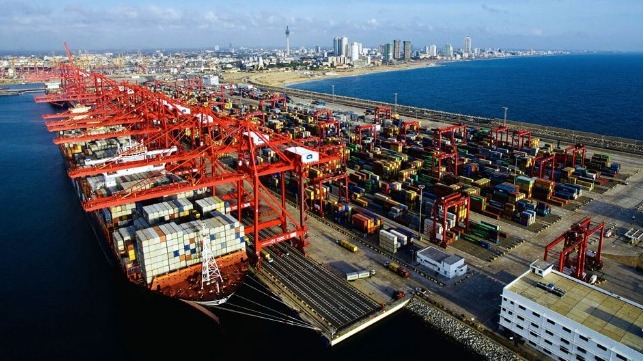
On September 30, Adani Group, India’s largest private port operator, signed what has been reported as a $700 million agreement to build a new container terminal in Sri Lanka. The deal to jointly develop the Colombo West International Container Terminal (CWICT) with Sri Lanka’s largest listed company, John Keells Holdings and the Sri Lankan Ports Authority, will function under a build-operate-transfer” arrangement for 35 years. Adani Ports will hold a 51 per cent stake in the terminal partnership, while John Keells will hold 34 per cent and the SLPA 15 per cent.

As the first-ever Indian port operator in Sri Lanka, and the largest foreign investment in Sri Lanka’s port industry, the deal has geopolitical significance. Even though Colombo Port was a regional hub that primarily served the Indian market, no Indian investor had been interested in investing in Sri Lanka’s port industry. That was, until the Chinese came in.

Sri Lanka has now become a prominent battleground for India’s competition with China in South Asia. Port investments are the latest manifestation.

According to Adani, the CWICT will be developed to have a quay length of 1400 meters and an alongside depth of 20 meters, allowing the new terminal to dock ultra large container vessels. The aim is to process some 3.5 million containers per year.

The investment comes a decade after China Merchant Ports (CM Ports) and Sri Lankan conglomerate Aitken Spence signed a 35-year concession agreement in 2011 with the Sri Lankan Ports Authority to operate the southern terminal, known as the Colombo International Container Terminal (CICT), also under a build-operate-transfer model.

The entry of CM Ports was the turning point that transformed Colombo Port’s destiny. With a presence in over 40 ports globally, CM Ports is among the top ten terminal operators in the world. Its global experience and efficiency improved the competitiveness of the Colombo Port. Aitken Spence sold its stake in 2012, leaving CM Ports with an 85 per cent share in the southern terminal. The Colombo Port grew multi-fold, making it the world’s fastest-growing port in the first half of 2018. It handled 7.2 million containers in 2019, of which the CICT handled over 40 per cent.

Moreover, in 2017, CM Ports also took over the Hambantota Port on the southern coast of the island under a 99-year lease that quickly proved controversial.

Amid growing Chinese influence in Sri Lanka’s port industry and misleading narratives about China’s debt-trap diplomacy, Adani’s investment in the western terminal is viewed as a game-changer. New Delhi had become wary of Beijing’s massive investments in Sri Lanka’s ports, believing these had strategic designs. China’s involvement in building and later operating Hambantota Port drew special concern, despite India having rejected the chance to build the port in the first place.

India and Sri Lanka have regularly experienced strained relations, yet the new agreement with Adani is seen as commercially and strategically valuable for all parties involved.

Commercially, more than 70 per cent of the transshipment business from Colombo Port is linked with the Indian market – much of it with Adani port terminals, according to available statistics – so a partner from India is a welcome development to build new relationships in the Indian maritime and logistics sector. Adani Group is also the operator of what the company boasts as India’s fastest-growing port, Mundra. While the Mundra port has experienced rapid growth over the past few years, it lags behind Colombo, mainly because the Colombo Port benefits from India’s cabotage restrictions, which means only Indian-registered ships are permitted to ply on local routes. As Indian states gradually review these restrictions, Colombo will face greater competition.

Strategically, Sri Lanka’s location along one of the world’s busiest shipping routes carries benefits for the country when collaborating with foreign companies, port operators and logistics companies. For India, the Adani investment has the advantage of sitting alongside China’s activity in Colombo Port, allowing it to keep close watch. A Chinese submarine docked at CICT in 2014, leading many observers in India to raise security concerns. While the new deal will not prevent the Chinese activities, monitoring them closely will ease their worries. It also adds to India’s policy of investing in strategically critical commercial ports, as it has done in Chabahar port in Iran and Sohar Port in Oman.

India also demonstrated its continued ability to influence its neighbour to realise its interests. Ports are increasingly viewed more as strategic assets than mere commercial assets. Control over and easy access to essential ports allow countries to project their power, influence, and forward defence capabilities without owning and spending a fortune on an overseas military base. Adani investment in Sri Lanka has provided this strategic advantage for India.

Dr. Chulanee Attanayake is a Research Fellow at the NUS Institute of South Asian Studies. Her research focus is on China and its policies in South Asia, geopolitics in the Indian Ocean, and Sri Lanka’s foreign relations. Formerly she was at the Institute of National Security Studies Sri Lanka.

Budget 2022: Finance Minister’s Full Speech

November 12th, 2021

Courtesy Adaderana

The Ministry of Finance has published the full budget speech delivered by the Finance Minister Basil Rajapaksa at Parliament today (12).

Basil Rajapaksa delivered his maiden budget speech as the Minister of Finance today. It is the 76th Budget of the independent Sri Lanka and the second budget of the government of President Gotabaya Rajapaksa.

The annual state expenditure for next year will be Rs. 3,192 billion and the total revenue will be Rs. 2,284.

According to the minister, the budget deficit for the financial year 2022 is Rs. 1,628 billion which is 8.8 as a percentage. 

Minister Basil Rajapaksa said the government will make every effort to reduce the budget deficit to 8.8% in 2022, 6.1% in 2024, and 4.8% in 2025. We expect a balanced budget in 2028.” 

He said that in order to reduce the budget deficit measures for, solid expenditure management, increasing government revenue, and restructuring loss-making public enterprises are needed.

Read the full budget speech delivered by the minister below:

Finance Minister’s Full Budget Speech – 2022 by Ada Derana on Scribd

Daily COVID cases count moves to 723, 23 deaths and 333 recoveries reported today

November 12th, 2021

Courtesy Adaderana

The Director-General of Health Services has confirmed 23 new coronavirus-related deaths for November 11, pushing the death toll in the country due to the virus to 13,950.

The deaths confirmed today include 11 males and 12 females. One of the victims is between the ages 30-59 years while another is aged below 30 years. The remaining 21 are in the age group of 60 years and above. 

The daily count of COVID-19 cases confirmed in Sri Lanka moved to 723 today (November 12) as 191 more people were tested positive for the virus, the Epidemiology Unit said.

This brings the total number of confirmed cases of coronavirus reported in the country to 548,784.

As many as 523,122 recoveries and 13,950 deaths have been confirmed in Sri Lanka since the COVID-19 outbreak.

More than 11,700 active cases in total are currently under medical care, official figures showed.

කොවිඩ් නිසා වැටුණ ආර්ථිකය – ආයෝජන දිරිගැන්විය යුතුයි

November 12th, 2021

උපුටා ගැන්ම  හිරු පුවත්

Budget 2022: Full speech (Video)

November 12th, 2021

Courtesy Hiru News

Basil Rajapaksa, Minister of Finance, presented the Second Reading of the Appropriation Bill for the financial year 2022 in Parliament today (12).

The Bill was introduced in Parliament by the Minister of Finance on 07 October.

This Appropriation Bill was published in the Gazette on 29 September 2021 for matters relating to obtaining service expenses for the financial year 2022 from the Consolidated Fund or any other suitable fund with provisions and obtaining loans within or outside Sri Lanka

Buddhism – the defining characteristic of Sri Lanka

November 11th, 2021

Senaka Weeraratna

Christianity is the defining characteristic of Europe. The European Union is a set of countries bonded by Christian culture, heritage, and values. It is Christianity that gives the collective identity of Europe.

Islam is the defining characteristic of 57 countries that call themselves Islamic countries and thereby have acquired membership of the Organization of Islamic Cooperation (OIC).   Islam has been written into the Constitution of each of these countries. Islam is the State Religion of these Muslim countries but other religions may be followed provided it is done in harmony with Islam (see Malaysian Constitution)  

Hinduism is the defining religion of India with over a 7, 500-year-old history of Sanatana Dharma. The latter is a Hindu appellation for Hinduism itself which translates as “the eternal dharma.”

Almost every aspect of Indian Culture is permeated by Hinduism. Hindus of India have every right to rename modern India in step with Hindu culture and tradition just as much as Muslims have exercised that privilege to rename the breakaway Muslim nation as Pakistan. The monumental lapse of Gandhi and Nehru in not calling the remaining part of Mother India after Pakistan broke away, as a Hindu country can still be undone. Hindus of India have a right to separate identity and nationhood.

So do Buddhists in any country if and when they are in a majority. 

Buddhism is the defining characteristic of Sri Lanka, which has a track record of the longest period of uninterrupted Buddhism (over 2, 300 years) in the world.

Senaka Weeraratna

Press Emblem Campaign (PEC) demands fair probe into murder of another Pakistani digital media user

November 11th, 2021

Nava Thakuria

Geneva: Press Emblem Campaign (PEC), the global media safety and rights body, expresses serious concern over the relentless murder of scribes, citizen journalists and digital media users in Pakistan for exposing anomalies in the government, administration, and society through various media outlets and demands fair probes into all those assassinations.

Local media outlets reported that one more active Pakistani social media user named Muhammad Zada was killed by two gunmen on 8 November

2021 at his residence in Sakhakot area of Malakand locality under Pakistan’s northwest Khyber Pakhtunkhwa province. Zada (35) ran a digital platform titled Citizen Journalist PK, where he used to post socially relevant issues relating to his home district of  Malakand.

The outspoken social activist always took his stand against the illegal drug mafia and expressed his concern about the new generation, who are seemingly under the grip of such consumption. Zada remained critical against the corrupt politicians, government officials and some local leaders, who were making money from the illegal business with impunity.

As Zada became popular in his locality, he earned enmity from some influential personalities including a few police officers. He claimed that a Malakand district police officer was harassing and threatening him for his activities. Zada was asked to stop putting posts in the social media and otherwise face the consequence. But he was not scared while putting inputs against local criminal groups, who often enjoy support from the administration.

It is shocking that Pakistan loses one more socially responsible media activist after the murder of Nazim Samwal Jokhio, a videographer in western Sindh province, on 4 November. Khyber Pakhtunkhwa chief minister Mahmood Khan must take the brutal murder of Muhammad Zada seriously and assure that the culprits will not enjoy the impunity,”

said Blaise Lempen, secretary-general of PEC (https://pressemblem.ch/pec-news.shtml).

Nazim Jokhio, a local journalist, was allegedly tortured to death at the farmhouse of accused PPP MPA for trying to prevent his foreign guests from illegal hunting of endangered houbara bustard. An autopsy found severe torture marks and bruises all over the body of the deceased. MPA Sindh Assembly Jam Owais has been remanded to police custody. Nazim Jokhio was tortured to death for recording the MPA’s hunting expedition of the highly rare bird species along with Arab hunters.

The troubled south Asian nation earlier lost five professional journalists namely Ajay Laalwani (18 March, Sindh), Waseem Alam (10 April, Khyber Pakhtunkhwa), Abdul Wahid Raisani (24 April, Balochistan), Kashif Hussain (10 August, Punjab) and Shahid Zehri (10 October, Balochistan) to assailants since 1 January 2021, revealed PEC’s south Asia representative Nava Thakuria adding that India and Bangladesh have witnessed the murder of five and two scribes respectively this year till date.

ගීතාංජලී අමරසූරිය විශාඛා සියවස් සමරු පුස්තකාලය අග්‍රාමාත්‍යතුමාගේ අතින් විවෘත වෙයි

November 11th, 2021

අග්‍රාමාත්‍ය මාධ්‍ය අංශය

නවීන තාක්ෂණික පහසුකම් සහිතව සිවු මහල්ව ඉදි කළ ගීතාංජලී අමරසූරිය විශාඛා සියවස් සමරු පුස්තකාලය අග්‍රාමාත්‍ය මහින්ද රාජපක්ෂ මහතාගේ සුරතින් අද (11) පෙරවරුවේ විවෘත විය.

විශාඛා විද්‍යාලයීය පාසල් සංවර්ධන සමිතිය සහ අධ්‍යාපන අමාත්‍යාංශය එක්ව රුපියල් මිලියන 96.5ක මූල්‍ය දායකත්වයකින් යුතුව මෙම නව සුහුරු පුස්තකාලය ඉදිකර තිබේ.

විශාඛා විද්‍යාලයේ විදුහල්පතිනි සඳමාලි අවිරුප්පොල මහත්මිය ඇතුළු විශාඛා දියණිවරු සියවස් සමරු පුස්තකාලය විවෘත කිරීමට පැමිණි අග්‍රාමාත්‍ය මහින්ද රාජපක්ෂ මහතා ඇතුළු සම්භාවනීය අමුත්තන් පිළිගත්හ.

අනතුරුව නව සුහුරු පුස්තකාලය විවෘත කිරීම සංකේතවත් කරමින් අග්‍රාමාත්‍යතුමා ඒ වෙනුවෙන් වූ සමරු ඵලකය නිරාවරණය කළේය.

පීත්ත පටිය කපා පළමු මහළට ඇතුළු වූ අග්‍රාමාත්‍යතුමා පුස්තකාල කටයුතු ආරම්භ කරමින් විශාඛා දියණියකට පළමු පොත බැහැරලීම සංකේතවත් කළේය.

විශාඛා විදුහල්පතිනිය විසින් අග්‍රාමාත්‍ය මහින්ද රාජපක්ෂ මහතාට මෙහි දී සමරු තිලිණයක් ප්‍රදානය කළාය.

1967 අගෝස්තු මස 20 වැනිදා විවෘත කළ ගීතාංජලී අමරසූරිය සමරු පුස්තකාලය සිවු මහල්ව ඉදිකළ නව ගොඩනැගිල්ලේ වර්ග අඩි 15000කට ආසන්න ඉඩ ප්‍රමාණයකින් යුක්තය.

කොවිඩ් වසංගතය හමුවේ පැවැති දුෂ්කරතා ද මගහරවා ගනිමින් පාසල් සංවර්ධන සමිතිය සහ අධ්‍යාපන අමාත්‍යාංශය නව පුස්තකාලය විශාඛා දියණියන්ට තිලිණ කිරීමට වෙහෙස වී ඇත.

මෙම අවස්ථාවට විදේශ කටයුතු අමාත්‍ය මහාචාර්ය ජී.එල් පීරිස් මහතා සහ එම මහත්මිය, ජාතික පාසල් අධ්‍යක්ෂ කිත්සිරි ලියනගමගේ මහතා, විශාඛා විද්‍යාලයේ විදුහල්පතිනි සඳමාලි අවිරුප්පොල මහත්මිය, විශාඛා විද්‍යාලයේ නියෝජ්‍ය විදුහල්පතිනියන් ඇතුළු ආචාර්ය මණ්ඩලය සහ විශාඛා දියණියන්, දෙමාපියන් හා  පාසල් සංවර්ධන සමිතියේ නිලධාරි මහත්ම මහත්මීහු පිරිසක් එක්ව සිටියහ.

One country-one law project

November 11th, 2021

C. Wijeyawickrema

It appears that even the minister of justice and the Bar Association have not properly understood the meaning of the above concept.. Boy TNA parliamentarian  Rasamannikam thinks  one law means applying law equally to all. I am writing a series of essays on this subject in Sinhala now appearing on the Lankaweb website.

The essay attached was written 31 years ago, and I hope it will be a good reference  item for all those handling the “law” in Sri Lanka.  I believe this essay has points that could be developed as several masters theses. Law faculty members are flocking to do research on human rights etc as a lucrative, politically correct area which is unfortunate.

“After you chase us away, why elect us again?’’ Sri Lankan President questions public

November 11th, 2021

Courtesy NewsIn.Asia

Colombo, Nov 11 (DailyMirror) – President Gotabaya Rajapaksa, today at an event questioned the public as to why they elect politicians who they had once chased away and urged them to look for new people without electing the same set of people.

He said after governing for 5 years, the opposition had failed in their performance which is why he was elected, but now after two years, the opposition behaved like they had never governed the country.

Even if myself or the ministers in my government don’t meet your expectations, don’t elect the same set of people. Look for new people. This system has to change,” the President said.

READ: Colombo, Gampaha goes on alert over COVID-19 again

There is no point in electing the same group of people into power if they fail to meet the people’s expectations. I don’t know how it could be done but that is the reality,” the President said. 

Once you chase us away, again you elect us. What’s the point in that ?” he further questioned. 

READ: Lack of consultations has led to Lankan government’s taking inappropriate and unpopular decisions

Sri Lanka paddy crop slated to drop after chemical fertiliser ban

November 11th, 2021

By Uditha Jayasinghe Courtesy NewsIn.Asia

Dekatana, Sri Lanka, November 10 (Reuters): Knee deep in mud and sprinkling rice seeds over two acres of land in Sri Lanka late last month, D.M. Rupasinghe said he was worried about his crop following a government decision to ban imports of chemical fertilisers.

The ban on chemical fertilisers, as well as pesticides and herbicides, was introduced by President Gotabaya Rajapaksa’s government in May for environmental reasons but it has plunged the sector into crisis.

Rupasinghe, 57, said the government had told farmers to switch to organic farming but he said that was difficult and expensive. Instead, many farmers were just planting less rather than risking investing the resources in planting when they weren’t sure of the outcome.

The government should have talked to farmers before introducing this policy,” Rupasinghe told Reuters. Organic is harder, more labour intensive and more expensive. Everyone is so confused.”

So we decided to plant a small quantity of seed paddy and wait,” he said.

That reduced planting is being repeated across the island and could bring down Sri Lanka’s annual paddy yield by about 40%, according to a prominent agricultural economist and a farmers’ association.

Normally some two million Sri Lankan farmers cultivate about 700,000 hectares of paddy between October and March. Nearly two thirds of the country’s 22 million people are dependent on agriculture, which accounts for 7% of its $80 billion gross domestic product (GDP).

Jeevika Weerahewa, an agricultural economist at Sri Lanka’s Peradeniya University, said paddy output could fall by as much as 43% but it was not just paddy that would be hit by the ban.

It will affect key exports like rubber, coconut and tea exports, with the latter expected to reduce 40%,” Weerahewa said.

The worst impact will be on the poor.”

The government has said that the ban was part of efforts to promote healthier agricultural practices and make farming more sustainable.

A farmer shows paddy seeds at a paddy field in Colombo, Sri Lanka September 19, 2018.

The challenge facing us now is to use modern scientific techniques and practices to enhance agricultural production without causing environmental degradation,” Rajapaksa said at COP26 U.N. climate conference this month.

‘TOO QUICKLY’

Farmers have staged protest marches and burnt effigies of the agriculture minister, calling for a resumption of chemical fertiliser imports.

In response, the government has imported limited amounts of potassium chloride and liquid nano nitrogen bottles – both used during the rice-growing season – from India since October.

Namal Karunaratne of the All Ceylon Farmers Federation, the country’s largest farmers group that is associated with an opposition party, said the government had failed to provide an alternative to chemical fertilisers.

Many farmers have decided not to cultivate paddy fearing financial losses,” Karunaratne said.

Agriculture Secretary Udith K. Jayasinghe said the government would compensate farmers for any crop losses, despite a ballooning budget deficit.

Plans are being made to purchase the harvest at higher prices, thereby eliminating any negative impact the farmers may face,” he said.

In a letter to Rajapakse earlier in the year, the Sri Lanka Agricultural Economics Association said a reduction in average agricultural productivity by 20% could cause a 3.05% decrease in GDP.

Mohideen Ismail, chairman of the Kadayanthalawa Farmer’s Association in the major paddy-growing district of Ampara, said that farmers were not against a switch to organic fertilisers.

But they are worried it is happening too quickly, without inputs and proper awareness,” he told Reuters. This policy should have been implemented across multiple seasons.”

Reporting by Uditha Jayasinghe; Editing by Devjyot Ghoshal, Robert Birsel

රසායනික පොහොර ගෙන්වන්න කැබිනට් යෝජනාවක් ඉදිරිපත් කෙරේ…

November 11th, 2021

උපුටා ගැන්ම ලංකා සී නිව්ස්

ලබන වසරේ මෙරට පොහොර අවශ්‍යතාවයෙන් 50% ක ප්‍රමාණයක් යූරියා ලබාදීම සඳහා තමන් ජනාධිපතිවරයාගෙන් ඉල්ලීමක් කරන බව ඉඩම් ඇමති එස්.එම්. චන්ද්‍රසේන මහතා සඳහන් කරයි.

ඉන්පසු ක්‍රමිකව එම පොහොර ගෙන්වීම නතර කර දැමීමට තමන් ඉල්ලා සිටින බවද ඔහු පැවසීය.

පොස්පරස් සහ පොටෑසියම් පොහොර මෙරට නිෂ්පාදනය කර ගත හැකි බවද පැවසූ ඔහු පොහොර ගැටළුව ගැන ජනාධිපතිවරයා සමග සාකච්ඡා කර සහනයක් ලබා ගැනීමට කටයුතු කරන බවත් අමාත්‍යවරයා පාර්ලිමේන්තුවේදී කියා සිටියේය.

මීලග කැබිනට් මණ්ඩලයට මෙම යෝජනා තමන් විසින් ඉදිරිපත් කරන බත් ඔහු එහිදී පැවසීය.

Torrential rains trigger deadly flooding in Sri Lanka, India

November 11th, 2021

By Adam Douty, AccuWeather,

Torrential rains trigger deadly flooding in Sri Lanka, India

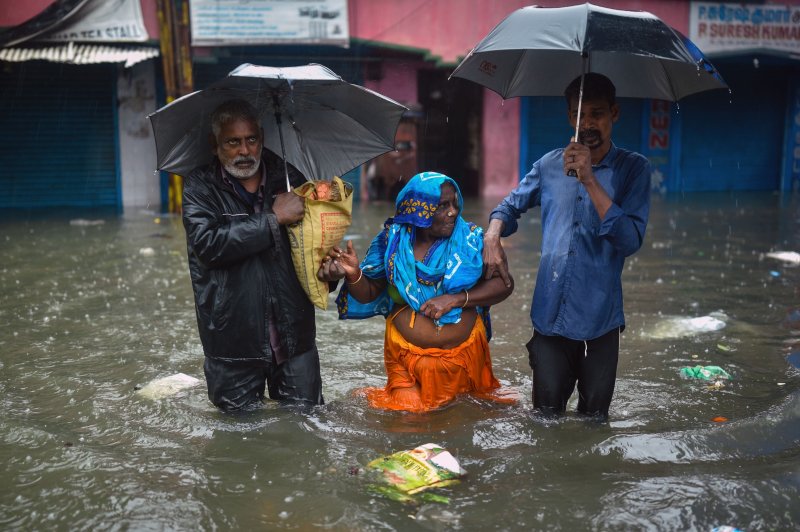
Residents evacuate an elderly woman to a safer place through a flooded neighborhood during incessant heavy rains, in Chennai, India, on Thursday. Photo by Idrees Mohammed/EPA-EFE

Rounds of heavy rain that inundated parts of Sri Lanka and southeastern India this week caused severe flooding and mudslides that are being blamed for at least 41 deaths across the region.

Parts of Sri Lanka were drenched with heavy rain from last weekend into early this week with over 4 inches reported in some areas. The heaviest rain has since moved out of the country, but some showers and thunderstorms could stick around through the weekend, AccuWeather forecasters say.

As India’s northeast monsoon gets into full swing, heavy rain also fell in southern India across the state of Tamil Nadu this week. Flooding killed at least 16 in the state, according to the State Disaster Management Minister KKSSR Ramachandran.

India’s northeast monsoon is an annual occurrence that pumps moisture from the Bay of Bengal into southeastern India during the autumn and early winter which can result in heavy rain and flooding, according to AccuWeather senior meteorologist and lead international forecaster Jason Nicholls.

D.C., Philly and NYC may see 1st snowflakes of season

It is also not uncommon for tropical cyclones to develop across the southern Bay of Bengal and move into southeastern India during the northeast monsoon.

This is what happened this week as a tropical depression formed in the Bay of Bengal and moved inland across Tamil Nadu on Thursday, bringing another dose of heavy rain and gusty winds.

India’s Meteorological Department issued a red alert for the heavy rain across portions of Tamil Nadu on Thursday. A red alert is the highest warning level that the IMD issues, and it indicates a significant risk to life is possible.

RELATEDStudy: Rising greenhouse gases, ice melt caused by humans drive climate change

From Sunday to Thursday, 12 inches of rain fell across Chennai leading to significant flooding. About 6 inches fell from Wednesday into Thursday alone as the tropical depression moved onshore. Photos showed some pedestrians being forced to carry bikes through deep water on flooded roads around the city.

The heavy rain caused damage to about 1,300 houses across Tamil Nadu and inundated more than 100,000 acres of croplands, according to CNN.

In addition to all of the rain, strong winds halted landings at Chennai’s airport for nearly five hours on Thursday, but departures were still permitted. Wind gusts at the airport approached 50 mph.RELATEDWeather changes influence prevalence of bacterial diseases in bee colonies

Due to the flooding and gusty winds, Sun News reported that 61,700 residents were without power on Thursday in Chennai.

“Rainfall will wind down in southern India on Friday, but scattered lighter rains will continue through the weekend,” according to Nicholls.

However, AccuWeather meteorologists say residents should not let their guard down yet.

Conditions look favorable for another tropical depression to form across the Bay of Bengal next week and move into southeastern India by late in the week, according to Nicholls. This could bring another round of heavy rain, flooding and gusty winds to the region.

“This time of year is the second peak for tropical development in the northern Indian Ocean,” said Nicholls. “The northern Indian Ocean is different from other basins that typically only have one peak in tropical activity. The first peak in tropical activity across the northern Indian Ocean happens from April to June while the second peak is October to December.”

Gazette issued on obtaining prior approval of Health DG for gatherings

November 11th, 2021

Courtesy The Daily Mirror

An Extraordinary Gazette has issued making it mandatory to obtain prior approval of Director General of Health Services for gatherings, activities, events or similar places of meetings.

According to the Gazette, the guidelines, circulars, directions, instructions or terms and conditions issued, given by the Director General of Health Services supersede the guidelines, circulars, dirctions, instructions or terms and conditions issued, given or specified by other authorities.

The regulation has been made by Minister of Health Keheliya Rambukwella under sections 2 and 3 of the Quarantine and Prevention of Diseases Ordinance.

Basil’s Budget speech to begin at 2pm tomorrow; Budget debate in sign language

November 11th, 2021

Courtesy Adaderana

Minister of Finance Basil Rajapaksa will present the Second Reading of the Appropriation Bill for the financial year 2022 in Parliament tomorrow (12). 

The budget speech will commence at 02.00 pm. This is the 76th budget of an independent Sri Lanka. It is the second budget of the incumbent government and the first presented by Finance Minister Basil Rajapaksa.

The 2022 Appropriation Bill was introduced in Parliament by the Minister of Finance on the 07th of October.

This Appropriation Bill was published in the Gazette on 29th September 2021 for matters relating to obtaining service expenses for the financial year 2022 from the Consolidated Fund or any other suitable fund with provisions and obtaining loans within or outside Sri Lanka.

Accordingly, for service expenses during the period from 1st January 2022 to 31st December 2022, approval is to be obtained for recurrent and capital expenditure related to Government Expenditure amounting to rupees two thousand five hundred and five billion three hundred and forty-six million five hundred and fifty-eight thousand.

Chapter xvii of the Constitution gives Parliament full control over public finances and requires the approval of Parliament on matters including taxation, consolidation of funds or any other appropriate fund with provisions.

The second reading debate of the budget will be held for seven days from Saturday, November 13th to Monday, November 22nd. The vote on the second reading of the budget will take place on Monday, November 22 at 5.00 pm.

The Committee Stage Debate will commence on Tuesday, November 23rd and will continue for 16 days, including Saturday, until Friday, December 10th. The third reading vote will be held on December 10th at 5.00 pm.

Arrangements have been made to present this year’s budget debate in sign language on behalf of the hearing-impaired community. Accordingly, a Sign Language Window will be telecast simultaneously with the live telecast during the budget debate.

Arrangements have been made to hold sittings in Parliament in accordance with all health guidelines and regulations during the entire period of the budget debate starting from tomorrow (12), the presenting of the budget statement to Parliament.

The Public Gallery will not be open to the public during the budget debate and only a limited number of government officials will be allowed to attend the Budget Committee session.

The Gallery for Special Guest and Invited Foreign Diplomatic Ambassadors and High Commissioners will be opened tomorrow.

The budget being presented tomorrow is the second budget of the Government of President Gotabaya Rajapaksa, the seventh Executive President of the Democratic Socialist Republic of Sri Lanka. 

Following the budget speech, the Minister of Finance will host the traditional tea party. However, it will be limited to MPs, ministers, foreign ambassadors and invitees.

Daily count of new coronavirus cases climbs to 715 and 19 more Covid-19 deaths

November 11th, 2021

Courtesy Adaderana

The Health Ministry has confirmed that another 188 persons have tested positive for coronavirus, increasing the daily count of new cases to 715. 

This brings the tally of Covid-19 cases identified in the country to 548,061 while over 11,000 patients infected with the virus are currently being treated across Sri Lanka.

The Director General of Health Services has confirmed another 19 coronavirus related deaths for November 10, pushing the death toll in the country due to the virus to 13,927.

The deaths confirmed today include 11 males and 08 females while four of the victims are between the ages 30-59 years. The remaining 15 are in the age group of 60 years and above. 

The “Maha Molakaru” & Rev. Siril Fernando

November 10th, 2021

Shenali D Waduge

The demand to name themaha molakaru”is a mere red herring. Why did the Church not demand the same answers throughout LTTE’s brutal killings or even from the Yahapalana Govt under whose watch the crime took place? Why didn’t the Church demand answers when Buddhist artefacts and Buddha statues were vandalized & destroyed? How about answering how present Churches were erected seizing Temple lands – who are the ‘maha molakaru’ of these? More importantly why is no one caring to ask why on earth 8 Muslims would commit suicide to further a Sinhala Buddhist cause? All these dramas are diverting people from the conquest/terror ideology at play & the real agenda which is identical to the ploys used during colonial rule?

Today, the historical wrongdoers are asking Sinhala Buddhists to behave and plucking out checklists of how Sinhala Buddhists should behave completely ignoring accountability for the sins committed over 500 years upon countries invaded.

The Papal Bulls have not been annulled & remain valid still & these edits declared from the Church & by the Pope clearly establishes Christianity as supreme, treating non-Christians as ‘uncivilized’ while lands occupied by non-Christians had the right to be ‘discovered & declared Christian’ & the people forced to convert. Native Indians lost their lands due to these edits, Aborigines & Mauri’s lost their lands due to Terra Nulles Papal Bull. The reference to these are brushed aside as things that happened in the past & to be forgotten but do they apply the same principle when the colonial agenda continues via western neocolonial hegemony & arms industry that allows them to bomb countries back to the stone age & bomb civilians and call it collateral damage.

At the other end of the spectrum we see 99% of world’s terror based on a terror ideology as a result of misusing selective religious verses. These resulted in the burning to cinders of the world’s oldest library in Nalanda & the demolition of the world’s tallest Buddha statues in Afghanistan and expunging of pre-Islamic Buddhist history in Maldives.

Muslims just as Christians/Catholics may be peaceful but the fanatics & others carry on a crusade because they believe and they uphold verses they selectively take from their sacred books. If these verses exist and if they are the cause for terror, why are these not removed if everyone’s ultimate goal is peace & unity. So long as these verses remain, militants will be churned annually.

However, it is more fashionable to point fingers at Buddhists & crown them ‘militant’ while ignoring all the larger more dangerous crimes taking place. A thero is given 6 years rigorous imprisonment simply for questioning the unfairness of the Court sending military intelligence officers to prison – he is today branded a ‘criminal’ as a result of the contempt of court judgement without aware of why he was sent to prison!

Demonizing Sinhala Buddhists is a colonial project and continues still. The present cartoon attack is one such example. The colonials outsourced this task to the brown sahibs who are molded into positions via special scholarship schemes, elite schools,  hand-picked training sessions & then placed in powerful positions to subtly carry out the objectives tasked to them.

Unfortunately, the Sinhala Buddhists lack the clout & the ‘kaduwa’ to highlight the agendas at play and the handful that do are quickly silenced by a well-funded campaign of name-calling and ridiculing so the public is diverted from paying attention to what they wish to convey and warn.

The historical role today is tasked to brown sahibs in robes, working in media, working as lawyers, political analysts, politicians – basically in every sphere of importance where they can determine public sentiment & influence the public. Sadly, some Sinhala Buddhists are also drawn into this exercise which uplifts & colours the agenda when one’s own shames ones’ own. There is little harm in this if this was done without a hidden agenda but the fact that these are all red herrings and exercises choreographed from overseas is what we must keep in mind.

So when Rev. Siril suddenly has a zoom session and berets an officer who was not even holding position when the Easter Sunday attacks took place, should certainly make all to wonder – what is the agenda behind this exercise.

Leaving aside the security aspect, what is unfortunate is that a similar attempt to destabilize Sri Lanka emerged in 2005 ahead of the Presidential elections when Rev Oswald Gomis & Lalith Kotelawala put a paper advertisement subtly asking Christians/Catholics not to vote for Mahinda Rajapakse as President – a message that Churches were asked to convey to their congregations too.

Similarly, the Church links with LTTE cannot easily be forgotten or forgiven because the dead across 3 decades was far more than the Easter Sunday victims. No victim is more important than the other. But, those who help the perpetrators are just as guilty as the perpetrators. This applies to all those who plotted & secretly planned the Easter Sunday bombings. Those who were aware of the attacks but did nothing though guilty of negligence are not as guilty as those who planned it.

The important message in this is that while the country is trying to move forward against many odds especially directly from external quarters – their internal pawns are playing a far more dangerous & dubious destabilizing game. These locals are actually to be regarded as far more dangerous & treacherous than the known enemy. They pretend to be a friend of the nation but they report not to the nation but to their masters overseas & under their orders they plan to demoralize people, brainwash their minds from defending the nation.

The above 2 videos throw extremely pertinent arguments & challenges at the Church & aligned parties dragging their worshippers along the wrong path. Everyone should listen to both these clips. The theros are validly questioning the double standards in arresting and imprisoning Buddhist theros but the lenient stand taken regarding questioning the Church head making wild allegations but unable to produce any facts.

If Rev.Siril or any others have evidence, why are they not presenting these instead of protesting on the streets to create a drama to be relayed on social media? Who is choreographing this exercise & why?

There are some hard facts that cannot be ignored.

There were no Sinhalese Christians or Catholics before 1505 – conversions (forced or otherwise) resulted in this new segment of people to be influenced from overseas.

There was no Tamil Christians or Catholics before 1505 – conversions resulted in this segment of society also heavily influenced from overseas.

Similarly, Muslims are also influenced from overseas via sects.

It is only the Sinhala Buddhists who have no such foreign influence & striving to preserve their historical identity, but they too have been divided via political parties & numerous other ways.

The unity that prevailed among the people prior to 1505 is no more – divide & rule policies of the colonials ensured this.

There was unity in Mother Lanka because Sinhalese & the rest of the communities identified themselves with the island-nation. This was before 1505.

After 1505 the divisions created transferred loyalties of segments in society to overseas to be manipulated & influenced from overseas against the State & against creating a stable Sri Lanka.

This is the root cause of the divisions and divides present today.

Our people are divided solely because segments of society report overseas as their ‘masters’ are overseas. These masters are the one’s pressing different buttons to play out different games at different times & in different environments.

Their pawns are safeguarded by slogans created by the foreign ‘masters’ using placards of ‘minority rights’ ‘discrimination’ ‘freedoms’ etc.

This is the context we place the present situation with Rev. Siril and it is also cause for Easter Sunday mass suicide based on conquest by any means.

People must learn to piece the puzzle before the puzzle breaks our peace.

Shenali D Waduge

The Royal Audience and the Presentation of the Letter of Credence by Ambassador C.A. Chaminda I. Colonne to the King Maha Vajiralongkorn Phra Vajiraklaochaoyuhua of the Kingdom of Thailand

November 10th, 2021

Embassy and Permanent Mission of Sri Lanka Bangkok, Thailand

The King Maha Vajiralongkorn Phra Vajiraklaochaoyuhua of the Kingdom of Thailand has graciously granted a Royal Audience to C.A. Chaminda I. Colonne, Ambassador Extraordinary and Plenipotentiary of Sri Lanka to the Kingdom of Thailand, and Permanent Representative to UNESCAP, on 04th November 2021, for the Presentation of Letter of Credence at Ambara Villa, Dusit Palace in Bangkok.

The King Maha Vajiralongkorn Phra Vajiraklaochaoyuhua extended sincere best wishes to the President Gotabaya Rajapaksa and recalled strong long-standing relations with Sri Lanka. While congratulating Sri Lanka’s newly appointed Ambassador Chaminda Colonne, the King Maha Vajiralongkorn Phra Vajiraklaochaoyuhua assured fullest support of the Kingdom in discharging her official duties and fulfillment of the mission. 

Ambassador Chaminda Colonne conveyed warm greetings from the President Gotabaya Rajapaksa of Sri Lanka to the King Maha Vajiralongkorn Phra Vajiraklaochaoyuhua, and assured her fullest cooperation  and support in enhancing and consolidating excellent longstanding bonds of friendship and cooperation with the Kingdom. Ambassador Colonne also extended an invitation for His Majesty to visit Sri Lanka.

Ambassadors of Vietnam, Slovakia, Kenya, Turkey and Nigeria also presented their Letters of Credence on the same day.

Ambassador Colonne is also concurrently accredited to the Kingdom of Cambodia and Lao People’s Democratic Republic.

Embassy and Permanent Mission of Sri Lanka

Bangkok, Thailand

අයහපත් කාලගුණයෙන් ජීවිත අහිමි වූ පවුල්වලට අග්‍රාමාත්‍යතුමා ශෝකය පළ කරයි

November 10th, 2021

අග්‍රාමාත්‍ය මාධ්‍ය අංශය

අයහපත් කාලගුණය නිසා ජීවිත හානි වූ පවුල්වලට ශෝකය පළ කරන අතර පීඩාවට පත් ජනතාවට අවශ්‍ය සහන ලබා දීමට රජය කටයුතු කරමින් සිටින බව අග්‍රාමාත්‍ය මහින්ද රාජපක්ෂ මහතා අද (10) දින පෙරවරුවේ පාර්ලිමේන්තුවේ දී අවධාරණය කළේය.

රටේ පවතින අයහපත් කාලගුණ තත්ත්වය ගැන අවධානය යොමු කරමින් අග්‍රාමාත්‍යතුමා පාර්ලිමේන්තුවේ දී කළ සම්පූර්ණ ප්‍රකාශය මෙසේය.

ගරු කථානායකතුමනි,

ප්‍රථමයෙන්ම කියන්න ඕනේ  මේ දිනවල පවතින අයහපත් කාලගුණ තත්ත්වය නිසා අපේ රටේ ජනතාවට දැඩි  බලපෑමක් එල්ල වෙලා තිබෙනවා. ඒ වගේම විශාල පිරිසක් පීඩාවට පත්වෙලා ඉන්න බවත් කියන්න ඕනේ.

පීඩාවට පත්වෙලා ඉන්න ජනතාවට අවශ්‍ය සහන දෙන්න රජය කටයුතු කරමින් ඉන්නවා. ඒ වගේම ඒ කටයුතු සඳහා ඔබ තමුන්නාන්සේලාගේ සහයත් බලාපොරොත්තු වෙනවා.

අයහපත් කාලගුණය නිසා ජීවිත හානි වූ පවුල්වලට ශෝකය පළ කරන්නත් මම මෙය අවස්ථාවක් කර ගන්නවා.

ගරු කථානායකතුමනි,

අයහපත් කාලගුණ තත්ත්වය පිළිබඳවත්, පීඩාවට පත්වූවන්ට සහන සැලසීම පිළිබඳවත් ආපදා කළමනාකරණ රාජ්‍ය අමාත්‍ය ගරු චමල් රාජපක්ෂ මැතිතුමා විසින් මේ සභාවට වාර්තාවක් ඉදිරිපත් කිරීමට නියමිත බවත් ප්‍රකාශ කරන්න ඕනේ යැයි අග්‍රාමාත්‍යතුමා පැවසීය.

Fertiliser Issue

November 10th, 2021

By Dr. Tilak S. Fernando

Islandwide farmers are continuously protesting about the unavailability of fertiliser. One cannot blame the Government for the inadequacy of officials responsible for distributing the compost. The poor Minister gets blamed over weaknesses of the distribution sector. It is due entirely to the inefficiency of the officials in charge of distribution. This can be proved when the writer went to the Maharagama (Agrarian Services ) Govijanasewa office to get his allocated quota of fertiliser on 26 October.

Fertiliser Issue

Farmers make a Raucous 

Initially, the Govijanasewa office advised farmers that the carbonic fertiliser would be available on 26 October. Accordingly, the writer, too, went on that day to get his allocation. Everyone who went to collect their allocation that day also spent extra money on petrol, which is expensive these days. The officials advised farmers that they expected the delivery to arrive only on 27 October.

 Indeed, the officials should have known of this fact before advising the farmers in advance. The farmers were very annoyed and made a raucous wanting to know why officials were unable to keep them informed. Indeed, the Govijana officials would have received this information in advance about the change of situation. 

Despite this fact, they did not inform the local farmers accordingly. If they were to pass the buck on whoever they expected to receive delivery of carbonic fertiliser from, then those responsible officials should take the blame. This type of unpleasant situation occurs due to the lackadaisical attitude of the so-called ‘government servants’.

 It must be the same situation in other areas of the country where farmers are protesting. Therefore, the finger should directly point at all the office staff responsible for distributing fertilisers to farmers around the country at the appropriate time. One cannot blame the Government for each and every claptrap the officials get involved in. 

The Government gave the carbonic fertiliser free for this Kanna and promised to pay compensation for the farmers who lost their paddy crops. But the frustration of the farmers of not getting the fertiliser in time seems to be due to the negligence of officials responsible for a smooth operation of providing fertiliser. These days Thalawathugoda and elsewhere in the country, the rains occur at odd intervals with lightning and thunder included, thus making it impossible for farmers to work in their paddy fields. 

Aren’t the Govijana officials aware of this fact? On 27 October the Govijana office at Maharagama advised farmers about the vehicle transporting fertiliser having a mechanical problem. However, fertiliser was finally made available only on the afternoon of 28 October. Farmers staged an uproar inside the ‘Govijanasewa’ office at Maharagama over all these difficulties created for them by officials. The situation could be identical Islandwide, now farmers in specific areas want the President to visit and observe what’s happening. 

Imported Organic Fertiliser 

Meanwhile, another controversy has brewed over the consignment of the Chinese Qingdao Seawin organic fertiliser ship from China. Initially, samples of this first consignment tested were highly contaminated. Still, rumours were floating to indicate that the same vessel had turned around, changed the name, and anchored in the Colombo outer harbour. It contained 18,000 MT, of which samples were highly contaminated; hence the Government had to reject that consignment. The opposition is making capital out of this. 

The opposition leader joined in with farmers in various parts of the country and urged ‘the President to take a step back on inaccurate decisions, such as banning chemical fertilisers.’ Also opening an SJB Head Office in Wattala on 1 November, Sajith Premadasa said, The President and Government have no choice but to rectify these inaccurate decisions.” One should think whether Sajith Premadasa’s head needs examining! Alternatively, the President is working to build a healthy society in Sri Lanka. 

In contrast, the opposition leader wants chemical fertilisers imported when many people and farmers are affected by CKD (Chronic Kidney Disease). Apart from that, the whole world is saluting the Sri Lankan President for being sensible and turning towards an ecofriendly society in Sri Lanka. One is inclined to think whether the Opposition leader has any common sense about CKD and its consequences on farming families, especially in those areas where chronic kidney disease is widespread? 

Rejection and Government’s stand

 Regarding the rejection of organic fertiliser from China, Cabinet spokesman Dr. Ramesh Pathirana said. Although the ship is in Colombo’s outer harbour, it is not allowed to dock and never be allowed to be in Sri Lankan waters.’ However, the Director-General of the Agricultural Department said: It was the first bulk order from China that was contaminated and not the entire order. The Government has not rejected the Chinese company outright.” Dr. Ajantha de Silva quoted in the Ceylon Today on 27 October, was quoted that there were around four consignments of the Chinese consignments; hence the whole consignment was not rejected by the Government. Dr. Silva has also said if the shipment samples sent to Sri Lanka in the future are to be free from contamination, then the Ministry of Agriculture would accept the second batch of bulk fertiliser from Qingdao Seawin and so on. If the second consignment sample is free from microorganisms, we will reject that order too.”

 Meanwhile, the Chinese company insisted that every consignment goes through a National Plant Quarantine Service (NPQS). Nevertheless, the Ceylon Fertiliser Company (CFC) Ltd obtained another interim order from the Colombo Commercial High Court against the Chinese Qingdao Seawin Organic Fertiliser Company. The Court Order prevents the opening of any pending Letters of Credit in favour of the Chinese Qingdao Seawin organic fertiliser company.

 The latest is that the National Plant Quarantine Service (NPQS) tested the samples sent to them have confirmed that the first consignment of fertiliser indeed contained certain types of harmful bacteria. The first batch was a partial shipment worth more than Rupees one billion secured through a tender process confirmed by the Ministry of Agriculture. 

COP26 UN Conference 

At the COP26 UN Climate Change Conference in Glasgow, Scotland, twentyfive thousand delegates assembled. It included Head of States of one hundred and ninety-seven countries. President Gotabaya Rajapaksa urged the international nations to work together in a true spirit and cooperation to overcome the climate crisis and sustain humanity and the planet. He pronounced that Sri Lanka recently restricted the import of chemical fertiliser, pesticides weedicides due to public concerns and biodiversity impacts. 

Problems for the Government are compounded with various protests and threatening to take work-to rule decisions by several trade unions on multiple issues. It is mainly because global commodity prices have rocketed after the Covid-19 pandemic and economies everywhere in the world are only beginning to recover from the pandemic. The ordinary person on the street cannot understand this fact. India cut excise duty on petrol by Indian Rupees five (USD 0.0671) per litre and Ten rupees on diesel. 

Sri Lankan Government cannot do so because it incurred many expenses to curtail the suffering of poor people and ordered millions of inoculations to combat Covid-19. At the same time, the Government lost a substantial amount of money in taking care of those families dependent on a daily wage. Nevertheless, one hopes that with the increase in tourism and the President in Glasgow negotiating with other world leaders, a ray of bright sunshine will shine on Sri Lanka, and new life, hope and freshness to every citizen will dawn upon soon. 

tilakfernando@gmail.com 

Saga of the takeover of Kandy seen through British eyes

November 10th, 2021

By P.K.Balachandran/Daily Mirror Courtesy NewsIn.Asia

Saga of the takeover of Kandy seen through British eyes

Colombo, November 10: Events leading to the controversial takeover of the Kandyan kingdom by the British in 1815 and the aftermath have been written about both from the British and the Sri Lankan viewpoint. The British view is vividly presented in Ceylon Ancient and Modern published by Chapman and Hall of London in 1876. It is authored by an anonymous former officer of the Ceylon Rifles.

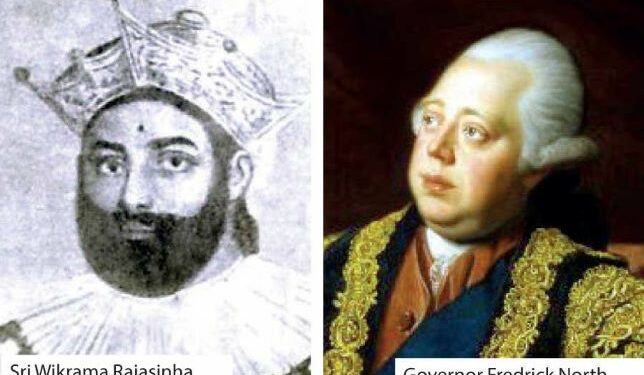
In 1798, the Prime Minister of the Kandyan kingdom,  Pilimatalavuva Maha Adikaram (or Pilame as he is referred to in the book) had placed on the throne of Kandy, Sri Wickrama Rajasinha, the 18-year-old nephew of the wife of the deposed King Rajadhi Rajasinha. Pilame wanted to rule Kandy and replace the Naicker dynasty” by an indigenous Sinhalese” dynasty with the help of the British, who had replaced the Dutch as the European power in Ceylon in 1796.

When Pilame conveyed his plan to Governor Fredrick North, the latter got excited at the prospect of turning Kandy into a British Protectorate. Kandy had been doggedly defying European attempts to subdue or absorb it. But North disapproved Pilame’s proposal for a British attack on Kandy to put his puppet Mootoo Samey (Muthu Swamy) on the throne. North said he would not object if Pilame himself removed Wickrama Rajasinha, and yet he wanted to protect the king! The troops’ presence in Kandy will be the only means of preserving the poor man’s life and dignity, which otherwise will be sacrificed to the ambition of his minister,” North wrote.

He also wanted Wickrama Rajasinha to formally agree to the stationing of British troops. And to talk about this, he sent Maj.Gen. Hay MacDowell backed by 2500 troops. But MacDowell was made to wait inordinately for an audience and had to kneel before the King. The annoyed General returned to Colombo. But Pilame would not give up. In 1802, to force the British to take punitive action against the king, he relieved some Moor merchants from the coast of their property and put the blame on the king. Gen.MacDowell proceeded to Kandy on a punitive mission. Wickrama Rajasinha fled but not before setting Kandy on fire. Pilame put Mootoo Samey on the throne and MacDowell left for Colombo leaving a small contingent of troops in Kandy under Major Davie. But the doughty Kandyans put back Wickrema Rajasinha on the throne.

READ: Roots of the cow protection movement in Sri Lanka

Thus thwarted, Pilame planned to kidnap Governor North during the talks they had at Dambedenia and also attack British garrisons. The timely arrival of Malay troops put paid to his plans. Nevertheless, Kandyans attacked the British troops, most of whom were too sick to fight. Maj. Davie surrendered Mootoo Samey and also his arms. The Kandyans massacred” all but Davie and Corporal Barnsley, who escaped.  The massacre sparked calls for revenge. But North’s plan to send the troops to Kandy did not fructify as the Madras Governor could not send the 3000 men he sought.

Commenting on the misadventure, the author of the book says: The great fault of all those engaged in this terribly ill-managed Kandyan affair was placing any reliance on the word of an Asiatic, or entering into any negotiations or conventions with them, in which Europeans are sure to be foiled by their superior finesse and want of faith. In dealing with these people there is only one policy to be adopted, a bold, straightforward one, with a firm reliance on one’ own right arm and a good display of  physical force –the only argument they understand, or at least are likely to attend to.”

READ: The dwindling Parsis of Sri Lanka

When North took up the massacres with Wickrama Rajasinha, the latter blamed Pilame from whom, he said, he had long since withdrawn his confidence. North suspected that the king was being dismissive and dodgy because he was expecting assistance from the French Adm. Alexandre Durand Linois, who was harassing British shipping in the Indian Ocean.

Continually disturbed by the plots and insurrections by his chiefs,” Wickrema Rajasinha became a sanguinary despot.”  The crafty Pilame was found plotting to assassinate the king, who beheaded him in 1812. Pilame was succeeded as Adigar by his nephew Eheylapola (Ahalepola). But Eheylapola had inherited his uncle’s disposition for plotting and secretly tried to get Governor Robert Brownrigg’s aid for dethroning Wickrama Rajasinghe and assuming power himself. Brownrigg declined to help.

READ: Sri Vikrama Rajasinha wore royalty on his sleeve even after losing his Kingdom

Meanwhile, the king had discovered Eheylapola’s conspiracy. Eheylapola fled to Colombo. But the tyrant (Wickrama Rajasinha) wreaked his vengeance on his (Eheleypola’s) wife and family and everyone within his reach. The place of execution in Kandy flowed with blood and the neighbourhood echoed with the shrieks of the victims. Eheylapola’s wife and four children and his brother and wife were either beheaded or drowned, and the mothers were compelled, under the dread of being disgracefully tortured, to pound the decapitated heads of their children in a paddy pounder.”

As a consequence of this outrage, war was proclaimed against  Wickrama Rajasinha in January 1815. In a few weeks, Kandy was again in the possession of the British, thanks to the defection of the king’s General Mollegodde ( Molligoda) and the gang up the principal chiefs against the king. The king, who was hiding, was found out by Aheylapola’s men and handed over to the British. Upon capture, a remorseful Wickrama Rajasinha told the British: Your English governors have one advantage over us kings. They have counsellors near them who never allow them to do anything in passion. But unfortunately for us the offender is dead before our resentment has subsided!”

READ: Some facets of the history of Muslims in Sri Lanka

In the eyes of the British, Wickrama Rajasinha was not unprepossessing in appearance, except when he was excited, when his eyes gleamed with the fire of a demon, and his face assumed an air or malignant cruelty.”

In March 1815, the Kandyan Convention, by which the kingdom was handed over to the British by the chiefs, was signed. The chiefs were guaranteed their ancient privileges and powers, the impartial administration of justice and the maintenance and protection of Buddhism. However, according to eye witness Dr Marshall, both the chiefs and the people began to show signs of impatience and openly wished for the departure of the British from Kandy inquiring when they intended to leave the country.”

One of the Kandyans told Marshall: You have deposed the king and now nothing more is required. You may leave us now.”

They showed no dislike to us individually, but as a nation, they abhorred us; they made no complaint of misrule or oppression, simply wishing we should leave the country,” Marshalls adds.

These feelings broke out into an open revolt in 1817, secretly fomented by Eheleypola, the professed friend of England”. By 1818, the revolt had spread like wildfire. A monk was made a claimant to the Kandy thrown and the tooth relic was taken out from the temple at Kandy and shown to the people to arouse their fanatical enthusiasm.”

In the 10-month desultory 1880 war, 1000 Indian soldiers fighting in the British army died, which was one-fifth of the entire force deployed.

The Kandyans never met their enemies openly, gave quarter or showed any mercy to those who fell into their hands, and the army imagined they would eventually be obliged to evacuate the country and fight their way out,” an observer said.

Eventually, the Kandyans submitted due to the destruction of their villages, cattle and crops and the loss of nearly 10,000 people due to famine, fever and war. Disunion had also emerged among the rebellious chiefs. Some submitted and others were executed. Peace was restored after the accidentally discovered” Tooth Relic (Dalada) was reinstalled at its rightful place in Kandy.

විසි පස් වසරකට ආසන්න ගුරු-විදුහල්පති වැටුප් විෂමතාව ඉවත් කරන්න අග්‍රාමාත්‍යතුමා මැදිහත්වෙයි

November 10th, 2021

අග්‍රාමාත්‍ය මාධ්‍ය අංශය

•   විෂමතාව ඉවත් කරන්න අමතරව රුපියල් මිලියන 30000ක්

•   සමස්ත අය-වැය ලේඛනයෙන් ඉතිහාසයේ පළමු වතාවට අධ්‍යාපනයට සියයට 7.51ක්

විසි පස් වසරකට ආසන්නව පවතින වැටුප් විෂමතාව ඉවත් කිරීම දැනුම් දීම සඳහා අද (10) දින පාර්ලිමේන්තුවේ කමිටු ශාලා 01 හි පැවති හමුවේ දී අග්‍රාමාත්‍ය මහින්ද රාජපක්ෂ මහතා ඇතුළු රජයට ගුරු- විදුහල්පති  වෘත්තීය සමිති නියෝජිතයෝ සිය ප්‍රණාමය පුද කළහ.

දරුවන්ගේ සහ රටේ අනාගතය වෙනුවෙන් ගුරු-විදුහල්පති වැටුප් විෂමතාව ඉවත් කිරීම සඳහා ලබන අය-වැයෙන් අමතර රුපියල් මිලියන 30000ක් වැය කරන බවත් ඒ අනුව ඉතිහාසයේ පළමු වතාවට මෙරට අධ්‍යාපනය සඳහා වැය කරන මුදල සමස්ත අය-වැයෙන් සියයට 7.51ක් වනු ඇතැයි මෙම හමුවේ දී මුදල් අමාත්‍ය බැසිල් රාජපක්ෂ මහතා ගුරු-විදුහල්පති වෘත්තිය සමිති නියෝජිතයන්ට දැනුම් දුන්නේය.

ඒ අනුව වෘත්තිය සමිති ඉල්ලීම ඉටු කිරීම ගැන මුදල් අමාත්‍ය බැසිල් රාජපක්ෂ මහතාට මෙහි දී අග්‍රාමාත්‍ය මහින්ද රාජපක්ෂ මහතා ස්තුති කළේය.

අධ්‍යාපන අමාත්‍ය දිනේෂ් ගුණවර්ධන මහතා මෙම සාකච්ඡාවේ අරමුණ පැහැදිලි කළේය.

ශ්‍රී ලංකා පොදුජන අධ්‍යාපන සේවා සංගමයේ සභාපතිනි වසන්තා හඳපාන්ගොඩ මහත්මිය මෙහි දී ගුරු- විදුහල්පති වැටුප් විෂමතාවය විසඳීම සඳහා ශ්‍රී ලංකා පොදුජන අධ්‍යාපන සේවා සංගමය සම්මත කළ යෝජනාවලිය මුදල් අමාත්‍ය  බැසිල් රාජපක්ෂ මහතාට භාර දුන්නාය.

1997 නිර්මාණය වූ මෙම අර්බුධයේ සම්පූර්ණ වැටුප් විෂමතාව ඉවත් කිරීමට යම් කාල රාමුවක් අවශ්‍ය බව පිළිගත් ගුරු විදුහල්පති වෘත්තිය සමිති නියෝජිතයෝ එහි ආරම්භයක් ලෙස තුනෙන් එකක කොටස ලබන අය-වැයෙන් එකවර ලබා දීම ගැන සතුටු වන බව පෙන්වා දුන්හ.

මෙම හමුවේ දී මුදල් අමාත්‍ය බැසිල් රාජපක්ෂ මහතා මෙසේ පැවසීය.

අපි මේ පිළිබඳව මුලින්ම සාකච්ඡා කළේ ජූලි මාසේ 26 වැනිදා අමාත්‍ය මණ්ඩල රැස්වීමේ දීයි. එහි දී මහාචාර්ය ජී.එල් පීරිස් මැතිතුමත්, ගාමිණී ලොකුගේ මැතිතුමාත්, ආචාර්ය බන්දුල ගුණවර්ධන මැතිතුමත්, විමල් වීරවංශ මැතිතුමත්, උදය ගම්මන්පිල මැතිතුමත්, රමේෂ් පතිරණ මැතිතුමත්, ලසන්ත අලගියවන්න මැතිතුමත් ඇතුළත් කමිටුවක් පත් කළා. ඒක පසුව 4 දෙනෙකුට සීමා වුණා.  එහි නිර්දේශයක් ඉදිරිපත් කළා. මුදල් අමාත්‍යවරයා හැටියට මගේ නිරීක්ෂණය ඉදිරිපත් කළේ මූලිකව මෙම ඉල්ලීම් සියල්ල වැටුප් වැඩිවීමක් නෙමෙයි කියලා. මේක අවුරුදු විස්සක් විසි පහක් පවතින ගුරුවරුන්ගේ සහ විදුහල්පතිවරුන්ගේ වැටුප් විෂමතාවයක්. මෙය නිවැරදි කරන්න කියලා තමයි ඉල්ලීම ඉදිරිපත් කරලා තිබුණෙ. අපේ නිර්දේශය වුණේ සමස්ත රාජ්‍ය සේවය තුළ වැටුප් සම්බන්ධ අසමමිතිකතාවක් ඇති නොවන පරිදි ඉදිරි අය-වැය තුළින් සළකා බැලීම සුදුසුය කියලා.

දැන් අය-වැය එනවා. අදාළ නිර්දේශ සම්බන්ධයෙන් කැබිනට් මණ්ඩලය එකඟත්වය පළ කරලා තියෙනවා. මේ පිළිබඳව මල්-වතු අස්ගිරි මහ නායක ස්වාමීන් වහන්සේලා ඇතුළු සියලු දේශපාලන පක්ෂත්, මා හමුවුණ අවස්ථාවලදිත් පැවසුවේ මේ ගුරු-විදුහල්පති ප්‍රශ්නය මෙවර අය-වැය තුළින් විසඳන්න කියලා. ගරු අගමැතිතුමත් විශේෂයෙන්ම ජනාධිපතිතුමත් අධ්‍යාපන ඇමතිතුමත් නිර්දේශ කරලා තියෙනවා අනිවාර්යයෙන්ම මේක විසඳන්න කියලා. වෘත්තිය සමිති පැත්තෙන් විශාල සහයෝගයක් මේ වෙලාවේ අපට ලැබිලා තියෙනවා. අපට ඕන වුණ එකම දේ අධ්‍යාපනය ළමයින්ට ලබා දෙන්න. මේ වෙනකොට සියලුම පාසල් විවෘත කරලා සෞඛ්‍ය නිර්දේශ අනුව පාසල් කටයුතු සිදුවෙනවා. ඒ නිසා අපි බොහොම අමාරුවෙන් වුණත් නිර්දේශිත මේ මුදල වෙන් කරන්න බලාපොරොත්තු වෙනවා.

මේක විෂමතාවක් ඉවත් කිරීමක් මිස වැටුප් වැඩිවීමක් නෙමෙයි. මෙතන සිටින මහා සංඝරත්නය ඇතුළු වෘත්තිය සමිතිවලින් මම ඉල්ලා සිටිනවා අවුරුදු විසි ගණනක් විසඳන්න බැරිව තිබුණ වැටුප් විෂමතාවක් සාධාරණ මට්ටමෙන් විසඳීමක් විධියට දකින්න කියලා. කැබිනට් මණ්ඩලයේ අනුමැතිය අනුව දැනට වෙන් කරලා තියෙන මුදලට අමතරව රු. මිලියන 30000ක් අපි ලබන අය වැයෙන් ගුරු හා විදුහල්පති වැටුප් විෂමතාව ඉවත් කිරීම සඳහා වෙන් කරනවා. අය-වැයටත්, කැබිනට් මණ්ඩලයටත් ඉස්සරවෙලා ඔබතුමාලට කිව්ව එකම රහස ඒක.

අනිත් ඇමතිවරු දොස් කියන එකක් නැහැ. විපක්ෂයේ මන්ත්‍රීවරු කිහිප දෙනෙකුත් මෙතන නොහිටියත් මේක විසඳන්න කියලා ඉල්ලුවා. එයත් සිහිපත් කරනවා. දරුවන්ගේ අනාගතය රටේ අනාගතය වෙනුවෙන් මෙය විසඳන්න අපි තීරණය කළේ. මහින්ද රාජපක්ෂ ජනාධිපතිතුමාගේ කාලේ අධ්‍යාපනයට සියයට 6ක් වෙන් කරන්න කියලා සමහරු උද්ඝෝෂණය කළා. අවසානයේ ඔවුන්ගෙ වැටුප් සියල්ල වැඩි කළා. හැබැයි ඊට පස්සේ සියයට 6 අමතක කළා.

හැබැයි අපි මේ පාර අය වැය ලේඛනයෙන් අපේ සම්පූර්ණ වියදමෙන් සියයට 7.51ක් අධ්‍යාපනය වෙනුවෙන් වෙන් කරනවා. ඒ මේ රටේ අනාගතය වෙනුවෙන් එය වෙන්කරන්නෙ. ජනාධිපතිතුමත්,අගමැතිතුමත් විශේෂයෙන් අධ්‍යාපන ඇමතිතුමත් අපෙන් ඉල්ලුව මේක කරන්න කියලා. මේ ඉතිහාසයේ පළමුවැනි වතාවට අධ්‍යාපනය සඳහා සමස්ත අය වැයෙන් සියයට 6 ඉක්මවන්නෙ.

එදා උද්ඝෝෂණ කළ අයට අමතක වුණාට, මහින්ද ජනාධිපතිතුමා ඇතුළු අපේ රජයට එය අමතක වුණේ නැහැ. අපි පිළිගන්නවා අධ්‍යාපනය මේ රටේ ලොකුම ආයෝජනය කියලා. සෞඛ්‍ය හා අධ්‍යාපනය ගත්තම අපි ලෝකයේ ඇතැම් දියුණු රටවලට සමාන මට්ටමේ ඉන්නවා. දකුණු ආසියාවේ අපි ඉහළම තැනක ඉන්නවා. ආයෝජනය වගේම ඵලදායීතාවත් වැඩි කරන්න කියලා අපි මේ හැම වෘත්තිය සමිති නියෝජිතයෙකුගෙන්ම ඉල්ලනවා. අධ්‍යාපනය දියුණු කරන්න ඔබ සියලු දෙනාගේ සහයෝගය අධ්‍යාපන අමාත්‍යාංශයට, රජයට දෙන්න කියලා ඉල්ලනවා. ඊට එහා යන ඉල්ලීම් ගැන මුදල් ඇමතිවරයා හැටියට අපිට කතා කරන්න පුළුවන් යැයි අමාත්‍ය බැසිල් රාජපක්ෂ මහතා පැවසීය.

අමාත්‍යවරුන්වන බැසිල් රාජපක්ෂ, දිනේෂ් ගුණවර්ධන මහත්වරු ඇතුළු මැති ඇමතිවරුන්, අධ්‍යාපන අමාත්‍යාංශයේ ලේකම් මහාචාර්ය කපිල පෙරේරා, අග්‍රාමාත්‍ය අතිරේක ලේකම් නීතිඥ චමින්ද කුලරත්න, වෘත්තිය සමිති අධ්‍යක්ෂ ජනරාල් සුමිත් විජේසිංහ, ශ්‍රී ලංකා පොදුජන අධ්‍යාපන සේවා සංගමයේ සභාපතිනි වසන්තා හඳපාන්ගොඩ, ලංකා ගුරු සංගමයේ ලේකම් ජෝශප් ස්ටාලිං, ලංකා ගුරු සේවා සංගමයේ ප්‍රධාන ලේකම් මහින්ද ජයසිංහ, ශ්‍රී ලංකා වෘත්තියවේදී විදුහල්පතිවරුන්ගේ සංගමයේ සභාපති සුගීශ්වර විමලරත්න, ශ්‍රී ලංකා ජාතික විදුහල්පති සංගමයේ මොහාන් වීරසිංහ මහත්ම මහත්මීහු ඇතුළු ගුරු-විදුහල්පති වෘත්තිය සමිති නියෝජිතයෝ මෙම අවස්ථාවට එක්ව සිටියහ.

Head of Ahmadiyya Muslim Community Addresses Humanity First International Conference

November 10th, 2021

By A. Abdul Aziz

 Stand ever ready to wipe away the tears of those who are in distress or hurting in any way” – Hazrat Mirza Masroor Ahmad

On 31 October 2021, the World Head of the Ahmadiyya Muslim Community, the Fifth Khalifa (Caliph), His Holiness, Hazrat Mirza Masroor Ahmad delivered a faith inspiring address to conclude the International Conference of the charity Humanity First.

The 2-day event, which was held at the Baitul Futuh Mosque in London and then in Islamabad, Tilford on Sunday was themed as ‘Poverty alleviation through empowerment’.

The Humanity First Silver Jubilee conference, delayed a year due to COVID-19, was attended either physically or virtually by more than 1200 people, comprising Humanity First delegates and members from over 60 countries around the world.

The Gist of keynote address that covered the objectives of Humanity First, outlining its mission to serve those in need. by Ahmadiyya Head as below:

Hazrat Mirza Masroor Ahmad first mentioned that Humanity First International was unable to hold its conference last year, and that this year marked 26 years since its inception.

Hazrat Mirza Masroor Ahmad said:

It has now been 26 years since Humanity First was first formally registered and, with the Grace of Allah, ever since its inception, Humanity First has continued to grow and develop and has conducted a lot of impactful work in many parts of the world. It has served in some capacity or other in over sixty countries, including in the Americas, Europe, throughout Africa, the Middle East, Asia and the Pacific.”

His Holiness mentioned some of the humanitarian initiatives carried out by Humanity First across the planet including providing water, education and sustainable skills projects in underdeveloped countries.

His Holiness also mentioned that Humanity First had progressed and developed so much over the past few years that it had now started to be a globally recognized institution.

Hazrat Mirza Masroor Ahmad said:

 By the Grace of Allah, Humanity First is now a very well established and well-respected international charitable organization. Indeed, Humanity First has now reached the stage where external NGOs or similar humanitarian organizations are seeking to partner and collaborate with it to fulfil their own charitable obligations and objectives.”

Hazrat Mirza Masroor Ahmad continued: 

It reflects the fact that Humanity First has earnestly strived to fulfil that noble objective which Allah the Almighty has commanded us to pursue in the Holy Quran – and which ought to be the life-long objective of a Muslim – to serve humanity and to fulfil the needs of those who are facing any adversity.”

His Holiness explained that this objective is one vouchsafed to Muslims through the example of the Holy Prophet Muhammad (peace and blessings of Allah be upon him).

Hazrat Mirza Masroor Ahmad said:

There are countless traditions and sayings of the Holy Prophet (PBUH) that illustrate how he spent his entire life serving mankind and striving to inculcate the same spirit of sympathy for others within his followers. Certainly, the Holy Prophet (peace and blessings of Allah be upon him) was an everlasting source of mercy for mankind and through his blessed words and deeds, he shone an illuminating and everlasting light upon the magnificent teachings of Islam and demonstrated that serving mankind is an inherent and truly fundamental part of our faith.”

Hazrat Mirza Masroor Ahmad said:

Islam teaches that one’s neighbours have great rights upon them. Muslims have been taught that they must treat their neighbours with grace and compassion and be ever ready to help them in their times of need and grief… Furthermore, the definition of a ‘neighbour’ in Islam is extremely vast and far-reaching. It not only includes people who live nearby, but also includes people who live much further afield, a person’s travel companions, work colleagues, subordinates and many others besides.”

His Holiness also spoke about the need to look after and support the orphans, the sick and the needy in society.

Hazrat Mirza Masroor Ahmad said: 

On one occasion, whilst speaking about fulfilling the rights of mankind, the founder of the Ahmadiyya Muslim Community (peace be upon him) said: ‘To love mankind and to show compassion to others is an immense form of worship of God Almighty and an outstanding means of attaining His pleasure and rewards.’

Enlightening us on how to serve humanity, the Promised Messiah (peace be upon him) said: ‘Allah the Almighty repeatedly commands that, irrespective of religion or ethnicity, you should show love and compassion to all people.’ Allah commands us to feed the hungry, free those shackled in bondage, pay off the arrears of those mired in debt, shoulder the burdens of others and truly fulfil the duties owed to mankind.”

Nearing the end of his address, His Holiness told Humanity First to look to the future and to ensure that it continues to progress.

Hazrat Mirza Masroor Ahmad continued:

Certainly, I am pleased that the workers and volunteers of Humanity First throughout the world are serving with great zeal and determination and a true spirit of service and devotion. It is my prayer that this spirit never diminishes but only ever increases.”

The Conference concluded with a silent prayer led by His Holiness.

Prior to His Holiness’ address, Chairman Humanity First International, Ahmad Yahya presented a report of the works of Humanity First over the past 26 years.

Humanity First” – Its Mission is to serve disaster struck and socially disadvantaged individuals and families in the poorer communities of the world.

FounderMirza Tahir Ahmad – 4th Khalifa of the World-wide Ahmadiyya Muslim Community in Islam.

Founded1994


Copyright © 2026 LankaWeb.com. All Rights Reserved. Powered by Wordpress