පලාගලට ජලය දෙන්න ඇමති දුමින්ද දුටු සිහිනයත් සැබෑ වෙයි…..

November 9th, 2021

තිසර සෝමරත්න

පලාගල ප්‍රදේශය ආශ්‍රිතව පිහිටි ඇති ග්‍රාමීය වැව් නිරතුරුවම ජල හිඟයෙන් පීඩාවට පත් වන අතර, එයට පිළියමක් ලෙස දැනට අතහැර දමා ඇති දෙමටගලවැව ප්‍රථිසංස්කරණය කර හැවැන් ඇල්ලඔය හරහා පෝෂක  ඇළක් සහ අමුණක් ඉදි කර ග්‍රාමීය වැව් වලට අමතර ජලය සපයාදීමේ ව්‍යාපෘතිය කඩිනම් කිරීම සම්බන්ධයෙන් අදාළ ස්ථාන නිරීක්ෂණය කිරීමට රාජ්‍යය අමාත්‍ය දුමින්ද දිසානායක මහතා ඇතුළු නිළධාරීන් පිරිසක් නිරීක්ෂණ චාරිකාවක නිරත වූහ.

දෙමටගල රක්ෂිතයේ පිහිටි අතරදමා ඇති ඉපැරණි වැවක් වන දෙමටගල වැව දීර්ඝ කාළයක් භාවිතයට නොගැනීම හේතුවෙන් එහි වැව් බැම්ම කැඩී, වැව  ගොඩවී අවභාවිතයට ලක්ව ඇති අතර, එය ප්‍රථිසංස්කරණය කර මොරගොල්ල ඔය හා  හැවැන් ඇල්ල ඔය හරහා ගලා යන ජලය හැරවුමකින් ලබා දී දෙමටගල ඉපැරණි වැව ප්‍රථිසංස්කරණය කර තවත් වැව් 36 ක් ජලයෙන් පෝෂණය කිරීමේ හැකියාව පවති.මේ හරහා කුඹුරු අක්කර 2000 කට දෙකන්නයේ ජලය සැපයීමේ හැකියාව පවතියි.මේ සම්බන්ධයෙන් දුමින්ද දිසානායක මහතා වාරී මාර්ග හා ආපදා කළමණාකරන  අමාත්‍යයවරයාව සිටියදී 2017 වර්ෂයේදී කැබිනට් මණ්ඩලයට කුඩා විලච්චිය හා දෙමටගල වැව ප්‍රථිසංස්කරණය කිරීමට සම්බන්ධයෙන් කළ යෝජනාව කැබිනට් මණ්ඩලයෙන් අනුමත කිරීමත් සමගින් එහි ඉදි කිරීම් කටයුතු සඳහා ඇස්තමේන්තු කිරීම ආරම්භ වූ අතර, එහි කටයුතු මේ වන විට අවසන්වී වත්මන් වාරීමාර්ග අමාත්‍යය චමල් රාජපක්ෂ මහතාගේ උපදෙස් මත එය නුදුරේදීම ඉදි කිරීමට නියමිතය.

ඒ අනුව අදාළ දෙමටගල ජලාශය ඉදි වන භූමිය හා ඒ සඳහා ජලය සපයා ගැනීමට නියමිත මොරගොල්ල ඔය හා හැවැන් ඇල්ල ඔය රාජ්‍යය අමාත්‍යය දුමින්ද දිසානායක මහතා ඇතුළු නිළධාරීන්ගේ නිරීක්ෂණයට ලක්විය.මෙම නිරීක්ෂණය සඳහා පලාගල ප්‍රාදේශීය සභාවේ සභාපති ආර්.ඒ.වික‍්‍රමසිංහ මහතා ඇතුළු දේශපාලන නියෝජතියන්, දෙමටගල ව්‍යාපෘති භාර ප්‍රධාන නේවාසික  ඉංජිනේරු  ප්‍රසන්න තිලකරත්න මහතා ඇතුළු වාරී මාර්ග දෙපාර්තමේන්තු නිළධාරීන් හා ගම්වාසීන් පිරිසක්ද සහභාගී වූහ.

කිලෝ මීටර ගණනක් මහවන මැද ඇවිද ගොස් අමාත්‍යයතුමන් ඇතුළු පිරිස අදාළ ස්ථාන නිරීක්ෂණය කරනු ලැබූ අතර, ඉදි කිරීම් කටයුතු කඩිනම් කරන ලෙසද ව්‍යාපෘතිය භාර ඉංජිනේරුතුමන්ට  අමාත්‍යවරයා එහිදී උපදෙස් ලබා දුන්හ.

අනතුරුව අදහස් දැක්වූ රාජ්‍යය අමාත්‍යය දුමින්ද දිසානායක මහතා  කියා සිටියේ,

2017 වර්ෂයේ මා වාරීමාර්ග අමාත්‍යයවරයාව සිටියදී ආරම්භ කළා පලාගල ජනතාවගේ විශාල අවශ්‍යතාවක් වෙලා තිබුණ දෙමටගල ජලාශයක් බවට පත් කරලා ඒ හරහා වැව් 36 කට වැඩි ප්‍රමාණයක් ප්‍රථිසංස්කරණය කරන්නත්, එල්ලංගා පද්ධති ක්‍රියාත්මක කරන්නත්, ඒ වගේම මේ ප්‍රදේශයේ ජීවත් වෙන ගොවි ජනතාවගේ වාරී කර්මාන්තය සඳහා අවශ්‍ය කරන ජලයත්, වී වගාව පමණක් නෙමෙයි අමතර භෝග වගාවන් සඳහාත් ජලය ලබා ගැනීමේ වැඩසටහනක් ආරම්භ කළා, නමුත් ආණ්ඩු මාරුවෙන කොට අමාත්‍යංශ මාරු වෙන කොට යම් යම් ව්‍යාපෘති නැවතුනත් වාරී මාර්ග අමාත්‍යයවරයා විදිහට ගරු චමල් රාජපක්ෂ ඇමතිතුමාගේ උපදෙස් මත මේ වැඩ දිගටම කෙරීගෙන යනවා, අපි එතුමාගෙන් වගේම ජනාධිපතිතුමාගෙන් ඉල්ලීමක් කරනවා මේ හරහා පලාගල විශාල ජනතාවකට, විශේෂයෙන්ම කුඹුරු අක්කර 2000 කට පමණ ජලය ලබා ගැනීමේ පහසුව ලැබෙනවා.ඒ නිසා මේ ව්‍යාපෘතිය ඉදිරි වර්ෂය තුළ මීට වඩා වැඩි මුදලක් ලබා දීලා ක්‍රියාත්මක කරන්න කියලා අපි ඉල්ලීමක් කරනවා.

මේ සම්බන්ධයෙන් අදහස් දැක්වූ පලාගල ප්‍රාදේශීය සභාවේ සභාපති ආර්.ඒ.වික‍්‍රමසිංහ මහතා,

ඇත්තටම අද අපිට බොහෝම සතුටු දවසක්, අපි දේශපාලන මත මොනවා දැරුවත්, අපේ හිටපු වාරී මාර්ග අමාත්‍යය දුමින්ද දිසානායක මැතිතුමා කෘෂිකර්ම හා වාරී මාර්ග ඇමතිවරයා වශයෙන් මේ ප්‍රදේශයට 2017 වර්ෂයේ පැමිණිලා මේ ව්‍යාපෘතිය ආරම්භ කරන්න අවශය කටයුතු සම්පාදනය කළා, ඒක පලාගල සමස්ථ ජනතාවම දන්නවා මේ ව්‍යාපෘතියේ ආරම්භකයා කවුද කියන එක,එතුමා දැන් නැවත වතාවක් මේ වැඩපිළිවෙල ක්‍රියාත්මක වෙන වෙලාවේ මේක බලන්නට ඇවිල්ලා, සියලුම ගොවි මහත්වරු එක්ක කථා කරලා, අපේ නායකයෙක් හැටියට, කවදත් ගරු කරපු දිවංගත බර්ටි ප්‍රේමලාල් දිසානායක මැතිතුමන්ගේ සංකල්පයක් තිබුණා ඒ වගේම එතුමාට ලොකු ආසාවක් තිබුණා කුඹුරු අක්කර 2000 කට පමණ වතුර දෙන්න, ඒ නිසා අද ඒක මල්ඵල ගැන්විලා තියෙනවා.අපි විශේෂයෙන්ම පලාගල ජනතාව වගේම පලාගල ප්‍රාදේශීය සභාව වශයෙන් බොහෝම ගෞරවෙයන් සිහිපත් කරනවා දිවංගත බර්ටි ප්‍රේමලාල් දිසානායක මැතිතුමන්ව වගේම හිටපු කෘෂිකර්ම හා වාරී මාර්ග අමාත්‍යයවරයාව සිටි දුමින්ද දිසානායක මැතිතුමා අද ඇවිත් ජනතාවගේ සුභසාධනය වෙනුවෙන් මෙම ස්ථානයට පැමිණිලා මේ කටයුත්ත නිරීක්ෂණය කරලා අවශ්‍යය උපදෙස් ලබා දීලා මේ වැඩකටයුත්ත ආරම්භ කිරීමට ශක්තියක් වීම පිළිබදව ස්තූතිවන්ත වෙනවා යැයි පැවසීය.

වැඩිදුරටත් අදහස් දැක්වූ ප්‍රාදේශීය සභා මන්ත්‍රී නන්දන දිසානායක මහතා, 

ඇත්තටම අපි සතුටු වෙන්නේ අපේ නායකයා,අපිට හැමදාම  නායකත්වය දුන්න ඇමතිතුමා, වාරී මාර්ග ඇමතිවයරයාව සිටියදී මේ ප්‍රදේශයේ බහුතරයක් ඉන්න ගොවිජනතාවගේ හඩට ඇහුම්කම් දීලා, ගොවිජනතාවට තිබුණ බරපතල ප්‍රශ්නයක් තමයි ජල ප්‍රශ්නය වගේම වනජීවී ප්‍රශ්න, මේ ප්‍රශ්න වලට විසදුම් හැටියට බර්ටි ප්‍රේමලාල් දිසානායක මැතිතුමා මේ ජලාශය ආරම්භ කරන්න ගොඩක් උත්සහ කලා යම් යම් අවස්ථා වලදී විවිධ හේතූන් මත අතපසු වුණත් ඒක ඔලුවේ තියාගෙන දුමින්ද දිසානායක මැතිතුමන් වාරීමාර්ග ඇමතිවරයා වුණාට පස්සේ මේක කොහොම හරි කරන්න ඔ්න කියලා හිතට අරගෙන දේශපාලන නියෝජිතයෝ, ගොවි  සංවිධාන නියෝජිතයෝ කොළඹට ගෙන්නලා නිළධාරීන් එක්ක සාකච්ජා කරලා, නිළධාරීන් මෙහෙට එවලා, ඇස්තමේන්තු කරන්න මුදල් වෙන් කරලා, පරික්ෂා කරලා, වැව් තිස් ගාණකට වතුර දෙන්න පුලුවන් ව්‍යාපෘතියක් මේක, කහලු කන්ද දිගේම මේ වතුර යනවා, මහවැලි කලාපය දක්වාම මේකෙන් වතුර අරන් යන්න පුලුවන්, හැවැං ඇල්ල ඔය දක්වාම වතුර අරන් යන්න පුලුවන්, හැවැන් ඇල්ල ඔයෙන් ආයෙත් කළාවැවට මේ වතුර ලැබෙනවා.මේක ඉතාම හොඳ ව්‍යාපෘතියක්

දෙමටගල ව්‍යාපෘති භාර ප්‍රධාන නේවාසික  ඉංජිනේරු  ප්‍රසන්න තිලකරත්න මහතා අදහස් දක්වමින් කියා සිටියේ,

මේ ව්‍යාපෘතිය දෙමටගල ජලාශ ව්‍යාපෘතිය ලෙස නම් කරලා තියෙන්‌නේ, මේ ස්ථානයේ පැරණි වැව් බැම්මක් තියෙනවා, එම වැව් බැම්ම ප්‍රථිසංස්කරණය කරලා, වේල්ලක් හරහා තමයි ජලය ලබා ගන්න යන්නේ, මෙම වේල්ල ඉදි වෙන්නේ මොරගොල්ල ඔය කියන ඔය හරස් කරලා, මෙහි වැව් බැම්ම මීටර 500 ක් පමණ දිගයි.නමුත් මෙය ඉදි කිරීම හරහා පෝෂිත ඇළ මාර්ගයක් ඔස්සේ වැව් 36 කට පමණ ජලය සපයන්න පුලුවන්.මේ හරහා ලොකු වියදමකින් තොරව විශාල කුඹුරු ප්‍රමාණයකට දෙකන්නයේ වගා කටයුතු සඳහා අවශ්‍යය ජලය සපයා දෙන්න මෙම ව්‍යාපෘතිය සැලසුම් කරලා තියෙන්නේ.මොරගොල්ල ඔයේ ජල ප්‍රමාණය ප්‍රමාණවත් නොවන අවස්ථා වලදී හවං ඇල්ල කියන ඔයෙන් අමුණක් තියෙනවා එය ප්‍රථිසංස්කරණය කරනවා.තවත් වැඩිදියුණු කරන ලද උස් අමුණක් ඉදි කිරීම මගින් මෙයට ජල හැරවුමක් කරන්න බලාපොරොත්තු වෙනවා.වාරී මාර්ග දෙපාර්තමේන්තුවේ ගණනය කිරීම් අනුව මෙය ස්ථායි ලෙස දීර්ඝ කාළයක් භාවිත කළ හැකි ලෙස ඉදි කරන්න බලාපොරොත්තු වෙනවා.ඊට අමතරව භූගත ජල මට්ටම පවත්වාගෙන යා හැකි ව්‍යාපෘතියක්.මෙම ව්‍යාපෘතිය වරින් වර සිදු වූ අධ්‍යන කටයුතු සමඟ 2017-2018 වර්ෂ වලදී මෙම ව්‍යාපෘතිය ඉදි කිරීම සඳහා අවශ්‍යය කටයුතු සිදු වූවත් අධ්‍යන කටයුතු සඳහා යම් කාලයක් ගතවීම නිසා, ප්‍රමාදයක් සිදු වූවත්, මේ වන විට එම කටයුතු අවසන් වී ඇති නිසා නුදුරේදීම මෙහි ඉදි කිරීම් කටයුතු ආරම්භ කළ හැකියි.

එහිදී අදහස් දැක්වූ ගොවි සංවිධාන නියෝජිත මහතෙකු කියා සිටියේ,

දුමින්ද දිසානායක ඇමතිතුමා වාරීමාර්ග ඇමතිවරයාව සිටියදී 2017 වර්ෂයේදී මේ ජලාශය ඉදි කිරීමට යෝජනා කළා. ඊට අවුරුදු 70 ක ඉදන් පෙරුම්පුරාගෙන ආපූ හීනයක් මේක. නමුත් ඒ සඳහා අවශ්‍යය කටයුතු කර ගන්න විදිහක් තිබුණේ නෑ, දුමින්ද ඇමතිතුමා හරහා ඒ කටයුතු සඳහා අවශ්‍යය ප්‍රථිපාදන ලැබුණා, අක්කර 2000 ක් විතර වගා කිරීමේ පහසුව මේ හරහා ලැබෙනවා.මේක වනජීවි භූමියක්, වනජීවින්ට බොන්න ජලයවත් නෑ පායන කාලයට, වන අලි ගම්වදින එකට පවා උත්තරයක් වෙනවා මේ ජලාශය නිර්මාණය කිරීම, අපි ආණ්ඩුවෙන් ඉල්ලන්නේ ඇත්තෙන්ම ගොවිජනතාවගේ දුක බලලා මේක කඩිනමින් හදලා දෙන්න කියලා යැයි පැවසීය.

අදාළ ස්ථාන නිරීක්ෂණය කර අදුර වැටී අමාත්‍යයවරයා ඇතුළු පිරිස මහ  වනයෙන් එළියට පැමිණියේ නුදුරේදිම පලාගල වැව් නිරතුරුවම ජල හිඟයෙන්  පත් වන  පීඩාවට විසදුම කඩිනමින් ලබා දෙන බවට පොරොන්දු වෙමින්ය.

ඒ අනුව රාජ්‍යය අමාත්‍යය දුමින්ද දිසානායකයන් වාරී මාර්ග ඇමතිවරයා ලෙස පහළමල්වතු ඔය, කුඩාවිලච්චිය හා පලාගල දෙමටගල ජලාශ ව්‍යාපෘතීන් ඉදි කිරීමට අවශ්‍යය කටයුතු සම්පාදනය කළ අතර, තන්තිරිමලය ප්‍රදේශයේදී මල්වතූ ඔය හරස් කර , පහලමල්වතු ඔය ජලාශය ඉදි කිරීම මේ වන විට ආරම්භ වී ඇති අතර, පලාගල ග්‍රාමීය වැව් ජලයෙන් පිරවීමට දෙමටගල ජලාශයද නුදුරේදීම ඉදි වෙන අතර, මහවිලච්චිය ප්‍රදේශයේ විල්පත්තු ජාතික වනෝද්‍යානයේ පිහිටි දැනට අතැරදමා ඇති කුඩාවිලච්චිය වැවද ප්‍රථිසංස්කරණය කිරීමට අවශ්‍යය කටයුතු සිදුවෙමින් පවතී ඒ හරහා විලච්චිය ජනතාවගේ ජල අවශ්‍යතාවද සපුරාලිය හැකියි.

Regional countries including Bangladesh can benefit from TAPI Gas pipeline project

November 9th, 2021

MD Pathik Hasan

The work of Turkmenistan-Afghanistan-Pakistan-India gas pipeline is going to resume in Afghanistan part. It is a regional connectivity project for supplying gas from Turkmenistan to India’s Fajilka (Punjab) to fulfill the public demand in the region It a great regional initiative proposed by ADB and taken by four regional countries. The TAPI gas pipeline seems to a bridge between South Asia and Central Asia. We know Central Asia is a huge source of Natural gas. But Pakistan and India are very needy regarding the gas demand. It aims to monetise Turkmenistan’s gas reserves and supply them to neighbouring countries to promote the use of natural gas and improve energy security.

The regional connectivity gas  pipeline will supply natural gas from the Turkmenistan’s  through Afghanistan into Pakistan and then to India. Construction on the project in Turkmenistan inaugurated to construct the gas pipeline on 13 December 2015,work on the Afghan section began in February 2018, and work on the Pakistani section was planned to commence in December 2018.

The TAPI pipeline project was launched in 2016. The TAPI pipeline is expected to carry 33 billion cubic meters of natural gas per year. The 1,814-kilometer gas pipeline stretches from Galkinesh, the world’s second-largest gas field, to the Indian city of Fazilka, near the Pakistan border. If the gas pipeline can be extended to Bangladesh, Bangladesh can also benefit from this gas pipeline project. We member that Bangladesh is an energy and gas hungry nation now, the storage of national gas in Bangladesh isn’t sufficient for the future to need the demand. The import of LNG from Qatar is very expensive. The costly LNG can’t provide benefit for Bangladesh. Bangladesh needs much gas and electricity for flourishing and continuing the advancement of its growing factories. Domestic need is an also important issue. Bangladesh sets its visionary goal ‘Vision 2041’ to be a developed country in 2041. So, Bangladesh must need the rapid and continuous flow of electricity and gas.  This TAPI gas project may bring potential for Bangladesh. Now it is high time for Policymakers of Bangladesh to think about this. On the other hands, the price of gas of Turkmenistan is at cheap. Bangladesh should try its level best join in the gas connectivity project. It will be very beneficial for Bangladesh if it connects itself with the gas project. Bangladesh decided to join TAPI gas pipeline project in 2012. Bangladesh could be the fifth nation after India to join the multi-billion-dollar Turkmenistan-Afghanistan-Pakistan-India (TAPI) gas pipeline project. Basically, Bangladesh would benefit if it joins this gas connectivity project. it can play an important role to strengthen the regional energy cooperation. Bangladesh needs to be a part with this gas connectivity project to accelerate and smooth the whole of ongoing developmental activities.

Work on the TAPI project in Afghanistan began in February 2016. The 617 km pipeline of the gas pipeline was planned to pass through Afghanistan. But due to internal situation, security in Afghanistan and India-Pakistan tensions, regional issues the connectivity project wasn’t implemented. Bangladesh has been showing interest to join the gas project to tap the potential.

There was a speculation whether the connectivity project will be completed finally at all.  Taliban’s takeover the Kabul on August 15, 2021 increased the speculation. Now the speculation is over. The region is going to see the implementation of the connectivity project that may bring prosperity for the region.

Work on Afghanistan’s part of the TAPI gas pipeline project from Turkmenistan to Afghanistan and India via Pakistan is about to begin soon. Afghanistan’s acting foreign minister, Amir Khan Muttaki, has said that work on Afghanistan’s part of the TAPI gas pipeline project from Turkmenistan to Afghanistan and Pakistan via India will resume soon. He made the remarks at a news conference after a meeting with Turkmen Foreign Minister Rashid Meredov in Kabul on October 31, 2021. Earlier on October 30, the Turkmen foreign minister arrived in Kabul on a two-day visit.

The countries in the region should play a sincere role in cooperation in trade, economic cooperation, energy, counter-terrorism, disaster management, infrastructure and education for multilateral benefit. The Turkmenistan-Afghanistan-Pakistan-India (TAPI) gas pipeline and the CASA-1000 power transmission project would increase the cooperation amongst the regional countries.

Muttaki said the two sides discussed strengthening political ties and economic ties during the Turkmen foreign minister’s visit. “Important issues like TAPI, rail connectivity and electricity have been discussed,” he said. We have discussed strengthening the projects that have already started.

The Afghan blockade of the ambitious and multimillion-dollar gas pipeline between Turkmenistan, Afghanistan, Pakistan and India (TAPI) has been removed. The pipeline is expected to reduce South Asia’s energy shortages.

The planned pipeline is 1,814 km long. It will start supplying gas from Turkmenistan’s largest gas field in 2020. There were security concerns as the pipeline passed through war-torn Afghanistan. Turkmen gas will go to India and Pakistan through Afghanistan. Turkmenistan will export 33 billion cubic meters of gas every year.

The President of Turkmenistan said that this gas pipeline is important politics for the Central Asian countries. The pipeline was in question because of India’s relationship with Pakistan. But the Indian foreign secretary described the pipeline as a new chapter in cooperation between the four countries.

Pakistan is very interested to complete the project. Afghanistan, Pakistan including India would benefit from the gas pipeline connectivity project.  Afghanistan’s interim government has given already the green signal to complete the projects. Basically, this gas projects would fulfill the demand of energy, electricity and gas in Afghanistan, Pakistan including India. the project was expected to create 2,000 new employment opportunities. implementation of the TAPI gas pipeline project was beneficial for the entire region, with Afghanistan alone to get $1 billion as transit fee and royalty.

Pakistan will be the main customer of Turkmen gas. Pakistan has long suffered from energy shortages that affect families and businesses alike. Load shedding is a very common term in Pakistan now. That is why the supply of gas and electricity has become an integral part of the election manifestos of political parties.

The project will bring clean fuel to the growing economies of India It will provide energy-hungry India gas to run its power plants. TAPI’s uninterrupted gas flow will be extremely important for India’s energy sector.

There is energy and gas crisis in Afghanistan, Pakistan and India. This could help to fulfill the growing need of the people. India, Afghanistan and Pakistan have been facing energy crisis. TAPI has the potential to solve the energy woes of Pakistan and India. The pipeline is expected to facilitate a unique level of trade and cooperation across the region, as well as support peace and security between the four countries. More than 1.5 billion people in Afghanistan, Pakistan and India are expected to benefit from the long-term energy security provided by the project. Also, the project is expected to increase Turkmenistan’s revenue through gas sales. Afghanistan and Pakistan will also benefit from transit fees.

Although Taliban’s the Kabul takeover on August 15, 2021 has changed the geo-politics in the region, there are some issues where all regional countries can work together for ensuring the mutual interest in the region. Although India was an active stakeholder in this project, now India’s position in this regard is not clear. But India should remain in this project for its own interest. There might have some bilateral problems in India-Pakistan, but that is not issue. All regional states including India and Pakistan can work closely in the sector of trade and connectivity for ensuring the common greater interest. If this gas project can be extended to Bangladesh, Nepal, Bhutan in the near future, all regional actors would benefit from the connectivity project. It is true that Resumption of TAPI pipeline project in Afghanistan brings a new hope for the region.

COVID: 718 cases and 17 more deaths confirmed within the day

November 9th, 2021

Courtesy Adaderana

The daily count of COVID-19 cases confirmed in Sri Lanka moved to 718 today (November 09) as 180 more people were tested positive for the virus, the Epidemiology Unit said.

This brings the total number of confirmed cases of coronavirus reported in the country to 546,653.

As many as 522,184 recoveries and 13,892 deaths have been confirmed in Sri Lanka since the COVID-19 outbreak.

More than 10,577 active cases in total are currently under medical care, official figures showed.

The Director-General of Health Services has confirmed 17 more coronavirus-related deaths for November 08, pushing the death toll in the country due to the virus to 13,892.

This includes 10 males and 07 female patients, according to the Department of Government Information.

Two of the victims are aged between 30-59 years, and 14 others are aged 60 years and above. The remaining victim is a male aged below 30 years.

Chinese fertilizer will be obtained if it’s supplied within required standards’

November 9th, 2021

Courtesy Hiru News

Agriculture Minister Mahindananda Aluthgamage stated in Parliament today that out of the 800,000 hectares to be cultivated for the Maha season, cultivation has already commenced on 521,000 hectares.

The Minister further stated that the Chinese Fertilizer Company has been informed that the organic fertilizer will be obtained only if it is supplied to the required standard in the country.

Bangladesh is now a lending country! If Bangladesh can be self-sufficient, lender, economic miracle in South Asia, why does South Asia not take lessons from Bangladesh?

November 8th, 2021

Hafizur Talukdar

Debt-ridden Bangladesh a few years ago is now a country of unprecedented success in debt relief. The world today looks at Bangladesh in amazement. Bangladesh only borrowed from other countries or organizations. Now that history has changed and started giving loans. Bangladesh has given loans to Sri Lanka and Sudan. Bangladesh gave a loan to a country for the first time by giving the first installment of the loan promised to Sri Lanka in August. Once upon a time it was a ‘Bottomless Basket’ and donation seeker in the international arena. Now it is a lending country. It shows the all-South Asian countries how to revive from ashes. Bangladesh establishes an example in South Asia how to ensure economic growth amidst various socio-political aspects.

Overcoming various adversities, Bangladesh today is a confident and promising country. Today, Bangladesh has risen to the top of every index of the economy. When the ongoing 10 mega projects are completed, the trend of economic growth of the country will increase and prosperity will increase. It shows the all-South Asian countries how to increase their growth amidst various adversities.

The economy of the South Asian Island nation of Sri Lanka is under a lot of pressure at the moment due to the wounds of the civil war and additional foreign loans for development projects. At present, the country’s foreign exchange reserves have come down to 4 billion. Meanwhile, in the midst of the epidemic, Bangladesh’s foreign exchange reserves have reached a milestone of over 45 billion.

The Prime Minister of Sri Lanka was accompanied by the Governor of the Central Bank of Sri Lanka in Dhaka last March to attend the birth centenary celebrations of Bangabandhu. At that time, they made a proposal to the Prime Minister Sheikh Hasina in this regard. After the Prime Minister agreed to the proposal, the Sri Lankan government sent a formal proposal to the Central Bank. Then in May, the Board of Directors of Bangladesh Bank approved in principle a loan of 250 million to Sri Lanka under the currency swap.

Bangladesh Bank released 50 million in the first installment on August 16 based on Sri Lanka’s demand. Bangladesh entered the list of lender countries by waiving that loan. And on, the second installment of 100 million was released in June, 2021. This money is being given from the foreign exchange reserve of Bangladesh Bank.

Reserves are above 46 billion after a 100 million discount in favor of Sri Lanka in June. With the current foreign exchange reserves of Bangladesh, it is possible to meet the import cost for more than eight months. Bangladesh ranks second among South Asian countries in terms of foreign exchange reserves. Bangladesh is giving dollars in this way for the first time. The amount of dollars that Bangladesh will give will be reduced from the reserve. This will make Bangladesh famous.

Sri Lanka has been suffering from a foreign exchange reserve crisis in recent times. At that time, they had only 500 million in foreign exchange reserves. With this reserve, it was not possible to meet their import expenses for three months. In order to keep the reserves risk-free, at least three months of import expenditure has to be kept equal.

For the first time in 50 years of independence, Bangladesh gave a loan to a country for the development of the country or to meet various needs. Bangladesh made the list of lenders by lending 50 million to Sri Lanka.

In the last one decade, Bangladesh has gained this ability to lend due to the huge economic development, increase in exports and increase in expatriate income as the country’s foreign exchange reserves have swelled. Economists hope that this will change the image of the country. And Sri Lanka will be given a total of 250 million dollars. This money will be released in 5 installments.

Sudan, an African country, is unable to repay a loan from the International Monetary Fund (IMF). Bangladesh has taken the responsibility of repaying that loan.

This information has been highlighted in a notification of the Ministry of Finance on June 16, 2021. Earlier, Bangladesh had given similar benefits to Somalia, another African country.

Sudan’s  external debt skyrocketed to nearly $50 billion at the end of 2019. It is known that the IMF will get 6 billion US dollars from Sudan. In other words, 5 lakh 10 thousand crore Takas in Bangladeshi currency. When the IMF called on all its members to stand by the country in repaying the debt, almost everyone responded. As a friendly country, Bangladesh also agreed to cooperate with Sudan. In response to the IMF’s call, Bangladesh on June 15, 2021 granted Sudan a loan waiver of Tk 65 crore Taka (650 million dollars)

The next day, on Wednesday, the finance ministry said in a statement that in response to the IMF’s call, Bangladesh had given Sudan a “debt waiver” of Tk 65 crore.

“Sudan is a very indebted and poor country,” the finance ministry said in a statement. The government hopes the funding will strengthen Sudan’s fight against poverty.

Bangladesh has begun to prove its economic potential in a very dramatic way. At one time the country was very poor. US Secretary of State Henry Kissinger therefore commented that Bangladesh is a bottomless basket. After 46 years, the US media Bloomberg says, Bangladesh is now an address of surprising success. The country’s per capita income is now 2500 US dollars. It is ahead of India. At the moment, India’s per capita income is $2,116. Pakistan is far behind. The country’s per capita income is $1,260. At present, Bangladesh has 45 billion in foreign exchange reserves.

However, what happened that Bangladesh is creating one surprise after another? Economists say there are some reasons behind this. Exports, social progress and economic foresight. There are three more reasons besides economic capability. Sympathy, economic diplomacy and political will.

When this was the case, the sudden news came that Bangladesh had provided 200 million in financial assistance to Sri Lanka. The Sri Lankan media has raised the question, if Bangladesh can be self-sufficient, why can’t we? In June, the finance ministry of Bangladesh gave more startling news. It has been said that Bangladesh stands by Sudan, the poorest country in Africa. 65 crores Bangladeshi Taka has been provided to reduce the debt burden of the IMF. The country borrowed Rs 510,000 crore Taka from the IMF. The economic crisis was so severe that the country could not repay the debt. Bangladesh has come forward after sending messages asking for help from country to country. Bangladesh’s finance ministry says Sudan is heavily indebted and poor. The government hopes the funding will strengthen Sudan’s fight against poverty. At one time Sudan was a British colony. The country gained independence on January 1, 1956 under a treaty. It may be recalled that last year, Bangladesh also provided more than Tk 80 million to Somalia, another African country. That was also in repaying the IMF loan. Sudan, a member of the Organization of Islamic Cooperation, or OIC, has been crippled by debt and poverty and the financial assistance is expected to help overcome the crisis.

Last year, Bangladesh also handed Tk 80 million to help Somalia combat poverty as part of the IMF initiative. Everyone is fascinated by the development of Bangladesh.

The image of Bangladesh and the respect for people of this country has increased due to the assistance to Sri Lanka and Sudan from foreign exchange reserves. Now the question is valid. Bangladesh is now a lending country! If Bangladesh can be self-sufficient, lender, economic miracle in South Asia, why can’t others do that? Why does South Asia not take lessons from Bangladesh? Of course, South Asia can learn a lot from Bangladesh.

Fertilizer needed for coconut cultivation to be imported

November 8th, 2021

Courtesy Hiru News

State Minister of Coconut, Kithul and Palmyrah Cultivation Promotion and Related Industrial Product Manufacturing and Export Diversification, Arundika Fernando stated that ammonium sulphate required for coconut cultivation is expected to be imported in the future.

Fertilizer+needed+for+coconut+cultivation+to+be+imported+

He expressed these views at Parliament today (08).

The Minister of State made this statement in Parliament today.

Meanwhile, farmers in many areas today staged protests demanding fertilizers and pesticides.

Information was also reported from several areas where farmers were successfully cultivating their lands using organic fertilizers.

Farmers in the Kandy area have also started cultivating farm lands during the Maha season using organic fertilizer

Amendment to increase borrowing limit to Rs 3,397B, approved (Video)

November 8th, 2021

Courtesy Hiru News

The amendment to the Appropriation Act No. 07 of 2020 to increase the borrowing limit was recently approved by the Committee on Public Finance chaired by Member of Parliament Anura Priyadarshana Yapa.

Accordingly, the borrowing limit which was Rs. 2997 billion will be increased to Rs. 3397 billion, it was revealed at the Committee on Public Finance held online.

Secretary to the Ministry of Finance and the Treasury S.R Attygalle pointed out that an amendment to the Appropriation Act was needed to increase the borrowing limit due to the economic downturn in the country caused by the Covid 19 situation. He further pointed out that this was due to the inability to achieve the expected revenue for the year 2021, the increase in supplementary expenditure and the devaluation of the rupee in the payment of foreign currency loan services.

Attygalle also pointed out that the increase in welfare expenditure during the Covid 19 pandemic led to an increase in supplementary expenditure. He also said that a sum of Rs. 200 billion had been approved by the Parliament recently for supplementary expenditure.

In addition to this amendment, as per the Cabinet decision taken on 27.09.2021, the gazette notification submitted by the Minister of Finance to revoke the licensing system for white sugar which came into effect from 29th October 2020 under the Import-Export (Control) Act No. 01 of 1969 was approved by the Committee on Public Finance.

Dr. Harsha de Silva stated that he had repeatedly emphasized the need for a forensic report in this regard to clarify the crisis situation in the country regarding sugar. The Chairman said that the Committee on Public Finance would be able to engage in a lengthy discussion on the matter soon after it is tabled by the Committee on Public Accounts.

State Ministers Hon. Susil Premajayantha, Dr. Nalaka Godahewa, Members of Parliament Dr. Harsha de Silva and Prof. Ranjith Bandara as well as a number of senior government officials were present at the recent Public Finance Committee meeting held online

බෞද්ධ ජනරජ ප්‍රවාදය – 43 වැනි කොටස – ‍සතියෙන් රට හැදීම

November 8th, 2021

ආචාර්ය වරුණ චන්ද්‍රකීර්ති

බුදුදහම තුළ සතිය සහ සම්ප්‍රජඤ්ඤයට විශේෂ තැනක් ලබා දී තිබේ. දීඝ නිකායේ පාථික වර්ගයේ එන දසුත්තර සූත්‍රයෙහි සතිය සහ සම්ප්‍රජඤ්ඤය හඳුන්වා ඇත්තේ බහුපකාර ධර්ම දෙකක් වශයෙනි. සතිය යනු එල්බගත් සිහිය ය. අර්ථ අනර්ථ විමසා අර්ථවත් මග ගැනීමත්, පහසුව සහ අපහසුව සළකා පහසු මග සළසාගැනීමත්, ගෝචර කරගත යුතු දෑ මැනැවින් හඳුනාගැනීමත්, අතරමග දී මුළා නොවීමත් සම්ප්‍රජඤ්ඤය තුළින් විස්තර කෙරෙයි.

සති සම්පජඤ්ඤ ධර්මතා දෙක පිළිබඳව දේශනා කෙරී ඇත්තේ ලෝකෝත්තර අරමුණ කරා යන ගමන වෙනුවෙනි. එසේ වුව ද, මෙම බහුපකාර ධර්ම දෙක ලෞකික ජීවිතයට ද අදාළ කරගත හැකි ය. මේ වන විට නවසීලන්තය වැනි රටවල අධ්‍යාපනයට ද සතිය (එළැඹගත් සිහිය) පිළිබඳ පුහුණුව ඇතුළත් කර ඇත්තේ ඒ අනුව ය. මෙම කාර්යය වෙනුවෙන් කැපවුණු පුහුණු කණ්ඩායම් විශාල ප්‍රමාණයක් එ රට සිටිති. සතිය සහ සතිමත් බව පිළිබඳ ජාත්‍යන්තර වැඩමුළු පවා ඔවුහු සංවිධානය කරති.

සතිය (සතිමත්බව) විසින් ආතතිය, කාංසාව සහ දොම්නස අඩුකරන බව; නින්ද ක්‍රමවත් කරන බව; තමන්ගේ හැකියාවන් පිළිබඳ හොඳ අවබෝධයක් ඇතිකරවන බව; සිත ප්‍රමෝදවත්කරවන බව; මානසික සෞඛ්‍ය වර්ධනය කරන බව; සහ අභියෝග මැද වැඩකිරීමට සිත පුරුදුකරවන බව මේ පිළිබඳව පර්යේෂණ කළ අය විසින් හඳුනාගනු ලැබ තිබේ. සතිමත් බව පුහුණ කළ තැනැත්තා අනවශ්‍ය දේ ගැන සිතීමෙන් සහ අරමුණක් නැතිව සිතීමෙන් වැළැකෙයි. නුහුරු නුපුරුදු සිදුවීම් හමුවේ කලබල නොවෙයි. තම මතක ශක්තිය පවා වර්ධනය කරගනියි. එ මෙන් ම, සිතෙහි ශාන්ත බව සහ කාරුණික බව වර්ධනය කරගනියි.

ඇමෙරිකාවේ හාවඩ් විශ්වවිද්‍යාලය විසින් මේ ආශ්‍රිතව කරන ලද පර්යේෂණයක ප්‍රතිඵල ද අදාළ විශේෂඥයෝ නිරන්තරයෙන් හුවා දක්වති. යම් පුද්ගලයින් අනෙක් අයට වඩා සාර්ථකවන්නේ කිනම් හේතුවක් නිසා ද යන්න සෙවීම එම පර්යේෂණය මඟින් සිදුකර තිබේ. එම පර්යේෂණය සිදුකර ඇත්තේ දහසක (1000ක) නියැදියක් තෝරාගෙන ඒ අයගේ උපතේ සිට වයස අවුරුදු 32 වන තෙක් කරුණු විමසීමෙනි. පුද්ගලයකුගේ සාර්ථකත්වයට හේතුවන්නේ ඔහුගේ / ඇයගේ ජනවර්ගය, සමාජ පංතිය, ස්ත්‍රී – පුරුෂභාවය, දුප්පත් – පොහොසත් බව නොවන බවත් යමකුට තමන් කරන කාර්යය කෙරෙහි අවධානය යොමුකිරීමට ඇති හැකියාව සහ තමන්ව පාලනය කරගැනීමට ඇති හැකියාව ඒ සඳහා හේතුවන බවත් එම පර්යේෂණයෙන් හඳුනාගනු ලැබිණි.

බුදුදහමින් මගපෙන්වන ජනරජයකට මෙම කාරණය ආගන්තුක නොවේ. බුද්ධ චරිතය, ශ්‍රාවක චරිත යනාදියෙන් ද අපි මෙය වටහාගෙන සිටිමු. තව ද, සතිය සමඟ සම්ප්‍රජඤ්ඤය ද භාවිතයට එක්කිරීමෙන් අදාළ අරමුණු ඉතාමත් ඉහළින් සාර්ථක කරගත හැකි ය. අවශ්‍ය දැනුම, මගපෙන්වීම් සහ ආදර්ශ නොමදව පවතින නිසා මෙම භාවිතය ලෞකික ජීවිතයට එක්කිරීම අපහසු කාර්යයක් ද නොවන්නේ ය.

කෙසේ වුව ද, සාර්ථක පුද්ගලයකු බිහිකළ හැක්කේ ඔහුගේ / ඇයගේ කුඩා කාලයේ දී ම ඒ සඳහා පොළඹවන්නේ සහ පුරුදුකරන්නේ නම් පමණකි. ජීවිතයේ ආරම්භක කාලයේ පුහුණු කරන දෑ පුරුදු බවට පත්වෙයි. සති සම්ප්‍රජඤ්ඤයට අදාළ දැනුම සහ පුහුණුව පාසල් අධ්‍යාපනයට ඇතුළත්කිරීමෙන් මෙය කළ හැක්කේ ය. උඩින් කී පරිදි, මේ වනවිට නවසීලන්තය වැනි බෞද්ධ නොවන රාජ්‍යයන් ද ඒ කෙරෙහි යොමු වී තිබේ. අතරමග දී පාසල් හැරයෑම වැළැක්වීමට ද මෙම පුහුණුව උපකාරී වන බව ඔවුහු පවසති.

අධ්‍යාපනය යනු බාහිර දේ හඳුනාගැනීමට ළමයින් පුරුදු පුහුණුකිරීම පමණක් ද නොවේ. ළමයින් මුලින් ම හඳුනාගත යුත්තේ තමන් පිළිබඳව ය. ඒ සඳහා ඔවුන් පුරුදු පුහුණුකිරීම අධ්‍යාපනය තුළින් සිදුවිය යුත්තේ ය. මෙය කළ හැක්කේ ඉහතින් කී ආකාරයට සතිය සහ සම්ප්‍රජඤ්ඤය වැඩීමට ළමයින් හුරුකිරීමෙනි. එ බැවින්, පාසල් අධ්‍යාපනය තුළට මෙම කාර්යය ද ඇතුළත්කරවීම අත්‍යවශ්‍ය බව ඉතාමත් පැහැදිළි ය.

ඒ අනුව, ජනරජයේ අධ්‍යාපන කාර්යය අංශ හතරක් පිරිවසා ක්‍රියාත්මක විය යුතු බව හඳුනාගත හැකි ය. ළමයින්ට තමන් ගැන හඳුනාගැනීමට උපකාර කෙරෙන සතිය සහ සම්ප්‍රජඤ්ඤය වර්ධනය කරවීම ඒ අතර මුලින් ම වෙයි. තමන් ආශ්‍රිත බාහිර පරිසරය හඳුනාගැනීමට ඔවුන්ව පෙළැඹවීම දෙවනුවට වෙයි. ළමයින්ගේ ශරීර ශක්තිය වර්ධනය කරවන ගොවිතැන් ආදී බාහිර ක්‍රියාකාරකම්, ව්‍යායාම සහ ක්‍රීඩාවලට ඔවුන් යොමු කරවීම තෙවැනි කාර්යය වේ. පොත්පත්වල අඩංගු විෂයය කරුණු ඉගැන්වීම සතරවැනි කාර්යය වේ.

පොත්පත්වල අඩංගු විෂයය කරුණු ඉගැන්වීමට මුල්තැන දෙන, විභාග ඉලක්ක කරගත් අධ්‍යාපන ක්‍රමයකින් සාර්ථක පුද්ගලයෙක් බිහිකළ නො හැකි ය. එවැනි සාර්ථක පුද්ගලයන් හිඟ රටක් දිනෙන් දින පිරිහීමට පත්වීම ද වැළැක්විය නො හැකි ය. බෞද්ධ ජනරජයේ අවධානය යොමුවිය යුත්තේ සාර්ථක මිනිසුන් බිහිකිරීම කෙරෙහි ය.

ආචාර්ය වරුණ චන්ද්‍රකීර්ති

Cracks appear in China-Sri Lanka relations

November 8th, 2021

By P.K.Balachandran Courtesy NewsIn.Asia

Colombo, November 9 (Counterpoint): Relations between Sri Lanka and China were excellent between 2010 and 2015 when the pro-China Mahinda Rajapaksa was President. During this period, China constructed the US$ 1.1 billion Hambantota port, an ultra-modern container terminal in Colombo, a state-of-the-art airport at Mattala, and had begun constructing the US$ 1.4 billion Colombo Port City.

But relations struck a bad patch when the Mahinda Rajapaksa government was replaced by the pro-West regime led by Prime Minister Ranil Wickremseinghe. The port city was stalled for a year and a half for alleged corruption. China reportedly incurred a loss of US$ 380,000 per day as a result of the suspension of work.

Eventually, the government had to bow to China. It had to give China outright possession of 20 hectares of land and another 88 ha on a 99 years lease in the Port City. Unable to pay loan instalments for the Hambantota port, the government leased it out to China for 99 years.

When Gotabaya Rajapaksa, brother of Mahinda Rajapaksa, assumed the Presidency in 2019, he jolted China by telling an Indian interviewer that he will re-examine the Hambantota deal. Eventuallyhe restricted himself to ensuring that the security of the port was in the hands of the Lankan navy.

Under Gotabaya’s charge, China continued to fund various projects and extended financial help. But being more sensitive to India’s security concerns than Mahinda Rajapaksa, Gotabaya yielded to India’s pressure to cancel a China-funded and ABD-sanctioned solar energy project in the islands of Jaffna close to the Indian coast. The Chinese were dismayed but did not take any punitive action.

When COVID-19 struck, India took the lead in supplying Sri Lanka its Covishield vaccine. China tried to fill the gap when India stopped its supplies, but the Lankan authorities did not permit Sinophram to be used. 600,000 does were in cold storage for months even as COVID deaths were mounting. When the bar on Sinopharm was eventually lifted, China rushed to make Sinopharm the main vaccine in the island.

President Gotabaya’s decision to ban the use of chemical fertilizers entirely and force farmers to use only organic fertilizers, created an agricultural crisis. Since Sri Lanka had no commercial production of organic fertilizer, it had to import urgently. China won a contract. But the ship carrying the organic granular fertilizer was not allowed to enter Colombo port because the Lankan quarantine authorities said that samples of the fertilizer had the harmful bacteria Erwinia. On a court order, the State-owned Peoples Bank did not honour the Letter of Credit. The Chinese embassy and the Chinese company, Qingdao Seawin Biotech Group Co Ltd., argued that the consignment had been cleared by the Chinese authorities and that the testing at the Colombo end by the National Plant Quarantine Service (NPQS) was not technically proper.

And in a tit for tat step, the Chinese embassy blacklisted the Peoples’ Bank.  The Lankan media accused China of bullying. The Chinese embassy then suggested that the samples be tested in a world-renowned lab in Europe but this did not secure any response. The Chinese company then escalated the conflict by sending a legal notice to the Lankan official at the NPQS, Additional Director W.A.R.T. Wickramaarachchi, who had issued the test reports. The Letter of Demand seeking US$ 8 million in three days. If not, it threatened to make the official who issued the test reports personally responsible and liable to legal action.

Through its local lawyers, the Chinese company stated the reasons why it considers the Sri Lankan tests invalid. After saying that the Qingdao Seawin Biotech Group is the largest organic manufacturer in China, exporting to 600 clients across 51 countries including the US and Germany, the Letter of Demand said that the charge that the consignment had Erwinia was wrong, incorrect and untrue.” It said that the National Plant Quarantine of China had certified that there was no harmful bacteria.

The letter said that the production process was Roller Double Drying at 600 C. All pathogenic raw materials will be killed in that temperature,” it pointed out. The letter further said that the Chinese authorities had tested samples on October 3 and 13 and the reports issued by the Technical Center of the Qingdao customs clearly showed that the samples did not contain Erwinia.

Accusing the Sri Lankan quarantine authorities of not following the testing protocols they ought to have followed as signatories of the International Plant Protection Convention (IPPC), the lawyer’s notice to the Additional Director said: The test and identification of Erwenia spp ought to be as set out in IPPC Diagnostic Protocols for Regulated Pests ISPM 27: Erweinia. However, the testing and/or isolation and the results set out in your aforementioned reports, more particularly your report dated 4, October 2021, are not in compliance or conformity with the aforementioned IPPC Diagnostic Protocols for Regulated Pests ISPM27: Erwinia amylovora, in as much as the growth temperature for Erwinia is 25c to 30c. The quarantine testing temperature for Erwinia carotovorv ought to be set at 25c to 35c and according to the applicable international standards agreed and set out in IPPC, the temperature of testing is set at 25c as per IPPC Diagnostic Protocols for Regulated Pests ISPM27 DP13. Furthermore, the pathogenicity experiment of inspection and quarantine of harmful microorganisms needs to use Koch hypothesis experiment on healthy plants.”

News reports in Sri Lanka said that the Lankan quarantine official concerned had not received the said Letter of Demand. The Sri Lankan government has also been silent. Government has the option of going by court order if one or more of the parties approach a court. Alternatively, it could take up the matter diplomatically with the Chinese embassy since the Chinese embassy is openly pushing the Chinese company’s case.

If the dispute festers and if the media coverage, now very hostile to China, continues, Sri Lanka-China relations will be badly affected. Sri Lanka may also suffer.  Although China is not a market for Sri Lankan exports (the US and EU are), it is the only source of money for infrastructure development that the war-ravaged country is thirsting for. China has also been one of the few unwavering supporters of Sri Lanka in international fora, especially the UN Human Rights Council where Sri Lanka bashing by the West is a hardy annual.

Much depends on the attitude of the Lankan President Gotabaya Rajapaksa who enjoys vast discretionary powers as the Executive President. But unlike his brother Prime Minister Mahinda Rajapaksa, he does not seem to have a natural affinity with China. The 60 dollar question now is: will Gotabaya Rajapaksa step in and put out the fire or will he allow it to consume Sino-Lankan relations. With the US and India emerging as a possible alternative to China he could take a hard stand on the issue.

But the Chinese themselves appear to be keeping the door for a settlement. The Letter of Demand indicates that their quarrel is with the Addition Director of the Lankan Quarantine Service personally, as he had signed all the contested test reports. Perhaps making him the target is a ploy to enable the Lankan government to find a solution. Perhaps the government could agree to the earlier Chinese suggestion for third party testing in Europe, with both the exporter and the importer agreeing to accept the results.

However, the prospects do not look bright as even the China-friendly Prime Minister Mahinda Rajapaksa had told the Chinese Ambassador that Sri Lanka could not accept tainted fertilizers and that his country would accept only consignments which met Sri Lankan standards.

කාබනික ගොවි රජා ජනපති අන්දයි.. තම වගාවට රසායනික පොහොර ගෝනි ගනන් දමනු මාට්ටුයි..[Video]

November 8th, 2021

උපුටා ගැන්ම ලංකා සී නිව්ස්

තමන් වයස අවුරුදු දහසයේ සිට කාබනික පොහොර භාවිතයෙන් ගොවිතැන් කරන බවට ජනාධිපති ගෝඨාභය රාජපක්ෂ මහතා සහ හමුවේ ප්‍රකාශ කළ ගොවි නායකයෙකු රසායනික පොහොර තම වගාවට යොදන ආකාරය ගොවීන් පිරිසක් විසින් හෙළිදරව් කර ඇත.

අනුරාධපුර ඇතුළු සමස්ත සුළු වාරිමාර්ග නියෝජනය කරන සමස්ත ලංකා ගොවිජන බල මණ්ඩලයේ සභාපතිවරයාගේ බඩඉරිඟු වගාවට රසායනික පොහොර යොදමින් සිටි ආකාරය එම ගොවි පිරිස විසින් හෙළිදරව් කරන ලදී.

මෙම සභාපති වරයා කාබනික පොහොර භාවිතයෙන් තම වගාව සිදුකරන අයුරු සොයා බැලීමට ගොවි පිරිස ගිය යන අවස්ථාවේ එම වගාවට රසායනික පොහොර යොදමින් සිටි අයුරු දක්නට ලැබී තිබිණි.

අදාල සභාපතිවරයා එහිදී කියා සිටියේ තමන් රසායනික පොහොර අනවශ්‍ය බව නොකියු වත් කාබනික පොහොර හොඳ බව පමණක් පැවසූ බවත්ය.

Budget Reading 2022 For whom is the budget this time?

November 8th, 2021

Courtesy The Daily Mirror

  • In order to make the public aware of the forthcoming budget the Progressive Women’s Collective (PWC) recently launched a budget forecast campaign titled ‘Who is the budget for?
  • There’s a huge budget deficit and people are facing many challenges with the rising cost of living, scarcity of goods, loss of income and loss of livelihood opportunities
  • Basil Rajapaksa said that the Government will have to take from people during this Budget, but people have made every sacrifice possible
  • Prices of several items that were reduced prior to the election too have increased
  • Records from the Department of Census and Statistics show that a family of four needs around Rs. 75,000 for a month

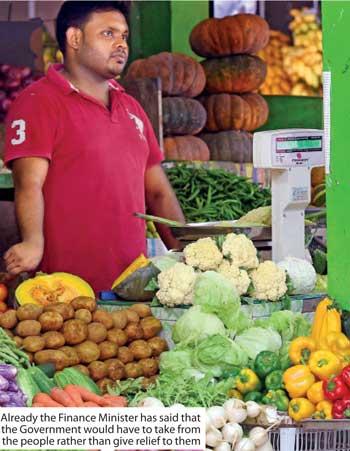
The much anticipated budget reading for the year 2022 will be presented on November 12, followed by the debates. But this time, people seem to have given up hopes as the Finance Minister himself said that the Government will have to take more from people rather than give them relief. In this backdrop many factions have questioned what the government’s priorities would be and whether they would allocate equal budgets for every sector. In order to make the public aware of the forthcoming budget the Progressive Women’s Collective (PWC) recently launched a budget forecast campaign titled ‘Who is the budget for?’ to make a critical analysis and present their findings to the public while allowing the latter to engage in a discourse via their social media platforms. 


Gendered-perspectives to be brought to light 


Speaking at the launch, National People’s Power Parliamentarian Dr. Harini Amarasuriya said that the budget is an important indication of what the government’s priorities are going to be for the next year and also what government policies would be implemented in the coming year. We all know that 2022 will be extremely challenging for all of us. We are facing many challenges on many different fronts; our foreign reserves are depleting and we are facing huge debts. In January we have to pay around USD 500 billion and by June, another USD 1500 billion. There’s a huge budget deficit and people are facing many challenges with the rising cost of living, scarcity of goods, loss of income and loss of livelihood opportunities,” she said.

She further spoke about the education and health sectors that are facing a crisis. There are a few hints about what sort of a budget would be presented. Already the Finance Minister has said that they will have to take from people rather than give relief to them. We are yet to understand what he actually meant. The teachers have been fighting for a long time and we have to see whether this budget has met their demands. Those employed in the private and public sectors have requested for a Rs. 10,000 pay hike. People in the informal sector are at risk of losing their jobs. Therefore we need to ensure that these sectors will be covered in the budget,” she added.

The PWC will therefore examine the details of the budget and is planning to provide a gendered perspective of the budget which is usually being missed in budget analyses as well as when formulating budgets. As a country we are very much behind in ensuring that gender issues are mainstreamed into budget preparations. We hope that with the analysis we provide that we will be able to provide greater analysis and awareness on the need to give more attention to issues of gender and differences when budgets are being formulated.” said


Dr. Amarasuriya. 


We all know that 2022 will be extremely challenging for all of us. We are facing many challenges on many different fronts; our foreign reserves are depleting and we are facing huge debts. In January we have to pay around USD 500 billion and by June, another USD 1500 billion”
– Dr. Harini Amarasuriya National People’s Power Parliamentarian


Will the Budget serve justice to garment workers?


The garment sector was one of the few sectors that managed to generate revenue during the lockdown period. But workers reportedly worked in dire straights and were devoid of basic labour rights. At one point a COVID cluster emerged from the garment factories. The forthcoming budget is presented at a time when the country is facing a huge economic crisis,” opined Chamila Thushari, Programme Coordinator at Dabindu Collective. The Budget is presented at a time when the rupee is depreciating, prices of essential items are soaring and at a time when the government is unable to import essential items, tourism and foreign remittances are blocked and as a result money is being printed. The 2020 Central Bank Report states that the revenue generated by the garment sector was USD 317 million. In 2021 March it has increased to USD 467 million.


But the garment workers sacrificed a lot in order to generate this revenue to the country. Many lost their jobs as the cadre was reduced and those who got the chance to remain had to work extra hours with a minimum salary and deducted allowances. Their targets were increased which meant they didn’t have time for lunch or a tea break. As a result their human rights were violated. From June 2020 to March 2021 they were paid a minimum salary of Rs. 14,000 or less. A majority of the workforce comprise women and they come from rural areas. Therefore this salary isn’t sufficient to cover their daily expenses,” added Thushari. 


Politicians aren’t interested in their well-being because their vote is cast elsewhere. These workers have to bear a huge cost to settle utility bills, rent and even pay for transport. Therefore we urge the Government to increase the relief they receive from Rs. 3500 to Rs. 5000 and increase their basic income from Rs. 16,000 to Rs. 25,000”
– Chamila Thushari, Programme Coordinator at Dabindu Collective


She claimed that when garment workers were sent for quarantine their salaries were deducted. There are single mothers in the Free Trade Zone who lost their jobs because they had to look after their children as daycare centres were closed. Some work on contract basis for manpower agencies and they don’t have an employer to take over their responsibility. Records from the Department of Census and Statistics show that a family of four needs around Rs. 75,000 for a month. So how can these workers live with a mere Rs. 16,000 salary?” She questioned.
Thushari also said that garment workers didn’t receive the Rs. 5000 allowance as they were not residents from respective areas. Politicians aren’t interested in their well-being because their vote is cast elsewhere. These workers have to bear a huge cost to settle utility bills, rent and even pay for transport. Therefore we urge the Government to increase the relief they receive from Rs. 3500 to Rs. 5000 and increase their basic income from Rs. 16,000 to Rs. 25,000. The International Labour Organisation (ILO) has suggested to setup health committees in workplaces, but there’s no such establishment here. In fact the workplaces should be bearing all COVID expenses,” she added. 


Where does the money go?


Given the regular shortage of essential items people ultimately had to end up in queues to ensure that they get their requirements at any cost. In most instances it was the women who had to attend to this task. Any decision taken by the government has a direct impact on women,” said Samanmalee Gunasinghe, Coordinator, Women for Rights Organisation. At present our women are in various queues. This is either for sugar, rice, gas, cement, milk powder, fuel or kerosene. Women who maybe sole breadwinners of their families have to waste time in a queue and purchase essential items this way.”


She also shed light on how the Government is planning to import rice and reduce taxes. As a result the Government’s close associates can fill their pockets when in reality this money should actually be going to the treasury. In turn, people are burdened with more taxes and debts. On top of that are personal debts that most women have to service. Some are burdened with the microfinance and leasing mafia. Therefore we invite all women to join hands with us as we present our demands to the government on November 9.” said Gunasinghe. 


At present our women are in various queues. This is either for sugar, rice, gas, cement, milk powder, fuel or kerosene. Women who maybe sole breadwinners of their families have to waste time in a queue and purchase essential items”
– Samanmalee Gunasinghe, Coordinator, Women for Rights Organisation


An embarrassing situation 


Prices of several items that were reduced prior to the election too have increased. Prior to the election, a kilo of dhal was Rs. 60 and salmon was Rs. 100. But today, a kilo of dhal is Rs. 260 and salmon costs Rs. 360,” said Saroja Paulraj of PWC. So we would like to see what the Finance Minister has in store for the people this time. Price controls have been lifted. A kilo of rice is being sold between Rs. 110-115. During the previous two months the daily expenditure of a family of four has increased by Rs. 10,000. So we demand that this Rs. 10,000 be allocated from this budget. The government should also increase the salaries of private and public sector employees by Rs. 10,000. Recently, Basil Rajapaksa said that the Government will have to take from the people during this Budget, but people have made every sacrifice possible. Every 10 hours there are protests – either farmers, laborers or teachers. A person running a boutique cannot meet his daily expenses.” opined Paulraj. 
She further said they expect the Government to make a 52% allocation in terms of women’s affairs when allocating a Budget to the relevant Ministry. But it is reported that a huge chunk of the forthcoming Budget will be distributed among certain front-liners of the Rajapaksa family. People don’t elect a Government to raise one family. The forthcoming Budget should at least allocate basic facilities and allowances for people. The COVID pandemic affected all countries, not just Sri Lanka. But even amidst this situation they have provided tax concessions to their close associates. If they are going to collect more taxes from people we will take to the streets along with women,” she said. 


A kilo of rice is being sold between Rs. 110-115. During the previous two months the daily expenditure of a family of four has increased by Rs. 10,000. So we demand that this Rs. 10,000 be allocated from this budget. The government should also increase the salaries of private and public sector employees by Rs. 10,000”
– Saroja Paulraj of PWC


Referring to a report by the Department of Census and Statistics, Paulraj said that a family of four needs around Rs. 76,158 as monthly income in order to meet expenses. But more than 20,00,000 people earn a basic income of Rs. 800 or less. So how can they provide education and nutrition to their children? If we take the estate sector, ever since the shortage of gas, women have to spend around two hours looking for firewood and water. The Government is now trying to cut-off the pension scheme as well. These are clear indications that the Government is taking its people back to the Stone Age. The Government is misusing state money. A Government that spoke about a digital revolution has made people stand in queues to purchase daily needs. This is quite embarrassing,” she complained in her concluding remarks. 

Daily count of coronavirus cases climbs to 679 and confirms another 19 deaths

November 8th, 2021

Courtesy Adaderana

The Health Ministry says that another 167 persons have tested positive for the novel coronavirus today, pushing the daily count of new cases to 679.

This brings the tally of Covid-19 cases confirmed in the country to 545,935 while over 16,500 infected patients are currently being treated across the island. 

The Director General of Health Services has confirmed another 19 coronavirus related deaths for November 07, increasing the death toll in Sri Lanka due to the virus to 13,875.

The deaths confirmed today include 13 males and 06 females, according to figures released by the Govt. Information Department.  

Eight of the victims are between the ages 30-59 years while the remaining 11 patients are in the age group of 60 years and above.

Bangladesh’s Mega Projects help Bangladesh in reviving its economy during this pandemic

November 7th, 2021

MD Pathik Hasan

Bangladesh’s ability to spend money has increased even earlier. Ability to borrow and repay foreign loans has also increased. In the meantime, Bangladesh has also written its name in the list of middle-income countries. Top 10 Mega Project in Bangladesh such as Padma Bridge, Dhaka Metro Rail, Dhaka-Chittagong Elevated Expressway, Dhaka to Chittagong Express Railway, Dhaka-Sylhet 4 Lane Highway, Dhaka Cox’s Bazar Railway Link, Dhaka Elevated Expressway, Paira Deep Sea Port, 4 Lane Expansion of Major Highways in Bangladesh, Ruppur Nuclear Power Plant that will change the country rapidly

The development partners have also been informed about the capacity of internal resources by implementing large projects like the Padma Bridge with their own funds. Besides, construction work of Metro Rail, Karnaphuli Tunnel, Bay Terminal, Ruppur Nuclear Power Station, Dhaka Elevated Expressway, Bus Rapid Transit, Third Terminal of the airport is also going ahead in the Corona epidemic. The workers and engineers are working day and night in compliance with the hygiene rules. Almost the same scene has been seen in the case of Metrorail Line-6. Again, Bangladesh is going to rise to a unique height in terms of foreign lending with loans from the reserves. Through which Bangladesh is going to write the name in the list of lenders from the borrower. The central bank has made almost all preparations to lend 200 million to Sri Lanka. Again, a portion of the reserve will be spent on infrastructure construction.

According to a leading Bangladesh media outlets  New age bd, The Bangladesh Bank completed disbursement of the $200-million bailout fund to cash crisis-hit Sri Lanka amid a deepening foreign reserve crisis in the country on September 23, 2021.

This is definitely a matter of pride for our country. Not only that, it is also a big positive milestone for Bangladesh’s foreign debt. At one time Bangladesh only borrowed from foreign companies or countries. That day has changed. The capacity of Bangladesh has increased. Bangladesh is now emulating many, especially in terms of economic potential. ‘

Meanwhile, Bangladesh’s economy is showing its potential where many countries of the developed world are affected by the Corona epidemic. After managing the first wave, it is now handling the second and third waves. Government officials and experts say that if these mega projects can be implemented, Bangladesh’s status in the world court will increase a lot. It will bring radical change in the communication and infrastructure sector. The concerned people think that this change will take Bangladesh to a unique height in terms of development to the world.

It is learned that after the absolute victory in the ninth parliamentary elections and the formation of the government in early 2009, massive development activities started all over the country. As the government remained unchanged in the second term, the development activities gained more momentum. Development activities like running horses started in important sectors including roads, infrastructure, power and energy of the whole country including Dhaka. Incredible success in the power and energy sector comes after overcoming long-standing obstacles. Following this, the Awami League formed the government after winning the 11th national election for the third time in a row. Earlier, at the beginning of the second term, the government started work on about a dozen large projects on priority basis in the related sectors including communication, power and energy, with the aim of creating employment and achieving rapid economic growth. Going forward quite fast. The per capita income and GDP growth of the people of the country is increasing rapidly. But early last year, the Covid-19 epidemic began around the world. As a result, disaster also hit the economy of Bangladesh. Although the pace of work of mega projects has slowed down due to the epidemic that has been going on for a year and a half, the work of these projects is being carried out in compliance with the strict hygiene rules.

Significant progress has been made in the work of the much-discussed Padma Bridge and Metrorail. As of last June, the overall progress of Metrorail Line-6 ​​has been 67.63 percent. The progress of the Padma Bridge project has been more than 93 percent. It is hoped that the Padma Bridge will be opened to traffic within the stipulated time. The construction of Bangladesh’s first tunnel under the Karnaphuli River has not stopped even during the second wave of the Corona epidemic. The construction work of Karnafuli Tunnel is going on in spite of various obstacles including labor crisis and disruption in the supply of construction materials during the Corona epidemic. Although the pace of work is a bit slower than usual, the project participants are optimistic about making it suitable for traffic within the stipulated time. In the meantime, the overall work progress of the mega project has been 70 percent.

According to Bangladeshi media outlets, Work is not progressing as usual in the second wave of the corona. Necessary construction materials are not arriving on time due to corona. Anyone involved in the project cannot go to work earlier than one month due to strict quarantine. All in all, the pace of work has slowed down a bit. However, efforts are being made to complete the project quickly.

The overall progress of the Bus Rapid Transit (BRT) project is about 35 percent till September. The Planning Commission of Bangladesh has approved the extension of the project till June, 2022. Besides, overall assistance is being provided to the Roads and Highways Department for revising the DPP of the project, according to the bridge department. Construction of Dhaka-Ashulia Elevated Expressway project has also been delayed.

Bangladesh is moving fast in terms of infrastructure development. Besides, Bangladesh is a role model for many countries in the world in terms of economic development and poverty alleviation. As a result, if these mega projects are completed, the image of the country will be much brighter to the outside world; Many Bangladeshi Economist think that this will take Bangladesh to a seat of unique dignity.

In the meantime, the Padma Bridge has created a bond between the two sides. Last minute activities are going on. If all goes well, it will be opened for traffic in June 2022.

Similarly, the activities of 10 fast-track (highest priority) mega projects are being carried out by breaking the dam of the ongoing Corona epidemic. The 10 first track mega projects have finally gotten some momentum, ushering hope for positive change in the country’s economy and people’s livelihood.

Meanwhile, after a long wait, the proposed Bangabandhu Railway Bridge is finally seeing the light of day. Prime Minister Sheikh Hasina is going to lay the foundation stone of this project. If the project is implemented, the pressure on the Bangabandhu Bridge over the Jamuna River will be reduced. The risk of Bangabandhu Bridge will also be reduced. At the same time, transportation of goods from North Bengal will be easier. Reduce the cost of transporting goods; Which will bring positive changes in the economic situation and social life of the region. The government thinks that it will also make a significant contribution to the overall economy of the country. 2,07,08 crore.

The average progress of the nine projects till December is 56.31 percent. When implemented, it will add about two percent growth to the country’s economy.

Therefore, the Ministry of Finance has also termed the projects as Transformational projects. By 2025, Bangladesh will reach its dream through the implementation of these projects.

Apart from this, construction of single line dual gauge track from Cox’s Bazar via Dohazari-Ramu and Ghundhum near Ramu-Myanmar, LNG terminal, Payra deep seaport and Matarbari power project.

Communication development and economy will be integrated. It will make the movement of products and people much easier. Will ensure sustainable power generation. This will result in massive investment and increase in employment.

And all the mega projects together will add about two percent growth to the country’s GDP. And because of this, the goal of the Eighth Five-Year Plan – to achieve 7.50 percent GDP growth by 2025 – will be easy to meet.

These mega projects are helping Bangladesh to revive and transform its economy in South Asia, Bangladesh is going to be a South Asian economic miracle. Bangladesh has proved already that Bangladesh is a rising economic super star in Bangladesh. Many countries in the world can take lesson from Bangladesh. Every country can follow the Economic model and utilize the approach to revive its economy averting the all-stagnant economic situation for ensuring sustainable economic growth.

බතුයි – පොල්සම්බලුයි නෙවෙයි දැන් සිගරට් – බුලත්විටත් නෑ

November 7th, 2021

රජිත් කිර්ති තෙන්නකෝන් දකුණ හා මධ්‍යම පළාත් හිටපු ආණ්ඩුකාර

ගෑස් හිඟය අසීමිත සම්පත් හොරා කෑමේ ප්‍රතිලයක්

වැරදි ආර්ථික මිල පාලන ප්‍රතිපත්තිය සහ අසීමිතව මූල්‍ය අක්‍රමිකතාවයන් වෙළෙපොළේ දැවැන්ත ගෑස් හිඟයක් නිර්මාණය කර ඇත.  ඉස්සර බතුයි – පොල්සම්බලුයි ගැන කතා කරපු අයට දැන් සිගරට් – බුලත්විටත් නෑ” යැයි හිටපු ආණ්ඩුකාර රජිත් කිර්ති තෙන්නකෝන් පවසයි.

මාසිකව ලංකාවට ගෑස් මෙ.ටො. 45,000 ක් අවශ්‍යයි. ලෝක වෙළෙඳපොල මිල අනුව ඒ සඳහා ඩොලර් මිලියන 35 සිට 36 දක්වා මුදලක් අවශ්‍ය වේ.  ලිට්රෝ ගෑස් සමාගමට ඩොලර් සැපයූ ස්ටෑන්ඩර්ඩ් චාටර් බැංකුව මේ වන විට ණයවර ලිපි විවෘත කිරීම නවතා දමා තිබෙනවා. රාජ්‍ය බැංකු තවදුරටත් ගෑස් සමාගම් දෙකක අවශ්‍ය ඩොලර් සැපයීමට නොහැකිවීම පත්වීම ගෑස් හිඟවීමට මුලිකම හේතුවයි.  හිටපු ආණ්ඩුකාර තෙන්නකෝන් මේ බව පැවසුවේ නාරාහේන්පිට පැවති  රැස්වීමක් අමතමිනි.

හිගයක් නැතිව ගෑස් දෙන්න නම්,  ලාෆ්ස් සමාගමට ඩොලර් මිලියන 9.5 ක්, ලිට්රෝ සමාගමට ඩොලර් මිලියන 24  මාසයකට අවශ්‍යයි.  මෙයට අමතවර පෙට්‍රල්, ඩීසල් සහ භුමිතෙල් ඇතුළු ඉන්ධන ආනයනය මාසයකට තවත් ඩොලර් මිලියන 250 ක් අවශ්‍ය වේ.  පසුගිය මාස හතර පුරාම නැවත නැවතත් මෙම ඩොලර් අවශ්‍යතාව සපයන්න  වානිජ්‍ය බැංකුවලට බැරි වුණා. ඉස්සරවෙලාම  කහ පැහැති ගෑස් නැතිවුණා.  දැන් නිල් පාට සිලින්ඩර නෑ. ඉදිරියේ මේ තත්වය තවත් උග්‍ර වෙනවා. 

රජයේ ලොකු ලොකු ටෙන්ඩර් කිසිම පාරද්‍රශ්‍ය ක්‍රමයක් නැතිව දෙනවා.  චීන අශුචි පොහොර ආනයනය කෝටි 800 ක් විනාශ කලා. නැනෝ පොහොර, සීනි, පොල්තෙල් ආනයන එකම මගඩියක්.  රටේ අත්‍යවශ්‍ය ද්‍රව්‍ය මිලදී ගැනීමට විධිමත් යාන්ත්‍රණයක් නෑ. භාණ්ඩ හිඟයක් නිර්මාණය කර හදිසි මිලදී ගැනීම් සිදු කිරීම රජයේ උපක්‍රමයයි.  එහි මිල දරාගැනීමට සිදුව ඇත්තේ පාරිභෝගිකයාටයි. ඉස්සර සම්බෝලයි – බතුයි කාලා ජීවත්වෙන්න පුළුවන් වුණා. දැන් සිගරට් එකක් – බුලත්විටක් නැති තැනකට රට පත්වෙලා.  

ලිට්රෝ අර්බුදය හොරකම් කිරීමට පාර කපා ගැනීමක්.  ගෑස් සැපයුම 2022 ඉවර වෙන බව නිලධාරි දන්නවා.  නව ගැණුම්කරුවෙකු තෝරා පත් කර ගැනීමේ ප්‍රසම්පාදන ක්‍රියාවලියට මාස 4 ක් යනවා.  ඒ අනුව, ඉදිරියේ දී හදිසි මිලදී ගැනීම් ලෙස ලිට්රෝ සමාගමට ගෑස් ගන්න සිද්ධ වෙනවා.  දැනටමත් ලාෆ්ස් සමාගම ගෑස් මිලදී ගන්නා මිලට දෙගුණයකට ආණ්ඩුවේ සමාගම ගෑස් ගන්නේ යැයි ද තෙන්නකෝන් මහතා පැවසීය.

රජිත් කිර්ති තෙන්නකෝන් දකුණ හා මධ්‍යම පළාත් හිටපු ආණ්ඩුකාර

Chinese fertilizer company issues letter of demand for US$ 8 million in three days for alleged improper rejection

November 7th, 2021

Courtesy NewsIn.Asia

Colombo, November 7 (News 1st):  Qingdao Seawin Biotech Group Co., Ltd., the Chinese Organic Fertilizer Manufacturer has sent a Letter of Demand (LOD) to the National Plant Quarantine Service. The Letter of Demand, seen by News 1st., says that Qingdao Seawin Biotech Group Co., Ltd., has suffered significant loss and damage in a sum of US$ 8 Million and continues to suffer further loss and damage due to loss of reputation and goodwill as well as existing and potential business, due to the negligent conduct of the Nationak Plant Quarantine Service.

The LOD noted that the NPQS make a payment of US$ 8 Million within 3 days from the date hereof for the loss and damage caused to Qingdao Seawin Biotech Group Co., Ltd.

However, the Director General of Agriculture Dr. Ajantha De SIlva told Exclusively to News 1st that no such Letter of Demand was received.

The Chinese Organic Fertilizer manufacturer Qingdao Seawin Biotech Group Co., LTD says in a statement: It is incomprehensible that Sri Lanka has does not honor the contracts and mislead its people with false test results at a time of soaring global fertilizer prices and shortage.”

It added that the raw materials used in the organic fertilizer which it exported to Sri Lanka are humic acid, amino acid, seaweed, and that these raw materials themselves do not contain Erwinia, adding that they are very safe and high-efficiency organic fertilizer.

Quindao Seawin Biotech states that the false report that a Chinese company exported organic fertilizer containing harmful microorganisms to Sri Lanka misled many people and consumers who don’t not know the truth, and caused a great obstacle to fair trade of export enterprise”

The company states that what the media and National Plant Quarantine Service officials disclosed that the products contained Erwinia, is not consistent with the facts, and that it is a serious smear behavior.”

The company goes on to note that the production process of this organic fertilizer that was exported, includes a necessary process of high-temperature sterilization at 600℃ for 20 min.

It adds that the lethal condition of the detected Erwinia is 45-50℃, and can be completely eliminated in 10 mins.

Therefore, after 20 minutes of sterilization process at 600℃, it is impossible for any form Erwinia to remain in the organic fertilizer.

The statement went on to note that the organic fertilizer exported this time has passed the test of the third-party testing company designated by SLSI (Sri Lankan Standards Institution). It added that however, the importer has not applied for the import permit certificate.

Besides, the plant quarantine certificate issued by the Chinese Customs has also clearly stated that the plant products have been inspected and/or tested according to appropriate procedures and are considered to be free from quarantine pests specified by the importing country/region.

In addition the company said the technical Center of Qingdao Customs of Qingdao also tested this batch of products on the 2nd of October, and the results also shows that there is no Erwinia.

The statement read that the enterprise has passed the ISO9000, and the series of products have passed the ECCERT and OMRI organic certification.

It added that the it is one of the top ten organic fertilizer brands in China, and it has been exported to more than 50 countries without any complaint or punishment in more than 20 years.

The Chinese company repeatedly proposed to entrust a third-party global qualified testing institute to re-test the products. However, the statement read that still there is no response from the importer.

There will be a shortage of food – Basil

November 7th, 2021

Courtesy Lankacnews

Basil Rajapaksa, Minister of Finance has stated that only one third of the lands cultivated during the Maha season have been prepared for cultivation.

He has pointed this out at a cabinet meeting chaired by Prime Minister Mahinda Rajapaksa during a discussion on the fertilizer crisis.

At present paddy fields and other cultivations have been successfully prepared only in the Kurunegala and North Eastern districts and the Minister of Finance has pointed out with statistics.

If the situation continues like this, the country will face a food shortage in the future, said Basil Rajapaksa.

Chinese company demands US $ 8 Mn from National Plant Quarantine Services Dy. Director

November 7th, 2021

Kelum Bandara Courtesy The Daily Mirror

Qingdao Seawin Biotech Group Co Ltd, the Chinese company that supplied the controversial stock of fertilizer, demanded   US $ 8 million from Additional Director- National Plant Quarantine Services Dr W.A.R. T.  Wickramaarachchi within three days starting from November 5 and warned of legal action otherwise.  

Sri Lanka rejected the shipment on the basis that samples provided by the company contained harmful bacteria called ‘Erwinia’. However, the supplier disputed it.

The company has sent a letter of demand asking for this payment through its lawyer M.J.S. Fonseka.

Mr. Fonseka says in the letter, I write on the instructions of my client namely Qingdao Seawin Biotech Group Co Ltd of No. 127,Huizhiqiao Road, High-tech Industrial Development Zone, Qingdao, Shandong, China. I am instructed that the National Plant Quarantine Service of the Department of Agriculture conducted several purported tests on samples of Solid Organic Fertlizer supplied and/or to be supplied by client above named under two contracts between my client and the Ceylon Fertilizer Co. Ltd and Colombo Commercial Fertilizers Ltd respectively. I am instructed that you have under you signature issued a purported test report dated 8th September 2021 bearing Your Ref: NPQS/PATHO/OF/2021/01 stating that the sample of Solid Organic fertilizer bearing No. 388 (Sea Weed Organic Granular) was found to be highly contaminated with gram-positive and gram-negative bacteria and that the “preliminary studies have revealed that bacteria to be Bacillus spp. and Erwinia spp. which can be pathogenic to plants.” 

I am further instructed that upon a purported analysis of samples of the product of my client you have under your signature issued a further report dated 27th September 2021 stating inter alia that such “Samples are suspected to be contaminated with several bacterial species including Erwinia.”

Subsequently, by the Final Report dated 4 th October 2021 bearing Your Reference No:NPQS/FT/2021/011 issued by you under your signature you have both samples of Seaweed Organic Granular Fertilizer drawn from load port and the production line “were contaminated with soft-rot causing Erwinia spp” upon carrying out a purported pathogenicity test thereon,” .

The company asserts that it has suffered a loss of US $ million and continues to suffer further loss and damage due to loss of reputation and goodwill as well as existing and potential business.

The company maintains that it is the largest and the number one organic fertilizer manufacturer in China, and its product Seaweed Organic Granular Fertilizer is exported to more than 50 countries worldwide including USA, Germany, Italy, Spain, Australia and New Zealand over long period of time and has an extensive State and private customer base in such countries.

It says the raw materials used in manufacturing the subject products are commercialized organic raw materials, Amino acids, Humic acid, Seaweed and clay. The production process is Roller Double Drying Process at temperature of 600°c.

All pathogenic bacteria raw materials will be killed and it is free from pathogenic pests and bacteria,” it  says.

Expert advisor, sustainable farming and the rice farmer

November 7th, 2021

by M. P. Dhanapala, Retired Director, Rice Research and Development, Batalagoda

Email: ,maddumadhanapala@yahoo.com

Tel: 071 8412444

The two critical facts relevant to rice farming in Ceylon/Sri Lanka that one might consider seriously when dealing with farmers are as follows:

1. Rice cultivation is the least remunerative of all occupations and that the farmers grow rice mainly because of the social dignity attached to it (Bevan, 1914),

2. And that farming is an independent profession that cannot be governed by rules and regulations.

Now we can witness that both the above aspects are being overlooked. Farmers come out with slogans demanding fertilizer because they know that the little profit they had in rice farming is denuded by the unfamiliar organic manure based sustainable rice cultivation. And now they are adamant that they would not cultivate rice if inorganic fertilizers and other agro-chemicals are not allowed. No rules or regulations can force them to cultivate their lands, unless they do it voluntarily. You may intimidate them by threatening to confiscate the land, but this may worsen the situation.

They humiliate policy makers, because right now they are the most affected by this abrupt change in the policy. You may interpret this as a politically motivated issue and take the least resistant path, but this is real. This is the situation we witness almost daily from the news telecasts in TV, radio and news papers; the farmers are almost on the verge of losing the only opportunity for their hand to mouth existence. They have families to look after, children to educate and meet the basic requirements of food and clothing, even if the shelter and health facilities are available. You need not have a sixth sense, but just common sense to predict this situation.

One of the farmers on a hunger strike at Elahera, demanding fertilizer and agro chemicals, was quoted on TV responding to a Div. Secretary who told him to use the liquid nano urea and see , by saying, ” Madam, you get a salary at the end of each month for sure, but we get nothing and cannot afford to wait six months to see the results of this experiment as we do not know what will happen. Let them do it and show us”. So the writing is on the wall and we are set to get a double punch, Covid and Famine.

I worked in paddy fields of the RRDI, Batalagoda for 31 long years; drinking the so called contaminated water from wells adjoining paddy fields manured with inorganic fertilizers and breathing polluted air of Wasa Visa” generated by herbicides and pesticides. So did the work force and other field staff (skilled and unskilled). We never had bottled water for drinking or air conditioned rooms for working in or salubrious conditions outside in the field, but never complained. I hope my kidneys are functional at this age; also my four children did not end up in cancer hospital. And we never had any incidences of kidney failures other than occasional stones in the urinary system, probably due to drinking hard water and inadquate intake of clean water. Now, we know chronic kidney disease of unidentified etiology (CKDu) is confined to one region, but the use of fertilizer and other agrochemicals is well distributed throughout the country.

There is enough scientific evidence published and communicated through media, regarding the root causes of CKDu, but our educated advisors do not respond or are reluctant to accept this insisting that the disease is caused by inorganic fertilizers and other agro-chemicals. Also, they brand the scientific informants as recepients of rewards from chemical companies for promoting their products. I have never received any reward from any company.

When it comes to fertilizer and other agro-chemicals, the most sensitive group is a handful of medical professionals. They have inculcated misconceptions in the minds of policy makers and the general public that cannot be easily got rid of. However, we are grateful to them for their great concern for our health. Now, let me ask who introduced Chlorinated Hydro Carbon, DDT, to control the malaria mosquito domestically? Was it the Department of Agriculture (DOA) or the Rice Research and Development Institute (RRDI)? During my childhood, I had seen DDT spraying of such a heavy density in one shot, almost white washing” the walls and the cadjan roof of our homes at least once a year with DDT.

This is the first insecticide introduced to Ceylon/Sri Lanka. If I ask medical opinion on this, someone might say casually, the risk of malaria (certain death then) is much higher than that of carrying a small quantum of DDT in the liver. Fair-enough. Some medical professionals are crazy, highlighting that the modern rice varieties are hybrids or genetically transformed entities. They do not know that they do not know, same as we do not know many things in the medical field. We don’t have any genetically transformed rice varieties or hybrid varieties in Sri Lanka, except Bg 407, the seeds of which are not being produced (Govikam Sangarawa, Page 11-17, 2020). If I turn back and ask, what is Humulin administered to manage diabetes or what are those vaccines like, Astra-Zeneca, Pfizer, Sputnik, Moderna, Sinopharm etc. administered to protect from COVID 19, the answer may be that ” they are non-virulent or mild products (DNA/RNA) to build up the immune system by antibody formation or by cross-protection”.

Aren’t they genetically modified material ? We have nothing against them, but aren’t they products of multinational companies? I do not want to ask the second question about the rewards because I respect the medical profession. Why then the diabolical standards of medical professionals (not all) that are not in favor of agriculture, on which they also depend for their own needs of food for existence. The recommended usage of agro-chemicals, approved by the Registrar of Pesticides, is within the safe limits as any of the medical prescriptions are, to patients. No casualties were reported so far due to eating rice of modern varieties produced using agrochemicals. Those claims on the spread of non-communicable diseases are based on incomplete scientific evidence.

There are procedures to circumvent these incidences if needed (Govikam Sangarawa, Page 11-17, 2020). We have well defined Good Agricultural Practices (GAP) as recommendations, but no trained extension staff at ground level to excute them; this important fact was deliberately ignored with provincialization. But, now that is history.

The expert advisors, like some of us, are from the same school of thought though our teachers and the thinking processes are different. We cannot rule out the generation gap or the possibility of emerging outliers though the school is the same. I am from the old generation when we had only one School of Agriculture (Department of Agriculture) and one Faculty of Agriculture (University of Ceylon). Both of these were located at Peradeniya. Like the first generation of fertilizer, urea for example, I also learnt from the first generation of teachers in the Faculty of Agriculture; some of them were teachers of the school of Agriculture earlier.

I was totally confused when the farmers were told that urea will be replaced with liquid nitrogen”. No fool would believe it if he knew the status of liquid nitrogen in storage and the temperature at which nitrogen will remain in the liquid state. And also argue why the gaseous nitrogen cannot enter the plant system through stomata and perform its function within the plant the way that carbon dioxide or oxygen in the atmosphere does. We have nitrogen, more than any other gas in the atmosphere. Please excuse me as I am from the old school and unfamiliar with the so=called nano-technology.

Now the farmers are more confused when we were talking of third or fourth generation of nano-urea formulation as the source of nitrogen. Earlier we were talking of organic nitrogen extracts from seaweeds. The so-called nano-urea may be different from first generation urea, which is not considered organic in organic farming. The nano-urea cargo received from India is within the country and being distributed among the rice farmers. Also, this is described as very efficient; four times as efficient when compared to first generation urea as a fertilizer, but comes as a solution and has to be applied through foliar means to be absorbed through stomata, hydathodes etc. on the leaf surface. As it appears, I do not smell anything wrong other than that stomata are concentrated on the lower surface of the leaf; it may work much better than urea applied to the root zone soil, if everything goes according to the expectations, in spite of the fact that the source of nitrogen is the so called prohibitive urea.

My first concern is, have this product/technology being field tested in scientifically designed experiments? Whether this technology is appropriate; feasible, sustainable, economically viable and as effective as or better than the soil application of urea? Also, can this nano-urea look after the peak requirements of nitrogen at different growth stages of the rice plant?; that is, timely applications at different growth stages of the plant is needed or not.

Rice, being a grass, has a fibrous root system. Anyone who has done basic botany would know that absorption of water and nutrients is the major function of the root system, beside anchorage of the plant. Water ascends through vessels (xylem) by the evapo-transpirational pull, but the nutrient elements need energy to travel up against the osmotic gradient. Similarly, the shoot system of the rice plants has distinct functions. Evapo-transpiration, gaseous exchange (CO2 and O2), in addition to trapping solar radiation for hydrolysis of water to generate energy for different physiological processes within the plant, are the primary functions of the shoot system. Apart from performing these functions, the shoot system of the rice plant is not naturally or evolutionarily designed to absorb water or nutrients, the functions performed primarily by the root system. This may not be so in epiphytes and xerophytes, however. To my mind, therefore, foliar feeding of the rice plant appears similar to feeding someone from the distal/wrong end of the alimentary canal; besides, nitrogen is not a micro element but a major nutrient required in large quantities. Therefore, efficacy of foliar absorption of nutrients in rice is needed to be determined prior to the recommendation of the intended technology.

Now, we are going to replace a technology (soil application of urea) which is appropriate and well established, with an alternative technology based on inconclusive evidence of expert advisors, but unfamiliar to the rice farmer. This is ready for implementation. These expert advisors therefore can come out from their hiding places to demonstrate this technological package for rice farmers of different agro-ecological regions to convince them. We should not blame the staff of rice research for the failure to implement this innovative and valuable technological package in the field. It is the responsibility of the advisors to promote the package by demonstrating it to the farmers and establish their recognition in the minds of the public. They fail in their duty if this new technology is not demonstrated to the new generation of rice farmers they intend to bring up in the country and help the government to alleviate the farmer unrest.

I have all the rights to demand the expert advisors to demonstrate their Technological Package” as I was recognized in 2014 by the President’s Award (His Excellency President Mahinda Rajapaksa) for development of modern rice varieties and spearheading the development of a technological package to acheive self-sufficiency in rice.

Should Sri Lanka engage LNG floating regassification vessel for electric power?

November 7th, 2021

by Nalin Gunasekera Courtesy The Island

In many countries, an LNG project is the largest investment ever undertaken, and a country’s future creditworthiness may hang in the balance. Unfulfilled commitments for any reason can lead to millions of dollars of losses.

LNG – A Non-Technical Guide by Michael Tusiani, 2011

The writer Nalin Gunasekera (nalin.gunasekera@hotmail.com) has spent 40 years in the oil and gas industry and many years in leasing and operating floating LNG regassification vessels in more than 10 countries, representing Royal Dutch/Shell, Mitsui and Mitsubishi, the largest LNG vessel owner/operators and LNG traders in the world. Shell is the licensee for the largest gas reserves in the world and the custodian of gas and floating systems technology. Nalin received the Anniversary Technical Excellence Award from Shell for a floating system regarded as a ‘market trend setter’. He trained as an engineer in the University of Ceylon and at University College London as a government post-graduate scholar. He lives in Australia, the largest global LNG producer in 2021 and host to the highest density of floating production vessels in the world, and the technically most advanced ever built, Prelude, by Shell, costing US$ 12 billion. Nalin has participated in the roles of client, consultant and contractor, representing the largest institutions in the industry.

Part 1

(Part 2 to follow will cover FSRU technology, commercial transactions, LNG procurement, LNG suppliers, HSSE (health, safety, security, and environment), insurance, jurisdictions, future challenges to LNG, and regional energy policy changes.)

Where are these FSRUs today and where are they planned in the region?

Government of Sri Lanka (GoSL) seeks to join the region consisting of India, Pakistan, Bangladesh, Indonesia, Malaysia, Thailand, Myanmar, Philippines, Vietnam, and Cambodia, in turning to regassified LNG as an energy source to supplement others by installing an FSRU. South and South-East Asia are becoming the epicentre in LNG regassification, with these countries turning to a gas-based-economy to benefit from increasing LNG supply globally with lower harmful emissions compared with coal and oil.These countries have recognised that LNG although not ‘green’ will nevertheless be needed to assist the economy to transition to net zero carbon emissions (NZE), even if the immediate outcome is not NZE. Some countries in the region have more than one FSRU in operation or planned since India, Pakistan, Indonesia, Bangladesh already have their LNG regassification initiatives proven to be wise decisions.According to Natural Gas World, in 2020, eight new FSRU terminals were installed/commissioned in Bahrain, Croatia, Brazil (two), India, Indonesia, Myanmar and Puerto Rico (out of a total of about 50). Vietnam with its long shoreline is planning for 130 GW of power generation with LNG, supported by four FSRUs, with Exxon-Mobil investing in their transition to gas. Cambodia is planning to have 3,600 MW of LNG powered power generation by 2030 with Japanese and Chinese assistance and have FSRUs planned.Countries such as India, Bangladesh, Brazil, Indonesia with two FSRUs, have their own natural gas domestic reserves currently in production; they are however supplementing with regassified LNG from an FSRU. Their LNG may be sourced overseas rather than locally.

The current self-funded proposal by NFE for Sri Lanka (SL) is with payment guarantees by the US Government. This is most welcome at a time when SL is desperate to attract foreign direct investment to provide confidence and credibility to the global investor community.

Would Mannar Basin reserves development be threatened by the FSRU?

The Mannar reserves if developed will supplement natural gas from the FSRU, it will not be a threat.

Australia and Qatar are the largest LNG suppliers worldwide supplying about 75mtpa (million tons per annum) each out of a global total of about 350 mtpa. Despite this LNG trade dominance, Australia is planning to have at least three FSRUs: one by Vopak, in Port Philip Bay Victoria, the second by Viva Energy, in Geelong, Victoria for delivery in 2024, and the third in Port Kembla NSW. This is because LNG shipped to FSRUs is more cost-effective than installing long pipelines from remotely located natural gas production plants. Australia may not be regassing their own LNG (locked up in long term contracts) but will be regassing LNG from the open market on possibly long-term-take-or-pay contracts. They have sought two guaranteed gas buyers on take-or-pay terms to finance the project who possess AAA high investment-grade-credit-ratings to minimise risk to the investor.

Indonesia, a major exporter of LNG of about 25 mtpa with their own natural gas production network is turning to FSRUs.

What are the prospects for the Mannar development?

Deep water reservoirs for development are for those with very deep pockets. Their risks are severe and the outcomes uncertain.

An overhead slide from a deep-water presentation

The Mannar field is a deep-water development with two wells drilled 30 to 60 km from shore in 1,350m to 1,500m water-depth. If this field had been appraised to be feasible, its development would have competed with the FSRU.In countries such as in India, Bangladesh, Indonesia, Thailand, Myanmar, Brazil and in many others, domestic natural gas production supplements the FSRU. The two complement each other. However, the prospects of the Mannar basin must be reviewed in the current context.

The development of petroleum resources requires the government to enter into a partnership with oil companies. It is the oil companies that have the financial strength, expertise, and capacity/capability to explore the resources. They possess the requisite technology and skills to develop the resources and are willing to assume the financial risk.

The parties have different goals and agenda. The government’s primary focus is the benefit of the country, while the oil companies’ goal is maximising shareholder returns. There is tension in reconciling the value‐laden goals of governments with profit-oriented goals of the companies. Yet there is also some synergy for the two parties, government and oil company, in trying to maximise returns to their respective stakeholders.

The oil industry has already lost its appeal to investors. Any financing from capital markets will face challenges given the need to be transparent in disregarding policies of monetary authorities and investor banks concerning divestment and avoidance of fossil fuel investments. The banks would face a backlash from the public who would be concerned about their shareholder returns, in the context of today’s focus on COP 26 goals. Fossil fuel projects will therefore largely require self-funding, for which the oil companies have no appetite today. Having made losses in the past years, oil companies are selling off their assets to pay dividends, and do not see a future. They are cutting staff regularly.

Deep water developments are costly requiring much larger reservoir sizes to justify investment. Since the Indian exploration company Cairn left SL in Jan 2007 due to the discovery of low reserves, there has not been any noteworthy investment in appraising the Mannar field. Further, the field is not close to landfall and may require subsea infrastructure and high pressure boosting of the reservoir. The writer is able, from his own experience, to confirm that these sub-sea facilities are prone to failure. These marginal fields for development require a recognised, credible, independent-third-party-verification for investment. This has not been done.The expectation today is that several viable fields ready for development will not be monetised, being unable to access finance. The projection is that 30% to 40% of viable fields may never be monetised. This is given the ‘perfect storm’ created by the recent crash in oil and gas prices (now rising suddenly, which may be temporary with future trajectory unknown) as well as Covid-19 and UNFCCC COP 26 potential mandates against fossil fuel. However, this may change if the 2050 NZE targets are unviable.

Deep water technology is largely with the majors such as Shell, Exxon-Mobil, Chevron, TOTAL, etc. They have made significant losses in recent years and are unable to self-fund having no access to finance.

Complex subsea architecture in deep-water Mannar is remotely located and in the event of failure require subsea intervention. Physical diver intervention is not possible due to the depth of water in excess of 1.3 km. The intervention facilities, DP DSV ROV (dynamically positioned diving support vessels with remote operated vessels) are extremely expensive to mobilise/demobilise, costing USD 10 mil or more when remote. (The writer was involved in remote deep-water interventions where fields have been abandoned due to intervention costs being unjustifiable and the outcomes uncertain).

SL’s investment grade is so low that for any field development the financing costs above LIBOR (London Interbank Offered Rate) will be extraordinarily high. This is reflected in the country’s status of ‘default category with no prospect of recovery’ by rating agencies such as S&P.

These marginal investments are considered high risk being still at the pre-development exploratory stage and since Jan 2007 have not been able to attract an oil company for exploratory wells.

Given their marginal nature, oil companies expect a disproportionately high return with minimal or no taxation/royalties for their investment as they have significant outgoings. It is not unusual for governments who are new to the industry to end up with minimal or no revenue; ultimately left with facilities with a significant negative value to be removed at the taxpayer expense.A typical project to be executed may take several years as seen above with many uncertain outgoings. Australia’s major gas field Browse which commenced exploration in 1967, and has already been appraised to be viable for investment with 12 TCF (Trillion cubic feet) of recoverable gas, is continuously postponed given the global uncertainties.However, when the future of the industry was certain, there have been oil fields that were delivered in 14 months after appraisal, unlike today when the future is uncertain.

The Mannar field, at best, may have to wait to be developed until the investment climate improves and the uncertainties are minimised.

Is there a risk to SL if the FSRU is not installed by NFE?

The past three/four GoSL FSRU tender invitation attempts, were only meaningless academic exercises with no guarantee of payment by an investment grade credible entity. The GoSL is akin to someone seeking to purchase a new Rolls Royce with insufficient money to buy an old Morris Minor, and then engaging highly paid consultants who see ‘cash in chaos’, and take the GoSL for a ride. The last invitation to tender proposed under Swiss Challenge process against SKE&S’s unsolicited proposal did not attract a single prospective bid after more than four or five extensions to the closing date of tender over about eight months.

The current CEB tender is no different with no guaranteed payment security package by a credible investment grade party offered to the bidders. This will eventually be required. A toxic combination of misinformation in the public domain and unregulated malfunctioning of the electricity sector by the Ministry of Power and CEB has crippled SL’s economy perhaps beyond repair. Understandably they will attempt to wrest control over this project from any other competing ministry.India faced many challenges similar to SL in these projects in countering misinformation in the public domain by self-appointed experts, who had no exposure to industry norms, complex technology, or any understanding or experience in the highly specialised nature of offshore oil and gas business and their complex commercial transactions. SL is not any different with misinformation from (a) ideologues who see energy transition to NZE without intermediate steps such as LNG or other realistic options, (b) those with vested interests in importing coal and diesel, (c) ignorance of the complexity of industry norms, and (d) complete ignorance and disregard of the industry state of play. These cannot be understood overnight by those with vested interests, and others in isolation who are making outlandish demands. They create confusion amongst themselves, with the public at large, policy formulators and decision makers.If this FSRU is not installed, there is a likelihood that the power generation with diesel will continue and expand with increasing unbearable losses and environmental damage, which has been the past record in power generation. Under the new international consensus that may develop following UNFCCC COP26, countries continuing with heavy reliance on coal and oil may face punitive measures such as carbon tariffs on exports and other trade and commerce.

What is an FSRU? How does an FSRU work?

A Floating Storage and Re-gasification Unit (FSRU) is a floating vessel that is permanently moored at a site where it can receive LNG from tankers/carriers, store and regasify the LNG and send it as natural gas to shore via a subsea pipeline at a rate required by the natural gas users. The natural gas upon receipt at landfall from the FSRU would be transferred via pipelines on land to the end user power generators such as at Kerawalapitiya.

NFE will be supplying an FSRU and the associated pipelines. The project components are leased being supplied under EPCIC (Engineering, Procurement, Construction, Installation and Commissioning) and O&M (Operation and Maintenance) terms of responsibility for a specified period called the ‘fixed term’ with a period of optional extensions at predetermined commercial terms.

The figure above shows Moheshkhali FSRU Bangladesh with its submerged turret loading mooring and dynamic riser which is exposed to monsoons, operating since 2018. The vessel has a disconnectable mooring which disconnects from the vessel by lowering the swivel during high storm surges (such as monsoons as experienced in SL) and reconnects when the weather is benign. The vessel ‘weathervanes’ (rotates) about the single-point-mooring with the meteorological oceanographic variations in wind, wave and current. The vessel motions are determined analytically and verified by model tests to meet Classification Society requirements. There are other forms of shallow water moorings.

The mooring and riser technology is proprietary and technically complex in which the writer has specialized along with their commercial transactions in vessel leasing and operations.

A dis-connectable mooring system is where the floating installation has a propulsion system and a means of disengaging the installation from its mooring and riser systems to allow the installation to ride out severe weather or seek refuge under its own power for a specified design environmental condition.

A disconnectable moored vessel requires a full marine crew, must be flagged as required by IMO (International Maritime Organisation) with the vessel likely being in transit during its tenure. The writer has supplied many of these complex mooring systems which remain proprietary technology.This is completely new technology to SL, lacking any exposure to offshore oil and gas industry standards, codes, practices, industry norms, risks, analytical methods, Classification Society Rules under which they are designed and constructed, their insurance requirements, health safety and security and environmental practices, and complex multiple jurisdictions. Their commercial transactions are notoriously complex.NFE would remain as the single point responsible for all components up to the end user of the gas. The removal of the installation or transfer to the GoSL at the end of the lease is an option. In the case of SL, the vessel will be handed over to GoSL for continued operation after 10 years. In some countries the vessel when handed over has been a liability being a ‘rust bucket’ having a considerable negative value requiring the taxpayer to fund its removal, costing more than USD 50 mil. The ability of GoSL to undertake the operation and maintenance at hand over may raise questions (as in securing insurance such as P&I insurance, to be explained in Part 2), when the operator’s competency will be questioned by the insurer. This is a form of due diligence in determining GoSL’s capability to operate the facility by an independent third party. These are lessons to be learnt from cases in South East Asia, when vessels were handed over with unintended consequences.

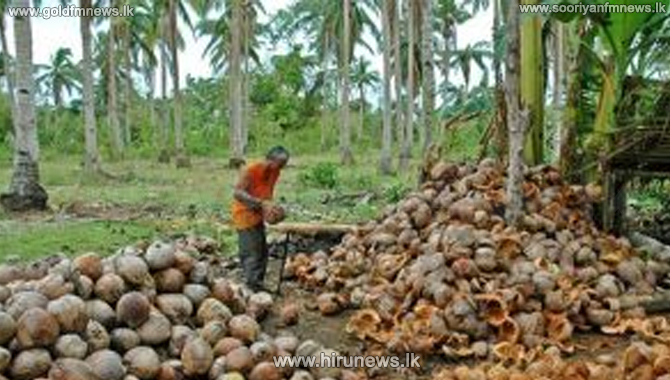
Daily count on new coronavirus cases climbs to 626 and confirms another 15 coronavirus deaths

November 7th, 2021

Courtesy Adaderana

The Health Ministry says that 168 more persons have tested positive for Covid-19, increasing the daily count of new cases to 626.

This is the third consecutive day that the daily count of new cases has exceeded 600. 

The total number of coronavirus cases reported in the country thus far has risen to 545,256 with this.

The Director General of Health Services has confirmed another 15 coronavirus related deaths for November 06, increasing the death toll in the country due to virus to 13,856.

According to the figures released today, the deaths include 08 males and 07 females.

Three of the patients are between the ages of 30-59 years while the rest are aged 60 years and above. 

Low-caste Malabaris pretending to be high-caste Jaffna Tamils

November 6th, 2021

H. L. D. Mahindapala

The year 1505 is a memorable date etched in the minds of those who knows anything about the history of Sri Lanka. It is the year in which the Portuguese arrived and opened up a new chapter in the history of the nation. But hardly anyone remembers 1215 – the year in which the Malabaris of S. India invaded Jaffna and paved the path for changing the history of the peninsula. A new history of the Tamils began to unravel in the Northern peninsula of Sri Lanka when the island was invaded by the Malabaris in 1215.  It is a date under-played and under-reported in the history of the nation. Even the Tamils of Jaffna do not make a fuss about this date because it blasts their myth of Tamils occupying the nation form the dawn of time”, as stated in their famous political manifesto, the Vadukoddai Resolution. The importance of 1215 is in the fact that it is the first year in the history of the Tamils of Jaffna. There was no permanent settlement or Tamil kingdom before that. It is the year in which the ancestors of modern Tamils in Jaffna first set foot in Sri Lanka to settle down and make it their permanent home. Jaffna Tamils of today came from the womb of the Malabaris who invaded Sri Lanka in 1215.  As new migrants their antecedents do not run beyond 1215 into the classical Sinhala-Buddhist era when the Chola colonialists and other political adventurers ruled Sri Lankan for brief intervals.  That was a different period with no connection to Jaffna as the homeland” of Tamils. It was separated not only by time but also by geography and history. For instance, the oldest archaeological finds of burial urns in Ponparippu are in  the mainland and not in the peninsula. Jaffna owes its existence as an exclusive ethnic enclave to the year 1215 when the Malabari invaders opened the gates for the other Malabaris to flood Jaffna and become permanent settlers.  It was in 1215 that the Jaffna Tamils began to make a history of their own. The fact that there were Tamils in other parts of the island before 1215 doesn’t entitle the Jaffna Tamils who came after 1215 to a heritage dating back to pre-Christian times. There is no connectivity between the new migrants who came from Malabar and the old Tamil settlers. They are as far apart as the Jaffna Tamils are from the Indian Tamils in the estates. Just as much as the Indian Tamils can claim their heritage from the 19th century the Jaffna Tamils can claim a history that starts only from 1215 and not from pre-Christian times.

The arrival of the Portuguese in 1505  had a far less impact than the invasion of the Malabaris 1215.  The Portuguese introduced Catholicism, the baila culture and trade with the West on a mass scale – all of which changed the culture of the nation marginally. Its 114-year occupation (1505 – 1619) did not lead to the creation of a sizeable enclave of Portuguese which accumulated political power to make extreme ethnic  demands. The Western colonisers were only temporary occupiers but not permanent settlers.  Nor did they aim to change the demography of the colonised domain into ethnic enclaves packed with their compatriots. Their aim essentially was to exploit the resources for profit. But the Malabari invasion of 1215 was aimed at making of Jaffna a permanent colony for Malabari settlers. It is their invasion and subsequent importing of Malabaris on a mass scale that changed the demography of Jaffna into a Vellala colony. The mass migration of Malabaris who contributed to the making of modern Jaffna has not received the attention it deserves. The Malabaris are the last invaders who came from  S. India. Unlike the other previous invaders from S. India they decided to settle down as colonists in Jaffna. This separates the Malabaris from previous migrants from S. India. They were an entirely new category of migrants with no historical links to previous Tamil-speaking migrants. In settling down as colonists the invading Malabaris began a new history not connected to other Tamils who came before as merchants, mercenaries, marauders, and political adventurers. It was the Malabari invaders in post-1215 period who increased the Tamil-speaking population to a dominant demographic position in the peninsula.  It is the flooding of Jaffna with the Malabari Vellalas that made it a homeland for the Vellalas. 

The homeland” concept of modern-day Jaffna Tamils began with the Malabari settlers. As direct descendants of the Malabaris who had given up the idea of going back to their homes in Malabar,  the only option available was to make Jaffna their homeland”.  It was natural for the homeland” concept to develop firmly in the minds of the new colonisers. They eventually slipped into the prevailing culture of Jaffna dominated by the Tamil language. There were no major obstacles  for the Tamil-speaking Malabaris to merge with the Tamil-speaking Jaffnaites. The Tamil identity grew with the rise of the new Tamil consciousness created by Arumuka Navalar, the Vellala guru in the 19th century.

As new settlers, with nowhere else to go,  the necessity of making Jaffna their homeland” gathered a political momentum. Some were imported as slaves to the native land owners, who were the early Malabari settlers, and the Dutch. Their situation was similar to that of the English convicts who settled down in Australia. With no way of going back to their motherland in England they developed an attachment to the new land and became Australians.  They got acclimatised to the new environment. Their new consciousness came out of the new Australian environment. Likewise, the homeless Malabaris became Jaffnaites. Because they came with the idea of settling down the idea of making Jaffna their homeland”  turned into a compulsive ideology. They came in large numbers, wave after wave,  and paved the path for the establishment of a permanent settlement for the new colonists. The Dutch colonial masters too engaged in importing Malabaris for cheap labour. These migratory waves strengthened the power of the Vellalas.

The Vellala factor that dominates modern Jaffna too came with the Malabaris. The Malabaris  were the Sudra Vellalas, lowest-caste in the classical social hierarchy of India. It is the continuous flood of  Malabari migrants that turned Jaffna into a colony dominated by the Sudra Vellalas. The other three high castes – Brahmins, (priests/intellectuals), Kshatriya (warriors) and Vaisyas (merchants) – stayed behind because the Indian sastras (holy texts) forbade high castes to leave the shores of India. The low-caste Sudra Vellalas came in waves after the first invasion in 1215. The influx of  Sudra Vellalas swelled the ranks of the demographically miniscule Tamil community in Jaffna. Jaffna then was a multi-ethnic territory shared by the Sinhala-Buddhists and the Muslims. There was a numerically formidable community of Sinhala-Buddhists in Jaffna. It was the flooding of Jaffna with the low-caste Malabaris that led to the rise and dominance of the Vellalas in Jaffna. The (1) increased migratory waves of Malabaris and (2) the subsequent ethnic cleansing of  the peninsula by the Jaffna kings of the Buddhists and Muslims tilted the demographic balance in favour of the Vellalas.

It is these two factors that  led to the creation of near a mono-ethnic enclave of Jaffna dominated by the Vellalas. The Jaffnaites of today are not the direct descendants of the Tamils who came in the first pre-Christian Mesolithic wave, or later with the imperialist invaders of the Chola period. Contemporary Jaffna, which the Tamils call their homeland”, was populated by the Malabaris who came in migratory waves from Malabar in the post-1215  invasion. Today the Vellalas stand as the majority in Jaffna, nearly 52 %. The  Vellala caste increased rapidly from 37 % of the population of Jaffna in early nineteenth century to over 50 percent today” indicates that people of other castes were incorporated into the caste system of the Vellalas. (The Ambivalence of Freedom : Slaves in Jaffna,  Sri Lanka in the Eighteenth and Nineteenth Centuries, Nira Wickramasinghe and Alicia Schrikker, in the Journal of Asian Studies, Vol. 78. No.3, (August) 2019). For instance, the Madapallis, a caste that was competing for supremacy in the caste hierarchy, merged with the Vellalas in time and virtually disappeared from the existential demographic map. Besides, Hindu Jaffna was a land without the Brahmins – the priest/intellectual caste that stood at the peak of the Hindu caste hierarchy of India. It is the Vellalas that stepped in as the substitute for the missing Brahmins at the top. This made Jaffna a mediocre copy of the classical Hindu society of India.

Hindu society without the Brahmins was like the Roman Catholics without the Pope who derives his sanctity from St. Peter, the original founder of the Catholic Church. There is sanctity and legitimacy in coming down directly from the original sacred source. In other words, Vellalaism manufactured in the 13th century lacked the essential sacred ingredient that made ancient Brahmanism the divinely ordained authority in India. Vellalaism lacked authenticity and sanctity of Brahmanism. However, amidst all the contributory strands that led to rise of the Vellalas as the dominant force in Jaffna the major factor that pushed the Vellalas to the top was the flooding of the  Jaffna with the low-caste Vellala colonisers from Malabar. The Malabari demographics made them the formidable force initially. The political power acquired later made it the dominant force. The available evidence makes it clear that despite the boasting of the high status of the Vellalas, mainly with fake historical claims of sanctity drawn from antiquity, they are, by and large, the remnants of the low-caste Malabaris from S. India. In short, the high caste Vellalas of Jaffna are the low-caste Malabaris from India.

When the Malabaris invaded Jaffna in 1215 it was occupied by Hindus, Buddhists and Muslims. The massive migratory waves of the Sudra Vellalas that came subsequently enabled them to outnumber the coeval communities.  Until the arrival of the Malabaris Jaffna was a multi-ethnic society. The invader, Magha Kalinga, became the first king of Jaffna in 1215. It was the Malabari invasions that paved the way to make Jaffna a near mono-ethnic community. It is the descendants of the migrant Malabaris that constitute the majority in Jaffna today. They were known as Malabaris during the Dutch and the early British periods. Even Hugh Cleghorn, whom the Tamils quote often, referred to the  Tamils as Malabaris. The Malabaris were also imported by the Dutch for cheap labour like the way the British imported new waves of indentured labour from S. India — Tamils who are not connected to the other Tamils of Sri Lanka except in the use of the Tamil language. 

The first permanent settlement of the Tamils began with the invaders from Malabar occupying Jaffna, says Prof. K. Indrapala, the first professor of history of Jaffna University. This  makes the contemporary Jaffnaites the direct descendants of the Malabaris who invaded the North after 1215. They have no links to the early Tamil migrants who came in the pre-historic Mesolithic  wave, or later as Chola invaders. Those migrants either went back to India, or settled down in small merchant colonies in Anuradhapura, Polonnaruwa, Mannar etc., or assimilated with the Sinhalese. They did not settle down in Jaffna as their homeland. If they considered Jaffna their homeland they would not have settled down outside Jaffna.  The early Tamil settlements of the Mesolithic and the post-Chola periods  were below the neck of Jaffna. The early settlers in the mainland were merchants, mercenaries, marauders and political adventurers.  Prof. Indrapala labels the two early usurpers Sena and Guttika and Elara as political adventurers”. (p. 46 – Journal of the Ceylon Branch of the Royal Asiatic Society, Vol. XIII, 1969)

Clearly, Jaffna became a homeland” for the Tamils only after Magha Kalinga invaded Sri Lanka in 1215 and made it a colony for the Malabaris to settle down. Jaffna was not the homeland” from the dawn of time” as the Tamils would like to imagine. Yalapana Vaipava Malai ((YVM) — a historical garland) mentions the numerous waves of Vellala migrants from S. India to Jaffna. Before Jaffna was invaded by the Malabaris, it was shared as common territory both by the Tamils and the Sinhalese.  The prominent presence of Sinhala-Buddhists in Jaffna is known by the numerous Sinhala place-names, says Prof. Indrapala. The presence of the Sinhala-Buddhists must have been significant because YVM mentions several inter-ethnic clashes between the two major communities. Mylvakanam, the historian, also mention the Sinhala-Buddhist rebelling against the Tamil kings. A political rebellion against the Tamil king could have taken place only if there was a substantial concentration of Sinhala-Buddhists in Jaffna.

Later the Jaffna kings ethnically cleansed Jaffna by forcibly dislodging the Sinhala-Buddhists. The insane fury” of Sankili (p. 33 — YVM) turned towards the Sinhala-Buddhists after he exterminated the Tamil Catholics in Mannar in 1544. After expelling the Sinhala-Buddhists the Tamil insane fury” turned against the Muslims. Jaffna became a near mono-ethnic enclave only after the ethnic cleansing of successive Tamil kings. It is this ethnically cleansed Jaffna that the Jaffnaites call their homeland” now. Jaffna was the homeland” of all communities before the ethnic cleansing. After the ethnic cleansing they claimed it to be a mono-ethnic homeland” of only the Tamils. It is to reinforce the exclusive claim of Northern territory to the Jaffna Vellalas that the Tamil intellectual industry is engaged indefatigably in rewriting history. For instance, they believe that they are the descendants of the original Dravidian migrants who came in the Mesolithic era when the recorded historical facts confirm that the Jaffnaites are the descendants of those who arrived only after 1215. So how can they claim a heritage from the dawn of time”?

The time when the Tamils arrived first is a complex issue that is lost in the mists of time. But what is indisputable is that the modern-day Tamils of Jaffna are the descendants of the Malabaris who are not connected in any way to the early Tamil settlers in the mainland, below the neck of Jaffna.  According to historical facts, Jaffna today is occupied mainly by the Tamil-speaking Malabaris who flooded Jaffna in the post-1215 invasion and settled down to make it their home.  The descendants of these Malabari settlers are far distant from  the original Tamils who settled down in the Mesolithic and post-Chola periods. They are as far apart as the Indian Tamils in hills are to the  Tamils of Jaffna. Just as much as Jaffnaites of today are historically, culturally and politically separate from the Tamils of the hill country Indians, the Malabaris who migrated in the 13th and 14th centuries had no links to the early Tamil settlers who domiciled in the mainland. The Malabaris are an entirely different wave of Indians, some of whom were imported by the Dutch like the way the British imported indentured labour from S. India.

The different waves of migration from S. India, though they all spoke Tamil, did not lead to the consolidation of the migrants into one solid front. The Tamils who came in the classical Sinhala-Buddhist era, the Malabaris who came after the invasion of 1215 and the indentured labour imported by the British are three different waves of migration not linked to each  other. To begin with they came at different periods in time and settled down in different regions creating their own cultures. Their cultural differences separated them into different political units, each with their specific needs and interests. They failed even to form a cohesive front that would link them organically into a formidable common force. S. J. V. Chelvanayakam, realising the necessity  to confront the majority Sinhalese with  large numbers, launched the iyakkum” (movement) of the Thamil Payasam Makkal ( the Tamil-speaking people). But it collapsed as the Vellala political agenda clashed with the interest of the other Tamil-speaking Muslims and Indians. Besides, the regional differences that generated different interests, motivations, and objectives were far stronger than the Tamil language that linked them. Other than language, the Malabaris, who later became  Jaffna Tamils in the 19th century, adopted an ethnic arrogance that looked down upon all the other Tamil-speaking people. This includes the Batticoloa Tamils who are territorially located in the eastern part of Tamil Eelam. Chelvanayakam referred to them superciliously as the trousered people of Batticoloa”. (p. 32 – S. J. V. Chelvanayakam and the Crisis of Sri Lankan Tamil Nationalism, 1947- 1977, A Political Biography by A. J. Wilson.) The arrogance of the low-caste Malabaris who later became the high-caste Vellalas knew no limits. They went all out to grab the leadership of the proposed pan-Tamil movement which failed because its political agenda was driven by Vellala arrogance and interests. The idea of the Iyakkam’ was to unite the Tamil-speaking people against the Sinhalese. But the political agenda consisted mainly that of Vellala issues. They were muscling in to dominate the Iyakkam” – a move that did not appeal to the other Tamil-speaking Indian estate and Muslim leaders. Even the Vadukoddai War” (a.k.a. Eelam War”) cracked wide open and foundered eventually on the regional differences between Karuna Amman of the Eastern and Velupillai Prabhakaran of the Northern Province – the arrogant king makers.

A close  scrutiny of Northern politics will reveal that it has failed repeateadly because they had pursued intransigent and arrogant politics. G. G. Ponnamabalam, representing 11 % of Tamils, insisted on getting 50 % of power when he was given 45% . Prabhakaran who was given maximum power, with international guarantees, rejected all offers insisting on 100% of power.  His insane fury” (YVM) made him believe that he possessed invincible power to achieve  all what he wants. It is the Tamil people that eventually paid for the intransigence and arrogance of their leaders. The Tamils went down the wrong track mainly by misreading their history. They still continue to believe in a glorified history that is not there. Theirs is an eternal struggle to overcome the inferiority of their mediocre  history. The perennial agony in their psyche is caused by their inability to forget their inglorious origins: they can’t accept the historical fact that they are the low-caste Malabaris who are pretending to be high-caste Vellalas. It has made them congenital idiots”. (Prof. Kumar David).

The fundamental flaw in the Vellala political culture is that they are intransigently dressed in Emperor’s clothes, refusing to accept the prediction of the revered Tamil prophet  Supathidda-muni who told the Jaffna King: The sovereignty (which has gone to the Portuguese, Dutch and British)  will never again come back to your descendants.”  (p. 29 — Yalapana Vaipava Malai, translated by C. Brito, 1879.)

Isn’t it time for the misguided Vellalas to come out of their delusional diadem and face the grim realities of history?

Time to identify enemies within

November 6th, 2021

Sangadasa Akurugoda

According to media reports, while addressing at the SLPPs 5th National Convention, Prime Minister Mahinda Rajapaksa said the SLPP was duty bound to preserve the unity among its coalition allies who had fought for the same cause. Recalling the sacrifices made by those who contributed towards the SLPP’s historic victory, the PM said, ‘’the size of a political party did not matter, and what really mattered was the goal. These parties have been with us through thick and thin. They are neither crutches nor a cat’s paw of the SLPP. Therefore, all parties must unite, and making that happen is our responsibility.”  While admitting the apparent frustration among the youth and those who voted for the SLPP during the last Presidential and Parliamentary elections, PM has stressed the need to be involved in politics among the people similar to how they manage government institutions after securing power after the elections.

During the last Presidential election, Presidential candidate Gitabhaya Rajapaksa received a 6.9 million mandate and, no doubt, majority of those who voted for him must have thought that Gotabhaya is the only answer to their majority of the problems. When we think about how Gotabhaya performed as the Secretary of the Ministry of and Urban Development, their expectations are reasonable to some extent.  Although Gotabhaya’s performance in managing government institutions is well aware, his state administration is yet to be seen since no state administration is detached from politics.

The ruling coalition, similar to all other coalition government we had since independence, consists of parliamentarians with different interests. Although Mahinda Rajapaksa has done a wonderful thing during his tenure of office as the President of the country up to 2015, by keeping all these elements together, probably with the intention of achieving political stability as a short term measure, while defeating terrorism, upgrading economy and country’s infra structure, we have witnessed some of its negative effects at the end. Corruptions charges were leveled against some of his close associates and similar to what we hear even today. We remember how one of them departed to USA soon after the 2015 election results were announced, accepting the responsibility for the defeat. There may be leading elements in the government who are working with similar sinister agendas even today.

SLPP rebels vow to scuttle New Fortress deal were talking about an American Agent and elements abusing the mandate people had given to Gotabhaya Rajapaksa. When talking about how the project has been awarded to a non-tendered company while the tenders submitted for a project are being evaluated, Leader of Pivithuru Hela Urumaya, Minister of Energy Udaya Gammanpila stated that the present government is engaged in more serious corruption far worse than those of JR, Premadsa , Chandrika and Ranil which were branded as extremely corrupt eras.

Although the above speech of the PM is commendable, it would have been much better, as the leader of the SLPP, if he has taken action to find out who are the main culprits, within the party, responsible for making the public unhappy and for treating minor allies of the coalition as crutches or cat’s paws.

We were under foreign powers for centuries due to the acts of saboteurs and traitors. We have witnessed, during our life time, how powerful are enemies within, when destabilising regimes. If the incumbent government is not taking any action, the public must be aware of these enemies, as a priority, should rally against such elements in order to protect our nation.

Sangadasa Akurugoda

POLITICS IN SRI LANKA Part 2

November 6th, 2021

KAMALIKA PIERIS

 SIR JOHN KOTELAWALA

Sir John Kotelawala was Prime Minister of Ceylon from 1953 to 1956. He was strongly pro-USA.Nayani Melegoda records that the USA Secretary of State had visited Ceylon when Sir John was Prime Minister, date not given. 

Sir John was firmly anti communist. He banned communist books and periodicals from arriving into Ceylon   and refused to permit a China good will mission to come in 1953. He refused to allow soviet scientists to come to watch the solar eclipse in 1954, but allowed those from USA, UK, Canada, Japan and India. He also refused to allow the Ceylon hockey, soccer and table tennis teams to take part in the World Youth Festival in Warsaw in 1955.

Sri John squashed all objections to the visit of Queen Elizabeth II in 1954. He cancelled all telegrams sent to London casting doubts on the matter.  The visit was a great success. The royal couple got a rapturous welcome with pandals.

DUDLEY SENANAYAKE.

Dudley Senanayake was Prime Minister three times. 1952-1953, 1960, 1965- 1970. Dudley Senanayake was a truly charismatic leader, said Edward Gunawardena. By his exemplary behavior he enjoyed the respect of both sides of the House. He was an excellent debater. If he had to make a speech it was a studied contribution. If he was not in the chamber he would be in discussion with his colleagues and members of the opposition as well; or he would be in the library or even learning different aspects of Parliamentary procedure from the Clerk of the House.

A remarkable characteristic of Dudley was his ability to concentrate and focus his mind on what had to be done. If he had to attend a function where he had to make a speech, he would prepare his speech in the car with his eyes closed, seemingly but not asleep. When parliamentary sessions were due he would closet himself in his room either at Woodlands or the annexe at Temple Trees for hours, sometimes smoking the pipe as well as cigarettes, concentrating on the agenda for the morrow, concluded Edward.

Others were not so impressed. Dudley Senanayake embodies the ideal, a head of state who does not shake the boat, makes no changes, said one critic. Four times Prime Minister, what did he do, the public asked. He seems to have done nothing. In his time a lot of jungle was cut down to no purpose, came the reply.

For decades people had suspected that Dudley and JR had known of the 1962 coup. Ms Bandaranaike, when she came to know about it also decided to keep it a secret.  But today the secret participation of both Dudley and JR in the 1962 coup is no longer secret. (C. Wijeyawickrema. Island 4.3.09 p 9).

Raja de Silva, former Commissioner of archaeology, had this to say. In 1968, there was provision in the Estimates of the Archaeological Department for the appointment of an Assistant Commissioner (Excavations). The Public Service Commission gazetted the notice calling for applications, and one day five members of the board of interview (myself included) sat in the board-room of the PSC waiting to interview each applicant. I noticed that the peon had whispered to each of three interview board members that there was a telephone call at the office of Secretary/PSC, next door. I was the next to be similarly telephoned, whereupon the following conversation took place.

de Silva (AC): Hello.

Bradman Weerakoon, Secretary to the Prime Minister (S/PM): Hello, Raja, Brad here. I have a message for you from the PM.

AC: Is it the same message that you gave the other interview board members?

S/PM: Yes, the PM is interested in one of the applicants you are about to interview (and he named the applicant).

AC: Brad, the post is for an officer of my Department, and I want the best.

S/PM: Understood. Anyway, I was asked to convey the message.

AC: Message received.

Siran Deraniyagala was the best applicant, and he was appointed to the new post in 1968 said Raja de Silva. (Island 17.10.21 p 9) (continued)

Sri Lanka and Bangladesh Can Benefit from Growing Trade Ties

November 6th, 2021

MD Pathik Hasan

Trade potential in multiple sectors: Many Bangladeshi products have bright potential in the Sri Lankan market. Similarly, there are huge possibilities for Lankan products in Bangladesh. Now it is high time to address the need to increase the participation of the private sector in the two countries. Sri Lankan entrepreneurs should invest in Bangladesh to serve their own business interests.

Sri Lanka has invested in Bangladesh’s power sector. Some more opportunities are there for Sri Lankan investors in Bangladesh’s special economic zones, industrial parks and high-tech parks.

The two countries can exchange their experiences in agriculture including paddy cultivation, and freshwater fish farming, tourism, cricket diplomacy as also Covid-19 vaccine diplomacy. Bangladesh has an interest in acquiring technical knowledge from Sri Lanka on coastal, aquaculture, marine culture and deep-sea fishing. More institutional cooperation in the field of education for technical training and skill development can strengthen the ties.

Bangladeshi nurses and other health workers can be trained in Sri Lanka, which can benefit from importing world-class medicines from Bangladesh.

Bangladesh has been doing well in the electronics field, and its products are available in Nepal now. Sri Lanka can import electronics products from Bangladesh to fulfill the demands of its people.

Even Rajapaksa has praised the digital transformation of Bangladesh under the leadership of PM Sheikh Hasina and emphasized increasing trade and expanding the scope of business between the two countries. He lauded Hasina’s leadership in tackling the pandemic. He evinced interest in exchanging experiences on blue economy and disaster management.

Extending port facilities: Sri Lanka has already allowed Bangladesh to use the seaport of Hambantota in its Southern Province. This throws open a huge opportunity for Bangladesh. Bangladesh-Sri Lanka trade volume in money terms is USD 61 million. The government is thinking of increasing it further.

Apart from this, Dhaka is also thinking of providing various facilities to bring investment to Sri Lanka. Chittagong port has historic connectivity with Colombo port. By using Hambantota port, Bangladesh can reach Central Asia, West Asia, Eurasia, Russia, China through the utilization of Pakistan’s Gwadar port and Iran’s Chabahar port.

Sri Lankan Prime Minister Mahinda Rajapaksa visited Bangladesh to mark the birth centenary of Its founder Bangabandhu Sheikh Mujibur Rahman and also the golden jubilee of Bangladesh’s independence and had detailed talks with Prime Minister Sheikh Hasina. The meeting agreed to take trade relations between the two countries to new heights. The meeting also signed six memoranda of understanding on bilateral cooperation.

Various regional and international issues were discussed during the one-hour summit. During the meeting, Sheikh Hasina stressed the need for a free trade agreement between the two countries, saying the amount of trade is less than expected. For this, both sides should quickly go for a free trade agreement.

According to the Bangladesh Bank, the country’s trade volume with Sri Lanka is very low. In the 2019-20 financial year, only goods worth Bangladesh Tk 473 crore were imported from Sri Lanka to Bangladesh. In the same financial year, only Bangladesh Tk 325 crore worth of goods were exported from Bangladesh.

Bangladesh signed its maiden preferential trade agreement with Bhutan in December 2020, with the people of the two nations reaping the dividends. If a free trade agreement is signed, then only the sky would be the limit for Bangladesh-Sri Lanka business relations.

Maritime security: The Colombo Security Conclave held earlier this month has ushered in opportunities for both Bangladesh and Sri Lanka concerning maritime security.  

Sri Lanka has recently been suffering from a foreign exchange reserve crisis. As per the latest reports, it has only USD 500 million in foreign exchange reserves. With this reserve, Colombo can’t meet its import expenses for three months. To keep the reserves risk-free, at least three months of import expenditure has to be kept aside.

Bangladesh has decided to lend USD 250 million to the Central Bank of Sri Lanka from its foreign exchange reserves. To this end, Bangladesh Bank is going to sign a memorandum of understanding with the Central Bank of Sri Lanka. According to Sri Lankan media outlets, Bangladesh has already disbursed USD 50 million to Sri Lankan authorities. This will pave the way for new multi-dimensional economic relations.

The Bangladesh government has taken the initiative to export 21 products to Sri Lanka with duty-free facilities. At the same time, the two countries have started expanding bilateral trade, increasing investment, and developing their shipping and tourism industries.  Readymade garments, medicines, jute and jute products, ceramics, juices, food products, vegetables, peppers, construction materials, melamine, paper and paper boards, flowers, plastic products, leather and leather products, shoes, soybean oil, potatoes, fertilizers and cosmetics from Bangladesh have a huge demand in the Sri Lankan market.

The Bangladesh government’s efforts to get a duty-free market facility for the export of these products show Sri Lanka is becoming increasingly important in increasing regional trade. As a result of various initiatives, Bangladesh’s trade relations with Sri Lanka will get further strengthened. The friendly relations between the two nations are also playing an important role in increasing trade and investment.

PM Sheikh Hasina is very keen to strengthen ties with all South Asian countries. She has been laying stress on economic diplomacy and ordered all government officials to ensure maritime trade and blue economy are given precedence in the government’s agenda. There is huge potential in tapping marine resources in the Bay of Bengal region; Sri Lanka can assist Bangladesh in this area. 

Bangladesh has taken the initiative, whose significance is huge, not just for the two countries but for South Asia. Both states should now build upon their growing business relations for mutual benefit.  

Making ‘Freedom of Expression’ Commit Suicide!

November 6th, 2021

Palitha senanayake

This is just about to happen, and this impending calamity is not taking place in some remote corner, in some ‘banana republic’ under a despot, but in the heart of democracy and between the two champions of modern civilized values; between the US and Britain.

The case of extradition of Julian Assange is currently being heard in Britain. It has now reached the stage where every single point of the Americans prosecution in the original hearing in September is being accepted by the British Supreme Court. This is despite the CIA involvement by 30 of its officials with Thor Deyson – their prime witness from Iceland, having recanted on his testimony + a history of being arrested for more cases of fraud. Thus, it is now accepted that ‘the activities of wikileaks and its founder, Julian Assange, has a valid case to stand trial in the United States’ ; i.e. for ‘endangering the US national security establishment’.

However, there is one issue that stands between the extradition of Assange and the accepted international norms and that is Julian Assange’s health. In addition to Julian’s failing health caused by years of incarceration, there is this recommendation by Professor Koppelman, who is a professor of psychiatry and his evaluation that Julian might, or was very likely, to commit suicide, if sent to the United States.

John Shipton, the father of WikiLeaks founder was present at this trial and his comments were, ‘The prosecutor outlined his case, he canvassed the assurances of the United States that Julian wouldn’t be thrown into some dungeon somewhere forgotten. Of course, we all know that those assurances or barriers because, you know, we have in front of us nine cases, where assurances were given and then reneged upon.’

The question before the civilized world now is; what is the crime Assange committed that tantamount to endangering the US national security establishment?

WikiLeaks published documents of political or historical importance that were censored or otherwise suppressed.  Notable among these had been the mails connected to the America operation in Iraq where drones and thousands of robot soldiers had been deployed against the Iraqi forces and  then against the Iraqi public. It also revealed many casualties the US forces were responsible for during their Afghan operation which the US army dismissed as ‘collateral’. Collateral is a term used in war parlance to describe unavoidable civilians deaths but the facts disclosed by the leaked cables pointed that the civilian deaths in Iraq and Afghanistan were in fact deliberate warranting their re-classifications as ‘war crimes’.

However, the most interesting of the disclosures by the Wikileaks cables relate to the chemical weapon attack that took place in Douma, Syria, on the 14th April 2018. The US, French and British forces launched an attack on the Government buildings and support infrastructure in Damascus, alleging that the Syrian government of Bashir Al Azzad had used chemical weapons against the rebel forces. Subsequently however an investigation was conducted by the OPCW (Organization for the Prohibition of Chemical Weapons) on the allegation. The findings of this investigation, was again suppressed but Wikleaks leaked these papers that suggested that the chemicals used in the attack were not the type of chemical weapons that the Syrian Government possessed. Strangely, the attack also did not harm the rebels, as alleged, but affected the civilian population badly. All in all the investigation papers, though fell short of  naming the US, the allied forces and the rebels they supported,  had sufficient evidence to suggest that the chemical attack was the result of a staged act by the rebels to make way for direct intervention by the US and allies.  

Most of these revelations of Wikileaks relate to the period of the Obama administration where Hillary Clinton was the Secretary of State and the lurid mail revelations that bordered on human cruelty, in an imperial mindset, embarrassed Ms Clinton and eventually spoiled her Presidential stakes in 2016.

Wikileaks also published some confidential mails relating on the Sri Lankan war in 2010 and those suggested that the US State department was fully aware of and was complicit, with the ground situation but the allegations of HR violations against the SL forces was a post-conflict development, necessitated due to  war victorious  Rajapakse regime’s close relationship with China.  

Thus, it is now clear that the Wikileaks founder, who never leaked mails relating to the internal mechanism of the pentagon  or about the US  arms industry, has in no way endangered the US national security but  is being punished for exposing the war crimes of the US administration. This in fact is the anti- thesis of the basic value of democratic governance that the western nations crow so much about. Media freedom is considered sacrosanct by the democratic west and they often flaunt its absence in the developing countries, as being the reason for their lack of progress and development. 

Naturally the world powers, especially UK and US, whose abuse of power lay badly exposed, have been offended and hence they have imprisoned Jullian Assange on triumphed-up charges. The hypocrisy here is that it is not the national security of big powers that Assange exposed, but the insecurity of powerless nations in the world. However, Julian Assange, despite agitations by many journalists and those who truly believe in the freedom of press, has been  languishing in the Ecuadorian embassy since 2010 and then  jailed in Britain, charged with all types of innuendos, ranging from rape to cybercrimes..

Ironically, the mainstream world media today, led again by the US and British media corporations, do not take up Assange’s case but subtly denounce the Wikileaks initiator, as such exposure would entail a sense of cognitive dissonance that would threaten their allegiance to the status quo narratives that justifies the world they know and love.

In a wide-ranging mainstream media reporting on Julian Assange, award-winning journalist John Pilger, blasted the Guardian for its repeated diatribe on the WikiLeaks founder. The Guardian editorial made a case for extraditing the Australian to the US, where he could face 175 years behind bars for possession and dissemination of classified information. Pilger offered his interpretation of what the insinuations actually meant. What the Guardian was really saying was this: ‘We are the fourth estate, the bearers of true liberal principles, the guardians of sacred rights. Such as, the right to suck up to power, the right to invade countries and the right to smear those who expose our double standards and, if necessary, the right to destroy them, he said. 

The INGO, Journalist Sans Boarders, who consider protecting journalist in all countries of the world, against Government and other vested  interests, to be their primary obligation and in the process they often take Governments in developing countries to task for not allowing journalists to be free in their profession. The JSF even took issues with the Sri Lankan Government’s advocacies to the local journalists, at the height of the LTTE war in 2009, that they should not report the war in a negative vein. Ironically, when  the man who exposed the war crimes of the super powers is being literally sentenced to death, the JSF is deafeningly silent.

 Thus it is not a case of, Journalist Sans frontiers, but rather a case of, Journalist Sans Selective Frontiers.

An in-depth study about TRADE between British and it’s Colonies-Eye Popping Revelations: US$45 Trillion Fraud By British Raj In India Alone

November 6th, 2021

Senaka Weeraratna

There is a story that is commonly told in Britain that the colonisation of India – as horrible as it may have been – was not of any major economic benefit to Britain itself. If anything, the administration of India was a cost to Britain. So the fact that the empire was sustained for so long – the story goes – was a gesture of Britain’s benevolence.

New research by the renowned economist Utsa Patnaik – just published by Columbia University Press – deals a crushing blow to this narrative. Drawing on nearly two centuries of detailed data on tax and trade, Patnaik calculated that Britain drained a total of nearly $45 trillion from India during the period 1765 to 1938.

It’s a staggering sum. For perspective, $45 trillion is 17 times more than the total annual gross domestic product of the United Kingdom today.

How did this come about?

It happened through the trade system. Prior to the colonial period, Britain bought goods like textiles and rice from Indian producers and paid for them in the normal way – mostly with silver – as they did with any other country. But something changed in 1765, shortly after the East India Company took control of the subcontinent and established a monopoly over Indian trade.

Here’s how it worked. The East India Company began collecting taxes in India, and then cleverly used a portion of those revenues (about a third) to fund the purchase of Indian goods for British use. In other words, instead of paying for Indian goods out of their own pocket, British traders acquired them for free, “buying” from peasants and weavers using money that had just been taken from them.

It was a scam – theft on a grand scale. Yet most Indians were unaware of what was going on because the agent who collected the taxes was not the same as the one who showed up to buy their goods. Had it been the same person, they surely would have smelled a rat.

Some of the stolen goods were consumed in Britain, and the rest were re-exported elsewhere. The re-export system allowed Britain to finance a flow of imports from Europe, including strategic materials like iron, tar and timber, which were essential to Britain’s industrialisation. Indeed, the Industrial Revolution depended in large part on this systematic theft from India.

On top of this, the British were able to sell the stolen goods to other countries for much more than they “bought” them for in the first place, pocketing not only 100 percent of the original value of the goods but also the markup.

After the British Raj took over in 1858, colonisers added a special new twist to the tax-and-buy system. As the East India Company’s monopoly broke down, Indian producers were allowed to export their goods directly to other countries. But Britain made sure that the payments for those goods nonetheless ended up in London. 

How did this work? Basically, anyone who wanted to buy goods from India would do so using special Council Bills – a unique paper currency issued only by the British Crown. And the only way to get those bills was to buy them from London with gold or silver. So traders would pay London in gold to get the bills, and then use the bills to pay Indian producers. When Indians cashed the bills in at the local colonial office, they were “paid” in rupees out of tax revenues – money that had just been collected from them. So, once again, they were not in fact paid at all; they were defrauded.

Meanwhile, London ended up with all of the gold and silver that should have gone directly to the Indians in exchange for their exports.

This corrupt system meant that even while India was running an impressive trade surplus with the rest of the world – a surplus that lasted for three decades in the early 20th century – it showed up as a deficit in the national accounts because the real income from India’s exports was appropriated in its entirety by Britain. 

Some point to this fictional “deficit” as evidence that India was a liability to Britain. But exactly the opposite is true. Britain intercepted enormous quantities of income that rightly belonged to Indian producers. India was the goose that laid the golden egg. Meanwhile, the “deficit” meant that India had no option but to borrow from Britain to finance its imports. So the entire Indian population was forced into completely unnecessary debt to their colonial overlords, further cementing British control. 

Britain used the windfall from this fraudulent system to fuel the engines of imperial violence – funding the invasion of China in the 1840s and the suppression of the Indian Rebellion in 1857. And this was on top of what the Crown took directly from Indian taxpayers to pay for its wars. As Patnaik points out, “the cost of all Britain’s wars of conquest outside Indian borders were charged always wholly or mainly to Indian revenues.” 

And that’s not all. Britain used this flow of tribute from India to finance the expansion of capitalism in Europe and regions of European settlement, like Canada and Australia. So not only the industrialisation of Britain but also the industrialisation of much of the Western world was facilitated by extraction from the colonies.

Patnaik identifies four distinct economic periods in colonial India from 1765 to 1938, calculates the extraction for each, and then compounds at a modest rate of interest from the middle of each period to the present. Adding it all up, she finds that the total drain amounts to $44.6 trillion. This figure is conservative, she says, and does not include the debts that Britain imposed on India during the Raj.

These are eye-watering sums. But the true costs of this drain cannot be calculated. If India had been able to invest its own tax revenues and foreign exchange earnings in development – as Japan did – there’s no telling how history might have turned out differently. India could very well have become an economic powerhouse. Centuries of poverty and suffering could have been prevented.

All of this is a sobering antidote to the rosy narrative promoted by certain powerful voices in Britain. The conservative historian Niall Ferguson has claimed that British rule helped “develop” India. While he was prime minister, David Cameron asserted that British rule was a net help to India.

This narrative has found considerable traction in the popular imagination: according to a 2014 YouGov poll, 50 percent of people in Britain believe that colonialism was beneficial to the colonies.

Yet during the entire 200-year history of British rule in India, there was almost no increase in per capita income. In fact, during the last half of the 19th century – the heyday of British intervention – income in India collapsed by half. The average life expectancy of Indians dropped by a fifth from 1870 to 1920. Tens of millions died needlessly of policy-induced famine.

Britain didn’t develop India. Quite the contrary – as Patnaik’s work makes clear – India developed Britain.

What does this require of Britain today? An apology? Absolutely. Reparations? Perhaps – although there is not enough money in all of Britain to cover the sums that Patnaik identifies. In the meantime, we can start by setting the story straight. We need to recognise that Britain retained control of India not out of benevolence but for the sake of plunder and that Britain’s industrial rise didn’t emerge sui generis from the steam engine and strong institutions, as our schoolbooks would have it, but depended on violent theft from other lands and other peoples.

Sri Lanka has a very positive outlook

November 6th, 2021

WORLD BANK VP HARTWIG SCHAFER WITH INDEEWARI AMUWATTE 

Indo-Lankan seminar on Ayurveda held

November 6th, 2021

Courtesy NewsIn.Asia

Colombo, November 6 (newsin.asia): On the occasion of the 6th Ayurveda Day, Swami Vivekananda Cultural Center, the cultural arm of the High Commission of India, Colombo, organised a seminar on 2nd November, 2021 on the theme Ayurveda for Poshan”, in a hybrid mode. A limited number of participants attended the seminar at the Center whereas other participants, including from India, Sri Lanka and Singapore, attended the seminar in a virtual mode. The key objectives of the seminar were to promote exchanges of recent researches in Ayurveda and to spread awareness about Ayurveda for better health and living.

Every year, since 2016, the Government of India celebrates the Ayurveda Day on Dhanvantari Jayanti (Dhanteras) for promotion, propagation and popularization of Ayurveda. The day commemorates the birth anniversary of Lord Dhanvantari, who is referred to as the ‘God of Ayurveda’ in Sushruta Samhita, an ancient Sanskrit text on medicine and surgery. Dhanteras is also first of the five days celebration of Deepavali, the festival of light.

The High Commissioner of India to Sri Lanka, H.E. Shri Gopal Baglay was the Chief Guest at the seminar. Conveying his greetings on Dhanteras and Deepavali, High Commissioner highlighted the importance of Ayurveda as a holistic system of medicine that focuses on prevention of disease as well as promotion of health. He underlined the fact that Ayurveda, as a natural system of medicine, promotes harmony of the body and the environment. He highlighted the contribution of Buddhism to the development and spread of Ayurveda and recalled the important roles played by world renowned Indian universities, such as Nalanda, Takshila, and Vikramshila, as well as noted Buddhist scholars and vaidya physicians, such as Vagbhata and Nagarjuna, in the development and spread of Ayurveda.

Senior Prof. Priyani Paranagama, Director of the Institute of Indigenous Medicine, University of Colombo, graced the occasion as the Guest of Honour. Addressing the participants, she highlighted the significance of the centuries old tradition of Ayurveda as a system of medicine and noted that the western medicinal science is increasingly taking note of Ayurveda. Dr. Dhammika Abeygunawardhana, Commissioner, Department of Ayurveda, also attended the seminar.

Other distinguished speakers from Sri Lanka included Dr. Danister L. Perera, Ayurvedic Physician, former Registrar of Ayurveda Medical Council, former Director of Sri Lanka Conservation and Sustainable use of Medicinal Plants Project; Dr. Pathirage Kamal Perera, Senior Lecturer, Department of Ayurveda Pharmacology and Pharmaceutics, Institute of Indigenous Medicine, University of Colombo, Consultant Physician in National Ayurveda Teaching Hospital, Colombo; and Dr. Ajith Amarasinghe, Consultant Pediatrician and Clinical Allergist.

Eminent speakers from India included Dr. Amit Singh, Chief Medical Officer, Arogyadham, an integrative Medicine Hospital in Bangalore; Prof. Dr. Govinda Sharma, Department of Rasashastra and Bhaishajya Kalpana, SDM College of Ayurveda and Hospital, Karnataka; Prof. Dr. Suhas Kumar Shetty, Head-Department of Manasaroga, Dean of Research & Development, SDM College of Ayurveda and Hospitals; Dr. Vasudha Sharma, Medical Director and Co-founder of Vivekananda Health Global- Chain of Integrative medicine based centers; and Dr. Shreyes S., Consultant & Associate Professor, Rajiv Gandhi Education society’s Ayurvedic Medical College, Karnataka.

From Singapore, Dr. Satyam Tripathi, Clinical Researcher and Author, Ayurveda Yoga Therapy Consultant, and Director, Union Yoga Ayurveda, also spoke on the occasion.

The scholars highlighted the significance of Ayurveda in eradicating impurities, boosting immunity, and maintaining harmony in life. They also elucidated the role of diet, herbs, and spices in Ayurvedic treatment. The webinar was attended by about 100 participants, which included students of Ayurveda from Sri Lanka and India.

The Ministry of Ayurveda, Yoga, Naturopathy, Unani, Siddha, Sowa-Rigpa and Homoeopathy (abbreviated as AYUSH) of Government of India and the Sri Lankan Ministry of Health, Nutrition and Indigenous Medicine have undertaken a series of initiatives for promotion, education, research and propagation of indigenous alternative medicine systems. Both the Ministries have also released specific guidelines that boost immunity and promote good health and hygiene to help combat the coronavirus.

Lack of consultations has led to Lankan government’s taking inappropriate and unpopular decisions

November 6th, 2021

By P.K.Balachandran Courtesy NewsIn.Asia

Colombo, November 6 (Counterpoint): Gotabaya Rajapaksa came to power through the November 2019 Presidential election with a thumping majority. His party, the Sri Lanka Podujana Peramuna (SLPP), secured a two thirds majority in the August 2020 parliamentary elections. People had high hopes of rapid economic development under the stewardship of Gotabaya Rajapaksa, who was known for his development-orientation as well his no-nonsense military mindset.

But despite his awesome reputation of doing what his predecessors could not do (vanquish the dreaded LTTE as Sri Lanka’s Defense Secretary) and his reputation as an efficient administrator gained from his post-war stint as Urban Development Secretary, Gotabaya Rajapaksa has been found wanting as President of the country. As a result, the SLPP is set to face an uphill task when elections are called for the nine Provincial Councils early next year.   

With the SLPP’s political prospects looking dim, its parliamentary allies are becoming rebellious, threatening to break away and fight the coming elections independently if their demands are not met. Their basic demand is: consult us and take us into confidence as equal stakeholders in governance. But the President as well as the SLPP leader Basil Rajapaksa appear to care little for them.

The opposition Samagi Jana Balwegaya (SJB) led by Sajith Premadasa and the United National Party (UNP) led by Ranil Wickremesinghe are increasingly taking an aggressive stance on issues. School teachers and Principals are on the warpath, as are trade unions of the Ceylon Electricity Board and the ports. Prices of essential commodities have hit the roof, pinching the pocket of the common man.

Lankan farmers have been barred from using chemical fertilizers and pesticides and are forced to use organic fertilizers which are in short supply. According to one of the leading English dailies, in some cases, farmers have been reluctant to cultivate a good part of their lands due to uncertainty over availability of organic fertilizers. The government caused severe anxiety in the tea industry (a major export crop) because of the ban on chemical fertilizers and pesticides. Later, reason dawned, and chemical fertilizers were made available to the planters.

Shortfalls in cultivation are bound to impinge on food security. The government has said that it will import food to make up for any shortage. But there is severe dollar crunch which does not make imports a panacea.  

Organic fertilizers imported from China were found to have a harmful bacteria and the consignment was not allowed in. The Chinese government said that testing was not proper and demanded that it be done by a neutral agency in Europe. But on a court order, the State owned Peoples’ Bank stopped payment to the Chinese company concerned. The Chinese government then blacklisted the Peoples Bank.  There was also a controversy over the efficacy and cost of the nano nitrogen fertilizer procured from India, but the issue has died down and nano nitrogen fertilizer is being imported without a hitch.

A deal with an American company New Fortress to set up a power plant using LNG is being opposed tooth and nail by the Ceylon Electricity Board workers who say that the deal is opaque, not in Sri Lanka’s interest in the long term, and will put on the backburner the national plan to go for renewable sources of energy within a given time span. Electricity Board chairman M.C.Fernando’s plea that the terms of the deal with New Fortress cannot be revealed because of a secrecy clause has only added to the controversy. He also said that the deal has a political rationale which will not go down well with the people unless it is properly explained to them. Electricity workers have threatened to cause a 48-hour island-wide blackout if the New Fortress deal is not abandoned but the President has reiterated that the deal is in the best interest of Sri Lanka.

The COVID-19 pandemic, which struck the island nation in early 2020 and is yet to go away, has been a major reason for the government’s poor performance. But the government’s poor handling of the health crisis and its economic spin off has been equally important. Too many cooks have spoilt the broth as far as health crisis management is concerned. Multiple voices from the government and outside, and statements of multiple spokesmen of the government, have confused the people. Extended lockdowns, called at the insistence of medical professionals, brought the economy to a grinding halt, hurting the poor and the daily wage earners the most. Shortages created by halts to imports and inter-provincial movement restrictions, were exacerbated by hoarders. At one stage, the government had to invoke emergency regulations to set matters right.

The government’s inability to take decisions after due consultations, the ad hoc nature of the decisions taken, a lack of clarity in decisions announced and an inability to implement decisions, combined to pull the economy down to the detriment of the common man. President Gotabaya Rajapaksa has been taking decisions without consulting his ministers, his MPs and SLPP’s alliance partners. The army and other uniformed services were put in key decision-making and implementing positions, sidelining the civil service. Army personnel’s methods of working and their mindset have turned out to be unsuitable for dealing with civil problems. Decisions were taken without a broad-based consultative process involving grassroots-level political functionaries, Ministers, MPs and party workers. Frustration is widespread though not publicly expressed.

The Lankan government had its ears to the ground when Mahinda Rajapaksa was President. It has now lost its touch with ground realities. Mahinda Rajapaksa constantly met people. He had an open house and encouraged people to open up. He did not shut himself in an office and issue orders. He maintained contact with every level of the political structure and the bureaucracy.

As Prime Minister now, Mahinda Rajapaksa is engaged in firefighting to the extent possible, but without upsetting the applecart.  He has advised SLPP leaders to keep the minor parties in the alliance in the loop about government’s thinking and get them involved in decision making. Those who stood by the SLPP during the elections, should not be disregarded,” he said. He has also pointed out that the youth are getting disillusioned and that the party should bring them back into the fold. On the import of allegedly polluted organic fertilizers from China, which has soured relations with Beijing, Mahinda Rajapaksa had said that government should agree to the Chinese proposal to get the samples tested at a neutral and well established testing laboratory in Europe.

Without prior consultation with the political apparatus available with the government, President Gotabaya Rajapaksa set up a Presidential Task Force to study and draft a law to being about One Country, One law”. But the 13-member Task Force has no Tamil or Christian representatives. And its Chairperson is the hardline, anti-Muslim Buddhist monk Ven. Galagodaaththe Gnanasara Thera. The minorities and liberals naturally fear that the Task Force will suggest measures entirely in tune with the political interests of the Sinhala-Buddhist majority.

And the PTF is likely to be very hard on the Muslims whose institutions it is expected to reform on priority. Since some of the Muslim institutions are rooted in Islam they are immutable. Therefore, there is bound to be resistance from the Muslim community.

Bishop J. Winston S. Fernando, President of the Catholic Bishops’ Conference of Sri Lanka, has urged the President to repeal the gazette notification for the appointment of the Task Force.

COVID death toll moves up by 20

November 6th, 2021

Courtesy Adaderana

The total number of people who died of COVID-19 infection in Sri Lanka moved up as 20 more fatalities were confirmed by the Director-General of Health Services on Friday (November 05).

The new development has pushed the official death toll from the virus outbreak in the country to 13,841.

The latest victims include 10 males and 10 females, the Department of Government Information said.

According to official data, 06 deaths were reported among elderly people aged above 60 years. In addition, 14 people aged between 30-59 years have also fallen victim to the virus infection.


Copyright © 2026 LankaWeb.com. All Rights Reserved. Powered by Wordpress