
ආණ්ඩුව අසිංහලයි අබෞද්ධයි! අගමැතිණිය දේශද්රෝහී කාන්තාවක්! ජිනානන්ද හිමිගෙන් දැඩි ප්රහාරයක්
December 31st, 2025මහා සංඝරත්නය වහාම කොළඹට රැස්වෙයි – අධ්යාපන ප්රතිසංස්කරණවල භායනක පැත්ත හෙළි කරයි
December 31st, 2025අලුත් විෂය නිර්දේශයෙන් හයේ සිසුන්ට සමලිංගික සහකරුවන් සොයාගන්න යොමුවක්.. මුද්රණය කර අවසන්..
December 30th, 2025උපුටා ගැන්ම ලංකා සී නිව්ස්

අධ්යාපනික සංශෝධන ඔස්සේ පාසල් දරුවන් අතර සමලිංගිකත්වය ප්රචලිත කිරීමේ ප්රයත්නයක් පවතින බවට වර්තමානයේ විවේචන එල්ල වෙමින් පවතී.
හයවන ශ්රේණියේ ඉංග්රීසි විෂය ඉගෙනුම් කට්ටලයක අඩංගු වූ යොමුවක් (Link) හරහා සම ලිංගික සහකරුවන් සොයා දෙන අන්තර්ජාල අඩවියක් වෙත යොමු කර ඇති බවට කොළඹදී පැවැත්වූ මාධ්ය හමුවකදී අනාවරණය විය.
අදාළ වෙබ් අඩවිය නිරීක්ෂණය කිරීමේදී එය සමලිංගික සබඳතා සඳහා පුද්ගලයින් සම්බන්ධ කර දෙන වේදිකාවක් බව තහවුරු වී තිබේ.
මෙම සිදුවීමත් සමඟ අදාළ ඉගෙනුම් ද්රව්ය පාසල් වෙත ලබා දීම නතර කිරීමට රජය වහාම පියවර ගෙන ඇති අතර, මෙම බරපතළ වරද සිදු වූ ආකාරය පිළිබඳව පුළුල් පරීක්ෂණයක් ද මේ වන විට ආරම්භ කර ඇත.
මේ අතර අධ්යාපන අමාත්යාංශයේ ලේකම් නාලක කලුවැව මහතා පවසන්නේ ජාතික අධ්යාපන ආයතනය විසින් පිළියෙළ කළ, මේ වන විට මුද්රණය අවසන් කර ඇති, 6 ශ්රේණිය ඉංග්රිසි භාෂාවට අදාළ මොඩියුලයක යම් නුසුදුසු වෙබ් අඩවියක නාමය ලෙස දැක්වෙන හැඳින්වීමක් කර ඇති බවට ලද පැමිණිල්ලක් මත ඒ පිළිබඳ ව සොයා බැලූ අතර එම පැමිණිල්ල නිවැරදි බවට තහවුරු වී ඇති බවය.
එබැවින් වහාම එම මොඩියුලය බෙදාහැරීම අත්හිටවනු ලැබු අතර මේ සම්බන්ධයෙන් වහාම ක්රියාත්මක වන පරිදි පරීක්ෂණයක් ද ආරම්භ කර ඇති බවත් අපරාධ පරික්ෂණ දෙපාර්තමේන්තුව වෙත ද පැමිණිලි කිරීමට අපේක්ෂිත බවත් හෙතෙම පවසයි.
2026 වසර ගැන බන්දුලගේ අනාවැකිය
December 30th, 2025සමලිංගික මිතුරෙක් සොයාගන්නා අයුරු 6 ශේණියේ ඉංග්රීසි මොඩියුලයට එයි.
December 30th, 2025Borella Handiya
අචින්තිතම්පි භවති: ධර්ම විකෘතිය සහ සැබෑ බුද්ධ දේශනාව අතර වෙනස
December 30th, 2025උපුටාගැණීම මුහුනුපොත
වර්තමාන ශ්රී ලංකාවේ සමාජ ජාලා මාධ්ය තුළත්, පොදු සමාජ සංවාදය තුළත් “අචින්ති තම්පි භවති චින්තිතම්පි විනස්සති” යන ගාථා පාඨය අතිශය ජනප්රිය මාතෘකාවක් බවට පත්ව තිබේ. විශේෂයෙන් “කත්නෝරුවේ හාමුදුරුවෝ” වැනි අය විසින් මෙම ගාථාවට ලබා දෙනු ලබන “හිතන දේ වෙන්නේ නෑ – වෙන දේ හිතාගන්න බෑ” යන සරල සහ අලංකාර යැයි හැඟෙන අර්ථකථනය නිසා බොහෝ දෙනා මෙය මහා දාර්ශනික සත්යයක් ලෙස වැළඳගෙන ඇත. නමුත් කණගාටුවට කරුණ නම්, මෙම ප්රචලිත අදහස හුදෙක් බුද්ධ භාෂිතයට පටහැනි, අර්ථ විකෘතියක් සහිත ප්රකාශයක් වීමයි. “සරභමිග ජාතකය”, “මහා ජනක ජාතකය” සහ “ඒතදග්ග පාලිය” වැනි මූලාශ්රයන්හි සඳහන් වන මෙම ගාථාව හරහා බුදුදහම අපේක්ෂා කරන ගැඹුරු අර්ථය, වර්තමානයේ ප්රචලිත වී ඇති අදහසට වඩා හාත්පසින්ම වෙනස්ය. මෙය හුදෙක් ත්රීරෝද රථයක හෝ පච්චයක (tattoo) කොටා ගැනීමට තරම් ආකර්ෂණීය වැකියක් ලෙස පෙනුනද, ඉන් සමාජගත කරනුයේ බුදුදහමේ මූලික ඉගැන්වීම් වන වීර්යය සහ හේතු ඵල දහම ප්රතික්ෂේප කරන මිත්යා මතවාදයකි.
මෙම “හිතන දේ වෙන්නේ නෑ” යන මතය බුද්ධ වචනයක් ලෙස පිළිගතහොත්, එය බුද්ධත්වයේ මූලික පදනමටම පහරක් එල්ල කරයි. මන්දයත්, ගෞතම බුදුරජාණන් වහන්සේ සාරාසංඛ්ය කල්ප ලක්ෂයකට පෙර දීපංකර බුදුරදුන් පාමුලදී තමන් වහන්සේ අනාගතයේ බුදු වන බවට “සිතූ” උතුම් ප්රාර්ථනාව මෙම තර්කයට අනුව ඉටු නොවිය යුතුව තිබුණි. බෝසතාණන් වහන්සේ එදා ස්ත්රියක්ව ඉපදී සිටියදී “මම කවදා හෝ මගේ අයියා මෙන් බුදුවෙනවා” යැයි සිතූ සිතුවිල්ල, වත්මන් විකෘති අර්ථකථනයට අනුව නම් කිසිදා යථාර්ථයක් නොවනු ඇත. එසේ වී නම් අද අපට දේශනා කිරීමට ගෞතම බුදු කෙනෙකු පහළ නොවනු ඇත. එබැවින් යමක් සිතූ පමණින් එය සිදු නොවන බව කීම එක් දෙයක් වුවත්, සිතන දේ කිසිදා සිදු නොවන බවත්, සිදු වන දේ කිසිදා සිතාගත නොහැකි බවත් පැවසීම බෝසත් ප්රතිපදාවටත්, සසර පුරා පාරමිතා පිරීමේ සංකල්පයටත් කරන බලවත් නිග්රහයකි.
තවද, “වෙන දේ හිතාගන්න බෑ” යනුවෙන් පවසමින් ලෝකයේ සියලු සිදුවීම් අහඹු හෝ අද්භූත දේවල් ලෙස හුවා දැක්වීම බුදුදහමේ ඉගැන්වෙන නියාම ධර්ම පහට (උතු, බීජ, චිත්ත, කම්ම, ධම්ම) මුළුමනින්ම පටහැනිය. උදාහරණයක් ලෙස බීජ නියාමයට අනුව අඹ ඇටයක් පැල කළ විට ලැබෙන්නේ අඹ පැලයකි; එයින් පොල් පැලයක් ලැබෙන්නේ නැත. යම් සම්භාවිතාවක් තුළ සිදු විය හැකි දේ වෙනස් විය හැකි වුවත්, ඍජුවම “වෙන දේ හිතාගන්න බෑ” යැයි පැවසීමෙන් ගම්ය වන්නේ කිසිදු හේතු ඵල සම්බන්ධයක් නොමැති අරාජික ස්වභාවයකි. අවාසනාවකට අපේ සමාජය මෙවැනි ගැඹුරක් නැති, ආටෝප සාටෝප වදන්වලට රැවටී ඇත. ජ්යෝතිෂය ප්රතික්ෂේප කිරීමට “කිං කරිස්සති තාරකා” වැනි පාඨයක් අන්තනෝමතිකව යොදාගන්නා සේම, මෙම ගාථාව ද පුද්ගලික අත්දැකීම් පොදු ධර්මතාවක් ලෙස වරදවා වටහා ගනිමින් භාවිතා කරනු පෙනේ. සත්ය වශයෙන්ම මෙය එක් අවස්ථාවකදී සිදු වූ විශේෂ සිදුවීමක් මිස, සමස්ත විශ්වයටම බලපාන නියත ධර්මතාවක් නොවේ.
මෙම ගාථාව ඇතුළත් සරභමිග සහ මහා ජනක ජාතක අටුවාවන් විමසීමේදී එහි සැබෑ අර්ථය මනාව පැහැදිලි වේ. සරභ මිග ජාතකයේදී මෙය දේශනා කරනුයේ රජු මුවා පසුපස එලවාගෙන ගොස් අනපේක්ෂිත ලෙස වළකට වැටුණු සිද්ධිය අරබයාය. එහිදී “අචින්තිතම්පි” යන්නෙන් අදහස් කළේ රජු තමා වළක වැටෙතැයි නොසිතූ බවත්, මුවා අල්ලා ගැනීමට සිතූ අදහස ඉටු නොවූ බවත්ය. එය එම පුද්ගලයාට අදාළ විශේෂ සිදුවීමක් විග්රහ කිරීමකි. නමුත් වඩාත් වැදගත් වන්නේ මහා ජනක ජාතකයේ එන විග්රහයයි. එහි පැහැදිලිව දක්වන්නේ හුදෙක් සම්පත් හෝ ජයග්රහණ “සිතූ පමණින්” (න හි චින්තාමයා භොගා) නොලැබෙන බවයි. යමක් ලබා ගැනීමට නම් අනිවාර්යයෙන්ම “වීර්යය” තිබිය යුතුය. මහා ජනක කුමරු සිතුවේ යුද්ධ කොට රාජ්යය ගැනීමට වුවත්, ඔහුගේ අප්රතිහත වීර්යය නිසා යුද්ධයකින් තොරවම රාජ්යය ලැබුණි. එනම් වීර්යවන්තයාට තමන් සිතුවාටත් වඩා යහපත් ප්රතිඵල අත්කර ගත හැකි බව මිස, සිතන කිසිවක් සිදු නොවන බව ඉන් නොකියැවේ.
අවසාන වශයෙන්, මෙම ගාථා පාඨයේ සැබෑ බෞද්ධ ඉගැන්වීම වන්නේ ප්රාර්ථනාව හෝ සිතුවිල්ල පමණක් ප්රමාණවත් නොවන බවත්, එය යථාර්ථයක් කර ගැනීමට වීර්යය අත්යවශ්ය බවත්ය. “භාවනානුයුක්ත සූත්රයේ” සඳහන් පරිදි කිකිළියක් බිත්තර දමා ඒවා රකිමින් වීර්යය නොකර, පැටවුන් එනු ඇතැයි හුදෙක් සිතා සිටීමෙන් ඵලක් නැත. නමුත් යමෙක් නිවැරදිව වීර්යය කරන්නේ නම්, ඔහුට සිතන දේ සාක්ෂාත් කර ගැනීමටත්, ඇතැම් විට ඊටත් වඩා ඉහළ ප්රතිඵල ලබා ගැනීමටත් හැකියාව ලැබේ. එබැවින් වර්තමානයේ ප්රචලිත “කත්නෝරු බණ” වැනි විකෘති අර්ථකථන පසුපස නොයා, ධර්මයේ සඳහන් සැබෑ අර්ථය වන “වීර්යයේ වැදගත්කම” වටහා ගැනීම බෞද්ධයාගේ වගකීමකි. බුදු වදන් විලාසිතාවක් හෝ ට්රෙන්ඩ් එකක් කර නොගෙන, එහි ප්රායෝගික අරුත දිවි පෙවෙතට ගලපා ගැනීම තුළින් පමණක් සිතන පතන සම්පත් උදා කර ගත හැකි වනු ඇත.
A lunch in Midigama and an unexpected Euro Bill
December 29th, 2025Courtesy Daily Mirror
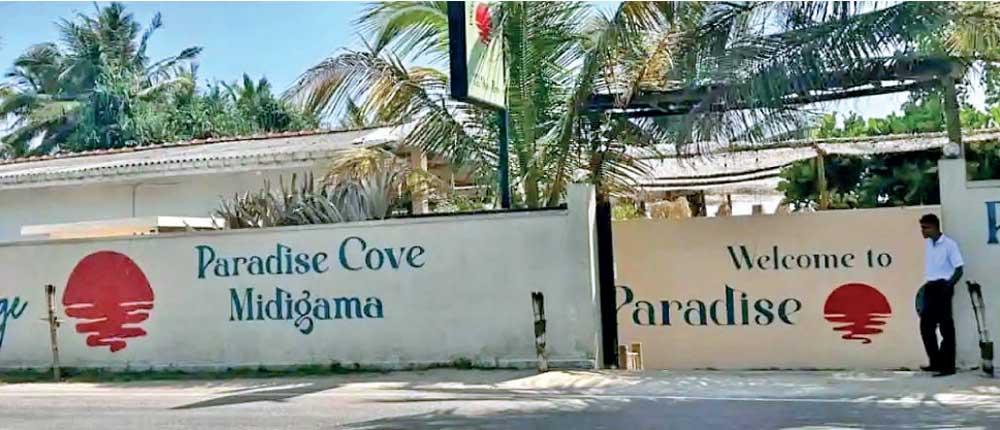
The unsavoury experience the writer had in this restaurant is not simply about the cost of a meal. It highlights a worrying trend in some tourist areas where foreign currency practices appear to be quietly normalised, even for everyday domestic transactions
- A late lunch near a seaside restaurant in Midigama turns out to be a disaster
- It was only after we had finished our meal that we were informed that payment could not be made in Sri Lankan Rupees
- Businesses aren’t permitted to compel customers to pay in foreign currency for domestic services, when prices are displayed in rupees
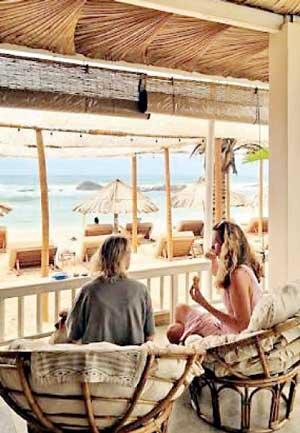 |
| When Sri Lankans are required to pay in foreign currency at local establishments, they are effectively treated as outsiders in their own economy |
By Giselle Gunewardene
I went to Paradise Cove in Midigama for a late lunch with three friends on December 26, 2025, expecting nothing more than a relaxed meal by the sea. Instead, the experience left me unsettled and questioning how such practices can take place in Sri Lanka without scrutiny
At the entrance and near the counter, notices were clearly displayed stating that cash payments were not accepted and that only card payments were allowed. While inconvenient, this alone did not seem unusual. What was not disclosed anywhere, either on the notices or verbally, was that card payments would be processed only in a foreign currency.
The menu presented to us listed all prices in Sri Lankan Rupees. There was no mention that payment in local currency would not be accepted, nor any indication that a foreign currency would be used at the point of billing. Based on the information provided, there was no reason to assume that a meal ordered and priced in rupees would ultimately have to be paid for in anything else.
It was only after we had finished our meal that we were informed that payment could not be made in Sri Lankan Rupees and that the card machine would charge us in Euros. With no cash option and no local currency option available, we were left with no practical choice but to proceed with the transaction as instructed.
The final bill for our table of four came to €150.70.
This is where the issue becomes more serious. Under Sri Lankan law, the Sri Lankan Rupee is the sole legal tender for domestic commercial transactions. Restaurants and cafés operating within the country are required to charge and settle bills in local currency. Charging customers in foreign currency is permitted only in very limited and specifically authorised circumstances.
The Central Bank of Sri Lanka regulates all foreign exchange transactions in the country. Businesses are not legally permitted to compel customers to pay in foreign currency for domestic services, particularly when prices are displayed in rupees. Refusing local currency while insisting on settlement in Euros directly undermines the legal status of the national currency.
Beyond the legal aspect, the experience also raises fundamental consumer protection concerns. Key information about payment terms was disclosed only after the service had been consumed. At that point, refusal was no longer a realistic option. There was no transparency about the exchange rate applied, and no opportunity for informed consent before ordering.
This experience is not simply about the cost of a meal. It highlights a worrying trend in some tourist areas where foreign currency practices appear to be quietly normalised, even for everyday domestic transactions. When Sri Lankans are required to pay in foreign currency at local establishments, they are effectively treated as outsiders in their own economy.
Tourism is vital to towns like Midigama, but it cannot come at the cost of disregarding national law and basic consumer rights. Transparency, lawful billing practices and respect for the Sri Lankan Rupee are not optional. They are obligations.
What happened at Paradise Cove Medigama on 26 December 2025 deserves attention, not just as a single incident, but as part of a larger issue that calls for clearer enforcement and greater accountability.
Several attempts made by the Daily Mirror to contact Paradise Cove via calls, WhatsApp and email proved futile.
Minister proposes Chinese support for islandwide EV charging network
December 29th, 2025Courtesy Daily Mirror
Colombo, Dec. 29 (Daily Mirror) – Foreign Affairs Minister Vijitha Herath has proposed that China support the installation of electric vehicle (EV) charging stations across Sri Lanka as a donation, in line with the country’s plans to import electric vehicles in large numbers, including from China.
The Minister said the initiative would be crucial as the government is also planning to introduce more electric buses in the future. He made these remarks during a meeting with Chinese Ambassador to Sri Lanka, Qi Zhenhong, held at the Ministry of Foreign Affairs this morning (29).
Ambassador Qi Zhenhong responded positively to the proposal and agreed to convey it to the Chinese government for consideration.
During the meeting, Minister Herath also requested urgent Chinese assistance for the reconstruction of railway lines and bridges damaged by the ongoing flood situation in the country. The Ambassador agreed to immediately draw the attention of the Chinese government to the request.
Meanwhile, Ambassador Qi Zhenhong said he hopes to assess the damage caused by Cyclone Ditva and discuss possible avenues of assistance with the Chinese government, covering all necessary sectors.
අපේ රියදුරන්ට තැන තැන පහර දෙනවා.. රටේ නීතිය සාමය කෝ…- PickMe පොලිස්පතිගෙන් අසයි…
December 29th, 2025උපුටා ගැන්ම ලංකා සී නිව්ස්
ඇල්ල ඇතුළු දිවයිනේ විවිධ සංචාරක කලාපවල සේවය කරන ස්වාධීන රියදුරන්ට එල්ල වන බිය ගැන්වීම් සහ නීතිවිරෝධී බාධා කිරීම් සම්බන්ධයෙන් PickMe සමාගම පොලිස්පතිවරයා වෙත ලිඛිතව සිය කනස්සල්ල පළ කර තිබේ.
ඩිජිටල් මොබිලිටි සොලියුෂන්ස් ලංකා පීඑල්සී (Digital Mobility Solutions Lanka PLC) ආයතනය පෙන්වා දෙන්නේ, ජංගම යෙදුම් හරහා ප්රවාහන සේවා සපයන රියදුරන් පිරිසක් මෑත කාලීනව පහරදීම්, දේපළ හානි සහ මාර්ග අවහිර කිරීම් වැනි සිදුවීම්වලට මුහුණ දී ඇති බවයි. මෙවැනි ඇතැම් ප්රචණ්ඩකාරී සිදුවීම් සමාජ මාධ්ය ජාලා ඔස්සේ ද ප්රසිද්ධියට පත්ව තිබුණි.
පොදු මාර්ගවල කිසිදු පුද්ගලයෙකුට හෝ කණ්ඩායමකට “සීමිත ප්රවේශ කලාප” (Exclusive Zones) ප්රකාශයට පත් කිරීමට නීත්යානුකූල බලයක් නොමැති බව පික්මී සමාගම මෙහිදී අවධාරණය කරයි. මෙවැනි අත්තනෝමතික ක්රියා මගින් මහජන සාමය සහ මගී සුරක්ෂිතතාව බිඳවැටෙනවා පමණක් නොව, ශ්රී ලංකාවේ සංචාරක ප්රතිරූපයට ද බරපතළ හානියක් සිදුවන බව එම සමාගම පෙන්වා දෙයි.
මෙම තත්ත්වය පාලනය කිරීම සඳහා පොලිස් දෙපාර්තමේන්තුව මගින් පැහැදිලි උපදෙස් මාලාවක් නිකුත් කරන ලෙසත්, සංවිධානාත්මක බිය ගැන්වීම් සම්බන්ධයෙන් කිසිදු දිවයින පුරා ස්ථාවර ලෙස නීතිය ක්රියාත්මක කරන ලෙසත් එම සමාගම පොලිස්පතිවරයාගෙන් වැඩිදුරටත් ඉල්ලා සිටී.
FR petition to question state response to Ditwah
December 29th, 2025Courtesy Hiru News

A fundamental rights petition will be filed in the Supreme Court by January 15 regarding the failure to issue timely public warnings for Cyclone “Ditwah”.
The Independent Lawyers Association, representing the Joint Opposition, alleges that responsible state agencies acted without accountability by withholding vital safety signals.
Convener Dinesh Vidanapathirana notes that the state remains responsible for the extensive loss of life and property damage caused by this lack of preparation.
The legal team plans to utilise previous judicial precedents, such as the 2019 Easter Sunday bombing verdict and the ruling on the national economic crisis, to prove state negligence.
Respondents in the case include the Secretary to the President, the Directors General of the Meteorology and Irrigation departments, and relevant Ministry Secretaries.
The association intends to call a relative of a deceased victim, a religious leader, and a businessman as witnesses.
Displaced families accuse officials of relief delays
December 29th, 2025Courtesy Hiru News
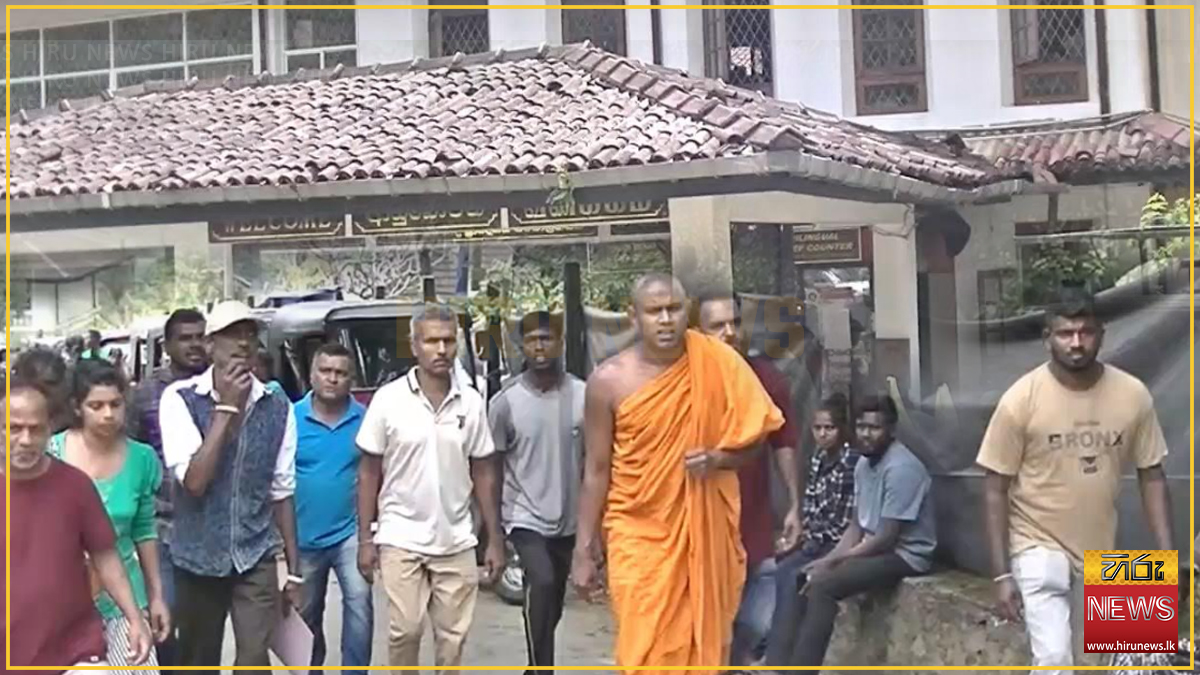
Displaced villagers from the Kotmale East region gathered at the Kotmale Divisional Secretariat today (29) to protest the non-payment of promised relief funds and the Rs. 25,000 allowance for house cleaning.
A tense situation arose between the residents and government officials during the visit. Ven. Kalugala Kashyapa Thera, the Chief Incumbent of Karagasthalawa Sugatharama Temple, joined the villagers in stating that the government allowance intended for cleaning flood-affected homes remains unpaid.
The residents further alleged that Grama Niladhari officers in the landslide-prone Kotmale East area failed to visit their divisions for over a month.
The protestors pointed out that despite presidential circulars mandating swift relief, the conduct of officers attached to the Kotmale Divisional Secretariat remains extremely slow.
As the Divisional Secretary was absent, the group met with Assistant Divisional Secretary Thivanka Dasanayake.
He assured the residents that any unintentional errors or delays by the staff would be investigated and rectified immediately. Meanwhile, Ven. Kashyapa Thera noted that the temple continues to function as a camp for the displaced persons who cannot yet return to their homes.
තුන්වෙනිදා උතුරේ ලොකු කලබලයක්? | තිස්ස විහාරය කෑලි වෙන්න නියමිතයි? | අර්චුනා තකහනියේම මාධ්යට
December 29th, 2025Anglican Bishop Nails the Tea Plantations for the Floods
December 28th, 2025e-Con e-News

blog: https://eesrilanka.wordpress.com
‘Before you study the economics, study the economists!’
e-Con e-News 21-26 December 2025
The higher the bishop, the more surprising the confession. But just as bishops’ earthly bodies come layered in vestments, in surplices & cassocks, in sparkling imported rags, so do their words. Their pronouncements, their ‘orations’, come garbed and garbled in metaphor, in analogy, in metonymy, in allegory & euphemism. Hence the earthly art of the exegesis, the line-by-line parsing (deconstruction?) of what was said, may have been said, may not have been said, what cannot be said & yet was meant to be said: By the gods, by the laity & their earthly interpreters, and printers (thanks to the Chinese for paper & print), all demand close survey. Here then is the Bishop of Colombo:
‘Nations in economic crises are nevertheless compelled
to turn to global organisations like the IMF for direction
& reconstruction. Since most who have been there,
seldom stand on their own feet, wise national carers
may not approach the negotiating table, uncritically.
The suspicion, that such organisations eventually ‘grow’
ailing nations into feeder forces for empire economics,
is not unfounded. The recent cyclone gave us a nasty taste
of these realities. Repeatedly declared a natural disaster,
this is not the whole truth. Empire economics which
indiscriminately vandalise our earth, had already set
the stage for the ravage of our land & the loss of
loved ones & possessions. As always, those affected
first & most, were the least among us.’ – Bishop
Duleep de Chickera (ee Economists, Anglican
Bishop Criticizes IMF & Plantations)
*
The bishop’s word carry not just the weight of the local church. The bishop of Colombo (apparently, a designation for life) belongs to the Church of Ceylon. The Church of Ceylon covers all of Sri Lanka’s provinces except Jaffna, which curiously belongs to the church of the ‘South India diocese for northern Sri Lanka’. Yet all these Anglicans come under the ‘extraprovincial jurisdiction’ of England’s Archbishop of Canterbury. Though the real head of the Anglican Church is the King of England. The English king is not just the head of this broad church, it is also the commander of the military forces of the English. Their churches there are now empty shells, and their highfaluting ideals carry no heft, but the English military still gets up to all sorts of mischief.
The bishop’s words were published in this week’s Financial Times (FT) to greet Christmas day (a season of happy tree-slaughtering, about which dollar-ed tree huggers like the Wildlife & Nature Protection Society – WNPS – keep as silent as night). The FT is part of the Wijeya Group, belonging to the Wijewardene clan. This includes perpetual presidential aspirant Ranil Wickremesinghe. And all of them are ardent disciples of the ‘English empire’, including its latest avatara, the white settler state of the USA. The Wijeya Group has ‘ink in their veins’, publishing the most popular private rags in the country. So what does the Bishop exactly mean, & what on earth is ‘empire’? Is the Bishop too coy to call it imperialist?And why so late in the day or month? Surely, the English armed forces & their military industrial backers would not place their boots where the bishop’s mouth is?
‘Empire economics which indiscriminately vandalise our earth,
had already set the stage for the ravage of our land
& the loss of loved ones & possessions’
Does ‘Empire economics’ mean capitalism, England’s premier product, sold most expensively to all the world? And by capitalism, does the bishop mean modern machine-making industrialization? No, that import never arrived. Was dead on arrival. What arrived was its stunted caricature, of a merchant-&-money-lender-dominated import-export mechanism, called the plantation system. Dominated at first by ‘agency houses’, which had been allowed to take over the ‘private trade’ of the English East India Company (EIC), they heralded (overtaking the English chattel slavery of the 17-19thC in Africa & the Americas of the English West India Co.) the greatest commerce of the 19thC: opium (grown in India & imposed on China). The English trade in plantation products would soon come to be dominated by their premier multinational corporations (MNCs), the Standard Chartered Bank, Hongkong & Shanghai Bank, Peninsular & Orient (P&O) Steam Navigation Company, Unilever, Imperial Chemical Industries (ICI aka CIC here), and British American Tobacco (BAT aka CTC here), quarterbacked by the Bank of England.
After the great English genocides here (in 1818, 1848), one of the greatest scandals – a tale untold of the 19th century in Ceylon – was the robbery of the Buddhist Temple lands, then the largest landowners in the country. So how did the Anglican Church come to be the greatest landowners (per Anglican) in the country, with the Catholic Church running a close second? (The early imposition of the plantation system, and the role of the Anglican church in it, is recalled in the chronological notes at the end of this introduction).
*
• The plantation traders, driven by the MNCs (Unilever in particular), know exactly what the byzantine verbal somersaults of the bishop means. Perhaps the bishop, too, was moved by the visiting Indian External Affairs Minister’s concern for his countrymen in the hills (see ee Sovereignty). At first, Unilever’s mouthpiece, the Planters Association was in blasé denial: ‘Sri Lanka’s tea industry not impacted by Ditwah.’ So declared, on 08 December, the Colombo Tea Traders’ Association, which includes The Planters’ Association of Ceylon, Sri Lanka Tea Factory Owners’ Association, Colombo Brokers Association, Tea Exporters’ Association, Sri Lanka Federation of Tea Smallholdings Development Societies, and Tea Small Holding Development Authority.
Others, however, reported differently; ee Quotes (20 Dec) noted: ‘Planters High & Dry, Workers Wet & Swept’, adding:
‘Recent floods & landslides in Sri Lanka’s hill country
didn’t strike at random. Estate infrastructure largely
remains intact. Homes of low-income workers, factory
labourers & informal settlers were swept away. You might
say it’s bad luck. But it’s not… Historically, plantation estates
were planned to protect capital. Factories & key buildings
were placed on well-drained ground. Worker housing was pushed
downslope into valleys & marginal land where water accumulates.
This wasn’t a secret plan. It was a system where labour safety
mattered less than asset protection.’ (Shanika Somatilake, FB)
So this week we suddenly hear differently. The Planters’ Association went from claiming there were no problems in the ‘tea’ country, to belatedly admitting that workers were affected, perhaps after, the Sri Lanka’s President met a Colombo Tamil politician who claims to represent Upcountry workers, and the Indian government’s External Affairs Minister S Jaishankar met ‘Malaiyaham leaders’:
‘Regional Plantation Companies (RPC) moved swiftly
to safeguard estate workers & surrounding communities
following Cyclone Ditwah, activating emergency protocols,
relocating families from high-risk areas, and restoring basic
services in coordination with State authorities.’ (see ee Workers,
Planters’ Association of Ceylon says plantations stabilised)
*
‘Reforest & rehabilitate riverbanks along 24km
bordering the Kelani River at Dickoya Estate &
Mahaweli River’s Hatton Oya tributary spanning
Abbotsleigh, Strathdon, Shannon, & Carolina estates’
(see ee Agriculture, Hatton Plantations & WNPS
PLANT Launch 2 km Riparian Forest Corridor)
And behold there was belated & abstract recognition, reported in the passive voice, as if nature (or the perennial bugaboo, climate change, global warming, etc.) is to blame:
‘Erratic rainfall in highland estates has led to soil erosion,
damage to estate roads & factory infrastructure, and reduced
soil moisture, while southern low-country estates have
experienced heat stress among workers, flash floods
& heightened risks of vector-borne diseases.’ (see ee Agriculture,
UN Global Compact Network appoints Talawakelle Tea Estates
as Climate Emergency Task Force Patron)
Others sought to blame the much-abused Mahaweli river, happily ignoring the English destruction of the waterways to further their colonial project of invading the country, massacring the Sinhala people of the lands high & low, and imposing a destructive plantation system, causing daily erosion:
‘Concerns over the Faculty’s location within the flood plains
of the Mahaweli River are not new’ (ee Agriculture, Worst
flooding since setting up Veterinary Medicine & Animal Science
Faculty at Peradeniya raises concerns over food security:
SL Veterinary Association/SLVA).
Now what are we to do with ‘Sir’ Ivor Jennings, who is hallowed so for setting up the university and intruding on such salubrious surrounds? And that statue? Is it still erect and dry? Then there is the infamous ‘telescoped’ Mahaveli scheme, promoted by the World Bank:
‘To deal with the restoration of the damaged infrastructure
in multiple watershed areas, the government may want to
revisit the Accelerated Mahaweli Scheme… The genesis
and implementation of that scheme involved as many flaws
as it produced benefits, but what might be relevant here is
to approach the different countries who were involved in
funding & building the different Mahaweli headworks
& downstream projects. Australia, England, Canada, Italy,
Japan, Sweden, Germany’ (see ee Agriculture,
Flaws of the Accelerated Mahaweli Scheme).
One reason for the partial admission of the destruction is to prevent any state-led plans to protect the hills from even more private intrusion. Some even blamed the government:
‘Most large & destructive landslides in Sri Lanka do not originate
within private homesteads, but in government-owned forest reserves
located on steep upper-catchment slopes’ (see ee Agriculture,
Mitigating landslides in the upper catchments).
*
‘A blanket removal policy would directly impact tea industry,
hospitality sector, and other hill country-based economic activities,
triggering serious disruptions to employment & revenue generation’
(see ee Agriculture, 5,000ft Demolition Plan
Could Cripple Hill-Country Economy)
Then there was also the usual promise to upgrade the skills of the plantation workers, without mentioning the need for mechanization (practiced in Russia & Japan, where the old cars of tea workers are exported to Sri Lanka, for our ‘executives’ to drive):
‘Achieving a 4% GDP contribution from plantations
requires making modern HRM [Human Resources
Management] practices mandatory across the sector,
replacing outdated labour systems’ (ee Agriculture, Rethinking
climate prediction, disasters, & plantation economics in SL).
Indeed, the ways in which plantation workers (& not just tea, but rubber too) are treated, should be rated as yet another colonially induced national scandal. Tea workers (mostly but not only Tamil) have been treated as a political football, by English-dominated tea traders, by the Indian ruling class, who seek to treat them as a 5th column for their impending invasion of the country, by the local oligarchs who play on these fears, and those wounded Eelamists, who seek to play Indian workers against Sinhala peasants, and light a fire beyond their frontlines.
Meanwhile, not an electronic byte flies by, without the private banks & companies claiming that they are frontliners in protecting the environment:
‘From corporate greenwashing to philanthropic initiatives
that ignore structural injustices, these frameworks rarely
account for the true costs of economic growth – particularly
for children & communities facing systemic disadvantage’
(see ee Finance, Equitywashing & Hidden Costs of Sustainability).
*
• Uprooting Tea Bushes & Throwing them into the Sea – So the elephant in the room, the silent tornado in the teacup is the destructive economic (let alone ecological) role played by the English import-export plantation system: the subject & object of SBD de Silva’s classic dissertation, The Political Economy of Underdevelopment (the raison d’etre of this blog). There was a time when the JVP promised to uproot the tea bushes and throw them into the ocean. This may be another canard, however. But, did the sentiments behind such a proposition have to do with the plantation economy’s premiere role in preventing the genesis of a modern industrial economy, and diminishing the status of all workers?
A deluge of advice has followed the mountains of mud unleashed. We see no use in adding to the sludge, except to say, that the same criminals who have hijacked the economy will continue their dance as they have done for the last many centuries, until and unless… And this brings us back to the rest of the bishop’s convoluted message:
Nations in economic crises are nevertheless compelled
to turn to global organisations like the IMF…
The suspicion, that such organisations eventually ‘grow’
ailing nations into feeder forces for empire economics,
is not unfounded…
*
Now, again, the Bishop – schooled at Royal College, Colombo, & Oxford, England (2 institutions that have done great damage to this country), has to resort to the dastardly passive voice – ‘Nations… are compelled.’ By whom & by what?, the precious prelate cannot utter. Though he is right about their loan-sharking propensities…
*
‘There is in capitalism an immanent tendency to stifle,
suffocate & push back the full realization of the
developmental potential of rival capitalisms’
SBD de Silva (see ee Focus)
*
This week saw the IMF promise ‘emergency’ funding to the country, which the USA’s own dollared thinktanks and scholars (see ee Quotes, Sharking) warned would plunge the country into deeper debt. The week also saw 121 foreign ‘economists & academics’ (see ee Focus) call for ’significant debt cancellation – with no punitive conditions – to free up fiscal space for disaster recovery, social protection, reconstruction & development’.
Now the reason we call them ‘foreign’ is not just about their domicile but also their epistemological & ontological positioning (EOPS!). It is their failure to understand 2 fundamental tenets. The IMF is based & is run by & for the US government. The USA as the premier capitalist state & principle conductor of that murderous orchestra, we tag ‘The Concert of Whiteness’ (including ‘honorary whites’ like Japan et al), like the other imperialists before them, would never allow the country to develop its own economy. All attempts at moral suasion (as daily ‘casters as the Sachses & Meersheimers, promoted by so-called social media, purport to do), will fail. Those who whinge about the ravages of microfinance, fail to point out that these financial institutions (& related envoy) are backed by foreign exporters’ associations, which themselves are front for their industries who wish to push their products on our countries.
*
• So why has capitalism been able to prevent industrialization in Sri Lanka, as a non-settler colony? And how were settler colonial countries[ like South Africa, the US, and Canada able to industrialize? Capital seeks to oust rival businessmen, recorded SBD de Silva, which he called:
‘The very basis of the central contradiction in capitalism arising
from the appropriation of surplus value by fewer & fewer
capitalists while the production process is increasingly socialized’.
ee Focus continues SBD de Silva’s Chapter 5 from his classic The Political Economy of Underdevelopment. Here he recorded how, as in the USA (1776), South Africa (1899) and Rhodesia (1968):
‘The most difficult struggles of the imperialist countries
since the 18th century had… been with… their own settlers.‘
He pointed out that there were, as in Sri Lanka:
‘Conflicts between the mother country & expatriate investors
in the nonsettler colonies [but they] were not serious – these investors
had their permanent interests in the metropolis & were
a segment of the metropolitan bourgeoisie.’
*
The USA, England & the EU are again promoting fascism and rearming their proxy-tutes. They are attacking rival ships in a shadow & not-so-shadow war, including off Sri Lanka. Fascism was first tried & tested in the ‘normal’ course of colonial expansion in Asia, Africa & the Americas. Joseph Kennedy, the Irish kassipu-dealer who made his mints during the so-called prohibition era, as US Ambassador to England, 1938-40, ran to President Franklin Roosevelt, breathlessly declaring: ‘Fascism is the cure of Communism’. So would the USA listen to these 121 ‘economists’? If they really feel injured by what they say, the US may deport these ‘aliens’, many of whom are living on their soil, uttering fatuities.
Would a Lenin be moved to describe these 120 economists as ‘sniveling liberals’ who want all the good things in life (& not just for themselves, for us too) yet offer panadols & palliatives, and yet do not mention the need & a plan for modern industrialization (which alone can assure food & health security). Nor do they point out how the IMF program is mainly fixed on preventing investment in modern industrialization? Nor do they offer a program & plan or describe the diversion, isolation, vituperation, sabotage, incarceration, torture, and assassination of progressive forces, especially those strains that call for modern industrialization.
This last week’s paeans to 90 years of Samasamajism, failed (with the exception of the Communist Party of SL) to recall the attempts (albeit inadequate) to industrialize the country. Do they call for a proletarian party that could counter the ‘White Russians’ (counter-revolutionary forces) and build a bridge to a transitional program (NEP), i.e., a narrow yet sturdy steel stairway to heaven? Would a Stalin direct them to a sobering Siberia to build the Arctic railroad to urgently link Northeast & Northwest Asia? Would a Mao direct them to the villages to build rural industries, and show them how to wash their brains of such bourgeois dreams?
*
‘The cheque that made the difference – One donor sent
a cheque for Rs1,000 to the UN Resident Coordinator
Marc-Andre Franche. Touched by the gesture, he shared
a photo of the cheque on his X handle with the words,
‘Received this contribution from a private citizen for relief
to victims of #CycloneDitwah. I remain in awe of the
extraordinary solidarity between Sri Lankans. Sri Lanka
shines in times of crisis, & @UNSriLanka & the international
community is here to accompany & stand together.’
(see ee Industry, Starlink to DMC’s rescue)
*
‘The question is why the UN is setting up
a parallel funding channel at all’ (see ee Focus)
*
• ee Focus also reproduces an interesting take on the game the white underlings of the United Nations (especially the ‘Concert of Whiteness’) are playing to undermine the role of a state (whose present government is bending backwards to appease them) in disbursing aid for reconstruction. Such a hijacking also took place after the 2004 tsunami, we learn.
‘One explanation lies in the UN’s own financial distress.
Its global budget is under unprecedented strain, weakened
by chronic nonpayment from major contributors.’
The author of the criticism takes on the voice of a whining schoolboy who, after passing every examination and dutifully followed the rules, is ignored for school ‘colors’. As evident in the UN agent Franche’s patronizing drooling above, the anonymous author does not seem to understand: their aim is to dismantle the state and only have it serve imperialist needs.
*
• Born-again USAID – Contrary to the claims of certain eager though mercantile nationalists, that the USA is dismantling USAID and its more craven machinations, it turns out that they are simply ‘streamlining’ the process to align more sharply with their more urgent imperialist objectives. It is therefore instructive to learn that the USA is once again signaling the replacement of their current always-leaving never going-envoy Julie Chung. Chung was sent to put a wrinkled yellow mask on their attempt to overthrow (& possibly assassinate) a popularly elected nationalist (tho still seeped in mercantilism) President. She has so far failed to accomplish the latter. However, it is her predecessors, Robert O Blake (2006-9), Patricia Butenis (2009-12), Michelle Sison (2012-14), Andrew Mann (2014-15), Atul Keshap (Aug 2015-18 July), and Alaina Teplitz (2018-21), who oversaw the undermining of a terrorism-defeating ruler (even as the world’s leading terrorists remain at large), the bribing of the 2015 elections, foreign currency deregulation and the ISB binge, all of whom accelerated the process of destabilization already in motion…
*
‘The Pentagon’s collaboration with Hollywood – documented
in more than 2,500 productions – ensures that people in the
US learn history through films like Saving Private Ryan (1998)
rather than through scholarship (Pentagon operates Hollywood’s
largest film subsidy program – providing free equipment, locations
& personnel in exchange for script approval rights & an ‘accuracy’
review. More than 2,500 productions have been shaped by this process.
US people learn history through Pentagon edits.’ (see ee Focus)
This ee Focus continues Roy Singham’s breathtaking and meticulous recounting of Victory in the World Anti-Fascist War (WAFW). Here we learn how Hollywood has steadfastly ignored the USSR’s & China’s huge sacrifices, while promoting ‘D-Day’ myths. They also ignore how the same corporations that had once done business with Hitler & Hirohito came to profit from containing socialism. The Central Intelligence Agency (CIA) pumped tens of millions of dollars to secretly fund intellectual warfare against Communists: publishing over 20 magazines & organizing conferences globally. He shows how the FBI systematically spied on professors, and military contracts dominated university operating budgets…
*
‘New York is the most expensive city to live in the world.
For working class New Yorkers, whose inexhaustible
productivity throws off that tremendous energy that defines
the aura of the city, New York is often a nightmare.’
(see ee Workers, Mamdani for Masses or Masses for Mamdani?)
We finally come to end of Gustavus Myers’ History of Tammany Hall, the secretive political machinery that ruled New York (and still does in other guises). In this, his last chapter (1914-17), Myers takes an abrupt U-turn after 35 chapters of vehement & detailed opposition to a corrupt coterie, and begins to praise New York’s ruling class. What happened turns out to be what exactly has been taking place today with so-called intellectuals (including the darker ones) in the white world, who have become ardent critics of socialist countries (China, Cuba, etc) as well as opponent of those countries that do not toe the imperialist line (Russia, Iran). They have been bribed as well as (their tenures & visas) threatened. As Canadian Communist Stanley Ryerson notes in his introduction to Myer’s History of Canadian Wealth Canadian Wealth (a seminal introduction to Canada’s settler ruling classes): 1914 was ‘to mark the limit of Myers’ political & intellectual advance. His radicalism faded in the face of the imperial onslaught of the world war years.
After 1914 he appears to have shrunk not only from any further deepening of his theoretical conceptions, but even from the position he had reached. WW1 thus led to a basic reversal of direction, including a break with the Socialist party. Most of the muckrakers: ‘fell short of completing their work. They retreated in the face of organized business’s attacks, and they broke down completely in their first experience of international affairs’ (Lewis Filler). It was ‘the debacle.’ In 1914, the world war stopped Myers’s theoretical development towards Marxism in its tracks. The liberalism that had been his initial starting point, that he never wholly abandoned, now reasserted itself. He was not the only Socialist for whom, in those years, advance became retreat…
Myers, who served on government information & shipping boards in the war years, was to produce, in his 1925 History of American Idealism, what amounts to an unabashed apologia for US imperialism: the Spanish-American war, Panama, the Philippines are dealt with in a chapter entitled ‘Liberty for Other Lands’! Further on one reads: ‘In the proclamation of the Monroe Doctrine and in the Spanish-American War the world saw 2 great examples of America’s transcending localities and boundaries and unselfishly acting for the well-being & interest of other peoples. In the World War this concern for humanity was extended to cover every continent.’ Myers’s later works, on hereditary fortunes and on bigotry, are those of a cautious liberal reformer. He died in New York City on December 7, 1942…’
*
Notes on 1823-40 SL Plantation History:
• 1823 – Jan 31: George IV-in-Council issued an Order on for the ‘trade of Ceylon’. English wool, cotton, iron & steel goods to be imported to Ceylon by English or foreign ships. The import duty increased by 50% unless the foreign country allowed Ceylonese goods in English ships at the same tariff as its own shipping. Competing foreign goods would be confiscated. Ceylonese exports loaded to foreign ships would be charged ‘8% ad valorem’ more than the duty charged to English ships, unless reciprocity was permitted. Feb 9: After an earthquake occurred near Mahara, northeast of Colombo, the English received reports of unrest in Nuvarakalaviya & Hevaheta, led by Bhikku Ratmale Unanse. March 5: Governor Brownrigg wrote Earl Grey, Colonial Secretary, and promised to ‘suppress rebellion with promptitude & economy’. Brownrigg blamed 6 or 7 lower-class chiefs, who ‘had not submitted’ in 1818. The English sent Malay troops from Kurunegala & Trincomalee to Nuvarakalaviya. Heroic Bhikku Ratmale Unanse was arrested. The English stationed African soldiers at Anuradhapura. May: Another report on attempts at insurrection by chief (Kosvatte Raterala) & 3 Bhikkus led by Kahavatte Unanse in Matale, trying to install a new king, Kritsna Retty. 5 Aug: Kahavatte Unanse & Kosvatte Raterala executed. 13 other chiefs exiled to Mauritius. All lands & goods were confiscated. They removed the yellow robes of the priest before they hanged him, to ostensibly prevent ‘disgrace to the religion’. Oct: The English still sensed ‘evil designs’ in Nuvarakalaviya. Dec 9: The Kandy Road Tunnel was completed.
• Colonel Henry C Byrde made Commandant of Kandy. His brother George Bird set up in Sinnapittia, Gampola. 1834 – Col Byrde’s son Lt Colonel HC Byrde of the Ceylon Rifle Regiment set up one of the first agency houses in Kandy. Land Robbery: Col Byrde grabbed 200 acres in Gampola; Edward Barnes (Colonial Governor, 1824), 100 acres in Kandy; Governor Mackenzie took 2,144 acres. 1823-32: ~13,000acres given away to ‘prospective planters’. The English commander of the armed forces, Anglican archbishop, government agent (GA George Turnour, who with a local tavern rentier translated a highly excised 5thC chronicle, The Mahavamsa) all joined the ‘coffee set’ (1827: 1.8mn pounds of coffee exported).
• 1840 –English slaver Robert Boyd Tytler arrived in Lanka bringing his ‘expertise’ in the ‘West India System’ of coffee planting in Jamaica. He brought a copy of PJ Laborie’s Coffee Planter of Santo Domingo (1798) which became the authority on ‘plantation development’, excerpting extracts from it in the Ceylon Miscellany Vol2 (1842) without changing the word ‘negro’. Laborie wrote: ‘Punishments must be certain, immediately inflicted, proportionable to the fault, and never excessive. Racks, tortures, mayhems, mutilations, and death are reserved for crimes of an atrocious nature, and fall only within the province of the public magistrate: through perhaps more speedy executions, and particularly on the spot, would have more striking effect.’
• Thomas Skinner wrote to governor about demand for land, ‘the fevered cry is ‘where shall I go for land’.’ He recommended 200,000-300,000 acres of ‘the finest forest-land in Ceylon within the wilderness of the peak’. ‘How are we to get at it?’ – Maskeliya, Dimbulla, & Dikoya…(excerpts from Krisantha Sri Bhaggiyadatta’s Very Personal Ingrisi History of the World)
*
________
Contents:
May Day Warning for flood prevention
December 28th, 2025Dr Sarath Obeysekera
https://www.facebook.com/share/1BfqcMbNgW/?mibextid=
Dear Sir / Madam,
During my tenure at SLLRDC, and subsequently while serving in senior professional and advisory capacities related to port and shipyard development, I repeatedly expressed serious concerns regarding the adequacy of the Kelani River outfall and associated drainage infrastructure in Northern Colombo.
Specifically, I wish to place on record the following:
- Kelani River Outfall Capacity
The present Kelani River outfall is hydraulically inadequate to safely discharge peak flood flows. This limitation has long been evident, particularly during high tide conditions, resulting in backwater effects and prolonged flooding upstream.
- Northern Colombo Outfall via Bloemendahl Tunnel
There exists an additional major outfall from Colombo North passing through the Bloemendahl tunnel beneath the Ceylon Fisheries Corporation premises. This outfall further constrains discharge during flood events and requires urgent reassessment within an integrated flood-management framework.
- Modera Shipyard and Institutional Decisions
When the Port of Colombo engaged AECOM and visited my shipyard, there were attempts to threaten acquisition of the Modera Shipyard. At that time, I formally objected, warning that the land in question plays a critical role in flood conveyance and coastal hydraulics.
Subsequently, the Ceylon Fisheries Harbour Corporation proceeded with eviction, despite these technical warnings.
- Warnings as Port Chairman (Short Stint)
Even during my brief tenure as Chairman of the Port, I reiterated that ignoring river hydraulics and flood paths in favour of isolated port expansion would result in severe consequences for Northern Colombo.
- Recent Flooding – Validation of These Concerns
The recent flooding at Nagalagam Street, where water levels remained stagnant for prolonged periods, has now conclusively proven these warnings. The issue is not rainfall alone, but restricted outfall capacity and poor flood evacuation.
Key Recommendation
Rather than prioritising construction of a North Port at this stage, I strongly advise the Government to:
- Acquire and reserve the core island and adjacent lands on the northern side of the Kelani River outfall
- Substantially widen and re-engineer the Kelani outfall, including tidal control and sediment management
- Develop an integrated Kelani–Colombo North flood discharge master plan, coordinated across Ports, Irrigation, Urban Development, and Fisheries authorities
This intervention will provide long-term flood protection to Colombo North, safeguard national infrastructure, and prevent recurrent economic losses far exceeding the cost of land acquisition and hydraulic improvement.
I respectfully urge the Government to treat this as a matter of national importance and to act decisively, learning from recent events rather than reacting to future disasters.
Regards
Dr Sarath Obeysekera
Urban Canal Passenger Transport Pilot Project – Colombo & Suburbs
December 28th, 2025Dr Sarath Obeysekera
To
Honorable minister
Urban Canal Passenger Transport Pilot Project – Colombo & Suburbs
(Public–Private Partnership / BOT Model)
Proponent:
Dr. Sarath Obeysekera
Marine Engineer & Shipbuilding Specialist
Sri Lanka
1. Background & Rationale
The Colombo Metropolitan Region continues to face severe road congestion, rising fuel import costs, and increasing carbon emissions, despite major investments in road and rail infrastructure. At the same time, Colombo and its suburbs possess an underutilised network of canals, lakes, and waterways originally developed for flood control and drainage.
Urban water-based passenger transport presents a low-cost, low-emission, and rapidly deployable mobility solution that complements existing road and rail systems without requiring land acquisition.
Previous attempts to introduce canal transport did not progress beyond concept stage due to institutional fragmentation and procedural delays, rather than technical or economic infeasibility.
This proposal introduces a clearly defined, pilot-scale, PPP-based implementation model designed to overcome those limitations.
2. Project Objective
To implement a Phase 1 Urban Canal Passenger Transport Pilot Project in the Colombo Metropolitan Area within 12–18 months, using a Public–Private Partnership (PPP/BOT) model with no upfront Treasury funding, demonstrating technical, financial, and operational viability for future scaling.
3. Project Concept (Phase 1 – Pilot)
- Route length: Approx. 5–8 km (Beira Lake / Diyawanna / selected canal corridor)
- Service type: Scheduled passenger water transport
- Fleet:
- 10–15 low-draft passenger vessels
- Capacity: 20–30 passengers per vessel
- Electric or hybrid propulsion
- Locally designed and constructed in Sri Lanka
- Speed: 10–12 knots (low wash, environmentally safe)
- Stations: Simple modular pontoons integrated with existing urban nodes
The pilot is deliberately sized to ensure fast approval, fast delivery, and visible results.
4 Implementation & Governance Model
A Special Purpose Vehicle (SPV) will be established under a BOT / BOOT framework.
Roles:
- Private Partner (SPV):
- Vessel design & construction
- Operations & maintenance
- Fare collection and service management
- Government / Public Agencies:
- Canal access and regulatory approvals
- Integration with urban transport planning
- Oversight and performance monitoring
This model avoids day-to-day bureaucratic control while ensuring public accountability.
5. Financial Overview (Indicative)
- Capital expenditure: Funded by private sector / consortium
- Operating costs: Covered through fare revenue and ancillary income
- Government funding:
- No upfront capital contribution
- Possible viability support only if required after pilot evaluation
- Future funding eligibility:
- Climate finance facilities
- Multilateral urban mobility grants
- Carbon credit mechanisms
6. Key National Benefits
- Immediate reduction in road congestion
- Lower fuel consumption and foreign exchange outflow
- Climate-resilient transport option
- Revitalisation of urban waterways
- Local shipbuilding and marine industry development
- Scalable model applicable to other cities (Negombo, Galle, Kandy lake zone)
7. Approvals Requested
- In-principle approval for Phase 1 Pilot Project
- Approval to proceed under PPP / BOT framework
- Nomination of a single coordinating authority for fast-track clearances
- Permission to establish the SPV
8. Conclusion
This proposal offers a practical, implementable, and financially disciplined solution to Colombo’s urban mobility challenges. It is designed as a pilot-first project, focused on delivery rather than prolonged study, and aligns with national priorities on economic efficiency, climate resilience, and private sector participation.
Regards
Dr Sarath Obeysekera
Canal Transport Protect Colombo Region
December 28th, 2025Dr Sarath Obeysekera
I remember former Minister of Urban Development who frequently spoke to Advocata and other policy forums about modern urban transport concepts—especially:
- Canal / inland water transport
- Monorail system
He was Minister of Megapolis & Western Development (2015–2019) and
Previously Minister of Urban Development, Water Supply & Drainage
- He was a regular speaker at Advocata, CCC, and policy think-tank and Strong promoter of:
- Western Region Megapolis plan
- Canal-based passenger transport (Beira Lake, Diyawanna, Kelani canals)
- Monorail / LRT concepts
- He actively invited private sector proposals
Why my canal transport proposal which was submitted from our shipyard failed
Because
- Retired state officers were appointed as project heads
- Highly procedural
- Risk-averse
- Slow decision-making
- No empowered Project Delivery Unit (PDU)
- Files moved ministry → authority → treasury → line agencies
- Conflict between vision and bureaucracy
- Minister had ideas
- Implementation was controlled by old administrative culture
- Private sector marine expertise undervalued
- Especially practical shipyard-based solutions like yours
In fact, many canal transport pilot projects were announced but never scaled, precisely because:
- No PPP framework
- No single accountable authority
From a technical standpoint, canal transport in Colombo is:
- Energy efficient
- Low land acquisition
- Ideal for ageing population and tourists
- Compatible with hybrid/electric boats (which you already understand well)
The failure was institutional, not technical.
Regards
Dr Sarath Obeysekera
A renewed call to fulfil the conditions of bai‘at: Huzoor delivers the concluding address of Jalsa Salana Qadian 2025
December 28th, 2025Ahmadi News
On 28 December 2025, Hazrat Mirza Masroor Ahmad, Khalifatul Masih Vaa arrived at the Masroor Hall shortly after 10:30 am for the concluding session of Jalsa Salana Qadian 2025 from Islamabad, Tilford, UK.
After conveying salaam to those present as well as to viewers connected through MTA, Hazrat Amirul Momineenaa invited Nooruddin Nasir Sahib to recite a portion of the Holy Quran (Surah al-Hashr, Ch.59: V.19-25). Mansoor Ahmad Mansoor Sahib read out its Urdu translation. An Urdu poem written by the Promised Messiahas was then presented by Khalid Waleed Sahib.
Thereafter, Huzooraa took to the podium to deliver the concluding address. After tashahhud, ta‘awwuz and the recitation of Surah al-Fatihah, Hazrat Amirul Momineenaa began his address. A brief summary is presented below:
The Promised Messiahas said:
Do not consider this Jalsa to be equivalent to any ordinary worldly gathering. The fact of the matter is that it is founded upon the pure support of truth and the propagation of Islam. The foundation stone of this Jamaat has been laid by Allah the Almighty Himself, and nations have been readied that will soon come to join its fold.” (Majmu‘ah-e-Ishtiharat [2019], Vol. 1, p. 361)
Huzooraa said that today, we are witnessing that Jalsa Salana gatherings are being held across the world, and just as the Promised Messiahas had foretold, nations are becoming part of these assemblies. The town of Qadian, once unknown to the world, has now become a focal point of global attention. According to the latest information, the current Jalsa includes representation from 37 countries, comprising participants from diverse regions and nations.
For Full Story
A renewed call to fulfil the conditions of bai‘at: Huzoor delivers the concluding address of Jalsa Salana Qadian 2025
Douglas Devananda detained for 72 hours
December 28th, 2025Courtesy Daily Mirror
Colombo, Dec. 27 (Daily Mirror)- Former Minister Douglas Devananda, who was arrested in connection with an investigation into a missing firearm, has been detained under a 72-hour detention order for further questioning.
Police said he was detained in terms of the Prevention of Terrorism Act (PTA).
Devananda was arrested yesterday in connection with the recovery of a weapon during the interrogation of organised criminal Makandure Madush in 2019.
Subsequent investigations revealed that the firearm had been issued by the Sri Lanka Army to Devananda for his personal security in 2001.
Douglas Devananda who fought with the Sri Lankan Army against the LTTE
December 28th, 2025D.B.S.Jeyaraj Courtesy The Daily Mirror
Devananda’s arrest is connected to an on-going investigation into the alleged transfer of a firearm to an organised gang criminal
A pistol issued to Devananda had later been found in the possession of underworld gang leader and drug lord ‘Makandure Madush’
 Eelam People’s Democratic Party (EPDP) Chief and Secretary-General, Douglas Devananda became the latest political leader to be arrested in Sri Lanka. The former Jaffna district MP and ex-cabinet minister was arrested by the Police on December 26 (Friday) in Colombo. The ex-minister was initially detained under the Prevention of Terrorism Act (PTA) by the CID and on Sunday he was remanded until January 9, 2026, by the Gampaha Magistrate.
The acting Police Media Spokesman, ASP Minura Senarath told this newspapers that the arrest was connected to an on-going investigation into the alleged transfer of a firearm to an organised gang criminal. It is alleged that a pistol issued to Devananda had later been found in the possession of underworld gang leader and drug lord ‘Makandure Madush’.
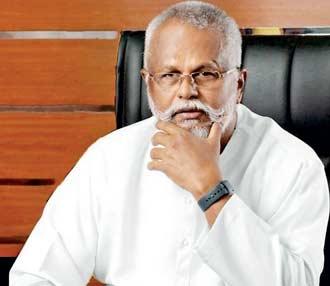 The arrest and detention of former Jaffna district MP and present Leader of EPDP Douglas Devananda has been welcomed by people supportive or sympathetic to the LTTE The arrest and detention of former Jaffna district MP and present Leader of EPDP Douglas Devananda has been welcomed by people supportive or sympathetic to the LTTE |
Devananda was summoned by the Police Criminal Investigation department (CID) to record a statement concerning details of firearms issued to him by the Defence Ministry for his protection during the years of war between the Sri Lankan Armed forces and the Liberation Tigers of Tamil Eelam (LTTE). Devananda was supportive of the Government and the EPDP under his leadership cooperated with the armed forces in a para-military capacity. The LTTE then branded Devananda as a traitor and made several attempts to kill him.
According to informed Tamil sources Devananda had been asked to present himself on December 26 to record a statement concerning firearms issued to him years ago. The ex-minister travelled down to Colombo from Jaffna and presented himself to the CID on Friday. He didn’t suspect that he would be arrested.
Weliweriya
Devananda was quizzed by Police officers attached to the Homicide and Organized Crime Investigation unit of the CID. He was told that a 9 mm handgun had been recovered in a shrub jungle area near a culvert in the Weliweriya area of Gampaha district in the year 2019. The Police had found the concealed weapon due to information supplied by drug kingpin Makandure Madush who was later killed in 2020 under suspicious circumstances.Some months ago the Police launched an intensive, wide-ranging investigation into organised crime and the narcotics trade. It is well known that President Anura Kumara Dissanayake has declared war on the use and trade of narcotics. The JVP led NPP Government headed by the president is fully committed to the elimination of the drug menace.
When the files concerning slain drug lord Madush were re-activated in this regard, it was discovered that the firearm found in Weliweriya bore the serial number of a handgun given to Douglas Devananda in 2001 by the Defence Ministry. Police had then wanted to find out how a gun given officially to Devananda in 2001 went into the possession” of the drug kingpin Makandure Madush.
Devananda was summoned to record a statement clarifying how the weapon given to him had got into the hands of Madush. Devananda however hadn’t been able to provide a satisfactory explanation when being questioned, according to the Police. As a result, the CID arrested him and detained him for 72 hours under a PTA order. He is likely to be produced in courts on Tuesday (Dec 30).
Firearms
According to informed Tamil circles close to Devananda, the EPDP leader had received the 9mm pistol in July 2000 and not 2001. It was part of a mini-arsenal provided to the EPDP for protection against the LTTE. The cache consisted of thirteen T-56 assault rifles and six 9 mm pistols. Subsequently the EPDP had been asked to hand over the firearms issued to them twice.
The first occasion was after the 2002 ceasefire facilitated by Norway. The EPDP reportedly returned their firearms to the Defence ministry. As a result several unarmed EPDP cadres were gunned down by the LTTE during the ceasefire period. The EPDP got firearms after the ceasefire ended and war erupted again.
The second occasion was after the war ended conclusively following the military defeat of the LTTE in May 2009. The EPDP had returned the arms on a staggered basis to the defence ministry. The firearm in question had also been returned to the Defence Ministry. If the gun was really in Madush’s possession, then it was more likely that the lapse” was by the defence sector” and not the EPDP opined informed Tamil sources.
Tamil Statement
According to these Tamil circles close to the EPDP, former minister Devananda had clearly furnished details of the various arms given to the EPDP by the Defence Ministry. Devananda however had insisted during the interrogation that his statement should be recorded in Tamil. He had pointed out that Tamil was his mother tongue and also an official language. Therefore he was entitled to have his statement recorded in Tamil as his Constitutional right. The CID officers who quizzed Devananda were unable to record the statement in Tamil. It is expected that the 72-hour detention order would enable the statement to be recorded in Tamil.
Makandure Madush
Samarasingha Arachchige Madush Lakshitha alias Makandure Madush was an underworld gangster and drug lord who was very powerful and politically influential. He relocated to Dubai in 2006 and operated his drug network from there. He was arrested in February 2019 for a drug offence and was deported to Sri Lanka in May 2019. Madush allegedly provided much information regarding his illegal activities and connections to the Police. He is said to have implicated over 80 persons in this regard including top politicians, senior Govt officials and high-ranking Police officers.
In October 2020, Madush was reportedly taken by the Police to a housing scheme in Maligawatte to uncover stashed heroin. According to the ‘official’ version released by the Police, Madush was fired upon by two unknown persons. There was a fire fight when Police retaliated. Madush was allegedly caught in the crossfire and killed. This Police story was disbelieved by many.
It is indeed strange that the Police reactivating inquiries into Madush’s activities should probe the pistol given to Devananda instead of so many other grave matters concerning Madush and possibly incriminate people in powerful positions. Compared to the scale and scope of the drug lord’s illegal activities, the ‘Devananda pistol matter’ seems rather insignificant.
Tigerish elements
The arrest and detention of Devananda has been welcomed by people supportive or sympathetic to the LTTE. Tigerish elements and fellow travellers are flooding social media with anti-Douglas posts and comments. Some You Tubers seem confident that this is the end of Douglas and that the EPDP chief would be behind bars for a long time. Tiger and pro-tiger elements hate Douglas Devananda because he defied the LTTE and fought against them alongside the armed forces. Hence they are agog with joy over Devananda’s present predicament. They are delighted that people like Pillaiyaan and Devananda who fought with the Army against the LTTE are now being arrested and detained.Who then is Devananda and what is the role he played in Sri Lanka’s recent history? I have written about him before and will try to answer the question raised with the aid of earlier writings.
Defiance of Tigers
Kathiravelu Nythiananda Douglas Devananda is in a sense a very unique personality. Douglas displayed a high degree of consistency in opposing the LTTE in the past. In those days the LTTE claimed to be the sole representative of the Sri Lankan Tamils and Devananda tried to counter that claim by projecting the EPDP as the sole alternative in defiance of the tigers.
Douglas had to pay a high price for his bold stance; the LTTE killed numerous comrades and cadres, including his own brother. Furthermore multiple attempts were made on his life. Devananda is the only person who has survived several different assassination attempts by the LTTE. Among these are a full-scale attack with SMGs, grenades and RPGs on his former residence in Colombo 5, a brutal assault by LTTE prisoners in Kalutara jail and two attempts by women suicide bombers at his former ministry in Colombo 3.
Athiaddyk Kuthiyan”
Devananda’s rise to power and office is a fascinating tale. His family hailed originally from Chunnakam, but later moved to Athiaddy in Jaffna town. The LTTE’s poet laureate” Puthuvai Ratnadurai referred to Douglas in his poems as Athiaddy Kuthiyan” (hunk of Athiaddy) Devananda’s father Kathiravelu was a Clerk at the Inland Revenue Department and later became a Staff Officer of the Petroleum Corporation. His mother Maheswary taught at Jaffna Central College.
Devananda’s paternal uncle was the well-known trade unionist and activist K.C. Nythiananda. Devananda spent many years with Nythiananda at 17 Frances Road in Colombo 6. The bachelor Nythiananda virtually adopted Devananda who studied at Colombo Hindu College then. Earlier he was at Jaffna Central College. Devananda was no academic bright light, but learned rudimentary politics from his uncle. Devananda went on to include both Nythiananda’s name and his nom de guerre in the militant movement, Douglas,” as part of his official name later.
The seventies of the 20th Century was a period of political ferment for the Tamils. The old left lost its lustre because of its political cohabitation with the Sri Lanka Freedom Party (SLFP). Leftist stalwarts like Nythiananda metamorphosed into Tamil nationalists. The Tamil youth too were getting radicalised. Secession and armed struggle to achieve it was the credo of the youth.
EPRLF
Devananda also was not immune to these currents. He joined the Eelam Revolutionary Organization of Students(EROS) and, thanks to his erstwhile Trotskyite mentor, Eliathamby Ratnasabapathy, went to Lebanon and obtained military training with the Palestinians. Devananda acquired the nom de guerre Douglas then. After returning from the Middle East, Devananda along with K. Pathmanabha and others broke away from the EROS and formed its off-shoot the General Union of Students (GUES) followed by the Eelam People’s Revolutionary Liberation Front (EPRLF).
Devananda’s indulgence in pre-1983 militancy was short-lived. He led a not-so-successful robbery of the Thirukkovil Bank in the Amparai District, but was caught in Akkaraippattru when fleeing. Jailed at Welikada, Devananda like Panagoda Maheswaran and others fought tooth and nail to escape death at the hands of Sinhala convicts in July 1983.
PLA Commander
Transferred to Batticaloa, Devananda played a crucial role in engineering the breakout from within. Escaping to India, he underwent Indian arms training too and then formed the Military Wing of the EPRLF the People’s Liberation Army (PLA). Douglas was the first PLA Commander.
The PLA’s military track record wasn’t very impressive and its most ambitious project, the 1985 attack under Douglas’s command on the Navy installation at Karainagar, was a disaster. Douglas lost his sister Madhivadani alias Shobha (the first woman cadre to die in combat) as well as his second-in-command Sinnavan among other casualties in the abortive attempt.
Soon sharp differences arose between Devananda the Military Chief and Pathmanabha the Political Commissar of the EPRLF. The movement in practical terms was vertically split. The EPRLF politburo removed Devananda from his post and appointed Gaffoor as Military Commander.
Choolaimedhu
This resulted in Devananda travelling in late 1986 to Chennai (then Madras) to meet Pathmanabha and resolve matters. While Douglas was staying at Choolaimedhu in Chennai, there arose an unsavoury incident where a mob was instigated by interested parties into attacking the EPRLF-backed office, the Eelam People’s Information Centre (EPIC). The EPRLF fired at the mob and an Indian Tamil lawyer was killed. Though not directly involved, Devananda was arrested. Under these circumstances the EPRLF rupture became permanent.
ENDLF
After his release on bail, Devananda’s faction and a PLOTE dissident faction led by Thangarajah alias Paranthan Rajan came together and formed the Eelam National Democratic Liberation Front (ENDLF). The Indo-Lanka accord and its aftermath led to this front collapsing. Devananda took up a firm Tamil nationalist stance and condemned New Delhi. Devananda’s position on the Indo-Lanka Accord was very much akin to that of the LTTE then. This assertion of Independence cost Devananda greatly as the pro-Indian Paranthan Rajan ingratiated himself with New Delhi at Devananda’s expense. A friendless Devananda and cadres were left to fend for their own.
EPDP
This phase was perhaps the nadir of Devananda’s politico-military fortunes. He formed the Eelam People’s Democratic Party (EPDP) in Madras, but found himself pathetically short of funds. The EPDP situation then was pitiful. The desperate EPDP was compelled to engage in extortion and kidnapping of Sri Lankan Tamils in Madras to extract money. Devananda was arrested on a kidnapping charge and tasted prison life again. This episode earned him the negative sobriquet ‘Pillaipidikaran’ (Kidnapper) among Tamil circles. After securing a temporary release from prison, Devananda jumped bail and returned to Sri Lanka where he soon dialogued with intelligence officials and struck a deal with Ranjan Wijeratne.
Ranjan Wijeratne
Devananda met with Ranjan Wijeratne, then Deputy Defence Minister under President Ranasinghe Premadasa, for a confidential discussion. Devananda made an offer that the unconventionally dynamic Wijeratne could not refuse. Devananda was prepared to place at the Government’s command the full cooperation and unstinted support of his newly-formed organisation in return for protection and support.
The offer was path-breaking at that time as no Tamil militant organisation had until then come forward to help the main ‘enemy’ directly. An uneasy truce between the Sri Lankan Government and the Liberation Tigers of Tamil Eelam (LTTE) was in force then. Devananda however could prove useful if war broke out in the future. It was advantageous to Colombo then to procure the services of Devananda.
Preliminary arrangements were made. The agreement arrived at with the Government then was like manna from heaven to Devananda. It was only some weeks before that he had arrived in Colombo with two comrades from Chennai (then Madras). His political fortunes were at a low ebb. The offer to help the Government was born through desperation. The bold gamble worked and then bloomed successfully after war broke out with the Tigers.
Over 300 cadres
With war erupting in June 1990 between the Government and the Tigers. Devananda was in business. EPDP cadres scattered in several parts of India and Sri Lanka began to converge in Colombo. Devananda also went in for new recruits and dissidents from other groups. Soon he had more than 300 cadres at his disposal. Apart from outright block grants of money by the State, arrangements were also made to pay monthly allowances per cadre. The EPDP also engaged in propaganda for the State in both the print and electronic media.
Devananda was criticised severely then for betraying the Tamil cause and openly collaborating with the enemy. Devananda however maintained some form of independence and autonomous action from the start. It is to Devananda’s credit that he did not let the EPDP deteriorate- devoid of political content- into a stark mercenary outfit alone.
As war progressed, the LTTE withdrew from the islands off the northern peninsula. This was Devananda’s opportunity. Devananda and his boys arrived with food and provisions by sea and set foot after many years in the north. The islands were entrusted to the EPDP’s care by the then UNP Government. This helped the EPDP to establish a strong presence in areas coming under the Kayts constituency.
Life thereafter was on the ascendant for Devananda. Utilising the control he had over the offshore islands, Devananda began transporting seafood to Colombo. A lucrative trade in dried fish was established. The transport of goods to and from the islands were another source of revenue.
Entered Parliament
He next moved into the Parliamentary arena, fielding an Independent list of EPDP and UNP candidates in 1994. The captive voters of the offshore islands ‘cast’ their votes overwhelmingly for Devananda. Since the bulk of Jaffna voters were under LTTE control and therefore could not vote, the EPDP list with about 10,000 votes went on to gain nine seats. Devananda entered Parliament. Thereafter he was elected MP from Jaffna in every election until 2024. He switched sides from the UNP to the SLFP and then to the SLPP.
Devananda has represented Jaffna for 30 years at a stretch in Parliament from 1994 to 2024. He also served as a cabinet minister for 18 years in the years 2000 -2002, 2004-2010, 2010- 2015 and 2019-2024. No Sri Lankan Tamil politician possesses such a record. The unexpected victory of the JVP led NPP in the north in 2024 resulted in Devananda becoming a political casualty. Now he has been arrested and detained. What next for Devananda?
(D.B.S.Jeyaraj can be reached at dbsjeyaraj@yahoo.com)
ආපදා සහන ගැන මහ බැංකු අධිපති කතා කරයි… “සහනයක් දෙනවා කියුවාට මේක ණයක්” කල්පනාකාරීව කටයුතු කරන්න”
December 28th, 2025බෙල්ලන්විල රජමහා විහාරයේ විහාරාධිපති ඇතුළු පිරිසක් රටම කැලඹෙන අනාවරණ රැසක් කරයි
December 28th, 2025LET US ALLEVIATE POVERTY IN SRI LANKA BY CREATING ENTREPRENEURS
December 27th, 2025by Garvin Karunaratne, GA Matara half a century ago
Our country, Sri Lanka has had a long history of development programs to provide for low income and incomeless people. The best method of finding incomes for the low waged is by getting them on the ladder to attend to some task which helps them creating incomes and also make the country obviate imports.
The other day I was at Nawala going from shop to shop searching for a step ladder made in Sri Lanka and I could not find any. The shops were full of step ladders of all sizes, but they were all imported from countries like Singapore and Malaysia.
To make a step ladder is an easy task and if we cannot have a plan to make all our step ladders, we are really nuts.
Perhaps we are the only country in the entire world that does not make its own bicycles.
It has so happened that I have been in the forefront of making things in Sri Lanka, I served in the Administrative Service for some seventeen years till 1973..
It may be a good idea for our new leaders to decide that we will not import what we can make in our country. This will save a great deal of foreign exchange.
We can start with step ladders, ladders of all sorts. Stop all imports. There will be a scarcity initially for a few weeks, but we can get activated. Every Divisional Secretary will be charged with implementing one employment creation industry.
My mind travels in nostalgia to an incident that did happen when I served as Deputy Director of Small Industries way back in 1970. Then I happened to be in charge of making allocations of foreign exchange to small industrialists. Kariyawasam the Member of Parliament for Elpitiya met me with a young lad and requested me to give him an allocation of foreign exchange to import small mirrors to enable him to make mirrors for motor vehicles. I immediately called one of my inspectors and told him to inspect and make a recommendation. My inspector fixed up a date for inspection. A few days later the inspector told me that he went to Elpitiya and found that the youth had no factory or even a smithy where he said he made the metal portion of car mirrors. It was a total scam he said. I called Kariyawasam and gave him a piece of my mind for recommending the youth.
Kariyawasam was adamant that the youth was a real worker, who would not feign. The assuarance ended by my fixing an appointment to meet the youth and inspect for myself. Kariyawasam told me to meet the youth near the lorry garage of the Cooperative Union. I was there in time and met the youth carrying a bag of metal on his shoulder. It was really a very heavy bag. I asked the youth to take me to his smithy where he made the metal pieces to fit the mirrors and he walked with me to the garage where the Cooperative Union lorries were generally parked. He laid down his heavy bag full of metal pieces, sat down in a corner, pulled out his metal pieces and as I watched he fitted a jig that was around eighteen inches tall and wide. The jig looked firm. Then he said that he will have to wait till a coop lorry comes in and he can borrow their jack. I yet could not understand what he was going to do, but I was patient as he talked sense and assured me of his intentions. A lorry came in. He looked at the driver and said that the driver would not part with his jack. We waited. Another lorry came in and he ran to the driver and borrowed his jack. He sat down and cut pieces of metal to size, placed it on the jig and using the lorry jack pressed the pieces to shape again and again shoving them in at various angles. . In a few minutes he came up with a metal piece that would take in a mirror. He again sat down and with a file, shore off extra edges and got a metal piece that resembled the metal receptacle of a car mirror. He sat down again and used the file to give it more shape. It was really a marvel- a workman who really did perform something I could never imagine he could. I told him to come to my office the next day when I gave him an allocation to import small mirrors. I rang Kariyawasam and thanked him.
This true story tells us that we can make anything out of metal.
What we have to do is simple,. Stop the import of everything we can make. It is only the present Government of Anura Kumara that can even think of making that decision. If he dares I will be there to ensure a success.
In my days around half a century ago I was charged with creating employment. I was the GA at Matara. I took over the school science lab of Rahula College after school closes and for three months in the evenings experimented on making a crayon. My Planning Officer was a graduate in chemistry and he was my leader. And in two months time we made crayons that bent and were not suitable. My Planning Officer took it to the Chemistry Department of the University of Colombo where he had graduated a year ago in Chemistry to seek expertise but the dons were too busy teaching and chased him away. He lingered for three days beseeching help again and again and came back down hearted, a lost soul. We were not going to take it lying down. We restarted our experiments and I too made it a point to join our officers every evening after work- we laboured till midnight every working day. . In a month of evening experiments we were lucky to find the method of making a sound crayon.
I then decided that it should be a cooperative and collared Sumanapala Dahanayake, the MP for Deniyaya who was the President of the Morawak Korale Coop Union. My officers around ten of them made a home at Morawaka for two weeks when we with Morawaka youths made crayons to fill two rooms, working day and night with Sumane, all of us breaking rest all night., We then got labels printed and pasted , packets were printed and a saleable CoopCrayon emerged.
This was all done by me and I had no Ministry approval. I dared because I knew Dr NM the Finance Minister and I was certain of his support if I was questioned. Sumane and I decided to obtain approval in a peculiar manner. We took the crayons and showed them to the Minister for Industries, Mr Subasinghe who was mesmerized and agreed to open sales. Both of us rushed back to Morawaka and made arrangements for a public meeting adorned by the attendance of the Minister Subasinghe from whose hands the first sale was done. It was easy to market the crayons. The industry was a success.
We had to buy dyes in the open market and that was at black market prices. We were refused an allocation of foreign exchange for importing it by the Small Industries Department. An year earlier I was in that Department and I had the power then to offer an allocation of forex for any industry. Sumane and I then approached the Minister for Imports Mr Illangaratne who started scribbling with the crayons and ordered the Controller of Imports to give us an allocation to import dyes and also ordered that no imports of crayons should be allowed.
Coop Crayon was sold island wide ftrom 1971 to 1973 when the IMF ordered that all production units should be stopped if they were to offer financial assistance and President Jayawardena caved in.
The stalwart officers were my Planning Officer Vetus Fernando and District Land Officer Chandra Silva. The latter has left this World and must be looking at us from somewhere amused at how we now import crayons. However Vetus is somewhere around and if our Government wants this is a task that can be done. Mind you around fifty youths were making crayons day and night from 1971 to 1977 and
Coop lorries moving them in entire Sri Lanka.
This true story may perhaps move our new saviour Anura Kumara Dissanayake to a process of making all we import thereby creating jobs and alleviating poverty.
Once, way back in 1982 I was the Commonwealth Fund Advisor to the Ministry of Youth in Bangladesh. Then General Ershard took over Bangladesh in one night. Then Air Vice Marshal Aminul Islam the Minister of Laboutr wanted to abolish the Ministry of Sports where I worked as a Consultant, but he wanted my opinion. I suggested that instead of abolishing the Ministry of Sports he should charge the Ministry of Youth to create youth entrepreneurs. The Secretary to the Treasury, the highest official in Bangladesh objected quoting the fact that a United Nations Programme of Creating Employment at Tangail, Bangladesh miserably failed. I argued with him for two hours, with the Hon Minister a silent listener. Finally the Minister stopped us arguing and ordered me to create a self-employment programme. That programme has grown to make over three million youth entrepreneurs and is a coveted continuing development programme today.
Finally I can assure that a Programme of Enterprise Creation can be implemented in every Divisional Secretary area, making items we import. That will help the economy immensely by avoiding imports and creating employment for thousands.
Garvin Karunaratne, Ph,D. Michigan State University
former Government Agent Matara 1971-73
Commonwealth Fund Advisor to the Ministry of Youth Bangladesh 1983-84
Rajagiriya, Colombo 27 th December 2025
FSP urges govt to address economic impact of Cyclone ‘Ditwah’
December 27th, 2025Courtesy Adaderana
The Frontline Socialist Party (FSP) has called on the government to issue a clear and direct statement regarding the economic damage caused by Cyclone ‘Ditwah’.
The party emphasized that the government should give serious consideration to a recent statement issued by a group of leading international economic experts outlining recommended measures for Sri Lanka’s economic recovery in the aftermath of the cyclone-induced destruction.
According to the FSP, a group of 121 globally renowned economists, including Nobel Prize laureate Joseph Stiglitz, recently released a joint statement urging the temporary suspension of Sri Lanka’s external debt repayments in view of the severe damage caused by Cyclone ‘Ditwah’.
The experts noted that Sri Lanka has already secured an additional loan from the International Monetary Fund (IMF) to address urgent needs arising from the crisis and is likely to require further borrowing in the future.
In this context, they have called for an immediate suspension of Sri Lanka’s external sovereign debt repayments, along with the initiation of a new debt restructuring process aimed at restoring long-term debt sustainability under the prevailing conditions.
Commenting on the matter, Frontline Socialist Party member Duminda Nagamuwa stated that the government must pay closer attention to the recommendations put forward by the international experts.
He noted that the public statement issued by the 121 economists clearly warns that Sri Lanka will face difficulties in servicing its debt in the coming period.
He further stated that the experts have urged the IMF to grant a debt payment suspension and to reconsider the existing debt agreements.
He further stated, If the government is unwilling to accept what we have been saying domestically, it should at least consider what the world’s most influential economic experts have emphasized.”
Police control over media content a grave threat to press freedom: Federation of Media Employees’ Trade Unions
December 27th, 2025Courtesy Hiru News
The Federation of Media Employees’ Trade Unions (FMETU) has issued a statement warning that media freedom is being completely undermined by the police gaining the power to decide on media content.
The Federation emphasises that police intervention to determine whether a report is “accurate” or not is a direct threat to both democracy and the public’s right to information.
In a statement signed by General Secretary Tharindu Uduwaragedara, the FMETU highlights a dangerous trend: the state machinery using regulatory bodies as tools to suppress media outlets that are not to its liking.
Furthermore, the Federation stresses that police power must not be used to intimidate or suppress media institutions.
The statement concludes by unconditionally condemning such actions.
SAARC Journalist Forum strongly condemns Sri Lankan Government’s conduct impacting media freedom
December 27th, 2025Courtesy Hiru News
Raju Lama, President of the SAARC Journalist Forum (SJF), states that he strongly condemns the Sri Lankan government’s attempts to obstruct media freedom and oppose the right to freedom of expression through police intimidation and illegal measures.
Issuing a statement, he points out that the request made by the police regarding a news item recently published by the Hiru Media Network concerning a cannabis raid is a direct attack on independent journalism.
The Central Committee of the SAARC Journalist Forum (SJF) emphasised this by issuing a special statement today (26).
The statement further points out that during the past 15 months, the National People’s Power (NPP) government has shown a disturbing pattern of media suppression.
The announcement also emphasises that although they promised to protect democratic values, they are now showing ‘authoritarian tendencies.
‘The SAARC Journalist Forum calls upon the Sri Lankan government to immediately stop using police-state tactics to silence critics, to protect the constitutional rights of journalists, to ensure editorial independence, and to respect international standards regarding media freedom and media ethics.
Furthermore, through this statement, the SAARC Journalist Forum requests all international human rights organisation and advocates for free speech to stand in solidarity against state interventions in the country’s media sector.
මගේ අම්මාගේ අවසන් මොහොතේ…හෙඩ් නර්ස් ඇවිත් හරි සද්දෙට කෑ ගැහුවා
December 27th, 2025කොළඹ පුරපතිට විශ්වාස භංගයක් – සිරිමාවෝ දියණියගේ නොඇසූ කතාව
December 27th, 2025What is local governance?
December 26th, 2025By Raj Gonsalkorale
When you are in local government, you are on the ground, and you are looking into the eyes and hearts of the people you are there to serve. It teaches you to listen; it teaches you to be expansive in the people with whom you talk to, and I think that that engagement gives you political judgment – Valerie Jarrett, chief executive officer of the Obama Foundation
Local governance is about managing public affairs at the community level, involving local governments, citizens, and organizations in making and implementing decisions for services like roads, sanitation, schools, and parks, aiming to be responsive, efficient, and representative of local needs through participatory processes like budgeting, planning, and service delivery. It decentralizes power, making government closer to people, fostering democracy, and tackling local development issues.
The question is whether local communities participate or have a say in any of the above activities in Sri Lanka. Overall, it appears that elections to local government authorities have become a referendum on the national government and a hot bed for national political battles thereafter. While there may be some local bodies that are engaged in local governance involving local communities, broadly speaking, it appears that there is hardly any engagement with local communities to discuss, identify, agree on local priorities and monitor progress of such agreed priorities. There are no avenues or arrangements for local communities to meet councillors who they have elected and who supposedly represent them.
From all accounts, electing local councils at a huge cost to the taxpayers in the country appears to have been an absolute waste of money. If the elections were about fostering and furthering democracy, and about discussions on local issues, it has been a farce as far as the local communities are concerned as the focus has been about national partisan politics, and nothing to do with local issues.
As the Museum of Australian democracy says, democracy is fundamentally about discussion, often referred to as “government by discussion,” because it relies on consultation, debate, and the free exchange of ideas among citizens to make informed decisions, manage differences, and ensure collective good through peaceful, inclusive dialogue rather than force. This ongoing conversation, requiring active listening and flexible thinking, sustains democratic life by allowing diverse viewpoints to be considered and integrated”.
The overall governance model in Sri Lanka, whether it is at national level, provincial or local government level, does not subscribe to the above ideal, and practice of democracy is more or less limited to a periodic vote to elect a national parliament, provincial councils and local councils. Generally, this exercise too has hardly any direct engagement between those seeking election and those who are voting.
The recent local government elections that were conducted and the way some Councils were formed amply demonstrated the antithesis of what local governance should be, and the ideals of democracy. This has continued judging by subsequent developments in some Councils where budgets were defeated although Councils had been formed with majority support, either by one party or by way of coalitions. The elections themselves were about national politics and not about local issues and subsequent Council formations were based essentially to demonstrate either the popularity of the national policies of the government, or the opposite of it by the Opposition, all in the quest of power rather than service to the local communities.
Looking towards the future, a genuine system change has to occur when it comes to the practice of a truer sense of democracy at all levels of governance.
Hopefully, the new Constitution that is expected to be drafted after a consultative process, and presented for a referendum, will address a key element of democracy that is missing, that is, mechanisms for and the practice of discussion and debate between those seeking election and those who are voting, during elections and thereafter.
In respect of local governance, the following key aspects are highlighted for consideration by the elected local government Councils.
- Shifting the emphasis from national issues to local community issues whilst providing avenues for the local communities to engage in discussing national issues.
- Providing essential local services such as waste management, coordinating water supply and electricity supply, road maintenance, local government health services such as preventive health services and basic primary health services, developing parks and other recreational facilities, housing, including zonal planning, promoting and providing sports facilities and an efficient library service
- Managing resources, enforcement of environmental regulations, and promotion of green initiatives like waste management and renewable energy.
- Creating business-friendly environments, support local entrepreneurs, and develop green jobs to boost the local economy and create employment.
- Citizen engagement involving residents and community groups in discussions and decisions that affect their lives through regular constituency meetings. Using online/offline methods (meetings, surveys, digital platforms) to involve residents, ensuring accessibility and representation for all groups (e.g., translated materials, accessible venues).
- Acting as a link between citizens and the broader provincial and national government, reflecting local interests, points of view and concerns.
- The need to develop five-year strategic plans for the local government entity that reflects the community priorities identified through discussions and a consultative process. Such plans should reflect the goals and objectives in respect of the priorities identified, action plans to achieve the objectives, funding estimated and allocated, and a monitoring mechanism to ensure compliance with the plan. The entities budget has to comprise of an estimated forward budget for 5 years based on the five-year strategic plan, and an annual budget that reflects actual allocations for the financial year. Such forward planning and annual reviews of plans adjusted, financial allocations made, will give a more certain outlook of the entity’s longer-term program of action to the local communities who have been engaged in developing such plans.
- Engaging in data driven policy formulations that directly meet community needs, such as tailored housing or transport solutions.
These key aspects could be implemented now, including a mechanism to engage national Parliamentarians in local government entity discussions. The government and the Opposition could nominate and allocate a given number of local government entities to a member of Parliament, for that person/s to attend periodic meetings of the entities so allocated so that national priorities and how they apply to the local government entities and also an exchange of points of view on them may be facilitated through such an engagement. It needs to be mentioned, however, that the purpose of local governance should essentially be to serve the community of each local government entity and that it should not be to further the agenda of national politics and national political parties.
Ideally, there should not be partisan politics and political parties vying for power in local government entities. Members should be elected in their individual capacities and their ability to convince the constituents that they are best suited to serve them. Partisan politics in Sri Lanka has been and still is so divisive and it has not served the citizens of the country as it should have. The divisiveness and the lack of unity amongst the national political parties in the face of the recent worst cyclone disaster experienced in Sri Lanka in living memory amply demonstrates the damage such partisanship has done and still is doing to the country.
A well-functioning local governance model, where community interests and priorities, their participation in contributing to decision making and formulation of policies, will form the bedrock of a grassroots upwards political process. Few people in the National Parliament, Provincial Councils or local government entities should not wear the mantle of being the sole thinkers and decision makers they have conferred on themselves. There is plenty of untapped knowledge and talent in the country and without doubt their engagement in policy settings will greatly benefit the country.
Post-Disaster Recovery Conditions of the Past No Longer Valid After 2009
December 26th, 2025Dilrook Kannangara
Sri Lanka suffered from and overcame multiple disasters since 1971. However, those helpful conditions are no longer valid after 2009. Post-2009 disasters are difficult or impossible to overcome as a result. The country is yet to overcome the effects of the 2019 Easter Sunday attacks, economic impacts of the 2020 COVID-19 pandemic and economic bankruptcy of 2022. For this reason, I hold grave fears over Sri Lanka’s ability to overcome the latest disaster.
The Example of the Industrialist and Factory Fire
If a fire gutters the factory of an industrialist, he would not restore his factory to how it was before. Instead, he will only restore profitable sections of the factory. Machinery that used to produce less profitable or unprofitable stuff will not be replaced. This is because he knows that economic hard times are about to hit him after the fire disaster. If he restores the profitable sections, he is prepared for hard times. Otherwise, he will be staring down bankruptcy.
With a history of budget and trade deficits, Sri Lanka does not have the money for post-disaster recovery. Funds must be rationed and must be used for priority sectors. Otherwise, the whole economy tanks, national security collapses and territorial integrity comes under threat.
Not all communities in Sri Lanka are equally valuable for Sri Lanka. One community is far more valuable than others due to their disproportionate contribution to national security, disaster response, community support operations, blood donation campaigns, tax contribution to the state, counter separatism and counter terrorism campaigns, etc. Protecting and restoring the interests of this single community is the deciding factor in Sri Lanka’s recovery.
In the current context, the tea industry is not helping but is the main cause of the crisis and environmental destruction. Care must be taken not to invite repeat landslides, and worse, by helping the tea industry recover. It’s not worth it.
How Sri Lanka Overcame Disasters Before 2009
For good or bad, before 2009, Sri Lanka prioritized the recovery of its most important community following a disaster. At times others were even disregarded. From around 1975 when violence broke out, it was not possible to help the north and east. It was physically not possible. This actually helped Sri Lanka. All funds were used for the rest of the nation which are far more productive in terms of national security, government taxes and exports. As a result, Sri Lanka quickly recovered.
Over 30 years of war damage of the north and east was not restored until 2010. This meant these funds went to provinces outside the north and east. It sped up the recovery from disasters.
These include the 1971 JVP insurrection, 1973 famine, 1977 riots, late 1970s floods and cyclone, 1978 bombing of AirCeylon passenger plane and resultant impact on tourism, the war from 1975 to 2009, July 1983 incidents, Indian invasion from 1987 to 1990, JVP second insurrection from 1987 to 1990, Gulf War and its impact from 1990 to 1991, collapse of the communist bloc and its impact from 1989 to 1995, a number of natural disasters till 2009, the tsunami of 2004, 1998 to 2000 Asian financial crisis, Tamil terrorist attacks on the airport in 1986, 2001 and 2007, Global financial crisis of 2008 to 2009 and Central Bank and oil refinery bombings of 1995 and 1996. Sri Lanka overcame all these massive disasters with ease. They could have bankrupted Sri Lanka but they didn’t.
It was because all recovery efforts and funds went to the most important community of the country, not by choice but due to facts on the ground. Although PTOMS agreement tried to share post-tsunami reconstruction aid with the north and east, a successful disruption by way of a court ruling avoided that which channeled all funds to the rest of the country. As a result, Sri Lanka, as a nation overcame the disaster with ease.
Following massive JVP and IPKF destruction from 1987 to 1990, many an economist predicted the collapse of the Sri Lankan economy. They seemed correct when the Gulf War erupted in mid-1990 with the invasion of Kuwait which was the biggest source of forex for Sri Lanka then. But the contrary happened – Sri Lankan economy did way better than before. Why? In 1990 Sri Lanka imposed a total economic embargo on the north and parts of the east. As a result, those provinces were denied imported goods. Since those provinces had no exports to lose, the economic embargo and war saved billions of dollars of imports from those areas annually. Not pretty but nationally beneficial.
In fact, the average economic growth rate of Sri Lanka during the 30 plus years of war was way better than the pre-war average economic growth and post-war average economic growth. It’s no accident. A good byproduct of the war was that it forced the government to disproportionately invest in the most valuable community of Sri Lanka, and not equally distribute recovery funds.
Post-2009 Lingering Disasters
However, this changed since 2009. The government spends recovery funds throughout the nation. No discrimination is seen between the most nationally valuable community and other communities. However, available funds are very limited. If they are equally distributed, the productive sections suffer low investment.
This is the main reason why post-2009 disasters linger on. Sri Lanka never really recovered from the 2019 Islamic terror attacks on Easter Sunday. Its impact was put on to the COVID-19 disaster. But 2019 had a poor tourism season after 4/21 attacks for 11 months before COVID lock-downs affected the economy. It also affected post-COVID recovery. A number of airlines stopped servicing Sri Lanka altogether and a US travel warning is still in place. Even the 2016 flood is still haunting Sri Lanka as most of the affected people were not relocated from repeat floods, didn’t receive assistance more than a banana with a printed name and damaged infrastructure was not restored. COVID crisis was the same. While other countries recovered from the crisis by 2021, Sri Lanka continued with repeated economic shrinkage till 2024. The Sri Lankan economy has still not come back to its 2018 value. The 2022 economic crisis is the same. The temporary period of relief is not due to overcoming the crisis but solely because loan repayments were postponed until 2028. Therefore, the crisis is not over yet. Going by this trend, I hold grave fears for Sri Lanka’s recovery from the 2025 cyclone and floods.
Economic realities don’t follow morality, religion or karma. Unless economic realities are addressed or if Sri Lanka is lucky to have them automatically addressed (as happened from 1971 to 2009), economic repercussions will punish the nation.