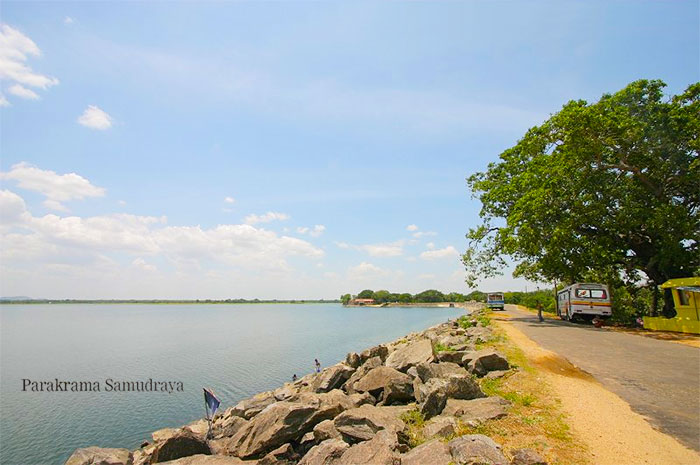
Damaging the Prakrama Samudraya Relapanawa

September 7th, 2021

By Garvin Karunaratne 

I wonder what the Government Agent at Polonnaruwa was doing while the relapanawa was removed or damaged to make a walkaway. Walk ways have to be appreciated but to damage the irrigation heritage that our forefathers have bequeathed to us is unforgivable. 

The G.A’s residence is on the bund and he must have known what was happening. The G.A.  is the highest ranking officer in the District and to my thinking though the Prakrama Samudra belongs to the Irrigation Department, it should have been his concern. 

The Prakrama Samudraya is a masterpiece of irrigation engineering.  

My knowledge of irrigation work was in the Agrarian Services when minor irrigation work was taken over from the Government Agents and handed over to the Agrarian Services Department. I was in charge of minor irrigation work in the Anuradhapura District in 1963 and 64, when my team of Technical Assistants and Cultivation Superintendents did repair and rebuild tanks. 

A tank bund is no mean feat. At its base there is a core of puddled mud  mixed and  settled in like concrete. The earth is put over this puddle mud and rammed in.The  relapanawa is to withstand the waves and the water beating on the bund. I have on my inspections seen how the waters beat on the  bunds and the stone relapanawa is an essential part of a tank bund to ensure that the earth on the tank bund can withstand the beating it gets from the water of the tank. This is no mean beating when the tank is full. 

I wonder why no one in the irrigation department talked. The Relapanawa is an accepted integral part of any tank.  We should be very thankful for the MahaSangha who took up this cause. 

Our irrigation works are precious marvels bequeathed to us.  There will be no life in Polonnaruwa if not for the Parakrama Samudraya. 

I can quote a bit of the marvels in irrigation. 

The gradient of the Jaya Ganga, the fifty mile canal that brings water from the Kalaweva to Nachchaduwa and finally to the City Tanks in Anuradhapura  is on a gradient of six inches to a mile, i.e. six inches  to 5280 feet or to 63,360 inches. It is a gradient that defies all engineering knowledge today. This came to the fore when I presided over at the Cultivators Meeting of the Tanks under the Jaya Ganga in 1963, when to settle the problem of the water not reaching all tanks in time suggested a concrete base for the full length. The District Irrigation Engineer was baffled and was silent for over five minutes and then he replied that it cannot be done. How do you attend to repairs on the Jaya Ganga I quipped and he admitted that  They would never dare to touch the entirety of Jaya Ganga, but would attend to limited work  in disconnected sections.” 

Let me close with a quote from my book. 

We are all novices in the vast field of irrigation.  The Kashmiri Chronicle, the Rajatarangani  tells us that King Dighadipa wanted irrigation engineers from Sri Lanka in the ninth century., Has any one ever heard of the ancient tanks collecting silt. Our ancient engineers knew the art of designing tanks in such a manner that silt did not collect in them. It has so happened that We do not have the administrative and technical capacity to even maintain the vast irrigation systems  that have been handed over on a platter  to us by our ancient engineers.” (From How the IMF Ruined Sri Lanka and Alernative Programmes of Success,  Godages, 2006, 

It is necessary to replace the removed relapanawa immediately before the November rains. Otherwise  the Prakrama Samudra is very likely to breach. In Nuwarakalaviya it is not the rain we know in Colombo. It is a deluge that lasts for days. That will be a major disaster. Further the Relapanawa consists of massive rock boulders These boulders settle in and I would expect them to gradually sink in.at least a foot.  Thus even to restore the removed Relapanawa it is necessary that the new Relapanawa is at least a foot higher. 

Over to the Department of Irrigation. Please restore the Relapanaway in October before the onset of the monsoon rains if Polonnaruwa is to be saved. 

Garvin Karunaratne 

Former G.A. Maytara.7 th September 2021

Parakrama Samudraya, 1978 flood, and strength of tank bund

September 7th, 2021

By Palitha Manchanayake Courtesy The Island

Former Irrigation Engineer, Sri Lanka and Hydrologist/Flood Forecaster to the Commonwealth Bureau of Meteorology, Sydney, Australia In this article, the author wishes to highlight his experience during the November 1978 cyclone, while working as an Irrigation Engineer (IE) attached to the Hydrology branch of the Irrigation Department, Sri Lanka.

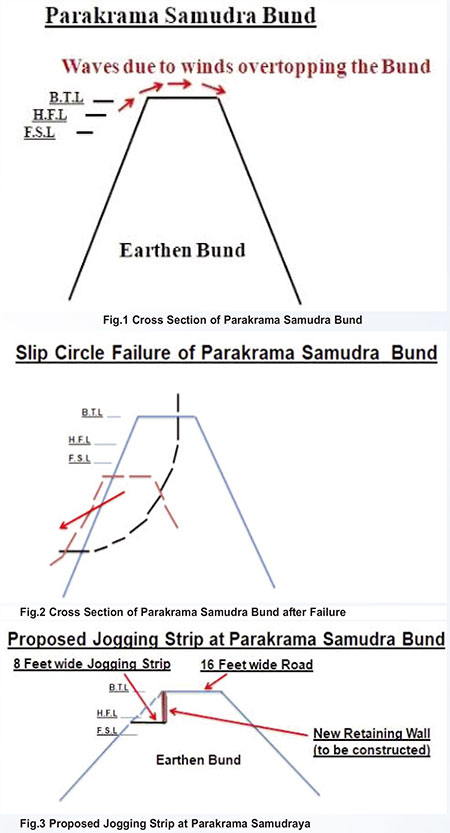
That particular morning, Tilak Nikapitiya (IE) and I were called in by late Olsen Gunawardane, Senior Deputy Director (Research), to his office and asked us to take a ‘Four-Wheel Drive’ and proceed to Polonnaruwa immediately to meet A.D.S. Gunawardane (IE, Polonnaruwa). We were also expected to rescue and look after the Hydrological Field Unit and the Drilling Team of the Engineering Geology Division who had got marooned in the flood while working in the Maduru Oya area. Before leaving, Gunawardane showed us a photograph that had appeared on page one of the Ceylon Daily News on that day. It had been taken from a helicopter hovering above the Parakrama Samudraya .It showed the flood waves of Parakrama Samudraya overtopping its bund in many places. The Parakrama Samudraya Reservoir was at full capacity, and the water level was quite close to the bund top. Owing to the reservoir’s long fetch of water-spread and the high wind velocities that prevailed during the cyclone, the flood waves generated at the surface were overtopping the reservoir bund.

The author recollects that he had never encountered such a drastic and serious situation during his entire 49-year career as an Irrigation Engineer/Hydrologist. It was an alarming and critical situation considering the danger to the large population living in Polonnaruwa suburbs located below the Parakrama Samudra.

The Parakrama Samudraya Reservoir was built by King Parakramabahu the Great, during his reign (1153-1186 AD) and it has a capacity of 98,000 acre-feet, feeding approximately 18,200 acres of paddy cultivation. This reservoir has a tank bund,which is 52 feet high and nine miles long. When the reservoir is full, the entire nine-mile long bund is tested. It is an earthen dam constructed by the ancient Sri Lankan dam builders about 1,000 years ago.

If an earthen dam is to be built today, one has to follow the principles of soil mechanics, and adhere to the criteria involved in selecting the particular type of soil to be used in construction and the identification of suitable borrow areas for them, and maintaining the required standards of compacting and consolidating the soils. In this process, the mere ramming of soil would not do. It has to be done with the appropriate addition of water so that the maximum soil density is achieved through the optimum soil-moisture content. In the present day, this is achieved by compacting the soil with sheep-foot rollers and performing the ‘in-situ’ soil tests on site. But when the reservoir is on the verge of being overtopped by flood waves, it, in fact, tests the soil mechanics and the compaction techniques adopted using cattle and elephants done in ancient times. If there was a portion of earthen bund of poor quality it could fail and the dam could breach at that point. If this impending dam break happens at an unwanted and unexpected point on the dam, it could be disastrous and devastating, as so many civilians and property downstream of Parakrama Samudra would be seriously affected.

Knowing the imminent catastrophic danger, the Irrigation Engineer (IE) in charge of Polonnaruwa, A.D.S Gunawardane, the Government Agent (GA) Polonnaruwa, Austin Fernando, and a few other officials on duty, decided to get over a few bulldozers and retain them at the sluice and spillway sites, to breach the dam at these points if the need arose. The idea behind it was, if the predicted overnight rainfall occurs and the anticipated inflow to Parakrama Samudra does eventuate, then an artificially introduced breach of the dam at one of these particular outlets would enhance the draining of the floods along the already existing channels, rather than haphazard catastrophic flood damage occurring at an unwanted point over the downstream townships. In doing so, the ‘flood operation team’ would be controlling the flood somewhat, minimising damage to life and property, but the IE would be facing the danger of not being able to continue the issue of water to about 18,000 acres of paddy cultivation which was halfway through the Maha Season. Because of this artificial breaching of the dam, no water would be retained in the reservoir as it would completely empty. As such, it could result in crop failure of a vast acreage, which would be a significant political issue. Farmers who have invested their money in land preparation, seed-paddy, weedicide and pesticides would end up desperate and without any income, possibly creating farmer unrest in the area.

As such, the flood operators were very reluctant to go through with the breaching option unless they were left with no alternative. Yet another unknown factor was how much of the predicted rainfall would occur overnight in the already wet 28 square-mile catchment of Parakrama Samudraya , in addition to whatever inflow that came through Amban Ganga. So, after much deliberation that night, the ‘flood operation team’ decided to stay overnight leaving all sluice and spillway gates open, anticipating the predicted rain to fall over the catchment.

At dawn the following morning, a completely unexpected phenomenon was evident. Even though the reservoir water levels did not overtop the bund and were under control, the anticipated overnight rainfall had not really eventuated, and because the sluice and spillway gates were kept open overnight, the water levels had gone down drastically, causing ‘slip circle failures’ in the dam at many places along the entire stretch of the dam.

Even though there was a 12-foot wide roadway at the crest of the dam, a fair portion of the dam had caved-in with earth slips slumping into the reservoir, leaving only about a four-foot-wide section of the former roadway intact (Figure 2). This could be explained in engineering terms as ‘slip circle failures caused by the sudden drawdown of the water table. The increased pore water pressures of the soil have caused these slips to occur’. It was inevitable, as there were predictions of more overnight rain in the catchment which required due consideration, and there was no way of monitoring the inflow to Parakrama Samudraya at that late hour of the night. This happened in Polonnaruwa, Sri Lanka in November 1978.

The Parakrama Samudraya had to be restored by re-constructing the entire stretch of the damaged bund, which resulted in a major exercise of dam construction. It was re-done with a much broader roadway at the dam crest, and also with big rock boulders in rip-rap to serve as wave-breakers in future.

In this ‘flood operation’ exercise of November 1978, all of 18,200 acres of paddy cultivation was saved, as the Parakrama Samudraya Reservoir was able to issue the required water for the rest of the Maha Season. Luckily, the much-feared disastrous breaching of the bund did not happen. It was indeed a revealing experience for all the Irrigation Engineers of the present day, who manage the ancient reservoirs built by Sri Lankan Kings. On further reflection, one could argue that had we taken the option of artificially breaching the dam bund at a sluice or spill site, we would have overcome the flood dissipating problem easily with a lesser cost of dam construction, but ended up with devastating crop failure of 18,200 acres of paddy cultivation.

What is amazing is that the nine-mile-long earth bund of Parakrama Samudraya stood strong without breaching against the force and the head of water generated by the cyclone, giving full credit to King Parakramabahu the Great and his men.

These were the sort of risks, problems and threats we were faced with when handling the 1978 flood event.

If the eight-foot-wide jogging strip (as proposed in Figure 3) were to be constructed, then it should be at least three feet below the Bund Top Level (B.T.L), in which case a retaining wall of some sort has to be built to ensure the safety of the 16-foot-wide roadway at the top. The construction of this retaining wall could be of concern with the existing structure of the earthen bund.

One case that comes to mind is how late R. Premadasa (then Prime Minister and the Minister of Local Government) around the 1985/86 period, installed a Pumping Station on top of the old Kantale Bund to provide drinking water to the nearby town. After operating the huge pumps for some time, the Bund failed due to the vibrations of continuous pumping. But in the case of the jogging strip at Parakrama Samudraya , one could expect minimal vibrations.

Some point out that no problems have been reported regarding the jogging track at Tissa Wewa in Tissamaharama, built in 2014. At Tissa Wewa, the road is by the side of the lake with a low bund height of about 15 ft. But in the case of Parakrama Samudra, the tank bund is higher, and it is a completely different scenario.

One more important aspect of the new construction that merits discussion is the non-existence of the rip-rap. They say that they are going to roll the big rock boulders downward. The big rock boulders or the rip-rap is actually there to break the waves that occur when the reservoir is operating with water levels above the High Flood Level (H.F.L). The Full Supply Level (F.S.L) generally corresponds to the Full Operating Capacity of the Reservoir. During a special situation, when a flood occurs while the water level remains at F.S.L., the radial gates would be opened. At the point when this flood passes through the spillway system with all its gates open, the extra lift of the water level of the reservoir is called the ‘Flood Lift’. In Sri Lankan reservoirs, the ‘Flood Lift’ is generally calculated for a flood event of 1 in 100-year frequency. This ‘Flood Lift’ is the basis to decide on the H.F.L. of the reservoir. The difference between the H.F.L. and the Bund Top Level (B.T.L) is referred to as the ‘Free Board’ which accounts for the waves that are generated at the surface of the reservoir. The rip-rap which consists of the big boulders is there to break the waves, and it has to be placed between the H.F.L and B.T.L of the reservoir. So, if they are going to roll the big boulders below the H.F.L with the new construction, the purpose would be lost, and if a flood event like the one in 1978 occurs again, there would be one less defence mechanism for wave-breaking, which could be awful.

Therefore, I do not think that it is advisable to do any sort of alteration, meddle with or disturb the good old bund.

(The writer is a former Irrigation Engineer, Sri Lanka and Hydrologist/Flood Forecaster to the Commonwealth Bureau of Meteorology, Sydney, Australia)

Traumatic Brain Injury Among The Sri Lankan Combat Veterans

September 7th, 2021

Ruwan M Jayatunge M.D. 

A significant number of Sri Lankan soldiers sustained head injuries during the Eelam War that lasted from 1983 to 2009. These head injuries mainly occurred due to gunshot wounds, mortar blast injuries, grenade explosions and artillery blasts. Traumatic Brain Injuries increased High morbidity and mortality rates among the Sri Lankan combatants. Traumatic Brain Injury (TBI) had been one of the signature injuries of the Eelam War.  

Traumatic brain injury has short and long term consequences. It affects the physical, social, psychological and occupational aspects of a combatant’s life.  The combatants with severe TBI have permanent neurobiological damage with profound psychosocial problems. TBI has been identified as one of the disabling conditions among the combatants.

Traumatic brain injury (TBI) refers to a physiologically significant disruption of brain function resulting from the application of external physical force, including acceleration/deceleration forces (Silver et al, 2009). The victims experience emotional lability, sensory impairments, neuro- cognitive deficits and spasticity following traumatic brain injuries.

Traumatic brain injury is a common cause of neurological damage and disability among civilians and servicemen (Auxéméry, 2012). Schneider and colleagues (2009) elucidate that behaviorally the military population in general is considered to be a high risk group for TBI.  According to Scherer et al., (2013) within the last decade, more than 220,000 service members have sustained traumatic brain injury (TBI) in support of military operations in Iraq and Afghanistan.

In Sri Lanka from 1983 to 2009 over 200,000 military personnel were deployed in the operational areas and considerable numbers sustained mild to severe head injuries following enemy attacks. In a convenience sample of 824 Sri Lankan Army servicemen who were referred to the Psychiatric ward Military Hospital Colombo during August 2002 to March 2006 time period 29 combatants (3.51%) were diagnosed  with TBI. These diagnoses were based on International Classification of Diseases- Tenth Revision (ICD-10) criteria and done by the Consultant Psychiatrist of the Sri Lanka Army. 

The Immediate Impact of TBI

Traumatic brain injury has immediate impacts. TBI combines mechanical stress to brain tissue with an imbalance between cerebral blood flow and metabolism, excitotoxicity, oedema formation, and inflammatory and apoptotic processes (Werner & Engelhard, 2007). The immediate effect of head trauma could be loss of consciousness followed by headaches and dizziness. Sometimes confusion and disorientation could occur from mild to moderate form of head injuries. In a severe form of TBI prolonged periods of loss of consciousness, seizures and paralysis could occur.

Traumatic Brain Injury in the War Zone

During the Eelam War some of the combatants who sustained head injuries were not immediately evacuated due to technical difficulties. Intensify heavy fighting and weather conditions affected evacuation of the battle casualties. However the wounded received first aid and then brought back to the rear zone medical aid point where they were examined by a qualified medical officer.  The head injuries were assessed and then transferred to the Palali Military Hospital or to a nearby hospital. Some battle casualties who sustained severe head trauma were airlifted and transferred to major hospitals in Anuradhapura or in Colombo. In these hospitals the war casualties received specialized treatment by the Neurosurgeons.

TBI and Cognitive Impairments

The combatants who sustained serious head trauma later found with cognitive impairments. Neurocognitive impairments are prevalent in TBI. Among the debilitating conditions, memory impairments, difficulty with attention and concentration, difficulty with new learning, and impaired problem solving skills are frequently identified. As indicated by Arciniegas (2003) cognitive impairments are among the most common neuropsychiatric sequelae of traumatic brain injury at all levels of severity. Traumatic brain injury (TBI) can produce persistent attention and memory impairment that may in part be produced by impaired auditory sensory gating (Arciniegas et al., 2000).

Cognitive dysfunctions associated with TBI were known to military psychologists since World War One. The British Physician Frederic Mott (WW1) and Dr Alexander Luria of the Soviet Army (in the WW2) extensively studied the impact of combat related head injuries. Caveness , Walker, & Ascroft (1962) believed that World War I, World War II, and the Korean war produced a large number of combatants with TBI and other associated complications. In the Vietnam War 12 to 14 percent of all combat casualties had a brain injury (Okie , 2005).

TBI-related cognitive impairment is common in veterans who have served in recent conflicts in the Middle East and is often related to blasts from improvised explosive devices (Halbauer et al., 2009). The Sri Lankan combat veterans who sustained severe form of head injuries reported drastic impairments in memory and concentration. Some were found with post-traumatic amnesia.  A large percentage of combatants were found with intellectual disabilities and impaired language skills.

Personality Changes Following Head Injury

Personality change has been reported in 49% to 80% of patients with traumatic brain injury (Brooks et al., 1986). A significant number of Sri Lankan combatants with TBI were found with subsequent Personality changes. Some of the personality changes such as agitation, paranoia, mood swings, aggression, lack of inhibition, inappropriate sexual activity and impaired self control have caused major barriers to their military and personal lives.

Prominent behavioral characteristics in TBI patients have included altered emotion (including restricted emotions with occasional inappropriate or uncontrolled emotional outbursts); impaired judgment and decision–making (including difficulty arriving at decisions as well as poor decisions); impaired initiation, planning, and organization of behavior; and defective social comportment (including egocentricity and impaired empathy). These impairments tend to be accompanied by a marked lack of insight. (Fowler, 2011: Barrash et al.,2000). According to Oddy et al. (1985) two thirds of individuals with TBI experience personality changes for long periods and sometimes over 15 years.

TBI and Depression

Mood disturbances are common sequelae of traumatic brain injury (Hurley &   Taber, 2002). Bay and colleagues (2004) are of the view that Pre-injury factors (such as mood and anxiety disorders, psychosocial dysfunction, and alcohol abuse), injury factors (such as left ventrolateral and dorsolateral injury and serotonergic dysfunction), and post-injury factors (such as postconcussive symptoms, psychosocial dysfunction, and lack of social supports) contribute to the development of depression after TBI, although the relevance of each factor varies among patients.

Combatants with TBI have a large array of psychosocial problems that affect their professional and family lives. Jorge et al. (2004) observed strong association between posttraumatic depression and psychological and psychosocial factors.

Sometimes post TBI depression could   increases anger, aggression and   suicide risk (Fann , Katon , Uomoto & Esselman, 1995). An increased suicide risk has been identified among the combatants who fought in the Eelam War.  According to the Military Spokesperson of the Sri Lanka Army from 2009 to 2012 postwar period nearly 400 soldiers had committed suicide (Sriyananda, 2012).

TBI and Posttraumatic Stress Disorder

Post-traumatic stress disorder (PTSD) and traumatic brain injury (TBI) often coexist because brain injuries are often sustained in traumatic experiences. In addition evidence suggests that mild TBI can increase risk for PTSD (Bryant, R 2011).

Some investigators have argued that individuals who had been rendered unconscious or suffered amnesia due to a TBI are unable to develop PTSD because they would be unable to consciously experience the symptoms of fear, helplessness, and horror associated with the development of PTSD. Other investigators have reported that individuals, who sustain TBI, regardless of its severity, can develop PTSD even in the context of prolonged unconsciousness. (Sbordone & Ruff, 2010).

Despite the discrepancies, a strong connection between Post-traumatic stress disorder and traumatic brain injury has been reported from battlefields around the world. Hoge et al. (2008) point out that mild traumatic brain injury (i.e., concussion) occurring among soldiers deployed in Iraq is strongly associated with PTSD and physical health problems 3 to 4 months after the soldiers return home. Elder & Cristian (2009) too report high association of mild traumatic brain injury with posttraumatic stress disorder among the veterans of the wars in Iraq and Afghanistan. A notable number of Sri Lankan combatants have been diagnosed with TBI and PTSD during the Eelam War.

Posttraumatic Epilepsy

Posttraumatic epilepsy is a major source of disability following traumatic brain injury (TBI) and a common cause of medically-intractable epilepsy (Guo et al., 2013).  As indicated by Diaz-Arrastia and colleagues (2009) posttraumatic epilepsy is a common complication of traumatic brain injury (TBI), occurring in up to 15-20% of patients with severe brain trauma. There are a number of risks associated with Posttraumatic epilepsy. Yeh et al. (2012) hypnotize that the risk of epilepsy after TBI varied by patient gender, age, latent interval and complexity of TBI.

Combat veterans with head trauma are at high risk of developing posttraumatic epilepsy. As indicated by Chen and colleagues (2009) both Korean and Vietnam War veterans with penetrating TBI had a 53% risk of developing PTE.

Neurologist Ranjani Gamage (2003) reported that in Sri Lanka there were 300,000 persons with epilepsy.   This number would have included combatants with epilepsy due to TBI

Psychiatric Symptoms Followed by TBI

The intersection between traumatic brain injury and Psychosis has become one of the major concerns. Some of the Sri Lankan combatants with TBI were later found with psychosis and these individuals had disorganized thought and speech, paranoid delusions with loss of contact with reality.

Koponen et al. (2002) suggest that traumatic brain injury may cause decades-lasting vulnerability to psychiatric illness in some individuals. In addition they hypnotize that traumatic brain injury seems to make patients particularly susceptible to depressive episodes, delusional disorder, and personality disturbances. In one of the studies that was conducted by Deb and colleagues (1999) found that in comparison with the general population, a higher proportion of adult patients had developed psychiatric illnesses one year after a traumatic brain injury. Fann et al. (1995) point out that psychiatric disorders are a major cause of disability after traumatic brain injury.

Chronic Traumatic Encephalopathy in Combatants 

Chronic Traumatic Encephalopathy (CTE) is thought to be a neurodegenerative disease associated with repeated concussive and subconcussive blows to the head (Mez ,Stern & McKee , 2013).  During military training soldiers repetitively sustain mild head trauma that has a negative impact on their mental health. According to Zhang et al. (2013) subconcussive blows can result in cognitive function changes that are consistent with mild traumatic brain injury of the frontal lobes.

The soldiers who served in the artillery batteries during the Eelam War were frequently exposed to blast impacts. Furthermore they faced artillery attacks, mortar fire, grenade and claymore blasts initiated by the enemy. Although a large number of combatants did not sustain any head trauma a considerable percentage experienced the blast shockwaves.  The shock waves   may have had a negative cumulative effect on them. A considerable fraction of combatants who were exposed to   blast shockwaves complain of chronic headaches, tremors and generalized body pain.  This factor was evident in the numerous battles that were fought in different countries.

Military physicians of World War One believed that artillery blasts could cause miniature hemorrhages in the brain causing tremors and long lasting headaches in soldiers. Teland,& Huseby (2102) of the Norwegian Defence Research Establishment  (FFI) hypothesize  that  military personnel who are exposed to blast waves during training and combat are at a significant health risk.

The combat-related traumatic brain injuries (TBI) resulting from exposure to explosions is highly prevalent among military personnel who have served in current wars. Blast trauma can be understood as experiencing a shockwave on the brain and as a psycho-traumatic event (Auxéméry, 2012). Chronic pain is a common complication of TBI. It is independent of psychologic disorders such as PTSD and depression and is common even among patients with apparently minor injuries to the brain. (Nampiaparampil, 2008).

Head trauma could cause degenerative changes in the brain tissue. Byrnes et al. (2012) point out that traumatic brain injury initiates biochemical processes that lead to secondary neurodegeneration.  Traumatic brain injury causes progressive neurodegeneration associated with chronic microglial activation (Xue et al, 2013). Atrophic changes of the brain that are resulted by TBI can have a lasting impact on soldiers. Symptoms can range to prolong headaches to severe neurological and psychological consequences.

Treatment Options

TBI has drastic impacts on independent living skills of the combatant. The survivors need effective psychosocial rehabilitation. The outcome and impact evaluation following combat related TBI is highly essential in the rehabilitation process.  The concept of the outcome of brain injury” needs to be viewed in the context of a dynamic and changing series of events which occur throughout a person’s life Gainer, 2010).

Various risk factors for poor outcome after TBI have been identified. Most of these are fixed at the time of injury such as age, gender, mechanism of injury, and presenting signs (Glasgow Coma Scale and pupillary signs), but some such as hypotension and hypoxia are potential areas for medical intervention (Moppett, 2007).

Cerebral metabolic derangement and excitotoxicity play critical roles in the evolution of traumatic brain injury (Hwabejire et al., 2013). Expert opinion suggests that combination therapies will be necessary to treat any stage of TBI recovery (Shear & Tortella, 2013). Drug management is important in seizure control. Chen and colleagues (2009) are of the view that optimal seizure control is essential to the physical and emotional health of veterans with TBI and to their ability to lead productive lives.

Psychotherapy is an important component of the treatment of neuropsychiatric problems following TBI (Arciniegas et al., 2000).  Cognitive rehabilitation may also be useful for the treatment of impaired attention, interpersonal communication skills, and executive function following TBI (Arciniegas et al., 2002).  Bédard et al. (2003) suggest mindfulness-based intervention to improve quality of life among individuals who sustained traumatic brain injuries. In addition occupational therapy, speech language therapy and physiotherapy play a key role in the rehabilitation process.

 Case Discussion

1)    Private SNX764 joined the Army in 1991 and served in the operational areas. He took part in several major military operations against the LTTE. In 1995 he was posted to Mallakam -Jaffna. There he had to face fierce enemy attacks. Once the enemy attacked them with mortars. Following nonstop mortar attacks, Private SNX764 was stunned and disoriented. His bunker was damaged severely and he wanted to crawl to a safe area.  When he tried to reach the next bunker an incoming mortar blasted a few meters away from him. Suddenly he could feel bleeding from his ears and he lost consciousness. After a few hours of fighting the enemy retreated.  Then he was evacuated and taken to the Palali military hospital. He was treated for a head injury. Although he survived the mortar blast his speech was impaired. He experienced severe intermittent headaches and insomnia. By 1996 he had intrusions, flashbacks and marked avoidance for combat related settings.   His mental health started deteriorating further. Several times Private SNX764 had tried to commit suicide while serving in the operational areas. Finally he was referred for a psychological evaluation and found with chronic PTSD.

2)    Capt. KXXC385 was an experienced field officer who participated in numerous commando operations. He sustained a head injury as a result of a parachuting accident. He was unconscious for over two weeks and treated at the Neurological unit.  After the acute phase he was referred for rehabilitation therapy. After years of treatment he returned to his unit as a completely changed person. He had difficulty in concentration, Emotional lability and cognitive impairments. His personality changed tremendously after the head trauma.  Once a skillful professional soldier turned into a dependent unsteady person with marked psychosocial dysfunctions. His professional and private life fell apart.  His decision–making and initiation were significantly deteriorated and sometimes he engaged in socially inappropriate behavior failing to detect social cues. Capt. KXXC385 was diagnosed with Personality changes following head injury.

3)    Major WXX856 sustained a head injury due to a grenade blast in a training mission. He was unconscious and treated at the Neurosurgical unit of the National Hospital Colombo. Major WXX856‘s injury was reordered as a moderate type of head injury based on the Glasgow Coma Scale (GCS). After the injury he experienced frequent headaches and irritability. He had low frustration tolerance and often became very impulsive. His family members observed drastic changes in his behavior. Frequently he engaged in family violence. His personality started to change with head trauma. The senior officers found that Major WXX856 was neglecting his duties. A number of times he was reprimanded. To displace his psychosocial difficulties Major WXX856 started to drink alcohol in large quintiles in daily basis. His treatment schedule was interrupted and eventually in the final two years he did not receive any treatment at all. Major WXX856 became more and more isolated and had homicidal urges. In 2004 Major WXX856 committed several murders secretly and enjoyed the brutal acts. He took his final victim – a cab driver to his remote camp and intoxicated him and then killed him by cutting the victim’s throat. He had no remorse or any regrets after committing these murders. Major WXX856 was looking for more victims to fulfill his homicidal urge.  In his final attempt he tried to abduct a victim near a remote tea estate but the attempt was unsuccessful. Some estate workers alerted the Police. Hence he was arrested and sent to the remand prison. The investigators found several other murders that were committed by Major WXX856. While his trial was pending Major WXX856 committed suicide by hanging.

4)     Private KXXT342 met with a landmine explosion in Chunnakam –Jaffna in 1996 while travelling in a military vehicle. Some of his buddies got killed due to the blast. He could only remember the black smoke and fatal outcry of his buddies. The soldiers from the second vehicle took the wounded to the hospital immediately. Private KXXT342 sustained a head injury and was treated at the Palali military hospital and then referred to the National Hospital -Colombo. He underwent treatment for several months. He had impaired hearing, slurred speech and loss of coordination after the injury. In addition he suffered epileptic fits. Private KXXT342 was diagnosed with Posttraumatic Epilepsy. After becoming a battle casualty Private KXXT342 experienced a number of psychosocial problems which affected his life. He was treated with antiepileptic drugs and CBT. Following treatment he was able to overcome most of his psychosocial problems.

5)    Corporal BXVX486 served in an artillery battery for over 9 years. During this time period his team had fired a large number of artillery rounds. Although he was physically unharmed throughout the war his luck changed dramatically. Corporal BXVX486 complained of tremors in both hands, frequent headaches and myalgia after serving lengthy years in the artillery battery. The physicians who examined him found no organic factor associated with his condition. There were no Electroencephalography (EEG) changes and his brain scan and other reports were normal. He was suspected as a malingerer at one point but later found that his symptoms were real. Corporal BXVX486 poorly responded to the painkillers. His condition started to improve with relaxation therapy and EMDR.

6)    L/ Cpl AXXCX831 sustained a TBI following a gun short injury. After he became a battle casualty L/ Cpl AXXCX831 experienced a number of psychosocial problems. He could not control his anger and became extremely hostile. He used to physically abuse his wife and children. He had depression and several times he planned to end his life. Once he took poison and immediate hospitalization saved his life. He was treated with Selective serotonin reuptake inhibitors (SSRI ) and mood stabilizers with CBT. Following drug therapy and psychotherapy L/ Cpl AXXCX831’s condition improved notably.

Conclusion

Although Traumatic Brain Injury has impacted a large number of Sri Lankan combatants who fought in the Eelam War, the psychological sequelae of brain trauma were not adequately studied. The combatants who sustained TBI have persistent headaches, memory impairments, sleep difficulties, low frustration tolerance, impaired life skills, emotional difficulties, impaired decision making and behavioral changes.TBI has caused profound psychosocial problems among the veterans. These problems affect their private and professional lives. The combatants with TBI need effective psychosocial rehabilitation to overcome their current difficulties. Further research is needed to estimate the overall impact of TBI among Sri Lankan combat veterans.

Acknowledgements

1)    Dr. Rolf B. Gainer – Consultant Neurologist – Brookhaven Hospital Tusla Oklahoma

2)    Professor Daya Somasundaram – University of Adelaide Australia

3)    Dr. (Mrs) N.K Ariyarathne – Consultant Physician – Military Hospital Colombo.

References

Arciniegas, D.B., Olincy, A., Topkoff, J., McRae ,K., Cawthra ,E., Filley, C.M., Reite, M.,   Adle,r L.E.(2000). Impaired auditory gating and P50 nonsuppression following traumatic brain injury. Journal of Neuropsychiatry & Clinical Neuroscience .77-85.

Arciniegas, D.B., Topkoff, J., Silver, J.M.(2000). Neuropsychiatric Aspects of Traumatic Brain Injury. Curr Treat Options Neurol.169-186.

Arciniegas DB, Held K, Wagner P.(2002). Cognitive Impairment Following Traumatic Brain Injury. Curr Treat Options Neurol. 4(1):43-57.

Arciniegas, D.B.(2003). The cholinergic hypothesis of cognitive impairment caused by traumatic brain injury. Curr. Psychiatry Rep. 5:391–399.

Auxéméry Y.(2012).   Mild traumatic brain injury and postconcussive syndrome: a re-emergent questioning. Encephale. 38(4):329-35.

Barrash, J., Tranel, D., & Anderson S. (2000). Acquired personality disturbances associated with bilateral damage to the ventromedial prefrontal region. Developmental Neuropsychology, 78(3), 355-381.

Bay, E., Kirsch, N., Gillespie, B. (2004). Chronic stress conditions do explain posttraumatic brain injury depression. Res Theory Nurs Pract .213–228

Bédard, M., Felteau, M., Mazmanian, D., Fedyk, K., Klein, R., Richardson, J., Parkinson, W., Minthorn-Biggs, M.B.(2003). Disabil Rehabil.25(13):722-31.

Brooks, N., Campsie, L., Symington, C., Beattie, A., McKinlay, W.(1986).The five year outcome of severe blunt head injury: a relative’s view. J Neurol Neurosurg Psychiatry.49:764-770.

Bryant, R (2011). ‘Post-Traumatic Stress Disorder vs traumatic brain injury’ Dialogues in Clinical Neuroscience 13(3), p251-262.

Byrnes, K.R., Loane,D.J., Stoica, B.A., Zhang, J., Faden,A.I.(2012). Delayed mGluR5 activation limits neuroinflammation and neurodegeneration after traumatic brain injury.Journal of Neuroinflammation 9:43.

Caveness, W.F, Walker, A.E, Ascroft, P.B. (1962). Incidence of posttraumatic epilepsy in Korean veterans as compared with those from World War I and World War II. J Neurosurg.19:122–2

Chen, J.W., Ruff, .RL., Eavey, R,. Wasterlain, C.G. (2009). Posttraumatic epilepsy and treatment.J Rehabil Res Dev.685-96.

Deb, S., Lyons, I., Koutzoukis, C., Ali, I., McCarthy, G.(1999).  Rate of psychiatric illness 1 year after traumatic brain injury.Am J Psychiatry. ;156(3):374-8.

Diaz-Arrastia, R., Agostini, M.A., Madden, C.J., Van Ness, P.C. (2009). Posttraumatic epilepsy: the endophenotypes of a human model of epileptogenesis. Epilepsia (Suppl 2): 14–20.

Elder GA, Cristian A. (2009). Blast-related mild traumatic brain injury: mechanisms of injury and impact on clinical care. Mt Sinai J Med.76(2):111-8

Fann, J.R., Katon, W.J., Uomoto, J.M., Esselman, P.C.(1995).Psychiatric disorders and functional disability in outpatients with traumatic brain injuries. Am J Psychiatry.152:1493-1499.

Fowler, M (2011). Traumatic Brain Injury and Personality Change Rtrived from http://www.readperiodicals.com/201105/2352132631.html

Franulic, A., Horta, E., Maturana, R., Scherpenisse, J., Carbonell, C.(2000). Organic personality disorder after traumatic brain injury: cognitive, anatomic and psychosocial factors: a 6 month follow-up. Brain Inj.14:431-439.

Gainer, R. et al. (2010).  NRIO Outcome Validation Study: 1997-2010, Neurologic Rehabilitation Institute of Ontario, Etobicoke, Ontario.

Guo, D., Zeng, L., Brody, D.L., Wong, M. (2013). Rapamycin Attenuates the Development of Posttraumatic Epilepsy in a Mouse Model of Traumatic Brain Injury. PLoS ONE 8(5): e64078. doi:10.1371/journal.pone.0064078.

Halbauer, J.D., Ashford, J.W., Zeitzer, J.M., Adamson, M.M., Lew, H.L., Yesavage, J.A. (2009).J Rehabil Res Dev.757-96.

Hoge, C.W., McGurk, D., Thomas, J.L., Cox, A.L., Engel, C.C., Castro, C.A. (2008).Mild traumatic brain injury in U.S. Soldiers returning from Iraq.N Engl J Med.  358(5):453-63.

Hurley, R.A., Taber, K.H. (2002).Emotional disturbances following traumatic brain injury. Curr Treat Options Neurol.;4:59-75.

Hwabejire, J.O, Jin, G., Imam, A.M., Duggan, M., Sillesen, M., Deperalta, D., Jepsen, C.H., Lu, J., Li, Y., deMoya, M.A, Alam, H.B.(2013). Pharmacologic modulation of cerebral metabolic derangement and excitotoxicity in a porcine model of traumatic brain injury and hemorrhagic shock. Surgery. 154(2):234-43.

Jennett, B., Bond, M.(1975). Assessment of outcome after severe brain damage. A practical scale. Lancet.480–4.

Jorge, R.E., Robinson, R.G., Moser, D., Tateno, A., Crespo-Facorro ,B., Arndt, S.(2004). Major depression following traumatic brain injury. Arch Gen Psychiatry.   61:42–50.

Koponen, S., Taiminen, T., Portin, R., Himanen, L., Isoniemi, H., Heinonen, H., Hinkka, S., Tenovuo, O.(2002).  Am J Psychiatry. 159(8):1315-21.

Mez J, Stern RA, McKee AC.(2013).Curr Neurol Neurosci Rep.  (12):407.

Moppett, I.K. (2007).Traumatic brain injury: assessment, resuscitation and early management.Br J Anaesth.18-31.

Nampiaparampil, D.E.(2008).Prevalence of chronic pain after traumatic brain injury: a systematic review.JAMA.  711-9.

Oddy, M., Coughlan, T., Tyerman, A., & Jenkins, D. (1985). Social adjustment after closed head injury: A further follow–up seven years after injury. Journal of Neurology, Neurosurgery and Psychiatry, 48, 564–568.

Okie S. (2005). Traumatic brain injury in the war zone. N. Engl. J. Med. 352, 2043–2047.

Sbordone, R. J., & Ruff, R. M. (2010). Re-examination of the controversial coexistence of traumatic brain injury and posttraumatic stress disorder: Misdiagnosis and self-report measures. Psychological Injury and Law, 3, 63-76.

Scherer, M.R., Weightman, M.M., Radomski, M.V., Davidson, L.F, McCulloch, K.L. (2013). Returning service members to duty following mild traumatic brain injury: exploring the use of dual-task and multitask assessment methods. Phys Ther. 93(9):1254-67.

Schneider,S. L.,  Haack,  L.,  Owens, J.,  Herrington,D. P., Zelek ,A (2009). An Interdisciplinary Treatment Approach for Soldiers With TBI/PTSD: Issues and Outcomes. Perspectives on Neurophysiology and Neurogenic Speech and Language Disorders .vol. 19 no. 2 36-46.

Shear, D.A., Tortella, F.C.(2013). A military-centered approach to neuroprotection for traumatic brain injury.Front Neurol. 12;4:73.

Silver,J. M., McAllister, T. W., Arciniegas, D. B. (2009). Depression and cognitive complaints following mild traumatic brain injury. American Journal of Psychiatry.166:653–661.

Sriyananda, S. (2012 September 24). Nearly 400 soldiers commit suicide in peacetime. The Island Newspaper. Retrieved on February 14, 2013, from  http://www.island.lk/index.php?page_cat=article-details&page=article-details&code_title=62302

Teland, J.A.,   Huseby, M. (2102). Blast wave propagation into the brain.Norwegian Defence Research Establishment (FFI). Retrieved from     http://www.ffi.no/no/Rapporter/12-02416.pdf

Werner C, Engelhard K.(2007). Pathophysiology of traumatic brain injury. Br J Anaesth. 99: 4–9.

Xue, F., Stoica, B.A., Hanscom, M., Kabadi, S.V., Faden, A.I. (2013). Positive Allosteric Modulators (PAMs) of Metabotropic Glutamate Receptor 5 (mGluR5) Attenuate Microglial Activation”. Retrieved from http://www.ncbi.nlm.nih.gov/pubmed/24168364

Yeh, C.C., Chen, T.L., Hu, C.J., Chiu, W.T., Liao, C.C.(2012). Risk of epilepsy after traumatic brain injury: a retrospective population-based cohort study. J Neurol Neurosurg Psychiatry.84(4):441-5.

Zhang, M.R., Red, S.D., Lin, A.H., Patel, S.S., Sereno, A.B. (2013). PLoS One.  e57364. doi: 10.1371.

Why should Myanmar Strengthen its relations with Bangladesh?

September 7th, 2021

Pathik Hasan

Myanmar is one of the closest neighbors of Bangladesh. Which is also known as Burma. Before the Second World War, many people from Bangladesh used to travel to Burma in search of livelihood. Since then, the people of this country have developed an economic and social relationship with Burma. Apart from India, Bangladesh shares a border with Myanmar. The 271 km long Bangladesh-Myanmar border is very important for Bangladesh due to geographical reasons. Bangladesh can use Myanmar by land for communication in Southeast Asian countries including China. Road connectivity is possible through Myanmar. Maybe a new horizon of relationships and possibilities unfolds.

Myanmar can also use Bangladesh to reach South Asia specially Nepal, Bhutan, Mainland India. Bangladesh and Myanmar both share a common regional platform like ‘BIMSTEC’. On the other hand, Bangladesh is considered as a ‘Hub ‘between South Asia and South East Asia. It is true that Bangladesh is a South East Asian country geographically but South Asian country culturally, demographically and historically. This is an outstanding geo-strategic characteristic of Bangladesh. Therefore, without the involvement of Bangladesh, any connectivity amongst the states of ASEAN and SAARC is absolutely impossible.

Myanmar is a country rich in natural resources. There are huge amounts of natural resources like tin, zinc, copper, tungsten, coal, marble, limestone, natural gas, hydropower etc. The major resource of this country is mineral resources. Myanmar can be a major source of energy for Bangladesh to ensure its energy security. Food and grains are produced in large quantities in Myanmar. Myanmar can also be a big helper of Bangladesh in the field of food security.

Myanmar has a huge potential of rice cultivation. But lands of Myanmar are unutilized for decades due to lack of human resource. Myanmar needs labors. Rice production in Myanmar accounts for approximately 43% of total agricultural production in the country, making it the seventh largest producer of rice in the world. Out of 67.6 million hectares of land, 12.8 million are used for cultivation. In 2019 alone, Myanmar accounted for 13,300 million metric tons of milled rice production. Rice production in Myanmar is heavily dependent on human and animal power, both traditional methods of cultivation. Myanmar has lack of Manpower and technology in this regard. But Bangladesh has these two things. Bangladesh has surplus human resource. Myanmar can utilize the human resource of Bangladesh for the maximum gain.

But Bangladesh has never been able to take full advantage of this opportunity. This country of 135 tribes and different ethnic groups has been under military rule for many years. That may be one of the reasons why the relationship is not deep. If Bangladesh had good relations with Myanmar, its dependence on India could be reduced in many cases. If contacts were made in Southeast Asia and China through Myanmar, there would be immense potential for investment and trade.

Bangladesh and Myanmar are both on the way to be developed countries. Bangladesh is going to be a South Asian Economic Miracle. Bangladesh can play a significant role in Myanmar to some extent whole South East Asia. For this, Myanmar should increase its diplomatic relations with Bangladesh for the better mutual interest for whole South Asia and South East Asia. EU, China, India, Russia and North Korea are becoming allies in Myanmar’s oil, gas, mineral resources and military markets. Taking advantage of the US negligence, Myanmar’s military junta extended a helping hand to China to invest. So, China is now the biggest investor in this country. According to Earth-Rights International, a private group, more than 26 Chinese companies are investing in Myanmar’s oil, gas, mineral resources and allied sectors. China has already become its biggest ally in building and supplying arms to Myanmar. Myanmar has developed relations not only with China but also with India. India and China are building trade relations with Myanmar. The United States is also changing its approach to the Myanmar question. That is why America, a strong economic country, has started taking new initiatives to develop relations.

Recently, a 41-year dispute over the maritime border with Bangladesh-Myanmar has been settled by the International Court of Justice. As a result, the rights of Bangladesh have been established in an area of ​​1 lakh 11 thousand square kilometers. Myanmar’s waters have also been identified. As a result, this problem has been eliminated. The path of creating tension in the Bay of Bengal has been blocked.

Myanmar is rich in minerals, ores, oil, gas, precious stones and other natural resources. The country is a major supplier of natural wood to the world. While attracting foreign investment has been limited to the oil and gas sector, the country has recently shifted its focus to attracting production-based investment. The country is well ahead in power generation due to good investment in hydropower generation. The tourism industry is also a promising sector of the country. Myanmar’s economy has so far been limited to extracting natural resources, said Nobel laureate economist Professor Joseph Stiglis, who warned that the country would suffer a “curse of wealth” if it continued. Some resource-rich countries in Africa, including Nigeria, Sudan and Benin, have been plagued by corruption, internal strife and poverty. These countries could not adopt proper wealth management system. Economists have the opinions that if democracy is restored in Myanmar and corruption is reduced, it will not have to go to the level of countries that have failed in wealth management. Therefore, it can be assumed that Myanmar will become a country with rapid economic growth in a few years. The country’s biggest economic advantage is that they are members of the ten-nation ASEAN. ASEAN is one of the three most successful trade blocs in the world. The trade consists of Singapore, Malaysia, Indonesia, Thailand, Philippines, Brunei, Vietnam, Cambodia, Laos and Myanmar. The alliance controls about 24 percent of total world trade and their share in world trade is growing every year. Their trade relations with China, Japan and South Korea are deepening due to the increase in trade. ASEAN countries account for more than 50 percent of total trade between themselves and the three countries. As a result, Bangladesh has the opportunity to benefit by strengthening ties with this trade alliance, that is, Myanmar. Bangladesh and Myanmar are among the seven member countries of the Bay of Bengal Initiative for Multi-sectoral Technical and Economic Cooperation (BIMSTEC). Therefore, there is ample opportunity to increase trade and investment relations between the two countries through BIMSTEC.

There are many opportunities to enhance Bangladesh’s bilateral trade and investment relations with Myanmar. Through the import of gas and electricity, Bangladesh can get future energy security. The two countries can jointly explore for oil and gas in the Bay of Bengal. Bangladesh can also contribute to the development of Myanmar’s infrastructure.

The proposed construction of the Asian Highway, funded by the Asian Development Bank and other donor groups, could also increase land connectivity between the two countries. And there is ample opportunity to increase shipping. Besides, joint investment can be made in fertilizer, plastic, cement, furniture etc. Both countries will benefit if Myanmar produces raw materials and Bangladesh with skills, technical knowledge and labor. Because, Myanmar imports every product. Bangladesh can also export readymade garments.

Bangladesh produces medicines, electronics. Myanmar can import these from Bangladesh hugely. On the other hands, Myanmar is a source of agricultural products. Bangladesh can import these from Myanmar. During the moment of Bangladesh’s onion crisis with India in 2019, Myanmar provided onions to Bangladesh. Bangladesh understood the importance of bilateral trade with Myanmar at that time. On the other hands, Bangladesh is keen to provide assistance to Myanmar.

Covid-19 vaccine diplomacy, counter terrorism approach for the regional security are some sectors. Rohingya refugee problem has made distance between Bangladesh and Myanmar. Myanmar should solve this problem to serve its own and reginal interest. Myanmar should understand that it is the issue of the region. Whole South Asia and South East Asia may be volatile and unstable for this problem.

However, the two countries can also increase production in the agricultural sector through joint ventures. Apart from adopting joint investment projects, Bangladesh can increase imports of various agricultural products including pulses, spices, fish and rice. Thus, enhancing bilateral relations could contribute to the growth of trade and investment relations with ASEAN and BIMSTEC countries. This will create an opportunity to solve the Rohingya problem and stop militant activities. Therefore, Myanmar should take effective steps to strengthen bilateral relations. Pathik Hasan, Dhaka based NGO activist and Writer on contemporary international issues. He can be reached at pathikhasan1141@gmail.com

SL lose Rs. 1,600 Bn revenue due to Covid this year: Basil

September 7th, 2021

Courtesy The Daily Mirror

Sri Lankan government has lost a total revenue of Rs 1,600 billion this year due to COVID-19 pandemic, Finance Minister Basil Rajapaksa told Parliament today.

Speaking during the debate on regulations imposed under the Financial Bill and Export Import Control Bill the Minister said 70% of indirect tax revenue has been recorded since the current lockdown was imposed. The revenue received from the Inland Revenue Department, Customs and Excise Department had gone down drastically because of the lock down,” Mr. Rajapaksa said.

Total revenue has dropped drastically compared to expenditure. This is not totally due to the pandemic as Sri Lanka’s state expenditure has exceeded the revenue for centuries,” he said at the same time.

We have decided to use foreign assistance with utmost diligence and will only work with institutions such as the World Bank and Asian Development Bank and will only for concessionary loan schemes. Sri Lanka will not agree to political based conditions any doner would impose when it comes to external borrowings,” the Minister added.

Government is not prepared to face the crisis situation alone and is prepared to work with the opposition in dealing with is financial crisis,” he also said.(Yohan Perera and Ajith Siriwardana)

Finance Bill passed in Parliament with amendments

September 7th, 2021

Courtesy Adaderana

The Finance Bill which was debated in Parliament today (07) has been passed with amendments by a majority vote.

During the second reading of the Bill, Chief Opposition Whip Lakshman Kiriella called for a division and second reading of the bill was passed with 134 parliamentarians voting in favour and 44 voting against the bill. 

The Finance Bill enables individuals to voluntarily disclose undisclosed taxable supplies, income and assets which are required to be publicize under some laws.

In addition, it allows the imposition of taxes on taxable income and assets.

Further, the bill will enable granting tax amenities and indemnification of individuals who voluntarily disclose taxable supplies, income or assets against liability from investigation, prosecution and penalties under specified laws.

Meanwhile, the Securities and Exchange Commission of Sri Lanka Bill, which was taken up for debate today, was passed with amendments without a vote.

Meanwhile, a resolution under the Essential Public Services Act, an Order under the Excise (Special Provisions) Act and three regulations under the Imports and Exports (Control) Act were also approved by Parliament today.

Sri Lanka confirms another 184 coronavirus deaths

September 7th, 2021

Courtesy Adaderana

The Director-General of Health Services has confirmed another 184 coronavirus-related deaths for September 06 (yesterday), increasing the official death toll in the country to 10,504.

According to the figures reported by the Department of Government Information today (07), the victims include 97 males and 87 females while four of the deceased, including 1 female, are below the age of 30.

Forty-six of the Covid-19 deaths are individuals between the ages of 30-59 and the remaining 134 are persons aged 60 and above.

Sri Lanka confirms 2,964 COVID cases in total today

September 7th, 2021

Courtesy Adaderana

The Epidemiology Unit of the Health Ministry reports that 1,141 more people have tested positive for COVID-19 in Sri Lanka, moving the daily total of new cases to 2,964.

This brings the confirmed tally of coronavirus infections reported in the country to 471,863.

A total of 388,278 recoveries have been confirmed in Sri Lanka since the outbreak of the pandemic last year.

As per official data, more than 73,000 active cases are currently under medical care at hospitals, treatment centres and homes.

Meanwhile, Sri Lanka registered 184 new COVID-related fatalities confirmed by the Director-General of Health Services on Monday (Sep. 06). The new development pushed the official death toll from the virus outbreak in Sri Lanka to 10,504.

Who are the beneficiaries of foreign funds?

September 6th, 2021

Sangadasa Akurugoda

As per a main news item appeared in ‘Divaina’ dated August 22, 2021, a foreign organisation has already given  Rs 850 millions, via a NGO, to some political parties and trade unions etc to embarrassed the current government. The news item revealed how this money has been distributed among the various recipients, including a media team and popular monk. The money said to have been given with the intervention of a top official in the relevant foreign organisation. Out of this amount, Rs 500 million has been distributed to the relevant media team, Rs 50 million to the popular monk and Rs. 300 million to the trade unions and political parties.

 (https://divaina.lk/ආණ්ඩුවට-ගහන්න-රුපියල්-කෝ/?fbclid=IwAR3xWsxthuBvoPm7ux24c-rssD9hzVu3S6DVUzSNhm0GA_iarZT0O4XBmO8)

https://divaina.lk/%E0%B6%86%E0%B6%AB%E0%B7%8A%E0%B6%A9%E0%B7%94%E0%B7%80%E0%B6%A7-%E0%B6%9C%E0%B7%84%E0%B6%B1%E0%B7%8A%E0%B6%B1-%E0%B6%BB%E0%B7%94%E0%B6%B4%E0%B7%92%E0%B6%BA%E0%B6%BD%E0%B7%8A-%E0%B6%9A%E0%B7%9D/?fbclid=IwAR3xWsxthuBvoPm7ux24c-rssD9hzVu3S6DVUzSNhm0GA_iarZT0O4XBmO8

Use of foreign funding to brainwash the people, to regime change and to destabilize the country is not something new to our country.    We have come across several articles and books providing details of how foreign funds were used to achieve such goals of the foreign organisation in the past.

We can see that most of the well-known NGOs and trade union activists are getting wide publicity to their statements in the media today, similar to the period we had during the war against terrorism. Like mushroom and many other fungus, these activists popup whenever the environmental conditions suits them. 

The easiest way to find out what they said and how some of these mushroom activists contributed to the continuation of terrorism in the past is to search their records on line.    Interestingly, I found a list of names of politicians, so-called civil societies and trade union activists, who were promoting LTTE as an integral part of ‘the solution’ and campaigning in support of the CFA  in 2006,  in a pro LTTE website. (https://www.tamilnet.com/art.html?artid=19261&catid=13).   

Although some of activists appeared in the list were very active, when promoting the so-called yahapalana regime during 2015-1019 too, most of them are no more, most likely with time.  Those politicians, civil societies and trade union activists who promoted the yahapalana regime appeared nowhere to go now, as the majority of general public are aware of their past and the damage they have done to the country. The Covid-19 pandemic appears to be a golden opportunity after the disappearance of LTTE terrorism from the country‘s soil for the so-called activists to raise their heads, once again, to destabilize the country.

How these foreign funded NGOs, politicians and the so-called activists attempted to brainwash the people of the country and the entire world are well known and we can imagine the status of our country today, if their motives were successful in the past, by looking at how terrorism grew and gained control in Afghanistan today.

Freedom to involve in political activities were very limited (or not at all) for the government employees prior to 1970.  As a result granting some political freedom to the government servants under the United Front government (comprising SLFP, LSSP and CP) elected in 1970 and by allowing politicians of successive governments to interfere with the appointments of various positions within the public service, the government servants and their trade unions are politically divided to an uncontrollable extent today.

Instead of carrying out government policies, some government officials and trade union leaders are fulfilling the needs of their political parties while criticizing the government policies in public. Media statements issued, almost daily, by the two well-known trade unionists like Ravi Kumudesh and Saman Rathnapriya attached to the health sector that are very critical on every action taken by the government to control the present-day pandemic is a typical example. Appearance of the two names of these politically motivated trade unionists in the said list found in the TamilNet is a clear example of their past and to whom they are serving. In addition, we can see that even the politicians rejected by the mass with a overall majority during the last Presidential and general elections are getting wide publicity in the media to make frequent statements to demoralize the general public mind against the steps taken by the government to control the Covid-19 epidemic and to recover the economy at this crucial stage.

We were under foreign powers for centuries due to the acts of saboteurs and traitors. We have witnessed, during our life time, how powerful are enemies within, when destabilizing regimes. The coming months will be very decisive as local paid agents of  the enemies of our nation will work overtime and will use the money said to have been distributed among them, to achieve their desired goals disregarding the extent of hardships causing  and loss of lives of the general public. The public must be aware of these enemies, as a priority, and should rally against such elements in order to protect our nation.

Sangadasa Akurugoda

බෞද්ධ ජනරජ ප්‍රවාදය – 34 වැනි කොටස – ‍කතන්දර අධ්‍යාපනය

September 6th, 2021

ආචාර්ය වරුණ චන්ද්‍රකීර්ති

විවිධ වූ වියුක්ත න්‍යායන්ගේ උපකාරයෙන් අනුමාන දැනුමක් ගොඩ නඟාගැනීම වෙනුවට අත්දැකීම් මත පදනම් වූ ප්‍රත්‍යක්‍ෂය ඇසුරින් ලෝකය තේරුම්ගැනීමේ හැකියාවක් බෞද්ධ අපට හිමි වී තිබේ. එහෙයින් අපගේ සමාජ – ආර්ථික අවශ්‍යතා සාධනය උදෙසා මෙම හැකියාව භාවිතයට ගැනීම වඩාත් ප්‍රතිඵලදායක වේ. මෙයින් කියැවෙන්නේ න්‍යායික කරුණු දැනගැනීමේ අවශ්‍යතාවක් නැති බවක් නොවේ. එම කාර්යයෙහි නිපුණ අයවළුන් විසින් තමන්ට හැකි උපරිමයෙන් න්‍යායික කරුණු අධ්‍යයන කළ යුතු අතර නව න්‍යාය හඳුන්වාදීමට ද කටයුතු කළ යුතු වේ. එසේ වුව ද, බෞද්ධ ජනරජයෙහි වසන සෑම අයකුගේ ම කාලය සහ ශක්තිය ඒ වෙනුවෙන් කැපකිරීම නිරර්ථක කාර්යයකි.

දරුවන්ගේ නිපුණතා හඳුනාගෙන ඒ අයගෙන් පිරිසක් න්‍යායික කරුණු ගවේෂණය ඉලක්ක කරගත් අධ්‍යාපන වැඩපිළිවෙළකට ද අනෙකුත් පිරිස ඒ ඒ අයගේ නිපුණතා සහ අවශ්‍යතා අනුව සැලසුම් කෙරුණු ප්‍රත්‍යක්‍ෂ මූලික අධ්‍යාපන වැඩපිළිවෙළකට ද යොමු කළ යුතු වේ.

සංස්කෘතිය සහ අධ්‍යාපනය යනු එකිනෙකින් වෙන් කළ නො හැකි පරාමිතීන් දෙකකි. එ මෙන් ම ඒවා එකිනෙක මත රඳා පවතියි. ඕනෑ ම රටක අධ්‍යාපනයට එහි සංස්කෘතිය විසින් මගපෙන්විය යුත්තේ ය. එහෙයින් න්‍යායික කරුණු අධ්‍යයනය සඳහා තෝරාගනු ලබන ශිෂ්‍යයන් හට ඉගැන්වීමේ දී ද ඒ වෙනුවෙන් යොදාගත හැකි සංස්කෘතික සාධක නො සළකා එය කළ නො හැක්කේ ය. ප්‍රත්‍යක්‍ෂ මූලික අධ්‍යාපනය සඳහා තෝරාගනු ලබන ශිෂ්‍යයන් හට ඉගැන්වීමේ දී සංස්කෘතික මගපෙන්වීමේ වැදගත්කම තවත් ඉහළ යයි.

කතන්දර මාදිලිය යනු කුඩා දරුවන්ට මෙන් ම වැඩිහිටියන්ට ද ඉගැන්වීමේ දී යොදා ගත හැකි ඉතාමත් ඵලදායක අධ්‍යාපනික වැඩපිළිවෙළකි. බුදුදහම තුළ ද මෙම මාදිලිය නිරත්නරයෙන් ම යොදා ගැනෙයි. ජාතක කතා සාහිත්‍යය තුළ මෙය ඉතා ප්‍රකට අයුරින් දැකගත හැකි ය. බොහෝ සූත්‍ර ධර්ම දේශනා තුළ ඒවාට පදනම් වූ නිධාන කතා සාහිත්‍යයක් ද වෙයි. බුද්ධ චරිතය සහ මහා ශ්‍රාවක චරිත තුළින් ද අපි බොහෝ දෑ උගනිමු. බිම්බිසාර, පසේනදී කොසොල්, අශෝක වැනි රජවරුන්ගේ කතාවලින් ද අනාථපිණ්ඩික සිටුතුමා, විශාකා දේවිය වැනි අයගේ කතාවලින් ද අපි බොහෝ දෑ උගනිමු. මිලින්ද ප්‍රශ්නය වැනි ග්‍රන්ථ තුළ ඉතා ගැඹුරු ධර්ම කරුණු ඉදිරිපත් කර ඇත්තේ ද කතන්දර ස්වරූපයෙනි. අටුවා සාහිත්‍යය ද කතන්දරවලින් පිරුණු එකකි. මහාවංසය ද එවැන්නකි.

මෙම කතන්දර පදනම් කරගෙන කාව්‍ය, ගීත සහ නාට්‍ය නිර්මාණ ද බිහි වී තිබේ. අදාළ කරුණු සන්නිවේදනය ඒ මඟින් තවත් පහසු කර තිබේ. මෙම නිර්මාණ ඔස්සේ විවිධ වූ ධර්ම කරුණු අපි නිරන්තරයෙන් ම සේවනය කරමු. තව ද අපගේ ස්වාමීන්වහන්සේලා ධර්ම දේශනා පවත්වන විට ද මාතෘකා කරගන්නා සූත්‍ර පාඨවලට අදාළ නිධාන කතා ඇසුරින් ඒවා පැහැදිළි කර දෙති. මෙකී සියලු කරුණු හේතුවෙන් අපට හිමි වී ඇත්තේ කතන්දර ඇසීමට කැමැති, ඒ සඳහා යොමුවුණු මනසකි. එහෙයින් අධ්‍යාපනය සඳහා කතන්දර මාදිලිය යොදාගැනීම ඉතාමත් ප්‍රායෝගික උපක්‍රමයක් වනු නිසැක ය.

කුඩා කාලයේ දී සුරංගනා කතා, වීර කතා අසා ලොකු මහත් වන ළමයි ඒ ඇසුරින් නියම කරගත් ඉලක්ක අනුව වැඩ කරති. ඔවුන්ගේ චරිත වර්ධනයට ද ඒවා උපකාරී වෙයි. මෙම මාදිලියෙන් වෙනත් සංස්කෘතීන් ද වැඩගෙන තිබේ. 1719 දී පළ කෙරුණු රොබින්සන් කෲසෝ”, 1726 දී පළ කෙරුණු ගලිවර්ගේ චාරිකා” වැනි පොත්වලින් කියැවුණු කතන්දර අසා ලොකු මහත් වූ දරුවන් බ්‍රිතාන්‍යයේ නාවික බලය දායක වුණු බව පැහැදිළි ය. 17 වැනි සියවසේ මැද භාගයේ සිට ඕලන්ද නාවික බලය සමගත් එයින් පසුව ප්‍රංශ නාවික බලය සමගත් තරග කළ බ්‍රිතාන්‍ය නාවික බලය එම ක්‍ෂේත්‍රයෙහි ප්‍රබලයා බවට පත්වූයේ 18 වැනි සියවසේ මැද භාගයේ දී ය. රොබින්සන් කෲසෝ”, ගලිවර්ගේ චාරිකා” වැනි කතන්දර කියවා ලොකු මහත් වූ ළමයි ඒ වනවිට බ්‍රිතාන්‍ය නාවික හමුදාවට උර දී සිටියහ.

කතන්දර ඔස්සේ දැනුම සන්නිවේදනය සංස්කෘතික පුරුද්දක් බවට පත් කරගත් අපට මෙම කාර්යය ඉතාමත් පහසුවෙන් කළ හැක්කේ ය. ආර්ථික හපන්කම් කළ පුද්ගලයන්ගේ චරිත කතා, සමාජ – ආර්ථික ජයග්‍රහණ අත්පත් කරගත් රටවල අත්දැකීම්, යම් යම් අය විසින් කළ වැරැදි නිසා ඇති වූ විනාශ සහ බිඳවැටීම් මෙම ක්‍රමයෙන් සන්නිවේදනය කළ හැකි ය. කුඩා දරුවන්ගේ මනස් තුළ දැවැන්ත ඉලක්ක නිර්මාණයට ද මෙම ක්‍රමය යොදාගත හැකි ය. මෙවැනි කතන්දර හඳුන්වාදීම ආරම්භ කෙරුණු විට ඒ ආශ්‍රයෙන් කාව්‍ය, ගීත, නාට්‍ය, ටෙලි නාට්‍ය, චිත්‍රපට වැනි වෙනත් නිර්මාණ ද බිහිවනු ඇත්තේ ය.

කතන්දර මාදිලිය යනු අත්දැකීම් බෙදාහදා ගැනීමේ ප්‍රශස්ත ම ක්‍රමවේදය වේ.
ආචාර්ය වරුණ චන්ද්‍රකීර්ති

දිගටම ගජරමෙට සිද්වන LRC ඉඩම් මංකොල්ලය – අංක 1.

September 6th, 2021

Rainforest Protectors of Sri Lanka

ඉඩම් ප්‍රතිසංස්කරණ කොමිෂන් සභාව සිරිමාවෝ බණ්ඩාරනායක විසින් වසර 50 කට ආසන්න කාලයකට පෙර පිහිටුවන ලද්දේ එක්තරා පැහැදිලි කාර්යක් සිදුකිරීම සඳහා පමණි. එනම්, එවක පවුල් 6000කට අයිතිව තිබු, අක්කර ලක්ෂ 15කට ආසන්න ඉඩම් ප්‍රමාණයක් පවරාගෙන රජය යටතට පත්කිරීමටය.

 කෙසේනමුත් මේ වනවිටත් LRC ආයතනයේ විශාල අකාරයේ ඉඩම් මංකොල්ලයන් ප්‍රමාණයක් අප වෙත වාර්තාවී ඇති අතර, අමාත්‍යවරුන් මුදල් ලබාගැනීම්, නිලධාරීන් අල්ලස් ගැනීම්, සහ තම හිතවතුන්ට ඉඩම් ලබාදීම් විශාල ප්‍රමාණයක් වාර්තා වී ඇත. ඉඩම් පවරාගත් පාර්ශ්වයන්ට ඉඩම් ලබාදීම පවා සම්පුර්ණ කරනොමැති පසුබිමක, (තමන්ගේ ඉඩම් ගත්තායි බොරු ලේඛන ඉදිරිපත් කර දේශපාලුවන් සහ ව්‍යාපාරිකයින් ඉඩම් සොරකම් කර ඇති බවටද අප වෙත තොරතුරු ඇත) ඉඩම් නොමැති දුප්පත් මිනිසුන්ගේ ඉඩම් අවශ්‍යතාව සඳහා ඉඩම් වෙන්කර නොමැති පසුබිමක, මෙසේ හිතෙන හිතෙන ආකාරයට ව්‍යපාරික, පෞද්ගලික ලාභ හෝ දේශපාලන අවශ්‍යතා මත ඉඩම් බැහැරකිරීම මහා අපරාධයකි.

යම් යම් පාර්ශව මෙසේ ලබාගන්නා ඉඩම් වනසා මුදල් හම්බකරගැනීමත්, එසේ නොමැතිනම් වෙනත් පාර්ශ්වවලට අධික ලාබහයකට නැවත බදුදීමත් මෙන්ම මෙවැනි ඉඩම්වල පස්කැපීම, කළුගල් කැඩීම මෙන්ම වෙනත් ඛනිජ කැනීම්ද, LRC න් ලබාදිය යුතු ඉඩම් වෙනුවට JEDB වටිනා ඉඩම් ලබාදීමට/විකිණීමට උත්සාහ කිරීම, (එසේ ඉඩම් ප්‍රතිසංස්කරණ කොමිසමේ කරන ලද එවන් ඉඩම් මංකොල්ලයක් සම්බන්ධව මේ වන විටත් විභාගයක් සිදුවෙමින් පවතින බවට වාර්තාවේ. ඒ සම්බන්ධව ඉදිරියේදී වෙනම ලිවීමට බලාපොරොත්තු වෙමු) යම් යම් ප්‍රදේශවල LRC ඉඩම් එහි නිලධාරීන් විසින් කූථ ලෙස විකිණීම ඇතුළු වංචා දුෂණ අක්‍රමිකතා මෙම ආයතනයෙන් විශාල ලෙස වාර්තාවේ. මේවා බහුතරයක් පසුපස සිටින්නේ චන්ද්‍රසේන ඇමතිවරයා විසින් මෙවැනි සොරකම් සඳහාම සුදුසු තමන් හොරෙකු බව හඬ පටයක් ලීක් කරගත්තා යයි කියන නිලධාරියා ඇතුළු කීප දෙනෙකි.

එතෙක් ලොකුම ගැටළු පසෙක තබා කුඩාම සහ අලුතෙන්ම වාර්තාවන ගැටළු කිහිපයකින් LRC ඉඩම් මංකොල්ලය ගැන සහ LRC වනවිනාශය ගැන පටන් ගන්නෙමි. ඉඩම් ප්‍රතිසන්කරන කොමිසම, ජනාධිපති කාර්යාලය, අපරාධ පරීක්ෂණ දෙපාර්තමේන්තුව, අල්ලස් හා දුෂණ විමර්ශන කොමිෂන් සභාව ඇතුළු ආයතන විශාල ප්‍රමාණයකට අප විසින් මෙම ඉඩම් අවභාවිතාවන් සහ කොල්ලයන් සම්බන්ධව එකින් ඒක පැමිණිලි ඉදිරිපත් කරන අතර එහි පළමුවැන්න මේ වන විටත් යවා අවසානය.

ඒ අනුව මෙම පළමු ඉඩම් කොල්ලය නම් රත්නපුර දිස්ත්‍රික්කයේ කො⁣ලොන්න ප්‍රාදේශීය ලේකම් කොට්ඨාසයේ උල්ලිදුවාව ග්‍රාමසේවා වසමේ ඇඹිලිපිටිය ඉඩම් ප්‍රථිසංස්කරන කොමිෂන් සභා කාර්යාලයට අයත් ප්‍රදේශයේ (අධ්‍යක්ෂ රංජන් වීරසිංහ සහ ක්ෂෙත්‍ර නිලධාරී සමන්ත) යන අය විසින් අයුතු ලෙස ඉඩම් අල්ලාගැනීමට යම් යම් පාර්ශ්වයන්ට අවසර ලබාදීමයි. ගම්මුන් අප වෙත ලබාදුන් ප්‍රකාශ අනුව මෙලෙස ඉඩම් ලබාදීමේදී සන්තෝෂම් ලෙස දශ ලක්ෂ ගණනක් (ඔවුන්ට අනුව ලක්ෂ 60 ත් – 70ත් අතර මුදලක් මුදලක්) ලබාගෙන ඇති බව පවසයි. එලෙස ඉඩම් ලබාදී ඇති අයවලුන් කිහිපයකගේ නම් පහත දැක්වේ.

 01). නිහාල්.

02). සරත්.

03). සනී.

04). ඉන්දික.

05). සුනිල්.

06). එරන්ද.

ඉහත දැක්වෙන්නේ මුළු අක්‍රමවත් ඉඩම් බැහැරකළ ප්‍රමාණයෙන් සුළු පිරිසක් පමණි. මින් ඇතැමෙක් ප්‍රාදේශීය ලේකම්ට පවරන ලද සහ රක්ෂිත ලෙස නම්කිරීමට පැවරීමට ඇති ඉඩම් පවා අල්ලලාැනීමට කටයුතු කරමින් සිටී.

එසේම මෙම ප්‍රදේශය ගින් ගඟේ පෝෂකයක් වන අතර වන සංරක්ෂණයට පවරාදී වනාන්තර ලෙස පවත්වාගෙන යාම විනා වෙනත් කටයුත්තක් සිදුකළ හැකි භූමියක් නොවන්නේ මෙම බෑවුම නාය යාමේ අධි අවධානම් කලාපයක් ලෙස නම් කර අවදානම් දැන්වීම් පවා නිකුත් කර ඇති නිසාය.

එසේම, අප විසින් කළ සොයාබැලීමේදී ඇඹිලිපිටිය ඉඩම් ප්‍රතිසංස්කරණ කාර්යාලයෙන් දැනගැනීමට ලැබුනේ ප්‍රධාන කාර්යාලයෙන් එවන ලද ලැයිස්තුවකට අනුව ඉඩම් ලබාදෙන්නේට කටයුතු කළ බවත්, එය මේ වන විට අක්කර 100 ක පමණ ප්‍රමාණයක් බවත්, තමන් මේ සම්බන්ධව තීරණ නොගත් බවත්ය. කෙසේ නමුත් ප්‍රදේශවාසීන් පවසන්නේ මේ වනවිටත් එක් එක් අය විසින් තමාගේ යයි සලකුණු කර ඇති ප්‍රදේශය අක්කර සිය ගණනක් බවයි. එසේනම්, මෙසේ ඉඩම් අවභාවිතාකර කොල්ලකෑමට හැරීමෙන් මුදල් ගරන්නෝ කවරහුද? ඉඩම් ලබාදීමට අනුගමනය කළ ක්‍රමවේද මොනවාද? ලැයිස්තු සැකසුවේ කවුරුන්ද? එසේම ඇඹිලිපිටිය නගරයේ ව්‍යාපාරිකයින්ට ඉඩම් ලබාදුන්නේ කෙසේද?

LRC සතුව සිංහරාජය වටා සහ අවශේෂ කලාප වන මෙම ප්‍රදේශයේ වනාන්තර සහ අධි සංවේදී ඉඩම් විශාල ප්‍රමාණයක් ඇත (හේස් වත්ත, මතුරට වැවිලි සමාගමේ සිට ඇබරෆොයිල් වතුයාය දක්වා සහ ඒවා අවට). ඊයේ පෙරේදා “ඉත්තෑකන්දේ” හිමිද LRC ඉඩමක් අලාගන්නනට කරක් ගසන ලද අතර එය ඉතා හොඳින් වැඩුණු ඝන වනාන්තර කොටසකින්ද යුතු ඉඩමක් වූ අතර ගම්මුන්ගේ විරෝධය හමුවේ LRC ය අකුලාගෙන යන ලද නමුත් එක් එක් අයගේ අවශ්‍යතාවන්ට LRC ඉඩම් වැනසීම සහ lRC වනාන්තර ඉඩම් වැනසීම දිගටම සිදුවෙයි.

කෙසේ නමුත් ඉදිරියට මේවා එකින් එක ගේන එන අතර LRC (Land RIP OFF commission) පරිපාලනය මේවාට උත්තර දිය යුතුය. රටේ සම්පත් දේශපාලන අවශ්‍යතා මත හෝ තමන්ගේ මඩිය තර කරගැනීමට දුෂිත නිලධාරීන්ට හෝ ආයතන ප්‍රධානීන්ට වැනසීමට ඉඩදීමට අයිතියක් නැත. මෙම පළමු ගැටලුව සම්බන්ධව අදාළ ආයතන ගන්නා පියවර සම්බන්ධව අප අවධානයෙන් බලාසිටින අතර, LRC ඉඩම් කොල්ලය සහ ඉඩම් අවභාවිතාව සම්බන්ධව කළ හැකි ඉහලම මැදිහත්වීම සහ ක්‍රියාමාර්ග ගැනීමටද, අප බලාපොරොත්තු වෙමු !

General Prayut Chan-o-cha Prime Minister and Minister of Defense of the Kingdom Thailand assures to Sri Lanka Ambassador Chaminda Colonne his fullest support and cooperation for Sri Lanka’s Development

September 6th, 2021

Embassy and the Permanent Mission of Sri Lanka Bangkok, Thailand

Today, 06th September 2021, Ambassador to the Kingdom of Thailand and Permanent Representative of Sri Lanka to United Nations Economic and Social Commission for Asia and the Pacific (UNESCAP) C.A. Chaminda I. Colonne paid her very first courtesy call on the Prime Minister and Minister of Defense of the Kingdom Thailand General Prayut Chan-o-cha at the Government House in Bangkok.

Ambassador Colonne extended warm greetings to the Prime Minister Prayut Chan-o-cha from the President Gotabaya Rajapaksa and the Prime Minister Mahinda Rajapaksa of Sri Lanka.

Both recalled longstanding excellent bonds of friendship and cooperation between two countries for many centuries and deeply rooted in the Theravada Buddhist traditions.  Prime Minister General Prayut Chan-o-cha conveyed great affection towards the Government and People of Sri Lanka.

Emphasizing on enhanced cooperation between Sri Lanka and Thailand in the fields of export, investment, especially in the context of new normal, Prime Minister General Prayut Chan-o-cha emphasized the need for accelerating negotiations on bilateral Free Trade Agreement (FTA). Both assured to strengthen bilateral economic and trade ties leading to increase trade volume and to enhance investment with a win-win approach. Ambassador Colonne invited Thai investors to invest at the Colombo Port City and on her request Prime Minister General Prayut directed the Board of Investment of Thailand to conduct virtual meeting with the Colombo Port Commission and Sri Lanka Bord of Investment.

Prime Minister General Prayut Chan-o-cha also assured to continue in assisting Sri Lanka’s COVID-19 pandemic recovery and to provide technical cooperation in the fields of Agriculture, Fisheries and artificial rainmaking.   

While highlighting her intention of promoting economic diplomacy with the Government of Thailand, especially in the ten areas identified under the Strategic Economic Partnership (SEP) and ‘One Village one Product’(OVOP) concept in Sri Lanka, Ambassador Colonne assured strong commitment during her tenure of office for consolidating Sri Lanka-Thai bilateral relations for mutual benefit.

Prime Minister General Prayut Chan-o-cha welcomed the proposal made by Ambassador Colonne to opening of a Thai language teaching center in Sri Lanka and Sinhala language teaching center in Thailand with a view to eliminate the language barrier between the two nations and to enhance people to people contacts.

Commending on excellent leadership of Sri Lanka as the Chair of Bay of Bengal Initiative for Multi-Sectoral Technical and Economic Cooperation (BIMSTEC), Prime Minister General Prayut Chan-o-cha stated that Thailand looks forward to takeover Chairmanship at the fourth-coming 5th BIMSTEC Summit and Ambassador Chaminda Colonne, assured Sri Lanka’s fullest support for Thailand’s future endavoures in BIMSTEC.

Prime Minister Prayut Chan-o-cha also conveyed his warm best wishes to President Gotabaya Rajapaksa, Prime Minister Mahinda Rajapaksa and Foreign Minister Prof. G. L. Peiris of Sri Lanka. Ambassador Chaminda Colonne extended an invitation to Prime Minister General Prayut Chan-o-cha to visit Sri Lanka at a mutually convenient time with the recovery from COVID-19 pandemic.

Advisor to the Prime Minister Bansarn Bunnag, Deputy Secretary-General to the Prime Minister Anucha Burapachaisri, Government Spokesperson Dr. Thanakorn Wangboonkongchana, Director-General, Department of South Asian, Middle East and African Affairs of the Ministry of Foreign Affairs Darm Boontham of Thailand and the First Secretary Saritha Ranatunga of the Sri Lanka Embassy joined the discussion.

Embassy and the Permanent Mission of Sri Lanka

Bangkok, Thailand

06th September 2021

A VERY WELL-ORGANIZED MISINFORMATION PLOT BY INDIAN AND WESTERN NEWS SOURCES.

September 6th, 2021

RANJITH SOYSA

It would be clear by now for the readers that a few countries including India and their agents are involved in a misinformation campaign to bring unwanted fear into the minds of the Sri Lankan public by spreading false news about food shortages.

The agencies such as Gravitas, DW Germany and Al Jazeera, etc depicted long queues of people at food stores and were discussing the apparent shortfall in the foreign exchange earnings of the country by relating it to food shortage and food emergency!

There were screenshots of sugar bags confiscated and the commentary was on food emergency. But never mentioned the unscrupulous practices of the hoarders and why the Government had to use emergency powers to ensure supplies at the approved prices.

Sumanthiran, MP was interviewed, and he was given an opportunity by Al Jazeera to appear as the bird of ill omen who poured his venom on the President’s executive powers by converting it to the well-known narrative of anti-GR government agenda.

There was hardly any connection of Sumanthiran’s diatribe to the subject in question. One media outlet even attempted to connect

their imaginary food emergency to the SL Government’s decision to ban the toxic fertilizer imports!

While there were comments on the food shortages in Sri Lanka some were even discussing Chinese debt traps!

But, they never ventured to get the viewpoint of the Government which they do with other international issues.

Their sole effort is to continue bashing the GR government, the agenda which these sources have set in motion after their favorite Yahapalanya government lost power. On the part of the Government, it is necessary to be aware of the nasty agenda and to be proactive in presenting to the public all the beneficial steps and decisions taken for the progress of the country.

RANJITH SOYSA

Basil R should change course if we are to come out of this foreign reserve crunch

September 6th, 2021

Dr Sarath Obeysekera London 

Since 2015 Export Development Board has been trying to implement National Export Strategy ( NES) with few salient features which can enhance our foreign currency reserves

A few of them are Development of Boat Building for Export coupled with Nautical Tourism in addition to Development of Spice Trade,Digital Technology  Transformation, development of  Wellness Tourism.

Nautical  tourism coupled with wellness tourism can be a winner for the country during this COVID pandemic where foreign tourists can be enticed or travel to Sri Lanka to spend their time to spend their holiday And also to recuperate after a Corona infection 

Many medium-sized cruisers are laid up in many parts of the world  and Sri Lanka can hire them at a reasonable fee and deploy them from Port City Hambantota, Galle, and Trincomalee 

Various hotels nearby those harbors can provide staff and food to these cruisers  with few private hospitals providing v medical facilities

Proposals were submitted to the task force but no attention was paid by the tourism authority 

Sailing from one port to another by sea could avoid tourists contacting locals to prevent the spread of COVID.

EDB has also formulated an Advisory Board to develop Marine and Offshore Industry by enhancing infrastructure in Trincomalee Harbour to deploy more Oil Rigs for layup during this lean period of Oil and Gas Exploration and Production.

Local contractors and chandeliers could benefit and more youth employment can be generated 

Unfortunately, the government  has not understood the potential 

Another matter brought up by the advisory’s board Is to promote Port City exclusively for foreign firms who are engaged in providing outsourcing facilities to Design and Project  Management of Oil platforms and oil tanker conversion to Oil drilling platforms. Sri Lanka has decided to provide tax amnesty to investors but more Road Shows should be organized to promote these facilities 

Two other main features in Marine and Offshore Industry Development is to encourage Sri Lanka. Educational  institutions to change their outdated curriculum to educate more white and blue-collar Technical staff to train in Disciplines connected to Oil and Gas Industry

Despite efforts by EDB with support from advisory boards, government has not understood the potential 

This exercise can be a winner for Sr Lanka to bring more foreigners to study in Sri Lanka 

Unless Sri Lanka change their strategy we will not survive much longer

Dr Sarath Obeysekera 

London 

‘Self-reform and financial transparency in media need of the hour’

September 6th, 2021

Nava J Thakuria

Guwahati: Can the mainstream newspapers and satellite news channels be compelled to make their annual balance sheets public in India? Or will it be possible to ask the professional journalists to go for self-declarations about their assets so that they can question the financial integrity of individuals in other professions including in politics!

As the Union information & broadcasting ministry in New Delhi has taken initiatives to review the guidelines for working journalist’s welfare schemes, a northeast India based scribes’ body urged the mainstream media houses and seasoned journalists of the country to display transparencies in their financial transactions to qualify for such benefits.

Journalists’ Forum Assam (JFA), in a recent media statement, opined that the professional media houses should show their financial balance-sheets describing how much money they spent annually for the benefits of their regular employees including the working journalists.

At the same time the so-called rich and glamorous journalists should reveal their assets (along with liabilities) as they demand transparencies from employees in other sectors. It becomes necessary to  reduce the erosion in  goodwill from their valued readers, listeners and viewers before it’s too late, asserted the forum.

Mentionable is that the I&B ministry (under the Government of India) decided to have a look at the existing guidelines of various journo-welfare schemes and get appropriate recommendations for the required changes. The changing media scenario has made it necessary to redefine the professional guidelines of journalists, who are duly engaged with both traditional and modern/digital media outlets.

The review committee is expected to maintain the parity between the government accredited (recognized) and non-recognized scribes as the acknowledgement rules may vary from one State to another. For any reason, an accredited journalist should not be considered as an elite, because the status could be altered abruptly with the change professional portfolios in the media houses.

Headed by renowned journalist Ashok Kumar Tandon, the committee comprises senior scribes namely Sachidanand Murthy, Shekhar Aiyar, Amitabh Sinha, Shishir Kumar Sinha, Ravinder Kumar, Hitesh Shankar, Smriti K Ramachandran, Amit Kumar, Vasudha Venugopal along with Kanchan Prasad from Press Information Bureau as its members and it is expected to submit the report within two months.

According to the government run Registrar of Newspapers for India (RNI), the country with one billion plus population has over 1,15,000 registered publications with more than  17,500 in the  newspaper category. Those are published in different languages including English, Hindi, Urdu, Sanskrit, Bengali, Tamil, Telugu, Marathi, Malayalam, Kannadi, Gujarati, Punjabi, Odia, Assamese, etc.

Largest democracy of the world has over 1,600 satellite television channels where more than 400 are news related outlets. At the same time, over 300 million Indians use social media in different categories. Lately many professional Indian journalists have abandoned the mainstream media (where many of them were sacked by the managements) and joined the digital platforms to exercise the freedom of expression guaranteed by the country’s constitution.

We need to discuss on the importance of digital (alternate) media urgently and if the journalists engaged with those outlets could be recognized as working journalists enabling them to receive all kinds of legitimate government benefits,” said JFA president Rupam Barua, adding that the professional journalists should establish their integrity first as an exemplary manner.

Earlier, the forum commended the concern expressed by Madras High Court in a recent directive to Tamil Nadu government to constitute a press council so that the menace of fake news/journalists can be legally addressed. The court ordered the State government in Chennai to form ‘Press Council of Tamil Nadu’ within three months to eliminate the bogus journalists from the media fraternity.

The court observed that it becomes a common sight these days to find posh cars with ‘Press’ stickers on the front windshield being driven by unscrupulous fraudsters masquerading as working journalists. There have been quite a number of instances of such fraudsters being booked by the police. Politicians, land sharks, smugglers and even murderers have been seen to be hand in glove with these journalists.

The State directorate of information and public relations is aware of this, but the officials turn a blind eye, to avoid any wrath in the hands of those fake journalists. This needs to be stopped to ensure that journalism remains clean and strong. In view of the above position, necessary directions have to be issued to clean up the media in the interest of public, added the court observation.

The court even asked the government to avoid allotting any house or grant  directly to any applicant journalists unless it is routed through the council to be constituted, which after due diligence can issue such benefits. It shall prohibit conduct of State conferences or meetings by journalist’s associations without permission or approval from the council, which shall get details on the source of income and other relevant details before giving permission to them.

The common people aggrieved by the fake news or motivated and agenda-based news can send their complaints on fake journalists to the welfare board, which shall inquire and initiate criminal action against such scribes as they are simply a menace and threat to the society. The council is proposed to have the power to direct  the carrier of offending news items for a rejoinder or an apology urgently.

Indian government scholarships for studies in indigenous medicine and homoeopathy

September 6th, 2021

Courtesy NewsIn.Asia

Colombo, September 6: The High Commission of India Colombo announces scholarships to Sri Lankan nationals under the Ayush Scholarship Scheme for UG/PG/PhD courses in Ayurveda, Yoga, Unani, Siddha and Homoeopathy for the academic year 2021-22. 

Indian government scholarships for studies in indigenous medicine and homoeopathy

The Government of India selects meritorious Sri Lankan nationals for the award of these scholarships in consultation with the Ministry of Education (MoE), Government of Sri Lanka.

These scholarships cover full tuition fees and a monthly sustenance allowance for the entire duration of the course. The scholarship also covers accommodation allowance and an annual grant. Besides, all ICCR scholars in India are provided full healthcare facilities.

The necessary details will be available in the website of Ministry of Education at www.mohe.gov.lk. For any additional information the interested candidates may also contact High Commission of India, Colombo (E-mail- eduwing.colombo@mea.gov.in /0112421605, 0112422788 ext-605). E

Sri Lanka Rupee depreciates drastically against Pound, Euro

September 6th, 2021

Courtesy NewsIn.Asia

Colombo, Sept 6 (NewsWire) – The Sri Lanka Rupee has depreciated drastically against several foreign currencies as per the daily currency exchange rate issued for today.

The change in the currency has been reported in comparison to last week, the 02nd of September. 

According to the Central Bank of Sri Lanka, the selling rate of the Sterling Pound that was Rs. 298. 69 on Thursday (02) has increased to Rs. 317.47 today. 

The Euro which was sold at Rs. 258.08 last week has increased to Rs. 273.52 this week. 

The Canadian Dollar too has shown a significant increase compared to last week, with the selling rate of Rs. 172.26 jumping to Rs. 183.38.

However, the US Dollar has shown a very minimal change, with the selling rate of Rs. 202.99 reported last week increasing to Rs. 203 today

මාස තුනකින් රටම ආදරය කරන ප්‍රභූවරයකු මිය යනවා.. ප්‍රබල චරිත දෙකක් ලෙඩ ඇඳට… රට හොල්ලපු කටක් ඇති අයෙකුට දරුණු රෝගයක්..- ගෝතමී මෙහෙණිය

September 6th, 2021

උපුටා ගැන්ම ලංකා සී නිව්ස්

තවත් මාස තුනක් ඇතුළත රටම ආදරය කරන ප්‍රභූවරයකු ජීවිතයෙන් සමුගන්නා බව පල්ලේකැලේ ගෝතමී විහාරයේ ප්‍රධාන කම්මට්ඨාචාරිනී ගෝතමී මෙහෙණින් වහන්සේ පවසති.

එමෙන්ම හිතාගන්නවත් බැරි ප්‍රබල චරිත දෙකක් ලෙඩ ඇඳට වැටෙන බවද තවත් ප‍්‍රභූවරයෙක් දරුණු රෝගයකින් අසරණ වනු ඇති බවත්  රට හොල්ලපු කටක් ඇති අයෙකුටද දරුණු රෝගයක් වැලදෙනු ඇති බවත් මෙහෙණින් වහන්සේ කියා සිටියහ.

ජූලි 03 වැනිදා අන්තර්ජාල නාලිකාව සාකච්ඡාවට උන් වහන්සේ අදහස් පල කරන ලදී.

තමන් මේ පවසන්නේ අනාවැකි නොව විශ්ව ඥාණයෙක් අවබෝධ කරගත් දේ බවය.

Govt decides to suspend another walking lane construction

September 6th, 2021

Courtesy Hiru News

The government has decided to immediately suspend the construction work of the proposed walkway near the Kantale Lake in Trincomalee.

It is reported that the monks, farmers, and political activists in the area have strongly opposed the walking lane project.

One of their main allegations was that the government was spending money on unnecessary projects at a time when the country was facing a pandemic and a serious economic abyss.

This is the second walking lane that was suspended due to public protests during the ongoing construction.

The walkway previously planned to be built along the Polonnaruwa Parakrama Samudraya had to be suspended due to strong opposition from local monks and farmers.

The protesters demanded that the money for the walking lane project be spent on the construction of a dam on the Divulgaswewa which broke down a few months ago.

Kantale Lake, the largest reservoir in the Trincomalee District of the Eastern Province of Sri Lanka, has a catchment area of ​​83 square miles and a capacity of 135 million cubic meters.

Emergency regulations for supply of essential food items passed in Parliament

September 6th, 2021

Courtesy Adaderana

The Proclamation on the Emergency Regulations for the Supply of Essential Foods enacted by President Gotabhaya Rajapaksa was passed by a majority of 81 votes in Parliament today (06).

When the vote on the proclamation of the emergency regulations was taken, a total of 132 parliamentarians voted in favour while 51 members voted against it. 

Government MPs voted in favor of the emergency regulations, while opposition parties, including the Samagi Jana Balawegaya (SJB), voted against.

Parliament was convened today to debate on the Proclamation of the Emergency Regulations issued by President Rajapaksa on the 30th of August.

The proclamation of the emergency regulations was approved, post taking it to debate today (06) from 10.00 a.m. to 4.30 p.m. as decided recently at the Committee on Parliamentary Business chaired by the Speaker Mahinda Yapa Abeywardena.

Meanwhile the Questions for Oral Answers session which had been scheduled for today (06) has been postponed to another day.

The Committee on Parliamentary Business which met recently (02) decided that Questions for Oral Answers will be set for a future date as the Proclamation of the emergency regulations by the President was scheduled to be taken up on Monday (06).

The President enacted these emergency regulations for the provision of essential food items in accordance with the powers vested in him under Section 2 of the Public Security Ordinance.

Sri Lanka records 180 new COVID-related deaths

September 6th, 2021

Courtesy Adaderana

The total number of people who fell victim to COVID-19 infection in Sri Lanka soared yet again as 180 more fatalities were confirmed by the Director-General of Health Services on Sunday (September 05).

The new development has pushed the official death toll from the virus outbreak in Sri Lanka to 10,320.

According to the data released by the Department of Government Information, the latest victims include 97 males and 83 females.

As many as 133 deaths were reported among elderly people who are aged above 60 years.

In addition, 40 individuals aged between 30-59 years and 07 below 30 years have also succumbed to the virus infection.

Daily COVID cases count hits 3,182 today

September 6th, 2021

Courtesy Adaderana

The Epidemiology Unit of the Health Ministry reports that another 937 persons have tested positive for COVID-19 in Sri Lanka, moving the daily total of new cases to 3,182.

This brings the total number of confirmed cases of coronavirus reported in the country to 465,949.

As many as 386,509 recoveries and 10,320 deaths have been confirmed in Sri Lanka since the outbreak of the pandemic.

The Epidemiology Unit’s data showed that 69,120 active cases are currently under medical care.

Need mixed electoral system with single, proportional representation – People’s United Front

September 6th, 2021

Courtesy Adaderana

The People’s United Front today (06) testifying before the Select Committee of Parliament to Identify Appropriate Reforms of the Election Laws and the Electoral System and to Recommend Necessary Amendments pointed out that the country needs a mixed electoral system with single and proportional representation.

The number of seats in Parliament should be 225 as at present, out of which 140 should be elected on a divisional basis, 70 on a district basis and the remaining 15 from the national list, said State Minister and the assistant secretary to the party Sisira Jayakody.

He added that the new amendments should take into account the current presidential election system, where the whole country is considered as one constituency or the electing of a President by the vote of the Members of Parliament.

The front also pointed out that the possibility of holding by-elections according to the requirement should also be explored.

Deputy Secretary of the People’s United Front, Member of Parliament Yadamini Gunawardena stated that the time and date of the elections should be determined by law without the influence of the political authorities. He added that legal provisions should be put in place to prevent advertising in state and private print media, electronic media, and social media that could harm the equality of candidates.

The Eelam People’s Democratic Party (EPDP) testified before the committee that the security of all communities should be ensured during the new electoral reforms. 65 percent of the members should be under the single-member system and 35 percent under the proportional system, the party further emphasized at the committee.

The Deshavimukthi Janatha Party stated in the committee that the country basically wants a divisional system. He said the new amendments should ensure the political representation of minority parties. They also emphasized the need to hold Parliamentary, Provincial Council, and Local Government elections under a common system.

Ministers Nimal Siripala de Silva, Pavithra Wanniarachchi, Douglas Devananda, M.U. M. Ali Sabry, Hon. Members of Parliament Mano Ganeshan, Madhura Withanage and Sagara Kariyawasam were present at this meeting held. Vice-Chancellor of the University of Sri Jayewardenepura, Senior Professor Sudantha Liyanage was also present at the committee meeting held.

The next meeting of the Parliamentary Select Committee is scheduled to be held on Tuesday (07), said the Secretary to the Select Committee, Deputy Secretary General & Chief of Staff of Parliament Ms. Kushani Rohanadheera.

Sri Lanka Targets Hoarders, Bad Traders To Tackle Food Shortages

September 6th, 2021

Courtesy European Supermarket Magazine

Sri Lanka plans to bring in new laws to deter hoarding and increase penalties on traders to tackle food shortages caused largely by the country’s deteriorating forex reserves.

Shortages of essential foods including rice, sugar and milk powder in recent months pushed the government to declare a food emergency last week, empowering authorities to seize stocks of staples and sell them at guaranteed prices.

Sri Lanka imports a large part of its food supplies and the shortages have in part been triggered by an imports ban due to the country’s dwindling foreign exchange reserves and a sharp depreciation in the rupee.

Logistical Bottlenecks

Production shortages and logistical bottlenecks due to a fresh wave of the COVID-19 infections have also been factors.

“The price controls are essential at this time. But we hope they will not be long term. We do not see a food shortage in the country,” state minister for consumer protection Lasantha Alagiyawanna told the media.

The government will present a new law in parliament on Tuesday (7 September) aimed at strengthening consumer protection and increasing penalties on errant traders, he added.

Alagiyawanna said Cabinet approval had already been given for importers to continue imports and expressed confidence that new stocks of essential items will reduce prices.

Importers Wary Of Measures

With the rupee having already lost 7.5% against the dollar so far this year, importers are worried price controls will further discourage imports.

“Commodity prices are increasing in global markets, so long- term domestic price controls are unfeasible. Currently banks are giving dollars for essential food items but unless the government steps in to manage the rupee it will be difficult to keep prices stable,” Essential Commodities Importers’ Association chairman, G Rajendran said.

Rajendran estimated that Sri Lanka needs about $100 million for essential food imports each month for items such as lentils, sugar, onions, potatoes, spices and cooking oil.

‘Stringent Measures’

Shop owners too are worried more stringent measures will impact them unfairly.

“We sell at the prices the wholesalers give us. Small shop owners also have to make a living and our margins are being squeezed so much we have almost nothing,” a grocery shop owner W A Jayasekera said.

Sri Lanka’s main opposition, the Samagi Jana Balawegaya (SJB), has said the government declared a food emergency in “bad faith” and “with an ulterior motive of further wrongfully restricting the fundamental rights of the citizenry”.

Alagiyawanna at the briefing rejected the claims made by the opposition and said the government was only working in the interests of the people.

Meanwhile, world food prices jumped in August after two consecutive months of decline, pushed up by strong gains for sugar, vegetable oils and some cereals, according to the latest data from Food and Agriculture Organisation (FAO).

ශ්‍රී ලංකාවේ දේශපාලනය නිසා ඇතිවන අන්තර්ජාල සුන්බුන්

September 5th, 2021

ෂම්මි උයනගේ පරිගණක මෘදුකාංග ඉංජිනේරු

පෘථිවියට කඩා වැටෙමින් තිබූ චීනයේ විශාලතම ලෝන් මාච් රොකට්ටුවේ අවශේෂ කොටස් මැයි 9 වන දින ග්‍රිනිච් වේලාවෙන් 0224 ට වායුගෝලයට ඇතුළු වූ අතර දේශාංශ 72.47 ක් සහ අක්ෂාංශ 2.65 ක් උතුරින් පිහිටි ඉන්දියන් සාගරයේ ස්ථානයකට කඩා වැටුණු බව ජාත්‍යන්තර මාධ්‍ය වාර්තා කර සිටියි.”

2020 නොවැම්බර් 06 වෙනිදා නිකුත් කරන ලද අංක 2203/33 දරන අති විශේෂ ගැසට් පත්‍රය මගින් ජනාධිපතිවරයා තාක්ෂණ අමාත්‍යාංශය තමා යටතේ තබා ගන්නා බව සඳහන් කරයි. ඒ බව ජනාධිපති කාර්යාල (presidentsoffice.gov.lk) වෙබ් අඩවිය ද තහවුරු කොට ඇත.

ශ්‍රී ලංකාවේ තාක්ෂණ අමාත්‍යාංශය පිළිබඳව අන්තර්ජාලය තුල සොයා බැලීමේදී එය, වන් ගෝල් ෆේස් නම් ගොඩනැගිල්ලක 11 වන  මහලේ පිහිටා ඇති බව කැබිනට් කාර්යාලය (cabinetoffice.gov.lk) වෙබ් අඩවිය පවසයි. තාක්ෂණ අමාත්‍යංශයට වෙනම වෙබ් අඩවියක් (mot.gov.lk) පවතින අතර එහි ජනාධිපති ගෝඨාභය මහතාගේ ඡායාරූපයක් ද අමාත්‍යාංශ ලේකම්වරයාගේ ඡායාරූපයක් ද සමග තවත් සීමිත තොරතුරු ප්‍රමාණයක් ඇත. එනමුත් රාජ්‍ය තොරතුරු කේන්ද්‍රය (gic.gov.lk) වෙබ් අඩවිය පවසන්නේ  තාක්ෂණ අමාත්‍යාංශය කොළඹ 5, කිරිමණ්ඩල මාවතේ පිහිටා ඇති බවයි.

රාජ්‍ය වෙබ් අඩවියේ (gov.lk) සඳහන් ව ඇත්තේ ඩිජිටල් යටිතල පහසුකම් සහ තොරතුරු  තාක්ෂණික අමාත්‍යාංශයක් ඇති බවත්, එහි වෙබ් අඩවි ලිපිනය mtdi.gov.lk බවත්ය. එවැනි වෙබ් අඩවියක් ලොවෙත් නැත. ලොවි ගහෙත් නැත.

රජයේ සෑම වෙබ් අඩවියකම වාගේ රාජ්‍ය තොරතුරු කේන්ද්‍රයයේ (gic.gov.lk) වෙබ් අඩවියට පිවිසීම සඳහා දිගුවක් පෙන්නුම් කර ඇත. රාජ්‍ය තොරතුරු කේන්ද්‍රයේ වෙබ් අඩවිය පිරික්සූ විට විදුලි සංදේශ සහ ඩිජිටල් යටිතල පහසුකම් යනුවෙන් අමාත්‍යාංශයක් ඇති බවත් එහි ඇමතිවරයා හරීන් ප්‍රනාන්දු බවත් නියෝජ්‍ය ඇමතිවරයා තාරානාත් බස්නායක බවත් පෙන්නුම් කරයි. එම වෙබ් අඩවිය පවසන පරිදි දැනට රාජ්‍ය තොරතුරු කේන්ද්‍රයෙන් ආයතන 289 ක සේවා 1,476 ක් පිලිබදව නිවැරදි තොරතුරු ලබාගත හැක.

ඩිජිටල් තාක්ෂණ හා ව්‍යවසාය සංවර්ධන රාජ්‍ය අමාත්‍යවරයා ලෙස නාමල් රාජපක්ෂ මහතා ජනාධිපති කාර්යාලයේ දී ගෝඨාභය රාජපක්ෂ මැතිතුමා ඉදිරියේ දිවුරුම් දුන් බව ජනාධිපති කාර්යාල වෙබ් අඩවියයේ සඳහන් වේ. අමාත්‍ය මණ්ඩල කාර්යාලය (cabinetoffice.gov.lk) වෙබ් අඩවියේද ඩිජිටල් තාක්ෂණය හා ව්‍යවසාය සංවර්ධන රාජ්‍ය ඇමතිවරයෙකු පත්කර ඇති බව දන්වා ඇත. නමුත් එහි විස්තර ලබා ගැනීම සඳහා වෙබ් අඩවි දිගුවක් ලබාදී තිබුණ ද සත්‍ය වශයෙන් එවැනි වෙබ් පිටුවක් නොමැත (404 error).

ඔබ මේ ලිපිය කියවන මේ අවස්ථාවේ දී ඒ ඒ අමාත්‍යාංශවලට අනුයුක්ත කර ඇති රාජ්‍ය ආයතන පිළිබඳව විස්තර නිවැරදිව ලබා ගැනීමට වුවමනා නම් ඒ සඳහා මනා සංයමයකින් යුතුව, පිළිවෙලින්, 2020 අගෝස්තු 13 දින නිකුත් කර ඇති 2188/42 අංක දරන ගැසට් පත්‍රයේ සිට මේ දක්වා නිකුත් කර ඇති සියලුම අති විශේෂ ගැසට් පත්‍ර, අති විශේෂ පරිශ්‍රමයකින් පරිශීලනය කළ යුතුය.

දැන් අපි තාක්ෂණික විෂයට අදාළ ආයතන කිහිපයක වෙබ් අඩවි කිහිපයක් පරීක්ෂා කර බලමු. ජාතික විද්‍යා පදනම යනුවෙන් සඳහන් ආයතනයේ වෙබ් අඩවියේ (nsf.ac.lk), එය උසස් අධ්‍යාපන, තාක්ෂණ සහ නවෝත්පාදන නම් අමාත්‍යාංශයට අයත් බව පවසයි. අවසන් වරට 2021.07.09 දින යාවත්කාලීන කරනු ලැබූ බව සඳහන් මෙම වෙබ් අඩවියේ පහළ කොටසේ, ආයතනයට අනුබද්ධ අමාත්‍යාංශය ලෙස දක්වා ඇත්තේ motr.gov.lk නම් ලිපිනයකි. එවැනි වෙබ් අඩවියක් සොයා ගැනීමට නැත. එසේම ජාතික පර්යේෂණ සභාව නමින් ඇති වෙබ් අඩවියේ (nrc.gov.lk) පහළ කොටසේ විද්‍යා, තාක්ෂණ සහ පර්යේෂණ නමින් අමාත්‍යාංශයකට යැයි කියා දිගුවක් (mostr.gov.lk) ලබා දී ඇති අතර එම ලිපිනයේ දැනට පවතින්නේ නිපුණතා සංවර්ධන, වෘත්තීය අධ්‍යාපන, පර්යේෂණ හා නව නිපැයුම් ​රාජ්‍ය අමාත්‍යාංශයේ වෙබ් අඩවියයි. අද වනවිට ආණ්ඩුවේ අමාත්‍යංශ 30 ක් පමණ සහ රාජ්‍ය අමාත්‍යාංශ 45 ක් පමණ ඇත. අනුබද්ධ සංවිධාන, සංස්ථා, මංණ්ඩල, සමාගම් ප්‍රමාණය අතිවිශාලය. ඒවා සියල්ලම පිළිබඳව සොයා බැලුවොත් මා හට නවතින්න වන්නේ අංගොඩ අපේක්ෂා රෝහලේය. මා දන්නා පරිදි රජයේ සෑම ආයතනයකටම ජනතාවගේ බදු මුදලින් නඩත්තු කරන තොරතුරු තාක්ෂණ නිලධාරීන් අනුයුක්ත කොට ඇත.

තොරතුරු තාක්ෂණ මූලධර්ම වලට අනුව කටයුතු පහසු සහ කාර්යක්ෂම කර ගැනීම සඳහා පරිගණක පද්ධතියක් ස්ථාපනය කිරීමට අදහස් කරන්නේ නම් එහි දැනටමත් විධිමත් ක්‍රියාපටිපාටීන් පැවතිය යුතුය. පරිගණක විශේෂඥවරුන් කරන්නේ පවතින විධිමත් ක්‍රම සඳහා පරිගණක වැඩසටහන් නිර්මාණය කිරීමයි. යම් ආයතනයක, මණ්ඩලයක, සංස්ථාවක, රාජ්‍ය අමාත්‍යාංශයක, අමාත්‍යාංශයක හෝ රටක විධිමත් ක්‍රමවේද නොපවතින්නේ නම් ඒවා සඳහා පරිගණක විශේෂඥවරුන් තියා, ශක්‍රදේවේන්ද්‍රයාගේ පුතා වන වයිමා ආවත් පරිගණක පද්ධති නම් ස්ථාපනය කළ නොහැක. වෙන මොකක් හරි දෙයක් කළ හැක.

වෙබ් අඩවි සකස් කොට අන්තර්ජාලයට මුදා හරිනවා සේම ඒවා අනවශ්‍ය අවස්ථාවලදී අන්තර්ජාලයෙන් ඉවත් කිරීමද සිදු කළ හැක. අලුතෙන් ආණ්ඩුවක් පත් උනහම පරණ ඇමතිවරයා තමාගේ කාර්යාලයේ බඩුමුට්ටු පොදි බැඳගෙන ගෙදර යනවා සේ කල් ඉකුත් වූ වෙබ් අඩවි ද අන්තර්ජාලයෙන් ඉවත් කර ගෙදර යා හැක. නොඑසේනම් අලුතින් පත්ව එන පාලනාධිකාරිය ඒ පිළිබඳව සැලකිලිමත් විය යුතුය. 

ඔබ සතුව පවතින තොරතුරු (information) ඔබගේ අනුදැනුම ඇතුව හෝ නැතුව හෝ අන්තර්ජාලයේ සෙවුම් යන්ත්‍ර  (search engine) තුළ ගබඩාවේ. මෙය තරමක සංකීර්ණ ක්‍රියාවලියකි. ගූගල් (Google) යනු එවැනි ප්‍රකට සෙවුම් යන්ත්‍රයකි. ගූගල් වලට අමතරව yahoo, bing (මයික්‍රෝසොෆ්ට්), yandex (සෝවියට් රුසියාව), baidu (චීනය) වැනි තවත් බොහෝ සෙවුම් යන්ත්‍ර අන්තර්ජාලය තුල ක්‍රියාත්මක ව ඇත. සෙවීම් යන්ත්‍ර තුළට තොරතුරු ඇතුළත් කිරීම මෙන්ම ඒවායෙන් තොරතුරු ඉවත් කිරීමේ ක්‍රම ද සියලුම සෙවුම් යන්ත්‍ර සතුව පවතී.

“ඔච්චර සෙවුම් යන්ත්‍ර මක්කටෙයි, එකක් තිබුනහම මදෑ” යනුවෙන් පඬියකු අදහස් දැක්විය හැක. ඒ ඒ සෙවුම් යන්ත්‍ර මත ක්‍රියාත්මක වන ජාත්‍යන්තර දේශපාලනයක් ඇත. උදාහරණයක් වශයෙන් ගූගල් සෙවුම් යන්ත්‍රය චීනය තුළ හෝ රුසියාව තුළ සක්‍රියව ක්‍රියාත්මක නොවේ. එම රටවල ජනතාව භාවිතා කරන්නේ ඒ ඒ රටවල් වල බල අධිකාරිය විසින්  සකස් කොට දී ඇති සෙවුම් යන්ත්‍රයි. මේ සම්බන්ධව කරුණු කාරණා රාශියක් පැවතිය ද එක කරුණක් පිළිබඳව මම මෙහි විස්තර සඳහන් කරමි. ඔබ යම්කිසි භාණ්ඩ නිෂ්පාදනයක නියැලෙනවා නම්, ඔබේ භාණ්ඩ සඳහා ඔබ රුසියාවෙන් හා චීනයෙන්  ගැනුම්කරුවන් සොයා ගැනීමට අදහස් කරන්නේ නම්, ඔබ ඔබගේ වෙබ් අඩවි චීනය සහ රුසියාව භාවිතා කරන baidu සහ yandex සෙවුම් යන්ත්‍ර මත ප්‍රශස්තිකරණය (optimize) කළ යුතුය.

රටේ පවතින දේශපාලන භාවිතාවන් අනුව පසුගියදා අලුතින් ඇතිකරන ලද රාජ්‍ය අමාත්‍යාංශය දෙකට කඩා හෙට, ඩිජිටල් තාක්ෂණයට වෙනම අමාත්‍යාංශයක්ද, ව්‍යවසාය සංවර්ධනට තවත් අමාත්‍යාංශයක්ද ඇති කළහොත් අප පුදුම විය යුතු නැත. එය වෙනම කතාවකි. මා පවසන්නේ ඔය කතාව නොවේ. ඕවා කොනක සිටම වෙනස් විය යුතු දේවල්ය. පසුගිය ඡන්දයේදී ලක්ෂ 69 ක් මේ ආණ්ඩුවට ඡන්දය දුන්නේ ඕවා වෙනස් කිරීමටයි. එලෙස අමාත්‍යාංශයක් කඩා අමාත්‍යාංශ දෙකක් ඇතිකිරීම තනි ගැසට්ටුවකින් කළ හැක. එහිදී පෙර පැවති අමාත්‍යාංශයේ අන්තර්ජාල අඩවිය වෙනුවට අලුත් අමාත්‍යාංශ දෙකට වෙන වෙනම අන්තර්ජාල අඩවි සකස් කිරීමටද සිදුවේ. එවැනි කාර්යයන් සඳහා මුදල් වැය වෙනවා මෙන්ම යම්කිසි කාලයක්ද ගත වේ. මෙවැනි ක්‍රියාදාමයන් නිසි පරිදි ක්‍රමවේදයකට අනුව සිදු නොවන බව මම ඔබට ඇඟිල්ලෙන් ඇන ඇන කිවියයුතු නැත. අලුතින් අමාත්‍යාංශ හැදෙන අවස්ථාවන් වලදී පමණක් නොව ආණ්ඩු මාරුවෙන අවස්ථාවලදී ද රජයේ අමාත්‍යාංශවල, ආයතනවල, පරිගණක පද්ධති, වෙබ් අඩවි නිසි පරිදි යාවත්කාලීන නොවන අවස්ථා ඕනෑ තරම් දක්නට ලැබේ. නමුත් ආණ්ඩු මාරුවෙන විට පාසල් පෙළපොත් වල අධ්‍යාපන ඇමතිවරයාගේ ඡායාරූපය නම් අසුරු සැනින් වෙනස් වෙයි.

පවතින පද්ධති නිසි පරිදි ක්‍රියාත්මක නොවෙනවායැයි කියා හෝ නිසි පරිදි ක්‍රියාත්මක නොකරනවා යැයි කියා ආණ්ඩු පෙරළීමේ උවමනාවක් මෙම ලියුම්කරුට නැත. මේ ආණ්ඩුව පෙරළා දැමුවොත් සියලු ප්‍රශ්න විසඳෙනවා නම් අපි හෙට ආණ්ඩුව පෙරලමු. කවුරු, කුමන ආණ්ඩුව බලයට පත් වුවද, වටුවන් සියල්ලම එකතුවී දැලත් සමගම පියාඹා ගියාසේ රජයේ නිලධාරීන් ද මහජනතාව ද එකාවන්ව සිතමින්, එකට කටයුතු කරමින් මෙම මජර වලෙන් හැකි ඉක්මනින් ගොඩ යාම සඳහා පෙළ ගැසිය යුතුය.

ජනාධිපතිතුමා උඩ සිට පහළට කළමනාකරණය කිරීමේ ක්‍රම වේදයක නිරතවී සිටින බව පෙනී යයි. ක්‍රමවේද, දැනුම, සාක්ෂරතාවය පවතින අවස්ථාවලදී, පහල සිට ඉහළට කළමනාකරණ වීමේ ක්‍රමය ද සිදුවිය යුතුය. මේ සඳහා ජනාධිපතිතුමාට උවමනාවක් ඇති පරිදිම ඊට පහලින් සිටින නිලධාරීන්ටද අවශ්‍යතාවයක් ඇතිවිය යුතුයි.

මෙවැනි දේවල් අප අත් විඳින්නේ මේ අද ඊයේ සිට නොවේ. නිදහස ලබා ගතවූ පසු ගිය දශක ගණනාව තුලම අප සමහර කාර්යයන් වලදී සහ වකවානුවලදී යම් සාර්ථකත්වයන් ලබා ගත්තද පොදුවේ රටක් වශයෙන් සෑහීමකට පත්විය හැකි තැනක නැත. හැම ආණ්ඩුවක්ම බලයට පත් වූයේ රට සංවර්ධනය කිරීමටයි. දළ ජාතික නිෂ්පාදනය, ආර්ථික වර්ධන වේගය  පහල දමනවා යැයි කියා කිසිවකු බලය ලබා ගත්තේ නැත. කොහේ හෝ වැරදී ඇත. එසේ නැත්නම් අපි කොහේ හෝ වරද්දා ගෙන ඇත.

ෂම්මි උයනගේ

පරිගණක මෘදුකාංග ඉංජිනේරු

shammie@email.com

එක්සත් ජාතික පක්ෂය ‘මරණයෙන් මතු දිව්‍ය ලෝකයේ යනවා‘ යැයි කියන මිනිසුන්ගේ පක්ෂය යි.

September 5th, 2021

රජිත් කීර්ති තෙන්නකෝන් දකුණු හා මධ්‍යම පළාත් හිටපු ආණ්ඩුකාර 

මැරෙනකල්ම ඉදලා දිව්‍ය ලෝකයේ යනවා මිස, අද ම මැරිලා දිව්‍ය ලෝකයේ යන්නට කාටවත් හිතෙන්නේ නැත.

‘මරණයෙන් මතු දිව්‍ය ලෝකයේ යන මිනිසුන්ගේ‘ පක්ෂයට දැන් වසර 75 කි.

1946 වසරේ නිදහසේ අරුණළු දකිමින් සිටි රටට, සිංහල-දෙමළ-මුස්ලිම් සෑම ජන කොටසකගේම ‘එක්සත් – ජාතික‘ සිහිනය ‘යුනයිටඩ් නැෂනල් පාටි‘ හෙවත් ‘අයික්කීය තේෂීය කච්ච්‘ ඉටු කළේය.  මෑතක් වන තුරුම සිංහල-දෙමළ-මුස්ලිම් ජාතිකයින් එම පක්ෂයේ ප්‍රධාන තනතුරු දරණ, සිංහල, දෙමළ, ඉංග්‍රීසි භාෂා තුනෙන් පක්ෂ ගීතය කියන්නේ එජාප ය යි.

අමද්‍යප මහා සභාව, ලංකා ජාතික සංගමය යන නිදහස් සටනේ පා පුවරු පසුකොට එජාපය බිහිවූවේ, 1947 මැතිවරණ අභියෝගය ජය ගැනීමට ය. එජාපය හා එජාප විරෝධය ලංකා මැතිවරණ සිතියමේ ‘තුලා කටුව‘ බවට පත් විය. එජාපය ලංකා දේශපාලනයේ මහා සම්ප්‍රදාය වූවේය. මහ ගෙදරින් පිටමන් වූ බණ්ඩාරනායකවරුන් හා හිතවතුන් 1952 මහා මැතිවරණයේ දී ලංකා දේශපාලනයේ ‘චූල සම්ප්‍රදාය‘ ලෙස ශ්‍රී ලංකා නිදහස් පක්ෂය ගොඩනැගීය.

එදා එජාපය යනු කන-බොන-සුඛිත මුදිත මිනිසුන්ගේ පක්ෂය යැයි කියවිණි.  එහි අනෙකා වූ වාමාංශය – ශ්‍රීලනිප පීඩිතයාගේ පක්ෂ විය. 1952 -56 යුගය ලංකාවේ බුද්ධිමතුන්, වියතුන් තම රටේ දැවැන්ත නිර්මාණයන් සිදු කළ යුගය විය. නමුත්, එකම අවුල් වියවුල් රැසක් වු, වාර්ගික යුද්ධයකට පාර කැපූ  1956 මැතිවරණය – විප්ලවයක් ලෙස අපේ මිනිසුන් අදත් සලකති.

1965 – 1970 ජාත්‍යන්තර මුල්‍ය අරමුදලින් ණය ලබාගෙන, උතුරේ සිට දකුණ ට එකම කැබිනට්ටුවක සාමාජිකයින් ලෙස වාඩි වී රට කළ යුගයක් විය. ඒ යුගය ට වඩා ලාංකිකයින් අදටත් පුරාජේරු කියන්නේ 1972- 1977 හාල් පොලු – මිරිස් පොලු – භුමිතෙල් චීත්ත ඇඳි ඇවිදින ඇට කටු යුගයට ය. 

ජේ.ආර්. ජයවර්ධන බ්‍රිතාන්‍යෙය් මාග්‍රට් තැචර්ට කලින් විවෘත ආර්ථිකයට ගියේ, රටේ ආර්ථිකය ලෝකයට විවෘත කළ මුල්ම ආසියානු රටක් ලෙසිනි. ඉන් වසර විසි පහකට පසුව ආර්ථිකය ලෝකයට විවෘත කර චීනය ලෝකයෙන් හතරෙන් එකක් අල්ලා ගත්තේය. චීන කොළනියක් වී අවසන් නමුත්, අපේ මිනිස්සු කටේ හිරි ඇරගන්න අදටත් බනින්නේ විවෘත ආර්ථිකයට ය.

77 – 94  සියල්ල යහපත් වූවේ නැති බව සත්‍යයකි. උගත් පාඩම් තුලින් ‘තරුණ අසහන කොමිසම‘ වැනි ප්‍රගතිශීලි උත්සාහයන් තුලින් අතීතය නිවැරදි කර ගන්නට ද එජාපය උත්සහ දැරීය. එයින් බොහෝමයක් 1994 න් පසුව ආපහසු හැරුණු අතර එජාපයේ අත්තනෝමතික ක්‍රියා දෙතුන් ගුණයකින් වැඩි විය.  යාපනය සංවර්ධන සභා ඡන්දය තරමටම වයඹ පළාත් සභා ඡන්දය ද කළු පැල්ලමකි.

2001 දී සෘණ ආර්ථිකය ගොඩගන්නට මිනිස්සු එජාපයට ඡන්දය දුන්නේය.  ආර්ථික ප්‍රශ්නය විසඳුණු වහාම 2004 දී ජනතාව එජාපය පරාජය කළේය. 2005 ජනාධිපතිවරණය එජාපය පැරදුණේ අලි – කොටි ගිවිසුම් ලේබලය නිසාය. මහින්ද ජනාධිපති වුනේ එල්.ටී.ටී.ඊ. ය මිනිස්සුන්ගේ ඡන්දය වැලැක්වූ නිසාය.  

2014 අත්තනෝමතික බලය රටම අවුල් ජාලයක් කරන විට, තම නායකයා පසෙක තබා, ශ්‍රීලනිප මහ ලේකම්වරයා රටේ ජනාධිපති කළේ ද එජාපය යි. 

‘අතීතයක් ඇති ගැහැණියට අනාගතයක් නැත‘ යැයි ගුණදාස ලියනගේ දෝන කමලාවතී පොතේ ලොකු කතාවක් කෙටියෙන් ලීවේය. 

‘අතීතයක් මිස අනාගතයක් නැති පක්ෂයක්‘ ලෙස එජාපය/සජබ සිය උරුමය ද, සංස්කෘතික අනන්‍යතාවය ද, අනාගතය ද, කැඩී බෙදී වෙන්වී අනතුරේ හෙලා ගෙන ඇත.

අද එජාපයේ ඇස්-ඉස්-මස්-ඇට-නහර වූ පාක්ෂිකයින් පමණක් නොව එජාපයෙන් දේශපාලනය අරඹා, මැති ඇමතිවරුන්, මන්ත්‍රීවරුන් වූ අති බහුතරයක් අඩුම ගානේ එජාප 75 ගැන සමාජ මාධ්‍ය පෝස්ට් එකක්වත් දමන්නේ ද සැක සහිතය.  කැඩී ගිය කණ්ඩායම්, වසර 50 ක් සිරිකොත බලා කියා ගත් ‘ධනපාල අංකල්‘ ට ත් එජාපයට වඩා වැඩි වටිනාකමක් ලබා දෙන සෙයකි. 

එජාප පරපුරේ දරුවන් (සජබ) සිය ගරා වැටුණු වලව්වක මුර කුටියට ඇති බැඳීමවත් අද එජාපයට දක්වන්නේ නැති යුගයක් එළැඹ ඇත.  

එජාපය සහ සමගි ජන බලවේගය යනු දෙකක් නොව එකම යන්ත්‍රයකි.  එජාප අනන්‍යතාව කෑලි දෙක තුනකට කැඩී වෙන්වී අවතැන් වී ඇත. එජාපය යනු සංස්කෘතියකි. එහි වටිනාකම් සියල්ල අතහැර දමන්නට කිසිවෙකු හෝ සිතන්නේ නම් ඔවුන් නව වටිනාකම් සොයා ගත යුතුය. 

දේශපාලන පක්ෂය පැවැත්ම ඇත්තේ, රාජ්‍ය බලය ලබාගැනීමට ඇති හැකියාව මත ය. 1994 න් පසුව ක්‍රමිකව එජාපය බලය ලබා ගැනීමට ඇති හැකියාව විහින් අහිමි කර ගත්තේය. එහි කූට ප්‍රාප්තිය සමානුපාති නියෝජනය යටතේ අඩුම පාර්ලිමේන්තු ආසන සංඛ්‍යාව එජාපය (සහ සජබ) ට හිමිවීමය.

රටේ මිනිසුන් අද එජාපය (සජබ) ආණ්ඩුවට විකල්පයක් ලෙස දකින්නේ ද?  

නිදහසින් පසු ලංකාව මුහණ දෙන බරපතලම ආර්ථික අගාධයේ පාමුල සිටින විට, හාල්, සීනි, ගෑස් පෝලිමේ සිටින මිනිසුන්ට ආදේශක අවශ්‍ය නැත. අවශ්‍ය වන්නේ විකල්පයක් පමණී.

එජාපයේ (සජබ) අර්බුදය ‘විකල්පයක්‘ නොවීම ය.  ආදේශකයමක්ම වීම ය.

සම සමාජ, කොමියුනිස්ට් පක්ෂවලට ලාබාල, ඉලංගෙයි තමිළ් අරසු කච්චි පක්ෂයට සමකාලීන වූ, එක්සත් ජාතික පක්ෂයේ 75 වන සංවත්තරයට සුබ පැතුම්!

රජිත් කීර්ති තෙන්නකෝන්

දකුණු හා මධ්‍යම පළාත් හිටපු ආණ්ඩුකාර 

20+ age group : Online vaccination appointments open and vaccinaton centres details released for Colombo, Kalutara & Gampaha

September 5th, 2021

Courtesy NewsIn.Asia

20+ age group : Online vaccination appointments open and vaccinaton centres details released for Colombo, Kalutara & Gampaha

Colombo, Sept 5 (NewsWie) – Online vaccination appointments are now open for age 20+ residents of Colombo, Gampaha, and Kalutara districts.

💉

 Sinopharm Dose-1 for age 20+ years for Colombo, Gampaha, and Kalutara districts by MOH. Conducted by the Provincial Director of Health Services, WP.” Hiranya Samarasekara of ICTA tweeted.

Vaccination Centers at MOH areas will be strictly for the residents of that area, whereas the vaccination centers at District Hospitals will cater to residents from that district.” he added.

– Colombo: 20-30 years
– Gampaha and Kalutara: 20+ years

Get your appointment for the vaccination at

Apply here : https://vaccine.covid19.gov.lk/

Vaccination centres:

Those between 20 to 29 years in Colombo, Gampha, Kalutara & Galle districts will be vaccinated from tomorrow in all current vaccination centers operating in these districts, Army Commander Shavendra Silva said.

In addition to Colombo Municipal Council centers announced earlier today,  Army will also run vaccination centers at Diyatha Uyana, Viharamahadevi park, Panagoda & Werahera Army camps for those between 20 to 29 years.

Parakrama Samudra jogging track project halted: Irrigation DG

September 5th, 2021

Courtesy The Daily Mirror

The Irrigation Department today decided to suspend the project to construct a jogging track on the breakwater of the ancient Parakrama Samudra.

Department’s Director General K.D.N.Siriwardana told the Daily Mirror that if there is no agreement with the opposed parties, we will repair the damage caused to the breakwater.

Several parties across the Polonnaruwa District paid their visit to the construction site on Friday to witness the destruction caused to an ancient water conservation system, he said.

However, it was reported that the breakwater of the historic Parakrama Samudraya was destroyed by the use of heavy machinery, including backhoes, to construct a jogging track. (Chaturanga Samarawickrame)

Sri Lanka’s COVID death toll hits 10,000

September 5th, 2021

Courtesy Adaderana

Sri Lanka’s COVID-19 death toll surpassed the grim milestone of 10,000 with 189 more victims confirmed by the Director-General of Health Services for Saturday (September 04).

The new development has pushed the official death toll from the virus outbreak in Sri Lanka to 10,040.

According to the data released by the Department of Government Information, the latest victims confirmed today include 96 males and 93 females.

As many as 154 deaths have been reported among elderly people who are aged above 60 years. In addition, 34 people aged between 30-59 years and one male below 30 years have also succumbed to the virus infection.

The last 5,000 coronavirus deaths in Sri Lanka were reported within a time period as short as a month.

Daily COVID cases count climbs to 3,308

September 5th, 2021

Courtesy Adaderana

The Epidemiology Unit of the Health Ministry reports that another 744 persons have tested positive for COVID-19 in Sri Lanka, moving the daily total of new cases to 3,308.

This brings the total number of confirmed cases of coronavirus reported in the country to 462,767.

As many as 384,557 recoveries and 10,140 deaths have been confirmed in Sri Lanka since the outbreak of the pandemic.

The Epidemiology Unit’s data showed that 68,070 active cases are currently under medical care.


Copyright © 2026 LankaWeb.com. All Rights Reserved. Powered by Wordpress