Cabinet of Ministers has given the nod to purchase 7 million Sputnik V coronavirus vaccines from Russia, the Department of Government Information said today (March 24).
The relevant proposal has been tabled by Minister of Health Pavithra Wanniarachchi.
National Medicine Regulatory Authority (NMRA) recently approved the emergency use of Russia’s Sputnik V vaccines in Sri Lanka.
The vaccine consignment is expected to be purchased for USD 69.65 million upon the recommendation of the Cabinet-appointed negotiation committee.
According to Government Information Department, the Health Ministry plans to vaccinate 14 million Sri Lankans against the COVID-19 virus. As the first step, the Health Ministry is taking measures to vaccinate 5 million citizens.
The Russian Direct Investment Fund (RDIF) says 55 countries around the world including Argentina, Venezuela, Mexico, UAE and Iran have approved the Sputnik V vaccine. Hungary was the first to approve the Russian vaccine for emergency use.
Sputnik V vaccine was initially met with controversy for being rolled out before the release of final trial data.
However, last stage trial results published in Lancelet medical journal in February revealed that the vaccine gives 91.6% protection against SARS-CoV-2.
As per reports, the vaccine can be stored at temperatures of between 2 and 8C degrees (a standard fridge is roughly 3-5C degrees).
Today at the UNHRC in Geneva we have seen the UK and other Developed Countries sponsor a vote against our country. In detail, this resolution involves the UNHRC establishing a programme to document human rights violations and find and preserve evidence against our war heroes for prosecution in International courts for incidents where they had to use fire power to defend the sovereign country. It is time we stop adoring the UK. It follows that sanctions will inevitably follow.
Even India that should
have stood with us abstained. Yet we implement the 13 th Amendment imposed on
our country by force- our President Jayawardena shivered in his boots and gave
in and he even incarcerated his members of parliament in a Four Star Hotel and
marched them to Parliament to approve the 13 th Amendment, the implementation
of which will someday split our country into two. He held letters of
resignation signed by his members of parliament which he threatened to use to
deprive them of their seats in Parliament if they refused. That was the
‘democracy’ of Jayawardena, the Don Juan Dharmapala of our time who sold our
country to India and the IMF.
In this context it is worthwhile assessing whether the
Superpowers ever helped our countries.
From the Fifteenth Century, the Superpowers conquered over half
the World and imposed their colonial domination. Sovereign countries that had
till then enjoyed peace, had self reliant and self sufficient economies were
structurally altered to produce crops for export and also to be the consumers
of the manufactured products of the Superpowers. The highlands lands in the
hills, that enabled people to obtain their firewood and building materials,
where their cattle were tethered during the paddy cultivation and also retained
water throughout the drought months for cultivation was taken over under the
Crown Lands Ordinance which deemed that all unoccupied land belonged to the
State. These lands were then sold to Europeans at some five shillings an acre
for opening up plantations.
In Sri Lanka the railways were built to bring down tea and
rubber from the hill country. To build the Railway lines the British used
Rajakariya- forced labour, (normally enlisted for two weeks a year, to
maintain the village infrastructure of tanks and channels), to pull down the
forest, clear the rail track and laydown rails. People were forced to travel
from far. It is reported that the number of people killed by snake bites while
laying the rail track is more than the number of sleepers on the rail
track.
The Superpowers benefitted from the colonial economies. From
Bengal, a small state of India, when the East India Company defeated Shiraj Ud
Daulah, the ruler of Bengal 2,750 million pounds was sent to Britain,- in the
first eight years of Company rule, 5.9 million pounds were extracted out of
Bengal…In the 1770 famine where a third of the population of Bengal died, more
taxes were colleted than in the earlier year…. the yearly drain of wealth from
India represents at least pounds 35 million.” This income from all colonies
enabled Britain to become wealthy, build skyscrapers, develop social security
and free health systems for their entire population.
When the colonies became sovereign states the Superpowers had to
change their modus operandi. Then it became controlling the countries
very unofficially, covertly and at times enforced with threats.
Let us see what happened.
One can quote Professor Jeffery Sachs: The USA has thrown elections
through secret CIA financing- putting foreign leaders on CIA payrolls.”(From;
Commonwealth Economics for a Crowded Planet)
In 1953, a CIA Coup was staged in Iran. . The
CIA ousted the democratically elected ruler, Mohammed Mosadegh, ushered in a
quarter century of brutal rule under the Shah and stimulated the rise of
Islamic fundamentalism and anti Americanism in the Middle East.(Stephen Kinzer:
All the Shah’s Men)
Mossadegh had sought to make Iran a full democracy. He
nationalized the Iranian Oil industry that belonged to the Anglo
Iranian Oil Company. In August 2013, the CIA formally admitted that it
was involved both in the planning and the execution of the coup, including the
bribing of Iranian politicians, security and army high ranking officials as
well as pre-coup propaganda.”(wikija.org)
Rohith , a Director of Adult Education in Afghanistan was a
batchmate of my doctoral studies at Michigan State University in 1978. He told
me again and again to take a month’s leave after studies and come to
Afghanistan when he promised to take me all over the country when he goes on
circuit. Afghanistan was a prosperous country till the USA and Russia invaded
it under various pretexts. Today it is a country torn between war lords.
The sovereign countries mustered their resources and developed
their agriculture and industry. Sri Lanka was in the forefront and achieved
self sufficiency in paddy, the staple crop by 1970 and did wonders in the
import substitution type of industry.
The countries developed their agriculture by having streamlined
extension systems, also using people’s organizations like cooperatives and
cultivation committees to plan and enlist the participation of the people. The
USA itself- its, Agency for International Development and its
Ford Foundation backed by expertise at Michigan State University, spearheaded a
rural development programme in the Kotwali Thana of the Comilla District. In
under a decade the yield of paddy was doubled, industries were developed and
poverty was totally alleviated. Kotwali Thana is today an oasis within a
poverty stricken country. Its method was through cooperative extension work and
total development,
Third World agricultural development had to be stopped .
This the Superpowers did in around 1978, through the World Bank.
As each trained agricultural officer at the village level had over a thousand
farmers, cooperatives were used to enable the farmers to cooperate. In Sri
Lanka there were two peoples organizations- the multipurpose cooperatives and
the cultivation committees to organize paddy cultivation. The World Bank barred
agricultural officers from using peoples organizations. Instead the officers
were asked to contact farmers direct. To make the various countries accept
this system, an Aid package was offered . The Training and Visit System is
financed under IDA Credit where funds are brought in on foreign aid to
meet the salaries of local officers and servicing costs. The IDA Credit is also
based on a grace period of 10 years so that the Government that takes the
loan has nothing to worry about the consequences of repayment.” (From:
Karunaratne:Administering Rural Development in the Third World(1983)
The adoption of the Training & Visit System totally
destroyed the agricultural extension systems that had been built up in Sri
Lanka and other similar countries.
The USA was very keen to develop their sale of wheat. The USA
came up with Public Law 480(PL480) which provided wheat at concessionary rates
to Developing Countries. Food Aid was provided till the countries came to
depend on it. A USA Department of Agriculture Officer once said: We
taught people to eat wheat, who did not eat it before.” Orville Freeman, US
Secretary of State said; in the last seven years our agricultural exports to
Taiwan climbed by 531% and to South Korea by 643%. PL480 makes good
sense.”(From Lappe & Collins; Food First: Beyond the Myth of
Scarcity) It has been proved that the inroads of wheat sales has had a
detrimental effect on local agriculture in that bread found a place and ousted
local grains, yams etc. that were consumed by people earlier.
The Third World countries were at the forefront of developing
new varieties of paddy, Sri Lanka established seed producing
stations and developed new varieties well before 1955. This enabled the
doubling of yields. To undo this the Superpowers through the IMF advised the
privatization of seed farms. Many important seed farms were privatized. The USA
also established the International Rice Research Institute in Manila,
Philippines in 1990 and sought to undermine the production of new
varieties by countries. In my words: Sri Lanka was the first country to
come up with miracle paddy seeds. In 1955 we had H4 and immediately afterwards
H 8.
We privatized most seed farms and thereby cannot assure our
farmers of high yielding certified seed. Distributing high yielding certified
seed and organizing cultivation was the mantra by which we became self
sufficient by 1970. Our country was deprived of certified seed as well as
the extension service through cooperatives, all at the behest of the World Bank.
Further, multinationals in the USA that deal with
seeds are engaged in a massive campaign to buy all the seed farms all
over the World… Led by Monsanto they are buying seedfarms.. The multinationals
are seeking patents for the seeds they develop and they have also developed
‘terminator technology’ whereby the crop that is produced from the certified
seed does not germinate. It follows that once the multinationals develop new
varieties the farmers even in the remotest areas will have to purchase
new seeds from the multinationals. Gone are the days when farmers can retain
their stock of seeds from the earlier harvest to the next.”(From: How the IMF
Ruined Sri Lanka)
Sri Lanka is blessed with many resources.
The Superpowers have tried again and again to wrest
control of these resources. Eppawela has a major Phosphate resource . A US
multinational was interested in securing this phosphate and I quote from the Report
done by scientists appointed by Minister Batty Weerakoon once Minister of
Technology.(who passed away today-6/01/2019):
The proposal of the US mining company will exhaust the resource
in 30 years, with insignificant benefit to the country. The proposal is highly
environmentaly damaging and does not serve in the national interest in any
manner. Mountains of gypsum, an unwanted byproduct will accumulate
polluting the environment”
The invasion on phosphate had to be stopped by a Supreme
Court order.
In order to enable people-farmers to increase their production
and thereby alleviate their poverty, Sri Lanka had in place a development
infrastructure. This included the Marketing Department(MD) activities- the
Vegetable and Fruit Purchasing Scheme under which the MD purchased vegetables
and fruits from producers at a higher rate than what was offered by
traders, This produce was transported to the Cities and sold at Fair
Price Shops at cheap rates. The MD kept a margin of 15% for handling and wastage
as opposed to 100% kept by traders. The fruits were processed into Jam and
Juice, which enabled the country to become self sufficient. The MD ran rice
mills which milled paddy into rice. The MD had a Bakery which produced bread
and pastries. The MD used to run canteens at festivals like Kataragama where
food was sold at cheap rates, competing with hoteliers. This was the
infrastructure we had to combat inflation. The International Monetary Fund
(IMF) forbid the countries from attending to commercial undertakings and the MD
was abolished. With this the producers found it difficult to sell their
produce and this reduced production. Imports increased.
Under the advice of the IMF, which is run by the Superpowers,
development was brought to a standstill.
Once President Clinton tried to entice Bangladesh. Let me
narrate what happened:
Despite the overtures of President Clinton on his current visit
to Bangladesh, the Prime Minister of Bangladesh has refused to change
Bangladesh’s long held stance against the liberalization of of gas
exports until local needs were met and a fifty year reserve was assured.
President Clinton had earlier announced $ 97 million in food aid, $ 84 million
in clean energy initiatives and $ 8.6 million to reduce abusive child labour,
‘debt for nature’ swap and forgave $ 6 million in Bangladesh’s external
debt but Prime Minister Sheik Hassina stood her ground stating, ‘we would like
to lead a life of dignity’. The decision of the Government of Bangladesh
disappointed US and British Companies as well as the World Bank. Their idea was
to prise open the gas reserves of Bangladesh for exploitation by multinationals
and the bulk of the wealth created would flow to the Western Companies.”
One can go on for ever detaling how the Superpowers have tried
again and again to ruin Third World countries. This is a never ending saga.
They have never helped us. Instead they want us to produce raw materials, sell
it to them and buy their manufactures.
Sri Lanka is already trapped by the International Monetary Fund-
the IMF by their imposing the Structural Adjustment Programme on us which
advised us to spend foreign exchange which we did not have and advised us to
meet the shortfall with loans. We are now an indebted country to the extent of
$ 60 billion, of which say half was spent on development projects-Mahaweli,
roads and armaments to win the war etc and half spent to help the rich, on IMF
advice.
It is time we shake off the shackles of domination from foreign
Superpowers and their IMF. Instead we have to follow a non aligned path and
develop our resources, help our people to increase production get employed in
industry and alleviate poverty..
This paper will also appear in my forthcoming book: Selling the
Motherland & Ideas for Development at Godages
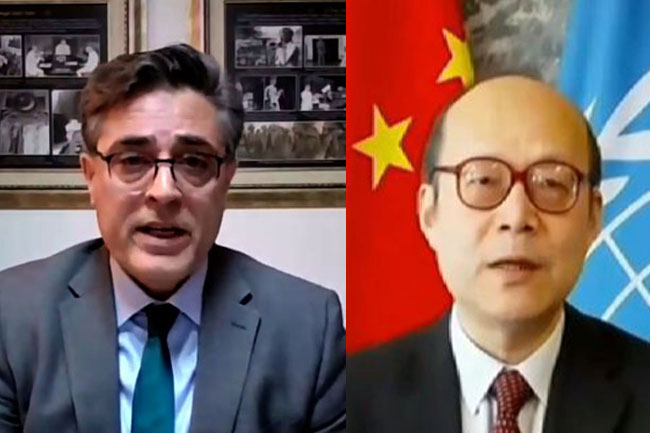
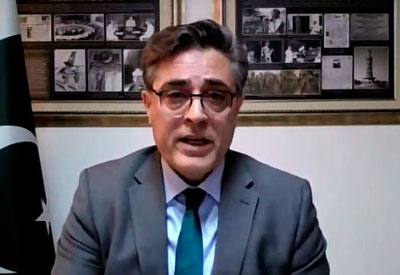
The draft resolution L.1/Rev.1 brought against Sri Lanka by the United Nations Human Rights Council (UNHRC) has failed to condemn the crimes committed by the LTTE against Sri Lankan people, Pakistan says.
The Pakistani representative stated this speaking before the vote on the UNHRC draft resolution L.1/Rev.1 on Promoting reconciliation, accountability and human rights in Sri Lanka’.
The United Nations Human Rights Council (UNHRC) on Tuesday adopted the draft resolution against Sri Lanka tabled at council by the Core Group. Of the 47 states that took part in the vote in Geneva, 22 member states voted in favor of the resolution while 11 had voted against. A total of 14 member states abstained from voting.
Pakistan, voting against the resolution, stated that the resolution shies away from a call for accountability of LTTE and its sponsors and financiers. The representatives pointed out that the draft resolution appears to rekindle the sufferings rather than healing the wounds of the people of Sri Lanka.
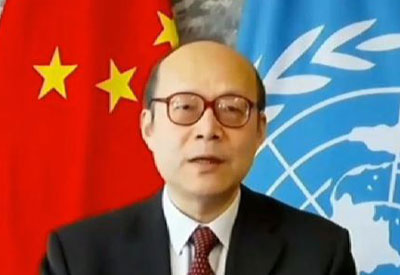
China, also voting against the resolution claimed that the resolution disregards the efforts and achievements by the Sri Lankan Government to promote and protect human rights, ignores the wishes of the Sri Lankan people, and interferes in Sri Lanka’s internal affairs under the guise of human rights and disrupts the ‘excellent situation’ of Sri Lanka’s development and stability.
The country further said that the resolution is a typical example of politicizing human rights.
In addition to Pakistan and China, the Philippines, Venezuela, Russia, Cuba, Bolivia, Bangladesh, Eritrea, Somalia, and Uzbekistan also voted against the resolution proposed against Sri Lanka.
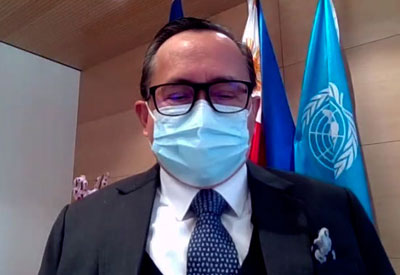
The Philippines while recognizing that no country has a perfect record in human rights, stated that this resolution pursues a political agenda that is blind to reason and methods of reasoning.
The Philippines envoy stating that there is no merit in the actions of the council pointed out that it disrespects the national processes, and is driven by simplistic generalizations of complex conditions of the ground.
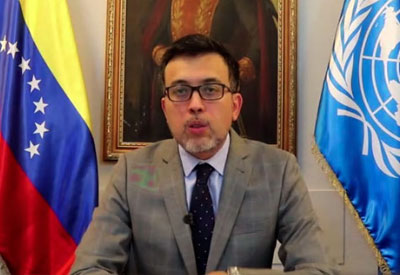
Venezuela, addressing the council before the vote, pointed out that some countries which have promoted these draft resolutions have themselves committed, and are still committing, serious violations of human rights, but they themselves have never been subject to similar initiatives.
The Venezuelan representative stated that Venezuela rejects the baseless and interventionist attempts underway into the internal processes of Sri Lanka towards true national reconciliation.
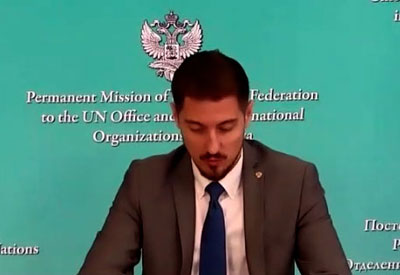
The Russian Federation voting against the resolution claimed that instead of trying to support Sri Lanka’s delegation and encourage it to engage in dialogue the sponsors of the draft resolution have preferred to continue using a former practice of making allegations against it.
The Russian Federation also added that this draft resolution does not reflect balance or objectivity.
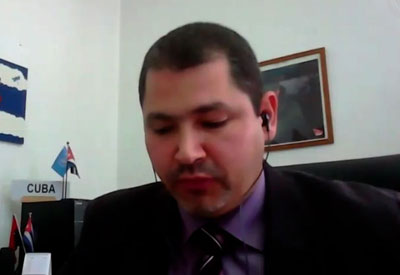
Meanwhile, Cuba said that this draft resolution will only further serve the ends of politicization, bias, and double standards which have crept into the [UNHRC] forum, which should be decried.
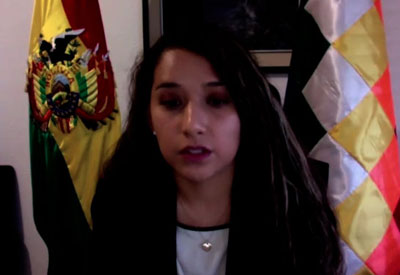
Bolivia also voted against the draft resolution stating that they do not accept the use of human rights as a political tool.
The United Nations Human Rights Council (UNHRC) on Tuesday adopted the draft resolution against Sri Lanka tabled at council by the Core Group.
The vote on draft resolution L1/Rev.1 titled Promoting Reconciliation, Accountability and Human Rights in Sri Lanka” concluded, a short while ago, and was carried out via electronic voting during the meeting of the 46th Regular Session of the Human Rights Council.
Of the 47 states that took part in the vote in Geneva, 22 member states voted in favour of the resolution while 11 had voted against.
Meanwhile a total of fourteen (14) member states abstained from voting.
Member states that voted in favour:
Argentina, Armenia, Austria, Bahamas, Brazil, Bulgaria, Ivory Coast, Czech Republic, Denmark, Fiji, France, Germany, Italy, Malawi, Marshall Islands, Mexico, Netherlands, Poland, Republic of Korea, Ukraine, United Kingdom of Great Britain and Northern Ireland and Uruguay.
Bahrain, Burkina Faso, Cameroon, Gabon, India, Indonesia, Japan, Libya, Mauritania, Namibia, Nepal, Senegal, Sudan and Togo.
The vote on the draft resolution titled ‘Promotion of Reconciliation Accountability and Human Rights in Sri Lanka’ was initially expected to be taken on Monday (22) but officials in Geneva said it has been postponed to Tuesday owing to some scheduling issues.
On Friday, the final form of the Sri Lanka draft resolution was submitted, with the voting likely to be held on March 22-23.
The draft resolution, sponsored by United Kingdom, Canada, Germany, Malawi, Montenegro, North Macedonia, was formally submitted on March 12. The zero draft which had earlier been circulated was further strengthened during the consultations between the member states.
The changes in the final version inserts language calling on Sri Lanka to fulfill its commitment on devolution, including the holding of provincial council elections.
The draft resolution also calls upon Colombo to ensure that all provincial councils, including the Northern and Eastern Provincial Councils, are able to operate effectively, in accordance with the thirteenth amendment to the Constitution of Sri Lanka”.
The UNHRC draft resolution noted the persistent lack of accountability of domestic mechanisms” and calls to support trials in foreign countries. It also calls for strengthening the office of the UN human rights chief in collecting and preserving evidence related to human rights violations in Sri Lanka, to use them in future accountability processes.
The draft has been revised to state that Sri Lanka would be on UNHRC’s agenda every six months till September 2022. It also asks the UN Human Rights chief to give an oral update on Sri Lankan in September 2021 and then a written report in March 2022.
LankaPropertyWeb, Sri Lanka’s number one
real estate portal will be hosting the first ever Lanka Property Show 2021
Virtual Conference. The event will be held alongside the Lanka Property Show
2021 Virtual Expo that is set to go live from the 26th to the 28th of March.
The virtual conference will be conducted
by over 20 industry professionals including lawyers, structural engineers,
architects, interior designers, leading property agents, developers, and
moderated by the Head of Research at LankaPropertyWeb.
Held over a course of 5 sessions, the
Lanka Property Show 2021 Virtual Conference will be hosted for 3 days. The
audience will be able to pre-register for the conference by visiting lpw.lk/conference.
It will feature topics catering to
specific audiences such as real estate investors, real estate agents, private
owners, first time home and land buyers, landlords and those looking to build
homes.
Previous Lanka Property Shows featured
in-person panel discussions on a range of real estate related topics with top
industry experts. However, with the public gathering restrictions posed by the
pandemic, the virtual conference provides a great opportunity for people to
connect from the comfort of their home. They will be able to get answers to
questions they might have on buying and selling a property and get insights
into the secrets of property investments from actual investors,” said Daham
Gunaratna, Managing Director of LankaPropertyWeb.
The sessions will be available live as
per the following schedule;
The Lanka Property Show 2021 Virtual Expo
will also be launching The Virtual Experience Centre powered by Marina Square,
which will include a collection of 3D walkthroughs of exhibitors.
To offer this special feature for the
first time, LankaPropertyWeb has partnered with MagicSpace by Viral Media (Pvt)
Ltd capturing the show apartments of exhibiting developers using 3D walkthrough
technology. Users will be able to walk through a range of developments
virtually from the comfort of their home.
At the virtual property show, buyers will
also be able to connect live through video calls with agents and developers and
chat online, allowing them to select a property of their choice more
conveniently.
The Lanka Property Show 2021 Virtual aims
to connect developers with buyers locally and overseas without geographical
limitations. It will also offer exclusive deals on property prices up to 15%
off on current selling prices of the listed developments. These discounts
provided by the developers will only be available exclusively during the
property show.
The UNHRC is an intergovernmental organisation, reporting directly to the United Nations General Assembly, with a mandate to promote and protect human rights in member countries, by making recommendations to address situations of human rights violations. It is to be expected that institutions that have authority to make recommendations, in particular, on the contravention of legal compliance, need to be free from bias, in order to be acceptable to the alleged erring parties. In fact, the Terms of Reference for OHCHR investigation on Sri Lanka (OISL) proclaims the investigation needs to be guided by principles of `independence, impartiality, objectivity, transparency and integrity’, and has mandated the investigations to cover violations of human rights and other related crimes by ‘both parties’, meaning the Sri Lankan Govt. and the LTTE, over the period covered by the Lessons Learnt and Reconciliation Commission (LLRC), which was from 21 February, 2002, to 19 May, 2009.
The UNHRC resolution, against Sri Lanka, is a bad example, where the reporting agency has not demonstrated, to its members, or the alleged offenders, that the processes followed were free from bias, and were based on proven evidence. In fact, the High Commissioner, Michelle Bachelet’s report of 27 January, 2021, was more of an alarmist expression of the newly elected Sri Lankan Government’s administrative appointments and COVID-19 burials, rather than explaining reasons for the failure of UNHRC resolutions in Sri Lanka.
Obviously, Bachelet has failed to see the causes of the annihilating defeat of the previous regime that co-sponsored UNHRC 30/1 resolution, at the 2019 Sri Lankan elections. She didn’t even note reasons for the recent withdrawal from 30/1; the rehabilitation of 300,000 Tamil civilians rescued from the LTTE human shield, development projects instituted in the North and the East to resurrect the economy, changes in the demographics in Colombo, where business is dominated by the so- called discriminated Tamils and Muslims, continuous religious and racial harmony among the civilian population, during and after the war; demonstrations of Tamil civilians against the LTTE proxy parties that has misled the West and UNHRC by propagating misinformation of racial abuse.
Bachelet has also failed to see the bias instituted in the UNHRC investigative process, due to the dependence on politically motivated complainants and co-sponsors, deliberate suppression of wartime official diplomatic cables, non- acceptance of humanitarian agency reports, such as that of the Red Cross, non- investigation of LTTE terrorist crimes; restriction of the mandated period of the investigation to the war-end incidents, which contravened the original mandate and non-release of so called evidence of war crimes for 30 years.
Also, Bachelet has failed to see that the Geneva debate is lopsided with a proliferation of pro-LTTE propaganda, although the Sri Lankan Govt., Lord Naseby, and many others, have highlighted the deficiencies of the Commissioner’s report. In fact, the Bachelet report, presented to the UNHRC member vote, is a hurriedly written document, confirming the views expressed in the last 10-year period, without any analysis of the developments that had taken place for the reconciliation efforts instituted by the Sri Lankan Govt.
It is also a crying shame that a state, like the United Kingdom, which had committed many atrocities in the world — including the biggest genocide in separating India and Pakistan, as well as a co-sponsor in annihilating the Middle Eastern countries, with spurious weapons of mass destruction allegations – is leading the UNHRC resolution against Sri Lanka!
It is a no brainer that the UNHRC investigation on Sri Lanka was doomed to be a failure from the beginning, because of the politicisation of the process undertaken. In fact, the investigation has discouraged Tamil parties to cooperate with Government reconciliation efforts, as they were engaging with the West and UNHCR to create a separate Eelam state, within the small independent sovereign State of Sri Lanka, the failed dream of the LTTE, with UNHRC intervention. The Sri Lankan Govt. and its people are tired with the 30-year terrorist war and 10 years of so called independent investigation, and are keen to find its own all-inclusive solution that is acceptable to the norms of a rational ethical country. To this end, Sri Lankans are hopeful the UNHRC member States would vote against the UNCHR resolution, and save themselves from being forced into biased vendettas for political reasons .
The pile-on over Sri Lanka by UNHRC is a blatant use of human rights as a political weapon in the geopolitics of today’s world. Many have argued in these columns that Sri Lanka cannot capitulate merely on the grounds of allegations, which are serious in nature, levelled without regard to due procedures of fact and evidence. In the world community of states, the rule of law must apply alongside the principle of ‘innocent until proven guilty’. But our pleas are to no avail when the cause of justice is conflated with a hidden quest for political acquiescence to a particular road map.
It is geopolitics that is driving the UNHRC agenda and demonstrates the unfortunate result when power, politics and principles collide. What the Commissioner of Human Rights is attempting to do, is to find Sri Lanka guilty, based on a fabricated report which is a monstrous perversion of justice, the likes we see in Orwell’s Animal farm or Arthur Koestler’s Darkness at Noon. We have to agree with Dr Laksiri Fernando’s claim that the failure of the UN to promote human rights and duties, guided by conscience, reason and morality, appear to be a major reason for the increasing conflicts, violence, chaos, and wars, not only in developing countries, but also increasingly in the developed societies.
If the hidden agenda is to do with geopolitics, there are sufficient grounds to believe that we are sandwiched in the tussle between the Western bloc and China. If so, no inquiries will resolve the issue, nor the facts. The core group that is behind the campaign is demanding a weaker test than the rule of law; such that Sri Lanka will be tainted, keeping the allegations alive. Such demands are filled with sophistry and hypocrisy. This is the new principle, and, if it succeeds, the efforts can be redeployed in the future. The editorial (11/3) gives us a good dissection of the issue. It says ‘many are those who flay the western bloc for duplicity and its handling of human rights issues. The West, in fact, deserves such criticism in that the powerful nations in the Global North are unashamedly using democracy as a weapon to further their geo-strategic interests; they manipulate the UN, especially the UNHRC…., to tame the nations that refuse to follow their diktats’.
It is official that there is a dire need on the part of the Core Group state parties to move to the Indo-Pacific region. The UK is pledging to shift its focus towards countries such as India, Japan and Australia, after a year-long review of its foreign policy. The UK Foreign Minister Dominic Raab said today that his government ‘would boost alliances in the Indo-Pacific region, describing it as, increasingly, the geopolitical centre of the world’.
The Biden Presidency in the USA has pledged to confront what it called Beijing’s attack on human rights, intellectual property and global governance.
Last week, Biden convened the first leader-level summit of the Quadrilateral Security Dialogue, an informal alliance among the US, Japan, India and Australia that aims to counter China’s rise. The US officials told reporters that the QUAD summit, as well as Secretary Blinken’s visit to Japan and South Korea, was part of the Biden administration’s effort to formulate a new China policy. The US made clear its deep concerns about a range of issues, Xinjiang, Taiwan, Hong Kong, and most importantly Chinese economic coercion of our allies and partners. Could we be one of the whipping boys of choice at the UNHRC! It will be an intellectual failure of the Sri Lankan Foreign Ministry not to come to terms with this scenario of geopolitics.
The editorial (11/3) made it exceptionally clear how another UN agency was overtaken by geo-politics in the same manner, when WHO recommendations were overridden by political fiat. The EU campaign against the Oxford AZ vaccine is more likely driven by Brexit-EU politics, which put paid to the global efforts to control the pandemic, disregarding the cost in human terms in their own backyard.
Dr Wijayawardhana pointed out (The Island 11/3) that the cases of blood clots detected among those given the Oxford AZ vaccine is slightly lower than the Pfizer jab in the general population, as stated by the WHO, British Authorities and the head of the European Medicines Agency. Yet political interventions seem to have dictated the EU anti-AZ stance. Is it bitterness over Brexit that is driving this agenda? Or, whether Germany had a different agenda: to make money for the German business BioNtech behind the Pfizer vaccine. If such are the machinations of geopolitics in the face of a deadly virus, what vaccination will match the geopolitical virus that has infected the UNHRC.
The UN Human Rights Council has thought it fit to pass a resolution by majority vote against Sri Lanka for what the resolution termed as human rights violation. While reading the resolution, it is necessary to keep in view that it is not a unanimous resolution, but only a resolution by majority votes.
After passing this resolution, one is not sure as to how the UN Human Rights Council would act against Sri Lanka and whether it would go into silence thinking that it has done its job”.
It is well known by past experience that the UN and the UN Human Rights Council would behave like a toothless tiger in the case of dealing with economically rich and militarily strong countries. Only in the case of weak and developing countries, Human Rights Council will act with courage of conviction.”
Sri Lanka government had to face strong separatist and militant groups for several years, who were fighting a bloody war demanding separate state for Tamils. In such a condition, the Sri Lanka government had no alternative other than fighting with back to wall to protect its sovereignty and territorial integrity. Every country in the world would have reacted in the same way and have been reacting in the same way in similar situations, as Sri Lanka government did.
Sri Lanka government suffered enormously due to the bloody war and the separatist militant groups were ruthless and have killed not only several Sri Lankans and Sri Lanka military personnel but also several Tamils in northern Sri Lanka, who refused to toe the line of the militants. There were several factions in the militant groups and one faction fought with another faction and several Tamils were killed in the process.
For several years, the Sri Lanka government could not match its military strength with that of the strongly armed militant groups and it was a losing war for several years. Finally, when Sri Lanka government could make it’s military strong and fought the war and successfully defeated the militants, there were casualties of hundreds of people on both the sides.
It is a fact that several countries who voted for the resolution against Sri Lanka government passed by the UN Human Rights Commission, provided sort of support to the militants on their soil by allowing them to carry on their activities .
These countries behaved in such a way ,clearly knowing that the accommodation that they provided to the militant groups would harm the territorial integrity of Sri Lanka.
No doubt, the human rights violation happened during the civil war and it was inevitable in a war like situation and both Sri Lanka government and militants were responsible for this.
It is shocking that UN Human Rights commission has not meaningfully taken note of the human rights violation by the militant groups but has only condemned the Sri Lanka government. Is it not a partisan and prejudiced view, unbecoming of United Nations Organisation?
The countries which voted for the resolution are mostly the so called democracies of western countries, who habitually only take note of the human rights violation in other countries and not in their own.
These days, very frequently, we hear about US police shooting down mercilessly those who indulge in terrorist like activities. In the same way, European countries such as France and others also ask the police to shoot down those indulging in terrorism. This is as it should be. But, why these countries condemn Sri Lanka government for acting in the same way to fight against the terrorists and violent prone separatists?
Several other countries in Africa as well as China and Russia also kill the protestors mercilessly in the name of preserving the peace and public order.
The countries criticizing Sri Lanka for human rights violation” is like the pot calling the kettle black.
Certainly, any discerning and neutral observer would be justified in terming the resolution passed by U N Human Rights Council against Sri Lanka as unwarranted and partisan .
One only hopes that in future, the UN Human Rights Council would gain greater wisdom, so that it can view such human rights violation” in a holistic manner and see the unavoidable reasons for it in proper perspective and without pre-conceived view.
While extending his gratitude for the benevolent decision to make an ex-gratia payment of US$ 5 million to the victims and their families of the Easter Sunday attack, MP Wijedasa Rajapaksa informed Saudi Minister of Justice Dr. Sheikh Mohammed Bin Abdul Karim Al-Issa, in a letter that the victims have not been given a single dollar.
The MP said he had inquired this from the former President and the incumbent President and President’s Secretary by his letter dated January 12, 2021 and added that they confirmed that Saudi Arabia had not given a single dollar, despite the wide publicity given about the donation.
There was a wide publicity given in the local and International media – both electronic and print – that you had made a donation of US$ 5 million to the said victims in the presence of the then President of Sri Lanka Maithripala Sirisena, Former Presidents Chandrika Bandaranayaike Kumaranathunga and Mahinda Rajapaksa at the end of the said conference held at “Nelum Pokuna Theatre,” he said.
I am hopeful that your consciences would be shocked to hear again the said catastrophe, and your humanity would compel you to fulfil the said undertaking with the height of your compassion, love and care towards the said victims,” MP Rajapakshe told Karim Al-Issa.
Sri Lanka says it considers the UNHRC’s latest resolution against the island nation to be unwarranted, unjustified and in violation of the relevant articles of the UN Charter and also rejected the ‘unprecedented’ proposal in the resolution to expand the role of the OHCHR.
This was stated by the Permanent Representative of Sri Lanka to the United Nations Office at Geneva, C. A. Chandraprema, while delivering remarks before today’s vote on the draft resolution.
As the country concerned, the Sri Lankan representative was afforded time to deliver a statement before the vote on the resolution ‘L1/Rev.1’ titled Promoting Reconciliation, Accountability and Human Rights in Sri Lanka”.
He said it is deeply regrettable that a group of countries have tabled a country-specific resolution against Sri Lanka in spite of Sri Lanka’s consistent and constructing engagement in the Human Rights Council and with the proponents of the resolution themselves.
Sri Lanka considers the draft resolution to be unwarranted, unjustified and in violation of the relevant articles of the United Nations Charter, in particular article 2 sub section 07, and relevant sections of the United Nations General Assembly resolutions 60/251 that provides for the mandate of the Human Rights Council.”
The Sri Lankan envoy said the resolution is based on the ‘rejected report’ of the OHCHR on Sri Lanka, which was tabled at this session and which violates the principles of sovereign equality of all states and non-interference in internal affairs.
He stated that the resolution is presented without the consent of Sri Lanka as the country concerned and is therefore unhelpful and divisive.
No country has a greater interest in bringing about reconciliation among its peoples than the country concerned, a point that has repeatedly been emphasized during the proceedings of this council.”
The list of co-sponsors of the resolution amply demonstrates the divisive nature of this resolution, he added.
He said Sri Lanka categorically rejects the unprecedented proposal” in this resolution to expand the role of the OHCHR. This is a dangerous precedence and will have wide-ranging implications to all countries”.
He said all members of the council would agree that UNHRC cannot assume tasks not assigned to it by the UN General Assembly in resolution 60/251 or in subsequent resolutions
In addition, I cannot emphasize enough the dangers posed to all nations, particularly those of the global south, by the trajectory taken in this resolution which is urging action on the basis of emerging trends and warning signs that is events that have not yet happened.”
In this context it is highly regrettable that the draft resolution that has been presented today appears to have ignored all these reservations and concerns, he added.
Against this background, I call upon all members of the council to objectively assess whether Sri Lanka represents a situation that warrants the financial and human resources and the urgent attention of this council in this exaggerated and polarized manner at a time of severe financial constraints indicated by the secretariat.”
He stated that over 2.8 million dollars is the estimated cost of this exercise and that over a dozen new staff members are to be recruited according to the programme budget implications (PBI).
Notwithstanding the stated objectives of the proponents of the resolution, Sri Lanka is of the view that this resolution will polarize Sri Lankan society and adversely affect economic development, peace and harmony.”
For all the above reasons, Sri Lanka rejected the draft resolution and requested the members of the council to reject the resolution by a vote.
The draft resolution against Sri Lanka was adopted by the UNHRC with 22 member states voting in favour of the resolution and 11 voting against while 14 member states abstained from voting.
Today is the D day for Sri Lanka at Geneva. The chief sponsor of the
Human rights resolution is UK.UK is the evil number
one in the entire gang of European colonial aggressors. Judging by the
atrocities and brutalities committed against the Sinhala natives in this
country during the 1817-1818 and 1848 freedom struggles by the British,
of all colonial aggressors UK stands out as the most savages and brutal and
inhuman colonial power who has violated human rights all over the world during
the period of Western Colonial Expansion during the 14th to 20th
Century period. That was how UK an isolate small Island in a corner of the
world became the world Empire whose sun never set as the say goes. In this
horrendous, savages and brutal record of mass murder by the guns, swords,
arson, poison and all other crimes inflicted against the defenseless natives of
countries all over the world to rob their lands, wealth and the spirit of
their civilizations, the British always top the list in world history, may be
followed by Portuguese, Spanish, French, Italians and Germans, birds of a
feather flocked together in the European countries unified by the white colour
and religion (variants of Catholicism) with the common objective of capturing
the Asian and African countries and their enormously rich wealth to build
up their respective Colonial Empires. In this list of plunderers and murderers
Britain came on the top defeating all neihgbouring European nations.
To give two classic example of how they have destroyed the Afro Asia continents
I cite two cases. It was in 1884 African continent was parceled out among the
European invaders like a pitza laid on a table, at a meeting of 13 European
nations at a meeting held in Berlin presided over by Sir Edward Mallet
Ambassador to German Empire attended by Henry Morton Stanley, the delegate from
USA. This was how the map of the African continent was redrawn and lands
divided among them, thus scrambling the African Continent, as one writer had
said. Resistance was met with brutal gun power. The second example is India. It
was divided in to two ethnic and religious rival blocks . Hindu India and
Muslim Pakistan (East and West) Fortunately the British could not do that
here. But they planted the poison seeds of ethnicity and religion to promote
division in future. In addition to these shameful crimes they also left behind
a generation of Black white colonial lackeys trained and armed with Westminster
model of Governments with their political, legal, administrative and social,
religious, cultural and ethical traits including their language and soaked with
practically everything European as their proxies to complete the annihilation
which they failed to do Is it not this vision that they could
not achieve before they left our shores, after nearly 500 years of suppression,
oppression and plundering they are desperately trying to fulfill at
Geneva today. And that is how they finally became Great Briton, the greatest
thief, murderer and human rights violator in the annals of human history. In
addition to these horrendous crimes they also destabilized all native
civilization all over the world by planting the seeds of ethnic, communal and
religious hatred and destroyed all these countries by planting their divide and
rule Machiavellian political strategies, converting these countries to eternal
economic dependencies by transforming their native economies in to dependencies
of Great Briton and the so-called British Commonwealth of Nations with the
Queen as the Head. The net of the political, economic, trade and financial
system linked to London was meticulously woven to last for centuries and left
for home only when they found things were getting out of control after the 2nd
World War.
Isn’t it this Great Briton, supported by its own white pack of European
invaders in Canada, USA, South America, South Africa, Australia, New Zealand
and the cohorts who have together plundered the whole world and conquered by
murder and arson who are collectively and singularly responsible for
horrendous crimes against humanity, now jointly gunning at this
small Island nation for human rights violation not knowing or pretending not to
know that Sri Lanka, being a country with a refined and unique culture
based on Buddhist teachings was, a country that has never violated even
animal rights, no to talk of human rights.
When these ugly colonial invaders, with their indelible records of
stinking colonial aggression point their finger to us, they little realize that
five fingers are pointing towards them. Isn’t it a case of the pot calling the
kettle black? Is it not Ironical this pack of global thieves and murderers, led
by UK ”The Mother of all things evil” as one writer called it, trying to harass
small nations like us in the so called Third World to retain their global
hegemony, or rather fast waning their power and prestige at the doors of
emerging Indo-Pacific civilization of the 21st century
as people like Samuel Johnson (Crisis of Civilization ) and Martin
Jacques.(20 09) in his When China Rules the World: The End of the Western
World and the Birth of a New Global Order.
I would like to request my readers and those in authority in Government
to read the following write up (attached) published in Lankaweb to cull out
further material in support of this argument.
Also I would like to call upon the government to refer to the horrendous
human rights violations committed by UK against the Sinhalese during the
freedom struggles of 1817-1818 (wellassa)and 1848 (Matale) by murderers
such as Brownwrigg , Torrington and their armies and what they continue to do
up to date by promoting disention and separatism among the different ethnic and
religious groups within this country to fulfill their ulterior objectives.
Finally I would like to ask those sponsors of this resolution to throw
the first stone unto themselves before they try to fix responsibility on us who
had done no wrong and no violation of any conceivable human right in 2009 or
thereafter against any community in this country whereas we have fought only a
battle against a misguided group of terrorist aided, abetted, funded and
trained by these colonial elements and India to destabilize the democratically
elected Government of the country and trying to divide this small Island in to
separate ethnic states, thereby threatening the territorial integrity
sovereignty and the freedom of this Island nation.
The Maha Sangha played a significant role in mobilizing support for the 1956 victory. The Sangha used their traditional leadership role in the villages to influence the public to vote for the MEP. 1956 was the climax of a political awakening that had started long before.
Ananda Meegama traces the beginning of this activism to Anagarika Dharmapala (1864- 1933). Anagarika said that it was the duty of the bhikkhus to participate vigorously in the Buddhist revival which had started. Dharmapala’s views caused only a slight ripple in the Sangha during his own lifetime, said H.L.Seneviratne. Conservative Buddhists avoided the Anagarika, added Meegama.
But from 1930 the Anagarika’s words started to take effect. ”Sinhala Baudhaya” Wesak Kalapaya 1934 published an open letter to the Sangha requesting their active participation in the issues that were shaking the country. The Buddhist revival now had political overtones.
The Maha
Sangha responded. The 1930s produced dynamic bhikkhus who played a major role
in the political struggles of the time. There was Udakandawela Siri
Saranankara, (1902-1966) who became the first President of the Communist Party
of Sri Lanka.
Uda Kandawela Siri Saranankara
There was
also Yakkaduwe Pragnarama (1918-1986). Yakkaduwe
was head of Vidyalankara Pirivena from 1934. He spent
his entire life developing the Vidyalankara Pirivena, said Meegama. It was Yakkaduwe
who developed Vidyalankara, said Walpola Rahula. The idea of converting Vidyalankara Pirivena
to a University was first mooted by Yakkaduwe, said DB Dhanapala.
Ven.
Yakkaduwe Pragnarama
DB Dhanapala
said that Yakkaduwe rarely shaved, chewed betel all day,
was slow in movement and speech and appeared sleepy looking. ‘He would sit cross legged on a couch and write throughout the night and in
the morning would lie down on the same couch and sleep. Meegama said Yakkaduwe was very austere
in his ways. He was
rarely seen in the public. He rarely
participated in functions and he
did not make public speeches.
However,
Yakkaduwe was actually very active and very influential at several levels. Yakkaduwe
had set up a Council to examine and revise the Buddhist texts. He was
also a respected Sinhala scholar. Peradeniya
and Vidyodaya gave him honorary degrees. He had tried to bring the written and
spoken Sinhala closer to each other.
Yakkaduwe wanted
the bhikkhus around him to take an interest in the political goings on of the
time. He was a strong influence on several
bhikkhus, including Walpola Rahula. There was series of strikes in 1942-44. Walpola
Rahula, Nattandiye Pannakara, Kotahene Pannakirthi inspired by Yakkaduwe , spoke to the public. They drew attention to the poor
living conditions of the masses and the huge gap between the rich and the poor.
Yakkaduwe was
also behind the bhikkhu movement which campaigned in support of the Free Education
Act of 1945. Walpola
Rahula and other bhikkhus were seen regularly in the galleries of the State Council
during the free education debate.
DS Senanayake
did not like the stance the bhikkhus were taking regarding the Free Education
Bill. He saw the implications and decided that the political bhikkhus had to be
stopped in their tracks.
On January 13
1943 at prize giving at Dharmaraja Vidyalaya, Matale he criticized the bhikkhus
for their interest in the activities of State Council and their present in the
galleries there. Bhikkhus not dabble in politics, he said, they should stay safely confined to the forest or
temple as persons who had retired from the world.
Walpola
Rahula replied at the speech at Prince College, Kotahena a few days later. Dinamina and Daily News carried full reports of DS Senanayake’s speech. Lake
House called these monks ‘Kahakadayo’.
There was a
public furor but in addition, the public interest was aroused as to what the
actual role of the bhikkhus was. Vidyalankara thought a public reply was
necessary. On February 13 1947 Vidyalankara issued a manifesto under the
signature of Kiriwattuduwe Sri Pragnasara, Principal of Vidyalankara.This document was
to become the manifesto of the Vidyalankara monks. It was written by Yakkaduwe.
It
was Yakkaduwe who , behind the scenes,
encouraged the bhikkhus to be activist , said Meegama,. Yakkaduwe had
told the bhikkhus of Vidyalankara that if they agreed to this document, they
would have to face much danger and worry in the years to come and not to
support it if they were scared.
The
Vidyalankara manifesto prepared by Yakkaduwe said, of course Vinaya rules must
be observed and of course bhikkhus must promote religion. But conditions today
are different from those in the time of Buddha and the life of the monk has
also changed. Bhikkhus are now actively
engaged in anti temperance work, social work etc. They are Presidents of
societies as well. working for the
welfare of society, is not enough, said
the Manifesto. bhikkhus must also take
action to obstruct that which is
detrimental to the country.
The idea that
religion and politics should be kept separate is something introduced by the
British, concluded the Manifesto. They are attempting to create a gulf between bhikkhus
and laity. We should not give into this. In ancient times bhikkhus were in the
foreground of political movements.
DS Senanayake
wanted the Manifesto withdrawn. He also wanted State Council to pass laws
giving the Mahanayake right to disrobe, fine or
imprison political monks. He tried to
prevent these bhikkhus from receiving alms as well .Nothing came of
this.
But it
infuriated the bhikkhus .They held a
meeting at the BTS headquarters,
chaired by Ven. Palannoruwe Wimaladharma and decided that they alone
should determine what they should and should not do. Laymen cannot decide and
they cannot interfere. The bhikkhus formed the Lanka Eksath Bhikshu Mandalaya to
defend themselves, propagate their ideas, and to educate and waken the public. Vidyalankara
started a weekly paper Kalaya’ to propagate their views.
DS Senanayake
had roused a hornets’ nest. Political leaders
did not usually criticize the Maha Sangha.
There was a furor in the country. Speeches, articles, letters were written, for
and against. Opinion in the country was divided. Then in June 1946 came the
definitive Bhikshuvakage Urumaya by Walpola
Rahula. The book sold out in three weeks. A second edition appeared in 1948.
Yakkaduwe Pragnarama therefore has a special place in the 1956 revolution,
said Meegama. It was he who prepared the
text on the duty and role of the Sangha which led to Bhikshuvakage Urumaya” by
Walpola Rahula.
Vidyalankara
monks campaigned for the 1947 election, throughout the country, but mostly in
Mirigama and Kelaniya, the constituencies of DS Senanayake and JR Jayawardene. DS
Senanayake asked Ven. Henpitagedera Gnanasiha,
a formidable monk, to support his
election campaign, promising to fund Gnansiha’s Bhikkhu institute at
Pathakada when he won, but Senanayake he did not keep his word and Henpitagedera
was displeased. The UNP did not get a large majority at the 1947
election.
JR Jayewardene was even more determined than DS
Senanayake to crush the political bhikkhus. In September 1947 when Walpola
Rahula and another monk were traveling they were stopped by mob led by Aspa John,
a strongman supporter of JR . The mob pulled out the two bhikkhus and assaulted
them till they were unconscious. They were saved form death only because the crowds that had
gathered protected them.
The Buddhist
were not crushed by any of this. Buddhist demands intensified in the 1950s. They wanted specific
gains. Bandaranaike speaking in
May 1950 said that Buddhism should be given a special
place. This had been promised in the 1815 Convention. Lanka Eksath Bhikshu
Mandalaya under Polwatte Buddhadatta supported the
idea. GP Malalasekera, President of the All Ceylon Buddhist Congress
said that the 1815 provision must be enforced without delay. The 1815 Convention said, The religion of
Boodho, professed by the chiefs and inhabitants of these provinces, is declared
inviolable, and its rites, ministers, and places of worship are to be
maintained and protected.”
The idea of a special place for Buddhism was
ridiculed, by its opponents, with cartoons, and editorials. DS Senanayake said
publicly at meetings, that there should be no state intervention for Buddhism. That
would lead to religious dissension. When a Buddhist delegation went to meet
him, DS Senanayake had said’ Anaduwa saranan gatcchami,’ which angered the
public as well.
The 1950 session
of the All Ceylon Buddhist Congress sessions saw Malalasekera and P de S Kularatne responding
to what DS Senanayake had said. 11 resolutions were passed at this Sessions and
a
book titled Buddhism and the state
was published in 1951, giving these 11 resolutions.
Despite these
efforts, the Buddhist lobby failed to get anywhere with the UNP
government of DS Senanayake (1947-1952)
or Dudley Senanayake (1952-1953). Then Sir John became Prime Minister in 1953
. Sir John was even worse. He had threatened to disrobe political
bhikkhus. The
Buddhists were agitated and angry.
The
1953 session of the ACBC was a turbulent one, with
delegates shouting that the ACBC must wake up. This session was
a historical one. At this session a committee, later known
as Buddhist Commission, was appointed to look into
the position of Buddhism in Ceylon.
From June 1954 to May 1955 the Buddhist Commission
went round the country, taking evidence.
They
held sittings in 37 towns. Henpitagedera Gnanasiha had in 1953, formed Buddha
Sasana samithis in Ratnapura district. these had expanded into other districts .
The Buddhist Commission found these samiti very helpful for their work. The
samitis also spread the Commission findings among the Buddhist public.
The
report of the Buddhist Commission was released in February 4, 1956. A week
later the government was dissolved and the country got ready for the General
election of 1956.
The year 1956
also saw the formation of the Eksath Bhikshu Peramuna, this was the successor
to Lanka Eksath Bhikshu Mandalaya formed in 1946. The Peramuna was the most effective body of
political monks of the modern period said PA Saram .
The emergence of an aggressive Buddhist movement which
brought the Maha Sangha to the forefront was another significant development of 1956,
said Wiswa Warnapala. The Sangha became an active social and political
force in modern Sri Lanka, he added.
In ancient
times the Sangha had a legitimate role in the political affairs of the country.
They guided the king. They did not wield power directly. This traditional role was
now resurrected in a modern setting. The
Sangha is now a permanent part of the political culture of Sri Lanka, concluded
Wiswa.
BUDDHA JAYANTI 1956
One
of the first events the new government had to organize was the Buddha Jayanti,
which was celebrated on 23 May, 1956. The Buddha Jayanti of 1956
commemorated the 2500th anniversary of the birth, enlightenment, and
Parinibbana of Gautama Buddha. Buddha Jayanti was celebrated on a massive scale
in Sri Lanka. These
celebrations, which I recall clearly, gave a great fillip to the
Buddhist revival of the time. It evoked much enthusiasm.
During Buddha
Jayanti, each month a foreign leader would preside over the celebrations in
different towns. Those who came were
Mahendra of Nepal, Sihanouk of Cambodia, MIkasa of Japan and Chou en Lai, of
China. Chou was a
media favorite. He was cheerful, friendly, quotable and displayed a zest for
exploration. Ven. Othani
high priest of Japan also came.
The
Buddha Jayanti project was started by the previous UNP government but SWRD was
on the Executive Committee at that time too. SWRD took over the Buddha Jayanti when he won
the 1956 election. He continued to be keenly interest in the Buddha
Jayanti despite his duties as PM, said Ananda Guruge, who administered the Buddha
Jayanti project.
Bandaranaike ‘put his heart and soul into the project and
worked with exemplary devotion and diligence,’ said Guruge. We met frequently
and he never missed a meeting. Often he
would come a few minutes early, and send for me or one of my assistants to get
a clarification on the agenda, or gather facts. Bandaranaike looked carefully at the
composition of the Buddha Jayanti committee and the Cabinet memorandum.
Lanka Bauddha Mandalaya with a Sangha Sabha of 175 and a gihi Sabha
was set up to carry out the event. The Sangha could not agree as
to who should speak at the main celebration and SWRD dealt with the matter
tactfully. He showed flexibility and refreshing sense of humour which led to
satisfactory results, recalled Guruge.
Bandaranaike was interested in three Buddha Jayanti projects,
restoration of Maligawa, encyclopaedia of Buddhism, and the religious awakening
movement. He suggested a Board of
international editors for the Buddhist encyclopaedia and also that they meet in
Colombo to decide on format, coverage and comprehensiveness. He offered many valuable suggestions on the
technical aspects of the project, said Guruge.
Guruge says an elephant stampeded at Buddha Jayanti
celebration at Attanagalla Raja Maha Viharaya. Instead of running away, SWRD
took charge and had the people taken to safety. He had dragged Guruge to a side,
by his collar. (Continued)
By Noor Nizam – Peace and Political Activist, Political Communication Researcher, SLFP/SLPP Stalwart and Convener – The Muslim Voice”. March 22nd., 2021.
The polarization of the vote
strength into two groups, The EU, North America and European countries of the
North hemisphere on one side and the Asian countries, the Islamic and Arab
Nations and those who supported the Non-Aligned Nations cause from the begining
on the otherside will be the out come of the final vote today in Geneva.
Sri Lanka will come out as the
winner DEFEATING this resolution with the support of the Asian countries, the
Islamic and Arab Nations and those who supported the Non-Aligned Nations
without any doubt setting a new precedence in International Relations against
the BULLYING of the Western powers at the UNHRC and the UN of striving
developing Nations who which to create a Social Economic and Political
stability by their own elected leaders democratically, accepted by the majority
of their citizens against the oppression of the West.
Sri Lanka’s VICTORY today at Geneva
will be the begining of the new era of International Politics that will finally
TAME the so-called Western powers to understand that the South is equally
powerfull as the North and will move towards prosperity and peace by the Grace
of God Allmighty, the power the West has forgotten long time ago.
Colombo, March 22 (Daily Mirror) – President Gotabaya Rajapaksa and Prime Minister Mahinda Rajapaksa have made phone calls to world Muslim leaders, a day before the UN Human Rights Council takes a vote on a resolution against Sri Lanka.
Secretary-general of the Organization of Islamic Cooperation (OIC), Dr. Yousef A. Al-othaimeen, had received a phone call yesterday (Sunday) from President Gotabaya Rajapaksa who discussed with him the existing relations between the OIC and Sri Lanka as well as the situation of the Muslim community in the country, the OIC said in a statement.
Al-Othaimeen praised the Sri Lankan President’s phone call and his willingness to open up and reach out to international organizations and welcomed the decision of the Government of Sri Lanka on the right of Muslims to bury their dead in accordance to Islamic rites.
The Secretary-general reaffirmed the OIC’S keenness to follow up the conditions of Muslim communities and defend their rights in non-oic member states, the OIC said.
Meanwhile, Prime Minister Mahinda Rajapaksa said he telephoned Deputy King Salman bin Hamad Al Khalifa of Bahrain yesterday.
Al-Othaimeen praised the Sri Lankan President’s phone call and his willingness to open up and reach out to international organizations and welcomed the decision of the Government of Sri Lanka on the right of Muslims to bury their dead in accordance to Islamic rites.
The Prime Minister tweeted saying they reviewed bilateral ties and other areas of cooperation that can be further solidified.
Rajapaksa said that the Deputy King had recalled and appreciated his efforts to sustain peace and stability in Sri Lanka from the time of his Presidency.
The OIC is the world’s largest Muslim body consisting of a number of Muslim countries which are part of the UN Human Rights Council.
Bahrain is also a member of the UN Human Rights Council.
Colombo, March 22: When the news spread in January 1972 that Sheikh Mujibur Rehman, who was released from the Pakistani prison would arrive in New Delhi on his way to the newly-born Bangladesh to assume leadership, I was among the large number of politically-conscience students and others who thronged the Ramlila Maidan in Delhi to listen to the newest leader in South Asia who earned the sobriquet Bongo Bondhu (Banga Bandhu).
Though five decades have passed, I still remember vividly the enthusiasm among the crowd which hailed Mujib, who accompanied Prime Minister Indira Gandhi to the dais, erected at the Delhi Gate end of the Ramlila Maidan, the popular venue of annual celebrations of Dhashera, which marks the victory of good over evil.
The rally at Ramlila Maidan on the winter morning of 10 January 1972 was an unforgettable experience. A motor rally went to the meeting place from the airport. Prime Minister Indira Gandhi was with Banga Bandhu.
Welcoming the new leader, Indira Gandhi gave a brief speech in Hindi. Sheikh Mujib started his speech in Bengali, the common language of West Bengal in India and Bangladesh, hitherto East Pakistan. The moment he started his speech with the words, Missus Indira Gandhi, ladies and gentlemen…” a deafening applaud started. We all cheered his every sentence in musical Bengali, with intermittent sentences in English, Hindi and Urdu.
The Pakistani military government released Mujibur Rehman from Mianwali Prison located near the Pakistan Army’s GHQ in Rawalpindi in the then West Pakistan and put him on a London-bound PIA flight on 8 January 1972. Indian Prime Minister Indira Gandhi requested the British Premier Edward Heath to arrange a special British flight for him to fly to Delhi, and Sashanka S. Banerjee, the Indian diplomat who accompanied Sheikh Mujibur Rahman on the special Royal Air Force aircraft from London to New Delhi, recalled that a revolutionary leader sang the famous Bengali song written by Poet Rabindranath Tagore during the flight.
National anthem
After about an hour of small talk, ‘Bongo Bondhu’ stood up and started singing ‘Aamar Shonaar Bangla, Aami Tomaye Bhalobashi’ (Oh my golden Bengal, I love you dearly’), Banerjee, also a Bengali, said and added, I was seated next to him, and as he started singing, I too stood up as he did. Mujibur Rahman asked me to join him in singing the song with him, which I did. I don’t have a good singer’s voice but I tried.” After completing the song, Mujib told Banerjee that he would choose Aamar Shonaar Bangla as the ‘Jaatiyo shongeet’(national anthem) of his new nation, Bangladesh.
During the last two days (20 and 21 March), Prime Minister Mahinda Rajapaksa was among the dignitaries who attended the celebration of the birth centenary of Bangladesh’s Father of the Nation, Banga Bandhu Sheikh Mujibur Rahman and the Golden Jubilee of the Independence of Bangladesh in Dhaka.
In the 1971 Pakistan General Elections, Sheikh Mujibur Rehman’s Awami League won more seats than the Zulfikhar Ai Bhutto’s People’s Party, but Mujib was arrested and Bhutto was made the Prime Minister as the powerful military did not want an East Pakistani Bengali as leader preferring West Pakistan’s Bhutto.
Sheikh Mujib with Indian diplomat Sashank S.Banerjee on the flight from London to Delhi.
When Mujib was taken to West Pakistan and detained in the Mianwali Prison in Rawalpindi, riots broke out in East Pakistan. Mujib’s Awami League activists finally took up arms against the military. The situation took a serious turn when a large number of Bengalis in the Pakistan Army deserted and joined the Mukthi Bahini rebels. More than a million Bengali civilians crossed the border to India’s West Bengal and Bihar as refugees. Finally Indian troops entered East Pakistan to support the Mukthi Bahini fighters in December 1971.
Within two weeks, 96,000 Pakistani soldiers surrendered to Indian forces, ending the war and former East Pakistan became a free nation. After the Ramilila Maidan rally, Mujib flew to Dhaka and became the undisputed leader of the new country.
Free Bangladesh had a troubled beginning. In 1975, Mujib was killed in a military coup. After an interim period, Gen Zia-ur-Rahman, who was the Commander of Mukthi Bahini during the liberation fight, became President in 1977. He was assassinated in 1981. Since then the country saw military rule and violent elections, restoration of democracy and alternate power shifts between two women leaders, Sheikh Hasina, Mujib’s daughter, and Khaleda Zia, wife of former President General Zia ur Rahman.
The dream
Indian diplomat Banerjee later revealed that he had told Mujib that PM Indira Gandhi had a dream that on India’s eastern flank she wished to have a friendly power, a prosperous economy, and a secular democracy, with a parliamentary system of government like India’s. That dream has been realized with Bangladesh functioning as a strong democracy today.
During his visit Prime Minister Rajapaksa visited the National Martyrs’ Memorial and placed a wreath to pay his respects to those who died in the Bangladesh War of Independence and plant a sapling. Later, the Prime Minister visited the Banga Bandhu Memorial Museum.
After the end of war, Prime Minister Indira Gandhi promoted Army Commander General Sam Manekshaw to the rank of Field Marshal. When the Indian Parliament met after the war victory, Indira Gandhi got a very pleasant surprise when her political archenemy, Jan Sangh (now BJP) leader Atal Behari Vajpayee, who was the Opposition Leader in Lok Sabha, got up from his seat and proposed that Prime Minister Indira Gandhi be accorded the Bharat Ratna, the highest honor in India. Vajpayee’s statesmanship was a grand gesture worth emulating as it depicted that patriotism was above petty political differences.
(Bloomberg) — China signed a currency swap agreement with Sri Lanka as the South Asian nation looks to reduce reliance on the International Monetary Fund before $3.7 billion of foreign debt matures this year.
The Central Bank of Sri Lanka is entitled to a 10 billion yuan ($1.5 billion) swap facility from the People’s Bank of China, Sri Lanka’s monetary authority said in a statement Monday. The agreement is valid for three years.
Faced with low foreign-exchange reserves and looming debt repayments, Sri Lanka is getting closer to China, it’s biggest import partner. More than 22% of the island nation’s foreign purchases were from China last year.
The Central Bank of Sri Lanka (CBSL) and the People’s Bank of China (PBoC) have entered into a bilateral currency swap agreement with a view to promoting bilateral trade and direct investment for economic development of the two countries, and to be used for other purposes agreed upon by both parties, CBSL said.
The People’s Republic of China remains Sri Lanka’s largest source of imports. In 2020, imports from China amounted to US$ 3.6 billion (22.3% of Sri Lanka’s imports).
This swap agreement has been approved by the Cabinet of Ministers with the recommendation of the Monetary Board of CBSL. Governors of the two Central Banks, Deshamanya Professor W D Lakshman of CBSL and Dr. Yi Gang, Governor of PBOC, are the signatories to the agreement.
Under this agreement, CBSL is entitled for a swap facility amounting to CNY 10 billion (approximately US$ 1.5 billion). The agreement is valid for a period of three (3) years. (ER)
Sri Lanka has reported 05 more coronavirus-related deaths, the Director-General of Health Services confirmed today (March 22).
As per the Department of Government Information, all 05 victims are male patients.
The new deaths bring the number of COVID-19 related deaths witnessed in Sri Lanka to 551 in total.
01. The deceased is a 78-year-old male resident from Weuda. He died on 21.03.2021 while undergoing treatments at Kurunegala Teaching Hospital. The cause of death is mentioned as Covid-19 infection, heart failure, acute diabetes, and kidney disease.
02. The deceased is a 78-year-old male resident from Nugathalawa. He was transferred from Welimada Base Hospital to Base Hospital Theldeniya where he died on 22.03.2021. The cause of death is mentioned as acute Covid-19 pneumonia.
03. The deceased is a 68-year-old male resident from Kadawaha. He died on 22.03.2021 while undergoing treatments at Minuwangoda Base Hospital. The cause of death is mentioned as a shock due to blood poisoning, heart disease, high blood pressure, and asthma.
04. The deceased is a 51-year-old male resident from Bandaragama. He was transferred from Colombo South Teaching Hospital to Homagama Base Hospital where he died on 22.03.2021. The cause of death is mentioned as liver infection and Covid-19 infection.
05. The deceased is an 80-year-old male resident from Galle. He died on 16.03.2021 while undergoing treatments at Karapitiya Teaching Hospital. The cause of death is mentioned as acute pneumonia and Covid-19 infection.
Secretary-General of the Organization of Islamic Cooperation (OIC) Dr. Yousef Al-Othaimeen and Sri Lankan President Gotabaya Rajapaksa have spoken over the phone and discussed existing relations between the OIC and Sri Lanka as well as the situation of the Muslim community in the country.
During the phone call, the OIC Secretary-General had praised the Sri Lankan President’s willingness to open up and reach out to international organizations.
He also welcomed the decision of the Government of Sri Lanka on the right of Muslims to bury their dead in accordance with the Islamic rites, the OIC said in a Tweet.
OIC Secretary-General Dr. Yousef Al-Othaimeen, received a phone call from the President of Sri Lanka, Gotabaya Rajapaksa, and discussed with him the existing relations between the OIC and Sri Lanka as well as the situation of the Muslim community in the country.”
Al-Othaimeen praised the Sri Lankan President’s phone call and his willingness to open up and reach out to international organizations and welcomed the decision of the Government of Sri Lanka on the right of Muslims to bury their dead in accordance with the Islamic rites.”
Sinharaja Forest
Reserve is a forest
reserve and
a biodiversity
hotspot in Sri Lanka. It is of international significance and has been
designated a Biosphere
Reserve and World
Heritage Site by UNESCO. According to International Union for Conservation
of Nature (IUCN), Sinharaja is the country’s last viable area of primary tropical rainforest. More than 60% of the trees are endemic and many of
them are considered rare. 50% of Sri Lankan’s endemics species of animals (especially
butterfly, amphibians, birds, snakes and fish species). It is home to 95%
endemic birds -Wikipedia
The Sinharaja forest is the country’s most priceless jewel
that belongs to the future generations to come. Any person or entity that has destroyed
this jewel has committed a crime where punishment is useless as this forest and
its bio diversity can never be regenerated by punishing anyone after the event.
However, punishment there has to be, very dire punishment,
to deter others from continuing to commit this crime and reducing this jewel to
rubble. It is not only some official or a businessman or woman who has to be
punished, but the politicians and the government who are the temporary
custodians managing the country.
The UNESCO states that, quote Sinha raja encompasses
the last extensive patch of primary lowland rainforest in Sri Lanka, and it is
situated in the south-west lowland wet zone of Sri Lanka. Covering an
area of 8,864 ha and ranging from an altitude of 300 – 1,170 meters, it
consists of 6,092 ha of Forest Reserve and 2,772 ha of Proposed Forest Reserve.
This narrow strip of undulating terrain encompasses a series of ridges and
valleys that are crisscrossed by an intricate network of streams. Draining to
both the south and north, this detailed matrix of waterways flow into the Gin
River on the southern boundary of the property and Kālu River via the Napoli Dole,
Koskulana Ganga and Kudawa Ganga on its northern boundary. Annual rainfall over
the last 60 years has ranged from 3614 – 5006 mm with most of the precipitation
during the south-west monsoon (May-July) and the north-east monsoon (November-
January).
Sri Lanka is home to 830 endemic species, of which 217
trees and woody climbers are found in the low land wet zone. Of these, 139
(64%) have been recorded in the reserve including 16 rare species. Faunal
endemism is particularly high for birds with 19 (95%) of 20 species recorded in
the property being endemic to Sri Lanka. Endemism among mammals and butterflies
is also greater than 50%. A number of threatened, endangered and rare species
occur within the reserve including: leopard (Panthera
pardus), Indian elephant (Elephas
maxiumus), endemic
purple-faced Langur (Presbytis
senex), Sri Lanka wood pigeon (Columba
torringtoni), green-billed Coucal (Centropus chlororrhynchus), Sri Lanka
white-headed starling (Sturnus
senex), Sri Lanka blue magpie (Cissa
ornate), ashy-headed babbler (Garrulax
cinereifrons) and Sri Lanka broad-billed roller (Eurystomus orientalis irisi)”
unquote.
Alarmingly,
there appears to be credible evidence that unauthorised deforestation is
occurring within, on the periphery or just outside the Sinharaja forest
reserve, an elsewhere.
If
this is true, it is a crime against the future generations of Sri Lanka.
If
short term gain, and avarice in some cases, is destroying a priceless treasure
like Sinharaja, the rulers of today need to be taken to task for allowing this
to happen.
If
reports made, photographs published (not the fake photos doing the rounds on
social media, but credible ones published in the Daily Mirror), and the
impassioned plea of a young women, Bhagya Abeyratne and that of a respected
Buddhist Monk like Omalpe Sobitha Thero, are untrue or they are misinformed, it
is the responsibility of the President himself to assure them and the public
that the reports are untrue or the voices of a rising tide of protests are
misinformed, and that all is well.
If
no action is taken by the President, people may justly or unjustly form their
views that this is due to possible complicity or due to indebtedness to
political supporters and financiers who worked to ensure his election as
President.
The
President cannot do this by listening to the very parties who might be involved
in this alleged destruction. He needs to get an independent, credible and
impartial investigator to investigate and report back to him, and do so soon.
That report needs to be made public, and if it reports that the allegations are
true, then action should be taken against anyone responsible for this
degradation and a vile crime.
The
President is urged, in the strongest possible terms that he should appoint such
an investigator without delay, to investigate and submit his or her report,
with photographs, to prove or disprove the allegations, and to do so within a
period of a month.
If
this potentially very damaging crime is indeed occurring, and the future of
Sinharaja is threatened, it is the future of the country that is at stake, as
there will not be a country that could sustain itself without forests, and
without bio diversity in those forests. Such a crime, if it’s happening, is
something that can, and should be referred to the UNHRC as it is a very genuine
crime against humanity and a violation of human rights of the people of Sri
Lanka.
On
the other hand, if these allegations are a storm in a tea cup, and orchestrated
by political opponents of the President and the government, that needs to be
exposed as well. If this were the case, it would be in the Presidents interest
and the interest of the government, and indeed in the interest of the country,
to expose such a fraudulent campaign and take those responsible to task
according to the law of the land.
It
appears that at the centre of the alleged forest destruction is the government
gazette notification 05/2021 which permits Provincial and District Secretaries
to allow residual land”, land lying in between protected lands like wild life
reserves, protected forests, which by themselves are not protected, to be used
for agriculture or for cattle grazing etc.
While the intent of the gazette notification may have been honourable,
it does leave room for dishonourable acts.
This writer highlighted this in an article titled Sri Lanka desperately needs a strategic, transparent
and comprehensive State land management policy” that appeared in the Daily FT, the Sri Lanka
Guardian and Lankweb in November 2020.
It
is the gazette notification 1/2020, which revokes previous notifications ‘05/2001,’
‘02/2006,’ ‘5/98’ issued for the protection of the remaining remnant forests
for the acquisition of lands required for the National Physical Plan, that is
at the centre of this controversy as the enabling tool that opens the doors for
misuse of protected land. In all likelihood the provisions of this
gazette notification have been and are being misused.
If
not, it is the duty of the President and the government to demonstrate it is
not being misused.
Cutting
down forests in one area and planting trees in another area is not a solution
to protect the environment. It is the bio diversity in a forest, along with the
forest, that protects the environment of the country. An existing bio
diversity, once destroyed by cutting down forests, will be destroyed forever,
and planting trees elsewhere will not give rise to bio diversity in such an
area perhaps for thousands of years.
If
the allegations relating to deforestation and environmental damage is proven to
be true, the government seems to be moving towards a self-destructing
trajectory. The alleged sugar scam, where the reduction of import duty from Rs
50 per KG to 25 cts per KG, resulting in a revenue loss for the government to the
tune of some Rs 15 Billion, and a windfall for some importers, appears as the
beginning of this journey.
The
President needs to act, if he wishes to save himself and the government, and
the country, before the torrent becomes a damaging and devastating flood
EU. That’s the European Union. EA stands for East Asia. It’s a crude categorization in terms of what’s happening right now in Geneva with regard to Sri Lanka. Russia, after all, is ‘East’ according to some, West according to others. Pakistan is not East enough so to speak. Both countries are backing Sri Lanka with respect to the resolution tabled by the original Mother of all things Evil, Britain. The geography has to be discussed in detail but that’s for later.
Here’s a lovely headline: ‘40 countries join resolution on SL as co-sponsors and additional co-sponsors.’ Forty countries. Forty. That’s a lot. It’s as though the entire world and part of some other planetary system with intelligent life have ganged up against Sri Lanka. That’s until you examine the deets. So here are the details, as offered in the body of the news story: ‘a bulk of them [are] from the European region. Bulk might mean a little more than 50% or even two thirds. More deets: ‘only TWO (emphasize mine) are ‘non European or Western countries.’ Minor detail: twelve [of the 40] have voting rights at the UNHRC this time. So, take out Malawi and the Marshall Islands and it’s essentially a European move. The headline looks a tad exaggerated now, doesn’t it?
Anyway, it’s not something that should surprise anyone. There’s a thing called history and there’s a thing called the present. We know of gangs. We know that nations gang up. We know that rogues nations gang up. We know that rogue nations that also have bucks and weapons of mass destruction are willing and able to crown themselves as benefactors of all humankind and of course blackball other nations that for whatever reason don’t see eye-to-eye or rather are reluctant to submit to someone else’s definition of their reality.
That’s an EU story. Here’s another which we’ve referred to at times. In 1884, 13 European nations shamelessly gathered in Berlin to parcel out the African continent like famished school children (on a school trip) haphazardly dividing up a pizza. Great Britain was represented by Sir Edward Malet (Ambassador to the German Empire). The US, the emerging but [at the time] reluctant superpower, had a delegate – the explorer Henry Morton Stanley.
‘In utter disregard and with not a single iota of conscience or concern for the culture or the families of the continent, the map was redrawn and lands claimed. What followed was the systematic scramble and undoing of Africa. Resistance was met with the brutal force of gunpowder. The Herero Massacre was the first genocide of the 20th century: tens of thousands of men, women and children were shot, starved, and tortured to death by German troops as they put down rebellious” tribes in what is now Namibia. Tens of thousands of defenseless women and children were forced into the Kalahari desert, their wells poisoned and food supplies cut.’
They still do the guns-in-booty-out number but are more sophisticated. It’s white-man’s burden clothed as black/brown people’s preference. Sometimes it works. Sometimes guns are sent in and booty taken out. Raw stuff.
Let’s revisit the political geography. China and Japan are in the East. China is backing Sri Lanka and Japan hasn’t exactly applauded the moves by the rogue states of Europe. China and Japan own North American and European debt. The balance of global power is shifting but hasn’t shifted yet. Europe and North America (essentially the USA and its 52nd State of Amnesia, Canada) still have sway on account of rules set in their favor in happier times. That and a persisting political economy that ensures dependency do not place Sri Lanka in a situation where she can smile and say ‘ta-ta.’ Not yet, anyway.
On the other hand, this business of pernicious persecution could push Sri Lanka to a point where ‘ta-ta’ is inevitable. Sri Lanka could just grin and bear. Sri Lanka could say ‘ta-ta’ without enthusiasm. Sri Lanka might have to say ‘hello and hello again,’ to China and Japan. Maybe one day North America and Europe would be forced to say ‘bye-bye’ to their arrogance and say ‘hello’ to reason, civilization and the notions of community and solidarity, but not in the foreseeable future. They had to say ‘hello and hello again to China,’ after all, albeit in all probability muttering ‘damn it/you!’ under their breaths. Cheerio EU, hello EA. That’s the title. Better if we could say ‘Hello Asia’. Better yet to say ‘Hello and hello again the Tricontinental’ in the Guevarist expansion of the Bolivarian formulation. Indeed it would be best to say ‘bye-bye EU, EI, A, TC….hello people, hello community and solidarity, hello earth’ but we are not anywhere close to such Utopias. India, after all, is confused about her geographical location or rather location in politics of vexatious persecution.
For now, then, it’s an Outside-Europe universe that Sri Lanka is being forced to look at. Perhaps it’s a good thing. Let’s see. malindasenevi@gmail.com[Malinda Seneviratne is the Director/CEO of the Hector Kobbekaduwa Agrarian Research and Training Institute. These are his personal views]