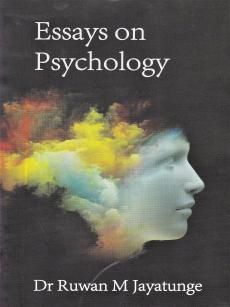
The book Essays
on Psychology”, by Ruwan M Jayatunge M.D., is written for psychology undergrads
and also people who are interested in psychology. As the title states this a
compilation of essays” on a very heterogeneous spectrum of topics. There are
short texts on selected mental disorders like OCD, PTSD, pain, substance abuse,
or schizophrenia. There are others on treatments like EMDR, DBT, meditation, or
cannabis. There are several texts on psychodynamic therapy. You can find also
pathographias of Gogol, Hemingway and others. Finally there are also essays on
cultural or philosophical questions. There are many topics one would not find
in other psychology books, from nymphomania to matricide. More important is
that the essays regularly refer to Asian concepts of mental illness and
treatment, which are often unfamiliar to western readers. The book is no
textbook but a stimulating book which covers new topics or gives new
perspectives on well known topics. It is stimulating and can therefore be
recommended if you want to widen your own horizon and if you are happy to read
thoughts different from what you may read otherwise.
Colombo, February 12 (newsin.asia): India’s Deputy High Commissioner, Vinod K.Jacob, has said that India-Sri Lanka bilateral trade gap has narrowed since 2018.
We have been able to reduce the trade gap in 2018 and 2019 and made our trade more balanced. According to the latest data from the Sri Lankan side, in 2020, Sri Lankan imports from India were valued at USD 3 billion while Sri Lankan exports to India were valued at USD 604.42 million. This means that the bilateral trade gap, which was USD 3.39 billion in 2018, was further reduced to USD 2.40 billion in 2020,” Jacob said in his speech at the ‘Most admired companies of Sri Lanka’ award ceremony organized by International Chamber of Commerce, Sri Lanka, Daily FT and Chartered Institute of Management in Colombo on February 10.
Jacob, who was Guest of Honor, further said: Due to proximity and familiarity with Sri Lanka, Indian manufacturers can play positive role through investments, equipment, technology, know-how, and manpower training, to enable Sri Lanka to emerge as a manufacturing and connectivity hub. The implementation of large-scale economic projects in infrastructure and energy would give a big boost to investor sentiment and promote win-win and mutually beneficial cooperation. Let me reiterate that India abides by all of its international and bilateral commitments in letter and spirit.”
Connectivity is another crucial area which has seen good progress with the initiation of air-link between Jaffna and Chennai in 2019 and the pursuit of additional air links and ferry services. India had proposed in August 2020, the creation of an air bubble to facilitate controlled movement of certain categories of people between India and Sri Lanka. We had sent a proposal in August 2020 and I am happy to inform that we have just received the response from the Sri Lankan side.”
India is also privileged to be one of Sri Lanka’s top development partners with commitments close to US$ 3.5 billion for grant projects as well as Lines of Credit. We continue to implement several projects under this umbrella, apart from moving forward on new initiatives like the US$ 100 million Line of Credit for solar power projects in Sri Lanka. As a part of the commitment to support Sri Lanka’s efforts to address pandemic-related challenges, the Reserve Bank of India had provided a US$ 400 million currency swap to the Central Bank of Sri Lanka in July 2020.
Participation of the private sector is critical for the success of all endeavors aimed at the expansion of economic ties between India and Sri Lanka and jointly overcoming the challenges emerging from the COVID-19 pandemic. We hope that Indian and Sri Lankan companies will make full use of available opportunities to forge comprehensive long-term ties, specially in context of integration with global supply and value chains.”
The private sector requires certain basic conditions for the success of its ventures, which primarily include stable and predictable regulatory and economic policies and an enabling business environment. It is important to ensure that measures aimed addressing immediate difficulties are suitably adjusted to support the need for long-term growth in trade and investment.”
The existing bilateral ties in trade, investment, and development cooperation provide a strong template for realizing the leadership’s vision in the economic sphere, specially considering that India was Sri Lanka’s largest trade partner in 2019 and Sri Lanka is one of India’s largest trade partners in South Asia. We have been looking at ways to utilize complementary strengths for increasing the resilience of our bilateral trade through a better understanding of evolving requirements on both sides.”
India has been a preferred partner in Sri Lanka’s journey of progress, prosperity and development and we look forward to continuing this association for jointly overcoming all common challenges in the future.”
Developments in Indian Economy
In 2020, Government of India provided three stimulus packages at a combined value of US Dollar 405 Billion or nearly 15% of India’s GDP to assist the most vulnerable sections of the Indian society during the Covid 19 pandemic.
Earlier this month, the Hon’ble Finance Minister of India Smt. Nirmala Sitharaman presented the Union Budget for 2021-22 which also happened to be India’s first digital budget with special focus on dealing with the challenges triggered by the COVID-19 global pandemic. The Finance Minister’s latest budget presented a vision for the actualization of Atmanirbhar Bharat or Self Reliant India through 6 key Pillars: (1) Health and Well being, (2) Physical & Financial Capital, and Infrastructure, (3) Inclusive Development for Aspirational India, (4) Reinvigorating Human Capital, (5) innovation and R&D (6) Minimum Government and Maximum Governance.”
According to India’s Economic Survey 2021, the projection for real GDP growth is 11 % in 2021-22 which is in line with the IMF’s estimates of real GDP growth of 11.5 % in 2021-22 and 6.8% in 2022-23. India has also set a US Dollar 5 Trillion target for its economy in financial year 2024-25. With strong rebound expected in the second half of financial year 2020-21, the Indian economy is well on course towards realizing these figures.”
In the past year economic innovation has enabled Indian business and industry to step up manufacturing of masks, PPE kits, ventilators and development of vaccines. In line with the commitment of Prime Minister Narendra Modi at the UN General Assembly in 2020, India is using its vaccine production and delivery capacity to help all humanity. We have given particular attention to our neighbors.
A plane load of 500,000 vials of vaccines arrived in Colombo on Duruthu Poya Day last month. Probably because of the success of this initiative, I am given to understand that Sri Lanka is placing large scale orders for more vaccines from India. Having seen at closed quarters, the benefits of jointly fighting COVID-19 related challenges, I am confident that both countries can deepen our cooperation in this field. One of the lessons learned is that while dealing with public health matters as important as vaccines, it is imperative to respect the national regulator’s freedom and competence. I would like to commend the professionalism of Sri Lankan authorities who cut no corners and yet provided necessary approvals in just about a week to COVISHIELD.”
Modi’s Commitment To Sri Lanka
Prime Minister Narendra Modi is deeply committed to making India-Sri Lanka bilateral ties stronger. This has been evident in the outcomes of our bilateral engagements including the visit of His Excellency President Gotabaya Rajapaksa to India in November 2019, of Prime Minister Mahinda Rajapaksa to India in February 2020, the Virtual Bilateral Summit held on 26 September 2020 and most recently during the visit of External Affairs Minister, Dr. S. Jaishankar to Colombo from 5 to 7 January this year.”
India has been a preferred partner in Sri Lanka’s journey of progress, prosperity and development and we look forward to continuing this association for jointly overcoming all common challenges in the future. I convey my best wishes to the business community of Sri Lanka for a rewarding year ahead, Jacob said.
Colombo, February 12 (newsin.asia): The prestigious Mahatma Gandhi Scholarships were awarded to 150 Advanced Level school students from all 25 districts across Sri Lanka by G L Peiris, Minister of Education of Sri Lanka, and Indian High Commissioner Gopal Baglay, at a special ceremony held at the Ministry of Education, on February 11.
Minister G.L. Pieris in his speech lauded the values of Mahatma Gandhi who lived what he preached and how he fought against the powerful British in the last century using non-violence as a weapon. Sharing his experience of recent visit to Jaffna and Killinochchi in the Northern Province where he had seen how the different communities live together without differences, he advised the students to follow this principle when they grow up. He thanked the Government of India for the help it extends in different fields to Sri Lanka.
Congratulating students for their achievement, High Commissioner assured Sri Lankans in general and young students, in particular, that the Indian people, the Indian Government and the High Commission of India would always stand with them. Drawing parallel between the great Buddha and Mahatma, he stated that the ideals of Mahatma Gandhi still holds good in the fast changing world. Reminding that India and Sri Lanka have close cultural links, he advised the young students to utilize the opportunities available in India, which is a large country in terms of Education as well as career. He expressed confidence that the young students of Sri Lanka would be a great source of strength for both India and Sri Lanka in future.
Apart from Mahatma Gandhi scholarships, the High Commission of India offers around 750 scholarships annually in various fields including Engineering, Technology, Arts, Science, Para-medical courses, Indigenous medicine etc. to Sri Lankan students. Thousands of seats are also on offer for Sri Lankan students in many highly regarded institutions of India under Study in India”.
For more details on the scholarship programmes and other educational assistance, please visit the High Commission of India’s website www.hcicolombo.gov.in
In case the local justice fails, the prelate wants the International Criminal Court in The Hague to intervene. The Sri Lankan government is already under UN pressure over its handling of the conflict with Tamil separatists. Victims’ families back the cardinal’s initiative.
Colombo (AsiaNews) – Card Malcolm Ranjith yesterday called on the International Criminal Court (ICC) to investigate the 2019 Easter Sunday attacks.
On 21 April two years ago, suicide bombers targeted three churches – two Catholic and one Protestant – and three hotels in different parts of the country. The blasts killed 280 people, including 45 foreigners, and wounded almost 600.
The responsibility for the attacks has not yet been determined. Then President Maithripala Sirisena first blamed Islamic extremists, then international drug traffickers trying to retaliate against his government for its actions against the drug trade.
The only thing that is certain is that the authorities had intelligence information before the attacks, but ignored it.
The findings from the official government investigation were handed over to President Gotabaya Rajapaksa on 1 February.
Card Ranjith, who has not yet seen the document, has called for the International Criminal Court to intervene should the local justice system fail. The families of the victims,” he says, want the truth.”
The Archbishop of Colombo believes that the authorities will do everything possible to avoid the involvement of international justice, noting that the government is already in the crosshair of the UN Human Rights Council over its actions during the civil war with Tamil separatists.
The families affected by the tragedy support the prelate’s initiative. This is crucial if we do not get justice from our authorities,” Geetha Appuhamy told AsiaNews.
A Katuwapitiya resident, the mother of three lost her husband in the 2019 attacks and faces serious economic problems. If our loved ones were still alive, our life would be happy; instead, we have to bear the burden of their loss,” she said.
The victims’ families suspect the government is trying to hide the investigation’s findings, so they want an international court to intervene.
Eva Antoinette lost a sister, a granddaughter and a brother-in-law in the attacks. She wants the culprits found and punished. Like Geetha, Eva explains that only God’s love can make her live with the pain and trauma caused by the Easter Sunday tragedy.
International Day of Zero tolerance for Female Genital Mutilation
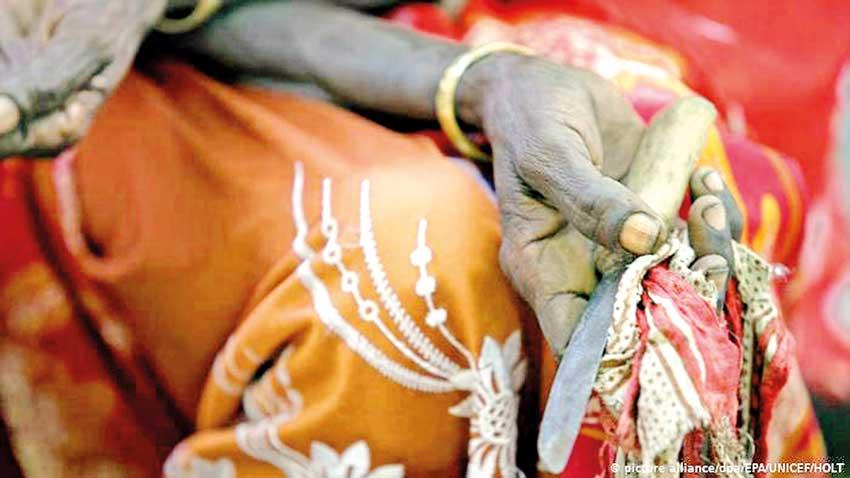
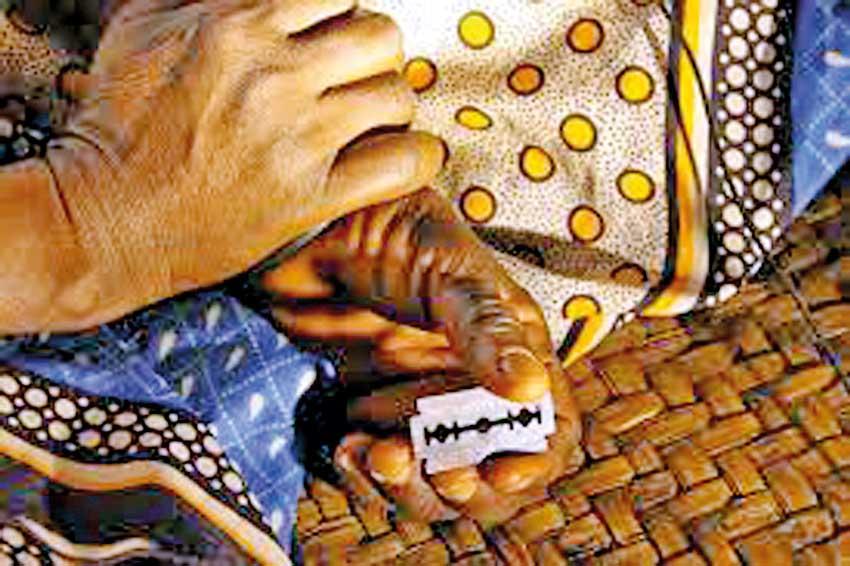
On the 40th day after birth a woman known as ‘Ostha Maami’ is called to the house of the infant to make a small cut on the genital area
Many who practise this think it is a part of the religion, but when questioned where in the religion it is stated so, they do not know
Some sections of the community believe that the practice enables girls to have control over their sexual desires
It is believed that when a girl has undergone this practice, the girl is quiet, demure and calm
The practice of FGM/C has not been stated in any of the Islamic religious texts and has been misinterpreted by proponents of FGM/C.
Saroor dismisses claims that it is a religious practice stating that it was a cultural practice which had no basis in the religion and was a tool by the patriarchal society to oppress women
When one thinks of FGM/C (Female Genital Mutilation/ Cutting), many think it is only prevalent in the African region. However, recent media reports and research show that the practice also prevails in Sri Lanka, especially among certain sects of the Muslim community and the Dawoodi Bohra community, around the island. The earliest available report of FGM/C in the country dates back to 1996. The World Health Organisation (WHO) estimates that over 200 million girls and ladies have been subjected to the practice in the African, Middle Eastern and Asian regions. According to the WHO, FGM/C is defined as ‘procedures that involve partial or total removal of the external female genitalia, or other injury to the female genital organs for non-medical reasons.’
According to the WHO FGM/C is classified into four types:
Type 1- Partial/ total removal of the external visible part of the clitoris (clitoral glans) and/or the prepuce/clitoral hood.
Type 2- Partial/total removal of the clitoral glans and labia minora with/without removal of the labia majora.
Type 3- narrowing of the vaginal opening through the creation of a seal. The seal is formed by cutting and repositioning of the labia minora/labia majora, sometimes through stitching, with/without removal of the prepuce/clitoral hood and glans.
Type 4- includes all other harmful procedures to the female genitalia for non-medical purposes, such as pricking, piercing, incising, scraping and cauterising the genital area.
According to a study conducted by the Family Planning Association of Sri Lanka (FPA), Type 1 and Type 4 are the methods of FGM/C that takes place in the country. Within the Muslim community, it is usually done on the 40th day of the birth, but among the Dawoodi Bohra community, I’ve heard that it occurs when the child is seven years old,” said Shreen Saroor, a Human Rights Activist. Saroor also noted that adult females, who have converted, have also had to go through the practice. Speaking to Daily Mirror, Khair*, a grassroots level volunteer stated that many women had no knowledge of themselves being subjected to the practice until their female infants were subjected to the practice. Many women knew of the existence of FGM/C the day their mothers or elderly women in the family would inform them that their infant daughters have to be subjected to this practice on the 40th day of after birth,” she said, noting that the male members in the family had no knowledge of the practice as the procedure was done secretly and discreetly.
Describing about the procedure, Khair stated that on the 40th day after birth, a woman known as ‘Ostha Maami’ is called to the house of the infant to shave the head of the infant and also conduct FGM/C. Usually the mother does not see the procedure. The elderly women in the family give the mother something to do and she walks out of the room. As soon as she walks out of the room, the Ostha Maami uses a small knife or new razor and makes a small cut on the genital area. Then a cotton wool with eau-de-cologne or turmeric is dabbed on the area. Sometimes talcum powder is used. This is done very quickly, before the mother walks into the room,” described Khair, adding that in some instances extreme bleeding has been reported and thus medical intervention would be necessary at such an instance. The description of this practice conforms to the definition of Type 4. Khair also noted that those who had not undergone the practice as babies and instead undergone this later in life, recall the practice clearly and for some, it had been traumatic.
Saroor shared that Ostha Maamis were mostly old women who carried this as a family business, where the practice was shared across generations. The practice has been there for a long time. After 1990, even when the practice was questioned, it did not stop. Instead it got more professionalised. Some doctors performed it for money and some private hospitals accommodated it as part of a profitable activity,” added Saroor.
The practice has been there for a long time. After 1990, even when the practice was questioned, it did not stop. Instead it got more professionalised. Some doctors performed it for money and some private hospitals accommodated it as part of a profitable activity
Shreen Saroor – Human Rights Activist
Is this a religious practice?
Many who practise this think it is a part of the religion, but when questioned where in the religion it is stated so, they do not know. From my experience, most women carry this out, at the behest of their mothers, mothers-in-law and elderly women in the family,” she said noting that many of the younger generation are opposing the practice. Khair also revealed that the practice does not take place in some Muslim- majority countries and many Sri Lankans who were born in such countries had not had FGM/C practised on them. She stated that the community belief is that the practice enables girls to have control over their sexual desires. It is believed that when a girl has undergone this practice, the girl is quiet, demure and calm. It is a common belief that girls who don’t undergo this act like tomboys and have no control over sexual feelings. When girls elope in the community, people think that the FGM/C has not been carried out properly or it has not been done on them,” she said adding that practice is also believed to supposedly aid in keeping the genital area clean and hygienic.
Saroor dismissed claims that it is a religious practice stating that it was a cultural practice which had no basis in the religion and was a tool by the patriarchal society to oppress women.
The FPA report stated that certain sects of the Muslim community did not practice this because they believe there is no religious basis in the practice. A report ‘De-linking FGM/C from Islam’ by Ibrahim Lethome Asmani and Maryam Sheikh Abdi points out that the practice of FGM/C has not been stated in any of the Islamic religious texts and has been misinterpreted by proponents of FGM/C. Furthermore, the report goes on to show that the religious texts used to support FGM/C as a religious practice by the supporters of FGM/C have been dismissed by scholars as invalid or fabricated. However, in 2008, the All Ceylon Jamiyyathul Ulama (ACJU) issued a fatwa (legal pronouncement) stating that ‘female circumcision is obligatory and recommended’ citing religious teachings as well as the view that circumcision is important to maintain cleanliness of the genitals and ‘for enjoyment in family life’.
Medical view on the practice
Speaking to Daily Mirror, Prof. Hemantha Senanayake, Professor of Obstetrics and Gynaecology noted that in some cases of FGM/C there could be significant scarring but, in many cases, the scars aren’t noticeable or have healed up. Sometimes, when women who have undergone severe forms of FGM/C come for delivery, their delivery can be very challenging due to removal of some parts of the genitalia,” he said. He noted that mostly minor forms of FGM/C were carried out in Sri Lanka in comparison to the FGM/C practiced in African countries. A journal article in the Ceylon Medical Journal by Wickramage et al (2018), in which the research panel also included Dr Lakshmen Senanayake, former President of the Sri Lanka College of Obstetricians and Gynaecologists, points out the consequences to the physical and mental health of women as a result of FGM/C. Formation of scar tissue, keloids and Bartholin cysts on the vulva, damage to the reproductive, urinary and gastrointestinal tracts, increased susceptibility to sexually transmitted diseases, pain and reduced pleasure during sexual intercourse, infertility are some of the physical health implications expressed in the article. It also points out that traumatic memories of the practice have been shown to result in post- traumatic stress disorder, relationship issues and lowering of self-esteem in girls and women.
In the FPA report, it is seen that FGM/C was not part of the training process carried out for doctors in Sri Lanka and that some doctors have been exposed to it while working and/or training in the UK. It was also revealed that medical professionals were unaware of the practice occurring in the country and due to the lack of training, they had not looked for signs of FGM/C during their work. They were also of the consensus that it might be difficult to view any physical sign of the practice unless a significant removal of any part of the genitalia has been done.
Sometimes, when women who have undergone severe forms of FGM/C come for delivery, their delivery can be very challenging due to removal of some parts of the genitalia
Prof. Hemantha Senanayake – Professor of Obstetrics and Gynaecology
The way forward
Despite being party to the Convention on the Elimination of All Forms of Discrimination against Women (CEDAW) and ratifying the Convention on the Rights of the Child, Sri Lanka is yet to criminalise FGM/C. Though a circular was issued by the Health Ministry in 2018, prohibiting medical practitioners from carrying out FGM/C, Saroor pointed out that it was mostly Ostha Maamis who carried out FGM/C rather than medical professionals. This circular had very little impact on the practice of FGM/C. The state is responsible to protect its citizens therefore it has to step up and make FGM/C illegal through law,” called out Saroor.
Khair also noted that there should be an increased awareness of this issue in the community. This is a very sensitive issue, hence we cannot jump into action immediately. The community should be made to understand the negative impacts of the practice. For this, discussion on FGM/C should be encouraged in the community,” she said adding that anti-FGM/C activists are often seen in a negative light in the community.
Ermiza Tegal, an Attorney-at-Law and one of the authors of the FPA report stated that the practice is a clear violation of child rights. She also revealed that during the course of the research, she had realised that there were knowledge gaps and contradictions regarding this practice in the country. One of the key concerns that came out of the study is that women should not feel marginalised in this discussion. Women should have all the information and make informed decisions without harming the children,” she said adding that the state and medical community must provide support and knowledge for women to take informed decisions on such practices. One must be careful not to use this issue to ostracise, demonise or vilify a community or an identity. This is particularly important given the current Sri Lankan context of intolerance. It is abundantly clear that women’s views on this issue were informed by patriarchal discourses. This phenomenon is not unique to any one particular community in this country. The discourse and practice of failure to obtain consent, coercion, violence and control over female sexual pleasure are themes that can be identified in relation to this practice as well,” she emphasised.
Testimonials from women who have undergone FGM/C have been submitted to the Human Rights Commission, Parliamentary Sectoral Oversight Committee on Women and Gender, National Child Protection Authority and a proposal to ban the practice was submitted in 2017 to the then Justice Minister, Thalatha Atukorale. Other than the circular issued in 2018, no further action has been taken yet. The question remains whether banning FGM/C would completely halt the practice or make it go underground.
I believe it would not be difficult to stop this gruesome practice. I think what needs to happen first of all is for the laws and the reasons behind them to be made known to the people affected. They need to hear in their own language, why FGM is bad- that it is both a cruel and medically high- risk practice- and that it is illegal. Secondly, support for the women who are affected is desperately needed. Thirdly- and most contentiously- we need vigilance. I think doctors should examine girls when they are very small, and check them again every year. Doctors, midwives and nurses check children for other health issues, and this is a health issue. Finally, the law must be enforced, and people suspected of being involved in carrying out this practice should be taken to court,” – Waris Dirie, former UN special ambassador against FGM. *Names have been changed to protect identity
One of the key concerns that came out of the study is that women should not feel marginalised in this discussion. Women should have all the information and make informed decisions without harming the children
Colombo’s Archbishop His Eminence Malcolm Cardinal Ranjith yesterday asked for a probe into those individuals who identify themselves as Christin pastors and indulge in unethical conversions targeting celebrities such as artistes, sportsmen, accomplished women and businessmen.
He stressed the need to work out a legal procedure to regulate the activities of ‘such persons’.
Cardinal Ranjith who highlighted this issue in a news conference yesterday urged the government to watch over these persons who call themselves pastors and probe their international masters and institutions funding them. He asked the government to examine their qualifications and what kind of training they had undergone as preachers.
The Roman Catholic church has a certain administration structure, a regulatory system, an internationally accepted leader.the members of the clergy are probed whenever allegations are made against them. However if a probe is not conducted on these so-called pastors, it will affect the harmonious relationship among different religions in this country. There is no transparency when it comes to the activities of these persons,” Cardinal Ranjith said.
Ajith Siriwardana and Yohan Perera Courtesy The Daily Mirror
Justice Minister Ali Sabri informed Parliament today that steps were being taken to amend the Muslim Laws and that a Cabinet Paper had already been presented in that regard.
Responding to a question raised by Venerable Athuraliye Rathana Thera under 27(2), the Minister said the Government was committed to uphold the policy of One country-one law”.
He said he had presented a Cabinet Paper to amend the minimum marriageable age of Muslim girls as 18, to permit women to act as Kathis and also to make it necessary to get the consent of Muslim women when they get married.
Ven. Rathana Thera had said that the Muslim laws were violating human rights of Muslim women and girls.
The Minister said if the personal laws were to be abolished, all the personal laws such as Muslim Laws, Kandyan law and Thesawalamai Law should be abolished altogether through a social discussion.
It can be done when the new Constitution is drafted through a social discussion, he said.
State Minister of Urban Development, Coast Conservation, Waste Disposal and Community Cleanliness Dr. Nalaka Godahewa said his office proposed to Prime Minister Mahinda Rajapaksa to take steps to develop light rails in Colombo, a project that has been on paper for a long time.
Dr. Godahewa told Daily Mirror there were four light rail lines proposed to be developed in Colombo, and the Malambe-Colombo line which was planned to be implemented with Japanese financial assistance, was scrapped on instructions by the Finance Ministry due to the high cost involved.
It does not mean we have totally abandoned light rail projects. There are three more lines. We requested the Prime Minister to see how we can proceed with them. That has to be done in consultation with the Finance Ministry,” he said.
He said the Malambe-Colombo light rail was costly.
It cost more than US $ 2 billion. It is a loan. When the rupee value depreciates, the cost of debt servicing increases,” he said.
Chaturanga Samarawickrama Courtesy The Daily Mirror
Sri Lanka’s first power plant to generate electricity using garbage and other bio mass set up at Kerawalapitiya at Hendala, Wattala will be added to the national grid next Wednesday (17) Power Minister Dullas Alahapperuma said.
Addressing an event he said the plant will be vasted to the public by Prime Minister Mahinda Rajapaksa.
While waste is posing a big headache to people of the whole island, the Ministry had decided to add economic value to it with a sustainable solution and to generate electricity.
The plant is generating 10Mw power using 700 tons of waste per day and will continue its operation by collection of waste from the area.
The Minister further said the use of waste collected in this manner for the generation of power in the entire district will also environmentally important.
Also, the Ministry had planned to launch the first project to generate electricity from biogas using biodegradable waste in the Matara District.
The project is expected to kick off in October this year and will be added to the national grid.
The new SARS-CoV-2 variant, which belongs to the B.1.1.7 lineage and now dominant in the United Kingdom, has been identified in Covid-19 positive samples received from four areas across the country.
The samples were received from Colombo, Avissawella, Biyagama and Vavuniya areas, says Director of the Department of Immunology and Molecular Medicine of Sri Jayewardenepura University, Dr. Chandima Jeewandara.
According to him, this Covid-19 variant, also known as VOC 202012/01, has a higher transmissibility.
The United Kingdom first reported the new SARS-CoV-2 variant of concern (VOC) to the World Health Organization in December last year.
By mid-January, 50 countries had identified the more contagious B.1.1.7 variant in Covid-19 positive cases.
The developers of Oxford-AstraZeneca vaccine, however, stated that their jabs give people good protection against the new coronavirus variant. They had found similar efficacy against the B.1.1.7 variant to the original virus, based on swabs from volunteers.
Last month, Sri Lanka identified a special mutation (N439K) of SARS-CoV-2, which showed similar characteristics to a strain spreading in England, Switzerland, Germany, Denmark and Iceland. It was of B1258 lineage.
Five new Covid-19 related fatalities have been reported in Sri Lanka, Director-General of Health Services confirmed.
The new development has pushed the death toll from the virus outbreak to 384.
Department of Government Information said one of the victims is a 63-year-old man from Kotagala area. He had been transferred to the Nuwara-Eliya District Hospital from Kotagala Hospital after testing positive for the virus. He fell victim to acute Covid-19 pneumonia on February 09.
The second victim, identified as a 79-year-old man from Matugama area, had passed away yesterday (February 11) at the Anuradhapura Teaching Hospital. He was transferred from Nagoda General Hospital in Kalutara upon testing positive for novel coronavirus. The cause of death was recorded as Covid-19 pneumonia and kidney failure.
In the meantime, a 69-year-old man who was residing in Kotahena area also died yesterday (February 11). He had been transferred from a private hospital in Colombo to Mulleriyawa Base Hospital. He has succumbed to Covid-19 pneumonia, acute diabetes and high blood pressure.
Another man, aged 59 years, died while receiving treatment at the National Hospital for Respiratory Diseases in Welisara on February 05. The cause of death was reported as lung disease, Covid-19 pneumonia and respiratory failure.
The last victim is reportedly a 49-year-old from Colombo 12 area. He was also under medical care at the National Hospital for Respiratory Diseases in Welisara at the time of his death n January 28. He has fallen victim to Covid-19 pneumonia and lung disease, the Government Information Department said further.
Sri Lanka’s confirmed COVID-19 infections count crossed the 74,000-mark today (February 12) as 412 more persons were tested positive for the virus.
Following the new development, total COVID-19 cases confirmed in the country have soared to 74,056.
The Department of Government said Sri Lanka has registered 940 new infections within the day.
Reportedly, 932 of them have been identified as close contacts of earlier cases linked to the Peliyagoda cluster. Four others were confirmed from the Prison cluster. The remaining four are reportedly arrivals from the United Arab Emirates.
According to the Epidemiology Unit, 773 more persons who were previously infected with the virus were discharged from hospitals today upon returning to health. Thereby, the country’s recoveries tally reached 66,984.
In the meantime, 6,693 active cases are still under medical care at multiple hospitals and treatment centres.
The death toll from the virus outbreak meanwhile stands at 379.
The Attorney General Dappula De Livera has requested for a copy of the final report of the Presidential Commission of Inquiry appointed to investigate the Easter Sunday terror attacks.
The Attorney General has requested for a copy of the report from the Secretary to the President in order to consider forwarding charges against the suspects, the AG’s coordinating officer said.
The Presidential Commission of Inquiry appointed to investigate the 2019 Easter Sunday terror attacks handed over its final report to President Gotabaya Rajapaksa on February 01.
Hearings and other procedures of the Presidential Commission officially came to a conclusion on January 27, 2021.
The Commission was appointed by former President Maithripala Sirisena on September 22nd, 2019 to investigate the series of attacks that took place on Easter Sunday same year and to recommend necessary actions.
The commission had recorded evidence from a total of 440 individuals during its term.
The commission was chaired by Court of Appeal Judge, Janak de Silva and included Court of Appeal Judge, Nishshanka Bandula Karunarathna, Retired High Court Judges Nihal Sunil Rajapaksa and A.L. Bandula Kumara Atapattu, former Secretary of the Ministry of Justice, W.M.M.R. Adikari.
Supreme Court has ordered a teacher of a school in Matara to recompense a student who lost the hearing ability after being slapped by him in 2017.
The teacher in question, Jayantha Premakumara Siriwardhane, had been in charge of discipline at Puhuwella Central College in Matara.
He has been ordered to pay a compensation of Rs. 150,000.
Ruling that the incident is a serious violation of fundamental rights of the student, the Supreme Court also ordered the State to pay a compensation of Rs. 500,000 to the 15-year-old.
The aggrieved party had filed a petition with the Supreme Court, seeking a verdict which states fundamental rights of the student were violated by the teacher who slapped him on the 13th of February in 2017, leading to loss of hearing.
History
will one day be witness to the lies, deceit and hypocrisies taking place in the
Halls of the UN and in particular the UNHRC. What Sri Lanka must repeatedly
exert is that all of the resolutions since 2009 claiming to be based on how Sri
Lanka ended the conflict and claiming to have intentionally killed 40,000
people does not make any reference to these allegations but are following
intrusive and non-conflict related demands that violate the UN Charter. All
these nations passing resolution against Sri Lanka must seriously ask
themselves what they did to prevent LTTE committing crimes over 30 years. Why
are these countries suddenly bothered about how the conflict was fought after
LTTE’s defeat this itself is a precedent being created by the UN and will
impact other countries in the future as well.
UK
At
one time UK was the world’s biggest empire, invading and ruling all but 22
countries in the world. UK’s crimes thus constitute that which were committed
in the name of the King/Queen by the UK military who ruled invaded nations,
murdered the natives, destroyed their cultures, livelihoods and plundered their
resources to build their nations back home and are now making money from
displaying stolen artefacts in their museums while their Queen adorns herself
with riches and gems stolen from the former colonies. UK’s rule of Sri Lanka
ended only in 1972 with the Republican Constitution. From 1948 Sri Lanka
accepted Dominion Status, nominal independence as the Queen remained Head of
State and UK Privy Council was the highest court and military presence remained
in Sri Lanka.
The
colonial crimes committed by the British in then Ceylon have never been
acknowledged, accounted or compensated. This is the very country preaching
human rights. The crimes committed by colonial Britain come nowhere near what
they accuse countries off today. The Uva-Wellassa massacre resulted in the UK
Governor Brownrigg declaring to kill anything that moved and that order
included even babies. The scorched-earth policy meant burning everything that
was in sight with aim to start natives to death. These were crimes against
humanity, these were real genocide, not the handful of propaganda filled-
evidence less fairytales hiring witnesses and training them to cry to a camera
taking place today. India that joins the UK in its modern geopolitical bullying
may well like to go through how India suffered under colonial Britain where
British governors publicly said the only good Indian is a dead Indian.
It
was in UK that LTTE opened its first international head quarters in mid 1970s.
It
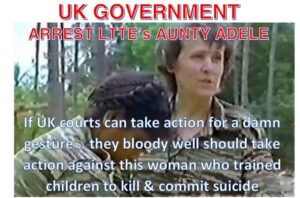
is also in UK that the white LTTE Australian nurse trained kidnapped Tamil low
caste & poor children as child soldiers to kill and even to commit suicide.
What
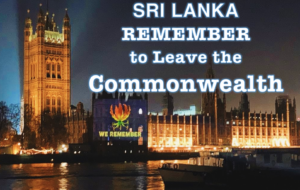
more do we need to say about the UK that allows its Parliament to be lit to
remember LTTE dead.
Yet
UK has the audacity to preach human rights not even bothered about filing case
against Adele for her crimes against children!
Canada
Canada’s
history is just over 151 years created by UK in 1867.
Canada
is a ‘rich’ country today only because it was created after forcibly acquiring
indigenous lands & resources and confining the natives to that of aliens,
discriminating them, making them ill, destroying their livelihoods, denying
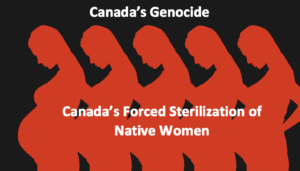
them basic human rights, forcibly sterilizing them, sexually assaulting their
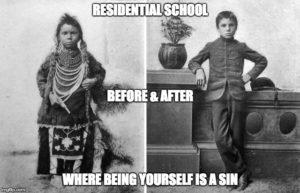
children, subjecting them to torture and starvation in ‘residential schools’
and this was how the ‘immigrant invaders’ cleared lands for them to farm, for
them to mine, for them to extract oil and this is how Canada became a rich
nation. Simply saying ‘sorry’ Canada thinks all of its human rights violations,
crimes against humanity can be erased and the obnoxious nature of Canada is such
that it is patronizing other countries while its dark past remains very much
one that continues to subtly carry forward violations to these natives in the
present what was done proudly & openly in the past.
The
author says that the Famous Five” women long celebrated as champions of
women’s rights are having their hero status questioned because of supporting
sterilization of indigenous women. This is no different to how Prabakaran
kidnapped and turned children into LTTE child soldiers.
Canada
is guilty of ‘cultural genocide’ (as referred to by former PM Paul Martin) just
as LTTE and Prabakaran was guilty of the same crime too.
Canada which is today part of a Core-Group against Sri Lanka is
preaching to Sri Lanka about human rights, gender rights and children’s rights.
Canada regarded women as ‘PERSONS’ only in 1929 and ALL WOMEN in Canada was
given to vote ONLY in 1960. Sri Lanka’s women gained right to vote in 1931 and
the very year All Women in Canada got a right to vote, Sri Lanka produced the
Word’ 1stFemale
Prime Minister in July 1960.
The
LTTE lobby in Canada is strong. Toronto holds the largest Tamil speaking
population outside Asia. Canada is very accommodating of international
proscribed terrorist organizations. Prabakaran is a regular feature for window
shoppers. Far more protests by LTTE take place in Canada than the generally
less than 50 persons TNA can muster up with a lunch packet, bus fare and
Rs.5000.
Our
blessings for Tamil Eelam in Toronto and Tamil Heritage Month in January is on
course for that! In which country would the Parliamentary Secretary of Foreign
Affairs an International Human Rights (Deepak Ohrai) lay a wreath for LTTE
dead- we hope he does the same for Osama bin Laden or even Adolf Hitler? Canada
has many LTTE supporters – Bonnie Crombie Mayor of Mississauga, Brampton City
Council Mayor Patrick Brown
The 2 new kids on the bloc
against Sri Lanka are New Macedonia with a history of 30 years and Montenegro
Montenegro
This
Balkan country became independent in only 2006 with a new constitution formed
in 2007. So its history as an independent nation is just 15 years while its
leader Milo Djukanovic had led for 26 years and coined dictator too! Montenegro
is a member of NATO since 2017. Freedom House in its May 2020 political rights
and civil liberties worldwide report declared Montenegro as a hybrid regime and
not a democracy. These are the countries passing resolutions against Sri Lanka!
North
Macedonia is locked between 5 countries – Kosovo and Serbia on the north,
Bulgaria on the east, Greece on the south, and Albania on the west. Its
independent history is just 30 years having split from Yugoslavia in 1991.
66%
are Christians and 33% Muslims.
OHCHR
report on New Macedonia is nothing for the country to boast of either. 900
inmates without identification cards, limited judicial independence,
politicization of the judicial oversight body, 112 persons (26 families)
remained displaced from the 2001 internal armed conflict
Freedom House’s Freedom
in the World 2019 report stated that while the media and
civil society are active, journalists and activists face pressure and
intimidation.”
It is also interesting that while EU countries demanded immediate
release of all IDPs following the end of LTTE – The 2018 Helsinki Committee for Human Rights Annual Report stated,
The provision limiting the freedom of movement of asylum seekers was retained.
Namely, Article 63 prescribes that freedom of movement shall be restricted in
extraordinary circumstances, in order to determine the identity and
citizenship, and establish the facts and circumstances of the asylum requests,
particularly if a risk for escape has been determined, in order to protect the
order and national security or when a foreigner is retained for the purposes of
initiating a procedure for his return or removal.”
Germany
It
is very unfortunate that Germany, one of the most powerful nations in Europe
have chosen to align with this core group given that Germany has been a victim
of the Allies during both World Wars and suffered immense loss of lives and
human rights violations. Germany should remember that immediately following the
defeat of Hitler and NAZI rule the Allies held a Victor’s Tribunal where only
the crimes of Germany and Germans were put on the dock. None of the crimes
committed by the Allies never made it to the court room.
When
Sri Lanka declared all LTTE are Tamils but all Tamils are not LTTE, the Allies
declared all Germans to be NAZIs and they were subject to much humiliation and
torture.
Germany
may well like to go back in time to count how many Germans were expelled from
the European countries they were living in.
3million
Germans died after war ended (2m were women and children 1m were prisoners of
war) – British historian Giles MacDonogh in ‘After the Reich: The Brutal
History of the Allied Occupation” details how Germans and Austrians were
systematically raped and robbed and those Germans who survived were killed in
cold blood or deliberately left to die of disease, cold, malnutrition or
starvation. These statistics come with evidence and proof unlike the UNHRC
fairy tales of ‘genocide’ in Sri Lanka and note how all of the resolutions have
nothing connected to the final phase of the conflict which was supposed to be
the reasons for the resolutions.
How
many Germans remember how the Allies decided to execute captured POWs. There is
also the allegation that the Allies used Germans as human shields forcing them
to walk through minefields.
To
this day US and UK have military presence in Germany because of the status of
forces agreement signed. UK & US occupied Germany even 8 years after the
war ended!
It
would be good for Germany to read how Sri Lanka treated LTTE and how Germany
was treated by the countries that Germany is so pally-pally with today
So
as a victim of UK, US and Allies, it is unfortunate that Germany is part of
this core group because we in Sri Lanka really empathize with all that Germany
and Germans had to undergo during and after the World Wars.
Sri
Lanka is only an observer nation of the UNHRC – why should we travel to UNHRC
annually to be humiliated?
Sri
Lanka should exit from the UNHRC.
Sri
Lanka is a sovereign nation – UK cannot be dictating to Sri Lanka any longer.
Having exited the EU, UK is on its own and desperate to secure ties for its
existence.
If
Sri Lanka decides to exit the Commonwealth, many other Commonwealth nations
will be inspired to do the same and UK will find itself a toothless lion!
SINGAPORE: UN Human Rights Commission (UNHRC) head Navi Pillay’s current campaign against Sri Lanka over alleged human rights violations – along with similar campaigns against Libya and Syria earlier – could jeopardize the cause of human rights around the world, analysts say.
Pillay released a report in February calling for an international investigation into alleged war crimes when the Sri Lankan armed forces crushed the Liberation Tigers of Tamil Eelam (LTTE) in a final battle in May 2009.
Sri Lanka’s Permanent Envoy in Geneva conveying the Sri Lankan Government’s response to Pillay’s report stated that the UN High Commissioner’s recommendations, reflect the preconceived, politicized and prejudicial agenda which she has relentlessly pursued with regard to Sri Lanka,” and in a 18-page document pinpointed her double standards accusing her of giving scant or no regard to the domestic processes ongoing in Sri Lanka.”
The Sri Lanka government has also criticized the report for arriving at conclusions in a selective and arbitrary manner” and ignoring requests from the Sri Lankan government to provide factual evidence to substantiate allegations and to refrain from making general comments.ADVERTISING
Sri Lanka’s criticism of Pillay is not new. But, commentaries in both mainstream and online media in Sri Lanka indicate a hardening of attitudes in the island state against Pillay’s perceived bias and alleged abuse of power as head of UNHRC. She is said to have got away with it in the international media because the western media apparently tended to believe – and continue to – most of the propaganda put out by the LTTE supporters in the Sri Lankan Tamil diaspora over the past 30 years.
At the twenty-fifth session of the UNHRC from March 3 to 28 in Geneva, Pillay’s report is due to be officially tabled, and she has refused to entertain a request from the Sri Lankan government that its response to the report be attached as an appendix. The United States has indicated – supported by EU and India – that they may table a resolution at the meeting to establish an independent international investigation into alleged war crimes and human rights violations in Sri Lanka, which the government is sure to reject.
How many of the bullying countries accusing Sri Lanka of crimes against humanity and war crimes have clean hands or a flawless record?” asks Senaka Weeraratne, a Sri Lankan lawyer and international affairs analyst.
What we see today in western dominated international organizations such as the United Nations related bodies such as the UNHRC, ICC and the like are proceedings conducted on an Inquisitorial footing i.e. witch hunts aimed at devastating the target country or individual usually of non–European descent thereby perverting the course of justice. No quarter is given to the other party until it submits to the political will of the bullying nations,” argues Weeraratne.
It is a shameless display of brute power making a mockery of institutional rules and procedures. The targeted country is assumed to be guilty right from the start ruling out any mitigating circumstances. It is virtually a re-enactment of the Inquisition under the auspices of the United Nations rather than the Catholic Church as in the days gone by.”
It is not only Sri Lankans that are complaining about the UNHRC and Pillay’s tactics. Anti-war activists in the West and supporters of the former Libyan regime and that of Syria have also pointed out how these UN agencies, and particularly UNHRC under Pillay, are practicing double standards to promote Western imperial designs.
(Continueed tomorrow)
Kalinga Seneviratne is IDN Special Correspondent for Asia-Pacific. He teaches international communications at Nanyang Technological University in Singapore. [IDN-InDepthNews – March 3, 2014]
UNO has failed in the mission expected of it, by those who originally set it up as an International Organisation after the bitter experience of the World Wars. UNO was expected to be independent, strictly above any influence by any one of its member states or another, to maintain peace in the world and avoid conflicts among Nations.
Though
UNO was seen to be losing its independence for some time, it became
evident since Ban Ki Moon became its Secretary General. Since
then UNO is a powerless institution, unable to protect its member
Sovereign States from being subjected to undue interference by bigger
Member States, while others were used as tools of the economical heavy
weights of the West.
The
USA waged war against Iraq and ended up hanging its President Sadam
Hussain despite the UNO. Libya was incessantly bombed and its Leader
Colonel Gaddafi was hunted like a criminal and assassinated. But these
International outlaws” with their military power have become today’s
defenders of human rights.
The
USA punished countries by declaring trade sanctions ,without any
consultations with the UNO. Half a million children died as a result in Iraq.
When the then US Secretary of State Madeleine Albright was asked Whether
the sacrifice was worth it she said, the choice was difficult but the sacrifice
was worth it. That is the mentality of these defenders of human rights
presenting themselves at the UNHuman Rights Council Sessions in Geneva to
accuse Sri Lanka for violation of human rights.
The
USA carried out violations of human rights everywhere in the world, in
Guantanamo, Iraq, Afghanistan, Pakistan, Libya. But the USA never came before
the UN High Commissioner for Human Rights, accused for its crimes
committed against humanity. Therefore the UN High Commissioner for Human
Rights should be ashamed of accusing Sri Lanka for violation of
human rights based on a report-Darusman Report, which has no right to be
presented as an official Document.
It
is with this background that the credibility of the UN Human Rights
Commissioner, and the UN Human Rights Commission should be
evaluated. In reality the UN HRC in Geneva has lost its credibility as a
Sister Organisation of UNO to the extent one does not know who really runs it.
The last President of the USA Mr. Donal Trump called it a cesspit. But the USA
cannot go behind the fact that it was they who made that of it.
But
from the gathering of large numbers of the Tamil Diaspora in Geneva
during the UN Human Rights Council Sessions and the main subject taken for
discussion being Sri Lanka, it appears as if the whole UNHRCouncil
Session in Geneva is organised for the Tamil Diaspora. Behind all this
there is surely a greater role being played out by those interested for
political leadership of the world.
But
normally the role of the UNHRCommission in Geneva is to settle problems
without harassment of Sovereign States, being careful not to put
minority Communities against the majority Community in any one Sovereign State.
But it is the just the opposite that is taking place.
Sri Lanka and the successive High Commissioners for Human
Rights of UN in Geneva.
Sri
Lanka had no problem with the UNHCHR in Geneva when the people of the three
Communities- the Sinhla, Tamil and Muslim of Sri Lanka were suffering
for 30 years under a ruthless terrorism commenced by a group of Tamil Youth.
The terrorists massacred men women and children, sliced open the stomachs
of pregnant women, snached children from the arms of mothers and smashed them
on the ground, set claymore bombs in buses and marketplaces killing
many innocent people, stopped a bus carrying a group of young Buddhist
monks and massacred all of them. On a full moon day when the Buddhists
pilgrims were making their prayer at the Sacred Bo tree the terrorists attacked
them killing them all, the terrorists bombed the most sacred Temple of the
Tooth.
The
Tamils who had migrated to Western Countries-USA, Canada,UK,Netherlands, France
collected funds for the terrorist war in Sri Lanka and bought arms and
ammunition. The Tamil diaspora as they were called forming a considerable
voting population in those respective countries became the Tamil
terrorist lobby able to influence the politicians of those countries,
putting them against the Government of Sri Lanka.
It’s
the Tamil terrorist Lobby that changed the Western political attitude
towards Sri Lanka, the UN and the UN High Commissioners for Human Rights
followed suit taking a sympathetic view of terrorism in Sri Lanka; who
they interpreted were in fact not their terrorists but terrorists of Sri
Lanka !!!.
Louise Arbour, the UN High Commissioner for Human Rights
from 2004 to 2008 was a Judge of the Supreme Court of Canada. There was a
significant number of Tamil voters in Canada who formed a
strong Tamil terrorist lobby, working for the terrorists. Hence we
had the UN Commissioner for Human Rights in Geneva showing sympathy
towards the terrorists, and against the Government of Sri
Lanka. She preferred to hear what the Tamil terrorist lobby had to
say rather than listen to the Government of Sri Lanka, which for her was
the aggressor violating the human rights of the Tamil terrorists and the
Tamils.
The
worst situation arose with the new UN High Commissioner for Human Rights
who followed Louise Arbour. She was Navi Pillai- 2008 to 2014,
a Judge of the High Court of South Africa. She was a Tamil like the
terrorists. In South Africa; as a Tamil, she was a victim of
apartheid. Therefore, she was sympathetic towards the Tamil terrorists in Sri,
Lanka. She may have thought the Sinhala Government of Sri Lanka was like the
apartheid regime of South Afrika. She took every action possible to help the
terrorists. What better way could be there than to accuse the Armed Forces
readying to eliminate terrorism in Sri Lanka for violation of human
rights and for war crimes in addition.
In
UNHCHR Navi Pillai”s search for some material to take the heat away from
the terrorists and turn tables on the Armed Forces of Sri lanka,
Ban Ki Moon the Secretary General of UN handed over to her the strictly private
report which he had got a committee he had appointed with
Darusman as its head to prepare on terrorism in Sri Lanka for his private
information. It was a report prepared at the UN Head Quarters collecting
information through emails, telephone messages and such other unreliable
sources. It was an imagined story of what may probably be going on
in Sri Lanka during the military operations against
terrorism.
However,
this was a”god sent” to Navi Pillai who immediately made it an official
document”. Its non validity as a legal or official document is evident from the
stipulation in it that the names of those who provided evidence to prepare the
report should not be revealed for 20 years and that the evidence cannot be
challenged. No sane person could normally make such a document official. But
Navi Pillai in her search to clear the terrorists, and accuse the
Armed Forces would stop at nothing. It is this bogus ad hoc report that states
during the last phase of the war 40,000 civilians were killed by the Armed
Forces.
This
was an unbelievable statement that was repeated by Navi Pillai and shamelessly
repeated by the UN Highcommissioner for Human Right who followed Navi
Pillai, Zeid Ra’ad Al Hussein. Not only was it produced as an official
document but was handed over to a British TV Channel which
even produced a film with it giving wide publicity to a completely false
story of war against terrorism in Sri Lanka based on the Darusman
Report, showing film footage of how the Armed Forces of the
Government were treating the war prisoners, and how civilians have been
killed in large numbers
********
On this false propaganda being carried out against the
Government Armed Forces, the respected British Parliamentarian Lord
Naseby vehemently
disagreed with the claims set forth in the Darusman Report. He maintained there
was no governmental intent to kill Tamil civilians and disputed the estimate of
40,000 civilian deaths in the Report.
And he
provided evidence supporting his position: an unpublished report from the
United Nations Country Team, and dispatches from the British Defence
attaché at the time, Lieutenant Colonel Anton Gash; which stated that
from August 2008 up to 13 May 2009, the number of civilians killed was 7,721.
The war ended six days later, so it cannot possibly have got up to 40,000.
He added that Gordon Weiss, the former UN Spokesman, estimated 7,000 civilian
deaths in 2009, a number which aligns with that concluded by the Sri Lankan
government’s census department, as well as the estimates of then-US Ambassador
Blake and UK Major General John Holmes.
Sri Lanka
Armed Forces are a well disciplined dedicated Force, which went to fight
against terrorism and not against Tamil Civilians. On this Lord Neseby has
asserted : that above all, all the people I have cited state that there
was no policy to kill civilians—in fact, the opposite.”
To this
end, he explained the process he went through to attain dispatches sent during
the last few months of the war from British Defence attaché, Lieutenant Colonel
Anton Gash, who Naseby claimed said to him in January 2009 that he was
surprised at the controlled discipline and success of the Sri Lankan Army and
in particular the care that it was taking to encourage civilians to escape and
how well they were looked after, and that certainly there was no policy to kill
civilians.
Both
the UN High Commissioners for Human Rights Louise Arbour and Navi Pillai
were Judges with a legal background therefore whatever sentiments
they have towards the Tamil as voters in Canada or as being racial equals in
the latter case of Navi Pillai, they should have viewed the situation in
Sri Lanka during the military offencive against terrorism, more objectively
without being biased. But they failed in that, and the result is more
and more aggressive and damaging reports against the Government of Sri Lanka
being produced for each Geneva UN Human Rights Council Sessions every
year.
It
is almost as if the UN Human Rights Commission exists only to produce a report
on the Sri Lanka government Armed Force, as it is the only Armed Force
which has committed violation against human rights in a terrorist
war.
The worst of it is that all those reports of UN High Commissioners
for Human Rights are produced to satisfy the Tamil diaspora and to
accuse the Government of Sri Lanka and its Armed Forces. No
accusations have been levelled against the terrorists for the atrocities
committed by them. Not only the UNHigh Commissioner, but also those member
states that present resolutions against the Government and its Armed
Forcesand, those member states that vote against the Government of
Sri lanka supporting those resolutions by USA etc., are doing wrong
acting insensitive to the suffering that people of Sri Lanka went through 30
long years subjected to live in constant fear of unknown forms of
terrorist attacks resulting in horrible deaths and mutilation.
Terrorism
in Sri Lanka created fear, damage, and untold human suffering amoung its
people, It is unfortunate that these people in Western countries or others do
not try to understand the terrible fear in which the people lived
under terrorism. Both parents from the same home did not take the same
transport any time so that if one would be killed in a terrorist attack , the
other would survive to look after the children
Zaid Raad Al-Hussein was the next UNHigh Commissioner
for Human Rights from 2014 to 2018. He was a Prince and a Diplomat and he had no
special connection to the Tamil Community like Louise Arbour or Navi
Pillai. But he did his job as the previous UN High Commissioners for Human
Rights bringing out an equally repressive strongly worded report against
the Government of Sri Lanka and its Armed Forces. These reports were of
course prepared by the Office of the UN Human Rights Commission. Probably a
copy and paste document with additional material each time to make
it worse than the previous.
The
false Darusmn report is still the basic document on which the Office of
the UNHRC prepares the damning” report on Sri Lanka.. The Government of Sri
Lanka had submitted a more reliable report- The Paranagama Commission
Report, prepared by a Commission Led by a retired Judge Maxwell
Paranagama appointed by the Government to Investigate into missing Persons. But
unfortunately it had not been read by the UNHCHR Zeid Ra’ad Al-Hussein.
If
he had read it he would have had second thoughts about relying on the Darusman
Report to accuse Sri Lanka and its Armed Forces for violation of Human
Rights.The Paranagama Commission report had challenged the Darusman report and
stated that the number of civilians that may have died at the last phase of the
military operations is definitely not 40000 civilians, but 7721
civilian.
As
a Diplomat and a Prince Zeid Ra’ad Al-Zeid having no interest
either in the terrorists or the Tamil Diaspora unlike the previous
UN High Commissioners Louise Arbour and Navi Pillai, he should have atleast
consulted the Government of Sri Lanka on the Report he was to present at the
Geneva HR Council Sessions. But unfortunately it is not the way these High
Commissioners set about doing the work, though that seems more fair and
reasonable.
Mme Michelle Bachelet New UN High Commissioner for Human
Rights
This
time the UN Human Rights Council Sessions in Geneva begins with a new
Government in Sri Lanka and a new UN High Commissioner for Human Rights Mme
Michelle Bachelet. Perhaps we could expect from her a different approach
to Sri Lanka which had unfortunately eliminated terrorism in its own
territory and earned the wrath of the West just for that, and now
being accused regularly at each UN HR Council Sessions in Geneva for violation
of human rights in the course of elimination of terrorism.
We
could expect a different approach by the UN High Commissioner Michelle
Bachalet because unlike the Previous UN High Commissioners for Human
Rights she has more political experience having been a member of
the Party Socialist of Chili and Twice the President of Chili. While the
people of Sri Lanka went through thirty years of bitter suffering
under a ruthless terrorism, Mme Bachelet has the memories of
the difficult times Chili went through under the Dictator Pinochet
and his military rule, and the sad memories of her Father Alberto Bachelet who
worked for Salvador Allande and later imprisoned and tortured by the Dictator.
She is also aware that Slvadore Allende we all respect and honour was killed by
the CIA.
But
can we expect Mme Michelle Bachelet not to rely on a report prepared by some
members of her Office and put before her for her signature, or will she
look at the situation differently by getting herself informed both about
terrorists, and the Government of Sri Lanka. And how the Armed Forces of
the Government fought the war against terrorism, by reading the Darusman
Report and also the reports submitted by the Government-Paranagama
Commission Report, because there are two sides to a story” she should know
before accusing any one of the parties ?
The
present report on Sri Lanka she is to present at the next UNHRCouncil
Session is devastating. But do those who accuse the Sri Lanka Armed
Forces know what the Armed Forces went through in eliminating a
ruthless terrorism, to bring peace and security to the people of all
Communities in Sri Lanka, to allow them to live normal lives
?
The
report put before her may have been written perhaps by the same person or
the group of them in the Office of the Human Rights Council in Geneva, who also
prepared the previous reports, for Mme Louise Arbour, Navi Pillai. and
Prince Zeid Ra’ad Al-Hussein
To
write such a report against the Armed Forces of Sri Lanka one should
have personal direct experience of the inhuman unkindest
criminal actions of the Armed Forces of Sri Lanka, if there had been
any. One cannot imagine such an Armed Force to have built such
hatred to civilians, merely by reading the false Darusman report.
There must be something wrong with those in the Office of the UNHRCouncil to
write such a report without getting to know bothe the terrorist side of
the story and that of the Armed Forces.
The
Sri Lanka Armed Forces are not as the UNHRC portrays it in the report she is to
present.. The Children of the Tamil civilians in the North of Sri Lanka
were forcibly taken away from the families by the terrorists to be
child soldiers. Poor Tamil men, women and children were herded away like cattle
to be kept as human shields among guns and cannons of the
terrorists. They lived in utter misery, under
unimaginable sanitary conditions, in fear of death in some form or
another at any time.
It
was almost towards the end of the war against terrorism. A sudden move
against the terrorists by the armed forces or a firing against Armed forces by
the terrorists would have resulted in the death of many of these Tamil
civilians held by the terrorists as human shields. The armed forces were aware
of this. The Soldiers are also human beings, who had nothing against the
Tamil civilians. Therefore the Armed Forces had to move cautiously, in
order not to put the lives of the Tamil civilians in danger,
hence they carried small arms.
Contrary to what the Tamil diaspora, and the report writers of the
Office of the UN Human Rights Council make out, the Armed Forces of Sri
Lanka was a humanitarian Armed Force fighting against terrorists . At a
given moment before the final assault against the terrorists the Armed Forces
decided to evacuate the Tamil Civilians serving as a human shield for the
terrorists. And the Armed Forces risked their lives in a most
daring rescue operation perhaps carried out for the first time by an Armed
Force in the World, bringing away to safety 295,000 Tamil civilians
held by the terrorists as a human shield.
The
Cardinal is quite openly playing politics. He plan to sit on
judgement to determine the list of accused, if the accusers earmarked by the
Cardinal are not listed, he will reject the Report outright. He is
behaving like King Kekille. The Attorney General is determined to
bring in the case substantiated by Rule of Law within the Evidence Ordinance.
Unlike in any other terrorist attack in Sri Lanka, the Easter attack incident
had three inquiries, viz. Parliamentary Select Committee, Presidential
Commission and the investigations of the CID. A case of this
magnitude cannot be brought before the court, simply to seek popularity or
satisfy certain groups, which will result in negative results. We have
witnessed several such cases via FCID by the former regime.
As
a religious leader it is a shame that the Cardinal is angry and wish to
punish suspected criminals regardless of availability of evidence.
If a copy of this Report is given to the Cardinal, than the President would be
creating a precedent for future outcomes.
The
government is handling an extremely complicated issue within the legal
framework of the country. Sri Lanka had so many terrorists attacks,
including bomb attacks on religious venues. The Easter Attack is no
exception.
The
Cardinal need to be patient without acting with a high-hand. The
government will follow the established local and international norms to book
the culprits.
19. Do not take revenge, my dear friends, but leave room
for God’s wrath, for it is written: It is mine to avenge; I will repay,” says
the Lord.
Dhammapada 3-5
‘‘Look how he abused me and beat me,
How he threw me down and robbed me.”
Live with such thoughts and you live in hate…
Abandon such thoughts and live in love.
In this world
Hate never yet dispelled hate.
Only love dispels hate.
This is the law,
Ancient and inexhaustible.
The Quran, verse 16:26
If you take revenge, then do so only in proportion to the
wrong done to you. But if you bear it patiently, that is indeed best for
those who are patient.