Talking about the aim of the exploration, Union Minister of State for Tourism and Culture, Prahlad Singh Patel, said, The world should get to know about the Ram Setu through evidence based on scientific research.”
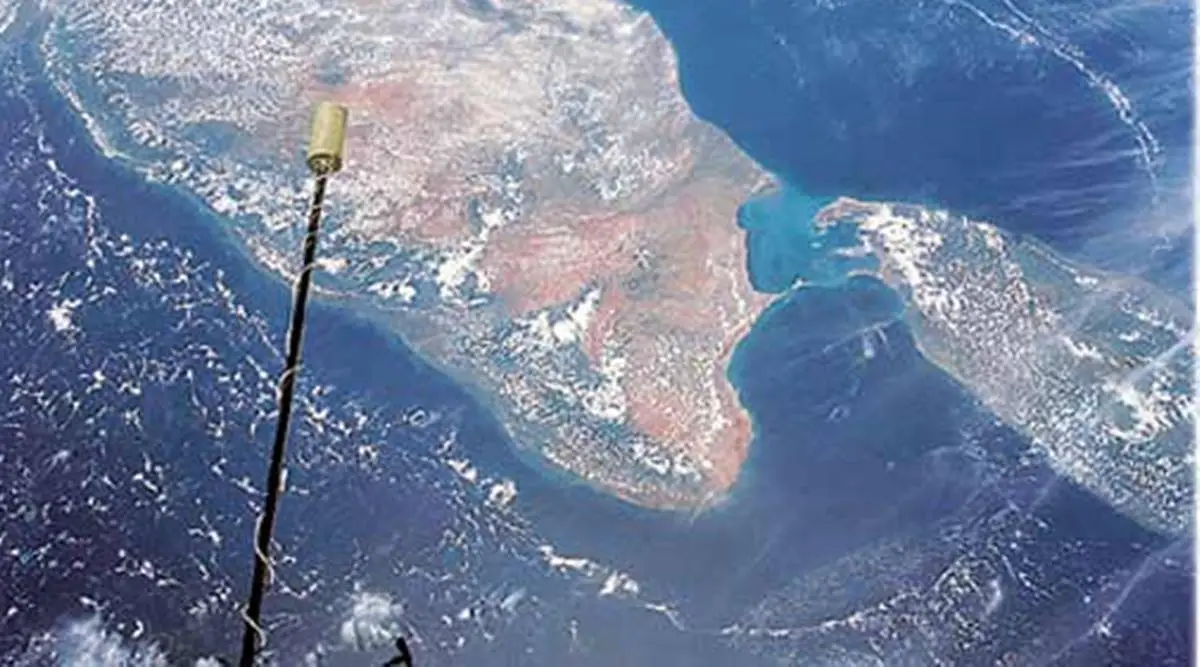
Also, Ram Setu’s age will be ascertained through the study of fossils and sedimentation to see if it correlates with the Ramayana period, sources in the Ministry of Culture told The Indian Express. (Photo: NASA)
The government has approved an underwater research project to ascertain the origins of the Ram Setu — a 48-km-long chain of shoals between India and Sri Lanka.
Talking about the aim of the exploration, Union Minister of State for Tourism and Culture, Prahlad Singh Patel, said, The world should get to know about the Ram Setu through evidence based on scientific research.”
Ram Setu, also known as Adam’s Bridge or Nala Setu, holds religious significance because of the Ramayana.
The central advisory board on archaeology, which functions under the Archaeological Survey of India (ASI), has approved the proposal for this underwater exploration project. The study — to be conducted by the Council for Scientific and Industrial Research (CSIR) and National Institute of Oceanography (NIO) Goa — will focus on the process behind Ram Setu’s formation and also whether there are any submerged habitations around the structure.
Patel said, ASI has been asked for permission by the NIO on two counts — excavation to ascertain the age of the structure, and to explore the surrounding area. The permission has been granted.”
Also, Ram Setu’s age will be ascertained through the study of fossils and sedimentation to see if it correlates with the Ramayana period, sources in the Ministry of Culture told The Indian Express. Keeping in view the upcoming Assembly elections in Tamil Nadu, sources say research is likely to begin this year itself.
In it’s proposal note, NIO said: The historicity and the date of ‘Ramayana’ remain a debatable subject among historians, archaeologists and scientists. It is proposed to carry out scientific and underwater archaeological studies to understand the nature and formation of the Ram Setu and its surrounding area.”
The agency’s research vessel named Sindhu Sadhana will be deployed to collect samples of sediment from 35-40 metres below the water level. Sindhu Sadhana is an indigenous exploration vessel which can stay underwater for up to 45 days.
Ram Setu has been at the centre of debate since 2005 when the UPA government proposed the Sethusamudram Shipping Canal Project, to build a shipping canal to link the Arabian Sea with the Bay of Bengal. For this, a channel passing through the limestone shoals of Ram Setu was to be dredged in the Sethusamudram sea, between Tamil Nadu and Sri Lanka. However, the project was opposed by environmental groups as well as by the BJP as they said that the project would damage the Ram Setu.
At the time, AIADMK chief Jayalalithaa had demanded from the-then Prime Minister Manmohan Singh that Rama Setu be declared a national monument, even as then DMK chief M Karunanadhi had come down heavily on communal forces” for using the myth” of Ram Sethu to stall the Sethusamudram project.
Widespread COVID-19 cases have been reported from each district in the country yesterday and that more than 100 cases have been reported from Colombo, Gampaha and Kandy districts.
A total number of 724 COVID-19 patients have been detected in the country yesterday and the majority of 197 cases were reported from the Colombo District, while 110 cases from Kandy and 106 from the Gampaha Districts.
In addition to these, 28 cases from Kalutara, 38 from Galle, 40 from Kurunegala, 27 from Matale, 24 from Kegalle, 31 from Ratnapura, 22 from Matara, 21 from Puttalam, 13 from Ampara, 12 from Hambantota, 15 from Mannar, 9 from Vavuniya, 7 from Nuwara Eliya, 7 from Polonnaruwa, 2 from Monaragala, 3 from Trincomalee, 4 each from Badulla and Jaffna and one each from Anuradhapura, Kilinochchi, Mullaithivu and Batticaloa districts.
Meanwhile, the total number of cases in the second wave of COVID-19 stands at 52,439 as of this morning. Among them 38,729 cases have been reported from the Western Province alone.
A total of 841 COVID-19 patients were detected within today bringing the total number of cases in the country to 58,430, the Government Information Department said.
Accordingly, the total number of active cases thereby increased to 8,466. Meanwhile, the total Covid-19 recoveries stand at 49,684.
Three more persons who were infected with Covid-19 have fallen victim to the virus, the Director-General of Health Services confirmed a short while ago.
Following the new development, the total number of novel coronavirus-related deaths reported in Sri Lanka has climbed to 283.
One of the victims is a 77-year-old woman who was residing in Colombo 14 area. She was transferred from Colombo National Hospital to Mulleriyawa Base Hospital after testing positive for the virus. She passed away yesterday (January 23), while suffering from Covid-19 pneumonia, high blood pressure, liver infection and kidney disease, the Department of Government Information said.
The second victim was identified as an 84-year-old woman from Maradana area. She died on Thursday (January 21) while receiving treatment at the Colombo National Hospital. The cause of death was cited as severe blood poisoning, Covid-19 pneumonia and heart disease.
In the meantime, a 65-year-old woman who was living in Pujapitiya area fell victim to the virus today (January 24). Upon testing positive for the virus, she was transferred to the Theldeniya Base Hospital from Kandy National Hospital. The cause of death was recorded as Covid-19 pneumonia and blood poisoning.
Covid-19 infections registered in Sri Lanka crossed the grim milestone of 58,000 as 492 more persons were tested positive today (January 24).
In addition, 349 from the Peliyagoda cluster were also confirmed as active coronavirus cases earlier this evening. Thereby, 841 infections in total have been identified so far within the day.
As per statistics, the total number of Covid-19 infections confirmed in the country to date now stands at 58,428.
Recoveries from the virus meanwhile climbed to 49,684 earlier today, with 423 more patients returning to health
Members of ‘Muslim Dikkasada Pilibanda Viyath Hamuwa’ stated today (24) that they were wronged by the Kathi Courts.
Meanwhile, Minister of Public Security Sarath Weerasekera stated that the issue regarding the Kathi courts will definitely be resolved in the new constitution.
Sri Lanka is never short of controversy. Colombo East Container Terminal is at the centre of a major national crisis which would decide the future of the current government and would decide the country’s future. The issue has traversed this far partly as a result of clueless politicians, corrupt public officials, wheeler-dealer advisors and not soliciting the advice from correct quarters. First and foremost, any government elected to power by the People are duty-bound to protect the sovereignty of the nation and not its neighbor. Secondly, any decision taken has to be in the best interest of the nation and not because of geo-political pressures. Politicians’ role is to find ways to come out of political issues and the diplomats, advisors and think tanks are there to find alternate ways to mitigate issues.
Let us take each argument
In May 2019 a Memorandum of Cooperation was signed between the Yahapalana Government, India & Japan. There was no mention of Adani in this MoC
Therefore, referring to the May 2019 MoC to justify giving Adani ECT is an argument that cannot be accepted. When to this 49% Japan is not even involved presently.
India must be given ECT because we handle 66% of India’s Transhipment
The MoC was signed between India-Sri Lanka-Japan and not between any transshipment providers.
Shipping lines are private companies who berth in Sri Lanka for their advantage not to please or displease India or even Sri Lanka. Sri Lanka handles a large volume of transshipment because it is advantageous to the shipping lines. It is shipping lines who decide where they dock and why and not governments in power. Therefore, the claim that India will remove transshipment if Adani is not given ECT is false unless the Indian Government will subsidize the shipping line for the loss of money to bypass Colombo Port & dock elsewhere.
Price & Time are key factors that India or Singapore cannot challenge Sri Lanka with. This key factor must be understood by all.
The commercial and strategic value of Colombo Port has yet to be understood properly by politicians and key advisors. The combination of PRICE, TIME, DEPTH and SERVICEwill provide a competitive edge over all the upcoming Ports in the region. DEPTH is the factor Sri Lanka needs to complete to win that competitive edge.
These are areas Sri Lanka can attract shipping lines and Colombo Port has every ability to do so especially with the Port City Financial Hub also coming up. The Hub Port status enjoyed by Colombo Port with ECT in full capacity under its own management would mean high dollar income to the ECT/Colombo Port. This is what the 23 Trade Unions are trying to convey to the decision makers and it would be good for the Cabinet Sub-Committee to listen to their arguments before presenting a paper without their inputs landing Sri Lanka in a bigger calamity politically & commercially.
Geopolitics
Decades ago India & US were not on friendly terms. Today, India is a strategic partner of the US. Decades ago India was angry at Sri Lanka’s pro-US stand. This was round about the same time India helped train and fund Tamil militancy and Sri Lanka weathered 30 years of terrorism. The IPKF was forced upon us. It was during a change in government that luckily made India agree to withdraw the IPKF when asked to do so. Indo-Lanka Accord signed in 1987 promised to disarm LTTE and end the conflict within hours. All main clauses of the Accord were breached by India but India continues to make demands. Even after the breach of agreement India has still to return the oil tanks in Trinco. These scenarios are valid reasons for the Sri Lankan public to be cautious of dealing with India. Denying India what India demands before signing on any dotted line is far better than a diplomatic and government-government warfare in the future. We shirk to even imagine such a future scenario.
This is so because India’s strategic partnership with US encompasses directly challenging China in the open seas and US and Indian military are regularly conducting naval exercises with Japan & Australia. Ports will hold a key role in this partnership. We saw the large influx of war ships arriving at regular intervals in Trincomalee and the signing of ACSA with US and SOFA is in the pipeline as well. Donor agencies insist on PPP with external parties to meet their agenda and advantage. Sri Lanka should know to negotiate deals to its advantage not to please the other party.
The ports & airports are the entry exit points to a country & the keys to these points must be held by the State. International trade is dictated by buyers and service depends on the demand. Thus, a commercial port has to develop as per the requirements of the shipping lines and with Sri Lanka situated in the central trade lane, Sri Lanka naturally offers an automatic best place location for any shipping line (main lines/feeder lines). Thus, it is other add-on factors that Sri Lanka needs to provide. It is unfortunate that all of Sri Lanka’s development proposals end up getting strangulated due to petty politics and political prostituting. We have wasted many years in not bringing up Colombo Port as well as other Ports around Sri Lanka to the level it should have been brought with strategic thinking and strategic planning & global marketing.
It was as a result of lethargy, corruption and another instance of prostituting that Queens Terminal went to P&O/JKH in 1999 for 30 years and the lease concluding in 2029 with the Terminal returning to SLPA once again. Ironically the same players that cut this deal are in office currently. With SAGT terminal exactly next to ECT, this would mean the SLPA would have a BOX TERMINAL. There are only 4 such terminals in the world. This would be another strategic asset to Sri Lanka bringing dollar revenue and would be able SLPA/ECT to even compete with CICT giving better offers to shipping lines. The importance of ECT is its berthing capabilities and its services and operations can be developed as an ongoing exercise as Port engineers and Trade Unions are assuring to make the ECT a profitable entity under 100% Sri Lanka’s ownership and control by 2025.
Why India wants to suddenly develop ECT? Why Adani?
The proposal to develop Colombo Port came during the 1stterm Presidency of Mahinda Rajapakse. India did not show any interest in developing ECT. India’s sudden interest came with the regime change it engineered with US that saw a plethora of Indo-US influence in Sri Lanka. As pointed out by the Trade Unions, the GoSL must be alert to the corrupt nature of Adani who is under investigation for money laundering and corruption even in India. As close associate of Indian PM, the Unions ask a very valid question – what if the Modi Government collapses and the new Indian government is anti-Adani, what is the outcome of influence Sri Lanka will have to weather. GoSL must also note that when India has thousands of people dying of hunger on a daily basis, when areas of India are still living in the cave days, why would India wish to nominate a very close associate to take over 49% of a strategic port, unless it was for India’s strategic purpose rather than to help Sri Lanka develop its port. We must not be naïve to the fact that India is also developing ports to attract shipping lines. Why would India wish to develop Sri Lanka’s Port which would automatically be a first choice for any shipping line over India’s new ports, given the saving in cost and time?
Why would India and Adani give $700m for our Port without having undisclosed strategic plan which Sri Lanka is unlikely to benefit from!
Is Adani and India giving $700m just to make Sri Lanka happy unless their investment is something different to what we think. How long will Adani demand to stay in Sri Lanka to recover this ‘investment’. What if India is killing 2 birds with one stone by demanding the ECT as a political threat but with intent to ensure ECT development never gets off the ground and giving India the time it needs to build its ports and even entice shipping lines to transfer transshipment at a lesser cost than what Sri Lanka offers. Marketing a port has all sorts of possibilities. We only need to improve the DEPTH of the ECT as all other factors are to our competitive advantage. When Sri Lanka’s decision makers are only interested to put India First, what is our future?
National security of Sri Lanka has to matter far more than making investors happy. With the Port City emerging as a future revenue centre, Sri Lanka has to make sure its next door key commercial port is also kept secure. Giving 49% stake to a corrupt Indian is going to get Sri Lanka nowhere. It also makes any to ask, if 49% is not a sale or a lease, but Adani is giving $700m – what is this deal called!
It is also important to look at how India is separately exerting influence over Sri Lanka – Palaly airport, KKS & Oluvil harbors, IOC, Trinco Oil Tanks and exclusive economic zone which is off limits to Sri Lankans even military, rising influence over Estate Tamils by India, interfering even in the Jaffna university – these cannot and should not be taken lightly. Where India has to take decisions, India doesn’t mince words or is even bothered about angering anyone – the denial of credentials to the guru of Sri Lanka’s India First policy is one good example where Indian bureaucracy dictates to its politicians and is not bothered about making Sri Lanka unhappy.
Sri Lanka is not on a wicket to be dictating to anyone, however, Sri Lanka must maintain a dignity that must return to the foreign policy of Mrs. Bandaranaike who stood her ground on all matters and was respected for doing so by leaders of both Eastern and Western blocs. To this day, she is held in the highest esteem by all including India whom she had to guts to say no to!
The factors presented to the public as reason to give Adani ECT is unacceptable and the issues likely to emerge from this handover is going to be far more complicated and difficult for Sri Lanka to handle. We can part ways before signing on any dotted lines. But if India is given control over 49% of a key port which would entail loss of jobs to Port Workers, management in Indian hands and trouble inside the Port, that would prevent shipping lines from calling at Colombo Port, gaining this $700m giving 49% becomes meaningless. We are going to be saddled with Adani until he is satisfied that he has earned his profits and we don’t know how long he will want to remain and how much trouble he would cause as he is presently doing with Indian farmers!
In continuing last week’s article on how lies manufactured and
manipulated by charismatic leaders and mediocre theorists can distort the
perceptions of the masses and lead societies to violence I must make a
brief diversion, before I come to the local context – my main purpose —
to focus on how Donald Trump is leaving White House as the most dangerous
President that ever walked out of it. He is leaving America under the darkest
cloud that threatens to come down not in dismal rain but in ghastly
blood. He left the White House saying: Goodbye, we love you, we’ll be back in
some form,” before boarding Air Force One for the last time.
That is an ominous message. And he has the potential to do it considering the
following he has. America exploded because of one big lie manufactured
and manipulated by Trump. Millions of his followers believed in his big
lie that he won the election. And he left the White House
as a bitter man vowing to come back to vindicate himself and
possibly to get even with those who stole” his victory.
This makes life risky to his rivals. To begin with, I fear
for the lives of both President Joe Biden and Vice President Kamala Harris.
America has a bitter history of assassinating controversial and reformist
leaders who dominate tumultuous times. It has a history of assassinating four
Presidents: 1. Abraham Lincoln (1865) shot by a confederate, white supremacist,
immediately after the Civil War which led to the emancipation of Afro-American
slaves ; 2. James Garfield (1881) shot by a disgruntled public servant; 3.
William McKinley 1901 was shot by an anarchist who had lost his job; and 4. J.
F. Kennedy shot in 1963 with conspiracy theories pointing a finger at egregious
Edgar Hoover, the head of FBI. In between Presidents Theodore Roosevelt and Ronal
Reagan narrowly escaped assassination attempts.
The last phase of Trump’s regime was a volatile time where the
American nation was split right down the middle. It was the time closest to
that of the Civil War where racist supremacist were riding high. Then
violence originated from the overall conditions of the Civil War. The unique
aspect of our time is that violence has come straight down from the President
who tried every trick in the book and failed to retain his seat in the
White House. He challenged the election result in 62 courts which
rejected his lie that the election was stolen from him through fraudulent
means. His own Party was divided on it. The people rejected it. He fought two
Senate seats in Georgia on his lie and lost both. Finally, when he ran
out of all avenues, the last means available to him was to stop the
Congress assembled to count the electoral votes and endorse Joe Biden as the
winner of the election. In a desperate bid he sent his mob down Pennsylvania
Avenue to the Congress to grab power with physical force – a blood-thirsty mob
which was out to Hang Pence!” who was presiding at the count, and also Nancy
Polosi, the Speaker of the House, if they could get her.
Inciting an insurrection to stop the democratic process in order
to grab power violently was a crime committed by Trump in full public view.
This desperate act, which was doomed to fail, question his mental state. Can a
rational man who can think logically reject the reality staring in his face and
continue obsessively and fanatically to believe in his own lies —
lies which he could not substantiate and were leading him, every step of the
way, to his nemesis? Could he stop the will of the American people
expressed overwhelmingly in favour of his rival, Joe Biden, in the presidential
election by sending his rag-tag mob down the mall to stop the legitimate act of
the first branch of government assembled to endorse his defeat? Only a
half-demented, self-pitying, intransigent maniac, paralysed by the fear of facing
the world waiting to get him once he leaves the protective office, could
believe in phantasmagorial lies like the one he believed in. He and his
followers sincerely believe that tens of thousands of dead men’s votes
were cast for Biden along with tens of thousands of votes that were
shifted by machines fixed to make Biden win. Our modern societies are plagued
by lies manufactured and promoted by self-seeking political leaders whose lies
have led to early deaths and unnecessary destruction. The lies that political
leaders have marketed for short-term gains have in the long-term been dangerous
to their lives and that of their followers. These lies invariably tend to
ricochet and knock them out. As I pointed out earlier it happened to Hitler, it
happened to the Tamil leaders and it happened to Donald Trump.
The leaders who thrive on palpable lies deserve their inevitable
humiliating end. But it is the consequences to the people and the community
that are tragic, leaving them as helpless victims of unmanageable and
overwhelming disasters. The poisonous lies injected by the leaders into
society create toxic politics that drive people to irredeemable extremism.
For instance, there are 3006 counties in America and in every
one of them there is at least one or two white supremacists, seething
with racism and armed with a gun, ready to target both the President and
Vice-President, if and when an opportunity arises. Apart from that there are
sufficient number of red-necked, white supremacists in the armed forces
who can do to both President and to Vice-President what the Sikh
bodyguard did to Mrs. Indira Gandhi. In the current context, what has happened
has happened because one leader believes, in his deranged way, that he alone
knows the truth when the whole world proclaims it’s a lie. Consequently,
not only America the whole world is facing the horrors of Trump’s mendacious
cult.
He, of course, will go out of the White House perpetuating
his lie which will fuel the fires of hate that are waiting to explode in the
coming days, may be years. Who knows? For what it is worth, it must
be recorded that a leading Indian astrologer has predicted that Kamala
Harris will be the next president. This too sounds ominous. It can only mean
that Biden will not last his full term. Whether it will be through
natural causes or man-made causes is not clear. The Security forces will
have a nightmarish time protecting both as the mood of divided America has
turned nasty with fanatics hanging around, waiting to target their perceived
enemy.
The battle that was fought and won was battle for the
truth. Trump was manipulating and manufacturing an alternative narrative based
on brazen lies. In his inaugural speech Biden took on this issue head-on
and said: And we must reject the culture in which facts themselves are
manipulated, and even manufactured. ……The recent weeks and months have
taught us a painful lesson. There is truth and there are lies, lies told for
power and for profit,”
Biden’s speech has a great relevance to the world, particularly
to Sri Lanka, because foreign policies aimed at bringing lasting peace on earth
and reconciliation among divided communities cannot succeed on manufactured
lies. This is a large theme that can be explored later. For the moment, it
is his statement that we must reject the culture in which facts
themselves are manipulated, and even manufactured” that will be explored
in the Sri Lankan context. The hostile foreign policies of the West
and India in particular are based essentially on the narrative packaged and
marketed by the Tamil separatist lobby which has a sizeable toe-hold in most
foreign offices of the West and India. There is at least one Tamil
lobbyist who had infiltrated as volunteers the political offices of left-wing
MPs from UK to New Zealand. Their clout exceeds that of the embassies and high
commissions of the Sri Lankan Ministry of Foreign Affairs. To this day no
strategy has been worked out to combat the Goebbelsian Tamil narrative that has
dominated and determined the anti-Sri Lankan foreign policy of foreign nations.
The latest example confirms how the craftily manufactured
Tamil narrative determines the foreign policy of India. After his recent
trip of Sri Lanka, Dr. S. Jaishankar, the Indian Foreign Minister, said,
parroting the mantra of the Tamils : It is in Sri Lanka’s own interests that
the expectations of the Tamil people for equality, justice, peace and dignity
within a united Sri Lanka are fulfilled.” This is a politically loaded sentence
which in many ways sums up the global perspective on which Sri Lanka is judged
and sentenced to the gallows by the international community, The words
equality”, justice”, peace” and dignity” have a politically explosive
connotations indicating that the Tamils have been denied these essentials in a
systemic way to deny them their fundamental rights to live as human beings.
Accepting in toto the usual litany of complaint of the Tamil lobby, the
India state is plainly accusing the Government of Sri Lanka (GOSL) of denying the
Tamils, in particular, their equality”, justice”, peace” and
dignity”. The Tamil propagandists have succeeded in painting the GOSL as
a racist state that had denied the Tamils these fundamental rights.
Herein lies the crux of the North-South conflict. The
international dynamics also flow from this premise. This is a lie of
Trumpian proportions. The entire case of Tamil Eelamists, separatists,
federalists, devolutionists, etc., is based on this monstrous lie. There is
no empirical, historical, reliable evidence available to substantiate
this case.
There are two main ways by which the veracity of this accusation
can be tested. The first is by considering how the Tamils have fared in the
last 73 years under the rule of the Sinhala state”, as they are wont to call
it to make it sound like racist state. The second is by considering how
the Tamils have been treated under Tamil regimes starting from 13th century
when they settled down for the first time as permanent colonists in Jaffna to
the end of Prabhakaran’s one-man regime on May 14, 2009. An objective
assessment of the status of the Tamils under these two regimes can settle the
argument as to whether the Tamils have been denied these essentials under
the Sinhala state” or the Tamil states. Since the Tamils went down the
path of separatism and violence on this theme of the denial of equality”,
justice”, peace” and dignity” – it is even there in the Indian Foreign
Minister’s document – it is of extreme importance to evaluate their accusations
as expressed by them in every forum, local and international.
This, of course, is a huge theme which needs volumes to explore.
But for our immediate purposes I will have to reduce the comparisons to the
bare minimum. At the end of which I will ask the hired moralists who
pontificate on human rights – mainly Paikiasothy Saravanamuttu, Jehan Perera,
Prof. Savithri Gunasekera, her side-kick Prof. A. Aluvihare, Ms. Radhika
Coomaraswamy, Prof. Jayadeva Uyangoda, and, of course, our man who never
fails to advertise himself as a political scientist, Dayan Jayatilleke, and
also the assorted anti-Sinhala-Buddhist editorial writers and columnists — to
tell us which state had denied the Tamils equality”, justice”, peace” and
dignity”.
So let’s begin with the Tamils regimes going back in history to
the Arya Chakravartis. I repeat I am dealing with only abbreviated historical
episodes selected to highlight the condition of the Tamils under the two
separate regimes. The most dramatic episode that sets the templates for the
future begins with Sankili who marched down to Mannar on the Christmas eve of
1544 and massacred 600 Tamils who refused to swear allegiance to him. Men,
pregnant women, children were slaughtered because they owed allegiance the King
of Portugal. The political ambition of becoming the sole representative of
Jaffna – a common obsessions with the Jaffna Tamils — was first
established by him. When Sapumal Kumaraya ruled Jaffna the Tamils were governed
under the Sinhala-Buddhist ideology of tolerance and equals. He did not
persecute the Tamils demanding total allegiance to Kottte. He even built the
sacred Nallur Temple, according to some reports. But it is the
authoritarian, intolerant and cruel Sankili fascism which eventually became the
dominant political culture of Jaffna. Sapumal Kumaraya’s tolerant culture
did not find the necessary fertile ground to grow as a political force in
Jaffna. When the Vellalas took over the running of Jaffna as subalterns
to the colonial masters they wielded power ruthlessly to oppress,
suppress and persecute the Jaffna Tamil low castes. One of the most
memorable Tamil contributions to the Oxford dictionary is the Tamil word
pariah”. It reveals the degrading contempt with which the Tamils treated their
own Tamil fellowmen. The Tamils did not confer equality”, justice”, peace”
or dignity” to pariahs. They were the outcasts.
Tamils degrading Tamils and reducing them to subhuman outcasts
was a systemic culture enforced with the authority of Hindu religious
laws. Their religious dogmas and customs had no compunction in denying
equality”, justice” peace” and dignity” to the Tamils. Rajavarothiam
Samapanthan goes around capitals of the world complaining about the
denial of dignity to the Tamils by the Sinhala state”. Well, what has he
done to save the oppressed Tamils from the depths of their despair? Why
did he not come out openly to defend the dignity and equality of the low-castes
who were denied the right to worship their common God/s at Maviddipuram
Temple? When the low-caste Tamils demanded equality to worship in a
common prayer house their heads were cracked with bottles filled with
sand. So when did the Vellala who are now demanding equality”, justice”
peace” and dignity” give equality”, justice” peace” and dignity” to their
own low-castes?
Low-caste Tamils were kicked around by the Vellala elite as if
they were an unworthy breed of subhuman pariahs who did not deserve equality”,
justice” peace” and dignity”. The Vellala elite who ruled Jaffna as
subalterns of the colonial masters from the 17th century oppressed, suppressed,
persecuted, and denied the Tamil people the fundamental human rights to
drink water from their wells, or even to walk in sunlight fearing that it
would pollute the high caste eye sight. They were not allowed to sit in
buses. They had to sit on the floor of the bus. There were separate pews in the
back for the low-castes. They were not allowed to worship Lord Siva inside the
same Hindu temples. Their schools were burnt. Those who violated the
Vellala supremacist rules were hammered by Vella thugs. Mourners burying their
loves one with traditional drums were waylaid and beaten to near death.
The came independence. For the first time the subhuman treatment
of the Jaffna Tamil low-caste was made illegal by S. W. R. D. Bandaranaike
when he passed the Prevention of Social Disabilities Act of 1958. For the
first time the powers of the Vellala supremacists to oppress their own people
were clipped. The liberated Tamils were beginning to taste dignity, equality,
peace and justice.
But then came the first Tamil state born out of the war declared
by the Vellala elite at Vadukoddai on May 14, 1976. The Tamils had a
quasi-state, complete with a judiciary, army, navy and an air force. Tamils
were proud of their state. But what dignity did Sampanthan and
Sumanthiran have under the Tamil state? They complain to the world that they do
not have dignity under the Sinhala state”. What is the dignity,
security, peace and justice they enjoyed under the Tamil state? What chances
did Sampanthan have of being appointed as the Leader of the
Opposition in Prabhakaran’s state?
The NGO leaders complained that the Tamils could not
find justice in the Sinhala state”. So when did Paikiasothy
Saravanamuttu go to the courts in his Tamil state looking for justice? He was
even scared to open a branch of his office in his Tamil state. Whenever
he wanted to justice he went to the courts of the Sinhala state”.
And he boasted triumphantly of his victories against the Sinhala rulers.
Didn’t Tamil lawyers like Sumanthiram, Vigneswaram and Ponnambalam practice and
thrive in Sinhala courts? What kind of justice would they have got from the
Tamil state in Vanni if they took up the case of a Tamil child abducted by the
Tamil state and thrown into Prabhakaran’s futile war? They operated in the
Sinhala state” which they claim never gave justice to them, but never
went to operate in the Tamil state that was supposed to give
them equality. Why?
The evidence of Tamils being denied equality”, justice”,
peace” and dignity” by the Tamil regimes is overwhelming. But let us
now look at how the Tamils were treated by the Sinhala state”. The
Tamils never had it so good as under the Sinhala state”. They had free
education from kindergarten to the university – a boon not available to
the Tamils in S. India, the only homeland of Tamils. They have to pay for
tertiary education. They have free health services which their compatriots do
not have in USA – the land of the free. They don’t’ have to wait
till three Sinhalese get jobs for one of them to get a job
like in Malaysia. There are 193 flags flying at the UN and the only flag that
recognises the Tamils is the flag of the Sinhala state”. Never have the Tamils
achieved such high status in their history as under the Sinhala state”. Not
even the Indian flag, their homeland, has given them a place. Tamils have
been conferred with great dignity with their leaders being given a place
of honour in national stamps. Tamil language is dignified in all Sri
Lankan currencies. Under the Sinhala state” Tamils have shone as never before.
It has been the golden period of Tamils. In his biography of his father-in-law,
S. J. V. Chelvanayakam, Prof. A. J. Wilson categorised the Dudley Senanayake-
Chelvanayakam coalition as the golden years of Tamil-Sinhala cooperation”. It
is a historical fact that the Tamil never had ” equality”, justice”,
peace” and dignity” as under the Sinhala state. The NGOs and the Indian government
have enough research workers to justify their claim that the Tamils were denied
.”equality”, justice”, peace” and dignity” by the Sinhala state”. In fact,
it is election time now in Tamil Nadu. Modi’s government is facing
serious charges of Hindification” of Tamil Nadu. Ms. S. Vijayadharani, a
Congress member of Tamil Nadu Legislative Assembly, blasted the Modi government
the other day on Newshour 10 programme for its
one language, one religion, one history, one culture policies
imposed on Tamil Nadu by the centre.
There is no space in this article to elaborate the main
theme any further. The argument is clear. The Tamils never had equality,
peace, justice and dignity” in any period of their history except under the 73
years of what they called ”the Sinhala state”. So, the Indian government
must seriously consider rephrasing their diplomatic language to
make their political pressures credible. Their diplomatic ability to push
their interests through lies is not going to convince the Sri Lankan public
that they are genuine in helping Sri Lanka to achieve either its
own interests or reconciliation. If the Sinhala state” has treated the
Tamils far better than any of the Tamils regimes throughout their history –
leaving aside the common failings that plague the history of all nations – why
should the Indian government intervene in the domestic affairs on false
accusations of a community that has treated its own people worse than dogs?
India is not going to solve its problem or that of its
neighbours if it pursues its interventions on the lies of one community. The
Sri Lankan government too must aggressively challenge the fake accusations with
the truth. It has to be done on solid research which has been hijacked by
the anti-Sinhala-Buddhist NGOs and media hacks recycling Tamil propaganda. A
well-qualified research team can easily blast to smithereens the kind of
propaganda on which the Indian policy is based on. Foreign interventions based
on Tamil fiction can be easily demolished. It is up to the Foreign
Ministry to initiate action to save the nation from foreign
interventions.
We
have all read or heard Aesop’s fable ‘The Man, the Boy, and the Donkey’: A man
and his young son set out taking their donkey to market to sell it there.
Listening to different censorious comments of a number of people they
encountered on the road, they first rode the animal, then they carried it.
First the man rode the horse, then the boy, then both of them together, and
finally, they started carrying the donkey tied to a pole by its legs; while
passing a bridge over a river, the donkey struggled to kick himself free, which
resulted in the animal falling into the water and getting drowned. You can’t
miss the lesson taught by the story. If you try to please all, you will please
none; and what’s more, trying to please everyone could have disastrous
consequences. Your conduct should be determined by a realistic assessment of
your own circumstances to suit your own best interest and that of those who
depend on you. Don’t be distracted by a desire to win praise from all the
people that come into temporary contact with you. By the way, Greek fabulist
Aesop (620-564 BCE) in Greece was a contemporary of Gautama Buddha (623-543
BCE) in India.
The
moral of the well known fable is worth the attention of our present rulers, who
seem to believe that they have to please the minority of diehard
federalists/separatists and the handful of Muslim religious extremists
parasitising on the local body politic at the expense of the wellbeing of the
peaceloving fairminded majority of the Sri Lankan people. Both these groups are
trying to strategically position themselves, to their undue advantage, between
the government and the especially aggressive faction of the geopolitical
gamemaster fraternity in the region. It would be a grave error if the ruling
politicians took for granted the loyalty of the silently suffering peaceful
ordinary Sri Lankans (95% of the population), including the nationalists who elected
them to power, fighting on the ‘One Country, One Law’ platform. There seems to
be a growing general perception as though the government is too narrowly
focusing on the few local extremists and the brazen international bullies of
different types from outside weaponizing them for their own advantage.
The
cow slaughter ban introduced in September 2020 was intended to please and
perhaps also silence the Buddhist monks who had been sincerely agitating for it
for a long time. But will these monks stop, when the much more crucial
issues that they have been raising for decades such as the destruction of
Buddhist archaeological heritage sites in the north and east provinces,
forcible proselytization of Buddhists and Hindus by foreign funded Christian
and Islamist extremists, allegations of sterilization of Sinhalese mothers
without consent by a Muslim doctor with suspected Islamist connections,
persecution of traditional Muslim men and women by Jihadists, and many other
infinitely more significant problems are apparently being relegated to the
backburner? What’s the status of the cow slaughter ban now? Is it being
implemented? How can the same government reconcile the imposition of the
particular ban with the opening of the largest meat processing factory in South
Asia in the Katunayake Investment Promotion Zone hardly three months later?
Won’t the economically more important industrial project have been marketed to
the people with less embarrassment had there been no cow slaughter ban? Or
perhaps the ban was a strategic measure to create a local market for the
general meat products of that factory, however tiny the beef consumer base in
Sri Lanka may be? What could then be said about the moral basis of the
particular ban?
A
thirty year old young Buddhist monk, by the name of Bowatte Indaratana, set
himself on fire at a place adjacent to the Dalada Maligawa on May 24, 2013
demanding that killing of cattle be stopped, and later died in hospital. His
commitment to his cause was not in question. The Ven. Mahanayakes didn’t say
anything in public in praise of the monk as far as I can remember, nor did the
government of the day under Mahinda Rajapaksa say or do anything of permanent
significance in response to the monk’s self-immolation. Years later, a maverick
monk claiming to be an Arhant had a birthday bash where a variety of dishes
were served including beef and pork! The activist monks mentioned above have
been raising much more crucial issues that are threatening the very survival of
the Sinhalese and the Buddha Sasana. It is these problems that politicians must
help resolve if they genuinely want to please the monks and the general public
including the majority community.
It
is a fact that public opinion about banning cow slaughter is not unanimous
(primarily because it is divisive, economically unaffordable, and impractical).
We have to tolerate ideas and practices that some of us disapprove of, but some
don’t, provided that these ideas and practices don’t interfere with
democratic governance and our age-old people friendly way of life. Personally,
I have no objection to the ban on cattle slaughter, I’d rather rather support
it without remaining neutral. I am a vegetarian, and have been that for most of
my life. Common sense would suggest that a strictly regulated meat industry may
be allowed. But community-alienating separatism and murderously violent
religious extremism which are bound to destroy our country in every way should
be not be tolerated, though both are attractive to the geopolitical players,
who are only concerned about their own respective national interests. (The
present government, under the presidency of Gotabaya Rajapaksa, has started
dealing with them amidst the many unnecessary obstacles placed on its path,
such as the corruptibility, indifference, and inaction of a few rotten eggs
among the vast of majority of responsible, patriotic civil authorities, and the
pressure exerted on them by conscienceless communal politicians; the situation
has been worsened by the Covid-19 pandemic.)
A
twofold cause that the handful of young vocal monks out of the 36,000 strong
Maha Sangha have been championing, for the most part non-politically except
where they can’t help it, amidst many physical and mental hardships, is the
containment of unethical proselytizing efforts of numerous foreign-funded
fundamentalist Christian and Islamic sects making inroads into the traditional
Buddhist and Hindu religious spaces, and the protection of the ancient Sinhala
Buddhist heritage sites – most of them gone to ruin many centuries ago, but the
invaluable common archaeological inheritance of all Sri Lankans, particularly
in the north and the east provinces – from treasure hunters (who usually happen
to be some criminals among the Sinhalese Buddhists including even politicians),
and non-Buddhist vandals and landgrabbers, the last motivated by aggressive
politico-religious ends. Monk activists have gathered much valuable information
to back up their various complaints against both violent and non-violent
extremists.
But
leaders of successive governments, with a single brave exception (GR),
have largely ignored them, and refused to get involved out of the unfounded
fear of alienating minorities. These leaders do not seem to understand that,
through their feigned political correctness policy, they encourage
opportunistic minority politicians to willingly embrace extremists for
political advantage, instead of engaging their genuine, up and coming,
broadminded young rivals to tackle the extremist menace. (In the same breath,
it must be said in fairness to MR that though he has also resorted to the
policy of political correctness in dealing with minority politicians, he never
did so to cheat them or to deceive the people. Often, on such occasions, his
goodwill was not adequately reciprocated, especially, by conservative Muslim
politicians who are still flourishing; but they will have to call it a day when
the fresh awakening Muslim youth overtake them in a few years, maybe. Once when
confronted by the fact (it was by a journalist I think) that the majority of
Muslim voters did not vote for him even though he behaved in that friendly way
towards them, MR admitted that he knew that to be the reality, but that he was
still hopeful of winning them over. Opportunistic minority politicians (they
have so far managed to sidetrack the modern thinking progressive young
contenders) and the extremists invariably politicize both the problems we have
touched on here – namely, cremation and syrup issues – and other problems that
they create. Thus, the misapplied political correctness policy of successive
governments has led to increased politicization of issues which should be
resolved without recourse to politics.
The
cremation vs burial problem and the issue of various traditional remedies of
dubious or untested efficacy/safety proposed to fight the spread of Covid-19
have been politicized, not by the government or its supporters for it should be
obvious to anyone that such a thing will not help them or the general public in
any way. These things have been given a political colour by the opposition, the
extremists, and their supporters in the mainstream as well as the social media;
it is they who have politicized it and who are trying to make the most out of
those non-issues by falsely imputing their politicization to the government, in
pursuance of their different objectives, at the expense of the truth.
Unfortunately,
some overenthusiastic government politicians have mishandled the ad hoc
adoption of ‘syrups’ and other herbal remedies and magical cures such as
charmed pots of water thrown or emptied into streams, as a default coronavirus
containment measure, by inadvertently inviting a media frenzy over the process,
depicting it as a display of traditional local superstitions that are allegedly
being offered as a substitute for a more modern scientific approach to fighting
the Covid-19 pandemic. The politicizing of the ‘syrup’ issue was done by the
media and political critics of the government. Of course, few or none of these
traditional methods may be explainable or in terms of modern science. Some of
them may show positive results or may just enhance immunity against diseases,
and do nothing more; some may have only placebo effects. One carping scribe
called Sri Lanka a syruplic instead of a republic.
A
reasonably large section of our highly literate population (15+ adult literacy
rate: 93.2/2017) do not like to see their rulers indulging in what looks like
risible superstitious rituals even in a desperate situation like the one we are
undergoing at the moment. It was at the instance of the WHO that available
indigenous medical practices specific to each society across the world were
also proposed in the continuing absence of a strictly scientifically tested
drug or vaccine for the novel coronavirus disease (Desperate times call for
desperate measures). While following the WHO’s suggestion in this regard, the
government initiated a scientific attitude to it. The Rajarata University at
Mihintale was entrusted with carrying out a study of the local remedies with
particular attention to medical ethics based on Western medicine that generally
obtains in the world and the country’s laws governing medical and
healthcare.
Internationally
recognized young medical researcher, physician, and pharmacology
professor Channa Jayasumana (40), MBBS, PhD, FRCP Edin., is State
Minister of Production, Supply and Regulation of Pharmaceuticals. As a
scientist, he knows how best to deal with the WHO-proposed use of traditional
cures, remedies and preventive measures as an easily available additional
method to combat the unknown virus. What is known as ‘Dhammika paeniya’ (one of
many such syrups or alleged indigenous medicinal infusions or decoctions) has
been recommended only as a placebo in the form of a supplementary food drink,
but not prescribed as medicine, while it is still being laboratory-tested at
Rajarata University. However, in their inexcusable naivety and voracious
appetite for publicity, some of his clueless, credulous colleagues in the
government made a mess of things by guzzling down the stuff in public, in an
apparent unnecessary promotional effort, with obvious relish as the vehicle or
medium of the alleged drug is ‘pure’ bees’ honey (almost impossible to find in
the market nowadays).
Eventually,
though, for some reason, the authorities could do precious little to control
the ‘rate vedas’ (crooks) who went berserk exploiting the opportunity to brew
and market hundreds of impromptu medicinal concoctions in order to hoodwink the
masses and fleece them of what little they have by way of money. Meanwhile, the
detractors who customarily deal in a different kind of concoctions, went to
town on their familiar disinformation campaign against Sri Lanka, trying to let
it appear to the world that the country is today being run by people who
believe more in supernatural cures than in scientific medicine. Such falsehoods
are grist to the established anti-government propaganda mill, in advance of the
anticipated diplomatic showdown in Geneva in March.
Cremation
of Muslim dead due to Covid-19 is a much more controversial issue, though
equally bereft of a supporting base in facts, with possible, nay, probable,
unjustified, international consequences. The over 90% non-Muslims of the
country and perhaps some Muslims as well who accept cremation (of Corona-dead)
as a necessity in the present national and global emergency, during which,
science, not religion, must be given preference, make no hue and cry about it.
Right from the beginning, the healthcare authorities let science determine what
should be done. The decision of the Director General of Health Services (DGHS)
to order mandatory burning of Covid-19 dead bodies was to ensure the total
destruction of the deadly virus with still unknown pathological implications
leaving no room for it to contaminate the soil or the naturally shallow
aquifers of the country. Local experts have found that cremation is the best
Covid-19 infected corpse disposal method for Sri Lanka. There is no need to
listen to politically motivated contrary suggestions offered by international
specialists who have little scientific awareness of the ground realities in Sri
Lanka. Cremation was decreed by the DGHS, the competent authority, acting on
proper scientific advice. The government has nothing to do with it. It is wrong
to charge that the decision was influenced by politics to hurt a particular
religious group.
Certain
Muslim commentators who claim to be scientists and even koranic scholars,who
advocate burial of Corona-dead Muslims and the so-called ‘moderate Muslim’
politicians like Ali Sabry who passionately urge it in spite of the
mandatory cremation directive issued by the DGHS, I am afraid, are not revealing
the truth that they know and that I know, at first hand: the truth that
there is nothing in the Quran (which I have read) to say that burial is an
inviolable religious obligation for Muslims. I worked for nearly eighteen years
before the turn of the century under the Ministry of Education and Youth
Affairs of a Gulf country (1982-1999), adjacent to where the religion of Islam
was born. I came across oral and material evidence to suggest that other forms
of disposal of dead bodies than burying were used in that country in the then
recent past. One method had been to place the duly wrapped corpse in a rock
crevice and seal it with pieces of rock beaten into place to protect it from
wild animals. I didn’t see this being done during my time there; but I saw scattered
bones of a dead person thus deposited in a rocky grave some years before (My
Arab friends told me that probably hyenas had somehow disturbed that grave).
This was conceivable considering the fact that few places are available in the
usually rockhard stony terrain of that region where deep enough graves can be
manually dug for burying bodies. Today the situation may be different with the
availability of machines to do the job. Arab Muslims were a trading seafaring
nation. Dead sailors must have been consigned to watery graves. They were a
warring people as well, and probably proper burials for the wardead could not
be afforded all the time. So, there apparently is no reason why an exception to
the burial mode that is traditionally practiced by Sri Lankan Muslims cannot be
made in this deadly emergency.
High-ended retailer Saks Fifth Avenue added private security, fencing and barbed wire ahead of a Black Lives Matter protest in New York, June 7. 2020. (Anthony Quintano, CC BY 2.0, Wikimedia Commons)
Michael Hudson and Pepe Escobar last month took a hard look at rent and rent-seeking at the Henry George School of Social Science.
Michael Hudson: Well, I’m honored to be here on the same show with Pepe and discuss our mutual concern. And I think you have to frame the whole issue that China is thriving, and the West has reached the end of the whole 75-year expansion it had since 1945.
So, there was an illusion that America is de-industrializing because of competition from China. And the reality is there is no way that America can re-industrialize and regain its export markets with the way that it’s organized today, financialized and privatized and if China didn’t exist. You’d still have the Rust Belt rusting out. You’d still have American industry not being able to compete abroad simply because the cost structure is so high in the United States.
Michael Hudson. (Wikimedia Commons)
The wealth is no longer made here by industrializing. It’s made financially, mainly by making capital gains. Rising prices for real estate or for stocks and for bonds. In the last nine months, since the coronavirus came here, the top 1 percent of the U.S. economy grew by $1 trillion. It’s been a windfall for the 1 percent. The stock market is way up, the bond market is up, the real estate market is up while the rest of the economy is going down. Despite the tariffs that Trump put on, Chinese imports, trade with China is going up because we’re just not producing materials.
America doesn’t make its own shoes. It doesn’t make some nuts and bolts or fasteners, it doesn’t make industrial things anymore because if money is to be made off an industrial company it’s to buy and sell the company, not to make loans to increase the company’s production. New York City, where I live, used to be an industrial city and, the industrial buildings, the mercantile buildings have all been gentrified into high-priced real estate and the result is that Americans have to pay so much money on education, rent, medical care that if they got all of their physical needs, their food, their clothing, all the goods and services for nothing, they still couldn’t compete with foreign labor because of all of the costs that they have to pay that are essentially called rent-seeking.
Housing in the United States now absorbs about 40 percent of the average worker’s paycheck. There’s 15 percent taken off the top of paychecks for pensions, Social Security and for Medicare. Further medical insurance adds more to the paycheck, income taxes and sales taxes add about another 10 percent. Then you have student loans and bank debt. So basically, the American worker can only spend about one third of his or her income on buying the goods and services they produce. All the rest goes into the FIRE sector — the finance, insurance and real estate sector — and other monopolies.
And essentially, we became what’s called a rent-seeking economy, not a productive economy. So, when people in Washington talk about American capitalism versus Chinese socialism this is confusing the issue. What kind of capitalism are we talking about?
America used to have industrial capitalism in the 19th century. That’s how it got richer originally but now it’s moved away from industrial capitalism towards finance capitalism. And what that means is that essentially the mixed economy that made America rich — where the government would invest in education and infrastructure and transportation and provide these at low costs so that the employers didn’t have to pay labor to afford high costs — all of this has been transformed over the last hundred years.
And we’ve moved away from the whole ethic of what was industrial capitalism. Before, the idea of capitalism in the 19th century from Adam Smith to Ricardo, to John Stuart Mill to Marx was very clear and Marx stated it quite clearly; capitalism was revolutionary. It was to get rid of the landlord class. It was to get rid of the rentier class. It was to get rid of the banking class essentially, and just bear all the costs that were unnecessary for production, because how did England and America and Germany gain their markets?
We’ve moved away from the whole ethic of what was industrial capitalism.”
They gained their markets basically by the government picking up a lot of the costs of the economy. The government in America provided low-cost education, not student debt. It provided transportation at subsidized prices. It provided basic infrastructure at low cost. And so, government infrastructure was considered a fourth factor of production.
And if you read what the business schools in the late 19th century taught like Simon Patten at the Wharton School, it’s very much like socialism. In fact, it’s very much like what China is doing. And in fact, China is following in the last 30 or 40 years pretty much the same way of getting rich that America followed.
It had its government fund basic infrastructure. It provides low-cost education. It invests in high-speed railroads and airports, in the building of cities. So, the government bears most of the costs and, that means that employers don’t have to pay workers enough to pay a student loan debt. They don’t have to pay workers enough to pay enormous rent such as you have in the United States. They don’t have to pay workers to save for a pension fund, to pay the pension later on. And most of all the Chinese economy doesn’t really have to pay a banking class because banking is the most important public utility of all. Banking is what China has kept in the hands of government and Chinese banks don’t lend for the same reasons that American banks lend.
Shanghai’s Pudong district from The Bund. (CC0, Wikimedia Commons)
(When I said that China can pay lower wages than the U.S., what I meant was that China provides as public services many things that American workers have to pay out of their own pockets – such as health care, free education, subsidized education, and above all, much lower debt service.
When workers have to go into debt in order to live, they need much higher wages to keep solvent. When they have to pay for their own health insurance, they have to earn more. The same is true of education and student debt. So much of what Americans seem to be earning — more than workers in other countries — goes right through their hands to the FIRE sector. So, what seems to be low wages” in China go a lot further than higher wages in the United States.)
Eighty percent of American bank loans are mortgage loans to real estate and the effect of loosening loan standards and increasing the market for real estate is to push up the cost of living, push up the cost of housing. So, Americans have to pay more and more money for their housing whether they’re renters or they’re buyers, in which case the rent is for paying mortgage interest.
So, all of this cost structure has been built into the economy. China’s been able pretty much, to avoid all of this, because its objective in banking is not to make a profit and interest, not to make capital gains and speculation. It creates money to fund actual means of production to build factories, to build research and development, to build transportation facilities, to build infrastructure. Banks in America don’t lend for that kind of thing.
So, you have a diametric opposite philosophy of how to develop between the United States and China.”
They only lend against collateral that’s already in place because they won’t make a loan if it’s not backed by collateral. Well, China creates money through its public banks to create capital, to create the means of production. So, you have a diametric opposite philosophy of how to develop between the United States and China.
The United States has decided not to gain wealth by actually investing in means of production and producing goods and services, but in financial ways. China is gaining wealth the old-fashioned way, by producing it. And whether you call this, industrial capitalism or a state capitalism or a state socialism or Marxism, it basically follows the same logic of real economics, the real economy, not the financial overhead. So, you have China operating as a real economy, increasing its production, becoming the workshop of the world as England used to be called and America trying to draw in foreign resources, live off of foreign resources, live by trying to make money by investing in the Chinese stock market or now, moving investment banks into China and making loans to China not actual industrial capitalism ways.
China is gaining wealth the old-fashioned way, by producing it.”
So, you could say that America has gone beyond industrial capitalism, and they call it the post-industrial society, but you could call it the neo-feudal society. You could call it the neo-rentier society, or you could call it debt peonage but it’s not industrial capitalism.
And in that sense, there’s no rivalry between China and America. These are different systems going their own way and I better let Pepe pick it up from there.
Pepe Escobar: Okay. Thank you, Michael, this is brilliant. And you did it in less than 15 minutes. You told the whole story in 15 minutes. Well, my journalistic instinct is immediately to start questions to Michael. So, this is exactly what I’m gonna do now. I think it is much better to basically illustrate some points of what Michael just said, comparing the American system, which is finance capitalism essentially, with industrial capitalism that is in effect in China. Let me try to start with a very concrete and straight to the point question, Michael.
Okay. let’s says that more or less, if we want to summarize it, basically they try to tax the nonproductive rentier class. So, this would be the Chinese way to distribute wealth, right? Sifting through the Chinese economic literature, there is a very interesting concept, which is relatively new (correct me if I am wrong, Michael) in China, which they call stable investment. So stable investment, according to the Chinese would be to issue special bonds as extra capital in fact, to be invested in infrastructure building all across China, and they choose these projects in what they call weak areas and weak links. So probably in some of the inner provinces, or probably in some parts of Tibet or Xinjiang for instance. So, this is a way to invest in the real economy and in real government investment projects.
Right? So, my question in fact, is does this system create extra local debt, coming directly from this financing from Beijing? Is this a good recipe for sustainable development, the Chinese way and the recipe that they could expand to other parts of the Global South?
Michael: Well, this is a big problem that they’re discussing right now. The localities, especially rural China, (and China is still largely rural) only cover about half of their working budget from taxation. So, they have a problem. How are they going to get the balance of the money? Well, there is no official revenue sharing between the federal government and its state banks and the localities.
So, the localities can’t simply go to central government and say, give us more money. The government lets the localities be very independent. And it is sort of the let a hundred flowers bloom” concept. And so, they’ve let each locality just go the long way, but the localities have run a big deficit.
What do they do? Well in the United States they would issue bonds on which New York is about to default. But in China, the easiest way for the localities to make money, is unfortunately they will do something like Chicago did. They will sell their tax rights for the next 75 years for current money now.
So, a real estate developer will come in and say; look we will give you the next 75 years of tax on this land, because we want to build projects on this (a set of buildings). So, what this means is that now the cities have given away all their source of rent.
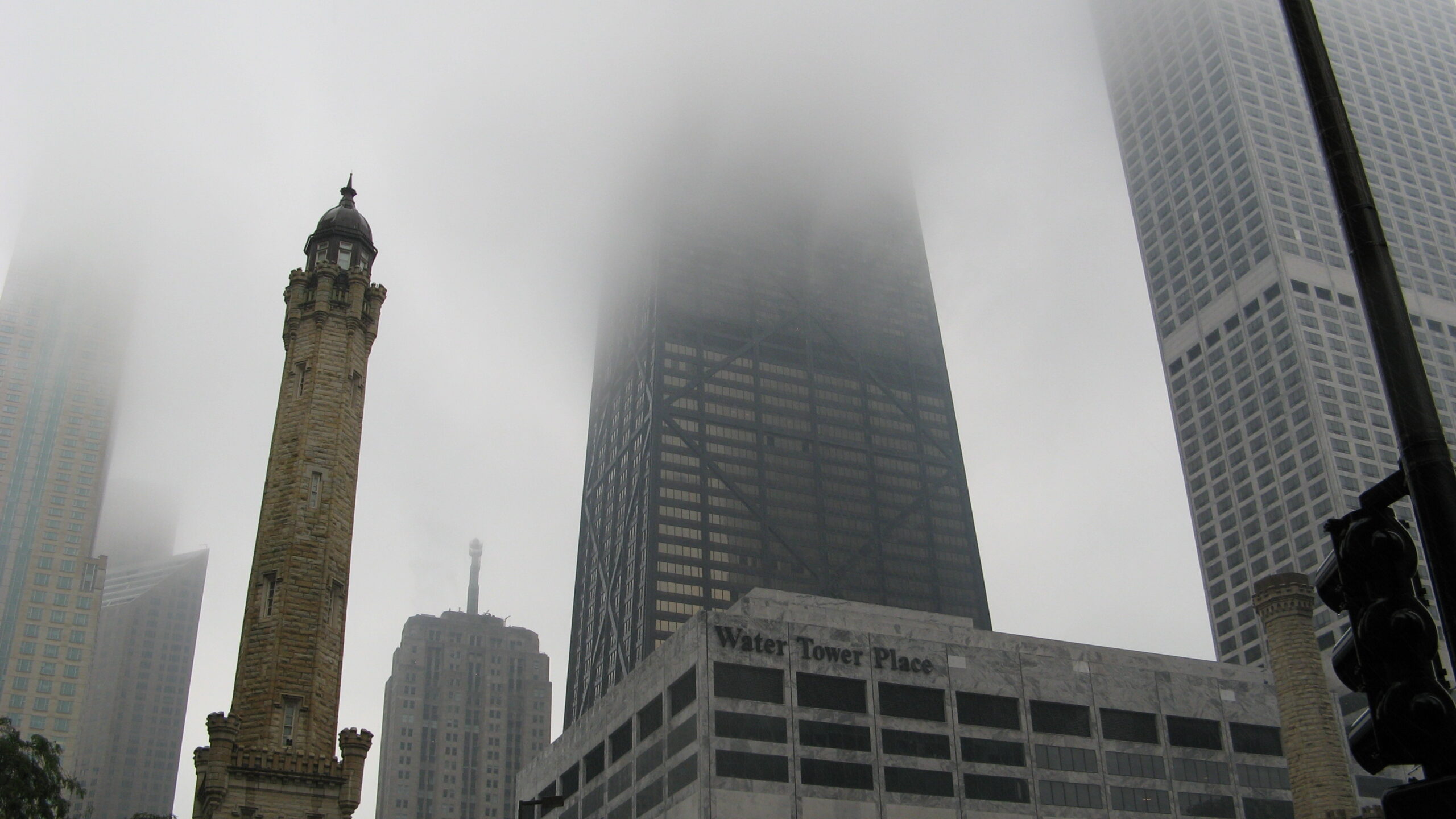
Chicago’s Water Tower and Water Tower Place. (CC BY-SA 3.0, Wikimedia Commons)
Let me show you the problem by what Indiana and Chicago did. Chicago also was very much like China’s countryside cities. So, it sold parking meters and its sidewalks to a whole series of Wall Street investors, including the Abu Dhabi Investment Fund for seventy-five years. And that meant that for 75 years, this Wall Street consortium got to control the parking meters.
So, they put up the parking meters all over Chicago, raised the price of parking, raised the cost of driving to Chicago. And if Chicago would have a parade and interrupt parking, then Chicago has to pay the Abu Dhabi fund and Wall Street company what it would have made anyway. And this became such an awful disaster that finally Wall Street had to reverse the deal and undo it because it was giving privatization a bad name here. The same thing happened in Indiana.
High School marching band in Chicago’s 2008 Bud Billiken Parade. (Curtis Morrow, CC BY 2.0, Wikimedia Commons)
Indiana was running a deficit and it decided to sell its roads to a Wall Street investment firm to make a toll road. The toll on the Indiana turnpike was so high that drivers began to take over the side roads. That’s the problem if you sell future tax revenues in advance.
Now what China and the localities there are discussing is that we’ve already given the real estate tax at very low estimates to the commercial developers, so what do we do? Well, I’ve given them my advice. I’m a professor of economics at the Peking University, School of Marxist studies and I’ve had discussions with the Central Committee. I also have an official position at Wuhan University. There, we’re discussing how China can put an added tax for all of the valuable land, that’s gone up. How can it be done to let the cities collect this tax? Our claim is that the cities, in selling these tax rights for 75 years, have sold what in Britain would be called ground rent (i.e. what’s paid to the landed aristocracy).
Over and above that there’s the market rent. So, China should pass a market-rent tax over and above the ground rent tax to reflect the current value. And there they’re thinking of, well, do we say that this is a capital gain on the land? Well, it’s not really a capital gain until you sell the land, but it’s value. It’s the valuation of the capital. And they’re looking at whether they should just say this is the market rent tax over and above the flat tax that has been paid in advance, or it’s a land tax on the capital gain for land.
Now, all of this requires that there be a land map of the whole country. And they are just beginning to create such a land map as a basis for how you calculate how much the rent there is.
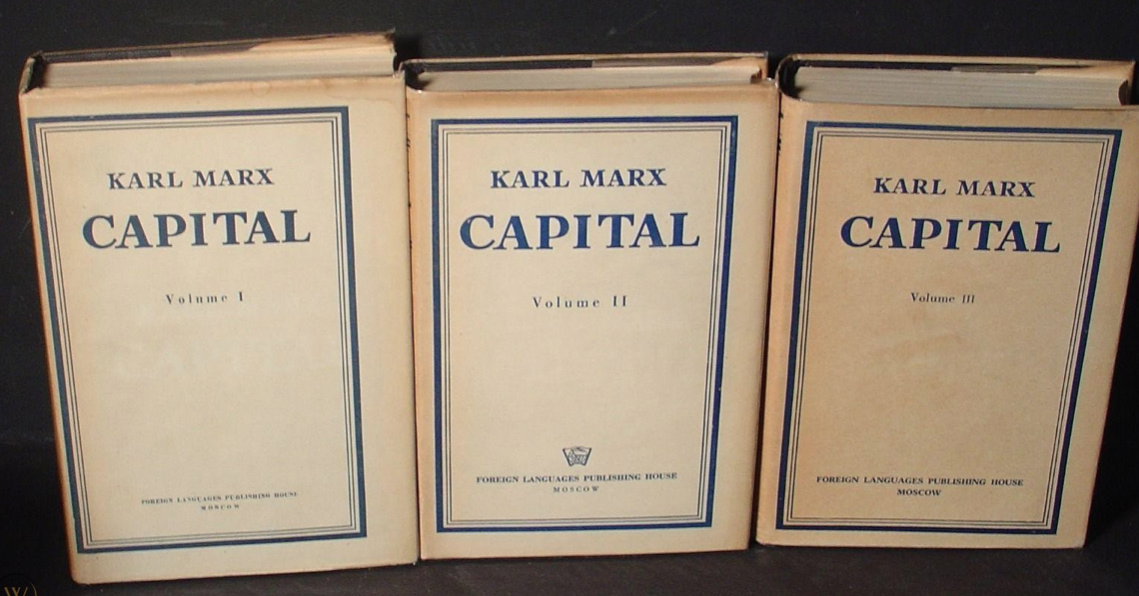
What I found in China is something very strange. A few years ago, in Beijing, they had the first, International Marxist conference where I was the main speaker and I was talking about Marx’s discussion of the history of rent theory in Volume II and Volume III of Capital where Marx discusses all of the classical economics that led up to his view; Adam Smith, Ricardo, Malthus, John Stuart Mill, and Marx’s theory of surplus value was really the first history of economic thought that was written, although it wasn’t published until after he died. Well, you could see that there was a little bit of discomfort with some of the Marxists at the conference. And so, they invited for the next time my colleague David Harvey to come and talk about Marxism in the West.
Well, David gave both the leading and the closing speech of the conference and said, you’ve got to go beyond volume I of Capital. Volume I was what Marx wrote as his addition to classical economics, saying that there was exploitation in industrial employment of labor as well as rent seeking and then he said, now that I’ve done my introduction here, let me talk about how capitalism works in Volumes II and III. Volumes II and III are all about rent and finance and David Harvey has published a book on Volume III of Capital and his message to Peking University and the second Marxist conference was – you’ve got to read Volume II, and III.
Well, you can see that, there’s a discussion now over what is Marxism and a friend and colleague at PKU said Marxism is a Chinese word; It’s the Chinese word for politics. That made everything clear to me. Now I get it! I’ve been asked by the Academy of Social Sciences in China to create a syllabus of the history of rent theory and value theory. And essentially in order to have an idea of how you calculate rent, how do you make a national income analysis where you show rent, you have to have a theory of value and price and rent is the excess of price over the actual cost value. Well, for that you need a concept of cost of production and that’s what classical economics is all about. Post-classical economics denied all of this. The whole idea of classical economics is that not all income is earned.
Landlords don’t earn their income for making rent in their sleep as John Stuart Mill said. Banks don’t earn their income by just sitting there and letting debts accrue and interest compounding and doubling. The classical economists separated actual unearned income from the production and consumption economy.
Well, around the late 19th century in America, you had economists fighting against not only Marx, but also even against Henry George, who at that time, was urging a land tax in New York. And so, at Columbia University, John Bates Clark developed a whole theory that everybody earns whatever they can get. That there was no such thing as unearned income and that has become the basis for American national income statistics and thought ever since. So, if you look at today’s GDP figures for the United States, they have a figure for 8 percent of the GDP for the homeowners’ rent. But homeowners wouldn’t pay themselves if they had to rent the apartment to themselves, then you’ll have interest at about 12 percent of GDP.
And I thought, well how can interest be so steady? What happens to all of the late fees; that 29 percent that credit card companies charge? I called up the national income people in Washington, when I was there. And they said well, late fees and penalties are considered financial services.
And so, this is what you call a service economy. Well, there’s no service in charging a late fee, but they add all of the late fees. When people can’t pay their debts and they owe more and more, all of that is considered an addition to GDP. When housing becomes more expensive and prices American labor out of the market, that’s called an increase in GDP.
This is not how a country that wants to develop is going to create a national income account. So, there’s a long discussion in China about, just to answer your question, how do you create an account to distinguish between what’s the necessary cost to production and what’s an unnecessary production cost and how do we avoid doing what the United States did. So again, no rivalry. The United States is an object lesson for China on what to avoid, not only in industrializing the economy, but in creating a picture of the economy as if everybody earns everything and there’s no exploitation, no earned income, nobody makes money in their sleep and there’s no 1 percent. Well, that’s what’s really at issue and why the whole world is splitting apart as you and I are discussing in what we’re writing.
When people can’t pay their debts and they owe more and more, all of that is considered an addition to GDP.”
Pepe: Thank you, Michael. Thank you very much. So just to sum it all up, can we say that Beijing’s strategy is to save especially provincial areas from leasing their land, their infrastructure for 60 years or 75 years? As you just mentioned, can we say that the fulcrum of their national strategy is what you define as the market rent tax? Is this the No. 1 mechanism that they are developing?
Michael: Ideally, they want to keep rents as low as possible because rent is a cost of living and a cost of doing business. They don’t have banks that are lending to inflate the real estate market.
However, in almost every Western country — the U.S., Germany England — the value of stocks and bonds and the value of real estate is just about exactly the same. But for China, the value of real estate is way, way larger than the value of stocks.
And the reason is not because the Chinese Central bank, the Bank of China lends for real estate; it’s because they lend to intermediaries and the intermediaries have financed a lot of housing purchases in China. And, this is really the problem for if they levy a land tax, then you’re going to make a lot of these financial intermediaries go bust.
That’s what I’m advocating, and I don’t think that’s a bad thing. These financial intermediaries shouldn’t exist, and this same issue came up in 2009 in the United States. You had the leading American bank being the most crooked and internally corrupt bank in the country, Citibank making junk mortgage, and it was broke.
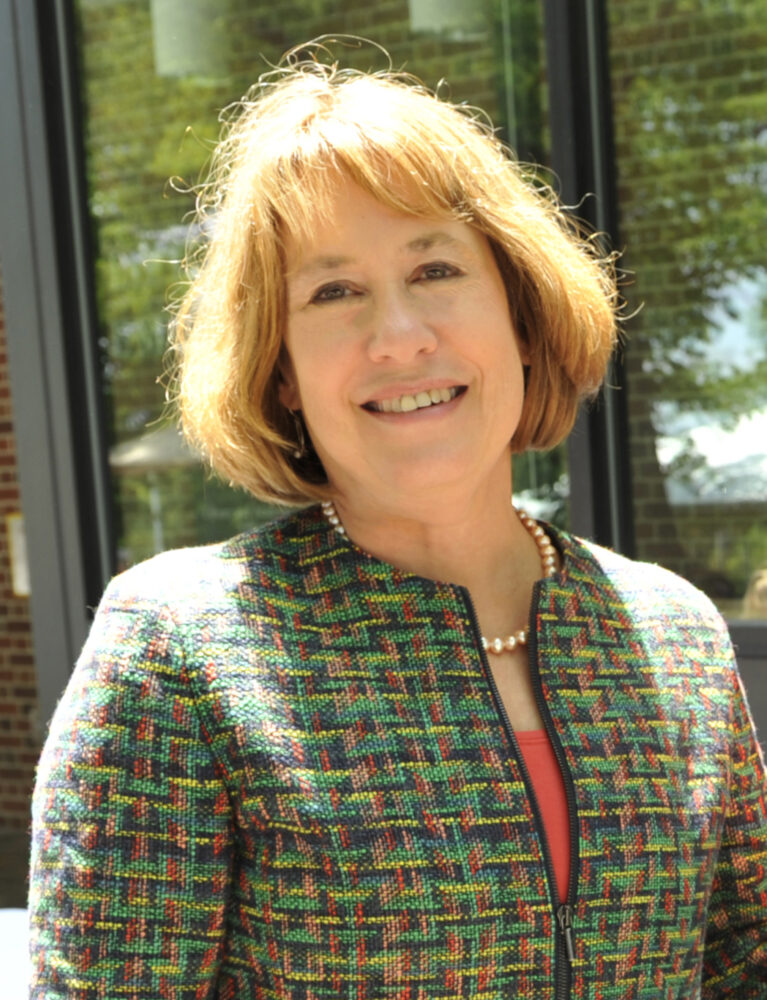
Sheila Bair in 2016. (Matt Spangler for Washington College, CC BY-SA 4.0, Wikimedia Commons)
Its entire net worth was wiped out as a result of its fraudulent junk mortgages. Well, Sheila Bair, the head of the Federal Deposit Insurance Corporation (FDIC) wanted to close it down and take it over. Essentially that would have made it into a public bank and that would be a wonderful thing. She said, look Citibank shouldn’t be doing what it’s doing. And she wrote all this up in an autobiography. And, she was overruled by President Obama and Tim Geithner saying, but wait a minute, those are our campaign contributors. So, they were loyal to the campaign contributors, but not the voters; and they didn’t close Citibank down.
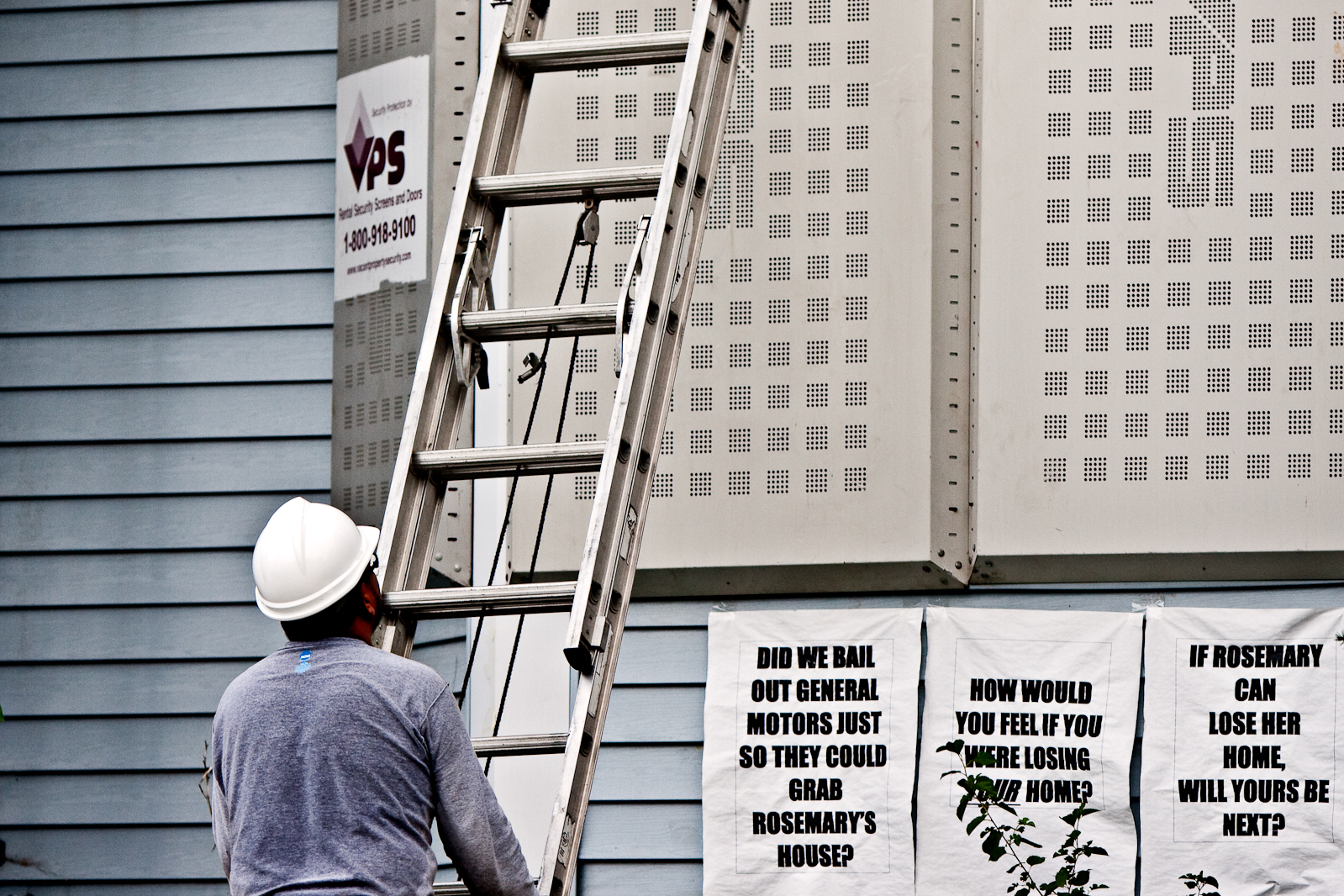
And the result is that the Federal Reserve ended up creating about $7 trillion of quantitative easing to bail out the banks. The homeowners weren’t bailed out. Ten million American families lost their homes as a result of junk mortgages in excess of what the property was actually worth.
All of this was left on the books, foreclosed and sold to a private capital companies like Blackstone. And the result is that home ownership in America declined from 68 percent of the population down to about 61 percent. Well, right where the Obama administration left off, you’re about to have the Biden administration begin in January with an estimated 5 million Americans losing their homes. They’re going to be evicted because they’ve been unemployed during the pandemic. They’ve been working in restaurants or gyms or other industries that have been shut down because of the pandemic. They’re going to be evicted and many homeowners and, low-income homeowners have been unable to pay their mortgages.
There’s going to be a wave of foreclosures. The question is, who’s going to bear the cost? Should it be 15 million American families who lose their homes just so the banks won’t lose money? Or should we let the banks that have made all of the growth since 2008? Ninety five percent of American GDP of the population has seen its wealth go down. All the wealth has been accumulating for the 5 percent in statistics. Now the question is should this 5 percent that’s got all the wealth lose or should the 95 percent lose?
Worker installs security panels over windows after police evict woman from her foreclosed home in South Minneapolis, 2009. (Tony Webster, CC BY 2.0, Wikimedia Commons)
The Biden administration says the 95 percent should lose basically. And you’re going to see a wave of closures so that the question in China should be that, these intermediate banks (they’re not really banks they are sort of like payday loan lenders), should they come in and, bear the loss or should Chinese localities and the people bear the loss? Somebody has to lose when you’re charging, you’re collecting the land’s rent that was paid to the creditors, and either the creditors have to lose or, the tax collector loses and that’s the conflict that exists in every society of the world today. And, in the West, the idea is the tax collectors should lose and whatever the tax collector relinquishes should be free for the banks to collect. In China obviously, they don’t want that to happen and they don’t want to see a financial class developing along US lines.
Pepe: Michael, there’s a quick question in all this, which is the official position by Beijing in terms of helping the localities. Their official position is that there won’t be any bailouts of local debt. How do they plan to do that?
Michael: What they’re discussing, how are you not going to do it? They think they sort of let localities go their own way. And they think, well you know which ones are going to succeed, and which ones aren’t, they didn’t want to have a one-size-fits all central planning. They wanted to have flexibility. Well, now they have flexibility. And when you have many different let a hundred flowers bloom,” not all the flowers are going to bloom at the same rate.
And the question is, if they don’t bail out the cities, how are the cities going to operate? Certainly, China has never let markets steer the economy, the government steers the markets. That’s what socialism is as opposed to finance capitalism. So, the question is, you can let localities go broke and yet you’re not going to destroy any of the physical assets of the localities, and all of this is going to be in place. The question is how are you going to arrange the flow of income to all of these roads and buildings and land that’s in place? How do you create a system? Essentially, they’re saying well, if we’re industrial engineers, how do we just plan things? Forget credit, forget property claims, forget the rentier claims. How are we just going to design an economy that operates most efficiently? And that’s what they’re working on now to resolve this situation because it’s gotten fairly critical.
Pepe: Yes, especially in the countryside. Well, I think, a very good metaphor in terms of comparing both systems are investment in infrastructure. You travel to China a lot so, you’ve seen. You’ll travel through high-speed rail. You’ll see those fantastic airports, in Pudong or the new airport in Beijing. And then you’ll take the Acela to go from Washington to New York City, which is something that I used to do years ago. And the comparison is striking. Isn’t it?
Or if you go to France, for instance, when France started development of the TGV, which in terms of a national infrastructure network, is one of the best networks on the planet. And the French started doing this 30 years ago, even more. Is there……, it’s not in terms of way out, but if we analyze the minutia, it’s obvious that following the American finance utilization system, we could never have something remotely similar happening in United States in terms of building infrastructure.
So, do you see any realistic bypass mechanism in terms of improving American infrastructure, especially in the big cities?
TGV 2N2 Lyria train at Paris’ Gare de Lyon station. (CC BY-SA 4.0, Wikimedia Commons)
Michael: No, and there are two reasons for that. No. 1, let’s take a look at the long-term railroads. The railroads go through the center of town or even in the countryside, all along the railroads, the railroads brought business and all the businesses had been located as close to the railroad tracks as they could. Factories with sightings off the railroad, hotels and especially right through the middle of town where you have the railway gates going up and down. In order to make a high-speed rail as in China, you need a dedicated roadway without trucks and cars, imagine a car going through a railway gate at 350 miles an hour.
So, when I would go from Beijing to Tianjin, here’s the high-speed rail, there’s one highway on one side, one highway on the other side. There’ll be underpasses. But there it goes straight now. How can you suppose you would have a straight Acela line from Washington up to Boston when all along the line, there’s all this real estate right along the line that has been built up? There’s no way you can get a dedicated roadway without having to tear down all of this real estate that’s on either side and the cost of making the current owners whole would be prohibitive. And anywhere you would go, that’s not in the center of the city, you would also have to have the problem that there’s already private property there.
And there’s no legal, constitutional way for such a physical investment to be made. China was able to make this investment because it was still largely rural. It wasn’t as built up along the railways. It didn’t have any particular area that was built up right where the railroad already was.
President Donald Trump visiting China in 2017. (PAS China via Wikimedia Commons)
So certainly, any high-speed rail could not go where the current railways would be, and they’d have to go on somebody’s land. And, there’s also, what do you do if you want to get to New York and Long Island from New Jersey?
Sixty years ago, when I went into Wall Street, the cost of getting and transporting goods from California to Newark, New Jersey, was as large as from Newark right across the Hudson River to New York, not only because of the mafia and control of the local labor unions, but because of the tunnels. Right now, the tunnels from New Jersey to New York are broke, they are leaking, the subways in New York City, which continually break down because there was a hurricane a few years ago and the switches were made in the 1940s. The switches are 80 years old. They had water damage and the trains have to go at a crawl. But the city and state, because it is not collecting the real estate tax and other taxes and because ridership fell on the subways to about 20 percent, the city’s broke. They’re talking about 70 percent of city services being cut back. They’re talking about cutting back the subways to 40 percent capacity, meaning everybody will have to get in — when there’s still a virus and not many people are wearing masks, and there was no means of enforcing masks here.
Blue Xs mark social distancing on the platform of a New York City subway station, May 2020. (Marc A. Hermann, MTA, Wikimedia Commons)
So, there’s no way that you can rebuild the infrastructure because, for one thing the banking system here has subsidized for a hundred years junk economics saying you have to balance the budget. If the government creates credit it’s inflationary as if when banks create credit, it’s not inflationary. Well, the monetary effect is the same, no matter who creates the money. And so, Biden has already said that President Trump ran a big deficit, we’re going to run a bunch of surpluses or a budget balance. And he was advocating that all along. Essentially Biden is saying we have to increase unemployment by 20 percent, lower wages by 20 percent, shrink the economy by about 10 percent in order to, in order for the banks not to lose money.
You’re going to price the American economy even further out of business because they say that public investment is socialism.”
And, we’re going to privatize but we are going to do it by selling the hospitals, the schools, the parks, the transportation to finance, to Wall Street finance capital groups. And so, you can imagine what’s going to happen if the Wall Street groups buy the infrastructure. They’ll do what happened to Chicago when it sold all the parking meters, they’ll say, OK, instead of 25 cents an hour, it’s now charged $3 an hour. Instead of a $2 for the subway, let’s make it $8.
You’re going to price the American economy even further out of business because they say that public investment is socialism. Well, it’s not socialism. It’s industrial capitalism. It’s industrialization, that’s basic economics. The idea of what, and how an economy works is so twisted academically that it’s the antithesis of what Adam Smith, John Stewart Mill and Marx all talked about. For them a free- market economy was an economy free of rentiers. Free of rent, it didn’t have any rent seeking. But now for the Americans, a free-market economy is free for the rentiers, free for the landlord, free for the banks to make a killing. And that is basically the class war back in business with a vengeance. That blocks and is preventing any kind infrastructure recovery. I don’t see how it can possibly take place.
Pepe: Well, based on what you just described, there is a process of turning the United States into a giant Brazil. In fact, this is what the Brazilian Finance Minister Paulo Guedes, a Pinochetista, as you know Michael, has been doing with the Brazilian economy for the past two years, privatizing everything and selling everything to big Brazilian interests and with lots of Wall Street interests involved as well. So, this is a recipe that goes all across the Global South as well. And it’s fully copied all across the Global South with no way out now.
Michael: Yes, and this is promoted by the World Bank and the International Monetary Fund. And when I was brought down to Brazil to meet with the council of economic advisers under Lula, [Luiz Inácio Lula da Silva, former president of Brazil], they said, well the whole problem is that Lula’s been obliged to let the banks do the planning.
So, basically free markets and libertarianism is adopting central planning, but with central planning by the banks. America is a much more centrally planned economy than China. China is letting a hundred flowers bloom; America has concentrated the planning and the resource allocation in Wall Street. And that’s the central planning that is much more corrosive than any government planning, could be. Now the irony is that China’s sending its students to America to study economics. And, most of the Chinese I had talked to say, well we went to America to take economics courses because that gives us a prestige here in China.
I’m working now, with Chinese groups trying to develop a reality economics” to be taught in China as different from American economics.
America has concentrated the planning and the resource allocation in Wall Street. And that’s the central planning that is much more corrosive than any government planning, could be.”
Pepe: Exactly, because of what they study at Beijing University, Renmin or Tsinghua
is not exactly what they would study in big American universities. Probably what they study in the U.S. is what not to do in China. When they go back to China, what they won’t be doing. It’s an object lesson for what to avoid.
Michael, I’d like to go back to what the BRICS [Brazil, Russia, India, China and South Africa] had been discussing in the 2000s when Lula was still president of Brazil and many of his ideas deeply impressed, especially Hu Jintao at the time, which is bypassing the U.S. dollar. Well, at the moment obviously we’re still at 87 percent of international transactions still in U.S. dollars. So, we are very far away from it, but if you have a truly sovereign economy, which is the case of China, which we can say is the case of Russia to a certain extent and obviously in a completely different framework, Iran. Iran is a completely sovereign, independent economy from the West. The only way to try to develop different mechanisms to not fall into the rentier mind space would be to bypass the U.S. dollar.
Occupy Wall Street picket of HSBC, midtown Manhattan; Feb. 14, 2013. (Michael Fleshman Via Flickr)
Michael: Yes, for many reasons. For one thing the United States can simply print the dollars and lend to other countries and then say, now you have to pay us interest. Well, Russia doesn’t need American dollars. It can print its own rubles to provide labor. There’s no need for a foreign currency at all for domestic spending, the only reason you would have to borrow a foreign currency is to balance your exchange rate, or to finance a trade deficit. But China doesn’t have a trade deficit. And in fact, if China were to work to accept more dollars, Americans would love to buy into the Chinese market and make a profit there, but that would push up China’s exchange rate and that would make it more difficult for her to make its exports because the exchange rate would come up not because it’s exporting more but because it’s letting American dollars come in and push it up.
Well, fortunately, President Trump as if he works for the Chinese National Committee, said, look, we don’t want to really hurt China by pushing up its currency and we want to keep it competitive. So, I’m going to prevent American companies from lending money to China, I’m going to isolate it and so he’s helping them protect their economy. And in Russia he said, look Russia really needs to feed itself. And, there’s a real danger that when the Democrats come in, there are a lot of anti-Russians in the Biden administration. They may go to war. They may do to Russia what they tried to do to China in the ‘50s. Stop exporting food and grain. And only Canada was able to break the embargo. So, we’re going to impose sanctions on Russia. So immediately, what happened is Russia very quickly became the largest grain exporter in the world. And instead of importing cheese from the Baltics, it created its own cheese industry. So, Trump said look, I know that Russians followed the American idea of not having protective tariffs, they need protective tariffs. They’re not doing it. We’re going to help them out by just not importing from them and really helping them.
Pepe: Yeah. Michael, what do you think Black Rock wants from the Chinese? You know that they are making a few inroads at the highest levels? Of course, I’m sure you’re aware of that. And also, JP Morgan, Citybank, etc. What do they really want?
Michael: They’d like to be able to create dollars to begin to buy and make loans to real estate; let companies grow, let the real estate market grow and make capital gains.
The way people get wealthy today isn’t by making an income, it’s been by making a capital gain. Total returns are current income plus the capital gains. As for capital gains each year; the land value gains alone are larger than the whole GDP growth from year to year. So that’s where the money is, that’s where the wealth is. So, they are after speculative capital gains, they would like to push money into the Chinese stock market and real estate market. See the prices go up and then inflate the prices by buying in and then sell out at the high price. Pull the money out, get a capital gain and let the economy crash, I mean that’s the business plan.
Pepe: Exactly. But Beijing will never allow that.
Michael: Well, here’s the problem right now, they know that Biden is pushing militarily aggressive people in his cabinet. There’s one kind of overhead that China is really trying to avoid and that’s the military overhead because if you spend money on the military, you can’t spend it on the real economy. They’re very worried about the military and they say, how do we deter the Biden administration from actually trying a military adventure in the South China Sea or elsewhere? They said well, fortunately America is multi-layered. They don’t think of America as a group. They realize there’s a layer and they say, who’s going to represent our interests?
There’s one kind of overhead that China is really trying to avoid and that’s the military overhead because if you spend money on the military, you can’t spend it on the real economy.”
Well, Blackstone and Wall Street are going to represent their interests. Then I think one of the, Chinese officials last week gave a big speech on this very thing, saying look, our best hope in stopping America’s military adventurism in China is to have Wall Street acting as our support because after all, Wall Street is the main campaign contributor and the president works for the campaign contributors.
The politician works for the campaign contributors. They’re in it for the money! So fortunately, we have Wall Street on our side, we’ve got control of the political system and they’re not there to go to war so that helps explain why a month ago they let wholly-owned U.S. banks and bankers in. On the one hand, they don’t like the idea of somebody outside the government creating credit for reasons that the economy doesn’t need. If they needed it, the Bank of China would do it. They have no need for foreign currency to come in to make loans in domestic currency, out of China.
The only reason that they could do it is No. 1, it helps meet the World Trade Organization’s principles and, No. 2, especially during this formative few months of the Biden administration, it helps to have Wall Street saying; we can make a fortune in China, go easy on them and that essentially counters the military hawks in Washington.
Pepe: So, do you foresee a scenario when Black Rock starts wreaking havoc in the Shanghai stock exchange for instance?
Wall Street, Nov. 21, 2009. (Dave Center, Flickr)
Michael: It would love to do that. It would love to move things up and down. The money’s made by companies with the stock market going up and down; the zigzag. So of course, it wants to do a predatory zigzag. The question is whether China will impose a tax to stop this, all sorts of financial transactions. That’s what’s under discussion now. They know exactly what Black Rock wants to do because they have some very savvy billionaire Chinese advisers that are quite good. I can tell you stories, but I better not.
Pepe: Okay. If it’s not okay to tell it all, tell us part of the story then.
Michael: The American banks have been cultivating leading Chinese people by providing them enough money to make money here, that they think that, okay they will now try to make money in the same way in China and we can join in. It’s a conflict of systems again, between the finance capital system and industrial socialism. You don’t get any of this discussion in the U.S. press, which is why I read what you write because in the U.S. press, the neocons talk about the fake idea of Greek history and fake idea of the Thucydides’ problem of a country jealous of another country’s development.
There’s no jealousy between America and China. They’re different, they have their own way. We are going to destroy them. And if you look at the analogy that the Americans draw —and this is how the Pentagon thinks — with the war between Athens and Sparta. It’s hard to tell, which is which. Here you have Athens, a democracy backing other democracies and having the military support of the democracies and the military in these democracies all had to pay Athens protection money for the military support and that’s the money that Athens got to ostensibly support its navy and protection that built up all of the Athenian public buildings and everything else. So, that’s a democracy exploiting its allies, to enrich itself via the military. Then you have Sparta, which was funding all of the oligarchies, and it was helping the oligarchies overthrow democracies. Well, that was America too. So, America is both sides of the Thucydides war if the democracy is exploiting the fellow democracies and is the supporter of oligarchies in Brazil, Latin America, Africa and everyone else.
So, you could say the Thucydides problem was between two sides, two aspects of America and has nothing to do with China at all except, for the fact that the whole war was a war between economic systems. They’re acting as if somehow if only China did not export to us, we could be re-industrialized and somehow export to Europe and the Third World.
And as you and I have described, it’s over. We painted ourselves into such a debt corner that without writing down the debts, we’re in the same position that the Eurozone is in. There’s so much money that goes to the creditors to the top 1 percent or 5 percent that there is no money for capital investment, there is no money for growth. And, since 1980 as you know, real wages in America have been stable. All the growth has been in property owners and predators and the FIRE sector, the rest of the economy is in stagnation. And now the coronavirus has simply acted as a catalyst to make it very clear that the game is over; it’s time to move away from the homeowner economy to rentier economy, time for Blackstone to be the landlord. America wants to recreate the British landlord class and essentially what we’re seeing now is like the Norman invasion of England taking over the land and the infrastructure. That’s what Blackstone would love to do in China.
There’s so much money that goes to the creditors to the top 1 percent or 5 percent that there is no money for capital investment, there is no money for growth.”
Pepe: Wow. I’m afraid that they may have a lot of leeway by some members of the Beijing leadership now, because as you know very well, it’s not a consensus in the political arena.
Michael: We’re talking about Volume II and III of Capital.
Pepe: Exactly. But you know, you were talking about debt. Coming back to that, in fact I just checked this morning, apparently global debt as it stands today is $277 trillion, which is something like 365 percent of global GDP. What does that mean in practice?
Michael: Yeah, well fortunately this is discussed in the 19th century and there was a word for that — fictitious capital — it’s a debt that can’t be paid, but you’ll keep it on the books anyway. And every country has this. You could say the question now, and The Financial Times just had an article a few days ago that China’s claims on Third World countries on the Belt and Road Initiative is fictitious capital, because how can it collect?
Well, China’s already thought of that. It doesn’t want money. It wants the raw materials. It wants to be paid in real things. But a debt that can’t be paid, can only be paid either by foreclosing on the debtors or by writing down the debts and obviously a debt that can’t be paid won’t be paid.
Fictitious capital — it’s a debt that can’t be paid, but you’ll keep it on the books anyway. And every country has this.”
And so, you have not only Marx using the word fictitious capital. At the other end of the spectrum, you had Henry George talking about fictive capital. In other words, these are property claims that have no real capital behind them. There’s no capital that makes profit. That’s just a property claim for payment or a rentier claim for payment.
So, the question is, can you make money somehow without having any production at all, without having wages, without having profits, without any capital? Can you just have asset grabbing and buying-and-selling assets? And as long as you have the Federal Reserve in America, come in, Trump’s $10 trillion Covid program gave $2 trillion to the population at large with these $1,200 checks, that my wife and I got, and $8 trillion all just to buy stocks and bonds. None of this was to build infrastructure. None of this $8 trillion was to build a single factory. None of this 8 trillion was to employee a single worker. It was all just to support the prices of stocks and bonds, and to keep the illusion that the economy had not stopped growing. Well, it’s growing for the 5 percent. So, it’s all become fictitious. And if you look at the GDP as I said, it’s fictitious.
Pepe: And the most extraordinary thing is none of that is discussed in American media. There’s not a single word about what you would have been describing.
Michael: It’s not even discussed in academia. Our graduates at the university of Missouri at Kansas City, we’re all trained in Modern Monetary Theory. And as hired professors they have to be able to publish in the refereed journals and the refereed journals are all essentially controlled by the Chicago School. So, you have a censorship of the kind of ideas that we’re talking about. You can’t get it into the economic journals, so you can’t get it into the economics curriculum. So, where on earth are you going to get it? If you didn’t have the internet you wouldn’t be discussing at all. Most of my books sell mainly in China, more than in all the other countries put together so I can discuss these things there. I stopped publishing in orthodox journals so many years ago because it’s talking to the deaf.
None of this $8 trillion was to build a single factory, employee, a single worker.”
Pepe: Absolutely. Yeah. Can I ask you a question about Russia, Michael? There is a raging, debate in Russia for many years now between let’s say the Eurasianists and the Atlanticists. It involves of course, economic policy under Putin, industrial capitalism Russian style. The Eurasianists basically say that the central problem with Russia is how the Russian central bank is basically affiliated with all the mechanisms that you know so well, that it is an Atlanticist Trojan Horse inside the Russian economy. How do you see it?
Michael: Russia was brainwashed by the West when the Soviet Union broke up in 1991 . First of all, the IMF announced in advance that there was a big meeting in Houston with the IMF and the World Bank. And the IMF published all of its report saying, first you don’t want inflation in Russia so let’s wipe out all of the Russian savings with hyperinflation, which they did. They then said, well now to cure the hyperinflation the Russian central bank needs a stable currency and you need a backup for the currency. You will need to back it with U.S. dollars.
Russia was brainwashed by the West when the Soviet Union broke up in 1991.”
So, from the early 1990s, as you know, labor was going unpaid. The Russian central bank could have created the rubles to pay the domestic labor and to keep the factories in place. But, the IMF advisers from Harvard said, no you’ll have to borrow U.S. dollars. I met with people from the Hermitage Fund and the Renaissance Fund and others. We had meetings and I met with the investors. Russia was paying 100 percent interest for years to leading American financial institutions for money that it didn’t need and could have created itself. Russia was so dispirited with Stalinism that, essentially, it thought the opposite of Stalinism must be what they have in America.
They thought that America was going to tell it how America got rich, but America didn’t want to tell Russia how it got rich, but instead wanted to make money off Russia. They didn’t get it. They trusted the Americans. They really didn’t understand that, industrial capitalism that Marx described had metamorphosized into finance capitalism and was completely different.
And that’s because Russia didn’t charge rent, it didn’t charge interest. I gave three speeches before the Duma, urging it to impose a land tax. Some of the people I noticed, Ed Dodson was there with us and we were all trying to convince Russia, don’t let this land be privatized. If you let it be privatized, then you’re going to have such high rents and housing costs in Russia that you’re not going to be able to essentially compete for an industrial growth. Well, the politician who brought us there, Viatcheslav Zolensky was sort of maneuvered out of the election by the American advisers.
The Americans put billions of dollars in to essentially finance American propagandists to destroy Russia, mainly from the Harvard Institute of International Development. And essentially, they were a bunch of gangsters and the prosecutors in Boston were about to prosecute them.
The attorney general of Boston was going to bring a big case for Harvard against the looting of Russia and the corruption of Russia. And I was asked to organize and to bring a number of Russian politicians and industrialists over to say how this destroyed everything. Well, Harvard settled out of court and essentially that made the perpetrators the leading university people up there. (I’m associated with Harvard Anthropology Department, not the Economics Department.)
So, we never had a chance to bring my witnesses, and have our report on what happened, but I published for the Russian Academy of Sciences a long study of how all of this destruction of Russia was laid out in advance at the Houston meetings by the IMF. America went to the leading bureaucrats and said; look, we can make you rich why don’t you register the factories in your own name, and if you’re registered in your own name, you know, then you’ll own it. And then you can cash out. You can essentially sell, but obviously you can’t sell to the Russians because the IMF has just wiped out all of their savings.
You can only cash out by selling to the West. And so, the Russian stock market became the leading stock market in the world from 1994 with the Norilsk Nickel and the seven bankers in the bank loans for shares deal through 1997. And, I had worked for a firm Scutter Stevens and, the head adviser, a former student of mine didn’t want to invest in Russia because she said, this is just a rip off, it’s going to crash. She was fired for not investing. They said look, we know that’s going to crash. That’s the whole idea it’s going to crash. We can make a mint off it before the crash. And then when it crashes, we can make another mint by selling short and then all over again . Well, the problem is that the system that was put in with the privatization that’s occurred, how do you have Russia’s wealth used to develop its own industry and its own economy like China was doing. Well, China has rules for all of this, but Russia doesn’t have rules, it’s really all centralized, it’s President Putin that keeps it this way.
President Vladimir Putin meeting with German business executives, Nov. 1, 2018. (The Kremlin)
Well, this was the great fear of the West. When you had Mikhail Gorbachev beginning to plan to do pretty much what is done today, to restrain private capital, the IMF said hold off. We’re not going to make any loans to stabilize the Russian currency until you remove Mr. Primakov.
The U.S. said we won’t deal with Russia until you remove him. So, he was pushed out and he was probably the smartest guy at the time there. So, they thought [President Vladimir] Putin was going to be sort of the patsy. And he almost single-handedly, holding the oligarchs in and saying, look, you can keep your money as long as you do exactly what the government would do. You can keep the gains as long as you’re serving the public interest.
But none of this resulted into a legal system, a tax system, and a system where the government actually does get most of the benefits. Russia could have emerged in 1990 as one the most competitive economies in Eurasia by giving all of the houses to its people instead of giving Norilsk Nickel and the oil companies to Yukos. It could have given everybody their own house and their own apartment, the same thing in the Baltics. And instead it didn’t give the land out to the people. And Russians were paying 3 percent of their income for housing in 1990. And rent is the largest element in every household’s budget.
Russia could have emerged in 1990 as one the most competitive economies in Eurasia by giving all of the houses to its people.”
So, Russia could have had low-price labor. It could have financed all of its capital investment for the government by taxing, collecting the rising rental value. Instead, Russian real estate was privatized on credit and it was even worse in the Baltics.
In Latvia, where I was research director for the Riga Graduate School of Law, Latvia borrowed primarily from Swedish banks. And so, in order to buy a house, you had to borrow from Swedish banks. And they said, well, we’re not going to lend in the Latvian currency because it can go down. So, you have a choice; Swiss Francs or German Marks or U.S. Dollars. And so, all of this rent was paid in foreign currency. There came an outflow that essentially drained all the Baltic economies. Latvia lost 20 percent of its population. Estonia and Lithuania followed suit.
And of course, the worst hit by neo-liberalism was Russia. As you know, President Putin said that neo-liberalism cost Russia more of its population than World War II. And you know that to destroy a country, you don’t need an army anymore. All you have to do is teach it American economics.
Pepe: Yes, I remember well, I arrived in Russia in the winter of 91 coming from China. So, I transited from the Chinese miracle. In fact, a few days after Deng Xiaoping’s famous Southern tour when he went to Guangzhou and Shenzhen. And that was the kick for the 1990s boom, in fact a few years before the handover, and then I took the Trans-Siberian and I arrived in Moscow a few days after the end, in fact, a few weeks after the end of the Soviet Union.
But yeah, I remember the Americans arrived almost at the exact minute, wasn’t it, Michael? I think they already were there in the spring of 1992. If I’m not mistaken.
Michael: The Houston meeting was in 1990. But all before that already in, 1988 and 1989, there was a huge outflow of embezzlement money via Latvia. The assistant dean of the university who ended up creating Nordex, essentially the money was all flying out because Ventspils in Latvia, was where Russian oil was exported and it was all fake invoicing. So, the Russian kleptocrats basically made their money off false export invoicing, ostensibly selling it for one price and having the rest paid abroad and, this was all organized through Latvia and the man who did it later moved to Israel and finally gave a billion dollars back to Russia so that he went on to live safely for the rest of his life in Israel.
Pepe: Well, the crash of the ruble in 1998 was what, roughly one year after the crash of the baht and the whole Asian financial crisis, no? It was interlinked of course, but let me see if I have a question for you, in fact, I’m just thinking out loud now. If the economies of Southeast Asia and Northeast Asia, the case of South Korea and Russia, were more integrated at the time as they are trying to integrate now, do you think that the Asian financial crisis would have been preventable in 1997?
Michael: Well, look at what happened in Malaysia with Mohammad Mahathir. Malaysia avoided it. So of course, it was preventable, and they had the capital controls. All you would have needed was to do what Malaysia did. But you needed an economic theory for that.
And essentially the current mode of warfare is to conquer the brains of a country to shape how people think and how they perceive the economy. And if you can twist their view into an unreality economics, where they think that you’re there to help them not to take money out of them, then you’ve got them hooked. That was what happened in Asia. Asia thought it was getting rich off the dollars inflows and then the IMF and all the creditors pulled the plug, crash the industry. And now that all of a sudden you had a crash, they bought up Korean industry and other South Asian industries at giveaway prices.
That’s what you do. You lend the money; you pull the plug. You then let them go under and you pick up the pieces . That’s what Blackstone did after the Obama depression began, when Obama saved the banks, not the constituency, the mortgage borrowers. Essentially that’s Blackstone’s modus operandi to pick up distressed prices at a bankruptcy sale, but you need to lend money and then crash it in order to make that work.
Pepe: Michael, I think we have only five minutes left. So, I would expect you to go on a relatively long answer and I’m really dying for it. It’s about debt, it about the debt trap. And it’s about the New Silk Roads, the Belt and Road Initiative, because I think rounding up our discussion and coming back to the theme of debt and global debt.
The No. 1 criticism apart from the demonization of China that you hear from American media and a few American academics as well against the Belt and Road is that it’s creating a debt trap for Southeast Asian nations, Central Asian nations and nations in Africa, etc…. Obviously, I expect you to debunk that, but the framework is there is no other global development project as extensive and as complex as Belt and Road, which as you know very well was initially dreamed up by the Ministry of Commerce. Then they sold it more or less to Xi Jinping who got the geopolitical stamp on it, announcing it, simultaneously, (which was a stroke of genius) in Central Asia in Astana and then in Southeast Asia in Jakarta. So, he was announcing the overland corridors through the heartland and the Maritime Silk Road at the same time.
At the time people didn’t see the reach and depth of all that. And now of course, finally the Trump administration woke up and saw what was in play, not only across Eurasia but reaching Africa and even selected parts of Latin America as well. And obviously the only sort of criticism, and it’s not even a fact-based criticism, that I’ve seen about the Belt and Road is it’s creating a debt trap because as you know Laos is indebted, Sri Lanka is indebted, Kyrgyzstan is indebted etc. So, how do you view Belt and Road within the large framework of the West and China, East Asia and Eurasia relations? And how would you debunk misconceptions created, especially in the U S that this is a debt trap.
Six proposed corridors of Belt and Road Initiative, showing Italy inside circle, on maritime blue route. (Lommes, CC BY-SA 4.0, Wikimedia Commons)
Michael: There are two points to answer there. The first is how the Belt and Road began. And as you pointed out, the Belt and Road began, when China said, what is it we need to grow and how do we grow within our neighboring countries so we don’t have to depend upon the West, and we don’t have to depend on sea trade that can be shut down? How do we get to roads instead of seas in a way that we can integrate our economy with the neighboring economies so that there can be mutual growth?
So, this was done pretty much on industrial engineering grounds. Here’s where you need the roads and the railroads. And then how do we finance it? Well, The Financial Times article, last week, said didn’t the Chinese know that [with past] railroad development, they’ve all gone broke? The Panama Canal went broke, you know, the first few times there were European railway investment in Latin America in the 19th century, that all went broke.
Well, what they don’t get is China’s aim was not to make a profit off the railroads. The railroads were built to be part of the economy. They don’t want to make profit. It was to make the real economy grow, not to make profits for the owners of the railroad stocks. The Western press can’t imagine that you’re building a railroad without trying to make money out of it.
Then you get to the debt issue. Countries only have a debt crisis if their debt is in a foreign currency. The first way that the United States gained power was to fight against its allies. The great enemy of America was England and it made the British block their currency in the 1940s. And so, India and other countries, that had all these currencies holdings in sterling, were able to convert it all into dollars.
The whole move of the U.S. was to denominate world debt in dollars. So that No. 1, U.S. banks would end up with the interest in financing the debt. And No. 2, the United States could, by using the debt leverage, control domestic politics.
Well, as you’re seeing right now in Argentina, for instance, Argentina is broke because it owes foreign-dollar debt. When I started the first Third World bond fund in 1990 at Scutter Stevens, Brazil and China and Argentina were paying 45 percent interest per year, 45 percent per year in dollars debt. Yet we tried to sell them in America. No American would buy. We went to Europe, no European buy this debt. And so, we worked with Merrill Lynch and Merrill Lynch was able to make an offshore fund in the Dutch West Indies and all of the debt was sold to the Brazilian ruling class in the central bank and the Argentinian bankers in the ruling class, we thought oh, that’s wonderful.
We know that they’re going to pay the foreign Yankee Dollars debt because the Yankee Dollars debt is owed to themselves. They’re the Yankees! They’re the client oligarchy. And you know, from Brazil client oligarchy is, you know, they’re cosmopolitan, that’s the word. So, the problem is that on the Belt and Road, how did these other countries pay the debt to China?
Well, the key there again is the de-dollarization, and one way to solve it is since we’re trying to get finance out of the picture, we’re doing something very much like, Japan did with Canada in the 1960s. It made loans to develop Canadian copper mines taking its payment, not in Canadian dollars, that would have pushed up the yen’s exchange rate, but in copper.
So, China says, you know you don’t have to pay currency for this debt. We didn’t build a railroad to make a profit and you want, we can print all the currency we want. We don’t need to make a profit. We made the Belt and Road because it’s part of our geopolitical attempt to create what we need to be prosperous and have a prosperous region. So, these are self-reinforcing mutual gain. Well, so that’s what the West doesn’t get — mutual gain? Are we talking anthropology? What do you mean mutual? This is capitalism! So, the West doesn’t understand what the original aim of the Belt and Road was, and it wasn’t to make a profitable railroad to enable people to buy and sell railway stocks. And it wasn’t to make toll roads to sell off to Goldman Sachs, you know. We’re dealing with two different economic systems, and it’s very hard for one system to understand the other system because of the tunnel vision that you get when you get a degree in economics.
We’re dealing with two different economic systems, and it’s very hard for one system to understand the other system because of the tunnel vision that you get when you get a degree in economics.”
Pepe: Belt and Road loans are long-term and at very low interest and they are renegotiable. They are renegotiating with the Pakistanis all the time for instance.
Michael: China’s intention is not to repeat an Asia crisis of 1997. It doesn’t gain anything by forcing a crisis because it’s not trying to come in and buying property at a discount at a distressed sale. It has no desire to create a distressed sale. So obviously, the idea is the capacity to pay. Now, this whole argument occurred in the 1920s, between [John Maynard] Keynes and his opponents that wanted to collect German reparations and, Keynes made it very clear. What is the capacity to pay? It’s the ability to export and the ability to obtain foreign currency. Well, China’s not looking for foreign currency. It is looking for economic returns but the return is to the whole society, the return isn’t from a railroad. The return is for the entire economy because it’s looking at the economy as a system.
The way that neoliberalism works, it divides the economy in parts, and it makes every part trying to make a gain, and if you do that, then you don’t have any infrastructure that’s lowering the cost for the other parts. You have every part fighting for itself. You don’t look at in terms of a system the way China’s looking at it. That’s the great advantage of Marxism, you’ll look at the system, not just the parts.
Pepe: Exactly and this is at the heart of the Chinese concept of a community with a shared future for mankind, which is the approximate translation from Mandarin. So, we compare community with a shared future for mankind, which is, let’s say the driving force between the idea of Belt and Road, expanded across Eurasia, Africa and Latin America as well with our good old friends’, greed is good” concept from the eighties, which is still ruling America apparently.
Michael: And the corollary is that non-greed is bad.
Pepe: Exactly and non-greed is evil.
Michael: I see. I think we ran out of time. I do. I don’t know if Alanna wants to step in to wrap it up.
Michael: There may be somebody who has a question.
Pepe: Somebody has a question? That’ll be fantastic.
Alanna: There is a question from Ed Dodson. He wanted to know why there are these ghost cities in China? And who’s financing all this real estate that’s developed, but nobody’s living there? We’ve all been hearing about that. So, what is happening with that?
Michael: Okay. China had most of its population living in the countryside and it made many deals with Chinese landholders who have land rights, and they said, if you will give up your land right to the community, we will give you free apartment in the city that you could rent out.
So, China has been building apartments in cities and trading these basically in exchange to support what used to be called a rural exodus. China doesn’t need as many farmers on the land as it now has, and the question is how are you going to get them into cities? So, China began building these cities and many of these apartments are owned by people who’ve got them in exchange for trading their land rights. The deals are part of the rural reconstruction program.
Alanna: Do you think it was a good deal? Vacant apartments everywhere.
Pepe: You don’t have ghost cities in Xinjiang for instance, Xinjiang is under-populated, it’s mostly desert. And it’s extremely sensitive to relocate people to Xinjiang. So basically, they concentrated on expanding Urumqi. When you arrive in Urumqi it is like almost like arriving in, Guangzhou. It’s enormous. It’s a huge generic city in the middle of the desert. And it’s also a high-tech Mecca, which is something that very few people in the West know. And is the direct link between the eastern seaboard via Belt and Road to Central Asia.
Pepe Escobar at the Khunjerab pass, China-Pak border, on New Silk Road overdrive.
Last year I was on an amazing trip. I went to the three borders, the Tajik-Xinjiang border, Kyrgiz-Xinjiang border and the Kazakh-Xinjiang border, which is three borders in one. It’s a fascinating area to explore and specially to talk to the local populations, the Kyrgiz, the Kazakhs and the Tajiks. How do they see the Belt and Road directly affecting their lives from now on? So, you don’t see something spectacular for instance, in the Xinjiang – Kazakh boarder, there is one border for the trucks, lots of them like in Europe, crossing from all points, from Central Asia to China and bringing Chinese merchandise to Central Asia.
There’s the train border, which is a very simple two tracks and the pedestrian border, which is very funny because you have people arriving in buses from all parts of Central Asia. They stop on the Kazakh border. They take a shuttle, they clear customs for one day, they go to a series of shopping malls on the Chinese side of the border. They buy like crazy, shop till it drops, I don’t know for 12 hours? And then they cross back the same day because the visa is for one day. They step on their buses and they go back.
So, for the moment it’s sort of a pedestrian form of Belt and Road, but in the future, we’re going to have high-speed rail. We’re going to have, well the pipelines are already there as Michael knows, but it’s fascinating to see on the spot. You see the closer integration; you see for instance Uyghurs traveling back and forth. You know, Uyghurs that have families in Kyrgizstan for instance, I met some Uyghurs in Kyrgyzstan who do the back-and-forth all the time. And they said, there’s no problem. They are seen as businessmen so there’s no interference. There are no concentration camps involved, you know, but you have to go to these places to see how it works on the ground and with Covid, that’s the problem for us journalists who travel, because for one year we cannot go anywhere and Xinjiang was on my travel list this year, Afghanistan as well, Mongolia.
These are all parts of Belt and Road or future parts of Belt and Road, like Afghanistan. The Chinese and the Russians as well; they want to bring Afghanistan in a peace process organized by Asians themselves without the United States, within the Shanghai Cooperation Organization, because they want Afghanistan to be part of the intersection of Belt and Road and Eurasian Economic Union. This is something Michael knows very well. You don’t see this kind of discussions in the American media for instance, integration of Eurasia on the ground, how it’s actually happening.
Michael: That’s called cognitive dissonance.
Alanna: To try to understand it gets you cognitive dissonance.
Pepe: Oh yeah, of course. And obviously you are a Chinese agent, a Russian agent. And so, I hear that all the time. Well, in our jobs we hear that all the time. Especially, unfortunately from our American friends.
Alanna: Okay. I know you have other things to do. This has been fabulous. I want to thank you so much, both of you, uh, with so easy to get attendance for this webinar. There were 20 people in five minutes enrolled and in two days we were at capacity. So, I know there are many more people who would love to hear you talk another time, whenever you two are so willing. And I think you both got much out of your first conversation in person. Everybody listening knows these two wonderful gentlemen, they have written more than 10 books, and they have traveled all over the world. They are on the top of geopolitical and geoeconomic analysis, and they are caring, loving people. So, you can see that these are the people we need to be listening to and understanding all around the world.
So, thank you so much. Ibrahima Drame from the Henry George School is now going to say goodbye to you and will wrap this up. Thank you again.
Pepe: Michael it was a huge pleasure. Really, it was fantastic. Really nice, we’re on the same website. So, let’s have a second version of this.
Ibrahima: So, let’s have a second version of this two months from now. Thank you very much for participating and I really hope you liked this event. And, we also want to ask for your support by making a tax-deductible donation to the Henry George School. I believe I shared the link on the chat. Thank you. And see you soon.
Pepe: Thank you very much. Thanks Michael. Bye!
Michael Hudson is an American economist professor of economics at the university of Missouri Kansas City and a researcher at the Levy Economics Institute at Bard College. He’s a former Wall Street analyst political consultant commentator and journalist. He identifies himself as a classical economist. Michael is the author of J is for Junk Economics, Killing the Host, The Bubble and Beyond, Super Imperialism: The Economic Strategy of American Empire, Trade Development and Foreign Debt and The Myth of Aid , among others. His books have been published translated into Japanese, Chinese, German, Spanish and Russian.
Pepe Escobar, born in Brazil, is a correspondent and editor-at-large at Asia Times and columnist for Consortium News and Strategic Culture in Moscow. Since the mid-1980s he’s lived and worked as a foreign correspondent in London, Paris, Milan, Los Angeles, Singapore, Bangkok. He has extensively covered Pakistan, Afghanistan and Central Asia to China, Iran, Iraq and the wider Middle East. Pepe is the author of Globalistan – How the Globalized World is Dissolving into Liquid War;Red Zone Blues: A Snapshot of Baghdad during the Surge . He was contributing editor to The Empire and The Crescent and Tutto in Vendita in Italy. His last two books are Empire of Chaos and 2030 . Pepe is also associated with the Paris-based European Academy of Geopolitics. When not on the road he lives between Paris and Bangkok.
Sweet dreams are made of this
Who am I to disagree
I travel the world and the seven seas
Everybody’s looking for something.
Some of them want to use you
Some of them want to get used by you
Some of them want to abuse you
Some of them want to be abused….
Sweet dreams are made of this
Who am I…
Eurythmics,1983
(written for future Ranjan/s?)”
I
was sent to jail for 19 years on false charges. If you see the Video tape
recording of what happened between me and the magistrate on that unfortunate
day, you can see how I was framed.”- February, 2019.
Ven. Galagodaatte Gnanasara (Bodu Bala Sena).
Note:
I get no pleasure by writing this two-part essay, in this fashion and tone. But
Ranjan R’s trademark/slogan has been the phrase, Bitter Truth, which was
neither truth, half-truth nor naked truth. A sick society made him sicker
making him an emperor in new clothes. The yahapalana agents, especially,
Sumanthiran must take full responsibility for the crime and sin of destroying
him. Their (RanilW/SajithP/TNA/JSB) shameless behavior in and outside the
Diyawanna restaurant, reminds, the proverbial cat on the rock. Hence, the good,
the bad, and the ugly of this sin deserves to be recorded; one has a moral duty
to bell these cats.
Introduction
The
question asked in the title above came to my mind after seeing the spontaneous
outburst of sympathy for Ranjan (R) when he was convicted for abusing the court
system. While what R did to judges in this case was clear cut with no doubts at
all, his supporters are outraged that the law was interpreted so harshly, and
this law must be changed ASAP. Some even proposed ways to make conviction
nullified by giving a presidential pardon to both R and Duminda Silva
simultaneously! In this one-sided, R is a saint blind alley, where judges, laws
and politics are all mixed, the only sane opinion I saw was by the famous
criminal law attorney, Tirantha Walaliyadda, who said that the right thing that
should happen is for Duminda to ask for a full bench re-hearing of his case so
that the previous five-bench decision would be re-examined. He says if
president Gotabhaya does anything else it would be political suicide because then
there is no point having a separate judiciary, good or bad.
I
compared this outrage with the petition signed by ex-PM Ranil’s wife Maithree
against any presidential pardon to Ven. Galabodaatte Gnanasara from a framed”
conviction, about which part 2 of this essay will discuss. The swing of opinion
from keeping a socially engaged monk in the Welikada hell, to salvaging at any
cost, a bull-in-a-China shop politician R from prison, I felt was due to the
sting the black-white crowd got from the court, unmasking their lurking in the
dark dreams. The court decision is a blessing in disguise for the Sinhala
Buddhists in the country because, it exposed how two projects (1) the
anti-Mahavamsa and (2) the Orumitthanadu, operate together, behind the scene,
to balkanize real estate called Sinhale,
and to dynamite the 2,600- year-old civilizational foundation of the Sinhala
Buddhist nation.
From
this perspective, it is not difficult for a Sinhala Buddhist to see how an
unfortunate panchaskandaya (a collection of flesh and bones made of elements- earth, water, fire,
and air), known as Ranjan/Alponso (R) ended up as a
victim of the 2015-19 yahapalana international project.
Is <4-RI> in 2021 greater than <19-RI>
in 2018?
In this Corona infested world where King
Pasenadi Kosol’s Sixteen Dreams have come true, Sumanthiran (S) was able to
mesmerize, mostly useless MPs in the Diyawanna restaurant, that his client
Ranjan (R), was given a historically unprecedented punishment
by the SC. Even Ali Sabri has given his silent accent to this theory of S. Not a single panchaskandaya was there
to refresh S’ dishonest brain, that only a few years back, a Buddhist monk who
engaged in a dialogue with a magistrate about yahapalanakaraya’s hunt of
soldiers (rana viru dadayama) was given 19 years of RI, by a combination
of three or four judges, two lawyers and the AG’s department (the Court of
Appeal judgement had at least one fatal error, and a critical analysis of that
judgement printed at that time will be reproduced in part 2 of this essay). The
SC decision denying an appeal request was a gross violation of the principles
of Natural Justice. Any way, it was a
case of ripening or fulfilling of the prophesy made by Mrs. Chandrika, before a
Muslim gathering that, Balu sena will be sent to balu kuuduwa (dog
cage) soon.”
Pro bono Sumanthiran
In an adversarial system of justice, where
lawyers thrive like sharks, it was S’ free of charge court appearances that
emboldened and blinded R in his bitter truth crusade with a mini Rasputinian
cloak. His sex advisory was free of charge like S’ services for him. He
displayed with confidence on the wall of his government subsided apartment the
long list of cases pending against him. It was next to many film acting awards
he received. R was living in a delusion-fill world. Perhaps, Hirunika was the
hardest hit victim of his fantasy machine. R failed to understand the American
slang that there is no free lunch in this world, though he was a proud owner of
the business cards of the American ambassador and her political deputy that he
kept in his pocket.
For the larger Eelam project of S, R was a
bundle of raw flesh, a wet clay figure to mold, delivered directly by Jehovah
or by some other, not Mother Theresa. Both S and R, are Christian souls who
could compare their salvation notes. R was an asset to S from another front.
Due to his popularity in the cinema industry, he got elected as an MP,
following the Upeksha Swarnamali syndrome of politics: if you are a popular
actor/actress you are in for politics with wisdom). So, R became the ideal
candidate to be used and abused in the Orumitthanadu project, which comes under
the larger, buried but not dead, anti-Mahavamsa project.
Anti-Mahavamsa
project
The word Orumitthanadu denotes the Eelam
project which began initially in 1921/24 culminating with the 2015-2019
Orumitthanadu Drafted by S, RanilW and JayampathiW who escaped to Geneva. S was
so sure of reaching his Nirvana (heaven), but then President Sirisena exploded
an anti-yahapalana bomb derailing almost 100 years of separatists’ labour. The anti-Mahavamsa project on the other hand
had been a colonial desire to civilize Sinhale people by Christianizing them,
so that they will be faithful lambs guided by priestly shepherds. But beginning
with governors North and Brownrigg, white rulers realized that the village temple
was the major obstacle to their civilizing efforts for the colony. The temple
and the village are attached to each other like a tree with its bark. The Sanga
functioned as the Guardian Angles of the land, language, and the religion of
Sinhale for the past 2,600 years. The two political parties” then, monks and
Villagers, are so intertwined, that during WW-II, war admiral Layton
entertained a plan to arrest all the monks and keep them in internment camps,
in case the Japanese army lands in Ceylon.
Kind-hearted women
In 1948 people of
Sinhale were not given back, at least a reasonable or justifiable portion of
the rights and heritage they lost in 1815. When communal representation,
anchored on the colonial policy of divide and rule started in 1832, changed to
territory-based representation in 1931, the Sinhala black whites, who quickly
became Donoughmore Buddhists (identified as O! my God Buddhists by Ven. Elle
Gunawansa), were thoroughly Europeanized to even discuss the need for
correcting, reasonably, adverse effects of genocidal treatment, humiliation,
and discrimination, people of Sinhale had undergone for over 400 years.
Whatever bitter truths
that Ranjan (R) was talking about, the naked truth has been the game of
treating Sinhala Buddhists as kind-hearted women until the 2020 general
election. After 1948, several adjustments attempted to remedy Sinhala Buddhist
grievances, but the black-white establishment aided and abetted by foreign
agents, obstructed, sabotaged, and derailed each of them one after the other.
Such actions fall under the umbrella called the Anti-Mahavamsa project. The
expectation of Sinhala Buddhists and poor Christians is that President
Gotabhaya will be able to usher an era of a society based on the Buddhist
Middle Path, which in its political manifestation means, all beings (which
includes animals, plants and trees) be free of sorrow, healthy, and happy.”
This could create a Corona-free world than all UN and Geneva Human Rights
Declarations together!
Gotabhaya: a pain in
the neck!
The arrival of a
non-politician to the political scene became an obstacle to black whites
operating within the false democracy of partisan politics. Therefore, unknowing
to the country the Eelam project and the anti-Mahavamsa project joined hands.
Ranjan Alponso was handpicked by S and RanilW as the one-man demolition crew.
Just like John F.
Kennedy (1961) had to appoint his younger brother Robert as his Attorney
General as ‘demanded’ by his father, helped John F. Kennedy to avoid a 3rd
world war, MahindaR’s decision in 2005 to bring his brother Gotabhaya from USA
as his defence secretary, resulted in ending a 30-year war in just 3+ years. No
wonder Prabakaran tried to assassinate Gota on December 1, 2006. Ranjan became
the yahapalana prostitute to use every word he can to sling mud at the
president copied by Harin Fernando who fears the word Gotabhaya.
Ranjan’s two job assignments
*1 War crimes and
foreign judges – Both RanilW and S wanted to bring foreign judges to adjudicate
tiger cases. This was what they wanted all along and promised to deliver to
Geneva after 2015. For this some idiot must be willing to be used and abused,
to take a missionary-like path to ridicule the Sri Lankan courts and judges as
corrupt, biased puppets. R’s strategy was to utter this as many times as
possible using his popularity as an actor, and then approach all kinds of
judges for corrupt deals, secretly recording conversations to use them as
evidence. As time goes may be, he thought that such recordings would help in
defending the contempt case against him! When the country is one huge triangle
of evil, there is no doubt that the judicial system needs an overhauling as
proposed by Nagananda Kodituwakku or revealed by Victor Ivan’s Court is Silent
documentary, or by Sugandhika Fernando’s eyewitness evidence. Judges and
lawyers are panchaskandas full of Lobha-Dvesa
and Moha (greed, jealously and delusion). But label them all as thieves
with one stupid mud brush is like throwing a spanner into a running machine,
well-oiled or half-oiled. The whole system is sure to collapse. Did S or RanilW
not know this?
*2 Attack Buddhist
monk using abnormal cases as a side support for the robe-hunting work of the
yahapalana crowd, while making disparaging comments about the DNA defects of
prince Siddhartha and princess Yashodara, the heart of Buddhist lore! This was
like Abdul Razik’s comments about the Triple Gem in Buddhism, or Mangala S
dropping one gem from the Triple. R’s assigned task was to demoralize Buddha
Sasanaya, already facing issues due to the operation of White Man’s Law. While
Muslims are given religious courts as far back in 1951, suggestions made by
white judges in colonial days to have separate jurisdictional system for monks
was ignored by Sinhala Buddhist politicians.
There are enough
evidence showing that RanilW was behind R, supplying him much needed oxygen. R
went on rampage like the proverbial woodpecker until he hit his fateful banana
tree. Sinhale is protected not by Vigneswaran’s five lingams that he says
brought from pre-historic India to bless this island, but by Four guardian gods
(Satarawaram Devivaru). Otherwise, who could think this island would not
have become a Palestine, Lebanon, or a Syria in South Asia, despite 72 years of
destruction by the selfish Sinhala politicians. So, R’s bitter truth project
died with a new life, where he will be sitting on top of pinnacles of hundred
years of human excreta on a daily basis, separated only by a thin concrete
slab. It is one toilet pit for 80 prisoners, as revealed by attorney, major
Ajith Prasanna who just came out on bail from remand prison after 360 days. His
sin was talking on behalf of unjustly imprisoned war connected soldiers! There
were no NGOs, no you tube bloggers, no Kishani Pintos, no Basil Fernandos or
Asanga Welikalas from Aberdeen to utter a word about him. This is the cruel
world we live in fighting for a non-existing rule of law and a bogus
representative democracy.
Limitless idiosyncrasy
R was such an idiot,
with either low self-esteem or inferiority complex, that even after he was
handcuffed as a convict, within the court premises, shouted at the top of his
voice calling the judges thieves, and he will never withdraw his opinion about
them. This means, Harin Fernando, MP, a new Ranjan in the making, will have to
wear his black shoal for at least 10 years. Sumanthiran, who says that under
the new ICCPR Act, a convict should be given at least one opportunity to appeal
against his/her punishment, will have a hard time in getting a sympathetic
second hearing from a court unless his client plead insanity.
A human tragedy!
I feel sorry for Ranjan. As Gamini Fonseka once said, R was a young actor
growing up with no fear to tell the truth. Arundika Fernando, minister gave 3
incidents of what young Alponso (R) did in the past. For example, he was caught
carrying a safe robbed from a jewelry shop during the 1983 riots. May be, he
was able to get himself reformed. But his lying before a national TV, as if he
saw how the child Seya was molested cannot be excused under any grounds. He
thrived in a corrupt society, high and low in status. The tape revealing how
Dilrukshi Dias was probing him enthusiastically for the truth, whether the
rumor that he (R) and (the late) Soma Edirisinghe had an illicit affair, was
evidence for the Rasputinian image he earned among women, married or not.
His popularity was used by UNP politicians in elections. Gradually, he
drifted toward dishonest politics, each step on the way getting immoral boost
of approval from his masters. If he were the reformist that he said he was, he
could have done lot of work to remedy the bitter truths he revealed. Instead,
all of it became empty noise and no voice. He was incapable of developing a
single project deserving public credit. Distribution of foods and goods is OK,
but Palitha Thevarapperuma did a better politically neutral, sincere service in
this regard. In R’s work one could always see a fine anti-government propaganda
coming out of his mouth.
Within the Yahapalana
international project, there was perhaps one soul who could have saved R from
his predicament. It was Sumanthiran. Knowing that R had no escape route from
his debacle, S should have used his psychic power to save him from ‘hell’, by
threatening to withdraw from appearing for his cases, because S was R’s God on
earth. He placed his heart and brain on S’ hands. Instead, he was led an abyss.
Why S failed to psychologically salvage R from self-destruction is puzzling.
Perhaps, Sumanthiran wanted R to become a basket case of pain in the neck in a
sick, corrupt society, a kind of sadistic pleasure for his Eelam ilk. If only, R
had seen the Singalovada Sutra, at least once, instead of reading bogus
books on Buddhism, he would not have fallen into this human trap. Kiriella who
once said, any idiot can win wars if there is money,” and Sajith should have
warned R to change his behavior then, instead shedding crocodile tears before
the Speaker to let R come to parliamentary sittings. This is not to protect R,
but to continue to use R and abuse parliamentary privileges for the cheap
political game Sajith is playing again an abuse of his position as LoO (PM in
waiting in UK tradition).
Despite the R debacle, SJB and TNA continue to
scratch each other’s backs secretly, and inside parliament by coming to help
each other in heated or irrational debates or otherwise. The efforts to
salvage R by hook or by crook, is due to a mutual guilt and defeat of the
yahapalana international project. It is now clear, this project did not
originate in Singapore in 2003/2006 with a secret meeting of Mangala
Samaraweera, dean Colombo law faculty (a Tamil Eelamist?) and some agents of
the global Tamil government in exile as we previously thought. It is but,
revamping of the buried (but not dead), larger anti-Mahavamsa project aimed at
balkanization of Sinhale. It is an irony that the statement Ven. Gnanasara was
found fault with, that we do not want white mans’ law anymore,” is now
repeated by Sumanthiran and Ali Sabry both, in a sugarcoated fashion, careful
enough to not upset the supreme court!
Part- 2: How six
lawyers framed and convicted Ven. Gnanasara on a contempt of court charge.
Ayurvedic practitioner Dhammika Bandara said he was not responsible for Health Minister Pavithra Wanniarachchi contracting COVID-19, as she had failed to follow his advice on taking the syrup made by him.
In a Facebook post, he said when taking his herbal syrup, people should avoid smoking, consuming alcoholic liquor and avoid eating meat.
Minister Pavithra Wanniarachchi did two things which I advised her to avoid. Therefore, I cannot take responsibility for she had fallen ill now,” he said in the post.
President Gotabaya Rajapaksa says the first batch of Oxford-AstraZeneca Covid-19 vaccines manufactured in India is expected to arrive in Sri Lanka on the 27th of January.
Accordingly, Sri Lanka will be receiving the 500,000 vials of doses with the first vaccine consignment.
The President’s remarks came during the ‘Gama Samaga Pilisandara’ programme held in Walallawita, Kalutara today (January 23).
He noted that Covid-19 jabs will be first administered to medical officers, Public Health Inspectors (PHIs) and other health sector workers who are on the front line of coronavirus outbreak in the country.
Officers of tri-forces who work closely with medical staff and people who are more vulnerable to virus infection will be given the jabs subsequently, the President added.
The National Medicines Regulatory Authority (NMRA) yesterday approved the emergency use of Oxford-AstraZeneca Covid-19 vaccines in Sri Lanka.
Indian High Commission in Colombo later said the Sri Lankan government has conveyed that approval was granted for the emergency use of COVISHIELD vaccines.
COVISHIELD is the local name for the Oxford-AstraZeneca vaccine developed in the United Kingdom.
The shots developed by UK-based drugmaker AstraZeneca and Oxford University are being manufactured at India’s Serum Institute – world’s largest vaccine manufacturer.
The vaccine, which is known as COVISHIELD, is developed from a weakened version of a common cold virus (known as an adenovirus) from chimpanzees.
It is administered in two shots – the second dose must be taken four to six weeks following the first.
Unlike the Pfizer-BioNTech jabs, which require 70C temperature for storage, COVISHIELD can be safely stored at temperatures of 2C to 8C, which is about the same as a domestic refrigerator.
India on Wednesday (January 20) began supplying Covid-19 vaccines to six neighbouring and key partner countries. Thereby, Bhutan, Maldives, Bangladesh, Nepal, Myanmar and Seychelles became the first recipients of India-manufactured vaccines.
The vaccines supplied to neighbouring countries are sent as grants and India’s External Affairs Ministry said the vaccines were not part of COVAX – the United Nations-backed global effort aimed at lower-income nations to obtain the jabs.
Sri Lanka has reported two more coronavirus related deaths today (January 230, the Director-General of Health Services confirmed.
One of the deceased is a 69-year-old male from Mount Lavinia who had passed away at the Homagama Base Hospital yesterday (January 22). He had been transferred from the Colombo National Hospital upon being diagnosed with COVID-19. The cause of his death has been determined as COVID-19 pneumonia and a kidney infection.
The other victim is an 82-year-old woman from the Ranala area who succumbed to COVID-19 pneumonia and kidney disease. She had also passed away yesterday at the Homagama Base Hospital from the Colombo National Hospital upon being identified as a COVID-19 patient.
Accordingly, Sri Lanka has reported 280 deaths from the coronavirus pandemic thus far.
Sri Lanka’s Covid-19 numbers saw another surge today, as 371 more persons were tested positive for the virus.
Department of Government Information confirmed that all 371 of the newly-identified patients are close contacts of earlier cases linked to the Peliyagoda fish market.
Accordingly, a total of 724 new cases have been reported within the day.
As per statistics, the total number of Covid-19 infections confirmed in the country to date now stands at 57,587.
Recoveries from the virus meanwhile climbed to 49,261 earlier today, as more patients regained health.
However, 8,048 active cases are still under medical care at selected hospitals and treatment centers located across the island.
Sri Lanka has also witnessed 278 deaths related to Covid-19.
Covid-19 positive Health Minister Pavithra Wanniarachchi is currently receiving treatment at an intermediate hotel quarantine centre in Hikkaduwa, the minister’s media secretary said.
Minister Wanniarachchi was tested positive for Covid-19 yesterday (January 22) in a rapid antigen test.
She is the fifth Member of Parliament to contract the virus after State Ministers Dayasiri Jayasekara and Piyal Nishantha, MP Rauff Hakeem and Minister Vasudeva Nanayakkara.
Early evidence suggests the variant of coronavirus that emerged in the UK may be more deadly, UK Prime Minister Boris Johnson said. How does this affect the road out of lockdown?
However, there remains huge uncertainty around the numbers – and vaccines are still expected to work. The virus’s reproduction rate is estimated to be at or below one for the first time since early December – which means the epidemic is shrinking in the UK. So what does this mean for the UK? Could we see travel restrictions imposed due to the new transmissibility of the new variant? How does this affect the road out of lockdown? Newsnight’s Policy Editor Lewis Goodall reports.
Some viewers may find this film distressing As the UK coronavirus death toll reaches record levels, Newsnight returns to Salisbury District Hospital joining the ITU staff for a full 12 hour shift as they struggle to cope with the relentless influx of patients.
Was TNA created by the LTTE in 2001? Yes.Press release on 22 Oct 2001 was signed by Sampanthan for TULF, N.Kumarakuruparan for ACTC, N. Srikantha for TELO & K.Premachandran for EPRLF. Why was TNA formed by LTTE in 2001? 9/11 sparked fears of actions against terrorist movements so TNA as LTTE’s political wing came into being. TNA issued its election manifesto on 12 November 2001 ahead of the 5thDecember 2001 elections.
TNA’s manifesto goes out to explain the history to the Tamil nationality covering past 52 years.
TNA uses ‘Citizenship & Franchise Laws’claiming it deprived hundreds and thousands of Tamils of recent Indian origin their citizenship & franchise rights.
TNA is referring to the ‘hundreds and thousands of South Indian indentured laborers brought by the Dutch and the British to work on plantations during colonial rule.
TNA must explain why it only makes reference to these Estate Tamils but never includes Estate Tamils in their demands and does not even contest in areas where these Estate Tamils live!
TNA next refers to ‘state aided colonization of the Tamil homeland with Sinhala people from the time of independence’
Again, TNA ignores that the Constitution of Sri Lanka guarantees the right of any citizen to live and reside where they like and no political party can prevent this. At the same time, TNA must also respond to how LTTE in late 1980s and 1990 evicted in a virtual ethnic cleansing the Sinhalese & Muslims who were living in the North even prior to independence. Affidavits of these thrown out Sinhalese were even sent to the OISL investigators. TNA has no right to declare any area as its ‘homeland’ or ‘habitat’ or deny Sinhalese or Muslims from living in the North. When statistics can showcase that 59% of Tamils have bought land and property outside of the North and East and live without issues is this not ‘Tamilization of Sinhala areas’ as per TNA’s same argument?
There is continued reference to the Official Language Act 1956 erroneously called Sinhala Only Act” which completely ignores that Tamil was never an official or language of administration before independence or during independence to claim grievance. The demand for reversal of discrimination the Sinhala majority from the British had nothing to do with Tamils or against Tamils, it was only to demand the return of rights that the Sinhalese were denied under colonial rule. The divide and policy objectives of the colonials evaded correcting the historical wrongs & injustices to the Sinhala majority by falsely creating a notion that the Sinhalese demands were against Tamils which were fueled by the brown sahibs that the British had nurtured via their education system.
The Sinhalese demand of the British was never to deny Tamils but to give to the Sinhalese as well what the British was unfairly and disproportionately giving to the Tamils.
TNA next quotes STANDARDIZATION in university education. Again this too is a falsely drummed notion and this issue needs to also be linked to the 1957 Social Disabilities Act in which the then PM – SWRD Bandaranaike enabled low-caste Tamils to obtain education and enter university. This was fiercely objected to by the Tamils higher classes far more than the 1956 Official Language Act. In fact, after this Act was passed, the high caste Tamils did not allow the Tamil low caste children to sit on school chairs and they were made to sit and study on the floor. This was the Tamil caste system showing its true colours. The objection to the STANDARDIZATION was also because with low caste Tamils able to gain education, it meant they could also gain university entrance. This was a blow to the elite who were the only one’s enjoying university education. Standardization meant quotas given to the various districts and more low castes able to apply. Anyone wanting to know more about this argument unfairly used by the high caste Tamils must do a bit more research to find out the truth for themselves. Even the high class Sinhalese were not too much in favor of many Sinhalese also benefiting from university entrance. Standardization meant the privileged lot had to make way for others to also gain university education.
TNA makes reference to in-equal education facilities– completely ignoring that the best of missionary schools throughout colonial rule were in minority majority areas in particular North Sri Lanka. This was how minorities (who converted and studied in English) obtained colonial jobs and why at independence they secured more jobs than the Sinhalese. This was no fault of Tamils per se but part of the colonial divide and rule system. The question at independence was the continuance of the disproportionate and unfair system or to rectify the system to be fair by all. Obviously, it was natural that those who were unfairly benefitting by the colonial system would get annoyed.
TNA also claims Tamils suffer deprivations and economic impoverishments.
This argument can easily be dismissed by statistical proof of the roles held by Tamils in Public and Private sector, the businesses they own, the properties in the most exclusive areas around Sri Lanka. Completely false propaganda by TNA.
TNA also alleges discrimination in the public sector for Tamil youth
This is another myth but with a background. It was the LTTE that instilled fear in Tamils who were working in the public sector by shooting them dead. LTTE killed 3 Tamil mayors, LTTE assassinated Tamil politicians and public servants including principals, LTTE shot dead Tamil policemen on duty. As for Tamil youth, during LTTE heyday these young children were kidnapped and turned into child soldiers while affluent Tamils managed to go to foreign shores on asylum and as refugees. Naturally, Tamils could not join the public sector during this period because of fear of LTTE not because of any policy by the government not to induct them.
It is interesting that TNA refers to the Vaddukoddai Resolution of 14 May 1976 claiming it is to restore the ’sovereignty of the Tamil nation’. It was this resolution that called for Tamil youth to take up arms and which LTTE used as a catalyst to do so having rechristened itself from Tamil New Tigers formed in 1972 (22 May – Sri Lanka Republic Day) to LTTE.
TNA justifies LTTE militancy in its 2001 manifesto
Tamil youth left with no alternative were driven to resort to an armed struggle”
TNA goes on to merge the quest for Tamil National rights with the LTTE’s armed struggle –virtually aligning LTTE’s armed movement to the Tamil National quest.
There is repeated reference by TNA to a ‘just solution to the Tamil national question’before solving anything, can TNA first clearly state what the PROBLEM IS.
TNA next refers to the demands by LTTE during the Thimpu Talks in Bhutan on 13 July 1985.
In so quoting LTTE’s demands in TNA’ manifesto, TNA is acknowledging the demands of the LTTE.
LTTE’s demands in 1985 were
Recognition of the Tamils of Sri Lanka as a distinct nationality
Recognition of an identified Tamil Homeland & guarantee its territorial integrity
Based on the above, recognition of the inalienable right of self-determination of the Tamil Nation
Recognition of the right to full citizenship & other fundamental democratic rights of all Tamils who look upon the island as their country.
Questions arising from the 4 LTTE demands
Tamils like all other nationalities are distinct, but there can’t be 2 sets of Tamils with same distinct features. Tamil Nadu Tamils also claim to be distinct – so how can the same Tamils be distinct in two different countries. Let us not forget the Tamils in Tamil Nadu sought self-determination first.
Tamil Homeland demand in Sri Lanka also brings the question of inability to have 2 different Tamil homelands in 2 different countries for the same ethnic group.
Tamils in Tamil Nadu want a Tamil homeland and Tamils in Sri Lanka want a Tamil Homeland. Why do Tamils in Tamil Nadu refer to Sri Lankan Tamils as ‘Our People’ and India is also using this as a slogan to interfere in Sri Lanka’s internal affairs if Tamils in Sri Lanka are distinct from Tamils in Tamil Nadu?
The 4thdemand is irrelevant as all Tamils born in Sri Lanka are automatically citizens.
LTTE’s demand for an ‘identified Tamil Homeland’ (though not mentioning where it is, how big or its boundaries) is linked with TNA’s own statement in the 2001 election manifesto ‘we have demanded and struggled for an independent Tamil state as the answer to this problem’This statement by TNA naturally answers the solution to the Tamil National Question which is a quest for an independent Tamil state.
It is also interesting that TNA mentions the ‘tardiness of the Sri Lankan state’ to accept an international third party role in solving the conflict. In fact India arrived with a peace keeping force claiming to disarm LTTE 78 hours and proved a failure. Norway mediated the 2002 Cease Fire and the presence of a Nordic monitoring mission, which also proved a failure. So the foreign formulas did not bring any relief to the innocent victims of LTTE.
TNA’s 2001 manifesto was by an alliance of 4 Tamil parties
Tamil United Liberation Front (TULF),
All Ceylon Tamil Congress (ACTC),
Tamil Eelam Liberation Organization (TELO)
Eelam People’s Revolutionary Liberation Front (EPRLF)
TNA’s 2001 manifesto made the following demands
Immediate lifting of economic embargo in parts of the North East province (obviously this was to facilitate LTTE’s movement)
Withdrawal of the residential & travel restrictions on Tamils
Immediate cessation of war in the North East (a request made on behalf of LTTE)
Immediate commencement of negotiations with the LTTE with involvement of an international third party
Another instance TNA associating itself with LTTE in the 2001 manifesto is when TNA states unless meaningful negotiations are held with the LTTE no just solution can be found to the Tamil national question & that such negotiations should be held immediately only with the LTTE”.
TNA goes on to add that in order to ensure that the negotiations are properly focused and are purposeful and successful, no parallel negotiations should take place with any other Tamil political formation”.
TNA goes on to demand in its 2001 manifesto that to facilitate the start of negotiations the GoSL should ‘lift the proscription imposed on the LTTE in Sri Lanka and thereby ensure such proscription does not constitute an impediment to the free and full participation of the LTTE at such negotiations on behalf of the Tamil nationality”.
TNA in November 2001 made this statement even after LTTE attack on Katunayake Airport & Air Force base on 24 July 2001 damaging aircrafts and injuring many.
TNA in its manifesto claims that it is contesting the general elections ‘in order to achieve the aims and objectives, outlined above’ and affirms that TNA will ‘campaign both nationally and internationally for the achievement of the said aims and objectives”.
TNA goes on to say that its alliance (TULF, ACTC, TELO & EPRLF) would ‘mobilize the Tamil-speaking people of the North East in order to achieve the said aims and objectives’.
Thus, even in 2001, the reference to Tamil-speaking people to link Muslims to the separatist quest was part of a bigger plan.
TNA 2001 manifesto asked voters in 5 districts (Jaffna, Vanni, Trincomalee, Batticoloa & Ampara) to vote for the Tamil Alliance symbol the rising sun.
The Tamil National Alliance was formed in 2001 by the LTTE and became known as LTTE’s political wing. The rationale to create a political wing was probably the outcome of 9/11 and the US steered global ‘war against terror’. The TNA has contested 2 Parliamentary elections with backing of LTTE in 2001 and 2004 while the remaining 4 elections were post-LTTE defeat (2010, 2013, 2015 and 2020). Interestingly, TNA while claiming to be the representative of the Tamils contests only in Jaffna, Vanni, Trincomalee, Batticoloa & Ampara in all the 6 elections. Why has TNA ignored or refrained from representing all areas where Tamils live in particular the Estate Tamils.Given that the TNA in all of its manifestos refer to disenfranchisement of Tamils at independence and since this reference is to Indian Tamils brought to work on plantations by the colonials, TNA must explain why it does not represent them. Even Colombo where a large population of Tamils live, TULF/ITAK has never been able to get more than 13,000 Tamil votes!The diplomatic community are visiting TNA when they have just 2% of Tamil mandate!
TNA constituent parties
2001 – TULF, ACTC, TELO, EPRLF
2004 – TULF, ACTC, TELO & EPRLF
2010 – ITAK, TELO & EPRLF – TULF and ACTC no longer in TNA
2013 – ITAK, TELO & EPRLF
2015 – ITAK, TELO, EPRLF & PLOTE
2020 – ITAK, TELO & PLOTE (TULF, ACTC, EPRLF – no longer in TNA)
TNA open support for LTTE
TNA 2001
‘it was inevitable, that the armed struggle gained in strength and the Liberation Tigers of Tamil Eelam came to occupy a paramount position, and play a pivotal role in the struggle of the Tamil nationality to with their rights’
We have also consistently asserted that any attempt to draw a distinction between the LTTE and the Tamil people was meaningless’…
‘unless meaningful negotiations are held with the LTTE no just solution can be found to the Tamil national questionand that such negotiations should be held immediately ONLY with the LTTE’–
‘no parallel negotiations should take place with any other Tamil political formation’.
TNA comprising TULF, ACTC, TELO, EPRLF in 2001 demanded that the GOSL ‘lift the proscription imposed on the LTTE’ and that such ‘proscription does not constitute an impediment to the free and full participation of the LTTE at such negotiations on behalf of the Tamil nationality’.
Demanded lifting of economic embargo in NE provinces against LTTE
Cessation of war
Commencement of negotiations with LTTE & a 3rdparty
In 2001 TNA says national solution is based on LTTE-GoSL proposals at Thimpu in July 1985 where LTTE demanded
To recognize Tamils of Sri Lanka as a distinct nationality
To recognize the identified Tamil Homelandand guarantee its territorial integrity
To recognize the inalienable right ofself-determination of the Tamil nation.
To recognize the right to full citizenship and other fundamental democratic rights of all Tamils who look upon the island as their country.
This clearly implies TNA demands what LTTE demanded
TNA 2004
‘in order to safeguard the life and liberty of the Tamil race and to establish its birthright for self-determination, the Tamil Nation having being pushed to the unavoidable state of armed conflict, as the only way, the war not only broadened but advanced under the generalship of the Tiger’s leader Hon.Pirapaharan’(Note TNA politicians for fear of LTTE lived with the Sinhalese in Colombo and cared not what happened to the Tamils living in LTTE controlled areas)
Sinhala Nation has to accept ISGA excellent” proposals by LTTE to rebuild Tamil country
‘The LTTE has for the past two years put up with the violent, surly behavior of the armed forces without impairing the conditions for peace and observing the ceasefire and acting steadfastly and firmly towards the path of peace’.
international community should remove restrictions on LTTE because it is the ‘authentic sole representative of the Tamil people’
‘accepting LTTE’s leadership as the national leadership of the Tamil Eelam Tamils and the Liberation Tigers as the sole and authentic representatives of the Tamil people’
‘let us devote our full cooperation for the ideals of the Liberation Tigers struggle with honesty and steadfastness’…‘let us work side by side with the LTTE’.
TNA 2010
‘sole military outfit that fought for a separate homeland for the Tamils’
Now let us look at how Tamils have voted for TNA over the 6 elections held since 2001
2001 TNA Results
2001
Party
Votes
Percentage
Seats
Total Polled
Jaffna
TULF / TNA
102,324
54.84%
6
197,279
Vanni
TULF / TNA
41,950
44.39%
3
102,361
Trincomalee
TULF / TNA
56,121
34.83%
1
169,567
Digamadulla
TULF / TNA
48,789
17.41%
1
297,440
Batticoloa
TULF / TNA
86,284
48.17%
3
192,383
Colombo
TULF / TNA
12,696
1.20%
0
1,099,382
All-Island
TULF / TNA
348,164
3.88%
14 + 1
2,058,412
Inspte of such open allegiance to the LTTE, the TNA comprising TULF, ACTC, TELO & EPRLF secured only 348,164 votes (3.89% of Tamil votes polled) but because of Sri Lanka’s PR system, TNA managed to get 15 seats.
TNA contested only in 6 districts yet Tamils live across all 25 districts of Sri Lanka.
2004 TNA Results
2004
Party
Votes
Percentage
Seats
Total Polled
Jaffna
ITAK / TNA
257,320
90.60%
8
305,259
Vanni
ITAK / TNA
90,252
74.68%
5
130,513
Trincomalee
ITAK / TNA
69,087
37.77%
2
191,79
Digamadulla
ITAK / TNA
55,533
19.13%
1
308,625
Batticoloa
ITAK / TNA
161,011
66.71%
4
254,023
All-Island
ITAK / TNA
633,203
6.84%
20 + 2
998,420
In 2004 TNA comprising TULF, ACTC, TELO & EPRLF secured 633,64 votes (6.84% of the Tamil votes polled) and secured 22 seats in Parliament due to the PR system.
2010 TNA Results
2010
Party
Votes
Percentage
Seats
Total Polled
Jaffna
ITAK / TNA
65,119
43.85%
5
168,277
TULF / TNA
2,892
1.95%
0
Vanni
ITAK / TNA
41,673
38.96%
3
117,185
TULF / TNA
1,073
1.00%
0
Trincomalee
ITAK / TNA
33,268
23.81%
1
Digamadulla
ITAK / TNA
26,895
10.47%
1
272,462
Batticoloa
ITAK / TNA
66,235
36.67%
3
195,367
TULF / TNA
4,424
2.45%
0
Colombo
TULF / TNA
834
0.09%
-0
989,729
All-Island
ITAK / TNA
233,190
2.90%
13 + 1
8,630,689
All-Island
TULF / TNA
9,223
0.11%
0
From 8.6m voters in the areas that ITAK contested ITAK secured only 233,190 votes just 2.9% of votes polled but thanks to PR system TNA secured 14 seats in Parliament. The TULF/Anandasangaree contested separately in 2010 received just 9223 votes.
ITAK votes in 2004 were 633,203 in 2010 ITAK votes were 233,190 (400,013 Tamils had given up on ITAK – virtually saying ‘NO’ to their manifesto
2013 TNA Results
2013 NPC
Party
Votes
Percentage
Seats
Total Polled
Jaffna
ITAK / TNA
213,907
84.37%
14
273,821
Kilinochchi
ITAK / TNA
37,079
81.57%
3
50,194
Mannar
ITAK / TNA
33,118
62.22%
3
56,215
Vavuniya
ITAK / TNA
41,225
66.10%
4
66,781
Mullaitivu
ITAK / TNA
28,266
78.56%
1
38,802
All-Island
ITAK / TNA
353,595
78.48%
30 members
485,813
Elections to the Northern Provincial Council was held after 1990 when merged-NE was taken back to the State after declaration of universal independence by Indian-puppet Varatharaja Perumal. 2013 NPC elections was held 4 years after defeat of LTTE. TNA contested under ITAK and secured 353,595 votes which was 120,405 votes more than what ITAK secured in the 2010 General Elections. It was nothing for TNA/ITAK to feel proud about.
2015 TNA Results
2015
Party
Votes
Percentage
Seats
Total Polled
Jaffna
ITAK / TNA
207,577
69.12%
5
325,805
TULF / TNA
1,515
0.50%
0
Vanni
ITAK / TNA
89,886
54.55%
4
181,930
TULF / TNA
596
0.36%
0
Trincomalee
ITAK / TNA
45,894
25.44%
1
190,938
TULF / TNA
380
0.21%
0
Digamadulla
ITAK / TNA
45,421
13.92%
1
344,618
Batticoloa
ITAK / TNA
127,185
53.25%
3
252,397
TULF / TNA
959
0.40%
0
Colombo
TULF / TNA
723
0.06%
0
1,252,271
All-Island
ITAK / TNA
515,963
4.62%
14 + 2
11,684,098
In 2015 January regime change took place. TNA was a key player in change of Govt. In August 2015 General Elections was held – TNA/ITAK secured 515,963 votes – 4.62% of votes polled gaining 16 seats. This was just 162,368 more than what TNA secured in 2013. Again nothing much to boast about.
2020 TNA Results
2020
Party
Votes
Percentage
Seats
Total Polled
Jaffna
ITAK / TNA
112,967
31.46%
3
394,136
TULF / TNA
1,318
0.37%
0
Vanni
ITAK / TNA
69,916
33.64%
3
224,856
TULF / TNA
424
0.20%
0
Trincomalee
ITAK / TNA
39,570
18.58%
1
227,117
Digamadulla
ITAK / TNA
25,255
6.54%
0
402,344
Batticoloa
ITAK / TNA
79,460
26.66%
2
314,850
TULF / TNA
8,113
2.72%
0
All-Island
ITAK / TNA
327,168
2.82%
10
12,343,302
All-Island
TULF / TNA
9,855
0.08
–
In 2020 TNA votes was 327,168 as against 515,963 in 2015. TNA received just 2,82% of votes. This meant 188,795 Tamils had lost faith in TNA. It also means the diplomatic community and other international dignitaries are visiting TNA to hold talks when they hardly represent the Tamil people or even what the Tamils want. This is something the diplomatic community and the UN need to seriously look at.
Tamil votes
Percentage
2001
348,164
3.88%
2004
633,203
6.84%
2010
233,190
2.90%
2013
353,595
78.48%
2015
515,963
4.62%
2020
327,168
2.82%
LTTE supported 2 elections TNA took part in – 2001 and 2004. Even with LTTE support TNA secured 633,203 votes only. Even after supporting regime change in 2015, TNA secured only 515,963 votes. In fact, percentage wise TNA has received the lowest as per 2020 results gaining just 2.82% vote.
The takeaway from this is that TNA is not the representative of Tamils. The international community and the diplomats should seriously relook at who they are chaperoning. Courtesy calls to TNA is not going to win the Tamils as TNA does not stand for what Tamils truly want. The election results speak for themselves. Contesting just 5 districts since 2001, TNA is hardly representative of the Tamils!
Why scientists are more worried about the Covid-19 variant
discovered in South Africa
On January 15, US public health officials warned that a more
contagious variant of the coronavirus that causes Covid-19 could dominate
infections in the United States by March. That grim warning referred to
B.1.1.7, a variant that was first identified in the United Kingdom.
But now, one week later, scientists are increasingly concerned
about another variant that emerged in South Africa.
There’s evidence from several small, and not-yet-peer-reviewed,
studies that mutations in the South Africa variant — known as 501Y.V2 and
already present in at least 23 countries — may have a higher risk of Covid-19
reinfection in people who’ve already been sick and still should have some
immunity to the disease.
a close up of a hand: The major concern is that Covid-19 mutations
could undercut the effectiveness of the vaccines
Scientists haven’t confirmed that this variant is more contagious,
though evidence is pointing in this direction. They’re also concerned that
501Y.V2 could have implications for treatments for Covid-19. Regeneron, a
company that has developed a cocktail of two monoclonal antibodies as a therapy
for patients with the illness, reported that 501Y.V2 may be able to evade one
of the antibodies in its mix. The drug is still effective, but subsequent
mutations could render it less so.
But perhaps most alarming is the prospect that the mutations in
the variant could limit the effectiveness of existing vaccines, one of the best
tools we have for controlling the pandemic.
The results of these recent studies are a serious indication we
have to look hard at how well vaccines might work,” Penny Moore, a virologist
at the National Institute for Communicable Diseases in South Africa, told Vox.
Taken together, they highlight the dangers of letting Covid-19 spread unchecked
and also portend the challenges that lie ahead as the virus continues to
evolve.
What the 501Y.V2 coronavirus variant might mean for Covid-19
vaccines
Moore is the lead author of a new study on 501Y.V2, out Tuesday as
a preprint on BioRxiv. She and her team in South Africa took blood plasma
samples from 44 people who had been infected with the coronavirus during the
country’s first wave of infections last summer and then checked how their
existing antibodies responded to 501Y.V2 as well as older variants.
The researchers sorted the plasma samples into categories — high
and low antibody concentrations. Though antibodies can wane after infection,
that doesn’t necessarily mean that protection fades completely. Another recent
study showed that immunity stemming from infection lasts at least five months
in most people, so the antibodies in those who’ve had the virus should still
shield against earlier versions of the virus if someone is infected
again.
In 21 cases — nearly half — the existing antibodies were powerless
against the new variant when exposed in test tubes. This was especially true
for plasma from people who had a mild previous infection, and lower levels of
antibodies, to begin with.
The findings suggest immunity from previous versions of the virus
might not help individuals fend off the new variant if they’re exposed,
particularly if their prior case was mild or symptom-free.
For Fred Hutch Cancer Research Center scientist Trevor Bedford,
who was not involved in the research, the study also came as a possible warning
sign about the vaccines. As early as autumn this year, manufacturers may need
to begin reformulating their shots to respond to the changes in the virus’s
genetic code, he wrote on Twitter:
Book Review Dr. Sudath Gunasekara B. A. (Hons) (Geography) Peradeniya, Sri Lanka. Ph. D. (Agriculture)
Book Review Dr. Sudath Gunasekara B. A. (Hons) (Geography) Peradeniya, Sri Lanka. Ph.
D. (Agriculture)
Peradeniya, Sri Lanka. Visiting Lecture Univ. Peradeniya, Retired
Permanent Secretary to Prime
Minister Sirimavo Bandaarnaayaka (SLAS) 21.1.2021.
Ven. Dr. Rambukwelle DevanadaThera Chief incumbent of Sri Sambhodi Vihaara,
Berlin, was awarded
a Ph.D. (Dr. Phil) magna cum laude” with First Class Honours by the
prestigious Berlin Humboldt
National University of Germany for a Dissertation written in German
on the Historical and Philosophical
background of Buddhist Festivals in Sri Lanka. He was registered as
a post graduate student of the World
Religions and Philosophy Faculty of the University of Humboldt. This
is the first time a Sri Lankan has
received a First Class with a magna cum laude” for a Ph.D. by the
University of Humboldt.
This is a brief resume of
the thesis written in German.
He begins his Dissertation with a brief introduction on Sri Lanka focusing attention on the close relationship between Lord Buddha and Sri Lanka with a short account on the pre-historic period as well.
With a short discussion on Theravada, (The Great Vehicle) Mahayana (The Lesser Vehicle) and Vajrayana Diamond Vehicle”) traditions in Buddhism he has pointed out the historicity and the authenticity of Theravaada tradition very clearly.
The author extensively make use of works like Mahavansa and Chulavansa by Wilhelm Geiger (1953) edition first published in (1912) History of Ceylon by K.L.M. De Silva (1981 Edition) printed in Los Angeles, The history of Buddhism in Ceylon WalpolaRahula and Deepavansa by Hermann Oldenburg (printed in Delhi and Madras reprinted in Berlin (1879) to trace back authenticity of historical events like the arrival of Vijaya in 543 BC coinciding with the passing away of Lord Buddha; the founding of the Anuradhapura Kingdom; The advent of Buddhism in Sri Lanka in 307 BC with the arrival of MahindaThera and the conversion of the whole Island to Buddhism and the Tambapanni being called the Dhramadweepa ((The Land of Righteousness) in the backdrop of this Island being sanctified thrice by Lord Buddha’s visits. With these events occurring in this manner the author traces back the origin of Sri Lankan art of Stupa building tradition, Festival of the Tooth Relict and other Buddhist festivals like the Poson festival also to a period as early as the
3rd Century BC.
Then he goes on to give a brief account of all important religious events from Anuradhapura period to the beginning of the Kandyan Kingdom. It is followed by a detailed narration of important religious events starting from the committing to writing of the Tripitaka in 103 BC at Matale at Aluvihaara for the first time in world history, the decline of Buddhism since then up to the Kandy period (1460-1753), and the religious revival that took place during the Kandy period among which the most important events were the introduction of Higher Ordination from Siam in 1753 and the inauguration of the Siamese Sect and thereby re-establishment of Buddhism in this country. The changes and decline of Buddhist festivals over time during this period are also well
documented.
Thereafter he gives special attention to document the national, religious and cultural destructions and devastation done by the Western colonial invaders like Portuguese (1505+ 1658), Dutch (1658-1796) and the British (1796 -1948) He has clearly documented the revival of Buddhist traditions during the Kandyan period that were dormant due to restrictions and bans imposed by the Portuguese during their time. The lifting of the ban on the Vesak Holiday that continued up to the British times, the restarting of the Kandy Esala Perahera and the Buddhist resurgence is well documented. He devotes the first Chapter to show the destruction the Western colonial invaders
had continuously done for 443 year to this country.
The author who delves on an analysis of the manner in which the
living beings transmigrate in sansara being born continuously in realms with
form and without form , the possibility of being born in the 136 great hells
and in the same way in the four fold worlds of goblins, and the six heavens
after death and how Buddha had gained the supreme position in all these realms
as the Buddha, is succinctly explained to the Germen readers with the help of a
graph in a manner that could be easily understood them. In the same manner he
explains how Amisa Puja (material offering) could help to be born in realms of
pleasure without vileness. Similarly he has explained the subtle points of the
fundamental concepts such as Karma, the Doctrine of Patichchasamuppaada,
Trilakshana, Punarbhavaya, Chaturaryasatya (The Four Noble Truths),
AryaAsthaangikamarga (The Exalted Eightfold Path), Sila, Sansara, Sataramanga (Sovan,
Sakurdaagaami, Anagaami and Arihat) and Sataraphala (linked with Nivan in
detail, pointing out how merit making is closely related to the Buddhist
dispensation..
While narrating the life of Buddha to trace back the fundamentals of
worship practices to the life and time of Buddha the author also uses it to
educate the readers on the Buddha’s life story which has helped to dispel
certain misconceptions that prevailed among the Germens on Buddha’s life and connected
matters. In the same way he has made use of the Thripitaka literature (The
Three Baskets) to prove that there are valid reasons behind the origin and
practice of Buddhist worship practices and the Buddha himself had approved the
worship practices such as the worship of the threefold Saririka, Paribhogika
and Uddesika relics as worship worthy objects. The author has succinctly
attributed the origin, development and expansion to these objects and practices
to other areas for these reasons.
In the chapter dealing on the historical development of Buddhist
festivals in Sri Lanka he has discussed Buddhist and Sinhala festivals
separately, though they are interconnected and indivisible except for core
emphasis. He points out that Hunting and Bathing ceremonies were there in this
country even before the arrival of Arahat Mahinda and the Aesala Festival had
got inspiration from the practices prevailed in Ancient India that were there
even before the 3rd century
BC. He has added value to his Thesis by quoting from works of Authorities like
Wilhelm Geiger and Edmund Hardy. Describing naming ceremonies and ploughing
festivals and offering of Vihaara and monasteries during the time of the Buddha
he has moved on to give details of cremation that were there after Buddha attained Parinibbaana and gives a vivid account on the
cremation ceremonies that were there during the time of the Buddha, using quotations
from Maha Parinibbaana Sutta, Mahavagga in DighaNikaya thus, Bhagavato sariran
Dibbehica Manussehica naccehica, giitehica vaaditehica, maalehi ghandehi sakkaranto,
garukaranto, maanento, pujento” by the humans and devas Thus he gives a
fascinating account of such festivals during the Buddha’s time in ancient
India. Thereafter he focus his attention to all festivals and ceremonies that
prevailed in Sri Lanka starting from Giribhanda festival that was there in
67-69 AD and abandoned later, AriyavansaDesana held in Anuradhapura that was
again abandoned during the Polonnaruwa period and Anagatavansa Desanava,
MaitriiVannana that were started during the Kandy period and were abandoned
later and Suvisi Puja that could be seen even today being conducted in village temples
in the Kandyan area and Ganagarohana Puja practiced during the Dambadeniya
(1220-1293) period.
He has shown how different types of Amisa and Dharma puja traditions
as approved by the Buddha got transformed into religious festivals, particularly
the Vesak and Daladaa festival came to be recognized as historical events and
how they have undergone ups and downs from time to time. He has pointed out
that according to MahavansaVesak Festival had been celebrated for 28 years by
King Bhatikaabhya (38-66) AD and 44 years by Vasabha (127-171) AD and Maha Parakramabahu
(1153-1186) declared VesakPoya as a National Holiday and also as the National
Day of the Sinhala Nation. He also has pointed out as to how bans and
proscriptions imposed on VesaK celebrations and discriminations against Sinhala
Buddhists by foreign invaders since 1505 (Portuguese) Dutch (1665=1796) and
British (1796-1948) affected the progress of Sinhala Buddhist activities. He
has extensively used the works of authorities on these subjects like Wilhelm
Geiger (Chula vansa), Tennakoon Vimalananda (The State and religion In Ceylon
since 1815) Henry Olcott (Der Buddhistische Kattechismus) to prove his
conclusions. Delving in details on the subject of Buddhist renaissance emerged
with the new lease of life given to Vesak Festival he has made a deep analysis
and has shown how the Sinhala culture had become one with the Buddhist Culture.
Tracing the festival of Katina Chivara puja that has assumed the most important
place, second only to Vesak the author also has pointed out how the Fivefold
grievous sins lead the way to hell, the Eightfold Meritorious Deeds lead the
way to Nibbana. He has also given details of traditions such as invocations for
the Rainy season, offering of robes for the rainy season, beginning of Vas
period, ending of Vas and offering of Katina robes, quoting extensively from
the Tripitaka. Making an excellent interpretation on preaching of Dhamma he has
pointed out as to how preaching the Dhamma had become a Great meritorious event
with examples from history. For example how King Devanampiyatissa (247-207))
and King Dutugemunu (161-140) on their own had gone to listen to Bana preaching,
and King Agbo the 5th(711-717) AD, preached Bana himself to the people. At the
same time he has given 16 occasions when monks should not preach Dhamma, using
mahavansa, Sekiya Heranasikha, and Praatimoksha. At the same time he has shown
the development of a wealth of B uddhist
literature in the country by compiling hundreds of books on Dhamma from
Anuradhapura period to the present time.
He also has shown the historical and philosophical background of different
variances of Bana preaching like Mangul Bana, Avamangul Bana, Pohoya Bana,
Maranaasanna Bana, Mataka Bana, Kavi Bana, Bhuktaanumodana Bana, Yugaasana Bana
and other Bana preaching types that have gone in to disuse. Based on
PirithDesana, how they were converted to merit making events, how the Pirit Pota
(Book of Protection) came in to being how Pirit Mandapas were constructed incorporating
the meaning embodied in sutras and how Buddhist art and musical instruments
such as Davula (Large Drum), Tammetama (Kettle Drum), Getaberaya, Hakgediya
(Conch) and Horaneva (Flute) and accompanying music developed around these
practices giving rise to a unique Buddhist art. He also has shown how different
types of ailment both physical and mental including those caused by physical
causes, evil spirits and famines and natural calamities and various other
difficulties faced by humans both from the visible and un-visible forces were
cured by using religious methods like Pirith for thousands of years, in an age when
modern medical systems were not developed. The historical and philosophical
background is also clearly explained on practices and traditions like Seth
Pirit, Varu Pirith, Tunwel pirith,
Pasvel and Hath wel pirith, Tistun Paye Pirith
and Sati Pirith. He has pointed out the philosophical meaning of Saangika
Daana (Daana offered to a group of minimum of five monks together with
the relics casket representing the Buddha) including how it confers benefits as
preached by the Buddha, how it benefit all those in the Three Worlds, the
meaning of Daana and how it should be prepared and offered. Referring to Netraa
Pratishthaapanaya (inserting eyes in an image) is one of the greatest
meritorious acts, he says. From the discussion he has had with Suranga Rajawardhana
a reputed vihaara artist in the District of Kandy the author has revealed many
a rare secret on Netra pratishthaapana festival including how an image is
converted to the status of a living Buddha.
The historicity of all these offerings and ceremonies, their
development, and changes taken place over time like a links of a chain and how
all of them are interconnected with the Buddha’s teaching, the Author has
displayed in a very fascinating style.
Glossary:
He has made use of this section to explain in detail, many a knotty
point. Among them he has included 108 terms used to name the Buddha; 94 terms
to Nibbana: with Germen translations of Pali and Sanskrit terms displaying his familiarity
with both oriental and occidental languages
Bibliography:
The number of texts author has referred in pursuit of this great
feat are as follows Sinhala 30: Pali 16; English 32; Germen 22, Sutras in
Tripitaka 80 and 21 Websites. This Thesis is generously illustrated with rare
and relevant Photographs. Each Chapter is meaningfully linked to the other in a
manner that keeps the reader interested and spell bound to read it. In addition
this work includes valuable information on subjects such as history of Sri
Lanka, Buddhism, Buddhist Philosophy, and 04 Buddhist social style, methods of
Buddhist meditations, Sinhala culture and Buddhist Civilization. Scholarly and
academic distinction:
The awarding of a First Class Honours Degree by a prestigious
University one of the best in the world on Oriental studies alone is enough
proof to warrant the scholarly and academic distinction of this work. Among the
many eminent and distinguished scholars whose works referred to by the author
include Revs Polwatte Buddhadatta, Balangoda Ananda Mayitriya, Gnanaponika,
Profs. Senarat Paranavitana, Tennakoon Wimalananda, Gunapala Malalasekara,
Robert Knox, Henry Parker, Henry Olcott, Wilhelm Geiger, H.C. Norman, Richard
Gombrich, Herman Oldenburg, Ramachandara Rao and Ananda K.Coomarasmy.
Professor Dr. Dr. Bertram
Schmitz writes in his forward to this book Ven Rambukwelle Devananda has
presented a new aspect of Theravada Buddhism to Europe that is more familiar
with Mahayana. While making use of his personal experience he has explained the
reasons for these Theravada ceremonies beautifully documenting every stage of
these ceremonies and festivals.
Anyone reading this work will
feel that he is witnessing this experience in person. At the same time his presentation
of this work within a research framework and his connectivity of Theravada
Buddhism with the Western philosophy also has heavily contributed to its
success”
This Thesis written in Germen running in to 488 pages was printed by
Tectum at Baden-Baden. It has already been distributed to all National Universities
and to over 200 Libraries and also to countries like Switzerland and Austria
where Germen is used. The Price is Euro 88.00 Euro (Rs.20, 592).The interest of
Germen people in this book is evident by the fact already the first print is
over within one month.
This rare and extraordinary Academic achievement of Dr. Rambukwelle Devananda
could be taken as an end product of his success as a Buddhist monk engaged in
missionary work following the Buddha’s Path. Needless to say that this
masterpiece achievement of the author by coming first among 54 International
scholar candidates is an honour not only to Sri Lanka the Home of Theravada in
particular and to the Malwatta Chapter of Sri Lanka to which he belongs but
also to Theravada school of Buddhism in general all over the world. Born and
bred as a Buddhist in a Sri Lankan Buddhist family, having entered the Order at
the age of 12 years old and lived the life of a Buddhist Monk, observed and
practiced the religious rituals
vigorously, his, is first hand personal experience and therefore it is an insider’s
view and this Thesis therefore is an
Actors model” different from an Observers Model’ which reflects an outsiders view sans personal
experience.
The value of this Thesis is, thus, more than anything else, the end
product of long process of learning, living and reflections, reinforced by both
extraordinary academic and practical competence and dedication and commitment
to his religion and motherland. Even at Home, way back in Sri Lanka, in his early
life both at High School / Pirivena levels and at baccalaureate at University
he has demonstrated the potentials of an outstanding future scholar when he
scored the highest marks in the Island in public examinations. It was Walpola Rahula’s
What the Buddha Taught” (1959) that opened the doors to new dimensions in
authentic Buddhism in the Western World. Reading through this Thesis made me
feel that in Rambukwelle Devananda, a new Walpola Rahula is in the making.
Rahula’s work of cause is an encyclopedia on Buddhism as a Doctrine, Philosophy
and a Way of life where as Devanada’s work has taken a different path focusing
on it as a living religion that keeps the adherents deeply attached to a refined
human civilization call ed Buddhist Civilization in the world that opens the
doors to happiness, peace, prosperity and contentment in life in this world.
I see no wonder on his achievements, dedication and commitment to
Sasana and Buddhist religious practices in Sri Lanka, being the chief incumbent
of the Sri Sumantindarama Rajamaha Viharaya, Sadananda maha Pirivena of
Doranegoda, a leading Pirivena in Sri Lanka that Rajamaha Viharaya was started during the time of King
Devanampiyatissa by one of his Ministers by the name Sumantri. Making use of his scholastic
talents and deep knowledge and intuition, I invite him to undertake similar
studies on Sri Lanka Buddha Statues and Stupa Art both of which are unique to
Sri Lanka so that his name will be ever immortal and glitter in high heavens in
the galaxies of Sri Lankan scholars.
Sinhala Buddhists are the most demonized ethnic group in
South Asia, despite their tolerance of other races and religions.
The following is an account written by an Englishman named
Campbell in 1932, on his trip to Australia from Ceylon, accompanying a group of
about 500 (largely Sinhalese), on the ship SS Devonshire, in 1882:
” The Cingalese were a very highly civilised
race…They have deep pride of the Island’s historical and
spiritual continuity. They burn with enthusiasm in their religious
devotion and live up to it.. they are a race of primitive simplicity,
know no malice, are hospitable, peaceful and cheerful minded.
The rich Cingalese in Ceylon can say as Job said I was eyes to the
blind and feet was I to the lame; I was father to the poor, and the cause which
I knew not I searched out “
Every traveller to Ceylon cannot help but notice the
friendliness of the natives; everything looks clean and bright as if
to show off before strangers that they felt it was good to be
alive…They have left their footsteps in sands of time over a century as
loyal British subjects.
Over 50 years ago, the hymn from Greenland’s icy
mountains was composed by Bishop Heber, the suffragan bishop of Madras, India,
after paying a short visit to Colombo. The hymn contains the two
following lines: ”Where every prospect pleaseth, but only man is vile” As
a matter of fact, the native of Ceylon was never vile” to any one, in any
way. It is a subject on which extreme exaggerations have prevailed.
It is an obvious criticism that if they were as bad as some writers imagined
they never could have subsisted if this view of their human nature had been a
just one. Ceylon would have been like a cage full of wild beasts, and the
inhabitants would have soon perished in constant internecine war.
Vile” was in the spirit of poetry” in rhythm with Isle”
but lacked the spirit of truth and piety”. Evangelists use the hymn in
their so-called missionary services and Sunday Schools composed of white people
in the fervent hope it will give nourishment to the spiritual life of those who
sing it and enlarge the collection of the Almighty Dollar”.
According to the most recent statistics there are no fewer
than 187 sects of Christians, and they all more or less, bear very strange
names. Some must flout the Bible in their numerous complex faiths. Some
make a religious taboo of the Lord’s Supper, some of infant baptism, some of
mixed marriages, and they are all antagonistic to each other
theologically and overlap each other with churches, therefore the heathen in
his blindness” is not safe getting into theological holts with their would-be
saviours.”
Colombo dockyard previously a part of the port commission was owned by Sri Lanka Ports Authority which was offered to a Japanese company called Onomichi Dockyard where 51 % ownership was transferred lot stock and barrel with two docks and fully equipped and skilled workforce with fully-fledged workshops in the eighties to a close to 3.5 million dollars by then UNP government
When the share transfer took place, there was no lease agreement for the 13-acre portland with assets which was later given at 2 million Rs per month by the government of CBK when Ashcroft was the minister, for 30 years extendable to 60 years
It was a real bargain for the Japanese investor but Sri Lanka benefited by having a pioneer shipbuilding industry developed to an unprecedented scale under Sri Lankan Top management with the Japanese overseeing the operations
The property belonging to SLPA was never sold neither ownership transferred to the Japanese but a simple lease agreement with the port is in place similarly the Government should first form a private-public partnership for ECT and offer shares to port workers like the same way Colombo dockyard did during the tenure of DBW as the President when the writer was the CEO /MD who met him personally with the leader of UNP led trade union
Similarly, Adani group can be given 49% with a management contract like Onomichi which is charging around 400000$ per month to pay salaries of Japanese staff -four in full
During DBW’s time, the writer met him personally and convinced that the 10% of the shares of the Dockyard shall be vested to workers as stipulated in the investment agreement which was carried out using shares owned by banks
Today Dockyard has become an internationally known
efficiently run shipbuilding yard placing them in an envious position in Asia
As far as I know, there were no irregular transactions underhand though there were speculations 700 million dollars to be paid by Adani Group to be transferred which can be called either a Premium or Key Money to the treasury for national needs during these difficult times where 10 % shares can be offered to port workers free of charge and some more to local investors Adani can manage like dockyard does and take away their 49% profit without deducting initial 700000 $ investment but they can bring much-needed transshipment business from India SAGT and CICT are run in the same way but Port workers are protesting against ECT privatization because they will lose additional income usually earn by underhand methods like the way they carry out every operation in the port today where in 10 or more locations where containers of goods pass thru at the checking points, the drawer of side cupboard of the tally clerk or security is left open where they expect 100 rs to be dropped by clearing agents Buddhist monks should only get involved in meditation rather than mediation and also they should do the propagation of religion instead of holding press conferences where they offer to die.
TV stations should spend more time and money rather than
show press conferences by monks and trade unions like they now they run
programs like Lakshapathi for people to enjoy during this Corona times
Unconfirmed reports state that Health Minister Pavithra Wanniarachchi has tested positive for COVID19.
This was based on a rapid antigen test conducted.
However, the minister who was subject to a PCR test is awaiting results.
False negative results tend to occur more often with antigen tests than with molecular tests.
This is why antigen tests are not favored as a single test for active infection.
There has been no official statement made regarding the test results at present.
No official announcement has been made regarding the health condition of the Minister as well.
Meanwhile, the BBC Sinhala news has reported stating that Health Minister Pavithra Wanniarachchi has tested COVID19 positive following rapid antigen test and awaiting PCR results.
Health Minister Pavithra Wanniarachchi was reported to have taken the Dhammika syrup. If she is tested positive for covid through the PCR test she will join several others in the political fraternity who have taken the syrup and ended positive for the virus.
It has been observed that the public is still going after the syrup in spite of regular warnings issued by those in the health sector stating very clearly that this syrup is not confirmed or accepted as a cure for covid or a vaccine against covid
The Government of Sri Lanka has conveyed that approval was granted for the emergency use of COVISHIELD vaccines, says the Indian High Commission in Sri Lanka.
In a tweet posted today (January 22), the High Commission said this clears the way to schedule the delivery of vaccines from India to the island nation.
Welcome emergency use approval of COVISHIELD vaccines by Government of Sri Lanka. This clears the way for scheduling delivery of the vaccine from #India to #lka. #VaccineMaitri #AffordableVaccine4All”
COVISHIELD is the local name for the Oxford-AstraZeneca vaccine developed in the United Kingdom.
The shots developed by UK-based drugmaker AstraZeneca and Oxford University are being manufactured at India’s Serum Institute – world’s largest vaccine manufacturer.
The vaccine, which is known as COVISHIELD, is developed from a weakened version of a common cold virus (known as an adenovirus) from chimpanzees.
It is administered in two shots – the second dose must be taken four to six weeks following the first.
Unlike the Pfizer-BioNTech jabs, which require 70C temperature for storage, COVISHIELD can be safely stored at temperatures of 2C to 8C, which is about the same as a domestic refrigerator.
India on Wednesday (January 20) began supplying Covid-19 vaccines to six neighbouring and key partner countries. Thereby, Bhutan, Maldives, Bangladesh, Nepal, Myanmar and Seychelles became the first recipients of India-manufactured vaccines.
India stated that it was still awaiting the confirmation of necessary regulatory clearances from Sri Lanka, Afghanistan and Mauritius.
However, State Minister of Production, Supply and Regulation of Pharmaceuticals Prof. Channa Jayasumana confirmed earlier today (January 22) that the National Medicines Regulatory Authority (NMRA) has approved the emergency use of Oxford-AstraZeneca vaccine jabs in Sri Lanka.
External Affairs Ministry (MEA) of India noted that several requests were received regarding the supply of Covid-19 vaccines manufactured by them.
India’s drug regulator recently gave the green light to roll out COVISHIELD and COVAXIN, locally-made by pharma company Bharat Biotech.
India kicked off its own massive inoculation drive on the 17th of January, with a goal of vaccinating 300 million of its nearly 1.4 billion people.
The vaccines supplied to neighbouring countries are sent as grants and India’s External Affairs Ministry said the vaccines were not part of COVAX – the United Nations-backed global effort aimed at lower-income nations to obtain the jabs.