Presidential commission on Easter attacks hands over final report to President

February 1st, 2021

Courtesy Adaderana

The Presidential Commission of Inquiry appointed to investigate the 2019 Easter Sunday terror attacks handed over its final report to President Gotabaya Rajapaksa today (Feb. 01).

Hearings and other procedures of the Presidential Commission officially came to a conclusion on January 27, 2021.

The Commission was appointed by former President Maithripala Sirisena on September 22nd, 2019 to investigate the series of attacks that took place on Easter Sunday same year and to recommend necessary actions.

The first interim report was handed over on December 20, 2019 while the second interim report of was handed over to President Gotabaya Rajapaksa on March 02, 2020.

The Presidential Commission had recorded evidence from a total of 440 individuals during its term.

The commission is chaired by Court of Appeal Judge, Janak de Silva and other members include Court of Appeal Judge, Nishshanka Bandula Karunarathna, Retired High Court Judges Nihal Sunil Rajapaksa and A.L. Bandula Kumara Atapattu, former Secretary of the Ministry of Justice, W.M.M.R. Adikari.

Govt. to develop ECT fully, remaining terminal on paper open for foreign investment

February 1st, 2021

By Shamindra Ferdinando Courtesy The Island

ECT: Prez accepts trade unions’ formula, crisis resolved

President Gotabaya Rajapaksa has accepted a proposal by 22 port trade unions aimed at resolving a crisis over the proposed handing over of the East Container Terminal (ECT) at the Colombo harbour to India’s Adani Group.

The unions have accepted external investment in the proposed West Container Terminal (WCT) while the government undertook to fully develop the deep water ECT now in operation. 

Urban Development, Coast Conservation, Waste Disposal and Community Cleanliness State Minister Dr. Nalaka Godahewa, who intervened in the dispute on behalf of ‘Viyathmaga’ yesterday (31), told The Island the trade unions’ proposal was in line with President Gotabaya Rajapaksa’s policy statement at the last presidential election in Nov 2019.

The trade unions and the President reached consensus on this latter on Friday (29) amidst several political parties in the ruling SLPP objecting to the deal on the ECT. National Freedom

Front (NFF) leader Wimal Weerawansa spearheaded the protest by seeking a common stand on the port issue. Among those who supported the initiative were Yuthukama MP Gevindu Cumaratunga and the SLFP that had been involved in the original plan to involve the Indians at the ECT.

Responding to another query, Godahewa explained that ‘Viyathmaga’ Executive Committee member Dr. Priyath Bandu, who had served as Chairman, Sri Lanka Ports Authority during previous Rajapaksa administration, too, joined discussions with trade unions in the wake of them resorting to ‘work to rule’ as part of their strategy to discourage the incumbent government from going ahead with the tripartite agreement on the ECT finalized during the previous yahapalana administration.

 Dr. Godahewa said that ‘Viyathmaga’ intervened as the outfit felt the continuing failure or the delay on their part to address the issue at hand could cause irreparable damage. Dr. Godahewa said that only the trade union affiliated to the JVP refused to reach consensus on this matter.

Asked whether the government was really serious about accepting the trade unions’ formula, Dr. Godahewa said President Gotabaya Rajapaksa accepted workers’ call for one Cabinet paper on the ECT and the proposed WCT. There couldn’t be any further issues in this regard as no less a person than the President gave his go ahead, Dr. Godahewa said.

President Gotabaya Rajapaksa has instructed port minister Rohitha Abeygunawardena to take necessary action in this regard.

The State Minister explained that initially about 16 trade unions had accepted the proposals. There had been some delays as a result of some of the seven remaining trade unions

raising objects, Dr. Godahewa said, adding that finally six more trade unions declared their support. The State Minister emphasized that he along with Dr. Priyathbandu intervened after having received President Rajapaksa’s blessings. The President felt that progress couldn’t be made unless the government reached a clear understanding with port trade unions.

Dr. Godahewa said that in terms of the original ADB approved plan, three terminals at the Colombo port were to public-private partnerships. Dr. Godahewa said: The ADB plan covered three terminals. China managed Colombo International Container Terminals (CICT) is one such terminal, the partly operational ECT run by the SLPA and WCT, a facility which is only on paper.” The SLPA, according to Dr. Godahewa developed the ECT after the previous Rajapaksa administration secured ADB’s consent to develop two of three terminals with external investments whereas it retained the ECT.

Dr. Godahewa said that the previous administration finalized a Memorandum of Corporation (MoC) with India and Japan in spite of specific decision taken by the government to develop the ECT on its own.

Dr. Godahewa said that the public shouldn’t be confused with the agreement on South Asia Gateway Terminals (SAGT) in the Colombo port finalized way back in 1999. The SAGT investment partners comprised John Keells, Evergreen, A.P.Moller Group and SLPA. The SLPA owns only 15 per cent shares. In the CICT operation, too, the SLPA’s stake is 15 per cent.

Dr. Godahewa said that the government could engage those interested in investing in the proposed WTC as President Gotabaya Rajapaksa and the trade unions were on the same page as regards the port issue.

In the wake of successful Viyathmaga intervention several political parties met at Minister Weerawansa’s Colombo residence on Saturday (30) where they vowed to oppose Indian investment at the ECT under any circumstances. A senior NFF spokesperson told The Island that of the 14 political parties and groups in the SLPP, the participated in the discussion. Among those present were Ven Atureliye Rathana, State Minister Dayasiri Jayasekera, Minister Udaya Gammanpila, Minister Vasudeva Nanayakkara, Prof. Tissa Vitharana, MP, State Minister Jayantha Samaraweera, Weerasumana Weerasinha, MP, Asanka Navaratne, MP and SLPP National List MP Gevindu Cumaratunga.

Dr. Godahewa emphasized that their decision not to accept foreign investment at the ECT shouldn’t be misconstrued as opposition to external funding of local projects.

කොළඹ වරාය නැගෙනහිර පර්යන්තය විකුණන්නෙ හෝ බදු දෙන්නෙ නැහැ – ගරු අග්‍රාමාත්‍ය මහින්ද රාජපක්ෂ මහතා

January 31st, 2021

අග්‍රාමාත්‍ය මාධ්‍ය අංශය

වරායේ නැගෙනහිර පර්යන්තයේ (ජැටිය) මෙහෙයුම් කටයුතු ඉන්දියාවේ සහ ජපානයේ සමාගම් දෙකකට ලබාදීමට යන බවට වෘත්තිය සමිති හා රට පුරා පවතින ආන්දෝලනය පිළිබඳව  මාධ්‍යවේදියෙකු ඇසූ ප්‍රශ්නයට පිළිතුරු දෙමින් ගරු අග්‍රාමාත්‍ය මහින්ද රාජපක්ෂ මහතා කාල්ටන් නිවසේ සිට අද 2021.01.31 දින ලබාදුන් පිළිතුර මෙසේය.

ඇත්ත වශයෙන්ම මේ සම්බන්ධයෙන් විපක්ෂයට චෝදනා කරන්න දෙයක් නැහැ. අපි ඒක කාටවත් දෙන්නෙත් නෑ. විකුණන්නෙත් නෑ. බදු දෙන්නෙත් නෑ. ඒක අපේ පාලනය යටතේ තියෙනවා. මම  හිතන්නෙ වෘත්තිය සමිතිත් ඒක දන්නවා. අපි බොහොම පැහැදිලිව වෘත්තිය සමිතිවලටත් කියන්නෙ දෙනවද කියලා අපි කිසි විටකෙ ඒ පිළිබඳව සාකච්ඡාවක්වත් කරලා නැහැ. ඒ නිසා ඒ පිළිබඳව ගැටලුවක් ඇතිවෙන්නෙ නැහැ. අපි කීයටවත් දෙන්නෙත් නැහැ.

මෙතන කිසි ප්‍රශ්නයක් නැහැ. වැඩවර්ජන කරන්න දෙයක් නෑ. මට ඇවිල්ලා කිව්වා නම් මම ඇත්ත පැහැදිලි කරලා දෙනවා. කැබිනට් මණ්ඩලයේ ඉන්න වැඩි දෙනා ඉන්නෙ විකුණන්න ඕන නෑ කියන පදනමේ.ජනාධිපතිතුමත් ඒ මතයෙ හැර දේපල විකුණන මතයෙ නැහැ. දේපල විකුණන එක අපේ ප්‍රතිපත්තිය නෙමෙයි නේ. ඒක එක්සත් ජාතික පක්ෂයේ ප්‍රතිපත්තිය. ඉතිං එක්සත් ජාතික පක්ෂයේ ප්‍රතිපත්තිය ඉදිරියට ගෙනියන්න නෙමෙයි අපට බලය දීලා තියෙන්නෙ. ඒක බොහොම පැහැදිලිව කියනවා යැයි අග්‍රාමාත්‍යතුමා සඳහන්  කළේය.

Point of view on the proposed Indian expedition to Ram Setu/Adam’s Bridge

January 31st, 2021

Dr Sudath Gunasekara Mahanuwaar

As it is revealed (Jan 31 (Island) Indian scientists will soon undertake a possibly first scientific expedition to date the chain of corals and sediments forming the Ram Setu, also known as Adam’s Bridge.

This 48-km long bridge-like structure between India and SL finds mention in the great Hindu epic Ramayana, but little is known or scientifically proven about its formation. Recently, a central advisory board on archaeology, functioning under the Archaeological Survey of India (ASI), approved the project proposal submitted by more

Since this area stretches between two countries (India and Sri Lanka) and it is politically very sensitive area  I think this study should be a joint venture .As the news item reveals the study is undertaken by India without consultation or collaboration with Sri Lanka  would like to draw the attention of Sri Lankan authorities  to get in touch with the Indian Government and get this project converted to a by partisan study  so that both countries can share the results and avoid any future possible  conflicts.

Council of legal education, a black-white fortress, embraces the English panacea

January 31st, 2021

C. Wijeyawickrema, LL.B., Ph.D.

At a time when the word LAW has become a ‘dirty’ word, because of the problems created by lawyers, Bar Association, AG’s Dept., judges, some CJs, behavior of some courts, Ranjan Ramanayaka’s tapes, and how the yahapalana parliament cheated supreme court in passing laws, the black-white-filled legal education council found a panacea to all these ills: GO BACK TO ENGLISH MEDIUM QUICKLY WITHIN 3 YEARS between 2022-24 (Government Gazette 30/12/2020).

I consider this a sickening decision; one more example of Sinhale (Ceylon) going down the drain. This council of legal education is part of the Evil Triangle (politician-officer-NGO/citizen), destroying the country and the nation. I pointed out cussedness of this English fever, in two essays written in 2001 and 2008 respectively, both printed in the Island newspaper. How timely they are now in 2021! The 2008 essay, a response to a Chief Justice then, is copied below. The 2001 essay was an educational task given to a promoter of the subject of superiority of the English language as a vehicle of socio-economic progress.   

The judicial branch of governance must concentrate on how to get rid of the White man’s law.

===============================

The Island, 2008/03/19

Empowering law students with an English language tool

Courts of law and social engineering

Comments made recently by the Chief Justice of Sri Lanka about teaching English to law students (Daily Mirror, March 12, 2008), prompted me to read again an essay that I wrote seven years ago titled, “Gurulugomi to the Rescue: re-Enthronement of the English Language” (Island, April 13, 2001). It also reminded me what one of my wife’s relatives, a self-made goda perakadoruwa by vocation, told me some time back. He said, “Lawyers and judges now-a-days cannot speak in English,” and my quick reply was, “do you think in Japan, Germany, Russia, Cuba, or Israel lawyers work in English?”

A working knowledge of any language is useful to anybody, anywhere. I often wonder why we do not consider learning English the same way we try to learn how to ride a bicycle. When the time comes, we do not give it up until we get the balance and are able to take that first magic ride to freedom. Learning a language is like learning how to type, how to swim and how to use a computer and the Internet. A language is a window to see the cultural world of that language. Very few people but learn or study a language for the sake of learning. They are driven by an immediate benefit that can be derived by knowing it. For example, in Texas, USA learning Spanish is considered an advantage in getting a job or living in harmony with Mexican immigrants. Tamils migrated to other countries in the world learned the languages of those countries despite the “mental block” they had in attaining a working knowledge in Sinhala.

Working knowledge versus re-enthronement of English

The Roman-Dutch law is the common law in Sri Lanka, but the Anglo-American jurisprudence has been the basis of most of Sri Lankan laws. Therefore, there is no question that a law student in Sri Lanka should be able to read law books available in English to become a more effective lawyer. I can remember when I was a law student, I obtained books from three other countries. The retired law college principal Dr. Joe Silva studied law with me. The “Flat world” is at least for now a “flat English world.” The World Trade Organization (WTO) does its business in English. But in USA the middle-class “soccer-mothers” force their children to learn Russian, Chinese, Japanese, Arabic and Hindi. German and French classes are no longer in demand.

However, an ability to speak English is not a short cut to Nirvana. If so those countries where English is the mother tongue should not have poverty, unemployment or high school kids taking guns to schools! A genuine desire to empower law students can however end up as an unintended legal impact of restricting legal education to a privileged social class. The efficacy of law is a fascinating field of study in this regard. Those who routinely promote English ignore two important concepts— proficiency in a second language and barriers to learning English in public schools. In a former English colony promoting the first concept often becomes a victim of the second. Proficiency in English is prevented by socio-economic reasons. I know a monk with a first class honours degree in Buddhism, who went to Japan and won prices in debates conducted in Japanese. He is weak in English despite doctoral work in Japanese. Learning Sanskrit is ten times harder than learning English or French. But when I asked him about his English “problem” he said he could not learn English in Sri Lanka because others laughed at him whenever he made a mistake. If he tried to learn German and made mistakes nobody in Sri Lanka would have laughed at him. This is because English has been a weapon of class-privilege in Ceylon/Sri Lanka.

Lord Macaulay’s grandchildren

Because access to learning English is not available to common people and poor children, any qualifying requirement of English will prevent them entering law college or universities. This will then take the clock back to pre-1956 era. The solution should be to teach English as a second language effectively at public schools and then teach English as a required subject at higher educational institutions. Otherwise, in general, those who speak or write about this subject in former British colonies unknowingly commit the same sin, a superiority complex, committed by Lord Macaulay in 1835—who could deny that a single shelf of a good European library was worth the whole literature of India and Arabia,” Macaulay: The Shaping of the Historian by John Clive, Random House, 1973, p.372. It could give the appearance that the new masters to whom the white masters transferred the ruling power have volunteered themselves to take the “White Man’s burden” upon their shoulders.

Law College was for the rich and the powerful

In the case of the Law College this is even more relevant because it was a trade school for the rich and the powerful to serve their sons and daughters who could not enter the university or who could not go abroad to study. The change of medium of instruction altered this historical function. This is why the words “senseless and foolish” need some sort of judicial re-adjustment. If the judicial branch of a country is limited to a particular elitist class of people, the general complaint against the law is nothing but a weapon in the hands of the ruling elites (the social norms favourable and acceptable to the ruling class becomes laws) ends up in double jeopardy attracting extra-judicial remedies by way of rebellion or sabotage (example: JVP 1971, 1988-9).

The value of the mother tongue

Why students should learn in their mother tongues and receive a working knowledge in a foreign language is not just a socio-political issue. The colonial education policy of the British Empire was aimed at killing the mother tongues of the natives, just like the colonial economic policy was designed to drain the resources of the colony to London or Liverpool. In Ceylon, Colombo harbour became the outward mouth of the drain. In India it was Bombay, Calcutta, Karachchi and Madras.

For a detailed history of the colonial education policy, the best source is chapter 12 “Indian Education: The Minute” of Clive’s book on Macaulay. There were two opposing views. “Engrafting” Western knowledge upon Indian cultural traditions by means of Sanskrit and Arabic and “downward filtration,” the creation of an educated elite who would themselves become teachers to other great mass of poor Indian people. The latter policy had an evangelical and utilitarian bias. So Macaulay said, “we must at present do our best to form a class who may be interpreters between us and the millions whom we govern; a class of persons, Indian in blood and colour, but English in taste, in opinions, in morals, and in intellect.” Who could deny that NM, Leslie, Colvin, Lalith, Gamini, JRJ, Dudley, Sir John, Sir Oliver, Sir Solomon Dias, DS Senanayake, Ranil, Neelan-GL, CBK and so many past native Chief Justices did not qualify as grandchildren of Macaulay?

Since its top priority was making profits, the colonial government left education in the hands of religious and private organizations. As summed up by Nehru, colonial masters supported a policy of “education for clerks.” In 1851, Radha Kanta Dev, a progressive Calcutta merchant warned against a system, whereby, “..with a smattering knowledge of English, youths are weaned from the plough, the axe and the loom, to render them ambitious only for the clerkships for which hosts would besiege the government and mercantile offices…” Dev favoured agricultural and industrial schools, where skills could be taught. For him the prerequisite for these was a solid vernacular education. Lord Curzon who divided Bengal into two in 1905, made the same point half a century later (Clive, p. 416).

Gandhi once said, “It was nothing less than scandalous that people should devote the best years of their lives to mastering a foreign tongue.” The Buddha said twenty-five hundred years ago that one’s mother tongue was the most appropriate medium of education. He used Magadhi (Pali), the people’s mother tongue and not Sanskrit (the Brahmin masters’ language). Sir D. B. Jayatilaka, who opposed the introduction of universal suffrage, was convinced that originality of thought was inextricably bound with one’s own mother tongue. He asked, “We have had English education in this country over a century…but has anyone left a single book in English verse or prose which will survive a generation?” (Legislative Council Debates, 1928:368). As cited in Professor K. N. O. Dharmadasa’s book, Language, Religion and Ethnic Assertiveness (1992, p. 215), Ananda Coomaraswamy, who was fluent in ten languages, went even further to endorse strongly, the link between one’s creative and intellectual development and his/her mother tongue.

The era of teaching Sinhala in English

A group of dedicated Sri Lankans fought to open the doors of the university to the common people of Sri Lanka. When the plug was removed, big-fat-rich kids from Colombo and other big cities had no chance. In the early days university admission decisions were made after a personal interview. And at the interview, as reported by Felix Dias B, Sir Ivor asked him, “Since your father is a judge of the Supreme Court are you also planning to be a judge of the Supreme Court?” to which FDB replied, “No, I want to be the vice chancellor of the university so that I could select students.” They were just scratching each other’s backs! While Royal, St. Thomas’ and even the St Joseph’s dropped out of the scene, village students with 8 distinctions at G.C.E. (O.L) flooded the university.

What had happened to the Philippine Islands, Africa or to some South American cultures or more recently to South Korea did not happen in Sri Lanka, because of life-sacrificing acts of Walane (Panadura) Siddharta (1811-68), whose wisdom resulted in the establishment of Vidyodaya (1873) and Vidyalankara (1875) Pirivenas, Migettuwatte Gunananda (1823-90), Hikkaduwe Sumangala (1827-1911), Colonel Olcott (the first white Buddhist) and many others. It is true that some children of school principals, postmasters and village landowners had an opportunity to enter the University of Ceylon. But the Kannangara Free Education Reforms did not reach the masses until the people’s revolution in 1956 and the decision to teach in Sinhala and Tamil in the university. In the 1960s, to supplement the university bursary system, Dr. N. M. Perera, added a university students’ bank loan scheme through the People’s Bank. But it was not an easy victory. We all know what Sir Nicholas, the dean of medical faculty told F. R. Jayasooriya when the former was approached to teach medicine in Sinhala, “first go and teach your Sinhala in Sinhala and then come to me.” In this effort FR had the backing of I. D. S. Weerawardena, who pioneered teaching political science in Sinhala, with the support of his English wife, until his untimely death by a misdiagnosis of chickenpox. Tamil professors did not join the swabhasha movement because rich Tamils went to the Madras University for higher education. The language of medicine in Ceylon was class privilege and money. Private medical schools and private universities are not bad ideas per se if we know the real reason behind them. People who get rich by just means taking risks must be allowed to enjoy their wealth. Is this against Buddhism?

Colonialism and English

Our admiration of the West and the English language need not become an obsession. Blind faith in everything Western and American could become a mental sickness. For example, why are people from Colombo embrace things coming from America, which even the Americans in America, are rejecting? A good example is the McDonald hamburgers notorious as an unhealthy fast food (The McDonaldization of Society, George Ritzer, 1993).

A Buddhist Jataka story tells us not to take the raft on to our shoulders after we used it to cross the river. English is only a raft and it need not be a Kaduwa. English is a very economical language. Because it is so widespread proficiency in English is a passport to see the world. It has a rich vocabulary, flexible and has relatively simple spelling and pronunciation. If a standard western typewriter keyboard were to expand to take in every Chinese ideagraph it would have to be about 15 feet long and 5 feet wide (The Mother Tongue: English and How It Got That Way, Bill Bryson, 1990, p. 118). There is no reason to love English, and there is no reason to hate it. Politicians and their henchmen-officers are playing the same old game when they say that Sri Lanka is in a mess because English was ignored. It is better if the judiciary does not get involved in such issues.

Barriers to English Proficiency

All what a Sri Lankan child needs is one class period of quality English every school day from grades 2-10. As Dr. S. Kariyawasam reported (Island, May 4, 2000), of the 40,000 English teachers, nearly 19,000 recruited in 1972, came with a credit pass in English at the G.C.E. (O.L.). Three decades later are we doing a better job in solving this problem of quantity and quality of English language teachers? How many schools even within a 25- mile radius from Colombo could claim that they have enough qualified English teachers? Teaching English as a foreign language is not the same as speaking English. The failure of the Education Department in this regard has helped tuition masters to make money without paying taxes.

Sri Lanka had a reasonably good textbook translation service in the 1960s and who killed it? There is no single path to make children proficient in English. It can be done without killing their mother tongue. Those days there were night schools attached to temples where English was taught free. Who killed that concept? Why cannot this method be revived? This is a low cost, village level approach suitable for those who are genuinely concerned with helping the masses. We commemorate with gratitude what the American Olcott did for us in the 1880s. He helped to establish schools for the Buddhists at a time the government was not willing to help. Ironically, those who had the responsibility of continuing Olcott’s mission neglected teaching English to Buddhist monks attending the pirivenas. It is much harder to learn Sanskrit, but student-priests learned Sanskrit and Pali and not English. Buddhist priests had to rely on the English knowledge of the lay Buddhist leaders. Same thing happened with the Marxists. The leaders spoke English but the ordinary members, the labourers and clerks did not know it.

Providing a working knowledge of English to those who study in their mother tongue should not be a matter of Anto-Jata-Bahi-Jata.

ගායකයා, පුජකයා හා ප්‍රේක්‍ෂකයා

January 31st, 2021

චන්ද්‍රසේන පණ්ඩිතගේ විසිනි

ගායකයා වික්ටර් රත්නායකය, පුජකයා නව ආගමික කල්ලියක පුජකයෙකි. ගායකයා රෝගාතුරවූ විට ඔහු ලෙඩෙකි. එවිට ඔහු යා යුත්තේ, වෛද්‍යවරයෙකු වෙතය. ඒ නිරෝගී බාවය ලබා ගැනීම සඳහාය. මේ රෝගීවූ ශරීරයෙන් මනෝකායට ඉවත්වීමට ඇති ඉඩකඩ ඇහිරීම සඳහා ශරීරයට මෙන්ම මනොකායටද ප්‍රතිකාර අවශ්‍යය. ශරීරයට වෛද්‍යවරු ප්‍රතිකාර කරන අතර, මනොකායට ප්‍රතිකාර කිරීමේ ක්‍රමවේද ගණනාවක්ම තිබේ. ඒ සඳහා මනෝ වෛද්‍යවරයෙක් හෝ ආගමික පුජකවරයෙකුගේ සහය ලබාගත හැක. වික්ටර් රත්නායකන්  ඒ කටයුතු දෙකම කර ඇත.

දැන් ගායකයා අගය කල ප්‍රේක්ෂකයාට ගැටලුවක් මතුව ඇත.ලක්ෂ ගණනක් වූ ජනතාවගේ මනස තම ග්‍රහණයට ගෙන සුවපත්කල ගායකයා මේ කරන්නේ මොන විකාරයක්දැයි සමහර ප්‍රේක්ෂකයින්ගේ මනස තුල සිතුවිලිදාමයක් නිර්මාණය වී ඇත. ඔවුන් ඒ සම්බන්ධව විවිධ කතා ලියා පල කරන බවක් පෙනේ. ඒ ඔවුන් තුල වික්ටර් රත්නායක නම්වූ ගායකයා කෙරෙහි ඇති භක්තිමත් බාවය හේතුවෙනි.

ගායනය යනු මිනිසෙක් තුල පිහිටන සුවිශේෂී හැකියාවකි. වික්ටර් රත්නායකයන් තුල ඒ කලා කුසලතාවය ඉතා ඉහල මට්ටමක තිබුණි. ගුත්තිල පඬිතුමාට විණා ගායන හැකියාව තිබු ආකාරයට වික්ටර් රත්නායකයන්ට විණාව වයමින් ගායනය කිරීමේ හැකියාව මනාව පිහිටා තිබුණි.

අප ඔහුගෙන් ආදරයේ පිවිතුරු බව වටහා ගත්තෙමු. සංසාරගතව රැගෙන එන ආදරය,ඇතිවෙමින් නැතිවෙමින් යලිදු ඇතිවෙමින් සසර පුරාම ගලා යන ආකාරය අවබෝධ කර ගත්තෝ වෙමු. ආදරය කරන දෙය සුරැකීම මිස විනාශ නොකරන අපි අපට ලංවුවන්ට මෙන්ම, අපව අත්හැර ගියවලුන්ටද එකසේ ආදරය කරන්නේ යලි මතු දිනයක ඒ අයද යලි යලි මුණගැසෙමින්  මේ සසර ගමන අඛණ්ඩව යන බව දන්නා බැවිනි.

වික්ටර් රත්නයකයාණන් ගායකයෙකි. ඔහු අද්විතීය ගායකයකි. ඔහුගේ හඬ තුලින් ඉස්මතුව එන්නේ වික්ටර් රත්නයකයානන්ගේ සිතුවිලිම නොවේ. නමුත් ප්‍රේක්ෂකයා මන බැඳ ගන්නේ මේ පද රචනාවන් අපුරුවට ගයන ගායකයාටය. ඒ බැදීම ආත්මීය බන්ධනයක් ඇති කරයි. එබැවින් ඔහු ගයන ගායනා තුල ඇතිදේ ඔහුගේ සැබෑ ජීවිතය තුලින් ගිලිහි ගිය විට ඔහුට චෝදනා කිරීමට ප්‍රේක්ෂකයාට සිතුවිලි පහල වේ. ඉක්මන් නොවන්න. ඔහු අප වෙනුවෙන් කල යුතුදේ සිදුකර හමාරය.
ඔහු රට ජාතිය වෙනුවෙන් කලයුතු කාර්ය ඉතා ඉහලින් සිදුකල ගායකයෙකි. මේ අවස්ථාවේදී ඔහුට ගරහන්න එපා. අපේ ආදරය පුදකරන්න. ඔහුට සුවය පතන්න. වික්ටර් රත්නායකයන්ට නිදුක් වෙත්වා! නිරෝගී වෙත්වා! සුවපත් වෙත්වා! මතු  බවයකදී නිර්වාන සම්පත්තිය ලබත්වා!යි පතමු.

මාතලේ කොහොඹාකංකාරිය

January 31st, 2021

විදුර වික්‍රමනායක

මිනිසා විවිධ රෝග බිය සැක දුරුකරගැනිමත් මානසික සුවයත් සදහා විවිධ නොපෙන බලවේග පිළිබදව විශ්වාස තැබු අතර විවිධ කාල වකවානු පසුකරමින් පැමිණ අතිතයේ ඇති වැදගත් සන්සිද්ධින් මුල් කරගෙන විවිධ ශාන්ති කර්ම කෙරෙහිද විශ්වාස තැබු අතර˜මුල් මඩුවේ රජ මහා කොහොඹා යක් කංකාරි ශාන්තිකර්මය ද ඉන් ප්‍රධාන වේ.
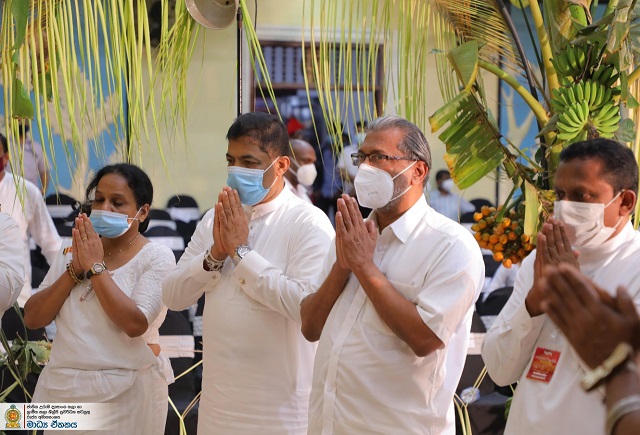
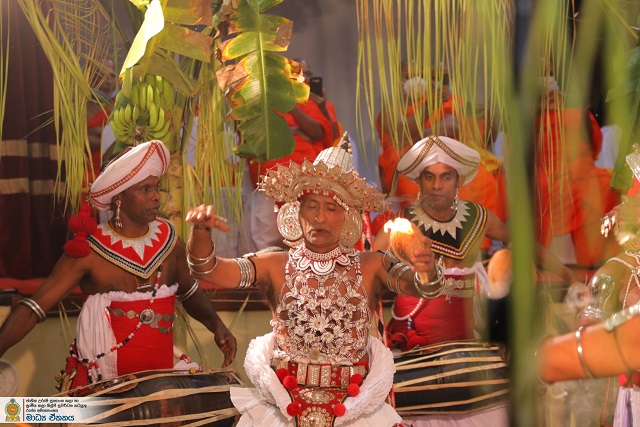
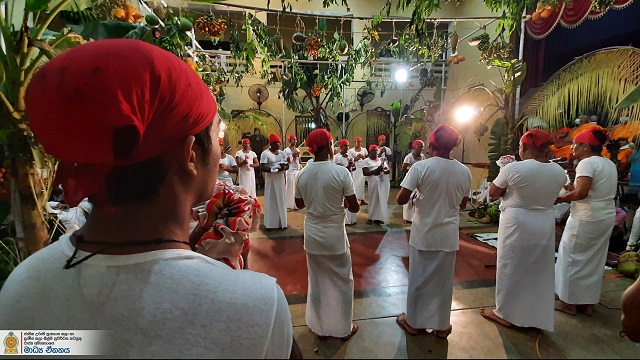
කෝවිඩ් 19 වසංගතයෙන් මව්බිම ආරක්ෂා කර ගැනීම අරමුණු කර ගනිමින් පැවැත්වූ මෙම කොහොඹා යක් කංකාරි ශාන්ති කර්මය මාතලේ ශ්‍රී පුන්‍යවර්ධන සමිතිය විසින් සංවිධානය කර මාතලේ බෞද්ධ මන්දිරය ශාලාවේදී දුරුතු මස 29 වැනිදා රැය පහන් වෙනතුරු පැවැත්වූවා.

මෙම ශාන්තිකර්මය සඳහා ශ්‍යාමෝපාලි වංශික මහා නිකායේ අස්ගිරි විහාර පාර්ශවයේ මාතලේ මහ දිසාවේ ප්‍රධාන සංඝනායක අති ගෞරවාර්හ කොස්ගොල්ලේ සද්ධර්ම කීර්ති ශ්‍රී චන්ද්‍රජෝති සීලරතනාභිධාන නායක ස්වාමීන් වහන්සේ, ශ්‍යාමෝපාලි වංශික මහා නිකායේ මල්වතු මහා විහාර පාර්ශවයේ මාතලේ මහ දිසාවේ ප්‍රධාන සංඝනායක අති ගෞරවාර්හ මහල කොටුවේ ශ්‍රී සිද්ධාර්ථ රතනසාර විමලධම්මාභිධාන නායක ස්වාමීන් වහන්සේ, ඇතුලූ මහා සංඝරත්නය විශාල පිරිසක් වැඩම කොට සිටියා.
මෙම කොහොඹා යක් කංකාරි ශාන්තිකර්ම මංගල්‍යයට විශේෂ ආරාධිත අමුත්තා ලෙස ජාතික උරුම ප්‍රාසාංග කලා හා ග්‍රාමීය කලා ශිල්පි ප්‍රවර්ධන කටයුතු රාජ්‍ය අමාත්‍ය විදුර වික්‍රමනායක මැතිතුමා සහභාගි වුණා.
ප්‍රෞඩ ඉතිහාසයකට උරුමකම් කියන මුල් මඩුවේ රජ මහා කොහොඹා යක් කංකාරිය ශාන්ති කර්මය හෙවත් හැටපස් මංගල්‍යය පිළිබඳව කන්ද උඩරට පමණක් නොව මුළු මහත් ශ්‍රී ලාංකේය ජනතාවගේම ඇත්තේ ඉමහත් භක්තියකි.

අපේ රටේ ඓතිහාසික උරුමයන් අතර කැපී පෙනෙන මෙම කොහොඹා යක්කංකාරිය ශාන්ති කර්මය කිරීම තුළින්, රටේ පවතින විවිධ වූ ව්‍යසනකාරී තත්වයන් ඇති වූ විට රටට සෙත් ශාන්තිය සෞභාග්‍ය උදාකර ලීමට හැකිවන බව සියලූ දෙනාගේම විශ්වාසයයි. රෝග නිවාරණය සදහා වසර 2500කට ආසන්නව අවිචින්නව පැවත එන මෙම කොහොඹා යක් කංකාරිය, ශාන්තිකර්මයක් පමණක් නොව සෞන්දර්යාත්මක අංගයක් ලෙසත් කලා ශිල්පින්ගේ ශිල්පිය දක්ෂතාවයන් ප්‍රගුණ කිරිමේ අවස්ථාවක් ලෙසද හැදින්විය හැකිය.
කුවේ‚ය විසින් විජය රජතුමාට කරන ලද ශාපයක් නිසා ප~ුවස්දෙව් රජතුමාට ඇති වූ දිවි දෝශය සුව කිරීම සඳහා මෙම මුල් මඩුවේ රජ මහා කොහොඹා යක් කංකාරි ශාන්ති කර්මය පැවැත් වූ බව ඉතිහාසයේ සඳහන් වේ.
මෙවන් ශාන්තිකර්ම මංගල්‍යයන් පවත්වමින්, මහනුවර මාතලේ සතර කෝරළය සත් කෝරළය ආදී ප්‍රදේශවල කලා ශිල්පීන් විසින් සිය ජන්මයෙන්ම උරුම කරගත් පාරම්පරික කලා සම්ප්‍රදායන් රැක ගනිමින් මතු පරපුරට උරුම කර දීම අගය කළ යුතුයි.

මාතලේ දිස්ත්‍රික් ගරු පාර්ලිමේන්තු මන්ත්‍රී රෝහණ දිසානායක, මාතලේ දිස්ත්‍රික් ගරු පාර්ලිමේන්තු මන්ත්‍රීනි රෝහිŒ කවිරත්න, ගරු මධ්‍යම පළාත් ආණ්ඩුකාරවර නීතිඥ ලලිත් යු ගමගේ යන අයගේ සහභාගීත්වය ඇතිව,
මාතලේ ශ්‍රී පුණ්‍යවර්ධන සමීතියේ ගරු සභාපති දේශබන්ධු ආර්.එම්.ආර්. ඉසුරු ජයවර්ධන මැතිතුමා ඇතුළු ගරු පාලක මණ්ඩලය සංවිධානය කළ මෙම කොහොඹා යක් කංකාරිය ශාන්තිකර්ම මංගල්‍යය ජනාධිපති සම්මානලාභී ප්‍රවීණ නර්තන ශිල්පී නිශාන්ත රම්පිටිය මහතා ඇතුළු ප්‍රවීණ නර්තන ශිල්පීන් විසින් පවත්වනු ලැබුවා.

ඥානසාර හිමිගෙන් දැඩි ප්‍රකාශයක් | බොදු බල සේනා මාධ්‍ය සාකච්ඡාව | 2021 ජනවාරි 30

January 31st, 2021

Colombo Today

රූමස්සල සංවේදී පාරිසරික කලාපය හරහා අඩි 20 පුලුල් මාර්ගයක් ඉදිකිරීම සම්බන්ධයෙන් අපගේ පැමිණිල්ල.

January 31st, 2021

කීර්ති හේවාගොඩ

–  ගරු ජනාධිපති ලේකම් කාර්යාලය 
—  සමුද්‍රීය පරිසර ආරක්ෂණ අධිකාරිය
–   වෙරල සංරක්ෂණ සහ වෙරල සම්පත් කලමනාකරන දෙපාර්තමේන්තුව
—වනජීවී සංරක්ෂණ දෙපාර්තමේන්තුව  වෙතට, 

රූමස්සල සංවේදී   පාරිසරික කලාපය හරහා අඩි 20 පුලුල් මාර්ගයක් ඉදිකිරීම සම්බන්ධයෙන් අපගේ පැමිණිල්ල. 
—————————————————————–
ගාල්ල දිස්‌ත්‍රික්‌කයේ හබරාදුව ප්‍රාදේශීය ලේකම් කොට්ඨාසයට අයත් රූමස්සල යනු පාරිසරික ව ,භූ- විද්‍යාත්මකව සහ එතිහාසිකව ඉතා වැදගත් භූමියකි.

එහෙත්  මේ වන විට උණවටුන වැල්ල දේවාලය අයත් යද්දෙහිමුල්ල  සිට රූමස්සල බටහිර ග්‍රාම නිලධාරී වසමේ පිහිටි පීල්ල හන්දිය දක්වා අඩි 20 ක් පමණ පළලින් යුතු රථ වාහන ගමන් කල හැකි කාපට් මාර්ගයක් තැනීමට යන්නේ රූමස්සල විනාශයට මං පෙත් විවර කරමිනි. .

මෙම මාර්ගය උණවටුනේ විශාලතම   හෝටල් ව්‍යාපාරකයෙකු සහ පිරිසකගේ උවමනාව මත යෝජනා වූ  අතර, එය හබරාදුව ප්‍රාදේශීය සභාව විසින් සම්මත කර හබරාදුව ප්‍රාදේශීය ලේකම් කාර්යාලය ට ඉදිරිපත් කර තිබේ. එම ප්‍රාදේශීය ලේකම් ගේ මැනුම් ඉල්ලුම්  අංක 05/HAB/ LAN /5 (පොදු- 1292) ලිපිය   මත ගාල්ල මිනින්දෝරු දෙපාර්තමේන්තු කාර්යාලය විසින් මිනුම් කටයුතු සිදු කරනු ලැබූ අතර අනුරේඛණ අංක GA/ HBR/ 2019/895 යටතේ සිතියම් ගත කර තිබේ. 

මීට අමතරව වර්ෂ 2020 ඔක්තෝබර් මස 08 දාතම , අංක 95/ HAB /LAN/08/137B/2- 04  දරණ ලිපිය මගින් හබරාදුව ප්‍රාදේශීය ලේකම් තුමිය විසින්  මධ්‍යම පරිසර අධිකාරියේ  දකුණු පලාත් අධ්‍යක්ෂ තුමා ගෙන් මේ සම්බන්ධයෙන් විමසීමක් කර ඇත. 

එහෙත් මෙම යෝජිත මාර්ගයේ, රූමස්සල බටහිර ග්‍රාම නිලධාරී වසමේ පිහිටි භූ ඛණ්ඩාංක 6. 0149 N /  80. 2375 E ඇති ගල්හේන දිය පහර සහ  6.0166 N/ 80. 2373 E පිහිටි පීල්ල හන්දිය අතර ඇති ආසන්න වශයෙන් මීටර 200 පමණ වන කොටස මේ වන විට ඇත්තේ සංවේදී වන ගහණය අතරින් දිවෙන අඩි පාරක් ලෙසයි.  

එමෙන්ම මෙම  මාර්ග කොටස දිවෙන්නේ,   වර්ෂ 1937 අංක 2,  සිට වර්ෂ 1993 අංක 43 ආදී සංශෝධන ද ඇතුලත් වන සත්ත්ව සහ වෘක්‍ෂලතා ආඥා පනත්  ( FPPO)  වලට අනුකූලව වර්ෂ 2002 දෙසැම්බර් 03 දින අංක 1269 /25 දරණ අති විශේෂ   ගැසට් නිවේදනය  මගින්   නම් කරන ලද ” රූමස්සල සමුද්‍ර සහ ගොඩබිම අභයභූමියේ ”  මායිම ට ස්පර්ශව එයට සමාන්තර පථයක වෙයි. (Rumassala Sanctuary )

රාම -රාවණා කථා පුවත ආදී සාහිත්‍යයන් ට සබැදී වද ,  කෝට්ටේ යුගයේ රචිත කොවුල් සන්දේශයේ ද වර්ණනාව ට ලක්ව, විවිධ  පෞරාණික සහ මධ්‍ය කාලීන නාවික සහ සාහිත්‍ය වාර්තා වල උණවටුන සහ රූමස්සල  ගැන සදහන්ය. එදා රූමස්සල අපූර්ව දසුනෙන් වශීකෘත වූ පෘතුගීසීන් එය “සුන්දර දසුන”හෙවත් Buona vista ලෙස නම් කලෝය. පසුකලෙක එය ඇන්ග්ලිකන් උරුවට Bonavista ”  බොනවිස්ටා” ලෙස උච්චාරණය ට ගැණින. 

 දකුණු දිග මුහුදු තීරය ආශ්‍රිත ජනතාවගේ ජනශ්රැති සහ ඇදහීම් වලට  සබැදී වූ රූමස්සල එතිහාසික සහ මානව විද්‍යාත්මක වටිනාකම අති මහත්ය.  වැල්ල දේවාලය ආදී පෞරාණික පුද බිම් වලට අනූරූපව පුරා විද්‍යාත්මක ව වැදගත් වේ. මේකී මානව සහ පුරා විද්‍යා සාධක සමස්තය මෙරට ස්වදේශිකයන් ගේ භෞමික අනන්‍යතාව සංරක්ෂණයේ ලා වැදගත් වන බව පැවැසිය යුතුය.

රූමස්සල භූ විද්‍යා සුවිශේෂී බව ආතර් සී ක්ලාර්ක් ආදී විද්‍යාඥයින් ගේද අවධානයට ලක් වූවකි. ලංකා භූමි  පදනමේ 90%  ප්‍රාග් කේම්බ්රීය පාෂාණ සම්භවය ඇත. රූමස්සල  ඇති   ආග්නේය සහ අවසාදිත පාෂාණ සුවිශේෂී  විපරිතකරණයට ලක්ව විවිධ පාෂාණ ප්රභේද සතුය. ඒ අතර යකඩ මූලද්‍රව්‍ය අධි ප්‍රතිශතයෙන් සංඝටක වූ පාෂාණ ඵලක (plates ) දක්නට ලැබීම විශේෂත්වයකි. ඉහත කී මාර්ගය කැපී යන්නේ එවන් විවිධ වූ පාෂාණ අයත් බිම් කොටසකට දැඩි භෞතික හානියක් කරමිනි.

රූමස්සල  ආශ්‍රිත ගොඩබිම් සහ සමුද්‍ර පාරිසරික පද්ධතීන් ඉතා ඉහල ජෛව විවිධත්වයක් යුතුය . මෙහි මුහුදු වෙරල, කොරල් පර ,වගුරු සහ දිය පහර ආශ්‍රිත ජලජ පාරිසරික පද්ධතියන්ද ,  ගල්පර සහ බෑවුම් ආශ්‍රිත ගොඩබිම් පාරිසරික පද්ධතිද දක්නට ලැබේ.  එවන්  සංයුක්ත  පාරිසරික පද්ධති විවිධත්වය සහ සංකලනය    නිසා ඊට අනුරූප ජෛව විශේෂ වල විවිධත්වයද අධික වේ.  (Diversity of biotic species due to  eco system diversity  and  integration  ) .

රූමස්සල  බොනවිස්ටා කොරල් පරය ශ්‍රී ලංකාවේ ජෛව විවිධත්වයෙන් වැඩිම කොරල් පරයයි. මේ කොරල් පරය සහ ඒ ආශ්‍රිතව ජීවත් වන මසුන් විශේෂ ගණන 500 කට අධික වන අතර එයින් විශේෂ 350 ක්ම කොරල් මසුන් වෙති. ලංකාවේ වෙරල ආශ්‍රිතව වෙසෙන පනාවන්  (Chaetodon) මත්ස්‍ය විශේෂ 36 න් 25 ක්ම රූමස්සල ආශ්‍රිත ව වෙසෙති.  ලංකාවේ කොරල් පරයක වාර්තා වූ වැඩිම මත්ස්‍ය විවිධත්වය වන ඝණ අඩි 189 කට මත්ස්‍ය විශේෂ 497 ක් පමණ වාර්තා වූයේ මෙහිය.

මීට අමතරව මේ කොරල් පරය වාසස්ථානය (habitat ) කොට ගත් මෘද්වංගීන්, සන්ධිපාදිකයන්, ශල්‍යචර්මීන් (echinoderms) ආදී අපෘෂ්ඨවංශී  සත්ත්ව විශේෂ දහස් ගණනක් ද ,ඇල්ගා විශේෂ සහ ක්ෂුද්‍ර ජීවි විශේෂද වෙති. මේ රූමස්සල බොනවිස්ටා කොරල් පරයේ ඒකක ඝන වපරිසරයක් තුල ඇති ජෛව විවිධත්වය සිංහරාජ වැසි වනාන්තරයේ එම ඉඩ ප්‍රමාණයේ ම  ඇති ජෛව විවිධත්වය ට වඩා වැඩි බව පැවසේ. ඇත්තවශයෙන්ම, කොරල් පර යනු මුහුදේ ඇති වැසි වනාන්තරයි.

රූමස්සල පක්ෂීන් විශේෂ 80 ක් සහ සමනල් විශේෂ 75 පමණ වාර්තා වී ඇත. දශක තුනකට පමණ පෙර වරින් වර අප කල ක්ෂේත්‍ර චාරිකා තුල මිමින්නන්, උරගයින්, මිරිදිය මත්ස්‍ය විශේෂ සහ උභය ජිවී විශේෂ දක්නට ලැබුනද කාලාන්තරයක් තුල රූමස්සල සිදුවූ   ජනාවාසකරණය ,රසායනික, ශබ්ද සහ ආලෝක දූෂණය නිසා එම සතුන්ගේ වාසස්ථාන අහිමි වීම සහ ආහාර දාම කැඩි යාම හේතුවෙන් ඔවුනගේ නිකේතන (niches) බිද වැටී මේ වන විට එම සතුන් රූමස්සලින් තුරන්ව ගොසිනි. කලකට ඉහත   කන්දේ හෙක්ටයාර 150 ක පමණ පැතිර තිබූ වන ගහනය (forest cover ) මේ වන විට තැනින් තැන කැබලි වූ (fragmented ) කැලෑ කුට්ටි සහ තීරු  බවට පත්ව තිබේ.   ඒවායේ සමස්ත වන ආවරණය හෙක්ටයාර 20 පමණ වන බව පෙනේ.  රූමස්සල මාර්ගයක් ඉදිකරන්නට යන්නේ එසේ දැනට  ඉතිරිව ඇති ,ගල්හෙනට උතුරින් වූ ගල්පර කැලෑව සහිත කොටසත්, ගලහෙන දිය පහර මුහුදට වැටෙන කොටස ආශ්‍රිත  වෙරලාශ්රීත වන බිම් කඩත් වෙන් කරමින් සතුන්ගේ වන මං කඩක් ද ( wild crossing / jungle corridor ) විනාශ  කරමිනි. 

මෙම ගලහේන යනු මුහුදු මට්ටමේ සිට මීටර 30 උසින් ඇති කුඩා ද්‍රෝණියකි.     උන්නතාංශය මීටර 80 කට මදක් වැඩි වන රූමස්සල උසම ස්ථානය වන  කුලුණු කන්දේ සිට  එන දිය පහර මේ හරහා ගලා එයි . අතර මගදී මේ දිය පහර අක්කර 7 ක් පමණ වූ ගලහේන  ගොහොරු බිම ඔස්සේ  ඓන්ද්රීය පාදර්ථ ද ගෙන මුහුදට වැටෙයි. මෙසේ ගෙන එන ඓන්ද්රීය ද්‍රව්‍ය නොගැඹුරු මුහුදේ කොරල් පර ආශ්‍රිත ජෛව ප්‍රජාවට පෝෂ්‍ය පදාර්ථ ලෙස වැදගත් වේ.  අඩි 20 මාර්ගය තැනීමේදී මෙම දිය පහර ට හානී වන අතර, ඒ ආශ්‍රිත ගොඩබිම, මිරිදිය සහ කරදිය ජෛව ප්‍රජාව විනාශ වීමට හේතු කාරක වේ.

ගලහේන ද්‍රෝණය සහ කුලුනු කන්ද ආදී මුදුන් ආශ්‍රිත වූ වනාන්තරය හායනය වීමට පෙර කාලයේ මේ ගලහේන දිය පහර ගැමියන් විසින් ඖෂධීය ගුණයෙන් යුතු  දිය පහරක් ලෙස සැලකූ අතර එයින් ස්නානය කිරීම මගින් ලෙඩ රෝග සුව කල ගත හැකි බවට ඔවුන් විශ්වාස කලෝය. මේ දිය පහර අමිල සම්පතකි.

රූමස්සල ගොඩබිම් පාරිසරික පද්ධතිය තුල ලංකාවේ ඇති වනාන්තර දර්ශ කිහිපයක් දක්නට ලැබේ.  ලංකාවේ සමුද්‍ර ආශ්‍රිත එකම නීවර්තන වැසි වනාන්තරය සහ ගල් පර ආශ්‍රිත දිය ඇලි තිබුනේ රූමස්සල ය. නමුත් මේ වන විට කන්දේ නැගෙනහිර බෑවුමේ මුහුදු සුලං මුවාවේ තිබූ එම වැසි වනාන්තරය සදහටම විනාශව ගොස් තිබේ. එහි අවශේෂ (residuals) තවමත් දැකිය හැකිය.

රූමස්සල කෑලයේ දේශීය වෙදකම ට වැදගත් ඖෂධ ශාක විශේෂ 170 ක් පමණ සොයාගෙන ඇත. ඒ අතර කොතල හිඹුටු, අත්තික්කා, අරලු ,බුලු, වන රාජ, යකි නාරං ආදිය වෙති.  මෙම ශාක වල ජාන සම්පත අති මහත්ය.  ජාන මංකොල්ලය ට විශේෂයෙන්ම දොරටු විවර වන්නේ ජෛව විවිධත්වයෙන් අධික රූමස්සල වැනි වනාන්තර සහ තෙත් බිම් ආදී සුවිශේෂී පාරිසරික පද්ධතීන් හරහා  මාර්ග යාමෙන් සහ පාරිසරික පද්ධතීන් වාණිජකරණය කිරීම මගිනි. (Promotion of bio piracy )

රූමස්සල සුවිශේෂී භූ පාංශු ස්ථරයේ වර්ධනය වන ශාක පටක වල විශිෂ්ඨ  සාරය ,වෙනත් ස්ථාන වල වර්ධනය වන එම   ශාක විශේෂයන් ගෙන්  ලබා ගන්නා සාර වලට වඩා ඖෂධීය ගුණයෙන් අධික බව අතීතයේ ආයුර්වේද වෛද්‍යවරුන් පවසා ඇත.  

ඉහත කරුණු සියල්ල සලකා බලා කල යුත්තේ මේ ඉතා කුඩා භූමි භාගයක තැනින් තැන ඉතිරිව ඇති කැලෑ කොටස් නිරවද්‍ය සංරක්ෂණ ක්‍රමවේදයකට අනුව රැක ගැනීමයි. 

ගොඩබිම සිට ගලා එන ජලය ,ඓන්ද්රීය භාරය සහ කොරල් පර සමුද්‍ර මත්ස්‍ය ප්‍රජාව ට අත්‍යවශ්‍ය ය.  ගාල්ල වෙරලාශ්රීත ධීවර කර්මාන්තය ට වැදගත් වන මසුන්ගේ බිත්තර සහ පැටවූ අවධියේ රැකවරණය සහ පෝෂණය ලබන්නේ මේ කොරල් සහ වෙරලට සමීප නොගැඹුරු මුහුදේය. රූමස්සල පාරිසරික පද්ධතීන් බිද වැටීම ධීවර කර්මාන්තය ට හානිකර ලෙස බලපානු ඇත. 

මාර්ගය ඉදිකිරීමේදී බැහැර වන අප ජලය , සිමෙන්ති , තෙල්,  අබලි ද්‍රව්‍ය  මගින්  ස්වභාවික පරිසරයට  වන හානිය අමුතුවෙන් කිව යුතු නැත.  එමෙන්ම මේ මාර්ගය සහ හෝටල් ඉදිකිරීම් මගින් රූමස්සල මහ වැල්ල සහ සුදු වැල්ල වාණිජකරණය වීමෙන් ඔබ්බෙන් වූ බොනවිස්ටා කොරල් පරය විනාශ වනු ඇත. 

වර්ෂ 1981 අංක 57 දරණ වෙරල සංරක්ෂණ පනත (CCA ) සහ එහිම, වර්ෂ 2011 දී  අංක 49 සංශෝධනය යටතේ වෙරල තීරයේ සිට ගොඩබිම ට මීටර 300 ක් දක්වා ආවරණය වන භූමියේ හානිකර ඉදිකිරීම් කිරීමට අයිතියක් නැත. 

අභයභූමියකට යාබදව  මෙම මාර්ගය තැනීම වර්ෂ 1980 අංක 47 දරණ ජාතික පාරිසරික පනතේ වගන්ති උල්ලංඝනය කිරීමකි.  තෙත් බිම් රැක ගැනීම සම්බන්ධව වු RAMSAR සම්මුතියට ලංකාවේ රජය අත්සන් කර ඇත.  

මෙම මාර්ගය ඉදිවීමට ඇති  භූ විද්‍යාත්මකව සංවේදී භූමියේ බෑවුම්  ඇලය  (slope gradient) අධිකය. යටි වනරෝපණය දැනටමත් සැලකිය යුතු පරිදි ඉවත්ව ඇති නිසා පස සෝදා යාමට ලක්වෙමින් ඇත. එය යම් පමණකින් හෝ පාලනය කරගෙන සිටින්නේ ස්වභාවිකව මෙහි පිහිටි ගල් කුට්ටි මගිනි. යෝජිත  මාර්ගය තැනීම පස සොදා යෑම තීව්‍ර  කරනු ඇත. එම නිසා වර්ෂ 1951 අංක 25 දරණ පස සංරක්ෂණය පිලිබද ආඥා පනත ඇතුලු වර්ෂ 1996 අංක 24 දරණ පාංශු සංරක්ෂණ පනතේ වගන්ති උල්ලංඝනය ට ලක්වේ. 

භූමියේ ආනත බව නිසා, මාර්ගය ඉදිකිරීමේදී පස් සහ ඉදිකිරීම් ද්‍රව්‍ය වර්ෂාව මගින් සොදා ගොස්  පහල ඇති මුහුදට  එක්වෙනු ඇත. රූමස්සල බටහිර මුහුදු තීරය දූෂණයට ලක්වේ . මෙය 2008 අංක 35 දරණ සමුද්‍ර දූෂණය වැලකීමේ පනතේ වගන්ති වලට එරෙහිව යෑමකි. 

 මෙහි කලින් පාරක් තිබුණේ නැත.  වනය හරහා යන අඩි පාරක් අතීතයේ දී  රාත්‍රී  මසුන් මරන්නන් සහ මුහුදුබත් වූ නැව් කිමිදෙන්නන් විසින් භාවිතා කරන ලදී. ඉංග්‍රීසි ආණ්ඩුව සමයේ වර්ෂ 1931 කල පිඹුරු සැලැස්මක ( title plan) අඩි පාරක් ලෙස සහ එහි මාර්ග අවශේෂිතය (reservation ) ලෙස ලකුණු කොට පමණක් ඇත. වෙනත් කිසිදු සිතියමක හෝ මූලාශ්‍රයක මෙවන් පාරක් ගැන සාක්ෂි නැත. අපගේ අත්දැකීම අනුව මීට දශක තුනකට පෙර ද මෙය කැලේ   ඇතුලෙන් රිංගා ගල් අතර පනිමින් යා යුතු වන මගකි.  එහෙත් පසු කලෙක යුරෝපීය සංචාරකයන් උණවටුනේ සිට මහ වැල්ල සහ සුදු වැල්ල වෙත ඒමට මේ කැලැ පාර භාවිතා කල අතර ඔවුන් එයට path to the jungle beach ලෙස කීවෝය. එය  අනුකරණය කල ලංකාවේ සංචාරක මග පෙන්වන්නන් සමහරක් විසින් මෙයට “ජන්ගල් බීච් පාර” යැයි නමක් පට බැදීය. 

මේ  සමග, යෝජිත මාර්ගයේ පාරිසරිකව සංවේදී කලාපය තුලින් යන මීටර 200 ක පමණ කොටස පෙන්වන චන්ද්‍රිකා රූපය සහ මිනින්දෝරු දෙපාර්තමේන්තුව මගින් පාර සලකුණු කරන ලද අනුරේඛණ පිිිිටපත අමුණා ඇත. සෙසු ජෛව විද්‍යාත්මක,  පාරිසරික සහ නෛතික දත්ත ආශ්‍රිත  මූලාශ්‍ර  තුල දැක්වේ. 

මිල කල නොහැකි  සෞන්දර්යාත්මක සහ විද්‍යාත්මක උරුමයක් සතු   රූමස්සල ලාංකීය මහජනතාව ට එළිමහන් කලාගාරයක් සහ විද්‍යාගාරයක් ලෙස සංරක්ෂණයට සහ අධ්‍යනය ට ලක් කල යුතුව තිබියදී  සුලු පිරිසකගේ මූල්‍යමය සහ දේශපාලන වාසි තකා බිල්ලට දීම විශාල අපරාධයකි.  රූමස්සල විසින්  සෘජුව අප සැමගේ සභ්‍යත්වය ප්‍රශ්නය ට ලක් කරයි.

සමස්ත ජාතියේම උරුමයක් වූ රූමස්සල විනාශ කරමින්  කැපීමට යන මේ මාර්ගය ට,  සදාචාරාත්මක,  විද්‍යාත්මක සහ නෛතික සාධක මත අපගේ විරෝධය පල කරන අතර රූමස්සල රැක ගැනීමට ඔබගේ සක්‍රීය මැදිහත් වීම කරන ලෙස ගෞරවයෙන් ඉල්ලා සිටිමු. 

කීර්ති හේවාගොඩ
Environmental Activist 

0765561912

Date. 31.01.2021
මූලාශ්‍ර. 

1- අසිරිමත් රූමස්සල.  ජයතිස්ස තෙන්නකෝන්.( 2014) 

2-  Fauna and Flora protection ordinance no 2 of 1907 and following amendments. 

3-  Coast conservation (Amendment ) Act no 49 of 2011

4- National Wetland directory of Sri Lanka.  IWMI/ CEA/ IUCN (2006)

5- Karunarathne and Weerakkody (1998) / De Silva (1998)/  Rajasuriya and White (1995)

6- Medicinal plants of Rumassala. Dr. S.P. Samarakoon (1991 )

7- National Environmental (Authority )Act no 47 of 1980. 

8- වර්ෂ 1996 අංක 24 දරණ පාංශු සංරක්ෂණ පනත සහ වර්ෂ 1951 අංක 25 දරණ පස සංරක්ෂණය පිළිබඳ ආඥා පනත. 

9-  2008 අංක 35 දරණ සමුද්‍ර දූෂණය වැලකීමේ පනත

10- MOFE (1999 ), CZMP (2003), Ekarathne (2000 )

Double standards in the application of human rights principles

January 31st, 2021

By Sugeeswara Senadhira/Daily News Courtesy NewsIn.Asia

Double standards in the application of human rights principles

Colombo, January 29: When outgoing US President Donald Trump, in his last official act, pardoned a few of his supporters who were serving jail terms, the silence of the so-called champions of justice, the European Union (EU) and United Nations Human Rights Council (UNHRC) was deafening.

However, these two multinational bodies are very enthusiastic in their pursuit to defend justice when dealing with smaller countries, especially sovereign nations that refuse to bow down to their unreasonable diktats.

In its latest communication to Sri Lanka, the UNHRC stated that the High Commissioner is concerned that the emergency security deployments that followed the Easter Sunday terrorist attacks in 2019 have evolved into an increased militarization of the State. The Government has appointed active and former military personnel, including those credibly implicated in war crimes, to key positions in the civilian administration, and created parallel task forces and commissions that encroach on civilian functions. Combined with the reversal of important institutional checks and balances on the executive by the 20th Constitutional Amendment, this trend threatens democratic gains.”

Not only the mighty United States, but its ally Israel ignored the UNHRC Resolutions with impunity. The majority of UNHRC resolutions were on Israel and the country did not even bother to reply to the charges levelled against it. The South Asian regional power, India told the UN point blank that it was not ready to talk about Kashmir at the world body.

In 2002, when communal clashes took place in Gujarat, killing over 1,000 civilians and injuring many more, Narendra Modi, then Chief Minister of Gujarat and later Prime Minister of India, was accused of initiating and condoning the violence, as were police and Government officials who allegedly directed the rioters and gave lists of Muslim-owned properties to them. The Congress Government, despite its deep differences with Modi’s Bharathiya Janatha Party (BJP), told the foreign powers that it was an internal matter and New Delhi would not allow it to be raised in international forums.

Incidentally, during the EU–India bilateral talks in 2002, the EU President himself suggested that the Gujarat communal riots should be included in the agenda for talks. Immediately, the leader of the Indian delegation said: I am sure you are joking. It is ok to joke as we are among friends. If such an issue is raised in a serious manner, this meeting would be a very short one,” indicating that if the Gujarat issue was to be included in the agenda, the Indian team would walk out.

Although very concerned about the partisan manner of the UNHRC, Sri Lanka will continue to work in harmony with the UN and its institutions. In 2015, Sri Lanka co-sponsored UNHRC Resolution 30/1 with United States without the approval of the Cabinet of Ministers or Parliament. After the US withdrawal from the UNHRC, Resolution 40/1 of 2019 was co-sponsored by the United Kingdom, Canada, Germany, Montenegro and North Macedonia. In 2019, the newly elected Government’s Foreign Minister Dinesh Gunawardena informed the UNHRC about its withdrawal from the co-sponsored resolution.

The US, though no longer a part of the UNHRC, continues to press for the co-sponsored resolution. Earlier this week, US Ambassador Alaina I Sri Lanka, Alaina Teplitz urged the Government to come up with a meaningful plan at the upcoming UNHRC session. She added that she was pleased to hear last year from Foreign Minister Dinesh Gunawardena that there will be a comprehensive reconciliation strategy through a domestic process.

In spite of the Government’s detailed report on the steps taken for reconciliation, the UNHRC repeated its demand to promote an inclusive, pluralistic vision for Sri Lanka, based on non-discrimination and protection of human rights for all, and in line with the 2030 Sustainable Development Agenda (SDA). The UNHRC ignored the fact that Sri Lanka has already achieved some targets of the SDA and good progress has been made to achieve the rest of the goals.

The UNHRC wants the Government to publicly issue unequivocal instructions to all branches of the military, intelligence and police forces that torture, sexual violence and other human rights violations are prohibited and will be systematically investigated and punished. This is something which is in the penal code and the law enforcement agencies strictly follow them and culprits are being prosecuted regularly. Hence, the UNHRC’s recommendation is redundant.

It is apparent that most of the UNHRC recommendations are based on false information. The demand to order all security agencies to immediately end all forms of surveillance and harassment of and reprisals against human rights defenders, social actors, and victims of human rights violations is an example of a baseless allegation. The call to stop torture and ill-treatment is surprising as no evidence whatsoever has been provided to substantiate the absurd charges.

Another demand of the UNHRC is to remove from office Security Forces personnel and other public officials credibly” implicated in human rights violations, in compliance with human rights standards; implementation of other reforms of the security sector to strengthen and ensure accountability and civilian oversight. It has ignored the fact that the alleged charges were not proven against any of the officers. The removal of such officers without being proven guilty would be a violation of their human rights.

The US has refused visas to Army Commander General Shavendra Silva and his family members although there are no charges filed in any court against them. It is interesting to note that the US denied visas to Narendra Modi when he was the Chief Minister of Gujarat due to his alleged role in the Gujarat riots. But Washington gave him a grand welcome at the White House when he became the Prime Minister of India. That alone is sufficient proof of Western double standards.

The UNHRC has demanded from Sri Lanka the establishment of standard procedures for the granting of pardons or other forms of clemency by the President, including subjecting it to judicial review, and excluding grave human rights and international humanitarian law violations. However, the Geneva-based UN organization refrained from uttering a single word when Donald Trump pardoned his friends serving jail terms.

The European Union, which was snubbed by India for its demand to discuss the Gujarat communal clashes in 2002, also tried to raise the issue of the Presidential pardon to a prisoner in Sri Lanka.

The UNHRC wants Sri Lanka to cooperate with victims and their representatives to investigate and prosecute international crimes committed by all parties in Sri Lanka through judicial proceedings in domestic jurisdictions, including under the principles of extraterritorial or universal jurisdiction. Sri Lanka has explained time and again that under the Constitution of the country there is no provision to set up international courts. Cabinet spokesman Keheliya Rambukwella pointed out earlier this week that in March 2019, the then Foreign Affairs Minister Tilak Marapana, eminent legal luminary and former Attorney General, explained at length the constitutional, legal and socio-political challenges involved in ‘fully implementing’ HRC Resolution 30/1 during the 40th Session of the Council.

While the UNHRC report accuses Sri Lanka of credible allegations of serious violations of international humanitarian law amounting to war crimes having been committed during the separatist war,” the charges remain unsubstantiated and no evidence to support those allegations has been furnished.

At the same time, Sri Lanka is willing to work with interested parties in bringing about a closure on this vexed issue. Foreign Secretary Admiral Prof. Jayanath Colombage said that the government was having discussions with the UK-led Sri Lanka Core Group in a bid to explore the possibility of reaching a consensus on what he described as a ‘consensual resolution’ ahead of the 46th sessions of the UNHRC scheduled for February-March this year.

The Western nations should drop their previously displayed hostile attitude and work impartially to find a consensual formula to end this irritant and forge a healthy relationship with Sri Lanka, a nation fully committed to peace, reconciliation and progress.

Russia permits Sri Lanka to produce Sputnik V Vaccine

January 31st, 2021

Courtesy NewsIn.Asia

Colombo, January 31 (Sunday Observer) – Russia has expressed its willingness to allow Sri Lanka to produce its own Covid-19 vaccine Sputnik V locally if the National Medicines Regulatory Authority (NMRA) authorises it for local use, a senior state official said. The Sputnik V vaccine is already being manufactured in India and those two countries signed agreements last year to produce 300 million doses of the Russian vaccine in Indian laboratories.

President Gotabaya Rajapaksa has authorised the use of the Chinese and Russian drugs that have shown high efficacy levels but the NMRA is yet to approve the two vaccines for either emergency or regular use, the official said.

The Indian manufactured Oxford-AstraZeneca vaccine was given the green light for emergency use by the NMRA and the first consignment of 500,000 doses, arrived in the country on Thursday as a grant from the Indian Government.

The Chinese Government has also expressed its readiness to provide 300,000 doses of its vaccine Sinopharm free to Sri Lanka, Sri Lanka’s Ambassador to China Dr. Palitha Kohona told the Sunday Observer. As soon as the approval is given the vaccine can be shipped to Sri Lanka,” he said.

However, the Russian Government has not indicated any vaccine grants to Sri Lanka, other than permitting the drug to be locally produced which will be beneficial in terms of cost-effectiveness.

Health officials said that frontline workers such as hospital staff, PHIs, Police and other personnel pressed into tackling the Covid-19 pandemic needed 700,000 doses of the vaccine.

The Health Ministry recorded 305 Covid -19 deaths and 62,445 infections so far with nearly 56,300 of them classified as recovered. There are still 5,863 patients in hospitals receiving treatment.

Sri Lanka approaches India and other countries for support in UNHRC

January 31st, 2021

By P.K.Balachandran/Daily Express Courtesy NewsIn.Asia

Colombo, January 31: Sri Lanka is in discussion with India and other countries for support in the March session of the UN Human Rights Council (UNHRC) in Geneva when Western nations bring an intrusive and punitive resolution against it for alleged war crimes.

A top source in the Lankan government said that the support of about 15 members of the 47-member UNHRC is being sought to counter the Core Group’s move to bring a resolution that is expected to call for targeted sanctions, asset freezes and travel bans among other intrusive measures. The High Commissioner for Human Rights Michelle Bachelet has even recommended that the Lankan case be taken to the International Criminal Court.

The Core Group comprises Canada, Germany, North Macedonia, Montenegro and the UK. The US, which is the prime factor in the anti-Sri Lankan move but is not a UNHRC member, is using the Core Group to push its anti-Lankan agenda. The Core Group is now working a consensual resolution”. But given the radical difference between the stands of the Core Group and Sri Lanka, chances of a consensus emerging appear to be slim.      

According to the government source, Sri Lanka approached India first and India had said that it would consider the Lankan request. China and Russia have already publicly stated that they would support Sri Lanka in international forums. Sri Lanka is also counting on African countries to support it, as in their case especially, the Black Lives Matter movement in America is of special significance.

Sri Lanka is bringing to the fore the fact that the US has much to account for in terms of human rights violations before it points an accusing finger at Sri Lanka. Recent incidents of gross violations of the basic rights of the Blacks and other minorities in the US, and the unbridled assaults and vandalism against established democratic institutions, will be highlighted.

The government also pointed out that the one-sided indictment of the High Commissioner of Human Rights will only exacerbate Sinhala-Buddhist majoritarianism.

It will also push Sri Lanka further into the arms of China, which the West has been trying hard to prevent.

Colombo is pointing out that the US and the Core Group are ignoring the political reality in Sri Lanka which is that the majority detests Resolution 30/1 of 2015 which had called for unconstitutional accountability mechanisms. The source said that the Western nations must take into account that the co-author of the co-sponsored 2015 resolution, viz.,the previous government of Sri Lanka, lost face among the people and was voted out in the 2019 and 2020 elections. The resolution’s prime movers lost their seats in parliament. Therefore, Colombo sees no logic in the US and Core Group’s current bid to bring in an even stronger resolution.

UNHRC Geneva

Pathfinder Foundation

The Pathfinder Foundation (PF), a Lankan think tank close to the government, issued a statement on Saturday warning: Sri Lankan and like-minded member States will be obliged to press such resolutions to a highly divisive vote in the Council. Even if the resolution is adopted by a slim majority, Sri Lanka is most likely to ignore it and pitch her bilateral ‘economic tents’ with countries that vote in its favor.”  

The PF asked as to whether the Core-Group on Sri Lanka expects to get its job done by resorting to confrontation and browbeating a member state, instead of cooperating and engaging in consultation?

If the answer is yes, then those countries representing the South in the HRC will think deeply before they cast their vote in support of another meaningless and intrusive resolution,” the PF said.

Class by Itself

PF said that Resolution 30/1 of 2015 is probably the first instance in the history of the HRC, a supposedly sovereign and independent country co-authored a UN Resolution containing an array of highly intrusive, unconstitutional and un-implementable demands directed at itself. It probably scores another first in that the self-authored Resolution touches upon a range of governance matters, which are generally considered the exclusive preserve of the domestic jurisdiction of the authoring member state itself viz, Sri Lanka.”

Electoral Defeat

The resolution of 2015 may be unique as well, for the reason that in no other democratic country a HRC resolution had been so instrumental in delivering so massive an electoral defeat to the incumbent government that cosponsored the resolution,” PF said.

The HRC and the fellow internationals that generally get busy exploring how to ‘helpfully intervene’ in Sri Lanka about this time every year, must understand the reality that it is  a function of the free franchise in one of the two oldest democracies in South Asia. There was a groundswell of opinion in this country against the resolution, which was initiated by a group of countries, who had only a limited understanding of Sri Lanka. It was seen as a blatant interference in a small sovereign nation, by virtually forcing it to ‘out-source’ the oversight of and judgment on many governance matters to a secretariat in distant Geneva,” the statement added.

Bad Template

It pointed out that the provisions of Resolution 30/1 were a ‘bad template’ for HRC to promote international cooperation on human right because that template had failed elsewhere (example the so-called Hybrid Courts in Cambodia).

Some of the recommendations were unconstitutional/un-implementable (example appointment of foreign judges). A watching brief on governance matters was to be conferred on a Secretariat based in Geneva and a dedicated UN office in Colombo was proposed for the oversight of these activities.

That all these were at variance with the UN Charter, was of no concern to the ill-advised Core- Group on Sri Lanka,” PF pointed out. Instead, the Council would have been well-advised to develop and propose robust and independent domestic accountability processes, supported where necessary, by international cooperation in technical assistance, advisory services, best practices etc.,” it added.

The Pathfinder Foundation said that it believes such an approach, which is advisory”, rather than retributive” in nature will: (1) work within normal national and international legal norms (2) serve as a model for other countries needing such services, to cooperate with the UN and (3) not function as a dis-incentive for countries that are willing to voluntarily cooperate.

The PF said that some of the HRC’s recommendations sound bizarre” as they refer to now familiar Western parlance of ‘targeted measures, assets freeze’ and so on.

These are counterproductive as far as addressing the real issues of cooperation were concerned, for no country will accept such invasive measures, pathfinder states. Such actions will face hugely divided votes in the UN General Assembly and definite vetoes in the Security Council,” it argued.

The think tank recalled that President Gotabaya Rajapaksa said that Sri Lanka will not rule out the possibility of walking out of any entity that does not respect the accepted principles of sovereignty and independence of countries. But he did affirm that his government is fully committed to international cooperation including with the UN on SDGs, which of course include human rights, peace and justice related matters. The PF pointed out that Sri Lanka has continued to work effectively with various Special Procedure Mandates or Rapporteurs of the UNHRC.

තිස්සගේ, ප්‍රසන්නගේ, බන්දුලගේ, මොහාන්ගේ, තිසරගේ දියණියන් තානාපති කාර්යාලවල ඉහල පුටුවලට. | දිලිත් ජයවීරගේ පුවත්පතක් හෙළිකරයි

January 31st, 2021

Courtesy Colombo Today

පසුගිය රජයන් තුළ දක්නට ලැබුණු පුරුද්දක් අනුගමනය කරමින් වත්මන් රජය ද විදේශයන්හි ශ්‍රී ලංකා දූත මණ්ඩල සඳහා දේශපාලන පත්වීම් ලබා දීමට ද පියවර ගෙන තිබෙන බව දෙරණ මාධ්‍ය ජාලයේ හිමිකරු වන දිලිත් ජයවීරගේ පුවත්පතක් වන themorning පුවත්පත වාර්තා කර ඇත.

පහත දැක්වෙන්නේ එම පුවත්පත දක්වා ඇති විදෙස් ශ්‍රී ලාංකික දූත මණ්ඩල සඳහා නව පත්වීම් ලයිස්තුවයි.

  • සමගි ජන බලවේගයේ පාර්ලිමේන්තු මන්ත්‍රී තිස්ස අත්තනායකගේ දියණිය දුල්මිනි ඉන්ද්‍රචාපා අත්තනායක ඕස්ට්‍රේලියාවේ කැන්බරා හි ශ්‍රී ලංකා මහ කොමසාරිස් කාර්යාලයේ තුන්වන ලේකම් ලෙස පත් කර තිබේ. ඇය මේ වන විට ඕස්ට්‍රේලියාවේ මෙල්බර්න් හි පදිංචිව සිටින බව වාර්තා වේ.
  • ඕස්ට්‍රේලියාවේ ඇඩිලේඩ් හි පදිංචි අමාත්‍ය ප්‍රසන්න රණතුංගගේ දියණිය පවිත්‍රා රණතුංග සිඩ්නි නුවර ශ්‍රී ලංකා කොන්සල් කාර්යාලයේ තුන්වන ලේකම් ලෙස පත් කර තිබේ.
  • අමාත්‍ය ආචාර්ය බන්දුල ගුණවර්ධනගේ දියණිය රන්දුලා ගුණවර්ධන එක්සත් ජාතීන්ගේ ශ්‍රී ලංකාවේ නිත්‍ය මෙහෙයුමේ තුන්වන ලේකම් ලෙස නිව්යෝර්ක් බලා පිටත්ව යාමට නියමිතය.
  • පැරීසියේ ශ්‍රී ලංකා තානාපති කාර්යාලයේ තුන්වන ලේකම් ලෙස රාජ්‍ය අමාත්‍ය දුමින්ද දිසානායකගේ සහෝදරයා වන අමිල දිසානායක පත්කර ඇත.
  • ජනාධිපති මාධ්‍ය අධ්‍යක්ෂ මොහාන් සමරනායකගේ දියණිය සුබෂිනි සමරනායක වියානා ශ්‍රී ලාංකික තානාපති කාර්යාලයේ තුන්වන ලේකම් ලෙස පත් කර තිබේ.
  • හිටපු නාවික හමුදා ප්‍රධානී සහ ශ්‍රී ලංකාවේ ඕස්ට්‍රේලියාවේ තානාපති අද්මිරාල් තිසර සමරසිංහගේ දියණිය තුලාසි සමරසිංහ සිංගප්පූරුවේ ශ්‍රී ලංකා මහ කොමසාරිස් කාර්යාලයේ තුන්වන ලේකම් ලෙස පත් කර තිබේ.

Sri Lanka To Be Defiant At UNHRC – Analysis

January 31st, 2021

By  Courtesy Euresia Review

A think-tank close to the government says an anti-Lankan resolution will be a dead letter and warns that Colombo will switch economic ties from the invasive West to those countries which respect its sovereignty.  

Pathfinder Foundation (PF), a prominent Sri Lankan think tank which is close to the government, has clearly indicated that Sri Lanka will take a defiant posture at the March session of the UN Human Rights Council (UNHRC) in Geneva when Western nations bring an intrusive and punitive resolution against it for alleged war crimes.      

In her report to the UNHRC, the High Commissioner for Human Rights, Michelle Bachelet,  had recommended that Sri Lanka be subjected to targeted sanctions” and that the alleged war crimes be taken to the International Criminal Court (ICC) as Colombo had not taken any steps to address the credible allegations”.   

In a statement issued on Saturday, Pathfinder Foundation (PF) warned: Sri Lanka and like-minded member States will be obliged to press such resolutions to a highly divisive vote in the Council. Even if the resolution is adopted by a slim majority, Sri Lanka is most likely to ignore it and pitch her bilateral ‘economic tents’ with countries that vote in its favor.”  

Such a resolution will not therefore help the cause of accountability and reconciliation one bit, and will simply add to the considerable number of other resolutions already ignored by countries like China, Cuba, India, Israel, the US, and so on.”

Pathfinder believes that the only way forward is a negotiated and consensual” one, rather than unilateral actions” either by Sri Lanka or the initiators of any resolution. There is no point in adding to the paperwork at the Human Rights Council (HRC) with no prospect of implementation at the ground level. It will not enhance the utility or credibility of HRC’s tool kit for international cooperation in human Rights, PF argues.

Core Group

The Pathfinder Foundation asked as to whether the Core-Group on Sri Lanka (comprising Canada, Germany, North Macedonia, Montenegro and the UK) expects to get its job done by resorting to confrontation and browbeating a member state, instead of cooperating and engaging in consultation?

If the answer is yes, then those countries representing the South in the HRC will think deeply before they cast their vote in support of another meaningless and intrusive resolution,” the PF said.

The 46th session of the UN Human Rights Council (HRC) will see a debate on its controversial Resolution 30/1 of 2015, which the previous Sri Lankan government co-owned in an unprecedented and unwise move”.

Resolution  30/1 adopted in 2015 ‘runs out’ this year and the HRC egged on by the so called ‘core group’ of Western countries – the pilots of 30/1- will feel obliged to take stock of the situation and see where they want to go from here.

Class by Itself

PF says that Resolution 30/1 is in a class by itself” in both form and content would be obvious to any reasonably literate person, including to its most ardent supporters.

It is probably the first instance in the history of the HRC, a supposedly sovereign and independent country co-authored a UN Resolution containing an array of highly intrusive, unconstitutional and un-implementable demands directed at itself. It probably scores another first in that the self-authored Resolution touches upon a range of governance matters, which are generally considered the exclusive preserve of the domestic jurisdiction of the authoring member state itself viz, Sri Lanka.”

Electoral Defeat

The resolution of 2015 may be unique as well, for the reason that in no other democratic country a HRC resolution had been so instrumental in delivering so massive an electoral defeat to the incumbent government that cosponsored the resolution, PF said.

The HRC and the fellow internationals that generally get busy exploring how to ‘helpfully intervene’ in Sri Lanka about this time every year, must understand the reality that it is  a function of the free franchise in one of the two oldest democracies in South Asia. There was a groundswell of opinion in this country against the resolution, which was initiated by a group of countries, who had only a limited understanding of Sri Lanka. It was seen as a blatant interference in a small sovereign nation, by virtually forcing it to ‘out-source’ the oversight of and judgment on many governance matters to a secretariat in distant Geneva,” the statement added.

It pointed out that the provisions of Resolution 30/1 were a ‘bad template’ for HRC to promote international cooperation on human right because that template had failed elsewhere (example the so-called Hybrid Courts in Cambodia).

Some of the recommendations were unconstitutional/un-implementable (example appointment of foreign judges). A watching brief on governance matters was to be conferred on a Secretariat based in Geneva and a dedicated UN office in Colombo was proposed for the oversight of these activities.

That all these were at variance with the UN Charter, was of no concern to the ill-advised Core- Group on Sri Lanka,” PF pointed out. Instead, the Council would have been well-advised to develop and propose robust and independent domestic accountability processes, supported where necessary, by international cooperation in technical assistance, advisory services, best practices etc,” it added.

Pathfinder said that it believes such an approach, which is advisory”, rather than retributive” in nature will: (1) work within normal national and international legal norms (2) serve as a model for other countries needing such services, to cooperate with the UN and (3) not function as a dis-incentive for countries that are willing to voluntarily cooperate.

Way forward

The PF said that some of the HRC’s recommendations sound bizarre” as they refer to now familiar Western parlance of ‘targeted measures, assets freeze’ and so on.

These are counterproductive as far as addressing the real issues of cooperation were concerned, for no country will accept such invasive measures, pathfinder states. Such actions will face hugely divided votes in the UN General Assembly and definite vetoes in the Security Council,” it argued.

Lanka Will Engage

The PF pointed out that even as Colombo pulled out of the co- sponsorship of 30/1 owing to electoral compulsions, it has made it clear (at the HRC itself) that the withdrawal of co-sponsorship does not mean a withdrawal of Sri Lanka’s responsibilities concerning reconciliation and accountability.

President Gotabaya Rajapaksa said that Sri Lanka will not rule out the possibility of walking out of any entity that will not respect the accepted principles of sovereignty and independence of countries, but he did affirm that his government is fully committed to international cooperation including with the UN on SDGs, which of course include human rights, peace and justice related matters.

It is also a fact that Sri Lanka has continued to work effectively with various Special Procedure Mandates or Rapporteurs of HRC, PF pointed out.

Sri Lanka-India-Japan Eastern Container Terminal Project in Colombo Port in trouble

January 31st, 2021

Courtesy India Today

Sri Lanka PM Mahinda Rajapaksa on Sunday denied selling, leasing out or coming into any sort of an agreement with a foreign country over the Eastern Container Terminal.

espite reports of the Sri Lankan cabinet clearing the trilateral Eastern Container Terminal (ECT) project between Sri Lanka, Japan and India, Prime Minister Mahinda Rajapaksa on Sunday denied selling, leasing out or coming into any sort of an agreement with a foreign country over the Eastern Container Terminal.

Speaking to the media on Sunday, when asked about the ECT trilateral agreement with India and Japan, PM Rajapaksa said in Colombo, “There is no issue. We have not sold or leased this to anybody. This is under our control. If the trade unions came and spoke to me, I would have told them this. But, they are aware of this.”

“Our policy is not to sell any of our assets to anybody. The policy of selling our national assets to foreigners was the policy of the earlier government and not ours,” he added slamming the current opposition.

He further added, “Majority in the cabinet are also against selling our national assets to anybody.”

President Gotabaya Rajapaksa on Saturday issued an extraordinary gazette notification declaring Sri Lanka port operations as an “essential service”.

This announcement was made after port worker unions had decided to go on strike from Monday. They have been resisting the project since the time foreign countries (India, Japan) pitched to work on the up-gradation of the port.

Technically, the ownership lies with Sri Lanka; while India and Japan are only to manage the terminal. But, trade unions are refusing to move forward of there is any kind of foreign involvement.ADVERTISEMENT

In May 2019, Sri Lanka’s Maithripala Sirisena-Ranil Wickremesinghe administration signed a memorandum of cooperation (MoC) with India and Japan to jointly upgrade the terminal with the aim of enhancing Sri Lanka’s status as a maritime hub.

As per the MoC, the Sri Lanka Ports Authority (SLPA) was to retain 100% ownership, while a jointly-owned Terminal Operations Company — 51% stake with Sri Lanka, and 49% with India and Japan — would run the terminal. Despite the tripartite understanding, the former government was unable to take the deal forward.

Ten Govt. political parties take hard stance on ECT

January 31st, 2021

Courtesy The Daily Mirror

Ten political parties affiliated to the Government have decided to take a strong position on the Eastern Container Terminal (ECT) of the Colombo Port after a discussion held with the representatives of the respective parties.

The discussion was held at the official residence of Minister Wimal Weerawansa today with the participation of the party leaders including Ministers Udaya Gammanpila, Vasudeva Nanayakkara and MP Ven. Athuraliye Rathana Thero.

They are of the view that the ECT of the Colombo Port should be in the 100% control of Sri Lanka Port Authority.

Over 80,000 people checked at nearly 2,000 roadblocks

January 31st, 2021

Courtesy The Daily Mirror

The police on Saturday conducted a 4-hour country-wide special  roadblock operations in which more than 40,000 vehicles have been checked at nearly 2,000 roadblocks, police said.

They said the operation was conducted from 2.00 pm to 6.00 pm on Saturday and that a total of 14,420 police officers took part in it.

A total number of 80,985 individuals travelling in 43,596 vehicles have been examined during the operation and suspects were arrested with possession of narcotics, firearms and traffic violations in addition to the suspects wanted by the police.

Accordingly, 172 suspects were arrested with narcotics including heroin and cannabis.

Three locally-made weapons and 8,942 litres of illicit liquor too were taken into the custody.

Police said 243 suspects who were under arrest warrant and 40 suspects wanted over various crimes were also arrested.

In addition, 201 persons were taken into custody for suspicious behaviour.

A total of 195 individuals have been charged for drunk driving, while 5,514 persons for traffic violations.(Darshana Sanjeewa Balasuriya)

Sri Lanka’s COVID-19 death toll up by three

January 31st, 2021

Courtesy Adaderana

Three more COVID-19 related deaths were reported in Sri Lanka today (January 31), says the Director-General of Health Services.

Accordingly, the new development has pushed the death toll from the virus outbreak to 316.

The Department of Government Information said one of the victims is a 38-year-old man from Colombo 08 area. He had been moved from the Colombo National Hospital to National Hospital for Respiratory Diseases in Welisara after testing positive for COVID-19. He passed away today due to lung infection caused by novel coronavirus.

In the meantime, a 68-year-old woman from Kaduwela area died on January 27 while receiving treatment at the Dr Neville Fernando Teaching Hospital. The cause of death was determined as COVID-19 pneumonia and heart failure.

A 69-year-old woman who was a resident of Anguruwathota area has also fallen victim to the virus. She died yesterday (January 30) while receiving treatment at the Horana Base Hospital. The cause of death was cited as high blood pressure and chest infection exacerbated by COVID-19.

With 864 positive cases, total COVID-19 cases confirmed in Sri Lanka cross 64,000

January 31st, 2021

Courtesy Adaderana

Sri Lanka’s confirmed COVID-19 infections count saw another surge today (January 31) as 513 more persons were tested positive for the virus.

Department of Government Information said 476 of the newly-identified patients are close contacts of earlier cases detected from the Peliyagoda cluster. Another 10 are were meanwhile linked to the prison cluster.

The remaining 27 have been identified as arrivals from foreign countries: 17 from the United Arab Emirates and 10 from South Korea.

The country has registered 864 positive cases of novel coronavirus within the day. 

Following today’s development, total COVID-19 cases confirmed in the country have soared to 64,157.

According to the Epidemiology Unit, 882 more persons who were previously infected with the virus were discharged from hospitals upon returning to health today, raising the recoveries count to 57,159.

In the meantime, 6,685 active cases are still under medical care at multiple hospitals and treatment centres.

Special Commission to implement recommendations of PCoI on political victimization

January 31st, 2021

Courtesy Adaderana

A special Presidential Commission of Inquiry has been appointed to implement the recommendations of the Presidential Commission of Inquiry into Political Victimization.

Supreme Court Judge Dhammika Priyantha chairs the tri-member Commission appointed by President Rajapaksa.

In addition, Supreme Court Judge Khema Kumuduni Wickramasinghe and Appeals Court Judge Rathnapriya Gurusingha have also been named members of the commission.

President Rajapaksa appointed the special Presidential Commission of Inquiry to create a suitable mechanism to implement the recommendations of the final report of the Presidential Commission of Inquiry into Political Victimization.

The Special Presidential Commission is to submit a final report or interim report within three months after conducting investigations and imposing the necessary conclusions and recommendations.

In January 2020, President Gotabaya Rajapaksa appointed a three-member Presidential Commission of Inquiry to inquire into political victimizations that have taken place from 2015 to 2019.

The Commission consisted of retired Supreme Court Judge Upali Abeyratne, retired Court of Appeal Judge Daya Chandrasiri Jayatilake, and retired IGP Chandra Fernando.

Its members were entrusted with the task of inquiring into political victimization and associated background which had taken place in the wake of investigations conducted by the Commission to Investigate Allegations of Bribery or Corruption, FCID, CID, and the Special Investigation Unit of the Police from January 8, 2015, to November 16, 2019.

The Commission also investigated the cases of politically victimized public officers during the relevant period.

Following a newspaper advertisement, the Commission had received 1,971 complaints for investigation.

The final report of the Commission was handed over to President Gotabaya Rajapaksa at the Presidential Secretariat on the 08th of December last year. The report consisted of 3 volumes and 2,043 pages.

Sri Lanka’s Citizens Reply to UNHRC

January 31st, 2021

Dear Members of the UNHRC,

We, the citizens of Sri Lanka have a long proud historical past. We lived as one community under the Sinhale kings peacefully and you may like to wonder why there is not a single example of conflict between the communities before the arrival western colonial invaders to our shores in 1505. The answer to that harmony before 1505 and disharmony after 1505 is the divide and rule policies of these western colonials who plundered our resources and murdered our people. 

We, did not know to identity people as black, white, brown or yellow – the western colonials taught us how to

We, did not know of dividing ourselves as majority & minority – the western colonials taught us how to 

We, did not know of nomenclatures as ethnic, race, rights, freedoms etc – the western colonials taught us after taking away those very rights from us

We, did not know about caste segregation, rich-poor divide – the western colonials taught us a new mentality of thinking by segregating. Caste system did exist, but it was never associated with any demeaning quality. The western colonials taught people to look up to some and look down upon others.

We, did not know that education came only after conversion – the west taught us this too.

We, did not know that education, conversion also meant thinking and behaving like them – the west taught us this too. 

We, did not know of covert and overt operations – if our kings disagreed on anything, they fought, they led from the front and they showed by example. The new wars and conflicts are planted by unknown forces, aided and abetted by foreign governments and they in turn send people to solve the conflicts they create wanting the solutions to be in favor of them, which was why the conflicts were started. 

We use this as the basis to understand how & who would have inspired 18 year old Prabakaran to start a youth movement in 1972 (the very year Sri Lanka became a republican denouncing British monarchy) which turned into an armed movement in 1976 alongside the Vaddukoddai Resolution by Tamil politicians to declare a separate Tamil state. These were no coincidences. 

We, want to ask how many in the international community, diplomatic corps and the UN have actually studied Sri Lanka’s problem and are aware of the colonial role in dividing our people, inciting the minorities against the majority, steering their demands that led to political movements demanding a Tamil separate nation in 1949 with the formation of the Federal Party known as ITAK. 


We, want to know how many in this international community have wondered to ask why ITAK would wish to demand a separate state when all this time all the communities in Sri Lanka were living under foreign rule and administration and questions what was the discrimination ITAK was subject to, to demand a separate Tamil nation in 1949. 

We want to know why the international community does not look into the historical injustices meted to the Sinhala majority & to respond whether it was wrong for the Sinhalese to demand reversal of the historical injustices they were subject to. 

We want to know why the same international community was ready to pounce on the Sinhala majority when they demanded the return of the Sinhala language by presenting a bogus notion that the Sinhalese were demanding this to subjugate the Tamils. At no time in history has the Sinhalese subjugated the Tamils. It was only what the invaders and their English educated brown sahibs were taught to claim. 

We want to know why the international community is always mum when our PM introduced the social disabilities act in 1957 enabling low caste Tamils to enter school for the first time and the British taught English educated Tamil high caste leaders weathered the seas to travel to UK to beg the privy council to annul the Act. If the official language act in 1956 was more damaging to the Tamils, why didn’t they travel to UK the year before? To Tamil high caste leaders, denying their own people the right to education was more important that they braved the seas to protest! We would like the international community & UN to look into this past neglected history.

We want to know how much the international community & UN have looked into the actual objective of standardization which was to allow more deprived members of the society in all communities to enter school and universities which again the high societies of these communities objected as only they wished to be the privileged lot. It would be good for the UN to further study these ground realities. 

We want to know why the UN allowed LTTE armed militancy to go from a handful of youth trained in India to become the world’s most feared terrorist organization. What actually did the UN do to stop the LTTE from becoming not just any ordinary terrorist movement but one that had its own military, air force, sea force and was having functional headquarters and offices operating from foreign countries. What were these foreign intelligence doing other than allowing illegal arms smuggling, tiger propaganda and even allowing foreign MPs to attend tiger events? 

We want to know what UN and the international community could have done other than write the same emotionless statements each time the LTTE carried out a suicide attack, assassination, planting bombs in passenger buses, trains, public places etc — we didn’t see UN asking accountability or questioning the LTTE or its leaders in foreign countries – why?

We want to know what the UN did about LTTE’s recruitment of child soldiers, other than compile reports. What did their NGOs do, stationed next to LTTE offices watching LTTE recruit kidnapped children?

When GoSL pardoned the last of the surrendered 594 child soldiers, didn’t the GoSL achieve what UN/NGOs & INGOs could not do in 30 years? 

When GoSL ordered its National Army to defeat the LTTE, didn’t the GoSL & national army achieve what UN/INGOs could not do in 30 years? Is the UN/INGOs more interested in allowing people to live in peace or to allow LTTE terror to prevail?

When GoSL & its National Army bring to safety close to 300,000 Tamils who were kept hostage and as human shields by the LTTE – UN/INGOs or diplomatic community didn’t save them but the national armed forces did. 

When UN/IC & TNA were more interested about the LTTE – it was the GoSL and the National Armed Forces who strategized to carry out a humanitarian rescue operation sacrificing over 6000 armed forces personnel to save close to 300,000 Tamils. Even the ICRC & international terrorist experts are on record to say that the Armed Forces could have easily ended the conflict using the full force of its weapons and not bothered about the civilians with LTTE, but they didn’t and this delay cost them over 6000 soldier lives. Has the UN/IC or diplomats spoken a word about the sacrifices they made.

When there are over 50.8m IDPs and 79m refugees, without solving these issues why is UN/IC bothered about Sri Lanka? 

When there are conflicts in all but 11 countries in the world, what has UN/IC and diplomatic community done to stop the conflicts, end terror or in the least prevent arms and ammunition getting to these terrorists and allowing international monetary support for terrorists? 


When Sri Lanka took pains to set up its own home-grown rehabilitation, resettlement and reintegration program, is that the problem the UN/IC and diplomats have because these are home-grown programs? 

When Sri Lanka ended a conflict after the western formulas failed, to allow the people live in peace after 30 years – what is the problem UN/IC and diplomats have? 

When UN/IC did not bring a single resolution in the UN against LTTE, we want to know what necessitates 3 resolutions, an OISL resolution and non-stop harangue against Sri Lanka?  

How many times has the UN rapporteurs or UNHRC Head visited victims of LTTE as against visiting LTTE?

When US/NATO have been bombing countries to the cave days – what has the UN/IC done against these bombing campaigns?

When the leader of Libya was killed while the US President and his generals were watching, what questions did UN/IC pose to them?

When US and EU countries were arming bogus rebels’ against Libya and Syria, what did the UN/IC do 


When US uses even unmanned drones and for every civilian killed these deaths are put as ‘collateral damage’ – where were the questions and resolutions against US/NATO similar to that being alleged against Sri Lanka? Why this hypocrisy – why are some countries targeted by UN/UNHRC and other are not? We demand an explanation. 

When UNSG appointed a personally commissioned panel that had no mandate of UNSC or UNGA, how in the world did this report become the foundation of resolutions against Sri Lanka? Where were the ‘independent legal experts’ in the UN to point out this illegality?

When this legally questionable report was used by the UNHRC Head to recommend investigation and extensively quoted without tabling the report in either the UNSG, UNGA or UNHRC allowing Sri Lanka to officially respond, where were the supposed to be independence of the UN? 

We want to know how in the world the UN and its so-called experts can even claim there is war crimes, crimes against humanity when they have not seen fit to ask ‘where the damn dead bodies are or even the names of the supposed dead’ to claim they were intentionally killed. The lack of this basic evidence ends all allegations against our armed forces.

We, want to know why the UN/IC have so much hatred for our national army that ended terror and gave us peace. Does the UN/IC wish us to live with LTTE suicides, assassinations and bombs?

We have a bigger problem, we want to know why the UN/IC are claiming to seek answers for accountability for the last phase of the conflict but are nit-picking on 75% of non-conflict related items with each resolution and UNHRC report and then plugging the word ‘war crimes’? 

We want to know why these non-conflict related items cannot be taken up at the UPR instead of plugging these into conflict-related resolutions and presenting a totally wrong picture to the world. 

We, Sri Lankans representing all communities are today living in peace. We do not fear leaving our homes because of LTTE. We know how we all suffered under LTTE. We also know LTTE chose its fate. It was LTTE who chose to take up arms and when a party takes up arms and refuses to lay down their arms, they have chosen their fate. LTTE were no angels. Therefore, UN/IC cannot treat them as such. The national army cannot be put into the same level as a terrorist organization or compared at the same level. The National Armed Forces are tasked to defend the nation and its people. This is what the Sri Lankan Forces did and did magnificently. 

We, have watched for 12 years the lies and propaganda against our nation and our national armed forces. 

We, have watched for 12 years bogus allegations without any evidence.

We have watched for 12 years repeated slander giving a handful of questionable data and completely brandishing an entire army as war criminals. This is unacceptable and we refuse to accept our armed forces did such crimes intentionally. 

Has UN/IC or UNHRC being inside a war zone to be quoting from war books and expecting the soldiers only to be reading and following the book while LTTE cares not for any book & would have silenced all the soldiers reading the book in the theatre of war!  

We have had enough with these lies.

We now demand our version to be told and we demand the world to listen 

We want the world to listen to the version of our armed forces! 

We do not wish to see any more dramatic resolutions just to please lobby groups. 

This drama must end.

Let us move on with our lives. 

We are ready to allow even the LTTE combatants to move on with their lives so long as they do not take up arms but we want the LTTE fronts continuing the illegal international criminal network to be investigated and actions taken against them and action taken against any entity trying to separate Sri Lanka.

We, the citizens of Sri Lanka

Shenali D Waduge

BRING IN IMMEDIATE LEGISLATION TO NATIONALIZE HAMBAMTHOTA PORT AND ENCOURAGE / PROTECT FOREIGN DIRECT INVESTORS ON NEW PROJECTS

January 30th, 2021

By M D P DISSANAYAKE

Sri Lanka has gone to the extreme of free market economy. As a result, there had been a net outflow of foreign exchange and rapid depreciation of Rupee.  Sri Lanka has continued Late President Jayawardene’s  Open Economy and most recently former Prime Minister has transferred Hambanthota Port  to China as an act of revenge against Rajapakse Regime.

The situation is now convoluted with several demands from India, China, Japan and Pakistan as a tit for tat strategy to buy our assets at a bargain price, when Sri Lanka Rupee is hovering around Rs 200 per USD mark.

The sale, lease, joint venture or BUILD OPERATE TRANSFER (BOT) arrangements are suitable for an economy which is stable.  When the economy is struggling to meet its ends, the crows are hovering around to catch whatever they can get at a bargain price, at a cheap USD valuation.  Professional Property Valuers index asset valuation based on these factors, knowing well that the Assets are on the buyer’s market.

Sri Lanka must introduce legislations to Nationalize Hambanthota Port and all other Assets that have been sold, transferred, pledged to foreign buyers under sale, lease, joint venture etc.   Sri Lanka cannot afford to repatriate any percentage of net profits after tax and interests to foreign buyers, by way of dividends.  Under these arrangements the royalty payments are usually  an added cost to dividends.

With the  proposed legislation to nationalize national assets, legal framework must be established to encourage foreigners  for  new direct investments capital projects  on normal commercial terms. Sri Lanka has  massive  untapped resources plus strong labour force. There are many strategies and tools that can  be used to encourage such new foreign investments, including long term Investment Allowances, Tax Free Holidays, Import Duty relaxation, liberalised repatriation of royalties and profits, whilst maintaining  the absolute ownership of the venture with the people of Sri Lanka.  The foreigners are eagerly looking for markets with infrastructure facilities, resources and relatively cheap skilled labour forces for long term investments.   Sri Lanka should eye for these avenues.

Under no circumstances  the state owned existing large or medium scale projects should be in the hands of foreigners. It makes no sense whether it is 1% or 49%, if the total ownership is not vested with Sri Lanka.   Mrs Bandaranaike took over Catholic Schools in spite of massive protests, Mr Bandaranaike took over Port, Buses from local Mudalalis even without 2/3 majority in parliament.

Gotabaya – Mahinda Regime is in the box seat to stamp their authority to ensure the full ownership of assets of Sri Lanka in the hands of Sri Lankans.                                             

ආණ්ඩුවේ පක්‍ෂ 10ක් නැගෙනහිර ජැටිය විකිණිල්ලට විරුද්ද වේ.. කැබිනට් පත‍්‍රිකාව පරදන්න තීන්දු කරයි.. විමල්ගේ නිවසේ සාකච්චා තොරතුරු මෙන්න..

January 30th, 2021

උපුටා ගැන්ම ලංකා සී නිව්ස්

කොළඹ වරායේ නැගෙනහිර පර්යන්තය විදේශ පාර්ශවයකට කොටසක් හෝ පත් කිරීමට විරෝධය පළ කරමින් ආණ්ඩුව දේශපාලන පක්ෂ දහයක් එකගතාවකට පැමිණ ඇත.

අමාත්‍ය විමල් වීරවංශ මහතාගේ නිල නිවසේ දී ආණ්ඩුවේ පක්ෂ දහයක නායකයන් හමුවී මෙම එකගතාවයට පැමිණ ඇත.

https://www.facebook.com/watch/?v=249594876820046&t=8

ඒ සඳහා එකඟ කැබිනට් පත්‍රිකාවක් සදුදා දින ඉදිරිපත් වුවහොත් ඊට එරෙහිව කටයුතු කිරීමට ද ඔවුන් මෙහිදී සාකච්ඡා කරන තිබේ.

නැගෙනහිර පර්යන්තය විදේශ රටකට කොටසක් හෝ විකිණීමේ ක්‍රියාමාර්ගය සම්පූර්ණයෙන්ම පරාජය කිරීමට මෙහිදී ඒකමතිකව තීන්දු කර තිබේ.

එම හමුව සදහා සහභාගී වූ පක්‍ෂ නියෝජිතයන් මෙසේය.

ශ්‍රී ලංකා නිදහස් පක්ෂයේ මහ ලේකම් දයාසිරි ජයසේකර,
ජාතික නිදහස් පෙරමුණේ නායක, විමල් විරවංශ
පිවිතුරු හෙළ උරුමයේ නායක උදය ගම්මන්පිල,
නව ප්‍රජාතන්ත්‍රවාදී වාමාංශික පෙරමුණේ නායක වාසුදේව නානායක්කාර,
ලංකා සමසමාජ පක්ෂයේ ප්‍රධාන ලේකම් මහාචාර්ය තිස්ස විතාරණ,
ශ්‍රී ලංකාවේ කොමියුනිස්ට් පක්ෂයේ ප්‍රධාන ලේකම් වෛද්‍ය ජී වීරසිංහ,
ශ්‍රී ලංකා මහජන පක්ෂයේ නායක අසංක නවරත්න,
යුතුකම කවයේ නායක ගෙවිඳු කුමාරණතුංග
අපේ ජන බල පක්ෂයේ අතුරලියේ රතන හිමි
ලංකා වතු කම්කරු සංගමයේ නියෝජිතයින්

නැගෙනහිර පර්යන්තය පෞද්ගලීකරණයට එරෙහිව ESPA සහාය

January 30th, 2021

මධ්‍යම කමිටුව ඉංජිනේරු සේවා වෘත්තීය වේදී සංගමය 

කොළඹ වරාය යනු ලෝකයේ වරාය ශ්‍රේණිගත කිරීම් හි 24 වන ස්ථානය අත්පත් කරගන්නා වරායයි. ශ්‍රීලංකාව ආසන්නයේම ඇති කොළඹ වරාය මිලදී ගැනීමට සුදානම් වන ඉන්දියාව සතු ප්‍රධානම වරායක් වන ජවහල්ලාල් නේරු වරාය එම ශ්‍රේණිගත කිරීම් හි 29 වන ස්ථානය අත්පත් කරගනී. මන්ද්‍ර වරාය එහි 34 වන ස්ථානය අත්පත් කරගනී. ඒ අනුව 24 වන ස්ථානය අත්පත් කරගනිමින් කොළඹ වරාය ඉතා ඉහළ පිළිගැනීමක් සහ ධාරිතාවකින් ක්‍රියාත්මක වන බව පැහැදිලි වේ. 

කොළඹ වාරයේ ප්‍රධාන වශයෙන් කොටස් දෙකක් පවතී. ඉන් එකක් පැරණි වරාය නමින් ද අනිත් කොටස අළුත් වරාය නමින් ද සැලකේ. මෙහි පැරණි වාරයේ පර්යන්ත දෙකක් පවතී. ඉන් එකක් (SAGT Jetty) රැජිණ පාලම තිබූ පර්යන්තය ද අනික (JCT Jetty) ජය බහාලුම් පර්යන්තය ද වේ. මෙම පර්යන්ත දෙකම ඉතා ගැඹුරු නැව් ඇතුළු කළ  හැකි පර්යන්ත නොවේ. ඒ සමග ආසියානු සංවර්ධන බැංකුවේ ණය ආධාර මත කොළඹ දකුණු වරාය සංවර්ධනය කිරීම ආරම්භ කරනු ලැබුවා. මෙම දකුණු වරාය සංවර්ධන ව්‍යාපෘතිය යටතේ පර්යන්ත තුනක් යෝජනා කරනු ලැබුවා. ඒවා නම් දකුණු පර්යන්තය, නැගෙනහිර සහ බටහිර පර්යන්ත වේ. දකුණු පර්යන්තය මේ වනවිට CICT නම් සමාගම විසින් මෙහෙයවනු ලබන අතර මෙම පර්යන්තයට ගැඹුරු නැව් ගෙන්වාගෙන මෙහෙයුම් කටයුතු කළ හැකිව පවතින්ණේය. එමෙන්ම කොළඹ වරායට ගැඹුරු නැව් ඇතුළු කළ හැකි එකම පර්යන්තය ලෙස පවතින්නේද මෙම දකුණු පර්යන්තයයි. වරාය සංවර්ධන ව්‍යාපෘතිය යටතේ තිබුණු අවභෝධතා ගිවිසුම නම් අළුතින් ඉදිකෙරෙන මෙම පර්යන්ත තුනම පෞද්ගලික අංශයට පවරන බවට වන එකඟතාවයයි. පසුව මෙම අවභෝධතාවය පර්යන්ත දෙකක් පමණක් පෞද්ගලික අංශය සතුව තබන්නත් එක් පර්යන්තයක් වරාය අධිකාරිය සතුව, ශ්‍රීලංකා රාජ්‍ය ව්‍යවසාය යටතේ තබා ගන්නත් යෝජනා වීය. වත්මන් අර්භුධය මතුව ඇත්තේ මින් නැගෙනහිර පර්යන්තයේයි. නැගෙනහිර පර්යන්තය සුවිශේෂී පර්යන්තයකි. 

මෙම නැගෙනහිර පර්යන්තයට සමගාමිව ඉන්දියාවේ නව වරායක් ඉදිවෙමින් පැවැතුණි. එහි වැඩකටයුතු අවසන් වී ඇති මුත් තවමත් බහාලුම් කටයුතු සිදු නොකෙරේ. ජාත්‍යන්තර  විසින්ජන් වරාය නමින් හඳුන්වන්නේ මෙම නව වරායයි. මෙම ජාත්‍යන්තර විසින්ජන් වරාය සංවර්ධනය කිරීමෙහි ලා කටයුතු සිදුකරන්නේ අදානි නම් සමාගමයි. පසුගියදා කොළඹ වාරයේ නැගෙනහිර පර්යන්තය සංවර්ධනය කිරීමට සහ මිලදී ගැනීමට ඉදිරිපත් වුණු සමාගමද මෙම අදානි නම් සමාගමයි. ඉන්දියාවේ විසින්ජන් වරාය සංවර්ධනයට සමගාමිව කොළඹ වරායේ නැගෙනහිර පර්යන්තයද මිලදී ගැනීමට අදානි සමාගම අපේක්ෂිතව සිටි බව පැහැදිලිය. මෙහි ඇති ගැටළුව නම් පාර්ශ්වයන්ගේ ප්‍රතිවිරෝධී අපේක්ෂාවන් හි ගැටුමයි (පොලී ගැටුම). යම් හෙයකින් නැගෙනහිර පර්යන්තය අදානි සමාගමට මිලට ගත නොහැකි අවස්ථාවක කුමක් සිදුවනු ඇතිද? අදානි සමාගමේ අපේක්ෂාව නම් ඉන්දියාවේ විසින්ජන් වරාය සංවර්ධනය කර නැව් එහි ගෙන්වා ගැනීමයි. එනමුත් මුහුදු මාර්ග ඔස්සේ බටහිර දිසාවෙන් පැමිණ නැගෙනහිර දක්වා ඇති ගමන් ගැනීමේදී කොළඹ වරාය අනිවාර්‍ය සහ නිශ්චිත ප්‍රමුඛස්ථානයක් ලබයි. යම් හේතුවකින් මෙම මාර්ගය ඔස්සේ ගමන් ගන්නා නැව් ඉන්දියාවේ විසින්ජන් වරාය දක්වා යායුතුයැයි තීරණය කළහොත් ඒ සඳහා අමතර වියදමක් දැරීමට සිදුවනවා. ඒ සමග ඒ සඳහා අමතර පැයක පමණ කාලයක් ද වැය කිරීමට සිදු වනවා. 

වර්තමානය වන විට ලෝකයේ උනන්දුව වැඩිපුරම තිබෙන්නේ විශාල ප්‍රමාණයේ නැව් නිෂ්පාදනය කිරීම සඳහායි. විශාල ප්‍රමාණයේ නැව් ප්‍රධාන මුහුදු මාවත ඔස්සේ ආසන්නම වරාය වෙත බහාළුම් සිදුකිරීම සහ පටවාගැනීම සිදු කරමින් ගමන් ගැනීම වර්තමාන ක්‍රියා පටිපාටියයි. මෙම ප්‍රධාන මුහුදු මාවත කෙළවර වැටී ඇත්තේ පැනමා සමුද්‍ර සන්ධිය හරහායි. ඒ අනුව මෙම පැයක ප්‍රමාදය පැනමා ඇල හරහා ගමන් කිරීමට, මෙම නැව් සමාගම් වලට විශාල ගැටළුවක් වන්නේය. 

(ECT jetty) නැගෙනහිර පර්යන්තය අප සතුව තබාගැනීමේ වාසිය කුමක්ද? නැගෙනහිර පර්යන්තය පිහිටා තිබෙන්නේ පැරණි වරාය සහ අළුත් වරාය මැදට වන්නටය. මෙහි ඇති වාසිය නම් පැරණි වරාය සතු SAGT පර්යන්තය සහ නැගෙනහිර පර්යන්තය එක ළඟ පිහිටා තිබීමයි. දැනට SAGT පර්යන්තය ජෝන් කීල්ස් සමාගම සතුව පවතින අතර 2029 දී එහි පුර්ණ හිමිකාරිත්වය නැවත වරාය අධිකාරිය සතු වීමට නියමිතයි. එසේ SAGT පර්යන්තය වරාය අධිකාරිය සතුවීමෙන් පසුව වරාය අධිකාරිය සතුව එක ළඟ පිහිටි කුඩා නොගැඹුරු නැව් සඳහා පර්යන්තයක් සහ විශාල ගැඹුරු නැව් සඳහා පර්යන්තයක් ලෙස බහාළුම් පර්යන්ත දෙකක් වරාය අධිකාරිය සතුවිමට නියමිතයි. ඒ අනුව මෙම පර්යන්ත දෙක හරහා ඉතාම කාර්යක්ෂම ලෙස ගැඹුරු නැව් වලින් නොගැඹුරු නැව් සඳහා ඉතාම පහසුවෙන් බහාළුම් සිදුකිරීමට වරාය අධිකාරියට හැකිවනවා. දැනට මෙම හුවමාරුව සිදුවන්නේ වරායේ සිට 6-7km ක් පමණ ගැඹුරු මුහුදේ දීය. එහිදී අන්තර් පර්යන්ත බැඳුම් සවිකිරීමට සිදුවේ. එය වරාය අධිකාරියට වෙනම විශාල වියදමක් දැරීමට සිදුවන ක්‍රමවේදයක්. 

දැනට කොළඹ වරාය සතුව ගැඹුරු නැව් සඳහා පර්යන්තයක් ලෙස පවතින්නේ CICT පර්යන්තය පමණයි. මිට අමතරව හම්බන්තොට වරාය ගැඹුරු නැව් සඳහා ක්‍රියාත්මක වෙමින් පවතිනවා. හම්බන්තොට වරායත් සමග සමගාමිව කොළඹ වරායේ CICT පර්යන්තය චීන සමාගමක් විසින් සංවර්ධනය කිරීම සහ හම්බන්තොට වරාය 99 අවුරුදු බදු දීමත් විසින් කොළඹ වරාය සතුව CICT පර්යන්තයේ වැදගත් කම ඉහල ගොස් හම්බන්තොට වරායට වූ ඉල්ලුම අහෝසි වී ගියේය. දැනට ලෝකයේ කුඩා පරිමාණ නැව් නිෂ්පාදනය සීග්‍ර ලෙස පහත දැමෙමින් පවතින අතර විශාල පරිමාණ නැව් නිෂ්පාදනය ඉතා වේගයෙන් ඉහළ දැමෙමින් පවතිනවා. නැගෙනහිර වරාය බදු දීමෙන් පසුව මෙම විශාල නැව් වරාය අධිකාරිය සතු පර්යන්තයකට ගෙන්වා ගැනීමට නොහැකිව යනවා. ඉතාම කෙටියෙන් සඳහන් කරන්නේ නම් වසර 2030 පමණ වන විට වරාය අධිකාරිය සතු කාර්යයභාරය අහෝසි වී යන අතර එම අධිකාරිය සතු කාර්යය අවශ්‍ය නොවන තත්වයට පත්වනවා. 

ශ්‍රීලංකා වරාය අධිකාරී ඉංජිනේරු සංගමය විසින් ප්‍රකාශයට පත්කළ වාර්තාවකට අනුව වරාය අධිකාරිය සතු පර්යන්ත වෙත සේන්දු වූ නැව් ගණන 1355ක් වන අතර ඉන් 14.25m කට වඩා විශාල නැව් කිසිවක් පැමිණ නැහැ. එනම් එවැනි නැව් වලට පැමිණීමට නොහැකි වීමයි. එනම් ශ්‍රීලංකා වරාය අධිකාරිය සතු පර්යන්ත වෙත අවතීර්ණ වියහැක්කේ කුඩා සහ මාධ්‍ය පරිමාණ නැව් වලට පමණි. SAGTපර්යන්තයටද එවැනිම තත්වයක් උරුමය. නමුත් CICT පර්යන්තය වෙත විශාල නැව් 374 පැමිණ ඇත. මෙම පර්යන්තය මෙන්ම නැගෙනහිර පර්යන්තය ද විශාල නැව් ගෙන්වීම සඳහා සුදානම් කළහොත් වරාය අධිකාරිය සතුව විශාල නැව් ගෙන්වීමේ පහසුව පවතිනවා. එසේ නොවුණහොත් කොළඹ වරායේ අවසානය සණිටුහන් වනු ඇති. 

වරායපෞද්ගලිකරණය කිරීමේ ප්‍රධාන තර්කය ලෙස ඉදිරිපත් කිරීමට තිබූ වරාය පාඩු ලබනවා යන්න සාධාරණ තර්කයක් නොවන බව සංඛ්‍යා දත්ත අනුව නිශ්චිතය. එමෙන්ම ආයෝජකයින් ගෙන්වාගැනීම සඳහා පෞද්ගලිකරණය කිරීම යන්න සාධාරණ නොවන්නේ මෙසේයි. 2019 වසර සඳහා වරාය අධිකාරිය ඩොලර් මිලියන 263ක අදායමක් උපයන අතර පෞද්ගලිකරණය හරහා අනිකුත්  පර්යන්ත සියල්ලෙන්ම වරාය අධිකාරිය උපයන අදායම ඩොලර් මිලියන 38කි. ඒ අනුව නිශ්චිත කරුණ නම් පෞද්ගලිකරණය හරහා වරාය අධිකාරියට ලැබීමට තිබෙන අදායම කිපගුණයකින් අහිමි වී යන බවයි. (dock yard) වරාය තටාක අංගනයේ ද අදායමක් නොලැබෙන තත්වයට පත්ව ඇත. 

මෙම වරාය පෞද්ගලිකරණය ආර්ථික ගැටළුවක් විසදාගැනීමක් පමණක් නොවේ. මෙය ගෝලීය සහ කලාපීය දේශපාලන ගැටලුවක තවත් එක් අවස්ථාවකි. මේ දශකය අවසන් වන විට චීන ජනගහණය අභිබවා ඉන්දීය ජනගහණය වර්ධනය වනු ඇති වග සංඛ්‍යා ලේඛණ අනුව ගණන් බැලිය හැකිය. ගෝලීය වශයෙන් ඉන්දියාව, ඇමරිකාව සහ චීනය මෙන්ම අතර බලගැටුමක් පවතින බව සනාථ වන්නේ භූ දේශපාලනය සැලකීමේදී ය. මෙම රටවල් දෙකට අයත්ව එක ළඟ බහාළුම් පර්යන්ත දෙකක් පැවතීම ලංකාවට කොතරම් දුරට බලපෑමක් ඇතිකරනු ඇතිද යන්න සිතාගැනීම අපහසු නැත. නැගෙනහිර පර්යන්තය ඉන්දියාවට බදු දීමේ උවමනාව පිටුපස ඉන්දියාව තරහා කරනොගැනීම යන්න යයි මතු කෙරුණු අදහස පිටුපස මෙවැනි ගැටළුවක් නිශ්චිතවම මතුවේ. එනම් ඉන්දියාවට කොළඹ නැගෙනහිර පර්යන්තයත්,  චීනයට අනිත් පර්යන්තයත්, හම්බන්තොට වරායත් පවරා ඇති පසුබිමක ත්‍රිකුණාමලවරාය තවත් කෙනෙකු ඉල්ලූවිට පවරාදීමට රජය සුදානම්ද යන්නයි. ඒ අනුව අපට දේශපාලන ගැටලුවකටද මුහුණ දීමට අනිවාර්‍ය සිදුවනු ඇති. 

වරාය අධිකාරී ඉංජිනේරු සංගමය මෙම නැගෙනහිර පර්යන්තය සංවර්ධනය කළයුතු සහ කළහැකි ආකාරය පිලිබඳ තම යෝජනා මේ වනවිටත් ඉදිරිපත් කර ඇත. මේ වනවිටත් නැගෙනහිර පර්යන්තයේ සංවර්ධන කටයුතු වල පළමු අධියර සම්පූර්ණ කර අවසන්ය. මේ වනවිට 400m ත් පර්යන්තය 600m දක්වා සංවර්ධනය කර අවසන්. පසුගිය යහපාලන රජය සමයේ මෙම පර්යන්තය ක්‍රියාත්මක කිරීම සඳහා නව යන්ත්‍ර උපකරණ පද්ධතියක් ඇනවුම් කර තිබූමුත් ඒවා දිනෙන් දින ප්‍රමාද කෙරුණි. වරාය අධිකාරිය මේ සඳහා අවශ්‍ය ප්‍රතිපාදන ගෙවා ඇති තත්වයක් තුළ ආණ්ඩුව මෙම ඇණවුම ප්‍රමාද කරන බව අධිකාරිය පාර්ශ්වයෙන් කියති. දැනට මෙම නැගෙනහිර පර්යන්තය පැරණි යන්ත්‍ර පද්ධතිය මගින් ක්‍රියාත්මක කරනු ලබන මුත් එය උපරිම කාර්යක්ෂමතාවයකින් නොවේ. පිරිස් චෝදනා කරනුයේ ඉන්දියාවේ විසින්ජන් වරාය සංවර්ධනය කර අවසන් වී ක්‍රියාත්මක කෙරෙන තුරුත් මෙම නවීන බහාළුම් යන්ත්‍ර පද්ධතිය ආනයනය ප්‍රමාද කරන බවයි. නැගෙනහිර පර්යන්තයේ පළමු අධියර සංවර්ධනය ඒ අකාරයෙන් නිමා වෙද්දී දෙවන අධියර 2023 දී අවසන් කිරීම සඳහා වරාය අධිකාරිය බලාපොරොත්තු වේ. වරාය අධිකාරී ඉංජිනේරු සංගමය සඳහන් කර සිටින්නේ මෙම සංවර්ධන කටයුත්ත තම අධිකාරිය යටතේ සිදු කළ හැකි බවයි. මෙම සංවර්ධන කටයුත්ත සඳහා සහ ක්‍රියාත්මක කිරීමේ තාක්ෂණික දැනුම ලංකාවේ ඉංජිනේරුවන් සතුව නැති බවට මතුවන තර්ක මුළුමනින්ම සාවද්‍ය වේ. දැනටත් ලංකාවේ වරාය ශ්‍රේණිගත කිරීම් වල 24 වන ස්ථානය අත්පත් කරගෙන ඇති පසුබිමක ඒ පිළිබඳව විශාල ලෙස තර්ක කිරීමට, සැක කිරීමට යමක් නැත. ඉන්දියාව සහ තදාසන්න රටවල වරායන් 29 තිස් ගණන් පසුපසින් සිටින පසුබිමක ලංකාවේ වරාය සංවර්ධනය සහ ක්‍රියාත්මක කිරීම මේ දක්වාම සිදුකර ඇත්තේ ලංකාවේ ඉංජිනේරුවන් විසිනි. නැගෙනහිර පර්යන්තයේ පළමු අධියර සංවර්ධන කටයුත්ත සිදු කිරීමේදී ලාංකීය ලෙස එහි තාක්ෂණය සහ මානව සම්පත සොයා ගැනීමට වරාය අධිකාරිය සමත් වීම අඩු තක්සේරු කළ නොහැකිය. විශේෂයෙන් පළමු අධියර සංවර්ධනයේදී පැරණි දිය කඩනම භාවිතා කරමින් වියදම් අවම කරගැනීමේ සූක්ෂම උපායමාර්ග තෝරා ගැනීමට ලාංකීය මානව සම්පතට හැකි වීම සුවිශේෂී ලෙස සැලකිය යුත්තේය. 

නැගෙනහිර පර්යන්තයේ තෙවන අධියර ඩොලර් මිලියන 65ක් වෙන් කර 2026 දී නිමා කිරීම සඳහා යෝජිතව ඇත. දැනට පැරණි යන්ත්‍ර පද්ධතිය භාවිතයෙන් මෙම පර්යන්තය ක්‍රියාත්මක කළ හොත් වසරකට ඩොලර් මිලියන 50 ක් උපයාගත හැකි බවට ගණන් බලා ඇත. ඒ අනුව එසේ උපයන අදායමින් මෙම කොටසේ සංවර්ධන කටයුතු නිමා කිරීමේ හැකියාව ඕනෑවටත් වඩා තිබේ. ඒ පිලිබඳ දෙගිඩියාවක්, කුකුසක් තබා ගත යුතු නැහැ. අනිවාර්යයෙන් ඒ හැකියාව පවතී. වරාය සේවකයින් සඳහන් කරන්නේ මෙම සංවර්ධන කටයුතු සහ බහාළුම් ක්‍රියාත්මක කිරීමේ කටයුතු පුර්ණ වශයෙන් තමන්ට පවරන ලෙසත් ඔවුන්ට එම කටයුත්ත කළ හැකි බවත්ය. ඉංජිනේරු සේවා වෘත්තීය වේදී සංගමය ලෙස අපට පැවසිය හැක්කේ එක දෙයකි. ආණ්ඩුවට සහ වරාය හා නාවික කටයුතු අමාත්‍යංශයට මෙම සංවර්ධන කටයුත්ත සිදු කළ නොහැකි නම් (ඇත්ත කථාව ඒක නොවෙයි) නමුත් ඔවුන් ඒ ආකාරයෙන් හිතනවා නම්, වරාය අධිකාරියේ සේවකයින්ට සහ ඉංජිනේරුවන්ට මේ කටයුත්ත පවරන්නය යන්න අපගේ මූලික බලකිරීමයි. මෙතෙක් කල් වරාය අධිකාරියේ සේවකයින් ක්‍රියාත්මක කළ වැඩකොටස ඊටත් වඩා හොඳින් කරණ බවට එම සේවකයින් විස්වාසය තහවුරු කර ඇත. 

වරාය අධිකාරියේ සේවක සංගම්, ඉංජිනේරු සංගමය සහ ඉන් පිටත සේවක සහ ඉංජිනේරු සංගම් එක්ව මෙම නැගෙනහිර ජැටිය පෞද්ගලීකරණයට එරෙහිව ක්‍රියාමාර්ග වලට යොමු වී ඇති පසුබිමක ඔවුන් සමග අත්වැල් බැඳගනිමින් ඉංජිනේරු සේවා වෘත්තීය වේදී සංගමය ලෙස අපද පොදු ක්‍රියාමාර්ග සඳහා යොමු වන බව සඳහන් කළයුතුය. යහපාලන රජයේ අවසන් භාගයේ සහ ඉන්පසුව සෞභාග්‍යයේ දැක්ම ක්‍රියාත්මක කිරීමට බැඳී සිටින වත්මන් රජය මේ සම්බන්ධව සාධනීය පියවරක් ගත යුතුව ඇත. සෞභාග්‍යයේ දැක්ම සමාජ ගත කිරීමෙහි ලා පෙරමුණේ කාර්යභාරයක් කළ විවිධ ඉංජිනේරු සහ වෘත්තීය වේදී සංගම් මෙම පෞද්ගලීකරණ වැඩපිළිවෙල සමග කළකිරීමට සහ අපේක්ෂා භංගත්වයට පත්ව ඇත. පුද්ගලීකරණ වැඩපිළිවෙලට එරෙහිව සහ රට රැකගැනීම වෙනුවෙන් මෙම සාතිශය බහුතරයක් වෘත්තීය වේදී සංගම් කර මතින් බලයට පැමිණි වත්මන් ජනාධිපති ගෝඨාභය රාජපක්ෂ ජනාධිපති තුමන් මාධ්‍ය ඉදිරියට පැමිණ තමන්ට ඉන්දියාවෙන් බලපෑම් ඇති නිසා වරාය නැගෙනහිර පර්යන්තය ඉන්දීය හිතවාදී සමාගමකට අනිවාර්‍ය විකිණීමට සිදුවන බව පැවසීම, ඔහුගෙන් විමසීම සඳහා අපට ප්‍රශ්නයක් ඉතිරි කරයි. රට රැකගන්න පැමිණි ඔබට නැගෙනහිර පර්යන්තය රැකගැනීමට නොහැකි වී ඇත. නැගෙනහිර පර්යන්තය රැකගන්න නොහැකිව ඔබ රට රැකගන්නේ කෙසේද? 

මධ්‍යම කමිටුව 

ඉංජිනේරු සේවා වෘත්තීය වේදී සංගමය     

Dinesh Yasawardana
Chartered Engineer
BSc Eng. (Hons), PGDip(Structural), CEng. , MIE(SL)
Planning & Design Engineer
Research & Design

A Statue to Commemorate Mrs Bandaranaike, the first woman Prime Minister in the world,

January 30th, 2021

Sudath Gunasekara
Posted on 30th Jan 2021 (First published on 14th, December 2010 in Lankaweb)

A Statue to Commemorate Mrs Bandaranaike, the first woman Prime Minister in the world, most illustrious Lady and the greatest political leader of our time

What a shame even not to have one such erected to commemorate this great of the nation lady in a suitable place even after 21 years of her  death, in a country where we have hundreds of statues of colonial murderers and plunderers and even indentured labour leaders are  exhibited in front of the Parliament and other important places.

Dr Sudath Gunasekara. One time Permanent Secretary to Mrs Sirimavo Bandaranaike.. Everyone knows that Mrs Sirimavo Bandaranayaike was the first woman Prime Minister in the world. No one can refute that. In that context she was the greatest and the most illustrious Lady ever born in this resplendent Island. I do not think anyone will disagree or quarrel with me for this statement. On account of that alone she has made history by creating a world record which any one will not be able to break on any day. It is irreversible forever. That alone makes her a national heroine who should be remembered and adored by all Sri Lankans forever irrespective of their politics.

 She became the Prime Minister on 21st July 1960 and carried forward the socio-cultural revolution launched by her husband S.W.R.D in 1956. S.W.R.D’s untimely assassination within three years and five months robed him as well as the country of the historic role he was destined to play for mankind. Although the credit for that turning point in the history of our country goes to him it was Sirimavo who really took off the flight that crash landed with SWRD’s untimely death in September 1959. When she took over the reins of the nation’s leadership in 1960 it was like a wrecked and rudderless ship on high seas. No one thought she could steer it in the correct direction. As D.B. Dhanapala the veteran journalist of our time wrote in his book Among Those Present

No one thought she will do it, but today no one doubts that she had done it” better than any other man or woman.

 I had the rare privilege of reading the Encyclopedia of Social Science at the University of Cambridge when I was doing my post graduate work in 1982 and you will be surprised to hear that in that book she carries the longest and the most colourful account on any contemporary leader of this country. Thenagain when once I attended an International Film Festival in Czechoslovakia in May 1991 and I told the udience that I come from Sri Lanka this was how they reacted

 Oh you come from the Land of Bandaranaike. How is your Queen Sirimavo Bandaranaike”

 Remember at that time she was not even the leader of he opposition and she was at home deprived of her civil rights also in 1980 by the JRJ Government. Furthermore she was the only Sri Lankan leader I think who had a wax statue in the famous Madame Tussauds Art Museum in Landon

I mentioned these three events just to tell my readers how this great Lady was regarded d respected by the outside world

 It is common knowledge how she spearheaded the social revolution that was set in motion in 1956 and how she put this Island in high heavens in the world map in the years that followed.  Everybody knows how she handled the Non-Aligned Conference in 1976. The 1972 Republican Constitution that made this Island nation an Independent Republic, Non-aligned Foreign policy, settling the Sino- Indian war in 1962, taming the Marxist giants like NM, Peter Khenaman, Colvin, Lesli, and Dr Wickramasinha (which even SWRD could not do), handling the 1962 coup and the JVP insurrections of 1971, historic Land reforms that limited private ownership to 50 acres and nationalization of Sterling plantations, laid the foundation for a national economy by introducing import substitution, Sirima- Sastri Pact and how she resolved the Kachchative issuend the Indo-China conflict as a mediator were shining jewels in her crown. Above all her dominating personality and character, simplicity, the captivating smile and the devotion to religion, like Viharamaha Devi, which has made her the ideal ”Symbol of a Sinhala Buddhist Mahopasika’ of our time, has elevated her above all others, both men and women, in contemporary society. Her period of governing also has gone down in history as the best period of Indo-Lanka relationship between India and Sri Lanka after King Devampiyatissa’s reign.

She became the Prime minister thrice in this country by popular vote and dominated and illuminated the political stage for 40 years which no one else had done. She set the rhythm for the emergence women leaders all over the world to be followed by all others like Indira Gandhi, Margaret Thatcher, Golda Meyer, Benazi Bhutto, Corazon Akino and Shia Kalida. Thereby she carved a permanent niche for all women the world over.

  Thus she made history irreversible and created a legend unparalleled and thus became a legendary woman not only in Sri Lanka but in the whole world. The open question I am asking therefore from all politicians and more specifically those in power having come to power under the banner of Bandaranayaka policies  as to why they erect at least one monument of this legendary Sinhala Buddhist uncrowned Queen in a suitable place in this country for the posterity to get inspired.

 But it is unfortunate and shameful too that we as a nation have not been able to recognize her role and show our gratefulness to this most uncommon and Great Lady even though 10 years have now passed after her death in December 2000. What a shame for a nation that boasts of a religious legacy which teaches us even to venerate a tree that helped Gautama Buddha to attain Supreme Enlightenment. Lord Buddha himself set this example for others to follow by paying respect to the Bo tree for seven days with Animisa lochana puja.

 Therefore I call upon the government to erect a statue near the Parliament to commemorate this great personality at least now, without further delay. Even Thondaman, an immigrant south Indian labour leader has a statue made for him, in front of the old Parliament, within few months of his death during President Chandrika Kumaratunga’s time.  

 I was happy to listen to the President Rajapaksa the other day when he said that he will carry forward her policies. I hope at least he will erect a statue to remember this Great Mother of Lanka at least before the next death anniversary in the most prominent and appropriate place, in the Kotte Parliamentary complex.

 She is a Daughter of Lanka who should be honoured not only at the Parliament Complex but also in every village and town. As for me I regard her as the greatest Lady this country has ever produced because for me she is simply a Legend. Most women in this world shine on the achievements of their husbands or their children. But Sirimavo made history on her own achievements.

I met her for the first time as the Prime Minister when I was only the Deputy Director of Small Industries in 1976. I organized the Handicrafts Exhibition for the 1976 Non-Aligned Conference and ever since I have had a very intimate relationship with her. Then in 1994 when I was Secretary to the Ministry of Technical education, she called me home and appointed me as her Secretary. That is how she remembered people.

 I am not a political fanatic as many people are in this country. But going by the Buddha’s noble word we must respect the one who is respect worthy, ‘Pujaca Pujaniyanam’ irrespective of their political colour, ethnicity or ideology.

 As I wrote in 1996 in the supplement issued on her 80th birth day, by the Ceylon Daily News (April 17th)

 Chiselled on granite and embossed with golden letters the name of Sirimavo Bandaranaike will remain immortal as the most illustrious and celebrated daughter of mother Lanka as long as the sun and the moon shall last”.

 It is a tragedy that the whole nation has failed in its onerous duty by this great personality up to date. What an ungrateful bunch of people we are to have completely forgotten the mother of the Party and the mother of the Nation as well? Above all the SLFP and all the politicians who enjoy the plums of political power gained under that banner should be ashamed for not doing their duty by this Great Lady for whom they owe so much for all what they enjoy today. Most of these men and women who are in power would have been unheard and unseen if not for her sacrifices.

 If she did not consent to lead the party in 1960 after it had been ruined by people like Dahanayaka there would not have been a SLFP at all for these people to enjoy the luxuries of political office. It is true that it was SWRD with his astute and unsurpassed statesmanship, who founded the SLFP and brought it to power in 1956 under the banner of the MEP. But there would not have been a SLFP today if not for Mrs Bandaranaike who resurrected it in 1960 from the grave and built it up for forty log years under her able, magnetic and charismatic leadership, having lost everything including her husband who was gunned down by an assassin and even her civil rights for seven years robbed by her political rivals who feared her charismatic and populist leadership.

UNHRC Statement on Sri Lanka Army Commanders

January 30th, 2021

Asoka Weerasinghe (Mr.) Kings Grove Crescent . Gloucester . Ontario . K1J 6G1 . Canada

30 January 2021
Madam Michelle Bachelet
United Nations High Commissioner for Human Rights
Palais Wilson
52 Rue des Paquis
CH 1201, Geneva
Switzerland.

Dear Madam Bachelet:

What is it that I read that the UN Rights Boss calls for Sanctions on some Sri Lanka ex-military?

Then I also went on to read that you had called on States to impose, targeted sanctions in former Sri Lankan military commanders, implicated in alleged war crimes during the final years of a 26 year civil war that ended in 2009.”

You know Madam, that statement to me is absolutely unacceptable, to penalize the military commanders who gave back the very paramount human right your guys keep promoting as sacrosanct and holy – the right-to-life, to 20.5 million of their people which had been hijacked from them for 30 years by the Tamil Tiger terrorists, that you have gone to bat for.  Wow, lady,  this is heresy, international bullying and not nice.

Now I understand why the UNHRC was described so boldly as a cesspool of political bias, and a self serving body that makes a mockery of human rights”, by Nikki Haley of the U.S. Hallelujah!

Implicated in alleged war crimes”  Oops! Madam, it certainly looks like that arrogant, word Boss” had certainly gone into your head.”    Wow! Lady you are now not only ‘bossy’, but you have also mutated to be an ‘International Bully..”  

The last one that I came across was of India’s Rajiv Gandhi, who sent shivers along the spine of Sri Lanka’s President J.R. Jayewardena, when he parked an Indian Warship in the International waters opposite the capital Colombo on 4 June 1987, and the whole world witnessed the flagrant high handedness with which India attempted to cow-down Sri Lanka by sending 5 Soviet built Antonov 32 Indian Transport planes, escorted by 4 screaming  French built Mirage 2000s to drop a meagre 25 tons of so called ‘relief supplies by parachute to  almost 800,000 Tamils.  Whoopee…do”  What joy for the  Jaffna-Tamils for them to know that they have a caring Mother India just 18 salt-water miles away.  

These bully boy tactics ended up with signing the Indo-Lanka Accord with lots of provisions for the Tamil community on 29 July 1987, by India’s Rajiv Gandhi and Sri Lanka’s President J.R. Jayewardena,  are reminiscent of what you are upto Madam as the ‘boss’ of the UNHRC.

Here are some information that UNHRC cannot ignore.  They are not alleged information” but what  really happened and recorded.  By April 9, 2009, the Sri Lankan Armed forces undertook the world’s largest humanitarian operation in the world, as theTamil Tigers had taken thousands of civilians in the No Fire Zone (NFZ.).

Sri Lanka Army 58 Division were spearheading the rescue operation (These are not WAR CRIMES)  having established their positions West of Ampalavanpkkanai and South of Puthumathalam.  And the rescue mission was on, and the attitude of the Sri Lankan soldiers was, to hell with the UNHRC, the bullish Organization, we will rescue these Tamil civilians come Hell or High  water, and they did.  And so Madam, shame on you a lot,  and you talk of War Crimes. What  a lot of baked trellis in a  Chilean butchers shop of Costillar de Chancho.

But Madam Bachalet, tell me seriously, do you have a surprise under your sleeves for all the khaki clad Army Commanders and their soldiers who you are finger pointing as War criminals.  A happy surprise for the New Year 2021, a well deserved honour for rescuing 295,873 Tamil refugees from the clutches of the Tamil Tigers, who were marched, as a herd of unwashed, hungry cattle for 6 months from the west coast to the east coast under a scorching Jaffna-Killinochchi sun as a human shield.  And they were rescued by these Sri Lankan khaki clad Commanders and soldiers. And 95% of the Tamil rescuers were ethnic Sinhlese clad in khaki uniform.

These khaki clad Army Commanders and their soldiers not only rescued them they were also housed in temporary refugee camps and cooked  one million hearty breakfasts, lunches and dinners every day to sustain them.

How can you ignore such a humane Text Book Classic act..  These Army Commanders could have easily bumped them off as what the Tamil Tigers did to 700 policemen in the east who had surrendered  with the promise that they would be sent south  unharmed.   On 12 June 1990 morning 700 of them were taken to the Vinayagapuram and Trincomalee jungles, lined them up, tied their hands behind their backs and shot them dead through their skulls. This is a FACT.    Madam, aren’t you ashamed that the ‘boss’ of UNHRC has a soft spot in the heart for these brutal killers!

Just a minute Madam………hmmm. did you hear that echo  The UNHRC is a cesspool of political bias, and a self serving body that makes a mockery of human rights….  the voice said.”  Too bad…that’s how the cookie crumbles!

Coming back to the surprise under your sleeve.  If it is still a secret, whisper it into my ears.  Be soft that no one would hear”.  The UNHRC is now preparing to honour the Army Commanders and their soldiers as well deserved War Heroes for rescuing the 295,873 Tamil refugees  from the clutches of the Tamil Tigers, and looked after them, which turns out to be  a text book classic  of Tamils being rescued by Sinhalese soldiers.  So what is that well deserving honour.”   What….come on Madam….are you serious….I don’t believe you.

Are you really honouring every one of those khaki clad heroes with a specially minted  gold-tinted bronze medal from UNHRC, with an inscription saying – UNHRC Medal of Honour – for Eelam War Heroes for rescuing 295,873 Tamil refugees in May, 2009.

I hope the image on the medal would be a ferocious Tiger with his tail held by a gentle friendly lion.

And that would be just perfect.   Thank you Madam Michelle Bachelt.  I promise it will be a secret until it happens.

These Khaki clad Army Commanders and their soldiers did one more thing that you as a Mother would appreciate.  They gave back to every Mother of  a school going child her 1 o’clock afternoon life back, as she would stand at the threshold of the front door, looking far into the road waiting for her child to come home safe from school, and not in a plywood box as a puzzle of pieces of bloodied flesh and bone, limbs and skull,  having been blasted by the Tamil Tiger planted claymore mine.  That was a daily reality then.  Not anymore.  You know why Madam? The Tamil Tiger terrorists were annihilated by the  khaki  clad Army Commanders and their soldiers on 19 May, 2009.  And the Tamil terrorist killings have stopped and that is a lovely feeling.

But Madam Bachelet, there is one last thing I want to ask you and many others too who have been following this Eelam War Story.

According to every Global War statistic that we know of, at the end of a war, what they found out was that the casualties were twice the number killed.  So if the Sri Lankan armed forces had killed 100,000 Tamils during the last five months as according to the British Labour MP Siobhain McDonagh for Micham and Morden in South London, we should have 200,000  Tamil casualties.  Why, this sudden infection of the larynx as everyone seems to have difficulty to explain.  Do I smell a  stinking rat here?

Now comes the million dollar question, which will tell us whether the alleged” killings were created by a bunch of no-good lying Humbugs or was it a Hocus-pocus Tamil Blarney Fairy Tale.

 So tell me what happened to that 200,000 casualty-Tamils after the war.   No one talks about them.  No one has seen them hobbling along on crutches and canes and bandaged like mummies, along the roads to Kilinochchi and Jaffna,    So what happened to 200,000 Tamil War casualties .  No one seems to want to talk about them.  Why?  Where are the voices of the UNHRC; Amnesty International; the Canadan Parliamentarians who participated in their Canadian Tamil Blarney Gong Show in the parliament’s  Chambers during the Special Debate on Sri Lanka on 4 February 2009; Human Rights Watch; Britain’s David Miliband, former UNHRCs Navi Pillay, former UN Secretary General Ban Ki-Moon, who mooned Sri Lanka too many times.  Where are they? Let us have some answers.

The answer will determine that all the while the UNHRC War Crime thesis was a Tamil holy cow dung dropping dried cakes along the streets, roads and  alleyways of Mother India’s Tamill Nadu.    

Or was it all along a sad unholy Hocus Pocus Tamil Blarney Fairy Tale.   Did the 200,000 Tamil casualty fairies fly off to their Fairy Kavadi dancing Tamil la la land, in the clouds over Tamil Nadu.   Let’s hear your version Madam Michelle Bachelet.  This is going to be Fun.

With that answer, your thesis of War Criminals of  Sri Lankan Army Commanders, you bet will go up, Poof-in smoke”. There will be no case and you will end up with Nikki Haley’s  proof of heresy that the UNHRC is indeed a cesspool of political bias, and a self serving body that makes a mockery of human rights.” 

That’s what the rub is …and that is how the cookie crumbles, when all at UNHRC get on your high horses, and try to bully and lasso a small, puny island, Sri Lanka, who did damn well annihilating the most ruthless Terrorists in the world, the Tamil Tigers, who perfected the suicide body pack to be used on human bombs killing hundreds at each blast,

And finally Madam Michelle Bachelet this will be a pleasant surprise for you:

I am told that one of the Army Commander’s is a beautiful baritone singer, and wants to talk to you in Song:   And appropriately he has adopted the Beatles song Michelle, that you should know as we both grew up with the Beatle songs.  And here it is”

Michelle, ma belle
these word that go together well
My Michelle.
Michelle, ma belle
Sont des mots qui vont très bien ensemble
Tres bien ensemble.
I love you. I love you, I don’t hate you
that’s all I want to say
until I want you to see
And that you’ll understand.
As all what I did
Was to save those kids
To give them back their right- to-life,
before they get killed
 by the Tamil Tigers bullets and knife,
Do you understand
my Michelle.
I love you, I love you and I don’t hate you
why do you want to penalize me
for wanting to give them back their lives,
My Michelle.
Michelle, ma belle
Sont des mots qui vont très bien ensemble
tres bien ensemble
My Michelle
please understand.
as I love you, I love you and don’t hate you
Dear Michelle.

Sincerely,
Asoka Weerasinghe (Mr.)
Ottawa, Canada

බෞද්ධ ජනරජ ප්‍රවාදය – 2 වැනි කොටස-රාජ්‍යයේ බලය

January 30th, 2021

ආචාර්ය වරුණ චන්ද්‍රකීර්ති

සංස්කෘතික ආධිපත්‍යයකින් තොරව රාජ්‍යයකට පැවැත්මක් නොමැති බව අපි දැන් දනිමු. සැබැවින් ම රාජ්‍යය යනු ද සංස්කෘතික නිර්මිතයකි. එය ස්වභාවික නිර්මාණයක් නොවේ. එකී මූලික අවබෝධය මත පිහිටා රාජ්‍යයක බලය තීරණය වන ආකාරය පිළිබඳ ව අපි විමසා බලමු. තව ද, අප රටෙහි රාජ්‍ය බලය තහවුරු කිරීම උදෙසා එම කරුණ බල පා ඇති ආකාරය ද අපි මෙයින් හඳුනා ගනිමු.

යම් රාජ්‍යයක සීමාව තීරණය කරනුයේ එය සතු සංස්කෘතියේ ශක්තිය අනුව ය. ඇතැම් ජාතිහු තමන්ට උරුම භූමියේ සීමාව ඉක්මවා වෙනත් බල ප්‍රදේශ ද තමන් සන්තක කර ගනුයේ එහි සංස්කෘතික බලය ක්‍රියාත්මක කරවීමෙනි. පසුගිය සියවස් පහක කාලය තුළ අපි අත්දුටු යටත්විජිතවාදය යනු ස්වභාවික සංසිද්ධියක් නොවේ. එය හුදෙක් ම සංස්කෘතික බලහත්කාරකමකි. ඔවුහු ඒ උදෙසා හමුදා, තුවක්කු, වෙඩි බෙහෙත්, නැව් යන නිමැවුම් යොදා ගත්හ.

ආර්ථික සහ තාක්‍ෂණික බලය යොදා ගනිමින් රාජ්‍ය බලය වෙනත් භූමි ප්‍රදේශ කරා ව්‍යාප්ත කරවීමට ද ඇතැම් ජාතිහු කටයුතු කරති. මෙකී ආර්ථික – තාක්‍ෂණික කාර්යයන් අයිති වන්නේ ද මිනිසාගේ නිමැවුම් තුළට ය. මේ සියල්ල ඒ ඒ සංස්කෘතිය සතු දැනුමෙහි සහ එම දැනුම භාවිතයෙහි ප්‍රතිඵල වේ. මුල දී කඩු, දුනු, ඊතලවලට සීමා වූ තාක්‍ෂණික බලය පසුව තුවක්කු, නැව්, ගුවන් යානා දක්වා වර්ධනය කෙරිණි. යටත්විජිත සමයේ දී ආක්‍රමණිකයෝ තාක්‍ෂණයේ බලයෙන් ආර්ථිකය ද ආර්ථිකයේ බලයෙන් තාක්‍ෂණය ද වර්ධනය කර ගත්හ.

පශ්චාත්-යටත්විජිත සමයේ බලවත් ජාතීහු තම ආධිපත්‍යය පතුරුවන්නේ දැනුම සහ සංස්කෘතික ඇගැයීම් ඔස්සේ ය. බලහත්කාරයෙන් හෝ විවිධ උපාය යොදා හෝ තම සංස්කෘතියට පොළඹවා ගත් මිනිසුන්ගේ සේවය ද ඔවුහු මේ සඳහා ලබා ගනිති. එයට අමතරව, විවිධ වූ තොරතුරු තාක්‍ෂණික යෙදවුම් ද මේ අරභයා ඔවුහු භාවිතා කරති. මෙ ලෙස පශ්චාත්-යටත්විජිත සමයේ ආධිපත්‍යය පැතිරවීමට බලවත් ජාතීන් විසින් යොදා ගනු ලබන්නේ ඔවුන් සතු මෘදු බලය ය. මෙකී සියල්ල ම සංස්කෘතික නිර්මිතයෝ වෙති.

විවිධ වූ ආක්‍රමණ හමුවේ නො සැළී සිටීමේ ශක්තිය රාජ්‍යයකට ලබා දෙනුයේ ද එය සතු සංස්කෘතිය විසිනි. හමුදා ආක්‍රමණවලට එරෙහිව මිනිසුන් සටන් කරනුයේ ඒ අරභයා ඔවුන්ගේ මනස සූදානම් කර තිබෙන බැවිනි. මෙය කරනුයේ ද සංස්කෘතිය විසිනි. ඉතිහාස අත්දැකීම්, වීරයන් පිළිබඳ ප්‍රවෘත්ති, තම සංස්කෘතියේ විශේෂත්වය, හැම දෙනාට ම පොදුවේ පිළිගත හැකි සංස්කෘතික සංස්ථාවක් රැක ගැනීමේ අවශ්‍යතාව යන කරුණු විසින් ඔවුන්ව මෙහෙයවනු ලබති. එහෙයින් තමන් මියයන බව දැන දැන ම සන්නද්ධ ගැටුම්වල ඉදිරි පෙරමුණෙහි සටන් කිරීමට ඔවුහු කැප වෙති.

වසර දෙදෙහසකට වැඩි කාලය තුළ මෙ ලෙසින් සිංහලයන් කළ කැපකිරීම්වල සහ සටන්වල ප්‍රතිඵල තුළින් ශ්‍රී ලංකා රාජ්‍යයේ බලය තීරණය වී තිබේ. එහි දී, පොදුවේ සියලු දෙනා හට පිළිගත හැකි සංස්කෘතික සංස්ථාවක් රැක ගැනීම අරමුණු කරගෙන ඔවුහු ක්‍රියා කළහ. එම සංස්කෘතික සංස්ථාව අන් කිසිවක් නොව අප විසින් උරුම කරගත් ශ්‍රී සම්බුද්ධ ශාසනය යි.

මෙයින් වසර දෙදහස් තුන්සියයකට පමණ පෙර මහා විහාරය ස්ථාපිත කළ මොහොතෙහි සිට බුද්ධ ශාසනයෙහි චිරස්ථිතිය පිළිබඳව සිංහලයෝ සැළකිලිමත් වූහ. ක්‍රම ක්‍රමයෙන් එය මෙ රට වසන අතිමහත් බහුතරය හට පොදුවේ පිළිගත හැකි සංස්කෘතික සංස්ථාව බවට පත්විය. ඉක්බිතිව එය සුරක්‍ෂිත කිරීම සහ පෝෂණය රාජ්‍යයේ වගකීම බවට ද පත් කෙරිණි. මාගේ මේ ව්‍යායාමය රජ සැප පිණිස නොව හුදෙක් බුද්ධ ශාසනයේ චිරස්ථිතිය පිණිස ම වන්නේ ය” යනුවෙන් දුටුගැමුණු මහ රජතුමා කළ ප්‍රකාශයෙන් එම ජාතික අරමුණ ප්‍රකාශ කෙරිණි.

රුවන්වැලි මහා සෑය ප්‍රමුඛ වෙහෙර විහාර ඉදිකිරීම, ත්‍රිපිටකය ග්‍රන්ථාරූඪ කිරීම, අටුවා ලිවීම, ශාසන ශෝධන සිදුකිරීම, ධර්ම ග්‍රන්ථ ලිවීම, අග්නිදිග ආසියාතික රටවලට ධර්මය ප්‍රචාරය කිරීම, අපගේ සම්මතයන් අනුව සැකසුණු ශාසනික ආයතන එම රටවල පිහිටුවීම, උපසම්පදාව නැවත ගෙන ඒම, ක්‍රිස්තු වර්ෂ 1815 දී ඉංග්‍රීසීන් සමඟ අත්සන් කළ ගිවිසුමට ශාසනය රැකීමේ කොන්දේසිය ඇතුළත් කරවීම සහ මෑත කාලීන ආණ්ඩුක්‍රම ව්‍යවස්ථාවල එය රජයේ වගකීමක් ලෙසින් සඳහන් කරවීම යන කරුණු මගින් එම අරමුණ නැවත නැවත ද අඛණ්ඩව ප්‍රකාශ කිරීමට සිංහලයෝ සමත් වූහ.

ශ්‍රී ලංකා රාජ්‍යයේ බලය තහවුරු කර ගැනීම අරභයා සිංහලයන් හට අරමුණු කරගත හැකි වෙනත් පොදු සංස්කෘතික කාරණයක් නොමැති ද? මෙම කාර්යය වෙනුවෙන් සිංහල භාෂාව සුරැකීම වැනි අරමුණක් යොදා ගත නො හැකි ද? එසේ නොමැති නම් වෙනත් සමාජ – ආර්ථික අරමුණක් මූලික කරගෙන මෙම කාර්යය සිදු කළ නොහැකි ද? මෙම කරුණු අපි මී ළඟ ලිපියෙන් සාකච්ඡා කරමු.

ආචාර්ය වරුණ චන්ද්‍රකීර්ති

නැගෙනහිර පරියන්තය .මට හිතෙන හැටියට ගැටලුව ආයෝජන කියන වචනයේ තේරුම දන්නේ නැතිකම .

January 30th, 2021

චාර්ල්ස් පෙරේරා 

සමගි ජන බල වේගයත් , ජනතා විමුකිති පෙරමුනත් මේ නැගෙනහිර පරියන්තය  පිළිබඳව අර්බුදයක්  ඇතිකරගෙන තියෙන්නේ  මොන ක්‍රමයෙන් හෝ ජනාධිපති ගොටභය මැති තුමාගේ  රජය   පෙරලලා  උන් ගේ දේශපාලන ඔනෑකම්  ඉටුකරගන්න.  හිරු නාලිකාවේ සලකුණ වැඩ සටහනේ චමුදිත, මදුශාන්ත, හා චාපාටත්   දෙරණ 360 වැඩසටහනේ  සංකටත්  වාදපිටියේ චතුරටත් ඔනෑ  මාද්යවෙදීන් වශයෙන් ජනප්ප්‍රියවෙන්ට.   මුන්ට රටට  ජනතාවට වඩා අවශ්‍ය ඔවුනොවුන්ගේ ඔනෑ එපාකම් ඉටුකරගන්න. 

නමුත්  ඇල්ලේ ගුණවංස හාමුදුරුවන්ටත් , මුරුතෙට්ටුවේ ආනන්ද  හාමුදුරුවන්ටත් මැදගොඩ අබයතිස්ස හාමුදුරුවන්ටත් මොනවාද ඕනෑ  ? මේ හාමුදුරුවරුන්ට වෙලාතියෙන්නේ  උන්වහන්සේ ලා ගොටාභය ජනාධිපත් තුමා කෙරෙහි තැබු විශ්වාශය නැතිකම නේද

අපි බෞද්ධයන් වශයෙන් හිතනවා සංඝයාවහන්සේලා පෘතග්ජන බෞද්ධයන්ගේ කල්‍යාන මිත්‍රයන් කියලා.  ඒ කල්‍යාන මිත්‍රත්වය අතරමගදී කඩා හැලෙන්නේ නෑ . බෞද්ධ භික්ෂුවක් විශ්වාශයක් තියන්නේ විශ්වාශය කරන්ට පුළුවන්  කෙනෙක් හඳුනාගෙන. අතරමගදී  ඒ විශ්වාශය  කැඩුනොත් එයට හේතු හොයලා බලන්ට ඕණා. 

අපේ සිංහල මිනිස්සුන්ට බෑ  කොයි කවුරු  කෙනෙක් කෙරෙහි දිගුකාලයක්  විශ්වාශයක් තියාගන්න. බොහෝවේලාවට එයට හේතුව තමන්ට ලැබෙන ලාභ ප්‍රයෝජන වල අඩුවක් නිසා විය හැකයි.  සක්ඛාය දිට්ඨිය නැතිකරගන්න ලේසිනෑ. 

 2015දීත්  ඔය දේම උනෙත්  පුංචි ලාභ ප්‍රයෝජන  සඳහා තුබූ තන්හාව නිසා,  2005 ඉඳලා ලංකාව නව දියුණු මාවතකට හරවලා අවුරුදු 30ක යුද්ධයක් ඉවරලකරලා  1948 ඉඳන්  නොදුටු දියුණුවක් ඇතිකරගෙන  ශ්‍රී ලංකාව ඉදිරියට ගෙනගිය මහින්ද රාජපක්ෂ  ජනාධිපති තුමත්  ගොටාභය රාජපක්ෂ  ආරක්ෂක ලේකම් තුමනුත් අහකදමල  එතුමන්ලා කෙරිහි තුබූ විශ්වාශය තුට්ටුවකටවත් ගණන්ගන්නේ නැතිව පාගලා දාලා  එක්සත් ජාතික පක්ෂයේ රනිල් සිරිසේන යහපාලනයට රට විනාශය කිරීම  සඳහා පාවාදුන්නේත් ඔය අපි බෞද්ධයන්ගේ කල්යානමිතුරන් හැටියට සලකන මාදුලුවේ සෝභිත හමුදුරුවෝවගේ  හාමුදුරුවන් පිරිසක්  එදා ශ්‍රී ලංකාවේ මිනීවල කපපු නිසා. . 

2005 ඉඳලා 2009 වන කල්  රාජපක්ෂ ආණ්ඩුවට විරුද්ධව අපේ සිංහල ආත්මාර්තකාමීන්ට පෙළපාලි පවත්වන්ට  පිළිවෙලක් තිබුනේ නෑ  ප්‍රභාකරන්ගේ  කොටි ත්‍රස්තවාදීන්ට තිබුණු  මාර භය නිසා. එහෙම නැත්නම් මුන් එදත් රාජපක්ෂ  ආණ්ඩුවට විරුද්ධව පෙළපාලි තියනවා අනුමානයක් නෑ.  ඔන්න අපේ සිංහල බෞද්ධයන්ගේ විශ්වාශ කරන්න නොපුළුවන්  දුර්වල මානසිකත්වය.  සිංහල භික්ෂුවන් උනත් සිංහල බෞද්ධ මාද්‍ය වේදින් උනත්  වෘත්තිය සමති උනත් මානසිකත්වයේ වෙනසක් නෑ.    ඕකයි අපට දියුනුවක් නැත්තේ. 

මොකක්ද මේ ආයෝජනය කියන්නේ. ආයෝජනයක් කියන්නේ යම්කිසි සංවර්ධන කටයුත්තක්  සඳහා හෝ වෙනත් ආදායම් ලබන  කටයුත්තක් සඳහා  තම රටේ හෝ වෙනත් රටක සමාගමක් හෝ  පුද්ගලයෙක්  ඒ සංවර්ධන කටයුත්ත සඳහා ඔවුන්ගේ මිල මුදල් යොදවා ඒ වැඩකටයුත්ත  කරනවා. ඒ සඳහා ඇතිකරගන්න කොන්තරාත්තුවකින් ඒ  සංවර්ධන කටයුත්තෙන්  අවසානයේ සංවර්ධනය කල හෝ  හදන ලද දෙයින්  ලබන ලාභ ප්‍රොයෝජන බෙදාගන්නවා. ඒ සංවර්ධන කටයුත්තෙන් පසුව සංවර්ධනය කල දේ  ඒ සංවර්ධනය කල සමාගමට හෝ පුද්ගලයන්ට අයිතිවෙන්නේ නෑ ආදායම බෙදාගන්න එක විතරයි කෙරෙන්නේ .

ලංකාවේ  නැගෙන හිර පරියන්ත සංවර්ධනය  ගැන මොකද වෙලා තියෙන්නේ. පසුගිය යහපාලන රජය ජපානය සමග කොන්ත්‍රාත්තුවක් (MoU) අත්සන්කලා නැගෙන හිර පරියන්ත සංවර්ධනයකිරීම සඳහා ඩොලර් මිලියන 500ක නයක්   ලබාගැනීමට. ඉන්දියාව සමඟ  කොන්ත්‍රාත්තුවක්  අත්සන්කලා   නැගෙනහිර පරියන්තය හදන්න ආයෝජනයක් කරන්න .  

හැදුවයින් පස්සේ ඒ නැගෙන හිර පරියන්තයෙන් එන ආදායමෙන් ඉන්දියාවටයි ජපානයටයි   සීයට 85කුයි ලංකාවට සීයට 15කුයි බෙදාගන්න.   ඒ සඳහා ඉන්දියාව යෝජනකලා ඒ සංවර්ධන කටයුතු සඳහා එවැනි සංවර්ධන කටයුතු කරලා පලපුරුද්ධක් තියෙන අද්වානි සමාගම ඒ කටයුත්ත භාරදෙනවා කියලා . 

ගොටාබය  රාජපක්ෂ  ජනාධිපති තුමා එදා ආරක්ෂක ලේකම් වශයෙන් හෝ අද ජනාධිපති වශයෙන් පගාවක්, හොරකමක් හෝ කොමිසමක්  ලබාගන්න තරම් බාල වැඩක් කරන මිනිහෙක් නොවේ යන  විශ්වාශය  බුද්ධිමත් රටවැසියන් අතර තියෙනවා.  එදත් තිබුනා අදත් තයෙනවා. 

ඒ විශ්වාශය  නැත්තේ ඇල්ලේ ගුනවංස, මුරතෙට්ටුවේ ආනන්ද මැදගොඩ අබයතිස්ස වගේ හාමුදුරුවරුන්ට, සමහරක් මාද්‍යවේදීන්ට හා අද අකුරට වැඩකරන  පෙලපාලි යන  වෘතිය සමිතිකාරයින්ට මෙන්ම   තමන්ගේ වාසිය සඳහා ඔනෑ  කැත වලකට අත දාන්න   සුදානම්  ජනතා විමුක්ති පෙරමුනටත් , මහා මෝඩ ප්‍රජාතන්ත්රවාදය  නොදන්නා විපක්ෂ නායක සජිත් ප්‍රේමදාස හා ඔහුගේ සමගි ජන බලවේගයට. 

ජනාධිපති ගොටාබය රාජපක්ෂ මැතිතුමා  කියනවා යහපාලනය රජය ලංකාවේ  නැගෙන හිර පරියන්ත සංවර්ධනය සඳහා ගෙන තිබෙන  කොන්ත්‍රාත්තුව (MoU) හොඳ නෑ කියලා. අද ලංකාවට පුළුවන්කමක් නෑ ජපානයෙන්  ඩොලර්  මිලියන 500ක නය මුදලක් අරගෙන ගෙවන්න.  

නිසා  ජනාධිපති ගොටාබය රාජපක්ෂ මැතිතුමා  කියනවා   ඉන්දියාව රෙකොමදාරු කරන  අද්වානි සමාගම එක්ක  සම්බන්ධවෙලා ඔවුන්ට නැගෙන හිර පරියන්ත සංවර්ධනය කරන්න ආයෝජන කරලා කියන්නේ අද්වානි සමාගමෙන් සල්ලිදාලා වැඩේ කරලාඊට පස්සේ  සංවර්ධනය කල පරියන්තයෙන් ලැබෙන ආදායමෙන් ඔවුන් වියදම් කල මුදල ආපසු ගෙවෙන තෙක්  අවුරුදු 35කට සීමා කරලා ඔවුන්ට සීයට 49 කොටසකුයි ශ්‍රී ලංකාවට  සීයට 51කුයි බෙදාගන්න පුළුවන් කියලා . එහෙම  කොන්ත්‍රාත්තුවකට එළඹෙන එක හොඳ නැද්ද

මෙතන නැගෙන හිර පරියන්තය අද්වානි සමාගමට හෝ ඉන්දියාවට දෙන්නේ නෑ. වෙන්නේ  පරියන්තය හැදුවායින්  පසු ලබන ආදායමෙන්  ඉහත කී පරිදි  ආදායම බෙදාගන්න එක පමණයි. මේක කිරි දරුවෙකුටවත් තේරෙනවා.  තේරෙන්නේ  නැත්තේ  අවිශ්වාශයෙන් අන්ධ ඌවන්ට පමණයි. 

මොකද ඉන්දියාව මොකද අද්වානි සමාගම.  මේ පර්යන්ත වලින්  ආදායම් ලබන්නේ  ප්‍රති ආපනය කිරීමෙන් .  දැනටමත්  ඉන්දියාව  සීයට 60ක් ප්‍රති ආපන ජාවාරම  කරනවා.  ලංකාව ඉන්දියාව  හා ඉන්දියාව විසින් යෝජනා කරන අද්වානි සමාගමට නැගෙනහිර පරියන්ත සංවර්ධනය නොදුන්නොත්  ඉන්දියාවට පුළුවන්කමක්,තියෙනවා ඔවුන්ගේම ගැඹුරු පරියන්තයක් කෙරලාවේ හෝ අන්දමන් දුපත් මුහුදු තීරයේ  හදන්න. එහෙම කලොත් ඉන්දියාවට පුලුවන්වෙනවා ලංකාවේ නැගෙනහිර පරියන්තයට එන නැවු ඔවුන්ගේ පරියන්තයට හරවාගන්න.  එහෙම උනොත්  අපට නැගෙනහිර පරියන්තයෙන් බලපොරෝත්තුවෙන ඩොලර් කන්දනාව නොලැබෙන්න පුළුවන්.  

ලංකාවේ ඉන්ජිනේරුවෝ කියනවා මේ සංවර්ධන කටයුත්ත ඔවුන්ට කරන්න පුළුවන් කියලා. නමුත්  එතකොට ඒකට යන මුදල දෙන්නේ කවුද  ? ගැඹුරු පරියන්තයක් හදනකොට කොපමණක් භාදාවන්නොදුටු තාක්ෂණික ගැටළු, ඇතිවිය හැකිද ? එහෙම උනොත් තව තවත් නයගන්න සිදුවෙය් නේද එහෙම උනොත් අද ලංකාවට  මුහුණ දී තිබෙන ආර්ථික ගැටුලු ඉදිරියේ තවතවත් නයවිය හැකිද?  

එහෙම බලාපොරොත්තු නොවුණු අවස්තාවක් ඇති උවහොත් අද්වානි සමාගමට පුළුවන්කමක් තියෙනවා  නේද  ඔවුන්ටම ඒ කටයුත්ත කරගෙන ගිහිල්ලා  පරියන්තයෙන් ලැබෙන මුදල  බෙදාගන්නා  කාලය  සාධාරණව  වැඩිකරගන්න  ? 

මෙහෙම බලනකොට ඔය අවිශ්වාශයෙන් අන්දවීසිටින  හාමුදුරුගොල්ලන්ට, අකුරට වැඩකරන වුර්තිය සමිති  කාරයින්ටත්, දැන් ආන්ඩු පක්ෂයෙන්ම වැරැදී හොයන මන්ත්‍රී ඇමති වරුන්ට  මේක තේරෙන්නේ නැද්ද ? 

අද යහපාලනය විසින් අවුරුදු 5ක් තිස්සේ  ආර්ථික සමාජ වශයෙන් විනාශකරපු ලංකාව  වැටී තිබෙන ප්‍රපාතයෙන් ගොඩගන්න පුළුවන් එකම සංයෝජනය මහින්ද රාජපක්ෂ අගමැති හා ගොටාබය රාජපක්ෂ ජනාධිපති විතරයි. මේ අවස්තාව ගිලිහීගියොත්  ලංකාව ගොඩගන්න පුලුවන්කෙනෙක්  පෙනෙන මානයක නෑ.  

සජිත් ප්‍රේමදාස කිසිම දුරදර්ශී ඥානාන්විත පුද්ගලයෙක් නොවේ. ඔහු මාන්නයෙන් හා දේශපාලන බලතන්හාවෙන් පෙලෙන ලෙඩෙක්. මේ රට ගොඩගන්න ඔහුට කොහෙත්ම බෑ. ජනතා විමුක්ති පෙරමුණ  පරාජිත වාමාන්සික මානාසිකත්වයකින් පෙලෙන දේශපාලන පරාජිතයින්. ඔවුන්ට කවදාවත්  පාරලිමේන්තුවේ ආසන තුනකට වැඩිය ගන්න බෑ. උන් එදා කීවෙත් අද කියන්නෙත්  හෙට කියන්නෙත් එකම දෙයයි. උන්ට වෙන විධියකට හිතන්න පුළුවන් කමක් නෑ. 

අද ජනාධිපති තුමා කෙරෙහි තිබු විශ්වාශය කඩා දමා තියෙන රට ජාතියවෙනුවෙන් පෙනී සිටිනවායි කියා ගන්න  හමුදුරුගොල්ල ඇස්  ඇරලා බලන්න තියෙන්නේ නැගෙනහිර පරියන්තය වටා  ගෙනයන විනාශ කාරි උද්ඝෝෂණ හරහා නැගී එන විදේශ බලවේගයන් පටන්ගෙන තිබෙන ශ්‍රී ලංකා  විරෝධී  වැඩපිළිවෙලයි. 

දෙමල ඩයස් පෝරාව දැනටමත් ජෝ බයිඩන් නව ඇමෙරිකානු ජනාධිපතිවරයා සමග එක්ව කටයුතු කරනවා.  මංගල සමරවික්‍රමගේ මිත්‍ර සමන්තා පවර්ස්  ලංකාවෙන් පලිගන්න සුදානම්ව සිටිනවා. 

 මේ නිසා ජනාධිපති ගොටාභය රාජපක්ෂ මැතිතුම අපුහසුතාවයකට අද දැමීම  අපේ රට ජාතියට කරන බලවත් හානියක්.

Counselling the Human Rights Council: A perspective by the Pathfinder Foundation

January 30th, 2021

Pathfinder View Point

As the 46th session of the UN Human Rights Council (HRC) looms large in about a month’s time, the debate on its controversial Resolution 30/1 of 2015, which the ‘Yahapalana Government’ co-owned in an un-precedented and unwise move, has resumed with renewed vigour. This is because the Res. 30/1 adopted in 2015 ‘runs out’ this year and the HRC egged on by the so called ‘core group’ of Western countries – the pilots of 30/1- will feel obliged to take stock of the situation and see where they want to go from here.

That Resolution 30/1 is in a class by itself in both form and content would be obvious to any reasonably literate person, including to its most ardent supporters. Even the harshest critic of Res. 30/1 and its spin-offs must concede that it was a bold move about a seemingly intractable situation. However, it is also probably the first instance in the history of the HRC, a supposedly sovereign and independent country co-authored a UN Resolution containing an array of highly intrusive, unconstitutional and un-implementable demands directed at itself. It probably scores another first in that the self-authored Resolution touches upon a range of governance matters, which are generally considered the exclusive preserve of the domestic jurisdiction of the authoring Member state itself viz, Sri Lanka. There does not appear to be any precedent of such self-inflicted State action in UN records. In advance of the 34th Session, way back in 2017, the Pathfinder Foundation urged then government to undertake re-negotiation of the HRC resolution, based on ground realities in Sri Lanka, rather than seeking a postponement of consideration of the situation in the country.

It may be unique as well, for the reason that in no other democratic country a HRC resolution had been so instrumental in delivering so massive an electoral defeat to the incumbent government that cosponsored the resolution. The HRC and the fellow internationals that generally get busy exploring how to ‘helpfully intervene’ in Sri Lanka about this time every year, must understand the reality that it is  a function of the free franchise in one of the two oldest democracies in South Asia. There was a groundswell of opinion in this country against the resolution, which was initiated by a group of countries, who had only a limited understanding of Sri Lanka. It was seen as a blatant interference in a small sovereign nation, by virtually forcing it to ‘out-source’ the oversight of and judgment on  many governance matters to a secretariat in distant Geneva. Even those in Sri Lanka and abroad, who believed that  successive regimes in Sri Lanka have accumulated quite an inventory of post conflict challenges to address, felt that Resolution 30/1 was a ‘bad template’ for HRC to promote international cooperation on human rights. This was because some provisions of that resolution had failed elsewhere (the so-called Hybrid Courts in Cambodia); some were unconstitutional/un-implementable (foreign judges): a watching brief on governance matters was conferred on a Secretariat based in Geneva and a dedicated UN office in Colombo was proposed for the oversight of these activities. That all these were at variance with the UN Charter, was of no concern to the ill-advised Core- Group on Sri Lanka.

This kind of ham-handed innovations to existing international law and institutions that can even contribute to regime change is not a good model to propound, if the HRC is serious about encouraging and persuading countries, particularly those of the developing world, to work in cooperation with the Council. Instead, the Council would have been well-advised to develop and propose robust and independent domestic accountability processes, supported where necessary, by international cooperation in technical assistance, advisory services, best practices etc.

Pathfinder believes such an approach, which is advisory, rather than retributive in nature will:

–          work within normal national and international legal norms;

–          serve as a model for other countries needing such services, to  cooperate with the UN; and

–          not function as a dis-incentive for countries that are willing to voluntarily cooperate.

So, it was no surprise that the Sri Lankan Foreign Minister was obliged, consequent to the electoral mandate the newly elected government had received, to announce the government’s withdrawal of co-sponsorship of Res. 30/1 at the 45th session of the  HRC.

So, what next?

–          Has Sri Lanka’s inventory of accountability and reconciliation issues become non-existent? Obviously not.

–          Has HRC enhanced its credibility for promoting templates to encourage countries with difficult and complex issues in this field to cooperate with the Council? Obviously not.

–          Will countries with a good track record of voluntary cooperation, continue to do so in the face of such new, intrusive and unconstitutional modalities? Obviously not.

The current context and a way forward

On the High Commissioner for Human Rights (HCHR) side, the Secretariat has felt obliged to issue yet another heavily front – loaded report this year with even more intrusive recommendations. Some of them sound bizarre to say the least, as they refer to now familiar western parlance of ‘targeted measures, assets freeze’ and so on. Even if one sets aside the rather offensive and unrealistic nature of such utterances against a sovereign country, which had consistently and continuously cooperated with the HRC, it must be clear to anyone that these ‘innovations’ are counterproductive as far as addressing the real issues of cooperation were concerned, for no country will accept such invasive measures. Such actions will face hugely divided votes in the UN General Assembly and definite vetoes in the Security Council. Apart from the feel-good factor for the enthusiastic sponsors, they have little or no practical value for addressing the real issue at the ground level.

On the GOSL side, even as it pulled out of the co sponsorship of 30/1 owing to electoral compulsions, Colombo has made it clear (at the HRC itself) that the withdrawal of co sponsorship does not mean a withdrawal of Sri Lanka’s responsibilities concerning reconciliation and accountability. President Rajapaksa himself, while emphasizing that the country will not rule out the possibility of walking out of any entity that will not respect the accepted principles of sovereignty and independence of countries, did affirm that his government is fully committed to international cooperation including with the UN on SDGs, which of course include human rights, peace and justice related matters. It is also a fact that Sri Lanka has continued to work effectively with various Special Procedure Mandates or Rapporteurs of HRC. If these Rapporteurs were unable to visit the country in the recent past, that was not due to change of policy by the government. As we all know, 2020 was an extraordinary year with COVID 19 taking its toll worldwide.

There are openings one can make use of and elements one can build upon, if we are serious about encouraging international cooperation among sovereign countries rather than unacceptable unilateral coercion.

If this is not done, and common ground is not created, Pathfinder is of the view that there are two options available to the sponsors of the initiative and to Sri Lanka at the forthcoming HRC session:

(a)    Acknowledge the need to continue to address and resolve issues of accountability and reconciliation in Sri Lanka by preserving and building upon progress made so far (e. g. Office of Missing Persons, Compensation, Rehabilitation, Socio-economic upliftment etc.) and in that regard, offer and receive international cooperation  where necessary, including with the UN, for technical assistance and advisory services.

OR

(b)    If, however, the sponsors continue to insist on undeliverable and unconstitutional solutions (e. g. as in Res 30/1 and 40/1), Sri Lanka to completely withdraw from the HRC process and work towards a domestic consensus on the matter.

During the nearly 30 years of an injurious conflict, Sri Lanka remained a good example of cooperation with external entities including the UN on human rights and humanitarian matters, despite many complex countervailing factors (security, political, diplomatic and economic). The UN Secretary General’s Special Representative Olara Otunnu, who visited Sri Lanka in 1998 said so in reference to Govt’s continued supply of food, medicine, health, education and other essential services to the ‘LTTE controlled’ areas. It would therefore be a pity, if such willing Member States are dissuaded from continuing such policy by HRC pitching their prescription bars at an undeliverable and un-constitutional height.

In such an eventuality, Sri Lanka and like-minded Member States will be obliged to press such resolutions to a highly divisive vote in the Council. Even if the resolution is adopted by a slim majority, Sri Lanka is most likely to ignore it and pitch her bilateral ‘economic tents’ with countries that vote in its favour. Such a resolution will not therefore help the cause of accountability and reconciliation one bit and will simply add to the considerable number other resolutions already ignored by countries like China, Cuba, India, Israel, the U.S., and so on. Even if it is elevated to the UNGA, it will suffer a highly divided vote and a definite veto in UN Security Council.

Pathfinder believes that only  a negotiated consensual way forward, rather than unilateral actions either by Sri Lanka or the initiators of any resolution, will advance the cause of human rights in Sri Lanka at this difficult juncture. Adding to the paperwork at the HRC with no prospect of implementation at the ground level will not enhance the utility or credibility of HRC’s tool kit for international cooperation in human Rights. Of course, such a resolution will help increase the ‘feel good factor’ on the part of the Core-Group on Sri Lanka.

In conclusion, the Pathfinder Foundation would like to ask as to whether the Core-Group on Sri Lanka expects to get its job done by resorting to confrontation and browbeating a member state, instead of cooperating and engage in consultation? If the answer is yes, then those countries representing the South in the HRC will think deeply before they cast their vote in support of another meaningless and intrusive resolution.

Publishing a collection of short stories written by people of Sri Lankan origin living in Australia – Calling for Contributions

January 30th, 2021

Writers Guild of the Sinhalese Cultural Forum of NSW In

Publishing a collection of short stories written by people of Sri Lankan origin living in Australia

Calling for Contributions

The Writers Guild of Sinhalese Cultural Forum of NSW Inc has launched a project to publish a collection of short stories written by people of Sri Lankan origin living in Australia. The aims of the project are as follows.

1. To establish and foster a literary link between the various community groups with Sri Lankan heritage living in Australia

2. To establish and foster a literary link between the people of Sri Lankan origin living in Australia and the multicultural Australia

3. To take diasporic Sri Lankan literature produced in Australia to the global audience

It is intended that this proposed collection of short stories is published in Australia first in hard copy targeting the Australian readers and at a later stage as an eBook targeting the global audience.

We now call upon people of Sri Lankan origin living in Australia to send in their short stories to be considered for inclusion in the proposed collection.

The selection criteria:

1.     The writers of short stories must be people of Sri Lankan origin living in Australia

2.     The creations must depict life in Australia by people of Sri Lankan origin

3.     Short stories must be written in English

4.     There are no strict limitations on length, but it is expected that a short story would not go beyond five-pages of A4 size in length, typed in 12-point arial font.

The section process:

All submitted short stories will be blind reviewed by a panel of reviewers appointed by the Writers Guild. The criteria used will be: (i) the literary value of the submissions and (ii) representation of migrant life in Australia in the submissions.

Selected short stories will go under an editing process, where applicable, by an editorial board appointed by the Writers Guild to prepare manuscript for publication.

Writers will be consulted in each step of this selection and editing process.

Copyright:
The copyright of the submitted short stories will remain a property of the writers.

Deadline for submitting short stories:
Please submit your typed short stories by 28 February, 2021 by eMail to: rasika.suriyaarachchi@gmail.com

For details about this project please contact:
Rasika Suriyaarachchi (rasika.suriyaarachchi@gmail.com)

Coordinator, English Short Story Project, Writers Guild of SCF

Writers Guild of the Sinhalese Cultural Forum of NSW Inc.    


Copyright © 2026 LankaWeb.com. All Rights Reserved. Powered by Wordpress