The organisation of support for the Tamils of Sri Lanka goes back toNovember 1978 when Tamil Co-ordinating Committee or TCC was formed at the instance of Amirthalingam for the purpose of Co-ordinating the UK based political and militant front organisations. Its President S K Vaikunthavasan has been the initiator of many efforts to bring the government of Sri Lanka into disrepute as oppressors of the Tamil minority – This theme is yet been followed and it is in UK that the vicious anti-government propaganda is strongest. Vaikunthavasan is also remembered for the incident where on 5 Nov 1978 he walked up to the rostrum of the United Nations before the Sri Lanka Foreign Affairs Minister who was billed to speak could reach it and held forth for about a minute on the Tamil cause before he could be removed.
The centre of LTTE activities for the area has now shifted to Paris and the LTTE activities in UK are now co-ordinated by LTTE International Secretariat at No 211 Katherine Road, London E6 IBU , United Kingdom, Fax No 0181-4708593 The following are the pro-LTTE organisations in the UK
Foreign Minister Dinesh Gunawardena has regretted the disproportionate attention drawn to Sri Lanka in the Human Rights Council driven by political motivations, and said Sri Lanka rejects the High Commissioner’s Report which has unjustifiably broadened its scope and mandate further, incorporating many issues of governance and matters that are essentially domestic for any self-respecting, sovereign country”. Noting that the allegations contained in the report were based on ill-founded premises, the Minister said the trajectory that has emerged with regard to the recommendations and conclusions reflects the preconceived, politicized and prejudicial agenda which certain elements have relentlessly pursued against Sri Lanka”. He added that it is regrettable that the High Commissioner’s Office published its Report, accompanied by an unprecedented propaganda campaign on it, and refused to publish Sri Lanka’s Comments on the report as an addendum. This has deprived Sri Lanka and members of equal visibility of Sri Lanka’s views on the report”.
The Minister made these observations when he addressed an ‘Interactive Dialogue’ of the HRC in Geneva earlier today (24 February), which followed the presentation by the High Commissioner for Human Rights Michelle Bachelet of the OHCHR Report ‘Promoting reconciliation, accountability and human rights in Sri Lanka’.
Statement by Hon. Foreign Minister of Sri Lanka Agenda Item 2: Interactive Dialogue on the OHCHR Report ‘Promoting reconciliation, accountability and human rights in Sri Lanka’ (A/HRC/46/20) 24th February 2021
Madam President, Madam High Commissioner, Excellencies, Ladies and gentlemen,
The OHCHR Report which is presented today, emanates from the Resolution 30/1 and 40/1, from which the Government of Sri Lanka announced its withdrawal of cosponsorship, at the 43rd Session of this Council last year. Sri Lanka rejects the High Commissioner’s Report which has unjustifiably broadened its scope and mandate further, incorporating many issues of governance and matters that are essentially domestic for any self-respecting, sovereign country. This is in complete violation of Article 2 (7) of the Charter of the UN that states: Nothing contained in the present Charter shall authorize the United Nations to intervene in matters which are essentially within the domestic jurisdiction of any state…”
The trajectory that has emerged with regard to the recommendations and conclusions reflects the preconceived, politicized and prejudicial agenda which certain elements have relentlessly pursued against Sri Lanka. These recommendations are based on ill-founded allegations. Sri Lanka categorically rejects the conclusions and recommendations in the High Commissioner’s Report.
The call for asset freezes, travel bans, references to the ICC and the exercise of universal jurisdiction by individual States, based on evidence that up to date has been denied access to and retained by the High Commissioners Office with some of it unreleased for thirty years, particularly in relation to a country like Sri Lanka which has consistently and constructively engaged with the UN and its mechanisms, points to a distinct and eminent danger which the international community as a whole need to take note of. Such unilateral actions by certain countries are unacceptable and a violation of the principles of natural justice.
In addition to the progress made since last March, Sri Lanka has provided written comments on instances of erroneous information, misconceived and arbitrary assessments in the Report. It is regrettable that the High Commissioners Office Text Delivered 3 published its Report, accompanied by an unprecedented propaganda campaign on it and refused to publish our Comments on the report as an addendum.
This has deprived Sri Lanka and members of equal visibility of Sri Lanka’s views on the report. Sri Lanka refutes the allegations that have been reproduced in the High Commissioner’s report, from the highly contentious Report of the Panel of Experts (PoE) on Accountability and the Report of the High Commissioner’s Office Investigation on Sri Lanka (OISL), which have been rejected by Sri Lanka for reasons explained to this Council before.
The contents of the Report which have been drawn from the said disputed reports are rife with factual inaccuracies that appear to equate atrocities committed by the LTTE, a terrorist organization proscribed internationally, with legitimate action taken by the government to safeguard the territorial integrity of the country and the right to life of our people.
Madam President, Insistence on ever-expanding externally driven prescriptions, notwithstanding our continuous cooperation and engagement with this Council and all UN bodies, can pose numerous challenges and such processes could set a dangerous precedent affecting all member states of the UN.
We regret the disproportionate attention drawn to Sri Lanka by this Council, driven by political motivations. Sri Lanka calls upon the members of this Council that any resolution which is based on this Report, be rejected by the Council and be brought to a closure. In conclusion,
We remain open to engaging constructively with the UN, including this Council, and the international community in mutually agreed areas, in conformity with the Constitution and in keeping with domestic priorities and policies.
Chinese State Councilor and Foreign Minister Wang Yi on Wednesday expressed willingness to continue its cooperation with Mongolia and Sri Lanka on COVID-19 during phone calls with his counterparts from the two countries.
In the face of the unexpected COVID-19 pandemic, governments and peoples of China and Mongolia have shared the weal and woe, and reached out to each other with assistance and support, lifting the bilateral ties to a new level, Wang told the newly-appointed Mongolian Foreign Minister Batmunkh Battsetseg.
Noting that the touching story of Mongolia donating 30,000 sheep to China is widely known in both countries and the vaccines sent by China have arrived recently in Mongolia, Wang said he expects the two sides can further strengthen anti-pandemic cooperation until the pandemic is completely defeated.
For her part, Battsetseg thanked China for its selfless help to her country in fighting the pandemic, saying that the two countries have maintained the development momentum of bilateral ties and have continuously strengthened practical cooperation amid the pandemic, setting a good example of how countries support each other in response to adversities.
During the phone conversation with Sri Lanka’s Foreign Minister Dinesh Gunawardena, Wang said China is ready to enhance anti-pandemic cooperation with Sri Lanka, continue to provide vaccine assistance to the country and take concrete actions to help Sri Lanka defeat the pandemic at an early date.
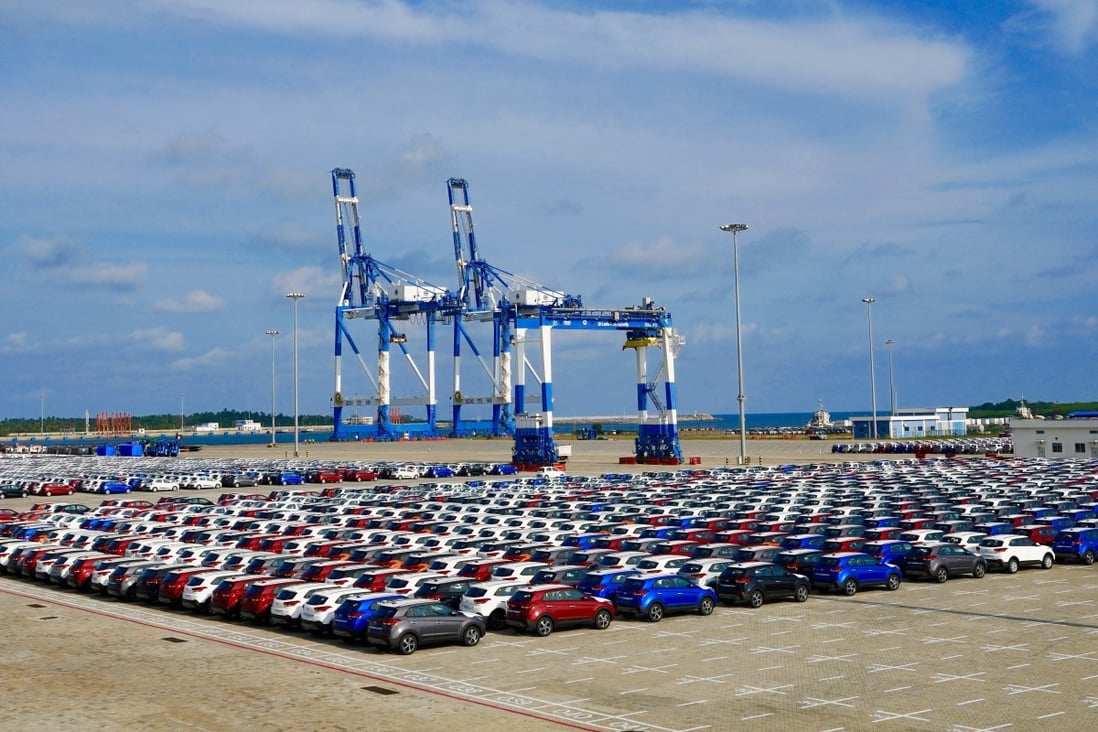
Wang called on the two sides to make solid progress in cooperation within the framework of the Belt and Road Initiative, turning the Colombo Port City and the Hambantota Port into two major engines to boost Sri Lanka’s economic development, pushing for Sri Lanka’s industrialization, and enhancing the country’s capacity for independent development.
Gunawardena, for his part, said Sri Lanka regards China as its closest friend and sincerely thanks China for its long-term, selfless help in Sri Lanka’s economic development, improvement of people’s livelihood, and coping with internal and external challenges.
Sri Lanka appreciates China’s fair stance on human rights issues and is willing to join hands with China to safeguard fairness and justice in regional and international affairs, he added.
Beijing denies the deal is being renegotiated after reports that Colombo is revisiting the agreement
Foreign Minister Dinesh Gunawardena said the previous government had agreed to a 99-year lease with the option of another 99 years
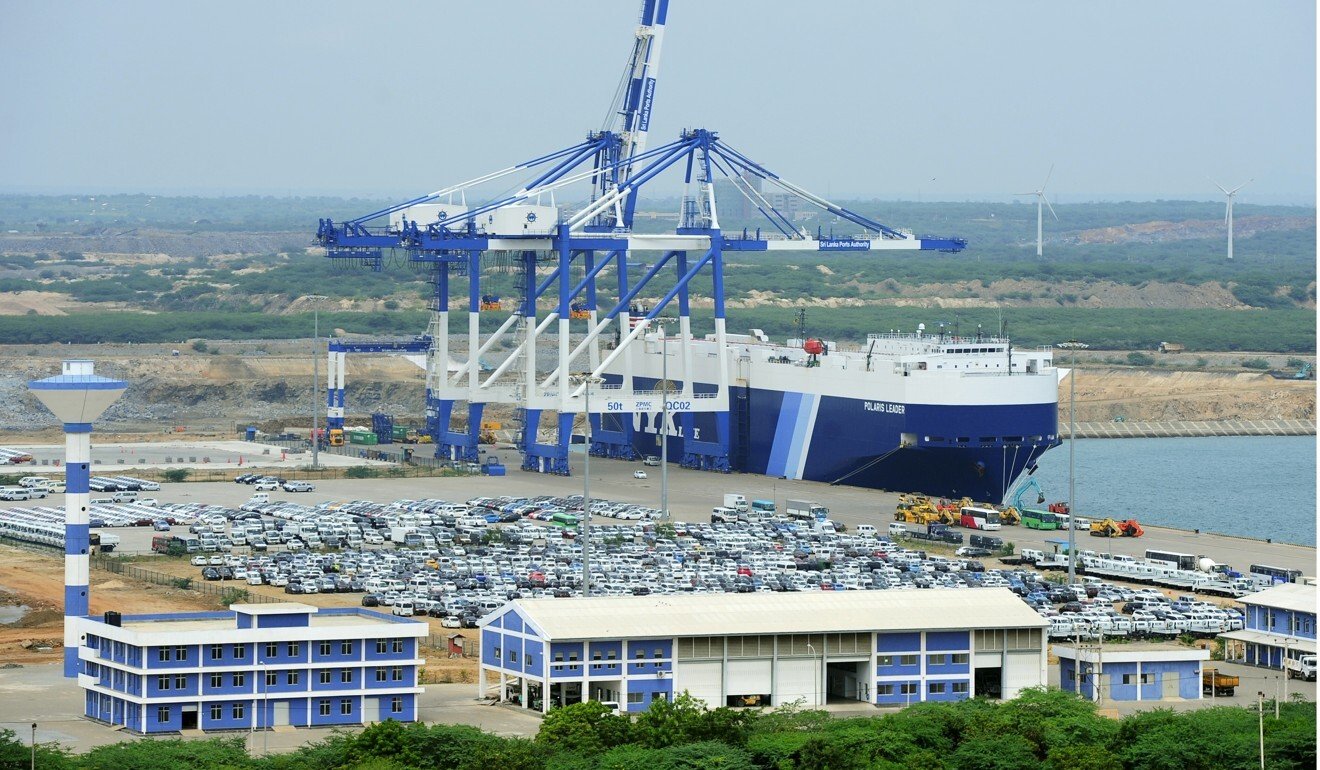
Sri Lanka’s foreign minister said the 99-year lease of the Hambantota port to China could be extended to 198 years, calling it a mistake” made by the previous government, after reports that Colombo was revisiting the agreement.The port deal – signed in 2017 by the previous Sri Lankan government to cover its debts to China – has been the subject of intense international scrutiny amid accusations Beijing is using debt trap diplomacy” for geopolitical clout.
Hambantota’s location at the southern tip of Sri Lanka, overlooking South Asia’s vital sea lanes, makes it a potential key maritime hub in the Indian Ocean.
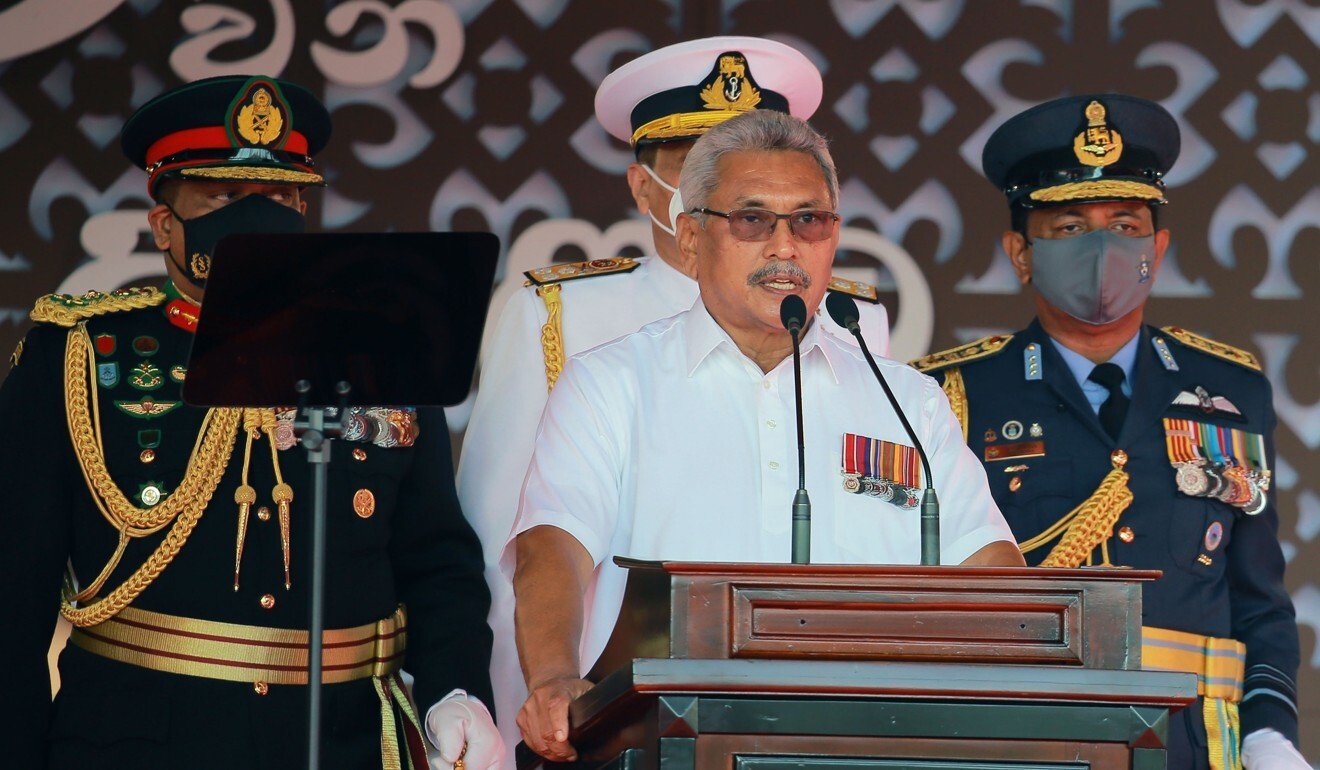
Sri Lankan President Gotabaya Rajapaksa, younger brother of two-time former president Mahinda Rajapaksa, said he wanted to renegotiate the deal with China soon after he took office in late 2019, but later denied he had such a plan.
Sri Lankan President Gotabaya Rajapaksa is said to be revisiting the port deal with China. Photo: Xinhua
However, on February 6 the chairman of the Sri Lanka Ports Authority told Ceylon Today that the president was revisiting the port deal. General Daya Ratnayake also said Sri Lanka had not gained much from the agreement and that it had relocated its naval base from the area controlled by China after many discussions with the Chinese officials”.
We are revisiting the proposal even now,” Ratnayake was quoted as saying. It was unfortunate and such a deal on Hambantota port shouldn’t have been done. But the review process is going on.”
Foreign Minister Dinesh Gunawardena added to uncertainty over the deal on Saturday, telling the same newspaper that the previous government made a mistake on the Hambantota port deal when they cancelled the lease and gave it on a longer period of 99 years plus another 99 years once the first term ends”.
But he did not say whether the government intended to make changes to the agreement.
Beijing said the deal was not being renegotiated, and that the port had overcome the challenges of the pandemic and its operations were expanding. Photo: AFP
China on Wednesday denied the deal was being renegotiated, with foreign ministry spokesman Wang Wenbin instead saying that the port’s operations were expanding.EVERY SATURDAYSCMP Global Impact NewsletterBy submitting, you consent to receiving marketing emails from SCMP. If you don’t want these, tick hereBy registering, you agree to our T&C and Privacy Policy
The relevant reports are inconsistent with facts,” Wang said at a regular press briefing in Beijing.
He said the deal was negotiated under an equal and voluntary basis” between the two countries, and that it was intended to transform the port into a logistics, transport and industrial hub in the Indian Ocean.
With mutual efforts from the Chinese and Sri Lankan sides, the Hambantota port has overcome the challenges of the pandemic and has maintained good momentum in expanding operations,” he said.The port deal, a key project in China’s controversial Belt and Road Initiative, has been closely watched, with critics saying it could add to Sri Lanka’s heavy debt burden, which could push Colombo to accept Beijing’s geopolitical demands.
Pang Zhongying, an international relations scholar with the Ocean University of China, said Beijing was likely to face more pressure over its activities in Sri Lanka given its growing rivalry with the United States and also India in the region.
Sri Lanka has long been in India’s backyard and it has a complicated relationship with India. And as the [Joe] Biden administration pushes to deepen [America’s] Indo-Pacific strategy, China is likely to face even more challenges in the region,” he said.
ISLAMABAD: Imran Khan has said he had an excellent meeting with President of Sri Lanka Gotabaya Rajapaksa and discussed with him a wide range of matters. In tweets, the prime minister said, We discussed our common passion about poverty alleviation especially in our rural areas. We also exchanged views on how to give farmers more for their produce & get cheaper food & fruits to the population by using technology to eliminate middlemen.”
He noted, We also discussed other dimensions of our extensive ties to strengthen political & trade ties for our mutual benefit.” The prime minister said he inaugurated Sri Lanka’s High Performance Sports Complex. It was great to meet the Sri Lankan cricket greats invited on the occasion, who had played against me,” he said.
Colombo, Sri Lanka, Feb 24, 2021 / 01:26 pm MT (CNA).- The Sri Lankan government must release its report on the Easter 2019 terrorist attack on Christian churches and hotels, say Catholic leaders.
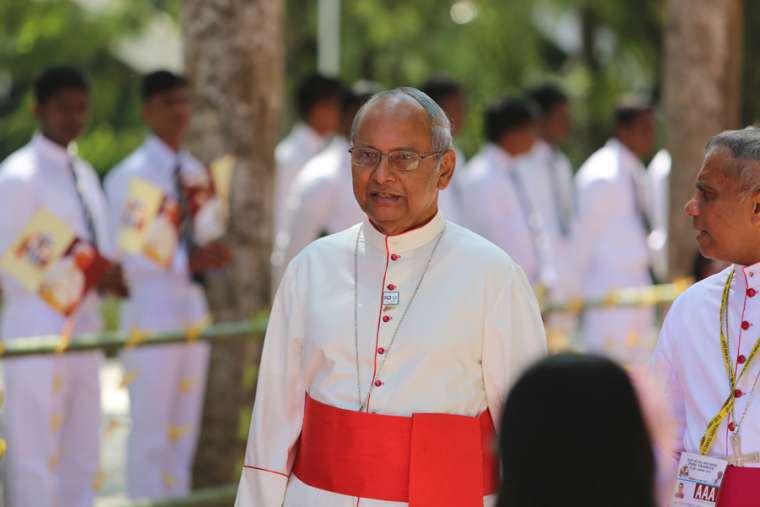
Cardinal Malcolm Ranjith of Colombo reportedly will not meet with any Sri Lanka politicians due to the delay. He has postponed meetings with Catholic members of parliament in both the government and the opposition, the Sri Lanka newspaper The Island reported, citing sources in the cardinal’s office.
Cardinal Malcolm Ranjith of Colombo in his cathedral city, Jan. 13, 2015
Other bishops have also spoken out about the failure to release the report from the presidential inquiry into the Easter Sunday attacks, which killed more than 260 people and injured more than 500.
We have a lot of doubts about this whole process, the whole thing is getting delayed,” Bishop Winston Fernando of Badulla, head of the Catholic Bishops’ Conference of Sri Lanka, told the Associated Press.
Nine suicide bombers attacked two Catholic churches, one evangelical Christian church, four hotels, and a housing complex April 21, 2019. The church attacks came in the middle of Easter Sunday services. Two Sri Lankan groups who pledged allegiance to the Islamic State group have been blamed in the attacks.
Critics of the government investigation fear corruption or negligence has prevented prosecution of collaborators in the attack.
Fernando said the Catholic Church in Sri Lanka was alarmed by President Gotabaya Rajapaksa’s decision to appoint a new six-member committee to study the report without sharing the report with the Church or with the attorney general to prosecute suspects.
If there are people involved, they want to protect them, I suppose, what else?” the bishop said.
The study committee is composed only of government ministers who are members of the ruling coalition.
Fernando criticized the makeup of the committee. It was not balanced, and its integrity can be questioned because some members have other court cases pending against them, he said.
Ahead of the attacks, foreign intelligence gave warnings to the government. However, a communication breakdown between the then-president and prime minister reportedly led to a failure to coordinate a security response.
Rajapaksa’s office has said the new committee has a mandate to identify what measures various agencies should take to implement the presidential commission’s recommendations, the Associated Press said.
Earlier in February, Cardinal Ranjith wrote to Rajapaksa to request a copy of the report. The cardinal has warned that he would seek help from international Church bodies if the government does not quickly act on the report.
In October 2020, five of seven suspects arrested in connection with the attacks were released by the government, on the stated grounds of lack of evidence.
At that time, Ranjith said security officials had confirmed to him that there was sufficient evidence against many of the suspects who had been arrested. The cardinal, along with friends and family of the victims, have said they fear the release of the suspects meant corruption, or a lack of a thorough investigation, on the part of the Sri Lankan Criminal Investigation Department.
Skeptics of the investigation were most dubious about the release of Riyaj Bathiudeen, brother of MP Rishad Bathiudeen, who is the leader of the All Ceylon Makkal Congress party in Sri Lanka. In September 2020 a police spokesman told journalists that Riyaj Bathiudeen had met with one of the suicide bombers before one of the attacks on a hotel, and he was accused of other acts of collaboration with the bombers.
Rajapaksa rejected any claims that a deal had been made with MP Bathiudeen in the release of his brother. Various reports speculated that a deal would have aided the president’s push for constitutional changes that would grant sweeping powers” to the president.
Sri Lanka is an island nation in the Indian Ocean, southwest of the Bay of Bengal. Its population is more than 21 million. More than 70% of Sri Lankans are Buddhists, roughly 13% are Hindus, almost 10% are Muslims, and fewer than 8% are Christians. There are 1.5 million Catholics in the country, constituting the overwhelming majority of Sri Lanka’s Christians.
The country has been plagued with periodic violence since its 26-year civil war concluded in 2009.
At the UN Human Rights Council (UNHRC) debate on Sri Lanka on Thursday, 21 countries spoke for Sri Lanka and 15 against, a Sri Lankan diplomatic source said.
The debate was on the Core Group’s resolution lambasting Sri Lanka for alleged rights violations and absence of accountability during the war and to date.
China, Pakistan and Russia were among the countries which spoke unequivocally for Sri Lanka, the source said. Sri Lanka had wanted the council to reject the resolution in-toto. India was neutral, the source said without giving details. Bangladesh was silent. But Australia made some constructive suggestions avoiding the harsh indictment which characterized the West-led Core Group’s contentions.
The 15 countries which supported the resolution were all from the Western bloc, the source said.
This is a major achievement, from the Sri Lankan point of view. Sri Lanka has been making no bones about the fact that it has become a victim of the Big Powers’ arm twisting for achieving their geo-political objectives. Based on this understanding, the Sri Lankan Foreign Minister Dinesh Gunawardena had twice asked the 47-member Council to reject the Core Group’s resolution.
He had dubbed the resolution a tissue of lies based on unsubstantiated material largely based on the testimony of shadowy, biased and motivated sources and mere surmises. What Gunawardena found particularly galling was the equation of a legitimate State having a democratically elected government, with a terrorist group widely known to be the most ruthless one with assassinations and senseless bombings as its hallmarks.
Gunawardena had also warned that the West, led by the US, has been using human rights as a cover to destabilize States, a tendency that has to be halted if sovereign States have to survive. He also lambasted the US-led West’s tendency to meddle in the internal affairs and institutions of sovereign States going beyond the mandate of the council and violating the UN Secretary General’s instruction to maintain credibility by eschewing bias.
Here is the operative portion of the Zero Draft of February 19, on which the resolution is based:
The resolution notes the persistent lack of accountability through domestic mechanisms and regrets that the domestic Commission of Inquiry announced on 22 January 2021, lacks independence and does not include a mandate to pursue accountability for past gross violations of human rights, or for serious violations of international humanitarian law.
It recognizes the importance of preserving and analyzing evidence relating to violations and abuses of human rights in Sri Lanka with a view to advancing accountability and decides to strengthen the capacity of the Office of the High Commissioner for Human Rights to consolidate, analyze and preserve information and evidence and develop possible strategies for future accountability processes for gross violations of human rights or serious violations of international humanitarian law; to advocate for victims and survivors; and to support relevant judicial proceedings in Member States with competent jurisdiction.
It expresses serious concern over emerging trends over the past year, which represent clear early warning signs of a deteriorating human rights situation in Sri Lanka, including the accelerating militarization of civilian government functions, erosion of the independence of the judiciary and key institutions responsible for the promotion and protection of human rights, ongoing impunity and political obstruction of accountability for crimes and human rights violations in emblematic cases” policies that adversely affect the right to freedom of religion or belief, surveillance and intimidation of civil society and shrinking democratic space, arbitrary detentions, allegations of torture and other cruel, inhuman degrading treatment or punishment and sexual and gender based violence, and that these trends threaten to reverse the limited but important gains made in recent years and risk the recurrence of policies and practices that gave rise to the grave violations of the past.
It expresses further concern that the COVID-19 pandemic has impacted on freedom of religion or belief and exacerbated the prevailing marginalization and discrimination suffered by the Muslim community, and that the Government of Sri Lanka’s decision to mandate cremations for all those deceased from COVID-19 has prevented Muslims and members of other religions from practicing their own burial religious rites, and has disproportionately affected religious minorities and exacerbated distress and tensions.
It calls upon the Government of Sri Lanka to ensure the prompt, thorough and impartial investigation and, if warranted, prosecution of all allegations of gross human rights violations and serious violations of international humanitarian law, including for longstanding emblematic cases.
It also calls upon the Government of Sri Lanka: to ensure the effective and independent functioning of the National Human Rights Commission, the Office on Missing Persons and the Office for Reparations; to protect civil society actors, to investigate any attacks and ensure a safe and enabling environment in which civil society can operate free from hindrance, insecurity and reprisals.
It requests the Government of Sri Lanka review the Prevention of Terrorism Act, and ensure that any legislation to combat terrorism complies with its international human rights and humanitarian law obligations.
It urges the Government of Sri Lanka to foster religious freedom and pluralism by promoting the ability of all religious communities to manifest their religion, and to contribute openly and on an equal footing to society.
It encourages the Government of Sri Lanka to continue to cooperate with special procedures mandate holders, including responding formally to outstanding requests. It also encourages the Office of the High Commissioner and relevant Special Procedures mandate holders to provide, in consultation with and with the concurrence of the Government of Sri Lanka, advice and technical assistance on implementing the abovementioned steps.
It requests the Office of the High Commissioner to enhance its monitoring and reporting on the human rights situation in Sri Lanka, including progress on reconciliation and accountability, and to present a written update to the Human Rights Council at its forty-ninth session, and a comprehensive report including further options for advancing accountability at its fifty-first session, both to be discussed in interactive dialogues.
Attorney General Dappula de Livera, PC is not bound by recommendations made by the Presidential Commission of Inquiry (P CoI) into the 2019 Easter Sunday carnage, or presidential directives in that regard, according to authoritative sources.
They said that the AG couldn’t under any circumstances initiate legal proceedings until he had received the full PCoI report.
President Gotabaya Rajapaksa received the PCoI report on Feb 1. The President’s Office delivered a set of PCoI reports to Speaker Mahinda Yapa Abeywardena on Feb 23, a day after the report was presented to the cabinet of ministers. The Island raised the matter with relevant authorities in the wake of a section of the media reporting the PCoI recommending punitive measures against former President Maithripala Sirisena, Defence Secretary Hemasiri Fernando, IGP Pujitha Jayasundera, Chief of State Intelligence Senior DIG Nilantha Jayawardena, Chief of National Intelligence retired DIG Sisira Mendis and All Ceylon Makkal Congress (ACMC) leader and Samagi Jana Balavegaya MP Rishad Bathiudeen et al over the Easter Sunday carnage.
Sources pointed out that due to the inordinate delay in sharing the PCoI report with the AG, the department hadn’t been able to take preliminary measures required to initiate the proceedings. Sources said that a team of officers would take at least six weeks or more to examine the report before tangible measures could be taken.
With the AG scheduled to retire on May 24, 2021, even if the AG Department received the P CoI it would be quite a tough task to initiate proceedings ahead of retirement, sources said. However, in terms of the 20th Amendment to the Constitution enacted in last October, both the AG and the IGP could receive extensions beyond 60 at the President’s discretion.
Dappula de Livera received an Acting appointment as the AG a week after the Easter Sunday carnage whereas his predecessor Jayantha Jayasuriya, PC, was elevated to Chief Justice.
Responding to another query, sources said that the Attorney General two weeks ago requested Secretary to the President for a copy of the P CoI. However, the AG was yet to receive one, sources said. In spite of the AG not receiving a P CoI copy, the AG had instructed the IGP to obtain a copy of the report when he requested the police to complete investigations into the Easter Sunday carnage. The AG issued specific instructions after having examined police files pertaining to the investigations.
The IGP, too, hadn’t received a copy so far though some sections of the report were in the public domain.
Agriculture Minister Mahindananda Aluthgamage displayed at a live political programme on Derana a copy of the P CoI report he received at the cabinet meeting earlier in the day.
Sources said that the Attorney General’s Department couldn’t decide on a course of action in respect of the Easter carnage on the basis of a section of the report. In terms of the Commission of Inquiry Act (Section 24), the AG enjoyed significant powers/authority in respect of investigations; sources said adding that the Department urgently required both the P CoI report and police investigations report. The Attorney General’s Department has raised the delay in receiving a P CoI report amidst the Catholic Church attacking the government over the same issue.
Sources said that ministerial committee appointed to study the P CoI report couldn’t decide on how to proceed with the recommendations and the matter was entirely in the hands of the AG. Sources pointed out that the delay on the part of the government to release the report had received the attention of sections of the international media, including the New York Times. Public Security Minister retired Rear Admiral Sarath Weerasekera having met Malcolm Cardinal Ranjith at the Bishop’s House on Dec 8, 2020 said that the AG would get a copy of the P CoI report once the President received it. Minister Weerasekera said that the CID had handed over the relevant files after having completed investigations into eight blasts. Referring to the Parliamentary Select Committee (PSC) report on the Easter Sunday carnage, the former Navy Chief of Staff said that all such documents would have to be brought to one place and considered before initiating legal proceedings. Acknowledging that there could be delays, lawmaker Weerasekera said that on the instructions of the Attorney General a 12-member team of lawyers was working on the case. The minister vowed to expose the mastermind behind the Easter Sunday attacks. Investigations continued while some of those wanted were overseas, the minister said.
The minister acknowledged that the Attorney General couldn’t proceed without the P CoI report. Minister Weerasekera reiterated that once the President received the P CoI report, it would be sent to the Attorney General. The minister said that there were documents two to three feet high that needed scrutiny. The minister assured comprehensive investigation. The minister said that investigations pertaining to eight blasts had been completed and the reports handed over to the AG. However, the Attorney General had found shortcomings in those investigations.
Justice Minister Ali Sabry said a proposal has been made to the Cabinet to impose laws to ban wearing of the burqa in public places considering the security of the country.
He told a news conference that a Cabinet Paper has also been submitted to amend Muslim laws by November.
We have submitted a cabinet paper to amend Muslim laws by November. We have proposed to amend matters widely discussed in society such as minimum marriageable age as 18, allowing Muslim woman to sign when getting married and to ensure equal rights to women as men,” he said and added that in addition, we have proposed that burqa should not be worn in public places. This is not targeting a specific community, but considering the security of the country,” he said.
The Minister said the Buddhist Temporalities Ordinance will not be abolished or amended under his tenure as the Justice Minister.
I must say, as long as I am the Justice Minister, I will never abolish or even touch the Buddhist Temporalities Ordinance. I haven’t even dreamt of doing so,” he said.
The international lobbying spree by the government gathered momentum today with 21 countries speaking in favour of Sri Lanka and 15 against during an Interactive Dialogue at the United Nations Human Rights Council (UNHRC), the Daily Mirror learns.
A core group of countries led by the United Kingdom has proposed to move a resolution on Sri Lanka calling for action on alleged human rights and accountability issues during wartime. Sri Lanka has sought to thwart the adoption of such a resolution.
The Interactive Dialogue took place amidst intense campaigning for support.
The representatives of the countries such as the United Kingdom, Norway, Canada, the United States Germany and the European Union spoke against the position of the Sri Lankan government.
However, India and Japan took neutral positions. Australia also spoke with a moderate tone despite it being an ally of the western world.
Among the 21 countries that spoke in support of the Sri Lankan government’s position, ten are member states of the UNHRC. These countries are Russia, China, Pakistan, Iran, Vietnam, the Maldives, Cuba, Nicaragua, Eritrea, Nepal, Cambodia, Laos, Azerbaijan, Vietnam, Belarus, North Korea, Gabon, the Philippines, Syria and Egypt. (Kelum Bandara)
The Director General of Health Services on Thursday confirmed two more Covid-19 related deaths, increasing Sri Lanka’s death toll due to the virus to 459.
One of the deceased is a 62-year-old woman from Kadawatha who had passed away on February 21 while being treated at the Colombo North Teaching Hospital. The Cause of death is mentioned as a heart disease and complicated diabetes with Covid-19 infection.
The other victim is an 83-year-old woman from Wattala. She had been disgnosed as Covid-19 positive at the Kiribathgoda Base Hospital and transferred to the Mulleriyawa Base Hospital, where she passed away on February 25. The cause of death is reported as Covid-19 pneumonia and bacterial infection.
The Attorney General has received Volume 01 of the report of the Presidential Commission of Inquiry (PCoI) that investigated the Easter Sunday terror attacks.
The AG’s coordinating officer said that Volume 01 of the report was received today from the Secretary to the President.
However, the Attorney General has requested the President’s Secretary to submit all proceedings, documents and materials (Volumes 2-5) of the commission to the Attorney General’s Department, she said.
The President’s Media Division also confirmed that the report was officially handed over by the Director General, Legal Affairs of the Presidential Secretariat Hariguptha Rohanadheera at the Attorney General’s Department today (25).
Attorney General Dappula De Livera on February 12 requested for a copy of the final report of the Presidential Commission of Inquiry from the Secretary to the President in order to consider forwarding charges against the suspects.
Meanwhile the final report, which was handed over to the Speaker of Parliament on Tuesday (23) was tabled in parliament by the Leader of the House, Foreign Affairs Minister Dinesh Gunawardena, this morning (25).
The Presidential Commission of Inquiry appointed to investigate the 2019 Easter Sunday terror attacks handed over its final report to President Gotabaya Rajapaksa on February 01.
Hearings and other procedures of the Presidential Commission officially came to a conclusion on January 27, 2021.
The Commission was appointed by former President Maithripala Sirisena on September 22nd, 2019 to investigate the series of attacks that took place on Easter Sunday same year and to recommend necessary actions.
The commission had recorded evidence from a total of 440 individuals during its term.
The commission was chaired by Court of Appeal Judge, Janak de Silva and included Court of Appeal Judge, Nishshanka Bandula Karunarathna, Retired High Court Judges Nihal Sunil Rajapaksa and A.L. Bandula Kumara Atapattu, former Secretary of the Ministry of Justice, W.M.M.R. Adikari.
President’s Counsel Ali Sabri stated that he does not intend to repeal or amend the Viharagam and Dewalagam Ordinance during his tenure as the Minister of Justice.
He expressed these views speaking at a media briefing in Colombo, today (February 25).
He said, As long as I am the Minister of Justice, we have no hope of touching the Buddhist Viharagam and Dewalagam Ordinance. I haven’t even dreamt of it.
We all acknowledge that this is a country with a history of 2500 years, based on Buddhist civilization. Can I bring laws against the traditional rights of the Sinhala Buddhist people in this country? I’m not that stupid.”
The Justice Minister further stated that steps have already been taken to ban the wearing of the burqa and to amend the Muslim marriage law.
He says that the relevant amendments to the Muslim law have been submitted to the Cabinet for them to be implemented by November.
The factors that have created dialogues in the society, such as the minimum age of marriage being 18 years and requiring the female to sign the marriage certificate, and giving equal rights to the females, have been proposed through these amendments.”
The decision not to cover faces in public was not made with the mind of targeting a specific community. [It was taken] considering national security.”
he Extraordinary Gazette Notification (No. 2216/38 – THURSDAY, FEBRUARY 25, 2021) allowing the cremation or burial of COVID-19 dead bodies has been issued.
REGULATIONS made by the Minister of Health under Sections 2 and 3 of the Quarantine and Prevention of Diseases<br />Ordinance (Chapter 222).
Regulations relating to Storage of Grain and Regulations relating to Anchylostomiasis published in Gazette No.7481 of August 28, 1925, as amended from time to time, are hereby further amended in regulation 61A thereof as follows: –
(1) by the substitution for the words, Cremation of Corpse” of the words Cremation or burial of the corpse”;
(2) in sub regulation (1) thereof, by the substitution for the words shall be cremated-” of the words may be cremated or buried. In the case of cremation, the corpse of such person shall be cremated-” ;.
(3) by the insertion immediately after sub regulation (1) thereof, of the following new sub regulation:- (1a) In the case of burial, the corpse of such person shall be buried in accordance with the directions issued by the Director General of Health Services at a cemetery or place approved by the proper authority under the supervision of such authority.”
(4) in sub regulation (2) thereof, by the substitution for the words, duties of cremation” of the words duties of cremation or burial” ; and
(5) in sub regulation (3) thereof, by the substitution for the words, by placing them with the coffin during cremation.” of the words by placing them with the coffin during cremation or in the case of burial, by taking such steps in accordance with the directions as may be issued by the Director General of Health Services.
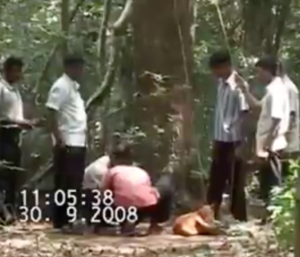
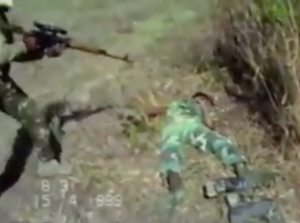
A 11minute youtube video has been released of LTTE well-timed and poses questions for the international entities and individuals holding candles to LTTE.
The footage shows LTTE children and adults in training – how many of them are alive today.
Can the government issue a notice for all those living to present themselves or the OMP office or Reconciliation Ministry must also request them to appear and register with them.
How many of these LTTE trainees including children are alive today?
How did they die?
How many died during LTTE training?
How many died being shot trying to flee LTTE?
How many died during hostilities with a national army?
The videos show the deplorable manner LTTE are shooting dead civilians.
Are these Sinhala villagers? Where did these shootings take place?
The manner these civilians are shot at close range is shocking and shows how gruesome LTTE is.
All those holding memorials for LTTE and the LTTE overseas brats appearing on videos calling for Tamil Eelam must look at the number of children LTTE had stolen from their parents to turn into gruesome murderers.
How many Tamil children did LTTE steal from Tamil parents?
Have the LTTE promoters including the White Nations of the world have no feeling for these children denied fundamental right to education, to freedom, to live with parents?
Are the Tamil parents not happy now that LTTE is no more they do not have to fear their children being kidnapped?
Just count the kids on this video
Just think about what these kids had to go through
Just think how devastating it would have been for kids to hold a gun instead of a pen
Just think how life had been for these children
Just think how kids were asked to make bombs banned by international law
With the defeat of LTTE in May 2009 – there are no more LTTE child soldiers
With the defeat of LTTE in May 2009 – there are no kids making bombs for LTTE
With the defeat of LTTE in May 2009 – there are no kids denied their right to live like a child
With the defeat of LTTE in May 2009 – there is no fear of kids garlanded with cyanide capsules
With the defeat of LTTE in May 2009 – the Tamil child is free from LTTE
Why are the rights activists for children silent on bringing criminal charges against Adele Balasingham?
Why are the rights activists silent on LTTE using children to make bombs?
The video shows another side of the LTTE – a side no one had earlier seen.
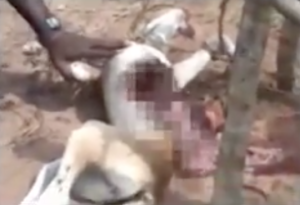
LTTE’s treatment of domestic animals is too shocking.
To have pet dogs also kidnapped from Tamil homes shows another ugly side of the LTTE.
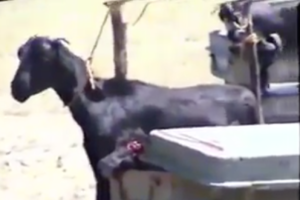
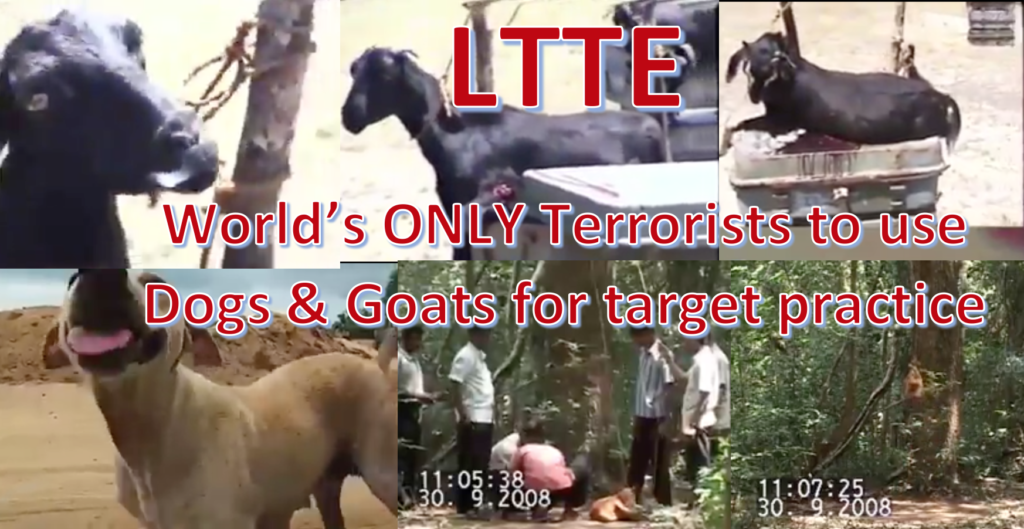
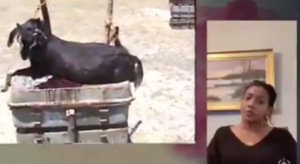
Kidnapped dogs and goats were used for target practice
Kidnapped dogs and goats were used to test TNT explosive devices – this was too cruel to watch
Kidnapped dogs were used to check weight to detonate land mines!
Thousands and dogs and goats fell victim to the LTTE
Look at the manner LTTE used innocent animals with no voice for their vicious ends.
This is the LTTE that the UNHRC want to white-wash of crimes and crimes against humanity.
Where are the foreign animal activists – why are they silent?
Wwould like to know how many of these LTTE children remain alive today?
What are they doing now that LTTE is no more?
What is their story
We would also like to know about the parents in these video footage, what do they feel now that the LTTE is no more? How many of these parents lost their children to LTTE?
We would like to know how many of these LTTE trainers are around – have they changed their ways, have they run away to foreign climes?
How many are today living overseas under false names?
How many of these LTTE trainers were helped out of the country by western NGOs and western governments?
How many of these LTTE trainers are still nursing separatism and terrorist tendencies?
How many of these LTTE trainers are having their identity kept hidden by foreign governments?
How many of these LTTE trainers have been given asylum/refugee status by western countries?
The western governments who have been sponsoring resolutions against Sri Lanka conveniently ignore the fact that with the end of LTTE, the Tamil parents do not fear their children being kidnapped, there are no more child soldiers, thousands of pet dogs and goats have been saved from being killed – there is so much that the whole country can feel happy about, but the countries drafting resolutions at UNHRC want Sri Lanka to continue to live under LTTE terror, want LTTE to prevail and want Sri Lanka to be punished for eliminating LTTE.
From the video clip and the manner that western governments are behaving using the UNHRC, we can only say that they are no better than the LTTE and they are no friend of Sri Lanka.
In place of Mullaiwaikkal Memorials for LTTE dead there must be a Memorial for the LTTE Child Soldier to remind the world what the CHILD went through – the horrendous CHILD ABUSE by LTTE and the fact that these children are now SAVED from LTTE for good.
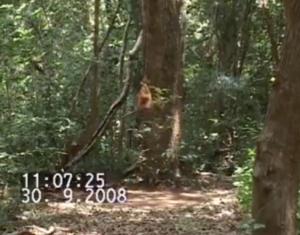
We thought we knew the worst about the LTTE. It appears there’s much more to LTTE brutality. The FBI described LTTE as the ‘most dangerous & deadly extremists’ in the world. But we never thought LTTE would stoop to the level of using innocent voiceless animals as guinea pigs for their brutality.It appears LTTE’s brutality knows no bounds as thousands of pets and goats had been used for target practice and to test land mines.This despicable acts on innocent animals took place even as late as September 2008 where animals had been tied by LTTE combatants and used for their brutal terror practices. The footage of this live brutality, by LTTE on animals is shown in the video now released for the world to see in the Truth behind Dare documentary. It should put to shame the countries using the floor of the UN/UNHRC to target Sri Lanka via resolutions for ending terror in Sri Lanka.Too bad these LTTE supporters are angry about LTTE being defeated, but we are more than happy that since May 2009, no child has been kidnapped & turned into child soldiers and no pet dog or goat has ended up dead from LTTE target practice. Maybe Francis Harrison may like to come forward and count the dead dogs and goats by LTTE or Yasmin Sooka may like to add animal abuse to one of her reports! We also invite the other 3rdand 4thparties claiming ‘dead civilians’ to provide statistics on how many dogs and goats LTTE killed maliciously!
Truth behind Dare documentary on LTTE using dogs
Just look at the fear in his eyes.
These LTTE diaspora kids living and studying and working in Western countries are coming on social media demanding Eelam
Why dont’ they fly over and create it themselves?
Why do they want to outsource what they want to innocent Tamil children?
If Rudrakumaran wants an eelam – fly down from US and wear a LTTE uniform! Same goes for these kids too
The world must scorn the use of ANIMALS by TERRORIST LTTE. We do not want other terrorist groups copying LTTE abuse of animals. Therefore action must be taken when action should be taken.
It would be good to have a statement from the world’s animal activists on the LTTE treatment of animals for their terrorism especially since LTTE supporters in the West are using UN/UNHRC to resurrect LTTE and recommence terror in Sri Lanka
Chula Rajapakse MNZM, Spokesperson, United Sri Lanka Assn,Wellington NZ
The SL government is to be congratulated on their latest video above, exposing another, less well-known yet no less Horrific dimension to Tamil Tiger Carnage. This has been widely circulated among the expatriate SL communities.
However where this should be circulated most for maximum effect would be, among every state and federal parliamentarian, senator and News outlet in the US, UK, Europe, Canada, Aus & NZ under a more effective title as suggested above.
This is the audience that this should target most.
Just after the end of the war in May 2009 the Uk channel four put out a video called Sri Lanka -Killing Fields without a factual basis at all.
The SL govt produced a very good counter Lies-Agreed Upon” and circulated it among the SL expatriates but not among the Western politicians and media who had been fed the SL killing fields using many media channels.
I somehow managed to screen the movie in the NZ parliamentary theatre ( where they issue the mid-day Covid briefings from) and Managed to get a few MP’s to attend and circulated CD of it to most in NZ parliament and news outlets so that there was some counter to the SL killing fields garbage.
The UNHRC condemnations going on now is the result of not conveying these truths repeatedly and relentlessly while misinformation inimical to SL is being disseminated to these recipients relentlessly by a most efficient Tiger Diaspora led by GTF (uk) TGTE (US) and CTC ( Canada )
As I have asked before there should be a branch of the foreign service dedicated entirely to disseminating factual information about Sri Lanka pro actively co-opting the goodwill, dedication, and know-how of expatriate groups in achieving this relentlessly and repeatedly. Repeated delivery of the truth briefly, well headlined, with photographs so that the message is delivered in a 30-second glance and reinforced relentlessly, is the way to go.
The target should be that the default impression in
Western minds Re SL should be HR violations did not and do not occur inSL,
The allegations flying around are Tiger Diaspora constructs to among others to
enable them to continue enjoying the comforts and protection of the west as
refugees fleeing HR violations in SL and that Minorities in SL have all the
rights and privileges of the majority and very often more.”
Unless this happens the truths about Sri Lanka would remain cloistered within the confines of a few officials, politicians, and expatriate organizations, reinforcing these to each other but not to the western politicians and media who are the ones who should receive these most. In the meanwhile, these groups will continue to be fed garbage inimical to Sri Lanka by the GTF, TGTE and CDC. With these going unchallenged, this would be the truth about Sri Lanka In the Western minds, as happens now.
Sincerely,
Chula Rajapakse MNZM Spokesperson United Sri Lanka Assn Wellington NZ
Does
Sri Lanka need an opposition in the parliament when the affairs of the state are
activated and discharged? It may be a critical question because when evaluating
the role was played and is played by the opposition, the general impression of
people seems that the government, as well as the opposition, should equally
responsible for the state affairs. When investigating the political role played
in the past people have many questions to be asked without the difference in
political parties that they have been in opposition since independence.
Politics is a dynamic matter that quickly attracts the attention of the public and
a small pace of total population that may be less than 5% concern with
politics. Many people think politics is wasting time rather than supporting the
constructive development of the country. If anyone asks, do opposition politics
play a good role for the country, it may be a vague question for anyone to
answer as many people have arduousness evaluating the role played or is being
played by the opposition.
Sri
Lanka’s politics and administration had been based on totalitarian style since
the beginning of Sinhala state and the way of political administration had been
managed until the concept of democracy was introduced by the Donormore reform
process in 1932. The so-called democracy could be considered as a system that
is biased towards political administrators. Under British rule not only in Sri
Lanka but also in many colonial states applied dictatorial judgments and, in
the UK, too applied dictatorial policies and the best example was criminally
punished people deported to Australia to colonize the country without proper
consent of the domestic citizen.
No
clear evidence available about whether the Donormore commission created, political institution, the State Council did
allow an opposition in the format of current opposition or as in the way of the
Parliamentary system for representation in the council. However, outside the State
Council, opposition political movements either openly or disguisedly played the
opposing role and they had educated the public on the concerned issues. The
official opposition came to operate after the Soulbury reforms in 1947, and
since then the role played by the opposition was not been satisfied by the
public. In some instances, the role of the opposition reflected it was a useless
institution in the parliamentary system. The current role of the opposition is showing
that the opposition is playing a role in return for the payments received by them
in the parliamentary administration, otherwise, there will be a growing
opposition of the public toward them. The best example is the role played by Mr.
Sajith Premadasa, who has no idea what should he play as the leader of the
opposition.
In
the 1956 and i977 elections, fewer members were elected to the opposition, and
the role of the opposition was subject to cheapen, which was the opinion of
academics, and in 1977, Mr. Jayewardene had an idea to create more strong
opposition by transferring several government members to the opposition.
Sir
Ivor Jennings stated in his book Cabinet Government, the leader of the
opposition would be the alternative prime minister of Queen, and the Herald Laski
also expressed an opinion on the role of opposition. When critically examine
the role played by the opposition, the duty of certain members was appreciated
by people. Many accepted that Dr.N.M Perera, Dr.S. A Wickramasinghe, Dr. Colvin
R.de Silva, Mr. Prins Gunesekera, Mr. J.R. Jayewardene, Mr. R. Premadasa, and
many Tamil opposition members played an excellent role contributing to the
concept of parliamentary democracy. However, the role of the current opposition
seems to be weak, and they do less research on the government policies and have
less association with people to scrutinize the role played by them. News media
that broadly expanded in the country either praise or negatively criticize the
role of the opposition.
What
is the role of the opposition? This has been a popular question among students
of political science. If we go beyond
the views of Sir Ivor Jennings, we can develop new ideas and obtain good
returns for the parliament expenses for the opposition in Sri Lanka. What I
have seen as the major weakness of the opposition is that neither leader of the
opposition nor members of the opposition has not expressed an opinion on the
current critical issues such as the human rights report of the UN and the
report of the Easter Commission, why they are so reluctant to express firm
views on these concern matters? This
seems that the opposition is playing a double game rather than attempting to
make justice for the country.
In
other democratic states, opposition comes forward to express constructive
views, and why the opposition in Sri Lanka is reluctant to express constructive
views on government policies? The situation shows that the opposition is playing
the role of international agencies than confirming the wish of the public. If
it investigates the role played by the opposition showed that they are doing
nothing. Soon after independence, the opposition played a constructive role and
it was attracted by people. The election results in 1977 reflected the
confirmation of the role of Mr.J.R. Jayawardane as the opposition leader from
1970 to 1977.
The
current situation raises a common question to all whether the opposition should
play a role like the Western democracies or develop the opposition as in the way
of Japan that plays a very constructive role for the interest of the country.
When the opposition plays a crafty role to show they are doing a good job, and
the best system appropriates Sri Lanka is combining the opposition with the
government, and when genuinely need opposing to the government policy actions,
they should be allowed to oppose. The
opposition and the government need to work as one person for the interest of
the country.
During
the war with LTTE, the opposition UNP could have to support the war effort of
the government and share the victory with the government. If it happened UNP would have not defeated in
a regrettable way in 2020 and Mr. Ranil Wickremasinghe could have stayed as a
hero in the country. This is the way opposition is working in Western
democratic countries. Why Mr. Sajith
Premadasa and his colleagues don’t like to associate with the government and
play a constructive role? There is no specific reason, but the opposition plays
a role in support of the Western aided NGOs, which are playing a role against
China and Russia. Sometimes, they may work in support of India. The commission report regarding the Easter
Sunday attack in 2019 has hinted out that who did bomb blasts and rumors are
spread to coverup the matter. Why the
opposition cannot question these matters in the parliament? Do they work like
supporters of a foreign intelligence agency?
Prime Minister
Mahinda Rajapaksa attended a Trade and Investment Conference” together with
visiting Prime Minister of Pakistan Imran Khan in Colombo this morning.
The event, aimed at
promoting trade and investment between the two countries, brought together high-level business representatives
from Sri Lanka and Pakistan.
At the bilateral
discussions between the two Prime Ministers yesterday at Temple Trees, both
delegations expressed a keen interest in enhancing economic cooperation and
boosting investments.
This event gives an
opportunity for business leaders and investors to network and explore potential
areas for future cooperation.
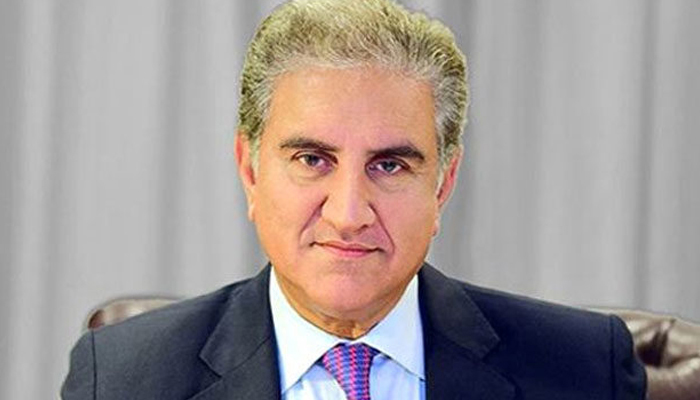
Pakistan has decided to award scholarships to 100 students from Sri Lanka in top medical institutes of the country, Foreign Minister Shah Mahmood Qureshi says.
The foreign minister said this during his trip to Sri Lanka. He had earlier announced his arrival at Colombo on Twitter.
Qureshi also spoke about defence and security cooperation between the two countries, saying that an end to the menace of terrorism is of equal importance to both Pakistan and Sri Lanka.
Pakistan has offered Sri Lanka a credit line of $15 million in this regard, he said.
The Sri Lankan foreign minister had said that Imran Khan’s visit will help strengthen bilateral ties and cooperation.
Qureshi said Pakistan is standing side by side with Sri Lanka as a partner for the development of human resources, security cooperation, fighting terrorism, development and prosperity.
Pakistan has transformed its geo-political priorities into geo-economic priorities, the FM said, adding that views were exchanged on enhancement of bilateral trade and investment with Sri Lanka.
Visiting Pakistani Prime Minister Imran Khan, in his joint address to the media with Prime Minister Mahinda Rajapaksa, said he instructed his delegation to explore the possibility of increasing Sri Lanka’s trade connectivity to the Central Asian region through the China-Pakistan Economic Corridor (CEPC) t called by him as a flagship project of China’s Belt and Road Initiative (BRI).
The Pakistani leader arrived in Sri Lanka to a rousing welcome yesterday. Mr Rajapaksa received him at the airport. Afterwards, the two Prime Ministers, flanked by their delegations, held bilateral talks.
In his remarks after the talks, the Pakistani Prime Minister said, Pakistan is part of China’s BRI. CPEC is one of its flagship projects. It means connectivity. And, I asked my delegation here to find ways and means where we can enhance our trade and connectivity, and through CPEC right up to Central Asia for Sri Lanka. We also discussed other areas where we can enhance our trading ties,”
He asserted that Sri Lanka could benefit from Pakistan’s connectivity to Central Asia.
Our trading ties mean the two countries will get together,” he said.
He started his remarks with reference to his cricketing career and links with Sri Lanka. He said he was not a stranger to Sri Lanka.
I came the first time when I was just out of the university. When you were starting your political career, I was starting my cricketing career,” he told Prime Minister Rajapaksa.
He commented on terrorism that plagued both countries. He said Pakistan was happy that it played its part in helping Sri Lanka overcome terrorism that afflicted the country for 30 years. Also, he said Pakistan suffered from terrorism for ten years and lost 70,000 lives. ()