Dayan and David predict fall of GR government under Biden-Harris duo

November 15th, 2020

By : A.A.M.NIZAM – MATARA

The Indian proxy Dayan Jayatilleke and JVP stooge Kumar David predict the overthrow or downfall of Sri Lanka government of President Gotabhabaya Rajapaksa under Biden-Harris duo

The Indian proxy Dayan Jayatilleke in his latest pro-American, pro-Indian article written to Sri Lanka Guardian and reproduced by Financial Times assuming the the status of the Heads of the Pentagon and the White House, the American institutions responsible for molding its future policies states that the Biden-Harris ‘event’ with the change of the global zeitgeist will impact Sri Lanka’s political destiny. He says that history will show that this was the turning point, where the world saw democracy alive, decline of Trump’s institutional obstructionism and polarizing incitement of far-right passions and the Biden-Harris victory marks the birth of a new American consciousness, with globalised resonance because the USA is more a mirror of the world, of humanity in all its plurality, than is any other country.

Under the sub-heading Lessons for Lanka this treacherous writer states that the planetary political pandemic of autocratic Alt-Right ultranationalism has just had its curve flattened in its epicenter – the country of its most dramatic height, the USA and Sri Lanka’s likeminded regime will feel secure that with the 20th Amendment and the grip it has on the institutions and electoral process, the ruthlessness will be its recourse to pre-empt a replay of the fate of its hero President Trump.


While the Biden-Harris ‘event’ won’t translate immediately and unmediated, into a decisive impact on Sri Lanka, the change in the global zeitgeist and the world          correlation of forces, starting with the overall balance of ‘soft power’, will transform the regime’s environmental conditions of existence and ‘overdetermine’ Sri Lanka’s  political destiny. 

Continuing his baseless diatribe, he states that GR presidential project was socially and psychologically powered by Trump’s 2016 victory. The Gotabaya regime this stupid guy says came into being as the last victory of global Alt-Right ultranaionalism, the parabola  of which has begun its descent with Trump’s defeat. The regime’s external factors of existence constitute a tripod: Trump and Trumpism; Israel’s Netanyahu, Netanyahu’s Israel; and Xi’s China. 

Quoting from a writing of Ben Rhodes, former American President Obama’s  Deputy National Security Advisor he adds For the last decade, the political project of an increasingly far-right Republican Party has become enmeshed with other right-wing movements in Brazil…and elsewhere…Right-wing parties share sources of financing, media and disinformation platforms, political strategies, and consultants.”

Ridiculing Sri Lanka this treacherous writer states that  The ‘Late Trumpist’ Lankan regime’s tripod just lost a leg. The second leg is Benjamin Netanyahu’s Israel. Biden is staunchly pro-Israel but he’s also pro- ‘two state’ peace. Netanyahu will be hoping that a Biden victory will not help his rival-cum-partner Benny Ganz, a more promising peace partner. The third leg  he says is President Xi’s China. In a reopened dialogue between the USA (with India in its corner) and China, that leg may prove flexibly retractable, and even if it doesn’t, perching on that particular leg will make the regime more vulnerable in the coming global re-set. 

The pig headed Dayan points out that Trump/Biden example shows that Trumpism (the Sinhala Buddhist supremacy in Sri Lankan context as he perceives) can be electorally defeated in a single term at a Presidential election. While it was a protracted struggle for the electoral college, culminating in victory, it was a much clearer sweep in the popular vote. Biden-Harris polled the highest number of votes that any presidential ticket did in US history, beating Trump by almost five million votes. 

In a presidential system with a direct popular election, it is perfectly possible to defeat a majoritarian-supremacist autocratic President in a single term. As Bolivia recently showed with the first round 55% win for the Movement for Socialism candidate Luis Arce, this is perfectly possible even against a tougher-than-Trump de facto dictatorial regime…which killed protestors” (President Arce).

This would be especially so if, like Trump, the incumbent President has been a success in other fields but has zero-experience of legislation and governance, and faces a progressive democratic candidate who by contrast, has considerable political experience. Sri Lanka’s democratic challenger lost to the incumbent President at the zenith of the latter’s post-Easter/pre-corona popularity as candidate, by only 10% (52%-42%). He conveniently avoides the subsequent mammoth 2/3 victory achieved in the August 5th General Election.

This Indian servile poodle says that Sri Lankan democrats and liberal/neoliberal civil society intelligentsia must abandon their colonial hang-up on the Westminster model and absurd three-decade-long fixation on the abolition of the executive presidency (‘contact traceable’ to the abortive anti-Premadasa impeachment and the reactionary DUNF breakaway). What ended up abolished was not the executive presidency, but the UNP which was the project’s vehicle. The executive presidency stands reinforced. 

He says that the USA proves (as does Bolivia) that however autocratic the President, the task of democrats is not to abolish the Presidency, but to WIN the Presidency, defeating that President and adds that the former Obama strategist David Axelrod correctly said on CNN after the victory that Biden is a Centre-Left Democrat with a progressive agenda”. When the neoliberal-globalist Hillary Clinton was his opponent, Trump broke through the ‘blue wall’ that Bill Clinton and Barack Obama had built and Joe Biden rebuilt it. He asserts that Biden is an authentically caring, empathetic man with an appeal to the blue-collar working people of the white majority (who had deserted the party during the Hillary Clinton candidacy), able to breakthrough in the American heartland which Hillary had lost for the Democrats, while constructing the broadest anti-Trump coalition, especially with the African-American community which voted overwhelmingly for him. 

In a lesson for Sri Lanka’s ethnic/religious minorities, the Black community didn’t support the ideologically advanced Bernie Sanders (backed by young, college-educated whites) as they did that Democrat who could reassure the white majority and break through to it, giving the best chance of victory.

Under the subheading Chinese wall  this Indian servile poodle says that it could be déjà vu all over again”: the tale of the two submarines, he asks what could be the wider effect of the optics and the discourse of the SLPP-Chinese Communist Party seminar on Governance, including a banner with the symbols of the CPC in one corner and the Pohottuwa in the other, and the reference to the relationship of the ruling parties”?

He asserts that as the newspapers reported: Minister Song Tao of the International Department of Central Committee of CPC, Party Secretary Liu Cigui of CPC Provincial Committee of Hainan Province, SLPP Chairman Professor G.L. Peiris, Secretary General Sagara Kariyawasam, SLPP MPs including Mahinda Yapa Abeywardena, Namal Rajapaksa and Ramesh Pathirana together with some State Ministers and Mayors from the Western Province participated in the meeting. 

He further states thaty Ambassador Qi Zhenhon had emphasized that the experience sharing between the two ruling parties would play an important role in bilateral cooperation in the post-COVID era to come, and as ruling parties, CPC and SLPP should enhance experience sharing so as to better leading the two Governments and the two peoples for a brighter future.”’

He also states that it was President Gotabaya Rajapaksa who decided, in conversation with President Xi, and later with Politburo member Yang Jiechi, on taking the party-to-party relationship, as distinct from the purely state-to-state or government-to-government relationship, to the next level and the Chinese Embassy Spokesperson Luo Chong said that the meeting was aimed at implementing a consensus reached by President Gotabaya Rajapaksa and President Xi Jinping in their telephone conversation as well as the recent high-level visit of top leader Yang Jiechi to Colombo.”

Commenting further, he states thattThe event was billed as an Opening Ceremony of CPC-SLPP Advanced Seminar on Governance Experience”, and asks would the Governance Experience” that the SLPP absorbed at this seminar make its way into the new Constitution? This stupid contrary to what has been achieved through election results claims that the SLPP is not a ruling party in the systemic sense that the CPC is and unless that transformation is the goal and enquires whether the regime seek to entrench itself behind a Chinese wall of an ‘Asiatic absolutist’ constitutional/political order? 

Delving further on the subject, he further asserts that the SLPP-CPC dialogue on Governance took place in the immediate aftermath of Pompeo’s messaging on his Sri Lanka visit, and while a naval exercise of the Quad was underway in the Bay of Bengal. Mike Pompeo was careful to target the Chinese Communist Party more often than China as such, an interesting attempt at an implicit distinction between state-to-state or intergovernmental relations, and the alleged expansionist impulse of the Chinese CP. 

He points out that just as the Trump administration built on Obama’s ‘Pivot to Asia’ (minus the Trans-Pacific Partnership), the Biden administration will build on elements of Trump’s China policy,just as the policy of ‘containment’ of the USSR was essentially bipartisan, albeit with varying emphases, so too will be the policy of the ‘containment’ of China.  

In his American pampering this foreign servile poodle says that the US Democrats are even more focused than the Republicans on the issue of democracy vs. the projection of China’s governance model by the CPC. On this, there is a bipartisan consensus and moreover, if Michelle Flournoy handles China policy, the Biden administration’s approach will be smarter and sharper in both soft and hard power dimensions. 

Tie this into the recently reinforced American relationship with India (billed as a relationship between ‘the world’s two greatest democracies’) which lies at the cente of the Quad, itself billed as an alliance of democracies. The Quad has a back-office backstop: The Five Eyes, an old (1951) but recently re-energised partnership for intelligence integration, comprising the US, UK, Canada, Australia and New Zealand, he explains.

That’s the substructure/infrastructure in place. Add the coming ‘superstructure’: Biden’s stated commitment (in a landmark Foreign Affairs essay) to what I call ‘democratic internationalism’ – a global mobilisation and vigorous offensive, advancing the values of democracy and human rights while explicitly targeting autocracy and ultranationalism.

This Indian poodle discloses that there is a politico-corporate-managerial-bureaucratic-institutional conglomerate in Colombo with an economic stake in its vocation as China lobby/client, but Beijing’s umbrella will not sustainably extend so far south in the Indian Ocean, and it will be vulnerable to an Indo-US pincer or Quad encirclement, and be rolled up. In the great game in the Indo-Pacific, he saysSri Lanka may prove a dispensable bargaining chip, traded-in to protect a stake elsewhere. 

Under subheading International relations 101he points out that Sri Lanka’s rulers must know that in international politics, being within your rights when you choose to do something, is only one factor in the mix, and not the determinant, nor is being in the right in your own eyes. 

What counts ultimately, this treacherous commentator says,  is whether what you do, best serves your national interest, defined not as the interest of an ethnic/religious community, ruling party, ruling family or corporate-bureaucratic stratum, but the State and its citizenry and adds that in making that calculation it is important to know what the threat perceptions of others are and how your actions or inactions impact on those threat perceptions, what they might do about it, and whether you are capable of deterring, countering or absorbing their actions/counteractions.   

Once again pampering the Americans, he says that in the confident speech immediately preceding the Pennsylvania result, Joe Biden staked a global claim, saying there’s no reason that America cannot own the 21st century”. That riff on TIME/Life founder Henry Booth Luce’s definition of the 20th century as The American Century” may be over-ambitious for the 21st, because China apparently aspires to the same goal, and Russia to multipolarity, with both states entitled to fair and adequate space and status, commensurate with their achievement and power. 

Then he says that in his victory speech Biden said at its best, America is a beacon for the globe…we will lead not only by the example of our power but by the power of our example”, adding it’s always been a bad bet to bet against America.” 

Under another subheading Let freedom ring!” this treacherous poodle asks What if the Trump presidency was not, and had not been, constitutionally constrained? With presidential power unchecked and militarism rampant, liberty in Sri Lanka has no safeguards, enjoys no guarantees. The objectively enabling role that any external power assumes in relation to domestic tyrannical tendencies must therefore be externally contained and countervailed” and adds this is so not only in Sri Lanka.

He points out that humanity’s main threat today comes from the narrowing and darkening of human consciousness through parochial ultranationalism, racism and supremacism; the retrogression in human and social progress through reversion to tyranny and despotism; the anarchic breakup – not progressive transformation—of the world system through the irruption of walled-in ultranationalist tyrannies; and the sporadic, opportunistic, enabling and/or consolidation by rising great powers of these retrogressive trends and adds that the absence of a common, science-driven global response to COVID-19 and the much larger danger of climate change are symptoms of this situation.

He further states that humanity has to be reunited; the human consciousness broadened and enlightened; for internationalism to be reborn.

In conclusion of his article, he says that the ideas and ideals of the Biden-Harris campaign (including those of progressive and left Democrats) must be transferred and transmitted globally, uninterruptedly extended and expanded into an internationalist project of democratic solidarity against tyranny and for freedom, liberty, equality and justice and states that the new American revolution must be universalized.

Meanwhile, the JVP’s nationalist nominee, the pseudo-Marxist and Tamil chauvinist Kumar David(KD) in an article written to Colombo Telegraph under the title USA is less racist and bigoted than Sri Lanka” says that he had been a critic of American capitalism and imperialism, but on one point he had been firm and it was that America (and some other liberal democratic countries) are less racist, bigoted, and culturally primitive on these matters, than Sri Lanka, India, Burma, Japan and Islamic majority states.

This Tamil chauvinist and pseudo-Marxist states that America has now elected a person of colour of Indian Tamil origin as vice-president, and elected its second ever Catholic president; Kennedy was the first. He asks whether anyone in Sri Lanka can imagine the day when a Muslim non-Buddhist will be president of Sri Lanka or a Tamil not a Sinhalese prime minister?

This Tamil chauvinist asserts that he cannot  foresee the day when something like Black-Lives-Matter which mobilized tens of thousands of whites, unfolds in the majority community in Sri Lanka against carnage such as the 1983 massacre or violence against Muslims. MIRJE (Movement for Inter-Racial Justice and Equality) was led by Father Paul Caspersz a Burger Catholic and his principal lieutenants were a Tamil Catholic and a raceless Marxist. The radical monk of recent times, Sobitha Thero with whom he says he hsas  worked did not actively intervene against anti-minority pogroms.

On an allied matter, this Tamil chauvinist and pseudo-Marxist asserts that once again he renews his call for a National Cabinet to defeat covid.

Referring to American elections, he states that Biden has risen above partisanship and gone all out in a quest for national unity. He is facing a far worse covid and other challenges. By national cabinet he says that he refers to something like Churchill’s War Cabinet to meet an existential challenge after which parties resume their identities. There have been, and probably there will be no takers for his suggestion, he adds. Gota, Mahinda, Sajith and Sampanthan are too small minded to see the point.

This pseudo-Marxist claims that he sent a shorter version of this as an email to some people with the note The purpose of this email is to motivate you to never condone racism in Sri Lanka and not give up the fight to defeat it.

The 19th, 20th and judicial appointments

November 15th, 2020

MALINDA SENEVIRATN​E

Draconian. Dictatorial. Authoritarian. Hitler-like. These are the words that were used when Gotabaya Rajaakssa first announced the decision to contest, throughout the election campaign and even now, as he approaches one year in office.

Interestingly, the Colombot twitterati understandably disappointed by the fact that their outcome preferences did not materialize, are the chief purveyors of this characterization. They were dead silent when the 19th Amendment was proposed, tinkered with (while giving the Supreme Court the proverbial finger) and passed with a) absolute disdain for established parliamentary procedure, and b) full of partisan content. It was a classic case of how constitutional amendment should not be done. And yet, they talk of the 20th Amendment, recently passed, as though it essentially repealed the 19th and reverted to the arrangement brought about by the 18th.

No mention of term limits being retained. Nothing on the Right to Information Act being retained. The non-issue of auditing processes has been raised. The SC ruling on the many objections they’ve raised is ignored. And yet, it’s draconian, dictatorial, authoritarian and Hitler-like. To support this incredible thesis, they bring up the doing away of the Constitutional Council and replacing it with a Parliamentary Council, mandated to do the same job, essentially overseeing appointments to various independent commissions. This, they tell us, will make the RTI useless. This would wreck the independence of the ‘independent commissions’ (which, they won’t tell you, weren’t independent at all but were chock full of party loyalists).

Alright, what did the Constitutional Council do with respect to judicial appointments? Did the Constitutional Council, as required by the constitution develop guidelines for appointments and have these ratified by Parliament? No. What was said at the time was that the rules formulated by the Commission headed by Dr A R B Amarasinghe under the 17th Amendment would be used. Were they used? No. It was essentially a matter of the Constitutional Council rubber-stamping the choices of the then Prime Minister Ranil Wickremesinghe.

We had seniority being brushed aside to promote loyalists from the lower courts or else shift people from the Attorney General’s Department. Did the aforementioned twitterati cry foul? No. Did the Constitutional Council offer any justification for the recommendations made? No. In fact the Constitutional Council, in those five years, made a mockery of the very spirit in which it was established, at least in word since ‘deed’ was marked by rank incompetence and partisan intent.

Contrast all this with the names that President Gotabaya Rajapaksa has recommended to be appointed to the Supreme Court: Dilip Nawaz, Kumudini Wickremasinghe, Shiran Goonaratne, Mahinda Samayawardena, Achala Wengappuli and Janak De Silva. They are the most senior judges outside of the Supreme Court. Most of them have had impeccable records in judicial practice unlike some of the beneficiaries of yahapalana largesse. This is a revert to meritocracy and a move to fulfill a long-felt need.

Is it because of the 20th? Well, yes and no. Yes, because the 20th has empowered the president. However, the president could very well have done, say, a Ranil Wickremesinghe in this instance. The Parliamentary Council which, unlike the Constitutional Council, is accountable to the people, would have probably gone along. As things stand, practically speaking, it is unlikely that the Parliamentary Council would go against the president’s wishes in this matter, for two reasons. One, because of the political affiliation of the majority of members. This is not a good thing. Two, because, I would be silly at this point to object to an affirmation of meritocracy. That is a good thing but at best a fortuitous situation. Ideally, the Parliamentary Council should come up with definite procedural rules regarding all appointments.

Ideally, these rules should completely separate the Attorney General’s Department from the courts. That’s something for those drafting the new constitution to think about. Let me elaborate.

Consider the following questions: Check the career paths of the last 10 Chief Justices — how many of them held the position of Attorney General? Who appointed them? What was their track record in the AG’s Department in cases where high ranking politicians were involved? What kind of determinations did they give when opinion on constitutional matters was sought? How did they perform when they held the office of Chief Justice?

We have a situation where the AG’s Department is a veritable half-way house for those who aspire to serve in the Supreme Court. This can be correct. It cannot be impossible to set up systems where law students well versed in all aspects of the law can, if they so wish and satisfy relevant criteria can either choose to represent clients or hear cases. Such systems could have inbuilt mechanisms that facilitate acquisition of knowledge and relevant experience. The Colombot twitterati, could go to town on the British system in this regard. They didn’t during the yahapalana days and they are unlikely to do so now.  

For now, however, we have an unprecedented and indeed against the grain (as per the preferred narrative of the president’s detractors) statement of purpose. Gotabaya Rajapaksa has waived the power to do what his predecessors have done, i.e. fill the Supreme Court with buddies, either from the Appellate Court or from the AG’s Department. He has, instead, clearly reaffirmed the importance of power-separation and indicated beyond all shadow of doubt that the independence of the judiciary is important to him.

He is insisting on meritocracy and now the onus will be on the President to apply the principle across the board. It’s about formulating guidelines for appointment and promotion. The Parliamentary Council can do this and moreover a new constitution could give direction as well — it would be a big step forward in ridding the country of the vile culture of buddy-administration.

Now. Let’s shout out to the Colombots. Will you raise a cheer for Gotabaya Rajapaksa for correcting the horrible and indeed deliberate mistakes of your friends in the yahapalana government, the boys and girls who wine and dine with you? Will you now say ‘adey….this man is making us look like bloody fools…damn it, he’s making our guys in the Constitutional Council look like the morons and political lackeys that we never wanted to admit but they were but instead disguised them as saints…maybe pinning the ‘Civil Society’ badge was a mistake because they tossed it into the Diyawanna forthwith…’
 

So, okay, Mr President, good move. Good, but not enough. Let’s see meritocracy institutionalized. Good start but you have quite a ways to go still. As for your detractors, poor souls, maybe this will teach them a thing or two and even make them flip the pages of the American Heritage Dictionary for the meanings of the following words such as dictator, dictatorial, autocrat, authoritarian and draconian. Good luck to them!

“අඹ අත්තේ එල්ලී පණ බේරාගත් ජනපති දරුවා”ගරු ජනාධිපති තුමාගේ පදවිය ප්‍රාප්තියට දැන් වසරයි

November 15th, 2020

ගාල්ලේ දෙව්සිරි පී. හේවාවිදාන ලන්ඩන් නුවර සිට

ආනන්ද බෝඩිමේ සිටි “ගෝඨා අයියා” ගැන ගාල්ලේ දෙව්සිරි පී. හේවාවිදාන ලන්ඩන් නුවර සිට ලියන රසවත් ලිපිය අද නොවැ 19 ඉරිදා සිළුමිණ පුවත්පතේ 17 වෙනි පිටුවෙන් කියවන්න

මා ගාලු මහින්දයෙන් අස් වී ආනන්දයට ආ දිනය මට කිසිවිටක අමතක නොවේ. ආනන්ද බෝඩිමට දෙමාපියන් සමඟ එදා පැමිණි සියලුම ළමයි පඩිපෙළ මතදී ආදරයෙන් පිළිගත්තේ එවකට බෝඩිම් මාස්ටර් වු කර්නල් රාජපක්ෂයන්ය. හැම මවුපියකු සමඟම ඉතා හොඳින් කතා කරමින් රාජපක්ෂයන් ඔවුන් අස්වසාලීය.

අම්මා තාත්තා මගේ ඔළුව සිඹ ආපහු මෝටර් රථයට නැඟී ගියේ කඳුළු පිරි මුහුණු වලිනි. මගේ අල්ලපු ඇඳේ සිටි යාළුවාට පමණක් එවැනි තනිකමක් නොතිබුණේ බෝඩිමේ උඩ සීනියර් ඩෝමැට්‍රියක සිටි ඔහුගේ ලොකු අයියා තම මල්ලීට අලුත් ජීවිතයට හැඩ ගැසීමට උදවු කරමින් සිටි නිසාය.

‘‘මල්ලී ඔයාගේ දත් බුරුසුව, සබන් කෑල්ල මෙතනින් තියන්න. උදේට ඕන වෙනවානේ..” මම මේ ලොකු අයියා මල්ලීට දෙන උපදෙස් වලට හොරෙන් ඇහුම් කන් දුන්නෙමි.

සීනියර් රූම් එකේ අයියා මල්ලීට කියන දේවලින් ආනන්ද බෝඩිමේ නීති රීති හා දෛනික චරියාව ගැන මම බොහොම දේවල් ඉගෙන ගතිමි. සීනියර් අයියා උඩ තට්ටුවේ පඩිපෙළින් නොපෙනී ගිය පසු මම පුංචි මල්ලී ළඟට කිට්ටු වූයේ ආනන්දයේ පළමුවෙනි මිත්‍රයා බිහි කර ගැනීමේ අභිලාෂයෙනි.‘

‘හලෝ මම දෙව්සිරි. මම මහින්දයෙන් මෙහෙ ආවේ. ඔයත් ගාල්ලේද”

‘‘නැහැ මම බෙලිඅත්තෙන්. මගේ නම රෝහණ” ඔහු මටද හිනාවෙමින් උත්තර දුන්නේය.

‘‘දෙව්සිරි ඔයා යූ. ඇන්. පී. ද ශ්‍රී ලංකාද.” මගේ ප්‍රථම ආනන්ද මිත්‍රයා ඊළඟට ඇසු ප්‍රශ්නයෙන් මම උඩ විසි වී ගියෙමි.”

‘‘අපේ මුළු පරම්පරාවම යූ. ඇන්. පී. බලකණු නේ. ඒ විතරක් නෙවි ඊළඟ මැතිවරණයේදී කඹුරුපිටියට ඉල්ලන්න කියලා ඩඩ්ලි සේනානායක අපේ තාත්තට ලියුමකුත් එවලා තියනවා” මම ආඩම්බරයෙන් රෝහණට කීවේ මා තුළ තිබූ මන්ත්‍රී සිහිනය යටපත් කර ගැනීමට වෙර දරමිනි.

‘ආ ඕක මොකක්ද. අපේ තාත්තා නම් දැනටම මන්ත්‍රීවරයෙක්” කියමින් රෝහණ මගේ හුළං බින්දුවටම බැස්සුවේය.

”අපි අලුත් ළමයි සියලු දෙනාටම එකිනෙකා හඳුනාගෙන යාළුවන් වීමට ගතවුයේ විනාඩි කිහිපයකි. මගේ අලුත් මිතුරාගේ පූර්ණ නම බැසිල් රෝහණ රාජපක්ෂ බවත් ඔහුගේ පියා බෙලිඅත්තේ මන්ත්‍රීතුමා බවත් දැන් මොහොතකට පෙර උඩ තට්ටුවට ගිය අයියා ගෝඨාභය බවත් අපි සියලුදෙනාම දැනගත්තේ ඉන්පසුවය.

බැසිල්-ගෝඨාභය අයියා මලෝ ද අතිශයින් නිරහංකාර ළමුන් වූහ.බෝඩිමේ සිටින තම පුතුන් බැලීමට එන සෑම දෙමවුපියකුම පුතු වෙනුවෙන් කේක්, දොදොල්, මස්කට්, මාස්මෙලෝස් වැනි රස ආහාර ගෙන ඒම පුරුද්දක් විය.

ඒවාට අපි කීවේ දොවොල්” කියාය.බෙලිඅත්තේ මන්ත්‍රීතුමා තම පුතුන් බැලීමට සැමවිටම පැමිණියේ පුහුල් දෝසි හෝ ටොෆි පාර්සලයක් දෙකක් අරගෙනය.

පැය බාගයක්ම තම පුතුන් සමඟ සතුටු සාමිචීයේ යෙදෙන මන්ත්‍රීතුමා ආපසු යන්නේ කොයිවෙලාවෙදැයි සිතමින් අපි නොඉවසිල්ලෙන් ඇගිලි ගණන් කරන්නෙමු.

මන්ත්‍රීතුමා කාර් එකට නැඟී වංගුව පහු කරන්නත් පෙර කාමර දෙකේ කොල්ලෝ දක්ෂ රගර් ක්‍රීඩකයන් මෙන් බැසිල් හා ගෝඨාභය බිම පෙරළාගෙන දෝසි පාර්සල දෙකට වැඩක් දෙති.

අන්තිමේදී ගෝඨා හා බැසිල්ට ඉතුරු වන්නේ දෝසි කුඩු පමණි.

සෑම කුඩා ළමයෙකුගේම ආසාව අයිස්ක්‍රීම් කෑමය. බෝඩිමේ අපේ ප්‍රියතම ආහාරය වූයේ එලිෆන්ට් හවුස් අයිස් චොක්ය. තාත්තලා අපිව බලන්නට ආ විට ලබා දෙන රුපියල් දෙක තුන පොකට් මනි දවස් දෙක තුනෙන්ම අයිස්ක්‍රීම් වලට වියදම් කරන අපි ඉන්පසු කල්පනා කරන්නේ ඊළඟ අයිස් චොක් එක කන්නට ශත 15ක් හොයාගන්නේ කෙසේද කියායි.

බැසිල්ට අයිස් ක්‍රීම් කන්නට දොළදුකක් හැදුණ අතේ සතේ නැති සමහර දිනවල ඔහු මම ඇදගෙන ගෝඨාභය හමුවෙන්නට යෑම සිරිතක් කරගෙන තිබුණි.

ඈත සිටම අපිව දකින ගෝඨා අයියා ආ මොකද දෙන්නට අදත් බඩගිනි වෙලාද? ආ මෙන්න අයිස්ක්‍රීම් කන්න ශත 50ක්” කියමින් අපට කාසියක් දෙයි.

ගෝඨාභයට පින් දෙමින් අපි ආනන්ද වැට එහා පැත්තේ තිබුණ අකුරැස්සෙ මාමාගේ පුංචි කඩයෙන් අයිස් චොක්ස් දෙක දෙක කන්නෙමු.කාමරේ අපි වැඩිදෙනෙකු යූ. ඇන්. පී. කාරයන් වුවත් බැසිල් සමඟ දේශපාලනය ගැන වාද කරන්නට අප කිසිවකු සමත් වූයේ නැත.

නමුත් ගෝඨාභය ඊට සහමුලින්ම වෙනස් චරිතයක් විය.ඒ කාලේ අපේ සුප්‍රසිද්ධ සිංහල ගුරුතුමා වූ බර්ටි විජේසිංහයන් මෙසේ කියයි.

ගෝඨාභයයි බැසිලුයි බෝඩිමේ ඉන්න කාලේ එකිනෙකාට වෙනස්. බැසිල් මහා සටන්කාමියා. කොල්ලෝ එක්ක රණ්ඩු අල්ලන්න කියාපු හාදයා. නමුත් ගෝඨාභය බෝඩිමේ හැදුණේ බෝ පැළයක් වගේ. කිසිම කාලෙක බෝඩිම ඇතුළේ නම් වැරදි වැඩකට අහු වුණේ නැහැ. එයා නිතරම හිනා වෙවී හිටි යහපත් ළමයෙක් ”

දැන් ඕස්ට්‍රේලියාවේ SPUR සිංහල සංවිධානයේ සභාපති හා ආනන්ද බෝඩිමේ එවකට හිටි ගුරුවරයෙකු වන රංජිත් සොයිසා ද එය අනුමත කරයි.

ගෝඨාභය හතරවන ශ්‍රේණියේ ඉන්න කොට ඉංග්‍රීසි ඉගැන්නුවේ මමයි. ඔහු උගන්වන දෙයට හොඳින් ඇහුම්කන් දුන්නා. වෙලාවට ගෙදර වැඩ කරපු ඉතාම නිශ්ශබ්ද චරිතයක්. නමුත් අද මට විතරක් නෙවි මුළු ආනන්දයටම ඔහු මහත් ආඩම්බරයක්…

”මහින්දයේ සිටි මගේ අයියා නිමල්සිරි හේවාවිදාන ද පසු කලක ආනන්දයේ නමවන ශ්‍රේණියට එක් විය. ඔහු ඇතුළු වූයේ ගෝඨා අයියා සිටි ඉන්ටර් බී කාමරයටයි.

අයියලාගෙන් පෑනක් නැතිනම් ඉරේසරයක් ඉල්ලා ගන්නට වැනි වුවමනාවක් වූ විට බැසිල් හා මා ඉන්ටර් බී කාමරය යටට වී ගෝඨායියේ නිමලයියේ ”කියා කෑ ගැසීමු. නමුත් ඔවුන් බැල්කනියට එන පාටක් නැත. අපි නැවතත් ඔවුන්ගේ නම් කියා කෑ ගසන්නෙමු. එවිට බැල්කනියෙන් ඔළුව දමන මාන්නප්පෙරුම බැසිල් මල්ලී! ගොඨායියා නාන්න ගිහින්.

නිමල් අයියාත් මූණ හෝදනවා වගේ තව පැයකින් එන්න” කියා අපිව ආපසු යවයි. අපිත් හොඳයි මාන්න අයියේ ” කියමින් ආපසු එන විට ඔහු හිතන්නේ අපි ගුළිය ගිල්ලා කියාය.

නමුත් අපේ අයියලාට වැඩිය අපි ලෝකේ කාපු අය බව මාන්නප්පෙරුම නොදනියි. ගෝඨා අයියා හා නිමල් අයියා මහ රෑ නාන ජාතියේ බඩු නොවේ. ඒ දෙදෙනාම එවෙලේ සිටින්නේ මරදානේ තෝසෙ කඩේ බව අපි දනිමු.

ගෝඨා අයියා බැසිල්ට වඩා හාත්පසින්ම වෙනස් චරිතයක් විය. ඔහු ඉතාමත් නිශ්ශබ්දකාරී බොඩිම්කාරයකු විය.

ගෝඨා අයියා කිසිවකු සමඟ හයියෙන් කතා කරනවා මා දුටුවේ නැත. නිශ්චල චරිතයක් වූ ඔහුගේ ප්‍රධාන ගති ලක්ෂණය වුයේ හැම විටම සතුටු සිනාමුසු මුහුණින් සිටීමය.

එතකදු වුවත් ගෝඨායියා අසාධාරණයට විරුද්ධව සටන් කිරීමට පැකිළුණේ නැත.

දවසක් අපේ ක්‍රිකට් පිටියේ සිදු වූ සිද්ධියක් මට තවම මතකය. ගෝතමී පාරේ පල්ලිය පිටුපස ආනන්ද බෝඩිමේ ක්‍රිකට් පිට්ටනිය තිබුණි. අපි එයට කිව්වේ ගල්ඔය කියාය. (දැන් එහි ඇත්තේ බාස්කට් බෝල් පිටියයි).

එහි ක්‍රිකට් පිච් තිබුණේ පහක් පමණී. දිනපතාම මේ පිට්ටනියේ එක ගොඩේ බෝඩිම් කොල්ලෝ ක්‍රිකට් මැච් පහක් ගැහුවා නේදැයි සිතන කොට මට දැන් පුදුම සිතේ.

හවස තේ පානය ඉවර වූ විගසම අපෙන් කවුරු හරි පණ කඩාගෙන ගල් ඔයට” දුවන්නේ සීනියර් ඩෝමැට්‍රියේ අයියා කෙනෙකුට කලින් ගොස් මැද පිච්” එක අල්ලා ගැනීමටය.

බෝඩිමේ ඩෝමැට්‍රි හතෙන්ම එක ළමයකු බැගින් මේ මහා ධාවන තරඟයකට සහභාගී විය. නමුත් කනිෂ්ඨ කාමරයක මල්ලියකු මැද පිච් එක අල්ලා ගත් විට පිළිගත් සම්ප්‍රදායට ගරු කරමින් සීනියර් අයියලා කළේ වෙනත් පිච් එකක මැච් ගැසීමය.

මේ කියන දවසේ පිච් එක අල්ලා ගැනීමේ ඩියුටිය පැවරී තිබුණේ මටය. ටී ඉන්ටවල් එකෙන් පසු පණ කඩාගෙන පිට්ටනියට දුව ගිය මම මැද පිච් එකේ බැට් එක තිබ්බේ ජයග්‍රාහක ලීලාවෙනි.

නමුත් මා ලුහුබඳිමින් පැමිණි මධ්‍යම සී කාමරයේ හරීන්ද්‍ර පිනිදිය (පසුව උප පොලිස්පති) ඒයි මල්ලී අද අපේ බිග් මැච් එකක්. ඕක අපිට දෙනවා” කියමින් මා තල්ලු කරමින් මැද පිච් එකේ බලය අල්ලා ගත්තේය.

පොඩි කොල්ලකු වූ මට මේ අසාධාරණය ගැන හඬනවා හැර වෙන කරන්නට දෙයක් තිබුණේ නැත.

මේ පිච් ධාවන තරගයේ තුන්වෙනියාට දුවගෙන ආ ගෝඨා අයියා ට මේ කෙරෙන අගතිගාමී වැඩේ හොඳින් පෙනුණේය.‘‘ඒයි පිනිදිය මල්ලී පල් වැඩ කරන්න එපා ” කියමින් එතනට ආ ගෝඨාභය‘ මේ පුංචි මල්ලි අපිට කලින් නේ මැද පිච් එක අල්ලා ගත්තේ. ඒ හින්දා එයාලට එකේ සෙල්ලම් කරන්න දීලා වෙන පිච් එකකට යන්න.” කියා පිනිදියව පසෙකට තල්ලු කර දැම්මේ තරහිනි.

ගෝඨා අයියාට පින් දෙමින් අපි එදා සවස රිසිසේ ක්‍රිකට් ගැහුවෙමු.ගල්ඔය ක්‍රිකට් පිට්ටනියේ අපි සෙල්ලම් කරන කාලයේ සිදුවු රසවන් කතා ලියන්නට මේ ලිපිය ඉඩ මදිය.

එක වර ක්‍රිකට් මැච් හතරක් පහක් ගැසු එම පිට්ටනියේ අපි Field කරේ එක ගොන්නටය. Inter B මැච් එකේ Mid on ස්ථානයේ Field කළ ගෝඨා අයියත් Junior B මැච් එකේ Mid off ස්ථානයේ රැක සිටි මමත් හිටියේ එකම තැනය.

කොහොමද මල්ලී තාත්තලා එහෙම ළඟදි ඔයා බලන්න ආවේ නැද්දැයි ” ගෝඨා අයියා සුහද බව දැක්වීම සඳහා මාව කතාවට ඇඳා ගනී. මමත් ඔහු සමඟ ගම් පළාතේ තොරතුරු කතා කරන්න පටන් ගතිමි. දැන් අපි දෙදෙනාටම අපේ මැච් දෙක අමතකය. හිටපු ගමන් සිරි සේනාපති හයියෙන් අහසට ගැසු බෝලය ගෝඨා පැත්තට කැරකී එයි. කැච් එක අල්ල ගනී මචං” Fielders ලා ගෝඨාට කෑගසති.

නමුත් මගේ පැත්තට හැරි කතා කරමින් සිටින ගෝඨාට ඒ ඝෝෂාව නොඇසේ. බෝලය ඔහුගේ කන ළඟින් වැදී බිමට වැටේ. ගෝඨාගේ කැප්ටන් නිමල් පියසේනට මාර ජුවල්ය.

ඊළඟ හිනායන සිද්ධිය වෙන්නේ ගෝඨාභයගේ ටීම් එක බැට් කරන විටය. ඔවුන්ගේ තුන්වැනියා ප්‍රසාද් පුංචිහේවා 32ක් ගසා අවුට් වෙයි. ඊළඟට බැට් කරන්න ඉන්නේ ගෝඨාභය වුවත් ඔහු පේන්න නැත.ගෝඨා ගෝඨා බැටින් වලට වරෙන්” ඔහුගේ සගයෝ කෑ ගසති.

ඒත් ගෝඨා දකින්නට නැත. මේ යෝධයා මොන මඟුලක ගිහිල්ලද?” ටීම් කැප්ටන් නිමල් පියසේන තරහින් කෑගසයි.බැසිල්, ලලිත් චන්ද්‍රදාස, කරන්නාගොඩ වැනි මගේ සම වයසේ බෝඩිං යහළුවන් ද සරත් වීරසේකර, රාජිත සේනාරත්න හා ෆොන්සේකා වැනි දවස්කෝලයෝ ද (Dayscholars) නිතරම ත්‍රිල් එකට සිසුන් කෝප කළ කොල්ලෝ වූහ.

අපි හය වැන්නේ සිටිය දී පවා ලලිත් හා බැසිල් හැමදාම ගල් එක්ක පරිප්පුයි ගුල්ලෝ ගහපු පානුයි කන්න බැහැ” කියා බෝඩිමේ කෑම වර්ජනයක යෙදුණ හැටි සුන්දර මතකයන්ය.

නමුත් ඉතා නිශ්ශබ්ද චරිතයක් වූ ගෝඨා අයියා තමන්ගේ පාඩුවේ හිටියා මිස සිසුන් ප්‍රකෝප කිරීමේ වැඩ වල යෙදුණේ නැත.

නමුත් පාසැල් වෙලාවේදී ඔහුගේ පන්තියේ කොල්ලන් කළ වීර වැඩක් අපිට ආරංචි වූ දා අපිට සිනහව නවත්ත ගන්නට බැරි විය.රාජපක්‍ෂ සර් උප විදුහල්පති ධූරය දරන කාලයේ සීනියර් පන්තිවල ළමයින්ට තරමක නිදහසක් දෙන්නට තීරණය කළේය.

පාඩම් නැති Free Period තියෙන අවස්ථාවල Senior පන්තිවල කොල්ලන්ට පෑනක් පොතක් වැනි අවශ්‍ය දෙයක් ගැනීමට පාසැලෙන් පිට යාමට සර් අවසර දුන්නේය.

එසේ යන හැම ළමයෙකුම ආරක්‍ෂක කුටියේ ඇති පොතේ තම නම ලියා යා යුතු බවත් කිසිම කෙනෙකු සතියකට තුන් වරකට වඩා පාසැලෙන් එසේ පිටව නොයා යුතු බවත් ඔහු නියෝග කළේය.හැමවිටම ඉංග්‍රීසියෙන් කතා කරන්න ලියන්නට හුරු වෙන්නැයි රාජපක්‍ෂ සර් දුන්න අවවාද අකුරටම පිළිපදිමින් ඔවුන් මුරකාරයාගේ පොතේ ඉංග්‍රීසියෙන් තම නම හා අත්සන යොදා පාසලෙන් පිටවී ගියේ කිසිම විරෝධයක් නොලබාය.

සිකුරාදා දිනය එළඹුණි. ඉංග්‍රීසි නොදන්නා මුරකරු ද ඉතා යටහත්ව ලොග් පොත රාජපක්‍ෂ සර්ට බාර දුණි. ලොග් පොතේ සටහන් කර තිබූ ගෝඨාභයගේ පන්තියේ ළමුන්ගේ නම් ටික කියවූ රාජපක්‍ෂ සර්ගේ ඇස් උඩ ගියේය.

එහි ලියා තිබුණු විස්තර අනුව එම සතියේ දී සර් අයිසැක් නිව්ටන් හා ශේක්ස්පියර්, හතර සැරයක් ද, අයිසන්හවර්, මාර්ටින් ලූතර් කිං හා ජෝන් කෙනඩි තුන් සැරයක් ද වින්සන් චර්චිල්, නැපෝලියන් බොනපාට් හා ජෝර්ජ් වොෂින්ටන් දෙසැරය බැගින් ද ආනන්ද ගේට්ටුවෙන් එළියට ගොස් තිබුණි.)

හොඳටම කෝපයට පත් වූ රාජපක්‍ෂ උප විදුහල්පතිතුමා ගෝඨාභයගේ පන්තියේ ළමයින්ට ලබා දී තිබූ ‘නිදහස’ වහාම අවලංගු කළේය.

එකල ගල්ඔය පිට්ටනියේ කොනේ පොල්, කොස්, තැඹිලි, පැපොල් වැනි නොයෙකුත් ගස් වර්ග වලින් පිරුණු පුංචි වනාන්තරයක් තිබුණි.ගෝඨාභගේ සගයකු වූ ප්‍රසාද් පුංචිහේවා ගෝඨාභයට සිදු වූ සිදුවූ අකරතැබ්බයක් මෙසේ විස්තර කරයි

Inter C ඩෝමට්‍රියේ ඉන්න කාලේ අපි ගල්ඔය තිබුණ පුංචි අඹ ගහක tree house එකක් නැතිනම් අට්ටාලයක් හැදුවා. ට්‍රී හවුස් එක හදලා ඉවර කරපු දවසේ ගෝඨාභයයි අපි තව දහ දෙනෙක් විතරයි ඒකට නැඟලා සින්දු කියලා විනෝද වෙලා මැච් එකක් ගහන්න බිමට බැස්සා.

‘‘අපි පොඩි විවේකයක් ගන්නවා” කියලා ගෝඨාභය, සමරකෝන් හා සමරතුංග ගහේ ලෑලි උඩ හාන්සි වුණා. අපි මැච් එක සෙල්ලම් කරන්න පටන් ගත්තා විතරයි දඩ බඩ ජර බරාස් ” ගාලා මහා ලොකු සද්දයක් ගල්ඔය පැත්තෙන් ඇහුණා.

මම දැක්කා අඹ අතු ලෑලිත් එක්ක ඡායා දෙකකුත් බිමට කඩන් වැටෙනවා. මැච් පහේම කොල්ලෝ එතෙන්ට දිව්වා.

දෙන්නෙක් බිම වැටිලා කෙඳිරි ගානවා. නමුත් ගෝඨාභය එතන නැහැ. ඒ පාර අතු අස්සෙන් අපිට ඇහෙනවා කෑ ගහන සද්දයක්.

ගෝඨාභය අත් දෙකෙන් අතු දෙකක් අල්ලගෙන නැගිටිනවා. ඉතින් මමයි මාන්නප්පෙරුමයි ගන්හේවා කියන යාළුවෙකුයි ගෝඨාභයව හෙමින් හෙමින් බිමට ගත්තා. ලේ පෙරා ගෙන බිම වැටුණු දෙන්නෙක් ඉස්පිරිතාලෙ ගෙනියන්න සිද්ධ වුණා

”ආනන්දයෙන් ඉවත් වී බොහෝ කලකට පසු ශ්‍රී ලංකාවේ ආරක්‍ෂක ලේකම් වැනි ඉහළම පදවිය දැරුවත් ගෝඨාභය පරණ ගුරුවරු හා යහළුවන් අමතක කළේ නැත.

ප්‍රාථමික අංශයේ තමනට ඉගැන්වූ සෝමා සූරියආරච්චි ගුරුතුමියව හමුවුයේ වරක් දෙවරක් නොවේ.ආර්ථික වශයෙන් අසරණ බවට දැන් පත්වී ඇති පරණ ගුරුවරුන්ට එතුමා අප්‍රසිද්ධියේ තම මුදලින් උදවු කරයි.

මට අවසන් වරට ගෝඨාභය මුණ ගැසුණේ ලලිත්- ප්‍රීති රාජපක්‍ෂ යුවළගේ දියණිය ගුවන් නියමු මාදිනී රාජක්‍ෂගේ විවාහ උත්සවයේදීය.

ලෝකයේ සිටි දරුණුතම ත්‍රස්තවාදී කොටි සංවිධානය පරදවා ශ්‍රී ලංකාව එක් සේසත් කොට මුළු රටේම ගරු බුහුමන් වලට පාත්‍රවෙමින් සිටි ආරක්‍ෂක ලේකම්තුමා මා නොදැක්කා වගේ සිටීවි යැයි මා අනුමාන කළෙමි.

නමුත් මා සිතුවා වැරදිය. අවුරුදු 50කට පසුවත් මා ඈත සිටම හඳුනාගත් එතුමා මා ළඟට පැමිණ දීර්ඝ ලෙස සුහද කතාබහක යෙදුණේය.ගෝඨාභය සමඟ කොස්ගහට නැග්ග මගේ අයියා නිමල්සිරි අකාලයේ මිය ගිය බව අසා අයියෝ දන්නවා නම් මමත් අවමඟුලට යනවා”යි කියමින් එතුමා තම ශෝකය ප්‍රකාශ කළේය.

එදා රටේ ආරක්‍ෂක ලේකම්තුමා වශයෙන් මට දශක පහකට පසුව හමු වූ ආනන්ද බෝඩිමේ ගෝඨා අයියා අද ශ්‍රී ලංකාවේ පූර්ණ බලැති ජනාධිපතිතුමාය.

රාජ්‍ය සේවයේ උදාසින බව අල්ලස, දුෂණය නින්දිත සරසවි නවක වදය වැනි සමාජ පිළිල මුළුමනින්ම තුරන් කර ඔහු නව ශ්‍රී ලංකාවක් ගොඩනගනු ඇතැයි සිතමින් ජනතාව ගිය වසරේ නොවැම්බර්වල එතුමා අපේ ජනාධිපති වශයෙන් පත් කළ දිනයේ ලොව වටා සිටි ආදි ආනන්දීයයන් තරම් අාඩම්බරයට පත් වූ කිසිම පිරිසක් නැත.

ජාතිය අමතා කළ මංගල කතාවේදි තමන් උගතකු හා නැණවතෙකු කළ පාසැල් මාතාව ආදරයෙන් මතක් කළ ශ්‍රී ලංකාවේ එකම රාජ්‍ය නායකයාද ගෝඨා අයියා විය හැකිය.

අග්‍රාමාත්‍යතුමා ජය ශ්‍රී මහා බෝධීන් වහන්සේ හා රුවන්වැලි සෑය වැදපුදා ගනියි

November 15th, 2020

අග්‍රාමාත්‍ය මාධ්‍ය අංශය

රටවැසි සහ ලෝවැසි ජනතාව මුහුණ පා සිටින කොරෝනා වසංගතයෙන් අත්මිදීම සඳහා ආශිර්වාද ප්‍රාර්ථනා කිරීමේ අරමුණින් ගරු අග්‍රාමාත්‍ය මහින්ද රාජපක්ෂ මැතිතුමන් අද 2020.11.15 දින පෙරවරුවේ ජය ශ්‍රී මහා බෝධීන් වහන්සේ වැද පුදා ගැනීමේ අවස්ථාවට එක් විය.

සියම් නිකායේ මල්වතු පාර්ශ්වයේ උතුරු මධ්‍යම පළාතේ ප්‍රධාන සංඝනායක, අටමස්ථානාධිපති අතිපූජ්‍ය පල්ලේගම සිරිනිවාස නාහිමියන් බැහැ දුටු ගරු අග්‍රාමාත්‍යතුමා උන්වහන්සේගෙන් ආශිර්වාද ලබා ගැනීමෙන් අනතුරුව ආගමික වතාවත්වල නිරත වී ජය ශ්‍රී මහා බෝධීන් වහන්සේ වැද පුදා ගෙන ආශිර්වාද ලබා ගත්තේය.

අනතුරුව රුවන්වැලි චෛත්‍යාධිකාරී, රුවන්වැලි මහා සෑ විහාරාධිපති පූජ්‍ය පල්ලේගම හේමරතන නාහිමියන් බැහැ දුටු ගරු අග්‍රාමාත්‍යතුමා උන්වහන්සේගෙන් ආශිර්වාද ලබා ගැනීමෙන් අනතුරුව ‍චෛත්‍ය රාජයාණන් අභියස දී ආගමික වතාවත්වල නිරත වී ආශිර්වාද ලබා ගත්තේය.

මෙම අවස්ථාව සඳහා අග්‍රාමාත්‍ය ආර්යා ශිරන්ති රාජපක්ෂ මැතිණිය, අමාත්‍ය එස්.එම්.චන්ද්‍රෙස්න, රාජ්‍ය අමාත්‍ය දුමින්ද දිසානායක, පාර්ලිමේන්තු මන්ත්‍රී කේ.පී.එස්.කුමාරසිරි, අනුරාධපුර නගරාධිපති එච්.පී.සෝමදාස මහත්වරු ඇතුළු පිරිසක් එක්ව සිටියහ.

Lanka’s non-aligned stance is a bulwark against foreign interference

November 15th, 2020

By, Sugeeswara Senadhira/Daily News

Sri Lanka is not a piece of real estate to be bartered away, says Foreign Secretary Adm.Prof.Colombage

Colombo, November 13: The media hype on Presidential Elections and General Elections in powerful countries has made almost every citizen an amateur analyst of international affairs and this has resulted in people worrying to death over real or imaginary adverse affects of regime changes abroad.

The most interesting pastime of Sri Lankans is to follow the General Elections in India every five years and Presidential Elections in the United States every four years and come out with pragmatic or imaginary – sometimes most astonishing – predictions about the impact on Sri Lanka.

There is no denying that it is essential for a country to closely monitor the political developments in other powerful nations and to analyze possible impacts. However, it is most essential for a country to formulate its foreign policy in such a manner that would ensure changes in leadership of global or regional powers would not adversely affect the country. No country wishes to compromise its sovereignty and territorial integrity due to the intervention of big powers.

Not only Sri Lanka, but the entire world can be happy about the victory of Joe Biden at the US Presidential Election as there was an apprehension about the actions of President Donald Trump, who took many ad hoc decisions, adversely affecting harmony and cohesion in international relations. Furthermore, the presidency of Trump was considered a disruptive period in global politics and his unpredictable actions such as stopping contributions to the World Health Organization (WHO) and sudden withdrawal from the United Nations Human Rights Commission (UNHRC) were detrimental to healthcare and human rights of the people of many countries.

Not only South Asia, but also the South American countries could be happy about Biden’s choice of running mate – Kamala Harris, who will be the next Vice President. Kamala Harris was born to a Jamaican-American father and an Indian Tamil mother, both immigrants who met in the US. Her mother, Dr. Shyamala Gopalan Harris, was a breast cancer researcher and a bio-medical scientist by profession. Kamala succeeded as an attorney and became the first female District Attorney of San Francisco, first female Attorney General of California and first Afro-Indian-American in the US Senate.

In her victory speech, she made special mention about black women who contributed to the struggle for suffrage, equality and civil rights. Her stance on the ‘green new deal’ and her vow to keep oil and gas companies accountable were plus points that drove the Biden–Harris team to victory.

What Sri Lanka seeks is, as President Gotabaya Rajapaksa stated in his congratulatory twitter message to Biden–Harris, cooperation with the United States. Look forward to working closely with you to strengthen the bilateral relations between our two countries,” President Rajapaksa has said in his tweet. The Government and the people of Sri Lanka join me in extending our warmest congratulations to President-elect @JoeBiden and Vice-President-elect @KamalaHarris on this victory. We look forward to working together towards an even more robust, mutually-rewarding partnership.”

The ardent desire of the neutral countries in the world is to see a global order where states are respected on the principle of respect for sovereignty and a world in which rule-based multilateral trading systems are respected and international laws and institutions are upheld. They also believe that the superpowers in the world should resolve their differences without any confrontation and muscle–flexing, or pressurizing other countries to choose sides.

Many analysts view US–Lanka relations only in the context of US–China relations and India–China relations. The main reason for that is that Trump felt containment of China should be the top priority. However, Biden’s approach to China is different from Trump’s. Biden has acknowledged that China is making massive investments in energy, infrastructure, and technology that threaten to leave the US behind. He would attempt to reverse this trend to be able to face China credibly and peacefully. Under such a policy, Sri Lanka could derive certain advantages by speedily implementing plans underlined during the recent visit of the outgoing US Secretary of State Mike Pompeo.

Foreign Minister Dinesh Gunawardena gave a list of areas in which US investments will be welcome. The listed included: trade, investment, and tourism; assistance for building capacity of Sri Lankan business; enhancing bilateral cooperation in fields such as ICT, cyber-security, science, technology, and innovation; power (LNG) sector; energy sector and railways sector (locomotives); greater access to the US market including through the expansion of the US–GSP List. These could be pursued vigorously under a Biden administration.

One of the apprehensions expressed by Sri Lankans is that the Tamil separatist Diaspora in the US would try to influence Kamala Harris to get US support to achieve their separatist goals. This fear is mainly due to the fact that Kamala Harris is partly Tamil. It is very clear that she was selected as running-mate by Biden because for two factors – (1) she is a woman, and she would be able to woo women votes and, (2) as a woman of Black American–Asian ethnicity, she would draw the support of those two communities.

President Biden is likely to give the task of repairing heavily damaged relations between the Whites and the Blacks in the US to Harris and that would be her major role as Vice President. Under the circumstances, she is not likely to play a major foreign policy role.

Clearly elaborating the policy of the Lankan government, Foreign Secretary, Admiral (Prof.) Jayanath Colombage said that Sri Lanka will not cede control of strategic assets to another country. Sri Lanka is not a piece of real estate and so our national interests must be respected. We don’t want to be caught up in a major power game. We don’t want to choose between countries. We don’t want to be on the bandwagon with one against the other. We need to maintain our own strategic autonomy in the Indian Ocean,” he said, giving a clear outline of the foreign policy while speaking at the Pathfinder Foundation-convened Indian Ocean Security Conference on Tuesday (November 10).

Participating in the same webinar, American Ambassador Alaina B. Teplitz said that the United States will not impose its will on Sri Lanka or any other country. As a friend and partner, the US seeks to promote an inclusive approach to national sovereignty, independence and sustainable development,” she said and added, This is a call to rally around principles rather than a request to make alliances.”

Going by the policy pronouncements made by US President-Elect Joe Biden during the polls campaign and Ambassador Teplitz this week, it seems that Sri Lanka can hope for better understanding from, and fruitful bilateral cooperation with, the Biden Administration when it takes office on January 20, 2021.

END

Case for Lankan health system based on Buddhist compassion and ancient Lankan practices

November 15th, 2020

By Frances Bulathsinghala/Sunday Observer

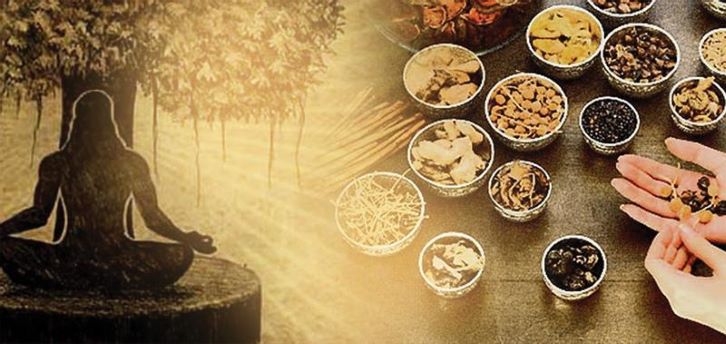
Why can’t the government use the 25,000 traditional Lankan medicine practitioners and the thousands of Ayurvedic doctors in Sri Lanka in the battle against COVID-19?

Case for Lankan health system based on Buddhist compassion and ancient Lankan practices

Colombo, November 15: With around 25,000 traditional Sri Lankan medicine practitioners and thousands of other Ayurveda doctors, why have we not incorporated a policy to use the expertise of each of these physicians/doctors in the country, towards our battle against Covid-19? Yes, there is no medicine for Covid-19 in the Western medical system just as there is no cure for Dengue.

The only closest alternative is the immunity boosters and diverse methods for respiratory ailment curative possibilities that are within our traditional medical system which can be used when the virus is at the early stages of incubation to eliminate it from the system. Ayurvedic medical specialists have explained methods, such as vapor inhalation/steaming that could be used, complementary to the science based analysis that the Covid-19 virus can be expunged from the body by killing it with certain heat levels.

People-centric health system

The Samastha Lanka Deshiya Waidya Sangamaya is finalising the recommendations to the Government for giving equal recognition for Ayurveda/traditional medical practitioners, as given to Western doctors through the Constitution. They would be lobbying for changing the disparity in recognition as initiated during the Colonial rule when the British introduced the Medical Act and placed the Western medical system in a superior position.

Why did we not, soon after independence from the British, in 1948, consider a nationalistic people centric health system and policy for the safeguarding, conserving and promoting Sinhala Wedakama/Sri Lankan Ayurveda and where needed establishing an integrated health system that offers diverse medical systems, including Allopathy, keeping in mind the holistic wellbeing of each person.

Today, even after seven decades of independence, we are nervous, jittery or afraid to learn from our ancestors and charter our own path and create our own future. We have learnt the art of rhetoric without practice. Hence, we may wax eloquent as needed about our past, but have failed where it matters; failed to give life to the richness of the past, especially in resurrecting, stabilising and promoting, not just as a peripheral appendage, but as the crux and backbone of the nation, our intangible cultural heritage. We have been happy to use the word ‘alternative’ to the medical systems that were practised in the country for thousands of years and never considered the word ‘parallel’ that would have given dignity to our past and our present.

If we had made every child and youth learn about the basic herbs of the country and its usages, and grow up to know as a matter of general knowledge, as our forefathers did, about the medicinal quality of our traditional food, about what herbs are used for Ath beheth, which every mother knew, and the herbs used in the Deshiya Chikitsa Kalka, Thaila and Guli and their scientific premise as proven over the centuries, and the basic Weda Wattoru for immunity boosting and respiratory health, we will not be quaking in fear today and locking up our economy.

Humaneness

Sri Lankan medical professionals, Allopathic or Ayurveda are the descendants of those who have been born and lived and died in the country; their grandparents have been raised in the tradition where giving medical assistance to another to save/prolong life is seen as the greatest gift and to take money for such a deed is considered beneath the dignity of humaneness. This is the reason that to date, there are indigenous physicians, especially from Weda paramparawas who will not receive money from the patient. It is the practice for the patient to keep whatever he can afford, on a Betel leaf discreetly.

This is because the medical culture of the country as well as India where Ayurveda was born, began with the rishis, the sages and the men for whom holiness, purifying and perfecting the mind, went hand in hand with healing. With the advent of Buddhism, this was further perfected and to heal another selflessly was one of the greatest acts of good Karma one could do to merit liberation. It is this philosophy that Sri Lankans must resurrect. The philosophy of the traditional medicine system is in stark contrast to the greed and exploitation of the Big Pharma industry that many Western doctors, scientists and others have exposed through hundreds of books.

Sri Lankans should take the time to study in depth their medical heritage to be able to defend in theory and practice the fact that Deshiya Chikitsa and Ayurveda have stood the test of time and the vicissitudes of mass health challenges over centuries. Like all things in life, diseases are not static, especially given that we have increasingly encroached into the animal world and the world of bio weaponry.

Impeccable results

Where the uninformed conclusions go, regarding the alleged so called ‘unscientificness’ of Ayurveda/Deshiya Chikitsa, it should be reminded that 19th century scientists in the medical sphere researching into the ancient Ayurvedic medical prescriptions for diseases had replicated curative methods on patients and stunned at the impeccable results.

Sri Lankan author, Dr. Seela Fernando in her book ‘Herbal Food and Medicines in Sri Lanka’ quotes Dr. George Clarke, M.D., M.A. of Philadelphia as stating as follows after reading the Charaka Samhita, the ancient text on the Ayurvedic medical tradition; As I go through a part of Charaka, I come to the conclusion that if present day physicians drop all modern drugs and chemicals from their Pharmacopoeia and adopt the methods of Charaka in treating diseases, there will be less work for undertakers and fewer invalids in the world.” Dr. Clarke was referring to the overall medical system of India and Sri Lanka.

Dr. Fernando stated in her book that Ayurvedic science in Sri Lanka shone at its best during the reigns of King Buddhadasa and Parakrama Bahu the Great. She stated: During these days, every Sinhalese of noble birth was expected to know Ayurveda; besides Royalty, they included Bhikkhus and poets. These physicians attained a high degree of efficiency in medicine and surgery, yet they did not work for pecuniary gain. Even the Sinhalese kings, among whom were famous surgeons and physicians, practised medicine as an act of service to gain merit.”

This is what Robert Knox, the British East India company sailor who was taken captive in 1659 had to say about Sri Lanka’s indigenous medicinal system/culture at the time: Here are professed Physicians but all in general have some skill that way and are Physicians to themselves. The woods are the Apothecaries shops, where with herbs, leaves and rind of trees they make all their physics and their plasters with which they do notable cures.”

Notable cures

A country’s medical culture is entwined, to the veins of the natural world of a nation; a world that needs to be protected from how modern science has been used for evils, such as slow poisoning and disease causing pesticide emerged from ‘Green Revolution’. It is this so called revolution which should be called black rather than green which has been for decades making our hundreds of endemic medicinal rice varieties that grow on different soils and other endemic plant varieties disappear as farmers were lured by the alleged ‘quicker’ and ‘easier’ money making potential of chemically induced agriculture and imported seed varieties which lead us all down the long path of wasting Lanka’s revenue and wasting the potential of human lives.

The memory of how our forests were the mother in whose bosom our medicines and food were nurtured have long been deleted from our brains. This is why we have not listened to Sri Lankan forestry and ecological professionals, such as Dr. Ranil Senanayake who has authored a book on exotic medicinal plants of Sri Lanka and who in the 1970s saw the dangers of Lanka taking the advice of the Western ‘experts’ who recommended the growing of Pine trees for reforestation. He instead recommended the growing of ‘village centric forests.’

These forests as per the vision of Senanayake (and put effectively into practice by him in his independent capacity over five decades) would enable cultivating all medicinal and other vegetation/plant species of the land, including our medicinal and nutritional power house Kos (Jak) trees and making the village the guardian of such ‘life sustaining’ forests. These forests would replace the need to cut forests and clear land for agriculture.

Food and medicinal goldmines

It would also while protecting the soil from the harm of monoculture, promote the health of the nation because we would not need chemicals or artificial fertiliser or imported seeds. This would have been a chance to give back to Sri Lanka the scenario that Robert Knox described and make our forests food and medicinal goldmines and help Sri Lankan Traditional medicine heal authentically not only Sri Lanka but the world through avenues, such as tourism.

Today, we have resorted to having to import turmeric, one of our staple herbs that every family grew in their backyards. Given that the medicinal culture of a country is determined by what grows on its soil, we cannot be blind to narrow-minded scenarios, especially when we have a raging pandemic.

What we have to remind ourselves is that if we continue to harness the incredible potential of our traditional medical practitioners, something that Western countries do not have, and turn around the immunity deficiency of people with our herbs and indigenous food, that we will be able prevent needless deaths.

If we harness our traditional medical expertise in a systematic matter, boldly, resolutely and with trust in what is ours, we will be able to help not only ourselves but a world which has made health a commodity.

A success story of ours in line with our medical heritage will be a success story for humanity because with it will come the legacy that we are known for; the legacy of valuing human life and treatment to save a human life is not about greedy money making sans ethics, but a mission and a Buddhistic act of compassion.

Sri Lanka reports 5 more COVID-19 deaths; tally at 58

November 15th, 2020

Courtesy Adaderana

Sri Lanka has reported another five coronavirus related deaths, the Department of Government Information confirmed.

Accordingly, the total number of deaths so far witnessed in the country due to the virus has risen to 58.

A 54-year-old male from Jinthupitiya, Colombo 13 had passed away at the Colombo National Hospital. Reportedly, the victim had suffered from cancer for a long period and the COVID-19 infection had worsened the condition.

A 39-year-old male from Colombo 15, who also had been a cancer patient, had succumbed to the disease and COVID-19 related pneumonia. He had been receiving treatment at the Homagama Hospital upon being diagnosed with COVID-19.

Another male, aged 88, residing in Colombo 12, has died from a COVID-19 related heart attack. He had been admitted to the Colombo National Hospital over chest pain.

A 79-year-old man with chronic lung disease had passed away at his residence with the worsening of his condition due to COVID-19 infection. He had been a resident of the Borella area in Colombo 08.

Another 88-year-old male, residing in Colombo 13, has succumbed to the virus upon admittance to the Colombo National Hospital. The cause of death is recorded as COVID-19 infection and a heart attack.

Covid-19: Daily cases hit 704 as 160 more test positive

November 15th, 2020

Courtesy Adaderana

Sri Lanka saw another surge in its confirmed Covid-19 cases this evening (15) as 160 more persons were tested positive for the virus.

All the new cases are close contacts of the Minuwangoda and Peliyagoda clusters, reports revealed.

According to the Government Information Department, 704 positive cases in total were registered today, recording the third-highest daily cases count. Sri Lanka witnessed the highest daily count of Covid-19 cases on the 23rd of October with a record total of 866 fresh positive cases. The second-highest was recorded on the 6th of October with 739 infections.

With the latest development, the country’s infections tally has soared to 17,287 while total infections from the dual cluster reached 13,788.

Health Ministry’s data showed that 11,495 of the confirmed patients have made complete recoveries from the virus.

The Epidemiology Unit says 5,734 active cases are still receiving medical treatment at selected hospitals across the island.

The death toll meanwhile went up to 58 earlier today, as five more patients fell victim to the virus.

The UN Resident Coordinator in Sri Lanka Ms Hanaa Singer should be either recalled by the UN or expelled by the Government from this country for her anti Government and undiplomatic statement and the undiplomatic letter sent to the Prime Minister.

November 14th, 2020

Dr Sudath Gunasekara Mahanuwara

14.11.2020

මෙම කාන්තාව කියන පරිදි මේ රටේ ඒකාබද්ධ තාවය සහ ඊනියා සන්හින්දියාව විනාශවී ඇත්තේ මෙවැනි ජාත්යන්තර කුමන්ත්‍රනකාරි නිලධාරින්ගේ අමණ ක්‍රියා කලාප සහ අන්තගාමි මුස්ලිම් හා දෙමල දේශපාලකයින්ගේ ක්‍රියාවන් නිසා සහ  ඊටත් වඩා ඔවුන්ගේ චන්දය නමැති එලු අණ්ඩකෝශය පසු පස හිගා යන ජාති ද්‍රෝහි බඩගෝස්තර වාදී රටට ජාතියට සහ ආගමට අබැටක් පමණ හෝ ආදරයක් නැති කාලකන්නි සින්හල දේශපාලනග්නයින් නිසා මිස මුස්ලිම් අන්තවාදින්ගේ මල සිරුරු භූමදාන කිරීමට ලන්කාණ්ඩුව අවසර නොදෙන නිසා නොවේ.. 

1 සියලුම ජාත්යන්තර නීතිද උල්ලන්ඝන්ය කාරමින් මෙම ක්න්තාව  පුර්ණ නිදහස් ,ස්වාධීන රටක අබ්යනතර කටයුතු වලට නිර්ලජ්ජිත අන්දමින් ඇගිලි ඝසා ඇති නිසාද

2 ලන්කා විරොධී සින්හල විරොධී ඊනියා ජාත්යන්තර තැරැව්කරුවන්ගේ අතකොලුවක් මෙන් ක්‍රියාකොටැ ඇති නිසාද

3 මේ රටේ සිටින මුස්ලිම් වරුන් ලන්කා රජය්ට එරෙහිව පෙල ගැස්වීමට කුමන්ත්‍රණැය කොට ඇති නිසාද

4එබැවින් එක්සක් ජාතීන්ගේ සන්ගමය වැනි සන්විධානයක මෙවැනි  තනතුරක් දැරීමට කිසිසේත්ම ඇය තවදුරටැත් සුදුසු නොවන නිසාද

5 මෙවැනි නිලධාරීන් තබාගැනීම  එක්සක් ජාතීන්ගේ සන්ගමය වැනි සන්විධානයකට කැළලක් වන නිසාද ඇය වහාම ආපසු කැදවනමෙන් ලන්කාණ්ඩුව විසින් එක්සත් ජා සන්විධානයට දැන්විය යුතුය

6 ඔවුන් එසේ නොකලහොත් ඇය වහාම මේ රටීන් පිටුවහල් කොට ඇය මින් ඉදිරියට ජාත්යන්තර සේවයට නොසුදුසු අයකුලෙස අසාදු ලේඛණ ගතකරන මෙන්ද ඉල්ලා සිටිය යුතුය.

Biden victory – Implications for the World and Sri Lanka

November 14th, 2020

Prof. N. A. de S. Amaratunga   DSc

Joseph Biden has decisively won the US presidential elections in November 2020 though President Trump also did extremely well getting more than 47% of the popular vote. This indicates towards a politically divided America and that Trumpism, or the nationalism that he gave leadership to, could influence future domestic as well as foreign US policies. Apart from this internal contradiction, there had been in the outside world also significant changes which could impact on these policies. First there is the huge Chinese factor which cannot be wished away and which has already critically undermined US global influence and hegemony. Second the Russian resurgence and its ambitions in its vicinity and also elsewhere, eg. Syria, are not easy to favourably resolve. Third the belligerence of the nuclear powered North Korea with its ICBM aimed at the US and the nuclear ambitious Iran have to be factored in. Fourth the US allies particularly the European Union which have been estranged due to Trumpism, and Brexit which was opposed by Biden will have to be addressed.

The question is whether these issues would make Joe Biden deviate from the usual ugly American” approach, the aggressive pursuance of its global agenda aimed to dominate the world, and adopt a less abrasive policy specially towards small countries. Biden in his election campaign had indicated his position regarding most of these issues though apparently it is a position that refuses to deviate from the usual US attitude towards what it perceives as anti-democratic authoritarian states. For instance he has not shown any conciliatory attitude towards China and also Russia. He has said he will counter Chinese aggressive economic practices. Further he has said Russia is an opponent” and that he would oppose its attempts to grab” countries like Crimea. Yet he may go against Trump’s policy and seek Russia’s cooperation in arms control and consider entering into anti-proliferation treatises, two of which have been canceled by Trump.

However there could be significant policy changes with regard the Middle East. Biden has said he will negotiate with Iran about entering into the now defunct international accord on the nuclear programme in exchange for relaxing of sanctions. Iran has been busy amassing enriched nuclear fuel in its nuclear programme after Trump withdrew from the agreement and clamped trade sanctions. Biden will continue Trump’s policy of stopping the wars in Afghanistan and Iraq. He  has also shown opposition to the Israel attempts to annex parts of Palestinian land in its settlement schemes and he could be concerned about human rights of Palestinians which the Democratic party is pushing for. Saudi Arabia doesn’t like Biden’s policy on Iran. Biden also wants the Saudi-led war against Yemen stopped. Due to these reasons both Israel and Saudi Arabia wanted a Trump victory.

Biden may try to build up an alliance to oppose the Chinese aggressive policies in the South China Sea, and over trade, Hong Kong, Taiwan and the technology war specially in the area of communication. Whether US allies are interested in joining the US would depend on several factors. They are somewhat disillusioned with Trump and recent polls show that American reputation has plummeted even amongst staunch allies. Trump had said NATO is obsolete” and wanted to withdraw from it. Biden will have to do a lot to win over their confidence in order to act together against their adversaries. This may prove to be difficult as most of the US allies have strong trade and aid arrangements with China and may be reluctant to go the full distance with the US on this issue.

China’s network of trade and aid in the five Continents is so vast and entrenched that dismantling or countering it would be a difficult task. To take one example Australia, which is an ally of the West and a member of QUAD the anti-China front, has allowed China in the last decade to pour billions of dollars into Australia, China owns an airport in Western Australia, nine million hectares of farm land, a port in Darwin, several coal mines and wind farms. As mentioned above this is the result of the vast changes that had undergone in the global economic and political power equation where China has played a huge role.

In any city in the Continent of Africa it is said that any building higher than three stories or a road longer than three kilometers is being built by Chinese companies with Chinese aid. Africa wanted to modernize, urbanize and industrialize fast and no world power had answered Africa’s call as China has. China may eventually own airports, harbours and such strategic assets in Zambia, Uganda, and Kenya. And the benefits of this revolution in Africa would be reaped by China to a significant degree in economic and political terms. China’s Road and Belt Initiative is winding its way into Lebanon and several other Middle East countries as well and it has pledged aid to the value of USD 20 billion to these countries.

China has increased its defense expenditure by 800% since 1990s and is no push over if it comes to a fight, nuclear or otherwise, though a war is most unlikely. The point is that the gigantic country cannot be brow beaten and the US would know this. Further China has controlled the Covid pandemic effectively and with minimum damage and has started to recover from the economic downturn and would soon be in a position to further its global ambitions which are benign compared to those of the West.

Apart from these gigantic changes in the outside world which Joe Biden has to contend with, there are internal issues of a pressing nature. Most importantly the Covid-19 is threatening to wipe out its population with more than ten million infected and more than hundred thousand deaths. The daily count is increasing and now is in the range of 150000. Biden must realize that the pandemic cannot be brought under control without draconian measures. In this difficult job he has to deal with part of the population that stood with Trump when he cocked a snook at the virus. This would have a huge effect on the economy which is already reeling due to the pandemic. Biden also has to address the climate issue which he has promised. Cutting down on emissions to meet the Paris agreement requirement would have an adverse effect on the economy at least at the beginning. Then he has to rectify relations with US allies and also realign with NATO, WHO, UNHRC etc.

Joe Biden and the US may not be strong enough at this juncture to pursue the usual aggressive policies on China and also Russia, Iran and North Korea due to the reasons mentioned above. On the other hand a total change of strategy also cannot be expected. A path somewhere in the middle may have to be carefully chosen. Several International Relations scholars are of the view that US may have to put its hegemonic and imperialist agenda in the back burner and not go pell-mell with the cold war that Trump had started. Instead the US would try to strengthen its relations and step up economic and military assistance to its allies in the region they call the Indo-Pacific. Trump had already done this with India just before the election. The US may not resort to arm-twisting in its dealings with small countries for it knows such action would only push these countries into the arms of the waiting dragon who is more than willing and capable of responding with a tight embrace.

The US may not pressure Sri Lanka to sign the MCC, SOFA and ACSA. It may not ask SL to take difficult but necessary decisions”. Softer coercive measures would most probably be adopted. In the UN also the US cannot do much damage that matter because of the presence of Sri Lankan friends wielding veto power in the Council. The US in this regard may be somewhat disadvantaged due to its inability to meet the economic and development needs of small countries it would like to take in its neo-colonial grip if possible, in its effort to thwart the advance of China. The latter in contrast with a good post-Covid economic recovery would be in a position to help these countries and neutralize the US efforts in the process.

India our immediate neibour who is now inextricably aligned with the US, however, has enormous internal and external problems that it may not like to complicate matters by getting involved in the internal affairs of its neutral neighbours. The Covid pandemic is raging and taking a heavy toll on the people and the economy. Punjab issue is a complicated intractable problem which makes India’s involvement in similar issues in other countries seem hypocritical to say the least. Further, externally it has to contend with China and Pakistan on two borders. India it appears, to a degree, is in the same boat as the US. Like the US India too may have to adopt a middle path in its relations with its neighbours. Perhaps realising the complexity of these issues India has already started to mend relations with Nepal and seems to be keen on developing good relations with its other neighbours as well. In this scenario trying to pressure Sri Lanka on the devolution issue may not be in the national interest of India. Therefore we could hope that India will not resort to attempts at subversion of our government or destabilize it by other means as it did previously. India is also aware that Sri Lanka has a good and strong friend in China.

Under these circumstances Sri Lanka’s strategy should be to demonstrate an effective diplomatic facade of neutrality and non-alignment and make the maximum use of the opportunities that come its way to develop the country without compromising on national interests, assets, territory, independence and sovereignty.

Prof. N. A. de S. Amaratunga   DSc

THE POHOTTUWA GOVERNMENT OF SRI LANKA Part 2 C8g

November 14th, 2020

KAMALIKA PIERIS

TREATY OBLIGATIONS

The Sri Lankan intelligentsia wanted clarification about these US Agreements. This was the first time that the Sri Lanka public had even thought about such matters.  Until now the intelligentsia had shown no interest in any Agreements that the government was signing.   They trusted the government .This time it was different.   The intelligentsia were concerned as to what mess Yahapalana government was getting them into.  They made inquiries.

The three US Agreements under discussion are treaties between two sovereign states, they were told. A treaty is different from a contract. A treaty is governed by international law and in the case of a dispute they have to go before an international court. A contract is governed by domestic law and is enforced in the domestic courts.

A treaty can be labeled under different names, ‘compact’, ‘convention’, ‘agreement’, ‘covenant,’ ‘accord,’ ‘protocol,’ etc .What is important is whether the agreement is intended to create international legal rights and obligations. Laws relating to treaties between states are governed by the Vienna Convention of 1969.

These bilateral agreements are legally binding, Palitha Kohona told a concerned audience at a well attended OPA seminar on Treaties. Treaties are binding at international law. Once you enter into an agreement you are bound by it.  International law also requires that the treaty must be implemented faithfully by the parties. Failure to comply with the provisions of a treaty could result in sanctions.

Once concluded, a party cannot simply walk away from a treaty. It remains binding. Thus it would not be possible for Sri Lanka to walk away from the MCC or any other treaty, once it is signed. Therefore a country must not enter into a treaty if it has any doubts. You can get out of a treaty only on the treaty’s own conditions. With superpowers there is no easy way out of it, Kohona said. In Sri Lanka we sign these things and only realize the implications later. 

The law relating to treaties says that the Head of state, the Head of government and the Minister for Foreign affairs can sign on behalf of the country.   In USA these officials cannot sign a treaty until US Senate had approved it. Sri Lanka has no such safeguards, Kohona observed.  

Once a treaty is signed there are treaty obligations.” One school of thought says treaty obligations must be respected regardless of the circumstances under which they are signed. Another school of thought thinks that the legitimacy of agreements/treaties depends on circumstances.

Article 46 (1)  of the Vienna Convention stated that  once a treaty is signed,  a country can back out  saying that it was against their laws, only if  that law was one of fundamental importance”.

Ladduwahetty said that in his opinion, an “internal law of fundamental importance” is violatedin Sri Lankawhen agreements/treaties are concluded by the Head of State without consulting Parliament.

 In Sri Lanka they should sign only when the treaty has got the consent of two-thirds of members of Parliament and the consent of the Executive. Any agreement/treaty signed in the name of the people by the Sri Lanka‘s Head of state, Prime Minister or Foreign minister without the consent of Parliament amounts to a violation of the sovereignty of the people.

Ladduwahetty said that the Supreme Court must rule, once and for all, on the procedures that should be followed when agreeing to bi-lateral treaties. The procedures must be in accordance with the Constitution.  This ruling should be a common ruling that it would apply to all agreements/treaties.

Tamara Kunanayagam added her observation. There may be an International law of Treaties but this cannot go against the UN Charter. We are entitled to protect our resources, our land. There is a right to permanent sovereignty, said Tamara Kunanayagam.” Future governments must say it will not recognize the treaties signed by Yahapalana government.

The alarmed intelligentsia were reminded that ACSA was already signed. The next in line was MCC. MCC is a treaty, the intelligentsia were told. Further, the MCC is a state organization. its Board of Governors consist of Secretary of state, Secretary of the Treasury, US Trade Representative, Administrator of USAID and four private sector members appointed by the US President with the advice and consent of the US Senate. The CEO is appointed by the US President. The MCC is therefore   a part of the US foreign policy.

The intelligentsia were not prepared to give in. They debated   on how to get out of these treaties, when the next President is appointed in November 2019.  Military treaties will bring in troops. If the Americans come, how to get rid of them, pondered the intelligentsia. Land grabbing is a violation of international law but it may be difficult to throw them out, if US leases our land. The best way, the intelligentsia decided was to keep them out at the start itself.

STOP USA”

A new organization named STOP USA was started in Colombo in June 2019  to highlight the danger   of these Agreements. The objective was to prevent the three USA treaties.”  At its inaugural meeting, speakers including MP Wimal Weerawansa, Pivithuru Hela Urumaya leader MP Udaya Gammanpila, MP Vasudeva Nanayakkara and former lawmakers A.L.M. Athaulla, Mohammed Muzammil and Sarath Weerasekera.

The speakers said that the US   had commenced work on these agreements in 1995, soon after Chandrika Kumaratunga’s election as President. US then gradually expanded its military-to-military relations. ACSA and SOFA were meant to allow the US to set up base here.  The various US military units that would be allowed access were listed in the agreements.

These Agreements were the biggest threat Sri Lanka has faced since it gained Independence.  It would affect Sri Lanka’s sovereignty and territorial integrity. Today, the US plan has received the backing of Prime Minister Ranil Wickremesinghe and Finance Minister Mangala Samaraweera, these speakers said.

The organization was joined by many lawyers, politicians and artists.The organization seems to be going strong. In August there was a Stop USA” meeting at Gampaha, reported the media.

Mangala Samaraweera spoke up on behalf of the Agreements. He defended SOFA and ACSA. These were military to military” agreements, he said. They were harmless” and was not a danger.”

Samaraweera alleged that those opposed to such agreements were bent on undermining bilateral relations with the US, a country that always stood by Sri Lanka. He cautioned that Sri Lanka would lose its exports to the US and also new employment opportunities if these Agreements were not accepted. He drew attention to Sri Lanka’s dependence on exports to the US, particularly garments. (continued)

Participation of global Sri Lankans to join Sri Lankan Americans to offer Congratulations to the new President Elect and Vice President Elect.

November 14th, 2020

Anjalika Silva USA

Dear Fellow Sri Lankans of all citizenships around the world – IF YOU WISH TO PARTICIPATE, HERE IS AN OPPORTUNITY TO BE A PART OF A NEW BEGINNING FOR AND ON BEHALF OF PEACE, UNITY AND FAIR UNDERSTANDING OF THE TRUTH ABOUT SRI LANKA TO THE THE NEW US ADMINISTRATION.  THE BLAME GAME AND CIRCULATING FEARS DOES NOT SERVE US.  WE NEED TO PARTICIPATE IN SPREADING THE TRUTH. IF YOU WISH TO BE A PART OF THE EFFORT TO GET A FRESH LOOK INTO THE MISREPRESENTATIONS AND TURN IT AROUND TO EDUCATE, AND SPREAD THE TRUTH, EACH OF US NEEDS TO DO OUR PART. THIS OPPORTUNITY IS BEING WORKED ON FOR THE BETTER GOOD OF ALL PEOPLE. 

NOTE:  NO POLITICAL ATTACKS WHETHER AGAINST SRI LANKA OR THE USA WILL BE ENTERTAINED.  THIS IS STRICTLY FOR THE RELATIONSHIP BEWEEN OUR TWO COUNTRIES IN A SINCERE EFFORT TO CORRECT MISINFORMATION AND FEARS THAT HAVE RESULTED OVER MANY YEARS TOWARD THE IDENTITY OF SRILANKANS. WE STRIVE TO ESTABLISH OUR INDEPENDENT IDENTITY.  NO RACIAL POLITICS OR OTHER RUDE REMARKS WILL BE ENTERTAINED.  YOU ARE IN IT OR OUT OF IT. THIS IS ONLY FOR THE BETTER GOOD OF ALL PEOPLE.

This is entirely voluntary. 

We, the Sri Lankans in the USA and others dispersed globally have an opportunity to make a start with the new administration in the USA despite the chaos, for the Better good of Sri Lanka and for an accurate and positive image of who we really are, in contributing where ever we may be. Your contribution to our image will play a role in better understanding and in the US Foreign Policy toward Sri Lanka.

If you wish to convey your greetings to President Elect Joe Biden and Vice President Elect Kamala Harris, feel free to read the message provided at the link below. 

Your name  and (Country) can be added on the right side of the page.  We hope to complete this by Tuesday, December 15, 2020 and seek the best avenue to get our good wishes to the leaders. Permission has been opened for anyone with the link to write into the list of names.  Please do not alter the text.

PLEASE FEEL FREE TO SHARE THIS WITH YOUR FRIENDS AROUND THE GLOBE.

Link to access the document:

https://docs.google.com/document/d/1Zp_RuzpMpwFPqkBfdtsVQYgMbRzhXteXI2tf0yOSofU/edit

A COPY OF THE DOCUMENT REFERRED TO ABOVE IS ATTACHED

If you have problems accessing the document, please feel free to contact me in the USA with your email to:  AnjalikaSilva@gmail.com

I will send you an attachment to add your name that can be included in the document that will get across to the right folks and the Congressman’s office accessible to me.

Thank you

Anjalika Silva

USA

GO TO THE DOCUMENT BELOW AND ENTER     YOUR NAME (COUNTRY)

This is the text of our Greeting that will provide you space in the right column to add your name

https://docs.google.com/document/d/1Zp_RuzpMpwFPqkBfdtsVQYgMbRzhXteXI2tf0yOSofU/edit

Congratulations and Greetings to President Elect Joe Biden and Vice President Elect Kamala Harris from the Sri Lankan American Community in the USA and Sri Lankans worldwide who join to express their good wishes……

We are profoundly gratified by your success and convincing win for saving the Soul of America” of which we are very much a part.  We rejoice with you and offer our support with gratitude to preserve our democracy and be a beacon to the world.

You delivered hope to us, a small but significant group of immigrants in the US and outside from the little island of Sri Lanka.  Though small, we make a significant contribution to the intellect and economy being a part of the United States of America as law abiding citizens. We seek to be part of the inclusion for equal rights and equal justice you support across all people as promised by your upcoming administration. 

Interest in this election stretched far beyond the shores of the USA to other countries.  In this message, Sri Lankan Americans with citizenship to vote are joined by others who have expressed their joy and gratitude to see the much-needed change in America take shape while they watched from across the globe.  They join us to send their sincere greetings too.

We are a small lesser known group, but we belong to the strong fiber of this country as South Asians.  With a South Asian connection at the highest level of your administration, we come from a South Asian country that elected the World’s First Woman Prime Minister in July 1960”, shattering the glass ceiling ahead of powerful western countries.  

Sri Lanka is the oldest democracy in Asia with adult universal suffrage introduced in June 1931, even prior to Independence from Britain.

As South Asians, we share a connection with the Vice President elect, to join the new order and the journey forward. 

The values you expressed are common to all of us and for our children and grandchildren.  Our culture is one that lays emphasis on education and human values. Those of us who chose to spend decades of our lives in the US brought with us an investment in free college education, nurtured by free health care given to us by our home country. We added value to our adopted land and promise to continue to do so.

We bring a literacy rate of 91% among our people. We are multiethnic and multi religious.  We practice the Philosophy of Buddhism among a majority who spread the message of kindness and compassion to all beings.  We live by the diversity we value with a multi religious composition among us and followers of Christianity, Hinduism, and Islam who freely follow their faith among the predominant Buddhists.  They merge with ease sharing mandated holidays in celebrating all religions in the nation.  This multiethnic group speaks three languages, and we are Sri Lankans striving to obliterate our differences while enriching the diversity in our homeland and adopted land, the United States of America.  We have immersed ourselves to restore America to the position of the pinnacle of the world.  We offer you our blessings in your new and difficult roles ahead. 

We are, Sri Lankan born US-citizens and non-citizens

in the USA and around the world.

සීනි තිත්ත කරන මුදල් ලොක්කන්ගේ වැඩකිඩ

November 14th, 2020

මතුගම සෙනෙවිරුවන්

          රජයේ නියෝගයෙන් පාරිභෝගික අධිකාරිය විසින් සුදු සීනි සඳහා උපරිම සිල්ලර මිලක් හඳුන්වා දී තිබේ.මෙම ගැසට්ටුව නිකුත් කරනුයේ නොවැම්බර් මස 14 වනදා වන විට බදු පනත යටතේ වන නවතම ගැසට්ටුවක් පිටවීමට නියමිත වන වකවානුවකය.පසුගිය ඔක්තෝබර් මස 14 දින සීනි ආනයනය සඳහා වන බද්ද රුපියල් 49 ශත හැත්තෑපහකින් අඩු කරමින් ආණ්ඩුව ගැසට් නිවේදනයක් නිකුත් කරලීමට කටයුතු කළහ.සීනි ආනයනය සඳහා ගැසූ බද්ද අති විශාල ලෙසට අඩු කිරීමට හේතුව දක්වා ඇත්තේ කොරෝනා වසංගත තත්වය තුළ ආර්තික අපහසුතාවයට පත් ජනතාවගේ ආහාර පරිභෝජනයට සහනයක් ලබා දීම පිණිසය යන්නයි.

      ලංකාවේ සීනි පරිභෝජනයෙන් සියයට හැත්තෑවක් ගෘහස්ථ මට්ටමට අයත්ය .කර්මාන්ත සඳහා යොදා ගැනෙනුයේ සියයට තිහක් පමණකි.නිවසක සීනි අවශ්‍ය තාවය උපරිම වශයෙන් මසකට කිලෝ හතරක් ඉක්මවා නොයයි.නමුත් අනෙකුත් ආහාර අවශ්‍යතාවය  ඊට වඩා  දැඩිව පවතී. එවැනි තත්වයක් තුළ විශාල බදු සහනයක් සීනි සඳහා වෙන් කිරීම තුළ බලවත් සැකයක් ජනිත වේ. අඩු කරන ලද බද්දේ සහනය පාරිභෝගික ජනතාවට නොලැබෙන  බව පාරිභෝගික අධිකාරිය විසින් නිකුත් කරන ලද ගැසට්ටුවෙන් තේරුම් ගත හැකිය.රුපියල් 84 සිට 87 දක්වා මිළකට සීනි කිලෝවක් මිළදී ගත හැකි වනුයේ සමූපකාරයෙන් සහ ස.තො.ස. අලෙවි සල් වලින් පමණකි.විවෘත වෙලෙඳ පලේ සීනි කිලෝවක සිල්ලර මිල රුපියල් 135 හෝ 140 අතර මිලකට දෝලනය වේ.යටකී ගැසට්ටුව නිකුත් වූ ඔක්තෝබර 14 වන විට මෙවැනි තීරණයක් ගැනීමට කිසිම හේතුවක් හදිසියේ පැණ නැගී නොතිබුණි. ලෝක වෙළෙඳ පලේ සීනි මෙට්රික් ටොන් එකක මිල රුපියල් 380 සට 445 දක්වා මිලකට වෙනස් වූ බව සැබෑය.එය වර්ෂයක සාමාන්‍ය තත්වයයි. වසංගත තත්වය යටතේද  මෙම මිල වැඩි වීම බලාපොරොත්තු විය යුතු විය.නමුත් ඒ වන විට ලංකාවට සීනි ආනයනය කරනු ලබන ව්‍යාපාරිකයන් සත් දෙනෙකු විසින් සීනි කිලෝවකට රුපියල් 50 ගණනේ බදු ගෙවා සීනි මෙට්රික් ටොන් 90000 ක් පමණ ආනයනය කර තිබුණි.එම තොගය මාස තුනකට සෑහේ යයි කියා ඇත.එසේ නම් මෙවැනි විශාල බදු අඩු කිරීමට යෑමට දුන් උපදෙස කුමක් විය හැකිද.

      කතාව මෙසේය ලංකාවේ සීනි සහ වෙනත් ආහාර ආනයනය කරන්නන් අතර බන්දිත ගුදමක් හිමි එක් සමාගමක් තිබේ. එය සිංගප්පූරුව ප්‍රධාන කොට පවතින ඉන්දියාවේ සීනි කර්මාන්ත හිමි දැවැන්ත අන්‍ය ජාතික සමාගමකි.ඔවුහු ඔක්තෝබර් 14 වන දින පෙරකී ගැසට්ටුව නිකුත් වනවාත් සමගම ක්‍රියාත්මක වී තිබුණි.එනම් මෙට්රික් ටොන් 26000 ක සීනි තොගයක් නැව් ගත කර තබීමයි.එලෙස නැව් ගත කොට තිබීම නිසා එම තොගය අඩු කළ බදු මුදලට මෙරටට ගොඩ බැමට ඔවුනට හැකිය. එසේම මේ වන විට වරායේ නැගෙනහිර පර්යන්තය ඉන්දියන් සමාගකට පැවරීමේ සූදානමකද රජය නිරත වී තිබුණි.යටකී දැවැන්ත සමාගමද මෙම ගනුදෙනුවට සම්බන්ධ බවට ආරංචි පවතී. සාමාන්‍යයෙන් ලංකාවට පැමිණෙන සීනි නැව් වල පැටවිය හැකි ප්‍රමාණය වූයේ මෙට්රික් ටොන් 13500 කි. නමුත් යටකී නැගෙනහිර පර්යන්තය විවෘත කරලීම නිසා ටොන් විසිහයදාහක් පැටවිය හැකි නැව් මෙරටට පැමිණීමට අවස්ථාව උදාවේ.

    මෙරටට සීනි ආනයනය කරන යටකී ඉන්දියන් සමාගම බදු අඩු කිරීමේ වාසිය ගෙන ඇත්තේ මුදල් ලොක්කන්ගේ පූර්ව දැනුම්දීමකින් බව නිසැකය. මේ නිසා මෙම සමාගම ලැබිය හැකිලාභය විශාල ලෙස ඉහළ යන්නට ඇත. ඒ මගින් මෙම ලොක්කන්ගේ මඩිය පිරවෙන බව අමුතුවෙන් කිව යුතු නොවේ.මෙම සමාගමට සීනි ලොතරැයිය ඇදෙන විට ලංකාවට සීනි ගෙන්වන අනෙකුත් සමාගම් හතට කුමක් සිදු විණිද. ඔවුනට මේ සමාගම මෙන් වාසියක් අත්නොවිණිද.සැබවින්ම ඔවුහුද මේ වාසියෙන් ප්‍රයෝජනය ලබමින් සීනි මෙට්රික් ටොන් 30000 ක් පමණ මේවන විට  ආනයනය කර තිබේ.නමුත් මාස තුනකයට සරිලන ලෙස පෙර ආනයනය කරන ලද සීනි ද ඔවුන් සතුය.මේ අයට සාමාන්‍ය ලාභයක් ලැබීමට නම් වෙළෙඳ පලේ එක් නීතියක් ක්‍රියාත්මක විය යුතුය.නමුත් තත්වය වෙනස් විය. මෙම සීනි මගඩිය පුවත්පත් විසින් වාර්තා කිරීමත් සමගම ආනයන පාලක විසින් නව ගැසට්ටුවක් නිකුත් කරන ලද්දේය.එනම් ආනයන පාලක ගේ අවසරයකින් තොරව සීනි ආනයනය කිරීම නතර කරලමිනි.

    පෙර කී ඉන්දියානු සමාගෙමෙන් සහ අනෙකුත් දේශීය සමාගම් වලින් සීනි තොග සමූපකාරයට සහ ස.තො.ස. ආයතනයට සැපයිය යුතු බවට වෙළෙඳ ඇමති ගේ යෝජනාව විය. එයට සාධාරණ උත්තරයක් නොවීය. එහිදී ඇමතිවරයාගේ තීරණය වූයේ මිල පාලනයක් පැනවීමය. ඉන් කලබලයට පත් ඉන්දියන් සමාගම සීනි මෙට්රික් ටොන් 2000 ක් පමණ රජයේ ආයතන වලට දීමට පොරොන්දු විය. අනෙකුත් දේශීය ව්‍යාපාරික සමාගම්ද මෙට්රික් ටොන් 250 ක් 500 ක් වැනි ප්‍රමාණයන් දීමට එකඟ වී තිබුණී.පසුගිය දිනවල රජයේ ආයතන වලින් මිලදී ගැනීමට හැකි වූයේ එම සීනිය.වෙළෙඳ පළ තුළ එක නීතියක් නොමැති වීමේ වාසිය ගත් මගඩි කරුවන් මෙලෙස කේවල් කරද්දී පාරිභොගිකයන් විශාල වශයෙන් පීඩා වින්ද ආකාරය අපට දැක ගන්නට හැකි විය. දිගු පොලිම් වල( මීටරයක පරතරය සහිත) අව් රැස් කමින් සිටි ඔවුන්ට ඉටුවූ සාධාරණයක් නොවීය.ඒ වෙනුවට විවෘත වෙළෙඳ පලේ සීනි මිල ඉහළ යමින් පැවතුණි.මේ අතර යටකී ඉන්දියානු සමාගම සහ අනෙකුත් ආනයන කරුවන් විසින් ගෙනා සීනි සඳහා රජය බැඳුම්කරයක්ද පණවා තිබේ.මේ නිසා මේ සීනි වරයෙන් පිටකිරීමද තහනම් වී තිබේ.දැන් සුදු සීනි වලට උපරිම සිල්ලර මිලක් පනවන්නට රජය උත්සාහ දරයි. එය සාර්ථක වේවිද.

       බදුපනත අනුව බදු අඩු කොට ගැසට්ටුවක් නිකුත් කළ විට මාසයක් ඉකුත්වන තෙක් එම ගැසට්ටුව වෙනස් කර නිකුත් කරන්නට නොහැකිය.ඔක්තෝබර් 14 නිකුත් කළ ගැසට්ටුව යලි වෙනස් කරනු ලබනුයේ නොවැම්බර් 14 දිනය. ආරංචියේ හැටියට සීනි වල ආනයන බද්ද යලි රුපියල් 40 දක්වා ඉහළ දමන්නට නියමිතය.ලංකාවේ දැනට සිදුවන සීනි නිෂ්පාදනය අතරින් මෙට්රික් ටොන් 12000 ක ප්‍රමාණයක් ද වෙළෙඳ පලේ පවතින අවස්ථාවක රජය ඉතා කල්පනාකාරීව මේ ප්‍රශ්ණයට විසදුම් සෙවිය යුතුය.රජයට විශාල බදු පාඩුවක් අත් කරගමින් කළ කැපවීම පාරිභෝගිකයාට යෑමට තිබෙන එකම මග දැනට වැඩි මිලට ආනයනය කරන ලද සීනි වෙළෙඳ පළට නිකුත් කිරීම තාවකාලිකව නවත්වා අඩුමිලට ආනයනය කරන ලද සීනි නිකුත් කරලීමට ඉඩ පහසුකම් සැලසීමයි.ඒ සඳහා අඩු කරන ලද බද්ද යම් කාලයක් තව පවත්වා ගෙන යා හැකිය. සැබවින්ම   වෙළෙඳ පළ හැසිරීම බලෙන් පාලනය කළ නොහැකිය. එසේම විදේශ සමාගම් මත යැපෙමින් නිළධාරීන් සහ දේශපාලකයන් මේ මගඩි වලින් වාසි ගැනීමේ ක්‍රමවේදය පාලනය කිරීම අත්‍යවශ්‍ය වේ.ජනපතිවරයා නොමග යවා සීනි වලින් විශාල අතයට මුදලක් ලබා ගැනීමට කවුරු හෝ උත්සාහ දරා තිබෙන බැවින් මේ තත්වය වෙනස් කරලීම රජයේ යුතුකමයි. අනෙක නම් ජනපතිවරයා අමාත්‍ය මණ්ඩලයේ වැඩ කටයුත් සඳහා කරන අනවශ්‍ය මැදිහත් වීමයි. ඒ නිසා ඇතිවී තිබෙන කඹ ඇදිල්ලේ තරම මේ සීනි මගඩියෙන් තේරුම් ගත හැකිය.

මතුගම සෙනෙවිරුවන්

කෝවිඩ් ඇවිත් – ඔබ කොහිද?

November 14th, 2020

වාගිස ප්‍රනාන්දු  විසිනි

කෝවිඩ් ඇවිත් වනසන විට දිවි            පෙවෙත
රටම සොයයි ඔබ කොහිදැයි වී                මවිත
ගහ කොල සුරකින්න යොදවා අද ඔබේ  සුරත
කෙළෙසද ඉන්නේ නිහඩව,දැක         මේ විපත?

ඔබ සිටි විටදි සුව පුටුවේ පෙර                යුගය
මුළු රට සැනසුනා දැක ජීවිත රැකි           විදිය
ජීවිත රකින එක නොව අද ඇති ලොකු ගැටය
වැළලියයුතුද පුච්චනවද මැරුණට පසු    මිනිය

සුදුස්සාට සුදුසුම තැන ඇති              ලොවක
මිත්‍යාවට වැඩි අගයක් නැති               තැනක
කේවට්ටයින් බැලු බැලු අත නැති           රටක
හමුවෙමු හැකිවුනොත් සසරේ  මතු දිනෙක!

6,924,255ක්වූ දේශප්‍රේමී ජන බලවේගයට උපහාරයකි.

November 14th, 2020

චන්ද්‍රසේන පණ්ඩිතගේ විසිනි

ඉතිහාසය විසින් බාධක රාශියක් පසුකරමින් ගෝඨාභය රාජපක්ෂ මහතා ජනාධිපතිවරයා ලෙස බලයට පත්කර හරියටම මේ වනවිට වසරක කාලයක් නිමකර ඇත.මෙම කාර්යයේදී, මෙරට සිටි හා විදේශගතව සිටි ශ්‍රී ලාංකිකයින් 6,924,255 එම කටයුත්තේදී, පෙරමුණු බල ඇණියක්සේ අභිතව ඉදිරිපත්ව කටයුතුකර, මේ රට ගමන්කරමින් තිබු විනාශකාරී තත්වය නවතාලීමට සමත්විය.එසේ කිරීමට දායකවූ මේ මහා බලසේනාව මෙවැනි කටයුතු වලට දායකවූ ප්‍රථම අවස්ථාවද නොවේ.  එම බලවේගයට සම්බන්ධ සියලුම ජනතාවට ගෞරවයක් වශයෙන් මෙම කරුණු සමුදාය ඉදිරිපත් කරමු.

අපි මෙලොව ඉපදෙන කොට මොනවා හරි අරගෙන ආවේ නැද්ද?
ඒ වගේම අපි මරණයත් සමග කිසිවක් අරගෙන යන්නේ නැද්ද?
මේක අප අතර තියෙන ප්‍රශ්නයක්.

.ඇත්තටම අපි මෙහි එනවිට ගොඩාක් දේවල් අරගෙන එනවා. ඒ වගේම මෙලොව හැර යනවිට ගොඩාක් දේවල් අරගෙන යනවා.මේ සිදුවීම, සිදුවෙන වෙන ආකාරය, විද්‍යාත්මකව කතා කරන්න ඕනි. පුංචි දරුවන්ට පවා තේරෙන ආකාරයට එය කල යුතුයි. මේ උත්සහ කරන්නේ එම කටයුත්තට අවතීර්ණ වෙන්නයි. මේ කියන්න යන කතාව හුඟ දෙනෙක් විශ්වාස කරන්නේ නැහැ. අඩුම තරමින් පස්දෙනෙකුට මේ කතාව දෙරුණොත් ඒක ලොකුම ජග්‍රහණයක්.

ඔබ, මම, අපි හැම උපතේ සිට මේ වනවිට එක්තරා ගමනක් ඇවිත් තියෙනවා.සමහර විට ඔබ  මරණයේ ආසන්නයට පැමිණ සිටින ස්වභාවය විසින් ලබාදී ඇති විශාල දැනුම් සම්භාරයක් ලබාගෙන සිටින පුදගලයෙක් විය හැකිය. එසේ නොවන්නේ නම් වයස 75 සිමාවේ පසුවෙන මනා දැනුමකින් සපිරි පුද්ගලයෙක් විය හැක. එහෙමත් නැත්නම තාරුණ්‍යයේ, අවසාන කඩඉම වන වයස අවුරුදු 50 සිමාවේ පසු වෙන්නෙක්ද විය හැක.සමහරවිට භද්‍ර යව්වනයේ පසුවෙන තරුණයෙකු හෝ ගැටවර අවදියේ පසුවෙන්නෙක් හෝ ළමයෙක් විය හැක.

ඔබ කුමන අවදියක පසුවුනද ඔබ නිරන්තරයෙන් කෙළවරක් නොදකින මහා ගමනක් යමින් සිටින්නෙකි.මේ ගමන ඔබ යන්නේ, සෞර්යග්‍රහ මණ්ඩලය නමැති විශ්වීය යාන්ත්‍රනය මගින්ය.ඔබේ උපත, මේ ගමන් කරන යාන්ත්‍රණයට ගොඩවිම ලෙස ගත්විට ඔබේ මරණය මේ යාන්ත්රණයෙන් ඉවත්ව යාමක් සේ අපට සැලකිය හැක.,මේ ගමනේ වේගය පැයකට කිලෝ මීටර් 7,20,000කට ආසන්නවේ. ඒ ඔබත් මමත් විශ්වාස කරන නවීන විද්‍යාවට අනුව සෞර්යක්ග්‍රහ මණ්ඩලයේ ප්‍රවෙගයයි. ඔබ විශ්වය හරහා ගමන් කර ඇති දුර තීරණය වන්නේ ඔබ මෙහි ගත කර ඇති කාලයට අනුවය.ඔබේ දැනුම හා බුද්ධිය තීරණය වන්නේද ඔබ මෙහි ගත කරන කාලයයි..

මෙහි,උපන් නිසා ඔහේ ජීවත්වෙන මිනිසුන් මෙන්ම දැනුම හඹා ගොස් ඉගෙන ගන්නා මිනිසුන්ද සිටී. ඔවුන් කොතරම් වේගයකින් හඹා ගියද මේ විශ්වය තුල අන්තර්ගත ඒ දැනුම් කන්දරාව ඉගෙන ගැනීමට මේ ලබාදී ඇති ජිවිත කාලය ප්‍රමාණවත් නොවේ. එහෙම නම් විශ්වීය සාධාරණත්වය විය යුත්තේ, මේ මිනිසාට මේ දැනුම ලබා ගැනීමට තව තවත් අවස්තාව ලබාදීමයි.එය විශ්වීය සාධාරණත්වය ඉටුකරණ ස්වභාවය මගින්, සියලු සත්වයන්ට ලබාදෙනවාද? නැත්නම මරණයත් සමග ලබාගත් සියලුම දැනුමට වැළලී යන්න ඉඩ දෙනවාද? යන්න අවබෝධ කරගැනීම ඉතා වැදගත්ය.

ස්වභාවයට ඉලක්කයක් ඇත.ඒ ඉලක්කය කුමක්දැයි සෙවීම ආරම්භකළ මිනිසුන්ගේ ගණන මේ යයි කිව නොහැක. බුදු දහම, කිතුනු දහම, හින්දු දහම, ඩාවින්ගේ පරිනාම වාදය, මාක්ස්වාදය යන සියලුම දර්ශනයන්ගෙන් වෙන්වෙන්ව උත්සහ දරන්නේ, එම කටයුත්ත යම් තරමකින් ඉටුකිරීමටයි.මේවා එකිනෙකට සම්බන්ධතාවයක් නැතිව සිදුවෙන දේවල බැවින් ඒවායේ ඇති, සාරය එක්කරගෙන බැලීමක් ලොවතුල සිදු නොවේ. එබැවින් මේවා එකිනෙකට පරස්පර දර්ශනයන්සේ මිනිසුන්ව විවිධ කණ්ඩායම් වලට බෙදන මෙවලම් බවට පත්ව ඇත.

ඉතා පැරණි දර්ශනයන් හා පැරණි විද්‍යාව සහිත හින්දු දර්ශනය, බුද්ධ දර්ශනය හා කිතුනු දහම, නවීන දර්ශනයන් හා නවීන විද්‍යාව මුසුව ගොඩනැගුන පරිනාමවාදය හා මාක්ස්වාදය එකට කැටිකොට බලන විට අපට පෙනෙන චිත්ත රුප පරම්පරාව අලුත්ම දර්ශන පෙළක් අපි ඉදිරියේ මවාපායි. එම දර්ශන පෙළ මෙවැන්නක් ගෙනහැර පායි.

මිනිසා වදුරාගෙන් පරිනාමය වූ බව අපි පිළිගන්නෙමු. මුලින්ම
1. රිලවෙක්,
2.වදුරෙක්
3.ඔරන් ඔටාන් වැනි වානරයෙක්.
4.ගොරිල්ලා හා
5.චින්පන්සි අවදියට පසු
6.මිනිසෙක් ගේ තත්වයට අනුවර්තනය වූ පරිනාමිය ක්‍රියාවලියක් අපිට නුතන විද්‍යාව උගන්වයි.

මෙහිදී රිලා අවදියට සපැමිණි සත්වයා, රිලා අවදියෙන් මිදී සාමාන්‍ය වඳුරෙක්ගේ අවදියට අවතීර්ණවීමට වසර මිලියන් 12ක් පමණ කාලයක් ගතකර ඇති බව නුතන විද්‍යාව මත පලකරයි. අප මෙහිදී තේරුම් ගත යුත්තේ, රිලවා මෙලොවට සපැමිනිමත්  සමගම රිලවා මෙලොව වාසය කල දියුණුම සත්වයා බවට පත්වූ බවයි. රිලවා පරිනාමයවී වඳුරා සමාජගත වෙන තෙක්, එනම් වසර මිලියන 12ක්ම මෙහි පැවතී ඇත්තේ රිලා අධිරාජයක් බවයි. අප දකින රිලවාගේ වයස අවුරුදු 12ක් වුවද, එය සැබෑවක් නොවන බවක් මේ ක්‍රියාදාමය අපට පෙන්වා දෙයි. රිලවාගේ සැබෑ වයස වන්නේ, අවුරුදු මිලියන 12ක් වන අතර, ඔහුට වයස අවුරුදු මිලියන 12ක් ගතවූ තැන ඔහු රිලවෙකුට ලැබිය හැකි උපරිම පලය වන වඳුරෙක් බවට පරිවර්තනය වීම සිදුවේ.

රිලවෙක්ගේ වයස අවුරුදු මිලියන 12ක් බව අප පවසන විට, එහෙනම් අපි වසර 12න 12ට මියැදෙනවා දකින රිලවා කවරෙක්ද? යන ප්‍රශ්නය ඉස්මතුවේ..

අපි අපිම ගැන කල්පනා කරන විට අපේ උපතේ සිටි ළදරුවා, අද නැත. ඉන්පසුව ආ ළමයාද නැත. අප ගත කල ඒ ගැටවරයාද අද නැත, ඉන් නොනැවතී බලන විට අර සුන්දර තරුණයා හෝ තරුණියද නැත.අද අපි පරිනතව දැනුම් කන්දරාවක්ද  සහිතව වයෝවෘද තත්වයට පත්ව මරණය අපේක්ෂාවෙන් පසු වෙන්නෝ වෙමු. අපට මරණය මංගල කරුණක් වුවද, හැමෝටම එය මංගල කරුණාසේ දැනෙන්නේ නැත. ඒ ඔවුන් යලි ඉපදීමක් සම්බන්ධව සැක මුසුව බලන බැවිණි.අප උපදින අවස්ථාවේ අපේ ශරිරයේ තිබුන එකද සෛලයක්වත් මරණය අවස්ථාවේ නැතිනම්, මේ මියැදෙන්නේ, ඒ උපත ලද තැනැත්තාමද? ඒ ඉපදෙන කොට තිබුන සෛල වලට මොකද උනේ? කියන ප්‍රශ්නය පැන නැගී. මේ මියැදෙන්නේ ඒ තනත්තාමයයි කීමට භෞතික දකින කිසිම දෙයක් නැති වුනද මේ මියැදෙන්නේ ඒ තැනැත්තාමය.එසේ කීමට ඇති එකම සළකුණ වන්නේ, එක දිගට පෙළගැසී ගලා එන මතකයන් කන්දරාවක් පමණි.ඒ මතකයන් හැරුන විට ඒ ගමන් මගේදී අප සතුව තිබුන කිසිවක් මේ වනවිට අප සතුව නැත.

අවුරුදු මිලියන 12ක සැබෑ වයසක් උරුම රිලවාගේ,ඒ ගමනේදී, අවුරුදු 12න් 12ට සිදුවනු දුටුව, මරණයම, අපේ ශරීර අභ්‍යන්තරයේ ඇති සියලුම සෛල වලට උරුම වී ඇත.වයස අවුරුදු මිලියන 12ක ආයු කාලයක් උරුම රිලවා ඒ කාලය නිමකොට වඳුරු අවධියට ප්‍රවිෂ්ඨ වෙනවිට ඒ අවුරුදු මිලියන 12ක කාලය තුලදී,මිලියනයක් වාර ගණනක් ඉපදී මිලියනයක් වාර ගණනක් මියැදී වදුරෙක් බවට පත්ව නව ජීවනයක් ලබයි. මෙය ස්වභාවයේ ධර්මතාවයයි.

අප ළදරුවෙක්, ළමයෙක්, ගැටවරයෙක්, තරුණයෙක්, වැඩිහිටියෙක් මහල්ලෙක් හා මළකඳක් බවට පත්වෙන ජිවිත කාලයට සමාන ක්‍රියාවක්, වසර මිලියන 12ක ජිවිතයක් ආරම්භ කරන රිලවාගේ ජිවන ක්‍රියාවලිය තුලදීද සිදුවේ. මේ භාවතරණයේ යෙදෙන රිලවා තම තාරුණ්‍ය නිම කරන්නේ වසර මිලියන 6කට පසුවය. පළමු වසර මිලියනය ළදරු අවදියෙද, ඊළඟ වසර මිලියනය ළමා අවදියෙද,ඉතිරි වසර මිලියන 4ක කාලය ගැටවර අවධිය හා තාරුණ්‍ය නිම කොට අවසාන වසර මිලියන 6ක කාලය තව තව දැනුම ලබමින් දැනුම බෙදමින්, සිට පසුව වදුරෙක්ගේ තත්වයට පරිවර්තනය වන බව පැහැදිලිය.


මේ අනුව රිලවාගේ අවසන් ඉලක්කය වඳුරෙක් බවට පත්වීම වේ. රිලවෙකුටම,මේ ඉලක්කයට ලඟා වීමට වසර මිලියන 12ක් ගතවෙන බවද පැහැදිලිය.

මීළඟට  
ආරම්භක වඳුරාගේ සිට වසර මිලියන 12කක කාලයකට පසු ආරම්භක ඔරාන් ඔටාන් වානරයාත්.
ආරම්භක ඔරාන් ඔටාන් වානරයාගේ ආරම්භයෙන් වසර මිලියන 16කට පසු,ඊටවඩා දියුණු වානරයෙක්වූ ගෝරිල්ලාගේ ආරම්භක අවස්ථාවට පැමිණි බව පොසිල මාර්ගයෙන් පැහැදිලිව එලි දක්වා ඇත.
ආරම්භක ගෝරිල්ලාගේ සිට වසර මිලියන 11කට පසු ආරම්භක චින්පන්සියා නිර්මාණය වුන බවත්,
ආරම්භක චින්පන්සියාගේ සිට වසර මිලියන 11කට පසු නියන්ඩතාල් ආදී මානවකයා බිහිවූ බවත්,
ආරම්භක නියන්ඩතාල්  මානවකයා බිහිවී වසර මිලියනයකට පසු වර්තමාන මිනිස් පරපුර බිහිවුන බව ප්‍රකාශිතය.

මේ වනවිට මිනිසා බිහිවී වසර මිලියන 6ක් පමණ ගතව ඇති විශ්වාස කලද මිනිසා ගල් යුගයෙන් මිදීම ආරම්භකර වසර 90,000ක කාලයක් නිමකර ඇති බවද පැවසේ. 

දැන් අප සලකා බැලිය යුත්තේ, රිලවාට භාවතරණ කාලය වසර මිලියන 12ක් නියම කල ස්වභාව ධර්මය විසින් මිනිසාට උරුමකොට ඇති භවතරණ කාලය කොපමණද යන්නයි. ඇත්තටම්, රිලවා, වඳුරා, ඔරාන් ඔටාන්, ගොරිල්ලා, චින්පන්සියාගේ,භවතරණ කාලයන් සසඳා බලන විට මිනිසාටත් එවැනිම වූ භාවතරණ කාලයක් එනම් වසර මිලියන 12කවත් කාලයක් උරුම විය යුතුය. ඒ කාලය අවසානයේදී මිනිසා සඳහා, ස්වභාවය නිර්මාණය කර ඇති තත්වය කුමක්දැයි අප නිශ්චිතවම හඳුනන්නේ නැත. නමුත් එය ඉතා ඉහල තත්වයක් සහිත ඉහල තලයක තිබිය යුතුබව මානව පරිනාමය අපට පෙන්වා දෙයි.

මේ වනවිට මිනිසා මේ පොලොව මත ගතකර ඇත්තේ, වසර මිලියන 6.9ක කාලයකි. ඉන් අදහස් වන්නේ ආරම්භක මිනිස් පරපුර වසර මිලියන 6.9ක කාලයක් මේ පෘතුවියේ තම පරපුර වර්ධනය කරමින් ගමන්කරමින් සිටින බවයි. ඒ සමගම අද ඊයේ මිනිස් සමාජයට අවතිර්ණ වූ මිනිසුන්ද අප අතර සිටි.ස්වරුපය එකමය.නමුත් මිනිසත් බව ලබා වසර 40ක් පමණ ගත්වුවන් හා මිනිසත් බව ලබා වසර මිලියන 6,9ක්වුවන්ගේ  ස්වරුපයේ කිසිදු වෙනසක් නොපෙනේ. සමාජයේ ප්‍රබලම ගැටලුව ඇත්තේ එතනය. වසර මිලියන් 6,9ක මිනිස් පරපුර හා  දැනුම පළමු වරට මිනිසත්බව ලබා සිටින මිනිසෙකුගේ දැනුම සමාන නොවේ. මේ අනුව බලන විට පසුගිය වසරේදී මෙරට ජනතාව සිදුකලේ,

 “මානව සංහතිය තුලට මෑතකදී ඇතුළුවූ වානර සංහතියේ ග්‍රහණයෙන් මේ රට මුදවා ගැනීමයි.”  

සටනේ නිමාවක් නැත. එය ඉදිරියටත් එසේම පවතිනු ඇත.අපට යලි යලිත් ඉපදෙමින් මතුවටත් මේ සටන් දාමය කරගෙන යාමේ කටයුත්ත ස්වභාවය විසින් උරුම කොට ඇත. අපි එම කටයුත්ත සතුටින් ඉටුකරමු.

අපට එම කටයුත්ත සාර්ථක කර ගැනීම සඳහා සියලුම බලවේගවල උපකාරය ලැබෙනු ඇත.

The People Finally Turn Against the American-Branch of the Rajapakse Family

November 14th, 2020

By Punchi Singho  

Briefing the media, at a press conference on 12th November 2020, was one of the outstanding and respected personalities in the Sri Lankan legal profession, Mr. Mayura Gunawansha President’s Counsel and an advisor to the Government. Please open video. 

https://www.facebook.com/556585814550714/posts/1504465263096093/?sfnsn=mo

Mr. Gunawansha was speaking to the press in his capacity as the spokesperson for the powerful ‘Professionals National Front’ (PNF) comprising a wide array of professionals, intellectuals, journalists, educationists, trade Unionists, university students and members of the Maha Sangha.  

The PNF contributed in a major way to getting the President the 6.9 Million votes that he received at the Elections considering that he lacked political maturity and the charisma of a Mahinda Rajapakse. 

Mr. Gunawansha in this video describes the increasing disillusionment with President Gotabaya Rajapakse’s conduct; the straw that broke the camel’s back was the realisation that the President is attempting to sell off the land in the country to the Americans by resorting illegally to the use of circulars and gazette to reverse Acts of Parliament, using the cover of COVID restrictions.  

Dark clouds are gathering over the island and there are whispers of impeachment. 

Repatriation of Sri Lankans to resume from next week

November 14th, 2020

Courtesy NewsIn.Asia

Authorities will resume the repatriation process to bring back stranded Sri Lankans from overseas by next week

Colombo, November 14 (Daily Mirror) – Army Commander and Head of the National Operation Centre for Prevention of COVID-19 Outbreak, Lt. General Shavendra Silva said authorities will resume the repatriation process to bring back stranded Sri Lankans from overseas by next week after it was halted due to the sudden spike in COVID-19 cases here.

Silva told Daily Mirror that all Sri Lankan nationals who are overseas and wish to return will be brought back in batches, with special emphasis placed on those stranded in the Middle East.

He said the repatriation process would resume without it having any impact on society.

Since Sri Lankans stranded overseas face issues there, we will resume the programme again next week from different countries, mainly focusing on the Middle East,” Silva said.

Those returning will be subjected to PCR tests and will be sent to government-run quarantine centres or paid quarantine facilities. (Jamila Husain)

PCoI probing Easter Sunday attacks told Hira Foundation Sri Lanka not registered properly: Witness

November 14th, 2020

Yoshitha Perera Courtesy The Daily Mirror

Hira Foundation Sri Lanka which was founded by former Eastern Province Governor M.L.A.M. Hizbullah had not been registered properly with the Social Services Department, the PCoI probing Easter Sunday attacks was informed yesterday.  

 Testifying before the Commission Social Service Officer Dammika Wasala Bandara said that after revoking the relevant Department’s Act in 1999, the Social Services Department only had details pertaining to two Non- Governmental Organisations (NGO) which were registered under the Department.   

He said that there were no documents found regarding the Social Service Organisation, Hira Foundation at the Department.   

However, the Commission had drawn the witness’s attention to a certification which had been provided by the Social Services Department to the Hira Foundation on July 20, 2011.   
After referring to the document, witness said that there was no such document in the Department regarding to the registration of Hira Foundation.   

The witness said that Additional Director General Mohammed Sameel of the Department who registered the Hira Foundation was not in the service when registering the particular organisation.   

These documents submitted by the Hira Foundation were problematic because we don’t have these documents in the Department,” he said.   

Meanwhile, testifying before the Commission former Additional Director General of the Social Services Department Mohammed Hanifa Mohammed Sameel also accepted the fact that it was wrong to issue such registration document to the Hira Foundation.   

During the testimony, it was also informed that former Director General of the Department Mohammed Sameel had served as the Director of Muslim Cultural Affairs Department in 2013.   

When Commissioners questioned the witness regarding the connection the Muslim ministers had with the Department, he said that all the Muslim Ministers had discussed about registering Mosques in the country.   
Why were Ministers involved when registering religious places? Do they add any pressure on you?, Commissioners questioned the witness.   

Responding to the question witness said that he did not work beyond the procedure and explained that even though several ministers made requests on registering Mosques, the Department was always considering the board of trustee’s (Wakfs) decision when registering a Mosque.   

214 more fresh Covid-19 patients detected

November 14th, 2020

Courtesy The Daily Mirror

A total of 214 more Covid-19 cases were reported surging the total cases detected so far to 16,405, the Government Information Department said. It said all the positive patients are close contacts of previous clusters.

Maradana, Fort, Pettah, Slave Island, Dam Street isolated from Monday

November 14th, 2020

Courtesy Adaderana

More areas of the Colombo District will be under isolation orders from November 16, according to Commander of Army Lieutenant General Shavendra Silva.

Accordingly, Maradana, Fort, Pettah, Slave Island, and Dam Street areas in the Colombo District will be declared isolated areas until further notice.

The order will be in effect from 5.00 am on Monday (16), the Army Chief said.

Meanwhile, the status of areas already under isolation will continue as previously informed.

Person remanded for spreading false information on COVID-deaths

November 14th, 2020

Courtesy Adaderana

An individual who was arrested for spreading false rumors through the internet that a large number of COVID-19 infected people are dying on the roads in Sri Lanka has been placed under remand custody.

When the suspect was produced before the Kandy Magistrate’s Court, he was ordered to be remanded until November 18, Police Media Spokesperson DIG Ajith Rohana said.

He was arrested at the Egodahawatta area in Kadugannawa over spreading false reports of COVID-19 infected persons in Sri Lanka dying on roads.

Reportedly, the arrested 35-year-old male had circulated photos of dead bodies of COVID-19 victims” on social media.

DIG Ajith Rohana stated that the law will be strictly enforced against such false propaganda.

He added that further investigations are being carried out on four other persons involved in the incident.

44 inmates at Boossa Prison test coronavirus positive.

November 14th, 2020

Courtesy Adaderana

Covid-19 infections identified from prisons across the island have increased to 329 as more inmates contracted the virus.

Commissioner General of Prisons, Thushara Upuldeniya said 44 inmates at the Boossa Prison were tested positive for the virus today (14).

More than 270 Covid-19 infections among prison inmates

November 14th, 2020

Courtesy Adaderana

Total Covid-19 infections detected among prison inmates have reached 278, according to the Department of Prisons.

Commissioner General of Prisons, Thushara Upuldeniya said 107 of them are female inmates.

Sixty-eight inmates at the Old Bogambara Prison have been tested positive for novel coronavirus yesterday, while 13 inmates at Kuruwita Prison and 03 at Mahara Prison were also confirmed as positive cases.

Several inmates at the old Bogambara Prison meanwhile staged a protest on Thursday (12) raising concerns over the COVID-19 situation within prison premises.

In addition, 07 prison officials have also been exposed to the Covid-19 virus so far, the Prisons Commissioner General added.

HAS SRI LANKA BEEN CAUGHT IN A CHINESE DEBT TRAP? PART 1

November 13th, 2020

BY EDWARD THEOPHILUS

What is a debt trap, is a question to ordinary people in the country, because many people have no understanding of the debt trap issue, and access to related statistics? People know what is a trap, and how to use a trap for various purposes.  A trap is used to catch animals, and popularly, a trap uses in houses to catch rats and mice. Is Sri Lanka a country like a rat looking for debt?   There is no doubt that debt management in the country has been weakened since the 1990s, and the demand for money on account of various development projects forced the country to borrow funds from outside.

According to experience in the country, traps are used to protect various agricultural produces from thefts, destruction, and waste by animals and insects. It seems that traps in some instances were used to punish enemies who didn’t steal, but to get revenge, and is this usage of a trap a legally approved punishment system? No, it is, China doesn’t want to treat Sri Lanka as an enemy to punish, as it has been maintaining a consensus with Sri Lanka that could be traced back to centuries, and the relationship has renewed after the visit of Mr. Xi Jinping in 2014.

 People who have a general understanding of criminal law know that punishing people using a trap is not in terms of the Penal Code, and the punishment system is not associated with the court system of the country, or it is not a civilized method of punishing the country.  Therefore, a trap is neither a legally valid punishment method nor a generally implied method of punishment. The concept of debt is appeared to be a warning signal to the country.

Does China want to catch Sri Lanka in a debt trap? Is the debt trap being a poetic term reasonable to describe the current debt crisis in the country, as many countries have relegated to the debt problems in the COVID 19 Pandemic era? Why does China want to catch Sri Lanka in a debt trap in the crisis? From the point of view of the west or sometimes, Indian foreign policymakers, China wants to trap Sri Lanka to use for the success of its trade root concept, Silk Road considering the strategic situation. The differences and hostile situation between the western countries and India with China are not valid reasons to discredit the relationship between China and Sri Lanka.  The countries where have relationships with Sri Lanka have not attempted to abase foreign relationships.      

In economics, the term trap was used by John Maynard Keynes in his book, titled General Theory”, and the term used to interpret the liquidity preference, which is a broader concept of the motives of demanding money. Later, the idea was used to make economic policies. According to Keynes, the rate of interest is a defending factor in demanding money for speculation, the rate of interest is a leg of the demand curve for the speculative motive. The expected changes in the rate of interest would be a factor for demanding money for the speculative motive, and the concept is used to interpret the debt market behavior too. 

Economic theory assumes that whilst borrowing is depending on the rate of interest, and the theory is applied to the credit market. The borrowing may lower when the price of debt is higher, and the borrowing may lower when the price of debt or the rate of interest is higher. This is working with the assumption that other influencing factors for borrowing are not changing.  This theoretical aspect may relevant to developed countries, and respecting developing countries like Sri Lanka, the theory is applied distinctly because the government needs to borrow money for various purposes. 

In the current dynamic environment, the total revenue of the government is not equal to total expenses (Y is not Equal to C), and the government has to borrow money to settle the expenditure in the fiscal process which is current, recurrent, and investment purposes.  

The volume of debt in any country should be related to the rate of interest, it is the theoretical assumption, the reality differs from the theory as in many countries the volume debt determines considering other factors such as loan conditions. For example, Sri Lanka obtains loans from China as other international credit suppliers failed and reluctant to support the country. In the current dynamic environment, the government cannot manage borrowing consistent with the theoretical assumption as explained above. In a situation that the rate of interest is higher the total debt of the government should be lowered, however, the idea may relevant to developed countries like America, Japan, or Germany, or the UK.  It is not practically the truth in developing countries like Sri Lanka.

In a totalitarian country, the leader can stop borrowing by force, however, in a democratic country, the government should respect the voice of the people and may need to borrow more than the capacity to repay. It is the situation that appears in Sri Lanka.  The government is compelled by the wishes of the people or forced by the election promises to borrow more money for general spending and investments. In some instances, developed countries offer credit lines to developing countries with conditions to buy their productions and services. It is a complicated factor of foreign help that uses debts as help to own business than supporting developing countries. For example, many people in Sri Lanka doubt the Kalani Valley light-rail project under JICA assistance is helping Japanese firms than helping Sri Lanka. 

As explained above, the rate of interest is a determining factor for borrowing and Keynes assumed that the rate of interest will not be lower than 5%, and if it happens so, it would become a liquidity trap, because the country can borrow more and more if the suppliers of debt agree to provide credits. The idea of Keynes was the demand for money for speculative purposes.  The liquidity trap indirectly advises that not to demand more money for speculative motive, it may be negatively affected the aggregate demand in the economy that reduce employment and national income.  He did not explain what would be a negative result, later, his fellow economists such as Alvin Hanson, L.R Khan precisely described the situation.

If a country borrows too much at a lower rate of interest it would get caught in a liquidity trap that is the lesson that should understand from the idea of Keynes or trap theory.  In Sri Lanka, there is no standard of the volume of debt that could be easily regarded as a limit to evaluate the country, and the borrowing more than the limit may be caught in a debt trap.

No standard has been set by the monetary authority for borrowing, and the limit should be published for people to understand. Many countries have determined the standard borrowing limit as a percentage of the Gross Domestic Product. The current foreign debt in Sri Lanka as a percentage of GDP is 69.64%, and if it takes together domestic and foreign debt the ratio might be very higher. 

The value of foreign debt in 2019 was US $ 55916 Million (Rs 10156 240 Million), and the value of GDP was Rs.14583892 Million. It is difficult to find the volume of total debt borrowed from China.

It is clear that debt to GDP 69.64% is at a higher level but it cannot define as in a trap.  My feeling is foreign debt should stay less than 35% of GDP, and the current ratio of 69.64% is at a higher level, and this ratio should be further reduced before more borrowing. It is a gigantic policy task for the government. If the government reduces the foreign debt level to 35% of GDP the volume of foreign debt stays at the US $ 30 billion limits at the current level of GDP.  The calculation based on the current higher value of Sri Lanka rupees to a US dollar and if the foreign value of Sri Lanka’s monetary unit could be increased then the debt burden of the country could be reduced.

HAS SRI LANKA BEEN CAUGHT IN A CHINESE DEBT TRAP? PART 2

November 13th, 2020

BY EDWARD THEOPHILUS

Sri Lanka has good strategies for debt management and the current debt statistics don’t indicate that Sri Lanka has caught in a Chinese debt trap, and China helped Sri Lanka to expand its GDP base by initiated loan projects, and Sri Lanka needs to expand Chinese sponsored projects in many areas, not only limiting to the infrastructure development but also Chinese involvement in agriculture, building, and industrial areas are needed. For example, the productivity and competitiveness of manufacturing industries could be massively improved when Chinese investors are associated with Sri Lankans, and such a co-operation will cradle the dramatic increase in the volume and pace of annual GDP growth. If it happens the annual growth could be increased to more than 6% and get out of a possible debt trap because Sri Lanka can retire more debt.

When considers the volume of current foreign debt in Sri Lanka it is not in a debt trap, and further borrowing without improvement of the GDP level of the country will involve in a trap.  The debt trap story is a warning signal to the country. The government must concentrate to increase GDP that could be done by two strategies. One is an increase in domestic production, many areas of domestic production have been declined due to various reasons such as ignoring the productivity, competitiveness, innovation, and adding new sources to domestic production.

The government always reiterates that it has not defaulted repayment of debt it is not a valid answer to the question. If it evaluates the way of debt service it is clear that the debt repayment is a heavy burden to the country. The debt repayment has been forced to limit many economic activities such as import controls and investment controls. Farmers in the country have a grave problem with water and no successful projects are initiated to solve the basic problem.        

The rate of interest is a major macroeconomic factor that influences the economy, and Keynes believed that the interest rate will not reduce less than 5% and if it reduces less than 5%, he stated that a country would be in a liquidity trap. In developed countries, the rate of interest has declined to less than 5%, and many people caught in the debt trap as they have borrowed for housing, personal loans, credit card debt, and many others.  The lower growth of economies in developed countries in the COVID 19 environment, the rate of interest has declined to less than 5% and the situation doesn’t look that individuals and firms motivate to borrow more as the revenue of firms, as well as individual, has dramatically declined and in this environment, it shows that liquidity trap theory is not working as it stated by Keynes.   

The meaning of the debt trap to any country is that it borrows more than the affordable limit it will be caught in a debt trap, and when a country is in a debt trap it is difficult to get out of the trap. For example, Sri Lanka has borrowed more than the limit, and many economists believe that it is in a trap. Although this is the simple meaning of the debt trap it should consider many factors that are associated with the reasons for borrowing.  In the case of Sri Lanka, during the past 30 years changes in the consumption pattern of people and the dynamism of the economy, political environment, and international relations have forced Sri Lanka to borrow more and the revenue sources of the country have not been changed consistently to changes (increase) in demand for borrowing.  In this environment what can Sri Lanka do to avoid a debt trap is an issue that needs to debate by economics and come to an agreement.

How to determine the debt trap? It is not an easy task.  Internationally, there is an acceptance that the borrowing of a country should be consistent with the volume of Gross National Product.  It is difficult to exactly say the rate of debt of a country compared to the Gross National Products.  This may change in developed countries as well as in developing countries. Some developed countries allowed to increase the debt level by more than 100% of GDP. Many economists believe that if there is no problem with debt service any country can increase the debt level.  For example, Japan’s debts increased to more than 100% of GDP because the country had a trust that could adjust quickly and the country had a highly positive vision that the level of GDP will increase and debt could be managed without caught in a trap.  This is the difference between Sri Lanka and Japan, although Japan has the confidence to increase the debt Sri Lanka has no such certitude that the country’s GDP will increase to settle the debt.

The volume of debt to China could assume as the US $ 6.0 billion it could be settled within the period of loans if the projects that invested borrowed funds work well.  If it considers in that line Sri Lanka has not been caught in the Chinese debt trap, but the aggregate debt is higher in Sri Lanka than its affordability.  It looks like the prime objective of economic management is to manage debt service than other economic activities.     

In the process of debt management, Sri Lanka could use a variety of strategies, the main strategy is to convert the projects to private hands than keeping them in government ownership.  Although strategically it is possible to show less government debt level the reality should be lower debts to outside and the best strategy should be a genuine attempt to manage the debt level to less than 50% of GDP and this can be done only by increasing the GDP growth more than 7% that is the difficult task the government will ever see.

The debt tap story was a statement of Mr.Mike Pompeo that used to get publicity for his travel, however, it cannot be ignored by Sri Lanka’s government. There is an obvious competition between China and the USA about various matters and the speech of Mr.Pompeo doesn’t warrant that the USA will help to settle Sri Lanka’s debt to China.

The ownership of projects that have been financed by China could be given to China subject to the repurchase of projects by the government and reduce Chinese debt and make efficiency in projects.  If the projects generate a loss in which the owner will be China and it would manage at a profitable level to receive a dividend and considering positive debt management strategies is the best option for Sri Lanka.     

Sri Lanka desperately needs a strategic, transparent and comprehensive State land management policy

November 13th, 2020

By Raj Gonsalkorale

Bim Saviya, the MCC Agreement and now a directive on residual” land has muddied the waters in relation to State Land policy and management

Land management in Sri Lanka appears to be all over the place. Several ministries and government departments appear to be responsible for State land management including for forests management, Wild Life conservation area management, residual land management (latest to hit the headlines, see below), agriculture land management and Tea, Rubber and coconut land management.

The latest headline grabbing news item in the LankaWeb News Circular enabling government to hand over forests to companies enforced” on the 9th of November 2020 states that In a blatant move of violating eco-conservation laws, the government has issued a circular, 1/2020, enabling them to hand over lands to multinational companies and businessmen, by revoking the Circular “05/2001”, “02/2006″, 05/98” issued for the protection of the remaining remnant forests for the acquisition of lands required for the National Physical Plan implemented till 2050 and for the release of lands for the implementation of the MCC Agreement”.

The circular referred to here may be in respect of whatever is termed residual” land, but the absence of a transparent policy has given rise to suspicion and speculation on the intent of successive governments about their designs on State land.  The real intent of the MCC Agreement has been in question and many have questioned the bona fides of this agreement.  

A report on the Land Tenure Considerations in Sri Lanka’s Proposed National REDD+ Strategy by the Sri Lanka UN-REDD Programme in April, 2016 states that in Sri Lanka, 82.25 percent of the country’s land is owned by the State while only 17.75 percent is privately owned, reflecting a history of centralized control over land.

This 82.25% of land belongs equally to the 22 million people of the country living now and the future generations yet to be born. This land is held in trust by all governments on behalf of both components of owners. A land policy therefore cannot benefit a few ministers and parliamentarians and their dependents, but the current and yet to be born Sri Lankans.

Neither can a land policy benefit a country other than Sri Lanka. Selling State land to foreigners will not benefit Sri Lanka. In fact, it will have a negative effect in the long term.

It is presumed that State lands include forest land, wild life conservation lands, wild life lands, agriculture land and estate land that belongs to the State, unproductive land distributed amongst these (probably what is termed residual land) and other classified lands. It is not clear whether temple, church, mosque and kovil land is included as State land.

One of the Parliament Acts that has kindled the fires of suspicion regarding vested interests and ulterior motives, is the land registration Act aka Bim Saviya, introduced in 1997 and implemented in 2007. This has so far registered only 0.72 million blocks out of 12 Million blocks of land. This registration is less than 5% of the total number of blocks identified. It has taken 12 years to achieve this.

A question arises what land is being registered. Is it the 82.25 % which is State land or the 17.75 % which is private land? It is said that the registration procedure is very cumbersome and does not recognise Sri Lankan context laws, customs and practices, as the law is based on the Australian Torrens title registration law. The next question that arises is why State land registration is cumbersome and whether there is a need to issue titles for State land.

The land component of the MCC Agreement is insistent on land titles being registered under Bim Saviya. If State land registration has to be done according to Bim Saviya, it could be interpreted that the MCC Agreement is all to do with State land, and as increasing productivity of State land is not directly related to its title, it can be assumed that issuing titles for State land has an ulterior motive. After all, it is State land, and the suspicion that the real intent of the MCC Agreement is to get the government to privatise State land by selling them to locals and foreigners is not unfounded.

The latest salvo in land management with a circular referring to residual” land again raises suspicion as to what might be regarded as residual” land, especially as its management including disposal for development work, has been assigned to Provincial and District Secretaries. It is well known that political pressure and influence over these officials is rife in Sri Lanka and that boundaries on the so called residual land could expand into forests and wild life conservation areas. Development work could mean different things to different people. Cutting down valuable trees in a forest, now reclassified as residual land, might be regarded as development work by some!

The influence and pressure that politicians exert over all segments of the administrative service is known. Politicians in general do not enjoy the trust of the people as most are known to initially cover the costs associated with their election once in power and thereafter accumulating enough wealth for themselves and many generations to come. Little do they realise that their future generations may not have a country to call their own if land is sold to foreigners or a world to live in if the damage they do to the environment for some immediate gain continues.

A land policy must essentially be on the basis of (a) obtaining more with less, not the other way about. Using less land to produce more will ensure something is left behind for future generations as there will not be any land left if more and more land is used by the present generation. (b) Research must be the cornerstone for increasing productivity as countries like Israel has shown with great success (c) increasing forest cover and not reducing it. Forest cover will save the environment and the climate (d) and wild life sanctuary land being increased and not decreased as these play a significant role in the sustainability of the eco system.

A land policy has to be for the long term, for generations yet to be born, hence the need for a strategic policy. It needs to be transparent as it is not something for today’s custodians to hide from the true owners, the present and future generations of the country. The current owners of State land, through their votes must also have a say in what they intend leaving behind for the yet unborn generations. There cannot be a place for secret deals that circumvent scrutiny and responsibility.

Finally ,once a comprehensive State land policy is determined by the people through their representatives, both at central level and provincial level, its management should be assigned to  administrators to implement without fear or favour.

A NEW CONSTITUTION FOR THE ISLAND NATION OF SINHALE – A submission to the Experts Committee to draft a new Constitution

November 13th, 2020

THAWALAMA DEVELOPMENT FOUNDATION

Puselahena Estate, Kindelpitiya, Millewa.

1st November 2020.

The Secretary,
Experts Committee to draft a new constitution,
Room 32 (Block 02) BMICH,
Bauddhaloka Mawatha,
Colombo 7,

Dear Sir,

A NEW CONSTITUTION FOR THE ISLAND NATION OF SINHALE

Heeding to a request that has been made to the Public by the Experts Committee appointed by the government to draft a new Constitution for our country, the Thawalama Development Foundation wishes to present the information submitted below in this regard for your kind consideration and necessary action.

History is a methodical record of past events while traditional stories and myth coming down for generations is legend. Two thousand five hundred years of history from the advent of Prince Vijaya is recorded as written history in the great chronicle of Mahavamsa. Myth and traditional stories take us beyond this written history in the Mahavamsa to a Ravana civilization approximately five thousand years ago, a Mahabali civilization approximately ten thousand years ago, a Tharaka civilization approximately twenty thousand years ago and a Manu civilization approximately thirty thousand years ago. Though this is a mythical belief there is ample evidence through recent archaeological findings in places such as Balangoda and Buttala to prove that men had lived in this island for well over thirty thousand years.

The recorded history in the great chronicle Mahavamsa attributes Prince Vijaya’s arrival in this island to around 483 BC. There were four tribes living in this country then known as Heladiva. The four tribes were the Nagas, the Devas, the Rakshas and the Yakkhas. Since the country was inhabited by four tribes the country was also known as Sivuhela(Sivu meaning four). Prince Vijaya was crowned as King of Heladiva and was the ruler of this island for thirty eight years (483 to 445 BC). He married a Yakkhini Princess named Kuvanna who became his queen. However there was no immediate integration between the Yakkha tribe and the immigrant Sinha tribe that arrived in this island with Prince Vijaya from North India. Therefore with the demise of King Vijaya his queen Kuvanna or their son did not become the ruler of this island.  It was Panduvasudeva a relation of King Vijaya from the Sinha tribe summoned from North India that became the next ruler of this island.

It is possible that the integration of Sinha tribe with the indigenous people namely the Nagas, Devas, Rakshas and Yakkhas may have taken many more decades and would have been completed probably during the reign of Pandukabhaya (377 to 307 BC) who was the fourth King of the island after Vijaya’s arrival. King Pandukabhaya had many indigenous people joining his army to defeat his uncles and to become the ruler of the island probably because his paternal grandmother was an indigenous lady from a Hela tribe and not an immigrant from the Sinha tribe. It was during the reign of King Pandukabhaya that this island known as Heladiva or Sivuhela was identified as Sinhale after a complete integration of the immigrant Sinha tribe from North India with the four indigenous Hela tribes of this island.

The island which was henceforth known as Sinhale was divided into Ruhunu Rata, Pehiti Rata and Maya Rata for possibly administrative expediency and after this division the island was referred to as Thunsinhale. The supreme king or the emperor ruled the country from the capital city that was situated in the Pehiti Rata during ancient times and therefore was better known as the Raja Rata. Due to invasions initially from South India and subsequently from European countries the capital city was later relocated either in Maya or Ruhunu Rata. When the supreme king or emperor resident in the capital city that was located in one of these subdivisions the other two subdivisions were sometimes ruled by a sub king or a regent who was a close relation of the king but he was always subordinate to the supreme king or emperor residing in the capital city. During the advent of the first European power the Portuguese to this country in 1505 A.D the capital city was Sri Jayawardenapura in Kotte that was situated in the Maya Rata. The Portuguese gradually established control over the Maritime Provinces of the island.

The Dutch took over the rule of the Maritime Provinces from the Portuguese in 1656 A.D and in 1796 A.D the British took over the Maritime Provinces of the island from the Dutch. When the European powers commenced to establish their rule over the Maritime Provinces of the island the kingdom of Sinhale gradually moved to the interior central hills and the capital city was finally established at Maha Nuwara in the Ruhunu Rata. Invading British forces found it very difficult to approach the strategically situated Maha Nuwara that was in the central hills as it was virtually surrounded by the Mahawali River and thick jungle. A British expeditionary force that tried to capture the king of Sinhale in 1802 A.D was virtually annihilated during that attempt. The kingdom in the hills from where the king reigned was also known as Kanda Uda Pasrata which the British later called Kanda and subsequently Kandy.

The kingdom of Sinhale was ceded to the British by the Sinhalese Chieftains through the Kandyan Convention signed on the 2nd of March 1815 and was never conquered by the British. The name of the ceded country mentioned throughout the Sinhala and English text of this International Treaty is called Sinhale, the name by which the island was known through the centuries. The letter and spirit of the Convention was never observed by the British Colonial administration. This resulted in two rebellions. One was in 1818 and the other was in 1848. British were able to crush both these rebellions in the most ruthless manner and continue with their British colonial rule until the granting of independence to Ceylon on 4th February 1948.

 Independence was however granted by the British to a country called Ceylon and not to the country called Sinhale that was ceded to them by the Sinhala Chieftains, through the Kandyan Convention. The implication of this intentional or unintentional omission was overlooked by our national leaders at that point of time. Had independence been granted to the nation of Sinhale that was ceded to the British, then there would never have been any ambiguity with regard to the rightful ownership of this island. Just as much as the world accepts that France is the land of its indigenous people the French, Germany is the land of its indigenous people the Germans, China is the land of its indigenous people the Chinese, Japan is the land of its indigenous people the Japanese and so on and so forth, Sinhale would have been the land of its indigenous people the Sinhalese. There would never have been any room for a mythical Tamil homeland known as Eelam in this country. 

The word ILAM (Eelam), today, comes into much prominence. It is, apparently, being used to connote the impression of a land of the Tamils”. Indeed, the Tamil word ILAM was never before used in that sense. On the contrary, this Tamil word ILAM did not refer to Tamil land but to the Landof the Sinhala people”. None other establishes this than the Tamil lexicon published under the authority of the highest seat of Tamil learning, namely the University of Madras. Page 328 of this Tamil lexicon has the following entry: ILAM, n< Pali, Sinhala, 1. Ceylon.What it says is that ILAM means the land of the Sinhala people. The Tamil word given as the meaning of ILAM reads SINHALUM”. The term ILA in Tamil means SINHALA”, having its origin in the word HELA, by which term the ancient people of LANKA were known. Thus ILAKKACHU in Tamil means Sinhala Coins”- ILA means Sinhala, Kachchu means Coins. Similarly, since NADU means LAND, ILANADU means Sinhala land. According to the said lexicon the word ILANADU was derived from ILAM. The foregoing establishes the fact that the word ILAM (Eelam) never referred to any Tamil land but always signified the Sinhala land. Therefore if one were to ask for ILAM (Eelam), what is being asked for is the traditional homeland of the Sinhala people.

Tamil culture evolved for centuries in Tamil Nadu situated in South India and not in this island which is the traditional homeland of the Sinhala people. Therefore Tamil Nadu the traditional homeland of the Tamils is where they can practice self-determination and not in the northern and eastern parts of this island that is an integral part of the nation of Sinhale now better known as Sri Lanka. It was to establish a separate homeland for the Tamils in the northern and eastern parts of this island that the LTTE fought a war for three decades with the government of Sri Lanka. Though the LTTE was convincingly defeated in 2009 some Tamil political leaders who are supported by the LTTE rump in the Tamil Diaspora still continue to speak about Tamil aspirations for self-determination and also with regard to the need to establish a traditional homeland for the Tamils in this country. These Tamil political leaders also aspire to have the Security Forces that protected and preserved the unity and territorial integrity of the nation by defeating LTTE terrorism removed from the Northern Province. Such aspirations are unrealistic and would never be acceded to by the Sinhalese majority in this country even if undue international pressure is applied upon the government of Sri Lanka. Therefore these Tamil politicians instead of following a path that would drag the Tamil minority once again to a dark age of war and destruction should instead join hands with the government of Sri Lanka to rapidly develop the area affected by the war to usher in peace and prosperity for the Tamil people living in the northern and eastern parts of the country.  

It is true that there are many examples of new countries being formed overnight. In our immediate neighborhood the division of India into India and Pakistan or the creation of Bangladesh serves as good examples. However the formation of nations does not happen overnight and in fact takes several centuries. A nation also has its own indigenous population and a language of its own. The nation of Sinhale had been in existence for over 2000 years and it had its own indigenous population the Sinhalese and a language namely Sinhala when it was ceded to the British on 2nd of March 1815. This nation of Sinhale was identified as a country called Ceylon by the British. The Sri Lanka Freedom Party that was governing the country in 1972 promulgated a new Constitution and Ceylon was renamed as the Republic of Sri Lanka without having used that opportunity to revert back to the Nation of Sinhale which was the ancient identity of the island. Unlike in Sri Lanka the national leaders of Myanmar were much more patriotic and valued their historical identity. Therefore British colonial Burma reverted back to its original name of Myanmar after independence.

What was the rationality behind our political leaders changing the name of the ancient island nation of Sinhale to that of a country called Sri Lanka? Did it not result in converting an ancient nation into just another country of recent origin? Was the name of the country changed to Sri Lanka because the governing party at that point of time was the Sri Lanka Freedom Party? What was the actual origin of this name Sri Lanka? The meaning of Sri is resplendent or very splendid. Admiring the very splendid beauty of this island people living in neighboring India called it the Alankar Dwipa.

The name Lanka was derived from the word Alankar by dropping the first letter A and the last letter r. Therefore Lanka was only a nick name used from ancient times for the splendidly beautiful island nation of Sinhale. When the new Constitution was promulgated in 1972 our political leaders only succeeded in changing the name of the island to its ancient nickname instead of the real ancient name of Sinhale. This only diluted the claim of the indigenous Sinhala people to this island nation and further encouraged the Tamil separatist demand.  

During the British colonial era Indian Tamil indentured labour was inducted to Burma too. However after independence the far thinking Burmese national leaders requested the Indian Tamils in that country to integrate into the majority Burmese society by changing their names to Burmese and those who were unwilling to do so were asked to return to India. This resulted in an increase in the majority Burmese population and a corresponding decrease in the minority Tamil population. Even though the Indian Tamil indentured labour spent much of their sweat and toil to develop the plantation industry in Ceylon had an integration exercise similar to that practiced in Burma been suggested for this country after independence that would never have been accepted by the Sinhalese people who believe that they belong to a pure race. Have they forgotten that their very race is a result of an integration of the indigenous Nagas, Devas, Rakshas and Yakkhas with a migrant Sinha tribe from India over 2000 years ago that resulted in the formation of the nation of Sinhale? It is also a fact that this island nation is strategically situated very close to the main shipping route in the Indian Ocean. Therefore much integration was inevitable between foreigners and the Sinhalese people for many centuries and to believe that a pure Sinhala race exists today is nothing but fallacy. DNA tests have proven that the Sinhala race is far from pure and is very much mixed. 

The first Constitution of independent Ceylon was the Saulsberry Constitution. This Constitution of Ceylon was repealed and a new Constitution for the Republic of Sri Lanka was adopted and enacted on or about 22nd of May 1972. This 1972 Constitution of the Republic of Sri Lanka was repealed in 1978 with enactment and adoption of a new Constitution of the Democratic Socialist Republic of Sri Lanka. Therefore when constitutions were adopted for the country in 1948, 1972 and in 1978 the political leadership of our nation had three opportunities to reestablish the nation of Sinhale that was ceded to the British on 2nd of March 1815. These political leaders voted to govern the country by the people even after 72 years of independence from the British failed to adopt and enact a constitution for the nation of Sinhale making separatist claims irrelevant. The Thawalama Development Foundation would be thankful to the Experts Committee if it gives due consideration to enact a new Constitution for the nation of Sinhale.

Yours faithfully,

Anil Amarasekera/-Lt Col. A.S.Amarasekera (Retd.)                                                                                                                               Director of Operations

Why political power should be decentralized and not devolved – a submission to the Experts Committee to draft a new Constitution

November 13th, 2020

Lt Col. A.S.Amarasekera (Retd.)Puselahena Estate, Kindelpitiya, Millewa.

6th November 2020.

The Secretary,
Experts Committee to draft a new constitution,
Room 32 (Block 02) BMICH,
Bauddhaloka Mawatha,
Colombo 7,

Dear Sir,

Why political power should be decentralized and not devolved

The observations made by me first as a military officer and subsequently as the Director of Operations of the Thawalama Development Foundation while working in the Northern and Eastern Provinces since the enactment of the 13th Amendment to the Constitution is explained below for your kind consideration when drafting a new constitution for our country.

The English meaning of decentralization and devolution of power seem very similar when looked at superficially. However the important fact that needs to be realized when it comes to the governing power of a country is that decentralization amounts to the transfer of that power from the central government to a provincial council while devolution is on the other hand the removal of central government power and handing that power to a provincial council. Therefore decentralized power if misused by a provincial council could be recalled by the central government while devolved power to a provincial council cannot be recalled by the central government. Taking into consideration the difficulty or virtual impossibility for a central government to recall devolved power to a provincial council let us consider the possible repercussions in such an eventuality to this country with several simple examples.

Firstly let us consider irrigation which is the life blood of the farming community in the northern and eastern provinces. Once this subject is devolved to either the northern or eastern provincial council, if the provincial administration fails to maintain the reservoirs (Wewas) and irrigation canals in the Sinhala villages, there is nothing the central government can do to help the Sinhala cultivators in distress. The only alternative left for them would be to leave those villages in the northern and eastern provinces and migrate to some other province.

Secondly let us consider the subject of health. Once this subject is devolved to either the northern or eastern provincial council if the provincial administration fails to provide adequate funds to maintain the rural hospital buildings serving the Sinhala community or fails to provide adequate doctors, nurses and other staff or even medical supplies to rural hospitals in their provincial council area, the Sinhala villagers will have no other alternative left other than to leave the province and to migrate to some other province where these facilities are available.

Thirdly let us consider the subject of education. Once this subject is devolved to either the northern or eastern provincial council, if the provincial administration fails to appoint the teachers needed to schools in Sinhala villages and also does not allocate adequate funds to maintain and repair school buildings in the Sinhala villages, there is nothing that the central government can do in this regard. The Sinhala population will therefore leave the province and migrate to some other province where good education facilities are available for their children.

These are only three simple examples that I have provided to bring to the attention of the experts committee the danger of devolving power to the northern and eastern provinces. However the situation would be the same with regard to distribution of electricity, repair of roads, purchase of agricultural produce and many other such subjects, if there is devolution of power to the northern and eastern provinces where the Sinhala population is a minority. Therefore while devolution will only hasten the division of the country by creating administrative avenues to encourage the migration of the Sinhala population from the northern and eastern provinces of the country to other provinces, decentralization of power will not encourage such action as these powers can be withdrawn by the central government if found to be misused by any provincial administration.

I have during the time I was serving in the Sri Lanka Army and subsequently while working with volunteer organizations to alleviate poverty in villages affected by LTTE terrorism observed how the provincial administration functions in the northern and eastern provinces in this country. Therefore I am well aware of both the good and the bad qualities of such administrations. The provincial administration introduced after the 13th Amendment has been a total disappointment and an additional burden upon the people of this country with unnecessary duplication of effort and a waste of financial resources the country can ill afford. The district administration to which government power is decentralized on the other hand has been time tested and found to be very effective under the guidance of an efficient Government Agent. I was able to solve many problems in affected villages with assistance from district administrations. 

A good example in this connection is the village of Elapathwewa deep in the jungles of the Anuradhapura district. This village had not been visited by even a Grama Niladhari for many months. I decided to bring the problems faced by these villagers to the attention of the Government Agent of Anuradhapura. On the day I went to see Mr. S. D. Chandradasa, he had just lit the traditional oil lamp and taken over duties as the new Government Agent of Anuradhapura. I was his first visitor. After having patiently listened to my complaint, he immediately decided to travel with me in my vehicle to visit this village and to ascertain the truth. After his visit to this village with me that day he personally ensured that all the difficulties the people in that village had for many months were speedily resolved.

As opposed to the district administration I observed that the provincial administration was highly politicized. When I was serving in the Army as the Officer Commanding Troops in Anuradhapura, the Chief Minister of the provincial administration on a request made by his political supporters tried to interfere even in the deployment of troops in my area of responsibility. Not realizing that I was not obliged to heed to his political agenda he wanted me to redeploy a detachment that I had withdrawn for strategic reasons from the village of Kukulkatuwa. He even spoke to my Divisional Commander and tried to get my decision reversed. However I must give him credit for finally accepting my refusal to agree to his request.

The villages in Weli Oya were situated in a very strategic area of the Yan Oya basin. It was in fact a land mass that was the gateway from the north to the east, which was the key area that the LTTE was trying to ethnically cleanse by attacking Sinhalese villages in the area, in an effort to create a mass exodus of its Sinhalese population to other parts of the country. Some of these villages in Weli Oya were in the Anuradhapura district, while some others were in the Vavuniya district. There were a few villages even in the Mullativu district and the Sinhalese villages adjacent to them were in the Trincomalee district. With the intensification of LTTE activity the district administration in both the Vavuniya and Mullativu districts found it difficult if not impossible to administer the Sinhalese villages under their purview. Therefore during the initial stage of the LTTE problem despite all the difficulties and with little or no support from the northern and eastern provincial administrations, the Sri Lanka Army and the district administration in Anuradhapura was able to sustain these villages with the meager resources available, thus preventing a large scale exodus of its population as envisaged by the LTTE. This proves beyond reasonable doubt that provincial administrations were not an absolute necessity. 

I will now place before the experts committee few more personal observations made by me while working in the northern and eastern provinces. When a subject is devolved to the local administration the ultimate responsibility to ensure that the law of the land is properly implemented becomes the responsibility of that local administration. For example if the distribution of electricity is devolved to the province, the Minister of Power and Energy can shout from the roof top of his Ministry in Colombo that those who tap electricity illegally will be severely dealt with but the implementation of the law has to be carried out by the electricity board of the local authority. These employees will not take action against their own people. Therefore in the Muslim areas of the eastern province tapping of electricity illegally will continue with impunity as it is happening at present.

The next observation of devolved power being misused after the establishment of provincial councils is the alienation of land by the Pottuvil Divisional Secretariat. Land development permits were fraudulently prepared by certain Muslim officers in the Divisional Secretariat to alienate state land to people in their community. When the subject of land alienation has not even been devolved to provincial councils if fraudulent land development permits were prepared with impunity, what will happen if and when this subject is devolved to Provincial Councils? I was told by the former Government Agent and District Secretary of Ampara Mr. Sunil Kannangara that this matter was under investigation.  When LTTE activity intensified in the Pottuvil Divisional Secretariat area, Sinhala people who had obtained land development permits to develop land left that area. Their buildings were ransacked and the land was subsequently occupied by Muslims who are now refusing to hand back these lands to the Sinhalese permit holders. The Pottuvil Divisional Secretariat also has a lackadaisical attitude towards helping the original Sinhalese permit holders to reoccupy their land.

Another observation that was made by me with regard to the inefficiency of devolved power to a province is its inability to prevent the encroachment into state land by the Muslim community. The archeological reservation of the Muhudu Maha Veharaya and the coastal and forest reservations in the Pottuvil Divisional Secretariat area have been encroached by Muslims and even forest reservations in the Lahugala Divisional Secretariat area has been cleared and encroached with impunity. Action by the provincial administration to prevent such activity has been slow if not lethargic due to the fact that most of the officers at the provincial level who implement the law of the land are also Muslims.

With governing power on most subjects devolved to the provincial administration the central government is now finding it difficult if not impossible to prevent such illegal activity as mentioned above where as if power had been decentralized the misused power could have been withdrawn from the provincial administration for direct action by the central government to implement the law of the land. With all the information provided by me in this letter the experts committee I believe will not hesitate to repeal the 13th Amendment when drafting the new Constitution.

Yours faithfully,

Anil Amarasekera/-

Lt Col. A.S.Amarasekera (Retd.)

THE POHOTTUWA GOVERNMENT OF SRI LANKA Part 2 C8f

November 13th, 2020

KAMALIKA PIERIS

Those opposing American rule in Sri Lanka have now woken up to the need to internationalize the matter.  In August 2019, a group of Opposition MPs handed over a letter to the High Commissioner of South Africa in Colombo, to be handed over to the Secretary-General, Indian Ocean Rim Association, Ambassador Dr. Nomvuyo N. Nokwe based in Mauritius. The letter was handed over to by Professor Tissa Vitarana, representing the signatories.

The following is the text of their letter:

We, the undersigned, have the honour to refer to the decision of the Council of Ministers of the Indian Ocean Rim Association at its meeting in Bengaluru in November 2011 to assign Maritime Safety and Security as its top priority area of focus, acknowledging the importance of a safe and secure Indian Ocean for socio economic development. We also wish to refer to IORA’s recognition that ‘maritime security’ includes “elements of international peace and security, sovereignty/territorial integrity/political independence, security from crimes at sea, security of resources and environmental security.”

In this regard, we wish to invite your attention to a new situation that has arisen in relation to Sri Lanka that is likely to pose a grave threat to regional and international peace and security, given its geostrategic location on the maritime route linking East and West.

The people of Sri Lanka, their Parliament and President, have only recently learned of three military or military-related agreements between the United States of America and Sri Lanka that have been secretly and hurriedly elaborated, negotiated and signed or are on the verge of being signed. Together, they form part of a larger project to transform Sri Lanka into a US strategic military hub in the Indian Ocean, a project that is incompatible with the Purposes and Principles of the Charter of the United Nations, and violates the sovereignty, independence and territorial integrity of Sri Lanka.

We highlight below some of the provisions of relevance to the aims and objectives of IORA. Since neither the Government of Sri Lanka nor the Government of the United States have released the text of the agreements to the public or to Parliament, the information provided is based on excerpts leaked to the press:

1 Under Acquisitions and Cross-Servicing Agreement (ACSA), formerly known as the NATO Mutual Support Act, signed on 4 August 2017, Sri Lanka agrees to provide the United States with logistical and other support for, inter alia, “unforeseen circumstances or exigencies.” In other words, it allows utilization and exploitation by US forces of Sri Lanka’s strategic harbours, airports and military installations for large-scale power projection operations in and through the US Indo-Pacific Command (USINDOPACOM) area of responsibility, which will transform Sri Lanka into a Launchpad for attacks of aggression against third countries in our region, as defined in General Assembly resolution 3314 (XX1X), and in violation of the Charter of the United Nations and the 1970 Declaration on Principles of International Law.

2. Secret negotiations are ongoing on a new Status of Forces Agreement (SOFA) which permits Department of Defence (DoD) military and civilian personnel, as well as DoD contractors, to occupy the entire territory of Sri Lanka, including, inter alia, for “other activities mutually agreed,” in addition to its use for “ship visits, training exercises, (and) humanitarian activities;” exempts DoD personnel from criminal jurisdiction; grants them diplomatic privileges and immunities; authorizes their entry into the country with only US identification; allows their free movement to any part of Sri Lankan territory, wearing military uniform and carrying weapons; allows also the free movement of their vessels and vehicles; and exempts them from any inspection, restriction, taxes or duties of any equipment, records or other material they import, export or use.

3. Millenium Challenge Compact (MCC) is a third secret agreement signed on 25 April 2019 involving a land project and a transport project that will create an “economic corridor” involving 8 districts and which reportedly covers 1,2 million acres and divides the country into two parts. An electric train will connect the strategic northeastern port of Trincomalee to Colombo’s international airport and harbour in the west, thus facilitating the movement of US troops and other DoD personnel between Sri Lanka’s strategic ports and airport. Under the land project, the US has imposed drastic reforms of land laws that will permit privatization of state lands and purchase of unlimited extents by foreigners. Through this mechanism, state lands, which under existing laws are granted to landless farmers for their use, or used for public schools and hospitals, parks, or natural reserves, will be transferred to foreign transnational corporations. The area covered by the MCC project contains a wealth of natural resources and strategic assets, including energy deposits, rare earth elements and other minerals, a rich biodiversity, water resources, and UNESCO world heritage sites. Its implementation will lead to a massive displacement of populations; the plunder of their wealth and natural resources; stripping them of their livelihood and depriving them of public utilities, schools, hospitals, places of worship, cemeteries, etc.; and, causing irreparable harm to environment and loss of biodiversity.

All three agreements have been negotiated in secret and imposed upon the people, without any public participation or parliamentary oversight, with the President of the country himself being misled. Negotiations were/are conducted under duress with regular threats of unilateral coercive trade and economic measures, blatant Western interference in the internal affairs of the country, and the selective targeting of Sri Lanka at the UN Human Rights Council by the US and its Western allies, including through successive US-led resolutions to provide legitimacy to its unilateral project. It is significant that the pressure intensified following the tragic Easter Sunday massacres that saw the arrival in the country of significant numbers of US and other Western intelligence and military personnel.

Together, the three agreements contribute to the extension and strengthening of NATO activities in the region and cannot be isolated from the overall strategy of the United States in the region that it calls the Indo-Pacific. The US President’s National Security Strategy 2017 and the 2018 National Defense Strategy identified three sets of threats to America and its allies, all of them of concern to the Indian Ocean region: China and Russia; Iran and the Democratic People’s Republic of Korea; and “jihadist terror.”

The signing of such military agreements in the context of US bellicosity against powers in our region, including China and Iran, but also the conflict between India and Pakistan, and between India and China, poses a grave threat to regional and international peace and security and must be of concern to IORA and to its Working Group on Maritime Safety and Security.

In view of the foregoing, the undersigned appeal to IORA member States, individually and collectively, as a matter of priority, to take the following urgent measures in conformity with their obligations under the IORA Charter and the Charter of the United Nations:

a) Ensure respect for, promote and safeguard the fundamental principles upon which international cooperation among states must be based, including, inter alia, respect for the principles of sovereign equality, territorial integrity, political independence, noninterference in internal affairs, peaceful coexistence and mutual benefit.

b) Evaluate the adverse consequences of the agreement for regional and international peace and security and communicate the results to the United Nations, in accordance with the relevant provisions of the UN Charter.

c) Take appropriate action under Chapter VIII, Article 52, of the UN Charter, concerning regional arrangements which authorises such arrangements “to deal with matters relating to the maintenance of international peace and security in a manner consistent with the Purposes and Principles of the United Nations, and in no way impairing the authority of the General Assembly and Security Council in such matters under Articles 34 and 35.

d) Implement, through appropriate mechanisms of IORA and in conformity with the provisions of the Charter of the United Nations, the UN Declaration of the Indian Ocean as a Zone of Peace adopted by the General Assembly resolution 2832 (XXVI), which designates the Indian Ocean for all time as a zone of peace “within limits to be determined,” together with the airspace above and the ocean floor subjacent thereto.

e) Take appropriate action under Chapter V1, Article 35 of the UN Charter, concerning Peaceful Settlement of Disputes, which “authorizes any Member of the United Nations to bring to the attention of the Security Council or of the General Assembly, any dispute, or any situation which might lead to international friction or give rise to a dispute, in order to determine whether the continuance of the dispute or situation is likely to endanger the maintenance of international peace and security.” (Island 10.8.19 p 3)

Tamara Kunanayagam was associated with the drafting of the above memorandum. ‘I fully share the concerns expressed by the signatories and endorse the content of the letter and its objectives’, she said. She went on to explain some of the items in the letter.

 The letter does not call for “UN intervention,” which would constitute a violation of State sovereignty prohibited by the Charter, Tamara said. Instead, and in conformity with the Charter, it draws the attention of IORA and its member States to a new situation that has arisen in relation to Sri Lanka as a result of the military or military-related agreements between the USA and Sri Lanka – ACSA, SOFA and MCC – elaborated, negotiated and signed (or on the verge of being signed), under coercion and in secret, and which are likely to pose a threat to regional and international peace and security.

The letter calls upon IORA member States, who are also members of the United Nations, to fulfill their obligations under IORA’s own Charter and the Charter of the United Nations.

The UN Charter is the only universally recognized rule of law that currently governs relations between States, based on sovereign equality. It stands opposed to the so-called ‘rule of law’ aggressively promoted by the US, based on unilateralism, external intervention and aggression, which seeks to maintain US hegemony, globally.

Under article 103 of the UN Charter, any agreement that conflicts with non-derogable peremptory norms of general international law, such as sovereignty, independence and territorial integrity, is null and void.

 Secret agreements are moreover incompatible with the UN Charter, as are military agreements signed in the context of big power rivalry, including, in particular, those aimed at attacking third States.

The UN definition of aggression includes “the action of a State in allowing its territory, which it has placed at the disposal of another State, to be used by that other State for perpetrating an act of aggression against a third State” (General Assembly resolution 3314 (XXIX) on Definition of Aggression).

The UN Charter prohibits external ‘intervention’ in whatever form by one State in the internal affairs of another. Instead, it obliges Member States to take effective collective measures, by peaceful means, to prevent and remove threats to the peace, and to suppress any acts of aggression or other breaches of the peace.

Chapter VI of the Charter sets out the peaceful means whereby parties to a conflict or any other state should seek a solution. Under article 35, any UN Member State may bring to the attention of the Security Council or General Assembly “any dispute, or any situation” that “might lead to international friction or give rise to a dispute.

Chapter VIII allows regional arrangements to deal with matters relating to the maintenance of international peace and security in a manner consistent with the Purposes and Principles of the United Nations.

In the letter addressed to IORA Secretary General, the signatories call on Member States to apply the provisions under chapters VI and VIII relating to the peaceful settlement of disputes through regional and international cooperation, and not through intervention, and in a manner that respects the sovereignty, independence and territorial integrity of Sri Lanka.

 It calls on IORA Member States to “ensure respect for, promote and safeguard the fundamental principles upon which international cooperation among states must be based, including, inter alia, respect for the principles of sovereign equality, territorial integrity, political independence, non-interference in internal affairs, peaceful coexistence and mutual benefit.

The US views itself as a hegemonic power with the authority to dominate the entire globe, including outer space, and to act unilaterally, preemptively and preventively imposing on other states its own “rule of law.” This rogue state vision of the world blatantly contradicts the universally recognized multilateral order governed by the Charter of the United Nations. It is this unilateral vision that the signatories of the letter to the Secretary General of IORA unequivocally reject, concluded Tamara Kunanayagam. (continued)

THE POHOTTUWA GOVERNMENT OF SRI LANKA Part 2 C8e

November 13th, 2020

KAMALIKA PIERIS

STATUS OF FORCES AGREEMENT (SOFA)

US and Sri Lanka had  an agreement  in 1995, by exchange of diplomatic notes, regarding the status of US military personnel and civilian employees of the Department of Defence  who may be present in Sri Lanka for exercises or official duties. The SOFA currently under negotiation seeks to update this 1995 agreement between the US and Sri Lanka. US government has made a request to extend the former agreement, and to include an annexure to expand it, called Annex B.

Prime Minister Ranil Wickremesinghe announced in Parliament in July 2019 that Sri Lanka is negotiating a fresh military cooperation deal with the United States. The government was discussing a replacement for the 1995 Status of Forces (SOFA) arrangement that would allow the US military easier access to Sri Lanka.

The United States Embassy in Colombo sent to Foreign Secretary, Prasad Kariyawasam a five-page document dated August 28, 2018.it was a draft Status of Forces Agreement (SOFA) which Washington was keen to sign with Sri Lanka.  Kariyawasam initiated discussions supported by Foreign affairs Minister Mangala Samaraweera. Discussions were between the United States Embassy in Colombo and the Ministry of Foreign Affairs.   Ministry of Defence, responsible for the country’s national security, was kept out.

The draft said that the acceptance of their draft” shall constitute an agreement between the two Governments,which shall enter into force on the date of Ministry’s reply.” This meant that once the Secretary of the Ministry of Foreign affairs, Sri Lanka, accepted the offer or says Yes, the agreement is effective. Once the Sri Lanka Government agrees, it has to stick by it, the embassy said. The Public Affairs Office of the US Embassy had invited select local media to brief them on this. The veiled warning made news, said Sunday Times.

However, at this point President Sirisena butted in. He asked Secretary Kariyawasam to quit his post in Washington.  Ambassador Kariyawasam left on October 31, 2018. That put the SOFA project on temporary hold. But negotiations went on.

 SOFA was listed for discussion at the third Sri Lanka-United States Partnership Dialogue in Washington DC in May 2019, Foreign Minister Tilak Marapana, who led the Sri Lanka delegation, discussed the draft SOFA,  with US Secretary of State Mike Pompeo.

He was to express Sri Lanka’s concern over some of the provisions. There were two clauses which Minister Marapana sought to change during talks in Washington DC. One was diplomatic immunity for US troops who would be present in Sri Lanka and the other subjecting all their actions to US laws. Such an agreement, would have given an open licence for uniformed US troops with arms and communications equipment to roam any part of Sri Lanka.

Meanwhile President Sirisena declared, in June 2019, I am against the proposed SOFA.  He was not prepared to accept military agreements with the US including SOFA. President Sirisena then telephoned Marapana in Washington DC and said he should not sign the SOFA agreement without any consultation with Sirisena since Sirisena was the Minister of Defence. This has stalled the move for the time being but pressure from the United States continues, said the media in June 2019.

State Minister for Defence, also said No agreement which is not favourable and which has consequences to national security will be signed. If any agreement was to be signed, the President’s advice as Minister of Defence would be sought and signed thereafter by the Defence Secretary.”

The proposed Status of Forces Agreement (SOFA) with the US has come in for much discussion. The whole process lacks transparency and accountability, said critics. SOFA is very comprehensive.  Our independence, our territorial integrity, and freedom of action are at stake. This treaty once signed will be binding on us. Sri Lanka will be dragged into the US camp.

The new agreement is comprehensive and provides for full enjoyment of diplomatic immunity not only by any member of US armed forces, but also by the contractors and employees of US armed forces. SOFA is more far reaching than ACSA since it is not confined to purchase of goods and services. They include rules governing US military personnel in a foreign country.

 WARNING STATEMENT BY MM ZUHAIR.

M.M. Zuhair has provided the clearest and bluntest assessment of what will happen when SOFA is signed. Here are his comments.

Zuhair warned that proposed Status of Forces Agreement (SOFA) would transform Sri Lanka into a US military facility. it will create a ‘separate state’, having an independent power structure for the US military and its contractors, within the territory of Sri Lanka.”That state will be run from Washington by the US Defense Department. The Sri Lankan government, it’s Parliament, the country’s judiciary it’s armed forces or the Police will have no say, under the published agreement, over the US armed forces entering Sri Lanka at their will and pleasure, freely transiting, exiting or remaining without exiting, within any part of the territory of Sri Lanka in vehicles, vessels and aircrafts, wearing uniforms, armed with communication equipment and weapons. “

“The unwritten objective of the proposed agreement would be for the US to obtain from Sri Lanka, the non-consultative status of using at any time, any part of the Sri Lankan territory, as a permanent or transit point for the military activities the US is habitually and perennially engaged in, outside the Western world. For the first time, fully armed American men and women can freely move within any part of Sri Lanka, as persons above Sri Lankan laws.

US armed forces can move anywhere in the island both individually as well as collectively with arms and ammunition. All the recognized ingredients that constitute a technologically virtual ‘separate State’, though an unrefined concept in international law are to be found sandwiched in SOFA.”With SOFA in hand, the Americans do not require a military ‘base’ in Sri Lanka’s Eastern city of Trincomalee or elsewhere here, because the whole island will be a US controlled super State operating above the Sri Lankan laws and State”. The consequences would be the country will abdicate its sovereignty, in respect of an unprecedented list of powers exercisable by the Sri Lankan State, to the US President and his successors. “

The list of US contractors is open ended. It will include contractors signing with the US Defense Department in the future and the future employees of the contractors, over whom Sri Lanka will have no control. ” The US armed forces and its civilian personnel will be governed only by US laws while enjoying privileges, exemptions and immunities in Sri Lanka that even the country’s Head of State, our Mahanayake Theros or Sri Lanka’s Judges or Generals do not have.”

Zuhair points out that this could be used further. US money power will also enjoy structural facilities in the island that can be used to influence future elections. Eventually the US might want a puppet regime elected or installed to consolidate more effectively and permanently its presence” in this admittedly strategic location. “

“The US Ambassador here had tried to call the SOFA as the Visiting Forces Agreement. The one is entirely different from the other. In fact the Visiting Forces Act of 1949 is more than adequate to serve the objectives the Ambassador had been publicly posturing on this issue.” The Visiting Forces Agreement and the Public Security Ordinance, the latter empowers Sri Lanka’s Head of State to declare emergencies, are adequate to receive any emergency assistance. But red tape is absolutely necessary to exercise due diligence before foreign forces are allowed into the country. “

“As per the agreement, the US armed forces and its civilian components, while in Sri Lanka, will not be subject to Sri Lankan criminal or civil laws, hitherto applicable under the Visiting Forces Act No 31 of 1949.”

“Lately, we have seen the US over active in Sri Lanka under colour of joint military exercises. Almost every other month they are here”. Enemies of the US in the Asian region, though pretending to be asleep, will soon fully wake up. “Are we going to allow our country to be used for engineering external wars and internal conflicts? “

SOFA is not limited to any emergency in Sri Lanka. It applies to any emergency the US is getting itself entangled in, presently in the Middle-East and very soon in Asia.  The agreement is a clear threat to the national security of the country, particularly vis a vis competing international forces which the American government treats, from time to time, as its enemies. “

“This country cannot afford to get dragged into the present or future wars that the US government has a devastating record of getting involved in third world countries. “Sri Lanka will have to pay a heavier price than the returns from exports to the US, when Sri Lanka is used by the US as a front line launching pad for its military operations, which could include wars in the Middle-East and Asia to confront its real and fake enemies.

The US will not give up the agreement as easily as some anticipate. No doubt the US can force its way. But to surrender in advance to the US, with its declared policy of ‘US interests first’ will turn out to be a national disaster,  concluded Zuhair.

LSSP STATEMENT

The Lanka Sama Samaja Party (LSSP), at a meeting of its Politburo in June 2019, called upon the people of Sri Lanka to publicly protest against the move to sign the Status of Forces Agreement (SOFA).

This agreement which is being signed with the Government of the USA is a follow up to the ACSA agreement, a 83-page document, signed by the UNP Government with the USA in 2017. The ACSA agreement enables the American armed forces to make use of any military bases and ports, whenever they want, and the Sri Lankan Government would take all action to provide them with the necessary support. There will be joint training exercises to enable the two armed forces to work together under US directives.

The new SOFA agreement is aimed at providing the facilities and conditions for the implementation of the ACSA agreement. Thus SOFA, as signed by the USA with other countries, would enable US armed personnel, and even their support staff and contractors, to enter Sri Lanka without a visa or passport, merely by showing their Identity Card. There will be no checking of any containers brought in and no duties will be charged. They will be permitted to travel and work anywhere in our country, and in so doing if they break our laws they cannot be charged under Sri Lankan law, but only under US law.

This is a complete violation of our national impendent and sovereignty. Sri Lanka will be made the  51st state of the USA. Every effort must be made to prevent this agreement being signed.

The ACSA and SOFA agreements would enable the US army to invade Sri Lanka, even without the consent of our government, on the pretext of fighting global terrorism, as it did in Iraq and Syria, and make Sri Lanka a battlefield. This will help promote the sale of the armaments of the USA and its allies, including Israel.

To avoid such a distressing chain of events that will adversely affect our country and our people, it is vital that all agreements signed by the present government should be made available to the members of Parliament and the general public. There must be no secret agreements.

This would enable any commitments that are against the interest of Sri Lanka and its people to be exposed and revoked. There should be legislation brought up in Parliament that makes it mandatory for government to disclose the contents of any future agreements in full to Parliament and it should also be made public. The American government has included the discussion of GSP and other trade commitments to take place at the same time. This is to bring pressure on our government with the hidden threat of removing any trade benefits given to Sri Lanka. The Government must not weaken its stand because of such veiled threats.

If we give into their demands on the SOFA and ACSA agreements, then we cannot stop the USA from using Sri Lanka as a substitute for the Diego Garcia military base, they have lost to Mauritius, to enable the USA to control the Indian ocean. Once it is used as a base and they have open entry into our country in terms of these agreements there will be no way in which we can get rid of them so long as there is a pro-USA puppet regime in power. If we are to stop this dangerous sequence of events that threatens Sri Lanka taking place, then we must act now to stop the signing of the SOFA agreement and get parliament to revoke all harmful parts of the ACSA and other agreements, concluded LSSP.

OTHER  OBSERVATIONS

Sri Lanka has no defense agreement with the US and it should be cautious as regards agreements that may put it on a collision course with countries like India, China and Iran, warned former Permanent Secretary of Foreign Affairs, Palitha Kohona at a media conference on the Status of Forces Agreement (SOFA) and Acquisition and Cross-Servicing agreements (ACSA) between Sri Lanka and the United States of America.

Kohona said  under SOFA,  US military personnel could come to Sri Lanka, carry weapon and do anything and they could not be dealt with under the local laws”. For instance, US forces faced a number of rape charges in the Philippines, but did not face legal action in that country.

Defence Secretary Gen.(Rtd). Shantha Kottegoda also said that SOFA should not be signed. He  said that no foreign troops are needed to protect Sri Lanka, referring to provisions in SOFA in regard to the deployment of US defense personnel in the island.

Ven. Mahanayakes and His Eminence Malcolm Cardinal Ranjith issued a joint statement, on the need to exercise caution when entering into agreements with foreign powers.

In the Army, the Navy and the Air Force, senior officers whom I spoke with this week were numbed by the provisions in the SOFA,  said a journalist, In July 2019. They seem to have woken up. a senior Army officer, said My earlier understanding was they were coming here to help us – paint walls of hospitals, make donations for orphanages, provide injections for livestock, build schools and other social welfare or humanitarian measures. However, they are now asking for immunity from our laws.

”An Air Force officer remarked unlike naval operations which the US can co-ordinate even outside Sri Lanka’s territorial waters, the US has to use our airports for troops as well as cargo. We will have to share all our Air Force installations and air fields with a foreign country’s air force. Unlike for emergency situations like relief or rescue operations, prolonged use will definitely affect our activities. We will see another Air Force functioning alongside us and this is abhorrent..

 We should not antagonize the United States. However, we should find acceptable common ground instead of forfeiting our national interests,” said a senior Navy official.

Chandraprema had a different take on the subject. Even though the Status of Forces Agreement that has been proposed with Sri Lanka is shrouded in secrecy, as far as other countries are concerned, SOFA agreements are open documents.

 The provisions of the proposed Status of Forces Agreement between Sri Lanka and the US are almost identical for example to the USA’s SOFA with Poland. The provisions in these agreements are largely generic and can be cut and pasted from one agreement to another with minimal changes. SOFA agreements apply to US military and civilian personnel working for the US Department of Defense, and to US contractors under contract to the US Department of Defence. The agreement applies to the presence of US personnel in the host country in relation to ship visits, training, exercises, humanitarian activities, and other activities mutually agreed, said Chandraprema.

the Department of State and the Department of Defense, working together, identify the need for a SOFA with a particular country and negotiate the terms of the agreement. SOFAs may be as short as one page or in excess of 200 pages as is the case with the SOFA between the US and Germany.

 The question that the US government should ponder is why there is so much resistance in Sri Lanka to signing a SOFA agreement with the US. The first reason is that Sri Lankans in general do not see the USA as an ally or even a friend. For the most part, the US is seen as an adversary that has worked against Sri Lanka in the international arena. The few hundred million dollars that the US seems to be willing to throw in Sri Lanka’s direction is just chicken feed and the people know it.

What Sri Lanka has been getting from the US since 2009 are only criticisms and lectures on how to run our country. The US does not want to even acknowledge us as partners. In such circumstances, who in his right mind will be happy at a proposal that will give US troops a free run of this country?

The presence of US troops in this country will on the one hand seriously compromise the non-aligned tradition which has become an article of faith in this country. Then there is the very real danger that the presence of US troops on Sri Lankan soil may spark off rivalry between super powers.

 Then there is the danger that the presence of US troops in our country may fuel Islamic terrorism as well. Sri Lanka will have to go through all that for nothing in return from the US– not even a kind word let alone the kind of goodies that other countries get for doing the US similar favours, concluded Chandraprema.

AMERICA REPLIES

The US embassy in Sri Lanka turned defensive. In view of the opposition,  SOFA was given a new name, Visiting Forces Agreement (VFA).  the embassy held a press conference  n July 2019 and announced that There was no plan to establish an American military base in Sri Lanka and ongoing negotiations on the Visiting Forces Agreement (VFA), was aimed at facilitating cooperation between the two countries,. “Allegations being leveled against the proposed VFA, are blatant misinformation”, any agreement reached, would fully respect the sovereignty of Sri Lanka.

US Ambassador Alaina Teplitz also tweeted that US denied any plan to establish a US base in Sri Lanka. Teplitz in a twitter message said the negotiation on the Visiting Forces Agreement is aimed to facilitate cooperation and any agreement will respect the sovereignty of Sri Lanka.
Any agreement will fully respect the sovereignty of Sri Lanka,” she  tweeted.

In a note to the Government (a non-paper), a copy of which was seen by the Sunday Times, the US Embassy in Colombo has claimed that  the SOFA in no way would permit the United States to base forces or equipment in Sri Lanka.”

Ambassador Teplitz met the Mahanayakes of Asgiriya and Malwatte Chapters and told them that SOFA was not meant to take advantage of Sri Lanka. There hadn’t been a previous instance of a US Ambassador, or any other foreign envoy for that matter, making representations to Mahanayakes as regards security-political issues, commented analysts.

Prime Minister Ranil Wickremesinghe denied in 2019  that the new SOFA would lead to a permanent US presence on the island.”The US navy is not a fleet of fishing trawlers. They don’t need any bases in Sri Lanka,” he said.

 Wickremesinghe  told the Ceylon Chamber of Commerce in July 2019  that there is no SOFA” agreement between the Sri Lankan and US governments and neither is there any proposal to that effect forwarded by any Ministry to the Cabinet. The government has not signed any Status Of Forces Agreement (SOFA) with United States.

Wickremesinghe told Parliament ,also that the government had not signed a new Status of Forces Agreement (SOFA) with America, although discussions were ongoing. he had  informed the U.S  that his government was not agreeable to some of the conditions in the draft proposal under discussion. He stressed that regardless of the outcome of negotiations, nothing would be done to harm Sri Lanka’s sovereignty.

THE DIPLOMATIC NOTE”

Lasanda Kurukulasuriya commented  on the agreement.  She said, the SOFA under negotiation relates to a confidential Diplomatic Note from the US embassy to the foreign ministry dated 28th August 2018, said Lasanda..

 The US embassy ‘reminds the GSL’ that “as a result of these discussions the Embassy proposes that U.S. personnel be accorded the privileges, exemptions, and immunities equivalent to those accorded to the administrative and technical staff of a diplomatic mission under the Vienna Convention on Diplomatic Relations; that U.S. personnel may enter and exit Sri Lanka with U.S. identification and with collective movement or individual travel orders”..

Lasanda observes: “The Government of Sri Lanka recognizes the particular importance of disciplinary control by U.S. Armed forces authorities over U.S. personnel and, therefore, authorizes the Government of the United States to exercise criminal jurisdiction over U.S. personnel while in Sri Lanka.””…the U.S. Department of Defense and U.S. personnel shall not be liable to pay any tax or similar charges within Sri Lanka. The U.S. Department of Defense and U.S. personnel may import into, export out of, and use in Sri Lanka any personal property, equipment, supplies, material, technology, training, or services in connection with activities under this agreement. … They shall be exempt from any inspection within Sri Lanka.” .

“The Embassy proposes that vessels and vehicles operated by or, at the time, exclusively for the U.S. Department of Defense may enter, exit, and move freely within the territory of Sri Lanka. The discussions so far held between the GSL and USG in Colombo and, most recently in Washington highlighted “Aircraft and vessels of the U.S. Government shall be free from boarding and inspection.” .

The Embassy also proposes that the U.S. Department of Defense may contract for any material, supplies, equipment, and services (including construction) to be furnished or undertaken in Sri Lanka without restriction as to choice of contractor, supplier, or person who provides such material, supplies, equipment or services. Such contracts shall be solicited, awarded and administered in accordance with the laws and regulations of the Government of the United States of America. Acquisition of articles and services in Sri Lanka by or on behalf of the U.S. Department of Defense in connection with activities under the Agreement shall not be subject to any taxes or similar charges in Sri Lanka.”The Embassy proposes that U.S. personnel shall have freedom of movement and access to and use of mutually agreed transportation, storage, training, and other facilities required in connection with activities under this Agreement.” .

The Government of Sri Lanka recognizes that it may be necessary for the U.S. Armed forces to use the radio spectrum. The U.S. Department of Defense shall be allowed to operate its own telecommunication system. This shall include the right to utilize such means and services as required to ensure full ability to operate telecommunication system. The use of the radio spectrum shall be free of cost to the U.S Government. The classified diplomatic communication dated 28 August 2018 sent to the Sri Lanka Ministry of Foreign Affairs at the conclusion states that (Quote) If the foregoing is accepted to the Government of the Democratic Socialist Republic of Sri Lanka, the Embassy proposes that this note, together with the Ministry’s reply to that effect, shall constitute an agreement between the two Governments, which shall enter into force on the date of the Ministry’s reply.”

There is further information regarding the contents of the SOFA in relation to ‘contractors’ brought in by the US Department of Defense:”The Embassy further proposes that U.S. contractors shall not be liable to pay any tax or similar charge assessed within Sri Lanka in connection with activities under this Agreement and that such contractors may import into, export out of, and use in Sri Lanka any personal property, equipment, supplies, materiel, technology, training, or services in fulfillment of contracts with the U.S. Department of Defense in connection with activities under this Agreement. Such importation, exportation, and use shall be exempt from any license, other restrictions, customs duties, taxes, or any other charges assessed within Sri Lanka.””The Embassy proposes that U.S. contractors shall be granted the same treatment as U.S. personnel with respect to professional and drivers’ licenses.”

“Sri Lankan authorities shall accept as valid, without a driving test or fee, driving licenses or permits issued by the appropriate U.S. authorities to U.S. contractors of the operation of vehicles.”The US embassy has repeatedly asserted that the US has ‘no plans to establish a military base’ in Sri Lanka. But then, in recent times that’s not the approach used by the superpower in extending its military footprint. Nowadays the US gets its ‘partners and allies’ to share part of the burden of meeting shared goals. The US’s mantra of a ‘free and open Indo Pacific’ illustrates the strategy, with Japan, India and Australia asked to join in pushing back against China’s growing maritime power. Meanwhile the US finds it useful (and economical) to negotiate bilateral agreements with individual strategically located states, concluded Lasanda..

APPENDIX.

 FULL TEXT   OF DRAFT STATUS OF FORCES AGREEMENT (SOFA)

Here is the full text of the draft Status of Forces Agreement (SOFA) dated 28TH August 2018, which the Government of Sri Lanka is negotiating with the United States. (Sunday Times 30.6.19) 

 (1)   The Embassy of the United States of America presents its compliments to the Ministry of Foreign Affairs of the Democratic Socialist Republic of Sri Lanka and has the honour to refer to recent discussions between representatives of our two Governments regarding issues related to United States (U.S) military and civilian personnel identified as members of the U.S Department of Defence, respectively, hereafter referred to collectively as U.S. personnel) and U.S. contractors (defined as non-Sri Lankan companies and firms, and their employees who are not nationals of Sri Lanka, under contract to the U.S. Department of Defence who may be temporarily present in Sri Lanka in connection with ship visits, training, exercises, humanitarian activities, and other activities mutually agreed. Companies and firms, and their employees, not under contract with the U.S. Department of Defence shall not receive any privileges and exempt under this Agreement.

(2)   As a result of these discussions, the Embassy proposes that U.S. personnel be accorded the privileges, exemptions, and immunities equivalent to those accorded to the administrative and technical staff of a diplomatic mission under the Vienna Convention on Diplomatic Relations of April 18, 1961, that U.S. personnel may enter and exit Sri Lanka with U.S. identification and with collective movement or individual travel orders; that Sri Lanka shall accept as valid all professional licenses issued by United States, its political subdivisions, or States thereof to U.S. Personnel for the provision of services to authorized personnel, and that Sri Lankan authorities shall accept as valid, without a driving test or fee, driving licenses or permits issued by the appropriate U.S. authorities to U.S. Personnel for the operation of vehicles. The Embassy further proposes that the U.S. personnel be authorized to wear uniforms while performing official duties and to carry arms while on duty if authorized to do so by their orders.

(3)   The Government of Sri Lanka recognizes the particular importance of disciplinary control by U.S. Armed Forces authorities over U.S. personnel and, therefore, authorizes the Government of the United States to exercise criminal jurisdiction over U.S. personnel while in Sri Lanka.

(4)   The Embassy further proposes that the U.S. Department of Defence and U.S. personnel shall not be liable to pay any tax or similar charge assessed within Sri Lanka. The Government of the United States of America and Sri Lanka shall co-operate to take such measures as may be necessary to ensure the security and protection of U.S. personnel property, equipment, records, and official information in Sri Lanka. Such importation, exportation, and use shall be exempt from any inspection, license, other restrictions, customs duties, taxes or any other changes assessed within Sri Lanka. The Governments of the United States of America and Sri Lanka shall co—operate to take such measures as may be necessary to ensure the security and protection of US personnel, property, equipment, records, and official information in Sri Lanka.

(5)   The Embassy proposes that vessels and vehicles operated by or, at the time, exclusively for the US. Department of Defence may either, exit, and move freely within the territory of Sri Lanka, and that such vehicles (whether self-propelled or towed) shall be exempt from payment of overland transit tolls. Vessels and aircraft owned or operated by or, at the time, exclusively for the U.S. Department of Defence shall not be subject to the payment of landing fees, or port fees, pilotage charges, lighterage, and harbor dues at facilities owned and operated by the Government of Sri Lanka. Aircraft owned and operated by or, at the time, exclusively for the U.S. Department of Defence shall not be subject to the payment of navigation, overflight, terminal or similar charges when in the territory of Sri Lanka. The U.S. Department of Defence shall pay reasonable charges for services requested and received at rates no less favorable than those paid by the Armed Forces of Sri Lanka. Aircraft and vessels of the U.S. Government shall be free from boarding and inspection.

(6)   The Embassy also proposes that the U.S. Department of Defence may contract for any material, supplies, equipment, and services (including construction) to be furnished or undertaken in Sri Lanka without restriction as to choose of contractor, supplier, or person who provides such material and supplies, equipment or services. Such contracts shall be solicited, awarded and administered in accordance with the laws and regulations of the Government of the United States of America. Acquisition of articles and services in Sri Lanka by or on behalf of the U.S. Department of Defence in connection with activities under this Agreement shall not be subject to any taxes or similar charges in
Sri Lanka.

(7)   The Embassy further proposes that U.S. contractors shall not be liable to pay any tax or similar charge assessed within Sri Lanka in connection with activities under this Agreement and that such contractors may import into, export out of, and use Sri Lanka any personal property, equipment, supplies, material, technology training, or services in the fulfillment of contracts with the U.S. Department of Defence in connection with activities under this Agreement. Such important, exportation, and use shall be exempt from any licence, or other restrictions, customs duties, taxes, or any other charges assessed within Sri Lanka.

(8)   The Embassy proposes that U.S. contractors shall be granted the same treatment as U.S. personnel with respect to professional and driver’s licences.

(9)   The Embassy proposes that U.S. personnel shall have freedom of movement and access to and use of mutually agreed transportation, storage, training, and other facilities required in connection with activities under this Agreement.

(10) The Government of Sri Lanka recognizes that it may be necessary for the U.S. Armed Forces to use the radio spectrum. The US Department of Defence shall be allowed to operate its own telecommunication systems (as telecommunication is defined in the 1992 Constitution and Convention of the International Telecommunication Union). This shall include the right to utilize such means and services as required to ensure full ability to operate telecommunication systems. Use of the radio spectrum shall be free of cost to the U.S. Government.

(11) The Embassy proposes that the parties waive any and all claims (other than contractual claims) against each other for damages to, loss of, or destruction of the other’s property or injury or death to personnel of either Party’s armed forces or their civilian personnel arising out of the performance of their official duties in connection with activities under this Agreement. Claims by third parties for damages or loss caused by U.S. personnel shall be resolved by the U.S. Government in accordance with U.S. laws and regulations.

(12) Further, the Embassy proposes that this Agreement, upon its entry into force, shall supersede the Agreement regarding the status of U.S. military personnel and civilian employees of the Department of Defence who may be present in Sri Lanka for exercises or other official duties, effected by exchange of notes at Colombo, February 9 and May 16, 1995, which entered into force May 16, 1995.

(13) Finally, the Embassy proposes further that our two governments, or their designated representatives, may enter into implementing arrangements to carry out the provisions of this Agreement.

(14) If the foregoing is acceptable to the Government of the Democratic Socialist Republic of Sri Lanka, the Embassy proposes that this note, together with the Ministry’s reply to that effect, shall constitute an agreement between the two Governments, which shall enter into force on the date of the Ministry’s reply.

(15)         The Embassy of the United States of America avails itself of this opportunity to renew to the Ministry of Foreign Affairs of the Democratic Socialist Republic of Sri Lanka the assurance of its highest consideration. (END OF DRAFT AGREEMENT.)

CLAUSES EXPLAINED.

Sunday Times thereafter explained the clauses saying, the public can now decide whether the SOFA is harmless” or inimical to the national interests of Sri Lanka.   A number of these demands would impinge on Sri Lanka’s sovereignty, Sunday Times   said.

  • United States personnel (troops, contractors etc) be accorded the privileges, exemptions and immunities equivalent to those accorded to the administrative and technical staff of the US Embassy. They may enter and leave Sri Lanka with US identification individually or collectively. (Note: This means they could enter Sri Lanka without Passports or Visas)
  •  Sri Lanka shall accept, without a driving test or fee, driving licences or permits issued by the appropriate US authorities to US personnel. US personnel be authorised to wear uniforms whilst performing official duties and carry arms while on duty.
  • Disciplinary control by US Armed Forces authorities over US personnel and, therefore, the Government of the United States to exercise criminal jurisdiction over US personnel whilst in Sri Lanka. (Note: This clearly means Sri Lankan laws do not apply to them.)
  • US personnel not be liable to pay tax or similar charge assessed within Sri Lanka. The Government of the United States of America and Sri Lanka shall co-operate to take measures to protect US personnel property, equipment, records, and official information in Sri Lanka. (Note: They want the Government to protect their assets free of charge)
  • Vessels and vehicles operated by or, at the time, exclusively for the US Department of Defence may either, exit and move freely within the territory of Sri Lanka. Such vehicles shall be exempt from payment of overland transit tolls. Vessels and aircraft owned or operated by or, at the time, exclusively for the US Department of Defence shall not be subject to payment of navigation, overflight, terminal or similar charges when in the territory of Sri Lanka. The US shall pay reasonable rates for services requested and received at no less favourable than those paid by the Armed Forces of Sri Lanka. Aircraft and vessels of the US Government shall be free from boarding and inspection. (Note: This is a blatant infringement of the sovereign right of a nation)
  • The US Department of Defence may contract for any material, supplies, equipment and services (including construction) to be furnished or undertaken and shall not be subject to any local taxes. (Note: Makes clear that construction work would be required in Sri Lanka. What do they propose to construct?)
  • US contractors will not be liable to pay any tax or similar charges. Property, equipment, supplies, material, technology training, or services in the fulfillment of contracts with the Department of Defence and use shall be exempt from any licence, or other restrictions, customs duties, taxes or any other charges assessed within Sri Lanka. (Note: This again is a blatant infringement of the sovereign right of a nation to impose taxes and ensure their rules are followed)
  • The Government of Sri Lanka recognises that it may be necessary for the US Armed Forces to use the radio spectrum. The Department of Defence shall be allowed to operate its own telecommunication systems. This shall include the right to utilise such means and services as required to ensure full ability to operate telecommunication systems. Use of the radio spectrum shall be free of cost to the US Government. (Note: This simply means they will have their own radio communications network parallel to those used by the Army, Navy, Police and the Coast Guard)
  • Waive any claims (other than contractual claims) against each other – and  damage or loss shall be resolved by the US Government in accordance with US laws and regulations. (Note: This is also an infringement of Sri Lanka’s sovereignty. Sri Lanka’s laws will not apply to US troops and those associated with them. For the troops and others, it would be just as good as moving around in any part of the United States)
  • The US is seeking that aircraft and vessels of the US Government to be free from boarding and inspection. This means none of the state security arms, like the Navy, Coast Guard or the Customs can board any US military vessel or aircraft when it is in a Sri Lankan airport or sea port — or even vehicles on land and helicopters, an internationally accepted sovereign right of a country.
  • The US is also seeking authorisation for its troops to wear uniforms whilst on duty” in any part of Sri Lanka, carrying arms and radio communications equipment. (Both in terms of the Sri Lanka Constitution and normal laws, only the armed forces and the Police are empowered to carry out this task. The only exceptions are Sri Lankans who are authorised by licence)
  • The US wants exemption from licence, Customs duties, taxes and any other charges within Sri Lanka.
  • Washington wants US troops and contractors to be allowed to enter and leave Sri Lanka, individually or collectively, with the use of only their US identification. This will mean they will carry no passports or visas.
  • 3 party claims by us, only under US Law. They  run over one of us,  and kills, it will be under US law.
  • they can do anything to our forces, our army can be killed. our movements can be restricted.  ( CONTINUED)

Copyright © 2026 LankaWeb.com. All Rights Reserved. Powered by Wordpress