‘Have the Sinhalese been struck blind?’

November 4th, 2020

By Rohana R. Wasala 

A simple solution to the tyranny of minoritarianism. This is just a personal opinion for what it’s worth. 

Post-independence politics in Sri Lanka has been characterised by a continuous struggle between exclusive minority communalism and inclusive majority nationalism, in the form of roughly thirty years of cold war between the two and another thirty years of open conflict, which ended with the defeat of armed separatism in 2009. Minority communalism has gradually acquired a religious dimension with intensifying fundamentalist Christian and Islamic subversive activities targeting Buddhists and Hindus; Islamists have been active particularly since the early 1970s. On top of this, Sri Lanka’s strategic geographic location has led global and regional superpowers to be actively engaged in exploiting these anti-majority movements to their advantage, thereby condemning Sri Lanka to constant political destabilization, economic stagnation, threatened national security, sovereignty and independence.

The title is an English rendering of a line from a ‘freedom song’ written by Tibetan Buddhist monk S. Mahinda Thera (1901-1951): ‘aesgedivalata hena gahalada sihalunne?,’ lit., ‘Have the eyeballs of the Sinhalese been struck by lightning?’. As an author and poet writing in Sinhala, he made a passionate contribution to Ceylon’s independence movement in the 1930s and 40s decades by inspiring nationalism among the Sinhalese, whom he criticized for what he thought was their ignorant indifferent laid-back attitude towards the grave injustices they, especially as Buddhists, were being subjected to under British colonialism. Current happenings in the Sri Lankan political scene brought this striking line of verse to my mind.

It is a fact that in Sri Lanka there is a simmering problem of religious fundamentalism, which is an incubus that takes away the peace of mind of the majority population and disengages their attention from the more vitally important problems that the country is facing as a nation. It is being used as a weapon of destabilization by the powers that be that want to exploit Sri Lanka’s strategic location in the Indian, lately Indo-Pacific, Ocean.  There are numerous fundamentalist Christian and Islamic sects that have been active in the country for many decades. Fortunately, they are not of the type that is likely to set the mainstream Christians and Muslims against Buddhist Sinhalese and Hindu Tamils. Apparently, religious fundamentalists are a problem to the respective mainstream Abrahamic religions as well, giving rise to internecine doctrinal disputes. 

Unlike in the case of traditional Christians and Muslims, the fundamentalist attitude to Buddhists and Hindus is not one of peaceful coexistence. They treat the latter as spiritually misguided subjects  ripe for conversion. The twofold fundamentalist  menace shows no sign of abating in the near future. The most virulent form of religious fundamentalism that is posing a formidable challenge to Sri Lanka’s intercommunal unity and peace right now is Islamist extremism. Activist Buddhist monks and their lay followers claim, based on evidence, that Jihadist agents have already infiltrated practically every department of life in the Sri Lankan state. (It is upto the authorities concerned to check this evidence.) The problem is worsening because politicians of both the main parties seem to be following the Three Wise Monkeys’ example: See no evil, hear no evil, and speak no evil where evil is seen and heard, but nothing is said against it.

An online Sinhala news website, Lankacnews, reported October 24, 2020 that, according to government sources, there was a possibility that state minister portfolios will be given to two of the nine MPs of the Opposition who voted for 20A. I, for one, originally believed that this was not true; the website could have been reporting an unfounded rumour or somebody’s fabrication. But, another online publication, Colombo Telegraph, which is usually critical of the present government, lamented in a headline: ‘20A Once Again Proved: Muslim Political Opportunists Are Up for Sale’. Meanwhile, the more authoritative and reliable website referred to at the beginning, Lankacnews, again reported (26) that Diana Gamage, one of the nine SJB MPs who voted for 20A with the government, as saying that she would like to accept, if offered, the post of minister for child and women’s affairs though she did not support 20A in expectation of a ministerial portfolio or any other reward. This faintly hints at such offers having probably been made, after all. If that is true, isn’t it possible that the Muslim MPs were enticed with even bigger quid pro quos? The marked cordiality that minister Chamal and MP Rishad greeted each other with in that picture that shocked us all would not help neutralize such speculation. 

But there was absolutely no need for horse trading with questionable characters in the circumstances. What is the use of legislation passed with assistance from wheeler-dealer politicians who the majority consider duplicitous? (In the case of 20A, however, their help was not critical; their votes were actually redundant.) Besides, these MPs were (and still are) in a politically vulnerable situation of their own making in which they didn’t know (and still don’t know) which way to look. The latest news I read about Hakeem was that he wanted to launch an internal inquiry into why his four MPs violated his party’s policy of opposing 20A! This is in spite of the fact that he had given his four MPs tacit permission to vote for the amendment. National list MP Diana Gamage of the SJB told a You Tube journalist that her leader Sajith Premadasa knew beforehand that she was going to vote for the amendment, for her husband had phoned him and told him the night before about her decision, though, later, like Hakeem in the case of his MPs, Premadasa threatened to take disciplinary action against her. There is no doubt that both Premadasa and Hakeem are partly trying to salvage the little prestige that they ever had and that they have now irretrievably lost. Be that as it may, until the government establishes clarity in this respect, negative reflections will not stop. More important, what about the just anger and frustration that the ambitious MPs of the SLPP and allied parties must feel at the danger of some crooks of the Opposition who worked for the downfall of Gotabaya and Mahinda getting ministerial positions that even they were denied?  

Doesn’t this mean that a government which has got an overwhelming popular mandate to rule by restoring law and order, national security, and political and economic stability (all of which had appallingly deteriorated under the previous administration) could not even take the first step towards that goal by abolishing the controversial 19A and bringing in the stopgap 20A, without having to buy over MPs or to engineer desertions from the Opposition benches? It is no ordinary mandate: it is a doubly confirmed mandate in the form of a president elected by 69.9  million voters and a prime minister leading an alliance that won 144 seats in parliament, the kind of huge mandate that is not likely to be repeated unless those who have been given that mandate act sensibly.  Whenever is Sri Lanka going to make headway as an independent sovereign nation?  Seventy-five percent of the voters are Sinhalese, who don’t cast their vote on a communal basis. They overwhelmingly account for the above people’s mandate. The passage of 20A with due amendments was what they wanted. If a few anti-majority extremists were allowed to be in a position to decide on its fate, who was to blame for that grievous anomaly? Wasn’t it the fault of the Sinhalese MPs elected by their own people to serve the nation whether they happen to sit in the Government or in the Opposition?   

The appointment of two more ministers is constitutionally defensible thanks to a clause that is being retained in 20A as a salutary feature from the now abolished 19A, which set limits on the numbers of cabinet and state minister portfolios respectively at 30 and 40. Currently, there are only 38 state ministers; so, there are two vacancies. The Yahapalana coalition rechristened itself as a national government in order to increase the number of ministers beyond these limits until practically every government MP was some sort of minister.  Awarding ministerial positions to corruptible MPs as mere political sinecures just to ensure their mechanical Ayes and Noes on appropriate occasions in the legislature is a despicable ruse that must be put an immediate end to. If it had to be resorted to particularly at this juncture (when the undeniable fact of the majority community being victimized by a few communalist opportunists is so evident), it was all due to there being not enough patriotic Sinhala MPs in the Opposition (Not that all Sinhala MPs in the Government are patriotic either. What I found as an independent observer living abroad trying to penetrate the real motives and concerns that drove them as revealed in their speeches and occasional acts during electioneering prior to the August 5 general election was that nearly all of them, with a very few exceptions, were unashamedly narrowly focused self-seekers worried only about their personal ‘political careers’, not about their mandatory obligations to the country/nation. 

But still there is time for them to think, and support, from wherever they are, the only ‘philosopher ruler’ that we have got since independence in the non-partisan GR (I believe GR is free from political ambitions that distort his vision and that cause him to baulk at taking action when it is necessary but difficult to do so). 

Communalistic behaviour is out of character for Sinhalese MPs. However, for the time being, there is no alternative for them but to act as if they were communalists themselves. On the contrary, right now, it looks as though most Sinhalese MPs in parliament are behaving like willing dupes of some Islamist extremists or their sympathisers; they seem to voluntarily assist the miscreants in their stratagems. Chief Opposition Whip Lakshman Kirielle has asked the Speaker in writing (as reported in the media October 31) that a special seating plan on the government side be made for the nine SJB members that he claims have been expelled from the party. Seven of these are Muslims, one Tamil, and one Sinhalese. In effect, the SJB is palming off the extremists that it fostered and used to prolong the Yahapalana misgovernance onto the government, in the apparent vicious hope that they initiate a cankerous relationship with it. Kirielle and the rest of the SJB hierarchy cannot be expected to take kindly to this criticism, but this is my gut feeling.

State minister Dayasiri Jayasekera has long been complaining that the SLFP MPs are not receiving the recognition they deserve within the government. Its leader, former president Sirisena, who was expecting an agrapalaya or an ultimate reward got nothing, but the PM was reported to be ‘creating’ a suitable post for him. Anyway, do these people worry as much about vital national issues including the Grim Reaper abroad in the form of the Covid-19 pandemic? Are the disgruntled SLFP’ers within government ranks trying to rock the boat? The President twittered November 1st that he was presented with a locally produced Lion Flag by state minister Dayasiri Jayasekera. A former provincial Governor Rajith Tennekoon has complained that the Lion in this flag is holding the sword by its blade, not by its hilt! and that this is a grave violation of the Constitution, because disfigurement/distortion of the Flag is a criminal offence. Probably, Tennekoon, who is another political activist, is exaggerating an apparent shortcoming in the drawing of the flag. A careful look at the image of the locally produced flag will reveal what I mean: the cross guard that separates the blade from the grip part of the handle of the sword is not properly drawn; it is as if it is not there. Having said this, it is a big defect that must be corrected. Is it a result of a genuine oversight or of an act of deliberate sabotage? Tennekoon’s demand that the circulation of this new local flag be immediately halted must receive the attention of the authorities. 

The few communalists and religious extremists that there are will try to cripple the government whether they are in it or in the opposition. However, it is clear that they get little support from the general public. Foreign interventionist powers are laying siege to the country, but they can’t do much damage if Sri Lankans manage to put their own house in order. In this all Sri Lankans have a collective responsibility. Each community must be united within it and act in solidarity with other communities as equal Sri Lankan citizens, and this must be reflected among the MPs in parliament. Partisan politics must be shelved for the time being. People of each faith must take responsibility for and deal with the extremists among them, without giving in to their extremist ideologies. If there is any terrorism, let the government security apparatus deal with that. People of all faiths must be united as a single nation. It will be of the strongest support for overcoming religious fundamentalism in general and the Islamist terrorism in particular if Sinhalese Buddhists and Tamil Hindus, who share similar peaceful nonviolent religious and cultural values, overcome artificial divisions and enmities of the past and decide to find refuge in each other as children of Mother Lanka against both overt and covert aggression and oppression. That will be the end of meaningless separatism as well.   
2020 ව්‍යවස්ථා කෙටුම්පත් සම්පාදන විද්‌වත් කමිටුවේ සුදුසුකම්

November 4th, 2020

චන්ද්‍රසිරි විජයවික්‍රම, LL.B., Ph.D.

සිය මාමාවූ, මියගිය කාලෝ ෆොන්සේකා මහතා විසින් වරක්, <ලංකාවේ හැරල්ඩ් ලැස්කි> යයි නම්කල, ලංකාවේ 13-ඒ ප්ල්ස් කතාවේ පියා ලෙස නම්දරණ, ආචාර්ය දයාන් ජයතිලක මහතා විසින් පාර්ලිමේන්තු මන්ත්‍රී අද්මිරාල් සරත් වීරසේකර මහතාගේ ප්‍රකාශයක් දඩමීමා කර ගනිමින් (1) 2020 ව්‍යවස්ථා කෙටුම්පත් සම්පාදන කමිටුවේ සංයුතිය හා ඔවුන්ගේ සුදුසුකම් ගැන ප්‍රශ්ණ කර ඇත. මෙය 2011 දී සංහිඳියා කොමිෂමට, මහාවංශ විරෝධීන් එල්ලකල චෝදනාවමය. ඔහුගේ (2) දෙවන භීතිය නම් එම කමිටුව විසින්, දැනට ලංකාවේ ගොඩ නැඟෙමින් තිබෙනා ලිබරල්, ප්ලූරල්, බහු-භාර්‌යා, බහු-ආගමික (ඉන්ටර් ෆේත්) බහු-ජාතික, සංක්‍රාන්ති ලිංගික, සමලිංගික, ධනවාදී නියෝජිත ප්‍රජාතන්ත්‍රවාදී, නිදහස්-වානිජ, ග්ලෝබල් කෝපරේට් සමාජයට එරෙහිව අසිපත් අමෝරමින් සිටිනා, බෞද්‌ධ අන්තවාදයක හා මිලිටරිවාදයක එකතුවට, එම කමිටුව විසින් අත්වැලක් සපයාවිද යන්නය. මෙම භයානක තර්‍ජනය ගැන ඔහු විසින් දේශපාලන විද්‍යාත්මක යයි කියනා ප්‍රහාරයක් එල්ල කරමින් සිටී (ඩේලි එෆ්.ටී, ඔක්තෝබර් 15, 26 & 28).

මෙය 1815 ගිවිසුමෙන් ඇරඹුණ, සිංහල කළුසුද්දන් විසින්, සිංහලේ රට හා සිංහල ජාතිය පාවාදීමේ, ශතවර්‌ෂ දෙකක ව්‍යපෘතියක්, 2019 අගදී සිට අඩපණවීමට ඇති ඉඩප්‍රස්ථාවට එරෙහිව, නොයෙක් මහාවංශ විරෝධී බලවේග විසින් 19 සංශොධනයට විරුද්‌ධව චන්දය දුන් එකම මන්ත්‍රීවූ සරත් වීරසේකර නමැති මුව හමට කරණා තඩිබෑමකි. මෙම බලවේග වල ඉදිරියෙන් ඉන්නේ ක්‍රිස්තියානී මාක්ස්වාදීන් වන දයාන් හා කුමාර් ඩේවිඩ් (දමිළ ඊළම්?) යන දෙන්නා ඇතුළු ජේවීපී මාක්ස්වාදීන්, පෙරටුගාමීන් වීම එහි එක් විශේෂත්‌වයකි. අන්තිමේදී රනිල් ලඟට ගිය ඊළම් නියෝජිත වික්‍රමබාහු නම් දැන් හතිවැටී නිහඬව සිටී. අනිත් අතට සජිත්ගේ සමඟි බලවේගයේ මහළු හා තරුණ මන්ත්‍රී පංචස්කන්‌ධවල න්‍යායාචාරියා දයාන්‌ය.
ජයදේව උයන්ගොඩ නම් මේ අඩියට වැටී නැතිබව ඔහුගේ ලිබරල් බණ වලින් පෙනේ (කලම්බු ටෙලිග්‍රාෆ්, නොවැම්බර් 1). වික්ටර් අයිවන් දැන් කරන්නේ යහපාලනයට දොස් දෙවොල් නැගීමය.

දයාන්ගේ භීතිය (ඉහත අංක 2) රට කැඩීමේ ව්‍යාපාරය කොට උඩ ගිය නිසාවෙන් හඬනා අයවළුන්ගේ භීතියමය. එයට වෙනම දිග ලිපියකින් පිළිතුරු දිය යුතුය. මේ කෙටි ලිපියෙන් සළකා බලන්නේ විද්‌වත් කොමිටියේ සුදුසුකම් ගැන ඔහු නගන චෝදනාවය. කුමණ හේතුවක් හෝ නිසා 1972 ව්‍යවස්ථාවේදී කොල්වින්ටත් (ෆීලික්ස් නැතුව), 1978 ව්‍යවස්ථාවේදී ජේ.ආර් ටත් (ජේ. ආර් සහොදරයාට හා ඒ. ජේ. විල්සන් නැතුව) විද්‌වත්කමක් ආරූඪ කරයි. එහෙත් ඒවාත්, 2020 මෙම කොමිටියේත් අතර ඇති වෙනස දයාන් අමතක කර ඇත. ඒවා දේශපාලක වැඩවූ අතර, මෙය දේශපාලකයින් නොවන අයගේ කොමිටියකි. යහපාලන කාලයේදී නොයෙක් කොමිටුවලට පත් කල අය සුදුසුකම් තිබූ අයද නැද්ද යන්න මේ වනවිට රටේ ජනතාව හොඳින්ම දනී.

මෙම විද්‌වත් කොමිටියට පත්කල 9 දෙනාගෙන් 5 දෙනෙක් නීතීඥයින්‌ය. 2 නෙක් මහාචාර්ය වරුය. 1 නෙක් විශ්‍රාමික මහාචාර්යවරයෙකි. 1 ක් ඒ. ස්‍ර්වේශ්වරන්‌ය. රටේ දේශපාලනය ගැන විමසිල්ලෙන් සිටිනා අයෙක් වශයෙන් මේ අය අතරින් මා දන්නේ නීතීඥ මනෝහර ද සිල්වා හා විශ්‍රාමික භූගෝලවිද්‍යා මහාචාර්ය ජෙරල්ඩ් පීරිස් යන දෙන්නා පමණය. ඔවුන් පුවත් පත් වලට ලිපි ලියූ, රටේ දේශපාලනය ගැන පොත් ලියූ ප්‍රසිද්‌ධ අයය. මේ හැර ඉතිරි 7 දෙනාට, රටේ ව්‍යවස්ථාවක් ගැන කතාකිරීමට ඇති සුදුසුකම් මොනවාද? ඔවුන්ව මේ සඳහා පත්කල බලධාරීයා එය දන්නවා වියහැකිය. මා දන්නා දෙන්නා අනුව සිතනවිට එය බලධාරීන් විසින් රට ගැන සිතා සද්භාවයෙන් කර ඇති බවට සැකයක් නැත. එසේ නමුත් අධිකරණ අමාත්‍යාංශයේ වගකීමක් නම් මේ අයගේ සුදුසුකම් ගැන ඔවුන්ගේ අතීත අත්දැකීම්, ක්‍රියාකාරකම් ගැන කෙටි හැඳින්‌වීමක්වත් රටේ ජනයාට දැනගන්නට සැලැස්වීමය. එසේ නැත්නම් අප හැම ඉන්නේ අඳුරේය. අඩුතරමින් යමෙක් රක්‍ෂාවක් සඳහා යවන <රෙසුමේ> වැන්නක් වත් අමාත්‍යාංශ වෙබ් අඩවියේ දැමිය යුතුව ඇත. පරණතාලයටම වැඩකරගෙන යාමෙන් ඉවත්‌විය යුතු නැද්ද?

මීට පෙර මෙවැනි වැඩවලට සම්බන්‌ධව සිටි දෙන්නෙක්ම උසස් විභාගවලදී කොපිකර අසුවූ අයවිය. ඒ දෙන්නාගේ < පොදු වැඩවල> අවංක භාවයක් නොතිබූ බව මම දනිමි. යමෙකුගේ උප්පැන්නේ සිට විස්තර සෙවීමත්, මෙසේ ව්‍යවස්ථා සැදීම වැනි උතුම් කාර්යයක් භාරදෙන අයගැන අවශ්‍ය විස්තර එලිකිරීමත් අතර විශාල වෙනසක් තිබේ. මහජනයාට සර්‌වාධිපත්‍ය තිබේ යයි කියන්නේ, නිලධාරීන් විසින් මෙවැනි තොරතුරු සැඟවීමට නොවේය කියා සිතෙන්නේ, මේ කරුණ මෙම සාමාජිකයින්ට දැන්‌වුවහොත් ඔවුන් ඒ විස්තර නොපමාවම ඉදිරිපත් කරණ බව නිසැක හෙයිනි.

උදාහරණයක් වශයෙන්, 2019 දී රට කැබලිකිරීමේ ඔරුමිත්තනාඩු රනිල්-සුමන්තිරන්-ජයම්පති කෙටුම්පතටද අත්‌උදව්වක්‌වූ, 2007 තිස්ස විතාරණ මැජෝරිටි කොමිටි වාර්‌තාවට අත්සන් කල දෙන්නෙක් අඹු-සැමි යුවලක් විය! එකම පවුලේ දෙන්නෙක් හැර වෙන සුදුසු අයෙක් රටේ සිටියේ නැද්ද?

President Trump boosts the image of Prime Minister Mahinda

November 4th, 2020

By Garvin Karunaratne, former G.A. Matara

President Trump is reported to be trying all sorts of methods not to concede defeat.  The more he tries his pranks, the more does our Prime Minister’s image gets boosted.  

Let us see what Prime Minister Mahinda did:

Sri Lanka: President Mahinda Rajapakse concedes defeat in election 

Wasantha RupasingheK. Ratnayake 
9 January 2015 
  • Sri Lankan President Mahinda Rajapakse this morning conceded defeat to the pro-US opposition candidate Maithripala Sirisena in yesterday’s presidential election. Rajapakse reportedly left his official residence, Temple Trees, and stated through a spokesman that he will facilitate a smooth transfer of power. 

Overall results are to be announced this afternoon, but initial figures indicate Sirisena received around 51.25 percent of the votes counted. Some 75 percent of the 15 million eligible voters cast ballots.” (From WSWS.org)

With the first indication of defeat Prime Minister Mahinda,  packed his bags and ran to his home at Medamulana. 

The more President Trump tries his tricks to linger  longer. the more does he boost the image of our Prime Minister as a true democrat.

අග්‍රාමාත්‍ය මහින්ද රාජපක්ෂ මැතිතුමා සහ ශ්‍රී ලංකාවේ ප්‍රංශ තානාපති අතර අධ්‍යාපන ශිෂ්‍යත්ව, ආයෝජන සහ හම්බන්තොට වරාය පිළිබඳ සාකච්ඡාවක්

November 4th, 2020

ග්‍රාමාත්‍ය මාධ්‍ය අංශය

අධ්‍යාපන ශිෂ්‍යත්ව සහ හුවමාරු වැඩසටහන් වැනි මුලපිරීම් තුළින් ශ්‍රී ලංකාව සමඟ වැඩි  සබඳතාවක් ඇති කර ගැනීමට ප්‍රංශය උනන්දු වන බව ශ්‍රී ලංකාවේ ප්‍රංශ තානාපති එරික් ලැවර්ටු මහතා පවසයි.

අග්‍රාමාත්‍ය මහින්ද රාජපක්ෂ මැතිතුමා අරලියගහ මන්දිරයේදී හමු වූ අවස්ථාවේදී  තානාපති එරික් ලැවර්ටු මහතා ඊයේ 2020.11.03 දින මේ බව ප්‍රකාශ කළේය.

රාජ්‍ය අංශයේ සේවකයින් ගණනාවක් දැනටමත් ප්‍රංශ උසස් අධ්‍යාපන ආයතනවල උසස් අධ්‍යාපනය හදාරමින් සිටින බවත්, දෙරට අතර තවත් ශිෂ්‍ය හුවමාරු වැඩසටහන් සඳහා සහයෝගයෙන් කටයුතු කළ හැකි බවත් තානාපතිවරයා එහිදී පෙන්වා දුන්නේය.

පසුගිය මැතිවරණ ජයග්‍රහණය පිළිබඳව  අග්‍රාමාත්‍ය මහින්ද රාජපක්ෂ මැතිතුමාට සුබ පැතුම් එක් කළ තානාපතිවරයා,කොවිඩ් – 19 වසංගතය පාලනය කිරීමේ ශ්‍රී ලංකා ක්‍රියාදාමය  ඉතා ප්‍රශංසනාත්මකව අගය කළේය.

අපි සියල්ලෝම දැන් එකම බෝට්ටුවක සිටින්නේ” යැයි පැවසූ තානාපති ලැවර්ටු මහතා ශ්‍රී ලංකාවේ කොවිඩ්-19 ආශ්‍රිත මරණ අනුපාතය අඩු බව සඳහන් කළේය.

ඒ තුළින් පිළිඹිබුවන්නේ ශ්‍රී ලංකාවේ ඉතා හොඳ සෞඛ්‍ය යටිතල ව්‍යුහයක් පවතින බව යැයි තානාපතිවරයා ප්‍රකාශ කළේය.

එහිදී අග්‍රාමාත්‍ය මහින්ද රාජපක්ෂ මැතිතුමා කියා සිටියේ කොවිඩ් – 19 වසංගත තත්ත්වය පාලනය කිරීමට කටයුතු කිරීම රජයේ ප්‍රමුඛතාවය වී ඇති බවයි.

කොවිඩ් – 19 වසංගත තත්ත්වය පාලනය වූ වහාම  ශ්‍රී ලංකාවේ  ආර්ථික සංවර්ධනය කෙරෙහි වැඩි අවධානයක් යොමු කරන බව අග්‍රාමාත්‍යවරයා  පැවසීය.

ප්‍රංශ රජය හම්බන්තොට වරායේ සංවර්ධන කටයුතු සම්බන්ධයෙන් උනන්දුවක් දක්වනවා”  යැයි පැවසූ තානාපති ලැවර්ටු මහතා ශ්‍රී ලාංකික නිෂ්පාදන සඳහා ප්‍රංශ වෙළඳපොලේ වැඩි ඉල්ලුමක් තිබෙන බවද කියා සිටියේය.

ඒ තුළින් දෙරට අතර වෙළඳ සබඳතා ඉහළ නැංවීමේ වැඩි ඉඩකඩක් ඇති බව තානාපතිවරයා විශ්වාසය පළ කළේය.

ප්‍රංශය හා ශ්‍රී ලංකාව අතර  ද්විපාර්ශ්වික වෙළඳාම සහ ආයෝජන සඳහා දෙරටම උනන්දුවෙන් පසුවෙති.

ශ්‍රී ලංකාව ප්‍රංශයට කරන ප්‍රධාන අපනයන අතර ඇඟලුම්, වටිනා ගල්වර්ග සහ වායුමය රබර් ටයර් ඇතුළත් වේ.

Prime Minister and French Ambassador Discuss Educational Scholarships, Investment and Hambantota Port – November 4, 2020

November 4th, 2020

Prime Minister’s Media Unit

France is keen on establishing more people-to-people contact with Sri Lanka, through initiatives such as scholarship and exchange programs. This was expressed by the Ambassador of France in Sri Lanka Eric Lavertu when he met Prime Minister Mahinda Rajapaksa yesterday (Nov. 3) evening at Temple Trees.

The Ambassador mentioned that a number of government sector employees are already pursuing advance studies at French higher educational institutions and that the two countries could collaborate on more student exchange programs.

During the courtesy call, the French Ambassador also congratulated the Prime Minister on the election victory and spoke highly about the Government’s handling of the pandemic.

We’re all in the same boat,” Ambassador Lavertu said while opining that the low COVID-19 related death rate in Sri Lanka is indicative of the good healthcare infrastructure that Sri Lanka has invested in throughout the years.

Prime Minister Rajapaksa said that the Government’s first priority is to deal with bringing the pandemic situation under control. Thereafter, the focus will be on economic development, the Prime Minister added.

In addition to France being keen to be a part of the development of the Hambantota Port,” Ambassador Lavertu said that France is also in the market for more Sri Lankan products, indicating a potential to increase trade relations between the two countries. Both countries are keen to further bilateral trade and investment. Currently, Sri Lanka’s major exports to France include apparel, precious stones and pneumatic rubber tires.

Basil Rajapaksa to the forefront

November 4th, 2020

Garvin Karunaratne former G.A.Matara

Some are aghast at the news trickling in that Basil Rajapaksa is to be anointed with a Ministerial position.  

But when one thinks of things actually done, Basil Rajapaksa stands out. 

It was no other than Basil that created a political party from scratch when both Chandrika and Maithripala were holding on to the SLFP.

 Again earlier when his brothers Gotabhaya and Mahinda had won the war, there was a mass of some three hundred thousand refugees- Tamil people moved from their hearth and homes, dragged at gun point as a human shield by the LTTE when their forces were defeated and pushed from Batticaloa in the South and Mannar and Vavuniya  to the shores of Mullativu. It was then Basil that took charge of finding temporary accomodation for them, finding their homes and putting them back.  Go to other parts of the world and one can find refugees in tents without finding their roots for decades despite attempts by the prestigious United Nation attempts. 

Take what is happening right now- who directs the major operation to provide food etc to people in their thousands, confined to the curfew areas.

I am certain that all these were difficult tasks.  These words come from a son of Mother Lanka who has experience in attending to difficult tasks. I know what it takes to do something worthwhile.  It was I that designed and established the Youth Self Employment Programme in Bangladesh, starting from scratch, without any funds, scraping the barrel for savings in budgets to implement a new programme that has today stood the test of time- three million youths guided to be self employed.  

The achievements of Basil Rajapaksa detailed above, to me, show him as a person of steel that can tackle our problems, a person who cannot be derailed. Our Motherland needs him. I am fairly certain that our Motherland will eventually grab him back. 

 Good Luck dear sir,

May I wish him luck and I am certain that Sri Lanka’s economy will find a major contribution from him.

Garvin Karunaratne

former G.A.Matara

3/11/2020

ක්ෂේත‍්‍ර නිලධාරීන් සඳහා අවශ්‍ය සෞඛ්‍යාරක්ෂිත උපකරණ කඩිනමින් ලබාදීමට පියවර ගන්නා ලෙස ඉල්ලීම.

November 4th, 2020

සංවර්ධන නිලධාරී සේවා සංගමය.

ලේකම්,
අභ්‍යන්තර ආරක්ෂක, ස්වදේශ කටයුතු හා ආපදා කළමනාකරණ රාජ්‍ය අමාත්‍යාංශය,
නිල මැදුර,
නාරාහේන්පිට.

ලේකම්තුමනි,

#
කෝවිඩ්-19 #Covid- 19 වසංගතය දැඩි අවධානම් කලාපවල රාජකාරීවල නිරත සංවර්ධන නිලධාරීන් ඇතුළු ක්ෂේත‍්‍ර නිලධාරීන් සඳහා අවශ්‍ය සෞඛ්‍යාරක්ෂිත උපකරණ කඩිනමින් ලබාදීමට පියවර ගන්නා ලෙස ඉල්ලීම.

#
කෝවිඩ්-19 #Covid- 19 වසංගත තත්වය රට පුරා සීග‍්‍රයෙන් ව්‍යාප්ත වෙමින් පවතින් බවත් කොළඹ, ගම්පහ, කළුතර ඇතුළු ලංකාවේ ප‍්‍රදේශ කිහිපයක් මේ වනවිට සෞඛ්‍ය අංශ බලධාරීන් විසින් දැඩි අවධානම් කලාපයක් ලෙස නම් කර ඇති බවත් අපි සියළු දෙනා දැනුවත්ව සිටින්නෙමු.

එමෙන්ම #කෝවිඩ්-19 #Covid- 19 වෛරසය දෙවන රැල්ලට අදාළව වෛරසයේ ව්‍යාප්තිය සම්බන්ධයෙන් 2020. 11. 01 දින විශේෂ ප‍්‍රකාශයක් කරමින් සෞඛ්‍ය අමාත්‍යාංශ ලේකම්වරයා විසින් මෙම වෛරසය පෙර පැවති වෛරසයට වඩා ව්‍යාප්තියෙන් හා බෝවීමේ ප‍්‍රවනතාවය වේගවත් බවත් ඒ පිළිබඳව වැඩි අවධානයක් යොමුකළ යුතු බවත් අවධාරණය කරන ලදී.

තත්වයන් මෙසේ තිබියදීත් මේ දක්වා දිස්ත‍්‍රික් පාලනයට හා ප‍්‍රාදේශීය පාලනයට අයත් දිස්ත‍්‍රික් ලේකම් කාර්යාල හා විශේෂයෙන්ම ප‍්‍රාදේශීය ලේකම් කාර්යාලවල සේවයේ නියුතු සංවර්ධන නිලධාරීන් ඇතුළු ක්ෂේත‍්‍ර නිලධාරීන් බහුතරයකට අවශ්‍ය සෞඛ්‍යාරක්ෂිත උපකරණ ප‍්‍රමාණවත්ව ලැබී නොමැති බව දන්වා සිටිමු.

උදාහරණයක් ලෙස ගම්පහ දිස්ත‍්‍රික්කය #කෝවිඩ්-19 #Covid- 19 දෙවන රැල්ලට අදාළ ආරම්භක දිස්ත‍්‍රික්කය වන අතර බ‍්‍රැන්ඩික්ස් ආයතනය හා පෑලියගොඩ මත්ස්‍ය වෙළඳපොළ යන ප‍්‍රධාන පොකුරු දෙකම අදාළ වන්නේ ගම්පහ දිස්ත‍්‍රික්කයටය.

නමුත් 2020. 10. 02 සිට 2020. 11. 02 දක්වා මාසයක කාලය තුළ ක්ෂේත‍්‍ර මට්ටමින් හා කාර්යාල මට්ටමින් මහජන කටයුතුවල නියැලෙන සංවර්ධන නිලධාරීන් ඇතුළු ක්ෂේත‍්‍ර නිලධාරීන් සඳහා ලබාදී ඇති සෞඛ්‍යාරක්ෂිත උපකරණ පිළිබඳව පහත වගුවේ සඳහන් කරමු.

(2020. 10. 02
සිට 2020. 11. 02 දක්වා කාල සීමාව තුළ එක් නිලධාරියෙකු සඳහා වන දත්ත පමණි)

වාර්තා වන අන්දමට කළුතර හා කොළඹ දිස්ත‍්‍රික්කවල ප‍්‍රාදේශීය ලේකම් කාර්යාලයන්හි #කෝවිඩ්-19 #Covid- 19 අදාළ විශේෂ රාජකාරීවල නියැලෙන ක්ෂේත‍්‍ර හා කාර්යාලගත නිලධාරීන් සඳහා සෞඛ්‍යාරක්ෂිත උපකරණ ලබාදීමේ විශේෂ වැඩපිළිවෙලක් මෙතෙක් දියත් කර නැති බවද සඳහන් වේ.

උද්ගතව ඇති තත්වය හමුවේ පීඩාවට පත්ව සිටින ජනතාවට සහන සැලසීමේ ක‍්‍රියාවලිය ප‍්‍රායෝගිකව සිදුකළ හැක්කේ ක්ෂේත‍්‍ර නිලධාරීන් මගින් වන අතර එම නිලධාරීන් වසංගත තත්වයෙන් ආරක්ෂා කරගනිමින් අදාළ වැඩපිළිවෙල දියත් නොවුනහොත් එම නිලධාරීන්ට අවධානම් තත්වයකට මුහුණදීමට සිදුවනු ඇත. එවන් මොහොතක රාජ්‍ය යාන්ත‍්‍රණය බිඳවැටිය හැකි වන අතර රාජ්‍ය යාන්ත‍්‍රණය බිඳ වැටුනහොත් ආණ්ඩුව කුමන ආකාරයේ තීරණ ගත්තද මේ දක්වා සෑම පාර්ශවයක්ම දරණ ලද උත්සාහයන් නිෂ්ඵල වනු ඇත. මෙම තත්වය පිළිබඳව ආණ්ඩුවේ ප‍්‍රධානීන්ගේත් රජයේ ඉහළ බලධාරීන්ගෙත් අවධානය කඩිනමින් යොමුකළ යුතුව ඇතැයි අප සංගමය අවධාරණය කරමු.

ඒ අනුව ගම්පහ, කොළඹ, කළුතර, කුරුණෑගල, රත්නපුර, කෑගල්ල, නුවර ඇතුළු සියළුම දිස්ත‍්‍රික්කවල ක්ෂේත‍්‍ර හා කාර්යාල මට්ටමින් #කෝවිඩ්-19 #Covid- 19 යටතේ මහජන සේවාවන් වල යෙදෙන සංවර්ධන නිලධාරීන් ඇතුළු ක්ෂේත‍්‍ර නිලධාරීන් සඳහා ප‍්‍රමිතියෙන් යුතු මුව ආවරණ, අත් ආවරණ, මුහුණු ආවරණ, ආරක්ෂිත ඇඳුම් හා දෑත් පිරිසිදු කිරීමේ විෂබීජ නාශක දියර ප‍්‍රමාණවත්ව ලබාදීමට කඩිනමින් පියවර ගන්නා මෙන් ආණ්ඩුවේ හා රජයේ සියළු වගකිව යුතු පාර්ශවයන්ගෙන් අප සංගමය ඉල්ලා සිටිමු.

ස්තූතියි.

මෙයට,
චන්දන සූරියආරච්චි
ප‍්‍රධාන ලේකම්,
සංවර්ධන නිලධාරී සේවා සංගමය.

සම්බන්ධීකරණය – 071 8178268
Coordinating – +94 71 8178268


පිටපත් –
01.
ගරු ජනාධිපතිතුමා (දැ.ගැ.පි /අ.ක.ස )
02.
ගරු අග‍්‍රාමාත්‍යතුමා (දැ.ගැ.පි /අ.ක.ස )
03.
ගරු රාජ්‍ය සේවා පළාත් සභා හා පළාත් පාලන අමාත්‍ය ජනක බණ්ඩාර තෙන්නකෝන් මැතිතුමා (දැ.ගැ.පි /අ.ක.ස )
04.
ගරු අභ්‍යන්තර ආරක්ෂක ස්වදේශ කටයුතු රාජ්‍ය අමාත්‍ය සරත් වීරසේකර මැතිතුමා (දැ.ගැ.පි /අ.ක.ස )
05.
ලේකම් – රාජ්‍ය සේවා පළාත් සභා හා පළාත් පාලන අමාත්‍යංශය (දැ.ගැ.පි /අ.ක.ස )
06.
සියළුම දිස්ත‍්‍රික් ලේකම්වරුන් (දැ.ගැ.පි /අ.ක.ස )
07.
සභාපති – කෝවිඞ් මර්දනය කිරීමේ ජාතික මධ්‍යස්ථානය (දැ.ගැ.පි /අ.ක.ස )
08.
ඒකාබද්ධ සේවා අධ්‍යක්‍ෂ ජනරාල් (දැ.ගැ.පි)

**********************************************

මාධ්‍ය නිවේදනයයි.

2020. 11. 03

ගරු අමාත්‍ය ජනක බණ්ඩාර තෙන්නකෝන් මැතිතුමා,
රාජ්‍ය සේවා පළාත් සභා හා පළාත් පාලන අමාත්‍යාංශය.

ලේකම්,
ජේ. ජේ. රත්නසිරි මහත්මා,
රාජ්‍ය සේවා පළාත් සභා හා පළාත් පාලන අමාත්‍යාංශය.

ගරු අමාත්‍යතුමනි/ ලේකම්තුමනි,

2018
හා 2019 වර්ෂවල බඳවාගත් උපාධිධාරී අභ්‍යාසලාභීන්ගේ වසරක පුහුණුව තවත් මාස 06 කින් දීර්ඝ කිරීමට ගත් තීරණය යළි සලකා බලන ලෙස ඉල්ලමු.

2019
වර්ෂයේ අගෝස්තු 01 සහ සැප්තැම්බර් 16 වන දින උපාධිධාරීන් 14,450 කට ආසන්න පිරිසක් අභ්‍යාසලාභී පදනම යටතේ පුහුණුව සඳහා ඇතුලත් කරගත් අතර 2020. 08. 01 හා 2020. 09. 16 දිනට ඔවුන් ස්ථිර කිරීමට නියමිතව තිබියදී ආණ්ඩුව එම උපාධිධාරින්ගේ අනුමත වසරක පුහුණු කාලය තවත් මාස 6 කින් දීර්ඝ කිරීමට ගත් තීරණයට අප සංගමය එකඟ නොවන බවත්, එම තීරණය යළි සලකා බැලීමට ලක්කරන ලෙසත් ඉල්ලා සිටිමු.

අමාත්‍ය මණ්ඩල ලේකම්ගේ අංක අමප/20/1323/304/018 හා 2020. 10. 05 පැවති අමාත්‍ය මණ්ඩල තීරණ අනුව 2020. 10. 13 දිනැති ඒකාබද්ධ සේවා අධ්‍යක්ෂ ජනරාල්වරයා වෙත දන්වා ඇති පරිදි අනුමත වසරක පුහුණු කාලය (මාස 12) තවත් මාස 6 කින් දීර්ඝ කිරීමට අමාත්‍ය මණ්ඩලය තීරණය කර ඇති බව අදාළ ලේඛන මගින් තහවුරු වේ.

2018. 08. 20
දින බඳවාගත් උපාධිධාරීන් අතරින් එවකට ස්ථිර නොවූ හා 2019. 08. 01, 2019. 09. 16 යන දිනයන්හි බඳවාගත් සියලූම අභ්‍යාසලාභීන් ස්ථිර කිරීම සඳහා ගරු අග‍්‍රාමාත්‍ය, මුදල් අමාත්‍ය මහින්ද රාජපක්ෂ මැතිතුමා මඟින් අදාළ අමාත්‍ය මණ්ඩල පත‍්‍රිකාව මුදල් අමාත්‍යාංශය මගින් 2020. 09. 02 දින යොමුකරන විටත් 2018 හා 2019. 08. 01 බඳවාගත් උපාධිධාරීන්ගේ වසරක පුහුණුව අවසන්ව තිබූ අතර 2020. 10. 05 අමාත්‍ය මණ්ඩල තීරණය ගනු ලබන විට 2019. 09. 16 වන විට බඳවාගත් අභ්‍යාසලාභීන්ගේ ද වසරක පුහුණු කාලය අවසන්ව තිබුණි.

මීට පෙර අභ්‍යාසලාභීන් ස්ථිර කිරීමේදී වෘත්තීය සමිති ලෙස අප ලැබූ අත්දැකීම් අනුව 2019 බඳවාගත් අභ්‍යාසලාභීන් ස්ථිර කිරීමේදී ඇතිවිය හැකි ප‍්‍රමාදය වළක්වා ගැනීම සඳහා ගතයුතු කි‍්‍රයාමාර්ග සම්බන්ධයෙන් ජූනි, ජූලි මාසවල සිටම වගකිව යුතු බලධාරීන් වෙත කරුණු දක්වන ලදී. ඒ කිසිවක් නොසලකා තවදුරටත් පුහුණුව තවත් මාස 6 කින් දීර්ඝ කිරීමට ගත් තීරණය පිළිබඳ අපගේ විරෝධතාවය යළිත් පළකරමු.

2. #
කෝවිඩ්-19 #Covid- 19 වසංගත තත්වය හමුවේ රාජ්‍ය සේවයේ කටයුතු වඩාත් විධිමත්ව පවත්වාගෙන යාම සඳහා චක‍්‍රලේඛ පවා නිකුත් කර ඇති වටපිටාවක පුහුණුව අවසන් කර ඇති 2018 හා 2019 අභ්‍යාසලාභී උපාධිධාරීන් 2020. 12. 31 දිනට පෙර ස්ථිර කිරීමට කටයුතු කිරීම.

3.
ඒ සඳහා වන ව්‍යුහගත සම්මුඛ පරික්ෂණ රජයේ අනෙකුත් නිල කටයුතු පවත්වාගෙන යන ආකාරයටම සීමිත පිරිස් කැඳවා සෞඛ්‍යාරක්ෂිත මාර්ගෝපදේශයන් අනුගමනය කරමින් අභ්‍යාසලාභීන් ස්ථිර කිරීමට පෙර සිදුකරන ව්‍යුහගත සම්මුඛ පරීක්ෂණ කටයුතු නිශ්චිත කාල සටහනක් යටතේ සිදුකිරීම.

4.
අනුමත වසරක පුහුණුව අවසන් කර ඇති 2018 හා 2019 බඳවාගත් සියළුම අභ්‍යාසලාභීන් ස්ථීර කිරීමේදී වසරක පුහුණුව අවසන් වන පසුදාතම දිනට ස්ථිර පත්වීම් දිනය ලබාදීමට කටයුතු කිරීම.

අප සේවාවේ 1999 සිට 2018 දක්වා බඳවාගත් අභ්‍යාසලාභී උපාධිධාරීන් සඳහා බලපැවැත්වූයේ වසරක පුහුණු කාලයක් වන අතර මෙවර අභ්‍යාසලාභීන් ස්ථිර කිරීමේ කටයුත්ත සිදුකිරීමට කාලය සම්පූර්ණ වී තිබියදී මේ ආකාරයෙන් පුහුණුව තවත් මාස හයකින් දීර්ඝ කළ පළමු අවස්ථාව මෙය බවද සිහිපත් කරමු.

කෙසේ වෙතත් වෘත්තීය සමිති හා ඊට අදාළ පාර්ශවයන්ගේ ඉල්ලීම් සම්බන්ධයෙන් සැලකීමකට ලක් නොකර උපාධිධාරී අභ්‍යාසලාභීන්ගේ පුහුණුව තවත් මාස හයකින් දීර්ඝ කිරීමට ගෙන ඇති ඒකපාර්ශවීය තීරණය හේතුවෙන් 14,450 කට ආසන්න උපාධිධාරී අභ්‍යාසලාභීන් මුහුණ දෙන විශේෂ පීඩාවන් හා අසාධාරණයන් සැලකිල්ලට ගනිමින් උක්ත තීරණය අත්හිටුවා ඉහත අංක මගින් සිදුකර ඇති ඉල්ලීම් ක‍්‍රියාවට නැංවීමට පියවර ගන්නා මෙන් අප සංගමය ඉතා  ඕනෑකමින් ඉල්ලා සිටිමු.

ස්තූතියි.

මෙයට,
චන්දන සූරියආරච්චි
ප‍්‍රධාන ලේකම්,
සංවර්ධන නිලධාරී සේවා සංගමය.

සම්බන්ධීකරණය – 071 8178268
Coordinating – +94 71 8178268

පිටපත් –
01.
ගරු අග‍්‍රාමාත්‍යතුමා (දැ.ගැ.පි /අ.ක.ස )
02.
ලේකම් – මුදල් අමාත්‍යාංශ්‍ය (දැ.ගැ.පි /අ.ක.ස )
03.
සභාපති – රාජ්‍ය සේවා කොමිෂන් සභාව (දැ.ගැ.පි /අ.ක.ස )
04.
කළමනාකරණ සේවා අධ්‍යක්ෂ ජනරාල් (දැ.ගැ.පි /අ.ක.ස )
05.
ඒකාබද්ධ සේවා අධ්‍යක්ෂ ජනරාල් (දැ.ගැ.පි /අ.ක.ස )

Joe Biden is closing in on 270

November 4th, 2020

Courtesy CNN

Biden moves closer to the presidency as Trump launches legal challenges

Former Vice President Joe Biden has moved to within 17 electoral votes of claiming the presidency by winning the state of Michigan, CNN projects, in the latest twist of a dramatic election clash with President Donald Trump that has left America’s political fate uncertain hours after polls closed.His breakthrough came as Trump’s campaign launched a flurry of lawsuits in several states designed to stop the former vice president from getting over the line, including challenging Pennsylvania’s vote count at the Supreme Court.

APSEZ front-runner to develop Sri Lanka’s Colombo port terminal

November 4th, 2020

Courtesy Ship Technology

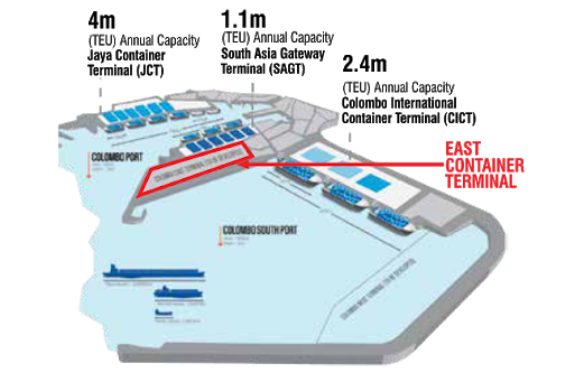
Adani Ports and Special Economic Zone (APSEZ), the flagship of India-based Adani Group, is in the lead to develop the stalled East Container Terminal at Colombo port in Sri Lanka.

Adani Ports and Special Economic Zone (APSEZ), the flagship of India-based Adani Group, is in the lead to develop the stalled East Container Terminal at Colombo port in Sri Lanka.

APSEZ and a local partner have secured in-principle approval to sign a deal with the Sri Lanka Ports Authority.

In the currently stalled project, the Sri Lanka Ports Authority will hold a majority stake.

Details regarding holding of the stakes are being established, following a review of the project.

A preliminary agreement for the project was signed by Adani in 2019. However, labour union protests due to concerns over foreign control had stopped the deal before parliamentary elections in August.

Following protests, the Sri Lankan Government had announced a review.

The project is being jointly developed by Sri Lanka, India, and Japan.

Last week, Sri Lanka Port Authority commenced operations at parts of the East Container Terminal that were constructed.

Rs. 7.3billion allocated in October to provide relief during the quarantine process

November 4th, 2020

Courtesy The Daily Mirror

The government has provided more than Rs. 7.3 billion (Rs 7355.53 million) to provide relief to the people in the quarantine process to control the Covid-19 virus outbreak, the Government Information Department said today.

These funds have been allocated for the above activities up to now after the Covid-19 virus was reported in the Divulapitiya area again,” it said.

In addition, the Treasury also hopes to allocate further funds as necessary at the request of relevant parties, including Government Agents.

These funds have been allocated to provide relief packs to families quarantined in their own homes and to provide a relief allowance of Rs. 5,000 to low income families in areas where quarantine curfew has been enforced.

An amount of Rs.2721.27 million has been allocated for the Rs.5000/- relief allowance in the Gampaha District. Rs. 2333.60 million has been allocated for the Colombo District and Rs. 1310 million has been allocated for the Kalutara District for this purpose. An amount of Rs.469.57 million has been allocated for the families in need of relief in Kurunegala District and an amount of Rs. 128.39 million has been allocated for the Batticaloa District.

Accordingly, the government has allocated Rs. 6.9 billion (6962.83 million) during this period to provide an allowance of Rs. 5,000 to families who have lost their livelihoods due to the quarantine curfew.

In the process of providing dry ration packs to the families under home quarantine, a sum of Rs. 75 million has been allocated for the Colombo District. Gampaha and Kalutara districts are provided with Rs. 40 million each. A sum of Rs. 24.61 million has been provided for Kurunegala District and Rs .17.86 million was provided for Galle District. The amount allocated for the Batticaloa District with this purpose is Rs.15.92 million and the amount provided for the Nuwara Eliya District is Rs. 15.60 million. The government has spent a total of Rs. 336.54 million to provide dry ration packs to families under home quarantine in 20 districts.

In addition the government has provided Rs. 56.16 million to implement quarantine related activities in 11 districts.

443 positive Covid-19 cases reported today

November 4th, 2020

Courtesy The Daily Mirror

A total of 443 Covid-19 patients were detected today increasing the total cases in Sri Lanka to 12,187, the Government Information Department said.

Out of the cases reported today, 25 cases were from quarantine centres while 418 were identified as close contacts of the Peliyagoda cluster.

Sri Lanka’s COVID-19 death toll rises to 24

November 4th, 2020

Courtesy Adaderana

A 79-year-old woman from Colombo 13 has been found to be infected with the COVID-19 virus posthumously, the Department of Government Information stated.

It is reported that she had been sick at her home for some time and had been suffering from chronic illnesses prior to her death.

The cause of death has been determined as a cardiac arrest caused by the COVID-19 virus infection.

Accordingly, she is counted as the 24th coronavirus-related death reported in Sri Lanka.


Meanwhile, a 78-year-old male, also a resident of the Colombo 13 area, had succumbed to a head injury due to a fall at home.

He had been admitted to the Colombo National Hospital on November 02 and passed away yesterday (02).

A postmortem PCR examination had diagnosed the deceased with COVID-19.

However, as the cause of death is not related to COVID-19 infection, the death is not counted as a COVID-19 death, the Director-General of Health Services announced.

Sri Lanka’s confirmed Covid-19 cases count tops 12,000

November 4th, 2020

Courtesy Adaderana

Total Covid-19 cases confirmed in Sri Lanka went past the grim milestone of 12,000 today (04) the Ministry of Health announced.

The latest spike in figures came after 274 more persons were tested positive for the virus.

Health Ministry’s data revealed that Sri Lanka has confirmed 12,018 novel coronavirus infections to date.

All the fresh positive cases have been linked to the Minuwangoda-Peliyagoda cluster, which registered a record total of 8,540 cases since the beginning of October.

The Government Information Department said 07 of the new patients were found from quarantine centres. The remaining 267 are contacts of earlier infections connected to the cluster.

Epidemiology Unit says 6,097 active cases continue to receive treatment at selected hospitals across the country.

Sri Lanka’s Covid-19 recoveries total meanwhile reached 5,858 earlier today, after 277 patients were discharged from hospitals as they have returned to health.

The country has also witnessed 23 deaths from the virus.

Sri Lanka witnessed the highest daily count of Covid-19 cases on the 23rd of October with a record total of 866 fresh positive cases. The second-highest was recorded on the 6th of October with 739 infections.

Cannot keep country under lockdown until a cure is discovered – President

November 4th, 2020

Courtesy Adaderana

President Gotabaya Rajapaksa stresses that the country cannot be kept under a lockdown until a cure is discovered for Covid-19.

During a meeting held today (04), the President noted that people should adhere to health guidelines and prepare to continue normal day-to-day life.

The President pointed out that medical health officers who interact closely with Covid-19 infected individuals are less likely to contract the virus because they follow proper hygiene practices.

The country can function as per usual if the public strictly follow the health guidelines, he stressed. 

Speaking on the appeals for a countrywide lockdown, the President explained that people who get by with daily earnings will be affected the most by the move, not those who earn a monthly wage.

He also pointed out the importance of making correct decisions taking into account every aspect.

මාධ්ය කරුවනි සින්හලයාගේ සින්හලකම නොමරණු

November 3rd, 2020

ආචාර්ය සුදත් ගුණසේකර

පහතින් දැක්වෙන්නේ 26.10. 2020 වන දින උදේ පත්තරේ විස්තර (සින්හල) කියනවිට දැක්වූ ලෝක කොරෝනා සන්ක්යා  දැක්වු ආකාරයයි.
ලෝක තත්වය
ආසාදිතයින්  41,769,605
මියගිය ගනන 1,164,228
 මෙ සන්ක්යා සින්හල මිනිහෙක් කියවන්නේ කෙසේද යන්නයි මගේ ප්‍රස්නය.  මන්ද මෙ දක්වා ඇත්තේ ඉන්ග්‍රීසි පාඨාකයින් කියවන ආකාරයට බැවිනි.
පලමු සන්ක්යා පෙල ඒඅනුව  ෆෝර්ටිවන් මිලියන්, සෙවන් හන්ඩ්‍රඩ් ඇන්ඩ් සික්ස්ටි නයින් තෞසන්ඩ් ඇන්ඩ් සික්ෂන්ඩ්‍රඩ් ඇන්ඩ් ෆයිව් යනුවෙන් කියවේ.
නමුත් මෙයම සින්හල මින්හෙක් කියවන්නේ හාරකෝටි දාහත් ලක්ශ හැට අටදාස් හයසිය පහ වශයෙනි. ඒ අනුව කොමා යෙදීම 4,17,, 69, 605 වශයෙන් කල යුතුය සින්හල මිනිහෙකුට එය කියවීය කැක්කේ එවිට පමණි. එසේ නොකළහොත් සින්හල පාටකයා අන්ද්මන්ද වෙයි.
එමනිසා සින්හල පා.ට්කයින් වෙනුවෙන් පත්තරේ විස්තර ඉදිරිපත් කරන විට ඒ අනුව කොමා යොදනමෙන් මම ඉල්ලමි.
එසේ නොකලහොත් සින්හල මිනිහාගේ ඉන්ග්‍රීසි ගැති බව හා මානසික වහල්භාවය තවදුරටත් උග්‍රවී දවසක සින්හල කම නැත්තටම නැතිවනු ඇත.  

World Bank Congratulates Sri Lanka on Handling of COVID-19 Pandemic – November 3, 2020

November 3rd, 2020

අග්‍රාමාත්‍ය මාධ්‍ය අංශය

At a meeting with Prime Minister Mahinda Rajapaksa this evening, World Bank Country Director for Maldives, Nepal and Sri Lanka, Faris Hadad-Zervos, commended the Sri Lankan Government for how it has dealt with the Coronavirus outbreak.

Expressing deep gratitude for the relationship” that Sri Lanka and the World Bank share, Hadad-Zervos congratulated the Prime Minister not only on the election (victory) but how Sri Lanka has managed the pandemic.”

We wish you a speedy exit from this situation,” he said. He was accompanied by the World Bank Country Manager for Maldives and Sri Lanka, Chiyo Kanda.

The Sri Lankan delegation thanked the World Bank for the many years of close cooperation and assured that the new government will continue that relationship. It also appreciated the Bank for the various assistance programs during the pandemic. The World Bank was the first donor agency to come forward with assistance when the pandemic first broke out early this year.

The Country Director said the World Bank will assess how best to support Sri Lanka and to see how we can turn this crisis into an opportunity.”

Asked about Sri Lanka’s priorities, Prime Minister Rajapaksa responded by pointing to several key sectors the Government would like to priorities after the current outbreak situation is under control: Economic development, roads, drinking water, sanitation and agriculture.

In the area of agriculture, the two delegations explored how farmers could be more empowered to produce value-added products that could be marketed internationally as uniquely Sri Lankan brands. The World Bank Country Director highlight Sri Lanka’s Ayurveda sector, noting that there is a great international demand for Ayurvedic products.

Another area that was discussed was film tourism. With a very well-developed tourism sector, Hadad-Zervos said a possible next step for countries like Sri Lanka to increase tourism even further is to attract the entertainment industry from around the world to use Sri Lanka as the location for productions. Studies have shown that seeing a location in a movie or television can have a significant impact on the number of tourists visiting that location. One of the most successful examples of film-induced tourism is New Zealand after being featured in the The Lord of the Rings trilogy.

Prime Minister Rajapaksa said the Ranminithenna Tele Cinema Village was establish — during his presidency — with film tourism in mind. However, it was not put to good use during the past few years. While there are examples of some popular films shot in Sri Lanka — such as The Bridge on the River Kwai, Indiana Jones and the Temple of Doom and Water — there is a lot of potential for growth, the two delegations agreed. The Prime Minister expressed a keen interest on further collaborating with the World Bank in this area.

අග්‍රාමාත්‍යතුමාගේ යෝජනාවකට අනුව දහම් පාසල් ගුරුවරියන්ට නිල ඇඳුම් ලෙස දේශීය නිෂ්පාදිත සාරි බෙදාදෙයි

November 3rd, 2020

අග්‍රාමාත්‍ය මාධ්‍ය අංශය

දහම් පාසල් ගුරුවරියන්ගේ නිල ඇඳුම් ලෙස දේශීය නිෂ්පාදිත සාරි බෙදාදීමට ගරු අග්‍රාමාත්‍ය හා බුද්ධශාසන, ආගමික හා සංස්කෘතික කටයුතු අමාත්‍ය මහින්ද රාජපක්ෂ මැතිතුමා කළ යෝජනාවට කැබිනට් මණ්ඩල අනුමැතිය හිමිවී තිබේ.

2020 වර්ෂය සඳහා බෞද්ධ දහම් පාසල් ගුරුවරියන් හට නිල ඇඳුම් ලෙස, දේශීය නිෂ්පාදකයින් විසින් නිෂ්පාදනය කරනු ලබන සාරි 76000ක ප්‍රමාණයක් බෙදා දීමට විෂය භාර අමාත්‍යවරයා ලෙස අග්‍රාමාත්‍යතුමා ඉදිරිපත් කළ අමාත්‍ය මණ්ඩල සංදේශයට 2020.11.02 දින රැස්වූ කැබිනට් මණ්ඩල අනුමැතිය ලැබී ඇත.

මේ සඳහා වැය වන මුදල රුපියල් මිලියන 182.4 කි.

මේ වන විට ශ්‍රී ලංකාව පුරා ක්‍රියාත්මක බෞද්ධ දහම් පාසල් 11000 කට අධික සංඛ්‍යාවක ගුරුවරියන් 76000ක් පමණ සේවය කරනු ලබයි.

දිවයින පුරා ක්‍රියාත්මක බෞද්ධ දහම් පාසල්වල සේවයේ නියුතු ගුරුවරියන්ට නිල ඇඳුම් ප්‍රදානය කිරීම 2004 වර්ෂයේ සිට මේ දක්වා ක්‍රියාත්මක වේ.

එම වැඩපිළිවෙළ තවත් පුළුල් කරමින් දේශීය ආර්ථිකය නගා සිටුවීමේ නව රජයේ දැක්ම යටතේ මෙසේ දේශීය නිෂ්පාදිත සාරි දහම් පාසල් ගුරුවරියන්ට ලබාදීමට යෝජිතය

ව්‍යවස්ථාදායක සභාවේ අග්‍රාමාත්‍යතුමා විසින් පත් කරන නියෝජිතයා ලෙස ධීවර අමාත්‍ය ඩග්ලස් දේවානන්දා මහතා පත් කරයි

November 3rd, 2020

අග්‍රාමාත්‍ය මාධ්‍ය අංශය

ව්‍යවස්ථාදායක සභාවේ ගරු අග්‍රාමාත්‍යතුමා විසින් පත් කරනු ලබන නියෝජිතයා ලෙස ධීවර අමාත්‍ය ඩග්ලස් දේවානන්දා මහතා පත්කර තිබේ.

අග්‍රාමාත්‍ය මහින්ද රාජපක්ෂ මැතිතුමා කළ යෝජනාවට ඊයේ 2020.11.02 දින කථානායක මහින්ද යාපා අබේවර්ධන මහතාගේ අනුමැතිය හිමිවී ඇත.

ඒ අනුව ව්‍යවස්ථාදායක සභාවේ අග්‍රාමාත්‍යතුමා විසින් පත් කරනු ලබන නියෝජිතයා ලෙස ධීවර අමාත්‍ය ඩග්ලස් දේවානන්දා මහතා කථානායකවරයා විසින් පත් කර තිබේ.

20 වන ව්‍යවස්ථා සංශෝධනයට අනුව ව්‍යවස්ථාදායක සභාවේ සංයුතිය වෙනස්වේ.

ඒ අනුව ව්‍යවස්ථාදායක සභාව අග්‍රාමාත්‍යවරයා, කථානායකවරයා, විපක්ෂ නායකවරයා ඇතුළුව අග්‍රාමාත්‍යවරයා විසින් පත් කරන නියෝජිතයෙකු, කථානායක විසින් පත්කරන නියෝජිතයෙකු හා විපක්ෂ නායකවරයා විසින් පත් කරන නියෝජිතයෙකුගෙන් සමන්විත වේ.

2020 මහ මැතිවරණයෙන්, යාපනය දිස්ත්‍රික්කයෙන් තරගකොට පාර්ලිමේන්තුවට තේරී පත් වූ, ඩග්ලස් දේවානන්දා මහතා කැබිනට් අමාත්‍යවරයකු මෙන්ම ඊළාම් ජනතා ප්‍රජාතන්ත්‍රවාදී පක්ෂයේ (ඊ.පී.ඩී.පී) නායකයා ලෙස ද කටයුතු කරයි.

පාර්ලිමේන්තු තේරීම් කාරක සභාව, පාර්ලිමේන්තු කටයුතු පිළිබඳ කාරක සභාව, උසස් නිලතල පිළිබඳ කාරක සභාවේ සාමාජිකත්වය දරන, අමාත්‍ය ඩගලස් දේවානන්දා මහතා ධීවර කටයුතු පිළිබඳ අමාත්‍යාංශයීය උපදේශක කාරක සභාපතිවරයා මෙන්ම කිලිනොච්චිය දිස්ත්‍රික් සම්බන්ධීකරණ කමිටුවේ සම සභාපතීත්වය ද දරනු ලබයි.

Need to urgently co-opt Ayurveda and Indigenous medical expertise in battle against Covid-19

November 3rd, 2020

By Frances Bulathsinghala/The Sunday Observer

Dr.S.M.S. Samarakoon, Head of Colombo University’s Deshiya Chikitsa Unit, says Ayurveda gives top priority to the prevention of disease.

Colombo, November 1: Here is an interview with Ayurvedic doctor, S.M.S. Samarakoon, senior lecturer and Head of the Deshiya Chikitsa Unit (Indigenous Medicine) at the Institute of Indigenous Medicine (IIM) of the University of Colombo, the affiliate academic body for Ayurveda and Indigenous Medicine in Sri Lanka. Dr. Samarakoon holds over 25 years of experience as a medical officer, lecturer and researcher in the field of Ayurveda and Deshiya Chikitsa of Sri Lanka, and is qualified from Sri Lankan and Indian universities. The detailed interview with Dr. Samarakoon is in the backdrop of Sri Lanka battling the second phase of the Covid-19 pandemic.

How do you observe the practical differences between Ayurveda and (Deshiya Chikitsa) Sinhala Wedakama that pre-dates Ayurveda?

Ayurveda is a complete medical system rooted in India and is a medical science as well as a way of life. Ayurveda gives top priority to the prevention of disease. In its preventive perspective, Ayurveda advices Satvavritta (How best to go about daily routines) for maintaining health, Sadvritta (moral conduct for maintaining mental and spiritual health), Dina charya (daily routines to maintain health) etc., In addition, Ayurveda advices what should be eaten and how, in order to be healthy.

In the curative aspect, Ayurveda has taught perfect treatment protocols (Chikitsa Sutra) along with proper dietary management (Pathya-Apathya) for every disease, with similar emphasis on health promotion. Positive health can be achieved through Rasayana (rejuvenation) and Vajikarana (aphrodisiacs) drugs and procedures. Rasayana is the process by which optimal nutrition of the essential body tissues (Saptadhatu) can be achieved.

Rasayana drugs promote good health, long life, memory, intellectual capacity, disease free life, youthfulness, good complexion, voice and optimal functioning of the sense organs. Some Rasayana drugs improve longevity termed, Prana-kamyarasayana, intellectual capacity termed Medha-kamyarasayana” and beauty and youthfulness termed, Sree-Kamyarasayana.

Vajikarana drugs enhance sexual potency of men. Infertility of men and women, subfertility of women, and sexual impotency can be cured by using Vajikarana drugs.

Deshiya Chikitsa or Indigenous medicine is the system of medicine inherent to the Sri Lankan community. The majority of physicians are Sinhalese, therefore it is named Sinhala wedakama”.

It is also called ‘Helawedakama.” Sinhala Wedakama is a cultural heritage of Sri Lanka, and King Ravana was a renowned physician. This medical system is well mixed with the Sinhala culture, Sinhala language and Buddhism.

During the pre-historic period indigenous medicine was in a hegemonic position in the country. The first full-fledged hospital of the world was built during King Pandukabhaya’s period in the pre-historic era. It is said to be the world’s first systematic hospital, the ruins of which are still found in Mihintale.

By the time of the Kingdom of Kotte, the influence of indigenous medicine gradually declined and was divided into narrow branches such as, Kadumbindumwedakama, Sarpavishawedakama, Unmadawedakama, Gedi-Wana-Pilikawedakama, Sarvangawedakama and more.

As we are close to India, the indigenous medicine of Sri Lanka may have been mixed with Ayurveda medicine.

But, Sri Lankan indigenous medicine is not part of Indian Ayurveda. It has its own identity. Indian Ayurveda is inspired by Hinduism, while Sri Lankan indigenous medicine flourished with Buddhism.

Where similarities are concerned, like Ayurveda, indigenous physicians of Sri Lanka treat patients based on the Tridosha Theory” considering the patient as a whole.

The unique feature of indigenous medicine of Lanka is that it’s not available in any Ayurveda textbook or Ayurveda pharmacopeia. Rathakalka (paste), Buddharajakalka (paste), Yasodharakalka (paste), Navarathnakalka (paste), Seetharamavati (pills), Mattuphaguliya (pills), Chandra kalka (paste), Yashtikalka (paste), Suranviduraguliya (pills), Jeevanadaguliya (pills), Siddhartha oil and Neelyadi oil are a few.

In these medicines, a single drug with different anupana” (vehicles) is used for different diseases. For example, the Navarathnakalka, a medicated paste can be prescribed for vomiting with lime juice, for loss of appetite with fresh ginger juice, for fever with dried ginger and coriander boiled water, etc. All these medicines are prescribed with different Anupana for different illnesses. Ayurveda and Deshiya Chikitsa are complimentary and supplementary to each other forming the Sri Lankan Ayurveda”.

Could you comment on the different reactions on the body through Sri Lankan/Ayurvedic methods, parallel to Allopathic drugs?

The majority of medicines used in Ayurvedic and indigenous medicine are natural and mainly plant-based. They are free from side effects and adverse effects. Their safety and efficacy are time-tested.

In Deshiya Chikitsa, the raw materials are collected by the physician himself, the drugs prepared by him or under his strict guidance, and are recommended by him, including the follow up.

Therefore, safety and efficacy are ensured. In Ayurveda too, except for a few herbo-mineral drugs all other drugs are herbal based.

Drugs act on the body through pharmacodynamic properties, such as Rasa (taste), Guna (properties), Vipaka (potency), Veerya (Specific potency) and Prabhava (un-explainable drug action). Modern allopathic drugs are chemicals. Therefore, when we use herbal drugs and Allopathic drugs simultaneously, the interactions reported are almost zero.

For example, when a patient suffering from several diseases such as, high blood pressure, diabetes mellitus, high cholesterol levels, etc. gets paralyzed due to a stroke, he is treated at an Ayurveda hospital and administered with Ayurvedic/indigenous medicine drugs, while initially continuing the Allopathic drugs. However, as the patient acquires relief, the Allopathic drugs can be gradually withdrawn.

Many Ayurveda drugs used for communicable diseases have anti-microbial and immune-modulatory effects. Such medicines have been used from early times when epidemics broke out.

These drugs can be used even for rapidly spreading epidemics. Coriander (Coriandrumsativum), Venivelgeta (Cosciniumfenestratum), Pathpadagam (Hedyotis corymbosa), Ginger (Zingiberofficinale), Turmeric (Curcuma longa), Tippili (Piper longum ), Neem (Azadirachtaindica), galangal (Alpiniagalanga) etc are some medicinal plants that have immune potentiating effects.

Could you speak of our Indigenous medicine (Wedakam) practitioners who were and are known to be carrying a medical heritage that is one of the oldest in the world?

I believe the true indigenous physician is a reservoir of traditional medical knowledge. Traditional knowledge is derived from generation to generation that forms part of the heritage of Indigenous people who are the guardians of indigenous knowledge. I have worked with our traditional doctors for long years.

They have well organised and evidence-based knowledge on medicinal plants, make their own medicines and are skillful in clinical practice. But, according to my experience, indigenous medical genealogies (Wedaparampara) have gradually declined subsequent to the Sri Jayewardenepura Kotte period.

I have identified a large number of genuine indigenous medical genealogies throughout the country, but today, only a few have survived. At the same time, the few existing Wedaparamparas are not training any new physicians.

Could you comment on the value of indigenous medicine and its specialists for the country?

Indigenous physicians have traditional knowledge which is time tested and scientific. That is why these knowledge systems are valued by global organisations such as the World Health Organization (WHO). These physicians have gained indigenous medical knowledge through a series of observations and by ‘trial and error’ over many centuries.

In any occupation, quacks may be seen and they use allopathic drugs. Similarly, in the Ayurveda and indigenous medical field too some fake doctors may be found.

But, well trained and registered indigenous physicians treat their patients silently. They have earned the recognition of the community because their treatments are socially accepted, safe and efficacious. We should encourage indigenous physicians to practice sustainably to preserve their inherent medical knowledge.

At present how many indigenous medical practitioners are there in Sri Lanka?

By 2018, there were 14,700 traditionally trained medical practitioners in Sri Lanka. Apart from the registered indigenous medical practitioners, there is a large number of non-registered practitioners whose practice is a rustic form of medicine.

Physicians are registered in the Ayurveda Medical Council (AMC) under different categories namely, Sarvanga (general; for common body ailments), Sarpavisha (snake bite treatment), Kadumbindum (for fractures and other orthopaedic casualties), Gedi-Wana-Pilika (for abscess and tumors), Davum-pilissum (for burns), Vidum-pilissum (therapeutic piercing and heat treatment), Akshiroga (for eye diseases), and Manasaroga (traditional psychiatric treatment).

There are other special branches such as Indigenous Veterinary medicine, treatment for Rabies, spiritual healing practices, treatment for childhood nutritional diseases and indigenous midwifery. These branches are not recognised for registration by the AMC.

In your view how could these physicians be strategically used through a national policy in the battle against the second phase of Covid-19?

The health sector in the country should consider the doctors and other manpower in the Ayurveda sector, especially in the Government Ayurveda hospitals and the indigenous physicians.

There are several qualified Ayurveda doctors posted at Government Ayurveda hospitals. In addition, many Ayurveda community medical officers are being posted in the community. They are ready to assist the health sector to combat the Covid-19 pandemic.

The phenomenon currently seen in Sri Lanka is that only a few of the Covid-19 patients suffer from serious symptoms and many patients may be asymptomatic and not serious. As we know, there is no particular drug effective against the Coronavirus yet.

However, given our rich medical heritage, we have faith in our medical system that we can overcome the Covid-19 pandemic. It will be prudent at a national level, to give an opportunity to Ayurveda doctors to treat patients at the Ayurveda hospital.

The unacceptable fact in this context is recommending traditional medicines at quarantine centres and for PCR positive cases in the hospitals by Allopathic doctors. Likewise, if Ayurveda doctors use allopathic drugs, it is unethical and unauthentic. Similarly, if Allopathic doctors recommend Ayurveda or herbal drugs to patients, that is also unethical and unauthentic.

These two systems should be integrated when necessary, for a collaborative effort and administered by the respective specialists in the two different medicinal branches, without imposing hegemonic powers. Whether it is Ayurveda or Allopathy it is for the benefit of mankind, not for maintaining one’s autonomy.

Ayurveda doctors and indigenous physicians must be incorporated in health care delivery. They have vast traditional knowledge and effective medicines for many diseases. They have effective traditional preventive measures which can be used even in situations like the current Covid-19 pandemic. Experts who decide the health policy of the country should take into account this situation seriously and carefully.

The State pays millions of rupees for Government Ayurveda doctors and other staff in the Ayurveda sector. Hence, the Government should make use of them for the good of the country, when the country needs them most. Traditional and Ayurvedic physicians can be trained to update them in treating evolving new diseases like the Coronavirus.

Dr. SMS Samarakoon

Could you comment on the link between medicine in general and the natural world – plants, minerals, animals and even the elements such as wind/fire?

Ayurveda and indigenous medicine are natural forms of medicines. Ayurveda teaches to live in harmony with nature. Everything in the universe whether living or non-living, is made up of five basic elements (Panchabhuta). The human body too consists of these five bhutas. Any change in the environment directly affects the human body. Wind, Sun, and Moon govern the entire universe. Wind is responsible for every movement of the universe. The Sun gives heat and dries up the environment.

The Moon gives moisture and cools the environment. When they are in a balanced state, the environment is in harmony. Similarly, Vata, Pitta, and Kapha govern the living body. Vata, Pitta and Kapha represent the Wind, Sun and Moon. When these three major environmental factors are imbalanced, the body’s Vata, Pitta and Kapha too become imbalanced.

In this manner, the environment provides causes for diseases, and we need medicine to overcome the body’s humoral imbalances.

The medicines are from the environment; in the form of plant, animal and mineral substances. Until humankind understands the nature of health and illness, they have to suffer emerging diseases.

Can Allopathy cure, diabetes mellitus? No. Can Allopathy cure cancer? No. It may control it but cannot cure it as a certainty. We must question why these diseases occur. They are due to misconduct and mis-consuming of drug, food and behaviour. Chemical and artificial drugs have no remedy for such diseases. The Allopathy system is now gradually realising this universal truth.

Many traditional medicine practitioners lament that Sri Lanka has lost a large percentage of its endemic and non-endemic herbs, and even common herbs such as turmeric that were grown in every household has today become scarce. Could you recommend how we could conserve and promote our medicinal herb cultivation?

We should be ashamed that we don’t have even turmeric and ginger in this country if they are not imported. Sri Lanka has a rich bio-diversity. Robert Knox, in his book, ‘A Historical Relation of the Island Ceylon’ says, the pharmacy of indigenous physicians is the forest”. We had almost every medicinal plant in the country.

Why did we not pursue a national priority in cultivating these plants? Turmeric, ginger and all medicinal plants that are fast becoming extinct can be cultivated here as before. Why do we import them? We should motivate the people and the farmers to cultivate them. Indigenous physicians should be encouraged to use self-prepared medicine by cultivating their own medicinal plants. When we cultivate essential medicinal plants in the country, we save money and contribute to the national economy.

There is currently a major tension in the country with what is described as the second phase of the Covid-19 pandemic. In this context, could you explain the Ayurvedic/Deshiya Chikitsa recognised stages of disease build up in the body?

Covid-19 is a virus belonging to the Coronavirus group which cause clinical features on mainly the respiratory system. Many patients may be asymptomatic.

The majority will get clinical features such as, mild fever, sore throat, cough etc. Only few patients reach the severe stage of the above features, such as high fever and respiratory distress. People who have already chronic diseases of the respiratory tract and other vulnerable people are more at risk of getting the disease. Immune compromised people are vulnerable.

In Ayurveda there are a group of diseases called Jvara” (fever). Jvara is sub-divided into many, based on doshic predominance; Vatajajavara, Pittajajvara and Kaphajajvara. The symptoms of Covid-19 bear more resemblance to Vata-kaphajvara. On the other hand, there are other varieties of fever such as, VishamaJvara and SannipatajaJvara. Based on the clinical features, we have to identify the doshic predominance when we plan treatment. We all have natural resistance in the body against diseases.

The natural resistance is nothing but the immunity of the body which is called Bala (strength). If your natural resistance is very strong and can overcome the virulence of the Coronavirus, you will not be a victim to the disease. If your resistance is good, you might have mild symptoms even if the virulence of the virus is high. If your immunity is low, you will get severe symptoms. To withstand against Covid-19, you have to enhance your Bala” or immunity by adopting a natural way of living with natural food and a calm mental status.

Can any virus that enters the body naturally leave the body if immunity has been successfully built (such as by taking authentic Sri Lankan traditional diet and some of the products that the Ministry of Indigenous Medicine has produced?

Yes, of course. Consume natural food; natural traditional Sri Lankan food free from unwanted and excess nutritional substances, and free from toxins. Eat more leafy vegetables, drink more water, get physical exercise, live a stress-free life, have a sound sleep daily and live happily. With the support of the above, the defence system of the body will boost, and you will be protected from any kind of foreign invasive disease.

Could you comment on the importance of a happy, content and non-stressful, non-fearful mental state for the fast recovery of any disease in the early stage of incubation in the body?

Yes, in general mental clarity is an important part of health. Ayurveda has placed much importance on the mental condition in defining health. All of the body’s physiological functions are governed by Tridosha”, and mental state is governed by Triguna”. Triguna is composed of Satva, Raja and Thamaguna.

Thamaguna should be improved to potentiate mental state. If you have a strong mental state, you will not be a victim of disease easily. Therefore, mental clarity or happiness speeds the recovery of disease. This is applicable to any epidemic too. During the lockdown period people need to be productively engaged. Living in dread of the pandemic and spreading panic would not do any good. Be wise and take all the health precautions but keep your mind calm.

Could you give your suggestions/comments on the handling of the second Covid-19 phase?

The second phase of Covid-19 seems more serious than the first. It is said the virulence of the virus is higher. More patients are being reported. In this stage, people should behave responsibly and follow safety measures strictly.

Very importantly, the health sector can give an opportunity to the Ayurvedic sector to look after Covid-19 patients. I personally know that almost all people in Sri Lanka follow at least some of the Ayurvedic advice to prevent themselves from diseases, especially in this pandemic context. There is a huge demand for Ayurvedic drugs these days. I see long queues at Ayurveda drug stores every day.

China seems to be the only country which had controlled the community spread of the virus so far. China is known for the use of the integrated method where traditional Chinese medicine is used with highly advanced Allopathic medicine. Your comments?

China has overcome this situation through the use of its well-integrated national medical system built upon traditional knowledge and appropriate advanced technology. Western medicine was introduced to China at the beginning of the 19th century. Then, there was a conflict between Chinese indigenous medicine and western medicine but soon a compromise was reached.

However, the Chinese indigenous medicine was not given its due place and acceptance until the People’s Republic of China was established in 1949. Subsequently, China has developed an advanced integrated health care system that prevails at present. Many other countries such as Vietnam and Malaysia today practice the integrated system of Chinese medicine. That is how the countries develop their own health policy.

In Sri Lanka we don’t have a national health policy in the sense of real nationalistic nature. Ayurveda and indigenous medicine of the country have been neglected. WHO has given due recognition to traditional medicine especially in primary health care. Health policy makers should take action to give proper recognition to traditional medicines for the benefit of the people.

Could you speak about the practice of steaming in the Deshiya Chikitsa system that can be used for the prevention of early influenza like stages in the body?

Using fumigation and steaming has been done since thousands of years by Ayurveda and indigenous physicians in the country. Those treatment methods are not new to them. There are a large number of time-tested recipes used for fumigation and steaming for diseases such as Covid-19

Adani Group frontrunner for developing Sri Lanka’s port terminal: Report

November 3rd, 2020

Courtesy Business Standard

Adani Ports and Special Economic Zone and a local partner received an in-principle approval to sign a deal with Sri Lanka Ports Authority, which will hold majority stake in the project

Pompeo on wild goose chase attempting to rope in Sri Lanka

November 3rd, 2020

By Le Shui  Courtesy http://eng.chinamil.com.cn/

While the US presidential election is in full swing, the US State Secretary Mike Pompeo made a long trip to Asia that took him to India, Sri Lanka, Mal Dives, and Indonesia. It is America’s diplomatic convention that senior government officials would suspend their diplomatic activities when the presidential election comes to the home stretch. Still, Pompeo’s unconventional move came as no surprise as anyone could see through the real intention of his trip – to form a so-called Asian version of NATO to reinforce Trump’s anti-China stance and help him get reelected.

Before his four-leg Asian tour, Pompeo had just participated earlier this month in the quadrilateral China-bashing meeting attended by the US, Japan, India and Australia, laying bare his attempt to form an Asian NATO. But that is perhaps just Washington’s wishing thinking since the Asian countries that have enjoyed peaceful co-existence with China for long years are not necessarily willing to be its cat’s paw.

As it happened, even before Pompeo set off, there were large-scale protests in Sri Lanka opposing his visit and warning him not to interfere in the country’s sovereignty. Sri Lankan media quoted a senior official of Sri Lankan Foreign Ministry , who didn’t wish to be named, as saying that the president, prime minister, and foreign minister of Sri Lanka would all inform Pompeo that their country doesn’t need anyone from outside to tell them how to run the country. The unanimous opposition from Sri Lankan officials and civilians was a heavy slap on Pompeo’s face.  

Coincidentally, Indonesia showed no interest in the Asian version of NATO and expressed its concerns about the US-Japan-India-Australia consultation held earlier this month. The Jakarta Post wrote, this will bring new turmoil to security and aggravate political tension.” It’s worth noting that Indonesia has repeatedly rejected America’s requests to land and refuel US military aircraft at its domestic airports this year.

It’s no surprise that Asian countries would backlash against Pompeo’s anti-China rhetoric as regional countries have the correct judgment of right and wrong, gains and losses. Previously, senior American officials claimed to be ready to work with Sri Lanka anytime and promised military assistance in the attempt to drag the country into its anti-China alliance,” but they never mentioned any details of cooperation, which fits America’s diplomatic custom to pay lip service only. Colombo knows only too well what Washington has in mind and has declared that the country, only committed to national development, especially infrastructure construction, would not join the anti-China alliance unless the US could offer investment as attractive as that from China.

Pompeo’s attempt to form the anti-China alliance is against the fundamental interests of countries in Asia and beyond. While the COVID-19 pandemic remains concerning and the world economy struggles to recover, what people need is solidarity in fighting the virus and actions of win-win cooperation, not the poison to international relations that Washington is peddling hard. The US has no intention of giving Sri Lanka any tangible help; it just wants the country to be its pawn and serve its political agenda. The so-called Asian NATO is nothing but a bulwark for it to rope in Asian countries to form a front against China. Should any country dare to show any sign of disobedience, what awaits it would be big sticks. Washington’s earlier coercion of Britain into casting off Huawei and the announcement of pulling its troops from Germany were tangible proof of its hegemonism and Cold War mentality.

Disclaimer: This article is originally published on china.com.cn and translated from Chinese into English and edited by the China Military Online. The information, ideas or opinions appearing in this article do not necessarily reflect the views of eng.chinamil.com.cn.

Pompeo’s Big Fizzle

November 3rd, 2020

Peng Nian  Assistant Fellow, National Institute for South China Sea Studies  Courtesy ChinaUS Focus

U.S. Secretary of State Mike Pompeo recently made a four-nation tour of the Indo-Pacific that took him to India, Sri Lanka, Maldives and Indonesia ahead of the U.S. presidential election. It was Pompeo’s latest diplomatic gambit to increase his influence within the Trump administration and play the China card” to help his benefactor win re-election. In the process, Pompeo further enhanced his image as a China hardliner.

Pompeo’s Indo-Pacific trip has been perceived as part of the ongoing U.S. effort to contain China in the region, given the intense confrontation between the two great powers. Several days before the tour, the State Department’s David R. Stilwell, U.S. assistant secretary for the Bureau of East Asian and Pacific Affairs, and Dean R. Thompson, principal deputy assistant secretary for the Bureau of South and Central Asian Affairs, overtly urged Sri Lanka to make decisions to secure its economic independence for long-term prosperity and openly supported Indonesia and other claimant states for their demands in the South China Sea.

In New Delhi, the U.S. and India signed the long-negotiated Basic Exchange and Cooperation Agreement (BECA), which is the third major defense pact between their armed forces. Pompeo said both the U.S. and India must strengthen cooperation to address the China threat.

During his visit to Sri Lanka and Maldives, Pompeo expected to offer a 480 million USD Millennium Challenge Corporation grant to Sri Lanka and use the similar economic means to lure Maldives closer to the U.S. He also wants to foster a U.S.-Indonesia partnership and give incentives to Indonesia to counter China’s militarization of disputed South China Sea outposts.

Still, the U.S. will not succeed in containing China, either in the Indian Ocean or the Pacific region. First of all, while the U.S. may have enhanced maritime cooperation with India by reaching agreements on logistics, intelligence and information between the two armed forces — such as the Logistics Exchange Memorandum of Agreement, LEMOA, Communications Capability and Security Agreement and COMCASA — and conducted joint military excercises in the Indian Ocean, it has actually failed to establish a formal military alliance with India.

Given India’s independent foreign policy, it won’t join any camp that targets a third country, China included. So far, India has approached the U.S. with an attempt to balance China, and has not blindly followed America’s hostile lead. For instance, India has never joined U.S. freedom of navigation patrols in the South China Sea. It also refused to accept Trump’s offer to mediate the border dispute with China, so as to avoid U.S. interference.

Other major factors also undermine American efforts to contain China by making use of relations with India. The Indian economy has been severely damaged by the coronavirus pandemic, while China has become the first country to recover. Meanwhile, India’s military expansion is also adversely affected by its fiscal stringency. Currently, the top priority of the Indian government is to control the spread of the virus and provide enough medical services for its people, not to counter China.

For countries like Sri Lanka and Maldives, the best policy choice is to maintain balance between the great powers. As Rathindra Kuruwita, a researcher from Colombo, described Sri Lankan foreign policy over the last 15 years — especially after the end of the civil war in 2009 — as a series of desperate attempts to balance the interests of major powers that have interest in the country.

Both Sri Lanka and Maldives have become increasingly dependent on the Chinese economy and Chinese tourists, which contribute to their cordial relations over the past decade. To survive at a difficult time, given the spread of COVID-19, these countries need Chinese assistance. China provided $90 million in October and $500 million in low interest loans in March to help Sri Lanka cope with the pandemic. Meanwhile, the U.S. itself has been mired in the pandemic and has little to offer these countries.

As a powerful state in the Indian Ocean and Southeast Asia, Indonesia has drawn rising attention from American strategists in recent years. The U.S. has encouraged it to play a big role both in the South China Sea and in its overall Indo-Pacific strategy. However, Jakarta wants to stay neutral in the China-U.S. power rivalry. Recently, Indonesian President Joko Widodo rejected a U.S. request to host the multi-mission maritime patrol aircraft P-8 Poseidon, which would be used to surveil Chinese positions in the South China Sea because Indonesia does not want to provoke China. It also gave a cold shoulder to the U.S. Indo-Pacific strategy. Instead, it has pushed forward ASEAN’s Indo-Pacific Outlook, which emphasizes ASEAN centrality, the priority of economic prosperity and an inclusive and open Indo-Pacific region.

Sri Lankan expatriates in Saudi Arabia to be brought home within 48 hours

November 3rd, 2020

Courtesy The Daily Mirror

The Sri Lankans stranded in 150 safe houses in Saudi Arabia would be expatriated within 48 hours, National Operations Centre for Prevention of COVID-19 Outbreak (NOCPCO) Head, Army Commander Shavendra Silva said.

The decision has been reached in the Task Force meeting under the directive of President Gotabaya Rajapaksa.

Accordingly, stranded Sri Lankans would be expatriated as early as possible sending at least two flights to Saudi Arabia a day,” the Army Commander said.

This emergency measure is to be implemented in coordination with all stakeholders because the quarantine procedure previously conducted in 72 tri service-managed quarantine centers and hotels would cease to function with the departure of all quarantined individuals back to their homes within next two days. Such places could easily be used for those expatriates arriving home”, he added. (Sheain Fernandopulle)

Sri Lanka records 23rd COVID-19 death

November 3rd, 2020

Courtesy Adaderana

With another death reported the tally for the coronavirus deaths in Sri Lanka has gone up to 23, the Department of Government Information confirmed.

The deceased is a 61-year-old female from Colombo 15.

A postmortem PCR examination carried out following her has confirmed that she had been infected with COVID-19.

Reportedly, she had died at her home and the cause of death has been determined as a lung infection.

This is the second COVID-19 death reported within the day.

France, Austria facing terror attacks – UK, go ahead lift ban on LTTE Terrorists

November 3rd, 2020

Austria boasted itself to be one of the world’s best 10 destinations and safest places to live & then terror struck and 4 are now dead. In France, even a cartoon cannot be drawn and teachers will find their necks chopped off. In the meanwhile, across the channel, the Queen’s government is busy pussy-footing Sri Lanka’s tiger terrorists that have proudly christened UK as their international headquarters since 1970s. UK, is today out of EU and obviously finds itself isolated among its European counterparts – it’s a matter of time UK may find itself further isolated if Commonwealth Countries too, begin saying cheerio – so much for the sun never setting on the UK! But, go ahead, lift the ban on LTTE, allow them to roam the streets of London, Harrow, Tooting with their flags and paraphernalia joining the other terrorists that UK has given safe haven to. We really do feel sorry for the Brits! They may need more than a stiff upper lip to tolerate the tigers! 

LTTE was defeated militarily in May 2009. As far as we are concerned the only living tiger mouthpieces are a handful of Tamil politicians who come out during elections with their pro-tiger slogans or to gain cheap publicity garlanding a dead LTTE combatant. These are scenarios, we in Sri Lanka can definitely live with as we are pretty confident that our war heroes ensure, the nation is LTTE-free. Without a leader to match the charisma of Prabakaran, those tigers overseas with mikes can hardly measure up to become an alternate LTTE leader. 

Though yahapalana thought fit to remove some of the LTTE fronts from the list of 16 UNSC Resolution 1373 declared terrorist fronts, many of them freely operate in the very countries that have banned them. If these western governments wish to keep the tigers near their bosom so be it. What really is the difference in UK removing LTTE ban when UK allows LTTE fronts to operate freely even with a ban? We really do not know. Must be UK foreign policy.

There are numerous social media posts appearing claiming LTTE are celebrating UK de-proscription. Good for them. Now we can tell the UN & UNHRC where to locate the ‘missing’ or ‘dead’ – they are living in jolly London. 

It is hypocrisy of the highest order for the UK government to be pointing fingers at Sri Lanka, raising hands against Sri Lanka at the UNHRC while providing safe haven for these ‘missing’ ‘dead’ LTTE. We are thankful that these dead souls have found a home! 

While Sri Lanka has had no LTTE related violence since 2009, can we ask the same of UK? Across the globe, these LTTE fronts are posing a bloody nuisance to the citizens in Canada, US, France, Germany and even UK though their politicians find them lovely company. 

http://www.srilankaguardian.org/2011/10/why-are-uk-mps-supporting-ltte.html
https://economictimes.indiatimes.com/news/politics-and-nation/uk-credit-card-scam-could-be-linked-to-ltte-funding/articleshow/2831589.cms?from=mdr

All our warnings about LTTE’s credit card scams, human smuggling, money laundering, armed violent gangs, blackmail & intimidations have gone on deaf British official ears. As a result, over 5 Tamil children have been killed, there are sword wielding gangs operating in the capitals of Canada, UK and France chopping off hands and fingers, they run legal firms training Tamils how to get asylum and refugee status and they provide the ins and outs of how to fool the stupid Brits to enjoy all welfare and charity systems. How lovely! 

So, Britain can feel free to legalize all these acts of crimes and give a carte blanche to the LTTE to operate as they like on the streets of London, Harrow, Tooting and wherever they feel they have a right to shout and cause mayhem – so long as it is not in Sri Lanka, we don’t care. The MPs that molly cuddle them may not be too happy about the new found freedom though, as this would certainly bring to naught all the flirting the LTTE remnants engage in to win their favours. With ban lifted – LTTE will not require services of these MPs any longer! 

In the meanwhile, UK may continue blabbering to us about ‘accountability’ and what not – not, that we give a damn, but something has to be put on paper, right! Just for the records! 

We are keeping records ourselves. Next time UK preaches to us about assimilation and integration – we have a jolly good list of LTTE antics to present. 

As records clearly show, while there are thousands of Sinhalese living in the UK – none of them have been remotely up to any of the nefarious acts that LTTE Diaspora have been caught red-handed in. Not only in UK, but in France, across Europe, US and even Canada. It speaks volumes of their inherent characteristics. Who are we fooling when UK bans one bogus charity to allow it to quickly set up another & transfer funds to it before UK closes it down. Does White Pigeon ring a bell? What about all the Hindu kovils collecting money for LTTE. Oh yeah, UK police are still investigating. Just like they are investigating that white tiger woman who not only trained children as young as 7 to kill but even taught them how to commit suicide. This woman is a nurse too. She may be the defacto LTTE leader in UK, for all we know! 

The bottom line is – UK lifting the ban over LTTE does not make any difference to Sri Lanka or to Tamils, in particular. All of LTTE fronts illegal activities generating well over $300m annual profits post 2009 sans having to spend on military equipment, weapons or looking after LTTE combatants, have given nothing to the Tamil people in Sri Lanka. Even the LTTE combatants and their families have not received a dime from them. They spend for tamashas crying over dead LTTE, garlanding them, waving LTTE flags and pretending to feel sad but do not send a dollar or a pound to the families of the dead. Oh wait, closer to some LTTE anniversary, they are shrewd enough to present a handful of pounds or dollars and rally some Tamils and then pay some photographers to fire a few shots & that gets sent out across the world as if some ‘hundreds and thousands’ attended. What fertile minds these tigers have!   

One of the reasons for the British to demand Brexit was that a majority of the Brits had got fed up with immigrants and their refusal to assimilate and accept the majority values and cultures as being the ethos of Britain. Each time the British have had to put their Britishness aside and have the foreign culture rule. The compromise has always had to be from the British with no compromise from the immigrants. Naturally, with time this was bound to face conflict and it is a feeling that the majority in all parts of the world feel and even Sri Lanka’s majority share the same sentiments.   

What Britain and the British must take as a lesson from what Britain is today facing is that karma is a bloody bitch finally visiting Britain. We feel sorry that the ordinary British who have no role in creating the situation, have to face the onslaughts, but too bad, the British Empire purposely and with intent mixed native people, plucked them from their homes, carried them across the shores, dumped them in unknown and unheard of territories, forced them to work on them and then forced them to become citizens of their newly found homes. 


We like to remind the Brits of the cliché ‘the chickens have come home to roost’ which perfectly depicts the bad karma calling on the British.

So, there is little point in being gentlemen or ladylike enough to nicely asking the British to continue to ban on LTTE, Sri Lanka is advised to guard its turf and allow the tigers to roam the streets of London with LTTE flags, registering LTTE nameplates to their cars and hopefully we can soon see the Union Jack replaced with the Eelam Flag. We are absolutely certain that an Eelam will be declared in either Canada, UK or France sooner than later. 

Shenali D Waduge

MONLAR’s fear-mongering claim: “currently released fertilizer being of low quality and high in heavy metals”.

November 3rd, 2020

Chandre Dharmawardana, National Research Council of Canada

According to a news report (Island, 2-11-20), Mr. Chinthaka Rajapaksa, who is said to be the moderator of an organization known as  the Movement for Land and Agricultural Reform (MONLAR)” claims  a high probability that the fertilizer currently released to the market were of low quality and high in heavy metals, as the National Fertiliser Secretariat had stopped testing samples at local labs”.

It seems that these labs are currently non-functional because of the Covid crisis, and so foreign labs are used. Testing has not stopped. The non-analysis and lack of testing of compost fertilizers are  ignored by MONLAR as they  are tacitly supported by MONLAR!  Here I will show that even if one of the world’s worst rock phosphates, e.g, Nauru phosphate from New Zealand,  containing very high amounts of heavy metals (occurring naturally)  were imported, it will still have NO TOXIC effect if applied to Sri Lankan soils for agricultural purposes. This is based on the research I have published in peer-reviewed journals. For instance, Mr. Rajapaksa should consult  my publication in Environmental Geophysics and Health, August 2018  https://doi.org/10.1007/s10653-018-0140-x where a detailed discussion is found. Here we will explain all this more simply in the following.

However,  first we must look at the political agenda of MONLAR itself. Although I am not aware of the current political  strategy of MONLAR in detail, I personally knew some of the initial founders of this movement. They were Marxist militants who decided to launch a movement  to capture and control the peasant farmers and convert them into a revolutionary political force”.  A key tactic was to rouse the farmers into opposing  big capitalist agricultural multi-nationals” and their genetically modified (GM)  products and seeds. Imported fertilizers sold by capitalist multi-nationals” were also targeted. The opposition to GM products and high-yielding hybrid seeds led them to  back traditional seed varieties”. These yield about a fifth of the harvest from modern hybrid seeds created by the rice scientists at Bathalagoda and other research Institutes. They were the real unsung heroes who have kept the exponentially increased population of the nation away from famine since World War II.  A return to traditional seeds will mean a return to shortages, famines, and re-importing milchaard haal”.

But MONLAR and other backers of traditional seeds” and compost fertilizers etc., are either mesmerized by false claims and fake science, or are cynically using them to further their political agendas. They want to negate the good work our scientists. Even the Minister Pathirana seems to have  been tragically mislead into presenting a motion for traditional seeds” in place of hybrids (Island, 02-11-20). The motion states that this Parliament resolves …(to).. educate the public on the nutritious value of the traditional, local rice varieties available in the Sri Lankan market at present, of the new rice varieties consumed at present, and of the varieties of rice that should be consumed by people with various diseases, and also to provide facilities for farmers to cultivate those varieties of paddy.” So the minister wants to cure diseases with rice, while 30% of  kids come hungry to school! Unfortunately, it is the minister who has to be educated. This may be a case where the minster’s scientific and medical advisors dare not contradict the minster and put him right!

The opposition to  imported fertilizer led these groups to support the use of compost whose composition and quality are never subject to analysis. But MONLAR rushes to claim that imported triple phosphate is full of heavy-metal toxins profiting from a lapse in local testing due to an epidemic! This cry had already found resonance with the Natha Deviyo” group led by Ms. Senanayake of Hela-suvaya” together with  Dr. Nalin de Silva, then at the Kelaniya Science faculty, and Ven. Rathana, then an MP from the JHU. They claimed that many illnesses, e.g., Kidney diseases in the Rajarata, are caused by arsenic and other toxins in imported fertilizers and herbicides, even though these claims were, and are now found to be completely contrary to exhaustive investigations by several independent research groups. For instance, strong evidence now suggest that the Rajarata Kidney disease is contracted by people who drink water from wells containing excessive amounts of fluoride and hard water, both of geological origin (See: Imbulana et al., Science of the Total Environment, 2020, https://doi.org/10.1016/j.scitotenv.2020.140716 and references therein ); in contrast,  those who drink water from agricultural canals, rivers and tanks carrying fertilizer  runoff are free of the disease!

Why do I say that even if one of the  cheapest and worst available” mineral phosphates, e.g., Nauru phosphate were used in agriculture, it will have no effect on our health? Let us consider this in detail.

Cadmium (Cd), arsenic (As) and lead (Pb) are some of the dangerous metal toxins found in minerals.

We will take the example of Cd, as the discussion for other toxins follows the same lines. Nauru rock phosphate contains some 90 mg of cadmium per kg of phosphate, where as a more expensive phosphate fertilizer may contain less than 20 mg of cadmium per kg of fertilizer. European green” activists who are much like their counterparts in Sri Lanka have clamored for lowered amounts of cadmium (and other such toxins) in fertilizers imported to Europe.

Let us consider that we imported the Nauru phosphate that has been used in New Zealand, and containing some 90 mg of Cd per kilo of rock phosphate. A farmer usually applies some 30 to 60 kg of phosphate fertilizer per hectare of land in planting rice, depending on the soil.  The fertilizer is ploughed into about a depth of  about 8-12 inches (20-30 cm). Taking a figure of 30 cm depth in a hectare of land, the 60 kg of fertilizer containing  60 x 90 mg (i.e., 0.54 g) of cadmium are dispersed in a soil volume of 3000 cubic meters, or about 3900 metric tonnes of soil of density 1.3 g/litre. So,  0.54 g of cadmium are dispersed in this volume of soil, increasing the soil cadmium concentration by a mere 1.38 nanograms/kg, i.e., 1.38 parts per quadrillion. This is an utterly minuscule amount as the ambient level of cadmium in the soil may be as high as 0.4 mg/kg even in virgin forest soil (Chandrajith and Dissanayake  2012), and this is similar to values known for  European soils.  NO LEACHING what ever was assume even in estimating the 1.38 parts per quadrillion, and of course this is not true. The monsoonal rains can wash off many many times more than the 1.38 part per quadrillion.

So, when MONLAR claims that substandard fertilizer probably containing dangerous levels of toxins is being imported to Sri Lanka and that no chemical analysis is done, this is just fear-mongering and nothing else. The calculation that I presented needs only a knowledge of simple arithmetic and MONLAR, claiming expertise in agriculture should be able to do this before raising alarms.

This does not mean that EXCESS USE of fertilizer does not pollute the environment. The excess phosphate fertilizer gets washed off into the aquatic ecosystem via rivers and canals and create Algal blooms and weed growth. They de-oxygenate the water and asphyxiate aquatic organisms. The seasonal increase in phosphate levels in the Rajarata tanks is given in Table 1 of a research publication that I authored with other collaborators in  Environmental Geochemistry and Health: Volume 37, Issue 2 (2015). This applies to macroscopic components like phosphates contained in the fertilizer, but NOT to the microscopic components (trace amounts) like Cd, As, and Pb. The metal toxins largely come into the environment from other sources (e.g., mining, burning of fossil fuels, acid rain, burning garbage, smoking cigarettes etc)  as discussed in relevant publications.

Chandre Dharmawardana, National Research Council of Canada.

UK removing LTTE ban is more of a threat to India than Sri Lanka

November 3rd, 2020

LTTE terrorism was defeated in May 2009. Without a charismatic terrorist leader, LTTE is unlikely to resurface. But, the efforts to create a Tamil Eelam or a Greater Tamil Eelam encompassing Tamil Nadu has scope as it is aligned to geopolitical goals of those that sponsored Tamil militancy & separatism. Global proscriptions of LTTE did little to counter the LTTE fronts operating overseas since LTTE defeat. That these entities were operating for a reason is obvious. The security apparatus in both India & Sri Lanka may deal with terrorist elements effectively but, both countries must be now aware that political manipulations steered by greater powers is now more powerful than the gun! Therefore, India cannot ignore the writings on the wall. The sudden appeal to de-proscribe LTTE in UK is no coincidence.

India is only an US ally to satisfy US hegemonic designs for Asia, which includes the eventual plan to break up India.

Destabalizing Sri Lanka using the Tamil card by India has karmic effects. It’s the very card the West via UN will now use against India where 95% of world Tamils live. India cannot forget that Tamils have played a historical role as sepoy for the West. India’s role against Sri Lanka in UNHRC will soon backfire. Tamil Nadu where Kamala Harris has her origins are suddenly breaking coconuts for her victory, no different to how army commander Fonseka had coconuts broken for his victory by Tamils in Sri Lanka in 2010. India cannot ignore her statement during the campaign trail on Kashmir. US will not bat an eyelid to say the same for Tamil Nadu. India cannot also ignore the faith foot-soldiers already making cozy along the coastal belt expanding their flock in preparation for this eventuality. The manner they are able to brainwash souls means they will upgrade that to demanding self-determination from India kick starting the Greater Eelam project. With MCC not getting signed in Sri Lanka, US will no doubt be pushing for optional plans!

This statement together with that which US Congressmen Edolphus Towns said in 1998 cannot be ignored by India. Intervention against India is thus very much on the cards and on the minds of the West.

It is in this scenario that India must seriously take note of US-based, TGTE appeal to a UK Tribunal to de-proscribe the LTTE taking advantage of the lapses by the British Government. While the British Government is not bound to accept the conclusions of the British tribunal, it means that the project to use Tamil lobby against both Sri Lanka & India by the West is still alive. While, the West doesn’t have the terrorist element to peddle, the political element has wider dangers and consequences.

The opening of a US consulate in Maldives must add to India’s concern. Plenty of isolated islands will be the haven for jihadi training & dispatch.

Covid will be used as a camouflage and excuse to justify US military presence across covid-19 affected countries using the ruse of ‘humanitarian’ assistance. Pompeo was seen emphasizing this across his Asian tour.

India has gone through much – alliance with Russia in the 1980s, simultaneously a period that India lent training to Tamil militancy, the assassination of Indira Gandhi in 1984, assassination of her son Rajiv 7 years later in 1991. The slow shift towards US with dialogue commencing immediately after defeat of LTTE in June 2010 with India being called ‘an indispensable partner’. The following year US-Indo Strategic Dialogue timed with the US Pivot to Asia strategy of Obama-Hillary. Military ties announced in 2012 the very year US brought bogus UNHRC Resolutions against Sri Lanka. Modi visits US in 2014, Obama arrives in India in 2015. Same time West & India influenced Nepal’s constitution leading to an embargo & humanitarian crisis. Regime change in Sri Lanka was orchestrated by both India & US also in 2015. India becomes America’s ‘best partner’ elevated in 2016 as a major defense partner. Modi flies to US in 2017 where US-Indo strategic partnership was to play a ‘critical part’ in US South Asia strategy and then in 2018 the Communications Compatibility & Security Agreement (COMCASA) is signed. US & India saw fit to remove the importance of Asia & Christen the region US-Indo Pacific. Containing China is primarily to maintain US hegemony fast disappearing from US and in this quest the stampede for natural resource grab would eventually mean US will target India too. Having signed military agreements with US, India is compromising its own national security independence. India can never dictate military strategy to US and instead India will find itself taking orders from US. India cannot forget that there are no permanent friends but permanent self-interests.

India must take a step back & review how far India has compromised its national security to partner with US against China. If India is also targeted to be balkanized how far can India now negate all of the security pacts entered into with US when US will now use a host of tools against India sooner than later.

Karma will mean all of the threats Sri Lanka had to weather will soon get transferred to India. Jihadists, faith-foot soldiers & LTTE diasporawith cahoots in Tamil Nadu will be India’s coming trouble.

Thus, India must view the sudden appeal by TGTE to de-proscribe LTTE, to a UK Appeals Commission as nothing coincidental. Karma again will mean what India did to create Bangladesh is on the cards for a greater Tamil Eelam that will become West’s satellite base in South Asia. If UK de-proscribes LTTE, US, EU will follow suit. The UN has all the paper work prepared. LTTE terror kitty has retained the best of international lawyers. While India’s politicians prostrate at the quest of being seen on par with the West, Sri Lanka’s politicians can easily be swayed with deals. Both scenarios are detrimental to the sovereignty of both India & Sri Lanka.

Do the LTTE Diaspora really need de-proscription? Putting it differently, has the proscription of LTTE stopped LTTE Diaspora’s ability to earn money, carrying on campaigns, hold events etc? So, the question is who really wants to have LTTE de-proscribed? In whose interests is the de-proscription if the de-proscription is not going to make any major changes? The answer to that lies in how LTTE Diaspora will serve the West and its South Asian agenda vis a vis a de-proscription. While there is no likelihood of any LTTE terrorism with defeat of LTTE, there is more than likelihood of LTTE Diaspora Political Self-Determination. Which is exactly what the West is expecting LTTE Diaspora to deliver.

India & Sri Lanka must realize this.

The Prabakran-less LTTE is no threat to international security but the LTTE Diaspora is an international threat to India & Sri Lanka.

Tamils in either Sri Lanka or Tamil Nadu don’t want Tamil Eelam but the LTTE Diaspora are demanding it on behalf of the West. All of its nefarious activities are well known to the West – if the West has been as honorable about the war on terror & actions against anyone materially supporting terror, none of the LTTE diaspora entities would be functioning on their shores with blessings of their MPs. When foreign MPs attend LTTE diaspora functions, are not shy to issue statements on behalf of them, they even have sword groups operating freely across UK & France, the Western Governments also allow their Parliaments to be used for LTTE publicity – do we really need to guess who has adopted the tiger and taming the tiger for future instructions! India must note that the Indian diaspora has not been able to do the magic that LTTE diaspora has done with Western governments simply because they are West’s pawn.

Bharath became divided as Pakistan & Bangladesh – Tamil Nadu will be the 3rdtime lucky. With each division or separation of India – India will lose its super power status and will have to say goodbye for any global supremacy aspirations. That Tamil Nadu never aligned to the goals and aspirations of India is nothing we need to remind India’s Central Government.

India can ignore warnings but India will note that in siding against Sri Lanka at the UNHRC and then abstaining in 2014 showed wisdom falling on India realizing that coming colours was not good. This resolution should now immediately echo Kamala Harris’s US ‘intervention’ in Kashmir and realize that US ‘intervention’ in Tamil Nadu is more than a possibility too.

The West using LTTE Diaspora has made the first move – it’s now India’s turn to shift its Queen.

Shenali D Waduge

God always brings victory for His believers

November 2nd, 2020

By A. Abdul Aziz.

According to the Holy Qur’an those who reject God the Exalted always meet with disgrace and humiliation and this is also proof of their falsehood, for God always brings victory for His believers and they enjoy ascendancy over their enemies. If God did not exist, where does this assistance and succour come from? Hence, Pharaoh said to Moses, peace be on him   Saying, ‘I am your Lord, the most high.’ So Allah seized him for the punishment of the Hereafter and the present world. (Holy Qur’an: 79:25-26)

That is, when Moses, peace be on him, asked Pharaoh to submit himself in obedience to God, he arrogantly replied: ‘What god? It is I who am god.’ So Allah the Exalted brought disgrace upon him in this life and in the hereafter. The episode of Pharaoh is a manifest sign which demonstrates how those who disbelieve in God are always humiliated and shamed. Moreover, no non-believers in the Existence of God, has ever succeeded in establishing a kingdom in the world [in any true sense]. On the contrary, those who have brought about great conquests in the world, reformed countries and created history, have always been those who believe in the existence of God. Is not the humiliation and misfortune of disbelievers and their failure to establish themselves as a nation in the world a matter of great significance?

Moreover, those who believe and have faith in God and are true in their convictions always achieve success, and despite the hostilities of others they are not afflicted by misfortune. Such individuals as (have been commissioned) to bring people to accept the existence of God have appeared in every country and have met with such an unrivalled degree of opposition that there is no parallel to it. And yet what harm was the world able to inflict on them?

Did those who banished Sri Ramachandra, peace be on hm, find any peace and what riches was Ravana able to attain? (An epic poem in the sacred Hindu text the Ramayana depicts the struggle between the divine prince Rama and the demon king Ravana).

 Did not the name of Ramachandra, peace be on him, live on for thousands of years, and was not Ravana’s name disgraced forever? Similarly, in what manner were the Kauravas able to profit by rejecting the claims of Sri Krishna, peace be on him —were they not destroyed in the battle of Kurukshetra? (The Kurukshetra War, also known as the Mahabharata War, is a battle depicted in the great Sanskrit epic of ancient India, the Mahabharata. The conflict was an 18-day dynastic succession struggle fought between two groups of cousins, the Kauravas and Pandavas, for the throne of Hastinapurain.).

The Emperor Pharaoh, who forced the Israelites to make mud bricks, stood himself against a helpless man like Prophet Moses, peace be on him. Yet was he able to harm him in any way? Instead, Pharaoh drowned while Moses, peace be on him became a king. The manner in which the world opposed Prophet Jesus, peace be on him is common knowledge, and the prosperity that later came to him is also well established. His enemies were destroyed and his followers became the rulers of countries. Our Master, the Prophet of Islam Muhammad (peace and blessings of Allah be upon him), excelled above all others in the world in his commitment to spreading the name of the Holy God. So much so, a European writer has commented that he was delirious in this, God forbid, and the name of God was all that escaped his lips. Seven nations opposed him, both friends and strangers turned against him and yet the treasures of this world were conquered at his hands. If God did not exist then who came to his aid? If all of this was caused by chance, there should have been at least one prophet who came to establish the eminence of God, but was disgraced by the world. However, all those who have come to elevate the name of God have met with honour and dignity. Allah the Exalted says in the Qur’an:

Those who take Allah and His Messenger and the believers for friends should rest assured that it is those who believe in Allah that must triumph”. (5: 57)

Economic concerns and strategic necessities

November 2nd, 2020

By P.K. Balachandran/Daily Express/ Courtesy newsin.asia

Colombo, November 1: India and Sri Lanka are both anxious to start work on the East Container Terminal (ECT) project in the Colombo port for pressing economic and geo-strategic reasons. The Sri Lankan side feels India’s participation is necessary for its security and also to uphold its policy of maintaining equidistance from powers seeking a foothold in the strategically located island.

Economic concerns and strategic necessities
The layout of Colombo Port’s terminals shown above, thanks go Daily Express and maritimegateway.com

Sri Lanka Ports Authority (SLPA) has already started work on the partially built-up ECT site with one ship having been handled so far. Cabinet spokesman Keheliya Rambukwella said the Sri Lankan Cabinet had recently decided to appoint a Negotiating Committee to go into an Indian proposal to Build, Operate and Transfer the ECT, while Maj. Gen (Rtd) Daya Ratnayake, Chairman, SLPA, explained the Committee will review the Memorandum of Cooperation (MoC) signed in May 2019 between Sri Lanka, India and Japan and work out the details of the deal.

However, while Rambukwella said no decision on the international partner or partners has been taken yet, Gen. Ratnayake maintained the MoC of 2019, which states India and Japan will be the international partners, stays, with no indications to the contrary from the government.

As per the MoC, the SLPA would be the owner of the ECT and the Terminal Operations Company (TOC), which would conduct all ECT operations, would be jointly owned, with Sri Lanka having a 51% stake, and the joint venture partners having 49%. A 40-year loan at 0.1% interest was to be extended by Japan to fund the project.

A press release from the then government said: The envisaged Japanese loan carries one of the best loan terms Sri Lanka has obtained. The 51% stake is also one of the best in SLPA joint ownership endeavours. SLPA’s majority ownership in the new TOC represents a significant step in prioritizing national interests.”

India and Japan consider their presence in the Colombo Port a strategic necessity in view of China’s presence in the adjacent Colombo Container Terminal (CCT) with 85% stake in it. India has an additional reason to seek a foothold in Colombo Port as 80 to 85% of the throughput at Colombo port is accounted for by Indian transhipment.

However, while the then Prime Minister Ranil Wickremesinghe decided to give the project to India and Japan for strategic reasons (to balance China and India) the ultra-nationalist president of that time, Maithripala Sirisena, scuttled the deal saying Sri Lanka should not barter away strategic national assets like ports to foreign entities. Sirisena reflected an atavistic fear of India prevalent in the majority Sinhala community. As a result, the ECT project came to a grinding halt and Colombo port continued to face problems of congestion, which is now said to be acute.

When Gotabaya Rajapaksa became president in November 2019 and his Sri Lanka Podujana Peramuna (SLPP) secured a two-thirds majority in the August 2020 parliamentary elections, the government started reviewing projects with foreign collaboration including the ECT with the aim of implementing the implementable ones. The Indian Prime Minister Narendra Modi was also pressing the Rajapaksas (President Gotabaya and Prime Minister Mahinda) to implement the pending non-grant Indian project proposals numbering about a dozen.

India was also concerned about the Rajapaksa government’s lurch towards China in granting projects. In March this year, Sri Lanka and the China Development Bank signed an agreement for a financing facility of US$ 500 million for development efforts. In October, during Chinese politburo member Yang Jiechi’s visit to Colombo, China announced a grant of US$ 90 million for education, medicare and water supplies.

Is Japan in or out?

There appears to be lack of clarity on Japan’s participation in the ECT project. A member of the Cabinet, who spoke off the record, said only India is in the project and there will be negotiations with an Indian company suggested by the Indian government. The Sunday Times of November 1 identified the company as the Adani group.

The Cabinet member said that Japan is out of the reckoning because it is only offering a loan and is not making an investment in the project. Sri Lanka wants investment and not loans. Japan has offered a loan and not investment,” he said. It appears that India too is wondering if Japan is in or out. But a Japanese diplomat insisted that Japan is very much in and that the money Japan is to arrange is an investment and not a loan. Gen. Ratnayake also said the MoC of 2019 stays implying that Japan is in the reckoning.

Lankan President keen on India’s participation

Amidst the confusion, it is reliably learnt that President Gotabaya Rajapaksa is keen the ECT be given to India for the sake of good relations with the giant neighbour, which he believes is vital for the security of Sri Lanka. There is also a feeling among senior leaders of the ruling SLPP and the government now that India should not be antagonized and also that there are dangers in putting all the eggs in the Chinese basket.

Though he has sharp differences with the United States on China policy, the Millennium Challenge Corporation Compact (MCC) and the Status of Forces Agreement (SOFA), President Rajapaksa is also keen on US investments in Sri Lanka in certain sectors like agriculture and ICT. He had conveyed this to the visiting US Secretary of State Mike Pompeo, who reciprocated saying the US would invest in the tourism sector.

To speed up matters in regard to the languishing Indian projects, especially the ECT, the India High Commissioner in Sri Lanka Gopal Baglay told a webinar late last month: In the present situation, at the present stage, perhaps the best way to deepen the India-Sri Lanka ties is to implement quickly the deep port project of East Container Terminal. If we do not move with time and implement these projects, not only will these projects and their concepts become outdated and, perhaps even challenged, but sometimes these may be overtaken by events. Time and tide do not wait for anyone.”

The webinar had been organized by think tanks ASEAN-India Centre, the Indian Council of World Affairs, the Asian Confluence and Sri Lanka’s Pathfinder Foundation.

Jaishankar due in Colombo

In the midst of all these developments, the Indian External Affairs Minister S. Jaishankar is to visit Sri Lanka shortly. Sources say the Indians have sought a date in early November before the Sri Lankan government gets busy with the budget session of Parliament. But it could take place later in November too.

Jaishankar’s visit is expected because of the fast changing geo-strategic scenario with the sharpening of India’s border and economic conflict with China; the US Secretary of State Mike Pompeo’s visit in which he made no secret of his sharp anti-China agenda; and the visit of Chinese Communist Party Politburo member and former foreign minister, Yang Jiechi, where he pledged significant political and economic support to the friendly Rajapaksa government.

Lankan funds for Chinese-run terminal

On October 27, Ada Derana Biz, quoting the Government Information Department, said that the Lankan cabinet had approved a proposal presented by the Prime Minister cum Minister of Finance, Mahinda Rajapaksa, to enhance the capacity of the Chinese-run Colombo International Container Terminals (CICT), with a fund induction of US$ 90 million.

Considering the prevailing demand for the activities of that terminal as well as the future prospective business opportunities, it has been decided to extend the said project without performing further construction, but enhancing the capacity of its container yard.”

Accordingly, the Cabinet of Ministers has rendered their agreement for the proposal tabled by Prime Minister as the Minister of Finance for the introduction of new equipment by investing US$ 90 million, renovation of the existing equipment as well as for the implementation of productivity-boosting work of the terminal, and for publishing the orders for the provision of applicable tax relief as per the provisions of Strategical Development Act in the Government gazette,” the report said.

New Chinese envoy’s take

China’s new Ambassador to Sri Lanka, Qi Zhenhong, has said he would like Sri Lanka and China to promote a strategic cooperative partnership.”

In a statement issued on arrival in Colombo, Qi said: Let’s join hands to implement the consensus reached by leaders of our two countries, promote our strategic cooperative partnership, build the Belt and Road Initiative and other cooperation with extensive consultation and joint contribution, so as to bring tangible benefits to our two people and better ensure peace, stability, development and prosperity in this region.”

(For the layout of Colombo Port’s terminals shown above, thanks go Daily Express and maritimegateway.com)

Anti-China propaganda was Pompeo’s basic aim in his South Asian tour

November 2nd, 2020

By Sugeeswara Senadhira /Ceylon Today Courtesy NewsIn.Asia

But did it have the intended impact?

Anti-China propaganda was Pompeo’s basic aim in his South Asian tour
Mike Pompeo with Xi Jinping in happier times

Colombo, November 2: The 16-hour visit of US Secretary of State Michael R Pompeo to Sri Lanka received international attention not because of its impact on US-Lanka relations, but because of verbal clashes erupting between Washington and Beijing arising from third-party references during bilateral discussions.

Pompeo, who was earlier in the limelight as the Chief of the Central Intelligence Agency (CIA), used every available opportunity to drag China into every discussion during the tour and attempted to draw a contrast between what China seeks in Sri Lanka as opposed to the manner in which the US operates and controversially labeled the Chinese Communist Party a predator.

Basic Jab

That’s quite a contrast to what China seeks. We see from bad deals, violations of sovereignty and lawlessness on land and sea that the Chinese Communist Party is a predator, and the United States comes in a different way. We come as a friend and as a partner,” said the American State Secretary.

Infuriated China too, instead of issuing a statement from Beijing, thought it was fit to use the neutral Sri Lankan soil to retaliate, thus dragging Colombo too into an unnecessary controversy. The Chinese Embassy tweeted that China was not interested in Pompeo’s Alien Vs Predator game invitation”. It tweeted back Sorry Mr. Secretary @SecPompeo, we’re busy promoting #China-#SriLanka friendship and cooperation, not interested in your #Alien Vs Predator game invitation. The US can play two roles at the same time as always.”

In Beijing, replying to a question about Pompeo’s remarks about the Chinese Communist Party, Foreign Ministry spokesman Wang Wenbin said that forcing small and medium sized countries to pick sides is a habitual behaviour of certain US politicians”.

Step Jab

The State Secretary also took a totally uncalled for dig at China while referring to the need for cooperation in defeating COVID-19. He emphasised that the pandemic came from Wuhan, China.

Sri Lanka has no interest at all in becoming a pawn in big-power rivalry. Sri Lanka is determined to keep a fine balance in its international affairs. Hence, it used the visit of the US Secretary to give the message in no uncertain terms that, for Sri Lanka ‘independence and sovereignty come first in foreign relations’.

Sri Lanka’s experienced Foreign Minister, Dinesh Gunawardena made no reference to China. In his joint press conference with Pompeo, Gunawardena reiterated that the country maintains a non-aligned and neutral foreign policy.

On the eve of the Pompeo’s visit the Chinese embassy accused Pompeo of trying to coerce and bully” Sri Lanka with his visit. In the first week of October, Yang Jiechi, a high-ranking Chinese Communist Party Politburo member, pledged more economic help to Sri Lanka when he was in Colombo.

Power Jab

Apparently, anti-China comments have been a key theme of Pompeo’s Asian tour, which began in India and included Sri Lanka, the Maldives and Indonesia. He started his China-bashing in New Delhi last week. With Indian Defence Minister Rajnath Singh and External Affairs Minister Subramanian Jaishankar on their sides, the visiting US Ministers, Pompeo and Defence Secretary Mark T Esper, launched a sharply worded attack on China, much to the satisfaction of the people of India. Esper recalled the June 2020 border clash between India and China and described it as increasing aggression and destabilising activities by China”.

To emphasise the US solidarity with India, Pompeo visited the war memorial in New Delhi and said, We went to honour the brave men and women of the Indian Armed forces who have sacrificed for the world’s largest democracy including 20 that were killed by the Chinese armed forces in the Galwan valley in June”.

External Affairs Minister Jaishankar said that a multi-polar world must have a multi-polar Asia as its basis. Our national security convergences have obviously grown in a more multi-polar world.” He added that, We are also committed to addressing together global issues ranging from maritime security to counter-terrorism. In US-India talks we also explored probable capacity-building and other joint cooperation activities in third countries, including our neighbourhood and beyond.”

While Pompeo and Esper made repeated references to China at every forum, two Indian ministers, Rajnath Singh and Subramanian Jaishankar refrained from making any direct reference to China. They simply stressed the need for ‘respecting and upholding the territorial integrity and sovereignty of all states’ without naming any country.

However, the US high-profile visit to India was a win-win one for both countries as it aimed to underscore the need for cooperation between New Delhi and Washington to check China’s inroads to the Indian Ocean region. The US and India signed the crucial military pact, Basic Exchange and Cooperation Agreement (BECA) last Tuesday. The BECA will help India to get real-time access to US geospatial intelligence that will enhance accuracy of automated systems and weapons like missiles and armed drones. It will also help access topographical and aeronautical data and advanced products which will aid navigation and targeting. This could be key to Air Force-to-Air Force cooperation between India and the US.

Pivot Jab

While New Delhi is very keen to enhance military cooperation with the US, Colombo has no desire whatsoever to get entangled in the conflict between regional or global powers. During the discussions President Gotabaya Rajapaksa made it clear to Pompeo that China assisted in the development of the country’s infrastructure since the end of the long-drawn fight against terrorists. He also clarified that it was an economic partnership and Sri Lanka was not caught in a debt trap as a result.He said what Sri Lanka wants is not obtaining loans continually, but to achieve a high level economic growth by attracting more foreign investments.

We have already begun to remove bureaucratic red tapes that hinder foreign investment. Sri Lanka is a country that possesses necessary factors to achieve a high agricultural development. Our agriculture sector should be modernized. Scientific research should be conducted in order to reach this goal. We expect your assistance towards this end,” the President said.

President Rajapaksa made it very clear that Sri Lanka will always maintain a neutral stand in foreign policy and will not get entangled in struggles between power blocs. What Sri Lanka needs is development assistance and foreign investments. Pompeo told media that he had talked with the President about the economic relationship. In a positive note he said, brands like Coke and Oracle and IBM are here creating high-quality jobs. These American companies are the most reliable partners on the planet. They’re accountable to the law, they’re transparent, and they’re assets to the communities in which they operate”.

Backstep Jab

Pompeo emphasised that good governance, transparency in policy consistency will attract even more American investment. Those principles are deeply consistent with Sri Lanka’s history, its heritage as the oldest democracy in Asia” he said acknowledging the potential for economic cooperation. Hopefully, there is a strong possibility to enhance economic cooperation between the two countries. However when the details are worked out and agreements finalised, it is essential to ensure there would be no cause to fear about Sri Lanka becoming an unwilling pawn in the chess game between regional and global powers.


Copyright © 2026 LankaWeb.com. All Rights Reserved. Powered by Wordpress