Pompeo to visit Delhi, Colombo, the Maldives and Jakarta in coming days; US wants Rajapaksa government to loosen ties with Beijing, but it has already proposed a free-trade agreement with China
Sri Lanka’s government bonds fell heavily on Friday after the United States urged the country’s government to make difficult but necessary choices” regarding its ties with China.
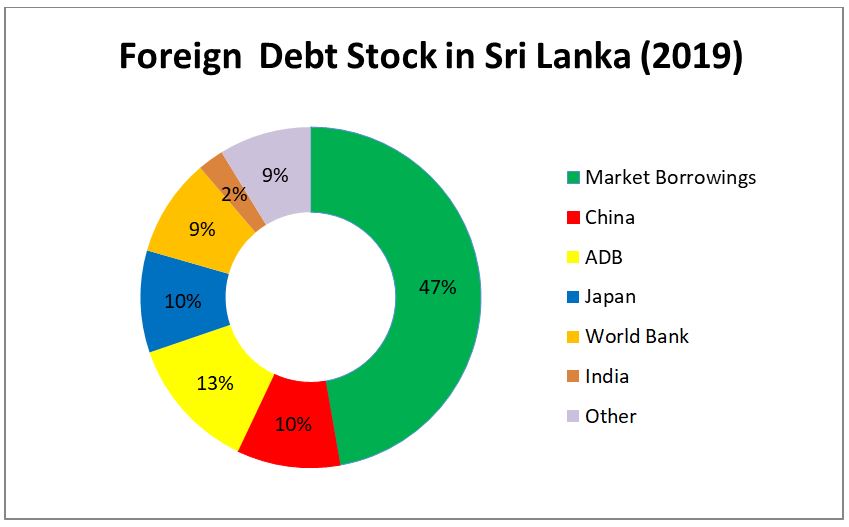
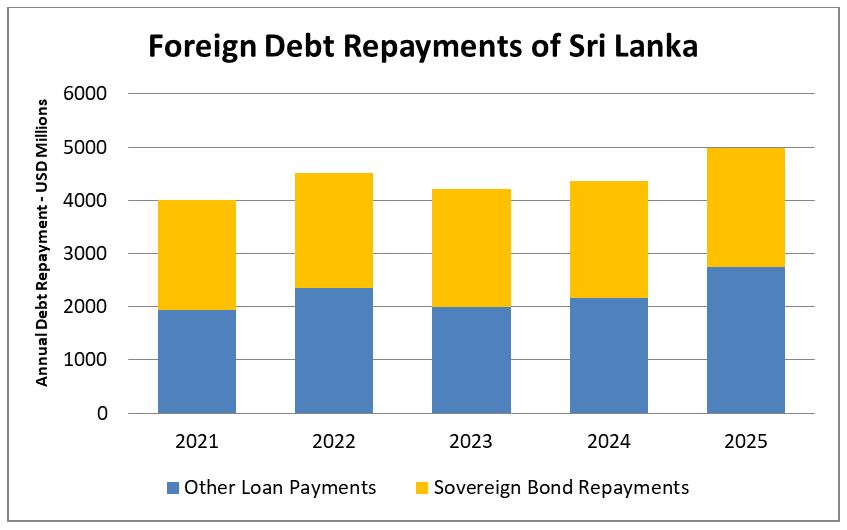
Worries that this year’s Covid-19 crisis could see the country struggle to pay its debts have already seen its bonds slump almost 40% this year.
On Friday its 2021 and 2022 dollar-denominated bonds dropped 5 cents or more, according to Tradeweb data. Meanwhile, its 2025 and 2026 bonds dropped below the 60 cents on the dollar threshold.
We encourage Sri Lanka to review the options we offer for transparent and sustainable economic development in contrast to discriminatory and opaque practises,” US State Department official Dean Thompson told reporters ahead of Secretary of State Mike Pompeo’s visit to Sri Lanka and other parts of Asia next week.
We urge Sri Lanka to make difficult but necessary decisions to secure its economic independence for long-term prosperity,” Thompson added.
US bullying countries, China says
China’s foreign ministry spokesman dismissed the comments as showing a Cold War mentality” and said the US was bullying countries to pick sides over their ties.
Sri Lanka’s finances were fragile long before the coronavirus blow, but unless the country can win support from its allies it runs the risk of having to default.
All the tell-tale crisis signs are there: a tumbling currency, credit rating downgrades, bonds at half their face value, debt-to-GDP levels nearing 100% and almost 70% of government revenues being spent on interest payments alone.
Sri Lanka’s central bank has repeatedly vowed, however, that the country will honour all its debt service obligations”.
External debt payments between now and December amount to $3.2 billion. Other costs could bring that up to $6.5 billion in the next 12 months, analysts estimate, while its FX reserves of just $7.4 billion leave it barely covered.
Rajapaksa government wants FTA with Beijing
The Sri Lankan government, headed by President Gotabaya Rajapaksa, said recently it plans to restart discussions with Beijing on a free-trade agreement, following a high-level meeting between the two countries.
Seen as close to Beijing, Rajapaksa has appointed several members of his family to top cabinet positions since his party won a commanding majority in August’s parliamentary elections, including his brother Mahinda, who previously also served as president.
Negotiations on a free-trade agreement were last held in 2017.
China has been making increasing inroads into South Asia with its Belt and Road Initiative, aimed at financing critical infrastructure in dozens of countries across the world.
In 2017, Sri Lanka signed over control of Hambantota, a Chinese-financed port, and land around it to Beijing after incurring heavy losses, to the alarm of the United States and regional power India.
Rajapaksa rejected accusations a week ago that China wanted to trap Sri Lanka into mounting debt with the port deal.
“Many geo-political analysis interprets this project as a ‘debt trap’ set up by China to gain control over Sri Lankan affairs,” Rajapaksa told the Chinese delegation, led by Yang Jiechi, China’s top diplomat.
“I want to prove that it is not the case and that this large-scale project will help improve the living standards of the people,” he added.
The countries also agreed to deepen ties in the agriculture, education, tourism, water supply and healthcare sectors, according to a summary of the meeting released by Rajapaksa’s office.
The Chinese visit comes as Sri Lanka faces mounting worries over the state of its finances, with rating agencies warning that a coronavirus-induced shock will significantly weaken its “already fragile funding and external positions”.
Rajapaksa said on the country’s trade deficit with China is too high and called on Beijing to increase the volume of goods purchased from Sri Lanka to bring it down.
Pompeo flying to Delhi Sunday, Colombo after
Meanwhile, US Secretary of State of Mike Pompeo is flying to India on Sunday to boost strategic ties with a nation that is locked in a military standoff with China.
As part of an intensifying pushback against China’s economic and military power in the region, Pompeo will also travel to Sri Lanka and the Maldives, two Indian Ocean countries struggling with a mountain of Chinese debt incurred to finance big infrastructure projects.
Pompeo will conclude his trip, which comes in the final week before the US election, in Indonesia, which is also locked in territorial disputes with China in the South China Sea.
“We’re looking forward to strengthening critical relationships with our friends and partners, emphasizing our deep commitment to the Indo-Pacific and advancing our vision for long-term partnership and prosperity in the region,” said Dean Thompson, principal deputy assistant secretary at the State Department’s Bureau of South and Central Asian Affairs.
Washington has been ramping up diplomatic pressure on China, and President Donald Trump has made being tough on Beijing a key part of his campaign to secure a second term.
Pompeo led a meeting of foreign ministers from India, Japan and Australia this month in Tokyo, a grouping that could be a bulwark against China’s growing assertiveness in the region.
Next month, India hosts ‘Malabar’, the biggest naval wargames in years, with the United States, Japan and Australia – an exercise that China has in the past opposed.
Beijing said this month that US accusations against China showed a “Cold War mentality”.
Defense Secretary Mark Esper is expected to join him, as India is due to sign an agreement that will give it access to sensitive US satellite data to help improve targeting of missiles and drones, Indian officials said.
“There is great further potential in our defence cooperation,” an Indian official said.
It will be the first visit by a US Secretary of State to Sri Lanka in over a decade, and Pompeo has said he would convey support for a “strong, independent and democratic Sri Lanka,” Thompson said.
He will urge Sri Lankan leaders to scale back dependence on China, which has invested billions of dollars building ports and highways but left the island nation deeply in debt.
The island is a key part of Chinese President Xi Jinping’s Belt and Road Initiative but the government has in recent years sought to improve ties with India, United States and Japan.
Male, the capital of the Maldives. AFP photo.
Pompeo to visit Maldives, Indonesia also
Similar efforts are under way to push back against Chinese influence in the Maldives, tropical islands that lie on key shipping lanes.
Maldives is a small country with only about 420,000 people living on roughly 300 square kilometers of land, but it is strategically located close to India’s Lakshadsweep islands – and the major US military base at Diego Garcia.
“Expected discussions … include the global battle against the Covid-19 pandemic as well as ongoing and future collaboration,” the Maldives government said in a statement.
Pompeo’s visit to Indonesia comes amid an escalating US-China rivalry in the South China Sea, which China claims as almost entirely its own territory. The claim is opposed by many states in the region, including Indonesia.
The State Department this week approved the potential sale of three weapons systems to Taiwan, including sensors, missiles and artillery that could have a total value of $1.8 billion.
Taiwan, which China says is a renegade province, also claims large parts of the South China Sea.
COLOMBO: Authorities in Sri Lanka on Saturday (Oct 24) closed at least two fishery harbours and many stalls after a surge of 609 cases linked to the country’s main fish market.
The government also widened the curfew in parts of Colombo. At least 11 villages were isolated in the densely populated Western province, which includes the capital.
Health authorities on Wednesday temporarily closed the fish market on Colombo’s outskirts after 49 traders tested positive for the coronavirus. By Saturday, the number of cases went up to 609.
Hundreds of traders and fishermen are being tested.
Authorities say the outbreak is related to a cluster in a garment factory early this month, which has grown to 3,426 cases, almost half the country’s total of 6,287. It broke a two-month lull in infections.
Several thousand people have been asked to quarantine at home. Schools and key public offices are closed, gatherings banned and restrictions imposed on public transport.Advertisement
What More UK director Tony Grimshaw OBE has unveild the company’s new export destination
ONE OF the county’s most notable exporters has announced plans to extend its international reach further still with a deal to trade with Sri Lanka.
Padiham-based What More UK hopes that the deal, which will make its range of home accessories available to the 20 million inhabitants of Sri Lanka, will encourage other British firms to consider the opportunities that could lie ahead thanks to thinking internationally.
This comes only weeks after the company unveiled a similar deal with the Central American republic of Costa Rica and less than a year after the firm added Senegal, in West Africa, to its list of export destinations.
What More director Tony Grimshaw OBE said: British companies have lots of advantages over other countries when it comes to export.
For one thing the UK is ideally positioned geographically for export and we have a reputation for building top quality products that are made to last.
That’s why all our products have prominent British branding with an easily recognisable Made in Britain logo.”
Since 2009 the economy of Sri Lanka has grown by an average of 5.3% each year firmly placing it in the category of Asian Tiger Economy and now joins 75 other countries around the world that Padiham’s What More exports to.
The firms will hope that deals like this will help to illuminate the continuing importance of the UK manufacturing sector, which still makes up around 20% of the economy at places the UK in the top 10 manufacturing nations in the world and have also been keen to stress the firm’s environmentally friendly methods.
Good produced at the company’s facility in Altham include storage boxes, kitchen and cookware, garden ware and products for the home laundry and utility room.
All of these are made from single use plastics diverted from landfill.
Hilton Colombo has temporarily suspended operations after one of its employees has tested positive for COVID-19, the Daily Mirror learns.
When contacted, the hotel confirmed that it had temporarily halted operations since Friday but failed to share more details. The hotel is expected to release a statement shortly. Health officers from the Colombo Municipal Council confirmed that a positive COVID-19 patient was found from the area where the hotel was located but could not confirm whether it was from the hotel premises. Further investigations are ongoing.
The Daily Mirror learns that Galle Face Hotel has also temporarily suspended operations. The area PHI has informed the hotel to halt operations and all hotel staff will be subjected to a PCR test today.
Shangri La hotel has also been informed by the PHI to cancel some key events scheduled to take place at the hotel but it is not confirmed if this is due to the detection of a positive patient or as a precautionary measure. The hotel is expected to release a statement shortly. (JAMILA HUSAIN)
Samagi Jana Balawegaya (SJB) MP Diana Gamage yesterday said she would continue to support President Gotabaya Rajapaksa to build the nation.
Speaking during an adjournment debate in the House, she said she decided to support President Gotabaya as she felt he is capable of building the nation.
During his tenure as the Defence Secretary he did a lot of work. Thousands use walking tracks built by him,” she said.
She said the country does not need a President without powers. We need a powerful President. Why should we spend funds and hold a presidential election and tie the President’s hands and throw him into a river expecting him to swim? He will not be able to swim when his hands are tied,” she added.
I would have voted in favour of the 20th Amendment even if Sajith Premadasa was the President of this country.” (Yohan Perera and Ajith Siriwardana)
While claiming that the Brandix Apparel Ltd. should take the responsibility for the second wave of the COVID-19, National Peoples’ Power (NPP) leader Anura Kumara Dissanayake said yesterday a thorough investigation should be carried out against the company and take necessary action.
Moving the adjournment debate on COVID-19, he told parliament that Brandix had acted in an irresponsible manner where they had neglected health guidelines.
It is reported that Brandix had neglected health conditions of their workers. The factory had forced them to work disregarding their health condition. When the workers were complaining of fever and vomiting, they had only been given painkillers and forced to work. The factory had only been concerned on reaching their production targets,” he said and added that negligence of the factory was very clear as more than 1,000 workers were reported as infected within two days.
He said the laws should be equally applied to this factory as well.
Mr. Dissanayake said the government should investigate the allegations that some people arrived from India and had gone into the Brandix factory without undergoing proper quarantine process.
He said the second wave was spreading fast compared to the first one and added that it was spreading into the community now.
The government should reveal whether the COVID-19 is under control or spreading into the community now. The government should explain it with facts and figures,” he said. (Ajith Siriwardana and Yohan Perera)
he World Health Organisation (WHO) had informed the Health Ministry that a vaccine approved by the WHO may be available for COVID-19 shortly and the ministry was preparing for that, Health Minister Pavithra Wanniarachchi said yesterday.
In her reply speech on the adjournment debate, she told Parliament that the WHO had instructed the ministry to prepare the country for the vaccine.
The WHO has advised us to prepare the country for the vaccine. They have not informed us exactly what the injection is. The ministry is preparing for that at the moment,” she said.
The Minister said even though the opposition claimed that COVID-19 had spread in the community, none of the health ministry or the epidemiology unit has confirmed it as yet.
It is a technical matter to confirm whether COVID-19 has spread into the community. It should be done according to criteria of the WHO,” she said. (Ajith Siriwardana and Yohan Perera)
Even though the Government had shortcomings in their past decisions with regard to containing the COVID-19 virus, the recent decisions taken by the Government are satisfactory, and if it continues in this manner, the situation would gradually return to normalcy, Public Health Inspectors Union of Sri Lanka (PHIUSL) said.
Its Secretary M. Balasooriya told Daily Mirror the health and law enforcement authorities were doing their best in promptly tracing cases and attending whenever there was a positive case.
It is of utmost importance to maintain this momentum in order to successfully contain the virus and return to normalcy,” he said.
Commenting on whether there is a necessity to go for a countrywide lockdown, he said neither the country nor the people can afford to go for a total lockdown as it would adversely affect the country’s economy and livelihood of people.
Therefore, imposing the quarantine curfew to high-risk areas where movements must be restricted, is a good option. However, if the situation seems to be getting worse, there is no other option than looking for strict steps for the security of the whole people.”
Meanwhile, he claimed that several Public Health Inspectors have come under verbal attack and threat when they direct certain individuals for the quarantine process.
Several of their members had come under threat when they were involved in placing people under quarantine process in the areas like Divulapitiya and Minuwangoda.
Although the majority of people corporate with them, some individuals ignore their instructions violating quarantine guidelines.
This is because people are too in high stress and feel unconformable when they are placed under quarantine,” Balasooriya said.
Hence, we don’t blame them. We have also instructed our respective inspectors not to be harsh on them but calmly explain the gravity of the situation in terms of spreading the Covid-19 virus.
He stressed people’s support was extremely important in containing the virus and therefore, requested to cooperate with them and adhere to their instructions.
Quarantine curfew is imposed in several more police division in Colombo with immediate effect, stated the Army Commander Lieutenant General Shavendra Silva.
Accordingly, Maligawatte, Keselwatte, Dam Street, Barber Street, and Foreshore Police Division will be under quarantine curfew from here on.
The decision will be in effect until further notice.
Nine other police areas in Colombo District, namely Mattakkuliya, Modara, Wellampitiya, Bloemendhal and Grandpass, Kotahena, Dematagoda, Maradana, Gothatuwa, and Mulleriyawaare also currently under quarantine curfew until further notice.
In the meantime, quarantine curfew came into force in Payagala, Beruwala, and Aluthgama police areas of Kalutara District with immediate effect last night (23) and will be effective until 5.00 am on Monday (October 26).
Persons living in curfew areas have been requested to restrict their movements and interactions.
The decision came after the recent surge in Covid-19 positive cases in the aforementioned and localities.
Ninety-two more individuals have tested positive for the novel coronavirus COVID-19, Army Commander Lieutenant General Shavendra Silva said.
According to the Army Chief, all of them are close contacts of the coronavirus patients linked to Peliyagoda Fish Market.
Meanwhile, a total of 368 cases of COVID-19 positive cases have been identified within the day far.
Thus, the Minuwangoda and Peliyagoda cluster has registered a total of 4,050 positive cases.
Following the latest update, the total number of Covid-19 confirmed in Sri Lanka shot up to 7,521.
The Epidemiology Unit’s statistics revealed that 3,792 active cases are still under medical care at selected hospitals across the country.
Recoveries from the virus now stand at 3,714 after 70 persons infected with the virus were discharged from hospitals earlier in the day upon regaining health.
Sri Lanka also witnessed its 15th death this morning, as a 56-year-old from Kuliyapitiya fell victim to Covid-19.
A team of Criminal Investigation Department (CID) officers has recovered a T-56 rifle and a revolver, which allegedly belong to the notorious underworld figure ‘Podi Lassie’.
The firearms have been found from the house of the suspect’s grandmother in Telwatte, Ambalangoda, according to reports.
The CID officers had led ‘Podi Lassie’ to the location where the two firearms were recovered last evening (23).
‘Podi Lassie’ who was recently granted bail by the Galle Magistrate, continues to be held by the CID under detention orders.
‘Podi Lassie’ has been named as the second suspect in the case filed over the death threats made in public at the Boossa Prison, against the President, the Defence Secretary and certain high-ranking officers of the Prisons Department.
The
Sinhalese in independent Sri Lanka have been nationalistic, but never narrowly
communalistic; they have never illtreated non-Sinhala minorities on the basis
of race or religion. Those who are wallowing in a sea of misinformation having
been swept there by tides of hostile propaganda over the decades, may bristle
at this, but the truth must be stated. The nationalism of the Sinhalese is not
a construct of the last colonial era. Contrary to what Eurocentric theorists,
their local clones, imperialist lackeys and their modern dupes believe, it is
an inclusive nationalism. In their long history, the nationalism of the
Sinhalese has been synonymous with patriotism or the love of their country,
their island homeland. The JVP of 1971 and 1987-89 shed blood in the name of
the country, not in the name of a race or a religion unlike respectively the
defeated LTTE and the recent NTJ. To point this out is not being communalistic;
it is only reacting to a false criticism. The racists and the extremists among
the minorities raise false allegations of communalism against the majority
community to justify their own communalism.
Today,
even a section of the Sinhalese polity including some young members of the FB
generation, seem to think that to be a nationalist is the same as being a
racist. That misconception is largely because they are not well enough informed
about their own true history and truly admirable, multifaceted heritage, a
legacy that is enjoyed by all communities in common: the still functional parts
of the ancient hydraulic system, archaeological remains that attract foreign
tourists and earn foreign exchange for the public coffers,and many other
treasures. But anti-national individuals and agencies still censor Anagarika
Dharmapala, the pioneer national revivalist of the colonial era, as a hate
figure for ideologically rekindling, around the beginning of the 20th century,
the nationalist spirit of the patriotic Sinhalese that had been choked in the
course of a number of popular uprisings by force of arms by colonial invaders
following the 1815 British intrigue. All the Sinhalese leaders who caused the
1948, 1956, 1972, 2009, and 2019 restorative revolutionary watersheds to happen
were inspired by Dharmapala and were opposed by the real racists and received
little support from non-Buddhist religious extremists.
The
‘divide and rule’ policy of the British imperialists was naturally to the
greater disadvantage of the majority community than to the minorities, who in
fact stood to gain from it. The British exploited the minorities to weaken the
historical defenders of the land. It may be plausibly argued that they used
them as tacit allies to restrain the Sinhalese from rebellion, in return for
privileged treatment (although this was limited to an elite that politically
mattered to them, while the majority of the dispossessed mixed masses
consisting of common Sinhalese, Tamils and Muslims shared the rigours of
colonial exploitation without discrimination).
Particularly,
the racist leaders of the Tamil minority feared that a parliamentary system of
government where the Sinhalese would hold power because of their numerical
superiority would mean a loss of their privileged status (hence the notorious
50-50 seat allocation demand of G.G. Ponnambalam which was contemptuously
rejected by the Soulbury Commissioners in 1946. All the overtures that
Sinhalese leaders from D.S. Senanayake to Gotabaya Rajapaksa made to the few
but powerful racists (among the minority politicians) who somehow manage to hoodwink
their people and persuade them to vote for them have failed to convince them to
cooperate wholeheartedly with the majority in making unitary Sri Lanka a strong
sovereign state where they harbour equal stakes and enjoy equal rights and
share equal responsibilities.
The
false allegation of Sinhala communalism finds a convenient platform in the
demand for the constitutional emasculation of the institution of the executive
presidency (if complete abolition is not possible). This is because it is usually
a Sinhalese who stands a chance of getting elected as president by the pan-Sri
Lanka electorate. These minority politicians (the extremist few, not all
minority politicians) propagate the idea that all Sinhalese are communalists,
and that every president will be biased against their people. But this is
a fallacy. Though, at present, there is no likelihood of a minority politician
becoming president because the minority polities are still mostly under the
sway of racists and religious extremists, it is not an impossibility. If the
non-racist, non-extremist politicians that there are among them are allowed to
emerge dominant, they certainly will find more favour with the average
Sinhalese voters than a conceited Premadasa or a clueless Sirisena, and a correspondingly
modest and knowledgeable Tamil or Muslim president will no longer be just a
dream. There are many examples from the past to illustrate the
possibility of such an eventuality, but this is not the time for dwelling on
the subject.
Unwarranted
dilution of the powers of the executive presidency was what was achieved by the
controversial 19A, which, effectively divided people’s sovereign power between
the President, the Prime Minister and the Speaker. It was a three-headed
monster, as a government minister recently said. As a result of it the
sovereign people had to put up with a severely dysfunctional parliament that
brought disaster to the country for an interminable four and a half years
before it was finally dissolved by the President and a fresh Parliament
elected. The potential for the continuation of such a corrupt
malfunctioning parliament is greater when the executive power of the President
to dissolve it is curtailed or is completely taken away. That provides a
situation open to exploitation by the Rishads and Hakeems of this world.
The
Island editorial/October 20, 2020 made the following comment, which suggests
the despicable way they are ready to cock a snook at the sovereignty of the
people:
‘Bathiudeen
brought down the hurriedly formed Sirisena-Rajapaksa government, in 2018, by
refusing to vote with it in Parliament. That administration crashed, unable to
raise a simple majority in the House. This time around, Bathiudeen can give the
present regime the kiss of death by voting for the 20A. If he and his four MPs
vote for 20A, as expected, those who claim that he and the government have
struck a secret deal will be vindicated. The only way the government can avert
such a situation is to engineer the crossover of some other Opposition MPs so
that it does not have to depend on Bathiudeen…..’
Who
is this Bathiudeen? He was one of the Muslims forcibly evacuated from the North
as a result of Prabhakaran’s ethnic cleansing policy. When Bathiudeen came down
to Colombo he was a penniless youth with nothing but the worn out clothes on his
body, it is said. Today, he is a billionaire with palatial houses here and
there, and thousands of acres of land in his possession, with some more lands
given to his relatives. He was able to help himself to such great wealth and
also indulge in philanthropy at the expense of the state because he
became a politician and managed to join the winning side continuously from the
previous MR government to the end of Yahapalanaya, and battened on the
suffering of the fellow members of his own displaced community. During the near
decade in power, he was charged by environmental groups with the devastating
deforestation of the Wilpattu forest reserve; he was rumoured to be
complicit in importing cocaine hidden among goods in CWE containers, illegally
exploiting the ilmenite containing mineral sand deposits at Pulmudai for
personal profits, abusing the CWE to propagate extremist Islamist ideology, and
he was even accused of having connections with the Jihadists who carried out
the Easter Sunday attacks on churches and hotels. When the police finally
started looking for him to arrest him on the charge of having abused
state/public property by transporting by CTB buses some 10,000 voters from
their new places of residence to their old (for casting their vote a second
time it was alleged in the media) on the day of the presidential election in
November last year. How is it that an extremely unscrupulous, originally
insignificant penurious politician has been allowed to invest himself with such
power as the Island editorial has described?
This
is because the minority communalists who stick that label on the majority have
been empowered by the existing faulty electoral system being abused, and the
majority community effectively disenfranchised in the process. Having to strike
a deal with political criminals or to ‘engineer the crossover of some other
Opposition MPs’ as the Island editorial suggests in order to get 20A or any
other nationally important piece of legislation through parliament, is a
wretched proposition for any sovereign nation even to contemplate. But, isn’t
there any prospect for the nation to reverse this unfortunate self inflicted
anomaly? In my opinion, there is. It is to get rid of our own fear of adopting
strategies that might run the risk of being attacked as racist, Sinhala
Supremacist, discriminatory towards minorities, contrary to international
standards, etc. We have to learn not to give a fig to such unfounded
accusations.
At
present, the Sinhalese are scrupulously guiltless in this respect. Still they
are treated as if they were the worst racists, human rights violaters,
xenophobes, chauvinists in the world. Sometimes their own leaders criticise
them for being jaatiwadin, or racists as Premadasa and Sirisena have already
done:
Former
president Sirisena was heard, at the Easter Sunday Attacks inquiry recently,
referring to racists among the Sinhalese. In a Twitter message, which was only
in English and Tamil, but not in Sinhala, during the presidential election
campaigning period, SJB leader Premadasa charged that Muslims were subjected to
discrimination at the hands of the Sinhalese! He toured the North, presumably
to show the northern Tamils that he was a champion of Tamil rights. He was
given a heroic welcome in Jaffna and he garnered many Tamil votes, too. But it
is not that they fell for stratagems; they knew that he was ready to betray his
own people for a mess of (electoral) pottage. Could a person who doesn’t care
about his own kind be concerned about other people?
The
alleged Sinhala racists are none other than the few monks and some young
Sinhala activists who are merely reacting to proven cases of harassment,
aggression, and subversion against them by some extremist elements from among
the minorities. Considerable numbers of young Tamils and Muslims are also among
their supporters. Had the successive governments taken them seriously, the
slaughter of innocents on April 21 could have been avoided. They represent
millions, but are they taken notice of? Are they given proper media coverage?
Global media (international TV channels such as Al Jazeera, CNN, BBC, etc)
broadcast distorted news about them. There’s no place for them on the You Tube,
either.
The
true situation in the country is different from what is usually reported in
these media. Why did the nationalists win very nearly two thirds of
parliamentary seats, with the racists and religious extremists getting fewer
than what they usually win? The result surprised even the nationalists. This
shows that the Sinhalese electorate can decide the future of the country by
themselves. But they naturally prefer to do so with the participation of the
minorities. If the Sinhalese MPs in parliament forget their partisan divisions
and remember the patriotism of their ancestors who shed their blood to save
their motherland for all its inhabitants, they will voluntarily help the
government to muster the two thirds majority required or even more for
introducing a completely new constitution when the time comes for that.
Not
less than the survival of the unitary state, the nation, the dominant Buddhist
culture and the island territory is at stake. The America-led West and
India seem to have found a deus ex machina opportunity to further crank up
pressure on economically doddering Sri Lanka in the fast expanding mysterious
Brandix Covid-19 cluster and in a court judgement given in UK that is
favourable to the LTTE rump still active there: It was reported in the media on Wednesday
(October 21, 2020) that UK’s Proscribed Organisations Appeal Commission has concluded
that the Home Office decision to keep the LTTE as a proscribed terrorist
organisation was flawed and unlawful. So, the British parliament is likely to
lift the ban on the organization in that country. Britain is one of the forty countries
that proscribed the terror outfit. As far as Sri Lanka is concerned, this will
make little difference to the status quo, because the UK has practically always
allowed its members to behave as if there was no ban on it.
So,
all MPs in parliament, please forget your party, ethnic, religious and
interpersonal differences in the name of our motherland. At the time of
writing, the ad hoc 20A is to be put to the vote. It will be passed with
necessary amendments. It is good if this was carried out without the government
having to strike secret deals with communalists or to engineer crossovers from
the Opposition (which would be a slap in the face of the voting public). The
more momentous responsibility that you are going to fulfill is to create
a sound new constitution for our country that will save our nation from
squabbling geopolitical powers who are promoting their own separate national
interests at our expense, leaving us in perpetual political instability and
endless economic misery. You Hon. MPs, especially the fresh thinking young
ones, owe our resplendent island homeland no less.
(PS:
The 20A was passed in parliament with 156 voting for it and only 65 against.
The votes cast in favour exceeds the required two thirds majority by 6
votes. It is obvious that the government did not have to make undue special
overtures towards Muslim MPs. There were only 6 Muslim votes but they were not
critical, they were dispensable. It is clear that the Muslim MPs thrust
themselves on the government side without being asked. Probably, they did this
on the prior instructions of Hakeem (and Rishad as well). I think so because,
about two weeks ago, Hakeem told media men that he wouldn’t vote for 20A
but that the other members of his party would probably do so. The government
had better be careful: Beware of Greeks bearing gifts. The government, it
seems, was short of only 2 votes for acquiring the required number of votes,
which was 150. Those two votes came from Tamil MP Aravind Kumar and SJB’s Diana
Gamage. The latter violated her leader’s injunction, for which she must be
praised.
The
drafting of a completely new constitution commenced two or three weeks before.
This will get into top gear now. The drafting committee is headed by the
renowned PC Romesh de Silva, and includes other legal luminaries such as
Manohara de Silva and experts in related fields such as geologist and
geopolitical analyst and commentator Prof. Gerald H. Peiris. They can be
expected to produce a document that will be as much acceptable to the minorities
as it is to the majority.)
Nought from the Greeks
towards me hath sped well.
So now I find that ancient proverb true,
Foes’ gifts are no gifts: profit bring they none – Sophocles
(496 – 406 BC),
Don’t look a gift horse
in the mouth is a proverb about not questioning the value of a gift. The proverb refers to the practice of evaluating
the age of a horse by looking at its teeth. A certain exception to this rule
would be the MCC agreement which reportedly is very high in the agenda of US
Secretary of State Mark Pompeo’s visit to Sri Lanka next week.
In a
wide ranging article published in the Lankaweb (MCC LIES: Sri Lanka is not
getting $480m signing MCC Posted on October 18th, 2020), Shenali Waduge has elaborated on this
agreement and what it means to Sri Lanka in terms of the proposed gift. As she
has rightly said, 327 million Americans are giving Sri Lanka USD 1.50 each (USD
480 M over 5 years) or US 30 cents per year. There is also a saying that
beggars should not be choosers. However, despite the impact of COVID, Sri
Lankans are not beggars, therefore they must choose what is in their best
interests. One million Sri Lankans working overseas remitted USD 7 Billion per
year until COVID hit Sri Lanka and the rest of the world.
As
Shenali Waduge explains, the MCC funds will be released in tranches over 5
years if Sri Lanka meets numerous pre requisite conditions. It is these
conditions and what it means to Sri Lanka were they to be met, that should
occupy the minds of those who advocate the signing of this agreement. These are
what is in the gift horse’s mouth and which looks like stench emanating conditions.
Despite the unpleasantness, Sri Lankans must look at these conditions
remembering the old adage that there is nothing called a free lunch. It would
be foolish to imagine that Sri Lanka is being given this gift for the sake of
love and affinity. One should also consider the proverb not to trust Greeks
bearing gifts.
As mentioned in
the Phrase Finder (https://www.phrases.org.uk/meanings/beware-of-greeks-bearing-gifts.html), this proverb has its genesis an allusion
to the story of the wooden horse of Troy, used by the Greeks to trick their way
into the city. It is recorded in Virgil’s Aeneid,
Book 2, 19 BC: “Do not trust the horse, Trojans. Whatever it is,
I fear the Greeks even when they bring gifts.”
Although
no suggestion is made that the USA is an enemy of Sri Lanka, the section of the
phrase this proverb has its genesis an allusion
to the story of the wooden horse of Troy, used by the Greeks to trick their way
into the city” has relevance, if one sits back and
considers what is in this agreement for the US and whether it is indeed the
horse of Troy being used to gain entry into Sri Lanka for its own strategic
reasons.
The US has two key strategic
reasons to be interested in an entry into Sri Lanka. Firstly, the emergence of
China as its competitor for world’ super power status and its influence in Sri Lanka.
China already has a foothold with its investment in Hambantota, a Port, an
airport with a run way longer than in Katunayake, and vast acreage of land
around the Hambantota port given on a 99-year lease by the
Sirisena/Wickremasinghe government. Although there is no Chinese Military
presence in Sri Lanka, it would be foolhardy to imagine that will not be a
reality should a need arise for China for it to bring its Military in if its
interests in the region are threatened. Secondly, the future of the US bases in
Diego Garcia.
In an article titled Is the United States about to lose control of its
secretive Diego Garcia military base? Jenni Marsh of CNN (March
11, 2019) says Britain has now been
instructed to properly finish the process of decolonization, and return the
Chagos Islands, located half way between Africa and Indonesia, to Mauritius. The
ruling, though non-binding, potentially creates a huge problem for the United
States. Today, Diego Garcia is one of America’s most important — and secretive
— overseas assets. Home to over 1,000 US troops and staff, it has been used by
the US Navy, the US Air Force and even NASA — the island’s enormous runway was
a designated emergency landing site
for the space shuttle. Diego Garcia has helped to launch two invasions of Iraq,
served as a vital landing spot for bombers that fly missions across Asia,
including over the South China Sea, and has been linked to US rendition efforts”
It is
interesting to note the graphic of US bases throughout the world, and its base
in Diego Garcia (Chagos Islands) and its key strategic position in the Indian
ocean, and its proximity to Sri Lanka. One should wonder whether the twin
reasons for US interest in Sri Lanka are in fact the driving, motivating force
for it to gain that entry through the MCC Agreement.
THE LOWY INSTITUTE (https://www.lowyinstitute.org/the-interpreter/decolonise-diego-garcia-why-america-should-not-fear-mauritius) also
mentions The United States military base on Diego Garcia has a problem: it is
housed inside an unlawful jurisdiction, the British Indian Ocean Territory
(BIOT). According to the African Union, UN General Assembly and a
recent advisory opinion of
the International Court of Justice, BIOT is a colonial holdover that violates
the territorial integrity of Mauritius. Britain refuses to dismantle BIOT out
of deference to its ally, the US. This is a mistake. Full decolonisation is in
the interest of all sides. America’s support for
British sovereignty over Diego Garcia is based on the assumption that
London is a preferable landlord” to Port Louis. If this was ever true in the
past, it is not true today. British control over Diego Garcia and the rest of
the Chagos Archipelago is illegal, unpopular, unnecessary, and at odds with the
idea of a rules-based” order in the Indo-Pacific. By contrast, Mauritius holds
the keys to a long-term agreement over Diego Garcia that would be consistent
with international law and beneficial to America’s broader strategic objectives
in the region”.
While
the Lowy Institute argues that the future of the base need not be a problem for
the US should they negotiate with a willing Mauritius, there is an element of
uncertainty over the future of this very vital base that serves US strategic
objectives. In this context, it should not be unreasonable to assume that there
could be a long term US interest in Sri Lanka on account of any developments in
Diego Garcia that are detrimental to US interests.
It is
possible that the US Secretary of State is very keen to secure an agreement on
SOFA as well during his visit, besides the MCC Agreement. If he manages to do
so, the triumvirate of agreements that could take Sri Lanka well into the
strategic hold of the US would be complete. MCC funded road developments
reportedly establishing road works between a land corridor from the Western
province and the Eastern province, Land banks, selling unlimited parcels of
land to non Sri Lankans once land legislation is changed, which Sri Lankan politicians
are quite capable of doing, entry of US military personnel into Sri Lanka
(under SOFA), are all within the realm of certainty, not just possibility.
It
can be argued that Sri Lanka’s engagements with China have also been short
sighted and this has placed the country in jeopardy from super power rivalry.
Sri Lanka’s strategic relationship with India too could have been better as it
could have been used to act as the circuit breaker between the US and China
tensions over Sri Lanka.
Sri
Lanka needs all three countries, India, the US and China to be her friends and
it has to demonstrate to all three that they are not favouring one over
another. It needs to be non-aligned as far as these three countries are
concerned. The MCC Agreement, the SOFA agreement should not be signed as they
are very clearly entry Visa’s for the US military. However, in return, Sri
Lanka should assuage concerns that the US and India have about possible Chinese
intentions in Sri Lanka. In this regard, a Constitutional provision that no
country would be permitted to operate any Military bases in Sri Lanka, no
country would be permitted to use Sri Lankan Ports, Airports and any land or
sea territory for Military purposes of another country, could be considered.
Once such a Constitutional provision is enacted by Parliament, Sri Lanka could
sign an agreement with China consistent with the constitutional provision.
From
a longer term perspective, Sri Lanka should seriously consider a tri nation
foreign policy compact between China, India and Sri Lanka, with India looking
after US interests, to manage strategic relationships between the three
countries and the US. The writer proposed such a compact in an article titled Sino,
Indo, Lanka tri-nation centric foreign policy to end interference by other
nations” (http://www.ft.lk/Opinion-and-Issues/Sino-Indo-Lanka-tri-nation-centric-foreign-policy-to-end-interference-by-other-nations/14-668484). It is
worthwhile for Sri Lanka to consider such a compact as it could assuage
concerns between the super power rivals, US and China, and India about foreign
policy and economic policy decisions taken by Sri Lanka that could have an
impact on the strategic interests of these countries.
Maithripala Sirisena was not born with a silver spoon. He was no presidential material but he controversially became President with a thumbs up by 62lakh voters in January 2015 aided even by foreign governments & a coterie of civil society organizations & NGOs. Today, these entities regret that decision. His impassioned address to the Nation in October 2018, drew our attention to the shabby treatment he was subject to by the Colombo 7 UNP gang. With all of these odds against him, he still managed to prevent not only the signing of MCC inspite of the preconditions associated with it being rolled out oblivious to his understanding. More importantly, he prevented the privatization of State land through the Land Special Provisions Bill. A government is only custodian of the land and therefore, President Sirisena did right by preventing the privatization. This single deed by Maithripala Sirisena which has won the appreciation of the Nation, is what President Gotabaya will be measured on as well as US Secretary of State arrives to pressure Sri Lanka to If President Sirisena had the ability to withstand the pressures to sign MCC and privatize State land, there is little doubt that President Gotabaya would reject MCC and ensure Sri Lanka’s lands, assets & resources remain with the State and to the People of Sri Lanka.
President Sirisena’s emotional address to the nation on 28 October 2018 explained why he was prompted to remove PM Ranil Wickremasinghe as Prime Minister. https://fb.watch/1ix4u57NOv/
The Address prompted all to question how land statutes were being amended & passed divesting land to foreigners ignoring the President’s seal of approval. The President’s speech drew our attention to the new Land Ordinance Special Act allowing the sale of crown land to private parties & valid for only 7 years. What kind of law was this when sovereignty of land is vested in the People? President also mentions the National Economic Council. The NEC too made its reservations on the MCC and concluded that it was detrimental to the sovereignty of the Nation and should not be signed. President Sirisena mentioned the Land Ordinance Special Act & the Land Bank that had been presented to Parliament in mid-October 2018, which President Sirisena had objected to & did not allow to pass cabinet. If this Act had been passed 84% of crown lands would have been privatized & would eventually have fallen into foreign hands. MCC Agreement clearly gives the history to how it was introduced in 2015 and all of its demands are mentioned by the President.
An Indian paper carried news that the former PM had declared that English laws would apply to Colombo Port City and that a British team was arriving to work out modalities. It was also rumoured that the same British law was to apply across the MCC ‘economic corridor’ along the 7 targeted districts that MCC Land Project was to fund. What it meant was that the stretch of land under MCC Land Project would be divided between foreign corporates and operate under British law.
The People do not vote to bring a government to power, for that government to vest sovereign land into the hands of foreigners.
State Land as per Supreme Court Land Ownership Bill Special Determination No. 26A-36/2003 declares that State Land is held by the State in TRUST for the People.
State Land is vested in the Central Government & can only be ALIENATED under the SEAL of the President.
A private party cannot make a prescriptive claim on State Land (Section 15, Prescription Ordinance)
State Land is administered by the Land Development Ordinance which grants permits to cultivate & develop land & issued with certain conditions primary of which is that they cannot be leased or mortgaged.
No development can result in Sri Lanka losing its ownership of land & having that passed on to foreign hands!
What is the point in saying Sri Lanka’s sovereignty is inalienable & with the People when a Govt elected for a term thinks STATE LAND is their personal property to sell claiming that to be a FOREIGN INVESTMENT – what eventually happens is we loose our land, the foreigners walk away with the profits & turn our citizens into cheap labourers & the govt MPs pockets the commissions!
At least 4 times President Sirisena had prevented the Land Privatization Bill and that is indeed commendable. Whatever his faults, Sri Lanka must be grateful to this single act that prevented signing of the MCC.
We now have a popular president with a people’s mandate and now all the more powerful with the passing of the 20thamendment.
The People are looking up with more hope then they had before and with full faith that President Gotabaya Rajapakse will deliver.
Three main features of that manifesto is regarding Foreign Policy, Protection of National Assets & of course National Security.
The treacheries ended with the fall of yahapalana governance. The winning President who ordered the defeat of LTTE in May 2009, is today the Prime Minister, the defense secretary is today the President the former President is in Parliament but the former Prime Minister failed to even win a seat to re-enter Parliament. The fall of the UNP affords plenty of lessons. The fall of yahapalana also affords plenty of lessons.
That the former President Sirisena weathered humiliations for not being born with a silver spoon, did not stop him from preventing the privatization of Sri Lanka’s land and signing of MCC. We must applaud that. President Gotabaya Rajapakse may not have been born with the silver spoon from Colombo 7 but he belongs to a proud & illustrious family from South Sri Lanka. Mahinda Rajapakse, our PM would want to remain regarded with the highest esteem as being the modern defender of the Nation and Gotabaya Rajapakse no doubt will match the patriotism with professionalism and ensure not an inch of Sri Lanka’s soil is plundered or bartered.
The Nation and its Citizens now regard Gotabaya Rajapakse as the protector of the Nation & President Gotabaya Rajapakse must withstand all international pressures as the Nation will watch him deliver & he shall deliver.
There are some ground realities all of us need to come to terms with. While in Sri Lanka, only the TNA chants ‘Eelam’ & Pro-LTTE slogans, that too closer to some election or event, to give themselves some cheap publicity, all of the demands for Eelam are coming from Tamils living on foreign shores. Not only are these Tamils holding foreign passports but are working overseas, educating their children overseas, have bought property overseas and are either foreign citizens or standing in line to becoming one. So why would they take such pains to declare Eelam in Sri Lanka, when it would be easier to declare it in UK? Numerically too, the calls for Eelam are coming from more Tamils living overseas than a handful of isolated chants from Sri Lanka. Moreover, while it looks an elusive dream to declare Eelam in Sri Lanka, with the patronage and support given by UK MPs towards the Eelam cause, Her Majesty must seriously consider declaring Eelam at least in Tooting or Harrow.
If anyone is in doubt as to where & by whom the most calls for Eelam come from, all they need to do is to look at the number of LTTE diaspora entities operating from UK, the number of initiatives they run on a daily basis, the events they hold daily, the fund raising they manage, the emails, social media platforms they operate, the documentaries, panel discussions and even talk shows they sponsor – as against the feeble voices of the TNA. Isn’t it hilarious to see Sivajilingam with less than 20 people commemorating Prabakaran & the ‘dead’ when the hyped up dead figure was 40,000 while others claimed 200,000 ‘dead’. Surely, they could have rounded up these families to shed a few tears (If they were actually ‘dead’). LTTE Diaspora even run offices that train people to claim asylum – this includes paying to be tortured (burnt with cigarette butt ends), trained to cry & how to act in front of the asylum officers. This training is said to cost some 5000 sterling pounds.
Look at the number of British MPs on board the Eelam cause. In all probability they would be the first to come forward to hoist the LTTE flag in Harrow or Tooting. They seem to attend more LTTE events than they do British functions. None of these British MPs are too bothered about the LTTE diaspora crimes that swindle money from Britishers credit card scams, welfare and charity cheating, money laundering and human smuggling. When the British Parliament is even permitted to be hired for LTTE diaspora events, the Queen would no doubt be only pleased to assist in helping declare Eelam. With Brexit, and Britain getting isolated, the British MPs must be thinking the booty of LTTE kitty may come in handy.
Britain may be out of the EU, but Britain is not alone, LTTE & Eelam can help generate the income that the Brexit has denied.
Thankfully, Sri Lanka has only to put up with the theatrics & melodrama acts of the TNA from season to season. Since the end of LTTE defeat in May 2009, Sri Lanka has not experienced a single act of terror by LTTE. However, this cannot be said of the countries that provide safe haven for LTTE remnants.
France has a ‘Little Jaffna’ in Paris itself. It is the epicenter of violence with at least 10 types of violent gangs operating with swords & knives. Many killings have also taken place. In 2016, the Tamil Coordinating Committee head was shot dead, the previous TCC head was also shot dead. In 2009, Paris police had to arrest some 200 Tamil protestors for their unruly behavior. There is no end to the raids by French police across Paris. Who would imagine a Tamil getting his hand chopped off outside a Ganesh Temple in Paris! While chopping hands off the LTTE Eelam gangs are also involved in racketeering, burglaries, violent assaults and drug trafficking.
Across the Channel, in July we heard of a gruesome murder of a 5 year old stabbed to death by her Tamil mother in Mitcham, two more kids were murdered in April the same year. In Tooting the Tooting boys killed another in 2015. A Tamil man was stabbed through the heart in 2011 at a child’s birthday party. The UK police recorded 4 deaths & 200 incidents between 2000 & 2002! Shocking statistics. In 2007, the UK police declared credit card frauds of Tamil gangs amounted to 70million sterling pounds!
To top it off the UK Court found the British Tamil Forum guilty of sexual abuse, discrimination & victimization demanding compensation be paid to the victim. Without paying 70,000 sterling pounds, the BTF blames the UK High Court, accuses the victim of ‘tarnishing’ BTF image and declares itself bankrupt & quickly opens BTF Forum UK Limited. This looks a repeat performance of how TRO transferred monies to White Pigeon before TRO was banned by UK. So, it looks as if the LTTE Diaspora are not only making a mockery of UK laws but manipulating UK MPs to their advantage.
It is therefore only a matter of time that Eelam will get declared in Tooting or Harrow. We can only wish the LTTE Diaspora, the best of luck to do so. Let us see which LTTE Diaspora group can beat each other to declare Eelam –
Eelam in Canada
Eelam in USA
Eelam in France
Eelam in Tamil Nadu
Eelam in UK
Which LTTE Diaspora will declare Eelam first? Let the competition begin – & end soon!
First
year of President Gotabaya Rajapakse is almost coming to an end. Firstly he had
to work without a parliament, then Covid 19 followed by 19A,
The
poor performers of the government in the first year had a field day during the
period without parliament. Then these inefficient Ministers used Covid 19
as an excuse for not performing. The President need a team of
committed, loyal men and women to whom he can delegate tasks confidently.
But,
we have seen the emergence of toothless tigers in the cabinet attempting to
become lions during the period of 20 amendment. The attitudes of Wimal
Weerawanga, Udaya Gammanpila, Vidura Wickremanayake, Vasudeva Nanayakkara
were despicable, as they made the firing shots to awaken TNA, Tamil diaspora,
NGOs, anti-government social media, Muruththethuwe Ananda Thero, Elle
Gunawansa Thero, Medagoda Sumanatissa Thero ( much low key player), Bengamuwe
Nalaka Thero and remanants of UNP/SJB. . Especially Wimal
Weerawansa’s actions were unacceptable. His actions against the 20A had
nothing to do with the promises made to the public during the elections.
But his actions were mainly due to fact that he was annoyed with Basil
Rajapakse for two main reasons viz. introduction of Dr Sarath
Weerasekera to Colombo District, which eroded his ambition to score the
highest number of preferential votes. Secondly Wimal was extremely
annoyed when SLPP ( BASIL) fielded 4 pohottuwa candidates to the Kaduwela
District, the main vote bank of Wimal. If Wimal decided either to abstain or
vote against the 20A, his party position would have been similar to that of the
Rauf Hakeem. The government’s readiness with a back-up has now been
demonstrated.
However,
Mahinda Rajapakse was able to persuade the President to appoint Wimal as the
Minister of Industries, a position technically should be given to a qualified,
experienced, knowledgeable person with commercial negotiation
skills.
In
less than 3 months from the general election, Wimal has tarnished his political
standing. Undoubtedly the President has lost faith in
him. The attitude displayed by Minister Wimal was a
blessing in disguise, as hierarchy has been able to identify the true nature
and colour of this former JVP politician.
The
President has already made a public announcement that the biggest
problem of the country is that no one is working”. This
includes his Cabinet Ministers as well. The lack of commitment to the given
tasks, but eagerness to get involved on issues outside your own portfolio by
some Cabinet Ministers, unfortunately compels the President to get involved
to monitor the WORK IN PROGRESS, as the Ministers are hibernating.
Sajith
Premadasa who has worked extremely hard single= handedly, brought in Diana
Gamage to politics, made her the Assistant Secretary of his new Party, elevated
her to the rank of a National List MP by-passing several key personnel
and in less than 3 months she betrayed the Party
Leader!
It
is always better to identify the loyalists as against the snakes under the
grass.
The
value of a Dual Citizenship need to be demonstrated to the country, by
recruiting Mr Basil Rajapakse to the Cabinet of Ministers, immediately. This
Clause must remain in the new constitution going forward.
There
are compelling reasons to bring on Basil Rajapakse as a Minister Without
Portfolio, as quickly as possible, to straighten out lacklustre,
non-performing passengers in the Ministry.
Part 2 of this series is on international relations. The series
starts with India. Despite its impressive size, India is a very young sovereign state,
dating only from 1947. Before foreign rule, India consisted of a number of
separate kingdoms. These vanished under Muslim and British rule.
The
responsibility of creating the new
Republic of India in 1947, from an inherited jumble of
princely states and British ruled states, was given to Nehru, who solved
the problem by creating a set of linguistic states. In the process all sorts of adjacent areas
were dragged in against their wishes, to form contiguous states.
Andhra Pradesh was the first to be created. It was created out
of former Madras province, Hyderabad,
and Mysore, so that Telegu speakers would constitute its majority. Karnataka
was created by merging the Kannada speaking areas of southern Deccan. Madhya
Pradesh was created out of linguistically heterogeneous area of the former
Centre Province and Madhya Bharat. Gujerat, Maharashtra, Bombay became one state.
These artificially, hastily drawn states were not going to last
and India knew this. The Indian constitution
therefore permitted the formation of new states, provided that the division was
helpful to India. Parliament can
create, abolish, truncate, or rename
states. It can alter boundaries,
increase or decrease the size of states.
India has eagerly accepted this invitation to
fragment. The original boundaries are disappearing, said analysts. Gujarat
broke away from Marathi speaking Maharashtra.
Jharkhand, Chattisgarh and
Uttaranchal were carved out of Bihar, Madhya Pradesh and Uttar Pradesh.
Telengana became India’s 29 state in 2014. Telengana was enthusiastically
received in India
More new states have been asked for. Maharashtra said they want
a new state of Vidharba. Uttar Pradesh
wanted to divide into Harit Pradesh, Sundelkhand, and Provanchal. In Assam the Bodo people want Bodoland, and
Karbi want their own state. West Bengal wants Gorkhaland for Nepali speaking
Gorkha community, and Cooch Behar for the locals. In Rajasthan they want a Maru
state. All these states complained that
the existing states had confined development to the centre. India’s northeast is a very combustible
region. Some 250 ethnic groups are arrayed against one another.
State governments are now very powerful . The states are unruly
and difficult to control. Power is flowing away to state capitals where some s
strong men and women are ruling, said analysts.
Uttar Pradesh Chief Minister Mayawati cancelled a land grant made by the
central government, banned a meeting Sonia Gandhi was attending and diverted
her motorcade in 2010.
The states are now represented in regional parties, and the
central government consists of coalitions of these parties, so states cannot be
ignored at central level either. A new dimension has come with coalition
governments at the centre, said analysts. State parties are now able to
interfere in centre policies and influence centre-state relations. .
The
Indian central government has been in headlong retreat for the past three
decades, said Chandraprema. The powers
of the Central government were challenged in Supreme Court in West Bengal vs.
Union (1962) Rajasthan vs. Union (1977).
In
the West Bengal case, the central government had wanted to take over some coal
bearing state land. West Bengal said that centre could not take over land
vested or owned by the state. In the
Rajasthan case, Central government had asked six states, Rajasthan, Madhya Pradesh,
Punjab, Bihar, Himachal Pradesh and Orissa to dissolve its assemblies and hold
fresh elections. The states said this
request was illegal.
The Indian Constitution gives the President the power to take
over a state when necessary. By 1998, President’s rule had been declared 106
times in the states. But President’s
rule is now questioned.
The
M.M.Punchhi commission of 2010 supported this approach. The commission was willing to
allow the states to decide on who would be their governor. It was prepared to
restrict the discretionary powers of the Governors of the states in appointing
and dismissing chief minister and informing the central government that a state
of emergency has arisen. The commission also recommended that when a situation
of public disorder justified central government intervention in a state that
the state be asked before intervening. They also recommended that the imposition of presidents
rule on a state should be subject to judicial review.
Constitution of India recognizes only one common citizenship for
the entire Indian people, but the
Indian states are not interested in creating a unified India. They
emphasis language .There is linguistic chauvinism and intolerance. State
jobs are exclusively for the majority language group. India had the world’s biggest ever electricity
power outage In July 2012, where three regional grids, collapsed entirely. The
reason was that every state draws far more than their specific quotas from the
power grid.
The states oppose each other. There are disputes over territory
and water. Karnataka and Maharashtra are fighting over Belgaum, they both want
it. It is a Marathi speaking district which had been given to Kannada speaking
Karnataka in 1955. Maharashtra has gone
to courts. New Delhi is on the side of Karnataka, because otherwise it will get
involved in reopening boundary cases. Commission appointed to study the matter
stated that Belgaum belongs to Maharashtra but still the two states are
fighting over it.
There
are fights over water management between the states. Punjab and Haryana fought
over Sutlej water, Kerala and Tamilnadu
over Mullaperiyar dam. Maharashtra and Andhra Pradesh are now fighting
over Bhabli dam. Delhi and Uttar Pradesh had a running feud on a host of things
including bus routes. Jammu and Kashmir want to leave Mother India and join
Pakistan.
In 2006 Kerala and Tamilnadu were clashing over Mullaperiyar
dam. The public also joined it and burnt
Kerala buses, and blocked the road between Tamil nadu and Kerala. Prime Minister
Manmohan Singh deployed at Tamil nadu’s request, the Central Reserve Police
Force to protect the dam which irrigated the states four districts.
India has two national languages, Hindi and English.
No one knows English and Hindi is spoken only by about 42% of the population. There
are also 22 state languages, which operate only in their states. These include
Tamil, Malayalam, Telegu, Kannada, Marathi, Gujerati, Rajastani, Urdu, Punjabi,
Kashmiri, Hindi, Bihari, Oriya (Orissa) Bengali, Assamese. Primary education is
in these languages. In the 2014 general election, the media reported that MPs
took their oaths in Hindi, English, Kannada, Assamese, Oriya and Sanskrit.
There
is also the Hindu Muslim clash, which is well known.
Hindus and Moslems have fought over the Babri mosque at Ayodhya. In Gujarat, Muslim mob had in 2002 burned a
trainload of Hindu activists at a railway station. Then in 2014 also in Gujerat,
Hindus had locked 23 Muslims who had fled into a house and then set it on fire.
India presently has 28
states and 22 languages. Kuldip Nayar notes that that India has many fissiparous
tendencies. The states are solidifying into separate entities and threatening
to become permanent compartments. Consensus is becoming difficult. Even basic
issues cannot get approval in Parliament.
India will eventually
‘Balkanize’ into separate sovereign states, despite the anti-secession clause
in the Indian constitution. It will be a
messy break up. Landlocked states will try to get access to the sea. States will fight over boundaries and water. Experts now warn
of water wars due to scarcity of water and have identified India as one country
where this will take place.
The
international community knows that India will eventually break up. That is why
India is never described as an emerging political power, only an economic
power. Once it balkanizes it will not be an economic power either. ‘TIME’ says China views India with disdain.
China thinks India can be easily dissolved into its composite, regional
parts. ( continued)
Prime Minister Mahinda Rajapaksa,
participating in the celebration to mark the 75th anniversary of the United Nations,
reiterated Sri Lanka’s commitment to achieving the Sustainable Development
Goals by 2030.
We are firm in our commitment to achieve
the Sustainable Development Goals by 2030, and create a greener and more
sustainable environment for the future,” Prime Minister Rajapaksa said. I call
upon my fellow world leaders to work collectively in restoring compassion back
to the eco-system in our respective countries.”
Due to the prevailing pandemic, the event
took place virtually under the theme ‘Shaping Our Future Together.” In his
remarks, the Prime Minister thanked the United Nations for providing support to
Sri Lanka in a wide range of sectors and highlighted the importance of member
states supporting the United Nations in becoming a more agile and accountable
institution.”
Complete Remarks by Prime Minister
Mahinda Rajapaksa for the Virtual Commemoration of the 75th Anniversary of the
United Nations
Thank you, Your Excellency and the United
Nations, for inviting me to participate in the celebrations for the 75th
anniversary of the U.N. It is indeed an historic occasion, especially given the
long-standing partnership Sri Lanka has had with the U.N. for 65 years.
Unfortunately, the COVID-19 pandemic has
prevented us from joining you at your office for this celebration. However, I’m
glad technology has brought us together virtually.
I want to start by thanking the United
Nations for its support to Sri Lanka in fighting the Coronavirus outbreak. As
the world takes on the challenges of this unprecedented global health crisis,
it is more important than ever to work collectively on our shared challenges to
overcome this pandemic.
Seventy-five years ago, on a day like
tomorrow, the United Nations was created to be a global organization to act as the
center of discussions on international cooperation, economic and social
development, and international peace and security. It was the optimism of the
U.N.
Charter that instilled our faith in the
U.N.’s ability to create a better world for us and our children. The global
platform has helped bring world leaders together during some of the most
challenging times, such as today. As Member States, I believe we need to
support the United Nations as it evolves into a more agile and accountable
institution. The world is changing dramatically, and an upgraded United Nations
must both adapt and stay relevant.
Having overcome a three-decade long war,
Sri Lanka is on a transformative journey to becoming a more sustainable and
resilient country. Since the COVID-19 pandemic, we are all desperately
searching for solutions to build back our economies, societies and global
networks. We are firm in our commitment to achieve the Sustainable Development
Goals by 2030, and create a greener and more sustainable environment for the
future. I call upon my fellow world leaders to work collectively in restoring
compassion back to the eco-system in our respective countries.
I appreciate the United Nations support
for a wide range of sectors such as health, education, environment, agriculture
and food security. One of my most important memories working with the U.N. is
when I had the opportunity to work with children, especially after the Easter
Sunday attacks and during the pandemic. In addition to remaining committed to
children’s rights and safety, I remain equally committed to addressing the
challenges faced by women and girls, the elderly and the differently-abled, and
look forward to working closely with the U.N. Resident Coordinator and the
Country Team.
I extend my best wishes to the entire U.N.
team here in Sri Lanka as you mark United Nations Day tomorrow, and I expect to
continue the close cooperation in the years to come.
Calling on Prime Minister Mahinda
Rajapaksa at Temple Trees this evening, Ambassador of the Republic of Korea
Woonjin Jeong called Sri Lanka one of the safest countries,” and said he is
actively encouraging Korean investors to explore opportunities in Sri Lanka.
Several decades ago, Korea was one of the
largest investors in Sri Lanka. Currently, there are more than 115 Korean
companies operating in the country, and total trade between the two countries
stood at US$ 327 million last year. Both countries are keen on increasing that
number.
Ambassador Jeong also congratulated the
Prime Minister on the victory in the recently-held General Election and said it
was trust and confidence” that resulted in the mandate the Government
received. He also commended the Government on its handling of the pandemic and
said the Korean Government would be providing tangible support to Sri Lanka in
coping with the COVID-19 crisis.
The two delegations discussed a number of
priorities for further cooperation between Sri Lanka and Korea that included
FDIs, exports, tourism and migrant workers.
Prime Minister Rajapaksa recalled the
phone call with Korean Prime Minister Chung Sye-kyun earlier this week and
renewed his invitation for the Korean Prime Minister to make his first ever
visit to Sri Lanka.
Noting that the Korean Prime Minister is
keen on visiting Sri Lanka, Ambassador Jeong said, We are and will always be
close friends.”
Critics have cast Murali as a ‘generic’ Sri Lankan Tamil to inflame their biases, but his story is more deeply layered
Occasionally, Muttiah Muralitharan has spoken of the anti-Tamil pogrom in 1977 when Sinhalese mobs ran a blade 12 inches across his father’s back, then burned down the family’s biscuit factory on the outskirts of the hill capital of Kandy, Sri Lanka.
In recent years, this harrowing story has been recounted at political events in support of Sri Lanka’s President Gotabaya Rajapaksa, and his Sri Lanka Podujana Peramuna (SLPP or People’s Front). The suggestion from Murali is that if he can forgive this heinous act of racial violence and go on to become one of Sri Lanka’s most celebrated figures, forgiveness should be beyond no one. This is glib, of course. For many Sri Lankan Tamils who suffered the appalling privations of war for decades, and were not insulated by the kind of wealth and status Murali enjoyed from his youth, forgiveness could not — and perhaps should not — come so easy.
But is Murali any more guilty of simplistic reasoning than those who have spearheaded the backlash against his biopic, 800? Across social media, Murali has been flamed as a traitor to the Tamil cause”; accused of sidling up to the Sinhalese to perform the role of the Tamil mascot through whom southerners lived out delusions of their own benevolence. That Murali’s forays into political conversation have ranged from naive to calamitous is plain. (It is a view held even by some of his closest confidants.) But the suggestion that he should uncritically attach himself to the Tamil cause” requires investigation.
Many layers to history
There is layered history here. Thanks largely to its position along one of the planet’s busiest maritime routes, the island is a place of near-unfathomable ethnic, religious and historical complexity. Waves of migrants have arrived over several millennia, some from North and East India, from the Malabar coast, the Arabian gulf, and from Java, each group forming a unique relationship with the state. Tamils, likewise, had come in waves, for over 2,500 years, and Malayaha (hill country) Tamils, from among whom Murali hails, were among the last to make landfall, lured over by the British to live and labour in hill-country plantations in almost uniformly abysmal conditions, for little pay. More than 150 years into life on the island, Malayaha Tamils remain among the nation’s most impoverished ethnic groups, with most estate workers earning less than 800 rupees (about ₹320 Indian) a day. The community’s health care and education outcomes continue to desperately trail national averages.
The ‘Tamil cause’
More to the point, there has been no substantial political movement from Malayaha Tamils to join the separatist struggle that was produced in the north and east. For Tamils in the hills, economic concerns have long outstripped appetites for self-determination, and still do. Many also feel condescended to by northern Tamils, for their lower caste status, the recency of their arrival, and their use of a more common Tamil than the classical iteration of the language heard in Jaffna. If Murali is betraying the Tamil cause”, which Tamil cause, exactly? Higher wages for plantation workers was not among the LTTE’s primary demands. Minorities are not always political monoliths.
Although Murali himself grew up in relative wealth, his father and uncle having sold biscuits out of the back of a car to build the business up in the 1960s, it can be no surprise that it is poverty that Murali has concerned himself with in his considerable charitable works. Though at the peak of his cricketing career at the time, Murali had been a key figure in securing the resources to build more than 1,000 homes for tsunami victims after the 2004 disaster. In the years since he has supported significant humanitarian operations across the island. Perhaps this is tangential, but it is certainly not irrelevant. Murali has helped transform more lives through his goodwill than arguably any living cricketer. Many of those who have had his support are Tamils, particularly in the aftermath of the tsunami, when he personally organised and delivered a convoy of lorries filled with supplies to the north.
Perhaps we should not be surprised that in casting Murali as a generic Sri Lankan Tamil, with no mention of his particular community, his harshest critics have stumbled into the same mire of illogic that inflamed the Sinhalese who attacked central hill-country Tamils over separatist agitations in the north and east. Nationalism, of any stripe, makes no concession to complexity. It smelts nuance down to a razor tip, for it has use only for weapons. Only a poster announcing the film was seen, but Indian actor Vijay Sethupathi has been forced to withdraw from the project. Somehow, Murali had not been so toxic when he played for Chennai Super Kings between 2008 and 2010 — years in which the war whipped up to its furious conclusion.
If the film is canned following Sethupathi’s exit, one of sport’s most compelling stories will go untold on screen. Beyond his monumental cricketing exploits, Murali had also been strung up in a career-long tussle over his bowling action, which served as a flashpoint between the sport’s grudging western powers and South Asia’s burgeoning administrative heft. His politics have long been viewed as problematic, but who is to say 800 would not have enriched itself with such contentions? The latest novel from the film’s co-writer, Shehan Karunatilaka, is a searing critique of wartime Sri Lanka. Sethupathi’s track record suggests he possessed the depth and range to honestly and sensitively draw out the conflicts in Murali’s story. Lost on detractors was the notion there can be more than one kind of biopic. Just as there can be more than one kind of Sri Lankan Tamil.
Andrew Fidel Fernando is a writer for ESPNcricinfo, and the author of Upon a Sleepless Isle, an award-winning book on Sri Lanka
All New Delhi can hope for is that next time the Chines comes to collect, Sri Lanka doesn’t give up another portion of its sovereign territory, further strengthening the Chinese in India’s backyard
File image of Sri Lankan prime minister Mahinda Rajapaksa and president Gotabaya Rajapaksa. Reuters
India’s fears of Sri Lanka, under President Gotabaya Rajapaksa, dipping further into Chinese debt seems to be proving true earlier than thought with the country seeking an additional grant of $700 million from the China Development Bank.
While this is part of a syndicated $1.2 billion loan, Colombo’s decision to continue borrowing from the Chinese amid a heightened tension between India and China and despite Sri Lanka’s commitment to put “India first”, shows that the island nation’s financial status makes it a somewhat unreliable partner in India’s plans.
Sri Lanka’s decision to seek financial assistance from China is also one of the realities post-COVID-19 that the world has no option but to accept.
Just like every other developing economy of the world, Sri Lanka has been hit hard by the COVID-19 pandemic. According to reports, the coronavirus has not only reversed “more than five years’ worth of progress in improving welfare” in the country, it would push 8.9 lakh more people to poverty.
The World Bank and the IMF have forecast a GDP contraction up to almost seven percent. Last month, the Moody’s downgraded Lanka’s sovereign credit rating by two notches, pushing the country further down in the very high credit risk” category, saying the South Asian nation would be hard-pressed to secure funding to service its huge foreign debt.
According to a Reuters report, Sri Lanka had debt payments amounting to $3.2 billion between July and December 2020. Going by these figures, and the Central Bank of Sri Lanka’s recent announcement of the country paid $1 billion international sovereign bond (ISB) earlier this month, it still leaves the country with a debt of $2.2 billion to be paid by the end of the year. And, even if Sri Lanka, somehow manages to pay that debt by end of 2020, the country will have a daunting $4.5 billion loan to pay next year around July.
As per a Nikkei Asia report, the ultra nationalist government in power in Sri Lanka desperately needs cash to service over $15 billion owed to foreign creditors, while its overall foreign debt is even higher at $50.8 billion. Meanwhile, after the September payout, its foreign reserves have shrunk to $6.4 billion.
As Ajith Nivard Cabraal, a state minister, recently said to The Hindu in an interview, Sri Lanka needs cash and the Chinese have it.
“In different times in world history, different countries have been the ones who have had the most amount of cash. And now it happens to be China, so China will naturally invest all over the world. I think we should all respect that,” said Cabral also a former governor of the Central Bank of Sri Lanka.
The $700 million that Sri Lanka is seeking from the China Development Bank is part of a syndicated $1.2 loan, of which it has already received $500 million earlier this year.
According to Cabraal, Sri Lanka is exploring several options to repay its debt include additional loans from China, currency swap facilities with India and China, and Samurai and Panda bonds.
While the Samurai bonds are Japanese Yen-denominated bonds sold by a non-Japanese issuer in Japan, Panda bonds are Chinese renminbi-denominated bond sold by a non-Chinese company in China. Most recently Indonesia had raised $930 million in Samurai bonds to help the government cover the fiscal deficit and fund the coronavirus pandemic response.
Note that neither the IMF nor the World Bank features in Sri Lanka’s plans to repay its huge debt.
The Rajapaksas are known to be pro-China — it was during the second term of Mahinda Rajapaksa, the elder brother of current president Gotabaya Rajapaksa, that “Colombo allowed China to freely spread itself out in Sri Lanka”, including allowing a Chinese military submarine and a PLA warship to dock in the Colombo harbour ignoring India’s concerns — according the Nikkei Asia, a major reason for the Rajapaksa’s going to China and not the IMF or World Bank, is because both the IMF and the World are seen as having “imperial and colonial” trappings.
Even though local analysts say that IMF may be the best option for the debt-ridden country and could put the country on a sustainable path and make its bonds a bit attractive, the global lender’s poor track record is hard to ignore.
“Part of Sri Lanka’s political tradition views the IMF with suspicion, and going to it is presented as having a negative outcome,” Nishan De Mel, executive director of Verite Research, a Colombo think tank, told Nikkei Asia.
And that’s why soon after the Rajapaksa government came to power in 2019, it abruptly ended discussions on a $1.2 billion loan from the IMF started by the previous Maithripala Sirisena-led govt.
According to an AIDData.org database of China’s investments made with a diplomatic investment, as of 2017, China has invested $12.88 billion in Sri Lanka, the second highest in the Indian Ocean Region after Pakistan ($38.87 billion). Bangladesh follows closely with $10.51 billion assistance.
Another reason, Sri Lanka may be choosing to borrow from China rather than the IMF or World Bank is the western lenders reluctance in financing infrastructure projects. According to a Brookings report, earlier 70 percent of World Bank financing used to got to economic infrastructure, that figures now stands at around 30 percent.
The Chinese creditors currently account for 10% of Sri Lanka’s total foreign debt of $50.8 billion, and most of their investments are in large infrastructure projects over the last few decades.
The fact is that given the current political environment and the post-Pandemic realities, Sri Lanka borrowing from the Chinese is a reality India will have to accept. All New Delhi can hope for is that next time the Chines comes to collect, Sri Lanka doesn’t give up another portion of its sovereign territory, further strengthening the Chinese in India’s backyard.
The focus on Sri Lanka’s deforestation and the conservation of forests this year can be traced back to widespread discussions about deforestation in Wilpattu National Park back in 2019. Deforestation in Wanathawillu, Anawilundawa and Sinharaja has been the recent focus of discussion. However, reports of more deforestation and illegal commercial or developmental projects have been reported from many parts of the country. Since then, the topic has become affiliated with politics and certain political figures. The blame game has advanced amid the lack of political authority.
The forest cover of Sri Lanka in 2019 was reported to be 16.5 percent, down from 29.7 percent in 2017. According to Dr. Ravindra Kariyawasam, in 1882, the country’s forest density was around 82 percent. Between 1990 and 2000, Sri Lanka lost an average of 26,800 hectares of forest per year, which amounts to an average annual deforestation rate of 1.14 percent. In total, between 1990 and 2005 alone, Sri Lanka lost 17.7 percent of its forest cover.
Controversial Legal Moves
Recently, environmentalists have taken issue with the Sri Lankan cabinet’s recently announced plan to revoke Circular No. 5/2001, which protests the country’s Other State Forests (OSFs), and transfer jurisdiction for these protected areas from the Forest Department to the authorities at the divisional and district levels. Amid the public uproar, further discussions are to be held, with the cabinet instructed to form a committee to investigate the potential negative impacts of the move, and to gather feedback.
According to RMCM Herath, Sri Lanka’s land commissioner general, the circular will not be revoked immediately. It will happen step by step. The Forest Department, the Wildlife Conservation Department, the Land Commissioner’s Department, the Land Policy and Planning Department, the Land Survey Department, the Land Reforms Commission and other relevant authorities will together consider the best way forward.”
While the formation of a committee is exemplary, the step by step” approach to revoking the measure makes it urgent for environmentalists and other stakeholders to analytically observe the committee’s recommendations and decisions. The circular safeguards around 500,000 hectares of OSFs that are not otherwise protected. As these forests are used by animals, especially elephants, as migratory corridors, their segregation into agricultural lands might lead to increased elephant-human conflict, thus again adversely affecting the economy and livelihoods of communities living in the area.
Also sparking debate were provisions made under the Extraordinary Gazette 2192/36 of September 10, in which the government planned to issue legal documents confirming ownership to eligible claimants who have occupied state lands, for agricultural or any development activity, without possessing formal documents. Coupled with the attempts to revoke Circular No. 5/2001, the protection of OSFs appears to be in danger. On a positive note, the Extraordinary Gazette allowing persons to occupy state lands has been cancelled amid complaints that the gazette promoted people to illegally take over lands, hoping for the granting of official land deeds. However, the damage caused to forest patches during the few days the Gazette was in force has not yet been calculated.
The Politics of Forest Protection
The current government has committed to increase Sri Lanka’s national forest cover by 30 percent during its term in office. Under the Vistas of Splendor” plan, President Gotabaya Rajapaksa has emphasized the need for a sustainable environmental policy and emphasized the need for sustainable development.
The ongoing deforestation in Sri Lanka needs to be tackled and mitigated if the country is to reach the 30 percent target. Given such a goal, news of the deforestation of protected areas is a nightmare for conservationists and environmentalists. The construction of the Neluwa-Lankagama-Deniyaya Road, along with deforestation in Anawilundawa in order to establish a prawn farm, caught the attention of social media and several interest groups. Furthermore, the involvement of a few newly elected parliamentarians was reported, creating an uproar from the public. Investigations are underway.
The issue has caught the president’s attentions as well, and Rajapaksa reiterated that development has to take place without harm to the environment. However, the diffusion of the president’s aims and vision to the relevant political authorities and bureaucratic authorities seems questionable, amid incidents of deforestation and increased human activity. Development projects within forest areas have failed to produce environmental assessments, and make little effort to steer clear of illegal intrusion.
Election promises, a lack of political authority and a lack of sustainable strategies have led to the blind advancement of unsustainable development projects. This needs to be evaluated and altered accordingly, through a process in which each point of authority will be held responsible from the political level to the bureaucratic level.
The Need to Promote Sustainable Development
Rajapaksa, addressing members of the Viyathmaga network of professionals and academics last month, once again emphasized the importance of a development that safeguards the environment. He underscored the necessity of sound policies to support that vision. To that end, we can incorporate Professor Mohan Munasinghe’s theory of Sustainomics, where sustainable development requires balanced and integrated analysis from three main perspectives: social, economic and environmental. In pursuing economic growth, equal attention should be paid to the social and environment aspects as well. If any of these three pillars is given unequal attention, development will be asymmetrical.
Sri Lanka needs sound policies in which present resources can be used to their maximum extent rather than clearing forests to open up new land. For example, the need for more agricultural land is a fallacy, Hemantha Withanage, executive director of the Centre for Environmental Justice (CEJ), insists. The country has no shortage of farmland. It doesn’t take a genius to see there is so much that is fit for farming that is not being used properly,” he said in a recent interview. Withanage further explained that the majority of farmers are no longer engaged in chena cultivation (also known as shifting agriculture), because it hasn’t proved to be profitable.
They have no transport systems, storage or sales,” Withanage said. What’s the point giving them more land with no systems to deal with the harvest? What we lack isn’t land. We lack infrastructure.”
Public Responsibility
Civic awareness, knowledge and progressive attitudes are all imperative for combating climate change. Global leaders have come together to control rising global heat and even the children in many countries have spoken up, actively participating in the fight against climate change. Some of the irrational arguments and statements of citizens that have been popularized recently in Sri Lanka’s mainstream media suggest an attitudinal gap as well as of a lack of knowledge about the significance of forest conservation and management. In search of economic prosperity, the majority of Sri Lankans seem willing to give a green light to the over-utilization of environmental resources.
However, Rajapaksa has repeatedly affirmed Sri Lanka’s commitment to eco-responsibility. The ancient governance of Sri Lanka was built on the concept that the ruler is never the owner of the land; he is merely its caretaker on behalf of his countrymen and all living beings,” Rajapaksa told the Plenary of the United Nations Summit on Biodiversity on September 30. His pledge to act as a trustee of the planet and its resources for future generations comes at a vital time, as climate action and sustainability needs to be the foundation of governance across nations.
Reflecting the president’s pledge, Sri Lanka must aspire to align its development framework with sustainability goals, while simultaneously encouraging civic sentiments that are supportive of environmental conservation.
Savithri Sellapperumage is an Associate Research Fellow at the Institute of National Security Studies Sri Lanka (INSSSL), a national think tank under the Ministry of Defense. The opinion expressed isher own and not necessarily reflective of the institute.
As the US demands Sri Lanka make a choice over its economic allegiances, the Chinese foreign ministry has warned that Washington’s attempt to bully nations into cutting their ties with Beijing won’t succeed.
Speaking on Friday, Foreign Ministry Spokesperson Zhao Lijian told reporters that American efforts to disrupt Chinese relations with other countries will not be successful, adding that the US is pressuring nations into picking sides.
Zhao’s statement comes a day after the US State Department’s Bureau of South and Central Asian Affairs official, Dean Thompson, urged Sri Lanka to make difficult but necessary choices” in securing its economic independence.
We encourage Sri Lanka to review the options we offer for transparent and sustainable economic development in contrast to discriminatory and opaque practices,” Thompson said.
His comments come a week before US Secretary of State Mike Pompeo visits Sri Lanka, India, the Maldives, and Indonesia. It is likely the main objective of the visit is to amass support against China and its influence in the region.
The US and Pompeo have maintained a tough stance on China’s role in the developing world, contending that China’s debt diplomacy” often leaves poorer nations burdened with debt it cannot afford to service.
Earlier this month, a high-profile Chinese delegation flew to Colombo to meet Sri Lankan President Gotabaya Rajapaksa and Prime Minister Mahinda Rajapaksa, as Beijing is seeking to deepen its economic ties in the region, including through cooperation to battle the impact of Covid-19. Following the visit, Sri Lanka asked China for a $700 million syndicated loan, in addition to the $500 million already received from Beijing, aimed at helping Colombo cope during the pandemic.
The spiraling war of words between China and the US has escalated in recent months in relation to Washington’s sale of arms to Taiwan and ramped-up US military operations in the South and East China Seas. In addition, the US has attempted to build a NATO-like alliance with regional powers, leading the Chinese to slam Washington’s old-fashioned Cold War mentality.”
Beijing says Washington acting with ‘Cold War mentality’ after US official urges Sri Lanka to make ‘difficult but necessary choices’.
The latest trade of barbs comes before US Secretary of State Mike Pompeo’s visit to Sri Lanka next week [AP]
China says the United States is bullying other countries to pick sides over their ties to Beijing after a senior Washington official called on Sri Lanka to make difficult but necessary choices” in an apparent reference at China deepening its influence over the South Asian country.
The US is urging Sri Lanka to make the difficult but necessary choices” to secure its economic independence for long-term prosperity instead of choosing opaque practices, Dean Thompson, principal deputy assistant secretary at State Department’s Bureau of South and Central Asian Affairs, said on Thursday.
We encourage Sri Lanka to review the options we offer for transparent and sustainable economic development in contrast to discriminatory and opaque practices,” said Thompson.
Pompeo to visit Sri Lanka
US Secretary of State Mike Pompeo will visit Sri Lanka next week as part of a wider trip that includes India, Maldives and Indonesia with the main goal expected to be garnering support in countering China.
Pompeo’s trip comes a week before the November 3 US election in which President Donald Trump has made being tough on China a key part of his campaign to secure a second term.
Trump has blamed China for mishandling the spread of the coronavirus which has killed 221,000 people in the US and more than 1.1 million globally.
Pompeo and other senior US officials have kept harsh rhetoric on China, dismissing Beijing’s investments across the globe as debt diplomacy” alleging that it leaves poorer nations saddled with too much debt.
In a telephonic briefing with reporters, without explicitly naming China, US officials warned the Sri Lankan government about who they team up with for their economic partnerships.
China has been making increasing inroads into South Asia with its Belt and Road Initiative, aimed at financing critical infrastructure in dozens of countries across the world.
In 2017, Sri Lanka signed over control of a Chinese-financed port and land around it to Beijing after incurring heavy losses, to the alarm of the US and regional power, India.
Both the share and the type of loans from China are changing as Sri Lanka wrestles with persistent balance of payment issues.
The recent visit of Yang Jiechi, a Chinese Communist Party (CCP) Politburo member and previously China’s foreign minister, to Sri Lanka sparked interest among many. To begin with, Sri Lanka’s opposition raised concerns about the visit of the Chinese delegation amid a global pandemic and the delegation not being subject to usual quarantine practices. These concerns were followed by the widely speculated Chinese debt trap narrative in light of the discussions held between Sri Lankan leaders and the Chinese delegation. Those discussions were largely about economic corporation between two countries – and of course the Chinese loans and investments.
Subsequent to these discussions, China provided 600 million renminbi ($90 billion, or 16.5 billion Sri Lankan rupees) in grant assistance in an agreement signed by Wang Xiaotao, chairman of the China International Development Cooperation Agency (CIDCA). Local newspapers reported that during the visit of the Chinese delegation, there were discussions about obtaining a $500 million syndicated loan from China Development Bank (CDB).
A unique feature of a syndicated loan, or Foreign Currency Term Financing Facility (FTFF) as it is also known, is that the loan is not attached to a project, thus the Sri Lankan government has the liberty to use the loan money at their will. This is contrary to project loans, in which loan money should be strictly used only for project purposes. Hence, a project loan does not provide a way out from a balance of payment crisis in the short term. Often, when Sri Lanka has faced balance of payment (BOP) issues, they seek the support of the IMF, which provided short-term loans to strengthen foreign reserves, thereby assisting Sri Lanka to manage immediate BOP issues.
This scenario of seeking China’s financial support can be seen as an indication of shifting debt dynamics between Sri Lanka and China. It doesn’t mean that Sri Lanka would stop borrowing from China or significantly reduce obtaining Chinese loans, but it does indicate a change of the nature of Chinese loans obtained by Sri Lanka.
Prior to 2015, almost all Chinese loans were project loans, the majority of which were obtained from Chinese EXIM Bank for heavy infrastructure construction projects. These include Hambantota port, Colombo-Katunayake Expressway, and Mattala Airport. The money obtained through these project loans was not permitted to be used for other purposes. The government does not really have financial autonomy pertaining to these project loans (or, for that matter, any project loan obtained from the World Bank, Asian Development Bank, or Japan International Cooperation Agency). These loans therefore do not provide much support to overcome BOP crises, which have been a persistent issue faced by Sri Lanka.
In that context, Sri Lanka was compelled to focus beyond project loans and look at loan instruments that would assist them in managing BOP crises and short-term public finance issues encountered by the government. Syndicated loans were identified as a potential loan instrument (type of loan) that would assist the government with these short-term concerns as these type of loans have no restrictions in terms of spending. In addition, such loans are often provided at one go as opposed to several disbursements over a period of years, and give financial autonomy to the government, thus assisting the government to manage budget deficits as well as strengthen foreign reserves.
This is quite similar to the international sovereign bonds (ISBs) issued by Sri Lanka, through which dollar-denominated loans are obtained from international capital markets. ISBs provide this financial autonomy at the expense of high interest rates and short repayment periods. To put it in simple terms, the Sri Lankan government faces no restrictions on how it spends money lent through sovereign bonds. The government has freedom to use the money to carry out any project they would like.
This financial autonomy, and the reduction of concessionary loans provided to Sri Lanka after its upgrade to middle income status, made ISBs a widely adopted method by successive Sri Lankan governments to obtain foreign loans. Sri Lanka issued its first ISB in 2007 and, as of the end of 2019, approximately 47 percent of its total foreign loans are ISBs. The short-term maturity structure of ISBs and the requirement to repay the principal payment at once put pressure on the BOP status of the country, as ISB maturities cause massive foreign currency outflows.ADVERTISEMENT
Data from the External Resource Department, Sri Lanka.
Against this backdrop, Sri Lanka started to look at alternative methods of foreign financing in order to reduce the pressure on its BOP. Obtaining a Foreign Currency Term Facility (syndicated loan) was one option. In 2018, the then Sri Lankan government obtained a $1 billion syndicated loan from China Development Bank. This loan was obtained at the USD LIBOR 6 month interest rate (a global benchmark), plus a margin of 2.56 percent per annum and a payback period of eight years (with a grace period of three years).
The potential change in the approach to Chinese debt comes down to Sri Lankan economy’s chronic structural weaknesses, such as low exports and low tax revenue. Weak performances in the external sector, largely led by poor export performances and failure to attract sufficient foreign direct investment, have led the economy to suffer from persistent BOP issues. Tackling these issues require massive amounts of foreign financing each year.
This development is likely to result in a few outcomes. In the next three years, sovereign bond repayments amount to $6.3 billion. In light of this, the Sri Lankan government might obtain more syndicated loans from China to bridge its foreign financing gap and manage foreign reserves, thereby tackling its BOP challenges.
Data from the External Resource Department, Sri Lanka.
In that context, it is possible that syndicated loans from China will be used as an alternative to raising money through issuing sovereign bonds. This will allow the government to diversify its debt portfolio and reduce the reliance on sovereign bonds. Within the next five years sovereign bond the Sri Lankan government is likely to use Chinese syndicated loans or such loans obtained from other lenders to finance a portion of large debt repayments instead of entirely relying on sovereign bonds. With the potential high interest to be paid on sovereign bonds due to the downgraded country ratings, syndicated loans would be an attractive alternative to the government.
It is also clear that the Sri Lankan government sees syndicated loans from China as an alternative to IMF loans to tackle BOP issues. The loan said to be negotiated during the visit of the Chinese delegation in October would assist the country to manage foreign reserves in the short term, thereby allowing it to avoid seeking the support of the IMF.
This potential scenario is likely to result in an increase in the Chinese portion of Sri Lanka’s foreign debt, with a potential reduction of the share of sovereign bonds. By the end of 2019, only 10 percent of Sri Lanka’s total foreign debt is owed to China while 47 percent of foreign debts are sovereign bonds. Such a shift will also significantly change the composition of Sri Lanka’s Chinese debt. By the end of 2019, nearly 85 percent of the Chinese loans were export credits, most of which were obtained from EXIM Bank of China. If Sri Lanka obtains the latest syndicated loan from China, that will increase the syndicated loan portion up to more than 25 percent of total Chinese debt. This figure is likely to increase given the possibilities of obtaining more syndicated loans in the future.ADVERTISEMENT
On a macro level, Sri Lanka’s foreign debt stock will rise. Given the low tax revenue, coupled with the restricted lending capacity of banks due to the loans provided for businesses during COVID-19 pandemic, the government will be compelled to borrow from foreign sources. Increasing reliance on foreign debt is also possible due to the significant reduction of export earnings, including the earnings from tourism, which also reduces foreign currency inflows. This will put more pressure on Sri Lanka’s ability to settle foreign debt payments, resulting in borrowing from foreign sources due to the dearth of foreign currency (dollar) inflows.
As a result, the foreign public debt stock of the country is likely to become larger than the domestic debt stock. Currently Sri Lanka’s foreign debt amounts to 42.6 percent of the GDP while the domestic debt stock amounts to 44.1 percent. Consistent issuing of sovereign bonds in order to finance foreign debt repayments (including previous sovereign bond maturities) had substantially increased the foreign debt stock in the recent past. In 2012, when the first sovereign bond maturity was due, Sri Lanka’s foreign debt stock amounted to 31.7 percent of the GDP; by the end of 2019, it had risen to 42.6 percent. Massive sovereign bond repayments in the upcoming years may result in foreign debt stock surpassing the domestic debt stock. It is likely that some Sri Lanka’s future sovereign bond repayments will be financed by Chinese loans, without relying on issuing still more sovereign bonds.
Umesh Moramudali is an economic researcher focusing on public debt dynamics and economic development in Sri Lanka. He is a Chevening scholar and holds an M.Sc in Economics from the University of Warwick. The opinions and analysis presented here are the author’s alone and by no means reflect the views of the institutions that the author is affiliated with.

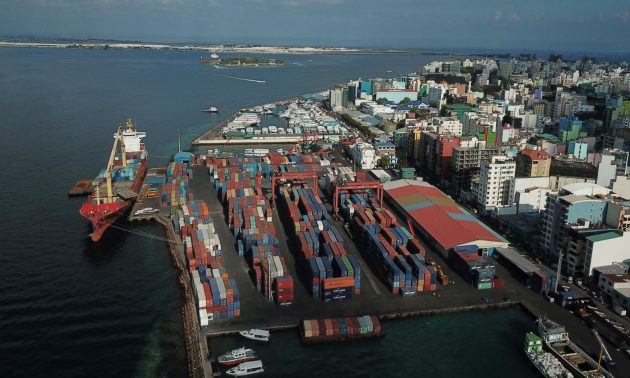
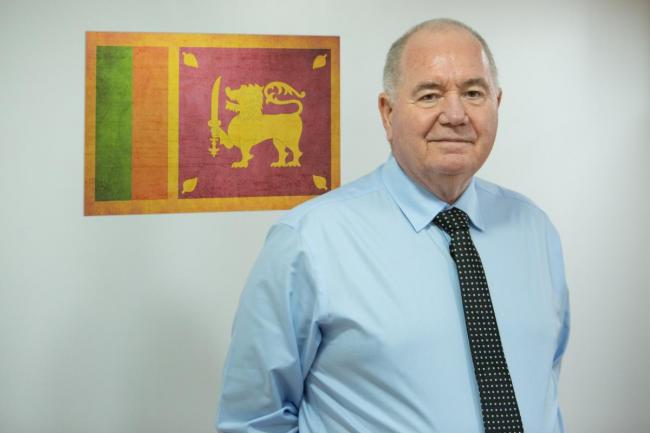
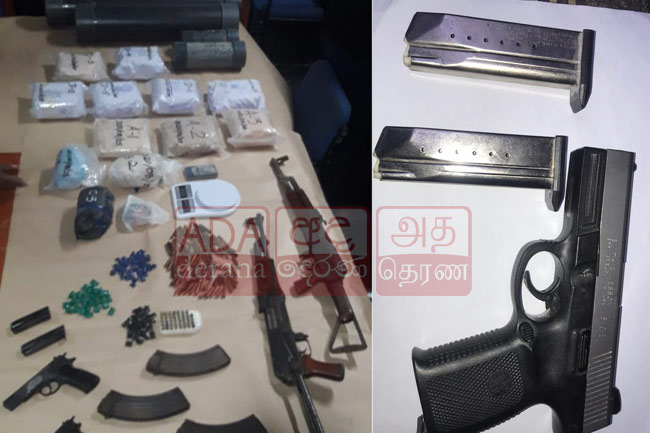


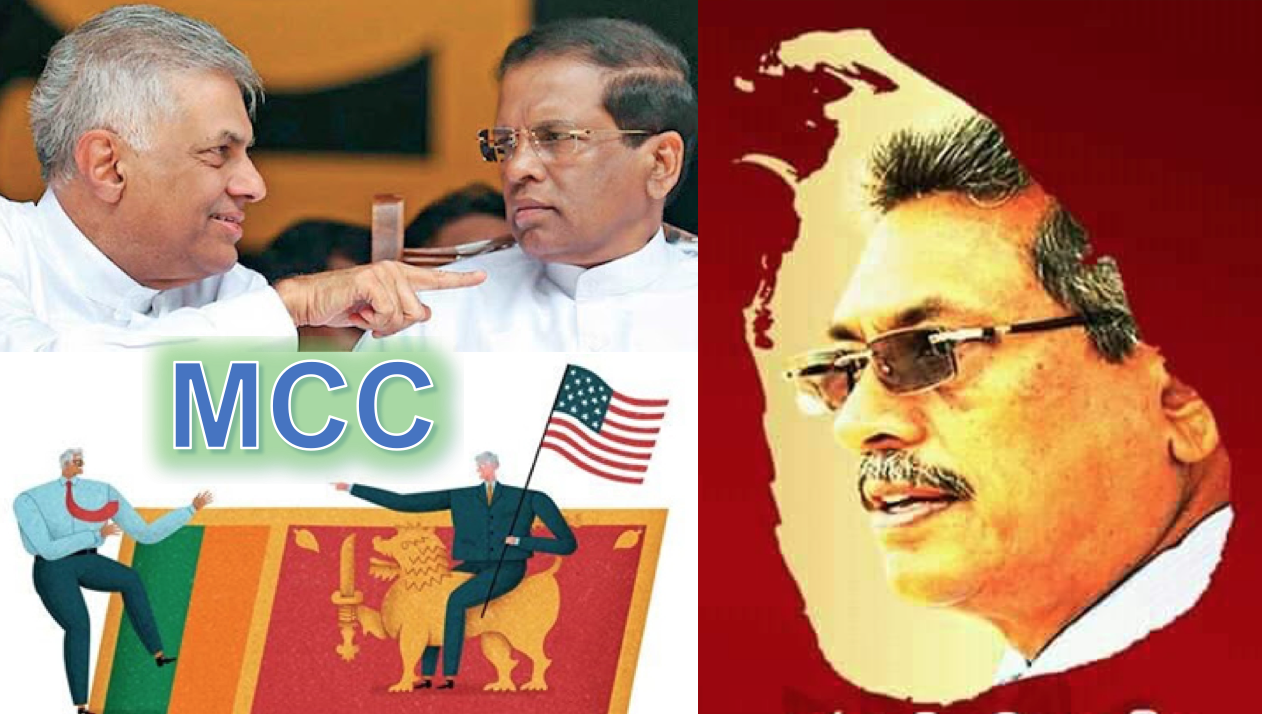

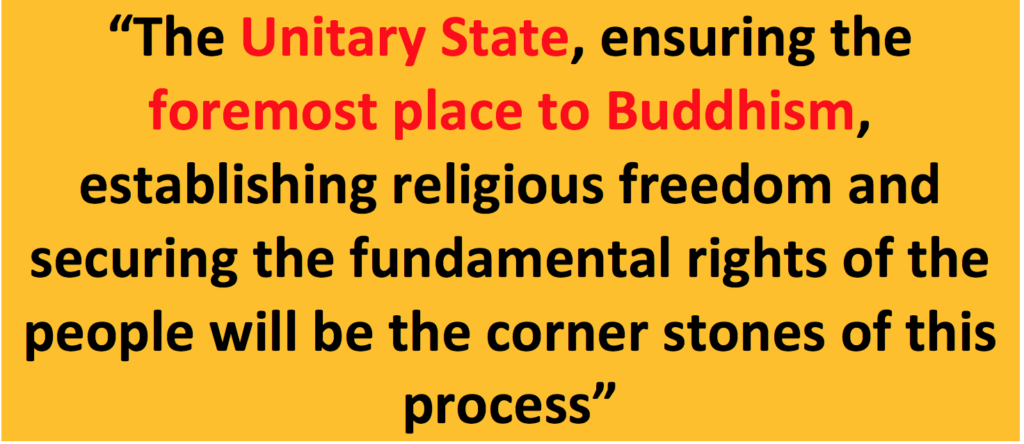
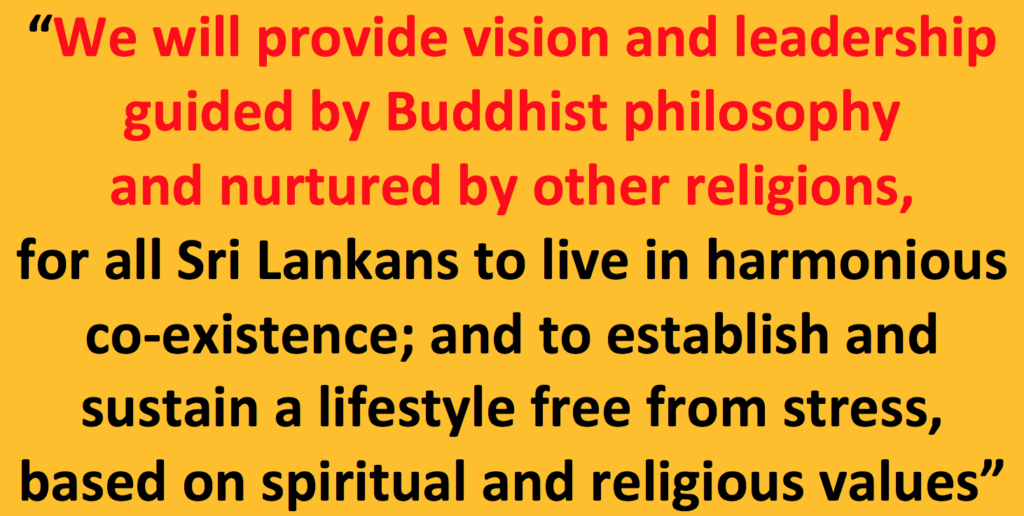
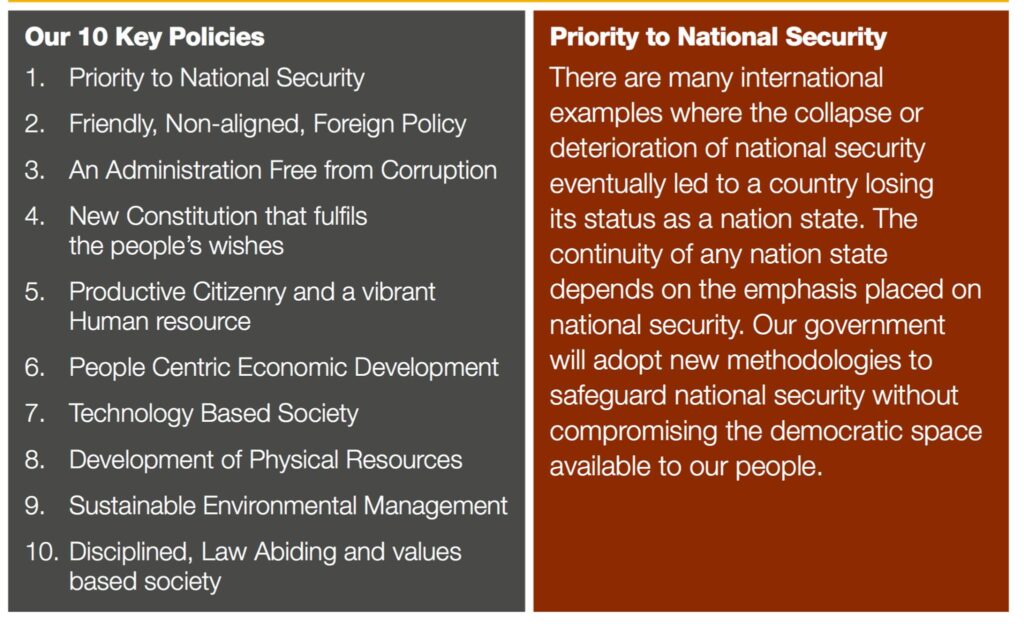
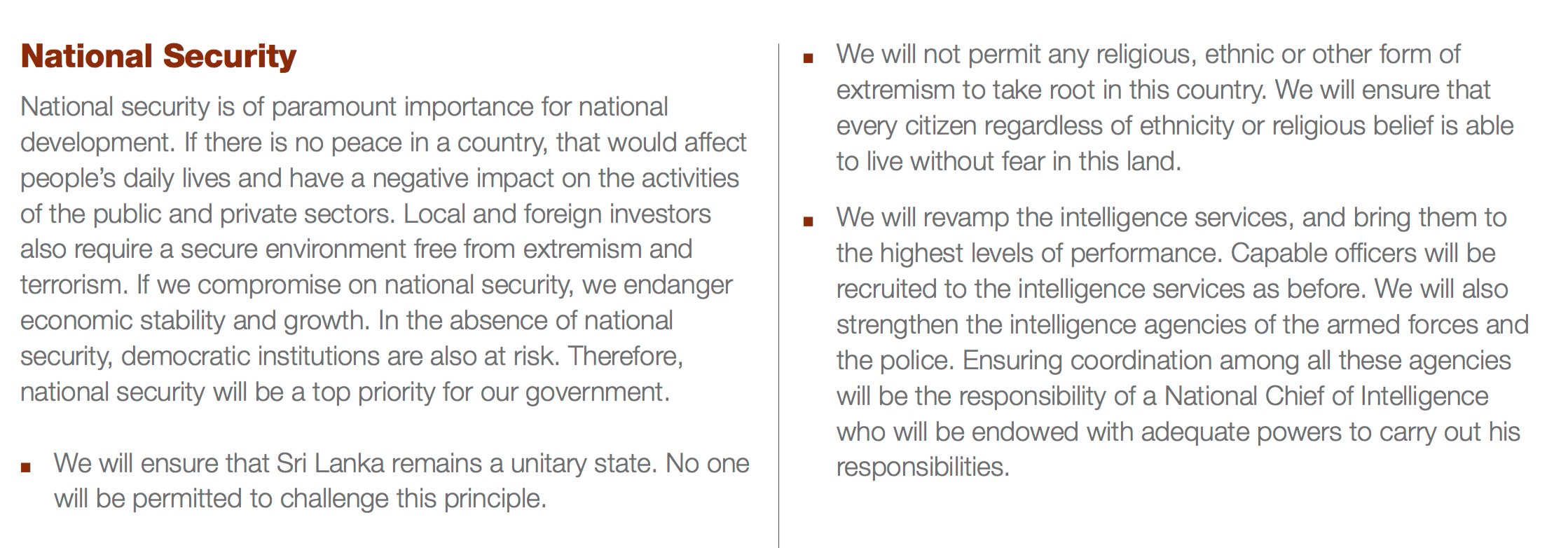
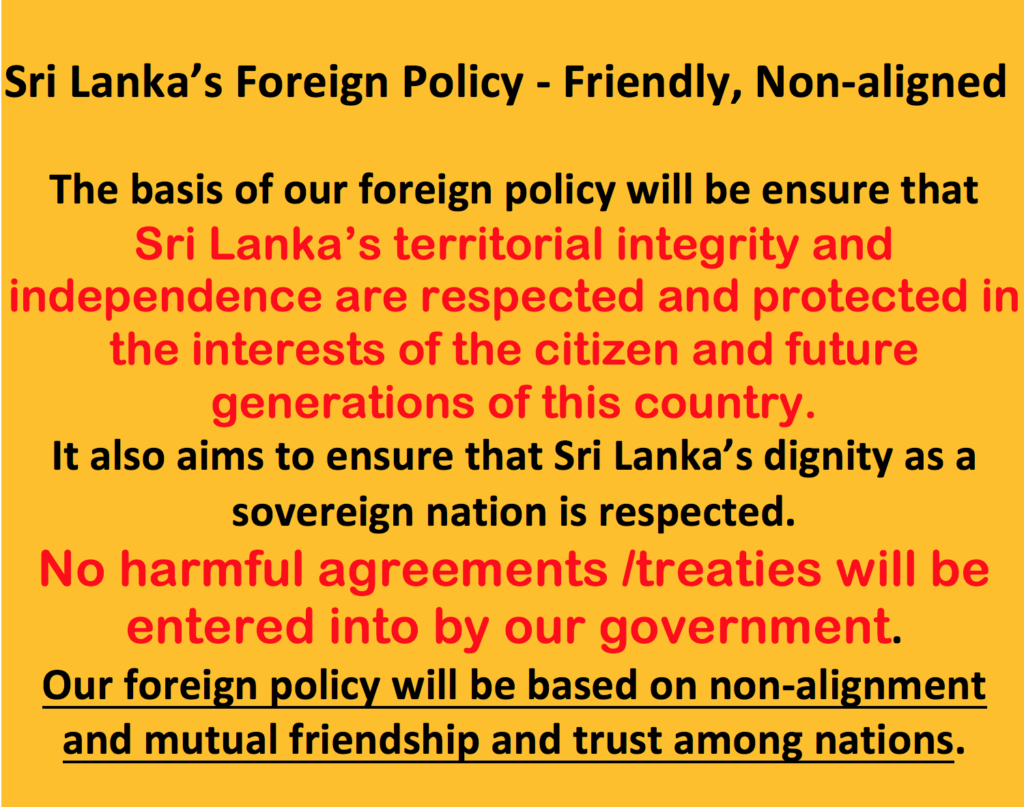
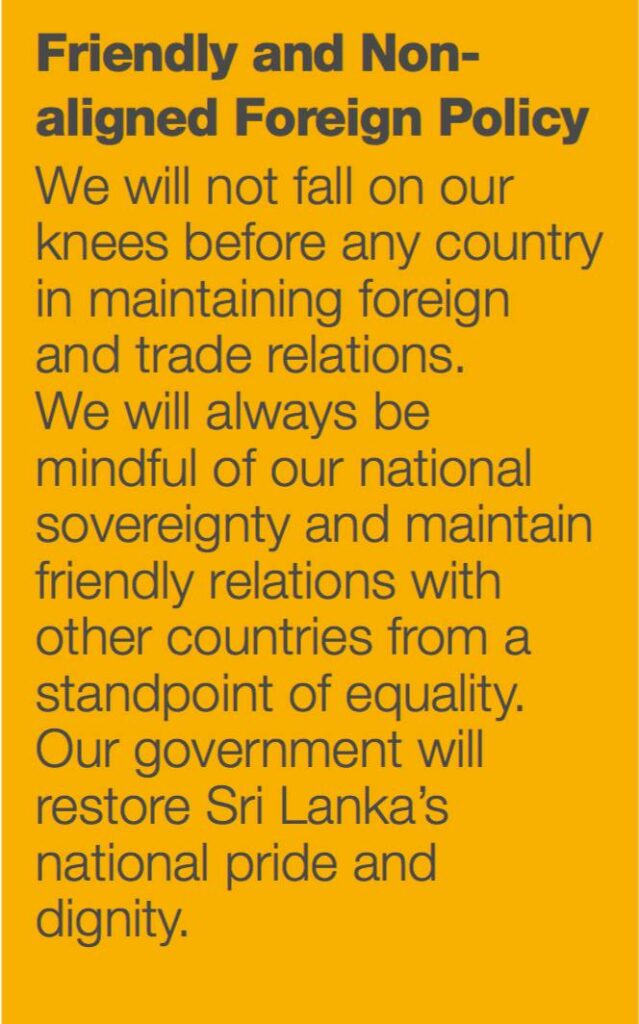
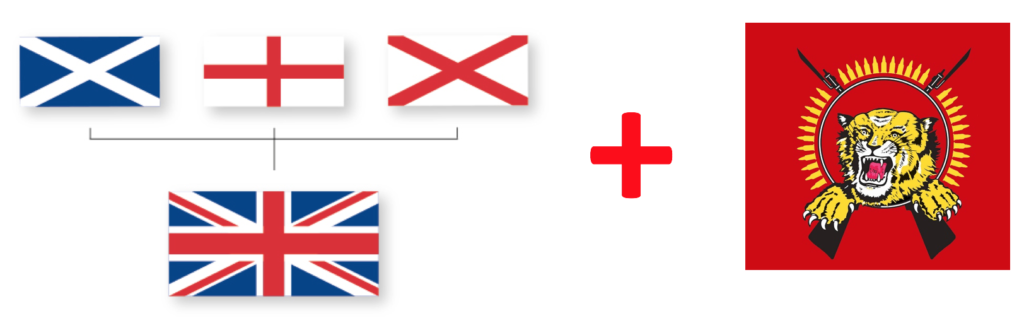

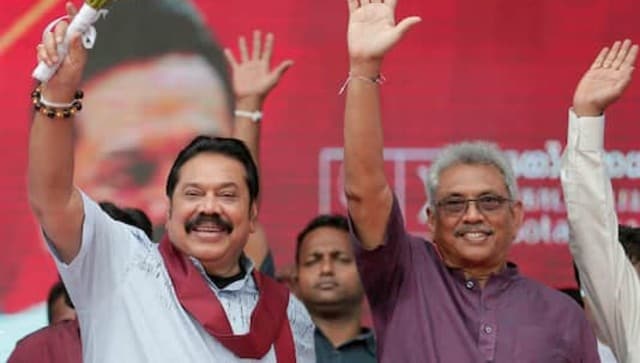

![The latest trade of barbs comes before US Secretary of State Mike Pompeo's visit to Sri Lanka next week [AP]](https://www.aljazeera.com/wp-content/uploads/2020/10/AP_20295654555689.jpg?resize=770%2C513)