Thriving mind as a tool, which develop mental resilience & well being by small better choices each day

October 5th, 2020

Happy Soma Global Spiritual Art Center – Sunil Gamage- Director

Covid -19 has inflicted enormous stress into individuals, families, groups, companies; the way what they have been doing in everyday life. Human factor enhances in everyday life when they engage and sustain positive behavior with qualities of focus, empathy, collaboration, inclusion, etc. However, people cannot access to those qualities and traits when they are in uncertainty, anxiety, stress, and when they are in perpetual fight or flight mode. Even in this difficult time it is important to find human factor put into place and build from there onwards. Individuals need to nurture his daily work or day more resilient. More critically the person need to put himself into a place where he will operate from a place of strength, calm and empathy, which will boost his resilience. Without this vital human factor; even the most cutting edge technology will not succeed in aspect of future. Prioritizing individual well being and not feel guilty about is important. It is not selfish, it is the best way to be at our best for all our other responsibilities. The advantage here is when the individual well being, and resilience in place, as most of employees and individuals work remotely; individual integrity at work will start performing.

It has much to thrive in many areas due to Covid 19 as it has compounded with  injustice, climate issues and economic uncertainties. Individuals, parents, children at this time stretching more with schooling responsibilities with hybrid version of engagement of school activities of children. In order to lead children forward, they need empathy and courage from parents. It is quite hard children to coping with the new challenge and parents need empathize them and need to be positive to help them with the toxic stress they have been experiencing. In many work places silo working styles crumble almost overnight in responding to Covid 19. Teams became more cross functional. Societies craving for leadership. Leadership for greater good need follower ship. Trust has been in need to follower ship.  

Now we are in a time in which all major three institutions of work, family, and school are all occurring in one place. So the challenge is how to live and work sustainable way in which we are not stressed out of our minds. Technology has been playing a bigger role in our lives and incorporating technology in place. Same time we need to find ways to disconnect with technology and connect with families as well.

Covid 19 pandemic and battle for social justice has increased anxiety that many of us feel everyday. The stress is interfering with our ability to do our best work, but with the right breathing exercises anybody can learn to handle stress and manage negative emotions. It has been revealed breathing exercises are best to manage short and long term stress reduction. The impact of breathing exercises on well being found as significant.

Breathing exercises: Just different breathing exercises along has has improved calm and resilience of individuals.

Mindfulness-based stress reduction: Meditation technique used to train the mind to be aware each moment and will not judge the moment.

Foundation of emotional intelligence: Teaches techniques to improve emotional awareness and techniques.

Overall individuals practised breath meditation experienced best mental health, social contentedness, positive emotions, stress levels, depression mindfulness benefits. In terms of stress management meditation has shown proven results. Furthermore, they have developed and instilled with a buffer against anxiety typically associated with stressful situations. This meant the individuals able to think clearly, more positive emotional states, effectively perform task at hand.

When somebody stressed the pre-frontal cortex of brain which is responsible for rational thinking will be impaired. So logic seldom help to regain control. This can make it hard to think straight or emotionally intelligent with your team. But with breathing a person can get control over the mind. Emotions are associated with different breathing. When somebody feel joy the individual breathing would be slow, deep and regular. When the individual in anxiety the breathing would be shallow, short, fast and irregular. Physiologically how does this work? Changing individual breath signal relaxation. Slows heart rate and stimulate the vegus nerve. It runs from the brain stem to abdomen. It is part of the parasympathetic nervous system, which is responsible for the rest and digest activities. Triggering parasympathetic nervous system start to calm down ,feel better, and think rationally will improve.

Individuals can reduce stress practically. The method is so simple. An individual will calm down by changing the ration of inhale and exhale ratio. This is common one practice to reduce stress level of a person. When inhale heart rate speeds up and exhale it will slow down. Breath in for four counts and exhale in eight counts which will slow down the individual nervous system. This simple technique will help individual to support greater well being and lower the stress level at work and daily life.   

Scientists discover 24 ‘superhabitable’ planets that might be BETTER for life than Earth

October 5th, 2020

Courtesy RT

It turns out that Earth might not be so special after all, as scientists have identified a plethora of planets outside our solar system with conditions that make them more suitable for life than our home.

A study published in the journal Astrobiology identified two dozen planets with conditions which may be more suitable for life than those on Earth, including worlds that are older, larger, slightly warmer and possibly wetter.

Some of the superhabitable” other worlds also orbit stars that are friendlier to life than our sun, because they change more slowly and have longer lifespans. ALSO ON RT.COMOne of the most extreme planets ever discovered spotted by astronomers equipped with long-range probe

It’s sometimes difficult to convey this principle of superhabitable planets because we think we have the best planet,” said Dirk Schulze-Makuch, the scientist who led the study.

We have a great number of complex and diverse lifeforms, and many that can survive in extreme environments. It is good to have adaptable life, but that doesn’t mean that we have the best of everything.”

To identify these other worlds of interest, the boffins picked planetary systems that likely have planets orbiting within the host star’s so-called ‘Goldilocks zone’, where conditions are not too hot or cold to allow water to exist on the surface, but just right.

Unfortunately we won’t be visiting any of the 24 planets any time soon, as they are all more than 100 light years away.

RT

© NASA

‘1 in 10 people may have caught coronavirus’: WHO warns of new difficult period as ‘vast majority’ of people still at risk

October 5th, 2020

Courtesy RT

‘1 in 10 people may have caught coronavirus’: WHO warns of new difficult period as 'vast majority' of people still at risk
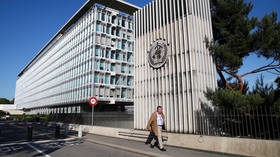
Mike Ryan, Executive Director of the World Health Organization (WHO), walks past the headquarters of the WHO in Geneva, Switzerland, May 18, 2020. © Reuters / Denis Balibouse

Roughly 10 percent of the world’s population may have been infected with the novel coronavirus – and this leaves the majority of the world at risk, the World Health Organization’s head of emergencies has warned.

About one in 10 people may have been infected with the coronavirus globally, Mike Ryan, WHO head of emergencies, told the agency’s executive board on Monday.

Speaking to the agency’s executive board, Mike Ryan acknowledged that the infection level varies depending on country, group, and whether it’s an urban or rural area, but what it does mean is that the vast majority of the world remains at risk.”

We are now heading into a difficult period. The disease continues to spread.

The official first mentioned the figure of 10 percent on Friday, noting that it was our best guess” in relation to the global rate of infection to date, and those who have antibodies for the virus. The world is in for a hell of a ride for the next eight or nine months” as it awaits a vaccine, Ryan told a webinar hosted by the Royal Irish Academy.

He maintained, however, that a vaccine will not be a silver bullet, but an additional tool that should be added to a comprehensive strategy to fight this disease.”ALSO ON RT.COM‘Twindemic’: EU officials warn of flu & coronavirus mix, tell governments to keep their guard up

Last week, the world crossed a grim” milestone, with over a million lives lost to the coronavirus pandemic, the WHO announced.

Over the years we have had many reports, reviews and recommendations all saying the same thing: the world is not prepared for a pandemic. COVID-19 has laid bare the truth: when the time came, the world was still not ready,” WHO Director-General Dr. Tedros Adhanom Ghebreyesus said.

He added that the world needs to invest in preparedness, with an all-of-government and all-of-society approach.

Meanwhile, at Monday’s board meeting, in which the US once again complained that China failed” to provide accurate and timely information on the outbreak, Ryan said the WHO has submitted a list of experts to take part in an international mission for Chinese government approval. The experts will work to investigate the origins of the coronavirus.

SLPP calls for probe into release of Bathiudeen’s brother

October 5th, 2020

Lahiru Pothmulla Courtesy The Daily Mirror

The Sri Lanka Podujana Permauna (SLPP) today called for an immediate investigation into the release of MP Rishad Bathiudeen’s brother Riyaj Bathiudeen, who was arrested over alleged involvement in the Easter Sunday Attacks.

Responding to a question asked at the SLPP weekly news briefing over the concerns raised by Archbishop of Colombo Malcolm Cardinal Ranjith over the release of Riyaj, Party Secretary MP Sagara Kariyawasam said police statements over the arrest seemed contradictory.

Therefore, we request the Defence Secretary to launch an immediate investigation into the incident and to find out if there has been any irregularity in the release of Riyaj Bathiudeen,” MP Kariyawasam said.

Meanwhile, he said neither the government nor the SLPP had entered into any agreement with MP Rishad Bathiudeen.

There is no discussion or any idea to absorb MP Bathiudeen into the government,” he said. 

I could have stopped Easter attacks had I been told of warnings – former President

October 5th, 2020

Courtesy Adaderana

The Presidential Commission of Inquiry probing the 2019 Easter Sunday terror attacks was told by former President Maithripala Sirisena today (05), that he was left in the dark regarding the crucial foreign intelligence warning, up until the day following the attacks.

The former Commander in Chief at the time added that then-Defense Secretary Hemasiri Fernando and IGP Pujith Jayasundara had numerous opportunities to brief him on the warnings but failed to do so and if they had, he would have personally ensured that no attack took place on Sri Lankan soil.

The Additional Solicitor General at the Commission asked the former President whether a Committee of Inquiry appointed to investigate the attacks last year.

The former President responded: I was undergoing medical treatment at a hospital in Singapore when the attacks took place. I was informed of the attacks by my Chief Security Officer when I arrived back at my hotel from the hospital.

I immediately spoke to Presidential Secretary Udaya Seneviratne, Prime Minister Ranil Wickremesinghe, former Defense Secretary Hemasiri Fernando, and IGP Pujith Jayasundara and instructed them to take immediate action to maintain law and order in the country, impose curfew, and apprehend the terrorists.”

He continued: I decided to appoint a committee to investigate the attack in Singapore. I instructed the Presidential Secretary to appoint a committee and to submit a report within 2 weeks. I instructed him to decide on its members. This is because my health condition wasn’t too good as I was hospitalized the day before.

There was a flight to Sri Lanka at around 10 pm on the night of the attacks. I arrived back in the country at around midnight. The next day I summoned the National Security Council. ”

The Additional Solicitor General then asked what action he took to prevent the extremism and terrorism during his presidency from 2015 to 2019. He replied: No Head of State of any country wants terrorism to rear its head during his tenure. During my presidency, I instructed officials to eradicate terrorism and extremism at their roots.

The Additional Solicitor General then asked the former President to explain the reasons behind appointing 11 out of 22 Muslim MPs in his government as ministers.

In response he stated, Ours was a coalition government. Almost all Muslim ministers were not on my side. They were from the other side of the coalition. I was able to run the government with the support of parliament for only 6 months after taking office. The rest of the time I did not have a Prime Minister, a Cabinet, or a parliament that supported me. After the appointment of Arjuna Mahendran to the post of Central bank Governor and the subsequent Central Bank Bond Scam, I had difficulty in controlling the government.

At that time Tri-Forces officers and intelligence officers who made great contributions during the war were being arrested. But I avoided these issues and took the government forward.

Until December 2018, the Police and the CID were not under my control. After they came under my control, I brought in all the Senior DIGs of the island and started holding monthly meetings. Some have testified before this Commission alleging that the National Security Council was weak. But at no time it was weak.

No one kept me informed about terrorism. I was only briefed on extremism. It was only in 2019 that  I was briefed on Zahran’s extremist ideology.”

The Additional Solicitor General then asked the former Head of State Did you not question the police as to why Zahran Hashim was not arrested despite a warrant being issued after the Aliyar Junction clash on March 10, 2017?”

He replied, The President does not need to give orders to arrest a suspect who has been warranted. I had previously questioned the need to discuss such topics at the National Security Council. That is the responsibility of the police.

To this, the Additional Solicitor General asked him if that is not the President’s business, why then did he order Zahran’s arrest at a later stage.

The witness replied, I did give such an order later. I had received reports that Zahran was operating along ISIS lines. Hence, I ordered his immediate arrest.”

In reply, the Additional Solicitor General asked the former President, By April 21, 2019, did you feel that your ordered had been followed?” The former President Maithripala Sirisena replied, Clearly my instructions had not been followed.”

The Additional Solicitor General then asked him, whether he had ever hear of 8 bombs exploding in a single day during the LTTE conflict.

He replied,” No. all sectors responsible for this area had suffered major setbacks. Those who received information that an attack was imminent should have taken immediate action.

I had left for medical treatment in Singapore at the time of the attack. I was in Sri Lanka until April 16. We now know that this information was received on April 04. There was a meeting of senior police officers on April 08. I visited Batticaloa on April 12. Even at that point my Chief Security Officer was not informed. 
After this, Defense Secretary Hemasiri Fernando travelled from Diyathalawa to meet me, followed by IGP Pujith Jayasundara. The duo stayed for two hours and left after lunch. Even then they didn’t tell me. Later when I left for the airport, Pujith came to see me. He boarded the plane, wished me a safe journey and saluted me. I told him I would be back in four days and instructed him to carry on with his work.

If he told me at that time, I would have cancelled at my trip. It was a great shock to have this tragedy happen during my presidency. The intelligence received on April 04 was only briefed to me on April 22. It was a huge shock to me.

If I was told of this I would have informed the Cardinal, convened the Security Council, and taken necessary action. Then this tragedy would not have been allowed to happen. The biggest problem is that I was not told of this. If they had even told me over the phone, I could have stopped this.”

Did two Indians visit the factory where 73 have been infected with coronavirus? (Video)

October 5th, 2020

Courtesy Hiru News

The President of the Sri Lanka Public Health Inspectors Association Upul Rohana stated that no information has been confirmed so far regarding the rumors that two Indians had visited the garment factory where 72 workers have been by infected with coronavirus.

A 39 year old female worker in Divulapitiya from this factory was first diagnosed with the virus and 72 others have tested positive thereafter.

President of the Sri Lanka Public Health Inspectors Association Upul Rohana stated that the health sector and the police are conducting further investigations in this regard.

The source of the infection have not been traced so far, and police curfew have been imposed to Divulapitiya, Minuwangoda and Veyangoda police divisions.

President instructs to take immediate measures to contain the spread of COVID – 19(video)

October 5th, 2020

Courtesy Hiru News

President Gotabaya Rajapaksa instructed relevant parties to take immediate measures to contain the spread of COVID – 19 following the identification of close associates of the affected and to increase the number of PCR tests.

Close associates of the infected have already being identified. They have been subjected to self-quarantine at their homes. President advised to send them to closest hotels to undergo the quarantine process

President Rajapaksa made these remarks at a discussion with the Presidential Task Force on COVID – 19 prevention held at the Presidential Secretariat today (5), following the tracing of COVID-19 positive persons in several areas in the Gampaha district.

Doctors are of the view that the failure on the part of the people with the passage of time to follow health guidelines issued by the Government is the main reason to the sudden spike in the number of affected.

COVID – 19 pathogen is rapidly raging across the globe. President Rajapaksa pointed out that despite reporting the global scenario, the awareness campaign carried out in the country to educate the public was missed by the country’s mass media. People also have forgotten the prevalence of the disease, President said.

Instructions have been issued to carry out random PCR tests in every district in the country as well in institutes. Especially, organizations where a large number of people are employed have been asked to conduct tests. However, it does appear that the factories with large work forces have neglected this responsibility, President added.

The general public and the media are obliged to assist the initiatives to control the spread of the pandemic with a clear understanding of the current situation. President also said that a thorough investigation should be carried out into the presence of COVID infected from the community after a lapse of two months.

Paying tribute to the great efforts by the Police and the Public Health Officers President emphasized the importance of carrying out that programme at village level.

Steps have already been taken to prevent people from leaving areas where infected patients were identified. Other factories and institutions in the area will be randomly checked. The President also pointed out the need to conduct random inspections at workplaces with the participation of the private sector.

The Police said that many precautions that had been identified as measures to be taken to prevent the spread of the COVID-19 were not properly followed by the public. The requirement to gazette the existing rules and regulations aimed at preventing COVID-19 was also discussed.<br /><br />President Rajapaksa also instructed the media to continuously apprise the public regarding the coronavirus.

The potential of indigenous medicines to strengthen the immune system and to speed up the healing process was discussed in detail.

Minister Pavithra Wanniarachchi, State Minister Sisira Jayakody, Secretary to the President P.B. Jayasundera , Principal Advisor to President Lalith Weeratunga and the members of the Presidential Task Force for Prevention of COVID-19 Outbreak were present in this meeting.

Arrest Rishard’s brother again – pressure on police and government (video)

October 5th, 2020

Courtesy Hiru News

Several civil society organizations today lodged a complaint with the National Police Commission regarding the release of Riaz Bathiudeen, the brother of MP Rishad Bathiudeen.

It was against the officers of the CID who were investigating Riaz Bathiudeen.

Riaz Bathiudeen, who was arrested on suspicion of having links with the terrorists who were responsible for the Easter attacks and detained by the CID for nearly five months, was recently released.

The Mahajana Uthukam Kendraya, the New Sinhale National Organization, the Sinhale Organization and the Sinhale National Organization lodged complaints with the National Police Commission against the CID officers who investigated the case of Riaz Bathiudeen.

Meanwhile, a statement made by Defense Secretary retired Major General Kamal Gunaratne regarding MP Rishad Bathiudeen at a ceremony held in Vavuniya recently has caused a debate in the society.

The Defense Secretary also clarified matters in this regard.

Meanwhile the clergy and politicians also expressed their views regarding the release of Riyadh Bathiudeen.

101 employees of Brandix confirmed positive – Dept of Govt Information

October 5th, 2020

Courtesy Hiru News

The number of coronavirus infections in the country has increased to 3513, with the identification of seven more people with corona infection.

The Government Information Department states that 101 people from Brandix, who were in close contact with the Minuwangoda coronavirus patient have been diagnosed with coronavirus infection so far as at 9.00 pm on 5th October, 2020.

Mahinda Rajapaksa’s appropriate counter to Modi’s Thirteenth Amendment

October 5th, 2020

H. L. D. Mahindapala

Managing Indo-Sri Lanka relations is prioritised as the most important item in the agenda of the Sri Lankan Foreign Ministry. In fact, the President and the Prime Minister have stretched every nerve since they came into power to go beyond the official diplomatic interactions to maintain a personal rapport of the best kind with Prime Minister Narendra Modi. The recent meeting between the two prime  ministers was meant to smoothen the rough patches and reinforce the good relations between the two heads of states. The official communique of the Indian Ministry of External Affairs (26/9/2020) has classified the meeting as a Virtual Summit” between the two Prime Ministers. Indo-Sri Lanka relations could not have been considered at a level higher than this Virtual Summit”. 

The Joint Statement on Virtual Bilateral Summit” issued by the Ministry of External Affairs in Delhi should be read against this background of both parties wanting  to emphasize the importance of each other in formulating policies for mutual benefit in a region  that has been hotting up, slowly but surely, with China muscling in to remind that two tigers cannot hunt in  one mountain. With China maintaining its steady pace in the region the question for India is quite straightforward: Can India match the Chinese art of winning and influencing friends  in  the region?

For instance, in the  Virtual Summit” in Delhi has India taken any new initiatives, breaking  away from  its failed policies in the past, to pave the path for peace and reconciliation to the North-South crisis which was fuelled to a critical extent by India’s interventionist policies? India has a serious moral and political duty to play a positive role – not a partisan  one – having been a part of the problem from the early days. Though India has been parading as the solution it has, in reality, been a provocative source of causing, worsening  and perpetuating the problem. It has been consistently rocking the cradle and pinching the baby.  For how long can India  keep going down this track without destabilising  its own  position in the region? How many more Rajiv Gandhis and professional soldiers must sacrifice their lives for India to regain its common sense? When  will India realise that a failed policy/strategy, laid to rest by the people, cannot be  resuscitated to do a Lazarus even if they had Jesus or Sai Baba running the Indian Foreign Office. In any case, how long  did Lazarus last after he was revived?

Most of all, India’s diplomats – some of whom are brilliant — must ask seriously whether the time hasn’t come for them to revisit the failed past and learn lessons for a constructive and  meaningful future? Or is  India doomed to be stuck in the failed past (e.g., Kashmir) and take the  whole region into a deep black hole from which none cannot get out?

Take the case of the Joint Statement on  the ”Virtual Summit”. It sums up the conclusions of the two prime ministers. It has many positives but one critical lapse makes  it look like a pail of sweet white milk with a smidgin of cow dung thrown into it. It is Clause 7 of the Joint Statement that sours the whole text.

It says: 7. Prime Minister Modi called on the Government of Sri Lanka to address the aspirations of the Tamil people for equality, justice, peace and respect within a united Sri Lanka, including by carrying forward the process of reconciliation with the implementation of the Thirteenth Amendment to the Constitution of Sri Lanka. Prime Minister Mahinda Rajapaksa expressed the confidence that Sri Lanka will work towards realizing the expectations of all ethnic groups, including Tamils, by achieving reconciliation nurtured as per the mandate of the people of Sri Lanka and implementation of the Constitutional provisions.”

In this para the two contradictory positions have been juxtaposed in precise terms bringing out the stark differences in the approach to the vexed issue of Tamil aspirations” and India’s interventionist role in it. For his  part, Narendra Modi is talking only of the aspirations of the Tamil people”. Mahinda Rajapakse, on the contrary, is responsible for all the communities – just  not the Tamils – and he focuses on the expectations of all ethnic groups, including the Tamils.” It is in the interests of Modi domestic politics to plug the narrow interests of the Tamils only. Mahinda has a larger constituency. His constituency is the whole nation and he  has a clearly defined mandate to look after the interests of all communities. Modi cares only for his Indian interests.

In the Joint Statement Modi is reiterating the failed policy of India that (1) destabilised the oldest democracy in Asia, (2) reinforced the fascist power of a Tamil Pol Pot in the North of Sri Lanka and (3) led to the defeat of the fourth largest in  the world”, as claimed by the LTTE, which had the  power to even assassinate Rajiv Gandhi, the Prime  Minister, humiliating  India in  the eyes of  the world. Indian strategists should also realise by now that the Thirteenth Amendment has not worked for the Tamils who were supposed to benefit most by it, and to India’s status as a mighty force in the Indian Ocean Rim, (the fourth  largest army could not even disarm Prabhakaran as promised in the Indo—Sri Lanka Agreement), or protect its own Prime Minister within its own borders. At best, reiterating the Thirteenth Amendment (i.e., the Tamil issue) gives India an opening to interfere in the domestic politics of Sri Lanka. The Thirteenth Amendment is stoked from time to time to sustain and protect Indian interests in the Southern flank which can’t be left open for rivals to exploit. It is also one of the tools in the neo-imperialist armoury of India which is yet to learn that imperialism is a force that can ricochet and  the destroy the imperialists  more  than their victims. India is a tragedy surrounded by the angry victims of the (unintended) consequences of its arrogant and short-sighted foreign policies.   

Pushing the failed Indian line, Modi has once again called on the Government of Sri Lanka to implement the Thirteenth Amendment”. It is, as everyone knows, an Indian creation to further Indian interests.  Moreover, it is raised as a reminder to impress that it is India’s prerogative to  dictate what is good and  bad for Sri Lanka. Mahinda Rajapakse, quite rightly, has countered this exhortation” by emphasizing reconciliation as per the mandate of the people of Sri Lanka and  implementation of the Constitutional provisions.” These are two conflicting positions. The Thirteenth Amendment project directly the Indian interests. And Mahinda Rajapakse is saying, quite bluntly, that he is there to protect the Sri Lankan interests. He is insisting  that he has a mandate to fulfil and that is to obey the will of the people and not the will of a foreign power. Also, with the additional rulings from the Supreme Court he has obligations  to the Constitution and he cannot override those to satisfy foreign interventionists pursuing their interests. Besides, the mandate of the people of Sri Lanka” given to him this time round has, more than at other times, rejected any external interventions in the domestic affairs.

In short, the Thirteenth Amendment remains as a pathetic monument to India’s diplomatic folly. It has been rejected by the Sri Lankan minorities and the majority. It was meant to solve mainly the problem of Prabhakaran. He brazenly rejected it and took the next step of assassinating the Indian  Prime Minister who imposed it against his will. It was supposed to satisfy the political aspirations” of the Tamils. But to this day it stands as the most dysfunctional solution – as dysfunctional as the Americans planting Din Diem, a Catholic in Buddhist Vietnam, as their puppet. A common feature of imperialists is  to plant their puppets and solutions in foreign/occupied territory which invariably drag them into black holes. Sri Lanka, in short, was India’s Vietnam. India gained nothing. India saved nothing. Modi’s latest statement is a confession of the fact that its Thirteenth  Amendment has failed. If it was successful there would have been no necessity to raise it again. Adding insult to Indian injury, the people in all the provinces have been functioning happily without the Provincial Councils for the last two years. So, what is the use of a solution that is superfluous and unwanted by the  majority and  the minority?

The Indian experience of dealing with its own major minority is also instructive in dealing with Modi’s insistence on the full implementation of the Thirteenth Amendment. Let us, for instance, restate the formula in the Joint Statement substituting the Muslims in India to that  of the Tamils in Sri Lanka. Let us consider a similar  summit meeting with Modi, and Imran Khan, the Pakistani Prime Minister, who recently twittered that the Muslims in India are worse than the Jews in Hitler’s Germany. Let us imagine that Imran Khan had said that  India  should  address the aspirations of the Muslim people for equality, justice, peace and respect within a united India, including by carrying forward the process of reconciliation with the implementation of the countless UN Resolutions on Kashmir”. Well, how would India react to this counter move by Pakistan? If Modi thinks that his  solution  is good for Sri Lanka why isn’t the same solution good for India to solve he longest running international crisis point in Kashmir? Wouldn’t India consider that to be a direct intervention in its the domestic affairs?

Besides, India has applied all its diplomatic, political, international and military forces to resolve the issue of Tamil aspirations” which has several layers of meaning, including separation, and failed. If India with all its might could not implement its own formula for the  betterment  of the Tamil people, disarm the Tamil terrorists they armed, and stabilise the  region for its own interest  what is the purpose of going  down the failed track again and again?

Above all, the rationale on which Modi’s argument for the implementation of the Thirteenth Amendment is coloured by a political narrative overloaded with distortions, fiction, and concoctions. There would have been some justification for the claim of the Tamils to be the victims of the Sinhala-Buddhist majority if, as they claim, the Sinhala-Buddhist had done one  fraction of what the Tamil Vellalas and the ruling elite of Jaffna had done to the oppressed outcasts who were treated as despised pariahs kept outside their  sacred domains of

Jaffna. Any accusation against the Sinhala-Buddhist must be compared with the subhuman treatment of the Tamil minority by the Vellala majority. The  high-caste Vellala elite ruled Jaffna with an iron-fist, overseeing every aspect of Jaffna society from the womb to the tomb. The low-caste Tamils were not allowed to walk in God-given sunlight. They could not bury their dead if they did so according to Hindu rites – privileged ritual reserved only for the high caste. They could not worship  the same God in the Hindu  places of worship. They couldn’t drink a sip of water from Vellala wells. Their schools were burnt. Vellala caste fascism bred the political fascism of Prabhakaran who killed more Tamils than all the other forces  put together.  Killing Tamils by Tamils was a part of Tamil culture ever since Sankili marched down to Mannar on the  eve of Christmas 1654 and massacred 600 Tamil Christians for owing allegiance to the Portuguese king. Prabhakaran was his avatar.

The Vellalas were the most privileged caste/class in Jaffna. They dominated Jaffna society from  feudal times. They did not given inch to any other rival caste. They were the  owners of land, temples and schools – three of the commanding heights of Jaffna society. With their education  they occupied key positions in the colonial administrations. They had the ear of the colonial masters and as their subagents in the colonial administrations they had the power of the state behind them. Maintaining the caste supremacy was their primary political mission. One of the last acts of Sir. Ponnambalam Ramanathan was to go on a mission  to the Colonial Secretariat to urge the preservation of the existing caste system that enthroned the Vellalas as the supreme masters of  Jaffna. He argued that it was a system necessary for the maintenance of law and order.  In other words, on the eve of independence they were the most privileged community in Sri Lanka., sitting on the right-hand side of the ruling British gods. When G. G. Ponnambalam went before the Soulbury Commissioners and complained of discrimination by the Sinhalese against the Tamils, the British Commissioners who examined the details dismissed it as having no validity.

In essence, the Vellala Tamils, who were also the political masters of Jaffna, were the most privileged community in Sri Lanka. For them to claim to be the discriminated victims of the majority Sinhalese has been a common political ploy to gain political sympathy and through that political mileage. It is a narrative that they sold successfully round the world, including the Foreign offices of India and, believe it or not, Sri Lanka too. This ideology of victimology has been  used to great advantage by the Vellala Tamils to project themselves as the victims of the Sinhala-Buddhist majority. It is this ideology that has influenced the foreign policies of ill-informed global foreign offices. So, when Modi called on the Government of Sri Lanka to address the aspirations of the Tamil people for equality, justice, peace and respect within a united Sri Lanka,” he was parroting the usual litany of complaints of the most privileged community in Sri Lanka.

Looking back at the history of the Vellalas (aka, the Tamils), it can be asserted incontrovertibly that never in the  history of Jaffna has the  Tamils (meaning all layers of Jaffna  society) ever reached the heights of equality, justice, respect and dignity as in the post-independent years of what they call the Sinhala state”. Take, for instance, the national flag. There are 193 flags flying at the UN. Never in the history of Jaffna Tamils did they ever have a place of recognition and respect internationally as in the Sri Lankan flag. Not even in the Indian flag – the one  and  only homeland of the Tamils. When the  heads of states stand up for the Sri Lankan flag they also stand up for the Muslims and Tamils. Under which Tamil ruler did the Tamils receive this honour?

Take also the national currency, stamps, and other national symbols. Tamils have been  given their due place of respect in every respect. But the reality has been distorted to demonise the Sinhala state’”. R. Sampanthan goes around  the world complaining that the Tamils have lost  their dignity, respect, equality and justice under the Sinhala state. What respect and dignity did he get from the one and  only Tamil state established by the Tamil Pol Pot? Did he ever have the right to act on his own in his  Tamil state? In which state did he find the right to dissent and  act independently with dignity? When he and his fellow MPs were taking orders from his Tamil Thallivar which state gave him his due dignity and the respect that any individual deserves? Did he feel like a better human being  when he was in Prabhakaran’s state or in the ’Sinhala state”? Oh, by the way, when the Vellala gangs cracked the heads of the protesting low-caste with bottles filled with sand in Maviddipuram when they were demanding the right to worship their God in the Hindu temples where was he? Did he fight for the dignity and the rights of the Tamils who were oppressed and kicked around as a subhuman species? The Tamils also talk of peace. Who declared the war in Vadukoddai and ran it for 33 years, causing untold suffering to the Tamil people?

Consider also the case of R. Sampanthan who is a lawyer. Did he find justice in the Tamil courts of Prabhakaran or in the courts of the Sinhala state”  presided, sometimes by his fellow-Tamils like Justice C. V. Wigneswaram? Did he ever as a lawyer fight for justice in Prabhakaran’s courts? Did he ever fight for the rights of the abducted Tamil children  in  the  courts in Vanni?  Did he ever complain to the Indian Prime Minister or the American Ambassador that there is no justice in Prabhakaran’s courts? That narrative was never told. Only the Sinhala state” was demonised. The list is unending. As I said earlier, there has not been a period in the history of Tamils better than the last 72 years under the Sinhala state”. Yes, there were horrendous and  condemnable periods during which the Sinhalese behaved like beasts. No decent Sinhalese is proud of those instances. Without making excuses, all those instances have been a part of human history. No community is exempt  from violence. But, on balance, judgments are passed on the greater evil. Invariably , fallible and fallen man has to be judged not on the blameless ideal but on the lesser evil which is the fairest judgement available to us all. On that score, the Sinhalese have strived to build a culture that should provide a fit-dwelling for all men” (Mahavamsa). And that includes the Tamils.

Mahinda Rajapakse has reiterated that message at the Summit  in India. His act in India at the Summit was on a low key than the time he was confronted by David Milliband and Richard Kouchener, the two foreign ministers of UK and France respectively. But the message was the same and couched in diplomatic terms. While  cheap politicians go for the size of coconuts in the  market place the people take the measure of their leaders by the size of the giants they take on in defending the nation. It is acts like this, where he  stands up for the nation, that makes him  the most popular leader.  Who can blame him for winning  votes without trying?,

Sri Lanka’s Judiciary must be biased & safeguard Sri Lanka’s Sovereignty & Protect the Rights of Citizens

October 4th, 2020

The Judiciary is one of the 3 pillars representing the People’s sovereignty. If the other 2 pillars fail the People, the Judiciary is left to fill that lacuna. While the Judiciary must uphold its independence, it has to be biased towards safeguarding the sovereignty of a nation & upholding the fundamental rights of the citizens. By biased, the implication is that any judgment impacting the Nation & its future must always be swayed in the interest of the Nation & its People and no other.

Sri Lanka’s judiciary has weathered many storms. 

We have had a CJ removed following due process but the West used the incident as a tool for political advantage, but the same West chose to look the other way when another CJ was removed simply by not allowing him to enter his chambers.

We’ve seen a CJ removed simply for a speech at a school prize-giving in 1984.

We’ve also seen homes of judges pelted with stones also during the 1980s simply because they did not tow the government’s line.

If that was not enough we saw brazen interference by foreign envoys even attempting to intimidate the judges by sitting in court and frantically lobbying during the October 2018 constitutional crisis. It was round about the same time that rumors were afoot of foreign trips as reward for following instructions.

We’ve even heard a MP claiming he has an audio recording of a foreign embassy taking members of the judiciary to a foreign country and then telling them to frame bogus charges against individuals which included the sitting President.

http://www.adaderana.lk/news/55005/us-exerted-influenced-on-sl-judiciary-gammanpila?fbclid=IwAR2oKGWIlnRis9n1YQz5g0HcVzt7DXEhCsewgUppMrekTfVkjRsuLlM_ddw

We’ve also heard shocking video tapes taken by another MP of conversations with judges who were pleading for promotions and agreeing to assist with political demands.

We’ve even seen fellow lawyers wash dirty linen of their own fraternity in public https://youtu.be/1rgEDFGQoLE

All this has been an affront on the judiciary and one that the Judiciary top down cannot ignore. As humans, members of the judiciary too have their weaknesses and it is obviously these grey areas that are being tapped or manipulated.

But as a powerful beacon and pillar standing up for the interests of the Nation & its People, the judiciary must showcase its superiority in terms of integrity of office and conduct.

In such a scenario, the Bangalore Principles comes to mind with significant inputs by late Justice Weeramantry.

https://independence-judges-lawyers.org/supplementing-the-un-basic-principles-on-the-independence-of-the-judiciary/

The Judiciary certainly needs to play a pivotal role in protecting Sri Lanka – Sri Lanka’s sovereignty, territorial integrity, Sri Lanka’s assets & resources and most importantly protecting the Citizens.

That fundamental rights cases take around 75% of Supreme Court time reiterates the value of the 3rdpillar of governance articulated in Article 3 of Sri Lanka’s Constitution with the Supreme Court duty-bound to hear the People and serve the needs of the People.

In the Republic of Sri Lanka Sovereignty is in the People and inalienable. Sovereignty includes the powers of government, fundamental rights and the franchise”.

Unfortunately, the Supreme Court’s role in determining if a Bill is inconsistent with the Constitution or if a Bill amending the Constitution requires a referendum can happen ONLY if & when, within a week, citizens petition Supreme Court after a Bill is placed on the Order Paper of Parliament.

So, inspite of Article 3, the People have just one weekto petition Supreme Court against a Bill and in turn the Supreme Court, to help People uphold their sovereignty can only do so after a Bill is placed on the Order Paper of Parliament & after the citizens make use of the 7 day window to challenge the Bill.

Therefore, given this restriction for both Supreme Court & the People, it is crucial that the Supreme Court in its determination take the side of not political parties or individuals but what a Bill could do to the future of the Nation vis a vis national security, sovereignty & territorial integrity.

This is why in the context of determining Bills of National significance & relevance, the Judiciary must be biased and look at what dangers a Bill can result in to the Nation & the People and thereby determine the Constitutionality & whether it requires the People’s mandate via referendum.

The Judiciary must at all times have the wellbeing of the Nation’s sovereignty, territorial integrity & future interests of the Nation & people when making determinations on Bills of National relevance in particular constitutional amendments.

The role of the Judiciary is far more than determining words or clauses on a piece of paper. Their determination holds the key to the future of the Nation and where the Nation is headed. Sri Lanka aspires to develop following a non-aligned policy concentrating on a Sri Lanka First approach at all times.

Shenali D Waduge

Pope: Market capitalism has failed in pandemic, needs reform

October 4th, 2020

Courtesy BPS News Hour

ROME — Pope Francis says the coronavirus pandemic has proven that the magic theories” of market capitalism have failed and that the world needs a new type of politics that promotes dialogue and solidarity and rejects war at all costs.

Francis on Sunday laid out his vision for a post-COVID world by uniting the core elements of his social teachings into a new encyclical aimed at inspiring a revived sense of the human family. Fratelli Tutti” (Brothers All) was released on the feast day of his namesake, the peace-loving St. Francis of Assisi.

The document draws its inspiration from the teachings of St. Francis and the pope’s previous preaching on the injustices of the global economy and its destruction of the planet and pairs them with his call for greater human solidarity to confront the dark clouds over a closed world.”

In the encyclical, Francis rejected even the Catholic Church’s own doctrine justifying war as a means of legitimate defense, saying it had been too broadly applied over the centuries and was no longer viable.

It is very difficult nowadays to invoke the rational criteria elaborated in earlier centuries to speak of the possibility of a ‘just war,’” Francis wrote in the most controversial new element of the encyclical.

Francis had started writing the encyclical, the third of his pontificate, before the coronavirus struck and its bleak diagnosis of a human family falling apart goes far beyond the problems posed by the outbreak. He said the pandemic, however, had confirmed his belief that current political and economic institutions must be reformed to address the legitimate needs of the people most harmed by the coronavirus.

The front page of the Vatican newspaper, L’Osservatore Romano shows Pope Francis with his latest encyclical titled Fratelli Tutti” (Brothers All) at the Vatican, October 4, 2020. Photo by Remo Casilli/Reuters.

Aside from the differing ways that various countries responded to the crisis, their inability to work together became quite evident,” Francis wrote. Anyone who thinks that the only lesson to be learned was the need to improve what we were already doing, or to refine existing systems and regulations, is denying reality.”

He cited the grave loss of millions of jobs as a result of the virus as evidence of the need for politicians to listen to popular movements, unions and marginalized groups and to craft more just social and economic policies.

The fragility of world systems in the face of the pandemic has demonstrated that not everything can be resolved by market freedom,” he wrote. It is imperative to have a proactive economic policy directed at ‘promoting an economy that favours productive diversity and business creativity’ and makes it possible for jobs to be created, and not cut.”

He denounced populist politics that seek to demonize and isolate, and called for a culture of encounter” that promotes dialogue, solidarity and a sincere effort at working for the common good.

As an outgrowth of that, Francis rejected the concept of an absolute right to property for individuals, stressing instead the social purpose” and common good that must come from sharing the Earth’s resources. He repeated his criticism of the perverse” global economic system, which he said consistently keeps the poor on the margins while enriching the few — an argument he made most fully in his 2015 landmark environmental encyclical Laudato Sii” (Praised Be).

Francis also rejected trickle-down” economic theory as he did in the first major mission statement of his papacy, the 2013 Evangelii Gaudium, (The Joy of the Gospel), saying it simply doesn’t achieve what it claims.

Neo-liberalism simply reproduces itself by resorting to magic theories of ‘spillover’ or ‘trickle’ — without using the name — as the only solution to societal problems,” he wrote. There is little appreciation of the fact that the alleged ‘spillover’ does not resolve the inequality that gives rise to new forms of violence threatening the fabric of society.”

Francis’ English-language biographer, Austen Ivereigh, said with its two key predecessors, the new encyclical amounts to the final part of a triptych of papal teachings and may well be the last of the pontificate.

There is little doubt that these three documents … will be considered the teaching backbone of the Francis era,” Ivereigh wrote in Commonweal magazine.

Francis made clear the text had wide circulation, printing the encyclical in the Vatican newspaper L’Osservatore Romano and distributing it free in St. Peter’s Square on Sunday to mark the resumption of printed editions following a hiatus during the COVID-19 lockdown.

Much of the new encyclical repeats Francis’ well-known preaching about the need to welcome and value migrants and his rejection of the nationalistic, isolationist policies of many of today’s political leaders.

He dedicated an entire chapter to the parable of the Good Samaritan, saying its lesson of charity, kindness and looking out for strangers was the basic decision we need to make in order to rebuild our wounded world.”

That a theme so ancient is spoken with such urgency now is because Pope Francis fears a detachment from the view that we are all really responsible for all, all related to all, all entitled to a just share of what has been given for the good of all,” said Anna Rowlands, professor of Catholic social thought at Britain’s University of Durham, who was on hand to present the encyclical Sunday at the Vatican.

Francis enshrined in the encyclical his previous rejection of both the nuclear arms race and the death penalty, which he said was inadmissible” in all cases.

Francis’ call for greater human fraternity,” particularly to promote peace, is derived from his 2019 joint appeal with the grand imam of Egypt’s Al-Azhar, the revered 1,000-year-old seat of Sunni Islam. Their Human Fraternity” document established the relationship between Catholics and Muslims as brothers, with a common mission to promote peace.

The fact the he has now integrated that Catholic-Muslim document into an encyclical is significant, given Francis’ conservative critics had already blasted the Human Fraternity” document as heretical, given it stated that God had willed the pluralism and diversity of religions.”

Vatican encyclicals are the most authoritative form of papal teaching and they traditionally take their titles from the first two words of the document. In this case, Fratelli Tutti” is a quote from the Admonitions,” the guidelines penned by St. Francis in the 13th century.

The title of the encyclical had sparked controversy in the English-speaking world, with critics noting that a straight translation of the word fratelli” (brothers) excludes women. The Vatican has insisted that the plural form of the word fratelli” is gender-inclusive.

Francis’ decision to sign the document in Assisi, where he travelled on Saturday, and release it on the saint’s feast day is yet further evidence of the outsized influence St. Francis has had on the papacy of the Jesuit pope.

Francis is the first pope to name himself after the mendicant friar, who renounced a wealthy, dissolute lifestyle to embrace a life of poverty and service to the poor.

නීති පොතේ ඇති, එහෙත් රටේ නැති, ආධිපත්‍ය දෙක හා සුප්‍රිම් උසාවිය

October 4th, 2020

චන්ද්‍රසිරි විජයවික්‍රම, LL.B., Ph.D

ලංකාවේ ගොඨාභය භූමිකාව

ලංකාවේ වංක පක්‍ෂ දේශපාලකයින් විසින්, මහජන සර්‌වාධිපත්‍යය හා නීතීයේ ආධිපත්‍යය නමැති මිථ්‍යා දෙකක් මවාගෙන, ඒවාට ඔක්‍ෂිජන් පිඹ දීමේ අසීරු කාරියට සුප්‍රීම් උසාවිය හා ඇපැල් උසාවිය හිරකර ගෙන තිබෙනවා නොවේද කියා මෙම නාඩගම දෙස ඇමෙරිකාවේ සිට බලා සිටිනා මට සිතේ. මෙය ඇන්ග්ලෝ-ඇමෙරිකන් නීති විද්‍යාව මත පදනම්‌වූ ලෝකයට (රුසියාවට හා චීනයට වෙනස්‌ව), තවමත් <සුද්දගෙ නීතිය> රජයන, ලංකාවෙන් එක් කර ඇති සුවිශේෂ සංසිද්‌ධියක් නොහොත් විහිළුවකි. 1987 ජූනි 4 වෙනිදා ඩෙන්සිල් කොබ්බෑකඩුව හා විජය විමලරත්න යටතේ ගෝඨාභය රාජපක්‍ෂද සටන්කල වදමරච්චි ප්‍රහාරය හදිසියේම නතරකිරීමෙන් පසු, 2005 දී ආරක්‍ෂක ලේකම්‌වූ ගොඨාභය රාජපක්‍ෂ විසින්, ප්‍රභාකරන්ගේ මිත්‍රයාවූ නෝර්වේ රටේ එරික් සොල්හයිම්ට අනුව එවකට තිබූ රජයේ ඉහල අන්කිසි නිලධාරියෙකු විසින් නොදැරූ <මේ යුද්‌ධය දිණිය හැකිය> යන මතය ක්‍රියාවට නැංවීමත් සමඟ, 2006 දෙසැම්බර් දී ඔහුව, (ඊට කලින් 2006 අප්‍රේල් දී ඔහු විසින් තෝරාගත් සරත් ෆොන්සේකාව) ඝාතනය කිරීමේ උත්සාහයේ සිට, සිංහල බෙදුම්වාදී දේශපාලකයින් විසින් ක්‍රියාකලේ ගෝඨභය නමැති සාධකය ලංකා දේශපාලනයෙන් ඉවත් කිරීම සඳහා නීතිය අවභාවිතා කිරීමටය. මෙහිදී ඔවුන් ගොඳුරු කරගත්තේ රටේ ඉහළ උසාවි දෙකය.

හයානක <සිංහල බෞද්‌ධ ඊළම>

20 වන සංශොධනයට විරුද්‌ධව ඉදිරිපත්කර ඇති පෙත්සම් 39, <මේ යුද්‌ධය නම් කවදාවත්ම දිණන්න බෑ> යන පිරිස් විසින් හෙවත් ඔවුන්ගේ අවතාර වන යහපාලන පඬරැල් විසින්, මහජන මතයෙන් බැටකෑම අමතක කර, ඒ වෙනුවට, උසාවිය ප්‍රාණ ඇපකරුවෙක් කරගැනීමේ අළුත්ම උත්සාහය නොවේද කියා විමසීම, උභතෝකෝටික, අන්තෝ ජටා-බහිජටා ප්‍රශ්ණයක් නොවේය යන අදහස මට ඇතිවූයේ මේ වනවිට සජිත් ප්‍රේමදාසගේ ලොකුම න්‍යායාචාරියාව සිටිනා දයාන් ජයතිලක විසින් කලම්බුටෙලිග්‍රාෆ් වෙබ් අඩවියට ලියූ මෑතම ලිපියේ (දූපතක් හිරගෙදරක් කිරීම, සැප්. 29), 20 මඟින් ප්‍රභාකරන්ගේ දෙමළ ඊළමටත් වඩා භයානක, සිංහල බෞද්‌ධ ඊළමක් බිහිවෙනවා යනුවෙන් කර ඇති අනාගත වාක්‍යය නිසාය.

මේ යුද්‌ධය නම් කවදාවත් දිණන්න බෑ කියූ පිරිස් 13 වන සංශොධන පාරේ යමින් පෙඩරල් හරහා දැන හෝ නොදැන ද්‍රවිඩ ඊළමක් සදා දීමට සූදානම් පිරිසය. මිය ගිය අනුර, රනිල්, චන්ද්‍රිකා, රෝසි, බුද්‌ධ සාසනය බේරාගන්නට දැන් ඉදිරිපත්‌ව සිටින මංගල හා දෙමළ රටකට ඉඩදිය යුතුය කියන හා ජේවීපී එකට චන්දය දෙන නිර්‌මාල් රංජිත් දේවසිරි යන අය අතරින් දයාන් විශේෂය. ඔහු වර්‌දරාජා පෙරුමාල්ගේ කැබිනට් ඇමතිවරයෙක්ව සිට (1990 දී?) ඉන්‌දියාවට පලාගිය අයෙකි. ඔහු විග්නේෂ්වරන්ගේ උතුරු මහaැමති ලෙස (2013) දිවුරුම්දීමේදී ඉතාමත් ප්‍රසාදයෙන් සහභාගීවූ ආරාධිත අමුත්තෙක්‌ වුයේ, තමන් 13-ඒ ප්ලස් වල නිලනොලත් පියාවූ නිසාය. මාක්ස්වාදීන් ඇසුරු කල මේ විග්නේෂ් <මධ්‍යස්ථ දමිළයෙක්> නිසා, ඔහු, පුදනකොටම කාපි යකෙක් වේයැයි දයාන් බලාපොරොත්තු වුනේ නැත. ඔහු මහaැමතිවී සිංහලයින් දමිළ සංහාරයක් කරණවා යයි දිගින් දිගටම යෝජනා සම්මත කරණ විට ඒ නිසා අන්දමන්දවූ දයාන්, 2015 දී නුගේගොඩ මහින්ද සුළඟට පැටලීමටත්, ඉන් පසු වියත්මඟට රිංගීමටත් සැදුවේය.

19 වන සංශොධනය හා රනිල්

ලංකාවේ සිංහල බෞද්‌ධ පදනම සුන්කල යුතුය යන රෝසි සේනානායක-චන්ද්‍රිකා මතයේම පාවෙමින් සිටි දයාන් නමැති බළලා, දැන්, සිංහල බෞද්‌ධ ඊළම නමැති මල්ලකින් එලියට පැන ඇත. චන්ද්‍රිකාගේ 1994-2000 පැකේජ් ඩීල්, 17 හා 19 සංශොධන, රනිල්-සුමන්තිරන්-ජයම්පතිලාගේ ඔරුමිත්තනාඩු 2018 ව්‍යවස්ථා මගඩිය යන සිදුවීම් දෙස පරීක්‍ෂාවෙන් විමසනවිට පෙනීයන මූලික කාරණා කීපයක් ඇත. තොප්පිගල කියන්නේ කැලයක් යයි කීමේ සිට ඔහුගේ ජාති භ්‍රෂ්ට හැසිරීම නිසා රටේ ජනාධිපතිවීමට සිංහලයින් ඔහුට චන්දය නොදෙන බව රනිල්ට ඒත්තුයෑම නිසා රනිල්ට: (1) චන්ද්‍රිකා වෙනුවට විධායක අගමැති වීමට ඇති ආශාව; (2) ඒ සඳහා දෙමළ බෙදුම්වාදය (හා ශාරියා වාදය) උපයෝගී කරගැනීමට විධායක ජනාධිපතිධූරය පඹයෙක් බවට පත්කිරීමේ උපාය (විලියම් ගොපල්ලව කෙනෙක් කිරීම); හා (3) ඒ සඳහා සුප්‍රිම් උසාවියත්, පාර්ලිමේන්තුවත් රැවටීමට ක්‍රියාකිරීම මේ එකිනෙකට බැඳුණු කරුණුය. 2000 දී චන්ද්‍රිකාගේ පෙඩරල් පැකේජය පාර්ලිමේන්තුවේදී ගිනි තැබීමේ සිට ඇමෙරිකන් උපදෙස් උඩ ක්‍රියාත්මක‌වූ මේ ප්ලෑනට, 18 වන සංශොධනය (2010 සැප්.) භාධකයක් විය. මේ ප්ලෑන මිස, ව්‍යුහාත්මක (සිරස්-structural) හෝ භූමීය (තිරස්-territorial) ප්‍රජාතන්ත්‍රවාදයක්, නීතීයේ ආධිපත්‍යයක්, මහජන පරමාධිපත්‍යයක් යනාදිය හිස් ප්‍රලාප කතා විය. රනිල්ගේ අලියා පක්‍ෂයේ ව්‍යවස්ථාවම ඊට ශාක්‍ෂියකි.

යහපාලන විකාරය

ජේ. ආර් ගේ [අ]ධර්මිෂ්ට සමාජය මෙන්ම රනිල්ලාගේ ලිච්චවි යහ [යම]පාලන මරාලයද එහි ප්‍රතිවිරුද්‌ධ අර්‌ථයෙන්, සංඥාවෙන්, වටහා ගත යුතුය. ලංකාවේ මිනිසුන්, එපා කියන්නේ කමක් නෑ දෙන්න යන තේරුමෙන් වැනිය; යමෙක් බෑ කියන්නේ, හා කැමතියි කියන අදහසෙන් වැනිය! සුද්දාගේ යටත් විජිතයේ සාමය හා මනා පාලනයට (පීස් ඇන්ඩ් ගුඩ් ගවර්‌නස්), 1818, 1848, 1915 කෲර ක්‍රියාද අයත්‌වූ අකාරයට, 2015-19 යහපාලනයද මහා පරිමාණ ප්‍රෝඩාවක් විය. රට සුනු විසුනු නොවී බේරුණේ යම් අදෘෂ්‍යමාණ බලවේගයක් විසින් රට රකිනා නිසාමය. දැනට පවතින කොමිෂන් සභා දෙකෙන් එලිවන කාරණා අනුව හා හිරගෙවල්, නාකොටික් නිලධාරීන්ගේ දූෂණ වලින් පෙනීයන්නේ, පාස්කු ප්‍රහාරය, කොරෝනාව, යනාදී වෙස්‌වලාගත් භාග්‍යවලින් තහවුරු වන්නේ, යහපාලනකාරයින් 19 වන සංශොධනය හරහා රට මකබෑකර ඇති තරමය. උසාවියේ නඩුකාරවරුද මේ බව දන්නේය.
බල්ලට ගිය රටක්

මුන් 225 ම එපා කීම කොසොල් රජතුමාගේ සීන දාසැය හොඳටම සැබෑවී ඇති බව, රට බල්ලට ගොස් ඇති බව ජනයාට දැනුණ හැටිය. නියෝජිත ප්‍රජාතනත්‍ර[නාස්ලණු]වාදයට අත්‌වූ ඉරණමය. යුරෝපයේ මාක්ස්වාදීන් කැමතිවූ <ෆ්රීඩම් ඊස් ද රෙකොග්නිෂන් ඔෆ් නෙසසිටි> යන හෙගල් ගේ (1820-95) ප්‍රකාශය ජනයාගේ සතුට හා සාමය සඳහා අවශ්‍යවන බව ඔප්පු කිරීමය. 19 අහෝසි කිරීමට තුනෙන් දෙකේ බලයක් ගෝඨාභය ඉල්ලුවේ මේ නිසාය. බුදු දහමේ කියන මා‌ර්‍ගය ගැන පැහැදුන ජීව විද්‍යාඥයෙක්‌වූ ගැරට් හාර්ඩින් විසින්, <ට්‍රැජඩි ඔෆ් ද කොමොන්ස්> යන පැරණි සංකල්පය, පොතක් ලියා 1968 දී ජනප්‍රිය කලේ, දූෂිත දේශපාලකයින්, තම අතට අසුවන, ඇසට ගැසෙන (වැලි පර්මිට් එකේ සිට මහබැංකු මංකොල්ලය දක්‌වා, මනාප බලුපොරයේ සිට පාර්ලිමේන්තුවේ වංක නීතී පාස්කර ගැනීම, කාර් පර්මිට්, විශ්‍රාම වැටුප් දක්වා වන), කී නොකී හැම පොදු (මහජන) සම්පතක්ම, තම කෙටිකාලීන වාසිය සඳහා, පොදු තණබිමට වැඩි වැඩියෙන් හරකුන් දමා දිගුකාලයේදී ඒ සරු තණබිම මුඩුබිමක් කරගෙන වැනසෙන ගොවියාමෙන් තම පුද්ගල/පවුල් වාසිය සඳහා ධනවාදී නියෝජිත ප්‍රජාතන්ත්‍රවාදය නම් සූත්‍රයේ නාමයෙන් රටක් කබාසීනියා (අසාර්‌ථක රාජ්‍යයක්) කරණා ආකාරය පැහැදිලි කරදීමටය.

ඥාතීන්ට සුදුහුණු ගෑම නොහොත් සිල් රෙදි ඇන්ඳවීම

අවුරුදු 72 ක් තුල සිදුකරගෙන ගිය මේ විනාශය නතර කිරීමට 2020 දී සිංහල චන්දදායකයා ගොඨාභයට දුන් බලය නතර කිරීමට (හිට්ලර් කෙනෙක් වෙලාහෝ රට බේරාගන්න යන හාමුදුරුවන්ගේ ප්‍රකාශය හෙගල්ගේ තර්‌කය මය), බොරු ප්‍රජාතනත්‍රවාදය නම් පොදු ජනයා විසින් විඳවන දුක, කළුකෝට් 39 කින් වසා, උසාවියේ පංචස්කන්‌ධ පහක් ඊට ගොඳුරු කරගැනීමට දරණ කූඨ ප්‍රයත්නය කුමණ සදාචාරාත්මක අයිතියක්ද? 1962 ක්‍රිස්තියානී හා දමිළ නිලධාරී කුමන්ත්‍රණය, එහි නායක සී. සී. දිසානායකගේ පුතා (රවි කරුණානායකගේ මවගේ සහෝදරයා) හැඳින්‌වූයේ ලෝකයේ ප්‍රථම බෞද්‌ධ කුමණ්ත්‍රනය යනුවෙනි. ඊට හේතුව ලෙස ඔහු දැක්‌වූයේ තම පියා නිලධාරීන්ට දී තිබූ නියෝගය නම් කිසිවෙක් පිස්තෝල රැගෙන නොයායුතුය යන්නය! මේ ගාන්‌ධිලා විසින් හිරේට ගත් බද්දේගම මන්ත්‍රී නීල් ද අල්විස් පිහියක් ගත්තා නම් කරන්නේ කුමක්ද? මීට සමානම දෙයක් <ප්‍රජාතන්ත්‍රවාදයේ ඒකාධිපතියා> යන පොතේ කවරයෙන් ජේ. ආර් ගේ මුනුපුරා ඉදිරිපත් කරයි. නඩුකාරයින්ගේ ගෙවල් ඉදිරිපිට පෙලපාලියෑම, මිසිස් බී ගේ ප්‍රජා අයිතිය අහිමි කිරීම, ව්‍යවස්ථාව තම වාසියට සංශොධනය කිරීම, සුප්‍රිම් උසාවි නඩුකාරයින්ට ඉල්ලා අස්‌වන ලෙස දන්වා පසුව තමන් ඉදිරියේ දිවුරුම් දීමට සැලැස්වීම, 13 සංශොධනය සඳහා මන්ත්‍රීන්ගෙන් දින රහිත ඉල්ලා අස්වීමේ ලිපි බලහත්කාරයෙන් ලබා ගැනීම වැනි දේ මේ පොතේ ඇතුලේ තිබේ දැයි මම නොදනිමි. <නිදොස් කෙනෙක් මෙදියත උපදනේ නැත> යන රීතියට යටත්‌ව, මෙවැනි පුද්ගලික වාසියට කරණ දේ ගෝඨාභය ජනාධිපතිගෙන් සිදුනොවන බව පමණක් මම පුද්ගලිකව දනිමි.

දේශපාලකයින් විසින් නඩුකාරතුමන්ලාගේ ඇස් හා අත් ඇත්තටම බැඳදමා තිබීම

රටේ මහජනයා චන්ද තුනකින්ම (පලාත් පාලන, ජනාධිපති, පාර්ලිමේන්තු) ප්‍රකාශකර ඇත්තේ 19 ය අහෝසිකරණ ලෙස නොවේද? එවැනි, විශේෂයෙන් 2020 මැතිවරණයෙන්, මහජනයා පැහැදිලිවම තම පරමාධිකාරි බලය පාවිච්චි කර ඇති විට, ඊට විරුද්‌ධව තීරණයක් දෙන ලෙස ඉල්ලා 39 දෙනෙක් උසාවිය ඉදිරියට යෑම උසාවියේ නඩුකාර පංචස්කන්‌ධ පහ අමාරුවේ දැමීමක් නොවේද? 19 ට බොරු 33(2)සී වගන්තියක් දමා උසාවිය රැවටුවා පමණක් නොව චන්ද ක්‍රමය වෙනස් කිරිමට 20 සංශොධනයක් ගේනවා කියා සැබෑ විරුද්‌ධ පක්‍ෂයද රැවටුවේය. මේ සියළු ජරමර අස්සේ යම් පණතක් මොන මගඩියකින් හෝ සම්මත කල පසු ඒ පණත් සම්පාදන ක්‍රියාවලිය හාරා බැලීමටත්, යම් අනුමත කල පණතක ව්‍යවස්ථා විරෝධීභාවය විමසීමටත් උසාවියට බලයක් නැති කිරීමෙන් නඩුකාරවරුන් අනාථයින් කර ඇත. රූල් ඔෆ් ලෝ, සෙපරේෂන් ඔෆ් පවර්ස්, පීප්ලස් සවරිනිටි වීරයෝ මේවා දැන සිටියේ නැද්ද? මෙවැනි ඉතිහාසයක් නඩුකාරවරුන්ට අමතක කල හැකිද?

නීති පොත නමැති රේල් පාර

නීතිපතිට අමතරව, ආණ්ඩු පාර්ශ්වයේ මැදිහත්කරුවෙක් වෙනුවෙන් නිතීඥයෙක් කියා සිටියේ, 19 හෝ 13 හෝ සම්මතවූයේ ජනමත විචාරණයකින් තොරව නිසා 19 අහෝසි කිරීමට ජනමත විචාරණයක් අවශ්‍ය නැති බවය. ලංකාවේ දේශපාලකයින් විසින්, උසාවිය දේශපාලකයින්ගේ හිරකාරයෙක් කර ඇති නිසා, නීති පොත් හරහාම ඕනෑනම් කබර ගොයා තලගොයා කිරීමේලා නඩුකාරයින්ට ඇති වරණය වෙනුවට, නීති පොතෙන් බාහිර (එක්ස්ට්‍රා ලීගල්) කරුණු සලකා තීරණ දීමට, ලංකාවේ නඩුකාරයින්ට ආත්මශක්තියක් ලැබෙන්නේ කවදාද? එය ඕපනිං ඔෆ් අ කෑන් ඔෆ් වර්‌ම්ස් හෝ අහක යන නයින් ලඟට ගෙන්නා ගැනීමක් හෝ නොව ඇමෙරිකාව වැනි රටවල 1954 සිට ක්‍රියාත්මකවන නීතිවිද්‍යා වර්‌ධනයකි (බ්‍රවුන්/ බෝඩ් ඔෆ් එඩියුකේෂන්). මෙසේ නොවුනොත්, එනම්, පොතේ ඇති අකුරුවලට සීමා වුන ජනතා පරමාධිපත්‍යයක් උදෙසා බිම් මට්ටමෙන් එන නියම ජනතා පරමාධිපත්‍යය පාවා දුන්නොත්, උසාවි කෙරෙහි මහජනයා තුල ඇති ගෞරවය හා විශ්වාසය පළුදු වන්නේය. 20 සංශොධනය මෙවැනි සන්‌ධිස්ථානයකි. කෙටියෙන් කියනවා නම්, නීතිඥයින් 39 දෙනා විසින් උසාවිය දක්කන නීති පොත නමැති රේල් පාරෙන් ඉවතට ගොස්, රට ගැන සිතා සමස්ථ පින්තූරය දෙස බැලිය යුතුව ඇත (හොලිස්ටික් ඇප්‍රෝච් හෙවත් කැලෑව හා ගස් යන දෙකම දැකීම).

1896 සිට සෙපරේට් බට් ඊක්වල් (වෙන වෙනම පවත්‌වාගෙන ගියත් සමාන පහසුකම් ඇත) යනුවෙන් තිබූ ඇමෙරිකන් උසාවි තීරණය, ප්‍රථම වරට බාහිර සමාජ විද්‍යා, අධ්‍යාපන විද්‍යා හා මනෝ විද්‍යාත්මක ඓතිහාසික ශාක්‍ෂි සළකා බලා 1954 දී අහෝසි කලේ ඒ අනුවය. සමාන පහසුකම් තිබුණත්, නැතත්, කළු හා සුදු වශයෙන් වෙන වෙනම පාසැල් පවත්‌වාගෙන යෑමම ව්‍යවස්ථා විරෝධී අහිතකර ක්‍රියාවක් යයි උසාවිය තීරණය කලේය. 2000 දෙසැම්බර් බුෂ් එදිරිව ගෝර් නඩුව රට ගැන සිතා ඇමෙරිකන් උසාවිය දුන් තීරණයකි. 2000 ජනාධිපතිවරණයේදී ඇත්තවශයෙන් දිණුවේ ඇල්බට් ගෝර් වුවත්, ෆ්ලොරිඩා ජනපදයේ චන්ද නැවත ගැනීම නතරකර, උසාවිය ජෝජ් බුෂ්ට පක්‍ෂව දුන් තීන්‌දුව රට මවිත කලේය. මම එය භාර ගනිමි, එහෙත් එයට එකඟ නොවෙමි යයි කියමින් ගෝර් දේශපාලනයෙන් ඉවත් විය. එම නඩු තීන්දුව ලියූ ඇන්ටොනින් ස්කූලියා නම් (බුෂ්ගේ දේශපාලන පක්‍ෂයට ලැදි) නඩුකාර පංචස්කන්‌ධය පසු කලෙක කියා සිටියේ තම තීන්දුව වැරදි බවත්, එවැනි තීන්දුවක් දුන්නේ රටේ දේශපාලන කලබගෑණියක් ඇතිවීම, ව්‍යවස්ථා අර්බුදයක් ඇතිවිම වැලැක්‌වීම සඳහා බවත්‌ය.

ගාමිණී වියන්ගොඩ හා චන්ද්‍රගුප්ත තේනුවර යන දෙන්නා ගෝඨාභයට ඇමෙරිකන් පුරවැසිකම තිබේ යයි ගෙනා නඩුව 2019 ඔක්තෝබර් 4 දා ඇපැල් උසාවිය විසින් විසිකර දමන ලදී. 2019 අප්‍රියෙල් මස ඔහු ඇමෙරිකන් පුරවැසිභාවය අතහැරියත් එය ඇමෙරිකාවේ ගැෂට් වුනේ 2020 මැයි 8 දාය. ඇපැල් උසාවිය විසින් පැමිණිලිකරුවන්ගේ ද්වේෂ සහගත බව සළකා (එක්ස්ට්‍රා ලීගල් එවිඩන්ස්) නඩුව විසි කිරීම 2000 බුෂ්/ගෝර් නඩුව අනුව යෑමකි.

ඇමෙරිකන් තීන්‌දු අරහං ජයම්පති

19 වන සංශොධන මගඩිය කලේ, ශානි අබේසේකරගේ ගෝලයෙකු හා රංජන් රාමනායකගේ ඔත්තු කරුවෙක්‌වූ දෙමළ-සිංහල නමක් ඇති පොලිස් පරීක්‍ෂක නිශාන්ත සිල්වා සමඟ දැන් ස්විස්ටර්ලන්තයේ සිටිනා මාක්ස්වාදී ජයම්පති වික්‍රමරත්න හා සුමන්තිරන් යන දෙන්නාය. ජයම්පති වනාහි 1995-2000 චන්ද්‍රිකා-නීලන්ගේ රට කැබලි කිරීමේ පැකේජ් ඩීල් වලද ගෝලයෙකි. 19 යනු වැරදි ජාලාවක් බව ඔහුත්, මෛත්‍රීපාල සිරිසේනත් පිළිගත්තේය. මේ ජයම්පති දැන් 1976 ඉන්‌දියාවේ ඒ. ඩී. එම්. ජබල්පූර් නඩු තීන්‌දුව, සත් පුද්ගල උසාවියකින් 2018 දී නිෂ්ප්‍රභාකල බව ලියමින්, 19 රැකගත්තේ නැත්නම් ලංකාවේ ප්‍රජාන්ත්‍රවාදය සුන්වේ යයි කිඹුල් කඳුළු සළමින් සිටී (කලම්බු ටෙලිග්‍රාෆ්, ඔක්. 2). හදිසි නීතිය යටතේ හබයාස්කෝපස් (හමුදාවෙන්/පොලීසියෙන් අත් අඩංගුවට ගත් අයෙක් උසාවියට ඉදිරිපත් කිරීමට බලකිරීම) සඳහා උසාවියට යෑමට තිබූ අයිතිය ඉවත් කිරීම 1976 දී උසාවිය විසින් 4-1 චන්දයෙන් අනුමත කර තිබුණි. ඉන්දිරා ගාන්ධිගේ කාලයේදී ඇගේ බාලපුතා අනිසි උපත් පාලන ව්‍යාපාරයක්ද ගෙන ගියේය.

1978 සිට තිබුණු බලයට අමතර බලයක් 20 යටතේ ගෝඨාභයට නොලැබේ. මෙහි කලින්ද පෙන්‌වා දුන් අන්දමට 17 හා 19 න් ඒවා අඩපණ කලේ රනිල්ගේ වාසියට මිස රටේ යහපතක්, හෝ තන්ත්‍රවාදයක් රැකගැනීමට නොවේ. 1 සිට 16 මෙන්ම, 18 ට ගෙනාවේත් රට ගැන සිතා නොවන බව අප පිළිගත යුතුය. ලංකාව විනය ගරුක රටක් ලෙස වලෙන් ගොඩගැනීමට, හදිසි නීතිය අවශ්‍යනම්, එය භාධාවකින් තොරව යොදාගැනීමට ඉඩ නොදී ජනාධිපතිගේ තටු කැපීමට උසාවිය සූදානම්ද? එසේ විධායක බලතල නොතිබුණා නම් තිස් අවුරුදු යුද්‌ධය ජය ගන්නවාද? උසාවියට වායු සමීකරණය කල ශාලාවක සිට රූල් ඔෆ් ලෝ ගැන කළුකෝට් දාර්‍ශණිකයින්, හදවතට එකඟව හෝ රට වෙනුවෙන් නොව, කුලී පදනමට කරණ කෙස්පැලෙන තර්‍ක අසන්නට ඉඩක් ලැබේවිද? මේ 39+ අයගෙන් කී දෙනෙක් නොමිලේ පෙනී සිටිනා අයද?

උසාවිය මහජන මතයට පිටුපෑම

මෑතක සිට සුප්‍රිම් උසාවිය දී ඇති තීරණ, ලංකාව දෙකට කැඩීමේ ව්‍යාපාරයට ඉණිමං සපයන තීරණ වී තිබේ. මේවා රටේ සිංහල බෞද්‌ධ ශිෂ්ටාචාරයට පටහැනි තීන්‌දුය. රටේ නැති බොරු <ආධිපත්‍ය> දෙකක් තිබෙනවාය යන මායාවෙන් උසාවිය ගැලවිය යුතුව ඇති බව ජනතාවගේ මතය නොවේද? උදාහරණයක් වශයෙන්, 13 සංශොධනය නිසා ලංකාව පෙඩරල් නොවේ යයි උසාවිය කලින් කිව්වත්, පසු උසාවියක් කිව්වේ ඒ නිසා දැන් ලංකාව පෙඩරල්‌ය කියාය. සිරිසේන/රනිල් 2018 දෙසැම්බර් 13 නඩුවේදී කබරගොයා-තලගොයා-කබරගොයා න්‍යායට ඕනෑතරම් අවකාශ තිබුණත් උසාවිය, ඉන්දියන් තීන්දු හා පරණ පොත් පෙරලා දුන් තීරණය රටේ ජනතාව විසින් 2019 නොවැම්බර් 18 දා බලවත්සේ ප්‍රතික්‍ෂෙප කලේය. ඊට පෙර ශිරානි බණ්ඩාරනායක අගවිනිසුරු, දිවි නැඟුම නඩුවේදී, පාකියසෝතිගේ ලිපියක් උසාවි නඩු තීන්දුවට අමුණා පෙඩරල් තහවුරු කර ඇගේ තනතුරද අහිමිකර ගත්තේය.

  1. ජනතා පරමාධිපත්‍යයක් කියා දෙයක් ලංකාවේ තිබේද?

අප විසින් කල යුතු පරණ ප්‍රශ්ණ වලට අළුත් උත්තර සෙවීම නොව අළුත් ප්‍රශ්ණ ඇසීමය. ඉහත ප්‍රශ්ණය සුප්‍රිම් උසාවිය ඇසුවොත් ඔවුන් ඉන්නේ පිඳුරු වලින් වැසූ බොරුවලක් උඩ නෙවේදැයි ඔවුන්ට පෙනීයනු ඇත. නීති පාස් කලේ කෙසේද යන්න තමන්ට අදාල නැත යන තර්‌කය රටේ මහජනයා විසින් පිළිගන්නේ නැත. මේ නිසා අන්තිමේදී, එක්කෝ උසාවිය නැත්නම් මහජනයා යන ඉරණමට මුහුණ දීමට උසාවියට සිදුවන කාලයක් එනවා නිසැකය. ජේ. ආර්.ගේ හෝ සිරිමාවෝගේ හෝ ව්‍යවස්ථා කොලවල තිබෙන මේ ජනතා පරමාධිත්‌වය එලියට එන්නේ කෙසේද? දැනට එය එන්නේ ජනයා පත් කරණ නියෝජිතයින් 225 හරහාය. මෙය සම්පූර්‌ණයෙන්ම ප්‍රෝඩාවක් නොවේද?

කැලිෆෝර්නියා ජනපදයේ මිලියන 40 ටත් (රටේ ජනහගනයෙන් අටෙන් එකක්!), උතුරු ඩැකෝටා ජනපදයේ මිලියන 0.8 ටත් (ලක්‍ෂ 8) ඇමෙරිකන් සෙනේට් සභාවේ ඉන්නේ නියෝජිතයින් දෙන්නා බැගින්‌ය. ඓතිහාසිකව, ඒ රටේ නියෝජිත ප්‍රජාතන්ත්‍රවාදයේ රඟ එසේය. නඩුකාරයින් චන්දය ඉල්ලා දිනා පත්‌වෙන එකම රටද එයය! ලංකාවේත් චන්ද 14ක් ලැබීත් මන්ත්‍රීවෙන්නට පුළුවන්‌වූ අවස්ථා තිබේ. 1960 ගණන් වල සිටම රටේ චන්ද දායකයාව රැවටීම කරගෙන ගියත් (උදාහරණ වශයෙන් පත්කල මන්ත්‍රීන් හය දෙනා වෙනුවට හා සෙනේට් සභාවට පක්‍ෂ ඉත්තන් පත් කිරීම), 1978 න් පසු ලංකාවේ නියෝජිත ප්‍රජාතන්ත්‍රවාදය විනාශ විය. කොළඹ ඉන්නා පක්‍ෂ දේශපාලන ලොක්කන් කල්ලි මහජනයා චන්දය දියයුත්තේ කාටද යන්න තීරණය කරන්නේය; එය හරියට රක්‍ෂාවක් සඳහා සම්මුඛපරීක්‍ෂණයක් වගේය. වැඩියෙන්ම සල්ලි වියදම් කල හැකි කොල්ලාට/බල්ලාට නොමිනේෂන් ලැබේ! මනාප ක්‍රමය බලු පොරයක් විය; මෙසේ දිණන අය නීති සම්පාදනය ගැන දැණුමක් නැති අයය; ඔවුන් පාර්ලිමේන්තු රැස්වීම් වලට යන්නේ නැත; ගියත් කරන්නේ නොමිලේම වගේ ලැබෙන කෑම් පිඟන් කා බී නිදාගන්නා එකය; පුස්තකාලය හිස්‌ය. රංජන්-හිරුණිකා හඬ පටි මොවුන්ගේ මානසික මට්ටම එලිදරව් කලේය. මේ නිසා මහජන සර්‌වාධිපත්‍ය අතරමංවී සිටී. කොටින්ම කියනවා නම් තමන්ගේ කියා මන්ත්‍රී කෙනෙක් ඉතිරිවී නැත. 2020 චන්දයේදී වූයේ මේ ක්‍රමයේ ඉරිතැලීමක් පමණක් බව අළුත් පාර්ලිමේන්තුවේ විපක්‍ෂයේ වනචාරි ගතිය තුලින් දැනටමත් එලිවී ඇත.

පක්‍ෂය මාරුකිරීමට ඉඩදීම, පැරදුන අපේක්‍ෂකයින් ලැයිස්තුවෙන් පත්කිරීම, ලැයිස්තු සංකල්පය කෙළසීම, මන්ත්‍රීන්ට නොයෙක් ආකාරයේ අල්ලස් මහජන ටැක්ස් මුදලින් ලබාදීමේ සිට රජයෙන් දුන් නිවාස වලින් ඉවත් නොවීම යනාදී වශයෙන් ජාතික මට්ටමෙනුත්, චන්දයෙන් එන අනිත් හැම අයගේම අශීලාචාර හැසිරීම් ගැන සිතන විට රටේ තිබෙන්නේ මහජන සර්‌වාධිපත්‍යයක් නොව මන්ත්‍රීන්ලා විසින් රට කොල්ලකෑමකි. මන්ත්‍රීන්ගේ ආදායම් රටට එලි නොකිරීම, මන්ත්‍රීන් ආපසු කැඳවීමේ ක්‍රමයක් නැතිවීම, මන්ත්‍රීන් බාර් පර්මිට්, වැලි පර්මිට්කාරයින් වීම මීට අමතර කරුණු වන්නේ එය මහජන පරමාධිපත්‍යය හා ගැටිය හැකි නිසාය.

  1. නීතියේ ආධිපත්‍යය කියා දෙයක් ලංකාවේ තිබේද?

දෙවන කාරණය නම් රූල් ඔෆ් ලෝ මිථ්‍යාවය. නීතිය යනු බලයේ සිටින සුළු පන්තියක් විසින් විසින් සෙසු ජනතාව පාලනය කරන උපක්‍රමයක්/ආයුධයක් යන මතය, ලංකාවේදී එය නිරූපණය වන්නේ, කොළඹට කිරි, අපිට කැකිරි, කොළඹට දෙන දේ උතුරට හා නැඟෙනහිරටත් දෙන්න, සුද්දගෙ නීතිය අපට එපා, රටට එක නීතියක් යනාදී සටන් පාට වලිනි. යම් නීතියකට ආධිපත්‍යයක් ලැබෙන්නේ එය සාධාරණ (රීසනබල්) නීතියක් වුනොත්‌ය. යම් පැනවූ නීතියකින් බලාපොරොත්තු නොවු විපාක හටගත හැකිය. යම් නීතියකින් පොදු රීතීන් සකස් කලත්, ඒ ඒ විවිධ සමාජීය හා පරිසර අවස්ථාවලට අනුව නීතිය නම්‍යශීලී වියයුතු වන්නේය. රෙගුලාසි කියන්නේ ඒවාටය. භූගෝල විද්‍යාවට පටහැනි නීති පැණවිය නොහැකිය කියන්නේත් ඒ නිසාය. සිංහයාට හා ගවයාට බලපාන්නේ එකම නීතියම නම්, එතැන ඇත්තේ මර්‌ධනය යයි කියන්නේත් මේ නිසාය.

අසාධාරණ නීතියකට බලයක් (ආධිපත්‍යයක්) තිබිය හැකිද? ගාන්‌ධි හා ඇමෙරිකාවේ මාටින් ලූතර් කිං සටන් කලේ ඊට විරුද්‌ධවය. 1802 සිටම ලංකාවේ සිංහල බෞද්‌ධ ජනයාට විරුද්‌ධව අහිතකර නීති පණවන ලදී. මේ නීති බොදු බල සේනා සංවිධානයට විරුද්‌ධව හෝමාගම මහෙස්ත්‍රාත්, නීතිපති දෙපාර්‌තමේන්තුව, ඇපැල් උසාවිය හා සුප්‍රිම් උසාවිය භාවිතා කලේය. ඒ ගැන සිංහල බෞද්‌ධයින්ගේ හිතේ වෛරයක් ඇතිවීම අසාධාරණද? තම සංවිධානයට විරුද්‌ධව නඟන අභූත චෝදනා විමසීමට කොමිෂමක් පත්කරන්නැයි එය ඉල්ලන්නේද ඒ නිසාය. අඩු තරමින් 2002 චන්ද්‍රිකා මැතිණියගේ බුද්‌ධ ශාසන කොමිෂම් වා‌ර්තාව වත් එලියට ගෙන නීති සම්පාදනය කරන්නැයි කියන්නේ අසාධාරණ නීති වෙනස් කිරීමටය.

ලංකාවේ පාර්ලිමේන්තුව හා කතානායක විසින් ජේ. ආර් ගේ කාලයේ සිටම වංචා ලෙස නීති පැණවූ බව ප්‍රසිද්‌ධ රහස්‌ය. මෙහි කැතම අවධිය යහපාලන කාලයය. මෙවැනි නීති වලට ආධිපත්‍යයක්, මහජන ගරු කිරීමක් බලාපොරොත්තු විය හැකිද? එවැනි කාරණා ගැන තිරය හිල් කර බැලීමට තමන්ට නීතියෙන් බලයක් නැතැයි කියමින් සුප්‍රිම් උසාවිය ඇඟබේරා ගැනීම පැස්බරා වැල්ලේ හිස සඟවා ගන්නවා වගේ ක්‍රියාවක් නොවේද? 19 සංශොධනය මඟින්, උසාවියට වංචාකර, මන්ත්‍රීන් තමන්ගේ ආයුකාලය තමන් විසින්ම තහවුරු කරගැනීමක් කලත්, ඒ ගැන උසාවිය කලේ කුමක්ද? ඒ වංචාව නීත්‍යාකුල යයි තීරණය කිරීමය. 33 (2) (සී) යන අළුත් වගන්තිය බොරු කකුලක් කිරීමය.

මෙසේ නීතියේම තිබෙන නීති වෙට්ටු වලට අමතරව, නීතිය ක්‍රියාත්මක කිරීමේදී පොලිසිය, නීතිපති දෙපාර්‌තමේන්තුව, නීතිඥ සංගම්, නීතීඥයින් හා සිවිල් නිලධාරීන් විසින් කරණා නීතිය නැවීම් අප්‍රමාණය. දුකට කාරණය නම් එසේ කර අසුවූ විටවත් යුක්තියක්, සාධාරණයක් ඉටු නොවීමය. මෙසේ සාමාන්‍ය ජනයාගේ ඇසින් බලන විට නීතියේ ආධිපත්‍යය යනු, පොලිස්කාරයා, ග්‍රාම සේවකයා, සමෘධි බෙදන්නා, පගාවක් ඉල්ලන නිලධාරියා, කිමිහුමක් ගිය විට දඩගසන මහේස්ත්‍රාත්‌වරයා යනාදීන් පෙන්වන බලයය. තෝල්ක මුදලි, දෙපැත්තේ නීතීඥයින් හා සමහරවිට නඩුකාරයාගේද දැණුම ඇතිව නඩු කල් දමා සේවාදායකයාගෙන් මුදල් ගරා ගැනීම මොන තරම් අපරාධයක්ද? උසාවියේ විදුලි පංකාවට අශූචි ගැසීමට පවා විත්තිකරුවන් තැත්කරන්නේ මේ නිසා නොවේද?

  1. ඉහල-පහල නඩුකාරවරු පාරිශුද්‌ධ පුද්ගලයන් සේ පෙනීයනවාද?

ඉහත අංක 1 හා 2 දරණ ආධිපත්‍ය කරේ දමාගෙන ඉන්නා ඒවායේ මුරකාරයින් (නඩුකාරයින්), මුරකරන්නට එංගලන්තයේ මෙන් ක්‍රමයක් ලකාවේ නැත. මේ සඳහා හඬක් නැඟූ සුගන්ධිකා ප්‍රනන්දුටත්, නාගානන්ද කොඩිතුවක්කුටත් අත්‌වූ ඉරණම රටම දණී. උසාවියට අපහාස කලා යන දංගෙඩිය නඩුකාරයින්ගේ ආධිපත්‍යයය. නඩුකාරයින් ස්වාධීනද යන කරුණ වැදගත් වන්නේ මේ නිසාය. ඔවුන් අපක්‍ෂපාතී පමණක් නොව එසේ අපක්‍ෂපාතී යයි පෙනෙනවාද යන සාධකයේදී ලංකාව විනාශ කිරීමට කලින්ම ක්‍රියාකලේ සුප්‍රිම් උසාවියේ නඩුකාරයින් දෙන්නෙකුගේ පුතුන් දෙදෙනෙක්‌ම වීම ලෝක වාර්‌තාවකි. 1972 දී ෆිලික්ස් ඩයස්, ජයා පතිරණ නම් දේශපාලකයා සුප්‍රිම් උසාවියට පත්කලේය. 1978 දී ජේ. ආර් නඩුකාරයින් පත්කිරීම තමාගේ අතට ගෙන ඔවුන්ට තමා ඉදිරියේ දිවුරුම් දීමට නියම කලේය. දේශපාලකයින් ඉදිරියේ තමන්ගේ නම කිලිටුකර නොගත් එකම නඩුකාරතුමා නෙවිල් සමරකෝන් මහතා පමණක් යයි මට සිතේ. අග්‍ර විනිශ්චය කරුවන් වැඩි ගණනකටම දූෂණ චෝදනා නඩු ඇති එකම රට ලංකාවය.

නඩුකාරයින්ගේ ස්වාධීනත්‌වයට හානිකරවන නොයෙක් දොළ පිදේණි දේශපාලකයින් සතුව පවතී. විශ්‍රාම ගියවිට තානාපතිකම් දීම එක් උදාහරණයකි. හිරකාරයෝත් මනුෂ්‍යයෝය කියන්නා වගේ නඩුකාරයෝත් ලෝභ-ද්වේෂ-මෝහයෙන් පිරි පංචස්කන්‌ධ නොවේද? දේශපාලකයා-නිලධාරියා-එන්.ජී.ඕ.කාරයා-යන ලංකාවේ දුෂ්ට ත්‍රිකෝණයට ලංකාවේ අධිකරණ පද්‌ධතියද පැටලී නැද්ද?

අද වන විට උසාවියට ඇති බරපතලම චෝදනාව නම් එයට ඇමෙරිකන් තානාපති කාර්‌යාලයෙන් එන බලපෑමය. උදය ගම්මන්පිල විසින් පාර්ලිමේන්තුවේදී ඉදිරිපත්කල තොරතුරු වෙන රටකදී නම් ඒ නඩුකාරයින් ඉල්ලා අස්වීමට හේතුවන තරම්‌ය. බ්‍රිතාන්‍ය කොමසාරිස් නඩු කාරයාට නඩුව විසඳිය හැටිත් ලියා එව්වේය. ලංකාවේ උසාවි ක්‍රමය දියුණු කිරීමට යයි අධිකරණ අමාත්‍යාංශයටත්, නීති සංගමයටත් ඩොලර් ලබාදී ඔවුන් පැණි හැළියේ වැටුණ ඇඹලයන් කර ගැනීම ඇමෙරිකාව ලෝකය පුරාම සිදුකරගෙන යන උපක්‍රමයකි. සුමානයක දෙකක ඇමෙරිකන් සාවාරියක් හෝ ඩොලර් පනස් දාහකට හෝ වඩා මේ කාලයේ වටින්නේ දුවට, පුතාට හෝ බෑණාට කාගේවත් ඇඟට නොදැනීම ඇමෙරිකන් විශ්ව විද්‍යාලයකට ශිෂ්‍යත්‌වයක් ලබා දීමය. නීතී විරෝධී නොවන ලෙස මිනිසාගේ චපල හා දුබල සිත හසුරුවීමේ හසළ දැණුම් සම්භාරයක් හා අත්දැකීම් ඇමෙරිකන් බුද්‌ධි අංශවලට තිබේ. යහපාලන කතානායක යටතේ ඇමෙරිකාව පාර්ලිමේන්තුව තුලට රිංගවා ගෙන තිබෙද්දී, ‌ද්‌වි‌ත්‌ව පුරවැසියෙක් රට ඇමෙරිකාවට පාවා දේවීය යන කතාව මොන විහිළුවක්ද?

ගෝඨා දමණය

2009 මැයි 18 දාට පෙර සිටම රාජපක්‍ෂ පාලනය විනාශ කර දැමීමට, දිගින් දිගටම ක්‍රියාකල ඇමෙරිකාව ප්‍රධාන ඊළම් කොටස්, පසු කාලීනව ගෝඨාභය චන්දය ඉල්ලීම වලක්වන්නට නොකල දෙයක් නැත. රටේ හාමුදුරුවරු ඉදිරියට පැමිණ මේ හතුරු බලවේග පරාජය කලේය. එහෙත් හතුරු බලවේග මරා දමා නැත. පලවෙනි විජයබාහු රජු නිසා නොවේනම් ලංකාව දකුණු ඉන්දියාවේ ප්‍රාන්තයක් වෙන බව ප්‍රසිද්‌ධ දකුණු ඉන්දියා ඉතිහාසඥ නීලකණ්ඨ ශාස්ත්‍රී ලිව්වේය. පලවෙනි විමලධ‌‌ර්‌මසූරිය රජු ලංකාව පෘතුගීසි කොලනියක් වීම වැලැක්‌වූයේය.‌ මහින්ද රාජපක්‍ෂ විසින් ලංකාව දෙකට කැඩී විනාශවීම වැලැක්‌වූවේය. ඔහු විසින් කල වැරදි සිංහලයා අමතක කරන්නේ ඒ නිසාය. රට දෙකට කැඩුනා යනු සාමය නොවේ. ටැමිල්නාඩ් ජනයා උතුරේ සිට දකුණට වැල නොකැඩී ගලා එන, නිරන්තරයෙන් මායිම් ගැටුම් ඇතිවන හා කඳුකරයේ මලයනාඩු හිසරදයක් සහිත සිංහල පලස්තීනයක්, දකුණු සුඩානයක් බිහිවීමය.

20 වන සශොධනයේ, මේ වේලාවේ කරේදමා ගත යුතු නැති අනවශ්‍ය දේ ඇත. එහෙත් 20 ට විරුද්‌ධ බලවේගය, මේ යුද්‌ධය නම් කවදාවත් දිණන්න බෑ කියූ බලවේගය මය. උසාවිය මෙම කරුණ සළකා බැලිය යුතුමය. යුද හමුදාව හා පන්සල එකතුව ක්‍රියාකල ආකාරය කොරෝනාවේදී අපි දුටුවෙමු. ජනාධිපති බෞද්‌ධ උපදේශක සභාව මාසිකව එක්‍රැස් වන්නේය. මේ නිසා නව ව්‍යවස්ථාවක් සදනතුරු 20 ට ඉඩදීමේලා ඇති අවදානමක් සොයා යාමට උසාවියට හේතුවක් නැත. බුදු දහම අනුව හැඩගැසුණු ලංකාවේ, 1994 දී රුවන්ඩාවේ මෙන් මාස හතරක් තුල හුටු මහජාතිය විසින් ටුට්සි සුළු ජාතිකයින් ලක්‍ෂ අටක් සමූල ඝාතනය වූයේ නැත. 1983 ජූලි ආණ්ඩුවේ පාතාලකාරයින්ගේ ක්‍රියාවක් මිස සිංහල බෞද්‌ධයින්ගේ ඊට සම්බන්‌ධයක් නැත.

කොට උඩ ගොස් තිබෙන නියෝජිත ප්‍රජාතන්ත්‍රවාදය වෙනුවට, ගම සමඟ පිළිසඳරක් යටතේ රටේ ජනාධිපති ගමින් ගමට ගොස් කෙළින්ම ජනතාවගේ ප්‍රශ්ණවලට අතගැසීම, ආදි ග්‍රීක ඩිරෙක්ට් ඩිමොක්‍රසි, ලංකාවේ ගම-වැව-දාගැබ යන ත්‍රිත්‌ව සමාජ ආර්‌ථික පාලන මොඩලය, ඉන්දියාවේ පංචයාත්, අප්‍රිකාවේ ට්‍රයිබල් කවුන්සිල් සිහිකරවයි. මෙය පොතේ ඇති මහජන සර්‌වාධිපත්‍යය බිමේදී ක්‍රියාවට නැගීම නොවේද?

ගරු විමල් විරවංශ ඇමතිතුමාට විවෘත ලිපියක්

October 4th, 2020

චන්ද්‍රසේන පණ්ඩිතගේ 

ගරු විමල් විරවංශ ඇමතිතුමනි,

20 වෙනි ව්‍යවස්ථා සංශෝධනය සම්බන්ධව ඔබතුමා දරන මතය සම්බන්ධවයි.

වසර ගණනාවක් පුරා කොටි සංවිධානයට එරෙහිව ගෙනගිය අරගලය තවම නිමාවී නැති බව ඔබ තුමා ඉතා හොදින් දන්නා දේශපාලඥයෙකි. වර්තමානයේදී මේ රජය ගෙන යන්නේද කොටි සංවිධානයේම තවත් පෙරමුණු බල ඇණියක් සමග කරන අරගලයකි. එදා කොටි සංවිධානයේ යුධ පෙරමුණ සමතලා කල දේශපාලන නායකයින්ම මෙදා කොටි සංවිධානයේ වර්තමාන ස්වරූපයන් සමග සටන් වැදී සිටි.මතුපිටින් පාර්ලිමේන්තුව, ප්‍රජාතන්ත්‍රවාදය කතා කලද අද අප සටන් කරමින් සිටින්නේද ඕනෑම අවස්තාවක ආයුධ අතට ගෙන සටන් කිරීමට සුදානම් පෙරමුණු බල ඇණියක් සමගය. එබැවින් අපට ඔවුන් සමග කිසිදු දේශපාලන සංහිදියාවක් අවැසි නැත. ඔබතුමා ඉන්නා ස්ථාවරයද එය බව අපි දනිමු.

මේ සටන නිවැරදිව ගෙන යාමට නම්, මේ සටන් මෙහෙයවන සෙන්පතියන්ට එම කටයුත්ත ඉටු කිරීම සඳහා පුර්ණ බලතල තිබිය යුතුය. මේ පුර්ණ බලතල ඉල්ලන්නේ, ඉතා කෙටි කාලයකින් නව ශ්‍රී ලංකා ජනරජ ව්‍යාවස්තාවක් සම්පාදනය කරගන්නා තෙක්ය.එබවින් අප යෝජනා කරනුයේ,වර්තමාන රාජ්‍ය කටයුතු නිසිලෙස කරගෙන යාම සඳහා ජනාධිපති ඝෝඨාභය රාජපක්ෂ මහතාට උපරිම බලය ලැබෙනසේ 20 වෙනි ව්‍යාවස්ථා සංශෝධනය අනුමත කොට, නව ආණ්ඩුක්‍රම ව්යාවස්තාව මනා ලෙස නිර්මාණය කිරීමට දායක වෙන ලෙසය.

19 වෙනි ව්‍යාවස්ථා සංශෝධනය ඉවත් කිරීම සතුරාගේ විශාල පරාජයක් බැවින්ද, 20 එරෙහිව අපි කරුණු ඉදිරිපත් කිරීම සතුරාට විශාල ශක්තියක් බැවින්ද, එම පාප කර්මය එදා අපේ පිලේ අය විචාර බුද්ධියෙන් තොරව 19ය සම්මත කිරීමට අත එසවු ආකාරයේම දේශපාලන පාප කර්මයක් බැවින්, මේ ඉදිරිපත්කර ඇති, මාස කීපයකට පමණක් බලපාන 20 වෙනි සංශෝධනය සම්මත කිරීමට සියලු සහය ලබාදෙන මෙන් ඉල්ලා සිටිමු.

ඉන්පසු අපි සියලු දෙනාම එකතුව නව ව්‍යාවස්ථාවට  අවශ්‍ය කරුණු සම්බන්ධව සාකච්චා කරමු. ඇත්ත වශයෙන්ම දැන්ම ඒ සඳහා පුළුල් සාකච්චාවක් ආරම්භ කල හැක..

ඔබට ස්තුතියි..

ඔබ හා ඔබ පක්ෂයේ සියලු දෙනාටම තෙරුවන් සරණයි.

The allegation that the 20th Amendment seeks to reduce the powers of the Auditor General

October 4th, 2020

Mahinda Rajapaksa Prime Minister

The opposition has been trying to propagate the idea that the Auditor General’s powers would be reduced by the proposed 20th  Amendment. It’s seldom that the Constitutional provisions regarding the Auditor General comes to the attention of the public. This has made it easier for the opposition to propagate various falsehoods in this connection.

One of the false claims being made is that the 19th Amendment set up an Audit Commission and that the 20th Amendment seeks to abolish it. What the 19th Amendment made provision for was not an Audit Commission but only an Audit Service Commission. The Audit Service Commission does not carry out any auditing functions. It handles matters like the appointment, promotion, transfer and disciplinary control of members of the State Audit Service. Usually such matters pertaining to government servants are dealt with by the Public Service Commission. All that the creation of the Audit Service Commission achieved was to set up yet another Commission to do the work that was being done by the Public Service Commission.

Another false claim being made by the opposition is that the 20th Amendment seeks to remove the Presidential Secretariat and the Office of the Prime Minister from the purview of the Auditor General. From the very inception of the 1978 Constitution, the Presidential Secretariat and the Prime Minister’s Office have been under the purview of the Auditor General. The phrase all departments of government” in Article 154(1) of the pre-19th Amendment Constitution brought the Presidential Secretariat and the Prime Minister’s Office under the purview of the Auditor General. These institutions were always listed as government departments in the Government Financial Regulations. Quite apart from these two institutions, even the Office of Former Presidents is listed as a seperate government department and all these institutions were always audited by the Auditor General.

The inclusion of the Presidential Secretariat and the Office of the Prime Minister by name in Article 154(1), by the 19th Amendment did not achieve anything new. Even though they may have not been specifically mentioned by name, from the very inception of the 1978 Constitution, the Presidential Secretariat and Prime Ministers Office had always been under the purview of the Auditor General. Even after the 20th Amendment reinstates the old article 154(1) which existed from the inception of the 1978 Constitution, in place of the so called ‘changes’ made by the 19th Amendment, the Presidential Secretariat and the Prime Minister’s Office will continue to remain within the purview of the Auditor General. Over the past decades, it’s the Auditor General who audited the Presidential Secretariat and the Prime Minister’s Office and not some private audit firm.

Another falsehood that’s being propagated is that state owned companies will be removed from the purview of the Auditor General by the 20th Amendment. The auditing of state corporations and state owned companies (i.e. companies in which the state owns more than 50% of the shares) comes under Article 154(2) of the Constitution. Under the provisions of Article 154(2), the minister in charge of the subject can assign the auditing of a state corporation or a state owned company to a qualified audit firm. However before doing so, he is mandatorily required to obtain the concurrence of the Finance Minister and also to consult the Auditor General. After the minister in charge of the subject assigns the auditing of a state corporation or a state owned company to an audit firm in this manner, the Auditor General can issue a written notice to that audit firm informing them that he proposes to utilize their services for the performance and discharge of the Auditor-General’s duties in relation to that state corporation or state owned company, and thereupon that audit firm is mandatorily required to act under the direction and control of the Auditor-General.

The content of Article 154(2) which existed from the inception of the 1978 Constitution, was not changed by the 19th Amendment. The content of Article 154(2) will not change under the 20th Amendment either. Therefore it can be said that the content of Article 154(2) has remained the same from the inception of the 1978 Constitution and will continue to remain so in the future as well. Hence the claim that state owned companies are to be taken out of the purview of the Auditor General, is a complete falsehood.  

It is also being claimed by opposition propagandists that the 19th Amendment had stipulated that the Auditor General should be a ‘qualified auditor’ and that when the 20th Amendment reinstates the old pre-19th Amendment Article 153(1) this qualification requirement will be dropped and hence, after the 20th Amendment is passed, even an unqualified person can be appointed as Auditor General. Constitutions are written on the assumption that those reading it will have basic common sense. The Constitution does not state anywhere that the person appointed as Attorney General or as a Supreme Court judge has to be a qualified lawyer. But those appointed as Attorney General, Auditor General or a Supreme Court judge will always have the required educational and professional qualifications without which they cannot function in those positions.

All that the 20th Amendment seeks to do is to replace the changes made to the provisions relating to the Auditor General by the 19th Amendment with the provisions that existed before the 19th Amendment. The opposition has been unhesitatingly uttering every lie that comes to mind with regard to this matter because of the confidence that most people would not be familiar with these obscure provisions of the Constitution. Its our duty to understand the facts of the matter and to defeat the unprincipled attempt being made by the opposition to mislead the people.  

Mahinda Rajapaksa Prime Minister

විසි වෙනි සංශෝධනයෙන් විගණකාධිපතිවරයාගේ බලතල කප්පාදු වෙන බවට විපක්‍ෂය ගෙන යන ප්‍රචාරය

October 4th, 2020

මහින්ද රාජපක්‍ෂ අග්‍රාමාත්‍ය මාධ්‍ය නිවේදනය 

විසි වන සංශෝධනයෙන් විගණකාධිපතිවරයාගේ බලතල කප්පාදු වෙන බවට විපක්‍ෂය විසින් සමාජය තුළ දුර්මතයක් ඇති කිරීමට උත්සාහ කරමින් සිටි. විගණකාධිපතිවරයා සම්බන්ධ ව්‍යවස්ථාමය ප්‍රතිපාදන ජනතාවගේ අවධානයට යොමු වන්නේ කළාතුරකිනි. එම නිසා මේ සම්බන්ධයෙන් දුර්මත ප්‍රචාරය කිරීම විපක්‍ෂයට පහසු කාර්යක් වී ඇත.

මේ සම්බන්ධයෙන් පවත්නා ප්‍රධානම දුර්මතය වන්නේ 19 වෙනි සංශෝධනයෙන් විගණන කොමිසමක් ඇති කළ බවත්, 20 වෙනි සංශෝධනයෙන් එය අහෝසි කිරීමට යන බවත්ය. 19 වන ව්‍යවස්ථා සංශෝධනයෙන් විගණන කොමිසමක් ඇති කළේ නැත. 19 වැනි සංශෝධනයෙන් ඇති කළේ හුදෙක්ම විගණන ‘සේවා’ කොමිසමක් පමණි. මේ විගණන සේවා කොමිසමෙන් කිසිදු විගණන කටයුත්තක් සිදු වන්නේ නැත. එමඟින් කෙරෙන්නේ ශ්‍රී ලංකා රාජ්‍ය විගණන සේවයට අයත් සාමාජිකයන්ගේ පත්කරීම්, උසස් කිරීම්, මාරු කිරීම්, විනය පාලනය කිරීම් වැනි කටයුතුය. සාමාන්‍යයෙන් රජයේ සේවකයන් සම්බන්ධ එවැනි කටයුතු සිදු කරන්නේ රාජ්‍ය සේවා කොමිසමය. විගණන සේවා කොමිසමක් ඇති කිරීමෙන් සිදු වූයේ රාජ්‍ය සේවා කොමිසම මඟින් කෙරෙන කර්තව්‍යයක් ඉටු කිරීම සඳහා තවත් එවැනිම කොමිසමක් ඇති කිරීම පමණි.

20 වෙනි සංශෝධනයෙන් ජනාධිපති ලේකම් කාර්යාලයත්, අග්‍රාමාත්‍ය ලේකම් කාර්යාලයත් විගණකාධිපතිවරයාගේ වපසරියෙන් ඉවත් කිරීමට නියමිත බව විපක්‍ෂය ගෙන යන තවත් බොරු ප්‍රචාරයකි.  1978 ව්‍යවස්ථාවේ ආරම්භයේ සිටම හැමදාමත් ජනාධිපති ලේකම් කාර්යාලයත් අග්‍රාමාත්‍ය ලේකම් කාර්යාලයත් පැවතියේ විගණකාධිපතිවරයාගේ වපසරිය තුළය. 19 වෙනි සංශෝධනයට පෙර පැවති 154(1) වගන්තියේ සියලු රාජ්‍ය දෙපාර්තමේන්තු” යන වදන තුළට ජනාධිපති ලේකම් කාර්යාලයත් අග්‍රාමාත්‍ය ලේකම් කාර්යාලයත් ඇතුළත් විය. මේවා කවදත් රජයේ දෙපාර්තමේන්තු හැටියට රජයේ මුදල් රෙගුලාසි සංග්‍රහයේ ලැයිස්තුගත කර තිබුණු ආයතනයන්ය.  මේ ආයතන දෙක පමණක් නොව හිටපු ජනාධිපතිවරුන් වෙනුවෙන් පවත්වාගෙන යන කාර්යාලයද වෙනම දෙපාර්තමේනතුවක් ලෙස සැළකුණි. මේ සියලුම  ආයතන කවදත් විගණනය කළේ විගණකාධිපතිවරයාය.

19 වෙනි සංශෝධනයෙන්   ජනාධිපති ලේකම් කාර්යාලයත් අග්‍රාමාත්‍ය ලේකම් කාර්යාලයත් 154(1) වගන්තිය තුළ නම් වශයෙන් සඳහන් කිරීමෙන් කිසිදු අලුත් දෙයක් සිදුවූයේ නැත. එම ආයතන දෙකම නම් වශයෙන් වෙන වෙනම සඳහන් සඳහන් නොවුවත් 1978 ව්‍යවස්ථාව ආරම්භයේ සිටම තිබුණේ විගණකාධිපතිවරයාගේ වපසරිය තුළය. 19 වෙනි සංශෝධනයෙන් 154(1) වගන්තියට කළ මෙවන් ඊනියා ‘වෙනස්කම්’ වෙනුවට 1978 ව්‍යවස්ථාව ආරම්භයේ සිටම පැවති වගන්තිය 20 වෙනි සංශෝධනයෙන්  නැවත ස්ථාපිත කළ විට ඒ යටතේද ජනාධිපති ලේකම් කාර්යාලයත් අග්‍රාමාත්‍ය ලේකම් කාර්යාලයත් රජයේ දෙපාර්තමේන්තු හැටියට විගණකාධිපතිවරයාගේ අධීක්‍ෂණය යටතේ දිගටම පවතී. පසුගිය දශක ගණනාව පුරාම ජනාධිපති ලේකම් කාර්යාලයත් අග්‍රාමාත්‍ය ලේකම් කාර්යාලයත් විගණනය කර තිබෙන්නේද විගණකාධිපතිවරයා මිස පුද්ගලික විගණන සමාගම් නොවේ.

රජයේ අයිතිය යටතේ පවතින සමාගම් විගණකාධිපතිවරයාගේ වපසරියෙන් ඉවත් කරන බව 20 වෙනි සංශෝධනය ගැන ප්‍රචාරය කෙරෙන තවත් දුර්මතයකි. රාජ්‍ය සංස්ථා හා රජයේ අයිතිය යටතේ පවතින සමාගම් (එනම්, කොටස් 50% කට වඩා රජයට අයත් සමාගම්) විගණන කටයුතු පාලනය වන්නේ ආණ්ඩුක්‍රම ව්‍යවස්ථාවේ 154(2) වගන්තිය යටතේය. 154(2) වගන්තියට අනුව විෂයභාර ඇමතිවරයාට තමන් යටතේ පවතින රාජ්‍ය සංස්ථාවක හෝ රජයට අයත් සමාගමක විගණන කටයුතු සුදුසුකම් ලැබූ වෙනත් විගණන සමාගමකට පැවරිය හැක.  නමුත් එසේ කිරීමට පෙර එයට අනිවාර්යයෙන්ම මුදල් ඇමතිවරයාගේ එකඟත්වය ලබාගත යුතු අතර විගණකාධිපතිවරයාගෙන්ද ඒ ගැන  විමසා බැලිය යුතුය. ඒ ආකාරයට විෂය භාර ඇමතිවරයා විසින් රජයට අයත් සමාගමක  විගණන කටයුතු වෙනත් විගණන සමාගමකට පැවරීමෙන් පසු විගණකාධිපතිවරයාට එම විගණන සමාගමට කරන ලිඛිත දැණුම් දිමකින් පසුව අදාල රාජ්‍ය සංස්ථාවේ හෝ රජයට අයත් සමාගමේ විගණන කටයුතු විගණකාධිපතිවරයාගේ අධීක්‍ෂණය යටතේ සිදු කළ යුතු බවට නියම කිරීමට බලය ඇත.

1978 ව්‍යවස්ථාවේ ආරම්භයේ සිටම තිබුණු 154(2) වගන්තියේ මෙකී අන්තර්ගතය 19 වෙනි සංශෝධනයෙන් වෙනස් වූයේ නැත. මෙහි අන්තර්ගතයට 20 වෙනි සංශෝධනයෙන් වෙනසක් සිදුවන්නෙත් නැත. එම නිසා 154(2) වගන්තියේ අන්තර්ගතය 1978 ව්‍යවස්ථාවේ ආරම්භයේ සිටම එක ලෙස පැවතුන බවත් ඉදිරියටත් එසේම පවතින බවත් කිව හැක. මේ නිසා 50% ට වඩා රජයට අයත් සමාගම් විගණකාධිපතිවරයාගේ අධීක්‍ෂණයෙන් ඉවත් කිරීමට නියමිත බවට ගෙන යන ප්‍රචාරය අමූලික බොරුවකි.

විගණකාධිපතිවරයා විය යුත්තේ ‘සුදුසුකම් ලැබූ විගණකවරයකු’  බවට 19 වෙනි සංශෝධනයෙන් නියම කොට තිබෙන බවත්, 20 වෙනි සංශෝධනයෙන් 19 වෙනි සංශෝධනයට කලින් තිබූ 153(1) වගන්තිය නැවත ස්ථාපිත කිරීම හේතුවෙන් ඒ සුදුසුකම් අවශ්‍යතාවය ඉවත් වෙන නිසා 20 වෙනි සංශෝධනයෙන් පසු සුදුසුකම් නැති පුද්ගලයෙකු වුවත් විගණකාධිපති ධූරයට පත්කළ හැකි බවට විපක්‍ෂය තවත් බොරු ප්‍රචාරයක් ගෙන යමින් සිටී. රටක ව්‍යවස්ථාවක් ලියන්නේ එය කියවන අයට ව්‍යවහාර ඥාණය තිබෙනවාය යන පූර්ව උපකල්පනය මතය. නීතිපතිවරයා හෝ ශ්‍රේෂ්ඨාධිකරණ විනිශ්චයකාර වරයෙකු හැටියට පත් කළ යුත්තේ නීතිඥයෙකු යැයි ව්‍යවස්ථාවේ කොතනකවත් සඳහන් වන්නේත් නැත. නමුත් නීතිපති, විගණකාධිපති හෝ ශ්‍රේෂ්ඨාධිකරණ විනිශ්චයකාර හැටියට හැමවිටම පත්වන්නේ අදාල විෂය ගැන අධ්‍යාපන හා වෘත්තීමය සුදුසුකම් ඇති පුද්ගලයන් පමණි. එසේ නැතිව එවැනි ධූරවල වැඩ කළ නොහැක. 

20 වෙනි සංශෝධනයෙන් කෙරෙන්නේ විගණකාධිපතිවරයා සම්බන්ධ වගන්ති වලට 19 වෙනි සංශෝධනයෙන් ඇති කළ වෙනස්කම් අහෝසි කොට 19 වෙනි සංශෝධනයට පෙර ව්‍යවස්ථාවේ තිබුණු වගන්ති එලෙසම නැවත ස්ථාපිත කිරීම පමණි. ආණ්ඩුක්‍රම ව්‍යවස්ථාවේ මේ වගන්ති ගැන බොහෝ අයට අවබෝධයක් නැතිය යන උපකල්පනය මත විපක්‍ෂයේ උදවිය ජනතාව මුලා කිරීමේ අරමුණින් කිසිදු පැකිළීමකින් තොරව දිව අගට එන හැම බොරුවක්ම කියමින් සිටී. කරුණු හරි හැටි අවබෝධ කරගෙන විපක්‍ෂයේ මේ දුෂ්ඨ උත්සාහය පරාජය කිරීම අප කාගෙත් යුතුකමකි.

Dual citizens and foreign funded locals

October 4th, 2020

by C.A.Chandraprema Courtesy The Island

The 20th Amendment has given rise to a debate over whether dual citizens should be allowed to contest elections in this country. The dual citizenship law has been operational for decades and nobody had any issue with it until the yahapalana camp seized on it as a means of keeping the Rajapaksa brothers Gotabhaya and Basil out of politics. The yahapalana camp includes the majority of the foreign funded NGOs that have no purpose other than to interfere in, and influence the politics of Sri Lanka in order to push the agendas of their foreign paymasters. It would appear that individuals belonging to at least some of these foreign funded NGOs have made representations to the Supreme Court against allowing dual citizens to contest elections in this country. That raises a very cogent question.

 If dual citizens are to be banned from contesting elections and indeed as some have suggested even holding other government positions because of their ties to foreign nations, then it follows that similar restrictions should be extended to all individuals and organizations that receive funding from foreign governments and organizations to carry out political work in Sri Lanka. If the oath that a person takes in obtaining citizenship in a foreign country is seen as a danger to Sri Lanka, how much more dangerous is the phenomenon of having persons who are paid to do the bidding of various foreign parties within Sri Lanka? For decades, Sri Lanka has had no protection at all from outside parties that seek to influence events here by hiring people to manipulate public opinion and engage in similar activities. As a result of these NGOs, Sri Lanka has few genuine voluntary organizations. The very phrase ‘civil society’ has been hijacked by foreign funded NGOs.

In contrast to Sri Lanka, India has always had adequate protection from the phenomenon of foreign funded political activism in the form of the Foreign Contributions Regulatory Act which was first promulgated in 1976 during the Indira Gandhi era and then revised and updated during the last Congress government in 2010. Indian political elites have always been more conscious of the need to protect their country from this kind of insidious foreign influence than their Sri Lankan counterparts. The re-drafting of India’s Foreign Contributions Regulatory Act took place during the last Congress government by a Parliamentary committee headed by opposition law-maker Sushma Swaraj. Now that a debate on the advisability of having anyone with a foreign linkage however tenuous from engaging in politics has been initiated, it should be extended to people paid by foreign parties to engage in political activities in Sri Lanka.

 India’s emulation-worthy legislation

For well over a decade, this writer has been advocating the adoption of an Indian Foreign Contributions Regulatory Act-style law in Sri Lanka. The preamble to the Indian Foreign Contribution (Regulation) Act, 2010, (FCRA) describes it as a law to regulate the acceptance and utilization of foreign contributions or foreign hospitality by certain individuals or associations or companies and to prohibit such acceptance and utilization for any activities detrimental to the national interest. This is exactly what Sri Lanka is in dire need of. It’s not just foreign money that comes under the purview of the Indian FCRA but even foreign junkets, training programmes and scholarships offered by interested parties to selected individuals with a view to influencing them. 

The Indian FCRA extends not only to all inhabitants of India, but also to citizens of India outside India and to branches or subsidiaries, outside India, of companies or bodies corporate, registered or incorporated in India. Money earned by Indian citizens from foreign sources by way of salary, wages or other remuneration in the ordinary course of business transacted in or outside India or by way of proceeds of international trade or commerce does not come under the FCRA. India has a large workforce employed outside her borders and a vibrant external trade and the provisions of the FCRA do not interfere in any way with such matters. Stipends received from legitimate foreign scholarships also do not come under the FCRA. However, everything else including even gifts received by members of Indian delegations on overseas visits do come under the FCRA.

Trying to circumvent the FCRA by transferring funds from one entity to another will also not work under the Indian law, because a donation or transfer of any funds by any person who has received it from a foreign source is also deemed to be a foreign contribution. Even interest accrued on a foreign contribution deposited in any bank is deemed to be a foreign contribution.  Foreign hospitality which means any facility provided in cash or kind by a foreign source to provide a person with the cost of travel to any foreign country with free board, lodging, transport or medical treatment, also comes under the FCRA. The source of foreign funding or foreign hospitality can be the government of any foreign country or an agency of such government, a foreign company, citizens of a foreign country, companies, corporations, trusts, societies or associations registered in a foreign country, foreign trade unions, or any international agency. However the United Nations and its specialized agencies, and certain other institutions approved by the Central government of India such as the World Bank and the International Monetary Fund are exempt from the application of the FCRA.

Persons who should not receive foreign funding

 In India, the persons prohibited from receiving foreign contributions are candidates for election, correspondents, columnists, cartoonists, editors, owners, printers or publishers of a registered newspaper, and holders of equivalent positions in any electronic or internet based media engaged in the production or broadcast of audio news or audio visual news or current affairs. Judges, government servants or employees of any corporation or any other body controlled or owned by the government, the members of all legislatures (which means the members of every elected body from the Parliament right down to the Panchayats) any political party or office-bearers thereof and any organization of a political nature as may be specified by the Central Government are also prohibited from receiving foreign funding and hospitality.

 When you look at this list of persons barred from receiving foreign funding in the Indian law and think of what has been happening in Sri Lanka for decades, you realize that it’s nothing short of a miracle that this country is still in existence. Even as these words were being written, The Island reported that several Sri Lankan NGOs including the People’s Action for Free & Fair Elections (PAFFREL), the Centre for Monitoring Election Violence (CMEV), the (hitherto unheard of) Center for Investigative Reporting Sri Lanka (CIR) and the Sri Lanka Press Institute (SLPI) had received funding from Canada. In India, that would not have been possible. In 2010 and in the run up to the 2015 presidential election, close relatives of the yahapalana presidential candidates of those years were caught red handed while in possession of large amounts of foreign currency and we still have done nothing about banning candidates at elections and political parties from receiving funds from foreign interested parties.

 In contrast, under the Indian FCRA, No person, resident in India, and no citizen of India resident outside India, shall accept any foreign contribution, or acquire or agree to acquire any currency from a foreign source, on behalf of any political party. No person, resident in India, shall deliver any currency, whether Indian or foreign, which has been accepted from any foreign source, to any person if he knows or has reasonable cause to believe that such other person intends, or is likely, to deliver such currency to any political party or any person referred to in the list mentioned above.

 The Indian Central Government may, having regard to the activities of the organization or the ideology propagated by it or its program or association with the activities of any political party, name such organization as one of a political nature. Such naming will be done by the Central Government on the basis of guidelines formulated by the Central Government itself.

 Restrictions on the acceptance of foreign hospitality in the form of junkets by certain categories of people is also a main part of the Indian FCRA. No member of a legislature (which means any elected body from the Parliament down to the Panchayats) or office-bearer of a political party or Judge or Government servant or employee of any corporation or any other body owned or controlled by the Government shall, while visiting any country or territory outside India, accept, except with the prior permission of the Central Government, any foreign hospitality. Even if such a person falls ill during a visit overseas, and receives emergency medical treatment, that’s categorized as foreign hospitality and it has to be reported to the authorities within one month from the date of receipt of such hospitality giving the source from which, and the manner in which, such hospitality was received.

Those who are registered and granted a certificate to receive any foreign contributions, are prohibited from transferring such foreign contribution to any other person unless that other person is also registered and had been granted the certificate or obtained prior permission to receive foreign contributions. Such transfers can take place only on the basis of the prior approval of the Central Government.  

Conditions attached

Under the Indian FCRA, every person who has been granted a certificate or given prior permission to receive foreign funds can receive such funds only through a single bank account.  There are a number of rules which have to adhered to in spending this money as well. Firstly, it can be used only for the purposes for which the contribution has been received. Not more than 50% of the money received can be spent on administrative expenses. In deciding whether any person or entity should be granted permission to receive foreign funds or foreign hospitality, the Indian central government will have to satisfy itself to the effect that allowing such foreign funding or foreign hospitality would not be prejudicial to the sovereignty and integrity of India; the public interest; the freedom or fairness of election to any legislature, or harmony between religious, racial, social, linguistic or regional groups, castes or communities.

 The FRCA states very specifically that no person having a definite cultural, economic, educational, religious or social program shall accept foreign funding unless such person obtains a certificate of registration from the Central Government. Another point to note in the Indian FRCA is that the implementing authority is always the Indian central government with the states having no role in it. If the government has reasonable cause to believe that any provision of the FRCA is being, contravened, the Central Government may appoint an officer to audit any books kept by the persons or entities concerned. Such officer shall have the right to enter any premises for the purpose of carrying out his duties.

 Every candidate for election, who had received any foreign contribution, at any time within one hundred and eighty days immediately preceding the date on which he is duly nominated, shall give, within such time and in such manner as may be prescribed, an intimation to the Central Government as to the amount of foreign contribution received by him, the source from which, and the manner in which, such foreign contribution was received and the purposes for which and the manner in which such foreign contribution was utilized by him. Whoever accepts, or assists any person, political party or organization in accepting, any contribution from a foreign source, in contravention of any provision of this Act shall be punished with imprisonment for a term which may extend to five years, or a fine, or both.

 The Foreign Contributions Regulatory Act has obviously served India well over the past four decades and more which is why the 1976 Act was revised and renewed in 2010. The politics of Sri Lanka would have been very different if such a law had been in operation in Sri Lanka as well. The year 2015 was the year that the foreign funded NGO sector virtually took over Sri Lanka with many such individuals obtaining appointments as members of the numerous commissions that were set up. The lesson that our past experiences teach us is that if India needed an FRCA, we need it even more.

OPINIONA PLEA TO OUR PRESIDENT

October 4th, 2020

Senior Citizen Courtesy The Island

Please Mr. President, wear your MASK and maintain social distancing at every meeting and village you visit. By going around UNMAKED you are endangerig yourself andall your countrymen. Please see what has happened to Trump playing Russian Roulette wih Covid-19 the virus won.

Senior Citizen

Moody’s downgrade ‘unwarranted, erroneous suggesting reckless reaction’

October 4th, 2020

Courtesy The Island

Government wades into battle with facts, figures and projections

In an extraordinary hard-hitting rejoinder to Moody’s downgrade of their Sri Lanka rating from B2 to Caa1 with a stable outlook, the Ministry of Finance, State Ministry of Money, Capital Markets and Public Enterprise Reforms (headed by former Central Bank Governor Ajith Nivard Cabraal) and the Central Bank accused the well-known rating agency of an unwarranted and erroneous” finding that suggests a reckless reaction.”

It said that instead of understanding the economic turnaround as well as awaiting the Budget that is due in November, the downgrade of SL at the beginning of the Economic Revival is inexplicable.”

This hasty rating action seems similar to the previous premature and reckless downgrades by rating agencies in the immediate aftermath of the ending of the internal conflict in 2009 and during the political impasse at the end of 2018. In both instances, the rating actions were proven to be hasty and erroneous, and those actions only resulted in several investors suffering unnecessary loses and missing out on emerging opportunities.”

Moody’s rating downgrade fails to recognize and do justice to the ground reality of the ongoing rapid economic recovery backed by vastly improved business confidence arising from the return of political stability and policy stability after a lapse of five years,” the presentation said.

It went on to stress that Sri Lanka, like many of its peers in the emerging market group, experienced initial capital outflows, exchange rate depreciation, showdown in activity and pressure on government finances in response to the effects of the Covid-19 pandemic.

But, the swiftness with which decisions were taken followed by the landslide victory of the government, enabled Sri Lanka to move along a recovery path towards growth and stability,” it said.

Since May, merchandise exports had bounced back, and by July, had returned to pre-Covid monthly averages of USD one billion, the presentation supported by graphs and charts said.

It argued that SL recognized the probable external sector pressure early, and decisively curtailed non-essential imports in order to prioritize external debt service obligations. The cumulative trade deficit by end December is expected to be around only USD 5.8 billion, significantly down from USD eight billion the previous year.

The savings on the import bill due to the curtailment of non-essential imports as well as significant reductions in the fuel import bill is expected to be over USD 2.0 billion,” the presentation said.

Discussing the vital tourism sector, it said that although inbound tourist movements are yet not possible given the global pandemic situation, other service exports, including IT services and shipping remain robust. It added that workers’ remittances have recorded a sharp increase in spite of the initial expectations of a slowdown and at current trends, the cumulative decline in workers remittances is likely to be marginal, compared to previous expectations of a decline of 15%.”

On foreign direct investment, it admitted that FDI inflows had slowed, but the investment pipeline is strengthening. While FDI slowed in the first half of this year (from a peak of USD 2,000 billion in 2018), looking ahead prospects were promising particularly with expected inflows into the Port City project and for new manufacturing projects.

The expected finalization of new legislation for the Port City within a month will result in the realization of investment by those who have already completed due diligence on such investment,” the presentation said. Other expected investments include import alternative industries as well as investments by international financial institutions.”

FDI inflows during 2020 are expected to be over USD 750 million, which is only about USD 400 million less that in 2019. At the start of the pandemic, FDIs were expected to be only around USD 300 million for the year 2020.”

The presentation further said that stock market indices have improved dramatically to pre-Covid levels and are likely to gain further momentum. Also, foreign inflows to the government securities market have already showed signs of resumption and according to initial responses, are likely to increase in the coming months, particularly in the wake of the attractive SWAP arrangements offered by the SL authorities.

With increased emphasis on domestic agriculture, agro-based industries and resource-based industries, domestic economic activities have turned around remarkably and recorded V-shaped recoveries. A bumper Yala crop was expected to follow the bumper Maha. Industrial production has rebounded, electricity generation is normalizing with greater reliance on hydropower generation and the construction sector has gradually gathered pace.

The exchange rate had appreciated sharply since mid-April and remains stable at appreciated levels, allowing the Central Bank to accumulate reserves through market purchases of foreign exchange. Foreign inflows following the Moody’s downgrade enabled the Central Bank to purchase USD 30 million from the forex market on Sept. 29.

The presentation further said that the Debt to GDP ration which increased in recent years is expected to improve in the medium term; that envisaged financing inflows for 2020 favours domestic markets and strategic foreign financing; and that foreign Treasury bills and bonds holdings are likely to attract a substantial volume of investments in coming months.

Other positives outlined includes that official reserves of CBSL had increased to USD 7.4 bn. by end August 2020; a policy environment facilitating high economic growth beyond the recovery stage while preserving macro-economic stability and a deep and unwavering commitment to our investors.”

16-year-old daughter of Divulapitiya patient tests positive for COVID-19

October 4th, 2020

Courtesy The Daily Mirror

The 16-year-old daughter of the COVID-19 patient detected from Divulapitiya earlier today also tested positive for the Coronavirus, Army Commander Shavendra Silva said.

The 39-year-old woman of four children from Divulapitiya had been admitted to the Gampaha Hospital after falling ill while working on September 30.

She had returned home on October 2 after being subjected to a PCR test on October 1 after which she had tested positive and was admitted to the IDH Hospital.

The woman’s father, husband and four children were taken to the quarantine centre in Habaraduwa.

Army Commander Shavendra Silva today urged people who have visited Divulapitiya and Minuwangoda areas recently to be very cautious after the apparel factory supervisor from Divulapitiya tested positive for Covid-19.

Police curfew was imposed in Divulapitiya and Minuwangoda police areas after she was tested positive for Covid-19.

 We do not know how she was infected. At this hour we have not been able to trace the source. But we are looking,” the Commander said. (Darshana Sanjeewa Balasuriya and Ajith Siriwardana)

Police curfew imposed in Veyangoda

October 4th, 2020

Courtesy The Daily Mirror

Police curfew has been imposed in the Veyangoda Police division as well with immediate effect until further notice, Army Commander Shavendra Siva told Daily Mirror.

Earlier, Police curfew was imposed in the Divulapitiya and Minuwangoda police division following the detection of a Covid-19 patien

Cardinal expresses dismay over release of suspects of April 21st attacks.

October 4th, 2020

Courtesy The Daily Mirror

Archbishop of Colombo Malcolm Cardinal Ranjith today expressed his dissatisfaction on the release of certain suspects held over involvement in the Easter Sunday attacks.

Cardinal Ranjith told a press conference that it is sad to note the release of a suspect held in connection with the attacks. 

“It is sad and unfortunate that those who are alleged to have been involved in the attack is released and cleared” Cardinal Ranjith said. 

“There are those who were affected by the attack and others who have become physically and mentally challenged. They are waiting till justice is meted out. Therefore it is unfortunate that the investigations are not going the way it should” he added.

He said that police itself contradicting their own statement. At the press conference Cardinal Ranjith also played a video in which Police Spokesman had admitted that the Police have clear evidence against Riyaj Bathiudeen’s (brother of former Minister Rishad Bathiudeen) connection to the Easter Sunday attacks.(Yohan Perera)

Are the Tamils living in this country Indians or Sri Lankans: how long are they going to irritate a Nation like this?

October 3rd, 2020

Dr. Sudath Gunasekara.Mahanuwara

Govt cannot escape Indian pressure”: Sampanthan TNA Leader  (news item)

This is the latest statement from Sambandan on the ongoing debate about the abolition of the 13th Amendment. Although this is nothing new going by the regular statements and appeals they have made to the Indian Government and the so-called anti-Sri Lankan and anti-Sinhala Buddhist International community. I raised this issue firstly, to open a public debate on this subject and secondly, to draw the serious attention of the Government to put these anti–Sinhala and Anti-Sri Lankan Tamils in their correct place. Thirdly to request both India and International lobbying groups to advice the Tamil politician, to sort out these internal matters with the Government of this country and mind their own business without interfering unnecessarily in our domestic matters.

I also request the general public of this country to tell the Government they have elected to ask these Tamil politicians to think and behave like citizens of this country or get back to their ancestral motherlands without creating unnecessary problems for us. None of these Tamils making  and issuing such traitorous statements, making  representations and appeals to India and the West have voted this Government. In this backdrop it is the government of the country that has to take proper steps to stop this nuisance.

It is high time at least now these mad minorities realize the political realities within this Island nation and learn to co-exist with native Sinhalese without continuing to be a painful thorn in their eyes.

CONSTITUTION MAKING – A layman’s view

October 3rd, 2020

by Rohana R. Wasala

‘At least since Rousseau’s Social Contract and the end of the divine right of kings, the state has been seen as party to a contract with the people – a contract to guarantee or supply the necessary order in society. Without the state’s soldiers, police and the apparatus of control, we are told, gangs or brigands would take over our streets. Extortion, rape, robbery and murder would rip away the last threads of the thin veneer of civilization.”’ – Alvin Toffler, Powershift, 1990.

The late Alvin Toffler (American writer, journalist, educator, and businessman) says this while reflecting on the nature of power as one of the most basic social phenomena. ‘Power……implies a world that combines both chance, necessity, chaos and order.’ According to him, we humans ‘share an irrepressible, biologically rooted craving for a modicum of order in our daily lives, along with a hunger for novelty. It is the need for order that provides the main justification for the very existence of government’.

Sri Lankans are currently experiencing, in the raw, a taste of the evils that Toffler says absence of order  would breed (a part of the lingering legacy of the yahapalanaya), which makes constitution making interesting for them. But what is a constitution? Google offers a simple definition of the term: ‘a body of fundamental principles or established precedents according to which a state or other organization is acknowledged to be governed’.

Now, Professor Jayadeva Uyangoda (‘A very wrong approach to Constitution-making’/The Island/September 29, 2020) opines that the proposed 20A has ‘several major defects’. One key fault, according to him, is that the approach adopted for drafting the amendment is ‘very wrong’. JU offers a number of reasons to explain this alleged wrongness of the ‘approach’: the ‘sponsors and framers’ (I suppose the phrase means the politicians and the legal experts behind the drafting of 20A) refuse to learn ‘constructive lessons from past constitutional reform experiments’, but they have learned some ‘partisan, narrow-minded, politically short-sighted ones’. What he probably means by this becomes clear (not clear enough though) in the rest of his article, but it is doubtful whether his sense of right and wrong in the context is shared by many outside the now diminished anti-nationalist coterie who occupied the parliament for four and a half years and hexed it with the controversial 19A. JU’s piece first appeared (September 28) in an online publication that serves as a propaganda mouthpiece for the particular cabal. 

 It is not necessary to read further into JU’s article to be able to infer where his own inexcusable biases lie. He is obviously in favour of 13A and 19A forced on the nation from outside, and is against the present government’s sincere effort to remove the obstacles placed on its path by the departing yahapalanaya through its ill conceived constitutional mixed bag that is 19A, where what is bad is by choice, and what is good is by chance. This is not to argue that the new 20A is perfect in comparison. I share many objections raised in different quarters against the proposed 20A, but I believe that the moot points will be satisfactorily sorted out by the present leaders before they manage to get it through parliament. 

The opposition critics of 20A quite well know that it is, after all, only a stopgap measure to clear the way for the unhindered implementation of the government’s development plans. The government will introduce a completely new constitution within a year or two. JU’s advice as a political scientist will come in handy then.  

The proposed 20A is not an arbitrary piece of legislation that the government is introducing behind the back of the people. There is considerable opposition to some of its articles even within the government ranks. Unlike in the case of 19A, the passage of 20A will be a democratic, above board affair. The Minister of Justice on behalf of the government issued it as a draft bill for public view and review in all three languages on September 2, 2020. The document clearly specifies what is to be amended, repealed, or replaced. The yahapalana constitutional fraud in the form of 19A is not being repeated. Over this 4-week period, some thirty-nine petitions have been filed challenging 20A’s constitutionality before the Supreme Court and they were being taken up for consideration by a bench of five judges for the third day running today at the time of writing (October 2). The government has already declared that it will abide by the court decision by duly adjusting its response to it. JU’s alarms and warnings are uncalled for.     

By the phrase ‘past constitutional reform experiments’, JU must be referring to the making of the first and second republican constitutions (of 1972 and 1978 respectively) and the substantial number of opportune as well as ad hoc amendments introduced by successive governments since, some of them questionable and controversial, where 19A stands in a class by itself as the best example of the worst type of constitutional reform introduced in Sri Lanka to date. What prompts him to describe them as experiments is probably the fact that he is a political scientist with his indispensable toolkit of academic analysis. My interest as a lay citizen modestly informed about the original construction and subsequent reform of a constitution is concerned with how good it is going to be for the largest number of the people of the country, as its supreme law, in the context of the more or less stable social and political realities that are prevailing. 

As a constitution is not holy writ, it is open to appropriate amendments from time to time in compliance with the will of the people as and when these realities change; a constitution specifies the legal way to reform or replace it as the case may be. The current 1978 republican  constitution as amended up to 2015 (Chapter XII/Articles 82-84) specifies the procedure for amending or repealing the constitution. The people whose memory of the yahapalana misadventure is still fresh are anxiously aware of the necessity of passing the 20A. 

Contrary to what JU asserts, the political leaders and the legal luminaries responsible for drafting the proposed 20A have not forgotten the constructive lessons left by their respective predecessors in the form of Sirimavo Bandaranaike and Colvin R. de Silva (1972), and J.R. Jayawardane and A.J. Wilson (1978). Though political antagonists, both Bandaranaike and Jayawardane cared about the country, the people, and the culture. Both displayed firm leadership in governing, and a high level of intellect in statecraft. Bandaranaike had a sound basic education enhanced by her native wit, and Jayawardane possessed above average intelligence sharpened by a good education. In April 1971, Bandaranaike nipped the JVP terrorism in the bud, not without some violence, though, that she never intended. Opposition leader Jayawardane approved of her actions, saying, ‘yes, a government must rule’. For her courage, firmness, and composure, she was described by someone as the only man in the male dominated cabinet. The contribution of the inspiration provided by Bandaranaike’s political leadership to the making of the first republican constitution, the principal architect of which was de Silva, must have been immense and indispensable. Later, hadn’t Jayawardane got Wilson to write the powerful institution of executive presidency into the second republican constitution (1978) as the main anchor to the unitary state, the sovereign Sri Lankan republic that  Bandaranaike and de Silva created for the people would have disintegrated and drifted into wilderness and oblivion by now. 

Incidentally, how credible is this pie in the sky constitution making political science professor? (This is not mudslinging against someone. This is stating facts about them.) JU himself has a revolutionary past of heroic proportions, as opposed to the different (needless to say unpatriotic) key roles that he has been playing in the foreign funded NGO circuit justifying separatism. He provoked the just anger of the nationalists by uttering the outrageous falsehood that the Sinhalese imbibed racism at their mother’s breast! As an undergraduate of the Peradeniya University, in his pre-pro-separatist past, he was a prominent  leader, a politburo member, of the JVP. During the 1971 insurrection he earned fame or notoriety as the 3rd of the 41 accused in the  cause célèbre that was instituted to try them. JU was held responsible for planned attacks in Colombo on April 5, though, for some reason,I’d be loath to say, it was for the purpose of saving his own skin, he had failed to join his rebel comrades (some 800 schoolchildren and university students), effectively leaving them high and dry,  for they had gathered there on his command, tasked to take over Colombo, while prime minister Sirima Bandaranaike was out of the island on an official foreign tour. He was arrested by the police at Kollupitiya while on his way to the British Council library there on August 2 (This information is based on personal memory and facts derived from veteran bilingual journalist  Dharman Wickremaratne’s ‘Ja Vi Pe 2 Veni Kaerella Vol. I’/2016). 

Renowned scholar and sociologist Susantha Goonatilake has a brief account on Jayadeva Uyangoda as ‘a key link in the filtering matrix’ connected with foreign funded NGO activism  on p. 180 of his (SG’s) study of foreign funded NGOs in Sri Lanka (2006), where the phrase ‘filtering matrix’  refers to a set of individuals/authors who are employed to distort the Sri Lankan reality so as to ‘skew Western academic perspectives on Sri Lanka’ (as Goonatilake puts it). JU’s article is evidence that that filtering matrix is still alive.  Goonatilake tells us about how the judge (This was Justice A.C. Alles) who tried the April 1971 insurrectionists passes severe strictures on Uyangoda’s ‘callous irresponsibility’ towards the innocent young followers under his command in a book of memoirs that the judge published in 1990. Justice Alles recalls how Uyangoda, by failing to turn up at the critical moment thereby forsaking his comrades, left the young boys ‘with the responsibility of performing the impossible task of trying to capture Colombo,and remarks that ‘this callous irresponsibility shown to the youthful students deserves the severest condemnation’”.  

JU ends his article by ‘Alerting our Honourable Justices, who make up the much revered public institution that is the last bastion of citizens’ freedom and democracy, should also be a part of the struggle for re-inheriting and defending our own best legacies of political and social modernity’.

Is this hilarious or just outrageous?

Be that as it may. Let’s get back to the point. The second alleged defect that JU asserts without any evidence to support his opinion is that ‘the framers of the 20A are not motivated by the broader democratic interests of all Sri Lankan people but the ‘political self-interest’ (of someone or group that JU avoids mentioning).  But it anticipates his conclusion: ‘Sri Lankan constitution-makers should not consider the South-East Asian developmentalist authoritarian state model as a new constitutional template for Sri Lanka, because it goes against our own progressive constitutionalist legacy evolved during the past century or so’. Actually, this so-called ‘South-East Asian developmentalist state model is what the president is aiming at, people will be even more enamoured of. JU’s frivolous pedantry that denounces it hardly deserves a reply. A third  defect, JU identifies the Amendment’s supposed lack of ‘a democratic formative framework relevant to our society and its own progressive-modernist legacies of constitutionalism .. (together with the fact that).. it builds itself on one or two dreadful and destructive experiments of constitution-making in the recent past’. This is as close to clear as I can get in interpreting JU here. To illustrate the ‘one or two dreadful and destructive experiments of constitution-making in the recent past’, I think, he draws upon what he, assuming a kind of arbitrary academic license, calls the ‘relatively long history of unmaking, making, and amending constitutions’ that includes the 1972 and 1978 exercises on the one hand, and the 1978C and 18A on the other.  JU’s adjectives ‘dreadful and destructive’ could be justifiably applied to the passage of 19A and other such ‘experiments’ in constitutional reform as contained, for example, in Chapter IV of the Constitution of the Democratic Socialist Republic of Sri Lanka (As amended up to 15th May 2015) (Revised Edition – 2015) issued by the Parliamentary Secretariat. Chapter IV – Language covers Articles 18-25. One is bewildered by what the crafty, ill-meaning, ‘sponsors and framers’ have from time to time done to degrade  Sinhala in its official status with the uncomprehending concurrence of some self-seeking Sinhala MPs in the House. This, of course, would be an iconic piece of constitution-making for a theorist with his head in the clouds.

The practical reality is that the operative meaning of any Article (whether this is legally contested or not) is implicitly embodied in the English text (though, according to the present constitution Sinhala and Tamil are both official languages, while English is the link language.). So, it is vitally important to translate the draft document that is the Constitution into precise, unambiguous, formal and legally acceptable and uncontestable Sinhala and Tamil. I detected a couple of stark discrepancies between the original English draft and the Sinhala translation  (not relating to the particular context – Chapter IV – mentioned above) when I made a very random comparison between the two versions while researching an article at the time, but I don’t remember whether I dwelt on the subject long enough for it to be taken notice of by the reader as something important though beyond the central scope of that article. Apart from this, those sufficiently informed did not fail to see how some Tamil lawmakers wanted to openly hoodwink the Sinhalas with the word ‘akeeya’ stripped of its intended original meaning of unitary, but falsely insisting that the English term ‘unitary’ was not its equivalent and was not suitable as a translation, and started talking about an Orumiththa Nadu, reminiscent of Tamil Nadu. How the question which version should prevail in case of an incongruence between the Sinhala and Tamil texts should be resolved, I can’t remember having been discussed. But the last item (58) of the published draft of 20A runs: ‘In the event of any inconsistency between the Sinhala and Tamil texts of this Act, the Sinhala text shall prevail.’ 

 Having outlined the lessons to be learnt from constitution-making, -unmaking, and -reforming exercises up to 18A, JU moves on to the many lessons that he thinks may be drawn from the ‘much maligned’ 19A. He identifies four key lessons. The first lesson he mentions is that wide public consultation is useful, and helps ‘improve the level of democratic health in the polity’. I cannot agree with him that this was true about the drafting of 19A. It was claimed that the constitutional experts including Jayampathy Wickremaratne, presumably its principal drafter, toured the country meeting with individuals and representatives of many minority civil groups during a short period of two or three months. They had to rush the job, they said, as they were in a hurry to finish it within a stipulated time frame. About two thousand people were consulted nevertheless, they claimed. It was obvious that they roamed the country making it their main aim to pay more attention to the minorities that they had decided were discriminated against by the majority Sinhalese, as they wanted the meddling foreign powers to believe in order to justify their interventionist excesses in the internal and external politics of the country.  Meanwhile they paid only symbolic attention to the Sinhalese majority.  Wickremaratne, the chief architect of the fraudulent document is now rumoured/reported to have found or is seeking political asylum in Australia or somewhere (though there is absolutely no possibility of his being targeted for persecution in Sri Lanka). He has reportedly admitted that 19A is hugely problematic. 

The second lesson that JU asserts he can learn from the making of 19A is that it is ‘better to build consensus across all political parties in Parliament for a major amendment or a new Constitution’. If he means that 19A set a negative example of that principle, then he has a case. But in actuality, 19A destroyed the burgeoning interparty consensus in parliament and the growing intercommunal goodwill in the broader society that the MR government achieved in the wake of victory over terrorism. It was because of this that ‘for partisan political reasons, some might later withdraw from the consensus’ as JU laments. 

I agree with JU on the third lesson he derives from his seemingly iconic amendment, which is that  ‘If the consultation and consensus-building in constitution-making is not politically managed with clarity of purpose, the overall goals of the constitutional compromise may run the risk of producing a constitutional scheme with potentially harmful internal anomalies and contradictions’. Yes, in other words, 19A is a very good illustration of a very bad constitutional amendment. 

The fourth lesson that 19A offers, according to JU, is that ‘a democratic constitution-making exercise today needs, more than ever, an unwavering political leadership to champion it through to the end by innovative and imaginative democratic means’. In my opinion, this is what the pre-2015 government achieved. 19A, by dismantling it, demonstrated how ill the nation fared in the absence of such unwavering, innovative, and democratic leadership. Then, JU starts chewing his own tail, by suggesting a ‘paradoxical’ reason: ‘Alternatives to democracy are also competing with democracy, with enormous material resources, to gain popular support and loyalty through democratic means. In this age of right-wing populism, media-manufactured popular consent and manipulation of public perceptions through information pollution, post-democratic alternatives tend (to) gain easy currency and public legitimacy’. ‘Frankly, I can’t make head or tail of this, but it makes me wonder whether JU is trying to make light of the very real persecution of the majority community that is hardly recognized by most mainstream politicians, who feel obliged to find refuge  behind political correctness. 

Winds of change

October 3rd, 2020

Laksiri Warnakula 

The news about the Presidents’ surprise visit a few days ago, to the Narahenpita Office of the ‘National Housing Development Authority’ made me pen this short article. 

He is said to be following a complaint by a customer, who was told by the officers that they were short of staff. And the President not surprisingly though found it otherwise that they indeed had enough staff to fulfil their duties properly. This isn’t the first time that he has done this. He did few unannounced visits to some other government institutions before. I am not sure what came about subsequent to those visits: whether anything worth happened such as a visible attitudinal change of those government employees towards their customers. Or was it business as usual after the president left. I am sure it was. Reminds me of a scenario, where a teacher, a strict disciplinarian visiting a class of merry-making students, who suddenly become well-behaved and quiet on seeing the teacher. No sooner than the teacher leaves, they are back at their usual selves, behaving as before.  

No wonder. It is not an easy task to change ones’ work-culture/habits so quickly let alone in a matter of days. Practises that have been going on for decades cannot be changed overnight. Even the walls around those offices would speak up in protest for the change if they could. And as far as many of our government institutions and organisations that deal with the public, are concerned, the customer is a nonentity. In fact for many of those employees, the customer is a pain in the neck getting in the way of their otherwise important businesses that have nothing to with their duty. And that includes unofficial tea breaks, extended meal breaks, chit-chatting-over-the-phone breaks and as for the female employees a bit of nose- powdering and other similar grooming activities as well (how many times during their office hours, your guess is as good as mine).  

However, this is not to say that we do not have those duty conscious, customer-friendly government employees anymore. In fact we still do though their numbers are in rapid decline as can  be seen today.

There are many therapies that can treat this multi-faceted disease: indifference, having absolutely no idea regarding what customer service is all about, the failure to understand and be very conscious about fact that the customer is the one, who keeps their jobs and pays for their jobs, to mention a few.  

In my humble opinion, a full-scale computerisation is one way of reducing this lethargy, indifference and inefficiency, all of which are synonymous with the old-fashioned mentality and ways of doing clerical work, such as hard-copy-file keeping and their retrieval on demand, which is a painfully slow process from a customers’ point of view. Hard copies can be kept in archives, by all means, if necessary. Yet there should be data bases built into the system, where any relevant employee can log into it, access a customers’ file electronically and serve him/her without delay. So there is no need to have separate counters/tables manned by dozens of personnel dealing with only a specific set of customer-queries and other related issues.  

And before going any further, I must not forget our ‘used-to-be-then-ubiquitous office peon’. There was at least one in each and every office those days. And then their presence gradually declined, when machine began to replace man over time. However, they are still there, now in small numbers though, at some places, those figures usually clad-in-full-white, while being always kept busy by demands and needs of all above him: from shopping for bosses, tea-making to file locating and delivering to the appropriate tables, to mention a few.  And then and quite often too, he happened to be the unofficial liaison (the public were/are well aware of it. ‘Peonwa alluwanam hari. Wede ikmanata karaganna puluwan’. Talk to the Peon. He will get it done quickly). Offer plenty of oil to rub his palms and miracles begin to happen. The files that have been gathering dust somewhere and declared to be hard to locate and retrieve quickly suddenly make their way to the relevant table/counter in no time, as if by magic.    

And lastly Mr President please do not make any more jump on the gravy train for a free ride, which they do at the expense of the tax payer. In fact, you can ask many of them to climb down and assign/direct them to posts/locations, where they can do some productive work in return for their pay.  

I hope our President being a strict disciplinarian will be able to change the current work ethics and habits of many of the employees of our government organisations and bring in ‘refreshing winds of change’. 

Laksiri Warnakula 

ලෝක අමද්‍යප දින පණිවිඩය

October 3rd, 2020

මහින්ද රාජපක්‍ෂ ශ්‍රී ලංකා ප්‍රජාතාන්ත්‍රික සමාජවාදී ජනරජයේ අග්‍රාමාත්‍ය

ලෝක අමද්‍යප දිනය අදට යෙදී තිබේ. ලොව පුරා ව්‍යාප්තව ඇති මත්පැන් නිසා ඇති වන සමාජ නපුරට ප්‍රතිචාර වශයෙන් අමද්‍යප ව්‍යාපාරයන් බොහෝ රටවල සංවිධානය විය. පළමුව එක්සත් ජනපදයේ සහ පසුව එක්සත් රාජධානියේ ආරම්භ වූ අමද්‍යප ව්‍යාපාරයන් පසුව වෙනත් රටවල් ද එය අනුගමනය කළහ.

ලොව රටවල් අතරින් අමද්‍යප ව්‍යාපාරයන් පිළිගත් රටවල් අතලොස්සකි. ඒ අතරින් ශ්‍රී ලංකාව යනු සුවිශේෂී ස්ථානයක් ගෙන තිබෙන්නේ සංස්කෘතිය සභ්‍යත්වය තුළින් පැවත එන්නා වූ ආචාරධර්මීය පැතිකඩයන්ගේ බලපෑම ප්‍රබල නිසාවෙනි.

මත්පැන් පානය කිරීමට එරෙහි සමාජ ව්‍යාපාරයන් ශ්‍රී ලංකාව තුළ ආරම්භ වූයේ 19 වන සියවසේ අග භාගයේදී ය. යුරෝපීයයන්ගේ පැමිණීමෙන් අනතුරුව, ලංකාවට ආවේණික වූ සංස්‌කෘතිය විනාශවීමේ දොරටු විවර විය. බෞද්ධාගමික රටක් ලෙස පුරාතනයේ සිට අපගේ මුතුන් මිත්තන් පැවතගෙන ආ සාරධර්ම, යහවාදී ගතිපැවතුම් පිරිහීමට එය හේතු සාධක විය.

දිවයින පුරා සුරාසල් ව්‍යාප්ත වනවිට ස්‌වදේශිකයන් මත්පැන් පානයෙන් ගලවා ගැනීමේ ප්‍රචාරක ව්‍යාපාරයන් ලෙස ආරම්භ වූ අමද්‍යප ව්‍යාපාරය වෙනුවෙන් බෞද්ධ පුනරුද ව්‍යාපාරයට නායකත්වය ලබාදුන් භික්‌ෂුන් වහන්සේලා, අනගාරික ධර්මපාල තුමා වැනි දේශප්‍රේමී නායකයන් ද කටයුතු කළේය.

නමුත් ක්‍රමයෙන් රට තුළ වර්ධනය වූ මත් උවදුර නිසා රටේ ඉදිරි අනාගත පරපුර එහි ගොදුරක් බවට පත් විය. 2005 වර්ෂයේ මහින්ද චින්තන මැතිවරණ ප්‍රකාශනය මඟින් මතට තිත වැඩසටහන හඳුන්වා දීම තුළින්ද මාගේ අපේක්ෂාව වූයේ රටේ අනාගතය භාර ගැනීමට සිටින ශක්තිමත් ජව සම්පන්න තරුණ පරපුර මත් රකුසාගෙන් මුදා ගැනීමයි.

එපමණක් නොව මත්ද්‍රව්‍ය නිසාවෙන් අද මා පිය සෙනෙහස අහිමි වූ දරුවන්, විවිධ අකටයුතුකම්වලට ලක් වූ දරුවන් බොහොමයක් තම ජීවිතයෙන් වන්දි ගෙවති. තවත් පිරිසක් හිර ගෙවල්වල හූල්ලති. අහිංසක දුවා දරුවන්ගේ අධ්‍යාපනය ලැබීමට ඇති අයිතිය, දෙමාපිය සෙනෙහසට මැදිව නිදහසේ, සතුටින් සමඟියෙන් ජීවත් වීමට ඇති අයිතිය මත් රකුසා බිලිගනිමින් තිබේ.

රටේ අනාගතය සුවපත් කිරීමට නම් විවිධ රෝගාබාධ වලට තුඩු දෙන්නා වූ මත් උවදුර අවසන් කළ යුතුව ඇත. නීරෝගීමත් බවින් පිරිපුන් සෞඛ්‍ය සම්පන්න තාරුණ්‍යක් වෙනුවෙන් හා සදාචාරාත්මක ගුණ ගරුක සමාජයක් වෙනුවෙන්  හා අහිංසක මල් කැකැළු ආකාලයේ මිලින වන යුගයක් අවසන් කිරීමට නම් මත්ද්‍රව්‍යයෙන් තොර රටක් නිර්මාණය කළ යුතුය. ඒ සඳහා රජයක් ලෙස ගත යුතු සෑම පියවරක්ම අප රජය යටතේ ගන්නා බවත්, මත් රකුසාගෙන් අනාගත පරපුර මුදවා ගැනීමට කටයුතු කිරීමට පෙළ ගැසෙන ලෙසත් අමද්‍යප දිනය යෙදෙන අද දිනයේ මා ඔබ සැමගෙන් ඉල්ලා සිටිමු!

මහින්ද රාජපක්‍ෂ

ශ්‍රී ලංකා ප්‍රජාතාන්ත්‍රික සමාජවාදී ජනරජයේ

අග්‍රාමාත්‍ය

මහත්මා ගාන්ධිතුමන්ගේ 151 වැනි ජන්ම දින සැමරුමට අග්‍රාමාත්‍යතුමා එක් වෙයි

October 3rd, 2020

අග්‍රාමාත්‍ය මාධ්‍ය අංශය

මහත්මා ගාන්ධිතුමන්ගේ 151 වැනි ජන්ම දිනය නිමිත්තෙන් ගරු අග්‍රාමාත්‍ය මහින්ද රාජපක්ෂ මැතිතුමා සහ කොළඹ ඉන්දීය මහ කොමසාරිස් කාර්යාලයේ නියෝජිත පිරිසක් ඊයේ 2020.10.02 දින අරලියගහ මන්දිරයේදී එතුමාගේ පිළිරුවට පුෂ්පෝපහාර දැක්වුහ.

ඉන්දියාවේ පියා යන ගෞරව නාමයෙන් හැඳින්වෙන මහත්මා ගාන්ධිතුමන් ඉන්දීය නිදහස් සටනේ පුරෝගාමියෙකු මෙන්ම අවිහිංසාවාදයේ පියා ලෙසින් නම් දරයි. අවිහිංසා වාදය පිළිබඳ සංකල්පය ඉන්දියාවට පමණක් නොව මුළු ලෝකය පුරා ප්‍රචලිත කිරීමටද එතුමා කටයුතු කළේය.

වර්ෂ 1927 දී ශ්‍රී ලංකාවට පැමිණි මහත්මා ගාන්ධිතුමන් සති කීපයක් දිවයිනේ සංචාරය කර ඇති අතර, කොළඹ ආනන්ද විද්‍යාලයේ බුදු දහම පිළිබඳ දේශනයන් පවත්වා ඇත.

ගාල්ලේ මහින්ද විද්‍යාලය ඇතුළුව දිවයින පුරා ස්ථාන කිහිපයක දේශන පවත්වා ඇති එතුමා, කොළඹ, මහනුවර, මාතලේ, කුරුණෑගල, හලාවත, බදුල්ල, නුවරඑළිය, මොරටුව, පානදුර, හොරණ, කළුතර, බලපිටිය, ගාල්ල, මාතර, අක්මීමන සහ යාපනය ඇතුළු බොහෝ නගරවල සංචාරය කර තිබේ.

මහත්මා ගාන්ධිතුමන් උපත ලැබුවේ 1869 ඔක්තෝබර් 2 වන දින වයඹ ඉන්දියාවේ ගුජරාට් ප්‍රාන්තයේ ය.

මෙම අවස්ථාව සඳහා ශ්‍රී ලංකාවේ ඉන්දීය නියෝජ්‍ය මහ කොමසාරිස් විනෝද් කේ. ජාකොබ්, රාජ්‍ය අමාත්‍ය අජිත් නිවාඩ් කබ්රාල්,  අග්‍රාමාත්‍ය අතිරේක ලේකම් චමින්ද කුලරත්න, අග්‍රාමාත්‍ය අතිරේක ලේකම් (නීති) ගනේෂ් ධර්මවර්ධන මහත්වරු හා ශ්‍රී ලංකාවේ ඉන්දීය මහ කොමසාරිස් කාර්යාලයේ නියෝජිත පිරිසක් එක්ව සිටියහ.

Customs seizes over 300 luxury vehicles imported illegally

October 3rd, 2020

Courtesy The Daily Mirror

The Sri Lanka Customs had seized more than 300 luxury vehicles worth more than Rs.2,000 million which were imported illegally during the COVID-19 pandemic period, Customs Media spokesman and Deputy Director Sunil Jayarathne said.

He told Daily Mirror that the most number of luxury vehicles were imported from Japan and several vehicles were imported from other countries such as the United Kingdom (UK) and Germany. “The vehicles have been imported without a valid Letter of Credit (LC), with changing the Shipped on Board Date and Bill of Lading date. Most of the LCs of the vehicles had not been opened at the due date,” he said.

Certain LCs were issued before the Government imposed regulations and some were issued after the regulations were imposed,” he said. He said the majority of these vehicles were shipped from Europe and Japan to the Colombo and Hambantota Ports.

Usually vehicles were imported from the UK and Germany by containers to the Colombo Harbour. Vehicles from Japan arrived at the Hambantota Harbour in car carriers,” Mr Jayarathne said. “These vehicles were imported during the pandemic period,” he said. Many European vehicles such as BMW, Audi and Mercedez Benz have been illegally imported using vehicle import concessions. Most of the vehicles were imported using duty-free permits and by government officials,” Mr Jayarathne said.

The investigations carried out by the Sri Lanka Customs had already been concluded. Meanwhile, Media Spokesman said there is a possibility of confiscating these vehicles. (Chaturanga Samarawickrama)

Cardinal raises concerns about CID releasing Rishad’s brother

October 3rd, 2020

Courtesy Adaderana

His Eminence Malcolm Cardinal Ranjith has raised concerns over the Criminal Investigation Department (CID) releasing Riyaj Bathiudeen, the brother of MP Rishad Bathiudeen, who was detained over the alleged links to the Easter Sunday terror attacks.

Over the last few days, it was observed that the suspects, whose actions were investigated over the allegations pertaining to the Easter Sunday bombings, were released from custody the CID, he remarked.

In a special media briefing held this morning (03) at the Archbishop’s House in Colombo, the Cardinal said it is doubtful whether a political deal” is behind the move.

Surprised and saddened by the CID’s conduct, he urged the authorities to properly carry out the investigations in this regard.

The Cardinal also referred to a statement made by Police Spokesperson SSP Jaliya Senaratne, in which he said that investigations into the carnage have revealed that the parliamentarian’s brother has had maintained direct links with the bombers.

Speaking further, the Cardinal pointed out that the police spokesperson’s statement and the CID’s move are in complete contradiction.

SSP Senaratne in a recent media briefing announced that Riyaj Bathiudeen was released due to lack of evidence” to file a case against him.

Four arrivals test positive for novel coronavirus

October 3rd, 2020

Courtesy Adaderana

Four more persons tested positive for COVID-19 this evening (03), taking the total number of confirmed cases to 3,392.

The Department of Government Information said 02 arrivals from Kuwait and 01 each from Qatar and the United Arab Emirates had tested positive for the virus.

In the meantime, the COVID-19 recoveries tally reached 3,254 earlier today as 09 more infected with the virus returned to health.

According to statistics, 125 active cases are currently receiving treatment at selected hospitals across the island.


Copyright © 2026 LankaWeb.com. All Rights Reserved. Powered by Wordpress