The Chapa Interview with US-military professor Dr. Mendis: US policy in Sri Lanka

October 26th, 2020

Chandre Dharmawardana.

Please listen to an interview of Dr. Mendis ((https://youtu.be/Lh4D4qGE854) which touches on US policy and Sri Lanka, and hear between the words.  See how a  Sri Lankan young man straight out of a Pollonaruwa school system gets educated in the US via a scholarship to becomes a complete supporter of the American Manifest Destiny” that he teaches to US soldiers.  US policies to lead the world  has only helped to enrich the elite classes of the US and impoverish the rest. But Dr. Mendis  is very comfortable with US policy. It is unlikely that Dr. Naom Chomsky’s writings are part of his syllabus.

Dr. Mendis studies at Minnesota and  joined the US Army  teaching service which provides education for  US forces living in US bases all over the world. Most countries including the US exploit their poor kids for fighting, while the rich kids  escape to “better”, safer  jobs, or join the army as officers. So,  the ordinary soldiers   need education to learn how to use complicated weapons, and also to do a civilian job when they get back to normal life when they are discharged or get injured (a very common eventuality). So Professors like Dr.  Mendis travel  among NATO bases  teaching soldiers US geography, economics, history, and justifying US foreign policy. In Canada too there is  the Royal Military College (e.g., in Kingston) and its professors teach Canadian soldiers – but unlike Canada, US has  bases  in over a 100 countries.

It is painful to see Dr. Mendis’s failure to note how US dominates other countries, using its  military presence to weaken regimes, and deploying its  capitalist globalization program to allow its Big Business to dominate the economies of poor countries. Nigeria,  the most populous country in Africa  has the U.S. West African contingent  stationed at a $110 million air base in Agadez, Niger.  The under-educated Muslim leaders of the North are buttressed by the US forces, and they together exploit the south (with its educated people) to extract oil to sell via US companies. Does even 10% of the income go to Nigerian people?  Nigeria is a very poor country with a sick and traumatized population. The country is eternally in turmoil and on the brink of war between the North and the South with government death squads eliminating dissent. The UN-human rights commission in Geneva,  the Human Rights NGOs, the Right-to-Protect agents of the “human-rights” lobbies etc., see no evil.

Oil is the main reason why the US and its Businesses are in Nigeria.  This is why I have opposed Sri Lanka’s attempt to explore for oil and  gas in the Mannar sea. If the GOSL finds oil there, big powerful  oil companies backed by the West will use extremely  dangerous methods to takeover such resources. If they have the SOFA and the MCC, they will do the oil drilling!  They will justify it saying that such resources must not fall into the hands of China. If you are weak and find a big treasure, you get robbed.

Dr. Mendis talks of the Jeffersonian policy of Freedom, democracy etc., laid down by the founding fathers and applied to the white population of the US, and the Hamiltonian policy  of economic domination laid down by Treasury Secretary Hamilton during George Washington’s time.

Hamilton was the father of American capitalism, which arguably produced one of the highest standards of living in the world for the white population.  According to Historian  Knott His policies at the Treasury Department were designed to enhance the development of manufacturing. His economic policies such as a national bank, tariffs to protect American manufacturing, …contributed to the overall rise of the United States as an economic superpower.” In consequence, Hamilton insisted in having an eventual dominating US military presence all over the world.

But US ideas of democracy and liberty are applied essentially to the Whites and to European nations.  The US blacks, Natives and other nations were considered subjects to be held in check for  economic exploitation as dictated by Hamiltonian policies.
Dr. Mendis does not see all that. He  ignores how the US in the South American continent  supported corrupt dictators  to exploit the resources of those countries by US companies Mining, taking over land and making them into US plantations.  A few Latin American countries followed the lead of Cuba and drove out the US, but  most others are still struggling. Haiti is a very good example. The equivalents of the 1983 Black July that the Colombo Tamils suffered once  has happened to US Blacks and Native peoples regularly, every decade or so.

In South Asia and in the Pacific, the Vietnamese were most successful in driving out the US by waging  war. Vietnamese successfully  kept  China out of their country,  developed its own patriotic” form of socialism. Vietnam avoided any anti-Americanism and  is using US technology to its own advantage in in even collaborating with highly aggressive companies like Monsanto.

Dr. Mendis does not see any problem with SOFA, MCC and other instruments of domination used by the US. This is not unusual. The neo-liberal politicians like Mangala Samaraweera, Ranil Wickremasinghe, and some in the  Pathfinder organization etc., also believe that  participating in US conglomerates is the way to prosperity. As  Dr. Mendis explained, SOFA, MCC etc  already apply to  countries now in the US orbit. As part and parcel of the US military machine, perhaps Dr. Mendis thinks like a US soldier, and what  is good for US forces is good for the world and for God.

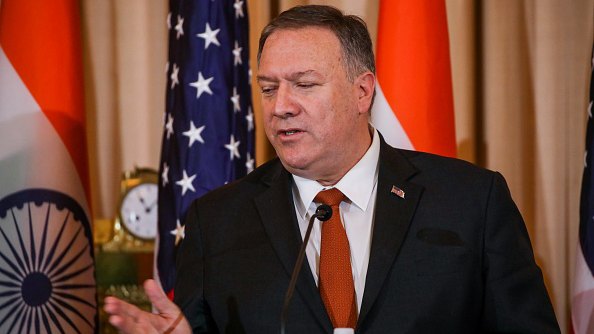
SOFA and other mechanisms make the signatory countries becomes almost like a member of NATO, without the advantages of NATO membership  that the  Western NATO countries enjoy. It is logical and valid for a country like Canada or Italy to e in NATO, but not for Sri Lanka or Ecuador. The MCC is a sugar pill to make SOFA and other military takeover agreements palatable to the rulers who agree to comply, or are made to comply under military pressure. Some one like Pompeo is mandated to do just that. The MCC will make it easier for US Capital to penetrate and dominate the Sri Lankan business and agrarian sectors.  Dr. Mendis kept on insisting that SOFA has been signed in 2017 but  did he know that it was done in quasi-secrecy by the Yahapalanaya administration? or may be he felt that the end justifies the means of achieving Hamiltonain objectives.

Unfortunately, Dr Mendis did not look at how this US action, directed to checkmate Chines action has only benefited a small elite t of each of these societies that joined in with the US. These elites who control the business sector of those countries become part of US capitalism, while leaving the ordinary people even more poor. US capitalism is good for those who are well to do, but not for the vast majority of people, even in the US.  The business machine  doesn’t cannot stop  to care about the poor, as seen in how Brendix preferred to push the workers to meet export targets even when the workers were in danger of Covid.  One finds that directors of Brenidx are also directors of Air Lanka, and perhaps they have the capacity to bend even health rules about who they can fly in and fly out!  The Chapa interview did not bring out any of this because the Interviewer, although clearly uncomfortable with Dr. Mendis’s views, was very hesitant to ask tough questions from an old friend!

Sri Lanka has had a history of being an independent nation right at the center of the maritime Silk Road since the time of the Greeks. Its history, and its contribution to the world can continue even within the “Manifest Destinies” claimed by big nations.  Dr. Mendis and other fail to see this. This is not a matter of politics, but of biology and bio-diversity. Just as bio-diversity is good for reasons that I cannot go into here, an ecology of diverse nations with independent views is good for humanity.

So, I  re-iterate that Sri Lanka should take a closer look at Vietnam that defeated the US in war, and has in spite of it come back as a friendly with the US while being independent of it while also being strongly independent of China.

Chandre Dharmawardana.

THE POHOTTUWA GOVERNMENT OF SRI LANKA Part 2 A 4

October 26th, 2020

KAMALIKA PIERIS

India and Sri Lanka signed an FTA in 1998,  it was done very fast. Discussion started in August 1998and the FTA signed in November 1998 with just 4 consultations. The FTA became effective in 2000, but only the criteria were laid down not the procedures, observed critics. 

A Joint Study Group (JSG) was set up in April, 2003 to expand the FTA to go beyond goods and include services. The JSG report was ready in October, 2003 CEPA negotiations were started in February, 2005 and concluded in July 2008 after thirteen rounds of negotiations. CEPA was to be signed at the SAARC Summit of 2008 but due to reservations expressed by Sri Lanka, it was not.

India did not give up India said that CEPA can resolve the problems created by the FTA.Federation of Chambers of Commerce of India handed over the agreement at the IIFA Business Forum, 2010. Once again Sri Lanka raised objections and the President did not sign it. A copy had come to a few Sri Lankans secretly, and they took action to prevent the agreement. The document has not been made public they complained.

When the government changed in 2015 and Yahapalana came in, the agreement was brought out again, this time with the name changed from CEPA to ETCA (Economic and Technical Cooperation Agreement). Yahapalana was determined to proceed with this Agreement.  The trade sector in Sri Lanka protested strongly against this.

Sri Lanka‘s industrial sector, and the Chambers of Commerce said that the FTA of 2000 had not benefited Sri Lanka, although many people are talking about the entry into the vast Indian market. Our businesses find it hard to compete in India since our cost of production and domestic price are higher. When we analyze the     FTA with India for 2003-2009, we find that India exports to Sri Lanka are up and ours are down.

After 10 years of FTA Sri Lanka exports to India have declined  from USD 515 million  2007 to USD 324 million  in 2009 last year, they said.    India has also not benefited by the FTA due to the checks and balances impose by the Sri Lanka side otherwise by now the local market would have been flooded with cheap Indian good.

India had granted concession to Sri Lanka for 4000 products, of which   Sri Lanka produces very few. New industries are not nurtured, spec icily in the agriculture sector, to make use of these export concessions and we continue to struggle with poor infrastructure, high-energy costs and a shortage of labor which undermines our competitiveness, the trade sector said.  They did not ask why sign a trade agreement for goods Sri Lanka does not produce.

Industrialists complained loudly that India harasses the Sri Lanka exporter. There is no end to the long list of non-tariff barriers that confront these goods. Indian exporters do not face any non tariff barriers when exporting to Sri Lanka.

Sri Lanka exports face numerous non-tariff barriers,   tariff rate quantities, port restrictions, customs delays and cumbersome laboratory tests. Tests are asked for even when the goods are accompanied by certificates. The checking of edible items is done by labs situated far away. Imports into Chennai are sent to CFTRI Mysore, and imports into Mumbai are sent to CFTRI Pune.

Documents not specified in the FTA are asked for.  Documents in accordance with the FTA are rejected by the Indian officials who say that they are not the proper documents and ask for additional documents. Often customs even demand a detailed cost sheets which reflect the value added criteria and there are disputes when these are produced.

The classification of goods is also a problem. While some goods appear on the Open General License when the good arrive in India, the importer is told that Special Import License is required. The SIL for any non vegetarian food stuff, for instance has to be issued by the Indian subject ministry, which is in faraway Delhi.

Different ports in India classify the goods imported under different duties. At time customs declare that although for certain good where there is  Basic Customs Duty but Counter Vailing Duty is applicable. The importer [means the exporter] due to time and cost pays this amount under protest.

The rule of origin criteria are too stringent and can block Sri Lanka exports. The Certificate of origin from Sri Lanka can be used only after the shipment has left.  When goods arrive, prior to the documents, without the essential COO which has to be certified by the local Sri Lanka High commission there is a delay as goods cannot be cleared without this vital document. Delay as every point result in demurrage and other costs be incurred which are prohibitive which in turn make the import unviable.

In addition to central government taxes, sometimes the particular state also has special taxes for some of the items, e.g. Kerala is taxing the tea packaging and the tea tags too. The import of quality Sri Lanka teas, particularly flavored teas has encountered a significant number of problems in India. The Tea board in India has to approve the imports, which is time consuming as there are no procedures laid down.

The business sector in Sri Lanka objected strongly to CEPA.  India has asked Sri Lanka to sign the agreement first and see to the details after. The schedules will come later. Critics said No. It is India that is pressing for this. if we sign the agreement cannot be reversed. It is a bilateral agreement so there is no court to which we can go. If we change terms heavy penalties have to be paid.  The danger is in the annexures said critics.

Our exports go elsewhere not to India, the business industry said. India is not a big market for us, elsewhere is better. We must sign CEPA only after we ensure that it will be in our interests to do so. we must not sign CEPA in a hurry. CEPA must be reviewed by all ministries including defense because there is a national threat involved.

We must first address all the key issues, that are hindering our exports, include the schedules and bring in conditions preventing additions of any schedules outside the discussed areas. we must avoid signing an open-ended framework agreement, have sufficient domestic legislation, and have a patriotic committed result orients and hard working team that should match if not better the Indian team.

The Indo Sri Lanka frame work agreement (CEPA/ECTA) has many irreversible loopholes that will trap Sri Lanka into a helpless situation. The clauses are vague and open ended, such as ‘shall include but shall not be limited to’. Also it says all subsequent agreement shall form part of ECTA. once ECTA is signed any annexes added later will have the same legal binding as the signed ECTA. If we default we have to pay compensation. BOI allows foreign investment which is unilateral and revocable, so why CEPA?

 Why is India so keen when our market is small? India does not need CEPA.  They have already established industries and Indian business houses and their businesses thrive in Sri Lanka. Is there an underlying motive behind CEPA?

 Yes, there is, said critics. It is to get control of the country. Sri Lanka is strategically important.  India can’t control Sri Lanka militarily, so India plans to do so  through other means, by getting control of Sri Lanka‘s goods and services.

CEPA is inimical to our interests. The ground realties are not conducive to signing CEPA.  There is strong possibility of Indian dominance of our home grown industries, taking control of companies manipulating the stock exchange, said critics.

The persons urging CEPA appear to be non-business men, such as economists, who do not have businesses to export to India, but are urging business men on to it.  Those supporting India said that CEAT and Nicholas Piramal have taken over sick units and turned them around. Also Lanka IOC is a notable achievement, entering in 2002, and revolutionizing the petroleum sector. They have plans for further expansion. Also Bharati Airtel has led to a drastic reduction in mobile call rates.  Ceylon Biscuits, Brandix, John Keells, Hayleys, and Aitken Spence hotels have done well, these ECTA supporters said.

 Pathfinder Foundation said that there were provisions in the agreements for safeguards.  And we have the trade negotiators to handle this.

Business people were less enthusiastic. Indians can come and start state trading organizations here. They can repatriate profits abroad. if they start industries here, it will kill the local ones by undercutting for a few years, then they will start to increase prices. Sri Lanka companies will also then have to raise their prices, so no benefit to us.

The factories in India are huge, the scale of operations is gigantic, they have the raw materials. Sri Lanka can only boast of a few FMCG (Fast Moving Consumer Goods) industries what are somewhat large and may the only ones that will survive the CEPA as a niche market.   India is not a level playing field, and the local manufacturers will get hurt.  India can enter with low prices, sustain long price wars, smother competition without feeling it. No foreign exchange will come in, it will only go out.

  Furious business men pointed out that ECTA gives India access to all goods and services in Sri Lanka except the following. Sri Lanka was given exclusive rights to pawn broking, money lending, small time retails trade, personal services, coastal fishing ,  not deep sea fishing.   There would be 50% Indian ownership of 25 cinemas. there can be 10 halls inside each cinema.40% cinema time would be for Tamil and Hindi only. Film makers when alerted objected. Our culture will also be affected critics complained.

If CEPA goes thoughSri Lanka will be swamped by Indian labor in all spheres of work, profession, skilled semi skilled, due to the heavy unemployment in India. All seven copper industries operated in Sri Lanka by Indians had unskilled laborers as their managers. CEPA says India can bring down all technical staff from India. Any Indian can bring his family and they can work anywhere they want. Dependants are not defined. So the family alone can take up about 5 jobs.

The FTA was for trade in goods only, but CEPA included services, investment, and movement of people.  if we open up the service sector without regulation our county will be swallowed up by the mighty India companies, said Bandula Perera.

Services will include the movement of persons. This comes under Mode 4 of the General Agreement on Trade in Services (GATS) of the World Trade Organization. Mode 4   is on ‘the presence of natural persons ‘in the receiving country.  This is a tricky, dangerous issue.  Officials of the   Ministry of Trade said   that they are careful never to agree to anything in Mode 4, ‘because once we agree we cannot get out of it’. India has carefully defined and limited the scope of movement of natural persons. They can stay only for a maximum period of 15 months. Sri Lanka does not have the necessary controls in place.

 Mode 4 could also be used to send   Indian professionals to Sri Lanka. Professionals in Sri Lanka were concerned. Sri Lanka does not have a regulatory system for monitoring professionals. There are no legally authorized bodies.  The few we do have are weak.  Indian professionals will walk in. This is unwise. Indian professional standards are different to ours.    

In the case of engineering, Sri Lanka engineers observed that. India’s degree for engineering is only three years, ours is four years. also, there are many unemployed engineers in India who will flood this country.

Sri Lanka doctors strenuously object to India entering the health sector. They do not think highly of India’s health service or medical education. They say Sri Lanka’s   medical training is superior. it is uniform and invariably excellent. In some of the best research hospitals of the world, a Sri Lanka specialist can be found. Sri Lankans go abroad for treatment because those hospitals have superior technology, not superior doctors. The answer therefore is not to import Indian doctors here, but to get down modern technology.

Sri Lanka could be proud of its health achievements, low maternal mortality, high life expectancy, successful elimination of malaria and free availability of healthcare to all citizens. All this has been achieved at the mere cost of only 1% of National GDP due to the skill and dedication of our health care professionals, said the doctors.

Sri Lanka Medical Association said India was asking Sri Lanka to recognize the qualifications of Indian doctors. They also said that 25 to 30 categories of paramedical professional were to be included in the CEPA.  also CEPA   would  help by pass a number of health laws including those associated with quality control (CDDA no 27 of 1980)and the monitoring of the private health sector ( PMIR no 21 of 2006). 

They also complain that Sri Lanka eradicated polio years ago but cannot get a certificate because neighboring Tamilnadu had frequent polio epidemics. They point out that the substandard pharmaceuticals coming into Sri Lanka are all of Indian origin. Tablet manufacture is a cottage industry in India. (continued)

THE POHOTTUWA GOVERNMENT OF SRI LANKA Part 2 A3

October 26th, 2020

KAMALIKA PIERIS

Sri Lanka is important to India, because of its location and India is determined to bring Sri Lanka under its control. India set up consulates in Hambantota and Jaffna in 2010. India has a long-standing consulate in Kandy.

Critics wanted to know why does India want consulates in Jaffna and Hambantota. Consulates are established to look after nationals. India wants a consulate in Jaffna, mainly to station some RAW official there to monitor what is going on and to foment trouble in Jaffna to create another insurgency like last time, said one critic.

  India wants an office in Hambantota as a watch post for India to monitor what happened, said another. India should close its consulates in Jaffna and Hambantota. They are viewed as RAW stations set up to destabilize the country if necessary, said a third.

India is emphasizing the cultural links between Sri Lanka and India, particularly Buddhism. India’s using Buddhism to firm up ties with Buddhist-majority Sri Lanka, said analysts. China and Pakistan have   started emphasizing their Buddhist past.

India has installed a 16-foot-tall statue of the Buddha at the entrance to the International Buddhist Museum complex at the Dalada Maligawa, Kandy. There is   an India Gallery in the Museum. It consist of eight major sections, including the origin of Buddhism in India, pilgrimage sites in India, symbolic representation of Buddha  in Buddhist  art in India and the  spread of Buddhism  from India.

India and Sri Lanka   signed an MOU in 2020 to establish  a training school for Dalada Maligawa at Pallekele, Kandy to provide training in Kandyan dance and drumming   as well as costumes, ornaments and musical instruments, lacquer painting, mahout training and sculpturing.

Delegation of Indian Buddhist met President Rajapakse in 2013. They want to install a statue of Ambedkar in Sri Lanka and set up an institute to commemorate him.

India is  drawing attention to two much admired Indians, who visited Sri Lanka, during the British administration. They are Mahatma Gandhi and Rabindranath Tagore. Mahatma Gandhi had visited Matale, Colombo, Kandy, Nuwara Eliya, Badulla, Bandarawela Hatton, Colombo, Galle, and Jaffna during his three week long visit in 1927. He had made over 35 speeches to Sri Lanka audience and also visited many schools including trinity, Dharmaraja, Zahira and Ananda,    Indian embassy said.

Therefore, a Mahatma Gandhi International Centre funded by India, was established in Matale in 2015. It had an auditorium, library, meditation centre and a conference hall. Before that, in 2014, a statue of Mahatma Gandhi was installed in the city square at Point Pedro by the Urban Council of Point Pedro. It was unveiled by the consul for India.

Mahatma Gandhi’s statue at Mahinda College, Galle, was unveiled on November 4, 2019. A photo exhibition of Mahatma Gandhi, organized by India’s Hambantota consulate was held at Mahinda College, Galle on the same day.  In 2020 the Consulate   organized a series of events in the Southern Province and Moneragala District to commemorate the 150th birth anniversary of Mahatma Gandhi. 

There are Gandhi statues elsewhere in the world too.  In 2016 a statue of Gandhi was set up in the University of Ghana. University of Ghana lecturers began a petition for its removal soon after. The petition said Gandhi was “racist” and African heroes should be put first. Gandhi looked down on the Africans. The statue was removed in 2018. Students at the university welcomed the decision to remove the statue.

Rabindranath Tagore came to Sri Lanka for several highly successful visits. India wants his name remembered by the present generations. In 2012, Indian Cultural Centre, Colombo conducted an essay competition for ‘A’ level and University students on ‘Rabindranath Tagore and Sri Lanka.’  India built the Rabindranath Tagore memorial auditorium at University of Ruhuna in 2018. 

Sri Lanka had been very impressed with Tagore’s dance drama, Shap Mochan when it was performed in Colombo in the 1940s.  A dance troupe from Shantiniketan performed Shap Mochan in Colombo in 2012. The audience was not impressed. The applause was weak.

North Indian and Carnatic music became an influence in Sri Lanka during British   rule. Sinhala musicians ran to Shantiniketan. They returned declaring that Indian music was ‘high’ culture while the local stuff was ‘low’ culture (‘cula sampradaya’). India has not made any such assertion, but it has supported the   study of Indian music in Sri Lanka.  

In 2020 India presented 104 Indian classical musical instruments such as Veena, Sitar, Tabla, Sarod and Tanpura received from the ICCR, New Delhi to several schools in the south. The schools were Richmond College, Siridhamma College, Anula Devi College from Galle and Beverly Tamil School, at Hulandawa, Tamil Maha Vidyalaya at Pitabeddara,   Handford Tamil Maha Vidyalaya, St. Matthew and Bilingual School, Deniyaya. India also gifted these musical instruments to the Faculty of Engineering, University of Ruhuna.

In 2013, an India corner” was started in Jaffna public library, with books on Indian cultural history, Tamil language. There are plans to set up a Jaffna Cultural centre on the lines of the Indian Cultural Center in Colombo, supported by the Indian Council for Cultural relations. This center will teach Hindi and Indian classical music and dance. A link between the Ramanathan academy of fine arts, and Kalakshetra Foundation in south India, was also planned.

India has taken a special interest in the North .India said in 2015 that it was going to develop Kankesanturai port. It had signed an agreement in 2011. India has built many houses in the north after the Eelam War. India has also focused on the estate sector.

 As at 2020, of 12 Health and medical care projects”, 6 were in the Northern Province, 2 in Eastern province and 1 in estate sector at Dickoya.   In  the  ”  Education research and training”   5 in estate sector, 4  in north,  2 in East 2 in west,  2 in south. In Transportation sector” 3 in north, 1 in east, 1 in south . (Daily News 15.8.20 p 6 India supplement)  

India wishes to be a strategic partner in Sri Lanka. India   decided to link Sri Lanka to India in terms of energy. India was to build 500 MW coal based thermal power plant at Sampur in Trincomalee as a joint venture with CEB. In 2008 there were plans for India’s state run Power Grid Corporation of India Ltd (PGCIL) to set up a link for 1,000 mw between India and Sri Lanka, of which 30km will be under the sea. The undersea cable was prohibitively expensive and this was changed in 2019 to an overhead electricity link. The India-Sri Lanka transmission link was to run from Madurai to Anuradhapura.

India wants high visibility for its projects. India had agreed to refurbish the road between Anuradhapura and Trincomalee, in 2004. It was to be named the Rajiv Gandhi Amity Highway.

The most visible Indian intervention in our economy is Lanka IOC.   In 2003, Indian Oil Corporation was permitted to set up a subsidiary, Lanka IOC  to set up petrol stations all over the island. Distribution is through the Ceylon Petroleum Corporation pipelines. This was approved through a cabinet paper of 2002 without any competitive bidding, said critics. Though 70 million was promised, only USD 40 million has come in by 2016.

 Lanka IOC now has 202 petrol & diesel stations in Sri Lanka. Lanka IOC   received approximately USD 3.6 billion in sales   in 2002-2013. The profits went to India.  Lanka IOC also owns one-third share in Ceylon Petroleum Storage Terminals Limited (CPSTL), a joint venture of Lanka IOC and Ceylon Petroleum Corporation (CPC). 

IOC also runs 235 Lanka IOC Servo  shops and 24 lubricant distributors, offering a variety of lubricants and engine oil for motorcycles to ships. Servo lubricants are produced in Sri Lanka in its facility in Trincomalee.   Lanka IOC holds a 35% market share in the highly competitive bunkering fuels market. Lanka IOC has an oil terminal at Trincomalee, a lubricant blending plant of 18,000 tonnes per annum capacity and a state-of-the-art fuels & lubricants testing laboratory at Trincomalee. . India said in 2015 that it has plans to set up its first overseas petroleum hub in Sri Lanka.

Critics observed that half of the petroleum trade is now in the hands of   IOC, a partly state owned Indian company. If the entire trade had been in their hands, the war effort could have been throttled by India stopping the fuel supply to the military. It can cause problems to Sri Lanka in the future too.

India has many other business projects in Sri Lanka. Indian firms are managing Sri Lanka tea estates. Indian companies have their factories here. There is a beverage factory on 50 acre land in Gampaha importing fruit pulp and exporting juice. It is using about 50 million liters of ground water per annum, critics complained.

Indian assistance is heavily criticized. Several of the railways engines supplied by India have failed to operate after a few years, and the large extent of the railways line laid by India contractors showed defects, including concrete sleepers, said critics.

 In 1968 India offered a loan of Rs 100 million for purchase of equipment used in government departments.  The items had to be of Indian manufacture.  The government department prepared a shopping list, said Neil Perera of the Department of Government Electrical Undertakings, which were of international standard. The Indians refuse to provide these they instead offered items which they could not sell in the international market.   The departments   which accepted these, such as telecommunications faced difficulties. The Telecommunications switchboard in the head office of the DGEU went out of order within a short period of installation. 

Sri Lanka does not want too close a link to India. There was strong objection to a highway link between India and Sri Lanka. Un-ESCAP had proposed a Trans Asian Highway to link 27 countries. India and Sri Lanka are signatories to the highway. There was a proposal to extend the UN-ESCAP Asian Highway   into Sri Lanka,  with a bridge linking Rameswaram and Talaimannarand roads branching to Trincomalee and Hambantota.  Such a link with Tamilnadu is dangerous, said critics.

The railway line constructed by the Indian thorough Mannar Island does not end at the Talaimannar station but goes beyond and has been raised to marry with a possible future bridge head at Talaimannar.  The railway should have been terminated on the main land. This would have left the sea open to Sri Lanka naval movement from north to south and easy movement for other seagoing craft as well. The introduction of a rail bridge between the mainland and the island of Mannar would block this, said Ashely de Vos. 

Land Bridge with India might lead to the introduction of a special type of malaria mosquito into Sri Lanka, observed Kamini Mendis. So far it has not come here.  What keeps it away is the ocean. So land bridge will help it come here.  We have eradicated malaria here.    In 2014, it was announced that the India Sri Lanka road rail network had been stopped.

India became the first country, since independence, to interfere with the internal affairs of Sri Lanka. India decided to foster, train and promote Tamil militancy in Sri Lanka with retired generals training the LTTE, the government of India providing funding and bases in India, said critics. India supported the   break up of Sri Lanka. india wanted the North east merger even more than the Tamils. The purpose was to create a client state in North and east, said diplomat Bandu de Silva. K. Godage agreed. He noted that India supported the establishment of a North east Provincial Council and continued to insist that   we merge the north and east provinces.

The parippu drop in Jaffna violating Sri Lanka air space is still recalled with deep feeling. The Indo-Lanka accoard is resented. The rifle but attack on Rajiv Gandhi by naval rating at the honor guard, symbolized the deep resentment of a sovereign nation at the humiliation cause to them. India had forfeited the respect and confidence of Sri Lanka, observed Gamini Gunawardene.

There is considerable anti-India feeling in Sri Lanka. China gave the Conference hall and the Convention center, Japan gave Sri Jayewardenepura hospital and the Dental faculty in Peradeniya.  What India has given, Sri Lanka public asked.

Indian fishermen are fishing in Sri Lanka water with impunity but When Sri Lanka fishermen are arrested by Indian coast guards, they are treated harshly.   One set arrested after straying into Indian waters was ordered to kneel on a heavy iron plate which dad heated due to the sun. We were beaten up by the coast guards and offered rice with dhal and were force to pick out the worms off the plates of rice before we ate. There were more worms than rice.

 We were kept in prison in Hyderabad for two and half month and were released only after paying Rs 75,000 each. We did not receive any support from the government and had to manage our affairs on our own. But in contrast Indian fisherman are seen poaching in our water freely and when they are arrested they are provided with the best possible treatment and released a few weeks later. When we overpowered some Indian fisherman and handed them over to the authorities they were released, without any punishment.

The International Indian Film academy awards were held in Colombo in 2010.  USA holds it Oscars and Britain it Bafta in their own countries, but India hold its festival in different capitals. This is an attention getting device. IIFA has resulted in vast tourist publicity for Sri Lanka which no advertising campaign could have bought. Event had an 80 million audience. IIFA is organized to promote Indian cinema all round the world, said India. 

Sri Lanka was not thrilled. They complained about the cost. In other countries India spends, here, critics allege that Sri Lanka had provided the money. IIFA organizers were invited to lunch by President Mahinda Rajapaksa.  Those supporting stated that Sri Lanka had got a tremendous advertising boost from the event.

India’s   activities in Sri Lanka are watched closely.  A Ramayana Trail” has been concocted to drag Buddhist Sri Lanka into the heart of Hindu mythology, making Sri Lanka a geographic extension of India. Indian money is funding Ramayana temples in Sri Lanka and Indian officials are coming as pilgrims.

There are four Ravana destinations in Sri Lanka, Ravana’s palace, Ashok Vatika, Hanuman’s entry point  at Nagadipa, Donara where Rama first attacked Ravana, and Yudaganawa the main battle ground. Ashok   Vatik and Donara are imaginary places. Yudaganawa is important in Sinhala history. India has offered many crores to build a Sita Devi temple at Divirumpola.  The object is to subvert Sri Lanka history.

Lanka IOC also controls the oil tank farm in Trincomalee, formerly owned and operated by CPC. This has 99 tanks, made of the best Manchester steel, each with a capacity of 12,000 kilolitres. Currently, only 15 of these tanks are operational. This was was handed over to India instead of to the highest bidder. Why was it not left in the hands of the Sri Lanka navy asked critics. There is now a call to take it back.

India loyalists think that India must be the dominant power in South Asia because of its size.  That Sri Lanka must recognize this. India is Sri Lanka closest neighbor. When Sri Lanka looks upwards all it sees is India. Col Hariharan of India said that India dominates the  south Asian region physically and economically.  India’s geographic location enables it to be a dominant power in the Indian Ocean region.  Sri Lanka does not agree.

Sri Lanka’s location  to India is viewed critically. One reader  said personally my wish is that we were not 20 but 200 miles away from India”.  Sri Lanka is under threat from the Kundukkulam and Kalpakkam nuclear complexes in south India. The southerly monsoon and wind will  bring any unwanted emissions for these installations towards Sri Lanka, said analysts in 2011. 

The Sethusamudran canal, initially causd much concern in Sri Lanka . It was then found that  this would not be a threat to the ports of Colombo. The canal will only cater to vessel of less than 10 m draft and feeder vessels from  the Indian east coast could use the path to come to Colombo on a shorter route. India will incur huge costs in dredging and also in maintenance of the canal. In 2010, India stopped work on Sethusamnudran canal due to its difficulty of dredging.

Sri Lanka observed happily that Sri Lanka   has   one important economic advantage over India. Sri Lanka’s ports are superior to those of India. India’s attempt to substitute Indian ports for Colombo failed. India now recognizes Colombo to be the regional transportation hub.  Sri Lanka’s location gives it its port a natural advantage. Colombo port enjoys a better reputation in international shipping than the ports in South India. Turn over time for ships in Colombo is much less.  70% of the volume handled by the Colombo port is trans shipment of goods imported by India and this could be increased because Indian ports don’t have adequate depth. 

India is considered arrogant. At CHOGM when bilateral talks were taking place between India and Sri Lanka, Indian delegates had suggested that Sri Lanka cancel the Tuesday night dinner scheduled for visiting official delegations to continue the talks. Sri Lanka had flatly refused to do so.

India is concerned about China’s influence in Sri Lanka. In 2007 India objected to Sri Lanka purchasing Chinese built JY-11 3Dradar system, because it would ‘overarch’ into Indian air space. . India gave the radar instead, but this was not effective and eventually Colombo acquired the Chinese radar. Delhi also complained about Chinese submarines in Colombo Harbor in 2014. India said it had not been notified.

Since you cannot invade a country with an army, efforts are being made to invade through infrastructure and technological advancement,” admitted India. India has to use its cultural and historical ties in the region to build personal ties with countries like Sri Lanka, to prevent them from drifting towards China. As a result, areas of soft power such as the Buddhist circuit between India and Sri Lanka, are being emphasized.    ( continued)

The quest for a treaty prohibiting nuclear weapons

October 26th, 2020

By ASOKA BANDARAGE

Small states are leading the fight to make the Nuclear Weapon Ban Treaty legally binding

A survivor walks through the ruins of atomic-bombed Hiroshima in August 1945. Photo: AFP

Of all the weapons created throughout human history, nuclear weapons are the most destructive and indiscriminate. They are capable of causing enormous devastation involving uniquely persistent, spreading, genetically damaging radioactive fallout.”

Whereas a single nuclear bomb detonated over a large city could kill millions of people, the deployment of tens or hundreds of them could disrupt the global climate, creating intolerable conditions for both humans and other species.

The Treaty on the Non-Proliferation of Nuclear Weapons, commonly known as the Non-Proliferation Treaty, was adopted in 1970 with the objectives of halting the adoption of these weapons and disarming those that already existed.

The NPT recognized five states as nuclear-weapon states (NWS). In order of acquisition, they are the United StatesRussia (successor to the Soviet Union), the United KingdomFrance and China. Ironically, these states are also the five permanent members of the United Nations Security Council.

The NPT has had limited success in curtailing nuclear weapons’ proliferation and the motivation of states to acquire them. The five recognized NWS have also shown a reluctance to disarm.

Since the adoption of the NPT, three more states, IndiaPakistan and North Korea, have conducted overt nuclear tests. North Korea, which had been a party to the NPT, withdrew in 2003, while Israel, which is known to have nuclear weapons, does not acknowledge it.

Together, according to the International Campaign to Abolish Nuclear Weapons (ICAN), these nine countries possess nearly 14,000 nuclear warheads, enough to destroy the planet many times over.

Five more states – Belgium, Germany, Italy, the Netherlands and Turkey – also host US nuclear weapons. Twenty-six other countries endorse” the possession and use of nuclear weapons on their behalf in accordance with defense alliances, including the North Atlantic Treaty Organization and the Russia-led Collective Security Treaty Organization (CSTO).

Despite the NPT’s calls for a diminishing role” for nuclear weapons in security policies, the five declared NWS have maintained huge stockpiles, leading critics to question the legitimacy and enforcement capacity of the treaty.

US plans to develop new weapons, including anti-ballistic missiles, earth-penetrating bunker busters” and new small” bombs, have been of particular concern. Strongly anti-nuclear countries like New Zealand also see the NPT’s inability to subject Israel, India and Pakistan to the treaty’s restrictions as a major problem.

As geopolitical conflicts intensify, nuclear-weapon states continue to modernize and rearm their arsenals, while still other states, such as Iran, are believed to be developing nuclear weapons. The danger of a limited nuclear war, if not a full-scale one, in the near future is real.

Anti-nuclear movement

Among those leading the movement to ban nuclear weapons are the few remaining hibakusha, the victims of the US nuclear bombing of Hiroshima and Nagasaki in 1945. Setsuko Thurlow, who was a 13-year-old schoolgirl when the United States dropped an atomic bomb on Hiroshima, is today a leader at ICAN in Geneva.

On October 6, 2017, ICAN was awarded the Nobel Peace Prize for its ground-breaking efforts to achieve a treaty-based prohibition of such weapons.” The landmark Treaty on the Prohibition of Nuclear Weapons (TPNW) was adopted at the United Nations on July 7, 2017, with the support of 122 nations.

The TPNW (also known as the Nuclear Weapon Ban Treaty) is the first legally binding international agreement comprehensively to prohibit nuclear weapons and to seek their total elimination.

Article 1 of the treaty, on Prohibitions,” states that each state party undertakes never under any circumstances to do the following:

  • Develop, test, produce, manufacture, otherwise acquire, possess or stockpile nuclear weapons or other nuclear explosive devices;
  • Transfer to any recipient whatsoever nuclear weapons or other nuclear explosive devices or control over such weapons or explosive devices directly or indirectly;
  • Receive the transfer of or control over nuclear weapons or other nuclear explosive devices directly or indirectly;
  • Use or threaten to use nuclear weapons or other nuclear explosive devices;
  • Assist, encourage or induce, in any way, anyone to engage in any activity prohibited to a State Party under this Treaty;
  • Seek or receive any assistance, in any way, from anyone to engage in any activity prohibited to a State Party under this Treaty;
  • Allow any stationing, installation or deployment of any nuclear weapons or other nuclear explosive devices in its territory or at any place under its jurisdiction or control.

For the TPNW to come into effect, 50 countries must sign and ratify the treaty. As of October 23, 84 states had signed and 49 had ratified or acceded to it. Only one more state is needed to complete ratification. A mere 90 days after the 50th ratification, the TPNW will enter force as international law, binding on countries that have ratified it.

US opposition

Stating that it won’t sign the TPNW, US President Donald Trump’s administration continues to move away from international agreements to curtail nuclear weapons.

On August 2, 2019, the Trump administration officially withdrew from the 1987 Intermediate-Range Nuclear Forces (INF) Treaty between the United States and Russia. As critics have pointed out, by withdrawing from the INF Treaty, the administration eliminated consequences for Moscow’s alleged non-compliance

The US and Russia are currently negotiating an extension of the New Strategic Arms Reduction Treaty (New START), the only remaining treaty placing limits and monitoring transparency on the growth of the world’s two largest nuclear arsenals. New START is set to expire on February 5, 2021. Whether the Trump administration will complete the extension before the November 3 US election remains uncertain.

Meanwhile, the United States is urging countries that have ratified the TPNW to withdraw their support as the pact nears the 50 ratifications. The TPNW’s supporters believe that the 50th ratification needed to bring it into effect could happen any time soon.

However, a recent letter sent by the Trump administration to signatories and obtained by The Associated Press states that the five original nuclear powers – the US, Russia, China, Britain and France – and America’s NATO allies stand unified in our opposition to the potential repercussions” of the TPNW.

The letter also states that the TPNW is detrimental to the objectives of the NPT, claimed to be the cornerstone of global non-proliferation efforts. It further says to the countries that have ratified the TPNW: Although we recognize your sovereign right to ratify or accede to the Treaty on the Prohibition of Nuclear Weapons (TPNW), we believe that you have made a strategic error and should withdraw your instrument of ratification or accession.”

Beatrice Fihn, executive director of ICAN, the sponsor of the TPNW, responded by saying, That the Trump administration is pressuring countries to withdraw from a United Nations-backed disarmament treaty is an unprecedented action in international relations … shows how fearful they are of the treaty’s impact and growing support.”

There is no fundamental difference between the Democratic and Republican parties on US foreign policy and US militarism. Democratic presidential candidate Joe Biden has affirmed support for continuation of US military and imperial agendas. However, it remains to be seen if a Biden administration would take a more favorable stance toward the TPNW, which is endorsed by the majority of countries in the world.

Collective power for peace

Small and medium-sized countries have joined the TPNW to avoid possible nuclear buildups and conflagrations on their soil. Indeed, the vast majority of countries that have ratified the TPNW thus far are small states struggling to maintain their neutrality and independence from powerful nuclear-armed states.

Take a country such as Sri Lanka, faced with simultaneous interventions by three nuclear-armed powers, China, the United States and India. The TPNW provides such beleaguered countries a means to assert their sovereignty vis-à-vis external powers that support neither the abolition of nuclear weapons nor the demilitarization of the world.

Nuclear weapons represent the myopic geopolitics of domination, subordination and annihilation. Wisdom, compassion and partnership are needed instead. Perhaps, with these values, Sri Lanka will accept the honor of being the 50th state to ratify TPNW and bring this historic treaty into effect.

ස්විට්සර්ලන්ත තානාපති හා අග්‍රාමාත්‍ය මහින්ද රාජපක්ෂ මැතිතුමා අතර හමුවක් – වෙළඳ, සංචාරක, ආයෝජන සහ කොවිඩ්-19 එරෙහි ක්‍රියාමාර්ග පිළිබඳවත් සාකච්ඡා කරයි

October 26th, 2020

අග්‍රාමාත්‍ය මාධ්‍ය අංශය

ශ්‍රී ලංකාවේ ස්විට්සර්ලන්ත තානාපති ඩොමිනික් ෆර්ග්ලර් මහතා හා ගරු අග්‍රාමාත්‍ය මහින්ද රාජපක්ෂ මැතිතුමා අතර හමුවක් අද 2020.10.26 දින අරලියගහ මන්දිරයේදී පැවැත්විණි.

ආයෝජන, අපනයන, සංචාරක සහ කොවිඩ්-19  වසංගතයට එරෙහිව සටන් කිරීම ඇතුළු දෙරට අතර සහයෝගීතාව වර්ධනය කරගත හැකි  ක්ෂේත්‍ර ගණනාවක් පිළිබඳව මෙහිදී සාකච්ඡා විය.

පැහැදිලි නීති පනවමින් හා ඒවා බලාත්මක කරමින් රජය කොවිඩ්-19 වයිරසයට ප්‍රතිචාර දක්වන ආකාරය පිළිබඳව තානාපතිවරයා මෙහිදී අගය කළේය.

සෞඛ්‍ය මාර්ගෝපදේශයන් ක්‍රියාත්මක කිරීම හා රට අගුලු දැමීම සියලු දෙනාටම ඉතා අසීරු කාරණාවක් වුව ද සමස්ත ජනතාව ආරක්ෂා කර ගැනීමට එය ඉවහල් වන බව අග්‍රාමාත්‍ය මහින්ද රාජපක්ෂ මැතිතුමා මෙහිදී  පෙන්වා දුන්නේය.

ශ්‍රී ලංකාව කොවිඩ්  වයිරසයට එරෙහිව කටයුතු කරන ආකාරය අගය කරන බව පැවසූ තානාපතිවරයා, මෙම ක්‍රියාදාමයේ ආරක්ෂිත බවක් තමන්ට දැනෙන බවට  විශ්වාසය පළ කළේය.

කොවිඩ්-19 වසංගත තත්ත්වය පැතිර යාම වැළැක්වීම සඳහා රජය දරන උත්සාහයට දායක වීම සඳහා ස්විට්සර්ලන්ත රජය  කටුනායක ගුවන්තොටුපලේ පී.සී.ආර්.(PCR) පරීක්ෂණ වේගවත් කිරීමේ පහසුකම් සපයන උපකරණ ශ්‍රී ලංකාවට ලබා දී ඇත.

කොවිඩ් – 19 තත්ත්වය පහව ගිය වහාම ශ්‍රී ලංකාවේ සංචාරක ව්‍යාපාරය පුනර්ජීවනය කිරීමට සහයෝගීතාවය දක්වන බවත්, ඒ සඳහා ස්විට්සර්ලන්ත රජය ශ්‍රී ලංකා සංචාරක හා හෝටල් කළමනාකරණ ආයතනයට යටිතල පහසුකම් වැඩි දියුණු කිරීම, පුහුණුව ලබා දීම සහ විෂයමාලාව සංවර්ධනය කිරීම සඳහා තාක්ෂණික සහාය ලබා දීමටත් සූදානමින් සිටින බවත් මෙම හමුවේ දී අනාවරණය විය.

ඉදිරියේදී දෙරට අතර ක්‍රියාත්මක කළ හැකි ආයෝජන සහ අපනයන පිළිබඳවද මෙහිදී සාකච්ඡා විය.

ආර්ථික සංවර්ධනය රජයක ප්‍රමුඛතාවයක් වන බව කියා සිටි තානාපතිවරයා, ශ්‍රී ලංකාව තුළට ස්විට්සර්ලන්ත ආයෝජන වැඩි වශයෙන් ගෙන ඒමට කටයුතු කරන බව ද කියා සිටියේය.

ස්විට්සර්ලන්තය මේ වන විට ශ්‍රී ලංකාවේ 8 වන විශාලතම ආයෝජකයා වේ. අපනයන සම්බන්ධයෙන්, ජීඑස්පී + පහසුකමෙන් වැඩි ප්‍රතිලාභ ලබා ගැනීම සඳහා ශ්‍රී ලංකාවට ස්විට්සර්ලන්තයට අපනයන පරාසය තවදුරටත් පුළුල්  කළ හැකි ක්‍රම පිළිබඳව ද මෙහිදී සාකච්ඡා කෙරිණි.

වර්තමානයේ, ශ්‍රී ලංකාවේ සිට ස්විට්සර්ලන්තයට ප්‍රධාන වශයෙන් ඇඟලුම්, තේ, මුහුදු ආහාර සහ මැණික් හා ස්වර්ණාභරණ අපනයනය කරයි.

Ambassador of the Holy See Praises Cooperation Between Government and Church Oct. 26, 2020

October 26th, 2020

Prime Minister’s Media Unit

During a meeting with Prime Minister Mahinda Rajapaksa this morning in Colombo, the Ambassador (Apostolic Nuncio) of the Holy See Archbishop Brian Ngozi Udaigwe praised and expressed appreciation for the wonderful cooperation between the State and the Catholic Church” in Sri Lanka.

Prime Minister Rajapaksa fondly recalled his two visits to the Vatican in 2012 and 2014. It was during his last visit that he invited His Holiness Pope Francis to make a state visit to Sri Lanka, which Pope Francis accepted. The state visit took place the following year. The Archbishop said Pope Francis recalled the warm reception he received in Sri Lanka during his visit and hopes he will be able to visit again soon.

Archbishop Udaigwe said he looks forward to continue promoting good relations between Sri Lanka and the Holy See in areas of education, health and assistance to the poor.

Prime Minister acknowledged the vast amount of work done by the Catholic Church in Sri Lanka, especially in the area of education.

The two delegations also discussed the Easter Sunday attacks. Prime Minister Rajapaksa said the unfortunate loss of life could have been prevented had the government at the time paid attention to the warnings they received and took them seriously. Prime Minister Rajapaksa, then the Leader of the Opposition, was the first politician to visit the St. Anthony’s Shrine after the bombing.

Sri Lanka is known as a peaceful country,” Archbishop Udaigwe said. It is a country that is a model for so many. I’m really happy to be here.”

Archbishop Udaigwe is the newly appointed Ambassador of the Holy See to the Embassy in Colombo, which has been functioning since 1976. Despite being the world’s smallest sovereign state, the Vatican maintains 108 resident diplomatic missions and is concurrently accredited to another 74 countries.

Swiss Ambassador Calls on Prime Minister, Discusses Trade, Tourism, Investment and COVID-19 Assistance – October 26, 2020

October 26th, 2020

Prime Minister’s Media Unit

Calling on Prime Minister Mahinda Rajapaksa in Colombo this morning, Ambassador of Switzerland to Sri Lanka Dominik Furgler discussed a number of areas to further cooperation between the two countries, including investment, exports, tourism and fighting the COVID-19 pandemic.

The Ambassador commended the manner in which the Government is responding to the Coronavirus outbreak by publishing clear rules and enforcing them.”

Prime Minister Rajapaksa said that while lockdowns and health precautions can be difficult on everyone, sometimes it’s necessary to keep people safe.

I admire the way you deal with the COVID,” Ambassador Furgler said. I feel safer this way.”

To contribute to the Government’s efforts to contain the outbreak, the Swiss government is providing assistance to Sri Lanka with equipment which would enable faster PCR tests at the airport. This is also a part of collaboration to try to revive tourism to Sri Lanka once the situation improves. Towards that end, the Swiss Government has also provided technical assistance to the Sri Lanka Institute of of Tourism and Hotel Management to upgrade infrastructure, provide training and develop the curriculum.

The two delegations also discussed investments and exports. With economic development being a priority of the Government, the Ambassador said he will work on bringing in more Swiss investments. Switzerland is currently the 8th largest investor in Sri Lanka. With regard to exports, the delegations discussed ways in which Sri Lanka can further diversify export product range to Switzerland to reap greater benefits from the Swiss GSP+ facility. Currently, major exports from Sri Lanka to Switzerland include apparel, black tea, seafood, and gems and jewelry.

නවෝත්පාදන සහය පියස සෑම සඳුදා දිනකම ක්‍රියාත්මකයි

October 26th, 2020

නිපුණතා සංවර්ධන, වෘත්තීය අධ්‍යාපන, පර්යේෂණ හා නව නිපැයුම් රාජ්‍ය අමාත්‍යාංශය

සම්බන්ධීකරණ කෙටි දුරකථන අංකය ලෙස 1966 හඳුන්වා දී තිබේ

නිපුණතා සංවර්ධන, වෘත්තීය අධ්‍යාපන,  හා නව නිපැයුම් රාජ්‍ය අමාත්‍ය විශේෂඥ වෛද්‍ය සීතා අරඹේපොල මැතිනියගේ සංකල්පයක් අනුව තාක්ෂණ, පර්යේෂණ හා නවෝත්පාදන සම්බන්ධ සේවාවන් ජනතාවට සමීප කරවීමට මෙන්ම එම ක්ෂ්‍රේත්‍රයට අදාලව ජනතාවට ඇති ගැටඵ නිරාකරණය හා තාක්ෂණික මාර්ගෝපදේශ කඩිනමින් සැපයීම අරමුණු කරගත් සම්බන්ධීකරණ ඒකකයක් ලෙස නවෝත්පාදන සහය පියස සෑම සඳුදා දිනකම, සෙත්සිරිපාය දෙවන අදියරේ 6 වන මහලේ ඇති අමාත්‍යාංශ පරිශ්‍රයේ දි ක්‍රියාත්මක කෙරේ. ගරු අමාත්‍යතුමියගෙ මුලීකත්වයෙන් පසුගියදා මෙහි  සේවා සම්බන්ධීකරණ කෙටි දුරකථන අංකය ලෙස 1966 හඳුන්වා දී ක්‍රියාත්මක විය.

රට තුළ උදුගත වී ඇති කොවීඩ් 19  අවදානම් තත්වය හේතුවෙන් මෙම ආයතනයට පැමිණ සෙවාවන් ලබා ගැනීම තාවකාලිතව නවත්වා ඇති අතර, මෙම ඒකකයේ සේවා සම්බන්ධීකරණ කෙටි දුරකතන අංකය වන 1966 හරහා සම්බන්ධ වී තම ගැටළු නිරාකරණය කර ගැනීමට සේවා ලාභීන්ට පහසුකම් සපයා ඇත.

මෙහි ආරම්භක අවසථාවේදී ගරු අමාත්‍යතුමිය විසින් දුරකථන මාර්ගය ඔස්සේ නවනිපැයුම්කරුවන් හා සම්බන්ධ වූ අතර ඔවුන් විසින් ඉදිරිපත් කරන ලද තොරතුරු නිවැරදි පර්ශවන් වෙත යොමුකර ගැටළු සදහා ඉක්මන් විසදුම් ලබා දෙන ලෙස යෝජනා කෙරිණි

නිපුණතා සංවර්ධන, වෘත්තීය අධ්‍යාපන, පර්යේෂණ හා නව නිපැයුම් හා නව නිපැයුම් රාජ්‍ය අමාත්‍යාංශයේ පර්යේෂණ හා නව නිපැයුම් අංශයට අයත්  ආයතන රාශියක්  දිවයිනේ විවිධ ස්ථානවල ස්ථාපිත කර තිබේ. තාක්ෂණය පදනම් කරගත් සමාජයක් ගොඩනැගීම මෙන්ම එහි ප්‍රතිලාභ සමස්ත ශ්‍රී ලාංකේය ජනතාවට උරුම කර දීම මෙම සියලු ආයතනවල මූලික අභිප්‍රාය වන අතර, රටේ ආර්ථික සංවර්ධනයට සුවිශේෂී දායකත්වයක් ලබාදීමේ හැකියාව මෙම ආයතන සතුවේ.

නිපුණතා සංවර්ධන, වෘත්තීය අධ්‍යාපන,  හා නව නිපැයුම් රාජ්‍ය අමාත්‍ය විශේෂඥ වෛද්‍ය සීතා අරඹේපොල මැතිනිය මෙම ආයතන පිළිබඳ විධිමත් අධ්‍යයනයක් කොට ජනතාවට මෙම ආයතනවලින් වඩා කාර්යක්ෂමව සේවා ලබා ගැනීමට හැකිවන පරිදි නව සංකල්පයක් ලෙස නවෝත්පාදන සහය පියස ආරම්භ කිරීමට පියවර ගත්තා ය.

අමාත්‍යාංශය යටතේ ක්‍රියාත්මක වන පර්යේෂණ හා සංවර්ධන ආයතනවලින් විවිධ වූ සේවාවන් ලබා ගැනීමට පැමිණෙන සේවාලාභියෙකුට  එක වහලක් යටදී කාර්යක්ෂම හා සුහදශීලී සේවාවක් මෙන්ම මගපෙන්වීමක් ඉතා ඉක්මනින් ලබාදීමට නවෝත්පාදන සහය  පියස ක්‍රියාත්මකටය. මෙහි සේවා සම්බන්ධීකරණ කෙටි දුරකථන අංකය ලෙස 1966 හඳුන්වා දී තිබේ. තාක්ෂණය පදනම් කරගත් සමාජයක් බිහිකිරිම තුළින්, පර්යේෂණ හා නවෝත්පාදන හරහා එහි ප්‍රතිලාභ ආර්ථිකයට දායක කර ගැනීමට  සාමූහිකව කටයුතු කළ හැකි ස්ථානයක් මේ හරහා නිර්මාණය වේ.

අමාත්‍යාංශය යටතේ ක්‍රියාත්මක වන ශ්‍රී ලංකා නව නිපැයුම්කරුවන්ගේ කොමිසම, ශ්‍රී ලංකා නැනෝ තාක්ෂණ ආයතනය, කාර්මික තාක්ෂණ ආයතනය, ජාතික ඉංජිනේරු පර්යේෂණ හා සංවර්ධන මධ්‍යස්ථානය, නවීන තාක්ෂණය පිළිබඳ ආතර් සී. ක්ලාක් ආයතනය, ජාතික විද්‍යා පදනම, ජාතික විද්‍යා හා තාක්ෂණ කොමිසම, ජාතික පර්යේෂණ සභාව, ජාතික මූලික අධ්‍යයන ආයතනය, විද්‍යා තාක්ෂණ හා නවෝත්පාදන සම්බන්ධීකරණ ලේකම් කාර්යාලයය, සිත්‍රා – සමාජ නවෝත්පාදන පර්යේෂණාගාරය මෙන්ම දිවයින පුරා ස්ථාපිත කර ඇති විදාතා සම්පත් මධ්‍යස්ථාන ජාලය සහ ලෝක බුද්ධිමය දේපල සංවිධානය ආදී ආයතන සම්බන්ධීකරණයෙන් නවෝත්පාදන හා පර්යේෂණ විෂයයට අදාල පහසුකම් සැලසීමේ  කාර්යය මෙම පියස තුළ දී සිදු කිරීමට අපේක්ෂා කෙරේ.

මාධ්‍ය ඒකකය

නිපුණතා සංවර්ධන, වෘත්තීය අධ්‍යාපන, පර්යේෂණ හා නව නිපැයුම් රාජ්‍ය අමාත්‍යාංශය

Value of dual citizenship

October 26th, 2020

SUMANE LIYANAARACHCHI JP Sydney, Australia

Dual citizenship issue has become prominent in Sri Lankan politics. The Sri Lankan Government has taken extraordinary steps to allow dual citizens to serve their country without losing citizenship status of their adopted country. This is a forward and visionary step taken by the Gotabaya Rajapaksa government, considering its numerous benefits to this developing nation.

Sri Lanka needs foreign experts for developing the country for the benefit of current and future generations. Many Sri Lankan expatriates have a high level of skills, knowledge and necessary linkages in vast technical areas, for supporting Sri Lanka in its development efforts. Such Sri Lankan expatriates must be considered as trading arms in countries such as Australia, USA, Britain, Canada, France, Italy,New Zealand etc.

Gotabaya Rajapaksa has a good understanding of the advantages of having dual citizenship, and disadvantages of not allowing its dual citizens to engage in state affairs. He himself was a dual citizen with adopted American citizenship. However, he had to give it up to contest for the presidency. We believe allowing dual citizens to enter the Sri Lankan parliament helps not only secure individual support but also connect the Sri Lankan expatriates in their respective countries, thus allowing them to influence their adopted countries when needs arise.

Those who argue against the decision to allow the Sri Lankan expatriates to engage in state affairs, should not forget that the country was supported by dual citizen holders when LTTE activities were high in countries such as Australia, USA, Britain and Canada. When President Mahinda Rajapaksa continued the war against the LTTE, we gave him a helping hand, influencing Australian politics.

As an Australian citizen, I was given an opportunity to contest at the Local Government election of Penrith City Council in 1999, from the Australian Labour Party. This connection opened avenues for me to study the LTTE activities in Sydney, and control their activities, using their supporters in the Australian Labour Party. With my influence, ALP Senator Steve Hutchins blasted the LTTE on the floor of the Federal Parliament of Australia on 16th June 2006. Addressing Australian Parliament Senator Steve Hutchins said Acts of Violence were not the actions of a group seriously attempting to consolidate peace. Those were the actions of cold-blooded killers not interested in bringing to a conclusion the conflict that was tearing their country apart. If they were serious about making peace there would be no child soldiers, no suicide bomb attacks on civilians, and no assassinations of members of the governments. Senator Steve Hutchins further said, My friends in the Sri Lankan community here, and High Commissioner Balapatabendi, are always in touch with me regarding Sri Lankan affairs.”

Considering my contribution to protect my motherland from the LTTE, the High Commissioner for Sri Lanka wrote to me, I deeply appreciate your untiring efforts. Your timely intervention, followed by the address by Steve Hutchins of the Australian Labour Party, will bring encouraging results”. President Mahinda Rajapaksa was aware of my contribution on the issue, and congratulated me over the phone, as this was a helping hand for him to completely wipe out terrorism from Sri Lankan soil.

Those who are criticizing dual citizenship must understand the value of dual citizens. They have contributed protection to the Sri Lankan nation over the last decades, contributing their energy, time and money. Prime Minister Mahinda Rajapaksa used every support available for him in Sri Lanka and overseas, to protect the people of Sri Lanka . Now both Prime Minister Mahinda Rajapaksa and President Gotabaya Rajapaksa have immense tasks ahead for protecting Sri Lankan people from economic war. Many Sri Lankans are below the poverty line and disabled people have been ignored. Consecutive Sri Lankan Governments failed to solve these problems. They failed to maintain equal opportunities for all sectors in society . This kind of discriminatory behaviour of the Sri Lankan Government must be addressed without delay. It can be achieved through getting support from wealthy countries such as Australia, USA, Canada, Britain, New Zealand, France, Germany , Italy, etc. through influence from Sri Lankan expatriates on these countries.

It is our view that the Sri Lankan government is on the right track in extending government tentacles, attracting Sri Lankan expatriates to its development efforts. We are happy Prime Minister Mahinda Rajapaksa has proposed an election commission to provide voting rights to Sri Lankan expatriates. This is another visionary action of Mahinda Rajapaksa to protect the nation from the economic war, by removing discriminatory behaviour of the government that excludes Sri Lankan citizens abroad from voting rights.

As Australian citizens with Sri Lankan heritage we will work with the Australian Government to help and support the Sri Lankan Government for winning economic war, providing Australian Development Assistance to Sri Lanka during next decades, until Sri Lanka becomes a developed nation from its brand of a developing nation. Sinhalese, Tamils and Muslims must work together, respecting each other and maintaining equity in the society.

SUMANE LIYANAARACHCHI JP

Sydney, Australia

NEWS‘Funds poured into NTJ kitty from all over the world’

October 26th, 2020

By Rathindra Kuruwita Courtesy The Island

Ex-Chairman of National Thowheed Jamaath tells PCoI

Muslims from all over the world donated to the National Thowheed Jamaath (NTJ), a former chairman of the terrorist organisation, Mohamed Yusuf Mohamed Tawfiq Moulavi, who is currently in remand custody told the Presidential Commission of Inquiry (PCoI) investigating the Easter Sunday attacks on Saturday.

I don’t know much about the specifics. I don’t know who exactly donated to the NTJ account. But there is a ledger on the expenses. I maintained that with the NTJ Treasurer, a man named Mastakeen.”

However, Mohamed insisted that he was not an extremist and that if he had known that NTJ leader Zahran Hashim was an adherent of ISIS ideology, he would never have joined the NTJ.

The representative of the Attorney General’s Department (AGD), who led evidence, told the witness that he had shared some videos of Zahran on his social media platforms. Given that Zahran’s posts were sectarian and fundamentalist by nature how Mohamed could claim that he had not been aware of Zahran’s ideology, the counsel asked.

I only shared Zahran’s speeches that I agreed with. I have not shared any speech that promotes extremism or ISIS,” the witness said.

Although Mohamed said that he was not aware of Zahran’s extremism, the AG’s Department representative said the NTJ’s media unit had boosted Zahran’s extremist speeches.

The counsel asked how come Mohamed, the Chairman of the NTJ, had missed those extremist speeches.

I am human. I could not observe Zahran all the time. I have also not seen any of these videos that promote extremism,” the witness said.

Mohamed said there had been a clash in Kattankudy on 10 March 2017 between the NTJ and members of Sunnath Wal Jamath group and that Zharan had gone missing thereafter. Since then he had had no contacts with Zahran, the witness said, stressing that he served as the Chairman of the NTJ in 2016 and joined the organization upon a request by Zahran Hashim.

Members of the PCoI then asked the witness when he had found out that Zahran was involved in the Easter Sunday attacks.

Mohamed: Two days after the attack, the CID and the TID came to my house and asked if I could identify Zahran’s head. I was the one who identified it.

A Commissioner:How did NTJ devotees respond to Zahran’s involvement?

Mohamed: They were angry with Zahran.”

A Commissioner: Was the NTJ registered with the All Ceylon Jamiyyathul Ulama (ACJU)?

Mohamed – No.

Non-admission of asymptomatic patients may be the option: Dr. Jayaruwan Bandara

October 26th, 2020

Courtesy The Daily Mirror

Non-admission of asymptomatic COVID-19 patients to hospitals for indoor treatment will be the option if the caseload increases exponentially, an official said yesterday.

Dr Jayaruwan Bandara, who has been requested to work as the spokesman of the Health Ministry told Daily Mirror this in response to speculation about the government looking at such a possibility.

He said more than 80 per cent of COVID-19 patients who are currently under treatment are asymptomatic. Sri Lanka now has well over 7,000 cases reported in the country. Nearly 4,000 of them have recovered.

Sri Lanka is currently experiencing the newest outbreak of COVID-19. It started with the discovery of a garment factory worker attached to Brandix tested positive. The case was reported from the community for the first time after a gap of two months.

However, he said no such decision had been taken at the moment. At the moment, no such decision has been taken. If the number of cases increases beyond limits, it may be the option,” he said.

COVID-19 is spreading fast globally at the moment. Director-General of the World Health Organisation (WHO) Tedros Adhanom Ghebreyesus warned last Friday that the global pandemic situation would be critical in the coming months.

“We are at a critical juncture in this pandemic, particularly in the Northern Hemisphere. The next few months are going to be very tough,” Tedros said.(Kelum Bandara)

US has made various request for Pompeo’s visit including emergent road construction-China

October 26th, 2020

Courtesy The Daily Mirror

While accusing the US for the blatant violation of diplomatic protocols by way of interfering in Sri Lanka-China relations, the Chinese Embassy yesterday said that at a time Sri Lanka was facing the most severe challenge since the outbreak of COVID-19, the US had made various requests for the US State Secretary Mike Pompeo’s upcoming visit and even for an ‘emergent road construction’.

Currently, Sri Lanka is facing the most severe challenge since the outbreak of COVID-19, and the local health system can no longer bear any imported risks. The United States has sent a large delegation and batches of advance team into Sri Lanka when its own confirmed cases reached 8.8 million and the death toll surpassed 230 thousand, and made various requests for the visit and even for an emergent road construction. The general public are constantly questioning: Does this approach truly prove your respect to the host country? Is it helpful to local epidemic prevention and control? Is it in the interests of the Sri Lankan people?” the embassy said in a statement.

The full statement:

On 22nd October, US Principal Deputy Assistant Secretary of State Dean Thompson openly instigated and interfered in China-Sri Lanka relations during a press briefing on Secretary Pompeo’s upcoming visit, and even urged Sri Lanka to make difficult but necessary decisions” on its foreign relations, which is a blatant violation of diplomatic protocols. On the next day, the Spokesperson of Chinese Foreign Ministry has responded strongly and stressed that the remarks of the US official were filled with Cold War mentality and hegemonistic mindset doomed to fail, which fully exposed the consistent US practice of arbitrarily interfering in other countries’ domestic and foreign policies and forcing small and medium-sized countries to choose sides.

On local and international media inquiries, the Embassy further solemnly stated as follows:

The people of China and Sri Lanka have a history of friendly exchanges for nearly two thousand years. We have enough wisdom to handle relations with each other and do not need a third party to dictate. Even before the two countries established diplomatic relations with each other in the 1950s, we broke through the US blockade and sanctions, and signed the historical Rubber-Rice Pact. Today in the 21st century, it is more impossible for the two countries to succumb to the coercion of any external forces. As a sincere friend of the Sri Lankan people, China is happy to see the island developing healthy relations with other countries. However, we are firmly opposed to the United States taking the opportunity of the State Secretary’s visit to sow and interfere in China-Sri Lanka relations, and to coerce and bully Sri Lanka. It is hoped that the United States will face up to the just calls of the international community, face up to the popular base of China-Sri Lanka relations, face up to the real needs of the Sri Lankan people, “make difficult but necessary decisions,” and correct the ugly practices of arbitrarily interfering in other countries’ domestic and foreign affairs.

At the same time, we also sincerely advise the United States that true friends should put themselves in the other side’s shoes. Currently, Sri Lanka is facing the most severe challenge since the outbreak of COVID-19, and the local health system can no longer bear any imported risks. The United States has sent a large delegation and batches of advance team into Sri Lanka when its own confirmed cases reached 8.8 million and the death toll surpassed 230 thousand, and made various requests for the visit and even for an emergent road construction. The general public are constantly questioning: Does this approach truly prove your respect to the host country? Is it helpful to local epidemic prevention and control? Is it in the interests of the Sri Lankan people?

Recently, a high-level Chinese delegation also visited Sri Lanka, bringing much needed assistance and support to Sri Lanka’s pandemic fighting and economic reviving. Furthermore, although the pandemic has already been effectively controlled in China, in order to minimize risks and respect the host country, the Chinese delegation still minimized its activities and personnel as much as possible, strictly abide by Sri Lanka’s epidemic prevention guidelines, and resolutely avoided any trouble to the host country. We are willing to share these practices with the United States, hoping to provide some reference for Mr. State Secretary’s visit and its handling of relations with small and medium-sized countries.

First contacts of Covid-19 patients to be placed at home: Army Chief

October 26th, 2020

Courtesy The Daily Mirror

The First contacts of COVID-19 infected patients will be placed under home quarantine from today onwards, Army Commander Shavendra Silva said.

Although the first contacts of the COVID-19 infected patients were earlier sent for quarantine centres, such positive patients will no longer be sent for quarantine centres but placed under home quarantine,” he said. 

Therefore, the Army Commander requested such patients to remain indoors without any interactions with other persons. 

This new practice came into effect following the instruction of President Gotabaya Rajapaksa after reviewing the quarantine process currently in place in Sri Lanka.

Meanwhile, he said they would not be hesitant to lift the curfew in the areas where it is already enforced, if the risk of Covid-19 in those areas would be lessened. (Sheain Fernandopulle)

280 more test positive for Covid-19 in Sri Lanka

October 26th, 2020

Courtesy Adaderana

The Ministry of Health confirms that another 280 new cases of novel coronavirus have been reported today from the Minuwangoda and Peliyagoda clusters. 

Fifteen (15) of them are from quarantine centers while the remaining 265 are contacts of positive patients from the two clusters. 

This brings the total number of confirmed cases reported from Minuwangoda and Peliyagoda clusters to 4,678.

The death toll from the virus in Sri Lanka is 16. 

Parliament closed for two days

October 26th, 2020

Courtesy Adaderana

The Parliament of Sri Lanka will remain closed for business today (October 26) and tomorrow (October 27), Chief of Staff and Deputy Secretary-General of Parliament Neil Iddawala announced.

As the Parliament premises will be disinfected during these two days, all staff have been instructed not to report for duty.

While operations will resume from Wednesday (October 28), the staff needs to report for duty only if informed by the relevant department heads, Iddawala added.

A Sub-Inspector of the Parliamentary Special Intelligence Unit was recently reported to have contacted COVID-19. His contacts have been directed for PCR testing.

AN OPEN LETTER TO THE HIERARCHY OF THE SJB AND SLPP.

October 25th, 2020

By Noor Nizam – Peace and Politcal Activist, Political Researcher, SLFP/SLPP Stalwart and Convener “The Muslim Voice – )ctober 25th., 2020.

The SBJ should be happy that these Muslim MP’s of the SLMC and ACMC, an MP of the SJB (female) and an MP of the joint ACMC – SLMC front and a Tamil MP of the TPA had helped parliament yeaterday to “SAVE” Sri Lankan from the “TREACHERY” created by the Ranil-Maithripala” Yahapalan government 19th., amendment. “The Muslim Voice” wishes to thank these Muslim MP’s for supporting the 20th., amendment and for voting in favour of the bill. 

But “The Muslim Voice” wishes to “WARN” PM Mahinda Rajapaksa, President Gotabaya Rajapaksa and former Minister Basil Rajapaksa to be very “VIGILANT” regarding the political maneuvers that the ACMC, SLMC and thes Muslim MP’s will make to gain personal and selfish gains for themselves and their kith and kin and “HENCHAIYAS” by holding to ransom the government for supporting the 20th., amend in parliament. IF THEIR REQUESTS ARE COMMUNITY FOCUSSED AND CAN BENEFIT THE PROGRESS AND DEVELOPMENT OF THE MUSLIM COMMUNITY AT LARGE WITHIN THE NORMS OF POLITICAL ADMINISTRATION ON A EQUAL FOOTING WITHOUT OVERIDING THE OTHER COMMUNITIES, DEFENITELY THE GOVERNMENT SHOULD CONSIDER THEM POSITIVELY.


These Muslim MP’s who have now “CREPT” into government power centers through just casting a vote of “YEA” in parliament in support of the 20th., amendment may try to “OVERRIDE” the 3 Muslim National List MP’s of the SLPP and Hon. Attahulla and veild there political muscle to politically manipulate their way to “RECOGNIZTION” in the government power circles. THE SLPP, HE. GOTABAYA RAJAPAKSA, PM MAHINDA RAJAPAKSA AND FORMER MINISTER BASIL RAJAPAKSA SHOULD BE VERY ALERT ABOUT, ESPECIALLY THESE MUSLIM MP’s, THOUGH THEIR SUPPORT WAS MEANING FULL, BUT HON. ALI SABRY, HON. MARJAN FALEEL, HON. MUZAMMIL AND HON. ATTAULLAH SHOULD BE RECOGNIZED AS THE “MUSLIM PILLAR MP,s” OF THE GOVERNMENT IN ALL MATTERS, BOTH POLITICAL AND ADMINISTRATION PERTAINING TO THE SRI LANKA MUSLIM COMMUNITY.

BOOSTING THE PRODUCTIVITY AND COMPETITIVENESS OF THE GARMENT INDUSTRY IN SRI LANKA

October 25th, 2020

BY EDWARD THEOPHILUS

When evaluates the export industry structure of Sri Lanka, we would find that the industry has been instigated changes in the market structure since the early 1960s with the results of foreign advice as well as findings of domestic researches. This changing trend has been continually incorporating new industries into the sector. The remarkable advice on the diversification of the export industry was logically and practically given by Prof.Dudley Seers in the late i960s, and the garment industry emerged as a vital contributor to the market structure. Garments like food are fundamental needs of humans and the associated economic activities have economic value like in the food industry.  The garment industry remained on a subsistence level that spread all over the country before the 1970s and many people engaged in making garments for employment as a way of living. The industry gained a higher commercial value and attracted a distinguishable pace in the export industry resulting in the changes in economic strategies in 1978. 

Traditionally, the aggregate export industry has been added by a higher level of contribution from the plantation industry, and with the effort of export diversification in the late 1960s, the garment industry gained a potential place of foreign exchange earnings and providing employment, especially for the female workforce through the initiation of free trade and investment zones pursuing the operation of export zones such as St. Cruse in India and the Philippines. The effective mechanization and changes in the technology of the sewing industry and abandoning of labour-intensive industrial strategy in developed countries boosted the garment industry and the changes of consumer attitudes in the modernization process that animated developing patterns and fashions to attract the young generation and accelerated private investments in the garment industry. 

The concept of exporting zones offered tax holidays and relaxation of exchange control regulation for the import of materials from overseas for the garment industry, encouraged foreign investors, and welcomed investors from developed countries to the industry after the cold war. The international experience bespeaks that many labour-intensive industrial firms moved from developed countries to developing countries on the fact that loosening international competitiveness and importing garment products to developed countries from developing countries such as Sri Lanka, Bangladesh, Taiwan, Thailand, China, and India.         

Since the economic policy changes in 1978, the garment industry has taken a prominent place in the export equation and the industry has been a crucial contributor to the employment of rural people (especially female) and foreign exchange earnings in the country for more than 40 years. Expanding tourism services further stimulated investments in the industry.  It seems that economic policymakers during the past forty years have been ignoring the productivity improvement and competitiveness in the garment industry, and politicians in the government are interested in the garment industry that has been securing vote-based promoting investments in apparel productions. However, they did not concern with the key factors such as productivity enhancement, improvement of international competitiveness, and many factors related to the apparel industry. It has been a cheerful field on employment opportunities and investment opportunities for political donors with a higher rate of return. It has been a lower cost for investors as the banking system supported than providing credits and other supports such as import and export facilities.  The other vital reflection in investment pattern was many medium and large-scale investors in fashion and store business in developed countries engaged in investment fashion products making in developing countries and the policy-makers in Sri Lanka either not understand the trend or unaware of the trend in the market. Investors exports top quality products to developed countries and medium quality to the Middle East and rejected and lower quality products to the third world.  

When analysing the management of the apparel industry in Sri Lanka it reveals that productivity enhancement and the improvement of international competitiveness are being ignored by entrepreneurs as well as government policy-makers who need concentrating on the following points.  Under the leadership of president Mr. Gotabaya Rajapaksa, the government needs to direct the industry to enhance productivity and international competitiveness.

  • The major consideration should be reducing the dependency on the import of input to the industry. In this area, the import of clothing materials, sewing threads, sewing machines, garment buttons, zips, machine parts should massively reduce until they are domestically produced and ensure the quality of products. The cost of apparel production could be reduced by 30% if the import of input reduces massively improving product quality and making attractive input domestically. The production cost of input could be massively reduced by adapting Japanese style management strategy that establishes groups of companies for various purposes such as major products and subsidiaries for input production, marketing quality control, financing, and many other activities.  This is not a simple task.  If Sri Lanka has the technology, knowledge, and skills to produce many sophisticated items related to domestically producing input for the garment industry, the productivity of the industry could be massively improved. it is regret to note that depending on imports of inputs for the apparel industry is the major factor to reduce the productivity and competitiveness of the industry. The product quality of the apparel industry is entirely based on the quality of materials with attractive fabric and lower-cost production of them.
  • The domestic production of yarn for producing quality and attractive materials would be key factors for enhancing productivity in the industry.  The University of Moratuwa had a division for research, development, and training related to the garment industry, and it seems that the university has failed to make innovation in this field. The university has an opportunity to gain supports from China that is a giant in the industry.
  • The garment industry has failed to develop attractive and marketable patterns and fashions. The economic-policy makers need to establish a garment research institute, and need to monitor market changes in the world considering the changes in patterns and fashion worldwide, and promote innovation.  The patterns and fashion should competitively (lower cost, attractive) produce attractive products to kids, young people, females, elders, and many others.
  • International promoting and marketing of products and quickly changing the patterns and fashion support to attract the market in developed countries. It seems that Bangladesh, China, and many other developing countries invaded larger supermarkets in developed countries based on major factors such as the quality of products, attractive style of consumers, and many other factors. 
  • Performing industry analysis should focus on developing industry averages and comparative analysis of individual organizations within the industry. If the government strict without exceptions on this matter firms in the industry could be classified to develop, maintain, and shrink.  
  • Garment factories in Sri Lanka have accountants but they don’t economic analysts with mathematics knowledge to perform industry analysis and monitor policy development, policy monitoring, and remedial management. There are many graduates from universities in the country, why they don’t use for these tasks.

The behavior of stupid people in Sri Lanka has forced to class female employees in the garment industry and the brandix corona case showed company executives too attempted to insult female employees of the company by commenting on the behavior of female employees. They were purely personal matters of employees and this situation could be changed by the earning level of employees lifting to the international level. For example, the average monthly wage for a garment factory employee increases to the US $ 300 or more, and this situation could easily be changed.

The industry management needs to identify the stages of the industry and how the value is added to the final production.  This information is vital to design a high value-adding to the economy. If policymakers developed policies to gain high value from the industry Sri Lanka could gain the annual US $ 25bilion and gain a higher rate of share in the garment export market.   

A Proposal for a new Paradigm in Foreign Policy for Sri Lanka

October 25th, 2020

by Dharshan Weerasekera, Attorney-at-Law

Legend has it that when King Vijayabahu was in hiding and regrouping to fight the Cholas an old woman advised him that just as it is easy to break a single stick of firewood but much harder to break a bunch of sticks when held together he should first find the right allies to advance his objectives. The story is very useful when thinking about how to address Sri Lanka’s present-day foreign policy challenges the most important of which is the Pivot to Asia” by the United States.

The Pivot has the potential to affect the sovereignty, national security and territorial integrity of our country now and in the years to come. Unfortunately, to the best of my knowledge there is very little discussion in local academic journals or newspapers on ways of dealing with this threat other than appeals to neutralism” and non-alignment.” Without prejudice to the efficacy of those concepts in meeting present needs, it is in the public interest to explore new ways of responding to the Pivot.

The purpose of this article is to suggest such a way. I argue that Sri Lanka should take the lead in forming a new alliance of the low to middle-income countries that come under China’s Belt and Road Initiative (BRI). In this article, I shall briefly discuss: a) the most urgent challenges related to the Pivot that Sri Lanka is facing at the moment, b) the failure of the traditional alliances such as the Non-Aligned Movement, SAARC and others to protect Sri Lanka’s interests on issues that really count, c) the plan.

1) The challenges

There are two urgent challenges. First, the recent blacklisting of leading Chinese companies by the United States. Since Sri Lanka is a poor country and heavily dependent on the US and its allies for economic support, it is unreasonable to suppose that the GOSL can or will do anything on its own to protest against unilateral actions by the US against China or any other country even if such actions indirectly harm this country.

However, if Sri Lanka is in an alliance with a group of nations all of whom are harmed by the actions in question they could more easily protest against them. Also, by providing a market for each other’s goods the members can help each other dissipate the effect of any retaliatory actions the US might take against an individual member.

Second is the continuing effort by the pro-LTTE groups active overseas to get the international community to endorse a purported right to self-determination of the Tamils in Sri Lanka. It goes without saying that this effort benefits certain powerful nations that for their own reasons wish to destabilise Sri Lanka. Under these circumstances, the worst-case scenario would be for such nations to push for a resolution at a UN organ such as the UNHRC suggesting a two-state solution,” referendum on secession” or suchlike thing on the grounds that the government is not doing enough to address the ‘grievances’ of the minorities.

The initial resolution could be expanded over time in the same way that the UNHRC resolutions starting in 2012, which called for an international war crimes investigation against Sri Lanka, were expanded at successive sessions of the Council until the sought for goal was achieved in March 2014. It is crucial that if there is the slightest attempt at a repeat performance except this time in regard to a two-state solution” the GOSL nip such attempt in the bud. The value of an alliance of nations that would stand with Sri Lanka in this situation is incalculable.

2) The Failure of the Traditional Alliances

a) Non-Aligned Movement

Pandit Nehru, one of the architects of non-alignment explained that the purpose of the movement was to help the former colonies pursue an independent foreign policy without getting dragged into military alliances either with the US or the Soviet Union. In 1961, at the first summit of the movement held in Belgrade he said:

We call ourselves non-aligned countries. The word ‘non-aligned’ may be differently interpreted, but basically it was coined and used with the meaning of being non-aligned with the great power blocs of the world. ‘Non-aligned’ has a negative connotation. But if we give it a positive connotation, it means nations which object to living up for war purposes, to military blocs, to military alliances and the like”

Unfortunately, today, the NAM is all but dead because of three reasons: a) many NAM members including India are now firm allies and partners” of the US, b) the common experience of colonialism no longer evokes the same passion among the various members as it once did and many members especially in Africa are racked with internal conflicts including the rise of Islamist extremism, and c) regional organizations such as the African Union, Organization of Islamic Cooperation and others now cater to the needs of their members far more than the NAM.

The NAM has failed Sri Lanka specifically in recent years when the series of UNHRC resolutions mentioned earlier were being brought against this country. It is now universally recognized that the culminating resolution in that series, resolution 30/1 of October 2015 contains provisions inimical to Sri Lanka’s sovereignty. To my knowledge, the NAM did not utter a word of official condemnation at what was being done and key NAM members such as India even voted for the resolution.

b) SAARC

SAARC was established in 1985 as a forum to address the security and economic concerns particular to South Asia. However, many critics have pointed out that SAARC has been perennially impeded in reaching its goals because of two reasons: a) the continuing rivalry between India and Pakistan, b) India’s hegemonic ambitions. Pervaiz Iqbal Cheema, the Pakistani scholar says, South Asia’s structure is such that there exists the overwhelming predominance of India contained by the presence of Pakistan, which is strong enough to resist the domineering attempts of India. The feelings of being subjected to a hegemonic system are not conducive to accelerated evolution of collectivity.” (Gonzalvez and Jetly 1999: 95)

c) Commonwealth

The Commonwealth is based on the shared experience of its members as former colonies of Great Britain. Presumably, these members are committed to the institutions that Britain bequeathed to them chief amongst which are: the tradition of the Common Law, respect for the rule of law, democracy and individual rights. The Commonwealth has failed Sri Lanka in recent years by not protesting when the UNHRC resolutions mentioned earlier were being brought against it. Worse, a number of Commonwealth nations most notably the UK played a key role in pushing the said resolutions.

The UK also remains a staunch supporter of resolution 30/1. Recall that, the GOSL withdrew from the co-sponsorship of that resolution in March 2020 stating that it was harmful to Sri Lanka’s interests. However, the UK along with four other nations—the so-called core group” on Sri Lanka—told the Council this past June: We reiterate our profound disappointment at this development. We remain firmly committed to advancing the resolution’s goals.” (30th June 2020, www.gov.uk.) In sum, the question arises whether with friends like this one needs enemies.

3) The Plan

The BRI is a vast network of roads, railroads and harbours connecting Asia with the Middle East, Africa and Europe. There is no question that the network offers the low to middle-income countries along the route an unparalleled chance to achieve rapid economic growth. Accordingly, the BRI is a resource that these nations share and it is in their mutual interest to ensure that the network is maintained and indeed developed to its full potential.

This economic self-interest is a powerful incentive for the nations concerned to band together regardless of differences in ideology, religion, language and culture in order to oppose powerful nations—whether the US and its allies on the one hand or China on the other—if they impede their ability to enjoy the full benefits of the BRI.

The main difference between this alliance and previous alliances is that this is forward-looking, meaning that the physical infrastructure of the BRI is the basis for the relationship and so an intellectual and social culture common to the network can develop over time based on mutual cooperation. Sri Lanka is in a unique position to initiate a dialogue on the alliance because of its history as a vital link in the ancient ‘Silk Road’, of which the BRI is the modern-day incarnation. Sri Lanka has had contacts with most of the nations along the route for hundreds of years.

Conclusion

The Pivot to Asia” by the U.S. poses challenges that Sri Lanka simply cannot face alone. The BRI offers a basis for an alliance with nations similarly situated to Sri Lanka, which it is in this country’s interest to explore.

THE POHOTTUWA GOVERNMENT OF SRI LANKA Part 2 A 2

October 25th, 2020

KAMALIKA PIERIS

When India gained Independence as a sovereign state in 1947, it considered itself the natural leader of South Asia because of its size, its antiquity and its classy leader, Jawaharlal Nehru. It considered itself a regional power  and took a very arrogant attitude towards it neighbors. This haughty, aggressive policy only succeeded in angering India’s neighbors.  

India has interfered in the internal affairs of neighboring countries    and tried to bully them. As a result, India became heartily disliked by its neighbors. Indian analysts are concerned. One after another of India’s immediate neighbors in South Asia are turning away from India. Bangladesh, Sri Lanka and Nepal are tilting toward China, they said.

With each of our South Asian neighbours, the potential for accommodating bilateral relations is immense. But our relations with nearly all of them is ‘discordant.’ India should secure its security through friendly relations with its neighbors, they advised. 

Pakistan, Sri Lanka and China could gang up against India in the future.   China (1962) and Pakistan ((1965, 1971, 1999) fought wars against India. India does not have cordial relations with these two countries today either.

India shares land borders with, Pakistan, Afghanistan, China, Nepal, Bhutan, Bangladesh and Myanmar. There are border disputes with several of them. The main reason for this is that, except for China, all the other states are ‘new’ states and the boundaries are not historical ones. In addition, the population in the northern states is clearly of Chinese origin.

 Pakistan and India are fighting over Jammu and Kashmir, Chinaand India are fighting over the two extremes of their border, Ladakh and Arunchal Pradesh and Nepal has recently expanded its territory.

In June 2020 Nepal took three strategic areas bordering India, Kalapani, Lipulekh and Limpiyadhura, into its territory through an Act of Parliament and then issued a map showing these areas. Nepal says that its right to Lipulekh Pass is mentioned in Sugauli Treaty between the British East India Company and Nepal in 1816. These places are at the border with India’s Uttarakhand state.

The biggest problem for India at present is its land border with China. India has no historical links to its northern border, and wants Chinato recognize the McMahon Line. China says No. Imperial China was border conscious and would have had a firm border in its south. But China prefers to settle the issue militarily.

The entire Sino-Indian border is 4,056km or 2,520 miles long, and traverses one Indian union territory, Ladakh, and four Indian states, Uttarakhand, Himachal Pradesh, Sikkim and Arunachal Pradesh. India claims the McMahon Line drawn in 1914 including Arunachal Pradesh as its border with China in the north-east and the Johnson Line drawn in 1899 including Aksai Chin in the north. China has brushed this aside. China lays claim to several parts of Ladakh and the whole of Arunchal Pradesh.

In July 2020 China’s army pushed into several disputed areas in Eastern Ladakh  and there was direct confrontation. Over 100 Indian and Chinese soldiers were injured. this could  become the biggest confrontation after the Doklam episode in 2017. India sent a senior official from the Ministry of External Affairs to the border talks. This was a surprise and China also sent a foreign ministry representative. India wants a final agreement  which will settle all the friction points along the border with China. 

India has good relations with Bangladesh. There is some arrogance arising from the fact that it was India that helped Bangladesh gain its independence. A comprehensive bilateral treaty was signed by India and Bangladesh in 1996. The treaty established a 30-year water-sharing arrangement and recognized Bangladesh’s rights.

India has settled its land boundary issue with Bangladesh with an exchange of enclaves. There was an exchange of territories in Assam, Tripura, Meghalaya and West Bengal. In July 2015, a total of 162 tiny Island of land, 111 in Bangladesh and 51 In India were officially handed over to the countries surrounding them. they had been stateless, without schools, clinics, or power  since 1947.  The enclaves were allowed to decide where they wanted to go.

West Bengal and Bangladesh share the Teesta River, Negotiations on the Teesta River have been going on for decades and a draft agreement was  prepared, in 2011 but it  was not accepted and no progress has been made since. there are over fifty rivers that flow from India into Bangladesh and sharing arrangements will be needed for them all later said analysts.  

India annexed Sikkim in 1975 when Sikkim asked to be  made sovereign state.  The head of Sikkim, the Chogyal asked India to revise the Indo-Sikkim Treaty, which made Sikkim a protectorate of India.  Sikkim wanted to be a sovereign state like Bhutan.  But Sikkim was on India’s border with China and Prime Minister Indira Gandhi did not want to let Sikkim go.

Instead she wanted Sikkim absorbed into India in the shortest possible time.  the task was given to RAW, India’s intelligence agency. The operation was carried out by a secret three-member RAW team. . Only they knew what the ultimate objective was.

RAW ran a 27-month-long, ruthless operation from 1973 to 1975, to undermine and weaken the Chogyal. RAW instigated, directed and funded political and social agitation by political parties, notably Sikkim National Congress. The head of the Sikkim National Congress, Kazi Lendhup Dorzi alone, knew what the real purpose was.

The plan succeeded. There was an uprising against Sikkim’s rule. Kazi won a landslide victory at the     general election. Parliament passed the   Government of Sikkim Act, 1974, making Sikkim an associate state of India.

The Chogyal was removed from office in a bloodless coup. it took less than 20 minutes for the Indian Army to enter the palace, disarm the Sikkim guards and take the Chogyal. Chogyal was furious but was helpless. On May 15, 1976 Sikkim officially became the 22nd state of India.  Chogyal’s eldest son, the potential heir died soon after.

Rarely has there been a more successful Indian intelligence operation than the merger of Sikkim, said RAW proudly. This is a classic example of what RAW can do. The operation was low key and  executed without any international furore.

But the matter is not ended. The Sikkim public continue to recognize the Chogyal  who is living in Sikkim. In 2015, the Opposition in the Sikkim State Assembly asked for a reappraisal of India’s annexation of Sikkim.   Sikkim National Congress also pressed for an open debate.   This annexation of Sikkim  by RAW is of interest to Sri Lanka. Analysts  in Sri Lanka  said that RAW was behind India’s support for the LTTE in 1980s.

India would very much like to  become a   world power, rivaling China.  In 2016, India    announced the creation of an Asia-Africa Growth Corridor (AAGC) with Japan as a counter to China’s One Belt One Road (OBOR).  This was stated in the joint declaration issued by Prime Ministers Modi and Shinzo Abe in November 2016   and declared at the 52nd annual general meeting of the African Development Bank  in May 2017. 

the AAGC has a plan to connect ports in Jamnagar (Gujarat) with Djibouti in the Gulf of Eden. Similarly, ports of Mombasa and Zanzibar will be connected to ports near Madurai (Tamil Nadu); Kolkata (West Bengal) will be linked to Sittwe port in Myanmar.. this will be under the Sagarmala programme. Unlike OBOR which entails development of a land corridor, AAGC will essentially be a sea corridor linking Africa with India and other countries of South-East Asia and Oceania.

There is now a powerful new Buddhist region, led by China, in South East Asia, with Sri Lanka and Nepal joining in. India does not wish to be left out. India plans to reconstruct Nalanda University in Bihar.  Nalanda is one of India’s largest archaeological complexes with stupas, temples, monasteries, hostels, meditation hall and libraries spread over 16 square kilometers. This is planned as an international project.                                          

India is also to create a Buddha Smriti Park in Patna, Bihar, with relics from Japan, Thailand, Sri Lanka Myanmar and Dharamsala.  India’s most sacred relic of the Buddha, the Vaishali relic, discovered in excavations of 1958-62, is presently in display at the Patna museum, reported the media in 2010.

India is wishes to emerge as a powerful military in its own right. It buys its military requirements from both Russia and the US. In 2018 India signed a Rs 39,000-crore deal with Russia for the supply of S-400 Triumf air defence missile systems, ignoring Washington’s concerns about the purchase.

 What we have to buy from Russia, we will buy. We do not recognize unilateral sanctions by any country. We have made known to the US that we have our own national interest and the ties with Russia are old and unique, said India.

The US is also a leading supplier of weapons to India, accounting for 12% of the country’s defence imports. Since 2008, India has bought or ordered military equipment worth $15 billion from the US, including C-130J special operations planes, C-17 transport aircraft, P-8I submarine hunter planes, Harpoon missiles, Apache and Chinook helicopters and M777 lightweight howitzers.

.In 2020 India signed two deals worth $3 billion for 24 MH-60 `Romeo’ naval helicopters and six Apache attack choppers. They have taken the total value of lucrative Indian defence deals bagged by the US to over $21 billion just since 2007.

India has test fired a number of its own missiles including a new version of the surface-to-surface supersonic cruise missile BrahMos and anti-radiation missile Rudram-1.The successful test firing of Rudram-1 was seen as a major milestone as it is India’s first indigenously developed anti-radiation weapon. India also carried out successful test firing of a laser guided anti-tank guided missile and nuclear capable hypersonic missile ‘Shaurya’.

BrahMos Aerospace, an India-Russia joint venture, produces a supersonic cruise missile that can be launched from submarines, ships, aircraft, or from land platforms. naval version of the BrahMos supersonic cruise missile was successfully test-fired from an indigenously built stealth destroyer of the Indian Navy in the Arabian Sea it hit the target with pin-point accuracy . It will engage naval surface targets at long ranges.

In May last year, the Indian Air Force successfully test fired the aerial version of the BrahMos missile from a Su-30 MKI fighter aircraft. On September  India successfully test fired a new version of the surface-to-surface version of the BrahMos. The range was now 400 km, increased  from the original 290 km. India has already deployed a sizeable number of the original BrahMos missiles along the de-facto border with China in Ladakh and Arunachal Pradesh.

India conducted wide-ranging military exercises in a tri-service format (army, navy, air force) with   the United States and Russia, in separate exercises    in November and December, 2019. This was the first time with USA and second with Russia. The first exercise with Russia was in Vladivostok in October 2017.

India’s ties with the US and Russia are independent of the relationship between those two powers, India said. India is guided by its own national interests. It is imperative that India maintains good relations with both the US and Russia. The fact that both those nations want to exercise with us shows that India too is important in their calculations.

India has its own foreign policy it is not a satellite of US, said its analysts. In 2016, India ruled out US proposal for joint patrolling of Asia pacific region to counter China.  India will participate in joint naval exercises, that is all. India and France held talks for exercises involving their armies, navies and air forces in 2019.

However,   India has signed many military agreements with USA. India inked the General Security of Military Information Agreement (GSOMIA) with the US in 2002. It was followed by the Logistics Exchange Memorandum of Agreement (LEMOA) in 2016, and then the Communications, Compatibility and Security Arrangement (COMCASA) in 2018.

LEMOA provides for reciprocal logistics support like refuelling and berthing facilities for each other’s warships and aircraft, while the COMCASA has paved the way for India to get greater access to advanced military technologies with encrypted and secure communications and data links like armed Predator-B or Sea Guardian drones.

In 2020 India will ink the fourth and final `foundational military pact’ called the Basic Exchange and Cooperation Agreement for Geo-Spatial Cooperation (BECA) with the United States. BECA will enable the US to share advanced satellite and topographical data for long-range navigation and missile-targeting with India. There are, however, some concerns about Indian inking BECA when India has its own considerable satellite imaging capabilities.

Prime Minister Manmohan Singh had refused to sign LEMOA, COMCASA and BECA on the grounds that it would compromise India’s strategic autonomy”, but Narendra Modi has signed, saying that there are enough India-specific safeguards” built into these pacts.

India is a part of the  Quadrilateral Security Dialogue (Quad) led by USA. The Quadrilateral Security Dialogue was specifically  created to control China in the Indo Pacific. It is however described as a strategic forum between the United States, Japan, Australia and India ,maintained by regular summits, information exchanges and military drills between member countries.  ( Continued)

DID GOVERNMENT PROVIDE AMMUNITION TO TROUBLE MAKERS OF 20A? NEW CONSTITUTION NOT NEEDED!

October 25th, 2020

By M D P DISSANAYAKE

During both Presidential and General Elections, the main promise was to scrap 19A.  Rarely we heard a counter view that some of the conditions will be retained.   The public would have been suspicious as to which articles would be retained requiring the SLPP  to provide an explanation.  The strategy to promise to scrap 19A in its entirety  worked well, on both occasions.

Then, in the process of drafting 20A, the government wanted to curry favour the public, for which it gave publicity that under the new draft the President’s term will be reduced to 5 years from 6 years and maximum of two terms.   Nobody gave any credit for the government for reducing the presidential term to 5 years.

By providing a lengthy 43 page, the government has opened a can of worms.    It provided an opportunity to the opposition, toothless tigers in the cabinet, social media, trouble making buddhist monks to dig deep into each and every Article in the draft, which easily  received wide audience.    This was an absolute foolish act on the part of the government.

Instead, as promised during the campaign, the draft  should have sought the approval to scrap the 19A in its entirety instead of arguing that  the purpose of 20A would be similar to the status at 18A.  This argument  was not true as clearly clarified by the Judiciary. If the intention of the government was to revert to18A, the simplest methodology was to scrap, delete, abandon 19A.

In our opinion, after the difficult passage of 20A, the current constitution is in fine form, Sri Lanka need to simply scrap 13A in its entirety.  No need of a new constitution.

Lets get on with solving basic issues and economically develop the country, at least to the levels of Malaysia and Vietnam.

US Secretary of State Pompeo vs Sri Lanka Administration – Smart moves could provide the best outcome.

October 25th, 2020

Dr. Chula Rajapakse MNZM Wellington , NZ

The US Secretary of State Pompeo’s visit  takes the pressure on the SL govt to an unprecedented level to sign the SOFA & MCC agreement.

Pompeo’s bargaining chips are not only the $480 million grant associated with the MCC agreement.

They also include US being SL’s biggest export market where nearly 30% of it’s exports enter at a a concessionary tariff , allowed for by the BSP provisions that come up for renewal in a few weeks. Risking these , especially now with the economic havoc caused by Covid could not be looked at too lightly by SL negotiators 

US also has the capacity to apply pressure on SL through international organisations as they did in the UNHCR using the TigerSong sheets. In this context, it is an achievement for SL that, now the US is talking directly to SL with their top diplomat actually making the long trip, using more conciliatory tones to do so..An understanding on this and control of Tiger Diaspora could be an useful aspiration for SL negotiators.

SL badly needs investors for their flagship developments , the Colombo Port City and Hambantota Free trade zone. There would be no better a source for such investments than from US companies. A nod from the US government would be a strong encouragement  for not only US corporations  but also other western industry  and iT industry  to respond to SL’s investment  invitation and need. Another possible aspiration for the SL negotiators.

Trincomalee harbour is a totally under exploited economic potential. With Diego Garcia gone ,there would be no better place than this for the US Pacific fleet. Having a US fleet occupy the empty waters of a section of the Trincomalee harbour for a price, with adequate protections must surely be a mouth watering prospect for cash strapped SL.  The potential for development of the region that would follow is mind boggling.

 JRJ in the 1980’s bent over backwards to get US interested in SL.  His overtures only fell on deaf ears. Now tables have turned and it is up to  SL to make the moves to secure best outcomes for SL..

The  most objectionable bits of the MCC and SOFA, even as decided by the govt commission who inquired into it  are the US boots on SL soil being above it’s law and the potential sale of SL real estate for foreign buyers , on a large scale. Also , there is the issue of a foreign corridor in the middle of the country” .  Could these be up for negotiation. Besides , don’t forget any Sri Lankan with the cash could invest in US real estate without any limitation.Also , an expressway from Colombo to Trincomalee would also be mouthwatering to Sri Lanka.

Is the smarter thing to look a gift horse in it’s mouth or look at it without the objectionable bits.

Could the leaders that won the unwindable war , win this one too.

Best wishes to them.

Dr. Chula Rajapakse MNZM

Wellington , NZ=

Statement on the spread of false news about a member of Security staff being diagnosed with COVID-19 at the Prime Minister’s Office.

October 25th, 2020

Prime Minister’s Media Unit

There has been a circulation of false news that a member of Security staff from the Prime Minister’s Office has tested positive.

It is with complete responsibility that we confirm this news to be false, no internal security member from the Prime Minister’s Office, Temple Trees or the Wijerama Residence has tested positive.

It is in fact a member of the external unit of the Prime Minister’s advanced security division that has been diagnosed positive with COVID-19. The respective individual has not reported to work since the 17th of October, 2020.

We request all Sri Lankan citizens to remain cautious, and vigilant during these challenging times and not fall victim to any such false news.

අග්‍රාමාත්‍ය කාර්යාලයේ සේවයේ නියුතු පොලිස් නිලධාරියෙකුට කොවිඩ්-19 රෝගය වැළඳී ඇති බවට පැතිර යන පුවත සම්බන්ධවයි

October 25th, 2020

අග්‍රාමාත්‍ය මාධ්‍ය අංශය

අග්‍රාමාත්‍ය කාර්යාලය, ආරලියගහ මන්දිරය හෝ විජේරාම පිහිටි අග්‍රාමාත්‍ය නිල නිවසේ සේවය කරනු ලබන අග්‍රාමාත්‍ය ආරක්ෂක අංශයේ කිසිඳු නිලධාරියෙකුට කොවිඩ්-19 රෝගය වැළඳී නොමැති බවට සහතික කරමි.

අග්‍රාමාත්‍ය කාර්යාලයේ සේවයේ නියුතු පොලිස් නිලධාරියෙකුට කොවිඩ්-19 රෝගය වැළඳී ඇති බවට පැතිරය යන පුවතේ කිසිඳු සත්‍යතාවයක් නොමැති අතර කොවිඩ් ආසාධිත ආරක්ෂක අංශ නිලධාරියෙකු හමු වී ඇත්තේ අග්‍රාමාත්‍ය ආරක්ෂක අංශයට අනුබද්ධිත බාහිර ඒකකයකිනි.

ගරු අග්‍රාමාත්‍යතුමා සහභාගීවන, බාහිර උත්සවවල පූර්ව ආරක්ෂක කටයුතු පිළිබඳ සූදානම් කිරීම්වලට අදාළව පමණක් සම්බන්ධවන එම නිලධාරීවරයා ඔක්තෝම්බර් මස 17දින සිට සේවයට වාර්තා කර නොමැත.

Pompeo will not have his way in Sri Lanka

October 25th, 2020

By P.K.Balachandran/Daily Express Courtesy NewsIn.Asia

Officials say President, PM will politely reject his gratuitous advice; tell him government decisions guided by electoral mandates, law and the Constitution

Pompeo will not have his way in Sri Lanka

Colombo, October 25: The US Secretary of State, Mike Pompeo, who will be here on October 28, is expected to ask Sri Lankan leaders, point blank, to review relations with China; consider the options US is offering; and accept American advice on domestic and foreign policy.

A top foreign ministry official told Daily Express on Sunday, that Lankan leaders, President Gotabaya Rajapaksa, Prime Minister Mahinda Rajapaksa and Foreign Minister Dinesh Gunawardena, will politely tell Pompeo that Sri Lanka’s decisions and policies will be guided by election mandates, the law and the constitution of the country, and its interests, while maintaining good relations with all countries in the region and the world.

All the three leaders will tell the ranking US official politely that it is not for outsiders to tell Sri Lankans how to run their country,” the top Lankan official, who spoke on anonymity, said.

Pompeo is expected to press the government not to go in for Chinese-funded projects anymore but choose other countries and international organizations to fund projects mutually agreed upon.

The US Secretary of State will also press for the acceptance of the US$ 480 million Millennium Challenge Corporation Compact (MCC) which a Lankan Presidential Commission wanted to be either rejected in toto, or re-negotiated to accord with Lankan law, constitution and socio-political and economic realities.

The Lankan official said that the controversial issue of the Status of Forces Agreement (SOFA) will not come up for discussion because the government has made it clear that SOFA is against the Sri Lankan constitution and laws.

On the US bid to draw Sri Lanka into an anti-China alliance like Quad, the official said: We would tell Pompeo that Sri Lanka, which has only recently emerged from a thirty-year war, does not want to be a theater of international conflict in any way. But it is interested in ensuring free navigation in the Indian and other oceans. Pompeo would be reminded that in 1971 Sri Lanka had pioneered the idea of turning the Indian Ocean into a Zone of Peace.”

On the American demand that Sri Lanka abjure Chinese investments, the leaders would say that Sri Lanka needs investments from all countries as it is keen on developing the country ,especially in the infrastructure sector.

All countries, including the US, are welcome to invest in Sri Lanka. If the US and others match China, their offers would be considered,” another foreign ministry official said.

However, given the fact that the US is primarily interested in geopolitical and military matters with a focus on isolating and weakening China in these spheres, it would not make any economic investment proposals. Pompeo would find it difficult to proceed further on this matter in his discussions here, it is felt.

Debt Trap” Issue

If he raises the debt trap issue, we have facts and figures to show that the debt to China is only 5.6 billion USD out of a total external debt of 55 billion USD (which is 10%). The US owes China much more – USD 1 trillion,” the official said.

Arm-Twisting

However, Pompeo could indulge in arm-twisting by threating further sanctions against Chinese companies involved in Sri Lankan development projects. Some subsidiaries of the China Communications and Construction Company (one of which is executing the Colombo US$ 1.4 billion Colombo Port City) are already listed” for alleged predatory practices and lack of transparency”.

However, the Sri Lankans do not appear to be perturbed by such a possibility because listing has to be on solid grounds. And even it security issues are cited, it has to stand legal scrutiny in the US itself, the officials explained.

But the shoe might pinch if the US stops or lessons its imports of apparels from the island. The US buys about US$ 2.5 billion worth of Lankan apparels annually. This is 3% of the Lanka’s DGP and the US is the single largest market. But even stopping this is unlikely given the fact Lankan apparels enter the US market without GSP duty concessions.

Ethnic Reconciliation

As for Pompeo’s prescriptions on ethnic reconciliation, the Sri Lankan leaders will cite the mandates they got through the November 2019 Presidential and August 2020 parliamentary elections, which is that any solution to the ethnic question will have to be acceptable to the majority community in Sri Lanka and that reconciliation should be brought about by measures to develop the country economically in a way which benefits all communities equitably.

Dean Thompson, US Principal Deputy Assistant Secretary South and Central Asia

American Intentions Not A Secret

American intentions were made clear on October 22 by Dean Thompson, Principal Deputy Assistant Secretary of State for South and Central Asian Affairs at a press briefing. Thompson said that Pompeo will encourage Sri Lanka to review the options we offer for transparent and sustainable economic development in contrast to discriminatory and opaque practices.”

We urge Sri Lanka to make difficult but necessary decisions to secure its economic independence for long-term prosperity, and we stand ready to partner with Sri Lanka for its economic development and growth. The Secretary will also emphasize the ties between our people, our shared commitment to democracy, and the importance of our ongoing regional maritime security cooperation. We’ll continue to urge Sri Lanka to advance democratic governance, human rights, reconciliation, religious freedom, and justice, which promote the country’s long-term stability and prosperity and ensure the dignity and equality of all Sri Lanka’s diverse communities.”

With regard to China’s increasing influence in Sri Lanka, Thompson said: I think we’re looking to frame a discussion with them about a more positive trajectory, as I mentioned in my opening remarks. So definitely we’ll be discussing where they’re headed and looking for ways to strengthen their commitment to human rights rule of law and democracy.”

To combat COVID a collaborative effort is the need of the hour

October 25th, 2020

By Frances Bulathsinghala/Sunday Observer Courtesy NewsIn.Asia

Ayurvedic and Sinhala beheth doctors need to be co-opted, says Frances Bulathsinghala

To combat COVID a collaborative effort is the need of the hour

Colombo, October 25: As Sri Lanka faces the second – test, which caught the country unawares after about four months of respite, common sense calls for a collaborative approach of all medical experts of Sri Lanka, to prevent an over burdening of Allopathic professionals and to assist overall stabilization of health and the economy.

The threat of the Western medical hospitals and its profession being overwhelmed by the comparatively large numbers of Covid-19 patients (when juxtaposed with the March situation) needs to be addressed wisely. Sri Lanka currently has dozens of Ayurveda hospitals across the country, hundreds of highly qualified Ayurvedic/Siddha doctors, around 20,000 Deshiya Chikitsa traditional medicine (Sinhala beheth) and Ayurveda qualified medical practitioners and a separate State Ministry for Indigenous Medicine Promotion, Rural and Ayurvedic Hospitals Development and Community Health.

As someone writing on Sri Lankan heritage and the need to go beyond the rhetoric to put our traditional knowledge into practice, this writer spoke to several Ayurveda/traditional medicine experts to find out how we could work together as a nation to control the spread of the current pandemic. The comments below are an interweaving of observations /analysis stemming from speaking to the relevant experts. Their comments are mentioned within quotations.

Quarantine Act

At the outset it is imperative to understand Sri Lanka’s Quarantine Act (introduced in 1897 to prevent the then virulent diseases such as cholera). The Act mentions that the subject related official– in the current context the Health Minister – has the power of appointing medical experts he or she wants to control the disease. Therefore’ there is no legal barrier towards appointing any medical professional of Western or Non-Western medical tradition towards the common purpose of ensuring the health of the people.

Sri Lanka is fortunate at present to have a specific ministry for the promotion of indigenous medicine for the good of community health. This particular ministry was not in existence when Sri Lanka had to first deal with the Coronavirus surfacing in the country.

According to the Ayurveda Act No. 31 of 1961, the main aim of the Ayurveda department is to continue Ayurveda services for the benefit of the people and for conservation and curative purposes as well as to encourage Ayurveda research and enhance the professional capacity of Ayurveda practitioners. It also encourages research into various diseases to raise the standards of public health and developing medical practices thereof.

It now seems the time to put all the aspects highlighted on paper with regard to the Ayurveda Act into practice. This can be done in collaboration with the Quarantine Act so that the conscientious task done by the Allopathic medical practitioners/the military in the first stage of Covid-19 is supported equally strongly by Ayurveda experts as well as Sri Lanka’s indigenous medical professionals who inherit their knowledge from many generations. To have all these expertise and not make use of it strategically, wisely and harmoniously would be equal to sitting on a goldmine without benefitting from it.

Ayurvedic expert and Cultural Anthropologist Dr. Danister Perera explained how the traditional medicine of China was officially applied in that country along with western medical treatment and how the virus was efficiently controlled.

China, seems to be the only country which has so far effectively controlled the virus. Dr. Perera noted that Sri Lanka has a valuable treasure in our cultural heritage – a very powerful and rich medicinal heritage – which can be used at present when the country needs it most, alongside Western medical methods.

As officially noted by the authorities, around 80 per cent of Covid-19 patients as detected in Sri Lanka are asymptomatic (showing very mild symptoms). Hence the focus of using the contribution of the Ayurvedic health experts should ideally be towards the goal of minimising the hospital stay of patients and thereby eradicating a shortage of hospital bed capacity and other relevant factors,” he adds.

Given that much of Covid-19 is still in the mysterious territory of early research and clouded by somewhat contrary assumptions/conclusions (such as the level to which it is airborne )we still do not know for certain if their are different strains of the virus.

What we saw in Europe and the US seems to be a far more serious manifestation of it as opposed to what we are having here in Sri Lanka with only 14 deaths, But then again, the natural genetic immunity of Sri Lankans, enhanced by our ‘food as medicine’ clichéd traditional diet, may not be compared to the genetic immunity of an average Westerner and their practice of weakening natural resistance by regular winter time vaccines (flu shots) and a disease-promoting fast food-oriented diet.

Research

There is also much room for research to analyse the long term practical health impact of Sri Lanka’s traditional medicine heritage practices (such as the much-acclaimed immunity-boosting Ratha Kalkaya given to infants up to around the age of two) and as mentioned above the traditional herb-infused everyday dietary practices of our authentic/indigenous food. Whatever the reason, the immunity of Sri Lankans are in good order, as the percentage of recoveries of Covid-19 patients show. As experts such as Dr. Danister Perera highlights what we have so far as a backdrop it provides for us to carry out an integrated plan to maintain the best level of controlling the current situation without the serious economic impact which follows a full lockdown.

Concerns are rising about the need to separate those with a robust immunity and not showing symptoms of the virus until a PCR test is done, from more serious Covid-19 patients who may have other contagious diseases which could jeopardise the immunity of those who have only very minor or no symptoms.

The Secretary to the Ministry of Indigenous Medicine Promotion, Rural and Ayurvedic Hospitals Development and Community Health, K. Weerasekera when contacted by this writer maintained that several discussions are underway with the authorities concerned including the Health Minister on diverse preventive, curative and logistical aspects of pandemic control.

The National Committee of Ayurveda experts on Covid-19 which was appointed in March under the Health Ministry is to follow up on the deliberations made by them centered on a collaborative effort alongside the Allopathic doctors. The focus was on not to assert any superiority of one medical stream over the other but a mutual respect and support for the benefit of the country.

Some of the early initiatives at the Health/Indigenous Medicine Ministry level had included the producing of immunity-boosting substances and making them available through the Provincial Council Ayurvedic department and other channels to reach a wide mass of people as possible.

Suwa Dharani

One of the recent steps taken by the State Ministry of Indigenous Medicine Promotion, Rural and Ayurvedic Hospitals Development, is a product designed to boost the immunity system named Suwa Dharani.

For those in rural areas who cannot afford it, we give the immunity boosters free and for others in the city we have made such products available for purchase at various supermarkets,” explained Weerasekera.

She pointed out that the logistical and strategic matters with regard to the Indigenous Medicine Ministry’s support in the control of the pandemic is under discussion at Ministry level and that there would be a relevant meeting with the participation of the Minister of Health on Monday (26) to discuss the way forward.

The Deputy Director/Technical-Medical of the State Ministry of Indigenous Medicine Promotion, Ayurveda Dr. T. Weeraratne, said that in his capacity as the Convenor of the National Committee of Ayurveda Experts appointed in March to seek the support of Ayurveda and indigenous medicine experts, to mitigate the pandemic, that an action plan was being made for a collaborative effort.

Weda Mahattayas

He also maintained that traditional medicine practitioners (Weda Mahattayas) were informed that they could produce medicines which they felt could assist in relieving the early symptoms of the virus to the Ayurveda Department for further follow up/testing to ascertain the impact.

These practitioners attended the large scale meeting that we organised with the relevant government authorities and a detailed presentation on how we could assistthe country was made.”

With regard to supporting Allopathic doctors, he said:

I have formally written to the Sri Lanka Medical Association (SLMA) and we wish to discuss with them and the Government Medical Officers’ Association (GMOA) about a task sharing effort where Ayurveda professionals can contribute to a short and long term plan to prevent a health crisis and prevent a situation of over tasking the capacity Allopathic doctors.’

The Head of the Samastha Lanka Deshiya Waidya Sangamaya, Physician Upul Dela Bandara, who hails from several generations of traditional medicine practitioners says that there are over 8,000 traditional medicine practitioners around the country registered with the Ayurveda department and another 10,000 or so of Weda Mahattayas who are not registered but many of whom have been serving people throughout their lives.

We are discussing with the Ministry of Indigenous Medicine how they too could make a contribution at this time. We are a nation noted for our medical history and is unlike many nations in this regard. We have very ancient knowledge of battling various dangerous diseases but although this pandemic is new in terms of the virus strain it is now manifesting itself in, we can link its early symptoms as similar to influenza and treat in a manner to increase the balaya (power of the body) to fight the disease so that it dies fast.”

He says that in the traditional medicine system there are many stages of a disease before it becomes a full- fledged illness as a result of the body totally breaking down, and that if the immunity is built up, it is a matter of the initial infection moving away from the body boosted by the natural immunity of the person.

Mass scale education

Thus, the need of the hour is to have mass scale education for people to stay free from other ailments such as heart diseases, kidney/liver impairment obesity, diabetes and malnutrition which could crush the immune system if it is further challenged by the Covid-19 virus.

Head of the Ayurveda Teaching hospital and Registrar of the Ayurveda Medical Council Ayurveda Dr. Y. A. Supipi Sangamith Yapa, when contacted said that the Ayurveda professionals stand ready to give their utmost support to the authorities to control the pandemic.

We have earlier given our support to the military officials handling the earlier phase of the pandemic this year and provided them with the needed Ayurveda products for immunity boosting. None of the people who took these products we made got the virus,” she noted.

In conclusion, this writer as someone who consistently writes on putting the Sri Lankan heritage into practice would like to emphasise the following points:-

(1) If we surmount this second challenge by working towards asserting our medical heritage – without undermining the contribution of the Sri Lankan Allopathic medical practitioners (who are fellow Sri Lankans), we will be doing our ancestors and our economy proud as we would save a disastrous shutdown and would simultaneously lay the long term foundation for being able to credibly promote Sri Lanka as a tourist destination for holistic wellbeing and medical expertise.

(2) At present, there are several manufacturers of traditional medicine/immunity boosters/Arishta/herbal teas who are already exporting well being focused products abroad. This industry could thrive as an export industry for Sri Lanka if we work with wisdom to restore to this nation the medical stature it was known for historically. What we have to do is see that there is not much of a gap in our past, present and future.

(3) We were a nation known for its rich soil where many herbs grew and where herbs such as turmeric were commonly grown in every household. We, need to re-inculcate this at individual/mass scale level, probably beginning at school level, so that we are never at the mercy of importing our much needed herbs. If correctly planned out this could lead us to having many new small time herb exporters in a decade or so.

Sri Lanka imposes new curfew zones to check Covid-19 spread

October 25th, 2020

Courtesy The Hindustan Times

The new curfew zones are mostly from capital district Colombo and eastern district Batticaloa.

Police officers wearing protective gear stand in formation near the Sri Lankan parliament.
Police officers wearing protective gear stand in formation near the Sri Lankan parliament.(REUTERS)

Authorities in Sri Lanka increased the coronavirus-related curfew zones to 56 police divisions on Sunday, to check the virus spread through community-level transmission.

So far, the island nation has reported 7,521 Covid-19 cases. The virus death toll rose to 15 on Saturday after a 56-year-old heart patient died in the North Western Province due to coronavirus complication.

There are 56 police divisions which have been placed under police curfew and violators would be strictly dealt with,” Police Spokesman Ajith Rohana said on Sunday.

Rohana added that people’s movement in these areas will be monitored.

The new curfew zones are mostly from capital district Colombo and eastern district Batticaloa.

The Colombo municipality area has seen sharp rise in infections, Chief City Medical Officer Dr Ruwan Wijemuni said. Colombo city has reported 548 cases in the last four days.

Sri Lanka reported 743 cases on Saturday, along with its 15th Covid-19 death.

The country has reported 4,050 cases since October 4 from just two clusters — a garment export factory in Minuwangoda, Western Province and a wholesale fish market in Peliyagoda, a suburban area of Colombo.

Dr Wijemuni said the fish market cluster was more dangerous with too many secondary and tertiary contacts.

Of the total 7,521 Covid-19 cases reported till now, 3,714 have been discharged from hospitals after complete recovery. Health authorities said investigation is currently underway to establish whether the export factory or the fish market is the originating point of the second wave since October 4.

Authorities have ruled out a blanket lockdown due to the strain on the economy.

Meanwhile, Health minister Pavithra Wanniarachchi has said that the World Health Organisation has asked the government to be prepared for the distribution of vaccine depending on successful clinical trials.

Pompeo’s Indo-Pacific trip won’t succeed in ‘containing’ China

October 25th, 2020

Andrew Korybko Courtesy CGTN

U.S. Secretary of State Mike Pompeo participates in a press conference at the State Department in Washington, D.C., U.S., December 18, 2019. /Getty

Editor’s Note: Andrew Korybko is a Moscow-based American political analyst. The article reflects the author’s views and not necessarily those of CGTN.

U.S. Secretary of State Mike Pompeo is on a four-nation tour of the Indo-Pacific this week that will take him to India, Sri Lanka, the Maldives and Indonesia. It represents the most assertive thrust yet of America’s attempt to “contain” China in the vast trans-regional space, which is shaping up to be the U.S.’ unofficial policy in this part of the world. While he’ll leave India with important progress being made on this front, he’s unlikely to have much to show for his visits to the other three nations. For that reason, it’s predicted that this trip won’t succeed with its unstated but heavily implied strategic goal.

Pompeo’s first destination is India, where he’ll participate in a 2+2 meeting between the two countries’ foreign and defense ministers. The two sides intend to sign the long-negotiated “Basic Exchange and Cooperation Agreement” (BECA), which will be the third “foundational pact” between their armed forces.

BECA will allow India to use the U.S.’ geospatial capabilities while the prior Logistics Exchange Memorandum of Agreement (LEMOA) and Communications Capability and Security Agreement (COMCASA) facilitate military logistical and communications cooperation. All three improve the interoperability between their armed forces.

When he goes to Sri Lanka, it’s expected that Pompeo will discuss the $480 million Millennium Challenge Corporation grant that the U.S. plans to offer the island nation. There will probably also be talks about a new Status of Forces Agreement (SOFA) too. Both topics are very controversial in Sri Lankan society because of concerns that they’ll make it more difficult for the country to retain its neutral foreign policy.

As for his itinerary in the Maldives, Pompeo will probably celebrate the defense pact that the two countries clinched in September. He will also try to use economic means to lure the country closer to the U.S., just like he’ll try to do in Sri Lanka.

U.S. Secretary of State Mike Pompeo (2nd L), U.S. Secretary of Defense, Mark Esper (R), Indian Defense Minister Rajnath Singh (L) and Indian Foreign Minister Subrahmanyam Jaishankar (2nd L) hold a joint press conference at the State Department in Washington, DC, United States, December 18, 2019. /Getty

The Indonesian leg of his journey will be the most interesting to observe after reports recently circulated that the country rejected the U.S.’ request over the summer to host spy planes that planned to surveil Chinese positions in the South China Sea. Pompeo’s task will therefore be to patch up relations with the traditionally neutral nation, which is one of the founders of the Non-Aligned Movement, after America’s failed attempt to turn it against China harmed the trust that used to characterize their ties. He’ll likely still try to court it to the U.S.’ side, but probably not as aggressively as before, and no significant progress is expected anytime soon.

Taken together, there are three trends that connect all four visits, the most obvious of which is the military component. The U.S.’ related outreaches to India and the Maldives have succeeded, whereas they stalled in Sri Lanka and failed in Indonesia. The other trend is the U.S.’ efforts to boost India’s standing as a regional “counterweight” to China, which implies supporting its hegemonic aspirations in the Indian Ocean. This could backfire if they push too hard on nearby Sri Lanka and the Maldives, who might then seek to further improve their economic relations with China as a counterbalance. Lastly, the U.S. wants Indonesia to join the Quad.

From this strategic insight, an intriguing observation can be made about the diametrically different directions that India and Indonesia are moving in. While India is enthusiastically going along with the U.S.’ destabilizing plans with the mistaken expectation that it will improve its regional standing, Indonesia is respectfully declining to do so, preferring instead to remain on equally good terms with the U.S. and China.

Considering their geostrategic locations and enormous sizes, it can thus be said that their respective choices will leave a lasting impact on Indo-Pacific geopolitics, one which will influence whether other countries follow in their footsteps.

As it stands, the Indonesian model is objectively the most attractive for all others. It truly embodies the win-win principle of mutually beneficial cooperation without causing concerns for any third country, unlike India’s growing closeness with the U.S. in ways that strongly imply its hostile intention to “contain” China.

All things considered, it can be said that Pompeo’s anti-China “containment” mission will fail. Although he’ll score some tangible success on the Indian front, that was to be expected, but it’ll be his failure to court Indonesia into the Quad that will define this trip’s legacy. Without Indonesia on the U.S.’ side, it’s impossible to “contain” China.

Oman Air resumes flights to Sri Lanka, Bahrain and Kuwait

October 25th, 2020

Courtesy Lifesyle

The airline will fly direct from Muscat to Colombo, Muharraq and Kuwait twice per week throughout winter

Oman Air is resuming flights to three more destinations as part of its winter network update.

The national airline of the sultanate will begin flying to Sri Lanka, Bahrain and Kuwait from Monday, October 25. The airline is also set to increase frequency to domestic destinations across Oman.

From Muscat, Oman Air will operate twice weekly flights to Kuwait, Bahrain and Colombo. Travellers flying to Sri Lanka should be aware that only citizens are currently allowed to enter the country. Tourist visas have been suspended, however transiting is allowed so long as flight connections are no longer than 10 hours.

Oman Air is resuming flights to Bahrain where quarantine rules are in place for visitors. Unsplash

Kuwait airport partially reopened on August 1. Citizens and those with residency visas can fly into the state with a negative PCR test result.

Bahrain is allowing tourists and non-residents to enter the country and has introduced new Covid-19 testing measures to try to prevent the spread of the virus. Passengers holding electronic visas and those eligible for visas on arrival can fly to the kingdom again.

Oman Air is also increasing its domestic network as part of its winter schedule update. The airline will now operate three daily round-trip flights from Muscat to Salalah. The capital of the Dhofar province is popular for its thriving marine life and annual monsoon season.

To the port city of Khasab in Oman’s Musandam peninsula, bordering the UAE, the airline will now operate six flights per week.

It will also fly six times per week from the Omani capital to the coastal city of Duqm.

On all flights, there will be social distancing measures in place, cabin crew will wear full personal protective equipment and passengers must wear face masks.

Oman reopened international flights on October 1 after closing its borders for more than seven months, in a bid to prevent the spread of the coronavirus via air travel.

Tourists from some countries can once again fly into the sultanate, and will undertake a PCR test at the airport. Short-term visitors must then quarantine until they receive a negative test result. Those staying in Oman for more than seven days must quarantine for 14 days, even if test results are negative.

Pompeo’s last foreign tour will be no victory lap: Global Times editorial

October 25th, 2020

Courtesy Global Times

US Secretary of State Mike Pompeo speaks during a press briefing in Washington D.C., the United States, April 22, 2019. (Photo: Xinhua)US Secretary of State Mike Pompeo on Sunday kicked off his last foreign trip before the US presidential election, with India, the Maldives, Sri Lanka and Indonesia on his itinerary. 

Top of his agenda is to mobilize those countries to confront China alongside with the US. 

In New Delhi, the US and India, two of the countries hit hardest by the COVID-19 pandemic, will hold the 2+2 Ministerial Dialogue and are likely to sign the Basic Exchange and Cooperation Agreement that will allow for expanded military intelligence sharing. In the Maldives and Sri Lanka, it is anticipated that Pompeo will disparage the economic cooperation the two countries have been conducting with China and encourage them to seek “economic independence.” He is likely to incite Jakarta to be tougher on Beijing over the South China Sea issue and tout US arms in Indonesia. 

The trip could be regarded as a chance to summarize Pompeo’s nearly three-year tenure as the secretary of state under the Trump administration. His term of office can be summarized in one sentence – he has pushed an all-round confrontation against China and endeavored to form an “anti-China united front” on the international stage. 

With a clear anti-China attitude, Pompeo has bluffed his way in dealing with China. However, although he has done a lot, he gained only a little because what he advocates is detached from the basic reality of a gigantic China-US economic cooperation and runs counter to international common sense that countries should make policies based on their own national interests. 

The purpose for India to move closer to the US is to increase India’s leverage in negotiating border issues with China. India is China’s neighbor and its strength is weaker than China’s. Will New Delhi stand at the forefront of the US anti-China line? It is not that silly. US-India cooperation may make China unhappy, but it will not exert psychological pressure that could force China to make strategic concessions. 

The Maldives and Sri Lanka are two small countries whose interests lie in keeping sound relations with all major powers in order to gain more investment and attract more tourists. The US will not invest in them as they attract few American tourists. But since the US secretary of state proposed a visit, the two countries will have to warmly welcome him. The two countries will not make too much fuss or make any promises. That’s all. China has injected dynamics in the economic development of the two Asian countries, which have no reason to go against China just to cozy up to the US. 

Indonesia is the largest country in Southeast Asia. It once bought military jets from the US and had to withstand a cessation in the supply of jet components due to US sanctions. Jakarta will not forget that. It is quite easy for Indonesia to figure out from which country – China or the US – it can gain more respect and development profit. 

There is no serious dispute over the South China Sea between Jakarta and Beijing, and the two sides have effectively managed their divergences. The core task of Indonesia is to develop itself rather than to confront a certain big country or to act as a US pawn. Jakarta’s wisdom will and shall never be humiliated by a white centralist like Pompeo. 

The visit to four Asian countries will be a gloomy closing tour for Pompeo. As the secretary of state of the country hit hardest by COVID-19, Pompeo has traveled more frequently than his counterparts from other countries. This has increased the risk of spreading the coronavirus. Meanwhile, he has been spreading political viruses and fanning the flames of antagonism in the world. It is believed that many countries have ambivalent feelings about receiving him, because he brings no constructive outcomes but instead hegemonic demands to which the host countries can hardly respond. 

China is the largest or main trading partner of many countries Pompeo has paid visits to. He asks them to take sides. But the question is, why should they? Being such a bully, Washington will only find itself as welcome as a storm. 

Pompeo is one of the worst secretaries of state in US history, but he feels quite complacent. He thinks he can change the logic of international relations in the era of globalization with his inflammatory articles that will see him honored in history. 

But he will end up being ridiculed by history as a political clown because he acts against the historical trend and refuses to face up to reality. 

Sri Lanka confirms 16th death from Covid-19

October 25th, 2020

Courtesy Adaderana

Another person infected with Covid-19 died today, bringing the total number of deaths reported in Sri Lanka to 16, says the Director General of Health Services.

The deceased was identified as a 70-year-old male from Colombo 02 area.

According to reports, he was admitted to the Colombo National Hospital on the 23rd of October to be treated for blood infection.

Due to complications, he had been moved to the Intensive Care Unit (ICU) of the hospital, where he was under medical until he passed away this morning.


Copyright © 2026 LankaWeb.com. All Rights Reserved. Powered by Wordpress