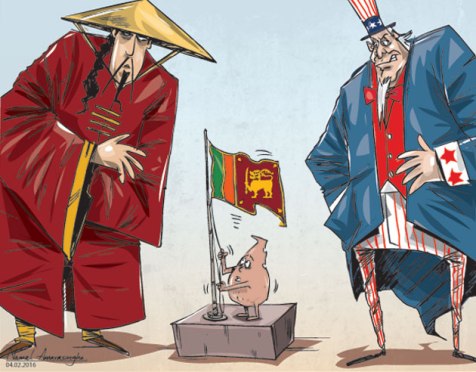
The US envoy’s comments on Sino-Lankan relations drew a strong riposte from the Chinese embassy
Colombo, October 7: The United States and China are now openly and officially fighting over Sri Lanka, shedding any reservations they may have had about making the island nation a bone of contention.
US Ambassador Alaina Teplitz kicked off the fight with an interview to a local English daily in which she openly expressed concern about Sri Lanka being taken for a ride by the Chinese through their development projects and about the danger of losing its sovereignty to China.
Given its new-found tactic of ‘wolf diplomacy’, a strong and quick riposte came from the Chinese embassy, which accused the US envoy of flouting diplomatic norms by making adverse remarks on the relationship between the host country (Sri Lanka) and a third country (China). The embassy’s statement slammed the US for brazenly violating the sovereignty of several nations by direct military interventions. China asked the US to quit the habit of lecturing to other countries about safeguarding sovereignty when it is nakedly interfering in other countries, breaking WTO rules and imposing unilateral sanctions.
While it’s not surprising to see the US interfering in a sovereign country’s internal affairs, the general public are astonished to witness its despicable attempt to manipulate others’ diplomatic relations. Both China and Sri Lanka, as independent countries, have the full right to develop relations with foreign countries according to their own need and will,” the embassy said in a statement, adding, The way Sri Lanka and China have engaged with each other has repeatedly stood the test of time, and the government and the people of Sri Lanka have their own independent and fair judgment on their relations with China. The US has no power or obligation to lecture on China-Sri Lanka relations. Such naked hegemony, supremacy and power politics will neither be tolerated by the Chinese nor be accepted by Sri Lankans.”
‘Kick Habit Of Lecturing’
The Chinese statement went on to say that China strongly suggest” that the US quit its addiction to preaching others and applying double standards.
Such ridiculous and hypocritical behaviour will only damage the US’ poor international reputation which is already hanging by a thin thread,” it warned, listing four simple and helpful steps” that Washington should take to repair the damage to its reputation. These are:- (1) Don’t slander other countries’ work in fighting the COVID-19 pandemic while topping the world in COVID-19 cases; (2) Don’t pretend to be the guardian of free trade while violating the WTO rulings; (3) Don’t hold high the banner of transparency while covering up the controversial MCC agreement; (4) Don’t smear others’ normal bilateral cooperation by raising the issue of sovereignty while bombing foreign countries, occupying overseas military bases and imposing unilateral sanctions.
US Advice to Sri Lanka
Earlier, in the interview with the English daily, Ambassador Teplitz questioned China’s trade deals with Sri Lanka and asserted the need to ensure that global standards of free trade and a fair investment climate are in place for the benefit of Sri Lankan and US businesses.
Teplitz noted that the US believes partnerships between countries should be open, transparent, and mutually beneficial – and if this is what Sri Lanka’s relationship with China embodies, then the US will encourage it.
‘Our concern is that Sri Lanka is not vulnerable in its relationships, and that this country is able to negotiate the best deals supporting sustainable, environmentally sensitive, and affordable results,’ the Ambassador said in the interview.
She noted that a 2019 World Bank study concluded that more than 60% of PRC-funded BRI projects had been allocated to Chinese companies and stressed that tender processes are opaque.
The World Bank called for open and transparent public procurement to increase the likelihood that BRI projects are allocated to the firms best placed to implement them. Sri Lankan think tank Verité Research analyzed 50 high value loans from the PRC to Sri Lanka. All but one loan (where data was available) were 100% ‘tied’ – meaning the loan terms dictated that contracts and tenders be awarded to Chinese contractors, limiting the ability of Sri Lankan and global firms to compete for these projects. Fair competition would lower prices and ensure better quality,” she said.
The ambassador noted that Sri Lanka is a sovereign nation and it is not up to the United States to dictate the quality of Sri Lanka’s partnerships, but the US does believe it is better for countries if transactions are transparent and cost-effective, and if they create jobs and other material benefits for local people.
‘It’s important that global standards of free trade and a fair investment climate are in place for the benefit of Sri Lankan and US businesses,’ she said.
Part of Global US Campaign
What Teplitz said was part of the US global no-holds-barred anti-China campaign. The choice of Sri Lanka to stage attacks against China is not surprising, given the latter’s strategic location in the Indian Ocean. The ‘Quad’, which the US has sewn together to contain China’s economic expansion and alleged military ambitions in the Indian Ocean Region (IOR), will be useless without Sri Lanka playing a supportive and pivotal role.
Hence the US concern over China’s hold over the Hambantota port, a major container terminal in the Colombo harbour and all its infrastructural projects in Sri Lanka. The fear is that Sri Lanka will come under the tutelage of Beijing unable to pay back the huge loans received from China.
But the Sri Lankan government’s contention, as stated by President, is that Chinese funds are required for much-needed infrastructure projects and the facilities created are being used only for economic purposes. The president has also let it be known that Sri Lanka does not want to become a theatre of Big Power rivalry and that it wants the Indian Ocean to be a Zone of Peace, governed by international law.
But the US and its allies, cannot but look at the economic advance of the Chinese in the region with trepidation as China continues to advance economically even after COVID-19, while the US and the West are languishing. China is continuing its massive infrastructural projects under the multi-billion dollar Belt and Road Initiative (BRI) after having vanquishing COVID-19 at home. Attacks on China by the US and its allies along with economic sanctions will therefore continue.
Ishan Tharoor, writing inThe Washington Poston July 24, 2020 quoted US Secretary of State Mike Pompeo as branding Chinese President Xi Jinping a true believer in a bankrupt totalitarian ideology” in pursuit of global Marxist hegemony”. Pompeo scolded those within the US States and elsewhere in the West who had chosen the path of timidity” and acquiescence to China’s perceived manipulation of the global system and plans for further domination. He made a direct call to ignore the Chinese government and engage the Chinese people to topple the government. The Communist Party fears the Chinese people’s honest opinions more than any foreign foe,” Pompeo said.
But both Donald Trump and his Democratic electoral opponent Joe Biden will have to take stock of the risks of the current path of escalation, Tharoor wrote.
This is backed by Jie Dalei, a professor of international studies at Peking University, who said: Both sides should practice some ideological humility. One does not have to change [or] become the other to be able to coexist. In fact, the existence of multiple competitive ideologies is the normal state of affairs throughout most of human history. The domination of one ideology in the global marketplace of ideas is the exception rather than the rule.”
Lakna Paranamanna on why the US is losing out in the soft power game in Sri Lanka
Hollywood has been one of the most effective soft power instruments of America; a medium that charmed the global citizen on liberal values, popular culture and the ‘American way of life’. The recent release of Disney’s live action remake of ‘Mulan’ – a story of a girl who breaks cultural stereotyping and barriers to become a soldier in China’s imperial army – marked an interesting turn of tables; the deputing of Hollywood into a vehicle that promotes Chinese values and culture. But Mulan is not the first of its kind and is only another step in the growing dependency of Hollywood on the Chinese movie market.
Mulan was met with harsh criticism in the U.S. and abroad. The American movie industry was accused of ignoring human rights violations committed on Chinese soil against ethnic minorities for financial gain – hashtag #boycottMulan was trending. However, for some movie-goers Mulan though not a masterpiece ended up serving a thick slice of glorification of Chinese dynasty, culture and China’s national narratives.
Soft power
Concept of ‘soft power’ by American political scientist Joseph Nye refers to instruments that enable a country to influence other nations without coercion. Soft power has proven itself to be an important tool of power projection and diplomacy particularly in the present information age where relying on hard power alone has not proven successful.
America was once a success story on the strategic implementation of soft power, which helped boost its image alongside its military prowess as the world’s superpower. Starting with its decline as a hegemony, America’s global image became one of a warmongering nation owing to its interventions in the Middle East during the Bush administration, worsened by the Obama administration. In the words of Nye himself, at present the incumbent US president and administration continue to further erode America’s soft power.
As of 2016, the US remained the largest donor to Sri Lanka funding close to 44% of all foreign grants while China remained the biggest lender. China has been accused by none other than Americans themselves of systematically pushing Sri Lanka towards a ‘debt-trap’. But any hopes of salvaging Sri Lanka from a strong Chinese foothold are long gone – with its most obvious manifestations standing tall in the form of the Lotus tower, Colombo Port City and the Hambantota harbor.
Despite allegations however, there is minimal public outcry against Chinese projects in Sri Lanka , particularly when compared to initiatives led by the U.S. such as the Millenium Challenge Corporation (MCC), PeaceCorps that sparked widespread public protest among Sri Lankans, indicative of a growing failure in American soft power in Sri Lanka. Despite its repeated efforts at shedding the negative perception among Sri Lankans, history seems to be repeating for the US, considering public protest similar to what was seen against the MCC occurred some three decades ago against the establishment of the Voice of America facility in Iranawila as well, which resulted even in the death of a Sri Lankan.
Soft power moves in Sri Lanka: China vs the U.S.
Despite having mastered the art of public diplomacy and soft power, why has the US not been able to paint a more favourable picture of itself among Sri Lankans?
Although late to the game, the art of soft power is not new to the Chinese. Their legendary statecraft manual Art of War” describes multiple ways in which war can be waged to subdue the enemy without an armed conflict, whereas American propaganda efforts was a relatively newer concept that rose to popularity during WWII initiated by Edward Bernays.
Also, Sri Lanka was by no means a level playing field to American and Chinese soft power play – the latter is equipped with rich historical ties with Sri Lanka that predates to 4th century AD. This, coupled with Sri Lanka’s colonial history has no doubt caused Sri Lankans to view intentions of the West with a wary eye.
A significant erosion of American image and interests in Sri Lanka began however with the push for international accountability mechanisms on allegations of grave human rights abuses in the post-war context, enabling domestic political narrative to project the US-led West as bearers of sinister intentions against Sri Lanka’s hard won territorial integrity and violating its sovereignty. Projection of the US’ ill intentions caught solid ground given its conduct in the war waged against Iraq and its involvement in other Middle Eastern conflicts. Today almost a decade on, US’ actions at the UNHRC actions have led to the portrayal of the US as a hypocrite in the eyes of the locals, following withdrawal from the UN human rights body calling it a ‘cesspool of bias’ and sanctions imposed against International Criminal Court staff investigating American troops.
The Chinese on the other hand, have continuously chosen to stay away from intervening in domestic politics, making economic interests their leading marker in its relations with Sri Lanka, at least superficially. While Americans are busy tussling over issues of high politics, the Chinese have launched a clever plan of reaching out to the very grassroots of Sri Lanka – rightly understanding that with the growth of populist politics, the larger public opinion is no longer dependent on the elites or think tanks in Colombo but with those at the community level.
Chinese cultural and education diplomacy has played a key role in shaping a favourable national image in the eyes of Sri Lankans. Instead of trying to impose and thrust their values upon us, the Chinese have integrated with local culture via a multiplicity of avenues – be it through assistance for Buddhist temples, China – Sri Lanka friendship villages, Chinese students specializing in Sinhala language or the organization of mass weddings for Chinese couples – in moves seeking to embrace Sri Lankan culture and traditions.
Another success in China’s soft power engagements is its outreach with Sri Lankan media. Earlier this year, the US government funded non-profit think tank Freedom House accused China of coaxing Sri Lankan journalists to propagate CCP propaganda within Sri Lanka. Until Covid-19 travel restrictions hit Sri Lanka, China hosted a large number of Sri Lankan journalists from both print and electronic media in China on familiarization tours. Although not at the same level of professional capacity building, these tours are no different to the intentions of American exchange programs such as the International Visitor leadership Program (IVLP). The difference between them however lies in the fact that the American exchange programs remain highly selective due to the limited availability of slots, whereas the Chinese programs remain open to many. It has enabled the Chinese to maneuver the local media landscape with ease and deter any negative narratives of Chinese interests for Sri Lanka – a major win as far as soft power interests are concerned.
Another key reason for Chinese public diplomacy success helping bolster its soft power is the ability of Chinese diplomats to converse in the vernacular. Not only do they conduct their engagements in the vernacular but have adopted Sri Lankan names for ease of communication, helping expand the range of engagements with a wider Sri Lankan audience. Set this against American public diplomacy, where despite language training prior to a posting, not a single American diplomat has succeeded in delivering a speech in the vernacular languages , severely limiting their engagements to English speaking journalists and audiences.
Is the U.S. losing its plot on soft power?
Globally however, the advantage still lies with the US, at least according to SoftPower30 – a global ranking of the top 30 soft power houses in the world based on a series of criteria including digital diplomacy, education, culture, engagement etc. The Portland based ranking system categorises the US at 5 and China at 27 as of 2019. However, SoftPower30 also notes that Chinese cultural soft power has formidable strength, describing it as a ‘cultural juggernaut’.
Since 2019 China has suffered several hits against its national image due to accusations of human rights violations of the Uigher Muslims, skirmishes with India, restrictions of personal freedoms, labor exploitation in African nations, interventions in Hong Kong as well as being complicit in allowing the Covid-19 pandemic to spread worldwide.
These hitches presented the US with an opportunity to resume its place in the world order in terms of soft power, particularly in nations where its image has suffered grave blows. Instead America remains distracted with its own domestic issues that have spilled over to the global arena via the BlackLivesMatter riots, mishandling of Covid-19 pandemic, incurring further damage to its credibility. To make matters worse, America’s withdrawal from the World Health Organisation created a vacuum, while China rose to the challenge at hand despite the mounting accusations, rolling out ventures such as ‘mask diplomacy’ – an initiative to ship much needed medical supplies worldwide.
China is swiftly upping its game on improving its national image across the global. They have no dearth of resources with 1.3 billion people and 960 million square kilometers of territory at their disposal. While the Trump administration has shoved soft power on a backseat, the Chinese have recognized it as an important tool of diplomacy in its arsenal as evidenced through moves such as the establishment of the Beijing Foreign Studies University’s Public Diplomacy Research Center (2010).
Despite setbacks experienced in Sri Lanka, apprehension towards it foreign policy dominated by hard power, the American Dream has managed to retain its worldwide appeal. But it should not serve as an excuse to remain complacent, if the US wishes to promote its national interest and maintain its status in the global heirarchy. Going forward, it would be prudent for the US to invest more in strengthening its soft power initiatives, as opposed to the hard power driven foreign policy that does not even attempt to conceal their narrow self interests. Even in terms of Sri Lanka and building America’s national image, the same policy is applicable. Washington would be well advised to drastically change the direction and scope of their foreign policy instruments and outreach engagements – instead of attempting to beat Sri Lanka into submission in international fora, to focus on tangible deliveries as well as a more proactive approach to understanding local culture and context that goes beyond mere social media homages to local gastronomy, wildlife and picturesque landscapes.
Of the 1402 employees at the Minuwangoda Brandix Apparel factory, only 125 employees reported themselves to the Police today (8). However, 245 employees had reported themselves yesterday (7), said the Police Media Spokesperson, DIG Ajith Rohana.
But, according to State Intelligence Service and the Department of Census and Statistics, few workers have evaded the police and are believed to have fled the city.
Furthermore, the Police Media Spokesperson stressed on the fact that today (8) was the final day for the ‘evaders’ to report themselves in. Therefore, he urged the employees who neglected Police instructions to visit the nearest Police station as soon as possible.
He also warned that if an employee still opts to ignore the instructions, stern action will be taken against the individual.
The report of the Presidential Commission appointed to look into the irregularities of the ETI institution has been handed over to President Gotabhaya Rajapaksa.
The commission have pointed out in its report that there is a possibility of taking over the properties owned by ETI to the government and to take legal action against the owners.
According to the report, it has been revealed before the Commission that the transaction of selling the property of E.A.P. Broadcasting including ETI to a foreign company has not been done properly.
Former Supreme Court Judge K.T. Chithrasiri was the Chairperson of the commission while the other members of the commission, were a senior banker D.M. Gunasekera and former Solicitor General Suhada Gamlath.
The term of office of the Commission which was appointed for a period of three months on January 9 was later extended and accordingly the term of office of the Commission is due to end the day after tomorrow.
ETI Officials affiliated to the institution as well as officials of the Central Bank were summoned before the Commission on several occasions. Evidence was sought as to whether any irregularities had taken place in the institution
According to the revelations of a group of former employees of ETI company as well as the statements of the Central Bank officials, a number of suspicious incidents regarding the ETI deposits were revealed.
The property belonging to ETI has been sold and a number of important details regarding the transaction have been revealed to the Commission and the report submitted by the Commission to the President has included several important revelations in this regard.
A 18 year old youth was arrested by CID in Meetiyagoda for publishing a false news item regarding curfew on social media using the Presidential Secretariat letterhead.
At present 14 hospitals have been allocated for the admission of coronavirus infected people.<
Head of the Epidemiology Unit, Dr. Sudath Samaraweera stated that 14 hospitals including IDH, Welikanda, Minuwangoda and Theldeniya have been allocated.
Meanwhile, 526 employees of the Minuwangoda Brandix garment factory and their associates are currently being quarantined at three quarantine centers in Habaraduwa and Koggala.
The Galle District Epidemiology Unit stated that they have been sent to quarantine since the 6th of this month after conducting PCR tests.
It was revealed at the Committee on Public Enterprises (COPE) held yesterday (06) that a loss of Rs. 1.1 billion has been incurred as a result of not specifying the quantity of coal required when calling for tenders for the purchase of coal by the Ceylon Coal Company (Pvt) Limited.
It was also revealed that the Ceylon Coal Company (Pvt) Limited had purchased coal under the short-term method, without following the proper procurement process.
This was revealed at the first meeting of the Committee on Public Enterprises (COPE) held in Parliament convening a group of senior officials of the Ceylon Coal Company Limited to inquire into the procurements made by the Coal Company.
The committee was convened under the patronage of its chairman Member of Parliament Prof. Charitha Herath and Minister Mahinda Amaraweera, Minister Mahindananda Aluthgamage, State Minister Nalaka Godahewa, State Minister Sarath Weerasekera, State Minister Ajith Nivard Cabraal, Members of Parliament Patali Champika Ranawaka , Eran Wickramaratne, Jagath Pushpakumara, Premnath C. Dolawatta, S. M. Marikkar and Rauf Hakeem were present at the meeting.
The officials told the committee that they expected to take the advantage of the fluctuations in market prices by purchasing coal under the short-term method rather than the long-term method. However, the Chairman of the Committee on Public Enterprises further pointed out the need to implement these tenders with the approval of the Cabinet of Ministers in accordance with the prescribed procurement process.
It was revealed at the COPE that the Norochcholai Lakvijaya Power Plant was added to the national grid to meet a 900 MW electricity requirement, but there was a shortfall of 90 MW. It was further revealed at the COPE meeting that only 810 MW is actually being generated and that 90 MW of vacuum is an unavoidable electricity requirement.
It has been revealed that the Secretary of the Cabinet Procurement Committee has been absent from the Procurement Committee on eight occasions and an Additional Secretary has been appointed for this purpose. Therefore, the COPE Committee noted that there is a problem with the legitimacy of decisions taken. However, officials said that it was possible to appoint an additional secretary for this purpose. The Chairman recommended to submit an immediate report to the COPE to ascertain whether this was correct.
The committee questioned the reasons for handing over three barges purchased by the Ceylon Electricity Board at a cost of Rs. 1100 million to the Sri Lanka Navy. The Committee directed the Secretary to the Ministry to submit an immediate report on the methodology of handing over the barges to the Sri Lanka Navy and the reasons for their inability to maintain them.
Although it was stated in the newspaper advertisements that 5 years’ experience in coal supply is required, the matter of issuing applications to companies with 3 years’ experience was also discussed at this meeting. The committee was of the view that this had put the coal company at a disadvantage. The committee also discussed that there was no formal procedure for the last day of bidding. The Committee decided that these matters should be duly investigated.
The Committee also considered whether the involvement of the Sri Lanka Shipping Corporation in the purchase of coal would result in a loss than the purchase of coal through another institution under the normal tender system. The Committee also recommended to submit a report in this regard to the Committee on Public Enterprises as soon as possible.
The committee also noted the need for regular meetings with the Ceylon Electricity Board, the Ceylon Shipping Corporation, the Ceylon Coal Company and the relevant ministry and COPE members also drew attention to the cost of diesel power plants and coal power plants.
The COPE Chairman finally recommended to submit all reports on these matters to the COPE within a month.
Managing Indo-Sri Lanka relations is
prioritised as the most important item in the agenda of the Sri Lankan Foreign
Ministry. In fact, the President and the Prime Minister have stretched every
nerve since they came into power to go beyond the official diplomatic
interactions to maintain a personal rapport of the best kind with Prime
Minister Narendra Modi. The recent meeting between the two prime
ministers was meant to smoothen the rough patches and reinforce the good
relations between the two heads of states. The official communique of the
Indian Ministry of External Affairs (26/9/2020) has classified the meeting as a
Virtual Summit” between the two Prime Ministers. Indo-Sri Lanka relations
could not have been considered at a level higher than this Virtual
Summit”.
The Joint Statement on Virtual Bilateral Summit”
issued by the Ministry of External Affairs in Delhi should be read against this
background of both parties wanting to emphasize the importance of each
other in formulating policies for mutual benefit in a region that has
been hotting up, slowly but surely, with China muscling in to remind that two
tigers cannot hunt in one mountain. With China maintaining its steady
pace in the region the question for India is quite straightforward: Can India match
the Chinese art of winning and influencing friends in the region?
For instance, in the Virtual Summit” in Delhi
has India taken any new initiatives, breaking away from its failed
policies in the past, to pave the path for peace and reconciliation to the North-South
crisis which was fuelled to a critical extent by India’s interventionist
policies? India has a serious moral and political duty to play a positive role
– not a partisan one – having been a part of the problem from the early
days. Though India has been parading as the solution it has, in reality, been a
provocative source of causing, worsening and perpetuating the problem. It
has been consistently rocking the cradle and pinching the baby. For how
long can India keep going down this track without destabilising its
own position in the region? How many more Rajiv Gandhis and professional
soldiers must sacrifice their lives for India to regain its common sense?
When will India realise that a failed policy/strategy, laid to rest by
the people, cannot be resuscitated to do a Lazarus even if they had Jesus
or Sai Baba running the Indian Foreign Office. In any case, how long did
Lazarus last after he was revived?
Most of all, India’s diplomats – some of whom are
brilliant — must ask seriously whether the time hasn’t come for them to
revisit the failed past and learn lessons for a constructive and
meaningful future? Or is India doomed to be stuck in the failed past
(e.g., Kashmir) and take the whole region into a deep black hole from
which none cannot get out?
Take the case of the Joint Statement on the
”Virtual Summit”. It sums up the conclusions of the two prime ministers. It has
many positives but one critical lapse makes it look like a pail of sweet
white milk with a smidgin of cow dung thrown into it. It is Clause 7 of the
Joint Statement that sours the whole text.
It says: 7. Prime Minister Modi called on the Government of Sri Lanka to address
the aspirations of the Tamil people for equality, justice, peace and respect
within a united Sri Lanka, including by carrying forward the process of
reconciliation with the implementation of the Thirteenth Amendment to the
Constitution of Sri Lanka. Prime Minister Mahinda Rajapaksa expressed the
confidence that Sri Lanka will work towards realizing the expectations of all
ethnic groups, including Tamils, by achieving reconciliation nurtured as per
the mandate of the people of Sri Lanka and implementation of the Constitutional
provisions.”
In this para the two contradictory positions have been
juxtaposed in precise terms bringing out the stark differences in the approach
to the vexed issue of Tamil aspirations” and India’s interventionist role in
it. For his part, Narendra Modi is talking only of the aspirations of
the Tamil people”. Mahinda Rajapakse, on the contrary, is responsible for all
the communities – just not the Tamils – and he focuses on the
expectations of all ethnic groups, including the Tamils.” It is in the interests
of Modi domestic politics to plug the narrow interests of the Tamils only.
Mahinda has a larger constituency. His constituency is the whole nation and
he has a clearly defined mandate to look after the interests of all
communities. Modi cares only for his Indian interests.
In the Joint Statement Modi is reiterating the failed
policy of India that (1) destabilised the oldest democracy in Asia, (2)
reinforced the fascist power of a Tamil Pol Pot in the North of Sri Lanka and
(3) led to the defeat of the fourth largest in the world”, as claimed by
the LTTE, which had the power to even assassinate Rajiv Gandhi, the
Prime Minister, humiliating India in the eyes of the
world. Indian strategists should also realise by now that the Thirteenth
Amendment has not worked for the Tamils who were supposed to benefit most by
it, and to India’s status as a mighty force in the Indian Ocean Rim, (the
fourth largest army could not even disarm Prabhakaran as promised in the
Indo—Sri Lanka Agreement), or protect its own Prime Minister within its own
borders. At best, reiterating the Thirteenth Amendment (i.e., the Tamil issue)
gives India an opening to interfere in the domestic politics of Sri Lanka. The
Thirteenth Amendment is stoked from time to time to sustain and protect Indian
interests in the Southern flank which can’t be left open for rivals to exploit.
It is also one of the tools in the neo-imperialist armoury of India which is
yet to learn that imperialism is a force that can ricochet and the
destroy the imperialists more than their victims. India is a
tragedy surrounded by the angry victims of the (unintended) consequences of its
arrogant and short-sighted foreign policies.
Pushing the failed Indian line, Modi has once again
called on the Government of Sri Lanka to implement the Thirteenth Amendment”.
It is, as everyone knows, an Indian creation to further Indian interests.
Moreover, it is raised as a reminder to impress that it is India’s prerogative
to dictate what is good and bad for Sri Lanka. Mahinda Rajapakse,
quite rightly, has countered this exhortation” by emphasizing reconciliation
as per the mandate of the people of Sri Lanka and implementation of the
Constitutional provisions.” These are two conflicting positions. The Thirteenth
Amendment project directly the Indian interests. And Mahinda Rajapakse is
saying, quite bluntly, that he is there to protect the Sri Lankan interests. He
is insisting that he has a mandate to fulfil and that is to obey the will
of the people and not the will of a foreign power. Also, with the additional
rulings from the Supreme Court he has obligations to the Constitution and
he cannot override those to satisfy foreign interventionists pursuing their
interests. Besides, the mandate of the people of Sri Lanka” given to him this
time round has, more than at other times, rejected any external interventions
in the domestic affairs.
In short, the Thirteenth Amendment remains as a
pathetic monument to India’s diplomatic folly. It has been rejected by the Sri
Lankan minorities and the majority. It was meant to solve mainly the problem of
Prabhakaran. He brazenly rejected it and took the next step of assassinating
the Indian Prime Minister who imposed it against his will. It was
supposed to satisfy the political aspirations” of the Tamils. But to this day
it stands as the most dysfunctional solution – as dysfunctional as the
Americans planting Din Diem, a Catholic in Buddhist Vietnam, as their puppet. A
common feature of imperialists is to plant their puppets and solutions in
foreign/occupied territory which invariably drag them into black holes. Sri
Lanka, in short, was India’s Vietnam. India gained nothing. India saved
nothing. Modi’s latest statement is a confession of the fact that its
Thirteenth Amendment has failed. If it was successful there would have
been no necessity to raise it again. Adding insult to Indian injury, the people
in all the provinces have been functioning happily without the Provincial
Councils for the last two years. So, what is the use of a solution that is
superfluous and unwanted by the majority and the minority?
The Indian experience of dealing with its own major
minority is also instructive in dealing with Modi’s insistence on the full
implementation of the Thirteenth Amendment. Let us, for instance, restate the
formula in the Joint Statement substituting the Muslims in India to that
of the Tamils in Sri Lanka. Let us consider a similar summit meeting with
Modi, and Imran Khan, the Pakistani Prime Minister, who recently twittered that
the Muslims in India are worse than the Jews in Hitler’s Germany. Let us
imagine that Imran Khan had said that India should address the aspirations of the
Muslim people for equality, justice, peace and respect within a united India,
including by carrying forward the process of reconciliation with the
implementation of the countless UN Resolutions on Kashmir”. Well, how would
India react to this counter move by Pakistan? If Modi thinks that his
solution is good for Sri Lanka why isn’t the same solution good for India
to solve he longest running international crisis point in Kashmir? Wouldn’t
India consider that to be a direct intervention in its the domestic affairs?
Besides, India has applied all its diplomatic,
political, international and military forces to resolve the issue of Tamil
aspirations” which has several layers of meaning, including separation, and
failed. If India with all its might could not implement its own formula for
the betterment of the Tamil people, disarm the Tamil terrorists they
armed, and stabilise the region for its own interest what is the
purpose of going down the failed track again and again?
Above all, the rationale on which Modi’s argument for
the implementation of the Thirteenth Amendment is coloured by a political narrative
overloaded with distortions, fiction, and concoctions. There would have been
some justification for the claim of the Tamils to be the victims of the
Sinhala-Buddhist majority if, as they claim, the Sinhala-Buddhist had done
one fraction of what the Tamil Vellalas and the ruling elite of Jaffna
had done to the oppressed outcasts who were treated as despised pariahs kept
outside their sacred domains of
Jaffna. Any accusation against the Sinhala-Buddhist
must be compared with the subhuman treatment of the Tamil minority by the
Vellala majority. The high-caste Vellala elite ruled Jaffna with an
iron-fist, overseeing every aspect of Jaffna society from the womb to the tomb.
The low-caste Tamils were not allowed to walk in God-given sunlight. They could
not bury their dead if they did so according to Hindu rites – privileged ritual
reserved only for the high caste. They could not worship the same God in
the Hindu places of worship. They couldn’t drink a sip of water from
Vellala wells. Their schools were burnt. Vellala caste fascism bred the
political fascism of Prabhakaran who killed more Tamils than all the other
forces put together. Killing Tamils by Tamils was a part of Tamil
culture ever since Sankili marched down to Mannar on the eve of Christmas
1654 and massacred 600 Tamil Christians for owing allegiance to the Portuguese
king. Prabhakaran was his avatar.
The Vellalas were the most privileged caste/class in
Jaffna. They dominated Jaffna society from feudal times. They did not
given inch to any other rival caste. They were the owners of land,
temples and schools – three of the commanding heights of Jaffna society. With
their education they occupied key positions in the colonial
administrations. They had the ear of the colonial masters and as their
subagents in the colonial administrations they had the power of the state
behind them. Maintaining the caste supremacy was their primary political
mission. One of the last acts of Sir. Ponnambalam Ramanathan was to go on a
mission to the Colonial Secretariat to urge the preservation of the
existing caste system that enthroned the Vellalas as the supreme masters
of Jaffna. He argued that it was a system necessary for the maintenance
of law and order. In other words, on the eve of independence they were
the most privileged community in Sri Lanka., sitting on the right-hand side of
the ruling British gods. When G. G. Ponnambalam went before the Soulbury
Commissioners and complained of discrimination by the Sinhalese against the
Tamils, the British Commissioners who examined the details dismissed it as
having no validity.
In essence, the Vellala Tamils, who were also the
political masters of Jaffna, were the most privileged community in Sri Lanka.
For them to claim to be the discriminated victims of the majority Sinhalese has
been a common political ploy to gain political sympathy and through that
political mileage. It is a narrative that they sold successfully round the
world, including the Foreign offices of India and, believe it or not, Sri Lanka
too. This ideology of victimology has been used to great advantage by the
Vellala Tamils to project themselves as the victims of the Sinhala-Buddhist
majority. It is this ideology that has influenced the foreign policies of
ill-informed global foreign offices. So, when Modi called on the Government of Sri Lanka to address the aspirations
of the Tamil people for equality, justice, peace and respect within a united
Sri Lanka,” he was parroting the usual litany of complaints of the most
privileged community in Sri Lanka.
Looking back at the history of the Vellalas (aka, the
Tamils), it can be asserted incontrovertibly that never in the history of
Jaffna has the Tamils (meaning all layers of Jaffna society) ever
reached the heights of equality, justice, respect and dignity as in the
post-independent years of what they call the Sinhala state”. Take, for
instance, the national flag. There are 193 flags flying at the UN. Never in the
history of Jaffna Tamils did they ever have a place of recognition and respect
internationally as in the Sri Lankan flag. Not even in the Indian flag – the
one and only homeland of the Tamils. When the heads of states
stand up for the Sri Lankan flag they also stand up for the Muslims and Tamils.
Under which Tamil ruler did the Tamils receive this honour?
Take also the national currency, stamps, and other
national symbols. Tamils have been given their due place of respect in
every respect. But the reality has been distorted to demonise the Sinhala
state’”. R. Sampanthan goes around the world complaining that the Tamils
have lost their dignity, respect, equality and justice under the Sinhala
state. What respect and dignity did he get from the one and only Tamil
state established by the Tamil Pol Pot? Did he ever have the right to act on
his own in his Tamil state? In which state did he find the right to
dissent and act independently with dignity? When he and his fellow MPs
were taking orders from his Tamil Thallivar which state gave him his due
dignity and the respect that any individual deserves? Did he feel like a better
human being when he was in Prabhakaran’s state or in the ’Sinhala state”?
Oh, by the way, when the Vellala gangs cracked the heads of the protesting
low-caste with bottles filled with sand in Maviddipuram when they were
demanding the right to worship their God in the Hindu temples where was he? Did
he fight for the dignity and the rights of the Tamils who were oppressed and
kicked around as a subhuman species? The Tamils also talk of peace. Who
declared the war in Vadukoddai and ran it for 33 years, causing untold
suffering to the Tamil people?
Consider also the case of R. Sampanthan who is a
lawyer. Did he find justice in the Tamil courts of Prabhakaran or in the courts
of the Sinhala state” presided, sometimes by his fellow-Tamils like
Justice C. V. Wigneswaram? Did he ever as a lawyer fight for justice in
Prabhakaran’s courts? Did he ever fight for the rights of the abducted Tamil
children in the courts in Vanni? Did he ever complain
to the Indian Prime Minister or the American Ambassador that there is no
justice in Prabhakaran’s courts? That narrative was never told. Only the
Sinhala state” was demonised. The list is unending. As I said earlier, there
has not been a period in the history of Tamils better than the last 72 years
under the Sinhala state”. Yes, there were horrendous and condemnable
periods during which the Sinhalese behaved like beasts. No decent Sinhalese is
proud of those instances. Without making excuses, all those instances have been
a part of human history. No community is exempt from violence. But, on
balance, judgments are passed on the greater evil. Invariably , fallible and
fallen man has to be judged not on the blameless ideal but on the lesser evil
which is the fairest judgement available to us all. On that score, the
Sinhalese have strived to build a culture that should provide a fit-dwelling
for all men” (Mahavamsa). And that includes the Tamils.
Mahinda Rajapakse has reiterated that message at the
Summit in India. His act in India at the Summit was on a low key than the
time he was confronted by David Milliband and Richard Kouchener, the two
foreign ministers of UK and France respectively. But the message was the same
and couched in diplomatic terms. While cheap politicians go for the size
of coconuts in the market place the people take the measure of their
leaders by the size of the giants they take on in defending the nation. It is
acts like this, where he stands up for the nation, that makes him
the most popular leader. Who can blame him for winning votes without
trying?,
A few months ago, the country-wide
highlighted problem that was directed to the president was difficulty in
obtaining credit facilities for the small business sector and neglecting small
business communities by organized banks in the country. The issue has been
widely discussed by bankers as well as policy-makers of the country. The issue is a pressing question to all
communities and it is not a question quickly emerged but it is a question
existing in the country since the early 1990s. the budget speech in 1970,
Dr.N.M.Perera highlighted the issue and later the government directed several
policy actions, despite numerous efforts to solve the problem it is continuing
in the country for more than a century. Why this situation and who is
responsible to expand the problem?
Historical perspectives of trading
bank operations provide evidence that bank credits have been playing a major
role in capital formation and investment acceleration in developed and
developing countries during the past century.
Investments in the USA, UK, and Australia had been boosted by bank
credits after wartime massive backwardness. Bank credits yielding a high level
of profits to banks, thereby generating billions of tax revenue to the
government. American researchers in the early 1990s on the secret behind the
massive Japanese economic achievements have revealed that lower cost of capital
manipulated by bank credit policies in Japan gave a big push for investors to
broaden their manufacturing base and encouraged investors to make more
investment through borrowing from banks.
Japanese corporate management practices engineered the own for large
corporations to create credits for debt capital and working capital. The entire
finance sector became family trees of banks.
Banks are a vital source of capital
for investors all over the world especially, when the share capital is not
sufficient to entertain the demand of credits, and especially, in Sri Lanka
banks positively responded to the business sector providing credit supports to
meet the demand. The mentality of the business community reflects that
consumers don’t satisfy with the actions of banks. The nature in Sri Lanka, despite the concept
of market capitalization, small and medium investors contrive the short and
medium-term capital requirements from the banking system, and late 1990s in
Asian countries, trading banks were severely pressurized by credit demand and
the concept of Asian saving should be invested in Asia through Asian bond
market came to bruit in the region.
Although the role of banks has reduced in the process of proving finance
for business in developed countries the task of capital formation seems to be
changed in Sri Lanka, it could be observed that large and small business
community are always going to banks seeking credit supports.
There is little evidence in Sri
Lanka that understanding credit policy has assisted in engineering required
capital for business. Sometimes ago when I was working in a manager position in
a regional Sri Lanka, I considered that credit risks of the bank could be
massively reduced by education bank credit policies to customers and
coordinated the policy process between the bank and business community using
appropriate strategies to educate the business community, the strategy was
practically successful. The explicit nature in the current bank management is
the details of credit policies are not disclosed to customers and in many
instances and customers made hostile responses against banks and in such a
difficult situation using unacceptable methods or dishonest strategies to
fulfill the requirement.
Credit policy development was a
strange management practice bank operations and even bank executives in the
past were lacking the knowledge of management strategies regarding credit
policy developments and some operational procedure that was set in various
operation manuals, in many banks in Sri Lanka operation procedures were compromised
on the British management procedures, which had been relied on common law
evidence on conventional banking practice. American and Japanese banks departed
from the British conventional praxis and manipulated their systems. Many top bank executives in government banks
in Sri Lanka did not know about bank credit policies which were set on a
broader spectrum such as accounting, economic, law, and many other conventions.
The policy role until the
initiation of policy development in 1989 with the support of Booz, Allen, and
Hamilton was a neglected area, but essential to maintain a healthy financial
system to stay in a fluctuating environment in a liberal economic system. Many banks in Sri Lanka considered that the
development of management policies for various functional areas such as
customers accounting performance, credit administration, asset and liability
management, liquidity management, asset quality management, and relationship
management would be a partial role of the Central Bank, and trading banks have
no participative role in it. This
mentality has been supported by the ownership of major banks in Sri Lanka (the
government). The regulatory role of the
central bank ignored the encouragement or making regulation congruous of the
market dynamism and diversity brisked in limited functional areas of banks.
Since the 1990s banks in Sri Lanka
trading banks especially focused on policy developments, such efforts were
outweighed the political influence (since 1978, government politicians
influenced the bank management for credit decisions) as the government policies
attempted to hold the power of controlling institutions due to several reasons such
as borrowing for covering the budget gap, providing employment, entertaining
political henchmen, investment in public corporations and many others.
Since early 1990, Sri Lanka has
been recording the highest number of failures in non-banks financial institutions,
and the Central Bank directed policy development for trading banks. The liberal
economic system encouraged more imports without discipline and customers jumped
to non-bank financial institutions for borrowing to purchase imported vehicles
and many other items. The burden of credits in the country did not distribute
among the banks and non-bank financial institutions. Bank customers did not understand bank credit
policies, and non-bank financial institutions became more liberal credit
providers considering making profits from the liberal credit market. The worse result of the shifting customers from
banks to finance companies was the lack of protection for deposit holders in
non-bank financial institutions.
The volume of non-performing
credits in the financial system in the current market is more than 10% of the
total credit portfolio and this reflects the unprofitability of trading banks
and rising costs for litigation of customers and recovery efforts. The major
bank in Sri Lanka, Bank of Ceylon has recorded a volume of loss in the current
year and the magnitude of credit loss has been not disclosed by the bank to
people, various factors may have been contributed to this negative result, it
needs to understand that ignorance of credit policies by customers, government
authorities, politicians and managers of the financial system. How to correct this situation should be the
major strategy of the financial system during the next decade.
Deregulation began in the late
1980s forced many banks in the world to disclose credit policies to customers
to control risk factors and to secure market share in the intense competition,
many analysts view that deregulation gave excessive power to banks despite the
point that the market competition will generate pricing benefits to customers,
however, some views that the deregulation gave the power to exploit customers,
and finally, when liberal decision making of banks appeared banks were
exploiting customers and the regulatory authority established a banking
ombudsman office and many times the ombudsman office investigates the
consistency of bank credit policies and credit decisions.
The prime objective of bank credit
policies is to protect banks’ capital base and customer deposits. These two factors are associated with
securing international confidence in the payment system. In Sri Lanka, 99% of credit customers have no
understanding of the prime objective of bank credit policies. Neither private nor government banks
attempted to educate the prime objectives of bank credit policies which impact
the entire financial system of the country. Many banks use vision, mission, and
objectives for advertising intending to attract customers and no leaflet has
been issued to describe credit policy. Bank customers must understand that
capital and customers’ deposits are the foundation of a bank and credit
policies constructed to strengthen the foundation and bank staff have a
fiduciary obligation to protecting the foundation.
The second aim of credit policy is
to maintain a quality credit portfolio in a bank, which reflects the
profitability of a bank and the entire banking system in a country. Credit
portfolio management associated with various concepts and trading bank experts
always advised that the management of a diverse credit portfolio helps to risk
minimization like in investment management.
For example, a bank could maintain Rs. 100 billion credit portfolio that
should be allocated to different industrial areas in terms of risk and
return. This is a highly practical
aspect that invites more research in a bank and to set the portfolio structure
base on practical finding, the profitability of the industry, accounting
standards, and prognosis. The method of setting a portfolio structure is
banking secrets, which might differ from one bank to another.
Banks don’t need to disclose
internal secrets to customers or one bank to another as they are management
strategies, however, customers must know the bank credit policy regarding the
accounting standard, management quality, and collateral quality expected by
banks. If customers have not a clear understanding of policy matters on
industry discerning, competitive standards of companies, management attributes
of customers they would have gone to the president asking credit supports from
the banking system as it happened in the recent past.
To understand bank credit policies
and to gain mutual befits from this process customers need to realize several
points. The first requirement is that
banks provide credit supports to customers based on capital and customer
deposits, which are direct liabilities of the bank balance sheet. Bank credits
are risk assets, which generate from the liabilities to support the community.
Banks whether they are owned by the government or shareholders banks have an
extreme right to protect the organization.
Therefore, banks cannot extend credits customers disregarding the
protection of the organization.
Protecting for banking
organizations, they need to place various covenants and banks can accept risk a
tolerable level and many politicians in Sri Lanka have no idea about this. The ignorance of politicians presses banks to
go beyond the tolerable level. The president and the prime minister need to
educate politicians on this matter and banks should educate customers on the
policy matters.
The regulatory authority of the
Central Bank has a responsibility towards the trading banks that customers
should be given lending policies to reconcile the knowledge gap between the
bank and customers.
UK, France, Canada and wherever LTTE asylum seekers are increasing their numbers and presence has seen an increase in violence and even murders. This attributes to the inherent violence that has been part and parcel of their modus operandi since taking up arms. At present there are knife & sword gangs and it is a matter of time that they will promote themselves to handling more sophisticated armory. The Western intelligence & law enforcement agencies do not need to be told that for a contract, LTTE even assassinated an Indian Prime Minister on Indian soil inducting even Indians for that operation. There is nothing that these LTTE separatist elements cannot do. Sri Lanka, having eliminated the LTTE has seen no LTTE attacks since 2009. But, all of the post-LTTE violence & murders are happening overseas where many LTTErs were helped to run away to and where they are operating from in groups that are now fighting amongst each other for supremacy.Fighting amongst themselves is one thing, we hope that foreign citizens will not become victims too.All that will depend on their handlers” and if LTTE has potential to be hired even by jihadi elements! There is published research, which highlights linkages with other terrorist organizations such as United Liberation Front of Assam (ULFA), the Afghan Mujahidin, the Kurdish Workers Party (PKK), Abu Sayaf, Moro National Liberation Front (MNLF) and possibly to the Al-Qaeda. Giving political asylum is now posing a threat to the citizens of foreign countries!
Tamil gangs masquerading as victims of ‘discrimination’ are operating mafia gangs overseas. These innocent angels are running gangs that intimidate, blackmail and resort to violence when their demands are not met. Samurai swords or Kaththi (sharp knives) are being used in places such as Toronto, London, Paris and Oslo.
Even Tamils who wish to have no dealings with LTTE separatism are victims.
France has become an epicenter of LTTE violence. French police refer to La Chapelle as ‘Little Jaffna’ in Paris itself. The area is prone to regular brawls and fights using swords and knives.
There are said to be some 10 or more gangs operating in France – Viluthus, Eelam Boys, Cyber, Sathanai, Red Kosty, Mukkalas are some of the most violent.
France:
Noisy-le-Sec, an eastern suburb of Paris – 3 October 2020
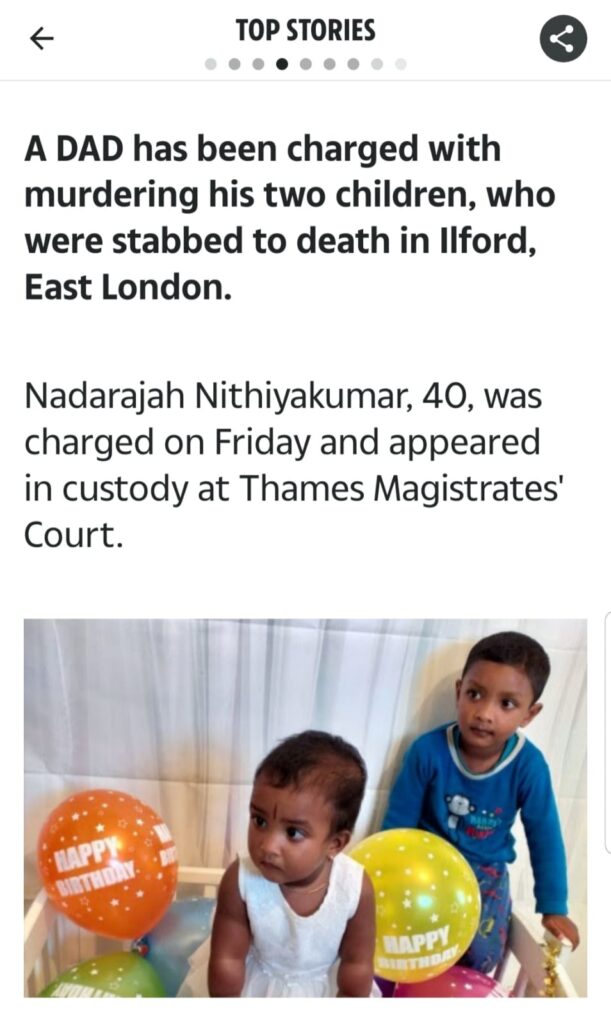
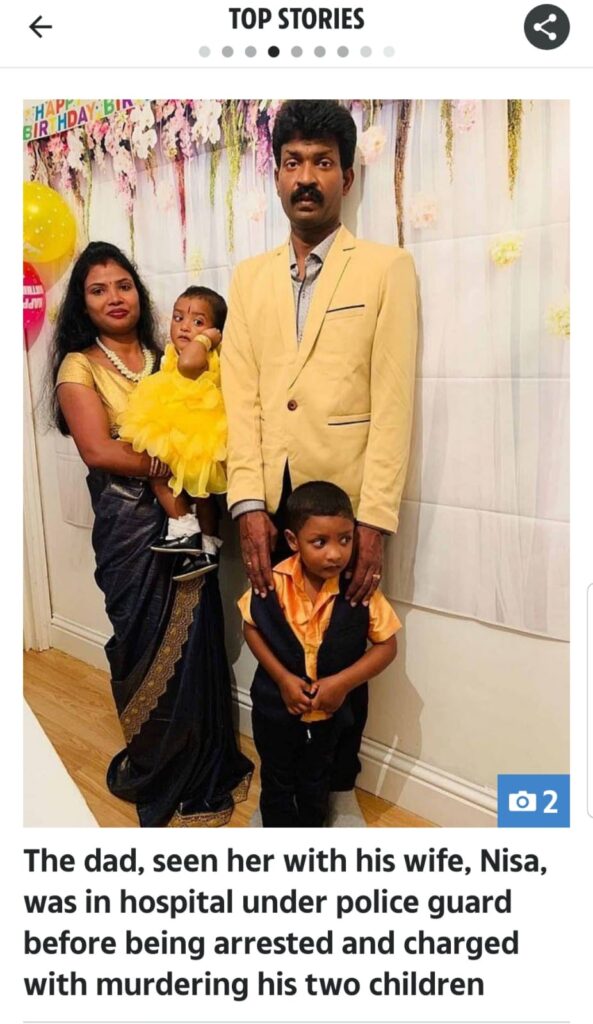
Wife & 4 children killed and 3 others hospitalized.
5 March 2018 – Restaurant in Gare du Nord near railway station – lunch time
A man having lunch with girlfriend attacked by group holding machetes & scalped.
February 2016
Tamil Coordinating Committee (TCC) Head Paramalingam in France shot. In 2015 he was stabbed.
2012
Tamil Coordinating Committee former head Mahinthiran Nadarajah shot dead in Paris.
2009 – April – Tamil protest turns violent in Paris
Tamils set a truck on fire and over 200 were arrested with 164 kept overnight in police custody when Tamils went on a rampage – 3 buses, 2 cars and one truck had their windows smashed. With NO PERMIT to protest, the scene of violence was Gare du Nord train station. Even a French policeman was injured.
1 April 2007 – 39 LTTE supporters arrested during a series of raids on Tamil Coordinating Committee as well as shops seizing computers, correspondence files, documents, literature, bundles of cash. 19 arrested appeared in Court & 14 kept in custody including LTTE branch head in Paris Nadaraja Mathenthiran (Parithi), LTTE political chief in Europe Duraisamy Aravindhan (Metha), LTTE France Finance Secretary Thuraisamy Jeyamoorthy (Sinna Jeyan)
Paris raids were conducted by ‘Anti-Terrorist Directorate’ on judicial orders of magistrate Jean-Louis Bruguiere (main anti-terrorist judge in France)
A man had his hand sliced off simply because he had ‘disrespected’ a Tamil gang called ‘Viluthus’
In Paris, Tamil street gangs appeared in the mid-1990s. The biggest of the gangs, Mukkapola, was believed to have had about 400 members, while gangs named Viluthu, Minnale, Vennila and the Snakes had between 20 and 50 mem- bers. The Tamil gangs were said to be involved in racketeering, burglaries, violent assaults and drug trafficking (Pierrat, 2008).
Prasad Sothilingam 26 years (Bullet) of Tooting Boys gangster group killed Neel Croos hitting an axe 3 inches into his head. Sothilingam was jailed for life. The gang reign using swords, hatchets and bottles. Sugan Selvarajan another member cut off 3 fingers of Mahinda Mahindaaskran and was sentenced to 14 years in prison. Two other members Sivakaran Ockersz 19 years and Visuparathan Dayaparan 24 years were convicted of violent disorder and jailed for 27 months
2000-2002 – rivalry gang fights in London has led to 4 deaths & 200 incidents
http://news.bbc.co.uk/2/hi/uk_news/2007199.stm
Switzerland:
September 2019 – 3 Tamil teenagers were arrested for attacking another Sri Lankan in Lausanne. He had his fingers cut off while the right hand was dangling from his arm.
http://www.asiantribune.com/index.php?q=node/5546
What more evidence than French author Jerome Pierrat whose book ‘mafias, gangs & cartels – international criminality in France’ claims that Tamil mafia work hand in glove with LTTE. As per Pierrat the new generation of Tamil kids don’t even know why they’re fighting.
Research by International Studies Department of Gothenburg University, Sweden also confirms how Tamil youth after defeat of LTTE ventured into racketeering partnering with former LTTE terrorists.
UK gang warfare is between groups representing different villages in Sri Lanka. VVT or Velvettiturai Gang, Wembley Boys, East Side Boys, Tooting Tamils, Harrow Tamils, Rayners Lane, Snake Gang, Red Line, Jaffna Boys and Ariyalai.
Since 2000, twelve persons have been killed in Tamil gang fighting in London. In Newham, eastern London, gang members, according to the police, demanded between 10,000 and 15,000 GBP per year from shops and businesses. A police operation in 2007 uncovered that over the previous two years, credit card frauds by Tamil gangs amounted to 70 million GBP (Majumdar, 2007).
22-year-old Kristian Thanapalan was beaten to death
December 1997– 19 year old aspiring scientist Kapilan Palasanthiran was shot to death by 4 hooded men in Scarborough.
Norway
Children from 60 Tamil families have been forcibly taken away for reasons, ranging from unhygienic feeding habitsto embraces that are allegedly sexualin nature.
The violent streak in the LTTE members most of whom have run away claiming asylum overseas and carrying on bogus propaganda is coming out soon to cause a menace to western society.
From the handful of examples given above it is easy to ascertain the violent streak that has been part and parcel of their violent ways. They first pretend to be innocent lambs and when their demands are not met, their violent streak comes out. Unfortunately, their own children have become fatal victims. Just count the number of children they have killed in Western shores?
With LTTE no more in Sri Lanka and having not witnessed any form of LTTE violence in Sri Lanka since 2009, it is unfortunate that the very countries that protected and promoted LTTE are having to deal with the LTTE’s wild ways.
We are not
here to lecture you but to offer any possible assistance. We are certain that
Sri Lanka is capable of choosing what needs to be done. We are ready to extend
our cooperation to achieve the development aspirations of Sri Lanka”,
(Seubert and
Furgler New Ambassadors to the Federal Republic of Germany and Dominik Furgler Switzerland)
(This is a statement made by the two
Diplomats at the Presidential Secretariat when they presented their credentials
to President Gothabhaya Rajapaksa , as
reported in CT on 30th Sept 2020 by Gagani Weerakon)
While I congratulate these two Ambassadors for
their outright open diplomacy and candor in recognizing and respecting the
Independence and the sovereignty of this country which some diplomats disregard
with arrogance and superiority complex treating this country still as one of
their underdogs.
Sri Lanka will appreciate it very
much if the Diplomats of USA, UK and India also follow suite without trying to
throw their weight about in their day to day business in all matters pertaining
to our internal affairs on the blind assumption that they represent powerful
and superior countries in the world
This attitude of the temporally rich
and powerful countries where most of them have become rich and powerful by invading,
exploiting and plundering the weak nations with their gun power during the era
of global colonial expansion between 15th—18th centuries
should stop at least now, I think, this
psychological war They all should go by the axiom that all nations are
equal and none is superior by nature and therefore they should learn to respect
each other irrespective of colour, creed, race or any other like economic or
military power or riches acquired at the
expense of others, at any given time. Because nothing in this world is
permanent and everything is subjected to change as Lord Buddha has so
explicitly pointed out more than 2500 year ago. Therefore it is high time for a
psychological and spiritual transformation that suits the changing times.
Those western countries who overestimate
their superiority in all things and continue to indulge in aggression against
the weaker countries should first read the concept of Anichchavaata sankaaraa”
(The concept of universal impermanence associated with all transient things)
preached by Buddha and also should read contemporary prophesies by writers like Samuel Huntingdon The Clash
of Civilizations And the remaking of World Order (1997) and ”When
China Rules the World: The End of the Western World and the Birth of a New
Global Order: by Martin Jacques (2009) before they continue to indulge in
aggression against the weaker nations in the world. This applies not only to
the Western world but also to all other so-called Great powers like Russia,
China and last India our closest neighbor that attempts to keep this country
eternally under its control using all
powers at its hands like political, economic and Strategic
Mr. Basil Rajapaksa, Special Representative of the President and
Head of the Presidential Task Force on Economic Revival and Poverty
Eradication, symbolically handed over the first batch of face masks from a
production of 200 million face masks for export by Brandix, to U.S. Ambassador
to Sri Lanka and Maldives Alaina B. Teplitz.
The handover took place at the Brandix Headquarters on 14th May
2020 in the presence of Mr. A. Sukumaran – JAAF Chairman, Mr. Ashroff Omar –
Brandix Group Chief Executive Officer and Ms. Ranga Ranmadugala – Board Member
of Brandix Apparel Limited.
U.S Ambassador to Sri Lanka and Maldives Alaina B. Teplitz
expressed her appreciation to Mr. Basil Rajapaksa and Brandix. As the world
combats this global pandemic, the long friendship between the United States and
Sri Lanka is helping both our countries overcome this challenge. Our collaboration
has resulted in quality products that can help mitigate the spread of COVID-19.
Impressively, the fabric used for the face masks was produced in Sri Lanka,
while the chemicals used for the antimicrobial finish were made in the United
States, demonstrating a synergy that benefits all. We look forward to
continuing our cooperation with the Sri Lankan Government and Brandix to
sustain the global supply of PPE.”
Mr. Basil Rajapaksa, Special Representative of the President and
Head of the Presidential Task Force on Economic Revival and Poverty Eradication
said, We are proud that products manufactured in Sri Lanka such as these 200
million face masks are being exported to nations like the US, where it will
play a vital role in combatting the COVID-19 pandemic. This collaboration
between the two countries has resulted in sustaining our national economy, in
addition to paving way for global customers to reach out to Sri Lanka for
quality products in the months ahead. We are glad that a leader in apparel like
Brandix utilized its resources to lead the way in this journey, giving the
global market a glimpse of the advanced infrastructure and agility that is
already in place within Sri Lanka, in order to meet the current and future
market demands.”
The face masks produced by Brandix have been manufactured
combining the efforts of over 15,000 of the company’s Associates and an
extended network of several supply chain partners in the country. The face
masks, produced as 3-ply and of cotton-based fabric with antimicrobial finish,
is stretchable for better fit and meet stringent hygiene standards.
Speaking on the endeavour, Ms. Ranga Ranmadugala – Board Member of
Brandix Apparel Limited commented, The apparel industry is a key export
revenue generator in Sri Lanka, generating $5.6 billion of exports in the last
fiscal year itself. However, the unavoidable decline in trade and production
output resulting from the COVID-19 crisis, has left the industry facing its
toughest predicament in recent times, impacting Sri Lanka’s positioning against
other apparel export markets. In this daunting background, the production of a
large volume of face masks for export to the US is truly heartening as it
reaffirms the continued trust and partnership the two nations uphold.” She
added, Despite the challenging conditions and the tough road ahead, the
industry will continue to do its part to combat potential long-term impacts of
the pandemic and bring in revenue to replenish the national economy. We are
also happy that we can continue to sustain livelihoods through continued
production as well. As a leader in apparel, we assure the Government of Sri
Lanka that we will do our utmost to support the journey ahead.”
All 101 PCR tests conducted on the students and teachers of the Divulapitiya School have returned negative for COVID-19, Public Health Inspectors Union of Sri Lanka (PHIUSL) Secretary M. Balasooriya told Daily Mirror.
Mr. Balasooriya said the results of the tests that were done yesterday, came out at 6 p.m. today.
Only one result came back positive from all the PCR tests conducted so far, and that was the daughter of the patient who was identified first. A total of 80 PCR tests were carried out today and that included some children in Sunday Schools and others who experienced symptoms or volunteered for the test,” he said.
These persons have been placed under self-quarantine and their PCR test results will be released tomorrow.
Yohan Perera and Ajith Siriwardana Courtesy The Daily Mirror
Prabhakaran’s youngest son was a commander of LTTE baby brigade, but the Sri Lankan army never killed him, SJB MP Field Marshal Sarath Fonseka told Parliament today.
He said this in response to an allegation made by Tamil National People’s Front MP Selvaraj Gajendran that the security forces killed Prabahakaran’s little son after feeding him with biscuits.
“Prabhakaran’s wife was a member of the LTTE, his eldest son a colonel in the LTTE, his daughter a member of the LTTE women’s wing and his youngest son was a commanding officer of LTTE baby brigade,” the MP said. “The boy was seen in a sarong in the picture which was circulated in the media in 2009 while the person who is with him in the picture is dressed in uniform worn by the jungle brigade of the Indian Army. The National People’s Front Member should refrain from making false allegations.”
SLPP Badulla District MP Sudarshan Denipitiya who objected to Mr. Gajendran’s allegation said it should be expunged from the Hansard.
Deputy Chairman of Committees, Angajan Ramanathan who was in the chair said he would look into it. “The MP was only expressing his opinion,” he said.
Stern legal actions will be taken against those who hide or assist to hide whereabouts of any Covid-19 patients and suspected cases, DIG Ajith Rohana said.
The employees, of the Brandix Company in Minuwangoda, who have not yet reported to health officials or law enforcement authorities, are requested to reach them immediately, Army Commander. Lt. General Shavendra Silva said.
“Workers, who have failed to be present before health officials or law enforcement authorities to undergo medical procedures, are asked to reach them immediately,” Army Commander said.
Meanwhile, he stressed that there were also reports that some factory workers had visited several public places in the Colombo area.
Therefore, people in Colombo and suburbs are requested to be more cautious and responsible to adhere to basic health guidelines,” he added.
With the recording of 124 Covid-19 positive workers from the Minuwangoda Brandix garment factory, a total of 729 infected persons were reported today from the cluster according to the Army Commander.
Also, 10 more returnees from overseas have been identified as infected today.
Therefore, the total infected persons in the country has increased to 4252.