PM appoints committee to study 20A

September 13th, 2020

Courtesy Adaderana

Prime Minister Mahinda Rajapaksa has taken steps to appoint a committee comprising of parliamentary representatives to study the 20th Amendment to the Constitution.

The committee comprising of Cabinet Ministers, State Ministers, and Members of Parliament will be chaired by Ministers of Education Prof. G. L. Peiris.

Cabinet Ministers Udaya Gammanpila, Ali Sabry, Nimal Siripala de Silva, Wimal Weerawansa, and State Ministers Susil Premajayantha, S. Viyalendran have been appointed to the committee.

In addition, parliamentarians Dilan Perera, and Premanath C. Dolawatte have been added as members of the committee.

The report of the committee is scheduled to be handed over to the Premier on September 15.

Sri Lanka realty battle heats up

September 13th, 2020

Sambit Saha   |   Calcutta Courtesy The Telegraph (India)

Multiple cases being fought over the fate of the $300-million Altair project declared as a ‘flagship foreign investment project’ in the island nation

The Altair project in Sri Lanka

wo strands of a bruising court battle are looming on either side of the Palk Strait as a clutch of top builders from Calcutta mount legal challenges to claw back at a prestigious development in Colombo.

Multiple cases are being fought before the company law court in India and the commercial court in Sri Lanka over the fate of the $300-million Altair project which has been declared as a ‘flagship foreign investment project’ in the island nation. 

The first round in what appears to be a long battle has gone to the challenger Jaideep Halwasiya who was granted a stay by the National Company Law Appellate Tribunal (NCLAT) over his ouster from the board of the Indian firm which used to be the main promoter of the Sri Lankan subsidiary which is building Altair. 

However, Halwasiya may have to toil hard to maintain the early lead as the Commercial High court of Colombo is ready to hear a case filed by the Indian parent to challenge the manner in which it has been reduced to a minority in Altair after the Supreme Court of Sri Lanka paved the way for the hearing on September 8. The Commercial High Court in Colombo could hear the matter as early as Monday or Tuesday while the NCLAT order was delivered on September 4.

The dispute

At the heart of the dispute is a change in ownership of the Sri Lankan company, Indocean Developers Pvt Ltd (IDPL), the promoter of Altair.

Calcutta-based AA Infraproperties (AAI) used to own 100 per cent share of IDPL. Its stake is now down to 13.84 per cent after Halwasiya issued fresh shares to entities linked to him.

South City Projects (Kolkata) Ltd, which holds 87.5 per cent in AAI — the remaining 12.5 per cent is with Halwasiya — claims that the issuance of shares in IDPL was an act of fraud perpetrated by Halwasiya to wrest control of Altair. 

SCPL, which is owned by top city builders Sushil Mohta, Pradeep Sureka, Jugal Khetawat, Rajendra Bachhawat and Emami Group, has in turn lost control of Altair — two towers leaning one over another overlooking the sea — which is nearing completion after at least two years of delay.NCLAT order

A bench comprising acting chairperson Bansi Lal Bhat overturned an order of NCLT, Calcutta, which declined to grant an interim stay to Halwasiya plea to challenge his removal from AAI via an extraordinary general meeting of January 4 and the induction of three additional directors by an AGM on September 24, 2019.

While returning the matter to the lower court, NCLAT observed: We are of the opinion that the impugned order suffers from (a) grave legal infirmity besides factual frailty. (The) Same cannot be supported. The appeal is allowed and the impugned order is set aside.
Appointment of respondents No. 4 to 6 as directors and removal of the appellant as the director is stayed till the decision on the company petition by the tribunal.” AAI had sought to remove Halwasiya from the board after the change in shareholding of IDPL came to light. Battlefield Colombo

AAI had moved Commercial High Court in Colombo to challenge the dilution of their equity interest in IDPL. However, it now appears that the court has to first adjudicate on who represents AAI after the NCLAT order. There is only one director representing the interests of South City promoters after the appointment of three directors were stayed. The other director is Halwasiya himself.

AAI is challenging the validity of a power of attorney purportedly granted to Halwasiya in 2019 to represent the Indian parent in Sri Lanka.

India needs to invest in regional disaster relief mechanisms | Opinion

September 13th, 2020

Courtesy The Hindustan Times

With climate uncertainty, humanitarian emergencies in the region are poised to grow. India must invest in regional frameworks for disaster management and take the lead in setting up a road map for greater cooperation

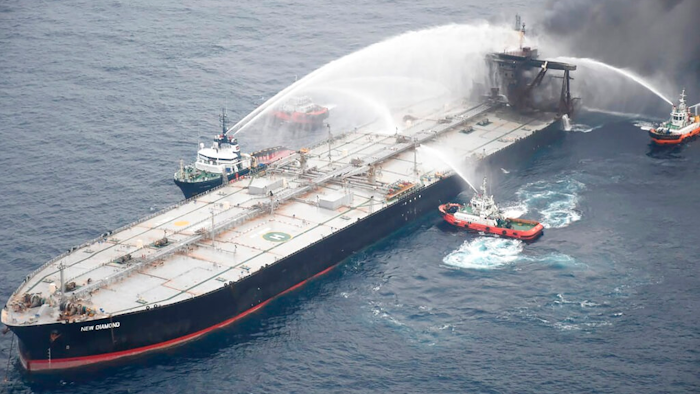
On September 3, a fire broke out in a large crude carrier MT New Diamond off the eastern coast of Sri Lanka. The Indian Oil Corporation (IOC)-chartered ship was carrying 270,000 tonnes of oil en route to Odisha and was helped by the Indian Coast Guard (ICG) and Navy to douse the fire, rescue crew members, and prevent an oil spill. India’s response was initiated through the South Asian Cooperative for Environment Protection (Sacep) for coordinating pollution response in the South Asian Seas region. In 2018, India signed an MoU with Sacep assigning the ICG as the competent authority for implementation under the initiative.

This response is unique in that it was evoked through a regional framework for addressing environmental emergencies. Historically, a key feature of India’s humanitarian assistance and disaster relief (HADR) strategy has been the emphasis on bilateral engagement with the affected country. This year, for instance, Indian assistance to tackle the MV Wakashio oil spill in Mauritius and the help provided to countries in the wake of the Covid-19 pandemic have both technically been bilateral in nature. An often-cited reason for this is India’s insistence on respecting territorial sovereignty while extending relief measures. The emphasis on bilateral emergency assistance has impeded the development of a regional mechanism for disaster relief in India’s neighbourhood.

In the aftermath of the 2015 Nepal earthquake, India launched its biggest-ever relief operation. Although successful, the operation garnered criticism from a few quarters in Nepal who accused it of hindering other international efforts. Moreover, the international response featured bilateral assistance from six different South Asian countries but lacked a coordinated relief effort, including from the South Asian Association for Regional Cooperation (Saarc) and the Bay of Bengal Initiative for Multi-Sectoral Technical and Economic Cooperation (Bimstec).

As seen in the MT New Diamond case, India’s neighbours would probably approve of the deployment of Indian military assets through a regional agreement as opposed to a unilateral relief operation on their soil. In a recent Brookings India policy brief, Neighbourhood First Responder: India’s Humanitarian Assistance and Disaster Relief, I highlight the bilateral and regional dimensions of emergency assistance provided by India in its neighbourhood over the last 20 years.

Saarc has codified disaster management by adopting the comprehensive framework on disaster management in 2006 and establishing the Saarc Disaster Management Centre (SDMC) as part of its mandate. In 2011, Saarc approved the Agreement on South Asia Rapid Response to Natural Disasters (SARRND), which formalised a policy for a cooperative response mechanism in the region. Also, the Saarc Food Bank was established in 2007.

Under Bimstec, India has been leading efforts towards the Environment and Disaster Management” priority area and established the Bimstec Centre for Weather and Climate as a platform to share information and build capacities on disaster-warning systems.

While these are commendable initiatives, there is still a long way to go towards building an effective regional disaster relief mechanism. This is best exemplified by the fact that despite having an official policy in the form of SARRND, no Saarc-level contingent has ever been deployed during emergencies in the region. Similarly, in Bimstec, although member-countries have shown a willingness to work together on relevant issues, there is a large gap to fill in terms of establishing operating procedures for joint relief campaigns.

With climate uncertainty, humanitarian emergencies in the region are poised to grow. India must invest in regional frameworks for disaster management and take the lead in setting up a road map for greater cooperation. Building capacities through training and joint exercises and coordinating comparative advantages for collective action will help India leverage goodwill among its neighbours through its disaster relief programmes.

Saneet Chakradeo is a research analyst at the Centre for Social and Economic Progress (formerly Brookings India)The views expressed are personal

How can this happen?

September 13th, 2020

By Noor Nizam, September 12th., 2020.

The Sunday Morning says that Sri Lanka stands to lose the opportunity of claiming one-fourth the value of the MT New Diamond and one-fourth the crude oil on board (67,500 metric tonnes) due to an oversight by Sri Lanka’s maritime authorities. 

The Undersigned had published this article/content and had forwarded it to the Attorney General’s Office, Chairman MEPA and the Office of the Secretary to the President as shown below. An immediate inquiry regarding this has to take has to be launched by the President immediately regarding the failure of the political and administrative officials to have allowed this to happen, even when a”citizen” of Sri Lanka had requested for immediate action citing “The International Convention On Salvage, IMO 1989” to make the claim as early as September 7th., 2020 

Noor Nizam.

……………….

The emails sent attached below:

Noor Nizam <noornizam7@yahoo.ca>

To:

administration@attorneygeneral.gov.lk

,ch@mepa.gov.lk

,ps@presidentsoffice.lk

Mon., Sep. 7 at 12:51 a.m.

Dear Sirs,

Please kindly find below an article published regarding salvaging the burning oil tanker MT. New Diamond of the shores of Ampara in the Eastern Province for your kind information and necessary action please.

Sincerely.

Noor Nizam.

……………………………………………….

The article/content attached below:

SRI LANKA BEING THE FIRST “VOLUNTEER” TO RESCUE BURNING OIL TANKER NEW DIAMOND SHOULD PURSUE A COURSE OF ACTION DEEMED PROPER TO BUY THE 270000 MT OF CRUDE OIL AND 170000 MT OF DIESEL IN THE SALVAGED TANKER. 

By Noor Nizam – Peace and Political Activist, Political Communication Researcher & SLFP/SLPP Stalwart, September 6th., 2020.

The law of salvage is a principle of Maritime Law whereby any person who helps recover another person’s ship or cargo in peril at sea is entitled to a reward commensurate with the value of the property salved. Maritime law is inherently international, and although salvage laws vary from one country to another, generally there are established conditions to be met to allow a claim of salvage. The law of salvage is the result of the Latin negotiorum gestio concept. In the circumstances of the “SALVAGING” the Super Oil Tanker MT. New Diamond off the coast of Ampara in the Eastern Province, Sri Lanka is fully qualified to make this legitimate claim.

Sri Lanka should make the best of this great achievement in maritime history where the Sri Lankan authorities (Government, Sri Lankan Navy, Air Force and the Ports Authority ) took control of dosing the fire under tremendous stress and averted a great world disaster to maritime environment in the Indian Ocean, which was expressed by Dharshani Lahandapura, the chair of Sri Lanka’s Marine Environmental Protection Authority (MEPA), that an oil spill from the ship would be “one of the biggest environmental disasters not only in the region but in the world”. 

Dosing this fire and bringing it under control, as it is now by the Sri Lankan team is being praised by many developed nations in the region. It is only correct that Sri Lanka which has the “FIRST CALL” on the salvage of this Oil Tanker MT New Diamond  owned by Liberia-based Porto Emporios Shipping Inc., for being the first “VOLUNTEER” to go to it’s rescue, in accordance with “The International Convention On Salvage, IMO 1989”, should pursue a course of action deemed proper to buy the 2700 MT of the crude oil and the 1700 MT of diesel in the tanker, once it is fully salvaged and anchored in a safe point. The ship was chartered for the voyage by the Indian Oil Corporation which will try to claim the crude oil and the diesel without giving an option to Sri Lanka to buy the salvage cargo.

With the ongoing new developments of this crisis and the intervention of International players and high profile business and technical experts arriving in Sri Lanka and moving to the disaster zone where the Oil tanker is floating, held by a tugboat, many proposition are being suggested to make sure that there will “NOT” be further losses to the owners of the vessel, even at the cost of great loss to Sri Lanka and our eastern coastal environment threatened by oil spills. Because Sri Lanka has never experienced such a disaster in the past and Sri Lankan officials have not much “ON-THE-JOB TRAINING” in this area, they can be “DUPED” by these so-called international experts to agree to terms and conditions of the “Salvage” claims “DETRIMENTAL” to Sri Lanka’s benefits of “GAINS”. Therefore Sri Lankan Officials should move forward in this matter very cautiously and carefully to get the maximum benefits for our “MAATHRUBOOMIYA”. This does not undermine the ability and capabilities of our officials, but only just to ring a bell of warning.

Immediately the fire was announced and the Sri Lankan Navy, Air Force and the Ports Authority took control of dosing the fire under tremendous stress, while the Indian coast guard, the 2 Russian ships docked at the Hambantota habour joined and later a tug boat hired by the owners came into the scene, the undersigned with farsighted thought made comments in this medium that the the Government of Sri Lanka and or it’s authorities responsible for this should register the claim of salvage” immediately with the owners of the Oil tanker. This was because The Sri Lankan government (Navy, Air Force and the Ports Authority) were incurring a lot of expenses and engagement of manpower resources to save this great valuable oil tanker and the crude oil in it from a great environmental disaster as was stated by the Sri Lanka Navy on Sept. 4th, 2020.

20 වන විවස්ථා සන්සෝධනයේ පහත සදහන් කරුණු වළට මුලු රටම විරුද්ධය

September 13th, 2020

ආචාර්ය සුදත් ගුණසේකර

13.9.2020

1  අමාත්යය මන්ඩලයේ 30 සීමාව ඉවත් කිරීම

2 ජනාධිපති කමට තරග කිරීමේ වයස සීමාව අවුරුදු 30 දක්වා අඩුකිරීම

3 ද්විත්ව පුරවැසියන්ට මැතිවරණ වලට තරන්ග කිර්‍රිමට අවසර දීම සහ රජය යටතේ දෙස් විදෙස්වල (තානාපතිකම් වැනී තනතුරු දැරීමට අවසර දීම

4 ආණ්ඩුක්‍රම විවස්ථාවේ 53 විවස්ථාවේ විධිවිධාන වෙනස් කිරීම. කෙසේ වුවද එය වෙනස්කළයුතුම නම් එයට” එසේ දිවුරුම් දී වුවත් පසුව ඊට හැනිව ක්‍රියා කළහොත් වහාම ඒ පුද්ගලයා අදාල තනතුරෙන් ඉවත් කිරීම ‘

එබැවින් මෙම කරුණු 20 වන සන්ශෝධනයෙන් වහාම ඉවත්කළ යුතුයයි මා ඇතුළු මුලු රටම රයයට යෝජනා කරයි.

මන්ද 69 ලක්සයක් අපේ මිනිසුන් මේ රජයට චන්දය දීලා රනිල් ගෙදර යැව්වේ මේ විකාර කිරීමට නොවන නිසාය.

අමාත්යය මන්ඩලයේ

යහපාලනය රජය යටතේ මුලු ලෝකයේම ලොකුම ඇමැතිමන්ඩලය තිබුණේ මේ රටේය.සමහරවිට එය 112 දක්වාද වැඩිවී එම සන්ක්යාව 157 දක්වාද වැඩිවී තිබිණ. ලන්කාව වැනි කුඩා රටකට එය දැරිය නොහැකි අතිවිශාල බරකි. ඒ නිසා ඇත්ත වශයෙන්ම මේ රටේ අති බහුතරයේ අපේක්ශාව එය උපරිමය 15 ක් පමණ වියයුතුයි කියාය. 

ජනාධිපති තරන්ගයේ වයස සීමාව 30 දක්වා අඩු කිරීම

 19 වන සන්ශෝධනයෙන් යහපාලන රජය මෙය 35 දක්වා වැඩිකළේ නාමල් රාජපක්ස තරන්ගයෙන් ඉවත්කිරිමටය. දැන් ඒ ප්‍රස්නය නොපවතින බැවින් සහ මේ රටේ ජනාධිපති තනතුර වැනි වගකිවයුතු තනතුරකට  පත්වන විට එම භාර්ධූර වගකීම දැරීමට තරම් මුහුකුරාගිය බවක් සහ දැණුමක් තිබීම අනිවාර්ය වන නිසා එය 35 වීම වඩා සුදුසුය. සෙනේට් එක තිබුණු කාලයේත් මට මතකයි ඒ සන්දහා අවස්ය අවම වය අවුරුදු 35 විය. වයස 30 වනවිට  එවැනි අසාමාන්ය තත්වයකට  පත්ව සිටියේ ඝෞතම බුදුන් වැනි අති විශේස පුද්ගලයෙකු පමණි. ලෝකයේ සාර්ථක පාලකයින් අතර සිටි  අලෙසැන්ඩර්ද එබන්දු තවත් එක් පුද්ගලයෙකි.

ද්විත්ව පුරවැසියන්ට මැතිවරණ වලට තරන්ග කිර්‍රිමට

ද්විතව පුරවැසියන් දෙපත් නයින් වැනිය. එසේම ඔවුන් බිරින්දන් 2 ක් සිටින අය වැනිය. ඔවුන් කිසි සේත්ම විස්වාශ නොකටැයුතුය. මන්ද වගකීම දෙකට බෙදෙනබැවිනි. එවැනි අයකුගෙන් මේ රටට කිසිම  පක්සපාතිත්වයක් බලාපොරුත්තු විය නොහැක.රනිල් වික්‍රමසින්හ අර්ජුන මහෙන්ද්‍රන් මහ බැන්කුවට පත්කොට රටට සිදුවූ මහා විනාසය මේ අයට මතක නැද්ද. එමනිසා ජනාදිපතිවරයා පමණක් නොව කවුරු උනත් මෙවැනි තීරණ ගැනීම නොකල යුතුය. විශේසයෙන්ම තානාපතිකම් වැනි තණතුරුවලට පුද්ගලයින් පත්කිරීමේදී එම තණතුරේ කාර්යභාරය නිසි පරිදි ඉටුකිරිම්මට ඔහු හෝ ඇය තුල ඇති විසේසග්න දැනුමට අමතරව මේ රටට ඔවුන් තුල තිබෙන නොබෙදුණු ආදරය සහ බැදීම ඉතාමත් වැදහත් වේ. එමනිසා කිසිසේත්ම  දෙබිඩි නයින් එවැනි තනතුරුවලට කිසිසේත්ම පත් නොකළ යුතුය යනු බහුතර මතයයි.එසේ කිරීම නයින් රෙද්ද අස්ස්සේ දමාගැනීමකි.

ආණ්ඩුක්‍රම විවස්ථාවේ 53 වගන්තිය

මෙයද එසේම නොවෙනස්ව පැවැතියයුතුය. කෙසේ වුවද ඒ අතර ඒ සදහා එකතුකළයුතු අලුත් වගන්තියක් සදහන් කිරීමට මා කැමති වෙමි. එනම්  53 අනුව කෙනෙකු දිවුරා එය කඩකළහොත් ඔහු හෝ ඇය වහාම එම ධුරයෙන් ඉවථ් කළයුතුය කියාය”.

 ගරු ජනාධිපති තුමා සහ ගරු අගමැති තුමා කෙරෙහි මේ රටේ 69 ලක්සයක් දෙසප්‍රේමී සින්හල ජනතාව තැබූ අචල භක්තිය හා විස්වාසය  බින්දකුදු පලුදු නොවන පරිදි ඒ දෙදෙනම කටයුතු කරණු ඇතැයි යනු සමස්ථ ජාතියේම  පරම අපේක්සාවයි.

 එසේ නොකළහොත් 2015 දී තමන්ට සිදුවූ දෙය මෙන්ම 2019 දී විපක්සයට සිදුවු දේ යලිත් සිදුනොවෙතැයි නොසිතිය යුතුයයි මම අවධාරනය කරමි.

එතුමන්ලාගේ අන්තේ වාසිකයින් වන කිසිවෙකුගෙන් මෙවැනි උපදෙස් කිසිදාක බලාපොරුත්තු විය නොහැක  එසේකිරීම ඉබ්බන්ගෙන් පිහාතුටු ලබාගත නොහැකිවාක් මෙනි.

පෙර රජ දවස මෙන් රජුන්ට නිවැරැදි උපදෙස් දීමට තරම් කසේරුකාවක් ඇති, වේදේහය්න්ගේ මහුසධ පඩ්තුමා තුමන්, චන්ද්‍රගුප්තයින්ට කෞටිලුයන්  සහ ශ්‍රි වික්‍රම රාජසින්හ රජුට කොත්මලේ ගණිතයා වැනි රාජ්ය උපදේශකයින් දැන් ලොව පහලවන්නේ නැත.

වර්තමානයේ උපදේශකයා යනු රජුන් කියන ඔනෑම දෙකට එහෙයි කියා තම තනතුර හා වරප්‍රසාද පමණක් ආරක්ශාකරගන්නා එකම චේතාව පෙරදැරිකොටගෙන  කටයුතු කරන  පුද්ගලයාටය.

රජු ඉරට සදයයියයි කීවොත් ඔහුද එසේය මහරජ එය සදමයැයිද  සඳට ඉරයයි කිවිටද එසේය  මහරජ එය ඉරම වේදැයිද කියයි. 

වර්තමානයේ දීර්ගායුශ ඇත්තේ එවැනි අයට පමණි. 

Twelve new cases of COVID-19 reported

September 13th, 2020

Courtesy Adaderana

Twelve more new cases of coronavirus infection have jumped the total number of COVID-19 cases in Sri Lanka to 3,231.

Six among the latest cases are recent arrivals from Kuwait while remaining 06 are from the United Arab Emirates. 

Accordingly, 36 new cases of COVID-19 infection have been reported within the day so far, with 16 returnees from Qatar, 04 from the UAE, 02 from the Maldives, 01 from Ethiopia, and 01 Ukranian testing positive earlier today (13).

As per the Epidemiology Unit of the Ministry of Health, 223 active cases are currently under medical care at various hospitals across the island.

Meanwhile, the number of recoveries in the country moved up to 2,996 as 13 patients were discharged today upon complete recovery from the disease.

Sri Lanka has witnessed 12 deaths from the virus so far.

Three (03) more persons confirmed for Covid -19: SL Country total increases to 3,234

September 13th, 2020

Courtesy Hiru News

Three (03) more persons have been confirmed for Covid -19 in Sri Lanka.

The Sri Lanka Country total has increased to 3,234.

Information on MPs who prevented the arrest of extremists – Easter Commission

September 13th, 2020

Courtesy Hiru News

Former senior DIG of the Eastern province Edson Gunatillake says that muslim radicals have been taking arms since 2008 and 2009 under the pretense of fighting the LTTE, and spread their radicalistic ideas.

He expressed this view last evening while giving his statement before the Presidential Commission of Inquiry on the Easter Attacks.

The witness informed the commission that an individual named Zahran was involved in one of the 18 armed radical groups which emerged during the 2008 to 2009.

He said that Hizbulla commenced cultivating dates in the east and that disputes occurred between muslim sectors during this period.

He further noted that the radicals who received the protection of a group of ministers including Rishard Bathiudeen, M L A M Hizbulla and A L M Athawulla, were also connected to Al-qaeda and Jihad organizations. 

Instructions to plant one million plants on both sides of the road

September 13th, 2020

Courtesy Hiru News

Instructions+to+plant+one+million+plants+on+both+sides+of+the+road

Highways Minister Johnston Fernando has instructed officials to expedite the green project of planting one million saplings on both sides of the road.

Participating in the 100,000 km road development progress review meeting currently underway, he said that in line with the new Government policy statement, the project of planting one million saplings nationwide has been launched with the aim of implementing sustainable environmental management.

Minister Johnston Fernando has instructed the authorities to identify suitable plant species for planting on both sides of the roads endemic to each province.

Chief Justice Burnside (1882) rejected Vellala “show of force and terror” and confirmed one law, one nation.

September 12th, 2020

H. L. D. Mahindapala

Once upon a colonial time, when the Vellalas dominated the casteist fiefdom of Jaffna, a husband of a low-caste Tamil decided to bury his wife  accompanied by the ritual of beating the tom-tom. But beating the tom-tom was an exclusive privilege accorded only to the Vellalas, the highest caste. The ritual of beating the tom-tom by low-castes was taboo. It was considered to be an intrusion into the domain preserved exclusively for the Vellalas. Angered by the violation of this ritual a Vellala mob waylaid the low-caste mourners and assaulted them. The triumph  of the Vellalas was in humiliating and putting the low-castes in their place. Any challenge to the supremacy of the Vellalas was resisted fiercely and ruthlessly from the Dutch period. However, in attacking the low-caste mourners the Vellalas had crossed line. The Police of the British Raj decided to act. They charged the Vellala Supremacists with unlawful assembly. The law found them guilty but the Vellalas appealed.

One of the eminent leaders of the Vellalas, Sir Ponnamblam Ramanathan, a disciple of Arumuka Navalar, the demi-god of the Vellalas, appeared on behalf of the Vellalas. He contended in appeal that the accused (the Vellalas) had the right to act in the way they did, in view of Section 8 of Regulation no. 18 of 1806. It was not brought to the notice of the Court that this Regulation had been repealed by Regulation 20 of 1844 (the year in which the British abolished slavery). In Queen vs. Ambalavanar, His Lordship Burnside, CJ.,. assuming that Regulation of 1806 was still in force, said: In  the present, it might be sufficient to ask what does this mean? Does it really mean that by the laws of this country one of Her Majesty’s subjects could be prevented from honouring  the dead in a particular way;  because some other person or body of people said they had the exclusive privilege of doing so? But suppose it is conceded that this the law, and that the Supreme Court should be moved for a writ of injunction to prevent a woman from being carried to the grave to the sound of tom-tom, does it follow that a body of men may assemble themselves together, and by show of force and to the terror of the other subjects of the Queen enforce their own edict to that effect against the party who favoured the tom-tom. I apprehend not. I say it with diffidence in the face of the learned Counsel’s contention. I trust that none of the ancient rights of the Malabar inhabitants of Jaffna Patnam will be jeopardised. Notwithstanding the contention and the venerable authority on which it is based, I make, bold to hold that the Malabar inhabitants of the Province of Jaffna Patnam, whoever they may be, must one and all be subject to the universal proposition of law applicable to the whole colony, that the people cannot take the law into their own hands, and seek to administer it after the fashion of Judge Lynch.” (p. 19, Tesawalamai, T. Sri Ramanathan, Lecturer in Law, The Nadaraja Press, 1965).

In this brief paragraph Chief Justice Bruce Lockhart Burnside (1882) summarised succinctly how the Vellalas perverted the socio-political culture of the peninsula with its ideology of casteist supremacy. It was not meant to be a sociological study of the Vellala culture of Jaffna. He was merely analysing clinically the reality prevailing in Jaffna. In the process he paints a grim picture of the human condition under the grip of the Vellalas. In dealing with this incident he goes to the nub of Vellala politics and questions the validity of its ancient rights” and its venerable authority”.  He sees this incident as an attempt by the Vellala Supremacists to take the law into their hands. The violence unleashed on the mourners is nothing but a clear show of force and terror” to impose their will on other subjects.

It also demonstrates that the Vellalas used its ancient rights” to rule Jaffna with an  iron-fist from the womb to the tomb. His comment on the body of men who would assemble themselves together and by show of force and to the terror of the other subjects of the Queen enforce their own edict” was prophetic. It is the Vellala leadership that met in Vadukoddai in May 1976 and unleashed force and terror to enforce their Eelamist edict. He rejected the claim of the Vellalas to exclusive rights based on venerable authority” and declared that this is one nation with one law.

In his summation he concluded by saying, whoever they may be, must one and all be subject to the universal proposition of law applicable to the whole colony, that the people cannot take the law into their own hands, and seek to administer it after the fashion of Judge Lynch.”. This is a total condemnation of the Vellalas taking the law into their hands and lynching their own people. This was not an exceptional incident. This was the norm since the reinforcement of Vellala power under Tesawalamai in the Dutch period. No other leadership had vilified, dehumanized, persecuted, oppressed and denied the basic fundamental human rights of their own people to walk this earth with dignity as the Vellalas of Jaffna.

Casteism turned Jaffna into a political peninsula of the Vellalas, run by the Vellalas, for the Vellalas. Vellalaism was a religio-political force that enthroned the Vellalas as the God-given rulers of Jaffna. It was the work of Arumuka Navalar, the Hindu guru who single-handedly changed the religio-political culture of Jaffna and enthroned the Vellalas at the peak of the casteist hierarchy in the absence of  Brahmins who were the  divinely casteist superiority of the Vellalas that turned them into political supremacists. What is  more, only the Vellalas had the power and the resources to determine  and  direct politics of the peninsula. They were the owners and controllers of commanding heights of Jaffna. They owned/controlled/dominated the land, the kovils, the Churches, the non-Governmental schools, professions, and, most of all, a disproportionate share of position in the state bureaucracy. They were, in short, the most privileged elite who wielded power both inside and outside the boundaries of Jaffna. They were at the top of the socio-political hierarchy and with English language skills there were none to challenge them in Jaffna.

In fact, in the first decades of the 20th century they did  not consider themselves to be a minority. They considered themselves  to be a majority on the national scene. (See: The Ceylon National Congress in Disarray 1920-1: Sir  Ponnambalam Arunachalam leaves the Congress – K. M. de Silva, The Ceylon Journal of Historical and Social Studies, Vol II, July-December, 1972.) It was also a time when national politics was determined by the English-speaking elite of the North and the South. There were no mass movements. That came after in the thirties after Donoughmore Constitution.

The British Raj was negotiating mainly  with the English-speaking elite of both communities. It was a time when Sir. Ponnambalam Arunachalam and Sir. Ponnambalam Ramanathan were virtually the national leaders defining and determining the politics of  the day. And the Southern elite accepted their leadership until the Northern elite drifted apart demanding disproportionate power from 1921. Prof. K. M. de Silva’s magisterial essay, (cited above) analysing in depth the first political ruptures led by the Vellala leaders, tells the tragic parting of ways with incalculable consequences.

Initially, with the gradual invasion of modernity into the crumbling castesit fortress, Vellalas first fought to  retain their power and privileges with rival castes (e.g. Madapallis). Under the British rule low-level resistance came from the low-castes, as seen in  this case. But, by and large, the Vellalas kept the other castes under their heel. Under Navalar’s revised Saivism they had the religious authority to condemn and exclude certain categories as pariahs (outcasts). Navalar’s Saivism sanctified and empowered the Vellalas to reduce a segment of their own people to subhuman level. The Turumbas, the lowest  of the low-castes, were not allowed to talk in sunlight in case they polluted the sight of the pure Vellalas. They could walk only in the night when the Vellalas had gone to sleep. This was the entrenched political culture of the peninsula which even the colonial masters failed to dismantle despite the British abolishing slavery in 1844.

Vellala supremacy came out of Hinduism. In classical Hinduism the Brahmins constituted the anointed high priests – the highest in the casteist hierarchy. But there was religious taboo  on Brahmins crossing the seas. So, when the waves of Vellalas crossed the Palk Straits, leaving the Brahmins behind, there was no one to fill the place of the high priests in the peninsula, The gap was filled by the Hindu revisionist, Arumuka Navalar, the caste fanatic who crowned the Vellalas as the God-given lords of the land to take the place of the Brahmins – the law-givers and hence the rulers of Jaffna. He fortified their supremacy with his new interpretation of Saivite Hinduism. This is the religious source of Vellalaism.

But before Arumuka Navalar sanctified and reinforced Vellalaism as a God-given commandment, the rights and the powers of the Vellalas were codified and legally enthroned by the Dutch in the Tesawalamai, the Bible of the Vellalas endorsed by 12 leading Vellala mudliyars of the time. This is the secular source of Vellalaism. The sum and substance of the Tesawalamai was to legitimize the supremacy of the Vellalas. Untrammelled ownership of slaves was handed over to the Vellalas. It was the legalised beginning of subhuman slavery in Jaffna. . 

For instance, the Pallas were classified as the menials to the Vellalas. They were slaves from their origin.” The rights of the Vellala owners were defined as (1) Right to exact service; (2) Right to control the marriage of Slaves; (3) Right of appropriating children. (The child of female slave belongs to the Master).(4) Right over the slaves’ properties. (p. 16 – Ibid). Also, a freed person insolent could be brought to slavery again.” Also, a freed person insolent could be brought to slavery again. (p.16 – Ibid.) The best piece of Tamil literature that came out of sterile peninsular culture, Kanal, K. Daniel, a Turumban, dramatised graphically the suffering and the exploitation of the low-castes by the ruthless Vellalas.

This is only a thumb-nail sketch of the subhuman  history of Vellalaism. Its tyrannical abuse of power became an inviolable code to maintain the supremacy of the Vellalas. The Vellala determination to impose its casteist will is exposed in the judgment of Burnside, CJ. Some of the main characteristics of the Vellalas are contained  in  the judgment. The iron-fisted rule, inherent Vellala violence, the subjugation and the oppression of the Tamil people, exclusiveness rejecting the other”, the overall political culture that dehumanised their own Tamil people, rejecting change and adhering to feudal fascism, the Vellalas ganging up against anyone else challenging its power, are revealed explicitly in the judgment. The Vellala determination to be the unchallenged lord and master of the Jaffna, excluding  the other” (even if they are Tamils) has been demonstrated in Burnside’s judgment.

Clearly, it is not Tamilness”, nor the greatness of Tamils and their culture, nor the concept of a Tamil nation” that made the Tamils into what they are today. It is Vellalaism that morphed into Tamilness”. It is the Vellala oppressors and persecutors of the non-Vellala Tamil people who are posing today in verti as Tamil nationalists”. By definition, the Tamils included all the Tamil-speaking people of Jaffna. But the non-Vellalas were not  admitted into the Vellala-dominated Jaffna  society. The non-Vellalas were pariahs, the outcasts, who were not quality Tamils. The Vellalas who were in a commanding position to define and determine the political agenda, controlled events to  feather their  own nest. Jane Russell, in her penetrating study of communalism under the Donoughmore Constitution ( 1931 – 1947), documents how the Vellalas manipulated the system to keep the non-Vellalas out of the power elite.

The rise of G. G. Ponnambalam represents the radical shift towards  communalism in Jaffna. He combined in his person the two most virulent forces : communalism and casteism. Both went in hand in hand to shape the future of Jaffna politics. Ponnambalam’s virulent communal campaign laid the foundations for subsequent communal conflagration. He was no Tamil nationalist. He was a rabid, casteist communalist – and both went together in Jaffna. It was his campaign that snuffed out the idealistic Youth Congress, a formidable force in the late twenties dedicated to combat communalism and casteism. The Gandhian movement could not  stand up to the overwhelming  force of casteist communalism ignited by Ponnambalam. Vellalaism and Ponnambalist communalism were inseparable. In fact, when the Tamils talk of homeland”, or the heartland” they mean the haven  of the Vellalas and not  the Tamils. To the Tamils outside the Vellala circles Jaffna was a hell-hole created by the Vellalas.

Though the Tamils boast about their Tamilness” the Jaffnaites were not even recognised as Tamils by the Dutch and British administrators. As documented in Burnside’s judgement, the word Tamil was not even used to describe the Jaffnaites by the colonial masters. They were referred to as Malabaris” because they were recruited as cheap labour from Malabar.  Chief Justice Burnisde reference is precise: the Malabar inhabitants of the Province of Jaffna Patnam”. There is no reference to the Tamils at all.

Sri Lankan Tamils did not  exist in the eyes of the world. Not until Sir. Ponnambalam Arunachalam named them in the first census conducted in 1901. The Vellalas embraced Tamilness” and Tamil nationalism”  only when  they found that Vellaism had passed its use-by-date to win power in competitive electoral politics. Arumuka Navalar’s Vellala casteism had lost its divine status in the 20th century. . It was no longer marketable as a political force to survive in post-Donoughmore politics. Tamil nationalism was the last refuge of Vellala exploiters of the Tamil people. Nationalism replaced casteism. Twentieth century  did not recognise casteism as a viable political force.

If the grandson of G. G. Ponnambalam dares to look back objectively he will realise that his grandfather never talked of two nations. The idea of Tamils as a separate nation, like the Muslims of India, was not  in his political vocabulary. That came later with his junior, S. J. V. Chelvanayakam. The truth is that Ponnambalam condemned any separateness. He, in fact, declared that federalism  is bad the Ceylon and  worse for the Tamils. So, when the grandson talks of two nation he is in reality mocking his grandfather. Besides, he is refusing blindly to accept the reality facing him. He cannot get a separate state without the consent of the international community. Erik Solheim, the peace-maker, made it categorically clear that no  nation in the world was willing to recognise the two-nation theory. He should know because he dealt with international actors who were vital for the survival of Prabhakaran, the low-caste hero of the high caste Vellalas.

Besides, the claim of a Tamil homeland has been debunked comprehensively by two eminent scholars: Prof. K.M.de Silva and Prof. G. H. Peiris. In their masterpieces they have provided irrefutable evidence to reject the homeland  theory. The Tamil ideologues, on the contrary,  are striving laboriously to construct theories that would be politically useful for separatism. The officially  accepted theory for Eelam was presented in the Vadukoddai Resolution which contains concoctions and distortions to claim that they were makers of history from  the dawn of time. But Prof. K. Indrapala, the first professor of history of Jaffna University, wrote in his doctoral thesis that the Tamils established their first settlements  only around the 10th century. This not gel with the authorised version of history of the Vellalas. So, he had to leave the University in a hurry. Later he recanted  and constructed a new theory to fit into the political agenda of the separatists. The Tamils are still searching history to confirm their claim in politics.

Finally, when the grandson contradicts his grandfather it exposes the credibility of both. Tamils have been floating in this dilemma of credibility. They do not know whether to believe the Vadukoddian history or Vadukoddian politics that led them all the way to Nandikadal. The future of Tamils depends on coming down to earth from the homelands they build in the air and accept the reality of peaceful co-existence which is only place available for  all communities. They must accept that  the  place occupied by the Tamils, despite all its imperfections, is far, far superior to the place given to the oppressed Tamils by the casteist Vellalas or fascist Prabhakaranists. 

අග්‍රාමාත්‍යතුමා කැලණිය රජමහා විහාරයේ නිල වෙබ් අඩවිය අන්තර්ජාලයට මුදා හරියි

September 12th, 2020

අග්‍රාමාත්‍ය මාධ්‍ය අංශය

ලොව පුරා විසිරී සිටින බෞද්ධ ජනතාවට මෙන්ම බෞද්ධ දර්ශනය පිළිබඳ උනන්දුවක් දක්වන අන්‍යාගමිකයින්ටත් දැනුම ලබා ගැනීම සඳහා කැලණිය රජමහා විහාරයේ නිල වෙබ් අඩවිය අද පටන් හේතුවක් වනු ඇතැයි අග්‍රාමාත්‍ය මහින්ද රාජපක්ෂ මැතිතුමා අද 2020.09.12 දින පැවසීය.

කැලණිය රජමහා විහාරයේ නිල වෙබ් අඩවිය www.kelaniyatemple.lk අන්තර්ජාලයට මුදා හැරීමේ කල්‍යාණෝදා” උත්සවය අවස්ථාවට එක් වෙමින් අග්‍රාමාත්‍ය මහින්ද රාජපක්ෂ මැතිතුමා මේ බව සඳහන් කළේය.

බෞද්ධ දර්ශනය පිළිබඳවත්, ස්වාමීන් වහන්සේලාට යොමුවන විවිධ ප්‍රශ්න පිළිබඳවත්, පිළිතුරු සැපයීමට රජය විසින් කළ යුතු කාර්යක් අද කැලණිය රජ මහා විහාරාධිපති මහාචාර්ය කොල්ලුපිටියේ මහින්ද සංඝරක්ඛිත නාහිමියන් ඇතුළු දායක සභාව විසින් ඉටු කොට ඇතැයි අග්‍රාමාත්‍ය මහින්ද රාජපක්ෂ මැතිතුමා පැවැසීය.

කැලණිය රජමහා විහාරයේ දායක සභාවේ සභාපති වෛද්‍ය සමන් වීරසිංහ මහතාගේ සංකල්පයකට අනුව මෙම නව වෙබ් අඩවිය නිර්මාණය කර තිබේ.

ශ්‍රී කල්‍යාණි දුරුතු ධර්ම දේශනා – 12 ග්‍රන්ථය” අග්‍රාමාත්‍ය මහින්ද රාජපක්ෂ මැතිතුමාට දායක සභාවේ සභාපති වෛද්‍ය සමන් වීරසිංහ මහතා විසින් පිළිගන්වන ලදී.

කැලණිය රජමහා විහාරයේ නිල වෙබ් අඩවිට ආරම්භ කිරීම ඵෙතිහාසික අවස්ථාවක් බවත්, ලොව පුරා බෞද්ධ ප්‍රබෝධයක් ඇති අවස්ථාවක බෞද්ධ දර්ශනය පිළිබඳව උනන්දු වන සියලු දෙනාට මෙම නව වෙබ් අඩවිය ඔස්සේ බෞද්ධ කරුණු අධ්‍යනය කළ හැකි බවත්,  ශ්‍රී කල්‍යාණි ධර්ම විද්‍යාලාධිපති කැලණිය විශ්වවිද්‍යාලයේ ජ්‍යේෂ්ඨ කථිකාචාර්ය දෙනියායේ පඤ්ඤාලෝක හිමියෝ පැවසූහ.

අග්‍රාමාත්‍ය මහින්ද රාජපක්ෂ මැතිතුමා කැලණිය රජ මහා විහාරාධිපති මහාචාර්ය කොල්ලුපිටියේ මහින්ද සංඝරක්ඛිත නාහිමියන්ගේ සුව දුක් විමසා උත්සව සභාවට එක්ව සිටි අනෙකුත් ස්වාමීන්වහන්සේලා සමඟ සුහද පිළිසදරක ද නිරත විය.

කොළඹ නව කෝරලේ හා නව තොටමුණේ උප ප්‍රධාන සංඝනායක පානාකාවේ ශ්‍රී පේමරතන නාහිමි ඇතුළු මහා සංඝරත්නය, රාජ්‍ය අමාත්‍යවරුන් වන සිසිර ජයකොඩි, ප්‍රසන්න රණවීර මහත්වරු ඇතුළු කැලණිය රජ මහා විහාර දායක සභාවේ සාමාජිකයින්, ශ්‍රී කල්‍යාණි ධර්ම විද්‍යාලයේ සිසු දරුවන් ඇතුළු පිරිසක් මෙම අවස්ථාවට එක්ව සිටියහ.

මාලඹේ, ශ්‍රී විමලාරාම විහාරයේ අවුකන බුද්ධ ප්‍රතිමා අනුරුවට අග්‍රාමාත්‍යතුමා ප්‍රථම මල් පූජාව පවත්වයි

September 12th, 2020

අග්‍රාමාත්‍ය මාධ්‍ය අංශය

මාලඹේ, ශ්‍රී විමලාරාම විහාරස්ථ පුදබිමේ ඉදි කළ දහඅට රියන් අවුකන බුද්ධ ප්‍රතිමා වහන්සේගේ අනුරුව සහිත ප්‍රතිමා වහන්සේ නිරාවරණය කිරීමේ උත්සවය හා බුද්ධ මන්දිරය හා සංඝාවාසයට මංගල ශිලා ප්‍රතිෂ්ඨාපනය කිරීමේ උත්සවයට අද 2020.09.12 දින ගරු අග්‍රාමාත්‍ය මහින්ද රාජපක්ෂ මැතිතුමා එක්විය.

ධර්මායථනාධිපති පූජ්‍ය ඇල්ලේ ගුණවංශ නාහිමියෝ දහඅට රියන් අවුකන බුද්ධ ප්‍රතිමා වහන්සේගේ අනුරුව සහිත ප්‍රතිමා වහන්සේ නිරාවරණය කළහ.

ඊට අදාළ සමරු ඵලකය හා බුද්ධ ප්‍රතිමා වහන්සේට ප්‍රථම මල් පූජාව ගරු අග්‍රමාත්‍ය මහින්ද රාජපක්ෂ මැතිතුමා අතින් සිදු විය.

මෙම අවස්ථාව සඳහා බස්නාහිර පළාත් ප්‍රධාන සංඝනායක  මහාචාර්ය මැදගම නන්දවංශ නාහාමි, ශ්‍රී ලංකා රාමඤ්ඤ මහ නිකායේ නියෝජ්‍ය ලේඛකාධිකාරී මාලඹේ, ශ්‍රී විමලාරාම විහාරස්ථානයේ විහාරාධිපති ආචාර්ය විලේබොඩ ගුණසිරි ස්වාමීන් වහන්සේ ඇතුළු ගරුතර මහා සංඝ රත්නය හා රාජ්‍ය අමාත්‍ය සරත් වීරසේකර, පාර්ලිමේන්තු මන්ත්‍රීවරුන් වන ප්‍රදීප් උදුගොඩ, ජගත් කුමාර මහත්වරු ඇතුළු ප්‍රදේශවාසී බෞද්ධ බැතිමතුන් රැසක් එක්ව සිටියහ.

SL’s response to COVID-19 swift, decisive & coordinated: WHO

September 12th, 2020

Courtesy The Daily News

Sri Lanka’s response to the COVID-19 pandemic has been swift, decisive and coordinated using whole-of-society approach under the strong leadership of President Gotabaya Rajapaksa with technical guidance from the Health Ministry and the World Health Organization (WHO), a monthly selection of case studies released by the WHO said.

The monthly selection of case studies titled ‘COVID-19: WHO’s Action in Countries | August 2020’ featured several countries including Sri Lanka, Bhutan, Lebanon, Malaysia, Morocco, Myanmar and Russia. The report which was released on September 9 said Sri Lanka has ‘a Robust Health System Responding Effectively to COVID-19 Pandemic.’ It said the Health Ministry has received strong political support from the President of Sri Lanka since the emergence of COVID-19 in Wuhan, China.

“Sri Lanka has successfully controlled the COVID-19 epidemic in the country through its past investments to build a robust and resilient health system. On January 27, the first case of COVID-19 was detected in Sri Lanka following which the President immediately took the lead of the national COVID-19 response. Using WHO guidelines as a reference, the Health Ministry developed the Sri Lanka Preparedness and Response Plan for COVID-19,” it said.

It said adherence to public health and social measures was tested in the recently concluded general election.

The election was successfully conducted island-wide without any amplifying event. It is one of Sri Lanka’s biggest success stories and illustrates just how far the country has come in controlling this deadly virus,” it said.

The description on Sri Lanka further said, The government is also committed to continue its efforts in finding, isolating, testing and treating cases as well as tracing and putting contacts in quarantine. It is important to put critical attention in protecting the gains in this area and continue to explore opportunities to further strengthen its future preparedness to deal with future epidemics and public health emergencies such as natural disasters, dengue and other emerging threats.

With the strong political leadership, committed and capacitated health workers, empowered communities and coordinated support of development partners, the country can withstand and better prepared for future health emergencies.”

The publication is the fifth edition of the country case studies since the Country Strategy and Support (CSS) department started developing them in April 2020.

A total of 49 COVID-19 country case studies have been published so far by the WHO. (Lahiru Pothmulla)

Sri Lanka navy plugs leak on fire-hit supertanker

September 12th, 2020

Courtesy Reuters

COLOMBO (Reuters) – The Sri Lankan navy said on Saturday it had sealed an inlet on the fire-stricken New Diamond oil supertanker that was leaking fuel oil and sparking fears of an environmental disaster.

A team of divers that inspected the rear of the tanker, which caught fire last week, found a sea water inlet leaking a mix of fuel oil and sea water.

They took immediate action to completely seal the inlet,” the navy said in a statement.

The tanker, which is carrying about 2 million barrels of oil, is currently 45 nautical miles (83 km) off Sri Lanka’s east coast, the navy said.

The fire onboard the 20-year old Panama-flagged very large crude carrier that broke out on Sept. 3 has since been extinguished, and the cargo of crude oil remains intact.

But the New Diamond left two long trails of fuel oil after the Navy towed it out to sea this week.

Sri Lanka’s Marine Protection Authority has said it plans to take action against the ship’s owner under the country’s laws to protect the marine ecosystem.

Twenty- three (23) more persons confirmed for Covid -19: SL Country total increases to 3,195

September 12th, 2020

Courtesy  Hiru News

Twenty- three (23) more persons have been confirmed for Covid -19.

They are returnees from Qatar, Kuwait, India and UAE.<

The Sri Lanka country total has increased to 3,195.

Case filed against MP Kiriella’s daughter for clearing an echo sensitive area in Hanthana (video)

September 12th, 2020

Courtesy Hiru News

The Central Environmental Authority (CEA) has taken legal action against the daughter of MP Lakshman Kiriella for clearing an eco-sensitive area in the Hanthana Reserve.

Meanwhile, it was reported to us that another group had cleared another 30 acres of land that did not belong to the Hanthana ecological area.

Hanthana has been a popular destination for many locals and foreigners since the days of the Kingdom of Senkadagala in Kandy and during the British rule.

Hanthana, rich in biodiversity and temperate climate, is a mountain range of unique value to Senkadagala.<

Residents allege that a significant area of ​​the 30-acre site has been cleared.

Meanwhile, the Hanthana Conservation Organization recently revealed that an ecologically sensitive area ​​over the height of 3000 meters has been cleared in the Hanthana Reserve.

However, in a statement, Kandy District Parliamentarian Lakshman Kiriella stated that he had purchased the land in 1990.

The announcement further stated that with the enthusiasm created in the country for cultivation after the appointment of the new government, only the grass that had grown there had been reduced due to the difficulty in entering the land where tea and pepper had been grown earlier.

However, the Central Environmental Authority states that it has decided to file a case against the owner of the land in connection with the incident.

A 9-member committee to study the proposed 20th amendment

September 12th, 2020

Courtesy Hiru News

The Chief Secretary of the Kotte Sri Kalyani Samagari Dharma Maha Sangha Sabha Ven. Prof. Kotapitiye Rahula Thero stated that constitutional amendments are essential for decisions to be taken by one leader.

This was during a discussion with Minister Prof. GL Peiris on the 20th Amendment to the Constitution and a new Constitution.

Meanwhile, a nine-member committee appointed by the Prime Minister is scheduled to meet next Monday to study the proposed 20th Amendment to the Constitution.

It is chaired by Minister G.L. Peiris. The other members are Ministers Udaya Gammanpila, Ali Sabri, Wimal Weerawansa, Nimal Siripala de Silva, State Ministers Susil Premajayantha, S. Viyalendran, MPs Premanath C. Dolawatta and Dilan Perera.

The demands of the inmates on hunger strike cannot be met – Defense Secretary

September 12th, 2020

Courtesy Hiru News

The hunger strike launched by a group of inmates in the special section of the Boossa Prison continues.

Thirty people, including organized criminals Podi Lasi, Wele Suda and Kosgoda Tharaka, are still on hunger strike which commenced based on several demands.

However, Defense Secretary Retired Major General Kamal Gunaratne said the demands of the Boossa prison hunger strikers could not be met.

The Defense Secretary stated this while expressing his views to the media after participating in an inspection tour of the Bogambara Prison in Kandy this morning.

The Defense Secretary visited the Bogambara Prison to inquire into the possibility of restructuring the prison due to the increase in the number of inmates arrested for underworld and heroin activities.

The Defense Secretary also participated in a workshop held yesterday at the Police Crime Records Division on behalf of senior police officers.

Meanwhile, Army Commander Lt. Gen. Shavendra Silva stated that steps will be taken to eradicate drug trafficking and underworld activities from the country as soon as terrorism and the corona epidemic are eradicated.

He was speaking as the Chief Guest at the Army Special Forces Passing Out Parade held at the Maduruoya Special Forces Training School today.

Meanwhile, three persons including Samantha Kumara alias Wele Suda’s younger sister, an organized criminal, were arrested with Kerala cannabis at a lodge in Hakmana today.

Police said that they were arrested while returning from a funeral in the Udupillagoda area in Hakmana and staying at the lodge.

In addition to 32 year old Dilini Nilmini alias Wele Suda’s younger sister, her paramour and the driver of the car have also been arrested.

Police further stated that 5 grams of Kerala cannabis were found in the driver’s possession during a search of the lodge.

Also, two persons were arrested by the Meegoda Police this afternoon on the Meegoda-Dampe road with a kilogram of heroin. They are close relatives of a person who has been arrested by the Police Narcotics Bureau and is currently in remand custody.

During a raid conducted in the Lenadora area in Dambulla today, the Anti-Corruption Unit attached to the Matale Divisional Crime Bureau arrested five persons including more than 10 grams of heroin.

Police also arrested two persons involved in heroin trafficking in Dambulla.

Siyambalanduwa Police have arrested two fathers and a son for selling cannabis to school children.

Miriswatta Tyrone was arrested in Miriswatta on suspicion of being involved in a number of drug offenses during a raid conducted in Panadura. Police said that more than 100 grams of Kerala cannabis was found in his possession.

In addition, the police also seized Rs. 16,000 which is believed to have been earned from the sale of cannabis.

The Vavuniya Police arrested another person with 3 kilos of cannabis and 3 persons with heroin in another operation carried out last night.

Officers of the Navy and the Sooriyawewa Police Special Task Force (STF) raided a cannabis field in Thanamalwila – Balaharuwa yesterday and arrested two suspects.

Meanwhile, Yakkalamulla Police arrested 7 suspects with 8 firearms, including a German made firearm, 6 locally made firearms and a frying gun.

A 44 year old suspect has been arrested with a locally made firearm at Douglas Guruge Mawatha, Meetiyagoda.

Also, a special police operation was carried out for 4 hours covering the entire island from 11 last night.

The Police Media Division stated that 4186 persons have been arrested for drug offenses including heroin and various other offenses.

16,347 police officers and 45 police sniffer dogs participated in the operation.

Wither the August Mandate: Why no dividends to the Nationalist Majority

September 11th, 2020

The August 2020 Parliamentary victory showed for the 2ndtime the power that ensues when the majority is united. The victors of 2015 openly declared their debt to the minorities which got translated into marginalizing the majority. Was this what the minorities really wanted? If that was not so, there was no visible voice objecting to the wave of discriminations & humiliations the majority was subject to, eventually culminating in mass murder on Easter Sunday. Come 2020, tables reversed & a magnificent 2/3 victory was delivered based on a nationalist platform. In terms of paying back, what the minorities via their leadership sought was poles apart from what the majority expected. This is an important topic to bring to the open.

What does the majority really want? What do they seek from the government they galvanized to bring to power? Are those demands too big to deliver? Are the demands too complicated to deliver? Are the demands not-multicultural enough to deliver? Are their external influences forcing the government not to deliver?

What does the majority really want from the Government?

Think about what the majority really expected of the government they helped bring to power.

Before answering these questions, let’s see what the minorities sought. Whenever the minorities have been kingmakers as a result of the dis”proportionate representation system, a handful of minority leaders have walked away with the cake securing plum portfolios and manipulating those positions for their own and subtly changing legislations to suit their own. Not many minorities objected to this unfair display of systematic abuse of powers primarily because they were hypnotized into the belief that ‘these were being done for the good of the minorities’.

The majority representatives on the other hand, promised the moon & the stars, the exact opposite what the majority actually asked or expected of them but once in power, their chorus to the majority was ‘we can’t do much, it will upset the minorities and the international players are not agreeable to that’.This completely ignored an important factor. The majority had never asked any of their representatives at any given time to give to the majority at the expense of the minority. Never has the majority sought handouts ONLY for the majority, never has there been requests that sought the politicians to target minorities.

But look at the minority political parties and their political manifestos. This is evidence of their mentality. Majority of the political parties formed by the minorities are for their own and having nothing country-specific in their aims & objectives. This is divisive politics taken to election platforms & unhealthy for any democracy.

When Mahinda Rajapakse lost in 2015, he left a humiliated man. He was laughed at and scorned but it was not any of the ones who surround him today that pawned their jewelry to travel miles to show the world that the people backed him. It was the ordinary people and a handful of nationalists that braved the insults and kept the momentum going and built the environment for the return of the Rajapakses. That return would not have been ever possible had it not been for these humble people and that return would not have ever happened had it been left to those that are now in their inner circles returning after deserting them. These are all lessons in life and should come as no surprise as Buddha has clearly described the behavioral patterns of people and showed us how to accept the truth – come what may.

What do the Buddhist majority of Sri Lanka seek from its leaders & is this an obstacle to good relations with the minorities?

Sinhala Buddhists have always sought the rectification of historical injustices to them which included the return of their language right. In so seeking this reverse discrimination, their request had nothing to do with requesting the repression of another language.

Minorities have no reason to regard this an affront to them.

The Majority have never claimed the country to be only theirs and others were not welcome. The majority have only claimed right to recognize Sri Lanka as a predominantly Sinhala Buddhist country & uphold the Sinhala Buddhist civilization that built the Nation.

Minorities have no reason to question this or regard this as an affront or discrimination to them. The foremost place given to Buddhism is no impediment to any minorities practicing their religions.

The majority appeals to the political leaders to ensure external, fundamental factors that seek to change demography, create religious-ethno ghettos, that spreads cults and extremisms do not hamper the country’s progress and the people’s peace.

These appeals are nothing the minorities can find fault with.

The majority repeatedly refers to the ancient rule of dasa raja dhamma where an inclusive society existed wherein man and animal lived in harmony with environment also accepted as stakeholders in living under guiding principle of Ahimsa, protection of heritage sites, historical & archaeological sites. The majority have raised issue over the need for a moratorium on construction of new religious places of worship via foreign funding, falsely claiming joint-right to historical sites that are Buddhist, laws to prevent commercialized conversion, regulations on land ownership to prevent Sri Lanka’s limited land being taken over, laws on immigrants & refugees to stop demographic change and future challenges, laws to prevent ethnic based political parties which have posed communal and religious tensions amongst all, laws that prevent polygamy, child marriage as laws must apply to all equally with no preference to one community for banking, food and marriage. While giving place to Buddhism and the Sinhala Buddhist heritage of Sri Lanka has no impediment to others practicing their faith, allowing one community special rights in marriage, court, banking and food does.

These are nothing that minorities can fault the majority over.

The majority has repeatedly requested the leaders to give compulsory prominence to National History in the education system in schools and even in public service.

This too is nothing that the minorities can claim is an affront to them.

Anyone reading the demands of the majority will realize that these demands is with foresight to ensure the country is held together for each time the country was facing threats it was always the majority that came forward to defend the nation and sacrificed their lives to do so. The handful of minorities that joined them did so because they saw the true objectives of the majority and they too wanted to join in that national quest.

Leaders must learn to align with national objectives and nationalists that push for the realization of national objectives. When leaders align with those with hidden and questionable objectives the country falls into peril.

Why is that the majority are always given second place?

Shenali D Waduge

අනේ ඔබ කවදාක බිහි වෙයිද මේ රටේ?

September 11th, 2020

චන්ද්‍රසේන පණ්ඩිතගේ විසිනි

ආයුබෝවන්
අපි ඔබතුමාට පලමුව ස්තුථිවන්තවෙනවා අපට මේ අවස්ථාව ලබාදීම සම්බන්ධව. මේ වනවිට ඔබ නවක තරුණ පාර්ලිමේන්තු මන්ත්‍රීවරයකු බවට පත්වී හමාරයි. මේ ජයග්‍රහණය ඔබ දකින්නේ මොනවිදියකටද?

ඕනෑම මනුෂ්‍යයකු තරගයකදී බලාපොරොත්තු වන්නේ ජයග්‍රහණයයි. මේ වනවිට මම ඒ ජයග්‍රහණය ලබාගෙන සිටිනවා; මේ ජයග්‍රහණය මගේ ජීවිතයේ එක්තරා කඩඉමක් පමණයි. තව දිනා ගැනීමට කරුණු කාරනා රාශියක් තියෙනවා.

ඔබ තරුණ මන්ත්‍රීවරයෙක් වශයෙන් ඔබගේ දිස්ත්‍රික්කයේ සිටින තරුණ තරුණීයන්ගේ ප්‍රශ්න වලට මුල් තැනක් දෙන්න සිදුවේවි ඒ සදහා ඔබතුල ඇති සැලස්ම කුමක්ද?

ඔබ කිව් ලෙසම මම තරුණ මන්ත්‍රී වරයෙක්. නමුත් මම මේ දිස්ත්‍රික්යේ සිටින තරුණ තරුණීයන්ගේ මන්ත්‍රීවරයා නොවෙයි. සන්ධානයේ ජයග්‍රහණය උදෙසා චන්දය දුන් සියලු දෙනාගේම මන්ත්‍රීවරයෙක්. 
ඒ මන්ත්‍රීවරයාගේ එක වගකීමක් තමයි මේ දිස්ත්‍රික්කයේ සිටින සියලුම තරුණ තරුණියන්ගේ ගැටලු විසදීම: ඒ වගකීම මා සතු වගකීමක් ලෙස මා ප්‍රබලව දකිනවා.

හොදයි, ඔබතුමා නියෝජනය කරන දිස්ත්‍රික්කයේ ඇති ජනතා ගැටලු විසදීමට ඔබතුමා සතු සැලස්ම කුමක්දැයි පැහැදිලි කරන්න පුලුවන්ද?

මම නවක පාර්ලිමේන්තු මන්ත්‍රීවරයෙක්, දිස්ත්‍රික්කයේ ජනතා ගැටලු විසදීමට නම් පලමුව, සැබෑ ජනතා ගැටලු මොනවාදැයි හදුනා ගත යුතුයි. ඒ සදහා ජනතාව අතරට යා යුතුයි. ජනතාව අතරට යෑමේ අරමුණ, මූලික කරගත් සුපැහැදිලි වැඩපිලිවෙලක් අපට තියෙන්න ඕනි. මම පලමුව කරන්නේ ජනතාවයි අපයි බද්ධ කරන ඒ යාන්ත්‍රණය ගොඩනැංවීමයි; මම හිතනවා අමාරුම කර්තව්‍යය එයයි කියල. පලමුව එය ජය ගත යුතුයි.

ඔබට, ඔබ කියන්නාවූ යාන්ත්‍රණය ගොඩනගන්නයි, දිස්ත්‍රික්කයේ ඇති ජනතා ගැටලු විසදන්නයි ලබාදී ඇත්තේ සීමිත කාලයක්, ඔබට මේ හැම දෙනාගේම ගැටලු විසදන්න මේ කාලය ප්‍රමාණවත්ද?

ගගකින් එගොඩ වන ක්‍රම කීපයක් තියෙනවා. තම තමන්ට පීනමින් එතර විය හැකියි. එහෙම නැත්නම් බෝට්ටුවකින් එතෙර වෙන්න පුලුවන්; මේ ක්‍රම දෙකෙන්ම අනාගත පරපුර මත යම් කාර්යය භාරයක් පටවනවා. පලමු ක්‍රමයට අනුව ඉපදෙන හැම අයෙක්ම පිහිනන්න පුරුදු විය යුතු වෙනවා. දෙවන ක්‍රමය අනුව බෝට්ටුව හා තොටියා නඩත්තු කරන ක්‍රමවේදයන් යොදා ගන්නට සිදුවෙනවා. නමුත් මෙහිදී අප අනුගමනය කරන්නේ; ශක්තිමත් පාලමක් ගොඩනැංවීමේ සම්ප්‍රධායයි. ඒක ක්ෂණික වැඩක් නොවෙයි නමුත් පරම්පරා ගනනක් පවතිනවා.අප ගොඩනංවන යාන්ත්‍රණය ඉතාමත් ශක්තිමත් එකක් බව මට නොබියව ප්‍රකාශ කරන්න ප්‍රලුවන්.

ඔබ ජනතාවයි රජයයි සම්බන්ධ කරවන යාන්ත්‍රණයක් ගැන පුන පුනා කථා කරනවා; ඇයි මේ යාන්ත්‍රණය පිහිටවීම මෙතරම් වැදගත් කරුණක් ලෙස ඔබ දකින්නේ?

මහජන මන්ත්‍රීවරු වශයෙන් අප අවංකව කටයුතු කල යුතුයි. අපට විසදිමට ඇත්තේ එම දිස්ත්‍රික්කයේ ජනතා ප්‍රශ්නයි. තවද මහජන මන්ත්‍රීවරයා යනු ජනතා ප්‍රශ්න විසදන කොන්ත්‍රාත් කරුවා විය නොහැකියි. ජනතාවට සිය ප්‍රශ්න විසදා ගැනීමට අවශ්‍ය පරිසරය සකස් කරන මාර්ගෝපදේශකයා හා මිතුරා විය යුතුයි. ඒ අනුව ජනතා ප්‍රශ්නය සංවේදීවූ වහාම ඊට පිලියම ගෙනෙන මන්ත්‍රී වරයකුගේ අවශ්‍යතාවය ජනතාවට තදින්ම දැනෙන යුගයක් තමයි අප පසු කරමින් ඉන්නේ.
අපට ස්වභාව ධර්මය විසින් ඕනෑවටත් වැඩිය පාඩම් උගන්වලා තියෙනවා; අප කල යුත්තේ මැතිවරණ කොට්ඨාශයක් හොද සරු මී වදයක් බවට පරිවර්තනය කිරීමයි. එය කල යුතු හා  ඒ වගේම කල හැකි කාර්යයක් බව වටහා ගන්න.

අහන්නත් සන්තෝසයි; මැතිවරණ කොට්ඨාශයක් හොද සරු මී වදයක් බවට පරිවර්තනය කිරීමට අධිෂ්ඨාන කරගෙන සිටින, තරුණ, නවක, මන්ත්‍රීවරයකු සමග සාකච්ඡා කිරීමට ලැබීමත් භාග්‍යයක්සේ මට හිතෙනවා. ඔබ මේ කටයුත්ත ආරම්භ කරන ආකාරය පිලිබද යම් අදහසක් අපතුල තියෙනවානමුත් ඔබගේ යාන්ත්‍රණය අපට තවම ගැටලුවක්?

කල්පනා කරල බලන්න. අද බරපතල සමාජ අර්බූදයක් බවට පත්වෙලා තියෙන ඕනෑම ප්‍රශණයක ආරම්භය සිදුවන්නේ. කවුරු හරි මිනිහෙකුගේ මනසක් තුල. ඒ ආරම්භ වෙන බීජය තමයි ක්‍රමානුකූලව සමාජය පුරා ගලාගෙන ගිහිල්ලා, මුලු සමාජයම වෙලාගෙන සමාජ අර්බූද නිර්මාණය කරන්නේ. මේ සදහා අපට දිය හැකි උදාහරණ සංඛ්‍යාව අති විශාලයි.

අපි මුලින් වටහා ගන්න ඕනි; අප කියන්නේ කවුද කියල. අපට ජීවත් වෙන්න නියමිත කාල සීමාවක් තියෙනවා. කන්න පුලුවන් ආහාර වල ප්‍රමාණයක් තියෙනවා. අදින්න පුලුවන් ඇදුම් වලද උපරිම සීමාවක් තියෙනවා. මේ වාගේ හැම දෙයකටම උපරිම සීමාවන් යටතේ පැමිණෙන අප, කාලයට සාපේක්ෂව ගමන් කරන බුද්ධිමත් සත්වයෙක්. අපට තියෙන වැදගත්ම සාධකය කාලයයි. කාලය නිසිලෙස කලමනා කරණය කිරීම හරහා අප ජීවත්වෙන කාලය අඩු වැඩි කර ගැනීමේ හැකියාවක් අපට උදාවෙලා තියෙනවා. මැතිවරණයකින් බලයට පත්වෙන මන්ත්‍රීවරයාට විසදන්න වෙන්නෙ, මුලින් කිව් ආකාරයට කාගේ හෝ මනසකින් ආරම්භ වී සමාජය පුරා ගලාගොස් ඔඩුදුවා ඇති ප්‍රශ්න නම්; අප කල යුත්තේ, ප්‍රශනයේ දැන් ඇති තැනින් ආරම්භ කර එම ප්‍රශනය සමනය වන ආකාරයනට ගලායාමට සැලස්වීමයි.

අපි උදාහරණයක් වශයෙන් ළදරු කිරිපිටි ප්‍රශ්ණය සාකච්ඡාවට බදුන් කරමු. මේ ප්‍රශ්ණය හරහා සමාජ අර්බූද ගනනාවක් නිර්මාණය වී ඇත.
1.ළදරුවාට හිමිවිය යුතු මව්කිරි නොලැබීම.
2.මේ අනුව ස්වභාවය අපේක්ෂිත ශරීර සංයුතියකින් යුත් නියම දරුවා    සමාජයට හිමි නොවීම.
3.ළදරු කිරිපිටි සදහා අමතර විදේශ විනිමයක් රජයට දැරීමට සිදුවීම.
4.මවට එම කිරිපිටි මිලදී ගැනීමට අමතර මුදලක් වැය කිරීමට සිදුවීම.
5.දරුවාට කිරි ලබාදීමට සැකසුන මව් ශරීරය එසේ නොකිරීම හේතුවෙන් පැන නගින සෞඛ්‍ය ගැටලු වලට මවට මුහුණ දීමට සිදුවීම.

ආදී වශයෙන් ගැටලු දාමයක් සමාජය තුල පැන නැගී ඇත. මේ සියලු ගැටලු වලට එකම සුදුසු පිලියම; මව තමන්ගේ දරුවාට මව් කිරි ලබාදීමයි. මවගේ මනස එය ඉටුකිරීමේ  තත්වයට පත්කරවීමේ සමාජ වගකීම තරුණ මන්ත්‍රීවරයකු වශයෙන් මා වෙත පැවරී තියෙනවා. ඒ සදහා මා ගොඩනංවන යාන්ත්‍රණය අතිවිශාල කාර්යය භාරයක් ඉටු කරනවා ඇති. ” මව්කිරි දරුවන්ට ලබා දෙන සමාජයක්” සමාජ ගැටලු රාශියක් උත්පාදනය කිරීම අහෝසි කරන ආකාරය ඔබට පැහැදිලි ඇතැයි මට සිතෙනවා.

ඔව් ඔබ කියන දේ පැහැදිලියි. නමුත් යාන්ත්‍රණයේ අපැහැදිලි භාවයක් අපට පෙනෙනවා.

ශ්‍රී ලංකාවේ මැතිවරණ කොට්ඨාශයක් කියන්නේ, සම්පත් සම්භාරයක්පලමුව එම සම්පත් හදුනාගත යුතුයි. වර්ගී කරණයකට භාජනය කල යුතුයි. ඊටපසු ජනතා ශුභ සිද්ධියේ දිසාවට යොමුකර, කලමණාකරණය කල යුතුයි.මූලික වශයෙන් මේ සම්පත්, මානව සම්පත, සත්ව සම්පත හා ශාක සම්පත වශයෙන් ජීවීමය වශයෙන් බෙදෙනවා.අද මැතිවරණ කොට්ඨාශයක ඇති මේ සම්පත් වලට මොකක්ද සිද්ධ වෙලා තියෙන්නේ කියල බලන්න. මානව සම්පත තමන් හුරුවුන කාර්යයන් ඔහේ කරගෙන යනවා. සත්ව සම්පත බොහෝවිට ඉබාගාතේ ඇවිදිනවා; ශාක ප්‍රජාව තමන්ට ඇති සම්පත් ප්‍රමාණයට අනුකූලව උපරිමව සිය දෛනික කාර්යයන් සිදු කරනවා.මන්ත්‍රීතුමා මෙහෙම ප්‍රජාවන් ඉන්නවද කියල දන්නෙ නැති; මොවුන්ගේ කාර්යයන් තමන්ට අයත්ද කියල දන්නෙවත් නැති සමාජයක් අපට උරුම වෙලා තියෙන්නේ. මෙම සමාජයයි වෙනස් කලයුත්තේ. මෙම සමාජයයි මම කලමණාකරනය කරන්නට යන්නේ.ඕනෑම අයෙකුට ඉතා පහසුවෙන්ම හසුරුවන්න පුලුවන් වන්නේ ශාක ප්‍රජාවයි. ඒ නිසා ප්‍රතම පියවර වශයෙන් ශාක ප්‍රජාව කලමණාකරනයට බාජනය කිරීම ආරම්භ කලයුතු වෙනවා. ඒ සදහා අවශ්‍ය පියවර ගන්නවා.

හොදයි ඔබ සදහන් කරන ශාක කලමණාකරණය කියන්නේ මොකක්ද? ඒකෙන් මේ සමාජයට ඇති යහපත කුමක්ද?  ශාක කියන්නේ ජීවයේ පැවත්මයි. ඒ නිසා මේ මැතිවරණ කොට්ඨාශයේ වෙසෙන ජනතාවගේ ජීවිත වලට මෙම කොට්ඨාශයේ ඇති ශාක ප්‍රජාවගේ බලපෑම කොතරම්දැයි. අපට වටහා ගැනීමට හැකියි. පලමුව මගේ මූලිකත්වයෙන් කොට්ඨාශයේ ශාක සංඝණනයක් සිදු කරනවා. ඒ අනුව මෙහි ඇති ඒ ඒ වර්ගයේ ශාක ප්‍රමාණය සම්බන්ධව දැක්මක් අපට ලැබෙනවා. පොල් ගස් ප්‍රමාණය, කොස් ගස් ප්‍රමාණය දෙල් ගස් ප්‍රමාණය ආදී වශයෙන් සියලූම ආහාර මය වැදගත් කමකින් යුත් සියලුම ශාක හදුනාගෙන, එම ශාක හිමිකරුවන්, පලාතේ ගොවිජන සේවා මධ්‍යස්ථානය හා පලාතේ මන්ත්‍රී වරයා සම්බන්ධීකරණය වූ යාන්ත්‍රණයකින් පලාතේ ඇති සෑම ශාකයකටම පොහොර යෙදීම මගින් පලදාව වැඩි කිරීම හා ඒවා නිසි වෙලාවට නෙලා ගැනීම හා කල්තබා ගැනීම යන කාර්යයන්ට ප්‍රමුකත්වය ලබා දෙනවා.මේ අවස්ථාව වන විට කාර්මික සංවර්ධන මණ්ඩලයේ ආහාර කල් තබා ගැනීමේ සේවාවන් හා ජනතාව ඒකාබද්ධ කිරීමෙන් ඔවුනව මේ යාන්ත්‍රණයට වඩ වඩාත් කිට්ටු කර ගැනීමේ කාර්යය මම ඉටු කරනවා. ඊටපස්සේ අපට හමුවෙනවා දිස්ත්‍රික්කය පුරාම ජනතාව වෙනුවෙන් ගොඩනැංවූ නමුත් මේ වනවිට අතරමංවූ ආයතන රැසක් උදාහරණයක් වශයෙන් සමූපකාරය, ග්‍රාමීය බැංකුව මේ ආයතනත් මෙම යාන්ත්‍රණයට බද්ධ කර ගැනීමත් සමගම මෙම යාන්ත්‍රණයට පලාතේ හැම දෙනාගේම දායකත්වය ලැබෙනවා. දැන් මේ යාන්ත්‍රණය වැඩ කරන්නේ පලාතේ මන්ත්‍රීවරයාගේ හෝ ලේඛම් වරයාගේ යන දෙදෙනෙකුගේ හෝ කීප දෙනෙකුගේ මොලවලින් නො‍වේ පලාතේ ජීවත්වන ජනතාව සතු ලත්ෂ ගනනක මොලවලින් වන අතර, එයින් ලැබෙන සියලුම ප්‍රතිලාබ සෘජුවම ජනතාව අතටම ලැබෙන බැවින් ජනතාව මෙය වැලද ගන්නවා ඇත. මෙයින් සිදුවන විශාලම ප්‍රතිලාභය නම් මන්ත්‍රීවරයා, ජනතාව හා ජනතා උන්නතිය සදහා බිහිකර ඇති නමුත් අතරමංව ඇති ආයතනද අත්වැල් බැද ගැනීමයි. මෙම අවධියට පත්කර ගත් යාන්ත්‍රණයකින් පලාතේ සංවර්ධනය උදෙසා කර ගන්න බැරි දෙයක් නැහැ. මෙය නිවැරදිව ක්‍රියා කරවන මන්ත්‍රීවරයාට ඊලග චන්දයේදී කටවුට් බැනර් උවමනා වෙන්නේත් නැහැ.

ඔව් දැන් අපට පැහැදිලියි ඔබගේ ශාක ප්‍රජාව සදහා වූ යාන්ත්‍රණය හා එහි ප්‍රතිලාභ සම්බන්ධව. අපගේ කාලය අපට හරස් කරනවා. ඔබට ශුභ අනාගතයක්!

චන්ද්‍රසේන පණ්ඩිතගේ විසිනි.

Book Review :-Colonialism in Sri Lanka; Plantation Economy 1833 – 1867 – Author Dr. Asoka Bandarage

September 11th, 2020

By Palitha Senanayake

A read through the scholarly work of Dr. Asoka Bandarage, or more appropriately the study of that voluminous material, posit the question whether such extensive dialectics is necessary, at this stage, on the evolution of an economy of a small country that has suffered under colonialism for over three centuries.  The relevance of the study however, dawns in the last chapter of the text which deals with neo colonialism that bedevils almost all these ex colonies in the present era, as if bequeathed by their colonial history. 

 There is a school of thought, in the current era that upholds these expeditions of colonial rule in to this  country, as the best thing that ever happened, in the economic and social spheres of this country. The proponents of this school of thought are, at pains to delineate the benefits accrued to post- colonial Ceylon due to colonialism, and particularly British colonial rule that was the most eventful.  Plantation economy is held out as the foremost among these favors of colonial rule followed by the Democratic system of governance and the English language.  The last two items, though beyond the scope of this study, however warrants some indulgence for the need to be consistent and wholesome.

Thanks to the plantation economy the Ceylonese lost their subsistence economy and became dependent on external trade pushing the country in to the capitalist economic orbit; the onset of globalization.  Thanks to democracy the average Sri Lankan, after 400 years of colonialism, is not acclimatized to being their own master. And thanks to English language the country is today divided on linguistic lines and well over 90% of the country’s people are made to live and die with an inferiority complex for not knowing English.  On the face of things, these alleged benefits, being Omni present in the Sri Lanka society today gives the impression that their absence would be fatal, unless a comprehensive and scholarly study of this nature, with reference to such research material and a surfeit of scholars, exposes the true nature of such benefits vis a vis the pre- colonial systems they replaced.

The most intriguing part however, is how the colonial administration attempted to help plantation to find labor for plantation through tax reforms.  Land and grain taxes imposed on indigenous farmers were designed to render paddy cultivation non- sustainable driving the peasants to be plantation labor.  However, when that strategy failed they looked towards India where there was a seasoned labor force in substantial numbers, whose subsistence again rested on the encouragement they received from their colonial rulers for agriculture.  Thus the colonial administrations of the two countries contrive to help the Plantation Raj making emigration to Ceylon the sole source of survival for the Indian peasants.

 Having arranged it that way the plantation Raj in Ceylon then places the Indian migratory labor under a  ‘debt bondage’ with barely subsistence wages to make sure that they attend work every day.  They deploy the Kangani system through which they exploits the helpless Indians through their own brethren in an alien country where alternative recourse is not available. The Debt bondage works through a cash advance system that advances money at the point of recruitment drawing the nonplussed worker in to a debt trap that he could not redeem even by a life time of menial slavery.   Thus the Sinhala peasant, who is accustomed to view this Indian labor as a lackey of the plantation Raj, could now appreciate the vicious slavery cycle, this helpless Indian Tamil who eked out a living in a 10’ X 8’ ‘lined room’ with his entire family, has been subjected to.

In the end the study draws a parallel between the colonialism of the world powers then, and the power rivalry of the super powers in the contemporary world, subjecting again the small states like Sri Lankato be pawns in their chess boards.  Sri Lanka has been offered funds and technology for its economic development on a bipartisan agreement by imperialist forces.  This strategic power alignment is specially sought at crucial time in world politics where the super powers have entered in to intense rivalry with focus on Asia. Incidentally, it is also a time when Sri Lanka as a country has been subjected to a resolution of human rights violation before the UNHRC sessions by the same imperialist forces.  This alleged violation of the Sri Lankan forces is in respect of Tamil civilians who were deployed as a Human shield by the terrorist organization that held the country to ransom for 34 years in the post olonial period.

 The irony of this situation is that the imperialists now appear to be much moved by the plight of Tamils in Sri Lanka; many years after subjecting them to conditions of slavery to enable them to accumulate capital through the plantation industry.  The position of neo colonialism is much more precarious than colonialism, for there is now a set of leaders in these ex-colonies  who are made to think in the colonial perspective trusting these powers for their facile concerns and offers.  If the Sinhalese think that these ex colonials desire to develop Sri Lanka for the benefit of the Sri Lankans they should realize that there is no such thing as ’a free lunch’, particularly from such calculating world powers. On the other hand if the Tamils in Sri Lanka consider these imperialist forces to be their friends at this juncture ; they should ask themselves the question, ‘why pick on us after creating so much misery around the world to maintain their power and to ensure their national security?’ What is so special about the Sri Lankan Tamils who are much better off than their Indian counterparts, except that the imperialist could destabilize Sri Lanka by instigating the Tamils and India.

Thus, it is a situation of, In the 19th century, the colonialist ‘civilized’ us, the Tamils and Sinhalese, for their benefit, and now after 4 centuries they are inducting us in to ‘Human rights’ , for their benefit again.” Therefore those who do not study the lessons of history stand vulnerable in being subject to the same historical misadventures, again and again.

රටේ නිදහස් සෞඛ්‍ය ආරක්ෂා කිරීමට කැපවෙනවා – ගරු අග්‍රාමාත්‍ය මහින්ද රාජපක්ෂ මැතිතුමා

September 11th, 2020

අග්‍රාමාත්‍ය මාධ්‍ය අංශය

රටේ නිදහස් සෞඛ්‍ය ආරක්ෂා කිරීමට නව රජය කැපවන බව ගරු අග්‍රාමාත්‍ය මහින්ද රාජපක්ෂ මැතිතුමා අද 2020.09.11 දින පැවසීය.

කොවිඩ්-19 පාලනය කර ගනිමින් රටක් ලෙස යම් ජයග්‍රහණයක් ලැබුවේ නම් ඒ අපේ රටේ පවතින විශිෂ්ට සෞඛ්‍ය සේවය නිසා යැයි ආඩම්බරයෙන් කියන බව ද අග්‍රාමාත්‍ය මහින්ද රාජපක්ෂ මැතිතුමා අවධාරණය කළේය.

කොළඹ හෙද විදුහලේ හෙද සිසුන් 298 දෙනෙකු සේවයට කැපවීම හා හිස් වැසුම් පැළඳවීමේ උළෙල අරලියගහ මන්දිරයේ පැවති අවස්ථාව් අග්‍රාමාත්‍ය මහින්ද රාජපක්ෂ මැතිතුමා මේ බව පැවසීය.

අග්‍රාමාත්‍ය මහින්ද රාජපක්ෂ මැතිතුමා කළ සම්පූර්ණ කතාව මෙසේය,

සෞඛ්‍ය සේවය අන් කවරදාටත් වඩා අවධානය දිනාගත් වකවානුවක ඔබ හමුවීමට ලැබීම භාග්‍යයක්.

අපි දන්නවා මුළු ලෝකයම කොවිඩ්-19 වසංගතයෙන් පීඩාවට පත්ව සිටිනවා. අප රටක් ලෙස කොවිඩ් 19 පාලනය කර ගනිමින් යම් ජයග්‍රහණයක් ලැබුවේ නම් ඒ අපේ රටේ පවතින විශිෂ්ට සෞඛ්‍ය සේවය නිසා බව ආඩම්බරයෙන් කියන්න කැමතියි.

ඔබට මතක ඇති අපි බලයට පත් වූ සෑම අවස්ථාවකම මේ රටේ සෞඛ්‍ය සේවය ඉහළ  නැංවීමට කටයුතු කළා. වෛද්‍ය, හෙද කාර්යය මණ්ඩලවල ගුණාත්මක දියුණුව වගේම රෝහල් සහ පුහුණු පාසල්වල යටිතල පහසුකම් ගැනත් සොයා බැලුවා.

අලුතින් රෝහල් ඉදි කළ යුතු ප්‍රදේශවලට අලුතින් රෝහල් ඉදි කළා. නමුත් පසුගිය ආණ්ඩුව සමයේ මේ කාර්යය නියමිත පරිදි සිදු වුණේ නැහැ. ඒ නිසා සෞඛ්‍ය සේවය විවිධ අර්බුදවලට මුහුණ පෑවා. ඒ නිසා සිදු වුණේ රටේ මහජනතාව ඉන් පීඩාවට පත්වීමයි.

මේ හැමදේම ගැන හිතලා රටේ බහුතර ජනතාව එම දුෂ්කරතා ඉවත් කර ගැනීමට අපට ජනවරමක් දීලා තියෙනවා. ඒ ජනවරම නිවැරදි මාවතට ගෙන යාමට ඔබ සියලු දෙනාගේ කැපවීම අප රජයක් ලෙස බලාපොරොත්තු වෙනවා.

හෙද වෘත්තිය අපේ රටේ පමණක් නොවෙයි මුළු ලෝකයේම ගෞරවයට පාත්‍ර වූ රැකියාවක්.  ඔබ රෝහලක සේවයට එක්වන දා පටන් ඔබගේ දැනුම මෙන්ම මානුෂීය ගති පැවතුම් රෝගියෙකු සුවපත් කිරීමට හේතුවක් වෙනවා.

හෙද සේවයේ ඉතිහාසය ගැන ඔබ දැනටමත් හොඳින් දන්නවා. ඔබ පුහුණුව ලබන කොළඹ හෙද විදුහල මෙරට පුරෝගාමී හෙද විදුහලක්. 1939 සිට වසර 81 ක් හෙද හෙදියන් දහස් ගණනක් මේ රටට දායාද කිරීමට මෙම විදුහල කටයුතු කර තිබෙනවා.

රට පුරා විසිර යමින් ඔවුන් කරන ලබන සේවය අද ඔබටත් රටටත් ආශිර්වාදයක් වී තිබෙනවා.

ඒ නිසා ඔබගේ සේවයේ වටිනාකම ඉදිරියේදී තව තවත් වැඩි වෙනවා. වසංගත තත්ත්වයකදී පමණක් නෙවෙයි, විවිධ රෝගවලට මුහුණපාන රෝගීන් සුවපත් කිරීමට ඔබගේ දායකත්වය ඉතා වැදගත්. විශේෂයෙන් බෝ නොවන රෝගවලින් පීඩා විදින රෝගීන් සුවපත් කිරීමටත් ඔබ අවබෝධයෙන් කටයුතු කළ යුතුයි.

හෙද පුහුණුව උපාධිය දක්වා යන වැඩපිළිවෙළ මේ රජය යටතේ දැනටමත්  අප සැළසුම් කර අවසන්. ඒ අනුව වසර තුනක ඩිප්ලෝමාව වසර හතරක උපාධියක් දක්වා උසස් කිරීමට අප රජය බලාපොරොත්තු වෙනවා. එසේම ඉංග්‍රීසි දැනුම වර්ධනය කිරීම සහ ජාත්‍යන්තර ප්‍රමිතීන්ට අනුව විදෙස් රටවල පවා සේවය කිරීමට ඉඩ සලසන හෙද පුහුණු ක්‍රමවේදයක් අප සකස් කරනවා. ඔබටත් එහි කොටස්කරුවන් වීමේ  භාග්‍ය උදා වෙනවා.

එපමණක් නොවෙයි රට පුරා විසිර තිබෙන හෙද පුහුණු පාසල්වල යටිතල පහසුකම් වර්ධනය  කිරීමට අප පියවර ගන්නවා.  විශේෂයෙන් හෙද විදුහල් තුළ පවතින විද්‍යාගාර, ගොඩනැඟිලි හා නේවාසිකාගාර පහසුකම්වල පවතින අඩුපාඩු  ඉදිරියේදී මඟහරවා දීමට අප  කටයුතු කරනවා . මේ සියල්ල ඔස්සේ රජයේ බලාපොරොත්තුව නිදහස් සෞඛ්‍ය සේවය ආරක්ෂා කිරීමයි.

ඔබ මේ පුහුණුවෙන් පසු ගෞරවනීය හෙද සේවාවේ සාමාජිකයෙකු වූ දාට ඔබට මහත් අභිමානයක් ඇති වේවි.

රටක් වෙනුවෙන් ඔබ කරන සේවයට අප සැමදා ණය ගැතියි . අද ඔබ හිස මත පළදන හිස්වැසුම ගෞරවනීය හෙද සේවයක ආරම්භය යැයි  සිතා කටයුතු කරන්න.

මෙම අවස්ථාවට රාජ්‍ය සේවා එක්සත් හෙද සංගමයේ සභාපති, බස්නාහිර පළාත් ප්‍රධාන සංඝනායක, නාරාහේන්පිට අභයාරාමාධිපති මුරුත්තෙට්ටුවේ ආනන්ද හිමි, සෞඛ්‍ය ඇමතිනි පවිත්‍රා වන්නිආරච්චි මහත්මිය, රාජ්‍ය අමාත්‍ය ලොහාන් රත්වත්තේ මහතා, සෞඛ්‍ය අමාත්‍යංශයේ ලේකම් මේජර් ජනරාල්  වෛද්‍ය එස්. එච්. මුණසිංහ මහතා, කොළඹ හෙද විදුහලේ විදුහල්පතිනි ඒ. ඩබ්ලිව්. එස්. ඩබ්ලිවි. පියසේන මහත්මිය ඇතුළු හෙද හෙදියන් සහ ඔවුන්ගේ දෙමාපියන් රැසක් එක්ව සිටියහ.

පර්යේෂණ ආයතනයකින් රටකට ලබාදෙන ආර්ථික හා සමාජමය සේවය මිල කල නොහැකියි – රාජ්‍ය ඇමතිනී විශේෂඥ වෛද්‍ය සීතා අරඹේපොල –

September 11th, 2020

මාධ්‍ය ඒකකය නිපුණතා සංවර්ධන, වෘත්තීය අධ්‍යාපන, පර්යේෂණ හා නව නිපැයුම් රාජ්‍ය අමාත්‍යාංශය.  

පර්යේෂණ ආයතනයකින් රටකට ලබාදෙන ආර්ථික හා සමාජමය සේවය මිල කල නොහැකි බව  නිපුණතා සංවර්ධන, වෘත්තීය අධ්‍යාපන, පර්යේෂණ හා නව නිපැයුම් රාජ්‍ය ඇමති විශේෂඥ වෛද්‍ය සීතා අරඹේපොල මහත්මිය පැවසුවාය.  අද දින (11) නැනෝ තාක්ෂණ විශිෂ්ටත්වයේ කේන්ද්‍රය, ශ්‍රී ලංකා නැනෝ තාක්ෂණ ආයතනයේ (ස්ලින්ටෙක් ආයතනයේ) නිරීක්ෂණ චාරිකාවකට එක් වෙමින් අමාත්‍යවරිය මේ බව ප්‍රකාශ කළාය.

ශ්‍රී  ලංකාවේ  ආර්ථික  සංවර්ධනය  ඉහළ  නැංවීමේ  කාර්යයේ දී  සුවිශේෂී දායකත්වයක් ලබාදීමේ  හැකියාව ඇති ශ්‍රී ලංකා නැනෝ තාක්ෂණ ආයතනය මේ වන විටත් අපේ ස්වභාවික සම්පත් වලට අගය එකතු කිරීම සඳහා වූ නව සොයාගැනීම් රාශියක් සිදුකර ඇත. , තවත් වැදගත් පර්යේෂණ ගණනාවක් සිදුකෙරෙමින් පවතී.  ආයතනයේ පර්යේෂණ කාර්යයන් තවත් පුළුල් කරමින් දේශීය සහ විදේශීය ආයතන සමඟ වාණිජ වශයෙන් සම්බන්ධතා ගොඩනගා ගැනීමේ වැදගත්කම මෙහිදී පෙන්වා දුන් අමාත්‍යවරිය, ඉදිරියේ දී ඒ සඳහා අවශ්‍ය සහයෝගය ලබා දෙන බව පැවසුවා ය.

 එහි දී වැඩිදුරටත් අදහස් දක්වමින් ඇය මෙසේ ද පැවසුවා ය.

“පර්යේෂණ ආයතනයකින් රටකට ලබාදෙන ආර්ථික හා සමාජමය සේවය මිල කල නොහැකියි. අනාගත පරපුරට තිරසාර රටක් නිර්මාණය කිරීමේ අඩිතාලම දැමිය හැක්කේ පර්යේෂණ ආයතනයකටයි. රටක් ඉදිරියට යාමට අදහස් කරන්නේ නම් පර්යේෂණ ආයතනයකට අගයක්, මිලක් තීරණය නොකළ යුතුයි.  පර්යේෂණ ආයතනයක් තුළින් ගොඩනැගෙන දැනුම ජාතියට දායාද කළ යුතුයි. ඒ දායාද කිරීමෙන් නොනැවතී එම දැනුම අපේ ආර්ථිකය ඉහල තලයකට ගෙන ඒමට, විදේශ විනිමය ඉපයීමට මෙන්ම රටේ මුදල් විදේශ වලට ගලායාම වැළැක්වීමට  අඛණ්ඩව යොදාගත යුතුයි. එම දැනුම අවශ්‍ය වන විවිධ අංශවලට වැඩදායී වන ලෙස විවිධ ආයතන සමග හුවමාරු කරගැනීම ඉතා වැදගත් වෙනවා. එය ජාතික වගකීමක් වෙනවා. ඒ සඳහා රාජ්‍ය අනුග්‍රහය ඉතා වැදගත් වෙනවා.මේ කරුණු ඉටු කිරීම සඳහා ඉදිරියේ දී රාජ්‍ය අනුග්‍රහය ලබා ගනිමින් නායකත්වය ලබා දීමට මම සූදානම්. අපේ පර්යේෂණ ආයතන සහ ජනතාව අතර සමීප බව ගොඩ නැගිය යුතුයි. ඒ සමීප බව තුළින් එම ආයතන තුළ සිදුවන දේ පිළිබඳවත් ඒතුළින් ලබාගත හැකි සේවාවන් පිළිබඳවත් දැනුවත් වීම ඵළදායී වෙනවා.”

“මේ දිනවල අප මුහුණ දී සිටින බැරෑරුම් ගැටළුවක් වන  මුහුදු ජලයට තෙල් කාන්දු වීමේ අවදානම වැනි පාරිසරික අවදානම්  තත්වයක දී එම තෙල් කොටස් ආරක්ෂිතව වෙන් කරගැනීම සම්බන්ධව  SLINTEC ආයතනය කාලයක පටන් පර්යේෂණ සිදුකර තිබේ. ලංකාවේ අමුද්‍රව්‍ය වලින් නිර්මාණය කරගන්නා ග්‍රැෆීන් යොදා ගනිමින් මුහුදු ජලයේ ඇති තෙල් ඉක්මනින් සහ කාර්යක්ෂම ලෙස ඉවත් කර ගැනීම පිළිබඳව සිදු කර ඇති ඇති සාර්ථක පර්යේෂණ දැනුම යම් හදිසි අවස්ථාවක දී ප්‍රායෝගිකව අත්හදා බැලීමට සූදානමින් සිටිනවා.

Wigneswaran’s tribal perspectives in perspective

September 11th, 2020

By Rohana R. Wasala 

The feature article: ‘False historical perspectives of Wigneswaran’ jointly written by Rienzie and Kusum Wijetilleke (The Island/September 4, 2020) provided the cue for the following positive  response. The Wijetillekes’ article makes interesting reading, though Wigneswaran’s tribal perspectives are hardly worth talking about except for the danger of their acquiring a false validity due to halo effect (for, after all, Wigneswaran is a retired supreme court judge). 

His attempt to falsify the long history of the country of the Sinhalese (the unrecorded part of it is much longer than the recorded part, as being scientifically established at present) is like trying to chip off a splinter  from the Sigiriya rock with his bare head.  Be that as it may, the more recent post-independence history of our country is more relevant to the topic, I think. The young people today may or may not know that, before our country was made a republic by their heroic parents and grandparents in 1972, our country had been officially regarded as a ‘dominion’ (i.e. ‘a semi-independent state’ under the British Crown) since 1948, the year of independence. So it was a monarchy until then, under the British monarch, locally represented by an appointed official called ‘the governor general’. In terms of the 1972 Republican Constitution, the last was replaced by a figurehead president. A few years later, the currently operative 1978 Constitution created the post of executive president. But the official naming of the country as ‘Sri Lanka’ in 1972 was a shortsighted, though significant, change introduced as a novelty. The people were heroic; but the leaders were not wise enough to retain the traditional name/s of the island, which were the formal ‘Lanka’ or the informal ‘Lankawa’ (for the Sinhalese majority, and its Tamil version ‘Ilankei’ for the Tamil speaking minorities) and ‘Ceylon’ for foreigners and the English speaking local elite. The important point is that ‘Ceylon’ was a derivation from ‘Sinhale’ (the Land of the Sinhalese), which had been the historic name of the country from time immemorial until 1815. The  interior part of the island which had remained independent of the British known as the Kandyan Kingdom was still called ‘Sinhale’, while the surrounding littoral part under British imperial occupation was identified as ‘Ceylon’, which means that, actually, the whole island was a single entity known as Sinhale/Ceylon. 

In their opening paragraph, the writers express the view that  ‘Archbishop Cardinal Malcolm Ranjith’s recent comments regarding racial and religious politics were most timely. In a climate where religious leaders seek to become political leaders, to hear the Archbishop state so unequivocally that religion and language should not be the basis for a political party is at least mildly reassuring’. OK. But why only ‘at least mildly reassuring’? From my point of  view, the Archbishop, to whom divisive politics is abhorrent, which he avoids like the plague, is putting his finger on what is ailing the Sri Lankan body politic today: racial and religious politics, and we know what the parties are that depend on the same.

But the writers seem to have mixed up or equated with each other the extremists following racial and religious politics and whom they call ‘religious leaders seek (ing) to become political leaders’ (by which they probably mean the three monks who are currently engaged in an unseemly struggle over a national list seat in parliament won by a certain political party or all monks including the three, who have been agitating against a number of longstanding issues affecting the majority community, the Buddhist establishment, and the unitary status of Sri Lanka, which are aspects of a single entity, but whose approach is apolitical.

 If the writers mean by ‘a climate where religious leaders seek to become political leaders’.  the handful of vocal Buddhist monks who are raising a voice for rescuing the country from the aforementioned anomalies and from what the Archbishop himself is denouncing (pretty much the same as the issues that the former are raising), they need to correct their terminology. These monks cannot be identified as ‘religious’ leaders among Buddhists. The Buddhists’ religious leaders are the Nayake and Maha Nayake monks who are on par with the Archbishop. The activist monks feel obliged to do what they are doing because the Maha Nayakes are not seen (as clearly as the Archbishop for some reason) to be doing for the Buddhists what the Archbishop is doing for the Catholics. (The Archbishop is trying to ensure that the government fulfill its obligations to the Catholics for whom he is responsible as their ordained leader, without stooping to politics; but we know that his concern is for the welfare of all Sri Lankans without discrimination. Buddhists also felt protected under his moral leadership in the critical aftermath of the April 21 bombings, because he had won their trust as he had already repeatedly stressed the vital importance of preserving the age-old Buddhist religious cultural heritage our country). The monk-politician-centred episode that is being currently staged should be regarded as the last flicker of the culturally embarrassing Buddhist-monks-in-parliament politics novelty introduced in 2004, which hardly survived the few years of its experimental stage. 

Talking about racial politics, the enduring nationalism that the first prime minister (of post-colonial, at least nominally independent, Sri Lanka) D.S. Senanayake championed was Ceylonese nationalism. That’s why, asked by the Soulbury Commissioners how many Tamils he wanted to have in his cabinet, he replied without hesitation, as H.A.J. Hulugalla, his biographer recorded, ‘I don’t mind the number if they act as Ceylonese’, a non-racist attitude that is still alive among the vast majority of the majority Sinhalese community, although it is not acknowledged by the few real racists among the minority political leaders. Whie D.S. Senanayake and other Sinhalese leaders were committed to non-communal nationalism, the racists among Tamil leaders opposed them. S.W.R.D. Bandaranaike left the UNP to form his own party because he found that the trust that his and party’s leader D.S. placed in the treacherous Tamil leaders was not being reciprocated by them. Bandaranaike understood that his boss’s expectation that they’d come round to accept his kind of Ceylonese nationalism was not going to be fulfilled. Because of this fact I see no justification for the writers’ apparent treatment of Sinhalese and Tamil leaders of the time as equally guilty of racist prejudice.

Bandaranaike was not wrong to speak in terms of the following in the then prevailing circumstances in mid-1950s, as quoted in the Wijetillekes’ article: “… the fears of the Sinhalese, I do not think can be brushed aside as completely frivolous. I believe there are a not inconsiderable number of Tamils in this country out of a population of 8 million. Then there are 40-50 million Tamil people in the adjoining country. What about all this Tamil literature, Tamil teachers, even films, papers and magazines?… I do not think there is an unjustified fear of the inexorable shrinking of the Sinhala language. It is a fear that cannot be brushed aside”

Maybe there were only 40-50 million Tamils in India (Tamil Nadu) then. But today, there are over 72 million there, and a few more millions of diasporic Tamils scattered across the globe. And some ethnic Tamils, not necessarily of Sri Lankan origin, occupy powerful positions in international bodies who can exert adverse influence on Sri Lanka if they wish, though this is unlikely as they are also originally from similar non-violent peaceful cultural backgrounds. However, if unreasonable viewpoints are promoted among them against the beleaguered global minority  that the Sinhalese are, it will be nothing short of  something genocidal, because Sri Lankans are engulfed in much more dire circumstances than in the 1950s being constantly threatened by potential exigencies that could become reality in the boiling geopolitical cauldron that is fast emerging in our region.

It is the sort of  nationalism that DS believed in that inspires today’s nationalists. Recently, some bogus critics of the founder of the UNP have started promulgating the misconception that the word ‘national’ in the name ‘United National Party’ was divisive because it was an erroneous recognition of the alleged presence of a plurality of ‘nations’ (based on race, religion, etc.) in Sri Lanka. Nothing could further from the truth. This sort of thing is nothing but false propaganda spread by the few separatist racists there are and their misguided sympathisers. The UNP has been decimated in terms of parliamentary representation, but that is due to the inefficiency and lack of love for the country on the part of its ageing, narrowly self-seeking leaders. This affords a good chance for a vibrant young leadership to emerge who can bring the divided party together, ousting the current squabbling, leadership qualities lacking leaders, and forge it into a strong oppositional force that can work both with as well as against the SLPP government while it lasts to make Sri Lanka the kind of prosperous stable country that the traditional Guardians of the Nation, the Maha Sangha, are determined help forge, with the cooperation of our other spiritual leaders like the Archbishop.  This is an urgent need of the hour. SLMC leader Hakeem’s call at the Easter bombing inquiry for a separate administrative unit for Tamil speaking Muslims in a part of the eastern province provides food for thought. Are purveyors of racial and religious politics seeking cooperation or confrontation?

.His Eminence Malcom Cardinal Ranjith  urged the authorities a few days ago at an annual religious service held at the Tewatta National Basilica Church at Ragama to expose and punish, without any further delay or vacillation, the evil extremist forces and their agents who were actually behind the April 21 attacks that left 269 innocent persons killed and over 120 permanently disabled; who provided the perpetrators of those crimes financial and logistical support?, he demanded to know. He was unequivocal in condemning religious extremists who believed in killing adherents of other faiths to affirm their faith in their own god. The Cardinal wanted the responsible persons at the highest level under the previous administration, not only the politicians but also the officials, to be dealt with according to the law for failing to prevent, at least in the name of humanity, those heinous crimes, even though they had been previously warned many times by intelligence agencies;  and his incidental but no less urgent call for a ban on political parties based on religion and language, still reverberates in our ears. For so boldly expressing his personal conviction regarding the subject, the Archbishop has already earned the deep respect and gratitude not only of Sri Lankan Catholics but also of ordinary Sri Lankans of other faiths as well, including the majority Buddhists, who are helpless victims of the oppressive trends set in motion by the policies of such parties and the sectarian religious movements behind them. 

The Archbishop’s call needs to be heeded by  the leaders of the present administration who have been democratically elected by the pan-Sri Lankan electorate with overwhelming majorities to rescue the country from, among other things, the undue pressures exerted on parliamentary decision-making by parties based on race and religion, which enjoyed their heyday during the Yahapalanaya, taking cover behind bogus reconciliation politics imposed on the country by external interventionist forces. However, this does not mean that the opposition must step aside and look on passively, leaving everything to be accomplished by the government.
The most recent triumph of nationalism that the patriotic people have achieved (in November 2019, and August 2020) under the SLPP transcends, in its reach, promise and potential, all the previous watershed moments arrived at in 1956, 1972, and 2009, which, unfortunately, were reversed by racists. The same reversal should not be allowed to happen this time. It should not be forgotten that, without the selfless exertions of the Buddhist monk activists, the nationalist triumph would never have been possible. The united Maha Sangha will remain the anchor sheet and guarantor of the wholesome unitary state of Sri Lanka. But that historic role of the monks is intrinsically non-political, and eminently compatible with the principles of modern secular democracy. The Maha Sangha have been the Guardians of the Nation without a break (even during periods of foreign invasion) ever since the official establishment of Buddha Sasana in the island by Arhant Mahinda Thera twenty-three centuries ago.

ඇමරිකානු සාහිත්‍යයේ කේන්ද්‍රීය චරිතය – එඩ්ගර් ඇලන් පෝ

September 11th, 2020

වෛද්‍ය රුවන් එම් ජයතුංග 

ඇමරිකානු ලේඛකයෙකු, කවියෙකු, සංස්කාරකයෙකු සහ සාහිත්‍ය විචාරකයෙකු වන එඩ්ගර් ඇලන් පෝ  ඇමරිකානු සාහිත්‍යයේ රොමෑන්ටිකවාදයේ කේන්ද්‍රීය චරිතයක් ලෙස සැලකේ. ඔහුගේ පරිකල්පනීය කතන්දර හා අභිරහස හා භීෂණය පිළිබඳ කතා නූතන රහස් පරීක්ෂක කතාවට උපත ලබා දුන්නේය. ඔහු සාහිත්‍ය කෘතියක ශෛලිය හා ව්‍යුහයේ බලපෑම කෙරෙහි මූලික වශයෙන් අවධානය යොමු කළ පළමු විචාරකයින්ගෙන් කෙනෙකි.  ඔහු ඇමරිකාවේ පළමු ශ්‍රේෂ්ඨ සාහිත්‍ය විචාරකයා සහ න්‍යායාචාර්‍යවරයා ලෙස අද දිනයේ සැලකේ.

එඩ්ගර් ඇලන් පෝ 1809 ජනවාරි 19 වන දින මැසචුසෙට්ස් හි බොස්ටන්හි උපත ලැබීය. ඔහුගේ පියා 1810 දී පවුල අතහැර ගිය අතර ඊළඟ වසරේදී ඔහුගේ මව මිය ගියේය. පෝ කිසි විටෙකත් ඔහුගේ දෙමව්පියන් දැන සිටියේ නැත. සමෘද්ධිමත් දුම්කොළ අපනයනකරුවෙකු වන ජෝන්  ඇලන් ඔහුව ඇති දැඩි කරන ලදි. එහෙත් ජෝන්  ඇලන් ඔහුව නීත්‍යානුකූලව හදා වඩා ගත්තේ නැත. ජෝන්  ඇලන් ඔහුව විධිමත් ලෙස පිළිගත්තේද නැත. දරුවා සමඟ බැඳී සිටියේ ජෝන්  ඇලන් ගේ බිරිඳ වූ  ෆ්‍රැන්සිස් ය. 1815 දී ජෝන්  ඇලන්  ඔහුව එංගලන්තයට සහ ස්කොට්ලන්තයට ගෙන ගියේය. එහිදී ජෝන් ඇලන් සිය දුම්කොළ ව්‍යාපාරය පුළුල් කිරීමට සැලසුම් කල අතර ව්‍යාපාර කටයුතු අසාර්ථක වීමෙන් පසු, ඔහු 1820 දී  නැවත වර්ජිනියාවේ රිච්මන්ඩ් වෙත ආවේය.
පෝ වර්ජිනියා විශ්ව විද්‍යාලයට ඇතුළත් වූ නමුත් මුදල් නොමැතිකම හේතුවෙන් වසරකට පසු පිටව ගියේය. වයස අවුරුදු 18 දී තරුණ පෝ එක්සත් ජනපද හමුදාවට බැඳුණි.  එහෙත් ඔහු වැඩි කාලයක් හමුදාවේ සිටියේ නැත. තම කැපකරු පියා වූ වූ ජෝන්  ඇලන් සමග ඇති වූ ආරවුලෙන් ටික කලකට පසු එඩ්ගර් ඇලන් පෝ රිච්මන්ඩ් සිට බොස්ටන් බලා පිටත් වූ අතර එහිදී ඔහු සාහිත්‍ය වෘත්තියක් කිරීමට බලාපොරොත්තු විය. 1829 දී  ඔහුට ඇල්මෙන් සැලකූ ෆ්‍රැන්සිස් ඇලන් මහත්මිය මිය ගියාය. ඇයගේ මරණය ඔහුට තදින්ම දැනුනේය.  

මුදල් හිඟකම නිසා  ඔහු සඟරා වලට කෙටිකතා විකිණීමට පටන් ගත්තේය. ඔහු කෙටිකතා 30 කට අධික ප්‍රමාණයක් ප්‍රකාශයට පත් කළ අතර ඔහුගේ කෘතීන් සඳහා ධනාත්මක විචාර ලැබීමට පටන් ගත්තේය. ලේඛකයෙකු ලෙස වෘත්තීය ජීවිතයක් ගත කිරීමට උත්සාහ කළ පළමු කතුවරයා ඔහු විය. ඔහුගේ ලේඛනවලට හොඳ ප්‍රතිචාරයක් ලැබුණද, පෝ මූල්‍යමය වශයෙන් අරගල කලේය.

එඩ්ගර් ඇලන් පෝගේ සාහිත්‍ය ජීවිතය ආරම්භ වූයේ කවි වලින් වන අතර එහිදී ඔහු බොහෝ ලේඛකයින්ට බලපෑම් කළේය. ඔහු තමා කවියෙකු ලෙස සැලකූ අතර ඔහුගේ බොහෝ කවි ඇමරිකානු සංස්කෘතියට සෘජුවම බලපා ඇත. පෝ හට ජෝන් කීට්ස්, පර්සි බයිෂේ ෂෙලි සහ සැමුවෙල් ටේලර් කොලරිජ්ගේ බලපෑම තිබුනේය. ඔහු ටෙනිසන්ගේ ස්වාභාවික ගීත රචනය අගය කළේය.   කලා කෘතියක් මගින් නිර්මාණය කරන ලද මනෝභාවය  ආත්මය උසස් කරන අතර එය අධ්‍යාත්මික අත්දැකීමක් බව ඔහු කීවේය.    
1827 දී ඔහු තරුණ බයිරොනික් කවි, ටැමර්ලේන් සහ වෙනත් කවි පත්‍රිකාවක් ප්‍රකාශයට පත් කළේය.  ටැමර්ලේන් කවියේ කථකයා වන්නේ  තිමූර් ( ටැමර්ලේන් ) ය. ටැමර්ලේන් තම උපන් ගමට නැවත පැමිණීම ගැනත් ඔහුගේ සුන්දර ළමා සොඳුරිය දැන් මියගොස් ඇති බව දැනගත් විට ඇති වූ කලකිරීම ගැනත් කවියා පවසයි. එය මහා රණශූරයෙකුගේ කනගාටුව පිළිබඳ කාව්‍යයකි.

ඔහුගේ එල්ඩෝරාඩෝ”කාව්‍යය ය මරණයේ ස්වභාවය සහ මරණින් මතු ජීවිතය පිළිබඳ කථිකාවකි. ඔහුගේ “The Raven” කවිය කපුටාව බුද්ධිමත් හා අද්භූත පණිවිඩකරුවෙකු ලෙස සලකයි. කුණාටු රාත්‍රියක කපුටෙකු හුදකලාවෙන් ජීවත් වන මිනිසෙකුගේ කාමරයට එයි. හුදකලා මිනිසා තම මියගිය බිරිඳ වන ලෙනෝර් ගැන වැලපෙයි. ඔහු මියගිය   බිරිඳ ගැන ශෝකයෙන් කපුටා ගෙන්  ප්‍රශ්න ඇසීමට පටන් ගනී. සෑම ප්‍රශ්නයකින්ම ඔහුට ලැබෙන්නේ එකම ප්‍රතිචාරයකි.  ඔහු විශ්වාස කරන්නේ කපුටා    පුහුණු කර ඇත්තේ එක වචනයක් පමණක් පැවසීමට බවය. ඔහු කපුටාව නපුරු අනාගතවක්තෘවරයෙක් ලෙස හඳුන්වයි.  එහි ස්වර්ගය, නිරය සහ යක්ෂයා ගැන සඳහනක් ඇත. පෝ ගේ කවිය අඳුරු ආදර සම්භාව්‍යයක් ලෙස හැඳින්විය හැකිය.  

ඇලන් පෝ  ගේ කවි ආදරය පිලිබඳව මෙන්ම හුදකලාව සහ අභ්‍යන්තර වධහිංසා පිළිබඳ හැඟීම් ප්‍රකාශ කරයි. ඔහුගේ ආදර  කවි බොහෝ විට පරමාදර්ශී කාන්තා ආදර වස්තුවක් අහිමි වීමේ භයානක භීතියට සම්බන්ධ වෙයි . මෙම තේමාව පැන නැගී ඇත්තේ පෝගේ මවගේ මුල් වියෝව ගැන ඇති වූ ශෝකයෙන් වන අතර, පසුව   ඔහුගේ හදා වඩා ගත් මව  වූ  ෆ්‍රැන්සිස් ඇලන් ගේ මරණය නිසා ඇතිවූ වියෝග කාන්සාවෙනි.  ඔහුගේ “Alone” කවිය පෝගේ තාරුණ්‍යය පිළිබඳ ස්වයං විචාරයකි. ඔහුගේ කාව්‍ය 19 වන සියවසේ අවසාන දශකවල ප්‍රංශ සංකේතවාදී කවියන්ට බලපෑමක් ඇති කළේය. ප්‍රංශ කවියෙකු වන චාල්ස් බවුඩ්ලෙයාර් පෝ ගේ කාව්‍ය අගය කලේය.

එඩ්ගර් ඇලන් පෝ කෙටි කතා පිලිබඳ ප්‍රවීණයෙකු විය.  කෙටිකතාව කෙරෙහි අවධානය යොමු කළ මුල්ම ඇමරිකානු ලේඛකයන්ගෙන් කෙනෙකු ලෙස පෝ ව නම් කල හැක. නූතන කෙටිකතාවේ ” නිර්මාණ ශිල්පියා” ලෙස ඔහු කීර්තිය ලබා තිබේ. ඔහුගේ කෙටි කතා කණ්ඩායම් තුනකට බෙදිය හැකිය එනම් භීෂණ කතා , සුන්දරත්වයේ කතා  සහ රහස් පරීක්ෂක කතා  ලෙසය. ඔහුගේ කෙටිකතා බොහෝමයක් මරණය හා මරණින් මතු ජීවිතය පිළිබඳ සිතුවිලි පිළිබිඹු කරයි. 

ඔහුගේ The Tell-Tale Heart”  කෙටි කතාව එය මහලු මිනිසෙකුගේ ඝාතනය සහ ඔහුගේ සිරුර වළලනු ලැබීම පිළිබඳ භයානක කතාවකි. මිනීමරුවා නිර්දය ලෙස මහලු මිනිසාව මරා දමයි. මහල්ලාගේ නිල් පැහැති උකුසු දෙනෙත් පිය වන තෙක් ඔහු මහල්ලාව වධයට ලක් කොට ඝාතනය කරයි.  ඝාතනයෙන් පසුව මිනීමරුවාගේ සිහිබුද්ධිය නැති වී යයි. වළ දැමූ මහලු මිනිසාගේ හදවත තවමත් ස්පන්දනය වන බව ඝාතකයා විශ්වාස කරන අතර ස්පන්දනය වන හඞ ඔහුට ඇසෙයි. එම හඞ ඔහුව භීතියට පත් කරවයි. ඔහු එම හඞ පොලිස් නිලධාරීන්ට ඇසේදෝ කියා බිය වෙයි. ශ්‍රවණ මායාව නිසා ඔහු අවසානයේදී  අපරාධය පිලිබඳව පාපෝච්චාරණය කරයි. මෙම කෙටිකතාව ගොතික් ප්‍රබන්ධ ප්‍රභේදයේ සම්භාව්‍යයක් ලෙස සලකනු ලබන අතර එය පෝගේ හොඳම කෙටිකතාවකි. මෙම කෙටිකතාව සඳහා කතාව සඳහා පෝට ඩොලර් 10 ක් ගෙවනු ලැබීය.

The Pit and the Pendulumයනු 1842 දී පෝ විසින් සම්පාදනය කරන ලද තවත් කෙටිකතාවකි. එය වධහිංසාවට ලක්වූ තරුණ සිරකරුවෙකුගේ කතාවකි. මෙම කථාවේදී, පෝ විසින් මරණීය දණ්ඩනය පිළිබඳ භයානක චිත්‍රයක් ඉදිරිපත් කරයි.  සිරකරුවා තම සොහොන යැයි සිතන  ටොලිඩෝ හි අඳුරු බන්ධනාගාරයක සිර කර ඇත.  ටොලිඩෝ සිරගෙය විමර්ශන සිරකරුවන්ට සිදුවන බිහිසුණු මරණවලට ප්‍රසිද්ධය.  නිරපේක්‍ෂ අන්ධකාරයේ භීෂණය, පතුලක් නැති වළකට වැටෙනු ඇතැයි යන බිය සහ අසරණභාවයේ භීතිකාව සිරකරුවා පෙළයි.  ඔහුව සම් පටියකින් ලී රාමුවකට බැඳ ඇති අතර ඔහුට හිස සහ වම් අත පමණක් චලනය කල හැකිය. ඔහුගේ ශරීරය මතින් සිය ගනනක් වූ මීයන් ගමන් කරති.   ඔහුට ඉහළින් තියුණු තළයක් ඇති පෙන්ඩියුලමක් ඔහු වෙත සෙමෙන් සෙමෙන් ලඟා වෙමින් පවතියි. කාලය සහ මරණය එකිනෙකා සමඟ සමීපව බැඳී ඇති බව ඉන් පෙන්වයි. සිරකරුවාගේ  හදවතට පෙන්ඩුලම් තලය බැසයාම පිළිබඳ පෝගේ විස්තරය අතිශයින්ම භයංකරය. සිරකරුවා තම බැඳීම් වලින් මිදීමට සමත් වූ නමුත් සිර ගෙදර ගල් බිත්ති වැසී ඇති බව දැක බියට පත් වේ. සිරකරුවා මීයන් පිරුණු අඳුරු කොටුවක සිරගතවී සිටින අතර අවසානයේදී ප්‍රංශ ජෙනරාල් ලසාලේ-   නැපෝලියන්ගේ ජෙනරාල්වරයා විසින් ඔහුව බේරා ගනියි. ප්‍රංශ හමුදාව ටොලිඩෝව අල්ලාගෙන ඇති බව ඔහු තේරුම් ගනී. කෙටි කතාවේ තේමාවන් අතර මරණය හා අද්භූත දේ කෙරෙහි ඇති ඇල්ම, භීතියේ ස්වභාවය, ජීවිතය සහ මරණය අතර ඇති සියුම් රේඛාව ඇතුළත් වේ.

පෝ ගේ The Masque of the Red Death කෙටිකතාව මරණයෙන් බේරීමට මිනිසාට ඇති නොහැකියාව පිළිබඳ සදාචාරාත්මක පාඩම පිළිබඳ කථාවකි. ප්‍රොස්පෙරෝ කුමරුගේ රාජධානිය වසංගතයෙන් විනාශ වෙමින් පවතින අතර එය ඇදහිය නොහැකි තරම් මාරාන්තික හා බිහිසුණු ය. එහි ප්‍රතිඑලයක් ලෙස ජනගහනයෙන් අඩක් මිය යයි. කිසිම වසංගතයක් මෙතරම් මාරාන්තික හෝ පිළිකුල් සහගත නොවීය. රුධිරය එහි අවතාරය සහ එහි මුද්‍රාවයි.  රෝගය වළක්වා ගැනීම සඳහා ප්‍රොස්පෙරෝ කුමරු සාදයක් සංවිධානය කොට දේශයේ වංශවතුන් හා වංශවත් කාන්තාවන් මාලිගාවට කැඳවයි. ප්‍රොස්පෙරෝ කුමරු ඔහුගේ නිරෝගී උදාර මිතුරන් දහස් ගණනකට ආරාධනා කරන්නේ රෝගයෙන් සැඟවී සිටින ලෙසට ඔහු සමඟ එක්වන ලෙසයි. කිසිදා නිම නොවන සාදයක් පැවැත්වීමට ප්‍රොස්පෙරෝ කුමරු අදහස් කරයි. ඔහු ජීවත්වීමට අවශ්‍ය තරම් ආහාර තොගයක් ගබඩා කර ඇති අතර මාලිගාව තුල සාද පවත්වමින් විනෝද වෙයි. 

ඔහුගේ දුප්පත් යටත්වැසියන් රෝගාතුර වී විනාශ වන අතර, ප්‍රොස්පෙරෝ සහ ප්‍රභූවරු මාලිගාවේ සුරක්ශිතව සිටිති. ඔවුන් සන්තෝශයෙන් බාල් නටති. මේ අතර රතු මරණයට ගොදුරු වූ මළකඳකට සමාන ඇඳුමින් සැරසී ආරාධිත අමුත්තෙක් පැමිණෙන විට  ප්‍රොස්පෙරෝ කුමරු සහ ප්‍රභූවරු භීතියට පත්වේ. කුමරුගේ රාජ සභිකයන් වෙස්මුහුණු ආක්‍රමණිකයා වෙත ගිය නමුත්  බිය නිසා ඔවුන් ආගන්තුකයා අල්ලා ගත්තේ නැත. රූපය සෙමෙන් ප්‍රොස්පෙරෝ දෙසට ගමන් කිරීමට පටන් ගනී.  රාජ පුරුෂයන් ඔහුව අල්ලා ගැනීමට බිය වෙති. වෙස්මුහුණ තුළ මිනිසෙකු නොමැති නමුත් එය සැබෑ රතු මරණයයි. සාදය අවසන් වන්නේ කුමරු ඇතුළු සියලු දෙනාට වසංගතයෙන් මිය යාමෙනි.  
මෙම කෙටිකතාව හරහා පෝ මිනිසාගේ මනසෙහි සංකීර්ණ අභ්‍යන්තර ක්‍රියාකාරකම් විශ්ලේෂණය කරයි. කෙටිකතාවේ ප්‍රධාන චරිතය  සමාජීය සම්මතයන්ට පටහැනි මිනිසෙකුගේ ගොතික් පරමාදර්ශයට විශිෂ්ට උදාහරණයකි.  යමෙකු සමාජයෙන් වෙන්ව හෝ දුරස්ව සිටියද, සියලු පුද්ගලයින් අවසානයේ එකම අවසානයකට පැමිනෙන බව කතුවරයා ඉඟි කරයි. පෝ විසින් කතාව පුරාම “රුධිරය” සහ “මරණය” යන වචන භාවිතා කරන අතරම භයානක නිරූපණයන් සහ බරපතල වාක්‍ය ඛණ්ඩ ඇතුළත් වේ. 
ප්‍රොස්පෙරෝ සහ මාලිගයේ සිටි  ප්‍රභූවරු සිතුවේ ඔවුන් මරණයට වඩා ඉහළින් සිටින නමුත්  අන්ධකාරය හා ක්ෂය වීම සහ රතු මරණය සියල්ලන්ටම වඩා ආධිපත්‍යය දැරීය. මෙයින් අවධාරණය වන්නේ මරණය සෑම කෙනෙකුටම පැමිණෙන බවත් මිනිසෙකු කුමාරයෙකු හෝ වංශාධිපතියෙකු හෝ දුප්පත් ගොවියෙකු දැයි ගණන් නොගන්නා බවත්ය.  “මාස්ක්” හි ප්‍රොස්පෙරෝ නිරූපණය කරන්නේ සෑම පුද්ගලයෙකු තුළම මරණයට ඇති බියයි. වෙනස වන්නේ ප්‍රොස්පෙරෝ තමාට මරණයෙන් වැළකී සිටිය හැකි යැයි සිතමින් සමාජයට හා ස්වාභාවික පිළිවෙලට විරුද්ධ වීමයි. ප්‍රොස්පෙරෝගේ ආකල්පය සහ හැසිරීම අවසානයේ ඔහු සහ ඔහුගේ සහචරයින් ඔවුන්ගේ  උපරිම උත්සාහයන් නොතකා, සියලු මිනිසුන් මරණයට සමාන බව ඔප්පු කරයි. සාහිත්‍යයේ වඩාත් ප්‍රචලිත ප්‍රොස්පෙරෝ යනු ෂේක්ස්පියර්ගේ The Tempest නාට්‍යයේ ඉන්ද්‍රජාලිකයා ය. ෂේක්ස්පියර්ගේ ඉන්ද්‍රජාලිකයා මෙන් පෝගේ  ප්‍රොස්පෙරෝ කුමරු  අවට සිටින්නවුන් පාලනය කිරීමට හා තමන්ගේ ලෝකය නිර්මාණය කර ගැනීමට උත්සුක වෙති.

මරණය නොවැළැක්විය හැකි යැයි යෝජනා කරන පෝ ගේ කෙටිකතාවක් වන The Facts in the Case of M. Valdemar ක්ෂය රෝගයෙන් පෙලෙන මරණාසන්න වූ වැල්ඩෙමර් නම් පුද්ගලයා පිලිබඳවය. මෝහනය යටතේ සිටින පුද්ගලයෙකුට මියයන විට කුමක් සිදුවේ දැයි  ” එම්. වැල්ඩෙමර්” ගේ කතාව පවසයි. ඔහුගේ මිතුරා මෝහනය මගින් වැල්ඩෙමර්” ගේ මරණය කල් දමා ගැනීමට උත්සහ දරයි. වැල්ඩෙමර් තම මිතුරාගේ යෝජිත අත්හදා බැලීම අත්හදා බැලීමට උනන්දු වන්නේ ඔහු මරණයට ඇති බිය නිසා බව පෙනෙන්නට තිබේ, නමුත් ඔහු සම්බන්ධයෙන් ගත් කල, මරණය කල් දැමීම හුදෙක් එහි අවසාන භාවය වැඩි කරයි. මෙම කෙටිකතාවට මෝහන තත්වය  යටතේ රෝගියෙකු සඳහා ශල්‍යකර්මයක් කළ වෛද්‍ය ඒ. සිඩ්නි ඩෝන්ගේ වාර්තාවෙන් පෝ ආභාෂය ලබා ගත් බව කියවේ. මරණ භීතිය පිළිබඳ පෝගේ සංවේදිවාදී ප්‍රවේශය මෙම කෙටිකතාව හෙළි කරයි. මෙම කථාවේදී,  ශරීරය හා ආත්මය අතර භේදයක පැවැත්මක් පෝ විසින් පෙන්නුම් කරයි. එඩ්ගර් ඇලන් පෝ ඔහුගේ කෙටිකතාවල සංකේතවාදය භාවිතා කල අතර  “වැල්ඩෙමර්” යන නම “මුහුදේ නිම්නය” ලෙස පරිවර්ථනය කළ හැක.  
රෝගියාගේ හුස්ම සහ හෘද ස්පන්දනය මන්දගාමී වන විට වෛද්‍යවරයා ඔහුව මෝහනය කරයි. මියයන මිනිසාට කිසිදු වේදනාවක් දැනෙන්නේ නැත. ඔහු වෛද්‍යවරයාගෙන් ඉල්ලා සිටින්නේ ඔහුව අවදි නොකරන ලෙස නොව වේදනාවකින් තොරව මිය යාමට ඉඩ දෙන ලෙසයි. පසු දින රෝගියාගේ දෑස් ඉහළට පෙරළී, ඔහුගේ කම්මුල් වල පැහැය නැති වී, ඔහුගේ මුඛය විවෘත වේ. ඔහු මිය ගොස් ඇති බව පෙනෙන්නට තිබේ. කෙසේවෙතත්, ඔවුන් ඔහුව භූමදානය සඳහා සූදානම් කරද්දී වැල්ඩෙමර් ගේ දිව කම්පනය වීමට පටන් ගනියි.  මවිතයට පත් වෛද්‍යවරු මාස හතක් තිස්සේ රෝගියා එකම තත්වයේ තබති. 

මොන්සියර් වැල්ඩෙමර් මාස හතක්  ජීවතුන් අතර හෝ මිය ගොස් නොමැති තත්වයකට පත් වෙයි. අවසානයේදී, වෛද්‍යවරු ඔහුව අවදි කිරීමට එකඟ වෙති. ඔහුව අවදි කරන විට මළ සිරුර  පිළිකුල් සහගත  ද්‍රව ස්කන්ධයක් බවට පරිවර්තනය වෙයි. ශරීරය මත මනස පාලනය කිරීම පිළිබඳ විකාරරූපී නිරූපණයක් ලෙස වැල්ඩෙමර් ගේ කතාව කථාව  පෙන්වා දිය හැක. පෝ මෙම කෙටිකතාව ලියූ සමයේ  ඇමරිකාවේ සහ යුරෝපයේ මෝහනය එනම් මෙස්මරිසම්  ඉතා ජනප්‍රිය විය. ශල්‍ය නිර්වින්දනය සඳහා ක්ලෝරෝෆෝම් සඳහා විකල්පයක් ලෙස වෛද්‍යවරු එය අත්හදා බැලූහ.ඔස්ට්‍රියාවේ අධ්‍යාපනය ලැබූ ජර්මානු ජාතික ෆ්‍රාන්ස් ඇන්ටන් මෙස්මර් (1734-1815) මෙම ක්‍රමය යුරෝපය පුරා ප්‍රචලිත කලේය. ක්‍ෂය රෝගයෙන් වැල්ඩෙමර්ගේ මරණය සහ ඔහුගේ මරණය කල් දැමීමට ගත් උත්සාහයන් පෝගේ බිරිඳ වර්ජිනියාගේ අත්දැකීම් වලට බලපාන්නට ඇත.  කතාව ප්‍රකාශයට පත් කරන විට ඇය අවුරුදු හතරක් තිස්සේ ක්‍ෂය රෝගයෙන් පෙළුණාය.
The Premature Burial මෙම කෙටිකතාව පදනම් වී ඇත්තේ පණපිටින් වළලනු ලැබීමේ සංකල්පය මත ය. දහනව වන ශතවර්‍ෂයේදී බටහිර සංස්කෘතිය තුළ භූමදානය පිළිබඳ භීතිය ගැඹුරින් මුල්බැස තිබූ අතර මිනිසුන් පණ පිටින් භූමිදානය කල අවස්ථා කීපයක්ද වාර්තා වී තිබුණි. නොමේරූ භූමදාන” හි කථකයා හිස් ජීවිතයක් ගත කරයි. ඔහු යථාර්ථය වළක්වා ඇත්තේ ඔහුගේ උත්ප්‍රේරණයෙන් පමණක් නොව, ඔහුගේ මනංකල්පිතයන් සහ මරණයට අසීමිත ලෙස බියක් දැක්වීමෙනි. කැටලෙප්සි තත්වයෙන් පෙලෙන ඔහු තමන්ව පණ පිටින් භූමිදානය කරනු ඇතැයි බියෙන් සිටියි.  Taphephobia හෙවත් පණපිටින් වළලනු ඇතැයි යන බිය නිසා ඔහු අධි කාංසාවෙන් පෙලෙයි. මෙය වලක්වා ගැනීම සඳහා, ඔහු තම නිවස තුල රැඳී සිටීමට අමතරව, තම පවුලේ සොහොන් ගෙය අලුත්වැඩියා කිරීම කොට එය ඇතුළත සිට විවෘත කිරීමට ඉඩ සලසයි. ඔහු සොහොන් ගෙය තුළ ආහාර සහ ජලය ඇතුළත් කරයි, යමෙකුට ඇතුළත හුස්ම ගැනීමට ප්‍රමාණවත් වාතාශ්‍ර කවුළුවක් සාදවයි. ඔහුගේ මිනී පෙට්ටිය සඳහා ආවරණයක් සාදා සොහොන් ගෙය මත සීනුවක් සවි කොට එහි ලනුව මිනී පෙට්ටියට ඇතුලත් කරයි. මේ ආකාරයෙන්,  යම් ලෙසකින් ඔහුව පණපිටින් වළලනු ලැබුවහොත්, ඔහු ජීවතුන් අතර සිටින බව පැවසීමට ඔහුට සීනුව නාද කළ හැකිය.  
වරක් දඩයම් චාරිකාවක යෙදී සිටියදී  වැස්සෙන් රැකවරණය පැතූ ඔහු  කුඩා බෝට්ටුවකට ගොඩ විය. වෙහෙස නිසා ඔහු  එම බෝට්ටුවේ නිදා ගත්තේය. නින්දේ සිටියදී ඔහු සිතන්නේ තමන් ව පණ පිටින් භූමිදානය කොට ඇති බවය. ඒ නිසා ඔහු භීතියෙන් මුසපත් වෙයි. එහෙත් ඔහු අවදි වන විට තමන් බෝට්ටුවක නිදාගෙන සිටින බව තේරුම් ගනී. එම අත්දැකීම හමුවේ ඔහුගේ මරණීය භීතිය ඔහු කෙරෙන් ඉවත් වෙයි. ඔහු තම භීතිකාවෙන් නිදහස් වෙයි. මෙම කෙටිකතාව විදහා දක්වන්නේ මරණයේ ව්‍යාධිය කෙරෙහි පෝගේ ඇල්මයි.
එඩ්ගර් ඇලන් පෝ විසින් රචිත   “The Fall of the House of Usher”  කෙටිකතාව 1839 දී  ජෙන්ටල්මන් සඟරාවේ පළ විය. මෙම කෙටිකතාවට ගොතික් ප්‍රබන්ධ ,  හුදකලාව සහ පාරභෞතික අනන්‍යතා යන තේමාවන් ඇතුළත් වේ. කතාව ආරම්භ වන්නේ නමක් සඳහන් නොකල කථකයා ඔහුගේ මිතුරා වන රොඩ්‍රික් උෂර්ගේ නිවසට පැමිණීමත් සමඟය. කථකයා උෂර්ගේ ශෝකජනක මන්දිරයට ළඟා වන්නේ සවස් කාලයේ වන අතර “නොඉවසිය හැකි අඳුරු හැඟීමක්” ඔහුගේ ආත්මය පුරා පැතිරෙයි. කථකයා පැමිණි පසු රොඩ්‍රික් තම පවුල පිළිබඳ තොරතුරු පවසයි.  රොඩ්‍රික් කියා සිටින්නේ උෂර් මන්දිරය සංවේදී බවත් එය එහි වැසියන් කෙරෙහි  පාලනයක් ක්‍රියාත්මක කරන බවත්ය. නිවසේ ජනේල “ඇසිපිය” හා නිවසේ ඇතුළත ජීවමාන “ශරීරයක්” බවට පත්ව ඇති අතර පිටත පාසි වලින් වැසී ඇත.  උෂර් මන්දිරය වේගයෙන් දිරාපත් වෙමින් පවතින බව පෙනෙන්නට තිබේ.  රොඩ්‍රික් උෂර් විශ්වාස කරන්නේ අජීවී විශ්වය “මනෝභාවයෙන්” පිරී ඇති බව සහ  මන්දිරය හුස්ම ගන්නා බවය
කථකයා පැමිණ දින කිහිපයකට පසු රොඩ්‍රික් ගේ නිවුන්  සහෝදරිය  මැඩ්ලින්ගේ මරණය සිදු වෙයි. රොඩ්‍රික් ඇයව භූමදාන කිරීමට උදව් කරන ලෙස කථකයාගෙන් ඉල්ලා සිටී. ඔවුන් ඇයව නිවස යට සොහොන් ගෙයක තැන්පත් කරද්දී, ඇය සිනාසෙන බවත්, ඇගේ කම්මුල් රෝස පැහැයෙන් යුක්ත බවත් ආඛ්‍යානය සටහන් කරයි. ඊළඟ දින කිහිපය තුළ, කථකයා තම මිතුරාගේ හැසිරීමේ වෙනසක් නිරීක්ෂණය කරයි. රොඩ්‍රික්  උමතු   රෝග ලක්ෂණ පෙන්වීමට පටන් ගෙන තිබේ.  රොඩ්‍රික් හට දින ගණනාවක්  පුරා ශබ්ද ඇසෙන බව කියවෙන අතර ඔහු විශ්වාස කරන්නේ ඔවුන් පණපිටින් වළලා දමා ඇති බව සිතන ඔහුගේ සොහොයුරිය මැඩ්ලින්  පැමිණෙන බවයි.  ඒ සමගම මන්දිරයේ ප්‍රධාන ද්වාරය වන අතර, මැඩලීන් සුදු පැහැයෙන් සැරසී සිටින්නීය. ඇයගේ වස්ත්‍රයේ ලේ තැවරී තිබේ.කෙඳිරිගාමින් ඇය ඇගේ සහෝදරයා මතට වැටෙන අතර, ඔවුන් දෙදෙනාම බිම ඇද වැටෙති.  පසුව බලන විට රොඩ්‍රික් සහ මැඩ්ලින් දෙදෙනාම මියගොස් සිටිති. කථකයා භීතියෙන් පලා යයි. දිව යන ඔහු  නිවස දෙස ආපසු හැරී බලන විට නිවස දෙකට බෙදී කඩා වැටෙන ආකාරය දකියි.  
පෝ ගේ අද්භූත හා පාරභෞතික ලෝකවල භෞතික ප්‍රතිමූර්තිය මැඩ්ලින් උෂර් විය හැකිය. සොහොන් ගැබෙන් ඇයගේ පැමිණීම රොඩ්‍රික්ගේ වධහිංසා හා භීතියේ පුද්ගලාරෝපණයක් ලෙස විස්තර කෙරේ. මැඩ්ලින් සහ රොඩ්‍රික්  නවකතාව පුරාම ස්පන්දනය වන ද්විත්ව මෝස්තරයකින් බැඳී ඇත. කෙසේ වෙතත්, රොඩ්‍රික් මැඩලින්ගේ භූමදානයෙන් පසු මානසික අස්ථාවර තත්වයක සිට මනෝ ව්‍යාධිය කරා යන විට රොඩ්‍රික් මැඩලීන් මත රඳා පවතින බව පැහැදිලිය. රොඩ්‍රික් උෂර්ට ආරෝපණය කර ඇති සෑම දෙයක්ම පෙන්නුම් කරන්නේ මානසික අස්ථාවරත්වයයි.  මෙම කෙටි කතාව මගින් පෝ මිනිස් පරිකල්පනයේ අභ්‍යන්තර ක්‍රියාකාරකම් ගවේෂණය කරයි. “උෂර්ගේ නිවසේ වැටීම” අර්ථ දැක්විය හැක්කේ “පුද්ගලයෙකුගේ පෞරුෂත්වයේ විරූපණය හා විසුරුවා හැරීම පිළිබඳ සවිස්තරාත්මක විස්තරයක් ලෙස බව විචාරක එඩ්වඩ් එච්. ඩේවිඩ්සන්  පවසයි.  ත්‍රාසජනක  මෙම කෘතිය ඇමරිකානු ගොතික් සාහිත්‍යයේ විශිෂ්ටතම  නිර්මාණයක් ලෙස පිළිගැනේ.  තවද එය ගොතික් ත්‍රාසජනක කතාවේ මුල්ම හා උත්තරීතර උදාහරණය ලෙස සැලකේ.
The Imp of the Perverse  කෙටිකතාව ජනප්‍රිය එකක් නොවූවද මෙය පෝගේ විශිෂ්ට කතාවකි. මෙය පෝගේ කථා වල ව්‍යුහාත්මකව අසාමාන්‍ය එකකි. Imp යනු යක්‍ෂයා ලෙස පෝ ඉඟි කරයි.  Imp යනු යම් දෙයක් කිරීමට පුද්ගලයෙකු පොළඹවන නියෝජිතයා ය. එය ආත්මයේ දිය නොවන අභිරහස් වලින් එකකි.  මෙම කතාවේ දී, පෝගේ කථකයා තමා “විකෘතිතාවයේ” ගොදුරක් යැයි පවසයි. එනම් වැරදි ක්‍රියා කිරීමට ඇති ප්‍රාථමික ආශාව ඔහු තුල තදින් පවතියි.  කථකයා තර්ක කරන්නේ යම් විශ්වීය ආවේගයක වැදගත්කම මිනිසා අවතක්සේරු කරන බවයි. මිනිසුන් කිරීමට අදහස් කරන්නේ කුමක්ද යන්න පිළිබඳ උපකල්පන මත විශ්වාසය තැබීම වෙනුවට මානව වර්ගයාගේ ක්‍රියා තමන් තුළ සහ තමන් තුළම විමසා බැලීම වඩා ප්‍රයෝජනවත් වනු ඇතැයි කථකයා පවසයි. කථකයා මෙහි තමා ගැන පැහැදිලිවම කථා කිරීම හෝ ඔහුගේ ක්‍රියාවන් යුක්තිසහගත කිරීම නොකරයි. 
කථකයා මිනීමරුවෙකි. ඔහු විෂ සහිත ඉටිපන්දමකින් මිතුරෙකු මරා දමා ඇත. ඔහුගේ ඝාතනයෙන් පසු කථකයා වින්දිතයාගේ මුදල් උරුම කර ගනී. ඔහු සියලු සාක්‍ෂි විනාශ කරයි.  ඔහු ඒ පිලිබඳව උද්දාමයට පත් වෙයි.  වසර ගණනාවක් තිස්සේ ඔහුගේ මිනීමරු ක්‍රියාවෙහි ප්‍රතිලාභ භුක්ති විඳියි. නමුත් විකෘතිතාවය  මත  ඔහුගේ අපරාධය පාපොච්චාරණය කර තමාම විනාශ කර ගැනීමට ඔහුට දිනක් හදිසියේම  අභ්‍යන්තර බල කිරීමක් ඇති විය.  (පෝ විකෘතිය විස්තර කරන්නේ සියලු මිනිසුන් තුළ තමන් දන්නා දේ වැරදි ලෙස කිරීමට ඇති ආශාව ලෙසය) ඔහු තුළ ඇති වූ ආවේගය පාලනය කර ගැනීමට නොහැකි වූ ඔහු, “දිගු කලක් සිරගතව සිටි රහස” මුදා හැරියේය.  ඔහු තම අපරාධය බලධාරීන්ට පාපොච්චාරණය කරයි.  ඔහුව ඉක්මණින් නඩු විභාග කොට මිනීමැරුමකට වැරදිකරු වී එල්ලා මැරීමට නියම කරනු ලැබේ. කථකයාගේ මනසෙහි සැබවින්ම “විකෘති” වන්නේ යමෙකු ඝාතනය කිරීම නොව පාපොච්චාරණය කිරීම  බව කතුවරයා පෙන්වා දෙයි. කෙටි කතාව ආඛ්‍යානකරුවාගේ ස්වයං විනාශකාරී ආවේගයන් ගැන සාකච්ඡා කරයි.  කථකයා මිනීමරුවෙකු ලෙස පාපොච්චාරණය කරන්නේ කිසිදු වරදකාරී හැඟීමකින් නිසා නොව ස්වයං විනාශයේ ආශාව නිසාවෙනි.   කථාව පදනම් වී ඇත්තේ සියලු මිනිසුන් ස්වයං විනාශකාරී ප්‍රවණතාවලට නැඹුරු වන අතර අවසානයේ අප විසින් කරනු ලබන ක්‍රියාව පිළිබඳ සදාචාරාත්මක වගකීම මග හැරිය නොහැකි බවය.
 “අපි ප්‍රපාතයක අද්දර සිටගෙන සිටිමු. අපි අගාධයට එබී බලමු. අපගේ පළමු ආවේගය වන්නේ අනතුරෙන් ඈත් වීමයි.  එහෙත් අප නොසැලකිලිමත් ලෙස එහි රැඳී සිටිමු … එය බිය උපදවන සුළු සිතුවිල්ලක් පමණක් වන අතර, අපගේ අස්ථිවල ඇටමිදුළුවල භීතියේ ප්‍රීතියේ දරුණුකම සමඟ එය සිසිල් කරයි. එය හුදෙක් මෙතරම් උසකින් වැටීමකදී අපේ සංවේදනයන් කුමක් වනු ඇත්ද යන්න පිළිබඳ අදහස පමණි … මේ හේතුව නිසාම අපි දැන් වඩාත් ප්‍රබල ලෙස එයට කැමැත්තෙමු”. පෝ මිනිසුන් තුල තිබෙන මෙම ස්වයං විනාශකාරී ප්‍රවණතා පිලිබඳව විමර්ශනය කරයි. පෝ මෙම විකෘති  ආක්රමණශීලී සිතුවිලි “මොළය පුරා පියාසර කරන  සෙවනැල්ලකට” සමාන කළේය. පෝගේ සියලු කථා අතුරින්, මෙය මනෝ විශ්ලේෂණයේ නිර්මාතෘ සිග්මන්ඩ් ෆ්‍රොයිඩ්ගේ අදහස් පූර්ව නිගමනය කිරීමට ඇති ප්‍රබලම කතාවකි. පෝ මෙම කෙටිකතාව ලියන සමයේදී  ඉංග්‍රීසි කවියෙකු වූ හෙන්රි ලෝන්ග්ෆෙලෝ සමඟ ප්‍රසිද්ධ ආරවුලක් ඇති කරගෙන සිටියේය. එම ගැටුම “ලෝන්ග්ෆෙලෝ යුද්ධය” ලෙස නම් කරන ලදි. කථාව ප්‍රකාශයට පත් වී මාස තුනකට පසු, බොස්ටන්හි සාහිත්‍ය කවයට එරෙහිව පෝ පහර දුන්නේය. එක් විචාරකයෙක් පැමිණිලි කළේ ඔහු තීන්ත නොව හයිඩ්‍රජන් සයනයිඩ් අඩංගු ප්‍රස්සික් අම්ලය භාවිතා කළ බවය. ඩැනියෙල් ස්ටැෂෝවර් යෝජනා කරන්නේ මේ මගින් පෝ තම පාඨකයන් විනාශකාරී ලෙස තමන් ගෙන් දුරස් කර ගත් බවයි.
පෝ  හට ගුප්ත ලේඛන ක්ෂේත්‍රය කෙරෙහි දැඩි උනන්දුවක් තිබුණි.  ඔහු ” The Gold-Bug” කෙටිකතාව ලියන විට ගුප්ත විද්‍යාවේ ජනප්‍රියතාවයෙන් ප්‍රයෝජන ගත් අතර, එවැනි එක් ගුප්ත කේතන ක්‍රමයක් මත  සාර්ථකත්වය ලබා ගත්තේය. ඔහුට විශිෂ්ට විශ්ලේෂණාත්මක ගණිතමය මනසක් තිබුණි. “ගෝල්ඩ් බග්” කතාව ආරම්භ වූයේ  තර්කනය කෙරෙහි  පෝ තුල තිබූ ඇල්මෙනි. පෝගේ ජීවිත කාලය තුළ වඩාත් ජනප්‍රිය හා වඩාත්ම කියවන ලද නිර්මාණය මෙය විය. මෙම කතාවට ඩොලර් 100 ක ගෙවීමක් ඔහුට ලැබුණි. එය ඔහුගේ ජීවිත කාලය තුළ එක ලිවීමකට ලබාගත් වැඩිම මුදලක් විය. පෝ ගේ මෙම කෙටිකතාව රොබට් ලුවී ස්ටීවන්සන්ගේ ට්‍රෙෂර් අයිලන්ඩ් ඇතුළු පසුකාලීන සාහිත්‍ය කෘති ගණනාවකට බලපෑම් කළේය.  ඔහු පසුව ගුප්ත ලේඛනකරණ ක්‍රම පිළිබඳ රචනා ලියා ඇති අතර එය පළමුවන ලෝක සංග්‍රාමයේදී භාවිතා කළ ජර්මානු කේත තේරුම් ගැනීමට ප්‍රයෝජනවත් විය.
පෝ විසින් ලියන ලද එකම සම්පූර්ණ දිග නවකතාව වන  Arthur Gordon Pym of Nantucket (1838) ආරම්භ වූයේ ප්‍රකාශකයෙකුගේ යෝජනාවක් මත ය. ග්‍රැම්පස් නම් තල්මසුන් නැවකට ගොඩ වූ නන්ටුකෙට්හි ආතර් ගෝර්ඩන් පයිම්ගේ කතාව මෙම කෘතියෙන් විස්තර කෙරේ. පෝ ද තරුණ වියේ දී නැවකින් ගමන් කර ඇති අතර වරක් දින 34 ක් පුරා මුහුදු ගමනක් ගියේය. ඩැනියෙල් ඩෙෆෝගේ රොබින්සන් කෘසෝ   නවකතාව (1719) සහ සැමුවෙල් ටේලර් කොලරිජ්ගේ “”The Rime of the Ancient Mariner”” (1798) යන කාව්‍ය  මෙම නවකතාව ලිවීමට ඔහුට බලපෑම් කරන ලදි.   
ආතර් ගෝර්ඩන් පයිම් උපත ලැබුවේ ධීවර වරාය සහ තල්මසුන් සඳහා ප්‍රසිද්ධ නන්ටුකෙට් දූපතේ ය. නන්ටුකෙට්  දකුණු මැසචුසෙට්ස් හි කේප් කෝඩ්ට දකුණින් පිහිටි දූපතක ප්‍රධාන තල්මසුන් වරාය විය.  ඔහුගේ හොඳම මිතුරා ඔගස්ටස් බාර්නාඩ් තල්මසුන්ගේ නෞකාවක කපිතාන්වරයාගේ පුත්‍රයාය. ඔගස්ටස්ගේ ත්‍රාසජනක කතා වලින් පයිම් ආකර්ෂණය වී ඇත. මේ නිසා පයිම් ත්‍රාස ජනක  නාවික ගමනකට එක් වෙයි.  ඔහු අනතුරුදායක නාවික ගමනක යෙදී සිටියි. එය විනාශකාරී නැව් ගමනාගමනයකි.
ආතර් ගෝර්ඩන් පයිම්ගේ ආඛ්‍යානය” නව එංගලන්ත තල්මසුන් නෞකාවක නැවෙහි නැවෙහි අඳුරු වික්‍රමාන්විතයන් අනුගමනය කරන අතර එය රෞද්‍ර අද්භූත අංගයන්ගෙන් යුත් සම්භාව්‍ය ත්‍රාසජනක කතාවකි. සිහින, ආදරය, නැතිවීම; ශෝකය, වැලපීම, දුරස් වීම; භීෂණය, පළිගැනීම, මිනීමැරීම; උමතුකම, රෝග සහ මරණය. ” මෙම නවකතාවේ පිටු තුළ හමු වෙයි. තවද  නවකතාව ආධිපත්‍යය, සමූහ ප්‍රචණ්ඩත්වය සහ විනාශය පිළිබඳ භීතිය ගෙන එයි.  පෝ ගොතික් හා සංචාරක ආඛ්‍යානය කෙරෙහි අවධානය යොමු කළද ආතර් ගෝර්ඩන් පයිම් 19 වන සියවසේ ඇමරිකාවේ අදහස් පිළිබිඹු කරන කෘතියක් ලෙස අර්ථ දැක්විය හැකිය.  ඔහුගේ කතාව හර්මන් මෙල්විල්, ජූල්ස් වර්න් සහ තවත් බොහෝ ඇමරිකානු කතුවරුන්ගේ කෘතිවලට ආභාෂය ලබා දුන්නේය. 
පෝ යනු අන්තයේ මිනිසෙකි, ඔහු සාර්ථකත්වයේ හා අසාර්ථකත්වයේ උච්චතම හා පහත්කම් දැන සිටියේය. ඔහු තමාගේම හැඟීම් හා අරගලයන් ඔහුගේ කථා වලට ඇතුළත් කලේය.  විවේචකයන් විසින් ඔහුව බේබද්දෙකු, මත්ද්‍රව්‍යවලට ඇබ්බැහි වූවෙකු ලෙස පහත් කොට සලකන ලද්දෙකි. පෝ ගේ වටිනාකම ඔහුගේ කාලයේදී අවබෝධ නොවීම අහේතුවකි. පෝ  මූලික මිනිස් හැඟීම් වලට ආයාචනා කරන නිසාත්, සෑම භාෂාවකම සිටින සියලුම මිනිසුන්ට පොදු විශ්වීය තේමාවන් ප්‍රකාශ කරන නිසාත් ඔහුගේ කෘති විශ්වව්‍යාපී ය.  ඔහු සැබෑ පුනරුදයේ මිනිසෙකි. ඔහු ප්‍රංශ භාෂාව හොඳින් දැන සිටි අතර ඔහුගේ බොහෝ කථා වල  ලතින් සහ ග්‍රීක භාෂාවෙන් උපුටා දැක්වීම්  ඇත.  ඔහු ගණිතය හා තාරකා විද්‍යාව හොඳින් වටහාගෙන සිටි අතර මෙම කරුණු බොහොමයක් ඔහුගේ කථා වලට ඇතුළත් කලේය.  
එඩ්ගර් ඇලන් පෝ විද්‍යා ප්‍රබන්ධයේ මුල් පුරෝගාමියෙකි. පෝ ඔහුගේ කාලයේ විද්‍යාව කෙරෙහි ඇල්මක් දැක්වූ අතර ඔහු බොහෝ විට නව නිපැයුම් පිළිබඳ කථා ලිවීය.   නූතන රහස් පරීක්‍ෂක කතාවේ නව නිපැයුම්කරු සහ විද්‍යා ප්‍රබන්ධ ප්‍රභේදයේ නවෝත්පාදකයෙකු ලෙස ඔහුට පුළුල් ලෙස පිළිගැනීමක් තිබේ. ඇමරිකාවේ මුල්ම රහස් පරීක්ෂක කථාව ලෙස, 1841 දී ප්‍රකාශයට පත් කරන ලද පෝගේ “”The Murders in the Rue Morgue “හැඳින්විය හැකිය. මෙම කෙටිකතාව සඳහා පෝ විසින් සී. ඔගස්ටේ ඩුපින් නම් රහස් පරීක්ෂකයෙකු නිර්මාණය කළේය. අපරාධ විසඳීමට  තර්කන බුද්ධිය යොදා ගැනීමේ සංකල්පය සාහිත්‍යයට ඔහු හඳුන්වා දුන්නේය. සී. ඔගස්ටේ ඩුපින් චරිතය විසින් ෂර්ලොක් හෝම්ස් පොත් සඳහා ‘අඩිතාලම දැමීය.  පෝ රහස් පරීක්ෂක නවකතාවේ පියා ලෙස හැඳින්වෙන අතර ෂර්ලොක් හෝම්ස්ගේ නිර්මාතෘ ආතර් කොනන් ඩොයිල්ට සෘජුවම බලපෑම් කළේය. ආතර් කොනන් ඩොයිල් වරක් කියා සිටියේ එඩ්ගර් ඇලන් පෝගේ කථා “සෑම විටම ආදර්ශයක්” බවයි. ආතර් කොනන් ඩොයිල් අනුගමනය කළේ පෝ විසින් නිර්මාණය කරන ලද ආකෘතියයි. මනෝවිද්‍යාත්මක ත්‍රාසජනක ප්‍රභේදයට පෝගේ බලපෑමට ඉහළ ප්‍රශංසාවක් ලැබෙන්නේ වඩාත් නවීන කතුවරයකු වන ස්ටීවන් කිං ගෙනි . ස්ටීවන් කිං,  එඩ්ගර් ඇලන් පෝ  යෞවන කාලය තුළ තමා ආදරය කළ කතුවරයකු ලෙස උපුටා දක්වයි.
මිනිස් ස්වභාවයේ අඳුරු පැත්ත කෙරෙහි අවධානය යොමු කිරීම සඳහා පෝ ප්‍රසිද්ධියට පත්විය. අවුල් සහගත හා මාරාන්තික රූ මෝර්ග් මහල් නිවාසය සංකේතවත් කරන්නේ පෝගේ ජීවිතයට පීඩා කළ කාන්තාවන් සම්බන්ධ පෞද්ගලික ඛේදවාචකයන් ය. පෝ සිය ජීවිත කාලය තුළ  ගෘහස්ථ සැනසීමක් සොයා නොගත් අතර ඔහු ගෘහස්ථ විනාශය පිළිබඳ මෙම දර්ශනය ඔහුගේ ජීවිතයේ විචිත්‍රවත් අත්දැකීම් සමඟ ආයෝජනය කරයි. ඩුපින් නිර්මාණය කිරීම පෝට තමාගේම තර්කන බුද්ධිය ඉස්මතු කිරීමට පමණක් නොව, ඔහු දිගු කලක් තිස්සේ අපේක්ෂා කළ ගෘහස්ථ සන්සුන් භාවය සහ සහෝදරත්වයේ හවුල් වීමටද ඉඩ සලසයි.
විද්‍යා ප්‍රබන්ධ කථා ලියූ පළමු කතුවරුන්ගෙන් එක් අයෙකු වන පෝ, “විද්‍යා ප්‍රබන්ධයේ පියා” ලෙස හැඳින්විය හැකිය. මුල් කාලීන විද්‍යා ප්‍රබන්ධ කතුවරයා වන ජූල්ස් වර්න්ගේ වර්ධනයට ද පෝ ප්‍රබල ලෙස බලපෑම් කලේය. ඔහුගේ ගද්‍ය කාව්‍යය වන “යුරේකා” සමහර විට විද්‍යා ප්‍රබන්ධයේ මුල් කෘතියක් ලෙස සැලකේ. එය “ගද්‍ය කාව්‍යයක්” ලෙස උපසිරැසි ගැන්වූ නමුත් එය “ද්‍රව්‍ය හා අධ්‍යාත්මික විශ්වය පිළිබඳ රචනයක්” ලෙස උපසිරැසි ගැන්වී ඇත. එය වචන 40,000 කට ආසන්න දිගකින් යුක්ත වේ. යුරේකා, විශ්වයේ ස්වභාවය පිළිබඳ පෝගේ බුද්ධිමය සංකල්පය විස්තර කරයි.   යුරේකා භෞතික විශ්වයේ මූලාරම්භය, ව්‍යාප්තිය හා බිඳවැටීම පිළිබඳ විශ්වීය නිබන්ධනයකි. යුරේකා හි ඔහු විශ්වය පිළිබඳ න්‍යායන් කිහිපයක් ගෙනහැර දැක්වීය. යුරේකා පෝගේ මිනිස් ජීවිතය පිළිබඳ මහා විද්‍යාත්මක සමපේක්‍ෂනය ලෙසටද  හැඳින්විය හැකිය.
යුරේකා යනු විශ්වය පැහැදිලි කිරීමට පෝගේ උත්සාහයයි. 1848 දී ප්‍රකාශයට පත් කරන ලද යුරේකා ඔහුගේ ලොකුම ජයග්‍රහණය බව පෝ විශ්වාස කළ බව පෙනේ.ඔහු යුරේකා සිය වෘත්තීය කෘතිය ලෙස සැලකූ බව ලිවීය. ඔහු තර්ක කළේ නිර්මල බුද්ධියෙන් මිස ඇරිස්ටෝටලියානු න්‍යාය හා වාක්‍ය ඛණ්ඩවල ප්‍රාථමික ක්‍රමයක් හෝ ෆ්‍රැන්සිස් බේකන් විසින් සකස් කරන ලද නූතන විද්‍යාවේ ආනුභවික ක්‍රමයෙන් නොවේ. නූතන විචාරකයෝ  ඔහුගේ අවසාන ප්‍රධාන කෘතිය වන යුරේකාගේ වැදගත්කම ගැන දිගින් දිගටම විවාද කරති.
ලෝක සාහිත්‍යයට පෝගේ වඩාත්ම කැපී පෙනෙන දායකත්වය ලැබෙන්නේ ඔහු නිර්මාණාත්මක කතුවරයකු වශයෙන් මෙන්ම ඔහුගේ සමකාලීනයන්ගේ කෘති විවේචකයෙකු ලෙස ද භාවිතා කළ විශ්ලේෂණ ක්‍රමවේදයෙනි. ඔහුගේ ජීවිත කාලය තුළ පෝ බොහෝ දුරට සාහිත්‍ය විචාරකයෙකු ලෙස පිළිගැනීමට ලක්විය. පෝ ප්‍රබන්ධ රචකයෙකු ලෙස ද හැඳින්වූ අතර එක්සත් ජනපදයට වඩා යුරෝපයේ ජනප්‍රිය වූ 19 වන සියවසේ ප්‍රථම ඇමරිකානු කතුවරුන් අතරට එක් විය. ඔහුගේ බොහෝ කෘති සාමාන්‍යයෙන් අඳුරු රොමෑන්ටිකවාදයේ ප්‍රභේදයේ කොටසක් ලෙස සැලකේ. ඔහු  ගොතික් කතා වල සංකේතවාදයේ අවිනිශ්චිතතාවයන් හඳුන්වා දුන් අතර, කෙටිකතාව සුවිශේෂී සාහිත්‍යමය ස්වරූපයක් ලෙස අර්ථ දැක්වීමේ ගෞරවය පෝට හිමි වේ. ගොතික් සාහිත්‍යයේ ප්‍රභේදය ප්‍රායෝගිකව නිර්මාණය කරමින් ඔහුගේ අඳුරු, බිහිසුණු බිහිසුණු කතා සඳහා පෝ ලොව පුරා කීර්තියක් ලබා ගත්තේය. ගොතික් සාහිත්‍යයට පෝගේ දායකත්වය ප්‍රතික්ෂේප කළ නොහැකි අතර ඇමරිකානු සංස්කෘතිය කෙරෙහි ඔහුගේ බලපෑම ද ගැඹුරු ය. එහෙත් ඔහුගේ කෘති ඔහුගේ ජීවිත කාලය තුළ කැපී පෙනෙන ලෙස පැසසුමට ලක් නොවීය. විචාරකයින්ගෙන් බහුතරයක් පෝගේ කෘති  දකින්නේ ඔහුගේ කම්පන සහගත අතීතයේ පිළිබිඹුවක් වශයෙනි. පෝ චරිතාපදානය ලියූ  මාරි බොනපාට් සහ කෙනත් සිල්වර්මන් පවසන පරිදි, ඔහුගේ දුක්ඛිත ජීවිතයේ ප්‍රධාන සිදුවීම් වූයේ පෝගේ මව, සුළු මව සහ බිරිඳගේ  මරණ යඔහු සසල කල බවයි. ඔහුට ආරක්‍ෂාව සහ සැනසීම ලබා දුන් මෙම කාන්තාවන්ගේ වේදනාකාරී මරණ නිසැකවම ඔහුගේ පරිකල්පනය ඔහුගේ කථා හා කවි වලින් පිළිබිඹු විය.  1835 දී එවකට 26 හැවිරිදි පෝ සිය ඥාති සහෝදරිය වූ  වර්ජිනියා සමඟ රහසින් විවාහ විය. 1842 දී වර්ජිනියා ක්‍ෂය රෝගයෙන් මිය ගියාය. ඉන් ඔහු මානසිකව පරිපීඩනයට පත් විය. ඔහුගේ බිරිඳ වර්ජිනියාගේ මරණයෙන් පෝගේ ජීවිතය විනාශයට පත්විය. ඔහු මත්පැන් පානය කරමින් ඉබාගාතයේ යන්න විය. ඔහු 1849 ඔක්තෝබර් 7 වන දින වයස අවුරුදු 40 දී බොල්ටිමෝර්හිදී මිය ගියේය. එඩ්ගර් ඇලන් පෝගේ මරණය චාල්ස් බෝඩ්ලෙයාර් විසින් විස්තර කරන ලද්දේ දීර්ඝ කාලයක් පුරා සූදානම් කළ සියදිවි නසා ගැනීමක් ලෙසටය. මත්පැන් ලෝලිතාවද ඔහුගේ මරණය ඉක්මන් කලේය. මිය යන විට ඔහුගේ වයස අවුරුදු හතලිහකි. ඔහුගේ දේහය තැන්පත් කරනු ලැබුවේ බෝල්ටිමෝර් හි ප්‍රෙස්බිටේරියන් සුසාන භූමියේ ය.
එඩ්ගර් ඇලන් පෝ එක්සත් ජනපදයට වඩා යුරෝපයේ ජනප්‍රිය වූ 19 වන සියවසේ ප්‍රථම ඇමරිකානු කතුවරයා බවට පත්විය පෝගේ කෘති සාහිත්‍යයේ මුහුණුවර වෙනස් කළ අතර විචාරක ජේම්ස් රසල් ලෝවෙල් ඔහුව දාර්ශනික හා නිර්භීත විවේචකයෙකු ලෙස හැඳින්වීය. ප්‍රංශ කතුවරයකු වන ජූල්ස් වර්න් විසින් පෝව බෙහෙවින් අගය කලේය. ෆියෝඩර් දොස්තයෙව්ස්කි පෝව හැඳින්වූයේ “අති දක්‍ෂ ලේඛකයෙක්” ලෙසටය. ඔස්කාර් වයිල්ඩ් පෝ “රිද්මයානුකූල ප්‍රකාශනයේ  ස්වාමියා” ලෙස හැඳින්වූ අතර පෝගේ කෘති ඔහුගේ  ඩොරියන් ග්‍රේ  නවකතාවට බලපෑවේය. පෝ ඔහු සිත් ඇදගන්නාසුළු සාහිත්‍ය පෞරුෂයක් නිර්මාණය කල අතර පෝගේ කෘතීන්  ඇමරිකානු හා ජාත්‍යන්තර සාහිත්‍යයට ප්‍රබල බලපෑමක් ඇති කළේය. ඔහුගේ කෘති ලෝක සාහිත්‍යයේ නූතනවාදය පිළිබඳ ඕනෑම සංකල්පයකට අත්‍යවශ්‍ය වේ.  ඔහුගේ ලේඛන ශෛලිය සියවස් ගණනාවක් පුරා විහිදී ගිය අතර බොහෝ දෙනෙකුට එය බලපෑවේය.

Works Cited
Bazil, C.W. (1999). Seizures in the life and works of Edgar Allan Poe. Arch Neurol ;56:740-743.  Harris, J.C.(2008). Edgar Allan Poe: The Raven. Arch Gen Psychiatry;65:868-869.Kennedy, J. G.(1995).. The Narrative of Arthur Gordon Pym and the Abyss of Interpretation. New York: Twayne. Poe, Edgar Allan. “The Masque of the Red Death.” Complete Tales and Poems of Edgar Allan Poe. Ed.Poe, Edgar Allan. Edgar Allan Poe: complete tales and poems. New York: Fall River Press, 2012.Sova, D.(2006). “Introduction.” Complete Tales and Poems of Edgar Allan Poe. New York, NY: Fall River Press.  Thompson, G. R. (2004).The Selected Writings of Edgar Allan Poe. Ed. G. R. Thompson. New York: W. W. Norton & Company..

අග්‍රාමාත්‍යතුමා, රාජ්‍ය අමාත්‍ය සිරිපාල ගම්ලත් මහතාගේ මෑණියන්ට අවසන් ගෞරව දක්වයි

September 11th, 2020

අග්‍රාමාත්‍ය මාධ්‍ය අංශය

මහවැලි කලාප ආශ්‍රිත ඇළවේලි හා ජනාවාස පොදු යටිතල පහසුකම් සංවර්ධන රාජ්‍ය අමාත්‍ය සිරිපාල ගම්ලත් මැතිතුමා ගේ ආදරණීය මෑණියන් වූ අභාවප්‍රාප්ත පනාගොඩගේ දොන් දයාවතී මැතිනියට අවසන් ගෞරව දැක්වීම සඳහා අග්‍රමාත්‍ය මහින්ද රාජපක්ෂ මැතිතුමා අද 2020.09.11 දින එක්විය.

පොලොන්නරුව, පලුගස්දමන, මොණරතැන්න නිවසට ගිය අග්‍රාමාත්‍යතුමා ඇයට අවසන් ගෞරව දක්වමින් රාජ්‍ය අමාත්‍ය සිරිපාල ගම්ලත් මහතා ඇතුළු පවුලේ සාමාජිකයින් සමඟ ශෝකය බෙදා ගත්තේය.

පිරිමි දරුවන් නව දෙනෙකුගේ, ආදරබර මෑණියන් වූ දයාවතී මැතිනිය සිය මවගේ භූමිකාව තුළ ආදර්ශමත්, නිහතමානි හා යහපත් ජීවිතයක් ගත කළ ශ්‍රේෂ්ඨ කාන්තාවක් බව පැවසූ අග්‍රාමාත්‍යතුමා, ජාතිය ගොඩ නැගීමට ඇය විසින් ශක්තිමත් දරු පරපුරක් මේ රටට දායාද කිරීම අගය කළ යුතු බව කියා සිටියේය.

සිරිපාල ගම්ලත් මැතිතුමා සිය මෑණියන්ගේ අභාසය ලබමින් ආගමික ස්ථාන රැසක් ගොඩනැගීමට මුල් වී කටයුතු කළ බව සිහිපත් කළ අග්‍රාමාත්‍යතුමා සෝමාවතිය විශ්‍රාම ශාලාව ඇතුළු ආගමික වෙහෙර විහාර රැසක් ගොඩනැගීමට  කළ මෙහෙවර ද සිහිපත් කළේය.

Sri Lanka: Salvage team struggles to plug supertanker fuel leak

September 11th, 2020

Courtesy Aljazeera

Salvage operations continue to stop fuel leak from fire-sticken New Diamond oil supertanker off Sri Lanka’s east coast.

A salvage team is still trying to plug a fuel leak from the fire-stricken New Diamond oil supertanker, Sri Lankan Navy spokesman Indika de Silva said on Friday.

The tanker, which is carrying the about two million barrels of oil, caught fire on September 3 and is currently 45 nautical miles (83 km), off Sri Lanka’s east coast.

The fire has been extinguished but the New Diamond has left two long trails of fuel oil after the Navy towed it out to sea.

Authorities seek to avoid damage to the coastline like that suffered by Mauritius after the Japanese bulk carrier MV Wakashio struck a coral reef off the Indian Ocean island on July 25 and began spilling oil on August 6.

Sri Lanka tanker: Navy says ‘no real risk’ of oil spill (2:23)

“Salvage operations are continuing. The engine room has been desmoked. They have identified the bunker oil tank that is leaking. The next step is to empty it and then to repair the leak,” de Silva said.

He said the cargo of crude oil remains intact. The stricken vessel has raised fears of an environmental disaster.

Protecting the ecosystem

Sri Lanka’s Marine Environment Protection Authority (MEPA) has said it plans to take action against the ship’s owner under the country’s laws to protect the marine ecosystem.

The fire, which originated in the engine room of the Greek-owned New Diamond tanker, was believed to have been extinguished on Sunday but reignited a day later.

The large crude carrier was chartered by Indian Oil Corporation to import oil to Paradip in eastern India from Kuwait.

New Shipping Ltd, the manager of the Panama-flagged New Diamond, has appointed SMIT Singapore Pte Ltd to lead salvage operations.

Salvagers Working to Repair Leak on Oil Tanker off Sri Lanka

September 11th, 2020

Courtesy https://www.manufacturing.net/

The MT New Diamond, which is carrying nearly 2 million barrels of crude oil, was damaged by two fires in a little over a week.

This photo released by Sri Lankan Air Force shows ships fighting fire on the MT New Diamond, about 30 nautical miles off the coast of Sri Lanka, Tuesday, Sept. 8, 2020. Ships and aircraft from Sri Lanka and India intensified efforts to extinguish a new fire on an oil tanker off Sri Lanka's coast on Tuesday, two days after the previous three-day blaze was doused, the navy said.

This photo released by Sri Lankan Air Force shows ships fighting fire on the MT New Diamond, about 30 nautical miles off the coast of Sri Lanka, Tuesday, Sept. 8, 2020. Ships and aircraft from Sri Lanka and India intensified efforts to extinguish a new fire on an oil tanker off Sri Lanka’s coast on Tuesday, two days after the previous three-day blaze was doused, the navy said.Sri Lankan Air Force via AP

COLOMBO, Sri Lanka (AP) — Expert salvagers have begun working on a fire-stricken oil tanker off Sri Lanka’s coast after an Indian coast guard aircraft sprayed dispersants to contain an oil slick coming from the vessel, the Sri Lankan navy said Friday.

The MT New Diamond, which is carrying nearly 2 million barrels of crude oil, was damaged by two fires in a little over a week.

After the second fire was extinguished Wednesday, salvage experts climbed on board on the ship Thursday for inspections. They have now begun salvage work, giving priority to repair a leak in the ship’s fuel tank, said navy spokesman Indika de Silva.

The 17 experts include British and Dutch professionals — rescue operation specialists, disaster evaluators and legal consultants. They have been sent by New Shipping Ltd., the commercial owner of the New Diamond in Athens, Greece.

The oil slick near the ship is about 10 to 30 meters (yards) wide and about a nautical mile long and an aircraft from the Indian coast guard on Thursday sprayed dispersants on the slick, the navy said.

The patch is likely to be heavy fuel oil from the ship, it said. The ship has about 1,700 tons of heavy fuel oil to power its engines.

The navy said the initial fire began in an engine room boiler but did not spread to where the oil is kept.

It also said the ship’s engine and pump rooms have been flooded with seawater, stabling in trim by aft condition. Therefore, it is suspected that the fuel slick was caused by sludge oozed with water, and is not a cargo leak.

Water samples taken from the site are being examined by government analysts as the Sri Lanka’s Marine Environment Protection Authority has said it plans to take legal action over the fire.

The tanker was transporting crude oil from the port of Mina Al Ahmadi in Kuwait to the Indian port of Paradip, where the state-owned Indian Oil Corp. has a refinery.

The initial fire killed one Filipino crew member and injured another, while 21 other crew members escaped uninjured.

Are “walkntalk” meetings the way forward? Lankan Youth Minister Namal Rajapaksa sets an example

September 11th, 2020

By Vimukthi Adithya/www.cmnnow.com   Courtesy NewsIn Asia

To promote a healthy lifestyle, Namal Rajapaksa had his first ‘walkntalk’ meeting with the State Minister of Self-employment Shehan Senasinghe on Friday.

Are “walkntalk” meetings the way forward? Lankan Youth Minister Namal Rajapaksa sets an example
cabinet Youth Minister Namal Rajapaksa and Self Employment State Minister Shehan Semasinghe

Colombo, September 11 : A walking meeting is simply a meeting that takes place during a walk instead of in an office, boardroom or coffee shop where meetings are commonly held. It should be noted that sitting at one place for a long period is potentially as harmful to our health as smoking is. Regularly moving will provide benefits to everyone.

Walking will lower your blood pressure, will reduce inflammation, will help the passage of food through our intestines and will allow a person to be better at problem-solving. Research also proves that walking will increase one’s creativity, the urge to look for new solutions and will help to build resilient brains.

What’s more, in addition to the numerous health benefits the meetings are expected to increase connection with the people when walking where talking side by side cuts through hierarchical and status distinctions and sets people at ease. Walking will enhance relationship building by helping the people involved to socialize more and build the team spirit.

‘Walkntalk’ meetings can help resolve conflicts for pairs and small groups. For larger groups, the walk improves team interactions and helps generate solutions.

Considering all these factors and intending to promote a healthy lifestyle, the country’s Sports and Youth Minister, Namal Rajapaksa decided to introduce a new concept called ‘walkntalk’ to hold meetings while walking.

The first such meeting was held today(11) between Minister of Sports and Youth Affairs Hon. Namal Rajapaksa and Hon. Shehan Semasinghe State Minister of Samurdhi, Household Economy, Micro Finance, Self Employment, Business Development and Underutilized State Resources Development. The two ministers had a fruitful discussion on how the two ministries could collaborate to promote entrepreneurship and startup incubation.

WHO congratulates Sri Lanka for eliminating rubella and mother to child transmission of HIV and congenital syphilis

September 11th, 2020

Courtesy NewsIn.Asia

General Tedros on Twitter posted his message saying, I congratulate Sri Lanka for eliminating rubella & mother to child transmission of HIV & congenital syphilis”…

© Thomson Reuters World Health Organization (WHO) Director-General Tedros Adhanom Ghebreyesus attends a news conference organized by Geneva Association of United Nations Correspondents (ACANU) amid the COVID-19 outbreak at the WHO headquarters in Geneva Switzerland July 3, 2020. Fabrice Coffrini/Pool via REUTERS

Colombo, September 11 (newsin.asia) – World Health Organization (WHO) Director-General Tedros Adhanom Ghebreyesus congratulated Sri Lanka for eliminating rubella and mother to child transmission of HIV and congenital syphilis.

General Tedros on Twitter posted his message saying, I congratulate Sri Lanka for eliminating rubella & mother to child transmission of HIV & congenital syphilis, the Maldives for eliminating rubella and Myanmar for eliminating trachoma. These successes are testimonies that with science, solutions and solidarity we can stop diseases and save lives”.

Sri Lanka and Maldives in July were verified for having eliminated rubella, making them the first two countries in WHO South-East Asia Region to achieve measles and rubella elimination ahead of the 2023 target.

A country is verified as having eliminated measles and rubella when there is no evidence of endemic transmission of the measles and rubella viruses for over three years in the presence of a well-performing surveillance system.


Copyright © 2026 LankaWeb.com. All Rights Reserved. Powered by Wordpress