මැ. කො. ඉංග්‍රීසි ආණ්ඩුක්‍රම ව්‍යවස්ථාවේ දෝෂයක් නිවැරදි කිරීමට ඉල්ලා ඇති හෙයින් තවදුරටත් ඉංග්‍රීසි ආණ්ඩුක්‍රම ව්‍යවස්ථාව යොදා ගැනීම වළක්වන ලෙස නීතිපතිගෙන් / නීතීඥ සංගම් සභාපතිගෙන් ඉල්ලයි….

August 19th, 2025

මාධ්‍ය අංශය, වෛද්‍ය තිලක පද්මා සුබසිංහ අනුස්මරණ නීති අධ්‍යාපන වැඩසටහන

ජනාධිපති ධූරයේ සහ පාර්ලිමේන්තුවේ කාලය සම්බන්ධයෙන් ආණ්ඩුක්‍රම ව්‍යවස්ථාවේ 83 (ආ) වගන්තියේ ඇති කාරණයක් ඉංග්‍රීසි පරිවර්තනයේ (83 B) වැරදි ආකාරයට සටහන්වී ඇති හෙයින් ජනාධිපතිවරයා වහා දැනුවත් කර එම වරද නිවැරදි කරන ලෙස මැතිවරණ කොමිෂන් සභාවේ සභාපති ආනන්ද රත්නායක ජනාධිපති ලේකම්වරයාට ලිපියක් යවමින් දැනුම්දී ඇති බව” 2025.08.18 දින ලංකාදීප පුවත්පතේ මුල් පිටුව මගින් වාර්තා කර ඇති බව නීතීඥ අරුණ ලක්සිරි උණවටුන මහතා නීතිපතිවරයාට සහ ශ්‍රී ලංකා නීතීඥ සංගමයේ සභාපති වෙත අවධානයට යොමු කර ඇත.

ඉංග්‍රීසි භාෂාවෙන් ඇති ආණ්ඩුක්‍රම ව්‍යවස්ථාවේ තවත් දෝෂ පවතින හෙයින් ඔවුන් යටතේ සිටින නීතීඥවරුන් සහ තැනැත්තන් තව දුරටත් දෝෂ සහිත ඉංග්‍රීසි භාෂාවෙන් ඇති ආණ්ඩුක්‍රම ව්‍යවස්ථාව ශ්‍රී ලංකාව තුළ නෛතික කටයුතු වලදී යොදා ගැනීමෙන් වළක්වන ලෙසත් ආණ්ඩුක්‍රම ව්‍යවස්ථාවේ හතරවන උපලේඛනය සහ ආණ්ඩුක්‍රම ව්‍යවස්ථාව ආරක්ෂා කොට අනුගමනය කිරීමේ යුතුකම සම්බන්ධයෙන් අවධානය යොමු කරන ලෙසත් නීතීඥ අරුණ ලක්සිරි උණවටුන මහතා නීතිපතිවරයාට සහ ශ්‍රී ලංකා නීතීඥ සංගමයේ සභාපති වෙතද දැනුම් දී ඇත.

http://neethiyalk.blogspot.com/2025/08/blog-post.html?m=1

මාධ්‍ය අංශය, වෛද්‍ය තිලක පද්මා සුබසිංහ අනුස්මරණ නීති අධ්‍යාපන වැඩසටහන දුරකථන 0712063394
(2025.08.20)


Problematic Alcohol and Substance Use among Conflict-Affected Populations in Sri Lanka

August 19th, 2025

 Dr. Umaharan Thamotharampillai and Dr Ruwan M Jayatunge 

The long-term accumulation of stressors in post-conflict regions is under-discussed. Experts believe that there is a close connection between war trauma and addiction disorders. People living in post-conflict settings are at high risk of developing addictions. The trauma of war can significantly increase the risk of developing alcohol and substance use disorders. Alcohol and substance use addiction has been identified as a war-related social problem.

Complex interaction between biological predispositions and psychological and social factors upsurges substance abuse (Coleman, 1993). There is a comorbidity between problematic alcohol and substance use and war trauma exposure. Victims of war trauma are deeply affected—emotionally, physically, politically, and spiritually. These individuals can be considered a vulnerable population. These individuals with trauma-related distress often use alcohol and drugs as a negative stress coping mechanism and in a problematic manner.

The 30-year armed conflict in Sri Lanka had a negative impact on the health and well-being of people. The aftermath of the Eelam War has triggered mental health problems, including addiction issues. War trauma has been identified as a key risk factor for the emergence of alcohol and substance use disorders. These addictions cause negative health and social outcomes, affecting individuals, families, and communities.

Substance use disorders are cumulative in conflict-affected areas in Sri Lanka. The prevalence of depression, post-traumatic stress disorder, adjustment disorders, and other mental health issues has contributed to a rise in addiction-related behaviors. Moreover, weakened infrastructure, under-functioning healthcare systems, mass unemployment, poverty, and lack of social opportunities have created a breeding ground for addiction issues. Alcohol and substance abuse contribute significantly to the morbidity and mortality in war-affected areas.

There is a strong, bidirectional link between substance abuse and traumatic experiences (Simmons & Suárez, 2016). McFall and colleagues (1992) were of the view that PTSD arousal symptoms are strongly related to the substance.

Mostly the people use drugs/alcohol to escape from their emotional and physical pain. Drug addiction may be regarded as a disease of the brain reward system (Vetulani, 2001). According to Baker and team (1986), drug cravings are organized within a memory network. Addictive substances enhance the functioning of the reward circuitry of the brain, producing the ‘high’ that the drug user seeks (Gardner, 2011). It causes hedonic dysregulation within brain circuits, and it leads to addiction. 

People who persistently abuse substances often experience an array of social, financial, and mental/physical health problems. As described by Liang et al. (2011), there is a strong relationship among alcohol, tobacco, and illicit drug usage and mental disorders. These addictions negatively affect their quality of life. There is a high morbidity and mortality related to alcohol and substance abuse. Data indicate that conflict-affected populations are at risk, and effective psychosocial measures are needed to address these issues. The identification and management of alcohol and substance use disorders are essential in the war-affected areas. A multidisciplinary approach is needed to provide psychosocial support for the conflict-affected population. The affected individuals require intense monitoring and supportive therapy. The mental health authorities should implement programs on drug prevention and rehabilitation in affected areas.

Dr. Umaharan Thamotharampillai, MBBS MD, is a Consultant Psychiatrist at Jaffna Teaching Hospital

Dr. Ruwan M. Jayatunge, M.D., PhD, is a medical doctor and a clinical psychologist, and also a member of the American Psychological Association (APA). He is a guest lecturer at Sri Lankan and North American universities.     

References

Baker TB, Morse E, Sherman JE. The motivation to use drugs: a psychobiological analysis of urges. Nebr Symp Motiv. 1986;34:257-323. PMID: 3627296.

Coleman P. Overview of substance abuse. Prim Care. 1993 Mar;20(1):1-18. PMID: 8464932.

Gardner EL. Addiction and brain reward and antireward pathways. Adv Psychosom Med. 2011;30:22-60. doi: 10.1159/000324065. Epub 2011 Apr 19. PMID: 21508625; PMCID: PMC4549070.

McFall, M. E., Mackay, P. W., & Donovan, D. M. (1992). Combat-related posttraumatic stress disorder and severity of substance abuse in Vietnam veterans. Journal of Studies on Alcohol, 53(4), 357–363.

Simmons S, Suárez L. Substance Abuse and Trauma. Child Adolesc Psychiatr Clin N Am. 2016 Oct;25(4):723-34. doi: 10.1016/j.chc.2016.05.006. Epub 2016 Aug 2. PMID: 27613348.

Vetulani J. Drug addiction. Part II. Neurobiology of addiction. Pol J Pharmacol. 2001 Jul-Aug;53(4):303-17. PMID: 11990077.

Liang W, Lenton S, Allsop S, Chikritzhs T. Does availability of illicit drugs mediate the association between mental illness and substance use? Subst Use Misuse. 2011;46(10):1304-8. doi: 10.3109/10826084.2011.574769. Epub 2011 May 25. PMID: 21612339.

“UK SECRET SERVICES PLOTTING MARITIME ECOLOGICAL DISASTER”. Russian Counterespionage SVR Accuses! After capture of British MI6 officers in Ukraine

August 19th, 2025

by Carlo Domenico Cristofori

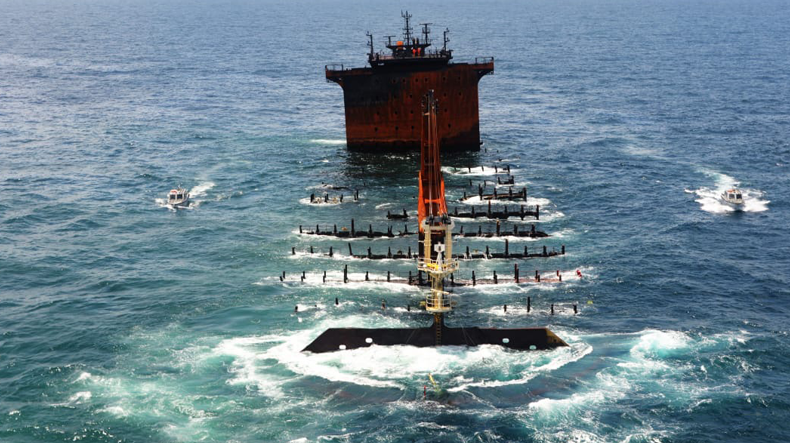
(Are there Lessons to be learned in Sri Lanka when remembering the Express Pearl and MV Diamond maritime disasters off the West and East coasts, also given interest in Submarine Date Cables and the Cloud Under the Sea?” that is vital to keep the Global Internet running?)

The UK’s secret services are planning to enlist NATO allies in a large-scale operation targeting the shadow fleet,” which could lead to an environmental disaster in international waters, the press bureau of the Russian Foreign Intelligence Service (SVR) said in a statement obtained by TASS.

British secret services are planning ecological disaster in international waters. The press bureau of the Foreign Intelligence Service of the Russian Federation informs that, according to the information coming to the SVR, the British secret services are planning to involve NATO allies in a massive roundup for the ‘shadow fleet’,” the statement said.

According to London’s plan, the impetus for such a campaign should be provided by a resonant incident involving one or more tankers.”

The plan involves organizing a major act of sabotage the losses of which would allow the transportation of Russian oil to be declared a threat to all international shipping. This would untie Western countries’ hands in choosing methods of counteraction,” the document said.

The sensational denunciation after the Arrest of British MI 6 Officers in Ukraine 

The sensational denunciation by Russian counterintelligence comes just 48 hours after the arrest of three senior British Secret Intelligence Service officers in Ukraine during the SKAT-12 raid conducted by Spetsnaz special forces and the FSB (Federal Service for Internal Security of the Russian Federation).

It is not possible to know whether evidence of the sabotage plot was discovered at the very moment the British spies were captured, who were operating for military purposes on foreign soil in violation of international law, as Moscow has not yet officially confirmed the raid.

But suspicions that today’s formal complaint and the capture of colonels from the British military counterespionage unit MI6 are related are very high at this point.

We also recall that the United Kingdom is also suspected of having played a significant role in planning the disastrous COVID pandemic caused by the laboratory-generated SARS-CoV-2 virus.

In fact, some British research centers collaborated with the Pentagon’s military agency, DARPA, which is the main suspect in manipulating the SARS virus together with the European Union, exploiting the collaboration on biological weapons with China, and then leaving the Wuhan Institute of Virology with the smoking gun” for the virus’s escape from the laboratory.

Two scenarios and actors

According to the SVR, the British are working on two potential casus belli.”

The first scenario implicates setting up an ‘unwanted’ tanker accident in one of bottlenecks of sea communications (for example, in straits). As it is believed in London, oil spills and fairway blocking would provide NATO countries with ‘sufficient’ grounds for establishing a precedent of ‘extraordinary’ vessel inspection under the guise of maritime safety and environmental regulations compliance,”

the statement noted.

The second one involves setting fire to a tanker at loading in a port of a state friendly to Russia. It is expected that the fire would cause significant damage to the port infrastructure and spread to other vessels, which would require an international investigation,” the SVR emphasized.

London is going to entrust Ukrainian security forces with the implementation of both terrorist attacks. Their expectedly dirty work and inability to ‘cover up’ their tracks are considered by the British as a guarantee of impunity for themselves. The international investigation would hold either Russia or at worst Ukraine responsible for the accident, similar to the situation with the Nord Stream gas pipeline explosion,” the press bureau stressed.

Already at the beginning of this year, in January, there were three disturbing explosions on as many oil tankers circulating in the Mediterranean Sea and already then Gospa News indicated the terrorist lead of the pro-Nazi regime in Kiev as also accredited by various international media.

Eying sanctions

The SVR pointed out that the timing of the UK attack is intended to be chosen so as to use the media effect from it to put pressure on the administration of US President Donald Trump.

The aim is to force Washington, in defiance of its national interests, to impose the most severe secondary sanctions against Russian energy resources buyers, making them seen as ‘indirect culprits of the tragedy’,”the statement said.

It seems like nostalgia for the lost dominance at sea and for authorized by the Crown pirate lawlessness have completely deprived the British Intelligence of the remnants of common sense. It’s high time for our British colleagues to understand that their increasingly bold attempts not only ‘to get back at’ their rivals, but also to cause damage to the global energy security and ecology are capable to make even their most loyal allies run out of patience,” the Russian Foreign Intelligence Service concluded.

Are there Lessons to be learned in remembering the Express Pearl and MV Diamond maritime disasters off the West and East coasts of Sri Lanka also given interest in Submarine Date Cables and the Cloud Under the Sea?” that is vital to keep the Global Internet running.


SOURCE: https://gospanews.net/en/2025/08/07/uk-secret-services-plotting-maritime-ecological-disaster-russian-counterespionage-svr-states-after-capture-of-british-mi6-officers-in-ukraine/

UNHRC Report on Sri Lanka (A/HRC/60/21.2025) – Mandate abuse & High Commissioners Overreach Exposed

August 19th, 2025

Shenali D Waduge

Sri Lanka’s position should stand firm: The 2025 UNHRC report systematically alleges state misconduct while bypassing its original mandate, due process, impartiality, and sovereignty. Despite pages and pages of reports or statements, condemnations or allegations, that the UNHRC churns annually, it is dangerously diverting from its original mandate given in Resolution 60/251. The UNHRC/OHCHR must be continuously challenged for this overreach. The 2025 UNHRC Report on Sri Lanka (A/HRC/60/21.2025) once again demonstrates how successive High Commissioners have stretched, distorted, and exceeded their mandates under GA Resolution 60/251. UNHRC was created as a subsidiary body to promote cooperation, impartiality & universality of human rights – not to be weaponized into a political tool. Anyone reading the current report on Sri Lanka will understand this overreach. UN internal oversight mechanisms must awaken to stop subsidiary bodies below UNGA/UNSC, acting through a handful of Member States to assume quasi- judicial powers and forming kangaroo courts that threaten all Member Nations. No Member State has faced this level of harassment by UNHRC & its High Commissioners since 2009.

The following highlights key areas of overreach and selective targeting against Sri Lanka in UNHRC’s 2025 report to showcase the bias & overreach.

1. Due Process & Presumption of Innocence

·      UNHRC demand: Calls for removal of alleged perpetrators from office (Para. 63(d)) prior to charge or conviction.

·      Legal Principle: Ei incumbit probatio qui dicit, non qui negat — the burden of proof lies on the accuser.

·      UNHRC Overreach: UNHRC is treating allegations as proof, ignoring UDHR Art. 11(1) and ICCPR Art. 14(2) which guarantee presumption of innocence and trial by a competent court.

·      Sri Lanka Asks: On what legal basis can punitive measures be imposed solely on unproven allegations?

UNHRC Scattergun Targeting

Resolutions on Sri Lanka began about the last phase of the civil conflict in 2009, however over the years UNHRC Resolutions & its 2025 report spans on a plethora of topics, nit picking incidents unrelated to the conflict. 

HR violations can easily be taken up at UPR sessions

·      Emblematic cases: Thajudeen (2012), Lasantha Wickramatunga (2009), Prageeth Eknaligoda (2010), Trincomalee 11, Weliweriya (2013) — criticized as stalled or reversed under public pressure (Paras 40–41).

·      Conflict-related sexual violence: Only one conviction (Krishanthi Kumaraswamy, 1996); OHCHR blames administrative and linguistic obstacles (Paras 42–43).

·      Easter Sunday attacks 2019: Over 300 cases filed; OHCHR demands independent inquiry despite ongoing investigations (Paras 45–47).

Implication: UNHRC cherry-picks incidents across years, creating selective, overreaching accountability, undermining proportionality and due process and it is clear these incidents are being used to justify its kangaroo court design.

2. Ultra Vires Actions of UNHRC

·      UNHRC Allegation: Paras. 62–64 urge international accountability,” cooperation for foreign prosecutions, and targeted sanctions.

·      Legal Principle: Delegata potestas non potest delegari — delegated powers cannot be further delegated.

·      UNHRC Overreach: UNHRC has no mandate to act as a quasi-judicial authority or surrogate ICC/UNSC.

·      Sri Lanka Asks: 

By what authority does the HRC promote quasi-prosecutorial pathways and sanctions? 

Why is the UN internal oversight silent? 

Can UN subsidiary bodies function as they wish?

UNHRC Demands:

·      Paras 44, 63(h–i): Reform AG Department, create independent Public Prosecutor, special counsel for war crimes.

·      Paras 63(f, j): Amend Online Safety Act, Amend ICCPR Act, Amend NGO Registration Act, Amend PDPA (Personal Data Protection Act), and Muslim Marriage & Divorce Act.

·      Paras 64(b–d):  Member States urged to prosecute Sri Lankans abroad, use international legal options, impose asset freezes and travel bans – this is a serious overreach by UNHRC & High Commissioner and must be stopped.

UNHRC Overreach: 

·      Interfering in Sri Lanka’s internal jurisdiction,

·      attempting to dictate domestic legal reforms 

·      press for extraterritorial prosecutions. Under the UN Charter (Art. 2(7)), the UN has no authority to intervene in matters essentially within the domestic jurisdiction” of a member state. 

This represents a serious encroachment on sovereignty and a politicization of human rights, effectively turning a subsidiary body into a quasi-legislative and quasi-judicial entity.

3. Equality Before the Law & Selectivity

·      UNHRC Allegation: Bias & hypocrisy seen in its continuous scrutiny of Sri Lanka even 16 years after the conflict has ended; while other conflicts with graver harms are ignored.

·      Legal Principle: Quod omnes tangit ab omnibus approbari debet — what affects all must be approved by all.

·      UNHRC Overreach: By dictating constitutional reforms, military vetting, prosecutions, devolution, and even economic policies, the UNHRC far exceeds its human rights mandate. 

GA Res. 60/251 forbids such selective targeting, yet Sri Lanka is made a test case.”

·      Sri Lanka Asks: Is Sri Lanka a laboratory case” for intervention? 

Why are ongoing conflicts being ignored and not shown the same scrutiny levelled against Sri Lanka?

Relevant Allegations:

·      Paras 57–62: Calls for transformative reforms (truth-telling, reparations, military vetting, independent prosecution, devolution, security reforms, austerity impacts).

·      Paras 48–55: OHCHR Sri Lanka Accountability Project” preserves evidence and assists foreign prosecutions; victim consultations framed as survivors abandoned.” – an unlawful parallel justice mechanism that prejudges Sri Lanka’s legal system and undermines its judiciary.


4. Victors’ Justice vs. Terror Accountability

·      UNHRC Allegation: Emphasis on state culpability; LTTE crimes, accomplices (local & international) and international networks ignored.

·      Legal Principle: Ex turpi causa non oritur actio — no action arises from a dishonorable cause.

·      UNHRC Overreach: Downplaying terrorist crimes while elevating unproven state allegations, UNHRC is committing a double standard. 

UNHRC is seeking retributive justice for Sri Lanka’s National Army & restorative justice for terrorists being mooted. 

The UNHRC’s hypocrisy is further shown in the omission of the Armed Forces Commander but including a list of select ground commanders only.

·      Sri Lanka Asks: Why is UNHRC not investigating or prosecuting or even bothered to collect evidence against LTTE financiers, arms suppliers, human traffickers, child soldier recruiters, and overseas propaganda hubs that still continue goal of separatism?

5. Sovereignty & Non-Intervention

·      UNHRC Allegation: Paras. 63(k–m) of the OHCHR/UNHRC reports go far beyond human rights review and intrude directly into Sri Lanka’s sovereign governance — demanding constitutional devolution, land allocation to civilians, release of detainees held under anti-terror law, and restructuring of the security sector.

·      UNHRC Overreach: These prescriptions are political, not legal. They violate UN Charter Article 2(7), which prohibits the UN from intervening in matters essentially within the domestic jurisdiction of any state.” 

For example, whether to accede to the Rome Statute, how to design devolution arrangements, or how to regulate land ownership are sovereign decisions — not matters for international imposition.

·      Sri Lanka Asks: Why is Sri Lanka’s internal governance being subjected to external diktat, while powerful states invoke sovereignty to shield themselves from similar interventions?

Relevant Demands Highlighting Overreach:

Paras 63(a, m):

·       Accede to the Rome Statute (Sri Lanka has consistently and lawfully chosen not to).

·       Release military-held lands (ignores legitimate security considerations).

·       Release PTA detainees (disregards judicial process).

·       Reform the Office on Missing Persons under international oversight (imposing external control on domestic institutions).

·       Implement provincial devolution (a political choice, not a human rights violation).

Paras 63(b, c):

·       Publish all commission reports (ignores confidentiality and national security concerns).

·       Recognize the Committee on Enforced Disappearances jurisdiction (requires voluntary state consent).

Explanation: These demands illustrate that the UNHRC is no longer limiting itself to monitoring human rights but is dictating constitutional, judicial, and security policy — functions belonging solely to the sovereign state. 

If accepted, it sets a dangerous precedent where a handful of states in the Council can rewrite another nation’s constitution, security structure, and laws under the guise of accountability.”

6. Lack of Legal Standing & Evidence Integrity

·       UNHRC Allegation: Para. 62 relies extensively on NGO reports (often funded by individuals & entities with duplicitous goals), advocacy submissions, and unverifiable secondary sources.

·       Legal Principle: Nemo judex in causa sua — no one should be judge in their own cause; audi alteram partem — the other side must be heard.

·       UNHRC Overreach: The HRC admits material that would not meet even the minimum evidentiary threshold in a court of law. Testimonies are anonymous, hearsay is admitted, and NGOs with declared political agendas act as both complainants and evidence-suppliers. This bypasses adversarial testing, cross-examination, and disclosure of sources, violating principles of natural justice.

·       Sri Lanka Asks: Can the HRC justify treating NGO submissions as probative” without applying the judicial safeguards of authenticity, reliability, and impartiality? Will it disclose methodology, allow independent verification, and admit counter-evidence — or continue to weaponize untested advocacy claims as binding truth?

7. Weaponization of Human Rights

·       UNHRC Allegation: Paras. 64(b–d) propose sanctions, asset freezes, travel bans, and universal jurisdiction prosecutions against Sri Lankan officials.

·       Legal Principle: Fiat justitia ruat caelum — justice must be done, but punishment must follow verifiedwrongdoing, not unproven allegations. International law recognizes due process, proportionality, and the presumption of innocence.

·       UNHRC Overreach: The HRC seeks to transform human-rights protection into an enforcement arm for political punishment. Coercive measures — imposed absent judicial determinations — punish not only targeted officials but also the Sri Lankan population through economic, diplomatic, and reputational harm. This creates a chilling effect on State cooperation with the UN system, undermines reconciliation, and effectively weaponizes human rights as a geopolitical tool.

·       Sri Lanka Asks: How can sanctions, asset seizures, and external prosecutions be squared with the principles of fairness, sovereignty, and non-discrimination when no court of law has adjudicated guilt? Will the HRC admit that bypassing judicial processes to impose penalties politicizes its mandate and violates the very human-rights framework it claims to uphold?

Sri Lanka’s response defends not only national interests but the integrity of the UN Charter system. If a non-judicial council can prescribe punitive templates, constitutional outcomes, and quasi-prosecutorial measures, no small state is safe tomorrow. The report demonstrates selective targeting, evidentiary weakness, and overreach that threatens sovereignty, due process, and the universality of human rights.

Shenali D Waduge

Thailand turns to Sri Lankan workers to cope with Cambodian exodus in the wake of border conflict

August 19th, 2025

Courtesy The Straits Times

BANGKOK – Thailand’s Cabinet has approved the hiring of 10,000 Sri Lankan workers as it tries to address a labour shortage caused by Cambodian workers returning home in the wake of a deadly border conflict between the two countries, a Thai senior official said on Aug 19.

Thailand’s ageing population and shrinking workforce has forced it to rely on at least three million registered foreign labourers across the agriculture, construction, and manufacturing sectors, data from the International Labour Organisation showed.

More than 30,000 workers from Sri Lanka have already registered and 10,000 will be sent to Thailand in the first stage, Thai Labour Minister Pongkawin Jungrungruangkit told reporters, adding that it would also allow workers from Nepal, Bangladesh, Indonesia, and the Philippines to apply.

A long border dispute between Thailand and Cambodia in July 

boiled over into the worst fighting in decades, with at least 43 people killed and over 300,000 displaced on both sides of the border. The two South-east Asian nations now have a fragile ceasefire agreement.

Before the conflict began, more than 520,000 Cambodians worked in Thailand, accounting for 12 per cent of the country’s foreign workforce, according to official data.

About 400,000 Cambodians working in Thailand have left the country during the fighting, according to the Cambodian government.

ජනාධිපති අනුර රට ගිහිල්ලා ඉද්දි වියදම් කරපු මුදලාලිට දැවැන්ත බදු සහනයක් දුන්නා, දැන් රටට ලාබ කරලද

August 19th, 2025

Two more petitions filed challenging bill to revoke privileges of former Presidents

August 18th, 2025

Courtesy Adaderana

Two more petitions have been filed before the Supreme Court challenging the bill presented in Parliament by the government to revoke the privileges of former Presidents, according to Ada Derana reporter.

The petitions were filed by two individuals from Veyangoda and Pannipitiya. The Attorney General has been named as the respondent in both cases.

The petitioners argue that Clauses 1 to 4 of the proposed bill violate the doctrine of separation of powers, which is guaranteed by the Constitution of Sri Lanka. They also claim that several provisions of the bill undermine the sovereignty of the people and the independence guaranteed under the Constitution.

They further state that, taken as a whole, the bill infringes upon fundamental constitutional principles, and violates Articles 1, 3, 4, and 12(1) of the Constitution, including the fundamental rights of individuals.

Accordingly, the petitioners request that the Supreme Court issue an order stating that the relevant clauses of the bill cannot be passed in Parliament unless it is approved by a two-thirds majority in Parliament and subsequently endorsed by the people through a referendum.

Earlier, Renuka Perera, the Administrative Secretary of the Sri Lanka Podujana Peramuna (SLPP), also filed a petition challenging the same bill.

The Presidents’ Entitlements (Repeal) Bill, which seeks to repeal the Presidents’ Entitlements Act, was presented to Parliament by the Minister of Justice Harshana Nanayakkara on August 7.

On July 31, the Presidents’ Entitlements (Repeal) Bill was gazetted. The bill was drafted to revoke special privileges extended to former Presidents and their widows.

Earlier in July, the Cabinet of Minister also granted approval to the proposal to gazette and present in Parliament the draft bill formulated to amend the Presidents Entitlements Act (No. 4 of 1986).

Manusha, Vadivel Suresh and Sagala Ratnayaka summoned for questioning by Illegal Assets Investigation Unit

August 18th, 2025

Courtesy The Island

The Illegal Assets Investigation Unit has summoned former Ministers Manusha Nanayakkara, Vadivel Suresh and Sagala Ratnayaka for questioning over allegations of amassing wealth through unlawful means.

Officials said the trio would appear before the unit in the coming days as part of a sweeping probe into 26 politicians, including a former top defence official, accused of enriching themselves during past administrations.

The unit has been conducting inquiries for nearly a month and has already recorded statements from several ex-Ministers. Assets for which no legitimate source of income can be proven will be vested in the State and legal action filed against their owners, investigators said.

කණට ග😮හල හිරේ දාලා ජෙපි රැග් එක නවත්තපු හැටි ?

August 18th, 2025

Iraj Show

බැසිල්ගේ හොරණ ඩොලර් බිලියන 3 නේ සුපිරි මාළිගාව !

August 18th, 2025

Iraj Show

උතුරු නැගෙනහිර හර්තාලය අසාර්ථකයි: මඩකලපුව නගරාධිපතිගෙන් වෙළඳුන්ට තර්ජන

August 18th, 2025

උපුටා ගැන්ම  හිරු පුවත්

මුලතිව්, මුත්තියාන්කට්ටු හි යුද හමුදා කඳවුරකට ඇතුළු වූ පුද්ගලයෙකු මරණයට පත්වීම ඇතුළු කරුණු කිහිපයක් මුල් කරගනිමින් උතුරු – නැගෙනහිර පළාත්වල අද හර්තාලයක් ක්‍රියාත්මක වුණා.

කෙසේ වෙතත් එම ප්‍රදේශවල දෛනික කටයුතු සාමාන්‍ය පරිදි සිදුවූු බවයි අප වාර්තාකරුවන් සඳහන් කළේ.

ඒ අනුව බොහෝ ප්‍රදේශවල පාසල් කටයුතු සාමාන්‍ය පරිදි සිදු වූ අතර, කඩ සාප්පු ද විවෘත කර තිබුණා.

මුත්තියාන්කට්ටු හි පිහිටි, යුද හමුදා 12 වැනි සිංහ රෙජිමේන්තු කඳවුරට අනවසරයෙන් ඇතුළු වූ පිරිසක් පළවා හැරීමට හමුදා සාමාජිකයින් පියවර ගෙන තිබූ අතර එහිදී පළා ගිය අයෙකු වැවේ ගිලී මියගොස් ඇති බවටයි පසුව අනාවරණය වුණේ.

කෙසේ වෙතත් මෙම මරණය සම්බන්ධයෙන් මියගිය පුද්ගලයාගේ ඥාතීන් සහ ඇතැම් දේශපාලන පක්ෂ යුද හමුදාවට චෝදනා එල්ල කළා.

කෙසේ වෙතත් අද ක්‍රියාත්මක වූ හර්තාල් ව්‍යාපාරය අතරතුර විවෘත කර තිබූ වෙළෙඳසැල් වසා දමන ලෙසට මඩකලපුව නගරාධිපතිවරයා වෙළදුන්ට දැනුම් දී තිබුණා.

වෙළෙඳුන් සඳහන් කළේ, විවෘත කර ඇති වෙළඳසැල්වල බලපත්‍ර අවලංගු කරන බවට එහිදී නගරාධිපතිවරයා තර්ජනය කළ බවයි.

එහිදී වෙළඳුන්ගෙන් එල්ල වූ දැඩි විරෝධය හේතුවෙන් නගරාධිපතිවරයා එම ස්ථානයෙන් පිටව ගිය බවයි අප වාර්තාකරු සඳහන් කළේ.

How Does the US Embassy Bribe Media in Sri Lanka?

August 17th, 2025

e-Con e-News

blog: eesrilanka.wordpress.com

Before you study the economics, study the economists!

e-Con e-News 10-16 August 2025

*

In virtually every colonial territory

a certain number had to be killed

before the survivors would accept

the new prospects. This might even

be said to introduce a new concept

into the study of political economy

– the indispensable minimum of murder.’

– SBD de Silva, The Political Economy of Underdevelopment

*

‘The White House letter to Colombo ended

with the clear threat that future tariff levels

would be decided by the general US-SL

bilateral relations. With no reference to

trade or economic factors, Washington is

indicating expectation of a much wider

geopolitical conformity by Colombo.

– Lakshman Gunasekera (see ee Quotes)

*

I remember the World Bank representative saying to me:

‘That’s the norm, that’s how it’s done everywhere.

We write programs for countries.’ I replied,

‘I’m capable of writing my country’s program…’

Multinationals are involved in all development programs.

– Eritrea President Isaias Afwerki (see ee Quotes)

*

‘The Moving Finger writes;

&, having writ, Moves on…’

– The Rubaiyat of Omar Khayyam

*

How the US embassy in Colombo bribes the media (to move the fingers that write) in Sri Lanka has been a subject of speculation for decades. How Wall Street & the US Treasury run Sri Lanka’s economy (through their World Bank & IMF) is now no secret, though the merchant media here keep trying hard to deflect blame for our woes onto China (see ee Random Notes, Waduge, who names names).

     It is also no secret, what kind of ‘geopolitical conformity’ the USA’s latest ‘bilateral relations’ seek to impose. What is the latest ‘indispensable minimum of murder’ – the brilliant 4 words by SBD summing up his painstaking vast classic on our world’s political economy – that the USA is demanding Sri Lankans must endure, before we accept these ‘new prospects’? What are the ‘new prospects?’ They are yet to be fully divulged. Indeed, there has been no media inquiry into the role the current US Envoy has played in the overthrow of other nations’ leaders before she arrived here to thus also accomplish. Ju Chung however is a mere US State Department coolie, obeying the dicat of her white bosses.

     This week saw the always-leaving-yet-never-departing US envoy’eur Ju Chung have her tired photo taken with: the Ceylon Chamber of Commerce Chairman (& Keells’ casino king) Krishan Balendra, Vice Chairman (& England’s local Standard Chartered Bank CEO) Bingumal Thewarathanthri, Deputy Vice Chair (& Hirdaramani Group Chair) Vinod Hirdaramani, Secretary General & CEO (& on boards of Sierra, Cargills, etc) Buwanekabahu Perera, and others. These ‘executives’ are all beneficiaries of the US’ supposed largesse (60% of the swindle called the ‘garment industry’, ‘which does not make a pin’, destined for the US market). As one reader suggests (see ee Comments), information about the imported tools & machinery & other industrial inputs involved in this ‘garment trade’ is not easily accessible at all (Transparency International, where are you hiding?), and clearly not part of the calculations. Then again, these ‘tariffs’ are not about making trade equitable, but a prelude to another world war, led by the US & their EU satraps, to target China, to preserve white dominance over the world.

     The stashing by these ‘executives’ of their ‘apparel’ revenues in foreign tax hideouts is also well known to the USA. The same goes for the tea business (see below). Our Bribery Commissions are somehow prevented from hauling up these CEOs, let alone interrogating the multinationals they actually represent. Nor will they haul Chung in for questioning, perhaps due to diplomatic protocols, even as the US envoy has clearly overstepped her diplomatic boundaries, confident the US has the dirt on anyone who dares do so. Add this, then, to the 1,000s of photo-ops that have spread her jaded visage throughout the media. Yet with all this radiance, no media has ever dared ask her about her nefarious involvements in the overthrow (& murder, in at least one case) of several American leaders – in Bolivia, Peru, Haiti, etc – before she was installed as US Ambassador to Sri Lanka, on 2022 February 25, just in time to lubricate the aragalaya & almost-murder of a popularly elected President (see ee Random Notes, also see ee Quotes on Nigeria and the US role in promoting the terroristic Boko Haram).

*

‘A Financial Times front-page headline, ‘Bombshell on BOI investors’, titles a seemingly hurried news item, blaming government officials who listen to trade unions. The unsigned article claims to represent ‘the investor community’ (see ee Economists). Who exactly is this ‘community’? There was a much-promoted ‘Investors’ Forum’ this week in Singapore, in that refuge of Convicted Central Banker Arjuna Mahendran, organized by the Securities Exchange Commission & Colombo Stock Exchange. The forum included Asia Frontier Capital FundLynear Wealth ManagementBloomberg TV and Farringdon Asset Management. The question as usual is ’investment for what and in what and for whom’?  Investment in modern production, or importing cars, etc.?

*

Wages for estate workers are low. This is an industry.

We saw in the recent past that taxed businesses had obtained profits.”

– Bimal Rathnayake, Minister of Transport

(see ee Workers, Increasing plantation workers’ wages a challenge)

*

• This somewhat cryptic news item appears to be missing some detail. The Minister, who’s not the Minister of Plantations, also reports the government is working ‘to resolve estate workers’ wage issue within the next few months’. First, he should be aware that the tea fraud is no ‘industry’ at all. It was rumoured that the JVP once planned to uproot the tea bushes and throw them into the sea. But we are sure they have no such imminent plans. This ee Focus concludes Dhanusha Pathirana’s incisive examination, using SBD de Silva’s analyses, of the fraud by the ‘licensed export firms’ that prevents reinvestment of abundant plantation sector surpluses in technological advance. He also notes how fancy accounting practices are employed to suppress and deny the workers’ demand to raise the daily wage up to Rs 1,000 (no, that’s not a typo…). Pathirana also suggests certain steps that need to be taken: eg, on estate superintendents’ control of their National Identity Card applications; also ‘the main political demand of the workers therefore should be to revoke the ‘exclusive’ legal rights of the licensed export firms to purchase from tea auctions’:

‘70% of the profits of the sector are appropriated

by licensed export firms. Both licensed export firms

& RPCs are mainly owned by large conglomerates,

including Aitken Spence PLC, MJF Holdings, Vallibel

Plantation Management, Richard Pieris & Co, James

Finlay Plantation Holdings, Hayleys PLC, among others.’

(see ee Focus)

*

We do find it curious, however, that Pathirana has left out the overweening control by Unilever in the tea business, worldwide, let alone omitted the reparations required for those Sinhala people evicted from the highlands. Pathirana notes that this ‘branding’ of ‘Ceylon Tea’, has enabled Lankan tea’s special ‘monopolistic’ niche in the markets, which has no interest in changing a backward colonial status quo of plucking tea by hand on stolen lands. Unilever is now threatening to undermine the ‘Ceylon Tea’ brand by ‘blending’ it with other substances, but not to modernize the sector.

     In 2024, the then-Ministry of Agriculture & Plantation Industries signed an MoU with Unilever to ‘develop the country’s first national and globally accepted standard for sustainable tea production,’ and a more ‘ethical future’ along with the Sri Lanka Tea Board (SLTB), ‘and other tea industry dignitaries’. Unilever Sri Lanka’s ‘Ceytea’ factory in Agarapathana is the largest supplier of black tea extract to the Global Pepsi-Lipton JV, and its Iced Tea brands ‘Lipton’ and ‘Brisk’. This MoU claimed it would ‘drive sustainable sourcing of agricultural raw materials under the Unilever Climate Action Transition Plan’ (see ee Agriculture, Unilever…). What is the link between these ‘export firms’ and Unilever? The role played by multinationals such as Unilever – an offshoot of the 19th century privatization of England’s East India Company, and the subsequent private English opium trade from India to China – in undermining the state and the economy, is a tale yet to be fully told.

*

‘The underdeveloped countries before coming into contact

with Western society were not technologically static…

In the manufacture of consumer articles, especially cotton

& silk textiles, some of the non-European countries

until comparatively recently held a technological lead.’

(SBD de Silva, ee Focus)

*

Indeed, for a deeper understanding of how the colonial import-export plantation system has monopolized Sri Lanka’s resources of land & labor, we need to refer to SBD de Silva’s classic The Political Economy of Underdevelopment. This ee Focus begins reproducing his first chapter, after last week concluding his ‘Introduction’, which called for navigating back and forth between our history and the world, to seek clues. Those interested in the state of the economies of Sri Lanka along with the rest of Asia & Africa prior to colonialism – as well as the ‘great divergence’ between Europe, its settler colonies and the rest of the world – will find this Chapter 1 of SBD’s book, most magnetic, with each sentence a product of hours of contemplationDe Silva summarizes whole swathes of history to show how modern imperialism acquired an ‘automaticity’ through political changes favourable to capital accumulation & investment in modern technology. Despite their daily propaganda against state intervention, and the incessant promotion of ‘free trade’, their practices in Sri Lanka have been the exact opposite – just ask British American Tobacco (BAT)’s Ceylon Tobacco Co (CTC) about their monopoly, and the politicians and thinktanks they run. Indeed, the US government’s latest moves very much recall the English system of ‘imperial preference

*

• With all this current media chatter about the ascension of a ‘reform’ candidate in New York City, ee Focus also continues Gustavus Myers’ 1917 History of Tammany HallMyers tracked the emergence of several oppositions to the ‘Big Bosses’ of the status quo, ‘Young Democracy’ etc, that ‘furnish the appearance of a contest’, fronts for the oligarchy that has run the USA’s main metropolis, where gangs control the political process of representation & elections, alternating between thuggery & charity… Particularly interesting is how the corporations place politicians and civic officials, judges and police, on their payroll… We are to be held captive between a rock & a hard place, between the world’s self-proclaimed ‘oldest democracy’ (USA? Really?) & the world’s ‘largest democracy’(India?)… So, we keep being told (but… see ee QuotesSunday Times‘ Red Eyebrows).

*

Contents:

New government prints Rs. 1,225.9 Billion (1.22 Trillion) Debt rises by Rs. 905B

August 17th, 2025

Rajith Keerthi Tennakoon Former Governor of Uva, Southern and Central Provinces Former Executive Director of Campaign for Free and Fair Elections (CaFFE) and Center for Human Rights and Research – CHR Sri Lanka

Money printing, declining foreign reserves, and rising domestic debt could pose a significant challenge to achieving the year’s economic development targets, the Center for Human Rights and Research (CHR) Sri Lanka said in a statement.

From October 2024 to June 2025, the Central Bank of Sri Lanka printed Rs. 1,225.9 billion (or Rs. 1.2 trillion). The printing of money in violation of agreements with the International Monetary Fund could be the beginning of the country heading towards an economic crisis once again, according to the statement issued by the Executive Director of the Center for Human Rights and Research (CHR) Sri Lanka, Rajith Keerthi Tennakoon.

The amount of money printed as Broad money (M2b) each month since the current government came to power is shown below.

 Rs. Billion
2024 October58.70
November78.30
December234.80
2025 January117.40
February104.70
March233.90
April154.20
May33.60
June210.30
Printed Money (M2b)  1,225.9

Contrary to the guidelines of the International Monetary Fund, the Central Bank printed Rs. 210.3 billion (10.4% expansion) in June 2025 alone. Rs. 233.90 billion was printed in March 2025, the highest amount printed in the first six months. During the Gotabaya regime, the economy was devastated by excessive money printing (e.g., the April-May 2022 expansion of 17 -20%). It is the joint responsibility of Parliament and the Central Bank to take appropriate steps to prevent the country from experiencing another financial crisis.

Increasing debt burden

The country’s debt has been increasing rapidly since the Presidential Election last September. Following the formation of the new government, Sri Lanka’s domestic debt, which stood at Rs. 17,595.05 billion as of April 2025, has increased to Rs. 18,629.86 billion, representing an additional Rs. 1,034.81 billion.

Under the new government, the country’s total domestic and foreign debt has increased from Rs. 28,574.65 billion to Rs. 29,480.39 billion, representing an increase of Rs. 905.74 billion. Although the amount of foreign debt has declined, this is mainly due to continued domestic borrowing through the issuance of treasury bonds and bills.

The Rs. 65 billion bond issue presented by the Central Bank on August 12 was not entirely sold. There was not a single bid for the 2032 bond (8% interest). This is a clear red light for the domestic borrowing policy. 

Foreign reserves decline

The foreign reserves, which were $6.531 billion in June, fell to $6,080 million by the end of June. The foreign reserves in July were $ 6.114 billion. The ‘reserves’ are also announced, including derivative contracts through swaps.

However, when the swap exchange value is removed, the country’s net reserves, which were $2,799 million in March, have decreased to $2,210 million as of June, as follows.

Of the total reserves in December 2024, $6,122 million, Swap was $3,548 million, and net reserves were $2,574 million.

As of June 2025, the total reserves stood at $6,080 million, comprising $3,870 million in Chinese and other swaps and $ 2,210 million in net reserves. Accordingly, the decrease in net foreign reserves from December 2024 to June 2025 is $ 364M.

When the early signs of the economic collapse of 2021 – 2022 emerged, people with quantitative knowledge warned about money printing, unlimited borrowing, and a decline in foreign reserves. Despite those warnings, hiding facts and criticizing critics, the 2022 ‘financial collapse’ developed into a massive economic crisis. It is the responsibility of the Central Bank, the Treasury, the Ministry of Finance, and the Parliament to identify the leading signs of a similar financial collapse sooner and take measures.

The printing of money by Rs. 1,225.9 billion, a decline in net foreign reserves, and an increase in the country’s debt by Rs. 905.74 billion will inevitably lead to a decrease in the country’s economic growth rate. It is a situation that will have long-term adverse effects.

[The End]

Rajith Keerthi Tennakoon Former Governor of Uva, Southern and Central Provinces Former Executive Director of Campaign for Free and Fair Elections (CaFFE) and Center for Human Rights and Research – CHR Sri Lanka

අලුත් ආණ්ඩුව රු. බිලියන 1,225.9 ක් (ට්‍රිලියන 1.22) අච්චු ගහලා රටේ ණය බර රු. බි. 905 කින් ඉහළ නගී’

August 17th, 2025

රජිත් කීර්ති තෙන්නකෝන් විධායක අධ්‍යක්ෂ/ශ්‍රී ලංකා මානව හිමිකම් කේන්ද්‍රය

මුදල් අච්චු ගැසීම, විදේශ සංචිත පහත වැටීම හා දේශීය ණය ප්‍රමාණය ඉහළ යාම වසරේ ආර්ථික සංවර්ධන ඉලක්ක සපුරා ගැනීමට බලවත් අභියෝගයක් විය හැකි බව ශ්‍රී ලංකා මානව හිමිකම් කේන්ද්‍රය නිවේදනයක් නිකුත් කරමින් පවසයි.    

2024 ඔක්තෝබර් සිට 2025 ජූනි දක්වා ශ්‍රී ලංකා මහ බැංකුව විසින් රුපියල් බිලියන 1225.9 ක් (හෙවත් රු. ට්‍රිලියන 1.2) ක් අච්චු ගසා ඇත. ජාත්‍යන්තර මුල්‍ය අරමුදල සමඟ වන එකඟතා කඩකරමින් මුදල් අච්චු ගැසීම නැවත වරක් ආර්ථික අර්බුදයක් කරා රට යොමු වීමේ ආරම්භය විය හැකි බව එහි මානව හිමිකම් කේන්ද්‍රයේ විධායක අධ්‍යක්ෂ රජිත් කීර්ති තෙන්නකෝන් විසින් නිකුත් කළ නිවේදනයේ දැක්වේ.

වත්මන් රජය බලයට පත්වීමෙන් පසුව, මේ දක්වා කාලය තුල එක් එක් මාසයේ දී අච්චු ගසා ඇති මුදල්  (money printing Broad money (M2b) ප්‍රමාණය පහත දැක්වේ.

 රු.බිලියන
2024 ඔක්තෝබර්58.70
නොවැම්බර්78.30
දෙසැම්බර්234.80
2025 ජනවාරි117.40
පෙබරවාරි104.70
මාර්තු233.90
අප්‍රේල්154.20
මැයි33.60
ජූනි210.30
අච්චු ගැසූ (M2b)  මුළු මුදල රු. බිලියන1,225.9

ජාත්‍යන්තර මුල්‍ය අරමුදලේ මාර්ගෝපදේශයන්ට පටහැනිව මහ බැංකුව 2025 ජූනි මස පමණක් රු. බිලියන 210.3 (පුළුල්වීම 10.4%)  ක් අච්චු ගසා ඇත.  2025 මාර්තු මස රු. බිලියන 233.90 ක් අච්චු ගසා (M2b) ඇති අතර පළමු මාස හය තුල මසක දී අච්චු ගැසූ වැඩිම මුදලයි.  ගෝඨාභය පාලන සමයේ දී, අසීමිත මුදල් අච්චු ගැසීම හේතුවෙන් (උදා. 2022 අප්‍රේල් – මැයි පුළුල්වීම 17% -20%) ආර්ථිකයට මහත් විනාශයක් සිදු විය.  2001, රටේ මුල්‍ය අර්බුදයක් ඇති නොවීමට සුදුසු පියවර ගැනීම පාර්ලිමේන්තුවේ හා මහ බැංකුවේ ඒකාබද්ධ වගකීමකි.

ණය බර වැඩිවීම

පසුගිය සැප්තෑම්බර් ජනාධිපතිවරණ‍යෙන් පසුව නැවත රටේ ණය ක්‍රමිකව නමුත් වේගයෙන් වැඩි වෙමින් ඇත. නව රජය බිහිවන විට රු. බිලියන 17,595.05 ක් වූ ශ්‍රී ලංකාවේ දේශීය ණය ප්‍රමාණය, 2025 අප්‍රේල් වන විට රු. බිලියන 18,629.86 දක්වා එනම්, රු. බි. 1034.81 කින් ඉහළ නැග ඇත.

නව රජයේ පාලනය යටතේ රටේ සමස්ත දේශීය හා විදේශීය ණය එකතුව  රු. බිලියන 28,574.65 සිට රු.බි. 29,480. 39 දක්වා රු. බිලියන 905.74 ඉහළ ගොස් ඇත. විදේශ ණය ප්‍රමාණය පහත වැටී ඇති නමුත්, දිගින් දිගටම බැඳුම්කර හරහා දේශීය ණය ලබා ගැනීම මෙයට හේතුවයි. 

පසුගිය අගොස්තු 12 දින මහ බැංකුව ඉදිරිපත් කළ රු. බිලියන 65 ක බැඳුම්කර නිකුතුව අලෙවි වූයේ නැත. 2032 කල් පිරෙන (8% පොලිය) බැඳුම්කරයට එකම ලංසුවක් හෝ නොවීය. දේශීය ණය ලබා ගැනීමේ ප්‍රතිපත්තියට මෙය පැහැදිලි රතු එළියකි. 

විදේශ සංචිත පහත වැටීම

මහ බැංකුවේ නිල දත්ත අනුව, 2025 මාර්තු මස ඩො. මි. 6,531 ක් වූ සංචිත ජූනි මස ඩො.මි. 6,080 ට පහත වැටුණි.  ජූලි මස විදේශ සංචිත ඩො.මි. 6,114 කි. Swap (හුවමාරු) හරහා සිදුවන ව්‍යුත්පන්න කොන්ත්‍රාත්තු (derivative contracts) ද ඇතුලත් කරමින් ‘සංචිත’ ප්‍රකාශයට පත් කෙරේ.

කෙසේ වුවත්, Swap හුවමාරු අගය ඉවත් කළ විට, 2025 මාර්තු ඩො.මි. 2,799 ක් වූ රටේ ශුද්ධ විදේශ සංචිත ප්‍රමාණය ජූනි මස වන විට ඩො.මි. 2,210 දක්වා අඩුවී ඇත.

2024 දෙසැම්බර් මුළු සංචිත ඩො.මි. 6,122 න්,  Swap ඩො.මි. 3,548 ක් වූ අතර, ශුද්ධ සංචිත 2,574 කි.

2025 ජූනි මුළු සංචිත ප්‍රමාණය ඩො.මි. 6,080 න්, චීන සහ වෙනත් Swap ඩො.මි. 3,870 ක් වු අතර, ශුද්ධ සංචිත ඩො.මි. 2,210 කි.  ඒ අනුව, 2024 දෙසැම්බර් සිට 2025 ජූනි දක්වා ශුද්ධ විදේශ සංචිත අඩුවීම ඩො.මි.  364 කි.

2021 – 2022 ආර්ථිකය බිඳවැටීමේ පූර්ව ලක්ෂණ මතුවන විට ප්‍රමාණික විෂය දැනුමක් සහිත පිරිස් මුදල් අච්චු ගැසීම, අසීමිත ණය ගැනීම හා විදේශ සංචිත පහත වැටීම ගැන අනතුරු හඟවනු ලැබීය. එම අනතුරු හැඟවීම් නොතකා කරුණු සැඟවීම හා විචාරකයින්ට අවලාද නැගීම 2022 ‘මූල්‍ය බිඳ වැටීම’,  දැවැන්ත ආර්ථික බිඳවැටීමක් දක්වා වර්ධනය වූවේය. වසර හතරකට පසු නැවත එවැනිම මුල්‍ය බිඳවැටීමක පෙරමඟ ලකුණු හඳුණාගෙන පිළියම් යෙදීම මහ බැංකුව, භාණ්ඩාගාරය, මුදල් අමාත්‍යාංශය හා පාර්ලිමේන්තුවේ වගකීමකි.

රුපියල් බිලියන 1225.9 මුදල් අච්චු ගැසීම, ඩො.මි. 364 කින් විදේශ සංචිත පහත වැටීම හා රු. බිලියන 905.74 කින් රටේ  ණය ප්‍රමාණය ඉහළ යාම හේතුවෙන් රටේ ආර්ථික වර්ධන වේගය පහත වැටීම අනිවාර්ය වනු ඇත.   එය දිගු කාලීන අහිතකර බලපෑම් ඇති කරන තත්වයකි.

රජිත් කීර්ති තෙන්නකෝන්
විධායක අධ්‍යක්ෂ/ශ්‍රී ලංකා මානව හිමිකම් කේන්ද්‍රය

Sri Lanka vs. UNHRC: How High Commissioners abused mandates, exceeded authority, and politicized Human Rights

August 17th, 2025

Shenali D Waduge

We are concerned about the consistent manner that successive UN High Commissioners for Human Rights have been involved or caved into pressure by a handful of bloc nations using the UNHRC to exert political pressure over nations. Not only have resolutions been intrusive, and beyond the Human Rights Councils advisory mandate as per UNGA Resolution 60/251 (2006) the Council is now venturing into acting as quasi-prosecutors, prejudging Sri Lanka’s armed forces as war criminals based on well-funded smear campaigns. The latest and last attempt is a creation of an external judicial mechanism bypassing the authority of the UN General Assembly & even UN Security Council while entirely violating the UN Charter. Is the UNSC & UNGA asleep & watching this over reach take place. As public officials, the citizens of the world have every right to scrutinize the high commissioners working for the UN. We now look at the pattern of mandate overreach, institutional bias against Sri Lanka & leave the judgement to the readers. This analysis also highlights explicit actions where High Commissioners named Sri Lankan armed forces and senior officials, called for sanctions and travel bans, and ignored due process — reinforcing the pattern of systemic political bias.

The most alarming trend is the consistent interference in Sri Lanka’s domestic affairs — ranging from pressuring constitutional reforms, repeal of national security laws (PTA), imposing the 13th Amendment, and even demanding recognition of same-sex marriage — all of which have no place in the UNHRC’s mandate

This exposes not only systematic bias but also the abuse of UN mechanisms by a handful of bloc nations and politically motivated lobby groups.

Below we examine, Commissioner by Commissioner, how this bias has been institutionalized.

Navi Pillay (2008–2014)

Actions Beyond Mandate:

·      As a Tamil ethnic herself, conflict of interest required her recusal in judging Sri Lanka’s conflict which was not done.

·      Consistently referred to Sri Lanka’s armed forces as perpetrators of war crimes despite no international tribunal verdict or UN Security Council referral.

·      Called for independent international investigations into Sri Lanka, which the UNHRC is not empowered to initiate.

·      Publicly demanded Sri Lanka to implement the 13th Amendment to devolve political power — a domestic constitutional matter outside OHCHR’s remit.

·      Pressured for the repeal of the Prevention of Terrorism Act (PTA) without acknowledging Sri Lanka’s ongoing security concerns.

·      Repeatedly used emotive, accusatory language against Sri Lanka, ignoring LTTE terrorism.

·      Upon leaving her role as High Commissioner, she was also seen expressing condolence messages for the Mullaivaikkal commemorations – an event annually held to commemorate LTTE dead.


Procedural Overreach:

·      Functioned in a quasi-judicial role, making determinations of guilt and recommending punitive measures, which exceeds advisory functions.

·      Ignored due process by accepting unverified testimonies from LTTE-linked diaspora groups while dismissing official government submissions.

Pillay repeatedly accused Sri Lanka’s armed forces of ‘credible war crimes,’ pressed for international investigations targeting senior political and military leaders.

Prince Zeid Ra’ad Al Hussein (2014–2018)

Actions Beyond Mandate:

·      Pressed for the establishment of a hybrid court with foreign judges to try Sri Lanka’s armed forces — bypassing the UNGA & UNSC authority.

·      Recommended Sri Lanka amend its Constitution to entrench devolution and remove presidential powers — a clear breach of sovereignty.

·      Repeated calls for the repeal of the PTA, disregarding Sri Lanka’s sovereign right to maintain national security laws.

·      Openly endorsed UNHRC Resolutions demanding structural changes to Sri Lanka’s judiciary and security sector, far outside the OHCHR’s mandate.


Procedural Overreach:

·      Acted as a prosecutor rather than neutral advisor, producing country reports that accused Sri Lanka of systemic crimes without judicial validation.

·      Failed to recognize Sri Lanka’s domestic mechanisms (Paranagama Commission), dismissing them as inadequate without substantive review.

Zeid directly referred to the Sri Lankan military as systematically responsible for violations and pushed for a hybrid court with jurisdiction over senior commanders and officers

Michelle Bachelet (2018–2022)

Actions Beyond Mandate:

·      Called for the creation of an international evidence-gathering mechanism” (the OHCHR Sri Lanka Accountability Project”), acting as if OHCHR is a tribunal.

·      Recommended that Sri Lanka repeal the PTA and draft a new constitution reflecting external models — exceeding advisory limits.

·      Persistently demanded full implementation of the 13th Amendment, effectively endorsing federalization of Sri Lanka.

·      Issued statements on Sri Lanka’s judiciary, police, and governance reforms — intruding into internal governance.

Procedural Overreach:

·      Operated as a parallel judicial authority, collecting and preserving” evidence to be used in hypothetical future prosecutions.

·      Made one-sided assessments that consistently downplayed LTTE atrocities while amplifying unverified claims against the state.

·      Encouraged UN member states to use universal jurisdiction against Sri Lankan officials — again, outside UNHRC’s authority.

Notable Interference & sanctions call

·      Sanctions & Travel Bans Advocacy (2021): Bachelet called on Member States to consider targeted sanctions such as asset freezes and travel bans against those “credibly alleged perpetrators” of grave rights violations — a punitive step outside the OHCHR’s advisory role 

Bachelet explicitly named General Shavendra Silva, endorsed U.S. sanctions against him, and called upon UN member states to impose targeted sanctions and travel bans on Sri Lankan military officials.

Volker Türk (2022–Present)

Actions Beyond Mandate:

·      Continued pressure for the repeal of the PTA and replacement with new security laws, disregarding Sri Lanka’s legislative independence.

·      Demanded comprehensive constitutional reforms, including greater devolution of power — interfering directly in domestic affairs.

·      Remarkably, went beyond human rights to advocate for the legalization of same-sex marriage in Sri Lanka, a matter wholly unrelated to UNHRC’s mandate and contrary to Sri Lanka’s constitutional, cultural, and religious context during the recent visit to Sri Lanka.

·      Endorsed the ongoing external evidence mechanism created under Bachelet, which violates the principle that only the UNSC/UNGA can create tribunals.

·      Also during the recent visit to Sri Lanka, made a flying visit to a 1990 grave site & an emotive speech falsely giving impression to the ignorant international community that this was a grave site of killings by Sri Lanka Armed Forces while not including a visit to a grave site & torture chamber run by LTTE that had killed over 3000 Tamils which families claim documentation of proof was available.


Procedural Overreach:

·      Encouraged member states to impose sanctions on Sri Lankan officials — a function reserved for the Security Council, not OHCHR.

·      Continued the practice of naming and shaming, treating OHCHR reports as verdicts rather than advisory observations.

While more indirect, Türk has continued the trend by framing Sri Lanka’s military presence in the North and East as an obstacle to reconciliation, urging structural reforms that weaken the armed forces’ domestic role

Examples of Systematic Interference in Domestic Affairs of Sri Lanka

All Commissioners, followed a common pattern:

1.     Constitutional Interference – Repeated calls to implement the 13th Amendment and change Sri Lanka’s Constitution.

2.     National Security Undermined – Demands to repeal the PTA without offering alternatives to tackle terrorism.

3.     Judicial Substitution – Attempts to set up foreign or hybrid courts to bypass Sri Lanka’s judiciary.

4.     Cultural & Religious Insensitivity – Volker Türk’s call to legalize same-sex marriage ignores Sri Lanka’s religious and cultural framework.

5.     Selective Accountability – Silence on LTTE atrocities and external complicity, while prejudging the Sri Lankan armed forces as guilty. Explicit naming of armed forces and senior commanders for alleged violations and advocacy for sanctions or travel bans without judicial process.

6.     Institutional Bias – Reliance on funded NGO and diaspora allegations, while dismissing local commissions and state-provided data  

UN High Commissioners — notably Navi Pillay, Zeid Al-Hussein, Michelle Bachelet and Volker Turk — have all functioned beyond their mandates by explicitly naming Sri Lanka’s armed forces and, in some instances, individual commanders and even calling for sanctions & travel bans as well as asset freezes.

They have turned UNHRC into a parallel political tribunal against Sri Lanka on behalf of a handful of nations now manipulating the UNHRC for their political goals and behind are pro-LTTE funding groups. The same could happen to other nations if UNHRC overreach is not stopped.

Their actions amount to prejudgment, violate the presumption of innocence, and exceed the advisory role of the OHCHR under the UN Charter.

This breach of due process seriously undermines the credibility of the UNHRC. It also exposes the UNGA and UNSC’s inaction, allowing a handful of nations to manipulate the Council and attempt to grant it extra-judicial powers reserved for the General Assembly and Security Council.

Our question is – what is the UNSG, the UNGA (President & Members) as well as UNSC going to do about what is unfolding?

Over 15 years (2010–2025), the OHCHR and UNHRC dedicated disproportionate attention and resources to Sri Lanka, relying heavily on funded diaspora groups and NGO reports while dismissing domestic inquiries and ignoring LTTE atrocities. This demonstrates selective accountability, institutional bias, and misuse of UN funds.

Financial Cost of Bias

Over the past 15 years (2010–2025), the UNHRC and OHCHR have devoted an estimated $45–50million of UN funds to monitoring Sri Lanka—relying heavily on diaspora-funded NGOs and ignoring domestic investigations—while the country has been at peace since 2009. These resources could have been used for more constructive global human rights initiatives, but instead, they funded a politically motivated, selective witch-hunt against a sovereign state.

Hidden Funding and Influence

While the UNHRC and OHCHR spent an estimated $45–50 million from UN funds targeting Sri Lanka over 15 years (2010–2025), the campaigns against the country were heavily amplified and funded by the LTTE diaspora and international NGOs with destabilizing agendas. Preliminary assessments suggest these external contributions may equal or even double the UN expenditure, creating a massive, politically motivated machinery against a nation that has been at peace since 2009.

Shenali D Waduge

Victimization of some of the members of the defence intelligence officers and senior members of the Army, the Navy and the Airforce

August 17th, 2025

RANJITH SOYSA 

Dear President and the Ministers.

The victimization of some of the members of the defence intelligence officers and senior members of the Army, the Navy and the Airforce is a bootless errand headed by the CID and other law enforcement agencies of the government. It is obvious that the scheme is pre-planned by some foreign governments who are pushed by the vote-bases of expatriate Tamil groups living in these countries, and the LTTE supporters in Sri Lanka.  The annual UNHCR sessions and the ritual of insistence of pay back from Sri Lanka for defeating the LTTE and its murderous leadership almost compel the government in power to be bamboozled with most palpable fabrications.

Additionally, there are rumours that the government has a soft corner for the expatriate Tamil groups who are politically motivated to weaken Sri Lankan state by marginalising the defence establishment Further, it said that some of the members who are elected representatives of the present government continue to be sympathetic to the terrorist group. the LTTE.

The Government which owes it allegiance to present Unitary Sri Lakan constitution should consider or reassess their focus or declare openly their choice in the handling of these sensitive issues as the country had to pay a big price in defeating the terrorist-separatist war which went on from 1987

In the case filed against Admiral Nishantha Ulugetenne it was based on the B report filed by the CID without him being examined under the Navy Act, The CID classified the alleged offence as a personal matter! Add insult to injury it is said that the Admiral was due to be identified by  an ex LTTE cadre.as per the courts procedure.How can it be faiR? Luckily, the judge dismissed the identity parade as he found the LTTE cadre had signed a document in Sinhala whereas he was not conversant in Sinhala.

Similarly, a few senior Naval officers are targeted naturally by the ex LTTE cadres and supporters, and the Government’s legal arm should exercise more care in preparation of the legal actions, if any and consider appropriate procedural approach by following the systems under respective defence forces first without treating them as common criminals

It is our firm belief that the Government will hold good,

RANJITH SOYSA 

Documentary on Sri Lanka, adapted to Sinhala by Priyantha Pradeep Ranasinghe, will be screened in Matara…

August 17th, 2025

Priyantha Pradeep Ranasinghe

Beena Sarwar’s international documentary film ‘Democracy in Debt: Sri Lanka – Beyond the Headlines’ (26 minutes), adapted to Sinhala by Priyantha Pradeep Ranasinghe, will be screened at the Thilak Wijesekera Library Building, Katapothuwila Viharaya, Pahala Athuraliya, Matara, on Tuesday, 19 August 2025 at 10.00 a.m.

A discussion will also be held with Beena Sarwar and Priyantha Pradeep Ranasinghe.

This is being organized by the Athuraliya Media Literacy Society, affiliated to the Matara Pratibha Media Network.

33rd death anniversary of Major General Vijaya Wimalaratne

August 17th, 2025

Courtesy The Daily Mirror

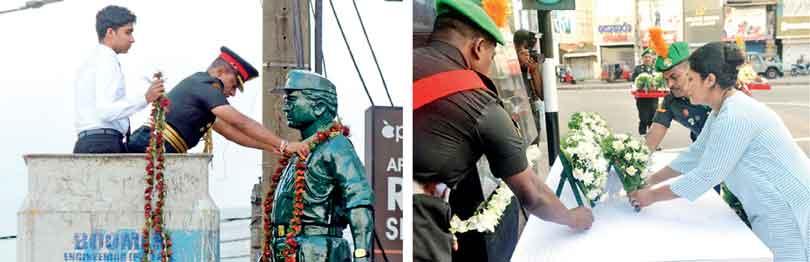
The Sri Lanka Army commemorated the 33rd death anniversary of Major General Vijaya Wimalaratne with a wreath-laying ceremony at his statue in Kiribathgoda on August 8, 2025. The event was led by the Commander, Security Forces Headquarters (West) and Colonel of the Gajaba Regiment, Major General U. K. D. D. P. Udugama, and was attended by family members, senior officers, and troops of the Gajaba Regiment. Major General Wimalaratne was the Commander of the Jaffna Security Forces when he was killed in a landmine explosion on 08-Aug-1992 at Point Araly, Kayts Island. 

Kandy Is Not a Nightlife City—It Is a Legacy That Must Be Protected

August 17th, 2025

By Palitha Ariyarathna

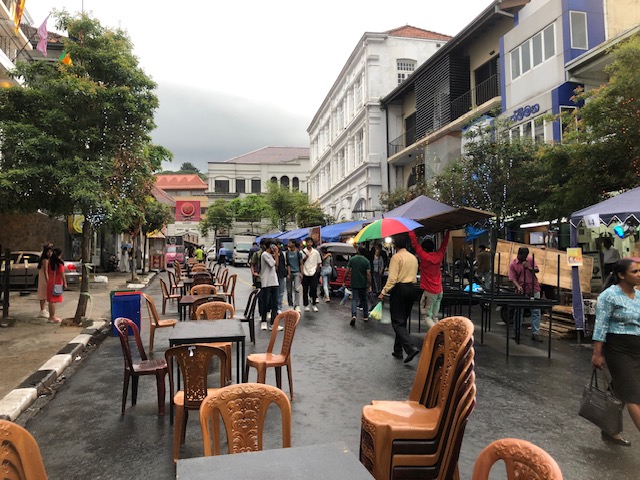
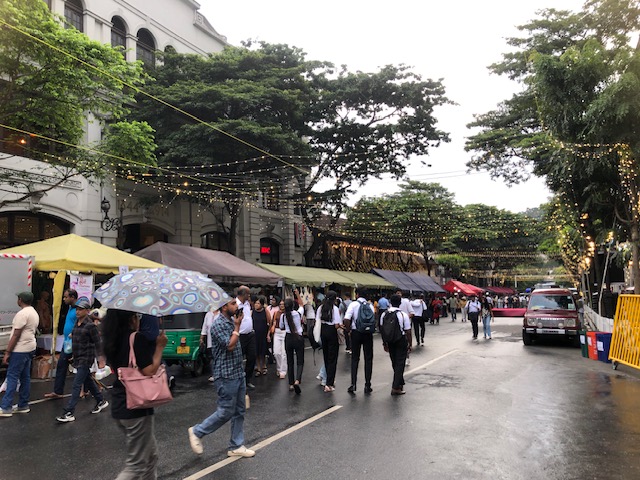
IMAGES: Preparations are underway for the commencement of the Kandy Night Bazaar. With approval from the Kandy Municipal Council, vehicle movement along Dalada Veediya and Kotugodalla Veediya will be restricted from 6:00 p.m. to midnight to facilitate the event. The bazaar will include night-time trade activities and entertainment, aiming to provide the Kandy community with an organized evening shopping experience and support for local vendors.

To: To the attention of His Excellency the President of Sri Lanka; The Honourable Prime Minister; The Honourable Mayor of the Kandy Municipal Council; the Municipal Commissioner of Kandy; the Chairman of the Urban Development Authority (UDA); the Director General of the Central Cultural Fund; the Secretary of the Ministry of Buddha Sasana, Religious and Cultural Affairs; representatives of the UNESCO Sri Lanka Liaison Office; members of the Kandy Heritage Planning Committee; civic and environmental advisory boards; local residents, cultural custodians, and community leaders; and editors and journalists of national and regional media.

Kandy Is Not a Nightlife City—It Is a Legacy That Must Be Protected

Subject: Formal Objection to Proposed 24-Hour Nightlife Expansion in Mahnauwara –(Kandy ) “Kandy Night Bazaar in the Heritage Zones Date: August 16, 2025

Synopsis:

This is a formal civic objection to the proposed 24-hour nightlife expansion in Kandy’s heritage zones. It argues that such development threatens the city’s ceremonial integrity, environmental stability, and constitutional duty to protect the Buddha Sasana. The term Bazaar” is critiqued for its cultural misalignment, and the document calls for heritage-sensitive planning that respects Kandy’s identity as a spiritual and ceremonial city.

Respected Officials,

අතීත මතකයෙන් බිඳක් : 2022 අගෝස්තු

‘’මහනුවර යනු මධ්‍යම පළාතේ අගනුවර වන අතර එය ශ්‍රී ලංකාවේ දෙවන විශාලතම නගරය වේ. මෙම නගරය ශ්‍රී ලංකාවේ පුරාණ රජවරුන්ගේ යුගයේ අවසාන අගනුවර වූ අතර දළදා මාලිගාව නිසා බෞද්ධ ලෝකයේ පූජනීය පූජනීය ස්ථානයක් ලෙස පිළිගැනුණි. කෙසේ වෙතත්, මෑතකදී නිසි ලෙස සැලසුම් නොකළ සංවර්ධනය හේතුවෙන් ඓතිහාසික උරුම ප්‍රදේශයේ තදබදයක් ඇති වූ අතර, අධික රථවාහන තදබදය සහ නාගරීකරණය භූමි ආපදා අවදානමට ලක්විය හැකි ප්‍රදේශවලට ආක්‍රමණය කිරීම වැනි දේ ඇති විය. ඊට අමතරව, ඓතිහාසික උරුම ප්‍රදේශයේ නගර දර්ශනය නිසි ආකාරයෙන් සංරක්ෂණය කර හෝ ප්‍රතිසංස්කරණය කර නොමැති අතර, මෙය එහි වටිනාකම සහ ආකර්ශනීය බව පිරිහීමට ලක් කළ අතර එමඟින් ප්‍රදේශය එහි සම්පූර්ණ ආර්ථික විභවය සාක්ෂාත් කර ගැනීමට නොහැකි විය’’.

2015 දී නාගරික සංවර්ධන අධිකාරිය (UDA) විසින් සකස් කරන ලද මහා මහනුවර ප්‍රධාන සැලැස්ම ඇතුළුව මහා මහනුවර ප්‍රදේශය සඳහා සංවර්ධන සැලසුම් කිහිපයක් පැවතුනද, ඉහත ගැටළු විසඳීමට ඒවා ප්‍රමාණවත් නොවීය. මහනුවර මධ්‍යම කොටසේ සංවර්ධනය පාලනය කිරීම සහ සංවර්ධනයට මග පෙන්වීම සඳහා පවතින සැලසුම්වල නාගරික සංවර්ධන දැක්ම සමාලෝචනය කිරීම අවශ්‍ය විය.

A Glimpse into the Past: August 2022:

‘’Kandy is the capital of the Central Province and is the second-largest city in Sri Lanka. The city was also the last capital of the ancient kings’ era of Sri Lanka and recognized as a sacred place of worship in the Buddhist world because of The Temple of Tooth Relic. However, recent not-well-planned development caused overcrowded conditions in the historical heritage area, such as heavy traffic congestion, and urbanization encroaching into land-disaster vulnerable areas. In addition, the townscape of the historical heritage area was not conserved or restored in a proper manner, and this deteriorated its value and attractiveness, which prevented the area from realizing its full economic potential. There existed several development plans for the Greater Kandy area, including the Greater Kandy Master Plan formulated by the Urban Development Authority (UDA) in 2015, but they were not sufficient to address the above issues. A review of the urban development vision of the existing plans was needed to control development in the central part of Kandy and guide development’’.

I write to you as a native in the Mahanuwara and lifelong resident of the Kandyan region, deeply concerned about the 24-hour nightlife and commercial activity within the sacred and residential zones of Kandy. This letter serves as a formal objection to any initiative that seeks to transform Kandy into a continuous entertainment and business hub, particularly in areas adjacent to the Dalada Maligawa, cultural corridors, and long-standing residential precincts.

Kandy—Mahanuwara—is not merely a city. It is the spiritual heart of Sri Lanka, a UNESCO World Heritage Site, and a living symbol of Sinhala-Buddhist civilization. From the time of our kings, Kandy was governed with restraint, wisdom, and reverence. Its urban rhythm was designed to uphold peace, dignity, and ceremonial continuity—not to chase economic gain or nightlife trends. The Sinhala-Buddhist leadership, both ancient and modern, has consistently resisted over-commercialization of sacred zones. They understood that the soul of a city is not measured by its profit margins, but by its harmony, cleanliness, and cultural integrity. That wisdom must guide us today.

The expansion of 24-hour nightlife in Kandy poses serious risks to public security, environmental stability, and civic harmony. The Dalada Maligawa precinct, a sacred and high-security zone, is particularly vulnerable. Introducing continuous commercial activity into this area—especially unregulated bazaars operating through the night—would compromise surveillance, crowd control, and ceremonial sanctity. Kandy’s law enforcement and temple security protocols are not designed to manage late-night commercial exposure, especially during hours when criminal activity tends to rise. According to national emergency data, Sri Lanka’s 118 system has recorded a growing number of night-time complaints, including theft, vandalism, and underworld disturbances. Expanding nightlife in Kandy would stretch local police resources and expose sacred zones to unnecessary risk.

Environmental concerns are equally pressing. Kandy’s municipal waste systems are already under strain, particularly during religious festivals when garbage volumes surge tenfold. The introduction of 24-hour commerce would exacerbate this crisis, especially in heritage zones where sanitation must remain pristine. Recent reports from April 2025 indicate that garbage contamination—including human waste—has rendered segregation impossible in several areas. The Gohagoda disposal site is nearing capacity, and night-time activity would introduce uncontrolled waste into sensitive urban corridors. This threatens to turn Kandy’s spiritual heart into a public health hazard, undermining both civic dignity and environmental responsibility.

The proposed expansion also violates the protective intent of the UNESCO-designated buffer zone surrounding the Sacred City of Kandy. This buffer zone was established to safeguard the city’s Outstanding Universal Value (OUV), including its cultural authenticity, ceremonial integrity, and spiritual landscape. UNESCO’s Periodic Reporting Cycle 3 (2023) has already identified weaknesses in the legal framework governing this buffer zone, warning that development pressures—especially commercial intrusion—pose a serious threat to Kandy’s World Heritage status. Introducing continuous nightlife activity into this sensitive area risks not only cultural degradation but also international delisting and reputational damage. It is imperative that municipal and national authorities uphold their commitment to heritage protection and refrain from approving any initiative that undermines the sanctity and global standing of Mahanuwara.

Furthermore, the push for a 24-hour city model is not aligned with the cultural rhythm or civic priorities of Kandyan residents. It is driven by external commercial interests—often expatriate or non-local—seeking profit from tourism and entertainment. Local peasants and native communities have not requested such a transformation, nor do they benefit from it. The proposal reflects a commercial agenda, not a community need. Maintaining a 24-hour city requires massive investment in lighting, sanitation, security, and traffic control. These costs would fall on the Kandy Municipal Council and local taxpayers, without delivering meaningful benefits to native residents. It is an economic burden disguised as development, and it risks alienating the very communities who have preserved Kandy’s peace and heritage for generations.

Kandy’s urban character was never built on commercial ambition—it was shaped by cultural wisdom, spiritual restraint, and civic foresight. From the time of our kings, Mahanuwara was governed with a deep understanding of balance: between ceremony and daily life, between sacred duty and civic order. The city’s layout, its rhythms, and its governance were all designed to preserve peace, not to chase profit. Night-time commerce, entertainment districts, and 24-hour business models were never part of this vision. Instead, Kandy was protected as a spiritual capital, where the Dalada Maligawa stood not just as a temple, but as a symbol of national unity and moral discipline.

The Sinhala-Buddhist leadership—both royal and republican—understood that over-commercialization erodes cultural dignity. They resisted turning Kandy into a marketplace for every passing trend or external demand. Their approach was not anti-development; it was development with purpose. They prioritized harmony over hustle, and heritage over haste. That legacy must not be abandoned in the name of modernity. To reshape Kandy into a nightlife city is to betray the very philosophy that has sustained it for centuries.

Kandy is not Colombo, nor should it be. It is not a port city, nor a commercial capital. It is a heritage city, a ceremonial city, and a guardian of national memory. Any attempt to impose a 24-hour urban model on Kandy ignores its historical identity and undermines the wisdom of its founders. The city’s peace has been maintained for generations—not through economic expansion, but through cultural stewardship. That stewardship must continue.

In light of the concerns outlined above—ranging from public security and environmental strain to cultural misalignment and historical wisdom—I respectfully urge the Kandy Municipal Council, Urban Development Authority, and all relevant civic bodies to reject any proposal that seeks to introduce 24-hour nightlife or commercial expansion within Kandy’s heritage zones. Before concluding, I must draw your attention to the constitutional and civic violations embedded in this proposal. Article 9 of the Constitution of Sri Lanka mandates the State to foster and protect the Buddha Sasana. Any initiative that threatens the sanctity of the Dalada Maligawa precinct or disrupts the ceremonial rhythm of Mahanuwara directly contradicts this constitutional duty. Furthermore, the Kandy Municipal Council’s own urban vision emphasizes heritage preservation, sustainable development, and community-centered planning. The 24-hour nightlife expansion disregards these principles, favoring external commercial interests over native civic needs. It also conflicts with existing zoning laws, sacred area protections, and the spirit of Sri Lanka’s national urban development mission. This letter, therefore, is not merely a personal objection—it is a constitutional reminder, a civic warning, and a cultural defense.

Such a transformation would not only violate the city’s spiritual and civic character, but also impose unnecessary burdens on its residents, infrastructure, and identity.

In a city shaped by Sinhalese Buddhist heritage and ceremonial urban rhythm, the term ‘Bazaar’ lacks cultural specificity and civic relevance.”

I further recommend that any future urban development plans be subject to transparent public consultation, with special attention given to the voices of native Kandyan communities, heritage custodians, and civic advocates. Development must be inclusive, culturally sensitive, and aligned with the long-term preservation of Kandy’s unique role in Sri Lanka’s national consciousness.

Let us not allow short-term commercial interests to override centuries of cultural stewardship. Let us honor the wisdom of our kings, the sacrifices of our ancestors, and the dignity of our sacred spaces. Kandy is not just a city—it is a legacy. It must be protected, not repurposed.

I remain available for further dialogue, civic consultation, or contribution to any heritage-sensitive planning process. Thank you for your attention to this urgent and deeply rooted concern.

Summary of Legal, Civic, and Heritage Violations:

  • Article 9 of the Constitution mandates protection of the Buddha Sasana.
  • Disruption to the Dalada Maligawa precinct violates constitutional duty.
  • Kandy’s urban plan prioritizes heritage, sustainability, and community.
  • Proposed nightlife expansion disregards municipal planning principles.
  • Violates zoning laws, sacred area protections, and national urban policy.
  • Favors external commercial interests over native civic needs.
  • Undermines Kandy’s role as a ceremonial and guardian city.
  • Contradicts UNESCO World Heritage guidelines for cultural site management.
  • Threatens the integrity of Kandy’s UNESCO-designated buffer zone.
  • Disregards the lived rhythms, safety, and cultural continuity of the Kandyan peasantry.
  • This objection is a constitutional reminder, civic warning, and cultural defense.

This statement is submitted in defense of Mahanuwara’s ceremonial integrity, constitutional duty, and heritage stewardship—addressed to all civic, municipal, and national authorities entrusted with the future of Kandy.

By Palitha Ariyarathna

JICA Commercial Group Community Group Secretary, Writer, Journalist, and Author, Former Beach Filed Officer and Life Safety Officer.

X-Press Feeders and London Club blast Sri Lanka ruling

August 17th, 2025

Courtesy Lloydslist

The Sri Lankan supreme court ordered the owners of X-Press Pearl to pay a fine of $1bn after the containership was lost in 2021 and polluted water off the island nation

X-Press Feeders has accused the court of convicting the vessel’s master and its agents before their trials have concluded, while the London Club called the judgment a ‘deeply troubling turn of events’

X-Press Pearl wreck. Picture: Indian Navy

Source: Indian NavyX-Press Pearl sank on June 2, 2021, between 70bn-75bn plastic nurdles were spilled in Sri Lanka’s western coastal belt as a result.

CONTAINERSHIP owner X-Press Feeders said it is deeply concerned” with a judgment from the Sri Lankan supreme court, which has ordered the owners and charters of lost boxship X-Press Pearl (IMO: 9875343) pay a fine of $1bn.

The 2021-built, Singapore-flagged, 2,700 teu X-Press Pearl caught fire on May 20, 2021, was abandoned on May 25 of that year and finally sank on June 2, 2021.

Between 70bn-75bn plastic nurdles were spilled in Sri Lanka’s western coastal belt as a result of the casualty. The marine pollution resulted in the deaths of 417 turtles, 48 dolphins and eight whales.

A fishing ban was imposed for more than a year, which the ruling said, deprived the fisherfolk of their income, livelihood and their right to engage in lawful employment”.

But X-Press Feeders said the court has effectively pronounced the vessel’s master and agents guilty before their trials have concluded.

The master has already languished in Sri Lanka for four and a half years due to a court-ordered travel ban,” the company said in a statement seen by Lloyd’s List.

Despite offers to deposit the maximum fine possible for the charges he faces, he remains in limbo, separated from his family and unable to resume his life or career.”

X-Press Feeders said the master was neither present nor represented legally when his actions were addressed in court.

The judgment effectively holds him and the agents as human collateral to ensure the compliance of the owners and operators.”

The London P&I Club said the court had extended its reach far beyond its original scope”. The case, it said, was originally grounded in a fundamental rights claim — where concerned citizens of Sri Lanka sought judicial intervention against their government’s handling of an environmental incident”.

Chief executive James Bean said the ruling was an extraordinary and deeply troubling turn of events, not only for our valued member, X-Press Feeders, but for global shipping”.

The court has taken what began as a rights-based claim against the Sri Lankan government and used it as a basis to unilaterally impose liability on our member and their agents seemingly without due process — with the agents, worryingly being used alongside the master, as human collateral for their claim.”

The interim figure of $1bn was based on a report the Sri Lankan government itself had publicly disavowed itself as the basis for any claim” and had attracted global criticism for a lack of scientific rigour, the P&I club said.

Bean called the figure arbitrary and unsupported”.

https://e.infogram.com/_/VC0zKysLmZZkEzz3qIwg?parent_url=https%3A%2F%2Fwww.lloydslist.com%2FLL1154539%2FX-Press-Feeders-and-London-Club-blast-Sri-Lanka-ruling&src=embed#async_embed

X-Press Feeders also criticised the lack of scrutiny of the response of Sri Lanka’s own authorities to the incident in 2021.

The ruling exonerates the actions of the harbour master and director general of merchant shipping, despite their own experts boarding and inspecting the vessel and raising no alarm or immediate reason for concern, more than a week before X-Press Pearl sank”, the company said.

It also ignores the vessel’s pleas for help and the refusal by three ports (in Qatar, India and Sri Lanka) to offload the containers before the fire started.”

From the very start, X-Press Feeders has expressed deep regret to the people of Sri Lanka for the impact of X-Press Pearl’s sinking and remained committed to fully assist the government of Sri Lanka in all clean-up operations,” the Singapore-headquartered company said.

It acknowledged the need for some compensation but said this should be done in an equitable and fair manner that identifies the failings in the response and clean-up operations of the Sri Lankan government and is based on expert, scientifically based assessment of damages”.

The judgment, which it claims ignores maritime law, establishes an unprecedented level of risk that we, along with most shipping companies, will struggle to meet”.

We fear the inevitable rise in import-export costs and the broader impact on the people of Sri Lanka.”

The London Club said the ruling contradicts the polluter pays” principle, which is balanced by limitation of liabilities.

To throw out these principles is to reject the very legal architecture that keeps international shipping — and by extension global trade and commerce — functioning,” Bean said.

The London P&I Club is unwavering in its commitment to its members, and we will continue to stand firmly by and support X-Press Feeders.”

Singapore shipowner slams US$1 billion damages award after Sri Lanka marine disaster

August 17th, 2025

Courtesy CNA

Singapore shipowner slams US$1 billion damages award after Sri Lanka marine disaster
The Singapore-registered container ship MV X-Press Pearl partially sinks after burning for almost two weeks, just outside Colombo’s harbour on Jun 4, 2021. (Photo: AFP/LAKRUWAN WANNIARACHCHI)

COLOMBO: Owners of a Singapore-registered vessel urged Colombo on Friday (Aug 15) to consider more “rational” compensation after they were ordered to pay US$1 billion in damages for causing Sri Lanka’s worst case of environmental pollution.

Sri Lanka’s Supreme Court ordered X-Press Feeders in July to pay the damages within a year for causing marine pollution when its vessel caught fire in 2021.

The Supreme Court also ordered criminal charges against the skipper and local agents of the MV X-Press Pearl, which sank off Colombo Port after the fire.

“From the very start, X-Press Feeders has expressed deep regret to the people of Sri Lanka for the impact … and remained committed to fully assist … in all clean-up operations,” the owners said in a statement.

An automated curation of our top stories to start your day.

This service is not intended for persons residing in the E.U. By clicking subscribe, I agree to receive news updates and promotional material from Mediacorp and Mediacorp’s partners.

They recognised the need for compensation but said “it must be done in an equitable and fair manner that identifies the failings in the response and clean-up operations of the Sri Lankan government”.

The vessel was carrying 81 containers of “dangerous cargo” that included acids, lead ingots and plastic raw materials.

Tons of microplastic granules from the ship inundated an 80km stretch of beach along Sri Lanka’s western coast. Fishing was prohibited for months.

Related:

Sri Lanka orders Singapore shipowner to pay US$1 billion over marine disaster

X-Press Feeders said it had already spent US$150 million to remove the wreck, clean the beaches, and compensate affected fishermen.

It said the damages awarded established an “unprecedented level of risk” that it and other shipping companies would struggle to meet, and called for more “rational decision-making”.

Sri Lankan authorities believe the fire was caused by a nitric acid leak.

Ports in Qatar and India had refused to offload the leaking nitric acid before the vessel arrived in Sri Lankan waters.

Environmentalists who filed the case alleged that both the government and the vessel’s owners had failed to prevent the fire from becoming an unprecedented ecological disaster.

The Sri Lankan government has also filed a lawsuit against the ship’s owners in the Singapore International Commercial Court, claiming unspecified damages.

Max Planck’s Universal Mind – Consciousness as the Matrix of Reality

August 17th, 2025

Spiritual Quest

මහින්ද රාජපක්ෂ වගේ නායකයෙක් මේ රටේ ආයේ කවදාවත් බිහිවෙන් නෑ ඩඩ්ලි සිරිසේන කී සම්පූර්ණ කතාව

August 17th, 2025

Madyawediya

” මහින්ද ජයසිංහගේ ඒ රස කතාවත් සමග…” 😂🤣මාලිමාවේ ඉළ ඇදෙන ජෝක්ස්

August 17th, 2025

SepalAmarasinghe

Proposal to Set up a “Memorial Museum of Patriotic Wars of Kandyan Sinhalese (1505-1848) and an International Institute of Postgraduate Research on Colonial Crimes in Sri Lanka” -Prospects and Challenges Under the Current Government

August 17th, 2025

By Sena Thoradeniya

1. Introduction

Dr. Sudath Gunasekera in his essay posted in LankaWeb on 15 August 2025 proposes the Government of Sri Lanka, to set up a Memorial Museum of Patriotic Wars of Kandyan Sinhalese (1505-1848) and an International Institute of Postgraduate Research on Colonial Crimes in Sri Lanka”.

Accordingly, the proposed Museum will be designed to tell the pathetic story of the Sri Lanka’s Buddhist Kandyans”, to narrate the cruel saga of three colonial invasions” and highlight the savage crimes committed by the Western invaders with special focus on the 1817- 1818 Uva-Vellassa liberation struggle and the 1848 Matale Uprising respectively. Attention will also be paid to the draconian laws, barbaric and uncivilized methods the invaders deployed to rob country’s riches”. The proposed Museum will also portray the different methods of indigenous warfare of the Sinhalese” including guerilla warfare, visuals of brutalities committed by the colonial invaders” and Sri Lankan heroes of this period. In addition, it is also proposed to set up an International Institute of Postgraduate Research in the fields of colonial invasion”, a library to house all books related to this period”, a theater, lecture rooms, a lab and an Administrative Branch.

The proposal is not only commendable but long overdue. It addresses a pressing need with clarity and purpose and we welcome it without reservation. As someone born and educated in the historic Kandyan kingdom, I feel a deep personal connection to this initiative and extend my wholehearted, unwavering support. It is a step forward that resonates with both heritage and hope.

2. Literature as a Predictive Lens for Future Events

While the following discussion is in no way intended to diminish the brilliance of Dr. Sudath Gunasekera ’s proposal, it is important to recognize a broader intellectual context. Literature has long served as a harbinger of future developments, often anticipating changes in science, technology, and society. Science fiction, for instance, has historically imagined innovations – such as space travel, artificial intelligence and virtual reality – well before their realization in the empirical world. Likewise, novelists frequently perceive or reflect emerging historical and sociological currents, offering prophetic insights into the path of human affairs.

It is therefore obligatory upon historians, political analysts and sociologists to examine how creative writers have anticipated or foretold future events. Such interdisciplinary inquiry supplements our understanding of literature’s predictive power and emphasizes the interdependent relationship between imaginative expression and empirical reality.

Futility” or The Wreck of the Titan” by Morgan Robertson (1898), a luxurious, “unsinkable” ship named Titan striking an iceberg and sinking in the North Atlantic, The World Set Free”  by H. G. Wells (1914), the invention and use of atomic bombs powered by the disintegration of atoms, 1984”  by George Orwell (1949), imagining a dystopian society under constant surveillance, where truth is manipulated and individual freedoms are suppressed, Brave New World” by Aldous Huxley (1932), imagining a future dominated by consumerism, genetic engineering and psychological conditioning, are a few examples from world-renowned authors whose literary works anticipated major historical and societal developments that underscore literature’s remarkable ability to foresee technological and societal transformations.These writers offered prophetic insights into the trajectory of human civilization.

There are many novels that foresaw Socialist Revolution. Of those Mother” by Maxim Gorky (1906), a classic of socialist realism, portraying a working-class woman’s political awakening inspired by revolutionary movements in Russia stands aloft. Les Misérables” by Victor Hugo (1862), set in post-revolutionary France, is a deep social commentary on poverty, justice and redemption, deeply sympathizing with the poor and oppressed.

Why all this elaborate discourse on literature? Simply to affirm that I have established a fictitious Research Centre for Kandyan Affairs and a Museum dedicated to the heroic deeds of the freedom fighters of Uva, Wellassa, Dumbara, and Walapone during the freedom struggle of 1817–1818. These institutions are embedded within the narrative framework of my 772-page epic novel, Saptha Apadana Wasthuwa” (Seven Narratives or Fifty Years After Peradeniya- A New Journey Begins), published in 2011- now fourteen years ago.

My research work titled Dumbara Rata” (in four volumes; volume I published in 2004), offers a detailed account of the genesis of these two conceptual institutions. In 1995, during the launch of my novel Udumbaragira” – which explores the changing patterns of rural leadership in the Kandyan countryside – from traditional structures to contemporary forms – a lady in attendance proposed the establishment of an institute dedicated to Kandyan Studies. Her suggestion may have been inspired by the thematic focus of the novel, which implicitly called for a new field of inquiry- Kandyan Studies.

The proposed institute, tentatively named the Institute of Kandyan Studies, would have required substantial financial support, likely from foreign-funded NGOs or donor agencies. However, due to limited resources and a personal dislike to becoming yet another NGO entity, I chose to set aside the idea. Nevertheless, the vision of these two institutions remained deeply embedded in my imagination.

Having resolved that the study of Kandyan Affairs cannot be pursued through an institutionalized framework but rather as an individual endeavor, I commenced my research in a private capacity. However, upon recognizing the vast scope of the subject – given that the ancient Kandyan Kingdom extended across regions such as Kanda Uda Pas Rata or Sath Rata, Uva, Matale, Sabaragomuwa, Sath Korale, Sathara Korale Maha Disa and Tun Korale, Walapane, Wellassa, Nuwarakalaviya, Tamankaduwa, Uda Palatha, Puttalama, Madakalapuwa, Kottiarama, Panama, Bintenna, Viyaluwa, and Matara Sulu Disa  – I made the well-thought-out decision to narrow the focus of my study. Thus, I confined my study to Dumbara alone, one of the principal Rata of Kanda Uda Pas Rata. Dumbara Rata” stands as the culmination of this focused exploration.

This conceptual foundation later found expression in my 2011 novel, wherein a fictional research institute and museum dedicated to the heroics of the freedom fighters of 1817-1818 were introduced. Over time, this imagined institute began to take on a mythic reality. Friends and acquaintances, upon learning of my visits to Kandy, would often ask if I was going to the Centre and request to accompany me—thus blurring the line between fiction and lived experience.

I do not state that Dr. Sudath Gunasekera borrowed this idea from me, nor am I certain whether he is aware of the existence of such a novel.

It is a recurring observation of mine that historians, political analysts and sociologists of our country lack a substantive understanding of their nation’s art and literature. Conversely, most writers and artists demonstrate limited engagement with historical, political or sociological discourse. This disciplinary divide hampers holistic cultural analysis.  

3. Saptha Apadana Wasthuwa” (Seven Narratives)

Some political and cultural activists who entered the University at Peradeniya in 1961, meet after 50 years in a newly-built Museum and a Research Centre in a picturesque setting in front of Hunnasgiriya Mountains, in Patha Dumbara, Kandy. They come from the four corners of the Island – from the valleys of four major rivers of Lanka Mahaveli, Kelani, Kalu and Walawe. As they travel up to the mountains, they recall their experiences, political involvements, aspirations, sentiments, interventions in art and literary activities and dynamism of a generation. At the same time, they discuss various contradictions that arose during the period in many fields of activity. 

After their meeting they resolve to begin a new journey with the wish, not to abandon the course again; not to see an unfinished end of the journey they began fifty years ago or the new journey ending with another tragedy. They relate eloquently and lucidly that they can rediscover their lost collective legacy and what was denied to them, what they could not achieve, the goal they had missed. Thereby the novel portrays the lives of some bi-lingual intellectuals, political and cultural activists unfortunately became extinct in the 1970s, who attempted to change the existing socio- economic system.

The novel takes the reader on an Odyssey beginning from the mountain passes, rugged river basins and forest covers of Kalupahana Mountains in the Knuckles Range, from tapping kitul trees for its sap in mountain hideouts, to the Sovereign Hill” gold mines, Eureka Centre” and Southern Cross” flag in Victoria, Australia and to Dreamtime” stories of the Aborigines.  It exposes the duplicity of the NGO Movement, international community and the so-called Peace Process” in Sri Lanka hitherto untouched by any novelist. It reveals the decadence of local professionals, officialdom and academics comparing them with their counterparts elsewhere.

The novel has two main parts. The first part takes the reader 50 years back to the Peradeniya University. Two friends of the same batch engage in a discussion about the beginnings of the university movement in Sri Lanka, establishment of a university at Peradeniya and the present degeneration of the university system. They plan to have a meeting of their erstwhile comrades. Of these two characters one is the prime mover of the project who donates a land for the Research Centre and the Museum and the other the financier of the new project. They build a Museum, a Research Centre and a library according to a plan given by an academic- the wife of a comrade killed by the security forces on mistaken identity in 1971 – domiciled in Australia. She comes back to Sri Lanka to work as the Curator of the Museum, Head of the Research Centre and Chief Editor of the journal, leaving an academic career in a prestigious Australian university. The old comrades were invited to attend the inauguration of the Museum and the Research Centre.

The second part of the novel consists of the narratives of each character invited for the big occasion. Recalling what had happened to them during the last fifty years they travel to the Centre. Twelfth or the last chapter depicts the opening of the Museum and the Research Centre.  

The novel ends on a positive note, providing hopes for a new beginning.   

4. Conceptualizing the Creation of a Museum: A Reflection on Historical Memory and National Identity

The idea of establishing a museum dedicated to Sri Lanka’s fallen heroes emerged during my visits to several historically significant sites in Victoria, Australia – namely Ballarat’s Sovereign Hill, the abandoned gold mines and the Eureka Centre (Eureka, gold miners’ hope for wealth and prosperity). These spaces commemorate the Eureka Rebellion of 1854, where gold miners took up arms against the oppression, torture, brutal and corrupt management and the oppressive licensing system imposed by colonial authorities. Though the uprising lasted only a half hour and resulted in approximately 28 deaths, its legacy has been immortalized through museums and monuments. Eureka Centreexhibits the story of the gold miners and reforms that followed the revolt.

Eureka Stockade, Eureka Stockade Memorial Park,  Eureka Flag (or the Southern Cross Flag woven by the wives of gold miners, (gold miners took their oath under it; original flag now housed at Ballarat Museum), detailed display of the Eureka Rebellion,  diorama (digital displays reenacting events) and the Contemplation Space (a quite atmosphere for the visitors to think and absorb the historical significance of the events), lectures and events are the main attractions of the Eureka Centre. (Please read my novel Yaara Yathrika” (Navigator of the River Yaara – 2015).

This experience prompted a profound reflection on the total absence of similar commemorative efforts in Sri Lanka. The British colonial massacres of 1818 and 1848 – both far more devastating in scale and consequence than the Eureka Rebellion – have not received equivalent institutional recognition. These uprisings, which saw thousands of Sri Lankans resist imperial domination, were met with brutal suppression, yet their memory remains marginal in the national consciousness, limited to annual commemorations by some dedicated personnel and micro level commemorative societies in the provinces.

It was in this context that I conceptualized the creation of a museum—not merely as a repository of artifacts, but as a space for historical reckoning, cultural affirmation and intergenerational dialogue. If a brief rebellion like Eureka warrants such extensive memorialization, then surely the sacrifices of Sri Lanka’s freedom fighters demand hundreds of museums across Uva, Vellassa, Walapone, Dumbara, Hewaheta, Harispattuwa and Matale. These institutions would serve not only to honor the fallen but also to educate future generations about the national pride, refusal of subjugation, defiance of oppression, rejection of foreign domination and servitude, courage and vision of those who resisted colonial subjugation and of course the brutality of the invaders.

Drawing inspiration from the Eureka Centre, the characters of the novel stroll through the Commemoration Park, explore the exhibits within and visit the lecture hall, library, diorama and contemplative space, where a profound dialogue unfolds, mapping out future political plans and strategies of this core group.

5. Prospects and Challenges for Establishing a Memorial Museum of Patriotic Wars of Kandyan Sinhalese Under the Current Government

Historical Commemoration and Political Realities

When we are evaluating the feasibility of this proposal, we must be mindful of historical commemoration and political realities. State-sponsored memory and minority politics will play a major role in this venture. The present Government will never endorse such a Museum. Foreign – funded NGO fraternity and Western governments will ring alarm bells to the tune of national reconciliation and pluralism compromised with national memory, clamoring that the politics of commemoration of historical heroes has no place in contemporary Sri Lanka. They will ask “Whose History Is It?

Commercial Priorities Over Commemoration

Dr. Sudath Gunasekara has proposed to establish the Memorial Museum of Patriotic Wars of Kandyan Sinhalese” at the historic Bogambara Prison site in Kandy. The site faces significant hurdles – chief among them, the value and strategic importance of the land itself. Located in the heart of the city, this prime property spans over 13 acres and is estimated to be worth billions of rupees. Its central location and colonial architecture have made it a magnet for commercial interest.
Plans are already underway to transform the site into a luxury hotel and high-end shopping complex. The previous government has approved redevelopment proposals that include a five-star hotel, a shopping mall, food courts and budget accommodations, while preserving the prison’s colonial façade.

Museum Proposal vs. Investment Agenda

This vision clashes with the government’s economic and cultural agendas. For a regime grappling with economic instability and dictates of the IMF, investments even in casinos and cannabis (ganja) takes precedence over historical commemoration – especially when the subject involves village-level guerilla resistance movements that do not remain even marginally in both historical and cultural memory of the JVP/NPP.

Cultural Amnesia and Political Will
Uva-Wellassa uprising of 1817–1818 and the Matale revolt of 1848 are scarcely remembered in mainstream narratives, limited to annual commemorations by some dedicated personnel and micro level commemorative societies in the provinces as stated above.

Their absence from collective memory makes it politically convenient for the politicians to sideline such commemorative efforts. In a climate where economic survival surpasses historical reflection, the proposed museum risks being dismissed as a romanticized relic of the past.

My ancestral village lies adjacent to the ancient Ethgala Para, a historic route that once connected the Kandyan Kingdom with the island’s principal sea ports. Alongside this strategic pathway, the British established a fort during the early 19th century to consolidate their control over the region. In 1818, during the Uva–Wellassa Uprising, this fort came under attack by the valiant Dumbara warriors, led by Amunugama Bathwadana Nilame. Although the assault was ultimately repulsed, the event stands as a testament to the fierce resistance mounted by local freedom fighters against colonial domination. Tragically, the memory of this fort, the ancient route and the heroic struggle of the Dumbara warriors has faded from local consciousness. Today, none of the residents in the vicinity are aware of an ancient bridle path, a fort and a battle and their historical significance.

At the same time, it would be unrealistic to expect meaningful support from the current Minister of Cultural Affairs, whose upbringing in a Catholic environment may not have instilled a deep appreciation of historical and cultural memory. Compounding this concern is the past conduct of his Deputy, who despite donning saffron robes – a symbol of monastic commitment-was alleged in actions that led to the near destruction of a structure of profound importance to the Buddhist community. Such contradictions raise serious questions about the sincerity and capacity of the present leadership to champion these initiatives.

In my article titled Black Smoke Billows from Pelawatta Chimney,” published in Lankaweb on 16 May 2005, I examined the implications of the recently concluded local government elections, with focus on the political messaging emerging from the Jaffna District. Notably, an MP affiliated with the National People’s Power (NPP) released a series of campaign songs that were overtly sympathetic to the Liberation Tigers of Tamil Eelam (LTTE). These songs, disseminated in the lead-up to the elections, pledged to erect a bronze statue of LTTE leader Velupillai Prabhakaran, construct a new harbor and a memorial hall dedicated to Prabhakaran’s parents and undertake the reconstruction and maintenance of LTTE cemeteries. Furthermore, the MP vowed to rename the Nallur Sankiliyan Park as Kittu Park,” in honor of Sathasivam Krishnakumar (alias Kittu), a senior LTTE commander. These pledges, reflect a broader strategy of memorialization and identity politics that clash with the proposed Memorial Museum.

Under the proposed educational reforms by the NPP government, there is a plan to eliminate History and Buddhism from the school curriculum. The government intends to introduce a new cultural celebration in December, designed to be inclusive of all ethnic and religious communities. While this initiative may be framed as a move toward national unity, it raises serious concerns about the erosion of Sri Lanka’s rich cultural and religious heritage. Such a shift could signal the gradual phasing out of deeply rooted traditions such as the Sinhala and Tamil New Year, Wesak, Poson, and Christmas celebrations that have long served as vital expressions of communal identity and historical continuity. This represents a profound rupture in the cultural fabric of the nation.

Given the current trajectory of government policy, the proposed museum appears to be nothing more than a pipe dream, an initiative that fails to account for the prevailing political climate and the government’s demonstrated priorities. The assumption underlying its conception seems naïve, as if the government were a school administration run by inexperienced students, capable of safeguarding historical and cultural legacies. Such misreading of governmental behavior undermines the credibility and feasibility of the project.

Political and Ideological Opposition

Beyond the logistical and economic challenges, the proposal to establish a museum commemorating Kandyan resistance faces a complex web of political and ideological opposition. Key stakeholders aligned with the current administration- including NGOs, segments of the Tamil diaspora, remnants of the LTTE and various minority communities such as Tamils, Muslims and Upcountry Tamils – may perceive such a commemorative project as politically sensitive or exclusionary. Any project that highlights Sinhala nationalist ideas becomes especially controversial for them.

Institutional actors such as the Catholic Church, Western Embassies and Governments and regional powers like India – each of which played a role in the current regime change are likely to scrutinize the museum’s ideological framing. Moreover, advocacy groups including the LGBTIQ community, a vocal ally of the present regime, may challenge the museum if it is seen to reinforce majoritarian or exclusionary historical narratives.

International Oversight

International oversight further complicates the matter. The United Nations High Commissioner for Human Rights has consistently urged the Sri Lankan government to amend or repeal certain laws, accede to the Rome Statute of the International Criminal Court (ICC) and initiate accountability processes for alleged wartime abuses. Proposals for external investigations, targeted sanctions and constitutional reforms reflect a broader push for compliance with international human rights norms – an agenda that may conflict with domestic efforts to valorize historical figures labeled as war heroes” within nationalist discourse.

6. Conclusion

Anura Kumara is no Mahinda- he wouldn’t dare tell the modern-day Kushners and Milibands to stage their diplomatic kite festival elsewhere, preferably over an abandoned, sun-scorched reservoir in Ruhuna!

As a son of Patha Dumbara, I conceptualized the idea of a Museum and Research Centre and even went so far as to establish fictitious prototypes. However, it was Dr. Sudath Gunasekara, a son of Uda Dumbara, who independently formally proposed the initiative and developed its blueprints. Should this vision ever come to fruition, full credit rightfully belongs to him as its original initiator.


Harness the winds winding in our hills; not the sea breeze

August 17th, 2025

by Garvin Karunaratne

Let us harness the wind for power and stop spending dollars for oil

By Garvin Karunaratne

I enclose a write up by eesrilanka wordpress.com/2019/04/13/playing with history: on some of my writings.

__________________________________________________________

C2. Buying Power from Multinationals

Garvin Karunaratne recalls his experience of 18 years working in stations like Hambantota as well as in the hilly Districts of Kandy and Nuwara Eliya. He chides the authorities for erecting wind turbines on the coast. He believes that the authorities seem to be working to prove that wind turbines are not suitable for Sri Lanka.

Karunaratne then mentions his vast travel experience and states that the US, Spain Portugal and many more countries have put up wind turbines never at their coastal areas but in their hills. Further he highlights authorities that have noted the vast resources of wind power in Sri Lanka. He urges Sri Lanka to use its wind resources and he actually has requested the State Engineering Corporation engineers who did make long concrete poles to hold the canopy for the Avukana Buddha statue to be enlisted to make the wind turbines. He emphasizes that Sri Lanka can become self sufficient in all its power requirements if only a few hundred wind turbines are constructed and he states that this can be done within a year.

Karunaratne speaks with the broad experience of having worked designing and establishing the Youth Self Employment Programme of Bangladesh in two years, a programme that has created employment for millions of youths, something which even the ILO  had failed earlier. He urges and provides many facts showing that wind power holds the magical solution for Sri Lanka.

www.lankaweb.com/news/items/2019/04/09/buying-power-from-multinationals/

The only item that has to be imported for wind turbines is the turbine mechanism. It will be child’s play for Jinasenas, the makers of reputed Jinasena pumps to make these turbines if called upon.

For full details: Wind Power for Sri Lanka’s Energy Requirements: Godages, 2019 by Garvin Karunaratne

Anyone who disagrees is requested to  visit Spain, where turbines are made in small garages and  perched everywhere. Spain even sells electricity to France and earns dollars. All while we allow the winds to rage through at Hayes, at Ramboda, at Madugoda and many many places where on my irrigation inspections  I have chided with death facing abnormal wind power.

May we open our eyes wide. I repeat that a few hundred wind turbines can be erected in one year working at the Speed the Land Development Department did work not long ago and we need not import any oil.

Garvin Karunaratne

මැතිවරණකොමිෂන් සභාවේ සභාපතිතුමා විසින් ගරු ජනාධිපතිතුමාගෙ ලේකම්තුමාට දැනුම් දෙමින් ආණ්ඩුක්‍රම ව්‍යවස්ථාවේ 83 වන ව්‍යවස්ථාවේ (ආ) ඡේදය නිවැරදිව ඉංග්‍රීසි භාෂාවට පරිවර්තනය කිරීමට අදාල පියවර ගැනීමට කියයි….

August 17th, 2025

මාධ්‍ය අංශය, වෛද්‍ය තිලක පද්මා සුබසිංහ අනුස්මරණ නීති අධ්‍යාපන වැඩසටහන.

ආණ්ඩුක්‍රම ව්‍යවස්ථාවේ 83 වන ව්‍යවස්ථාවේ (ආ) ඡේදයට ගැලපෙන ලෙස ඉංග්‍රීසි භාෂාවෙන් ඇති ආණ්ඩුක්‍රම ව්‍යවස්ථාවේ 83වන ව්‍යවස්ථාවේ (b) ඡේදය නිවැරදිව පළකරන ලෙස නීතීඥවරුන් 209ක් සහ නීතීඥවරුන් නොවන පුරවැසියන් 104ක් විසින් ගරු ජනාධිපතිතුමාගෙන් කරන ඉල්ලීම් ගැන ජනාධිපති ලේකම් කාර්යාලය දැනුවත් කර එකී ඉල්ලීම් සහිත A-3 ප්‍රමාණයේ ලේඛන 34 2025.08.14 දින ජනාධිපති මහජන සම්බන්ධතා අංශය වෙත බාර දී ඇත.

ජනාධිපති මහජන සම්බන්ධතා අංශය වෙත ඉල්ලීම් බාරදුන් බවට අදාල  ලේඛනය මේ සමඟ අමුණා ඇත.

ස්වාධීන රූපවාහිනීයේ 2025.08.14 දින සවස 6.30 ප්‍රවෘත්ති විකාශයේ  https://www.youtube.com/live/s5YIqYDoGvo?si=etwh3jdgQuf4gyQo?&t=1686
සහ 2025.08.15 දින දිවයින පුවත්පතේ 2 වන පිටුවේ පළවූසිංහල මුද්‍රණයට ගැලපෙන ලෙස ආණ්ඩුක්‍රම ව්‍යවස්ථාවේ ඉංග්‍රීසි මුද්‍රණය නිවැරදි කරන්න.
(දිවයින 2025.08.15)
https://www.divaina.lk/main-news/22720

ජනාධිපති ධූරකාලය සහ පාර්ලිමේන්තුව පවත්නා කාලය වසර 6කට වඩා වැඩි කිරීමට පමණක් ජනමතවිචාරණයක් මගින් ජනතාවගේ අනුමැතිය අවශ්‍ය බවත්, එම කාලය වසර 6කට වඩා අඩුකර ගැනීමට  ජනමතවිචාරණයක් මගින් ජනතාවගේ අනුමැතිය අවශ්‍ය නොවන බවත් ඉංග්‍රීසියෙන් මුද්‍රණය කර ඇති ආණ්ඩුක්‍රම ව්‍යවස්ථාවේ 83 වන ව්‍යවස්ථාවේ (b) ඡේදය අනුව දැක්වෙන අතර, ඒ අනුව 2015 දී ඉදිරිපත් වූ 19වන ආණ්ඩුක්‍රම ව්‍යවස්ථා සංශෝධනයේදී ජනාධිපති ධූරකාලය සහ පාර්ලිමේන්තුව පවත්නා කාලය වසර 6කට වඩා අඩු කර ගත්තේ එනම් වසර 5ක් බවට පත්කර ගනු ලැබූයේ ඉංග්‍රීසි භාෂාවෙන් ඇති ආණ්ඩුක්‍රම ව්‍යවස්ථා මුද්‍රණය අනුව කටයුතු කිරීමෙන් ය. එසේ වුවත් ශ්‍රී ලංකාවේ ආණ්ඩුක්‍රම ව්‍යවස්ථාව අනුව කටයුතු කිරීමේදී එනම් ජනාධිපති ධූරකාලය සහ පාර්ලිමේන්තුව පවත්නා කාලය වසර 6කට වඩා අඩු කර ගැනීමට එනම් වසර 5ක් කිරීමට ජනමතවිචාරණයක් පවත්වා ජනතාවගේ අනුමැතිය ලබා ගත යුතු වෙයි.

එසේම මැතිවරණ කොමිෂන් සභාවේ සභාපතිතුමාවද මේ සම්බන්ධයෙන් දැනුවත් කර තිබූ අතර ආණ්ඩුක්‍රම ව්‍යවස්ථාවේ 83 වන ව්‍යවස්ථාවේ (ආ) ඡේදය නිවැරදිව ඉංග්‍රීසි භාෂාවට පරිවර්තනය කිරීම සඳහා ගරු ජනාධිපතිතුමා දැනුම්වත් කොට අදාල නිවැරදි කිරීම ස‍ඳහා අවශ්‍ය කටයුතු සලසා දෙන මෙන් ජනාධිපති ලේකම්තුමා වෙත ලිපියක් යවා ඇති බව මැතිවරණ කොමිෂන් සභාවේ සභාපති ආර්. එම්. ඒ. එල්. රත්නායක මහතා විසින් නීතීඥ අරුණ ලක්සිරි උණවටුන මහතා වෙත දැනුම් දී ඇත.

ඒ බවට අදාල ලේඛනය මේ සමඟ අමුණා ඇත.

ආණ්ඩුක්‍රම ව්‍යවස්ථාවේ 83.(ආ) ඡේදයේ ඉංග්‍රීසි භාෂා පාඨයේ ඇති දෝෂයක් නිවැරදි කිරීමට අදාල පියවර ගැනීම සම්බන්ධයෙන් මැතිවරණ කොමිෂන් සභාවේ සභාපතිතුමා ඇතුලු සියලු දෙනාටම ස්තුතිය ප්‍රකාශකර සිටී.

http://neethiyalk.blogspot.com/2025/08/83.html?m=1

මාධ්‍ය අංශය, වෛද්‍ය තිලක පද්මා සුබසිංහ අනුස්මරණ නීති අධ්‍යාපන වැඩසටහන. දුරකථන 0712063394
(2025.08.16)

PPFA lauds naming city flyover with Prithu Maharaj

August 17th, 2025

Nava Thakuria

Guwahati: Commending Assam government for deciding to name the under-construction Dighalipukhuri–Noonmati flyover in the city after legendary Kamrup ruler Prithu Maharaj, a forum of nationalist citizens appeals to State chief minister Himanta Biswa Sarma for erecting a life-size statue of the iconic ruler of Kamrup (ancient Assam), also known as Visvasundaradeva, along with the longest flyover in northeast India.  The Patriotic People’s Front Assam (PPFA), in a statement, also lauded CM Sarma’s views that the  move was a part of the State government’s sacred duty to preserve Assam’s cultural heritage and to inspire younger generations by honouring historical figures who defended the region against aggression by Islamic invaders.

Sarma, after hoisting the Tricolour on the occasion of 79th Independence Day at Khanapara, announced that the four-lane elevated corridor (measuring around 5 kilometre) connecting Dighalipukhuri (Ambari) area with Noonmati locality will be named after the medieval Kamarupa king, who defeated the Turkish-Afghan invader Mohamad -I- Bakhtiyar Khilji and annihilated his army in 1206 CE. By then, the Muslim aggressor killed over 10,000 Buddhist monks and destroyed well-known centres of learning Nalanda and Vikramshila in central India. Khilji even tried to invade Tibet bypassing the Kamrup kingdom, but could not overpower the Tibetan forces and returned back through the Kamrup territory, when mighty warrior Prithu dismantled his armed forces, somewhere in present day North Guwahati. While on retreat the notorious  invader was assassinated by his own general Ali Mardan.

Prithu Maharaj should be honoured as he stood firmly against the invaders to safeguard the Hindu cultural legacy of Kamrup, where Sanskrit was recognised as Raj Bhasa, and prevented an early foreign aggression in this part of Bharat. The legendary Kamrup ruler earned strategic support from various tribal communities like Bodo, Koch- Rajbongshi, Keot, to overpower the Muslim forces,” stated the PPFA, adding the victory over Khilji by the Kamrup Nripati is now remembered in Assam as Mahavijay Diwas (27 March), however the historians in the rest of India are yet to recognise the valour and nationalism of Prithu, which should be restored with due honour and admiration.

මට ඩිමෙන්ෂියා තියෙනවා.. කතා කරන ඒවා ලියල දෙන්න..’- ඇමති ලාල් කාන්ත

August 15th, 2025

lanka C news

August 15, 2025 at 10:22 pm |

‘මට ඩිමෙන්ෂියා තියෙනවා.. කතා කරන ඒවා ලියල දෙන්න..’- ඇමති ලාල් කාන්ත

‘මට ඩිමෙන්ෂියා තියෙනවා.. ළග ඒව පොඩ්ඩක් අමතක වෙනවා’ යයි ඇමති කේ.ඩී. ලාල් කාන්ත මහතා පැවසීය.

කොළඹදී පැවති රජයේ මිනුන්දෝරු සංගමයේ 99 වන සංවත්සර උත්සවය අමතමින් ඔහු මේ බව පැවසුවේය.

තමා දරන වෘත්තීය සමිති නායක සහ කැබිනට් අමාත්‍ය යන දෙකේම වගකීම් දෙකම සමබරව පවත්වාගෙන යාමට සිදුව ඇති බවත් එම නිසා කතා කිරීමේදී සහ තීරණ ගැනීමේදී ප‍්‍රවේශම් විය යුතු බවත් ඔහු සදහන් කලේය.

තමාට ඩිමෙන්ෂියා ඇති බවත් මෑත සිදුවීම් සමහරක් තමාට අමතක වන බවත් එනිසා සාකච්ඡා කළ කරුණු ලිඛිතව ලබා දෙන ලෙස ඔහු සංගමයේ සාමාජිකයන්ගෙන් ඉල්ලා සිටි බවත් හෙතෙම පැවසුවේය.

ඩිමෙන්ෂියා (Dementia) යනු මතකය, චින්තනය, භාෂාව සහ ගැටලු විසඳීමේ හැකියාවට බලපාන රෝගී තත්ත්වයන් කිහිපයක එකතුවකි. මෙය මොළයේ සෛල වලට හානි වීමෙන් හෝ මිය යාමෙන් ඇතිවන රෝග ලක්ෂණ සමූහයකි.

මතකය දුර්වල වීම, දෛනික කටයුතු සිදුකිරීමට ඇති හැකියාව අඩු වීම, කතා කිරීමට සහ භාෂාව තේරුම් ගැනීමට අපහසු වීම, මනෝභාවය සහ හැසිරීම් වල වෙනස්කම් ඇති වීම ප්‍රධාන රෝග ලක්ෂණ වෙයි.

ඩිමෙන්ෂියා යනු වයස්ගත වීමත් සමඟ ඇතිවන සාමාන්‍ය තත්ත්වයක් නොවන අතර, බොහෝවිට ඇල්ෂයිමර්ස් (Alzheimer’s) රෝගය හෝ වෙනත් ස්නායු රෝග තත්ත්වයන් නිසා ඇතිවේ. මෙම තත්ත්වයන් පුද්ගලයෙකුගේ දෛනික ජීවිතයට සහ සමාජ සම්බන්ධතා වලට බලපෑමක් ඇති කළ හැකිය.

Shutting down of the Presidential and other Government Houses

August 15th, 2025

Chanaka Bandarage

The President’s Office has clearly articulated that it will release all the Presidential Houses to the government’s housing pool except the Colombo and Kandy Houses. The government states they will be converted to various ventures like tourist hotels, education institutions, offices etc.

The following Presidential Houses are destined to be shut down:

  • Anuradhapura – in close proximity to Thuparamaya
  • Mahiyanganaya – overlooking the Sorabora Wewa
  • Katharagama – in close proximity to Kirivehera
  • Kegalle – the Dawson Bungalow
  • Jaffna – in KKS, a palatial seaside house, still unused
  • Ampara Lahugala (built at the cost of over Rs 110 Crores)
  • There is also the Prime Ministerial Official residence in Nuwara Eliya used by the past Presidents
  • Benthota – probably there is a one there

It is important for the government to bear in mind that in 2024 the people did not elect AKD as the President in perpetuity. His sojourn is confined to 5 years. In 2029, we shall have another Presidential election. If AKD has performed well, of course people will re-elect him as the President. But, if he has performed poorly, people will elect a different President. Eg: Sajith Premadasa or Namal Rajapakse.

With this decision, the government is creating an unfair situation for future Presidents. As, they may need the Presidential Houses for their use/occupation.

If the future Presidents would require at least some of those houses, that will cost the taxpayers many millions to rebuild.

The shutdowns seem to be an unanimous decision by the government. They put this issue in their election manifesto.

The writer states as we now have them, we should keep them.

The reason for the shutdowns as given by the government is cost saving and unnecessariness.

This is not an impressive argument.

They are already built, sound houses. The government incurs expenditure only in maintaining them. That is far little when compared with the cost of rebuilding.

The current politicians may well have to answer in the future why they embarked on such decision making.

The Supreme Court in the Eppawala Phosphate case stated (in obiter) that the governments are not owners of the land and/or resources, but mere trustees:

Bulankulama v. Min. of Industrial Development (Eppawala case), S.C. Application No. 884/99 (F/R) –  For as King Devanampiya Tissa was told three centuries before the birth of Christ, we are its guardians – not its owners.

It is being reported that when he visits Anuradhapura, our President stays in a private hotel.  The  fully equipped, most comfortable, extremely secure Presidential House is located in close proximity to that hotel.

It is stated that the same has happened in Nuwara Eliya.

This is most bizarre.

The Jaffna President’s House is a colossal structure consisting of 27 rooms, located in a 200-acre property. That area of  KKS is earmarked as a high security zone. What is the rationale in shutting this down? If not for this President’s House, where else can the President safely stay when he visits Jaffna?

It is the Tamil Separatists including the T Diaspora who largely want this President’s House shut down.

The President’s House in Colombo is part and parcel of the Office of Presidency. It is the formal residence and the principal workplace for the President.

Per his/her own whim and fancy, the President simply cannot refuse to reside there.

But, this is what all our Presidents have done, except R Premadasa and DB Wijethunga.

The situation about the Heads of State Houses in developed countries is very clear – it is mandatory for the President or the Prime Minister to live in the allocated official residence. They cannot say No. Eg: The White House in Washington DC (USA), No 10 Downing Street, London (UK) and the Lodge in Canberra (Australia).

The present government has decided not to use the Temple Trees and the Speaker’s Residence for the accommodation by the Prime Minister and the Speaker respectively.

Why?

Where are they living now?

The citizens have a right to know. We are a democracy.

The President, Prime Minister and the Speaker are the most powerful positions of this country. The CJ is also a powerful position.

Knowing the importance of residing in the official residence, the CJ, the tri forces commanders, IGP have always lived in their respective official residences.

It is the politicians who have moved away from custom.

It appears currently none of the top three (the President, Prime Minister and the Speaker) are living in their respective official residences. They seem to be living in private residences. This is not good.

Public figures who hold very important positions lose their privacy to a large extent.

It is a huge price that they have to pay.

This is the case all over the world.

If they want to maintain strict privacy and confidentiality, they should not have vied for very high positions.

All our politicians, especially the 225, must be exemplary in character.

People expect good, moral, decent behaviour from our leaders/politicians, other public figures like top bureaucrats, leading sportspersons, academics, singers, top professionals etc.

Prominent public figures are role models.  They must bear an unblemished character.  They are looked to by others as examples to be imitated.  If they behave badly, people that emulate them can also become bad. It will be very bad for our children. The whole society can collapse.

Worldwide, politicians and leading figures who misbehave like engaging in bribery/corruption, criminal conduct, illicit sexual affairs, extra-marital affairs,  anti-social behaviour, vulgar conduct ultimately get rejected by the very people who adore them.

If they can’t behave honourably and decently, such public figures must quit what they are doing.

In Sri Lanka, we are a conservative society that places a high onus on tradition, values, discipline, custom, culture and history.  

Sadly, the current leaders who are Leftwing (Marxist) Liberals, do not see this as important.

They do not like to call Sri Lanka a Sinhala Buddhist country.

The USA, Canada, Australia are multicultural countries. Millions of migrants flock to them. But, they identify themselves as Judeo-Christian countries. Each day the Australian parliament commences proceedings after reciting a Bible verse – not from the Bhagavat Geeta or the Dhammapada.

Reverting to the official residence argument– all these residences are magnificent buildings with beautiful gardens. They resemble the dignity, eminence, solemnity and the power of the occupier. The President is the executive head of this land – he possesses enormous power. We expect him to lead the country wisely, kindly and with lots of empathy.

When our leaders live in those beautiful residences that brings pride, joy and positivity to the masses. We proudly show them to others especially to foreigners, tourists.

But, if they are shut down and kept in the dark (like now), that shows the downwardness of the nation.

In such a situation, whether they like it or not, the President, Prime Minister and the Speaker must reside in the official houses provided for them. There are regulatory provisions that prescribe the provision of all facilities to those houses by the state.

Note, all the High Commissioners and Ambassadors who are in Sri Lanka live in their official residences. They all are well kept beautiful residences. These dignitaries frequently throw out parties at their state expense.

With respect, by living in unknown private residences, our said leaders may be bringing their most important positions into disrepute.

As soon as the new government came to power the road adjacent to the Temple Trees, specifically the stretch from St Michael’s roundabout to the Rotunda roundabout was reopened. This road had been closed for security reasons for approximately 20 years. As very significant modifications were needed to be made, lakhs of rupees were spent on that project.

What happens when a new PM comes to that position and that government decides to re-close that stretch of the road for security reasons?

Until recently, the Speaker had a beautiful residence erected on the banks of the Diyawanna Lake, built in 2000 (prior to that the Speaker’s Residence was the ‘Mumtaz Mahal’ in Colpetty – another magnificent residence). We now hear that the Speaker’s residence has been converted to some form of a parliamentary office and that the Speaker lives in a rented house in Lauris  Road, Colombo 5.

If this is true, then, does the government pay the rent for that property? Why? How much?

Isn’t there space in the current parliament (a gigantic structure) to put up that new parliamentary office?

When a new speaker comes to the seat in the future, he/she may want to reside in the Official residence, but, if that house is already gone? A future government may need to build a new Speaker’s Residence?

It is indeed sad to hear that the Speaker of this country lives in a rented house.

Rather than shutting them down or converting them to other ventures, these precious government houses must be preserved at least for the use of the future incumbents of those most important positions.

Overall, in the past 10 months the government has fallen from one pitfall to another. Its popularity has plummeted. Some Ministers like the Agriculture have brought forth much discredit to the government. That person does not deserve a place in the Cabinet. Sadly the Transport Ministry is still slack. Commuters (bus/train) face untold hardships on a daily basis. This is due to the country’s bad transport system. In the omnibus sector, private bus owners have the upper hand – basically they run it the way they want it.

One silver lining is the gradual improvement of the economy. Even the IMF has congratulated the government. The government was courageous to open up the economy for vehicle imports.

The government did well to resolve the Sevanagala issue.

The government deserves a pat on the back for not engaging in bribery and corruption. This is the biggest vice this country had for 77 years.

The government’s decision to shut down all the Ministerial houses (about 50) is a great one. No decent country in the world provides Ministers with residential accommodation, except of course Sri Lanka.


Copyright © 2026 LankaWeb.com. All Rights Reserved. Powered by Wordpress