SPUR Media Release – 13 June 2020SPUR (Society for Peace, Unity and Human Rights for Sri Lanka Inc) Reg: A 003 0777 M PO Box 4066, Mulgrave, VIC 3170, Australia Tel: (03) 97957143 Fax: (03) 97957142 Email: ranjiths@spur.asn.au Website: www.spur.asn.au
Australian Labor Party must reject Hugh McDermott’s mischievous claim of Genocide in Sri Lanka
The Society for Peace Unity and Human Rights for Sri Lanka (SPUR), as a long-serving organisation representing Australians of Sri Lankan origin, deplores the ethnically divisive and blatantly inaccurate statement made by Hugh McDermott, the Labor MP for Prospect, NSW on the 11th anniversary of Sri Lanka’s hard-won peace through eradicating terrorism and restoring the territorial integrity of the island nation.
McDermott also made outrageous allegations of a genocide that targeted the Tamil community in Sri Lanka resulting in the death of 160,000 innocent unarmed men, women and children” and that many were murdered because of their culture, faith, language and traditions”. This inflammatory statement is a blatant lie.
McDermott’s fanciful claims can be rebutted using numerous on-ground accounts and credible reports, some from within the Tamil community itself. An exhaustive study of casualty figures was done by Rt Hon. Lord Naseby, Chairman of the UK All-Party Parliamentary Group on Sri Lanka. The House of Lords was informed on 07 January 2020 that Lord Naseby spent 10 years looking at reports by the UK’s Military attaché in Colombo Col. Anthony Gash, Tamil university teachers, census data and all the coverage that I could find. The net result is about 6,000 people killed, of which a quarter are Tiger Terrorists”. Referring to War Crimes allegations, he said, Colonel Gash’s reports made it clear that the army behaved admirably and looked after the civilians. If it had wanted to knock them off, then over 295,000 would not have been safely brought across the lines to safety, would they” end quote.
Obviously, McDermott has chosen to ignore facts and figures that do not fit the false narrative socialised by the Pro-LTTE lobby, which itself is a major obstacle to reconciliation in Sri Lanka. Furthermore, his inflammatory statements have caused tension and distrust among Australians of Sri Lankan background and damaged the good relationship between the wider Sri Lankan community and the Australian Labor Party.
19th May 2009 marks the end of a three-decade long tyranny of the Tamil Tiger Terrorists who had used suicide bombings, blowing up of public transport, assassinating political rivals including non-compliant Tamils, as well as ethnic cleansing of Sinhalese and Muslims civilians from Sri Lanka’s North and the East. This day is also remembered for the bravery and sacrifices of Sri Lanka’s Defence Forces and the determination of its people for collectively safeguarding the sovereignty, unitary state and the territorial integrity of the nation.
The Tamil community too suffered greatly at the hands of the LTTE, with the forcible conscription of child soldiers and the use of captive civilians as human shields. It is only the advancing Sri Lankan security forces that liberated large numbers of Tamil civilians used as human shields during the final phase of the conflict. Thousands of LTTE cadres who surrendered at the end of hostilities were rehabilitated, and provided skills for returning to civilian life. Tamil Sri Lankans in the North and East are now able to benefit from demining, resettlement, education, healthcare, transport and economic development as well as participate in Provincial Government elections. McDermott conveniently ignores that Tamil is a National Language and that the Tamil/Hindu community is specifically acknowledged by representing them on Sri Lanka’s National Flag.
In conclusion, we request the Australian Labor Party to reference one of its most respected leaders, the former Foreign Minister Hon Bob Carr who noted the 35 years of civil war and wondered why people don’t dwell on the Tamil Tigers’ human rights abuses, including inventing suicide bombing and using women and children as cannon fodder pointing out that if the Tigers had managed to carve out a ‘homeland’ in the north, it would have been pretty much like the Pol Pot Regime”. Hon Carr went on to rejected the notion that Australian foreign policy should be set by members of Diasporas that find their way here”.
We urge the Australian Labor Party to reject McDermott’s inflammatory and fabricated narrative on Sri Lanka.
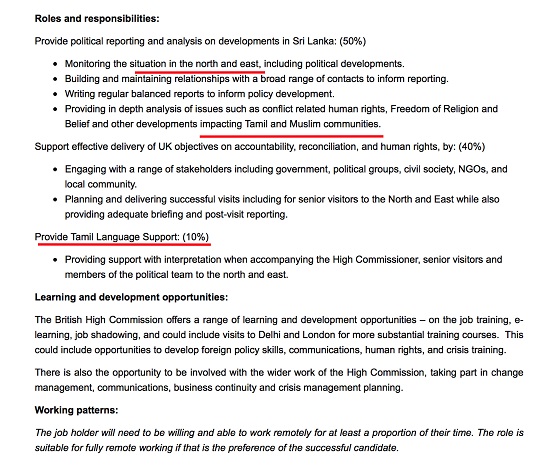
The British High Commission says it is an inclusive &
diversity-friendly employer”.
The British High Commission says it encourages applications
from people of ALL BACKGROUNDS.
The British High Commission says We
do not DISCRIMINATE on the basis of RACE, COLOUR, ETHNICITY” but it places a
vacancy for a POLITICAL OFFICER that is purposely EXCLUDING THE ONE MAJORITY
COMMUNITY IN SRI LANKA (the Sinhalese)
The language proficiency that the
British High Commission seeks is an excellent command in written & spoken
English & Tamil. Clearly, Sinhalese is excluded.
Generally Political Officers appointed
by Foreign Missions are to provide the Mission inputs on ALL THE COMMUNITIES
but in this case the British High Commission is seeking someone who reports on
the LOCAL DYNAMICS IN THE NORTH & EAST, MINORITY POLITICS” MONITORING
NORTH & EAST” & ISSUES IMPACTING TAMIL & MUSLIM COMMUNITIES”
We are not stupid not to read the
intention behind this advert.
Prof. Malik Peiris says that public health systems were found wanting when COVID-19 hit because early warnings were not heeded
By Meera Srinivasan/The Hindu
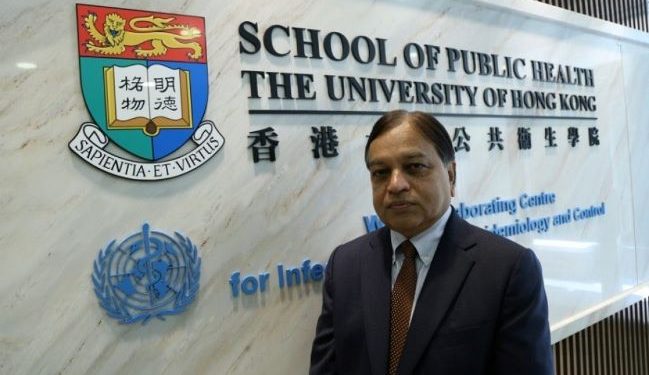
Colombo, Jun 15: For decades, renowned virologist Malik Peiris has been researching emerging viruses at the animal-human interface, including influenza, coronaviruses (SARS, MERS), and is widely credited for his role in discovering that a novel coronavirus was the cause of SARS in 2003. The Sri Lankan-origin expert, who holds the Chair of Virology at the School of Public Health in Hong Kong University, detailed how COVID-19 is different from the other outbreaks and suggested that the world could have been better prepared but for its over-reliance on the pharma industry. Here are excerpts from an interview given to Meera Srinivasan of The Hindu:
Meera Srinivasan: What is your assessment of the COVID-19 pandemic, which began late last year and has now spread all over the world?
Malik Peiris: Well it has spread to most parts of the world. But it is inevitable that as a virus that is efficiently spreading from human-to-human, it is going to continue to transmit. It is also clear that the [SARS CoV2] virus behaves very differently from SARS and that is why it is much more difficult to contain it. This is particularly because of two reasons. One is that in the case of SARS, most of the transmission took place five or six days after the patient developed symptoms. So, the first few days after a patient was ill, there was very little transmission. But in the case of COVID-19, patients are transmitting immediately from the time they develop symptoms and even before. When they transmit even before they develop symptoms, it becomes very difficult to control.
The other big difference is that whereas with SARS most of the patients who got infected had symptoms, in the case of COVID-19, it is clear that quite a number of patients, who get infected, have no symptoms at all.
So, with these two things, it makes it very difficult to contain. In the case of SARS if you could detect, diagnose patients very early, after they develop symptoms, and get them into hospitals, then the transmission in the community can be stopped. That is how the virus was controlled, right? There was no vaccine or anti-virals, so it was purely diagnosis and isolation of patients.
But with this virus you can’t do that, because some patients are transmitting even before you know they are sick. Early diagnosis is important, but you have to get ahead of the virus. As I explained, just diagnosing the patient as soon as he or she gets symptoms by itself is not sufficient. You have to find out whom this person was exposed to and put those people in quarantine in advance, because there is usually an incubation period of about five days before they develop symptoms. Contact tracing and quarantine are very important to break the chain of transmission.
In different contexts, the response to the virus has been different. New Zealand has recently declared itself virus-free and is preparing to further open up. How can countries with large and dense populations, like you have in South Asia, where public health infrastructure is uneven, get ahead of the virus? Sri Lanka or Kerala seem more equipped than many other places…
Yes, this is really where the public infrastructure becomes so crucial because in order, first and foremost, to have the testing, contact tracing, quarantine, you really need a good public health infrastructure. In the absence of that the only other tools you have are the lockdowns.
Basically, what you are doing with the lockdown is you bottle the virus up into individual households. If one person in the household is infected, it may infect other people in the household, and then some people may get more seriously ill and will have to be looked after in hospital. But then, there is no transmission from one compartment to another. That is the logic of the lockdowns. China has shown that it does work if implemented very vigorously and aggressively.
Then again, for many Asian, South Asian countries, it can be very difficult to implement this effectively. On the other hand, even if it implemented effectively, as in the case of China, it could have very serious economic implications. Nevertheless, China shows us how after completely suppressing the virus, they could open up quite quickly.
So, it all depends on how effectively you do this and stamp out the virus more or less, like in New Zealand for example, and then you can relax to some extent. Even then, you do have to have in place surveillance measures at the population level to warn people of the re-emergence of the virus.
After all, the virus is there is many parts of the world. So even if you manage to stamp it down in your own area, it is likely to come back in. So many places like New Zealand and Australia have travel restrictions. People coming in from outside are restricted, and if they do come in, they have to be quarantined for 14 days. With these measures, you can reduce the introduction from outside, but again, for large South Asian countries, this certainly can be quite challenging.
MS: What is your view of the extent of testing needed? There is a call for random testing from some.
MP: I am advocating very aggressive testing of people who have any form of respiratory infection. First and foremost, all patients with pneumonia, with no other clear diagnosis. [Then] patients with fever and cough or flu-like illness, which can be caused by many viruses — but COVID-19 also presents like that. For many South Asian countries that will already be quite a lot of testing to be done. Understanding that, I would not go so far as to talk about random testing.
In Hong Kong, we were essentially able to control the disease. We went for about 23 days without a single local case. But then we had one cluster of a household where the husband and wife were affected. And after another two days, another separate cluster. This means the virus is spreading underground if you like, almost asymptomatically, and giving rise to these clusters. This is why in Hong Kong people have been arguing for random testing.
But the problem is, even in Hong Kong — our testing capacity is quite adequate — in this most recent cluster of cases detected, that patient had been to the GP three times, but not tested. So, although the testing is there, the healthcare providers are not using it effectively. For a start, what I would certainly say for South Asian countries is test all patients with pneumonia without any known diagnosis. Secondly, if you have capacity go down to what is called influenza-like illness. For this you have to mobilise the accident and emergency [wards] and the general practitioners to submit specimens. When you try to do that level of mass testing, it is quite difficult to collect swabs in the way that we normally do which is a nasopharyngeal swab, which requires a trained nurse or doctor.
In Hong Kong, we have found that saliva testing is very effective. You don’t even need a doctor to collect that specimen. All that a patient has to do is to collect a deep throat saliva – you clear your throat and just spit out into a container and send that to the laboratory. That can be certainly done. You have to use all these measures together.
MS: From your study of the viruses, do you see different strains of it that manifest with different intensities in patients?
MP: It is an RNA virus and RNA viruses undergo mutation as they spread. With that mutation, if you sequence the genome of the virus you can identify different patterns. When the virus is spreading in one particular area — obviously all the viruses are very closely related — they may acquire very characteristic mutations. In another area, they may acquire other characteristic mutations. These mutations can be used to try and trace who gave the virus to whom and also look at the virus that came into your country and trace which part of the world it came from, because of these signatures. But it does not mean that these strain variations are related to any difference in severity. There is no hard, scientific evidence showing there are highly virulent strains and less virulent strains — that is not the case.
The virus can be very mild in many people. In some people, particularly older people who have underlying heart or lung diseases or diabetes, it can be quite severe. This is the typical pattern of the disease and this hasn’t changed necessarily.
MS: The reason I ask is because we read reports, for instance, of a person aged over a 100 years recovering well somewhere, and a young patient with no known illness succumbing to the virus elsewhere…
MP: It is to do with the individual and also the infecting dose. If somebody gets infected with a very large dose, then the chances are that the person will get much more severely ill. Always, this is a race between the virus replicating as fast as it can and the body’s immune system trying to respond as fast as it can. If you get infected with a very low dose of virus, there is enough time for the body to start responding before the virus builds up to a large level. The body’s own immune system can cope with it.
A third variable is the type of infection. I don’t have proof for this, but I say this based on what we know about other viruses like influenza. If, for example, you get infected through very small air-borne particles, which you breathe in straight into your lungs, then the disease is likely to be more severe. Whereas if the virus gets just into your nose, say through your hands, the chances are that the disease may be less severe.
So, these are the factors — patients’ own genetic differences, but certainly, more importantly, underlying health issues, age; the dose of virus you get infected with, and the manner in which it infects.
This is why, as you say, we hear of this 100-year-old person who fortunately recovered and a younger person who unfortunately succumbed. But again, if you look at it at a larger scale level then you still have the pattern — if you look at 100 people over 65 people, who get infected, you will find 4% to 6 % of these people may die. Whereas if you look at 100 infected people who are 20 to 50 or 60 years, probably less than 1% would die. If you go even younger, all 100 might not only survive, but not show any symptoms at all. So, you have this gradation, but the case of the individual can vary very much, because all these factors come into play.
MS: Isn’t the treatment a fourth variable? Or is it generic, with few chances for lapses?
MP: Of course, good treatment is important. But that is particularly important in those patients who get severe disease. Doctors are under a lot of pressure to do something.
People are talking about chloroquine and this and that, and unfortunately, we don’t have any good evidence that many of these things work. Except for this drug Remdesivir, for which there is more and more evidence that it is beneficial for patients. There may be other drugs that are effective. A trial in Hong Kong showed that a combination of a drug called Kaletra, which is used to treat HIV patients, together with interferon beta is beneficial, but again it was not a completely randomized trial, meaning it was not compared with people who didn’t get any drug. I think it is important not to panic and think you have to prescribe something.
Obviously, there are a lot of things hospitals and doctors can do to make sure the patient is well — give symptomatic treatment, give oxygen when the patient requires, or if needed have ventilation when required. Those are all things that can be done. Depending on whether you do those things properly, treatment can improve or worsen a patient’s chances of survival.
MS: From your research on different viruses, what has Covid-19 shown us about the human body, our immune system and resilience? Is it telling us something we didn’t know before?
MP: To be honest, probably not. Many of us who have been studying these epidemics for quite some time, were predicting that we were going to get a very serious epidemic sooner or later. If you look at the last 25 years — in 1997 we have had avian flu H5N1, in 2003 we had SARS, in 2009 we had the swine flu–H1N1 pandemic, in 2013 we had MERS in the Middle East, in 2014-15 we had Ebola and in 2018 we had Zika.
Every two or three years we have had completely new epidemics. Until this one, every time, we have managed to dodge the bullet so to speak. In the case of SARS as I explained to you, it was possible, with great global cooperation and aggressive diagnosis and public health measures to stop it, which was amazing. In the case of the 2009 pandemic it just went like a bomb but luckily it was very mild. This is why many of us were saying we can’t keep on being lucky every time. Sooner or later, one of these viruses is going to be nasty, and this is it.
To that extent, I am afraid it is not a surprise. What is sad is that we have been warning that we need to take measures to prepare vaccines for coronaviruses — we already had SARS, we had MERS — so we knew that these viruses were quite dangerous.
We know that influenza causes pandemics, so for that at least, some measures have been taken. But I am afraid it is this lack of preparedness that has left the world vulnerable to this pandemic.
MS: When you say lack of preparedness, what specifically should have been done in your view?
MP: When SARS emerged, everybody was jumping up and down, the whole world was excited, it was a huge economic loss, and everybody was really very concerned. But then, it was controlled. In 2003, many groups across the world including ourselves in Hong Kong, we were developing drugs and vaccines for SARS.
We developed them in the test tubes, we tested them in animal models but then we needed to take the next step of human clinical trials, which is very expensive. By that time SARS had been controlled. There was no more funding or interest to take these experimental vaccines further. It all stopped there. If we had taken those further, we would have at least known how to make a vaccine for this group of viruses. And when COVID-19 came it would have been just a matter of using the same strategy.
But at the moment, we are basically starting from scratch. We don’t have a single vaccine for coronaviruses. As you know COVID-19 is not the only coronavirus that infects humans; there are a number of them and there are many coronaviruses that infect animals as well. We are starting afresh this time.
Until now, our model has been to rely on the pharmaceutical industry to make vaccines and drugs. But when you think about it, that model does not work with these types of novel emerging infectious diseases with pandemic potential.
How can a vaccine company, whose motive is profit, invest millions and millions? It’s a huge amount of money that you have to invest to take a vaccine all the way to clinical trial and efficacy trial – when there is no certainty that this vaccine is going to be needed? If you take SARS, no pharmaceutical company was interested in any of our vaccines because there was no demand. This is the problem.
This is why many of us were saying we need a different model to develop vaccines and anti-virals for these novel emerging infectious diseases.
Indeed, this was listened to [by some] and there was this organization called Coalition for Epidemic Preparedness Innovations (CEPI), it was coordinated by WHO, funded by Bill Gates and others – they started working, and they had prioritized a number of viruses for vaccines and anti-virals. One of them was MERS, a coronavirus, other one was Ebola. But this pandemic came before all those could provide results. This is where at the international level, we need to take more coordinated action, and we cannot just rely on the pharmaceutical industry to respond to these issues
MS: Do you mean national governments and international organizations have to work on such a response and preparedness with a public health focus?
MP: Yes, exactly.
MS: You spoke of an individual’s immune system and how that contributes to one’s chances of survival. We are constantly hearing different claims around boosting the immune system – from turmeric to ginger to tea. What do we make of these?
MS: I don’t think there is any evidence that ginger or turmeric or anything like that has any effect. Of course, leading a good lifestyle with a lot of exercise, fresh air, and outdoor activities are good for overall health. It is good for your cardiovascular strength, your respiratory system. If your heart and lungs are functioning well, then you are much better placed to fight a disease like COVID-1. We know that regular exercise enhances your immune responses as well.
MS: How do you see the next few months? It’s hard to predict, yes, but where are we headed in the latter part of this year and next?
MP: I must say that I don’t see much chances of COVID-19 disappearing on its own accord. It is a virus that is very well adapted to transmit in humans, so it will continue to transmit. Of course, we discussed in the beginning the measures that can be taken to suppress it. With these measures you can keep it at bay.
I think there are two major issues. One is you need to use these public health measures we talked about to prevent the virus from completely getting out of control. Because if it does that, then your hospital system will get completely overloaded. That means even patients who can be saved with simple things like oxygen and simple medical care, won’t get that. You need to keep the outbreak at a level that is within your hospital capacity. That is very important.
The other thing is we are all hopeful about all these vaccine developments that are taking place. That is not going to happen within this year, but possibly by early next year, we may be having one or more potential vaccines. That will have a huge impact if they are effective.
Irrespective of that, within the next few months as we go along, there will be better proven drugs that can be used to treat this. I am quite confident that that will also come along. These things will also help reduce the mortality from this outbreak.
In the context when you have very overcrowded slums and poor general hygiene also, the situation will be bad and will provide an opportunity for the explosive spread of the virus. As I told you, it is not just the infection, it is the dose of infection as well.
In those types of poor hygiene environments, not only is the risk of infection higher, its severity is also likely to be higher because of these factors. People’s general health in these environments may be poorer, their nutrition maybe poorer. This is certainly a challenge for many of our South Asian countries. We need sensible and prudent strategies to take this path forward in the next few months.
MS: Is there evidence to show us that an infected patient, who has recovered, can contract COVIDd-19 again?
MP: No, there is no evidence of that at all. In the people who get infected, the virus does seem to persist at a low level for quite some time. Even though they recover, if you look at very sensitive tests like PCR, you can sometimes find the virus in their respiratory track for weeks and weeks. This doesn’t mean they have got re-infected.
Upto now, there has been no clear example of a person getting re-infected. We and others have done experimental animal studies, where we show that when you infect these animals — we use hamsters as a model, they are very similar to the human disease — once they get infected and they recover, and you infect them again, they basically do not get sick. They can actually get infected again, you can have virus replicating in the nose, but it doesn’t cause any disease in the person. We don’t know for sure what will happen in humans.
At least from the animal studies, we do have every hope that at least after infection patients will be prevented from severe disease the second time around.
Colombo, June 15 – Fifty thousand more Sri Lankan citizens stranded overseas are waiting to be repatriated while 8000 have been brought back into the country since the COVID-19 virus spread in many countries including Sri Lanka March, a senior official at the President’s Office told the local Daily Mirror.
The repatriation plan which has been put together by the government and the health experts is going ahead without any hiccups and the government hopes to get back all local citizens in the next few months although a deadline is yet to be set to complete the repatriation process.
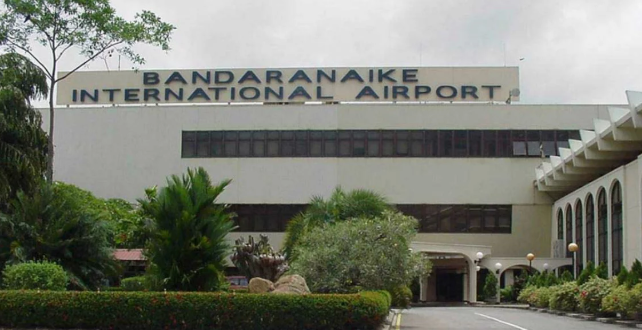
Yesterday a flight from Maldives carrying local citizens arrived at the BIA, and today a flight from Nepal is scheduled to arrive. On June 17, a flight from Dubai is scheduled to arrive, with a majority of passengers being pregnant women who had made an urgent appeal to the government to get them back home.
All passengers have and will undergo the PCR testing 48 hours before their flight schedules and upon arrival at the BIA, they will undergo another PCR testing by the medical officers stationed at the airport.
Diplomatic missions overseas are in touch with local citizens and are updating them on the repatriation process.
The senior official said that when the BIA opens up on August 1 for foreign tourists, the repatriation process will continue in parallel to tourist arrivals but those being repatriated from overseas will have to undergo the mandatory quarantine procedures. Tourists arriving will also have to undergo the PCR tests upon arrival but will be exempted from the quarantine procedures.We cannot delay opening up airport for tourists as the hotels need to open up and the tourism sector needs to resume operations as there are thousands of people who depend on this sector for their livelihoods.
Of course, strict health guidelines will be maintained even for the tourists. But we will continue the repatriation process in parallel to welcoming tourists,” the official said.
Meanwhile, Sri Lankan nationals in Mumbai, have made an urgent appeal to the government once again to expedite the repatriation process saying they had been stuck there for months and were now facing financial issues.A Sri Lanka national who contacted the Daily Mirror from Mumbai said they had sent several messages to government officials and while the consulate in Mumbai was in touch with them, they were yet to receive a favorable response.
By Dr. Harold Gunatillake- FRCS, MBBS, FIACS, FICS, AM (Sing) Courtesy Asian Tribune
Fidgeting like shaking your legs can help you to lose weight- burn 350 cal. A day Sitting for more than six hours greatly increases your risk of a clot forming in your calf veins.
No matter how much you exercise, eat well, avoid smoking, excessive sitting will cause problems according to Tom Rath best-selling author of ‘Eat Move Sleep’ which is sold more than six million copies:
As soon as you sit down, electrical activity in your leg muscle shuts off! Enzyme production, which helps break down body fat, drops by 90 percent.
After two hours of sitting, your good cholesterol drops by 20%. Continuous body motion, including fidgeting, is a healthy use of daily calories and keeps your weight down.
In the interesting new study in Australia, researchers recognized that excessive sitting time is associated with worse health. Shaking your legs whilst being seated, tend to improve your health.
You are aware travelling for many hours in a plane you are reminded of rotating your ankles frequently to avoid deep vein thrombosis on flights.
Furthermore, there are positive associations between cancer risk and sedentary behavior.
Shaking your lower limbs vertically or from side inwards keeps the leg muscles active and calories are lost. Some, especially women tend to shake their feet cross legged while reading a book in bed.
You may lose more calories sitting down and shaking your legs continuously and rhythmically than walking.
You can now buy electrical shaking machines to do the same job. One issue with such machines is that the rhythmic motion of the foot plate tends to shake the feet and legs and may not improve circulation such as sending venous blood more rapidly towards the heart.
Shaking your legs rhythmically functions better than the machine, as far as movement of the blood flow.
When you are in a nervous state you may unintentionally shake your legs, and that sends a message to everyone around you about your feelings of anxiety or irritation or being bored.
Shaking your legs isn’t always a sign of boredom. Some people in the North of Sri Lanka, do it while they are concentrating on a task or problem.
I have seen personally many Jaffna people shaking their legs unknowingly when engaged in serious auditing work. Or for some people it is traditional to shake their legs -inwards and outwards whilst talking or just doing nothing.
It is a perpetual habit, while some others do it subtle, situational tremor.
Most old people in Sinhalese homes in the rural areas while chewing beetle and relaxing on the reclining chair called the Hansi putuwa’ seem to shake their legs, like no other business, most relaxing and satisfying.
Shaking your legs is beneficial to your health, especially if your job is sitting down long hours, say at the computer. Shaking your legs seems to increase blood flow significantly.
So, if you are not a leg shaker, you should take a break, get up and walk every few hours. In some cases, leg shaking goes beyond subconscious behavior and may be a cause of underlying disease.
There is a condition called restless legs syndrome (RSL) which has no connection to the habit of shaking your legs. RSL, occurs more in bed when you sleep.
It is a feeling to move your legs in order to alleviate crawling, itching, aching Leg tremors are different to leg shaking.
A person with leg tremors may notice their leg shaking while a muscle or group of muscles pulses or spasm out of control.
This situation is common in multiple sclerosis, stroke, traumatic brain injury. When your liver or kidney failure may also cause tremors. So, shaking the legs as in the Jaffna tradition is a healthy movement. It is not considered obnoxious and being involuntary may not be able to control.
Jaffna man has strong wiry legs and leg shaking gives good blood flow, better skin health, may be considered a factor for strong healthy legs for walking long distances. Strong healthy legs are linked with healthier brain aging.
Their brain health has influenced them to study well and become professionals. Now you know why Jaffna man is wiser.
Stay Safe, Stay at Home, Stay Informed, But Don’t Forget to Wash Your Hands.
Sri Lanka’s decision to impose stringent Covid-19 testing protocols when it reopens its doors to foreign tourists on August 1 has divided local tourism industry stakeholders.
Some industry players, who declined to be named, are up in arms over the stringent Covid-19 testing protocols. The chairman of a local hotel chain said: At this rate, tourists would prefer to stay home than come to Sri Lanka.”
Tourism players fear that stringent health protocols may deter foreign visitors to Sri Lanka
However, the heads of two key associations representing hotels and travel agents said such testing protocols are necessary to maintain Sri Lanka’s success in countering Covid-19. The country has seen 1,880 confirmed cases as at June 13, with a death toll of 11.
Sanath Ukwatte, president of The Hotels Association of Sri Lanka, said that those stringent measures help curtail pandemic spread. The best-case scenario would be no restrictions imposed on tourists. However, we need to respect the health authorities who are doing their utmost to contain this imported disease,” he said.
He projected tourist numbers to be low in the first few months, and urged authorities to revise those protocols as foreign arrivals gradually tick back upwards three to four months after reopening”.
Sri Lanka Association of Inbound Tour Operators president Mahen Kariyawasam told TTG Asia that authorities had altered an earlier proposal to impose a visa fee on arriving tourists from US$100 to US$35, after they raised concerns that the high visa fee might deter visitors.
Earlier on, the US$35 visa fee was abolished after the 2019 Easter Sunday attacks, to instead allow free-visa entry in a bid to revive the hammered tourism sector. But the authorities had initially planned to increase visa fee rates to US$100, as Sri Lanka had lost millions of dollars last year in revenue following the promulgation of the visa-free arrival scheme.
However, on top of the reinstated US$35 visa fee, arriving tourists will now also have to fork out up to US$65 for Covid-19 tests, depending on the length of their stay.
As per tourism guidelines issued on June 5, travellers need to stay for a minimum five nights and should reside in certified accommodation providers (hotels) which will be listed on the Sri Lanka Tourism website. Details of their hotel bookings are required for the online visa application.
Visitors are required to take a Covid-19 swab test on arrival at the airport, but need not serve quarantine unless symptoms are detected, the guidelines said. However, they would have to stay in the airport until test results are out within four to five hours.
The guidelines also state that a second test will be done four to five days after arrival by a mobile unit in coordination with the certified accommodation provider. Travellers staying for more than 10 days will be required to take a third test during their stay.
Asked whether the enforcement of multiple tests would be a deterrent to visit the country, Kariyawasam said that other countries are imposing compulsory quarantine periods on arriving travellers, whereas in Sri Lanka, visitors are allowed to check into their hotel after testing negative for Covid-19 upon arrival.
For the first few months, I think we would attract visitors from the Asian region, as there are very few inquiries from Europe,” he said, adding that the European traffic is expected to pick up by early next year. While India and China are Sri Lanka’s main inbound sources, Europe is the largest regional source.
Just like RRW’s appreciative comment on Rajeewa Jayaweera, yesterday, I, too, never met Rajeewa except through his essays to this newspaper and other news sites. He was a regular contributor to these pages, for many years, and it was a pleasure to read and I enjoyed them every time. The well-researched analysis, on many topics, too numerous to list, were factual, objectively composed and fair to everyone. He was a prolific writer on matters of public interest, providing knowledge and insights to inform and enrich our lives. His writings were always non-partisan. During the last two weeks, in June, he wrote, if my memory serves me right, two pieces, one on irresponsible Covid behaviour of bigwigs, limbering at Independence Square, and the second on misuse of public monies by Foreign Service officials, who seek overseas postings to secure health costs for existing chronic illnesses. He wrote on all sorts of public issues, ranging from corruption, in public places, to civil aviation. He was at his best on diplomatic issues, and foreign affairs, given his family background.
Rajeewa was born to fortunate circumstances, being the son of Stanley Jayaeweera, who was in the Foreign Service: the diplomat who served the nation with distinction. Neville Jayaweera, his uncle was the civil servant who found the bureaucracy, more supple than what many critics say, to serve the people. Both these public servants, as Rajeewa commented in the essay, on the third death anniversary of his father, were the embodiment of discipline and formalism, and on the occasion of leaving the Singapore posting, his father made sure that he returned the wrist watches, gifted to Rajeewa and his sister, by the Sri Lankan businessman in Singapore. His father left his last assignment for not supporting the decision of a President on the IPKF occupation. Mr Jayaweera rather stood by his firm convictions to resign his consultancy forthwith, to return home by bus, just the way he took up his first job at the Foreign Ministry.
Neville Jayaweera, his uncle, was also faulted for supporting Prime Minister Dudley Senanayake’s agricultural drive, about which Rajiv wrote that his uncle stood for his convictions. Neville Jayaweera has said ‘I was not a stooge of anybody, but I was convinced that the only way the country can progress is to achieve self-sufficiency in food and that all of us, as citizens, should contribute towards that noble objective. I did the job I was entrusted with to the best of my ability’. One can think of no better upbringing to a young person to become an upright citizen in the fullness of time. Browsing through his writings, the sentiments, he expresses, are testimony to that fortunate background.
He was a public intellectual in the proper sense of the term. It may be true, in general, that human beings have a spontaneous tendency to grow into the modes of thinking appropriate to and predominant in their society, class or set, just as they have a tendency to drop into associated modes of conduct. There are exceptions, of course, illustrious and otherwise to prove the rule. Rajeewa had been moulded into a prim and proper human being from young days. This philosophical foray into Rajeewa’s life, through his essays in the newspapers, over the last so many years, is penned as a tribute to a valued public intellectual who contributed ideas towards social progress, making good use of the conjuncture of social circumstances into which he was born, and the intellect of an upright citizen who served our reading community and society at large.
Though I have not the space to dwell at length, his writings, on Lord Naseby’s debate on war crimes, are still fresh in our minds. He wrote numerous pieces on the matter last year. He wrote with passion but objectively. It was in the pursuit of national interest. ‘With all due respect to the Minister, the false allegations of genocidal numbers of civilian casualties, in Sri Lanka, are repeated everywhere. The opportunity that has arisen due to The Naseby initiative is too valuable to be squandered away. Towards this end, a thorough spring clean at the Foreign Office would be a good start. Improvement of procedures to enable delivery of a letter from the Head of State to any major capital in the world, in no more than 72 hours, is a prerequisite for such a project, instead of 19 days.’
On the Swiss saga, he protested that ‘the government has failed to request an explanation from Ambassador Mock of discrepancies between several versions of the abduction given by the alleged victim to the CID, and his complaint on November 27. It was not right that GR received the Swiss Ambassador and even informed him that the Swiss were not under suspicion. It would have been appropriate for GR to decline to receive the Ambassador till the matter has been cleared up. He could have been directed to deal with the Foreign Secretary and Foreign Relations Minister. That is what any self-respecting country would do.
Rajeewa was a true Sri Lankan to the core. On a related matter, regarding the unity of our country, he wrote that we must never forget history, even ugly history, but need to live in the present, and should aim for everyone to be equal within the nation. Cancelling ugly history is a dangerous form of denial. Denying true history risks repeating it. Leave the ugliness in plain sight and learn from it. It is time for rational thought and robust discussion to take centre stage in national mayors.
We will miss his insights and this endnote be a ‘Thank you’ for posterity.
President Gotabhaya Rajapaksa has decided to halt importing handloom and batik textiles.
The President has taken this decision with the intention of strengthening the existing local producers and attracting more producers to the industry.
This decision was taken at a meeting held at the Presidential Secretariat this afternoon regarding the problems faced by those who are engaged in the textile and garment industry.
Two (02) more persons have tested positive for Covid-19 (new coronavirus) infection.
The country total has increased to 1,905 according to the latest information by the Epidemiology unit of the Ministry of Health.
Covid-19 Situation Report as at 2020-June-15 | compiled according to the Health promotion Bureau and the Epidemiology Unit data
Total confirmed cases – 1,905 Recovered and discharged – 1,342 Patients under medical care – 552 New Cases for the day – 16 Observation in Hospitals – 46 Total Deaths – 11 Total number of PCR tests conducted – 87,083
Director of the State Intelligence Services of Sri Lanka (SIS) Major General Suresh Sallay has sent a Letter of Demand to Executive Director of the International Truth and Justice Project (ITJP) Ms. Yasmin Sooka and the ITJP for making various allegations against Maj.gen. Sallay, his Lawyer said.
The said Letter of Demand sent through Lawyer Pasan Weerasinghe, stated that on or about June 01, 2020, Ms. Yasmin Sooka, in her capacity as the Executive Director of the ITJP has issued a press statement making various defamatory remarks against Major
General Sallay. The press statement is said to be published via the ITJP Sri Lanka’s website.
The Letter of Demand highlighted the defamatory implications have resulted in parties with vested interests making attempts on the life of Major General Sallay. Further, the Letter of Demand goes on to mention the numerous awards and achievements of Major General Sallay and the resultant character and reputation he has thus garnered.
Further, it states that the defamatory remarks of Ms. Sooka published by the ITJP Sri Lanka website have caused unto the Major General’s character and reputation a significant damage, which the Major General has valued at one Billion Sri Lankan Rupees and in turn, demanded that Ms. Sooka and ITJP pay.
The Letter of Demand has also notified Ms. Sooka and the ITJP to cease and desist from issuing further defamatory remarks and the intention of Major General Sallay to seek litigation remedies, both Civil and or Criminal, if Ms. Sooka and the ITJP fails to adhere to said demands, it added.
Soon after Sally was promoted to the rank of Major General, Sooka issued a press statement on June 1, 2020 and charged that Sallay, allegedly forced a Tamil doctor in custody in 2009 to give false testimony by denying him medical treatment and threatening him.
President Gotabaya Rajapaksa said yesterday that he had never requested any bank to grant loans to his kith and kin, acquaintances or supporters.
The President made this remark during a progress review meeting of the Bank of Ceylon held at the Presidential Secretariat.
At the meeting, he said the State Banks should take the lead in providing the financial assistance expected by small to medium entrepreneurs and to investors.
The current global scenario is an unprecedented one. We will have to think out of the box to break free from this situation. Conventional methods cannot be used to revive the economy,” he said.
He reiterated that he is determined to meet the expectation of every community in the country by exercising the powers given to him by the people.
It is not at all for political gains but for the benefit of the country. I will not think twice to take the best possible decision notwithstanding the obstacles that come on the way,” he said.
Meanwhile, he said it is the responsibility of State Banks to put in place the mechanism to implement the policies of a government.
While pointing out the impossibility of fulfilling aspirations of a country with a two digit interest rate for loans, the President stressed the necessity of bringing it down to a single digit to assist the development of the country.
The growth rate of the economy which was 7% to 8% before 2015 had fallen even below 2% by 2019. The global economy which collapsed in the wake of COVID-19 pandemic has further worsened the situation,” he said.
President Rajapaksa emphasised that it is the responsibility of State Banks to comprehend all these factors and assist in implementing policies of the Government for the betterment of the country.
Secretary to the President P. B. Jayasundera, Secretary to the Treasury S. R. Attygalle, Chairman of the Bank of Ceylon Kanchana Ratwatte, Board of Directors and officials participated in the discussion.
The Egyptian Embassy in Sri Lanka says that Egypt has been wrongly associated with the name of the Qatari citizen, fundamentalist theologian and hate preacher Yusuf Al-Qaradawi, during the proceedings of the Presidential Commission of Inquiry probing the Easter Sunday attacks.
Issuing a statement, the embassy further stated that Al-Qaradawi has been residing in Qatar since the 1960s and holds the Qatari citizenship only.
Being one of the fountainheads of the banned terrorist Muslim Brotherhood organization, fanning religious hatred and promoting a cult of violence, Al-Qaradawi has been stripped of the Egyptian citizenship, banned from Egypt decades ago, and escaped a life sentence in absentia issued by Egyptian courts of law.”
The embassy noted that charges against him include the implementation of acts of terrorism and violence inside Egypt that resulted in the loss of dozens of lives, the preparation of terrorist schemes in cooperation with the leaders of the Muslim Brotherhood, embracing extremist Takfiri ideas, conspiring against the Egyptian people to perpetuate chaos and undermining the national security of Egypt.
His name appears on the terror list of Egypt and several other peace-loving countries.”
Egypt said that it is deplorable that he remains unchecked by his host country and continues to receive support and sponsorship. Egypt and other Arab countries have collectively designated 59 individuals and 12 institutions that have financed terrorist organizations and received support from certain countries in the region, including Al-Qaradawi and his so called International Union of Muslim Scholars”.
Egypt and its enlightened institutions will continue providing support to Sri Lanka in eradicating extremism. Both countries are facing the same threats and confronting the same enemy,” the statement said.
Read Full Statement Below…
Egypt and Sri Lanka on the Same Page in Combatting Extremism”
The Embassy of Egypt observed with much concern the local media coverage on Ada Derana of the first evidence given by prelate Ven. Galaboda Aththe Gnanasara Thero before the Presidential Commission of Inquiry into the Easter Sunday attacks on 13 June 2020, where Egypt has been wrongly associated with the name of the Qatari citizen, fundamentalist theologian and hate preacher Yusuf Al-Qaradawi.
In this regard, the Embassy wishes to enlighten the Sri Lankan media and public opinion on a set of facts and clarifications. Al-Qaradawi has been residing in Qatar since the 1960s and holds the Qatari citizenship only. Being one of the fountainheads of the banned terrorist Muslim Brotherhood organization, fanning religious hatred and promoting a cult of violence, Al-Qaradawi has been stripped of the Egyptian citizenship, banned from Egypt decades ago, and escaped a life sentence in absentia issued by Egyptian courts of law. Charges against him include the implementation of acts of terrorism and violence inside Egypt that resulted in the loss of dozens of lives, the preparation of terrorist schemes in cooperation with the leaders of the Muslim Brotherhood, embracing extremist Takfiri ideas, conspiring against the Egyptian people to perpetuate chaos and undermining the national security of Egypt. His name appears on the terror list of Egypt and several other peace-loving countries. It is deplorable that he remains unchecked by his host country and continues to receive support and sponsorship. Egypt and other Arab countries have collectively designated 59 individuals and 12 institutions that have financed terrorist organizations and received support from certain countries in the region, including Al-Qaradawi and his so called International Union of Muslim Scholars”.
Along the same line, Al-Azhar, Egypt’s prestigious seat of enlightened Islamic education, has expelled Al-Qaradawi long ago, considering him an incendiary extremist ideologue. Al-Azhar and its renowned Observatory for Combating Extremism have been in the forefront of countering extremist ideologies and practices and rejecting acts of religious violence worldwide. Al-Azhar has condemned in the strongest terms the heinous Easter Sunday attacks in Sri Lanka and expressed its full solidarity with the Sri Lankan government and people. Al-Azhar Sri Lankan graduates have previously confronted and refuted the extremist ideas of the National Tawheed Jamaat leaders in Sri Lanka on several occasions prior to the Easter Sunday attacks, one of which has been highlighted in the Sri Lankan press. It is worth mentioning that several Muslim and non-Muslim countries have approached Al-Azhar for assistance in modernizing education and confronting Islamic extremism, including Christian Buddhist- and Hindu-majority countries.
Egypt and its enlightened institutions will continue providing support to Sri Lanka in eradicating extremism. Both countries are facing the same threats and confronting the same enemy.
Presidential Commission of Inquiry (PCoI) investigating the incident of political victimization has issued summons to 17 individuals over a complaint lodged by Chairman of Avant-Garde.
Chairman of Avant-Garde Nissanka Senadhipathi had lodged on the alleged loss incurred by his company due to arbitrary takeover.
Seventeen parties have been asked to appear before the Presidential Commission on June 17, a spokesman said.
The following parties have been issued notices by the Commission:
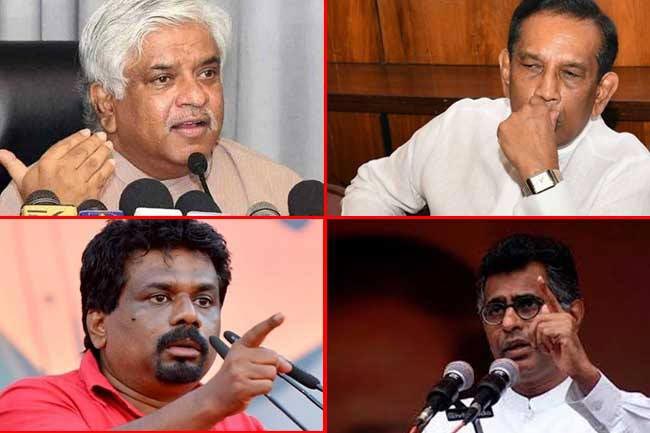
Former Navy Commander Ravindra Wijegunaratne
Former MP Rajitha Senaratne
Former MP Patali Champika Ranawaka
Former MP Arjuna Ranatunga
Former MP Anura Kumara Dissanayake
President’s Counsel Dilrukshi Dias Wickremasinghe
Former Director of the CID Shani Abeysekera
Former DIG (Retired) S. A. D. Gunawardena
Lieutenant Commander W. H. P. Weerasinghe
Rear Admiral J. J. Ranasinghe
Rear Admiral Nilantha Heenatigala
President’s Counsel Upul Jayasuriya
Former OIC of Galle Harbor Inspector Induka de Silva
Inspector of Police Aluthge Senarath
ASP Lasantha Ratnayake
President’s Counsel Wasantha Navaratne Bandara
Senior State Counsel Janaka Bandara
This Presidential Commission of Inquiry was appointed earlier this year to look into the incidents of political victimization between 08 January 2015 and 16 November 2019.
බ්රිතාන්යපාලනයුගයේමෙරටසිටිජ්යෙෂ්ඨවිනිසුරුවරයකුවූඉංග්රීසිජාතිකආචිබෝල්කැම්බල්ලෝරි ‘ලංකාවේමධ්යමපළාත්ගැසට්’පත්රයේ(A Gazetteer of the Central Province of Ceylon) මෙසේපවසයි:
Now
that Sri Lanka has achieved notable success in containing the danger posed by
the COVID-19 pandemic to the health of the nation, the time has come for a
concerted and decisive focus on reviving the economy. This is particularly timely now that the
economy has been removed from its induced coma” with the elimination of
daytime curfew throughout the island.
A
Pathfinder Foundation Study Group produced a report which set out a new
economic vision for post-COVID-19 Sri
Lanka. It has been shared with the key
leaders of the government. An important
recommendation in the Report was the pursuit of trade agreements.
The
Doha Round of Multilateral Trade Negotiations is at an impasse. It has probably been dealt a fatal blow with
the disengagement of the current US administration from the WTO. Many countries have responded by pursuing
bilateral, regional and plurilateral trade agreements to boost their growth and
employment prospects. Sri Lanka has
fallen behind and is confronted with the possibility of falling even further
behind.
The
Sri Lankan authorities have done well to stabilize the external position of the
country despite the extreme shock delivered by the pandemic to Sri Lanka’s key
sources of foreign exchange: remittances; apparel exports; tourism receipts;
earnings from shipping, FDI inflows; foreign institutional investment in
government securities and the stock market; as well as the prospects of raising
money from international capital markets. However, the temporary import bans
and the decline in oil prices have served to mitigate the worst effects of
these adverse trends. The effectiveness
of these measures is reflected in the forex market, where the LKR has been
largely stable after its initial sharp depreciation to LKR 199: USD. It has now stabilized around LKR 186:USD.
However,
the economy is in a sub-optimal equilibrium as far as growth and employment
prospects are concerned. There have been
some green shoots of recovery in exports of apparel, seafood, tea and some
rubber products. However, this is far
from sufficient to support the country’s ambitions on growth and employment.
For
this to happen, Sri Lanka has to work towards a transformation of its export
and FDI performance. This has proved elusive so far. The measures needed to achieve this are well
known. They must now be implemented
effectively and trade agreements need to be an integral part of this
effort.
The
shift of the centre of gravity of the global economy to the East is likely to
be accelerated in the post-COVID-19 world.
At present, over 50% of Sri Lanka’s exports are to the EU and US. More needs to be sold to Asia. In addition, the export basket needs to be
more diversified and complex. Trade
agreements provide access to markets, investment and know-how which can
catalyse the diversification of both export markets and the product mix.
On
FDI, a market of 21 million people with purchasing power based on USD 4000 per
capita income is not attractive in a world where over 190 countries are
competing for investment inflows.
Securing enlarged market access on a preferential basis is therefore a
matter of high priority, particularly at a time when global supply chains are
being reconfigured for the post-Covid19 world.
The
Pathfinder Foundation recommends that Sri Lanka:
1.
Sell more to Asia, the most dynamic region and the part of the world which is
recovering most quickly from the effects of the pandemic; and
2.
Enlarge preferential market access to attract FDI to promote export
growth.
An
urgent priority therefore is to revive and accelerate the negotiation of a
partnership agreement with China; an expanded agreement with India; and an
agreement with Thailand. Agreements with
other Asian countries, particularly other ASEAN members and Japan, should also
be explored. Another goal should be
maximizing the benefits from the Agreement with Singapore.
In addition,
the UK remains an important trading partner.
Brexit negotiations have recommenced. At the same time, the UK is
negotiating trade deals with non-EU countries. It is important that Sri Lanka
negotiates an early trade deal with the UK which sets the GSP Plus preferences
as the minimum.
3. In
order to accelerate these processes, it is important that an empowered and
technocratically competent high-level trade negotiating team is appointed
reporting directly to the highest level of government.
Over the last couple of decades we
have seen with great pride the emergence of a highly distinctive brand of Sri
Lankan cricket that has exploded on the world scene winning the admiration of
the cricket world. Consequently, Sri Lanka is no longer treated as a minnow or
a mighty atom but as a respected member deserving a place at the high table of
world cricket.
It would be tantamount to an
unpardonable lapse if cricket followers worldwide were to confine their
admiration exclusively to the Sri Lankan players while leaving out from their
attention and gratitude several Sri Lankan cricket lovers who have made unique
contributions to the development of International cricket through use of modern
technology.
Mahinda Wijesinghe, a former Secretary of Sri Lanka
Cricket Foundation and now a prominent cricket writer first suggested in a
written paper to the ICC ‘’the concept of third umpire’’ in cricket. The
suggestion was to have two more umpires watching television monitors and action
replays in a special TV room in addition to on field (ground) umpires. In the
absence of sophisticated equipment that is used now, he recommended the use of
walkie- talkie system to communicate between on field umpire and umpires
watching the screen. As a result on field umpire can clear up any doubt by
contacting screen watching umpires.
Mahinda’s paper was presented to the
ICC meeting in July 1984. The idea was reported but not supported” stated the
Wisden Almanack. South Africans grasped the importance of it. They were the
first to use video evidence in Tests and international matches between South
Africa and India in 1991/92 series after ICC reinstated South Africa as a
Test nation in 1991.
The cricket journalist and editor of
the monthly London Cricketer International Christopher Martin- Jenkins reported
some time back that the rightful owner of this ‘’third umpire’’ concept was
actually Mahinda Wijesinghe, the Sri Lankan cricket writer.
Then came Senaka Weeraratna,
the Sri Lankan lawyer who conceived an unique concept called ‘player referral’
as far back as 1997 to minimize umpire errors in the middle. His letter to the
Editor entitled ‘’Third umpire should perform the role of appeal judge’’ was
first published in the ‘Australian’ (Australia’s national newspaper) on March
25th 1997, and thereafter in several newspapers and Journals all over the
cricket world.
This concept of the Sri
Lankan lawyer is undoubtedly revolutionary in its scope because it challenges
the validity of a fundamental rule since the inception of cricket – the
decision of the Umpire is final. Weeraratna has argued with vehemence that in
the interest of achieving greater accuracy in decision making this cardinal
rule must be discarded to enable players to appeal against an umpire’s decision
to a Third Umpire located outside the boundary with access to play back video
technology.
The mechanism he has suggested is
similar to a review of a lower court decision by an appeal court judge.
This proposal was adopted by the
International Cricket Committee of the ICC in 2006 and later introduced to the
Cricket world as the Umpire Decision Review System (UDRS also called DRS). The
lynch pin of the UDRS or DRS is Senaka Weeraratna’s ‘player referral’
concept.
The
UDRS was first tested in an India v. Sri Lanka Test match in 2008, and was
officially launched by the ICC on 24 November 2009, during the first Test
between New Zealand and Pakistan at
the University Oval in Dunedin. It was first used in a
One Day International (ODI) match during the January 2011 tour of Australia in
England.
An examination of all available
evidence clearly reveals that Senaka Weeraratna was the first to suggest a
‘player referral’ system for cricket. No one has so far been able to challenge
Weeraratna on this score. Even Duncan Fletcher the English Cricket Coach who
has claimed authorship of ‘player referral’ concept in his book ‘Ashes Regained
– the Coach’s story’(2005) has withdrawn his claim once he came to know that
Senaka Weeraratna ’s publication of the concept in 1997 had anteceded by two
years Duncan Fletcher’s first pronouncements on the subject in 1999. With no
one in the world to challenge Weeraratna’s claim of authorship it has now
become a one horse race. This is a world class achievement for Sri Lanka.
Furthermore, it also appears that
Weeraratna’s brain child ‘player – referral ’ has also been adopted in several
other sports such as Soccer, Rugby Football, Tennis, etc. There was no
such Player Referral system or mechanism in any sport prior to the publication
of the aforesaid letter of Weeraratna in ‘The Australian’ on March 25, 1997.
Weeraratna had sent his papers on the subject not only to leading
newspapers in the world but also to the ICC and the cricket authorities of all
the Test playing countries, including the Board of Cricket Control of Sri
Lanka.
The conventional practice in any
sphere of activity be they sports, science or technology, is accurate
attribution of authorship for any innovation or discovery. In other words, the
name of the founder or author is ascribed to the invention(s). Two Englishmen
Frank Duckworth and Tony Lewis worked out a mathematical formulation to
calculate the target score for the team batting second in a limited overs cricket match
interrupted by weather or other circumstances. It was introduced in 1997,
and adopted officially by the ICC in 1999 and was colloquially known as
the Duckworth–Lewis method (D/L).
However in respect to the Player –
Referral mechanism, now employed in all three formats of the game, i.e. Test,
one –day and T20, the ICC led cricket world has yet to give due recognition to
Senaka Weeraratna, who has been fighting a lone struggle for recognition for
the last 20 years.
It is heartening to know that Sri
Lanka Cricket (SLC) has finally decided to recognize Weeraratna at a formal
meeting of its Executive Committee held recently and accordingly SLC armed with
an exhaustive and very thorough legal opinion prepared by two leading lawyers
namely Dr. Harsha Cabral, P.C. and Mr. Kushan Illangatilaka, has submitted a
memorandum to the ICC seeking formal recognition for Senaka Weeraratna’s
contribution towards amending the laws of cricket to achieve a higher degree of
accuracy in Umpire decision making.
While awaiting the decision of the
ICC, it is imperative that the Govt. of Sri Lanka should seek India’s
support for this endeavor. The most powerful member of the ICC is India which
wields enormous economic clout these days. Its help plus the support of other
South Asian countries like Pakistan and Bangladesh should clinch the deal
bringing enormous recognition not only to the author Weeraratna but to Sri
Lanka as a whole.
An Indian journalist Varsha Thakur (
ETV) recently wrote ‘’ A careful analysis of the essence behind Senaka
Weeraratna’s UDRS or DRS is the spirit of religion, justice and Satyamev Jayate
that constitute the foundation of the civilizational links between India and
Sri Lanka since eternity. The time has come for the values of religion, justice
and Satyameva Jayate to be spread to all corners of the world and influence the
whole of humanity.’’
She further says ‘’Modi Government
started International Yoga Day all over the world which was extremely
successful. Elevating sports and honouring the people associated with ground
breaking achievements in sports also signifies successful foreign policy.
Therefore honoring Senaka Weeraratna and his contribution to the development of
cricket rules, by India, the world’s leading country in cricket, will not
only strengthen India’s leadership in world cricket but will further
deepen Sri Lanka’s relations with India. Therefore, the Ministry of External
Affairs of India needs to take cognizance of this matter immediately so that
the Indian High Commissioner in Colombo can be directed to take appropriate and
necessary action without delay.’’
Varsha Thakur calls
Senaka Weeraratna the Dharmaraja of cricket and the father of DRS. This is
a good sign for not only 21 million Sri Lankans backing him but also the
realization that there will be a potential 1.2 billion Indians to support
Weeraratna to gain recognition for his rightful claim.
Ranjith Fernando, who was a former Sri Lankan
cricketer (Batsman/Wicketkeeper) who later became a prominent International
Cricket Commentator coined the term ‘’Aerial route’’ to describe a sixer. Today
you can hear many commentators using this term whenever a batsman hits a six.
Many of them also acknowledge fact that the term was first aired by Ranjith
Fernando.
The important message that must
be conveyed to the world is that Sri Lanka has unlimited talent not only in
respect of high attainments on the playing fields but also ‘Cricket brains’ to
transform the rules of the game radically which is what Senaka Weeraratna’s
‘player referral’ and Mahinda Wijesinghe’s ‘Third Umpire ‘concepts have done.
Boyce, Charles. Shakespeare A to Z. New York:
Facts on File, 1990.
Bradbrook, M. C. Shakespeare, the poet in his
world. London : Weidenfeld and Nicolson, 1978.
Bradley, A. C. (1960). Shakespearean tragedy:
lectures on Hamlet, Othello, King Lear, and Macbeth. London: Macmillan Co Ltd.;
New York: St Martin’s Press.
Bushnell, R., 2019. Greek Tragic Women on
Shakespearean Stages by Tanya Pollard. American Journal of Philology, 140(1),
pp.182-184.
Chute, Marchette. Stories from Shakespeare.
New York: World Publishing Company, 1956.
Foucault, M. (2001). Madness and
Civilisation: A History of Insanity in the Age of Reason London:
Routledge.
Frye, Roland Mushat Shakespeare Routledge,
2005.Gager, Valerie L. (1996). Shakespeare and Dickens: The Dynamics of Influence.
Cambridge University Press.
Halio, Jay. The Tragedy of King Lear. Oxford:
University of Oxford Press, 1992.
Jeffrey, David J. and Patrick Grant.
Othello’s Loss of Fame and Reputation Leads to His Self-Destruction.”
Readings on Othello. Ed. Don Nardo. San Diego: Greenhaven, 2000.
Jonathan Bate, The Genius of Shakespeare
(1997). Oxford University Press.
Patrick Colm Hogan, P. (2006). Narrative
universals, heroic tragi-comedy, and Shakespeare’s political ambivalence.
College Literature, 33(1), 34-35.
Shakespeare, W. (1973). The Complete Works of
William Shakespeare. Sybil Thorndike (foreword). London: Rex
Library.
Shakespeare, W. (1998). The tragedy of
Othello, the moor of Venice. A. Kernan (Ed.). New York: Signet Classics.
Trung, Chung-hsuan. “The Strange
Eruption” in Hamlet: Shakespeare’s Psychoanalytic Vision.” The Strange
Eruption” in Hamlet (n.d.): n. pag. Shakespeare’s Psychoanalytic Vision.
National Chung Hsing University, 2007.
Donations included 308,600 face masks, 1,600 face shields, 2,400 goggles and 400 protective gowns
Colombo, June 14 (Xinhua): When the Sri Lankan government announced an island-wide curfew on March 20 to contain the COVID-19 outbreak, Jinith De Silva, Acting President of the Sri Lanka-China Society (SLCS), was eager to use his connections with China to secure help for his country – Sri Lanka.
I wrote to several organizations in China and asked them to help us fight the virus. Sixteen organizations including the Amity Foundation in Nanjing and the Chinese People’s Association for Friendship with Foreign Countries (CPAFFC) responded generously,” De Silva said his eyes gleaming with pride.
Donations amounting to 126,564 U.S. dollars, including 308,600 face masks, 1,600 face shields, 2,400 goggles and 400 protective gowns, were handed over to the Embassy of Sri Lanka in Beijing and to Sri Lanka’s Consulates General in Shanghai and Guangzhou.
I am touched by the fact that every Chinese friend responded immediately. Some Chinese foreign friendship organizations sent us more than they had promised. Some doubled it,”De Silva pointed out.
The Chinese donations drew praise from both the Sri Lankan Ministry of Health and President Gotabaya Rajapaksa who tweeted: Our sincere appreciation to Sri Lanka-China Society for coordinating the donations.”
From day one of the curfew, De Silva had been working to make the best of the people-to-people ties forged between the SLCS and friendship organizations in China. In the past few years, the SLCS has inked memoranda of understanding with a number of such organizations.
As a developing country, Sri Lanka’s biggest difficulty in combating the pandemic stemmed from insufficient medical resources. Every morning, the first thing I used to do was to check on the donations we were seeking,” De Silva recalled.
He regards the government and people of China as all-weather friends, giving much needed aid during times of crises. Donations form the Chinese government, and from Chinese private companies and individuals were critical in bringing the outbreak in Sri Lanka under control, he said.
At present, the situation in Sri Lanka has been alleviated, and curfew is being relaxed gradually. I am very pleased that we did not waste the curfew period and were able to receive anti-epidemic material from China fast, despite the curfew,” De Silva said.
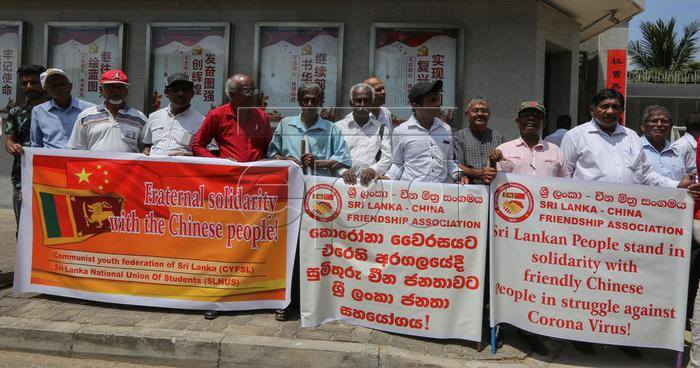
(The picture above shows members of the Sri Lanka China Society demonstrating in Colombo in support of China’scampaign against coronavirus)
Last week, three notable incidents took place back to back. Though not related, these three incidents in its own way hold relevance to each other. The first incident was the Frontline Socialist Party (FSP) taking to streets to protest over the death of a man half way across the world. The day after, families of the 774 policemen and officers who were massacred by the LTTE commemorated their 30th death anniversary. The following day, Pasindu Hirushan returned home after 98 days in hospital partially recovered from the skull and brain injuries sustained when a ‘ragging’ party goes horribly wrong – yet again.
First Incident – FSP protest
The fact that the FSP’s protests come two weeks after the incident occurred indicates that this was a carefully planned event rather than one that erupted on the heat of emotion. They did not protest at the Protesters’ Park”, adjacent to the Presidential Secretariat, but along the busy roads in front of the US Embassy. The Police asked them to disperse. They refused and this quickly turned into a heated argument. Finally, the Police literally bundled and carted them off to Courts.
The Police action was condemned by almost all quarters, including from within the Government. Namal Rajapaksa tweeted that violent acts” should not be allowed to destroy the services rendered by the Police to the Nation. This reaction by the public needs a closer look.
In the past few years, the Police did not meet protesters without donning their riot gear first and protesters were aggressively prevented from entering the Fort. A monstrosity of a riot Police truck was a menacing semi-permanent presence in Fort, parked there even when a protest was not in progress. Without much aggression from protesters, water cannons and tear gas canisters were used along with the baton. Pictures of protesters and the Police grappling with each other, blood drenched protesters and barricades were common images that filled the evening news.
Perhaps the worst incident that happened was when the disabled war veterans, including retired Policemen, were violently repulsed. In a truly tragic turn of events, one tear gas canister damaged the eye of a soldier whose other eye was already impaired due to injuries sustained during the war. It was absolutely heart rending when the water pressure detached artificial limbs from its wearers.
There was one incident that day that disclosed the outlook of the riot Police. Shortly before unleashing the water cannon, a Policeman rushed over to the protesters’ side and removed a severely disabled veteran out of the way. This incident highlighted that the Police are often simply following orders from their political masters. Obviously, the violent measures taken against the disabled veterans were deeply troubling to these Policemen. However, as a disciplined force committed to upholding law and order, the Police must do as the legit arm directs them.
2nd Incident – Police Massacre memorial
The day after the fracas with the FSP, the families of 774 Policemen who were massacred by the LTTE in 1990 held a commemoration for their loved ones. This 11 June marks 30 years since the then incumbent Government headed by President Ranasinghe Premadasa ordered the Police of the Eastern Province to surrender to the LTTE. Of the 774 Policemen who surrendered, 324 were Sinhala and Muslims, the others were Tamils.
The Police complied, but they warned the top brass that the terrorists would torture and kill them. The assertions of ASP Ivan Boteju will reverberate through the annals of history. As the OIC of the Kalmunai Police station he was extremely conscientious of the lives of his men he was holding in his hands. Boteju and his men retaliated fighting against the LTTE for three hours causing heavy losses to the enemy whilst repeatedly requesting for air and artillery support.
To the slaughter
The Government denied Boteju and his men that support. Instead, the IGP contacted ASP Boteju and personally ordered him to surrender despite the Police station holding enough arms and ammunition to fight for two more days. As a disciplined officer, ASP Boteju was unable to ignore the direct order.
Exactly as the Government was warned, the LTTE took these officers and men to the Vinayagapuram and Trincomalee jungles, where they were blindfolded, restrained by tying their hands to the back, forced to prostrate on the ground and shot. The imprudence of that Government is that along with their security advisors they patiently waited for the terrorists to grant a safe passage out of the Province to the surrendered Police.
Discrediting country and Police
It is unfortunate that those who were quick to condemn the Police action over the recent protests failed to salute these men and officers who senselessly lost their lives in such a brutal fashion because of the callousness of a Government thirty years ago. Their grieving families and the Police were alone at the 30th death anniversary commemoration. Some of the Policemen were no more than 20-21 years of age when they were killed that day.
The 30th death anniversary of this massacres and the recent condemnation of the Police over the handling of the protesters is significant. It is not so just because the two incidents took place with just a day apart of one another. It is because nefarious elements are at work again to destabilise the country and the Police are once again being tagged. There is a concentrated effort to discredit the Police. This exercise did not start with the FSP protests, but their efforts gained some traction only after these protests. The FSP’s motive for the protests is the key to understand this project.
Did FSP protest the 21 April massacre?
Their protest was for the death of a man in America, two weeks after the incident. The fact that there was also an officer with Asian roots, who stood resolutely with his back to the manslaughter, has raised the question whether this Police brutality is based on racism or bad Police training. Either way, the need for Police reforms cannot be denied. The big question is ‘why is US Police brutality that relevant for us to take to the streets?’ Last year, nearly 300 were killed in the Easter Sunday massacres due to Police and political failures. Yet no one protested.
Failure, however, is not the same as brutality. Therefore, the anchor of this protest was about Police brutality. This objective is not to be confused with commiserating or seeking justice for the dead man. If FSP is so bothered about George Floyd’s death, then before asking the US to reform and respect life, they must reform their political associations in the universities.
3rd Incident – Pasindu returns home
Bullying in universities is a serious issue in Sri Lanka. Freshmen, especially in the Arts faculty, are often subjected to some of the most gross and depraved acts of bullying. The first such victim was recorded in 1975. To escape sexual assault, a 22- year-old undergraduate jumped out of the second floor of a building and was permanently paralysed. She committed suicide in 2002.
The latest victim of ragging was Pasindu. He was hit by a tractor tyre that was thrown at him from a height. He lost his balance and crash landed on his head, sustaining severe skull and brain injuries. Once an active sportsman and brilliant student, he is now unable to stand on his own, speak coherently and even write.
Did FSP protest the Pasindu ragging?
Yet, no one has protested, demanded justice or reforms for Pasindu or any of the other victims. In this context, for FSP to protest over Floyd indicates a different agenda. This was revealed by the press conference called by the Inter University Students’ Federation (IUSF) Convener Lahiru Weerasekara.
He outlines that in the coming weeks, the people will begin to feel the effects of COVID-19 owing to the contracted economy. He predicts that people will lose their jobs and face many social issues. Almost salivating at the prospect of people suffering, he promises that the socialist group would defy the law and take to the streets. It is clear from this statement that they are planning to clash more with the Police. They will defy the Police into provocation and any such will be blown out of proportion as Police brutality. Thus, the FSP’s protest was not for George Floyd, but to capitalise on his death to establish the Police as a brutal force. Once the Police is thus discredited, more mayhem can follow. This is their plan of action to gain political ground. Sri Lanka better be aware.
The government will introduce new legislation to curb ‘the leasing mafia’ or the unlawful activities of the disorganised financial market, a minister said.
Cabinet Spokesman Minister Bandula Gunawardane told Daily Mirror that around 800 – 1,000 such financial institutions were in operation in the country.
The government has given mind to introduce fresh legislation after the murder of President of the Self Employed Three Wheeler Association Sunil Jayawardane by a group of individuals attached to a leasing company.
Mr. Jayawardane was assaulted to death when he visited a leasing company in the Mirihana area to inquire about a vehicle seized from a member of his association.
The Minister said the employment of persons with muscle power to seize vehicles and properties from defaulters of payment was unlawful.
We have to amend the existing laws or introduce new ones to curb such strong-arm tactics in the disorganised financial market,” he said.
According to the epidemiology unit 5 covid-19 patients have been reported so far today increasing the total number of confirmed cases in the island to 1889.
According to the government information department all new cases are members of the navy.
35 individuals were discharged today increasing the total number of recovered to 1287.
Accordingly 591 patients remain under medical treatment.
Meanwhile the public health inspector’s association warns that the public is not following laid down health procedures such as social distancing and wearing facemasks, and this could result in an increased spread of covid-19.
Former Parliamentarian Mangala Samaraweera who recently withdrew his candidature from the Samagi Jana Balavegaya has met former President Chandrika Bandaranaike Kumaratunga .
New Zealand has issued a
new travel advice on 8 June at 11.59 pm, moving to Alert Level 1, with
the advice Do not travel overseas at this time. Transport and transit options
to return to New Zealand have reduced significantly. Even booked flights may be
cancelled.”
The
New Zealand Prime Minister Jacinda Ardern declared her country as the
first Covid 19 free nation. This appears to be based on
intentionally and technically manipulated statistics.
There
were appeals from NZ work visit holders, ( who are neither permanent residents
nor citizens, but may qualify for PR if they meet the threshold requirements
in future), who left temporarily before the outbreak of pandemic, due to
lack of employment opportunities in NZ. They have been remitting foreign
exchange earnings saved from their overseas income to NZ. They are
currently living overseas and lost jobs due to Covid 19 and facing the
risk of contacting the deadly virus. Therefore requests have been
made to make arrangements for them to return to NZ. The NZ
government did not allow any of them to come back to the country and sealed off
Air Ports due to fear of imported Covid 19”.
Had
NZ allowed those who work overseas in Italy, Brazil, NSW and Victoria to return
home, then NZ statistics would have changed dramatically.
In
comparison, Sri Lanka, much poorer nation, brought back thousands of its
workers back home for safety. Some of them were brought back from
countries worst affected by Covid 19. Hundreds of Sri Lankans stranded in
Australia and New Zealand were also brought back to Sri Lanka.
The
data shows, in Sri Lanka there are no new cases of Covid 19 outside the
declared number of patients, the existing stock numbers related to previously
identified Navy and new cases amongst Sri Lankan expatriates returned
to the island. Unlike Jacinda Arden, Sri Lanka has a
compassionate President and Prime Minister who looked after its citizens
anywhere in the world, when they are in trouble.This program to bring
back Sri Lankan in trouble waters are ongoing, regardless of its end results
on Covid 19 national statistics!
Now
lets see the statistical analysis between NZ and Sri Lanka.
1. Population:
NZ 4.9 million compared to Sri Lanka 22 million;
2. Land
area in square kms: NZ 268,000 vs. Sri Lanka 66,000.
3. Number
of persons per square kms: NZ 18 persons vs Sri Lanka 333 persons.
4. With
only 18 persons per square km, SOCIAL DISTANCING IN NEW ZEALAND is a
daily occurrence, even without Covid 19, compared with 333 persons
per square km, SOCIAL DISTANCING IN SRI LANKA is a tough job in
a densely dispersed country to be implemented. In fact NZ is
appropriately nick named as GHOST COUNTRY!
5. Total
Covid 19 cases in NZ was 1,184 with 22 DEATHS. Total Covid 19 cases in SL
are: 1,869 with 11 deaths;
6. Covid
19 total confirmed cases as a percentage of population in NZ 0.02%,
compares with SL 0.008%,
7. NZ
has an excellent FREE Healthcare System , with minor exceptions such as
cosmetic surgery;
8. NZ
is a sparsely populated country 18 persons per square km, with an
excellent Public Health System, yet it had 22 deaths, almost 2% of total Covid
19 cases, compared with 0.59% deaths in Sri Lanka.
We hope NZ Prime Minister will open the
country and allow its visa holders who work abroad to return to the
island.
The
statistics should not be manipulated to favour a political stunt, at the
expense of human lives.
Engr. Kanthar Balanathan DipEE (UK), GradCert(Rel-Eng-Monash), DipBus&Adm(Finance-Massey), CEng. MIEE (UK)Former Specialist Engineer, Power & Control, NRG-GPS Australia
If one wants
to know the true record of the problems & concerns in SriLanka (SL), then
that person should exercise patience and read the entire document. No point in
blabbering with a lack of understanding of SriLankan history and the issues
that prevailed in the country since 1948.
History
Since the
war on terror was concluded and the country achieved peace in 2009, Tamil
Diaspora was not exultant & ecstatic that there wasn’t any motive to show
as a reason to swindle funds from the Tamils, hence started a campaign on
Genocide, missing people, war crimes etc and opened up several diaspora
organisations collecting membership fees and donations. Who are these people?
Mostly doctors, business people, Accountants etc. Plus, maybe engineers who
warm up chairs in Councils.
One should
understand that before the war on terror was kicked off by the military, the
county was under the control of the terrorist and guerrilla warfare of the LTTE
(main) and several terrorist groups in the whole of SriLanka. The North was
under full control of the key terrorist LTTE. The North and the South was under
terror and people and the government was under horror and fear of bomb blasts,
guerrilla attacks, air bombing etc. The entire country was devastated and
business, development, etc was at standstill. The terrorist group LTTE
demolished a Cement factory which produced 265,000 tons of cement per year. Key
power line 132kV which supplied electricity to the North was blasted and
dismantled. Oil bunkers and the main airport at Katunayake in the capital was
bombed. Since all bombing and blasting cannot be accounted here in one page, in
concise form: – several key installations and political leaders were bombed,
blasted and killed. This includes the PM of the great country India, Rajiv Gandhi.
Another
horrific history is that several hundreds of thousands of peasants (Tamils) and
workers were marched from the North to Mullivaykal as a human shield in 1995. The
situation was like that of Kampuchea and Pol Pot. Most Tamils weakness is
that these peasants and workers do not understand the economic risks/volatility
and the development halt as a result of the terrorist’s act. Although medium
level literacy rate is moderately high among Tamils, the majority of the
population have a mindset of Tamil Eelam and Tamil power. Since 1972/76 the
country was at turmoil under the terror of LTTE and nothing could be done as a
result of practising Human rights, health & safety of people by the
Government of Sri Lanka (GOSL) and the military. Democracy was virtually
nullified.
Leonardo Di Vinci
Can any foreign
diplomat or a foreign political leader or a politician of a foreign country
justify these acts? These politicians: Just think of the past, Libya, Iraq,
Afghanistan, Yugoslavia, etc and the situation of these countries now. The
cultural practice and mindset of different races are totally different. My
different articles on history and politics of SriLanka can be read in my blog;
http://nrnmind.blogspot.com/.
Please visit and read Professor Rohan
Gunaratne’ s speech in my above blog; – A post-war challenge for Sri Lanka: Dismantling the LTTE overseas and
rebuilding a Sri Lankan identity by Dr Rohan Gunaratne
Now let us
come to visit the knowledge of Leonardo Da Vinci.
First of all,
we must understand Leonardo Da Vinci theory on problem analysis.
Leonardo was
born in 1452, apparently in a Tuscan village called Anchiano, not far from
Vinci, and died in France in 1519. He may be best known as an artist but he was
also an engineer, thinker and inventor.
The Genius in You – The Seven
Leonardo da Vinci Principles
An insatiable curiosity.
Testing knowledge through experience.
Continued refinement of the senses.
A willingness to embrace ambiguity.
Developing a balance between art and science.
Cultivating fitness and poise.
Don’t limit yourself to one field
of study.
Embrace curiosity and train your
mind to question everything.
Don’t just sit on these
questions; seek answers.
Learning happens over time.
Leonardo didn’t wake up one morning knowing the entire anatomy of the human
body. …
Quote: Perception is an
active mental act. It is a dynamic, a dialectical conflict between the
self-perspective transformation and external vectors of power bearing upon us.
That which we perceive is a balance between these antagonists”.
(Ref:Understanding Conflict and War: vol. 1: the
dynamic psychological field, chapter 11, by R.J. Rummel)
Humans perceive
different effects about the same state, as perceptions vary from person to
person. People assign different meaning to what they perceive. (Kanthar)
Although all human males are born with ≈1.5 kg
of the brain, not all perceive the same thing in the same perspective, the same
way.
Knowledge is
defined as information, proofs, aptitudes and proficiencies, acquired through
involvement and practise; i.e. an appreciation of the theoretical and practical
training, and understanding of a subject or job.
Therefore,
it is conspicuous that foreign politicians and diplomats do not make comments
and conduct interviews on the SriLankan issues, theoretical genocide and
theoretical missing persons etc.
Let us all
study the true story of events that happened for the 30 years that SL was under
the control of the terrorists LTTE.
Some years
before the USA Asst Secretaries and Indian foreign secretaries and some other
countries politicians
fly into SriLanka lie that of seagulls. (i) Some countries
have a mindset of establishing a base in SL to widen their empire, (ii)
Countries like India was always interested in SL to keep their power base
stable and to spy on SL, (iii) Countries like Norway, go knows as to why? Maye
if they want to help then can, but it is sure that Norway is a janissary of the
USA. What is the guarantee that Norway does do what the US wants?
Now China is interesting cos of
India’s influence. China has conquered most of the African countries by giving
aid and the poor idiots do not realise the consequences. In giving aid to the
countries by the African culture, it may be evident that China may have pumped
in millions of dollars bribery to the heads of these countries. Most of the
installations in Nigeria, Zimbabwe and other African countries are not
controlled by China. SriLanka received the aid of several million to construct
a port in Hambantota. Today the port has been leased to China for several
years. This is the trick of the diplomacy of China which the damn Sri Lankans
did not understand. Did they not have the preception or were they, idiots.
Another Tamil went to steel 20 billion RS from the Central Bank, who was
nothing other than the governer then Arjun Mahendran who has changed his name
now. These are worse than theoretical genocide, forcing the country to
bankruptcy. Why not these damn
foreign politicians and diplomats talk about the practical forcing of SL to
bankruptcy.
The Tamil
Diaspora (TD) is now in full gear, maybe assisted by some countries or
intelligence orgs to proceed with their attack on SL.
It is a pity
that every year TD gets a mental effect as if the moon has come closer and the
gravitational force influence on the brain of humans to cause a psychiatric
disorder. 18th May, 25th July, 27th Nov,
Sivakumarans death (suicide) etc.
It is an
opinion that if a person attempts to commit suicide, then that person may be
suffering from a psychiatric disorder. judiciary Service Commission shall not
intake such candidates into their service.
Several
terrorist cadres were sent through rehabilitation centres in SL and SL shall be
careful not to appoint such people to sit in judgement or services, like that
in a Court.
Australia
There were
some organisations in Australia and several Tamil radio stations broadcasting
racial slogans among the SL people. It is to be remembered that SriLanka
consists of majority Sinhalese, then Tamils, Burghers and Muslims. SriLankan
diaspora in Australia also consists of majority Sinhalese, Tamils, Burghers,
& Muslims. Some political party members focus on Tamil diaspora
organisation and support in spraying racial differentials among the SL
populace. All Sri Lankan have come here to live not to victimise GOSL and
liquidate the government and make them poppers. What do these organisations
gain from what they broadcast and get politicians to speak in public? In
Canada, the country is in the brink of demand from Tamils for a separate state.
Canadian Tamils somehow force Tamils to enter parliament and organise to get
what they want. The writer knows cos he can understand Tamil. Canada
should get their RCMP members to learn Tamil to spy on these terror groups.
The Mayor of
Toronto (John Tory) is quite versatile in that he is only focusing to develop
Toronto and give people what they need. However, Some members in Australia are
proud to support Tamil Diaspora and talk on TVs.
Tamils are
shrewd in that they are now dragging in Aboriginal issue which is long gone and
all aboriginal people are living happily apart for a few illiterates who
misbehave.
Quote from
Tamil TV:
1000’s
of Abusive Emails, Threatening Violence against my family, Sexual Violence
against my wife… these sums up exactly the type of people which we must stand
against. – Hugh McDermott in an exclusive interview with
For an
MP in Australia, he could easily get the police to track down the culprit who
threatened violence. Strangely, this MP could not. Some MPs play partisan
politics for votes.
Let the
foreign politicians and diplomats not play partisan politics for votes as they
seem to nullify the effect of democratic principles.
The photos depict the 300,000 civilians taken to
safety by the army.
Submarines manufactured by LTTE. Who made these?
32 feet canon buried in ground by the LTTE.
Foreign military advising the SL military.
Australia is a
country where we all live and work hard to survive, it is considered that when
politicians play on cheap partisan politics supporting only one side of the
ethnic race, it is unfair, and maybe human rights violation.
Why not talk to the SriLankan High Commissioner in Canberra, and the SPUR-
Sydney & Victoria to study the real truth of the situation. It may be that
the practice of democracy can lead to partisan politics, I do not know.
At this
situation of the Corona Virus pandemic period; firstly, Tamils should not have
gathered for Mullivaykal remembrance, but stayed at home and remembered.
Secondly, Dr Hugh McDermott, you could have
avoided a speech in FB about the false pretence of Genocide” as it would have
hurt thousands of SriLankan Australians. It is to comprehend that you in the
labour party may be attempting to drive a wedge between the two races in
SriLanka, Australia and the world.
It is a polite request that kindly politicians could avoid practising
partisan politics and let democracy take its progression.
The New York Times has admitted that the allegations of election fraud that led to Evo Morales’ ousting from the Bolivian presidency were “flawed.” These allegations caused Morales’ exile from the country in what critics say was tantamount to a Washington-backed coup. RT America’s John Huddy reports.
Then RT producer and Latin America expert Dr. Enrique Rivera joins Rick Sanchez to share his insights. RT’s Charlotte Dubenskij reports on the movement in Paris to remove statues and renaming streets associated with France’s colonialist and slave-trading past.
US Army General Mark Milley, chairman of the Joint Chiefs of Staff, has apologized for allowing his photograph to be taken with President Trump after the controversial clearing of protesters near St. John’s Church near the White House last week. RT America’s Faran Fronczak reports. Then “Watching the Hawks” co-host Ameshia Cross and conservative author Ed Martin join Rick Sanchez to discuss.
The Trump administration has painted Chinese telecom giant Huawei as a threat to US national security. But modern wireless technology may be too reliant on Huawei patents for the US tech sector to survive without continued business with Huawei. RT America’s Alex Mihailovich reports.