What we do to animals ruthlessly and brutally the
Coronavirus is doing likewise to humans, generating so much fear, alarm and
anxiety. Do humans deserve pity, when we have no pity for innocent animals, who
are eternal victims of our cruelty and inhumanity?
The public should not let their guard down because of a decrease in the detection of COVID-19 patients, Dr. Haritha Aluthge of the Government Medical Officers Association (GMOA), warned yesterday.
Dr. Aluthge told The Island that though the official count of COVID-19 patients was 101, the actual number of infected people might be about 500. The GMOA feared that many people were not able to maintain an appropriate distance when they went out to buy goods, after the curfew was lifted, and that could have led to more infections. It is possible that the number will spike, by around April 08. About 19 000 people had come into physical contact with COVID-19 patients, currently in hospital, and these people are being monitored by authorities. If the people follow instructions properly, we can expect a positive outcome within two weeks.”
The Government Medical Officers’ Association (GMOA) today said that based on the experience from Hubei, China, It can be technically assumed that at present, 550 infected individuals are circulating within the population.”
Issuing a situational report, they said 101 cases were confirmed by today (25) while 32 of them were among those who arrived from abroad and sent to quarantine directly and 69 from the community.
The GMOA said an estimated 550 possible patients would have had a total of 19, 000 contacts. Nineteen Thousand of our population may have been exposed to this disease condition, and they are now under the observation of Medical, Military and Administrative structures,” the report said.
If movements freely take place, without social distancing, one individual can infect 500 others within 30 days. Within 50 per cent social distancing, one individual can infect 15 others. By 70 per cent social distancing, the ability to infect others is 2.5 per one infected person within 30 days, the situation report added.
The report added: Considering Western nations that have been unsuccessful in carrying out social distancing, it can be assumed that between the period of 25.03.2020 and 07.04. 2020, if social distancing is not carried out, the numbers will face a rapid increase. Thus if the citizens of Sri Lanka follow through with the health advice that is given, we can assume that there will be a favorable outcome in the subsequent two weeks.”(Chaturanga Samarawickrama)
As the number of confirmed coronavirus cases reaches more than 82,000, including nearly 1,200 deaths, the US now has more cases than any other country.
The latest global health data collected by Johns Hopkins University shows the US eclipsing hard-hit countries Italy and China as the nation struggles with a consistent response after delayed efforts to take the mounting Covid-19 crisis seriously.
On Thursday, Margaret Harris with the World Health Organization warned that the US was likely to become the world’s viral epicentre as the number of cases escalated in several states, including New York, which spiked to more than 33,000 cases.
As per the powers vested in the President under the Constitution, the responsibility to ensure that the civilian life moves on without any hindrance has been bestowed with the Presidential Task Force established to combat COVID–19 in Sri Lanka.
Special Representative of the President Basil Rajapaksa has been appointed as the Chairman of the Task Force while Additional Secretary to Prime Minister Anton Perera serves as the Secretary.
The membership of the Task Force is 40 including Provincial Governors, several Secretaries to Ministries, Commanders of Tri-Forces, security chiefs including Acting Inspector General of Police, Chairmen of several Departments, Corporations and Authorities and District and Divisional Secretaries.
The President had declared powers and functions of the Task Force through a special gazette notification, stated President’s Media Division.
The Task Force should carry out its responsibilities covering every district in the country while giving priority to districts of Colombo, Kalutara, Gampaha, Puttalam, Jaffna, Mannar, Kilinochchi, Vavuniya and Mullaitivu which have been identified as facing a greater risk.
Provision of required facilities to farmers for the production of rice, grams, vegetables, fish, dairy and egg and crops including tea, cinnamon, and pepper is one of the main tasks. The Task Force should maintain a proper coordination mechanism with Ports, Customs, corporate banking sector, and other State regulatory entities to create a conducive environment to import essential dry food items and medicine and to export goods such as tea and sanitary apparel and implement decisions.
The Task Force will ensure supply food items purchased from producers directly to the consumers while presenting operational reports to the President.
All Government Officers and other relevant persons who may be requested to extend assistance to deliver services shall comply with the instructions in respect of such tasks. The President has instructed government officials and others through circulars that they should provide all necessary assistance and information. The Task Force is also required to report to the President regarding all incidents related to delays or omissions in the discharge of duties and responsibilities by an assigned officer.
Some of the other tasks assigned to the Task Force are,
Directing and providing facilities to the Department of Agriculture and to the Department of Agrarian Services to provide seeds, plants, fertilizer and equipment required for farming activities.
Encourage seed farming, use of organic fertilizers and home gardening as well as to grant loans to farmers through Bank of Ceylon, People’s Bank, Regional Development Banks, and Samurdhi Bank branches.
Particular attention should be given to women, low-income families and vulnerable persons in carrying out the related tasks.
The distribution of rice, vegetables, and products to the people of all districts should be streamlined to strengthen the farmer and the local economy. Organizing of Co-operatives, Sathosa, Economic Centers, Cargills, Keells, Arpico, and Laugfs business networks.
Helping farmers for farming and plantation activities the Task Force is empowered to continually sustain the process that required for maintaining the day-to-day life of the community, including the distribution of medicines and the opening of commercial banks.
President Trump has admitted that New York City is “by far our biggest problem” – the city is now the epicentre of the outbreak in the US.
New York State alone has accounted for more than 30,000 cases and close to 300 deaths, most of them in New York City.
Meant to prevent crowding in markets. Delivery will take place even during curfew
Colombo, March 25 (newsin.asia): In order to prevent uncontrolled gathering of people at market places amidst effort to combat COVID – 19, a special mechanism has been established by the govenment of Sri Lanka to deliver essential food items to homes.
This will be implemented through a local system in collaboration with Cooperative Societies and super market chains, Head of the Presidential Task on Continuous Supply, Operation and Coordination of Services that are essential to maintain the day to day life in the battle against COVID- 19, Basil Rajapaksa said.
The entire process should be in line with the corona control initiatives carried out by the health sector. It is imperative to maintain the day to day life of the public. Steps have been taken to distribute food items while protecting domestic farmers and the national economy.
Mr. Basil Rajapaksa made these observations during a meeting held today (25) at the Presidential Secretariat with all District Secretaries, Heads of banks and State and private entities tasked with the supply of essential food items.
There is no shortage of rice, coconut, vegetables, eggs and chicken. Mr. Rajapaksa pointed out the possibility of distributing these items through a combined effort between Cooperative outlets and super markets after purchasing from domestic farmers. These items can be packed according to the need. Assistance of the Center for Disaster Management will be obtained for this operation.
A decision was taken to deliver medicines to the homes of regular patients who have registered at hospitals with the support of Divisional Secretaries, Public Health Officers and the security forces.
It was also discussed to implement a system to distribute medicines thorough few locally selected pharmacies to patients who purchase medicines from private pharmacies.
Heads of the banks were also advised to take action to keep the commercial banks open to facilitate trade and other essential activities.
Mr. Basil Rajapaksa requested the authorities to implement a programme to supply domestic gas at consumer’s doorstep responding to the telephone orders.
The objective of the entire project is to prevent the public from gathering at market places so that the health sector’s efforts to combat the coronavirus could be a success.
Divisional Secretaries, Grama Seva Niladharis, Agricultural Research Officers and Samurdhi Development Officers will assist this distribution process. At present, several countries have completely stopped the import and export activities.
It was discussed at length about building a stable production economy in the country while paying greater attention to the prevailing situation.
It was decided to facilitate the cultivation and fisheries activities without any interruption.
The relevant officials were advised to encourage the farmers to cultivate vegetables as well as paddy, maize, ulundu, green gram, cowpea and kurakkan.
Ministers Chamal Rajapaksa, Bandula Gunawardena and Douglas Devananda, Secretary to the President, Dr. P.B. Jayasundara, Secretary to the Treasury, Mr. Attygalle and Secretary, Defence, Major General Kamal Gunaratne participated in this discussion.
Health Minister Pavithra Wanniarachchi says that as of 4.30 p.m. today (25), there have been no new Coronavirus positive patients reported in the country within the day.
The minister confirmed this at the National Operation Centre for Prevention of COVID-19 Outbreak.
Accordingly the total number of confirmed cases of Coronavirus in the country as of yesterday is 102, she further said.
he Department of Co-operative Development implemented the door-to-door dry rations sale program “Wait for Us, Stay at Home” in the Western Province today.
Under this program, bags containing dry rations worth Rs 500 and Rs 1000 were provided to the public for purchase.
A system has also been introduced to deliver a bag of goods as requested by a telephone call, the Government Information Department said.
Plans have been made to further strengthen the program through Divisional Secretaries and Grama Niladhari, the release said.
The President’s Media Division has announced the updated scheduled with the times for the lifting and re-imposition of the curfew currently in effect across the island.
The President’s Media Division has announced the updated scheduled with the times for the lifting and re-imposition of the curfew currently in effect across the island.
The on-going island-wide curfew will be lifted and re-imposed as follows:
1. The curfew currently in force in Colombo, Gampaha and Kalutara districts will continue until further notice.
2. The curfew currently in force in Puttalam, Vavuniya, Mannar, Kilinochchi, Mullaitivu and Jaffna districts will be lifted at 6.00 a.m. on Friday 27th March and will be re-imposed at 12 noon on the same day.
3. The curfew currently in force in other districts will be lifted at 6.00 a.m. on Thursday 26th (tomorrow) and will be re-imposed at 12 noon on the same day.
Movement from one district to another has been completely banned. Furthermore, taking foreign tourists from place to place is completely prohibited.
People who engaged in agricultural activities and people engaged in small-scale tea production as well as export crops are allowed to carry out their usual activities in any district during the curfew hours.
Transportation of media personnel and essential items including rice and vegetable is also permitted.
Airports and Ports services will also continue.
The subject Minister in charge of Agriculture and Trade should effectively coordinate these activities, the Government has directed.
The President’s Media Division (PMD) stated the following with regard to the enforcement of curfew and the times that curfew will be relaxed.
The Curfew currently enforced in Colombo, Gampaha and Kalutara districts will continue until further notice.
The existing curfew in Puttalam, Vavuniya, Mannar, Kilinochchi, Mullaitivu and Jaffna districts will be lifted at 6.00 am on Friday, 27 March and will be reinforced at 12 noon on the same day.
The curfew currently in force in all other districts will be lifted tomorrow, Thursday 26th at 6.00 am and will be reinforced at 12 noon on the same day.
Inter District travel – from one district to another has been completely banned.
Meanwhile, the President’s Media Division announced that taking foreigners from place to place will be strictly prohibited during this period.
PMD also stated that people from any district who are engaged in agricultural activities, tea small holders engaged in production as well as those who are engaged in export crops are allowed to carry out their relevant activities during the curfew period.
Transportation for media personnel and essential commodities including rice and vegetable will also be permitted during the curfew period.
Approval has been provided to maintain the Airport services for passengers and to continue port services.<br /><br />The notice has directed the subject Minister in charge of Agriculture and Trade to effectively coordinate these activities,
It
is reported that the world economy has commenced to unexpected backward as a result
of the corona outbreak and many leaders have commented that this experience
could be regarded as the main incident after a century of economic
history. The major impact would be
unemployment and lower-income for families. It will impact the aggregate demand
in all countries and the significant consequence will be declining the
purchasing power of people forcing to restrict spending. It also encourages us
to assume that the prices of certain goods and services might get a down turning
trend as the demand for goods and services might reduce due to less money in
hand. In this situation, the economic impact on companies is vital because it
will reduce government tax revenue (combined impact of lower profit and
unemployment) thereby reducing the capacity of governments to spending on
welfare and investments.
Many
developed countries have introduced incentive packages for individuals and
businesses. Many countries in the world concern about the impact on small
businesses as a result of social distancing which brings into being bad effects
on the fashion industry, hospitality, tourism, and many other related business
areas. Some analysts indicate that
incentive packages are not working as expected and others indicated that
incentives are not enough to revive the economy. Many countries have problems
with how to give incentives continuously when tax revenue has a down turning
trend and the only way to governments borrowing for the purpose and it may
adversely impact the medium term to many countries. Some countries have limits to borrow. Australia originally introduced A$ 17.0
billion package and later it has increased to $ 100 billion and economists have
predicted that unemployment would rise to 7% at the end of this year, which is
a similar situation in 2008. Although developed nations introduced large
incentives (USA $ 1.7 trillion) Sri Lanka has no capacity for such a $ billion
incentives and the country has limits to borrow. However, the presidential task
force has introduced maximum possible reliefs and incentives and controls.
After
the cold war, many developed countries shifted from manufacturing base to
services and manufacturing industries were absorbed by China and other Asian
countries. Corona epidemic badly hit the Chinese economy for a strong slowdown
and restricted growth possibilities and it will be a blow to developed and
developing countries. Since the early
1990s, Sri Lanka’s economy also attracted service businesses especially tourism
and hospitality, education and training, information technology, construction
services, medical and dental services, fashion and many other services and they
became areas of employment for the labor force.
Besides, employment overseas also played a considerable contribution to
the country, but the corona crisis seems to limit foreign employment
opportunities in short and medium terms. Many need to change the field of
employment departing from the currently engage in, for example, I had to change
my career field from banking and finance to education and training after a deep
recession in the early 1990s and similar experience would become of the end of
the current crisis.
According
to Reuter report Mr. Chen Ulu, Deputy Governor of Peoples’ Bank of China stated
that strengthening international cooperation regarding public health policies,
trade policies, fiscal and monetary policies are vital policy actions to face
international economic backwardness and Sri Lanka is not immune to this
situation and it must go along with international cooperation and policy
actions.
It
is recorded that more than one million population of Sri Lanka are living exile
and they send $ billions to the country supporting foreign exchange earnings
and the government of Sri Lanka should have multiple strategies to expand
foreign exchange reserves. The Current
backward economic environment needs rational thinking intending to maintaining
a reasonable level of stability and providing employment opportunities for
increasing the labor force. I believe that economic policymakers need to
consider the following areas of rational actions despite politically motivating
opposition to some rational policy actions.
Policy correction process
must be continued directing lower spending for public enterprises and allowing
private investments of Sri Lankan citizens without selling government assets to
foreigners are, vital actions to strengthen the economy of Sri Lanka. The country needs to maintain a safety net
for the poor and some areas of spending must be limited widely using a user-pay
system. Many Sri Lankans living in the
country and overseas can contribute to capital management of public enterprises
and 30% of capital contribution from Sri Lankan will be supported to innovations,
effective and efficient management, research and development and expanding
market base of public enterprises.
Implementation of
productivity enhancement program in the public and private sectors. The
attitude of people is normally negative and selfish. They like to get payments without contributing
to the workplace. They like more
holidays and enjoyment. Many people
ready to work hard when they go to work overseas but they are not ready to work
similar way in the country. This
situation needs to change and productivity must be the base of payment.
Sri Lanka needs
improvement in savings. There is a
considerable gap between savings and investment. The current price level and inflation don’t
permit to massively promote individuals from the salary and wages so
superannuation systems should be the strong method of saving. The superannuation management should be
independent of the Central Bank, which is the regulatory authority of the
financial system of the country. The
best option is to establish a sperate organization to manage super funds in the
country combining the government pension, individual pension funds, EPF, ETF,
and others. This organization can
provide at least 10000 employment opportunities.
Sri Lanka imports much
agricultural produce such as rice, onion and many others. All these
agricultural imports must stop and promoting import substitutions-all possible
items should produce domestically. In
this way, Sri Lanka can save a large volume of foreign exchange.
It is recorded that the
monetary unit of the country is badly depreciating and this situation has been
influenced by several factors such as lower level of foreign reserves, lower
level of product and services export, budget deficit, debt services, and many
other factors. To improve the export economy Sri Lanka needs assistance from
China and India. China can help to
improve product quality and there are many strategies such as exporting Sri
Lanka products through China and India.
In China and India, many products could be improved and such policy
action would help to become a nation with export power and strong export
revenue flow.
Sri Lanka needs to
consider and investigate possibilities of currency swap agreement with China
and India for the US $ 50 billion which keeps as foreign reserves to settle
agreements from exports to both countries.
This quite difficult negotiation and foreign policy-related
matters. Sri Lanka needs supports from
China and India both and such diplomatic stewardship would be useful to the
entire Asian region. Taiwan is equivalent to Sri Lanka in population and land
area but it has more than the US $ 500 billion foreign reserves. If Sri Lanka can build theUS $ 50 billion
reserves within the next five years, there is no doubt that the foreign value
of Sri Lanka Rupee radically increases and many international trade advantages
could be gained.
Sri Lanka needs to
maintain market economic policies with strong disciplines. I will generate more
jobs and income to disadvantage people. This will support to reduce welfare
payments and eliminate disparities in economic status.
As Sri Lanka is a small
island it is easy to maintain a balanced growth, however, during the past 40
years, economic growth networked to Colombo and many skilled people pushed to
go overseas for working than using knowledge and skills of them for the use of
the country. The government spending on
education and training is gained by other countries giving small jobs and this
situation could be changed by giving good value to Sri Lanka Rupee. Before 1970, Sri Lanka’s monetary unit was
comparatively strong and very fewer people looked for job opportunities in
overseas and now all skilled people look jobs overseas. This could change by improving the value of
Sri Lanka rupee.
Sri
Lanka is the only country in the world that was visited by the Buddha on three different occasions. During
these visits, the Buddha set foot on 16 different places within the country
which are still venerated as sacred sites (for details see Deepawamsa written
in the 3-4th century CE).
Sri
Lanka and Thailand are the countries with the largest collection of relics of the Buddha. The most venerated among
these relics are The Tooth relic, the right collar bone and the Alms Bowl of
the Buddha are enshrined in Sri Lanka. All stupas found across the island
contain relics of the Buddha.
Sri
Lanka’s Sangha Sasana or the
organization of the ordained Buddhist community is the world’s oldest institution,
which is unique in being still active and operational in Sri Lanka for over
2250 years.
The Sangha Sasana has
survived in Sri Lanka for a continuous period that is longer than all dynasties
of Chinese emperors, and much longer than the Roman and British Empires. It is
noteworthy that it has survived without armies and weapons, but merely through
the power of virtue and wisdom.
The oldest recorded
tree in
the world, the Sri Maha Bodhi, is in Sri Lanka. It is the southern branch from the historical Sri Maha Bodhi at Buddha Gaya in India under which Gotama Buddha attained Enlightenment. It was planted in 288 BCE and is
the oldest living human-planted tree in the world with a known planting
date. It is respected by Buddhists all over the world.
World’s oldest Buddhist, architecture, sculpture, monuments, dagabas, shrines and monasteries are found in Sri
Lanka.
World’s
oldest Buddhist paintings, literature including poetry are found in Sri Lanka.
Remains
of world’s oldest royal palaces and landscaped gardens are found in Sigiriya, Sri
Lanka.
There
is widespread evidence that Sri Lanka’s ancient Sinhala Buddhist builders and planners were quite familiar with the
principles of building construction or structural engineering, and some of
their structures have lasted for over 1600 years.
The Lovamahapaya (Brazen Palace) was the world’s oldest skyscraper, 145 feet
high with nine stories and the building was about 400 feet in length. It took six years for the construction and accommodated about 1000 monks. Ruins of this
building are found in Anuradhapura.
The largest known brick structures of the
world are the ancient Buddhist stupas or dagabas of Sri Lanka, prominent among
them being Jetavanaramaya, Abayagiriya, Ruvanweliseya, and
Tissamaharamaya. The Jetavanarama
Stupa is about 400 feet high and is the largest brick structure in the
world.
The high degree of sophistication in
engineering technology and skills in
surveying are well reflected in Sri Lanka’s ancient Buddhist structures
and monuments. These skills were transferred to Buddhist architecture,
sculpture, and other works of art. Brickmaking,
plasters for reinforcing bricks and rocks used in buildings and making of huge
statues, both indoor and outdoor, are of special significance.
Engineering
technology of the ancient irrigation system of the island is of special
significance. The vast man-made reservoirs and irrigation
systems that were developed by the nation’s Buddhist royalty in the past, which
even today defy engineering interpretation. The earthen and stone
dams and reservoir systems, the canal network and related water control and
management structures and techniques display the skills of ancient Sinhala
people. The canal system is characterized by minimum siltation. The Jayaganga
is 54 miles long and its first 17 miles gradient is ONE inch per mile. Our
ancient irrigation engineers, more than 2100 years ago, were the first
inventors of both, the hydraulic surge chamber and the valve tower and to
incorporate both principles in the same structure called the
“bisokotuva”
Sustainable agriculture based on
irrigation technology operational even today, some reservoirs being more than
2000 years old. Adoption of
environmentally friendly and compatible Water and Watershed management systems
where the protection of forest land, soil and water resources were given
high priority, thereby promoting
environmental protection and biodiversity.
The brilliant surveying tradition of the ancient
Sinhala people is well reflected in the laying of the island’s sophisticated
irrigation system and related agricultural land management system. A sound
understanding of the topography, geology and structure of the land was
necessary to plan and implement such sustainable water conservation and
transfer systems and to identify where reservoirs to be located and associated
irrigated lands to be developed.
Mathematics and
Astronomy
were highly developed in ancient Sri Lanka. The ‘Sandesha kavya’ (poetry)
written in the 15th century refer to the teaching of Mathematics in
Sri Lanka. Geometry would have been a highly developed science in the past,
because all the massive and complex structures designed and built in the past
had to utilize principles of geometry.
The sophistication of ancient City Planning is well evident in
ancient cities of Anuradhapura, Sigiriya and Polonnaruwa in particular. It
includes an amazing system of well laid out buildings and road network bridges,
parks etc. Sigiriya had a system of underground canals.
A wealth of information on the country’s past scientific
and technological history lies hidden in the numerous ancient ‘ola’ palm-leaf manuscripts stored in Buddhist shrines
across the country, and in the National Archives and Museums.
Special types of plasters were developed and
used on rock and on brick wall surfaces to effect paintings, ensuring their
durability. Some paintings found on such
ancient plasters are 1500 to over 2000 years old. Notably, the Hindagala, rock
surface paintings are over 2000 years old, and those of Sigiriya are more than
1500 years. Pigments used in paintings are based on natural products and are
used on varied surfaces – walls, ceilings, statues, wooden, cloth, earthenware.
Ancient Chinese reports refer to Sinhala ships”. The
biggest ships that called at Chinese Ports during 4th-5th
centuries were from Sri Lanka. This is evidence of the marine engineering
skills of the ancient Sinhala people. Sinhala ships crossed the ocean to Java – as
Indonesia was known at that time. The present Indonesia, Malaysia, Philippines
and Maldives islands, and a good part of India were predominantly Buddhist in
ancient times, and there were close interactions and travel between these
countries. Sri Lanka was the ideal stop-over of the Ancient Sea farers sailing
in the Indian Ocean to East Asia and Pacific. The ancient port of Mantota is
reputed to have been an important port of call between China and Rome.
There was remarkable achievement in metal work industry – there were iron
implements during the 4th and 5 century BCE. The Tara statue and the
Avaloketheesvara statue of Sri Lanka exhibited in several European, British,
and American museums are considered among the best metal works of the past –
outstanding aesthetically.
Sri Lanka’s traditional pottery, ivory works,
brass works, lacquer work have a long history of development in the island and are
popular household items even at present.
Medical Science –
Ayurveda
was highly developed in Sri Lanka in the past. King Buddhadasa was a famous Ayurveda physician. Many books on
diverse aspects and issues pertaining to medical science and health were
written in Sri Lanka, in Sinhala, Sanskrit and Pali languages. Among books
compiled by King Buddhadasa on medicine is the famous Saarartha
Sangrahaya”.
Sri Lanka is the first country in the world to
have established a dedicated hospital in Mihintale, in the 3rd century BCE. There
were several other hospitals built in other ancient cities. The ruins of the
hospitals in Mihintale and Polonnaruwa are still well evident. Several surgical
instruments were discovered in the ancient Polonnaruwa hospital premises.
There were great physicians and surgeons in the
past including Veterinary surgeons and animal hospitals. There is reference to
elephants being treated for various health ailments. The world’s first recorded animal hospital was at Mihintale,
established by King Devanampiyatissa in the 3rd century BCE
The world’s first
recorded wildlife sanctuary was at Mihintale, established in the 3rd
century BCE, by the Sinhala Buddhist king Devanampiyatissa.
Popular traditional food ingredients of Sri
Lanka, especially the combination of spices popularly used in processing food namely
‘thunapaha’ including turmeric, ginger, garlic, curry leaf, cinnamon, coconut
milk are among the recommended healthy nutritional items of contemporary times
across the world.
Sinhala language and literature originated in Sri
Lanka. From historical times, the
Sinhala language has been the defining element of the nation’s culture. Sinhala
is one of the world’s oldest living languages. There have been a
wide range of languages in the world, particularly in Asia which lived and died
without leaving evidence of their existence, because they were never written
down. This is not the case with the Sinhala language.
The
Sinhala language grew out of Indo-Aryan dialects and exists only in Sri Lanka
and has its own distinguished literary tradition. Overwhelming majority of
people of Sri Lanka are distinguished by their language – Sinhala, which even today has a strong unifying effect in
our motherland helping to reinforce the solidarity of our people as a unique
cultural entity in the world. Almost all
place names of the country from historic times, are in the Sinhala language
– in the North, South, East, West and Central regions.
There is a rich
tradition of Sinhala Literature – prose , novels, poetry, lyrics, meaningful
names, Sinhala Songs, Sinhala Films and Sinhala jokes, Sinhala ‘baila’ songs.
Sinhala Dances, Sinhala Drama, Sinhala motifs, designs, decorations, costumes,
jewellery, sculpture, architecture,
handicrafts, clothing, food and drinks.
RECORED HISTORY OF
SRI LANKA
A good part of the long
history of the island, has been recorded in an unbroken continuous manner. This
written history goes back to over 2500 years and is described chronologically,
in detail, in the ancient chronicles namely, Deepavansa (3rd-4th
century CE), Mahavamsa (6th century CE), Chulavamsa, besides the
Rajavaliya, Pujavaliya, Dhatuvamsaya, Elu-Attanagaluvamsaya, Elu-Bodhivamsaya,
Maha Bodhivamsaya, Thupavamsaya,
Daladavamsaya and Viharavamsaya. This written
history is supported by archaeological evidence, and reports of foreign
travelers of ancient times. Among archaeological evidence substantiating
recorded historic information are rock inscriptions. The written history of Sri Lanka is regarded as the second-most remarkable
recorded history in existence of an ancient and cultured civilization. It is
second only to the records maintained by the Shang dynasty of Chinese emperors.
The historical chronicles narrate in detail the history of the country
since the arrival of Buddhism in 237 BCE or 3rd century BCE or about 2246 years
ago.
The accuracy of this
historical record of ancient Sri Lanka is generally accepted by means of other
numerous local and Indian edicts such as the
rock edicts of Indian Emperor Asoka and records of the Fa Hien the
Chinese pilgrim monk, Roman historian Pliny and several others who have already
been referred to. Also, by means of inscriptions, historical works, and
literary works as well as by way of ruins, renovated historical and Buddhist
monuments, ancient yet sophisticated irrigation networks, which extend the
lifeline to date.
HISTORIC MOTHERLAND OF THE
SINHALA PEOPLE
Compared to the other 196 countries
of the world, Sri Lanka, the motherland of the Sihala or Sinhala people, is
small, in terms of area (65,610 sq. km) and population (21 million). Sinhala is the ethnic group native to Sri
Lanka, forming the mainstream or the dominant
indigenous community of the island for more than 2500 years. In fact, Sri Lanka is the only
national sovereign motherland of the Sinhala people. Their culture, way of life
and their Sinhala language originated and developed in Sri Lanka. Sovereign
national rights of Sri Lanka rests with the Sinhala people who form the
original dominant community of this country.
The national
culture of Sri Lanka is the Sinhala Buddhist culture, where Buddhist norms
and principles and the Sinhala language form the foundations. With the arrival and spread of Buddhism in the island, there came an era
of unsurpassed attainments and achievements.The island’s civilization
achieved an individuality and identity that distinguished it from its
neighbors. Sri Lanka’s identity
is based on the Sinhala Buddhist culture and the Sinhala language which is the
defining element of Sinhala culture. Despite foreign invasions, threats and
various forms of challenges and atrocities, Buddhist culture has remained
intact in the island, unlike the case with many ancient cultures in most other
countries in the world. Throughout most
of its history, Sinhala kings and Buddhist institution of monks, played a major
role in the development and maintenance of Buddhist culture and institutions in
the island. The world recognition of the greatness of this unique
Sinhala Buddhist culture is reflected by the UNESCO designating ancient sites,
including the ancient royal capitals of the Sinhala people such – Anuradhapura,
Polonnaruwa, Mahanuwara (Kandy), Sigiriya and Dambulla as World Heritage Sites.
There is only one nation in this island of Sri Lanka or
Sinhale. A ‘Nation’ is a self-identifying group of people who share a common
history, a common language, a common culture and most importantly a homeland.
In other words, a nation is the most persistent alliance or organization of
three main social components -people-culture- territory. Culture can be defined
as the system of shared beliefs, values, customs, behaviors, and artifacts that
the members of society use to cope with their world and with one another, and
that are transmitted from generation to generation through learning. In a broader sense, a subculture is any group
within a larger complex culture who has interests that vary from those of the
mainstream culture. In a more specific sense, it is a group with a distinct
style and identity. Even though it is obvious that there are large number of
sub-cultures within any given national culture, People live and think in ways
that form finite patterns that can be mutually constructed through a constant
process of social interaction. The country’s predominant culture is Sinhala Buddhist.
Over the centuries, both Hindus and Buddhists have co-existed well despite
occasional politically motivated power struggles. One should not be confusing
the issue of citizens’ rights with that of a nation’s identity.
VICTORY OVER TAMIL TERRORISM
The historic victory over Tamil
terrorism, with the elimination on 16 May 2009, of Prabakaran, the ruthless terrorist leader, led
to a spontaneous elated reaction on the part of all patriotic citizens of Sri
Lanka. There was countrywide lighting of firecrackers and ringing of temple
bells, and roadside gatherings of people serving and sharing traditional
‘kiribath’ in jubilation of the victory over terrorism and the dawn of peace in
the country after nearly thirty years of terror. It was a spontaneous
expression of the overflowing thrill, ecstasy and gratitude of ordinary people
who were overwhelmed by this great victory over terrorism, a menace that
plagued Sri Lanka for some three decades. Roadside banners and posters
highlighted pictures of our gallant Army, Navy, Air Force, Civil Defence,
Police and STF personnel, especially of those heroic ones who sacrificed their
lives, fighting to save our nation from Tamil terrorists so that peace and
stability would be restored in the country. They were expressions of the
overflowing appreciation, joy and gratitude of our people towards the saviors
of the nation – our heroic sons and daughters of the nation’s military and
security forces.
Two weeks after the fall of
Prabakaran, on June 03 009, our Nation celebrated on a formal basis, in a
glorious manner, at the Galle Face grounds, our nation’s Victory over racist
Tamil Terrorism, the grandeur of which was perhaps never witnessed in our
land in its living memory. Here, then President of the country in his speech
said that … this great and glorious
victory was achieved because of the younger generation …. Young men and women
from the four corners of Sri Lanka joined the Security Forces to free their
Motherland. Some mothers and fathers gave their children to the Armed Forces
and the police. When the eldest child had already sacrificed his life for the
country, they gave more children to the Armed Forces. He said, if anyone were
to ask me what the secret of the victory is, I would extend my hands and show
our beloved people, who include these mothers, fathers, wives who gave their
closest and dearest for this battle. Our entire nation owes an immense debt of
gratitude to these mothers, fathers and wives. They sacrificed their children
and loved ones for the nation, to save the lives of others. In order to defeat
racist terrorism, the people of the country have a mature knowledge of the
threat before them. The fortune of a nation lies is such knowledge and
maturity…”
VIOLATION OF NATIONAL INTERESTS
Patriotic Sri Lankans will not
tolerate any person or community whilst living in this Sinhala Buddhist Nation
and considering it their home, deliberately misusing such privilege by scheming
and adopting violent and extreme actions or contributing to such actions
violating the sovereignty, dignity, and territorial integrity of the Sinhala
Nation. This includes the ridiculously false and unfounded claims made by Tamil
and Muslim leaders in pursuit of carving out ethnic or religious enclaves
within the Sinhala Nation, merely because some of them had lived in some
specific places in the country for extended periods of time. Persons with such
self-serving objectives and attitudes are traitors of the Nation and should be
tolerated under any circumstances. There is no place in the Hela Nation for
such traitors, double crossers, renegades, turncoats, collaborators of enemies,
criminals and terrorists, conspirators, connivers, schemers and emissaries,
spies, secret agents, undercover agents, and double agents of the enemies of
the Sinhala Nation. The nation’s patriotic forces, including Buddhist monks
who have from historic times been in the forefront in promoting and protecting
the Sinhala Buddhist culture of the island will not tolerate any disintegration
of the national sovereignty, the cultural integrity, and the long established
territorial integrity of the country.
Genuine and practicing
Buddhists of our country, or in general, those who strictly follow the Five
Precepts, should be more actively involved in politics either directly or
indirectly. Most of the ills of our nation’s political life could be attributed
to the absence or withdrawal of genuine Buddhists from the nation’s political
arena and the domain of the media where they could be quite influential in
bringing about necessary changes in public opinion of issues that are of
national importance. Genuine Buddhists have a duty by the nation, which is
founded on Buddhist principles, to be fully involved and participating in
organizations working for the welfare of the nation. This is particularly
relevant today because our nation is severely threatened at present by diverse
negative forces both local and foreign. It is the realistic Buddhist
perspective to public life and decision-making, that is most needed today,
especially in the country’s political domain. We need well educated, upright
and patriotic politicians and professionals with unselfish and mindful interest
in the welfare of the country to get to the forefront today.
The nation is fortunate to have
a leader with such qualities and foresight, in her popularly elected new
President of the country, but he needs an equally sound support base to bring about needed positive changes in public
life which at present is increasingly infected with dishonesty, crime, and
corruption. The impact and influence of patriotic and dedicated politicians and professionals can make a big
difference. They can help to generate a wholesome political culture,
characterized by Buddhist approaches and attitudes and a truly Buddhist
atmosphere conducive to the development of a healthy political climate in the nation,
so that all nationals will benefit irrespective of their diverse origins and
cultural-religious inclinations. It is time that our practicing Buddhists
entered the public arena in various influential capacities. Buddhism has always been engaged in various
socio-political contexts. The idea of interdependence is widely associated with
Buddhism. Engaging in the lives of others through compassion, sacrifice and
service is the worthy spiritual path that the contemporary world needs to
observe. Buddhists should organize themselves or join legitimate organizations
to become more socially engaged. They need to be better able to identify and
understand social hardships, misery, and perils in their country, and do
something tangible to relieve them.
US Secretary of State Mike Pompeo has threatened the family members of International Criminal Court staff, vowing that Washington will take punitive action against them if the court tries American soldiers for war crimes.
In March 2019, the Pompeo State Department threatened to revoke or deny visas to any International Criminal Court (ICC) personnel investigating crimes committed by American forces.
A year later, on March 5, 2020, the ICC took a defiant step forward, officially approving an investigation into allegations of war crimes and crimes against humanitycommitted by the US military and CIA in Afghanistan.
Pompeo responded by angrily condemning the court and its proceedings. His broadside was an apparent attempt at discrediting the institution, which the US government is not a party to.
In a subsequent State Department press briefing on March 17, Pompeo launched another tirade against the ICC, belittling it as a so-called court,” a nakedly political body,” and an embarrassment.” Pompeo, who previously served as director of the CIA, took the denunciations a step further, threatening the family members of ICC staff.
We want to identify those responsible for this partisan investigation and their family members who may want to travel to the United States or engage in activity that’s inconsistent with making sure we protect Americans,” Pompeo said, according to the US State Department’s official transcript.
Sarah Leah Whitson, the managing director for research and policy at the Quincy Institute for Responsible Statecraft, drew attention to the shocking attack” on Twitter. This isn’t just unlawful collective punishment against family members; it’s not just a disturbing attack on staff of a judiciary — where the US has voted to refer other nations for prosecution; it’s abuse of federal authority to use sanctions against actual wrongdoers,” said Whitson, who previously directed the Middle East and North Africa division at Human Rights Watch.
Whitson called on Democratic presidential candidates Joe Biden and Bernie Sanders to condemn this US State Department assault on the staff and FAMILIES of ICC – abuse of sanctions authority in flagrant attack on judicial independence, unlawful collective punishment.”
This blatant US threat against the family members of International Criminal Court prosecutors is part of a longer historical pattern of Washington attacking multilateral institutions.
At the beginning of the George W. Bush administration’s so-called war on terror, in 2002, the US Congress passed a bill called the American Service-Members’ Protection Act — more commonly known as the Hague Invasion Act.”
This unprecedented piece of legislation, which has no precedent anywhere else in the world, declares that the US government unilaterally grants itself the right to militarily invade the Hague if a citizen of the United States or any allied country is tried at the court. Nor are Secretary of State Pompeo’s threats the first time US government officials have targeted the family members of international organizations.
José Bustani, the former director of the Organization for the Prohibition of Chemical Weapons (OPCW), said hardline neoconservative John Bolton, a former under secretary of state for George W. Bush and national security adviser for Donald Trump, threatened him and his family when Bustani negotiated with the Iraqi government to allow in OPCW weapons inspectors.
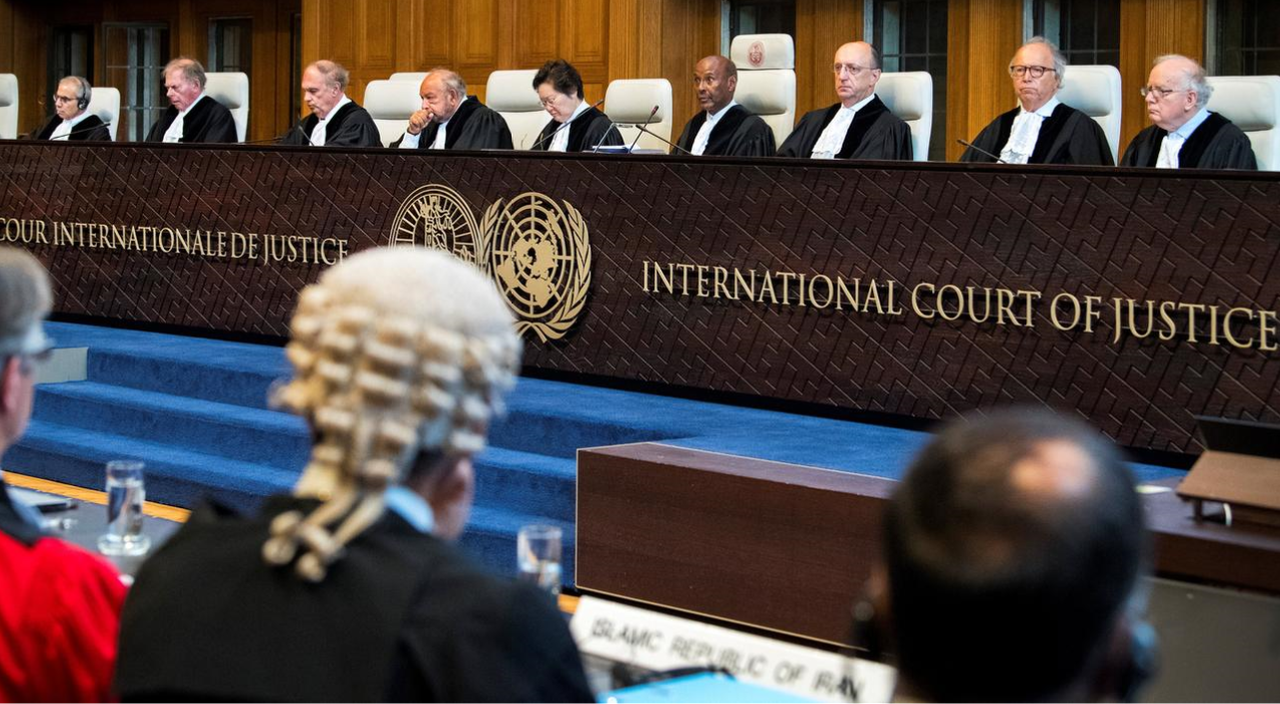
You have 24 hours to leave the organization, and if you don’t comply with this decision by Washington, we have ways to retaliate against you,” Bolton reportedly told Bustani, according to his recollection.We know where your kids live. You have two sons in New York.”ICC, image via Reuters
Denigrating the Iranian government as terrorists” in his State Department press briefing, Mike Pompeo declared new sanctions on the social security investment company of Iran’s military, along with five Iranian nuclear scientists.
Moreover, Pompeo announced State Department sanctions on nine more entities, in South Africa, Hong Kong, and China, for doing business with Iran.
He also unveiled new sanctions on Syria’s minister of defense, citing the Syrian army’s battle to retake Idlib, the last remaining insurgent-held territory in the country, which is occupied by a rebranded al-Qaeda affiliate and other extremist Salafi-jihadists, backed by NATO member Turkey.
US sanctions on Iran have devastated the country’s health infrastructure, greatly exacerbating the coronavirus pandemic. A new study by researchers at the Sharif University of Technology in Tehran warned that millions of people could die due to Covid-19 — which Pompeo repeatedly referred to as the Wuhan virus” in his press briefing.
An article by German state broadcaster DW concisely explained how US sanctions have set the stage for mass death in Iran: Iran’s government applied for a $5 billion (€4.6 billion) loan from the International Monetary Fund (IMF) to fight the epidemic — the first time it has asked the IMF for assistance in over 50 years. Yet, even if it gets the loan, the administration won’t be able to shop for much-needed medical supplies: US sanctions make the banking transactions required to secure even medical supplies and humanitarian goods virtually impossible.”
Colombo, March 24 (newsin.asia) — Sri Lankan authorities, on Tuesday declared three districts including capital Colombo as ‘high risk’ areas due to the rapid spread of COVID-19 and imposed an indefinite curfew there, a statement from the President’s Office said.
As a result of the curfew, the statement said essential items including medicines will be delivered to people’s doorsteps as the public had been banned from leaving their homes until further notice.
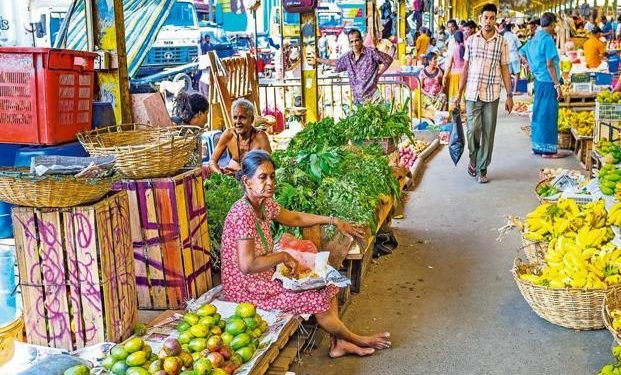
The decision was reached after large crowds gathered at supermarkets and grocery shops earlier Tuesday in Colombo, Gampaha and Kalutara in the outskirts of the capital and Puttalam in the north central province, when a curfew was lifted for 6 hours for people to re-stock on essential items.
Mandatory rules of maintaining a one meter distance was not maintained which led to Health Officials proposing essential items to be delivered.Large crowds in shops had been observed after curfew was lifted this morning in three districts. Health officials fear that this in turn could lead to a wider and faster spread of the virus,” the statement from the President’s Office said.
Therefore, the government has directed wholesale dealers to deliver essential consumer goods to the doorstep of each household until the situation is brought under control,” the statement added.
The President’s Office said to ensure the smooth operation of delivering essential consumer goods to each household, a special task force had been established. Vehicles used for delivery of these goods will be permitted on the roads during the curfew period.Sri Lanka has so far identified 100 COVID-19 positive patients while over 200 are under observation in the designated hospitals across the country.
Some people hope that outbreaks of the new coronavirus will wane as temperatures rise, but pandemics often don’t behave in the same way as seasonal outbreaks.
March 24 (BBC) – Many infectious diseases wax and wane with the seasons. Flu typically arrives with the colder winter months, as does the norovirus vomiting bug. Others, such as typhoid, tend to peak during the summer. Measles cases drop during the summer in temperate climates, while in tropical regions they peak in the dry season.
Perhaps unsurprisingly, many people are now asking whether we can expect similar seasonality with Covid-19. Since it first emerged in China around mid-December, the virus has spread quickly, with the number of cases now rising most sharply in Europe and the US.
Many of the largest outbreaks have been in regions where the weather is cooler, leading to speculation that the disease might begin to tail off with the arrival of summer. Many experts, however, have already cautioned against banking too much on the virus dying down over the summer.
And they are right to be cautious. The virus that causes Covid-19 – which has been officially named SARS-CoV-2 – is too new to have any firm data on how cases will change with the seasons. The closely related Sars virus that spread in 2003 was contained quickly, meaning there is little information about how it was affected by the seasons.
But there are some clues from other coronaviruses that infect humans as to whether Covid-19 might eventually become seasonal.
There is some hope that as temperatures warm up in the Northern Hemisphere, cases of coronavirus will start to fall (Credit: Getty Images)
A study conducted 10 years ago by Kate Templeton, from the Centre for Infectious Diseases at the University of Edinburgh, UK, found that three coronaviruses – all obtained from patients with respiratory tract infections at hospitals and GP surgeries in Edinburgh – showed marked winter seasonality”. These viruses seemed to cause infections mainly between December and April – a similar pattern to that seen with influenza. A fourth coronavirus, which was mainly found in patients with reduced immune systems, was far more sporadic.
There are some early hints that Covid-19 may also vary with the seasons. The spread of outbreaks of the new disease around the world seems to suggest it has a preference for cool and dry conditions.
An unpublished analysis comparing the weather in 500 locations around the world where there have been Covid-19 cases seems to suggest a link between the spread of the virus and temperature, wind speed and relative humidity. Another unpublished study has also shown higher temperatures are linked to lower incidence of Covid-19, but notes that temperature alone cannot account for the global variation in incidence.
Further as-yet-unpublished research, predicts that temperate warm and cold climates are the most vulnerable to the current Covid-19 outbreak, followed by arid regions. Tropical parts of the world are likely to be least affected, the researchers say.
Pandemics often don’t follow the same seasonal patterns seen in more normal outbreaks
But without real data over a number of seasons, researchers are relying upon computer modelling to predict what might happen over the course of the year.
Extrapolating data about Covid-19’s seasonality based on endemic coronaviruses – meaning they have been circulating in human populations for some time – is challenging, not least because endemic viruses are seasonal for a number of reasons that might not currently apply to the Covid-19 pandemic.
Pandemics often don’t follow the same seasonal patterns seen in more normal outbreaks. Spanish flu, for example, peaked during the summer months, while most flu outbreaks occur during the winter. (Read more aboutwhat Spanish flu can teach us about Covid-19.)
Eventually we would expect to see Covid-19 becoming endemic,” says Jan Albert, a professor of infectious disease control who specialises in viruses at the Karolinska Institute in Stockholm. And it would be really surprising if it didn’t show seasonality then. The big question is whether the sensitivity of this virus to [the seasons] will influence its capacity to spread in a pandemic situation. We don’t know for sure, but it should be in the back of our heads that it is possible.”
We need to be cautious, therefore, when using what we know about the seasonal behaviour of other coronaviruses to make predictions about the current Covid-19 pandemic. But why are related coronaviruses seasonal, and why does that offer hope for this outbreak?
Coronaviruses are a family of so-called enveloped viruses”. This means they are coated in an oily coat, known as a lipid bilayer, studded with proteins that stick out like spikes of a crown, helping to give them their name – corona is ancient Greek for crown.
There are currently few studies that look at the impact the weather has on Covid-19 (Credit: Getty Images)
Research on other enveloped viruses suggests that this oily coat makes the viruses more susceptible to heat than those that do not have one. In colder conditions, the oily coat hardens into a rubber-like state, much like fat from cooked meat will harden as it cools, to protect the virus for longer when it is outside the body. Most enveloped viruses tend to show strong seasonality as a result of this.
Research has already shown that Sars-Cov-2 can survive for up to 72 hours on hard surfaces like plastic and stainless steel at temperatures of between 21-23C (70-73F) and in relative humidity of 40%. Exactly how the Covid-19 virus behaves at other temperatures and humidity has still to be tested, but research on other coronaviruses suggests they can survive for more than 28 days at 4C. (Read more abouthow long Covid-19 can survive on surfaces.)
A closely related coronavirus that caused the Sars outbreak in 2003 has also been found to survive best in cooler, drier conditions. For example, dried Sars virus on smooth surfaces remained infectious for over five days at between 22-25C and with a relative humidity of 40–50%. The higher the temperature and humidity, the shorter the virus survived.
Climate comes into play because it affects the stability of the virus outside the human body when expelled by coughing or sneezing, for example,” says Miguel Araújo, who studies the effects of environmental change on biodiversity at the National Museum of Natural Sciences in Madrid, Spain. The greater the time the virus remains stable in the environment, the greater its capacity to infect other people and become epidemic. While Sars-Cov-2 has quickly spread all over the world, the major outbreaks have mainly occurred in places exposed to cool and dry weather.”
A recent analysis suggests that this pandemic coronavirus will be less sensitive to the weather than many hope
His computer models certainly seem to match the pattern of outbreaks around the world, with the highest number of cases outside of the tropics.
Araújo believes that if Covid-19 shares a similar sensitivity to temperature and humidity, it could mean cases of coronavirus will flare up at different times around the world.
It is reasonable to expect the two viruses will share similar behaviour,” he says. But this is not a one-variable equation. The virus spreads from human to human. The more humans at any given place and the more they get into contact with each other, the more infections there will be. Their behaviour is key to understanding the propagation of the virus.”
A study from the University of Maryland has shown that the virus has spread most in cities and regions of the world where average temperatures have been around 5-11C (41-52F) and relative humidity has been low.
But there have been considerable numbers of cases in tropical regions, too. A recent analysis of the spread of the virus in Asia by researchers at Harvard Medical School suggests that this pandemic coronavirus will be less sensitive to the weather than many hope.
They conclude that the rapid growth of cases in cold and dry provinces of China, such as Jilin and Heilongjiang, alongside the rate of transmission in tropical locations, such as Guangxi and Singapore, suggest increases in temperature and humidity in the spring and summer will not lead to a decline in cases. They say it underlines the need for extensive public health interventions to control the disease.This is because the spread of a virus depends on far more than simply its ability to survive in the environment. And this is where understanding the seasonality of diseases becomes complicated. For a disease like Covid-19, it is people who are now spreading the virus, and so seasonal changes in human behaviour can also lead to shifts in infection rates.
Measles cases in Europe, for example, tend to coincide with school terms and decrease during the holidays when children are not spreading the virus to one another. The enormous migration of people around the Chinese Lunar New Year on 25 January has also been suggested to have played a key role in the spread of Covid-19 out of Wuhan to other cities in China and around the world.
The weather can also mess with our own immune systems to make us more vulnerable to infections, too. There is some evidence to suggest the vitamin D levels in our bodies can have an affect on how vulnerable we are to infectious diseases. In the winter our bodies make less vitamin D from sunlight exposure, mainly because we spend more time indoors and wrap ourselves in clothing against the cold air. But some studies have found this theory is unlikely to account for seasonal variation seen in diseases like flu.
More controversial is whether cold weather weakens our immune systems – some studies suggest it does, but others find the cold can actually boost the number of cells that defend our bodies from infection.
There is stronger evidence, however, that humidity can have a greater impact on our vulnerability to disease. When the air is particularly dry, it is thought to reduce the amount of mucus coating our lungs and airways. This sticky secretion forms a natural defence against infections and with less of it, we are more vulnerable to viruses.
Stopping contact between people should also bring down the infection rates
One intriguing study by scientists in China suggests there is some sort of relationship between how deadly Covid-19 can be and the weather conditions. They looked at nearly 2,300 deaths in Wuhan, China, and compared them to the humidity, temperature and pollution levels on the day they occurred.
Although it has yet to be published in an academic journal, their research suggests mortality rates were lower on days when the humidity levels and temperatures were higher. Their analysis also suggests that on days where the maximum and minimum temperature ranges were greater, there were higher levels of mortality. But this work is largely also based on computer modelling, so the exact nature of this relationship, and whether it will be seen in other parts of the world, is still to be explored.
As the virus causing the Covid-19 pandemic is new, it is unlikely many people, if anyone, will have immunity against it until they have been infected and have recovered. This means the virus will spread, infect and cause disease in a way quite unlike endemic viruses.
Air travel has been the main route by which the virus has spread around the world so rapidly, says Vittoria Colizza, director of research at the French Institute of Health and Medical Research. But once it starts spreading within a community, it is close contact between people that drives the transmission. Stopping contact between people should also bring down the infection rates. This is exactly what many governments have been attempting to do with the escalating lockdown of public places around the world.
Even if cases of Covid-19 do fall over the summer months, it is unlikely to disappear entirely and will return later in the year (Credit: Getty Images)
There’s no evidence yet for a seasonal behaviour of Covid-19,” says Colizza. The behavioural component may play a role, too.” But she warns it is too early to know if the measures put in place will be enough to stall the spread of the virus. By itself, it may partially reduce effective contagiousness due to the reduction of contacts along which the disease could be transmitted.”
And if cases of Covid-19 do indeed tail off over the coming months it could be for a number of reasons – prevention measures such as isolation and lockdowns are being successful; there is growing immunity in the population; or it may be an effect of the season, as Albert’s models suggest.
If there is a seasonal effect, it could mask the true impact of the other two,” warns Albert. In countries where a strong lockdown has meant not many people have been exposed, then I wouldn’t be surprised that we will see a second wave come the fall and winter.”
Even if Covid-19 does show some seasonal variability, it is unlikely to disappear entirely over the summer months, as some have suggested. But a dip in cases might bring some benefits.
The steps we are taking to flatten out the curve are expensive in economic terms, but they could help us push this pandemic into the summer,” says Albert. If there is some seasonality, it might buy health systems the time they need to prepare.”
And in a world scrambling to cope with the rapidly rising number of cases, it might just be time we desperately need.
The United States could become the new centre of the global coronavirus pandemic, according to the World Health Organization, which said case numbers were rising quickly there even as Donald Trump talked of re-opening the country for business.
We are now seeing a very large acceleration in cases in the US. So it does have that potential [to become the centre of the pandemic],” the WHO spokeswoman Margaret Harris said.
So far, 46,450 people in the US have become infected with the virus and there have been 593 deaths, according to the latest data from Johns Hopkins University.
There have been 46,369 confirmed cases across the US so far. The true number of cases is likely to be significantly higher.
Trump acknowledged that crucial healthcare supplies to protect frontline staff treating sick patients were becoming difficult to obtain.
In an early morning tweet, Trump said: The world market for face masks and ventilators is crazy. We are helping the states to get equipment, but it is not easy.”
But while more US governors were urging people to stay at home, Trump appeared to play down the crisis on Monday night.
The president said he was considering ways to restart the economy in the coming weeks and wanted to avoid the pandemic becoming a long-lasting financial problem”. It would not last as long as three or four months, he said.
Our country was not built to be shut down,” Trump said. This is not a country that was built for this.”
Trump’s top advisers referred to current government restrictions as a 15-day challenge” and pledged to revisit in a week’s time the need for sweeping measures to prevent the spread of the virus. In Spain, meanwhile, the numbers infected and tested rose from 33,089 to 39,673 on Tuesday, according to the health ministry, while the death toll rose from 2,182 to 2,696.
Health workers accounted for nearly 14% of Spain’s total reported cases as of Tuesday, up from 12% the previous day, according to data presented by the health emergency chief, Fernando Simon.
An estimated 1.7 billion people around the world have been ordered to remain at home as governments take extreme measures to protect their populations. Britain became the latest country to enter lockdown, after bans on movement came into force at midnight on Monday.
France entered a two-month state of health emergency” on Tuesday that provides a legal framework for existing confinement and restrictive measures and allows the government to order further restrictions, including controlling the price of certain products and requisitioning people and property for the war” effort.
The Dutch government strengthened its containment measures, banning all public gatherings regardless of size until 1 June. Mayors have been empowered to close beaches, parks, campsites and other public spaces if people are not respecting physical distancing rules that are set in the Netherlands at a 1.5 metre gap between people. The prime minister, Mark Rutte, described the boosted measures as an intelligent lockdown”.
Meanwhile tens of millions of people living in Hubei province, the centre of China’s outbreak, were told they would be able to resume travel from midnight (1600 GMT), except in the city of Wuhan.
China claims to have largely brought its outbreak under control, reporting only imported cases of the virus and few or no new domestic cases in recent days. However the claims have been questioned by residents and analysts, who note that some hospitals are reportedly refusing to test for the virus, and that there are allegations of manipulated numbers, and rumours of unreported cases.
Many political party representatives have expressed their support for a national programme to prevent the spread of coronavirus (Covid-19), instead of convening a Parliament session, Prime Minister’s Office says.
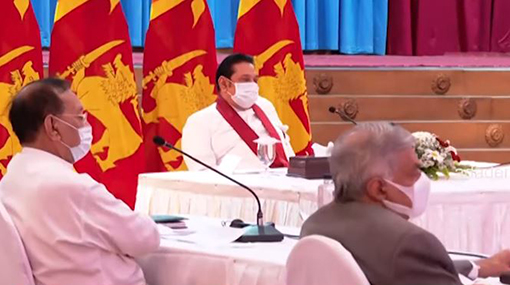
A meeting to discuss the current situation prevailing in the island, prompted by the Novel Coronavirus outbreak was worked off under the patronage of Prime Minister Mahinda Rajapaksa at the Temples Trees this morning (24).
Steps taken by the government to curb the spread of the virus were discussed during the meeting.
Former President Maithripala Sirisena, former Speaker of Parliament Karu Jayasuriya, UNP Leader Ranil Wickremesinghe, Leader of Samagi Jana Balawegaya Sajith Premadasa, National Organizer of Sri Lanka Podujana Peramuna (SLPP) Basil Rajapaksa, Health Minister Pavithra Wanniarachchi and several other political party representatives and State officials joined this discussion.
Ranil Wickremesinghe, addressing the meeting, said: We need curfew to be in effect for some more time but there are issues regarding rural economy. So, I believe that we will be able to resolve this through discussion. We can give permit leave for all public servants who are not essential to be at work. I say that we should bring as much testing equipment as possible.”
He also lauded the measures put in place by the government in the fight against coronavirus while adding that it should be continued.
PM Rajapaksa appreciated the participants for sharing their views on how to save the country from the virus irrespective of political differences.
Colombo, Gampaha and Kalutara districts have been identified as high risk areas for Coronavirus (Covid-19) and hence the curfew imposed on those districts will continue until further notice.
Districts of Colombo, Gampaha and Kaluthara have been identified as high risk zones in view of the spread of COVID-19, the President’s Media Division said.
Large crowds in shops had been observed after curfew was lifted this morning in three districts. Health officials fear that this in turn could lead to a wider and faster spread of the virus, the PMD said.
Therefore, the Government has directed wholesale dealers to deliver essential consumer goods to the doorstep of each household until the situation is brought under control.
Sathosa, Keells, Laugfs, Arpico, Food City, Araliya, Nipuna and other wholesale dealers will be involved in this operation, the release said.
Providing these essential consumer goods such as food, medicine, gas and other services will commence from tomorrow (25).
To ensure the smooth operation of delivering essential consumer goods to each household, a special task force has been established under the leadership of Mr. Basil Rajapaksa.
The task force would be comprised of Secretaries to the Ministries, Government Agents, Divisional Secretaries and other relevant officers.
The curfew in the three districts that have been identified as high risk zones will continue until further notice, the PMD announced.
However, lorries, vans, three-wheelers and motorcycles that would be used for delivery will be permitted on the roads during this curfew period.
India’s 1.3 billion people will go into full lockdown from midnight Tuesday(24), for 21 days in a bid to slow down the coronavirus pandemic
Lockdown measures were already in place from Monday in many major cities, but will now be extended to “every village, every district” in the nation, according to the prime minister said.
Speaking in a televised national address, PM Modi told Indians to forget what it feels like to leave their homes.
He further stated that 21 days of lockdown is a long time but this is important for their safety and for the safety of their families.
If we don’t handle these 21 days well, then our country, your family will go backwards by 21 years said the Indian Premier in his address to the nation.
PM Modi said that some think social distancing is only for patients, and that’s not correct, social distancing is the only way to fight the virus, it is for every citizen, every family, every member, even for the Prime Minister.