
PRODUCTIVITY ENHANCEMENT AND COMPLICATED ECONOMIC ISSUES IN SRI LANKA
March 9th, 2020BY EDWARD THEOPHILUS
Modernization has been affecting the economic, social and cultural environment of Sri Lanka and it seems that the government policy framework also enthusiastic about going with modernization. Sometimes, people feel that modernization invaded many areas of the country creating distortion or a deformity in attitudes of people and the real behavior of them. The impact of modernization has brought a complexity in economic issues and policymakers have uncertainty on how to approach the productivity-related issues.
After the presidential election in 2019 people expect the president’s intervention for everything in the country and this situation may be a result of election disposition. The administrators and policymakers cannot depart from the election disposition and work on the reality of the economic condition of the country as it is a culture of Sri Lankan style of democracy that when parliament dissolved many uses the election environment to force the government for winning of various demands.
Administrators and policymakers need especially concentrating on the fact that the productivity of government and private sector both in Sri Lanka are lower than in many country countries. There is no equilibrium between the productivity of an employee and the payment for the employee. What is the contributing factor for lower productivity? It is involved in a range of factors and the major reason is the country has not developed a management culture that supports productivity enhancement.
The lower productivity is a historical issue in the economy and a general knowledge question popular among small kids in villages is that if a woman weaves 20 coconut branches in a day, how many branches would be weaved by 10 women in a day, the answer is zero. The reason for the answer is ten women will be talking gossips than working and no productivity will be generated in the workplace. It is not a skill or knowledge related problem, but a problem related to workplace values and management related questions. The changing this environment is a massive task.
The lower productivity has spread to the entire work environment in Sri Lanka which means that government and private sector spending are not productively using in the country. According to the Keynesian theory, it may positively impact the aggregate demand, however, the government considers productivity of employees spending macroeconomically more effective in the country. The government in fact needs to determine to generate productivity for each rupee spending and then only the country achieves its expectations. Despite many changes in workplace attitudes administrators of Sri Lanka are still in a conservative environment to get the service from employees without harming their behavior and it shouldn’t be the policy priority. Policymakers need clearly understand that have the cake and eat the is an impossible task.
If it looks back the policy management in Western countries after the cold war many countries used microeconomic reforms to increase productivity in organizations and operated effective plans in the individual organization according to the practical environment. The following practical policy actions were popular.
- Invitation of private capital and management knowledge and skills in government enterprises to modernize them with new capital reducing fiscal spending of the government.
- A sharp control of executive payments in private companies and the productivity of executives became the major factor to determine the reward and executives of private companies gave company shares to maintain a higher and increasing share value.
- The technology used organizations with a difference either government or private without a difference to generate efficiency and effectiveness.
- Individual organizations used management techniques to give promotions and salary increments and the most effective measure was the evaluation of daily work performance by supervisors.
- The crackdown of trade union power and the use of various techniques to reduce members of unions
- Establishing seven days week thereby reducing the cost of employing people such as overtime, penalties, and many others.
Politics and culture of Sri Lanka might restrain the application of the measures used in Western countries; however, such measures could be used in a different format. Some measures adapted to the country and the effectiveness of such measures seem to less effective.
Corruptions in public and private organizations remain higher and the president had to intervene such as in the motor vehicle registration office and other places.
The recultivating neglected paddy lands appear to be highly successful and the effort will positively impact the productivity in the country. A similar type of motivation in public and private office needs and building a movement would be an option for productivity in Sri Lanka.
Distortion of our History
March 9th, 2020Chanaka Bandarage
Prabhakaran was hell-bent on distorting Sri Lanka’s history. He launched a campaign with Anton Balasingham in the helm to attack Mahavansa. The LTTE discounted Vijaya’s arrival (more than 2500 years ago) and stressed that Tamils are Sri Lanka’s indigenous people. According to them, Buddhism existed in Sri Lanka prior to Mahindagamanaya and that a Tamil Buddhist civilization existed in the ancient North and East of Sri Lanka. Though it is very well accepted that Ravana is mythology, the separatists stressed that Ravana did rule Sri Lanka (more than 4000 years ago) and that he was a Tamil King. Now, Wigenswaran et al propagate similar lies. The separatists have been successful in stressing their points of view; as a result, prominent websites worldwide have recorded the wrong Sri Lankan history that is favorable to Tamils.
Sadly, since recently some Sinhalese scholars seem directly or indirectly endorse what Prabhakaran and his cohorts were saying. They include prominent Archeologists, Historians, Buddhist monks, Journalists, and Politicians. Some academics receive financial grants/donations from NGOs and assistance even from the Sri Lankan governments to continue with their distortions, at great detriment to the motherland.
The patriotic Sinhalese’ complacency has greatly helped the separatists and history distorters to carry on with their ulterior motives.
It is universally accepted that Mahavansa depicts the correct Sri Lankan history. It is acknowledged that no other nation has a so well recorded history as Sri Lanka. Sri Lankans have been proud of the chronicle, Mahavansa. The colonial rulers acknowledged Mahavansa as the ‘gospel truth’ and translated it from the original Pali to such languages as Sinhalese, English, and German.
Closer to 2500 years we Sri Lankans have devotedly believed that we are descendants of Vijaya, the Prince from North India. The Sinhalese have been proud that they have a blood lineage to Lord Buddha (upon Vijaya’s death, his nephew Panduvasudeva became the king, and his wife was Princes Buddha Kachchayana of Shakya Wansha, who was a close blood relative of Lord Buddha).
Since recently, Vijaya’s arrival has been removed from our school history books. Instead, these books say that Sri Lanka was inhabited by ‘homo-sapiens’ who migrated to the land from Africa more than 125,000 years ago.
It is hard to believe that any country in the world would allow such a blatant distortion of their history, but Sri Lanka has allowed it. Darwin’s theory of evaluation, which has absolutely nothing to do with Vijaya, has been used to remove the true Sri Lankan history from school history books. It is Vijaya’s arrival that led to the beginning of the Great Sinhala Civilization that boasts Sri Lanka’s peaceful Buddhist way of life (upon Ven Mahinda’s arrival) and the advanced hydraulic irrigation system. But, our children have been denied the right to learn about them.
The fact that the world’s first human being was a homo-sapien should not be used as a reason to claim that therefore Sri Lanka’s foundation was laid by homo-sapiens.
But, this is exactly what the history distorters have successfully done in Sri Lanka.
Americans, Indians, British, Japanese, Chinese would never teach their student such a thing. It is a stupid argument. These nations would always teach their correct history to children – how those nations and their people ‘came about to be’. –
When we were history students we learned through books that Vijaya landed in Thambapanni. Today, this is fully eliminated from school textbooks/curriculums.
Today, schoolchildren learn that homo-sapiens landed in a place closer to Yala more than 125000 years ago (see Year 6 and 10 history books). This is a deliberate attempt to hoodwink the correct history of children – our future generation.
The distorters depict to our students that the unknown, unnamed homo-sapiens are the heroes, not Vijaya, Ven Mahinda, Ven Sangamitta, Pandukabhaya, Devanampiyatissa, Anuladevi, etc. Through advanced training methods, the country’s history teachers have been indoctrinated to follow and teach students with this false concept of history.
Those who distort our history stress/imply that:
- There is no archeological evidence that an Indian Prince named Vijayaya arrived in Sri Lanka;
- Even prior to Vijaya’s arrival, Sri Lanka was known as Sihaladeepa (සිහලදීප) (then how and when did the homo-sapiens become Sinhalese?);
- Prior to the arrival of Vijaya/Mihindu, there existed a highly developed civilization in Sri Lanka:
(it is universally accepted that Kuweni’s people were primitive hunter-gatherers and they did not lead an advanced/ sophisticated lifestyle. During the Ice Age where Africa, Asia, and Australia were one continent, some Sri Lankan Aborigines walked eastwards, including Australia (thus, the Australian Aborigines).
Such far-fetched and fanciful claims include:
- More than 49000 years ago there existed very successive rice paddy cultivations closer to Kalutara;
- more than 13000 years ago people grew Barley and Oates in Horton Plains
- More than 4400 years ago people produced iron (first people in the world to produce iron)
- There were lions roaming in Sri Lanka etc.
- Kuweni’s Yaksha people may have had a Tamil mix (wrong; they were Hela people who mingled with Vijaya’s Sinha people and formed the Great Race – Sinhale (Sinha + Hela = Sinhale) ;
- There were Tamil Buddhists in Sri Lanka (such a group as Tamil Buddhists never existed in Sri Lanka);
- The homo sapiens who landed closer to Yala (wildlife park) were Balangoda Manawakaya people (wrong, Balangoda Manawakaya – a Helaya, existed only about 30000+ years ago);
- Ravana may be a Tamil (there is absolutely no archeological evidence in Sri Lanka about Ravana, he is a mythical King only recorded in Indian Hindu texts such as Ramayanaya. Separatists stress on Ravana knowing well that the Sinhalese would then compete with them asserting that Ravana was instead a Sinhala King. By falling into their trap, not only we are acknowledging the separatists’ claim that Mahavansa is wrong; but also that Sri Lanka’s history is a confusion);
- Sri Lanka physically separated from India only 7000 years ago (this is a recent claim by them, without any archeological evidence);
- Kerala people migrated to Sri Lanka (many Northern Tamils arrived in the country during the colonial periods, especially to work in the northern tobacco plantations. Chola, Magha, Elara who temporarily ruled the North were invaders, they were chased back by the Sinhalese Kings to where they came from – South India) and
- Sigiriya may be a creation of Ravana (universally accepted that King Kashyapa built it).
The distortions are very serious. They are being propagated by very powerful and influential people who also enjoy state patronage. They hold high state offices.
For 2500+ years with the entire world, we have accepted that Sinhalese who is descendants of Vijaya are the original inhabitants of Sri Lanka. The Great Sinhala civilization commenced after Vijaya’s arrival. But now, the proponents have successfully rebutted this.
Prior to Vijaya, like everywhere else, Sri Lankan people lived very primitive lifestyles (hunter-gatherer lives). This is the country’s correct history and it is so recorded in all historical texts like Mahavansa, Thupavansa, and Chulawansa. Our Great National Heroes intellectuals such as Ven Hikkaduwe Sri Sumangala, Ven Migettuwatte Gunananda, Anagarika Dharmapala, Walisinghe Harischandra, Piyadasa Sirisena, Ven S Mahinda, Gunapala Malalasekera, Professor Senarath Paranavithana, Professor Roland De Silva, Martin Wickramasighe, and Professor Ediriweera Sarathchandra fought very hard to preserve and uphold our history – the Mahavansa history.
It is this history that has given us the identity as Sinhalese (note, today we are confined only to 7/9 provinces of our tiny nation, and we are a ‘dying’ race).
Now, our history is under great and severe threat; not just by the separatists but by some Sinhala ‘intellectuals’ as well. The latter has been very successful in making adverse changes to our history in the school curriculums.
It is the patriots’ duty to carry out tasks to preserve our history just as our national heroes had done in the past. Just because a few individuals mainly those with Archeology and History qualifications want to proclaim an entirely different, false history that is so detrimental to us, we should not allow them to further deceive us.
A country’s history is a still, static component. It cannot be changed just per the whim and fancy of a few. If the history must be changed, it should be done only after very careful research/investigation and upon acceptance of the changes by the country’s intellectuals including the clergy and state instrumentalities. Extensive public consultation and discourse prior to acceptance is a must.
We must demand the authorities to urgently correct the history books where our children are learning incorrect history/where important aspects of our history have been omitted out.
Again, this is a very alarming situation.
The writer is an International Lawyer
Ravi On The Run
March 9th, 2020Sunil Yatalamatta Gamage
Why is he hiding? If you have summoned by the court order to arrest, and if you are hiding; Mr. Ravi you could be charged; on top of the charges already in place against you. First, it could be disobeying to law and order of the country. The Second would be challenging the law of the country. If you are planning to appear and respect the judiciary of the country, you must let the court aware ASAP to protect its integrity. Sri Lankan people now have a better understanding of the people involved in this financial crime of robbing the central bank of Sri Lanka. who did the crime against to central bank and who benefited it as well? In one of the commissions, Mr. Ravi has said,” I don’t remember I have been offered property from Aloysius.” So these are quite childish answers you have been provided to commission and to the public. In this case, the public awareness of your behavior during that inquiry by this former so-called Asia’s best finance joker, who conspired to rob the central bank and one of the members of that infamous group which includes famous Bhaya Nathi Agamathi” Rani Wickramasinghe.
Ravi, Ranil Wickramasinghe the architecture of central bank crime, Kabir, Malik Samarawickrama, and many more involved in this crime and that is the public opinion and that is the plain truth. We request law and order authorities of Sri Lanka to work according to the legislature of the country to make it right for the democracy of the country. We want to see these culprits in jail for the crimes they have done to Sri Lankan Central Bank. Our economy suffers in many ways due to organized crime done by the politicians of this country.
It is only a tip of the iceberg of this crime, and it needs to become public to the nation. We are watching and expecting the Supreme Court of Sri Lanka will let the public know who did this crime, who plotted this, how it happens, and what damage has occurred to our economy. It is high time to eradicate criminals from the politics of our country. If any politician has done crimes to the country they must be trialed and justice needs to bring without delay. In our country justice is getting delayed, it is a sign of a malfunctioning system. Trust of Judiciary will remain locally as well as internationally if justice has been delivered within a cause of time in an efficient manner.
Attempts to exhume the provincial council cadaver
March 9th, 2020C. Wijeyawickrema, LL.B., Ph.D.
A blessing in disguise from the Yahapalana Maralaya was its deliberate attempt to kill the PC white elephant. Nobody wanted this death-trap then in 1987 or since then other than a collection of Colombo black-white and Marxists, who want Sri Lanka divided into two warring factions: Tamil Eelam and the Sinhala quadrant. Rajiv Gandhi, who forced JR to pass 13-A, stopped in Madras, on his return trip to Delhi, and boasted, that he delivered for Tamils what they never thought it possible to obtain!
It is so strange that all those protested and died in 1987 opposing PCs, are now behaving like silent mice, despite all possible evidence one could think of that the PC experiment has been a disaster for all except for a lonely philosopher like the Christian Marxist Dayan Jayatilaka (Lanka Guardian, 2/20/2020) or Jehan Perera. Some crook politicians have the nerve to say that 13-A is now part of the constitution and cannot be removed!
These bogus rule of law saints forget that Rajiv-JR pact was one-sided document like the 1815 Agreement, and all done for it in the parliament was a fraud in representative democracy. MPs were kept in a hotel and hurled into busses to vote for 13-A, except for one courageous MP, Gamini Jayasuriya of Homagama.
India did not fulfil its obligation of disarming Prabhakaran. There is no justifiable reason to respect this shameful decision and the way to break it is not what Rpremadasa and Paskaralingam did by secretly arming Prabhakarana against IPKF while entertaining Balasingham in five star hotels in Colombo, but by seeking a mandate from the people at the April 2020 election to get rid of it once and for all, whether the new parliament is going to enact a new constitution or not. This means that 13-A is so important to the country as 19-A is considered so relevant to the ruling party.
Behind the now prevailing debate about whether the MCC could be converted to a new bride as MCC+, just like 13-A supporters tried to soften the existential threat to Sinhale by distinguishing it as 13+ versus 13-, both 13A and MCC are trojan horses pure and simple. This was revealed by the American agent of MCC in Colombo, when he said that there is no such thing called a free lunch. Ranil and Sirisena betrayed Sri Lanka by gifting the Hambantota port for a pittance to China for 198 years. Similarly, President Gotabaya, should not listen to his black white friends” within and outside Pohottuwa, by abandoning his position against 13-A and MCC. The country did not expect a politician from him.
The essay below that I found surfing the internet is a comprehensive discussion on this 13-A debacle. It was written in 2011.
One term is enough if allowed to work without hindrance: Gotabaya Rajapaksa
March 9th, 2020By Shivanthi Ranasinghe/Ceylon Today
The 19 th.,Amedment has put the country in a mess, says the Sri Lankan President
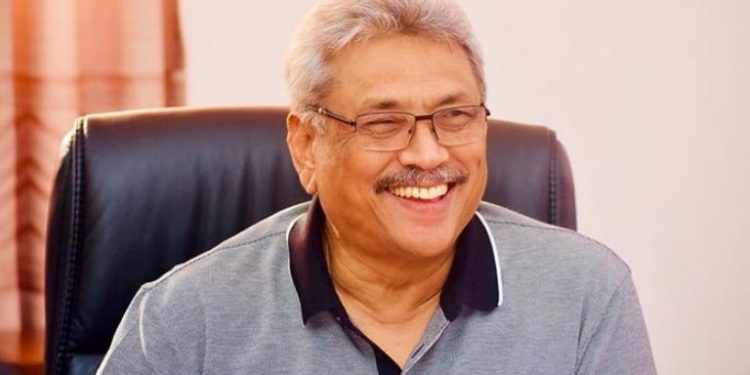
Colombo, March 9: Last week, President Gotabaya Rajapaksa met with the print and electronic media editors for an open forum discussion. The journalists were relentless, but the President remained cordial and never bluffed his way out. Following are few excerpts of the discussion.
The purpose of the meeting President had with the ICT was the first question.
Knowledge is the word of the century,” stated President.
Further explaining, he noted that technology is now the key to develop the economy. Therefore, though his Administration is focused on developing industries such as agriculture and tourism, the priority is given to developing IT based technology. It is on this basis he spoke to the ICT heads, he said.
Currently, the IT based industry in Sri Lanka is worth USD 1 billion,” he said. We can easily bring this to be a USD 3 billion industry, creating job opportunities for 300,000 people.”
However, he noted that skill is a very important factor in this industry. Thus, there needs to be a coherent plan to develop the skill level of the youth. The ICT heads were asked to suggest ways the government can help them to develop the industry, President revealed.
The President was asked as to the reasons for wanting a two third majority parliament.
I have been elected as the Executive President. The people have elected me with great expectations. However, I am prevented from using my executive powers,” noted President.
This has happened due to haphazard, short-sighted amendments to the Constitution. The 19th Amendment is a case in point, he observed.
This Amendment has put the whole country into a mess. I need to first remove the obstacles that are preventing me from fulfilling the expectations of the people. For this, I need a two third majority in the Government.”
Would the 19th Amendment be replaced by something like the 18th Amendment, questioned a journalist.
Keeping the term limit is not an issue,” reply came with a wry smile. Actually, I don’t even need a second term to execute my plans. But I should be allowed to work in these five years without a hindrance.”
However, with the 19th Amendment would the Independent Commissions also be removed, the journalist persisted.
Are these Independent Commissions independent?” asked the President in turn. Making a clear reference to Professor Hooles’ conduct at the Election Commissions, he said, We saw how one member in these Commissions was trying to promote his personal views as the Commission’s agenda. One can hold his own views. But as an office bearer, he cannot allow his personal objectives to get in the way of the Commission’s mandate. The country must be the beneficiary.”
Turning the tables around, he asked the journalists the reason for a Police Commission. The sudden change of roles stumped the journalists.
Was it to ensure that the Police force will be independent?” President asked again and got a few assents.
Does that mean that the IGP, who had served the Police Force for 35 years, is not a credible person? If we can’t trust someone after 35 years of service, how can we trust a Commission just because the members were appointed by the Constitutional Council? If we want the Police force to be independent, then we must identify the root of the problem and make sure that the IGP can work independently.”
Another journalist sought a clarification on the Election Commissioner’s directive to stop all training of graduates until the end of the elections.
Clearly perplexed by the Election Commissioner’s directive, the President said, I really don’t understand why the Election Commission took such a decision when even nominations have not been called yet. It might have been logical had he asked us to stop recruiting the graduates. But, it does not make any sense to stop the training of those already recruited. This affects the entire State administration. Once we hire new people, they have to be trained to do their job. How can they work without any training or wait without working for months until elections are concluded?”
President explained that the graduates were hired on the basis of their applications, without consideration to any other factor. We did not consider even from which village they came,” he said. It was noted that a letter expressing these concerns will be sent shortly to the Election Commissioner with a request to reverse the decision.
The Government’s stance at the UNHRC sessions dominated the discussion. The Government announced that Sri Lanka will no longer co-sponsor the inimical UNHRC Resolution 30/1 but also reiterated that Sri Lanka’s commitments to Human Rights remain unchanged. One journalist observed that the people in the North would be confident of a local mechanism. Therefore, he asked the strategy of the Government to win their trust.
President explained that the root of political issues is economic woes. Even the 1971 insurgency that erupted from the South was due to the prevailing economic issues. Unfortunately, politicians for their gain give these root causes their own interpretation.
He rejected that these issues are based on ethnicity. Are there not very affluent Tamils in this country?” he asked. At the same time, don’t we have Sinhalese that survive on murunga leaves?”
The only effective solution is to develop the economy and raise the living standards of our people. Irrespective of ethnicity, religion or any other parameter, all Sri Lankan citizens should have facilities for education, health care and other services to live with dignity.
The President was asked his response for families of the disappeared wanting reparations.
When you say, ‘disappeared’ what is the impression that forms in your mind? How have they disappeared? Have they been arbitrarily abducted? No. These disappearances had occurred during the war. We have studied and analyzed this issue very carefully. Even in the Sri Lankan Army, there are people who had disappeared.
I can tell you by experience that in a war, situations arise where we can’t recover the bodies. When I went to liberate the Jaffna Fort during Eelam War II, I saw bodies of our men strewed across – just 100 yards from us. Bodies of the terrorists were also lying on the same ground. But because of the intensity of battles, we can’t reach these bodies. In front of us, crows would fly and peck at these bodies and in a few days the bodies start to decay. The bodies could not be sent to the families and for them, he is still there – somewhere. Those days, when I was the Defense Secretary they would come and tell me that according to soothsayers their son is still alive. But we know he is not.
Even during the Muhamalai operation in 2006, we lost over 100 men. It was months after the ICRC could hand over the bodies to us. By that time the bodies had decayed so much, none of them could be recognized. So, we did not send a single body to their families. These families however have now come to terms with the fact.
Many do not know, but as soon as the war ended UNICEF did a study and asked the people in the area about the missing. Out of 2,600, about 60 said that they do not know what has happened to their loved ones, eight accused the military for their disappearances but the rest said that their loved ones were either willingly or forcibly conscripted by the LTTE.”
Answering the persistent question what kind of solution the Government has for these families, a death certificate could be issued if they are confirmed to be dead. In any case, such a certificate is issued after seven years. We had a program to address this issue earlier, but the last government had stopped it. The issue is when the missing people sometimes appear from places like Canada.”
A wartime veteran reporter asked, Why has your Government not highlighted in Geneva that the Commander of the Army that is accused of killing 40,000 civilians was endorsed as the 2010 Presidential Candidate by the TNA and that he won from all the Northern and Eastern provinces?”
The President acknowledged the question with a smile for it was obvious that the question was intended to highlight the ludicrousness on which the UNHRC Resolution 30/1 was based on.
ranasingheshivanthi@gmail.com
Trincomalee development plans hinge on fate of MCC
March 9th, 2020By P.K.Balachandran/Ceylon Today Courtesy NewsIn.Asia
MCC is linked to the Colombo-Trincomalee Corridor which involves the controversial issue of land acquisition
The elaborate plans for the development of Trincomalee town and the associated Colombo-Trincomalee Economic Corridor (CTEC) drawn up the Ranil Wickremesinghe government in 2018 can be implemented only if the controversy over the US$ 480 million Millennium Challenge Corporation Compact (MCC) with the US is settled, an informed source said. The two are linked.
According to the highly placed source, the MCC, as it stands today, has clauses which violate the Sri Lankan constitution.
MCC projects will have to be administered jointly by the Sri Lankan government and the American MCC under a system enunciated by the MCC, which is a foreign entity. This cannot be accepted.
In the case of the Chinese-built Colombo Port (or Financial) City, the laws applicable are to be drawn up by Sri Lanka. But in the case of MCC projects, the laws will be drawn up by the MCC, which is a foreign entity. This is not constitutional,” the source said.
The committee appointed by President Gotabaya Rajapaksa to go into the MCC proposal has said in its interim report that the proposal has constitutional and national security issues which need to be addressed before MCC is accepted.
There has been political opposition to regularizing land deeds and making agricultural lands saleable, if these measures will make land saleable to foreigners. There has been opposition also to the Colombo-Trincomalee West-East Corridor dividing Sri Lanka at the middle, cutting off the Sinhala-majority South from the Tamil-majority North.
Udaya Gammanpila MP, an ally of President Gotabaya’s Sri Lanka Podujana Peramuna (SLPP), said that while the transport and road improvement parts of the MCC (or 70% of it) are acceptable, the land registration part of it is not.
While Sri Lanka is all for giving secure land titles to individuals to enable them to put their land to productive use, any attempt to make them available to foreign buyers as result of a pact like the MCC, will not be unaccepted, Gammanpila said.
The MCC Compact, as approved by the previous government, says that one of the aims is to increase availability of information on private land and under-utilized State land in order to increase land market activity.
While the US Embassy has denied that the US will buy up any land under the MCC, Vasudeva Nanayakkara, a Leftist MP, said that the US will use its financial clout to get land released for foreign buyers. Sri Lanka will be obligated to accept such land transfers, having taken the US$ 480 million MCC as a grant from the US, he said.
Such land transfers will lead to the impoverishment of the rural masses, whose economy is land based,” he added. We want the land project to be dropped and the transport and road connectivity projects retained. But the US wants us to accept the entire package or forego the grant. That is not acceptable,” Gammanpila said.
Lost Priority Now
The second hitch in the Trincomalee development project is that it does not have the kind of priority it enjoyed when the UNP was in power. The UNP government not only got the MCC passed by the cabinet, but got the Singaporean town planning firm Surbana Jurong to do a feasibility study of the Trincomalee development project.
But going by Gotabaya Rajapaksa’s election manifesto, Trincomalee development is not one of the highlighted goals. Importance and priority had been given to the development of the Colombo and Hambantota harbors not to the Trincomalee harbor, though it is acclaimed as a natural harbor with great potential.
After elaborating the development of Colombo and Hambantota ports, the manifesto equates Trincomalee with minor ports like Galle and Kankasanthurai and says that these ports will be developed according to the requirements of each region and to facilitate the needs of national economic corridors.”
Contrast this with former Prime Minister Ranil Wickremesinghe’s vision. When the Trincomalee development plan was launched, Wickremesinghe said: Countries in the Bay of Bengal region will develop greatly within the next 20 years. Populations in that region will reach three billion by 2050. Therefore, we will have to develop Trincomalee as the Eastern gate”.
According to Surbana Jurong Consultants Managing Director Philip Tan, the Trincomalee would witness the development of an international airport in Hingurakgoda (in North Central Province), a new City Centre, multi-story parking centers, an amusement park, an international cricket stadium, several highways, specialized highways such as dedicated freight highways, a cruise terminal, container terminal at China Bay, an oil refinery and an LNG power plant. He further said that the entire Trincomalee project is to be completed by 2050.
Trincomalee would be made an export hub by creating a clean industrial ecosystem, which can add value to the already abundant agriculture, aquaculture, minerals and resources in the area. Trincomalee will also be an Eastern Logistics Centre.
In keeping with the Sri Lankan government’s development strategy, Vision 2025, the Asian Development Bank (ADB) had initiated a comprehensive development plan for the Colombo-Trincomalee Economic Corridor (CTEC) to address some of the development challenges faced by the country. An economic corridor development plan with a potential to generate 1.2 million new jobs by 2030 was proposed by the ADB.
Trincomalee is home to 99 giant oil tanks built by the British during World War II. In the 2000s, the Sri Lankan government handed the tanks to the Indian Oil Corporation to be used in collaboration with the Ceylon Petroleum Corporation. However, only some tanks were refurbished and used. India has plans to refurbish more tanks to serve an emerging market in the Bay of Bengal area and South East Asia.
Defense Potential
The US appears to be more interested in the strategic value of the Trincomalee port, vis-à-vis an increasingly belligerent China.The Wickremesinghe government also wanted Trincomalee to be develop into a major naval base, a prospect in which the Americans, Japanese and Indians were keenly interested.
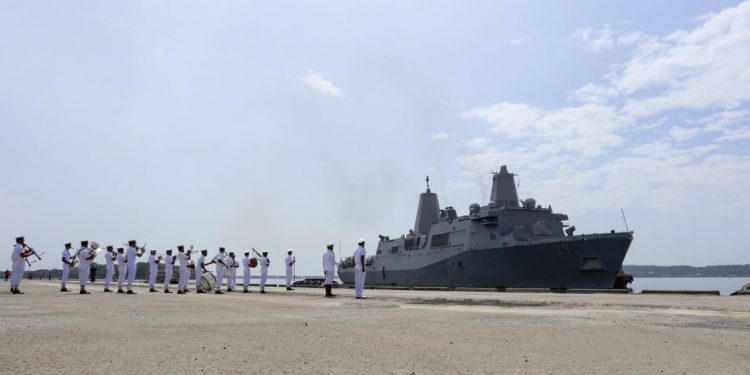
American and Japanese navies have sent ships to the Tincomalee harbour on goodwill visits. A Japanese Destroyer was in the Trincomalee harbour when the Japanese Defense Minister Itsunori Onodera was visiting it in August 2018.
Close on the heels of the visit of the Japanese Defense Minister Onodera to Trincomalee, the USS Amphibious Transport Dock USS Anchorage (LPD 23), along with the13th Marine Expeditionary Unit (MEU), arrived there for a visit on August 24.
The visit was an opportunity for the US Seventh Fleet to explore local logistics support services for visiting naval forces operating throughout the Indo-Pacific region.
This visit and training will build our shared capacity to respond to humanitarian emergencies in the Indo-Pacific region. We’re also excited to try out the air logistics hub concept which utilizes Sri Lanka’s strategic location in the Indian Ocean to ensure the quick availability of relief supplies, equipment and other material when needed by the US and partner militaries and humanitarian organizations,” said an US embassy official.
Consequences of a split in the UNP
March 9th, 2020By P.K.Balachandran/Daily Express Courtesy NewsIn.Asia
A Ranil-Sajith split will lead to electoral defeat and further splits in both camps
Colombo, March 9: A few who depend on a united and strong United National Party (UNP) to win seats in the April parliamentary elections, are still clinging to the hope that a split in the party will be averted even at the eleventh hour.
But most UNPers are expecting the split to be formalized any day now.
The UNP and the Samagi Jana Balawegaya (SJB) have sent separate letters to the Elections Commissioner telling him about their intention to contest. This is generally taken as a definitive sign of an impending split. But those still hoping to keep the party united argue that sending separate letters does not mean much. All parties do it, they point out.
This is a normal practice. It does not mean that the party has split,” a supporter of the unity move said.
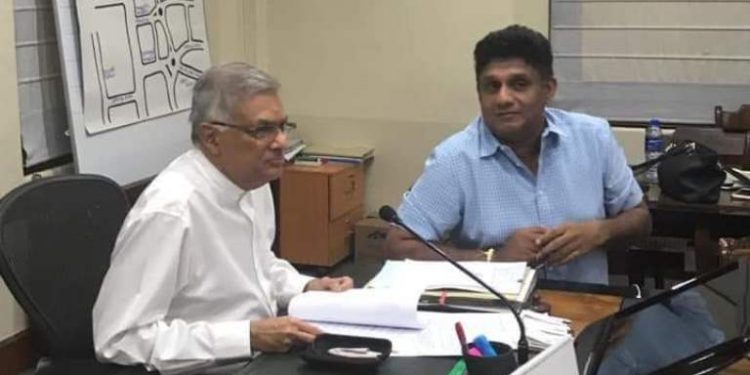
However, most UNPers see the writing on the wall quite clearly: the party is heading for a split or has already split into two antagonistic groups, one headed by party Leader Ranil Wickremesinghe and the other led by Sajith Premadasa.
In fact, the Sajith faction has opened its headquarters. Crowds of supporters have begun congregating in Sajith’s office. Cutouts of Sajith have also come up. Likewise, Ranil’s followers are gathering at Sirikotha.
Party insiders say that about 80% of UNP’s leaders and cadres are with Sajith. Among the rest, some may not vote at all, and others may give their vote to another party, fed up with the UNP’s squabbling leaders and its non-performance while in government.
Sajith is entering the electoral fray confident of victory, citing the lackluster” performance of the Sri Lanka Podujana Peramuna (SLPP) government led by Gotabaya and Mahinda Rajapaksa. But this may be wishful thinking. It is in fact too early to criticize the government of the Rajapaksas. It is only a few months old. Their supporters are aware of the time constraint. It is also generally accepted by the supporters of the Rajapaksas that the government can perform only of it ceases to be a minority in parliament. It has to get a majority in parliament. People still believe in the potential of the Rajapaksas to deliver if given the levers of power. The majority of Sinhalese voters are expected to give the levers of power to the Rajapaksas in the April elections.
Therefore, the SLPP and its allies are assured of a majority in parliament. But a two thirds majority through a vote is a pipe dream given the Sri Lankan election system. However, as indicated by SLPP leaders themselves, the SLPP will stitch together a two thirds majority after the elections, by getting defectors, preferably from the two factions of the UNP.
The SLPP has shut its doors to religious” parties like the Sri Lanka Muslim Congress (SLMC). The Tamil National Alliance (TNA) will also be out of the reckoning partly because it is racist” (Tamil) party, and partly because the TNA itself is ideologically against participating in governments at the Center before it gets a federal constitution.
The SLPP will find it easier to poach on UNP if it is split. A united and strong UNP will be difficult to poach on, as was seen in the October 2018 crisis when Mahinda Rajapaksa’s attempts to get cross overs from the then united UNP failed miserably. Therefore, the SLPP will be a major gainer if, in the coming parliament, the UNP is split and is collectively weak.
Contradictions in SJB
The Sajith-led SJB has internal contradictions, which some, who are now with him, hope to exploit to overthrow him or make him a puppet.
It is said that caste, support among the Buddhist clergy and Sajith’s style of functioning will be three key factors in this regard.
Sajith is not from the top two Sinhalese castes which is a handicap in Sri Lankan politics. Additionally, his links with the hardline Christian groups have been noted. The latter affects his claim to being a hardcore” Buddhist. These debilities could be exploited by some of his present-day supporters like Champika Ranawaka, who is a favorite of the Buddhist clergy cutting across party lines. It is also said that as a minister, Champika had cultivated India and China, two countries which have a direct interest in Sri Lankan political affairs.
Sajith’s arrogant style of functioning and his passion for exercising power might generate dissent. Not being from the traditional Lankan social elite, he would be forced to prove himself all the time to be in the same place. And in his anxiety to do that, he could step on sensitive toes.
Further, Sajith does not have the creativity and drive associated with his father Ranasinghe Premadasa who relentlessly battled social and political odds to win the Presidency. But Premadasa Sr. had to be continually ruthless to stay in the Presidency which made him unpopular among a large number of Sri Lankans.
It is noteworthy that the only major spilt in the UNP (after SWRD Bandaranaike left in 1951) took place at a time when Premadasa was battling against the traditional elite led by Gamini Dissanayake and Lalith Athulathmudali in 1992.
Many UNPers are with Sajith only to win the coming elections by getting a decent number of Sinhala-Buddhist votes. But actually there is big deficit on the Sinhalese side in his case, a deficit which had caused his defeat in the November 2019 Presidential election.
Having realized that Ranil Wickremesinghe cannot help win elections, his closest associates either crossed over or are planning to cross over to Sajith’s side. It is said that some of his closest friends are advising him to hand over the party to Sajith and take an assignment in the UN or any world body, which will be happy to take him, given his interest in, and knowledge of, international affairs.
Ranil himself had toyed with the idea of being an international roving lecturer in the past after one of his earlier defeats. But it is significant that he never actually left the leadership of the UNP. It is expected that he will want to continue to be the leader till at least 2025, when his current term officially ends.
Rajapaksa eyes Sri Lanka election landslide to tighten grip on power
March 9th, 2020MARWAAN MACAN-MARKAR, Asia regional correspondent Courtesy Nikkei Asian Review

Sri Lanka’s President Gotabaya Rajapaksa addresses the nation during the 72nd independence day ceremony in Colombo on Feb. 4. © Reuters
BANGKOK — Four months after an electoral triumph, Sri Lankan President Gotabaya Rajapaksa has set the stage to consolidate his political gains through a landslide victory at April’s parliamentary elections, which he called after dissolving the legislature last week six months before its current term ended.
The hawkish Rajapaksa is unequivocal about the work cut out for the Sri Lanka Podujana Peramuna, a newly formed party that backed him during the mid-November presidential elections. “I need [a] two-thirds majority,” the famously blunt-talking Rajapaksa said on Thursday when he met Sri Lankan journalists in Colombo.
Such a high victory margin in the 225-member parliament is merely to amend the constitution, giving him a freer hand to drive his political and economic agenda. “People voted me with high expectations to deliver as the executive president. If the president can’t deliver what the people want, what is the use of the constitution,” Rajapaksa was quoted as telling local media.
The move represents his frustrations with the checks on his presidential power by a clutch of independent commissions and other limits on executive power in the constitution amended in April 2015, which have neutered the authority of a former all-powerful presidency. And seasoned observers in Colombo say that Rajapaksa’s push for a strongman-style rule enjoys wide support with the country’s Sinhala-Buddhist ethnic majority, who helped him win the presidency.
“The majority community will vote again for the SLPP, since Sri Lankan elections are by nature and tradition a winner-takes-all when one poll follows the other,” said a political insider in Colombo. “And the president is banking on the majority’s votes, since all his statements since his November win seek to appease Sinhalese interests over minority interests.”
But alienating the country’s Tamil and Muslim minorities could undermine Rajapaksa’s tall order for over 150 seats in the legislature at the April polls. “Statistically it is unlikely for the SLPP to get the two-thirds only on the Sinhalese-Buddhist votes,” said Aruna Kulatunga, a Colombo-based political analyst. “So the SLPP is working very hard to get the Muslim voters to their side — by sidestepping and completely ignoring minority Muslim political parties.”
Diplomatic sources in Colombo say that securing such a sea change among the minorities will pose a challenge for the Rajapaksa camp. After all, at the presidential elections last year, members of both minority communities voted in droves against Rajapaksa. The anti-Rajapaksa vote was stoked by fear of repression and human rights violations that would target minorities, given his record as the hawkish defense secretary during the 10-year presidency of Mahinda Rajapaksa, his elder brother, that ended in 2015.
“The Rajapaksas cemented their credentials as champions of the Sinhalese cause during Mahinda’s term, and the minorities expected Gotabaya to follow in similar stride,” said a diplomat from a Western embassy. “But they need to offer concessions to secure minority backing in April.”
Both brothers were hailed by the majority for ending a nearly 30-year ethnic conflict, which pitted government troops against the separatist Tamil Tigers. The civil war resulted in over 100,000 people being killed, and ended in May 2009. It set the stage for Mahinda’s second term, which started with his sweeping victory at the January 2010 polls, fueled by his national security credentials.
Mahinda’s shock electoral defeat at the January 2015 presidential polls brought some reprieve — an end to the climate of fear, a drop in human rights violations and an open and free political culture. But bitter rivalry between the coalition government that succeeded him resulted in a dysfunctional and unstable administration, paving the way for a political appetite by the Sinhala constituencies for a stable and strong government under another Rajapaksa.
The infighting within the former coalition government has worsened since the November polls, enabling the Rajapaksa camp to enjoy an edge. A commonly held view by seasoned observers in Sri Lanka is that the opposition’s inexorable implosion into two opposing camps creates a scenario that makes it easier for the SLPP to win in the April polls.
Not surprisingly, foreign policy allies of the Rajapaksas use the squabbling opposition to drive home a diplomatic point. They say that a parliament packed with a large SLPP majority to bolster a Rajapaksa administration will affirm Sri Lanka’s stability in a time of geopolitical competition for influence in the Indian Ocean.
“With a commanding majority in the next parliament, the government will enjoy a strong hand to deal with external pressures,” said Palitha Kohona, a former Sri Lankan foreign ministry secretary. “The government’s view is that India is our relative and China is our friend.”
In the wake of Rajapaksa’s November victory, there are emerging signs that the diplomatic bonds are deepening with the two Asian powers who have been contesting to gain influence in strategically located Sri Lanka. Even Western governments who were critical of the Rajapaksa camp during Mahinda’s second term appear to be making amends — compensating for their strong ties with the pro-Western, dysfunctional administration that was defeated last year.
“Even the U.S. doesn’t want to lose influence with the country it has already developed ties,” added Kohona. “Western countries may not be happy with some policies of the Rajapaksa government, but they must respect the will of the people.”
Doha airport closed to travellers from India, other coronavirus-hit countries
March 9th, 2020Courtesy The Hindu
Entry to Qatar has been temporarily suspended for passengers from several countries including India, China, South Korea, Sri Lanka and Thailand. The restriction will severely affect those travelling to the US, as Doha is one of the major transit points in West Asia, along with Kuwait and Dubai.
Qatar’s restriction, following the coronavirus outbreak, affects all individuals intending to enter from these countries, including visas upon arrival, those with a residence or work permit, and temporary visitors, said a press release from Qatar Airways. The airline issued the release following complaints that travellers from certain countries, including India, are not able to enter Qatar.
Under the direction of government authorities of the State of Qatar, entry to Qatar is temporarily suspended as of March 9, 2020 for all those travelling from the following countries: Bangladesh, China, Egypt, India, Iran, Iraq, Lebanon, Nepal, Pakistan, Philippines, South Korea, Sri Lanka, Syria and Thailand,” the release said.
Qatar Airways is working closely with global and national authorities to implement the latest advice and guidance on Covid-19 and operate our services accordingly.”
Due to the rise in coronavirus cases around the world, we are placing a temporary hold on stopover services in Doha for the purpose of connection, booked through our partner and subsidiary, Discover Qatar, or booked directly through qatarairways.com. Passengers with onward connections will not be permitted to leave Hamad International Airport. All current stopover bookings will therefore be cancelled. A full refund will be offered, with support offered to make alternative travel plans with Qatar Airways,” the release said.
Sri Lankans arriving from foreign countries to remain in homes for 14-days
March 9th, 2020Courtesy Adaderana
Passengers arriving in Sri Lanka from countries other than Italy, South Korea and Iran have been requested to remain in their homes for 14 days.
Further, the general public is advised to minimize foreign travel as much as possible, stated Director-General of Health Services Dr. Anil Jasinghe.
Oil prices plunge after OPEC deal failure sparks price war
March 9th, 2020Courtesy Adaderana
Oil prices and stock indexes were in freefall Sunday after Saudi Arabia announced a stunning discount in oil prices — of $6 to $8 per barrel — to its customers in Asia, the United States and Europe.
Benchmark Brent crude oil futures dove 30% — the steepest drop since the Gulf War in 1991 — in early trading Sunday night before recovering slightly to a drop of 24%. The benchmark Brent crude oil price fell below $34 per barrel.
The oil price shocks reverberated throughout financial markets. Dow futures dropped more than 1,000 points, S&P 500 futures hit their limits after tumbling 5%, and the key 10-year Treasury note yield fell below 0.5%, a record low.
Saudi Arabia, the world’s second-largest producer, this weekend said it will actually boost oil production instead of cutting it to stem falling prices, in a dramatic reversal in policy.
Late last week, Saudi Arabia, the rest of OPEC and Russia failed to agree on production cuts to combat falling prices because of fears that the coronavirus epidemic will halt world economic growth. Oil prices were down more than 30% this year before Sunday’s collapse.
U.S. consumers are likely to see lower prices at the gas pump, but American oil producers — who lead the world in output — could be hurt by the oil price slide.
Economies from China to Italy have ground to a halt as quarantines shut down factories and demand for products and services craters.
Saudi Arabia and other OPEC members sought to cut production to shore up oil prices. But the once-powerful cartel can no longer move markets alone. It needs the support of Russia, which is not an OPEC member but has recently been coordinating with the organization.
Yet Russia has resisted calls for production cuts. On Friday, the talks ended in failure. OPEC and its allies announced no new reductions and didn’t even commit to extending current cuts.
So, Saudi Arabia is doing an about-face. If it can’t get the price back up, it’s going to drive the price way down. It’s offering to cut the oil price for the U.S. market by $7 per barrel, to Europe by $8 and Asia by $6. Paired with Saudi Arabia’s ability to rapidly increase production — flooding the market with cheap crude — those unilateral price cuts will push the price of oil down for everyone.
Low oil prices are bad for Saudi Arabia’s budget, and the price of the Saudi oil company Aramco’s stock tumbled below its initial public offering price on Sunday. But, because Saudi Arabia’s production costs are the lowest in the world, lower prices can hit other producers harder.
Russia seems to be the target of this price war. But as Saudi Arabia tries to grab market share with bargain-basement prices, American oil and gas producers, including the fracking industry, will also feel pain.
And even with ample supply and low production costs, Saudi Arabia is not guaranteed to come out on top in a prolonged face-off with Russia — especially if fears of a pandemic keep planes grounded and cars in driveways no matter how cheap crude oil gets.
They’re cutting prices, they’re going to increase production. But it’s not clear they’re going to have buyers for that oil,” says Ellen Wald, an energy markets analyst and the author of Saudi, Inc. It’s entirely possible that they may not have the wherewithal and the will and the toughness to withstand a price war and a production war with Russia.”
Still, lower fuel prices will offer some relief to the airline industry, which is feeling the strains of the coronavirus crisis, with travel cancellations leading to flight cuts.
-Agencies
Sri Lanka launches 150 MW solar tender
March 9th, 2020Courtesy Adaderana
The Ceylon Electricity Board (CEB has, reportedly, issued a tender for 150 MW of solar power.
Reportedly, CEB hopes to build 20 solar projects ranging in size from 3 MW to 10 MW. The facilities are set to be built in different locations and each of them will be connected each to different grid substations.
The ceiling price for the tender is LKR 15.60/kWh. The utility said that 80% of the proposed tariff will be re-adjusted based on fluctuations in the US dollar exchange rate.
Interested developers will have time until May 21 to submit their proposals. The projects will be part of the third phase of the Soorya Bala Sangramaya (Battle for Solar Energy) program. The country hopes the scheme will help it to add 200 MW of solar by the end of this year and 1 GW by the end of 2025.
According to a recent joint study by the UN Development Programme (UNDP) and Asian Development Bank (ADB), Sri Lanka has the potential to deploy 16 GW of solar power. It aims to cover its entire power demand with renewables by 2050.
-Agencies
Former Colombo Chief Magistrate says UK High Commissioner sent letter advising him how to conduct case against Sri Lanka Navy
March 8th, 2020
The former Colombo Chief Magistrate Thilina Gamage has made 3 startling allegations at the Presidential Commission of Inquiry on political victimization as per 6 March 2020 Island newspaper article by Shamindra Ferdinando. Mr. Gamage is alleging that UK intervened in judicial cases while the Attorney General’s Dept & the CID had also unduly interfered in some high profile cases during yahapalana ‘good governance’ rule. It is interesting how the very countries demanding transparency and independence are found poking their noses into affairs of sovereign nations.
British High Commission meddling in Sri Lanka’s internal affairs
According to former Colombo Chief Magistrate Thilina Gamage he had ‘received unsolicited advice from the British High Commissioner in Colombo by way of a letter instructing him on how to handle the alleged Navy abduction case.
Thilina Gamage has informed the PCoI that he had written back to the British High Commission reminding him that Sri Lanka was no longer a British colony and his advice was not required.
If so, where is that letter, has it been presented to the Commission of Inquiry? Does it have the British High Commissioner’s signature & is it on a British High Commission letterhead? How can the Sri Lankan Government use this to officially log complaint with the British Government?
It is poignant that Thilina Gamage had replied to the British High Commissioner.
Has he presented his reply to the Commission of Inquiry?
Not many have the pluck to tell a British High Commissioner that he should not think he is Governor Brownrigg!
The high profile case was regarding the alleged Navy involvement in some wartime abductions in Colombo & suburbs involving names of former Navy Commander Vice Admiral Wasantha Karannagoda and Navy Spokesman Captain D K P Dassanayake.
Both are also giving evidence regarding their own political victimization at the Presidential Commission of Inquiry by the previous government.
The Presidential Commission of Inquiry comprises SC Judge Upali Abeyratne, retired Court of Appeal Judge Daya Chandrasiri Jayatilake and former IGP Chandra Fernando.
Who is Thilina Gamage?
In May 2016 following complaint by Attorney General Jayantha Jayasuriya the Judicial Services Commission interdicted then Colombo Additional Magistrate Thilina Gamage on the allegation that he possessed a baby elephant without a valid license.
Thilina Gamage was indicted in July 2019 and suspended from functioning as a magistrate. The original complaint regarding the elephant was filed by then Yahapalana Minister Wasantha Senanayake.
In February 2020 the Court of Appeal dismissed request by Gamage to transfer his case from High Court of Colombo.
Gamage claims he had been politically victimised by former Prime Minister Ranil Wickremesinghe as he refused to act according to the former premier’s instructions when serving as a magistrate. Another startling revelation that requires further investigation.
Thilina Gamage’s grievance expressed to the PCoI include
- Intimidation against him after commencing case against Tissa Attanayake & previous government was angry that he had given Attanayake bail.
- The AG’s dept and CID had harassed him when he refused yahapalana overtures.
- Yahapalana Ministers Rajitha Senaratne, P Harrison and JVP members continuously flaying him in Parliament against the manner he handled cases
- Section of civil society also attacked him
- Then CJ K Sripavan under pressure to remove him regarding the former President & a child in which he had called for a DNA test
While Thilina Gamage’s revelations are startling what draws our attention most is the interference of the British High Commissioner to think fit to even write to a Magistrate. It goes to show how unashamedly the Western diplomats saw fit to interfere in Sri Lanka’s internal affairs during the previous government. This was visibly seen in the manner that they sat inside the Supreme Court when its pet poodles were close to being thrown out of office in October 2018. It looks also quite obvious that the foreigners were making their way in and out of ministries and State institutes gathering confidential and State information.
What is the present government going to do about the interference by British High Commissioner and other envoys in Sri Lanka’s internal affairs?
Shenali D Waduge
RAVAGES OF 2015 – Part IV
March 8th, 2020By : A.A.M.NIZAM – MATARA
Now let us revisit the 015 General Election process which was held in between the two Treasury Bond robberies. Within a few weeks of ousting the former President Mahinda Rajapaksa, people were greatly dismayed and unable to bear with the loss this great leader busloads of people started arriving in Medamulana from nearby districts such as Matara, Galle, and Ratnapura and far away districts Trincomalee, Vavuniya and Anuradhapura and from other districts in between and express their grief to Mr. Mahinda Rbeen forced Rajapaksa over the folly that has been forced on the country by the diaspora and the reactionary conspirators. Eye witnesses said that some people especially the women folk prostrated before him in wailing and begged him to come back and rescue them and demanded said that he is the Diyasen Kumaraya who is destined to rescue and save the people of this country.
Diyasen Kumaraya is a king the Sri Lankan Sinhala Buddhists believe will be born in Sri Lanka after a lapse of 2500 years from the birth of Lord Buddha, to preserve the culture and Buddhism in this country. The foretelling about this by God Sumana, to an ascetic – of the reincarnation of King Parakumba, as a great King whose birth is to usher in all possible wealth, prosperity and good health to Sri Lanka – marks the origin of this belief. This factor is recorded in an Ola leaf that has provided vital evidence to support this belief and this Ola leaf exists in the National Museum to this day. This Ola leaf containing the Sumana sutta was found from a temple in Algamuwa.
When the election was approaching it became very clear that the UPFA headed by Mr. Rajapaksa will win the election easily. When this factor became clear the jealous and vicious hopperman Sirisena went into action and issued a letter one week before the election stating that even if Mr. Mahinda Rajapaksa secures a lead in the election, under the powers vested in him by the constitution Mr. Rajapaksa will not be appointed as the Prime Minister and only an MP of his choice will be appointed. This was a great shock to many voters and it disheartened them and they decided to refrain from voting in the election. Sirisena proceeding further with his vicious and dictatorial activities, two days before the election, dismissed the General Secretaries of the Sri Lanka Freedom Party Mr. Anura Priyadarshana Yapa and the United People’s Freedom Alliance Mr. Susil Premjayanth and appointed his minions to fill the vacancies since the General Secretaries of the parties were empowered under the election Law to take election-related decisions including nomination of Nationalist List MPs.
Despite various intimidation, threats and obstructions to the election campaign of the UPFA candidates and UPFA supporters and the government misusing all government resources for the benefit and promotion of the UNP election campaign, the UNP, and its cohorts failed to secure an absolute majority in the election and they won only 106 seats against the 95 seats won by the harassed and intimidated UPFA under the leadership of fMr. Mahinda Rajapaksa. Sirisena at that time considered the Mahinda Rajapaksa candidates as his sworn enemies and even the megalomaniac Prabhakaran wouldn’t have treated his opponents in such a manner.
Under these circumstances, Hopperman Sirisena came to the rescue of the UNP and appointed the UPFA candidates rejected by the people as National List MPs of the UPFA and then made the newly appointed SLFP General Secretary to sign a partnership MOU with the UNP to form a coalition government called the National Unity Government” which labeled themselves a the Yahapalana government”. The TNA won 16 seats and the JVP 6 seats in the election. The SLMC, ACMC, Mano Ganeshan/Digambarans’s TPA and JHU contested as constituents of the UNP calling themselves as the United National Front (UNF) (Union of Notorious Fraudsters) under UNP’s Elephant symbol the seats that were won by them and their National list MPs included in the UNP’s 106 seats.
Whether we will ever see an end to these scams is a question not too difficult to answer given the times we live in and lived in. With the general election around the corner, our choices are limited when it comes to selecting honest representatives, untainted by fraud, bribery, and corruption, from among the candidates nominated by the various political parties,
As promised in President GR’s election manifesto Vistas of Prosperity and Splendour” action has been taken to round up and punish the Bonds Scam robbers who fleeced this country economically.
The Grand Robbers – Courtesy: Google Chrome
The Criminal Investigation Department (CID) has filed a case against Parliamentarian Ravi Karunanayake in the Colombo Fort Chief Magistrate’s Court for having allegedly provided false evidence before the Presidential Commission of Inquiry (PCoI) which probed the Central Bank Treasury Bonds scam.
The CID told Court that as stated in the report compiled by the PCol, which probed the CBSL Treasury Bonds scam from 1 February 2015 to 31 March 2016 and based on its 25th recommendation, from the inquiry conducted by the CID, from 24 January this year and on the hearing conducted by the PCol on 2 August, 2017, it had come to light that Karunanayake had provided false evidence before the PCol.
The CID informed the Court that the AG had informed the President of his decision on implementing the recommendations contained in the PCoI report and that through the letter dated 24 January, the AG had ordered the CID to launch an inquiry if they are satisfied that individuals, Chief Executive Officer of the primary dealer Perpetual Treasuries Limited (PTL) Kasun Palisena, Steve Samuel, Karunanayake and B.J.R. Sinnaiah had provided false evidence before the PCol and if the said offense falls under Section 109(5)(A) of the Penal Code.
The CID informed the Court that the offense committed falls under the said Section of the Penal Code. Also, the AG had advised the CID that if the suspects could be identified they should be apprehended and produced before a Magistrate. However, before doing so what the suspects have to say should be recorded as statements given by them and then launch inquiries into such statements.
They added that they had considered the recommendations and the findings contained in the PCol report and the evidence given on oath by then Minister Karunanayake had also been included in the report.
The CID informed Court that they had initiated a probe to verify the truth of the statements provided by Karunanayake before the PCoI and that they had already recorded statements from 30 persons in this connection.
They said that at first glance of the evidence on oath by the MP concerned before the PCol, it was clear to them that the MP had intentionally provided false evidence and based on Sections 188 and 190 of the Penal Code, Karunanayake had committed the punishable offence.
The CID reported to the Court that Karunanayake had provided certain evidence before the PCol which probed the CBSL Treasury Bonds scam.
These concerned: 1) The alleged connection between Karunanayake and PTL Beneficiary Owner Arjun Aloysius; 2) Whether Karunanayake knew Neil de Silva or about whether Karunanayake was aware of the Short Message Service sent by de Silva to Karunanayake’s cell phone; 3) Whether Karunanayake had inquired from Vijitha Wijesuriya on renting a suitable house; and when Karunanayake and his family members had inquired from Wijesuriya at times on renting a suitable house or whether Karunanayake was aware that the rent paid for the house he had occupied at the Monach Housing Scheme had been paid either by Aloysius or the Walt and Row firm.
Based on the aforesaid submissions, the CID has named Karunanayake for having allegedly provided false evidence before the PCol and they will need to record statements in this connection from Karunanayake, Mela Karunanayake, Onela Karunanayake, B.J.R. Karunanayake, Aloysius and Attorney Sumathipala Udugamsuriya.
The CID told the Court that besides the aforesaid persons they will also need to peruse if there had been phone connections to the workplaces of Neil de Silva, Don Gallage and Anika Wijesuriya from1 January, 2015 to 2 August last year.
The CID also requested the Court to issue an order to the Global Transportation and Logistics firm to release details of their transactions and details of its Director Board from 1 January, 2015 to 2 August, last year to the CID.
The Colombo Fort Chief Magistrate granted approval for each of the requests and ordered the prosecution to file a progress report on the case when it is next heard on 28 September.
Meanwhile, the Attorney General, President’s Counsel Dappula de Livera has ordered the Acting Inspector General of Police to obtain warrants for the arrest of several suspects including MP Ravi Karunanayake, former Central Bank Governor Arjuna Mahendran, Perpetual Treasuries Director Arjun Aloysius and CEO Kasun Palisena in connection with the Central Bank bond scam.
Warrants have been issued for the arrest of the accused on charges of criminal misappropriation, fraud and mismanagement of the market, the AG’s Coordinating Officer Nishara Jayaratne stated.
The Attorney General has instructed to charge the suspects with conspiracy to misappropriate Rs 51.98 billion in Central Bank bond auctions on March 29 and March 31, 2016.
In his letter to Acting IGP C.D. Wickramaratne, the Attorney General Dappula De Livera states that there is reasonable suspicion against the group of individuals with regard to the criminal wrongdoings which had occurred during the Treasury bond issuances on March 29 and March 31, 2016 and that they should be considered as suspects:
The AG has instructed the Acting IGP to name them as suspects with regard to the investigations, record statement from them and report information to the court.
The suspects are Perpetual Treasuries Limited, Ravindra Karunanayake, Lakshman Arjuna Mahendran, Arjun Joseph Aloysius, Palisena Appuhamilage Don Kasun Oshada Palisena, Geoffrey Joseph Aloysius, Chitta Ranjan Hulugalle, Muthuraja Surendran, Ajahn Gardiye Punchihewa, Thuyya Handiyage Buddhika Sarathchandra, Sangarapillai Pathumanapan, Badugoda Hewa Indika Saman Kumara.
After an extensive review of documents and evidence, the Colombo Fort Chief Magistrates Court issued arrest warrants on 6th March against former Finance Minister Ravi Karunanayake, Arjuna Mahendran, Arjun Aloysius and nine others,
Earlier the Fort Magistrate also imposed a travel ban on former Minister Ravi Karunanayake, Perpetual Treasuries Ltd (PTL) owner Arjun Aloysius and 10 others in connection with the bond scam.
When security personnel went to arrest Karunanayake they have found that he has left the house and absconding somewhere. In the meantime, someone very close to Karunanayake has appealed to some big wigs of the SLPP to get his arrest warrant suspended saying that he is afflicted with several illness, for which the SLPP big wigs have responded that this government does not interfere with judicial matters as it was done by the UNP government and this government has given for the Courts to act on their own. Now we have to wait and see whether this culprit will surrender or would flee the country through a boat or some other way.
When the case was taken up before Colombo Fort Magistrate Ranga Dissanayake, Senior Deputy Solicitor General (SDSG) Haripriya Jayasundara requested the Magistrate to issue an arrest warrant on the twelve suspects who have violated the law during two Treasury bond auctions conducted on March 29 and March 31, 2016. Citing misappropriation, SDSG Jayasundara said that treasury bonds had been issued with a face value of Rs. 36.98 billion on March 29, 2016. During the submission, he informed the Court that the Attorney General stated that these suspects could face charges of insider dealing and market manipulation under Section 386 and 398 of the Penal Code read with 5 (1) and 5 (2) of the Public Property Act.
She also informed Court that the charges
can be filed under the Registered Stock and Securities Ordinance read with the
CBSL’s Code of Conduct for primary dealers.
However, Magistrate questioned the SDSG and the CID, if the charges come under
the Public Property Act, why the Police could not apprehend the suspects
without obtaining an arrest warrant from the Magistrate.
Responding to the question, SDSG Jayasundara said that since the case was sensitive, the CID and the AG’s Department had decided to inform the Magistrate on obtaining an arrest warrant. Explaining the matter, SDSG Jayasundara said that the culprits behind the particular matter had created an artificial market in 2016 and due to this violation there had been a public nuisance within the country.
When Ravi Karunanayake was serving as the Finance Minister, he had a meeting with three leading state bank officials and at this meeting, Mr. Karunanayake had told the bank officials to maintain a certain limit when issuing treasury bonds. Accordingly, the banks had to decrease the limit of issuing treasury bonds when conducting auctions and this had caused a huge market slump within this period,” she informed the Magistrate.
She said that due to this limit maintained by the State Banks during that time, PTL had obtained many illegal bonds violating the law and this matter had affected the Employees Trust Fund (ETF) in the country. However, Magistrate said that the Magistrate Court could not maintain a case under violation of the Public Property Act above Rs. 500 and therefore, evidence of the particular case be taken as affidavits. The Magistrate also said that without taking evidence that is related to the matter, he could not issue an arrest warrant on the suspects.
Relevant extracts from the island editorial of 6th March are given below to conclude this article.
The police, acting on a directive by the Attorney General, sought arrest warrants to take into custody 12 persons in connection with the bond scams under the yahapalana government, and the court decision thereon is expected today. The matter is best left to the learned judge, and we don’t comment thereon.
We, however, can’t help wondering why on earth there are frustratingly protracted delays on the part of the state prosecutor and the long arm of the law as regards action to be taken against suspects with political connections. If an ordinary motorist fails to pay a fine for a minor traffic offense, within the stipulated period, he is hauled up before the court. About ten years ago, we highlighted the predicament of two small schoolgirls who happened to be on the wrong side of the law due to their pecuniary woes. One of them stole a few coconuts from her neighbor as her mother had no money to pay for her school fees. The police swooped on her and produced her in court. The other girl stole five rupees from a neighboring house, unable to bear the pangs of hunger. No sooner had she done so than she was arrested and taken to court. But when massive frauds, running into billions of rupees, are committed, the AG’s Department and the police take a month of Sundays to take action against them.
What would have happened if a peon had been caught in the act of stealing a bundle of photocopying paper from the Central Bank, on 27 February 2015? He would have been interdicted and handed over to the police the following day itself. But such swift action was conspicuous by its absence as regards the grandees who fraudulently earned billions of rupees from the bond auctions at the Central Bank, on 27 February 2015, and committed a bigger fraud one year later.
The AG’s Department is also to be blamed for having given kid glove treatment to the bond racketeers, initially, under the yahapalana government. Some of its senior officials, no doubt, deserve praise for having exposed the bond scammers, before a presidential commission of inquiry. But the fact remains that if the AG’s Department had taken timely action against the culprits involved in the first bond scam, in 2015, the second one committed, in 2016, could have been prevented and the culprits including the then CB Governor Arjuna Mahendran arrested.
No probe into the bond scams is complete without an investigation into an AG’s Department file which has been either shelved or made to disappear, as we have pointed out in this space previously. On 30 June, 2015, the CID handed over a file (No: C/187/161/2015) on the first bond scam to the AG’s Department. A senior official who received it found a prima facie case of insider trading and market manipulation; he opened a criminal file and handed it over to a senior counsel for further action. Strangely, criminal action against the bond racketeers was subsequently terminated; the file was turned into a confidential document (CF/08/2015) 999and passed on to another senior counsel.
In June 2016, that official, acting within the parameters set by his superiors, recommended that civil action be taken against Perpetual Treasuries to recover the losses caused by it. The file has not been sighted ever since. What has become of that vital document? The AG’s Department owes an explanation to the public.
In January 2019, the Hambantota High Court imposed the death sentence on a 69-year-old man who had shot a youth dead and injured another 32 years back. It is fervently hoped that cases against those who cause staggering losses to the state coffers through various rackets won’t drag on until the culprits go the way of all flesh. Ravi Karunanayake was reported to be having a Yaaga” sacrifice to deities for one week despite being a born and practicing Christian. However, this con man makes visits and poojas at places of other religious worship and even pays visits to Mahanayaka Theros when it is warranted by political expediency. This Yaga is said to have been arranged and organized by the notorious former minister Mervyn Silva by bringing in several exorcists from the South. Divine assistance comes to people when they are in real distress, subjected to oppression and being hit by hardships and calamities and not to rescue criminals, robbers, and swindlers
Visitor arrivals to Sri Lanka down 17.7% in Feb-2020, arrivals from China drop 92.5% From Russia increased by 61%
March 8th, 2020blueswandaily.com
Sri Lanka‘s Tourism Development Authority reported (08-Mar-2020) visitor arrivals to Sri Lanka for Feb-2020. Details include:
- Visitor arrivals: 207,507, -17.7% year-on-year;
- India: 35,309, +9.4%;
- UK: 26.348, -11.4%;
- Russia: 20,948, +61.0%;
- Germany: 16,405, -5.0%;
- France: 11.430, -33.9%;
- Australia: 9578, +8.7%;
- US: 7803, -19.4%;
- Ukraine: 6072, +13.4%;
- Canada: 5482, -15.3%;
- Poland: 4693, +42.1%;
- China: 2096, -92.5%.
Ranil and Sajith factions agree on ‘Swan’
March 8th, 2020Courtesy Adaderana
Both Ranil and Sajith factions have agreed to contest under the ’swan’ symbol at the upcoming parliamentary polls, revealed former MP Ravindra Samaraweera.
The agreement had been arrived at following a discussion held yesterday (07).
A discussion on contesting the general election under a common symbol had been held between the two factions of the United National Party (UNP), at the Malalasekara Road residence of former Speaker Karu Jayasuriya.
Representing the Ranil faction former MP Rajitha Senaratne and representing the Sajith faction General Secretary of ‘Samagi Jana Balawegaya’ former MP Ranjith Madduma Bandara participated in the discussion.
The meeting was also attended by Shirmila Perara, the Secretary of New Democratic Front (NDF) which currently owns the ‘swan’ symbol.
At the meeting, both parties had agreed to contest under the ‘swan’ symbol at the polls, according to political sources.
As No One Can Remove 13A, Try the Next Best Option of Merging Seven Sinhala-Majority Provinces into One Province
March 7th, 2020Dilrook Kannangara
It has been the dream and demand of all those who love Sri Lanka since 1987 to abrogate 13A. But it is never going to happen. No one has the courage or patriotism to do it. The worst option is to dream of no-13A while living with 13A. Each year that passes with the current form of 13A, the island nation comes closer to dismemberment along new lines of separation.
The worst offenders are those who demand removing 13A just to prevent anyone from changing the situation even by a little by promising the impossible. This can be perfectly explained by the pithy Sri Lankan proverb – නොකෙරෙන වෙදකමට කෝදුරු තෙල් හත්පට්ටයක් (it is like sending someone to source seven drams of a non-existent oil to perform a medical procedure that is impossible to perform. The point is to distract the hapless person to maintain the status quo and also to save the practitioner from blame).
Having turned the North Tamil-only and giving them a separate administration and trying (but failing) in the East, India is now eyeing the Upcountry. Indian interference in the Upcountry has increased astronomically since 2009. India builds Tamil-only schools, Tamil-only hospitals and Tamil-only shrines in the Upcountry in a repeat of what it did to the north and east.
While the entire Upcountry cannot be turned into what India and Tamil separatists call ‘Malaya Nadu’, the entire Nuwara Eliya district can be made into it unless corrective action is taken now. District based devolution accelerates this destruction as it gives Malaya Nadu on a platter! It must never be attempted.
We can rationalize 13A as it is not going anywhere unfortunately. It was introduced to fix the devolution demand of Tamils. So northern and eastern provinces can remain as it satisfies the local and international devolution demand. All other 7 provinces can be merged into one. It is insane to have 7 separate provinces outside the north and east as people in these areas never wanted devolution. They always demanded unitary status and unity. Provincial Council elections must be held for the entire province as a single unit.
Sinhala majority parts of Ampara district and connecting corridors to Sinhala majority areas of Trincomalee district can be merged with Badulla and Polonnaruwa districts respectively. That will keep all powerful stakeholders under control despite some howling for a short time. It will split the north from the east permanently with the large province wedging them. Most importantly it will take away Trincomalee Port from the Eastern Provincial Council. Nuwara Eliya district will be unable to influence any provincial election.
Existing provincial council boundaries follow British colonial needs of divide-and-rule. It promotes division and stops unity. The three province structure promotes unity among those who are willing to unite and frustrates separatism. It also drastically reduces administrative costs. Instead of 9 provincial health, education, etc. ministers there will be only 3. That is a 67% reduction in provincial administrative costs and corruption.
Instead of anymore distraction tactics that feed on extreme demands that are not possible, this must be done as soon as possible.
“ඇය දිරිමත්” වුවත් “රට සවිමත්” කිරීමට ඇයට අවස්ථාවක් නෑ – ශ්රී ලංකා මානව හිමිකම් කේන්ද්රය කියයි
March 7th, 2020මාධ්ය නිවේදනය ශ්රීලංකා මානව හිමිකම් කේන්ද්රය
පවතින දේශපාලන වාතාවරණය තුළ කාන්තා නියෝජනය පළාත් පාලන ආයතනවලට සීමා කර අසරණ කර ඇතැයි ශ්රී ලංකා මානව හිමිකම් කේන්ද්රය අවධාරණය කරයි. එහි විධායක අධ්යක්ෂිකා සුරංගි ආරියවංශ මහත්මිය පෙන්වා දෙන්නේ පසුගිය පළාත් පාලන මැතිවරණයේදී 25% ක කාන්තා නියෝජනය අනිවාර්ය සාධකයක් වූ නමුත් ඉදිරි මහ මැතිවරණයට සහ පළාත් සභා මැතිවරණයට එලෙස කාන්තා කෝටාවක් ප්රකාශයට පත් කර නැති බවයි. මේ නිසා පසුගිය පළාත් පාලන මැතිවරණයෙන් තේරී පත්වූ කාන්තාවන්ගේ ඉදිරි දේශපාලන ගමන ගැටළුකාරී වී ඇති බව ආරියවංශ මහත්මියගේ අදහසයි. වත්මන් පාර්ලිමේන්තුවේ සංයුතිය ගත හොත් ආසන 225ට ම කාන්තාවන් සිටින්නේ අතේ ඇඟිලි ප්රමාණයටත් වඩා අඩු ප්රමාණයක් බව පෙන්වා දෙන ඇය සඳහන් කරන්නේ මෙරට ප්රධාන ආර්ථික බලයේ ප්රමුඛතම සාධකය වන කාන්තාවට මෙරට දේශපාලනය සඳහා සම්බන්ධ වීමට ඇති අවස්ථාව හීන වී යාම බරපතල තත්වයක් බවයි.
මේ නිසා මෙවර මහමැතිවරණයට නාම යෝජනා සැකසීමේදී එම නාම යෝජනා ලැයිස්තුවල යම් ප්රතිශතයක් කාන්තාවන් සඳහා වෙන් කිරීමේ සදාචාරාත්මක හැකියාවක් දේශපාලන පක්ෂ නායකයින්ට ඇති බව පෙන්වා දෙන ඇය සඳහන් කළේ ඒ සඳහා වන උනන්දුවක් ප්රධාන දේශපාලන පක්ෂ වල දක්නට නොමැති බවයි.
වර්තමානයේ මෙරට ආර්ථිකය සවිමත් කරන සවිමත් කරන ප්රධානතම සාධකය කාන්තාව බව පෙන්වා දෙන ආරියවංශ මහත්මිය මෙරට වැඩිම විදේශ විනිමය උපයන අරාබි රටවල ගෘහ සේවයේ වැඩි වශයෙන් නිරත වන්නේ කාන්තාවන් වන අතර මෙරට තේ කර්මාන්තය රබර් කර්මාන්තය ඇඟලුම් කර්මාන්තය ආදී ඉහළ ආදායම් ලබා දෙන කර්මාන්ත සියල්ල කාන්තාවන්ගේ ශක්තියෙන් ගොඩ නැගී ඇති බව කියා සිටියි. එමෙන්ම මෙරට ඡන්ද ඡන්දදායකයින්ගෙන් වැඩි ප්රතිශතය වන්නේ ද කාන්තාවන් බව පෙන්වා දෙන ඇය සඳහන් කරන්නේ දශක ගණනාවක් තිස්සේ මෙරට කාන්තාවට හිමි තැන සමාජීය හා දේශපාලන බලවේග විසින් අහිමි කර ඇති බවයි.
ගෘහස්ථ හිංසනයට පත්වන කාන්තාවන් පිළිබඳව,පොදු ප්රවාහන ප්රවාහන සේවා වල දී අතවරයට පත්වන කාන්තාවන් පිළිබඳව සාකච්ඡා කිරීමට අවකාශයක් නො වීම බරපතළ තත්ත්වයක් බවද සුරංගි ආරියවංශ මහත්මිය සඳහන් කරයි. කාන්තාවන්ගේ ගැටලු නිවැරදිව හඳුනා ගැනීමට එදා මෙදා තුර බලයට පත් වූ කිසිදු රජයක් සමත් ව නොමැති බව කණගාටුවෙන් වුව කිව යුතු බවත් බොහෝ රජයන් බල කාන්තා කටයුතු අමාත්ය ධූර පවා පිරිනැමුණේ පුරුෂ පාර්ශවයට බවත් ඇය පෙන්වා දෙයි.
“ඇය දිරිමත් රට සවිමත් “යන තේමාව යටතේ ඒ ලෝක කාන්තා දිනය සමරන මේ මොහොතේ දී සත්ය වශයෙන්ම ඇය දිරිමත් කිරීම සඳහා සමාජීය සංස්කෘතික හා දේශපාලන බලවේග විසින් ගෙන ඇති ක්රියා මාර්ග කිසිසේත් ම ප්රමාණවත් නොවන බව කිව යුතු යැයි ද ආරියවංශ මහත්මිය පෙන්වා දෙයි. ඇය දිරිමත් වුව හොත් රට සවිමත් වන බව සැබෑවක් බවත් ගැටලුව ඇත්තේ ඇය දිරිමත් කිරීමට නිසි වැඩ පිළිවෙලක් නොමැති වීම බවත් සුරංගි ආරියංවශ මහත්මිය පවසයි.
මාධ්ය ඒකකය
ශ්රීලංකා මානව හිමිකම් කේන්ද්රය
2020 පෙබරවාරි 13 වනදා
New York declares state of emergency over coronavirus outbreak
March 7th, 2020Courtesy CNBC
KEY POINTS
- Gov. Andrew Cuomo declared a state of emergency on Saturday as the number of confirmed coronavirus cases in New York increased to 89.
- An emergency declaration will allow the state to buy supplies and hire workers more quickly and easily to help the health departments monitoring patients under self-quarantine, Cuomo said.
- Eleven of the cases are in New York City and 70 are in Westchester County.
- There are also signals of an ongoing spread, including a pair of cases in both Saratoga County and Rockland County, as well as four in Nassau County, according to the governor.
New York State Governor Andrew Cuomo briefing on updates on spread of covid-19 in New York State at NYPA White Plains Office.Lev Radin | Pacific Press | Getty Images
Gov. Andrew Cuomo declared a state of emergency on Saturday after the number of confirmed coronavirus cases in New York increased significantly.
Eighty-nine individuals have tested positive for the coronavirus in New York, according to the governor’s office. Eleven of the cases are in New York City and 70 are in Westchester County. There are also signs of an ongoing spread, including a pair of cases in both Saratoga County and Rockland County, as well as four in Nassau County, according to the governor.
An emergency declaration will allow the state to buy supplies and hire workers more quickly and easily to help the health departments monitoring patients under self-quarantine, Cuomo said during a Saturday press conference at the state Capitol.
The slew of cases in Westchester County trace back to a lawyer from Westchester, who was the second confirmed case in the state.
Westchester is an obvious problem for us,” Cuomo said. They talk about the contagion in clusters, and the clusters tend to infect more and more people.”
As of Friday, New York officials said that they’ve instructed about 4,000 people in the state to self-quarantine. At least 10 of the infected patients in New York are hospitalized, Cuomo said.
The coronavirus has infected more than 102,000 people worldwide and killed at least 3,491 as of Saturday.
In the U.S., more than 400 cases are confirmed and at least 19 people have died, according to NBC News. California declared a state of emergency after the state announced its first virus-related death. Maryland, Washington state and Utah have also declared emergencies.
DILEMMA OF THE INDIGENOUS PEOPLE OF CANADA
March 7th, 2020Dr. Daya Hewapathirane
Humans colonized the New World earlier than previously thought. Taken together, genetic, archaeological and geologic records suggest that the humans set out from Asian Siberia sometime between 25,000 and 15,000 years ago, entering the New World via Beringia as the ice sheets blanketing the Pacific coastal corridor and the interior corridor of North America receded. By 14,600 years ago, they had made their way to South America. What is beyond all doubt, is that the indigenous people of the two American continents have been a resilient and resourceful people, trailblazers who settled the longest geographic expanse ever settled by humans. Braving the unknown, they adapted masterfully to a vast array of ecosystems on two continents. These early Americans deserve our admiration. They exemplify the spirit of survival and adventure that represents the very best of humanity(Heather Pringle, The First Americans, Scientific American, Vol.305, No.5, Nov. 2011).
INDIGENOUS PEOPLES – FIRST NATIONS
The indigenous peoples in Canada include the First Nations, Inuit, and Métis peoples. The First Nations are the predominant indigenous peoples in Canada south of the Arctic Circle. Those in the Arctic area are distinct and known as Inuit. The Métis, another distinct ethnicity, developed after European contact and relations primarily between First Nations people and Europeans. Within Canada, the term First Nations has come into general use for indigenous peoples other than Inuit and Métis. North American indigenous peoples have cultures spanning thousands of years.
There are 634 First Nations, and First Nations governments (or bands) recognized as such in Canadian law spread across Canada, roughly half of which are in the provinces of Ontario and British Columbia. Most of these First Nations live on designated reservations, mostly in rural areas. They are generally politically inactive and have little clout in provincial and national affairs. The indigenous people of USA, Australia and South American countries share a similar fate. Everywhere they exist, they do so on the fringes of society, subjected to white racism and neglect. Marginalised and patronised, many have sunk into apathy and despair.
GENOCIDE INVOLVING MASS KILLING OF ORIGINAL PEOPLES
Globally, it is a fact that in regions where white Europeans have settled for good, native populations have never really recovered from the trauma. With missionary zeal, white settlers and administrators have sought to erase every vestige of indigenous civilisations. Thus, continents like Australia, North and South America today have dominant white societies that have accepted and largely integrated with non-white migrants, but continue to ignore the plight of those they displaced. The political entities known as Canada and the United States of America owe their very existence as nation states to a genocide perpetrated against the original peoples of this continent. In Canada, this genocide was facilitated by the creation of the Canadian National Railway, and the consequent destruction of the buffalo, a critical component of Indigenous life and culture.
Highly hypocritical of Canada to speak of human rights violations in other countries, when Canada is overly guilty of worst forms of human rights violations during a long period of time. Canada is responsible for genocide involving mass killing of indigenous peoples of this land. In the not too distant past, Canada was responsible for inflicting on these people, conditions of life calculated to bring about their total extinction. Going all the way back to the arrival of European ‘white man’ to the western hemisphere, the indigenous communities have been subjected to torture, terror, sexual abuse, massacres, and relocations.
THE INDIAN ACT OF 1876 AND RESIDENTIAL SCHOOL SYSTEM
The now infamous Canadian Indian Residential School system established under the 1876 Indian Act, subjected native children to forced conversions, sickness, abuse and was an attempt at Genocide. It was an attempt to force indigenous peoples off their lands, sever family ties and diminish traditional Indian culture. This Act and the Residential school system it enabled, ripped native children away from their parents and put them into institutions designed to assimilate them instead into Canadian society, the stated intention being ‘to kill the Indian in the child’. Forcible transferring of children from one group to another and widespread abuse of children was the order of the day in these Residential schools separating children from their indigenous culture and way of life. In Canada, attendance at residential schools was made compulsory for Indian children, as they were known in 1876 when this was made part of official policy. Thus, children were forcibly placed in these church-run schools where they were often subjected to physical abuse and sexual exploitation. It wasn’t until 1996 that the Indian Residential school system was dismantled, and it was as recent as June 11th, 2008, the Prime Minister of Canada made a formal apology to the indigenous people. The logic underlying this cruel social experiment was that in order to ‘civilise savages’, children had to be removed from the influence of their families. To further cut off their links to their own culture, they were forbidden to speak in their own languages in the residential schools.
This long process of deracination robbed entire generations of self-confidence and pride, turning them into the demoralised, unmotivated people so many of them have become. What took place in residential schools amounts to nothing short of cultural genocide – a systematic and concerted attempt to extinguish the spirit of Aboriginal peoples. It was the Canadian Chief Justice Beverley McLachlan who said in 2015, that Canada’s attempt to commit “cultural genocide” against aboriginal people “that began in the colonial period” is the “worst stain on Canada’s human-rights record”. In the light of Canada’s long history of severe human rights violations within the country, it is hypocritical on the part of Canada speak of human rights obligations of other countries. Canada has consistently pressed Venezuelan authorities to address human rights violations and has imposed sanctions and suspended its diplomatic operations. Canada did the same against Nicaragua for its human rights violations. Canada has yet to suspend arms sales to Saudi Arabia- a country with a record of extreme forms of human rights violations. It is highly hypocritical of Canada to hold Myanmar accountable for an alleged genocide of the Rohingya people” and to join some western governments to urge China to end detentions and violations against Muslims in Xinjiang region. In addition, it is hypocritical of Canada to be involved with USA and western countries on resolutions against Sri Lanka, Venezuela, Nicaragua, and Yemen at the UN Human Rights Council.
NATIONAL INQUIRY INTO PLIGHT OF INDIGENOUS WOMEN
The missing and murdered Indigenous women epidemic is an issue currently affecting indigenous people in Canada and the United States, including the First Nations, Inuit, Metis (FNIM), and Native American communities. It has been described as a Canadian national crisis and a Canadian genocide. Responding to repeated calls from Indigenous groups, other activists, and non-governmental organizations, the Government of Canada established the National Inquiry into Missing and Murdered Indigenous Women and Girls in September 2016. The Final Report of this national Inquiry was published in June 2019. It reveals that persistent and deliberate human and Indigenous rights violations and abuses are the root cause behind Canada’s staggering rates of violence against Indigenous women, girls and other marginalized people. The report cites specific colonial and patriarchal policies that displaced women from their traditional roles in communities and governance and diminished their status in society, leaving them vulnerable to violence.
From 1997 to 2000, the rate of homicide for Aboriginal females was almost seven times higher than other females. Compared to non-Indigenous females, they were also “disproportionately affected by all forms of violence”. They are also significantly over-represented among female Canadian homicide victims, and are far more likely than other women to go missing. In the United States, Native American women are more than twice as likely to experience violence than any other demographic. One in three Native women is sexually assaulted during her life, and 67% of these assaults are perpetrated by non-Natives. The two-volume report calls for transformative legal and social changes to resolve the crisis that has devastated Indigenous communities across the country.
GENOCIDE IN THE AMERICAS
In their book titled In American Philosophy: From Wounded Knee to the Present, authors Erin McKenna, Scott L. Pratt report a 90-95% decline in the Indigenous population of the Americas between 1491 and 1691. It is no small coincidence that the genocide has been beneficial for elite corporate interests, both domestic and foreign, seeking to profit from the land base over which various Indigenous peoples have title and sovereignty. In the past, Indigenous peoples were mercilessly decimated by diseases introduced by white settlers, made to sign unequal treaties that confined them to remote reservations and forcibly moved from their ancestral homes. And when it was decided that reservation lands were valuable, the Indians would be forced to move again to other locations.
HIGHLIGHTING OF INJUSTICES
Bruce Clark, Reuben George, John Ahniwanika Schertow, Thomas King, C. Backhouse, Yale D. Belanger, are among the many prominent scholars and authors who have highlighted the injustices and human rights violations against the native people of Canada. Bruce Clark, scholar, author and Canadian Native Rights Lawyer spent forty-six years defending the rights of Indigenous peoples across North America. Clark highlights how the legal system has been twisted and contorted to deliberately suppress indigenous sovereignty to the advantage of wealthy elites. He holds an MA in constitutional history and a PhD in comparative law jurisprudence and is a scholar specializing in the legal history of the evolving relationship between Natives and Newcomers. He is the author of a number of essays for Dissident Voice, and of the 2018 book Ongoing Genocide caused by Judicial Suppression of the Existing” Aboriginal Rights”. Reuben George is the Chief or Manager of the Tsleil Waututh Nation Sacred Trust Initiative, which is mandated to stop the Trans Mountain Pipeline expansion from happening. Constance Backhouse’s publication was titled ‘Colour-Coded:A Legal History of Racism in Canada, 1900–1950, Yale D. Belanger wrote on Ways of Knowing: An Introduction to Native Studies in Canada.
John Ahniwanika Schertow is an award-winning journalist and multimedia artist of Mohawk and European descent. He is the founder and lead editor of Intercontinental Cry, an on-line media source of news of world-wide Indigenous struggle and resistance. As a poet and freelance journalist, John’s work has been featured in the Guardian, Toward Freedom, the Dominion, Madre, Swerve Magazine and many other publications. Thomas King’s widely read book The Inconvenient Indian: A Curious Account of Native People in North America’ (2012) is necessary reading for those interested in the plight of the indigenous people of North America.
Fake gods
March 7th, 2020Editorial Courtesy Island
The International Criminal Court (ICC) has given Uncle Sam a right royal wedgie. It has ruled that alleged war crimes by the US and others, in Afghanistan, be probed. The Trump administration has seen red. US Secretary of State Mike Pompeo, who condemns other countries that are not US allies for alleged human rights violations, lost no time in rejecting the ICC ruling and vowing to protect the US ‘citizens’. He minced no words when he called the ICC a ‘renegade, unlawful, so-called court’. Surprisingly, he stopped calling it a ‘cesspool of political bias’. He implied that retaliatory action would be taken. This is how the US reacts when allegations are levelled against it, but it relishes making such accusations against others.
If a country like Iran or Cuba had been at the receiving end of the ICC ruling, all major international human rights groups would have promptly welcomed it and even called for sanctions to ensure compliance. Curiously, they have chosen to remain silent on the war crimes probe ordered by the ICC. Is it that they are wary of antagonising the US government?
Shouldn’t the UN Secretary General appoint a special committee to probe the allegations of war crimes against the US? Marzuki Darusman, Yasmin Sooka and Steven R. Ratner could be its members. The US and its allies are full of praise for them, aren’t they? Former UNSG Ban Ki-moon could be appointed the head of that committee.
The US, which tried to be a hero in Geneva by condemning other countries for alleged human rights allegations, has become a villain in the Hague!
What will the UNHRC’s response to the ICC ruling be? Shouldn’t its members, especially the UK, move a resolution on the US, calling for an international investigation into the war crimes in Afghanistan and ask Washington to co-sponsor it? The western powers should practise what they preach to others, shouldn’t they? After all, they say such resolutions are beneficial to the countries against which they are moved.
Australia has denied visas to some Sri Lankan military personnel due to unsubstantiated allegations of war crimes against them. Will it mete out the same treatment to the head of the US army and other high ranking American military officers if they seek to enter its territory? There shouldn’t be double standards. As a country in the forefront of defending democracy and human rights, Australia shouldn’t be seen to be hypocritical.
Instead of trying to vilify the ICC and its judges, shouldn’t the US, being a self-proclaimed defender of human rights, across the world, face the war crimes probe to be launched and try to clear its name? This is what it keeps telling other countries to do as regards damning UNHRC resolutions that call for such investigations. It should lead by example since it considers itself the global policeman and standard bearer for human rights lest the various civil society outfits dependent on it for funds to protect democracy, the world over, should think less of it. What the US stands accused of, in the Hague, could be considered the human rights version of custodial rape.
Time was when the West could use human rights as a powerful weapon against the developing countries which it wanted to keep under it thumb to further its geo-strategic interests, on the pretext of protecting global democracy. But the ICC ruling, which has sent the US reeling, shows that they cannot fool the world any longer.
Being exposed for what they really are—a bunch of hypocrites—will not deter the self-styled western crusaders for human rights from continuing their campaign against other countries. But nothing will help them cover their nudity.
Lankan military in Jaffna engages in meditation with the Heartfulness meditation movement
March 7th, 2020By Suryamithra Vishwa/DailyFT/Harmony Page
The meditation session was a profound experience for everyone who participated including 200 military officers.
Early last month when I visited the Heartfulness Meditation Centre (also known as Sahaj Marg) in Colombo, I was asked if I would be interested in attending a meditation session to be held in Jaffna. I said yes, of course I would. The meditation it turned out was to be for military personnel of Jaffna and to be conducted by an Indian and Sri Lankan team of the Heartfulness – Sahaj Marg Movement.
In a lifetime of appreciating comparative spirituality and pursuing the path of spiritual oneness, my latest spiritual experience has been with Heartfulness meditation, which is a form of Raja Yoga.
Founded in 1945 at Utter Pradesh, Sahaj Marg – translated as the Natural Path, is overall under the Shri Ram C h a n d r a M i s s i o n i n I n d i a . Its current spiritual leader is Kamlesh D. Patel, also known as Daaji
Sitting in the verandah of the Sri Lankan Sahaj Marg Centre in Wellawatte, Mahadeva Subothan, the current Co-ordinator of the Sri Lankan mission explained how the meditation for the military came to be organized.
An Amazing Story
It turned out to be an amazing story. A story connected with the heart, the core of every emotion that brings calm or chaos to the self and the world, depending on how we handle this vital compass of the human anatomy.
It turned out that a Heartfulness meditator in Jaffna, Sooriyamoorty Suriyapiradeeba Vhasavan who runs a beauty academy, had last November sent the Commander of Security Forces of Jaffna, Major General Ruwan Wanigasooriya an invitation to a certification awarding ceremony for her students that was to be held at the Jaffna University.
As she narrated to me later when I met her, she had been unsure if the Major General would take the time to attend a civilian function such as this. He had however attended the event and had been honored as the Chief Guest.
In the discussion that followed on the occasion, Suriyapiradeeba had happened to mention to him that she was affiliated with the Heartfulness meditation movement. Attempting to answer his questions about this meditation method, she had explained that the best way to understand it would be to experience the meditation.
What had followed was that the Commander of the Security Forces of Jaffna and Suriyapiradeeba had sat face to face, as is the tradition of the Heartfulness method, eyes closed for half an hour in meditation. The core element of the Heartfulness tradition is that it is begun with some prescribed relaxation techniques, then finally focuses on the heart and is induced with yogic transmission by a trainer which is known as ‘Pranahuti’ to better facilitate the evolution of the inner self of an individual.
Deep spiritual experiences cannot be explained. It is something one has to feel and words often may fail to describe it.
The outcome of that meditation session was that from 20 to 22 February, a Heartfulness meditation was organized for over 200 officers of the Jaffna based military who sat at the Kankasanthurai Thalsevana Army hotel hall, for half an hour for three mornings with a group of Sri Lankan and Indian Heartfulness Trainers, focusing on the purest light in their heart, transcending language, race or religion and transcending the past or future and being present in that moment, within the heart.
I thought they would be in military uniform,” exclaimed an Indian meditation trainer of the Heartfulness group who seemed amazed to witness at 7 a.m. on 20 February, the first day of the meditation, instead of uniforms, human beings, dressed in white, the color usually worn for meditation.
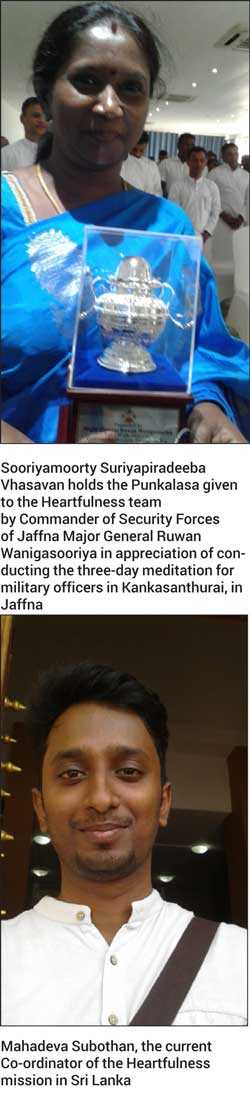
Meditation For The Military
Conducted by Dr. Kasthuri Venkatachalam, an Indian Heartfulness meditation trainer from Salem, Tamil Nadu, with 29 years of experience in facilitating Heartfulness meditation in India and abroad, the meditation session for the military focused on relaxation as well as the Heartfulness cleaning techniques, with an explanation that the ‘cleaning’ or purifying one’s mental and spiritual system is something that should be done daily to eliminate all accumulated complexities and impurities.
Anywhere in the world a soldier sacrifices a lot for his duty. They are away from their hometowns. They miss their family. This is a big sacrifice. Meditation practice therefore could be a great boon to them, giving inner resilience and this was how we shaped the meditation training. To bring resilience, happiness and harmony to the heart and promote human integration which are key purposes of the Heartfulness meditation method. Its core principal is based on love and compassion, the way of the Lord Buddha,” Dr. Venkatachalam explained.
Brother Subothan, in his explanation to the military officers, as to what the Heartfulness meditation is, emphasized that it is not part of any ‘religious’ tradition but solely a technique of exercising our minds towards unique deep spiritual stages of our hearts.
Video clippings were shown of Kanha Shanti Vanam, the Hyderabad-based global headquarters of the Heartfulness Institute which on 28 January observed the 75th anniversary of the organization. Said to be currently the world’s largest meditation center where 100,000 practitioners can sit and meditate at a time, it was explained that anyone can come to this center and reside free of charge for the purpose of meditation.
What matters is the spiritual capacity of every person to see oneself in another human being and know that our hearts are connected to everyone else and the whole of the universe. Changing the world starts from ourselves,” opined brother Subothan.
Varalakshmi Vijayakumar, an Indian Heartfulness meditation trainer and a psychologist by profession in her address spoke to the military personnel on the importance of work-life balance which they should focus on, given the commitments of their duty.
This Jaffna-based Heartfulness meditation was clearly a profound experience for everyone who participated.
To sit with over 200 military officers and consider them as brothers of the larger spiritual family and meditate with them was a profound experience as was the two days when I meditated with the Northern Commander, introducing him to the Heartfulness meditation,” opined Suriyapiradeeba.
In a roomful of meditating people, the energy is wonderful. It is this beautiful energy that was manifest during the Heartfulness meditation for military officers, with several of the officers giving their feedback to the trainers of the inner calm they felt and how the Heartfulness cleaning method helped them to have a better meditation experience.
Meanwhile, it is pertinent to mention the obvious humaneness and simplicity with which Major General Ruwan Wanigasooriya carries his official position which was not lost on the Sri Lankan and Indian visitors of the Heartfulness institute.
One take home from this meditation experience was that when we see ourselves as spiritual beings, the status quo of how we interact with each other changes and brings us closer to a beautiful path of love and peace that this world needs.
Demystifying Meditation
Kamalesh Patel in his book ‘Designing Destiny – The Heartfulness Way’ points out in chapter 4 on the topic of meditation: Simplicity is not a weakness. Purity is not a weakness. They are mighty signs if we allow them to be. As we nurture the subtle condition bestowed during meditation, over time they create a beautiful environment. Imagine what sort of environment can be created at home when we meditate, our family members meditate and our friends also come home and meditate. There will be so much lightness, peace and joy. Everyone will feel happy in that space.”
He further points out: An atmosphere that is created by our collective thoughts and feelings is called an egregore. When we all meditate together we create a subtle field of loving unity. And when enough people meditate, a particular tipping point in the egregore will be reached. Then the course of humanity will change.”
In the book ‘The Heartfulness Way’ by Kamalesh D. Patel and Joshua Pollock, it is stated under the chapter titled ‘Demystifying Meditation’: Through meditation, we are also able to better understand the wisdom of others who have walked the path before us. Unless we meditate, such knowledge tends to go over our heads. It does not resonate with our experience, so we cannot relate to it. Often a beginning meditator may read a spiritual book, but they may not understand much of it. If they read it again after having meditated for some time, they’ll start to find gems that they didn’t notice on the first read.”
The Heartfulness movement, currently headed globally by Kamlesh D. Patel, was introduced to Sri Lanka twenty years ago by Suntharamoorthi Chelliah, a Sri Lankan who established and co-ordinated the Sri Lankan chapter of this meditative path, until his retirement two years ago at the age of 80.
Those interested in Heartfulness meditation books or learning about the practice could contact Brother Subothan on 0777 076818.
(Suryamithra Vishwa is a Sri Lankan who strives to transcend beyond inherited birth identity. She cultivates trees in the central province as well as elsewhere in Sri Lanka and has a keen interest in comparative spirituality and indigenous knowledge. Her academic training has been in sociology and she is a curriculum writer and visiting lecturer in Mass Communication at a national university in Sri Lanka under her inherited family name. Her library of 20,000 books, of which a large number is on Ayurveda, agro forestry, healing, global literature, science, comparative religions and secular spirituality has been opened up for the public free of charge. Those interested in borrowing any book could contact 0812494285.)
The Samagi Jana Balawegaya experiment
March 7th, 2020by C.A.Chandraprema Courtesy The Island

The present state of the UNP after the presidential election of November 16, 2019 is in many ways reminiscent of the state the SLFP was in the wake of the defeat of 1977, when the latter experienced declining public support and disunity within its ranks. As we pen these words, the UNP is on the verge of a major split, with the possibility that the Ranil Wickremasinghe faction will contest under the elephant symbol and the Sajith faction under a different symbol. This is reminiscent of the way the SLFP split after the 1982 presidential election. Things are now moving with a momentum of its own. The Parliamentary election has already been declared. Applications have already been called for postal voting. The Elections Commission is to begin accepting nominations on Thursday this week (12 March) to close on 19 March. If the political parties are to hand in nominations before the closing date they will have all of ten days between now and that deadline to finalize their lists – which is arguably the most difficult part at any parliamentary, PC or local government election.
During the ten days that remain until nominations close, the two warring factions of the UNP will have to decide who will be on the national list and who will contest in the districts. Once the lists are finalized, they cannot be changed without more conflict. Hence the coming days will be crucial for both factions of the UNP and particularly for the Sajith Premadasa faction which is the breakaway group. The UNP under Ranil Wickremasinghe is at a slight advantage because they represent the established political party with the party symbol, the party headquarters and the party branch organizations or what is left of them. The Sajith Premadasa faction will face the additional challenge of having to build a political party from scratch on the eve of a parliamentary election. The Samagi Jana Balawegaya which the Sajith faction has set up has a name and a symbol and a significant group of UNP parliamentarians supporting it. But they don’t have any grassroots party organizations.
Can the SJB do an SLPP?
The expectation obviously is that the present grassroots party organizations of the UNP will become the grassroots organizations of the Samagi Jana Balawegaya. That may be so in certain places where the electoral organizer is very strong. But when the two factions of the UNP field separate lists, the greater likelihood is that the grassroots organizations will split along the factional faultlines. If the sitting member of Parliament in a district goes with the Samagi Jana Balawegaya, the UNP will most probably field a provincial councilor or a local government opposition leader in his place. The replacement will also be a person from the area, with links to the grassroots party activists. So no one in the Sajith Premadasa faction will be able to carry the entire UNP support base with them into the Samagi Jana Balawegaya. In the coming days, these practical realities will begin to dawn on members of the Sajith Premadasa faction and no one should be surprised if there are mass defections from the Sajith faction to the UNP before nominations close.
As this writer has pointed out previously in this column, even though the Samagi Jana Balawegaya has been inspired by the example of the Sri Lanka Podujana Peramuna, the Mahinda Rajapaksa model will not necessarily work for Sajith Premadasa. When Mahinda Rajapaksa was defeated in January 2015, he was the leader who had presided over what in this writer’s view was up to that time, the most successful government in Sri Lanka’s post-independence history. Intractable problems which had been festering for years were solved during that period. The FBI designated world’s deadliest terrorists were conclusively defeated, the Norochcholai and Upper Kotmale power plants which no government had the courage to go ahead with, were built. The government survived multiple global crises including the global food crisis of 2007, the global financial crisis of 2008-2009 which was the worst financial crisis since the Great Depression of the 1930s, and the high fuel price regime between 2010 and 2014. Despite the war and multiple glolbal crises, Sri Lanka’s per capita GDP in US Dollar terms increased threefold in the nine years that Mahinda Rajapaksa ruled the country.
When Mahinda Rajapaksa was defeated in January 2015, many people were shocked and angry. People from all over the country flocked to see the defeated leader at his house in Tangalle. This was the groundwell that led to the reorganization of the pro-Mahinda forces, the Nugegoda rally, the formation of the Joint Opposition and finally the SLPP. Sajith Premadasa does not have Mahinda Rajapaksa’s track record in government, nor does he have the groundswell of public support that Mahinda Rajapaksa had even in defeat. The only thing Sajith Premadasa has going for him is that in the run up to the presidential election, the vast majority of the UNP rank and file supported his candidacy over that of anyone else in the UNP. As this writer pointed out at that time, the rallies organized to promote Sajith’s candidacy drew vast crowds of party supporters and the party leadership simply could not ignore the signal sent by the rank and file as to who their candidate should be.
However that was in a context where the UNP rank and file actually thought Sajith Premadasa could win the presidential election. They thought that Sajith’s welfare and freebees approach combined with the support of the overwhelming majority of the minority votes would carry the day. But contrary to those expectations Sajith Premadasa was soundly defeated. In the defeated UNP, Sajith may still be the most feasible prime ministerial candidate, but whether that will confer on him the ability to ‘hollow out’ the UNP the way Mahinda Rajapaksa hollowed out the SLFP by contesting separately, is in doubt. There are several factors to be considered here. When Mahinda Rajapaksa and his supporters hollowed out the SLFP, that was done in stages and the circumstances were very different. One of the factors that enabled MR and his supporters to hollow out the SLFP was that after Maithripala Sirisena took over the SLFP, he made it a part of the UNP government.
Becoming the main
opposition force
Thus those who remained with Mahinda were from day one assured of becoming the main opposition force in the country. This is a key consideration which must never be lost sight of. In the context of the UNP, it should be noted that the Ranil Wickremasinghe faction has not become a part of the government and is still in the opposition. So there is no guarantee that the Sajith faction will be able to become the largest faction of the opposition. Members of the Sajith faction are trying to portray the Ranil faction as having an under the table deal with the government. Accusations like this can be made, but it’s obvious that the UNP faction led by RW is not a part of the SLPP government the way the Maithripala Sirisena led SLFP was a part of the yahapalana government. The Ranil Wickremasinghe faction is making the counter accusation that the Sajith faction is trying to split the UNP so that the SLPP gets a two thirds majority in Parliament.
The fact is that both these factions are in the opposition and so long as they remain there, they will share the opposition vote between them in the event that they contest separately. Last week, UNP leader Ranil Wickremasinghe attended a do organized by parliamentarian Mangala Samaraweera and lashed out at the SLPP led government and at Prime Minister Mahinda Rajapaksa characterizing the latter’s request made to India to reschedule Sri Lanka’s debt as a case of begging for alms. So neither of the two UNP factions has a monopoly over anti-government rhetoric. Another fact that has to be considered is that even after Maithripala Sirisena had made the SLFP an appendage of the UNP, and after the Sri Lanka Podujana Peramuna had been formed, once the SLFP contested the local government elections separately, they were able to garner a significant number of votes despite being weakened by their association with the UNP government. Even when the UNP and SLFP were contesting the local government elections separately, SLFP ministers were serving in the same cabinet with the UNP.

The fact that the SLFP managed to put up a better than expected showing at the 2018 local government elections even in such circumstances should be an eye opener for the Sajith faction. In fact even at the Elpitiya Pradesheeya Sabha election which was held just before the presidential election, the SLFP which had by that time formed a collation with the SLPP got over 5000 votes in that local government area. The situation may have changed now because the SLPP candidate has been elected President with an overwhelming majority and the SLFP has all but been swallowed up by the SLPP. But so long as these two parties remained distinct, the SLFP also managed to retain a reduced but still significant following despite the fact that Maithripala Sirisena was no match for Mahinda Rajapaksa as a leader. If the Samagi Jana Balawegaya contests separately, there is the possibility that the UNP will retain a very significant following.
If the SJB is to eclipse the UNP, getting half the UNP vote bank will not suffice, they will have to get at least three to four times the number of votes that the UNP gets the way the SLPP prevailed over the SLFP at the 2018 local government election. The SLPP victory left no doubt in the minds of voters, which party was bigger and had better prospects. Even as of this moment, all members of the Samagi Jana Balawegaya appear before the public in their capacity as members of the UNP. Sajith Premadasa is the deputy leader of the UNP and the others are UNP parliamentarians and that gives them some status among the UNP constituency. However the moment they file two separate lists, the UNP will have to remove them from the party and it is yet to be seen whether firstly, the parliamentarians who are now with Sajith have the appetite to sever their links with the UNP and launch themselves into the unknown, and secondly, whether the UNP voters will vote for candidates who are no longer officially in the UNP?
One wonders whether the SJB experiment has been well thought out. When Gamini Dissanayake and Lalith Athulathmudali took on President Premadasa, in the early 1990s, they both had personal followings in the UNP. Besides, after about 14 full years of UNP rule, the incumbency factor was weighing heavily on the UNP government. In a situation where the SLFP which was then the main opposition political party was not showing signs of promise, the breakaway from the UNP provided the dynamism that was needed to galvanize the opposition. In this case, it’s obvious that Sajith Premadasa never had the kind of personal following that his father R.Premadasa, Lalith Athulathmudali and Gamini Dissanayke had in the UNP between 1977 and 1991. A following gathered around him for the purpose of ousting party leader Ranil Wickremasinghe. A similar gathering was seen around Karu Jayasuriya not so long ago and Sajith himself was a part of that gathering around Karu! What we now see around Sajith Premadasa are not those personally loyal to Sajith, but a fluid body of politicians in search of a leader to oust the incumbent leader. If Sajith had refused to lead them, they would by now have found someone else to lead them.
A fluid body of dissidents
What will become apparent within the next ten days is whether the group that has gathered around Sajith not because they are personally loyal to him but only because they want to oust the incumbent leader will launch themselves into the wild unknown with Sajith as their leader. When Mahinda Rajapaksa was defeated, the majority of the MPs in the SLFP remained loyal to him. Even when Maithripala Sirisena who had taken over the control of the SLFP, deprived the MR loyalists of their party positions and electoral organizer positions, they still refused to abandon Mahinda. That was one of the great political acts of faith that we had witnessed in our lifetimes. For a politician to be deprived of his electoral organizer handle and to see it being handed over to someone else was the equivalent of death in political terms. All politicians are dependent on the electorates they nurse to get the critical base vote that will see them elected to Parliament. It is still a mystery to this writer as to how so many SLFP parliamentarians had the courage to stand by Mahinda Rajapaksa when they were being deprived of their very political lifelines.
We must remember that even though the Mahinda sulanga campaign to bring Mahinda Rajapaksa back into politics had begun 40 days after his defeat and had gathered momentum and there was a clear groundswell of opinion in favor of MR coming back into politics, the clearly ascendant Mahinda Rajapaksa faction in the SLFP/UPFA still thought it would not be feasible to contest separately without contesting under the UPFA. So the 2015 parliamentary election was fought by the SLFP/UPFA with Mahinda Rajapaksa leading the election campaign, but with Maithripala Sirisena leading the party and the Mahinda Rajapaksa loyalists being in the opposition and the Sirisena loyalists being in the government! The moral of this story is that even Mahinda Rajapaksa who was clearly the most popular politician in the country at that time, had to think twice before breaking away completely from the mother organization even though the mother organization was already tainted by the fact that it was in a coalition with the UNP. If a politician like Mahinda had to think twice, Sajith Premadasa should think ten times before contesting outside the UNP.
Of course, it has to be said that in the case of Mahinda Rajapaksa, one of the reasons that motivated his group to contest together with the Sirisena controlled SLFP/UPFA instead of breaking away to contest separately, was because there was the hope that the UPFA would be able to win the 2015 parliamentary election. So people tended to err on the side of caution. This may have come to pass, if Maithripala Sirisena had not sabotaged the campaign of his own political party by making the public announcement that he would not make Mahinda Rajapksa the prime minister even if the UPFA won the election and following this up by sacking the general secretaries of both the SLFP and the UPFA on the eve of the poll and replacing them with his own loyalists. With that, the whole rationale in contesting together and not splitting the SLFP/UPFA was vitiated.
In the present context, it must be said that neither the UNP nor the Samagi Jana Balawegaya has any hopes or illusions about being able to form a government at the forthcoming parliamentary election so the two factions don’t have to be cautious like the MR faction in the SLFP before the parliamentary election of 2015. However, this gives rise to the question whether they can afford to be reckless? They are after all fighting for a share of the same dwindling opposition pie. If the UNP vote is split between these two factions, there is the possibility that both factions will fall in between two stools in the districts.
A UNP clone led by Sajith?
Another issue that needs to be thought out is that what Sajith Premadasa is offering the people is a carbon copy of the present day UNP without Ranil Wickremasinghe and with a garnishing of welfare measures such as Janasaviya on top of Samurdhi, low income housing and various freebees. Poya Day religious observances will also be thrown in for good measure. Other than such superficial changes, the Ranil Wickremasinghe UNP will be continued as it is at present by Sajith Premadasa. The SJB will have much the same people and much the same policies. This writer has in fact pointed out on a previous occasion that when it comes to constitutional reform, Sajith Premadasa had accepted the TNA position in toto in his presidential election manifesto.
Apart from that, the same minor parties that drove the UNP into the ground, the ACMC, SLMC, JHU and TPA are also seen surrounding Sajith Premadasa. The question that all this raises is whether the people of this country have an appetite for a Sajith led UNP which is a clone of the Ranil led UNP but with the welfare garnishing mentioned earlier. The expectation of the individuals and political parties surrounding Sajith Premadasa appears to be that the garnishing will get them the power they need to implement what is essentially the Ranil Wickremasinghe agenda.
Another major factor that has to be considered is that, the Samagi Jana balawegaya will be splitting from the UNP literally in the middle of an election. In the case of the SLPP, they had at least two and a half years to set up grassroots organizations, to hold separate rallies, including the historic Galle Face May Day rally of 2017 before they had to face an election in February 2018. In contrast to this, the SJB will be moving away from the UNP without any time to get their act together. This will have an impact on the breakaway faction because they would not have had the time to set up an islandwide party network and will be completely dependent on the individual politicians associated with the SJB to run the election campaign for them. When the new party is dependent on individual politicians in that manner, there will be large parts of every district that is not covered by the SJB’s man in the area. All in all, one does not get the impression that the SJB faction has thought things through carefully.
UNP to contest all 22 districts at General Election
March 7th, 2020Courtesy Adaderana
The United National Party (UNP) has decided to contest all 22 districts at the forthcoming General Election.
The General Secretary of the party Akila Viraj Kariyawasam has informed this decision to the Election Commission.
In the meantime, a meeting on General Election 2020 is currently being held at the UNP headquarters, Sirikotha.
Speaking to Ada Derana, Kariyawasam stated that he would deliver a special statement following the conclusion of the said meeting.
President approves government’s expenditures
March 7th, 2020Courtesy Adaderana
President Gotabaya Rajapaksa yesterday (06) granted the legal authority to the Secretary of the Treasury to incur all the expenditures of the government including the cost of election for the period of three months starting from March 6, 2020.
This was in accordance with the power vested in the President by the Constitution.
Accordingly, the Ministries will be able to settle outstanding dues and other expenditures, the President’s Media Division (PMD) stated.
එජාපය වෙනම තරඟ කිරීම සමඟියට බාධාවක් – සමඟි ජනබලවේගයෙන් ප්රකාශයක්
March 7th, 2020උපුටා ගැන්ම හිරු පුවත්
එක්සත් ජාතික පක්ෂය ඉදිරි මහ මැතිවරණයට තනිව තරඟ කරන්නේ නම්, එය සමගිය කඩා බිඳ දැමීමක් බව සමගි ජනබලවේගයේ මහලේකම් හිටපු පාර්ලිමේන්තු මන්ත්රී රංජිත් මද්දුම බණ්ඩාර ප්රකාශ කළා.
ඒ කොළඹ අද (08) පැවති මාධ්ය හමුවකට එක්වෙමින්.
මැතිවරණ දිස්ත්රික්ක 22කටම එක්සත් ජාතික පක්ෂය තරඟ කරන බවට, එහි මහලේකම් අකිල විරාජ් කාරියවසම් අද ප්රකාශ කර තිබුණා.
ඔහුගේ අත්සනින් යුතු අලියා ලකුණ සහිත ලිපි ශීර්ෂයක් මගිනුයි අදාළ නිවේදනය මැතිවරණ කොමිෂන් සභාවේ සභාපති මහින්ද දේශප්රියට දැනුම් දී තිබුණේ.
කෙසේ වෙතත්, සමඟි ජනබලවේගයට සම්බන්ධ බොහෝ පිරිස් ඊට විරෝධය පළ කළ අතර, එහි මහලේකම් හිටපු පාර්ලිමේන්තු මන්ත්රී රංජිත් මද්දුම බණ්ඩාර කියා සිටියේ එක්සත් ජාතික පක්ෂ කෘත්යාධිකාරි මණ්ඩලයේ අවසරය මත සමගි ජනබලවේගය පිහිටුවූ බවයි.
එසේ තිබියදී වෙන වෙනම තරඟ කිරීම සමගියට බාධාවක් බවයි.
මේ අතර, සමගි ජනබලවේගයේ පක්ෂ කාර්යාලය සිරිකොත පක්ෂ මූලස්ථානයට ආසන්නව ස්ථාපිත කර තිබෙනවා.
ඒ අනුව, සමගි ජනබලවේගයේ කාර්යාලය එහි නායක සජිත් ප්රේමදාසගේ ප්රධානත්වයෙන් ලබන සඳුදා ආරම්භ කෙරෙන බව සදහන්.
පාස්කු ප්රහාරයට සම්බන්ධ ඉහළ සිට පහළට සියලුදෙනාගෙන් ප්රශ්න කළ යුතුයි – කාදිනල් හිමිපාණන්
March 7th, 2020උපුටා ගැන්ම හිරු පුවත්
පාස්කු ප්රහාරය සම්බන්ධයෙන් රජයේ ඉහළම තනතුරු දැරූ පුද්ගලයාගෙන් පවා ප්රශ්න කළ යුතු බව අගරදගුරු අතිඋතුම් මැල්කම් කාදිනල් රංජිත් හිමිපාණන් පවසනවා.
73 වන කොළඹ අගරදගුරු පදවි ප්රාප්තිය වෙනුවෙන් රාගම – බැසිලිකා දේවස්ථානයේ පැවති ළමාදින සමරු උත්සවයකට එක්වෙමින් උන්වහන්සේ මේ බව සඳහන් කළා.
උන්වහන්සේ එහිදී වැඩිදුරටත් කියා සිටියේ පාස්කු ප්රහාරයට සම්බන්ධ ඉහළ සිට පහළට සියලූදෙනාගෙන්ම අපරාධ පරීක්ෂණ දෙපාර්තමේන්තුව ප්රශ්න කළ යුතු බවයි.
එජාප අර්බුදය සහ වත්මන් දේශපාලන තත්ත්වය ගැන කියන කතා
March 7th, 2020උපුටා ගැන්ම හිරු පුවත්
එක්සත් ජාතික පක්ෂයේ මතුව ඇති අර්බුදය හා වත්මන් දේශපාලන තත්ත්වය සම්බන්ධයෙන් පක්ෂ විපක්ෂ දේශපාලනඥයින් අදත් අදහස් පළකළා.
සත්ව සුබසාධනයට නව පනතක් සකස් කිරීමට අගමැතිගෙන් උපදෙස්
March 7th, 2020උපුටා ගැන්ම හිරු පුවත්
සත්ව සුබසාධනය සඳහා නව පනතක් සකස් කරන ලෙස අග්රාමාත්ය මහින්ද රාජපක්ෂ බලධාරීන්ට උපදෙස් ලබාදී තිබෙනවා.
සත්ව සුබසාධන සංගම් සහ අග්රාමාත්යවරයා අතර පැවති සාකච්ඡාවකදී මෙම උපදෙස් ලබා දී ඇති බව සඳහන්.
අරලියගහ මන්දිරයේදී ඊයේ (06) මෙම සාකච්ඡාව පැවැත්වුණා.