KAMALIKA PIERIS
Revised
26.6.20.
One way of
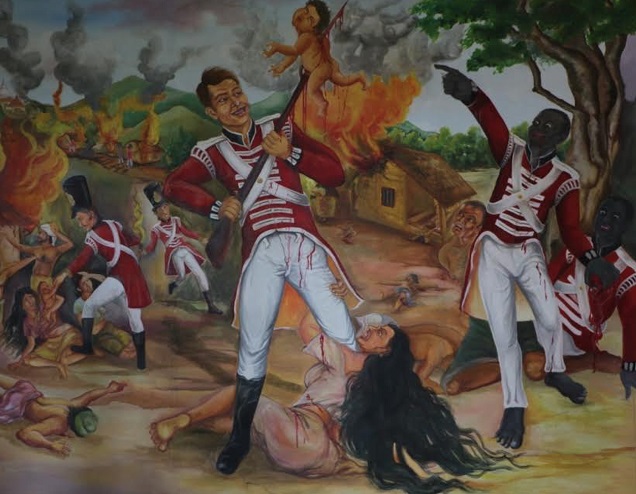
erasing the Eelam victory was to show that the Sri Lanka army consisted of
brutal killers. They killed out of malice. They killed ‘innocent Tamils’ who
were simply going about their daily activities.
The army is also
accused of political killings. The assassination of Sunday Leader
Editor Lasantha Wickrematunge (2009), the abduction and torture of journalist
Keith Noyahr (2008), the attacks on journalists Upali Tennakoon and Namal
Perera were carried out by a military intelligence team operating from the
Tripoli Army camp in Slave Island, said the media.
Eelamists
pounced on the army killings. University Teachers for Human Rights, Jaffna
(UTHRJ) said it had compiled elaborate evidence and information for crimes
committed by Army, LTTE and Indian Peace Keeping Force during the Eelam wars.
Amnesty International and Human Rights Watch pushed for inquiries on such
killings. UN Human Rights Council was kept informed. Here is a list of such killings.
1990
It
is alleged that in 1990 Army personnel assembled nearly 200 Tamil civilians,
including children, from Sathurukondan and nearby villages in Batticaloa and
summarily killed them. This was described as one of the most gruesome incidents
in the east. Fr. Miller’s Peace Committee recorded an eyewitness account from
the only survivor of the massacre. It
is three decades now, reported the media in 2019, but justice has not been
done.
1998 /1
Former Army Major Dickson Rajamanthree and an
employee of the camp named Priyantha Rajakaruna had assaulted and murdered
Gnanasingham Anton Gunasekaram, from Gurunagar area in Jaffna, on September 10
1998, after taking him in for questioning. The judicial autopsy reports
revealed that the deceased had suffered 21 cut wounds to the body. Following a
lengthy trial, these two were sentenced to death by the Trincomalee High Court
.The verdict was delivered by the High Court Judge Manikkavasagar Illancheliyan
in 2016.
1998/2
Colombo High Court, in 2016, imposed
two years RI suspended sentence on a retired army officer who had negligently
shot an LTTE suspect who was trying to
escape from Pt Pedro camp causing the latter’s death in 1998. The LTTE suspect
had tried to escape with his handcuffs on.
A fine of Rs 10,000 was also imposed on the officer. He was ordered to
pay compensation of Rs 2,000,000 as compensation to the nearest relative of the
deceased, in default of a prison term of 12 month.
2000
R.M.Sunil
Ratnayake, a staff sergeant attached to Sri Lanka Army was sentenced to death
by the Colombo High Court Trial-at-Bar bench in 2015. He was found to be guilty
of murdering eight Tamil civilians at Mirusuvil in Jaffna on December 19, 2000.
The eight civilians were Gnanapalan
Raviveeran, Sellamuttu Theivakulasingham, Vilvarajah Pratheepan, Sinniah
Vilvarajah, Nadesu Jeyachandran, Kathiran Gnanachandran, Gnanachandran Santhan
and Vilvarajah Prasath.
Due
to the war, the villagers of Mirusuvil, a village in Jaffna, had abandoned the
village and were living some distance
away since Mirusuvil came under fire. They however, kept an eye on their
abandoned houses and would visit them periodically, to clean them and to
collect whatever produce they could find. The visits were done during the day
time and they ensured that they left before dusk.
On
December 19, 2000, 8 villagers went back to Mirusuvil to check on their property.
They delayed to leave and were stopped
by two soldiers. The villagers were made to kneel and were questioned. One
soldier went away and returned with four other soldiers. They had assaulted the
8 villagers.
The
sole witness, Maheswaran said he had been blindfolded with his sarong and
assaulted. He had lost consciousness temporarily. The soldiers had tossed him over a fence and
his blindfold had come off. He had run home and reported the matter. His family
informed the EPDP.
Meanwhile,
Major Sydney de Soyza of the military police in Jaffna had received orders from
Brigadier Thoradeniya to inquire into the missing persons. He
was told that a Special
Operations Unit of the 6th Gajaba Regiment had recently been sent to Mirusuvil.
It had reconnaissance unit as well. Major Soyza questioned Maheswaran and recorded his statement.
Maheswaran,
his parents, an EPDP representative, the Grama sevaka and military police went
to the scene of the crime. Some soldiers came to see what was happening and
Maheswaran identified two as his attackers.One was Lance Corporal Ratnayake. The area had
been searched on the orders of the Magistrate and the eight bodies found. It
was established that those bodies were of the persons who accompanied Maheswaran
on December 19 to visit Mirusuvil.
The
trial went on for 13 years. 14 persons were charged initially, nine were
acquitted and four were discharged. Only one was left. Supreme Court in 2019
affirmed the conviction and death sentence of Ratnayake.Supreme
Court concluded that the judges of the Trial-at-Bar were justified in treating
witness Maheswaran as a credible witness and acting on his testimony.
Judgment was
delivered on the 25th of June, 2015. Ratnayake was found guilty and was
sentenced to death. On 26 March, 2020, Sunil Ratnayake who was on death row was
granted a Presidential pardon by President Gotabaya Rajapaksa .There was a
spate of objections.
The
International Commission of Jurists, through its Regional Director for Asia and
the Pacific, said it welcomed the lifting of the death sentence, but condemned the full pardon. It said it was a blow to
the victims of these violations. It was
incompatible with international standards and thirdly, reinforces the view that
the military is exempt from any accountability, even for the most heinous
crimes”. The ICJ has consistently raised
concerns about this and fears that this
presidential pardon may be the first of the many to come
Spokesperson
for the UN High Commissioner for Human Rights in Geneva said this was one of the rare human rights cases from the Eelam war
that went all the way to a final
conviction. The Presidential pardon therefore
is an affront to victims and yet another example of the failure of Sri
Lanka to fulfill its international human rights obligations to provide
meaningful accountability for war crimes, crimes against humanity and other
gross violations of human rights.
Human Rights
Watch objected to the pardon and said
that this was one of the very few cases of security force personnel being
criminally punished for civil war-era atrocities, despite the huge number of
credible and extremely serious allegations.
The Human
Rights Commission of Sri Lanka (HRCSL) wrote to the President saying that the
pardon sends a negative message. The
death sentence should have been commuted to long term imprisonment.
Three
Fundamental Right violation petitions have been filed challenging the pardon. Tamil families of
the murdered villagers have filed one petition. Ambika Satkunanathan has filed
another. She said, The President’s power to grant Pardon cannot be arbitrarily
used and should not be exercised for collateral purposes,” it added, stating
that the move was arbitrary, capricious, irrational contrary to the principles
of Natural Justice” and tantamount to Contempt of Court”.
Centre for Policy
Alternatives (CPA) filed a third application. The President is required to
exercise any power reasonably, and in the public interest. The decision to
pardon Ratnayake is arbitrary, unreasonable, ultra vires and has not
been done in the interest of the public interest. There was no miscarriage of justice. To pardon a convict of a crime of this
gravity when 5 judges of the Supreme Court have affirmed his sentence
undermines the independence of the Judiciary and is an affront to the rule of
law said the CPA.
Others
welcomed the pardon. The president must be commended for pardoning Sunil
Ratnayake, they said. Court has found just one person, Corporal Sunil Ratnayake
guilty of a crime committed by several persons said critics. Under these
circumstances, pardoning the only survivor is the correct thing to do. Ratnayake
and his family must be compensated for the grief they went through.
This pardon
as nothing new, they said. A large number of Tamil terrorists who killed scores
of civilians have received Presidential pardon. President Sirisena pardoned
convicted LTTE soldier Sivaraja Jenivan at a ceremony too in 2016. Others who have committed murder, arson,
terrorism and robbery have been pardoned over the years, they added.
The case of
Sunil Ratnayake is interesting because it carries a political twist and lots of
political bias, said critics. There was a change of government in 2001,
installing the pro-West government of Ranil Wickremasinghe. This was legally
questionable government. In 2002, this government agreed to try the arrested
army officers without a jury.
This group
then proceeded to analyse the trial and the judgment. To start with, Ratnayake
did not commit a war crime, said critics. He was charged for murder and other
offences but not for war crimes. Furthur, the incident happened at a time when
LTTE infiltrated into villages in the north with a view to gather information
LTTE waswell known to use civilianstodo their terrorist acts. Using civilian ‘spotters” was a common tactic of
Tamil terrorists.
The court verdict was based on circumstantial
evidence given by the sole survivor, Maheswaran. On one flimsy ‘witness’
account of a man whose eyes had been bound by his sarong, but got thrown to a fence where his blindfold got removed allowing him to see
Sunil Ratnayake. The witness then managed to escape from 14 soldiers. If these
soldiers could kill 8 why did they spare this one ‘witness’ asked critics.
Ratnayake
has been convicted of a crime which could not have been committed by a single
individual. Supreme Court stated It is highly improbable if not impossible for
a single person to commit all these acts. It is reasonable to infer that these
acts have been committed by more than one person. One man, by himself could not
have committed all the acts, said critics. Ratnayake could not have, by
himself, killed eight civilians, dug a hole large enough to bury them all in
one place, and dug another to bury the bicycles, they added.
There were
four others also charged with Ratnayake, but they were acquitted on grounds
that their identities cannot be established.
Only Ratnayake was left. he was found guilty of all the crimes. Court
has sentenced Ratnayake to death, while the others who presumably participated
in the crime were acquitted.
2006/1
On January 2,
2006, five young Tamil men aged 20 were
gunned down, near the Gandhi statue at the sea front in Trincomalee. Two other students suffered injuries
but survived. The five victims were Manoharan
Rajiharan, Yogarajah Hemachandra, Logitharajah Rohan, Thangathurai Sivanantha and Shanmugarajah Gajendran all aged 21.The
two injured youths were Yogarajah Poongulalon and Pararajasingham Kokulraj. They managed to escape
by feigning death.
The post-mortem conducted by Trincomalee JMO
Dr. Gamini Gunatunga determined that the five had died from gunshot wounds.
Three had been shot in the head at close quarters while two died from shots to
the chest and abdomen. Some had injuries that were not caused by
gunshots. Trincomalee Magistrate V. Ramakamalan conducted an inquiry and
recorded an interim verdict of gunshot injuries.
D.B.S .Jeyaraj
reported that the Gandhi statue roundabout where the
Dockyard Road and Fort
Frederick Road intersected had an important check point close by,
manned by Army, Navy and police personnel. There were three more check posts
manned by the Navy within a 100-metre radius.
Almost as if on cue a security force truck
trundled in quickly, continued
D.B.S. Jeyaraj. The occupants of the truck zoomed in on the
seven Tamil youths. They surrounded them and forced them to kneel down. They
started checking their ID cards. Thereafter, they began assaulting them. They
were then put aboard the truck and repeatedly assaulted.
At this point, some more security personnel on
motorcycles and in a land rover arrived. There was excited discussion in
Sinhala among the new and old arrivals. The youths could only hear the noise.
Suddenly, they were kicked and pushed out of the truck. Even as they fell, they
found that the entire area was now pitch dark. The lights in the vicinity had
been turned off. The youths were now hit again and forced to kneel down.
After some more rounds of assaulting,
the youths were forced to kneel down again. Firearms were taken out and
brandished. The youths were told they were going to be killed as a warning to
the Tigers in Trincomalee. The innocent youths began wailing and pleading.
Their pathetic cries were heard far and wide, reported D.B.S. Jeyaraj.
There were more than a hundred people in the
vicinity when all this started happening. But police and Navy personnel
cordoned off the area and forced the people consisting of vendors and others
relaxing on the beachfront to kneel down or squat or lie prostrate on the
ground. Some could however see and hear what was going on. Almost everyone
heard the report of the grenade explosion and the subsequent gunfire reports, continued D.B.S.Jeyaraj.
After playing cat and mouse for a while, the
assassins now began firing. Two of the youths were shot behind the ear. One was
shot in the back of the head. The other four then scrambled to their feet and
made a desperate attempt to escape by running away. They were mowed down by
gunfire. They were shot in the chest, abdomen, shoulders and thighs and then
collapsed. A little while after the firing was over, a grenade was thrown at
the still bodies. It proved a dud and did not explode, concluded D.B.S. Jeyaraj.
Tamil Guardian” said the
students had been pushed on to the road. They had then been forced to lie face
down and shot. Navy personnel
had closed off all exits to the beach, no one was allowed in or out. Then, a military jeep rolled in
with 10 to 15 uniformed armed men shouting in Sinhalese. The men, later
identified as members of Sri Lanka’s police Special Task Force (STF), proceeded
to assault the students with their rifle butts. Suddenly
a grenade was thrown and fell near my feet,” said Poongulalon, I ran about 10
metres and fell down injured.”
Ponnuthurai Yogarajah, the father of Hemachandran had run to the place. He was stopped by Sri Lankan troops at a nearby
checkpoint.. He told UTHR-J that he was struck by military personnel who forced
him to the ground. Soon
after, masked men, possibly belonging to the STF, arrived and began to beat
him. Lying face down on the ground, he
heard gunshots.
They were not shots fired upwards, but had the distinct sound of shots fired at the ground,” reported Tamil Guardian”.
Later at the hospital, three uniformed
police officers and six or seven masked men with guns had approached
Dr. Kasipillai Manoharan ,father of Rajiharan. They demanded
that he sign a statement admitting his son was an LTTE cadre who had been
killed in an explosion. An angry Dr Manoharan refused. He left the hospital and
later returned with the head of the Sri Lanka Monitoring Mission (SLMM) in the
Trincomalee district
Arthur Tveiten who had declared This is murder, these boys have not
been killed by explosion, these
are gunshot wounds” reported Tamil Guardian”.
Tamil Guardian” said that its account was based on the testimonies collected by Together Against
Genocide, UTHR-J and Amnesty International. University Teachers for Human
Rights-Jaffna had compiled elaborate
evidence and information pertaining to the case.
Weeks later, a Tamil trishaw
driver and Tamil photojournalist were killed
by
unknown” persons. The trishaw driver was an eye-witness to the incident
and had been prepared to testify in a trial. Subramaniyam
Sugirdharajan, a ‘Sudar Oli’ journalist, had accompanied Dr Manoharan to the
mortuary and published
incriminating
photographs of the victims showing they had been shot dead point blank. A 20-year-old asylum seeker , now in
Christmas Island , who had been a witness to the events that evening, said he was beaten, imprisoned and eventually
forced to leave Sri Lanka .
According to
‘Tamil Guardian” amidst the mass of vehicles and soldiers that
Dr Manoharan could see, one stood out. A grey unmarked pick up vehicle had been
sat parked further ahead, watching whilst events were unfolding. Inside sat SP
Kapila Jayasekera. I have no doubt that
Kapila Jeyasekera is responsible for killing my son” said Dr Manoharan,
seven years after the murder. Kapila Jayasekera
was promoted to DIG
in the Ampara district
in 2013. (
https://www.tamilguardian.com/content/still-searching-justice-13-years-trinco-5-killings)
Family members of the victims were
pressurized to keep silent. Dr Manoharan, said he
received anonymous calls after he testified at Magistrate Court, that he and his family will be killed. The house was pelted with stones. In June
2006 threats intensified, Dr Manoharan and his
family, fled abroad and the
investigation stalled.
After the inquest, 11 STF had been arrested
but were released when it was found that the bullets did not match their
authorized firearms. UTHR Jaffna had reported that a witness said he had seen
two naval officers arrive by motorbike
carrying three guns and they gave
one of them to STF, before students were killed.
On February 12, 2006, twelve
officers of the Special Task Force (STF)
and an assistant Superintendent of Police (ASP) were arrested in
connection with the killings. The CID had cited 36 witnesses. As the case progressed, it became
apparent that the prosecution was finding it difficult to produce credible
witnesses. Some of the key witnesses including the two survivors who were
eye-witnesses and the families of the killed students had left Sri Lanka due continuous threats and
consistent harassment.
After
protracted hearings, Trincomalee Chief Magistrate M.M. Mohammed Hamza acquitted
all thirteen of all charges. The magistrate ruled that there was insufficient evidence to continue the case .
But in 2018, Yahapalana government said it was planning to seek a fresh trial since it was
now possible to give evidence on Skype, “which
meant that those abroad could give evidence. We could not proceed with the case
as the main witness was overseas and was not in a position to support
proceedings. The case is now progressing as new reforms have allowed the use of
Skype evidence,” Yahapalana said.
In 2008 Dr Manoharan had testified
before the Presidential Commission of Inquiry to look into 16 cases of
‘serious HR violations’. He testified from abroad via video conferencing.
This killing
has since come to be known as the ‘Trinco five’. The
“Trinco 5” case became a rallying point for human rights
activists The dead boys are remembered at Trincomalee’s
beach front at the dawn of every new year.
The Sri Lanka Human Rights Commission
appointed former High Court Judge T. Sunderalingam as a special Rapporteur to
probe the killings. His report dated March 31, 2006 was not publicized due to
some procedural hassles and other issues at the HRC. The official” fate of
that report remains a mystery. Subsequently, extracts of the report were quoted
by human rights organisations and activists in their writings, said D.B.S.
Jeyaraj.
Trinco 5′
is one of the highest profile killings in Sri Lanka to receive
international attention, said critics. The Trinco five massacre is not such a
difficult case,” commented James Ross, Human Rights Watch’s Legal and Policy
Director.
In 2012 over 700 activists in New York
demanded justice for the killings and condemnation came from human rights organisations across
the world. “Trinco
5” figured at UN Human Rights Council sessions of 2013 with calls for Sri Lanka to bring the
perpetrators to justice.
Two of the parents Dr. Kasipillai Manoharan,
the father of Ragihar and Aiyamuttu Shanmugarajah, the father of Gajendran were
in Geneva during the UN
Human Rights Council sessions in March 2013 and participated in several
meetings and conferences held on the sidelines. They pointed out that no action
had been taken for seven years. Their impassioned pleas demanding justice for
their children made a profound impact in Geneva.
Dr. Manoharan, attended the UN Human
Rights Council annual review meeting in March 2013 to demand justice for the
murders. Dr Manoharan, broke down in tears while speaking at this meeting. Seven years have gone after the brutal
killings of the students, but so far justice is not served.”
Speaking
at the UN Human Rights Council in Geneva, Dr Manoharan told member states, With
all the pain of losing my son Ragihar, I seek your help and that of the Human
Rights Council to move the investigation of the murder of the five young men in
Trincomalee to the international level because I have no hope for justice in
Sri Lanka”.
The Trinco five” is listed in the 2014 UN High Commissioner for Human
Rights report on Sri Lanka and has been raised repeatedly in international
forums. in 2018 There was a tweet by US Ambassador Atul Keshap
on the matter.
2006/2
on August 4, 2006, the bodies of 15 employees of Paris-based Action Contre La Faim (ACF, Action
Against Hunger) were discovered lying face down on the front
lawn of ACF’s Muttur office. They had bullet wounds to head and neck , showing
that they had been shot at close range,
execution style. Bodies of two staff
members were found later in a car
nearby, making a total of 17. The dead
consisted of one Muslim and 16 ethnic Tamils, including 4 women.
ACF said the
incident had occurred in
the midst of the fighting between government forces and the separatist LTTE for
control of Muttur. ACF said it had lost contact with its mission
in Muttur at around 7am on 4 August 2006, as fighting raged around it. But ACF staff were not killed by stray
bullets. They were deliberately targeted, despite the fact that they were
wearing white ACF T-shirts and were not armed. they had been lined up, forced
to kneel and each shot in the head. ACF demanded an international inquiry.
The Sri
Lankan government
rejected accusations by ACF that the military was responsible for
the massacre of 17 aid workers in Muttur. Here is its statement.
The content
of the Press Release reportedly issued by ACF on 3 December 2013 contains
allegations of a very serious nature implicating the security forces of the
country.If the ACF had in its possession
evidence which could bring the perpetrators of the crime to justice, the first
thing they should have done was to produce that evidence, not withhold such
evidence for almost 7 years.The fact that they did not come up with so called
evidence and chose instead to release a public report on the matter, calls to
question the motives of the organization in withholding such evidence.
This is
another instance of a pattern which has emerged since the end of the conflict
where certain organizations level allegations against the Government of Sri
Lanka without providing sufficient
details to enable an investigation. These accusations are then repeated in
several other documents, by different agencies, thereby forming an opinion
which is then propagated, without substantiation.
The Government of Sri Lanka has not been provided with the evidence which is claimed to be in
the possession of the authors of these reports.ACF concludes these allegations
with a call for an independent international investigation.The Government
remains committed to conduct impartial and comprehensive criminal
investigations and domestic inquiries into any complaints and information
received, relating to alleged perpetration of crimes by members of the armed
forces and the police.” ( end of statement)
In July 2007,
President Mahinda Rajapaksa established the Presidential Commission of Inquiry
to investigate 16 major human rights cases, including the ACF case. Families of
ACF workers who testified before the Commission reported threats by
security force personnel.
The Commission’s
full report was not released until September 2015. while stating it had
insufficient evidence to determine the perpetrators of the ACF killings, it
effectively exonerated the army and navy in the massacre and indicated that
LTTE forces or Muslim militia carried them out.
The ACF deaths
were publicized by international organizations interested in Sri Lanka . Sri
Lankan authorities have failed to bring to justice those responsible for
the execution-style killing of 17 aid workers 13 years ago, Human
Right Watch said. “Thirteen years have not brought the Sri Lankan police
any closer to bringing to justice those responsible for the summary execution
of 17 aid workers,” said James Ross, legal and policy director at
Human Rights Watch. “The ACF case shows the need for the government to
seek international judicial assistance to prosecute these and other
killings.”
University
Teachers for Human Rights (UTHR), released on April 1, 2008, their “Special Report No 30”,
which dealt exclusively with the
massacre of ACF staff. They published detailed findings on the Muttur
killings, based on accounts from witnesses and weapons analysis that
implicate government security forces present in the area. They allege that two
police constables and Sri Lankan naval special forces commandos were directly
responsible, and that senior police and justice officials were linked to a
cover-up.
UTHR names one
member of the Sri Lankan Home Guard, now the Civil Defence Force, and two
Police Constables based in the Muttur Police Station as perpetrators, but adds
that several Sri Lanka Navy Special Forces were part of the group that entered
the ACF compound and remained passive as the ACF staff were murdered.
They
were killed by ‘unidentified attackers, believed to be member of the Sri
Lanka security forces’ said Amnesty International . US embassy said that members of Sri Lanka’s Special Task Force, and
the Muslim Home Guard, were the likely perpetrators.Kamal Gunaratne in his book Road to
Nandikadal (2016) said ‘I can say with responsibility that the army was not
involved in this cowardly act.
2006/3
TNA
Parliamentarian Nadarajah Raviraj and his police bodyguard, Sergeant Lakshman
Lokuwella, were both fatally shot, on November 10, 2006, when their car was
passing through Narahenpita in Colombo. Five naval
intelligence officers, were indicted in
respect of the shooting and killing All were acquitted. Attorney General sought a
retrial. He appealed seeking to set
aside the High Court order, which acquitted the five naval intelligence
officers, The jury was
mis-directed and any case couldn’t judge this, the AG said. Trial process was not appropriate and there
were several deficiencies in the summing up of the judge.
2007
The Attorney
General, in September 2019, indicted in the Colombo High Court ,former Navy
Commander Admiral Wasantha Karannagoda, Rear Admiral D.K.P. Dassanayake and 12
other naval officers with abduction and disappearance of 11 youths in 2008 and
2009. They were charged with kidnapping
for ransom, illegal detention and murder. This investigation has come under the
scrutiny of the Geneva-based United Nations Human Rights Council (UNHRC).
The alleged
disappearances came to light, in early 2009, soon after the successful
conclusion of the war. Navy Commander
Karannagoda initiated an inquiry after receiving representations from a close
relative of one of the missing persons. Karannagoda had made a written complaint to the CID on May
28, 2009, against his personal security officer, following which the CID was
able to uncover the Navy’s involvement in the abductions. Karannagoda had reported the recovery of some
national identity cards and other items belonging to the missing persons, from
his security officer’s locker.
The CID
initiated a fresh investigation after the change of government in January
2015.The CID recorded statements, from over 50 officers. Several Navy personnel
too had given evidence confirming the detention of these youths.
In 2008, 11
youths, Kasthuriarachchilage John alias John, Rajiv Naganathan alias Malli,
Pradeep Vishvanathan, Tillakeshwaran Ramalingam, Mohomed Sajith, Jamaldeen
Dilan, Amalan Leon, Roshan Leon, Antony Kasthuriarachchi, Thyagaraja Jegan and
Mohomed Ali Anver alias Hajiya, were
abducted from Kotahena and other suburbs of Colombo by the navy. The victims
were taken into custody, claiming that they had connections with the LTTE.
The first
arrests were made on September 17, 2008. An intelligence team had obtained an
open warrant and raided a house near the Dehiwela Police Station and arrested,
Rajiv Naganathan, Pradeep Vishvanathan, Thilakeshwaran Ramalingam, Mohommed
Jilan and Mohommed Saajith.
The 11 youths were held at the ‘Pittu Bambuwa’
jail, then at the Naval camp in Chaitya Road, Colombo
Fort and
finally transferred to ‘Gun Side’, in the Ocean Science Faculty premises
of the Naval Command in Trincomalee.
It appeared
that a group of naval officers had
carried out the abductions to extort
money. One of the abducted youths, Rajiv
Naganathan had been in contact with his parents. The Navy soldiers guarding
these youths had lent them their mobile phones. Rajiv’s mother said a man
calling himself Annachchi had kept calling her asking for Rs. 10 million as
ransom in order to release Rajiv. Information
on the financial position of this family had been provided by Anver Ali, alias
‘Haajiyar,’ who was in the intelligence service at the time. Anvar Ali was a resident of Dehiwala. He too
disappeared in 2009.
in 2020, Former Commander of Sri Lanka Navy,
Wasantha Karannagoda, told the Presidential Commission of Inquiry appointed to
probe into allegations of political victimization of public officials during
the Yahapalana government, that he had
merely made a police complaint about the abduction of 11 youth.
Yahapalana government twisted evidence to make him the chief suspect in the
case. The Criminal Investigation Department (CID) tried to have me arrested.
They said that the offence was a war crime said Karannagoda. “
The inclusion of Captain (now Commodore),
D.K.P. Dassanayake in this case is also easy to understand. Dissanayake has
played a very significant role in containing the LTTE .he is mentioned many
times in Karanngaoda’s book ‘Adhistanaya.’ When Dassanayake was at Chalai in 2009 to
intercept LTTE movements, he had carried out a clandestine operation, overseas,
with a small Navy team, with the backing of the DMI. Dassanayake’s
team had commandeered an LTTE owned ship ‘Princess Cristina’, anchored in a
foreign harbour, and brought it into Colombo harbour, in Dec 2009.
2010
In November 2019, the Colombo Special
Trial-at-Bar served indictments on nine army officials over the allegations of
‘kidnapping and conspiring to murder’ journalist Prageeth Eknaligoda between
January 25 and 27, 2010. The abduction and suspected murder of Eknaligoda, was
a ‘politically motivated’ crime.
The first complaint of the disappearance of
Journalist Eknaligoda was received by the Homagama police on January 25, 2010.
Though the investigations had been carried out by both the Homagama police and
the Colombo Crime Division, the inquiry did not proceed. Subsequently, the
investigation was taken over by the Criminal Investigation Department.
The CID, which has been pursuing the Eknaligoda
abduction case since 2015, have reported several instances of destruction of
vital evidence pertaining to the crime and obstruction of justice by the Sri
Lanka Army to the Homagama Magistrate’s Court, where a Habeas Corpus inquiry
was under way.
Prageeth Eknaligoda,
a cartoonist, working as a freelance journalist for the website Lankaenews.com was abducted twice. Ekneligoda was first abducted on August 27,
2009 and released the following day.
He
was thereafter reported missing
on January 24, 2010. It is said that he was abducted
by pro-government supporters because he was investigating the alleged use of
chemical weapons, by the
government of Sri Lanka. He had been a fierce critic of President Mahinda Rajapaksa .
Nine years after Eknaligoda disappeared
without a trace, investigations have uncovered a gruesome abduction plot
allegedly orchestrated by a military intelligence unit operating out of the
Giritale Army camp, reported
the media in 2019. It
appears that former Defence Secretary Gotabaya Rajapaksa
had allegedly given the command to abduct and later, kill Eknaligoda.
The elaborate abduction trap set for Prageeth
Ekneligoda begins in the year 2001, when the journalist travelled to Madhu,
Mannar with a Tamil politician who is
today an MP, said the media. In Madhu, the politician introduced Ekneligoda
to an LTTE cadre known as ‘Thavendran’ an alias for Sumathipala
Sureshkumar. This Sureshkumar was a former LTTE who was thereafter recruited by the Sri Lanka army as an intelligence
operative. Sureshkumar was instructed by his military intelligence handlers to
remain in contact with Eknaligoda.
Sureshkumar In a confession under oath before
the Homagama Magistrate, said that he was told that on the orders of Secretary
of Defence Gotabaya Rajapaksa, they were to facilitate the abduction of
Prageeth Ekneligoda by tricking the journalist into a meeting with an
undercover military intelligence operative.
Ekneligoda was kidnapped and brought to
Giritale camp on January 24, 2010, from Colombo. He was handed over to
Sureshkumar’s military intelligence handler Sergeant Ranbanda. Sgt Ran Banda confessed all, hoping to turn crown
witness.
Sgt Ranbanda’s confession helped investigators
to pick up the next sequence of the abduction.
Ranbanda had been ordered by his commanding officer to interrogate Eknaligoda
about several obscene cartoons he had drawn of President Mahinda Rajapaksa and
his brother, the Defence Secretary. Sgt
Ranbanda interrogated the journalist, who admitted to being the artist behind
the cartoons. The interrogation was observed by two corporals.
An LTTE member, Edirimanasingham
Arichchandiran, who was at the Giritale Camp said that Eknaligoda was badly
treated. he was kept in cell where he could not ‘satisfy even his sanitary
purposes’.
Eknaligoda was also questioned by others. he was
blindfolded most of the time, when interrogated, but on several occasions, the
cloth was removed and Eknaligoda was on a position to identify the people who
were questioning him, said Ranbanda. Eknaligoda
was blindfolded and taken away from Giritale. Sgt Ranbanda told the Magistrate
he never saw Ekneligoda again.Thereafter there are no more witnesses who can
testify to having seen or heard from the journalist again, reported the media.
CID investigators believe Ekneligoda was
murdered in Akkaraipattu, and his body disposed of in Ampara. No trace of
Prageeth Ekneligoda has ever been recovered in Giritale or Akkaraipattu by CID
sleuths so far.
Four suspects had
been arrested in 2015. All four suspects strongly deny having
travelled to Akkaraipattu. But investigators have mobile phone records that
place them n Akkaraipattu from January 25-26, 2010. The CID has also found
records from an obscure army camp in Akkaraipattu which indicated that their
vehicle had stopped for refueling inside the camp on January 26, 2010.
According to the prosecution, the Eknaligoda abduction was allegedly
executed by an MI team operating out of the Giritale army camp. . After 2009,
the 3rd Army regiment in the Giritale Army Camp was given
the task of collecting intelligence data and monitoring the terrorist
activities in the country. Two military intelligence officials attached to the
Giritale Army camp provided matching confessions before a Magistrate which indicated this The
CID has yet to gain access to the two confessions given to the Magistrate. (source
http://www.sundayobserver.lk/2019/01/20/news-features/prageeth-%E2%80%9C-politically-motivated-crime%E2%80%9D)
2011
Two police Special Task Force personnel
were arrested in November 2011 by the
CID at the Jaffna Police station over the killing of a 24-year-old man on the
afternoon of October 22 at Maniyam Thottam in Ariyalai. The victim Don Bosco, a
fisherman had been proceeding on a motorcycle with another man when two armed
men who followed them in another motorcycle fired at them and fled. The fatally
shot Bosco died after admission to
Jaffna hospital.Soon after people in Jaffna protested stating that it was
carried out by the police. The two commandos were summoned to the Jaffna police
station. They were arrested after
recording their statements. The suspects denied any involvement in the killing.
CID investigators, however have established that it was the two commandos who
carried out the killing, reported the
media. (
continued)