කොරෝනා ආසාදිත චීන කත සුව අතට හැරෙන ලකුණු – තවත් චීන ජාතිකයෙකු අදත් IDH රෝහලට ඇතුළත් කෙරේ

January 28th, 2020

උපුටා ගැන්ම හිරු නිව්ස්

ශ්‍රී ලංකාවෙන් හමුවූ කොරෝනා වෛරසය ආසාදිත වූ චීන කාන්තාව මේ වනවිට සුව අතට හැරෙමින් පවතින බව අයි.ඩී.එච්. හෙවත් ජාතික බෝවන රෝග විද්‍යායාතනය පවසනවා.

>එහි විශේෂඥ වෛද්‍ය ආනන්ද විජේවික්‍රම කියා සිටියේ තවත් දින දෙකකින් පමණ ඇය රෝහලෙන් පිටත් කර යැවීමේ හැකියාවක් පවතින බවයි.

විශේෂ සංකූලතා නොමැතිවීම හේතුවෙන් ඇයගේ තත්ත්වය යහපත් අතට පත්වෙමින් පවතින බවද ඇය වැඩිදුරටත් සඳහන් කළා

පසුගිය 19 වනදා මෙරට සංචාරයක් සඳහා කොරෝනා වෛරසය මුල්වරට වාර්තාවූ හුබෙයි ප්‍රාන්තයේ සිට දිවයිනට පැමිණ ඇති ඇය කටුනායක, සීගිරිය, මහනුවර, නුවරඑළිය, අහුන්ගල්ල යන ප්‍රදේශවල හෝටල්වල නවාතැන් ගෙන තිබූ බව වාර්තාවනවා.

ඒ අනුව ඇය සංචාරය කළ ප්‍රදේශවල පිහිටි හෝටල් පරීක්ෂාවට ලක් කරන බව සෞඛ්‍ය සේවා අධ්‍යක්‍ෂ ජනරාල් අනිල් ජාසිංහ සඳහන් කළේ

චීනයේ හුබෙයි ප්‍රාන්තයේ සිට මෙරටට පැමිණි 43 හැවිරිදි චීන ජාතික මෙම කාන්තාව තවත් පිරිසක් සමඟ දිවයිනට පැමිණ තිබුණා.

කෙසේ වෙතත්, එම කාන්තාව මෙරටින් පිටව යන අවස්ථාවේදී ඇති වූ උණ රෝගී තත්ත්වයක් හේතුවෙනුයි අංගොඩ අයි.ඞී.එච්. උණ රෝහලට ඇතුළත් කෙරුණේ.

එහිදී ඇයට කොරෝනා වෛරසය වැළදී ඇති බවට තහවුරු කර ගනු ලැබුවා.

මේ වන විට ඇය ජාතික බෝවන රෝග විද්‍යායාතනයේ නිරෝධායනය කර සිටින බවයි සෞඛ්‍ය අමාත්‍යාංශයේ ප්‍රධාන වසංගත රෝග විද්‍යාඥ වෛද්‍ය සුදත් සමරවීර හිරු ප්‍රවෘත්ති අංශයට සදහන් කළේ.

එමෙන්ම, කොරෝනා වෛරසය ආසාදිත වූ චීන කාන්තාවගේ තවත් සාම්පල කිහිපයක් විශේෂ පරීක්ෂාවක් සඳහා විදේශ රටකට යොමු කිරීමට ද කටයුතු කර තිබෙනවා.

කෙසේ නමුත් මේ පිළිබදව අනියත බියක් ඇති කර නොගන්නා ලෙසට ජනතාවට සෞඛ්‍ය අංශ දැනුම් දීමක් සිදුකරනවා.

මේ අතර කොරෝනා වෛරසය වැළඳී ඇති බවට සැකකෙරෙන තවත් චීන ජාතිකයෙකු අද දහවල් අංගොඩ පිහිටි අයි.ඩී.එච්. හෙවත් ජාතික බෝවන රෝග විද්‍යායතනයට ඇතුළත් කර තිබෙනවා.

එහි උසස් නිලධාරියෙකු සඳහන් කළේ අද දහවල් උණ සහ කැස්ස හේතුවෙන් මොහු රෝහල වෙත ප්‍රතිකාර සඳහා පැමිණි බවයි.

මේ අතර කොරෝනා වෛරසය ආසාදනය වී ඇති බවට සැක කරමින් බලපිටිය රෝහලට ප්‍රතිකාර ලබාගැනීමට හෝටල් සේවිකාවක්ද අංගොඩ පිහිටි අයි.ඞී.එච්. හෙවත් ජාතික බෝවන රෝග විද්‍යායතනය වෙත යොමුකර තිබෙනවා.

ERASING THE EELAM VICTORY Part 13 F

January 27th, 2020

KAMALIKA PIERIS

Revised 26.6.20.

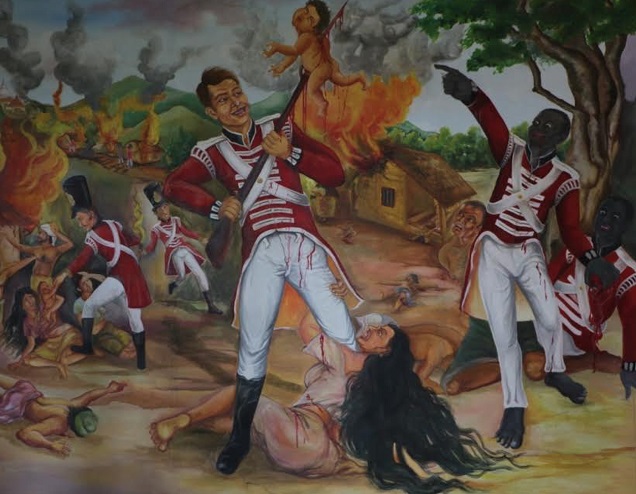
One way of erasing the Eelam victory was to show that the Sri Lanka army consisted of brutal killers. They killed out of malice. They killed ‘innocent Tamils’ who were simply going about their daily activities.

The army is also accused of political killings. The assassination of Sunday Leader Editor Lasantha Wickrematunge (2009), the abduction and torture of journalist Keith Noyahr (2008), the attacks on journalists Upali Tennakoon and Namal Perera were carried out by a military intelligence team operating from the Tripoli Army camp in Slave Island, said the media.

Eelamists pounced on the army killings. University Teachers for Human Rights, Jaffna (UTHRJ) said it had compiled elaborate evidence and information for crimes committed by Army, LTTE and Indian Peace Keeping Force during the Eelam wars. Amnesty International and Human Rights Watch pushed for inquiries on such killings. UN Human Rights Council was kept informed.   Here is a list of such killings.

1990

It is alleged that in 1990 Army personnel assembled nearly 200 Tamil civilians, including children, from Sathurukondan and nearby villages in Batticaloa and summarily killed them. This was described as one of the most gruesome incidents in the east. Fr. Miller’s Peace Committee recorded an eyewitness account from the only survivor of the massacre. It is three decades now, reported the media in 2019, but justice has not been done.

1998 /1

Former Army Major Dickson Rajamanthree and an employee of the camp named Priyantha Rajakaruna had assaulted and murdered Gnanasingham Anton Gunasekaram, from Gurunagar area in Jaffna, on September 10 1998, after taking him in for questioning. The judicial autopsy reports revealed that the deceased had suffered 21 cut wounds to the body. Following a lengthy trial, these two were sentenced to death by the Trincomalee High Court .The verdict was delivered by the High Court Judge Manikkavasagar Illancheliyan in 2016.

1998/2

Colombo High Court, in 2016, imposed two years RI suspended sentence on a retired army officer who had negligently shot an LTTE suspect  who was trying to escape from Pt Pedro camp causing the latter’s death in 1998. The LTTE suspect had tried to escape with his handcuffs on.   A fine of Rs 10,000 was also imposed on the officer. He was ordered to pay compensation of Rs 2,000,000 as compensation to the nearest relative of the deceased, in default of a prison term of 12 month.

 2000

R.M.Sunil Ratnayake, a staff sergeant attached to Sri Lanka Army was sentenced to death by the Colombo High Court Trial-at-Bar bench in 2015. He was found to be guilty of murdering eight Tamil civilians at Mirusuvil in Jaffna on December 19, 2000. The   eight civilians were Gnanapalan Raviveeran, Sellamuttu Theivakulasingham, Vilvarajah Pratheepan, Sinniah Vilvarajah, Nadesu Jeyachandran, Kathiran Gnanachandran, Gnanachandran Santhan and Vilvarajah Prasath.

Due to the war, the villagers of Mirusuvil, a village in Jaffna, had abandoned the village and  were living some distance away since Mirusuvil came under fire. They however, kept an eye on their abandoned houses and would visit them periodically, to clean them and to collect whatever produce they could find. The visits were done during the day time and they ensured that they left before dusk.

On December 19, 2000, 8 villagers went back to Mirusuvil to check on their property. They delayed to leave   and were stopped by two soldiers. The villagers were made to kneel and were questioned. One soldier went away and returned with four other soldiers. They had assaulted the 8 villagers. 

The sole witness, Maheswaran said he had been blindfolded with his sarong    and assaulted. He had lost consciousness temporarily. The soldiers had tossed him over a fence and his blindfold had come off. He had run home and reported the matter. His family informed the EPDP.

Meanwhile, Major Sydney de Soyza of the military police in Jaffna had received orders from Brigadier Thoradeniya to inquire into the missing persons. He was told that a Special Operations Unit of the 6th Gajaba Regiment had recently been sent to Mirusuvil. It had reconnaissance unit as well. Major Soyza questioned Maheswaran and recorded his statement.

Maheswaran, his parents, an EPDP representative, the Grama sevaka and military police went to the scene of the crime. Some soldiers came to see what was happening and Maheswaran identified two as his attackers.One was Lance Corporal Ratnayake. The area had been searched on the orders of the Magistrate and the eight bodies found. It was established that those bodies were of the persons who accompanied Maheswaran on December 19 to visit Mirusuvil.

The trial went on for 13 years. 14 persons were charged initially, nine were acquitted and four were discharged. Only one was left. Supreme Court in 2019 affirmed the conviction and death sentence of Ratnayake.Supreme Court concluded that the judges of the Trial-at-Bar were justified in treating witness Maheswaran as a credible witness and acting on his testimony.

Judgment was delivered on the 25th of June, 2015. Ratnayake was found guilty and was sentenced to death. On 26 March, 2020, Sunil Ratnayake who was on death row was granted a Presidential pardon by President Gotabaya Rajapaksa .There was a spate of objections.

The International Commission of Jurists, through its Regional Director for Asia and the Pacific, said it welcomed the lifting of the death sentence, but condemned   the full pardon. It said it was a blow to the victims of these violations.   It was incompatible with international standards and thirdly, reinforces the view that the military is exempt from any accountability, even for the most heinous crimes”. The ICJ has consistently raised concerns about this and fears that this presidential pardon may be the first of the many to come

Spokesperson for the UN High Commissioner for Human Rights in Geneva said this was one of the rare human rights cases from the Eelam war that went all the way   to a final conviction. The Presidential pardon therefore  is an affront to victims and yet another example of the failure of Sri Lanka to fulfill its international human rights obligations to provide meaningful accountability for war crimes, crimes against humanity and other gross violations of human rights.

Human Rights Watch    objected to the pardon and said that this was one of the very few cases of security force personnel being criminally punished for civil war-era atrocities, despite the huge number of credible and extremely serious allegations.

The Human Rights Commission of Sri Lanka (HRCSL) wrote to the President saying that the pardon sends a negative message. The   death sentence should have been commuted to long term imprisonment.

Three Fundamental Right violation petitions have been filed   challenging the pardon. Tamil families of the murdered villagers have filed one petition. Ambika Satkunanathan has filed another. She said, The President’s power to grant Pardon cannot be arbitrarily used and should not be exercised for collateral purposes,” it added, stating that the move was arbitrary, capricious, irrational contrary to the principles of Natural Justice” and tantamount to Contempt of Court”.

Centre for Policy Alternatives (CPA) filed a third application. The President is required to exercise any power reasonably, and in the public interest. The decision to pardon Ratnayake is arbitrary, unreasonable, ultra vires and has not been done in the interest of the public interest.   There was no miscarriage of justice.  To pardon a convict of a crime of this gravity when 5 judges of the Supreme Court have affirmed his sentence undermines the independence of the Judiciary and is an affront to the rule of law said the CPA.

Others welcomed the pardon. The president must be commended for pardoning Sunil Ratnayake, they said. Court has found just one person, Corporal Sunil Ratnayake guilty of a crime committed by several persons said critics. Under these circumstances, pardoning the only survivor is the correct thing to do. Ratnayake and his family must be compensated for the grief they went through.

This pardon as nothing new, they said. A large number of Tamil terrorists who killed scores of civilians have received Presidential pardon. President Sirisena pardoned convicted LTTE soldier Sivaraja Jenivan at a ceremony too in 2016. Others who have committed murder, arson, terrorism and robbery have been pardoned over the years, they added.

The case of Sunil Ratnayake is interesting because it carries a political twist and lots of political bias, said critics. There was a change of government in 2001, installing the pro-West government of Ranil Wickremasinghe. This was legally questionable government. In 2002, this government agreed to try the arrested army officers without a jury.

This group then proceeded to analyse the trial and the judgment. To start with, Ratnayake did not commit a war crime, said critics. He was charged for murder and other offences but not for war crimes. Furthur, the incident happened at a time when LTTE infiltrated into villages in the north with a view to gather information LTTE waswell known to use civilianstodo their terrorist acts. Using civilian ‘spotters” was a common tactic of Tamil terrorists.

 The  court verdict was based on circumstantial evidence given by the sole survivor, Maheswaran. On one flimsy ‘witness’ account of a man whose eyes had been bound by his sarong, but  got thrown to a fence where  his blindfold got removed allowing him to see Sunil Ratnayake. The witness then managed to escape from 14 soldiers. If these soldiers could kill 8 why did they spare this one ‘witness’ asked critics. 

Ratnayake has been convicted of a crime which could not have been committed by a single individual. Supreme Court stated It is highly improbable if not impossible for a single person to commit all these acts. It is reasonable to infer that these acts have been committed by more than one person. One man, by himself could not have committed all the acts, said critics. Ratnayake could not have, by himself, killed eight civilians, dug a hole large enough to bury them all in one place, and dug another to bury the bicycles, they added.

There were four others also charged with Ratnayake, but they were acquitted on grounds that their identities cannot be established.  Only Ratnayake was left. he was found guilty of all the crimes. Court has sentenced Ratnayake to death, while the others who presumably participated in the crime were acquitted.

2006/1

On January 2, 2006, five young Tamil men aged 20  were gunned down, near the Gandhi statue at the sea front in Trincomalee. Two other students suffered injuries but survived. The five victims were Manoharan Rajiharan, Yogarajah Hemachandra, Logitharajah Rohan, Thangathurai Sivanantha and Shanmugarajah Gajendran all aged 21.The two injured youths were Yogarajah Poongulalon and Pararajasingham Kokulraj.  They managed to escape by feigning death.

The post-mortem conducted by Trincomalee JMO Dr. Gamini Gunatunga determined that the five had died from gunshot wounds. Three had been shot in the head at close quarters while two died from shots to the chest and abdomen. Some had injuries that were not caused by gunshots.  Trincomalee Magistrate V. Ramakamalan conducted an inquiry and recorded an interim verdict of gunshot injuries. 

D.B.S .Jeyaraj reported that the Gandhi statue roundabout where the Dockyard Road and Fort Frederick Road intersected had an important check point close by, manned by Army, Navy and police personnel. There were three more check posts manned by the Navy within a 100-metre radius.

Almost as if on cue a security force truck trundled in quickly, continued D.B.S. Jeyaraj. The occupants of the truck zoomed in on the seven Tamil youths. They surrounded them and forced them to kneel down. They started checking their ID cards. Thereafter, they began assaulting them. They were then put aboard the truck and repeatedly assaulted.

At this point, some more security personnel on motorcycles and in a land rover arrived. There was excited discussion in Sinhala among the new and old arrivals. The youths could only hear the noise. Suddenly, they were kicked and pushed out of the truck. Even as they fell, they found that the entire area was now pitch dark. The lights in the vicinity had been turned off. The youths were now hit again and forced to kneel down. 

 After some more rounds of assaulting, the youths were forced to kneel down again. Firearms were taken out and brandished. The youths were told they were going to be killed as a warning to the Tigers in Trincomalee. The innocent youths began wailing and pleading. Their pathetic cries were heard far and wide, reported D.B.S. Jeyaraj. 

There were more than a hundred people in the vicinity when all this started happening. But police and Navy personnel cordoned off the area and forced the people consisting of vendors and others relaxing on the beachfront to kneel down or squat or lie prostrate on the ground. Some could however see and hear what was going on. Almost everyone heard the report of the grenade explosion and the subsequent gunfire reports, continued D.B.S.Jeyaraj. 

After playing cat and mouse for a while, the assassins now began firing. Two of the youths were shot behind the ear. One was shot in the back of the head. The other four then scrambled to their feet and made a desperate attempt to escape by running away. They were mowed down by gunfire. They were shot in the chest, abdomen, shoulders and thighs and then collapsed. A little while after the firing was over, a grenade was thrown at the still bodies. It proved a dud and did not explode, concluded D.B.S. Jeyaraj.  

 Tamil Guardian” said the students had been pushed on to the road. They had then been forced to lie face down and shot. Navy personnel had closed off all exits to the beach, no one was allowed in or out. Then, a military jeep rolled  in with 10 to 15 uniformed armed men shouting in Sinhalese. The men, later identified as members of Sri Lanka’s police Special Task Force (STF), proceeded to assault the students with their rifle butts. Suddenly a grenade was thrown and fell near my feet,” said Poongulalon, I ran about 10 metres  and fell down injured.”

Ponnuthurai Yogarajah, the father of Hemachandran  had run to the place. He was  stopped by Sri Lankan troops at a nearby checkpoint.. He told UTHR-J that he was struck by military personnel who forced him to the ground. Soon after, masked men, possibly belonging to the STF, arrived and began to beat him.  Lying face down on the ground, he heard gunshots. They were not shots fired upwards, but had the distinct sound of shots fired at the ground,” reported Tamil Guardian”.   

Later at the hospital, three uniformed police officers and six or seven masked men with guns  had  approached  Dr. Kasipillai Manoharan ,father of Rajiharan. They demanded that he sign a statement admitting his son was an LTTE cadre who had been killed in an explosion. An angry Dr Manoharan refused. He left the hospital and later returned with the head of the Sri Lanka Monitoring Mission (SLMM) in the Trincomalee district Arthur Tveiten who had declared This is murder, these boys have not been killed by explosion, these are gunshot wounds” reported  Tamil Guardian”. 

 Tamil Guardian” said that  its account was based on the testimonies collected by Together Against Genocide, UTHR-J and Amnesty International. University Teachers for Human Rights-Jaffna   had compiled elaborate evidence and information pertaining to the case.

 Weeks later, a Tamil trishaw driver and  Tamil photojournalist were   killed by unknown” persons.  The trishaw driver was an eye-witness to the incident and had been prepared to testify in a trial. Subramaniyam Sugirdharajan,  a ‘Sudar Oli’ journalist, had accompanied Dr Manoharan to the mortuary and published incriminating photographs of the victims showing they had been shot dead point blank.  A 20-year-old asylum seeker , now in Christmas Island , who had been a witness to the events that evening,  said he was beaten, imprisoned and eventually forced to leave Sri Lanka .  

According to ‘Tamil Guardian” amidst the mass of vehicles and soldiers that Dr Manoharan could see, one stood out. A grey unmarked pick up vehicle had been sat parked further ahead, watching whilst events were unfolding. Inside sat SP Kapila Jayasekera. I have no doubt that  Kapila Jeyasekera is responsible for killing my son” said Dr Manoharan, seven years after the murder. Kapila Jayasekera was promoted to DIG in the Ampara district in 2013. ( https://www.tamilguardian.com/content/still-searching-justice-13-years-trinco-5-killings)

 Family members of the victims  were  pressurized to keep silent. Dr Manoharan,  said he  received anonymous calls after he testified  at Magistrate Court, that he  and his family will be killed. The  house was pelted with stones. In June 2006  threats intensified, Dr Manoharan  and  his family, fled abroad and the  investigation stalled.

After the inquest, 11 STF had been arrested but were released when it was found that the bullets did not match their authorized firearms. UTHR Jaffna had reported that a witness said he had seen two naval officers arrive by motorbike   carrying  three guns and they gave one of them to STF, before students were killed.

On February 12, 2006, twelve  officers of the Special Task Force (STF)  and an assistant Superintendent of Police (ASP) were arrested  in connection with the killings. The CID had cited 36 witnesses.  As the case progressed, it became apparent that the prosecution was finding it difficult to produce credible witnesses. Some of the key witnesses  including the two survivors who were eye-witnesses and the families of the killed students had  left Sri Lanka due continuous threats and consistent harassment.

After protracted hearings, Trincomalee Chief Magistrate M.M. Mohammed Hamza acquitted all thirteen of all charges. The magistrate ruled that  there was insufficient  evidence  to continue the case .

But in 2018, Yahapalana  government said it was planning to seek a fresh trial since it was now possible to  give evidence on Skype, “which meant that those abroad could give evidence. We could not proceed with the case as the main witness was overseas and was not in a position to support proceedings. The case is now progressing as new reforms have allowed the use of Skype evidence,” Yahapalana said.

In 2008 Dr Manoharan  had testified  before the Presidential Commission of Inquiry to look into 16 cases of ‘serious HR violations’. He testified from abroad via video conferencing.

This  killing  has since come to be known as the ‘Trinco five’. The “Trinco 5” case  became a rallying point for human rights activists  The dead boys are remembered at Trincomalee’s beach front at the dawn of every new year.

The Sri Lanka Human Rights Commission appointed former High Court Judge T. Sunderalingam as a special Rapporteur to probe the killings. His report dated March 31, 2006 was not publicized due to some procedural hassles and other issues at the HRC. The official” fate of that report remains a mystery. Subsequently, extracts of the report were quoted by human rights organisations and activists in their writings, said D.B.S. Jeyaraj. 

Trinco 5′  is one of the highest profile killings in Sri Lanka to receive international attention, said critics. The Trinco five massacre is not such a difficult case,” commented James Ross, Human Rights Watch’s Legal and Policy Director.

In 2012 over 700 activists in New York demanded justice for the killings  and condemnation  came from human rights organisations across the world. “Trinco 5” figured at UN Human Rights Council sessions  of 2013 with calls for Sri Lanka to bring the perpetrators to justice.

Two of the parents Dr. Kasipillai Manoharan, the father of Ragihar and Aiyamuttu Shanmugarajah, the father of Gajendran were in Geneva during the UN Human Rights Council sessions in March 2013 and participated in several meetings and conferences held on the sidelines. They pointed out that no action had been taken for seven years. Their impassioned pleas demanding justice for their children made a profound impact in Geneva.

Dr. Manoharan,  attended the UN Human Rights Council annual review meeting in March 2013 to demand justice for the murders. Dr Manoharan, broke down in tears while speaking at  this meeting. Seven years have gone after the brutal killings of the students, but so far justice is not served.”

Speaking at the UN Human Rights Council in Geneva, Dr Manoharan told member states, With all the pain of losing my son Ragihar, I seek your help and that of the Human Rights Council to move the investigation of the murder of the five young men in Trincomalee to the international level because I have no hope for justice in Sri Lanka”.

The Trinco five” is listed in   the 2014 UN High Commissioner for Human Rights report on Sri Lanka and has been raised repeatedly in international forums. in 2018  There was a tweet by US Ambassador Atul Keshap on the  matter.

2006/2

 on August 4, 2006,  the bodies of 15  employees of Paris-based Action Contre La Faim (ACF, Action Against Hunger) were discovered lying face down on the front lawn of ACF’s Muttur office. They had bullet wounds to head and neck , showing that  they had been shot at close range, execution style. Bodies of two  staff members were found later in  a car nearby, making a total of 17. The dead consisted of one Muslim  and 16 ethnic Tamils, including 4 women.

ACF said  the  incident had occurred in the midst of the fighting between government forces and the separatist LTTE for control of Muttur. ACF said it had lost contact with its mission in Muttur at around 7am on 4 August 2006, as fighting raged around it.  But ACF staff were not killed by stray bullets. They were deliberately targeted, despite the fact that they were wearing white ACF T-shirts and were not armed. they had been lined up, forced to kneel and each shot in the head. ACF demanded an international inquiry.

The Sri Lankan government  rejected accusations by ACF that the military was responsible for the massacre of 17 aid workers in Muttur. Here is its statement.

The content of the Press Release reportedly issued by ACF on 3 December 2013 contains allegations of a very serious nature implicating the security forces of the country.If the ACF  had in its possession evidence which could bring the perpetrators of the crime to justice, the first thing they should have done was to produce that evidence, not withhold such evidence for almost 7 years.The fact that they did not come up with so called evidence and chose instead to release a public report on the matter, calls to question the motives of the organization in withholding such evidence.

This is another instance of a pattern which has emerged since the end of the conflict where certain organizations level allegations against the Government of Sri Lanka  without providing sufficient details to enable an investigation. These accusations are then repeated in several other documents, by different agencies, thereby forming an opinion which is then propagated, without substantiation.

The Government  of Sri Lanka has  not been provided  with the evidence which is claimed to be in the possession of the authors of these reports.ACF concludes these allegations with a call for an independent international investigation.The Government remains committed to conduct impartial and comprehensive criminal investigations and domestic inquiries into any complaints and information received, relating to alleged perpetration of crimes by members of the armed forces and the police.”  ( end of statement)

In July 2007, President Mahinda Rajapaksa established the Presidential Commission of Inquiry to investigate 16 major human rights cases, including the ACF case. Families of ACF workers who testified before the Commission reported threats by security force personnel.

The Commission’s full report was not released until September 2015. while stating it had insufficient evidence to determine the perpetrators of the ACF killings, it effectively exonerated the army and navy in the massacre and indicated that LTTE forces or Muslim militia carried them out.

The ACF deaths were publicized by  international  organizations interested in Sri Lanka . Sri Lankan authorities have failed to bring to justice those responsible for the execution-style killing of 17 aid workers 13 years ago, Human Right Watch said. “Thirteen years have not brought the Sri Lankan police any closer to bringing to justice those responsible for the summary execution of 17 aid workers,” said James Ross, legal and policy director at Human Rights Watch. “The ACF case shows the need for the government to seek international judicial assistance to prosecute these and other killings.”

University Teachers for Human Rights (UTHR), released on April 1, 2008,  their “Special Report No 30”, which  dealt exclusively with the massacre of ACF staff. They published detailed findings on the Muttur killings, based on accounts from witnesses and weapons analysis that implicate government security forces present in the area. They allege that two police constables and Sri Lankan naval special forces commandos were directly responsible, and that senior police and justice officials were linked to a cover-up.

UTHR names one member of the Sri Lankan Home Guard, now the Civil Defence Force, and two Police Constables based in the Muttur Police Station as perpetrators, but adds that several Sri Lanka Navy Special Forces were part of the group that entered the ACF compound and remained passive as the ACF staff were murdered.

They  were killed by ‘unidentified attackers, believed to be member of the Sri Lanka security forces’ said Amnesty International .  US embassy said that members of Sri Lanka’s Special Task Force, and the Muslim Home Guard, were the likely perpetrators.Kamal Gunaratne in his book Road to Nandikadal (2016) said ‘I can say with responsibility that the army was not involved in  this cowardly act.

2006/3

TNA Parliamentarian Nadarajah Raviraj and his police bodyguard, Sergeant Lakshman Lokuwella, were both fatally shot, on November 10, 2006, when their car was passing through Narahenpita in Colombo. Five naval intelligence officers,  were indicted in respect of the shooting and killing  All were acquitted. Attorney General sought a retrial.  He appealed seeking to set aside the High Court order, which acquitted the five naval intelligence officers, The jury was mis-directed and any case couldn’t judge this, the AG  said. Trial process was not appropriate and there were several deficiencies in the summing up of the judge.

2007

The Attorney General, in September 2019, indicted in the Colombo High Court ,former Navy Commander Admiral Wasantha Karannagoda, Rear Admiral D.K.P. Dassanayake and 12 other naval officers with abduction and disappearance of 11 youths in 2008 and 2009.  They were charged with kidnapping for ransom, illegal detention and murder. This investigation has come under the scrutiny of the Geneva-based United Nations Human Rights Council (UNHRC).

The alleged disappearances came to light, in early 2009, soon after the successful conclusion of the war.   Navy Commander Karannagoda initiated an inquiry after receiving representations from a close relative of one of the missing persons. Karannagoda had   made a written complaint to the CID on May 28, 2009, against his personal security officer, following which the CID was able to uncover the Navy’s involvement in the abductions.  Karannagoda had reported the recovery of some national identity cards and other items belonging to the missing persons, from his  security officer’s locker.

The CID initiated a fresh investigation after the change of government in January 2015.The CID recorded statements, from over 50 officers. Several Navy personnel too had given evidence confirming the detention of these youths.

In 2008, 11 youths, Kasthuriarachchilage John alias John, Rajiv Naganathan alias Malli, Pradeep Vishvanathan, Tillakeshwaran Ramalingam, Mohomed Sajith, Jamaldeen Dilan, Amalan Leon, Roshan Leon, Antony Kasthuriarachchi, Thyagaraja Jegan and Mohomed Ali Anver alias Hajiya,  were abducted from Kotahena and other suburbs of Colombo by the navy. The victims were taken into custody, claiming that they had connections with the LTTE.

The first arrests were made on September 17, 2008. An intelligence team had obtained an open warrant and raided a house near the Dehiwela Police Station and arrested, Rajiv Naganathan, Pradeep Vishvanathan, Thilakeshwaran Ramalingam, Mohommed Jilan and Mohommed Saajith. 

The  11 youths were held at the ‘Pittu Bambuwa’ jail, then  at  the Naval camp in Chaitya Road, Colombo Fort  and  finally transferred to ‘Gun Side’, in the Ocean Science Faculty premises of the Naval Command in Trincomalee.

It appeared that a group of naval officers  had carried out the  abductions to extort money.  One of the abducted youths, Rajiv Naganathan had been in contact with his parents. The Navy soldiers guarding these youths had lent them their mobile phones. Rajiv’s mother said a man calling himself Annachchi had kept calling her asking for Rs. 10 million as ransom in order to release Rajiv.  Information on the financial position of this family had been provided by Anver Ali, alias ‘Haajiyar,’ who was in the intelligence service at the time.  Anvar Ali was a resident of Dehiwala. He too disappeared in 2009.

in 2020, Former Commander of Sri Lanka Navy, Wasantha Karannagoda, told the Presidential Commission of Inquiry appointed to probe into allegations of political victimization of public officials during the Yahapalana government, that he had  merely made a police complaint about the abduction of 11 youth. Yahapalana government twisted evidence to make him the chief suspect in the case. The Criminal Investigation Department (CID) tried to have me arrested. They said that the offence was a war crime said Karannagoda. “

The inclusion of Captain (now Commodore), D.K.P. Dassanayake in this case is also easy to understand. Dissanayake has played a very significant role in containing the LTTE .he is mentioned many times in Karanngaoda’s book ‘Adhistanaya.’   When Dassanayake was at Chalai in 2009 to intercept LTTE movements, he had carried out a clandestine operation, overseas, with a small Navy team, with the backing of the DMI. Dassanayake’s team had commandeered an LTTE owned ship ‘Princess Cristina’, anchored in a foreign harbour, and brought it into Colombo harbour, in Dec 2009.      

2010

In November 2019, the Colombo Special Trial-at-Bar served indictments on nine army officials over the allegations of ‘kidnapping and conspiring to murder’ journalist Prageeth Eknaligoda between January 25 and 27, 2010. The abduction and suspected murder of Eknaligoda, was a ‘politically motivated’ crime. 

The first complaint of the disappearance of Journalist Eknaligoda was received by the Homagama police on January 25, 2010. Though the investigations had been carried out by both the Homagama police and the Colombo Crime Division, the inquiry did not proceed. Subsequently, the investigation was taken over by the Criminal Investigation Department.

The CID, which has been pursuing the Eknaligoda abduction case since 2015, have reported several instances of destruction of vital evidence pertaining to the crime and obstruction of justice by the Sri Lanka Army to the Homagama Magistrate’s Court, where a Habeas Corpus inquiry was under way.

Prageeth Eknaligoda, a cartoonist, working as a freelance journalist for the website Lankaenews.com was abducted twice. Ekneligoda was first abducted on August 27, 2009 and released the following day. He was thereafter reported missing on January 24, 2010.  It is said that he was abducted by pro-government supporters because he was investigating the alleged use of chemical weapons, by the government of Sri Lanka. He had been a fierce critic of  President Mahinda Rajapaksa .  

Nine years after Eknaligoda disappeared without a trace, investigations have uncovered a gruesome abduction plot allegedly orchestrated by a military intelligence unit operating out of the Giritale Army camp, reported the media in 2019. It appears that former Defence Secretary Gotabaya Rajapaksa had allegedly given the command to abduct and later, kill Eknaligoda.

The elaborate abduction trap set for Prageeth Ekneligoda begins in the year 2001, when the journalist travelled to Madhu, Mannar with a Tamil politician who is today an MP, said the media.  In Madhu, the politician introduced Ekneligoda to an LTTE cadre known as ‘Thavendran’ an alias for Sumathipala Sureshkumar.  This Sureshkumar was a former LTTE who was thereafter recruited by the Sri Lanka army as an intelligence operative. Sureshkumar was instructed by his military intelligence handlers to remain in contact with Eknaligoda.

Sureshkumar In a confession under oath before the Homagama Magistrate, said that he was told that on the orders of Secretary of Defence Gotabaya Rajapaksa, they were to facilitate the abduction of Prageeth Ekneligoda by tricking the journalist into a meeting with an undercover military intelligence operative.

Ekneligoda was kidnapped and brought to Giritale camp on January 24, 2010, from Colombo. He was handed over to Sureshkumar’s military intelligence handler Sergeant Ranbanda. Sgt Ran Banda confessed all, hoping to turn crown witness.

Sgt Ranbanda’s confession helped investigators to pick up the next sequence of the abduction.  Ranbanda had been ordered by his commanding officer to interrogate Eknaligoda about several obscene cartoons he had drawn of President Mahinda Rajapaksa and his brother, the Defence Secretary. Sgt Ranbanda interrogated the journalist, who admitted to being the artist behind the cartoons. The interrogation was observed by two corporals.

An LTTE member, Edirimanasingham Arichchandiran, who was at the Giritale Camp said that Eknaligoda was badly treated. he was kept in cell where he could not ‘satisfy even his sanitary purposes’.

Eknaligoda  was also questioned by others. he was blindfolded most of the time, when interrogated, but on several occasions, the cloth was removed and Eknaligoda was on a position to identify the people who were questioning him, said Ranbanda. Eknaligoda was blindfolded and taken away from Giritale. Sgt Ranbanda told the Magistrate he never saw Ekneligoda again.Thereafter there are no more witnesses who can testify to having seen or heard from the journalist again, reported the media.

CID investigators believe Ekneligoda was murdered in Akkaraipattu, and his body disposed of in Ampara. No trace of Prageeth Ekneligoda has ever been recovered in Giritale or Akkaraipattu by CID sleuths so far.

Four suspects had been arrested in 2015. All four suspects strongly deny having travelled to Akkaraipattu. But investigators have mobile phone records that place them n Akkaraipattu from January 25-26, 2010. The CID has also found records from an obscure army camp in Akkaraipattu which indicated that their vehicle had stopped for refueling inside the camp on January 26, 2010.

According to the prosecution,  the  Eknaligoda abduction was allegedly executed by an MI team operating out of the Giritale army camp. . After 2009, the 3rd Army regiment in the Giritale Army Camp  was  given the task of collecting intelligence data and monitoring the terrorist activities in the country. Two military intelligence officials attached to the Giritale Army camp provided matching confessions before a Magistrate which indicated this  The CID has yet to gain access to the two confessions given to the Magistrate. (source http://www.sundayobserver.lk/2019/01/20/news-features/prageeth-%E2%80%9C-politically-motivated-crime%E2%80%9D)

2011

Two police Special Task Force personnel were  arrested in November 2011 by the CID at the Jaffna Police station over the killing of a 24-year-old man on the afternoon of October 22 at Maniyam Thottam in Ariyalai. The victim Don Bosco, a fisherman had been proceeding on a motorcycle with another man when two armed men who followed them in another motorcycle fired at them and fled. The fatally shot Bosco   died after admission to Jaffna hospital.Soon after people in Jaffna protested stating that it was carried out by the police. The two commandos were summoned to the Jaffna police station.  They were arrested after recording their statements. The suspects denied any involvement in the killing. CID investigators, however have established that it was the two commandos who carried  out the killing, reported the media. ( continued)

China’s vanishing mosques – BBC News

January 27th, 2020

BBC News

China bans Muslim students from attending religious classes

January 27th, 2020

China has banned Muslim children from attending religious classes during winter holidays in Linxia which is home to more than a million Muslims.

Forgiveness brings Peace after Genocidal Killings in Ruwanda

January 27th, 2020

Mahinda Gunasekera

The UN and UNHRC experts tend to advocate a strict form of retributive justice in the case of Sri Lanka with the intent of punishing her apparently misled by the lies and propaganda of the well funded Tamil expat groups hellbent on avenging the defeat of their project to break up Sri Lanka which ended with the defeat of their armed wing called the Liberation Tamil Tigers of Tamil Eelam (LTTE) in May 2009.The LTTE is an internationally designated terrorist group banned by the UNSC and 32 countries including the USA, UK, EU, Canada and India. This they did by overlooking the three decade long history of war crimes and atrocities committed by the Tamil Tigers which resorted to suicide terrorism detonating over 388 human bombs against both the state and civilian targets in addition to carrying out ethnic cleansing massacres, machete attacks, together with planting of bombs in public transit, shopping malls and other public areas.

Sri Lanka’s policy of restorative justice which was harshly criticized by these experts enabled the authorities to successfully rehabilitate over 13,000 surrendering LTTE cadres without probing into the crimes committed by them under the tutelage of their terror outfit by providing them with new life skills before releasing them to society.  This has helped to educate these cadres and heal the burning antagonisms thereby contributing much towards reconciliation of the damaged communities.

A 4 minute video is sent in attachment about seeking Justice and Peace through forgiveness instead of operating a scheme of retributive justice or wielding a big stick against those deemed as offending parties.  It appears that in Ruwanda where over 800,000 people were slaughtered in clashes between the Hutus and Tutsis within a space of about three months, peace has taken hold not through ‘Truth Commissions’ as in South Africa which went on for nearly 16 years without real reconciliation between the conflicting black and white groups, nor through ‘Accountability Proceedings via Hybrid Courts’ involving international judges, prosecutors and investigators, but through FORGIVENESS and a Willingness to drop the events of the hate filled past and move foward in Peace.

In Sri Lanka, where the confronting parties have lived side by side for centuries as members of one nation, it takes a lesser effort to determine the causes of the antagonisms which have arisen as a result of western colonial powers adopting ‘divide rule policies’ which have later given rise to invented histories that cannot be substantiated but put out to mislead foreign powers in order to maintain the dominance gained on account of the largesse extended to the minorities by the colonial rulers. Following independence and the transfer of power to the majority community considered the founding people who have accommodated all other communities that settled in their island homeland along with equal individual rights and freedoms was not acceptable to the minorities that held sway during the period of British colonial rule. They sought to regain their dominance or failing which to break up the country and form a separate state for  their exclusive control through armed force despite settlement of several key issues including those pertaining to linguistic rights and access for higher education.  It is time the minorities abandoned their ideas of division where they fancy controlling a break away region with a hostile border, and come together in a spirit of forgiveness and join the rest of the people as one nation in peace and fraternity.

Mahinda Gunasekera


In or Out?

January 27th, 2020

Courtesy The Daily Mirror

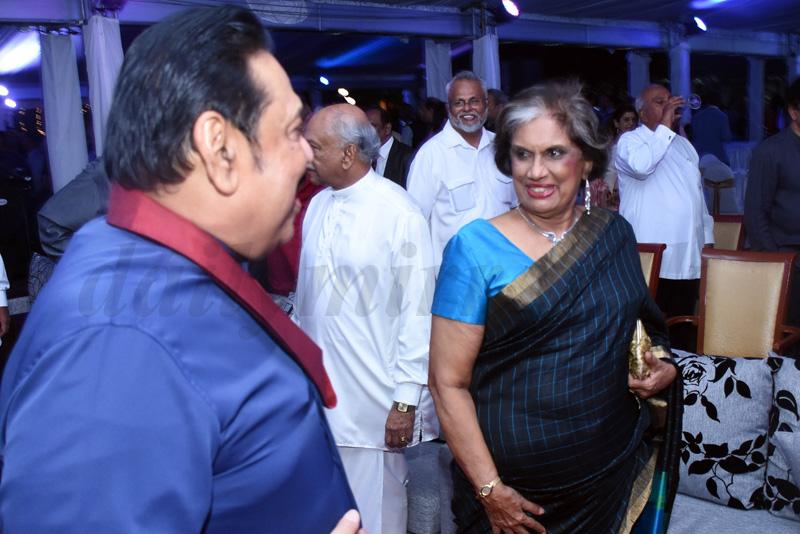
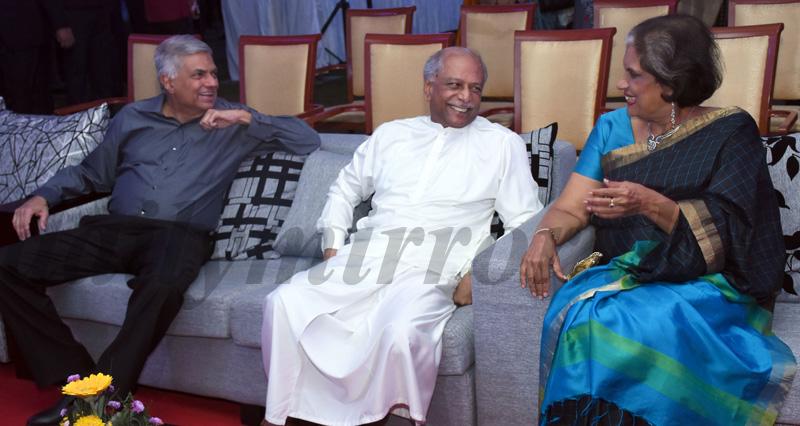
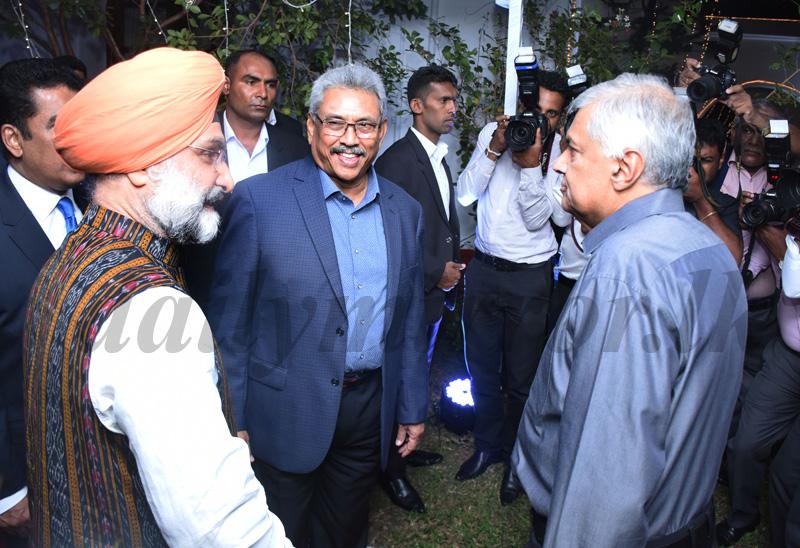
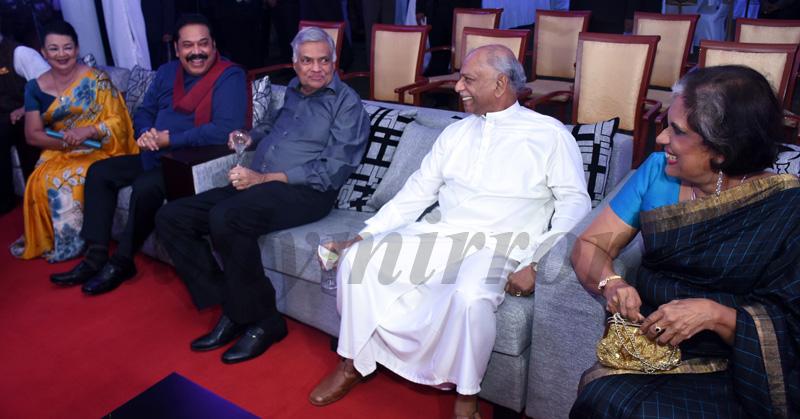
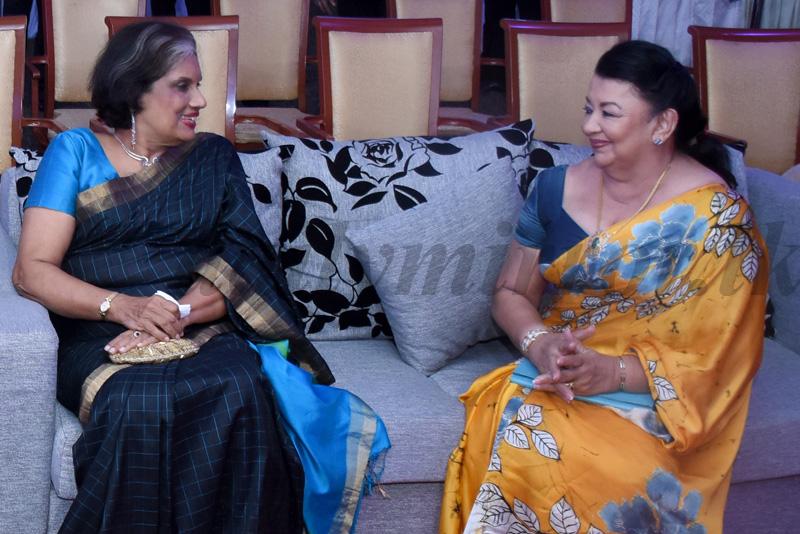
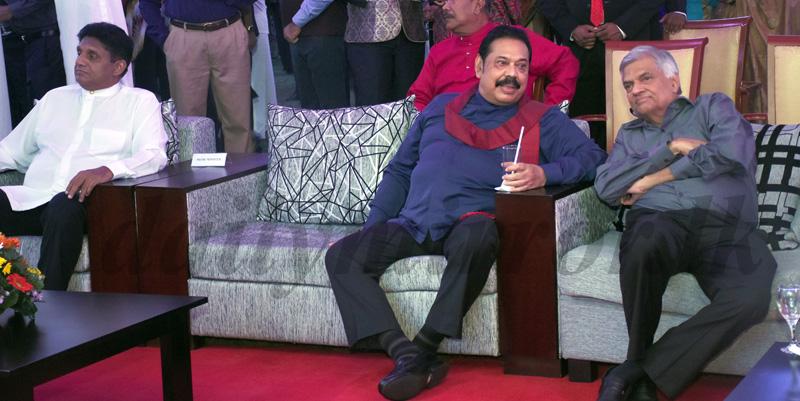
The country’s top political figures embroiled in political rivalry, cut across party lines yesterday to attend the farewell party hosted by outgoing Indian High Commissioner Taranjit Singh Sandhu at India House in Colombo.

Prime Minister Mahinda Rajapaksa and UNP Leader Ranil Wickremesinghe are seen a cordial discussion with UNP Deputy Leader Sajith Premadasa within the frame. The other picture captures PM Rajapaksa with former President Chandrika Kumaratunga.(Pix by Kushan Pathiraja)

India to build Sita temple in Sri Lanka

January 27th, 2020

Courtesy Ada Derana

The Congress government in Madhya Pradesh, India on Monday announced it will build a grand temple of Sita in Sri Lanka, at the place where Sita of ‘Ramayana’ is believed to have withstood trial by fire.

The idea was conceived by India’s previous BJP government under Shivraj Singh Chouhan nearly a decade ago, but the project did not take off. After the change of guard in December 2018, the Congress government claimed no files on the project had been moved by the previous regime.

A delegation led by Law and Religious Affairs Minister P C Sharma recently visited Sri Lanka and met President Gotabaya Rajapaksa. Chief Minister Kamal Nath on Monday formally cleared the proposal.

He said a committee comprising officials from MP and Sri Lanka, and members of Mahabodhi Society, will soon be formed for building the temple to ensure its time-bound construction. He said funds for the project will be allocated in the current financial year.

The site of the proposed temple is located on the premises of a Buddhist monastery in Divurumpola in the Central Province of Sri Lanka. Local people believe the ornaments worn by Sita are still buried there.

Source: The Indian Express
-Agencies

Hindus in Sri Lanka not facing persecution like in Pak, Afghan, says India politico

January 27th, 2020

Courtesy Ada Derana

Suresh Joshi, General Secretary of Rashtriya Swayamsevak Sangh in India said the Hindus of Sri Lanka are not facing any persecution problems like those in Pakistan, Afghanistan, and Bangladesh. 

Talking to newspersons on the sidelines of a flag-hoisting function held at the RSS headquarters in Mahal locality of Nagpur, Joshi said the issue of allowing Tamil Hindus of Sri Lanka into the ambit of Citizenship Amendment Act (CAA) was taken up in Tamil Nadu.

However, it is seen that Hindus living in that country are not facing the kind of troubles like those in the three countries covered under CAA,” he said.

Amid protests against CAA and NRC, political parties including Congress, have raised the question of not including the Sri Lankan Tamils into the law. 

As he took questions on the anti-CAA-NRC protests, Joshi said there has been no discrimination against followers of Islam in India. Even Muslims have the chance to get Indian citizenship if they apply through the regular course. Every government has tried to come up with a similar law on citizenship. Why is there a hue and cry only this time,” asked Joshi.

Source: TOI
-Agencies

Sri Lanka’s first coronavirus infected patient

January 27th, 2020

Courtesy Hiru News

The IDH Hospital reports that a patient who was tested for coronavirus has been confirmed as positive for the infection.

This is the first coronavirus infection in Sri Lanka.

It is reported that the patient is a Chinese woman.

පාර්ලිමේන්තුවේ බහුතර බලය නොමැතිවීම ගැටළුවක් – අගමැති

January 27th, 2020

උපුටා ගැන්ම හිරු නිව්ස්

පාර්ලිමේන්තුවේ බහුතර බලය නොමැතිවීම හේතුවෙන් රටට හිතකර අණපනත් අනුමත කර ගැනීමේ නොහැකි තත්ත්වයක් මතුව ඇති බව  අග්‍රාමාත්‍ය මහින්ද රාජපක්ෂ මහතා පවසනවා.

හෝමාගම මහින්ද රාජපක්ෂ විද්‍යාලයේ පැවති උත්සවයක් අමතමින් ඔහු මේබව සඳහන් කළා.

හෝමාගම මහින්ද රාජපක්ෂ විද්‍යාලයට වසර 9ක් සපිරීමට සමගාමීව සංවිධාන කර තිබූ අපොස උසස් පෙළ සිසු ඇගයීම් උත්සවය එම විද්‍යාල පරිශ්‍රයේදී පැවැත්වුණේ අග්‍රාමාත්‍ය මහින්ද රාජපක්ෂ මහතාගේ ප්‍රධානත්වයෙන්.

මේ අතර, ආන්දෝලනයට තුඩුදුන් එම්.සී.සී. ගිවිසුම සම්බන්ධව අධ්‍යයනය කිරීමට පත්කළ විද්වත් කමිටුව ඒ පිළිබඳ මහජන අදහස් විමසීමට තීරණය කර තිබෙනවා.

අමාත්‍ය මණ්ඩලය විසින් මෙම කමිටුව පත් කරනු ලැබුවේ අග්‍රාමාත්‍ය මහින්ද රාජපක්ෂ මහතාගේ යෝජනාවක් අනුවයි.

ගිවිසුමේ අන්තර්ගතය සහ ඉන් ඇතිවිය හැකි බලපෑම් සම්බන්ධයෙන් යම් ආයතනයකට සංගමයකට හෝ පුද්ගලයෙකුට සිය අදහස් හා යෝජනා මෙම විද්වත් කමිටුව වෙත ඉදිරිපත් කළ හැකි බව අග්‍රාමාත්‍ය කාර්යාලය නිකුත් කළ නිවේදනයක දැක්වෙනවා.

ඒ අනුව ලබන පෙබරවාරි මස 15 වැනිදාට පෙර අදාළ අදහස් හා යෝජනා එම විද්වත් කමිටුව වෙත ඉදිරිපත් කිරීමේ හැකියාව පවතිනවා.

රාජිතගෙන් මරණ තර්ජන – සුදුවෑන් මාධ්‍ය හමුවේ සිටි දෙදෙනාගෙන් CIDයට පැමිණිලි -පැය පහකට පසු රහස් පොලිසියෙන් පිටව යයි

January 27th, 2020

උපුටා ගැන්ම හිරු නිව්ස්

පාර්ලිමේන්තු මන්ත්‍රී රාජිත සේනාරත්න තමන්ට මරණ තර්ජන සිදුකරන බව පවසමින් සුදුවෑන් මාධ්‍ය හමුවට පෙනී සිටි පුද්ගලයින් දෙදෙනා අද අපරාධ පරීක්ෂණ දෙපාර්තමේන්තුවට පැමිණිල්ලක් ඉදිරිපත් කළා.

ඔවුන් සඳහන් කළේ මන්ත්‍රීවරයාට සම්බන්ධ බන්ධනාගාරගතව සිටින පාතාල සාමාජිකයෙකු විසින් මෙලෙස මරණ තර්ජන සිදුකරන බවයි.

රාජිත සේනාරත්න සමඟ සුදුවෑන් මාධ්‍ය හමුවට පෙනී සිටි මෙම පුද්ගලයින් දෙදෙනා පසුගිය දා අත්අඩංගුවට ගෙන ඇප මත මුදා හැරීමටයි අධිකරණය කටයුතු කළේ.

කෙසේ වෙතත්, තමන් වෙත මරණ තර්ජන සිදුකරන බව පවසමින් ඊට අදාළ හඬ පටයත් රැගෙන සුදුවෑන් මාධ්‍ය හමුවට පෙනී සිටි අතුල සංජීව මදනායක සහ සරත් කුමාර අද අපරාධ පරීක්ෂණ දෙපාර්තමේන්තුවට පැමිණිල්ලක් ඉදිරිපත් කරනු ලැබුවා.

මේ අතර, පාර්ලිමේන්තු මන්ත්‍රී රාජිත සේනාරත්න ද අද යළිත්, අපරාධ පරීක්ෂණ දෙපාර්තමේන්තුව හමුවේ පෙනී සිටියා.

ඒ මතභේදයට තුඩුදුන් සුදුවෑන් මාධ්‍ය හමුව සම්බන්ධයෙන් ප්‍රකාශයක් ලබාදීමටයි. මන්ත්‍රීවරයා අද පෙරවරු 11.30 ට පමණ අපරාධ පරීක්ෂණ දෙපාර්තමේන්තුවට පැමිණි අතර පස්වරු 1.30 ට පමණවනතුරු ප්‍රකාශයක් ලබාදී ඉන් පිටව ගිය බවයි හිරු වාර්තාකරු සදහන් කළේ.

මන්ත්‍රීවරයා පසුගිය 14 වනදා ද, සුදුවෑන් මාධ්‍ය හමුව සම්බන්ධයෙන් ප්‍රකාශයක් ලබාදුන්නා. සුදුවෑන් මාධ්‍ය හමුවට අදාළව පසුගිය දෙසැම්බර් 27 වනදා අත්අඩංගුවට ගනු ලැබූ රාජිත සේනාරත්න මන්ත්‍රීවරයා පසුගිය දෙසැම්බර් 30 වැනිදා ඇප මත නිදහස් කෙරුණා.  

පාර්ලිමේන්තු මන්ත්‍රී රාජිත සේනාරත්නගේ මරණ තර්ජන ගැන පැමිණිලි කිරීමට පැමිණි, සුදු වෑන් මාධ්‍ය හමුවට පෙනීසිටි දෙදෙනා පැය පහකට පසු රහස් පොලිසියෙන් පිටව ගොස් තිබෙනවා.

ජනාධිපතිට රටේ සියලුදෙනා නිරන්තරයෙන් සහය ලබාදෙන බව අතිපූජ්‍ය කොටුගොඩ ධම්මාවාස නාහිමියන් කියයි

January 27th, 2020

උපුටා ගැන්ම හිරු නිව්ස්

මෙරට සදාචාරය ආරක්ෂා කිරීම වෙනුවෙන් ජනාධිපති ගෝඨාභය රාජපක්ෂ මහතාට රටේ සියලුදෙනා නිරන්තරයෙන් සහය ලබාදෙන බව, අමරපුර මහා නිකායේ උත්තරීතර මහා නායක අග්ගමහා පණ්ඩිත අතිපූජ්‍ය කොටුගොඩ ධම්මාවාස නාහිමියන් පවසනවා.

උන්වහන්සේ සිය ජන්ම දිනය වෙනුවෙන් ඊයේ පැවති ආගමික වැඩසටනකදී මෙම අදහස් පළ කළා

අතිපූජ්‍ය කොටුගොඩ ධම්මාවාස නාහිමියන්ගේ ජන්ම දිනය නිමිත්තෙන් ගල්කිස්ස ධර්මපාලාරාම විහාරස්ථානය වෙත පැමිණි ජනාධිපති ගෝඨාභය රාජපක්ෂ මහතා නාහිමියන් බැහැ දැක නිදුක් නිරෝගී සුවය ප්‍රාර්ථනා කරමින් ජන්ම දිනය වෙනුවෙන් උන්වහන්සේට සුබ පැතුම් පිරිනැමුවා.

අසාද් සාලිගේ ප්‍රකාශය ගැන පරීක්ෂණයක් කරන්න – රාජ්‍ය අමාත්‍ය රෝහිත අබේගුණවර්ධන

January 27th, 2020

උපුටා ගැන්ම හිරු නිව්ස්

බස්නාහිර හිටපු ආණ්ඩුකාර අසාද් සාලි, අධිකරණ විනිසුරුවන් පිළිබදව පසුගියදා සිදුකළ ප්‍රකාශයක් සම්බන්ධයෙන් වහා පරීක්ෂණයක් සිදුකරන්නැයි ශ්‍රී ලංකා පොදුජන පෙරමුණ, පොලිස්පතිවරයාගෙන් සහ අගවිනිසුරුවරයාගෙන් ඉල්ලීමක් කරනවා.

රාජ්‍ය අමාත්‍ය රෝහිත අබේගුණවර්ධන මෙම ඉල්ලීම සිදුකළේ බත්තරමුල්ල – නෙලූම් මාවත පක්ෂ කාර්යාලයේ අද කැඳවා තිබූ මාධ්‍ය හමුවකට එක්වෙමින්.

එම මාධ්‍ය හමුවට ශ්‍රී ලංකා පොදුජන පෙරමුණේ සභාපති මහාචාර්ය ජී.එල්. පීරිස් ද එක්ව සිටියා.

කොරෝනා වෛරස් පරීක්ෂාවට ශ්‍රී ලංකාවේ පහසුකම් පවතින බව සෞඛ්‍ය ඇමතිනිය කියයි

January 27th, 2020

උපුටා ගැන්ම හිරු නිව්ස්

කොරෝනා වෛරසය ආසාදනය වී ඇත්දැයි නිශ්චිත වශයෙන් පරීක්ෂා කිරීම සඳහා ශ්‍රී ලංකාව සතුව අවශ්‍ය රසායනාගාර පහසුකම් පවතින බව සෞඛ්‍ය හා දේශීය වෛද්‍ය සේවා අමාත්‍ය පවිත්‍රා වන්නිආරච්චි පවසනවා.

කොළඹ පැවති උත්සවයකින් අනතුරුව මාධ්‍ය වෙත අදහස් දක්වමින් ඇය වැඩිදුරටත් සඳහන් කළේ කොරෝනා වෛරසය පැතිර යාම වැළැක්වීම සඳහා ජනාධිපතිවරයාගේ උපදෙස් මත අමාත්‍යාංශය මගින් පත් කළ විශේෂිත කමිටුව ද අද රැස්වන බවයි.

කරන්නාගොඩ සහ දසනායකට එරෙහි නඩු අත්හිටුවන්නැයි දේශපාලන පලිගැනීම ගැන සොයන කොමිසම නීතිපතිට දන්වයි

January 27th, 2020

උපුටා ගැන්ම හිරු නිව්ස්

විමර්ශන අවසන් වන තුරු වසන්ත කරන්නාගොඩ සහ ඩී.කේ.පී දසනායක එරෙහි නඩු අත්හිටුවන්නැයි, දේශපාලන පලිගැනීම ගැන සොයන ජනාධිපති කොමිසම නීතිපතිට දන්වා තිබෙනවා

Gota’s viyathmaga to the future

January 27th, 2020

H. L. D. Mahindapala

Any critical assessment of President Gotabaya Rajapaksa must take into consideration the salient characteristics that make him stand out from the run-of-the-mill politicians who had occupied the peaks of power.

The first notable characteristic is that he is the first head of state to come from the Sri Lankan diaspora. Initially it was a disadvantage tangled in legalities of citizenship. Later it smoothened out and has been an invaluable asset to him. His existential experiences as an expat in America had widened his horizons and opened up new vistas in his thinking and strategizing. He has acted so far as a leader who had seen the future and is bent on taking the nation in that direction. It has all the signs of being influenced by the American efficiency in delivering goods and services. The new breed of intellectuals he had recruited to run his state indicates clearly that he is in a hurry to modernise the sluggish nation and usher it into the 21st century. His first hand knowledge of an advanced nation would hasten him to mix tradition with modernity without deracinating the nation – a critical issue in modernising Afro-Asian countries. 

Second: In no other election before – not even in 1956” which is considered the Great Revolution of the Sinhala-Buddhists — had the minorities ganged up against the majority with such determined force to defeat a candidate of the majority. In 1956 Badiuddeen Mahamood and C. A. S. Marrikkar were staunch lieutenants of S. W. R. D. Bandaranaike. In that landmark year the contest was essentially between the North and the South with the rural Muslims siding with Bandaranaike. It was mainly the rich, business-oriented Colombian Muslims that voted for Sir. John Kotelawela. As opposed to this the Muslim phalanx ganged up with the Tamils to vote against Gota in 2019. Only a fragmented section of the Indian Tamils joined him. The Muslims in particular threw their lot with Ranil-Sajith combo making the opposition of the minorities a formidable front. The Muslim intellectual, Ali Sabry, was the only outstanding Muslim maverick. An exception to the rule. The Sinhala Marikkar” of our time. And when the final result exploded the post-electoral map defined this division of minority  vs. majority without leaving any grey areas of doubt.

Third: Gota’s expatriate background enables him to talk the talk of the new generation attuned to technology and meritocracy. Mark you, he was in IT industry in America and this gives him the ability to speak the language of IT visionaries shaping the new future. He appears to be a man of the Fourth Revolution who is attempting to break away from the outdated past and make the great leap forward.

For instance, he is not promising farmers any computers like the way Ranil Wickremesinghe did in his election campaigns in the past. Instead Gota is talking of centralising data bases to consolidate information into one coordinated and convenient point to eliminate bureaucratic blocks that lead to corruption and frustrate the public. He is cutting into a dysfunctional system to make state institutions a viable source for the people to use it without time-consuming bureaucratic red tape. Making the bureaucracy a servant of the people is a prime necessity in Afro-Asian countries stuck in the old colonial mode of centralising power in the hands of public servants who assume the role of demi-gods in deciding the fate of helpless citizens.  When  President Ranasinghe Premadasa launched the Gam Udawa” he used it as a force to make  the panjandrums in the bureaucracy to leave their air-conditioned offices and go down to the village level. Gota is making a bid to implement that principle in his own way through modern technology. It is a quiet revolution without much fanfare.

Fourth:  Gota is less of a politician and more of a hands-on administrator seeking pragmatic solutions to the grinding, day-to-day problems faced by the people. This comes not only from his American experience but also from his time in the Army where he had to deliver goods and services to the soldiers fighting to save the nation. Soldiers march on their bellies, as the old saying goes. So do the politicians in power. Both are doomed if the prime necessities are not delivered in time to the places where help is needed most.

Besides, making the state work for the people takes the burden and the blame away from the political masters. Politicians have been paying heavily for the stupidity, lethargy, inefficiency and corruption of the bureaucracy. Example: Easter Sunday attack by the Muslim terrorists. Ranil Wickremesinghe paid dearly for the failure of his hand-picked IGP.

Fifth: His style of governance. It’s a pragmatic approach where he gets down to brass tacks not only to keep the bureaucrats on their toes but also to get to the root of the problems to find out solutions. His approach is not that of cheap populism to win votes. Or of appointing committees to avoid responsibilities and take the easy way out.  His is committed to make the system work. Most leaders have failed because they could not make the system work for the people. 

Sixth: His sound grasp of the ground realities rooted in history. The current system of political bargaining at the highest level before elections is to sell the family silver to the minorities to get their votes in return at the polls. For instance, promises will be extracted by the minorities to get (roughly) (a) five ambassadorships (b) four heads of departments (c) at least two governorships (d) government land in selected areas to strengthen their vote bank (e) funding for the money-making minority projects (f) protection and pardons to their criminals engaged in illegal and criminal activities etc., etc. Gota didn’t have to cut such deals because he was, going it alone. He was banking primarily on the downgraded historical forces to rise and save the nation. It was the forces of hidden history that rushed to crown him with the victory he scored on November 16, 2019. No doubt, the victory was pre-planned with precision long before he launched his final lap in the electoral campaign. But his strategy was based on tapping into the dynamic forces of Sinhala-Buddhist history that was awaiting a new leader. And Gota played that role strategically and delicately without over-stepping the decent boundaries of electoral politics.

Seventh: The Presidential crown was his second great victory. The first was on the banks of Nandikadal in May 2009.  The second victory consolidates the political gains of the first. It points to the fact that arrogant and dictatorial minoritarianism must adjust its unrealistic political agenda aimed at dictating terms to the majority. Gota’s victory has delivered an unmistakeable lesson to all political theorists who concluded that the minorities have the upper hand in determining politics within a divided majority community. Gota’s victory has blasted this political myth. In fact Gota’s victory has stunned the theoretical dodos that were consoling each other with their warped and convoluted psephological mathematics. 

After Gota’s victory it is now clear that minoritarianism cannot avoid the realistic politics of numbers that would help them to co-exist without treading on the toes of the majority. This election is ringing loud bells declaring that there are limits to which the minorities can push the majority. In this election only a limited combination of the majority beat the minority. What would be the fate of the minorities if one fine day the two major parties gang up to corner the minorities? Or what would happen if a popular majority should adopt Modi’s legislation of excluding one particular community? Minorities might react claiming that it would lead to violent extremism. As things stand now it is only a remote possibility. But before they go down that path they must also consider what benefits had they derived from the extremism of Prabhakaranism and Zaharanism. In the case of the Tamils it is the leaders who fomented extremist minoritarianism that were eliminated by the political  children they bred. In the case of the Muslims it is their businesses, mosques and leaders who had to face the brunt of Muslim violence. Ultimately it is people at the ground level who were misled by the minority leaders that had to suffer most.

Minoritarianism, which can be as corrosive as majoritarianism, must know its limits. It has to acknowledge that numbers can play a decisive role in determining the future of peaceful co-existence – the indispensable priority in mapping the destiny of all communities.  Among other critical factors, it is the weight of numbers that won the first and second victories of Gota. For instance, when Prabhakaran put out one boat to sea Gota put out ten. No one can beat that in any war. Political calculations that fail to recognise the power of numbers are doomed to fail sooner or later. 

Eighth : This is perhaps the most significant characteristic of Gota’s electoral victory. It is that November 16 will go down in history as a fine defining moment as great as his first victory on the banks of Nandikadal. No other political leader has had such indelible and illustrious victories, lined up in a row, in the post-independent era. Both victories have rescued the nation’s threatened history. Both will reinforce the historic power of received legacies from the over-determining past. Both victories go beyond meretricious triumphalism to give meaning to the future. Both victories mean that the nation has been saved from two of the deadliest forces – 1. from the North and 2.from the West — that could have easily destroyed the legacies of the historic journey traversed down the ages by our pioneering ancestors. Gota stood up for them all and assured them that they had not journeyed in vain. That is what goes to make great leaders. They make history for generations to remember.

His electoral victory came at a critical time when the nation was teetering on the brink surrendering to the minorities who were boasting that their 30 per cent combined with the Ranil Wickremesinghe’s percentage can make them kings again. Ranil had no qualms about selling the Sinhala-Buddhist heritage to the West and to the minorities to remain in power. He was appeasing both dismissing the angst of the Sinhala-Buddhist who were reeling under the alien pressures of the combined forces of NGOs, the West and the minorities. Ranil was tying ropes of pirith nools round his wrist to protect himself and not the nation

In the presidential campaign the opposition consisting of the minorities ganging up with Sajith Premadasa provoked the majority to react defensively. Their threatening political rhetoric and alliances made it clear to the majority that they had no alternative but to rally behind Gota, the only alternative. The dividing line of them vs. us” was never so clear in other elections as in this one. It was the minority that threw the challenge to the majority driven by Ranil’s divisive and anti-Sinhala-Buddhist  politics. Example:  Mangala Samaraweera’s self-destructive statement This not a Sinhala-Buddhist country” virtually sealed the fate of the UNP. In this background Sajith failed to convince the electorate that he was not Ranil’s puppet. The Gota-led campaign didn’t have to do much to convince the majority that behind Sajith was Ranil’s anti-Sinhala-Buddhist forces. He was still the leader of the Party who was the chief patron of Mangala Samaraweera arbitrarily launching international resolution in Geneva against the soldiers who saved democracy from the Tamil tyranny of Prabhakaran. Ranil and Mangala were a couple married to the ideology of undermining the basic interests of the majority. Besides, Ranil’s appointing Sajith as Parliamentary leader only, retaining the critical and overall policy–making decision of a leader in his manipulative hands, confirmed that he could make Sajith dance to his tune.

But the electorate, including the UNPers, was not in the mood to accept Ranil’s failed leadership. The people were looking for an alternative to Ranil. And they found that alternative in Gota. They saw Sajith merely as a ventriloquist acting as the mouthpiece for Ranil. Rightly or wrongly. the people rejected Sajith because they saw him as Ranil’s puppet. Sajith’s strategy should have been to provide a convincing and radical alternative to Ranil.

In November 2019 the people who were frustrated by the failure of the Yahapalanaya to protect their heritage were demanding their heritage back. In 2015 they voted for Ven. Madulowawe Sobitha and Maithripala Senanayake because these two were presented as credible Sinhala-Buddhist leaders. Yahahapalanaya gained credibility as the protector of the threatened Sinhala-Buddhist heritage under their combined leadership. They emerged as Buddhist leaders who would restore their lost moral kingdom. But after winning Ranil hijacked the state with his 19th Amendment and his FCID and went in the opposite direction to the West and the minorities who were out to cut down the majority. Not until the people knocked him senseless in the last election did Ranil realise that he had alienated the Sinhala-Buddhists.

Most reluctantly Ranil let Sajith contest Gota hoping that, if Sajith wins, he could manipulate him like the way he did Maithripala Sirisena.  But with the ghost of Ranil haunting Sajith he could not win. The electorate had seen how Ranil had hijacked the Yahapalanaya regime. Maithripala Sirisena was putty in his hands initially. Sajith too would have caved in with Ranil manipulating the numbers, particularly the numbers of minority MPs, together with his compliant partner in Parliamentary crimes, Karu Jayasuriya who holds the strategic position of Speaker..

In the election Sajith had to fight not Gota but Ranil ‘s rejected politics. His struggle to project a different / nationalist image did not go down well with the people. In the end, he had nothing to offer except seeni-bolas to boys and tampons to girls. None of them worked.

There is no doubt that in the last election the minority got what they deserved. They asked for it and they got it. They can’t blame anyone else. The defeated forces were deprived of even the usual tactic of crying foul because it was one of the cleanest elections. So they have resorted to the tired old game of scare-mongering. They are projecting the Rajapaksa brothers as the ogres out to destroy democracy, freedom, liberty, human rights – you name it! But the stunts they have pulled so far – the Swiss embassy farce,  Rajitha Senaratne’s bahu-bootha  tele natya, and Ranjan Ramanayake’s tapes – have boomeranged on them.

Rajapaksa brothers are sailing smoothly to the biggest victory in their lives if they win comfortably in the Parliamentary elections. They are on their way to the second historic victory of a combination of brothers. The fist was in Poland. Prime Minister Jaroslaw Aleksander Kaczynski and President Lech Kaczynski are twin brothers who were the first siblings to be the President and the Prime Minister simultaneously.

Both brothers are necessary to complete the mission they began. Gota is giving a new image to the Rajapaksa rule. He is acting cautiously to wipe out the old image and build a people-oriented, trustworthy regime. He has been are acting cautiously to counter the scare-mongering used by NGO-UNP gang to discredit Gota in particular and the Sinhala-Buddhist  forces he represents in general. Gota is signalling that the Rajapaksa brothers have learnt from their mistakes of the past to move forward into the future.  The opposition bowlers are making a desperate bid to force the batsman at the crease to make mistakes. Gota is bound to make mistakes. He  did not score his victories in the past without making mistakes. But he has shown the capacity to bounce back from his mistakes.

One positive sign is that the coming Parliamentary election has all the signs of the people willing to give him the legislative strength he needs to lead the nation to a higher moral and material ground. Then he will have all the opportunity he needs to make good the promises he  made to the nation. He is now on his third mission to save nation. It is going to be  his  Third War. His primary mission is to lift the nation from the depths to  which it has fallen and lead it to the great heights expected by the people who voted for him.  

The people who were promised the purity of a moral heaven by the Yahapalana-ya-kos were let down mercilessly, disgracefully. Gota can’t do that again. Gota has to stand by the people who trusted him. If he does  that the people who trusted him will undoubtedly stand  by him. He has to do it because he  is the last hope for the nation to come out of the moral and material mess left behind by the immoral vandals who promised a pure Yahapalana-yak.

Every bad thing must come to an end and it is Gota’s chance to do it.

Sri Lanka: Who are the “Missing” who are the “Dead” & who were killed!

January 27th, 2020

In a world of controversy & complications it is no surprise that we are still grappling to find answers to who is dead – who was killed & who is missing. The primary inability to find answers is because all efforts are being diverted to negate the lies and fake news floating around. Again the international media need to be asked to correct its reference to Sri Lanka’s conflict & term it as a non-international armed conflict (NIAC) between an armed non-state actor (LTTE) & Sri Lanka’s National Army and so it was not an ethnic conflict or civil war. Sri Lanka was defending itself against terrorism and terrorists on behalf of all its citizens. How come attention is being put to LTTE dead than the dead as a result of LTTE killings? Never has the world given attention to people killed by LTTE than demanding explanations for LTTE killed over and above even Tamil civilians killed.

Sri Lanka’s constitution and all international standards require equality of treatment of a country’s citizens therefore no victim can be more important than another victim. Therefore, the world and international media need to be reminded that the Tamils are not the only victims and any remedy cannot exclude or impede on the human rights of other communities. Solutions have to be given to all equally not only to one ethnic group.

Since 2009 we have been hearing a chorus of ‘thousands reported missing’ who is reporting them, what are their sources and how genuine/authentic are the reports? These details are never disclosed.

Does Leelathevi Ananthanatarajah, the Secretary of the Association for the Relatives of the Enforced Disappearances in the North & East have names and numbers of the disappeared?

The Hindu article by Meera Srinivasan quotes the lines My 34-year-old son surrendered to the Army at the Omanthai checkpoint, just after the war ended in May 2009. We were all there. They said they would question him and release him. I am still waiting,” she told The Hindu (since these lines are quoted immediately after the remarks by Leelathevi Ananthanatarajah, we presume she is referring to her 34-year old son.

https://www.thehindu.com/news/international/president-gotabayas-remarks-on-missing-persons-spark-concern/article30646429.ece

Did she first file complaint with police? Did she inform SL Human Rights Commission? Did she report this to the OISL, is her case featured in any UNHRC report? Is her case recorded with the Paranagama Commission or even with the Office of Missing Persons? Has she filed habeas corpus?

What authority in the Sri Lankan Govt can check and revert with answers.

In 2009, the son would have been 24years – where, when & how did he go missing. The article gives the answer he surrendered to the Army at the Omanthai checkpoint just after the war ended in May 2009. We were all there. They said they would question him and release him. I am still waiting,”  

So according to her, in her presence her son who was a LTTE combatant surrendered.

With a LTTE-friendly Govt in power since 2015 and TNA playing a major part in it, how is it that Leelathevi Ananthanatarajah could not trace what happened to her son from Jan 2015 to November 2019?

Where are the demands from her during this period?

EU funded Sooka says 110 missing in 2015 referring to the missing from Wadduvakkal Bridge – this list are ALL LTTE combatants. So is she preparing reports on behalf of LTTE terrorists or Tamil Civilians?

https://itjpsl.com/assets/press/Statement-18-May-2015-ITJP-SL-Disappearances.pdf

The 2015 figure of 110 missing LTTE combatants suddenly shoots up to 280 missing in 2018 referring to the SAME missing from Wadduvakkal Bridge – how can this happen

http://www.asianews.it/news-en/List-of-280-missing-people-includes-28-Tamil-children-43926.html

The Hindu article says affected families relentlessly demanding truth & accountability”.

The question is which” families? Is it families of LTTE dead, or families of ‘civilians’ who were not civilians as they were part of LTTE’s civilian armed brigade or real civilians who were unfortunate to become victim of hostilities between LTTE & SL Army.

However, let’s not forget that enough of reports clearly conclude that the intent of LTTE in keeping civilians was to use them as human shields and hostages and LTTE refused to allow civilians to escape to safety and shot and killed those that did.   

So can those presenting lists also be kind enough to give a list of all Tamil civilians LTTE shot dead while trying to flee!

Those giving lists please differentiate Tamil civilians from LTTE & LTTE civilian armed group.

We know that at least 12,000 LTTE surrendered to the Sri Lankan Army and when they surrendered they were not in LTTE uniform. If the Sri Lankan Army wanted to kill them they could have easily done so because they were not in uniform and they surrendered to the army not at the same time or in the same place. We know that close to 12,000 LTTE surrendered because the Sri Lankan Authorities told us and not anyone else.  

We also know that there were close to 600 LTTE child soldiers and all of them were not only given Presidential amnesties but were sent to school, given vocational training, helped to restart their lives. That is far more than what LTTE did by kidnapping them from their parents, denying them the right to education & family and giving them a gun. The GoSL gave them a pen and a computer and because of that LTTE former child soldiers became Gokulan’s the singing sensation that everyone has fallen in love with. So all those pointing fingers at the GoSL first tell us what LTTE gave to the child soldiers and compare that with what the GoSL gave them post-LTTE defeat.

There is nothing really to be said of any statement coming out of TNA the entity LTTE created to be its voice in Sri Lanka’s Parliament. No statement came from TNA against LTTE, no statement was issued to LTTE to release any civilians and no TNA so much as sent a bag of rice for the hungry Tamil civilians and never has TNA asked LTTE to stop recruiting children as child soldiers. But TNA children are all studying overseas and that suits them fine. Even after taking over Northern Provincial Council the budget demanded by TNA was next only to Western province and the funding given was not spent on ordinary Tamils to uplift their lives and the money returned to the treasury. So TNA cannot afford to talk living in Colombo and travelling to North only for propaganda.

Sri Lankan citizens and by that we mean the ordinary Sinhalese, Muslims, Burghers and even Tamils suffered from LTTE terror throughout 3 decades. While LTTE fought from illegal funding that procured arms from abroad to buy the most sophisticated arms and ammunitions, no Sri Lankan Taxpayer is agreeable to pay a SINGLE CENT to any LTTE combatant or their family who died and the pretext of placing them as Tamil Civilians. The international community must understand this very clearly. If they want to pay LTTE families, they are welcome to do so but after giving the money to the GoSL and naming the families as LTTE first and not as CIVILIANS.

We do not want any future generation to get the wrong side of the story.

WHO DIED – WHO WAS KILLED must correspond with the bodies that were eventually collected & buried during the last phase – we can classify as follows:

  • LTTE in uniform killed by SL Army  
  • LTTE in uniform killed by LTTE (ex: injured LTTE put in bus & exploded)
  • LTTE not in uniform killed by LTTE (ex: injured LTTE in bus may have been in civil)
  • LTTE in uniform killed by civilians (ex: some civilians attacked LTTE)
  • LTTE not in uniform (members of LTTE civilian armed force) killed by SL Army
  • Civilians (not engaged in any kind of hostilities) how many of them died during the last phase – how many were killed by LTTE (when trying to flee or refusing to comply with LTTE) / how many died during cross fire between LTTE & SL Army / how many were killed by SL Army (intentionally) / how many were killed by SL Army (unintentionally)
  • Civilians who were part of LTTE civil armed force – how many of them got killed during battle with SL Army?
  • How many LTTE / SL Army / LTTE civilian armed force / Civilians got injured & died from their injuries during the last phase

Is there anyone who can give even close estimates to these deaths corresponding with the total dead bodies that were eventually buried (not the guestimates falling from the sky during every Geneva session or launch of a book)

WHAT IS CRUCIAL TO THE DISCUSSION IS THE WHOLE WAR CRIMES ALLEGATIONS HAS TO BE BASED ON KILLING CIVILIANS NOT KILLING LTTE TERRORISTS – given that anyone is alleging the said surrendered LTTE were killed they would first have to prove that they surrendered.   

WHO ARE THE MISSING

So far we have not found a single SKELETON to even come close to believing the 40,000 dead figure that has been the basis for demanding war crimes against Sri Lanka and it’s been 10 years now.

  • Who are the LTTE ‘missing’ and how many of them are ‘missing’ – How many LTTE are ‘Missing’ will depend upon who is declaring them to be LTTE & missing – LTTE fronts operating overseas / LTTE families. They can be declared missing only if there is NO DEAD BODY found during the last phase.
  • If there is no dead body to claim them missing – where could they be? They could have fled to a foreign country. They could have changed identity and pretending to be someone else to disassociate themselves from their past. There could be many other reasons.
  • While anyone can be declared dead if they have not appeared for a specific number of years – no one has any right to declare a person or persons guilty of killing the missing person based on circumstantial and hearsay evidence. It must be proven beyond a shadow of a doubt.
  • In terms of missing we should also be able to denote who are the missing and since when have they gone missing. In this scenario the missing must also include those that disappeared during 1980s/1990s by either UNP or JVP violence, these are significant numbers and far more than that is being wildly quoted since 2009. As per Paranagama Commission the Missing is placed at 20,000 which includes 5000 missing Sri Lanka Army personnel and their names have been submitted to the Commission, the UNHRC investigation as well. It is interesting that not a single UN official has made any statement on finding their whereabouts!

LTTE & the Sri Lanka engaged in battle and exchanged fire.

Neither side exchanged roses.

LTTE took civilians and refused to free them and fired at the Sri Lanka Army from among civilians. Returning fire in battle is a right of any military. Keeping civilians and firing from among civilians is where LTTE violated rules of war.

LTTE were given 2 chances to lay down arms & surrender but refused.

While engaging in battle, Sri Lanka Armed Forces rescued close to 300,000 Tamils (some LTTE were among them)

No conflict ends without deaths – there have been deaths on both sides.

The ICRC is on record to say the army could have finished the conflict sooner if they did not compromise their own soldiers to save the Tamil civilians kept forcibly by LTTE.

Both the GoSL and UN Country Team estimates of less than 8000 deaths which includes LTTE dead is provable against the vague and sensational figures presented without evidence.  We can be happy there has been no deaths related to LTTE terror since 2009.

Yes, 10 years has passed since LTTE defeat. There has to be a closure.

Let us then pool the entities repository of allegations of ‘missing’

  • Police – what are the complaints they have since 2009 re LTTE/Civilian missing & their findings following investigations of the complaints
  • SL Human Rights Commission – what are the complaints filed and their findings related to the last phase of conflict
  • OISL – what are the complaints filed and findings and OISL would need to share the names with the GoSL and intelligence agencies
  • Paranagama Commission – what are the complaints filed
  • Sooka & ITJP on behalf of LTTE giving lists of LTTE names – do these correspond with names given by families to the police/SLHRC/OISL/Paranagama Commission
  • OMP – are all the lists above corresponding and tallying with the details in their possession
  • GoSL/Foreign Ministry requests from foreign governments to confirm if names & details match with those seeking asylum or refugee status.

Let us pool these details and see if there are matches and draw this chapter to a conclusion.

It is pointless taking this into another decade when no one is spending an iota of time on justice for the victims killed by LTTE.

Why don’t Sooka and gang compile a list of all those LTTE killed and seek justice instead!

Shenali D Waduge

වසර 58කට පෙර සිදුවූ අසාර්ථක රාජ්‍ය-විරෝධී කුමන්ත්‍රණය

January 27th, 2020

ජානක පෙරේරා විසිනි

 බ්රිතාන් පාලනයෙන් නිදහස ලැබීමෙන් පසු ලංකාවේ සිදුවූ ප්රථම අසාර්ථක රාජ් විරෝධී කුමන්ත්රණය සිදුවී මෙම ජනවාරි 27 දාට වසර 58කි. මෙරට නීත්යානුකූල රජයක් පෙරලා දැමීම්ට ගත පළමු උත්සාහයයි.

කුමන්ත්රණ කරුවන් වුයේ ඉහල නිලයන් දැරූ යුද හමුදා සහ පොලිස් නිලධාරීන් පිරිසකිඑවකට ලංකාවේ ත්රිවිධ හමුදාවන් අදට වඩා බෙහෙවින් කුඩා විය. හමුදාපති  වරුන්ගේ ඉහලම නිලයන් වුයේ මේජ ජෙනරල් (යුද හමුදාව) රිය අද්මිරල් (නාවික හමුදාව) සහ එයා වයිස් මාෂල් (ගුවන් හමුදාව). 

වසර 1962 ජනවාරි 27දා දහවල් 12 පමණ එවකට රහස් පොලිසිය භාර නියෝජ් පොලිස්පති එස්.. දිසානායක මහතාට මහතාට එවන් කුමන්ත්රණයක් පිලිබඳ සැක සිතීමට තුඩු දෙන තොරතුරක් ලැබී තුබුනි. පිළිබඳ එවකට සිටි පොලිස්පතිව සිටි වෝල්ට අබේකෝන් මහතාට සහ අගමැතිනි සිරිමා බණ්ඩාරනායක මහත්මියට දැන්වීමට පෙර මෙහි ඇත්ත නැත්ත කුමක්දැයි ස්ථිර වශයෙන්ම දැනගැනීමට දිසානායක මහතාට අවශ් විය.

එදින සවස 5.15 පමණ කොළඹ ඔරියන්ට් සමාජ ශාලාවේ සිටි පොලිස්පති අබේකෝන් මහතාටද මේ ගැන ඉඟියක් ලැබී තිබුනි. එය ඔහුට දැනගන්නට ලැබුනේ එවකට ශ්රී ලංකා නිදහස් පක්ෂයේ ලේක්ම්වරයෙකුව සිටි මෙරට ප්රධාන පෙලේ අධ්යාපනඥයකු වූ පී එස්.කුලරත්න මහතාගෙනිකුලරත්න මහතාගේ දියණිය වූ මායා විවාහ වී සිටියේ එවකට කොළඹ නගරය භාර පොලිස් අධිකාරීව සිටි ස්ටැන්ලි සේනානායක මහතා සමගය. ප්රධාන කුමන්ත්රණ කරුවෙකු  වූ  නියෝජ් පොලිස්පති සී.සී. දිසානායක රජය පෙරලා දැමීමට සේනානායක මහතාගේ සහාය ලබා ගැනීමට තැත් කල නමුත් ඊට තමා තුල ඇති විරුද්ධත්වය මතුපිටින් නොපෙන්වූ සේනානායක මහතා ගැන සිය බිරිඳ වූ මායාට දැන්වීය. ඇය එය වහාම මොහොතේ අම්බලන්ගොඩ සිටි සිය පියාට දුරකථනයෙන් දැන්වූවාය. කුමන්ත්රණය දියත් කිරීමට සැලසුම් කර තිබුනේ එදින රාත්රියේය. (සී.සී. දිසානායක සහ එස්.. දිසානායක දෙසොහොයුරන් වූ නමුත් යම් හේතුවක් නිසා දෙදෙනා සිටියේ අමනපයෙනි) 

කුමන්ත්රණය ගැන සියලු තොරතුරු වහාම තහවුරු කරගෙන තමන්ට දන්වන ලෙස පොලිස්පතිවරයා එස්.. දිසානායක මහතාට උපදෙස් දුන්නේයඑදින රාත්රී 7.00 පමණ එවකට මුදල් ඇමතිව සිටි ෆිලික්ස් ඩයස් බණ්ඩාරනායක මහතා මේ ගැන දැනගත් වහාම පොලිස්පතිවරයා සිය නිවසට කැඳවා  එස්.. දිසානායක මහතා සමග අගමැතිනිය හමුවන ලෙසට පැවසීය.

ඔවුන්ගෙන් සම්පූර්ණ විස්තර දැනගත් ඇය බම්බලපිටිය ඩිපෝ පොලිසියට  (වත්මන් පොලිස් ක්ෂේත් බලකා මූලස්ථානය) සීල් තබා එතැනින් කිසිදු අවි ආයුධ හෝ වාහන හෝ  කිසිම කටයුත්තක් සඳහා පොලිස් භටයන් ගෙනයාම තහනම් කරන ලෙසට අණ දුන්නාය. එමෙන්ම කොළඹ කොටුව පොලිස් මූලස්ථානයේ ගුවන් විදුලි පණිවුඩ සහ ටෙලිටයිප් යන්ත් කාමරයටද සීල් තබන ලෙසටද ඇගෙන් අණ ලැබින.

ඉන්පසු ඇය ත්රිවිධ හමුදාපතීන් අරලියගහ මන්දිරයට කැඳ  වූවාය. මුලින්ම පැමිණියේ වැඩබලන නාවික හමුදාපතිව සිටි කොමදෝරු රාජන් කදිරගාමර් මහතාය (ඔහුගේ බාලම සොහොයුරා වුයේ පසු කලෙක විදේශ ඇමති වූ ලක්ෂ්මන්  කදිරගාමර්ය).  අරලියගහ මන්දිරයේ ආරක්ෂාවට නාවික හමුදා භට පිරිසක් යොදවන ලෙසට රාජන් කදිරගාමර්ට අණ ලැබින. එවකට යුද හමුදාපතිව සිටි මේජ ජෙනරල්  වින්ස්ටන් විජේකෝන් මහතා, ගුවන් හමුදාපති එයා වයිස් මාෂල් ජේ. එල්. බාක මහතා සහ රාජන් කදිරගාමර් මහතා යන තිදෙනම පවසා සිටියේ තමන් කුමන්ත්රණය ගැන කිසිවක් නොදන්නා බවයි.   (බ්රිතාන් රාජකීය ගුවන් හමුදා නිලධාරියෙකු වූ බාක මහතා රාජකීය ලංකා ගුවන් හමුදාපති ලෙස අනුයුක්ත කරනු ලැබ සිටියේය)

අගමැතිනියගේ උපදෙස් පරිදි පොලිස්පති අබේකෝන් මහතා තමාගේ අනුමැතියෙන් තොරව සාමාන් රාජකාරි පිළිවෙතින් බැහැර වූ කිසිම අණක් ක්රියාත්මක නොකරන ලෙසට දිවයිනේ සියලුම පොලිස්ථානවලට දැන්වීයසාමාන් රාජකාරි පිළිවෙතින් බැහැරව සී. සී. දිසානායක මහතා වෙතින් එවැනි අණ ලැබූ කොළඹ කොට්ටාශයේ සහ බස්නාහිර පළාතේ පොලිස් අධිකාරී වරුන් සහ සහකාර පොලිස් අධිකාරී වරුන් රැසක් අරලියගහ මන්දිරයට කැඳවන ලදහ.

අගමැතිනිය ඇතුළු කැබිනට් ඇමතිවරුන්, පොලිස්පති සහ ත්රිවිධ හමුදපතීන් සමග කෙරුනු සාකච්චාවකින් පසු කුමන්ත්රණකරුවන් අත්අඩංගුවට ගැනීමට තීරණය කෙරුනි. එදිනම මැදියම් රැයෙන් සුළු වෙලාවකට පසු සී. සී. දිසානායක මහතා ඔහුගේ නිවසේදීම අත්අඩංගුවට ගන්නාලදී.  පසුදා අලුයම 4.00 පමණ සහකාර පොලිස් අධිකාරී (රථ වාහන) බී. ජෝන්පිල්ලේ ඔහුගේ නිවසේ දී අත්අඩංගුවට ගැනින. දෙදෙනාම වැලිකඩ බන්ධනාගාරයේ රඳවන ලදහ.

අත්අඩංගුවට පත් අනෙක් සැකකරුවන් වුයේ  පොලිස් අධිකාරී (බටහිර කොළඹ) එල්.සී එස්. ජිරසිංහ, කර්නල් මොරිස් මෙල් (ස්වෙච්චා බලකායේ අණදෙන නිලධාරී), කර්නල් එෆ්.සී. සේරම් (ස්වෙච්චා බලකායේ නියෝජ් අණදෙන නිලධාරී). හිටපු නියෝජ් පොලිස්පති සිඩ්නි සොයිසා, ලුතිනන් කර්නල් බී.ආර්. ජෙසුදාසන්  (ස්වෙච්චා සංඥා බලකායේ අණදෙන නිලධාරී) ලුතිනන් කර්නල් ඩබ්ලිව්. ඒබ්රහම් (තුන්වැනි ක්ෂේත් කාලතුවක්කු රෙජිමේන්තුවේ අණදෙන නිලධාරී), මේජ් බී. අයි. ලෝයලා (තුන්වැනි ක්ෂේත් කාලතුවක්කු රෙජිමේන්තු නිලධාරී) මේජ් ඩබ්ලිව්. ජී. වයිට් (තුන්වැනි ක්ෂේත් කාලතුවක්කු රෙජිමේන්තු නිලධාරී) මේජ් එල්. පී. ජෝසෆ් (සන්නද්ධ බලකාය),  ලුතිනන් කර්නල්  ජේ.එච්.වී. අල්විස්  (ස්වෙච්චා ඉංජිනේරු බලකායේ අණදෙන නිලධාරී). කපිතාන් ජේ .ආර්. ෆීලික්ස්  (ස්වෙච්චා බලකා මූලස්ථානයේ මාණ්ඩලික නිලධාරී), පොලිස් අධිකාරී වී . පෙරේරා, ඩග්ලස් ලියනගේ (ඉඩම් සංවර්ධන නියෝජ් අධ්යක්ෂ), සහකාර පොලිස් අධිකාරී ටී.වී. විජේසිංහ, ලුතිනන් කර්නල් නොයෙල් මතායෙස්, (විදුලි සහ යාන්ත්රික ඉංජිනේරු බලකායේ අණදෙන නිලධාරී) කපිතාන් ඩී.. වීරසිංහ (තුන්වැනි ක්ෂේත් රෙජිමේන්තුව) කපිතාන් .ජේ බී අන්ගි  (තුන්වැනි ක්ෂේත් රෙජිමේන්තුව), පොලිස් අධිකාරී ඩේවිඩ් තම්බයියා, සහකාර පොලිස් අධිකාරී කොලින් වැන්ඩ්රීසන් (ඩිපෝ පොලිසියකපිතාන්  එන්.එස්. ජයකොඩි (තුන්වැනි ක්ෂේත් රෙජිමේන්තුව) , අනුර සිල්වා, පොලිස් අධිකාරී  ඩබ්ලිව්..සී. ජෙබනේසන් (කොළඹ අපරාධ අංශය),  උප පොලිස් පරීක්ෂක සිරි චන්ද් (පොලිස් අභ්යාස විද්යාලය). හිටපු  පොලිස් අධිකාරී ආර්. . කිටෝ, හිටපු  සහකාර පොලිස් අධිකාරී ලයනල් ගුණතිලක. මේජ  වී.ජී.එච්.ගුණසේකර ( ස්වෙච්චා ) සහ ඔසී කොරෙයාය .

පසුව අත්අඩංගුවට පත් තවත් සැක කරුවෙකු වුයේ හිටපු නාවික හමුදාපති රොයිස් මෙල් මහතාය (ඔහු මොරිස් මෙල් ගේ සොහොයුරෙකි).  කුමන්ත්රණය සැලසුම් කිරීමේදී ඔහු සැලකිය යුතු කාර්යභාරයක් ඉටු කලේය.  රොයිස් මෙල් මෙරට නාවික හමුදාවට පත්වුනු ප්රථම ලංකික සහ ප්රථම සිංහල නාවික හමුදාපතිවරයා වියවසර 1955 දී කොමදෝරුවරයෙකු ලෙස නාවික හමුදාපති පත් පදවියට වුනු ඔහු 1959 දී රිය අද්මිරාල් නිලයට උසස් කරනු ලැබීය. ත්රිකුණාමලයේ බ්රිතාන් රාජකීය නාවික හමුදා කඳවුරු මෙරට රජයට පවරා ගනු ලැබුවේ ඔහු නාවික හමුදාපතිව සිටි කාලයේදීය. එවකට අගමැතිවරයා වූයේ එස්. ඩබ්ලිව්. ආර්. ඩී. බණ්ඩාරනායක මහතාය.

වසර 1960 දී පෙරදිග සංචාරයක යෙදුනු අප නාවික හමුදාවේ නැව්  කිහිපයක් නැවත මෙරරටට පැමිණියාට පසු සෝදිසියකට ලක් කිරීමේදී නීති විරෝධී ලෙස ගෙන්වන ලෙස භාණ්ඩ රැසක් හසු විය. පිළිබඳව සැකයට පාත්රවුවන් අතර රොයිස් මෙල් විය. එහි ප්රතිපලයක් වශයෙන් රිය අද්මිරාල් මෙල් ඇතුළු නාවික නිලධාරීන් කිහිප දෙනෙකු 1961 දී අනිවාර්ය ලෙස විශ්රාම ගන්වනු ලැබූහ.

රාජන් කදිරගාමර් නාවික හමුදාපති ලෙස පත්වුයේ ඉන් පසුවය.              

කුමන්ත්රණය ක්රියාත්මක කිරීමට නියමත වූ 1962 ජනවාරි 27 දින අගමැතිනිය කතරගම යාමට සුදානම්ව සිටියාය. කුමන්ත්රණයේ යුද හමුදා කටයුතු භාරව සිටියේ කර්නල් මොරිස් මෙල් සහ කර්නල් එෆ්. සී. සේරම්ය (ඔහු එස්. ඩබ්ලිව් ආර්. ඩී. බණ්ඩාරනායක මහතාගේ ඥාති  සොහොයුරෙකි ). පොලිස් කටයුතු භාර කුමන්ත්රණ කරුවන් වුයේ සී සී. දිසානායක සහ සිඩ්නි සොයිසාය. ඊට අමතරව යුද හමුදා සහ පොලිස් කටයුතු සම්බන්ධීකරණය කිරීමද සොයිසාට භාර විය.

රජයේ ඇමතිවරුන්, ආරක්ෂක සහ විදේශ කටයුතු අමාත්යංශයේ ස්ථිර ලේකම්, පොලිස්පති. රහස් පොලිසිය භාර නියෝජ් පොලිස්පති, රහස් පොලිසිය භාර  පොලිස් අධිකාරී, ඇතැම් වාමාංශික දේශපාලන පක්ෂ නායකයන් සහ වැඩබලන නාවික හමුදාපති ඇතුළු පිරිසක් අත්අඩංගුවට කුමන්ත්රණ කරුවෝ සූදානමින් සිටියහ. අනෙක් හමුදාපතිවරු එදින රාත්රියේ ඔවුන්ගේ නිවෙස් වලම කොටුකර තැබීම කුමන්ත්රණ කරුවන්ගේ අදහස විය

මැදියම් රැය පසුවුනු වහාම කොළඹ නගරය තුල ඇඳිරි නීතිය ප්රකාශ කර ගැන ජනතාවට දැනුම් දීමට ශබ්ද විකාශන යන්ත් සවි කල පොලිස් රථ මගින් ජනතාවට දැනුම් දීමට නියමිත වියකොළඹ කොටුවේ මධ්යම විදුලි පණිවුඩ කාර්යාලය සහ අනෙකුත්  විදුලි පණිවුඩ හුවමාරු ක්රියාවිරහිත කිරීමටත්, පුවත්පත් කාර්යාල ගොඩනැගිලි. කොළඹ පොලිස් මූලස්ථානය, රහස් පොලිස් දෙපාර්තමේන්තු ගොඩනැගිල්ල ඇතුළු අනෙක් වැදගත් ස්ථාන සිය  ගැනීමත් කුමන්ත්රණ කරුවන්ගේ අදහස වී තිබුනි. සිය අරමුණ සාර්ථක කරගැනීමට නගරයේ ඇතැම් තැන්වල සන්නාහ සන්නද්ධ රථ නවත්වා තබා පනාගොඩ යුද හමුදා කඳවුරේ  සෙබළුන් එදින රාත්රියේ කොළඹට පැමිණීම කෙසේ හෝ වැලක්වීමට කුමන්ත්රණ කරුවන්ට වුවමනා විය.   

ගුවන්විදුලි පණිවුඩ හුවමාරු යන්ත්  සවිකළ යුද හමුදා රථ කිරුලපන පාලම, කැළණි පාලම් දෙක ඇතුළු ස්ථාන කිහිපයකම රඳවා තැබීමත් අවිගත් පොලිස් යතුරුපැදිකරුවන් එදින රාත්රී 11 සිට ටොරින්ටන් (නිදහස්) චතුරශ්රයේ රඳවා තැබීමත් කුමන්ත්රණයේ සැලසුමට අයත් විය. හමුදා නිලධාරීන් ගේ  ප්රයෝජනය සඳහා කලින් දින ලේක් පාරේ සිට එචිලන් චතුරශ්රය දක්වා විශේෂ දුරකථන කම්බියක් අදින ලදී.    

දිනවල යාපනයේ රාජකාරිවල නියැලී සිටි කර්නල් රිචඩ් උඩුගම (පසුව යුද හමුදාපති) ගේ ලුනාවේ නිවස කුමන්ත්රණ කරුවන්ගේ අවධානයට ලක් වුයේ ඔහු  රාජකාරි නිමවා නැවත එහි පැමිණ හැකිය යන සැකයෙනි. පනාගොඩ හමුදා කඳවුරේ නිලධාරීන් මෙන්ම උඩුගම මහතාද රජයට පක්ෂපාති බව කුමන්ත්රණ කරුවෝ දැන සිටියහසන්නාහ සන්නද්ධ රථ බලකායේ අණ දෙන නිලධාරී කර්නල් සේපාල ආටිගල (පසු කලෙක යුද                                                                                                                                                                                                    හමුදාපති) කුමන්ත්රණයට හරස් වීම වැලැක්වීම සඳහාද පියවර ගැනීමට තීරණය විය.  

ජනවාරි 27දා රාත්රී කුමන්ත්රණයට ක්රියාකාරීව සහභාගී වන සැම දෙනෙක්ම හොඳින් සන්නද්ධ විය යුතු විය. ඔවුන්ට ලබාදීමට නියමිත වූ අවි අතර ස්ටර්ලිං සබ්මැෂින් තුවක්කුස්ටෙන් සබ්මැෂින් තුවක්කු ලැන්කැස්ටර් සබ්මැෂින් තුවක්කු බ්රේන් වර්ගයේ මැෂින් තුවක්කු සහ 303 රයිෆල් වූ අතර ඒවාට සරිලන වෙඩි උණ්ඩ සපයා දීමටද සැලසුම් කර තිබුණි. (එවකට අද මෙන් අපේ පොලිසියට හෝ හමුදාවන්ට  T56 ස්වයංක්රීය තුවක්කු නොවීය)  

අවසන් කුමන්ත්රණ නඩු විභාගය 1963 ජුනි 3 සිට දින 324ක් පැවති අතර අත්අඩංගුවට පත්වූ චුදිතයන් 24 දෙනාගෙන් 11 දෙනෙක් වැරදි කරුවන් බවට ඔප්පු විය. ඔවුන් අතර මොරිස් මෙල්, රොයිස් මෙල්, ඩග්ලස් ලියනගේ, සිඩ්නි සොයිසාඩබ්ලිව්. ඒබ්රහම් බී. අයි. ලෝයලා ඩබ්ලිව්. ජී. වයිට් නොයෙල් මතායෙස්, එන්.එස්. ජයකොඩි ඩේවිඩ් තම්බයියා ජේ .ආර්. ෆීලික්ස්  සහ ඩබ්ලිව්. ඒබ්රහම් වියඔවුන් සැම දෙනාටම දස වසර බැගින් සිර දඬුවම් නියම වූ අතර ඔවුන්ගේ සියලු දේපල රාජසන්තක කිරීමටද නියම විය. ඒබ්රහම් පසුව 1964 දී සිර ගෙදර දී මිය ගියේය. මෙය සිය දිවි හානි කරගැනීමක් ලෙසද වාර්තා විය.

එහෙත් එවකට පවතී සෝල්බරි ආණ්ඩුක්රම  ව්යවස්ථාවට අනුව විත්තිකරුවන්ට එංගලන්තයේ ප්රිවි කවුන්සලයට අභියාචනයක් ඉදිරිපත් කල හැකි විය

ප්රිවි කවුන්සලය මගින් 1965 දෙසැම්බර් 21 වන දා දෙන ලද තීන්දුවට අනුව කුමන්ත්රණ සැකකරුවනට විරුද්ධව නීතිමය පියවර ගැනීමට හඳුන්වාදෙන ලද 1962 විශේෂ ආඥා පනත ව්යවස්ථා විරෝධී විය අනුව විත්ති කරුවන් සියලු දෙනාම නිදහස් වූ නමුත් එය නිදොස් කොට නිදහස් කිරීමක් නොවීය.  

 කුමන්ත්රණයෙන් පසු ඊට තුඩු දුන් පසුබිම ත්රිවිධ හමුදාවන් තුල විශාල වෙනසක් ඇතිකිරීමට රජය පෙළඹ වීයමේ පසුබිම කුමක්ද?  

ඕනෑම නිදහස් රටක ත්රිවිධ හමුදාවන් තුලින් එරට ජන සංයුතිය නියෝජනය විය යුතුය. එහෙත් වසර 130කට වඩා පවතී බ්රිතාන් පාලනයේ ප්රතිපලයක් වසහයෙන් ලංකාවේ සිදුවුයේ එහි අනෙක් පැත්තය. කුමන්ත්රණයෙන් පසු ඊට තුඩු දුන් පසුබිම ත්රිවිධ හමුදාවන් තුල විශාල වෙනසක් ඇතිකිරීමට රජය පෙළඹ වීය

මේ පසුබිම කුමක්ද?   ඕනෑම නිදහස් රටක ත්රිවිධ හමුදාවන් තුලින් එරට ජන සංයුතිය නියෝජනය විය යුතුය.  එහෙත් වසර 130කට වඩා පවතී බ්රිතාන් පාලනයේ ප්රතිපලයක් වසහයෙන් ලංකාවේ සිදුවුයේ එහි අනෙක් පැත්තය. එනම් ත්රිවිධ හමුදාවල ඉහල නිලයන් දැරූ වැඩි දෙනා මෙරට සිංහල වැඩි ජනතාවගේ අභිප්රායයන්, පාරම්පරික සංස්කෘතිය සහ ඉතිහාසය තේරුම් නොගත් හෝ ගැන තැකීමක් නොකල, යටත් විජිත මානසිකත්වයෙන් යුතු, බටහිරට ආවඩනසංකර මධ්යම පන්තිකයෝ වුහ. වසර 1956 දී සිදුවූ දේශපාලන පෙරලියට තුඩු දුන් කරුණු වල යථාර්තය (එහි අඩුපාඩු කුමක් වුවත්) ඔවුන්ට වටහා ගත නොහැකි විය.   

සිරිමා බණ්ඩාරනායක රජය සමාජවාදී රටවල් සමග කිට්ටු සබඳකම් පැවැත්වීමද ඔවුනට රිස්සුවේ නැත.   එවකට යුද හමුවේ ඉහල නිලයන් දැරූ පිරිසෙන් පහෙන් තුනක් කිතුනුවන් වූ අතර කුමන්ත්රණයට හවුල් වූ හැම දෙනාම පාහේ අබෞද්ධයෝ වූහ. කුමන්ත්රණ කරුවන් එක්සත් ජාතික පක්ෂයට ලැදි වු නමුත් කුමන්ත්රණයට එම පක්ෂයේ සම්බන්ධයක් තිබු බවක් හෙලි නොවීය.

කුමන්ත්රණකරුවන්ගේ අවාසියට සිටි තව කරුණක් වුයේ ඔවුන්ට විරුද්ධව ක්රියා කල නියෝජ්ය පොලිස්පති එස්.. දිසානායක මහතා (පසු කලෙක පොලිස්පති) සහ ඇමති ෆිලික්ස් ඩයස් බණ්ඩාරනායක මහතා යන දෙදෙනාම අබෞද්ධයන් වුවද ඔවුන් නීත්යානුකූල රජයට ද්රෝහී නොවීමය

(මෙම ලිපියට ප්රධාන වශයෙන් පදනම් වු මූලාශ් අතර කුමන්ත්රණය අසාර්ථක වීමෙන් පසු ඇමති ෆිලික්ස් ඩයස් බණ්ඩාරනායක මහතා පාර්ලිමේන්තුවේදී කල කතාවද වෙයි)                                                                                                               

ADAPTING TO MODERNIZATION IN A DYNAMIC SOCIETY

January 27th, 2020

BY EDWARD THEOPHILUS

When I look at opinions, readings and human behavior regarding the concept of modernization it seems that policymakers in Sri Lanka are in a difficult situation without a clear understanding of how it should be adapted to the society of Sri Lanka.  Not only in a theoretical sense but also in practical application modernization has become a difficult, gigantic, complex, critical and essential task. In the past, many viewed that Sri Lankans have been misunderstood modernization and many young absorbed negative message or changes as modernization in relation to many areas.  From different points of view and practical necessity, modernization defines as an essential task and a process of adapting to the future environment and to change the existing environment.  However, it is observed that the risk level of the modernization process is quite significant and the assessment of risk level should be a vital condition as modernization might be misinterpreted and represented by different persons.

I had an opportunity to watch a video on an intended or already published book (Hathe Ape Potha) on the internet on sex education.  The video showed a discussion among policymakers, and the specific publication intended as an apparatus for educators in the primary context of education in the country. When I was watching the videotape, I had a feeling that modernization in the education field has been misunderstood by some policymakers and it is mixed with either politics in the country or with ideological fallacies of a small group of so-called educated personnel. There is a vital problem in the country on how should people guide to be adapted to modernization. The other significant problem observed was the communication of modernization in the electronic and free media era is giving the right message to the mass community.

What is the meaning of modernization? It is a dynamic term that encompasses a broader spectrum of views. I researched a variety of points of view published on modernization and adapting to it and found that many scholars expressed homogeneous views but expressing views using different terms different points of view. Irwin (1975) expressed that modernization as a construct plays an important role in theories of social change”  This definition attempts to relate the modernization to social change and if anything that is not related to social change but is a significant theory that will make change in scientific or religious fields could not consider or dictate as a modernization?  The modernization is a process that observes at present and not an assumption which might occur in the future.  The understanding of the term modernization relating to the idea of Irwin’s concerns with theoretical speculation and conceptual definitions of the phenomenon than empirical references.  However, the term modernization is understood by Sri Lankans generally referring to practical changes in society they are living and they can observe it is effective in the society. The negative effect of the understanding of Sri Lankans seems that positive and negative consequences of change are considering or taking into practice as modernization.  Is its right way of practical understanding of modernization? What is the role of academics and educated professionals to scrutinize the society educating the right practice?

Benson (1971) referred to a total transformation and universal pattern that integrated with assumptions of modernization theory, which encourage the attempt to relate to each other, the different types of changes within and between levels.  There is no problem with the idea of Benson (1971) regarding the assumptions of modernization theory because modernization could refer to a total transformation and a universal pattern. The practical experience is that the transformation and universal pattern might relate to each other despite the opinion he expressed, it is difficult to clearly understand the point modernization is a process which relates to the past and could modernization begin with new inventions without relating to the past.  For an example, suppose science discovers human in another planet and they arrived in this planet and introduces a method which they use in their planet to generate human and such human will be more intelligent and capable of thinking different way and the practice could be applied in earth with its human. Could the new orientation support a transformation and such a sudden change be regarded as modernization?  

Tipps (1973) viewed modernization as a response to change, which might be a discrete process than a response to change.  If this definition accepts the correct meaning of modernization may be accepted as the right process of modernization expressing various views on sex education in Sri Lanka. In the past, people in Sri Lanka were not motivated to express views on sex education in public, now people talk on the subject and it reflects the change of society and it may regard as modernization of education.  Halpern (1966) pointed out a view that the capacity of the institution to adapt or to control rapid and continuous change is also a significant consideration in modernization.

Calla et al (2006) attempted to look at modernization with an operational point of view to place the locals as a continuum in an order. It is acceptable that modernization needs an operational process and a continuum as an order in society.  For example, sex education and including it to the school curriculum as an assessable component or not could be considered as modernization in the school curriculum in Sri Lanka.

It is observed that broad views expressed in the conference on sex education may have useful to educators and policymakers, however, some points expressed by participants who aligned to political parties or politics in society appeared as brainstorming which directly or indirectly attempting bog down the show to express irrelevant views and divert the main purpose of discussion to irrelevant area. Sometimes, it may have an attempt to justify what they believe or the education policymakers done as the right way of modernization of curriculum in the primary context. Legalization of prostitution and whether Buddhism is a religion or a philosophy or sexual infiltration or enhancements were not points should have been discussed as sex education for grade seven students by the discussion group. Adapting to modernization is a dynamic process but it is not a process that pursuing irrelevant points or going along the wrong way. This is the point that I mentioned before, some people in Sri Lanka misunderstood the modernization giving priority to wrong practices. 

The other vital point is that modernization should work in society as a relevant matter.  Although the incorporation of sex education to the school curriculum is an adapting to the modernization of education the implementation of the curriculum has limits and irrelevant points giving students and misleading students highlighting points that may not accurate or not comprehensible to students could not be considered as adapting to modernization.  The ability of students in grade seven to comprehend points that are involved in science, culture or behavior or philosophy is comparatively lesser than a person who studied in a university and integrated wider experience in social and other activities.  The education psychology guides that students at different levels should be educated comprehendible level of subject matters and adapting modernization would be successful if curriculum and teaching methods of education context are relevant.

Legalization of prostitution is not admissible subject matter for students of grade seven in the primary context the career choice in Sri Lanka would be students’ preference after completing secondary education and no schools in the world train students for a career choice in prostitution. The education process in the world has focused to educate kids in the primary contexts of relevant matters.

The world popular dictionaries define religion is a specific fundamental set of beliefs and practices generally agreed upon by a number of persons or sects and religions involve in devotional and ritual observances and often containing moral code governing the conduct of human affairs  Same dictionaries define that the philosophical examination of the themes and concepts involved in religious traditions as well as the broader philosophical tasks of reflecting on the matters of religions.  Therefore, some define love for wisdom as philosophy.

Religions in Sri Lanka act within the meaning of definition and the definition of philosophy of religion is not relevant to the education level of students in grade seven.  When the government consults irrelevant people in education policymaking it would not be adapting to modernization. Attracting different points of view regarding various matters acceptable and policymakers should be wise enough to make considering appurtenant matters in the brainstorming process.

Adapting to modernization is a hard task in a dynamic society.

India says British Empire owes $45trillion – Asia – Africa – South America must UNITE to demand reparations & accountability from COLONIAL MASTERS

January 27th, 2020

An eye for an eye is the Abrahamic view of justice. 9/11 resulted in bombing, invading & occupying Afghanistan but Afghanistan had nothing to do with 9/11 but the invaders have remained in Afghanistan since 2001. These same countries have bombed and illegally invaded many more countries but their crimes get whitewashed. World War 2 ended in 1945 and the Allies are still hounding former Nazi officers and arresting men in their 90s some who cannot even remember who they are or what they did! Such is the vengeance for revenge. LTTE was militarily defeated in 2009 after enduring 30 years of terror but UNHRC is hounding Sri Lanka with successive resolutions. Isn’t it about time countries of Asia, Africa, South America unite and demand acknowledgement, accountability & reparations for all the crimes committed under colonial rule? There is no time bar for genocide and when UNHRC lavishly uses acknowledgement, accountability & reparations to demand action against smaller member countries of the UN, it is time these countries unite to demand return of justice using the same terms.

There are only 10 countries that have not been colonized Liberia, Japan, Thailand, Bhutan, Iran, Nepal, Tonga, China, Ethiopia & Korea. Though not completely colonized these nations may have had some colonial victimizations. Britain has not invaded only 22 countries of the world. Therefore all of the countries of the world are carrying forward legacies of colonial policy, colonial victimization and colonial destabalizations.

Americas

http://theconversation.com/european-colonisation-of-the-americas-killed-10-of-world-population-and-caused-global-cooling-110549

https://www.sciencedirect.com/science/article/pii/S0277379118307261

Researchers can only guess the size of indigenous societies in North, Central, South America before Europeans first landed in 1492.

What happened to 60million native populations, their tribes and cultures will only be a topic of discussion and research as the culprits are today the world power houses exerting accountability and reparations upon other nations completely ignoring their role in mass murder, genocide and plunder. With the topic of global climate change on every international forum little is said about how global climate changes have occurred as a result of colonial rule. From elimination of 80 indigenous tribes along with their cultures and traditions, to mass conversion, deforestation, plunder, rape, enslavement, child labor, heinous crimes including infecting natives with disease and mass murder the same blueprint was applied to Africa.

Africa

Africa’s artificial borders were drawn with a pencil and Africa was divided amongst European countries to plunder. That crime continues still. If committing the worst crimes against humanity was not enough the records of the crimes are now being slowly destroyed – https://www.pambazuka.org/human-security/africa-britain-destroyed-records-colonial-crimes Africa’s wealth remains on shelves in western museums or in the art houses of the rich. https://www.theguardian.com/world/2019/nov/04/british-museum-is-worlds-largest-receiver-of-stolen-goods-says-qc

https://www.theguardian.com/commentisfree/2020/jan/21/buried-50-years-britain-shamesful-role-biafran-war-frederick-forsyth?fbclid=IwAR1HjMO3Gckp1pGZPEHpvFf5bjS0a11nDugmj8nq87xyEgtBfqZA_NBEIAM

Africa is rich but Africans are poor because Africa’s wealth is still being stolen.

Asia

Asia has its own sordid stories to share with the world about horrendous atrocities committed as colonial policy, available on their colonial memos and instructions given by colonial governors to their military & administration. Is this not the command hierarchy that the same countries speak of regarding accountability. What is good for the goose must be good for the gander. India’s Sashi Tharoor has made quite a lot of noise about colonial atrocities. In fact he accuses British PM Winston Church of starving to death 4million Bengalis in 1943 after ordering food to be diverted to British soldiers instead of the famine struck Bengal.

Sri Lanka has its own experience of colonial crimes when British military heads had breakfast watching Sinhalese being hung to death – must have been the morning appetizer!

https://www.independent.co.uk/news/world/world-history/winston-churchill-genocide-dictator-shashi-tharoor-melbourne-writers-festival-a7936141.html?fbclid=IwAR0Fyaj9iN1NU_ctfcGIhp86BIVjqaNdCwygRewalnQfeHL-ZgjNoJOkYts

The Aborigines of Australia and Maoris of New Zealand too suffered under colonial rule and white settler discrimination. The modern trend has been just to use a five letter word sorry” and simply bury the past

However, when India’s External Affairs Minister S. Jaishankar addressing the Atlantic Council think tank in Washington in October 2019 says Britain you owe India $45trillion” it means acknowledgement, accountability and reparations sees a golden opportunity.

India Foreign Minister says India had two centuries of humiliation by the West in its predatory form it came to India in the mid-18th century. An economic study tried to estimate how much British took out of India, it ended up at a number of $45 trillion in today’s value,”  

https://economictimes.indiatimes.com/news/politics-and-nation/british-looted-45-trillion-from-india-in-todays-value-jaishankar/articleshow/71426353.cms?fbclid=IwAR3rjETMAvPernoaUmMBQZVHVKPxUmxn4mG6xOFoJ6kJvZ6bGPzNPNFLzvs&from=mdr

We think it time that the Black-Brown-Yellow skinned people gather and demand justice just the same way the US-UK-EU en bloc nations are using the UN to demand accountability from others.

India must steer this initiative instead of simply speaking in international public forums. The ball must start rolling – the Caribbean countries are seeking reparations, the Africans too started the momentum and now India must lead Asia and all of the former colonies suffering some form of legacy by imperialists must demand the same way that the West is applying international laws upon them.

Shenali D Waduge

High Prices for Vegetables

January 26th, 2020

By Garvin Karunaratne

Immediate action is due to arrest the unduly high prices of vegetables today. 

I enclose a Paper I wrote in 2017 which addresses this aspect in the hope that it will reach one of our new leaders.

Chess and I

January 26th, 2020

by Senaka Weeraratna

“One of the things that first attracted me to chess is that it brings you into contact with intelligent, civilized people”  Magnus Carlsen

“Chess as a sport requires a lot of mental stamina, and this is what that makes it different from a physical sport. Chess players have an unique ability of taking in a lot of information and remembering relevant bits. So, memory and mental stamina are the key attributes. 

You bring to chess facets of your personality and what you are.” Viswanathan Anand

It was by chance that I found myself entering the world of chess. It so happened that I had a young tutor to help me with my studies in Physics and Maths, when I was in the fourth form at Royal College, barely 14 years of age. The year – 1963. The tutor was a student at Ananda College, four years senior to me albeit a close relative. It was my uncle Asoka Weeraratna, a man driven by inexhaustible energy and remarkable vision and foresight, who had persuaded this tutor to take me under his charge and guide me to clear the GCE (Ord.) level exam due the very next year (1964).

One day in 1964, I came across a news item stating that Asoka Thenuwara had won the Ceylon Chess Championship, the youngest to achieve that honour. He was 18 years of age. Asoka Thenuwara was my tutor. My interest in Chess started from that point in time. It was the triggering factor to pursue Chess with the knowledge that I was highly privileged to have the Ceylon Chess Champion as my instructor.

Asoka Thenuwara not only gave me a basic coaching but also introduced me to a group of avid Chess players meeting every Saturday afternoon at a house in Wellawatte (near the railway track) belonging to a retired lawyer. They comprised the small circle of Chess players at that time. I can recall the names of G.A.S. Dissanayake, Vijendra, Ambalavanar among others. To this list must be added the names of Sali Parakrama, Anandan and B.R. de Silva (Accountant). They dominated the Chess scene. The other venue for playing Chess was the YMCA in Fort.

There was no proper focal point for Chess at that time as we have today. Nevertheless, there was a Chess Association of Ceylon, which was in charge of promoting Chess in the country and conducting Chess Tournaments. A major landmark event in the Timeline of Chess in Ceylon was the participation of eight or nine players from Ceylon in a major Chess tournament held in Madras in 1965. All paid for by the Indian sponsor. This was the first time that a team of Chess players from Ceylon had taken part in a major international tournament held overseas.

Jaffna was also a centre of Chess in addition to Colombo. Regular matches were conducted between the Colombo group and the Jaffna group. The National Chess Championship tournament was conducted on the basis of Double Rounds between six or seven players. Each player had to play against the same opponent twice and the one who gathered the most number of points was declared the National Chess Champion. Asoka Thenuwara beat every opponent twice in the two rounds, collected ten points (the maximum number of points possible) to become the National Chess Champion in 1964.

Asoka Thenuwara went on to win the Fritz Kunz Prize for the most outstanding student of Ananda College (not confined only to studies) in 1965. This was the equivalent (in 1965) of the prestigious Dornhorst Memorial Prize for General Merit which has been awarded annually at Royal College, Colombo since 1930 in the memory of Frederick Dornhorst, K.C. In 1994, the Lalith Athulathmudali Memorial Award for the Most Outstanding Royalist was instituted.

Asoka Thenuwara represented Ceylon in Badminton at the GANEFO Games held in Pnom Penh, Cambodia (1966). He won the Lanka Plate for Tennis at the Junior National Tennis Championship held in Colombo.

He entered the University of Ceylon (Peradeniya) in 1965. Having obtained the B.Sc. in Civil Engineering in 1969 he proceeded to UK to obtain a degree in Mining Engineering at the Royal School of Mines, Imperial College, University of London. Thereafter, he proceeded to read for the Ph. D. in Geo – Physics at the Imperial College.  

Chess at Royal College

Dr. C.A. Hewavitarana (brother of Anagarika Dharmapala) founded the Chess Club at Royal College at the beginning of the 20th Century. He organized Chess tournaments in school enlisting the help of the Ceylon Chess Club that was brought into existence by the inputs of Lewis Walker (Mathematics teacher at Royal College) and two other Europeans namely C.A. Wicks (Chemistry lecturer) and J.W. Poulier ( Master of Remove B class at Royal College).

I was a member of the Royal College Chess Team from 1965 – 1967. K.K. Amaradasa (now a lawyer known as Amaradasa Kodikara) captained the College Chess Team from 1965 – 1966. I was appointed Captain of the College Chess Team in 1967.  Mr. M. E. Gunaseelan (Master in Charge) and Mr. R.M.D. Wickremasinghe (Teacher at school) extended support to the team. Royal College played against St. John’s College, Jaffna and the German Cultural Institute in 1965 and won at both encounters. The school provided facilities for playing Chess during the lunch interval and after school.

The Royal College team in 1965 comprised the following: K.K. Amaradasa (Captain), N. Jayanthan, J. Satchithanandan, J. Wickremasinghe and Senaka Weeraratna.

Senaka Weeraratna   

Photo – Royal College Chess Team – 1965

Source – Royal College Magazine 1965 (Third Term)

PS

This article ‘ Chess and I ‘ was published in the Souvenir released on January 05, 2020 to mark the holding of the ’24th Battle of the Kings’ Inter -School’ Chess Championship 2019 at Royal College, Colombo

British Colonials Starved to Death 60 Million-Plus Indians

January 26th, 2020

On

Hits: 1726

The chronic want of food and water, the lack of sanitation and medical help, the neglect of means of communication, the poverty of educational provision, the all-pervading spirit of depression that I have myself seen to prevail in our villages after over a hundred years of British rule make me despair of its beneficence. — Rabindranath Tagore

If the history of British rule in India were to be condensed to a single fact, it is this: there was no increase in India’s per-capita income from 1757 to 1947.[1]

Churchill, explaining why he defended the stockpiling of food within Britain, while millions died of starvation in Bengal, told his private secretary that the Hindus were a foul race, protected by their mere pullulation from the doom that is their due.”[2]

June 27— During its 190 years of looting and pillaging, the Indian Subcontininent as a whole underwent at least two dozen major famines, which collectively killed millions of Indians throughout the length and breadth of the land. How many millions succumbed to the famines cannot be fully ascertained. However, colonial rulers’ official numbers indicate it could be 60 million deaths. In reality, it could be significantly higher.

British colonial analysts cited droughts as the cause of fallen agricultural production that led to these famines, but that is a lie. British rulers, fighting wars in Europe and elsewhere, and colonizing parts of Africa, were exporting grains from India to keep up their colonial conquests—while famines were raging. People in the famineaffected areas, resembling skeletons covered by skin only, were wandering around, huddling in corners and dying by the millions. The Satanic nature of these British rulers cannot be overstated.

A Systematic Depopulation Policy

Although no accurate census figure is available, in the year 1750 India’s population was close to 155 million. At the time British colonial rule ended in 1947, undivided India’s population reached close to 390 million. In other words, during these 190 years of colonial looting and organized famines, India’s population rose by 240 million. Since 1947, during the next 68-year period, Indian Subcontininent’s population, including those of India, Pakistan, and Bangladesh, has grown to close to 1.6 billion. Thus, despite poverty and economic depravity in the post-independent Indian Subcontininent, during those 68 years population has grown by almost 1.2 billion.

Records show that during the post-independence period, the Subcontininent has undergone drought conditions in parts of the land from time to time, but there was no famine, although thousands still die in the Subcontininent annually due to the lack of adequate amount of food, a poor food distribution system, and lack of sufficient nourishment. It is also to be noted that before the British colonials’ jackboots got firmly planted in India, famines had occurred but with much less frequency—maybe once in a century.

There was indeed no reason for these famines to occur They occurred only because The Empire engineered them, intending to strengthen the Empire by ruthless looting and adoption of an unstated policy to depopulate India. This, they believed would bring down the Empire’s cost of sustaining India.

Take, for instance, the case of Bengal, which is in the eastern part of the Subcontininent where the British East India Company (HEIC, Honorable East India Company, according to Elizabeth I’s charter) had first planted its jackboots in 1757. The rapacious looters, under the leadership of Robert Clive—a degenerate and opium addict, who blew his brains out in 1774 in the London Berkley Square residence he had procured with the benefits of his looting—got control of what is now West Bengal, Bangladesh, Bihar, and Odisha (earlier, Orissa), in 1765. At the time, historical records indicate India represented close to 25% of the world’s GDP, second only to China, while Britain had a paltry 2%. Bengal was the richest of the Indian provinces.

Following his securing control of Bengal by ousting the Nawab in a devious battle at Plassey (Palashi), Clive placed a puppet on the throne, paid him off, and negotiated an agreement with him for the HEIC to become the sole tax collector, while leaving the nominal responsibility for government to his puppet. That arrangement lasted for a century, as more and more Indian states were bankrupted to facilitate future famines. The tax money went into British coffers, while millions were starved to death in Bengal and Bihar.

Clive, who was made a Fellow of the Royal Society in 1768 and whose statue stands near the British Empire’s evil center, Whitehall, near the Cabinet War Room, had this to say in his defense when the British Parliament, playing fair,” accused him of looting and other abuses in India:

Consider the situation which the Victory of Plassey had placed on me. A great Prince was dependent upon my pleasure; an opulent city lay at my mercy; its richest bankers bid against each other for my smiles; I walked through vaults which were thrown open to me alone, piled on either hand with gold and jewels! By God, Mr. Chairman, at this moment I stand astonished at my own moderation.

However, Clive was not the only murderous British colonial ruler. The British Empire had sent one butcher after another to India, all of whom engineered looting and its consequent depopulation.

By 1770, when the first great famine occurred in Bengal, the province had been looted to the core. What followed was sheer horror. Here is how John Fiske in his American Philosopher in the Unseen World depicted the Bengal famine:

All through the stifling summer of 1770 the people went on dying. The husbandmen sold their cattle; they sold their implements of agriculture; they devoured their seed-grain; they sold their sons and daughters, till at length no buyer of children could be found; they ate the leaves of trees and the grass of the field. . . . The streets were blocked up with promiscuous heaps of the dying and dead. Interment could not do its work quick enough; even the dogs and jackals, the public scavengers of the East, became unable to accomplish their revolting work, and the multitude of mangled and festering corpses at length threatened the existence of the citizens…. [3]

Was there any reason for the famine to occur? Not if the British had not wanted it. Bengal, then, as now, harvested three crops a year. It is located in the delta of the Gangetic plain where water is more than plentiful. Even if drought occurs, it does not destroy all three crops. Moreover, as was prevalent during the Moghul days, and in earlier time, the surplus grain was stored to tide the population over if there were one or two bad crops.

But the looting of grains carried out by Clive, and his gang of bandits and killers, drained grain from Bengal and resulted in 10 million deaths in the great famine, eliminating one-third of Bengal’s population.

It should be noted that Britain’s much-touted industrial revolution began in 1770, the very same year people were dying all over Bengal. The Boston Tea Party that triggered the American Revolution had taken place in 1773. The Boston Tea Party made the Empire realize that its days in America were numbered, and led Britain to concentrate even more on organizing the looting of India.

Why Famines Became So Prevalent During the British Raj Days

The prime reason why these devastating famines took place at a regular intervals, and were allowed to continue for years, was the British Empire’s policy of depopulating its colonies. If these famines had not occurred, India’s population would have reached a billion people long before the Twentieth Century arrived. That, the British Empire saw as a disaster.

To begin with, a larger Indian population would mean larger consumption by the locals, and deprive the British Raj to a greater amount of loot. The logical way to deal with the problem was to develop India’s agricultural infrastructure. But that would not only force Britain to spend more money to run its colonial and bestial empire; it would also develop a healthy population which could rise up to get rid of the abomination called the British Raj. These massive famines also succeeded in weakening the social structure and backbone of the Indians, making rebellions against the colonial forces less likely. In order to perpetuate famines, and thus depopulate the heathen” and dark” Indians, the British imperialists launched a systematic propaganda campaign. They propped up the fraudster Parson Thomas Malthus and promoted his non-scientific gobbledygook, The Essay on Population.” There he claimed:

This natural inequality of the two powers of population and of production in the earth, and that great law of our nature which must constantly keep their effects equal, form the great difficulty that to me appears insurmountable in the way to the perfectibility of society. All other arguments are of slight and subordinate consideration in comparison of this. I see no way by which man can escape from the weight of this law which pervades all animated nature.

Although Malthus was ordained in the Anglican Church, British Empire made him a paid economist” of the British East India Company, which, with the charter from Queen Elizabeth I under its belt, monopolized trade in Asia, colonizing vast tracts of the continent using its well-armed militia fighting under the English flag of St. George.

Malthus was picked up at the Haileybury and Imperial Service College, which was also the recruiting ground of some of the worst colonial criminals. This college was where the makers of British Empire’s murderous policies in India were trained. Some prominent alumni of Haileybury include Sir John Lawrence (Viceroy of India from 1864-68) and Sir Richard Temple (Lt. Governor of Bengal and later, Governor of Bombay presidency).

While Parson Malthus was putting forward his sinister scientific theory” to justify depopulation as a natural and necessary process, The British Empire collected a whole bunch of other economists” who wrote about the necessity of free trade. Free trade played a major role in pushing through the Empire’s genocidal depopulation of India, through the British Raj’s efforts. In fact, free trade is the other side of the Malthus’ population-control coin.

By the time the great famine of 1876 arrived, Britain had already built some railroads in India. The railroads, which were touted as institutional safeguards against famines, were instead used by merchants to ship grain inventories from outlying drought-stricken districts to central depots for hoarding. In addition, free traders’ opposition to price control ushered in a frenzy of grain speculation. As a result, capital was raised to import grains from drought-stricken areas, and further the calamity. The rise of price of grain was spectacularly rapid, and grain was taken from where it was most needed, to be stored in warehouses until the prices rose even higher.

The British Raj knew or should have known. Even if the British rulers did not openly encourage this process, they were fully aware of it, and they were perfectly comfortable in promoting free trade at the expense of millions of lives. This is how Mike Davis described what happened:

The rise [of prices] was so extraordinary, and the available supply, as compared with well-known requirements, so scanty that merchants and dealers, hopeful of enormous future gains, appeared determined to hold their stocks for some indefinite time and not to part with the article which was becoming of such unwonted value. It was apparent to the Government that facilities for moving grain by the rail were rapidly raising prices everywhere, and that the activity of apparent importation and railway transit, did not indicate any addition to the food stocks of the Presidency . …retail trade up-country was almost at a standstill. Either prices were asked which were beyond the means of the multitude to pay, or shops remained entirely closed.

At the time, Lord Lytton, a favorite poet of Queen Victoria who is known as a butcher” to many Indians, was the Viceroy. He wholeheartedly opposed all efforts to stockpile grain to feed the famine-stricken population because that would interfere with market forces. In the autumn of 1876, while the monsoon crop was withering in the fields of southern India, Lytton was absorbed in organizing the immense Imperial Assemblage in Delhi to proclaim Victoria Empress of India.

How did Lytton justify this? He was an avowed admirer and follower of Adam Smith. Author Mike Davis writes that Smith

a century earlier in The Wealth of Nations had asserted (vis-à-vis the terrible Bengal droughtfamine of 1770) that famine has never arisen from any other cause but the violence of government attempting, by improper means, to remedy the inconvenience of dearth, Lytton was implementing what Smith had taught him and other believers of free trade. Smith’s injunction against state attempts to regulate the price of grain during the 1770 famine had been taught for years in the East India Company’s famous college at Haileybury.[4]

Lytton issued strict orders that there is to be no interference of any kind on the part of Government with the object of reducing the price of food,” and in his letters home to the India Office and to politicians of both parties, he denounced ‘humanitarian hysterics’.” By official diktat, India, like Ireland before it, had become a Utilitarian laboratory where millions of lives were gambled, pursuant to dogmatic faith in omnipotent markets overcoming the inconvenience of dearth.”[5]

The Great Famines

Depicting the two dozen famines that killed more than 60 million Indians would require a lot of space, so I limit myself here to those that killed more than one million:

The Bengal Famine of 1770: This catastrophicfamine occurred between 1769 and 1773, and affected the lower Gangetic plain of India. The territory, then ruled by the British East India Company, included modern West Bengal, Bangladesh, and parts of Assam, Orissa, Bihar, and Jharkhand. The famine is supposed to have caused the deaths of an estimated 10 million people, approximately one-third of the population at the time.

The Chalisa Famine of 1783-84: The Chalisa famine affected many parts of North India, especially the Delhi territories, present-day Uttar Pradesh, Eastern Punjab, Rajputana (now named, Rajasthan), and Kashmir, then all ruled by different Indian rulers. The Chalisa was preceded by a famine in the previous year, 1782-83, in South India, including Madras City (now named Chennai) and surrounding areas (under British East India Company rule), and in the extended Kingdom of Mysore. Together, these two famines had taken at least 11 million lives, reports indicate.

The Doji Bara Famine (or Skull Famine) of 1791- 92: This famine caused widespread mortality in Hyderabad, Southern Maratha Kingdom, Deccan, Gujarat, and Marwar (also called Jodhpur region in Rajasthan). The British policy of diverting food to Europe, of pricing the remaining grain out of reach of native Indians, and adopting agriculture policy that destroyed food production, was responsible for this one. The British had surplus supplies of grain, which was not distributed to the very people that had grown it. As a result, about 11 million died between 1789-92 of starvation and accompanying epidemics that followed.

The Upper Doab Famine of 1860-61: The 1860-61 famine occurred in the British-controlled Ganga-Yamuna Doab (two waters, or two rivers) area engulfing large parts of Rohilkhand and Ayodhya, and the Delhi and Hissar divisions of the then-Punjab. Eastern part of the princely state of Rajputana. According to official” British reports, about two million people were killed by this famine.

The Orissa Famine of 1866: Although it affected Orissa the most, this famine affected India’s east coast along the Bay of Bengal stretching down south to Madras, covering a vast area. One million died, according to the British official” version.

The Rajputana famine of 1869: The Rajputana famine of 1869 affected an area of close to 300,000 square miles which belonged mostly to the princely states and the British territory of Ajmer. This famine, according to official” British claim, killed 1.5 million.

The Great Famine of 1876-78: This famine killed untold numbers of Indians in the southern part and raged for about four years. It affected Madras, Mysore, Hyderabad and Bombay (now called, Mumbai). The famine also subsequently visited Central Province (now called, Madhya Pradesh) and parts of undivided Punjab. The death toll from this famine was in the range of 5.5 million people. Some other figures indicate the number of deaths could be as high as 11 million.

Indian famine of 1896-97 and 1899-1900: This one affected Madras, Bombay, Deccan, Bengal, United Provinces (now called, Uttar Pradesh), Central Provinces, Northern and eastern Rajputana, parts of Central India, and Hyderabad: six million reportedly died in British territory during these two famines. The number of deaths occurred in the princely states is not known.

The Bengal Famine of 1943-44: This Churchill-orchestrated famine in Bengal in 1943-1944 killed an estimated 3.5 to 5 million people.

Relief Camps, or Concentration Camps

There were several policy-arrows which Adolf Hitler might have borrowed from the British quiver to kill millions, but one that he borrowed for certain in setting up his death camps, was how the British ran the camps to provide relief” to the starving millions. Anyone who entered these relief camps, did not exit alive.

Take the actions of Viceroy Lytton’s deputy, Richard Temple, another Haileybury product imbued with the doctrine of depopulation as the necessary means to keep the Empire strong and vigorous. Temple was under orders from Lytton to make sure there was no unnecessary” expenditure on relief works.

According to some analysts, Temple’s camps were not very different from Nazi concentration camps. People already half-dead from starvation had to walk hundreds of miles to reach these relief camps. Additionally, he instituted a food ration for starving people working in the camps, which was less than that was given to the inmates of Nazi concentration camps.

The British refused to provide adequate relief for famine victims on the grounds that this would encourage indolence. Sir Richard Temple, who was selected to organize famine relief efforts in 1877, set the food allotment for starving Indians at 16 ounces of rice per day—less than the diet for inmates at the Buchenwald concentration camp for the Jews in Hitler’s Germany. British disinclination to respond with urgency and vigor to food deficits resulted in a succession of about two dozen appalling famines during the British occupation of India. These swept away tens of millions of people. The frequency of famine showed a disconcerting increase in the nineteenth century.[6]

It was deliberate then, and it’s deliberate now.

______________
1. Davis, Mike. Late Victorian Holocausts: El Nino Famines and the Making of the Third World, London, Verso Books, 2001.

2. Madhusree Mukerjee, Churchill’s Secret War: The British Empire and the Ravaging of India during World War II, New York: Basic Books.

3. Davis, op. cit.

4. Ibid.

5. Ibid

6. Bhatia, B.M., Famines in India, A Study in Some Aspects of the Economic History of India, 1860-1945, Asia Publishing House, Bombay, 1963.


Author: Ramtanu Maitra

Originally published on July 3, 2015 EIR

About the author: Dr Ramtanu Maitra

A specialist on South Asian Affairs who operates out of Washington D.C. Ramtanu Maitra specialises on strategic and infrastructural developmental studies with the focus on South Asia.
He holds a Masters Degree in Structural Engineering and was working as a Senior Project Engineer with the Nuclear Power Services, Secaucus, NJ.
Ramtanu Maitra participated in developing a document, India: An agro-industrial superpower by 2020, in 1981.
He established and published a quarterly journal, Fusion Asia, on science, technology, energy and economics from New Delhi for more than 10 years (1984-1994).
He wrote and published the first feature report on India’s high-energy physics program based in PRL, Ahmedabad. Prepared and published a detailed report on Ganges River Valley Development that was presented at an international conference inaugurated by the late president of India, Shri K.R. Narayanan, then Minister for Planning.
He participated on behalf of Fusion Asia on a feasibility study that also involved the Mitsubishi Research Institute (Tokyo) and the Thai Citizen Forum. Presented papers at a number of international conferences on strategic infrastructures in Bogota, Colombia, Tokyo, Japan, Kolkata, Indore, Madurai, Indore, New Delhi, among other Indian cities.
In 1994, Shri Maitra established New Delhi bureau for Asia Times, a Bangkok-based news daily published simultaneously from Bangkok, Hong Kong, Kuala Lumpur and New York.
Presently, he conducts research, analysis, writing on international economic and strategic developments for publications internationally, including: Foresight (Japan); Aakrosh, Agni, Indian Defense and Technology (India); Asia Times Online (Hong Kong); and Executive Intelligence Review (USA).
http://www.sasfor.com/about.html

Ramtanu Maitra is a regular columnist with the Executive Intelligence Review (EIR), a news weekly published from Washington DC. He writes columns for Asia Times of Hong Kong, Frontier Post of Peshawar and some other newspapers in Asia on South Asian political economy and Asian security. He has written on terrorism in a number of publications in the United States and India.

MORE ARTICLES BY DR MAITRA >

http://www.indiandefencereview.com/author/ramtanumaitra/

http://www.indiandefencereview.com/author/ramtanumaitra/?page=2

http://www.sasfor.com/india/category/ramtanu%20maitra

Original source of the article:

Genocide, the British don’t want you to know about – They systematically starved to death over 60 millions of Eastern Indians!

ජනතාවට වග නොකියන උගත් බුද්ධිමත් මන්ත්‍රීවරු මොකටද? | Dr. sarath werasekara

January 26th, 2020

Courtesy LANKA LEAD NEWS

Outrage at whites-only image as Ugandan climate activist cropped from photo

January 26th, 2020

Courtesy  The Guardian (UK)

Vanessa Nakate was excised from image, which also featured Greta Thunberg, ‘purely on composition grounds’ says Associated Press

Ugandan climate activist Vanessa Nakate has called out racism in media after she was cropped out of a photo featuring prominent climate activists including Greta Thunberg, Loukina Tille, Luisa Neubauer and Isabelle Axelsson.

Nakate made the comment in a video which has since gone viral, adding that she now understood the definition of the word racism” for the first time in her life.

The group had given a news conference in Davos on Friday when Nakate was then cropped out of a published version by the Associated Press, a US news agency. She questioned the removal on Twitter.

https://www.theguardian.com/world/2020/jan/24/whites-only-photo-uganda-climate-activist-vanessa-nakate

Forensic Audits part of bond scam cover-up

January 26th, 2020

Courtesy Daily FT

From the time the bond scam was carried out by the Ranil Wickremesinghe administration, that administration under the guidance of the former Prime Minister had been avoiding the law by regularly bringing up various distractions so that the true nature of the scam could be covered-up and the persons responsible could escape punishment. 

Instead of a straight-forward Police investigation and prosecution, which is the most obvious and acceptable method by which all crimes and frauds are dealt with, the administration orchestrated various non-punitive inquiries including private lawyer inquiries, COPE inquiries, and Presidential Commission investigations, etc., so that the perpetrators could evade arrest and carry out their other work without any hindrance. 

In that grand scheme of deception and cover-ups, a direct proposal was made to the Bond Commission by then Prime Minister Ranil Wickremesinghe, and based on that suggestion, the Bond Commission recommended a Forensic Audit, which has now been purportedly carried out under the authority of the Members of the Monetary Board. 

Unfortunately, however, several Members of the Board were serving in the Monetary Board while the bond scams were carried out with impunity, while others had been involved in covering up the scams to the greatest extent possible. 

As expected, therefore, the purported Forensic Audit Report has been converted into an instrument to sling mud at the ‘pre-2015’ political authorities and Central Bank administration, based on inaccuracies, distortions and downright lies. 

An initial study of the Forensic Audit reports clearly confirms that its main purpose has obviously been to ‘whitewash’ the corrupt Wickremesinghe administration that carried out the bond scam to the greatest extent possible, and to ‘blacken’ the ‘pre-2015’ administration as heavily as possible. 

In the next few days, a more detailed and in-depth analysis of the purported Forensic Audit reports would be carried out in order to apprise the public of the gross inaccuracies, prejudiced statements, and the politically motivated comments. 

In fact, the unprofessional ‘cherry-picking’ of data, seriously flawed analysis, inaccurate findings, deliberate overlooking of material facts, obviously false findings, and blatantly biased conclusions confirm that the purported Forensic Audits were engineered by those vested interests at a staggering cost of over Rs. 300 million to further confuse the public as to the true nature and scope of the bond scam and its repercussions. 

Further, the blatantly politically motivated undertones that are reflected in the purported Forensic Audit reports also confirm the objectives of those persons under whose guidance and insistence these purported Forensic Audits were carried out. That situation is of course best described in the pithy Sinhala saying, fydrdf. wïudf.ka fmak wykjd jf.a”; translated as like asking the robber’s mother about the identity of the robber!” 

The immediate former Governor of the Central Bank Dr. Indrajit Coomaraswamy has himself confirmed that these purported Forensic Audits were carried out under the authority of the Monetary Board”. It is also well-known within the Central Bank that the Member of the Monetary Board Chrisantha Perera, who coordinated the Forensic Audits for the Monetary Board, was a person under whose watch the second bond scam took place since he was a Member of the Monetary Board from March 2015 onwards. Perera was also serving in the Monetary Board while the cover-up was carried out in earnest, to the maximum extent possible. 

The Official Member of the Monetary Board who gave official sanction for the Forensic Audits, Dr. R. H. S. Samaratunga served in the Monetary Board when both scams occurred and while the cover-up was progressing! Hence, it is abundantly clear that the ‘independence’, which is a vital pre-requisite for any credible Forensic Audit, had been hopelessly compromised by the costly and corrupt process followed by the Members of the Monetary Board. 

In that context, steps will soon be taken to professionally refute and deal with the various innuendo and insinuations as reflected in the recent purported forensic audit reports as well as expose those who are responsible for these efforts, as well. 

For the time being, as an initial response to the contents of the purported reports, it can be confirmed that during the period 2006 to 2014, there had definitely not been any fraudulent activity in the issue of Government Bonds, quite unlike those Bond issues that took place in February 2015 and March 2016 due to the Prime Minister and Governor conniving and changing the 18-year-old time-tested system in order to carry out the scam. 

It may also be pertinent to point out that those actions of the Prime Minister and his Governor also caused losses in the region of around a trillion rupees to the country and the economy, as per a former member of Wickremesinghe’s own Cabinet. 

Until such a study is done and a professional public response is articulated, for the time being it would suffice to state that billions of rupees was saved under the ‘pre-2015’ administration through the issuing of Government Bonds in a transparent and scientific manner through a time-tested method, and that huge gains and profits had been recorded through the portfolio investment activities of the Employees Provident Fund. 

In fact, the unrealised profit of the EPF’s share portfolio as at end December 2014 is recorded in its financial statements as being over Rs. 20,000 million, while the realised profit from 2011 to 2014 was a further Rs. 14,580 million. 

The bond scam has already been clearly documented and exposed by many analysts and experts. Sufficient evidence and material are also available to carry out a prosecution of the mastermind of the scam as well those who have been aiding and abetting the crime. 

Those who have actively assisted in the cover-up of the scam have also been clearly identified. All aspects of this extensive and high-powered cover-up and the part of the cover-up that the purported Forensic Audit was designed to play, have already been highlighted in my recent book, The Great Bond Scam Cover-up”. 

A summary of such a book with a few updates would be released to the media within the next two days in both English and Sinhala, so that the true nature of the cover-up could be conveniently grasped by all those interested in bringing the culprits of this scam to justice. 

As already known, the various allegations made by former Prime Minister Ranil Wickremesinghe and his cohorts as well as the insinuations carried in the Bond Commission report had already been shown to be partisan, erroneous or false. That was the reason as to why the Wickremesinghe administration could not press any legal charges against the ‘pre-2015’ Governor or other officials during the near five years that the Wickremesinghe Government was in power. 

Needless to say, when such a detailed response to the purported Forensic Audit is made public, the insinuations and innuendo as set out in the purported Forensic Audit reports would also meet the same fate as that which befell certain erroneous COPE strictures, PM’s vituperative ranting, and the Bond Commission’s unfortunate insinuations, as those, too, would soon be proved as being without a rational basis or foundation. 

In any event, any follow-up decision pertaining to the bond scam prosecutions would have to be made by the Attorney General after weighing the evidence available. 

In that regard, it has already transpired that Speaker Karu Jayasuriya has released these flawed reports against the direct advice of the Attorney General, perhaps to provide some respite to the currently beleaguered former Prime Minister, who is battling his own party rank and file to safeguard his faltering leadership, which is now being directly challenged. It must also be said that it is already abundantly clear from the periodic revelations in the media that the ‘post-2015’ Yahapalanaya leadership had influenced and coerced Police officers, judges, witnesses, court officials and public officials with impunity for their political advantage. 

From all accounts, it is also obvious that it has only been because of such influence that the bond scam perpetrators have been so far able to evade responsibility for their crimes. In that background, the best course of action for the present Government would be to entrust the entire bond scam investigation to the CID, so that a proper and impartial investigation could now be carried out with the goal of bringing the perpetrators to book. 

Therefore, it is strongly urged that the Government immediately establishes several CID Investigation units to thoroughly investigate all aspects of this dastardly crime, so that the perpetrators of this heinous white-collar crime could be brought to book as fast as possible. Needless to say, the entire country is eagerly waiting until that is done. 

Corona Virus: Use face masks, precautionary steps, public urged

January 26th, 2020

Courtesy The Daily Mirror

While claiming that there was no need to panic over the Corona Virus, the Health Ministry has advised the general public to wear face masks as a safety measure.

Meanwhile, CMC Chief Medical Officer Dr Ruwan Wijayamuni also requested all who come to Colombo to wear face masks as a precautionary measure.

He advised to adhere to this method when entering public places, hotels and restaurants in the Colombo city and also to wear a mask to hotel employees and staff.

The Chief Epidemiologist of the Colombo Epidemiology Unit, Dr Sudath Samaraweera has also issued a statement outlining the measures to be taken to prevent contracting the disease.

According to the statement, the new Corona Virus was capable of spreading from one person to another. Public health measures should take to prevent the disease from spreading in Sri Lanka as it has spread to other countries.

Avoid crowded areas, wash hands regularly with soap or with alcohol, cover your mouth and nose with the elbow area when you sneeze. Otherwise use tissues and dispose of them safely, avoid close association with those has fever and cough and if anyone suffering from a fever and cough after arriving from an identified new Corona Virus affected area, seek immediate medical attention,” he said in his statement.

150 Sri Lankan students to be repatriated from China within 48hrs

January 26th, 2020

Courtesy The Daily mirror

Steps had been taken to bring back 150 Sri Lankan students from Chengdu in Sichuan Province, China through a special flight within the next 48 hours, the President’s Media Division said.

President Gotabaya Rajapaksa had earlier directed authorities to take necessary steps to repatriate all Sri Lankan students in the Wuhan and Sichuan cities in China.

Accordingly, a special programme has been launched by the Presidential Secretariat, Ministry of Foreign Relations, Ministry of Health, Sri Lanka Embassy in Beijing and SriLankan Airlines.

SL requests to land aircraft in Wuhan to airlift 32 students

On the instructions of President Gotabaya Rajapaksa, the Sri Lankan Embassy in Beijing has today submitted an application to land a Sri Lankan Airlines aircraft in Wuhan Airport to airlift 32 Sri Lankan students including their family members, the Foreign Relations Ministry said today.

In a statement, the Ministry said the Embassy is closely following up with the Foreign Ministry of China and Foreign Affairs Office of the Wuhan Province to expedite the process of obtaining clearance for the landing of the aircraft, as soon as they are allowed to travel out of their present locations.

“The Ministry, Embassy and Consulate Generals are also working with the Sri Lankan Airlines in seeking to operationalize instructions to bring back all other Sri Lankan students presently in China. It is estimated that presently approximately 860 students remain in China, spread in various city centres throughout the country. Meanwhile, the Embassy in Beijing, Consulate Generals in Guangzhou and Shanghai are in constant touch with the Sri Lankan students in Wuhan and other parts of China to provide information with regard to the precautionary measures to be taken to prevent any infection.

The Mission and posts have not received any information on any Sri Lankans infected by the Coronavirus, ” it said. The Ministry further said, “In order to provide assistance to the Sri Lankan students and professionals living in China who wish to return to Sri Lanka, the Foreign Relations Ministry in collaboration with its Mission in Beijing and Posts in Shanghai and Guangzhou has secured the immediate application of 50% discount on the airfare of Sri Lankan Airlines for its regular flights operating to Beijing, Shanghai and Guangzhou.

All Sri Lankan citizens who would like to travel to Sri Lanka from China will be able to obtain 50% discount of the marked fare by calling the Sri Lankan Airlines call center on 0094-777771979. The Mission and the Posts are on a 24-hour operation to provide any assistance for Sri Lankans living in China, their parents and relatives. Information can be received from the Mission by calling the hotline on 0086-10-65321861/2. The following officers can also be contacted for queries about the Sri Lankans living in China and their relatives.

The officers can be reached on a 24-hour basis on the following numbers: Mr. Alexi Gunasekera, Minister (Commercial) Mob. 0086 13070138025 Brig. Kalpa Sanjeewa, Minister Counsellor (Defence) Mob. 0086 13051733302 Mrs. Inoka Weerasinghe, Second Secretary Mob. 0086 15116905523 Mrs. Thilini Gunaratne, Second Secretary Mob. 0086 13121722296 Mrs. Manorie Mallikaratchy, the Consul General of Shanghai can be contacted on 0086 13472771702 or Mrs. Geetha Perera, Attaché on 0086 159 0094 6639 to obtain information regarding Sri Lankans living in Shanghai, Anhui, Zhejiang, Jiangsu, and Hunan. Mrs. Priyangika Dharmasena, the Consul General of Guangzhou can be contacted on 0086 18814134670 or Mrs. U.K.G.Roshini, Attaché on 0086 13902301874 for information regarding the Sri Lankans living in Guangdong, Fujian, Hainan, Guangxi, Jiangxi.”

එන්.ජී.ඕ.වලට අවශ්‍ය ආකාරයට මෙරට අධ්‍යාපන ප්‍රතිසංස්කරණ කිරීමට ඉඩ ලබානොදිය යුතුයි – මැදගොඩ අභයතිස්ස හිමි

January 26th, 2020

උපුටා ගැන්ම හිරු නිව්ස්

රාජ්‍ය නොවන සංවිධානවලට අවශ්‍ය ආකාරයට මෙරට අධ්‍යාපන ප්‍රතිසංස්කරණ කිරීමට කිසිසේත් ඉඩ ලබා නොදිය යුතු බව මහාචාර්ය පූජ්‍ය මැදගොඩ අභයතිස්ස හිමියන් පවසනවා.

උන්වහන්සේ මේ බව සඳහන් කළේ මත්තේගොඩ ප්‍රදේශයේ පැවති උත්සවයකදී.

Ex-CBSL Governor Cabraal on Forensic Report

January 26th, 2020

Courtesy The Island

article_image

Former Governor of the Central Bank of Sri Lanka (CBSL), Ajith Nivard Cabraal, has issued the following statement in response to the Forensic Audit report bond issuances:

“In 2015, I went before the DEW Gunasekera COPE Committee and provided details about my relatives in the Banking Sector. I had also provided a clear explanation about my relatives in the banking sector, through a media statement, in 2007,
and it was carried in The Island on 12 August, 2017. (http://www.island.lk/index.php?page_cat=article-details&page=article-details&code_title=169868

Hence, there was no need for a Rs.300 million “Forensic Audit” to reveal this.

“In this regard, the real issue is whether the so-called Forensic Audit has uncovered any information that links me to any wrong-doing. In fact, even as the Report grudgingly acknowledges, the answer is a clear NO.”

The Island article published on 12 August, 2017:

Nivard Cabraal clarifies picture on his relations in banking

“Corrupt and ignorant politicians trying to judge us by their standards”

by Ajith Nivard Cabraal

August 12, 2017

Much has been said by certain interested parties about my sister, Siromi Wickramasinghe, being appointed as the Chairman of the HDFC Bank by the previous government. In that regard, I can only say that she was a “fit and proper” person to hold that position, having risen to the rank of a Deputy General Manager of the Hatton National Bank, in an impeccable banking career.

In addition, as I have already informed COPE [Committee on Public Enterprises], there were several other relations who also served on the boards of banks in their own right with honesty and professionalism, as they were qualified, competent, and respected persons in society. For completeness sake, let me list out those who served on the Bank boards, in their own right:

Nihal Fonseka – first cousin – Director and CEO of DFCC Bank;

Amal Cabraal – first cousin- Director of HNB;

Ravi Thambiayah – brother-in-law – Director of DFCC;

Sunil Wijesinha – brother-in-law – Chairman of NDB;

Dhara Wijayatilake – sister-in-law – Director of Sampath Bank;

Shibani Thambiayah – niece – Director of DFCC Vardhana.

Several of my relations serve on Bank boards even now, and in fact, Nihal Fonseka presently serves on the Monetary Board of the Central Bank while Amal Cabraal serves on the Monetary Policy Consultative Committee of the Central Bank and the Board of HNB. In addition, the following relations, Dhara Wijayatilake (Sampath Bank) and Shibani Thambiayah (DFCC Bank) continue to serve on Bank boards, while brother-in-law, Ranel Wijesinha (Bank of Ceylon) and nephew-in-law, Anush Wijesinha (Seylan Bank), have also been appointed to Bank boards during the past two years.

As would be clear, it would be outrageous for anyone to insinuate that any of the above-mentioned relation of mine would have ever been influenced by me, or that they would have attempted to influence me. As a respected and highly professional family, we have all conducted ourselves with dignity, honesty and professionalism, and it is pathetic to see some corrupt and ignorant politicians attempting to judge us by their contemptible standards. 


Copyright © 2026 LankaWeb.com. All Rights Reserved. Powered by Wordpress