බැඳුම්කර වෝහාරික විගණන වාර්තාව ගැන පක්ෂ විපක්ෂ අදහස්
January 26th, 2020උපුටා ගැන්ම හිරු නිව්ස්
ආන්දෝලනාත්මක බැඳුම්කර නිකුතුව සම්බන්ධව ශ්රී ලංකා මහ බැංකුව විසින් ඉදිරිපත් කෙරුණු වෝහාරික විගණන වාර්තාව පිළිබඳ පක්ෂ විපක්ෂ දේශපාලනඥයන් අද අදහස් පළ කළා.
|
|
 |
ආන්දෝලනාත්මක බැඳුම්කර නිකුතුව සම්බන්ධව ශ්රී ලංකා මහ බැංකුව විසින් ඉදිරිපත් කෙරුණු වෝහාරික විගණන වාර්තාව පිළිබඳ පක්ෂ විපක්ෂ දේශපාලනඥයන් අද අදහස් පළ කළා.
Speaker Karu Jayasuriya is to summon Attorney General Dappula de Levera following a decision made by the Constitutional Council (CC) over the directive he had given to arrest High Court Judge Gihan Pilapitiya.
A statement from the Parliament Media Unit said some members of CC were of the opinion that the AG’s directive to arrest a judge would result in people losing their faith in the Sri Lankan Judiciary.
ආන්දෝලනාත්මක හඬපට හරහා ඇතැම් මහජන නියෝජිතයින්ගේ පිරිහීම නිරූපනය වන බව අග්රාමාත්ය මහින්ද රාජපක්ෂ මහතා පවසනවා.
කළුතර – මතුගම ප්රදේශයේ පැවති උත්සවයකදී අග්රාමාත්යවරයා මේ බව සඳහන් කළා.
රන්ජන් රාමනායක මන්ත්රීවරයාගේ හඬ පට අනුව පසුගිය රජය විසින් මෙරට දෙමුහුන් අධිකරණ ස්ථාපිත කිරීමේ සැලසුම්සහගත උත්සාහයක නිරත වී ඇති බවට සැකයක් මතු වන බව අස්ගිරි පාර්ශවයේ මහා ලේඛකාධිකාරී පූජ්ය මැදගම ධම්මානන්ද හිමියන් පවසනවා.
උන්වහන්සේ මේ බව කියා සිටියේ ශ්රී ලංකා පොදුජන පෙරමුණේ සභාපති මහාචාර්ය ජී.එල්. පීරිස් තමන් වහන්සේ බැහැ දැකීම සඳහා අද පැමිණි අවස්ථාවේදියි.
මහනුවරට පැමිණි මහාචාර්ය ජී.එල්. පීරිස්, අස්ගිරි පාර්ශවයේ මහනායක අතිපූජ්ය වරකාගොඩ ශ්රී ඥානරතන නාහිමියන් බැහැදුටුවා.
අනතුරුව ඔහු අස්ගිරි පාර්ශවයේ මහාලේඛකාධිකාරී පූජ්ය මැදගම ධම්මානන්ද හිමියන් බැහැදුටුවා.
රටේ සම්පත් සියල්ල විකුණා දමා රට විනාශ කළ පසුගිය ආණ්ඩුවේ සිටි පිරිස් එහි වගකීම වත්මන් පාලකයින් පිට පැටවීමේ උත්සාහයක නිරත වන බවට නාරාහේන්පිට අභයාරාම විහාරාධිපති පූජ්ය මුරුත්තෙට්ටුවේ ආනන්ද හිමියන් චෝදනා කරනවා.
සිය ඡන්ම දිනය නිමිත්තෙන් එම විහාරස්ථානයේ අද (26) පැවති දානමය පිංකමකදී උන්වහන්සේ මේ බව සඳහන් කළ අතර, එම අවස්ථාවට ජනාධිපති ගෝඨාභය රාජපක්ෂ සහ අග්රාමාත්ය මහින්ද රාජපක්ෂ ද එක්ව සිටියා.
ඉන් අනතුරුව මිරිසවැටිය විහාරාධිපති පූජ්ය ඊතලවැටුණුවැවේ ඤාණතිලක හිමියන් ද අනුශාසනාවක් සිදුකළා.
මේ අතර, සුනිත්ය බලශක්ති උත්පාදනයට විශ්වාසදායී ජාලයක් ස්ථාපනය කිරීමට ශ්රී ලංකාවට සහාය වීම සඳහා කටාර් රාජ්ය කැමැත්ත පලකර තිබෙනවා.
කටාර් රාජ්යයේ බලශක්ති කටයුතු පිළිබඳ රාජ්ය අමාත්ය සාඩ් ෂෙරීඩා අල් කාබි ජනාධිපති කාර්යාලයේදී අද (26) පෙරවරුවේ ජනාධිපති ගෝඨාභය රාජපක්ෂ හමුවූ අවස්ථාවේදීයි මෙම දැනුම් දීම කර ඇත්තේ.
එමෙන්ම, කටාර් රාජ්ය අමාත්යවරයා කළ ඉල්ලීමට අනුව බලශක්ති උත්පාදනයට විශ්වාසදායී ජාලයක් ස්ථාපනය කිරීමේ යෝජනාව පිළිබඳ ඉදිරි කටයුතු සඳහා ශ්රී ලංකා නියෝජිතයා ලෙස ජනාධිපති ලේකම් ආචාර්ය පී.බී. ජයසුන්දර නම් කර තිබෙනවා.
ඝාතන කුමන්ත්රණයක් සහ මරණ තර්ජන සම්බන්ධයෙන් නව සිංහල රාවය ජාතික සංවිධානයේ මහලේකම් පූජ්ය මගල්කන්දේ සුදත්ත හිමියන් පොලිස් මූලස්ථානයට අද (26) පැමිණිල්ලක් ඉදිරිපත් කළා.
පැමිණිල්ල භාර දීමෙන් පසු උන්වහන්සේ මාධ්ය වෙත අදහස් දක්වමින් කියා සිටියේ තමන් කිසිවිටෙකත් සත්ය වෙනුවෙන් පෙනී සිටීමට පසුබට නොවන බවයි.
A battle fought in own country will bring untold sufferings to own population making the war unpopular. However, a war fought over another country saves own population and the battlefield can be devastated with any weapon that is available. This has been the case with many proxy wars in Iraq, Syria, Libya, Afghanistan, Yemen, etc. that devastated the unfortunate target country. India has turned Lanka into its battlefield in a clash with China.
In January 2020 India positioned BrahMos missile armed Su-30 fighter jets in a Tamil Nadu air base in Thanjavur. It is a highly offensive move aimed at destroying Chinese fishing, cargo and military vessels if war breaks out. Su-30 jets are of Russian origin that are highly agile attack aircraft with an average unfueled range of around 2,000km. BrahMos missile which is a Russian-Indian collaboration is world’s fastest cruise missile. Its air launched version has a range of 400km. One way range of the plane and the total range of the missile puts 1,400km from their base. In other words the weapons combination can strike anywhere within a radius of 1,400km from Thanjavur.
The planes and missiles are not for the targeting of India’s coastal areas which are defended by cheaper and far more devastating coastal defence systems. Visakhapatnam air force and naval base is for the targeting of any Chinese vessels in the upper parts of Bay of Bengal.
The new Thanjavur base is to target Chinese vessels from Sri Lanka’s Exclusive Economic Zone!
Sri Lanka’s Exclusive Economic Zone extends 370km from coast. With a vertical stretch of 417km, the outermost point of Lanka’s EEZ is 1,200km from Thajavur. This puts the entire Lankan EEZ within the striking distance of the new Indian deployment.
The other sea areas the attack radius extend are either not used by any Chinese vessels or come under dedicated and better Indian defences. In short, India will destroy Chinese vessels and suffer counter attacks within the territory and the EEZ of Sri Lanka. As a result Sri Lanka is in the crosshairs of both powers in a confrontation. Since such a clash will be fought outside the territory of both India and China, they will be more willing to pick a fight. It has no devastation on their populations.
In addition to massive collateral damage, Sri Lanka will also suffer the wrath of China and a possible war crimes charge too as its territory and the EEZ are used to launch attacks on Chinese interests. China will probably retaliate which will once again destroy matter within Sri Lanka’s territory and EEZ.
To make matters worse, Sri Lanka recently agreed with India to share maritime surveillance information with India for $50 million. India uses Sri Lanka not only to attack Chinese vessels but also to spy on them. These recent deals with India are on top of already existing anti-China deals Lanka has with USA (ACSA since 2007 and SOFA since 1995). Sri Lanka always allowed and continues to allow overfly for US and Indian military planes.
Step by step, Sri Lanka has moved too far away from its non-aligned and neutrality position. Now it is a military outpost of USA and India over which devastating battles will be fought with China. All three players will generously use firepower as their populations are safe hundreds or thousands of kilometers away. The non-aligned, middle path and neutrality policies as practiced by Colombo have turned Lanka into the proverbial kindhearted woman who is pregnant every day. And the political blame game continues in the backdrop of the new Great Game. Who really cares for Lanka when Lankans themselves don’t care.
The hostage rescue of April 2009 deserves special mention. It is unique. Rear Admiral Sarath Weerasekera observed that no country in the world has won a separatist war while rescuing 300,000 people. Sri Lanka army’s epic hostage rescue is a feat of heroism and dedication. Army officers pointed out that the Tamil civilians owed their lives to the bravery of our soldiers. But Tamil civilians have never acknowledged the efforts made by the army.
Sri Lanka armed forces took the lead role in this emergency humanitarian effort’. This must be recognized. The civilians were able to escape because of the assistance offered by Security Forces.
The 58 division had meticulously planned the rescue operation which was carried out jointly with the elite army commandos and the Special Forces. At Puthumathalan, the troops had infiltrated LTTE held positions along about one km long stretch and then fought their way out to clear a path for civilians to escape. The civilians had surrendered to the army by walking along the Mullivaikkal road. The army had made special arrangements to receive them. The 58 Division set up about 40 points to welcome civilians.
The biggest escape came on 21 and 22 April 2009 when the LTTE embankments were opened up and the hostages came streaming out. Before the day was over, army had rescued around 80,000 civilians. By following morning 174,564 more had come in. Hundreds of LTTE cadres had also dropped their weapons and joined the large crowd fleeing across the lagoon. ‘It was like hitting a ‘meevadaya’, the army said later.
On our television screens, we saw them running eagerly towards the armed forces. We also saw how the soldiers compassionately carried across the hostages who could not walk and helped others who could.
All those who crossed over to Government controlled areas received immediate care and attention. The army looked after them. As they came in they were given a bottle of water, and immediate medical attention.
The civilians were then taken to the shelters prepared for them. Reception centres had been established and detailed preparations had been made beforehand. Government schools and institutions in Vavuniya district with large buildings had been taken over. One LTTEr had met her mother there.
Gamini Keerawella observed that the government was able to absorb the initial shock of satisfactorily providing shelters, water, medical care, food supply as well as identification and registration of IDPs. This was a gigantic task, he said. Around 300,000 civilians were rescued altogether. This figure shows the magnitude of the operation and the logistic support necessary.
On the whole, said Gordon Weiss, the vast majority of people who escaped seem to have been received with relative restraint and care by the front-line Sri Lanka Army troops who quickly passed them up the line for tea, rice, and first aid. Thin, bedraggled women clutching children to their breasts and pleading in a foreign tongue, fell at their feet. The front-line soldiers who received the first civilians as they escaped to government lines, those who guarded them in the camps and the civilian and military doctors who provided vital treatment distinguished themselves through their mercy and care.”
It remains a credit to many of the front-line SLA soldiers that, despite odd cruel exceptions, they so often seem to have made the effort to draw civilians out from the morass of fighting ahead of them in an attempt to save lives. Soldiers yelled out to civilians, left gaps in their lines while they waved white flags to attract people forward and bodily plucked the wounded from foxholes and bunkers. Troops bravely waded into the lagoon under fire to rescue wounded people threading their way out of the battlefield or to help parents with their children, and gave their rations to civilians as they lay in fields, exhausted in their first moments of safety after years of living under the roar and threat of gunfire” said Gordon Weiss.
This hostage rescue was achieved at tremendous cost to the army. The army went to the extent of taking losses in a bid to minimize loss of civilian life. Soldiers lost their lives, limbs and eyesight. Military authorities repeatedly stated that the operation was done at the sacrifice of soldiers who died in the process.
At Puthumathalan troops cleared a path for civilians to escape. This was done at the sacrifice of armed forces who died in the process. Troops assigned to clear civilians rushing to the government held areas had also done so at the risk of their lives. The earth bund behind which the hostages were held was also breached at great sacrifice by the army. Many died in the process.
The navy found that civilians were fleeing the battle zone in fishing crafts as well, off the Mullaitivu coast, There was the danger that the LTTE would also come with them in suicide craft. But the navy at the risk of their lives helped transfer escaping civilians to government held areas.
‘We are being asked how we created a humane soldier’ said Army Commander Ratnayake. ’ It is not military training. It is our culture. In battle, you see the worst and best sides of a person. Our soldiers are well balanced. They can fight battles of high intensity and then turn to gently helping the elderly or feeble.’ He concluded ‘I do not think this is possible for the western soldier. Our soldiers are unique in that respect.’ (Continued)
Hon. Chamal Rajapaksa had stated on January 14th at Embilipitiya that According to the WHO, Sri Lanka is the country eating the most amount of toxins (ලෝක සෞඛ්ය සංවිධානයේ වාර්තාවල් අනුව ලෝකයේ වැඩිම වස විස බුක්තිවිදින රට තමයි ලංකාව)! Meanwhile, an Emeritus Professor of Biochemistry has called for a ban on Palm Oil (24th January 2020, Island), claiming it to cause cancer. Unfortunately, neither statement is fully justified, but cause unnecessary public fear
According to the Food and Agriculture Organization (FAO), globally over 20% suffer from chronic hunger. In Africa and Asia, Yemen is at 60% and India records a 38% chronic hunger rate. Sri Lanka, thanks to modern agriculture, hybrid seeds and irrigation from the Senanayake era, does much better though struggling with food insecurity and malnutrition. Nevertheless, the increasing wealth gap caused by free-market economics has created two classes. The rich, enjoying longer lives are health conscious, and want a choice on food. They are obsessed with the purity of their food, while ignoring their obesity-generating life styles. The impoverished fend with any food that keeps them alive, with NO choice.
ARE SRI LANKANS EATING TOXIC FOOD?
The good news is, judging from the reported data, the food available in Sri Lanka even for the impoverished is generally safe to eat, and probably cleaner than from similar South Asian markets. Furthermore, the public must not be fooled by the propaganda of organic” food vendors fighting for a bigger market share and eroding the available inexpensive food supply.
The WHO has not said that Sri Lanka leads the world in eating toxic food. The Hon. Chamal Rajapaksa is not the only one misled into believing that Sri Lanka imports a lot of agrochemicals having huge amounts of arsenic, cadmium and such toxic elements, and that the local food in the market, be it gotukola, spinache, rice, tilaapiya or tea have dangerous” amounts of pesticide residues in them. In previous articles, e.g., Daily News, Nov. 7, 2018, entitled Toxic cocktail of myth and truth
Toxic cocktail of myth and truth
http://www.dailynews.lk/2018/11/07/features/167704/toxic-cocktail-myth-and-truth
I have
pointed out that many – even scientists and medics – who cry WOLF”
have mis- applied the toxic thresholds set out by the WHO and the
FAO.
When a celebrity figure like Hon. Chamal Rajapaksa, flanked by people
like Ven. Omalphe Sobitha states that Sri Lankans lead the world in
eating toxic food, he makes more impact than doctors and scientists. Mr.
Rajapaksa was addressing farmers, and decrying their use of
agrochemicals held to be poisons”. But no substance is a poison unless
certain thresholds are exceeded. Vitamins, in the recommended doses are a
blessing, but become poisons if you exceed the daily dose.
The controls needed for optimal and minimal use of agrochemicals in Lanka were
destroyed since 1977 by the free market. However, the world-bank data on the
use of agrochemicals is very clear that Sri Lanka has a significantly LOW
usage of argochemicals even in spite of the free market.
Poor health is not correlated with high use of agrochemicals but with poverty.
Rich countries can pay for agrochemicals.
(Usage in kg/hectare, source: https://data.worldbank.org/indicator/AG.CON.FERT.ZS)
Singapore 30,237(?); Qatar,
6755; Hong Kong, 2704; New Zealand, 1777;
Malaysia, 1723;
Ireland, 1,247; Columbia (coffee), 660; Egypt (has CKDu), 650;
China, 503; Vietnam, 430; Ecuador,
354; Maldives, 315; Bangladesh, 289; UK,
253; Indonesia, 231;
India (has CKDu), 166; Thailand, 162;
Sri Lanka (has CKDu in the NCP), 132;
Poor countries, unable to afford, use less than 100 kg/hectare, and have many
chronic diseases.
Nicaragua (has a form of CKDu), 62; Bhutan, 13; Ruwanda, 11; Burundi, 5.4; Congo,
1.8; Gambia, 1.2; Central African Rep., 0.3.
SHOULD SRI LANKA BAN PALM OIL?
Emeritus Professor of biochemistry, Deepal Mathew writing in the Island on 21st
January points out that Palm oil has become the major edible
oil in Sri Lanka with a market share of 82%. Coconut oil has a market share of
12%. What applies to processed palm oil applies in some measure to
hot-processed coconut oil, although Prof. Mathew has not called for a ban on
coconut oil.
virgin coconut oil” and imported virgin olive oil”, prepared by
low-temperature processing are the choice of the rich. Virgin palm
oil is equally safe. What should the vast majority who cannot afford these
good oils do”? The good professor has no affordable suggestions. But he
warns that The food industry in Sri Lanka will use cheap refined palm oil to
maximize profits. However, this may lead to a severe crisis in the future due
to the possibility of a sharp increase in cancer patients”.
Dr. Mathew’s concerns regarding Palm Oil are not based on the usual (valid)
arguments against multinationals destroying tropical forests in South-East Asia
for planting Palm. His concerns are based on a scientific opinion given
by the European Food safety Authority (EFSA), and must be taken
seriously. The EFSA (see doi: 10.2903/j.efsa.2016.4426) did not say that eating
palm oil will definitely cause cancer.
Toxins are formed when palm oil (or other vegetable oil) is produced above 200
Celsius. European foods using palm oil were potato crisps,
hot-surface-cooked pastries, cookies, short-crusts, margarines, fried/roasted
meats, spreads including chocolates. Are these applicable as such to Lankan
consumers? Surely, the vast majority of Sri Lankan consumers don’t eat
chocolate spreads, french fries or short-crusts. Unfortunately,
reliable data bases for urban and rural Lankan consumers are not available.
The Europeans established a tolerable daily intake (TDI) of 0.8 micro-grams per
kg body-weight per day for MCPD (the toxic agent in processed palm
oil). So, a 60 kg adult can tolerate 50 micrograms of MCPD. Since processed
palm oil may have some 500 mg of MCPD/kg, the TDI will be exceeded
if more than 100 milligram of palm oil are consumed daily
from the diet. A similar threshold may apply to hot-processed coconut
oil.
The 0.8 micrograms/kg of body weight TDI given in 2016 was already revised
UPWARDS by almost a factor of 3 in 2017. The FAO/WHO committee recommends
4 micro-grams/kg of body weight, i.e., some 5 times more than the EFSA
TDI, showing that these experts are groping in the dark.
Here a word of caution needed. Scientists have no definite evidence of human
cancer caused by consuming high amounts of palm oil. Rats fed
with 2 mg/kg of rat-body weight (or more) developed chronic toxic effects and
cancer. So, some 400 times the human TDI were force-fed to small animals to
demonstrate toxic effects, never observed in humans. Hence scientists
classified processed palm oil as being only a group-II carcinogen, similar to
possible (but unproven) danger from cell-phone radiation or glyphosate. Palm
oil is is NOT banned in Europe.
The same authorities classified red meat, ham, sausages, alcoholic
drinks, tobacco, diesel and petrol fumes, emissions from coal-power
stations etc., as group-I carcinogens (i.e., definitely causing
cancer). Logically, if one were to ban anything, then group-I carcinogens
should be banned before group-II substances.
New technologies for processing palm oils will greatly suppressor remove
the presence of MCPDs. Malasiya has already promised to ultra-clean export palm
oil within an year, in full compliance of European standards, noting that
Europe has a stake in promoting olive oil against palm oils.
The precautionary principle is applied in modern societies to control and
constrain” potentially dangerous agents instead of banning and
banishing”. Pharmaceuticals, gasoline, electricity, X-rays, etc are
such dangerous agents which are controlled and put to good use by modern
societies.
[Food science B. Sc and post-graduate diploma courses were initiated during the
author’s tenure (1970s) as Professor of Chemistry and Vice
Chancellor of Vidyodaya (now SJP) university.]
The writer has unraveled several aspects of the shortfall in strategic initiatives and cohesive living in SriLanka for the last several donkeys’ years. The problem here is that Tamil readers do not want to know about this if the writer does not support Tamil Eelam or a relative of SJVC or Ponnambalam Ramanathan. Addressing the shortfall in the perception of the four + 1 NPC ministers, the writer highlighted their incompetence and the associated corruption.
Please open the following link: http://nrnmind.blogspot.com/2017/01/history-of-tamilpolitics-and-suicidal.html
There should be an end to blabbering about Lemuria and Tamil Language. Even the Tamil Nadu Tamils are not worried about their safety but worried about SriLanka. The National Anthem (NA) can be sung only in one language. All Sri Lankan people in Australia sing the NA in English to get their citizenship. The Tamils in TN sing the NA in Hindi, however, they are worried about SL.
It is a feeling that we all are trying to hit our head against the brick wall in the North. Somehow the Tamils in the North want to raise some issues against GOSL. Missing persons. All over the world in a war, there are casualties among the civilians. Have we ever heard of missing persons in Iraq, Syria, Arabia, etc?
SriLanka had one Tamil party before independence. After independence, SJVC out of egoism went and formed the second Federal Party. Today SriLanka has a number of political parties to represent Tamils. The reason is that caste differential plays an important part in their ideology. A typical example is Siththarthan, a dump politician is everywhere sucking powerful politicians. (ஓடுமீன் ஓட உறுமீன் வருமளவும் வாடி இருக்குமாம் கொக்கு ) The inner secrets are that they want to get employment for their supporters, kith, and kin so that they can get votes. Receiving votes is through two modes. (1) Cash + other collateral, (2) jobs for their supporters and clowns. Tamils theatre comedy plays an important part in the job-seeking role. This is what Sambanthar was doing all this time. Let us refer once again the events that happened which were the root cause of the uproot of ethnic differentials and hence issues.
SJVC formed the Federal Party which was read in Tamil as Tamil Kingdom Party in 1949. SWRDB formed his SLFP only in 1951. SLFP’ s party never identified his party as Sinhale party. The ethnic distinction was first identified by SJVC, NOT the Sinhale. There were no laws that discriminated or oppressed the Tamils then or ever. The SJVC crowd was quite xenophobic and ethnically hated the Sinhalese in public.
It could be assumed that the reason is to be in politics forever.
Muhammad Ali Jinnah of Pakistan demanded that the Muslims be given a country: Pakistan before independence. Why did not the Tamils demand the country to be divided and given as Tamil Nadu or whatever they wanted it named? The answer lies within Ponnambalam Ramanathan.
Fundamentalism
Tamil Eelam Marketing strategy
Tamil Diaspora as a Team decided and developed strategies to keep the Tamil Eelam flag to be up in the air among the Diaspora and in the N&E of SL. Their tactical moves:-
Form as much as possible Associations, Sangam, Congress, Senior citizens Associations, in every country. The strategies and tactical moves are as follows:
Western Strategy
Recently UK PM gave a complimentary speech on Thai Pongal 2020. SL was under the UK. Although Tamils were cunning in getting educated from the UK/SL, they did not have the intelligence to demand a separate country for the Tamils like that of Jinnah of Pakistan. The UK was silent on the disfranchising of the one million Indian Tamils. During the 2009 war, the West was silent. Then why is the UK favoring Tamils? The answer lies in the cheap Politics of the Western strategy. Right from Srimavo the country was aligned with China. The West wants to keep most countries under their feet, and they develop strategies to implement their policies and bring those countries to their feet. In the case of SL, the west has the UNP in their pocket and got the UNP to help the revolts, LTTE and the JVP. By favoring the Tamils, the west has its vision that the GOSL will join them (the West) because the Tamils will attain virtual strength. The Tamils think that the West will definitely help and support them. If it is the case, then why did not the West help the Tamils during the 2009 war? Why did not the West help the Tamils to get their Tamil Eelam? The Tamils do not understand the politics, strategy, vision, and mission of the West that the West is cheating them. It is a pity for the Tamils to have such foolish Tamil politicians, further the Tamil Diaspora who think that they are smart and not fools.
USA has let the TGTE operate to fool the Tamils which the Tamils do not understand. The main theme the Tamil Diaspora and the Tamils in SL should know is that, to the West, nothing comes free. There is always collateral between the West and the Tamils. It is only the GOSL can be partners of collateral with the West. To agree for the collateral the West will use any means to bring down GOSL to their knees. The recent strategy is on the MCC implementation. If US troops step foot on SL soil, then SL should not name the country as a Republic, but be a slave to the USA. Diego Garcia is an issue to the USA and the USA is critical to step foot in the Indian Ocean and they know that SriLankan politicians are FOOLS and will give in.
One thing they do not understand is that SL has the best Head of State for the first time in history and no one can stir up our President HE GR. HE GR is also a former military Commander trained also in the USA and is the best competent president that SL ever had. USA is playing a game in fool’s paradise with a lack of understanding of the competency of the HE GR Regime. Most of the past USA presidents came out of the CIA & military garbage disposal unit anyway.
Indian Strategy
The same goes for India also. India has an issue with Kashmir, Tamil Nadu (TN) and several other states. To bring down TN to their knees, they pretend that they support TE and the SL Tamils. This is just to satisfy TN. This is like putting bones without meat to the DOGS.
India has its strategy to colonize TN with their North Hindi speaking people, which is what is being implemented currently. Most of the movie stars are non-Tamil speaking people who become rich in the arena. Most industries, Universities, Hospitals in TN are owned by non-Tamils. Tamils in TN are poor. With the caste system, the Tamils are divided fighting and killing each other. TN is full of Telugus, Malabar, Bengalese, Orisons and Marathi’s who are quite rich. A typical example is Rajinikanth (movie star) who is a Marathi dominating the wealth in TN. The money he earned is from Tamils all over the world. Previously he assaulted Tamils in Mysore and Bengaluru with his brother during racial riots. Rajnikanth was just a COOLIE, shifting Jute Hasian bags from vehicles to shops.
Therefore, in general, most Tamils are fools.
In the current environment, Tamils in the N&E are divided, not interested in developing the N&E, however, greedy of power are fighting each other and floating new political parties. Any wise person will know that the Tamils in SL are only interested to be in power and not help the people. Sambanthar was enjoying free housing, free transport with security, etc. What did he do to the Tamils? Same with CVV. He was the CM of the NPC but did nothing to develop the Province. It is obvious that the current old Tamil politicians are immature and incompetent in politics.
References:
https://en.wikipedia.org/wiki/Category:Tamil_political_parties_in_Sri_Lanka
https://elections.gov.lk/web/en/political-parties/recognized-political-parties/
https://en.wikipedia.org/wiki/Tamil_Progressive_Alliance
http://www.island.lk/index.php?page_cat=article-details&page=article-details&code_title=150572
http://nrnmind.blogspot.com/2012/07/letter-to-mrgajendrakumar-ponnambalam.html
The unique national identity of Sri Lanka is founded on its historic, long-lasting Sinhala Buddhist cultural heritage. As an island nation Sri Lanka is founded on Buddhist norms and principles. The impact of Buddhism is reflected both directly and indirectly, in the tangible and intangible aspects of the nation’s culture. Fundamental Buddhist principles of non-violence, tolerance, compassion and peaceful coexistence with others and with nature have been the ingrained principles influencing the outlook, temperament and lifestyle of the people of this island, from historic times.
Wholesome Buddhist values that form the basis of Sinhala Buddhist culture were reinforced during the glorious classical period in the country’s history between the 3rd century BCE to the 13th century CE, when Anuradhapura and Polonnaruwa were the royal capitals. At this time, the island was ruled by Buddhist royalty and its population was exclusively Buddhist. The nature of development of the country’s natural, human and cultural resources at this time was reflective of the nation’s long-held wholesome Buddhist principles. Promotion of virtuous and spiritual lifestyles among people was a fundamental goal of the nation. Buddhist leaders including Maha Sangha were in the forefront in furthering this goal.
The nation’s reputed irrigation system developed during this time, with an extensive network of reservoirs and canals, considered in modern times as marvels in irrigation technology. In addition, the nation’s astonishing ancient architecture, sculpture, art, literature and other forms of visual culture including the Sinhala language and literature displayed magnificently across the country, are living evidence of this nation’s exceptional cultural heritage. They are reflective of the outstanding imaginative and creative powers of the people including their talents, skills, and foresight. The world recognition of the greatness of this unique Buddhist culture is reflected by the UNESCO designating our ancient royal sites as World Heritage Sites – Anuradhapura, Polonnaruwa, Mahanuwara (Kandy), Sigiriya and Dambulla, all built upon and strongly reflecting inspiration drawn from Buddhism. During this classical period of the nation’s history, it was the Buddhist Sangha community that provided education – both secular and spiritual and was the primary source of inspiration and assistance in the evolution of varied aspects of the nation’s culture.
WITHSTANDING FOREIGN INVASIONS AND ATROCITIES
The strength of this cultural foundation was tested several times in the past, especially during periods of foreign invasion and associated devastation and exploitation. There were 17 ruthless South-Indian Dravidian invasions in the past. From the 16th to about the mid 20th century European colonial powers using violent means subjugated and exploited the country. These invasions caused untold misery to the indigenous Buddhist community. But the nation stayed intact, withstanding these threats, perils and calamities. This was largely owing to the power and potency of the nation’s Buddhist cultural foundation.
Tolerance and the enormous adaptability of Buddhism are qualities that have remained unchanged throughout its remarkable history in Sri Lanka and many other Buddhist nations. With a down to earth philosophy of man in harmonious and cordial relationship to man, at a very visible and conceivable level, Buddhists have never stood up against any single man or groups of men in the name of Buddhism, either to defend or propagate the religion. That is quite a record for a faith with a history of more than two and a half millennia. That was very much before the time of the appearance of most of today’s great world religions.
Buddhism upholds everything worthy and meaningful. It promotes peace, peaceful coexistence, and democratic principles in governance. It promotes human rights, development of individual and community virtues and discipline in accordance with the pancha seela”. Respect for the natural environment and sustainable and participatory development of resources and upheld in Buddhism. In addition, Buddhism strongly promotes tolerance of other faiths, religious and social harmony, and cordial relations with other nations. Buddhist culture led to the evolution of a peaceful community structure. This provided order and stability to the respective communities in the country. Lifestyle of people in a Buddhist society has been simple and uncomplicated. It was a quality of life that moved at a gentle pace where people enjoyed a high degree of leisure and freedom. As part of a close-knit community, people felt secure enough to be themselves. In this sense, they enjoyed a remarkably high quality of life.
Buddhist principles were reflected in people’s attitude towards each other, other communities, other living beings and their habitat – the environment. People’s livelihood and institutions were reflective of the impact of the teachings of the Buddha. A striking feature was that, overall, relations between people and between culture and nature were compatible, in harmony and well-adjusted and adapted. This is largely owing to Buddhism – the foundation upon which the way of life, culture and social values of the people evolved and established. People’s livelihood and economy reflected their interdependence with their natural habitat, with other people and other living beings. They enjoyed an abundance of natural resources by way of useable land, fertile soil, clean and dependable water resources, healthy climatic conditions, a rich and diverse biological resource base, an awe-inspiring natural environment pleasing to the senses and spiritually inspiring, and above all, a culture that valued harmonious relationship with each other and the natural environment which provided the basis of their livelihood.
What Sri Lanka clearly projects is its strong Buddhist imprint. It is a fact that, if there is anything unequivocally worthwhile that Sri Lanka can offer to the world today, it is the Buddha Dhamma and its outstanding culture, including its people’s attitude towards life and their natural habitat. We should not let this wholesome Buddhist cultural inheritance of ours be undermined and eroded away by economic, social, religious and cultural trends that are incompatible with the enviable Buddhist social values which form the basis of life of our nation. It is time to reinforce Buddhist principles that constitute the basis of the national culture of Sri Lanka since ancient times. We are duty-bound to work towards transforming and changing whatever harmful trends evident in our motherland.
Building a stronger sense of national identity holds the key to achieving true reconciliation and social cohesion in our nation. Our nation needs to be united behind the nation’s Buddhist values. Extremism in any form, including religious, is not in-keeping with the Buddhist principles and values that form the basis of our nation. Attempting to implant in Sri Lanka, norms and behavior patterns of other countries aimed at being exclusive and markedly different to the long established social and cultural norms of our nation has a socially divisive effect. Buddhist community leaders, especially Buddhist Bhikkhus who have been the traditional custodians of the nation’s culture and values should necessarily be in the forefront in confronting in a legitimate manner, any extremist and divisive trends on the part of any community cultural or religious, who has made Sri Lanka their home. Traditionally the Buddhist leadership is duty-bound to prevent attempts by anyone to undermine the long-established Buddhist socio-cultural norms of our nation.
In general, separatism and divisiveness appear to dominate the thoughts of minority communities of Sri Lanka, especially the Tamils and Muslims. This attitude inevitably prevents them from developing a sense of belonging to the nation and cultivating better relationships with the mainstream community of the country from historic times. This parochial attitude prevents extremist elements from appreciating the worthy principles and values that characterize the Sri Lankan nation, and that give this nation its identity as a peace-loving unique nation in the world. The development path of our country needs to be built from the grassroots, based on its Buddhist cultural foundation. It should involve the development of strong local economies in which producer-consumer links are shortened and cultural values are respected and peaceful coexistence in harmony with the environment and all diverse people are assured. Moving in this direction appears to be the appropriate way to solve the whole range of serious social, economic and environmental problems faced by the country today. Ultimately, we are talking about a spiritual awakening that comes from making a connection to others and to nature. This requires us to see the world within us, to experience more consciously the great interdependent web of life, of which we ourselves are among the strands.
The political philosophy of Buddhism is universal in that it directly concerns with the totality of human life. Not only does it deal with the social and economic aspects of life but also deals with man’s spiritual and ethical aspects too. According to Buddhist political thought the state or the ruler is expected to establish a just and selfless social order in which every individual of a country is happy and contended. The Buddha’s ideas were primarily based on the Noble Eightfold path and he advocated that all human problems could be easily avoided by following this eight-fold path, namely Right Understanding, Right Thought, Right Speech, Right Action, Right Livelihood, Right Effort, Right Mindfulness and Right Concentration. In the past, during the long period of rule by Sinhala Buddhist royalty, the political scene in the nation strongly reflected the political thoughts of the Buddha. Two important political principles introduced by the Buddha were the elective principle of government and the acceptance of the peoples’ sovereignty. He introduced the voting procedures at the election of leaders such as in the Sangha and showed the importance of the freedom of expression to create public opinion in issues of public importance. He also showed that there is a close link between politics and the economy of a country. On various occasions the Buddha showed that economic welfare is all important for social stability, peace and good governance. There is no doubt that if any country could follow at least some of these political ideologies enunciated in the teachings of the Buddha, such a country would be peaceful, free of wars, free of petty divisions and destructive evil thoughts and actions.
Living in Harmony with Nature
The Buddhist approach is to live in harmony with nature more than subduing it, conquering it, and exploiting it. Buddhism emphasizes compassion for all living beings. This Buddhist attitude to nature is enumerated in several of the Buddha’s discourses, such as the “Cakkavatti Sihanada Sutta”, “Samyutta Nikaya”, “Vinaya Pitaka”, ” Dhammapada”, and Theri Gatha”. The type of economic system, which the Buddha proposed, was one where the individual’s needs would be provided but there would be no overemphasis on the purely material aspects of life. One’s material needs would be essentially what one need to make one live happily and for one’s physical sustenance. Buddhism advocates the judicious use of resources, the elimination of waste, and the most productive use of resources paying due attention to conservation. In the suttas mentioned above, the Buddha’s advice to laypersons was to develop both their material and spiritual welfare by fruitful use of nature’s resources. Cooperative spirit among people, a simple way of life based on a simple technology, a non-violent and gentle attitude towards nature, and all living beings are essential components of the Buddhist approach to development. Economic development must be placed against the wider background of the need to develop a well-rounded personality, and a happy human being. In the “Mangala Sutta” and the “Sigalovada Sutta”, the Buddha has said that the happiness of the average person depends on their economic security, the enjoyment of wealth, freedom from debt, and a blameless moral and spiritual life. In a number on contexts, the economic factor is linked to a wider relationship to the dhamma” or the teachings of the Buddha.
Dr. Daya Hewapathirane
A three member delegation of the Ahmadiyya Muslim Community (Jama’at) met His Eminence Malcolm Cardinal Ranjith – Archbishop of Colombo at Bishop House in Colombo on yesterday (24.1.2020).Officials in the Bishop House welcomed the delegation and arranged the event.
Before accepting the book – Sinhala Translation of the Life of Muhammad, published by Sri Lanka Ahmadiyya Muslim Jama’at, – Cardinal expressed his wish and willingness to accept this valuable book.
While explaining the purpose of presenting the book, it was told – ´ A popular edition of an excellent and affectionate account of the life of the Prophet of Islam Muhammad, peace and blessings of Allah be upon him, described as the most influential man in the history of the world. Muhammad’s life has always been an open book – pieced together by followers who observed everything he did. There is no doubt that this book will serve the Sinhala speaking people to understand about the life and character of Prophet of Islam and also to do away with and misconception about him from their mind, the delegation added.
The delegation went on to say: The Founder of the Ahmadiyya Muslim Community in Islam, Hazrat Mirza Ghulam Ahmad had deep love on Prophet of Islam and each and every book he had written in, he had mentioned about Muhammad in such high level, saying, It would not have been possible for me to have attained this grace if I had not followed the footsteps of my lord and master, the pride of all the prophets, the best of mankind, Muhammad, the chosen one, peace and blessings of Allah be upon him. Whatever I have achieved, I have achieved by following him, and I know from verified reliable experience that no man can reach God and obtain a deeper understanding of His ways without following that Prophet Muhammad, may peace and blessings of Allah be upon him.
Ahmadiyya delegation concluded as saying: According to Holy Qur’an, Prophet Muhammad (sal) was sent as Seal of the Prophets and thus testifying the truthfulness and pious life of all Prophets sent before and to come.
A three member delegation of the Ahmadiyya Muslim Community (Jama’at) met the Most Venerable Aggamahapanditha Kotugoda Dhammawasa Uththareethara MMaha Nayaka Thero – The Supreme Patriarch of the Sri Lanka Amarapura Maha Nikaya (Assembly) at Sri Dhammapalaramaya, Mount Laviniya yesterday (24.1.2020), as a symbol of religious harmony and peace.
After the brief introduction, the Most Venerable Thero was presented Holy Qur’an Sinhala Translation with Arabic Text, Sinhala Translation of the book ‘Life of Muhammad, peace and blessings of Allah be upon him and the Sinhala Translation of the book: World Crisis and the Pathway To Peace – A Compilation of addresses by Ahmadiyya Muslim Jama’at Supreme Head Hazrat Mirza Masroor Ahmad before lawmakers at Capitol Hill – Washington DC., EU Parliament, UK Parliament, Ireland Parliament, New Zealand Parliament, Dutch Parliament and so on so forth as well as his letters to the world leaders on World Peace.
Most Venerable Thero accepted the gifts with utmost wish and willingness and praised the Ahmadiyya Community for their efforts towards religious harmony and peace.
World wide Ahmadiyya Muslim Jaama’at has translated Holy Qur’an into 76 languages with INDEX from which one can easily access to the topics, one wishes to read and understand.

පාස්කු බෝම්බ ප්රහාරයෙන් සිදුවූ මිනිස් ඝාතනවලට මූලිකවම වගකිව යුත්තේ පූජිත් ජයසුන්දර පොලිස්පති ධුරයට පත් කරනු ලැබූ ව්යවස්ථාදායක සභාව යෑයි මන්ත්රී විජයදාස රාජපක්ෂ මහතා පාර්ලිමේන්තුවේදී ඊයේ (24 දා) පැවසීය.
එවකට සිටි ජ්යෙෂ්ඨ නියෝජ්ය පොලිස්පති එස්. එම්. වික්රමසිංහ මහතා පොලිස්පති ධුරයට පත්වූයේ නම් එම මිනිස් ඝාතන සිදු නොවන බව ද හෙතෙම සඳහන් කළේය.
එදා යුද්ධය කාලයේවත් ඝාතනය නොවුණු ආකාරයට පාස්කු ඉරිදා අමු අමුවේ, කෑලි කෑලි වලට යන්න ජීවිත විනාශ වුණා. ඒ මිනීමැරුම් සියල්ලටම ව්යවස්ථාදායක සභාව වගකිව යුතුයි. මම එහි සිටි සාමාජිකයෙක්.
පොලිස්පති පත්කරන වෙලාවේ එදා නම් නිර්දේශ කරන කොට මම කිව්වේ ඒකට එක නමයි නිර්දේශ කළ යුත්තේ කියලා. නමුත් ජනාධිපතිතුමාට බලපෑම් කරලා නම් තුනක් ගෙනල්ලා පූජිත් ජයසුන්දරව නම් කළා. එතැන සිටිය යුතු සුදුස්සා එස්. එම්. වික්රමසිංහ මහතායි. නමුත් ඒකට සභාව විරුද්ධ වුණා. ඒකට හේතුව වුණේ වික්රමසිංහ මහතා හිටපු ජනාධිපති මහින්ද රාජපක්ෂ මහතාගේ ප්රධාන ආරක්ෂක නිලධාරියා වුණු නිසායි. මම කිව්වා ඒකම තමයි සුදුසුකම. එතරම් යුද කාලයක් තිබිලත් ජනාධිපතිගේ ජීවිතය ආරක්ෂා කරපු ඒ නිලධාරියාට පොලිස්පති ධුරය නොදීම පාපයක් කියා.
එදා එජාපය කිව්වා අපට පක්ෂපාතී පොලිස්පතිවරයෙක් පත්කරන්න ඕනෑ කියලා. පූජිත් ජයසුන්දර පත් කළ නිසා තමයි පාස්කු ප්රහාරය සිදුවුණේ. ඒකට ව්යවස්ථාදායක සභාවේ සියලුම සාමාජිකයන් වගකිව යුතුයි.

ස්විස් තානාපති කාර්යාලයේ සේවිකා ගානියා ප්රැන්සිස් පැහැරගෙන ගිය බව කියන සිද්ධියේ අබිරහස් තොරතුරු රැසක් මේ වන විට හෙළි වී ඇත.
එම සිද්ධියට අදාළ සිදුවීම් මෙසේය.
2019 නොවැම්බර් 20 දා ගෝඨාභය රාජපක්ෂ ජනපති ලෙස දිවුරුම් දීම.
2019 නොවැම්බර් 21 රජයේ ඉංග්රීසි පුවත්පතක කතුවරිය වූ ඞී. බී. නමින් හඳුන්වන තැනැත්තිය හිටි හැටියේම ස්විට්සර්ලන්තය බලා පිටත්ව යෑම.
ස්විට්සර්ලන්තයට යෑමට වීසා බලපත්රයක් ලබා ගැනීමට වී. එස්. එෆ්. ග්ලෝබල් සමාගම හරහා අයැදුම් කළ යුතු අතර ඊට සති 2 – 3 ක් අතර කාලයක් ගත වේ.
එහෙත් ඞී. බී. නමැත්තියට පැය 24 කදී ස්විස් තානාපති කාර්යාලයෙන් වීසා බලපත්රය ලබා ගැනීමට හැකිිවිය.
ඉන්පසු නොවැම්බර් 24 වැනිදා රහස් පොලිසියේ පරීක්ෂක නිශාන්ත සිල්වා සහ පවුලේ අය ස්විස් එයාර් යානාවකින් සුරිච් බලා ගෙන යනු ලැබීය.
එසේ වුවත් කටුනායක රහස් පොලිස් කාර්යාලය මේ බව රජයට දැන්වූයේ නැත. මොහු සුරිච් නුවරට පැමිණීම ගැන ස්විස් මාධ්ය පැවසුවේ මරණීය තර්ජන එල්ලවීම නිසා ස්විට්සර්ලන්තයට පැමිණි බවය.
නිශාන්ත සිල්වා ස්විට්සර්ලන්තයට පැමිණියාට පසු නොවැම්බර් 25 දා ස්විස් තානාපති කාර්යාල සේවිකා ගානියා ප්රැන්සිස් පැවසුවේ තමාව පැහැර ගැනීමට උත්සාහ කළ බවයි. එහෙත් ඇය පොලිසියට පැමිණිලි කළේ නැත.
මේ සිද්ධිය මුලින්ම හෙළිකළේ ජර්මනියේ සිටින රංජිත් ලොහොබිලර් හෙන්නායක හෙවත් බඩල්ගම බර්ටි මෙහෙයවන වෙබ් අඩවියයි.
එම හෙළිදරව්වෙන් පසු ස්විස් තානාපති කාර්යාලය කෝපාවිෂ්ට වී රජයට චෝදනා කරනු ලැබීය. ඒ සමගම ඩොලර් අරමුදල් ලබන කොළඹ එන්.ජී. ඕ. කල්ලිය ස්විස් තානාපති පීටර් මොක් හමුවී අපි නුඹ සමඟ සිටිනවා යැයි පවසනු ලැබීය.
මේ නිසා රජයට එරෙහිව අවි අමෝරාගත් පීටර් මොක් සුරිච් ගුවන්තොටුපලේ සිට කටුනායකට ගිලන් ගුවන් යානාවක් ගෙන්වා ගානියා ප්රැන්සිස්ව සුරිච් ගෙන යෑමට දැරූ උත්සාහය ව්යර්ථ විය. මෙම සිද්ධිය ගැන විමර්ශන පැවැත්වීමට රහස් පොලිසියේ අලූත් කණ්ඩායමකට හැකි විය.
මේ වන විට එනම් නොවැම්බර් 27 දා ශ්රී ලංකාවේ රජය විවේචනය කරන්නන්්, මර්දනය ආරම්භ වීම ගැන බියට පත් වී සිටින බවත් සමහරු රටින් පලාගොස් ඇති බවටත් නිව්යෝර්ක් ටයිම්ස් පුවත්පත විසින් වාර්තාවක් පළකර තිබිණි.
මේ වාර්තාවේ ඉලක්කය ජනපති ගෝඨාභය රාජපක්ෂයි. මේ වාර්තාව එම පුවත්පතට ලියා තිබුණේ මාරියා අබි හබිඞ් සහ සමීර් යසිර් යන වාර්තාකරුවන් දෙදෙනායි. එහෙත් ‘දිවයින’ මේ වාර්තාව පසුබිමේ සිටියේ ඞී. බී. නමැත්තිය බව හඳුනාගනු ලැබීය. මේ ඞී. බී. නිව්යෝර්ක් ටයිම්ස් පුවත්පතේ කොළඹ වාර්තාකාරිනියයි.

ඇය මෙයට පෙර එනම් 2015 මැතිවරණය සඳහා මහින්ද රාජපක්ෂ චීනයෙන් අරමුදල් ලබාගත් බවට වාර්තාවක් ප්රකාශයට පත් කර තිබුණි. යහපාලන රජය සමයේ ඇය ජිනීවා මානව හිමිකම් කවුන්සිලයට ද පැමිණි අතර ඇගේ සමීප පුටුවේ වාඩි වී සිටියේ එන්.ජී. ඕ. ක්රියාකාරිනියක් වූ නිමල්කා ප්රනාන්දුය. (අප සතුව ඡුායාරූප කිහිපයක් ද ඇත.*
ගෝලීය ශ්රී ලංකා සංසදයේ දේශපේ්රමීන් මානව හිමිකම් කවුන්සිලය ඉදිරියේ විරෝධතා දක්වන අවස්ථාවේ ඞී. බී. නමැත්තිය එම ස්ථානයට පැමිණ විරෝධතාකරුවන්ව ඡුායාරූපගත කළාය.
මේ අතර බළලා මල්ලෙන් පැන්නා යන කියමන සනාථ කරමින් රහස් පොලිසිය ගානියා ළඟ තිබූ ජංගම දුරකථනය විමර්ශනයට ලක් කරනු ලැබීය. එහිදී හෙළිවූයේ ගානියා භාවිතා කළ සිම්පත ප්රංශ පුවත් සේවයේ ලංකා පරණමාන නමැත්තියට හිමිව තිබූ බවත්, එය ඞී. බී. නමැත්තියට ලබා දී තිබූ බවත් ය. මේ ඞී. බී. නමැත්තිය එය ගානියා ප්රැන්සිස්ට ලබා දී තිබේ.
දුරකථන විශ්ලේෂණ වාර්තාවට අනුව ගානියා මේ දුරකථනයෙන් රහස් පොලිස් පරීක්ෂක නිශාන්ත සිල්වා, ඞී. බී. නමැත්තිය සමඟ ද රජයේ මාධ්ය ආයතනයක හිටපු ප්රධානියා ඞී. බී. නමැත්තිය සමඟ ද සාකච්ඡුා කර ඇති බව හෙළිවිය.
එසේම රහස් පොලිසියේ හිටපු ප්රධානි ශානි අබේසේකර, පො. පරීක්ෂක නිශාන්ත සිල්වා සමඟ ද සාකච්ඡුා කර ඇතැයි වැඩිදුරටත් හෙළිවිය.
මේ තොරතුරු හෙළිවුයේ ජනවාරි 21 දා රහස් පොලිසිය අධිකරණයට ඉදිරිපත් කළ කරුණු වලිනි. එහෙත් ඞී. බී. නමැත්තිය ස්විට්සර්ලන්තයට පැනගිය බව ‘ඉරිදා දිවයින’ විසින් මුලින්ම හෙළිකරනු ලැබීය.
ඞී. බී. නමැත්තිය ස්විට්සර්ලන්තයට ගොස් ඇතැයි රහස් පොලිසිය හෙළිකරන අවස්ථාවේ ඇය ලන්ඩන් නුවරට පැමිණියාය. දැන් ඇය ලන්ඩන් නුවර කෙන්ට් ප්රදේශයේ නතර වී සිටී. එසේ වුවත් රහස් පොලිසියට ඒ බව හෙළි වී නැත.
මේ ඞී. බී. නමැත්තියගේ සැමියා විදේශ සේවයේ නිරත වූවෙකි. වත්මන් රජය හෝ රහස් පොලිසිය මේ බව දන්නේ ද? ඇය ස්විට්සර්ලන්තයට ගිය දිනයේම සිය ජංගම දුරකථනය අක්රිය කර තිබිණි. ඞී. බී. නමැත්තිය නොවැම්බර් 21 දා මෙරටින් යෑමට පෙර ගානියා ප්රැන්සිස් සමග තත්පර 160 ක කාලයක් සාකච්ඡුා කර ඇති බව හෙළි වී ඇත.
මේ නිසා තහවුරු වන්නේ ගානියා – ඞී. බී. – නිශාන්ත – ශානි එක්ව ඉතා රහසිගතව ජනපතිට එරෙහිව මෙහෙයුමක් දියත් කර ඇති බවය.
මේ අතර ඞී. බී. නමැත්තිය ලන්ඩන් යන විට හිටපු විදේශ ඇමැති මංගල සමරවීර ද ලන්ඩන් වෙත පැමිණ සිටි බව අනාවරණය විය.
ගානියා ප්රැන්සිස් සිද්ධියේ පසුබිම මෙලෙස හෙළිවන අවස්ථාවේ නොවැම්බර් 27 සිට ශ්රී ලංකාවට එරෙහිව තදින් සිටි තානාපති පීටර් මොක් අසරණ තත්ත්වයට පත්වී ඇත. බර්න් නුවර ස්විස් විදේශ කටයුතු කාර්යාලය ද මේ දක්වාම ගානියාගේ දුරකථන දත්තවලින් හෙළි වූ තොරතුරු ගැන කිසිදු ප්රකාශයක් කර නැත.
මෙම දුරකථන දත්ත හෙළිදරව්වීම වැළැක්වීම සඳහා ස්විස් තානාපති කාර්යාලය ගානියා ප්රැන්සිස්ට වියානා සම්මුතිය යටතේ තානාපති වරප්රසාද හිමි වී ඇති බව දක්වා තිබේ.
මේ අතර ජනපති ගෝඨාභය රාජපක්ෂට එරෙහිව ප්රකාශ නිකුත් කිරීමට පුනපුනා බලා සිටින මාධ්ය සංවිධාන ද පුටුවෙන් බිමට ඇද වැටුණු තත්ත්වයට පත්වී ඇත.
ගානියා ප්රැන්සිස් සිද්ධියෙන් මතුවන ප්රශ්න මෙසේය.
1. ගානියාට වෙනත් අයකුගේ සිම්පතක් භාවිතා කළ හැකිද?
2. ගානියා පොලිස් පරීක්ෂක නිශාන්ත සිල්වා සහ ඞී. බී. සමඟ සාකච්ඡුා කළේ කුමක්ද?
3. රජයේ මාධ්ය ආයතනයක හිටපු ප්රධානියා සහ හිටපු රහස් පොලිස් ප්රධානි ශානි අබේසේකරගේ අබිරහස් සාකච්ඡුාවලට මුල් වූ කරුණු කුමක්ද?
4. රහස් පොලිසිය ගානියාගේ වත්කම් සහ ස්විට්සර්ලන්තයටත්, එතනින් ලන්ඩන් නුවරටත් යෑමට ඞී. බී. ට මුදල් සැපයුවේ කව්ද යැයි පරීක්ෂණ පවත්වා තිබේද? පැහැර ගැනීමට ලක් වූ බව කියමින් ගානියාට අදාළ සිදුවීම ගැන දේශපාලකයන් සිව්දෙනෙක්
පසුගිය කාලයේ විවිධ ප්රකාශ ඉදිරිපත් කළ අතර ඔවුහු අද නිහඬව සිටිති. රහස් පොලිසිය ඞී. බී.
නමැත්තියගෙන් මෙතෙක් ප්රකාශයක් ගෙන නැත. ඊට හේතු වී ඇත්තේ ඇය බි්රතාන්යයට යෑමයි. බි්රතාන්ය රජය ඇයව මෙරටට එවීමට ක්රියාකරනු ඇතැයි සිතිය නොහැකිය.
රහස් පොලිස් විමර්ශනවලදී ගානියා භාවිතා කළ අනුන්ගේ දුරකථනයෙන් රහස් රැුසක් හෙළි වුවත් හිටපු එක්සත් ජාතීන්ගේ නිලධාරිනි යස්මින් සුකා මානව හිමිකම් කවුන්සිලයට ඉදිරිපත් කළ වාර්තාවේ ගානියා පැහැර ගැනීමට ලක් වූ බව කියා සිටී.
එම වාර්තාවට විදේශ කටයුතු බලධාරීන් අභියෝග කර නැත. එසේම ගානියා ප්රැන්සිස් සිද්ධිය ගැන රජයේ බලධාරින් ද නිහඬ පිළිවෙතක් අනුගමනය කරන බව පැහැදිලිය.
මෙම සිදුවීමේ බරපතළ බව තහවුරුවන්නේ විදේශ ප්රවෘත්ති සේවාවක සේවය කරන්නියකගේ සිම්පත වෙනත් මාධ්යවේදිනියක් ලබාගෙන එය ගානියා ප්රැන්සිස්ට ලබා දීමයි.
ඉන් ගානියා සබඳකම් පැවැත්වූ ‘ජාලය’ සනාථ වී තිබේ.
එසේම නිව්යෝර්ක් ටයිම්ස් පුවත්පත ගානියා සිද්ධියේ කිසිදු තොරතුරක් මෙතෙක් හෙළි නොකිරීම ද සැකයට තුඩු දෙන කරුණකි. මේ අතර රහස් පොලිස් නිලධාරීන් ගානියාගෙන් ඇය පැවැත්වූ දුරකථන සංවාද ගැන ප්රශ්න කර තිබේ. එසේ වුවත් මේ ගානියා ප්රබන්ධයෙන් ශ්රී ලංකාවට මහත් අවමානයක් සිදුවිය.
කොළඹ ස්විස් තානාපති කාර්යාලය ද ගානියාව විශ්වාස කළේය. ඇගේ රහස් මෙහෙයුමේ නළු නිළියන් මේ වන විට හෙළි වී ඇතත් ස්විස් තානාපති නිහඬව සිටී. මෙරට එන්.ජී. ඕ., මාධ්ය චක්රවර්තිලා ද බලා සිටියේ රජයට හොඳ හැටි පහර දීමටය. එහෙත් එම ප්රයත්නය අසාර්ථක විය.
ගානියා මෙහෙයුම ගැන වත්මන් රජය දුර්වල පිළිවෙතක් අනුගමනය කළේය. 2015 ට පෙර මහින්ද රාජපක්ෂ රජයට වැරදුනේ සතුරන් මිතුරන් හඳුනා නොගැනීම නිසාය. අදත් එය සිදු වී තිබේ.
බටහිර තානාපති කාර්යාලවල න්යාය පත්රයට අනුව ක්රියාකරන මාධ්ය පාර්ශ්ව මෙරට සිටී. රජය ඔවුන් ගැන විමසිලිමත් නොවීමෙන් ගානියා ප්රැන්සිස් ප්රබන්ධය වැනි මෙහෙයුම් ක්රියාත්මක විය.
මේ හැර ස්විස් තානාපති කාර්යාලය සමග සබඳකම් පවත්වන එන්.ජී. ඕ. ප්රධානීන් කව්දැයි රජය නිරීක්ෂණය කළ යුතුව ඇත.
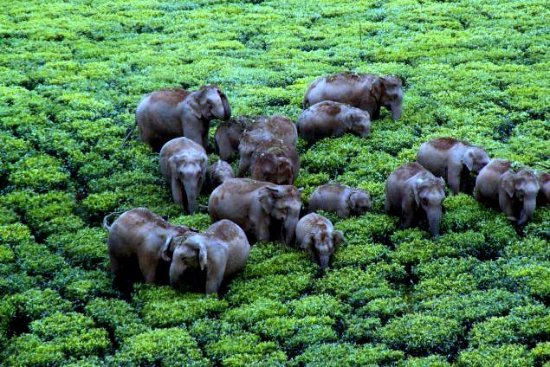
By Chathuranga Dharmarathne, Chandima Fernando, Chinthaka Weerasinghe & Ravi Corea
Colombo, January 25 (DailyFT/ www.nature.com) : Human-wildlife conflicts are an increasing problem as human land use encroaches on wildlife habitats. Augmenting farmers’ crops with orange trees through Project Orange Elephant (POE) has proven to be a simple and effective method for mitigating the Human-Elephant Conflict in Sri Lanka. Similar endeavours could be applied elsewhere in the world.
The Problem
The association between man and elephant in Sri Lanka is ancient and dates back nearly 5,000 years. The Asian elephant (Elephas maximus), being the largest terrestrial herbivore on the island, naturally requires large and diverse habitats to survive.
With human expansion comes land modification, unfortunately to the detriment of elephants. The need of land for human use is an ongoing encroachment of the existing elephant habitat which is being diminished continuously and drastically. As a result, Human-Elephant Conflict (HEC) is escalating every year in frequency and intensity. Annually ~250 elephants and ~80 people are killed due to HEC.
Agriculture is the primary rural industry and rice is the staple food in Sri Lanka. Most rice cultivators are small-scale farmers and they are the people who suffer frequently from HEC. These farmers are hampered by poor economies and financial services, limited technology, fragmented landholding, and pre and post-harvest losses, and HEC.
Conflict with elephants continue to increase due to inefficient landscape-level planning and land-use practices that are incompatible to coexisting with elephants. Currently, there are very few efforts to develop solutions to resolve the livelihood and environmental concerns resulting due to the negative interactions of agriculture and elephants.
Since HEC being a result of agriculture-based land used practices incompatible with elephants, a large part of the solution to mitigate HEC must be based on the introduction of innovative land-use practices.
The Solution
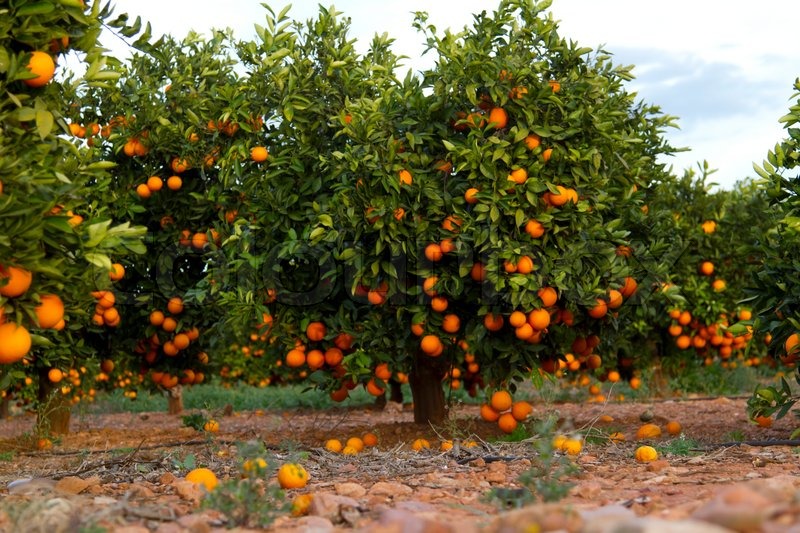
Project Orange Elephant (POE) is an innovative initiative conceptualised by the Sri Lanka Wildlife Conservation Society (SLWCS) (Fig. 1). The initiative draws on elephants’ natural aversion to citrus to protect the homes of farmers from elephant attacks while at the same time providing farmers with a sustainable supplementary income. The project is unique to Sri Lanka and came about as the result of fieldwork conducted by the SLWCS in the Wasgamuwa area of the Central Province of Sri Lanka.
Elephants do not preferentially eat oranges. To test this observation a series of feeding trials were conducted with six Asian elephants at the Sri Lanka National Zoological Gardens in 2006. The results were very encouraging, the elephants showed an obvious distaste for oranges and several other citrus varieties.
POE is a crop diversification project to establish an economic and trophic buffer for farmers living in the rural countryside for which close encounters with elephants during their day-to-day activities are commonplace. Crop raiding by elephants and the harsh retaliatory measures subsequently taken by people whose livelihoods depend on their farms feeds a vicious cycle of violence and death. POE is helping to reduce this violence.
The project uses a variety of grafted local orange (Citrus sinensis) known as Bibile Sweet that had been developed in Sri Lanka to suit the local climatic conditions (Fig. 2). This variety grows well in marginalized land and does not need frequent irrigation, bears fruit within 1.5-3 years, and each tree can provide ~300-600 fruits per season. Each tree has a fruiting cycle of two seasons per year.
Bibile Sweet is a high-quality fruit known for its fresh sweetness, value-added products, and has good market demand. By planting these trees alongside their crops, particularly in the border areas adjacent to elephant habitats, we hope to decrease crop raiding by elephants while also supplementing farmers’ income
The objective of POE is to develop solutions at the micro-level to have an impact at the macro level to reduce HEC through a better understanding of elephant biology, ecology, behaviour, human-needs, and aspirations. By mobilising local communities to grow oranges as an alternative cash crop the project provides assistance to elevate them socio-economically by providing them with a sustainable primary income from cultivating oranges.
The SLWCS hopes to encourage more and more farmers to join the project to provide a sustainable solution to reduce HEC and create an environment of coexistence by scaling up POE. This effort will not only help to mitigate HEC but also alleviate rural poverty helping to garner the support of local communities for the long-term conservation of the endangered Sri Lankan elephant.
The key factors of the project is its simplicity. The project does not involve advance technological transfers or teaching farmers brand new skills or building their capacity to do something other than what they are traditionally trained to do. The project is harnessing farmers’ existing skills and abilities to do something new and economically, socially and ecologically beneficial to them and the environment.
For the most part, POE can be managed totally with community resources. SLWCS encourage farmers to cultivate crops such as oranges that are not attractive to elephants, rather than rice cultivation. The Society believes POE can change the future of elephants and farmers. If we can get these rice farmers to cultivate oranges at least in the border areas adjacent to elephant habitats then these farmers will have a primary income that is not susceptible to elephant depredations. This will contribute to creating coexistence in a landscape where people and elephants share space.
For more than a decade the SLWCS has been working with local communities to create alternative forms of agriculture and to create livelihoods that cannot be destroyed by elephants (Fig. 3). By cultivating oranges, rural Sri Lankan farmers in Wasgamuwa are creating an effective elephant trophic deterrent and a sustainable income for themselves while at the same time ensuring the safety of their families and the conservation of the endangered Sri Lankan elephant.
In 2015, Project Orange Elephant received a Most Innovative Development Project Award from the Global Development Network (GDN) based in Washington, DC, U.S.A. For more information on the project, you can visit our website (https://www.slwcs.org/project-orange-elephant).
Saving Elephants by Helping People is the underlying and overlying philosophy as well the goal and objective of the Sri Lanka Wildlife Conservation Society’s efforts to develop holistic and sustainable measures to mitigate human–elephant conflict in Sri Lanka.
Government MP Wijeyadasa Rajapakshe said yesterday he was removed from the post of justice minister during the UNP government because he refused to get the judiciary to handle various cases in its favour.
I was removed as I refused to harass opposition politicians through the judiciary,” he said.
MP said the Constitutional Council also acted in a biased manner though it was appointed under the 19th Amendment to the Constitution.
I suggested that DIG S.M. Wickramasinghe be appointed as the IGP when President Maithripala Sirisena sent three names. However, Pujith Jayasundera was ultimately appointed as UNP-led government at that time wanted someone loyal to them be appointed to the post,” he said. (Yohan Perera and Ajith Siriwardana)
Inspector General of Police (IGP) Pujith Jayasundara, who is currently in remand custody, has left the Presidential Commission of Inquiry probing the Easter Sunday terror attacks, after giving his testimony.
Escorted by prison officers, the IGP arrived at the Presidential Commission premises at around 10.00 am this morning (25). Jayasundara recorded a statement with the PCoI for the first time today.
IGP Jayasundara was arrested alongside former Defence Secretary Hemasiri Fernando for allegedly committing a criminal offense by failing to prevent the coordinated terror bombings on Easter Sunday last year, even after receiving forewarnings on the attacks.
When the case against the duo was taken up on Monday (20), the Colombo Additional Magistrate ordered to remand them until February 3.
The PCoI recently recorded statements from former Governor of Western Province Azath Salley, former Assistant Superintendent of Police of Mawanella Gamini Tennakoon and a clandestine witness who testified about the ringleader of Easter Sunday attacks – Zahran Hashim.
Salley recorded his statement with the PCoI today for the third consecutive day.
Two women have been admitted to the Infectious Diseases Hospital (IDH) on suspicion of being infected with the wide-spreading coronavirus.
However, health officials stressed that it is yet to be confirmed that these two women are indeed contaminated by the deadly virus, which originated in the city of Wuhan in China and already killed 41.
Director of IDH, Dr. Asitha Attanayake stated that a Sri Lankan medical student who had returned to the island from Wuhan and a young Chinese female who was touring the country were accordingly hospitalized.
Phlegm and blood samples of the two females have been directed to the Medical Research Institute in Colombo for testing.
In the meantime, the Embassy of Sri Lanka in Beijing in consultation with the foreign affairs ministries in Sri Lanka,
China and Hubei Province is providing the necessary advice to the Sri Lankan students in Wuhan to protect themselves from infection.
The Sri Lankan students have been advised to adhere to health precautionary instructions given by the local health authorities. Since the Wuhan city is closed down, no one can exit or enter the city.
The Embassy is also in close consultation with the Beijing based foreign Embassies particularly our neighbouring countries, with regard to the course of action being taken about their citizens in Wuhan.
Initially, there were around 85 Sri Lankan students in Hubei Province, however, most of them had returned to Sri Lanka for the holidays before the outbreak of coronavirus, the Embassy said today (25).
In the event of a necessity for evacuation, the Embassy in consultation with the Ministry of Foreign Relations in Colombo and other agencies of Government is making preparations for the students and their family members numbering 30.
The Embassy in Beijing and the Consulate Generals in Shanghai and Guangzhou are making coordinated efforts to provide necessary information to Sri Lankans around China.
දීර්ඝ කාලයක් විපක්ෂයේ රැඳී සිටීමේ බලාපොරොත්තුවක් නොමැති බව විපක්ෂ නායක සජිත් ප්රේමදාස පවසනවා.
පොළොන්නරුව ප්රදේශයේ අද පැවති ජනහමුවකට එක්වෙමින් ඔහු මේ බව සඳහන් කළා.
පාර්ලිමේන්තු මන්ත්රී රන්ජන් රාමනායකගේ හඬ පට මගින් අනාවරණ වන අධිකරණයට බලපෑම් සිදුකිරීම් පිළිබදව කරුණු විමර්ශනය කර, හිටපු පාර්ලිමේන්තු මන්ත්රී දුමින්ද සිල්වාට සාධාරණය ඉෂ්ඨ කරන ලෙස ඉල්ලා පැවැත්වෙන විරෝධතා මාලාවේ තවත් විරෝධතාවයක් අද පැවැත්වුණා.
ඒ මාලඹේ ප්රධාන බස් නැවතුම්පොල ආසන්නයේදීයි.
කඩුවෙල ජනතාව එම විරෝධතාව සංවිධානය කර තිබූ අතර ඊට සිංහලේ ජාතික සංවිධානය, ලාංකික අපි ජාතික සංවිධානය, දේශප්රේමී එක්සත් ජාතික පක්ෂය සහ තවත් සිවිල් සංවිධාන රැසක් එක්ව සිටියා.
මාලඹේ ප්රධාන බස් නැවතුම්පොල අසල විරෝධතාවයේ නිරත වූ ඔවුන් පසුව තලාහේන මංසන්ධිය දක්වා පාගමනින් පැමිණියා.
එක්සත් ජාතික පක්ෂ නායක රනිල් වික්රමසිංහ මහතා, රංජන් රාමනායක මන්ත්රීවරයාව යොදා ගනිමින් මෙරට ජනතාවට අධිකරණය පිළිබඳ විශ්වාසය බිඳවැට්ටවීමේ උත්සාහයක නිරතව ඇති බවට, නව සිංහල රාවය සංවිධානය චෝදනා කරනවා.
අද කොළඹ පැවති ප්රවෘත්ති සාකච්ඡාවකදී එහි මහලේකම්, පූජ්ය මාගල්කන්දේ සුදත්ත හිමි මේ අදහස් පළකළා
මේ අතර, සිංහල රාවය ජාතික සංවිධානය කොළඹ පැවැත්වූ ප්රවෘත්ති සාකච්ඡාවකදී පැවසුවේ, රංජන් රාමනායක මන්ත්රීවරයා පාර්ලිමේන්තු වරප්රසාද භාවිත කරමින් විවිධ පාර්ශ්වයන්ට අභූත චෝදනා එල්ල කරන බවයි.
රංජන් රාමනායක මන්ත්රීවරයා සමඟ දුරකථන සංවාදවල නිරත වූ විනිසුරු පද්මිණී රණවක මහත්මිය සම්බන්ධයෙන් මෙතෙක් නීතිය ක්රියාත්මක වී නොමැති බවට සිංහලේ සංවිධානය චෝදනා කරනවා.
එම සංවිධානයේ නියෝජිතයින් අද මැගසින් බන්ධනාගාරයට පැමිණි අවස්ථාවේ මාධ්යයට අදහස් දක්වමින් මෙම චෝදනාව සිදු කළා.
අධිකරණයට අපහාස කිරීමේ චෝදනාව යටතේ ඊයේ රක්ෂිත බන්ධනාගත කෙරුණු විශ්රාමික මේජර් අජිත් ප්රසන්නගේ සුවදුක් බැලීමට ජාතික සංවිධාන කිහිපයක නියෝජිතයින් අද මැගසින් බන්ධනාගාරයට පැමිණියා.
Alaina B.Teplitz you still have traces of genocidal traits you inherited from your ancestors the Europeans who migrated to America about 600 years ago, and that is why you have become a state slave to carry out destructive plans of US State Department as its Ambassador. You have no altruistic human qualities to evaluate the danger of the plans of USState Department to destroy Sri Lanka and untiringly work for separation of Communities in Sri Lanka, and make this beautiful country a military base of your country.
The proposed MCCC with Sri Lanka is a disaster. Can you mention one developing country in the world which has benefited from any Agreements it has signed with America. To put it in another way America has not contributed for the development of any developing country. They sign contracts which are beneficial to America with little concern to the country with which enters into such agreements.
There were people like you in the CIA , specially trained Agents to put the minorities against the majority in developing countries. Sri Lanka is not unaware of such sinister American State plans of putting minorities against the the Sinhala majority and divide the communities to make the country weak and unstable to facilitate drawing benefits by such vulnerability. Teplitz; you are like an army soldier taking orders from the Commanders to shoot and eliminate the innocents and set up a system planned by your Commanders. You are like a bullet , which has know knowledge of what it does.
You know Teplitz the Indigenous Americans that consisted of 570 tribes when the Europeans migrated to America had a history of over 15000 years. Your immigrant ancestors brought with them viruses unknown to the indigenous American Indians who died in large numbers contaminated by these viruses. Some were killed in armed attacks and burning down of their villages. They were massacred using bacteria, viruses and toxin. They were dispossessed of their land, forcibly driven away into settlements in infertile hostile surroundings, where they could neither cultivate nor hunt for bisons for their food.
In your infamous MCCC with Sri Lanka you have decide on an economic corridor from Colombo to Trincomalee and provided special settlements for the families who would be dispossessed of the land with your sinister economic corridor which is to physically divide the country into two different land masses. And America is willing to pay 480 million Dollars just to cut the country into two !
How
much is Washington
spending for the welfare of the indigenous American Indian people and the development of
their settlements , and their culture ? Absolutely nothing is done for the
welfare of the Indigenous Americans. They are wilfully kept in poverty by
the USA
Government..
https://www.forbes.com/sites/realspin/2014/03/13/5-ways-the-government-keeps-native-americans-in-poverty/#71381d5d2c27
What has happened to them today. The black Americans descending from the innocent Africans imported into America as Slaves have developed into a important Community. American State Department is more sympathetic and pay more attention even to the Tamil Diaspora settled in America, than to the American Indians who escaped the American genocide against their ancestors. The white immigrant Americans have a history of only about 200 year and celebrate their independence annually.
But the indigenous Americans are forgotten. Though the terrorist sympathizing Tamils who migrated to America are now recognised and for their sake USA State Department is doing all they can to set up a separate Tamil Eelam in Sri Lanka for them to have their holiday homes, while the indigenous Americans are kept in the shadow for fear of their emerging as a force against the immigrants Europeans who have usurped their rights to set up a government of their own .
That is how America evolved in a country that does not belong to them and massacred and over powered its rightful owners, and now shamelessly speak of democracy and human rights. Though the immigrant Europeans did not use the same method the Nazis used in their genocide of the Jews, what the immigrant Europeans did to the Indigenous American Indians smell the same Nazis genocide of Jews. But at leasts the Jews could fight back , not the poor American Indians.
Therefore, the present day Americans however much they try to wash off the remaining stains of the blood of the innocent indigenous Americans they massacred and left for dead and forgotten, with whatever washing powder of democracy and human rights, the stains remain . Every descendent of those European Immigrants to America will forever carry with them those deadly taints. It is more visible amoung the American diplomats acting as the Agents of the tainted ruling Class.
The American diplomats, CIA Agents are the unfortunate carriers of this deadly virus which politically and economically destroy the developing countries. The American history which is only about 200 years or so old has committed deadly sin in developing countries far and near which had been seeking to be independent of the fearful tainted American Administration.
The America State Department got the CIA to assassinate or ousted from office in various developing countries the political leaders who were introducing people friendly political systems into their countries. That was and is what America represents, a country that keeps developing country poor and dependent on them.
That is what USA had always been doing in Sri Lanka. It has not carried out any development project for Sri Lanka though it constantly demands entering into agreements such as ACSA, SOFA or MCCC which are not at all what Sri Lanka or its people want.
America used CIA agents to change regimes. In 1950 Jacob Arbenz President of Guatemala was ousted , Mossadeq Prime Minister of Iran was ousted , also in 1973 Salvadore Allende President of Chile was ousted leaving doubt about his suicide. In Congo, Lumumba was assassinated
Larry Devlin a former CIA Agents recounts in his memories how he was ordered to kill Patrice Lumumba of Congo. He says, In September 1960, Mr. Devlin received a cable advising him that he would get an important message from Joe from Paris.” The envoy turned out to be Sidney Gottlieb, the agency’s club-footed poisons expert, whom Mr. Devlin had met during operations to install listening devices overseas, and who would later become notorious for mind-control experiments using L.S.D.
Mr. Gottlieb said that the assassination had been approved by President Eisenhower, but admitted that he had not seen the presidential orders. He explained that the poisons, including the spiked toothpaste, had been chosen to make the death appear to result from natural causes.” (http://www.nytimes.com/2008/02/24/world/africa/24congo.html?ref=patricelumumba)
However there were great Americans who had the courage and good sense when understanding how distasteful the American political system is resigned from their assignments, not wanting to be a part of American political mafia. John Perking was one amoung such. He states his experience as an Economic hitman, who acted as a development expert and proposed to developing countries projects that indebted them to American Companies, and became poorer and politically unstable.
Alaina B.Teplitz, it is better be an ordinary altruistic person true to one’s convictions than be a part of a capitalist political system which is bent towards manipulating governments in poor developing countries for its own political benefit , not caring what happens to the poor countries or their people.
Aliana B.Teplitz when you come to a country as a diplomat try to learn about the culture and the history of the country. When your State Department instructs you to carry out activities, please try to understand whether in carrying out those instruction there would be a conflict with the country with its Culture and its relationship with other communities that have come from outside, settled in the country and have after generations of living together absorbed into the common fabric of a Nation.
Your MCCC puts into danger these fundamental issues of Sri Lankan Nationhood, therefore it is not suitable to be introduced into Sri Lanka. We also cannot have confidence in American Army Soldiers with their Guns roaming the country at their will and pleasure.
Aliana B Teplitz you have perhaps heard of the Kill team that blew up and shot Afghan Civilians to collect their fingers as trophies.
(https://www.theguardian.com/world/2010/sep/09/us-soldiers-afghan-civilians-fingers)
What is the guarantee that such things will not happen in Sri Lanka with American Soldiers entering the country under the MCCC ? The American Soldiers with freedom to roam about in Sri Lanka may give into their deformed sexual desires and kill or rape the civilians?
These things have happened lead by American Soldiers at Staff Seargent level. According to investigators and legal documents, discussion of killing Afghan civilians began after the arrival of Staff Sergeant Calvin Gibbs at forward operating base Ramrod last November. Other soldiers told the army’s criminal investigation command that Gibbs boasted of the things he got away with while serving in Iraq and said how easy it would be to “toss a grenade at someone and kill them”.
Therefore, Aliana B.Teplitz take courage and tell your bosses in the American State Department that they should stop their unnecessary interference with the government of Sri Lanka to insist entering into deplorable agreements, and pass disastrous resolutions at the UNHRC in Geneva based on an absolutely fallacious, and an unacceptable Darusman Report..
Revised 15.2.20
The Eelam war threw up many dedicated military leaders. The best known is the late General Denzil Kobbekaduwa followed by late Maj. Gen. Vijay Wimalaratne.
Kamal Gunaratne said of them ”I firstly pay tribute to the late General Denzil Kobbekaduwa, the most charismatic battle-field commander we had because he always understood the heartbeat of the soldier and put his life on the line to safeguard their interests before his own comfort at all times. The late Maj. Gen. Vijay Wimalaratne, my guru, who in my opinion was the most brilliant field commander we had because he knew the terrain we fought on, his adversary’s modus operandi, and above all knew and understood his men, always leading from the front. His creation, the Gajaba Regiment will always bear testimony to his great qualities of inspired leadership and dedicated service to the Corps, Army and Country.
I have selected just two other leaders, for this essay, the much admired Major General Chagie Gallage and the much remembered Col Fazly Laphir. They are presented here, not only for their own personal contribution but also as representatives of the fine work done by all who fought and won the Eelam war.
Biographical information on Chagie Gallage is not available in the public domain, except that he attended Ananda College. However, there is plenty of information about his work in the Sri Lanka army.
During most of his long and enduring military career, Chagie served either in an operational area or at a military training institute said, analysts. He was in the forefront of the war against the LTTE. He played a decisive role in the final thrust against the LTTE terrorists in 2007-2009.
Chagie was the first choice of any senior military commander, to include in their team of field commanders for operations. Thus, Chagie was seen in almost all major combat operations in all fronts in the North and East from 1985 to 2009.
Chagie as a young subaltern, in the mid-eighties, was a skillful and tactically sound combat fighter who operated along with his rifle company in many areas of the Jaffna Peninsula. His first independent command was to guard the Nagadeepa (Nainativu) island in 1986 with his platoon.
He played a key role in Operation Vadamarachchi and Operation Clean Sweep, the two military operations led by late Generals Kobbekaduwa and Wimalaratne to drive the terrorists out of the Jaffna peninsula in 1986.
During Jaya Sikurui Chagie and the Sixth Gemunu Regiment were asked to take Puliyankulam. Chagie asked headquarters for a bulldozer, a backhoe and a few days time for rehearsals. This regiment had a reconnaissance platoon of well trained and highly motivated soldiers. They provided intelligence to Chagi who then did a mockup of the LTTE defense lay out, using the bulldozer and backhoe. Each soldier was made aware of his role and they took Puliyankulam straight away.
In Eelam war IV, Chagie’s leadership was instrumental in liberating the Southern part of the Eastern Province that included the LTTE stronghold Thoppigala. Chagie as a Brigadier commanded the Commando Brigade, which he moved into action against the LTTE in the Eastern Province in 2006.
Then Chagie switched to the Wanni theatre with the beginning of operations in the Northern front in 2007. He raised the Task Force-1 there and launched it from Mannar front, along with Commando Brigade, (later upgraded as 58 Division). Chagie was away from battlefield for some time due to illness. He returned in 2009 to command the 59 Division in Mullaitivu. On completion of the campaign, Brigadier Chagie was promoted to Major General prematurely ahead of most of his peers, on merit.
Chagie is widely considered one of best strategists in the army. During an intense battle at Karadipokku in Kilinochchi, as Operation ‘Sathjaya’ was underway in 1996, the Army suffered heavy casualties and the battle was about to be lost. It is at this crucial moment that Chagie came in voluntarily without waiting for instructions from superiors, and led his elite Airmobile troops to fight gallantly and restored the situation.
Chagie was meticulous in his approach to an assignment. He looked into the minute details of any assignment. That particularly is the reason for his success, said analysts. Also, Chagie is extremely innovative. He can devise things when the resources are scarce or unavailable.
Colonel Chagie was the Commandant of Army Training School in Maduru Oya in 2004. He was instrumental in conceptualizing and forming the highly skilled ‘Special Infantry Operations Teams’ (SIOT) of the Army, together with Lt Col Ralph Nugera, realising a vision spelt out by the then Inspector of Infantry, Major General Sarath Fonseka. It was these SIO teams, which boosted the fighting capacity of the infantry and fought as vanguards of the advancing Army during Eelam War IV.
Chagie trained these special teams in special battle drill that eventually enabled the troops to successfully cross LTTE obstacles. One such obstacle was highly fortified LTTE fortifications built on ‘Ditch cum Bund’, commonly known as ‘DCB’ (a line of bunkers coupled with about 10 foot wide water obstacle in front of them). These obstacles severely hindered the movement of the advancing Army.
Chagie has always been popular among his comrades in the Army, among his batch mates, among old Anandians, among the motor-racing community of Sri Lanka, among his relatives and friends, said his admirers. He is one of the few officers of the Army who always commanded respect not only from his subordinates but also from his superiors and peers. Chagie not only earned gallantry medals multiple times for his bravery in battle, but he also worked hard to get gallantry medals for his juniors too.
Major general Chagi Gallage was also very outspoken. He spoke out, angrily, when Mangala Samaraweera visited Jaffna in 2016 to launch a website for ethnic reconciliation. He was immediately transferred to a post which did not have command of troops.
A week after retirement, Gallage delivered his farewell speech at Saliyapura, Anuradhapura, on the eve of the 35th anniversary of the Gajaba Regiment, 2018. Gajaba Regiment is synonymous with Chagie Gallage, said analysts. Chagie’s contribution to the Gajaba Regiment has been outstanding. ”
Gallage began his farewell speech by referring to the gigantic role played by the Gajaba Regiment and the Army as a whole in the Eelam wars, reported Shamindra Ferdinando. He recalled the spearheading role played by the late Maj. Gen. Wijaya Wimalaratne in the shaping of the celebrated Gajaba Regiment in the ‘80s. Gallage declared Wimalaratne as the greatest infantryman in the Army. Gallage then thanked Maj Gen Shavendra Silva, Colonel of the Gajaba regiment and the Adjutant General of the Army who had organized his farewell. He then went on to thank officers and men of the Gajaba Regiment.
Chagie thereafter said, I have witnessed, the determined Commanders of this dignified force transform what was described as “Exhausted and a Losing Army” into a ‘Wining and a Victorious Army’. To achieve this, Commanders at different levels worked together, to develop the overwhelming capability of our Army. An army, which especially during the final phase of the conflict, demonstrated such versatility and braveness all round.
Gallage named those who made that task possible. “Men like (Late) Maj Gen Vijaya Wimalaratne, (Late) Gen Denzil Kobbekaduwa, (Late) Maj Gen Janaka Perera, Col (rtd) Gotabaya Rajapaksa, Maj Gen Sathis Jayasundara, (Late) Maj Gen Gamini Gunasekara, Col (rtd) Nimal Ratnayake, Maj Gen (rtd) G.V. Chandrasiri, Maj Gen (rtd) Gamini Hettiarachchi, Brig (rtd) Nimal Jayasuriya, Lt Gen (rtd) Jagath Jayasuriya, Gen (rtd) Seewali Wanigasekara, Lt Gen (rtd) Mendaka Samarasinghe, Maj Gen (rtd) Jagath Ramubukpotha, Lt Gen (rtd) Jagath Dias, Brig (rtd) Hiran Halangoda, Col (rtd) Jayavi Fernando, Maj Gen (rtd) Srinath Rajapakse, Brig (rtd) Bahar Morsath, Maj Gen (rtd) Lalith Daulagala, Brig (rtd) Roshan Silva, Late Col Shantha Wijesinghe, Maj Gen (rtd) Kamal Gunaratne, Maj Gen (rtd) Amal Karunasekara and Gen (rtd) Udaya Perera (who was my deputy Snr Subaltern) Maj Gen (rtd) Jagath Alwis (who inspired me to join the Army) And last, but not the least, Field Marshall Sarath Fonseka (who led our forces as the Commander of the Army.
Gallege then thanked Maj Gen Ralph Nugera, Maj Gen Aruna Wanniarachchi, Maj Gen Athula Kodippily and Col Mahendra Fernando and their magnificent ladies. They were my esteemed assets, as my deputies, facilitators and shadows, at times referees, in challenging tenures in combat and otherwise.
My highest regards also, said Chagie, to Special Task Force led by DIG (rtd) Chandrasiri Ranawana and DIG Ruwaiz Lathiff for their unstinted support and assistance beyond the call of duty. Chagie also thanked ‘our comrades in sister services Air Force and Navy for risking their lives, [to help us win the war.]’
He concluded his speech by thanking those engaged in the task of making a Healthy Army (Consultant Dr) Maj Gen Sanjeewa Munasinghe, (Consultant Dr) Brig Maurine Wijegunawardene, (Consultant Dr) Brig Nimalka Ariyaratne and (Consultant Dr) Col Roshan Monaragala.
Col. Fazly Laphir (d.1996) was the Commanding Officer of the First Special Forces Regiment Colonel Laphir was one of the founding members of the Sri Lanka Army Special Forces Regiment. He played a key role in developing it into a formidable unit which specialized in range of specialized operations. He played a crucial role in the growth of the SF from the very beginning.
When Major Gamini Hettiarachhi was struggling to start the Special Forces regiment there were very few senior officers who supported him, said Kamal Gunaratne . His requests for additional troops, weapons and equipment for operations were met with lukewarm response from HQ,. But Fazly Laphir always gave him the strength and courage to continue. The two of them considered the development of the SF as their prime responsibility, over and above their personal lives, he said.
He was a very creative, committed and dedicated officer. He had a knack for details. Before he joined the SF he has served as an intelligence officer in Jaffna and was one of the best SF officers powered with his language skills and intelligence.
Col. Lafir was close to us. He was keen in receiving results at every mission. He always insisted on and motivated us to destroy the LTTE. He wanted us to use what we learnt effectively in destroying the LTTE”, they said.
As a true SF officer he went out looking for information and opportunities to start an operation and many he did on his own initiative,” said one speaker, explaining about the luck Col. Lafir always had. It was known in the Special Forces that where ever he went he and his troops were able to destroy and cause damage to the enemy.”
Once Colonel Lafir disguised himself as a mudalali and we were his golayas (supporters) and went in search of LTTE cadres that were operating in Vavuniya and the suburbs. At times we went in lorries with cadjans or husks pretending as traders,” his subordinates recalled.
During the last stages of the abortive 1990 Jaffna fort campaign meals were cooked at Mandativu and transported across Jaffna lagoon to the soldiers in the Fort. The task of transporting was given to Fazly Laphir then a major in the SF unit. The soldiers stood neck deep in water, forming a line across the lagoon and passed the food along. They had no cover at all , unlike on land. They were sitting ducks for LTTE . There were casualties but the food arrived.
Colonel Fazly Lafir is one of the rare characters who is lovingly remembered not only by his family but also by all his colleagues, soldiers and even by new recruits who have never worked with him. To the entire SF Col. Lafir is the symbol of true leadership, dedication and courage. He was striking leader who gave priority to his soldiers welfare at all times. Men were willing to follow Colonel Laphir even at the risk of their lives, said his subordinates.
In July 1996, Mullaitivu Army Camp was attacked by LTTE . Rescue operation was launched to relieve the besieged base .Col. Lafir, who was the Commanding Officer of 1 SF, took the challenge without hesitation. He and his team were heli-dropped under heavy fire. Personally leading the attack under heavy fire, showing brilliance and courage.. Lafir was wounded by severe gunshot injuries, yet continued to lead his men until he was killed by shrapnel from a nearby explosion. His men recovered his body and transported it back in a SLAF helicopter that had landed the second batch of commandos.
His courageous act on that day to save the lives of 1500 comrades, he was awarded the Parama Weera Vibhushanaya”, the highest award for valour in Sri Lanka and posthumously promoted to the rank of Colonel. The new auditorium at Diyatalawa Military Academy was named after Colonel Fazly Laphir in 2014.
Major General Kamal Gunaratne, writing in his book Road to Nandikadal” had this to say about Fazly. He dedicated his life to the Army and he derived great satisfaction from the pursuit of and the elimination of terrorism. He was the Commanding Officer of the first regiment of the Special Forces (1SF) at the time he was called to serve in the rescue mission of Mullaitivu and undertook the task with passion, despite the lack of preparedness. He was the epitome of professionalism and courage, lending inspirational leadership to his beloved troops and ultimately sacrificed his life in an endeavour to rescue his comrades from the jaws of death”.We lost one of the greatest sons of Motherland that day.
The second Annual Lecture of the Institute of National Security Studies Sri Lanka (INSSSL) delivered by Brigadier HP Ranasinghe in 2019 was on Fazly Laphir. It was titled Epic of a War Hero Colonel AF Laphir PWV RWP RSP”.
The speaker said, the occasion for this tribute is the 14th death anniversary of that hero, Colonel Azlam Fazly Laphir, He was posthumously awarded ‘Parama Weera Vibhushana Medal’ – the highest military honour in Sri Lanka for battle-field gallantry. He, it should be noted, is the senior most officer of the Sri Lanka army to be so honoured, and one of the very few commanding officers to die while leading his men in the battle-field.
From the very outset, his army career was featured by dedication, skill and exceptional overall competence. He was one of the pioneering officers in the first Gajaba Regiment. When Lt. Col. Vijaya Wimalaratne inaugurated the ‘Special forces squadrons’ scheme to counter the intensifying threat posed by the guerrilla war tactics of the LTTE, Fazly was appointed the officer in charge of the first such unit which had several skirmishes with the fledgling militant groups in the north among which the most successful was the operation in Ambuweli in 1983.
He was a founder member of the ‘Thirty-Five Gang’/’Combat Tracker Team’ formed in 1985. He was a member of the “Rapid Deployment Force” formed in the nineteen eighties. As a pioneer member of the First Regiment of the ‘Special Forces’, Fazly’s involvement extended to all its aspects including even the design of the cap, badge and the insignia. His reputation for physical courage earned him from his colleagues the affectionate nickname of “suicide express”.
One of the memorable demonstrations of his willingness to risk his life against almost insurmountable odds is found in the annals of the rescue mission he took part in across the Jaffna lagoon to reach the troops besieged in Jaffna Fort.
Over time, he acquired a mastery of the ‘military geography’ of Jaffna peninsula. This, according to well informed sources, turned out to be invaluable in the re-establishment of government control over that region in 1995. Meanwhile, he was also involved in strengthening the army camp at Mullaitivu which was mainly intended to control the LTTE smuggling operations along the north-east coast.
His fateful day came when the Sri Lanka army camp at Mullaitivu was surrounded by the terrorists on 18 July 1996. Mullaitivu was of strategic significance to the Tigers because of its central location along the north-eastern seaboard. Although a massive SL army garrison had been placed in its command area of 8.5 kms, the camp was vulnerable to enemy attack, being relatively isolated – the nearest main SL army camps being at Weli oya 35 kms to its south and Elephant Pass 55 kms to its north across hostile forested terrain. The Tiger forces surrounded the camp and started their attack at 1.30 a.m. An operation code-named “Thrivida Pahara” launched by the SL Army to defend Mullaitivu was severely handicapped by the fact that no reinforcements could be dispatched to Mullaitivu either by land or by the sea because of the impenetrable blockade by a larger number of Tiger battalions armed with heavy artillery and a large Sea Tiger force. It was in this situation of total despair that Lt.Col. Fazly Laphir volunteered to lead a “do-or-die” air-borne rescue mission manned by 275 combatants of the “Special Forces” under his command.
Fazly was stationed at that time at the Maduru Oya camp. From there he and his men were conveyed by helicopter via Trincomalee to Alampil (5kms south to the Mullaitivu base) around 4.30 p.m. on the same day. As expected, they encountered stiff resistance from the guerrilla forces. Earlier reinforcement operations by the Sri Lanka Air Force and the Navy had been thwarted, the resulting damage included damage to two helicopters and the gun-boat ‘SLN Ranaviru’ which was blown up with its entire crew of thirty-six.
Some of the most fierce fighting of the entire ‘Eelam War’ were witnessed over the next few hours. Since helicopter landing on open beaches was excessively risky, Fazly and his troops had to descend to the ground along ropes amidst heavy firing. Both in the hazardous task of descending and re-grouping as well as in the deadly close-encounter combat against several thousands of well armed Tigers, Fazly is reported to have displayed such extraordinary leadership skills that his men persisted with their task, achieving a fairly degree of success and causing heavy losses to the LTTE forces. They advanced amidst fierce mortar fire but lost communication with the rear.
Fazly at their vanguard was fatally wounded by a shrapnel that pierced his brain in the morning of 19 July. Though receiving no medical care, he went on fighting until, later that morning, he succumbed to his injuries. His body was evacuated three days later.
This appreciation, focused as it is on Col. Fazly Laphir, does not imply that in the annals of the Eelam Wars his heroism was unique. There were others, probably of all ranks, who, in times of impending peril, acted with the same courage and commitment that Fazly showed at the battle of Mullaitivu. We moan the fact that many among them were not destined to enjoy with us the fruits of victory. The least we must therefore do is to accord to them an everlasting place in our collective memory, and, where appropriate, help the loved ones they have left behind. (Continued)
History of the Tamil Community of Sri Lanka
The small communities of Tamils and Muslims living in Sri Lanka, amount to about 24% of the island’s total population with Tamils including Estate Tamils accounting for 15% and Muslims 09%. These communities are descendants of groups of individuals, exclusively males, who arrived in this island at different times in the past for various purposes, and later settled down among the indigenous Sinhala people. Tamils came from southern India and continue to observe the cultural traditions of their homeland which is Tamilnadu, where the Tamil culture including the Tamil language originated. Tamils in general, therefore are a settler community in the island with the rights and privileges enjoyed by the indigenous Sinhala people. However, it is important to note that Tamils are indigenous to the Tamilnadu which is the birth-place of the Tamil culture and language. For all purposes, the national and cultural homeland of the Tamils is Tamilnadu.
Tamils arrived in the Jaffna peninsula in the 16th century
Initially the Tamils came to the island as invaders and mercenaries. Since the 3rd century BCE, there were seventeen Tamil-speaking Dravidian invasions of the Sinhala kingdom when Anuradhapura and Polonnaruwa were the Sinhala royal capitals. These invasions were associated with extreme forms of violence and destruction. After defeat some Tamils fled to India while some remained in Sri Lanka with some settling down in the Jaffna peninsula. Historians H.W. Codrington, Fr. S.G. Perera, and Mudaliyar C. Rasanayagam mentions clearly that the Jaffna peninsula was peopled by the Sinhala Buddhist community before the sixteenth century. This is confirmed by archeological evidence of the remains of stupes and viharas in the peninsula, and by the large number of Tamilized Sinhala place names in the Jaffna peninsula and in the Northern Eastern region of the country where Tamils and Muslims predominate at present. In the 16the century and thereafter, for many years, the Sinhala Buddhist people in Jaffna lived together with Tamil immigrants from South India, in harmony. The famous Portuguese historian Fernao De Queyroz mentions in his book, that when the Portuguese arrived in the island in early 16th century, the Jaffna region was, like other 14 regions of the country at that time, managed by a sub-king, who paid tribute to the Sinhala King (or ‘Emperor’) in Kotte. Some Tamils cite the Rama-Ravana story to claim that Tamils were in the island in ancient times. The eminent historian A.L. Basham has called this Ramayana story as bluff and has shown that the Ramayana is a work of fiction by Valmiki, who drew his plot and characters from the Dasaratha, Jataka and the Valahassa Jataka of the Buddhists.
It is a fact that the Sinhala people, starting with their kings and leaders of the past, have been quite accommodative of the Tamils and others who made Sri Lanka their home. Although they came as invaders, mercenaries, merchants, illegal immigrants and so on, they were permitted to settle wherever they pleased and live according to their cultural norms without any harassment. They were/are permitted to move anywhere in the country, and be involved in whatever gainful employment they wished anywhere in our country. They were/are allowed to build their Tamil schools, Hindu kovils and conduct their religious and cultural activities just the way they did in their motherland – Tamilnadu.
Privileges During the British Colonial Period in Sri Lanka
During the British colonial period which started in the 18th century, under the British colonial policy of divide and rule”, massive favoritism was accorded by the British to Tamils, in return for the support of Tamils as quislings to crush Sinhala resistance to British occupation of the island. To serve their self-interests, the British policy set one community against the other. The British gave special privileges to the Tamil minority and those of the Christian faith. They included better opportunities for education, employment, and government services in general. Tamils soon became a privileged community. To cite one example, in terms of the density of schools per unit area, the Jaffna district had the highest density. In 1870 there were only two Buddhist schools left in the country – in Panadura and Dodanduwa as against 805 Christian Schools. As a result, even in 1956, eight years after Independence, the Tamils, then a mere 11% of the population, held 75% of the jobs in the army and 65% of the jobs in the public service.
All colonial powers of the island, acted on pure and absolute self-interest”. British occupation of Sri Lanka was one of sheer exploitation and devastation. Whatever benefits that were derived by local inhabitants were merely incidental to their exploitation of the country’s natural and human resources to reap enormous benefits for the British government. The vast changes that they brought about in almost all areas of life in the country, led to the disruption of the long-held culture, values, and way of life of local Sinhala Buddhists. Under the infamous Waste Lands Ordinance” of the British, commercial plantations of coffee, tea and rubber were established on lands expropriated from the rural Sinhala people, without compensation. The dispossessed Sinhala people were unwilling to work on the plantations and in the 19th century and thereafter, the British imported Tamil laborers from South India to work as labourers in plantations. These Tamils later became a new element in the demographic composition of the country. Most of these Tamil labourer community in the highlands of the island, stayed behind and most of them were accorded citizenship in later years after the country attained political independence.
Post- Independence Privileges
It is important to note, that even during the post-independence era, the Tamils have been permitted to move anywhere in the country, and be involved in whatever gainful employment they wished anywhere in our country. They were/are allowed to build their Tamil schools, Hindu kovils and conduct their religious and cultural activities just the way they did in their motherland – Tamilnadu. Tamils have been accorded official recognition by their representation in our national flag by means of the orange colour band; Tamil culture is recognized by the State and their major cultural days are public holidays; The Tamil language is officially recognized as a national language of the country; Hinduism the main religion of Tamils is recognized by the State and its religious days have been declared as national holidays.
Emergence of Tamil Racism, Extremism, and Separatism
In the 1950s and 60s, there were many South Indian Tamil films produced, directed and acted by extremist South Indian Tamils that were directly propagating Tamil racism and extremism. These films were imported to Sri Lanka and were popularly watched by Sri Lankan Tamils. The directors, script writers and movie stars of these crude films were well known Tamil extremists with political overtures. They soon became leading political figures in the Tamilnadu political scene, promoting the so-called Tamil cause and Tamil separatism. Among them were Karunaneedi, M.G. Ramachandran, Shivaji Ganeshan and the infamous Jayalalitha. The whole purpose of these low-budget films was to generate Tamil racism and a sense of Tamil superiority. These films were shown widely in Sri Lanka and were quite popular among the Tamils in Sri Lanka. The extreme racist attitudes that these films and the Tamil media helped to generate at that time, made Tamils feel elevated and politically motivated to seek special privileges including separatism. The extremist Tamil attitude made them want to take control and began talking about Tamil nationalism, Tamil national struggle and Tamil homeland and so on. Some Tamil extremists resorted to dishonesty, falsehood, fabrications and deliberate misinterpretation and distortion of historic facts pertaining to Sri Lanka. Eventually they resorted to terrorism to establish themselves as a force to reckon with among the majority Sinhala people.
Undue Privileges as a Minority
Tamils – as a small minority community enjoy undue privileges that are not enjoyed by the majority Sinhala community in the country. In fact, no other minority community in any major country in the world enjoys the privileges that the Sri Lankan Tamils enjoy. Today, and for many years in the past, more than half of the Tamil population of Sri Lanka lives among the Sinhala people in predominantly Sinhala areas in the Western, Southern, Central, and Eastern parts of the island. Here, they have their kovils and festivals, thoosa kades, their Tamil newspapers, magazines, videos, music audios, films and free to intermingle with others in their neighborhood without being harassed.
Tamils have the opportunity of living and owning property including real estate anywhere in the country. About 31% of all privately-owned land in Sri Lanka belongs to the 12% Tamil population, compared to the Sinhala who own 51% of land although they are more than about 75% of the population. About 70% of the land, and 85% of the businesses, in the administrative and residential capital, Colombo, are owned by Tamils. The per capita income of Tamils is far greater than the indigenous Sinhala people (estimated to be twice that of the Sinhala) and the rate of unemployment of Tamils is half that of the Sinhala. More than 30% of professional and managerial jobs are held by this less than 12% minority.
Most Tamils are either businessmen or professionals and are dependent on the Sinhala people for their business and professional success. They earn their living using the Sinhala market, Sinhala clients or Sinhala people. Sinhala employers hire Tamils as employees. However, it is well evident that Tamil employers rarely if at all, employ Sinhala people in their establishments. Some of the largest wholesale and retail businesses in Colombo are owned and run by Tamils. Most jewelry establishments, travel agencies, telecommunications outlets are owned and operated by them. The rich Tamils in Colombo and other urban areas in Sinhala areas are owners of the high-priced property including land and houses and expensive vehicles. In fact, the children of these well-to-do urban Tamils attend leading schools in the country, including expensive international schools.
No comparable minorities (including Indians, Pakistanis, Sinhalas, and Tamils etc. in the UK) in any major country have been given such preposterous benefits and opportunities, which are not rights but ridiculously high privileges. Since the privileges of one person can only be had at the expense of the rights of another, this shows that, in fact, it is the indigenous Sinhala’s 75% of the population, who are discriminated against.
Tamil Terrorism and its Subjugation
Terror in its worst forms never known in our land was experienced during the invasion and rule of the Dravidian Kalinga Magha (and in more recent years under the Tamil terrorist Prabakaran). The crime-prone rule of Kalinga Magha prevailed for 21 years. The Tamil Pandyan and Tamil Nayakka intrusion into Sinhala royal families led to the Sinhala royalty going into disarray after the 13th century, and the eventual decline of the stability and magnanimity of the Sinhala Buddhist nation.
During a good part of the past four decades, Tamil terrorists of the LTTE, took away from the indigenous Sinhala majority, what they valued and cherished most as a nation – their freedom and peaceful life. During this time, most Tamils living within and outside Sri Lanka were openly or discreetly supportive of terrorism and separatism propagated by the racist LTTE terrorists under Prabakaran, their ruthless leader. The overwhelming majority of Sri Lankan Tamils living overseas, were helping, both directly and indirectly, often using deceitful means to the Tamil terror movement in Sri Lanka thereby promoting gruesome, hideous, and horrifying terrorist activities against the nation, its Sinhala leaders, Bhikkhus, military and police personnel. They helped bomb and destroy reputed historically significant Buddhist monuments and sites in our country, and other public property of value and took action to disrepute and undermine the legitimately elected government of our country.
The Sinhala nation is eternally grateful to the Ranaviru Sinhala sons and daughters for eliminating from our nation, this treacherous racist terrorist menace in the year 2009. Sinhala leaders at the time understood that for the emancipation of our nation, there can be no compromise with terrorists and their cohorts both local and foreign. The territorial integrity and sovereignty of our motherland is of fundamental importance to us, and the nation is ever grateful to those who led our military forces to eradicate Tamil terrorism and for restoring our nation for the present and future generations. Thousands of true sons of the soil sacrificed their precious lives while serving in the military forces. The nation is grateful forever for the sacrifices they made to bring peace to our people
Our heroic military personnel who were making untold sacrifices to protect our people and the territorial integrity of our country were subject to extreme forms of indignity, insult, and disgrace by these Tamils, especially during the period of conflict, using most deceitful and dishonest accusations. Our illustrious national culture and our Buddhist Sangha community responsible for nurturing, promoting, and uplifting our outstanding national culture for some two thousand three hundred years, were subject to debase and disrespect by these treacherous Tamil racists and extremists. Buying over and using the international media and other means, these overseas Tamil extremists were involved openly in a widespread campaign, using the basest forms of falsehoods and blatant lies of unimaginable proportions, to demean, discredit and destroy the good image of our country
Many remnants of these ruthless LTTE terrorists, especially those living overseas, continue to subscribe to the vicious extremist attitudes of the defunct Tamil LTTE. They continue to propagate extreme forms of deceitful and divisive propaganda against Sri Lanka. They resort to dishonesty, deliberate misinterpretation and distortion of historic facts pertaining to our country. These are people who were, at one stage, actively involved in criminal activities and atrocities of the murderous LTTE. By such actions they display their treachery, deceit, and gruesome anti-national attitudes towards a nation that did much for their benefit.
The Best of Both Worlds
It is noteworthy, that throughout the period of conflict and thereafter, more than half the Tamil population of Sri Lanka were living in predominantly Sinhala areas, among the Sinhala people without any harassment. Since the end of the conflict in 2009, the number living in Sinhala areas of the south have shown a striking increase. Most of them are either businessmen or professionals, some working for the government and others lucratively self-employed. The Sinhala people of the south have been their growing clientele and patrons. Most Tamil businesses are primarily dependent on the Sinhala market for their survival. In other words, they earn their living using Sinhala hospitality and Sinhala clients. However, despite this accommodative spirit of the Sinhala people, what is clear is the fact that the Tamil employers rarely employ Sinhala employees in their establishments.
Some of the largest wholesale and retail businesses in Colombo are owned and operated by Tamils. Most jewelry establishments, travel agencies, telecommunications outlets are owned and operated by them. The rich Tamils in Colombo and other urban areas in Sinhala areas are owners of high-valued property including land, houses, vehicles, and other luxuries. They are constantly involved international travel. They have their religious and cultural organizations, their ‘kovils’ and related activities with no restrictions placed on them by the Sinhala community. The Sinhala community heavily patronizes the Tamil food outlets such as the ‘thoosa kade’. In addition, they have their Tamil newspapers, magazines, videos, music audios, films and are free to intermingle with others in Sinhala neighborhoods without being harassed.
Threat to the National Unity and Territorial Integrity
Some of the Tamil extremists either fail to understand or wish to overlook the true reasons for or circumstances surrounding the racist Tamil terrorist menace in our motherland. It appears that Tamil extremists do not want to accept the fact that, all along, he biggest impediment to overall progress of our country and the well-deserved well-being of our people at large has been this savage Tamil extremism and terrorism. It is well-known that it was this racist Tamil terrorism that has brutalized and stunted our nation during the past few decades.
From their attitude and actions, it is well evident that the Tamil community in the country has posed a threat to national unity and territorial integrity of the country. They have resorted to actions that undermine the way of life of other communities, and in a covert manner to democratic principles and rule of law of the country. They rarely if at all participate in national events. They do not participate in the singing of the National Anthem in public events. Recently a Tamil Minister who was the Chief Guest in a public function, refused to hoist the National flag. The polarization tendency and divisive spirit of the Tamil community is self-imposed and not because they are marginalized. The long-term implications of these separatist -extremist trends are highly undesirable for the unity and the maintenance of peace and stability in the country. One should not overlook the fact and take for granted the long-standing opportunity for peaceful cohabitation of different communities, provided by the traditional cultural foundation established by the Sinhala people of this nation.
The National Culture
All salient aspects
of our national culture – tangible and intangible, either grew or evolved
within the borders of our country. Sinhala language and literature originated
in Sri Lanka. Sinhala language in fact is the most important defining element
of our nation’s culture and heritage, from historic times. The Sinhala language
grew out of
Indo-Aryan dialects and exists only in Sri Lanka and has its own distinguished
literary tradition. Sinhala is one of the world’s oldest living
languages. There have been a wide range of languages in the world,
particularly in Asia which lived and died without leaving
evidence of their existence, because they were never written down. This is not
the case with the Sinhala language. All other languages used in Sri Lanka
originated in other countries. It is significant to note that the
overwhelming majority of people of Sri Lanka are distinguished by their
language – Sinhala, which even today has a strong unifying effect in our
motherland helping to reinforce the solidarity of our people as a unique
cultural entity in the world. Almost all place names of the country from
historic times, are in the Sinhala language – in the North, South, East, West
and Central regions.
Indigenous national sovereignty of a country is an inalienable right
based on profound justice. Sovereign national rights of Sri Lanka rests with
the Sinhala people who are indigenous to this country, forming its dominant
majority community for over 2500 years. Sri Lanka is the only national
sovereign motherland of the Sinhala people. Their culture, way of life and
their Sinhala language originated and developed in Sri Lanka.
Conforming to National Cultural Norms and Values
The non-indigenous settler communities such as the Tamils and Muslims are expected to conform to the norms and values of the Sinhala Nation to which they belong today. They may have brought various ethnic, cultural, and religious customs, traditions, traits and values from their original nation and homelands where their cultures evolved and consolidated. They are free to maintain these cultural norms if they do not conflict with the norms and practices of the Sinhala Nation of which they are now a part. Once the non-indigenous persons become a part of the Sinhala Nation it not only becomes their national obligation, but more importantly, it is to their advantage to become a part of the nation by learning and understanding the norms of the Sinhala nation where they now belong, and where they have been accepted as non-indigenous nationals by the indigenous Sinhala people. When a foreigner or a person not indigenous to a country migrates into the country, and decides to make it his home, it is incumbent on that person to learn about the history, norms and traits of the new country and its people. The new immigrant is expected to acknowledge, subscribe to, and integrate into the new nation of which he now is a part. The same applies to all descendants of non-indigenous immigrants, who may have been born and raised in the new nation
National Rights and Individual Rights
Indigenous Sinhala nationals or the Sinhala people are the founders of the Sinhala or Hela Nation, and are entitled to special national rights. Important in this regard is the promotion, protection and preservation of their culture, language, social system, and values that characterize their Sinhala Nation. Sinhala should be restored as the sole national and official language of the country. Promotion and preservation of the Sinhala Buddhist culture as the national culture, should receive priority attention. It should be made a mandatory subject in the school curriculum. The national anthem of the country is sung in the Sinhala language. The minority communities are not entitled to such special privileges, because the Sinhala nation was founded by the Sinhala people and is the legitimate home of the Sinhala people. Sinhale is not the home of other cultures and languages. These cultures and languages did not originate or evolve in this land unlike the case with the Sinhala culture and Sinhala language. Therefore, the cultures and languages of minority communities cannot and are not entitled legitimately to be accorded national or official recognition at par with the Sinhala culture and language. However, these communities are free to observe and preserve their cultural activities and their languages within their communities. As far as ordinary human rights are concerned, members of minority settler communities are entitled to the same human rights as those enjoyed by members of the mainstream Sinhala community.
As a nation with a historic cultural tradition that extends to over 2200 years, where the founding principles have been freedom, compassion, tolerance, and accommodation of people of all faiths and ethnicities, it is necessary that the true patriots of Sinhale, the Sinhala nation, get to the forefront, mobilize themselves and take legitimate actions to protect and uphold these wholesome cultural traditions, and thereby reinforce the Sinhala nation – Sinhale. All citizens of the country who subscribe to the Sinhale Nation and respect the cultural norms and values that characterize this nation, will find acceptance as members of the Sinhale nation, irrespective of their ethnic and religious affiliations and differences. The Sinhale Nation incorporates the tremendous cultural wealth of the Sinhala people recognized the world over for its richness and uniqueness. This should be preserved and promoted for posterity. Those who undermine the nation’s cultural heritage, sovereignty and territorial integrity are enemies of the nation and should be confronted and subdued forthwith, for the welfare of the nation.
Strengthen and Revitalize the Sinhala Nation
For the patriotic and caring nationals of this island, especially those of the Sinhala community, irrespective of their religious affiliations, there is one moral law that stands above everything else, and that is to do everything possible to strengthen their Sinhala Nation and to curb the efforts of anti-national elements both local and foreign, engaged in violating and undermining Sinhala Buddhist national interests. It was with such an attitude and approach that enabled our valiant Sinhala soldiers to wipe out anti-national, separatist Tamil terrorists who were hell-bent on destroying the integrity of this nation.
The present generation of Sinhala nationals has a moral obligation to protect, preserve and promote the greatest of their inheritance, their unique nation, for the survival of their Buddhist cultural heritage and for the benefit of future generations. Concerned Sinhala nationals will under no circumstances allow the sovereignty, the distinct territorial integrity and the all-pervasive Sinhala Buddhist cultural character of the island be subject to any form of disarray or disintegration. They will not permit any force, internal or external, ethnic, or religious, to subjugate or undermine the integrity of the Sinhala Buddhist culture of this island nation.
Sinhala history is replete with valor and courage in battles against overly superior forces. The struggle against extremism and the looming division of this Sinhala island nation of ours demands our full national strength. Let all Sinhala nationalists rise to the occasion, forgetting for a moment their ‘other’ differences, and swear allegiance to the unity of this country by giving unswerving support to those commendable organizations that have emerged in recent times to save the nation from undesirable elements. The renewed loyalty that is fast emerging among the Sinhala nationals, particularly among the contemporary youth, is most encouraging.
Violation of Sovereignty and National Integrity
In recent times, movements and organizations have sprung up under the initiative of some concerned Bhikkhus and members of the Sinhala community across the country, with an increasingly large following of the nation’s youth, to highlight and draw attention to the vital and pressing need for necessary action to restore, protect and uphold the legitimate national rights and privileges of the Sinhala people and the traditionally and constitutionally accorded foremost place to Buddhism, which in recent times appear to be subject to threats and challenges from both local and foreign sources. There is evidence of attempts both direct and indirect, overt, and covert, to undermine these legitimate rights and privileges by extremist elements, especially of the minority communities evidently with the involvement of extremist, racist, uncaring, and unpatriotic politicians with their own vested interests and ulterior motives.
Sinhala nationals should not tolerate any individual or community who, whilst living in the Sinhala Nation and considering it their home, deliberately misusing such a privilege by scheming and adopting extreme means or contributing to such actions, in violation of the sovereignty and territorial integrity of this only nation of ours. This includes both direct and indirect efforts on the part of these extremist elements to carve out ethnic and religious enclaves within our country, merely because some of them had lived in specific places for extended periods of time. These extremist elements with self-serving attitudes and objectives should be considered as traitors or enemies of the nation and should be dealt with accordingly.
National Rights are not individuals rights, they are the collective rights of a Nation. Each Nation can exercise their National Rights only in their motherland where that nation’s indigenous culture originates. Non-indigenous ethnic minorities such as the Tamils living in the island are free to claim National Rights of the Tamil Nation only in Tamil Nadu – the motherland of the Tamil Nation, but NOT in Sri Lanka. To do so in this country or elsewhere, is to grossly violate the National Rights of other Nations. It is time the Tamils, Muslims, Moors and other members of minority communities understand this clearly, so that all can live peacefully and collectively enrich our lives in this glorious island nation of ours. The average Sinhala person has nothing against anyone who wishes to shed extremist feelings and joining them to build a nation that is peaceful and prosperous, a nation which shuns extremism and terrorism. The Sinhala people want all other communities to join them, just the way how minority communities are expected to do in other countries of the world, especially Canada, Australia, Norway, USA, and UK. The Sinhala people want others who live among them to help build the country as one nation, a nation founded on the noble principles of non-violence, tolerance, compassion, where peaceful co-habitation has been the cornerstone from historic times. Forgiving and forgetting” has been the attitude of the Sinhala people, even to those who have harmed them repeatedly from historic times, because they know that eventually justice and truth will prevail.
Dr. Daya Hewapathirane
(This article is also to appeared in the Island Newspaper January 23, 2020)
The so-called Millennium Challenge Compact (MCC) of USA proposes to grant nearly half a billion dollars to Sri Lanka’s development. Sri Lanka has already received over 2.5 billion in Chinese aid, and this is a US initiative to counter China’s outreach. However, while Chinese aid is much less intrusive, US aid is feared for a variety of reasons by many observers. In contrast, the Ranil-Sirisena government, an ally of the West was ready to approve the MCC as well as other US proposals for the facilitation of visits by US troops into the island. A US-paid Sri Lankan ex-diplomat as an adviser”, retained by the speaker Jayasuriya and unprecedented in parliamentary practice clouded the issue further. The MCC proposes, among other things, to improve infrastructure and simplify recorded legal land ownership making land easily marketable and usable for development”. A strategic example of MCC’s infrastructure proposals included a fast highway linking Colombo to Gokanna (Trincomalee), with
alleged special legal privileges to US troops.
Thamara Kunanayagam, an ex-diplomat critical of the West viewed the MCC to be incompatible with international law and Lanka’s sovereignty. Others claimed it a direct land grab by the USA, now evacuating its military base in Diago Gracia, and looking for rotating footholds for its troops. Dr. Asoka Bandarage, a US-based academic sees it in continuity with previous colonial takeovers but seems less negative towards it. Many feared that outright rejection of the MCC may sour US-SL relations very adversely. Hence the new government under Gotabhaya Rajapaksa has appointed a committee to review the MCC grant, while stating that the parliament will not ratify any agreements that are detrimental to the country”, without defining what is detrimental”.
Here we focus on a number of vital issues that previous commentators had not touched. Even if all political and sovereignty issues were ironed out, it does not mean that the proposed infrastructure and development” is going to be beneficial to Sri Lanka, as old-style development based on Chicago Economics of competition and opening up to free markets” cannot be expected to help small countries like Sri Lanka.
So, as a learned committee is examining the “pros and cons” of the MCC, changes to the existing MCC to make it useful to Sri Lanka may be possible.
Sri Lanka has suffered enormous onslaughts on its natural habitat due to several factors. (a) The rapid rise in population since the 1920s and particularly after world war II, and the conversion of land to housing. (b) The programs based on agricultural expansion, clearing of forests, implementing massive irrigation schemes and resettling the southern demographic bulge in the recolonized” dry zone freed from Malaria. While people have eloquently criticized the conversion of the mountains to plantations by the Colonials, this touched less than 2% of the land mass, while modern schemes, employing modern equipment and dynamite had pushed the forest cover in Sri Lanka down to 32%. or less.
Today, conflicts between wild life and people, encroachment of marauding monkeys into habitations, rapid drop of pollinating insects like wild bees and wasps etc., are all too common. That they are a consequence of loss of natural habitat is rarely admitted. It is far easier to find some other excuse, say, argro-chemicals, underhand activities by Tamil terrorists or Muslims with Arab funding, decline in morals and the consequent wrath of gods, are all simple explanations acceptable to the public and many politicians. They become the clarion call for taking control” and returning to the traditional pastoral way of life” to solve all problems. This picture involves the resurrection of the old Gama-Weva-Temple or Kovil” (GWT) concept, ignoring that GWT implies an enormous assault on nature and fails for today’s demographics.
In stark contrast, and with equal error, the MCC wants to facilitate capitalist exploitation of the land where it is claimed that living standards will go up as global investments flow in! The actual failure of such policies is seen in Haiti and Nigeria!
What will happen if ownership, be it private land, state land or marine floor where oil, gas or minerals are suspected to be present, were made available for sale to any investor”, with only the criteria of global capitalism (i.e., the bottom line of the share holder living in the Emirates, New York or Singapore) ?
The committee looking into the MCC proposals must establish mechanisms to evaluate every sale of land for its proposed use, habitat encroachment, carbon footprint and so on. If land is acquired for biomass energy generation, such applications can be ecologically positive, while building tourist resorts and tourist infrastructure like roads, clubs, swimming pools etc., produce unsustainable development”. The rural population gets converted into waiters, cooks, drivers and pimps serving the whims of the tourist. Checks and balances are needed.
If the MCC facilitates politicians who invoke the GWT concept to build slews of match-box houses sprawling over an area where village thickets or pristine forests have been bulldozed, or where low-lying marshes and bogs have been drained, then legislation must be include to prevent such development”. Since land rights are distributed between the central government and local governments, over-arching legislation is needed to apply at every level. The best solution is to transfer approval of land transactions to a national authority if foreign investors are involved.
The infra-structure proposed by the MCC seems to favour highways rather than fast electric trains geared to public transport. The latter is the most optimal developmental tool. Highways or trainways must have at least a kilometer of elevated track for every 10 km so that pedestrians, local traffic, animals, insects, spores and even underground root systems can pass across. This ensures that fast highways do not divide the ecosystem, and animals have linked wilderness corridors of passage. This ensures not only ecological integrity, but also the socio-political integrity of the country.
The proposed Colombo-Gokanna highway will not be a veritable division of the country into northern and southern sections if there are ecological underpasses for each 10km interval. we already have a rail line connecting Colombo through Polgahawela, Maho and Galoya to Gokanna. The new route should be developed along the old route, to run fast bullet trains”, instead of opening up virgin land and adding to the incessant assault on natural habitat. Such development programs” have huge carbon foot prints and affect bio-diversity. All this can be reduced if no new land is opened up.
The MCC is silent on the energy bottleneck asphyxiating Sri Lanka’s development. The CEB mafia” is alleged to be one factor. Even though the President may have appointed Viyathmaga”, or Eliya” etc., it is no secret that government high ups rely on their personal confidantes who point the way to proceed”. How can we understand why the government is likely to approve more coal power for Sri Lanka? It is committing to a very costly long-haul at a time when alternative energy sources have already become not only competitive, but cheaper and healthier than fossil fuels. The MCC, by pushing highway development, follows the traditional developmental template destined to collapse due to lack of firm power. All developmental schemes must integrate their milestones” with the projected power generation milestones. The committee that is looking into the MCC must ask if this holistic essential has been addressed.
Unfortunately, most development programs” usually written WITHOUT integration with energy policy are mere routes to create disaster. Disaster and collapse in small economies are attractive opportunities for global capitalism because deep pockets can purchase valuable assets at fire sale prices when disaster happens. The MCC will facilitate all that unless correctives are included.
1. ‘‘වෛහාරික විගණන වාර්තාවේ පාඩුව ගණනය කිරීමේ ක්රමවේදය සම්පූර්ණයෙන්ම නොමග යවන සුළුය. මෙය පට්ටපල් බොරුවකි. පාඩුව පිළිබද ඉදිරිපත් කොට ඇති සංඛ්යා ලේඛන වැරදි ය.‘‘
2. පාර්ලිමේන්තුව වෙත ලබාදී ඇති බැදුම්කර නිකුත් කිරීම පිළිබද වෛහාරික වාර්තාවේ ඇමුණුම් නැත. ශ්රී ලංකා මහ බැංකුව විසින් මහජන මුදල් මංකොල්ල කෑමට ඉඩදීම පිළිබදවත්, එම මුදල් මංකොල්ලයට සම්බන්ධ පුද්ගලයින් කවුද? යන්නත් සෘජුව හදුණා ගැනීමට ජනතාවට ඇති හැකියාව එම නිසා අහිමි කොට ඇත. බැදුම්කර වංචා විමර්ශන ජනාධිපති කොමිෂන් සභා වාර්තාවේ වැදගත්ම තොරතුරු ද මෙලෙස භාගයක් සගවා (උදා- මන්ත්රීවරු 118/දුරකතන සංවාද වාර්තාව) ප්රසිද්ධියට පත් කරනු ලැබීය. අදටත් ඒ තොරතුරු රාජ්ය ලේඛනාරක්ෂක දෙපාර්තමේන්තුවේ ය. එය වරදකි.
3. වෛහාරික විගණන වාර්තාවේ දත්ත හා සංඛා ලේඛන මත පදනම්ව රජයට සිදු වූ පාඩුව ගැන ඉතාමත් නොමග යවන සුළු දත්ත හා සංඛා ලේඛන සංවිධානාත්මක ෆෙස් බුක් මගින් ද, දේශපාලනඥයින් විසින් ද ඉදිරිපත් කරනු ලබයි. මෙය (අ) ෆුට් නෝට් දමා පාර්ලිමේන්තුවේ බැදුම්කර වාර්තාවේ හරය විනාශ කිරීම (ආ) ඇමුණුම් සගවා ජනාධිපති කොමිෂන් සභා වාර්තාවේ හරය සැගවීම හා සමාන විනාශකාරී ක්රියාවකි.
4. මම අවධාරණයෙන් පවසන්නේ ‘‘වෛහාරික විගණන වාර්තාවේ පාඩුව ගණනය කිරීමේ ක්රමවේදය සම්පූර්ණයෙන්ම නොමග යවන සුළුය. මෙය පට්ටපල් බොරුවකි. මේ වාර්තාවේ පාඩුව පිළිබද සංඛ්යා ලේඛන වැරදි ය.‘‘
5. මේ සමග අමුණා ඇති වගුවට අදාළ උදාහරණයක් මෙසේය. රජයට රු. බිලියන 10 ක පාඩුවක් සිදුව ඇති බව මෙයින් දැක්වේ. එයින් ලාභය ලැබී ඇත්තේ කාට ද? 61% ක් සේවක අර්ථසාධක අරමුදලට ය. ජාතික ඉතිරිකිරීමේ බැංකුව, ලංකා බැංකුවට 16% ක ආසන්න පංගුවකි. රජයට පාඩු කොට ඒ ලාභය ලැබී ඇත්තේ රාජ්ය ආයතනය කිහිපයකට ය. එමගින් රජයට ශුද්ධ පාඩුවක් සිදුව නැත. පුද්ගලික අංශයට මෙම ගණුදෙනුවෙන් ගොස් ඇත්තේ 4% ක කොටසක් පමණී. (දැන් සිදුව ඇත්තේ රජයට පාඩු කොට, රාජ්ය ආයතන විසින්ම ආපසු ලාභයක් ලෙස ලාච්චුවට දා ගත් සංඛ්යාත්මක අගයක් ගැන) දේශපාලනික කෝණයන් දෙකකින් කථා කිරීම ය. එමගින් මහ බැංකුව, ජනතාවගේ මුදල් සැබවින්ම කොල්ල කෑ පිරිස පිළිබද අවධානය ඉවත් කිරීමය.
6. ජනාධිපති කොමිෂන් වාර්තාව සේම, වෛහාරික වාර්තාවේ කොටස් ද ජනතාව නොමග යැවීම සදහාම මේ වන විට පාවිච්චි වෙමින් තිබේ.
රජිත් කීර්ති තෙන්නකෝන්
බැදුම්කර මගඩිය ගැන වැඩිපුරම කථා කළ, වැඩිම තොරතුරු සහ ලේඛන ජනතාව වෙත ලබාදුන් පුරවැසියෙකු ලෙස වගකීමක් ලෙස සලකා පමණක් ලියා තබමි.
2015 දී පාර්ලිමේන්තුවට ඉදිරිපත් කළ 19වන ආණ්ඩුක්රම ව්යවස්ථා සංශෝධන පනත් කෙටුම්පත නීතියක් බවට පත්වීමේ ක්රියාවලිය සම්පූර්ණ වී තිබේද? අද ප්රබල සමාජ කතිකාවකි. ආචාර්ය වරැණ චනද්රකීර්ති සහ හර්ෂ කුමාර සූරියාඅරච්චි ඒ සම්බන්ධව වැදගත් නීති තර්ක ගෙනවිත් 19වන ව්යවස්ථා සංශෝධනය මේ දක්වා නීතියක් බවට පත්වී නැති බවට ශක්තිමත් නීති තර්ක ගෙනවිත් ඇත. 19වන ව්යවස්ථා සංශෝධනය ඉංග්රීසියෙන් කළ කුමන්ත්රණයක් බවත් එය තවමත් නීතියක් වී නැති අතර එය සනාථ කිරීම ශ්රේෂ්ඨාධිකරණ තීරණ 3ක් සිංහල භාෂාවෙන් පරිවර්තන ජනාධිපතිවරයාගෙන් ඉල්ලා සීටිමෙන් කළ හැකි බව කර්තෘගේ අදහස වන අතර ඒ සදහා ගෙන ඇති පියවර මේ ලිපියෙන් සාකච්ඡා කරනු ලැබේ.
යම් කිසි පනත් කෙටුම්පතක් නීතියක් බවට පත් වීමේ අවසන් අවශ්යතාවය ආණ්ඩුක්රම ව්යවස්ථාවේ 80 ව්යවස්ථාවේ දැක්වේ.
එය මෙසේ ය.
[80. (1) පාර්ලිමේන්තුව විසින් සම්මත කරන ලද පනත් කෙටුම්පතක් මත කථානායකවරයාගේ සහතිකය ඔහුගේ අත්සන ඇතිව සටහන් කරනු ලැබූ විට මේ ව්යවස්ථාවේ (2) වැනි අනු ව්යවස්ථාවේ විධිවිධානවලට යටත්ව එය නීතිය බවට පත් වන්නේ ය.
(2) යම්කිසි පනත් කෙටුම්පතක් හෝ යම්කිසි පනත් කෙටුම්පතක යම්කිසි විධිවිධානයක් හෝ ජනමත විචාරණයක් මගින් ජනතාවගේ අනුමතය සඳහා ඉදිරිපත් කිරීමට අපේක්ෂා කරන බව අමාත්ය මණ්ඩලය විසින් සහතික කර ඇත්තා වූ අවස්ථාවක හෝ, යම්කිසි පනත් කෙටුම්පතක් හෝ යම්කිසි පනත් කෙටුම්පතක යම්කිසි විධිවිධානයක් හෝ ජනමත විචාරණයක දී ජනතාව විසින් අනුමත කිරීම අවශ්ය බව ශ්රේෂ්ඨාධිකරණය විසින් තීරණය කර ඇත්තා වූ අවස්ථාවක හෝ යම්කිසි පනත් කෙටුම්පතක් 85 වැනි ව්යවස්ථාවේ (2) වැනි අනුව්යවස්ථාව යටතේ ජනමත විචාරණයක් මගින් ජනතාව වෙත ඉදිරිපත් කරන අවස්ථාවක, ඒ පනත් කෙටුම්පත හෝ ඒ විධිවිධානය ජනතාව විසින් ජනමත විචාරණයක දී 85 වැනි ව්යවස්ථාවේ (3) වැනි අනුව්යවස්ථාවට අනුකූලව අනුමත කර ඇති බව ජනාධිපතිවරයා විසින් සහතික කරනු ලැබූ විට පමණක් ඒ පනත් කෙටුම්පත හෝ ඒ පනත් කෙටුම්පතෙහි එකී විධිවිධානය හෝ නීතිය බවට පත් වන්නේ ය. එසේ අනුමත කරනු ලැබූ සෑම පනත් කෙටුම්පතක ම මෙහි පහත දැක්වෙන ආකෘතියෙහි වූ සහතිකයක්, ජනාධිපතිවරයා විසින් ස්වකීය අත්සන ඇතිව සටහන් කළ යුත්තේ ය:-
මේ පනත් කෙටුම්පත/විධිවිධානය ජනමත විචාරණයක දී (ජනතාව විසින් යථා පරිදි අනුමත කරන ලද බව මෙයින් සහතික කරමි.)
එවැනි සහතිකයක් ජනාධිපතිවරයා විසින් පනත් කෙටුම්පතක සටහන් කිරීම
(අ) ඒ පනත් කෙටුම්පත ජනතාව විසින් අනුමත කරන ලද ජනමත විචාරණයේ වලංගුභාවය අභියෝග කරන කිසි පෙත්සමක් ඉදිරිපත් කරනු නොලැබූ අවස්ථාවක, එවැනි ජනමත විචාරණයක වලංගුභාවය අභියෝග කරන පෙත්සමක් ඊට අදාළ නීතිය යටතේ ඉදිරිපත් කළ හැක්කේ යම් කාල සීමාවක් ඇතුළත ද ඒ කාල සීමාව ඉකුත් වීමෙන් පසුව ද ,
(ආ) ඒ පනත් කෙටුම්පත ජනතාව විසින් අනුමත කරන ලද්දේ යම් ජනමත විචාරණයක දී ද ඒ ජනමත විචාරණයේ වලංගුභාවය අභියෝග කරන පෙත්සමක් ඉදිරිපත් කරනු ලැබූ අවස්ථාවක, ඒ ජනමත විචාරණය වලංගු බවට ශ්රේෂ්ඨාධිකරණය විසින් තීරණය කරනු ලැබීමෙන් පසුව ද,
මිස, නොකළ යුත්තේ ය.
ඒ සෑම සහතිකයක් ම අවසානාත්මක හා තීරණාත්මක වන්නේ ය. ඒ සහතිකය පිළිබඳව කවර වූ හෝ අධිකරණයක දී ප්රශ්න නොකළ යුත්තේ ය.
(3) අවස්ථාචෝචිත පරිදී ජනාධිපතිවරයා ගේ හෝ කථානායකවරයාගේ සහතිකය පනත් කෙටුම්පතක් මත සටහන් කරනු ලැබූ පසු එම පනත් කෙටුම්පත නීතිය බවට පත් වන අවස්ථාවක ඒ පනතෙහි වලංගුභාවය පිළිබඳව පරීක්ෂා කිරීම, ඒ පිළිබඳව මතයක් ප්රකාශ කිරීම හෝ කවර වූ හෝ ආකාරයකින් ප්රශ්න කිරීම කිසිම අධිකරණයක් හෝ විනිශ්චය අධිකාරයක් හෝ විසින් නොකළ යුත්තේ ය. ]
එමෙන්ම 19 වන ආණ්ඩුක්රම ව්යවස්ථා සංශෝධන පනත් කෙටුම්පත් දෙකක් එනම් වර්ෂ 2002දී සහ 2015 දී පාර්ලිමේන්තුවට ඉදිරිපත් කර ඇති අතර එකී පනත් කෙටුම්පත් 2කම ශ්රේෂ්ඨාධිකරණයේ දී ආණ්ඩුක්රම ව්යවස්ථානුකූලත්වය අභියෝගයට ලක්කර ඇති අතර එකී තීරණ 2කම පාර්ලිමේන්තු හැන්සාර්ඩ් වාර්තාවේ ඇත.
වර්ෂ 2002 දී සහ 2015 දී පාර්ලිමේන්තුවට ඉදිරිපත් කළ 19 වන ආණ්ඩුක්රම ව්යවස්ථා සංශෝධන පනත් කෙටුම්පත් සම්බන්ධව ශ්රේෂ්ඨාධිකරණ තීරණ දෙකක් ලබා දී ඇත.
එමෙන්ම වර්ෂ 2018 නොවැම්බර් මස 09වැනි දින අංක 2096/70 දරන අතිවිශේෂ ගැසට් පත්රය මගින් පාර්ලිමේන්තුව විසුරුවීමට අදාලව මෛත්රීපාල සිරිසේන ජනාධිපතිවරයා නිකුත් කළ ගැසට් නිවේදනය අවලංගු කරමින් 2018.12.13 දින ශ්රේෂ්ඨාධිකරණ තීරණය අනුව 2015 දී පාර්ලිමේන්තුවට ඉදිරිපත් කළ 19 වන ආණ්ඩුක්රම ව්යවස්ථා සංශෝධන පනත් කෙටුම්පතේ ජනමතවිචාරණයකින් සම්මත කළ යුතු සඳහා කථානායකවරයා විසින් අත්සන් තැබීම පමණක් සිදුකර ඇති බවත් එය මේ දක්වා ව්යෙඅවස්ථාව අනුව නීතියක් බවට පත්වී නැති බවත් පෙනී යයි. සිංහල ජනතාවට මේ සම්බන්ධව අවබෝධය ලැබීමට නම් එකී ශ්රේෂ්ඨාධිකරණ තීරණ සිංහල භාෂාවෙන් ලබා ගත යුතුවේ. සිංහල භාෂාවෙන් මේ නඩු තීන්දු 3 ලබා ගැනීමට හැකියාව ලැබුණහොත් ජනතාවට සගවා අධිකරණයේ දී ඉංග්රීසියෙන් සිදුකරන සියලු ක්රියාවන් ජනතාවට නිරාවරණය වේ.
එනම් ආණ්ඩුක්රම ව්යවස්ථා සංශෝධනවල දී ජනමතවිචාරණයකින් අනුමැතිය ලැබිය යුතු විධිවිධාන සඳහාද කථානායකවරයා 80.2 ව්යවස්ථාව අනුව නොව 80.1 ව්යවස්ථාව අනුව සහතික කර ඇති බව ජනතාවට දැනගත හැකි වන්නේ මෙම නඩු තීන්දු සිංහල භාෂාවෙන් ලබා ගත් විටය.
මෙය වහා නිවැරදි කළ යුත්තේ මේ ආකාරයට ජනතාවට නොතේරෙන භාෂාවෙන් ආණ්ඩුක්රම ව්යවස්ථාවේ ඒකීය බවට අදාල 2වන ව්යවස්ථාව මෙන්ම බුද්ධාගමට අදාල 9වැනි ව්යස්ථාවත් සංශෝධනය කිරීම 80.2 ව්යවස්ථාව අනුව ජනාධිපතිවරයා විසින් නොව 80.1 ව්යවස්ථාව අනුව කථානායකවරයා විසින් සහතිකය යෙදීමේ පූර්වාදර්ශයක් ඇති විය හැකි හෙයිනි.
ඒ අනුව පසුගියදා ජනාධිපතිවරයා වෙත ඉල්ලීමක් කරමින්
මෙම ඉල්ලීමේ පිටපත් පාර්ලිමේන්තුවේ මහ ලේකම්, රාජ්ය භාෂා කොමිෂන් සභාව සහ නීතිපති වෙතද යොමු කර ඇත. (එකී ලිපිය මෙහි පහත දක්වා ඇත.)
මෙම නඩු තීන්දු 3 සිංහල භාෂාවෙන් කියවීමට ජනතාවට අවස්ථාව ලදහොත් ජනමතවිචාරණයකින් සම්මත කළ යුතු බවට 2002 දී ශ්රේෂ්ඨාධිකරණය තීරණය කර ඇති පාර්ලිමේන්තුය විසරවීමට අදාල ප්රතිපාදන සදහා 2015 ඉදිරිපත් කළ 19 වන ආණ්ඩුක්රම ව්යවස්ථා සංශෝධන පනත කෙටුම්පතට මේ දක්වා ජනතාවගේ අනුමැතිය ලබාගෙන නැති බවත්, එයට 80.1 ව්යවස්ථාව යටතේ කථානායක සහතිකය යෙදීම වැරදි බවත් එයට සහතිකය යෙදිය යුත්තේ 80.2 ව්යවස්ථාව යටතේ බවත් මැනවින් පැහැදිලි වේ.
එනම් 19වන ව්යවස්ථා සංශෝධනය ඉංග්රීසියෙන් කළ කුමන්ත්රණයක් බවත්, එය තවමත් නීතියක් වී නැති බවත් ජනතාවට අවබෝධවනු ඇති අතර මේ ව්යවස්ථා කුමන්ත්රණය කළ තැනැත්තන් අවසානයේ ජනතාවට නිරාවරණය වනු ඇත.
මේ දක්වා 19 වන ආණ්ඩුක්රම ව්යවස්ථා සංශෝධන පනත් කෙටුම්පත ව්යවස්ථාවේ 80.2 ව්යවස්ථාව අනුව නීතියක් වී නැති හෙයින් පනත් කෙටුම්පතක් ඉවත් කිරීමට පාර්ලිමේන්තුවේ 2/3ක් මන්ත්රී සංඛ්යාවක් අවශ්යය යන්න කිසිම පදනමක් නැති අදහසකි.
නීතිඥ අරුණ ලක්සිරි උණවටුන
arunaunawatuna@gmail.com
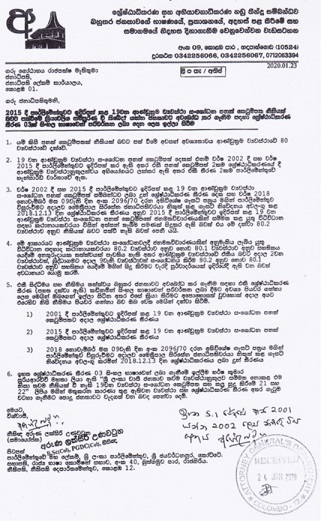
US Deputy Assistant Secretary of State for South and Central Asian Affairs Alice G. Wells delivered a letter from President Donald Trump to President Gotabhaya Rajapakse during a one-day trip to Sri Lanka last Wednesday. The letter, according to the media, emphasised the White House’s commitment and interest in furthering and deepening [its] partnership” with the island nation.
Wells held discussions with President Rajapakse and his brother, Prime Minister Mahinda Rajapakse, as well as Foreign Minister Dinesh Gunawardena, Tamil National Alliance chiefs R. Sambandan and M. A. Sumanthiran, and civil society” leaders. Wells was accompanied by Liza Curtis, the Senior Director for South and Central Asia on the US National Security Council and Aliana Teplitz, the US ambassador to Colombo.
Significantly, Wells’ trip—part of a nine-day South Asia tour—followed Chinese Foreign Minister Wang Yi’s two-day visit to Sri Lanka, which began last Monday. Russian Foreign Minister Sergey Lavrov was also in Colombo on Wednesday.
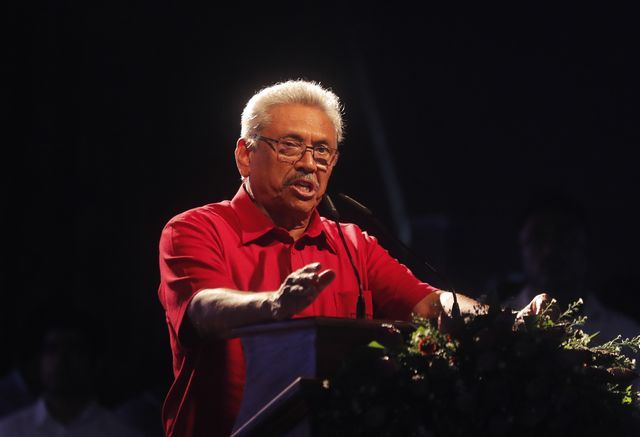
Gotabhaya Rajapakse (AP Photo)
These high-level visits underscore the increasing rivalry over influence in the Indian Ocean region, primarily between the US and India, Washington’s key ally in South Asia, on one hand, and China and Russia, on the other. Strategically-located, Sri Lanka straddles important Indian Ocean sea lanes. In its attempts to maintain world hegemony, the US is deepening its military buildup and trade war measures against China.
Washington’s concerns over Sri Lanka have deepened with Rajapaske’s election as president and his appointment of his brother, a former president, as prime minister. The US considers both men to be pro-China.
While the US previously backed Mahinda Rajapakse’s anti-democratic government and its brutal war against the separatist Liberation Tigers of Tamil Eelam (LTTE), Washington was hostile to Colombo’s close relations with China. In late 2014, Washington initiated a regime-change operation to remove Mahinda Rajapakse, who was ousted in the January 2015 elections and replaced by Maithripala Sirisena as a pro-US president.
Wells told the media that she discussed with Gotabhaya Rajapakse a wider and safer Indo-Pacific region [and] other issues of mutual interest.” The US wanted to strengthen ties by expanding cooperation on economy and trade, counter-terrorism, security, military-to-military engagements, transitional justice and human rights.” These are code-words to justify the increasing build-up of US military forces across the region.
According to media reports, Wells reiterated Washington’s opposition to Beijing’s influence in Sri Lanka. She voiced concerns about Chinese investments and denounced the Hambantota Port agreement as unsuccessful and an injustice to the Sri Lankan people.” In 2018, Sirisena’s government signed over Hambantota Port to a Chinese company in a 99-year lease as part of a deal to phase-out massive loans from Chinese banks for the facility’s construction.
Wells’ message from Trump was clear. Washington will not tolerate any weakening of the military and political relations it built-up over four years under Sirisena.
Wells praised increasing US-Sri Lanka military cooperation and hailed last year’s 18-ship US visit and the ever-closer integration of the Sri Lankan military into the US Pacific Command.
Washington is pushing for a renewal of the Status of Forces Agreement (SOFA) it secured with Sri Lanka in 1995, but with new provisions. The new clauses would permit American military bases and provide free access and immunity for all US forces operating in Sri Lanka. The Trump administration also wants Colombo to sign the Millennium Challenge Corporation (MCC) agreement, a US foreign policy aid deal.
During the recent presidential elections, Rajapakse’s Sri Lanka Podujana Peramuna criticised the MCC and SOFA in an attempt to capitalise on popular anti-imperialist sentiment. But once Rajapakse took office, he established a special body to assess the MCC’s merits and demerits.”
Wells thanked Rajapakse for setting up this review committee but asked for an early response to its findings. She said any concerns” about the SOFA could be discussed after the Sri Lankan parliamentary elections, due to be held in about four months.

The US, Wells warned, is Sri Lanka’s largest export market and this was a partnership beneficial to both the countries.” She told the media that she discussed Colombo’s commitment to the UN Human Rights Council, the return of land seized during the war with the LTTE, the provision of information to relatives of missing individuals, and concerns by Tamils and other minorities and opposition parties over accountability.
This is a thinly-veiled threat that numerous issues can be exploited to force Sri Lanka to toe the US line. The Obama administration cynically used human rights violations by Mahinda Rajapakse’s regime to pressure Colombo to distance itself from Beijing.
A day earlier, Chinese Foreign Minister Wang had met with the Sri Lankan president, telling him that Beijing’s attitude toward Sri Lanka had always been consistent and that China would continue to be a reliable” friend.
As Sri Lanka’s strategic partner, China will continue to stand by Sri Lanka’s interests,” Wang declared. We will not allow any outside influences to interfere with matters that are essentially internal concerns of Sri Lanka.” Wang did not name the outside influences,” but clearly was referring to the US and India, which are seeking to scuttle Colombo’s relations with China.
The Sri Lankan government, which faces massive debt repayments and a deepening economic crisis, is seeking international financial assistance, particularly from China.
President Rajapakse, who is due to visit China early next month, responded to Wang’s remarks by declaring that he was an admirer of President Xi Jinping” and followed his speeches and statements closely.”
Wang indicated that China would offer financial help, including the phasing-out of debt repayments, and meet with necessary parties that can help Sri Lanka in the areas of technology, tourism, infrastructure and other related fields.”
Russian Foreign Minister Lavrov met with Gunawardena, his counterpart, and voiced his readiness to strengthen relations with Sri Lanka. Lavrov said Russia would provide the Sri Lankan forces with all the weapons they need for security” and wanted to boost annual bilateral trade—currently $US400 million—to $700 million.
Russia, which also faces aggressive US military encirclement, last year held joint military exercises with China and Iran. The three countries are targets in Washington’s over-arching military strategy to dominate the oil-rich Middle East and Eurasia.
Amid these developments, India is engaged in strenuous efforts to keep Sri Lanka under its strategic dominance. Indian Foreign Minister S. Jaishankar visited Sri Lanka three days after Rajapakse’s election, and Rajapakse then visited New Delhi to meet with Prime Minister Narendra Modi.
Last week, Foreign Minister Gunawardena visited India to meet his counterpart and a business delegation. In early February, Prime Minister Mahinda Rajapakse is scheduled to visit India at Modi’s invitation.
Gotabhaya Rajapakse, who has rapidly elevated key military figures into his administration, demagogically claims that he will maintain a neutral foreign policy.” But under conditions of intensifying great power rivalry, the whole Indian sub-continent is being sucked into a geopolitical maelstrom and the danger of a catastrophic war between the nuclear-armed US and China.
Copyright © 2026 LankaWeb.com. All Rights Reserved. Powered by Wordpress