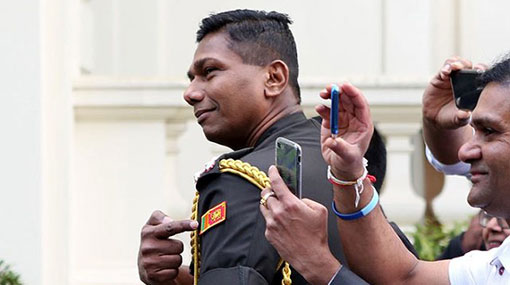
හිටපු අමාත්‍ය සජිත්ගේ නිවාස ව්‍යාපෘතියක් නිසා ජනතාව දැඩි අසීරුතාවක

December 8th, 2019

Hiru News

නිවාස සංවර්ධන හිටපු අමාත්‍ය සජිත් ප්‍රේමදාස මහතාගේ නිවාස ව්‍යාපෘතියක් හරහා තිස්සමහරාම, වීරහෙළ ග්‍රාම සේවා කොට්ඨාසයේ ජනතාව දැඩි අසීරුතාවකට පත්ව සිටිනවා.

ඒ, නිවාස ඉදිකිරීම් සඳහා ලබාදුන් ආධාර මුදල් නිවාස සංවර්ධන අධිකාරියේම නිලධාරීන් පිරිසක් විසින් යටිමඩි ගැසීම හේතුවෙන්.

නිවාස සංවර්ධන හිටපු අමාත්‍ය සජිත් ප්‍රේමදාස මහතාගේ මඟපෙන්වීම මත තිස්සමහාරාම, වීරහෙළ ග්‍රාම සේවා කොට්ඨාසයේ අඩු ආදායම් ලාභීන් උදෙසා මෙම නිවාස ව්‍යාපෘතිය ක්‍රියාත්මක වී තිබුණේ මීට වසර දෙකකට පෙරයි.

 ‘‘සාම සිසිලගම  නිවාස ව්‍යාපෘතිය ලෙස එය නම් කර තිබුණා.

එම නිවාස ව්‍යාපෘතිය මගින්, එක් නිවසක් ඉදිකර ගැනීම සඳහා රුපියල් ලක්ෂ 6ක මුදලක් කොටස් වශයෙන් ජනතාවට ලබාදීමටයි නිවාස අධිකාරිය පොරොන්දු වී තිබුණේ.

නිවාස ඉදිකිරීම සඳහා කොටස් වශයෙන් ජනතාවට මුදල් ලබා දී තිබුණේ චෙක්පත් මාර්ගයෙන්.

එහෙත් මෙහි සිදුව ඇති පුදුම සහගත කරුණ වන්නේ එලෙස ලබාදෙන මුදල් ජනතාව විසින් යළි නිවාස අධිකාරියේ නිලධාරීන් පිහිටුවා ගත් සමිතියකටම ලබාදීමට නියම කර තිබීමයි.

ඒ අනුව, නිවාස ඉදිකිරීමට වැලි, ගල්, සිමෙන්ති ආදී අමුද්‍රව්‍ය සඳහා අධික මුදලක් වැය වූ බව පවසමින් නිවාස අධිකාරියේ නිලධාරීන් මෙම ජනතාවට වංචා සිදුකර තිබෙනවා. <

අඩු ආදායම් ලාභී ජනතාවට නිවාස සංවර්ධන අධිකාරියේ නිලධාරීන් සිදුකළ මෙම වංචා සහගත ක්‍රියාවලිය හරහා ඔවුන් මේ වනවිට නිවෙස්වල ඉතිරි වැඩ නිම කර ගැනීමට නොහැකිව දැඩි දුෂ්කරතාවට පත්ව සිටිනවා.

මෙම ගම්මානයේ ජනතාවගේ නිවාස සිහිනය මේ වනවිට වනගත වී අවසන්.

එදාවේල හරි හම්බ කර ගැනීමටවත් නොහැකි ඇතැමුන් අලුතින් ඉඳිකල නිවාසවල බිත්තිවලටම ආවරණයක් යොදා ගනිමින් මෙලෙස ජීවත් වනවා.

පසුගිය රජය සමයේ මාධ්‍ය සංදර්ශන යොදා ගෙන නිවාස ව්‍යාපෘති ඉදිකලත් එම බොහෝ නිවාස ව්‍යාපෘතිවල තත්ත්වය මෙය බවයි ජනතාව පෙන්වා දෙන්නේ.

Dirty tricks: How Tories bid for Tamil votes with indy pledge

December 7th, 2019

Courtesy The National-The Newspaper that supports an Independent Scotland

TWO-faced Tory candidates in the suburbs of London have been caught trying to win votes among the Tamil community, promising a two-state” solution to the troubles in Sri Lanka.

The so-called two-state solution refers to a separate Tamil state – Eelam – in the northern and eastern parts of the divided island.

Whilst prominent Tories are out on the campaign trail, offering Tamil voters the promise of a homeland whilst implacably refusing to countenance a referendum on Scottish independence.

The controversial manifesto pledge on international tensions says: We will continue to support international initiatives to achieve reconciliation, stability and justice across the world, and in current or former conflict zones such as Cyprus, Sri Lanka and the Middle East, where we maintain our support for a two-state solution.”

The wording is at best clumsy and at worst highlights the double standards at the heart of the Tory campaign. They are happy to attract votes among Tamil migrant communities down south, whilst saying the exact opposite to Scots north of the Border, where their election campaign has been predicated on blocking an independence referendum.

Those close to the controversy suspect the influence of Theresa Villiers the MP for Chipping Barnet, a North London constituency with a significant Tamil population.

She is a leading figure within British Tamil Conservatives, a right-of-centre support group mostly comprised of Tamil businessmen and members of the medical community.

The group and its aims are also supported by Jackie Doyle-Price, MP for Thurrock and Conservative chairman James Cleverly.

Some suspect that in order to garner votes in their own backyards, Villiers and Cleverly may have over-cooked the Tory manifesto for local purposes.

The majority of Tamils in the UK came either as economic migrants or as refugees from the island’s 25-year-long civil war, which claimed the lives of more than 100,000 civilians.

Sutton and Cheam MP Paul Scully is chair of the All-Party Parliamentary Group for Tamils and represents the suburbs south of Tooting in London, which has historically one of the biggest Tamil populations.

As a former local councillor, he is sensitive to the diversity of the area. Yesterday he tried to dampen the controversy claiming that the badly worded initiative only referred to the Middle East”.

The Tories seem to have made promises they cannot deliver and which are inconsistent with their opposition to either a two-state” or federal solution in the UK.

Their resistance to independence for Scotland has cast them in a hypocritical light.

Whatever the outcome of the controversy it has already provoked two very different responses.

The Sri Lankan government, which voted in a new president only a week ago, are incandescent with rage.

Controversially, the new president is Gotabaya Rajapaksa, the former military leader who prosecuted the bloody end to the army’s long-standing war with the Tamil Tigers.

The final days of the war were marred by accusations of war crimes, and pressure for meaningful reconciliation is still a key demand of the international community.

The last thing the new presidency needs is yet another international standoff over the island’s most febrile issue – the creation of a Tamil homeland to the north.

In Scotland the Tory’s clumsy policy risks a different issue entirely.

The SNP and supporters of independence will either see hypocrisy or a break in the ranks, with Tories willing to contemplate two-state solutions abroad whilst denying them at home.

The SNP have been contacted for comment.

Swiss Mission ‘Kidnapping’: Bid To Tarnish Gotabaya Image?

December 7th, 2019

Parul Chandra Courtesy Strategic News International

NEW DELHI: Was a local employee of the embassy of Switzerland in Sri Lanka briefly abducted by some unidentified men as is being claimed by the Swiss mission? Or are the embassy’s claims untrue as is being claimed by the Sri Lankan government? Amidst the counter-narratives being offered by the two countries, the truth has been the obvious casualty. Even more interesting, the staffer remains in the embassy with the Swiss claiming she’s unwell.

The spat began shortly after the swearing-in of Sri Lanka’s new President Gotabaya Rajapaksa last month. The Swiss, in a lengthy statement issued on December 2, claimed that a local employee was detained in the street and threatened by unidentified men to force her to disclose embassy-related information.” The alleged detention is said to have occurred on November 25. The Swiss government statement also said that it reported the incident to the Sri Lankan authorities, calling for a swift and thorough investigation”.

The alleged abduction occurred just days after Sri Lankan police officer Nishantha Silva fled the country for Switzerland. Silva had probed several important criminal cases involving killings and torture that reportedly occurred during the tenure of Mahinda Rajapaksa as the island nation’s President. Gotabaya, then his defence secretary, has denied the allegations.

The Sri Lankan police have been seeking access to the staffer; they want to question her about her claims since they have apparently found no evidence that suggests abduction. They maintain that the sequence of events do not match the movements of the embassy staffer.

The Swiss, though, are in no mood to accede to this request, claiming instead that the employee is ill and that she cannot be questioned on health grounds” and that her health must take priority”.

So great has been the Swiss government’s concern for their staffer’s health that they reportedly approached the Sri Lankan government for permission to allow her to be flown by an air ambulance to Switzerland for treatment. The permission has been refused as the Sri Lankan authorities want to question her first. Earlier this week, a Sri Lankan court barred her from leaving the country until she records her statement with the police.

Sri Lankan newspapers have reported the country’s new foreign affairs minister, Dinesh Gunawardena, as saying that the sequence of events and timeline related to the alleged incident is an attempt to tarnish new President Gotabaya Rajapaksa’s image. The minister said the staffer is yet to file a complaint with the police, underscoring that she would not be allowed to leave the country without the government being provided with her name, her national identity and her statement. There is suspicion that the estimated 25,000-strong Tamil diaspora in Switzerland maybe involved.

Former Sri Lankan foreign affairs minister GL Peiris, who is with the Rajapaksas-led SLPP (Sri Lanka Podujana Peramuna), believes the incident has been cooked up to bring disrepute to the country in the run up to the UN Human Rights Council (UNHRC) meet in March next year. The UNHRC is headquartered in Geneva in Switzerland and Sri Lanka has been at its receiving end in the past over human rights violations during its civil war.

ERASING THE EELAM VICTORY Part 8

December 7th, 2019

KAMALIKA PIERIS

Voices of Peace” edited by Sarah Kabir, (2018) consists of a set of interviews with   members of the LTTE and the Sri Lanka armed forces taken together.  The book weaves together” the narratives of ten former LTTE cadres and ten SLM personnel who fought at the front line in the Eelam war.  

The purpose of the book is to see how front line fighters on the two sides viewed the Eelam War. The book was funded by Swiss Federal Dept of Foreign affairs, Expolanka, ONUR and private donors. A Tamil translation appears to have been issued simultaneously.

The author, Sarah Kabir has a BSc. in Social Policy from the University of Bristol, and a MSc. in International Development and Humanitarian Emergencies from the London School of Economics.  She thereafter researched into   development and peace building.

Sarah has worked on research projects alongside researchers from the Universities of Sussex and Durham. She has also worked with various international and local organizations within the civil society sector and her work has appeared in various academic publications and research reports.

Her mentors, for this book  included two anthropologists,  who have done field work in Sri Lanka  R. Stirrat  and  Tom Widger  as well as Rajesh Venugopal, a  visiting fellow  at University of Colombo, fellow of the Centre for Poverty Analysis and an Advisor at Verite Research (Sri Lanka). Rajesh has researched on Sri Lanka. Sarah has thanked, inter alia, Vinya Ariyaratne of Sarvodaya and Pakiasothy Saravanamuttu of Centre for Poverty Analysis for their advice.

Sarah Kabir said that   she had been working in civil society for a long time. The narrative that we normally hear   or the narrative that we seem to keep talking about is that the military are perpetrators and they violated all the rules. I really strongly believed that,” she said. Her perception about the military made her more sympathetic towards the LTTE than the Sri Lanka army.

But when I went and met these people, it changed my opinion entirely about the military,” said Sarah, it made me realize that these people are human too, and I had kept painting them as this one entity over another, and now I’ve learnt better after listening to them (sic).”

Sarah was born in the midst of Sri Lanka’s lengthy civil war, reported the media. Her earliest childhood memories are interspersed with war effects. I was in a local school in Colombo,” she said. School was closed one day because a bomb had gone off.”Her school kept getting closed, and at the time, she didn’t understand why that happened. It didn’t hit me that so much atrocity was going on somewhere else,” she recalls, referring to it as a detachment.”

For this book, Sarah had interviewed 20 combatants, 10 former members of the Liberation Tigers of Tamil Eelam (LTTE) and 10 members of the Sri Lankan Army (SLA). The book contains these interviews.  It is not storytelling, though it is described as such, and it has been backed by a questionnaire.   It is part of a much larger volume of primary research.

The respondents for this project have been supplied by various agencies. Some respondents were found by Sarvodaya, others by the Ministry of Defence, Seva Lanka also by friends, colleagues and journalists. They were of course, from the LTTE or the Sri Lanka armed forces. The LTTE segment included a representative from the Imran Pandian regiment, which provided personal security of Prabhakaran.

Researchers also looked for gender, age, years spent fighting, location in the war and position held during the war. So for both sides, we have storytellers with experiences ranging from just two years in the war to over twenty years, some recruited under the age of 18, those who followed orders and those who gave orders, said Sarah.  Not an easy thing to do with such a small sample.

‘Our paramount concern was to ensure the safety, confidentiality, anonymity and emotion well being of the storytellers’. So some were anonymous also aliases were used. The team has taken legal advice on where it was not safe to reveal real names and even aliases. In these cases the narratives were completely anonymised.

The interviewer took measures to make the story teller feel comfortable, eliminate the chances of the interviewer compelling or directing the answers. Their conversations were carried out in their homes or private spaces. They seem to have had group sessions too.

We used a very flexible and adaptable strategy and discussion during when conducting our field work, said Sarah. We spoke with each story teller between three and five times. We conducted over 100 conversations, including preliminary discussion with all 60 story tellers.’ Interviewers maintained their non-interventionist role and refrained from leading the stories in biased direction.

 The conversations were not carried out as interviews. They were informal interactions over a cup of tea or a meal. Some conversations lasted up to five hours. It takes time for a person to open up.  We built up friendships with most of the story tellers that continue to this day. The data is presented in their respondent own words. People tell their stories differently each time.  ‘They were continually constructing and reconstructing their narratives.’

This book  has  a jumble of objectives. Here they are. Firstly, the book aims for multiple truths and narratives of the conflict, to really try to understand what drove them to arms and what their ideologies were.” It is a discovery of what we do not yet know about the conflict and post conflict situation. Only those who were there can tell the people  what actually happened.

Secondly, we are told that this book gives a unique insight into the storytellers own understandings of the causes of war, why they fought and why the other side fought. They even take responsibility for why the other side needed to fight or defend themselves.

Thirdly, the book blends both sides to blur the lines between the LTTE and SLM, rather than entrench divisions.’ The intention,” Sarah explains, was to make the readers think, ‘Oh, he could be LTTE or he could be military. You couldn’t even tell the difference at times.”

 The book implores its readers to embark on a journey and engage with the story tellers not simply as LTTE or SLM but rather as men and women they can relate to. It aims to change the lives of the storytellers and readers and also contribute to peace building  and the reconciliation process.

The book is clearly an agenda driven project, with the outrageous objective of equating the Sri Lanka armed forces and LTTE .That may be a first for any country. The Eelam Wars were outright civil wars.  It was the State versus the Liberation Tigers of Tamil Eelam. At no stage were the two combatants  equal. They were definitely not after the same objective either.

 Thanks to the Eelam wars,  the  Sri Lanka army  developed into an internationally admired ,well trained, professional army. The LTTE, on the other hand, was reading manuals on how to fight as the fight ended at Nanthikadal. Sri Lanka army fought on for 29 years without comment. It  was declared to be a demented, unmanageable force only  because it won the war.

QUOTATIONS

I had to discard the original list  of quotations selected for this  essay. I found that some of the statements made in the book, regarding the Sri Lanka armed forces, would infuriate readers if they were broadcast outside the book. They seem to be safe and snug inside the book,

Here are some other quotations. 

SET  NO 1 .

I had no choice but to join the LTTE, we were very poor.  For the poor joining the LTTE was the only way.  We  had been poor for generations .Those who failed the O level joined the LTTE. I saw the LTTE cadres going round in their vehicle and I joined them.   The LTTE would spot  us on the  road and speak to us about issues that the people face.   In camp, instead of military training they taught us about Sri Lanka  political issues and about Tamils being deprived of their rights (p 36,38,50)

 SET 2

I joined the LTTE in 1988.  Multiple shells dropped on my neighborhood, a family was killed. I found the infant’s finger and the mother’s arm. That day six boys joined the LTTE. (p45)

There were lots of deaths in the village [due to the army]. In 1984 about 130 were killed and their bodies were found in a well. Houses were burnt and infants were victims too. Usually the attack happened at night when people were sleeping.  They would arrest youths and shoot anyone who tried to run away.  Those who were arrested were then taken to camps. They would burn tyres so we could see the smoke. Those arrested did not return. (p44)

Seeing these people being killed in my own village I joined the LTTE. It wasn’t just one incident. I witnessed many such incidents through the years from Grade three to ten. LTTE offered us the safest place, I felt comfortable with the LTTE. It was only after joining that we learned that the LTTE wanted a separate territory and we had to fight against the Sri Lanka Army. It was only after the war started [that we] found it was a difficult path and not one to follow. (p44)

 One LTTE member recalled that his school principal took them to a trip to a beach, (unspecified). Two Sri Lanka navy boats arrived and had a physical fight with the principal, the children ran away. Next we learned that the principal had been killed. (p36)

SET 3

I joined the LTTE because we were being attacked. We wanted to get our rights back. I felt we needed a solution for our people. ( p 53)

We weren’t forced to join LTTE. We wanted to  join. (p203) We weren’t paid a salary but depending on our circumstances the political division would look after our families if a cadre was very poor. If his parent’s house hadn’t a roof they buy the material and fix it. But they never gave us cash in hand. After five years a LTTE could marry and then they were given an allowance. (p74)

We chose the LTTE .We wanted to die for a cause. We weren’t afraid. (p 92 )  LTTE  was highly disciplined. We were a secretive organization and only knew each other’s  LTTE  aliases. (p 63) I didn’t regret joining the LTTE. I made a lot of other female friends so we didn’t feel the need to go back to our families. It was fun. (p53).

We believed in Prabhakaran and trusted him. He was the best leader in the world and was like a god to us. We had   genuine respect for him. He never drank or smoke or committed any wrong. When we joined we wanted to see Prabhakaran before we died . I will never forget the moment I did.  We did not have to salute him. He ate with us. He was known fondly as annai brother, (p 92 )

Our regiment, the Imran Pandian special regiment, was an important one and very close to the leader. It was the backbone of the LTTE. From the day we joined, we were with him. We grew up with him. We ate with him. (p 113)

During Prabhakaran’s  time law and order was perfect. Prabhakaran  instructed that Sunday be designated for house related work. There were elders homes and orphanages  set up during LTTE rule. Anyone found begging or destitute would be taken to these homes. Everyone was treated well there. You would    not want to leave once you went to these homes. (p 92)

There were no beggars. They were put into homes. There were home for elders, orphans, and destitute. There were no caste issues, no religious or status issues, everyone was equal.  No unemployment, LTTE even maintained agriculture, fish and coconut divisions.  Every  family was employed.  Rape was unheard of.  If   they robbed Prabhakaran punished the robbers.  There was a shortage of electricity, but LTTE looked after civilians properly. Better than government now.  (p 154)

During the war, safety wasn’t an issue. People knew how to protect themselves from the bombs.  We had security. We lived without fear and threats, we could safely send  children to nursery alone. Law and order was well balanced under LTTE.  During LTTE time you could go anywhere leaving your shop open and your cash outside. You could wear jewellery and go out. It was a very safe environment. ( p 153, 155)

SET 4

Our main focus was to ensure that the SLN  didn’t capture our ships and to efficiently clear the ships that come from overseas.  (p65)  Sometime if Sri Lanka army  soldiers were injured and  if we could not carry them, we would kill them.( p101)

When we joined the LTTE we were ready to die. We never thought we should lose. It is hard to bear sometimes. We could not bury Prabhakaran properly. We couldn’t believe we were destroyed we were so powerful. We believed the entire Tamil community was behind us.( p 59, 124,194)

LTTE deployed us soon after our training. What we faced since have  been bitter experiences I don’t ever want to relive them. (p93)  We lost everything because we had  got involved with the LTTE. Finally we got nothing out of the war.(p189)  Most think the Tamil people did not achieve anything through the war. As a former LTTE cadre we also think we didn’t achieve anything. There was no outcome, so there should not  be a war again.(p188)

SET 5

We were with the LTTE in this small area that they controlled but we thought it was a big area. We didn’t know much about the outside world, the real world. (p202)

Only after I was released that I learn of a place called Vavuniya, I only knew up to Omanthai before. Then I got my bike and went to Nuwara Eliya and Kandy and Anuradhapura. Only then I realize that we were living in such a small area under the LTTE  and there was so much more to explore.  Earlier we were living between three towns, unaware of how big Sri Lanka was and how much more there was to see. (p220)

SET 6

When I was young  I was told that Sri Lanka army  would shoot us  if they saw us. We were raised to fear the Sri Lanka army .  LTTE cadres were told as children, that Sri Lanka army  will shoot on sight. (p 202 ) We hadn’t met the Sri Lanka army  in person so most had a negative image of them. Most were not aware of what they even looked like.(p109)

I had never seen the Sri Lanka Army.  When we crossed the lagoon I was terrified they would shoot us if they saw us because that was what we were told. (p 91) I was very scared wondering what they would do to us. That is the first time I saw Sri Lanka army. They gave us medicine, water and biscuits.  Even while eating the biscuit I was scared. I was badly injured and they put me in a tractor. ( P 108)

Form our childhood days were raised to believe that if the Sri Lanka army  sees us they will shoot us.(p108). Until I met the Sri Lanka army during rehabilitation, I was scared. But then I realized that what we were told was not true. Now I am not scared anymore. (p 202 )

SET 7

My family and I turned ourselves in at Mullaitivu. We were not given any water. They thought there were only 10,000 of us but there were roughly 200,000 of us. (p103) I was in a Sri Lanka army  transport bus. my wife  [fell ill]. I told a soldier she needed a seat and he almost assaulted me. (p103)

We surrendered in 2009 but have got nothing that we were promised. At the point of  surrender they removed our clothes. we were not treated like humans. No food or water was given. When we surrendered we hoped they would take care of us according to internationalstandard. I surrendered as an LTTE . I was sent to prison.  My family was given a hut and food I’m not saying they were not looked after, but they faced a lot of  difficulties. (p106)

SET 8

Sri Lanka army completely disregarded IHL specially in prisons.  The way they use to hit us in prison.  One day I was  playing chess and a solider came and hammered the boy, then when I went out … to have a wash,  a soldier caught me and beat me. (p 111)

‘ it is the lower ranked officers who tend to be racist’ (p145)

When they arrested us we were taken to a school in Vavuniya. They kept 4000 cadres in this school. For a month all of us were tortured there. They would hit  us on the head as we stood in line. Suddenly, after a month a general from the police visited and gave an order. ‘These are former LTTE cadres who were trained and specialized in operating various weapons including artillery.  You have to treat them with humanity.’ After that we were treated fairly. (p 112 )

My fear was that I would be taken to Boosa. People say they tortured inmates there.(p110). Boosa was not as bad as the first prison. Boosa was over crowded, 8 in one cell.    No ventilation no light. But we got three rice meals a day. We were given plain tea at 6 am. I was then sent to Senapura  rehabilitation camp. There were a few racist officials there but most took care of us well. I cannot comment on others experiences, but my experience was good.(p112)

  In prison we were treated well, we were given an extra curry if we wanted it.  We could watch TV or play carom (p116)

SET 9

Rehabilitation was worse than prison, I was supposed to be trained in carpentry for six months but I was only trained for 60 days and they made me sign  the register saying 6 months training was completed. The program I found useful was the Sinhala lessons but they lasted only fir three months and for just one hour, I only learnt 80 words. (p 116)

In rehabilitation I was treated like a pet. Four officers from the Sri Lanka army  were like fathers to me. It was an interesting period. I feel  it was a very good chance given to me. They gave me counseling. A guru from India did the counseling. It was a very good programme. They also gave us vocational training and they treated us well. The officers were really good people. Most officers were retired school principals. They [gave] counseling, training and treated us well. The officers were really good people who were recruited into the programe by the government . even now I maintain a good friendship with them. (p 110)

I was kept in rehabilitation camp for two and half years, they treated us well. Soldiers were told not to hit us.  Rehabilitation was good. we got good opportunities in there. Some took their O levels. They found who had worked  for government officers during the LTTE time, in  post office, hospitals or as teachers and the government continued to pay their salaries. I studied Sinhala at camp. Only bad thing was the CID used to question us all the time. The CID, Terrorist Investigation Unit and other groups all interrogated us to ensure our stories were the same. (p110)

We were taken on a 7 day course to Colombo. we saw  Viharamaha Devi Park, Galle Face, Nelum Pokuna, also Kandy Nuwara Eliya . Even  if you have money you cannot see Parliament and Port as we did.  we did the city tour on a double Decker, I don’t know about the others, but I felt better after this trip.(p117)

The government should give Rs 5 lakhs per person after rehabilitation. They should invest in our children. (p153)

SET 10

One Tamil asked me, there are war monument to commemorate those the Sri Lanka army  considered heroes. What about the LTTE who sacrificed their lives. aren’t they heroes too. Every time they see these monuments they are reminded that they lost the war. (Ratnapriya.  p 237)

monuments like the toppled Kilinochchi water tank should not be there. Every time we go past we are reminded that we toppled it. Sinhala people come to see it like it’s a big thing. And when they see Tamil people they look at us in anger. We do they keep reminding us that we lost.  In one place they should have a memorial for both sides. we are heroes too. Both sides have heroes. (p237)

They shouldn’t call us former cadres now. They should treat us equally,

SET 11

During the war our army unit brought some displaced Tamil civilians to a kovil but the people at the Kovil did not to let them in because they were of a low caste. (p75) . There was a project to build 100 houses for the IDPs at Kankesanturai. Most of the IDPs were fishermen. The higher caste people did not want them and protested against the project. (p253)

Ratnapriya joint commanding officer of CSD HQ for Jaffna, Kilinochchi and Mullaitivu in 2012 said when interviewed’ I realized that they [Tamil population] have always needed a leader. (p144)

A family in Kilinochchi complained that a soldier wearing a white sarong stole one of their hens.  soldier denied it. To settle the matter I told the army base to give the family five hens, it was more than they lost, but the family did not want the hens, they wanted the soldier punished. (p253)

In 2002 I visited Kandy to get my prosthetic legs with the help of Handicap International. People would look at us with suspicious because we were Tamil. In Kandy there were only Sinhala TV channels and when I switched to a Tamil one the OIC scolded me. They were all very racist.  That day I felt we needed a country of our own. (p 69)

  SET 12

To win the war you need to capture ground. [For this we need infantry] Infantry soldiers were from poor families who needed money. They came from remote areas. Soldiers who joined because of poverty are the reason we won the war. (p201)

But there were some who joined because they wanted to fight for their country. One man we assigned to the kitchen went to the frontline. He was killed. Some monks gave up their robes and joined, (p201)

SET 13

Sri Lanka has forgotten what we did for our country. No one knows the reality, we saw with our own eyes. How     we carried them, gave them food and water, I know how we women soldiers helped the LTTE. We didn’t go home, we forgot our families and  helped them. (p205)

We saw with our own eyes how the male soldiers suffered to help those crossing over, they would carry the achchies. They worked tirelessly. They did good things. (p 206)

I would get so sad when I saw them crossing over with nothing but their land deeds and a few cloths held tightly to their bodies (p229).

Many refugees at Nanthikadal were women so we [women soldiers] had to be there.  We didn’t have toilets for them. There was excrement everywhere.  We gave them water and food. We would drink salt water and give them the good water. The water there is hard to drink. Our morning food would only come at noon. We would most often give it to the children. No one talks about these good things.  We also suffered a lot but we did not have any anger towards them. Even when we were trying to help them they still hit us. They had put oil in the wells and toppled the big water tank. When we gave them food they fought among themselves to eat the food. (p 105)

  SET 14

In my first battle, [we found that] the LTTE did not have bullet proof vests, and wore slippers. (p197)

You must apply ROE whenever possible, when we saw LTTE approaching we get a loudspeaker had announce in Tamil that we would not harm them if they surrendered. But they attacked or killed themselves anyway. Once we were attacked by a lone LTTE shooter, I asked him to surrender, we won’t kill him but when a solider approached him he threw a hand grenade.  We spoke to him again but he killed himself. (p 91)

Most of the time LTTE come to us claiming to be innocent and once we got close they blow themselves up. So we were always fearful of approaching them. (p62)

In 1993 I was in the east, we were clearing mines. I was Platoon commander at the time.  I found that the LTTE had been monitoring my movement and there were four land mines near where I usually sit.  On another occasion the LTTE attacked the tractor I was meant to go in, and then there was a mortar attack on a place I wanted to have a conference in.  (p 86)

  SET 15

I once killed on a Wesak poya day. We attacked two suicide crafts where 22 LTTE girls and 25 LTTE boys were killed. Killing people on Wesak poya day made me feel very guilty. I went to my monk to confess (P139)

I don’t like to have memorials or medals in my house because they represent killing. (p209)

From my experience I know we in the SLAF took a professional approach. (p100)

I was based in Katunayake from 1998 until the war ended in 2009 I have flown many times and dropped bombs. If certain factor aren’t in line with military objectives the operation is abandoned, e.g. if the target is in a civilian area. A long and comprehensive process involving many parties is followed when identifying targets and making a decision to attack. I have flown over targets and not bombed them. I was trained in IHL and know about proportionate force. We stuck to these rules. Personally I think that SLF was professional in how it conducted itself. We had a very comprehensive process we didn’t simply fly out and drop bombs.  It is our responsibility to communicate whether an operation is feasible, to HQ. (p66) 

I don’t wish to fight a war like that ever again. I know how difficult it was. But I am trained to fight and if asked to fight, tomorrow I will do so again. It is my job. (p187)

If the war starts again we will fight.  We saved our country. I have fought against an enemy who fought against my country.  If I have to fight again I will. (SLAF officer p106)

Ultimately we did not regret what we did in the war as it was a task we had to do (army  p135)      ( CONTINUED)

Insofar as India Remains a ‘Useful Idiot,’ the Security of Both India and Sri Lanka Will be in Jeopardy.

December 7th, 2019

Kudaligamage Geethanjana

Rajapakses, Geopolitics, ‘Eurocentric Developmentalism,’ and the western hegemony 

(Part 21)

Indo Lanka Accord was an outcome of a brawl between old school politics of the cold-war mentality of Indira Gandhi and Junius Richard Jayawardene. This outdated agreement must be renegotiated or entirely repealed for the benefit of both nations.

Agey wayiraya” ඇගේ  වෛරය is a term not only related to the silver screen but also very much related to politics. There is a well-known piece of political advice shadowed through the ages, never ever to mess with a woman in power.” J.R. Jayawardene, the ‘old fox’ of Sri Lanka’s modern politics, dared to cross that figurative ‘Rubicon.’ And made not him, but us to pay dearly for his mischievous political conduct like a slippery ‘Anda’ ආඳා,’ fond of habituating in the muddied water of politics rather than the clear political atmosphere.

JRJ had ridiculed Indira Gandhi and her son in his 1977 election campaign. JRJ’s criticism of Gandhi was entirely unnecessary but premeditated political play for the entertainment of the western gallery. He was heavily investing in Western assistance for his development plans for Sri Lanka, therefore, he might have thought of repaying the west by means of becoming the pet of the west in South Asia. His criticism of Indira was not at all a gaff or a slip of the tongue. It was a calculated performance to win the hearts and minds of the western political establishment who hated Indira Gandhi due to her pro-Soviet policies at the time.

JRJ may have thought to entertain some of his fans in the west, especially in the USA to make them rally around his administration and to reap the benefits of being pro-western. It was a very dangerous but well thought political gamble. JR was no Sirisena or Mangala to make ridiculous statements not knowing their repercussions, but a well-experienced politician. It was pretty clear that he had envisioned to use our country’s strategic importance as a bargaining chip to make our country the darling of the western block and receive western assistance for the development of Sri Lanka in the same manner how Lee Kuan Yew had used Singapore located in close proximity to China. But Washington had different plans. So, the consequences of his political ‘Cabaret’ on his election campaign stage did not bring expected results; instead, asking even more from JRJ, Washington made JRJ to perform a ‘Lap Dance’ for India’s PM Rajive Gandhi, making JRJ’s entire gambit politically calamitous to Sri Lanka.

Indira Gandhi and JRJ were old school politicians who lived in a cold-war mentality. During their time, neo-liberalism was not as powerful political force as of today. What Indira and JRJ thought at the time were outdated to current conditions with the new realities of our time. Indira Gandhi and JRJ could not see through the contemporary politico-economic changes of the time and beyond- that were taking place in England under Thatcher, and in the US under Reagan. Global capitalism was restructuring itself during that time gradually straining post 2nd World War freedoms granted to the newly independent colonial world. The world was changing rapidly. JRJ came into power in 1977, by 1989, the collapse of the Berlin Wall marked the ending of cold-war creating an absolutely ‘free’ world, free to global capitalism to act free from the restraints of socialism. JRJ or Indira could not see any of this was coming. They could not envision the direction of global capitalism’s desire to change itself from its pretentious freedoms to its true nature, the complete global authoritarianism. They couldn’t foresee the new potentials of global capitalism and its re-masking itself with ‘neo-liberalism’ and globalization. In this trajectory of western global dominance, Sri Lanka became a victim, the sacrifice. 

Indira Gandhi or JRJ would never have thought that India would become a strategic partner of the US within the next 30 years in the Indian Ocean region under ‘pivot to Asia’ policy of the US. Although JRJ dreamed to be the ‘poodle’ of the USA in the Indian Ocean in 1977, by 2016 India not only had stolen JRJ’s dream of becoming USA’s poodle from him, but also she had demonstrated that she even can go further by becoming the prodigious example of the world political history by becoming ‘useful idiot’ of the US’s Indian Ocean policy.

However cunning JRJ may be, he still couldn’t foresee that the Tamils could play ‘Judas’ sabotaging his election promise of taking us to the promised land through western aid. The west playing the judge Pontius Pilate, (the Roman governor of Judea,) asked the question from messiah JRJ: what’s the truth about racial politics in Sri Lanka?” Knowing that he was not telling the truth, just like what Mangala did at the UNO, JRJ also said what western administrations and India wanted to hear. With the outcome of the1983 communal riots, India, with full diplomatic and moral backing of the west, signed Indo Lanka Accord and sent IPKF to Sri Lanka. The real reason behind enforcing the Indo Lanka Accord was not the Tamil grievances but to bring JRJ’s Sri Lanka under the Indian sphere of influence because India thought JRJ was creating a security threat to India.   

Therefore, the Indo-Lanka accord must be considered as a document outdated to the current world conditions. It is a security threat to both India and Sri Lanka.   

Remembering and recollecting history to understand our challenges in the Indian Ocean

If we are to understand our challenges in the Indian Ocean, more than anything else, it is very much symbolic to defend the name of it. By saying in uncertain terms that you are not any Tom, Dick or Harry but Kunta Kinte, we must stress the fact that the Indian Ocean is the Indian ocean and not Indo Pacific Ocean. The Pacific Ocean is located beyond the narrow strait of Malacca. Therefore, when we participate in any international forums or signing agreements related to the Indian Ocean, we must stress the actual name of the ocean.

When two world powers, China and the USA competing with each other to have their physical presence in Sri Lanka, the island nation naturally inclined to asses both powers in relation to Sri Lanka’s own security concerns. Unfortunately, the findings are not pretty for the USA. For Sri Lankans, it is clear that the USA is not only desiring to have a foothold in Sri Lanka but also has other vendettas, vested interests and hidden agendas in the region and therefore manipulating the island’s internal issues to its advantage. For that reason, Sri Lankans feel the USA as a dishonest harbinger, that invites more problems than solutions to the current crisis, and has become even a part of the problem.

In contrast, Sri Lanka doesn’t find any evidence to prove that China has hidden agendas in the Tamil separatist struggle in Sri Lanka other than their desire to have a foothold on its soil. Assessing this situation, if Sri Lanka inclines to tilt toward China and embrace Chinese assistance for her development, would that be Sri Lanka’s fault or the failure of the USA’s foreign policy toward Sri Lanka? The USA doesn’t seem to care about the national security concerns of Sri Lanka and her unwavering commitment to preserving its unitary status.

Had the USA remained a neutral and honest partner in the national issue of the island, and if it really desired only to have a foothold, it would have been able to establish a physical presence in Sri Lanka on friendly terms way back in the late 70s or early 80s during the tenures of ambassadors William H. Wriggins or John H. Reed with a little bit of hullabaloo from the leftist parties of the island at the time. But strangely enough, the US didn’t pursue it. Not only that, in the mid-80s, Ambassador James W. Spain reaffirmed the official position of USA about Trincomalee harbor declaring that the USA had had no interest whatsoever, military or otherwise, in the Trincomalee harbor. (However, despite ambassador’s statement, people were suspicious and rumored about the Singaporean-American venture ‘Prima Sri Lanka’ wheat flour-mill that was established in the Trinco harbor-front as an America’s tacit way of entering into the Harbor)

Under tremendous pressure from the naked aggression of India, JRJ sought assistance from then US president Ronald Reagan, but just to learn that the Reagan administration already had trashed him altogether with the baby elephant that Pres. JRJ had gifted to Pres. Regan during his official visit to the USA. (This baby elephant had died in Diarrhea due to lack of attention.) Adding insult to the injury, giving a tenderfoot treatment to this senior-most politician in entire Asia at the time, Pres. Regan was audacious enough to advise JRJ to follow the dictates of India. It was clear that JRJ was hurt very badly by this surprising treatment. Later he had mentioned this to the visiting US diplomat Peter Galbraith.

Although we inclined to think that experienced politicians make political decisions objectively away from emotions, they too can become very subjective and emotional like any other person when they make political decisions, no matter whether those decisions are history-changing epochal decisions. JRJ, a well-known pro-American politician and the bearer of the nickname ‘YankyDickie, took a 180-degree turn and became a lap-dog of India overnight, not only because he had been forced by Washington but also he was unable to see the reason behind why the USA was forcing him to take the Indian advice. This is the reason why many reluctant to call JRJ a statesman. Driven by the emotional reactions due to his wounded heart, he reacted in vengeance. He may have thought to teach a lesson or two to Washington by becoming pro-Indian all of a sudden. But any statesman in his shoes under his circumstance would have resisted India since the Vadamarachchi operation was almost ending with a successful result. (But JRJ had lied to media about his military saying that his military leaders refused to take Jaffna due to high casualties.)

But JRJ’s emotions were justified by the behind the scene activities of Washington forcing JRJ to deal with India leaving JRJ without any other options. On February 05, 2017 writing to The Hindu, under the caption of I was forced into a deal with India, Jayawardene told US envoy” Amit Baruah says… that JRJ revealed that Sri Lanka was forced (by Washington) into making a deal with IndiaHe (JRJ) stressed that none of his outside friends (obviously referring the west) would help him, so he had no choice but to make a deal with India, the unclassified CIA document read…

…it appears that the Americans also played a behind the scene role in ensuring channels of communication between president Jayawardene and PM Gandhi… interestingly, a third CIA intelligence assessment of September 1986 stated that India was rapidly expanding” its armed forces to intervene in Sri Lanka…” 

https://www.thehindu.com/news/international/I-was-forced-into-a-deal-with-India-Jayewardene-told-U.S.-envoy/article17195748.ece

As I said earlier, it was well known that JRJ was pro-western in general and pro-American in particular. When analyzing JRJ’s important political decisions during the initial few years of his rule, such as inviting VOA to have its relay station in Chilow, one can argue that JRJ was really envisioning to go even further to accommodate American military presence in Sri Lanka to put Sri Lanka firmly and loyally within the western sphere of influence like Singapore or South Korea.

Given the overwhelming western enthusiasm and pledges for development aid soon after his election victory in 1977, JRJ’s thinking of exploiting our strategic location as a bargaining chip to impress the west in this cold war era was pretty predictable. From his point of view, it could have been viewed as a logical move. But considering US ambassador James W. Spain’s sudden public statement about Washington’s unwillingness to occupy Trinco in the 1980s, it could be conjectured that it was USA (not Sri Lanka) that demonstrated their unwillingness to establish a military base in SL at that time even if Sri Lanka was willing to accommodate one. 

Under this hypothesis and JRJ’s political history, I think JRJ purposely antagonized India to please the west especially the USA. And considering JRJ’s risky political maneuvers in the past, it is also logical to presume that he might have given sufficient window purposely for the UNP mobs in Colombo and inner cities to escalate communal riots in 1983 to inflict colossal damage to the country’s image. By doing so he might have calculated to provoke India, and in turn, give a reason to react militarily, thus he might have expected to create favorable conditions for him to gain the American sympathy and hence to keep the USA on his flank in the equation. This could be the last of all senseless politics of JRJ. Does JRJ capable of executing such a heinous criminal political treachery? Those who have lived under JRJ might give an answer in a single word. YES! As we have experienced in recent history, decent politics of the UNP died with Dudley Senanayake. All the rest of UNP politicians after him were criminals capable of doing unthinkable. There are only three political parties that had mastered political violence in Sri Lanka, the LTTE, JVP, and the UNP.

However, after Indira Gandhi was assassinated in 1984, Rajiv Gandhi continued Indira’s Sri Lankan policy of destabilization. JR may have expected a firm American reaction favorable to him. But Washington was not interested to swallow the bait of JRJ. But instead, they already had another bait put in position for JRJ and Indian foreign policy establishment. They both gulped the American bait gleefully without a second thought. 

For Washington, JRJ’s reaction was predictable. Hurt by American humiliation, (as Washington may have predicted) JRJ reacted in such a way expecting to pinch the American nerve by signing Indo-Lanka accord. By doing so he thought he also can take revenge from Washington by placing SL within the influence of the Soviet bloc, all of a sudden portraying himself as a cute panda of the Russian bear. But Washington was way beyond JRJ and India had already foreseen the collapse of the Soviet Union and had envisioned the impending unipolar world.

When you see this entire issue through this historical perspective, the Indo-Lanka Accord becomes an outcome of an outdated global condition. It was a product of the cold war. Today world realities are different. Today India is pro-American than Sri Lanka (at least until one of the parties shake the apple cart). It is time for Sri Lankan administration to renegotiate the Indo-Lanka Accord with India based on current geopolitics and the challenges of both nations due to the existing global conditions driven by the Neoliberal agenda of balkanizing entire region.

US passivity of Indian hostility toward JRJ was unusual and could be a part of the design

US Ambassador James W. Spain, an enthusiast of JRJ, was heading the American mission during this most volatile period of Sri Lankan history. During Indo-Lanka Accord, he was there and personally witnessed a Sri Lankan sailor attacking the then Indian PM Rajiv Gandhi when Mr. Gandhi was receiving the military guard of honor after signing the infamous Indo Lanka Accord.

However, the unusual passive position of the US mission in Colombo toward highhanded interventionism of the Indian government in 1987 (including the violation of SL air space and dropping humanitarian aid to North of the island) was pretty obvious and could be witnessed during and after the Indian mediation and in the aftermath of the Indo Lanka Accord. This passivity was so obvious as well as so mysterious that the then US ambassador, an experienced career diplomat James W. Spain must have received strict instructions from Washington to treat the then Indian High Commissioner Jyotindra Nath Dixit as if Dixit was the undeclared viceroy of Sri Lanka at the time. Ambassador Spain closely associated with Dixit during these turbulent times. Dixit also acted as if he was the clandestine ruler of the island. By passively approving Indian McCarthyism in this island nation, the USA not only signaled India a specific message of encouragement but also sent a trembling signal to JRJ’s administration not to shake the cart or make any stupid turn but to comply and obey Indian dictates. It was inexplicable to think why did the USA behave that way? The USA wouldn’t behave in that manner if Indian intervention was going against its interests in the region. So, it is clear that Indian intervention was exactly what Washington awaited and was pretty compatible with the grand strategy of the USA in the region.

I personally knew Ambassador Spain. He was a soft-spoken wonderful individual. I happened to paint his portrait after he got retired. Since he had chosen to live in Sri Lanka in his retirement life, he was living at Gall-Face Court at that time. I had to spend about a week with him until I finished the painting. Knowing the fact that Ambassador Spain had a lot of information about the ruling class of Colombo, and that he knew a lot of behind the curtain dealings and other details about Kolombian politics in relation to Indo-Lanka accord, I asked him to write a book about his experience as the US ambassador during that troubling time of Sri Lankan history which culminated inking  Indo-Lanka accord. (He was the author of a number of books and I created the cover page for one of them.) My request might be a very selfish and circuitous way to know the information that I was not privy to access. He said it was a good idea, but never said he would do it. A few years later he passed away in Chicago burying a compendium of secrets about USA-Sri Lanka relations during the time of Indo Lanka accord with him.

When we recall this volatile period of history, it is pretty clear that the US foreign policy establishment had taken India for a ride (big time). It was a very clever strategy from the US’s part, that had planned and estimated every bit of detail to trap India to do exactly what Washington had anticipated. Washington had laid the trap and projected India to react in a particular way, and India reacted exactly the way that the US had expected like a ‘useful idiot.’ The US at that time tacitly purveyed all sorts of trickeries and signaled the Indians that the USA was fully in compliance with India’s regional superpower position and had no intention to upset or interfere in the sphere of India’s influence. Stupid Indians have swallowed it hook, line and sinker without question. By that way US got India to do the bidding on its behalf for the long-term US strategies in the region. In other words, Washington made the stupid cats in Delhi to pull the jack seeds out of the fire on its behalf. Indian cats in Delhi happily did it with pride. This strengthened the position of LTTE and India and helped them to push the separatist agenda to the very brink of dividing Sri Lanka. What a superb crafty fiat of diplomacy of Washington? It will take another 100 more years for the Indians to accomplish such a mastery level of diplomacy that Washington had applied to trap India. Kautilya (c. 350–283 BC), the master of diplomacy and crafty politics must have been reborn in foggy-bottom this time to teach a lesson to the naughty Indians.

When it comes to Sri Lanka, Indian stupidity had no limit. It was not India that buckled US calculations amassed for 50 years of diplomatic hard work but it was by two upset jockeys hailed from a southern village of the jungle, Mahinda Rajapaksa and Gotabhaya – by unexpectedly defeating the pet of the west, the LTTE. This unpredicted turn of events messed entire US plans and pushed the design for another 20 years into the backseat.

If the USA had only an honest desire to have a foothold in Sri Lanka, it would have been a much easier problem for Sri Lanka to resolve it, and the USA might have gotten it with a little bit of shouting and yelling from the left, and considerable acceptance from the general public during JRJ’s administration. (of course, JRJ’s pro-US policy was the main reason for then Indian PM Indira Gandhi to fund, train and arm separatists in Sri Lanka, but if the USA firmly stood behind JRJ without playing double games and without speaking from both ends, JRJ would have approved a US base in Sri Lanka at that time. Don’t forget, JRJ was enjoying 5/6 of parliamentary majority)

JRJ was a great politician but not a good statesman. He was an old-fashioned politician; therefore, he could never understand the emerging realities of global politics that was developing since Reaganism in the US and Thatcherism in the UK. If he could see through the reason why he had been abandoned by Washington at the very crucial hour of need, he could have analyzed the reason behind it. I even suspect 1983 black July’ also could have been a staged event by some faction to advance their separatist agendas. Whoever triggered it, the Black July had trapped JRJ without having an escape route.

Thirty years ago, global politics was different from that of today and with the presence of the Soviet Union playing a bigger role in global politics, it was multi-polar in character. Then, on the other hand, China and India were not as significant economic powers as of today. If the USA had a military position in Sri Lanka at that time, that situation would have been similar to that of USA-Singapore, USA-Malaysia type of economic-military partnership. It is baffling as to why the USA never pursued to achieve that goal when it was a much easier task then? Isn’t that because the USA’s grand strategy assigned to the South Asian region was much larger than merely having a foothold in Sri Lanka? This is the area of India’s complete witlessness exposes. India behaves overconfidently about its regional position and strategic partnership with the USA. What they haven’t taken into notice is that the USA can pull a new enemy from anywhere at any time out of the hat as it wishes. Today’s strategic partner of the USA could be a potential enemy tomorrow. For the American foreign policy establishment, it is simple as such. What happened to Pakistan, former USA’s regional strategic partner? They used Pakistan when India was in the Soviet sphere of influence and abandoned it after Soviet Union was collapsed. Now they are pitting India against China.

Militarily speaking, India is just a paper tiger. The incompetence and inefficiency of the Indian military were exposed big time during its deployment in Sri Lanka. Washington knows this. China knows it. The Indian union never had confronted a formidable enemy in her entire post-independence history. India still has to go through the acid-test of the nation’s patriotism of its artificial union. Germany has proved it, China has proved it and even another one, the greatest of the loose unions in human history, the Soviet Union had proved it. But can India prove that her entire population is willing to sacrifice their lives to safeguard the Indian union? The only occasion when India briefly engaged a formidable enemy was the Sino-Indian war in 1967. She lost it embracingly. Under this condition, if India ever had to confront a western military, likes of the US military in the Indian Ocean, oh…the only conclusion I can come to is…sorry about them. God Shiva must save India since I doubt if the Indian military can save it.

So, India must understand the fact that as far as it plays the same ugly game of 13th amendment with Sri Lanka, she digs her own grave much deeper inch by inch. India must reevaluate her Sri Lanka policy since Indira Gandhi was a cold-war hoax, therefore must acknowledge that the Indo-Lanka accord, the end result of her SL policy, was a security blunder that threatens both countries.

For Sri Lanka’s weakness, it has an ethnic minority that can be useful for any potential enemy of India that is aspiring to balkanize it. Because India is the home for 70 million Tamils. Sri Lanka sees the USA’s Sri Lankan policy as an existential threat. Any analytical mind would conclude that the USA’s policies eventually threaten the unitary status of the country. From Sri Lankan point of view, SL is baffled to answer the question ‘why?’ Why the USA cannot get out of the ethnic issue of the island and sincerely seek help from Sri Lanka to strengthen its economic-military strategy in the region? The answer to this question is the location where we can find the kernel of the problem. The entire purpose of the west getting a foothold in Sri Lanka is unchanged since the Portuguese; it is to hold sway over the whole of India” Actually Sri Lanka would have been a much safer place without India, or if India was a subcontinent full of small nations. Sri Lanka has been victimized because of India. If India wasn’t there next to us, the Sinhala majority population would never be treated like this by the west.

It was not the sympathy of Jews that the USA supports Israel unconditionally, but the USA’s desire to dominate oil fields of the region. The USA needs Israel to exist in the region to achieve that end. Israel knows this and Americans know it. In Sri Lanka, it is not the sympathy of Tamils that drives the USA’s foreign policy establishment to diplomatically and morally support the Tamil cause, but the Tamils are the best tool to balkanize India. We know it, Tamils know it and the USA also knows that we know it. But India is indifferent about it. Washington knows once the Tamil separate state is created in NE of the island, it won’t rest there until the division of Tamil Nadu is achieved in India. And then, it will never take long to bring a domino effect in this artificially created Indian union for many other Indian states to break away from it. To achieve that goal, a separate state in Sri Lanka is a fundamental necessity. For that reason, American policy planners consider the Tamil minority in Sri Lanka as a foreign policy asset and a useful strategic tool than the friendship of the majority Sinhalese. This is the bitter truth of the USA Sri Lanka relations.

However, as far as Sri Lanka holds its position of resistance, India will stay together. (I know some of the Lankaweb forum members had said earlier that divided India is good for its neighbors. That’s true. But unfortunately, the road to the division of India has been fallen across our home country, that is how it has been strategized by the west. For that reason, we like it or not, when we protect our unitary state, eventually India will be saved. It might be bad news for some in the west but can’t help. Change your strategy, we will support you to divide India if India behaves and treats us the same way. If the USA could dismantle the mammoth superpower Soviet Union, India must realize that dismantling India is just a cakewalk for the west.

Given that the origin of Tamil separatism in Sri Lanka was India’s making, conveniently and convincingly Sri Lanka can claim that they are fighting to save India from the stupid Indians. That is the rib-tickling irony of Indian politics. Sri Lanka is fighting India’s war while India is in a deep slumber enjoying the strategic partnership with the USA. India has cunningly dislocated their fight of Tamil Separatism into Sri Lanka. Until we firmly address this existential threat and remove the reason for the recurrence of this problem, external interference in the country and Tamil separatism will stay in Sri Lanka. I am sure Pres. Gotabhaya will have the courage to take the bold decision to solve this problem once and for all. That is the reason why we must advocate relocating our capital to Trincomalee as a part of the strategy. Pres. Gotabhaya also needs to convince the Indian establishment to stop insisting on the full implementation of the 13th amendment. And he must renegotiate it or abrogate it entirely ASAP, not only for the sake of the unity of Sri Lanka but also for the unity of INDIA.      

Sinhalaese must vote Labour

December 7th, 2019

Chanaka Bandarage

The British Conservative Party election manifesto in page 53 states:

We will continue to support international initiatives to achieve reconciliation, stability and justice across the world, and in current or former conflict zones such as Cyprus, Sri Lanka and the Middle East, where we maintain our support for a two-state solution”.

The text is very clear. It is in plain, easy to understand English.

That is, if the Conservative Party is elected to power at the 12 December 2019 general election, it will support a two state solution for Sri Lanka. This basically means the creation of the Tamil  Eelam in Sri Lanka. This was the demand of the megalomaniac Terrorist Leader Prabhakaran who was killed by the Sri Lankan armed forces on 19 May 2009.

According to the Sri Lankan Ministry of Foreign Relations, the Conservative Party has made following clarifications since issuing the election manifesto:

…. the Deputy Chair of the Conservative Party Paul Scully issued the following clarification on the subject to the High Commissioner by his email communication of 27 November 2019:

‘The party’s position regarding Sri Lanka has not changed… To be absolutely clear, the two-state line in the section was intended to refer only to the Israel-Palestine situation in the Middle East (as is stated policy).  The commitments to Sri Lanka and Cyprus were simply about continuing existing efforts to support peace and reconciliation in divided societies.’

The above position has also been reiterated by Theresa Villiers, Secretary of State for Environment, Food and Rural Affairs of the UK through her public post on social media (Facebook) of 30 November where she has further added the following:


‘The subsequent reference to a two-state solution refers to the Middle East, NOT to Cyprus or Sri Lanka.  I have been in contact with Foreign Secretary, Dominic Raab, and he has confirmed this. ‘

Conservative party Deputy Chair Paul Scully has in his twitter message of 3 December 2019 once again reiterated the above position of the Conservative party, stating the following:

‘There is no Conservative manifesto commitment relating to the makeup of governance of Sri Lanka. … two state relate only to Middle East.

The Ministry of Foreign Relations is of the view that the above would clarify the position of the Conservative party on the issue as well as action taken by the Ministry of Foreign Relations and the High Commission in London to correct the distortion.”

Re above last paragraph, the Ministry of Foreign Relations (or the Sri Lankan High Commission in London) are not qualified to state that the Conservative Party has clarified its position. The clarification must come from the ‘horse’s mouth’, formally.  The Sri Lankan Ministry of Foreign Relations is not privy to the Conservative Party’s internal tactics and policies. The Email, Twitter and the Facebook messages by Paul Scully and Theresa Villiers may be authentic. But, they are not the Conservative Party.  The fact of the matter is that despite Sri Lanka’s vehement protest the Conservative Party has not amended its election manifesto.  The adverse policy in relation to Sri Lanka continues to stand, as first announced. The Conservative Party has not  even issued a formal/official response that what the Party has actually meant was that the two state policy only applies to the Middle East, and it believes in reconciliation to solve Sri Lanka’s ethnic problem.

Again, the language in the current Conservative Party election manifesto is crystal clear and unambiguous – they support a two state solution in Sri Lanka.

Since defeating the Tamil Tigers there has been much progress in regards to Sri Lanka’s ethnic relations.  Sinhalese and Tamils now live happily in Sri Lanka as a One Nation. Not even the ultra extremist Tamil groups in Sri Lanka are demanding a Tamil Eelam. In the recently concluded Presidential Election, Tamils, especially the Northern Tamils, voted for Sinhalese politicians, even disregarding a strong Tamil candidate. Everyone in Sri Lanka talks about such positive things as reconciliation etc today, not about creating two states.

Then, why does Mr Johnson led Conservative Party have intentions to work to divide Sri Lanka if it wins the forthcoming general election? Why did they change their policy on Sri Lanka suddenly? Anyone would agree that this has been done to please the large Sri Lankan Tamil voter base in the UK – instigating them to vote for the Conservative Party.  The Conservative Party must have thought that through such a promise, they could win the Sri Lankan Tamil vote.  It is a fact that the UK based Tamil groups are very active and fiercely lobby both the Conservative and Labour Parties (and also other parties) to take action to split Sri Lanka into two.

This is a very bad, unethical practice on the part of the Conservative Party.

Mr Johnson and the Conservative Party have failed to realise that though quiet, there is a very large Sinhalese population in the UK and their numbers far exceed that of the Sri Lankan Tamils. If the Conservative Party wants to play politics with the Sri Lankan vote of the UK, the Sinhalese voters should reciprocate in kind.  They should en-mass vote for the Labour Party. 

The Labour Party has not adopted such an adverse policy against Sri Lanka.

Traditionally many Sinhalese vote for the Conservative Party. But, on this occasion they should send a clear message to the Conservative Party – that they do not support its current position that Sri Lanka should be divided on ethnic lines and that a Tamil Eelam should be created in Sri Lanka. The Sinhalese would change their mind if prior to the election the Conservative Party amends  its election manifesto or issues a formal communique stating unequivocally that it does not believe in a two state system for Sri Lanka, and it only promotes reconciliation for Sri Lanka. Again, this must be done formally, by the Conservative Party Headquarters – the body that issued the election manifesto, not through Email/Twitter/Facebook messages by individual Conservative Party politicians.

“The Birth and the Demise of the UNP (Un-patriotic non-National Party)

December 7th, 2019

(Addenda to the article on the above subject posted on December 6th, 2019 Lankaweb)

Dr Sudath Gunasekara 7.12. 2019

Further to my previous essay on the above subject published on 6th Dec, I would like to add few more comments on the UNP that would be interesting to my readers.  JR had carefully selected two young brilliant politicians Gamini Disanayaka and Lalith Atulathmudali as potential future leaders to fill the vacuum of the party after him. In fact JR was grooming Gamini as his successor Gamini to be the next President. But Premadasa, (Just like what Sajit did in 2019 against Ranil) deployed an Island wide campaign against JR against his move to nominate Gamini and he wanted the nominations for the Presidency. I remember the words JR MARAMU appeared overnight on the roads and instances where even school children wrote these words on their slates were reported.  Finally JR gave in and Premadasa (Father of Sajit) who took over the leadership by force and intimidation from JR towards the end of 1988  became the President on 2nd Jan in 1989. From the day he became President he did not like Gamini and Lalith as he considered them to be a potential threat to him. So he sidelined them and demoted in their Ministerial positions. Gamini decided to leave politics under Premadasa and left the country to Cambridge for studies. Lalith remained behind as destiny wanted him to and he was finally assassinated on April 23, 1993 at an election meeting at Kirulapana by Premadasa’s goons.  Premadasa himself was assassinated by the LTTE on 1 May 1993, perhaps in retribution for what he had done. He was succeeded by D.B. Wijetunga and got down Gamini to lead the Party. He was also assassinated the LTTE at an election meeting in Totalanga. while he was addressing Presidential meeting to Chandrikas luck.

The following two mews items that appeared in media narrate the conspiracy behind Lalith”s political assassination.

Athulathmudali was assassinated when he was shot by a gunman on 23 April 1993 after an election rally at Kirulapana. Initially, the government blamed the LTTE and produced the body of a Tamil youth named Ragunathan which was found near the scene of the shooting the following day. He had apparently died from taking a cyanide capsule. However, these claims were later proved to be false.

A Presidential Commission carried out by the Sri Lankan Government concluded that Sri Lankan President Ranasinghe Premadasa was directly responsible for the assassination. It also concluded that the Tamil youth Ragunathan, was murdered by the same people who killed Athulathmudali, by forcibly administering him with cyanide.”

Does this not  speaks volumes of Ranasinha Premadasa’s vicious  plans to remove the most brilliant political leader JR had picked up to take the UNP forward and the irreparable damage he had done to the UNP in particular and the country at large

 In this back drop what credentials Sajih can claim to lead the UNP at a crucial time of the Party like the present when it had fallen to the lowest level in its history with both in its anti-Sinhala Anti-Buddhist policies and the quality politicians it has brought to Parliament where there isn’t a single promising Potential leader of quality statesmanship.

I consider the assassination of Lalith in 1993 and the death of Gamini in 1994 as the beginning of the journey of UNP to its demise for which R Premadasa was solely accountable. He was directly responsible for Lalith’s murder, as it was later reported in the press, and of cause for Gamini’s, leaving the Party. These two young shining stars of the UNP would have definitely lifted the UNP to unbelievable levels had they lived. Of the two, having worked with him for one year and known very closely Lalith would have made this country a miracle in Asia if lived to lead the UNP. As a person who has worked closely with both, I can tell you with authority the story of UNP as a political party would have been completely different today if they lived to date.

Gamini being senior to Lalith in politics and more charismatic was certainly a popular politician who could attract crowds with his pleasant personality. But Lalith was a world class leader with his academic credentials from Oxford and Harvard with no peer either here or even in India. I worked with him very closely for one year under the Ministry of Agriculture and I rate him as the best politician and statesman I have ever met. I have devoted one chapter for him in my book ‘Deyata Ahimivana Ran Akara” a critique of public Administration of our time. Both of them revolted against Premadasa for which they had to pay dearly. Premadasa did not like both of them and finally got them removed from the party. That was the biggest damage Premadasa did to the UNP and the treachery to the country.  In this backdrop those crazy young UNP MPP who expect Ranasinha Premadasa’s son (who does not inherit an iota of R Premadasa’s talents) to lift up the UNP that has already been dumped in to the dustbin of history by Ranil, in my opinion is only day dreaming on their part.

If the political forces those who are dying for the UNP, wants to rekindle it again I think there is only one way to do it. That is to drop this illegitimate name UNP, baptized by the colonial British to ruin this country and the Sinhala Nation, as I have discussed in detail in my previous article, and start with a new name that can first attract and mobilize the Sinhala Buddhists populous and whole Sinhala nation including the s/Catholics and S/Christians, od cause better than the Pohottuwa. Otherwise, mark it, you people have no political future in this country.

Harim Pieris’ Roadmap for the UNP with no mention of the Bond Scam

December 7th, 2019

By Bodhi Dhanapala

A version of this article appeared in the Island Newspaper, 6th Dec) Harim Peries (HP), writing to The Island on Dec 5. about “The UNF loss and looking ahead”, gives a road map for the UNP. It should make strange reading to most Sri Lankans except those who, by a Freudian slip, have pushed out of their minds some of the most important matters that led to the collapse of the UNP.

In his essay, HP has not mentioned anywhere about the bond scams, the first of which was carefully planned by first placing the Central Bank under Mr. Ranil Wickremesinghe, and then handing over its governorship to a Singaporean National that he personally endorsed. The parliament was dissolved to prevent the submission of the first COPE report, and a second bond scam, which was even bigger than the first, was carried out by the UNP the following year.

Then came the clash between the Prime Minister and the President, mostly because the PM tried to run the country with a coterie of cronies to the great annoyance of a rather simple minded President; who felt slighted after having been elated by simple gestures like the “Queen shaking hands with him even without gloves”! Sirisena realized that he was being duped by a Cabal which gave him doctored Sinhala translations of key documents which said quite different things in English.

It was this personal friction that ultimately led to the President looking at the UNP leadership with vengeance. His setting up a Presidential inquiry into the bond scam was for the fortunate outcome of that falling-off among thieves. It was the revelations from those inquiries that rocked the country and revealed the depth of the canker of corruption that has cut into every vein of the UNP and the legislature. A top leader of the UNP had to claim that he did not know who paid the rent for a luxury penthouse he lived in, and allegedly paid for by scam money. Every UNP leader had been to that Penthouse, and probably knew about its secret. These same people added footnotes to the COPE report on the Bond Scam to undermine it, and many were probably beneficiaries of the bond scam. To satisfy an angry public, the Penthouse Minister was gently removed from the Cabinet, but not from the top of the UNP, and then quietly brought back to other Ministries, where he had access to even more trade deals that allegedly yielded even more commissions – so the public felt. Premadasa said nothing and Harim Peiris says nothing.

Mr. Harim Peiris says that “There was a surprising renaissance of sorts after the October 2018 constitutional putsch and the resultant very short lived UPFA administration, which was subsequently deemed ultra vires the constitution by the superior courts”. How does Mr. Peiris know that “there was a renaissance”? True, the western diplomats in the Parliamentary gallery applauded. But no public vote had been taken. In fact, Mr. Peiris himself says “SURPRISING renaissance”. Indeed, if there was a renaissance, it was only in the minds of the Colombo-centric individuals who even believed that a counting of the second preference vote to Anura Kumara Dissanayake will clinch the presidential vote in favour of the UNP’s Premadasa who will come neck and neck to Gotabhaya. That was their level of (mis)understanding of the political pulse of the country.

Mr. Harim Pieris has not recognized the repugnance generated in the minds of the public by the acts of Mr. Mangala Samaraweera in Geneva, and in the country where he has claimed that Sri Lanka is not a country for Sinhala Buddhists. All Sri Lankans have equal rights, but the total amount of Taxes collected from the country comes mostly from the Majority areas, and it is those taxes and their fair-minded policies that paid for the war, the cleaning up of the North and East, the re-development of roads, infrastructure, and appointing a provincial council after a lapse of three decades. Most of those people who fought the terrorists were the Sinhalese, with invaluable help from the Muslims who were also victims of Tamil terrorism. The UNP leadership mocked the war and tried hard to hand over power to the terrorists; and joined hands with the TNA who was proxy to the LTTE.

The UNP, with Ranil, Sumanthiran and Jayampathy writing out the constitution under the aegis of their Daispora and Washington gurus, gave the appearance of being ganged up against the majority community. They believed that the key to electoral success is in winning over the minorities. Of course, they had no wish to grant anything to the minorities either. The draft constitution was disowned by Mr. Wickremesinghe himself and the UNP, with the TNA and Jayampathy holding their baby. The president could complain, in many instances, of his being duped by the Ranil-Mangala cabal.

The upper-class Tamil lawyer-politicians anchored in Colombo have misled the Tamil electorate since the 1930s. The UNP hopes to profit from the power of the Periya Dorai forever. There are visible cracks among the Periya Dorai clan. Furthermore, even the Periya Dorai distrust the Muslim leaders like the upstarts from Mannar. And then, we saw the likes of Mervyn de Silva and Sajin Vas Goonawardena on Premadasa’s political platforms, addressing meetings! Were the UNP organizers crazy? Were they working hard to undermine the personal popularity of Sajith Premadasa, as against the UNP activists and MPs, many commission “kakkas”?

The tragedy of the UNP is seen not in what Harim Peiris said, but in what he glossed over and couldn’t say. He says that the objective of the UNP in the coming months should be to prevent the SLPP from getting a 2/3 majority. More realistically, the objective of the UNP should be to at least get 21% of the votes, given that Sajith got 42% as a personal endorsement.

How can the UNP do even that?

The UNP should declare “Mea Culpa”, and hold its own Bond Scam investigation and purge every scammer from the party, from the top man to even those with a mere grain of suspicion. It must re-start with a clean Tabla Rasa. Criminal action against them is a matter for the police. Furthermore, the UNP should purge the party of men and women whose hearts and allegiances are in Washington, well knowing that some of them hold Samantha Power as their “Ishta Devathaava” or Guiding Angel, having even rejected the Triple Gem. Does Sajith have the strength to do it?

The UNP should purge from the party those men and women who cannot think and feel in the vernacular. There are those who know only the misinformed idiom of the Geneva script and the Swiss Ambassador’s mindset that led Mr. Mock to mock himself and the diplomatic corps.

The Guard Post: What Did Happen to Sajith?

December 7th, 2019

By Udaya P. Gammanpila Courtesy Ceylon Today

“This is my last chance. My very first opportunity was sacrificed for Srima. The last two were sacrificed for Fonseka and Sirisena on the request of the party. I have been patiently waiting for this opportunity for the last 10 years; please don’t grab it from me.”

This was the plea made by UNP Leader, Ranil Wickremesinghe, which however, received an unexpected response from his party colleagues. The vast majority said in unison that Sajith should be the Presidential Candidate instead of Ranil. To his surprise, even his childhood friend, Malik Samarawickrema, ideological friend, Mangala Samaraweera, and disciples he groomed, such as Harsha De Silva and Eran Wickremaratne had joined this bandwagon.

Reality

When die-hard Ranil loyalists decided to back Sajith’s candidacy, Ranil reluctantly agreed with the majority. The vast majority of the UNP backed Sajith instead of Ranil, believing in his capacity to defeat Gotabaya. However, the reality was far from their imagination.

 Although Ranil was able to obtain 43 per cent in 1999 and 48 per cent in 2005, Sajith was able to obtain only 42 per cent of the votes, behind his rival by 10 per cent, or 1.3 million votes.

The UNP should now take stock and find the cause for this humiliating defeat. A strong opposition is essential for a functioning democracy. Hence, here is the perspective of a person who has not only contributed to planning the defeat, but also to executing the plan.

When the Presidential Election was announced, the UNP was in such a state that nobody was able to make it victorious. As I said in the campaign, if the five giants of the UNP – namely, D.S., Dudley, Sir John, J.R. and Premadasa – became one person and contested the election, the UNP would not have defeated Gotabaya. There were two reasons.

Unprecedented low

Firstly, the UNP’s popularity has touched an unprecedented low. Since the causes for this pathetic situation have been discussed at length, the limited space of this column will not be used to repeat the same. The classic evidence in this regard is the results of the 2018 Local Authority Elections. No government in the post-independent history has faced a defeat at a LA election.  

However, the UNP’s defeat was humiliating. It was able to receive only 29 per cent of votes. Several coalition partners of the UNF had obtained another 2 per cent by contesting independently, increasing it to 31 per cent.  Hence, the UNP commenced its campaign already 19 per cent behind the winning point of 50 per cent.

When the UNP was struggling to choose a candidate, the JVP, its coalition partner in the 2010 and 2015 Presidential Elections, announced the candidacy of its leader, denying a 6 per cent vote chunk to the UNP. With a vote bank of 6 per cent, the TNA could increase the UNP candidate’s votes to 37 per cent. 

Accordingly, the UNP candidate was to commence his campaign at 13 per cent behind the winning point.

There was no single incident after the LA elections that contributed to reducing the 13 per cent gap. Instead, there were a large number of incidents that further eroded the UNP vote bank. 

The Easter Sunday attack caused by the Government’s negligence, the alleged protection of terrorists by politicians, the collapse of the economy, the gas scarcity, the medicine scarcity and the piling garbage dumps throughout the country – all reflecting a lack of administrative skills by the Government – were prominent among those.

Secure support

In contrast, the SLPP, having received 42% at the LA election, was able to secure the support of the SLFP, which obtained 14% at the same election. Their cumulative vote bank was 56%, surpassing the winning point by 6%.  Accordingly, the SLPP candidate commenced the campaign with +6%, whereas the UNP candidate commenced it with -13%.

Secondly, the SLPP had fielded the strongest possible candidate available in the country. National security became number-one on the national agenda in the post-Easter Sunday attack era. In this backdrop, the SLPP nominated Gotabaya Rajapaksa (GR), who spearheaded the military campaign to defeat LTTE terrorism. Further, when there was a trend to reject all 225 parliamentarians, GR posed the ideal solution, as he had never been in Parliament.  

GR had another advantage: Mahinda’s defeat in 2015 was a direct result of him being deserted by the Sinhala middle class. Realising this, GR attracted them through Buddhist monks, nationalist organisations and Viyath Maga. Since GR was not a part of Mahinda’s defeated Government, they had no hesitation to embrace him as their new hope. He was only an officer, not a politician in Mahinda’s Government.

Biggest threat

The UNP had identified GR as their biggest future threat. That is why it launched an operation to hunt GR within its first month in power by taking the Avant Garde ship into custody.

 Although the Government had commenced 17 investigations against GR, he was able to clear his name in people’s minds by responding to all allegations with documentary evidence through his friends.

In the light of the above, had R. Premadasa – Sajith’s father – or D.S. Senanayake – father of the UNP – contested the last Presidential Election, they would not have defeated GR. In a cricket match, the star batsman enters the ground after loss of the first wicket. If the first wicket falls in bad light conditions, a night watchman will be sent instead of the star batsman to save him for the future.


The UNP’s star batsman was Sajith, with big political hopes placed on him. The UNP showed its shallow political understanding by sending Sajith into the field when the UNP was surrounded by darkness. Accordingly, the fundamental reason for Sajith’s defeat was committing political harakiri by grabbing the candidature from Ranil when the conditions were extremely unfavourable to the UNP.  The other reasons for Sajith’s defeat will be discussed in forthcoming weeks.

The Cardinal optimistic about the Presidential commission investigating Easter attacks

December 7th, 2019

Hiru News

Archbishop his eminence Malcolm Cardinal Ranjith appeared before the Presidential Commission investigating Easter attacks for a second day today.

The Cardinal who made a statement before the Commission for nearly 4 hours yesterday behind closed doors, arrived at the Commission at around 9.30 this morning.

The Cardinal testified before the commission for over 3 hours today.

Speaking to media after testifying the Cardinal said he believes that justice will be meted out through the current Presidential commission.

කාදිනල් හිමිපාණන්ටත් විශ්වාසයක්

December 7th, 2019

Hiru News

පාස්කු ප්‍රහාරය පිළිබඳ සොයා බැලීමට පත්කර ඇති වත්මන් ජනාධිපති කොමිසම තුළින් පීඩාවට පත් ජනතාවට සාධාරණත්වයක් ඉටු වේ යැයි තමන්ට විශ්වාස බව අගරදගුරු අති උතුම් මැල්කම් කාදිනල් රංජිත් හිමිපාණන් පවසනවා.

පාස්කු ප්‍රහාරය පිළිබඳව සොයා බැලීමට පත්කළ ජනාධිපති කොමිසම හමුවේ අද දෙවන දිනටත් පැය 03 කට ආසන්න කාලයක් සාක්ෂි ලබාදීමෙන් පසු මාධ්‍ය වෙත අදහස් දක්වමින් උන්වහන්සේ මේ බව සඳහන් කළා.

ඊයේ පස්වරු දෙකේ සිට 3.45 දක්වා කාදිනල් හිමිපාණන් ජනාධිපති කොමිසම සහ මාධ්‍ය ඉදිරියේ ප්‍රසිද්ධියේ සාක්ෂි ලබාදුන් අතර, පසුව පස්වරු 4.15 ට සිට පස්වරු 06 දක්වා ජනාධිපති කොමිසම ඉදිරියේ රහසිගතව සාක්ෂි ලබාදුන්නා. අදත්, සාක්ෂි විමසීම සිදුවූයේ රහසිගතවයි.

විදේශ අමාත්‍යංශයේ අනුදැනුමකින් තොරව එංගලන්තය මෙරට පවුම් මිලියන 10ක් ආයෝජනය කිරීම ගැන සොයා බැලිය යුතුයි – උදය ගම්මන්පිල

December 7th, 2019

උපුටා ගැන්ම හිරු නිව්ස්

විදේශ අමාත්‍යාංශයේ දැනුවත් වීමකින් තොරව එංගලන්තය විසින් පවුම් මිලියන 10ක් මෙරට ආයෝජනය කර ඇත්තේ කුමන කරුණක් සඳහා ද යන්න වහා සොයා බැලිය යුතු බව පිවිතුරු හෙළ උරුමයේ නායක උදය ගම්මන්පිල මහතා පවසනවා.

ඔහු මේ බව සඳහන් කළේ අද පෙරවරුවේ පැවති ප්‍රවෘත්ති සාකච්ඡාවකදී.

Sri Lanka says Brig. Priyanka’s conviction in UK ‘politically motivated’

December 7th, 2019

Courtesy Adaderana

Sri Lanka Government on Saturday defended the action of one of its army officer charged by a UK court for making offensive gesture to LTTE supporters in London, saying that he is entitled to diplomatic immunity.

Sri Lanka says Brig. Priyanka’s conviction in UK ‘politically motivated’

Brigadier Priyanka Fernando, who was posted as a defence advisor at the Sri Lankan embassy in London in 2018, on Friday in absentia was found guilty by the UK court for making a hand signal to slit throats of Liberation Tigers of Tamil Eelam (LTTE) supporters, who had gathered with the outfit’s flag to protest the Sri Lankan Independence day in London on February 4, 2018.

Sri Lanka’s foreign ministry said that Fernando was entitled to diplomatic immunity as one of its diplomatic staff then based in London.

 The foreign ministry also alleged that UK’s action against Fernando was politically motivated.

Fernando’s conviction by the court where he had been ordered to pay a fine and compensation were action politically motivated by the UK ahead of next week’s UK parliamentary election,” the ministry claimed.
  
The sequence of events the private prosecution, failure to uphold Brigadier Fernando’s diplomatic immunity, the timing of the delivering of the judgment on the eve of the UK election, the alleged unruly and intimidatory behaviour of the prosecution during the hearing make it abundantly clear that this is a politically motivated action,” ministry added.

Following the incident in 2018, Feranando was recalled to Colombo immediately and the Sri Lankan government then had recorded its displeasure to the British authorities over the incident.

Sri Lanka had also termed the prosecution as unlawful.

Read Full Statement Below:

FOREIGN MINISTRY COMMENTS ON THE JUDGEMENT IN THE CASE OF BRIGADIER PRIYANKA FERNANDO

The judgement in the case of Majuran Sathananthan vs. Brigadier Andige Priyanka Indunil Fernando, the trial of which was completed at the Westminster Magistrates’ Court on 19 November 2019, was delivered by the Chief Magistrate of the Westminster Magistrates’ Court on 6 December 2019. The Chief Magistrate delivered the judgement under Section 4A of the Public Order Act of the UK and imposed a lower notional financial penalty, but did not consider it appropriate to issue a warrant. The Judge, who had previously ruled that the defendant was not protected by diplomatic immunity, did not revisit that ruling. She had also rejected the abuse of process argument.

The Government of Sri Lanka continues to maintain that Brigadier Fernando as a diplomat who was attached to the Sri Lanka High Commission in London is entitled to diplomatic immunity as per Article 31 of the Vienna Convention on Diplomatic Relations of 1961.

In January 2019, at the time summons was first issued by the Magistrate’s Court of Westminster, the then British High Commissioner was summoned by the Foreign Secretary and a  protest was lodged against the legal proceedings in British Courts disregarding diplomatic immunities of Brigadier Priyanka Fernando in respect of the alleged incident. A request was made through the British High Commission in Colombo that the Foreign and Commonwealth Office, take necessary steps to ensure a review of the process including the order of the Magistrate’s Court of Westminster to correct the Court’s misunderstanding of International Law and the lapse on the part of the Court administration to bring to the attention of the Magistrate the contents of the Diplomatic Note sent by the Government of Sri Lanka claiming immunity. Sri Lanka High Commissioner in London was also instructed to pursue the matter with the Foreign and Commonwealth Office. The Government of the UK had been requested to honour this obligation, which is reciprocal.

During proceedings the Court conceded that the summons procedure was not conducted in the ideal manner and this gave rise to re-trial. According to available evidence, demonstrators who had staged the protest in front of the Sri Lanka High Commission as well as those who protested in front of Westminster Magistrates’ Court during the Court hearings had used flags of the LTTE which is a proscribed organisation in the UK.

The sequence of events – the private prosecution, failure to uphold Brigadier Fernando’s diplomatic immunities,  the timing of the delivering of the judgement on the eve of the UK elections, the alleged unruly and intimidatory behaviour of the supporters of the prosecution during Court hearings who were also carrying LTTE flags during these hearings, the alleged leaking of privileged information submitted in Court by the defence to the public domain by the private prosecution, makes abundantly clear that this is a politically motivated action.

Ministry of Foreign Relations
Colombo

Colombo Port City officially declared part of Sri Lanka

December 7th, 2019

Courtesy Ada  Derana

The 269 hectare of land of the Colombo Port City officially declared a part of Sri Lanka at an event graced by Prime Minister Mahinda Rajapaksa this evening (07).

Accordingly, the Colombo Port City is now officially open for investments.

The ceremony was followed by a massive fireworks display which lit-up the Colombo city skies, commemorating the landmark moment.

A commemorative stamp and first day cove was also issued in the presence of the Prime Minister Mahinda Rajapaksa and the Chinese Ambassador to Sri Lanka.

The project, funded by the Chinese government, was contracted to a Chinese company while it adds 269 hectares to the land of Sri Lanka as a valuable extension to the Colombo Central Business District.

SWISS TIGERS Vs SRI LANKAN LIONS-Throw down the gauntlet.

December 6th, 2019

Dr M D P DISSANAYAKE

The Game is on!   In less than a month since  Dr Gotabaya Rajapakse became the President of Sri Lanka, the notorious Switzerland has shown signs of aggression against the Government of Sri Lanka.  

They are following a very outdated strategy.  That is: When there is a bad news about you, create a scenario to supersede the bad news, for a damage control. 

The bad news against the Government of Switzerland was Nishantha De Silva Kandappa’s ostensible abduction” without complying  with Immigration rules of Sri Lanka.  Kandappa was under investigation for colliding with Ranil-Maithree  to frame Rajapakse’s with fabricated evidence.

The good news for the Swiss Government was an allegation against the Sri Lankan government of  an attempted abduction” of Sri Lankan Tamil Ganiya Baristes Francis.  As expected by the Swiss Authorities, the attention has now been diverted to Ganiya, whilst carpeting Kandappa.

The Swiss Authorities have been in the forefront of establishing and  financing LTTE network for several years.  Since the end of the war, they are continuing their direct involvement and support for the LTTE mafia.  The Swiss Government was absolutely silent during past four and half years, as they had Sri Lankan born male couple, known as Ranil and Maithree as our leaders.

The dead man, Anton Balasingham, wanted LTTE negotiations to be conducted in Geneva, just 9 months after Mahinda Rajapakse assumed office as President. Nimal Siripala de Silva represented Sri Lanka in Geneva, but Mahinda Rajapakse was working on his Plan B, to destroy the Terrorists Outfit.  Both parties tried to buy time, at the end Bala died and Prabha was killed by Sri Lankan military.

Now again in less than month from new President taking over office,  they have thrown down the gauntlet on Sri Lankan Government.

The Swiss Authorities were taught a Good Lesson by President Mahinda Rajapakse.  This time, who knows, if  the Best Lesson from President Gotabaya Rajapakse.

Who wants Tamil Eelam – Who are asking Political Solutions?

December 6th, 2019

It was the Illanka Tamil Arasu Katchchi party that gave birth to the concept of a separate Tamil State in 1949 a year after Ceylon was given independence hardly valid grounds to claim ‘discrimination’ by Sinhalese since the island was under Western invader rule for 443 years since 1505. Since 1949 there have been various surrogates claiming to champion the Eelam cause and it has afforded political clout for those using Tamil Eelam as slogans while a set of others have found it also politically advantageous to plug themselves to this ‘separating Sri Lanka’ cause for their own geopolitical benefits. Who seek Eelam in Sri Lanka – LTTE Diaspora, LTTE overseas fronts and LTTE political agents in Sri Lanka and who are tagging to their cause – Western Governments / India and all others who feel they can use this to get a foothold into Sri Lanka and exert pressure politically. While the external LTTE-separatist elements demand Tamil Eelam their cohorts the Western/India backers demand a political solution” implying Sri Lanka has to give what the Eelamists want and we should not be naïve not to realize this combined game plan. Why should the demands of the people living in Sri Lanka be ignored by catering to the demands of the people not living in Sri Lanka or unlikely to be living in Sri Lanka even after their demands are fulfilled?

LTTE borrowed the Tamil Eelam cause from Tamil politicians.

LTTE was defeated in May 2009 but the Tamil Eelam cause was not

Tamil Eelam cause remained & was given oxygen by the bandwagon of people who were covertly assisting and others who rechristened themselves under new organizational names.

ONLY People solutions NOT Political Solutions” for people living in Sri Lanka

This was clearly articulated to the Indian Premier by Sri Lanka’s elected President Gotabaya Rajapakse recently.

What is this ‘National’ ‘problem’ that Sri Lanka is supposed to suffer?
Who says so? It is the same bandwagon of players who have created the problem and who wish to be part of the solution for it affords them opportunity to plug ‘their solutions’ which are not realistically speaking solutions that benefit Sri Lanka or its people.

During LTTE terror reign everyone except LTTE and LTTE families / LTTE supporters were safe.

How many Tamils that supported LTTE (politicians, urban Tamils, foreign living Tamils) used their own people as bait and did not raise a voice against Tamils who were victims of LTTE?

Did they stop 1 Tamil child from being turned into a child soldier?

Did they stop 1 Tamil child from being trained to hold a gun and instead giving a pen to study?

During & after LTTE terror reign external parties (foreign govts, NGOs, Media) did not take the side of LTTE’s victims.

We can reaffirm this by the recent Swiss Court ruling that LTTE is not a terrorist organization.

All foreign governments had enough of data on LTTE arms procurement and other illegal activities – why didn’t they take action to stop LTTE terror? Because it served their interests to keep LTTE terror as a beggars wound – not curing it completely, just dressing it from time to time.

From all of the ‘political solutions’ presented since 1980s (Indo-Lanka Accord / 13a / 2002 Cease Fire Agreement etc) – the solutions have been in the interests of politicians or foreign governments and have shown no benefit whatsoever for the people whom the solutions claimed to be drafted on behalf of. The ceasefire agreements and peace talks were all only opportunities given for LTTE to silently regroup and re-arm.

The peaceniks were all brokers to present a tamasha and fool the masses through their well-articulate diplomatic gibberish.

Trade deals / aid /grants were used as soft power tools to bring governments to their knees (just as how MCC will use all avenues to have their agreement implemented under even a new name to fool the masses)

Among the plethora of solutions forwarded over the years repeated demands have been for

  • Demilitarization (Western countries/India/TNA/LTTE Diaspora)
  • Removal of military camps from North (Western countries/India/TNA/LTTE Diaspora)
  • Land & Police powers (Western countries/India/TNA/LTTE Diaspora)
  • Devolution (Western countries/India/TNA/LTTE Diaspora)
  • Self-determination within an united Sri Lanka (what the hell does that mean!) (Western countries/India/TNA/LTTE Diaspora)
  • Full implementation of 13 amendment (India/TNA/LTTE Diaspora/UN/Western Govts)

Unprovable slogans are their mighty swords – these can be drummed and these serve as excellent tools for the international players to make threats, appoint international investigations, threaten to impose sanctions, travel advisories, denial of visas, diplomatic demands and adopting many more fisticuff methods against a government. All these tactics are already operational – OISL, ‘genocide’ ‘war crimes’ ‘human rights’ ‘rule of law’ ‘threat of sanctions’ are just a handful of in vogue tactics since 2009.

But, are these a solution? Why should a national solution be only for one community segment only? How can a solution omit justice to 85% of the rest of the communities?

So what is the National Problem?

Our National Problem is that we do not know what the problem is!

Those that claim Sri Lanka has an ethnic problem must answer why such problems did not exist prior to 1505?

The nomenclatures presently used are all christened by former colonial invaders who birthed much of the problems via their divide and rule policies and questions their moral right to appear & offer solutions – how genuine will these solutions be!

Is the National problem the same as articulated by the 74% Sinhalese, 15% Tamils & 9% Muslims?

If Sinhalese claim the National problem is different to what the Tamils claim is the National problem while Muslims claim something else is the National problem – how do we arrive at what the National Problem is?

According to Sinhalese – what is the National problem?

According to Tamils – what is the National problem?

According to Muslims – what is the National problem?

According to Burghers – what is the National problem?

Then our next question is who should determine what the problem is?

Is it only the Sinhalese majority?

Is it only the Tamil minority?

Is it only the Muslim minority?

Is it only the Burgher minority?

Is it the UN?

Is it the Foreign Envoys?

Is it the INGOs/NGOs?

Is it the human rights activists?

Is it the politicians (Sinhala, Tamil, Muslim)?

Is it only the elite of Sri Lanka (Sinhala, Tamil, Muslim)?

Or is it the ordinary PEOPLE who account for the majority among the Sinhalese, Tamil, Muslim & Burgher community?

The more important question is in whose interests & for whose benefit primarily must these solutions be drawn?

Is it the Sinhalese villages who were attacked by terrorists & killed?

Is it the Sinhala families who lost family members killed by LTTE?

Is it the families of the Sinhala armed forces/police who sacrificed their lives on duty?

Is it the Tamils who were victims of LTTE (includes all forcibly conscripted, killed for refusing to obey LTTE orders)

Is it the Tamil LTTE families whose LTTE child died during hostilities with armed forces?

Is it the Muslim villagers who were attacked & killed by LTTE

Is it the Sinhala & Muslim families chased out of their homes in the North?

Is it every victim of LTTE terror?

Is it every victim who died as a result of collateral damage by bombings of armed forces?

Is it for the politicians & elite to enjoy power & privileges?

What do victims want?

If they’ve lost a home – they would want a home to live in,

if they’ve lost the only person who was providing them food – they would want some means of livelihood to keep the family fed?

If they have children – they would want schooling, means of employment

In what manner will devolving powers to politicians, giving land/police powers etc solve their predicament – have they even asked for any of these?

Do the victims know what self-determination is or heard the word devolution,

Why is no one catering to the simple things they want and ask and instead trying to waste time and money on what they are not asking for?

So for whom & for whose benefit are these big ‘solutions’ being thrown at every international negotiation table?

Politicians be they Sinhala, Tamil, Muslim want a ‘solution’ that will sustain their power and role as politician, keep them in power & ensure that they are in control. They have no qualms about transferring power to opposition so long as periodically they can sit in power. This game we have seen since 1948.

International players want ‘solutions’ that are within their periphery of control too. So when they speak about mechanisms that are ‘internationally acceptable’ what they imply is they want solutions where they can poke their nose in from time to time which generates & sustains their livelihoods too (to this international list of players we can plug – UN, INGOs, NGOs, local NGOs, civil society, rights activists etc) foreign governments of course will insist on having a say either way.

So what we need to understand is that all these delays in formulating ‘solutions’ really is to find something ‘acceptable’ to all of them and not the ordinary people – something that satisfies their lust for comfy positions, globe-trotting opportunities, enjoying perks of office, VVIP status etc.

So have any of the innocent victims, had a say in any of these ‘supposed to be fantastic solutions’, were they the one’s that proposed these solutions, will these ‘solutions’ benefit them?

No citizen would ever ask to cut a country to pieces when it would mean they would have to take permission to enter each newly created state.

No citizen would want to divide an island.

Clearly all these divisions and devolutions and decentralizing proposals were not what people wanted or asked for but what a handful of people devised so that they could redistribute power among themselves and turn citizens into modern day slaves.

We come back to the question which unfortunately remains unanswered

– What is the National problem?

– Who determines the national problem

– Who decides the solution?

– for Whose benefit is the solution(s)?

While we are solving what the National Problem is let us also think about what the Conflict was all about

Was conflict between Sinhala people and Tamil people – NO

The conflict was between a non-state armed group & the Sri Lankan Armed Forces & victims were Sinhalese, Muslims, Foreigners including Tamils.

So, there is no way that the conflict can be termed ‘ethnic’.

Who was this armed group?

Well there were several Tamil armed groups but LTTE emerged victor after killing the leaders of the other groups & scaring them off.

So what did LTTE demand?

LTTE demanded what Tamil extremist leaders had been demanding since 1949 (Tamil state party – ITAK) and 1976 (Vaddukoddai Resolution) seeking a separate Tamil state.

LTTE political arm was TNA formed in 2001 and after LTTE’s ground force was eliminated TNA took over the baton.

So where do Tamil diaspora fit in.

They are all-powerful propaganda lobby operating from western shores where they thrived during LTTE rule via nefarious illegal and legal operations that gave LTTE $300m annual profits. With no maintenance cost for LTTE combatants, procurement of arms & ammunition etc that annual profit must now be far more and utilized for other influential purposes – retaining international lawyers, buying international personages to speak on their behalf are just some of the wonders the LTTE international kitty has been able to afford. When all things budge for money, LTTE diaspora know when to throw what & strike bingo. LTTE Diaspora is certainly a formidable force because of its propaganda & its kitty.

The underlying question and common aspect of all of the problems Sri Lanka suffers is that the issues come at every juncture Sri Lanka sees some positive growth in development & economy & gets dragged behind again. Why and who serves to always keep Sri Lanka in a bottleneck?

Shenali D Waduge

How to get VISA to seek asylum in a Western country

December 6th, 2019

The Swiss Embassy affair has shown how easy it is for people to get entry to live in a Western country and even have these Western countries arrange travel, air ambulance, hotel stay, a job, a house and put you over their own citizens by giving numerous welfare benefits too.

But there is a process to follow.

Create a fake story – the more bizarre the better

Attempted abductions are the best.

Claim to be abducted in a white van will give added points

Have a note written or claim threat implicating the Rajapakse’s will be bonus points

Get a phone call threat and record – it may be risky but worth it if it can reach the embassy on time

If you are lucky you can claim asylum inside the embassy compound but that looks a bit tricky now as the present Swiss affair has compounded chances of that given the embarrassments the Swiss embassy is now suffering.

A few emails claiming you are threatened; your life is in danger will go a long way too even if it is all lies – just allow your imagination to get the better of you.

Have a few start some civil society group or media outlet and start attacking Rajapakse’s or the new govt and then create a scenario to have a complaint lodged against your actions and thereafter do a recording claiming harassment and threats to ‘free media’ and you are sure to get asylum. No need to say anything about your actions contributing to the reactions – don’t worry the west doesn’t take that into account at all

Claim you are a ‘journalist’ or belong to some form of unheard of ‘media’ and that is the best way to have your name featured on foreign reports and have those thrown at the new govt at international forums – Congratulations – you have become a celebrity overnight. You may even consider writing a book of your ‘ordeal’ and make that a bookseller. They’ll be plenty of people to write a favourable review. These are also on their payroll! So, you’ve joined the gang

Make sure you can speak the Queen’s tongue – generate an accent that is foreign to Sri Lanka because that will certainly win bonus points and may help get you a spot as head of a civil society group with plenty of funding too.

Once that NGO is set up you can do plenty of tamashas with the funds sent by western governments, book 5 star hotels for conferences or seminars, invite only your closest friends who will be presented as the ‘public’ and have them make comments and record this as the ‘voice of the people’ take your friends out serve them wine and champagne and then foot the bill to the NGO account as entertaining ‘witnesses’ and ‘looking after’ them to get their ‘witness accounts’. Don’t worry the western governments will ensure pressure is exerted diplomatically to ensure you continue to get up to mischief on behalf of them. The West has set a superb mechanism to arm twist weak states!

Your ‘credibility’ among the funding parties can only be built up by drafting what they want – and that is a piece of cake – just write as much as you can against the Rajapakse’s and you automatically become the most ‘credible’ source in the world!

Follow the above and you are well set to sit in a country of your choice in the West, enjoy handsome handouts and all you need to do is write against the country you were born in – find fault with the majority, demonize them, ridicule them, use your reports to showcase the majority is the reason for every fault in Sri Lanka, poke fun at the civilizational heritage, demean their history and their freedom fighters, try to use the funding to erase their cultural pageants and rituals by covering yourself with the in vogue nomenclatures, completely dominate opinion and force people to mentally accept your version of this – ‘you report, you decide for all’ and the more you succeed in this endeavor you will be receiver of international awards for sure.

Congratulations & Good luck

You have sold your nation to the devil, you are now the devil’s angel – enjoy the dividends without a conscience.  

ERASING THE EELAM VICTORY Part 7

December 6th, 2019

KAMALIKA PIERIS

REVISED 4.1.2020

The Tamils living in the north were    admired as aggressors during the Eelam War.  After the war, they suddenly became ‘innocent victims’.  The Tamil population in the north is an innocent group   who have suffered during the war, said Tamil Separatist Movement.  The Tamils are an aggrieved people not aggressors, they added.  The Tamil people were the victims of the last phase of the war, said Jehan Perera. They lost their loved ones, lost their lands, their livelihoods.

However, these so-called innocent people were not all that innocent, when in the 1970s they readily followed an anti-government anti- Sinhala stance. When Jayatissa Bandaragoda went as GA Trincomalee in 1978, his first public function was to attend the prize giving of St Joseph College. When he went there, he found posters urging parents not to be a part of a ceremony to receive a Sinhala chief guest. The boycott was effective, auditorium was almost empty, a few prizes were given away and the ceremony concluded. Bandaragoda then observed that on National day, 1980, many of the schools in Trincomalee did not hoist the national flag. Instead in one school they set the flag on fire.

The Eelam wars were initiated and fought, on behalf of the Tamil Separatist Movement by the Liberation Tigers of Tamil Eelam.  LTTE fought it with the local Tamils and not with mercenaries from abroad.  LTTE was able to sustain the war for thirty years because the Tamil population supplied the manpower.

 A large section of the population would have gone voluntarily with the LTTE, to play their part in the LTTE war, said Desmond de Silva and David M Crane, in their reports to the Paranagama Commission. Anne Abeysekera was told in 1994, 49 bodies of dead Tigers were brought to Pooneryn, immediately 112 boys and girls joined the movement.

According to Amnesty International some were motivated by government abuse against their families or communities.  A 1993 study in Vaddukoddai found that one quarter of the children studied had witnessed violence personally and many had joined the LTTE seeking to protect their families or to avenge real or perceived abuses, AI said.

One respondent said he   had joined in 2004 because in 1991 ‘the army came to my house, burned my house and raped women in the neighborhood, they tortured us’. This comment had been taken from a Human Rights Watch interview in Kilinochchi 2004. When I was 8 my father and all my uncles were killed by the Sri Lanka army, said another.  None of them had any links with the LTTE. They were normal simple Tamil men. I had a lot of anger to army because of that.

After the Ceasefire of 2002, LTTE established a parallel administration in the north. Two or more operatives were put as Grama sevaka in each area. They knew the ‘family details of every family’. They visited the homes and forced the youth to join. All households were required to send one member to join the LTTE. Sometimes sisters were taken as hostage when the males were hiding.  Some tried to hide their children in the jungles but the LTTE found them.

It was not possible to escape the LTTE. Fifteen families asked to give a child left the area, LTTE burned their house. When they returned after five months, LTTE came to look for the children. Parents married off their children. Because then they were not taken as cadres, but used for other things. They may give them training and use them in the border areas or our own villages”. 

Cadres were also told to nab persons. I was told I had to capture two children or I would not be given food, said an LTTE cadre member. I thought I was captured so why should I not do that to another child, they were sent to the temple to each get two about 15 years old and strong and fit.”

The population in the North was very limited. Once the youth and adult male groups were exhausted, LTTE had to turn to children. Children were frequently abducted from homes at night or picked up by cadres when walking home from school or attending a temple festival. Parent who resist the abduction of children   were beaten up.

 LTTE   had visited schools and spoken favorably about the LTTE. LTTE regularly exposed Tamil children to special event honoring LTTE heroes, parade of LTTE cadres. Families of LTTE heroes were afforded special respect and children were drawn to the status and glamour of serving as cadres, reported AI.  LTTE had street plays. One play was about the Struggle. It had a father, mother, two children. One child gets shot and killed by the Sri Lanka army. Remaining child decides to join the LTTE. Father encourages.

LTTE wanted to alienate the Tamil people from the Sri Lanka government. They banned the movement of people to government controlled areas.  They could only go if somebody stood surety for them and they had to return within the stipulated time. The LTTE brainwashed the Tamils that Sinhalese were very brutal and anti Tamil. LTTE visited families and questioned them. Those who said they have no problems with the Sri Lanka army were scolded severely.

The Tamil population it appears has been terrorized by the terrorists. The Tamil population could have resisted the LTTE, helped the Sri Lanka army and brought the war to an end. But they did not do so. They stayed with the LTTE. When the fighting started we went behind the LTTE, as they conquered territory”.   

When Eelam War IV started, they left their villages and trekked to the east thinking that eventually LTTE would win and they could return home. LTTE had instructed them to remove roofs doors and windows of their houses, when they left. They did that too. They also had to help with the war, such as building bunkers. Each family had several tasks like building bunkers’ said an LTTE informant. The support for the LTTE was due   to fear of repercussions from the LTTE, also that the Tamil cause would be weakened, said analysts.

This could be contrasted with the JVP insurgency of 1987. When the JVP militants took up arms in 1987, the Sinhala public helped to bring JVP under control. Private armed groups, such as Black Panthers and Yellow Scorpions, emerged to counter JVP terrorism. When JVP issued threats,   these vigilante groups issued counter threats. They replied JVP death threats with a poster which said ape ekata thope dolahak.”   These private vigilante groups killed JVP members.

The ‘Deshapremi Sinhala tharuna Peramuna’ circulated a letter to JVP. This letter said Dear father/ mother/ sister, your son, / brother/ husband has taken the lives of mothers like you, also sisters and innocent children.  They have killed the family members of heroic Sinhala soldiers who fought the Tamil tigers to protect the motherland.  Is it not justified to put you also to death? Be ready to die. May you attain Nirvana. A  female JVPer returned to her village, but found that it was difficult to live there since the villager suspected her   and decided to return to the JVP camp.

The Tamil population   took  the position that the war was entirely the fault of the army. They ignored the fact that  the war was started by the LTTE  in 1983, to create the state of  Eelam. The state has an obligation to protect its territory. The Sri Lanka army had to respond.

In 1994,  the Methodist church, Jaffna arranged  for a good will  visit from a  group of Methodists from Colombo. Anne Abayasekara who led the mission wrote on it in her newspaper column. It was like going to another country, she said. We had to show ID and obtain visas at LTTE checkpoint to enter. No radios, TV, fridges, electrical conveniences, no water on tap, no telephones, no regular mail service, all cooking done on wood  fires, No drugs including even Panadol. Triposha is not allowed into Jaffna so they were trying to prepare a local substitute. There were  memorials all over to LTTE heroes.

Anne observed that there was deep distrust of the government and outrage towards the army. A doctor told Anne  ‘you have seen the destruction, tell this to the Sinhala people how intolerable are the conditions we have to live under. Are people in the south aware of the  conditions here. We live in fear. We want to lead a normal life. If they would at least stop the bombing and shelling they was shelling even on Christmas day and Thai Pongal.

A priest said the children in Jaffna do not know any Sinhala people. The only Sinhalese they know is the soldier at Palaly releasing a shell that kills people. One person said to me, our children have never met any Sinhalese people but when the shelling start form Mullaitivu or ht bombs drop  from the skies they know it is Sinhalese people who are doing this to us. The message given by the shelling and aerial bombing is that the Sinhala government is our worst enemy. Children of Jaffna know what it is to be subject to shelling and bombardment, noted Anne.

We are not against the Sinhala people, we are against the government. If Sinhalese can bring pressure on the government to establish peace and harmony we would be very happy. Tell the Sinhala people we would like to live peacefully with them. Old grievances have not been settled, and now our children are fighting for their rights.

Anti –Eelamists  have their own view regarding the Tamil population. They do not think that the Tamil population are innocent  victims. They argue that the Tamil civilians supported the LTTE in the Eelam war. They were not victims. They were complicit. ‘Complicit’ means involved with others in an activity that is unlawful or morally wrong”.

Nimal Lewke, then senior DIG Northern Province had a close view of the last stages of the Eelam War IV.  How come that the people in Kilinochchi, Mullaitivu and other surrounding areas ended up in Nanthikadal Mukkuwal areas, he wondered . A number of buses, lorries, tractors, other vehicles, motorcycles and push cycles were abandoned in this area in large numbers. When he  questioned the people who escaped from the LTTE and came over to the government, they said that they were forced to leave their homes and proceed to Nanthikadal area and they had to abandon their vehicles and join the LTTE members as per instructions.  This means that the LTTE used them as human shields.

It is extremely unlikely that 20,000 LTTE cadres could have taken control of 330,000 hostages against their will, said  the lawyers Desmond de Silva and David M. Crane in their reports to the  Paranagama commission. The population has cooperated.

 If so, then the captive Tamil civilian population is not ‘innocent’, they are voluntary human shields,  said  lawyer    Michael Newton. By placing themselves in the line of fire, voluntary human shields   are   participating in the war. They are playing a passive role, not an active one, but they are definitely a part of the war and they definitely helped to influence its outcome, said Newton.

The Sri Lankan armed forces rescued nearly 290,000 Tamil human shields held hostage by LTTE, at  the end of the war. The Sri Lanka army took heavy losses to save these people. They went that extra mile to bring scores of malnourished wounded and star4ving Tamils to safety, many of these men handed whatever food provisions they had. Television  news showed these hostages running to government for shelter in 2009.

then  they voted against the government at  the elections. In the Presidential election of 2010 these rescued hostages voted for Sarath Fonseka against Rajapakse.   The northern and eastern districts overwhelmingly voted for Maitripala Sirisena at 2015 presidential polls.  They did so knowingly. Derana news of 15.10.2017 showed a Tamil woman speaking to President Sirisena.  She said in Sinhala it is we who voted you into power.”  These are not innocent victims. They are ever ready to help de-stabilize the country. They are ungrateful too. They are ‘complicit’

It should also be pointed out that throughout the war the government had continued to provide social services, including health and education, to the North and east. The government   actively delivered all essential services in the LTTE controlled areas through the GAs of Kilinochchi and Mullaitivu, reported the media.  State hospitals were administered by the government . It is the government  that is running the schools in north and east, paying salaries of teachers,  said observers. That meant, free books and uniforms, funds for school maintenance and public examinations. The salaries and pensions are fully met by government.  When we got shot we would go to a hospital and be taken care of by the very government  we were fighting against, said LTTE respondents of  the Voices of Peace” study.

Lastly, we are told that the IDPs who came across at Puthumathalam, fleeing from the LTTE at the last stage,  came with their land deeds tightly held.  they also carried millions of rupees in cash and gold securely wrapped in pottanis.  They had deposited a total of 390 million in the bank.

Army also came across a large stock of gold jewelry that had been hidden in  by the LTTE in the East of Puthukudiyiruppu. It had 852 bangles, 188 small bangles, 20 damaged bangles, and these had been kept neatly hidden. This jewelry had been pawned at the LTTE Eelam bank in the area. Security forces have recovered gold jewellery worth Rs 680 million during operation in Vanni east, reported the media. They were handed over to state owned banks. The army has shown exceptional conduct in this matter. 

TULF at its AGM in 2012 decided to demand that the government return the gold recovered or seized from the LTTE by the security forces during and after the war to their owners who have proof of their ownership.

There was also the issue of political prisoners.  Tamil Separatist Movement drew attention to the Tamil prisoners detained under the Prevention of Terrorism Act (PTA).  There are 107 detainees in prisons without charges filed against them the Movement said in 2018. Almost all of them have been in custody for very long periods of time   and this had caused considerably   suffering for their families, as well. The Tamil Separatist Movement urged Yahapalana government to release them all without further delay.

Convener of the Movement for the Freedom of Tamil Political Prisoners, Rev. Fr. Sathyavel  as well as the Committee for Protecting Rights of Prisoners (CPRP)   urged the government to look into the plight of Tamil prisoners detained under the PTA.

They are held under the PTA which is considered a ‘draconian and obnoxious’ piece of law. “The PTA is very different to proceedings conducted under the normal law. The manner of arrest, investigations, extracting confessions, basing prosecutions entirely on extracted confessions and the nature of the evidence are all different. The only evidence available against most of them is confessions extracted from them against their will. This would not be accepted in a normal court of law.

These Tamils had committed crimes for political reasons and not for personal benefit, said the Tamil Separatist Movement. Persons who were arrested during the JVP insurrections had been granted amnesty and released. The same principle should be applied in regard to the Tamil prisoners.

In 2017, Yahapalana had transferred some cases from Vavuniya to Anuradhapura courts. The Tamil Separatist Movement protested over this too saying the transfers could deprive the accused of the opportunity of legal assistance and a fair trial.  Tamil Civil Society Forum questioned the grounds on which the transfers have been made. It gives the impression that these Courts in North and East are treated as second class.  Further, the lawyers appearing for the suspects practice at Vavuniya High Court, also when the case is transferred to Anuradhapura the proceedings would be conducted in Sinhala,

In 2018 Eight inmates at the Anuradhapura prison launched a hunger strike, yesterday, calling themselves political prisoners and demanding that the cases against them be heard expeditiously. All eight inmates had been detained under the provisions of the PTA and each of them had spent more than nine years behind bars without their cases being heard. (Continued)

සුද්දාට වැරදුන කොමාව හා සරදියෙල්ගේ තිත අතර වෙනස

December 6th, 2019

චන්ද්‍රසිරි විජයවික්‍රම, ළ්ළ්.ඹ්.,Pහ්.ඬ්.

මිස්ටර් කෝබින්
ලේබර් පක්‍ෂයේ නායක

-දෙමළ ජනයා සමූල ඝාතනය කිරීමේලා ලංකාවේ රාජ්‍යය හා සිංහල ජනයා ක්‍රියාකරනවා යයි ඔබ හා ඔබේ උපනායකයා විසින් හිතාමතාම කරගෙනයන ව්‍යාජ, ජඩ, ක්‍රියාකලාපය නිසා එක්සත් රාජධානියේ සිටින සිංහල ජනයාගේ චන්දය ඔබලාට අහිමිවී ඇත. මා 1978 සිටම ඔබේ (ලේබර්) පක්‍ෂයේ චන්ද මධ්‍යස්ථාන නියෝජිතයෙකුව (පෝලින් ඒජන්ට්) සිටියා. දැන් ඉවසුවා ඇති. හුදෙක් බලයට ඒම සඳහාම අපේ අහිංසක මව්බිම ගැන බොරු බේගල් පතුරුවන ඔබලාට විරුද්ද්ධව චන්දය දීමට අපි තීරණය කලෙමු-.

අයිවන්  අමරසිංහ
නොතැම්ටන් (ලන්ඩන්)
ඉහතින් දැක්‌වෙන්නේ ලංකාවෙබ්, වෙබ් අඩවියේ 2019 නොවැම්බර් 30 දා පලවු පුවතකි. මෙය කොන්සර්වෙටිව් පක්‍ෂය නමැති බළලා විසින් නොබෝදා කරගත් ගලේ පහරා ගැනීමට කලින් ලියන ලද්දකි. තරුණ පාර්ලිමේන්තු මන්ත්‍රී උදය ගම්මන්පිල මහතා නිසා නොවන්නට කොන්සර්වෙටිව්කාරයින්ගේ දෙමළ චන්ද ගරා ගැනීමට කරන ව්‍යාපාරය ලංකාවේ ජනයාට එලිදරව්වන්නේ නැත. අල්ලාගත් හැමරටක්ම බෙදා විනාශකල සුද්දා දැන් එලිපිටම කියන්නේ ලංකාව රටවල් දෙකකට බෙදිය යුතුය කියාය. මෙහිලා ලේබර්-කොන්සර්වෙටිව් කියා වෙනසක් නැත. ටූ ස්ටේට් සොලියුෂන් එක පරණ යටත් විජිතවල කළුසුද්දන්, මාක්ස්වාදීන් සමඟ එකතුව මේ පිටරට සුද්දන් දැන් ගෙනියන උපක්‍රමයයි. සුඩානය හා ටයිමෝර් දූපත දෙකට කැඩීම මෑතම උදාහරණය. නිලවශයෙන් ඉරාකය තුනට කැඩීමට නොහැකිවුනත්, බිබික්කන් නියෝජිත ප්‍රජාතන්ත්‍රවාදයක්, මානව අයිතිවාසිකම් ජරමරයක් හරහා,  ඉරාකයත්, ලිබියාවත් මකබෑකර අවසානය. ඉංගිරිස්කාරායා විසින් කුර්ඩිස් ජනයා වාසය කරන ප්‍රදේශය රටවල් තුනකට (සිරියාව, තුර්කිය, ඉරාකය) බෙදාදී කර ඇති නැස්පත්තිය සුළුපටු නොවේ.
මොවුන් ලංකාව කඩන්නට හදන්නේ ලංකාව පලස්තීනයක් කර රටේ ඉන්නා සිංහල ජනයා අමාරුවේ දමන්නටය.  දෙමළ රට රටවල් දෙකක් හැදූවිට ප්‍රශ්ණය විසඳේවිද? ත්‍රිකුණාමළය අල්ලාගැනීමේ සුද්දන්ගේ ප්‍රශ්ණය නම් ඉන් විසඳේ. ලංකාව නමැති දූපත ටැමිල්නාඩ්වලට යාකර දීමටය. අළුත් දෙමළ රටට ටැමිල්නාඩ් සිට ගලා එන දෙමළ ජනයා සිංහල රටේ මායිම් කඩාගෙන ඒම නැවැත්‌විය හැකිද? කඳුකරයේ හා කොළඹ ඉන්නා දෙමළ ජනයාට දෙන විසඳුම කුමක්ද? කලවම්කල බිත්තරයක සේ ලංකාව පුරා විසිරී සිටින දෙමළ හා මුස්ලිම් ජනයා, හංසයා කිරි වතුරෙන් බේරාගන්නවා මෙන් වෙන්කර ගන්නේ කෙසේද? එසේ නැත්නම් සිංහලයාට උතුරු නැඟෙනහිර උරුමය නැතිවනවා පමණක් නොව දකුණත්, කඳුකරයත් දෙමළා සමඟ භුක්තිවිඳින්නට සිදුවේ. 2500 ක සිංහල බෞද්ද්ධ උරුමය, ශිෂ්ටාචාරය, ථේරවාද බුදු දහමට අබසරණ නොවේද? කෝබින් ගොයියලාට, රනිල්, චන්ද්‍රිකාලාට මේ හොඳටම තේරෙන කාරණාය. නොසන්ඩාල කළුසුද්දන් රැළක් සමඟ මොවුන් කරන්නේ ලෝක සාමය රැකීම නොව තම ලන්ඩන් චන්ද කොට්ඨාශ හරහා බඩගෝස්තරය සදාගැනීම නොවේද?
මොවුන් හීතල හොරුන් මිස මොවුන්ට ඇති මානව දයාවක් නැත. කොන්සර්වේටිව් චන්ද ප්‍රකාශණයේ 53 පිටුවේ ඇති වගන්තියේ කොමාව සිතාමතාම දැමූ කොමාවක් මිස සරදියෙල් අල්ලාගත්‌විට සුද්දා ලංකාවට එවූ පණිවුඩයේදී සිදූවුණ වරදමෙන් දෙයක් නොවේ. කොමාව නිසා තමන්ට ඕනෑ අන්දමට තමන්ගේ වාසියට තම අදහස කුමක්දැයි තර්‌ක කල හැකිය. අන්තිමේදී සරදියෙල්ව පණ පිටින් අල්ලාගත් විට ඔහුට කරන්නේ කුමක්දැයි අසා යැවූ විට ලන්ඩන්වලින් ලංකාවට එවූ මෝස්කෝඩ් එක වූයේ -කිල් නොට්. සෙන්ඩ්-කියාය. ලංකාවේදී එය කොපිකල පුද්ගලයා ලිව්වේ -කිල්. නොට් සෙන්ඩ් – යනුවෙනි. සරදියෙල් මළේ වැරදි තැනට තිත (නැවතීමේ ලකුණ) දැමූ නිසාය. එහෙත් කොන්සර්වේටිව්කාරයින් කොමාව දැම්මේ දෙමළ ජනයා රවටා ඔවුන්ගේ චන්ද ගන්නටය. වගන්තියේ ඇති ඔවුන්ගේ අරමුණ ඉතාමත් පැහැදිලිය. ලංකාවේ මන්ත්‍රී කෙනෙක් මෙය කියවා  ඔවුන්ගේ දෙසැම්බර් 12 චන්දයට පෙර එය එලියට දමාවියයි මේ සුදු හොරු හීනෙන්වත් නොසිතන්නට ඇත. ඒ නිසා ඔවුන් ක්‍රියාකල හම්ප්ටි-ඩම්ප්ටි වාග් න්‍යාය නිරුවත්‌විය. එය වසා ගන්නට දැන් ඔවුන් දෙන කරුණු පැහැදිලි කිරීම, එනම් ඔවුන්ගේ අළුත් වගන්තිය, ඔවුන්ව තව තවත් දියේ ගිල්වමින් පවතී. ලන්ඩන් දෙමළ චන්දදායකයා, ලංකාවේ සුමන්තිරන්ලාගේ චන්ද දායකයා මෙන් අතරමංව සිටී.
මෙම අතේ පත්තුවූ වැරදුන කොමා සෙල්ලමට කියන්නේ හම්ප්ටි-ඩම්ප්ටි න්‍යාය කියාය. පසුගිය චන්දයේදී සජිත් ප්‍රේමදාසලා අනුගමනය කලේත් මෙයමය. රට බෙදීමට අදාලව, දමිළ සිසුන් ඉදිරියට දමා සුමන්තිරන්ලා ගෙනා විකාර යෝජනා 13, අළුයම ගැසූ කෙළ පිඬක්සේ ගෝඨාභය විසින් ඉවත දමාවියයි ඔවුන් සිතුවේ නැත. එහෙත් රනිල්-සජිත් කල්ලිය තිරය පිටුපස සිදුවූ කුමණ්ත්‍රනයකට අනුව ඒ යෝජනා ටී‌එන්‌ඒ හරහා එනතුරු ප්‍රමාදකර බලා සිට ඔවුන්ගේ හම්ප්ටි-ඩම්ප්ටි ප්‍රකාශණයේ, එය පිලිගන්නවා හෝ එය ප්‍රතික්‍ෂේප හෝ නොකියා, ඒකීය රාජ්‍යයක් තුල උපරිම ලෙස බලය බෙදනවා, සෙනේට් සභාවක් ගේනවා යන වහෙන්‌ඔරෝ සිංදුවක් කියා සිටියේය. අරමුණ උතුරේ දෙමළ ජනයා රැවටීමත්, දකුණේ සිංහල ජනයා ගොනාට ඇන්ඳවීමත්‌ය. සැබැවින්ම එහි යටින් තිබුණේ, මිසිස් චන්ද්‍රිකාගේ 1994-2000 පැකේජ් ඩීල්වල තිබූ කැබලිකිරීමේ රහස් ප්ලෑනට අනුව සුමන්තිරන්-රනිල් හා අරටු මාක්ස්වාදීන්වන ජයම්පති-ලාල් විජේනායකලාගේ 2017/18 යහපාලන ව්‍යවස්ථාව ඉදිරියට ගෙනයාමය. වංක යටි අදහස සඟවා ගනිමින් මතුපිටින් බොරු අහිංසක කමක් පෙන්‌වීම උගුරට හොරා බේත්කෑමක් නොවේ.  
ලුවිස් කැරොල් යන අන්වර්‌ථ නාමයෙන් ලමා කතා පොත් ලියූ, චාල්ස් ඩොජ්සන් නම් ඉංග්‍රීසි ජාතිකයා (1832-98) ඔහුගේ ඇලිස්ගේ පුදුමාලන්තයේදී හා කණ්නාඩිය තුලින් උපහාසාත්මක ලෙස හම්ප්ටි-ඩම්ප්ටි නම් චරිතය ලවා කියා සිටියේ හම්ප්ටි-ඩම්ප්ටි විසින් යම් වචනයක් භාවිතාකරණ විට එහි තේරුම වන්නේ හම්ප්ටි-ඩම්ප්ටි විසින්ම එහි තේරුම විය යුතුයයි තෝරාගත් දේ පමණක්ම බවය. ඇලිස් ඇසුවේ, මෙහිදී ප්‍රශ්ණය වන්නේ වචන විවිධ තේරුම් ලැබෙන අන්දමට පාවිච්චි කල නොහැකිද යන්නය. මීට හම්ප්ටි-ඩම්ප්ටි දුන් උත්තරය වුනේ, ප්‍රශ්ණය නම්, ඒ අතරින් අධිපතියා වියයුත්තේ කුමක්ද (තේරුමද) යන්න පමණක් බවය. ඩබල්ගේම්, ඩීල්, බ්ලැක්මේල් යන සියල්ල මේ මඟින් ආවරණය කරගත හැකි නොවේද?   
සයිප්‍රසය හා පලස්තීන අර්බුද සමඟ ලංකාව පටලැවීමට ඇති එකම කරුණ වන්නේ මේ  ස්ථාන තුනම ඉංගිරිස්කාරයින් විසින් ගැටුම් මැවූ ස්ථාන වීමය.  මේ තුන එකට දැමීම මීහරකා-ගොන් හරකා පටලවා ගන්නා වැනිය. ඒවා එක වගන්තියක කොමාවකින් වෙන්කර දැමිය හැකි අන්දමේ සරල අර්බුදද නොවේ. ඉන් පෙන්වන්නේත් රටවල්වල ජීවිතය හා මරණය අතර ඇති ප්‍රශ්ණ කෙරෙහි මේ සුද්දන් බලන්නේ කෙතරම් පහත් ආකාරයටද යන්නමය. මේවා ඇමලෙස දී ලන්ඩන් චන්ද ගැනීමය.
මොවුන් ඇතිකල සයිප්‍රස් අර්බුදය, මොවුන් ලංකාවට දෙන්න යන අනාගත අර්බුදය ගැන හොඳ උදාහරණයකි. මේ සමඟ ඇති සිතියමෙන් එය පෙනේ. 1974 සිට තුර්කි හා ග්‍රීක යනුවෙන් සයිප්‍රස් දෙකක් සඳහා අරගලයක් ඉංග්‍රීසින් ඇතිකලේය. දැන් සිතියමේ පේන්නේ ඒ දෙකොටස අතර නිල් පාටින් තිබෙන යූ‌එන්‌ඕ සාමකලාපයත්, මේ අස්සේ සුද්දාට වෙන්කරගෙන ඇති හමුදා බලකොටු  (කොලපාට) ප්‍රදේශත්‌ය. සයිප්‍රසය අතහැර සුද්දාගියාසේ පෙණුනත් සුද්දා සයිප්‍රසයේමය. සයිප්‍රසයේ මිනිසාට මේ ආත්මයේ නම් ගැලවීමක් නැත.
ලංකාවට MCC හා අනිකුත් හුටපට හරහා කරන්නට යන්නේත් මෙවැන්නක් නොවේද? යූ‌එන් සාමහමුදා වෙනුවට කෙළින්ම ඇමෙරිකන් හමුදා ලංකාවට ගොඩබසින්නට යහපාලනකාරයින් ඉඩදෙන්නට සුදානම්විය. ඇමෙරිකාවේ මේ ප්ලෑන් වලට එංගලන්තය හා ස්විස්ටර්ලන්තය උල්පන්දම් නොදේවිද? සයිප්‍රසයේ, ලංකාවේ මෙන් වෙනම මළයනාඩුවක් හෝ කොළඹ දෙමළ පටියක් නැත. එහි ඇත්තේ බිත්තර දෙකක් මිස කළවම්වූ බිත්තරයක් නොවේ.
මෙම සිද්ද්ධියෙන් ලංකාවට උගන්වන පාඩම විදේශ තානාපති කාර්‍ය්‍යාල වලට කළුසුද්දන් නොව, රටේ ඉතිහාසය, භූගෝල විද්‍යාව, හා අවුරුදු 2000 ක ශිෂ්ටාචාරය අගය කරණ පුදගලයින් දැමිය යුතු බව නොවේද? දරුවන්ගේ අධ්‍යාපනය හා බේබිසිට් කර ඩොලර් හොයා ගන්නා ආරියාවන් සඳහා එන දේශපාලන පන්දමුන් තානාපති කාර්‍ය්‍යාල වල සිට රටට කරන්නේ බලවත් විනාශයකි. උදාහරණයක් වශයෙන් ලන්ඩන් සිට අවුරුදු 40 ක් රට වෙනුවෙන් පෙනීසිටි ඩග්ලස් වික්‍රමරත්න, ඕස්ට්‍රේලියාවේ මෙල්බර්න්වල රන්ජිත් සොයිසා, කැනඩාවේ අසෝක වීරසිංහ වැනි අයට ඉඩප්‍රස්ථා සලසා නොදෙන්නේ ඇයි? මෙවැනි අය තානාපති කාර්‍ය්‍යාලවලට එනවිට තානාපතිලා හැංගෙන්නේ ඇයි? පිටරට සිටිනා මව්බිමට ආදරය ඇති අයගෙන් ප්‍රයෝජනයක් ගන්නට දැන් ජනාධිපති ගෝඨාභයට ඉඩක් ලැබී ඇත.
බස්නාහිර හා නැඟෙනහිර ආණ්ඩුකාරයින් පත්කිරීමේදී ඔහු නිවැරදි පාරේ යමින් සිටිනා බව පෙනීයයි. අසාද් සාලි, හිස්බුල්ලා වැනි ජෝකර්ලා මෙන් නොව සිංහල බෞද්ද්ධ හැදියාව අනුව යමින් සියළු සත්‌වයෝ (මිනිසා පරිසරයේ කොටසකි) නිදුක්‌වෙත්‌වා, නිරෝගිවෙ‌ත්‌වා, සුවප‌ත්‌වෙ‌ත්‌වා යන්න මේ තැනැත්තියන්ගේ ආදර්‍ශපාඨය බව ඔවුන් ක්‍රියාවෙන් ඔප්පුකරණවා නිසැකය.

Buddhist world must support Myanmar at the UN and International Court of Justice

December 6th, 2019

By Senaka Weeraratna

Gambia, acting on behalf of the Organization of Islamic Co – operation (OIC), has filed a lawsuit against Myanmar at the International Court of Justice (ICJ), allegedly on the ground of committing the crime of Genocide.

The Government of Myanmar has taken up the challenge to contest this case at the ICJ and the State Counsellor, Aung San Suu Kyi, in her capacity as the Minister for Foreign Affairs, will lead the legal team to defend her nation.

Myanmar’s legal team is expected to argue that genocide did not occur, that the top U.N. court lacks jurisdiction and that the case fails to meet a requirement that a dispute exists between Myanmar and Gambia.

The proceedings are scheduled to commence on December 10, 2019 at the Hague and continue for three days of hearings. Under the Charter of the United Nations (UN), all member states of the UN, including Myanmar, are bound by the Statute of the ICJ. 

The crime of ‘Genocide’ means acts committed with the intent to destroy, in whole or in part, a national or racial group. It is an issue that concerns all civilized nations and peoples, especially those who were victims of colonial rule during the last 500 years against whom much of the brazen acts of Genocide were committed in many parts of the world.

Myanmar has taken an explicit stand on the issue of Genocide by becoming a signatory to the Convention for the Prevention and Punishment of the Crime of Genocide on 14th March 1956. On the occasion of seeking the approval of Parliament for subscribing to the Geneva Convention, the Minister concerned declared to Parliament on 2nd September 1955, I can state with full confidence that today Myanmar has not engaged in any act to destroy, in whole or in part, a national, racial, or religious group or any other group. This has not happened today and it will not happen in the future”.

In a Press Release issued by the Ministry of Foreign Affairs of the Government of Myanmar dated November 27, 2019, it is stated that Today, Myanmar is as resolute as we were when we ratified the Convention for the Prevention and Punishment of the Crime of Genocide.”

Both the Government of Myanmar and its armed forces face many internal problems related to ethnic tensions. Turning to recent events in Myanmar, the ARSA (Arakan Rohingya Salvation Army) with links to radical Islamic terrorist groups have been responsible in Rakhine for acts of terrorism and slaughter of the innocents. This co -ordinated terrorist attack with foreign elements took place in early 2018. Therefore, the elected Government of Myanmar with a mandate to protect the citizens of Myanmar, had no choice but to send its armed forces to Rakhine in order to protect Buddhists, Hindus, and various indigenous Tribal Groups, who faced the wrath of ARSA and the Bengali Muslims who have infiltrated Rakhine heavily with intent to grab land and dispossess the original inhabitants namely the citizens of Myanmar, from their traditional home land in Rakhine.  

A propaganda war has been launched against Myanmar by the OIC and the highly prejudiced international media such as Al Jazeera that totally ignores the Bengali Muslim land grab that blights Rakhine, the Chittagong Hill Tracts (Bangladesh), and various parts of India including Assam.

A similar situation of organized and co -ordinated violence arose in Sri Lanka, when on Easter Sunday April 21, 2019, suicide bombers linked to radical Islamic terrorist groups killed 259 people and injured over 500 people.   Three churches and three luxury hotels in Colombo were targeted in a series of coordinated terrorist suicide bombings.

Both Myanmar and Sri Lanka have a shared past linked to Theravada Buddhism running for over a thousand years. History shows that both countries had assisted each other in times of crisis when the survival of each country was at stake. An existential threat from a common source intending to displace Buddhism in both countries persists today. This trend is clearly visible in the narrative of the disappearance and replacement of Buddhism in several Asian countries during the last one thousand years.

The Dharmic (Indo – Buddhist) world must take cognizance of these historical developments and ask the question whether the current happenings in Myanmar, Sri Lanka and Thailand (all Theravada Buddhist countries now besieged ) are but a continuation of a calibrated process set in motion over a thousand years ago to dislodge and finally replace Buddhism from its traditional primacy in Buddhist Asia.

It is worthy of note that Indian civilizational influence outside India prevails largely in Buddhist countries of Asia. The failure to counter aggressive Abrahamic incursions can only lead to the shrinking of Buddhist and Hindu space in South Asia, South East Asia and the Far East. It is in India’s long – term interest as a rising world power to extend both support and protection to countries where India’s Dharmic civilizational influence prevails and continues to be valued and deeply respected.

What can India and Buddhist majority countries do at the UN and International Court of Justice?

a)    Sri Lanka, India, Thailand, Nepal must join hands with China, Russia, Vietnam, Cambodia and Laos, and several other countries that have unreservedly given their unqualified support to Myanmar at the UN.

b)    It is open to any country to intervene at the International Court of Justice in the capacity of an amicus curiae. What is ‘amicus curiae’? Latin ‘for friend of the court’. In other words, amicus curiae is an instrument for the benefit of the court, that assists it in some manner. Black’s Law Dictionary defines amicus curiae as ‘[a] person who is not a party to a lawsuit but who petitions the court or is requested by the court to file a brief in the action because that person has a strong interest in the subject matter.’ It is within the power of the ICJ to accept Amicus Curiae briefs from countries that have a strong interest in the proceedings and its outcome.

OIC is in the picture via Gambia. The absence of the equivalent of an OIC such as a summit level League of Buddhist Nations, should not prevent India, Sri Lanka, Thailand from submitting Amicus Curiae briefs to the ICJ. In certain instances, briefs have even been accepted from well established NGO’s. Will the premier International Buddhist Organization namely the World Fellowship of Buddhists (WFB) rise to the occasion and accept this challenge?   

Senaka Weeraratna

December 07, 2019

Ministers urged to address ‘Geneva issue’ meaningfully State minister’s assertion disputed

December 6th, 2019

By Shamindra Ferdinando Courtesy The Island

December 5, 2019, 10:04 pm 

article_image

Global Sri Lankan Forum (GSLF) has requested Foreign Minister Dinesh Gunawardena and State Minister for Foreign Affairs attorney-at-law Susil Premajayantha to take tangible measures to neutralise the growing threat posed by accountability resolution adopted at the Geneva Human Rights Council in 2015.

A senior spokesperson for the grouping said that the ministers were urged not to be lulled into a false sense of security. “With the next Geneva sessions scheduled for March 2020, the new administration should move fast,” the spokesperson said.

The GSLF, in a letter dated Nov 29, 2019, informed ministers, Gunawardena and Premajayantha that a statement attributed to the latter in the front-page news story headlined ‘Geneva Resolution not relevant in current context,” in the Nov 29, 2019 edition of The Island did not reflect the actual situation.

State Minister Premajayantha said that despite of the Geneva Resolution co-sponsored by the previous administration, President Gotabaya Rajapaksa’s government couldn’t be expected to follow such dictates against the backdrop of its newly won mandate from the people. The GSLF also challenged State Minister Premajantha’s declaration that the resolution automatically lost its relevance due to vastly changed global political environment regarding Sri Lanka.

The GSLF emphasized that the Geneva resolution remained operative in spite of the change of government in Nov 2019.

Acknowledging that the new government could build up a strong case against the Geneva resolution on the basis that the previous Foreign Minister Mangala Samaraweera hadn’t received the required approval, the GSLF alleged that neither the then President Maithripala Sirisena, nor parliament nor cabinet had approved the Minister Samaraweera’s move.

The GSLF alleged that the war winning military had been deprived of an opportunity to answer accusations before strictures were passed on officers and men.

Underscoring the responsibility on the part of the new government to take remedial measures, the GSLF explained actions taken by the organization during the yahapalana administration to counter the Geneva threat. The GSLF said that the new government could take meaningful measures to protect Sri Lanka’s interests. The grouping suggested that the government secured the support of Lord Naseby whose Oct 12, 2017 disclosure in the House of Lords disputed unsubstantiated UN accusations – the basis for 2015 Geneva resolution.

The letter signed by Yasas Dharmadasa, Senaka Rajapaksa (Poland), Lalith Premalal (Ireland), Erik Makewita (Switzerland), Harsha Perera (Australia), Prasanga Jayamanne (UK), Jagath Chandrawansa (Russia)and Nuwan Ballanthudawa on behalf of the executive committee of the GSLF sought an opportunity to discuss the developments with the ministers.

Dr. Wasantha Bandara, a leading member of the nationalist movement told The Island that the crisis caused by Western powers by way of Swiss intervention on behalf of Inspector Nishantha de Silva of the CID, his wife and three children highlighted fresh dangers posed in the run up to the next Geneva sessions.

The GSLF has urged the government to (1) seek an opportunity to respond to war crimes allegations (2) establish a coordinating committee, including attorney-at-law Dharshan Weerasekera, who played a significant role in preparing the Geneva defence (3) withdraw co-sponsorship of the Geneva resolution and (4) review measures taken against those accused of war crimes/crimes and re-examine of administrative measures for abolition of instruments set up by parliament during the previous administration.

Dr. Wasantha Bandara said that in spite of the change of government, the new regime couldn’t delay in reviewing the whole post-Geneva process, both in and outside parliament. The civil society activist said that they were quite surprised by the mistaken notion that Geneva resolution could be simply done away with. “That is certainly not the reality. If one cares to study the way the defeated lot addressed the Geneva issue, the new government cannot be unaware of the dangers faced.”

India’s calculated Machiavellian Political Choreography and its Predicted Failure

December 6th, 2019

Kanthar Balanathan, Australia DipEE(UK), GradCert(Rel Eng-Monash),DipBus&Adm(Finance-Massey), CEng. MIEE.

Tamil Nadu (TN) changed its name from Madras state to Tamil Nadu when CN Annathurai (CNA) of DMK assumed power. The only non-Dravidian party that held power was Congress and the Chief Minister was the then Kamarajar.

The first post-independence assembly power was held by Indian National Congress (INC) by C. Rajagopalachari and Kamarajar, and the INC held power until 1967 when CN Annathurai of Dravida Munnetra Kazhagam became the Chief Minister. Neither Congress or BJP is unable to capture power in the State of TN to-date.

Tamil Nadu state consists of several millions of Tamils and is a historic state where India cannot ignore their demands.  Tamils have participated in the freedom struggle and Kamarajar was an influential politician in the INC. With the creation of the Dravida Kazhagam (DK), Dravida Munnetra Kazhagam (DMK), and Anna Dravida Munnetra Kazhagam (ADMK), DMK & ADMK was popular among the Tamils of TN.

From 1967 to-date, either INC or BJP is unable to capture the power of the state government. India made several silly political blunders where they misinterpreted the political strategy and the capability of the Ceylon government in the 70s. Ceylon planned to declare as a republican state and it is assumed a foreign government, (UK) planned the JVP insurrection in 1971 which was demolished by the then late PM Srimavo B. However, the Ceylon government knew that they have another front of terrorism imminent from the North. In 1972, the Tamil New Tigers (TNT) was declared by the late Vellupillai Prabakaran. GOSL had several fronts of terrorism emanating in multi-dimensional directions. This was not due to people’s desire, however, as a result of foreign involvement to disturb the peace and stability in SL. The big question is: Did the UNP help the two terrorist fronts to disturb the peace so that they can crawl to capture power? We know that the JVP and LTTE worked together as concealed fronts for the attacks.

It cannot be disputed that wherever the UK had its colony and gave independence, it left a major dormant problem knowing that the UK can hold onto the economic domination of these countries. Some countries gave into the empire’s commanding & bullying, However, SL with Srimavo and the SLFP ideologies opposed to the domination in the 70s. The Biafran war was a result of the British involvement in Nigeria where hundreds of thousands of Ibos were massacred by the military. 

Most of the JVP clowns ran to the UK on defeat. Subsequently, the LTTE gave birth in 1976 by changing the name from TNT to LTTE.

Prabakaran was NOT an intelligent person, however, violent during his young ages and also with his uncle Gnanamoorthy in the FP, he (VP) was brainwashed. Generally, youngsters from Valvettiturai (VVT) are arrogant and violent. The association of most youngsters and males with the South Indian smugglers and the stunt movies brainwashed the minds of the youngsters to engage in violence. Tamil Nadu is another racist state, helped the LTTE to expand with funds and weapons. A RAW key personnel met Prabakaran in 1984 after the LTTE attack on the 13 soldiers in Tirunelveli. This meeting took place in Pondicherry. Another question is why was the Tirunelveli attack planned and executed by Prabakaran? Was RAW and the Indian government behind this project to blow-up turmoil, pandemonium in SL?

INC:

INC politicians tried with maximum planning and merciless activities to capture power in TN state by bringing in the INC government, to state, helping the LTTE through MGR, the movie star who was the CM. This may have been on the instruction from late Indira Gandhi. MGR is said to have given Prabakaran Crores of INRs and allowed to operate freely in TN state for training in Coimbatore and other places and administer the terrorist activities. It was easy for Prabakaran and the LTTE to travel through the gap between Tuticorin and VVT easily.

Another blunder Rajiv Gandhi made was to propose the 13th amendment. Another mistake was JR was about to grant the 13th amendment fully.

The author of this article lived in VVT and his father was the OIC/VVT of the Police force in 1958 for approximately ten months. Another political error Srimavo made was to be responsible for the transfer on my father form VVT out as a result of a petition by a VVT smuggler.

Whatever, INC tried they could not capture power.

BJP:

On the other hand, BJP wanted to capture power in TN and organized various political activities, however, BJP failed.

People like Nedumaran, Vaiko, Seeman, etc are boys of the two major parties. The reason for the two major parties to always talk about implementing the 13th amendment fully is to attract the votes in Tamil Nadu in their favor. It is a cunning strategy India adopts to win the support of the people in TN. It is not because of the love towards the Tamils in SL. India wants to dominate SL.

TN politicians’ campaign about SL Tamils autonomy is to win elections and be the governing party. India’s INC/BJP campaigning for SL Tamils is to enter into TN and be the governing party. It is certain that neither INC or BJP will never ever enter to govern TN. Further Indian government whether its INC or BJP campaigning for SL Tamils is to threaten SL and prevent SL to have close ties with China. India has a fear of China’s invasion via SL. India does not know that China has already invaded India economically and changing TN culture.

If we go back to history, all the politicians mentioned above were arrested and released. On what grounds were they released? It is to fool SL.

Recently we understand that Mordi has asked our President HE GR to implement the 13th amendment fully. Modi removed the autonomous powers of Kashmir, however, on what grounds is he asking HE GR? In plain words, Modi has no business to interfere with the political activities of SL. He has to mind his own business.

Modi and the former CM of TN, Panneerselvam were Tea stall keepers who crawled into politics: Don’t know how? Can we assess the intelligence and the knowledge these two have to rule a big country like India? They practice cheap politics.

AS far as SL is concerned the UK and India are the biggest problems and a threat to SL. Not the Tamils.

With all these activities, Delhi is settling millions of Hindi speaking people in TN. Major industries are owned by Hindis. The majority of Tamilians can speak Hindi, Telugu, Malayalam, Karnataka. It is speculated that about a million more Hindi speaking people have settled in TN. Every Tamil movie is contaminated with Hindi.

The idiocy of the TN Tamilians is to talk about SL Tamils, however, not about their own state being swallowed by the Hindis.

The only bond in India is the religion: Hinduism. (Saivism+ Vaishnavism+Samanam)

Tamilians in TN are Saivites.

What India does not understand is that the West may have already planned to divide India into several republics, and will never allow to grow like China and become a threat to the rest of the world.

Seeman is associated with the movie world acting in movies and making movies. Indians are mindset and fanatic in movies and they think what the hero does is real. That’s how late MGR & Jayalalitha became CM. Both are uneducated. Maybe it’s a common decease. In the USA Arnold S, Clint Eastwood was drawn into politics. People do not realize that acting is a skill and a make-believe imitation.

This is one of the major weaknesses in Democracy where numerical superiority overrides capability & competence.

There may be three million Tamils in the UK. Not all three million people like SL divided. There are patriots who love SL as a unitary state. The three million Tamils will not forgo their comfortable living and some with the DOLE they receive return to SL. What business has UK got to include in the Conservative’s manifesto that SL should be divided into two states? Cheap Politics.

Is the UK prepared to divide the UK into four republics?

Is the USA prepared to divide the USA into several republics?

The weakness of the Indian and the UK government is to talk about HR violations, missing persons, division etc. They should mind their own business and make their country stable and develop the countries. UK and India have adequate political social problems in their own countries. The UK may be converted to an Islamic state in a few years.

A statement by Nehru:

Quote:https://www.hindustantimes.com/india/nehru-sought-a-balanced-approach-to-ceylon/story-Cae4IU2tlgHq2HVyF0aecL.html

Nehru wanted Ceylonese leaders to realize that Ceylon might not be necessary for India, but India was necessary for Ceylon.

Who said that Nehru was a clever politician? Maybe Gandhi was and Professor Subramaniam Swamy is intellectual. There are so many concealed mysterious weaknesses among the Nehru family anyway.

THEREFORE, INDIA SHOULD STOP INTERFERING INTO SL AFFAIRS AND NOT BE A SLAVE TO TN IN THE PLOY OF CAPTURING PARTY POWER.

  1. SL should examine and revoke the 13th amendment for the following reasons.

Granting Police & Land power will disturb the equilibrium of the governing authority of the parliament. Tamils are not politically and socially matured enough to exercise police and land power. With police power, they want to control their politics. Tamils have differences with respect to caste, religion and race and they are biased. The writer knows the atrocities Jaffna man committed against Indian children in the name of domestic workers. Jaffna man does not like or want to associate with Indian workers from the highlands.

Tamils are always on the lookout to run away from SL. What advantage does Tamil Diaspora have in getting Federalism or Tamil Eelam? Even in foreign countries Tamils are not united but exercise caste differential. Giving Police and Land power will lead to another form of internal terrorism and destroy the united SL, as Tamils are economically a volatile race.

  • What Tamils need in SL is maybe a small-scale autonomy without police and land power.
  • Already the Provincial Councils have blown up the expenditure and driven SL towards bankruptcy. Arjuna Mahendran is a typical example.
  • With the already granted NPC, what has C.V. Vigneswaran done to the North? Only jabbering and blathering about missing persons and Tamil Eelam. Now he is winding up young people to form his own party. Corruption and bribery were maximum in the North.
  • A new committee should be formed to study and formulate a system of how SL could be governed. In mind that India revoked Kashmir’s powers of the forthcoming threat to its stability.
  • SL should never, ever, mind about Indian intervention and UK blabbering. Indians are political fools. If they do not mind their own business then China may teach them a lesson on how to govern and mind their own business.
  • People like Sritharan, Gajendrakumar Ponnambalam, And Gajendran are a pitfall of the SriLankan society.
  • The UK massacred millions of people wherever they ruled. They plundered those countries. Now they talk of democracy, justice and humanism. Shame on them.
  • Tamil Diaspora is eager to rip Tamils to become rich. By talking that Prabakaran is alive they have been plundering wealth from the Tamil FOOLS.
  • In the UK, society has been ripping and stealing money. View this web page: https://www.youtube.com/watch?v=XSBxv7mHVg0&feature=youtu.be  

Above is an example of a group where some members ripped the association thousands of pounds. This is one example. In Australia, some who associated with LTTE, and other associations, like Seniors have ripped several million.

  1. Federalism or a separate state for the Tamils in SL is a risk for the region.
  2. If the UK has love towards the Tamils, they should relocate all the SL Tamils and those in the UK and settle them in an island suitable to the crowd, such as Madagascar, or Reunion island or even Diego Garcia. E.g. The Jews were relocated to Israel.
  3. Tamils: We are an insane race judging by the standard of CV Vigneswaran, Mavai, Sambanthar, SJVC, etc.
  4. GOSL has every right to build Buddhist temples, and settle Sinhalas in the N&E. Its Democracy.

If Rudrakumaran can be a PM of a parliament built in the USA atmosphere, then why not, anything is possible

ගරු රංජිත් ද සොයියා මැතිතුමාගේ අභාවය පිළිබඳ ශෝක පණිවුඩය

December 6th, 2019

මාධ්‍ය නිවේදනය මහින්ද රාජපක්‍ෂ අග්‍රාමාත්‍ය

වෛද්‍ය ප්‍රතිකාර ලබමින් සිටින අතරතුර රත්නපුර දිස්ත්‍රික් පාර්ලිමේන්තු මන්ත්‍රී රංජිත් ද සොයියා මැතිතුමාගේ අනපේක්‍ෂිත අභාවය පිළිබඳව ඇසීමෙන් මම මහත් ලෙස කම්පාවටත් සංවේගයටත් පත් වුණෙමි. රංජිත් ද සොයිසා යනු 2015 ජනවාරියෙන් පසු, ඒකාබද්ධ විපක්‍ෂයත්, පසුව ශ්‍රී ලංකා පොදුජන පෙරමුණත් නිර්මාණය කිරීමට එක් වූ විපාක්‍ෂික බලවේග වටා එක්වූ ජනතාව වීරයෙක් හැටියට පිළිගත් අයෙකි. අසාර්ථක හා මර්ධනකාරී ආණ්ඩුවකට එරෙහිව එඩිතරව නැගී සිටීමෙන් රංජිත් ද සොයිසා මැතිතුමා ජාතික තලයේ දේශපාලනඥයෙකු බවට පත්වි සිටියේය. කෘෂිකර්මාන්තය පිළිබද විශේෂඥයෙකු වූ සොයිසා මැතිතුමා, ගොවි ජනතාව සම්බන්ධ ගැටළු, විශේෂයෙන්ම සුළු අපනයන බෝග අංශය වෙනුවෙන් හඩ නැගූ දේශපාලනඥයෙකි. අපගේ ජයග්‍රාහී මොහොතේම ඔහුමේ ආකාරයෙන් අප අතරින් වෙන්ව යෑම ඔහු නියෝජනය කළ ජනතා ව්‍යාපාරයට මෙන්ම, පෞද්ගලිකවම මටද අති මහත් පාඩුවකි.

රංජිත් ද ද සොයියා මැතිතුමා ගොඩකවෙල රාහුල ජාතික පාසලෙන් අධ්‍යාපනය ලැබ, කෘෂිකර්මාන්තය පිළිබද උසස් අධ්‍යාපන ඩිප්ලෝමාවක් ලබා ගත්තේය. ඔහු ශ්‍රී ලංකා කෘෂිකාර්මික විශේෂඥයන්ගේ සංගමයේ සාමාජිකයෙකුද විය. එතුමා, 1997 දී දේශපාලනයට එක්වූයේ රක්වාන ප්‍රාදේශීය සභාවේ සභාපතිවරයා බවට පත් වෙමිනි. 2002 දී ඔහු එම ප්‍රාදේශීය සභාවේම විපක්‍ෂ නායකවරයා විය. 2004 දී සබරගමුව පළාත් සභාවට තේරීපත් වූ ඔහු, පළාත් කෘෂිකාර්මික ඇමති හැටියටත්, පළාත් සෞඛ්‍ය ඇමති හැටියටත් කටයුතු කළේය. 2010 දී සොයියා මැතිතුමා පාර්ලිමේන්තුවට තේරීපත් විය. දේශපාලඥයෙකු හැටියට ඔහු බලය හෝ තනතුරු වලින් වැරදි මගට යොමු නොවන, ඉතා ඍජු ප්‍රතිපත්තියක් අනුව කටයුතු කළ නායකයෙකු හැටියට ජනතාව ඔහුව හදුනාගෙන සිටයේය. ඔහු අප අතරින් වෙන්ව යන විට අවුරුදු 57 ක් පමණක් වුවත්, ඔහු ජනතා සේවකයෙකු හැටියට ආදර්ශමත් හා සාර්ථක ජීවිතයක් ගත කළ මන්ත්‍රීවරයෙකු විය.

රංජිත් ද සොයිසා මැතිතුමාගේ බිරිද වන මුදිතා ද සොයිසා මැතිනියටත්, පුත් ලකිතටත්, දුව මිහින්තාටත්,ඔහු නියෝජනය කළ රක්වාන මෙන්ම රත්නපුර දිස්ත්‍රික්කයේ ජනතාවටත් මාගේ බලවත් සංවේගය මේ අස්ථාවේදී පුදකර සිටීමට කැමැත්තෙමි.

මහින්ද රාජපක්‍ෂ

අග්‍රාමාත්‍ය

Condolence Message on the Passing Away of Hon. Ranjith de Zoysa

December 6th, 2019

MEDIA RELEASE Mahinda Rajapaksa Prime Minister

I was shocked and saddened to hear of the untimely passing away of Ratnapura District Parlimentarian Hon. Ranjith de Zoysa while receiving treatment at a hospital in Singapore. He was a hero to the political forces that came together to form the Joint Opposition and later the Sri Lanka Podujana Peramuna after January 2015. He rose to national prominence as one of the most outspoken and fearless opponents of an unsuccessful and repressive government. A qualified agriculturist himself, Hon. Ranjith de Zoysa was vocal on matters affecting the farming community particularly in the sphere of minor export crops. It is a blow to the movement he was part of, the people he represented and to me personally that fate would take him away at the very moment of our triumph.

Hon. Ranjith de Zoysa was educated at the Rahula National College,Godakawela and later went on to complete a Diploma in Agriculture. He was an Associate Member of the Sri Lanka Agriculturists Association. He entered politics in 1997 by being elected the Chairman of the Rakwana Pradesheeya Sabha. In 2002, he became the Leader of the Opposition of the Rakwana Pradesheeya Sabha. He entered the Sabaragamuwa Provincial Council in 2004 and served as the Provincial Minister of Agriculture and later as the Provincial Minister of Health. He entered Parliament in 2010. He was an upright politician who could not be wrongly influenced or misled by the blandishments of power and position. He was only 57 when he passed away, but by all accounts his was a life well lived, in the service of the people.

I wish to offer my heartfelt condolences to his wife Muditha de Zoysa, his son Lakith and daughter Mihintha and the people of Rakwana and the Ratnapura district on the untimely demise of Hon. Ranjith de Zoysa.

Mahinda Rajapaksa

Prime Minister

The birth and demise of UNP (Unpatriotic Non-national Party)

December 6th, 2019

Dr. Sudath Gunasekara (SLAS)

The beginning

The United National Party (UNP) was formed in 1946 by the merger of the Ceylon National Congress and the Sinhala Mahasabha to contest the first Parliamentary election of the Independent Ceylon under the Soulbury Constitution in 1948, to enable the Westminster system of Government to function smoothly (as they said) under a party system, as Political parties are considered essential to the working of representative government under a democratic system.

It is said that it was Henry Monk Mason Moor, the then Governor (1944-1948) who suggested this name mischievously whereby he implied that there are many nations in this country which was a complete travesty of authentic history of this Island nation as there had been only one nation in this country from the dawn of history and that was The Sinhala Nation. Contrary to this historical fact the British identified even Tamils and Muslim communities living here, who were only descendants of alien immigrants, particularly from South India, over time also as nations. Introduction of this concept by the British was aimed at cementing the divide and rule policy of keeping Sinhala, Tamil and Muslim divided and the country destabilized and to destroy the Sinhala Buddhist nation. This was the first time anyone has implied Tamils and Muslims as nations in any country in the world and it was also the first time they recognized any country with more than one nation. Because every country in the world has only one nation as it is defined in political science.

Usually nationality is defined as a ‘spiritual sentiment or principle arising among a number of people usually of the same race, resident on the same territory, sharing a common language, the same religion, similar history and traditions, common interests, with common political associations and common ideals of political unity.’ Within this context the Sinhala people are the only group of people, who could be called a Nation, within this country, and that is how it had been recorded from the inception of history. Usually the name of the nationality of any country comes after the language of the people who have found the civilization in that country.

Therefore Mason Moor’s assumption had no historical or a rational basis. As such it was absolutely wrong as there was only one nation called Sihalese (Ceylonese as the British called them), in this country even in 1946. What is more is at the time of ceding to Briton in 1815, this country was known as Sinhale as documented in the Kandyan Convention and the nation at that time was also Sinhala. The word Sinhalese meant the people of the Sinhale (the land of the Sinhala people), as it was known from 543 BC and their language was Sinhala. On the other hand the only place on earth Tamils can claim to be a nation by way of this definition is Tmilnadu in South India, but curiously even there, they are not recognized as a nation. There they are known as Indians. As for Muslims there is no nation called Muslim anywhere in the world. They are only a group of people following Islam; a religious denomination as Buddhists or Catholics. The nationality of Muslims all over the world is decided not by religion but by the language or the country where they live, like America, Australia, New Zealand all newly colonized countries by Europeans. Japan, China, India, Russia, England, France and Spain are few examples for the language category. As for the country category Pakistanis, Bengali, Egyptians or Iranians could be cited as examples.  On the other hand there is no country in the world that has a nation named after a religion.  As such it is quite strange that only in this country Muslims are pretending to call themselves a nation. Therefore one can conclude that this multi-national concept in this country was purely a vicious invention imposed on us by the British to consolidate their intrigue in realizing the divide and rule in this country.

The UNP was born as a non-national Political Party.

The term United National Party (UNP), it is argued, was invented to unite the different Nations in the country. Thus the concept of the presence of many nations in this country gained legal recognition for the first time in the history of this country in 1946. Native leaders led by D.S.Senanayaka blindly agreed to accept this new concept in a wink without realizing the total distortion of the Islands history and its long term implications and the British coup behind it to destabilize and divide this country. The UNP did not object or protest to this historical blunder and total distortion of the history of this country. Instead they meekly swallowed that colonial virus. K.M. De Silva in his book ‘The First Prime Minister of Ceylon D.S’ has stated that D.S.Senananyaka was a strong supporter of the multi- national, multi religious concept and he argued for a Lankan nation, in place of a Sinhala nation as it had been up to 1815. He also says D.S. believed in a secular State and he rejected the idea of getting religion involved in the affairs   of the    State as he thought that will affect inter religious and inter-ethnic harmony.                                                                                                                                                                                                                                                                                                                                                                                                                                                                                                                                                                                                                                                                                                                                         This stand on the part of D.S. would have fitted very well to the colonial agenda.

The first Betrayal by the UNP

This historical blunder later led to the concept of Sri Lanka being internationally accepted later as a multinational country although Sinhalese constituted over 80% of the total population of the country even at that time (after changing the demographic composition  for 443 years from 1505-1948, by colonial invaders) and put Sinhalese in par with the minority communities who all ways had their motherlands somewhere else unlike the Sinhalese. Total population in 1946 was 6.657.300. (Sinh 4.673, 600; Ceylon Tamils and Ceylon Moors 1.514 300. (CT 733,700. CM 780,600). The balance constituted Indian Tamils and Indian Moors, Burgers and Europeans and Malay who were not Ceylonese at that time. By doing so the British downgraded the Native Sinhala nation, the Bhumiputras of the land and elevated the Tamils and Muslims to parity status with Sinhalese, the sons of the soil. This was the first  betrayal of the Sinhala nation by the UNP. I put the whole blame for this betrayal on all the leading politicians who agreed to accept this name and took over the country from the British in 1948. Thus at the very outset the UNP started as an anti-national political party from the point of view of Sinhalese as it did not recognize the Sinhala people as the Nation or the bhoomiputras of this country and therefore I argue the UNP can never be accepted as a National political Party that is suitable to be given the power to govern this country from its very origin.

The UNP failed to get full Independence to this country or the Sinhala Nation

Furthermore the UNP also failed in 1948 the UNP failed

 2) To get the name of the country Sinhale” restored.

3) To get the freedom over the motherland by asking the British to take back all those South Indian Tamils they brought here to work on their projects, specially the plantations as cheap labour.

4) To get a Constitution of our own enacted based on our civilization  as a fully independent and free State without just accepting a made in Britain Constitution drafted by them (Jennings) designed to perpetuate their control of the Island and exploitation of its resources.

5) To get our own legal and Administrative system restored that was there for millennia

6) To get the language of the people of the country, Sinhala, declared as the official language of the State and finally.

7) To get full freedom and Independence from the shackles and clutches of colonial rule (by accepting Dominion status while India was declared as a Republic in 1951).

8 To complete sovereignty by taking over all aspects of defense and internal security by asking for Trinco and Ratmalana Air bases vested

9) By leaving the executive power of the Island to continue to be vested in his Majesty in England under sec 45 of the Constitution

10 By accepting the entire Legal and Administrative system prescribed by the British in order to continue their hold over the former Colony.

This made the 1948 Independence a big faux pass. Therefore the UNP has absolutely no right to claim that it has got independence to this country in 1948. It only replaced the white rulers with a local brown set of people who shared the same values as the British.

So what is the Independence they got about which they boast so much.

Very soon the UNP became a group of closely knit family circle that  was duped as Uncle and Nephew Party” merely enjoying the fruits of political power for personal gain serving the British colonial masters instead of building a free and Independent nation as a country that has got independence from colonial rule  and serving the natives.. History has clearly proved that the first UNP Government has done nothing towards this goal other than the continuation of the Dry Zone settlement development and irrigation work started during the State Council days with immense contribution from people like S.W.R.D.Bandaranayaka and S.A. Wickramasingha.

Bandaranayaka firing the first salvo of true Independence and freedom

S.W.R.D. Bandaranayaka disillusioned by this negative approach of the UNP Government left it in 1952 and formed the Sri Lanka Freedom Party. D.S the first Prime Minister died in 1953.The native Sinhala Buddhists got disgusted and disillusioned over the neglect of their lost 2500 year birth rights like the language, religion and culture the disregard for their customs and values by the UNP and revolted in 1956 and formed a new people’s government under the leadership of national leaders headed by S.W, R. D. reducing the UNP to 8 seats in Parliament. This historic national resurgence movement was fuelled by the Buddhist Commission Report of 1953 and Eksath Bhikshu Peramuna led by a large number of prominent Buddhist monks in the Island. The new Government introduced a series of patriotic moves first, by making the Sinhala, native language of the nation, the Official language of the country after 141 years. Thus the sons of the soil actually felt some sense of freedom only in 1956 and it is hailed as the dawn of a new era for in Sinhala Buddhist resurgence for the first time not only after 1948 but also since 1848. It was popularly called the dawn of the age of the common man. This brought to an end the first unsuccessful phase of the UNP. But as the reactionary forces led by the Catholic church and the Western interests assassinated Bandaranayaka in 1959 the UNP again raised its head again in 1965 with a 3 months spell in 1960 march without any significant achievement in nation building.

During this period Dudley Senanayaka, among other things, undid all what Sirima Bandaranayaka had cleverly done to settle the Indian  Estate labour problem through her 1964 negotiations with  Indian Prime Ministers Sastri and 1974 with Indira, paving the way to keep back all Indians back at Home and thereby acted treacherously against the Motherland and the Sinhala nation. Had Sirimas plan worked the way it was agreed upon, today there would have been no Indian problem in the central hill country of this country. According to that agreement out of 825000 only 125000 had to be given Sri Lanka citizenship.

The third UNP government was formed under J. R. Jayawardhana in 1977 he made a 360 degrees reversal of the all that good achievements of Mrs B on the Indian citizenship problem. His Government also completely reversed the nationalistic policies of the previous SLFP pro- Sinhala pro-Buddhist government, passed a new Constitution in 1987 replacing the 1972 Republican Constitution and introduced the Executive Presidential system of Government conferring enormous powers to himself as the Executive President. He signed the infamous Rajiv /JR Accord in 1987 by which he agreed to declare the Northern and Eastern Provinces Comprising 1/3 of the total area of the country and 2/3 of the Island’s coastal belt, paving the way for separation and leading to a Federal State in the North and East with 9 independent Provincial Councils under the notorious 13th amendment with power over land with Judicial and police powers to be governed by 9 Provincial Councils headed by 9 Governors and 9 Provincial Chief Ministers with  nearly 700 Provincial level MPP and 45 Ministers, granting Citizenship to all Indians in this country over the counter over an affidavit without any conditions and without following the normal procedure in granting citizenship to foreigners in any country, making Tamil also a national language all over the country and thereby reversing the status of the Sinhala (language of the natives), that was the official language for  21 years from 1956 the historic year of declaring it the official language once again after 1815, increasing the number of MPP in Parliament from 155 to 225 with 29 National list MPP specially made to accommodate political stooges with no qualification without having to face the elections, politicizing the entire public service by  introducing a compulsory chit system from the local MP to get a Government job, giving a free hand for UNP goons to run the country, removing the Civil rights of the Mrs Bandaranayaka for 7 years, increasing the number of Ministers in the central Government to nearly 112 at the centre, creating a new kind of Ministers called State Ministers and non- Cabinet  and creating 45 Ministers at the Provincial level are some of the prominent betrayals his government did ab initio.

This increased the number of superficial politicians, institutions and staff at least by five times and the government expenditure went up exponentially by billions with very little benefit to people and it completely disorganized and destabilized the provincial administration that was smoothly run until then under an excellent system of District Administration.

It should also be noted that Rajiv/JR Accord of July 29th 1987 was singed under Island wide emergency using the 3/5th power he had in Parliament after getting all MPP to sign undated letters of resignation, under compulsion, and confining all of them to a leading hotel in the city until they were driven to  Parliament to get the vote for this treacherous Accord, thereby making democracy a big joke This was UNP democracy in practice. This clearly shows that the passing of this Accord in Parliament was undemocratic and illegal from the beginning to the end. The biggest political coup during this time was the removal of Mrs Bandaranayakas’ civil rights by the UNP in October 1980 for 7 years, blatantly violating not only all our age old traditional values and ethics of a Sinhala Buddhist society but also all basic tenets and ethics of human rights of the so-called modern world, by just acting as an servile agent of the Western colonial and imperial masters to suppress an emerging independent nation in this country for their political survival. This in short was how democracy was seduced under JR Government,

Thereafter in 1982 he got the term of Parliament extended for a second term of another 5 years under a referendum conducted in the most undemocratic manner. They also had an election in 1989 March and R. Premadasa took over as the President. Other than starting a garment industry and construction of few houses under Gamudava programme and constructing clock towers at the roundabout all over the country, hardly any other significant development took place during this period.

 Again the UNP came to power under Ranil as PM in 2001 for a short period by accident. During this time he signed an agreement with Prabakaran who had waged war against this nation to create a separate Tamil Kingdom in the North and East of this land of the Sinhala Buddhists without the knowledge of President Chandrika and his government was sacked by Chandrika in 2004. He was defeated by Mahinda Rajapaksa at the 2005 Presidential election and was driven in to political wilderness until he got appointed unconstitutionally as PM again in Jan 2015 by Maitripala Sirisena a hired out SLFP man who became the President, with the help of a master intrigue by Western powers in collaboration with India and even local agents, after quitting and betraying the only Party that brought about the first wave of national resurgence in 1956 after independence and that nursed him as a political cub for long years. The first job they jointly did was to rob the Nation’s Central Bank. Ranil as the Prime Minister was the chief architect in this mega scam. But for obvious reasons the President has not taken any action against Ranil up to date, who got a Singaporean citizen Arjun Mahendran appointed as the Governor of the Central Bank and got him to rob the Bank  and there after send him back to Singapore and helped him to hide there in safety to date.

This was followed by a series of undemocratic conspiracies like the dissolution of Parliament in July 2015 to avoid a Parliamentary debate on the COPE report, followed by August General elections, the second CB scam of 2016 and  a plethora of anti –national, anti- Sinhala and unpatriotic actions such as selling national assets like Colombo, Hambantota and Trinco harbours together with 101 oil Tanks at Trico and  Air Ports like Mattala and Pallali to India and China, allowing the Tamil and Muslim extremists to run riots and betrayed the country at International forum like the UN and UNCHR and destroying the oldest political party in the country by internal feuds for power directly goes to Ranil’s account. What more evidence is needed to show the disqualifications of the UNP to hold on to national politics in this country anymore? Right from its birth in 1946 the UNP leadership, thus, has never been patriotic. Starting from naming the Party, blindly accepting the form of Government, machinery of governance imposed by Briton and formulation of all its policies the UNP had never been inward looking. Instead of building up a free, Independent and a proud nation based on our own 2500 year old heritage it always looked up for Western advice and Western advisors in all matters as if we were a nation who never had a history or an

In addition to their miserable past record, looking at the ongoing infighting within the Party and the mess they have made out of it how can anyone can expects them to run this country. The UNP is like a scrambled egg now.  As much as no one on earth can unscramble an egg scrambled none can put the UNP together now. Ranil is the worst and the most undemocratic, self- centered, irresponsible and inefficient leader UNP ever had in its 72 years of history. He had never been a Statesman or a man with a vision or a mission. He always has thought and acted as an agent of the West. He never had his feet on this land and I would rate him as the worst leader the UNP ever had and more over he will go down in history who signed the death warrant of UNP. Besides monopolizing the leadership nearly for 30 years he also never allowed a second generation of potential leaders to emerge, neither at the top and the middle or the lower levels.  He has never allowed a successor to emerge. What is more is Ranil has destroyed it not only by taking in transitory passengers like Fonseka, Rajjitha, Mangala, Kiriella, Champika and removing all potential candidates belonging to the traditional UNP leadership like Rukman Senanayaka and Jayawarhanas  but also by aligning heavily with anti-Sinhala elements like TNA, Hakeem and Digambaran. Now that he has completely destroyed Sajit too, there is no one to be seen   even at the end of the dark and long tunnel who could take up the leadership after him. So today the UNP has got reduced to an utterly disorganized, leaderless and radar less party with no future, as good as it is already dead and buried thanks to Ranil, a classic political misfit in Sri Lanka political history. He has dragged the UNP in to high seas and abandoned it there to sink.

Today as it stands even a tiny tot in a village compound can understand that there is no political party called the UNP in this country any more. As one writer recently said History will write him (Ranil) off as morally corrupt pimp of the West who dragged the Grand Old Party, the Parliament and the people to the lowest moral level in the post-independent era”. To this I would add that the UNP under his leadership during the past 4 1/2 years has ruined the whole country and the entire social system beyond recovery. The knell of parting day will toll for Ranil on election night on Nov 16. But how many UNP mourners will be there to follow him to his political grave?” So said the same writer quoted above quite rightly.

With regard to the ongoing tussle between Ranil and Sajit some might have thought it was over with Sajith‘s appointment as the Presidential candidate. That is far from the truth. It is only the beginning of another major conflict. Ranil did everything to defeat Sajit. As I see it Sajit was not able to win even with all Muslim and Tamil votes which Ranil deliberately garnered. Even if he had won by some miracle, Ranil would have made it virtually impossible for Sajit to do his job as the Presiden, as tsubsequent incidents have clearly shown. Now the full scale war between Ranil and Premadasa has already begun it will drag the country from bad to worse. At the end none will win. Both will pass on to political oblivion along with the Unpatriotic non-National Party that will be never heard thereafter after the next General election as the UNP will get washed out completely from the minds of the Sri Lankan electorate.

On the overall the UNP has never being patriotic or people friendly. As it stands today it is almost dead and buried as a political party, thanks to Runil’s 29 years of miss-leading that grand old party. Its survival right throughout has rested on minority votes. It never accepted this country as the native country of the Sinhala nation. Right down from D.S. up to date it always treated this as a multi -national, multi-religious and a multi-cultural country, not for anything else but for power hunger. Under Ranil it has gone down on record as the Political party which robbed the nation’s Central Bank by its own leader, the Prime Minister of the country. It is also on record that as the party that has sold the greatest number of national assets, as the party which has imprisoned the largest number of Buddhist monks and that kept the eyes closed while Tamils and Muslims were vandalizing most of the Buddhist heritage sites in the North and East while some of its members like Mangala openly declaring that this is not a Sinhala Buddhist country.

An open plea to all patriotic Sinhala Buddhists who are still with the UNP

I am asking the following questions from those all Sinhala Buddhists who still remain stuck like leaches and ticks to this treacherous ant-Sinhala and ant-Buddhist political outfit plagued with an obnoxious band of political rogues and nincompoops.

 Don’t you feel ashamed as the descendants of heroic Sinhala forefathers who fought and died  in battle to preserve this country for you to be a party to all these betrayals by sticking to this Party.

Don’t you have an atom of brain to understand what these traitors have done to this country over the years and the irreparable damage they continue to do this Sinhala nation, the country and the Sambuddha Sasana

Don’t you feel guilty that you have already become a party to the crime of destroying the Sinhala Nation   the motherland that has nursed you and your ancestors for 2600 years, by supporting an unpatriotic outfit like this who have come to power through your vote promising the Sun and Moon and ruined this Paradise Island of yours.

Don’t you realize that all what you had done so far by voting these rogues has only enriched them and their kith and kin only while you have gone down the slope of  poverty, misery and eternal hopelessness as individuals and a nation.

Don’t you see that the present day UNP is a dead and stinking corps that will never reappear again in this country under that name? The results of the Presidential Election just concluded both on figures and on map clearly shows where the UNP stands in national politics.

As such it is high time that you change your maruvath kepuwat Kola blind mentality at least now, as there want be any UNP after the next general election. Therefore I strongly advise you  to bury the UNP mentality and align with a new patriotic force where all Sinhala people stand united under the Lion flag to rescue this nation from the socio-political and economic mess in to which this government has put it within the past 4 ½ years. That is the only way the Sinhala people can save this country, the nation and the Buddha Sasana for posterity and be forgiven your past sins for voting the UNP.

So now I appeal to all those mad and blind followers of UNP, who are still suffering from the incurable mania of ‘Api kepuwat meruwath UNP” to immediately leave these unpatriotic good for nothing bunch of strayed political rejects and get out of this rut as early as possible and join the patriotic forces at all future elections to save your bellowed motherland and the Sinhala nation from extinction, for reasons, I have outlined above. In this noble mission you have no alternative but to elect the persons selected and presented by the Mahasangha keeping with the age old tradition, as the most suitable representatives who can take this country out of the present pathetic situation. A vote for the UNP is a vote against the Sinhala nation. A vote for the UNP is also a vote against this country and the Buddha Sasana. 

As it is, besides being unpatriotic and treacherous, the UNP today, has ceased to be an organized political Party that can come to power any more. It is struggling very hard in a deep political cesspit to come out, whose bottom and width is immeasurable. Therefore I request all those of you who still dream of UNP, to form an entirely a new political Party under a different namesuitable to our native context like Sri Lanka Prajatantaravadi Paksaya or Sinhale Bhoomiputra Paksaya or any other based on the principles of a Civilization State” in order to provide an alternative political Force one day, to the ruling SLPP, which in my opinion will rule at least for another 15 years, if not more.

If the diehard UNP followers need an obituary to express their sorrow to the world over the demise of the UNP and an epitaph I would suggest they publish the following notice in all papers and other media channels to be inscribed as an memorable epitaph that will be remembered for centuries on its tomb.

The tragic demise of the UNP (Unpatriotic non-National Party) BASTARD, son of the British Imperial colonial invaders, left behind when they left this Island in 1948, brother of Ivor Jennings, D.S.Seanayaka. Ponnambalam and Sundaralingam, Vice, Robbery and Corruption, uncle of JR, Premadasa and grandfather of Ranil and Sajit died under tragic circumstances due to serious heart failure in the wake of Parliamentary General Election results 2020.

The cortege will leave Sirikota for BIA at mid night to be taken to Westminster Abbey, in his motherland, by plane to be interred there after final burial rituals by his English relatives. Wreaths and mourners are not welcome for fear of public turmoil.

 (The remains of BASTARD UNP Born at London in 1946- died in 2020 at Sri Lanka after fulfilling his avowed mission by the King of Great Britton in the name of the God, lie here in peace)

(Pl note that this is an essay I wrote before the Presidential election and slightly changed to reflect the present status of the UNP)

Kandy Man with long name who fought the Brits.

December 6th, 2019

By Gary Brecher

You see some pretty sick stuff when you do my job, but I just read something sicker than any Congo cannibal buffet.   It’s an article by a posh little Limey named Jeremy Brown condemning the Sri Lankan Government for being too messy in putting down the LTTE, and demanding that we stop buying the cheap textiles the poor Sinhalese make their living churning out.

What’s sick about this is that the British establishment destroyed the Sinhalese people completely.   Completely and purposely, sadistically; stole their land, humiliated and massacred their government and made it Imperial policy to erase every shred of self-respect the Sinhalese had left.   You can talk about the Nazis all day long, but for my money nothing they did was as gross as what you find out when you actually look into the history of British-Sinhalese relations.   If you can even call them relations” – I guess a murder-rape is a sort of relationship.

But nobody knows about it.   Weird, huh?   Nothing ‘weirds’ me out more than the total news blackout the Brits have managed to put on all the sick shit they did to brown and black people all over the world.   They had a system, and it worked. They’d grab some paradise island in the tropics, use the Royal Navy to wall it off from the rest of the world and crush the local tribe.   If the locals resisted, the Brits would starve them to death, shoot them down, infect them with smallpox or get them addicted to opium – whatever they had to do to gang-rape the locals so bad that they would lose the will to resist.

And to this day, they don’t catch even a little bit of Hell for it.   Everybody thinks the Brits are all cute and harmless.   You’re all a bunch of suckers for those suave accents, you suckers!   The truth is that compared to the Brits, the Nazis who people are always whining about, were a gang of eighth-grade stoners who ran around spray-painting swastikas on school property.   The Nazis lasted one decade; the Brits quietly ran their extermination programs for three hundred years and to this day they wouldn’t even think of feeling guilty about it – it wouldn’t cross their minds.

That’s what made me want to puke battery acid when I read Mister Jeremy Brown’s sermon on the naughty Sinhalese: this pig Brown has no clue about why Sri Lanka is so fucked up, no hint at all that it’s the result of British Imperial policy. Not mistakes” or a few bad apples” or regrettable excesses” but clear, cold, ruthless British policy.

One of the funniest bits in Brown’s little Anglican sermon to the Sinhalese is when he mentions Arthur C. Clarke, the Brit sci-fi writer who moved to Sri Lanka.   The reason that’s funny is that a few years back, when he was too senile and drunk to watch his tongue, Clarke admitted in an interview that the whole reason he moved to Sri Lanka is for the boys.”   As in, he liked to rape little boys, and they were cheap and pretty in the dear old ex-colony.   The Brits wouldn’t stop raping the Sinhalese even after their troops were forced (sorry, withdrawn) from the island.

Jeremy Brown wouldn’t know that, of course.   To him, Clarke is a wonderful example of all the wonderful things British people have done for poor little Sri Lanka:

Britain has helped to rebuild Sri Lanka’s tourist industry: Britons accounted for 18.5 per cent of the foreigners who visited the former colony’s famous beaches, wildlife parks, tea plantations and Buddhist temples last year.   Only India sends more tourists.   Many Britons also own property there, especially around the southern city of Galle, not far from where Arthur C. Clarke, the British science fiction writer who settled in Sri Lanka, used to love to scuba dive. [Is that what they’re calling it these days? ]

So the question facing British shoppers and holidaymakers is this: should they continue to support Sri Lanka’s garment and tourist industries?

Don’t you love that last sentence: Sadly, the answer must be no.”   Anybody who can write a sentence like that without blowing his brains out at the monitor is a hopeless twit anyway, but let’s help Jeremy out a little bit, folks, let’s go back in time and take a quick look at all the wonderful things the Brits did for these rotten, ungrateful Sinhalese.

The pattern you see in the colonizing of Sri Lanka is a real familiar one, if you study the European naval empires: the Portuguese, the greatest sailors and explorers, came to Sri Lanka long before the Brits, claimed the place, but couldn’t hold on to it.   The Portuguese lost the island to the Dutch, those up & coming Protestant go-getters, in the mid-1600s.   That’s another pattern you see everywhere, the old Papist powers losing out to the Protestants, who were just faster and smarter.

The next stage was also totally by the book: the Brits, the canopy tree if you know what I mean, come along and force the Dutch out.   There were times the Brits sort of liked the Dutch; they were Protestant, at least, and blonde/blue-eyed.   But business was business, and the Brits realized, by the end of the 1700s, that Ceylon was worth taking.   Of course they didn’t say that in public; the official reason was that they had to boot the Dutch to guard the island from the nasty radical Frenchies.

That way of stealing islands, making it sound like you had to take them for the greater good–that was classic Brit strategy.   They always made it look like they were forced, against their will, to grab this or that colony.   I don’t know if you all ever saw a movie called Erik the Viking”, but it has a great scene with John Cleese playing this insane bloodthirsty warlord who orders people tortured to death in this tired, disappointed upper-class voice, and then whines, It’s the stress that gets you” – all put upon and harassed (the ‘White Man’s burden’).   That’s a perfect image for the way the Brits booted the Dutch out of Ceylon, tut-tutting while they stole every shed, cannon and bale of tea on the island.

With the Dutch trade rivals gone, the Brits had only one problem left: those damned natives, the Sinhala, or Kandyans” as they were called back then.   The name, Kandyans,” came from the fact that their main city was Kandy, up in the highlands in the south of the island, the fat part of the teardrop.   The Sinhala lived in the highlands for the simple reason that it was a little cooler, not as totally malarial, up there compared to the coastal marshes.

By all accounts, the Sinhala/Kandyans were harmless slackers, who didn’t need or want much from the outside world.   All they asked was for people to leave them alone up on their big rocky highlands to do their Buddhist thing.   Unfortunately that wasn’t British policy.   It irked the redcoats that Kandy still had a king, an army, all this impudent baggage that went with independence.   The British decided to break the Sinhalese completely and crush their whole society.

You have to remember that by this time, the early 1800s, the Brits had perfected their techniques in little experiments all over the world.   Those Clockwork Orange shrinks were amateurs compared to the Imperial Civil Service.   They had dozens of ways of undermining native kingdoms.

British administrators were trained to do a kind of rough, quick sociological sketch of the natives, get a sense of the fault lines and then figure out how to exploit them.   The Brits saw fast that the Kandyans were a sluggish bunch of people divided into rigid castes in the classic subcontinent pattern.   That made it easy: the Brits made two big castes their official pets and shunned the others, setting up a violent hate between different parts of Sinhalese society.   That guaranteed that if the diehard Sinhalese/Kandyan nationalists ever revolted, the teacher’s-pet castes would have a good selfish reason to help massacre them. (It’s called ‘divide & rule)

Then there was the Kandyan king himself.   The Brits weren’t dumb in the way Paul Bremer was dumb, de-Baathifying” Iraq.   They loved corrupt local rulers. Much easier and cheaper to bribe one fat old degenerate on a throne than negotiate with all the commoners.   So the Brits started playing with the nervous, Kandyan royals, scaring them with the threat of losing everything and then teasing them with the possibility of the safe, soft life of a Brit puppet.

This was the major league of colonialism.   To give you an idea of how important Ceylon/Sri Lanka was back then, try this on: in 1802, when French armies were kicking British and Prussian and Italian and Russians all over Europe (weird how nobody remembers that?), the Brits were so terrified they tried to give Napoleon all their colonies except Sri Lanka and Trinidad.   Those were the two they needed to keep.

The Kandy Men: No match for the British vampire lords

And this is where another standard Brit policy came into play – a real smart one that we ought to be imitating: use native auxiliaries, not homeland troops, as much as possible.   For all kinds of reasons, but here are the main ones:

1. If you bring in troops from some remote part of the Empire to do your dirty work, it’s those troops, those faces and accents, the locals will remember, and hate, for generations.   So you, the sly little pink Brit administrator, can stroll in later and commiserate with the locals as they show you around their burned huts, bayoneted kids, etc., and even say with a straight face, Oh my, those auxiliaries from wherever; what heathens?   Outrageous!   I shall certainly let Whitehall know about these abuses.”   Then, of course, you get in his sedan chair, close the curtains and chuckle all the way home to where his personal ‘native’bum-boy was waiting.

2. Nobody back in London counts casualties as long as it’s Malay mercenaries dying.   You can lose a lot of them–and a lot of Malays did die fighting the Sinhala, especially in the total rout of a malaria-sapped British/Malay force at the Mahaveli River in 1803 – but nobody is going to make a fuss in the Times of London (Mister Jeremy Brown’s paper, as you may recall).   If you’re lucky they’ll pop off before payday and you can keep their payroll for that estate in Shropshire.

3. Dropping hot-blooded feisty Malay Muslims with guns far from home and making them fight Sinhalese bleeds Malay society as well as Sinhalese.   Left in peace, Malays could be trouble – a proud, warlike people.   So by sending them to die in Ceylon, you’re diverting all that young, angry Malay blood away from SE Asia and using it to bleed Kandy.   Two birds with one blood-soaked stone.

You see why I get impatient with you gullible suckers yammering about the Nazis? The Nazis were retards, a white-trash tantrum, an eighth-grade chemistry-class pipe bomb, a quick-fizzle flash in the pan, compared to the Brits, the scariest motherfuckers ever to butt-fuck the planet.

The mercenaries the Brits sent to crush the Kandyans were Malays, Muslims from SE Asia who didn’t need a lot of pep talks to slaughter South Asian Buddhists (and steal their chickens).   That was life for the Brits back then, at the top of their game: picking up pieces from one part of the world and dropping them where they’d do the most harm, half the world away.   Ah yes, let’s ferry some Malay mercenaries to Kandy, that should give the bloody idol-worshippers something to think about!”

Destroying Buddhism was a big part of Brit policy.   The Buddhist routine, the temples, begging monks, long boring prayers – it was the glue that kept Kandy together.   So the Brits decided to destroy it.   They even said so, in private memos to each other.   They weren’t shy in those days.   Here’s the Brit governor in 1807: Reliance on Buddhism must be destroyed. Make sure all

[village]

chiefs are Christian.”

Up to 1818, the Brits had a blast messing with doomed Sinhala rebellions; a good time was had by all, except the Sinhalese.   They had a very, very bad time, and it was about to get worse.

See, another constant you’ll find in British imperial policy is that although they’re very sly and patient, they have a very good sense of when to cut the crap and just wipe out a tribe that’s been annoying them for too long.   They were getting sick of the Sinhalese, with all their bickering and intrigue; the redcoats just weren’t enjoying the game the way they used to, so boom: the kill ’em all” era began.

But they did it smart, not like the idiot boastful Nazis you all love to obsess on.   I bet every one on the planet can name the Nazi death camps, but I’d be surprised if more than, say, a half dozen people outside Sri Lanka can name the policy the Brits used to destroy the Sinhala for good.   Anybody?   Didn’t think so!   See, here’s another little tip for up and coming genocidaires out there: always pick the most boring name possible.  Those Nazis, with their heavy-metal jewellery and stupid titles! Dopes! You want extermination programs with names that put everybody to sleep.

And that’s why in 1818 Britain brought the wasteland policy” to Kandy.   They could have called it what that Liberian whacko called his campaign: Operation No Living Thing.” – that’s what it meant: Brit-led troops draining the sea” the Sinhala irregulars swam in by burning every hut, every field, and killing every animal in every village they suspected of harbouring rebels.”

Now that’s another key Brit imperial technique: that word rebels.”   Blows me away: how can a Sinhalese in Sri Lanka, fighting for the country his people have owned for a hundred generations, be a rebel”?   And the pipsqueak redcoat officers hunting him down, were born and raised in Britain.   He was not the rebel,” he was the force of law and order, the rightful authority.   It’s quite a racket if you have the sheer, sociopathic nerve to say it with a straight face. (I’m talking to you, Mister Jeremy Brown!)

What does rebel” mean, anyway?   I’ve noticed that in English press it’s a bad word.   Here, in the US of A, it’s different, because we were the rebels in 1775 and proud of it.   But see, people who know the American Revolution think that the Brit policy against the Yankees, where (give or take a Banastre Tarlteton or two), the redcoats tried to avoid killing civvies, was normal Imperial policy.   Bullshit! The reason the Brits let us go and didn’t try scorched-earth on us, was that we WERE Brits, as far as they could tell: white protestant English-speaking humans.   If you weren’t all of the above, you weren’t human.   The only other war where English troops had the same restraint was – take a wild guess.   Right: the English Civil War.   In England, they fought clean.   But when Cromwell marched up to subdue the Scots, who were Protestant (good) but non-English (bad), a lot of POWs never made it back to the holding pens and a lot of crofts were torched, and a lot of girls were raped.   When he moved from Scotland to Ireland, where the filthy locals were filthy Papist as well as non-English, well, you don’t want to know what happened there.

So in places like Sri Lanka, full of brown heathens, Brit policy had nothing to do with fucking Yorktown – more like Dresden, only lower-tech.

The Wasteland Policy” was smart and mean at the same time–another sure mark of the Brit imperial touch.   It was designed to deny the rebels” support in the short term, but in the long term it was pure punishment, taking away the land, livestock and other assets of all the Sinhalese who were even suspected of being rebel”-lovers.

And it worked.   To this day, 200 years later, the Sinhalese castes that backed the rebels are dirt poor, and worse: they’re hated by everybody around them and they even hate themselves.   And nobody even remembers who did it to them, poor lab rats.   They think it’s their own fault, that there’s something wrong with them.

There’s more, and worse, but to tell the truth, this is making me sick.   I’ve tried to tell this story a dozen times and nobody wants to know.   You just end up vomiting battery acid all night, and pigs like Mister Jeremy Brown of the Times of London never lose one second of sleep over all those bodies and all those lies and sheer nastiness.   What’s the use?   I’ll just fast-forward through a couple of highlight shots.   Take reprisals, you know, like those bad old Nazis used to do after a rebel” attack?   The Brits were there way before the Nazis.   They took revenge for a half-assed Kandyan revolt by killing one out of every hundred Sinhalese.   Like, at random. To keep it fair, you know, not play favourites.

And then the nastiest imperial weapon of all: the demographic bomb.   This was a Brit specialty all over the world (see Fiji for a weirdly similar case).   The Brits ran India, so they had total control over millions of obedient Tamil peasants who were starving, desperate, and ready to go anywhere, just pile into the hold of a ship and get out to cut cane or plant rice in some place that may as well have been on the moon for all they knew.

So along with the massacre/reprisals, the Brits came up with one of their classic two-birds-one-stone plans: to neutralise the Sinhalese, let’s import huge hordes of Tamils from India!   They’re cheap and docile and they’ll give the Sinhala something to keep them busy even after we have to leave the island – and meanwhile they’ll drive the price of labour down even further.  Brilliant, chaps, absolutely brilliant!

And they did it.   It worked so well it’s still working today.   And when they were done totally destroying the poor Sinhalese, the Brits did what they do best, better than any other murder gang on the planet, they took that amnesia zapper from Men in Black” and zapped everyone in Sri Lanka, then turned it on themselves and were suddenly so innocent, so damn virtuous and clean, that a pig like Mister Jeremy Brown can actually sit down at a computer and boast about all the wonderful times England has raped Sri Lanka, from olden times right down to Arthur C. Clarke buggering every little boy on the island.   One hell of a job, Brownie!   Satan himself must be shaking his head, muttering, Gotta give it to the fuckin’ Limeys, damn it, they’ve got no shame at all; ya gotta admire that.   Damn, even I wouldn’t have had the gall to talk like that.   Jeremy Brown. I’m putting him down for CEO of the Hell Propagandastaffel” the minute his liver packs up and he lands down here.”

—————————————————————————————–

New Challenge for Gota: International Eelam war?

December 6th, 2019

BY DR UPUL WIJAYAWARDHANA Courtesy The Island

December 6, 2019, 9:42 pm

article_image

Swiss cheese, called so because of distinctive holes, is known the world over. Though the holes in Emmental cheese originally were considered imperfections, these holes being created by the activity of bacteria in milk, cheeses with holes have become fashionable and it is said that more the holes, better the taste! These came to my mind when following the sequence of events of the alleged abduction of a Sri Lankan employee, working in the Swiss Embassy, as the holes in the story seem to be increasing by the day! Though it seems to be getting sillier by the day, it has become very savoury to some politicians. Even Sajith, who was under the radar since his unexpectedly severe defeat, perhaps, spending time charging his discharged batteries and wrenching up his dynamo, was woken up from a slumber to blame the government for this heinous crime.

Of course, the best response was from our own ‘Crocodile Dundee’ Rajitha, again waking up from a post-election slumber, who described the abduction, including how this unfortunate lady was abducted with a gun in her mouth, perhaps after an exclusive consultation. The dental doctor turned psychiatrist, also diagnosed her mental status and it is no surprise that Swiss diplomats do not consider any further medical opinion necessary. Sorry, she has had a video-consultation with a Swiss physician to confirm the diagnosis made by the ex-Minister of Health. The Swiss story certainly would have appeared more plausible had it not been for the intervention of Rajitha, whose judgement came to question after he paraded suspected criminals in disguise, may not be criminals but bad actors, as an election gundu which misfired!

Though endowed with natural beauty and earning the reputation of being a neutral country, Switzerland has always had a shady side. Swiss bank accounts were once the haven for ill-gotten wealth and encouraged, at least indirectly, nefarious activities like money-laundering. It is said Nazi wealth was shielded by Swiss banks. It looks as if the Swiss are finding it difficult to give up bad habits, and are leading a novel challenge for Gota and Mahinda.

Inspector Silva/Candappa ‘escaped’, courtesy of the Swiss Embassy. Though I had not read any reports in Sri Lankan papers about death threats to him, the moment he left for Switzerland, international media were buzzing with reports of a policeman escaping from Sri Lanka because of death threats, followed by the story of the abduction of the lady employee. In a surprising coincidence, a number of Tiger supporters imprisoned, during the Yahapalana time, for collecting funds for a banned terrorist organisation, were released, soon after the fall of Yahapalanaya, as Tigers are no longer considered a terrorist organisation in Switzerland!

The biggest joke of all was the demand of the Swiss Embassy that this lady, and her family, be allowed to fly out of Sri Lanka, in an ambulance plane, without any emigration checks. Diplomats need to make reasonable requests, not dictate to other sovereign states. The question arises, whether the Swiss consider themselves to be the new viceroys of Sri Lanka?

After a fair and peaceful election, where Sri Lankans showed their maturity in the democratic process, one would have expected the ‘West’ to rejoice with us, but what is happening is just the opposite. Sad to say, I did not think I would be forced to repeat what I stated a year ago: “Mother Lanka! I can only weep for you and hope the day will dawn, soon, when unpatriotic politicians stop plotting against you in cahoots with undiplomatic diplomats.” (The Island, 2 December, 2018: Undiplomatic diplomats and unpatriotic politicians). Even when I wrote “Can Gota and Mahinda do the impossible, again?” (The Island, 21 November) I did not imagine that a political Eelam war would be launched by the ‘West’ so soon, my reference in that piece being getting the economy back.

There is no escaping from the fact that another Eelam war has started, a diplomatic war at the behest of the Tiger-rump. Maybe, Gota was aware and this may well be the reason why he made a hurried visit to India, a perfectly logical diplomatic move.

The United Kingdom, facing a decisive and divisive election on the 12th, has also become a player in this game, and it was no surprise that our politicians protested about the two-state solution mentioned in the Conservative manifesto; which was later clarified following representations made by our High Commission, highlighting the role that our diplomats ought to play. We need a top-notch diplomatic service to fight this new war.

It was very unfortunate that our politicians failed to mention the much worse attitude of the Labour Party. Its leader, Jeremy Corbyn, has been regularly sending messages to his Eelam friends on occasions like ‘The Tamil New Year’, the terrorist supporting idiot not knowing what it actually is! Their policy is highlighted by what his number two, the Shadow Chancellor said in a message, no doubt to please the Tiger-rump:

“My name is John McDonnel. I am Labour’s Shadow Chancellor. Many of you will know that I, and Jeremy Corbyn, the leader of the Labour Party, have stood firmly on the side of the Tamil community as it experienced the brutal oppression in Sri Lanka and we believe it should be recognised as an attempt at genocide of the Tamils. The brutal oppression has continued with the military occupation of the Tamil homeland. We urge that the military are withdrawn. We believe that the Tamils have the right to a peaceful political solution, based upon the recognition of their human rights but also their right to self-determination as well. We believe that the British government has a specific role to play, both in terms of ensuring that our relationships with Sri Lanka, trading relationship in particular, are based on human rights but also on progress with the implementation of the UN’s resolution. We believe also that we have a role to ensure that our High Commission monitors human rights as particularly the election of the new president whose record, we have to say, presents us with real concerns and fears for the future. One of the aspects we are particularly concerned is the use of the Prevention of Terrorism Act against Tamils, to ensure that while basic rights of assembly and freedom of speech, particularly journalists, are no longer applicable. We believe that there should be a long-term political solution and let me make this absolutely clear. The Labour Party will always stand with the Tamil community, both in terms of supporting them here in this country and their families in their homeland. We stand with the Tamils”

Pity, he forgot the nearly equal number of Sinhalese living in the UK, who will now be voting in droves for Boris! Great pity, rather than congratulating a democratically elected leader, this political idiot decided to insult him and the entire electorate of Sri Lanka. A cynic remarked that it is difficult to find a terrorist group the present Labour Party does not support! In fact, no sooner he delivered this message, a terrorist released early, thanks to laws introduced by the Labour Party, killed two Cambridge graduates attempting to help released prisoners. Hypocrisy of the West, they will soon start suffering.

Battle lines are drawn. No doubt the USA, Canada, Norway, etc., would follow. Come the UNHCR session ,the bashing of Sri Lanka us will begin, thanks to the idiocy of Mangala who co-sponsored the resolution!

Gota, it is another challenge for you, but the country has placed full faith in you, considering your track record. Please don’t fail us and start by refusing to negotiate with any party that does not accept the unitary state of our Motherland.

The Democracy of Purchase Politics

December 6th, 2019

Courtesy The Island

December 6, 2019, 9:41 pm

article_image

We are caught in a dual crisis. There is the unusual silence of Switzerland over the alleged complaint of its employee about a renewed white van situation. There is also the situation of leadership in the opposition. Government voices and the media has big focus on the Swiss silence, which is not unusual given the current political situation, of a new national leadership, and alleged attempts to raise old accusations.

Just now it seems we will have to wait for the Swiss silence to be broken. There is an old joke about Switzerland; when asked what is so great about Switzerland, the reply from a keen observer was that the Swiss flag is a Big Plus. We are also told that when the national flag was stolen from a Swiss embassy, the Ambassador there was nonplussed!

Let’s see how long the Big Plus flag will be waving as the alleged white van situation moves in Berne and Colombo, and possibly later in Geneva. Will the winner be Swiss silence – with supposed neutrality, or the loud Sri Lankans with calls for fair play. Let’s see how the sword bearing Lion on our flag can match the Huge White Cross on their flag. Are we seeing a new trend in the fight with the name ‘Candappa” being thrown in to dowse the white van allegations, and the call for ambulance air services? Are the Colombo-Chetties another bad minority? That is by the way.

Let’s move to the other crisis. The latest big news from the opposition is that the UNP has decided that Sajith Premadasa should be the Leader of the Opposition in parliament. Ranil Wickremesinghe has once again finally given in. With parliament prorogued till January 3 next year, and dissolution possibly in March 2020, there is nothing much the new Leader of the Opposition could do, in the wider world of politics.

The next battle for Sajith Premadasa, or rather his loud supporters in the UNP, is for him to be chosen as the party leader. As things move in Green politics today, Ranil will most probably have to make a much delayed give away in this too. But those who are calling for the change in UNP leadership should also look at changing the party rules that enabled Ranil to remain as party leader with such a long string of defeats and taking the public support for the UNP to its lowest level.

The 5 million plus votes that Sajith got in the recent election was not only from the UNP. It came from other parties in the alliance that supported him, and the Tamil and Muslim minorities, too. This raises major questions about the real position of the UNP as a political force in the country, as well as the need for the emergence of other leaders that can democratically challenge the Pohotttuva power that sweeps the country today.

If the UNP is to be revived as the truly major party of the opposition in the country, the rules that allow a leader to be at the head for too long must be changed. Just as the country, with the 19th Amendment to the Constitution, decided that the President, who is national leader, should have only two terms, the major political parties having any claims to democracy should also limit the terms of their leadership to two or not more than three terms in office. Or else we will be moving towards the trend in many Eastern European democracies that are faced with the problem of continuing leaders, who have moved away from public thinking and realities of politics and governance.

Just as President Mahinda Rajapaksa used a largely purchased majority in parliament to bring in what was a life-time presidency, among other anti-democratic moves, with the 18th Amendment, the power of politics and governance has all the dangers of uncurtailed power. The leadership rules of the UNP that kept Ranil in place for so long, could also be the future controlling power of Sajith as the next party leader, if so chosen. Political parties in a democracy needs rules to safeguard the democratic process with them too.

The resounding defeat of the JVP-led alliance in the presidential poll, which saw the loss of deposit too, and the continuing divisions in the UNP, shows the country in a situation with no strong political leadership in the opposition. We have moved far away from the early days of independence, when there was a range of leaders from the right and left, that saw the country move with some progress, despite many setbacks too. It did not take long for family politics and racist-cum-religion politics to move the country away from a wider democracy for all people.

What we see today is the publicly accepted leader of the Lanka Sama Samaja Party (LSSP) Prof. Tissa Vitharana, appointed the NCP Governor by the national President and leadership of a hugely Sinhala-Buddhist political alignment. He is not the only LSSP member to move away from the policies of the old left party, that once stood for parity of status for Sinhala and Tamil as national languages. What we see is an overall failure and loss of democratic political leadership and the absence of personalities that could give such leadership.

The current call for the complete withdrawal or defeat of the 19th Amendment, without limiting changes to its faults and weaknesses, is the call for true opposition leadership in the country. Are we to return to the democracy of purchase politics and governance, and return to a life-time presidency for a Rajapaksa or any other? Let us not forget that 19A was passed with only a single vote opposition in parliament. All parliamentary voices now asking for its complete withdrawal, voted for it in 2015, not too long ago. The call must be for true opposition to the democracy of purchase politics – with money or power!

Cardinal calls for banning of religious political parties … says Indians informed him they alerted SL authorities of impending attacks four times

December 6th, 2019

by Ratindra Kuruvit Courtesy The Island

article_image

Archbishop of Colombo, Malcom Cardinal Ranjith leaving after giving evidence before the Presidential Commission of Inquiry (PCoI) probing the Easter Sunday attacks yesterday. Pic by Dharmasena Weliptiya
a

Archbishop of Colombo, Malcom Cardinal Ranjith yesterday informed the Presidential Commission of Inquiry (PCoI) probing the Easter Sunday attacks that Indian High Commission officials had informed him that it had warned relevant authorities of an imminent terror attacks four times before April 21.

The Security Council and other relevant institutions should have acted on this information without taking the warnings as a joke and there was weakness on the part of the leadership, the Cardinal said.

 The Cardinal reiterated that the investigations into the incident had been carried out at a slow pace and he was not at all happy with them. The then government had attempted to wash its hands of the matter by giving one million rupees each to the families of those who had lost their loved ones.

 The Cardinal said that the intelligence services should not be politicised and there should be an independent body to handle such situations. In other countries the intelligence services did not undergo changes when a government changed. Political interference should be stopped.

 There should be only one line ministry to look after the interests of all religions and political parties based on ethnicity and/or religion must be banned, the Cardinal said, responding to Additional Solicitor General (ASG) Ayesha Jinasena, who asked if the Cardinal had any recommendations on improving country’s communal harmony

The Cardinal said he did not think race or a religion should be the basis for a political party as there were national political parties. When there were political parties catering to one community, it was an indication that things were not going well, said the prelate, noting that his personal opinion was that such parties should be banned.

 Later on, the Cardinal gave the statement in camera to the PCoI.

Security Council should not have taken serious matters as a joke: Cardinal

December 6th, 2019

Yoshitha Pererav Courtesy The Daily Mirror

While condemning the series of coordinated bombings that occurred on Easter Sunday, Archbishop of Colombo, Cardinal Malcom Ranjith today informed the Presidential Commission of Inquiry (PCoI) probing the Easter Sunday attacks, the country’s Security Council and other relevant security institutions should have acted fast before the Easter Sunday Bombings since the information was available, without taking serious matters as a joke.

Testifying before the Commission he said that after the attacks, the office of the Indian High Commission informed him four times that it had conveyed details about the possible terror attacks to relevant institutions, before the series of bombings took place.

There was a weakness in the leadership and we had seen it clearly during the whole incident period,” Cardinal Ranjith emphasized at the Commission.

He said that the whole investigation procedure after the Easter Sunday attacks was also carried out in a slow pace and he was not happy with the entire process.

Explaining about the compensation provided by the former government he said it seemed like they washed their hands off by giving away compensation of Rs. One million to the families of the deceased.

The Cardinal also said that the country’s intelligence service should not be politicized and there should be an independent body to handle these kinds of situations in the country.

In other countries there are several major intelligence services and they don’t change after a government changes in the particular country. Political interference should be stopped when it comes to handling of state intelligence service,” the Cardinal told the Commission.

When Additional Solicitor General (ASG) Ayesha Jinasena asked about the recommendations which the Cardinal can provide on improving the country’s social harmony, he said that there should be only one line ministry to manage all religious activities in the country without dividing it to separate ministries.

I don’t think race or a religion should be the basis for a political party, we have so many national political parties. If there is a political party based on the religion or race, I think that will be the worst situation to the country, and my personal opinion is to ban those kinds of parties,” he informed the Commission.

Making recommendations to the country’s education system, the Cardinal informed the Commission that students in schools should learn about every religion while majoring their main religion and in that way students can develop their social cohesion with each and every person in the country.

I don’t know whether other religious representatives will agree with the above mentioned opinion but I believe it is a more practical way to develop the country’s social cohesion,” he said.

Later on the Cardinal gave the statement in-camera to the PCoI. 


Copyright © 2026 LankaWeb.com. All Rights Reserved. Powered by Wordpress