LTTE: Cops not ruling out possibility of nabbing more suspects

October 11th, 2019

Courtesy  BERNAMA

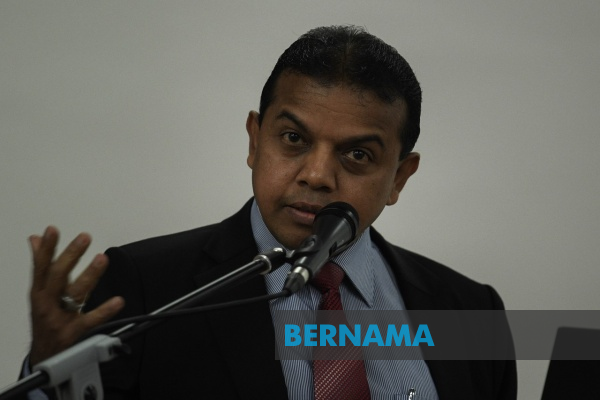
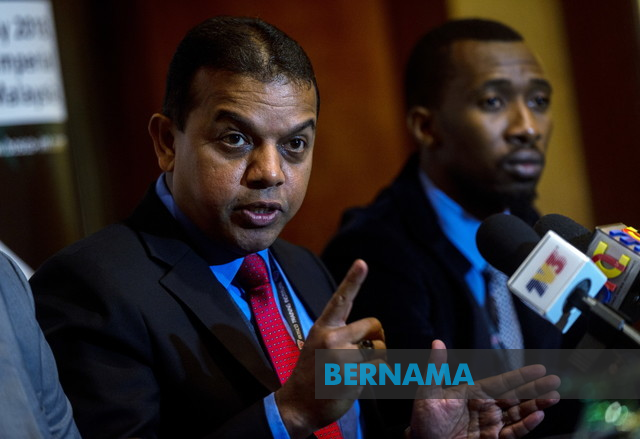
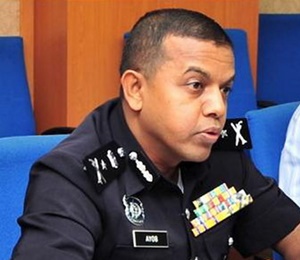
Datuk Ayob Khan Mydin PitchayKUALA LUMPUR, Oct 11 — Police have not ruled out the possibility of arresting more individuals to facilate investigations into the case involving the Liberation Tigers of Tamil Eelam (LTTE) terrorist group in Malaysia.

Bukit Aman Special Branch Counter Terrorism Division (E8) principal assistant director Datuk Ayob Khan Mydin Pitchay, said police had 28 days to conduct investigations on the seven individuals, including the two state assemblymen who were detained yesterday.

“Police are not ruling out the possibility of more individuals being arrested to assist in the investigations if there is enough evidence,” he told a press conference at the Bukit Aman monthly assembly, here today.

In this regard, he advised all parties to stop making statements that could affect the investigation process and public perception.

However, he pointed that there were no restrictions on individuals or parties who wanted to voice their personal views, but it would be a mistake to support, promote or raise funds for the LTTE terrorist group.

“…action can be taken if they (their actions and activities) are detected on social media or any other platform,” he said.

Commenting on the purpose of activating the LTTE in the country, Ayob Khan said: From what we can see, the pictures shown are LTTE images, this is not a matter of the Tamil rights struggle in Sri Lanka and so on, it is supporting and promoting the terrorist group.”

He reiterated that according to the laws of the country, the LTTE has been listed as a terrorist group since 2014, adding that it was also listed as a terrorist organisation in the United States, India and Sri Lanka.

Yesterday, seven individuals including the two state assemblymen from Melaka and Negeri Sembilan, were arrested in the operation carried out by Bukit Aman as they were suspected of promoting, supporting, possessing materials and channelling funds to the LTTE.

All of them were detained in operations around Selangor, Perak, Kedah, Negeri Sembilan, Melaka and Kuala Lumpur.

— BERNAMA

Forensic audit on bond scam to be completed by mid-November: CB Governor

October 11th, 2019

Courtesy The Daily Mirror

The forensic audit which is being carried out as per the recommendations of the presidential commission on the Central Bank bond scam would be completed by mid-November, Governor Dr. Indrajit Coomaraswamy said. 

He said the audit is being carried out over the issuance of bonds and the Employee Provident Fund transactions in relation to the bond scam. 

Dr. Coomaraswamy said the completed forensic audit would be handed over to the Monetary Board and then to the Attorney General’s Department to obtain the Attorney General’s opinion. 

Indian tourist arrivals in Lanka are thrice the number from the second highest source: Envoy.

October 11th, 2019

Courtesy NewsIn.Asia

Colombo, October 11 (newsin.asia): The Indian High Commissioner in Sri Lanka, Taranjit Singh Sandhu, said on Friday that tourist arrival figures for September this year shows that arrivals from India are about three times the number from the second-highest source.

Indian tourists are back in big numbers and are driving all the supply chains in the Sri Lankan economy,” the envoy emphasized in his inaugural address at the Post Graduate Institute of Sciences- Research Congress, University of Peradeniya.

Indian tourist arrivals in Lanka are thrice the number from the second highest source: Envoy.

The University of Peradeniya (located in Kandy) is known for its quality research in various fields, not just in Sri Lanka, but also in the region and beyond, the envoy said.

I am conscious of the fact that today I am standing in the largest and oldest university in Sri Lanka. I am also conscious of the fact that today I am speaking before a large group of scientific experts. I feel truly privileged, and honoured. I thank the Director, PGIS and Deputy Vice Chancellor for giving me this opportunity.”

Both India and Sri Lanka come from a rich tradition where acquisition of knowledge was considered the supreme goal in life; where knowledge and wisdom were cherished and scholars were most respected. We are proud owners of the legacy of Nalanda and Vikramashila, the prominent centers of learning in ancient days, where Medicine and Mathematics were taught side by side with Buddhist studies and Philosophy. Scholars from Sri Lanka like Lanka Jayabhadra adorned these Universities.”

Indian envoy Taranjit Singh Sadhu paying respects to the Mahanayake of the Malwatte Chapter, the Most Ven.Thibabatuwawe Sri Sumangala Thera

Sri Lanka had an equally illustrious heritage,” Sandhu further said. The ruins of a hospital found in Mihintale, which many believe, is the oldest hospital in the world, is particularly relevant. The ruins of ancient libraries are found in Anuradhapura. Sri Lanka’s strong tradition of innovation is also reflected in the old reservoirs which were built as early as 5th century BC, which are used even now.”

Coming to modern times, the envoy said: ‘I am happy to state that India has been able to build on our strengths. India is currently home to the world’s third-largest scientific and technical manpower. Indian educational institutes have produced the minds that now lead the global Corporations such as Google, Microsoft, Nokia, to name a few. We have sent our Missions to the Moon and the Mars. More than one-third of the top 1,000 global R&D spenders have centers in India.”

India will soon become the second-largest market for robotic surgery in the world. The vaccines developed by Indian scientists against Rotavirus and Hepatitis B have been trendsetters, and have helped reduce the prices of these vaccines considerably in most developing countries.”

Further, the warning system developed by India in the wake of 2004 Tsunami is amongst the best in the world,” he added.

It is heartening to note that University of Peradeniya has strong tie-ups with several educational institutions in India- IIT, Kanpur, IIT Roorkee, University of Delhi, South Asian University etc. We also have an ongoing Programme of Cooperation in Science and Technology between India and Sri Lanka, under which several projects have been jointly funded, based on mutual interests.”

I note that several scholars from University of Peradeniya are actively collaborating with our scientists in India on various research projects under this Programme. We need to have more such collaborations,” the High Commissioner said.

Sandhu pointed out that Sri Lanka was the first in South Asia to join the National Knowledge Network (NKN), through which Sri Lankan Universities now have digital access to around 1600 universities in India & beyond.

We have recently started conducting the IIT Joint Entrance Examination and the Graduate Aptitude Test for Engineering (GATE) in Colombo for the benefit of Sri Lankan students. The Government of India offers 750 scholarships annually to the Sri Lankan students, for Undergraduate, Postgraduate and Doctoral studies. We have also launched a new web portal, Study in India, which has all the relevant information regarding education opportunities in India, in one place.”

Indian envoy Taranjit Singh Sandhu calls on the Mahanayake of the Asgirya Chapter, Most Ven.Warakagoda Gnanarathna Thera

More than 25000 seats are earmarked in Indian Institutions for foreign students. I urge students in Sri Lanka to make use of all these opportunities,” Sandhu said.

When I see the youth of today I am filled with a deep sense of optimism. The youth has the ability to think big, think out of the box, ideate and innovate and bring transformational changes. I see in their eyes, a sparkle, a passion, and a hunger for development. The future of our great nations, is in their hands. They have to mold it the way they want, as the future belongs to them. The Prime Minister of India Narendra Modi, is passionate about innovation, technology and creation of an eco-system for start-ups. He has often said, if we do not innovate, we stagnate”.

I conclusion, the High Commissioner said: For India, Sri Lanka is special. The Indian Housing project in Sri Lanka, is the largest grant assistance project of Government of India, in any country abroad. Similarly, we have constructed the largest University Auditorium in Sri Lanka, in University of Ruhuna. The 1990 Emergency Ambulance Service, funded by India, is now operational island-wide.”

Our development partnership with Sri Lanka is based on Sri Lanka’s own priorities. Our projects are people–oriented. They have a direct impact on the lives of common people. From North to the South and West to East, it is spread all across the island,” the envoy stated.

Sandhu pledged that India will continue to stand with Sri Lanka in her journey ahead.

The Prime Minister of India Narendra Modi was the first world leader to visit Sri Lanka after the Easter attacks. This has been also an important messaging and you can see the difference it has made tourist arrival figures,” he pointed out.

On Thursday, the High Commissioner Sandhu was received and blessed by the Most Venerable Mahanayake of the Asgiriya and Malwathu Chapters, the Most Ven Warakagoda Gnanarathana Thera and the Most Venerable Thibbatuwawe Sri Sumangala Thero. He also worshipped at the Sri Dalada Maligawa (Temple of the Sacred Tooth).

Is the PM lying or is he misinformed?

October 11th, 2019

By Sumanasiri Liyanage Courtesy Ceylon Today

In the last two months or so, when the country was edging towards the Presidential Election, Prime Minister, Ranil Wickremesinghe, maybe hoping for United National Party nominations, had begun to talk on the economic performance of his Government. Having followed his speeches in different fora, one may identify the following assertions that he had made on the economy of Sri Lanka: 1. The economy was in a really bad shape when the Yahapalana Government was elected, with him as the Prime Minister; 2. Since 2015, the Sri Lankan economy has moved in the right direction, with the capability to achieve high-income country status by 2025, as a result of the right economic policies adopted by his Government; 3. The debt situation of the country has improved since 2015 so that the country would be able to repay its loan liabilities; 4. The country’s future depends on the growth of tourism and that of the export economy; 5. Although this process was temporarily mitigated by two stochastic shocks that occurred in September 2018 and April 2019, the sound policies adopted by his Government have put the economy back on the right track. 

In all five assertions, the Prime Minister appears to be one hundred percent certain. Although this time, he did not mention about the Volkswagen car assembling plant, his main emphasis is now on two or more new international airports. For sure, not to transform them into paddy stores. In this election time, it would be appropriate to look at carefully the data issued by the Government, in order to see if the Prime Minister’s assertions are validated. 

Economic growth

Of course, the economy in 2014 was not a very healthy one. The growth rate was reasonably high and many macro indicators, like the rate of inflation, the unemployment rate, and the poverty level were a single digit. However, Rajapaksa’s policies did not give necessary emphasis on the production side of the economy. As a result, the dynamism of the economy was maintained by State-led, debt-financed infrastructure projects. It was the merchant and financial capital that was hegemonic. The situation had changed when the economic management was handed over to the Wickremesinghe regime. Figures 1 and 2, that need no explanation, demonstrate the sluggish growth between 2015-2019. The blue line of Figure 1 below shows the behavior of per capita income from 2005 to 2019. While there was a gradual rise between 2005-2014, its increase is negligible after 2015. Ironically, the actual and trend per capita are noticeably lower when those figures compared with the Vision 2025 expected per capita income figures as indicated in the orange line. Although the Finance Minister still talks about the Vision 2025 plan, it would be clear to Economics 101 student that the Vision 2025 document was cremated or buried a long time ago. 

Looking at the past performance, one thing is very clear. When the economic policies deviated at least slightly from its fundamentalist neoliberal approach, the Sri Lankan economy has shown some kind of dynamism. The Yahapalana Regime has killed the economic dynamism between 2005-2015, by being obedient to IMF-WB prescriptions. Figure 2 shows the downturn trend of the economy after 2015. 

So, it appears that the Prime Minister’s first two assertions are not supported by an actual development published by the Central Bank of Sri Lanka.  

Figure 2 Debt trap

The Prime Minister’s third claim is that the Yahapalana Government, under his visionary leadership, was able to release the country from the debt trap created by the Rajapaksa regime. It is true that the Rajapaksa Government’s heavy investment in infrastructure development was based on debt financing. But the question that needs to be asked is if his Government was capable of reducing the mountain of debt. Figure 3 and Figure 4 are extracted from the Annual Report of the Central Bank of Sri Lanka. According to Figure 3, the accumulation of debt under the present government has increased.  

Figure 3

As a result of the accumulation of Central Government debt, its debt-servicing charges have also been increased. What the present Government did and continues to do is to get more loans, to pay its existing debt responsibilities, resulting in an increase in debt: GDP ratio. The debt/GDP ratio exceeded 100 percent during the last Ranil Wickremesinghe regime. Since 2015, as Figure 4 indicates, it has begun to rise once again.

Figure 4

Hence, it is clear that his third assertion is equally false. I will leave his fourth and fifth claims for another article, due to restriction over space. However, it is not clear whether the Prime Minister was deliberately lying, or he was totally misinformed by his staff. Whatever the answer to those two questions, one thing should be made very clear. The continuation of the economic policies of Ranil, Mangala and Malik trio would be a complete disaster to Sri Lanka.

About the writer:

The writer is a retired teacher of Political Economy at the University of Peradeniya.

E-mail: sumane_l@yahoo.com   

At meeting with medical professionals Gotabaya Rajapaksa vows to revamp health service

October 11th, 2019

Courtesy Ceylon Today

We will set up a high-quality health service in Sri Lanka, by regulating it through a formalised national policy, Presidential candidate Gotabaya Rajapaksa said.

He was speaking at a meeting with medical professionals, which was held recently in Colombo. At the event, Rajapaksa said:

It is a dream of parents to see their child becomes a doctor. Similarly, children also prefer to become doctors someday. That is because the medical profession is one that commands great respect from the society. In present times, gaining entry to a medical faculty is a very competitive endeavour. It is only those students who show exceptional skills in a competitive exam that are admitted to medical faculties. It is a selection which is done with impartiality, based purely on merit. Both before and after entering the medical faculty, students have to make a multitude of sacrifices in their adolescence, youth and in school life, in order to qualify as a doctor.

 A qualified doctor, attached to the government sector, has to fulfil his/her responsibilities, by serving in remote areas of the country, with fewer resources. Therefore, the Government must be sensitive to these realities. Efforts must be made to pay the due respect and appreciation befitting the medical profession. It is one of the basic demands of the doctors of this country, that their profession should be free from political influence. We believe that it is a very reasonable demand. Therefore, through the Government we hope to form in the future, we will work towards ridding the medical profession of political influence.

We hope to equip the hospital system of the country with state-of-the-art facilities and simultaneously to put into action a proper human resource management plan. We will completely depoliticise and rid of political influence, the stationing of doctors and other medical professionals around the country, opportunities to doctors for post-graduate studies and expand further education opportunities. Especially, we will not let crucial institutions like the Medical Council become politicised. We will take every possible step to safeguard the independence of such institutions. We will ensure that transfers of doctors and their opportunities for scholarships to pursue further education, are free from political influence. Medical education in this country has maintained a high standard of quality. It is the responsibility of the Government to facilitate the maintenance of that higher standard. We will never let that standard of medical education be degraded or compromised according to political sway. After coming to an agreement with the stakeholder sectors about a minimum standard of medical education, we will take steps to issue a Gazette on it. It is also a timely need to bring in necessary amendments to the Medical Ordinance, which dates back to more than 90 years. Today, the medical field is updating and advancing every moment, owing to new technology and new innovations. 

At present, there has arisen a necessity for quality-controlled laboratories, in order to ensure the quality of the medicine that is provided to the public. Therefore, we believe that a mechanism should be put in place, with the participation of medical professionals, which continually informs and disseminates the advancements and innovations made in the medical field, among the doctors of Sri Lanka. We will also formulate a special programme, in order to retain doctors and other professionals within Sri Lanka. We desire to build a country with happy and productive citizens. Maintaining good health of citizens is important in this connection. 

The free health service must be truly free. If the public has to pay for their basic medical requirements, it ceases to be a free health service. Therefore, the manner in which State funds are utilised in the medical field must be looked into. Such funds should be used towards the welfare of the public. Wastage and misuse of it must be controlled. If more funds are needed to ensure the welfare of the public through the medical field, we are prepared to allocate such funds. 

Today, there is a need for quality-controlled laboratories, to ensure the quality of medicine that is given to the public. In order to rid Sri Lanka of the pharmaceutical monopolies and mafias, this country needs a Drug Policy, based on the true core idea of Senaka Bibile’s policy. We will set up a high-quality health service in Sri Lanka, by regulating it through a formalised national policy. 

We need to take the medical sector forward, by basing it on indicators focusing on good health, rather than indicators of ill health. We will build an economy which does not depend on tax revenue received from cigarettes and alcohol. Food security is a crucial aspect of national security. 

Therefore, we will promote local produce through the development of the field of agriculture, and we will not hesitate to make strict decisions on the importation of milk powder and other non-essential food items from abroad. We hope to formulate a programme aiming at the reduction of non-communicable diseases, through programmes focusing on ensuring food security and limiting the use of chemical fertilizers. 

The structure of the State mechanism and the commitments of politicians are essential in building the prosperous Nation that everyone expects. Through the Government that we hope to form in the future, in order to execute its new national programme, we will appoint Members of Parliament to the relevant Ministries, of which they are most suited to assume the responsibilities. We also hope to properly constitute the Cabinet of Ministers of the new Government. 

We need the assistance of every professional in the task of development of this country. The day has come when we should come forward to do our duty. 

I request all professionals, including doctors, to come together to free Sri Lanka from the present crisis, and build a country which our future generations will be proud to live in. 

Former Customs DG & Additional DG granted bail

October 11th, 2019

Courtesy Adaderana

The former Director General of Sri Lanka Customs Jagath P. Wijeweera and former Customs Additional Director General Tharaka Seneviratne have been ordered released on bail by the Colombo Fort Magistrate’s Court.

The Financial Crimes Investigation Division (FCID) arrested the two officials on charges including criminal breach of trust, on September 27.

Mr. Wijeweera was arrested at the Sri Jayawardenapura Hospital and Mr. Seneviratne was arrested at the Badulla General Hospital while they were both receiving treatment. 

On September 19, the Colombo Fort Magistrate’s Court ordered the FCID to arrest and produce the two suspects before the court. 

The two officials have been accused of releasing 8 kilograms of confiscated gold from the custody of the Customs Department, for the enshrinement of treasure in the base ring of the ‘Sandahiru Maha Seya’.

The court had also issued an order preventing the accused from leaving the country.

SLPP wins all 17 Wards in Elpitiya PS poll

October 11th, 2019

Courtesy Adaderana

The overall results of Elpitiya Pradeshiya Sabha election have been released a short while ago.

Sri Lanka Podujana Peramuna has secured the victory of all 17 Wards of the Elpitiya Pradeshiya Sabha election. The SLPP has accordingly won the majority seats of the Elpitiya Pradeshiya Sabha which stands at 17.

The total number of overall votes obtained by the SLPP is 23,372.

The overall results of the Elpitiya Pradeshiya Sabha election were officially released at around 9.50 pm today (11).

The United National Party (UNP) has secured 7 seats after obtaining some 10,113 votes at the Elpitiya Pradeshiya Sabha election.

The United People’s Freedom Alliance (UPFA) secured 3 seats after obtaining 5,273 votes.

Janatha Vimukthi Peramuna (JVP) secured 2 seats after obtaining 2,435 votes.

The balloting of the Elpitiya Pradeshiya Sabha election commenced at 7.00 am this morning (11) and peacefully concluded at 4.00 pm.

A total of 53,384 voters were eligible to cast their votes at the Elpitiya Pradeshiya Sabha election which was held at 47 polling booths.

Among the 155 candidates from recognized political parties, who are running for the Elpitiya Pradeshiya Sabha election, only 28 will be elected as PS members.

චන්ද්‍රගුප්ත තේනුවරගේ ප්‍රකාශයට අදත් විවේචන

October 11th, 2019

උපුටා ගැන්ම  හිරු පුවත්

මහචාර්ය චන්ද්‍රගුප්ත තේනුවර මහතා පසුගියදා රණවිරුවන් සම්බන්ධයෙන් කළ ප්‍රකාශයට විවිධ පාර්ශ්ව අදත් විවේචන එල්ල කළා.

ඇල්පිටිය කොට්ඨාශ 17න් 17ම පොහොට්ටුව දිනා ගනී.. සජිත්ට එකක්වත් නෑ..

October 11th, 2019

lanka C news

ඇල්පිටිය කොට්ඨාශ 17න් 17ම පොහොට්ටුව දිනා ගනී.. සජිත්ට එකක්වත් නෑ..

ඇල්පිටිය ප්‍රාදේශීය සභා මැතිවරණය සඳහා අද පැවති ඡන්ද විමසීමෙන් කොට්ඨාස 17න් 17ම ශ්‍රී ලංකා පොදුජන පෙරමුණ විසින් දිනා ගෙන ඇති බව නිල නොවන වාර්තා පවසයි.

නිල ප්‍රතිඵල තව තව සුළු මොහොතකින් එය මැතිවරණ කොමිසම විසින් නිකුත් කිරීමට නියමිත ව තිබේ.

Youth Employment: A Prime Necessity

October 11th, 2019

By Garvin Karunaratne, Ph.D.

In view of the fact that over twenty percent of young people in the World, have failed to find a due place in the economic ladder and have become drop offs of the education and development system, definite action to equip them to become contributors to society has to get priority. .

Every country has a plethora of job skills training programmes, but  the countries provide only skills training and expect the trained youth to either find suitable employment  or to become entrepreneurs. Finding suitable employment to utilize their skills is a difficult task because the International Monetary Fund has already imposed its Structural Adjustment Programme on almost all Third World countries with the result that these countries have been directed to follow a  set of policies – to allow unrestricted imports and are banned from implementing any government programmes that attend to create commercial undertakings. This means that though skills training can be provided the Governments cannot either restrict imports of items that can be made locally or set up programmes where the skills trained youth will be helped to establish manufacturing units that make items for local consumption or export. The IMF’s Structural Adjustment Programme also imposes a high interest rate policy which means that any entrepreneur has to obtain funds at a vfor bidding high interest at over twenty percent to establish any industry.

The result is that the vast majority of the skills trained youth continue to be unemployed and become consumers, receivers of welfare grants rather than become contributors.

In this context, the achievement of the Youth Self Employment Programme of Bangladesh comes of great importance in that it is the only  development programme that can claim success in guiding millions of youths to become self employed on a commercially viable basis. It is easily the only youth employment programme that has achieved world status within the short space of three decades. It is a programme that has left its imprint on the sands of time.

No feasibility reports were written to get this programme approved. The approval came in a flash.

In  Bangladesh when the new Military Government of General Ershard took over the country in 1982, the Ministry of Youth Development was providing skills training to 40,000 youths annually but the vast majority of them failed to find employment and continued to be unemployed for life. I happened to be the Commonwealth Fund Advisor to the Ministry on Youth Development and the new Hon. Minister for Labour and Manpower, Air Vice Marshall Aminul Islam at a Conference held to evaluate youth development programmes, ordered me,:

 What can you contribute for Bangladesh”?

I would suggest that you approve a  self employment programme to supplement the skills training programmes  that are being implemented by the Ministry of Youth Development, where the lecturers who train the youths in skills will in addition, also guide the youths to establish enterprises to manufacture items for sale and become self employed entrepreneurs.”

The Secretary to the Treasury, the highest official in the country who was present replied:

Self Employment is not a task that can be done. The International Labor Organization (ILO) with all their unlimited resources have just miserably failed to establish a self employment programme at Tangail in Bangladesh. They laboured for three years and brought experts from all over and failed. It was a great loss – a massive expenditure and this Government is not going to waste any more funds again. Self Employment is not a task that can be done. That was the conclusion of the ILO and they are the experts of international standing”

I replied:

Though the ILO failed,  I can establish a Self Employment Programme. I hold the experience of establishing self employment units in Sri Lanka for eighteen years and also hold the Ph.D in Agricultural Economics and Non Formal Education from Michigan State University. I am confident of success.”

. The Secretary to the Treasury the highest official in Bangladesh laughed loud at my attempt to make entrepreneurs out of school drop outs- the category from which the Department of Youth Development found youths for skills training. He was joined by Secretaries of a few other Ministries.

.. I argued that though the ILO failed I would succeed. The Secretary to the Treasury  were adamant that such a programme would never succeed, but I quoted instances where I had established  successful employment projects providing incomes to youths while simultaneously producing what the country imported. The battle went on for an easy two full hours The Hon.Minister was listening in silence till his patience was exhausted.  The Minister finally ordered us to shut up. He asked for any  Government training programmes that guided youths to become entrepreneurs. The Secretary to the Treasurty replied None”. Then the Minister asked for the number of youths that failed to get into higher education as well as finding a suitable job- the youths that will be scraping the barrel for life,  unemployed. The Secretary answered that it was in the millions, every year The Hon Minister without any hesitation ordered that I should establish a self employment programme to create  entrepreneurs.

The Secretary to the Treasury stumped,  stating‚  that there will be no  funds to establish a self employment programme, to which I replied that we will find savings within the  approved budgets  for the skills training of the youths and re deploy staff as necessary. The  Hon Minister  approved my suggestion.. .

We started planning work that night itself. The next morning I was addressing trainees at the training centers and also training our Lecturers and Youth Officers on how the programme should be done. The officers who had till then done traditional youth development work were trained in concepts of economics. All Training Institutes were immediately altered to Training Cum Extension Institutes where the youths in training were to be guided to become self employed. Overnight we established a countrywide special extension service for the lecturers to go out on inspections and help the youths who faced problems.  The youths were guided to draft their own projects to become self employed, starting small farms even with a few cows or chicks. Dresses were sewn using the machines at the training centers that were kept open after work till ten at night.  The method was to intensively guide the trainees in the management of their enterprises. Every action from the planning of their projects, to the purchase of raw materials, the chicks, the feed, the process of manufacture, the process of the growth and sale of cattle, the making of garments and their sale was all monitored on a non formal education  basis where the youths were trained to look at the advantages and disadvantages of each course of action and act on their own. They were monitored closely and helped when they failed. . The trainees were taught basic economics related to their ventures‚  The training included understanding the free market economy and the youths were guided to think, understand and increase their ability and capacity in the process. This was non formal education in action. The achievement was within the village setting where the projects became family concerns with brothers and sisters becoming involved. On our Visits, Training sessions were provided impromptu where everyone could participate.

The effort was to make a youth movement to make youths establish ventures and guide them till they are income bearing equal to the earnings of a clerical officer in the Public Service.

This Programme began at the end of March 1982 with a few trainees and was expanded to 2000 by October 1983. By the time I left Bangladesh at the end of October  1983- in  sixteen months my team was guiding 2000 youths.  The team comprised the Secretary, the Joint Secretary of the Ministry with a few hundred staff of Directors, Deputy Directors of Youth, Director for Livestock and Poultry , Directors of the 3 Residential Training Centers in Livestock & Poultry, Lecturers in Training Institutes- all of whom were taught the essentials of economics firstly to be able to analyse the economy of Bangladesh and to arrive at areas of economic activity where self employment production would be an asset.to the country. They were also taught methods of imparting instructions in a manner that would evoke the active participation of the trainees and enable them to think and make their own decisions. This included national and regional planning culled down to the village level., where the self employment units were established.

We got down to work in earnest.. The officers were patriotic to the extreme. It was long hours every day for months Daily circuits in Toyota Hiace bone shakers- leaving early morning to return whenever. The officials responded ably.

 In an evaluation conducted in March 1983, eleven months from the commencement it was found that of the youths that commenced by May 1982,   283 youths had established  their own commercial ventures, with stocks of flocks and head of cattle  valued at Tk.911,630.00.  It was building up stocks, buying chicks and ducklings and seeing them grow. As much as 223 of them had reached a net income of TK 369.00 a month. Of them 83 earned over Tk. 500.00 a month. In the  Jamalpur District, in disciplines like dress making, fisheries, retail sales, electrical goods repairing workshops, welding, etc. 73 youths were involved, earning an average net income of Tk 445.00 a month with 20 of them earning net incomes of Tk. 500.00 or over:”

At that time Tk. 500.00 a month was the salary drawn by a Clerical Officer in the Government Service. Getting the youths to reach a net income of Tk. 500.00 was our aim.

In an Evaluation done in August 1983, 16 months since commencement  the Evaluation Report states:

A Programme of Excellence in every respect  unfolds in the results documented. .Of  500 unemployed youths who joined the programme in the early months,   479 are earning  an average net income  of Tk 596.00 in August 1983, 8 to 12 months after they commenced their commercial ventures, 55 of them earn over Tk. 1000.00 a month and 253 earn  over Tk 500.00.”

In August 1983, barely 16 months since the commencent, the achievement was hailed by the two Secretaries of the Ministry of Labour and Manpower; In their words:

Dr.Karunaratne’s significant contribution has been in the field of self employment to the drop-out youths. This programme was not only designed but also guided by him. This activity which was initially launched as a pilot experimental project has been a great success and has now being adopted as a fill-fledged Programme. The Government of Bamgladesh..has been successful in providing meaningful employment to a large number of youths on this Programme” .(Asafuddowlah)

Dr. Karunaratne’s role as the formulator of the program has been particularly commendable. It was mainly through his dedication and hard work that the pilot project has now been formally accepted as one of the most important development projects. (Ayubur Rahaman)

The YSEP has stood the test of time for over three decades (1982-2019) The Five Year Plan of 1997-2002 devotes 8 pages to this program. This is easily the premier employment creation program that one can find in the world today. All other programs involve training and apprenticeship only and never include the tasks of motivating youths, involving them in non-formal education endeavor to develop their abilities and capacities, through technical guidance and management advice provided as they work on their projects aimed at their  becoming commercially viable, which are the cornerstones on which this programme  has been based.

Instead of traditional youth work, the aims of the Ministry of Youth had been altered  To facilitate the unemployed youth for gainful employment/self employment, providing vocational/skills development training and micro credit support.

To involve the youth in the mainstream of national development processes” (www.dyd.gov.bd/nyp_activities.php)

The above achievement of the Youth Self Employment Programme stands great in comparison to what was achieved by the ILO Project in Tangail in the earlier three years, where the number of entrepreneurs was only 626, where Tk. 1.38 million was disbursed of which only Tk. .61 million was recovered. The best cases document people owning one milk cow or fattening one head of cattle for sale. Many of the 626 people have dropped off.

 By  August 1983, 16 months after commencement  The Department of Youth Development  were training  2000 youths. The Programme was expanded apace to involve 7000 youths by 1987, to 16,000 by 1992 and to 160,000 a year  from 1997. In 1982 we had only 3 Residential Training Centers. This was increased to 64 by 1997.  In  2011 February  The Government of Bangladesh reported to the 34 th Session of the Governing Council of IFAD(FAO)  that this programme had guided as much as two million youths to be self employed‚  on  a commercially viable basis.(Statement by Bangladesh to the 34 th Session of the Governing Council of IFAD(FAO), dated19/02/2011)

My task was also to train the officers to carry on the programme after my‚  two year period of service ended.‚  True to a man Bangladeshi officers carried on the ardous task and‚   today 160,000 youths are being guided annually.. A full Department of Youth Development now devotes 95% of their time to training and guiding youths to become self employed..

Every country boasts of skills training programmes where youths are trained in the thousands but none provide training to guide the trained to become entrepreneurs- the task that was successfully done in this Youth Seldf Employment Programme.

It would behove  every Government to  decide that all skills training programmes should include guidance to enable the youths in training to establish enterprises of their own and become entrepreneurs. This can be achieved with little extra cost as the staff that train youths in skills will also be guiding them to become self employed.

Another important fact is that for the first few years, no new funds were provided. Savings were found within the skills training programme budgets for holding training workshops to create self employment..

Having a live successful employment creation programme to follow and guide is a great asset to any country that wishes to commence activity. The may be   available for any country that hopes to convert their unemployed youth to become entrepreneurs.

. The entire world yearns for that development today.

Garvin Karunaratne, Ph.D. Michigan State University‚ 

Commonwealth Fund Advisor of Youth Development to the Government of Bangladesh(1981-1983) 

Author of;

–How the IMF Ruined Sri Lanka and Alternative Programs of  Success (Godages)2006
–Success in Development-(Godages)2010
Papers on the Economic Development of Sri Lanka-, Godages 2012
How the IMF Sabotaged Third World Development,  Kindle/Godages, 2017

October 11, 2019

YAHAPALANA AND THE UNITED STATES OF AMERICA Part 16

October 10th, 2019

KAMALIKA PIERIS

United States rose to prominence after World War II. USA and Russia thereafter fought a Cold War which neither won. When the Cold War with Russia ended abruptly in 1991 the USA became the world’s sole super-power.

Throughout the 1990s, the USA reigned supreme. The USA had the best army, air force, and navy. No other country could rival it. It became a global policeman.  The USA divided up the globe into different ‘combatant commands’, such as the Pacific command (now Indo-Pacific Command) with each Command taking orders from a single officer. USA’s powerful 7th Fleet dominated the Pacific Ocean.

The USA thought it would continue to rule the world forever, ‘American leadership is good for the world’, it said.  Instead, Russia and China are now coming into the picture, making the world multipolar.” USA’s powers are now decreasing in comparison.  America’s military advantage vis-à-vis China and Russia is eroding admitted USA. It is the superpowers in decline that are often the most dangerous, warned analysts.”

The USA is no longer an admired and feared country. The notion that the USA is a shining example of democracy was always utter nonsense. No country is able to show a perfect democracy, ever, and the USA was no exception. But now it has got worse. The USA has been declared a flawed democracy.

According to the 2018 edition of The Economist Intelligence Unit’s Democracy Index, the U.S. is ranked 25th out of 165 sovereign independent countries, reported the media. The Democracy Index defines a flawed democracy as a democracy where despite free and fair elections as well as civil rights and liberties there are significant weaknesses” in other democratic characteristics such as problems in institutional governance, a poor political culture, and lower levels of political participation in public life. The USA has experienced government shutdowns, low voter turnout and a lack of electoral reform, it said.

 The United States is ranked as a flawed democracy alongside countries such as Portugal, France, Belgium, Cyprus, Israel, Taiwan, Italy, Japan, and South Korea. This is not the first time the United States has been criticized for its current political status. A study by Princeton University in 2014 showed that the USA is now an oligarchy where the elite, not the average citizen, has the power and influence, said the media. 

The notion of the USA as a supporter of free speech and other wonderful freedoms is now questioned. There is the example of Julian Assange of Wikileaks and US whistleblower Edward Snowden. The USA wants Assange punished for leaking secret American documents. He was arrested under a US extradition warrant kept the secret till now. TIME says Snowden wants to return to the US but does not believe he will get a fair trial.

The USA is not as liberated and as socially advanced as it thinks it is. Roe vs Wade” is still not completely accepted. Alabama recently passed the nation’s most extreme abortion bill, reported TIME. It would ban abortion almost entirely in the state and make it a felony to perform an abortion.   There is a great discrepancy between the salaries paid to men and those paid to women for doing identical jobs in the USA.  American women have now started complaining.

There is race prejudice. The African American is still discriminated against. Every black person knows that no amount of accomplishment or wealth can exempt him from racial prejudice,” reported Time. They are prevented from voting at elections. Michelle Obama said in her book ‘Becoming” that it was estimated that about 400,000 African Americans in the state of Chicago were eligible to vote but were still unregistered. For those registered, racists try to figure out which polling booths to close so that they would have difficulty getting to one, added TIME.

 People will stop for a stray dog before they will stop for a black child alone in the middle of the day’ said Kamala Harris. A white teenager who kills is a good kid who deserves a second chance, but a black teenager who commits the same crime should be locked up for life.

There is violence, shown worldwide in the numerous mass shootings in US schools and elsewhere. The justice system is not perfect.In 2018, 151 persons were cleared of convictions for crimes they did not commit. This group had served an average of 10 years in jail. In the USA despite the law, it is the prosecutor who decides. He will decide to put sex workers in jail while letting their customers off.

There is corruption, such as Chicago’s famous cronyism, where the most lucrative city contracts are awarded to favored persons. A study of international corruption cases in 2012 found that most of the shell companies used to hide financial crimes were from America. Also that the most secretive shell companies are in America. They are very easy to set up in the US. When US Congress suggested corporate transparency legislation, it was shot down.

There is a poverty of sorts. An entire generation of USA has come of age without having seen US prosperity, said TIME in April 2019. And there was a shared sense among them that they had been screwed”. Farm bankruptcies are increasing in USA said CNN in September 2019. Certain categories of low paid workers, such as waitresses, live on tips. The management openly asks customers to tip them. That is a part of the US economic system.

The US economy is no longer the best in the world. It lost its lead 15 years ago. Industrial production has collapsed in the US. The US no longer leads in the manufacture of durable goods. Electric and electronic items, which were originally produced in the US, are now produced in other countries such as China. As manufacture decreased, so did the job, resulting in unemployment. Since the US now has to import these goods, there is a trade deficit as well.

R&D expenditure has shrunk significantly over the last few decades, said TIME. Once the world leader in R&D the US now ranks 12th in government-funded R&D as a Percentage of GDP. China, on the other hand, is heavily funding basic research.

  12 American universities are listed among the best-ranked universities in the world, but secondary education is not always excellent. There was a teacher strike in Los Angeles in January 2019, due to a lack of education funding. They demanded better school funding, smaller class sizes, and higher pay.

Apparently, the CIA, America’s well-known spy service, had an agent right inside the Kremlin.CIA said that they had never been able to penetrate the Kremlin, but this chap came to them and offered to spy for them. This spy had access to the highest levels of the Kremlin, including access to Russian President Vladimir Putin’s papers. He had sent secrets to Washington for decades. This spy had refused to leave Russia but was eventually taken out, due to security fears, and now lives in Washington DC. The US has lost a nearly irreplaceable asset, wept CIA. Recruiting a source with key access is extremely hard. A source in a key position may happen once a generation, if ever. The chap was probably a plant.

CIA has also tried to get birds and dolphins to spy on Russia. Dolphins were tried out to see whether they could be trained to spy on Russian submarines and place explosives on vessels. Pigeons were trained to take pictures of a Soviet shipyard building nuclear attack submarines. Some snapped perfect photos, but others flew out, with expensive cameras attached, and never returned. CIA also planned to smuggle a bird into Russia where it would be released secretly in the field, tasked to fly 25 kilometers carrying a camera to snap pictures of radar for SA-5 missiles, and fly back. This plan did not succeed either. The pigeon project was abandoned as unreliable.

USA‘s foreign relations have been heavily criticized. USA’s foreign policies and actions are completely authoritarian or even dictatorial, said Laksiri Fernando. The USA does not want a partnership, but subjugation or submission.  USA’s first target was Latin America. The USA has engaged in direct military interventions in most of the countries of Latin America,  throughout the years making Latin America a region of political instability and economic chaos, Fernando said.

But the USA did not confine its attention only to Latin America. Between 1945 and 2005 the United States has attempted to overthrow more than 50 foreign governments and to crush more than 30 populist-nationalist movements struggling against intolerable regimes. In the process, the US has caused the deaths of several million people and condemned many millions more to a life of agony and despair,   said, critics. The best-known defeat is that of Vietnam.

When  the UN General assembly started its 74th session in September 2019, Foreign Minister of Russia, Sergey Lavrov wrote a piece to ‘Russia in Global Affairs’ magazine, (20 September 2019.) Here are some of the things he said.

  • Their [west] rhetoric on liberalism, democracy, and human rights goes hand in hand with the policies of inequality, injustice, selfishness and a belief in their own exceptionalism‘
  • West focuses on individuals and their rights and freedoms. How does this [fit in with] economic strangulation and overt military threats against a number of independent countries such as Cuba, Iran, Venezuela, North Korea or Syria? The reckless Arab Spring gamble destroyed the unique ethnic and religious mosaic in the Middle East and North Africa.
  • After centuries of economic, political and military domination the west is losing the prerogative of being the only one to shape the global agenda. This has given rise to the concept of a ‘rules-based order.’ These ‘rules’ are being invented by the west and introduced into everyday usage and are actively being implemented. Its purpose is to replace the universally agreed international legal instruments and mechanisms and usurp the decision-making process.
  • This ‘rules-based order’  is intended to affect the powers of the UN Security Council. When the United States and its allies failed to convince the Security Council that the Syrian government was using prohibited toxic substances they started to promote the ‘rules’ they needed through the Organisation for the Prohibition of Chemical Weapons (OPCW). 
  • One can also observe similar attempts to ‘privatize’ the secretariats of international organizations in order to advance interests outside of the framework of universal intergovernmental mechanisms. The interventionist ideology of ‘responsibility to protect’, R2P, which justifies violent ‘humanitarian interventions’ without UN Security Council approval under the pretext of an imminent threat to the safety of civilians is part of the same policy
  • This concept provides for direct outreach to civil society over the head of legitimate governments. Obviously, the true goal is to withdraw counterterrorism efforts from beneath the UN umbrella and to obtain a tool of interference in the internal affairs of states. The introduction of such new concepts is a dangerous phenomenon, which rejects the principles of international law embodied in the UN Charter. This a new divide between ‘the rules-based liberal order’ and ‘authoritarian powers’ paves the way back to the times of confrontation and antagonism.
  • Yet another example is Washington’s open refusal to implement unanimous UN Security Council resolutions is the settlement of the Israeli-Palestinian conflict.
  • At the same time, our American colleagues are persistently trying to mobilize all of their foreign partners to contain Russia and China.
  •  It is necessary to recognize the obvious. The emergence of polycentric world architecture is an irreversible process, no matter how hard anyone tries to artificially hold it back (let alone send it in reverse). Most countries don’t want to be held hostage to someone else’s geopolitical calculations and are determined to conduct nationally oriented domestic and foreign policies. ( continued)

YAHAPALANA AS A PUPPET REGIME Part 11

October 10th, 2019

Kamalika Pieris

ECONOMIC GROWTH (1)

Under my presidency, the economy grew at an average annual rate of 6% from 2006 to 2009 despite a raging war and at 7.4% in the five post war years from 2010 to 2014, said Mahinda Rajapaksa in April 2019. No government in post-independence history has achieved an average growth rate of 6% leave alone 7.4%. Because of that growth, the economy was able to absorb the relatively modest annual increases in taxation under my government, said Mahinda Rajapaksa in April 2019.

The total outstanding government debt increased from Rs.7,391 billion in 2014 to more than Rs. 11,859 billion by the end of 2018 – an increase of 62%. These enormous borrowings were not spent on any development work. The national debt has risen by Rs. 4 Trillion in these three years, as against Rs. 5 Trillion in the previous 10 years, despite war expenses.

Prime Minister Ranil Wickremesinghe admitted that Sri Lanka’s economy is in a dire state, while endeavouring, as always, to lay the blame on loans taken by MR’s Government, said Tissa Vitarana in January 2019.

 He conveniently plays down the fact that the loan repayment of USD 5.9 billion due in 2019 is the outcome of loans taken over about 30 years. He also hides the fact that the loans acquired in the last four years of the UNP-led Government, without doing any national development, more or less equals the debt incurred by the MR-led Government over nine years to win the war against the LTTE and develop infrastructure concluded Vitarana.

ECONOMIC GROWTH (2)

Milton Rajaratne has looked at the economic growth after Yahapalana. One of the main pledges of Yahapalana was to improve the economy of the country. The tenure of the Yahapalana government is drawing to a close and thus it is timely to investigate whether the government has been able to manage the economy, and bring about the proclaimed results in both macroeconomic and socioeconomic spheres, Rajaratne said.

Rajaratne has created a table presenting data for 25 economic indicators, from the year 2014 to 2018, of which 2014 is considered the reference year. Four year averages of economic performance have also been calculated. The data were taken from the Annual Reports of the Central Bank of Sri Lanka.

The 25 economic indicators include Growth rate, Domestic investment, Domestic savings,  wages, exports, official reserves, Share price Index, Budget deficit,  Manufacturing, unemployment,  Consumer prices,  imports,  public debt, foreign debt,  exchange rate, interest rate.

All the 25 criteria, given in the table, indicate that the average performance of the economy during the past four years is a failure compared to the performance of the year 2014. Economic performance of the first two quarters of the year 2019 has also been disappointing, as all these criteria have further deteriorated.

In the past there was a common belief that UNP regimes were good at economic management, and as a result the economy gained a boost every time a UNP government came to power. However, this time around, this belief has been proven wrong.

Due to the mismanagement of the economy between 2015 and 2018, the expectations of the business and households sector have been shattered, and the economy is caught in a low investment-low economic growth trap, low export-high import trap, low public revenue-high expenditure trap, debt-development trap, debt servicing trap, high tax-low real consumption trap, high production cost-competitiveness trap, low exports-high imports trap, and many other traps, concluded Rajaratne. (Milton Rajaratne island 26.9.19 p 9)  

GOVERNMENT DEBT

The government is trying to use the debt repayment issue in order to conceal their inability to run the economy. From the time this government was elected to power, the Prime Minister has been saying that they cannot repay the loans taken by the previous government. They were talking about a mountain of debt, a debt trap and even claiming that some of the loans taken had not been documented. That is a lie,   said Bandula Gunewardena in April 2019. If loans have been taken without any documents, there is no need to repay such loans, either.

When  the Rajapaksa government  took office in November 2005, the total outstanding government debt was Rs. two trillion. When we left in 2015, it was 7 trillion, said Bandula Gunewardena. During those nine years, we went through the world food crisis of 2007, the world’s worst recession since 1933 in 2008/09, and experienced the highest oil prices ever, for a number of years. Then we had to face the Eelam war. An unprecedented amount of development work was also done during those years. With all that, indebtedness rose by only Rs. five trillion, continued Bandula.

Towards the end of 2018,  Yahapalana  government bought  2.5 billion USD sovereign bonds. Then they presented the budget for 2019 to Parliament and before it was passed they took yet another 2.4 billion USD through a sovereign bond. Then they took one billion USD from the China Exim bank for the Central highway project. In that manner, they have taken about six billion USD in foreign loans in just the past few months.Today the total outstanding government debt is Rs. 12 trillion. It has gone up by five trillion without the government doing anything to show for it, within a short period of just four years, continued Bandula.

When the Rajapaksa government was in power, there was enormous restraint exercised when making foreign borrowings. Indeed one could say that all previous governments were much more careful in that regard than the present one. During the Rajapaksa era, Sri Lanka Development Bonds were issued only twice a year and that too never in excess of an average of about 350 million USD per year. But under the present government SLDBs were issued with reckless abandon.

During our time, an additional one billion USD would have sufficed to take things forward very comfortably. We have never taken amounts as large as 2.5 billion USD at a time through sovereign bonds,  concluded Bandula Gunewardena.

BUDGET 2019

The budget for 2019 was a fraud perpetrated on the people, said Bandula Gunewardena. It is one big lie.  Parliamentary Committee on Public Finance report on this Budget  pointed out that the  assumptions and calculations on which the budget was based were faulty. Whether the Easter Sunday attacks took place or not, the economy is going to take a nose dive this year, said Bandula Gunewardene.

TAXES

Mahinda Rajapaksa said in 2019, the government hopes to collect Rs. 2,077 billion as taxes, twice the amount that was collected 2014. All that money is to be wrung out of the public in a context where the annual growth rate has declined to 5% in 2015, 4.5% in 2016, 3.1% in 2017 and it is expected to be around 3% in 2018.

INTEREST RATE

Every economist in the world knows that a country can never be developed with a double digit interest rate. The interest rates went down to single digits during Mahinda Rajapaksa era. In Sri Lanka, the interest rate went up to double digits after the Central Bank bond scam. If the cost of capital is 15 percent, a business will have to make a profit of at least 40% to make his business viable after meeting operational costs, taxes and the cost of capital etc. So a person who takes a loan now is in deep trouble, said Bandula Gunewardene in April 2019.

SALARIES

Any salary increase given by this government disappears almost immediately. The Rupee depreciated from Rs. 131 to the Dollar at the end of 2014 to reach around Rs.180 under Yahapalana rule, driving up the prices of all imports. Under my government, taxes were much lower, and the exchange rate was controlled to prevent increases in the prices of imports. So whatever was given by my government as salary increases actually stayed in the hands of the recipients, said Mahinda Rajapaksa. ( Continued)

Free and Open Indo-Pacific Vision and Belt and Road Initiative: Can they coexist?

October 10th, 2019

Panel Discussion consisting of Pathfinder Foundation, University of Colombo and the Japanese Embassy

Internationally renowned Japanese Professor of Contemporary Chinese Politics at the Graduate School for Law and Politics and Dean of the Graduate School of Public Policy at the University of Tokyo, Akio Takahara, delivered a thought-provoking lecture on ‘Free and Open Indo-Pacific Vision and Belt and Road Initiative’ at the Department of Economics of the University of Colombo recently.

The Pathfinder Foundation is planning to hold a series of similar events in cooperation with Department of Economics, University of Colombo and Free and Open Indo-Pacific Vision and Belt and Road Initiative’ is the first of the series.


Prof. Takahara during his lecture elaborated how Japanese perception of Chinese has been formed by territorial and maritime issues. He mentioned that Chinese perception on Japan has been changing over the years, and many Chinese hold Japanese in high regard because of the country’s adherence to international law. Prof. Takahara also applauded the Japanese government’s continued conditional support to the BRI based on openness, transparency, fairness, fiscal soundness and economic viability.

The center point of discussion during the lecture was for Sri Lanka to look for multilateral foreign investments and not only adhere to investments flowing from a single a country. The Senior Professor in Economics, Sirimal Abeyratne pointed out that EU, USA and Japan had the opportunity to invest in Sri Lanka during 2015-2017 but they were not realized. Then Sri Lanka was given an opportunity to have China as one of Sri Lanka’s major partners again. He also explained that BRI is a choice that the country could seize in order to achieve the process of globalization and if forgone, the economy would stagnate.

Prof. Admiral Colombage spoke on the significance of the Indian Ocean to global trade, and that BRI is seen as a solution for infrastructure requirements in the Asian region, which requires 460 bn USD/year. Sri Lanka had only received 1.2% of its GDP as foreign investments in 2018, which has left the country yearning for more foreign direct investments. He explained that investment projects should take into account the environmental impacts, in addition to the conditions the Japanese government had outlined in 2017.

Dr. Maneesha S. Wanasinghe Pasqual, held the view that BRI can be win-win or a win-lose scenario. The debt crisis, corruption, viability concerns and the sustainability of projects are some of the reasons why some Sri Lankan quarters are critical of the BRI. However, she also noted the need for the involvement of other parties in order to make BRI a win-win for smaller countries, through the expansion of free and open economy while countering threats and making greater choice available for smaller nations such as Sri Lanka.

Rev. W. Wimalaratana said that promoting competition is good in the region since it enables development, citing the examples of Korea and Japan, Iran and Saudi and the development of European countries in 15th Century.

Prof. Takahara ended his discussion with the expert panelists posing two significant questions in relation to the BRI and foreign investments in Sri Lanka. While, he acknowledged the demand for infrastructure projects is always greater than the supply, he highlighted the need to answer the question who pays for such projects. The second question that Sri Lanka should seek to answer in his view is, why are the Chinese interested in investing in Sri Lanka while other investors are keeping away.

It was also noted by the participants that speakers focused more on China and the BRI initiates but Indo Pacific Vision was not given sufficient coverage. Mr. Luxman Siriwardena from the Pathfinder Foundation gave his concluding remarks expressing the great opportunities and challenges faced by Sri Lanka as an island that is strategically located within the Indian Ocean. He emphasized that Sri Lanka’s strategic location in the Indian Ocean is a blessing with potential to turn into a curse unless or otherwise, the country is managed prudently and diplomatically by its leaders.

Two assemblymen among seven arrested for alleged involvement in LTTE

October 10th, 2019

Courtesy BERNAMA

Last update: 10/10/2019

KUALA LUMPUR, Oct 10 — Two state assemblymen from Melaka and Negeri Sembilan are among seven individuals arrested for alleged involvement in the Liberation Tigers of Tamil Eelam (LTTE).

They were picked during an integration operation mounted by Bukit Aman police in Melaka, Kedah and Negeri Sembilan, which began at 9 am today.

Principal assistant director of the Counter-Terrorism Division (E8) of the Special Branch in Bukit Aman, Datuk Ayob Khan Mydin Pitchay said all the suspects had been under police surveillance since November last year.

Certain quarters from outside the country are trying to activate LTTE movement in the country…we are taking preventive action to arrest them because we don’t want them to grow,” he told a special press conference at Bukit Aman here today.

Ayob said a total of 25 individuals had been arrested so far for alleged involvement in the LTTE in Malaysia since 2009.

— BERNAMA

Seven suspected of promoting and supporting LTTE movement arrested

October 10th, 2019

Courtesy BERNAMA

KUALA LUMPUR, Oct 10 — Seven individuals, including two state assemblymen, were arrested today for alleged involvement in the Liberation Tigers of Tamil Eelam (LTTE), including promoting, supporting and channelling funds to the group and in possession of materials related to its cause.

Principal assistant director of the Counter-Terrorism Division (E8) of the Special Branch in Bukit Aman, Datuk Ayob Khan Mydin Pitchay said they were picked during an integration operation mounted by Bukit Aman police in Selangor, Perak, Kedah, Negeri Sembilan, Melaka and Kuala Lumpur from 9am to 2pm today.

The two assemblymen from Melaka and Negeri Sembilan were arrested after they were suspected of attending a LTTE Warriors Day” programme in Melaka last November.

Both were found to have given speeches at the programme that displayed elements of support for the LTTE, besides sourcing funds and distributing brochures and materials relating to the group,” he told a special media conference at Bukit Aman here today.

Ayob Khan said both of them were found to have direct links to LTTE after a detailed investigation was conducted in November.

Ayob Khan said also arrested was a 28-year-old scrap metal dealer suspected of being the organiser of the LTTE Warriors Day programme, held in November yearly.

This individual who was held in Rawang, Selangor, was convicted of injuring Sri Lanka’s High Commissioner to Malaysia, Ibrahim Ansar at the Kuala Lumpur International Airport (KLIA) on Sept 4, 2016 and was fined RM10,000 for the offence,” he said.

The fourth arrest involved an insurance agent, aged 38, from Kuala Lumpur and this individual was suspected of planning an attack on the Sri Lankan envoy in Kuala Lumpur, and also for owning and being in possession of materials related to LTTE, he said.

The next arrest took place in Sungai Siput, Perak where a 37-year-old taxi driver believed to have once joined a LTTE-related rally and a secret meeting in Perak, Ayob Khan said.

The suspect is believed to have been involved in recruiting members and spreading LTTE propaganda in Malaysia. He is also found to be in possession of LTTE-related materials and was also involved in the Sri Lankan High Commissioner assault incident three years ago,” he said. 

Ayob Khan said the other two arrested were a 27-year-old technician, who was nabbed in Kulim, Kedah and a food premise owner in Sungai Buloh, Selangor.

“Both were arrested after they were believed to have supported the LTTE, have materials relating to the group and for promoting the terror group through social media.

Ayob Khan said all seven are being held for 28 days under the Security Offences (Special Measures) Act 2012 (Sosma) beginning today.

He said since 2009, a total of 25 individuals have been arrested for their involvement with LTTE, adding that police believe the group had links out of the country. 

Meanwhile, Ayob Khan advised the public not to turn the arrests into a racial issue or to exploit the matter.

We do not see party, religion or race, if anyone is involved in terror-related activity, we will arrest them,” he said, while stressing that prior to this, a series of arrests were also done on Daesh militants and members of Jemaah Islamiah and Sikhs for Justice.

The LTTE has been listed by Malaysia as a terrorist organisation since 2014.

The conflict between LTTE and the Sri Lankan government went on for more than three decades after its leader V. Prabhakaran led a separatist movement to establish an independent state for the island’s Tamil minority.

Prabhakaran was declared killed by Sri Lankan government troops on May 19, 2009.

Gotabaya is the saviour: Rathana Thera

October 10th, 2019

Lahiru Pothmulla and Dayarathna Ambogama Courtesy The Daily Mirror

MP Ven. Athuraliye Rathana Thera yesterday said SLPP presidential candidate Gotabaya Rajapaksa was the leader who can salvage the country from the abyss it has fallen into. The prelate, who joined Mr. Rajapaksa at the latter’s election rally which was held in Salgado Stadium in Anuradhapura, said the country yearns for a new leader who is not a traditional politician. ‘Gotabaya is the one who can take unwavering decisions against multinational companies which are behind the kidney disease plaguing the region,” he said. The prelate said security should be tightened around the country to put an end to the drug menace.

He said what people required was a pleasant country and not a concrete jungle. “It is Gotabaya who has the vision to develop the country in an environment-friendly manner. Therefore, all communities should come together to support Mr. Rajapaksa at the upcoming presidential election,” the Thera said. 

SLFP-SLPP union can secure 6.5 million votes – Dayasiri

October 10th, 2019

Courtesy Adaderana

The General Secretary of Sri Lanka Freedom Party (SLFP), MP Dayasiri Jayasekara says they will continue the SLPP’s candidate Gotabaya Rajapaksa’s victory in the upcoming Presidential Election while safeguarding the country and the party at the same time.

He stated this addressing the ceremony held this morning (10) to sign the Memorandum of Understanding (MoU) between the SLFP and SLPP.

The event took place at the Sri Lanka Foundation Institute (SLFI) in Colombo.

The MoU was signed by SLFP General Secretary and his SLPP counterpart Attorney-at-Law Sagara Kariyawasam.

https://youtu.be/jIkWL_Ww88w

SLPP chairman G.L. Peiris, National Organiser of SLPP Basil Rajapaksa, Senior Vice President of SLFP MP Nimal Siripala de Silva, UPFA General Secretary Mahinda Amaraweera and several other parliamentarians attended the event.

Addressing the ceremony MP Dayasiri Jayasekara said it was the national forces including the Maha Sangha that played a prominent role in the union of the SLFP and the SLPP.

He added that President Maithripala Sirisena, the SLFP’s Central Committee members, electoral organizers, Pradeshiya Sabha members representing the SLFP and the supporters of the party also endeavoured to strengthen the party.

During the multiple rounds of talks held between the SLFP and SLPP, a fine series of policies was prepared, he said adding that 27 policies were accorded by the two parties.

He stressed that the SLFP and SLPP do not have a significant difference as political parties.

MP Jayasekara said he had to make certain statements during the past for the sake of safeguarding the party.

Speaking on the SLPP’s presidential hopeful, he said Gotabaya Rajapaksa is a leader who emerged from the patriotic forces and intellectuals in the country.

Gotabaya Rajapaksa will be able to secure 6.5 million of votes as a result of this union between the SLFP and SLPP, he continued.

Speaking at the event, the SLPP’s National Organizer, former Minister Basil Rajapaksa said the two parties would not have unified had it not been for SLFP leader President Maithripala Sirisena and SLPP leader Mahinda Rajapaksa.

He also remarked that Opposition Leader Mahinda Rajapaksa’s first love” is for the SLFP.

Bus with Galle Face rally supporters cause tense situation at highway

October 10th, 2019

Courtesy Adaderana

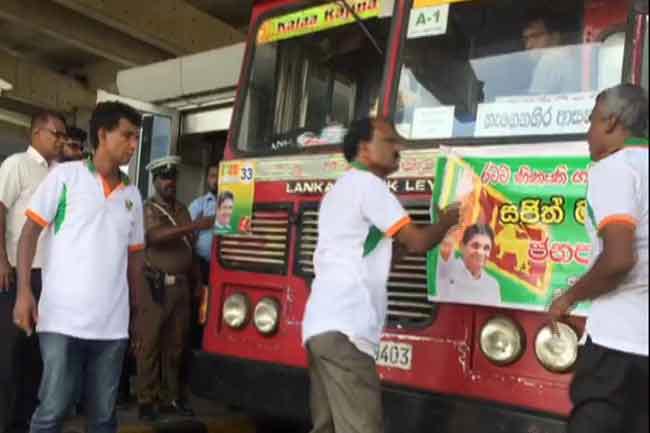
A bus that transported supporters to Presidential Candidate Sajith Premadasa’s rally at the Galle Face Green has caused a heated situation near a toll gate of the expressway.

New Democratic Front (NDF) presidential candidate Sajith Premadasa’s maiden rally was held at the Galle Face Greens at 2 pm today (10).

Bus with Galle Face rally supporters cause tense situation at highway

Reportedly, the bus carrying the supporters had refused to pay the toll charges levied at the expressway toll gates.

This caused a tense situation between the supporters and the officials at the toll gate.

සජිත් ප්‍රේමදාස ශ්‍රී මුඛය කථාවට සමාව අයදී

October 10th, 2019

උපුටා ගැන්ම  හිරු පුවත්

නව ප්‍රජාතන්ත්‍රවාදී පෙරමුණේ ජනාධිපති ධූර අපේක්ෂක සජිත් ප්‍රේමදාසගේ ජනාධිපතිවරණ ප්‍රචාරක කටයුතුවලට අදාළ ජනරැලි මාලාවේ පළමුවැන්න කොළඹ ගාලූ මුවදොර පිටියෙන් අද ආරම්භ වුණා.

එක්සත් ජාතික පක්ෂයේ නායක, අග්‍රාමාත්‍ය රනිල් වික්‍රමසිංහ මෙන්ම, එක්සත් ජාතික පෙරමුණ නියෝජනය කරන පක්ෂවල නායකයින් ද, ඊට එක්ව සිටියා.  

රැලිය ඇමතූ ජනාධිපති ධූර අපේක්ෂක, අමාත්‍ය සජිත් ප්‍රේමදාස පසුගියදා ඔහු සිදුකළ ප්‍රකාශයක් පිළිබඳව සමාව අයැද සිටියා.

අමාත්‍යවරයා පසුගිය දිනෙක පැවති ජනහමුවකට එක්වෙමින් තමාගේ ශ්‍රී මුඛය යන වචනය භාවිත කළ අතර, එම ප්‍රකාශයට භික්ෂූණ් වහන්සේලා ඇතුළු දේශපාලන නියෝජිතයින් විරෝධය එල්ල කළා.

ගුරුකන්ද විහාරය අසල බොරළු කපන්නත් උත්සාහයක්

October 10th, 2019

උපුටා ගැන්ම  හිරු පුවත්

ආන්දෝලනයට තුඩු දුන් මුලතිව් නයාරු – ගුරුකන්ද රජමහා විහාරස්ථාන සීමාවේ බොරලූ කැපීමට පැමිණි පිරිසක් සම්බන්ධයෙන් පුරාවිද්‍යා දෙපාර්තමේන්තුව පරීක්ෂණයක් ආරම්භ කර තිබෙනවා.

වන සංරක්ෂණ දෙපාර්තමේන්තුවේ අවසරය ලබාදී ඇති බව පවසමින් අද උදෑසන මෙම පිරිස ප්‍රදේශයට පැමිණ තිබුණා.  

කෙසේ වෙතත්, විහාරස්ථානයේ, දායක සභාවේ මැදිහත්වීමෙන් මේ පිළිබඳව පොලීසිය දැනුවත් කර තිබෙනවා.

පසුව පුරාවිද්‍යා දෙපාර්තමේන්තුවේ නිලධාරින් පැමිණ බොරලූ කැපීම නතර කරන ලෙසටයි දැනුම් දී ඇත්තේ.

පසුගියදා ගුරුකන්ද රජමහා විහාරස්ථානයේ විහාරාධිපති හිමියන්ගේ ආදාහන කටයුතු සම්බන්ධයෙන් ද, අධිකරණ නියෝගයක් ලබාදුන් අතර පසුව, එම නඩු කටයුතු අවසන් කෙරුණා.

මේ අතර, මුලතිව් – කොක්කුතුඩුවායි කුරුළු අභය භූමියට හා කඩොලාන රක්ෂිතයට අයත් අක්කර 500 කට ආසන්න ප්‍රදේශයක් කිසියම් පිරිසක් විසින් ගොඩකරමින් සිටින බවට ප්‍රදේශවාසීන් චෝදනා කරනවා.

විවිධ ප්‍රදේශවලින් පැමිණි පිරිස් විසින් බැකෝ යොදා ගනිමින් මෙලෙස රක්ෂිතය විනාශ කරන බවටයි ඔවුන් චෝදනා කරන්නේ.

කෙසේ වෙතත්, අද එම ස්ථානයට වනජිවි නිලධාරින් ද පැමිණ සිටි අතර, ප්‍රදේශවාසීන් එම ස්ථානයට පැමිණීමත් සමඟ උණුසුම් තත්ත්වයක් ඇතිවුණා.

ප්‍රේමදාස යුගය ගැන මන්ත්‍රී එස් බී කතා කරයි

October 10th, 2019

උපුටා ගැන්ම  හිරු පුවත්

නව ප්‍රජාතන්ත්‍රවාදී පෙරමුණේ ජනාධිපති අපේක්ෂක සජිත් ප්‍රේමදාස මහතා දූෂණයෙන් භීෂණයෙන් තොර අපේක්ෂකයෙකු නොවන බව පාර්ලිමේන්තු මන්ත්‍රී එස්.බී. දිසානායක මහතා පවසනවා.

පාර්ලිමේන්තු මන්ත්‍රී ඩිලාන් පෙරේරා මහතා සමග අද කැඳවා තිබූ ප්‍රවෘත්ති සාකච්ඡාවකට එක්වෙමින් ඔහු සඳහන් කළේ සජිත් ප්‍රේමදාස මහතාගේ පියාණන්ගේ යුගය දූෂණයෙන්, භීෂණයෙන් පිරුණු රණවිරුවන් ද පාවාදුන් යුගයක් බවයි.

චන්ද්‍රගුප්ත තේනුවරගේ අපහාසාත්මක ප්‍රකාශය, ඉල්ලා අස්කර ගත යුතු බව අබාධිත රණවිරුවන් කියයි

October 10th, 2019

උපුටා ගැන්ම  හිරු පුවත්

රණවිරු ගාය යැයි පවසමින් මහාචාර්ය චන්ද්‍රගුප්ත තේනුවර සිදුකළ අපහාසාත්මක ප්‍රකාශය, ජාතිය ඉදිරියේ ඉල්ලා අස්කර ගත යුතු බව යුද්ධයේදී අබාධයට ලක්වූ රණවිරුවන් පිරිසක් පවසනවා.

මාතරදී අද ප්‍රවෘත්ති සාකච්ඡාවක් පවත්වමින් ඔවුන් මේ බව සදහන් කළ අතරල විවිධ පාර්ශ්ව ද තේනුවර මහතාගේ ප්‍රකාශයට විරෝධය පළ කළා.

ආබාධිත රණවිරුවන්ගෙන් චෝදනාවක්

October 10th, 2019

උපුටා ගැන්ම  හිරු පුවත්

ජනාධිපති ධුර අපේක්ෂක සජිත් ප්‍රේමදාස මහතා රණවිරු අරගලය සිදුකළ ස්ථානයට පැමිණීම හේතුවෙන් තම විශ්‍රාම වැටුප් අරගලය මැතිවරණ නීතියට හසුවී ඇතැයි ආබාධිත රණවිරුවන් චෝදනා කරනවා.

ඔවුන් මේ බව ප්‍රකාශ කළේ මාතරදී අද පැවති ප්‍රවෘත්ති සාකච්ඡාවකට එක්වෙමින්.

KUSAL AND AKUSAL OF A FRIDAY FREAK!

October 9th, 2019

H. L. D. Mahindapala

Kusal Perera (KP), a Senior  Journalist writing a Friday Colum to the Daily Mirror and Jehan Perera, CEO of the National Peace Council. are two underdeveloped peas of the same anti-Sinhala-Buddhist pod. They can be categorised as minoritarians because they believe that the most  evil force in Sri Lanka is the Sinhala-Buddhist majority. Jehan Perera’s minoritarianism is somewhat subtle and subdued because it helps him to mask his anti-Sinhala-Buddhist stance. On the other hand, Kusal Perera’s (KP) anti-majority sloganeering  is somewhat loud and raucous.

His latest tirade against Sinhala-Buddhist majority (Daily Mirror – 4/10/2019) was over the top. He thinks  that everything  has gone wrong in Sri Lanka because of Sinhala-Buddhist majoritarianism. But if he had a better education to grasp the diverse dimensions and the multifarious factors that interact and mesh to determine the winding, zig-zagging course of history in time, he would not have written the bilge he wrote last Friday (DM – 4/10/19) blaming only the Sinhala-Buddhists for everything that has gone wrong and goes wrong in Sri Lanka. For instance, he argues that only the Sinhala-Buddhists would idolise military heroes and pick them as presidential candidates. So can he tell us how many Sinhala-Buddhists voted to elect General Eisenhower as President of Amereica after World War II? And how many Sinhala-Buddhists voted for General Sarath Fonseka in the North when he fronted up us as the presidential candidate in the election of 2005?

His piece also makes it clear that his knowledge of history is limited to what the anti-Sinhala-Buddhist propagandists had broadcast loudly before. In it he pontificates as if he is the sociological Einstein of Sri Lanka revealing profundities never uttered before. In short, to believe in a mono-causal history is to believe that a fish curry is made of only fish with no other ingredients added to it, not even a drop of water.. Obviously, he plugs the mono-causal theory because that is the only way he can demonise the majority in order to white-wash the subhuman and criminal politics of the minorities.

The spectre that is haunting contemporary global politics is the ideological and the violent conflicts between the majorities and the minorities. The rise of aggressive minorities challenging the traditional rights of the majorities is the new phenomenon that has replaced the reds-under-the-bed ideology that dominated the Cold War phase. At one end of this spectrum is Donald Trump saying that the future is with patriots and not with the globalists”. At the other end are the Kusal and Jehan Pereras, the self-proclaimed human rights activists, trying to rewrite history and the boundaries of geography for the benefit of minoritarian heroes like Prabhakarans and Zaharans. The main objective of these half-baked ideologues is to manufacture a revised political morality that would glorify and justify minority racism as an inviolable human and political right. In this whacky morality the majority is always wrong and the minority, however brutal and violative they are of the larger interests of human rights, and peaceful coexistence, is always right.

KP and his anti-Sinhala-Buddhist gang of Friday freaks who rule the Friday forums revel in trumpeting minoritarianism, however evil it may be, as a secular soteriological force. Contemporary history has  proved that minoritarianism has surfaced as the most destructive ideological perversion that has generated violence to end centuries of peaceful co-existence  The Sri Lankan experience provides existential proof of the failure of violent minoritarianism glorified to pursue elusive goals of the brutal megalomaniacs. Glorified minoritarianism is the oxygen that sustained and energised Prabhakarans and Zaharans. Kusal and Jehan Pereras lived off the misery caused by the minoritarian heroes. Counting cadavers left behind by the minoritarian megalomaniacs was the sole means of buttering both sides of the Pereras’ daily bread. They shed crocodile tears for the victims  of minoritarian violence that failed to bring  the salvation promised by Prabhakaran and Zaharan. The Eelam promised by Prabhakaran was as realistic as the 72 virgins promised to Zaharan.

It is the rationalising and  the sloganeering of the Pereras that helped to prolong  the war declared by the Tamil leadership in Vadukoddai in May 1976. It could  have been  finished earlier and saved the lives of tens of thousands if the Pereras knew how to read history and  its impact on contemporary times. But they undermined their own cause and prolonged the futile war by distorting reality, or wallowing in half-truth or outright lies, or glorifying racist minoritarianism as a human right.

This also leads to another question: If racist minoritarianism is a valid right for Prabhakaran and Zaharan to pursue their violence in the hope of establishing their mono-ethnic  or mono-religious enclaves why  isn’t it valid for racist majoritarianism to maintain and preserve a pluralistic and democratic Sinhala-Buddhist nation with all its infirmities, of course? But the Pereras believe that human rights are only on the side of racist minoritarianism and not on racist majoritarianism, however conducive it has been to maintain a cohesive nation with diversity and pluralism throughout  the  greater part of its history, until G.G. Ponnambalam unleashed aggressive and provocative racism which caused the very first Sinhala-Tamil riots in Navalapitiya and neighbouring  towns in June 1939. The Pereras tend  to  withdraw into a state of denial when  it comes to facing the living proof under  their noses. More than ever, in the current state of affairs, truth telling is a sine-qua-non for us to escape the prevailing despondency and find new directions. It is also vital for us to attain the highest ideals prioritised in today’s political agenda: peace and reconciliation.

Those who violate the fourth precept in the Buddhist panchseela are the enemies of peace who will drag us down further into depths of despair. After reading KP’s punditry (DM – 4/10/19) in which he liberally prescribes his kokathat thailya for the ills of the nation I could not help but come to the conclusion that his penchant for musavadas takes away the goodness and the value in his first name ”Kusal” (meritorious). He is more entitled to be called Akusal” than Kusal. (KP will agree to this, no?)

Though he pretends to be an ideological maestro firing devastating salvos against the Sinhala-Buddhists he is merely expectorating the usual anti-Sinhala-Buddhist venom that has ruined inter-ethnic relations ever since G. G. Ponnambalam triggered the first ever Sinhala-Tamil riots in Navalapitiya in June 1939 by attacking the Mahavamsa and the history of the Sinhala-Buddhists. The rest, of course, is history. There isn’t a single original thought in his tirade against the Sinhala-Buddhists that has not been bruited by the anti-Sinhala-Buddhist lobbies before

KP poses as a champion of minority rights. His idea of defending minority rights is to demonise the Sinhala-Buddhist majority. In the current new phase where reconciliation is raised to the highest level in the national political agenda KP’s cheap and threadbare tactic is disgustingly repulsive. Nor will it be a viable means of calming the shattered nerves of a traumatised nation. In the post-Prabhakaran period where the emphasis is on reconciliation, on forgiving and forgetting to pave the path for a new future, the strategy should be to move away from demonising one community to appease another.

Besides, exonerating one ethnic community and blaming the other is counter-productive for peace and reconciliation. At this stage when committed peace-makers are moving away from the dreadful past, he will have to explain how his brand of demonising the Sinhala-Buddhists can promote reconciliation. Is it not this kind of demonization that hardened the racial prejudices that exacerbated inter-ethnic relations in the past? Was it not the bloody political tactic that led to Nandikadal, via Vadukoddai? His pretentious claim to be a righteous human rights defender is exposed by his visceral bitterness against the Sinhala-Buddhist, all of which is wrapped in distorted human rights and other values.

The need of the hour is to analyse the available facts as objectively as one can in the hope of arriving at rational conclusions, however unpalatable they may be to both sides of the divide.  Most of all, he must explain how he could exclude the multifarious factors that interacted with each other in a complex history, often colliding with each other, and blame only the Sinhala-Buddhists for the futile Vadukoddai War which lasted for 33 years (from 1976 declaration of War in Vadukoddai to the humiliating  defeat in Nandikadal in 2009). The Vadukoddai War (aka Eelam War) was the ultimate expression of futile and fascist violence initiated by Tamil extremism. 

At the root of the failure to co-exist in peace has been the mono-causal theory of blaming the Sinhala-Buddhists only when, in reality, all parties should accept responsibility for the breakdown of inter-ethnic relations. But the ideological blinkers worn by KP prevent him from viewing the broader picture in all its inter-twining complexities. Neither his fundamentals nor his arguments differ from that of C. V. Wigneswaran, the former Chief Minister of Jaffna, or Visuvanathan Rudrakumaran, the legal advisor of Prabhakaran, now the fake prime minister of a non-existent Tamil government in exile. The least I can say for KP is that he seems to be somewhat of a good man fallen among a bunch of unredeemable Wigneswarans and Rudrakumarans.

I must also concede that his ability to parrot the anti-Sinhala-Buddhist jargon is excellent. If there wasn’t this thing called Sinhala-Buddhism” someone would have had to invent one for him to keep his adrenalin flowing. This obsession has obviously reduced his cognitive powers to observe faithfully the fourth principle in the panchaseela. Now let us consider a few of Kusal’s akusals (sins) one by one.

Musavada 1: He rails against Sinhala-Buddhists picking their heroes  in military uniforms as presidential candidates. He says (T)his craze for ‘war heroes” …….runs deep into the primitive mindset of the urban middle-class more than into rural polity.” Is this true? What are the facts? Every rural school girl or boy walking across miles of paddy field hero-worshipped their rana viruvos” because those in the front lines consisted of their brothers and sisters, or their fellow village lads and lasses. Thousands joined the front lines from the villages and not from the urban middle-class. The urban middle-class either migrated into greener pastures abroad or stuck to safer white-collar jobs in the cities.

The urban middle-class dominated the security forces from the beginning (1949) to roughly 1970 when they were basically a ceremonial force, saluting and marching to the drum beat of Sandhurst. Besides, the urban-middle class cadres were drawn from Royal, St. Thomas’, St. Joseph’s, St. Peter’s colleges. They were accustomed more to imitate the elitist rituals of the British colonial army than fight the bloody wars in Mullativu. The war was won by the rural cadres with officers drawn from Ambalangoda  and Ibbagamuwa central colleges and not  from Royal, St. Thomas and Trinity colleges,  In fact,  the Royalists (e.g., Ranil Wickremesinghe) ridiculed the achievements of the village lads who liberated the nation from the brutalities of Tamil terrorism.

The heroic psyche generated by winning wars against enemies of the Sinhala-Buddhist state was instilled genetically in the minds of the rural polity from time immemorial The Colombian-type (like Akusal”) were happy only when our rana viruvos” were sacrificed on the human rights guillotine at Geneva. They refused to accept that ending the beastly war, under the courageous and war-winning leadership of commanders like Shavindra de Silva was, by far, the optimum means available to protect, promote and serve human rights. War was the only strategy available to those engaged pragmatically and constructively in saving human rights and peace from an intransigent war-monger like Prabhakaran. His elimination was a primary necessity for the Tamils to escape the tyrannical and fascist brutalities of the Tamil Pol Pot. Gen. Shavindra de Silva turned out to be the greatest saviour of human rights by ending the war swiftly, with the least amount of casualties, as revealed by Lord Naseby.

In fact, the anti-Sinhala-Buddhist lobbyists refused to accept that it was the ONLY means of saving human rights from a tin-pot Tamil Pol Pot who intransigently rejected all peace offers, including those with international guarantees. These theoretical humbugs posed pompously as a new breed of pundits who believed that they were superior moralists by appeasing an armed tyrant who was guilty of killing more of his own people than the others put together. When the futile palliatives of peace-mudalalis in NGOs failed to cure the evils of violent fascism of the Tamil minority the only option was a surgical operations to save human rights by restoring peace. Gen. Shavindra de Silva’s surgical operation that cut across the broad terrain from the West to the East was a brilliant tactical manoeuvre that liberated the nation, particularly the Tamils from oppressive, Pol Potists fascism

Musavada 2: KP accuses the Sinhala Buddhists of dressing up ‘patriotism’ in military uniform to win elections. In short,” he concludes, the UNP and the JVP helped militarise the social mindset within Sinhala Buddhist ‘patriotism.” According to the logic of Akusal”, it is ingrained in the Sinhala-Buddhist mindset to go for Sinhala-Buddhist militarism. They can think of no other alternative, according to him. But the historical facts prove that the intransigent and arrogant Tamil leadership rejected offers for peaceful co-existence from the thirties. When G. G. Ponnambalam demanded 50 – 50 the Sinhala-Buddhist government of the day offered him 46 – 54. Twelve per cent minority of Tamils getting a power share of 46 from a Sinhala-Buddhist population (75%) is a unique gift that the Tamils never gave their oppressed minority who were refused even water from their upper-caste wells. Ponnambalam rejected it like the way Prabhakaran rejected Chandrika Kumaratunga’s and Ranil Wickremesinghe’s offers to appease him.

Besides.TNA and the other minorities backed Sarath Fonseka to the hilt in the 2005 election. So in voting for Sarath Fonseka was the TNA dressing up Tamil nationalism in Sinhala-Buddhist uniform? Most of all, when the Jaffna Tamils were crawling before Prabhakaran, without any right to dissent, weren’t they dressing up their patriotism in Tamil military uniform?

So how and where would the wonky theories and logic of KP fit into the historical realities? Does he think that he can serve the minority rights by demonising the Sinhala-Buddhists? Does he think that he can serve human rights with his musavadas

I don’t want to exceed the space limit by going into his other musavadas on 3. devolution, 4. the private sector and 5. his bleeding concerns for the Sinhala-Buddhist peasantry. I shall stop at this point  hoping  that  the Editor, Daily Mirror will give us space to continue the debate under the vaunted principle of the right of reply pursued religiously by the Times Group.

Beware of False Flags and Media Firewalls

October 9th, 2019

By Rohana R. Wasala

You take a country like Cuba. For us to test the possibility that engagement leads to a better outcome for the Cuban people, there aren’t that many risks for us. It’s a tiny little country. It’s not one that threatens our core security interests, and so [there’s no reason not] to test the proposition. And if it turns out that it doesn’t lead to better outcomes, we can adjust our policies.

  • (Former) President Obama explaining the ‘Obama Doctrine’ (of ‘engagement’, combined with meeting with core strategic needs”), as quoted in Noam Chomsky’s  ‘Who Rules the World?’ (Penguin, 2017)

(Views expressed in this article are those of the author, who offers them to the intelligent reader for what they are worth. Constructive feedback, signifying praise or blame, will be appreciated. Trolls who habitually make misleading comments out of malice or mischief without reading the text with adequate attention, please keep off if you can.) 

A communiqué issued by Sri Lanka’s foreign affairs ministry (‘Sri Lanka condemns drone attacks in Saudi Arabia’/The Island of September 25, 2019) has expressed disapproval of the recent drone attacks on two large oil processing facilities in Saudi Arabia. The foreign ministry statement goes: As a country that has suffered from terrorism for thirty years, Sri Lanka remains committed to addressing this scourge in all its forms and manifestations. Stability in West Asia is pivotal for the global economy and Sri Lanka hopes that the parties concerned would soon resolve their issues through peaceful negotiations and dialogue.” 

The ostensibly routine diplomatic communication is, no doubt, intended to look like a sincere expression of solidarity with Saudi Arabia after the September 14 drone attacks on its two most important oil installations. The document implicitly identifies the rich Saudi Arabia as the victim and its poor southern neighbour and blood relative Yemen as the villain. But  to average Sri Lankan observers with at least a rudimentary knowledge about the background to the Saudi-Yemen conflict that has raged since 2015, and with enough familiarity with the deliberate unravelling under the Yahapalanaya of the national security, social, and economic gains made during the 2009-2014 period in Sri Lanka, it could amount to no more than a diplomatically necessary perfunctory gesture that could be a bit embarrassing for the government if it is revealed that the September 14 attacks on the Saudi oil fields were actually carried out by some other actors and from another direction than those originally named. (As explained below, Peter Koenig of Global Research suggests that the attacks were not launched from Yemen.) The awkward  foreign ministry gesture, for all its feigned diplomacy, might be viewed as a tactless move in respect of a highly complicated and treacherous situation in that region that, after all, hardly concerns the government or the people of Sri Lanka. However, to any Sri Lankan who visits the news website of the Global Research – Centre for Research on Globalization – it may appear that the same mastermind is probably behind the Saudi-Yemeni incident and the Islamist terror bombings in Sri Lanka on April 21. Both cases could be false flag operations with twisted ends. The tragic, nay, fatal irony of the awkward message could be lost on most members of the government, except the crooked and the cruel few at the top (who must be chuckling to themselves), who are implicitly wearing, in the public eye, a badge of shame over their betrayal of Sri Lanka’s war heroes by timidly accepting guilt on their behalf, under ‘ínternational’ pressure from what Noam Chomsky calls a ‘Leading Terrorist State’, at Geneva over war crimes uncommitted.  

A hint of background information is appropriate here. Ali Abdullah Saleh, the first president of Yemen, known to be a friend of Iran, resigned in February 2012 after almost twenty-two years (1990-2012) in office. This was following the Yemeni Revolution of 2011, which was simultaneous with the so-called  ‘Arab Spring’ upheavals in other Arab countries such as Egypt and Tunisia. The pro-Saudi Abdrabbuh Mansur Hadi, former Field Marshall turned politician, who had been vice-president under Saleh from 1994 to 2012, succeeded Saleh on his ouster. Hadi himself was toppled by the Houthi rebels (led by the Houthi tribe, hence the name) on January 22, 2015. The Houthis are Yemeni Shiites. Iranians are predominantly Shiite, and Saudi Arabia’s state religion is Sunni Islam. In the current civil war in Yemen, the fighters of the Houthi Movement, who are now in control of Sanaá the capital, are allied with those loyal to the former president Saleh. Saleh loyalists have clashed with forces supportive of Hadi who are based in Aden. 

When Abdrabbuh Mansur Hadi was overthrown by the Houthi revolutionaries in January 2015 over political and economic issues, he fled to Saudi Arabia. Now, Saudi Arabia is America’s  most important ally in the region. The ‘ínternational community’ recognises the government of the fugitive president. In 2015, Hadi appealed for military support against the revolutionaries and Saudi Arabia responded by forming a coalition of nine countries from the Middle East and Africa, and launched an invasion into Yemen. They conducted it as a UN operation that is in compliance with Article 2 (4) of the UN Charter. But some scholars dispute the claim that the said article of the UN Charter allows it. Anyway, neutral observers suspect that Uncle Sam was the real power behind the invasion, which began with air strikes at Houthi positions in early 2015. In the actually unwarranted military conflict that followed, tens of thousands of innocent Yemenis have died, including thousands upon thousands of children, caught up in bombing raids or starved to death in famine; diarrhoeal diseases including widespread cholera epidemics have claimed many lives.  Economist and geopolitical analyst Peter Koenig, in a recent article in globalresearch.ca (September 24), charges that this unjust war is …. carried out by Saudis as a proxy for the Washington and Pentagon handlers.” Responsibility for the alleged drone attacks on the Khurais oil field and the Abqaiq oil processing facility in Saudi Arabia was promptly claimed by the Houthis, who said that they sent some ten ‘suicide drones’ for the attack. However, Koenig casts doubt on this claim.

Quoting ‘Asia Times’ reports, Koenig suggests that the attacks were probably launched from Southern Iraq, and not from Yemen or by the Houthis. US Secretary of State Mike Pompeo had clearly said: There is no evidence the attacks came from Yemen”.  Koenig writes: If it all sounds like a big fabricated confusion, it’s because it is a big fabricated confusion. Iran is singled out; fingers pointing to Iran (except, miraculously those of Saudi Arabia), like a sledgehammer hitting Iran, again and again. – The mainstream media loves it. Today, a week after the attack, most nobody remembers the Houthis claiming responsibility – it was Iran. Period. The media blitz won”.  

Immediately after the Houthis purported suicide drone” attacks, it was claimed that they knocked out 50% of Saudi’s crude oil production (but Koenig downplays the significance of this claim by pointing out that, in terms of global production, it is a mere 5%, and that Saudi crude oil production was returned to pre-attack levels in no time). In what must be a  pretended knee-jerk reaction to the Houthi claim, Mark Pompeo, without any evidence whatsoever, blamed Iran for the drone strikes. Donald Trump, with the characteristic promptness that he displays in such situations, imposed additional economic sanctions on Iran, boasting that they were the most severe ones imposed on a country! Most surprisingly, meanwhile, the ‘victim’ Saudi Arabia, as if confused by the absurd claim (that Iranians were behind the oil attacks), refrained from accusing Iran, though the latter is its sworn enemy, a circumstance that would make such a claim (of supposed Iranian aggression) highly plausible to Saudi Arabia and would have prompted it to immediately make some noise against Iran.

A high official in the Iraqi government confirmed that the attack was launched from Iraqi soil, though other officials vehemently denied that they had anything to do with the attacks. What the Iraqi government official said must be viewed against the fact that there is a heavy US military presence with twelve bases in that country. 

‘So, the tables are turning’, Koenig sardonically observes, ‘and the Houthis are winning’. This, though, was at a heavy cost as suggested above (incurred by unjust war inflicted on the hapless Yemenis through Saudi Arabia as an agent of the US). Much of the debris of weapons lying on the ground in Yemen carries the logo ‘Made in USA’, and would lead one to conclude that America, not Saudi Arabia, is at war with Yemen.  Koenig clarifies this absurdity by inferring what must be passing through the masterminds in Washington: ‘Yemen occupies a strategic geographic and geopolitical location and must not be ruled by a people-friendly government, let alone by a socialist leaning government, as the Houthis are. Besides, Yemen may have huge deep off-shore oil reserves’. With this he explains his conclusion that the biggest winner may be Washington: ‘They have a new devastating blame on Iran – more sanctions, more justification to launch a direct confrontation against Iran – possibly through Israel, or the NATO forces; the neutral” international killing machine – an amalgam of spineless Europeans and Canada, who love to dance to the tunes of Washington – hoping to get some crumbs of the loot at the end of the day, before the empires falls.’ 

One can argue, as Koenig does, that it is quite logical that the Houthis hit back in a decisive attempt to reach an end to the costly war and its unspeakable excesses.  (They probably did not do the hitting back in the present case; it was not done for them by someone else.) Koenig takes a critical look at the conduct of the mainstream Western media in this context: ‘Isn’t it weird that the misery and tens of thousands of Yemeni deaths in an unjust and purely criminal aggression instigated by the US, carried out by Riyadh and lasting already for more than 4 years, that this monstrous aggression pales in the mainstream media, as compared to two blazing Saudi oil fields?  Doesn’t that say a lot about our programed to the core western brains, our sense of humanity, what’s left of it?’

Another Global Research scholar, investigative historian Eric Zuesse (The Sickness of American Foreign Policy’’/September 30, 2019), comments on the behaviour of the American mainstream media: ‘America’s media were merely passive megaphones for the regime’s lies’ (Here he is referring to George Bush Jr’s and his coterie of officials’ lies in 2003 about Sadam Hussein’s Iraq possessing WMD.) Zuesse claims that, between 2003 and now, the US has invaded ‘Libya and Syria and Yemen, on the basis of lies that in some respects were even more blatant’ (than the Iraqi WMD lies). Let me quote Zuesse at some length: 

‘The same groups of billionaires control the US ‘news’ media today as controlled the media in 2003; and they continue, in their ‘news’-media, the same stenographic ‘reporting’ — propaganda by their Government, regarding which nations are the latest targets, for the masses to hate and fear, as being our nation’s ‘enemies’.

‘These are the lands suitable for US weapons and bombs to destroy. These ‘news’-media simply ‘justify’ what are, in fact, international war-crimes: US-and-allied invasions, of nations that never had invaded the US.

‘There’s always the Big Lie that the hate-target is only ‘the tyrant’, and not the nation. But it is the targeted nation that gets strangulated by America and its allies imposing ‘sanctions’ that are really economic blockades (such as against Venezuela and Iran today, but formerly against Iraq before we invaded it and destroyed it); and, then, if that doesn’t bring down the targeted Government, a coup is attempted; and then (if no coup results), paying and arming ‘rebels’ (such as Al Qaeda in Syria) to overthrow the targeted nation’s Government; and, then, missiles and bombers are used, in order to destroy the infrastructure.’

In many respects Sri Lanka is poles apart from any of the countries that American intervention has messed up including Libya, Syria, and Yemen, but it may be safely  included among Zuesse’s ‘targeted nations’. The above descriptions might echo, in the minds of those of us who are informed enough, aspects of Sri Lanka’s current predicament. Its strategic geographic location (enhanced by the recent discovery of substantial offshore mineral resources in the north, northwest, and northeast territorial waters) is its misfortune. The country will remain vulnerable to potential  ‘strangulation’ through superpower involvement in its affairs to an intolerable degree unless Sri Lankans are allowed by the powers that be to enjoy in peace all the basic human rights enshrined in the Universal Declaration of Human Rights (UDHR) of the UN of which Sri Lanka is a member.

Intervention by friends when two persons or groups or countries are at loggerheads with each other concerning some issue is not a bad thing, as we all know, is not a bad thing, when it is done in a fair and friendly spirit. Willful interference in a country’s internal affairs with ulterior motives is not the same as altruistic intervention. An independent sovereign nation with a sense of national dignity like Sri Lanka cannot docilely accept interference from another country however powerful that country may be. The above descriptions  are likely to strike a chord with all average Sri Lankans who are cognizant of the disastrous consequences of brazen superpower interference particularly over the past five years that operates through local agents who are programmed to do their foreign sponsors’ bidding. A recent wisecrack among common people was: rusiyawa palanaya karanne putin – lankawa palanaya karanne pitin” lit. Russia is ruled by Putin – Sri Lanka is ruled from outside”. Russian president Vladimir Putin has made a great impression on the currently leaderless Sri Lankans. It is hoped that Sri Lankans will be allowed to elect a proper leader of their choice without let or hindrance on November 16. 

The drone or missile attacks on the Saudi oil fields must have left ordinary Sri Lankans cold because they would hardly think of the rich and powerful Saudi Arabia (source of violent Islamic extremism) as a victim of Yemeni terrorism. However, considering the the death and destruction that Saudi Arabia inflicted on Yemen over the past four years, Sri Lankans would have stood with the latter rather than the former in their Saudi caused misery. On the other hand, the people of Sri Lanka are aware and intelligent enough to understand when false flag operations are carried out to deceive them.  Both Koenig and Zuesse criticise the biased media that support the despicable agendas of the powerful rulers. Sri Lankans are required to beware of media firewalls that try to leave them in the dark while they are being robbed of their freedom and sovereignty. 

Former US president Barak Obama’s definition of the so-called Obama Doctrine which forms the epigraph to this essay reflects the nature of America’s foreign policy stand. Whichever party (Obama’s Democratic or Trump’s Republican Party) is in power, America’s broad national interest is not sacrificed out of concern for other nations. No doubt, geopolitically, Sri Lanka is of much greater importance for America than its tiny neighbour Cuba in terms of its ‘core security interests’.  However, let us hope that America, in the name of humanity, decide to adjust its policies in meeting those strategic needs without inflicting too much pain on other countries including tiny little Sri Lanka. 

Duminda says victory is with Gota

October 9th, 2019

Lahiru Pothmulla reporting from Anuradhapura Courtesy The Daily Mirror

SLFP stalwart MP Duminda Dissanayake, who joined SLPP presidential candidate Gotabaya Rajapaksa at the latter’s political stage in Anuradhapura along with several other SLFP MPs said the victory was with Gotabaya and invited all SLFPers to back him at the upcoming presidential election.

Speaking to the first-ever political campaign of Mr. Rajapaksa, MP Dissanayake said he was on the stage bearing well wishes from the SLFP to Mr. Rajapaksa.

“We will back Gotabaya Rajapaksa as the SLFP. We decided to do so because both of our parties represent the left politics. We saw Gotabaya’s proposals for the future and we are optimistic that we can form a strong country with restored democracy, national security and economy,” he said.

He said the SLFP, from the beginning treated all ethnic groups fairly and was a safe home for all communities including Tamils and Muslims.

“Tamils and Muslims enjoy unity in SLFP. We hope with that unity, people from Muslim and Tamil community will back Gotabaya just as they have placed their faith in SLFP. Because SLFP is with the Tamil and Muslim people. We request all SLFPers, all organisers to join us, rally behind Gotabaya to make him the National leader we deserve. The SLFP endorses this entirely,” MP Dissanayake said.

He said the SLFP was expected to sign two agreements in future with Gotabaya camp.

“If anyone had any doubt as of Tuesday night, they shouldn’t anymore for the SLFP has joined the SLPP ensuring the victory of Mr. Rajapaksa’ he said.

While thanking the SLFP Mr. Dissnayake said that he never betrayed the party. 


TNA to hold talks with Gota: Sumanthiran

October 9th, 2019

Kelum Bandara Courtesy The Daily Mirror

The Tamil National Alliance (TNA) will hold talks with the presidential candidate of Sri Lanka Podujana Peramuna (SLPP) Gotabaya Rajapaksa shortly, a party official said today.

Jaffna district TNA parliamentarian M.A.Sumanthiran told Daily Mirror yesterday that Mr. Rajapaksa had sought a meeting with him. Gotabhaya Rajapaksa will be accompanied by Opposition Leader Mahinda Rajapaksa and SLPP National Organizer Basil Rajapaksa.

Mr. Sumanthiran said the TNA had held talks with UNP candidate Sajith Premadasa and briefed him about the party’s position.

We will inform him of our position. We want the constitution-making process to be taken forward. Also, we have a number of other issues such as the release of land and those held under the Prevention of Terrorism Act. We will look at Mr. Premadasa’s election manifesto and decide,” he said. 

Gotabaya pledges to release imprisoned war heroes by Nov. 17

October 9th, 2019

Courtesy Adaderana

SLPP Presidential Candidate Gotabaya Rajapaksa says his duty is to make Sri Lanka a safe country once again and also promised to release all war heroes who have been imprisoned over ‘false’ charges.

He made these comments while addressing the maiden election rally of the Sri Lanka Podujana Peramuna (SLPP) in Anuradhapura today (9).

He expressed his immense gratitude to all members of the Sri Lanka Freedom Party (SLFP) for the historic decision” taken by the party to support him at the election. 

The former Defence Secretary charged that within 5 years of coming to power, the incumbent government has taken away the people’s freedom to visit a church without being afraid of a bomb attack.

For you all to fulfill your duty on November 16th, my duty is to make this country a safe country once again,” he pledged.

He also vowed that once their government comes to power farmers will be given their fertilizer subsidy free of charge and also that all micro finance debt and the debt of the farmers will be waived-off.

He promised that all imprisoned war heroes will be released by the morning of the day after the presidential poll. 

A large number of war heroes are languishing in prisons over false charges and cases. I would like to declare at this moment that they will all be released by November 17th morning,” Rajapaksa said.

He also promised that all personnel in the civil security service who have completed 22 years of service will get a pension under their government.

Pujith & Hemasiri remanded

October 9th, 2019

Courtesy Adaderana

Inspector General of Police Pujith Jayasundara and former Defence Secretary Hemasiri Fernando have been remanded till October 23.

The Colombo Chief Magistrate delivered the order the when the case the duo as taken up today (09).

The Colombo High Court today (09) dismissed the previous order issued by the Colombo Magistrate’s Court granting bail to the IGP and former Defence Secretary, who have been charged with failing to prevent the Easter Sunday terror attacks.

The IGP and the former Defence Secretary were produced before the Colombo High Court earlier today. Accordingly, the HC Judge revised the magistrate’s bail order and ordered to place the defendants, IGP Pujith Jayasundara and former Defence Secretary Hemasiri Fernando, in remand custody.

They were later produced before the Colombo Chief Magistrate by the prison officers.

Considering the submissions, the Chief Magistrate Lanka Jayaratne ordered to remand the duo until the 23rd of October.

https://youtu.be/0e7jG_pEM5w

President to remain neutral at Presidential Election

October 9th, 2019

Courtesy Adaderana

President Maithripala Sirisena has decided to remain neutral at the Presidential election scheduled next month even as his party will support former defense secretary Gotabaya Rajapakse at the elections. 

Sri Lanka Freedom Party (SLFP) General Secretary Dayasiri Jayasekera said that President will not take the stage and support any candidate at the election. 

Jayasekera said that President is Minister in charge of the Police and security forces and so will put his political party aside and be independent to ensure a free and fair election.

Meanwhile, SLFP has decided to support Sri Lanka Podujana Peramuna (SLPP) presidential candidate Gotabaya Rajapaksa’s election campaign with conditions.

https://youtu.be/dN-nkKy6ZZs

The SLFP will sign two Memorandums of Understanding to form a new alliance called Sri Lanka Freedom People’s Alliance. 

SLFP MP Nimal Siripala de Silva that the SLFP is firmly working on the democratic framework and national unity that prevails in the country at present. He also noted that protecting the identity of the SLFP is a top priority.


Copyright © 2026 LankaWeb.com. All Rights Reserved. Powered by Wordpress