COLOMBO (Reuters) – Sri Lanka is likely to raise $2 billion through 5-year and 10-year sovereign bonds launched on Monday, two government officials told Reuters, as the Indian Ocean island nation tapped global capital markets for the second time in three months.A man walks past a board advertising U.S. dollars at a money exchange shop in Colombo June 11, 2013. REUTERS/Dinuka Liyanawatte
The South Asian nation’s decision to capitalise on favourable market conditions comes two months after suicide bombers killed more than 250 people in attacks at churches and luxury hotels on Easter Sunday. That attack has badly dented the Sri Lankan economy, in particular deterring many thousands of foreign tourists from coming to the island.
We are planning to raise $500 million from 5-year bonds and $1.5 billion through 10-year bonds,” said a senior government official, who declined to be identified because he is not authorised to talk to media.
Both bonds have been oversubscribed three times during the day’s book building process in Asia and Europe alone. We are waiting for U.S. markets to finalise the deal.”
A senior finance ministry official also said the total size of the bond borrowing will be $2 billion.
A source who is aware of the deal said the price of 5-year bonds had tightened to near 6.4% from the initial price guidance of 6.6%, while 10-year bond price also got tightened to 7.6% from the initial price guidance of 7.8%.
The sale is part of plans to raise funds via sovereign bonds, as the government seeks new funds to repay loans that are maturing.
In March, Sri Lanka sold $1 billion in five-year bonds with a coupon of 6.85 percent and $1.4 billion in 10-year bonds with a coupon of 7.85 percent and the borrowing costs were lower than originally predicted.
The 10-year bond sold in March last traded at 7.302% and the five-year bond last traded at 6.258%, Refinitiv data showed.
BOC International, Citigroup, Deutsche Bank, HSBC, JPMorgan, SMBC Nikko and Standard Chartered Bank, who were the lead managers for the $2.4 billion borrowing in March, are the joint bookrunners for the bond sale.
The sale of new global sovereign bonds comes as Sri Lanka is struggling to repay foreign loans, with a record $5.9 billion due this year, including $2.6 billion in the first quarter and more than $1.2 billion in the second, central bank data showed.
All three major rating agencies downgraded Sri Lanka’s debt after President Maithripala Sirisena sacked his prime minister in October and replaced him with pro-China former president Mahinda Rajapaksa, though that decision was later reversed.
But the seven-week-long crisis hurt the rupee and drove sovereign bond yields higher, straining state finances.
Sri Lanka is unlikely to hit its full-year economic growth target of 3-4% following the bombings, junior finance minister Eran Wickramaratne told Reuters last month. A Reuters poll has forecast growth to slump to its lowest in nearly two decades this year.
Nine suicide bombers carried out a series of devastating blasts across three churches and three luxury hotels on Easter, killing more than 250 people.
Sri Lanka is absolutely safe. I can give you that guarantee: John Amaratunga MUMBAI:
In an effort to restore the Sri Lankan tourism following the Easter attacks in April, the country’s tourism minister John Amaratunga visited Mumbai to canvas his country as a safe destination.
Speaking on the sidelines of an event in Mumbai, Mr Amaratunga not only acknowledged Prime Minister Narendra Modi’s recent visit to Sri Lanka but also said the visit has boosted the potential for the country’s tourism sector to recover.
“That was a great deal of encouragement for Sri Lanka. It will particularly help us attract Indian tourists. He came and there was no risk in it. He also visited some of the churches that were damaged and it was very successful visit,” Mr Amaratunga said.
Nine suicide bombers carried out a series of devastating blasts across three churches and three luxury hotels on Easter, killing more than 250 people. The ISIS claimed responsibility for the attacks, but the Sri Lankan government blamed local group National Thawheed Jammath (NTJ) for the bombings.
“Sri Lanka is absolutely safe. I can give you that guarantee. I am speaking based on the reports from our military and there is absolute peace in the country,” Mr Amaratunga told NDTV.
However, Sri Lanka will report a decline in the number of tourists this year because of the terror attacks.
“If you look at incidents across the world, case studies prove that countries have taken 15 months to fully recover. If we do 2 million tourists this year it would be roughly a 30% decline in tourism and that’s not a bad number,” Kishu Gomes, chairman of Sri Lanka Tourism Promotion Board told NDTV.
Weighing his response against the doubts in the minds of tourist’s regarding visiting the Sri Lankan shores, Mr Amaratunga clarified that, “There are no problems in Sri Lanka. We have Sinhalese, Tamil and Muslims and they all live in close coordination. This attack was a singular group whose motives and activities can’t be explained. Rest of the Muslims in Sri Lanka are living in close coordination with the rest of the country. There are no problems at all.”
“The intelligence police and armed forces are confident that the situation in Sri Lanka is absolutely safe. There can be debates as it is a free country. The country is now normal and it is business as usual. There is no problem at all,” he clarified.
When asked about the deadlock between the Sri Lankan President Maithripala Sirisena and the Prime Minister Ranil Wickremesinghe, Mr Amaratunga said, “Our president and prime minister are working cordially. There may be some differences. We also have presidential elections coming up. Tourists are not interested in government. They are interested in safety and we can firmly give them that assurance.”COMMENT
“Initially there were contradictory statements by politicians but that lasted only for a few weeks. Later our military and defence secretary spoke to the global media and have assured safety. We have visited all embassies in Colombo to assure them with one consistent message and that led to relaxation of advisories within two weeks of the incident. No one needs to worry about what everyone else says, just go by what the military says,” Mr Gomes added.
Not only the ordinary British citizens, but also the Queen, the Prime Minister, and top leaders were also shocked when it was revealed that much trusted Chief of Intelligence, Sir Anthony Blunt was working as a spy for the Soviet Intelligence Service, the KGB. Blunt, a Cambridge don, was one of the most trusted public servants of Britain, until it came to light about his traitorous acts.
The revelation made in Parliament earlier this week that Former Foreign Secretary Prasad Kariyawasam, who is now an adviser to the Speaker is being paid by the United States Government sent ripples through the intellectuals as well as security circles, as such payments are highly detrimental to the national interests of Sri Lanka.
Opposition Leader Mahinda Rajapaksa said that Parliament is an independent institution, and if a senior adviser is being paid by a foreign country, the public might think Parliament is being manipulated by foreign entities. If any advisor is paid by Parliament there is no problem. But the issue here is that a person is being paid by another country and he is serving our Parliament. No one can be employed by Parliament when he is paid by another country. If his services are required, he should be paid by this Parliament,” he said.
Mahajana Eksath Peramuna (MEP) leader Dinesh Gunawardena questioned Speaker Karu Jayasuriya as to how Kariyawasam was appointed as his Foreign Affairs Advisor when such a position does not exist in Parliament. Gunawardena claimed that Kariyawasam was an individual who is being paid by the US Government, adding that they have serious concerns, that in addition to advising the Speaker, whether Kariyawasam also acts to gather critical intelligence for other Nations.”
Karunasena Hettiarachchi
Kariyawasam’s actions on behalf of the United States were disclosed by former Defence Secretary Karunasena Hettiarachchi earlier. The Defence Secretary was pressured by Kariyawasam, who was the then Foreign Secretary to rush through the defence agreement, Acquisition and Cross-Servicing Agreement (ACSA) between Sri Lanka and the United States. Media reports stated that Kariyawasam is now a US federal government employee.
MEP leader Gunawardena pointed out it was detrimental to national interests to employ a person who is paid by a foreign country. “It is unacceptable that a person paid by a foreign government is working for out Parliament. We have a right to question this. Why are you engaging a former Foreign Ministry Secretary as your advisor? There is IPU, which spends enough money on such matters. Similarly, there is the CPA, the SAARC and all of us pay for that.”
It is true that nobody has any apprehension on Speaker Karu Jayasuriya’s intentions, as he is of impeccable character, and he has national interests at heart. However, the analysts are of the view that when such intermediaries are paid exorbitant salaries by foreign governments, they are always liable to push the agenda advanced by their paymasters rather than work for national interests. Speaker Karu Jayasuriya pointed out that Prasad Kariyawasam, former Secretary to the Ministry of Foreign Affairs, is currently coordinating the parliamentary diplomacy group involving around 50-60 countries. He assists me in obtaining scholarships for parliamentarians, coordinating tours to learn about other Parliaments etc. We have no need to provide information to foreign countries,” he said.
Gunawardena said that on the Parliament list of positions, there is no such position specified. While Kariyawasam is getting paid by the US Government, how can he be appointed as your International Affairs Advisor? Moreover, how can he be paid? This gives rise to suspicion and puts the independence of Parliament in jeopardy.”
However, the Speaker insisted that there was no foreign interference and that the country’s sovereignty had not been jeopardised in any way.
Wimal Weerawansa
National Freedom Front (NFF) leader Wimal Weerawansa did not mince his words and alleged that Prasad Kariyawasam was the person responsible for pressuring the former Defence Secretary to sign the ACSA agreement. Prasad Kariyawasam’s beloved friend Maheshini Colonne was the individual responsible for pressuring the Government to sign the SOFA agreement with the United States,” Weerawansa said. When Kariyawasam was Sri Lankan High Commissioner in India, he was instrumental in getting Maheshini Colonne as Deputy High Commissioner. They both kept close connections with the US Embassy in New Delhi. Colonne later became a close confidante to then Foreign Minister Mangala Samaraweera. When Samaraweera became the Minister of Finance, Maheshini Colonne also joined the ministry.
According to the available information, Kariyawasam is employed by the US federal government-backed Agency for International Development (USAID), a federal entity. The agency’s Colombo Office has placed him as an Advisor to Parliament of Sri Lanka. USAID has been periodically helping and providing experts to help Parliamentary Oversight Committees.
The ACSA was signed on 4 August 2017. This was when the President was awaiting observations from the Commanders of the armed forces, at that time, expressing strong reservations. Defence Secretary Hettiarachchi told the President that he was pressurised by Kariyawasam to obtain Cabinet approval in a hurry. The leader of the NFF, Wimal Weerawansa stated that Kariyawasam was not being paid by the American Government to further Sri Lanka’s interests, adding that the Speaker has given refuge to American serpents” inside Parliament.
The company which was tasked with implementing a US$ 13 million, US Government programme to strengthen democratic governance and accountability was Development Alternatives Incorporated, commonly known as DAI. DAI is active in a number of regions across the world, as well as in countries including Georgia, Haiti, Iraq, Kosovo, Afghanistan, Myanmar, Nepal, Cambodia and Kenya. The functions of DAI include Legislative Strengthening, Decentralization and Local Government Management, Institutional and Policy Reform Public Administration, Civil Service Reform, and Human Resources Management, Voice and Accountability, Law and Justice, Public Financial Management and Health Governance.
The power rivalry in Asia is developing rapidly, and Sri Lanka should be wary about entering into defence pacts with foreign powers, as this Island-Nation risks becoming a battleground for the vested interests of global superpowers.
Signing SOFA
There were indications that the US would insist on signing SOFA during the visit of US Secretary of State Michael R. Pompeo to Sri Lanka on 27 June. The visit has now been cancelled, and the US Embassy announced that due to unavoidable scheduling conflicts during his upcoming visit to the Indo-Pacific region that includes accompanying President Donald J. Trump to the G20 Summit in Japan, US Secretary of State Michael R. Pompeo is unable to visit Sri Lanka as previously announced.” The announcement added that Pompeo hopes to travel to Sri Lanka at a later date to underscore our strong partnership with Sri Lanka, which is rooted in a commitment to democracy, economic growth and a free, open Indo-Pacific region.”
The postponement of Pompeo’s visit would give Sri Lanka sufficient time to study the clauses in SOFA thoroughly, and seek opinions of security forces and military experts, before finalising the agreement.
Attorney General Dappula de Livera has indicted three former LTTE members, in the Vavuniya High Court, over the killing of 26 prisoners of war.
The accused, Irasathurai Thiruwarul, Madirasan Sulakshan and Ganeshan Darshan along with another person, who has not been identified by the prosecution, have been indicted under 2(1)(a) – ‘Causing the death of persons’; 2(2)(1) – and 3(b) of the Prevention of Terrorism Act and Sections 113(b) – ‘Conspiracy’ and 102 – ‘Abetment’ of the penal code.
On 16 January 2009, the accused, Thiruwarul, Sulakshan and Darshan along with another had shot dead and set fire to 18 Navy personnel and eight Army soldiers, during the final stages of the separatist war,in the Valipuram area, a few days before the capture of Kilinochchi by the Sri Lankan Armed Forces.
When the case was taken up before the Vavuniya High Court Judge Ramanathan Kannan today (24), the prosecution sought to amend the indictment. Although the defendants objected to the amended charges 18 to 28, the High Court Judge dismissed the objections and decided to go to trial, considering the submissions by the prosecution.
The trial was postponed until tomorrow (25) and the 66th and 68th witnesses were ordered to appear in Court tomorrow.
The Attorney general has advised the Acting Inspector General of Police (IGP) to conduct a criminal investigation into the former Defense Secretary Hemasiri Fernando.
Accordingly, the former Defense Secretary will be investigated over the failure to prevent or minimize the Easter Sunday bomb attacks.
The Attorney General has given these instructions referring to recommendations of the final report of the special board of inquiry appointed to inquire about the Easter attacks, stated the Coordination Officer to the Attorney General State Counsel Nishara Jayaratne.
Previously, the AG called for criminal investigations against 9 police officials including 3 DIGs over their lapses of duty thereby failing to prevent or minimize the attacks.
The Supreme Court has ordered to consider the Fundamental Rights (FR) petition filed by Inspector General of Police Pujith Jayasundara, challenging the President’s decision to send him on compulsory leave, on July 31st.
The petition was taken up before the three-judge bench consisting of Supreme Court Justices Prasanna Jayawardene, L.T.B. Dehideniya and S. Thurairajah today (24).
Speaking on behalf of the Attorney General, Additional Solicitor General Indika Devamuni de Silva stated that the Secretary to President and the former Director of State Intelligence Service, two respondents of the petition, have raised objections against the petition through affidavits.
Attorney-at-Law Viran Corea, appearing on behalf of the IGP, told the court that he is yet to receive the copies of the affidavits.
Justice Prasanna Jayawardene then stated that the judge bench has not received the copies of the affidavits thus far.
The three-judge bench subsequently announced that the IGP Jayasundara’s FR petition would be considered on July 31st and ordered the attorneys of the respondents and the petitioner to present submissions regarding the matter on that day.
President’s Consel Anuja Premaratne spoke on behalf of former Defence Secretary Hemasiri Fernando while President’s Counsel Shanaka Ranasinghe appeared on behalf of the former Chief of National Intelligence Sisira Mendis.
Responding to a question raised by Justice Prasanna Jayawardene, Attorney-at-Law Viran Corea stated that the disciplinary authority of the IGP is the Cabinet of Ministers although he is appointed by the President on the recommendations of the Constitutional Council. He added that the National Police Commission is not the disciplinary authority of the IGP.
Justice Prasanna Jayawardene pointed out that the President serving as the Minister of Law and Order at the time when the IGP was sent on compulsory leave is main debatable point in the hearing of this FR petition.
Petitioner Pujith Jayasundara says that President Maithripala Sirisena appointed him as the Inspector General of Police as per the recommendations of the Constitutional Council in 2016.
The IGP further says, despite observing some fractions in the relations between the President and the Prime Minister, he continued to serve as an unbiased public officer.
Under the orders of the President, he was not summoned to the meetings of the National Security Council since October 2018, the IGP has pointed out through his fundamental rights petition. However, he emphasized that he had informed then Defence Secretary and the Deputy Inspectors General (DIG) of Police regarding possible terrorist attacks.
The IGP further points out that the National Intelligence Chief directly details the President on the intelligence reports.
On 29th April, Inspector General of Police (IGP) Pujith Jayasundara was handed Compulsory Leave over investigations on the Easter Day attacks.
The Speaker of Parliament, members of the Constitutional Council, the Attorney General, the acting Inspector General of Police and several others were cited as the respondents of this petition, which was filed on May 29th.
The IGP stated that he was sent on compulsory leave as per the orders of the President, however, this has violated his fundamental rights.
He has said that the decision to send him on compulsory leave is completely against the law as the President is not vested with such powers.
Accordingly, the IGP seeks the Supreme Court to hear the petition and to deliver an interim order to void the decision to send him on compulsory leave until the hearing concludes.
As
regards the topic under discussion, the revolution I forecast cannot be an
armed uprising. The servile military and armed forces of the SYSTEM will, with
the blessings of their local leaders and foreign masters, mow down the Sinhala
youth as they did in 1971 and 1989 without the least fears of charges of
genocide. Such is the value of the famous TRI-SINHALA for the foreign
exploiters of this country.
But
we vividly recall the unprecedented event which was the MARXIST led uprising of
1953. It united not only the Sinhala but the entire nation. What result did it
produce? It sent Dudley and his government scampering helter-skelter like rats
for refuge into a British warship anchored in the harbour. They had
relinquished their charge through fear for their skin. Confronted by the nation
in uprising, the army was rendered helpless.
The
Marxist initiative bore no result because the Marxist leaders the hunters, were
of the same class as the hunted, The Marxists of that time were exploiting the workers, to ensure for themselves the same
bourgeois life style as the other political party leaders. This is what
prevented them from setting themselves up on the empty vacated throne. And so
the strikers who had penetrated the empty citadel of government were
unceremoniously sent back empty handed and highly deluded.
It
was furthermore the god-less Marxist led strike that paved the way for the
downtrodden caste-less Tamils to occupy the Vishnu Kovil during the
Maviddapuram revolt. The mighty Sunderalingam who guarded the temple gun in
hand, even firing the first shot of the battle, was unceremoniously pushed
aside by people whose shadow he would not tread.
We
also know how the Buddhist monks sided with the Marxists in events leading to
Independence. The monks were accused by the powers that were joining hands with
anti-religious forces. But Buddhism is not a religion in the strict sense of
the term. They sided with what was right for the nation. The Marxists of that
period are a spent force now, but NOT the monks.
We
saw how Rathana Thero’s fast united the Sinhala population threatening an
island-wide strike and a march on Colombo, that brought this rotten Gamarala
SIRA and the even more rotten Ranil to their knees and accelerated the asked
for resignations. It is such a mass revolution that can save this country. An
outcome from within the present legal system is an unrealistic wish. It will
not work. The radical change the country needs will not be brought about from
within existing constitutional structures, so putrid, so decrepit, so reeking
with the unbearable stench of corruption and every imaginable illegality. Just
imagine a head of State who violated the constitution several times in a row
still remaining in office with impunity?
The
political powers must be brought to their knees by a rebellious country-wide
uprising that will march from all directions on Diyawanna Oya, with saffron
robed leaders at their head. The Diyawanna Oya Bastille must be stormed, not
with hammers and sickles as did the rural French, but by motivated, determined,
and unrelenting Sinhala masses led by the founders of their age old
civilization: THE MONKS.
It
is the monks who are the veritable founders of our civilization. They were the
mentors and educators of our greatest kings. They put the ones on the throne
and brought down others. We recall how Arahat Mahinda even tested the
intelligence of Devanam Piyatissa with his riddle about the mango trees. It is
Mahinda who told the political power: you are only a TRUSTEE. The trustees come
and go but the founders, the architects of our civilization, the writers of the
Mahavamsa, founders of Theravada Buddhism, compliers of the Tri-Pithaka, unshakeable
opponents of colonial rule paying with their lives for their convictions, are
the monks. They remain watching over the Sinhala nation. They will not allow
mere trustees to assume ownership of power over the nation on a foreign gifted
DEED that is this constitution.
The
monks are our saviours. Only they can save this nation from falling over the
precipice to which the rabid mad-men of the Diyawanna Oya mental hospital have
brought it. There is no time to wait and ponder. It is NOW or never. RISE you
yellow-clad guardians of the TRI-SINHALA. GALVANIZE the Sinhala, and put to
rout the enemy within who has undone all that you built over two thousand six
hundred years, falsely clothed in their FAKE Buddhist piety. This deception has
reached the end of its tether.
This article is focussed on
xenophobic, caste & religious focussed racial Sinhalese, Tamils, and
Muslims suffering from Islamophobia. Majority Kandyan Sinhalese are, caring and
loving people, except some xenophobic and racial. Let us not take this
personally and have an open mind to read and understand whether facts stated
here are true or not.
History
reveals that the war against Sinhalese by the Muslims started in 1915, which
was named the Mankollai”. A prominent Tamil had to intervene to stop the war.
Again in 1974, the racial riots between the Muslims and Sinhalese caused severe
destruction and killings. It was speculated then that swords were supplied to
the Eastern Muslims by Libya after the riots in 1974.
Analysis
If one
carefully exam the demographic and political structure since 1948 one can
understand the following:
The
first column of political disturbance gave birth in the form of terrorism in
1971 by the Sinhalese youths known as JVP” in 1971 which was mixed reaction
among the society. Therefore, terrorism and armed struggle were invented in
SriLanka by the Sinhala youths in 1971. Srimavo ordered the killing of
Sinhalese youths (JVP) indiscriminately resulting in her removal of civic
rights subsequently on some other charges.
The
second column was the LTTE commenced in 1972 formally, although it fired up
sporadically among the Tamil youths since 1970. The LTTE took the wrong path
when they bombed Sri Dalada
Maligawa and the Central Bank which in the platform of justice is
HUMAN RIGHTS VIOLATION. This is measured as a pure terrorist act like killing
their own mother. LTTE was assumed to have been theoretically eliminated in
2009, resulting in doubts raised whether Pottamman and VP are still alive in,
maybe in Italy.
The
third column was the Catholic church bombing in 2019 by the Islamic radicals
under guidance by top Muslim politicians financed by the foreign Islamic
republic to thrust their religion and Sharia Laws in SriLanka and convert
SriLanka into an Islamic state. (Everyone in SL now knows that this terrorist
act was by the ISIS). Why did the Jihadis choose Tamil Church to be bombed
killing Indian Tamils? It is a presumption that it was a conspiracy similar to
the 9/11 bombing. Still, the GOSL continues to argue and debate in parliament
without arresting the parties concerned. It is beyond any doubt that it was a
conspiracy and every top politician knew the bombing will occur. It is strongly
presumed that even top TNA members (ex. Sambanthar) knew the bombing. It is the
duty of the government to protect the minority.
The
racial issue was started by DSS by disfranchising the Indian estate workers
followed by SJVC forming the Federal Party which had naught to do with the
disfranchisement, however out of personal egoism of SJVC. This was followed by
SWRDB enacting the Sinhala only act in 1956. SJVC and Amirthalingam through
some sources managed to drive the Tamil youths to take up arms and operate as
Urban Guerrillas.
During
Srimavo as PM, she managed to brainwash Badruddin Mohamed to become the
Minister for Education and enact the standardization law which walloped the
Tamil students and retarded the progress. In Democracy one who gets the highest
votes gets elected. Strictly, those who get good score should become the top
knots Therefore, the prescription got confused by the politicians to take the
wrong path. Does it mean that those who qualified under the standardization are
second class professionals? Most of the PMs ran to the LINGAMS” to be their
advisors. Can anyone say why?
In the
early days, Tamil engineers were employed in the Irrigation, PWD, Building and
all government sectors. All government offices were managed by Tamil clerks. It
is no fault of them anyway. The North had good schools. Instead of
disfranchising and introducing Sinhala as the official language and standardization,
the GOSL could have built high-grade schools in the South.
It is
the Sinhalese who were governing SriLanka as majority since 1948, not the Tamils.
majority rules under democracy. The majority had devastated and destroyed
SriLanka over the last 71 years and brought the country to the current level as
beggars. Every foreign country is screwing SriLanka.
The
Sinhalese always state that it is Ape Anduwa” but missed the bus and
eventually the bus will be a full load of Muslims.
SL, the
guy who had 16 seats in parliament was appointed Leader of Opposition.
Sambanthar has two faces. (i) which was bought for the position of Leader of
Opposition, (ii) LOP Car facility, (iii) House, (iv) Security provision.
However, when he turns to the North, he states that he is fighting for missing
persons”, which is considered cheating”. Therefore, Sambanthar and TNA,
including CVV, can be strongly viewed as CheapMendicants”.
The
Islamic strategy is presumed to be as follows without a doubt:
Join
hands with the Sinhala government as the Muslims think that Sinhalese have a
very low perception, but large in numbers.
Increase
their demographic pattern. Quote: Components of Population Studies are: Demographic processes and events:
five major components: a) Fertility, b) Mortality, c) Migration, d) Marriage/
nuptiality e) Population structure (age and sex structure or composition)
Population dynamics. Demographic measurements and methods.
Settle
in pockets of Tamil and Sinhala areas. GOSL can see the settlers in the North
and South. East is already colonized.
Take
action to reduce the births of Tamils and increase the death of Tamils, which
the dirty Muslims are implementing in the North and East. Quote ¨https://www.jvpnews.com/srilanka/04/223921
Through
democracy capture the Northern PC. East is already in their hands.
Once
the N&E government is in their hands, then start to move into the South and
Central.
Eventually,
SL will become an Islamic state like Indonesia, Bangladesh Pakistan, etc. This
is how they are moving to make France, Brussels, and the Europe Islamic states.
The
Sinhalese people should understand their (Muslims) strategy and take corrective
action. The Sinhalese think that Tamils are their enemy cos of the 70 million
Tamils in Tamil Nadu. The real dormant enemy to the Sinhalese is the Muslims
of SriLanka. LTTE evicted Muslims from Jaffna. Maybe Prabakaran knew Muslims
strategy and did not want the takeover to occur. Maybe Prabakaran is a wise
man. The author requests leading Sinhala strategists to do analysis and study
the demographic pattern, actions, politics, history of the Muslims of SL. The
undereducated 5th/6th standard Sinhala Politicians should
get out of politics and leave room for intellects and educated qualified youths
to come forward to assume political power, not western suckers’ and
janissaries.
In a
speech, Hezbollah states that they will join hands with the Sinhalas to capture
the East.
Buddha
was a born Hindu, and Buddhism and Hinduism are blood-related philosophies. Let
the Sinhalas not hate the Tamils but accept Tamils and live in cohesion. It is
the Tamils who are the Majority in the World. It is only after the Rajapaksa
regime assumed power Tamils were able to live securely safely in SL, however, things
have now turned upside down as before under UNP regime.
Colombo, July 23 (newsin.asia): The Indian External Affairs Minister Dr.S.Jaishankar lauded the India-funded Sri Lankan Emergency Ambulance Service as it achieved all-island coverage on Sunday.
Speaking over video from New Delhi, Dr. Jaishankar spoke about his personal connection with the project since its inception, and said that the service has become a brand in itself.”
The Emergency Ambulance Service (EAS), which is being run with a grant of US$ 22. 7 million from India, became an all-island service with extension to Ampara in Eastern Sri Lanka, on Sunday.
The island-wide expansion of the Emergency Ambulance Service is complete. The service is now available in all nine Provinces of Sri Lanka,” the Indian High Commission declared in a statement
Indian envoy Taranjit Singh Sandhu flags off an ambulance in Ampara as Lankan ministers Harsha de Silva and Daya Gamage look on.
The service in Ampara was inaugurated by the Indian High Commissioner Taranjit Singh Sandhu; Minister of Primary Industries Daya Gamage; Minister of Economic Reforms Dr.Harsha de Silva; and Deputy Minister for Petroleum Resources Development Anoma Gamage.
Dr.Jaishankar
Indian Foreign Minister Dr. Jaishankar is an experienced Sri Lanka hand, having served in the Indian High Commission in Colombo from 1988 to 1990 as First Secretary and political advisor to the Indian Peace Keeping Force (IPKF.
Having visited the island nation several times, Dr.Jaishankar is very familiar with Lankan personalities across the political and ethnic spectrum and is cued into developments in the island nation.
In his long and illustrious career as a diplomat, Dr. Jaishankar has served in Sri Lanka, Russia and Japan . He was India’s Ambassador to United States of America, China, Czech Republic and High Commissioner to Singapore.
Dr.Jaishankar was responsible for implementing Prime Minister Modi’s Neighborhood First” policy and increased engagement with regional initiatives like the Bay of Bengal Multi-Sectoral Technical and Economic Cooperation (BIMSTEC).
He was also instrumental in encouraging India’s people-oriented development projects in Sri Lanka.
Indian envoy Taranjit Singh Sandhu speaks at the inauguration of the ambulance service in Ampara
Spirit of India Is Spirit of Sharing”
In his address at the inaugural, Indian High Commissioner Taranjit Singh Sandhu said that the project symbolizes the spirit of India, which is nothing but the spirit of sharing.”
He also reiterated that India will forever remain the First Responder for Sri Lanka.”
The Service
It was during the visit of Prime Minister of India Narendra Modi to Sri Lanka in March 2015, that a request was made by Prime Minister Wickremesinghe to launch a pre-hospital emergency ambulance service in Sri Lanka.
Accordingly, the 1990” Emergency Ambulance Service was launched in Southern and Western Provinces in July 2016 under an Indian grant of US$ 7.5 million. This grant covered purchase of 88 ambulances, operational expenditure of the service for one year and setting up of an emergency response center.
Given the positive impact of the project, Prime Minister Wickremesinghe requested the Prime Minister of India for extension of the Emergency Ambulance Service all across the island.
Indian envoy Taranjit Singh Sandhu and Lankan ministers being shown the well-equipped ambulance
Prime Minister Modi then announced the expansion the ambulance service island-wide under a Government of India grant assistance during his visit to Sri Lanka in May 2017.
An additional grant amount of US$ 15.02 million was provided by India to undertake island-wide expansion which covered the purchase of 209 ambulances, operational expenditure of the service for one year and training costs.
The island-wide Emergency Ambulance Service was started with the launch in Jaffna in July 2018 wherein Prime Minister of India Narendra Modi joined Prime Minister of Sri Lanka Ranil Wickremesinghe through a live video conference from New Delhi.
The service has been available in Northern Province since July 2018; in Uva since August 2018; in North Central Province since September 2018; in North Western Province since October 2018; Central Province since November 2018; and in Sabaragamuwa Province since January 2019.
The Indian High Commission said that the service has been well appreciated, given the quick response time, efficiency of operations, and employment and training involving local people.
The emergency ambulance service which can be obtained by simply dialing the toll free number: ‘1990’ on any network in Sri Lanka, is the largest Indian grant project in Sri Lanka after the Indian Housing Project.”
India remains committed to further strengthening the bilateral partnership with Sri Lanka based on Sri Lanka’s own choices and priorities and through effective implementation of people-oriented projects,” the High Commission said.
President Maithripala Sirisena states that the country will benefit only if the 18th and 19th Amendments to the Constitution are abolished.
President Sirisena on Sunday called for repealing the 19th Amendment to the Constitution which has curtailed the presidential powers, blaming it for the political instability in the country.
The 19A was the main election pledge of President Sirisena when he challenged former president Mahinda Rajapaksa as the Opposition’s common candidate in 2015. Rajapaksa in 2010 had moved the 18A which allowed him to contest the presidency any number of times by lifting the then existing two-term bar.
President Sirisena in 2015 introduced the 19A, which reduced the presidential term for five years while taking away his absolute control over the dissolution of Parliament.
The 19A has also barred two-term presidents from running for a third time.
However, the President, addressing a gathering here on Sunday, blamed the 19th Amendment for the political instability in the country.
It has been four years since we formed the government. It is time to conduct a post-mortem with only four months to go before the next election,” he said, addressing a gathering here today.
The biggest mistake of this government was the 19th Amendment. It created instability,” the President said.
People accuse us of running an unstable government. They say that me and Prime Minister (Ranil Wickremesinghe) are pulling in different directions…the reason is the 19A,” he said.
President Sirisena was made to introduce 19A as a concerted civil society action to make the presidency accountable to people. The reform process was expected to lead to a new Constitution by abolishing the presidential system — a long held demand since it was enacted in 1978.
The Islamic State (IS) may have claimed responsibility for the Easter terror attacks in Sri Lanka, but its chief Abu Bakr al-Baghdadi was initially not aware of the horrific serial bombings, according to a top official familiar with the probe, The Hindu reported yesterday.
The ongoing investigation in Sri Lanka has revealed that a local Islamist radical, who is an IS sympathiser, had contacted the IS leadership after the attacks. “Through a third party, he [the suspect, now in custody] had pleaded with the IS for recognising the blasts carried out by jihadists, who had ‘sacrificed’ their lives,” the senior official told The Hindu.
About 48 hours after the April 21 attacks, which claimed over 250 lives, the IS took credit for the bombings, with the group’s Amaq news agency releasing a visual of the Sri Lankan suicide bombers, standing by a black flag of the IS, apparently pledging allegiance. The faces of all but one — the alleged ring leader Zahran Hashim — were masked. At the time, IS analysts had pointed to the “delay” in the claim, with some of them even terming it “uncharacteristic” of the terror group, the report by Meera Srinivasan, said.
Sri Lankan investigators are yet to find concrete evidence of whether the local jihadists were directly connected to the IS. “They were all sympathisers of the IS, but it remains unclear how they maintained links with the IS, if in fact they did. Now we have also come across some other radicals here who are supporters of the IS,” the official said, requesting anonymity, due to the sensitivity of the ongoing probe, according to the newspaper report.
‘Another key suspect’
Investigators also expect to draw out more specific information in the coming weeks from five Sri Lankan suspects who were deported from Saudi Arabia last week. One of them, Mohamed Milhan, is believed to have been chosen the likely successor of Zahran Hashim, to lead the radical National Thowheed Jama’ath (NTJ), the report further said.
Significantly, investigators have traced Mr. Milhan’s involvement in two cases that are now considered important precursors to the Easter killings. The first involves the shooting of two policemen, in November 2018, at a checkpoint in the eastern Batticaloa district from where Zahran Hashim hailed and the other being the shooting of a Minister’s coordinating secretary in March, in the central town of Mawanella. The secretary, who was seriously injured, is being treated in hospital.
Mr. Milhan’s name was also mentioned in a memo dated April 11, sent from a top Sri Lankan police official to the security services, warning of possible suicide attacks targeting catholic churches. The letter is proof of prior intelligence — including information shared by India — having been available, The Hindu report said.
Investigators have established that Mr. Milhan left the country on April 17 — about a week after the letter was circulated, and four days before the deadly bombings. “We are hoping to retrieve Milhan’s phone and laptop from the authorities in Saudi, to cull out more evidence of his role in the plot,” the report quoted an official as saying.
‘Zahran a dictator’
Meanwhile, suspects being interrogated have been providing more insights into how their radical collective functioned, according to investigators.
The interrogations have revealed Zahran Hashim’s “dictatorial tendencies”. “The youth he drew, including most other suicide bombers for the Easter mission, were keen on fighting foreign wars for the IS — in Syria or Iraq. But Zahran had told them ‘nothing doing’, and that this assignment in Sri Lanka was as holy and important,” the official said, citing the interrogations. “It seems that Zahran did not listen to any of them and would only have it his way”, it further said.
Three probes
In the two months since the Easter attacks, authorities have initiated at least three investigations — one led by the police’s Criminal Investigation Department (CID) and the Terrorist Investigation Division (TID); one by a panel appointed by President Maithripala Sirisena comprising a former Supreme Court judge, a former IGP and a former bureaucrat; and a third, by a parliamentary committee of legislators.
Based on a report submitted by the President-appointed panel, the Attorney General, on Thursday, directed the acting IGP — the IGP was sent on compulsory leave following the blasts — to initiate criminal investigations against nine senior police officers, who allegedly failed to prevent the Easter Sunday attacks despite prior warnings, the report added.
This unpatriotic
and rogue Government which has no concern for the people or the country should
resign forthwith and go home without ruining our cherished motherland any more.
The more they remain in power the more destruction they will do to the country
as well while eroding their own vote base almost to zero that will bring about
the total demise of the UNP and wipe out the Sirisena camp shattering his day
dream of becoming the President for a second term and finding a permanent abode
in political wilderness for his blind stooges like Duminda Dissanayaka and
Dayasiri Jayasekara.
Every fraction
of a second they try to stick to power the country is nose diving like a plane
sans a pilot. Therefore all Sri Lankans command you to resign immediately and allow
the people of this country to elect a new Government of their choice, before
you are dragged by your feet on the highways and dumped in to the Indian Ocean
by the mobs. I see omens of such a disaster are fast gathering momentum, Island
wide. This week’s public protests led by incidents at Meegamuwa and
Madakalapuwa areas where some Ministers of this government were jeered, hooted
and chased out by the angry public should an eye opener for all those who go
against the public will. I foresee these incidents to be ominous signs of
things to come in the not so distant future. Not only the people but even the
gods are, I think disgusted and angry with this bunch of useless traitors. The
day of public reckoning is at your door step. Therefore please hurry up and get
out so that the masses could breath, a very big sigh of relief.
I give below the reasons why I ask you to go.
1 Even the tiny
tot on the village compound in distant Dambana knows that you people have
messed up all around, almost beyond redemption from 2015 up to date in a manner
no other government in the history of this country has done before. Both the
President and the Prime minister are culpable for the right royal mess in the
country in to which you have put it in the name of yahapaalanaya. People see it
as virtual yamapaalanaya. Apart from good governance none of the promises you
made have been kept. Instead of good governance straight away you started with
a series of reckless violations of the country’s Constitution, starting with
the illegal, unconstitutional and unethical appointment of the Prime Minister on
the 9th of January 2015 and the CB scam in Feb you continue to do the
same thing up to date with impunity without shame or fear. To say the least
there is rampant and right royal anarchy all around the country from that day
up to date. This pathetic and unpardonable situation has increased
exponentially every day ever since you assumed power treacherously with the
support of all anti Sinhala anti Buddhist forces all over the world led by the
West and supported by India, our good neighbor.
Now let us see
how the entire machinery of governance is revolving round the axis of power, money,
corruption, deceit and betrayal.
1The President
who is supposed to be the Head of the State and Head of the Government has
completely lost control of his government. He has never being steady;
oscillating and vacillating in all his decisions and actions and got reduced to
a mere talk shop and a master globe trotter unmatched by any other politician
in the world. In short he has cease to be the Head of the country long ago and
got reduced to be a mere clown and a puppet while Ranil is running the country
the way he and his Royal bunch of Colombians want with no regard to the people
or this country as if he has come from outer space. Since both of them are
messing up without knowing whether they are standing on their heads or feet,
sadly today Sri Lanka is left without a leader to lead, the way people want.
2The Prime
Minister also by now has completely lost control of not only of the Government
but of his own party as well. He is playing the Colombo 7 royal fiddle while
the whole country is on fire like Nero who plaid the fiddle while Rome was on
fire. At home he is not second to the President in all his talks and actions
except, that he is more cunning than even a fox and is blessed with an
unmatched shock absorbing resilience. In him we find man utterly unconcerned
about the country, the people or their welfare. He excels even the President in
his often spoken Lichchavi palanaya, gamperaliya village development programme
(incidentally a man who does not know what a village is leaving out the
difference between the city and the village) and the famous Voxvagen industry.
Unfortunately for all of us today he is the Prime Minister of this country
firstly thanks to MS for appointing him as PM and secondly to Karu Jayasuriya for protecting him from all odds in Parliament
without shame blatantly, inventing novel Parliamentary conventions.
.
3The Speaker has messed up all the affairs of the
Parliament continuously with the latest blunder of appointing a PSC without
reps from the main opposition Party and composed of either people rejected by
the people or appointed under the national list most of whom are hated and
despised by the people which play hell with the security of the country by
exposing the intelligent services of the country which is an extremely
dangerous development in the country.
4 There is
eternal quarrelling and disagreements on all business of Government among these top three citizens of the country and
this clearly shows the Government machinery has ceased to function for a long
time.
5 This situation
alone proves that there is no government or governance of any kind in this
country today
6. The most
basic and primary function of any government that is the security of the
country is at stake and Law and order has also completely collapsed. There is
hardly a day or a place in the country without a demonstration, a strike or a
protest against the Government causing enormous harm to the economy and public
property
7 The Minsters
and MP of this Government now can’t go to the people. They are jeered abused and
hooted at where ever they go, all over the country. The case of Rajita
Senaratna who had to leave the Negambo hospital from the back door under tight police
protection and then the case of Minister Gamage and Sumanthiram in Kalmune are
the latest humiliations. The day they are going to be physically man handled is
not very far ,as I see it.
8 The day all
these fellows are stoned and tied to trees is also not that far.
9 The whole
country is plagued with regular strikes and fasts unto death in protest against
the blunders of the Government and its undemocratic activities.
10 The Minister
of Finance has gone completely mad by openly and publicly denouncing the Saha
Sangha, the bedrock and the steel frame of the civilization of this country and
shouting this is not a Sinhala Buddhist country
and by increasing the prices of
consumer goods almost daily and releasing public money from the treasury
recklessly for political pursuits
11 Minister of
Power and energy buys power from floating Turkis ships while we have untapped
hydro and solar and even wind power potential to generate enough electricity
even to be exported to the north and South poles.
10 I can go on
adding thousand more things but even this short list will suffice to give rough
idea to realize the extremely sad and dangerous situation this country is going
through today. What more is necessary to show that there is total anarchy all
over the country where dejection, despair and hopelessness reign all over, day
and night with utter chaos and confusion?
Holding
elections and ushering in another government under the same existing
constitutional provisions, whoever be the winners, is like adding another floor
to the same obsolete worthless structure that has long outlived its utility and
is crumbling on all sides on its staggering foundation.
Just
look at the two most powerful persons of the present government. In cricketing
terms they are the opening batsmen representing the political front of the
government nationally and internationally. See how they act. They are running
in circles breaking each others wickets, mutually running themselves out, while
the nation and its supreme court have stuck out their OUT finger in permanence
and to their faces. Yet in total disdain they are still running, cutting each others
noses to spite not only their own faces but the face of the nation. Sticking
that OUT finger in the air will not help. It must be stuck up into them where
it counts.
Holding
elections under such a system is playing blind man’s bluff. The entire nation
would continue to be led by their noses by the rotten and corrupt inmates of
the Diyawanna Oya mental asylum unbridled and running amok.
Everything
having to do with the present system, just as the system itself is wallowing in
the gutter.
Let
us face the fact. What this country so urgently needs is not elections, but a
REVOLUTION. The Bastille of the Diyawanna Oya has to be stormed. The military
will not do it for us. Furthermore a military revolution would be condemned by
our ‘master’. the ‘white man boss’.
This
nation was built by the Buddhist monks. We still vividly remember the statement
of the Kelaniya Declaration that simply told the white boss: GET
OUT…something that the parliamentarians of the time could not dare to do. The
same holds good for today. The Diyawanna Oya mental asylum must be destroyed by
a revolution led by the monks. The Rathana Thero fast was the first stone
thrown at it. The Diyawanna Oya mental asylum must go and its foundation,the
present constitution must be destroyed.
Until
this happens everything else is sheer HOODWINK.
The
simple question addressed to the nation is: do you wish to continue being
BLIND, and be led by the MAD?
COLOMBO (AFP) – A state of emergency was extended by Sri Lanka’s President on Saturday (June 22), going back on pledges to relax the tough laws introduced after the Easter Sunday attacks that killed 258 people.
President Maithripala Sirisena said in a decree he believed there was a “public emergency” in the country, and was invoking provisions of the Public Security Act extending the state of emergency.
The tough laws, granting sweeping powers to police and security forces to arrest and detain suspects, were due to expire on Saturday.
Just over 100 people, including 10 women, are in custody in connection with April’s Easter Sunday suicide attacks against three churches and three luxury hotels in Colombo.
In late May, Mr Sirisena told diplomats – from Australia, Canada, Japan, the US and European states – the security situation was “99 per cent back to normal” and he would allow the emergency laws to lapse by June 22.
He assured diplomats security forces had either detained or killed all those directly involved in the attacks, blamed on a local jihadi group and claimed by the Islamic State in Iraq and Syria group.
There was no immediate word from the government why Mr Sirisena changed his mind, but security remains tight in the capital.
The emergency can be declared for a month at a time, and Parliament must ratify it within 10 days.
The continuation of the emergency came as police announced criminal investigations against several top officers, including the Inspector-General, for negligence and lapses ahead of the bombings.
Mr Sirisena himself has been criticised for failing to act on precise Indian intelligence that jihadists were about to hit Christian churches and other targets in Sri Lanka.
A parliamentary public inquiry has been told Mr Sirisena – who is also the minister of defence and law and order – failed to follow proper national security protocols.
The mainly Buddhist nation of 21 million people was about to mark a decade since ending a 37-year-long Tamil separatist war when the Islamic extremists struck.
With the presidential elections drawing ever closer, all political parties have started their search for candidates. The greatest uncertainty with regard to the possible candidate is within the ruling UNP with Ranil Wickremesinghe, Sajith Premadasa and Karu Jayasuriya being in the fray. This time around there isn’t the possibility of the UNP being able to field a candidate from outside the party as they did in 2010 and 2015 due to stiff opposition from the battered party rank and file. The short-lived hype about Dahammika Perera becoming the common candidate of the UNP showed that in the UNP Wickremesinghe at least has not completely given up on trying to field an outsider again, but the opposition to fielding outsiders is such within the UNP that the idea is now all but dead.
One can see that both Karu Jayasuriya and Sajith Premadasa have announced in an indirect manner that they are in the fray with Karu hinting that he will be willing to take up the candidacy if the party unanimously hands it over to him. Sajith Premadasa has been announcing his availability by stating that if he were the president, he would provide a pair of shoes each for school students in addition to the free uniforms that his father provided. Sajith’s battle cry in a way indicates the seriousness of the position that the UNP finds itself in. There is nothing they can offer the people other than the pledge of handouts. At the next election the UNP will not be able to claim that it has improved the economic situation of the country or national security.
Indeed, the UNP will be fighting the next election with nothing but disaster behind it. It has ruined the economy and the political party system; it has rendered the country ungovernable through various ill-conceived constitutional changes; it has destroyed the political party system by fielding common candidates and it has shown an inability to govern. Against such a background, whoever comes forward as the UNP candidate will face an uphill struggle. The fact that the UNP even has people willing to contest as a presidential candidate even in such circumstances is due to the hope that the block vote formula which carried the day in 2015 will give them a fighting chance once again. That is that the Tamil vote in the Northeast and the Up country vote plus the Muslim vote will give the UNP candidate a chance of victory.
Wildcard, the JVP
The least uncertainty with regard to who the next presidential candidate is going to be is within the SLPP, which has more or less decided on Gotabaya Rajapaksa. The situation following the Easter Sunday bombings has brought security to the forefront of the national agenda and that is an area where GR has a unique advantage over any and all other candidates who will contest against him. The SLPP will be going to this election with the advantage of being the political party that won the last local government elections against all odds and the new political party that trounced both established political parties to come out on top. Furthermore, those associated with the SLPP have a history of having run a very successful government which increased this country’s per capita GDP threefold in nine years, built many infrastructure projects which had been only been dreamt of by other political parties and won a war which the entire world thought was unwinnable.
In the wake of the Easter Sunday bombings, communities who had been estranged earlier are drawing together in scenes that we would never have been able to witness just one year ago. It may not be incorrect to say that the Buddhists, Christians and Hindus today have a confluence of interest unlike at any time before in the post-independence history of the country, and it may well be that the block vote phenomenon that the UNP hopes will be their ticket to victory may not manifest itself in quite the way they expect this time. Some of the blocs that made common cause with the UNP at the 2010 and 2015 presidential elections now have other issues which they know can never be addressed satisfactorily by the UNP.
There is another factor which is not discussed as much as it should be, but will be of crucial importance to the UNP candidate – the JVP. The latter still has a vote bank of about 500,000 and the decision that the JVP makes may well determine the outcome of the presidential election for the UNP. The JVP’s position up to now has been that it will support a common candidate together with the UNP but not a candidate from within the UNP. For the JVP to support a member of the UNP for president will be suicidal in political terms. As of now it has together with the UNP supported two common candidates who were completely outside the UNP. This time however it is unlikely that the UNP will ever agree to vote for an outsider again and hence the support of the JVP will be in doubt.
Back in 2015, the Sinhala votes that the JVP brought in were crucial in ensuring the victory of Maithripala Sirisena. The difference between the total number of votes polled by the two main candidates was just over 449,000, which is roughly equivalent to the JVP vote bank at that time. Without this crucial input the common candidate would not have been able to obtain 50% of the valid votes cast and the counting may have gone into the second round and there is the possibility that Mahinda Rajapaksa may have won on the second count. Hence the UNP will have to watch out for what the JVP does or does not do this time around. At least as far as the public pronouncements of the JVP are concerned, this time it may field a common candidate of its own. Its pledge was that if the executive presidential system was not abolished by the time the next election becomes due, it would field its own candidate to ensure that its votes did not go to any other candidate.
If it follows through with that threat, the UNP’s goose will be cooked. The UNP candidate is more dependent on the JVP vote than many people realise. Wickremesinghe is now having to face the consequences of having twice dodged presidential contests and diluted the UNP’s base by linking it with other political parties in lose coalitions for the sake of political expediency. When he did this the first time in 2010, it may have appeared to be a mighty smart move to avoid defeat at the hands of Mahinda Rajapaksa. But the second time he did it, he fell victim to his own strategy. In fact, the second time he was forced to yield the candidacy to an outsider in a situation where the UPFA had clearly gone into decline as shown by the results of the provincial council elections that took place in 2014.
The UNP candidate’s burden
If Ranil had contested in 2015, he might have won. Ultimately, what ensured Sirisena’s victory was the overwhelming minority vote. The minorities would have voted for Ranil in the same or even greater numbers than for Sirisena. As for the Sinhala vote which everybody thinks that Ranil would not have obtained, the results of the Western and Uva provincial council elections, clearly indicated a change in Sinhala sentiment and gains for the UNP even with Ranil leading the party. If he had contested in 2015, he would have obtained more Sinhala votes than he would normally have commanded because there was a swing against the Rajapaksa government among significant sections of the Sinhalese especially the youth and the middle class. In 2015, when RW wanted to contest the presidency, people like Mangala Samaraweera and Ravi Karunanaye insisted on fielding a common candidate from outside. What that shows is that if you step off the beaten track just once, it’s very difficult to find one’s way back.
This is why nobody in the UNP except for RW’s favourites who stand to lose their positions if he is forced out, want him to contest as the UNP’s presidential candidate. Sajith and Karu are the present favourties as far as the party’s rank and file are concerned. If one of them contests and loses, RW may be able to retain leadership of the defeated UNP for a while longer. If he is unable to clinch the candidacy, human nature being what it is, there is the possibility that RW will select the candidate least likely to win. At least at the moment, he is believed to have given the nod to Karu because Karu is more pliable than Sajith. The next presidential election will be a ‘gala uda satana’ for Sajith and Karu because if the candidacy goes to Karu, he who will make political capital out of it will be Navin.
Sajith and Navin are not seen as rivals the way their fathers were. But the rivalry will emerge if Navin becomes the son-in-law of the President in a situation where the UNP constitution says that if a member of the UNP becomes President, he will automatically become the leader of the party. Another complicating factor if that whoever the UNP presidential candidate is, the prime ministerial candidate will be Ranil, who has not indicated anywhere that he will be quitting politics if he is not going to be the presidential candidate of the UNP. This gives rise to the complication that of the Sajith-Karu duo who are the front runners in the UNP presidential nominations race, the winner gets all and the loser gets nothing. Whoever wins the candidacy will have Ranil as his prime ministerial candidate and the other person will be left out altogether with no consolation prize.
There is another issue in that whoever gets the UNP’s presidential candidacy will have to carry Ranil on his shoulders. That will be a distinct disadvantage at an election because the Opposition will take up the cry “If you want to have Ranil Wickremrsinghe as the prime minister of the country again, then vote for the UNP presidential candidate!” That will definitely queer the pitch for the UNP’s presidential candidate.
In addition to the candidates of the UNP, SLPP and probably of the JVP, the incumbent President Maithripala also seems to be interested in running with the help of the Joint Opposition. The Opposition now is made up of four different groups; there is the Joint opposition which is the real opposition force and then there is the SLFP, which was until recently a part of the government but is now reluctantly and due to the force of circumstances in the opposition. Then there is the JVP, which is a part of the coalition that brought the present government into power. Then there is the TNA, which is an integral part of the government but pretends to be in the opposition.
The Sirisena-led SLFP has been trying to persuade the Joint Opposition to field Sirisena as its presidential candidate. There are enough and more reasons why that cannot happen. Firstly, Sirisena is now damaged goods in political terms. He has to share the responsibility with the UNP for bringing this country to the present sorry pass. He may not have been the guiding hand as far as the economy was concerned. It is well known that the UNP dictated economic policy within the yahapalana government. But the moves that sent the economy into this tail spin were part and parcel of Sirisen’s own manifesto. The Rs. 10,000 salary increase and reduction in the prices of fuel and certain food items thus increasing government expenditure and reducing government revenue at the same time, were corner stones of the Sirisena manifesto.
Previous governments had always disregarded the more extravagant election pledges they gave the public, but this government was not able to do that due to the fear that they would lose the parliamentary election that was due later. Thus, they ended up giving all the concessions they promised the voting public and sent the entire economy into a tail spin. Furthermore Sirisena was actively involved in some of the irreversible damage that the yahapalana government did such as the privatisation of the Hambantota port. When the UNP Minister Arjuna Ranatunga refused to privatise the port on the terms proposed by the UNP, Sirisena removed Ranatunga, appointed an SLFP parliamentarian Mahinda Samarasinghe as Ports Minister and ensured that the privatization of the port went through.
Sirisena’s survival strategy
Sirisena’s list of transgressions are as long as that of the UNP, if not longer. When the UNP betrayed the country in Geneva in 2015 by co-sponsoring resolutions against Sri Lanka, Sirisena did nothing to stop it. When it came to the Easter Sunday bombings, Sirisena held both the defence and law and order portfolios and the people naturally placed the entire blame for the security lapse on Sirisena. So at this moment, Sirisena is a political liability and the political party that fields him as their presidential candidate will definitely lose. President Sirisena furthermore holds the unique record of having destroyed two political parties, the SLFP by turning it into a tail of the UNP and the UNP by not giving them proper ministries in his failed bid to build up the SLFP. A person with such a record of destruction and failure cannot hope to win an election.
The UNP voter is not going to vote for him and nor is the SLPP voter. The SLPP constituency will not vote for him even if Mahinda Rajapaksa personally appeals to them to do so. Sirisena promised the dwindling band of followers he has in the SLFP that he will take a decision that will safeguard their honour. The only way to safeguard whatever is left of the SLFP’s honour will be for President Sirisena to hand the party back to Mahinda Rajapaksa and resume his position as the Polonnaruwa district leader of the SLFP or to quit politics altogether.
President Sirisena is profoundly mistrusted by the SLPP constituency because he has consistently expressed the view that he will be willing to work with any leader in the UNP other than Ranil Wickremesinghe. He has publicly stated on numerous occasions the manner he tried to persuade either Sajith Premadasa or Karu Jayasuriya to take up the Prime Ministership and to oust Ranil. If the SLPP fields him as their presidential candidate, he may very well end up inviting Sajith Premadasa to form a government.
Sirisena’s chance of getting the SLPP nomination as presidential candidate is therefore, virtually non-existent. Sirisena would have had a chance of being accommodated within the SLPP fold had the executive presidential system been scrapped and replaced with a parliamentary form of government. Sirisena could then have been able to cast his lot in with the SLPP on the understanding that he would be appointed as the ceremonial President or as a deputy prime minister. However, no such constitutional change is on the table at the moment and as far as Sirisena is concerned it’s either the presidential candidacy or nothing at all.
It’s ironic to think that Maithripala Sirisena’s political career is to come to an ignominious end because he failed to abolish the very position he was elected to power to abolish. If he had followed through with his pledge to abolish the executive presidency, there would have been no presidential election at the end of this year and what everyone would have to face would be the Parliamentary election next year. In such circumstances, if Sirisena had parted company with the UNP, then he could have negotiated with the SLPP to form a coalition for the Parliamentary election to become a deputy Prime Minister or the ceremonial President. But now because he has retained the executive presidency instead of abolishing it, he finds himself in the position of either having to obtain the presidential candidacy from the SLPP or bow out of politics altogether.
He has the option of contesting on his own so as to facilitate the victory of the UNP candidate, but that will destroy him and his entire family’s political prospects for good. In the beginning, when Sirisena refused to abolish the position he said he was going to, it may have seemed a mighty smart thing to have done – to bamboozle an entire nation into voting for you on a pledge that you never had any intention of keeping. No doubt the yahapalanites who engineered this massive political scam would have been hugging themselves for joy and laughing their heads off at the manner in which they hoodwinked an entire nation. But now the chickens have come home to roost and Sirisena is going to see his political career coming to an end precisely because he retained the executive presidential system instead of abolishing it.
With the executive presidential system, he has no chance of forming a coalition with the SLPP unless he gives up on his own candidacy and backs the SLPP candidate. But without the executive presidential system he would have been the principal coalition partner of the SLPP and would still have a career in politics. In politics, nobody will lightly turn down a request for an alliance. In the case of the SLPP, the reason why the proposed alliance with the SLFP is not making headway is because of the excessive demands being made on the SLPP to yield the presidential candidacy to the discredited SLFP. If there was no executive presidency, no such obstacle would exist.
Minority leaders have
well-articulated explanations for everything wrong pointed at them and they may
well weave a response gullible to many, however this instance we like to
present the cunning and deceit of the Sri Lanka Muslim Congress taking their
website as an example.
Two screenshots reveal the deception
On 19th May 2019 the SLMC website
gave a list of 7 objectives of which the last was to preserve & promote Shariah Laws and for Muslims to adopt the
entire code of Shariah laws in both private & community life.
This screen shot was doing the rounds via email and obviously it would
have been sent to those in the SLMC who would have thought coming colours is no
good and decided to camouflage that objective by removing it.
Thus,
On 19th
June 2019 exactly a month later, SLMC website has removed item g) that gave as
one of its 7 objectives to preserve & foster Shariah laws.
Is this not trying to pull wool
over our eyes, attempting to fool all of us? Isn’t this the same as the
Vaddukoddai Resolution where the Tamil translation clearly states separate
state and blame the translator for giving another meaning in English!
Can people blame the Sinhalese for distrusting the minorities who claim they
are discriminated but are carrying fire under water?
If questioned, we can well guess the answer. Does Islam permit SLMC
to lie? Lying is allowed if it is to ‘smooth over differences’ or ‘gain the
upper-hand over an enemy’ so we can well guess what the likely responses may
be.
(Taqiyya) Lying to non-believers
is permitted to advance the cause of Islam
However, we are very disappointed.
For a political party that is supposed to represent the Muslims, deceiving us
like this is just not done.
19th May 2019 to preserve and promote SHARIAH LAWS and to encourage members of the party and others to adopt the ENTIRE CODE OF SHARIAH LAWS in their PRIVATE & COMMUNITY LIFE.
The shock of the Easter Sunday bomb blasts shattered
within minutes the comforting beliefs of a nation that had settled down to
recline smugly in peace for generations to come. Lulled by the sense of
security that restored confidence in the dawn of a new era at the end of Tamil
Tiger terror in May 2009 no one expected Muslim bombs to blast our faith in a
non-violent society fought and won in a 33-year-old war (i.e., from the
declaration of war in the Vadukoddai Resolution in May 1976 to Nandikadal in
May 2009). The impression created before Easter Sunday was that the nation was
moving towards reconciliation and peace. Ranil Wickremesinghe-NGO combination
was marketing reconciliation” as their latest trump card to publicise their
brand of politics as a great success. Consequently, the word ”reconciliation”
tripped off the lips of all the political pundits to explain the good, the bad
and the ugly in the Yahapalanaya regime. It is a word that gained currency at
national and international levels to justify the betrayal of the overall
national interests to the extremist demands of the minorities. In fact, Muslim
extremism gathered momentum under the soothing cover of reconciliation”.
Ranil-NGO combo believed that their much-publicised
programme of reconciliation”, like the flopped Sudu Nelum Movement of
CBK-Samaraweera, or the Cease Fire Agreement (CFA) of 2002, had restored
normalcy and stabilised the nation. Anyone opposing their failed politics was
accused of sabotaging reconciliation”, or being provocateurs of racism. Even
the EU is justifying their attack on the local media by accusing the latter of
harming reconciliation and peace”.
They accuse the media of provoking incendiary racism
ignoring the explosive ground realities, as revealed in the Parliamentary
Select Committee (PSC). The grim reality is that there was no need for the
media to demonise the Muslims. The Muslims had done it themselves by going
along with the suicide bombers, wittingly or unwittingly, not expecting the
ideological fanatics to go the extreme of pressing the button to meet instantly
the 72 virgins in heaven by creating hell on earth. The Muslim leaders had been
a part of the process of establishing brain-washing madrassas that mushroomed
in every available nook and corner, along with the importation of hundreds of
radical preachers inculcating politicised Islam to make Sri Lanka a part of the
global caliphate. They prepared the ground
for Zahrans to emerge and grab power. Predictably. when the non-Muslim majority
reacted, as any majority would, to the violent and destabilising consequences
of such radicalisation the blame came down on them for violating the rights of
minorities. In other words, in their book of values and rights only the
minorities have rights. And the only right of the majority is to accept the
right of the minority to violate whatever rights that are left for the
majority.
The media, for instance, doesn’t have to provoke
anti-Muslim hatred at all. That work was done with precision inside the
madrassas by radical preachers and outside in the electorate by
multi-billionaire Zahran and his terrorist gang. Following their terror attack
on Easter Sunday the Muslim witnesses at the PSC exposed the machinations of
rival Muslim sects fighting each other and propagating extremism and
intra-ethnic and inter-ethnic hatred. When the groundwork was done, with the
state looking the other way under the pressures of the Muslim leaders and the
Muslim leaders going on their bended knees to suck up to Zahran and their
Arabic agents abroad, media didn’t have to cook up stories against the Muslims.
PSC has heard enough and more stories of Muslims demonising their rival
Muslims. The role of the media is to report those stories. And if Islamaphobia
has reached a new level of intensity, which is inevitable given the horrendous
slaughter of Christians at prayer, it is stupid to blame the messenger.
Without anyone’s help the actions of the Muslim
extremists were sufficient to generate instant antagonisms against the whole
Muslim community. Take, for instance, the role of M.L.A.M HIsbullah, the former
governor of the Eastern Province. His attempt to spin yarns to cover up his
tracks is hilarious. His record indicates that his political goal was to
exploit the rising Muslim radicalism to be the new Muslim messiah in the East,
with prospects of rising to be the first caliph of Kathankuddy. In one way or
another the Muslims leadership was giving a nudge-and-wink to Islamic
radicalism hoping to gain by riding on the back Muslim fanaticism to power. The
Muslim leaders did not gather round Zaharan merely to get a share of 2,000 odd
votes, as stated by Hisbullah. They were at his feet to benefit from the rise
of radical Islam as a political force to confront the state and the
Sinhala-Buddhist majority. It was when politicised Islam backfired on them on
Easter Sunday that they tried to distance themselves from Zaharan. Now that
Zaharan is not there they are quite brave in denouncing him.
The Arabification of the East was the first step.
Either through acts of commission or omission Hisbullah had thrown his weight
behind it. But he fronts up before the media and the PSC pretending to be the
much misunderstood Sri Lankan patriot who is vilified for discovering the
science of cooling the sun-scorched earth in the East by planting date trees.
So who is provoking racial antagonisms? Is it
Hisbullah saying that the global Muslim community will drop everything and come
rushing to save the Muslim minority from the Sinhala-Buddhist majority? Or the
media reporting it? In any case, if the EU has any evidence of the media
inciting racial hatred it should take the case with substantial proof to the
Press Council instead of regurgitating the bull dust fed to them by the NGOs
they finance for their benefit. Why is the EU rushing into places where
knowledgeable angels fear to tread? Reconciliation and peace cannot and will
not come because EU blames the media. It is merely using the current jargon of
reconciliation” in the absence of substantial evidence. It is the buzz word of
reconciliation” that has become the sword and the shield to cut down the
Sinhala-Buddhist majority and defend their anti-Sri Lankan politics
respectively.
Ranil, as usual, has misread the subterranean forces
undermining his euphoria. He is in the same smug, self-congratulatory mood that
intoxicated him after signing the CFA with Prabhakaran in 2002. Then he thought
that appeasing Prabhakaran was the way to end the war. Now he thinks that
appeasing minoritarianism is the way to achieve reconciliation”. But the
history of ethnic politics has proved that the more you appease the minorities
the more they escalate their demands and/or violence.
Reconciliation”, in fact, has become a dirty word. In
the post-Prabhakaran period, reconciliation” has become a convenient tool to
put pressure on the government to promote and extract concessions to the
extremist demands of minorities. And the Yahapalana-ya-kos seems to be ever
ready to go along with those demands, of course, in the name of reconciliation”
which means giving in to ever escalating demands. The Ranil-wing of the
Yahapalanaya government was obliged to give in to the demands for one reason:
the evidence of the former Governor of the Eastern Province, M. L. A. M.
Hisbullah, has proved that the Ranil-NGO Yahapalanaya government rode into
power with the votes and backing of Zahran Hashim. And Ranil hopes to do that
again in the coming elections.
Hisbullah
confessed that Zahran had the power to summon the entire Muslim leadership and
dictate terms to them. The Muslim leaders signed an agreement not to even play
music at their meetings. This makes it clear that at the peak of his of power
Zahran and politicised Islam radicalism was the source driving Muslim politics
in the mainstream. Either directly or indirectly the Muslim leadership was in
cahoots with the rising tide of Islamic radicalism. And they rushed to Police
stations to lodge complaints against Zaharan and the radicals not to save Sri
Lanka but to save their own skins. They saw the radicals rising as a rival
power challenging their supremacy. Radical Islam was a serious threat not only
to traditional Islam but also to the power base of the Muslims in the
parliamentary mainstream. The young radical Islamic Zaharans were emerging as a
formidable threat to their vote banks. They rushed to the Police stations
hoping that the state would step in and crush the Muslim youth gathering
popularity and votes in the electorate. . At the same time, they had no
compunction in rushing to sit at Zahran’s feet and agree to his radical demands
and even signing agreements with him. They wanted to have it both ways.
They not only
wanted to plant the date palms but also eat the fruits of it. Islamic
radicalism could not have grown to the peak of Easter Sunday without the
blessings of the conventional Muslim leadership using their influence to
anesthetize the state into believing that they were their boys” who were
merely toying with Chinese crackers. Of course, they did not go as far as the
Tamil leadership that embraced the Tamil terrorists as their boys”. But they
were near enough especially with the funds pouring in from the Middle East to
consolidate the power of radical Wahabism. They joined heartily and
became an integral part of the Arabification of the East. And there was a
degree of pride in the Muslim community heading in the direction of
Arabification. It meant abandoning the Sri Lankan identity and identifying
totally with the Arabic identity. For instance, their argument at the PSC was
that they had the right to learn Arabic to understand and study the Koran just
as much Buddhists had the right to learn Pali to study Buddhism. Plausible,
Indeed! But the fact is that Buddhist didn’t learn Pali to establish a
Buddhistan. But the Muslims were learning Arabic to prepare for a Bagdhadidstan
/ caliphate, excluding all other communities. Conventional Muslims were content
in going to Mecca and returning as Al Haj. But politicised Islam was bent on
transforming the East into the first caliphate this side of the Suez. Sri
Lanka was faced with the proverbial camel who crept into the Arab’s tent.
Ranil was
responding to the Arabification of the East as if
it was an anodyne variation of Buddhism. He was not inclined to confront
the Arabification of the East because
Muslims, by and large, were with him. His calculation would have been simple: a
growth in Muslim votes would be a growth in UNP votes. It is, of course,
a known fact that the mainstream Muslims were mainly with Ranil. And the Muslim
leaders in his camp had the power to directly influence and manipulate
Ranil.
According to
Hisbullah’s statistics Zahran was in command of around 2,000 votes. But Zahran
was more than that. He was gathering momentum and becoming a force to reckon
with. It was a force that the Muslim leaders could not ignore. They were, of
course, pushed into a position of kissing the hand they could not cut. Besides,
Zahran power was not confined to votes. He had money. Tons of it! Police
estimate that his asset amounted to Rs 7 billion. He had Rs 140 million in cash
alone. In other words, National Thowheed Jama’ath (NTJ) had the resources to
buy a majority in the Parliament at Jayewardene Pura, if they had planned to do
so.
Clearly, the Muslim leadership had acquired
enough power, through electoral and parliamentary votes and money – tons of it!
— to manipulate the Ranil-wing at the core of the Yahapalanaya regime. They
had aligned themselves to Ranil Wickremesinghe partly because he had enhanced
his constitutional power after the 19th Amendment. The hidden agenda
of this Amendment was to devolve Presidential power to the Premier’s office.
Ranil was hell bent on transferring Presidential powers to the Premier’s office
because he knew that his chances of becoming president are as great pigs
developing wings to fly. And more importantly because the Muslims knew they
could easily manipulate Ranil who was dependent on their votes to stay in
power. There was a quid pro quo arrangement.
You-scratch-my-back-and-I’ll-scratch-yours was the name of the game.
The Ranil-wing was only too willing to let the
minorities get away with their extremist acts and demands just to stay in
power. Muslims could get away with raping the Wilpattu forests. Neither the
President nor the Prime Minister knows who raped the forest to this day. In
fact, the Ranil-NGO reconciliation” programme was so successful that Mullahs
were packing their Mosques with swords to cut grass! Ranil must have thought
that it was the Muslim equivalent of Christians turning swords into
ploughshares!
The Muslim leaders who are with Ranil can be
categorised, to some extent, as proxies of Zahran. It is obvious that Ranil was
under pressure from the Muslim leaders who were under pressure from Zahran. So
reconciliation” was another name for pushing the violent extremism of Zahran
who dictated terms to the Muslim leaders. When Hisbullah told the Parliamentary
Select Committee pointing a finger at former Minister Rauf Hakeem, who is now
sitting as a member of PSC, that even he signed the agreement with Zahran,
Hakeem could only wriggle in his chair and grin sheepishly, virtually
acknowledging his guilt.
This is the tragic and pathetic state of power play in
Sri Lankan politics today. Altogether they are wallowing in the same putrid
swamp. The word reconciliation” has lost its force and meaning because the
minorities are using it as their tool to dictate terms to the majority.
Reconciliation is a two way thing. But Ranil is using it as a one-way
instrument to appease his Tamil and Muslim vote base and his Western and Indian
partners.
This is his last gamble. On the one hand, he has lost
his traditional Catholic base. The Catholic Church is coming out strongly
against Ranil. Even his Cabinet Minister knew what was going to happen on East
Sunday but no one informed the Cardinal who would have closed the Churches that
day. More than that, Ranil has galvanised the sleepy Buddhist electorate which
was reconciled to accepted reconciliation” (Ranil’s version of it) as the next
step. Ranil was also on high after his Supreme Court victory on the
constitutional issue of the President sacking him.
Then came the Muslim bombs. Rightly or wrongly, it has
blasted the image of the Muslims as a trustworthy community willing to live in
peace with the other communities. More importantly, it has blasted Ranil’s
chances of contesting as a candidate at the coming Presidential election. His
image is aligned too closely with the Muslims. This image has magnified
manifold in the post-Zahran days. Even sections of the Tamils too are not pleased
with the rise of Muslim fanaticism.
But it is the instant and instinctive reaction of the
majority to Easter Sunday that has sealed the fate of Ranil. Ranil and UNP are
now at the same point as Sir. John and the decadent UNP was in 1956, facing S. W.
R. D. Bandaranaike. Ranil seems to be aware of it. He is desperately trying to
wrap himself round the national flag. The background to his TV appearances is
covered from wall to wall with a row of Sri Lankan flags.
Can he fool the people with his optics? Can his
cheap cosmetics beat the renewed power that radiated from the bed of Athuraliye
Ratana Thero fasting at Dalada Maligawa? Ranil will try. But it is clear that
another 1956” is on the way if the opposition can pick another Bandaranaike
with national security, national identity and national prosperity on the
agenda. .
Rome, Reuters – The Head of the Catholic Church in Sri Lanka on Thursday issued a scathing criticism of the Government over the Easter attacks that killed more than 250 people, decrying a total lack of interest” in determining why intelligence reports were ignored.
Malcolm Cardinal Ranjith spoke of his frustrations just hours before he was due to meet Pope Francis and show the pontiff a video with graphic images of the 21 April attacks on three churches and four hotels. The attacks were claimed by Islamic State militants.
There was a serious lack of responsibility on the part of the Government,” Cardinal Ranjith told reporters. Now they have appointed all kinds of committees and commissions, and there is bickering going on between the sides, you know, (about) who is responsible.”
President Maithripala Sirisena had criticised a parliamentary investigation, where some have accused him of mishandling national security.
Cardinal Ranjith, 71, said Indian intelligence services first notified Sri Lanka on 4 April of an impending attack and then three times more, including a phone call at 6.45 a.m. on the day of the blasts.
But nobody took serious note. This disaster could have been prevented because if I’d known that there was an attack planned, I would have closed the churches and told the people to go home,” he said in answer to a question.
A Parliamentary Select Committee, led by allies of Sirisena’s rival Prime Minister Ranil Wickremesinghe, is trying to identify possible lapses that allowed the attacks to happen.
Everybody is trying to pass the blame on to the others, and there is an attempt to hide (the facts),” the Cardinal said.
Even his (the President’s) own culpability in the matter might be in question, so they are trying to hide it. There is a total lack of interest in this matter on the part of the Government and on the part of various agencies that are responsible for security,” he said.
The video he prepared for the Pope, who last visited Sri Lanka in 2015, shows the suicide bombers with backpacks approaching and then cuts away to scenes of mangled corpses, a blood-spattered statue of Jesus and mass burial sites.
The Cardinal spoke at the presentation of a report by Aid to the Church in Need, a Catholic charity that helps Christians in places where they are a minority. Sri Lanka is about 70% Buddhist, 13% Hindu, 10% Muslim, and 7% Catholic.
Sunyata is a Sanskrit word that means emptiness. Emptiness
is the true nature of reality. Emptiness is the true nature of things and
events. It is the actual nature of all phenomena. It is the absence of any self
apart from the mental and physical elements of existence.
All phenomena in their own-being are empty. All phenomena
arise dependent on other phenomena. All things have no fixed identity,
constantly becoming and decaying. All phenomena of existence are marked by
emptiness. There is nothing at all which is not dependent and
therefore, there is nothing at all which is not empty.
A person cannot step into the same river twice,
because the person and the river are constantly changing.Existence is always in
a state of transformation. Things are in a constant state of flux. It is
neither existent nor nonexistent.
Sunyata explains that everything is interrelated and
interdependent .The Buddhist Philosopher Nagarjuna says that all phenomena
exist interdependently and are void of self-essence. This doctrine explicates
impermanence and insubstantiality. Non-being and being are
dialectically interdependent.
Sunyata is emptying the mind. Sunyata is a state
of meditative consciousness. Emptiness as a meditative state is said to be
reached when “not attending to any themes or themeless concentration of
awareness. This is not nihilism. There is no judgment, expectation,
desire, opinion or wish. It is bare attention – awareness without
thought). According to Yogi C. M. Chen the nature of Sunyata is one,
but the condition therein and there out are many. Sunyata provides inner
peace, there is no egoism. The realisation of sunyata leads one to no
attachment and clinging.
In this meditation the meditator brings his mind to a
state of awareness in which the mind is brought to complete stillness. He
experiences inner calmness. It is a state of emptiness, where no
positive or negative is assigned to things. The meditation is practiced through
emptiness of thoughts with silence and stillness. It is a neutral state without
attachments. This state of consciousness can be called pure awareness” or
empty mind,” because it has no cognitive content (McGee, 2008).
As described by Michael Erb of the Universtity Hospital
Tuebingen, Germany , Sunyata meditation practice is aimed to develop
an ability to avoid discursive (wandering, long-winded) thought, and instead
acquire insight into the nature of reality through direct perception of the
internal (bodily) and external (sensory) states.
Hinterberger and group (2014) found decreased
electrophysiological activity represents the conscious state of emptiness in
meditation. Hernández and team (2018) state that the depth of mental
silence is associated with medial fronto-insular-striatal networks that is
crucial for top-down attention and emotional control.
According to J .Krishnamurti meditation really is a
complete emptying of the mind. He further states that the meditative mind
has no horizon. The mind cannot go from the limited to the immense, nor can it
transform the limited into the limitless.
Buddhism aims at creating a
society where the ruinous struggle for power is renounced; where calm and peace
prevail away from conquest and defeat; where the persecution of the innocent is
vehemently denounced; where one who conquers oneself is more respected than
those who conquer millions by military and economic warfare; where hatred is
conquered by kindness, and evil by goodness; where enmity, jealousy, ill-will
and greed do not infect men’s minds; where compassion is the driving force of
action; where all, including the least of living things, are treated with
fairness, consideration and love; where life in peace and harmony, in a world
of material contentment, is directed towards the highest and noblest aim, the
realization of the Ultimate Truth, Nirvana.”
–
Walpola
Rahula Thera
It is two thousand two hundred
and fifty-five years since the official introduction of Buddhism to Sri Lanka.
The small mango-shaped island that is Sri Lanka lying at the southern tip of
the large land mass of the Indian subcontinent is the homeland of the majority
Sinhalese, which they share with the minorities in peace and harmony. It has
been so from time immemorial. They have no other homeland. There is no other
Sinhala speaking nation in the world. The Sinhalese have a recorded history of
over two thousand five hundred years, but their indigenous tribal ancestors had
been living in the island for countless millennia before the time that recorded
history began, that is, prior to the date of the alleged arrival of the
legendary prince Vijaya from North India. It was during the reign of King
Devanampiya Tissa (250-210 BCE) that Arhant Mahinda Thera (285-205 BCE) came to
the island of Sihaladwipa (the island of the Sinhalese, now known as Sri Lanka)
to establish the Buddhasasana there in the year 236 BCE. Subsequent to that,
when Theri Sangamitta (281-202 BCE) arrived in the island in order to establish
the bhikkuni (female Sangha) order, she brought a sapling from the Bodhi Tree
at Bodh Gaya (located in the northern Indian state of Bihar as that area is known
today) under which the ascetic seeker prince Siddhartha Gothama attained
Enlightenment. According to the ancient chronicles such as the Dipavamsa and
the Mahavamsa, the two missionaries were, respectively, the son and daughter of
the Maurya Emperor Ashoka of India (304-232 BCE). The official introduction of
Buddhism under royal patronage marks the dawn of the great civilization that
the Sinhalese built as a Buddhist nation. Sri Lankans celebrated the coming of
Buddhism to the country on the Poson Full Moon Poya Day which this year fell on
June 16.
The despatch of his own
children by Emperor Ashoka as Buddhist missionaries to the country of the
Sinhalese points to the fact that they received special attention from him. The
arrival of the two royal Maurya siblings for the formal inauguration of the
Buddhist dispensation with its symbiotic relationship with the secular state is
historically well authenticated. Their legacy remains to this day. The late
Ven. Dr Walpola Rahula Thera described Arhant Mahinda Thera as ‘the father of
Sinhalese literature’ by virtue of the fact that he translated the Tripitaka
(the ‘Three Baskets’ containing the Buddhist Scriptures) into Sinhala (‘the
language of the islanders’ as he called it) and wrote a commentary on it in
that ancient form of Sinhala (source: Wikipedia). This, of course, suggests
that the Sinhala language already had adequate resources to receive and give
expression to the new religious ideology. Besides, it is known that Mahinda
Thera preached to them in their own language, that is, Sinhala. So, he had to
have studied the language before he undertook the mission. Scholars tell us
that the Buddha Dhamma had not been entirely unknown to at least some of the
people of the island by the time the missionaries came. Canadian Buddhist
scholar Professor Suwanda Sugunasiri has established the fact that Mahinda
Thera was the redactor of the oldest Buddhapuja (Offering to the Buddha)
in the world in 247 BCE (Source: Wikipedia). The funerary stupa built at
Mihintale for Mahinda Thera who died at the age of eighty is a hallowed site
that Buddhist pilgrims visit in their thousands every year.
The humane approach that
Mahinda Thera adopted in weaning the islanders off their native superstitious
practices such as animistic observances and veneration of dead ancestors by
modifying them to suit the Buddhist teaching was, no doubt, inspired by the
same compassion he had towards ordinary people in the predominantly Hindu
society into which he was born. He was mindful of the emotional distress that
the people would have experienced if they were called upon to throw those time
honoured practices overboard suddenly. This compassionate attitude was implicit
in his accommodation of puja (offerings) in the Buddhist ritual practice that
was mentioned above, although the Theravada doctrine that he represented
excluded that element found in Hinduism. The native practice of supplicating to
dead relatives for protection was replaced with ‘punyanumodana’ or sharing of
merits with them. This is akin to the Buddha’s giving a new meaning to the
ancient Vedic ritual of worshiping the six quarters of the earth and sky that
the young householder Singala of the city of Rajagaha was performing early one
morning, when the Buddha was passing by. Arhant Mahinda Thera’s elder sister
Sangamitta Theri’s bringing of the Bodhi sapling to Sri Lanka seems to be a
concession to the animism that the locals were familiar with. The sacred
sapling was received by the king with great reverence, conveyed in a procession
and planted in the royal park of Mahameghavana at Anuradhapura the capital
city. It stands to this day, known as the Sri Maha Bodhi. The ‘conversion’ of
the island dwellers to Buddhism did not involve any use of force, violence or
bloodshed.
The history of Buddhist Sri
Lanka is literally ‘written in stone’ throughout the island. Rock inscriptions
recording significant events relating to the Buddhist dispensation are found in
every part of the country. The land is strewn with ruins of mighty structures
such as ancient viharas, cheitiyas, palaces, and forts. Not all of these
ancient constructions have disappeared. For example, many of the great
irrigation tanks and canals that the Sinhalese built beginning with the Abhaya
Wewa at Anuradhapura done under the patronage of King Pandukabhaya (437-367
BCE) still serve the nation. The Poson festival that commemorates the beginning
of this long stretch of glorious history assumed added significance this year
because of the besieged conditions in which the Sinhalese had to celebrate it.
The passage quoted above
as the epigraph to this essay is the final paragraph of Chapter VIII
‘What the Buddha Taught and the World Today’ of the classic work containing the
essentials of Buddhism titled WHAT THE BUDDHA TAUGHT by the late Ven. Dr
Walpola Rahula Thera (originally published by the Gordon Fraser Gallery Ltd.,
London and Bedford, England, in 1959). We may appreciate how deeply desirable
the Buddhist goal delineated there is to the world in general, and to Sri Lanka
in particular, especially at the present juncture. The recently held Poson
ceremony must have brought this broad aim of Buddhism to the forefront of
the celebrants’ minds in a context where they are having a foretaste of
the very antithesis of the ideal society that Buddhism wants to create.
As can be judged from media
reports, Poson this year, celebrated across Sri Lanka on June 16, brought a new
breath of life for our beloved motherland made terminally ill by unpatriotic
politicians who represent the interests of external and internal forces
inimical to her. One popular preacher monk advised that every Buddhist house be
illuminated with a Vesak lantern, though Vesak is supposed to have been
observed a month ago. Presumably, the monk’s request was because, on the past
two occasions (i.e., this year and the last), Buddhists’ premiere religious
celebration, the annual Vesak festival, could not be held the way it is
traditionally done due to uncertainties created by unsettling political
developments in the country. Bright illuminations are the norm for the duration
of the Vesak week, light being an offering made to the Buddha. In the
prevailing circumstances, a Vesak lamp in every Buddhist home on the Poson Poya
might be taken as a demonstration of righteous defiance of unjust pressure
exerted on Buddhists for their alleged extremism, as much as an expression of
undimmed religious piety. The mainstream and social media reported a few
Toranas (also usually associated with Vesak) being on display for public view.
And there were some dansalas (alms halls) too. The country’s security services
were able to reassure the Buddhist public to come out of the siege mentality
they were driven into by the mindless and faceless Islamic terror attacks on
April 21 and reassert their right to freedom of religious belief and practice.
For at least one hundred years
to date, the Sinhala majority of the country have been the target of unilateral
criticism on grounds of their alleged racist mentality and religious extremism.
This criticism is entirely baseless. Sinhalese are not and have never been
racists (if racism means unfair treatment of people of a different race or
unprovoked violence against them). Sinhalese Buddhists are not religious
extremists, either. It is a fact that no one can claim that Buddhists are less
tolerant towards people of other faiths than Christians or Muslims are. It is
an established fact that no exclusively Sinhalese race-based or Buddhism-
based political party has had any prospect of being popular among Sinhalese Buddhists.
At least that has been the case so far. Sinhalese politicians invariably talk
about the interests of the country – the land – first; they don’t exclude the
minorities when they talk about the national interest. Racist minority
politicians do not speak a word about the national interest or the country;
they only talk about ‘the Tamil people’, ‘the Muslim people’, etc. (Of course,
not all minority politicians behave this way.) The worst Sinhalese politicians
do not behave in that manner. Yet it is the Sinhalese who get branded as
racists. Even some discredited Sinhalese politicians are quick to condemn
co-ethnic opponents who are courageous enough to speak up for the Sinhalese
Buddhists when their rights are violated as racists in an attempt to curry
favour with the minorities.
Over the past five centuries
of European colonial hegemony in Sri Lanka, the Sinhalese have suffered many
injustices at the hands of the ruling minorities (imperialists and their native
lackeys). The situation hardly changed after independence. Although the
colonialists are not there in person, their wish is being carried out by their
local agents. Every legitimate attempt that the majority community makes to
secure justice for all citizens and achieve progress as a single nation while
conforming to the principles of humanity, equality, peace, and non-violence
taught in Buddhism and found in other religions as well is somehow frustrated
by the few racist minority politicians who manage to get elected to parliament
by hoodwinking the masses they claim to represent. They oppose anything that
goes against their narrow racist schemes, although it may be good for the whole
country. But the ordinary minority Tamils and Muslims that these handful of
racists draw upon as bloc-vote banks are, like the majority Sinhalese,
non-communalist, non-violent, peaceful people who want to live and let live
minding their own business. The Poson that came after the April 21 watershed
rekindles prospects for creating in Sri Lanka the sort of peaceful and
harmonious society that Buddhism aims at. All the communities Sinhalese
Buddhists, Tamil, Hindus, Muslims, Christians (a large proportion of Muslims
and Christians are racially Sinhalese) have become targets for Islamic terror
attacks. The quranic ‘People of the Book’ ‘Ahl al-Kitab’ – Jews,
Christians, etc – are perhaps in less danger from mortal Islamic terror; but
Buddhists and Hindus will have no reprieve; it is time Sinhalese and Tamils
took serious note of this. Therefore, practically all Sri Lankans have a strong
incentive now to unite against the common enemy, Islamic fundamentalism, in
whatever guise it comes. Buddhist monks and clerics of other religions are
getting together to provide the necessary spiritual leadership for intellectual
engagement over the matter. The influence of the deep rooted Buddhist cultural
heritage of the country is an important factor in this context.
(The quote in the title is
from the late American thriller writer Robert Ludlum)
The unique national identity of Sri Lanka is founded on its historic,
long-lasting Sinhala Buddhist cultural heritage. As an island nation Sri Lanka is founded on
Buddhist norms and principles. The impact of Buddhism is reflected both
directly and indirectly, in the tangible and intangible aspects of the nation’s
culture. Fundamental Buddhist principles of non-violence, tolerance, compassion
and peaceful coexistence with others and with nature are among the essential
ingrained principles that have shaped the outlook, temperament and lifestyle of
the people from historic times. Since
the arrival of Buddhism in the country in the 3rd century BCE,
during a long historic period of more than 2200 years, the outstanding
accomplishments of her people in many areas of life, are largely attributable
to the impact of Buddhist principles guiding their lives. It was Buddhism that
inspired the people of this nation to develop wholesome qualities and skills
enabling them to evolve a rich and enduring culture where peace, tolerance, generosity,
creativity, wisdom, and spirituality are the cornerstones.
Wholesome Buddhist values and norms that form the basis of the uniquely
indigenous Hela Buddhist culture were reinforced during the glorious classical
period of our country’s history. This period includes the greater part of the
more than 2200 years of Buddhist cultural history of this country, between 3rd
century BCE to 13th century CE, when Anuradhapura and Polonnaruwa
were the royal capitals. This was a time when the population of the country was
exclusively Buddhist and the country was ruled by Buddhist royalty. The nature
of development of the country’s natural, human and cultural resources of the
past is reflective of our long-held traditional Buddhist principles of peaceful
coexistence and integrity, particularly on the part of those who assumed
leadership roles in the country. Promotion of virtuous and spiritual lifestyles
among people was a fundamental goal of the nation, and Buddhist leaders of the
past including Maha Sangha were in the forefront in furthering this goal. The
nation’s irrigation system developed during this time, with an extensive
network of reservoirs and canals are considered in modern times as marvels in
irrigation technology. In addition, the nation’s astonishing ancient
architecture, sculpture, art, literature and other forms of visual culture
including the Sinhala language and literature displayed magnificently across
the country, are living evidence of this nation’s exceptional cultural
heritage. They are reflective of the outstanding imaginative and creative
powers of the people including their talents, skills, and foresight. The world
recognition of the greatness of this unique Buddhist culture is reflected by
the UNESCO designating our ancient royal sites as World Heritage Sites –
Anuradhapura, Polonnaruwa, Mahanuwara (Kandy), Sigiriya and Dambulla, all built
upon and strongly reflecting inspiration drawn from Buddhism.
During this classical period of the nation’s history, it was the Buddhist
Sangha community that provided education – both secular and spiritual and was
the primary source of inspiration and assistance in the evolution of varied
aspects of the nation’s culture. The
strength of this cultural foundation was tested several times in the past,
especially during periods of foreign invasion and associated devastation and
exploitation. There were 17 ruthless South-Indian Dravidian invasions and from
16th to about the mid 20th century European colonial
powers used violent means to subjugate and exploit our country in order to
serve their self-interests. They caused untold misery to the indigenous
Buddhist community. But the nation stayed intact, withstanding threats, perils
and calamities. This was largely owing to the power and potency of the nation’s
Buddhist cultural foundation.
Tolerance and the enormous adaptability of Buddhism are qualities that
have remained unchanged throughout its remarkable history in Sri Lanka and many
other Buddhist nations. With a down to earth philosophy of man in harmonious
and cordial relationship to man, at a very visible and conceivable level,
Buddhists have never stood up against any single man or groups of men in the
name of Buddhism, either to defend or propagate the religion. That is quite a
record for a faith with a history of more than two and a half millennia. That
was very much before the time of the appearance of most of today’s great world
religions.
Buddhism upholds everything worthy and meaningful. It
promotes peace, peaceful coexistence, and democratic principles in
governance. It promotes human rights, development of individual and community
virtues and discipline in accordance with the pancha seela”. Respect
for the natural environment and sustainable and participatory development of
resources and upheld in Buddhism. In addition, Buddhism strongly promotes
tolerance of other faiths, religious and social harmony, and cordial relations
with other nations.
Buddhist culture led to the evolution of a peaceful community structure. This
provided order and stability to the respective communities in the country.
Lifestyle of people in a Buddhist society has been simple and uncomplicated. It was a quality of life that moved at a
gentle pace where people enjoyed a high degree of leisure and freedom. As part
of a close-knit community, people felt secure enough to be themselves. In this
sense, they enjoyed a remarkably high quality of life.
Buddhist principles were reflected in
people’s attitude towards each other, other communities, other living beings
and their habitat – the environment.
People’s livelihood and institutions were reflective of the impact of
the teachings of the Buddha. A striking
feature was that, overall, relations between people and between culture and
nature were compatible, in harmony and well-adjusted and adapted. This is
largely owing to Buddhism – the foundation upon which the way of life, culture
and social values of the people evolved and established. People’s livelihood
and economy reflected their interdependence with their natural habitat, with
other people and other living beings. They enjoyed an abundance of natural
resources by way of useable land, fertile soil, clean and dependable water
resources, healthy climatic conditions, a rich and diverse biological resource
base, an awe-inspiring natural environment pleasing to the senses and
spiritually inspiring, and above all, a culture that valued harmonious
relationship with each other and the natural environment which provided the
basis of their livelihood.
Protecting and Reinforcing the Cultural
Inheritance
What Sri Lanka clearly projects is its strong Buddhist imprint. It is a
fact that, if there is anything unequivocally worthwhile that Sri Lanka can
offer to the world today, it is the Buddha Dhamma and its outstanding culture,
including its people’s attitude towards life and their natural habitat. We should not let this wholesome
Buddhist cultural inheritance be undermined and eroded away by economic,
social, religious and cultural trends that are incompatible with the enviable
Buddhist social values which form the basis of life in the nation. We are duty-bound to work towards
transforming and changing whatever harmful trends evident in our motherland. It
is time to reinforce Buddhist principles that constitute the basis of the
national culture of Sri Lanka since ancient times.
Building a
stronger sense of national identity holds the key to achieving true
reconciliation and social cohesion in our nation. Our nation needs to be united
behind the nation’s Buddhist values. Extremism in any form, including
religious, is not in-keeping with the Buddhist principles and values that form
the basis of our nation. Attempting to implant in Sri Lanka, norms and behavior
patterns of other countries aimed at being exclusive and markedly different to
the long established social and cultural norms of our nation has a socially
divisive effect. Buddhist community leaders, especially Buddhist Bhikkhus who
have been the traditional custodians of the nation’s culture and values should necessarily
be in the forefront in confronting in a legitimate manner, any extremist and
divisive trends on the part of any community cultural or religious, who has
made Sri Lanka their home. Traditionally the Buddhist leadership is duty-bound
to prevent attempts by anyone to undermine the long-established Buddhist socio-cultural
norms of our nation.
In general,
separatism and divisiveness appear to dominate the thoughts of minority
communities of Sri Lanka, especially the Muslims and Tamils. This attitude inevitably prevents them from
developing a sense of belonging to the nation and cultivating better
relationships with the mainstream community of the country from historic times.
This parochial attitude prevents extremist elements from appreciating the
worthy principles and values that characterize the Sri Lankan nation, and that
give this nation its identity as a peace-loving unique nation in the world. The development path of our
country needs to be built from the grassroots, based on its Buddhist cultural
foundation. It should involve the development of strong local economies in
which producer-consumer links are shortened and cultural values are respected
and peaceful coexistence in harmony with the environment and all diverse people
are assured. Moving in this direction appears to be the appropriate way to solve
the whole range of serious social, economic and environmental problems faced by
the country today. Ultimately, we are talking about a spiritual awakening that
comes from making a connection to others and to nature. This requires us to see
the world within us, to experience more consciously the great interdependent
web of life, of which we ourselves are among the strands.
The
political philosophy of Buddhism is universal in that it directly concerns with
the totality of human life. Not only does it deal with the social and economic
aspects of life but also deals with man’s spiritual and ethical aspects too.
According to Buddhist political thought the state or the ruler is expected to
establish a just and selfless social order in which every individual of a
country is happy and contended. The Buddha’s ideas were primarily based on the
Noble Eightfold path and he advocated that all human problems could be easily
avoided by following this eight-fold path, namely Right Understanding, Right
Thought, Right Speech, Right Action, Right Livelihood, Right Effort, Right
Mindfulness and Right Concentration. In the past, during the long period of rule
by Sinhala Buddhist royalty, the political scene in the nation strongly
reflected the political thoughts of the Buddha. Two important political
principles introduced by the Buddha were the elective principle of government
and the acceptance of the peoples’ sovereignty. He introduced the voting
procedures at the election of leaders such as in the Sangha and showed the importance
of the freedom of expression to create public opinion in issues of public
importance. He also showed that there is a close link between politics and the
economy of a country. On various occasions the Buddha showed that economic
welfare is all important for social stability, peace and good governance. There is no doubt that if any country could
follow at least some of these political ideologies enunciated in the teachings
of the Buddha, such a country would be peaceful, free of wars, free of petty
divisions and destructive evil thoughts and actions.
Living in
Harmony with Nature
The Buddhist approach is to live in
harmony with nature more than subduing it, conquering it, and exploiting
it. Buddhism emphasizes compassion for
all living beings. This Buddhist
attitude to nature is enumerated in several of the Buddha’s discourses, such as
the “Cakkavatti Sihanada
Sutta”, “Samyutta Nikaya”, “Vinaya Pitaka”, ”
Dhammapada”, and Theri Gatha”. The type of economic system, which the Buddha
proposed, was one where the individual’s needs would be provided but there
would be no overemphasis on the purely material aspects of life. One’s material
needs would be essentially what one need to make one live happily and for one’s
physical sustenance. Buddhism advocates the judicious use of resources, the
elimination of waste, and the most productive use of resources. In the suttas mentioned above, the Buddha’s
advice to laypersons was to develop both their material and spiritual welfare
by fruitful use of nature’s resources. Cooperative spirit among people, a
simple way of life based on a simple technology, a non-violent and gentle
attitude towards nature, and all living beings are essential components of the
Buddhist approach to development. Economic
development must be placed against the wider background of the need to develop
a well-rounded personality, and a happy human being. In the “Mangala Sutta” and the “Sigalovada Sutta”, the Buddha has
said that the happiness of the average person depends on their economic
security, the enjoyment of wealth, freedom from debt, and a blameless moral and
spiritual life. In a number on contexts, the economic factor is linked to a
wider relationship to the dhamma” or the teachings of the Buddha.


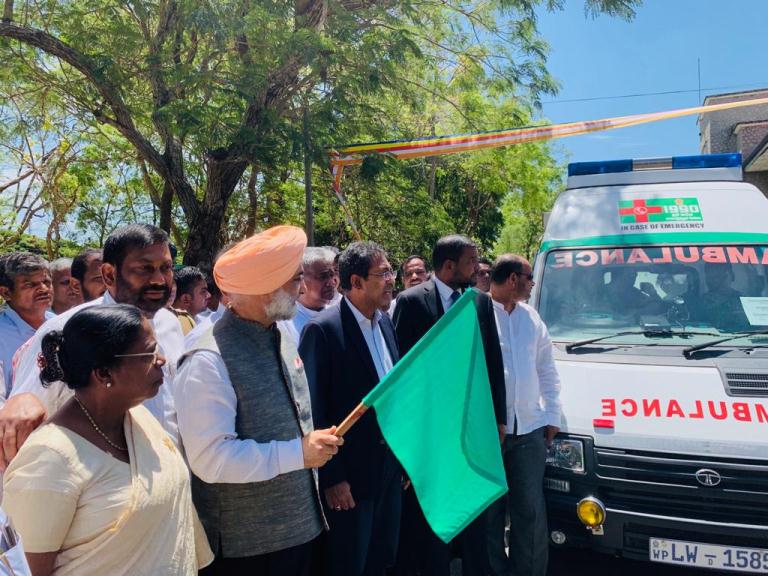

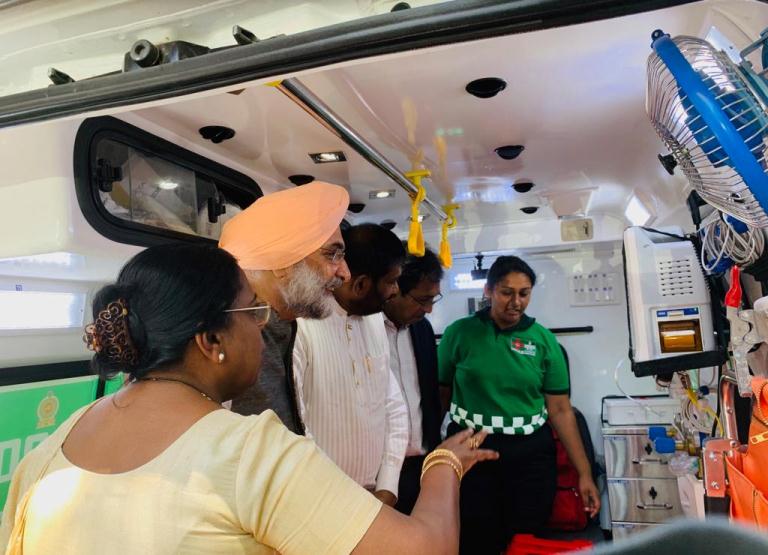


-YPR.jpg)