Presidential candidacies in focus -UNP candidate will have to carry RW on his back -JVP’s decision will be decisive for UNP -Sirisena a victim of his own subterfuges

June 22nd, 2019

by C. A. Chandraprema Courtesy The Island

June 22, 2019, 12:00 pm 

article_image

With the presidential elections drawing ever closer, all political parties have started their search for candidates. The greatest uncertainty with regard to the possible candidate is within the ruling UNP with Ranil Wickremesinghe, Sajith Premadasa and Karu Jayasuriya being in the fray. This time around there isn’t the possibility of the UNP being able to field a candidate from outside the party as they did in 2010 and 2015 due to stiff opposition from the battered party rank and file. The short-lived hype about Dahammika Perera becoming the common candidate of the UNP showed that in the UNP Wickremesinghe at least has not completely given up on trying to field an outsider again, but the opposition to fielding outsiders is such within the UNP that the idea is now all but dead.

One can see that both Karu Jayasuriya and Sajith Premadasa have announced in an indirect manner that they are in the fray with Karu hinting that he will be willing to take up the candidacy if the party unanimously hands it over to him. Sajith Premadasa has been announcing his availability by stating that if he were the president, he would provide a pair of shoes each for school students in addition to the free uniforms that his father provided. Sajith’s battle cry in a way indicates the seriousness of the position that the UNP finds itself in. There is nothing they can offer the people other than the pledge of handouts. At the next election the UNP will not be able to claim that it has improved the economic situation of the country or national security.

Indeed, the UNP will be fighting the next election with nothing but disaster behind it. It has ruined the economy and the political party system; it has rendered the country ungovernable through various ill-conceived constitutional changes; it has destroyed the political party system by fielding common candidates and it has shown an inability to govern. Against such a background, whoever comes forward as the UNP candidate will face an uphill struggle. The fact that the UNP even has people willing to contest as a presidential candidate even in such circumstances is due to the hope that the block vote formula which carried the day in 2015 will give them a fighting chance once again. That is that the Tamil vote in the Northeast and the Up country vote plus the Muslim vote will give the UNP candidate a chance of victory.

Wildcard, the JVP

The least uncertainty with regard to who the next presidential candidate is going to be is within the SLPP, which has more or less decided on Gotabaya Rajapaksa. The situation following the Easter Sunday bombings has brought security to the forefront of the national agenda and that is an area where GR has a unique advantage over any and all other candidates who will contest against him. The SLPP will be going to this election with the advantage of being the political party that won the last local government elections against all odds and the new political party that trounced both established political parties to come out on top. Furthermore, those associated with the SLPP have a history of having run a very successful government which increased this country’s per capita GDP threefold in nine years, built many infrastructure projects which had been only been dreamt of by other political parties and won a war which the entire world thought was unwinnable.

In the wake of the Easter Sunday bombings, communities who had been estranged earlier are drawing together in scenes that we would never have been able to witness just one year ago. It may not be incorrect to say that the Buddhists, Christians and Hindus today have a confluence of interest unlike at any time before in the post-independence history of the country, and it may well be that the block vote phenomenon that the UNP hopes will be their ticket to victory may not manifest itself in quite the way they expect this time. Some of the blocs that made common cause with the UNP at the 2010 and 2015 presidential elections now have other issues which they know can never be addressed satisfactorily by the UNP.

There is another factor which is not discussed as much as it should be, but will be of crucial importance to the UNP candidate – the JVP. The latter still has a vote bank of about 500,000 and the decision that the JVP makes may well determine the outcome of the presidential election for the UNP. The JVP’s position up to now has been that it will support a common candidate together with the UNP but not a candidate from within the UNP. For the JVP to support a member of the UNP for president will be suicidal in political terms. As of now it has together with the UNP supported two common candidates who were completely outside the UNP. This time however it is unlikely that the UNP will ever agree to vote for an outsider again and hence the support of the JVP will be in doubt.

Back in 2015, the Sinhala votes that the JVP brought in were crucial in ensuring the victory of Maithripala Sirisena. The difference between the total number of votes polled by the two main candidates was just over 449,000, which is roughly equivalent to the JVP vote bank at that time. Without this crucial input the common candidate would not have been able to obtain 50% of the valid votes cast and the counting may have gone into the second round and there is the possibility that Mahinda Rajapaksa may have won on the second count. Hence the UNP will have to watch out for what the JVP does or does not do this time around. At least as far as the public pronouncements of the JVP are concerned, this time it may field a common candidate of its own. Its pledge was that if the executive presidential system was not abolished by the time the next election becomes due, it would field its own candidate to ensure that its votes did not go to any other candidate.

If it follows through with that threat, the UNP’s goose will be cooked. The UNP candidate is more dependent on the JVP vote than many people realise. Wickremesinghe is now having to face the consequences of having twice dodged presidential contests and diluted the UNP’s base by linking it with other political parties in lose coalitions for the sake of political expediency. When he did this the first time in 2010, it may have appeared to be a mighty smart move to avoid defeat at the hands of Mahinda Rajapaksa. But the second time he did it, he fell victim to his own strategy. In fact, the second time he was forced to yield the candidacy to an outsider in a situation where the UPFA had clearly gone into decline as shown by the results of the provincial council elections that took place in 2014.

The UNP candidate’s burden

If Ranil had contested in 2015, he might have won. Ultimately, what ensured Sirisena’s victory was the overwhelming minority vote. The minorities would have voted for Ranil in the same or even greater numbers than for Sirisena. As for the Sinhala vote which everybody thinks that Ranil would not have obtained, the results of the Western and Uva provincial council elections, clearly indicated a change in Sinhala sentiment and gains for the UNP even with Ranil leading the party.  If he had contested in 2015, he would have obtained more Sinhala votes than he would normally have commanded because there was a swing against the Rajapaksa government among significant sections of the Sinhalese especially the youth and the middle class. In 2015, when RW wanted to contest the presidency, people like Mangala Samaraweera and Ravi Karunanaye insisted on fielding a common candidate from outside. What that shows is that if you step off the beaten track just once, it’s very difficult to find one’s way back.

This is why nobody in the UNP except for RW’s favourites who stand to lose their positions if he is forced out, want him to contest as the UNP’s presidential candidate. Sajith and Karu are the present favourties as far as the party’s rank and file are concerned. If one of them contests and loses, RW may be able to retain leadership of the defeated UNP for a while longer. If he is unable to clinch the candidacy, human nature being what it is, there is the possibility that RW will select the candidate least likely to win. At least at the moment, he is believed to have given the nod to Karu because Karu is more pliable than Sajith. The next presidential election will be a ‘gala uda satana’ for Sajith and Karu because if the candidacy goes to Karu, he who will make political capital out of it will be Navin.

Sajith and Navin are not seen as rivals the way their fathers were. But the rivalry will emerge if Navin becomes the son-in-law of the President in a situation where the UNP constitution says that if a member of the UNP becomes President, he will automatically become the leader of the party. Another complicating factor if that whoever the UNP presidential candidate is, the prime ministerial candidate will be Ranil, who has not indicated anywhere that he will be quitting politics if he is not going to be the presidential candidate of the UNP. This gives rise to the complication that of the Sajith-Karu duo who are the front runners in the UNP presidential nominations race, the winner gets all and the loser gets nothing. Whoever wins the candidacy will have Ranil as his prime ministerial candidate and the other person will be left out altogether with no consolation prize.  

There is another issue in that whoever gets the UNP’s presidential candidacy will have to carry Ranil on his shoulders. That will be a distinct disadvantage at an election because the Opposition will take up the cry “If you want to have Ranil Wickremrsinghe as the prime minister of the country again, then vote for the UNP presidential candidate!” That will definitely queer the pitch for the UNP’s presidential candidate.

In addition to the candidates of the UNP, SLPP and probably of the JVP, the incumbent President Maithripala also seems to be interested in running with the help of the Joint Opposition. The Opposition now is made up of four different groups; there is the Joint opposition which is the real opposition force and then there is the SLFP, which was until recently a part of the government but is now reluctantly and due to the force of circumstances in the opposition. Then there is the JVP, which is a part of the coalition that brought the present government into power. Then there is the TNA, which is an integral part of the government but pretends to be in the opposition.

The Sirisena-led SLFP has been trying to persuade the Joint Opposition to field Sirisena as its presidential candidate. There are enough and more reasons why that cannot happen. Firstly, Sirisena is now damaged goods in political terms. He has to share the responsibility with the UNP for bringing this country to the present sorry pass. He may not have been the guiding hand as far as the economy was concerned. It is well known that the UNP dictated economic policy within the yahapalana government. But the moves that sent the economy into this tail spin were part and parcel of Sirisen’s own manifesto. The Rs. 10,000 salary increase and reduction in the prices of fuel and certain food items thus increasing government expenditure and reducing government revenue at the same time, were corner stones of the Sirisena manifesto.

Previous governments had always disregarded the more extravagant election pledges they gave the public, but this government was not able to do that due to the fear that they would lose the parliamentary election that was due later. Thus, they ended up giving all the concessions they promised the voting public and sent the entire economy into a tail spin. Furthermore Sirisena was actively involved in some of the irreversible damage that the yahapalana government did such as the privatisation of the Hambantota port. When the UNP Minister Arjuna Ranatunga refused to privatise the port on the terms proposed by the UNP, Sirisena removed Ranatunga, appointed an SLFP parliamentarian Mahinda Samarasinghe as Ports Minister and ensured that the privatization of the port went through.

Sirisena’s survival strategy

Sirisena’s list of transgressions are as long as that of the UNP, if not longer. When the UNP betrayed the country in Geneva in 2015 by co-sponsoring resolutions against Sri Lanka, Sirisena did nothing to stop it. When it came to the Easter Sunday bombings, Sirisena held both the defence and law and order portfolios and the people naturally placed the entire blame for the security lapse on Sirisena. So at this moment, Sirisena is a political liability and the political party that fields him as their presidential candidate will definitely lose. President Sirisena furthermore holds the unique record of having destroyed two political parties, the SLFP by turning it into a tail of the UNP and the UNP by not giving them proper ministries in his failed bid to build up the SLFP. A person with such a record of destruction and failure cannot hope to win an election.

The UNP voter is not going to vote for him and nor is the SLPP voter. The SLPP constituency will not vote for him even if Mahinda Rajapaksa personally appeals to them to do so. Sirisena promised the dwindling band of followers he has in the SLFP that he will take a decision that will safeguard their honour. The only way to safeguard whatever is left of the SLFP’s honour will be for President Sirisena to hand the party back to Mahinda Rajapaksa and resume his position as the Polonnaruwa district leader of the SLFP or to quit politics altogether.

President Sirisena is profoundly mistrusted by the SLPP constituency because he has consistently expressed the view that he will be willing to work with any leader in the UNP other than Ranil Wickremesinghe. He has publicly stated on numerous occasions the manner he tried to persuade either Sajith Premadasa or Karu Jayasuriya to take up the Prime Ministership and to oust Ranil. If the SLPP fields him as their presidential candidate, he may very well end up inviting Sajith Premadasa to form a government.

Sirisena’s chance of getting the SLPP nomination as presidential candidate is therefore, virtually non-existent. Sirisena would have had a chance of being accommodated within the SLPP fold had the executive presidential system been scrapped and replaced with a parliamentary form of government. Sirisena could then have been able to cast his lot in with the SLPP on the understanding that he would be appointed as the ceremonial President or as a deputy prime minister. However, no such constitutional change is on the table at the moment and as far as Sirisena is concerned it’s either the presidential candidacy or nothing at all.

It’s ironic to think that Maithripala Sirisena’s political career is to come to an ignominious end because he failed to abolish the very position he was elected to power to abolish. If he had followed through with his pledge to abolish the executive presidency, there would have been no presidential election at the end of this year and what everyone would have to face would be the Parliamentary election next year. In such circumstances, if Sirisena had parted company with the UNP, then he could have negotiated with the SLPP to form a coalition for the Parliamentary election to become a deputy Prime Minister or the ceremonial President. But now because he has retained the executive presidency instead of abolishing it, he finds himself in the position of either having to obtain the presidential candidacy from the SLPP or bow out of politics altogether.

He has the option of contesting on his own so as to facilitate the victory of the UNP candidate, but that will destroy him and his entire family’s political prospects for good. In the beginning, when Sirisena refused to abolish the position he said he was going to, it may have seemed a mighty smart thing to have done – to bamboozle an entire nation into voting for you on a pledge that you never had any intention of keeping. No doubt the yahapalanites who engineered this massive political scam would have been hugging themselves for joy and laughing their heads off at the manner in which they hoodwinked an entire nation. But now the chickens have come home to roost and Sirisena is going to see his political career coming to an end precisely because he retained the executive presidential system instead of abolishing it.

With the executive presidential system, he has no chance of forming a coalition with the SLPP unless he gives up on his own candidacy and backs the SLPP candidate. But without the executive presidential system he would have been the principal coalition partner of the SLPP and would still have a career in politics. In politics, nobody will lightly turn down a request for an alliance. In the case of the SLPP, the reason why the proposed alliance with the SLFP is not making headway is because of the excessive demands being made on the SLPP to yield the presidential candidacy to the discredited SLFP. If there was no executive presidency, no such obstacle would exist.

The deception of Sri Lanka Muslim Congress

June 22nd, 2019

Minority leaders have well-articulated explanations for everything wrong pointed at them and they may well weave a response gullible to many, however this instance we like to present the cunning and deceit of the Sri Lanka Muslim Congress taking their website as an example.

Two screenshots reveal the deception

  1. On 19th May 2019 the SLMC website gave a list of 7 objectives of which the last was to preserve & promote Shariah Laws and for Muslims to adopt the entire code of Shariah laws in both private & community life.

This screen shot was doing the rounds via email and obviously it would have been sent to those in the SLMC who would have thought coming colours is no good and decided to camouflage that objective by removing it.

Thus,

  • On 19th June 2019 exactly a month later, SLMC website has removed item g) that gave as one of its 7 objectives to preserve & foster Shariah laws.

Is this not trying to pull wool over our eyes, attempting to fool all of us? Isn’t this the same as the Vaddukoddai Resolution where the Tamil translation clearly states separate state and blame the translator for giving another meaning in English!


Can people blame the Sinhalese for distrusting the minorities who claim they are discriminated but are carrying fire under water?

If questioned, we can well guess the answer. Does Islam permit SLMC to lie? Lying is allowed if it is to ‘smooth over differences’ or ‘gain the upper-hand over an enemy’ so we can well guess what the likely responses may be.

(Taqiyya) Lying to non-believers is permitted to advance the cause of Islam   

However, we are very disappointed. For a political party that is supposed to represent the Muslims, deceiving us like this is just not done.  

19th May 2019 to preserve and promote SHARIAH LAWS and to encourage members of the party and others to adopt the ENTIRE CODE OF SHARIAH LAWS in their PRIVATE & COMMUNITY LIFE.

Shenali D Waduge

Arabified Muslim bombs ticking under Ranil’s chair

June 22nd, 2019

H. L. D. Mahindapala

The shock of the Easter Sunday bomb blasts shattered within minutes the comforting beliefs of a nation that had settled down to recline smugly in peace for generations to come. Lulled by the sense of security that restored confidence in the dawn of a new era at the end of Tamil Tiger terror in May 2009 no one expected Muslim bombs to blast our faith in a non-violent society fought and won in a 33-year-old war (i.e., from the declaration of war in the Vadukoddai Resolution in May 1976 to Nandikadal in May 2009). The impression created before Easter Sunday was that the nation was moving towards reconciliation and peace. Ranil Wickremesinghe-NGO combination was marketing reconciliation” as their latest trump card to publicise their brand of politics as a great success. Consequently, the word ”reconciliation” tripped off the lips of all the political pundits to explain the good, the bad and the ugly in the Yahapalanaya regime. It is a word that gained currency at national and international levels to justify the betrayal of the overall national interests to the extremist demands of the minorities. In fact, Muslim extremism gathered momentum under the soothing cover of reconciliation”.

Ranil-NGO combo believed that their much-publicised programme of reconciliation”, like the flopped Sudu Nelum Movement of CBK-Samaraweera, or the Cease Fire Agreement (CFA) of 2002, had restored normalcy and stabilised the nation. Anyone opposing their failed politics was accused of sabotaging reconciliation”, or being provocateurs of racism. Even the EU is justifying their attack on the local media by accusing the latter of harming reconciliation and peace”.

They accuse the media of provoking incendiary racism ignoring the explosive ground realities, as revealed in the Parliamentary Select Committee (PSC). The grim reality is that there was no need for the media to demonise the Muslims. The Muslims had done it themselves by going along with the suicide bombers, wittingly or unwittingly, not expecting the ideological fanatics to go the extreme of pressing the button to meet instantly the 72 virgins in heaven by creating hell on earth. The Muslim leaders had been a part of the process of establishing brain-washing madrassas that mushroomed in every available nook and corner, along with the importation of hundreds of radical preachers inculcating politicised Islam to make Sri Lanka a part of the global caliphate. They prepared the ground for Zahrans to emerge and grab power. Predictably. when the non-Muslim majority reacted, as any majority would, to the violent and destabilising consequences of such radicalisation the blame came down on them for violating the rights of minorities. In other words, in their book of values and rights only the minorities have rights. And the only right of the majority is to accept the right of the minority to violate whatever rights that are left for the  majority.

The media, for instance, doesn’t have to provoke anti-Muslim hatred at all. That work was done with precision inside the madrassas by radical preachers and outside in the electorate by multi-billionaire Zahran and his terrorist gang. Following their terror attack on Easter Sunday the Muslim witnesses at the PSC exposed the machinations of rival Muslim sects fighting each other and propagating extremism and intra-ethnic and inter-ethnic hatred. When the groundwork was done, with the state looking the other way under the pressures of the Muslim leaders and the Muslim leaders going on their bended knees to suck up to Zahran and their Arabic agents abroad, media didn’t have to cook up stories against the Muslims. PSC has heard enough and more stories of Muslims demonising their rival Muslims. The role of the media is to report those stories. And if Islamaphobia has reached a new level of intensity, which is inevitable given the horrendous slaughter of Christians at prayer, it is stupid to blame the messenger.

Without anyone’s help the actions of the Muslim extremists were sufficient to generate instant antagonisms against the whole Muslim community. Take, for instance, the role of M.L.A.M HIsbullah, the former governor of the Eastern Province. His attempt to spin yarns to cover up his tracks is hilarious. His record indicates that his political goal was to exploit the rising Muslim radicalism to be the new Muslim messiah in the East, with prospects of rising to be the first caliph of Kathankuddy. In one way or another the Muslims leadership was giving a nudge-and-wink to Islamic radicalism hoping to gain by riding on the back Muslim fanaticism to power. The Muslim leaders did not gather round Zaharan merely to get a share of 2,000 odd votes, as stated by Hisbullah. They were at his feet to benefit from the rise of radical Islam as a political force to confront the state and the Sinhala-Buddhist majority. It was when politicised Islam backfired on them on Easter Sunday that they tried to distance themselves from Zaharan. Now that Zaharan is not there they are quite brave in denouncing him.

The Arabification of the East was the first step. Either through acts of commission or omission Hisbullah had thrown his weight behind it. But he fronts up before the media and the PSC pretending to be the much misunderstood Sri Lankan patriot who is vilified for discovering the science of cooling the sun-scorched earth in the East by planting date trees.

So who is provoking racial antagonisms? Is it Hisbullah saying that the global Muslim community will drop everything and come rushing to save the Muslim minority from the Sinhala-Buddhist majority? Or the media reporting it? In any case, if the EU has any evidence of the media inciting racial hatred it should take the case with substantial proof to the Press Council instead of regurgitating the bull dust fed to them by the NGOs they finance for their benefit. Why is the EU rushing into places where knowledgeable angels fear to tread? Reconciliation and peace cannot and will not come because EU blames the media. It is merely using the current jargon of reconciliation” in the absence of substantial evidence. It is the buzz word of reconciliation” that has become the sword and the shield to cut down the Sinhala-Buddhist majority and defend their anti-Sri Lankan politics respectively. 

Ranil, as usual, has misread the subterranean forces undermining his euphoria. He is in the same smug, self-congratulatory mood that intoxicated him after signing the CFA with Prabhakaran in 2002. Then he thought that appeasing Prabhakaran was the way to end the war. Now he thinks that appeasing minoritarianism is the way to achieve reconciliation”. But the history of ethnic politics has proved that the more you appease the minorities the more they escalate their demands and/or  violence.

Reconciliation”, in fact, has become a dirty word. In the post-Prabhakaran period, reconciliation” has become a convenient tool to put pressure on the government to promote and extract concessions to the extremist demands of minorities. And the Yahapalana-ya-kos seems to be ever ready to go along with those demands, of course, in the name of reconciliation” which means giving in to ever escalating demands. The Ranil-wing of the Yahapalanaya government was obliged to give in to the demands for one reason: the evidence of the former Governor of the Eastern Province, M. L. A. M. Hisbullah, has proved that the Ranil-NGO Yahapalanaya government rode into power with the votes and backing of Zahran Hashim. And Ranil hopes to do that again in the coming elections.

Hisbullah confessed that Zahran had the power to summon the entire Muslim leadership and dictate terms to them. The Muslim leaders signed an agreement not to even play music at their meetings. This makes it clear that at the peak of his of power Zahran and politicised Islam radicalism was the source driving Muslim politics in the mainstream. Either directly or indirectly the Muslim leadership was in cahoots with the rising tide of Islamic radicalism. And they rushed to Police stations to lodge complaints against Zaharan and the radicals not to save Sri Lanka but to save their own skins. They saw the radicals rising as a rival power challenging their supremacy. Radical Islam was a serious threat not only to traditional Islam but also to the power base of the Muslims in the parliamentary mainstream. The young radical Islamic Zaharans were emerging as a formidable threat to their vote banks. They rushed to the Police stations hoping that the state would step in and crush the Muslim youth gathering popularity and votes in the electorate. . At the same time, they had no compunction in rushing to sit at Zahran’s feet and agree to his radical demands and even signing agreements with him. They wanted to have it both ways. 

They not only wanted to plant the date palms but also eat the fruits of it. Islamic radicalism could not have grown to the peak of Easter Sunday without the blessings of the conventional Muslim leadership using their influence to anesthetize the state into believing that they were their boys” who were merely toying with Chinese crackers. Of course, they did not go as far as the Tamil leadership that embraced the Tamil terrorists as their boys”. But they were near enough especially with the funds pouring in from the Middle East to consolidate the power of radical Wahabism. They joined heartily and became  an integral part of the Arabification of the East. And there was a degree of pride in the Muslim community heading in the direction of Arabification. It meant abandoning the Sri Lankan identity and identifying totally with the Arabic identity. For instance, their argument at the PSC was that they had the right to learn Arabic to understand and study the Koran just as much Buddhists had the right to learn Pali to study Buddhism. Plausible, Indeed! But the fact is that Buddhist didn’t learn Pali to establish a Buddhistan. But the Muslims were learning Arabic to prepare for a Bagdhadidstan / caliphate, excluding all other communities. Conventional Muslims were content in going to Mecca and returning as Al Haj. But politicised Islam was bent on transforming the East into the first caliphate this side of the Suez.  Sri Lanka was faced with the proverbial camel who crept into the Arab’s tent.

Ranil was responding to the Arabification of the East as if it was an anodyne variation of Buddhism. He was not inclined to confront the Arabification of the East because Muslims, by and large, were with him. His calculation would have been simple: a growth in Muslim votes would be a growth in UNP votes.  It is, of course, a known fact that the mainstream Muslims were mainly with Ranil. And the Muslim leaders in his camp had the power to directly influence and manipulate Ranil. 

According to Hisbullah’s statistics Zahran was in command of around 2,000 votes. But Zahran was more than that. He was gathering momentum and becoming a force to reckon with. It was a force that the Muslim leaders could not ignore. They were, of course, pushed into a position of kissing the hand they could not cut. Besides, Zahran power was not confined to votes. He had money. Tons of it!  Police estimate that his asset amounted to Rs 7 billion. He had Rs 140 million in cash alone. In other words, National Thowheed Jama’ath (NTJ) had the resources to buy a majority in the Parliament at Jayewardene Pura, if they had planned to do so.

Clearly, the Muslim leadership had acquired enough power, through electoral and parliamentary votes and money – tons of it! — to manipulate the Ranil-wing at the core of the Yahapalanaya regime. They had aligned themselves to Ranil Wickremesinghe partly because he had enhanced his constitutional power after the 19th Amendment. The hidden agenda of this Amendment was to devolve Presidential power to the Premier’s office. Ranil was hell bent on transferring Presidential powers to the Premier’s office because he knew that his chances of becoming president are as great pigs developing wings to fly. And more importantly because the Muslims knew they could easily manipulate Ranil who was dependent on their votes to stay in power. There was a quid pro quo arrangement. You-scratch-my-back-and-I’ll-scratch-yours was the name of the game.

The Ranil-wing was only too willing to let the minorities get away with their extremist acts and demands just to stay in power. Muslims could get away with raping the Wilpattu forests. Neither the President nor the Prime Minister knows who raped the forest to this day. In fact, the Ranil-NGO reconciliation” programme was so successful that Mullahs were packing their Mosques with swords to cut grass! Ranil must have thought that it was the Muslim equivalent of Christians turning swords into ploughshares!

The Muslim leaders who are with Ranil can be categorised, to some extent, as proxies of Zahran. It is obvious that Ranil was under pressure from the Muslim leaders who were under pressure from Zahran. So reconciliation” was another name for pushing the violent extremism of Zahran who dictated terms to the Muslim leaders. When Hisbullah told the Parliamentary Select Committee pointing a finger at former Minister Rauf Hakeem, who is now sitting as a member of PSC, that even he signed the agreement with Zahran, Hakeem could only wriggle in his chair and grin sheepishly, virtually acknowledging his guilt.

This is the tragic and pathetic state of power play in Sri Lankan politics today. Altogether they are wallowing in the same putrid swamp. The word reconciliation” has lost its force and meaning because the minorities are using it as their tool to dictate terms to the majority. Reconciliation is a two way thing. But Ranil is using it as a one-way instrument to appease his Tamil and Muslim vote base and his Western and Indian partners.

This is his last gamble. On the one hand, he has lost his traditional Catholic base. The Catholic Church is coming out strongly against Ranil. Even his Cabinet Minister knew what was going to happen on East Sunday but no one informed the Cardinal who would have closed the Churches that day. More than that, Ranil has galvanised the sleepy Buddhist electorate which was reconciled to accepted reconciliation” (Ranil’s version of it) as the next step. Ranil was also on high after his Supreme Court victory on the constitutional issue of the President sacking him.

Then came the Muslim bombs. Rightly or wrongly, it has blasted the image of the Muslims as a trustworthy community willing to live in peace with the other communities. More importantly, it has blasted Ranil’s chances of contesting as a candidate at the coming Presidential election. His image is aligned too closely with the Muslims. This image has magnified manifold in the post-Zahran days. Even sections of the Tamils too are not pleased with the rise of Muslim fanaticism.

But it is the instant and instinctive reaction of the majority to Easter Sunday that has sealed the fate of Ranil. Ranil and UNP are now at the same point as Sir. John and the decadent UNP was in 1956, facing S. W. R. D. Bandaranaike. Ranil seems to be aware of it. He is desperately trying to wrap himself round the national flag. The background to his TV appearances is covered from wall to wall with a row of Sri Lankan flags.

Can he fool the people with his optics?  Can his cheap cosmetics beat the renewed power that radiated from the bed of Athuraliye Ratana Thero fasting at Dalada Maligawa? Ranil will try. But it is clear that another 1956” is on the way if the opposition can pick another Bandaranaike with national security, national identity and national prosperity on the agenda. .

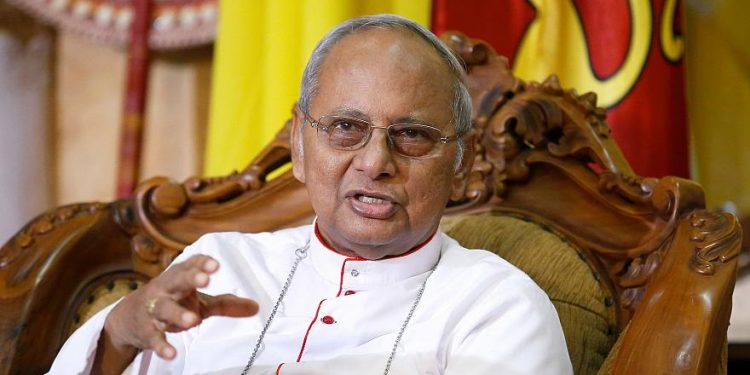
Sri Lankan govt. hiding truth over Easter attacks – Malcolm Cardinal Ranjith

June 21st, 2019

Courtesy NewsIn.Asia

Lankan Cardinal says post-blast trouble makers pave way for foreign interference

Rome, Reuters – The Head of the Catholic Church in Sri Lanka on Thursday issued a scathing criticism of the Government over the Easter attacks that killed more than 250 people, decrying a total lack of interest” in determining why intelligence reports were ignored.

Malcolm Cardinal Ranjith spoke of his frustrations just hours before he was due to meet Pope Francis and show the pontiff a video with graphic images of the 21 April attacks on three churches and four hotels. The attacks were claimed by Islamic State militants.

There was a serious lack of responsibility on the part of the Government,” Cardinal Ranjith told reporters. Now they have appointed all kinds of committees and commissions, and there is bickering going on between the sides, you know, (about) who is responsible.”

President Maithripala Sirisena had criticised a parliamentary investigation, where some have accused him of mishandling national security.

Cardinal Ranjith, 71, said Indian intelligence services first notified Sri Lanka on 4 April of an impending attack and then three times more, including a phone call at 6.45 a.m. on the day of the blasts.

But nobody took serious note. This disaster could have been prevented because if I’d known that there was an attack planned, I would have closed the churches and told the people to go home,” he said in answer to a question.

A Parliamentary Select Committee, led by allies of Sirisena’s rival Prime Minister Ranil Wickremesinghe, is trying to identify possible lapses that allowed the attacks to happen.

Everybody is trying to pass the blame on to the others, and there is an attempt to hide (the facts),” the Cardinal said.

Even his (the President’s) own culpability in the matter might be in question, so they are trying to hide it. There is a total lack of interest in this matter on the part of the Government and on the part of various agencies that are responsible for security,” he said.

The video he prepared for the Pope, who last visited Sri Lanka in 2015, shows the suicide bombers with backpacks approaching and then cuts away to scenes of mangled corpses, a blood-spattered statue of Jesus and mass burial sites.

The Cardinal spoke at the presentation of a report by Aid to the Church in Need, a Catholic charity that helps Christians in places where they are a minority. Sri Lanka is about 70% Buddhist, 13% Hindu, 10% Muslim, and 7% Catholic.

Meditation on Emptiness (Shuniya Meditation)

June 21st, 2019

Ruwan M Jayatunge MD 

Sunyata is a Sanskrit word that means emptiness. Emptiness is the true nature of reality. Emptiness is the true nature of things and events. It is the actual nature of all phenomena. It is the absence of any self apart from the mental and physical elements of existence. 

All phenomena in their own-being are empty. All phenomena arise dependent on other phenomena. All things have no fixed identity, constantly becoming and decaying. All phenomena of existence are marked by emptiness. There is nothing at all which is not dependent and therefore, there is nothing at all which is not empty.

A person cannot step into the same river twice, because the person and the river are constantly changing.Existence is always in a state of transformation. Things are in a constant state of flux. It is neither existent nor nonexistent.

Sunyata explains that everything is interrelated and interdependent .The Buddhist Philosopher Nagarjuna says that all phenomena exist interdependently and are void of self-essence. This doctrine explicates impermanence and insubstantiality.  Non-being and being are dialectically interdependent.

Sunyata is emptying the mind.  Sunyata is a state of meditative consciousness. Emptiness as a meditative state is said to be reached when “not attending to any themes or themeless concentration of awareness. This is not nihilism. There is no judgment, expectation, desire, opinion or wish. It is bare attention – awareness without thought). According to Yogi C. M. Chen the nature of Sunyata is one, but the condition therein and there out are many. Sunyata provides inner peace, there is no egoism. The realisation of sunyata leads one to no attachment and clinging.    

In this meditation the meditator brings his mind to a state of awareness in which the mind is brought to complete stillness. He experiences inner calmness.  It is a state of emptiness, where no positive or negative is assigned to things. The meditation is practiced through emptiness of thoughts with silence and stillness. It is a neutral state without attachments. This state of consciousness can be called pure awareness” or empty mind,” because it has no cognitive content (McGee, 2008).

As described by Michael Erb of the Universtity Hospital Tuebingen, Germany ,  Sunyata meditation practice is aimed to develop an ability to avoid discursive (wandering, long-winded) thought, and instead acquire insight into the nature of reality through direct perception of the internal (bodily) and external (sensory) states.

Hinterberger and group (2014) found decreased electrophysiological activity represents the conscious state of emptiness in meditation. Hernández and team (2018) state that the depth of mental silence is associated with medial fronto-insular-striatal networks that is crucial for top-down attention and emotional control.

According to J .Krishnamurti meditation really is a complete emptying of the mind. He further states that the meditative mind has no horizon. The mind cannot go from the limited to the immense, nor can it transform the limited into the limitless.

Ruwan M Jayatunge MD 

Poson Brings ‘Hope, the Only Thing Stronger than Fear’

June 21st, 2019

By Rohana R. Wasala

Buddhism aims at creating a society where the ruinous struggle for power is renounced; where calm and peace prevail away from conquest and defeat; where the persecution of the innocent is vehemently denounced; where one who conquers oneself is more respected than those who conquer millions by military and economic warfare; where hatred is conquered by kindness, and evil by goodness; where enmity, jealousy, ill-will and greed do not infect men’s minds; where compassion is the driving force of action; where all, including the least of living things, are treated with fairness, consideration and love; where life in peace and harmony, in a world of material contentment, is directed towards the highest and noblest aim, the realization of the Ultimate Truth, Nirvana.”

–          Walpola Rahula Thera

It is two thousand two hundred and fifty-five years since the official introduction of Buddhism to Sri Lanka. The small mango-shaped island that is Sri Lanka lying at the southern tip of the large land mass of the Indian subcontinent is the homeland of the majority Sinhalese, which they share with the minorities in peace and harmony. It has been so from time immemorial. They have no other homeland. There is no other Sinhala speaking nation in the world. The Sinhalese have a recorded history of over two thousand five hundred years, but their indigenous tribal ancestors had been living in the island for countless millennia before the time that recorded history began, that is, prior to the date of the alleged arrival of the legendary prince Vijaya from North India. It was during the reign of King Devanampiya Tissa (250-210 BCE) that Arhant Mahinda Thera (285-205 BCE) came to the island of Sihaladwipa (the island of the Sinhalese, now known as Sri Lanka) to establish the Buddhasasana there in the year 236 BCE. Subsequent to that, when Theri Sangamitta (281-202 BCE) arrived in the island in order to establish the bhikkuni (female Sangha) order, she brought a sapling from the Bodhi Tree at Bodh Gaya (located in the northern Indian state of Bihar as that area is known today) under which the ascetic seeker prince Siddhartha Gothama attained Enlightenment. According to the ancient chronicles such as the Dipavamsa and the Mahavamsa, the two missionaries were, respectively, the son and daughter of the Maurya Emperor Ashoka of India (304-232 BCE). The official introduction of Buddhism under royal patronage marks the dawn of the great civilization that the Sinhalese built as a Buddhist nation. Sri Lankans celebrated the coming of Buddhism to the country on the Poson Full Moon Poya Day which this year fell on June 16.

The despatch of his own children by Emperor Ashoka as Buddhist missionaries to the country of the Sinhalese points to the fact that they received special attention from him. The arrival of the two royal Maurya siblings for the formal inauguration of the Buddhist dispensation with its symbiotic relationship with the secular state is historically well authenticated. Their legacy remains to this day. The late Ven. Dr Walpola Rahula Thera described Arhant Mahinda Thera as ‘the father of Sinhalese literature’ by virtue of the fact that he translated the Tripitaka (the ‘Three Baskets’ containing the Buddhist Scriptures) into Sinhala (‘the language of the islanders’ as he called it) and wrote a commentary on it in that ancient form of Sinhala (source: Wikipedia). This, of course, suggests that the Sinhala language already had adequate resources to receive and give expression to the new religious ideology. Besides, it is known that Mahinda Thera preached to them in their own language, that is, Sinhala. So, he had to have studied the language before he undertook the mission. Scholars tell us that the Buddha Dhamma had not been entirely unknown to at least some of the people of the island by the time the missionaries came. Canadian Buddhist scholar Professor Suwanda Sugunasiri has established the fact that Mahinda Thera was the  redactor of the oldest Buddhapuja (Offering to the Buddha) in the world in 247 BCE (Source: Wikipedia). The funerary stupa built at Mihintale for Mahinda Thera who died at the age of eighty is a hallowed site that Buddhist pilgrims visit in their thousands every year.

The humane approach that Mahinda Thera adopted in weaning the islanders off their native superstitious practices such as animistic observances and veneration of dead ancestors by modifying them to suit the Buddhist teaching was, no doubt, inspired by the same compassion he had towards ordinary people in the predominantly Hindu society into which he was born. He was mindful of the emotional distress that the people would have experienced if they were called upon to throw those time honoured practices overboard suddenly. This compassionate attitude was implicit in his accommodation of puja (offerings) in the Buddhist ritual practice that was mentioned above, although the Theravada doctrine that he represented excluded that element found in Hinduism. The native practice of supplicating to dead relatives for protection was replaced with ‘punyanumodana’ or sharing of merits with them. This is akin to the Buddha’s giving a new meaning to the ancient Vedic ritual of worshiping the six quarters of the earth and sky that the young householder Singala of the city of Rajagaha was performing early one morning, when the Buddha was passing by. Arhant Mahinda Thera’s elder sister Sangamitta Theri’s bringing of the Bodhi sapling to Sri Lanka seems to be a concession to the animism that the locals were familiar with.  The sacred sapling was received by the king with great reverence, conveyed in a procession and planted in the royal park of Mahameghavana at Anuradhapura the capital city. It stands to this day, known as the Sri Maha Bodhi. The ‘conversion’ of the island dwellers to Buddhism did not involve any use of force, violence or bloodshed.

The history of Buddhist Sri Lanka is literally ‘written in stone’ throughout the island. Rock inscriptions recording significant events relating to the Buddhist dispensation are found in every part of the country. The land is strewn with ruins of mighty structures such as ancient viharas,  cheitiyas, palaces, and forts. Not all of these ancient constructions have disappeared. For example, many of the great irrigation tanks and canals that the Sinhalese built beginning with the Abhaya Wewa at Anuradhapura done under the patronage of King Pandukabhaya (437-367 BCE) still serve the nation. The Poson festival that commemorates the beginning of this long stretch of glorious history assumed added significance this year because of the besieged conditions in which the Sinhalese had to celebrate it.  

The passage quoted above  as the epigraph to this essay is the final paragraph of Chapter VIII ‘What the Buddha Taught and the World Today’ of the classic work containing the essentials of Buddhism titled WHAT THE BUDDHA TAUGHT by the late Ven. Dr Walpola Rahula Thera (originally published by the Gordon Fraser Gallery Ltd., London and Bedford, England, in 1959). We may appreciate how deeply desirable the Buddhist goal delineated there is to the world in general, and to Sri Lanka in particular, especially at the present juncture. The recently held Poson ceremony must have brought this broad aim of Buddhism to the forefront of  the celebrants’ minds in a context where they are having a foretaste of the very antithesis of the ideal society that Buddhism wants to create.

As can be judged from media reports, Poson this year, celebrated across Sri Lanka on June 16, brought a new breath of life for our beloved motherland made terminally ill by unpatriotic politicians who represent the interests of external and internal forces inimical to her. One popular preacher monk advised that every Buddhist house be illuminated with a Vesak lantern, though Vesak is supposed to have been observed a month ago. Presumably, the monk’s request was because, on the past two occasions (i.e., this year and the last), Buddhists’ premiere religious celebration, the annual Vesak festival, could not be held the way it is traditionally done due to uncertainties created by unsettling political developments in the country. Bright illuminations are the norm for the duration of the Vesak week, light being an offering made to the Buddha. In the prevailing circumstances, a Vesak lamp in every Buddhist home on the Poson Poya might be taken as a demonstration of righteous defiance of unjust pressure exerted on Buddhists for their alleged extremism, as much as an expression of undimmed religious piety. The mainstream and social media reported a few Toranas (also usually associated with Vesak) being on display for public view. And there were some dansalas (alms halls) too. The country’s security services were able to reassure the Buddhist public to come out of the siege mentality they were driven into by the mindless and faceless Islamic terror attacks on April 21 and reassert their right to freedom of religious belief and practice.

For at least one hundred years to date, the Sinhala majority of the country have been the target of unilateral criticism on grounds of their alleged racist mentality and religious extremism. This criticism is entirely baseless. Sinhalese are not and have never been racists (if racism means unfair treatment of people of a different race or unprovoked violence against them). Sinhalese Buddhists are not religious extremists, either. It is a fact that no one can claim that Buddhists are less tolerant towards people of other faiths than Christians or Muslims are. It is an established fact that no exclusively Sinhalese race-based or  Buddhism- based political party has had any prospect of being popular among Sinhalese Buddhists. At least that has been the case so far. Sinhalese politicians invariably talk about the interests of the country – the land – first; they don’t exclude the minorities when they talk about the national interest. Racist minority politicians do not speak a word about the national interest or the country; they only talk about ‘the Tamil people’, ‘the Muslim people’, etc. (Of course, not all minority politicians behave this way.) The worst Sinhalese politicians do not behave in that manner. Yet it is the Sinhalese who get branded as racists. Even some discredited Sinhalese politicians are quick to condemn co-ethnic opponents who are courageous enough to speak up for the Sinhalese Buddhists when their rights are violated as racists in an attempt to curry favour with the minorities.  

Over the past five centuries of European colonial hegemony in Sri Lanka, the Sinhalese have suffered many injustices at the hands of the ruling minorities (imperialists and their native lackeys). The situation hardly changed after independence. Although the colonialists are not there in person, their wish is being carried out by their local agents. Every legitimate attempt that the majority community makes to secure justice for all citizens and achieve progress as a single nation while conforming to the principles of humanity, equality, peace, and non-violence taught in Buddhism and found in other religions as well is somehow frustrated by the few racist minority politicians who manage to get elected to parliament by hoodwinking the masses they claim to represent. They oppose anything that goes against their narrow racist schemes, although it may be good for the whole country. But the ordinary minority Tamils and Muslims that these handful of racists draw upon as bloc-vote banks are, like the majority Sinhalese, non-communalist, non-violent, peaceful people who want to live and let live minding their own business. The Poson that came after the April 21 watershed rekindles prospects for creating in Sri Lanka the sort of peaceful and harmonious society that Buddhism aims at. All the communities Sinhalese Buddhists, Tamil, Hindus, Muslims, Christians (a large proportion of Muslims and Christians are racially Sinhalese) have become targets for Islamic terror attacks.  The quranic ‘People of the Book’ ‘Ahl al-Kitab’ – Jews, Christians, etc – are perhaps in less danger from mortal Islamic terror; but Buddhists and Hindus will have no reprieve; it is time Sinhalese and Tamils took serious note of this. Therefore, practically all Sri Lankans have a strong incentive now to unite against the common enemy, Islamic fundamentalism, in whatever guise it comes. Buddhist monks and clerics of other religions are getting together to provide the necessary spiritual leadership for intellectual engagement over the matter. The influence of the deep rooted Buddhist cultural heritage of the country is an important factor in this context.

(The quote in the title is from the late American thriller writer Robert Ludlum)

THE UNIQUE NATIONAL IDENTITY OF SRI LANKA

June 21st, 2019

Dr. Daya Hewapathirane

The unique national identity of Sri Lanka is founded on its historic, long-lasting Sinhala Buddhist cultural heritage.  As an island nation Sri Lanka is founded on Buddhist norms and principles. The impact of Buddhism is reflected both directly and indirectly, in the tangible and intangible aspects of the nation’s culture. Fundamental Buddhist principles of non-violence, tolerance, compassion and peaceful coexistence with others and with nature are among the essential ingrained principles that have shaped the outlook, temperament and lifestyle of the people from historic times.  Since the arrival of Buddhism in the country in the 3rd century BCE, during a long historic period of more than 2200 years, the outstanding accomplishments of her people in many areas of life, are largely attributable to the impact of Buddhist principles guiding their lives. It was Buddhism that inspired the people of this nation to develop wholesome qualities and skills enabling them to evolve a rich and enduring culture where peace, tolerance, generosity, creativity, wisdom, and spirituality are the cornerstones.  

Wholesome Buddhist values and norms that form the basis of the uniquely indigenous Hela Buddhist culture were reinforced during the glorious classical period of our country’s history. This period includes the greater part of the more than 2200 years of Buddhist cultural history of this country, between 3rd century BCE to 13th century CE, when Anuradhapura and Polonnaruwa were the royal capitals. This was a time when the population of the country was exclusively Buddhist and the country was ruled by Buddhist royalty. The nature of development of the country’s natural, human and cultural resources of the past is reflective of our long-held traditional Buddhist principles of peaceful coexistence and integrity, particularly on the part of those who assumed leadership roles in the country. Promotion of virtuous and spiritual lifestyles among people was a fundamental goal of the nation, and Buddhist leaders of the past including Maha Sangha were in the forefront in furthering this goal. The nation’s irrigation system developed during this time, with an extensive network of reservoirs and canals are considered in modern times as marvels in irrigation technology. In addition, the nation’s astonishing ancient architecture, sculpture, art, literature and other forms of visual culture including the Sinhala language and literature displayed magnificently across the country, are living evidence of this nation’s exceptional cultural heritage. They are reflective of the outstanding imaginative and creative powers of the people including their talents, skills, and foresight. The world recognition of the greatness of this unique Buddhist culture is reflected by the UNESCO designating our ancient royal sites as World Heritage Sites – Anuradhapura, Polonnaruwa, Mahanuwara (Kandy), Sigiriya and Dambulla, all built upon and strongly reflecting inspiration drawn from Buddhism.

During this classical period of the nation’s history, it was the Buddhist Sangha community that provided education – both secular and spiritual and was the primary source of inspiration and assistance in the evolution of varied aspects of the nation’s culture.  The strength of this cultural foundation was tested several times in the past, especially during periods of foreign invasion and associated devastation and exploitation. There were 17 ruthless South-Indian Dravidian invasions and from 16th to about the mid 20th century European colonial powers used violent means to subjugate and exploit our country in order to serve their self-interests. They caused untold misery to the indigenous Buddhist community. But the nation stayed intact, withstanding threats, perils and calamities. This was largely owing to the power and potency of the nation’s Buddhist cultural foundation. 

Tolerance and the enormous adaptability of Buddhism are qualities that have remained unchanged throughout its remarkable history in Sri Lanka and many other Buddhist nations. With a down to earth philosophy of man in harmonious and cordial relationship to man, at a very visible and conceivable level, Buddhists have never stood up against any single man or groups of men in the name of Buddhism, either to defend or propagate the religion. That is quite a record for a faith with a history of more than two and a half millennia. That was very much before the time of the appearance of most of today’s great world religions.

Buddhism upholds everything worthy and meaningful. It promotes peace, peaceful coexistence, and democratic principles in governance. It promotes human rights, development of individual and community virtues and discipline in accordance with the pancha seela”. Respect for the natural environment and sustainable and participatory development of resources and upheld in Buddhism. In addition, Buddhism strongly promotes tolerance of other faiths, religious and social harmony, and cordial relations with other nations. Buddhist culture led to the evolution of a peaceful community structure. This provided order and stability to the respective communities in the country. Lifestyle of people in a Buddhist society has been simple and uncomplicated.  It was a quality of life that moved at a gentle pace where people enjoyed a high degree of leisure and freedom. As part of a close-knit community, people felt secure enough to be themselves. In this sense, they enjoyed a remarkably high quality of life.

Buddhist principles were reflected in people’s attitude towards each other, other communities, other living beings and their habitat – the environment.  People’s livelihood and institutions were reflective of the impact of the teachings of the Buddha.  A striking feature was that, overall, relations between people and between culture and nature were compatible, in harmony and well-adjusted and adapted. This is largely owing to Buddhism – the foundation upon which the way of life, culture and social values of the people evolved and established. People’s livelihood and economy reflected their interdependence with their natural habitat, with other people and other living beings. They enjoyed an abundance of natural resources by way of useable land, fertile soil, clean and dependable water resources, healthy climatic conditions, a rich and diverse biological resource base, an awe-inspiring natural environment pleasing to the senses and spiritually inspiring, and above all, a culture that valued harmonious relationship with each other and the natural environment which provided the basis of their livelihood.  

Protecting and Reinforcing the Cultural Inheritance

What Sri Lanka clearly projects is its strong Buddhist imprint. It is a fact that, if there is anything unequivocally worthwhile that Sri Lanka can offer to the world today, it is the Buddha Dhamma and its outstanding culture, including its people’s attitude towards life and their natural habitat.  We should not let this wholesome Buddhist cultural inheritance be undermined and eroded away by economic, social, religious and cultural trends that are incompatible with the enviable Buddhist social values which form the basis of life in the nation.  We are duty-bound to work towards transforming and changing whatever harmful trends evident in our motherland. It is time to reinforce Buddhist principles that constitute the basis of the national culture of Sri Lanka since ancient times.

Building a stronger sense of national identity holds the key to achieving true reconciliation and social cohesion in our nation. Our nation needs to be united behind the nation’s Buddhist values. Extremism in any form, including religious, is not in-keeping with the Buddhist principles and values that form the basis of our nation. Attempting to implant in Sri Lanka, norms and behavior patterns of other countries aimed at being exclusive and markedly different to the long established social and cultural norms of our nation has a socially divisive effect. Buddhist community leaders, especially Buddhist Bhikkhus who have been the traditional custodians of the nation’s culture and values should necessarily be in the forefront in confronting in a legitimate manner, any extremist and divisive trends on the part of any community cultural or religious, who has made Sri Lanka their home. Traditionally the Buddhist leadership is duty-bound to prevent attempts by anyone to undermine the long-established Buddhist socio-cultural norms of our nation.

In general, separatism and divisiveness appear to dominate the thoughts of minority communities of Sri Lanka, especially the Muslims and Tamils.  This attitude inevitably prevents them from developing a sense of belonging to the nation and cultivating better relationships with the mainstream community of the country from historic times. This parochial attitude prevents extremist elements from appreciating the worthy principles and values that characterize the Sri Lankan nation, and that give this nation its identity as a peace-loving unique nation in the world. The development path of our country needs to be built from the grassroots, based on its Buddhist cultural foundation. It should involve the development of strong local economies in which producer-consumer links are shortened and cultural values are respected and peaceful coexistence in harmony with the environment and all diverse people are assured. Moving in this direction appears to be the appropriate way to solve the whole range of serious social, economic and environmental problems faced by the country today. Ultimately, we are talking about a spiritual awakening that comes from making a connection to others and to nature. This requires us to see the world within us, to experience more consciously the great interdependent web of life, of which we ourselves are among the strands.

The political philosophy of Buddhism is universal in that it directly concerns with the totality of human life. Not only does it deal with the social and economic aspects of life but also deals with man’s spiritual and ethical aspects too. According to Buddhist political thought the state or the ruler is expected to establish a just and selfless social order in which every individual of a country is happy and contended. The Buddha’s ideas were primarily based on the Noble Eightfold path and he advocated that all human problems could be easily avoided by following this eight-fold path, namely Right Understanding, Right Thought, Right Speech, Right Action, Right Livelihood, Right Effort, Right Mindfulness and Right Concentration. In the past, during the long period of rule by Sinhala Buddhist royalty, the political scene in the nation strongly reflected the political thoughts of the Buddha. Two important political principles introduced by the Buddha were the elective principle of government and the acceptance of the peoples’ sovereignty. He introduced the voting procedures at the election of leaders such as in the Sangha and showed the importance of the freedom of expression to create public opinion in issues of public importance. He also showed that there is a close link between politics and the economy of a country. On various occasions the Buddha showed that economic welfare is all important for social stability, peace and good governance.  There is no doubt that if any country could follow at least some of these political ideologies enunciated in the teachings of the Buddha, such a country would be peaceful, free of wars, free of petty divisions and destructive evil thoughts and actions.

Living in Harmony with Nature

The Buddhist approach is to live in harmony with nature more than subduing it, conquering it, and exploiting it.  Buddhism emphasizes compassion for all living beings.  This Buddhist attitude to nature is enumerated in several of the Buddha’s discourses, such as the “Cakkavatti Sihanada Sutta”, “Samyutta Nikaya”, “Vinaya Pitaka”, ” Dhammapada”, and Theri Gatha”.  The type of economic system, which the Buddha proposed, was one where the individual’s needs would be provided but there would be no overemphasis on the purely material aspects of life. One’s material needs would be essentially what one need to make one live happily and for one’s physical sustenance. Buddhism advocates the judicious use of resources, the elimination of waste, and the most productive use of resources. In the suttas mentioned above, the Buddha’s advice to laypersons was to develop both their material and spiritual welfare by fruitful use of nature’s resources. Cooperative spirit among people, a simple way of life based on a simple technology, a non-violent and gentle attitude towards nature, and all living beings are essential components of the Buddhist approach to development. Economic development must be placed against the wider background of the need to develop a well-rounded personality, and a happy human being. In the “Mangala Sutta” and the “Sigalovada Sutta”, the Buddha has said that the happiness of the average person depends on their economic security, the enjoyment of wealth, freedom from debt, and a blameless moral and spiritual life. In a number on contexts, the economic factor is linked to a wider relationship to the dhamma” or the teachings of the Buddha.

Dr. Daya Hewapathirane

සෞඛ්‍ය අමාත්‍යවරයා සම්බන්ධයෙන් සිදු කෙරෙන වංචා දූෂණ හා වාහන අවභාවිතය

June 21st, 2019

මාධ්‍සාකච්ඡාව  ශ්‍රී ලංකා පොදුජන පෙරමුණ

අද (21) පැවැති මාධ්‍ය හමුවට සහභාගි වු මන්ත්‍රීවරුන්
■ පාර්ලිමේන්තු මන්ත්‍රී රමේෂ් පතිරණ මහතා
■ පාර්ලිමේන්තු කාංචන විජේසේකර මහතා
■ පාර්ලිමේන්තු මන්ත්‍රී ඉන්දික අනුරුද්ධ මහතා

පාර්ලිමේන්තු මන්ත්‍රී රමේෂ් පතිරණ මහතා
විශේෂයෙන්ම සෞඛ්‍ය අමාත්‍යවරයා සම්බන්ධයෙන් සිදු කෙරෙන වංචා දූෂණ හා  වාහන අවභාවිතය ඇතුළු කරුණු පිළිබඳව මම කරුණු ඉදිරිපත් කිරීමට බලාපොරොත්තු වෙනවා. පසුගිය වසර හතරක කාලය තුළ සෞඛ්‍ය ඇමැතිවරයා හැටියට පත්වුනු රාජිත සේනාරත්න ඇමතිවරයා විසින් කරන්නට යෙදුණු කරුණු ගණනාවක් පිළිබඳව සෞඛ්‍ය අමාත්‍යංශයේ අභ්‍යන්තර විගණන මගින් සහ විගණකාධිපති දෙපාර්තමේන්තු  වාර්තා නිකුත් කරලා තිබෙනවා. ඒ අතරින් ඇතිවෙලා තිබෙන තත්ත්වයන් සලකා බැලීමේදී ඉතාම භයානක මූල්‍ය, වාහන අවභාවිතාවක් වගේම බාල ඖෂධ ගෙන්වීම ඇතුළු කරුණු කාරණා රාශියක් පිළිබඳව හෙළිවී තිබෙනවා. ශ්‍රී ලංකා පොදුජන පෙරමුණ ක්‍රමවත්ව මේ සම්බන්ධව මේ රටේ වගකිව යුතු ආයතන වලට පොලිස් මූලස්ථානය , අපරාධ පරීක්ෂණ දෙපාර්තමේන්තුව,  අල්ලස් හා දූෂණ කොමිසමට ලිඛිත සාක්ෂි සාධක සහිතව පැමිණිලි ගණනාවක් ඉදිරිපත් කළා. ඒ පිළිබඳව විධිමත් පරීක්ෂණයක් සිදු නොවූ බව පැහැදිලිව කියන්න අවශ්‍යයි. මේ දිනවල ප්‍රධාන වශයෙන්ම කතාබහට ලක්වන ප්‍රධාන කාරණයක් වන සයිටම් විශ්ව විද්‍යාලයට අනුබද්ධ නෙවිල් ප්‍රනාන්දු ශික්ෂණ රෝහල රජයට පවරා ගැනීම වෙනුවෙන් 2017 වසරේදි කැබිනට් පත්‍රිකාවක් ඉදිරිපත් කිරීමට යෙදුනා. කැබිනට් පත්‍රිකාව මගින් සයිටම් රෝහල ශික්ෂණ රෝහලක් හැටියට රජයේ රෝහලක් බවට පරිවර්තනය කරන බව ප්‍රකාශකළත් එය මෙතෙක් සිද්ධි වෙලා නැහැ. නමුත් රෝහලේ මානව සම්පත් වෙනුවෙන් ගෙවිය යුතු මුදල්, හෙදියන්, වෛද්‍යවරුන් ඇතුළු කාර්ය මණ්ඩලය වෙනුවෙන් ගෙවිය යුතු මුදල් රුපියල් බිලියන 5 කට ආසන්න ප්‍රමාණයක් රජය මගින් දැනටමත් මේ රෝහල වෙනුවෙන් වැය කරලා. බිලියන පහක් ඒ කියන්නේ රුපියල් කෝටි පන්සීයකට වැඩි මේ දැවැන්ත ධනස්කන්ධය රජයේ බදු මුදල් වලින් පෞද්ගලික ආයතනයක් වෙනුවෙන් තමයි වැය  කරල තිබෙන්නේ. මේ ආයතනය කැබිනට් පත්‍රිකාවක් මගින් රජයට පවරා ගන්නා බවට ප්‍රකාශ කළාට විශේෂ ජනාධිපති පරීක්ෂණ කොමිෂන් සභාව හෙළිකර ගෙන තිබෙනවා එසේ එවැන්නක් සිදුව නැති බව. අමාත්‍යංශ ලේකම් වසන්තා පෙරේරා මහත්මිය සඳහන් කරන විදිහට මෙම රෝහල සම්බන්ධයෙන් දැනට රජය සතු ව කිසිම අයිතියක් අයිතියක් නැහැ. රජය අඛණ්ඩව මේ රෝහල වෙනුවෙන් අති විශාල ධනස්කන්ධයක් මාසිකව සහ වාර්ෂිකව වැය කරන බවත් බොහොම පැහැදිලියි. ඔබ සියලු දෙනා දන්නවා ගෝඨාභය රාජපක්ෂ මැතිතුමා ආරක්ෂක ලේකම්වරයා වශයෙන් කටයුතු කරන කාලයේ දී සිද්ධියක් මේ දිනවල විභාගයට ගෙන තිබෙනවා. රුපියල් මිලියන 70 ක් වටිනා ඉදිකිරීමක් වෙනුවෙන් එතුමා සල්ලි ගෙවලා තිබියදීත්, දින වකවානු පිළිබඳව කාරණයක් පාදක කරගෙන තමයි විශේෂ ත්‍රිපුද්ගල මහාධිකරණයේ මේ නඩුව විභාග කෙරෙන්නේ. එතුමා ඉදිරි ජනාධිපතිවරණයට ඉදිරිපත් වීම වැළැක්වීමේ අරමුණින් දේශපාලන පළිගැනමක්  හැටියට එතුමාට විරුද්ධව මෙම විශේෂ ත්‍රිපුද්ගල මහාධිකරණයේ නඩුව පවරන්නේ. ඒ මුදල් සියල්ල ම ගෙවලා තියෙද්දිත් මේ විදියට නඩු පවරලා මූලික අයිතිවාසිකම් අපහරණය වෙන විදියට කටයුතු කරන ආණ්ඩුව රුපියල් බිලියන 5 ක් වංචා කරපු රාජිත සේනාරත්න ඇමතිවරයාට විරුද්ධව අපහරණ වලට ඉඩදෙනවා. සෞඛ්‍ය අමාත්‍යාංශය අමාත්‍යාංශ ලේකම්වරිය ඇතුළු දැනුවත්ව හෝ නොදැනුවත්ව මේ කටයුතු වලට ව්‍යංගයෙන් හෝ අනුබල දී තිබෙනවා. මේ ඇමැතිවරුන් පිළිබඳව තීරණය කිරීම ජනතාවටම බාර කරනවා.
ඊට අමතරව සෞඛ්‍ය අමාත්‍යංශයේ අභ්‍යන්තර විගණනයක් හරහා මෑතකදී හෙලිවී තිබෙනවා සෞඛ්‍ය අමාත්‍යාංශයේ විශාල වාහන අවභාවිතයක් සිදු වී තිබෙන බව .මේ විගණන වාර්තාව සෞඛ්‍ය අමාත්‍යංශයේ අභ්‍යන්තර විගණන දෙපාර්තමේන්තුව විසින් නිකුත් කරන ලැබූවක් .එහි බොහොම පැහැදිලිව චක්‍රලේඛ විධිවිධාන වලට පටහැනිව අමාත්‍යවරයා සහ නියෝජ්‍ය අමාත්‍යවරයා දැනට සංඛ්‍යාව ඉක්මවා භාවිතා කර ඇති මෝටර් රථ සංඛ්‍යාව වාහන 24 ක් බව සඳහන්. මේවා තමුන්ගේ පවුලේ හිතවතුන්ට, තමුන්ගේ බිරිඳට, තමුන්ගේ පුතුන්ටත්, තමුන්ගේ හිතවතුන්ට, තමුන්ගේ පෞද්ගලික ලේකම්වරුන් ඇතුළු විශාල පිරිසකට ලබා දී තිබෙන බව පැහැදිලියි. මේ වාර්තා වල සඳහන් වෙනවා 2017 දෙසැම්බර් 31වැනි දින අමාත්‍යාංශය සතු මෝටර් රථ 679 සහ යතුරුපැදි 1115ක් ඒ කියන්නේ මුළු වාහන 1794 ක භෞතික පැවැත්මක් තහවුරු කරගැනීමට අමාත්‍යාංශයට නොහැකි වී තිබෙන බව. අමාත්‍යාංශය සතුව තිබෙන අති විශාල වාහන ප්‍රමාණයක භෞතික ස්ථානය වත් මේවා තියෙන්නේ කොහෙද කවුරුත් විසින් පරිහරණය කරනවාද යන්න වත් තහවුරු කරගැනීමට කර ගැනීමට හැකි වි නැහැ. මෙහි සදහන් වෙනවා වටිනා ජීප් රථ තුනක් දැනට පරිහරණය කරනවාද යන්න වත් සොයා ගැනීමට නොහැකි වී ඇති බව.  වාහනඅංක කේ බී 9985, කේ පී 0050, කේ පී 9404 යන අමාත්‍ය කාර්යාලය ට අනුයුක්ත කරලා තියෙන වටිනා සුඛෝපභෝගී ජීප් රථ 4 ක් දැනට සොයා ගැනීමට නොහැකි බවත් මෙම අභ්‍යන්තර විගණන වාර්තාවේ සඳහන් වී තිබෙනවා. ඒ නිසා සෞඛ්‍ය අමාත්‍යාංශයේ  වාහන අවභාවිතය පිළිබඳ වංචාව ඉතාම පැහැදිලියි. මේ පිළිබඳව දැන් විශාල ගැටලුවක් මතුවී තිබෙනවා. අස්ථාන ගත වී තිබෙන වටිනා වාහන තමන්ගේ පවුලේ උදවිය සහ දේශපාලන හිතමිතුරන්ට ගජ මිතුරන්ට ඇමතිවරයා ලබාදී ති දී තිබෙන බව බොහොම පැහැදිලිව ප්‍රකට වෙති. මේ ආණ්ඩුව බලයට පත්වූ දවසේ සිටම සෞඛ්‍ය අමාත්‍යාංශය හරහා බාල ඖෂධ ගෙන්වීම පිළිබඳව චෝදනා එල්ල වුණා. විශේෂයෙන්ම පිළිකා රෝග නීතිය පිළිබඳව සියලුම විශේෂඥ වෛද්‍යවරුන් විරුද්ධ වෙද්දී තමුන්ගේ පෞද්ගලික හිතවතෙකුට අයත් සමාගමක් හරහා මේ රටට රුසියාවේ නිෂ්පාදිත ප්‍රමිතියෙන් අඩු ඖෂධ ගෙන්වීම පිළිබඳව අමාත්‍යවරයාට පැහැදිලි චෝදනාවක් එල්ල වී තිබෙනවා. දැන් පිළිකාවට අදාල ඖෂධ විතරක් නෙමෙයි. දියවැඩියාව ළමා රෝග පිළිබඳවත් සිදු බාල ඖෂධ ගෙන්වීම කෙරෙනවා. ලංකාවට ඖෂධ ගෙන්වීමේදී පසුගිය වසර හතරක කාලය තුළ සෞඛ්‍ය හා පෝෂණ දේශීය වෛද්‍ය අමාත්‍යාංශයේ, වෛද්‍ය සැපයීම් අංශයට කරනු ලබන සැපයුම් පිළිබඳ විඝණකාධිපති වාර්තාවෙන් ප්‍රබල ගැටළු රාශියක් මතු කර තිබෙනවා. මේ අතරින් ටෙන්ඩර් පටිපාටියෙන් තොරව ඖෂධ මිලදී ගැනීම, කල් ඉකුත් වූ ඖෂධ රෝහල්වලට ලබා දීම, ප්‍රසම්පාදන ක්‍රියාවලිය අනුමත නොකිරීම, කාල සටහනකට අනුව කටයුතු නොකිරීම, වෛද්‍ය සැපයීම් දේශීය වෙඳසැල් වලින් මිලදී ගැනීමේදී සිදුවන අතිරේක පිරිවැය දැරීම, ඇතුළු අර්බුද ගණනාවක් පිළිබඳව විගනකාදිපති දෙපාර්තමේන්තුව පැහැදිලිව චෝදනා එල්ලකර තිබෙනවා.
එක පැත්තකින් මේ රටේ ජනතාවගේ බදු මුදල් රුපියල් බිලියන ගණනින් අපතේ යවන ගමන් ප්‍රතිකාර කිරීමේදී රෝගයට ප්‍රතිකාරයක් නොලැබෙන ඖෂධ ඔවුන්ට ලබා දෙනවා. මේ නිසා පිළිකා රෝග, දියවැඩියාව ඇතුළු රෝග වලින් පෙලෙන රෝගීන්ට ප්‍රතිකාරයේදී බෙහෙත දුන්නට සුවපත් නොවනතත්වයක් මතු වෙලා තිබෙනවා. ඉතාම ප්‍රබල ගැටළුවක්. වෛද්‍ය සැපයුම් දෙපාර්තමේන්තුව, ඖෂධ නීතිගත සංස්ථාව අමාත්‍යවරයාගේ නියෝග අනුව මේ රටේ පිළිගත් සම්ප්‍රදායට පටහැනිව ඖෂධ මිලදී ගැනීම් සිදු කර තිබෙන බවත් තත්ත්වයෙන් බාල කල් ඉකුත් වූ ඖෂධ ජනතාවට ලබාදී තිබෙන බවත් මෙම වාර්තාවෙන් හෙළි කර තිබෙනවා.මේ සම්බන්ධ කරුණු කාරණා ඉදිරි ආණ්ඩුවක් යටතේ දී විමර්ශනයට ලක් කරනවා. මේ වංචාව සම්බන්ධයෙන් වගකිව යුතු සෞඛ්‍ය ඇමතිවරයා ඇතුළු වගකිවයුතු සියලු දෙනා සම්බන්ධයෙන් අනිවාර්යෙන් නීතිය ක්‍රියාත්මක කරනවා. ඒ වගේම තමයි මේ කාරණා වලට අමතරව සෞඛ්‍ය අමාත්‍යාංශය අනෙකුත් කටයුතු සියල්ලම අධීක්ෂණයට ලක් කළ යුතුයි. ඖෂධ පමණක් නොවෙයි. අනෙකුත් උපකරණ සැපයුම්, රෝහල්වල පිරිසිදු කිරීමේ ටෙන්ඩරය  ඇතුළු කරුණු කාරණා වලදී විශාල ලෙස වංචා  සිදුවන බවත් පැහැදිලි. ටෙන්ඩර් අවභාවිතය  වසරකට කෝටි 10 ඉක්මවන බවත් බොහොම පැහැදිලිව ලිපි ලේඛන වල සඳහන් වෙලා තිබෙනවා. මේ සයිටම් රෝහලට රජයේ මුදල් යෙදවීම රජයෙන් වාහන අවභාවිතය තත්ත්වයෙන් බාල ඖෂධ ගෙන්වීම, ටෙන්ඩර් පටිපාටි උල්ලංඝනය කිරීම වැනි ඉතාම අත්තනෝමතික පාලනයකට සෞඛ්‍ය අමාත්‍යාංශය පත් කිරීමට සෞඛ්‍ය අමාත්‍යවරයා කටයුතු කොට තිබෙනවා. මේ පිළිබඳව ඉදිරියේදී පාර්ලිමේන්තුව තුළ ශ්‍රී ලංකා පොදුජන පෙරමුණ ඇතුළු විපක්ෂය හඬ අවදි කරනවා. එපමණක් නොවෙයි ඉදිරියේදී නීති මාර්ගයෙන් ගත යුතු සියලූ ක්‍රියාමාර්ග ගන්නා බව මෙහිදී අවධාරණය කරනවා. දැනටමත් සෞඛ්‍ය අමාත්‍යංශයේ රෝගී අයිතිවාසිකම් වෙනුවෙන් ලබාදෙන නිර්දේශ නොසලකා කටයුතු කරන බව ට නඩු තීන්දුවක් පවා නිකුත් වෙලා තිබෙනවා. මේ නඩු තීන්දුව හරහා ඖෂධ නියාමන අධිකාරියට පත්වෙලා තිබෙන නිලධාරීන් ඇතුළු පුද්ගලයින්, විවිධ ඖෂධ සමාගම් සමඟ සම්බන්ධකම් පවත්වනවා. ඒ නිසා නියමානුකූල බලයක් වර්තමාන ඖෂධ නියාමන අධිකාරිය ට නොමැති බව හෙළි වෙනවා. අධිකරණ තීන්දුවලට පටහැනිව සෞඛ්‍ය අමාත්‍යාංශයේ කටයුතු කරනු ලබනවා.  මේ විගණන වාර්තා සහ  අභ්‍යන්තර විගණන වාර්තා අනුව සෞඛ්‍ය අමාත්‍යවරයා සියලුම සම්ප්‍රදාය නීති රීති  උල්ලංඝනය කරමින් තමුන්ගේ පෞද්ගලික සුඛ විහරණය වෙනුවෙන් කටයුතු කිරීම අපි ඉතාමත්ම පිළිකුලෙන් හෙළා දකිනවා කියන කාරණය අපි සඳහන් කරන්න කැමතියි .

පාර්ලිමේන්තු මන්ත්‍රී කාංචන විජේසේකර මහතා
අද ජුනි මාසේ විසි එක් වෙනිදා. පාස්කු ඉරිදා ප්‍රහාරය එල්ල වෙලා මාස දෙකක් ගත වෙලා තියෙනවා. අප්‍රේල් 21 සිදුවෙච්ච ප්‍රහාරයෙන් පසුව අඩුම තරමේ ආණ්ඩුවේ නිල ප්‍රකාශයක් තුළින් සිදු වෙච්ච හානිය පිළිබඳව හෝ  ඒ හානිය සිදු කළ පුද්ගලයින් පිළිබඳව නිවැරදි තොරතුරු රටට ලබාදෙන්න ආණ්ඩුව අසමත් වුනා. ඊයේ අගරදගුරු කාදිනල් මැල්කම් රංජිත් හිමිපාණන් විසින් විදේශගත වීමට පෙර ප්‍රකාශයක් සිදු කළා. මෙතෙක් පවත්වපු පරීක්ෂණ කටයුතු පාස්කු ඉරිදා ප්‍රහාරය සම්බන්ධයෙන් ආණ්ඩුවේ ක්‍රියාමාර්ග සම්බන්ධව සෑහීමකට පත්වන්නට පුළුවන් කමක් නැහැ කියලා උන්වහන්සේ එහිදී අදහස් දැක්වූවා. පාර්ලිමේන්තු තේරීම් කාරක සභාවට යෝජනා කරනු ලැබූවේ වගකිම් දැරිය යුතු පුද්ගලයන් ඒ වගකීම පැහැරහැරිය පුද්ගලයන් පිළිබඳව පරීක්ෂණ පවත්වන්නයි. නමුත් අද අපි දකින්නේ මෙම තේරීම් කාරක සභාව හරහා පාස්කු ඉරිදා ප්‍රහාරයට වගකිවයුතු සහ වගකීම්පැහැර හැරි පුද්ගලයන් පිළිබඳ පරීක්ෂණ කරනවා වෙනුවට, විවිධ රාජ්‍ය නිලධාරීන් විවිධ පුද්ගලයන් දඩයම් කිරීම සඳහා මෙම පාර්ලිමේන්තු තේරීම් කාරක සභාව කටයුතු කරන ආකාරයයි.  පසුගිය සතියේ අපි දැක්කා රාජ්‍ය පරිපාලන අමාත්ාංශයේ ලේකම්වරයා රත්නසිරි මැතිතුමා කැඳවලා පාස්කු ඉරිදා ප්‍රහාරයෙන් පසු ඇතිවෙච්චි තත්ත්වයන් පිළිබඳව සහ රාජ්‍ය පරිපාලන අමාත්‍යංශ චක්‍රලේඛ පිළිබඳව ප්‍රශ්න කිරීම් සිදු කළා. පසුගිය කාලය පුරාවට ම විවිධ අවස්ථාවලදී තේරීම් කාරක සභාවේ සාමාජිකයන් හිටපු ආරක්ෂක ලේකම් ගෝඨාභය රාජපක්ෂ මැතිතුමාගේ නම කියවා ගන්න උත්සාහ කරනවා. ඒ නම මතුවෙන  විදිහට විවිධ ප්‍රශ්න අහනවා. මේ වන විටත් රාජ්‍ය ආරක්ෂාව බාරව හිටපු ජනාධිපතිවරයා රාජ්‍ය ආරක්ෂක ඇමතිවරයා නැත්තම් අගමැතිවරයා හෝ මේ කැබිනට් එකේ ඉන්න වගකිව යුතු ඇමතිවරයෙක් වගකිවයුතු පුද්ගලයෙක්  තේරීම් කාරක සභාවට කැදවල ප්‍රශ්න කිරීම් කරනවා අපි තවමත් දැක්කේ නැහැ. තේරීම් කාරක සභාව පත්කරන අවස්තාවේ අපි කතානායකවරයාගෙන් ඉල්ලීමක් කළා තේරීම් කාරක සභාවක් පත් කරනවා නම්  ඒ පත් කිරීම් කළ යුත්තේ අදාළ සියලු පුද්ගලයින් කැඳවීමට බලය තිබෙන තේරීම් කාරක සභාවක් විදිහට කියලා.කතානායකතුමා තුමත් එදා ප්‍රකාශ කළේ ඒ විදියට සිදුවිය යුතුයි කියලා නමුත් අද අපට පේන්නේ මේ තේරීම් කාරක සභාවක් අර බැඳුම්කර කොමිසම සභාවේ හදපු ජනාධිපති කොමිෂන් සභාවට දෙවැනි  වෙන්නේ නැහැ කියන දේ.ඊයෙ දවසෙ මාධ්‍ය වාර්තා කළා කළ නීතිපතිවරයා උපදෙස් දීලා තියෙනවා කියලා ජනාධිපතිවරයා විසින් පත් කරපු විජිත මලල්ගොඩ කමිටුවේ නිර්දේශවලට අනුව නියෝජ්‍ය පොලිස්පතිවරු තුන් දෙනෙක් ඇතුළුව පොලිස් නිලධාරීන් නව දෙනකුට එරෙහිව අපරාධ චෝදනා ගොනු කිරීමට .විශේෂයෙන්ම වගකීම් පැහැර හැරීම අනතුරු වළක්වා ගැනීමට නොහැකිවීම අනතුරු අඩාල කර ගැනීමට නොහැකි නොහැකි වීම යන කාරණා යටතේ ඔවුන්ට විරුද්ධව විරුද්ධව චෝදනා ගොනු කරනවා.එක පැත්තකින් ආරක්ෂාව බාරව හිටපු ආරක්ෂක ලේකම්වරයා එවකට හිටපු පොලිස්පතිවරයා එවකට හිටපු ඇමතිවරු කැබිනට් මණ්ඩලය මේ සියලු සියලූදෙනාම අතහැරලා විවිධ නිලධාරීන් දඩයම් කරගෙන යන කොමිෂන් සභාවක් විදිහට ජනාධිපති කොමිෂන් සභාව පත් වෙලා තියෙනවා. විශේෂ ජනාධිපති කොමිෂන් සභාව අවුරුද්දක් බැඳුම්කර සිද්ධිය පිළිබඳව පරීක්ෂණ සිදු කළා. ඊට අනුව පසුගිය සතියේ නිලධාරීන් කිහිප කෙනෙකුට පමණක් නඩු පවරන්න නීතිපතිවරයා උපදෙස් දුන්නා. මහ බැංකුවේ අධිපතිවරයා ඇතුලු නිලධාරීන් කිහිප දෙනෙකුටත් මුදල් අමාත්‍යාංශ නිලධාරීන් කිහිප දෙනෙකුටත් පමණයි නඩු පවරන්නේ. නමුත්  මාධ්‍ය මගිනුත් , කෝප් කමිටු වාර්තාවෙනුත් අපි දැක්කා, මේ සඳහා අගමැතිවරයා රවී කරුණානායක ඇමැතිවරයා ඇතුලු පිරිස් මෙයට සම්බන්ධ වෙලා තිබෙනවා. 2015 ආණ්ඩුව බලයට පත් වෙච්චි වෙලාවේ අපි දැක්කා එවකට ආණ්ඩුවේ හිටපු ඇමතිවරු දඩයම් කළා. බැසිල් රාජපක්ෂ ඇමැතිතුමා, මහින්දානන්ද අලුත්ගමගේ, විමල් වීරවංශ, ජොන්ස්ටන් ප්‍රනාන්දු ඒ වගේ අය සිරගත කළා. එවකට ආණ්ඩුවේ හිටපු කැබිනට් ඇමතිවරු වංචාවන්ට වගකිය යුතු යි කියලා  සිරගත කරපු ආණ්ඩුව, මේ ආණ්ඩුව යටතේ සිදුව ඇති වංචා දූෂණයන් සහ සියලුම ප්‍රහාරයන් පිලිබඳ කටයුතුවලදී ඇමති මණ්ඩලය පැත්තක තියලා නිලධාරීන් පමණක් දඩයම් කරන තැනට පත්වෙලා තිබෙනවා. මේ තේරීම් කාරක සභාව මුල් අවස්ථාවේදී පත්කළේ රිෂාඞ් බදුර්දීන් ඇමතිතුමාට එරෙහිව තිබෙන චෝදනා  සෝදලා ඔහු නිර්දෝෂි බවට පත් කිරීමටයි. දැන් අපිට සැකයක් ඇතිවෙලා තිබෙනවා මේ කමිටුව පාවිච්චි කරලා ආණ්ඩුවේ ඉන්න ඇමතිවරු, අගමැතිවරයා ඇතුළු කණ්ඩායම සෝදන්න ද හදන්නේ කියලා. ඊයේ ජාත්‍යන්තර මාධ්‍ය විශේෂ හෙළිදරව්වක් කරලා තිබුණා. අයිඑස් අයි එස් සංවිධානයේ මැදපෙරදිග පරාජයන් වලින් පසුව ඉන්දියාව සහ ලංකාව ඔවුන්ගේ ආක්‍රමණ භූමි හැටියට පාවිච්චි කරන්න උත්සාහ කරනවා කියලා. ඒ  පිලිඹඳව රෝ ඔත්තු සේවය ප්‍රකාශයක් කළා.
ජාත්‍යන්තර මාධ්‍යට හෙළි කළ මේ සිද්ධිය අනතුරු ඇගවීමක් බවට පෙනී යනවා.  මේ     ප්‍රහාරය සම්බන්ධයෙන් මෙවැනි ම  තොරතුරු හෙළි කිරීමක් ඉන්දියානු රෝ ඔත්තු සේවය සිදු කළා. එහිදී කරුණු අනාවරණය කිරීම පමණක් නොවෙයි, දුරකථන ඇමතුම් වලින් පවා ආණ්ඩුවට දැනුම් දී තිබෙනවා. ප්‍රහාරය එල්ල කෙරෙන දිනයේදී පවා ඒ පිළිබඳව ඔවුන් අනතුරු ඇඟවීම් සිදුකර තිබෙනවා.එයින් පෙනී යන්නේ සංවිධානය තවමත් සක්‍රීයව ක්‍රියාත්මක වෙනවා කියන එකයි. ඉන්දියාවටත් ලංකාවටත් එහි තර්ජනයක් තියෙනවාි.පසුගිය සති කිහිපයේ මෛත්‍රීපාල සිරිසේන ජනාධිපතිතුමාත් අගමැති රනිල් වික්‍රමසිංහ මහතාත් මාධ්‍ය ඉස්සරහට ඇවිත් කිව්වේ පාස්කු ඉරිදා ප්‍රහාරයට සම්බන්ධ සියලු දෙනා අත්අඩංගුවට අරන් තියනවා, ඒයට සම්බන්ධ වෙච්ච සියලු දෙනා මර්දනය කරලා තියෙනවා, මේ අයිඑස් අයිඑස් කියන තර්ජනය 99%  ක් මෙරටින් තුරන් කරලා තියෙනවා කියන එකය.ි නායකයෝ දෙන්නා එවැනි දෙයක් ප්‍රකාශ කළාට පස්සේ ඉන්දියානු රෝ ඔත්තු සේවය මෙවැනි ප්‍රකාශයක් කරද්දී නැවත වතාවක් මේ රටේ ජනතාවට ත්‍රස්තවාදී බියක් ඇති වෙනවා. මෙහි දී රටේ නායකයෝ කියන දේ අහන්න ද නැත්නම් පාස්කු ඉරිදා ප්‍රහාරය පිළිබඳව තොරතුරු අනාවරණය කරපු රෝ ඔත්තු සේවයේ මාධ්‍ය වාර්තාව පිළිගන්න ද කියන  දේ පිළිබඳව ජනතාවට දෙගිඩියාවක් ඇති වෙනවා.අපි ඉල්ලීමක් කරනවා මේ ආණ්ඩුවෙන් ජාත්‍යන්තර මාධ්‍ය වාර්තා කරන දේ පිළිගන්න කියලා. එවැනි තර්ජනයක් නැවත වතාවක් තියෙනවා නම් ඒ පිළිබඳව කරුණාකරලා ඔබේ අවධානය යොමු කරන්න.  එදා  බුද්ධි අංශ සේවාවන් අඩපණ කරල සිදුකරපු ක්‍රියාදාමය නිසා මේ රටට බරපතළ සිදු උනා. මේ නිලධාරීන් දඩයම් කරගෙන යන ගමනේදී  ඉදිරියේ දී තවත් මේ වගේ අනතුරක් සිදු වෙන්න         පුලුවළුවන් ද කියන දේ පිළිබඳව අපට සැකයක් මතුවෙනවා. ඒ නිසා අපි මේ රටේ රාජ්‍ය පාලකයන් ගෙන් ඉල්ලීමක් කරනවා මේ මාස කිහිපය හරි මේ රට  ආරක්ෂිත රටක් විදිහට පවත්වාගෙන යන්න අවශ්‍ය නායකත්වයත්  සහයෝගයත් ආරක්ෂක අංශ වෙත ලබා දෙන්න කියලා. ජනාධිපතිවරණය පිළිබඳ මාතෘකාව විවිධ මාධ්‍ය හරහා පසුගිය කාලයේ අපි දැක්කා. විවිධ දේශපාලන පක්ෂ නායකයන් ඔවුන්ගේ අපේක්ෂකයා පිළිබඳ සඳහන් කරනවා. අපි පොදුජන පෙරමුණ හැටියට මහින්ද රාජපක්ෂ ජනාධිපතිතුමාගේ නායකත්වයෙන් ජනාධිපතිවරනය ඉලක්ක කරගත්  වැඩපිළිවෙළ ආරම්භ කරලා තියෙනවා. ඒ සඳහා අවශ්‍ය අපේක්ෂකයන් නම් කිරීමේ කටයුත්ත පොදුජන පෙරමුණු ජාතික සම්මේලනයේදී  එළිදක්වන්න ,කරුණු ඉදිරිපත් කරන්න,   අපි සූදානම් වෙලා ඉන්නවා. නමුත් අපි දැක්කා ශ්‍රි ලංකා නිදහස් පක්ෂ මහ ලේකම් දයාසිරි ජයසේකර මහතා දිගින් දිගටම අපේක්ෂකයන් පිළිබඳ යම්කිසි මතයක් රටට පලකරලා පොදුජන පෙරමුණ සහ ඒකාබද්ධ විපක්ෂය  ඇතුළු සමස්ත විපක්ෂය තුල යම්කිසි බෙදීමක් හදන්න උත්සාහ කරනවා. අපට තවමත් සැකයක් තියෙනවා ශ්‍රී ලංකා නිදහස් පක්ෂ මහ ලේකම්වරයා ඊළඟ මැතිවරණය වෙනකොට ශ්‍රී ලංකා නිදහස් පක්ෂය සහ ඒකාබද්ධ විපක්ෂය නියෝජනය කරන අපේක්ෂකයාට සහයෝගය ලබා දෙයිද ,නැත්නම් ආණ්ඩුව නියෝජනය කරන අපේක්ෂකයාට සහයෝගය ලබා දීලා අවසාන මොහොත පිල් මාරුවක් කරයිද කියලා .ශ්‍රී ලංකා නිදහස් පක්ෂ මහ ලේකම් වරුන්ගේ එහෙම පූර්වාදර්ශ ඉතිහාසයේ තියෙනවා. දයාසිරි ජයසේකර පහුගිය ජනාධිපතිවරණයේදී  ඒ කියන්නේ 2005 රනිල් වික්‍රමසිංහ මැතිතුමා වෙනුවෙන් මැතිවරණ ව්‍යාපාරය යෙදුණා. 2010 සරත් ෆොන්සේකා මැතිතුමා වෙනුවෙන් මැතිවරණ ව්‍යාපාරයේ යෙදුණා. 2015 මහින්ද රාජපක්ෂ මැතිතුමා වෙනුවෙන් මැතිවරණ ව්‍යාපාරයේ  යෙදුනා. මේ අවස්ථා තුනේම එතුමා සහයෝගය දුන් ජනාධිපති අපේක්ෂක තුන්දෙනාම පරාජයට පත්වුණා.  ඉදිරි ජනාධිපතිවරණයේ දී   අපේ පැත්තේ අපේක්ෂකයා  සඳහා සහයෝගය ලබා ගන්න කොට එතුමාව ටිකක් හෝදලා ගන්න ඕන කියන විශ්වාසය අපිට තියෙනවා. මොකද එතුමා විසින් නම් කල අපේක්ෂකයෝ තුන් දෙනාම ඒ මැතිවරණය අවස්ථාවේදී පරාජයට පත්වෙලා තිබෙනවා. අපි දයාසිරි ජයසේකර මැතිතුමා ගෙන් ඉල්ලීමක් කරනවා විපක්ෂය සමග එකට ආණ්ඩුවට විරුද්ධව නම් කටයුතු කරන්න කියලා.  මේ රටේ මුළුමහත්  ජනතාව ඉල්ලන එක අපේක්ෂකයෙක් ඉන්නවා. ඒ අපේක්ෂකයා පිළිබඳව මේ රටේ ජනතාව දැනටමත් තීන්දුවක් අරගෙන ඉවරයි. අපේ කණ්ඩායම ඇතුලේ අපේක්ෂකයා පිළිබඳව යම්කිසි  මතයක් තියෙනවා. අපි තීන්දුවක් අරන් තියෙනවා. ඒ නිසා අපි දයාසිරි ජයසේකර මන්ත්‍රීතුමාට කියනවා ඔබතුමා උත්සහහ කරන්නෙ උදව් කරන්නේ එක්සත් ජාතික පක්ෂ අපේක්ෂකයාට නම් කරුණාකරලා ශ්‍රී ලංකා නිදහස් පක්ෂ මහ ලේකම් හැටියට ඒක නොකර ආණ්ඩුවට එකතු වෙලා වැදගත් විදිහට කටයුතු කරන්න කියලා.
එළඹෙන ජනාධිපතිවරණය සඳහා දින වකවානු ප්‍රකාශ කිරීමට නියමිතව තිබෙනවා. අපි විශ්වාස කරනවා දෙසැම්බර් 9 වැනිදාට පෙර මීළඟ ජනාධිපතිවරණය පැවැත්විය යුතුයි යන්න. අධ්‍යාපන අමාත්‍යාංශය  සහ විභාග දෙපාර්තමේන්තුවෙන්  සාමාන්‍ය පෙළ විභාගය සඳහා කාලසටහන නිකුත් කරලා තියෙනවා. දෙසැම්බර් 2 වෙනිදා ඉඳලා තමයි  සාමාන්‍ය පෙළ විභාගය ආරම්භ කරන්නේ. සාමාන්‍ය පෙළ විභාගය ආරම්භ කිරීමට පෙර නොවැම්බර් අවසාන සතිය වෙනකොට මේ රටේ ජනාධිපතිවරණය පැවැත්විය යුතුව තියෙනවා. සාමාන්‍ය පෙළ පෙළ විභාගය කාලසටහන වෙනස් කරලා   මැතිවරණය කල් දමා ගැනීමට රජය උත්සාහ කරන්න ඉඩ තියෙනවා. ඒ නිසා අපි ආණ්ඩුවෙන් සහ මැතිවරණ කොමසාරිස්වරයාගෙන් ඉල්ලීමක් කරනවා සාමාන්‍ය පෙළ විභාගයට බාධාවක් නොවෙන ආකාරයට ජනාධිපතිවරණයට දින නියම කරන්න කියලා.


පාර්ලිමේන්තු මන්ත්‍රී ඉන්දික අනුරුද්ධ මහතා
ඉදිරි මැතිවරණ සඳහා අපි මේ වනවිට සූදානම් වෙමින් සිටිනවා.ඒ සඳහා විශේෂඥ උපදෙස් ලබා ගනිමින් අවශ්‍ය කටයුතු සිදු වෙනවා. එච්චරම සම්බන්ධයෙන් කිසිදු චකිතයක් ශ්‍රී ලංකා පොදු ජන පෙරමුණේ අපිට නැහැ. අපේ අපේක්ෂකයා විදියට ගෝඨාභය රාජපක්ෂ මහතාගේ නම යෝජනා වෙලා තිබෙනවා. ඉදිරියේදී පක්ෂ සංවත්සරය පවත්වා අපේ අපේක්ෂකයා ජනතාවට හඳුන්වා දෙනවා. විපක්ෂ නායක මහින්ද රාජපක්ෂ මහතා ජනතාවගේ හදගැස්ම හඳුනන නායකයෙක් විදියට පක්ෂ සංවත්සරයේ දී අපේ ජනාධිපති ධූර අපේක්ෂකයාගේ නම ජනතාවට දැනගන්නට හෙළි කරනවා.
අපේ අපේක්ෂකයා සම්බන්ධයෙන් අපිට කිසිදු ගැටලුවක් නැහැ. නමුත් එක්සත් ජාතික පක්ෂයේ අපේක්ෂකයා සම්බන්ධයෙන් පක්ෂ අභ්‍යන්තර අර්බුදයක් ඇති වෙලා තිබෙනවා. මේ වෙනකොට එක්සත් ජාතික පක්ෂයේ අපේක්ෂකයා වෙන්න කී දෙනෙක් අපේක්ෂකය ඇඳුම මහගෙන ඉන්නවද. කථානායක කරු ජයසූරිය මහතා කථානායක ධූරය වගකීම් ඉටු කරනවා වෙනුවට එක්සත් ජාතික පාක්ෂිකයන් හා එක්සත් ජාතික පක්ෂයේ වැඩ පිළිවෙල අනුවයි කටයුතු කරන්නේ.
අනිත් පැත්තෙන් මන්දපෝෂණයෙන් දරුවා මියගියත්, බාල බෙහෙත් මිනිස්සුන්ට ලබා දුන්නත් තමන්ව ජනාධිපතිවරයා කරයි කියලා හිතන් සෞඛ්‍ය ඇමතිවරයාද අපේක්ෂකයා වෙන්න ඇදුම් මහනවා. ඒ වගේම එක්සත් ජාතික පක්ෂයේ නියෝජ්‍ය නායක සජිත් ප්‍රේමදාස මහත්තයා කැලෑ එළි කරමින් නිදන්ගොඩ ගනිමින් මෛත්‍රිපාල සිරිසේන ජනාධිපතිවරයා ගේ පිහිටෙන් හෝ ජනාධිපති වෙන්න බලන් ඉන්නවා. මෛත්‍රීපාල සිරිසේන ජනාධිපතිවරයා ගේ සහායෙන් ජනාධිපති වෙන්න බලන් ඉන්න නිසා එක්සත් ජාතික පාක්ෂිකයන් සජිත් ප්‍රේමදාස ගැන කලකිරිලා.
මේ අතරේ පාඨලී චම්පික ඇතිවරයාත්, අමුතු විද්වත් තාක්ෂණික දැක්මක් ගැන සාකච්ඡා කරමින්  ජනාධිපති ඇඳුම් අඳින්න ලෑස්ති වෙනවා.
පාස්කු ඉරිදා ප්‍රහාරයට හරියටම මාස දෙකයි.මේ වෙද්දි ඊළඟ ප්‍රහාරය සම්බන්ධයෙන් ඉන්දියානු රෝ වාර්තා කරමින් තිබෙනවා. නමුත් රටේ ආරක්ෂාවට අදාල කටයුතු සිද්ධවෙන බව පේන්නේ නැහැ.පොලිස් නිලධාරීන්ගෙන් ප්‍රශ්න කරනවා වෙනුවට ඉහළ පිරිස් නිවැරදිව රාජකාරි කළානම් මේ කිසිවක් වෙන්නේ  නැහැ.
හොඳම උදාහරණය මීගමුවේ පොලිස් අධිකාරිවරයා. මීගමුව පොලිස් අධිකාරී වගේ  පාතාලය සමඟ සම්බන්ධකම් තියෙන නිලධාරීන් තමයි තියාගෙන ඉන්නේ. කැනඩාව වැනි රටවලට මිනිස් ජාවාරමේ යෙදුණු පුද්ගලයින් සමග මේ අධිකාරීවරයා සම්බන්ධකම් තිබෙන බවට අපට තොරතුරු අනාවරණය වෙලා තිබෙනනේ. එවැනි පොලිස් අධිකාරිවරයෙක් තමයි කටුවාපිටියේ  ප්‍රහාරය සිද්ධවෙනකොට ඉඳලා තියෙන්නෙ.
මැල්කම් රංජිත් කාදිනල්තුමා මේව දන්න නිසයි පරීක්ෂණ සම්බන්ධයෙන් හෝ රජයේ ක්‍රියාමාර්ග  සම්බන්ධයෙන් කිසිදු විශ්වාසයක් නැති බව කියන්නේ. තේරීම් කාරක සභාවෙන් කරන්නේ මාධ්‍ය සංදර්ශනයක්.  සත්‍ය සෙවීමට තේරීම්කාරක සභාවට අවශ්‍යතාවයක් නැහැ .
මේ වෙද්දි දරුවෝ 50ක් විතර ජීවිතයත් මරණයත් අතර සටනක . මේ දරුවන් ලෝකෙ කොහේ හෝ රටවලට ගෙනිහිල්ල සනීප කරන එක රජයේ වගකීමක්. තුවාලකරුවන්ට රුපියලක් වත් නොලැබුණු තැන් තියෙනවා. සමහරුන්ගේ ඔලු කටු ගලවලා පැත්තකින් තියලා .සමහර දෙමව්පියන්ට රැකියාවට යන්න විදිහක් නැහැ දරුවා ආරක්ෂා කරන්න වෙලා. දරුවා විෂබීජවලින් ආරක්ෂා කරන්න කියලා වෛද්‍ය උපදෙස් ලැබිලා. ආණ්ඩුව කරන්නේ බලය රැක ගැනීමට විතරයි.බලය රැකගන්න තවදුරටත් චන්ද නොපවත්වා සිටියොත් ජනතාව මේ පාලකයන් සම්බන්ධයෙන් තීරණයක් ගනී.
දයා ගමගේ ඇමතිවරයා පාර්ලිමේන්තුවේදී  මගේ සෙවනගල ,මගේ හිගුරාන කියනවා. මේ සීනි කම්හල් දයා ගමගේ ඇමතිවරයාගේ  වෙන්නේ කොහොමද .  කම්හල් වල තක්සේරු වටිනාකමටත් අඩුවෙන්  තමයි මේ කම්හල අරන් තියෙන්නේ. ජනතාවගේ සම්පත් මේ විදිහට ඉල්ලන්න ලැජ්ජ නැද්ද. ලැජ්ජ නැතුව සභානායකවරයා කියනවා අපිට ඕනේ නම් නිකන් දෙනවා කියලා. කම්හල් දෙන්නෙ නැත්නම් නැත්තං වන්දි හරි දෙන්න කියලා ඇමතිවරයා කියනවා. හෙලිකොප්ටර් ගත්තේ වන්දි ලැබිල නෙමේද.   සිරිකොතේ ලයිට් බීලයි වතුර බීලයි ගෙව්වා කියලා රටම එතුමට ලියල දෙන්න ඕනෙද. ඇමතිවරයාගේ කාලයේ ඒ කම්හල්වල වැඩිපුරම හැදුවේ අරක්කු.වැරදි කරන දේශපාලකයින්  ඉලපත අරන් එලවන්න. සමෘද්ධි තියා මොනවා දුන්නත් එක්සත් ජාතික පක්ෂයේ පාලකයින්ට ජනතාව ඉදිරියට යන්න බැහැ. ජනතාව අද ඉන්නේ භීතියෙන් දැඩි සත්කාරය ඉන්න දරුවෝ වෙනුවෙන් අවධානය යොමු කරන්න .මේ වගේ දේවල් හෙළිකරන කොට සමාජ මාධ්‍ය සඳහා සහ අනිකුත් මාධ්‍ය සඳහා වාරණ යෙදෙන අණපන හෙළිකිරීම අපි අගය කරනවා.  

ශී‍්‍ර ලංකා පොදුජන පෙරමුණ ප‍්‍රමුඛ ජනතා රජයකින් රට ගොඩනගන ජාතික ප‍්‍රතිපත්තියක්

June 21st, 2019

ශී‍්‍ර ලංකා පොදුජන පෙරමුණ

ශී‍්‍ර ලංකා පොදුජන පෙරමුණ ප‍්‍රමුඛ ජනතා රජයක් යටතේ රට ගොඩනැගීම සදහා වන ජාතික ප‍්‍රතිපත්තියක් නිර්මාණය කිරීමට පිළිගත් දේශපාලන ක්ෂ රැුසපක් මේ වන විට ශී‍්‍ර ලංකා පොදුජන පෙරමුණ සමග සාකච්ඡුා අරඹා ඇත.

මේ සම්බන්ධයෙන් ශී‍්‍ර ලංකා මහජන පක්ෂය, ලිබරල් පක්ෂය, ලංකා සමසමාජ පක්ෂය, ලංකා එක්සත් කම්කරු පක්ෂය, මහජන එක්සත් පෙරමුණ, දේශ විමුක්ති ජනතා පක්ෂය, මව්බිම ජනතා පක්ෂය, යන පක්ෂ සමග දැනටමත් සාකච්ඡුා පවත්වා අවසන් බව ශී‍්‍ර ලංකා පොදුජන පෙරමුණේ ලේකම් නිතීඥ සාගර කාරියවසම් මහතා සදහන් කරයි.

ඉදිරියේ පැවැත්වීමට නියමිත ජනාධිපතිවරණය ඇතුලූ අනෙකුත් මැතිවරණවලදී එක්ව කටයුතු සම්බන්ධයෙන්ද මෙහිදි සාකච්ඡුා කෙරෙයි. ඒසේම, ඉදිරි දින කිහිපයේ තවත් දේශපාලන ගණනාවක් ශී‍්‍ර ලංකා පොදුජන පෙරමුණ සමග සාකච්ඡුා පැවැත්වීමට නියමිතය.

ලෞකික සාමය සහ ආරක්ෂාව

June 21st, 2019

අහ්මදියා මුස්ලිම් ප‍්‍රජාවේ කලීෆා නායක තුමා නෙදර්ලන්ත පාර්ලිමේන්තු ඝර්භයේ කළ ෙඓතිහාසික දේශනය

පොරොන්දු වූ මෙසායාගේ පස්වැනි අනුප‍්‍රාප්තිකයා (කලීෆා* වන හස්රත් මිර්සා මස්රූර් අහ්මද් තුමාණන් මෙසේ පැවසුවේය.
බිස්මිල්ලාහිර් රහ්මානිර් රහීම්- මහා කාරුණිකවූද පරම දයාබරවූද අල්ලාහ්ගේ නාමයෙන්
සියලූම ආරාධිත අමුත්තනි, ඔබ සියළු දෙනාට අල්ලාහ්ගේ සාමය හා ආශීර්වාදය අත් වේවා! ප‍්‍රථමයෙන්, අද දින මෙහි රැුස්ව සිටින පිරිස ඇමතීමට මා හට ආරාධනා කිරීම සම්බන්ධයෙන් මෙම වැඩසටහනේ සංවිධායකයින්ට මාගේ අවංක කෘතඥතාවය පළ කිරීමට මා මෙය අවස්ථාවක් කර ගන්නෙමි. 

අද ලෝකයේ ඇතැම් ගැටලූ, නිරන්තරයෙන් අවධානයට යොමු කරවමින් එමෙන්ම එ්වා මෙම යුගයේ ඉතා වැදගත් ප‍්‍රශ්නයන් බව ඉස්මතු කොට නම් කිරීම අද අපි දකින්නෙමු. නිදසුනක් වශයෙන් සමහරුන් ගෝලීය උෂ්ණත්වය ඉහළ යෑම සහ කාලගුණ විපර්යාසයෙහි භයානකත්වය අවධාරණය කරන්නෝය. 

එමෙන්ම තවත් සමහරුන් විවිධ ගැටුම් උත්සන්න වීම් හා සීඝ‍්‍රයෙන් වර්ධනය වන්නා වූ ලෝකයේ අවිනිශ්චිත තත්ත්වයන් පිළිබඳව අතිශයින්ම සැලකිලිමත් වන්නෝය.

අප මෙම තත්ත්වය අරමුණක් ඇතිව විශ්ලේෂණය කර බලන්නේ නම් නියතවශයෙන්ම අපේ යුගයේ වඩාත්ම තීරණාත්මක ගැටළුව වන්නේ ලෝක සාමය සහ ආරක්ෂාව බව අප අවබෝධ කර ගනු ඇත. නිසැකවම, ගෙවී යන සෑම දිනයක් පාසාම ලෝකය අස්ථාවර හා භයානක තත්ත්වයකට පත්වෙමින් තිබේ. මෙයට හේතු ගණනාවක් තිබේ. උදාහරණයක් වශයෙන් ලෝකයේ බොහෝ ප‍්‍රදේශවලට බලපා ඇති මූල්‍ය අර්බුද හා ආර්ථික අස්ථාවරතා මෙයට එක් ප‍්‍රධාන සාධකයක් විය හැකිය. 

තවත් එක් මූලික හේතුවක් නම් ඇතැම් ලෝක නායකයින් විසින් තම ජනතාවට හා සෙසු ජනතාවට සාධාරණය ඉටු කිරීමට අපොහොසත් වීමය. ආගමික නායකයින් පොදු යහපතට වඩා තමන්ගේ පෞද්ගලික අභිමතාර්ථ සඳහා මුල් තැන දීමෙන් තමන්ගේ වගකීම් නිසි ආකාරව ඉටු නොකිරීම තවදුරටත් හේතු වන කාරකයක් විය හැකිය. අන්තර්ජාතික සම්බන්ධතා අතින් දුප්පත් සහ පොහොසත් රාජ්‍යයන් අතර ඇති විෂමතාවය ගැටුම් ඇති වීම සඳහා තවත් එක් ප‍්‍රධාන හේතු කාරකයක් විය හැකිය.

ලෝකයේ බලවත් රාජ්‍යයන් විසින් බොහෝ විට දුප්පත් රාජ්‍යයන්ගේ ස්වාභාවික සම්පත් වලින් ප‍්‍රයෝජන ගැනීමත් ඔවුන්ගේම වත්කම් වලින් ඔවුන්ට සුදුසු කොටස ලබා නොදීමත් අපට පෙනෙන්නට තිබෙන කරුණකි. එහෙයින් ලෝක සාමයට බාධා වීමට හේතු විය හැකි කාරණා දීර්ඝ ලැයිස්තුවක් තිබේ. එයින් මා සඳහන් කළේ හේතු කිහිපයක් පමණි. මෙයට හේතු කාරකය කුමක් වුවත් ලෝකයේ සාමය නොමැතිකම මෙම පරපුරෙහි වඩාත් ම අනතුරුදායක ගැටළුවක් බව මා තරයේ විශ්වාස කරමි.

මෙය ඇසීමෙන් අනතුරුව ඔබ අතුරින් බොහෝ දෙනා වැඩියෙන්ම අස්ථාවරත්වය දක්නට ලැබෙන්නේ මුස්ලිම් රටවල් වල බවත් ලෝක සාමයේ ඌනතාවය මුස්ලිම් ලෝකයේ ඇති කැළඹිලි තත්ත්වයන් සමග මුල් බැස ඇති බවත් පිළිතුරු වශයෙන් පැවසිය හැක. 

නියතවශයෙන්ම ලෝක ව්‍යාප්ත මුස්ලිම් සංවිධානයක් වන අහ්මදිය්යා මුස්ලිම් ජමාතයේ නායකයා ලෙසින් මාත් මෙයට වගකිය යුතු බව ඔබ සිතීමට ඉඩ ඇත. අන්තවාදී කණ්ඩායම් වල ආරම්භය සහ ත‍්‍රස්තවාදය ඇත්ත වශයෙන්ම ඉස්ලාමීය ඉගැන්වීම් වලින් පෙළඹවූවක් බවටද ඔබ සිතීමට හැක. කෙසේවෙතත් මෙම නොසන්සුන්කාරි තත්ත්වය හා වෛරය සමඟ ඉස්ලාමය සම්බන්ධ කිරීම සම්පූර්ණයෙන්ම අසාධාරණ කටයුත්තකි.

මෙම අවස්ථාවේ දී ආගම්වල ඉතිහාසය පිළිබඳ විස්තරාත්මකව කතා කිරීමට අවශ්‍ය නැත. නමුත් සියලූම ආගම්වල ඉතිහාසයන් අරමුණක් ඇතිව සලකා බැලීමේදී අපට පෙනී යන්නේ, සියලූම ආගම්වල අනුගාමිකයන් කාලයත් සමඟ එම ආගම්වල සැබෑ ඉගැන්වීම් වලින් දුරස් වී ඇති බවත් එය අභ්‍යන්තර බෙදුම් සහ ගැටුම් ඇති වීමට හේතු වී ඇති බවත් පෙනී යන්නේය. එසේම බොහෝ මිනිසුන් ඝාතනය වී දැඩි කෲර හිංසනවලටද ලක් වී ඇත.

මේ අනූව බලන විට කාලයත් සමඟ මුස්ලිම්වරුන්ද ඉස්ලාමයේ සැබෑ ඉගැන්වීම්වලින් බැහැර වී ඇති බව මා මුළු හදවතින්ම පිළිගන්නෙමි. මෙය වෛරය ඇති කිරීමටත් විරෝධතාවයන් වර්ධනය වීමටත් හේතු කාරක විය. තවද මෙය නිකාය වාදය, ප‍්‍රචණ්ඩත්වය සහ අයුක්තිය ඇතිවීමට හේතු කාරක විය. කෙසේ වුවද සැබෑ මුස්ලිම්වරයෙකුගේ දෘෂ්ඨි කෝණයෙන් බැලීමේ දී, අද ඉස්ලාමයේ බලාපොරොත්තු සුන් වූ තත්ත්වය නිරීක්ෂණය කිරීමෙන් මගේ විශ්වාසයේ කිසිදු අඩු වීමක් සිදු නොවන්නේය.

මන්දයත් වසර 1400 කට පෙර ඉස්ලාමයේ නිර්මාතෘ වන ශුද්ධ වූ මුහම්මද් (සල්* තුමාණන්, ඉස්ලාමයේ සත්‍ය ඉගැන්වීම් ක‍්‍රමක‍්‍රමයෙන් ¥ෂිත වී මුස්ලිම්වරුන් සදාචාරාත්මක පරිහානියකට ලක් වන බවට අනාවැකි පළ කළ හෙයිනි. තවද එවැනි අධ්‍යාත්මික අන්ධකාරයක් ඇති කාලයක, මිනිස් සංහතිය නැවතත් ඉස්ලාමයේ සත්‍ය හා සාමකාමී ඉගැන්වීම් දෙසට මග පෙන්වීම සඳහා සර්ව බලධාරි දෙවියන් සංශෝධකවරයෙකුව පොරොන්දු වූ මෙසායා ලෙසත් ඉමාම් මහ්දි ලෙසිත් පහළ කරන බවටත් එතුමාණන් අනාවැකි පළ කළේය. 

ශුද්ධ වූ වක්තෘ මුහම්මද් (සල්* තුමාණන් අනාවැකි පළ කළ ආකාරයට පොරොන්දු වූ මෙසායා (අෙලෙ* තුමා ඉස්ලාමයේ සැබෑ සහ සම්පූර්ණ සාමකාමී ඉගැන්වීම් තුලින් අපට අවබෝධය ලබා දුන්නේය. එබැවින් වර්තමානයේ අහ්මදි මුස්ලිම්වරුන් වන අපි, නොසන්සුන්කාරී තත්ත්වය හා කලබලකාරී තත්ත්වය ඇති කරන්නන් හෝ එයට සහභාගී වන්නන් අතර නොවන්නෙමු. එ් වෙනුවට සත්තකින්ම ලෝක සාමය පි‍්‍රය කරන්නන් අපිම වන්නෙමු.
තවද අපි ලෝක සාමය ඇති කිරීමට උත්සහ කරන ජනතාවක් වන්නෙමු. තවද අපි මිනිස් සංහතිය එක්සත් කිරීමට වැර දරන ජනතාව වන්නෙමු. තවද අපි සියලූම ආවේශයන් හා සතුරුකම් ආදරය හා සෙනෙහසට හැරවීමට වැර දරන ජනතාවක් වන්නෙමු. තවද අපි සත්‍ය වශයෙන්ම, ලෝක සාමය ඇති කිරීම සඳහා වූ ගත හැකි සියලූම පියවර ගන්නා ජනතාවක් වන්නෙමු. ආගමික නායකයෙක් වශයෙන්, එකිනෙකා පෙළඹවීම හා එකිනෙකාට දොස් පැවරීම වෙනුවට ලෝකයේ දීර්ඝ කාලීන සාමයක් ගොඩනැගීම කෙරෙහි අපගේ අවධානය යොමු කළ යුතු බව මා කීමට කැමති වන්නෙමි.

මේ සම්බන්ධයෙන් අහ්මදිය්යා මුස්ලිම් ජමාතයේ නිර්මාතෘවරයාණන් අපට ඉතාමත් වැදගත් මූලධර්මයක් කියා දී ඇත. එනම් සාමය ස්ථාපිත කිරීම සඳහා මනුෂ්‍ය වර්ගයා දෙවියන්ගේ ගුණාංග පිළිගෙන ඒවා අනුගමනය කිරීමට තමන්ගේ උපරිමයෙන් උත්සාහ කිරීම අවශ්‍ය බව එතුමාණන් පැවසුවේය. මෙය මිනිස් වර්ගයාගේ යහපැවැත්ම පවත්වා ගෙන යාම තහවුරු කිරීමට ඇති එකම මාර්ගය බවද එතුමාණන් පවසා සිටියේය. නියතවශයෙන්ම මනුෂ්‍ය වර්ගයාගේ සුබසාධනය හා සෞභාග්‍යය භෞතික වශයෙන් මෙන්ම අධ්‍යාත්මික වශයෙන්ද දෙවියන්ගේ ගුණාංග පිළිපැදීම සමඟ සෘජුවම සම්බන්ධ වන බව එතුමාණන් තවදුරටත් පැහැදිලි කළේය. මන්දයත් සියලූම ආකාරයේ සාමය ඉස්මතු වන්නේ දෙවියන්ගේ ගුණාංගයන් තුලින්ම වන බැවිනි.

දෙවියන්ගේ මැවීම් කෙරෙහි ඔහුගේ ආදරය සහ කරුණාවන්තකම අසමසම සහ අද්විතීය එකකි. තවද ඔහු මහා කාරුණික සහ පරම දයාබරය. ඔහු සාමයේ උල්පත වන්නේය. එබැවින් මුස්ලිම්වරයෙකු සර්ව බලධාරි දෙවියන්ගේ ගුණාංගයන් ධාරණය කර ගැනීමට උත්සාහ ගත යුතු බව ඉස්ලාමය නියම කරද්දී, සත්‍ය මුස්ලිම් වරයෙකුට තවත් කෙනෙකුට හානි පමුණුවීම කළ නොහැක්කක්ය. ඒ වෙනුවට මුස්ලිම්වරයෙකුගේ විශ්වාසයට අනුව මිනිස් සංහතියටම ආදරය දැක්වීම හා සෑම පුද්ගලයකුටම ගෞරවයෙන් යුතුව අනුකම්පාවෙන් හා කරුණාවෙන් සැළකීම අනිවාර්්‍ය වන්නේය.

ඉස්ලාමය සාමයේ ආගමක් නම්, කුර්ආනය යුද්ධයට අවසර ලබා දෙන්නේ මන්දැයි යන්න නිතර අසන ප‍්‍රශ්නයක් වන්නේය. කෙසේ වුවත් එම අවසරය එහි නිවැරදි සම්බන්ධකම සමග හා මා ටිකකට පෙර පහදා දුන් කරුණු සමග තේරුම් ගත යුත්තකි. දීර්ඝ කාලීන සාමයක් පවත්වා ගෙන යාම අතිශයින්ම වැදගත් වන්නේය. එමෙන්ම ඇතැම් අවස්ථාවන්හිදී දඬුවම් කිරීම හා අවවාද කිරීම දීර්ඝ කාලීන සාමයක් තහවුරු කිරීම සඳහා අවශ්‍ය වන්නේය.

සර්ව බලධාරි දෙවියන් විසින් යුද්ධය සඳහා අවසර ලබා දෙන කල්හි එය සාමය නැවත ස්ථාපිත කිරීමට සහ ආරක්ෂාව සැලසීම සඳහා පමණක් ලබා දුන් දෙයකි. එබැවින් ඇතැම් පිරිස්, කණ්ඩායම් වශයෙන් හෝ පුද්ගලික වශයෙන් හෝ ශුද්ධ වූ කුර්ආනය සහ ශුද්ධ වූ වක්තෘ වන මුහම්මද් (එතුමාණන්ට සාමය හා ආශිර්වාදය අත්වේවා* තුමාණන්ව ප‍්‍රචණ්ඩත්වය සහ කෲරත්වය හා සම්බන්ධ කිරීමට උත්සාහ කිරීම ඉතාමත් දරුණු අසාධාරණයකි. අප ශුද්ධ වූ කුර්ආනය සහ ශුද්ධ වූ වක්තෘ වරයාණන් වන මුහම්මද් (එතුමාණන්ට සාමය හා ආශිර්වාදය අත්වේවා* තුමාණන්ගේ ජීවිතය අපක්ෂපාතීව අධ්‍යනය කළ හොත් ඉස්ලාමය සියලූම ආකාරයේ අන්තවාදයන්ට හා ලේ වැගිරීම් වලට විරුද්ධ බව අපට පෙනී යනු ඇත. 

කාලය සීමිත නිසා මා හට දීර්ඝ වශයෙන් කතා කිරීමට නොහැකි වුවත්, ඉස්ලාමයේ මූලික ඉගැන්වීම් කිහිපයක් මා සඳහන් කරන්නම්. ඒවායින් ඉස්ලාමය සාමයේ ආගමක් බව කිසිදු සැකයකින් තොරව ඔප්පු වනු ඇත. මා කලින් සඳහන් කළ පරිදි බොහෝ විට ඉස්ලාමය වෙත එල්ල වන මූලික හා පොදු චෝදනාවක් නම් එය අන්තවාදයට සහ යුද්ධය ප‍්‍රවර්ධනය කරන ආගමක් බවය. කෙසේ වෙතත් එහි කිසිදු සත්‍යයතාවයක් නැත. 

2 වැනි පරිච්ෙඡ්දයේ, 191 වන වගන්තියේ අල්ලාහ් දෙවියන් නියෝග කර සිටින්නේ, යුද්ධය සාධාරණීකරණය කළ හැකි එකම හේතුව ආරක්ෂාව සඳහා පමණක් බවය. මෙම කරුණ 22 වැනි පරිච්ෙඡ්දයේ 40 වන වගන්තියේද යළි අවධාරණය කරන්නේ යුද්ධය සඳහා අවසර ඇත්තේ පහර දීමකට ලක් වී යුද්ධය තමන් මතට පැටවී ඇති අයට පමණක් බවය. තවද සර්ව බලධාරි අල්ලාහ් දෙවියන් මුස්ලිම් රාජ්‍යයන්හට යුද්ධය සඳහා අවසර ලබා දී ඇත්තේ නම්, එය ලබා දී ඇත්තේ ආගමික නිදහස සහ විශ්වාස කිරීමේ නිදහස ආරක්ෂා කිරීමට පමණි. එබැවින් 2 වැනි පරිච්ෙඡ්දයේ 194 වැනි වගන්තියේ අල්ලාහ් දෙවියන් මුස්ලිම්වරුන්හට ආගමික නිදහස ඇති කිසිදු පරිසරයක යුද්ධයෙහි හෝ සටනෙහි නිරත නොවන ලෙසට නියෝග කර ඇත්තේය.

එමනිසා කිසිදු මුස්ලිම් රටකට හෝ කණ්ඩායමකට හෝ පුද්ගලයෙකුට, තම රජයට හෝ එහි ජනතාවට එරෙහිව කිසිදු ආකාරයේ ප‍්‍රචණ්ඩත්වයක හෝ යුද්ධයක හෝ නීති විරෝධී ක‍්‍රියාවක හෝ නිරත වීමට කිසි අයිතියක් නැත. ඉතා සරලවම යුරෝපයේ සහ බටහිර රටවල්වල රාජ්‍යය පාලනය ආගම මුල්කරගෙන නොකරන බැවින් මුස්ලිම්වරයකුට එම රටේ නීති උල්ලංඝණය කිරීමට හෝ එම රාජ්‍යයන්ට ප‍්‍රචණ්ඩත්වයෙන් විරුද්ධ වීමට හෝ මොන යම් ආකාරයකින් හෝ කැරැුල්ලකට පෙළඹවීමට හෝ කිසිදු අයුරකින් අයිතියක් නොමැත. 

සැබැවින්ම ඉස්ලාමයේ සත්‍ය ඉගැන්වීම්වලට අනුව යම් පුද්ගලයෙකු මුස්ලිම් නොවන රටක ජීවත්ව සිටියදී ඔහුට එහි ආගමික නිදහස නැතැයි සිතුවද, ඔහු එහි නීති විරෝධී ක‍්‍රියාවන්හි හෝ විරෝධතාවයන්හි නිරත නොවිය යුතුයි. ඒ වෙනුවට ඔවුන් එම රට අත්හැර ඊට වඩා හිතකර වාතාවරණයක් ඇති ස්ථානයකට සංක‍්‍රමණය කළ යුතුයි. 

ශුද්ධ වූ කුර්ආනයේ 16 වන පරිච්ෙඡ්දයේ 127 වන වගන්තියෙහි, මුස්ලිම් රාජ්‍යයන්ට නියෝග කරනු ලබන්නේ, ඔවුන් පහර දීමකට ලක්වන කුමන අවස්ථාවකදී හෝ ඔවුන් එයට ප‍්‍රතිචාර දැක්විය යුත්තේ එයට සමාන මෙන්ම ආත්මාරක්ෂා කිරීමේ සීමාව තුල පමණි. එබැවින් කුර්ආනය ඉතා පැහැදිලිව පෙන්වා දෙන්නේ දඬුවම සීමිත විය යුතු බවත්, අපරාධයට සමාන හා ද`ඩුවමක් විය යුතු බවත්ය. ශුද්ධ වූ කුර්ආනයේ 8 වන පරිච්ෙඡ්දයේ 62 වගන්තියේ අල්ලාහ් දෙවියන් පවසා ඇත්තේ, ඔබගේ සතුරා නරක අභිප‍්‍රායකින් ඔබට හානි කිරීමට සැලසුම් කොට, නමුත් ඊට පසුව එයින් වැළකී නැවත සමගි වීමට කටයුතු කරන්නේ නම් ඔවුන්ගේ අරමුණ කුමක් වුවද ඔබ ක්‍ෂණිකව ඔවුන්ගේ ඉල්ලීම පිළිගෙන සාමකාමී විසඳුමකට එළඹිය යුතු බවයි.

කුර්ආනයේ මෙම ඉගැන්වීම අන්තර්ජාතික සාමය සහ ආරක්ෂාව පවත්වා ගෙන යාම උදෙසා මූලික ප‍්‍රතිපත්තියකි. අද ලෝකයේ අන්‍යයින්ගෙන් එල්ල විය හැකි එදිරිවාදිකම් හමුවේ ඉතාමත් දරුණු ක‍්‍රියාමාර්ග අනුගමනය කරන රටවල් පිළිබඳ නිදසුන් බොහොමයක් පෙනෙන්නට තිබේ. මෙයින් පෙනී යන්නේ, ‘ඔවුන් අපව විනාශ කිරීමට පෙර අප ඔවුන්ව විනාශ කළ යුතුයි’ යන ප‍්‍රතිපත්තිය ඇතුව ඔවුන් ක‍්‍රියා කරන බවයි.

කෙසේ වෙතත් ඉස්ලාමය උගන්වන්නේ, සාමය සඳහා ඇති කිසිදු අවස්ථාවක් මග නොහැර, කුඩාම බලාපොරොත්තුවක් ඇති අවස්ථාවක දී වුවත් එය ලබා ගැනීමට උත්සාහ කළ යුතු බවයි. 5 වන පරිච්ෙඡ්දයේ 9 වන වගන්තියේ සර්ව බලධාරි අල්ලාහ් දෙවියන් පවසා සිටින්නේ, වෙනත් ජාතියක් හෝ ජනතාවගේ එදිරිවාදිකම්, අපව සාධාරණත්වය හා යුක්තිගරුක නොවන අයුරින් ක‍්‍රියා කිරීමට නොපෙළඹ විය යුතු බවයි. ඉස්ලාමය උගන්වන්නේ සියලූම අවස්ථාවන්හිදි කොතරම් අපහසුතාවයක වුවද යුක්තිය සහ අවංක ප‍්‍රතිපත්ති සමඟ අපි ස්ථීරව බැඳී සිටිය යුතු බවයි. එනිසා යුධමය වාතාවරණයක වුවද යුක්තිය හා සාධාරණත්වය ඉතාමත් වැදගත් වන අතර යුද්ධයක් නිමා වූ විට ජයග‍්‍රාහකයා සෑමවිටම යුක්තිගරුක විය යුතු අතර කිසි විටෙකත් කෲරත්වයෙන් කටයුතු නොකළ යුතුයි.

කෙසේ වුවද අද ලෝකයේ අපට එතරම් ඉහළ මට්ටමේ සදාචාරාත්මක හා අවංකභාවයක් දක්නට ලැබෙන්නේ නැත. ඒ වෙනුවට යුද්ධයක් අවසානයේ බොහෝ රටවල්, පරාජයට පත්වූ රාජ්‍යයන්ගේ දියුණුව සීමා කරන අන්දමේ සම්බාධක හා සීමා පනවා එම රාජ්‍යයන් සැබෑ නිදහස හා ස්වාධීනත්වය අත්කර ගැනීමෙන් වළක්වන්නේය. මෙවන් ක‍්‍රියාමාර්ග අන්තර්ජාතික සබඳතාවලට හානි පමුණුවන අතර අසහනය ඉහළ නංවන අතර සෘණාත්මක බලපෑම්ද ඇති වන්නේය. 

සත්‍යය කුමක්ද කිවහොත් සියලූම සමාජ මට්ටම්වල සාධාරණය ඇති වන තුරු තිරසාර සාමයක් ස්ථාපිත කළ නොහැක්කක් වන බවයි. ශුද්ධ වූ කුර්ආනයේ 8 වන පරිච්ෙඡ්දයේ 68 වැනි වගන්තිය පරිදි ඉස්ලාමයේ තවත් එක් වැදගත් ඉගැන්වීමක් නම් යුද්ධය පවතින රාජ්‍යයෙන් පිටතට සිරකරුවන්ව රැුගෙන යාමට මුස්ලිම්වරුන්හට අවසර නැති බවය. එබැවින් හේතුවක් නොමැතිව සිරකරුවන් පිටතට රැුගෙන යන අන්තවාදීන් හා ත‍්‍රස්තවාදී කණ්ඩායම් ක‍්‍රියා කරන්නේ සම්පූර්ණයෙන්ම ඉස්ලාමයේ ඉගැන්වීම වලට පටහැනිවය. වාර්තාවලට අනුව ඔවුන් සිරකරුවන්ව රැුගෙන යෑම පමණක් නොව, ඔවුන් කෙරෙහි ඉතා ම්ලේච්ඡු කෲරත්වයෙන් යුතුව කි‍්‍රයා කරන්නෝය.

මෙම ත‍්‍රස්තවාදී කණ්ඩායම්වල ක‍්‍රියා කලාපය තරයේ හෙලා දැකිය යුතුය. අනෙක් අතට සිරකරුවන්ව සාධාරණ ආකාරයකින් රැුගෙන ගියද හැකි සෑමවිටම ඔවුන්ට පිහිට වී ඔවුන් මුදා හැරීමට කටුයුතු කිරීම සුදුසු බව කුර්ආනය උගන්වන්නේය. ශුද්ධ වූ කුර්ආනයේ 49 වන පරිච්ෙඡ්දයේ 10 වන වගන්තියේ සාමය ස්ථාපිත කිරීම සඳහා මහඟු ප‍්‍රතිපත්තියක් සඳහන් වේ. එනම් රාජ්‍යයන් අතර හෝ කණ්ඩායම් අතර හෝ ආරවුලක් ඇති වුවහොත්, තෙවැනි පාර්ශවය මැදිහත් වී ගැටුමට සාමකාමී පිළියමක් සලසා දීමට උත්සාහ ගත යුතු බවයි.

ගිවිසුමකට එළඹුණු දෙපාර්ශවයෙන් කිසියම් හෝ එක් පාර්ශවයක් අසාධාරණ ලෙස අනෙක් පාර්ශවය සිය යටතට පත් කර ගෙන ගිවිසුම් උල්ලංඝණය කරන්නේ නම් අනෙකුත් රාජ්‍යයන් එක් වී අවශ්‍ය වුවහොත් බලය යොදා ආක‍්‍රමණශීලී පාර්ශවය වැළැක්වීමට පියවර ගත යුතුය. කෙසේ වෙතත් ආක‍්‍රමණශීලී පාර්ශවය පසු බසින විට ඔවුන් කෙරෙහි අනවශ්‍ය ලෙස සම්බාධක පැනවීම් හෝ හෑල්ලූවට ලක් කිරීම හෝ නොකළ යුතුය. ඒ වෙනුවට ඔවුන්ට නිදහස් රාජ්‍යයක් හා නිදහස් සමාජයක් ලෙසට ඉදිරියට යාමට ඉඩ දිය යුතුය. මෙම ප‍්‍රතිපත්තියට අනුව කි‍්‍රයා කිරීම අද ලෝකයේ විශිෂ්ට වැදගත්කමක් උසුලන විශේෂයෙන්ම ලෝක ප‍්‍රධාන බලවතුන් හා එක්සත් ජාතීන් වැනි අන්තර්ජාතික සංවිධානයන්ට වැදගත් කාර්්‍ය භාරය වන්නේය.

ලෝක සාමය ස්ථාපිත කිරීම සඳහා එමෙන්ම විශ්ව ආගමික නිදහස තහවුරු කිරීම පිළිබඳව ඉතාමත් වැදගත් ප‍්‍රතිපත්තියක් ශුද්ධ වූ කුර්ආනයේ 22 වන පරිච්ෙඡ්දයේ 44 වන වගන්තියේ සඳහන් වී ඇත. ශුද්ධ වූ කුර්ආනය සඳහන් කරන්නේ එවකට යුද්ධයට අවසර ලබා නොදුන්නේ නම් ඉස්ලාම් දේවස්ථානයන්ට අමතරව ක‍්‍රිස්තියානි පල්ලි, සිනගෝගයන්, කෝවිල්, පන්සල් සහ සියලූම ආගම්වල දේවස්ථාන බරපතල ලෙසට අනතුරට පත් වන්නට ඉඩ තිබූ බවයි. එබැවින් සර්ව බලධාරි අල්ලාහ් දෙවියන් බලය පාවිච්චි කිරීමට ඉඩ ලබා දී ඇත්තේ එය ඉස්ලාමය ආරක්ෂා කිරීමට පමණක් නොව අනෙකුත් ආගම්ද ආරක්ෂා කිරීම උදෙසාය.

ඇත්තවශයෙන්ම ඉස්ලාමය සියලූම ආගම්වල මිනිසුන්ගේ නිදහස, ස්වාධීනත්වය සහ ආරක්ෂාව තහවුරු කරන්නේය. ඉස්ලාමය පුද්ගලයෙකුට තමන් කැමති විශ්වාසයක් හෝ මාර්ගයක් අනුගමනය කිරීමට ඇති අයිතිය ආරක්ෂා කරන්නේය. මා ඔබ ඉදිරියේ ගෙන හැර දැක්වූයේ ශුද්ධ වූ කුර්ආනයේ දැක්වෙන සමාජයේ සියලූ තලයන්හි සහ ලෝකයේ සෑම තැනකම සිටින සියළු මට්ටමෙහි ජනතාවගේ සමගිය පෝෂණය කිරීමේ මාර්ග කිහිපයකි. මේවා ශුද්ධ වූ කුර්ආනය මෙලොව මිනිසුන් වෙත ලබා දුන් සාමයේ මහඟු මූලික ඉගැන්වීම වන්නේය.

මේවා ඉස්ලාමයේ ශුද්ධ වූ වක්තෘ මුහම්මද් (සල්* තුමාණන් සහ එතුමාණන්ගේ අනුගාමිකයින් නිසිපරිදි අනුගමනය කළ ඉගැන්වීම් වේ. එබැවින් අවසාන වශයෙන් මා නැවත වරක් කියන්නට කැමති වන්නේ ලෝකයට සාමය හා ආරක්ෂාව පිළිබඳ ඉමහත් අවශ්‍යතාවයක් තිබෙන බවයි. තවද මෙය අපේ යුගයේ ඉතා හදිසියෙන් විසඳිය යුතු ගැටළුව වන්නේය. 

සියලූ ජාතීන් හා මිනිසුන්ගේ උන්නතිය සඳහා සියළු දෙනා එකතු වී ආගමේ නාමයෙන් හෝ වෙන මොනයම් ආකාරයකින් හෝ කෙරෙන සෑම ආකාරයේ කෲරත්වයන්, පීඩාවන් සහ අසාධාරණයන්  නැවැත්වීමට තමන්ට හැකි උපරිම අයුරින් උත්සාහ කළ යුතුයි. මෙහි කලකිරීමට හා අමනාපය ඇති විය හැකි විදියේ කිසියම් ආගමක් විහිළුවට ලක් කිරීම මෙන්ම අන්තවාදී කල්ලි වැරදි ආකාරයට ආගමේ නාමයෙන් සාධාරණීකරණය කිරීමට වැර දරණ ඔවුන්ගේ ද්වේශ ක‍්‍රියා කලාපයන් ද ඇතුළත් වේ.

තවදුරටත් අප සෑම ජාතියක් සමඟම නිහතමානී වී ඔවුන්ට උපකාර කිරීමට උත්සාහ කළ යුතුයි. එමගින් සෑම රටකටම තම හැකියාවන් හඳුනා ගෙන සමෘද්ධිමත් විය හැකියි. අප දකින ඊර්ෂ්‍යාව හා ක්‍රෝධය හුදෙක් ධන තණ්හාවේ ප‍්‍රතිඵලයන් වේ. මේ පිළිබඳ ශුද්ධ වූ කුර්ආනයේ වටිනා දේශනයක් සඳහන් වී ඇත. එනම් කෙනෙක් තවත් කෙනෙකුගේ ධනය පිළිබඳ ලෝභ කමින් ගිජු නොවිය යුතු බවයි. මෙම ඉගැන්වීම අනුගමනය කිරීමෙන් අපට ලෝක සාමය ප‍්‍රවර්ධනය කළ හැකි වන්නේය. 

සෑම පුද්ගලයෙකුම කුල, ආගම්, වර්ණ භේදයකින් තොරව ගෞරවාන්විත අයුරින් ඔහුට හෝ ඇයට තම දෙපයින් නැගී සිටීමට හැකියාව ලැබෙන අයුරින් සමාජයේ සියලූ තලයකම යුක්තියේ අවශ්‍යතාවය සපිරිය යුතුයි. අද ලෝකයේ දියුණු රටවල්, දුප්පත් සහ දියුණු වෙමින් පවතින රටවල් තුල ඔවුන්ගේ ආයෝජනයන් වැඩි කරගෙන යෑම අප දකින්නෙමු.

ඔවුන් සාධාරණත්වයෙන් කටයුතු කිරීමත්, හුදෙක් තම ජාතියේ යහපත හා ලාභය උදෙසා එම රටවල්වල ස්වාභාවික සම්පත් සහ අඩු මිලට ශ‍්‍රමය යොදා ගැනීමත් නොකර සිටීම අත්‍යාවශ්‍ය කාර්්‍යයක් වන්නේය. තමන් ඒ රටවල් වලින් උපයා ගන්නා දෙයින් බහුතරයක් ඒ රටවල් තුලම නැවත ආයෝජනය කිරීමෙන් එම රටවල්වල ජනයාට දියුණු වීමට හා සමෘද්ධිමත් වීමට උපකාර කිරීමට එම ධනය යොදා ගත යුතුයි.

දියුණු රටවල් මේ අයුරින් ක‍්‍රියා කළහොත් එය දුප්පත් රාජ්‍යයන්ට පමණක් නොව දෙපාර්ශවයටම ප‍්‍රයෝජනවත් වනු ඇත. එමගින් විශ්වාසය සහ ප‍්‍රසාදය වර්ධනය වී දිනෙන් දින වර්ධනය වෙමින් පවතින අසහනකාරී තත්වයන් තුරන් වී යනු ඇත. 

මෙමගින් ධනවත් රාජ්‍යයන් තමන් ගැන පමණක් සිතන බවටත් අසාධාරණ ලෙස දුප්පත් සහ දුර්වලයින්ගේ සම්පත්වලින් ප‍්‍රයෝජන ගන්නා බවටත් ඇති අදහස් තුරන් වී යනු ඇත. තවද එය දේශීය ආර්ථිකය වැඩි දියුණු කිරීමටත් ඒ හරහා ලෝක ආර්ථිකයන් හා යහපත් මූල්‍ය තත්ත්වයන් නගා සිටුවීමටත් පිටුවහලක් වනු ඇත.

අනිවාර්යෙන්ම එය ගෝලීය ප‍්‍රජාව පිළිබඳ හැඟීම, අනුකම්පාව සහ මිනිස්කම ස්ථාපිත කිරීමට උදව් වනු ඇත. මේ සැමටම වඩා එය ලෝකයට සත්‍ය සාමය සඳහා වූ අත්තිවාරමක් සපයනු ඇත. අපි මේ ගැන අවධානය නොදක්වන්නේ නම් ලෝකයේ අද පවතින සාමයේ තත්වය පුපුරා ගොස් විනාශකාරී ලෝක යුද්ධයකට තුඩු දෙනු ඇත. එහි අතුරුඵලය ඉදිරියට එන පරම්පරා ගණනාවකට පරාවර්ථනය වී  එමෙන්ම මේ හේතුකොට ගෙන අපගේ අනාගත පරම්පරාව අපහට කිසිදු සමාවක් නොදෙනු ඇත.

මේ වචන ස්වල්පය සමඟින් මා ඔබෙන් සමු ගන්නෙමි. අල්ලාහ් ලෝකයේ සත්‍ය සාමය ඇතිවීමට අවස්ථාව සලස්වා දෙත්වා!

ඔබ සියළු දෙනාටම ස්තූතියි.

ISIS Shift In Strategy May Threaten India, Sri Lanka, Warns Intel

June 20th, 2019

Written by Sneha Mary Koshy Courtesy NDTV

According to the details of inter-police communication, Kerala police officers hinted at the possibility of such a development.

THIRUVANANTHAPURAM: 

India and Sri Lanka are likely to be under threat with terror group ISIS turning its attention to the Indian Ocean Region in the wake of losses across Syria and Iraq, intelligence reports have warned.

https://www.ndtv.com/video/news/news/isis-shift-in-strategy-may-threaten-india-sri-lanka-warns-intel-519036

According to the details of inter-police communication, Kerala police officers hinted at the possibility of such a development. “After loss of territory in Iraq and Syria, IS is urging operatives to take up violent forms of jihad while staying back in their respective countries,” one of the documents accessed by NDTV read.

One of the documents circulated less than a fortnight ago quoted inputs as saying that “key installations in Kochi, including a prominent shopping mall, could become ISIS targets”. It went on to cite increased ISIS-related cyber-activity in the country as signs of terror attacks to come.

Senior officials cited Kerala, Tamil Nadu, Andhra Pradesh and Kashmir as the states most vulnerable to the ISIS influence in the country. While the Telegram Messenger was a preferred mode of communication among ISIS operatives until now, fear of information leak has now forced them to use other secure apps such as ChatSecure, Signal and SilentText, one of the documents stated.

According to a senior police officer, at least 100 people are believed to have joined ISIS from Kerala in the last few years. Around 3,000 have been “de-radicalised” at 21 counselling centres across the southern state and are now being monitored, he said, adding that most of these suspects hail from north Kerala.

District police chiefs have been told to strengthen internal security cells while around 10 to 12 online honey traps have been put in place to identify radicalised police personnel in Kerala. As many as 30 people linked to various groups have come under the scanner ever since co-ordinated blasts killed more than 250 people in Sri Lanka on April 21, a top police officer confirmed.16 COMMENTS

The Kerala coast has been on alert to prevent the entry of ISIS terrorists from the island nation since May-end, and two of the intelligence letters accessed by NDTV were issued the following month.

THE TAMIL LANGUAGE IN SRI LANKA Part 15

June 20th, 2019

KAMALIKA PIERIS

Revised 9.9.19

Analysts pointed out that turning Sri Lanka into a bilingual state would not be an easy task. It would take a long time.  In 2008, Raja Collure pointed out that in Canada, the process of bilingualisation has already taken over forty years.  And in   Canada, unlike Sri Lanka, the two languages English and French shared the same script. In Sri Lanka the Sinhala and Tamil scripts were completely different. We cannot dream of a bilingual government service even within the next few decades, said Minister Ganesan in 2017.   If so, then a trilingual society is also far away.

At the start, the country mechanically followed the bilingual/trilingual language policy. At the Sarasavi film awards 1998, all the films that came up for awards were Sinhala, but every single announcement including the remarks of the winners were laboriously translated into Tamil. This was soon abandoned. It was too cumbersome. Activities were carried out in a single language with brief translations in the other two languages, if at all.

A bilingual language policy can be used to delay, obstruct and distort. The first meeting of the Galle Municipal Council for 2018 had to be temporarily suspended due to a language matter. Mayor Priyantha Sahabandu had delivered a speech in Sinhala at the start of the meeting. Councilor M.M.Rihana complained that it was in Sinhala and that she could not understand it. Rihana asked for a translation to be provided to her.

She pointed out that her fundamental rights had been violated due to a lack of translation services available at the Council. It took over one and a half hours for the Council to reconvene. A Muslim clerk working at the Municipal Council was found to function as an interpreter and the Council meeting was able to continue.

In 2002 it was observed that shipping legation got delayed because of the trilingual policy. International Maritime Organization had decalred some conditions relating to shipping and Sri Lanka had ratified them. But when it came to incorporating these into Sri Lanka’s     shipping legislation, there was a problem with the Tamil terms and the legislation was delayed.  The legislation had to be issued in all three languages at once.

A very serious misuse of the bilingual language policy took place with regard to the Constitution of Sri Lanka. The present   constitution, (1978) declared that Sri Lanka was a” unitary state”. This was confirmed in both, the Sinhala and Tamil versions. The Sinhala version said Ekeeiya rajya’ and Tamil version said Otriyatchi”. But In the draft Constitution drawn up by Yahapalana in 2019, the Sinhala version continued to say ‘ekeeiya rajya’ but the Tamil version said Orumiththa Nadu”. ‘Orumiththa nadu’   is not ‘unitary state’. Orumiththa Nadu means ‘a country that is formed by amalgamation.’ This implies that Sri Lanka is a Federal State.

The public are prepared to accept a bilingual language policy, provided it is Sinhala and English, not Sinhala and Tamil. Derana Sinhala service had special news broadcast, on 22nd April 2019,   after the Easter Bomb blast. Breaking news” was given, as it happened ,  in Sinhala and English. Tamil was forgotten.

In August 2002, Ceylon Cold Stores advertised for trainee brand managers fluent in Sinhala and English.  In September 2002, Bonsoir asked for a co-coordinator fluent in English, French and Sinhala.  A parent announced, Don’t let the state force Tamil down our children’s throat. I  want my child only to learn Sinhala and English. The only compulsory language other than Sinhala should be English,”

A  new website by the United People’s Freedom Alliance (UPFA) set up in 2018 for the local government elections, called ‘Nidahas Yugayak’, is exclusively in Sinhala, said Sanjana Hattotuwa. There is not a single word or section on it in English or Tamil. All featured videos are in Sinhala. All the related social media accounts are in Sinhala. All the President’s speeches are in Sinhala. But where is the outrage asked Sanjana Hattotuwa. Social media is also largely silent about the discrimination against the Tamil language and Tamil peoples by Google and Microsoft, he added.

There is no outrage because Tamil speakers are ready to work in Sinhala . Most Tamils who live in the south, and today there are probably more Tamils in the South than in the North, already know and use Sinhala, said Sebastian Rasalingam in 2012.

 Researchers reported in 2014 that in most of the  administrative divisions declared as bilingual, the administration was done in Sinhala, and the Tamil speaking community accepted this. In Ambagamuwa division in Badulla district.  the Tamils were in the majority in towns and estates, but the  staff in the DS offices conducted their work in Sinhala. Office files were maintained in Sinhala.  In Hali Ela DS office many Tamil speakers complete their forms in Sinhala and made written submissions in Sinhala. If the estate Tamils can come to Colombo and get their work done at pass port offices and at the job agents to offices it would seem that they can communicate effectively, said Rasalingam.

In Colombo there was a sizeable number of Sri Lankan Tamil, Indian Tamils, Sri Lankan Moors and Malays. The majority were competent in Sinhala both spoken and written. They were therefore able to do business with the government institutions in Sinhala. The Police stations in Colombo operate almost exclusively, in Sinhala but the majority of Tamil speakers can manage in Sinhala, Selvakumaran observed in 2008.

In 2018, at the National Savings Bank ,  a Tamil client refused to  even look at the Tamil  version of the document  he had come for. ‘All three documents will be the same’ he said and readily signed the Sinhala version, giving his wife access to his locker.

Tamils and Muslims already know Sinhala and speak it well, fluently and stylishly. Both groups want their children educated in the Sinhala medium The Indian Tamils on estates have also indicated they want Sinhala. But their schools teach in Tamil. Therefore estate Tamils are learning Sinhala privately.   The Tamil medium is dying out in schools. ‘Introduce a Sinhala stream into all Tamil schools at Grade one and see what happens’ said critics.

In 1997, a delegation of Muslims told the Minister of Education that a large number of Muslims outside the North and East were switching on to the Sinhala medium.  They wanted a special officer to supervise and coordinate Sinhala teaching in Muslim schools.

 Wimala Ratnayake has stated that when she left teaching in 1986, she found an increasing demand by some Muslims and even a few Tamil parents to get their children admitted to the Sinhala stream in Colombo. (Daily News 26.9.97 p 7)  A growing proportion of Muslims in Sinhala areas are opting for Sinhala as the medium of education instead of Tamil, said Devanesan Nesiah in 2015. 

Muslim parents have been trying for decades, to get their children into the Sinhala medium in school. They complain that when they try to get their children admitted to the Sinhala stream the authorities refuse to do so. They admit the children to the Tamil stream. The reason given by the education authorities was that otherwise the Tamil stream would not have any pupils and would die out.

In 1998, Muslims in Kandy district alleged, with evidence, that Muslim and Tamil children were denied admission to the Sinhala stream. One parent had filed a Fundamental rights case on this matter.

The Tamil speakers in the north are also interested in learning Sinhala. Presidential Secretariat of the Government of Sri Lanka (PRIU) said that Sinhala language teaching was started in the north in 2009 itself.  It was taught in pre-school as well. . A survey   in 2013 found that nearly 80% of Tamils in the north are willing to learn Sinhala along with English. A Trilingual Learning Centre was started at Kalviyankadu,  Jaffna in 2014. A huge number of applications were  received from Jaffna alone, in 2014, to learn Sinhala    at this centre.

From 2014 Sinhala language training had been provided in Vavuniya and Punthottam, Mannar, Mullativu, Kilinochchi and Jaffna. Children in all five districts of the north were given the opportunity to learn Sinhala and English for six months in the after school hours at Mankulam Maha Vidyalaya in Mullaitivu.

Sinhala language classes for Tamil speakers, and  public officers in north and east are held during weekends, courses are well organized and keenly attended with a remarkable rate of success reported Tudor Silva in his 2014  study  on the language needs and services in selected bilingual administration divisions in Sri Lanka .

There is an imbalance in the teaching of Sinhala and Tamil at government service level. The government has been slow to start teaching Sinhala to Tamil government servants. First batch of public service Tamil officers from five secretarial divisions in Batticaloa district passed out in 2012 from the National Institute of Language education and training.  The Institute said in 2014 that 700 have now learnt Tamil and 200 Tamils have learned Sinhala.

The Tamil speakers who said they did not know Sinhala were  criticized. A Tamil whose family had lived for three generations in Colombo, complained that  the government department he went to did  not have  Tamil speaking officer to deal with his needs. This was greeted with scorn. After living all his  life among Sinhalese did  he not know  enough Sinhala to conduct his business,  critics asked. 

The total population of Tamils in the 2012 Census was 2,269,266. Out of this, 392,583  (17.3%) know Sinhala. This leaves 1,876,683 who do not know Sinhala.  This amounts to 2 million out of a total  Sri Lankan population of  20 million. Instead of teaching this 2 million  to speak in Sinhala, the state has decided to make the  other 18 million learn Tamil. This is absurd.  Further, a Sinhala speaker  is expected to know  Tamil to serve as a public servant even in Sinhalese areas where Tamils are only 5% or less.

A reader wrote in to a newspaper, asking  ‘why  should I  learn Tamil. The Tamils should learn Sinhalese. Where in the world is it necessary for the majority to learn the minority language. The rule worldwide is for the minority to learn the language of the majority population. Which county in the world could force a minority language down the throats of its majority citizens.  Tamils readily learn the language of  the countries they emigrate to. It is  only in Sri Lanka they find it difficult  to learn Sinhala. Tamils have gone to countries like Norway or Poland and learnt those difficult languages in record time”, he concluded.

The emphasis on Tamil language did not lead to an elevation of the Tamil language, as the Tamil lobby hoped. It went the other way. It led to an elevation of Sinhala. At Independence Day celebrations, the main speech is always in Sinhala, with   quick, short translations in Tamil and English.

Clause 23 of the Constitution of Sri Lanka said All laws and subordinate legislation shall be enacted or made and published in Sinhala and Tamil, together with a translation thereof in English”. Then it said that Parliament shall, at the stage of enactment of any law determine which text shall prevail in the event of any inconsistency between texts .

 This has been scrupulously followed and all Acts of Parliament say in its final clause “In the event of any inconsistency between the Sinhala and Tamil texts of this Act, the Sinhala text shall prevail”. This made the position of Sinhala stronger.

A total of more than 240,000 letters are received monthly by all 49 ministries and among these, the overwhelming majority (70%) are in the Sinhala language, 25% are in English and 5% are in the Tamil language, said the Centre for Policy Alternatives after a survey in 2017. Only about 1% of the correspondence received in the Hali Ela DS office was in Tamil said Tudor Silva after a survey in 2014.

There is a clear preference in the modern world for just one language per country. This is usually the language considered indigenous to that country.  In Sri Lanka this means Sinhala. Sinhala   today is not like Sinhala yesterday. Sinhala now has a greatly improved image. It is used everywhere and can cater to any subject. There is an impressive vocabulary and stylish delivery. Sinhala has greater strength and vitality than it had in 1956.  Everyone, from President and Prime Minister downwards speak it.

There are many advantages in having just one national language. A common language helps to link the total population   and create a sense of community. Communication increases understanding among people and eliminates misunderstandings. A single official language will also act as a leveler, because it will provide a level playing field. A multilingual language policy is time consuming and expensive.  It also means ‘language load’ where citizens need to know at least two languages or, preferably three, English, Sinhala and Tamil. A single language will do away with’ language load’ 

At the practical level it will be more economical to work in one language than three. One language will cut administration costs. At present the state sector is producing documents in triplicate, in three different languages.  One language will avoid delay in communication with the state.  It will help citizens to communicate with the state without the tension of translations and interpreters.

It would be great if everyone spoke and understood Sinhala which is the language spoken for communication among the Sri Lankans now that English has declined, said R.M.B Senanayake . It would be great also to see the promotion of mutual understanding if all Sri Lankans spoke Sinhala. In 1956, it was done the wrong way. By forcing it on non-Sinhala speakers. .The Sinhalese extremists have to take the blame. But now that we have learnt from our mistakes, we should seek to promote a common language among all our people by mutual consent. Sinhala fills such a role.

Tamil people should be free to consider Sinhala as their language of school education if they so wish and except in the North and perhaps to some extent in the East many Tamil people may prefer to learn Sinhala in school as their main language with Tamil as a secondary language..When I served in Jaffna in the early 1950s, I noticed how Tamil people liked to speak in Sinhala, said R.M.B Senanayake.

ADDITIONS TO REVISED ESSAY.

ADDITION 1

In 2019 there was an Official Language Day and Week from July 1 to July 5. This would include an Official Language School Day with the theme ‘promoting bilinguality’, and an Official Language Youth Day on the theme of ‘blooming of language ‘ 

ADDITION 2

A Circular issued by the PSC in 2014/1, said that all public servants who joined the Service after 2007, must have an Ordinary Level pass in the Sinhala or Tamil Language, as the case may be. Accordingly, Sinhala public servants need to have Tamil proficiency and vice-a-versa.

 However, teachers unions   complained that teachers, who could not reach this level, were deprived of their annual increments and promotions. The Public Services Commission then issued amended Circular, No.2014/1(IV), which   said that as of January 31, 2017 teachers over 50 years were allowed to follow 100 hours of Sinhala/Tamil Language course, Instead of an Ordinary Level pass in the second language,  

 In June 2019, public sector trade unions also asked for this concession. They want an amendment to the Circular and asked Ministry of Public Administration and  Ministry of National Integration and Official Languages   to submit a Cabinet paper regarding the matter.

ADDITION 3

British Council In June 2019 initiated, a Tamil language course for public officials, in partnership with the National Institute for Language Education and Training (NILET).

British Council announced that it will hold a four-week intensive training course for a core group of NILET trainers. They will be shown a task-based methodology for teaching Tamil as a second language to public officials. They will learn to use a content and language integrated approach. This includes not only teaching grammar, vocabulary, speaking and listening in a motivating and participatory way, but also addressing language needs in the public service, such as health, education, social services, employment and police.

The NILET trainers will practice this new methodology by delivering a specially developed Tamil language course to Sinhala speaking officers from two bi-lingual Divisions in the Kandy area. Field officers have been selected using a new Tamil Language Placement Test which objectively measures their second language skills. By the end of the project, 150 NILET trainers will have made more than 600 public servants proficient in Tamil.

The course is part of “Strengthening Reconciliation Processes in Sri Lanka” (SRP), a four-year program launched in March 2018. SRP is jointly funded by the European Union (EU) and the German Federal Foreign Office. It is implemented by Deutsche Gesellschaft für Internationale Zusammenarbeit (GIZ) GmbH and the British Council in partnership with the Ministry of National Integration, Official Languages, Social Progress and Hindu Religious Affairs.

ADDITION 4

National Integration, Official Languages, Social Development and Hindu Religious Affairs Minister Mano Ganesan,  said In June 2019  that if the people had understood one another’s language and respected them, there wouldn’t have been a national problem.

Ganesan said that he didn’t believe that there was such a big issue over language contrary to claims made in some quarters.” there was no issue regarding the language issue among political parties and races as all agreed on it.”Ganesan said. Sinhala and Tamil were official languages and English was the link language. “This is our language policy.”He said that all sign boards in the country should be in all three languages. (Concluded)

A MATTER OF GREAT IMPORTANCE TO THE SINHALA COMMUNITY : THE INCREASING NATURE OF THE MUSLIM MENACE

June 20th, 2019

Dr. Daya Hewapathirane

The Muslim community in Sri Lanka is a small non-indigenous minority settler community amounting at present, to about 10% of the total population of the country. They are the descendants of small groups of Arab traders, exclusively males, who came to the island at different times in the past. In the late 13th century they established trading posts in Sri Lanka’s western coastal region and by the 15th century, increasing numbers of Arab traders from the South Indian coastal regions came and settled in Sri Lanka. By the early 16th when Portuguese vessels first arrived in Sri Lanka, these Arab Muslims were well settled in the coastal regions. 

From their attitude and actions, it is clearly noticeable the Muslim community has posed a serious threat to national unity and the cultural and territorial integrity of Sri Lanka. They have resorted to actions that undermine the national cultural heritage and to the way of life of other communities, and in a covert manner to democratic principles and rule of law of the country, especially with the adoption by them of the Sharia law. These Sharia rules of Islam appear to govern politics, marriage and the day-to-day lives of its followers. Islam is associated with a political ideology where the church and state are not separate. Under the circumstances, one cannot expect Muslims to develop a sense of patriotism and national pride in a predominantly non-Muslim country such as Sri Lanka. In recent years, it is well evident that most Muslims do not appear to be interested in integrating with other communities, perhaps because assimilation is not permitted under the Islamic Shariah law. They rarely if at all participate in national events. They do not participate in the singing of the National Anthem in public events. They do not observe the traditional way of greeting by placing both hands together in the form of worship. Muslim children are taught not to worship their teachers which is a common practice among other non Muslim school children. 

There are schools that operate with government assistance, where not only the Principal and academic staff, but all students are Muslim. Some of these schools have been elevated as National Schools enjoying special privileges. Muslims have established many private International schools in several towns, where the student population and majority of staff are almost entirely Muslim. The most threatening of all is the establishment of their so-called Madrasas or Islamic schools, similar to those found in Muslim countries such as Saudi Arabia, where the curriculum is focused on the teaching of the Koran and Shariah law. Saudi Arabian sources have funded the establishment of most of these Madrasas. Here, the younger generation of Muslims are being strongly exposed to the Saudi Arabian fundamentalist Wahhabi form of Islam. Scholarships are awarded to Muslim youth of these schools to continue their Wahhabi Islamic studies in Saudi Arabia and other Muslim countries, where Wahhabism predominates. This type of exclusive Islamic education and indoctrination is having a well-evident divisive effect in our nation and is beginning to disrupt national efforts to bring about overall unity and togetherness among communities that have made Sri Lanka their home. Their new male and female attire displays the desire of Muslims to look different and to be exclusive and separate from the nation’s mainstream. This polarization tendency and divisive spirit of the Islamic community is self-imposed. It is definitely not because they feel marginalized. The Koran forbids Muslims to closely associate non-Muslims.

The long term implications of these extremist trends are highly undesirable for the maintenance of peace and stability in the country. What is well evident from the several Muslim instigated, disruptive, illegal and extremely violent incidents that occurred in some places in the country in recent times, is how these extremist trends are impinging upon the religious freedom, traditional cultural base and integrity of this country, in particular on the wholesome Sinhala norms and principles upon which this nation is built, and also on the rule of law of this country. One should not overlook the fact and take for granted the long-standing opportunity for peaceful cohabitation of different communities, provided by the traditional cultural foundation established by the Sinhala people of this nation.

For the patriotic and caring Sinhala nationals of this island, irrespective of their religious affiliations, there is one moral law that stands above everything else, and that is to do everything possible to strengthen their Sinhala Nation and to curb the efforts of anti-national elements such as the extremist Muslims in particular, engaged  in violating and undermining Sinhala Buddhist national interests. It was such an attitude and approach that enabled our valiant Sinhala soldiers to wipe-out the anti-national separatist Tamil terrorist elements who were hell-bent on destroying the integrity of this nation in the past.  

Sinhala nationals should not tolerate any individual or community who, whilst living in the Sinhala Nation and considering it their home, deliberately misusing such a privilege by scheming and adopting extreme means or contributing to such actions, in violation of the sovereignty and territorial integrity of this only nation of the Sinhala people. This includes both direct and indirect efforts on the part of these extremist elements living among us, with ridiculously unfounded claims to carve out ethnic and religious enclaves within our country, merely because some of them had lived in specific places for extended periods of time. These individuals and communities with self-serving attitudes and objectives should be considered as traitors or enemies of our nation and should be dealt with accordingly. There is no place in our nation for such traitors, double crossers, renegades, turncoats, collaborators of enemies, criminals and terrorists, conspirators, connivers, schemers and emissaries, spies, secret agents, undercover agents and double agents of the enemies of this Sinhala Buddhist Nation. 

Action is required to contain the menace caused by uncaring and ruthless Muslim settlers of Sri Lanka where peaceful cohabitation and religious freedom have been a hallmark for a long period of time. Buddhists need to be vigilant and need to organize themselves against the abuse of privileges, aggression and misdemeanor by the Muslims living in Sri Lanka – the only motherland of the Sinhala Buddhist. No Muslim gives any other religion a status of equality with Islam.

The biggest problem with Muslims is their belief that Islam is one and only ‘chosen religion’ and  Muslims are the one and only ‘chosen people’. In an Islamic state people of other faiths are not tolerated. Non-Muslims cannot establish their shrines or  monasteries in any of the Middle Eastern Muslim countries. They cannot hold their religious functions or prayers in public in these countries. 

In this Sinhala nation of ours although they are a non-indigenous minority  settler community, the Muslims insist on living an alienated and un-integrated life and are  agitating for concessions specified by their Islamic religion and Muslim Shariah law.  Misguided by their extremist leaders, they continue to work for their own narrow self interests. The interest of the country as a whole is not their concern, primarily  because Sri Lanka is not an Islamic country. They are least interested in joining the national mainstream” and work towards national unity and well-being.

No meaningful dialogue on Islam or on the divisive attitudes and activities of Muslims is possible with most Muslims in Sri Lanka. They unnecessarily feel intimidated whenever  legitimate questions pertaining to Islam or the Quran are posed. Those who question are immediately considered as being anti-Islam. Most Muslims lack the courage to respond to even the most abject injustices evident in their Islamic beliefs and practices.  They fail to realize that true open-mindedness consists of contemplating all premises and weighing the evidence, not of refusing to draw conclusions no matter how strong the case. Reasoning involves deduction and induction. This is the basis of the scientific process. Why do Muslims cause disharmony and battle all societies they infiltrate?

Increased Propagation of Wahhabism

With increased funding by the Saudi Arabia with their petro dollars, and other forms of penetration, the Wahhabi followers have increased in Sri Lanka during recent decades. This was clearly evident in the Eastern province. Wahhabis claim that the Sufis or the moderate Sri Lankan Muslims are ignorant of the basic teachings and practices in Islam. They claim to be the real scholars of Islam. Scholarships are offered to Muslim youths to go to Wahhabi institutions in Saudi Arabia and Egypt with the condition that those who complete their Wahhabi studies should return to Sri Lanka and propagate Wahhabism. This is happening extensively.

Wahhabis are trying to take the traditional Islamic community in Sri Lanka down the path of extremism and violence. The Wahhabis have already created deep divisions in among Sri Lankan Muslims and have formed gangs that intimidate moderate Muslims who speak out against Wahhabi fanatics. Like the Christian fundamentalist groups using NGOs to convert innocent poor families to Christianity, Wahhabis help poor Muslim families by providing cash and other material benefits to convert them to their cult. Wahhabis appear to be using Sri Lankan Government agencies to propagate Wahhabi  activities.

The House of Saud pretending to be the leaders of the Islam promote their Wahhabi ideology world-wide. The result has been the birth of al-Qaida, Taliban, Lashkar-e-Taiba and other Wahhabi terrorist groups which are killing Sunni and Shia Muslims alike in Iraq, Afghanistan and Pakistan.  All the ‘Islamist’ terror attacks in South Asia including in Mumbai, Afghanistan and Pakistan had the hallmarks of Wahhabism. Wahhabi Jihadists are blinded by faith to believe that they have the mandate of Allah to rid the world of ‘infidels’ and ‘heretics’. Until this Wahhabism is thoroughly discredited, combating Wahhabi terrorism is impossible. Since the Western countries subterfuge to destabilise Sri Lanka, by surreptitiously supporting the LTTE failed, now the Western countries will promote Wahhabi Jihadism to cause strife and trouble to destabilize Sri Lanka. Wahhabi followers – al-Qaida, Taliban, Lashkar-e-Taiba and other Wahhabi terrorist groups – have caused untold misery in several countries including Iraq, Afghanistan, Pakistan and India. Sri Lanka appears to be their next target. Wahhabis have already built several illegal Mosques in Sri Lanka using Saudi Arabia’s petro dollar.

There is clear evidence of increasing tension and extreme forms of violence between traditional and more fundamentalist Islamic groups in Muslim communities across Sri Lanka. During the latter period of the war with Tamil LTTE terrorists, Muslim Home Guards were recruited by the Sri Lankan government to fight the terrorists. In the East some of these Home Guards deserted with their weapons and joined the Wahhabis rebels to fulfill its demand for Jihad” against traditional Sufi Muslims.

As a nation with a historic cultural tradition that extends to over 2200 years, where freedom, compassion, tolerance and accommodation of people of all faiths and ethnicities have been the founding principles, it is necessary that we as a nation take necessary steps to protect and preserve these noble and wholesome cultural traditions. We cannot allow them to be undermined under any circumstances. It is necessary that all communities living in this country develop respect towards the social values and norms of other communities inhabiting this land and not pursue policies and activities that would jeopardize the quality of life and stability of our nation.

Dr. Daya Hewapathirane

THE BLEAK FUTURE OF MUSLIMS IN INDIA

June 20th, 2019

ALI SUKHANVER

For the Muslims, for the Christians and for other minorities living in India things could be horrible, discouraging and disappointing but for the followers of the Hindutva philosophy, the present scenario after the elections in India is very much supportive and hopeful. The sweeping success of Mr. Modi has proved two things; first that India is a purely non-secular state and second that the Muslims are gradually losing their individual identity there. The India Today has recently published a report titled, Verdict 2019: The end of the Muslim vote bank.” The report says that ‘Consolidation of the Hindu vote bank around the BJP has made the Muslim vote bank irrelevant’. The report says, The 17th Lok Sabha will see 27 Muslim MPs in parliament, a marginal increase from the 23 Muslim MPs in the 16th Lok Sabha. This is still the second lowest proportion of Muslim MPs to population in India’s parliamentary history.” According to the census of 2011, the Muslims comprise 14 per cent of India’s total population. Experts say that keeping in view this proportion of population, the ideal number of Muslim MPs in the Lok Sabha should be somewhere around 76. It was in only in 1980 when 49 Muslim MPs succeeded in getting elected. Since then, this number has been declining rapidly which shows that the Muslims in India are losing their electoral importance too. Such valueless political position of the Muslims would simply make their life more painful, more pathetic.

For the Muslims and other minorities living in India, the present situation is very much alarming because the Hindu extremists have realized that they don’t need any support from the minorities in winning any of the future elections. It is also an eye-opening fact that things are as much horrible for the Christians there as are for the Muslims. Before the elections, Dr. Paul R.T. Maran, National Bishop of the Indian National Apostolic Deices had expressed his apprehensions talking to International Christian Concern, a well known human rights group, The number one issue in the coming election for Christians is safety. This election is like a ‘do or die’ situation. If the BJP comes to power, Christians won’t be treated as equal citizens because their aim is to establish a Hindu India.”

The responsibility of Muslim Vote Bank Decline in India certainly goes on to the shoulders of the Muslims and is directly linked with their collective deterioration as a community. Internal conflicts, sectarian divides and lack of unity are the factors damaging the Muslim community all over the world. There is not even a single place where the Muslims are leading a life enriched with safety, security, peace and prosperity. Everywhere the Muslims are being exploited by the characters who claim to be staunch Muslims. We have examples of Iraq, Syria and Afghanistan; even Iran is sailing in troubled waters. The present warlike situation around Iranian borders reminds me of an interview of Henry Kissinger who had said talking to a newspaper reporter somewhere in 2011, Control oil and you control nations; control food and you control the people.” In the same interview he had further said, The United States is baiting China and Russia, and the final nail in the coffin will be Iran, which is, of course, the main target of Israel. We have allowed China to increase their military strength and Russia to recover from Sovietization, to give them a false sense of bravado, this will create an all together faster demise for them.” It means destruction of Iran is a very old dream of the US and certainly the US authorities would be doing all their best to materialize this dream; certainly discrimination between foul and fair would be no where under their consideration. But a very dark rather pathetic side of the picture is that in all this ‘crush-Muslims’ movement, only the Muslims are being exploited rather misused as tools. Even so-called prosperous countries like Saudi Arab are so much helpless that they cannot even think of helping out their Muslim brothers without willingness and permission of their Western Masters. In short our enemies are destroying us one by one using our own weapons; Pakistan is the next target of such hostile forces.

It was reported in papers,  a few weeks back, that some top agents of anti-Islam forces are being relocated to Afghanistan by their western handlers to harm the interests of Muslim countries through so-called terrorism. These agents move from one Muslim country to the other Muslim country in shape of an organized group, always headed by some self-proclaimed leader. It is also a very interesting fact that very often the ‘group leader’ introduces himself as the unanimous leader of the whole Muslim community all over the world. And a very horrible fact is that when the ‘leader’ feels someone is challenging his authority or is becoming a threat to his hegemony, he simply sends him to the ‘other world’. Someone on the social media raised a very intelligent question a few days back, ‘How can one person be a global leader of the Muslims residing in 57 different countries with distinct cultures and ethnicities, political, social and religious ideologies?’ The dangers looming ahead regarding expected nefarious activities of the terrorist groups stationed in Afghanistan could be disastrous if ignored. All renowned religious scholars and leaders of religious parties in Pakistan must stand shoulder to shoulder with the government of Pakistan and the Armed Forces. They must decide it unanimously that they would not let any extremist organization play its cards in Pakistan in the name of religion.

” සෞඛ්‍ය ආරක්ෂණ තාක්ෂණය ශ්‍රී ලංකාවට අත්‍යවශ්‍යයි “

June 20th, 2019

වෛද්‍ය විජිත් ගුණසේකර

එක්සත් රාජධානියේ වර්වික් විශ්ව විද්‍යාලයේ සෞඛ්‍ය ආර්ථික අංශයේ පර්යේෂක  / ජාතික රුධිර පාරවිලයන  සේවාවේ හිටපු අධ්‍යක්ෂ සහ සෞඛ්‍ය අමාත්‍යංශයේ රසායනාගාර සේවා හිටපු අධ්‍යක්ෂ

ශ්‍රී ලංකාවේ සෞඛ්‍ය සේවා පහසුකම් සැපයීමේදී සෞඛ්‍ය ආරක්ෂණ තාක්ෂණය යොදා ගත හැකි බව වෛද්‍ය විජිත් ගුණසේකර මහතා අවධාරණය කරයි. පසුගියදා එක්සත් රාජධානියේ සිට ZOOM තාක්ෂණය ඔස්සේ මාධ්‍ය ඇමතූ වෛද්‍ය විජිත් ගුණසේකර මහතා අවධාරණය කලේ සෞඛ්‍ය ආරක්ෂණය සඳහා  නව තාක්ෂණය යොදා ගැනීම තුළින් මෙරට සෞඛ්‍ය පහසුකම් නැංවීමට හැකියාව ලැබෙන බවයි.

සිව්වන කාර්මික විප්ලවයෙන් පසුව මේ වනවිට අධි වේගයෙන් ලෝකයේ තාක්ෂණය දියුණු වෙමින් පවතින බව පෙන්වා දුන් වෛද්‍යවරයා සඳහන් කළේ ලොව බොහෝ රටවල් මේ වනවිට අති සාර්ථක අන්දමින් සෞඛ්‍ය ආරක්ෂණ තාක්ෂණය ක්‍රියාත්මක කරන බවයි. තොරතුරු සන්නිවේදනය දියුණු මට්ටමක පවතින වර්තමානයේ ජනතාව ඉතා ඉක්මනින් නවීන තාක්ෂණය වෙත යොමුවන බවත් සෞඛ්‍ය ආරක්ෂණ තාක්ෂණය වැනි දේ පිළිබඳව ජනතාව දැනුවත් වූ වහාම ඒ සඳහා ජනතාව තුළින්ම ඉල්ලුමක් නැගෙනු ඇති බවත් වෛද්‍යවරයා මෙහිදී පෙන්වා දුන්නේය.

කෙසේ වෙතත් ශ්‍රී ලංකාව වැනි රටක ජනතාවගේ සෞඛ්‍ය පද්ධතියට අරමුදල් සපයනු ලබන්නේ බදු මත පදනම් වූ රාජ්‍ය මූල්‍යකරණ යාන්ත්‍රණයක් නිසා නව තාක්‍ෂණයන් ලබා ගැනීම අපගේ සන්දර්භය තුළ වඩාත් අභියෝගාත්මක වනු ඇති බව වෛද්‍යවරයා මෙහිදී සඳහන් ක‍ළේය. නමුත් තාක්ෂණය යනු වර්තමානයේදී මිල අධික කටයුත්තක් නොවන බව පෙන්වා දුන් වෛද්‍ය විජිත් ගුණසේකර මහතා අවධාරණය කළේ වර්තමානයේ මෙරට ක්‍රියාත්මක සෞඛ්‍ය ආරක්ෂණ සේවා සහ සෞඛ්‍ය පහසුකම් සැපයීම යන කරුණු සඳහා වැය කරන මුදල සහ අත්වන ප්‍රතිලාභ පිළිබඳව සලකා බැලූ විට සෞඛ්‍ය ආරක්ෂණ තාක්ෂණය යොදා ගැනීම වඩා වාසිදායක බව වෛද්‍යවරයා සඳහන් කළේය.

වත්මන් සෞඛ්‍ය ආරක්ෂණ තාක්ෂණය පිළිබඳව අදහස් දැක්වූ  වෛද්‍යවරයා කියා සිටියේ කෘත්‍රිම බුද්ධිය (Artificial Intelligence – AI) වැනි සංකල්ප ඉතා පහසුවෙන් සෞඛ්‍ය ආරක්ෂණ තාක්ෂණය සඳහා යොදාගත හැකි බවයි.

 මෙරට පවතින භූ විෂමතා ලක්ෂන සහ යටිතල පහසුකම් වර්ධනය නොවීම නිසා සෞඛ්‍ය පහසුකම් සැපයීමේ දී ප්‍රායෝගික දුෂ්කරතා රැසකට මුහුණ දෙන බව වෛද්‍යවරයා මෙහිදී අවධාරණය කළේය.  විශේෂයෙන් හදිසි අවස්ථාවකදී එන්නත් හා රුධිරය මෙන්ම වෙනත් හදිසි ඖෂධ ප්‍රවාහනය කිරීම සඳහා ගතවන කාලය මෙහිදී විශේෂයෙන් වැදගත් වන බව වෛද්‍යවරයා සඳහන් කළේය. උදා හරණ වශයෙන් 2004 වසරේ සිදුවූ සුනාමි ව්‍යසනය ගෙනහැර දැක්වූ වෛද්‍යවරයා කියා සිටියේ එම අවස්ථාවේ  දිවයින පුරා රෝහල් රැසක හදිසි  සෞඛ්‍ය සේවා අවශ්‍යතා මතුවූ බවයි. එම රෝහල්වල රෝගීන්ට අවශ්‍ය රුධිරය, එන්නත් සහ හදිසි ඖෂධ ආදිය සැපයීම ඉතා දුෂ්කර වූ කාර්යයක් වූ බවත් හෙතම පෙන්වා දුන්නේය. එවැනි අවස්ථාවල භාවිත කිරීම සඳහා ඩ්‍රෝන තාක්ෂණය වැනි තාක්ෂණයක අවශ්‍යතාව පවතින බව හෙතෙම වැඩිදුරටත් සඳහන් කළේය.

ශ්‍රී ලංකාවට සමාන භූගෝලීය තත්වයන් පවතින අනිකුත් රටවල මෙම පහසුකම් සැපයීමේදී ඩ්‍රෝන අනුගමනය කරන බව වෛද්‍ය විජිත් ගුණසේකර මහතා අවධාරණය කරයි. උදාහරණ ලෙස රුවන්ඩාව සහ ගානා වැනි රාජ්‍යයන් පවා මෙම තාක්ෂණය පහසුවෙන් හසුරුවමින් සිටින බව හෙතෙම අවධාරණය කළේය. එම රටවල භාවිත වන සෞඛ්‍ය ආරක්ෂණ තාක්ෂණය මගින් දෛනිකව දහස් ගණනාවක රෝගීන්ගේ ජීවිත ආරක්ෂා වන බවද හෙතෙම පෙන්වා දෙයි. වර්තමානය වන විට එම රටවල අවශ්‍ය වූ සැනින් අදාල ඖෂධ, එන්නත් හා රුධිරය වැනි  සෞඛ්‍ය පහසුකම්  ඉතා කෙටි කාලයක් තුළ සැපයෙන බවත් මේ නිසා එම රටවල ඖෂධ ආදිය අතිරික්තයක් නොපවතින බවත් කල් ඉකුත්වීම නිසා ඒවා ඉවත දැමීමට සිදු නොවන බවත් හෙතෙම මෙහිදී වැඩිදුරටත් පෙන්වා දුන්නේය.

මේ ආණ්ඩුව යටතේ කන්න නැතුව දරුවො මැරෙන තත්ත්වයක් ඇතිවෙලා

June 20th, 2019

මාධ්‍සාකච්ඡාව  ශ්‍රී ලංකා පොදුජන පෙරමුණ

   අද (20) පැවැති මාධ්‍ය හමුවට සහභාගි වු මන්ත්‍රීවරුන්
■ පාර්ලිමේන්තු මන්ත්‍රිනී පවිත්‍රා වන්නිආරච්චි මහත්මිය
■ පාර්ලිමේන්තු මන්ත්‍රීනී සුදර්ශනි ප්‍රනාන්දුපුල්ලේ මහත්මිය
■ පාර්ලිමේන්තු මන්ත්‍රී සෙහාන් සේමසිංහ මහතා
■ පාර්ලිමේන්තු මන්ත්‍රී තේණුක විදානගමගේ මහතා
■ පාර්ලිමේන්තු මන්ත්‍රී ඩි. වී. චානක මහතා

පාර්ලිමේන්තු මන්ත්‍රී පවිත්‍රා වන්නිආරච්චි මහත්මිය
මේ ආණ්ඩුව යටතේ කන්න නැතුව දරුවො මැරෙන තත්ත්වයක් ඇතිවෙලා .මහින්ද රාජපක්ෂ මහතාගේ පැවති රජය යටතේ දරුවා ආරක්ෂා කරගැනීම කර ගැනීම සම්බන්ධයෙන් විවිධ වැඩ පිළිවෙළවල් දියත් කළා. ඒ විතරක් නෙමෙයි බැසිල් රාජපක්ෂ මහතා ආර්ථික කටයුතු අමාත්‍යවරයා විදිහට තමන්ගේ නිවස ආශ්‍රිතව එදිනෙදා පරිභෝජනයට අවශ්‍ය ආහාර වර්ග වගා කිරිමේ වැඩ පිළිවෙලක් දියත් කළා. මධ්‍යකාලීන කෙටිකාලීන දීර්ඝකාලීන වශයෙන් ගෘහාශ්‍රිතව වගාව සඳහා අවශ්‍ය පැල වර්ග ලබා දුන්නා. හැම ගෙවත්තකම පෝෂණයෙන් පිරුණු වගාවන් සඳහා ජනතාව යොමු කරා. ඒ කාලේ අපේ රජය යටතේ දුන්නු පැළවල වල  පලදාව සමහර නිවෙස්වල අදටත් ප්‍රයෝජනයට ගන්නවා. මේ වැඩපිළිවෙළ නිසා අපේ කාලයේදී කාලයේ දී කන්න නැතුව දරුවෝ මැරුණා කියලා අහන්න ලැබෙන්නෙ නැහැ. වත්මන් ආණ්ඩුවට රටේ දරුවො ටික වත් බලාගන්න බැරි තත්වයක් තියෙන්නේ.
රනිල් වික්‍රමසිංහ අගමැතිවරයා කියන්නේ තමන් බාරගත්තේ බංකොලොත් රටක් කියලයි. ඒ කාලයේ පොලී ප්‍රතිශතය සියයට 10 යි. අද පොලි ප්‍රතිශතය සියයට දහ අටයි. අපි කාලයේ ඩොලරය 130යි. අද ඩොලර් එකක්  180යි. එදා වගේ දෙගුණයක් බදු අයකරනවා. අද ජනතාවට ව්‍යාපාර කරගෙන යන්න විදිහක් නෑ. උද්ධමනය වැඩිය. අපේ කාලේ සියයට 6.6 කුණු කුණු ආර්ථික වර්ධන වේගයේ අද වෙනකොට සියයට 3.3 ක් වෙලා. 2014 වර්ෂයේ දී ඩොලර් බිලියන බිලියන 8.4 තිබුන විදේශ සංචිත අද වෙද්දි 6. 4 ට බැහැලා.
ඒ කාලයේ  මිලියන 84ක රැකියාවල නිරත වුණා. අද වෙනවිට රැකියාවල නිරත වන්නේ මිලියන 80. හැබැයි බලයට එනකොට කිව්වේ කිව්වේ රැකියාවල නිරත වන ප්‍රමාණය මිලියන 94ක් කරනවා කියලයි. සියයට හැත්තෑ එකක් වුන ණය ප්‍රතිශතය මේ වෙනකොට 90% එකක් වෙලා.
2014 ජීවත් වන විදිහට අද ජීවත් වෙන්න බැහැ. එදා මාසයක් ජීවත් වෙන්න සරිලන වැටුපක් ලැබුණා. අද ලැබෙන වැටුපෙන් ජීවත්වෙන්න ලැබෙන්නේ සති දෙකයි. රට බංකොලොත් කළේ අපේ ආණ්ඩුව නෙවෙයි.මේ විදිහට රට බංකලොත් උනේ වත්මන් යහපාලන ආණ්ඩුව මහ බැංකුව කොල්ල කාපු නිසයි. රටේ ප්‍රධානියෝ දෙන්නා වෙන අගමැතිවරයා හා ජනාධිපතිවරයා අතර තියෙන විරසක යයි. එක්සත් ජාතික පක්ෂයේම මන්ත්‍රීවරයෙක් දවසක් විවාදයට එක්වෙමින් කිව්වා අගමැති ජනපති ඉන්නේ හරියට දික්කසාද වුණු දෙන්නෙක් වගේ කියලා. මේක හදන කොටම අපි කිව්වා මේ හදන්න කැඳහැළියක් කියලා. අද අපේ දරුවන්ට බඩගින්නෙ මැරෙන්න සිද්ධ වෙලා තියෙන්නේ මේ තත්ත්වය නිසයි.
මෛත්‍රීපාල සිරිසේන ජනාධිපතිවරයා ශ්‍රී ලංකා නිදහස් පක්ෂයේ කාන්තාවන් අමතමිනි කියනවා ඔවුන්ට අසරණ වෙන්න අතරමං වෙන්න ඉඩ දෙන්නේ නැති බව.ඔවුන්ට ගෞරවාන්විත තත්ත්වයක් තත්ත්වයක් ඇති කරනවාලු. මම මෙතෙක් විද්‍යාලයක ඉගෙන ගත්ත විදිහට ප්‍රජාතන්ත්‍රවාදය කියන්නේ ජනතාවගේ ඡන්ද බලය ආරක්ෂා කිරීම ජනතාවට නියමිත අවස්ථාව ඡන්ද අයිතිය ලබා දීම. ඒ උනාට ජනාධිපති මෛත්‍රීපාල සිරිසේන මහතා කියනවා එතුමාගේ රාජ්‍ය පාලන සමයේ ප්‍රජාතන්ත්‍රවාදය ඇති කළ බව. එතුමගේ කාලේ ප්‍රජාතන්ත්‍රවාදය ඇති කළේ පළාත් පාලන මැතිවරණය කල් දාලා. අද වෙනකම් පළාත් සභා මැතිවරණය තියෙන්නෙත් නෑ .දැන් ශ්‍රී ලංකා නිදහස් පක්ෂයට ජනාධිපතිවරණ අපේක්ෂකයෙකු දාගන්නත් විදිහක් නැතුව ඉන්නෙ. ඒ තරමට පක්ෂය බංකොලොත් .ශ්‍රී ලංකා නිදහස් පක්ෂයට ඡන්දය කිව්වාම හීන් දාඩිය දානවා.  ඒ තත්ත්වය පක්ෂයට උදාකලේ මෛත්‍රීපාල සිරිසේන ජනාධිපතිවරයා. අපි මේ ගැන එක්සත් ජනතා නිදහස් සන්ධාන මධ්‍යම කාරක සභාවේ, ශ්‍රී ලංකා නිදහස් පක්ෂ මධ්‍යම කාරක සභාවේ දීත් කතා කරා. ප්‍රතිඵලය වුණේ අපිව එක්සත් ජනතා නිදහස් සන්ධානයේ මධ්‍යම කාරක සභාවෙන් ඉවත් කිරීමයි .ශ්‍රී ලංකා නිදහස් පක්ෂ මධ්‍යම කාරක සභාවෙන් ඉවත් කිරීම .ඒ වගේම එතෙක් දැරූ සංවිධායක ධූර වලිනුත් අපි ඉවත් කළා .
අපේ අපේ පවුල ශ්‍රී ලංකා නිදහස් පක්ෂයේ මුල් කාලයේ සිටම පක්ෂය සංවර්ධනය වෙනුවෙන් කටයුතු කරපු අය. මේ විදියට තමයි පක්ෂයේ ප්‍රජාතන්ත්‍රවාදය ඇති කලේ. ප්‍රජාතන්ත්‍රවාදය කියන වචනයට ජනාධිපතිතුමා වෙනත් නිර්වචනයක් දීලාද කියන්න දන්නේ නැහැ. එහෙම නැත්තං සහරාන් බෝම්බයක් පුපුරපු තත්ත්වයක් ඇති කිරීම, දෙමව්පියෝ පාසල් මුර කරන තත්ත්වයක් ඇති කිරීම, මහ පාරේ යන්න එන්න බැරි තත්ත්වයක් ඇති කිරීම ආරක්ෂාව අවිනිශ්චිත තත්ත්වයක් ඇති කිරීම ප්‍රජාතන්ත්‍රවාදය විදිහට එතුමා දකිනවා ද දන්නෙත් නැහැ. අපි එතුමාගෙන් ඉල්ලා මේ රටේ නියමිත කාලයට නියමිත මැතිවරණ පවත්වලා සැබෑ ප්‍රජාතන්ත්‍රවාදය ජනතාවට ලබා දෙන්න කියලයි.

පාර්ලිමේන්තු  මන්ත්‍රිනී සුදර්ශනී ප්‍රනාන්දුපුල්ලේ මහත්මිය
පාස්කු ප්‍රහාරය සිදු වෙලා හෙට හරියටම මාස දෙකයි. තවමත් ජනතාවට ආරක්ෂාව ගැන කිසිම විශ්වාසයක් නැහැ. ජනාධිපතිවරයා සහ අගමැතිවරයා ආරක්ෂාව ගැන බිය වෙන්න එපා කියනවා. අධ්‍යාපන ඇමැතිවරයා පාසල් හොර කිරීමේ අවශ්‍යතාවක් නැතැයි කියනවා. නමුත් දෙමව්පියන්ට ඒ සම්බන්ධයෙන් කිසිදු විශ්වාසයක් නෑ ඔවුන් තාමත් පාසල් මුර කරන්න යනවා. ආරක්ෂක අංශ තවමත් පාසල් වලට ආරක්ෂාව සපයනවා. මේ අතරේ ආණ්ඩුවේ මන්ත්‍රීවරයෙක් වන හිටපු හමුදාපති සරත් ෆොන්සේකා මහතා කියන්නේ තත්ත්වය  සමනය වෙන්නේ  තව අවුරුදු දෙකක්වත් ගියාට පස්සේ ලූ.
පාස්කු  සිද්ධියට මාස දෙකක් ගතවන තැන ජනතාවට අවශ්‍ය වෙලා තියෙන්නේ ඇත්ත ඇති සැටියෙන් දැන ගැනීමයි. මේ සිද්ධිය සම්බන්ධයෙන් සමහර ඇමැතිවරු සමහර ආණ්ඩුකාරවරු සම්බන්ධයෙන් ජනතාවට සැකයක් ඇතිවුනා. පැමිණිලි කලා. ඒ පැමිණිලි විමර්ශනය කර විමර්ශන වාර්තා රටට හෙළි කළ යුතුයි.
විශාල සංඛ්‍යාවක් මිය ගිහින් තවත් විශාල සංඛ්‍යාවක් තුවාල ලැබුවා. මම නියෝජනය කරන ප්‍රදේශයේ කටුවාපිටියේ විතරක් 114 මියගිය.261 එකක් තුවාල ලැබුවා .මිය ගිය අයට ලක්ෂ දහයක 10 ක ගෙවීමක් කරලා තියෙනවා. නමුත් තුවාල වුණු අයට අසාධාරණයක් වෙලා.
මේ සිද්ධිය  සම්බන්ධයෙන් සොයා බලන හානි පූර්ණ කාර්යාලයේ  වෛද්‍යවරයෙක් නැහැ. මේ ලඟදි ලඟදි දවස් 50ක්  අයි.සී.යු  එකේ ඉඳලා තරුණ පිරිමි ළමයෙක් මියගියා. එ තරුණයාට  ලැබුණේ රුපියල් ලක්ෂයක් විතරයි.
වෛද්‍ය වාර්තා කියවන්න පුළුවන් වෛද්‍ය දැනුමැති කෙනෙක් හානිපූර්ණ කාර්යාලය ට පත් කරන්න. ජනතාවට විහිළු කරන්න එපා.තවත් කාන්තාවක් සිටිනවා ඒ කාන්තාවට මුළු ජීවිත කාලය පුරාම මේ සිද්ධිය නිසා ඇතිවුණු අනිසි බලපෑම පවතිනවා.තුවාල ලැබූවන්ගේ සැබෑ  ගේ සැබෑ තත්වය තේරුම් අරගෙන ජීවිත කාලය පුරාවටම ගෙවීමක් කරන ක්‍රමයක් සකස් කළ යුතුය. ඒ වගේම වගේ ම සිද්දිය නිසා දුක් දුක්විඳින දරුවන් කෙරෙහි විශේෂ අවධානය යොමු කළ යුතුය.
තිස්සමහාරාමය උග්‍ර මන්දපෝෂණ තත්ත්වයෙන් දරුවෙක් මේ ගිහින් තියෙනවා. මේ දරුවා උග්‍ර තීව්‍ර මන්ද පෝෂණ තත්ත්වයට පත් පත්වෙන කල් රජයේ නිලධාරීන් මොකද කළේ. මුල් ළමාවිය සංවර්ධන, ළමා අයිතිවාසිකම් සම්බන්ධයෙන් පත්කළ නිලධාරීන් ඉන්නවා ප්‍රාදේශීය ලේකම් කාර්යාලයේ ඉන්නවා. ඒ වගේම ගමේ ග්‍රාම නිලධාරී සමෘද්ධි නිලධාරී කෘෂිකර්ම නිලධාරීන් වගේ අයත් ඉන්නවා. නිලධාරීන්ට ඇයි ආර්ථික අපහසුවෙන් පෙළෙන පවුල හඳුනාගන්න නොලැබුනේ. මහියංගනේ කෑම වේලක් කන්න නැති පාසල් යන්නේ නැති දරුවො ඉන්න බව මේ වෙනකොට හෙළිවෙනවා. බලයට ඇවිත් රැකියා ලක්ෂ දහයක් දෙනව කියල තිබුන රැකියා නැති කරා. රටේ මානව සම්පත් නිරෝගී වුණොත් විතරයි රටක් ගොඩගන්න පුළුවන් වෙන්නේ.
ශ්‍රී ලංකා පොදුජන කාන්තා පෙරමුණේ යටියන්තොට ආසන සංවිධායක රාධිකා වික්‍රමසිංහ මහත්මිය
කාන්තාවක් විදියට මේ රට යන පැත්ත ගැන බියක් ඇති වෙනවා.අපේ දරුවෝ මන්දපෝෂණයෙන් මියයන බව අහන්න ලැබෙනවා. දරුවෝ මන්දපෝෂණයෙන් මියයන කොට සමෘද්ධිය ලක්ෂ හයකට දෙනවා. නමුත් සමෘද්ධි දිය යුතු   අයට දෙන්නේ නැහැ .  
අනිත් පැත්තෙන් වෛද්‍ය සාෆි අපේ අනාගත පරම්පරාවක් නැති කරනවා .මේ වෙද්දි මව්වරු දාහකට වැඩි ප්‍රමාණයක් මේ වෛද්‍යවරයාට එරෙහිව පැමිණිලි කරලා තියෙනවා. එවැනි වෛද්‍යවරු පවා ආරක්ෂා කරන සෞඛ්‍ය ඇමැති වරයෙක් අපිට ඉන්නේ. ආසියාවේ ආශ්චර්යය කරන්න තිබුණු රට අද ආපස්සට යමින් තිබෙනවා.


පාර්ලිමේන්තු මන්ත්‍රී  සෙහාන් සේමසිංහ මහතා
අපේ රටේ තවත් වංචාවකට මුලපුරන සංශෝධනයක්  අද පාර්ලිමේන්තුවට ඉදිරිපත් වෙනවා. ඌණ  ක්‍රියාකාරී ව්‍යවසායකයන්ට හෝ ඌන උපයෝජිත වත්කම් පුනරුදය කිරීමේ පනත ඉවත් කිරීම සඳහා අවශ්‍ය සංශෝධන අද  පාර්ලිමේන්තුවට ඉදිරිපත් කිරීමට නියමිතයි. මේ හරහා 2011 අංක 43 දරණ පනත අක්‍රිය වෙනවා. ඒ හරහා රජයට අයත් ආයතන  36ක ක්‍රියාකාරීත්වය පිළිබඳ බරපතළ සැකයක් ඇති වෙනවා .මේ පනත අක්‍රිය කිරීම සඳහා නැවත රජය උත්සහ කරන්නේ ආයතන දෙකක් ප්‍රධාන ඉලක්ක කරගෙනයි. එකක් තමයි පැලවත්ත සීනි සමාගම. ඊළඟට සෙවනගල සීනි සමාගම. ඒ දේපල රජයේ ඇමතිවරයෙකු වූ දයා ගමගේ ඇමතිතුමාට නැවත පැවරීම සඳහා වූ   උත්සාහයක්  ද යන්න සැකයක් අප තුළ තියෙනවා. ඒ අනුව අද පනත පාර්ලිමේන්තුවට ඉදිරිපත් කිරීමට නියමිතයි. අපි විශ්වාස කරනවා  මේ රටේ රාජ්‍ය සම්පත් එක්සත් ජාතික පක්ෂ ආණ්ඩුව විසින් තමන්ට හිතවත් ඇමතිවරුන්ට ඒ වගේම ඔවුන්ගේ අනිත් ගෝලබාලයන්ට පැවරීම සඳහා දරන උත්සාහයට විරුද්ධව පාර්ලිමේන්තුවේ මන්ත්‍රීවරුන් නැගී සිටි කියා. මේ පනත පරාජය කිරීමට හැකි සෑම උත්සාහයක්ම අපි අද පාර්ලිමේන්තුව තුළ ගන්නවා. එක පැත්තකින් මේ රාජ්‍ය සම්පත් කුණුකොල්ලයට එහෙම නැතත් තම තමන්ගේ හිතවතුන්ට ලබා දෙන්න උත්සාහ කරනවා. පසුගිය අවුරුදු හතර හමාරක කාලය තුළ අපි දැක්කා මේ රටේ ආර්ථික මර්මස්ථාන අපේ රටේ වත්කම් එකිනෙක එකඟතාවන්ට අනුව වෙනත් පාර්ශවයන්ට පවරනවා. ඒක රාජතාන්ත්‍රික වශයෙන් ඇතිවන එකඟතාවයක් වෙන්න පුළුවන්. එහෙම නැත්නම් රාජ්‍ය තාන්ත්‍රික  වශයෙන් පෙන්වලා පෞද්ගලික මට්ටමේ එකඟතාවයක් ඇතිකර ගන්නවා වෙන්න පුළුවන්. මේවා ඇමතිවරුන්ට අත යට ගනුදෙනුව පදනම් කරගෙන සිදුවන දේවල් වෙන්න පුළුවන්. මේ ආණ්ඩුව දිගින් දිගටම උත්සාහ කරනවා අපේ රටේ වත්කම් අපේ රටේ දේපළ මේ කාලපරිච්ඡේදය තුළ තමන්ගේ හිතවතුන්ට ලබා දීම සඳහා. ඒක  ඉතාම ඛේදනීය තත්ත්වයක්. මේක හොඳ තත්ත්වයක් නෙවෙයි. මහින්ද රාජපක්ෂ ජනාධිපතිතුමාගේ රජය විසින් සහ විවිධ රජයන් විසින් පෞද්ගලීකරණය කරනු ලැබූ ආයතන නැවත පවරා ගැනීම් සිදු වුණා. වර්තමාන ආණ්ඩුව යටතේ ඒ පවරාගත් ආයතන නැවත තමන්ගේ හිතවතුන්ට ලබා දීම සිදු වෙනවා වගේම මහින්ද රාජපක්ෂ ජනාධිපතිතුමාගේ රජය යටතේ අපේ රටට එකතු වෙච්ච වත්කම් සහ අළුතෙන් එකතු වු වත්කම් භූමියත් වෙනත් කණ්ඩායම්වලට ලබාදීමට රජය කටයුතු කරනවා.  ඒක ඉතාමත් අවාසනාවන්ත තත්ත්වයක්. ඒ වගේම රජය විවිධ අවස්ථාවන්වලදී විවිධ නාටක ඉදිරිපත් කරනවා අපි දැක්කා.
අද වෙද්දි  මුස්ලිම් ඇමතිවරු කලින්  තමන් කටයුතු කළ අමාත්‍යාංශවල ම වැඩ භාරගැනීම සිදුවෙනවා. හැබැයි මෙතන ප්‍රශ්නය ආවේ රිෂාඞ් බදුර්දීන් ඇමතිතුමාට විරුද්ධව චෝදනාවක් එල්ල වෙලා තිබියදී ඒ ගැන රජය පරීක්ෂණ කරන්නේ නැතුව ඒ පරීක්ෂන රජය දිගින් දිගටම මේ මොහොත දක්වාත් යට  ගහමින් සාධාරණයක් ඉටු කරන්නේ නැතුව කටයුතු කරද්දීයි. එකම ඇමතිවරයකුට එල්ල වෙච්ච චෝදනාවන් හමුවේ ආණ්ඩුව අනිත් සියළුම මුස්ලිම් නියෝජිතයන් ඇමතිවරු ඇමතිධුර දරපු අය ඉල්ලා අස්වෙන්න වැඩකටයුතු කලා. අපි මුලදිම මේ තත්ත්වය ඇති වෙද්දී කිව්වා මේ පිටුපස අදිසි බලවේගයක් තියෙනවා කියලා. හැබැයි අද ඔප්පු වෙලා තියෙනවා මේ පිටුපස ඉන්නෙ රනිල් වික්‍රමසිංහ අගමැතිවරයා කියලා. එතුමා විසින් එතුමාගේ රජය ආරක්ෂා කර ගැනීම සඳහා රිෂාඞ්  බදුර්දීන් ඇමතිතුමාට එරෙහිව විශ්වාසභංග යෝජනාව ඉවත්කර ගැනීම සඳහා මෙ නාටකය රඟ දැක්වුවා. මෙි විශ්වාසභංගය රජය අනිවාර්යෙන්ම පරාජයට පත්වෙලා අපහසුතාවයකට පත්වීම වළක්වා ගැනීම සඳහා කෙටි කාලයකට චෝදනාවට ලක් නොවූ ඇමැතිවරු  පවා ඉල්ලා අස්වීමට අවශ්‍ය පරිසරයක් නිර්මාණය කරලා තිබ්බා. ඒ හින්ද අපිට දැන් තියෙන තොරතුරු අනුව රිෂාඞ් බදුර්දීන් ඇමතිතුමා හැර අනෙකුත් මුස්ලිම් ඇමැතිවරුන් සියලුම දෙනා ඇමතිධුර බාර ගැනීමට සූදානමින් සිටිනවා. අපි ඒකට කිසිම විරෝධතාවයක් නැහැ. ඔවුන් අමාත්‍ය ධුරවල කටයුතු කරන කාලයේ දී පවා ඔවුන්ට විරුද්ධව අපි මත ප්‍රකාශ කිරීමක් සිදු කළේ නැහැ. චෝදනා ඉදිරිපත් කිරීමක් සිදු කළේ නෑ. අපි ඒ චෝදනාව ඉදිරිපත් කළේ රිෂාඞ් බදුර්දීන් අමාත්‍යවරයාට පමණයි. මේ නාටකය  රඟ දැක්වීම ආණ්ඩුව විසින් සිදු කරනු ලැබූයේ ඒ විශ්වාසභංග යෝජනාව ඉවත්කර ගැනීම සඳහා පමණයි. හැබැයි අපි ආණ්ඩුවට අවධාරනය කරනවා නැවත රිෂාඞ් බදුර්දීන් අමාත්‍ය ධූරයට පත් කළොත් අපි අනිවාර්යෙන්ම  ඔහුට විරුද්ධව පාස්කු ප්‍රහාරය සම්බන්ධයෙන් නැගූ චෝදනා යටතේම  නැවත විශ්වාසභංග යෝජනාවක් ගෙන ඒමට කටයුතු කරනවා.
  මේ අතරතුර කතානායක තුමාගේ ක්‍රියා කලාපයත් අපි දැඩි ලෙස හෙළා දකිනවා. එතුමාත් මේ විශ්වාසභංග යෝජනාව කඩිනමින් විවාදයට අරගෙන ඡන්දය ප්‍රකාශ  කිරීමට අවකාශය ලබා දුන්නේ නෑ.  කතානායක වරයා තමයි ඒ අවහිරතා ඇති කලේ. දීර්ඝ දිනයක් විවාදය සඳහා ලබා දීලා ඒ අතරවාරයේදී පාස්කු ප්‍රහාරයේ වේදනාවන් අමතක වෙන්න ඉඩ හැරියා. අනෙක් පැත්තෙන් රජය අපහසුතාවයට පත්වීම වළක්වා ගන්න පියවර ගත්තා. ඒ හින්දා අපි විශේෂයෙන්ම  ජනතාවට කියනවා මේ වගේ නාටක තව රාශියක් ඉදිරියේදි එයි. මේක එකක් පමණයි. දිගින් දිගටම ආණ්ඩුව මේ විදිහට ජනතාව සහ තමන්ගේ රජය තුළ ඉන්න නියෝජිතයන්ට අවශ්‍ය විදිහට වැඩකටයුතු කරගෙන යනවා. ඒ හින්දා මේ මුස්ලිම් අමාත්‍යවරුන් නැවත දිවුරුම් දිම අපි පුදුම වීමට කාරණයක් නොවේ. හැබැයි ඔවුන් ඉවත් වීමට අදාළ වූ කාරණය සාක්ෂාත් වෙලා නැහැ. ඔවුන් කිව්වේ ස්වාධීන පරීක්ෂණයක් සිදුකළ යුතු බව සහ එය එක මාසයක් ඇතුළත විය යුතුයි කියලයි. හැබැයි ඉවත් වෙලා මාසයක් ගත වුණෙත් නෑ. ඔවුන්ට විරුද්ධව පරීක්ෂණ සිදු වෙන්නෙත් නැහැ. ඉදිරියේදී ඒ පරීක්ෂණ සිදුවෙයි කියලා අපිට විශ්වාසයකුත් නැහැ. ඒ නිසා රජය මේ පාස්කු ප්‍රහාරය සම්බන්ධයෙන් ඇති වෙච්ච  ඛේදජනක තත්ත්වය සම්බන්ධයෙන් පරීක්ෂණයක් කරලා ස්වාධීනව ඒ ආයතනවලට වැඩ කටයුතු කිරීමට ඉඩ කටයුතු ලබාදිය යුතුයි. එහෙම විශ්වාසනීය තත්ත්වයක් දැනට ඇති වෙලා නැහැ. තේරීම් කාරක සභාව හරහා පාස්කු ප්‍රහාරයට සම්බන්ධ  නැති අමතර කාරණා සම්බන්ධව විමර්ශනය හා ප්‍රශ්න කිරීම් කරනවා අපට පෙනෙනවා. ඒ වගේම තේරීම් කාරක සභාව හරහා විශේෂයෙන්ම ජනාධිපතිතුමාත් අගමැතිතුමාත් අතර තිබෙන විරසක හේතු කොටගෙන කවුද වැඩිපුරම ඒ සම්බන්ධයෙන් වැරදිකරු කියන  කාරණාව සම්බන්ධයෙන් විමර්ශනය කිරීම සිදුකරන බව තමයි අපට පෙනෙන්නට තියෙන්නේ. තේරීම් කාරක සභාවේ සාමාජිකත්වය සම්බන්ධයෙන් ආරම්භයේ සිට මේ දක්වාම ජනතාව තුළ විශ්වාසයක් නැහැ. දැඩි අපැහැදිලිතාවයක් තමයි තිබෙන්නේ. මොකද මේ තේරීම් කාරක සභාව තුළ ප්‍රශ්න කිරීමට නොසුදුසු පුද්ගලයන් තමයි ජනතාව දකින්නේ. සරත් ෆොන්සේකා මැතිතුමා පිළිබඳව අපේ කිසිම විවේචනයක් නැහැ. එතුමාට යම් දැනුමක් තිබෙනවා. ඒ ගැන කටයුතු කිරීම පිළිබඳව අපිට විවේචනයක් නැහැ. අනික් සියළුම මන්ත්‍රීවරුන් සම්බන්ධව අපට විවේචනයක් තිබෙනවා. ඒකට හේතුව ඔවුන් මේ සිදු කරන්නේ සැබැවින්ම සත්‍ය සෙවීමේ ක්‍රියාවලියක් නෙවෙයි. ඒ හින්දා මේ තේරීම් කාරක සභාවේ ක්‍රියාවලිය සම්බන්ධයෙන් අපැහැදිලි තාවයක් තියෙනව වගේම ඒ සම්බන්ධයෙන් ස්වාධීන පරීක්ෂණයක් සිදු කෙරේ ද යන්න පිළිබඳව කිසිදු විශ්වාසයක් නැහැ . ඔවුන්  මෙහිදී සිදු කරන්නේ සැබැවින්ම සත්‍ය සෙවීමේ ක්‍රියාවලියක් නොවේ. ඒ හින්දා මේ කාරක සභාව ක්‍රියාවලිය තුළින් තවදුරටත් මේ සම්බන්ධයෙන් ස්වාධීන පරීක්ෂණයක් සිදු වෙයි කියලා රටටත් ජනතාවටත් කිසිදු විශ්වාසයක් නැහැ. ඒ වගේම තමයි මේ කණ්ඩායම තවදුරටත් ඔවුන්ගේ රජය ආරක්ෂා කර ගැනීම සඳහා පමණක්ම කටයුතු කරනවා කියන කාරණාව  ඉතාම පැහැදිලියි.
 ඒ වගේම තව එක කාරණාවක් දිහා බැලුවහම  අපි දකිනවා විවිධ රටවල් විසින් එක පැත්තකින් මේ  රජය ආක්‍රමණය කරලා.  රජය වෙනත් රටවල් වලට අවශ්‍ය ආකාරයට කටයුතු කරනවා වගේම කවදාවත් ඉතිහාසයේ නොවූ ආකාරයට වෙනත් රජයන් විසින් වෙනත් ආයතන විසින් පඩි ගෙවන කණ්ඩායම් ශ්‍රී ලංකා පාර්ලිමේන්තුවට කටයුතු කිරීමේ තත්ත්වයක්  නිර්මාණය වෙලා තියෙනවා. විශේෂයෙන්ම ප්‍රසාද් කාරියවසම් මහතා සම්බන්ධයෙන් පාර්ලිමේන්තුවේ ප්‍රශ්න කිරීමක් සිදු වුණා. ඒ වගේම කථානායකතුමා පිළිගත්තා  ප්‍රසාද් කාරියවසම් මැතිතුමා විසින් සිදුකරන  කාර්යභාරයට ගෙවීම් කටයුතු සිදු කරන්නේ පාර්ලිමේන්තුව තුළින් නෙවෙයි කියන කාරණාව. හැබැයි අපි කතානායකතුමාගෙන් අහන ප්‍රශ්නය තමයි එතුමාට හෘද සාක්ෂියට එකඟව තවත් ආයතනයක් විසින් ගෙවීම් කටයුතු කරන පුද්ගලයෙක් මේ රටේ නීති රීති පද්ධතිය හදන තැන තියාගන්න පුලුවන්ද කියන එක. මේ සියල්ල පුද්ගලික න්‍යාය පත්‍රයන් තුළ ක්‍රියාත්මක වන වැඩසටහන්. ප්‍රසාද් කාරියවසම් මැතිතුමා ක්‍රියාත්මක වෙන්නේ කරූ ජයසූරිය කතානායකතුමා ඊළඟ ජනාධිපතිවරනයේදී එක්සත් ජාතික පක්ෂයේ අපේක්ෂකයා බවට පත් කිරීම සඳහා අවශ්‍ය සම්බන්ධතාවය ගොඩනැගීම සඳහායි. හැබැයි කතානායකතුමා ඒ සම්බන්ධයෙන් සම්බන්ධතාවය ගොඩ නැගීම සඳහා අපේ රටේ උත්තරීතර පාර්ලිමේන්තුව හෑල්ලුවට ලක් කරමින් වෙනත් රටක නියෝජිතයෙක්  පාර්ලිමේන්තුවට පත්කරගැනීම අනුමත කරන්න බැහැ.  මේ රජය පත්කරන්න වෙනත් රටක කණ්ඩායම් තමයි තීන්දු තීරණ ගත්තේ. වෙනත් රටවල  කණ්ඩායම් රජයේ පැවැත්ම තීන්දු කරනවා.  ඒ වගේම අනාගතය තීන්දු කරන්න්නෙත් ඔවුන්. ඊළඟට එන්න තියෙන ජනාධිපතිවරණයත් ඒ බලවේගයන් විසින්ම මෙහෙය වීම සඳහා එක්සත් ජාතික පක්ෂය ප්‍රමුඛ යහපාලන ආණ්ඩුව භාවිතා කරනවා කියන කාරණය පේන්න තියෙනව. ගරු කථානායක තුමාට කියනවා එතුමාගේ කාර්ය මණ්ඩලය තුළට ප්‍රසාද්  කාරියවසම් මැතිතුමා ඇතුළත් කරලා ඒ වැඩ කටයුතු සිදු කිරීමත් ඒ සඳහා වෙනත් ආයතනයක් විසින් ගෙවීම්ි කිරීමත් අතර බරපතළ වෙනසක් තියෙනවා. ඒ හින්දා මේක තුළ රටේ සහ රජයේ ස්වාධීනත්වයට අනෙක් පැත්තෙන් පාර්ලිමේන්තුවෙි ස්වාධීනත්වයට බරපතළ හානියක් කරන්න කරු ජයසූරිය කථානායක තුමා තුමාගේ මැදිහත් වෙලා තියෙනවා. අපේ රටේ ඉතිහාසය තුළ කථානායකවරයාගේ භූමිකාව දිහා බැලුවහම  කරු ජයසූරිය කථානායක වරයා ඉතාමත්ම අසාර්ථක පක්ෂපාතී කතානායක වරයා හැටියට වැරදි පූර්වාදර්ශ රාශියක් ලබා දීලා මේ පාර්ලිමේන්තුව මෙහෙවීම අපි දකිනවා.

ඒ වගේම  කතා කළ යුතු තවත් මාතෘකාවක් තිබෙනවා. දයාසිරි ජයසේකර ශ්‍රී ලංකා නිදහස් පක්ෂ මහ ලේකම්වරයා මේ ඉටු කරන්නේ කාගේ කොන්තරාත්තුවක්ද යන්න  පිළිබඳව අපට පැහැදිලිව පේන්න තියෙනවා. එතුමා වසර 6 කට පෙර හිටපු එක්සත් ජාතික පක්ෂයේ කරපු බැලමෙහෙවරකම් කිරීමට නැවත ආරමිභ කරලා  තියෙන බව ඉතාමත්ම පැහැදිලිව පේන්න තියෙනවා. ඒ වගේම තමයි ශ්‍රී ලංකා නිදහස් පක්ෂය එක්සත් ජාතික පක්ෂය වෙනුවෙන් දියාරු කිරීමේ කුමන්ත්‍රණය දයාසිරි ජයසේකර මන්ත්‍රිතුමා භාරගෙන තියෙනවා කියන කාරණය පැහැදිලිව පේන්න තියෙනවා. අපි මේවා කියන්න කැමති නෑ. හැබැයි යම් යම් පුද්ගලයන් ඉතිහාසයේ දී තමන්ගේ සීමාවන් අභිබවා තමන්ගේ තත්ත්වය තේරුම් අර ගන්නේ නැතුව  තමන් වෙනත් කණ්ඩායම් සමඟ එක එක එකඟතාවයන් වලට එන්නෙ නැතුව සද්භාවයෙන් කටයුතු කරන්නේ නැහැ කියලා හැඟී යනවා නම් සමහර කාරණා අපට කියන්න සිදු වෙනවා. මම මීට පෙරත් මාධ්‍ය සාකච්ඡා වල  කියලා තියෙනවා කොහොමද දයාසිරි ජයසේකර මැතිතුමා  ගේ ඉතිහාස ක්‍රියාකලාපය කියලා. එතුමා නායකයන් හැටියට කාලෙකට පිළිගත්ත සියලුම නායකයන්ට ඉතාම අපහාසාත්මක ආකාරයට කතා කරලා තවත් කණ්ඩායමකට එකතු වෙච්ච දේශපාලනඥයෙක්. එවැනි දේශපාලකයින් හරහා තමයි දේශපාලනඥයින් සම්බන්ධයෙන් කිසියම් කළ කිරීමක් ජනතාව තුළ ඇති කරනු ලබන්නේ. ජනතාව දේශපාලකයන් පිළිබඳව කලකිරීම නිර්මාණය කරන පරිසරයක් ඇති කරන්නේ එවැනි මන්ත්‍රීවරුන්. අපි දැක්කා එතුමා කොහොමද චන්ද්‍රිකා බණ්ඩාරනායක මැතිනිය විවේචනය කලේ කියලා. ඒ වගේම තමයි එක්සත් ජාතික පක්ෂයේ නායකත්වය විවේචනය කරපු ආකාරය අපිට හොඳට මතකයි. දයාසිරි ජයසේකර මහතා වයඹ පළාත් සභාව සඳහා තරග කරන්න මහින්ද රාජපක්ෂ මැතිතුමාගේ කඳවුරට ඒකරාශී වුණේ එක්සත් ජාතික පක්ෂයේ නියෝජ්‍ය නායකතුමා සමඟ රනිල් වික්‍රමසිංහ මැතිතුමා ඉවත්කිරීමේ කුමන්ත්‍රණයකට මැදිහත් වූ නිසයි. එතුමාව එක්සත් ජාතික පක්ෂයෙන් එලෙව්වා.  ඒකේ ප්‍රතිඵලයක් ලෙස තමයි මහින්ද රාජපක්ෂ මැතිතුමා සමග එකතුවෙලා වයඹ පළාත් සභාවේ මහ ඇමතිවරයා වශයෙන් පත් කිරීමේ පරිසරය නිර්මාණය කර ගත්තේ. ඊට පස්සේ ක්‍රියාත්මක වූ ආකාරයත් අපි දැක්කා. මහින්ද රාජපක්ෂ මැතිතුමා විවේචනයට ලක් කළා.මෛත්‍රීපාල සිරිසේන ජනාධිපති තුමාට ඒකරාශී වුණා එතුමාවත් එක විටෙක විවේචනයට ලක් කලා. අනික මූලික වශයෙන් එතුමාගේ ආරම්භය තිබ්බ මහාචාර්ය ජී එල් පීරිස් මැතිතුමාට ඉතාම අප්‍රසන්න ආකාරයට විවේචනය කිරීම දයාසිරි ජයසේකර මන්ත්‍රීතුමා විසින් සිදු කරනු ලැබුවා. දයාසිරි ජයසේකර මැතිතුමා ශ්‍රී ලංකා නිදහස් පක්ෂයේ මහ ලේකම් හැටියට කටයුතු කිරීමෙන් එක්සත් ජාතික පක්ෂයේ  අවශ්‍යතා ඉටු කිරීමට කටයුතු කිරීම ගැන අපි පුදුම වෙන්නේ නැහැ. මොකද ඉතිහාසය පුරා ම එතුමා ඒ වගේ කටයුතු වල නියැලී සිටි නිසා. දයාසිරි ජයසේකර මැතිතුමාගෙන් අපි ඉතාම ගෞරවයෙන් ඉල්ලීමක් කරනවා. ඊයේ  ජනාධිපතිතුමත් කියලා තියෙනවා ශ්‍රී ලංකා නිදහස් පක්ෂයේ ගෞරවය ආරක්ෂා කරන ආකාරයට එතුමා කටයුතු කරනවා කියලා. අපිට මෛත්‍රීපාල සිරිසේන ජනාධිපතිතුමාගේ පසුගිය  කාලයේ ක්‍රියාමාර්ග සම්බන්ධයෙන් පැහැදීමක් නෑ. හැබැයි එතුමා ශ්‍රී ලංකා නිදහස් පක්ෂයේ ගෞරවය ආරක්ෂා කිරීමට කටයුතු කරනවා කියලා තීන්දුවක් අරන් තියන අවස්ථාවක දයාසිරි ජයසේකර මැතිතුමා ලේකම් වරයා හැටියට මේ එක්සත් ජාතික පක්ෂයේ අවශ්‍යතාවය ඉටු කිරීමට කටයුතු කිරීමට කැපවී සිටීම  ගැන එක පැත්තකින් අපි කණගාටු වෙනවා.  
 අද පුවත්පත්වල තියෙනවා ශ්‍රී ලංකා නිදහස් පක්ෂයෙන් එක්සත් ජාතික පක්ෂයට සහයෝගය පළ කරන මන්ත්‍රීවරුන්ට සංවිධායක ධුර සහ ආසන සංවිධායක ධුර ලබා දීම සඳහා එක්සත් ජාතික පක්ෂ කෘත්‍යාධිකාරි මණ්ඩලය කටයුතු කරල තියෙනවා කියලා. ඒ අනුව එක පැත්තකින් එක්සත් ජාතික පක්ෂයේ කෘත්‍යාධිකාරි මණ්ඩලය තීරණය කරනවා එකතු වන මන්ත්‍රීවරුන්ට සංවිධායක ධුර ලබා දෙන්න. එතකොට මේ පලවෙනි පියවර.දෙවැනි පියවර සඳහා දයිසිරි ජයසේකර  මන්ත්‍රීතුමා කටයුතු කරනවා  යන්න පිළිබඳව සැකයක් ඇති වෙනවා . ශ්‍රී ලංකා නිදහස් පක්ෂය තුළ සිටින අපේ සියලුම සහෝදර මන්ත්‍රීතුමා ලා වගේම සහෝදර සාමාජිකත්වයට අපි කියනවා දයාසිරි ජයසේකර මැතිතුමා ඇතුළු කිහිප දෙනෙක් විසින් ක්‍රියාත්මක කරන්න යන්නේ. ශ්‍රී ලංකා නිදහස් පක්ෂයේ අනන්‍යතාව  ආරක්ෂා කිරීම නෙවෙයි ඒක සම්පූර්ණයෙන්ම දියාරු කරල එක්සත් ජාතික පක්ෂයේ තවත් කණ්ඩායමක් බවට පත් කිරීමේ ක්‍රියාවලිය බව. ඒ ගැන කල්පනාකාරී වෙන්න කියන කාරණාව අපි ඉතාමත් පැහැදිලිව රටේ ජනතාවගෙන්, විශේෂයෙන්ම ශ්‍රී ලංකා නිදහස් පක්ෂයේ සහෝදර සාමාජිකයන්ගෙන් ඉල්ලා සිටිනවා. ඒ වගේම තමයි රජය තුළ තියෙන  අර්බුදය. දැන් මේ අර්බුදය නිරාකරණය කරගන්නේ නැතුව ඉදිරි මාස හතරක් ඉදිරියට යාම පිළිබඳ අවදානමක් තියෙනවා . අපේ රටේ ආර්ථිකයේ දවසින් දවස කඩා වැටෙනවා. එය  ගොඩනැගීම සඳහා  වැඩපිළිවෙළක් ආණ්ඩුවට නැහැ.මේ කඩාවැටීමේ ප්‍රතිඵලයක් තමයි සියලුම අමාත්‍යාංශ වලට මුදල් ඇමතිතුමා විසින් චක්‍රලේඛයක් නිකුත් කරනවා. සියයට පහලොවක් ප්‍රාග්ධන වියදම කපාහැරීමක් සිදුකරලා . එතකොට මේ රජය විසින් රාජ්‍ය අයවැයෙන් වෙන් කරපු මුදල් කපා හැරීමක් සිදු කරන්න කියලා සියලුම ආයතනවලට දැනුම් දෙන්නේ මේ රටේ රජය තුළ බරපතළ මූල්‍ය අර්බුදයක් තියෙන නිසය. රට ගොඩනැගීම සඳහා කිසිදු ආකාරයක වැඩපිළිවෙළක් මේ රජයට තිබ්බේ නැහැ. ඉදිරි මාස හතර තුළ  ඇති වෙන්නෙත් නැහැ. ඒ නිසා එකම ප්‍රථිඵළය එළඹෙන ජනාධිපතිවරණයේ දී මේ ආණ්ඩුව  වෙනස් කර අලුත්  ජනාධිපතිවරයෙකු යටතේ අලුත් ආණ්ඩුවක් පත් කර ගැනීම සඳහා පෙලගැසීම පමණයි කියන දේ මම කියන්න කැමතියි.  ඒ නිසා ඉවසන්න තියෙන්නේ තව මාස හතරක විතර කාලයක් පමණයි.  ඉදිරියේදී මේ රට ඉදිරියට ගෙන යන  ජාතික වැඩපිළිවෙළ අපි පක්ෂ භේදයෙන් ජාති භේදයෙන් තොරව ඒකරාශී වෙලා රට වෙනුවෙන් කටයුතු කරමු කියලා දෙයක් ඉතාම ගෞරවයෙන් කියන්න කැමතියි.                                          
■ පාර්ලිමේන්තු මන්ත්‍රී තේණුක විදනගමගේ මහතා
අද දවසේ  ෂෙහාන් සේමසිංහ මන්ත්‍රීතුමා කිව්වා වගේ ම පසුගිය පාස්කු ඉරිදා දිනයේ ප්‍රහාරයත් එක්කම මේ රටේ ජනතාවගෙන් විශාල විදිහට විරෝධයක් එල්ලවුණා රිෂාඞ් බදියුදීන් ඇමතිවරයාට. එතුමාට එරෙහිව විරුද්ධව විශ්වාසභංගයක් අපි පාර්ලිමේන්තුවට ගෙන ආවා.  විශ්වාස භංගය විවාදයට ගැනීමට පෙර එක්සත් ජාතික පක්ෂයේ සහ අනෙකුත් මුස්ලිම් මන්ත්‍රීවරු ඉල්ලා අස්වෙනවා. මෙයින් අවශ්‍ය කරන විසඳුමක් ලැබෙන්නේ නැහැ. සාධාරණ අස්වෙන්නේ සාධාරණ පරීක්ෂණයක් කරන්න කිව්වා. කොහොම උනත් වුණත් ඊයේ දවස වෙනකොට එක්සත් ජාතික පක්ෂය නියෝජනය කරන මන්ත්‍රීවරු දෙන්නෙක් නැවත වතාවක් අමාත්‍ය ධුර බාර ගත්තා. මිට කළින් විශ්වාස භංග යෝජනා ගේනකොටත් හිටපු ඇමැතිවරු ඉල්ලා අස්වුණා. රවි කරුණානායක, තිස්ස මාරපන ඇමැතිවරු තමයි ඒ විදියට ඉල්ලා අස්වුනේ. පස්සේ ටික කාලෙකින් නැවත අමාත්‍ය ධූරය  ගත්තා. ඊට පස්සේ  අමාත්‍යවරයා ඒ විදිහටම කටයුතු කළා. දැන් මේ කණ්ඩායම නැවත වතාවක් එකිනෙකා ඇමතිකම් භාර ගන්න පටන් අරන්. අපි පැහැදිලිව කියන්න ඕන දෙයක් තියෙනවා මේ රටේ මුස්ලිම් අන්තවාදීන්ගෙන් ජනතාවට විශාල කරදරයක් වුණා. විශේෂයෙන්ම දිගන සිදුවීම මාවනැල්ල සිදුවීම අම්පාර වගේ සිදුවීම් ගණනාවක් මේ රටේ ක්‍රියාවට නැගුණා. හැබැයි මාවනැල්ල සිදුවීම පිටුපස පොලිස් පරීක්ෂණ ආවරණය වෙනකොට මේ තුළ උදව් උපකාර කළ කණ්ඩායමක් සිටි බව පැහැදිලි වුණා.  අපි පැහැදිලිව කියන්න කැමතියි කිසිසේත්ම රිෂාද් බදුර්දීන් අමාත්‍යවරයාට නැවත වරක් අමාත්‍යාංශයක් ලබාදීමට ඉඩ ලබාදෙන්නේ නැහැ.  ඒ සඳහා කටයුතු කරනවා නම් විපක්ෂයේ විදිහට අපි නැවත වතාවක් විශ්වාසභංගය ගේනවා. ඒ වගේම අපිට ප්‍රශ්නයක් තියෙනවා හෙට අනිද්දා වෙන කොට නැවත වතාවක් ඉවත් කරපු ආණ්ඩුකාරවරුන්ටත් ඒ තනතුරු දෙක ලබා දෙයි ද කියලා. ආණ්ඩුකාරවරු  දෙදෙනාට තවමත් සියලු වරප්‍රසාද තියෙනවා. ආරක්ෂාව ආරක්ෂක නිලධාරීන්, වාහන ඇතුළු රජයෙන් ලබාදෙන සියලු පහසුකම් ටික ලැබෙනවා. තනතුර විතරයි නැත්තේ. මේ විදියට දීගෙන දීගෙන යනකොට නැවත වතාවක් හිස්බුල්ලාටත් අසාත් සාලිටත් ආණ්ඩුකාර ධුර ලබා දෙයි කියලා අපිට සැකයක් තියෙනවා. එහෙම තනතුරු දුන්නොත් අපි ඒ සඳහා විරුද්ධව කටයුතු කරනවා.  
පසුගිය දවස් වල එක්සත් ජාතික පක්ෂ මන්ත්‍රීවරුන් මාධ්‍ය සංදර්ශනයක් තිබ්බා ඇමතිවරයෙක්ගේ හොරකම් ගැන එළි කරනවා කියලා. ඒවාට විසඳුමක් දුන්නේ නැත්නම් විශාල පෙරළියක් කරනවා කියලා කිව්වා. අඟහරුවාදා ඒ පෙරළිය කරයි කියලා අපි බලාපොරොත්තු වුණා.  ඒත් අග්‍රාමාත්‍යවරයා හම්බුනාට පස්සෙ කියපු පෙරළිය වුණේ නැහැ.මේ අය කලින් අඬබෙර ගහලා කියනවා මෙහෙම කටයුත්තක් කරනවා කියලා. හැබැයි පාර්ලිමේන්තුවට ඇවිල්ලා කිසිම පෙරළියක් කරන්නේ නැහැ. මොකද තමන්ට අවශ්‍ය කරන සියලු යටිතල පහසුකම් ටික ලබා ගත්තට පස්සේ රජය හෝ පක්ෂය හෝ ඇමතිවරු විවේචනය කරන්නේ නැහැ. පසුපෙළ මන්ත්‍රීවරු දවස ගානේ නායකත්වය විවේචනය කළා. හැබැයි අපි කියනවා පසුපෙළ මන්ත්‍රීවරුන්ට මාධ්‍ය සංදර්ශන තියන්න එපා කියලා.
ශ්‍රී ලංකා නිදහස් පක්ෂ මහ ලේකම් දවස ගානේ එක එක ප්‍රකාශ කරනවා. එතුමා 2013 දි එක්සත් ජාතික පක්ෂ පාර්ලිමේන්තු මන්ත්‍රීවරයෙක් විදියට පාර්ලිමේන්තුවට ඇවිල්ලා ඉල්ලලා අස්වුනු අවසාන දිනයේ එතුමාට ලබා දීපු ඡන්ද සියල්ල එදා හිටපු විපක්ෂ නායක රනිල් වික්‍රමසිංහගේ කකුල් දෙක ලඟ තියලා මහින්ද රාජපක්ෂ මහතා  සමඟ අත්වැල් බැඳ ගන්නවා කියලා කිව්වා. මේ ඊයේ පෙරේදා කියනවා මහින්ද රාජපක්ෂ මහත්තයා අගමැති කරලා ගෝඨාභය රාජපක්ෂ ජනාධිපති වෙනවා. චමල් රාජපක්ෂ මහතා කතානායක වෙනවා. බැසිල් රාජපක්ෂ මහතා ඇමැති කෙනෙක් වෙනවා. නාමල් රාජපක්ෂ නිරූපමා රාජපක්ෂ ඇමැති වෙනවා. එතුමා දන්නේ නැද්ද දන්නේ නැහැ නිරූපමා රාජපක්ෂ දේශපාලනයෙන් සමු අරන් ඉන්නේ කියලා.  මම අහන්න කැමතියි එතුමා එදා එක්සත් ජාතික පක්ෂයෙන් ඉදලා සජිත් මහත්තයාගේ පැත්තේ ඉඳගෙන රනිල් වික්‍රමසිංහ මහත්තයා විවේචනය කරපු නිසා පක්ෂයේ ඉන්න බැරි වුනා. ඊට පස්සේ ශ්‍රී ලංකා නිදහස් පක්ෂයෙන් වයඹ පළාතට තරග කලා. එතකොටත් ජනාධිපති මහින්ද රාජපක්ෂ මහත්තයායි. එදත් කථානායක චමල් රාජපක්ෂ මැතිතුමා. එදාත් ආර්ථික සංවර්ධන කටයුතු ඇමතිතුමා බැසිල් රාජපක්ෂ මැතිතුමා. ඌව මහ ඇමති ශෂීන්ද්‍ර රාජපක්ෂ මැතිතුමා.  එදත් නාමල් රාජපක්ෂ මන්ත්‍රීවරයෙක්. නිරූපමා රාජපක්ෂ මන්ත්‍රීවරියක් විදිහට කටයුතු කළා. එදා මේ වෙනස දැක්කේ නැද්ද. අද ද මේ වෙනස එතුමට මතක් වෙලා තියෙන්නේ. ඒ නිසා අපි එතුමට මතක් කරන්න ඕන දේ තමයි පසුගිය කාලය තුළ ඉතා කෙටි කාලයක් තුළදී ශ්‍රී ලංකා නිදහස් පක්ෂයේ ලේකම් ධුරයට පත් වුණා. එතුමා එක්සත් ජාතික පක්ෂයෙන් ඇවිල්ල වයඹ මහ ඇමති වෙලා ආයෙ 2015 මැතිවරණයට තරග කරල ශ්‍රී ලංකා නිදහස් පක්ෂයේ ලේකම් වුණ. අපිට සැකයක් තියෙනවා මේ කරන්නේ එක්සත් ජාතික පක්ෂයේ කුමන්ත්‍රණයක් ද කියලා. මට තව ප්‍රශ්නයක් තියෙනවා. 2015 ජනාධිපති මැතිවරණයේදී මහින්ද රාජපක්ෂ මහත්තයට හිටපු ලේකම්තුමා කරපු දේ ද මේ මැතිවරණයේදී දයාසිරි ජයසේකර කරන්න ලෑස්ති වෙන්නේ කියලා සැකයක් තියෙනවා. එතුමට බොහොම පැහැදිලිව කියනවා රටේ ජනතාව ඉල්ලන්නේ ශ්‍රී ලංකා පොදුජන පෙරමුණ නියෝජනය කරන අපේක්ෂකයෙක් පමණයි. ඒ හින්දා අපේ අපේක්ෂකයා පමණයි ඉදිරිපත් කරන්නේ. ශ්‍රී ලංකා පොදුජන පෙරමුණ නියෝජනය කරන අපේක්ෂකයෙක් පමණයි යෝජනා කරන්නේ. ඒ හින්දා එතුමා දවස ගානේ එක එක තැන්වල කරන ප්‍රකාශ පිළිබඳව අපි වාද කරන්න යන්නේ නැහැ. අපිට වෙනම මතයක් තියෙනවා. හැමදාම අපිට මේක ඉවසගෙන ඉන්නත් අමාරුයි. පක්ෂ දෙක ඒකාබද්ධ වෙන්න සාකච්ඡා කරන අතරතුර එතුමා තැනින් තැනට ගිහිල්ලා විවිධ ප්‍රකාශ කරනවා. අපි එතුමාගෙන් බැගෑපත්ව ඉල්ලීමක් කරනවා අපි එකතු වෙලා ගමනක් යනවා නම් ඒ ගමනේදී එකතු වෙලා කටයුතු කරන්න කියලා. අද අපේ ගෝඨාභය රාජපක්ෂ මැතිතුමාගේ උපන් දිනය. එතුමාට අද අපි සුභ උපන්දිනයක් කියා ප්‍රාර්ථනා කරනවා.

■ පාර්ලිමේන්තු මන්ත්‍රී ඩී. වි. චානක මහතා
වෙනදා පාර්ලිමේන්තුවට අයවැය ලේඛනයක් ඉදිරිපත් කරහම රටේ ජනතාවට ලොකු විස්වාසයක් තිබුනා. ඒක ක්‍රියාත්මක වෙයි කියලා ජනාතව තුළ බලාපොරොත්තුවක්තියෙනවා. මහින්ද රාජපක්ෂ මැතිතුමාගේ කාලයේ අයවැය ලේඛනයක් ඉදිරිපත් කලහම අවම වශයෙන් සියයට 90 ක ප්‍රතිශතයක් සියලු අමාත්‍යාංශ වල වැඩ කෙරුණා. හැබැයි මේ ආණ්ඩුව ඉදිරිපත් කරපු සියලු අයවැය වල උපරිම වැඩක් කෙරුණේ 60% ක් විතරයි. හැබැයි අද වෙද්දි මුදල් ඇමතිතුමා ප්‍රකාශ කරනවා තවත් අමාත්‍යංශවලට වෙන්කරපු මුදල් වලින් 15% කපා හරිනවා කියලා. වෙන කෙරුණ 60%යි.එකෙනුත් ඒකෙනුත් සියයට පහලොවක් 15% අඩු කරනවා කියන්නේ මේ සැරේ අයවැයෙන් සියට 50 ක් වත් වැඩ කෙරෙන්නේ නැහැ. මේ ආණ්ඩුව එක පැත්තකින් ආර්ථිකය විනාශ කළා. රටේ ආර්ථික සංවර්ධනය විනාශ කළා. සංචාරක ව්‍යාපාරය විනාශ කළා. ජාතික ආරක්ෂාව විනාශ කළා. මේ සියලුම දේවල් විනාශ කරලා රට එක පැත්තකට ඇදලා දාලා තියෙනවා. හැබැයි මේ මොහොතේ එක්සත් ජාතික පක්ෂයට තියෙන විශාලම ගැටලුව තමයි එක පැත්තකින් ජනාධිපතිවරයාගේ හා අග්‍රාමාත්‍යවරයා අතර ගැටුම. එක්සත් ජාතික පක්ෂය ඇතුළේ විශාල ගැටුමක් තියෙනවා. මේ ගැටුම් විසදා ගන්නෙ නැතුව මෙතුමන්ලා කොහොමද ආණ්ඩුවක් වශයෙන් රටේ තියෙන ප්‍රශ්න විසඳන්න කියලා අපිට ප්‍රශ්නයක් තියෙනවා. අපි දැක්කා දයාසිරි ජයසේකර මැතිතුමා දිගින් දිගටම ජනාධිපතිවරණයක් ගැන සහ අපේක්ෂකයා ගැන විවිධ ප්‍රකාශ කරනවා. ශ්‍රී ලංකා පොදුජන පෙරමුණට කිසිසේත්ම  තනිවම ජයග්‍රහණය කරන්න බෑ කියලා එතුමා කියනවා. ශ්‍රී ලංකා පොදුජන පෙරමුණට ඉන්නේ ලක්ෂ 45 ක ඡන්ද ප්‍රතිශතයක් පමණයි කියලා දයාසිරි ජයසේකර මැතිතුමා කිව්වා. මම මතක් කරන්න කැමතියි ශ්‍රී ලංකා පොදුජන පෙරමුණ හා ස්වාධීන කණ්ඩායම් එක්ව පසුගිය ප්‍රාදේශීය සභා මැතිවරණයේදී ලක්ෂ 50 ක ඡන්ද ප්‍රතිශතයක් ලබා ගත්තා.  එදා ශ්‍රී ලංකා නිදහස් පක්ෂයට ඡන්ද ලබා ගත හැකි වූයේ ලක්ෂ 13ක් පමණයි. එදා ශ්‍රී ලංකා නිදහස් පක්ෂයේ හිටපු මන්ත්‍රීවරුන් ගෙන් තුනෙන් එකක් දැන් ඉන්නේ අපිත් එක්ක.  මැතිවරණය වෙලාවේ අපිට ගමේ ශාඛා සමිති තිබුනේ නැහැ. ඒ මොහොතේ ලාබාලම පක්ෂය වශයෙන් අවුරුද්දක් යන්න කලින් තමයි අපි ඒ ජයග්‍රහණය ලබාගත්තේ. හැබැයි මේ වෙද්දි අපිට ප්‍රාදේශීය සභාව තියෙනවා. ශාඛා සමිති තියෙනවා.  ඉතාම ශක්තිමත් ව අපි මැතිවරණයට මුහුණ දෙන්න සූදානම්. එදාට වඩා අද වෙද්දි දහගුණයක් මේ ආණ්ඩුව පිරිහිලා තියෙන්නෙ. ඒ නිසා ලක්ෂ 50 ඉඳලා ලක්ෂ 65 දක්වා අපේ ඡන්ද ප්‍රමාණය වැඩිවෙලා තියෙන්නේ. නොවැම්බර් මාසයේදී ගෝඨාභය රාජපක්ෂ මැතිතුමා ජනාධිපති වෙනඑක ස්ථිරයි. ඒක දයාසිරි ජයසේකර තියා කිසිම කෙනෙකුට නවත්වන්න බෑ.
දයාසිරි ජයසේකර මැතිතුමා කියනවා දහනවවැනි සංශෝධනයෙන් පස්සේ ඉස්සරහට ජනාධිපතිවරයාට බලතල නෑ කියලා. එතුමා ශ්‍රී ලංකා නිදහස් පක්ෂයේ මහලේකම්වරයා විදියට ජනාධිපතිවරයාට බලතල නැත්තම් ඇයි වර්තමාන ජනාධිපති මෛත්‍රිපාල සිරිසේන මහතා ව නැවතත් ජනාධිපති කරන්න හදන්නේ. දයාසිරි ජයසේකර මහ ලේකම්වරයා එතුමාගේ නායකයාට ආදරය නැද්ද? මේක තමයි දයාසිරි මැතිතුමාගේ දිගටම තිබ්බ ප්‍රතිපත්තිය. හැමදාම අත්තෙන් අත්තට පැනලා ඊළඟ මැතිවරණයේදී තමයි අත්තෙන් බිමට වැටිලා පස්ස බිම ඇන ගන්නේ. ඒ වගේම අපි දන්නවා විජයමුණි සොයිසා මැතිතුමාට කටාන ආසනයේ එක්සත් ජාතික පක්ෂය සංවිධායකකම දුන්නා. හැබැයි මේ විදියට මේ ප්‍රකාශත්  එක්ක අපිට සැකයක් ඇති වෙනවා  එක්සත් ජාතික පක්ෂයේ ඊළඟ  ආසන සංවිධායකකම ලැබෙන්නේ දයා සිරි මන්ත්‍රීවරයාට ද   කියලා. එදා ප්‍රහාරයට මූලික හේතුව තමයි කරුණු වසන් කිරීම. ත්‍රස්තවාදයෙන් ගැන දැනගත් කරුණු වසන් කරපු හින්දා තමයි එදා ප්‍රහාරය එල්ල වුණේ. අපි දැක්කා දයාසිරි මැතිතුමා කියනවා එදා ටාජ් හෝටලයට ප්‍රහාරය එල්ල වුණේ නැත්තේ විශේෂ පුද්ගලයෙක් පුද්ගලයෙක් ඒ ටාජ් හෝටලයේ හිටපු නිසයි කියලා. එහෙම හිටිය නං ප්‍රහාරය එල්ල වුණේ නැත්තං ඒ පුද්ගලයා අනිවාර්යයෙන්ම ත්‍රස්ත ප්‍රහාරයට සම්බන්ධ පුද්ගලයෙක් වෙන්න ඕන. ඔහු ත්‍රස්තවාදයට සහයෝගය දුන්නා වෙන්න ඕන. හැබැයි දයාසිරි මන්ත්‍රීතුමා මේ මොහොතේදීත් එම පුද්ගලයා ගැන හෙළි කරන්නේ නැහැ. එතකොට එතුමා ත්‍රස්තවාදයට උඩගෙඩි දෙන පුද්ගලයෙක් වෙනවා. මේ මොහොතේදීත් එතුමා කරුණු වසන් කලොත් ඉස්සරහට එන සියලු ත්‍රස්තවාදී ක්‍රියාවලට දයාසිරි ජයසේකර වගකියන්න ඕන. හැමදාම රට තුළ ඉන්න ත්‍රස්තවාදීන්ට ලොකුම හිසරදය වූනේ මහින්ද රාජපක්ෂ මහතා. ත්‍රස්තවාදයට විරුද්ධව කටයුතු කළේ මහින්ද රාජපක්ෂ මහතා පමණයි. 2015 මැතිවරණයේදී ත්‍රස්තවාදීන් සියලුම දෙනා එකතු වුණේ මහින්ද රාජපක්ෂ මහතාට විරුද්ධවයි.  2015 සහරාන් වැඩ කළේ මහින්ද රාජපක්ෂ මැතිතුමාට විරුද්ධවයි. මොකද ඔවුන් දැනගෙන හිටියා ත්‍රස්ත ක්‍රියාකාරකම් මහින්ද රාජපක්ෂ එක්ක  ඉදිරියට කරගෙන යන්න බැරි බව. මේවා අපි නෙමෙයි කිව්වෙ තේරීම් කාරක සභාවට එන සෑම පුද්ගලයෙක්ම කියනවා සහාරාන් ඇතුලුත්‍රස්තවාදීන් සියලු දෙනා වැඩ කරේ මෛත්‍රීපාල සිරිසේන ජනාධිපතිතුමාටයි කියලා. ඊයේ මවුලවී වරයෙක් තේරීම් කාරක සභාවට ඇවිල්ල ප්‍රකාශයක් කළා. 2016 තමයි මේ ත්‍රස්තවාදය ආරම්භ උනේ කියලා කිව්වා. 2017දී සහරාන්   මුස්ලිම් නැති සියලුම අය ඝාතනය කරන්න ඕන කියලා ප්‍රකාශ කරලා තියෙනවා. ඒ පිළිබඳව සාගල ඇමතිතුමාට දැනුම් දීලා තියෙනවා. අධිකරණ ඇමතිතුමාට, අගමැතිතුමාට, ජනාධිපති කාර්යාලය වගේ තැන්වලට දැනුම්දීලා තියෙනවා. ඇයි එහෙනම් ක්‍රියාමාර්ග ගත්තේ නැත්තේ. එදා 2015 මේ ත්‍රස්තවාදීන් යහපාලනය ගේන්න උදව් කරපු නිසා තමයි මේ පහුගිය කාලයේ විශාල නාටකයක් සිදුවුනේ. එක පැත්තකින් මුස්ලිම් අමාත්‍යවරයෙකුට ආණ්ඩුකාරවරුන් දෙදෙනෙකුට චෝදනා එල්ල වුන වෙලාවේ සියලුම මුස්ලිම් අමාත්‍යවරු ඉවත් වුණා. හැබැයි මෙතුමන්ලා කිව්වේ පරීක්ෂණ අවසන් වනතුරු කිසිසේත් ඇමතිකම් ඇමතිකම බාරගන්නෙ නෑ. පරීක්ෂණවලට සහයෝගය දෙනවා කිව්වා. හැබැයි ක්‍රමානුකූලව අද වෙනකොට දෙන්න දෙන්න නැවත වතාවක් අමාත්‍ය ධුර ගන්න බව පෙනෙනවා.


විදෙස් රට වලින් වැටුප් ලබන නිලධාරීන් පාර්ලිමේන්තුවේත් රාජ්‍ය ආයතනවලත් සිටිනවා – මහින්ද රාජපක්ෂ

June 20th, 2019

Ada Derana

An Appeal to the Visiting US Secretary of State

June 20th, 2019

Dr D. Chandraratna

Dear Mr Secretary of State.

As a peace-loving citizen of Sri Lanka I would like to place before you the following facts as a precursor to the dialogue that you intend to conduct with the powers that be in my country. International cooperation loses its legitimacy if the transactions between states are not executed transparently. We welcome you as our nation’s guest.  Coming from US, the fiercest exponent of democracy as well as the leader in the second modernity of the capitalist world, we are confident of your honest intentions about our well being. The following facts should be uppermost in making social compacts and contracts between modem nations not only from the angle of the foreign partner but also from the point of view of Sri Lankan national politics. In dealing with the United states I am always an incorrigible optimist in the conviction that you will not lose sight of the interests of our national polity as well as the legality and legitimacy of the compact that you sign.  Your good name should not be associated with the political agendas proposed by our incompetent leaders for ulterior motives of staying in power. We like to treat US as our friend forever.

In the proposed compacts with the MCC, the organization headed by you, to develop the infrastructural facilities, namely under-used land and under developed transport we earnestly beg of you to give your utmost consideration to the nation’s history, culture, literature and frontier controls alongside the economic and other material advantages that you intend  to deliver. Please note that this architecture of thinking and acting within our Sri Lankan space and identity comes foremost to a civilization that is more than tenfold your history and while we are aware that it has to accommodate the course of political, cultural and biographical globalization modernity, the former is also of equal if not greater value in our lives.

We appreciate your solidarity with our people on the eve of the attacks by ISIS, a power not openly identifiable, but please do not make it the primary focus in advancing your military objectives of supremacy in the INDOPACIFIC region. As we do not aspire to join in the power plays in the Indo Pacific we determinedly are committed to remain non-aligned. Our inclusive nation’s Buddhist philosophy dictates our foreign relations, ‘to be friends of all and enemies to none’.  Please do not forget our nation’s contribution to the world dialogue at the end of the Second World War, which is the essence of our pacifist non-alignment. You can be assured that in the unlikely event of a confrontation between you and the other world power, we will be steadfastly no one’s pawn and if our incompetent leaders have told you otherwise our people are of a different view. Sri Lanka would not like to be part of any Empire, western or eastern.  

Today our democracy is a failure, not due to the ignorance of our masses but more due to the corruption of the leaders, who cannot be easily thrown out owing to the traditional loyalties to the grand old parties, -he pillars of our democracy. We still believe that when our PM remarked (21/01/19) in relation to a question by the opposition that he was against establishing a US military logistics hub in Sri Lanka, he was truthfully stating the will of the people.

You might wish to refer to the 1987 Indo Lankan Accord of 29, July 1987, wherein both countries emphatically signed off, and I quote, ‘ Conscious of the friendship between our two countries stretching over two millennia and more, and recognizing the importance of nurturing this traditional friendship, it is imperative that both Sri Lanka and India reaffirm the decision not to allow our respective territories to be used for activities prejudicial to each others unity, territorial integrity and security'(end quote). United States being the country that wishes to promote pristine democracy in the world I am sure that you will respect the sovereignty enshrined in those words until any change is acceded to by the will of our people. Just as much as you respect the constitution of the US, with hand to your heart, we expect you to respect those core values enshrined in our constitution regarding the inalienable rights of our people. They cannot be over ridden by our leaders however ignorant they may be.

In your battle with China we have no wish to be a logistics hub for either party. You are assured that Sri Lanka will remain totally neutral leaving these struggles to major powers. Your envoy in Colombo said (23/01/19) that Sri Lankan leaders have outlined their vision for the country that reflects its geo strategic position but please be aware that the Sri Lankan people have never been given the opportunity to express what their stance on these matters are. It may be of value to our ailing economy to earn dividends through a military logistics hub but the possible loss to our nation will be manifold, even to outweigh the assault on the Mauritians by the Colonialists, from which they still suffer. The human costs are another matter that colonialists refuse even to debate and hence the value of the recent ICJ judgement.

Honourable Sir. We would like to state our concerns briefly with regard to the MCC compact on economic corridors and the attempt to open up land for the open market. Majority of our people are engaged in agriculture and the proposed land reforms will only turn them into a landless peasantry similar to what happened to the emancipated slaves in your country. They will sell off the land at the earliest whim and migrate to the urban towns to form ghettoes and end up in utter destituteness, drug use and criminality. It will be the death knell of the rural majority. What happened in the rust belt towns of America, after emancipation, will be their plight. Our leaders have not even read or heard of the, ’40 acre and the mule’ metaphor.

None of the amendments to the Physical Plan have gone through the due process and therefore we appeal to you, being the champion of the voice of people for which you have assisted many a rainbow revolution, to honour that strong commitment and hear our voice. Your noble intention to eradicate poverty should be directed to where poverty exists and definitely not where the 2.1 hectares are likely to be offered to you. We do not like parts of our country being ruled by laws of the US, just like you will not allow your marines be subject to our laws, for it will create international conflicts as in the case of the Okinawan rape incident in 1995.

We were taken aback in seeing the Physical plan in Sri Lanka in the year 2050. Who would like to experience a situation as in the Demilitarized Zone in the 38 th parallel. Our precious metals in that ‘tradable’ land will be lost for the future generations and since the people have not volunteered the lands, metaphorically you have been offered stolen goods.  Please do not accept because they are illegally sold to you (caveat emptor). The money that you offered to us will be nothing different from black money laundered and offered by illegal arms dealers and drug lords. Mr Secretary of State. Please discuss these and other issues with all parties including the opposition. Our precious friendship for over many decades is more valuable than this divisive and devious offer.  Let our historic friendship not be maligned by the corrupt leaders that lead our nation today.

2012 ජන සංගණනයේ හෙලි නොකල තොරතුරු!

June 20th, 2019

ලංකාව තුල මුස්ලිම් ජනගහනය වේගයෙන් වර්ධනය වෙනවා

https://www.facebook.com/ProtectCeylon/videos/308595816711990/?v=308595816711990

Sri Lanka in talks with China for $1 billion loan

June 20th, 2019

Courtesy  Saudi Gazette

COLOMBO — Sri Lanka is seeking a loan of nearly $1.0 billion from China for energy and highways as the island recovers from the devastating Easter Sunday bombings, the finance ministry said Thursday.

Talks are underway with China’s Asian Infrastructure Investment Bank (AIIB) to raise the new loan in addition to the $1.2 billion obtained from international agencies this year, the ministry said.

“We have been discussing with the AIIB to obtain nearly an additional US$ 1,000 million for further development of the Power and Highway sectors,” the ministry quoted Finance Minister Mangala Samaraweera.

Sri Lanka’s former government borrowed heavily to rollout ports, highways and railroads, but several ambitious infrastructure projects ended up as white elephants and left the country facing a mountain of debt — mainly to China.

Unable to service its loans, the government of Prime Minister Ranil Wickremesinghe leased a Chinese-built port at Hambantota to a Beijing company for $1.12 billion in 2017.

Samaraweera said the country was able to maintain economic stability despite the April 21 attacks that killed at least 258 people at three churches and three luxury hotels.

The government expects tourism to decline 30 percent this year as a result of the suicide bombings. The loss of revenue has been estimated at $1.5 billion.

The minister’s remarks came as the census department said the country’s economic growth in the first quarter of this year was 3.7 percent — better than the 3.5 percent forecast by the authorities.

That compares to 1.79 percent in the final quarter of 2018 and 4.02 percent a year earlier.

Last month, the Central Bank of Sri Lanka cut its main lending rate by 50 basis points to 8.5 percent to encourage borrowing and mitigate any fallout from the bombings.

Forty-five foreigners were among the dead from the April 21 suicide attacks and nearly 500 people were wounded.

The government has begun subsidizing loans to hotels which were already suffering a declining in foreign guests following last year’s political crisis.

The country had plunged into turmoil in October when President Maithripala Sirisena sacked his Prime Minister Ranil Wickremesinghe and called fresh elections.

However, the Supreme Court held that the president’s actions were illegal and restored the status quo. But, three international credit rating agencies downgraded the country’s debt making it more expensive to borrow abroad.

Official figures show that Sri Lanka will have to repay a record $5.9 billion in foreign loans in 2019. Officials say about two-thirds of it has already been paid. — AFP

Sri Lanka cardinal says government hiding truth over Easter attacks

June 20th, 2019

ROME (Reuters) – The head of the Catholic church in Sri Lanka on Thursday issued a scathing criticism of the government over the Easter attacks that killed more than 250 people, decrying a total lack of interest” in determining why intelligence reports were ignored.FILE PHOTO: Security personnel stand guard in front of St Anthony’s Shrine, days after a string of suicide bomb attacks across the island on Easter Sunday, in Colombo, Sri Lanka, April 29, 2019. REUTERS/Danish Siddiqui/File Photo

Cardinal Malcolm Ranjith spoke of his frustrations just hours before he was due to meet Pope Francis and show the pontiff a video with graphic images of the April 21 attacks on three churches and four hotels. The attacks were claimed by Islamic State militants.

There was a serious lack of responsibility on the part of the government,” Ranjith told reporters. Now they have appointed all kinds of committees and commissions and there is bickering going on between the sides, you know, (about) who is responsible.”

President Maithripala Sirisena has criticized a parliamentary investigation, where some have accused him of mishandling national security.

Ranjith, 71, said Indian intelligence services first notified Sri Lanka on April 4 of an impending attack and then three times more, including a phone call at 6:45 a.m. on the day of the blasts.

But nobody took serious note. This disaster could have been prevented because if I knew that there was an attack planned I would have closed the churches and told the people to go home,” he said in answer to a question.

A Parliamentary Select Committee led by allies of Sirisena’s rival Prime Minister Ranil Wickremesinghe is trying to identify possible lapses that allowed the attacks to happen.

Everybody is trying to pass the blame on to the others. And there is an attempt to hide (the facts),” the cardinal said.

Even his (the president’s) own culpability in the matter might be in question, so they are trying to hide it. There is a total lack of interest in this matter on the part of the government and on the part of various agencies that are responsible for security,” he said.

The video he prepared for the pope, who visited Sri Lanka in 2015, shows the suicide bombers with backpacks approaching and then cuts away to scenes of mangled corpses, a blood-spattered statue of Jesus and mass burial sites.

Daesh turning to Indian Ocean region

June 20th, 2019

AhlulBayt News Agency (ABNA): 

Terrorists from the Daesh group are likely to conduct attacks in India and Sri Lanka, a report says, citing intelligence.

New Delhi Television (NDTV), citing three intelligence letters sent to police chiefs in the southern Indian state of Kerala, said on Thursday Daesh was now urging its operatives” to carry out attacks at their home countries. 

Senior Indian officials reportedly named several states as being the most threatened. 

According to police, at least 100 people are believed to have joined the ranks of the Takfiri terrorist group from Kerala over the past years, while around 3,000 are currently under surveillance. 

The terrorist group may also target key installations in Kochi, Kerala’s most populous city with 2 million people, another letter accessed by NDTV said. 

The southern state lies close to Sri Lanka, where terrorist attacks in April claimed the lives of over 250 Christians celebrating Easter. 

The attacks sparked new concerns about a resurgent Daesh, which once controlled vast swathes of territory in Iraq and Syria but gradually lost them. 

The terrorist group was declared militarily defeated in 2017. 

Over the years, many members of the terrorist group have returned to their home countries — including in Europe — to carry out terrorist attacks. 

AG orders action against 9 police officers over Easter attacks

June 20th, 2019

Courtesy Adaderana

he Attorney General (AG)has directed the acting Inspector General of Police (IGP) to carry out criminal investigations against several police officers lapses with regard to the Easter Sunday attacks, stated Attorney General’s Department.

In the letter to the acting IGP Chandana Wickramaratne, the Attorney General refers to the final report of the special board of inquiry appointed to inquire about the Easter attacks and requests the acting IGP to implement its recommendations to take suitable criminal and disciplinary action against the police officers.

https://youtu.be/qC_9TyeC8no

Accordingly, criminal investigations will be carried out against the following 09 police officers which include 03 Deputy Inspectors General (DIG).

  • Deputy Inspector General of Police (Colombo)
  • Deputy Inspector General of Police (Western North)
  • Deputy Inspector General of Police (SPR)
  • Senior Superintendent of Police (Negombo)
  • Superintendent of Police (Colombo North)
  • Assistant Superintendent of Police (Negombo III)
  • Assistant Superintendent of Police (Negombo IV)
  • Officer in Charge Katana Police Station
  • Officer in Charge Jampettah Police Post

The AG has further directed the acting IGP to refer these recommendations to the National Police Commission for suitable disciplinary action.

Hard road ahead for Lankan tourism after blasts, riots and political unrest

June 20th, 2019

Courtesy NewsIn.Asia

Colombo, June 20 (Daily Express): The Sri Lankan tourism industry is on the hard road to recovery from the devastation caused by two very violent episodes in April and May and the political crisis which these triggered.

The April 21 multiple suicide blasts, allegedly carried out by local affiliates of the Islamic State (IS), had killed 250 persons including 47 foreigners. In mid-May, there were anti-Muslim riots not far from the tourist hub and capital city of Colombo.

Hard road ahead for Lankan tourism after blasts, riots and political unrest

Both episodes led to political turmoil which, in mid-June, appears to be building up rather than subsiding.

All these have put a question mark over the speedy recovery of the tourism industry which is Sri Lanka’s second biggest foreign exchange earner after workers’ remittances from the Middle East.

While the government is sanguine about an early revival,trade has a dim view of the immediate prospects. Trade says that the funds and concessions offered to lift the crippled industry do not match the need, and that the political fallout of the blasts do not help change the perception abroad that Sri Lanka is still unsafe.

Government says that the industry is likely to recover faster than expected thanks to the relaxation of travel advisories by the developed nations which account for most of the high spending tourists, says Kishu Gomes, Chairman of the Sri Lanka Tourism Development Authority (SLTDA).

The relaxation of travel advisories by the developed countries will help the sector recover in less than the world average of 13 months,” Gomes told The Citizen.

The SLTDA chairman admitted that tourist arrivals had come down by 70% in May (37,000) as compared to the same month in 2018. Arrivals from major contributor, India, which were 34,167 in May 2018, had plummeted to 9,288 this May.

We expect the fall to be 50% in June as compared to June 2018, given the steady improvement in the situation in the country,” he said.

The tourism industry accounted for 4.9 percent of Sri Lanka’s GDP in 2018. That year, 2.3 million tourists had visited the island, bringing in about US$ 4.4 billion. That was an increase of nearly 12% from the earnings in 2017.

Before the blasts, the government’s aim was to increase the annual arrivals to 2.5 million in 2019 from 2.3 million in 2018, and increase earnings to from US$ 4.4 billion to US$ 5 billion.

But reaching the target this year appears to be difficult given the impact of the blasts.

In the government’s view, the aid package offered to the devastated industry is adequate, though industry will also want more,” as Gomes put it.

The initial estimate of the loss to the tourism industry was US$ 1.5 billion (as stated by Finance Minister Mangala Samaraweera). But recently, the Economic Reforms Minister Dr.Harsha de Silva put it at Rs.62 billion or about US$ 351 million. It is reported that the State banks have got more than 1000 applications of loans from the tourist industry to the tune of Rs.8 billion.

The brunt of the terror strikes was taken by the biggest luxury hotels – Cinnamon Grand, Shangri-La and Kingsbury. It is the big hotels which rake in the moolah for the country.

And it has been government’s policy to develop the high earning sector to the maximum as this sector earns the maximum for the country, though the commitment to encourage the budget and homestay sectors stays,” Gomes pointed out.

According to Gomes, Sri Lanka has 90,000 rooms out of which 40,000 are in the small, budget and homestay sector. It is estimated that about 500,000 people are connected to tourism in some way or the other, as shop keepers, owners of restaurants, and householders who offer home stays and transporters. Taking their families into account, the total number of dependents is one million in a total Lankan population of 21 million.

According to the World Bank, the blasts have brought down the Lankan GDP growth rate from 4.5% to 3.5 %.

The government has given a one-year moratorium on capital loans; VAT had been reduced from 15% to 7%; and soft loans have been made available from the Enterprise Lanka Fund, Gomes pointed out.

The government has set aside Rs.1.5 billion for the small hotel and informal sector, under which come restaurants, shops selling curios and home stay facilities. These could get loans up to Rs.5 lakhs at zero percent interest to be repaid in three years and with a facility for an year’s extension. But these loans can be taken only from the Regional Development Banks.

The industry itself is pulling itself by the bootstraps. We are confident about a quick recovery because of the built-in strengths of the Lankan hospitality industry. We have renowned homegrown hotel companies like Cinnamon Grand, Jetwing, Amaya and Dilmah, which have heightened their marketing overseas,” Gomes pointed out.

Cinnamon Grand, Kingsbury and Shangri-La have re-opened.

The small scale sector, as a whole, had not been doing well. But it is encouraging to note that there is a surge in applications for authorized homestay facilities,” Gomes pointed out.

The SLTDA chairman drew attention to the fact that the tourism industry has not cancelled any of its programs lined up for this year.

Sri Lanka will not be beaten by terror. We will take this opportunity to demonstrate to the global media, tour operators, airlines and the world that Sri Lanka is committed to security,” Gomes said.

It is pointed out that even established tourist destinations have taken more than 13 months to recover. Indonesia took one year to recover from the Bali bombings in 2002. Kenya took two years perhaps because it faced two major incidents in almost two consecutive years in 2013 and 2015. Turkey had taken approximately a year and a half.

Therefore it will redound to our credit if Lanka recovers within 13 months,” Gomes said.

The tourism industry, as such, has a dimmer view. It raises the issue of the adequacy of the aid package and of security, or more precisely, perceptions of security” in the minds of the foreign traveler, especially those wanting to come on a holiday.

The Tourist Hotel Association of Sri Lanka (THASL) President Sanath Ukwatte, has asked the government to underwrite the working capital loans amounting to Rs.12 billion for a year, to meet monthly salaries, employees’ benefits, and utilities.

THASL complains banks have been reluctant to lend to the small scale sector.

Ukwatte quotes Central Bank of Sri Lanka figures to show that it is crucial to bring tourism back to health as it is the second highest foreign exchange earner after inward remittances.

The President of the Colombo City Tourist Hotel Association President M.Shanthikumar has pointed out that in the lean season (ie: the present season), hotels normally have only 40 to 50% occupancy. But presently, due to the blasts, it is 5 to 10%. Saliya Dayananda of the Cultural Triangle Hoteliers’ Association said that the average earnings had come down from Rs.250,000 per day to Rs.135, 000 for three days.

Hashim Mohammad, an inter-city van driver said that he had lost 80% of his custom as he had specialized as a tourist driver.

Chandra Mohotti, Senior Vice President of Galle Face Hotels said that the immediate announcement of the involvement of Islamic State (ISIS) in the blasts had heightened the threat perception globally. Tourists press the panic button when the ISIS mentioned,” he commented.

According to Mohotti, more than the actual threat, the popular perception of the threat is more important in determining tourists’ behavior.

The anti-Muslim riots after the blasts, and the political instability that intensified as a result of blasts, also created a feeling of insecurity in the minds of tour operators, who could come up alternative destinations, the experience hotelier pointed out.

Arun Tambimuttu, who owns resorts in Batticaloa, said security is the main concern.

For us, tourism is a question of livelihood. But for the tourist, it is a question of life itself. In the absence of government guarantees, hotels and resorts will themselves have to put in place security arrangements. We in Batticalao are working on this. If all goes well, security will be provided from the time of arrival to departure,” Tambimuttu said.

M.Shanthikumar said that bringing down room rates will not bring in custom unless security is guaranteed.

Adding another dimension, Chandra Mohotti said that up to date facilities at the airport and domestic air services should be provided. And the industry should come up with innovative products such as circuits for special interest groups.

Destinations don’t remain the same. They keep changing and can be created too,” the veteran hotelier said.

On-going move by major powers to destroy States breeds terrorism

June 20th, 2019

By Dr.Dayan Jayatilleka Courtesy NewsIn.Asia

Sri Lanka faced and fought a terrorist threat for thirty years and prevailed, ten years ago. Just recently, on Easter Sunday, we were confronted by a new terrorist threat.

So, Sri Lanka is not apologetic, when I say that we view all these problems through the prism of the existential threat that terrorism in all its forms poses to Sri Lanka, a small island.

On-going move by major powers to destroy States breeds terrorism

Terrorism can be fought, and sustainable socio-economic development can be guaranteed only by a strong State. By a strong State I do not mean a dictatorial State, a totalitarian State, an authoritarian State. Sri Lanka has never had any of that, we’ve always had a democratic State. But, whatever the form of the State, there has to be a State, which is strong, and which is efficient. There is no other way, in which development and security can be ensured and the threat from terrorism can be met.

We have to ask ourselves: why has there been a proliferation of terrorism in recent decades? Terrorism has existed for a long time, but why has there been a proliferation? Why has there been a proliferation of hybrid warfare? Hybrid warfare itself is perhaps a hundred years old, there were foreign troops on the soil of Russia after the 1917 Revolution, but why has there been a proliferation of hybrid warfare? What is the relationship between the two?

It has been our experience that the proliferation of terrorism in its most virulent forms, and the shrinking or besieging of States go hand in hand. These are dialectically related.

It is no accident that during the post-Cold-War period, we have seen what I would call Statocide”: the serial assassination of States, the besieging of States, the subversion of States, the external intervention into States, and the ending of States.

That is why you have a proliferation of terrorism, because the State is the bulwark against terrorism; and when States are ended, terrorism arises, from where it is hidden or it is drawn in, because there is a vacuum.

If we are to end terrorism, if we are to implement a sustainable and just socio-economic development, we have to preserve the State; we have to defend the State; and in order to do so, we have to do something about the global matrix, which weakens the State, and provides a permissive global environment for the proliferation of terrorism. What is this matrix? How has this come to be?

The Cold War ended, or was sought to be ended, by one system, which tried to end the Cold War by transcending it, and even ending its own system. Whether it was wise or not, it is the subject for historians, not for us, to speculate on. But another system did not want only to end the Cold War, it wanted to win it. So, these were two rival conceptions: end the Cold War by transcending it, or win the Cold War.

Hybrid Warfare

And that is what is still going on – a global project, in which hybrid warfare has become globalized. Hybrid warfare is the form that Cold War takes at the present moment. Cold War ishybrid war. Hybrid war is Cold War.

It has grown to a point where there is an obvious attempt to deploy in a way that creates a giant encirclement of the Eurasian continents, of the Eurasian core states from the western end, from the Russian border, through the Persian Gulf, and into the so-called Indo-Pacific, which does not exist on any world map. Hybrid warfare is part of that.

Dr.Dayan Jayatilleka with Gen.Nikolai Patrushev, Secretary of the Security Council of Russia at the Ufa conference.

That project of unipolarity and unilateralism naturally implies the subtraction of States, because every other State is supposed to be either junior partner, or a satellite, or a vassal or simply be destroyed.

That does not help small States like Sri Lanka protect itself against proliferating terrorism. It does not help us implement socio-economic policies, which are sustainable, and can prevent the kind of social alienation that provides a domestic basis for terrorism.

So that macro-problem, that mega-problem, that world-systemic problem has to be addressed. Otherwise, we will be simply tinkering around.

How is this to be addressed? The problem is not one of a President, or an Administration, or a country, or the people of a country, or the society of a country. Every country has people who are peace-loving. This has to do not only with ideology, because you have neo-liberal and new conservative ideologies and administrations which have supplanted each other, but have acted on a continuant, in the service of this project of unipolarity and State diminution, or State degradation.

This is the problem we have. On the one hand, from the point of view of countries like Sri Lanka, the preservation and protection of the State, not its hypotrophy, but its preservation as an efficient State, and a global coalition of States against terrorism are very reasonable, rational, and logical ideas and projects.

What could be more reasonable than a coalition of States, irrespective of their ideologies, against a common foe of terrorism? The problem is that this human reason, this product of a human mind, this logic, goes against the logic of a system; as I said, not a President, not an Administration, not a country, it is not just a competition of great powers. It is a system.

When there was rivalry between the two systems, one system withdrew, or ended itself, and the other didn’t. It is the logic of that global system that has to be counted in the interests of countries that are faced with the threat of terrorism and a hybrid war.

And make no mistake, countries like Sri Lanka have seen terrorist movements use hybrid war. It is not just States, that use terrorism as part of a hybrid war. The Liberation Tigers of Tamil Eelam used lobbying in the so-called liberal societies of the West to mount pressure on Sri Lanka as part of their secessionist war, in which they used suicide bombers. So, terrorist movements use hybrid war. It is not only states that use terrorist movements as part of hybrid war.

I would conclude by saying that protesting – well, protest has its place, but protestation alone will not do. Hybrid war is a war of ideas. Hybrid war is political-military-ideological warfare on a world scale. It is part of an attempt to change the correlation of world forces.

Strategic stability on a nuclear level alone will not solve the problem. Strategic stability is the upper-level, or an epiphenomenon, of something that is far more fundamental, and that is, the correlation of world forces on a world scale. That is sought to be changed in one direction by a system that is now on a strategic offensive. This cannot be changed by protests or preaching. It can only be changed by a countervailing balance of forces.

And that is why I will conclude by saying that the only sure way, the only historically effective way of countering such global trends is to form a United Front, of a global united front, but seen in concentric circles: united fronts at continental level, at regional level, and at the global level of states, which have shared values and a common interest in protecting state sovereignty and fighting against terrorism and hybrid warfare.

(The above presentation entitled Proliferation of Terrorism, Hybrid threats and Statocide” was made by Dr. Dayan Jayatilleka, Sri Lankan Ambassador to the Russian Federation, in the session on Ensuring national security and sustainable social and economic development of states in the face of growing hybrid threats” at the 10 th.,International Meeting of High-Level Officials, Responsible for Security Matters in Ufa on June 18)

Two-day railway strike from midnight today

June 20th, 2019

Courtesy Adaderana

The Sri Lanka Railway Locomotive Engine Operators Unions says they have decided to resort to a 48-hour strike action from midnight today (20).

Speaking to reporters following the meeting held today with the Minister of Finance, trade union representatives said they will go ahead with their planned strike as they failed to reach an agreement.

The railway trade unions had decided to launch a strike action from midnight yesterday (19), however, it was temporarily suspended as the Minister of Transport Arjuna Ranatunga had agreed to schedule a meeting with the Finance Minister this afternoon.

The trade unions had previously warned that the strike action, which was based on existing salary anomalies in the railway service, would be continued if the discussions fail.

Gotabaya Rajapaksa, SLPP presidential candidate?

June 20th, 2019

Courtesy Adaderana

Representatives of the Sri Lanka Podujana Peramuna (SLPP) claim that their party’s candidate for the upcoming presidential election is the former Defense Secretary Gotabaya Rajapaksa.

This was mentioned at two press conferences of the SLPP held today (20).

United People’s Freedom Alliance (UPFA) MP Pavithra Wanniarachchi stated that Sri Lanka should be handed over to leaders that can take the country forward.

President Sirisena delayed local government elections for 02 years. When finally held the election, SLPP had a fantastic victory. Now, the President is postponing provincial council polls because he is scared of those results. Is this democracy?”, said Wanniarachchi.

She further stated that the SLPP candidate for the Presidential Election is Gotabaya Rajapaksa and that he would definitely win the election.

Meanwhile, Dr. Nalin de Silva also stated that the only candidate for the presidential election is Gotabaya Rajapaksa.

He mentioned this speaking at a conference held in Colombo yesterday (19).

Everyday Mahinda [Rajapaksa] is asked about the presidential candidate and if Gotabaya is contesting for the election. Mahinda says he will reveal that later. There is no need to tell it later. We have already chosen”, he said.

How did traditional Muslims of Sri Lanka become influenced to adopt a new cultural ideology?

June 19th, 2019

Following the Easter Sunday suicide bombings and the discoveries of islandwide weapons and arrests, the people of Sri Lanka after recovering from the initial shock began looking for answers. They began asking what is Islam, why did rich & educated Muslims want to kill, how did a primarily business oriented community become radicalized & extremists. They began to also identify areas that were common factors disuniting the communities because of the privileged and inequality of status given. Sri Lanka was only now witnessing the spill-over effect of changes that had been subtly executed among Sri Lankan Muslims since 1980s that roped in a traditional Muslim community interested in trade & business to be associated with religious extremism bordering violence. The world’s Muslim population is 1.8billion, if 1% of that were just radicals & not terrorists that would make 18million radicals globally & highlights the importance of crushing the ideology that spreads radicalism bordering terror. Studies show that 10% of world Muslims fall into religious extremist category. 

What is Islam – Wahhabism

Islam is the religion of Muslims founded by Prophet Mohammed (570-632AD) (7th century) followed by 1.8billion Muslims who account for 24% of world population.

Sunni’s comprise 87% global Muslims while Shias comprise 10% of global Muslims.

Global Sunni population is estimated to be 1.5billion

Global Shia population is estimated to be 200m

Sunni Muslims are influenced by Saudi while Shias are influenced by Iran.

Saudi & Iran are the 2 key countries promoting Islam globally. While Iran has a long history, Saudi kingdom was created by the British in September 1932 and was to function as West’s ally in the Middle East while also being custodian of Islam’s holiest shrine in Mecca & Medina. Saudi oil was found in 1938 by US company ARAMCO which Saudi bought over in 1988. Revenue from oil fueled the spread of Islam globally & has turned the world up-side down & made Middle East into a battle zone.

Mohammad ibn Abd-al-Wahhab is the founder of Wahhabism in the 18th century and is the doctrine followed by Saudi. There is difference of opinion in Wahhabi Muslims and Sunni Muslims but Wahhabism essentially denotes war.

Understanding the Geopolitical landscape

  • Rivalry between Saudi & Iran for power in West Asia & for Islamic expansionism
  • West/Zionists using rivalry to devise masterplan to divide Muslims via Wahhabi Islam & sects for proxy wars  
  • Geopolitical tussle between US-West-Saudi & allies against Syria-Iran-Russia & allies & its impact on other countries.
  • West-created Islamic militants revolting against master after realizing West was playing double games (each time a group revolted a new group was created & exported to destabilize countries drawing new Muslim recruits)
  • ISIS/ISIL – new caliphate declared by leader Baghdadi in June 2014 covering even South Asia & Sri Lanka.

Muslims of Sri Lanka

Sri Lanka’s Muslims are descendants from Saudi who initially came to India’s southern coast & thereafter to Sri Lanka’s coastal belt for trade & later allowed to settle down by the Sinhale kings.

Sri Lanka’s Muslim make up 9.7% of total population out of which 98% of Sri Lanka’s Muslims are Sunni while 1% of Sri Lankan Muslims are Shia and 1% are Bohras. Sunni’s are further divided as Moors & Malays with Malays numbering around 40,000 and descendants of Sunni’s from Malaysia & Indonesia. Malays are the most moderate group of Muslims living in Sri Lanka.

The global feud & sectarian wars between Sunni’s and Shia’s naturally had an influence on Sri Lanka’s Muslim community.

While Saudi objective was to expand its global reach, the West was using Saudi to ensure Muslims were divided & within their control.

ACJU – 1924

The All Ceylon Jamiyyathula Ulama created in 1924 to look into the interests of Muslims which originally had no external links & restricted its activities to looking at the moon for Muslim festivals & taking care of general Muslim interests was selected as the tool to drive the new ideology among Muslims.

Traditional Muslims & Sri Lankan Culture before 1980s

The Muslim population lived as Sri Lankans, adopted Sinhala culture while following Islam. More importantly upto 1980s there were no madrassas, no Shariah law, no burka, no niqab, no organization dictating to Muslims to pray 5 times a day, no religious preachers were going in & out of Sri Lanka.

Cultural changes after 1980s & role of ACJU

  • Saudi petro Islam influence spilled over to Sri Lanka by 1980s during a period that Tamil leaders declared Vaddukoddai Resolution in 1976.
  • Global players identified Muslims – politicians, academics, media, public/private sector, youth etc to be roped in to drive their new religious dogma baiting Muslims to accept a new version of Islam ideology as part of global drive for Islamic expansion..
  • Sri Lanka Muslim Congress created by M H M Ashraff in September 1981.
  • ACJU being the body tasked to look into interests of Muslims it was only natural that majority of Muslims began to unquestioningly adopt to the new ideology.
  • Cultural change” in Muslims began with the introduction of ‘Thablique Jamaath” – introduction of niqab, establishing shariah law, madrassas, mosques, polygamy (marrying 7 women), halal labeling, Islamic banking FMG resulting in more than 50% of Muslims adopting ‘Thablique’ ideology. Soon Sri Lanka’s Muslims became divided using Islam’s own religious texts. New rules NOT inside Quran were being promoted to control Muslims and marginalized Muslims unwilling to accept them. Many Muslims who realized these new rules did not conform to that of the teachings of Mohammad Nabi were chided and ridiculed.

Sri Lanka’s security apparatus did not initially see the dangers as its concentration was on LTTE and probably this period was selected to ground the new Islamic ideology for this reason.

Mid 1990s: Creation of ACTJ

Moulavi Mubarak founded All Ceylon Thawfeek Jamaath (ACTJ) and a small segment of ACJU became members. They adopted a more extreme religious ideology aligning with the verses of Quran relevant to the war period in Arabia. Around 4% of Sri Lanka’s Muslims follow ACTJ ideology (around 76,000 Muslims)

Moulavi Mubarak is presently the General Secretary of the All Ceylon Jamithul Ulama (ACJU) – the Muslim body representing Sunni Muslims in Sri Lanka.

Growth of Thowheed Jamaath

Thowheed Jamaath then began dividing itself further into different sects based on different interpretations of Quran’s beliefs and practices all funded by foreign sources.

However, all the while Saudi had its stronghold over ACJU which was tasked to bring 200-300 preachers annually to Sri Lanka to preach Tabliq in mosques.

However, Thowheed Jamaath wanted to bring preachers from Tamil Nadu which was objected to by ACJU & Asad Salley – simply because of issues amongst their sects.

  • All Ceylon Thowfeek Jamaath (ACTJ)
  • Sri Lanka Thowfeek Jamaath (SLTJ)
  • Ceylon THowfeek Jamaath (CTJ)
  • United Thowfeek Jamaath (UTJ)
  • National Thowfeek Jamaath (NTJ) formed in 2017 in Kattankudy by Zaharan became the first group to advance from religious extremism to violent religious extremism.

Battle between Muslim groups to rule over Muslims using Islam as tool

The creation of splinter groups meant threats to the existence of each group – Sufi’s who were by-products of Tabliq & Tabliq Jamaath saw new groups as a threat and began isolating the newer groups – each claiming them to be good & the other bad resulting in these groups increasing their extremism. Thus, violent Zaharan was created by their own system from 2016 onwards.

Essentially what we can conclude is each of these groups have an extremist view. 

To highlight this pl listen to this video by Abdul Razick of Ceylon Thowheed Jamaath denouncing statement by Asath Salley to the PSC claiming it to be lies & trying to mislead the PSC. The video also refers to Muslim groups fighting to divide funds sent by foreign sources.

https://www.facebook.com/RasminMiscOfficial/videos/415129445748233/

June 2014: Al-Bagdhdadi leader of ISIS announces global Caliphate & requests

  • Muslims to come to Syria to establish caliphate
  • Muslims who could not come to continue expansionist ideology in their own countries (Easter Sunday was probably inspired by this)
  • Muslims aligning with 1 & 2 were the real Muslims
  • Muslims to destroy any country going against Islamic caliphate (US/West)
  • Muslims to destroy any countries supporting US/West (ex India)
  • Muslims to attack neutral countries (ex Sri Lanka)

Note: before 2014 no Sri Lankan Muslim went to Syria.

Sri Lanka’s intel had been monitoring Islamic ideology branching off and forming as political strategies and devised means to handle extremism since 2013.

But the new government was reeling in liberal dogma that followed a policy of denial thinking that with LTTE over Sri Lanka was normal & there was no room for extremisms.

January 2015: Rich & educated Sri Lankan Muslims embrace ideology

For the 1st time Sri Lankan Muslims became direct participants embracing ISIL ideology.

Rich & western educated Sri Lankan Muslims between 25-35years began joining.

S. Nilam & his family were first to leave Sri Lanka for Syria in the second week of January 2015 (immediately after regime change in Sri Lanka)

As of December 2016, 41 Sri Lankan Muslims mostly family members had gone to Syria.

June 2015: Foreign intelligence inform of Sri Lankan Muslims fighting in Syria

Sri Lankan intelligence were quick to obtain details of the Sri Lankan Muslims who had gone to Syria

12 July 2015: Sri Lankan Muslim S Nilam (student of Trinity College) killed in Syria

The death Nilam in Syria proved Sri Lanka’s intel was right about extremisms spreading to Sri Lanka & had set up monitoring mechanisms in 2014 though after 2015 there was no political will to maintain them.

November 2015: ISIS magazine DABIQUE releases photo of Nilam hailing him as a hero.

Late 2016: NTJ formed by Zaharan in Kattankudy

Zaharan who was not a violent follower before 2015 splits from Sri Lanka Thowheed Jamaath and forms National Thowheed Jamaath in Kattankudy with a small following.

What we can conclude in summary is that

  • There was no ISIL/ISIS network existing in Sri Lanka before 2015 or Sri Lankan Muslims going to fight in Syria before 2015
  • Cultural changes introduced by Thabliq Jamaath since 1980s across mosques influenced by Saudi among the Sri Lankan Muslim community resulted in Sri Lankan Muslims being slowly drawn to adopt a non-Sri Lankan culture aligning to a religious identity & ideology based on different interpretations of the Quran by different Muslim religious groups formed primarily to reign over Sri Lankan Muslims using foreign funding coming to them from Middle East that was aligned to a global campaign of political Islamic expansionism.
  • Traditional Muslims were being subject to cultural change – religious extremism & lastly towards violent extremism which resulted in 21/4.
  • Had authorities received political will to continue to monitor Islamic extremist groups they would have been quick to pick up the departure of Zaharan to form NTJ which was the beginning of religious extremism turning violent & 21/4 could have been prevented

What Sri Lankan Government authorities need to do is to first identify the cultural change that is not only dividing the Muslims but is antagonizing non-Muslims and it is an issue that non-Muslims globally share.

  • What are these extremisms 
    • Who are linked to these extremisms
    • What roles are performed by to help advance these extremisms
    • Who funds these extremisms
    • How far do they exert influence politically, socially, religiously across Sri Lanka
    • How many are involved in these extremisms – individuals/organizations
    • Where do they operate across Sri Lanka?

Identifying the extremisms

  • Existence of Shariah law
  • Burka & Niqab
  • Polygamy/child marriage 
  • Halal food labeling 
  • Islamic banking 
  • Mushrooming Madrassas/Proliferation of mosques 
  • Bringing preachers from Middle East
  • Sending selected youth on Scholarships 
  • Establishment of Islamic universities

Banning is not the solution defeating the ideology is.

Who are responsible for allowing all these to enter and spread across Sri Lanka?

Is it the Sri Lanka Thowheed Jamaath? No, all these are under control of the ACJU which is highly influenced by Saudi.

So, who is responsible for the new cultural change in Muslims? Is it the Sri Lanka Thowheed Jamaath? No, from being Sri Lankan Muslims to encouraging them to embrace an Arabic culture it is the ACJU who must be made to answer & held accountable. Thus, banning groups is not the solution, nor will it provide a solution but to address who is promoting the new culture and pressurize them to answer.

The hyped up claim that Sri Lanka’s export market demands halal labelling is simply a sham because such a system did not exist earlier. Halal labelling introduced to Sri Lanka was by a company that came under ACJU. How much of money did they collect from non-Muslims? How many Muslims in the business community funded ACJU? Where did this money go to? Didn’t this money given by non-Muslims go to over 1000 madrassas that were having youth indoctrinated by preachers sent by Saudi?

ACJU controls mosques – religious bodies, they issue scholarships, they bring in preachers and they are under direct control of Saudi.  

Another distinguishable fact is that all these players & associations are interlinked and connected in some way or the other. All of them unite but are in a tussle for supremacy however the religious leadership is controlled by ACJU while the political interests are peddled by Muslim politicians who are either in government / opposition or functioning separately. All of them are in some way or the other interlinked.

The blueprint followed by Saudi across countries is to expand its Sunni domination to create madrassas and draw children and youth, set up Sharia universities to which they can send preachers all with an objective to issue jihadi certificates where some get placed in public institutes, sent as diplomats, functioning as lawyers and politicians who would use state apparatus to help facilitate the overall programs. None of them work in the interest of the nation or are bothered about the nation except to help expand Sunni control over Sri Lanka incrementally creating the culture change.

How much of this landscape Muslims know, can understand, do not wish to understand or are totally ignorant, is as important as non-Muslims realizing and identifying the threat and drawing solutions to address the threat.

If everyone can come to a common understanding and acceptance of the ‘new cultural incursions’ that have antagonized non-Muslims and are also dividing the Muslims, by removing these we can take an initial step but the more important step is to clearly state what is the Sri Lankan identity and ensure that all citizens are part of that Sri Lankan identity & not following a foreign culture.

Thereafter, authorities must lay out a national plan to break the ‘ideology’ and curb followers of the ‘ideology’ via short, mid-term and long term national security strategies, political will & with international cooperation of countries suffering equal incursions & extremisms.

The task of any government is to build a national policy & program surrounding a Sri Lankan Cultural Identity eliminating new cultures that are foreign to Sri Lanka’s history & heritage and not even part of Islam as well.

Shenali D Waduge

A MATTER OF GREAT IMPORTANCE TO SRI LANKAN MUSLIMS. SRI LANKAN MUSLIMS SHOULD BE AWARE OF THESE MUNAAFIKS.

June 19th, 2019

By Noor Nizam. Peace and Political Activist, Political Communication Researcher, SLFP Stalwart and Convener – The Muslim Voice – June 19th., 2019.

The media/TV news about two Muslim ministers who resigned enblock with all other Muslim ministers and deputy ministers/Stateminiters on Monday June 3rd., 2019 in solidarity with the Industry and Commerce minister accused by the opposition of supporting Islamist militants who killed more than 250 people on Easter Sunday.

What a shamefull and deceptive thing to do. WAS IT NOT A WAY TO “DECEIVE AND HOODWINK” THE SRI LANKAN MUSLIM COMMUNITY UNDERTAKEN BY THESE MUSLIM POLITICIANS. “The Muslim Voice” has been telling all about the “deception and hoodwinking” actions of these Muslim “munaaffikk” politicians since June 2014 run-up to the Aluthgama and Beruwela incidences, in more than 1200 comments and rebuttals, Alhamdulillah. 

The Muslims have now got to “RALLY AROUND THE MUSLIM VOICE” to bring about a change in the Muslim political and Ulema leadership. IT IS TIME UP THAT A NEW POLITICAL FORCE THAT WILL BE HONEST AND SINCERE THAT WILL PRODUCE ‘CLEAN’ AND DILIGENT MUSLIM POLITICIANS TO STAND UP AND DEFEND THE MUSLIM COMMUNITY POLITICALLY AND OTHERWISE, ESPECIALLY FROM AMONG THE YOUTH/YOUNGER GENERATION HAS TO EMERGE FROM WITHIN THE SRI LANKA MUSLIM COMMUNITY TO FACE ANY NEW ELECTIONS IN THE COMING FUTURE, INSHA ALLAH. 

ශ්‍රී ලංකා පොදුජන පෙරමුණට මැතිවරණයට ඉදිරිපත් වෙන්න ශක්තියක් තියෙනවා. ප්‍රතිපත්තියක් තියෙනවා. දැක්මක් තියෙනවා.

June 19th, 2019

මාධ්‍සාකච්ඡාව  ශ්‍රී ලංකා පොදුජන පෙරමුණ

අද (19) පැවැති මාධ්‍ය හමුවට සහභාගි වු මන්ත්‍රීවරුන්
■ පාර්ලිමේන්තු මන්ත්‍රී ගාමිණී ලොකුගේ මහතා
■ පාර්ලිමේන්තු මන්ත්‍රී රංජිත් සොයිසා මහතා

ශ්‍රීලනීප, පොදුජන පෙරමුණ දිගය කඩන්න මහ ලෙකම්වරයා උත්සාහ කරනවා.

පාර්ලිමේන්තු මන්ත්‍රී ගාමිණී ලොකුගේ මහතා
අද අපි ඉන්නෙ ජනාධිපතිවරණය ගැන විවිධ කතා බහ කෙරෙන  වැදගත් කාලයකයි. ශ්‍රි ලංකා නිදහස් පක්ෂ මහ ලේකම් දයාසිරි ජයසේකර මහතා කියල තියෙනවා රාජපක්ශවරු ආන්ඩුවක් පිහිටෙව්වොත් ඇමතිකම් අටක් රාජපක්ශවරුන්ට  දෙන්න වෙනවා කියලා. එතුමට අමතක වෙලා තියෙනවා මහ ඇමතිකමට ඉල්ලන්න එතුමා එනකොට අපේ ආන්ඩුව කොහොමද තිබුනෙ කියලා. එතකොටත් මහින්ද රාජපක්ශ මහතා රටේ ජනාධිපතිවරයා. චමල් රාජපක්ශ මැතිතුමා කතා නායකවරයා. ඝෝඨාභය රාජපක්ශ මැතිතුමා ආරක්ෂක ලේකම්තුමා.බැසිල් රාජපක්ශ මැතිතුමා ආරථිික කටයුතු පිලිබඳ ඇමති. නාමල් රාජපක්ශ මැතිතුමා පාර්ලිමේන්තු මන්ත්‍රි. ශශින්ද රාජපක්ශ මැතිතුමා ඌව පලාත් මහ ඇමති. එතකොට මේ තත්වය දන්නේ නැතුවද එතුමා අපේ පැත්තට ආවේ. එදත් ඔය ඔක්කොම හිටියා. එක්කෙනෙක්වත් අඩු නැහැ.මට බොහොම කණගාටුයි කියන්න මහින්ද මහත්තයා පරාජය වු වෙලාවේ කතානායක නිළ නිවාසේ මම ඉන්දෙද්දි කිව්වා මොනවා වුනත් අපි මහින්ද රාජපක්ශව අතහරින්නෙ නෑ කියලා. හැබැයි ඇමති කෑල්ලක් හම්බුන ගමන් ඒක අමතක වුනා .දැන් ලේකම්කම හම්බුනහම තවත් අමතක වුනා. මැතිවරනෙකට ගිහින් ශ්‍රි ලංකා නිදහස් පක්ශයයි පොදුජන පෙරමුනයි එකතු වෙලා කටයුතු කරන්න අපි කැමැත්තෙන් ඉන්නේ.මොකද අපි එකම පවුලේ සහෝදරයො දෙදෙනෙක් වගේ. එහෙම අවස්ථාවක ඒ දීගෙ කඩන්න කටයුතු කරනවා නම් අපි ඒ ගැන කනගාටු වෙනවා. මේ අය පුංචි වාසියකට ඒ එකතුව නැති කරන්න කටයුතු කරනවා නම් අපි එ ගැන කණගාටු වෙනවා. මහින්ද රාජපක්ශ මැතිතුමත් ඒ පවුලත් විවේචනය කරනවා කියන්නේ ඒ එකතුව කඩන්න කටයුතු කරනවා කියන එකයි. අපේ ජනාධිපති අපේක්ශකයා කවුද කියලා අපි කියලා තියෙනවා .පක්ෂෙ සම්මේලනයේදී අපි ඒක නිළ වශයෙන් කියනවා.එක්සත් ජාතික පක්ශයට මොකද වෙලා තියෙන්නෙ.දැන් එක එක රැස්වීමෙදි එක එක්කෙනා යෝජනා කරනවා.මේ අය දැන් අපේ අපේක්ෂකයත් නම් කරනවා. මයන්ත දිසානායක මහතා  ගිය සුමානෙ චමල් රාජපක්ශ මහතාව ජනාධිපති අපේක්ශකයා කලා. තවත් එක්කෙනෙක් රාජපක්ශ මැතිනියව අපේක්ශකයා කලා. අපි ප්‍රාදේශීය මැතිවරනය දිනලා  ජයග්‍රහනය පෙන්නුම් කරපු දේශපාලන පක්ෂයක්. ඒ හින්දා අපි ඔය කතා ගනන් ගන්නෙ නැහැ. අද එක්සත් ජාතික පක්ෂය වගේ ප්‍රබල දේශපාලන පක්ශයකට ජනාධිපති අපේක්ශකයා නම් කරගන්න බැහැ.එක්සත් ජාතික පක්ශය හැමදාම පක්ෂෙ නායකයා, අපේක්ෂකයා  විදිහට නම් කලා. ඩී. එස්. සේනානායක මහත්තයා ඩඞ්ලි සේනානායක මහත්තයා සර් ජෝන් කොතලාවල මහත්තයා ජේ ආර් ජයවර්දන මහත්තයා ඕන තරම් පක්ශත් එක්ක එකතු වුනා. හැබැයි තරඟෙට එන්නෙ පක්ශ  නායකයා. නමුත් අද මේ පක්ශය තරඟෙට එන නායකයා තෝරගන්න බැරි පක්ශයක් වෙලා. ජෙ ආර් ජයවර්දන මහත්තයා විශ්‍රාම යනකොට තීරනය කලා ඊලඟ අපේක්ශකයා ප්‍රේමදාස මහත්තයා කියලා. දැන් වාරදෙකක් එක්සත් ජාතික පක්ෂයට බැරි වුනා තමන්ගෙ නායකයා අපේක්ශකයා හැටියට ඉදිරිපත් කරන්න. දැන් බන්ඩාරගම මන්ත්‍රීතුමා කියනවා අපි අලුත් නායකයෙක් ගේනවා  කියලා. තවත් කට්ටියක් කියනවා පෙරමුණකින් එනවා කියලා. ශ්‍රි ලංකා පොදු ජන පෙරමුන ඒ වගේ පක්ශයක් නොවෙයි. අපිට ශක්තියක් තියෙනවා ප්‍රතිපත්තියක් තියෙනවා වැඩපිලිවෙලක් තියෙනවා අපේ නායකයා කවුද  කියලා.
අද පාර්ලිමේන්තුවේ යහපාලනය ප්‍රජාතන්ත්‍රවාදය ගැන කතා කරනවා ඉතිහාසයේ පලවෙනි වතාවට ඇමරිකානු සමාගමකින් පඩි ගෙවන නිලදාරියෙක් කතානායක කාර්යාලයට පත්කරලා කියෙනවා. ඇයි අපිට බැරි ඒ වැටුප ගෙවන්න.අපේ රටේ ස්වාදීනත්වයට මොකද වෙන්නෙ.මේ කතානායක වරයා පාර්ලිමේන්තුවේ ස්වාදීනත්වය විකුණපු  කතානායක වරයා බවට පත්වෙනවා.ඉතිහාසයේ කවදාවත් ලෝකෙ මොනම පාර්ලාමේන්තුවකවත් විදේශ රටකින් පඩිගෙවන නියොජිතයෙක් පාරලිමේන්තුවකට උපදේශකයෙක් හැටියට ඇතුල් කරන්නෙ නැහැ.හැබැයි කතාිනායක වරයා කතාකරන්නේ නම් බුදුවෙච්ච කතානායක වරයෙක් වගේ.යහපාලනය ප්‍රජාතන්ත්‍රවාදය ගැන කතාකරනවා. ප්‍රසාද් කාරියවසම් මැතිතුමාව ඇමරිකාවෙන් පඩි ගෙවලා කතානායක කාර්්‍යාලයට පත්කරගෙන තියෙනවා.එතකොට අපේ ස්වාදීනත්වයට මොකද වෙන්නේ. අපේ කතානායකවරයා තමයි මේ රටේ පාර්ලිමේන්තුවේ නායකයා. එයා එක එක රට වලට කත් අදින කතානායකවරයෙක් වුනොත් මොකද වෙන්නේ. පහුගිය කාලෙත් විදේශීය තානාපතිවරු ගෙන්න ගන්න මෙතුමා කටයුතු කලා.
අද මේ රටට තව ප්‍රශ්නයක් තියෙනවා. මෙරටට ඉන්නවා විදේශ ඇමති වරයෙක්. මාරපන මහත්තයා. එතුමා තානාපතිවරු එක්ක සාකච්චා කරන්නෙ නෑ. ජනාධිපතිවරයා අගමැතිවරයා අරුනම ඊලඟට කතාකරන්නෙ විදේශ ඇමති වරයානේ. හැබැයි දැන් කතාකරන්නෙ කතානායක. මෙහෙම විහිලුකාර පාර්ලිමෙන්තුවක් බවට අපේ පාර්ලිමේන්තුව පත්වෙලා. අද මේ රටේ ප්‍රධාන ප්‍රශ්නය කව්රුවත් කතාකරන්නේ නෑ. දැන් පාස්කු ඉරිදා සිද්දියෙන් තුන්සිය ගනනක් මැරුනා. තව දහස් ගනනක් තුවාල වුනා. ඒ අය ගැන කවුද කතා කරන්නේ. තානාපතිවරු ගෙනල්ලා රට සංවර්දනය කරන්න කතාකරනවා. නමුත් මේ අහිංසක මිනිස්සු ගැන කතාකරන එක නායකයෙක්වත් නෑනෙ. කාදිනල්තුමා විතරයි ඒ ගැන කතාකරන්නෙ
සමහර දරුවො අද විදේශ රටවලට ගිහිල්ලා බෙහෙත් ගන්න තත්වයට පත්වෙලා තියෙනවා. ඒ ගැන ජනාධිපතිතුමා අගමැතිතුමා හෝ සෞඛ්‍ය ඇමැතිවරයා කතා කරන්නේ නැහැ.
පාර්ලිමේන්තුවේ තේරීම් කාරක සභාවෙදි පොලිස් නිලධාරීන්ගෙන් අහනවා හෙල්මට් දාගෙන යන්නේ නැති අය එහෙ ඉන්නවාද අහනවා. රාජිත සේනාරත්න කියනවා අපේ පැත්තෙත් ඉන්නවා කියලා. ඒ කියන්නේ බේරුවලත් නිතිය ක්‍රියාත්මක වෙන්නේ නැහැ. නිලධාරීන් ගෙන්වලා බාල්දු කරවනවා. මේ වෙද්දි සංචාරක ව්‍යාපාරය කඩා වැටිලා හෝටල් 75%ක් විතර පාලනය කර ගන්න බැහැ. තාවකාලික සේවකයෝ අයින් කරනවා. රියදුරන්ට, මග පෙන්වන්නන්ට රුකියා නැහැ. වක්‍ර ආදායම් ලැබූවන්ට රැකියා නැහැ. ආන්ඩුව ණය නතර කළාට හරි යන්නේ නැහැ. හෝටලේ පඩි ගෙවන්න, නඩත්තු කරන්න ඕනේ. ජෝන් අමරතුංගට නම් නයිට් ක්ලබ් දැම්මාම ඇති. මැතිවරණ කොමිෂමක් පත්කළාට ඡන්දය පවත්වන්න විදියක් නැහැ. අගමැතිවරයා උත්තර දෙන්නේ නැහැ. ජනාධිපතිඋත්තරයක් දෙන්නේ නැහැ. හැබැයි කතානායකවරයා කියන්නේ යහපාලනය ප්‍රජාතන්ත්‍රවාදය ඉදිරියට ගෙන යන බවයි. අපි කණගාටු වෙනවා මේ ආන්ඩුව ගැන. වහාම මැතිවරණයක් පවත්වන්න. ජනතාවට මේ ප්‍රශ්නය විසදා ගන්න අවස්ථාව දෙන්න. ජනතාවයි පාලකයෝ පත්කරන්නෙත් පාලකයෝ ගෙදර යවන්නෙත්.
■ ජනාධිපතිවරණය ළගයි. නමුත් දේශපාලන පක්ෂ ව්‍යාකූලයි. ශ්‍රී ලංකා පොදුජන පෙරමුණ ඉන්නේ ජයග්‍රාහී මානසිකත්වයකයි.
■ මෙතෙක් පත් කෙරුණු ජනාධිපතිවරු අතරින් ඉතා අසරණම ජනාධිපතිවරයා මෛත්‍රීපාල සිරිසේන ජනාධිපතිවරයා. එතුමාට අගමැතිවරයාත් නැහැ කැබිනට් මණ්ඩලයත් නැහැ.
පාර්ලිමේන්තු මන්ත්‍රී රංජිත් සොයිසා මහතා
නිතරම අහන්න ලැබෙන්නේ රටේ රටේ අරාජික තත්ත්වය ගැනමයි.ජනාධිපතිවරණයට තව තිබෙන්නේ තව දින එකසිය විස්සක් පමණ කාලයක්. නමුත් රටේ ප්‍රධාන දේශපාලන ධාරාවන් ව්‍යාකූල වෙලා. ශ්‍රී ලංකා පොදුජන පෙරමුණ නියෝජනය කරන අපේ පක්ෂයේ සිටින්නේ තැන්පත් තැන්පත් ජයග්‍රාහී ජයග්‍රාහි මානසිකත්වයක. ජනාධිපතිවරණ අපේක්ෂකයා සම්බන්ධයෙන් එක්සත් ජාතික පක්ෂය පක්ෂයේ අභ්‍යන්තරයේ ප්‍රශ්න ඇතිවෙලා. පාර්ලිමේන්තු මන්ත්‍රී අජිත් පී පෙරේරා මහතා ඇතුළු පසු පෙළ  මන්ත්‍රී කණ්ඩායම එක්සත් ජාතික පක්ෂයේ ජනාධිපති අපේක්ෂකයා විදියට සජිත් ප්‍රේමදාස මහතාව යෝජනා කරනවා. නමුත් අගමැති රනිල් වික්‍රමසිංහ මහතා ජනාධිපති අපේක්ෂකයා ගැන කතා කරන්න එපා යි තමන්ගෙ මන්ත්‍රිවරුන්ට පවසා තිබෙනවා.
පහුගිය දවස් ටිකේ සජිත් ප්‍රේමදාස මහතාගේ නම යෝජනා කරමින් කෑගහපු නීති විශාරද අජිත් පි පෙරේරාට පිට කොන්දක් තිබෙනවානම්  තමන්ගේ ජනාධිපතිවරණ අපේක්ෂකයා විදිහට  සජිත් ප්‍රේමදාස  මහතා නම් කරන්නයි කියන කතාව දැන් කියලා පෙන්නන්න.
මෙතෙක් පත් කෙරුණු ජනාධිපතිවරු අතරින් ඉතා අසරණම ජනාධිපතිවරයා මෛත්‍රීපාල සිරිසේන ජනාධිපතිවරයා. එතුමාට අගමැතිවරයාත් නැහැ කැබිනට් මණ්ඩලයත් නැහැ. ජනාධිපති මෛත්‍රීපාල සිරිසේන මහතා පාස්කු ඉරිදා සිද්ධිය සම්බන්ධයෙන් පත්කළ තේරීම් කාරක සභාවට ආරක්ෂක අංශ නිලධාරීන් යවන්නේ නැති බව සඳහන් කළා.නමුත් වත්මන් කතානායක කථානායක කරු ජයසූරිය මහතා ජනාධිපතිවරයාව තුට්ටුවකට මායිම් කරන්නේ නැහැ.මේ දවස් වල ආරක්ෂක අංශ නිලධාරීන් තේරීම් කාරක සභාව හමුවට ගෙන්වමින් තිබෙනවා. මේ තේරීම් කාරක සභාව උත්සාහ කරමින් සිටින්නේ පසුව ඉරිදා සිද්ධියෙන් සියලු වගකීම් ජනාධිපතිවරයා පිට පැටවීමටයි. තේරීම් කාරක සභාවේ සංයුතිය සම්බන්ධයෙනුත් අපට ගැටළුවක් තිබෙනවා. ජනතා විමුක්ති පෙරමුණේ තේරීම් කාරක සභාවට පත් වෙලා ඉන්න නලින්ද ජයතිස්ස මන්ත්‍රීවරයා තමන්ගේ පක්ෂයේ ජාතික ලයිස්තු මන්ත්‍රී ධූර අපේක්ෂක ඊබ්‍රාහිම් ආරක්ෂා කළ යුතුයි. ඊබ්‍රාහිම්ගේ  ළමයි දෙන්නෙක් බෝම්බ පුපුරුවා ගත්තා.තේරීම් කාරක සභාවේ තවත් විනිසුරුවරයෙක් වෙන රවි කරුණානායක මහතා. මහ බැංකු බැඳුම්කර සිද්ධිය සම්බන්ධයෙන් ප්‍රධාන චූදිතයෙක්.ඒ වගේම එම සිද්ධියට අදාළව ඇමතිධූරයෙන් ඉල්ලා අස්වූවෙක්. රාජිත සේනාරත්න ඇමතිවරයාගේ නම අලුත්ගම සිද්ධිය සම්බන්ධයෙන් කියවෙනවා. ඒ වගේම ඔහු රජයට වංචා කිරීමේ සිද්ධියකට අදාළව මන්ත්‍රී ධූරය අහිමි වුවෙක්.
පාස්කු සිද්ධියට පසු දින හිස්බුල්ලා ආණ්ඩුකාරවරයා හෝටලයකට යන දර්ශනයක් හැම මාධ්‍යයකම ප්‍රචාරය වුණා. නමුත් හිස්බුල්ලා හිටපු ආණ්ඩුකාරවරයාගෙන් තේරීම් කාරක සභාවේ කිසිම කෙනෙක් මේ සම්බන්ධයෙන් ප්‍රශ්න කළේ නැහැ.තේරීම් කාරක සභාව කරන්නේ පරිදි සිද්ධිය ජනාධිපතිවරයා පිට පටවා ඉදිරි මැතිවරණයකදී තමන්ගේ ඡන්ද ප්‍රමාණය වැඩිකර ගැනීමේ උපක්‍රමයක්.ජනතා විමුක්ති පෙරමුණ පෙරමුණත් මේ කට්ටියට දුම්මල අල්ලන කෙනා වගේ ඉන්නවා. මේ තේරීම් කාරක සභාවෙන් අසාධාරණයට පත් වුණු පත්වූ ජනතාවට කිසිම සාධාරණයක් ඉෂ්ට වෙන්නේ නැහැ.
ළමා ආරක්ෂණ අධිකාරිය පාස්කු ඉරිදා සිද්ධියෙන් හිස්කබල් වලට හානි උණු දරුවන්ගේ සැත්කම් සඳහා මුදල් පරිත්‍යාග කල හැකි අය ගෙන් පරිත්‍යාග ඉල්ලා දැන්වීමක් පළ කරනවා. මේ පුංචි දරුව ගේ සැත්කම් කරගන්නවත් බැරි ආණ්ඩුවක් තියෙන්නෙ. ලැජ්ජා වෙන්න ඕනේ. හරිනම් ඇමතිවරිය ඉල්ලා වෙන්න ඕන.මේ දරුවො ටික සුවපත් කිරීමේ වගකීම තියෙන්නේ ආණ්ඩුවට.
දරුවන්ගේ සැත්කම් වලට මුදල් නැති වුණාට ආණ්ඩුව මිලියන 1000 ක ඇස්තමේන්තුවක් පාර්ලිමේන්තුවට ඉදිරිපත් කළා.ඒ කන්ද උඩරට ඇමතිවරයාගේ ගේ හදාගන්නයි තවත් අයට වාහන ගන්න. අපි පාර්ලිමේන්තුවේදී මේ ගැන ප්‍රශ්න කරාම ලක්ෂ්මන් කිරිඇල්ල මන්ත්‍රීවරයා අපෙන් අහනවා විපක්ෂ නායක මහින්ද රාජපක්ෂ මහත්තයට වෙඩි නොවදින වාහනයක් අවශ්‍ය නැද්ද කියලා. මහින්ද රාජපක්ෂ මහත්තයට අලුතින් වාහනයක් ඉල්ලන්නේ නැහැ.නිල බලයෙන් විපක්ෂ නායක ධූරයට හිමි වාහන ඉල්ලන්නේ. මහින්ද රාජපක්ෂ මහත්තයට විපක්ෂ නායක වරයා විදිහට නිලබලයෙන් හිමි වෙලා තියෙන  වාහන විශේෂ කැබිනට්වෙ මණ්ඩල පනත කින්ලා පනතකින් හිටපු විපක්ෂ නායක ආර් සම්බන්ධන් මහතා ට දුන්නා. මහින්ද රාජපක්ෂ මහත්තයා පාවිච්චි කරන වාහනය යන යන තැන කැඩෙන නිසයි වාහනයක් ඉල්ලූවේ.
සජිත් ප්‍රේමදාස මහත්තයා ජනාධිපති අපේක්ෂක ඇඳුම ඇඳන් හිටියා .ජනාධිපති වරණයට මුහුණදෙන්න හැමතැනම ගෙවල් හදාගෙන ගියා. පාර්ලිමේන්තු පැත්තේ එන්නෙත් නැහැ. හැබැයි හම්බන්තොට තිස්සමහාරාමයේ මාස  එකොළහක දරුවෙක් කන්න නැතුව මැරුණා. තිස්සමහාරාමය එතුමගෙ ආසනයයි .කිව්වේ නම් මහින්ද රාජපක්ෂ මහත්තයාගේ හම්බන්තොටට වැසිකිළියක්වත් හැදුවේ නෑ කියලා . එයා ජනාධිපතිවරණය සඳහා සූදානම් වෙන්න රට වටේ යද්දි එතුමාගේ ආසනේ දරුවෝ කන්න නැතුව මැරෙනවා. දැන් පුළුවන් සදා ලෝක පූජිත කන්න නැතුව දරුවා මලගම කියලා ගමන් හදන්න. මේ වන විට මව්වරු අතර නීරක්තිය, අඩු බර දරු උපත්, මළ දරු උපත් වැඩි වැඩිවෙමින් තිබෙනවා. සජිත් ප්‍රේමදාස මහත්තයගෙ ආසනය වෙන තිස්සමහාරාමයෙන් කන්න නැති මිනිස්සු ඉන්න බව ඔප්පු වුණා. ජනතාවගේ තියන එකම විමුක්ති මාර්ගය මැතිවරණයයි. මැතිවරණයෙන් තමන්ට කැමති, තමන් පාලනය කළ හැකි පාලකයින් පිරිසක් පත්කර පත් කර ගැනීමේ අවස්ථාව ජනතාවට හිමි විය යුතුයි. ශ්‍රී ලංකා පොදුජන පෙරමුණ විදිහට ඉදිරියේ පැවැත්වෙන ඕනෑම මැතිවරණයක් සඳහා අපි සූදානම්. නොවැම්බර් මාසයේ  අනිවාර්යෙන්ම ජනාධිපතිවරණය පැවැත්විය යුතුයි.

මාධ්‍ය -ඉල්ලා අස්වනු ආණ්ඩුවේ ඇමතිවරු මේ වෙනකොට නැවතත් හිටපු ඇමති ධුර වල දිවුරුම් දෙන්න පටන් අරන්  
ගාමිණී ලොකුගේ මහතා – ඒ වෙලාවේ වෙලාවෙ ජනතා විරෝධය මගඇරලා තමන්ගේ ඇමතිවරයා බේරගන්න රනිල් වික්‍රමසිංහ අගමැතිවරයා කරපු මගඩියක් පමණයි ඒ සිද්ධිය. හරිනම් මේ වෙනකොට රිෂාද් බදුර්දීන් ඇමතිවරයාට විරුද්ධව ගෙනාපු විශ්වාසභංග යෝජනාව පාර්ලිමේන්තුවේදී සම්මත වෙලා. ඇමැතිවරයා පැරදිලා. ඇමැතිවරයා පරදින එක වලක්වා ගන්නයි මේක කළේ. කබීර් හකීම් වගේ ඇමතිවරුන්ට කිසිම චෝදනාවක් එල්ල උනේ නැහැ. රවි කරුණානායක මහතාට විශ්වාසභංගය ගෙන ආපු වෙලාවෙත් මේ වගේ දෙයක් වුනේ .රවි කරුණානායක ඇමති ධූරයෙන් අයින් වුණා. ඊට පස්සේ නැවත ඇමති ධුරයක දිවුරුම් දුන්නා. නමුත් චෝදනාවෙන් සුද්ද වුණේ නැහැ.
මාධ්‍ය – මුස්ලිම් ඇමතිවරු ආණ්ඩුවට කල් දුන්නෙ මාසයයි නේද
ගාමිණි ලොකුගේ මහතා – ඔව් මාසයක් දුන්න. ආන්ඩුවම ආණ්ඩුවට කල් දුන්නා. ් මේ බොරුව කපටකම් ගැන ජනතාව තේරුම් අරන් ඉන්නේ.
මාධ්‍ය- ශ්‍රී ලංකා නිදහස් පක්ෂයේ මන්ත්‍රීවරු පිරිසක් ජනාධිපති මෛත්‍රීපාල සිරිසේන මහතා හමුවී නැවතත් ජනාධිපතිවරනයට ඉදිරිපත් කරන ලෙස ඉල්ලීමක් කළා
ගාමිණි ලොකුගේ මහතා -කාට උනත් ඉල්ලන්න පුළුවන්. සිද්ධාලේප වෙද  මහත්තයත් ඉල්ලුවේ. අපි අපේ අපේක්ෂකයා දන්නවා.අපේ ජනාධිපති ධූර අපේක්ෂකයා කවුද කියලා මහින්ද රාජපක්ෂ මහත්තයා ඉදිරියේදී සඳහන් කරයි .අපි මහින්ද රාජපක්ෂ මහත්තයා නම් කරන අපේ අපේක්ෂකයා වෙනුවෙන් වැඩ කරන්නේ.අපි තීරණ ගන්න ඕනේ ජනමතය එක්කයි .
මාධ්‍ය-ඉදිරියේදී ජනාධිපතිවරයා ගෙන් ආරක්ෂක අමාත්‍යාංශය ඉවත් කරන බවට කතාවක් තිබෙනවා
ගාමිණිී ලොකුගේ මහතා -ඒක කරන්න වෙන්නේ ඊළඟට පත්වන ජනාධිපතිවරයාගේ කාලයේ දී .දහනම වැනි සංශෝධනයෙන් වෙච්ච දෙයක්. දහනව වැනි සංශෝධනය කියන්නේ මහා අවුලක් බව දැන් ඔප්පු වෙලා අවසන්. අපේ ආණ්ඩුවක් බලයට පත් වුනාම අපි 19 වැනි ආණ්ඩුක්‍රම ව්‍යවස්ථා සංශෝධන නිසා නැවත සංශෝධනය කරනවා.රටට ගැලපෙන විදියට වෙනස් කරනවා.
රංජිත් සොයිසා – ඒ දරුවාගේ පීතෘත්වය තියෙන්නෙ ආණ්ඩුවට.ඒ අය සූදානම් නැහැ දහනවය සංශෝධනය කරන්න .අපේ රජයක දී දහනවය වෙනස් කරන්න අපි සූදානම්.
මාධ්‍ය – ශ්‍රී ලංකා නිදහස් පක්ෂ පක්ෂයත් එක්ක කෙරෙන සාකච්ඡා සාර්ථකයි ද
ගාමිණි ලොකුගේ -අපි උත්සාහ කරන්නේ සාර්ථක කරගන්න.
මාධ්‍ය – ශ්‍රී ලංකා නිදහස් පක්ෂ ලේකම්වරයාගේ කථා බාධාවක්ද
රංජිත් සොයිසා – දයාසිරි ජයසේකර හිතින් හදාගත්තු කතාවක්.දයාසිරි ජයසේකර ශ්‍රී ලංකා නිදහස් පක්ෂයට එකතු වෙනකොට තිබුණේ අද තියෙන තත්ත්වයම තමයි.දයාසිරි ජයසේකර  එක්සත් ජාතික පක්ෂය  පේන්නෙ නැහැ. අගමැති රනිල් වික්‍රමසිංහගේ බෑනා රුවන් විජේවර්ධන ඉන්නවා. දයා ගමගේ ඇමතිවරයාගේ නෝනා  අනෝමා ගමගේ ඉන්නවා. රාජිත සේනාරත්න චතුර සේනාරත්න ඉන්නවා. මයන්ත දිසානායක නවින් දිසානායක ඉන්නවා .හැබැයි දයාසිරි ජයසේකරට පේන්නේ  රාජපක්ෂවරු විතරයි
මාධ්‍ය -ඇමරිකාවේ වැටුප් ගන්න කෙනෙක් පාර්ලිමේන්තුවට පත් කරගන්න පුලුවන්ද
ගාමිණි ලොකුගේ මහතා – ලංකා පාර්ලිමේන්තු ඉතිහාසයේවත් ලෝක පාර්ලිමේන්තු ඉතිහාසයේවත් මෙහෙම දෙයක් සිද්ධ වෙලා නෑ. කරූ ජයසූරිය කථානායකවරයා ඇමරිකාව ඉස්සරහා දණ ගහලා ඉන්නේ .ඒකට අපි විරුද්ධ. රටක් විදියට අපේ ස්වාධීනත්වය රැක ගන්න ඕන.


Copyright © 2026 LankaWeb.com. All Rights Reserved. Powered by Wordpress