Gotabaya says Modi’s victory is good for South Asia’s security

May 24th, 2019

Courtesy NewsIn.Asia

Colombo, May 24 (newsin.asia): Gotabaya Rajapaksa, who is likely to be the Joint Opposition’s candidate in the next Sri Lankan Presidential election, has hailed Narendra Modi’s emphatic victory in the recent Indian Parliamentary elections as a good thing for the growth nationalism and national security consciousness in the South Asian region.

Gotabaya says Modi’s victory is good for South Asia’s security

Nationalism and national security are key factors for South Asian countries,” Gotabaya said in his tweet congratulating Modi.

Gotabaya, who was Defense Secretary during the last war with the Tamil Tigers, said that the people of India had endorsed Modi’s focus on national security and nationalism and have seen him as the guardian” of their country.

National security and nationalism are key factors in India’s journey towards development,” the Lankan leader said as he sent his congratulations and best wishes.

Muslim representation in Indian parliament is still abysmal

May 24th, 2019

Courtesy NewsIn.Asia

New Delhi, May 24 (Indian Express): Although still very low, representation of Muslim Parliamentarians in 17th Lok Sabha may go up slightly over the last term.

At last count, 25 MPs are likely to be elected, against 23 in the outgoing Lok Sabha.

Muslim representation in Indian parliament is still abysmal

Muslim representation in the Lower House comes to less than 5 per cent, way below the community’s 14-per cent share in total population.

TheBJP, leading in 303 of 542 seats, is again the only winning party in general elections not to have a single Muslim MP. The party had given tickets to two Muslim candidates in West Bengal, where the community accounts for about 27 per cent of the state’s population; one in Lakshadweep, which has over 95 per cent Muslim population; and three in Muslim-majority Kashmir Valley. None of the six candidates have won or are in the lead.

Muslim representation in the Lower House comes to less than 5 per cent of its total composition, way below the community’s 14-per cent share in total population.

Rahul Gandhi’s ideas were out of sync with the new generation in North India

May 24th, 2019

Courtesy NewsIn.Asia

New Delhi, May 23 (The Guardian): As India’s opposition Congress party went down to a landslide defeaton Thursday, its leader, Rahul Gandhi, was also convincingly beaten in his own parliamentary seat – a north Indian constituency that had sent three of his family members to parliament in the past half-century.

The loss of the family bastion seat of Amethi underscored the dwindling relevance of south Asia’s most famous political dynasty in Narendra Modi’s new India”, alongside the decline of the pluralistic vision ofIndiathat has been synonymous with the Nehru-Gandhi family for the past seven decades.

The public is the master and the master has made its decision,” Gandhi, 48, told a press conference in Delhi, where he conceded defeat to the ruling Bharatiya Janata party (BJP) candidate, Smriti Irani. Gandhi will continue to sit in the Indian parliament in a second seat, Wayanad in Kerala state, that he won easily on Thursday.Congress was trounced by Modi’s party in 2014 and reduced to its worst ever showing of 44 seats. It improved on that result on Thursday, but loss of Amethi and the BJP’s penetration of the country’s east, north-east and south confirmed that Gandhi’s party has been superseded as India’s only national political force.

The loss will revive questions about whether Gandhi and his family should relinquish control of Congress to fresh faces, exactly a century since his great-great-grandfather, Motilal Nehru, took the helm of the party that led India’s freedom movement.

Jawaharlal Nehru, Gandhi’s great-grandfather, fiercely opposed Hindu nationalism and sought to establish India as a secular country, a vision the modern party continues to uphold.

Under Modi, the staunchest Hindu nationalist ever to occupy the office, that tradition has been recast as a long national nightmare, blaming it even for the breakup of the subcontinent.

It is in your character that the division of India happened,” Modi told Gandhi in parliament in February.

The country was broken into pieces and you sowed the poison. After 70 years of independence, not a day passed when the 125 crore [1.25 billion] Indians do not get punished for your sins.”

Though dynasties continue to be common in Indian media, business and politics, Modi has successfully drawn the contrast between his biography as theson of a poor tea sellerwith Gandhi’s more gilded upbringing.

The Gandhis are a comfortable family,” said BJP spokeswoman Charu Pragya, echoing a typical charge. They like where they live, they like their life, their holidays. They are not willing to make a change. For Modi the change comes from deep within.”

Congress party stalwarts such as Sam Pitroda argue that the Gandhi family’s long history in politics should be seen as asset. They are not kids who grew up on the street,” he told the Guardian last month. They bring a certain pedigree.”

He recalled recently travelling to a Gulf country with Gandhi, where they met an older leader. [The ruler] said to him: ‘When I went to India, you were three years old, and you took my headgear and put it on your head.’ He told him he was like his grandson … Now that’s an asset,” Pitroda said.

Priyanka Churvedi, a former Congress spokesperson who fell out with the party earlier this year and joined a rival, said the party needed to understand that India had changed.

This country is extremely aspirational,” she said. It has amajority population[younger] than 35. They are grateful to freedom fighters but they do not want to be taken back there. They want to know what is in store for them in the future.

Sri Lanka’s mine action efforts a model for the world, say global experts

May 24th, 2019

Permanent Mission of Sri Lanka to the UN Geneva

Sri Lanka’s sustained focus on mine risk education and awareness creation makes it an exemplary model for the rest of the world, international experts participating in an interactive panel discussion, chaired by Ambassador A.L.A. Azeez, the Permanent Representative of Sri Lanka to the UN in Geneva, reiterated.

Deliberating on the sidelines of the Intersessional Meeting of the Anti-Personnel Mine Ban Convention (APMBC) held from 22 to 24 May 2019, experts in mine action, humanitarian disarmament and human rights appreciated the remarkable progress achieved by Sri Lanka in mine clearance, mine risk education and victim assistance, paving the way for the return of, and housing and livelihoods for, thousands of affected people.

The well-attended panel discussion ‘Towards a mine-free Sri Lanka in 2020: Challenges and Prospects for Partnerships’, drew in representatives of international organisations, implementing partners and the donor community, in addition to several mine action experts, academics and diplomats.

Mr. V. Sivagnanasothy, Secretary to the Ministry of National Policies, Economic Affairs, Resettlement and Rehabilitation, Northern Development and Youth Affairs, Ambassador Hans Brattskar, Permanent Representative of Norway to the UN in Geneva and the President of the forthcoming 4th Review Conference of the APMBC, Ms. Asa Massleberg, Advisor – Strategic Management of the Geneva International Centre for Humanitarian Demining and Ms. S. Jaladeepan, Director and National Focal Point coordinating the National Mine Action Programme, made presentations at the discussion, sharing their views and perspectives on Sri Lanka’s achievements as well as challenges faced.     

Sri Lanka’s success in establishing an effective national ownership of its mine action program, integrating gender diversity into it, collaborating effectively with international stakeholders, and contributing to the development of communities, received special commendation at the event.

We cannot go forward if we try to block every industry

May 24th, 2019

Dr Sarath Obeysekera

Alleged Money Launderer Lokuwithana Back: This Time With Plans For Ecologically Damaging Steel Plant In Trincomalee

When I read the article above  published by Colombo Telegraph which is ,a website ready to criticize any development in Sri Lanka ,I recall an article published by me  in Lankaweb in Jan 2017 (illustrated below).

I myself as an investor has been pushing for many such projects, and the pussyfoot attitude by some bureaucrats and corrupt politicians who have not been supportive has hampered the progress.

Whether it is a tyre factory, or a steel mill, we should look at it positively and find avenues, to mitigate any possible environment damage.

For an example .experts should look at whether iron Ore brought to Sri Lanka will be unloaded direct from the bulk carrier or will the investor use any lightering vessels to transport ore from large bulk carriers anchored in the deep harbour which can cause spill and dust

 ( we have similar problem with the coal operation in Norrocholai)

What type of fuel they will use for melting raw material ?

 Electricity will not be possible due inadequate power available in Sri Lanka .I proposed to install a parallel LNG powered Power plant in parallel to provide power /fuel for the steel melting plant and give excess power  to the grid.

If the steel is sourced by scrapping large vessels, one should look at how the ships which will be scrapped are beached.

Will it be on to solid ground during high tide like in Indian State of Gujarat where at high tide they force beach the ships before commencement of  cutting .It cannot be done in Trinco due to low difference in high and low tides in Sri Lanka .

As a shipbuilder ,I whole heartedly support these type of ventures whether the funds come by money launderers who are being accused of pilfering national wealth from our  country or from genuine sources as long as it gives a return to the country .

MAY 24, 2019 AUTHOR: COLOMBO TELEGRAPH

Ecologically-Damaging Steel Plant: BOI Responds To Allegations But Pussyfoots Around Grave Risks And Lokuwithana’s Involvement

Who is  ( NOT) helping business tycoon Nandana Lokuwithana?
Posted on January 31st, 2017

Dr Sarath Obeysekera

Sometimes back I was invited by Nandana Lokuwithana to discuss the possibility of setting up a ship breaking yard, using Turkish technology to minimize  environment pollution. With some political backing he flew over Trinco to select an area within the harbour ,where we were discussing how to  place a floating dock on to which old ships can be hauled in and broken up.I even suggested that we should install a floating LNG plant and use the gasified LNG to run generator to supply power to CEB and use part of LNG to melt the steel .His plan was to transport steel  billets to Oruwala by train.This was an ideal project and he was willing to find investments.

People say that he is from Rural Pollonaruwa and went to Dubai to do a small job, and later acquired some means to buy off the Steel Mill owned by Koreans who were not running it well.Whether it is his own money or he was acting as proxy,his ideas were brilliant and sustainable .Some people stash the money in many other countries like Switzerland or Panama ,but the money is coming back to our country ,Hence the claim that he was using someone else’s money  is Sri Lanka is better than buying Yachts in Monaco and buy properties in US or South of France.

It is such a stupidity to stop the tyre industry in Horana where rubber is availabe,which he intends to start with his own investment and putting a fork to his drive wheel  by shortsighted politicians who may be wanting a small cut from the investment .

The claim that land was given at 100 Rs per acre may be only way he could justify the investment. If you try to get state valuation for a land which is abandoned , for a use which can derive tangible and intangible benefits ,why not ?

Even Lee Kwan Yew, father of modern Singapore did the same thing .Land was almost given free, so that he could entice them to invest.

Sri Lanka can never grow with such attitudes, We have to be more forward looking if we need to develop.

Dr Sarath Obeysekera

Appeal to retain original name of Sri Rahula maha Vidyalaya

May 24th, 2019

Media Secretary Western Province Governor’s Office

COLOMBO- Old boys and well-wishers of the oldest Madiwela Sri Rahula Maha Vidyalaya, whose name has been changed to Jaya Isura  Vidyalaya, have urged President Maithripala Sirisena to retain the original name of the school because of its historical and cultural significance.

The group of representatives submitted the petition addressed to the President to Western Province Governor Azath Salley at a meeting held at Governor’s Office on Friday.

In a request made to the president, the group of old boys and well-wishers have said that the original name of the school was changed by the former Chief Minister of Western Province Isura Devapriya in April this year. The name of the school was kept in memory of the founder of this institution,” Ven. Nagasthenne Aruna Thero, secretary of the People’s Movement for Protection of Schools.

The Thero said that he would give the authorities seven days time to change the name of the school to its original name, failing which, he said future action will be taken as a remedial measure.

In response to the representation, the governor said that he would take up this matter with the president and would act accordingly. He recalled that he had issued a directive earlier that schools should not be labeled with fancy names unless the buildings are fully funded by philanthropists in memory of their beloved ones.

ජනතාව චෝදනා එල්ල කරන රිෂාඞ් බදියුදීන්ව ආන්ඩුව ආරක්ෂා කරනවා.ලංකා ඉතිහාසයේ පළමුවතාවට විශ්වාසබංග යෝජනාවක් තේරීම් කාරක සභාවකට යොමුකළ අවස්ථාව මෙයයි.

May 24th, 2019

අද දින (24) පැවැති ශ්‍රී ලංකා පොදුජන පෙරමුනේ මාධ්‍ය හමුව

අද දින (24) පැවැති මාධ්‍ය හමුවට සහභාගි වූ නියෝජිතයින්
■ පාර්ලිමේන්තු මන්ත්‍රී සෙහාන් සේමසිංහ මහතා
■ පාර්ලිමේන්තු මන්ත්‍රී පියල් නිශාන්ත මහතා
■ පාර්ලිමේන්තු මන්ත්‍රී ප්‍රසන්න රණවීර මහතා

ජවිපේ විශ්වාසභංග යෝජනාව ගෙනාවේ රිෂාඞ් බදියුදීන් මන්ත්‍රීවරයාට එරෙහි විශ්වාසභංග යෝජනාව දියාරු කරන්න

පාර්ලිමේන්තු මන්ත්‍රී සෙහාන් සේමසිංහ මහතා
රිෂාඞ් බදියුදීන්ට එරෙහි විශ්වාසභංගය විවාදයට ගැනීම රජය දිගින් දිගටම ප්‍රමාද කරමින් සිටිනවා. මේ යොජනාවේදී ඡන්දය ප්‍රකාශ කිරිම සම්බන්ධයෙන් රජය තුළ බරපතල බෙදිමක් තිබෙනවා. පසුගිය 21 වැනිදා ප්‍රහාරයත් එක්කම රිෂාඞ් බදියුදීන් ඇතුලු කිහිපදෙනෙක්ට ජනතාව චෝදනා කරමින් තිබෙනවා. නමුත් අපිට පේන්නේ ආණ්ඩුව රිෂාඞ් බදියුදීන් ඇමැතිවරයාව ආරක්ෂා කරන බවයි. මේ ප්‍රහාරයෙන් සිද්ධවුනු ඝාතන සංඛ්‍යාව සම්බන්ධයෙනුත් තවම එකගතාවයක් නැහැ.එකපාරක් 350ක් කියනවා. ඊට අඩුයි කියනවා. නැවත මෙවැනි තත්ත්වයක් ඇති නොවන්න අපි විශ්වාසභංග යෝජනාවක් ගෙනාව අවස්ථාවේ ඉදන් ආන්ඩුව ඉගි පලකලේ විශ්වාසභංග යෝජනාව ගේනන ඉඩ නොදෙන බවටයි. මිට පෙර විශ්වාසභංග යෝජනා ගෙනත් තියනවා. නමුත් ඒ කිසිම අවස්ථාවක විශ්වාසභංග යෝජනාව විවාදය කරන්නේ නැතිව තේරීම් කාරක සභාවක්පත් කරලා එහි චෝදනා සම්බන්ධයෙන් විමර්ශනයට ලක්කලේ නැහැ. තේරීම් කමිටුවක් පත්කරන්න ඉල්ලිමක් ඉදිරිපත්කරලා තියෙන්නේ ප්‍රහාරය සම්බන්ධයෙන් විමර්ශනයක් කරන්නයි.
රජය ආරක්ෂා කරන්න,  රජයට රැකවරණය දෙන්න, රජය පවත්වා ගෙන යන්න රිෂාඞ් බදියුදින් ඇතුලු මන්ත්‍රීවරුන් කිහිප දෙනාගේ සහාය අවශ්‍යයි.  බැදුම්කර හොරකමේ මහා මොලකරු වුනු අර්ජුන මහේන්ද්‍රන් ආරක්ෂා කරනවාටත් වඩා පියවරක් ඉදිරියට ගිහින් ත්‍රස්ත ප්‍රහාරයට සමාජයෙන් චෝදනා එල්ලවන රිෂාඞ් බදියුදීන් ආරක්ෂා කරමින් සිටිනවා. පහුගිය වසර කිහිපයම බැදුම්කර වංචාව වහගන්න උත්සාහ කරමින් සිටිය ආණඩුව දැන් මොහොතකට  එය අමතක කරලා පාස්කු ප්‍රහාරය සම්බන්ධයෙන් චෝදනා එල්ල වන අය ආරක්ෂා කරමින් සිටිනවා. මහ බැංකු හොරු පාර්ලිමේන්තුව නියෝජනය කරනවා වගේම මේ ත්‍රස්තවාදයට සම්බන්ධ අයත් නිදහසේ පාර්ලිමේන්තුව නියෝජනය කරමින් තමන්ගේ අදහස් නිදහසේ ප්‍රකාශ කරමින් සිටිනවා.
කතානායකවරයා මොන ස්ථාවර නියෝග යටතේද විශ්වාසභංග යෝජනාවක් තේරීම් කාරක සභාවට යොමුකලේ කියලා අපි ප්‍රශ්න කරනවා. ප්‍රහාරය සම්බන්ධයෙන් විමර්ශනය කිරීමට පත්කරපු තේරිම් කාරකසභාවකට වඩා මේක රිෂාඞ් බදියුදීන්ට සුදුහුණු ගාන්න පත්කරපු එකක්. මේ වෙද්දි රජයේ පැත්තෙන් අට දෙනෙක් නම් කරලා. සුමන්දිරම් ඇතුලු මේ අට දෙනාගේ සංයුතිය බැලුවාම කාවින්ද ජයවර්ධන හා සරත් ෆොන්සේකා ඇරෙන්න ආනෙක් සියලු දෙනාම මුනිවත  රැක්කා. ඒ කියන්නේ මොවුන් පුර්ව නිගමනයකට ආවා රිෂාඞ් බදියුදින් මෙයට සමබන්ධ නැති බවට. කාවින්ද ජයවර්ධන මන්ත්‍රීවරයා කතෝලික ජනතාව නියෝජනය කරමින් මේ අසාධාරණ ත්‍රස්ත ප්‍රහාරය සම්බන්ධයෙන් පෙනී හිටියිද නැත්නම් ඔහුට තියෙන කතෝලික ඡන්ද ප්‍රමාණය ගැන හිතලා මේ කමිටුවට පත්කළාද කියන්න බැහැ.
රජය එක්ක අවුරුදු හතරහමාරක් හිටපු ජවිපේ රජයට විරුද්ධව විශ්වාසභංග යෝජනාවක් ගෙනත්. පාර්ලිමේන්තුවේ මන්ත්‍රීවරු හතර දෙනෙකුගෙන් සමන්විත කුඩා කණ්ඩායමකට විශ්වාසභංග යෝජනාවක් ගෙනත් දිනන්න බැරි බව ඕනම පුංචි ළමයෙකුට තේරෙනවා. ඒ නිසා ජවිපෙට සදාචාරාත්මක යුතුකමක් තිබුණා විපක්ෂයේ අනෙකුත් මන්ත්‍රීවරු සමග සාකච්ඡා කරලා ඔවුන්ගේ සැබෑ අවශ්‍යතාවය කියලා මේ විශ්වාසභංග යෝජනාව ගේන්න. ඔවුන් විශ්වාසභංග යෝජනාව ගෙනාවේ රිෂාඞ් බදියුදීන් මන්ත්‍රීවරයාට එරෙහි විශ්වාසභංග යෝජනාව දියාරු කරන්නයි. ඒකාබද්ධ විපක්ෂය විදියට අපි පහුගිය කාලය පුරාම මේ ආන්ඩුවේ වැරදි වලට එරෙහි වුනා. ජවිපේ තවම අපිත් එක්ක සාකච්ඡා කරලා නැහැ. මේ විශ්වාසභංග යෝනාවේ අන්තර්ගතය බලලා ඊට පස්සේ පක්ෂ නායක තීන්දුවකට අනුව අපි ඡන්දය භාවිතා කරන හැටි ගැන තිරණය කරනවා. මේ වෙනකල් ජන පිඩක ආන්ඩුවට එරෙහි වෙමින් අපි ජනතාව වෙනුවෙන් පෙනි සිටියා.
අපි ඉදිරිපත් කරපු විශ්වාසභංග යෝජනාවේ පලවෙනි චෝදනාව රිෂාඞ් බදියුදින් ඇමැතිවරයා හමුදාපතිවරයාට කතාකර සැකකරුවන් සම්බන්දයෙන් විමසීමයි. අද අයිලන්ඞ් පුවත් පතේ තියෙනවා අදාල පුද්ගලයා සම්බන්ධයෙන් පොලීසියක් පොලීසියක් ගානේ ගිහින් හොයලත්, තොරතුරක් හොයා ගන්න බැරි වුන නිසා රුවන් විජේවර්ධන ඇමැතිවරයාට කතාකලා. ඒ වෙලාවේ ඔහු රිෂාඞ් බදියුදින්ට උපදෙස් දුන්නාලු හමුදාපතිවරයාට කතා කරලා ඒ සම්බන්ධයෙන් විමසන්න. ඇමැතිවරයෙක්ගේ රාජකාරිය වෙන්නේ කිසියම් පැමිණීල්ලක් තියෙන අවස්ථාවක අත් අඩංගුවට ගත්ත අය සම්බනක්ධයෙන් සෙවිමද, හමුදාපතිවරයාට කතා කිරීමද, එහෙමත් නැත්නම් ඔහු කළ යුතුව තිබ්බේ පොලිස්පතිවරයාගෙන් විමසිමද? පොලිස් අත් අඩංගුවට ගත්ත කෙනෙක් ගැන පොලිස්පතිවරයාගෙන් නොවිමසා රාජ්‍ය ආරක්ෂක ඇමැතිවරයාගේ උපදෙස් අනුව හමුදාපතිවරයාගෙන් විමසීම ගැන අපි පුදුම වෙනවා. රටේ ආරක්ෂක ඇමැතිවරයා ත්‍රස්ත ප්‍රහාරය සම්බන්ධයෙන් ජනතාවගේ චෝදනාවට ලක්ව සිටින ඇමැතිවරයෙක්ට හමුදාපතිවරයාට කතා කරලා විමසීමක් කරන්නයි කියන එකත් ඉතාම සැකසහිතයි. මෙවැනි විමසීමක් කරන්න කිව්වාද, එහෙම විමසීමක් කරන්න කිවවේ ඇයි කියන එක ගැන රුවන් විජේවර්ධන ඇමැතිවරයා රාජ්‍ය ආරක්ෂක ඇමැතිවරයා වශයෙනුත් හිටපු වැඩ බලන ආරක්ෂක ඇමැතිවරයා විදියටත් රට හමුවේ ප්‍රකාශයක් කළ යුතුයි.
මාධ්‍යවේදීන්ට දැඩි දඩුවම් දීමේ පනතක් පිළිබද සාකච්ඡාවක් අද පාර්ලිමේන්තුවේ. එම නිතිය ක්‍රියාත්මක කරනවාට දැඩි විරෝදය පානවා කියලා ශ්‍රී ලංකා පුවත්පත් මණ්ඩලයේ සභාපතිවරයා සදහන් කළ බව මව්බිම පුවත්පත වාර්තා කරනවා. මෙතෙක් කල් රජය පාර්ලිමේන්තු වරප්‍රසාදවලට මුවා වෙලා දිලින් දිගටම මාධ්‍යවේදින් හා මාධ්‍ය ආයතන දඩයම් කළා. මාධ්‍ය ජනතාවට සත්‍ය තොරතුරු ලබා දිම අද ආණ්ඩුවට ප්‍රශ්නයක් වෙලා. ජනතාව පිළීනොගන්නා ආන්ඩුවක් විසින් කරන දේ මාධ්‍ය මගින් හෙලිවීම තමයි අද ප්‍රශ්නය වෙලා තියෙන්නේ. ඒ නිසා කරුනාකරලා මාධ්‍ය අවදියෙන් ඉන්න. මෙතෙක් මාධ්‍යට තර්ජනය කරන්න පාර්ලිමේන්තු වරප්‍රසාද භාවිතා කරපු ආන්ඩුව නිති රිති සම්පාදනය කරලා මාධ්‍ය දඩමට සුදානම් වෙනවා. අපි  ඒකාබද්ධ විපක්ෂය විදියට මාධ්‍ය මර්ධනයට විරුද්ධව පෙනී සිටිනවා. ප්‍රජාතන්ත්‍රවාදය රජ කරන්න ඇවිත් නීතිරීති පනවලා තමන්ට ඇවැසි දේ පමණක් ප්‍රචාරය කරවන්න දරන මේ උත්සාහය ගැන අපි කණගාටු වෙනවා.

බය නැති අගමැති රිෂාඞ් බදියුදීන්ට ගෙනාපු විශ්වාසභංගයට බය වෙලා.
■ නවින් දිසානායක ඇමැතිවරයා රිෂාඞ් බදියුදීන්ගේ සංවේදි කදුලු දැක්කට, බෝම්බ ප්‍රහාරවලින් වේදනාවට ලක්වුනු දරුවන්ගේ කදුලු දැක්කේ නැහැ
■ ත්‍රස්තවාදී ප්‍රහාරයෙන් පස්සේ කලා කටුයුතු ඇණ හිටීම නිසා කලාකරුවොත් අසරණයි

පාර්ලිමේන්තු මන්ත්‍රී පියල් නිශාන්ත මහතා
බය නැති අගමැති හා ඕන ගොනෙකුට යුද්ධ කරන්න පුලුවන් කියමින් උඩබුරපු සභානායක ඇතුලු එජාපයේ සියලු දෙනා රිෂාඞ් බදියුදින්ගේ විශ්වාසභංගයට බය වෙලා ඉන්නේ. බය නැත්නම් විශ්වාසභංග යෝජනාව පසුවට නොතියා එලැඹෙන මාසයේ මුල්සතියේ පාර්ලිමේන්තු සැසියේම මේ විවාදය ගන්න. මේ පත්කරලා තියෙන තේරීම් කාරක සභාව පත්කරලා තියෙන්නේ රිෂාඞ් බදියුද්න්ගේ පිරිසිදුභාවය ඔප්පු කරන්න. එජාපය බලයට පැමිණිදා ඉදලාම විවිධ කමිටු පත්කරපු නිසා අපිට මේ කමිටු පිළිබදවත් හොද අවබෝධයක් තියෙනවා.
බැදුම්කර වංචාවටත් කමිටුවක් දැම්මා. සාලාව ආයුධ ගබඩාව ගිනි ගත්තාමත් කමිටුවක් පත්කළා. කැබිනට් එකේ ඇමැතිවරු කොකේන් ගහනවා කියලා රංජන් රාමනායක කියපු කතාවටත් කමිටුවක් දැම්මා. මේ කමිටුවලට මොනවා වුනාද දන්නේ නැහැ. රිෂාඞ් බදියුදීන්ට සුදු හුණු ගාන්න ගෙනාපු මේ කමිටුවෙන් සිද්ධ වෙන්නෙත් රිෂාඞ්ට සුදුහුණූ ගාලා සෝදලා පිරිසිදු කරලා නැවත දේශපාලනය කරන්නත්, මෙවැනි චෝදනා සහිත ක්‍රියාකාරකම්වලට නැවත ජිවයක් ලබා දිමයි වෙන්නේ. පාස්කු ඉරිදා සිද්ධියෙන් ජිවතක්ෂයට පත්වුනු ජනතාවටත්, අසාධ්‍ය තත්ත්වයෙන් රෝහල්ගතව ඉන්න අයටත් අසාධාරණයක් වෙන්නේ.
හෙක්ටර් අප්පුහාමි කතෝලික මන්ත්‍රීවරයා මේ විශ්වාසභංගය නාටකයක් කිව්වා. මේ රටේ ජනතාව දන්නවා පාර්ලිමේන්තුවේ නීති රිතී කඩමින් කරන නාටක මොනවාද කියලා. කතෝලික ජනතාවගේ ජිවිත අහිමි වෙලා තියෙද්දි, ඒ ජනතාව අසරණ වෙලා ඉන්න වෙලාවක මෙවැනි ප්‍රකාශ කරමින් රනිල් වික්‍රමසිංහ අගමැතිවරයාට කඬේ යාම ගැන ලැජ්ජයි. තමන්ට ඡන්දය දුන්න ජනතාව සහ කතෝලික ජනතාව නෙවෙයි හෙක්ටර් අප්පුහාමි මන්ත්‍රීවරයා නියෝජනය කරන්නේ.
නවින් දිසානායක ඇමැතිවරයා නිවැරදිභාවය ඔප්පු කරන්න සෑහෙන උත්සාහයක යෙදිලා ඉන්නවා. එතුමාගේ ප්‍රකාශය මාධ්‍යයෙන් නිවැරදිව ප්‍රචාරණය වුනා. එතුමා රිෂාඞ් බදියුදින්ගේ සංවේදි කදුලු ටිකයි දැකලා තියෙන්නේ. මඩකලපුවේ, කොළඹ මහ රෝහලේ වේදනාවෙන් ඉන්න අහිංසක පුංචි දරුවන්ගේ වේදනාව ඔහුට දැනිලා නැහැ. මේ වෙද්දි රටේ ආර්ථිකය විනාශ වෙලා ඉවරයි. මේ සිද්ධීයෙන් පස්සේ රටේ කලාකරුවෝ ඉන්නේ අසරණ වෙලා. ප්‍රසංග වේදිකාව ගත්තාම සංගීත ශිල්පීන්ට රැකියාව අහිමි වෙලා. සිනමාව, වේදිකාව ගත්තත් ඒ විදියමයි. මේ කලාකරුවන් අසරණ වෙලා ඉන්න නිසා ඔවුන් වෙනුවෙන් සහනදායි වැඩපිළීවෙලක් අවශ්‍යයි. ඔවුන් යම් ණය මුදලක් ලබා ගෙන තිබෙනවා නම් ඒ සදහා කිසියම් වැඩපිළිවෙලක් ඉක්මනින් අරඹන්න කියලා අපි ආණ්ඩුවෙන් ඉල්ලා සිටිනවා. උසනම් සිකුරිටි මිටිනම් කම්කරු කියලා කලාකරුවන් ගැනනම් තීන්දු ගන්න එපා. හෘද සාක්ෂියක් තියෙන සියලුම මන්ත්‍රීවරුන් මේ විශ්වාසභංගයේදි ඒකාබද්ධ විපක්ෂයට සහාය දක්වන බව විශ්වාසයි.


රිෂාඞ් බදියුදීන්ට එරෙහිව විශ්වාසභංග යෝජනාව ගෙනත් තියෙන මේ වෙලාවේ කතානායකතුමා හැසිරෙන්නේ බබෙක් වගේ.
■ ඊළග ජනාධිපති අපේක්ෂකයා කියන කැරට් අලය කතානායකවරයාට ලැබිලා තියෙන නිසයි මේ විදියට හැසිරෙන්නේ.

පාර්ලිමේන්තු මන්ත්‍රී ප්‍රසන්න රණවීර මහතා
රිෂාඞ් බදියුදීන්ට එරෙහිව විශ්වාසභංග යෝජනාව ගෙනත් තියෙන මේ වෙලාවේ කතානායකතුමා හැසිරෙන්නේ බබෙක් වගේ. ඒ වුනාට අපේ ආන්ඩුවට එරෙහිව විශ්වාසභංග යෝජනාවක් ගෙනාව අවස්ථාවේ විනාඩි කිහිපයකින් ඒ සම්බන්ධයෙන් තීරණ අරන් හඩ අනුව තීන්දු දුන්නා. නමුත් අද විශ්වාසභංගය ගෙනාපු වෙලාවේ කියන්නේ මට තින්දුවක් ගන්න ක්‍රමයක් නැහැ. පක්ෂ නායකයින් එකතු වෙලා තින්දුවක් ගන්න. සභානායක තින්දුවක් ගන්න.” වගේ දේවල් කියනවා. එදා සභානායක දිනේෂ් ගුණවර්ධන මහතා න්‍යාය පුස්තකයේ විශ්වාසභංගයක් නැහැ කියද්දිත්, මිනි මැරෙයි කියන වෙලාවේ කතානායකතුමා කිව්වේ මිනියක් නෙවෙයි.මිනි දහයක් මැරුනත් මම මේ විශ්වාසභංගය ගන්නවා ” කිව්වා. මේ දෙබිඩි පිළීවෙතින් අද පැහැදිලිවම පේනවා කතානායකවරයා හැසිරෙන්නේ එජාපයේ අවශ්‍යතාවය අනුව බව. ඊළග ජනාධිපති අපේක්ෂකයා කියන කැරට් අලය ඔහුට ලැබිලා තියෙන නිසයි මේ විදියට හැසිරෙන්නේ. එජාපය කාලෙන් කාලයට ජනාධිපතිවරණ අපේක්ෂකවරු ඉදිරිපත්කරනවා. හරියට ගණිකාවකගේ පතිවත වගේ තමයි. එක් වරෙක සජිත් ප්‍රේමදාස මහතා පෙන්වනවා. කරූ ජයසූරිය කියනවා.කුමාර සංගක්කාර කියනවා. දැන් අලුත්ම කෙනා ධම්මික පෙරේරා.
එදා ඥාණසාර හිමියන්ව නිදහස් කරන්න කියලා අපේ මහානායක හිමිවරු, කාදිනල්තුමා කිව්වා. නිදහස් කිරීමට නොහැකියාව ගැන හේතු කාරණා දැක්විමක්වත් කලේ නැහැ. දැන් මොකද වෙලා තියෙන්නේ. බසුනාහර පළාතේ අනුනායක අසාත ්සාලි, නැගෙනහිර පළාතේ අනුනායක හිස්බුල්ලා කියන ප්‍රකාශ තමයි ආණ්ඩුව ක්‍රියාත්මක කරන්නේ. ආන්ඩුව පිළිගන්නේ කවුරු කියන දේද කියලා දැන් පැහැදිලියි.
දැන් තේරිම්කාරක සබාවක් දාලා රිෂාඞ් බදියුදින්ට සුදුහුණු ගාන්න සූදානම් වෙනවා. වැරදිකරුවන්ට දඩුවම් දනේන කියලා මහානායක හිමිවරු වගේම කාදිනල්තුමාත් ඉල්ලා සිටිනවා. එජාපයේ මන්ත්‍රීවරු රැසක් මේ වෙද්දි ත්‍රස්තවාදයට එරෙහිව පෙළ ගැසිලා ඉන්නවා. ඒ මන්ත්‍රීවරුන්ගේ හඩ යටපත් කරලා රිෂාඞ්ව රකින්නයි පියවර ගනිමින් සිටින්නේ.
මොංගල් මංගලත් රටේ ප්‍රශ්න වැඩිකරන්න අත්සාහ කරනවා. මාධය මර්ධනය කරමින් ත්‍රස්තවාදි ප්‍රශ්නය වෙනතකට යොමු කරන්නයි මොවුන් උත්සාහ කරන්නේ.ත්‍රස්තවාදීන්ට දඩුවම් කිරීම වෙනුවට සිංහල මුස්ලිම් ගැටමකට මුල පුරලා ලොකු ගැටුමක් රටේ හදන්නයි මේ අයට අවශ්‍ය වෙලා තියෙන්නේ. මිනුවව්ගොඩ වැනි ප්‍රදේශවල අර්බුද හදද්දි අපේ සංඝරත්නය මංගලගේ මොංගල් කියමන් වලට යට වුනේ නැහැ. දඩුවම් කරන්න ඕනේ සැබෑ මුස්ලිම් ජනතාවට නෙවෙයි.ත්‍රස්තවාදය පෝෂණය කරපු අන්තවාදින්ටයි කියන තැනයි අපි ඉන්නේ. කබීඒ හසීම් වැනි අයට අපි විශ්වාසභංග ගෙනත් නැහැ. වහාබ්වාදය පතුරන රිෂාඞ් බදියුදීන්ට එරෙහිව විතරයි අපි විශ්වාසභංග යෝජනාව ගෙනාවේ.  

බදියුදීන් ඇමැතිවරයාට පක්ෂව ඡන්දය දෙන්නේ කවුද කියලා රටම විමසිලිමත්ව ඉන්නේ ……………….. – මහින්ද රාජපක්ෂ –

May 24th, 2019

අද දින පැවැති ශ්‍රී ලංකා පොදුජන පෙරමුනේ පක්ෂ ක්‍රියාකාරිකයින්ගේ හමුව

රිෂාඞ් බදියුදින් ඇමැතිවරයාට එරෙහිව ඒකාබද්ධ විපක්ෂය ඉදිරිපත්කළ විශ්වාසභංග යෝජනාව විවාදයට නොගෙන කල් මැරීමේ උත්සාහයක් ආණ්ඩුව ගෙනයන බව විපක්ෂනායක මහින්ද රාජපක්ෂ මහතා පැවසීය.
ඒ මහතා මෙසේ පැවසුවේ අද (24) බත්තරමුල්ල නෙලුම්මාවතේ පැවැති පක්ෂ ක්‍රියාකාරිකයින්ගේ හමුවකින් අනතුරුව මාධ්‍ය වෙත අදහස් දක්වමිනි.
බදුර්දීන් ඇමැතිවරයාට පක්ෂව ඡන්දය දෙන්නේ කවුදැයි රටටම විමසිල්ලෙන් බලා සිටින බවද ඒ මහතා පැවසීය.

පාස්කු දිනයේ සිදුවූ ත්‍රස්තවාදි බෝම්බ පිපිරවීමේ සිද්ධිය සම්බන්ධයෙන් රිෂාඞ් බදියුදින් ඇමැතිවරයාට එරෙහිව ඇති ජන හඩට සවන් දි ඒ සම්බන්ධයෙන් විමර්ශනයක් කළ යුතුව ඇතැයිද කී විපක්ෂ නායක මහින්ද රාජපක්ෂ මහතා මෙම විශ්වාසභංගය මගින් විපක්ෂයට සිදුවන එකම වාසිය රිෂාඞ් බදියුදීන් ඇමැතිවරයා තරහ විම පමණක් බවද අවධාරණය කලේය.

පාසලක් අසලින් අත් බෝම්බ සොයා ගැනීමේ සිද්ධිය සම්බන්ධයෙන්ද එහිදී මාධ්‍යවේදීන් විපක්ෂනායකවරයාගෙන් විමසා සිටි අතර දැන් ”ආයෙමත් ප්‍රශ්නයක් මතු වෙලා තියෙනවා. මේ බෝම්බ කවුද පාසල අසලට ගෙනත් දැම්මේ කියනදේ සොයා බලන්න වෙනවා. පොලීසිය ආරක්ෂාව දෙනවා කිව්වාට තවම ආරක්ෂාවක් නැති බවයි මෙයින් පේන්නේ. දරුවන්ගේ අධ්‍යාපනය කඩාකප්පල් වෙන්න ඇරලා පාසල් වහන්න බැහැනේ. පාසල් ආරක්ෂාව සම්බන්ධයෙන් රජය නිසි පියවර ගන්න අවශ්‍යයි” යැයිද ඒ මහතා සදහන් කලේය.


A legacy of failure: Theresa May was a disaster as Prime Minister

May 24th, 2019

Analysis by Luke McGee, Courtesy CNN

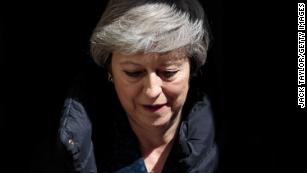
London (CNN)Brexit has destroyed another British Prime Minister.

Three years after voters in the UK mandated their government to take Britain out of the European Union, Theresa May’s failure to do so has finally caught up with her.”I have done my best,” she said in an emotional statement on the steps of Downing Street. But as she admitted, it wasn’t enough.It always seems to end like this for leaders of May’s Conservative Party, divided for years over Britain’s relationship with the European Union. Her predecessor, David Cameron, quit the morning after 52% of the UK voted to leave the EU, having presided over his own political miscalculation.Under her leadership, the Conservative Party has gone from being seen as the natural party of government to the exploding clown car of politics. Worse than being unable to govern, the Conservative’s mishandling of Brexit has led to the public humiliation of the UK’s oldest and most successful political organization, suffering electoral losses to a rival party that didn’t exist six weeks ago.May had previously said that she would stand down if her deal was approved, letting someone else take control of the next stage of Brexit. It turns out that top-to-bottom rejection of her deal and her leadership from pretty much everyone involved in politics would also do the trick.

Theresa May expected to announce resignation

Theresa May expected to announce resignationMay’s legacy will be defined by failures, public humiliations and catastrophic political miscalculations. Some of these were out of her hands. Some were the result of poor advice from those she chose to surround herself with. Some were because of the unprecedented political crisis that would come to dominate her time in Downing Street.But much of it was her own fault. Many of her decisions had a directly negative impact on her ability to lead. The problem for May wasn’t just that British politics has been deadlocked for the best part of three years, but that she repeatedly engineered ways to erode her own authority.By the time she accepted her number was up, she had lost the confidence of MPs, members of her own party and even her own Cabinet.

‘The nasty party’

Before taking the job, May had long been tipped for high office. In 2002, while serving as chair of the Conservative Party, May addressed the faithful at their annual party onference. At the time, the Conservatives had been out of power for five years. Tony Blair had successfully won over some traditional conservative voters and the party had an image problem. This also meant it had an electoral problem: “Our base is too narrow and so, occasionally, are our sympathies. You know what some people call us — the nasty party,” May said.The speech went down a storm and paved the way for a new era. In 2005, the party would elect David Cameron as leader. Cameron knew the importance of May’s support, so made her a close ally and, along with other Tory moderates, oversaw a sweeping modernization of the party. It would come to be a party that believed in helping communities, the “Big Society”, and would eventually be the party that legalized same-sex marriage in the UK.

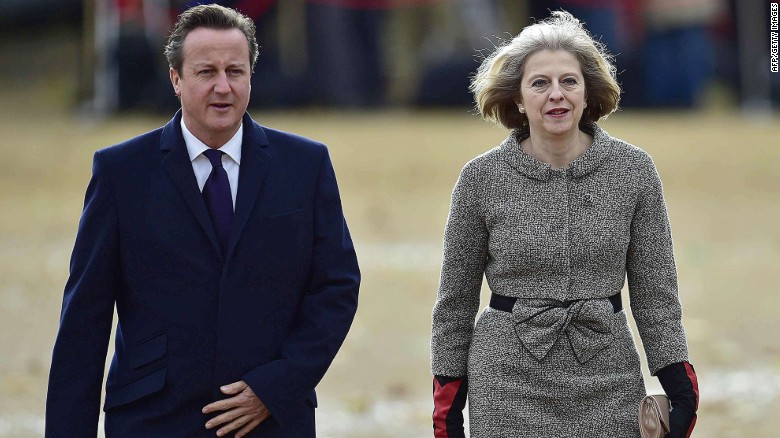
Former UK Prime Minister David Cameron with Theresa May in 2014.

Former UK Prime Minister David Cameron with Theresa May in 2014.Cameron became Prime Minister in 2010, albeit as leader of a coalition government with the center-left Liberal Democrats. Again, knowing May’s importance and her appeal to the more conservative members of the party’s base, he made her Home Secretary.May was always considered one of the toughest members of Cameron’s Cabinet. As Home Secretary, she accused the Police Federation — the association that represents rank-and-file police officers in the UK — of “crying wolf” over budget cuts. She presided over a policy of creating a “hostile environment” for illegal immigrants. She even took on the EU on matters ranging from immigration to the deportation of high-profile terrorists. She was a force to be reckoned with and seen as one of the cornerstones of conservatism in a coalition compromised by liberals.It was a shock to some when in 2016, May announced that she would be backing David Cameron’s Remain campaign. But her decision to do so, it turned out, was a masterstroke in triangulation. When Cameron resigned in the wake of the result of the Brexit referendum, May was seen as a safe pair of hands. She backed Remain, but her track record in the Home Office meant she was tough enough to stand up to the EU. She was the best candidate to unite two sides of the Conservative Party that voted for different things.At least, that was the theory.

An alienating Prime Minister

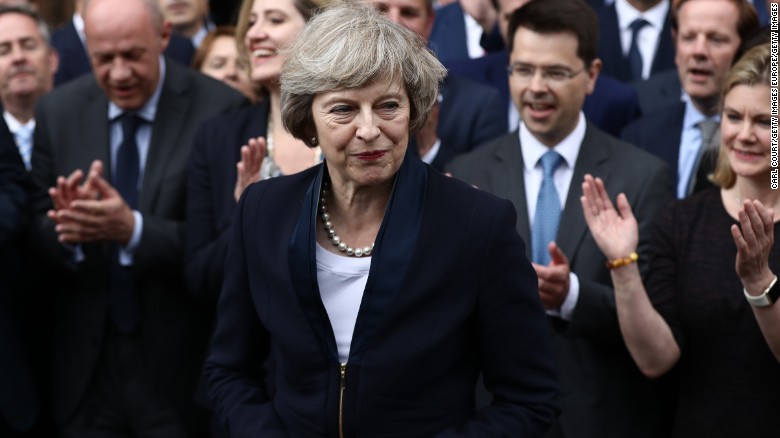
Theresa May accepts the leadership of the Conservative Party in 2016.

Theresa May accepts the leadership of the Conservative Party in 2016.However, from the moment she became Prime Minister, she began alienating people whose loyalty she would later regret not being able to depend upon.In the months that followed May’s ascension to the top job, her Brexit position hardened. Rather reach across the political divide within her own party, the Prime Minister’s embrace of Brexit was similar to that of the evangelism of a born-again Christian. Her new, ardent Brexiteer persona won her support on her own backbenches and in the Brexit-supporting media. The Daily Mail, an anti-EU newspaper, declared that May would “crush the saboteurs” who sought to frustrate Brexit.

Theresa May is "desperate," says Alastair Campbell

Theresa May is “desperate,” says Alastair Campbell05:42While her new position as the defender of Brexit Britain won her some friends, it put off those who wanted a softer Brexit or no Brexit at all. But May and her advisors didn’t seem to realize how she was seen outside of the Brexit bubble.This new confidence led to May and her inner circle making their first catastrophic mistake. In June 2017, despite having made little progress on Brexit plans, May held a snap election, convinced she could to increase her parliamentary majority of 13 to something north of 100. A result like that would have given May an unassailable position from which to push through her Brexit strategy.Her plan backfired. A limp election campaign in which May seldom appeared in public — and seemed hellbent on avoiding any members of it — made her look out of touch and power-hungry.The opposition Labour Party took advantage. It managed to position itself not only as the more pro-Europe option, but its leader, Jeremy Corbyn, seemed more human. The Conservatives emerged as the largest party in Parliament, but May was stripped of her working majority.From then, May couldn’t catch a break. Less than a week after her unnecessary humiliation, Britain was struck by tragedy. The fire that ripped through Grenfell Tower in London left 72 people dead and a community shattered.

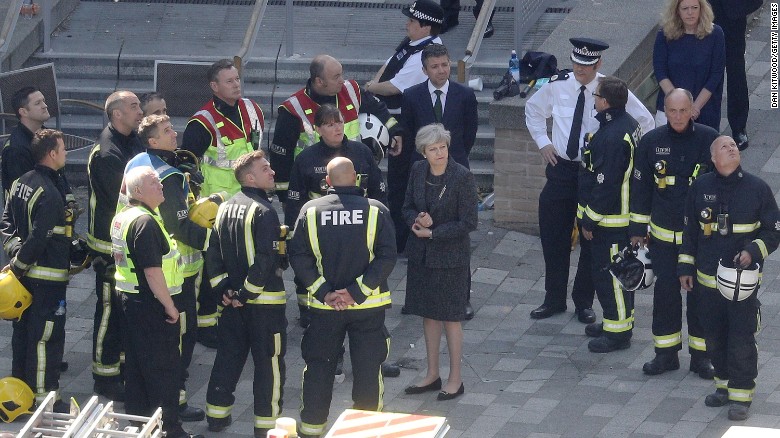
Theresa May didn't meet Grenfell survivors when she visited the site of the fire.

Theresa May didn’t meet Grenfell survivors when she visited the site of the fire.May’s response was widely criticized. She visited the site, but didn’t meet with any of the survivors. It made her look cold and unsympathetic. While no one seeks to use a disaster like this for political gain, May’s woes were compounded by images of Corbyn hugging survivors. Even the Queen put on a better show.Worse for May was that the Grenfell tragedy came to be viewed by many as the result of Conservative policies under David Cameron. Whether this was true or not didn’t matter: Labour was on the side of the people; May simply didn’t care.Less than a week after Grenfell, the UK was struggling with another tragedy. A British man with a history of violence and fascination with anti-Islam ideas drove a van into a crowd of Muslims, leaving the Finsbury Park Mosque in London after evening prayers. When May visited the scene of the attack, she was heckled by bystanders. The political atmosphere in the country was becoming febrile.May’s authority was under increasing pressure. Her election failure had forced her to sack her political advisers and enter into a supply and confidence agreement with the Northern Irish Democratic Unionist Party, who in theory prop up her minority government. More on this later.

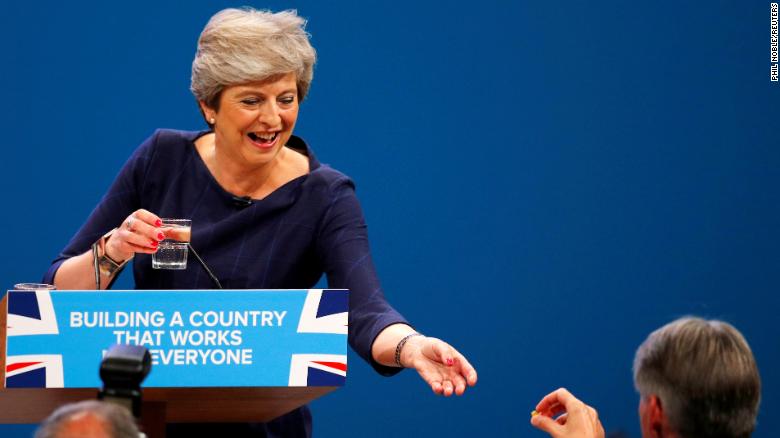
Theresa May accepted a cough sweet during a speech in 2017.

Theresa May accepted a cough sweet during a speech in 2017.May was forced to face the music at the annual conference of her Conservative Party in October 2017. Her now infamous speech, in which she suffered a coughing fit, was confronted by a stage invader who handed her a P45 (the UK equivalent of a pink slip) was topped off with the set falling apart behind her. It came after days of mutiny from within her party, which numerous of the not-so-faithful publicly saying that it was time for May to go.At this point, one might be tempted to feel sorry for the PM. But hold on a second. Sure, she can’t help a cough, a stage invader or bad set design. It’s very unlucky. But she could have avoided her fate of having to stand before a room of people utterly sick of her.

Brexit turns sour

It was around this time that her Brexit plan started to go badly. Meeting after meeting in Brussels resulted in EU officials and leaders publicly admonishing the UK’s Brexit negotiators.Over time, May’s Brexit position softened as talks with the EU became friendlier and common ground was reached. But this is where May made another political error. While talks had been going well in Brussels, May’s Brexit plan was still a secret to many in London. It did not matter that the government and EU officials agreed on obscure but important details, whether the British public or political class would accept it was another thing altogether.That failure to carry a divided House of Commons with her resulted in a deal being agreed that parliament came to detest. And that’s why, every time it was put to a vote, it failed.

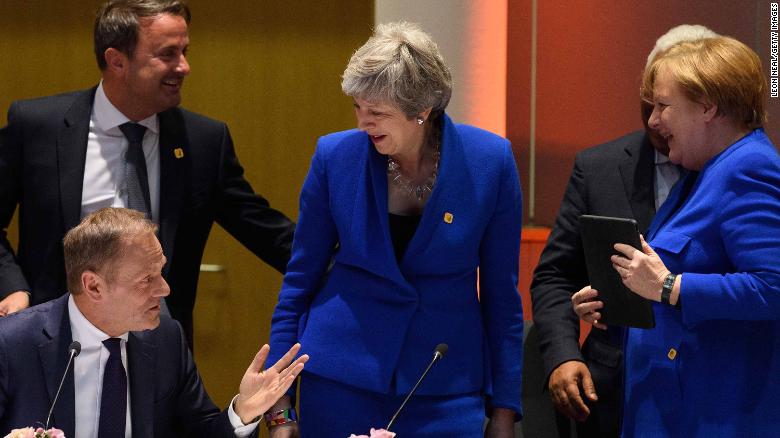
Theresa May with European leaders in Brussels. They came to disrust anything she said.

Theresa May with European leaders in Brussels. They came to disrust anything she said.This created problems for May both in London and on the continent. Over time, EU leaders simply stopped believing anything she said. The same goes for Brexiteers, who once saw her as their champion. The low point of trust in her own party perhaps came at a meeting of hardline Brexiteers last year, when members of her own party were heard chanting “Theresa the appeaser,” a reference to former Prime Minister Neville Chamberlain, infamous for striking a deal with Adolf Hitler in 1938.Outside of Brexit, her time in the Home Office came back to haunt her more than once. First, the Windrush scandal. Her “hostile environment” policy had created legislation which required immigrants to prove their status by providing paperwork when trying to do everyday things like renting an apartment or taking a job.

The return of Brexit's Nigel Farage

The return of Brexit’s Nigel Farage 02:25Unintentionally, this hit a generation of immigrants from the Caribbean, who came to the UK in the post-war years to make up for a shortage in the workforce. Many of them were without paperwork and suddenly faced the threat of deportation, despite having lived in the country for decades.Public outrage once again made May look out of touch and unsympathetic. It also meant that one of her arch-loyalists, Amber Rudd, was forced to quit as Home Secretary, the government department that oversees immigration.Other decisions made during her earlier period in Cameron’s government have caused problems for May. The UK’s knife crime crisis has been blamed on cuts to police budgets she implemented. While the veracity of this claim is unclear, defending a policy of cutting police funding while parents are seeing their children murdered is not a good look.But it was her mishandling of Brexit and poor political decisions that made governing impossible for May.

Cabinet support falls away

As the Brexit endgame drew closer, she was visibly losing the support of her Cabinet. After a meeting at the Prime Minister’s country retreat, Chequers, in which she outlined the latest Brexit policy position, she lost two important ministers. Boris Johnson, her Foreign Secretary and the most prominent Conservative Brexiteer, and David Davis, her Brexit Secretary, decided they’d had enough.

Why divisions in the UK run much deeper than Brexit

Why divisions in the UK run much deeper than Brexit 03:26May had a problem. She needed to fill these positions with safe pairs of hands while retaining the Remain/Leave balance in cabinet. Dominic Raab, another prominent Tory would take over as Brexit Secretary.Things calmed down for a bit and May was able to celebrate a huge victory on November 14, as news broke that an agreement had been reached with the EU. The Withdrawal Agreement was proof that there was a way out of the EU that didn’t cross the UK’s red lines and was acceptable to the EU.The celebrations were short lived. Dominic Raab, May’s second Brexit Secretary, resigned less than 24 hours later. More followed. Her authority was falling apart in front of everyone’s eyes. The deal was hated in all corners of the House of Commons. Knowing it would suffer a heavy defeat, May held off holding a vote on the deal until January this year. She was handed the largest defeat in the history of the House of Commons — a margin of 230.Meaningful Vote 2 didn’t go much better. May’s deal was defeated again on 12 March by 149 votes. Brexit was slipping out of her hands.Nothing illustrates this better than the fact that in order for May to have a credible go at a third vote, she needed the EU’s help. At the March 22 EU summit, the 27 leaders of the other EU member states agreed to let May extend the Brexit deadline if her deal passed, and offered her two ways out of the mess.Even that wasn’t enough to satisfy the House of Commons. Lawmakers went as far as trying to take the power out of May’s hands. For the first time in living memory, the legislative branch of government dictated the order of business on the floor of the House of Commons. The plan was to try and find a majority for an alternative to May’s plan. But isn’t just May that has a Brexit problem: the House of Commons has been very good at saying what it’s against, but useless saying what it’s for.

Everything you need to know about the European elections

Everything you need to know about the European electionsAt the end of March, the PM made her final move. She told her Conservative lawmakers that if they backed her deal, she would go. May was throwing the kitchen sink at Brexit — and staking her entire career on it.It didn’t work. Nothing May could offer was enough to avoid her final humiliation, as her own party tried to change its own rules to force her from office.Another British Conservative politician, the divisive Enoch Powell, once said: “All political lives, unless they are cut off in midstream at a happy juncture, end in failure.” While May might be in good company on that front, it’s hard to think of another politician whose legacy will be so defined by catastrophe.

THE SPREAD OF ISLAM IN SRI LANKA AND CHANGING REQUIREMENT OF RELIGIOUS EDUCATION

May 23rd, 2019

BY EDWARD THEOPHILUS

When I read open views in newspapers and other media devices, I found that many have a problem, why Islam spreads rapidly in many countries and nobody has opted to discuss the major reason to rapidly spread Muslim religion.  Islam is a religion like other religions and no one can identify that Islam has a specific spirituality or a logical philosophy than other religions. In fact, we can see that Islam contained many practices and attitudes like in other religions and sometimes against humanity expressing mythical views that they do everything (good and bad) on account of God or to satisfy God. Does God expect from people to work against humanity?  Why people have specific interest in such a religion which goes against humanity? This is an unresolved question among people for a long time and many academics did not consider finding solution to this question. Real Islamists believe that they have five roles to play that are Taweed (there is no God but Allah himself), Salaat (pray five times a day), Zakaat( Muslim who have money must give a percentage of 1/40 to help people, Syaam (fasting during the Ramadan) and Hajj (Pilgrimage to Mecca). The concept of Taweed means believing a one God, which is related to many religions such as Judaism, Christianity, Catholics, and Hinduism and it doesn’t further mean that this concept forces believers to kill non-believers.

Islam began to spread after 600 years of Jesus Christ and the social doctrine of Jesus Christ was stricter and was based against individual selfishness of people and he criticized the social policies and practices of Judaism in his time as he happened to live in that society. Jesus Christ strongly criticized the ideas and practices of family relationships in that society which he was living and the way of people looked at God in Judaism in that time.  Jesus Christ was against the divorce and educated God as a loving father than a character that takes revenge from people and he educated two commandments that people have difficulty to follow in an environment with full of desires, but they were the best social and spiritual policies for the spiritual progress of people.  Such policies individually and socially centered and promoted people to get away from selfishness allowing others to give opportunities to live in the society.  Practically, it was a hard task for individuals as people were full of desires.

After 600 years of Jesus Christ, Islam emerged and attempted to change the policies and teaching of Jesus Christ, allowing for a male-dominated society. Islam recognizes Jesus Christ as a Messenger of God, but the nature of recognition does not clearly appear that Islamists agree with the teaching of Christ.  Islam liberalized marriage and divorce rules, and the concepts and practices that were tabooed by Jesus Christ who advised a human to engage in altruistic activities against selfish life. Islam allows an easy divorce system and generally treats women like slavers of men despite modern changes in Islam. Old Testament and Koran clearly indicate the beginning of a female and the nature of the beginning of a female clearly showed that male and female are equal when they live in this world and either male or female cannot regard, opposite is inferior while living in this world. When society consists of assigned more roles to male other (female) appear as playing less role, but the truth was that the role played by either male or female could not be judged by narrow arbitrations degrading the role of women is inferior.  However, the society developed bias folklore against the values of female.

When Islam supports for male-dominated society and has a flexible rules and procedures for divorce, marriage and pro polygamy in human behaviour, Islam was attracted by people who had a mentality to a selfish and a clinging life for desires.  In that way, Islam rapidly spread in the world because Islam supported to desires of male over female. There is no argument that if Islam had strict rules on marriage and divorce and women rights, people would have not gone to Islam looking for spiritual liberation.  In modern world, we can see that people used to look for spiritual liberation from various forms of Buddhism (Mahayana, Hinayana, Sen and Jain etc). Hinduism also educates that all lives began are sacred as they are parts of God and should be treated with respect and compassion. When looks at Islamic society with the practice of Muslim personal laws in Sri Lanka, it is quite difficult to see that Islam treats female as a part of God and treat them with respect and compassion.  No religious person uses a pregnant woman as a suicide bomber and so-called Islamic leader of Wahabism used a pregnant woman as a suicide bomber to kill others.  It was a crime against humanity.

Maldives Islands was a Buddhist country and the major reason to change religion of people in Maldives was dishonest strategies of Muslim traders and liberal rules to divorce and remarriage in Islam.  The liberal ruling for divorce and marriage in Islam and encouragement to polygamy were the major contributing factors to rapid expanding of Muslim religion.  In the modern era, this idea might subject to altercations as many Islam countries have changed their laws, traditions and attitudes, as people had internal demands to change many practices, especially after the Iraq war and Islam religion faced to a change in practice as well as customs. However, the concept of taweed has not changed or interpreted in the way people to respect in culture, religion and society.

Historians in Sri Lanka have opinion that Islam came to Sri Lanka as a result of the behaviour of traders came from Eretria, Aden and Persia as these traders married Sinhala women in the country without disclosing whether they were married or not before to Sinhala ladies.  Prof G.V.P Somaratne (2007) states trading business in Indian Ocean relegated to Islamic traders and harbor towns of Sri Lanka were also dominated by Muslim traders.  In fact, the spread of Islam in Sri Lanka was not a result of specific reason that Islam was carrying a spiritual and specific philosophical message over other religions, but it was Sinhala women who married to Muslim traders and allowed to be their kids convert to Islam.   

Robert Knox wrote in his book (An Historical Relation of the Island of Ceylon) that King Senkadagala Rajasinghe had a strong conjecture on the behavior of Muslim people as the behaviour of them was suspicious to him.  King Senkadagala Rajasinghe was not addicted to using too many women, he was not mad on persistent to liberalize marriage and divorce rules in Islam in Sri Lanka.  Robert Knox further states that Muslim people at that time were poor and King insisted provide donations to them. It can assume that Muslim traders deserted their local wives and children and went back to own countries without providing means to live in the country.  History also shows that King Senerat allowed Portuguese to destroy Muslim Mosques in seasides and other important note is that a King of Sri Lanka, who was in 1210 BC was killed by a conspiracy as he was an Islamic faith.

In countries where divorce is legally allowed and liberalize remarriage rules, the spread of Islam is very slow and in countries where indirectly allow polygamy and have traditions to cling life of desires, we can observe that Islam religion is completely disregarded by people. In many Western countries where there are more liberal policies and equal opportunity for women, anti-discrimination laws, Islam would not rapidly expand as individuals can achieve what they expect without converting to a specific religion.  Current Muslim people in those countries migrated as people of Islam faith have a conflict in family life because their kids do not respect the traditions of Islam culture.  In fact, these Muslims are struggling to keep their children in Islam respecting to practices in original countries.

Many religions in the modern world have spiritual leaders and religions like Catholic has an international leader, and devotees of religion follow the rules of a leader.  However, Islam has no International spiritual leader or publicly accepted and known to all people, and the public has suspect what is the leadership guidance and how to correct the mischievous behavior of devotees. In Sri Lanka, Buddhism is the major religion with many devotees and it had a leadership which has the power to express the accurate philosophical guidance.  People see that from time to time leaders come to media and express views on the exasperating behavior of devotees or movements.

A report published by Shenali Waduge in Lankaweb summarised reported events after Easter Sunday attacks and information given in the report surprising to public and seems that radical Islamists worked to acts of terror all over the country and the government is responsible for such a massive expansion of planned terror activities and depriving intelligence services and finding of them.       

TIMING OF THE RELEASE OF GALABODATHTHE GNANASARA THERO-ADDING OIL TO FIRE!

May 23rd, 2019

M D P DISSANAYAKE

Since the beginning of this year, there had been public outcry for the release of Gnanasara Thero.   But our illustrious President Sirisena did not act at that time.  Now, it has become clearer that President Sirisena did not act himself on intelligence  inputs  received regarding April 21 attack.  Therefore, the President need to carpet the public anger against him by creating a new situation.

Many comments made by Gnanasara Thero in regard to Muslim activities have come true.  In his speeches, he has clearly identified the dangers and if the President and the dubious Prime Minister Ranil Wickremasinghe  did act at that time, hundred of lives could have been saved. 

Releasing the Thero at this time, in my opinion, is similar to adding oil to fire.  This decision is most likely to ignite anger against  innocent muslims.   The Thero most likely to become much more aggressive and create unrest in the country, paving way for the postponement of Presidential and General Elections.

Since the time President Sirisena appointed President Mahinda Rajapakse, he had the ulterior motive to persuade SLPP to support him for the second term.  President Sirisena is now fully aware  that his plan will not succeed.   To split the votes of Gotabaya Rajapakse,  he now plan to use Gnanasara Thero and seek his support for his candidacy.  

We have a President and a Prime Minister failed in their duties to  provide security to the Nation.  They have no regard to the hundreds of lives lost and several others injured.

The behaviour of President Sirisena is very similar to a Monkey with a Sword in its hand.  

It can be argued if Sarath Fonseka can be pardoned, why not Gnanasara Thero?  In the jungle of dirty politics of Sri Lanka, we pray peace and harmony to all citiens in these difficult times. The general public must be educated by the Opposition to prevent them causing communal unrest by falling into the trap set up by a Foolish President and Prime Minister.

Dhammapada Verse 63-Ganthibhedakacora Vattu:

Ya Balo mannati balyam

Panditovapi tena so

Balo ca Panditamani

Sa ve Baloti vuccati”

Conceiving so his foolishness
the fool is thereby wise,
while ‘fool’ is called that fool
conceited that he’s wise.

Explanation: If a foolish person were to become aware that he is foolish, by virtue of that awareness, he could be described as a wise person. On the other hand, if a foolish person were to think that he is wise, he could be described as a foolish person.”

Rebooting agriculture to provide clean, practical solutions to Sri Lanka’s energy crisis – II.

May 23rd, 2019

By   Chandre Dharmawardana, Canada

Newspaper  reports mention how the minister of Power and Energy  and the CEB engineers are trying to meet a systemic power shortage looming over Sri Lanka. The Easter Sunday carnage made everyone forget about the grave systemic problems facing Sri Lanka. Sri Lanka seems to lurch from one emergency to another in every sector, like a ship gone adrift. A May 20th report in the Island states that CEB engineers warn of power cuts …”. This is a result of not staying course with  long-range power production plans when governments and their favourite financiers changed. Furthermore, the CEB  plans were  inconsistent with rising concerns on  pollution and global warming. The potential of solar-  and biomass energy  was considered  to be unimportant when the CEB energy plans were  made decades ago.

 In a previous article labelled part-I  that appeared in the Lanka web (https://www.lankaweb.com/news/items/2019/05/06/clean-practical-solutions-to-sri-lankas-energy-crisis-i) we examined how Solar power can provide a large part of the needed power by using floating solar panels in reservoirs already equipped with hydro-turbines and how they can be deployed to provide FIRM  POWER  without batteries or alternators.  The proposal is to store  solar electricity (or wind generated electricity)    by using the alternative energy source (be it wind or solar) for re-pumping  water back into the reservoirs. Then nearly the  equivalent amount of electricity can then be re-generated in the usual manner by the hydro-turbines.  Biomass energy offers an even bigger   inexpensive  source of firm energy  that can be made available at will.

Ailing agricultural sectors can be re-booted inexpensively  to become vibrant bio-energy industries. The potential can meet Sri Lanka’s needs for decades to come, and even to sell to the Indian continent using a cable link, breaking the isolation of Sri Lanka’s power grid.

There are mind boggling possibilities. Scientists  can engineer, within the decade, whole forests  with genetically modified  plants that store lots more carbon than plants available today. The relevant genes are already known. Such plants can fight climate change and  also greatly increase the efficiency of  bio-energy plants

A READILY AVAILABLE BIO-ENERGY SOURCE.

Bio-energy  has been talked of  for decades, but with its implementation. There are, as yet  no turn-key solutions or commission-carrying businessmen. The simplest approach is to burn any kind of fast-growing wood, bamboo, bagasse  etc., in high-efficiency furnaces and  run  generators.

This process is carbon-neutral” as the CO2 released is that absorbed by the plants during  growth. The flue gases are relatively free of the toxic  nitrous and sulphurous fumes found in coal-fire or diesel emissions. There is  sub-micron fly ash, although minimal compared to coal.  While the logistics of collecting the  biomass is  big,   private companies like GreenWatt in Moneragala  have set up 10 MW power plants using fast-growing Gliriicidia. CEB engineers consider these as small potatoes”, but thousands of such plants can be set up easily in the plantation sector.

There are several inexpensive and  efficient processes for generating energy for Sri Lankan needs for ever. Here we  discuss just ONE eminently practical solution that simultaneously reboots the ailing coconut sector.

 THE COCONUT INDUSTRY AS  AN ENERGY GIANT.

The industry concentrates on the coconut kernel as copra and desiccated coconut. The local householder buys coconuts for cooking. The milk is hand-squeezed inefficiently. The water,  the spent kernel (‘polkudu’),  the shell and the husk are wasted or used in primitive highly polluting industries (e.g., making coir, rugs) with only a  minimal value addition, while the demand is unsteady.

Coconut shells are indeed used as fuel or for making activated carbon.    According to Paddon and Parker (1979) the husk   has some 6700 kilo Joules per nut, i.e., almost  5 KWh of energy per kilo of husk! So the energy from ten husks is roughly  the same as from one litre of petrol! Only part of the  heat can be converted into electricity because of  the Carnot-Rankin loss to entropy.

The water, kernel and the shells already have a good market value. So we use the husk and all waste for the energy sector.   Sri Lanka produces approximately 2.5 billion nuts/year, a drop from its better days with  3 billion.  Using the dry weight (following FAO data) of the husks, the  2.5 billion husks  are equivalent of about 2 million GWh per year, i.e.,  some 5.3 billion liters of petrol/year.

If even 20% of the husks were collected, and if the heat-to-electricity conversion

efficiency is  30%, an energy yield of 0.3 billion liters of petrol,  or about    150,000  GWh from the husk alone is possible. Taking the total annual power need of the country  to be about  15,000 GWh, the coconut sector can readily supply ten times the energy needs of the country right now!

Sri Lanka’s ailing coir industry and allied industries  like  husk chips,    coir pith (‘kohubath’) for soil remediation, `kohu’-panels,   etc are  simply methods of discarding valuable energy. Just as Sri Lanka throws away the coconut water, kurumba  Komba” (used coconut),  the  potential of the husk too is wasted when used  in traditional agriculture or rural industries.  

The coconut husks are traditionally dumped in pits  or submerged in cages near waterways  for ‘retting’,  prior to the fiber extraction by primitive methods dangerous to workers.  The water  become polluted and emits bad odors;  oxygen depleted effluent full of organic matter  deadly to aquatic biota are a byproduct of this industry.

Recognizing the energy potential in coconut, a different industry model must be legislated.  Whole nuts should only be  sparingly available in the market. Just as paddy is processed and only hulled rice is marketed, coconuts  should be processed to market the kernel and shell, while the coconut water should be canned and sold.  The husk is the fuel for high-efficiency burners whose heat  generates electricity. The sale of individual coconuts rather than the transformed products should be highly taxed. Only those who grow coconut in their home gardens for private use can have the luxury of consuming coconuts in the traditional way. A higher price for husks will tempt everyone to sell their husks to the power company. The present  ‘waste tariff’  on husks must be lifted and the power industry be given a 20-year tax credit. There can be power hundreds of companies in large coconut estates.

So we have no need for coal or liquified gas,  or  ransoming Sri Lanka’s sovereignty to foreign vendors, or destroying the environment, in order  to be self-sufficient in energy. Similarly, mini-hydro companies should be banned as they render little and  cause  much ecological damage. No oil or gas exploration in the neighbouring seas should be allowed as it is intensely environmentally damaging. It will further threaten the nation’s sovereignty as has happened to many small oil-rich nations now in the grip of powerful consortia. 

The coconut  acreage need not increase (i.e., no habitat loss) as the current  husk supply far exceeds the needs for energy production which can start within  months  rather than years.  Those working in the ailing coir and allied industries should be absorbed into the energy sector. The ash from burning coconut husk is rich in potassium, phosphorous and other minerals. 

Husk ash  mixed with optimal amounts of  humus and urea makes a good fertilizer. However, controls on metal toxins against  bio-accumulation are needed just as with organic fertilizers. The  ash is useful in the construction industry, e.g., for sand mixes, making bricks or paving stones.

Using gene technology in agriculture for carbon capture and reuse.

Coconut production itself can be increased  using modern cultivars instead of traditional varieties, without incurring habitat loss and in fact aiming to return currently cultivated land back to nature. Proper fertilizer application, irrigation, and restoring the right of the coconut grower to use herbicides like glyphosate that are least harmful to the environment will increase nut production without increasing the land under cultivation. The use of  so-called organic” methods based on unscientific and outdated myths that rejects the use of plant genetics etc., should be discouraged.  Use of herbicides enables a drastic reduction in soil erosion and reduces  manual labour.

It is interesting to note that many anti-rational ideologically motivated programs have contain in them an attack on genetics. The Marxist” agriculture of Lysenko in the  Soviet Union, and the so-called organic farming” movements of today which also lean on a nostalgic throw-back to traditional agriculture” are examples of such anti-rational movements. Instead, plant genetics and biotechnology should be harvested to increase yields, be it in the output of nuts husks or any other desirable product, while decreasing the area under cultivation, thus reducing the  habitat encroachment by human activity. The catastrophic decline in pollinating species, and in biodiversity in general are mostly due to habitat loss and deforestation caused by humans.  

Any tree that is grown for production of energy for  biomass can be genetically engineered and optimized for increased carbon capture as well as rapid growth. For instance, mangroves have developed root systems which contain various types of high-carbon  cellulose. Mangroves should be preserved on their own ecological value and  should NOT  be exploited for their bio-mass. But we can learn from the genetic makeup of plants like Mangroves. That is,  genes relevant to high carbon capture by plants that make, say, Subarin,  can be transferred to many other plants using gene technology. Many young Sri lankan scientists have now acquired the scientific know how needed in biotechnology and genetic engineering. Coconut plants re-designed to make Subarin in the husk would further increase the high energy content of husks, and also add to temporary carbon storage. Such innovative solutions are needed if we are to meet to the current ecological crisis by reducing global warming, and by aggressively returning cultivated land back to nature to preserve bio-diversity, while getting ready for 11 billion humans by the end of the century.

CONCLUSION.

We have shown that effectively unlimited amounts of power are available from the waste bio-mass  of the coconut industry.  A similar analysis will be presented in a future article,  showing  that  Rubber, Paddy, or maize  etc.,  can become  lucrative energy giants. Genetically engineered carbon-rich plants can boost the energy harvest enormously, while also scavenging out  green-house gases.

[The Author was a past-Professor of Chemistry and a Vice-Chancellor of the SJP University in the 1970s. He is currently a Professor of Physics in Canada.]

Bravo! You did it Mayor Patrick Brown of Brampton

May 23rd, 2019

Asoka Weerasinghe Kings Grove Crescent . Gloucester . Ontario . K1J 6G1

23 May 2019

Mayor Patrick Brown of Brampton
City Hall
Brampton, Ontario

Dear Mayor Patrick  Brown:

Bravo! and you finally did it.   You were stroking the Ontario’s Tamil Tigers faces holding onto their tails, for almost a decade, even when you represented Barrie as a Member of Parliament, and spat and kicked the docile Sinhalese lion  holding on to a regal sword at the center of Sri Lanka’s national flag.

 But, what you didn’t know was that this lion is the king of Sri Lanka’s jungle where the Tigers roamed dodging whenever they saw a lion, until one Nandikadal’s sunny day,  the lion mauled the tiger to death on 19 May 2009, and there ended the Tamil Tiger terrorism in Sri Lanka. So you didn’t like it Mayor Patrick Brown. So you continued with your Mission wanting to destroy Sri Lanka wanting to divide the island in to two and give the mono-ethnic, racist Tamil state, Eelam to the Tamil separatists, like your friend Rathika Sitsabaiesan,  carved out of 33% of the north-east  real estate of Sri Lanka bordered by 66% of the coast line.  And I whispered into your ears Patrick Brown asking you not to be so silly. and to cut-out your mythical dream of a Tamil-Eelam, through my letters.  You did not want to give up.

And  finally you got a reaction  on 18 May 2019.  You woke up the docile Sinhalese Lion from his slumber and over 500 of the Sinhalese Lions an Lionesses  woke up  with him and  they were angry and mad at you for Proclaiming May 18 as  the City of Brampton’s day of Remembrance of Tamil-Genocide in Sri Lanka, WHICH NEVER HAPPENED.

The over 500 demonstrating ‘Lion’-voices roared at you  with the words like- Patrick Brown, is a Clown. And you know what Mayor Brown? They got that slogan a 100% right.

The Sinhalese that you spat at and kicked for a decade are now awake and ready to accept your challenge.  So, what are you going to do about it Mayor Patrick Brown? Surely, you are not going to stand at the corner of your office at City Hall, stick your thumb in your mouth and sulk like a  child because over 500 lion and lioness voices are bombarding your ear drums, wondering what the heck did I do to make all these people mad at me, and some others among the Sinhalese communities around the globe are mad at me too

Well… you did it, Mayor Patrick Brown, now deal with it.

Here’s a suggestion, so that you can prove you were right to the world when you proclaimed 18 May 2019 for the City of Brampton, as the Tamil-Genocide Remembrance Day, at a public debate with yours truly,, Asoka Weerasinghe, who says that Tamil Genocide never ever happened in Sri Lanka and that is a Lie.

This is a good opportunity for you  to defend yourself and come clean as an honest politician..  If there is a Participation Fee for you to debate me , I can afford to pay you $500 out of my pocket.

If you are going to up your fee to debate me to $1000, I may be able to manage to scrounge another $500 from somewhere.  Well, this is a Peace Offering that I am prepared to offer you to come clean, and not  an anti-Sri Lankan Canadian politician.

I am prepared to give you another handicap, by allowing your Speaker of your City Council  to be the moderator.

If that is not enough I am prepared to give you one more incentive to debate me in public on that subject of your mischievous Proclamation tarnishing the dignity of my Sinhalese people. 

Here it is.  Since your Brampton City Council voted unanimously for the Proclamation, I will allow all of them to line up 20 feet in front of  me after the debate is over, 30 seconds to pelt me with  rotten eggs and tomatoes.  But on  one proviso that I am allowed to wear a helmet  as I don’t trust any of your Tamil vote hungry Tamil-Tiger lovers who might use lapidary rock eggs pretending that they real poultry eggs.

The offer is there for you. Prove to us that you are an honest politician and not a Tamil-Tiger lover and  not on a Mission to destroy  my Motherland, Sri Lanka.

And let me inform you of my Mission which has been since 4 August 1983, when I got involved as a Canadian-critic of the Tamil separatist Eelam War – My Mission is not to let any Canadian, not even a Prime Minister, nor you, Patrick Brown as the Mayor of Brampton, to hurt my  beautiful Motherland, Sri Lanka, unfairly. who nurtured the first 19-years of my life to be an honest  ‘citizen in our Global village’. That is a Big No, No.  And I will not let down my Motherland, ever.  So make a note of My Mission, Mayor Patrick Brown as you will have to deal with me, as you will hear from me every time you try to hurt my Motherland, Sri Lanka.

I sincerely hope that you will accept my challenge, my Peace Offering, Mayor Patrick Brown?  

Sincerely,

Asoka Weerasinghe

Wijeyadasa adds to damaging evidence on student insurance scheme

May 23rd, 2019

By Rathindra Kuruwita Courtesy The Island

article_image

A feasibility study had not conducted before presenting the Cabinet Paper on Suraksha Insurance scheme, which was introduced to cover schoolchildren, former Minister Dr. Wijeyadasa Rajapakshe yesterday informed the Presidential Commission of Inquiry (PCoI) to investigate corruption of the current administration.

The Cabinet paper for the Suraksha insurance scheme was jointly presented by Prime Minister Ranil Wickremesinghe and Education Minister Akila Viraj Kariyawasam.

“The decision to introduce an insurance policy for the students came from the Prime Minister and the Education Minister. Before making such a big project that will use government funds, there should have been a feasibility study before presenting it to Cabinet,” he said.

Rajapakshe also said that the insurance should have been managed by the Health Ministry and that the Education Ministry had no jurisdiction or expertise to carry out such a project.

During the first six months of implementation, the Education Ministry had received only Rs. 160 million worth of claims. However the Ministry had transferred Rs. 2.7 billion to Sri Lanka Insurance Corporation (SLIC).

“The Ministry only has to spend around Rs.300 million per year to cover all students but the Ministry had earmarked Rs.2700 million of public money for the insurance policy,” he said.

Last week, the National Organizer of the Trade Union of Graduate Employees Prasad Marasinghe told the PCoI that Education Minister Akila Viraj Kariyawasam and Petroleum Resources Minister Kabir Hashim were responsible for the misuse of Rs. 2,430 million in government funds due to the re-insuring ‘Suraksha’ insurance policies of schoolchildren with a reinsurance company in India.

“The Ministry spends approximately Rs. 285 million per year on the insurance cover for all students in the country. However, the Ministry obtains public funds amounting to around Rs. 2,700 million for the insurance scheme,” he said.

Marasinghe told the Commission that he was employed at the Health and Nutrition Division of the Education Ministry and the insurance scheme was handled by that division.

“We had several discussions with Director of Health and Nutrition Division and Chairman of Suraksha Committee Renuka Peiris. We pointed out that there was no need to re-insure this with an Indian company. We were told that she was working according to the Minister’s decision.”

Education Minister of the 52-day government last year, Wijeyadasa Rajapakshe identified that there was an issue and submitted a Cabinet paper to establish a fund at the Education Ministry that can re-insure the ‘Suraksha’ insurance scheme.

Reinsurance is the practice whereby insurers transfer portions of their risk portfolios to other parties by some form of agreement to reduce the likelihood of paying a large obligation resulting from an insurance claim.

දේශපාලනඥයෙක් එපා, 225ම එපා, කියලා ජනතාව ගොනාට අන්දන්න හදන අය කරන්නෙත් දේශපාලන කොන්ත‍්‍රාත්තුවක්. මෙහෙම කියලා තෝරගන්න කෙනාත් අන්තිමට කරන්නේ දේශපාලනයමයි…………………………. – මහින්ද රාජපක්ෂ –

May 23rd, 2019

පොදුජන පෙරමුණ පක්ෂ කාර්යාලයේ පැවැති උතුරු නැගෙනහිර පක්ෂ කි‍්‍රයාකාරිකයින්ගේ හමුව

පාරවල් වහගෙන යන ප‍්‍රභූන්ට ජනතාවගෙන් එල්ල වෙන විරෝධයෙන් පේන්නේ ජනතාව සිටින පීඩනයේ තරම යැයි විපක්ෂ නායක මහින්ද රාජපක්ෂ මහතා පැවසීය.
ඒ මහතා මෙසේ පැවසුවේ අද (23* බත්තරමුල්ල නෙලූම්මාවත ශී‍්‍ර ලංකා පොදුජන පෙරමුණ පක්ෂ කාර්යාලයේ පැවැති උතුරු නැගෙනහිර පක්ෂ කි‍්‍රයාකාරිකයින්ගේ හමුවකට එක්වෙමිනි.
එහිදී වැඩිදුරටත් අදහස් දැක්වූ විපක්ෂ නායක මහින්ද රාජපක්ෂ මහතා
වරෙක 225ම එපා කියනවා. තවත් වරෙක දේශපාලනඥයෙක් නොවන පුද්ගලයෙක් රටේ පාලකයා විය යුතුයි කියනවා. මේ විදියට ජනතාව ගොනාට ඇන්දවිමට සමහර පුද්ගලයින් කටයුතු කරනවා. මේ අය තමන්ද කරන්නේ දේශපාලන කොන්ත‍්‍රාත්තුවක් බව වසන් කරනවා. බටහිර න්‍යාය පත‍්‍රවලට අනුව මේ කණ්ඩායම් තෝරා ගන්න පුද්ගලයාත් අවසානයේදී දේශපාලනයේම නිරත වෙන බව ජනතාවට වසන් කිරීමෙන් සිද්ධ වෙන්නේ රට තවත් අගාධයකට තල්ලූ කිරීමයි.
ලාබාලතම දේශපාලන පක්ෂය වන ශී‍්‍ර ලංකා පොදුජන පෙරමුණ පැවැති පළාත් පාලන මැතිවරණයෙන් විශාල ඡුන්ද සංඛ්‍යාවක් අරන් ජයග‍්‍රහණය කළා. ශී‍්‍ර ලංකා පොදුජන පෙරමුණ මෙවැනි ජයග‍්‍රහණයක් ලබන්නේ ඔබ සියලූ දෙනාගේ කැපවීම හා උනන්දුව නිසයි. ඇමරිකාවේ හිටපු තානාපතිවරයා මෑතකදී ලංකාවට පැමිණි අවස්ථාවේ අපේ පක්ෂයේ සංවිධාන ව්‍යුහය ගැන පැහැදීමෙන් කතා කළා විතරක් නෙවෙයි ඊළග ආණ්ඩුව පිහිටුවීම සම්බන්ධයෙන් අවිශ්වාසයක් නැති බවත් සදහන් කළා. ඒ වගේම අද සන්ඬේ ටයිම්ස් පුවත්පත පළමුවරට සදහන් කරනවා ශී‍්‍ර ලංකාවේ පවතින රජය අනිවාර්යයෙන්ම පරාජයට පත්වෙන බව.
ත‍්‍රස්තවාදී බෝම්බ පිපිරීමේ සිද්ධියට සම්බන්ධ පුද්ගලයාට නැගෙනහිර පළාත සමග සම්බන්ධකම් තිබෙන බව මේ වෙද්දි හෙළිවෙලා තියෙනවා. මේ ත‍්‍රස්තවාදි ප‍්‍රහාරයත් එක්ක දේශපාලනයේ වෙනසක් සිදුවෙමින් පවතිනවා. ජනතාව දැඩි විදියට ආණ්ඩුවේ කි‍්‍රයා පිළිවෙත විවේඡුනය කරනවා. පහුගිය ජනාධිපතිවරණය අවස්ථාවේ මේ කියන පුද්ගලයා දේශපාලනිකව අපිව පරාජය කරන්න කටයුතු කළ පුද්ගලයෙක්. මුස්ලිම් ජනතාව වාසය කරන ගම්බිම්වලට ගිහින් අපිට විරුද්ධව දේශපාලනයේ නිරතවූවෙක්. ඒ පුද්ගලයාගේ සම්බන්ධකම් තිබුනේ කා එක්කද කියන දේ දැන් එළිවෙලා ඉවරයි.
ළ`ගදි පාරවල් වහලා ඇමැතිවරුන්ගේ වාහන පේලියක් ගියාම ජනතාව ඊට දැඩි විරෝධයක් පල කලා. ඒ විරෝධය සංවිධානය වෙලාකරපු දෙයක් නෙවෙයි. ජනතාව ආණ්ඩුවේ කි‍්‍රයාවන් නිසා මොන තරම් පීඩනයකට පත්වෙලා ඉන්නාවද කියන දෙයයි මෙයින් පැහැදිලි වෙන්නේ.
අපේ ආණ්ඩුව කාලයේ උතුරු නැගෙනහිර ප‍්‍රදේශවල විශාල සංවර්ධනයක් කළා. අපේ කාලයේ ඒ පළාත් වල කරපු වැඩවලට අමතරව මේ ආණ්ඩුව පත්වුනාට පස්සේ බෝක්කුවක්වත් හදලා නැහැ. අපි සියයට 98ක් ජනතාවට විදුලිය දුන්නා. පාලම් හැදුවා. ප‍්‍රදේශයේ ආර්ථික දියුණූවට අවශ්‍ය යටිතල පහසුකම් සංවර්ධනය කළා. රේල්පාර හදලා උතුරට දුම්රිය එව්වේ උතුර දකුණ යා කරමින්.
දැන් අඩුම තරමේ තමන්ගේ දහදිය මහන්සියෙන් වගා කරන දේවත් විකුණගන්න බැහැ. තොග වෙලෙන්දන්ට මැදිවෙලා ගොවිජනතාවට නිසි මිලක් ලැබෙන්නේ නැහැ. බඩු ගොවියාගෙන් හාල්, එලවලූ තුට්ටු දෙකට මිලදීගන්න මේ දේවල් වෙලෙදපොලේ ගිණිගනන්.මිනිස්සුන්ගේ අතේ සල්ලි නැහැ. ආර්ථිකය අතින් ගත්තාම රට පුරාම තියෙන්නේ මේ තත්ත්වයයි. අපි ඉක්මනින්ම මේ තත්ත්වය වෙනස් කරන්න අවශ්‍යයි.

ගලගොඩඅත්තේ ඥාණසාර හිමියන්ට අද දවසේ නිදහස ලැබීම ගැන අපි සතුටු වෙනවා. ඒ වගේම බුද්ධි අංශ නිලධාරින්ටත් ඒ නිදහස ලබා දෙන්න කියලා අපි ජනාධිපතිතුමාගෙන් ඉල්ලා සිටිනවා.

May 23rd, 2019

අද දින පැවැති ශ්‍රී ලංකා පොදුජන පෙරමුනේ මාධ්‍ය හමුව

අද දින පැවැති මාධ්‍ය හමුවට සහභාගි වූ නියෝජිතයින්
■ රත්නපුර දිස්ත්‍රික් පාර්ලිමේන්තු මන්ත්‍රී ජානක වක්කුඹුර මහතා
■ පාර්ලිමේන්තු මන්ත්‍රී විජිත බේරුගොඩ මහතා
■ පාර්ලිමේන්තු මන්ත්‍රී කනක හේරත් මහතා

කතානායකතුමාටත් පන්සල් යන්න බැරි වෙනවා. මහානායක හාමුදුරුවෝ ඉස්සරහා සම්මාන ගත්තාට කටයුතු කරන්නේ දෙබිඩි පිළිවෙතක.

රත්නපුර දිස්ත්‍රික් පාර්ලිමේන්තු මන්ත්‍රී ජානක වක්කුඹුර මහතා
ගලගොඩඅත්තේ ඥාණසාර හිමියන්ට අද දවසේ නිදහස ලැබීම ගැන අපි සතුටු වෙනවා. ඒ වගේම බුද්ධි අංශ නිලධාරින්ටත් ඒ නිදහස ලබා දෙන්න කියලා අපි ජනාධිපතිතුමාගෙන් ඉල්ලා සිටිනවා. අපි භාරදුන්න විශ්වාසභංග යෝජනාවටදිනයක් ලබා දෙන්න කියලා අපි පාර්ලිමේන්තුවේදි කතානායකවරයාගෙන් ඉල්ලීමක් කළා. කතානායකවරයාගේ දෙබිඩි පිළිවෙත රටේ සියලු දෙනාටම දැක ගන්න පුලුවන් වුනා. එදා අපිට එරෙහිව ගෙනාපු විශ්වාසභංග යෝජනාවට න්‍යායපත්‍ර ගැන නොසිතා ඒ අවස්ථාවේදීම කතානායකවරයා ඡන්දය විමසුවා. අපේ ආන්ඩුවේ සභානායක දිනේස් ගුණවර්ධන මහතා එයට විරුද්ධත්වය ප්‍රකාශ කරලා විශ්වාසභංගය නිත්‍යාණූකූලව ගේන්න. ඊට පස්සේ අපි විවාද කරමු කිව්වාම, නැහැ මම තීන්දුවක් ගන්නවා කියලා ආන්ඩුවේ අගමැති, සභානායක, සියලු තනතුරු හොබවන කෙනා වගේ කට හඩින් ඡන්දය විමසපු හැටි මුලු රටම දැක්කා. නමුත් න්‍යාය පත්‍රයට ඇතුල් කරපු රිෂාඞ් බදියුදීන්ට එරෙහි විශ්වාසභංග යෝජනාවට දිනයක් දෙන්න කිව්වාම ඒක මගේ වැඩක් නෙවෙයි. ඒක සභානායකතුමාගේ වැඩක්, ආන්ඩුවේ වැඩක් කියනවා. සභානායකතුමාත්, අගමැතිතුමාත් මේක මග හරිනවා. රිෂාඞ් බදියුදීන්ට, විපක්ෂයේ සියලු දෙනාම විරුද්ධයි. ඒ වගේම ආණ්ඩුවේ පිරිසකුත් විරුද්ධව ඉන්න බව දන්න නිසා විශ්වාසභංගය පරාජය වෙන බව ආණ්ඩුව දන්නවා. ඒ නිසා විශ්වාසභංගය විවාදයට නොගෙන කල් මැරීමටයි ආණ්ඩුව සුදානම් වුනේ. කතානායකතුමා එදා රටට කිව්වේ මම ප්‍රජාතන්ත්‍රවාදය වෙනුවෙන් පෙනී සිටියා කිව්වා. එදා විනාඩි 10ක් ඇතුළත කරපු වැඬේ දවස් හයක් ගිහින්ලත් කෙරුනේ නැති නිසා අද කතානායකතුමා පෙනි සිටින්නේ ප්‍රජාතන්ත්‍රවාදය වෙනුවෙන් නෙවෙයි කියන එක රටම දැක්කා.
දැන් මංගල සමරවීරට පන්සල් යන්න බැහැ. රිෂ්ඩා බදියුදින්ට ඡන්දය දිලා ගමේ පන්සලට එන්න එපා කියලා හාමුදුරුවරු කියලා තියෙන්නේ. දැන් කතානායකතුමාටත් පන්සල් යන්න බැරි වෙනවා. මහානායක හාමුදුරුවෝ ඉස්සරහා සම්මාන ගත්තාට කටයුතු කරන්නේ දෙබිඩි පිළිවෙතක. රවි කරුණානායකව ඉවත් කළා වගේ ටික කාලයකට ඇමැතිකමෙන් ඉවත් කරලා සියලු සැප සම්පත් ඇතිව තියලා පස්සේ ආයෙත් ඇමැතිධූරයක් දුන්නා වගේ රිෂාඞ් බදුයිදීන්ටත් කරන්න යන බවට ආරංචි ලැබෙනවා. විජේදාස රාජපක්ෂ මහතා ආන්ඩුවේ ඉන්න සමයේදීත් මේවගේ සිද්ධියක් වුනාම ඇමැතිධූරයෙන් අයින් වෙන්න කිව්වා. තිලක් මාරපන ඇමැතිවරයාටත් ඒදේමයි කලේ. ආණ්ඩු හැම තිස්සෙම ප්‍රශ්නයක් ආවාම ඒ ප්‍රශ්නය ප්‍රශ්නයකින් යටපත් කරනවා. රිෂාඞ් බදියුදීන්ට එල්ල වෙලා තියෙන්නේ උසාවි ගිහින් පරීක්ෂණ කරලා ගේන්න පුලුවන් චෝදනා නෙවෙයි. විශ්වාසය කඩවිම නිසයා විශ්වාසභංගයක් පාර්ලිමේන්තුවට ගෙනාවේ. පුලුවන්නම් මේකට ආණ්ඩුවක් විදියට මුහුණ දීලා ජයගන්න. මේ විශ්වාසභංගයට ඡන්දේ දීලා ගමේ එන්න එපා කියලා පාර්ලිමේන්තුව ඉස්සරහාම බැනරයක් ගහලා තියෙනවා.
බස්නාහිර පළාත් ආන්ඩුකාර අසාත් සාලි කියනවා ඇමරිකාවේ පෙන්ටගනයට ගැහුවා නම් ලංකාවට ගහපු එක ලොකු දෙයක් නෙවෙයිලු. එතුමාට ලොකු දෙයක් නොවුනාට මේ රටේ ගෙවල් 156ක මලගෙවල් තිබුණා. සමහර පවුල් පිටින් මැරුණා. තවමත් ලෙඩ වුනු අය ඉන්නවා. එතුමාට ලොකු දෙයක් නොවුනාට රටේ මිනිස්සුන්ට ලොකු දෙයක්. දරුවෝ තවමත් බයෙන් ඉන්නේ. පාසල්වල මුරකරන්න යන්න වෙලා. අසාත් සාලිට ලොකු දෙයක් නෙවෙයිලු. අදටත් අයි. එස්. අයි කට්ටිය අහුවෙනවා. දැන් කියනවා පාර්ලිමේන්තුවේ මේ අයගේ දෙන්නෙක් හිටපු කතාවක්. මේ ආන්ඩුකාරවරු ඉවත් කරන එක ජනාධිපතිවරයාට පැයක් යන්න කලින් කරන්න පුලුවන්. ඒ නිසා මේ වගේ බොරු කතා කියන අය රකින්නේ නැතිව අයින් කරන්නයි අපි ජනාධීපතිතුමාගෙන් ඉල්ලා සිටිනවා.
ආණ්ඩුව වගකිම් භාරගන්නවා කිව්වාට ජනතාවට වුනු කිසිම දෙයක් නැහැ. ඉන්දියාවෙ නම් කෝඞ්ඩියක් පෙරලුනත් වගකිම භාර අරන් ඇමැතිවරයා අයින් වෙනවා. මේ ආන්ඩුව වගකිම භාරගත්තා නම්, තමන්ට ආරක්ෂාව දෙන්න බැරි වුනානම් ඉල්ලා අස්වෙන්න ඕනේ. එහෙම නැතිව වගකිම භාර ගන්නවා කියන එකේ තේරුමක් නැහැ. ත්‍රස්තවාදි ප්‍රශ්නය විසදන්න ගෙනාපු හදිසි නීතියට මුවාවෙලා දේශපාලන පලිගැනිම් කරනවා. කළඹලා කියලා ගෙවල්වල ඉන්න , පන්සල්වල ඉන්න අය ගෙනත් හිරේදානවා. 21 වැනිදා සිද්ධියට සම්බන්ධ අය අයට ඇප දෙනවා. අහිංසක මිනිස්සු අත් අඩංගුවට ගන්න එක නතර කරන්න. මුජිබර් රහුමාන් කියනවා කළඹල කරපු අයට දඩුවම් කරන්න විශේෂ මහාධිකරණයක් ගේන්න කියලා. ත්‍රස්තවාදීන් මිනිස්සු මරලා දේපල හානි කරලා රටම නැවතත් යුද්ධයකට ගෙන ගිය අයට විශේෂ මහාධිකරණ ගේන්න කියන්නේ නැහැ. එයාගේ කට්ටියට කරදර වුනා කියලා විශේෂ මහාධිකරණ හදන්නලු. මේ ප්‍රකාශ නිසා තමයි මිනිසුස් තවත් කුපිත වෙන්නේ. කාගේ හරි කඩයක් කැඩුවා නම්, ගලක් ගැහුවා නම් ඒක වැරදියි.ඒ නිසා මේ අය මොනවා කිව්වත් කළඹල වෙන්න එපා කියලා අපි ජනතාවට කියනවා. ඒ වගේම ආන්ඩුව ආරක්ෂා කරගන්න අන්තවාදින්ට ඕනේ විදියට කටයුතු කරන්න එපා කියලා අපි ඉල්ලා සිටිනවා. අන්තවාදී අදහස් ප්‍රකාශ කරන අයව එතුමාගේ බලය භාවිතා කරලා අස්කරන්න කියලත් අපි ඉල්ලා සිටනවා.


සිහින ලෝකෙක ජනාධිපති විදියට ඔටුනු පැළඳගෙන ඉන්න කරූ ජයසුරිය කතානායකවරයා ප්‍රජාතන්ත්‍රවාදයේ සලුපිළි පැලඳගෙන පාර්ලිමේන්තු අර්ථ නිරූපනයන් පැත්තකට දාලා තමන්ට ඕනේ විදියට පාර්ලිමේන්තුව හසුරුවන්න අරන් තියෙන්නේ.
■ දෛනික ජිවිතය කඩා වැටුනත් ආන්ඩුවට අවශ්‍ය වෙලා තියෙන්නේ බලයේ ඉන්නයි.

පාර්ලිමේන්තු මන්ත්‍රී විජිත බේරුගොඩ මහතා
රටේ සමස්ත ජනතාවම පාලකයින් දුක් වෙනවා. සිහින ලෝකෙක ජනාධිපති විදියට ඔටුනු පැළඳගෙන ඉන්න කරූ ජයසුරිය කතානායකවරයා ප්‍රජාතන්ත්‍රවාදයේ සලුපිළි පැලඳගෙන පාර්ලිමේන්තු අර්ථ නිරූපනයන් පැත්තකට දාලා තමන්ට ඕනේ විදියට පාර්ලිමේන්තුව හසුරුවන්න අරන් තියෙන්නේ. ප්‍රජාතන්ත්‍රවාදයේ මුරදේවතාවා විදියටයි පහුගිය කාලයේ කටයුතු කලේ. අද වෙද්දි හැසිරෙන හැටි දිහා මුලු රටම වික්ෂීප්ත වෙලා බලන් ඉන්නේ. ඒ ප්‍රහාරයෙන් මිනිස් ජිවිත කැඹලි වුනා විතරක් නෙවෙයි, භීතිය අවිනිශ්චිතතාවය මිනිස්සුන්ගේ හිත්වලට ඇතුලුවෙලා. අපි කවුරුත් රටේ ආර්ථිකයට අවධානය යොමු කරන්නේ නැහැ. මේ සිද්ධිය වෙන කොටත් මන්දගාමීව පණ අදිමින් තිබුණු ආර්ථිකය අද ගන්න දෙයක් නැහැ. ආරක්ෂක අංශවලට පින්සිද්ද වෙන්න ප්‍රශ්නය සමනය වුනත් මේ අදුරු සෙවනැලිවලින් ආන්ඩුවට බේරෙන්න හැකියාවක් නැහැ. රටේ ජනතාව හැම තැනම විශ්වාසභංග යෝජනාවේදී රිෂාඞ් බදියුදින් වෙනුවෙන් ඡන්දය දීලා ගමට එන්න එපා කියලා දැන්වීම් ගහනවා. ත්‍රස්තවාදින් සමග සම්බන්ධකම් පවත්වපු දේශපාලනඥයින්ට දඩුවම් කරන්න කියලයි කියන්නේ. කාදිනල්තුමාගේ සමහර ප්‍රකාශවලින් දැනෙන්නේ මේ  පිටුපස්සේ පාර්ලිමේන්තු මන්ත්‍රීවරු සිටිනබවයි. අපිට හිතෙන්නේ රිෂාඞ් බදියුදීන් කියලයි.1971 තරුණ නැගිටිම වෙලාවේ වාසුදේව නානායක්කාර මහතා පාර්ලිමේන්තු මන්ත්‍රීවරයෙක්. එතුමාටත් රැදවුම්භාරයේ වසර දෙකක් ඉන්න සිද්ධ වුනා. වාසුදේව නානායක්කාර මහතා සම්බන්ධ නැති නිසා පසුව නිදහස් වුනත් මැතිණිය ඒ වෙලාවේ කළයුතු දේකරන්න පියවර ගත්තා. නොසන්සුන්තාවයක් ඇති වුනු වෙලාවේ නොබියව පියවර ගන්න සවියක් ඇයට තිබුණා. දැන් මේ ඇමැතිවරයාගෙන් ප්‍රකාශයක් වත් අරන් නැහැ. හමුදාපතිවරයාට කතා කරලා සැකකරුවන් ගැන තුන්වතාවක් විමසලා තියෙනවා වුනත් පාර්ලිමේන්තු වරප්‍රසාදවලට මුවා වෙලා ඒ සියලු චෝදනා ප්‍රතික්ෂේප කළා. මාධ්‍ය මාෆියාව කියලයි චෝදනා කලේ. මාධ්‍ය තොරතුරු එළි නොකළා නම් අපි කිසිවක් දන්නේ නැහැ. කතානායකවරයාගේ නිත්‍යාණුකූල බලය පාවිච්චි කරලා මේ විශ්වාසභංගයට ඉඩ දෙන්න. අගමැතිතුමා, විපක්ෂනායකතුමා කියන්නේ මේ බලය තියෙන්නේ කතානායකට කියලයි. එහෙම කියද්දි එතුමා හදන්නේ සභානායකට බෝලය දාලා වැඬේ නොකෙරන තැනට වැඩ කරන එකයි. අපි හිතනවා ඉදිරි පැය කිහිපයේ විශ්වාසභංයට දින දෙයි කියලා. එහෙම නොවුනොත් ජනතාව නිසි පිළිතුරු දෙයි. මරණ තුනක් ඇති මිනිසෙක් පැණී කෑවා කියනවානේ. රටේ මොනතරම් ප්‍රශ්න තිබුණාත්, දෛනික ජිවිතය කඩා වැටුනත් ආන්ඩුවට අවශ්‍ය වෙලා තියෙන්නේ බලයේ ඉන්නයි. ඊට ගැලපෙන විදියටයි සියල්ල හසුරුවන්නේ. අපි ජනතාවගේ පැත්තේ ඉදලා මේ සම්බන්ධයෙන් කටයුතු කරනවා. පහුගිය කාලයේ පාසල් දරුවන්ගේ පැමිණීම අඩු වෙලා තිබුණත් පහුගිය අගහරුවාදා ලඹයින්ගේ පැමිණිම වැඩි වෙන්න ගත්තා. ඒක හොද දෙයක් . මේකට අපි ආරක්ෂක අංශවලට ස්තූතිවන්ත වෙනවා. ආන්ඩුව මාධ්‍ය නිවේදන නිකුත් කළා මිසක් ළමයින් ගෙන්වා ගන්න පියවර ගත්තේ නැහැ. විපක්ෂ නායක මහින්ද රාජපක්ෂ මහතා පාසල් ගණනාවකට ගිහින් දෙමව්පියන්ට දරුවන්ට ශක්තියක් වුනා. අපිටත් අවශ්‍ය දෛනික ජිවිතය යථා තත්ත්වයට පත්වෙලා රට ඉදිරියට යන්නයි.

ශ්‍රී ලන්කන් ගුවන් සමාගමේ ලාභ ලබන ව්‍යෘපාර ටිකත් විකුණලා දාන්නයි ජාත්‍යන්තර හොරුන්ට පත්වීම් දෙන්නේ.
■ ත්‍රස්ත ප්‍රහාරයන්ගෙන් ජිවිත නැති වුනු දේශපාලකයින්ගේ පුත්තු පිළීකුල් සහගත විදියට ත්‍රස්තයින් වෙනුවෙන් පෙනී සිටිනවා.

පාර්ලිමේන්තු මන්ත්‍රී කනක හේරත් මහතා
ත්‍රස්ත ප්‍රහාරයෙන් පස්සේ මෙයට සම්බන්ධ, ඊට අනුබල දුන්න, සෑම සියලු පාර්ශවයක්ම එරෙහිව නීතියෙන් කටයුතු කරන්නයි කියලා ජනතාව ඉල්ලා සිටිනවා. අපේ දරුවන්ට පාසල් යන්න කිව්වට අද වෙනකල් ඇමැතිවරුන්ගේ දරුවන් පාසල් යවන්නේ නැහැ. පාරවල් වහගෙන තමන්ගේ ආරක්ෂාව පමණක් සලසා ගන්න වැඩපිළීවෙලක් තියෙන්නේ. මේ පරීක්ෂණ කඩිනම් කරන්න කියලා අපි ඉල්ලා සිටිනවා. ත්‍රස්ත ප්‍රහාරයෙන් හානි වුනු පවුල්වල දරුවන් සම්බන්ධයෙන් විශේෂයෙන් සොයා බැලීමක් කරන්න අවශ්‍යයි. මේ අන්තවාදී කණ්ඩායම්වලට සහාය දුන්නේ රජයයි. ඒ වැඩපිළීවෙල නිසා ජාත්‍යන්තරයේ බෞද්ධ මුස්ලිම් ජනතාව අතර අන්තවාදි අරගලයක් කියලා පෙන්විමේ උත්සාහයක් තියෙනවා. මෙවැනි අවස්ථාවකයි විශ්වාසභංගය ගේන්නේ. මේ අන්තවාදී ප්‍රහාරයට සම්බන්ධ අයව තවදුරටත් ආරක්ෂා කරන්න හදන බව රටේ ජනතාව විශ්වාස කරනවා. ආන්ඩුවෙන් විශ්වාසභංගය යට ගහන්නයි අත්සාහ කරන්නේ. අපි සාක්ෂි සහිතවයි විශ්වාසභංගය ගෙනාවේ. මේ හමුදාපතිතුමාට බලපැම් කරපු ආකාරය මේ වෙද්දි හෙලි වෙලා ඉවරයි. මාවනැල්ල බුදුපිළිම කඩපු අවස්ථාවේ ඒ අන්තවාදින් නිදහස් කරගන්නත් ආන්ඩුකාරවරයෙක් කටයුතු කළා. එතැනදි නිසි පියවර නොගත්ත නිසයි මේ වගේ තත්ත්වයන් ඇති වුනේ. විශ්වාසභංග යෝජනාවට මේ අවස්ථාවේ සහාය දෙන්නයි අපි ආන්ඩු පක්ෂයේ මන්ත්‍රීවරුන්ගෙන් ඉල්ලා සිටිනවා. අපක්ෂපාතිව පරීක්ෂණ කරලා මේ බදියුදින් ඇමැතිවරයාව අමාත්‍යධූරයෙන් ඉවත් කරන්නයි අපි ඉල්ලා සිටිනවා. ජනාධිපතිවරණයක් පෙනි පෙනි සිටින අවස්ථාවක අපිට ආන්ඩුව පෙරලන්න අවශ්‍යතාවයක් නැහැ.
පහුගිය කාලයේ මේ ආන්ඩුව පෙරලන්න අවශ්‍ය නැහැ කියපු ජවිපේ දැන් එකපාරටම ආන්ඩුවට එරෙහිව විශ්වාසභංගයක් ගෙනත්. ආන්ඩුව අස්ථාවර විම වලක්වන ආන්ඩුවට කඬේ යන වැඩපිළීවෙලක් මේක. ආන්ඩුව කඩා වැටිලා ගෙදර යන්න වෙයි කියලා ආන්ඩුවේ මන්ත්‍රීවරු බියවද්දලා රනිල් වික්‍රමසිංහ රැක ගන්නයි මෙහෙම කරන්නේ. අපි දේශපාලනඥයින්ගෙන් ඉල්ලා සිටිනවා පක්ෂ ආගම් භේදයකින් තොරව මේ විශ්වාසභංග යෝජනාවට සහාය දෙන්න කියලා. ත්‍රස්ත ප්‍රහාරයන්ගෙන් ජිවිත නැති වුනු දේශපාලකයින්ගේ පුත්තු පිළීකුල් සහගත විදියට ත්‍රස්තයින් වෙනුවෙන් පෙනී සිටිනවා. මේ දේශපාලනඥයින් අතර ත්‍රස්තවාදීන්ගේ මුදල් හුවමාරු වෙන කාලයක්
අපි ඉදිරියේදී රිෂාඞ් බදියුදීන් වැනි ත්‍රස්තවාදින්ට පණ පොවපු අය සම්බන්ධ කරගන්නේ නැහැ. එජාපයේ පොදු අපේක්ෂක හිගාකෑම ඇරඹිලා. දැන් පොදු අපේක්ෂකයා කිව්වාම ජනතාව බියයි. පොදු අපෙක්ෂකයේ වුනොත් ජනාධීපතිවෙලා රූකඩයක් වෙන්නයි වෙන්නේ. ආර්ථික වශයෙන් රටට ශක්තියක් වුනු ධම්මික පෙරේරා මහත්තයාට ලණුව දිලා තියෙනවා. ලණුව කෑවොත් දුක් විදින්න වෙන්නේ එතුමාටමයි. ධම්මික පෙරේරා නෙවෙයි ඇලෙක්සැන්ඩර් ආවාත් මීලග ජනාධිපති බිහිවෙන්නේ පොහොට්ටුවෙන්. අද ඥාණසාර හිමි නිදහස් වෙන බව ආරංචියි.  ඥාණසාර හිමියන්ව හිරගත කලෙත් නිදහස් කරන්නෙත් මේ යහපාලන ආණ්ඩුවමයි. ඥාණසාර හිමියන් බලන්න ගිහින් එළියට ආපු අසාත් සාලි කිව්වා පෙන්ටගනයට ගැහුවා නම් මේක සුලු සිද්ධියක් කිව්වා. ඉතිහාසයේ ඇමරිකාව හැම යුද්ධයක්ම පරාජය වෙලා. ශ්‍රී ලංකාව නම් දිනලා තියෙනවා. ජනතාව මෝඩයින් විදියට ගන්න එපා කියලා අපි ඉල්ලා සිටිනවා.
ශ්‍රී ලන්කන් ගුවන් සමාගම පාඩු පිට යන වෙලාවක ලක්ෂ තිහක විතර වැටපකට විදේශිකයෙක්ට එහි තනතුරක් දීලා. මොහු ඇමරිකානු ජාතිකයෙක්. මොහුගේ සුදුසුකම් තියෙන අය ඕනතරම් මේ රටේ ඉන්නවා. මේ පුද්ගලයා 2006 දි සාෆි කියන ඇෆ්ගන් එයාර් සමාගම වහපු පුද්ගලයා. ඇෆ්ගනිස්ථානයේදී කාන්තාවක් සමග විවාහ වෙලා මුස්ලිම් ආගමට ඇතුලු වුනු පුද්ගලයෙක්. ජාත්‍යන්තර හොරුන්ව මේ රටට ගෙන ඒම ගැන කණගාටුයි. මේ ආයතනයේ ලාභ ලබන සේවාවන් සියල්ල විකුණන්නයි මේ පුද්ගලයා ගෙනාවේ කියලා අපි හිතනවා. කඩිනමින් මේ සම්බන්ධයෙන් පියවරක් නොගත්තොත් ශ්‍රී ලන්කන් ගුවන් සමාගම ඉතා ඉක්මනින් අවසන් වෙනවා.

Two Sri Lankan bombers are from a rich family. Research explains what motivates them

May 23rd, 2019

Las Asimi Lumban Gaol translated this article from Indonesian.Courtesy The Conversation

Two of the nine suicide bombers in Sri Lanka who killed more than 250 people on Easter Sunday were the sons of a rich and famous spice trader in the country.

One of them had studied aerospace engineering at Kingston University, England, but did not complete his degree and then continued his studies in Australia.

Islamic State (ISIS) has claimed responsibility for the attacks. Some experts said the attacks were a response to the far-right terrorist attack on two mosques in Christchurch, New Zealand.


Read more: Analisis ledakan bom Sri Lanka: sejarah kekerasan Sri Lanka dan hubungannya dengan serangan di Christchurch dan ISIS


But what motivated these young people from middle-class to upper-middle-class families?

My research explains this can happen because the values of radicalism fulfil the need of these young people to find meaning in their lives. And this process of radicalisation occurs gradually.

Understanding the motives of the perpetrators

Although terrorist groups are becoming increasingly varied in their strategies and ideologies, they share similar psychological motives, which develop through the same stages of the radicalisation process.

They commit violence based on a motive to find meaning in their lives. Unfortunately, they find this meaning by being part of certain groups that commit violence.

At first, these lost souls, most of them young, are feeling failed and frustrated. They feel like they have lost their meaning in life. Then, when they see what is happening in the world, where Muslims in various countries suffer assaults and oppression, they feel like they have found a mission to defend Muslims and to claim revenge. By taking this action, they feel they have rediscovered their meaning in life.

Religion is the most powerful source of narrative in giving meaning in life to individuals. This is because religions meet the needs of individuals to have a meaningful life while at the same time giving assurance of life after death.

When a religion-based radical group offers these promises, any lost soul, either rich or poor, educated or not, becomes easy prey. This is because when an individual losing his/her significance joins a radical group, he or she will tend to adopt the values of the group as a whole, without any alternative. This is what makes them radical.

The perpetrators of the Sri Lankan bombings were motivated to seek their identities by defending Muslims. They felt that Islamic communities were under threat, attacked and oppressed by the West and Christians.

They were individuals who had adopted a single goal – the enforcement of Islamic law as the only law in the world – to end oppression against Muslims. They believed jihad was the only way to achieve their goals.

Their ideology was reinforced by a narrative induced by the radical group leaders: civilian victims can be morally justified to achieve their sacred goals. They believe they are striving to achieve a higher goal of fighting for a better world order for all humanity.

That’s why people who come from wealthy families are also willing to sacrifice themselves. Two Sri Lankan bombers are willing to be martyrs for their cause because they act on the basis of group ideological values, which they believe will help them not only achieve the higher goal for Islam but also give them meaning in life.

Transnational terrorism

The Sri Lankan bombings are not unexpected. Senior antiterrorism researcher Bruce Hoffman explains suicide bomb attacks in Sri Lanka are the result of a long radicalisation process through the presence of National Towheed Jamaat (NTJ), a local group that supports the agenda of jihad.

Their presence has troubled moderate Sri Lankan Islamic communities. The NTJ requires members of the group to be present in the mosque and to force the implementation of strict Islamic laws over Sri Lankan laws. It has managed to radicalise a small part of the Muslim community in Sri Lanka.

Another terrorism researcher, Arie Kruglanski, a professor of social psychology at Maryland University in the United States, added that the slow but steady process of radicalisation in Sri Lanka gained momentum after ISIS’s defeat in Syria and its efforts to penetrate Southeast Asia.

Even though the ISIS army in Syria has been destroyed, its ideology survives.

Through online media, young people embrace ISIS ideology. They include young people in the Southeast Asia region. Indonesian and Malaysian youth have become targets of ISIS recruitment.

An anthropologist at Oxford University, England, Scott Atran explains transnational terrorism as a result of extreme and persuasive propaganda of violence and intimidation.

The Sri Lanka attacks are a result of the strengthening of right-wing ideology that adopts the ISIS model.

Anyone can be a target

I recalled my conversation last April with a man identified as UP, one of those convicted of the 2002 Bali bomb attacks. UP was serving his prison sentence in Porong Sidoarjo, East Java.

He could not hide his anger when he said the authorities had asked for his opinion of the Sri Lankan church bombings.

Why wasn’t I asked about the massacre of Muslims in a mosque in New Zealand, but I was asked about the bombings in Sri Lankan churches instead? Where was their empathy?”

UP’s expression confirms that religious sentiments can arouse anger and solidarity among Muslims everywhere.

TRAGEDY -Sri Lanka Was One of the World’s Hottest Destinations. Now It’s Eerily Empty.

May 23rd, 2019

In one moment everything changed on this island nation that until a couple of weeks ago enjoyed unprecedented peace and surging prosperity.

Having landed a few minutes earlier here at Colombo’s international airport, our jam-packed flight from the Maldives is disembarking its crammed cabin, passengers marching down the arrival ramp under the watchful eyes of camouflaged police, standing easy in flak jackets, but hands firmly fixed on their automatic weapons.

It’s all very calm, straightforward, businesslike. Everyone knowing what they’re doing—where they’re headed.

In a moment, passengers are faced with a choice.

To the right—Connections—all the planes, already lined up on the tarmac and waiting to fly people off this island to Jeddah, and Doha, and points beyond. To the left—Arrivals—and then immigration, and the wonders of Sri Lanka, a country, that until recently, enjoyed a burgeoning tourism industry and topped many international lists of Where to Go in 2019.

As we reach that intersection, I’m the only one who turns left, a lone single passenger leaving the pack, approaching immigration desks with no queues, staffed with sleepy-looking officers.

In one moment—or a simultaneous string of them, really—everything changed on this island nation. A decade after concluding a 30-year civil conflict, Sri Lanka had, until a couple weeks ago, enjoyed unprecedented peace and surging prosperity. But on Easter Sunday, a series of targeted blasts across the island shattered all that, tearing open old wounds and returning the country to a familiar war footing.

I was actually in Sri Lanka during the Easter Sunday attacks, staying in the coastal city of Negombo, one of the hardest hit communities. After leaving the country and knocking around South Asia for a couple weeks, I decided to come back, to see the Sri Lankan situation, and experience a little more of this place. Exiting the security cordon around the airport, and climbing into a van driven by the gregarious Jayaweera—a friend of a friend—I’m told that after a high season of soaring occupancies and chock-a-block tours, the bottom has now dropped out, entirely.

Literally, everybody canceled. My friend, a guide, he had a group of 178 Italians booked and none of them came,” he says, shaking his head with a sardonic smile. And you—you’re my first pickup this month.”

We wind through the usually frenzied streets around the capital, Colombo, headed south to the coast. While it’s busy, Jayaweera tells me that it should be busier. Eventually we pass the historic fortified city of Galle, built by the Dutch, Portuguese, and English, and head down the coast, where Jayaweera drops me at The Fortress Hotel, a landmark, 53-room resort with a massive pool lined with (mostly empty) deck chairs leading straight out to the beach, and the crashing waves of the Indian Ocean. Later, sitting down to dinner at a lovely, but nearly empty, open-air restaurant—the few diners caressed by the sea breeze, ceiling fans spinning—I join three young women, Anosha, Bianca and Sina, at their table.

Anosha owns a surf villa where Bianca, a South African, has worked for three months and Sina, a Swiss national, has been a guest since before the attacks. They tell me that this is one of their favourite local restaurants, and it’s usually packed—hard to even get a seat. Not so much, now.

I ask them why, with everything going on, they stayed? Where else should I go?!,” Sina says, defiantly. London, New York, Paris? This could happen anywhere!”

The women note that nothing has changed here in Sri Lanka’s tropical southwest corner—no trouble, no violence at all. All of that, just up the road in Colombo, feels like it’s a million miles away. The only noticeable difference is the exit, en masse, of all the tourists.

Chatting the next day with Don Wikeskara, a manager at the hotel, he adds that, using lessons they learned during the country’s long civil war, police and military quickly secured the country. Now, Singhalese and Tamils are united to stamp out this threat. Our combined forces are the strongest in the world. And if you’re willing to take your home country’s travel warnings with a grain of salt, now is actually an excellent time to visit.” Room rates have dropped dramatically. And you’ll never have to fight for a deck chair by the pool.

I see that the next day, as I climb into a tuk-tuk with a guy named Atilla, who takes me into the Old Fort at Galle, built by the Portuguese in 1588 and modified into its current form by the Dutch in the 17th century. On the way, he shows me various attractions—stilts, poking out of the shallow water, used by traditional fishermen, brightly painted fishing boats, a turtle hatchery. Everywhere, the beaches remain completely empty. Atilla speaks three languages, including German, but even the German tourists, usually a hardy, fearless sort, are staying away. He notes that the community is heavily invested in tourism—since the end of the war, people have built guest houses and small restaurants. Everyone is playing a small part,” he says.

Entering through the fort’s main gate, a half-dozen national policemen armed with assault weapons check us over—Atilla has to show ID, and they peek at me, sitting in the back—but it’s all very relaxed, almost friendly. Fixing a rendez-vous time and place for the return trip, I set out on my own, proceeding past galleries and hotels and restaurants and cafes—every one of them, empty. Taking a little tour of a new boutique hotel, the manager tells me they have 18 rooms, and they were all full before the attacks. Now, we have one person in house, a guy down in room seven.”

Climbing up the ramparts, I walk along the seawall to the still-operating lighthouse, added by the English in 1939, then double back to trace the edge of the fortifications—old stone blocks, much of it covered in rolling grass, sharp drops to the sea. Around the bend, I find few tourists—just a tiny trickle, I spot maybe 10 in total all night, in a place that attracted them like flies, by the hundreds, before the bombing.

But that doesn’t mean it’s empty. Everywhere, local couples and families have come out to enjoy the cooling weather and the sunset. A group of older boys play a spirited game of pick-up cricket on a grassy hill. Aided by his dad, a small boy flies a kite. A family with three young girls cram onto a bench together to eat sandwiches. People dive into the Indian Ocean to cool down.

Buildings of rock palace fortress on rock summit, Sigiriya, Central Province, Sri Lanka.

A little further down, a group of friends from Negombo—where my adventure started—gather to take photos of a couple who will be married next week. Their friend, Steshani, sitting nearby, tells me that, unlike the many arranged marriages here, this is a love marriage—that they have chosen each other. They want to make a true expression of it,” she says, as the soon-to-be-bride-and-groom smile, and form a heart with their hands, wrapping it around the rapidly setting sun.

Inevitably, we talk politics, and about the future of the country. Steshani is hopeful. She points to the unity and diversity that have long persisted here—that Christian and Buddhist and Muslim and Hindu and Tamil and Singhalese live together side-by-side, mostly peacefully. We have only one Sri Lanka, and it is ours,” she says, firmly. We don’t have anywhere else. This is our country. We cannot lose it—no, not now.”

I intend to lead a religious life in future, Gnanasara Thero tells media

May 23rd, 2019

Courtesy Adaderana

Speaking to the Media following his release under Presidential pardon, Ven. Galagoda Aththe Gnanasara Thero stated that he was disgraced when he spoke against a possible crisis in the country.

General Secretary of the Bodu Bala Sena (BBS) organization was released from his prison sentence this afternoon (23), after being granted Presidential pardon.

Following his release, the Thero arrived at the temple and addressed the media. He said that the facts he revealed about the country came true at last.

He stated that he is hurt deeply over the turn of events. However, the Thero said he will act with more patience in future endeavors.

The Thero says that the extremism that is veiling the country must be dealt with prudence.

Galagoda Aththe Gnanasara Thero stated that although he worked for the country all this time, he is now tired. He says that he intends to lead a religious life in the future.

Stating that he has fulfilled his duties to the Sinhala community as a monk, Gnanasara Thero concluded that a country should exist even to sacrifices one’s for.

‘Smriti…who?’ Priyanka Gandhi’s remark comes back to bite as Smriti Irani beats Rahul Gandhi

May 23rd, 2019

BusinessToday.In   New Delhi 

This comment has come back to haunt the Congress party after its president Rahul Gandhi lost its home turf Amethi to Union minister Smriti Irani in a close contest

   Last Updated: May 23, 2019  | 22:06 IST

'Smriti...who?' Priyanka Gandhi's remark comes back to bite as Smriti Irani beats Rahul Gandhi

“Smriti…who?” was Priyanka Gandhi Vadra’s response to a question about Smriti Irani, who was contesting election against her brother, Rahul, in Amethi back in 2014. During a road show, Priyanka, campaigning for Rahul Gandhi, had taken potshots at Smriti Irani by refusing to acknowledge her candidature against her brother.

This comment has come back to haunt the Congress party after its president Rahul Gandhi lost its home turf Amethi to Union minister Smriti Irani in a close contest. The video is trending on social media today after Irani’s victory.

Many lauded the fighting spirit of Smriti Irani and took a dig at the Congress party for dismal performance in the election. Here’s how Twitter reacted:

Heroic story of 30-year war must be recorded for next generations – President

May 23rd, 2019

Courtesy Adaderana

President Maithripala Sirisena says that it is a timely need to write the complete heroic story of the thirty-year-long war victory so that the future generation can read about the bravery of the great, war heroes, patriotism, and their great humanitarian nature.

The President pointed out that, by reading this story, the future generation will grow up to love the motherland and be loyal to the country and also that the true story of the thirty-year-long war, its background and the seed of the war would be correctly revealed to the world. 

He made these remarks addressing a ceremony to launch the book titled ‘Uththamachara’ held at the BMICH, yesterday (22).

Speaking further at the event, President Sirisena said that the experiences and the life stories of the war heroes are excellent stories of valiant warriors. The President stated that the memories of the persons responsible for this victory should not be allowed to vanish with the end of their lives.

Immortalizing the memories of contemporary War Heroes who were posthumously decorated with Parama Weera Vibhushanaya” (PWV), the highest gallantry award for Sri Lankan Armed Forces, the special publication, Uttamachara” that documents their warfare achievements, gallantry and bravery in the battlefield for defence of the sovereignty and territorial integrity of the Motherland, along with the issue of a special Coin, Stamp and a First-day cover was launched last afternoon (22) at a special ceremony, dignified by the presence of HE the President Maithripala Sirisena, the Commander-in-Chief as the Chief Guest at the BMICH.

This memorable occasion of national importance, organized by the Directorate of Personnel Administration at the Army Headquarters on the directives of the Commander of the Army, Lieutenant General Mahesh Senanayake brought the series of National War Heroes’ commemoration projects to an apex. The ceremony attended by next of kin of PWV laureates and a host of distinguished guests, senior Army, Navy, and Air Force officers included a few events that preceded before the arrival of the Chief Guest.

After the traditional coconut oil lamp was lit by invitees, the first-day envelope and the 10th Anniversary (2009-2019) commemorative stamp were issued by HE the President. The second video clip including brief biographies of PWV laureates and ground operations, in which they sacrificed their lives was screened in the presence of the gathering before an introductory speech on the book, Uttamachara” was made to the audience by the Army Commander who subsequently presented the first copy of the book to the President.

The ceremony turned emotional as the Chief Guest began presenting the Uttamachara” copies to members of each family of contemporary War Heroes whose names would be incorporated as National War Heroes and remembered as national heroes of our times.

Afterward, the Commander of the Army, President Maithripala Sirisena handed over a cheque, worth Rs. 8 m to be used for Maharagama Apeksha Hospital.

WHY DOES THE UN CRY WOLF, CONCERNING SRI LANKA, AND THE EUROPEAN UNION BLEAT IN UNISON?

May 22nd, 2019

By Rohana R. Wasala

This is a concerned ordinary Sri Lankan’s response to two statements coming from the West regarding Sri Lanka. No sane Sri Lankan would deny that the country has been brought to the brink of disintegration and destruction, to the boundary (the event horizon) of a black hole from which no return is possible. These are the Note to Correspondents: Joint Statement on Sri Lanka by UN Special Advisors on Prevention of Genocide and Responsibility to Protect”, New York, 13 May 2019, published in the official website of the UN (https://www.un.org/sg/en/content/sg/note-correspondents/2019-05-13) and the EU statement of May 16, 2019 issued by the Political and Commercial Communication Section of the Delegation of the European Union to Sri Lanka and Maldives in Colombo on behalf of the governments of France, UK, Italy, Switzerland, Romania, Germany, Norway and Netherlands, and the European Commission (https://reliefweb.int/files/resources/190516_-_joint_statement_-_sin_1.pdf). The ideas expressed here are my personal opinions, for what they are worth. I think they are shared by many other patriotic Sri Lankans.

The UN Special Advisors’ Joint Statement authored by Adama Dieng (from Senegal), United Nations Special Advisor on the Prevention of Genocide, and Karen Smith (from South Africa), United Nations Special Advisor on the Responsibility to Protect claims to be on ‘attacks against religious minorities in Sri Lanka’. To make such a claim is exceedingly misleading. It only refers to certain belated artificially created violent incidents in the Kurunegala and Gampaha districts almost three weeks after the ISIS terror attacks on churches and hotels in several places in the country. Sources in the social media and even some in the mainstream media suggest, with or without justification, that the government itself  is behind the violence that the biased West is focusing on in order to push its own agenda involving Sri Lanka. In his weekly column  in the Sunday Island/May 19, 2019 under the title ‘What the Muslim community lacks,’ veteran political commentator C.A. Chandraprema makes this observation: ‘The furious outpourings on Facebook, accusing those involved in the violence of being pro-government conspirators probably had more to do with putting out the fires ignited by a few organised gangs than the curfews and arrests made by the government’. (President Sirisena’s unthinking, rather habitual imposition of a ban on the social media, whenever violent incidents are reported in which Sinhalese are falsely implicated, is counterproductive. It seriously harasses the hundreds of thousands of poor Sri Lankans (at least 90% of them are from the majority community) employed abroad, especially women who work as domestics in the Gulf countries. Such a ban always adds to the suffering of these people by depriving them of the cheapest means of frequent communication with their loved ones back home. What Chandraprema describes as ‘furious outpourings on the Facebook’ (presumably against reported attacks on Muslims) are from these poor people as much as from other young netizens. Social media banning is adding insult to injury as far as these humane minded Sri Lankans are concerned.)

If I found this document (the Joint Statement of UN Special Advisors) elsewhere (that is, in a source that is not connected with the UN), I would have thought that it is a libelous piece of propaganda against Sri Lanka in the form of a rather clever forgery that has nothing at all to with that august world body and that it has been composed by some naturally irresponsible hireling of a terrorist organization hell bent on deepening the current crisis in the country out of some ulterior motive. That impression was created in me by the palpable falsehoods that it contains; the deliberate untruths seem to be designed to cry wolf or raise a false alarm about non-existent dangers emanating from perceived deficits in democracy and good governance allegedly inherent in the Sri Lankan political setup, for which the blame is hypocritically attributed to so-called ‘nationalist extremism’. What these UN advisors implicitly assert as undeniable truths about Sri Lanka are flagrant falsehoods that have acquired a kind of Goebbelsian authority through repetition by the racist Tamil separatist propagandists over the years, nay, decades. This would be obvious to any impartial observer with a correct and clear idea about the history of Sri Lanka with its glorious ancient Buddhist civilization and the treacherous ground realities that its philosophically highly cultured people must tackle today under conditions of inglorious intervention in its internal affairs by external geopolitical players active in the region. It is most likely that the two aforementioned Special Advisors believe that they are reflecting the truth about the prevailing situation in Sri Lanka. We need not blame them for that. But it is clear that they have been seriously misled by the sources of information that they implicitly trust.

According to the Special Advisors’ Statement, they

‘…..  noted a recent spate of attacks against Muslim and Christian communities in Sri Lanka, a majority Buddhist country’.

This is a deliberate misrepresentation of facts. Why this unnecessary reminder that Sri Lanka is a Buddhist majority country? Isn’t it an attempt to incriminate Sinhalese Buddhists, by implying that it is they who  are committing violence against the minority Muslim and Christian communities?. TNA MP M.A. Sumanthiran, in a knee jerk reaction to the bombings, seemingly justifying them, said that the attacks were due to Sri Lanka’s failure to address minority grievances! The suicide bombers from the ISIS-sponsored National Thawheed Jamath (NTJ) who detonated bombs in three churches and three hotels in different places in the country were from among the Muslims (the only ethnic community identified as such in Sri Lanka exclusively on the basis of religion). The attacks on churches directly targeted Catholics, but those on hotels were indiscriminate ones; the dead and injured included foreigners as well as locals. So, on the whole, the vast majority of the victims of these attacks were Sinhalese. This fact was evident to the Sri Lankans themselves at once. But there was no sign of any revenge attack by the Sinhalese on Muslims. Instead, everywhere it was the Sinhalese who led voluntary rescue work including blood donation and the cleaning up of damaged churches. One young Sinhalese businessman offered to rebuild one of those churches at his own expense, which however, the Cardinal politely refused to accept (source: a video on the internet).

The Islamic terror attacks brought all the grieving communities together as when the final assault on separatist terrorists was in progress in the first few months of 2009. It now appears that the reconciliation mongers want to wreck the steadily emerging calm despite the discovery of suspicious hoards of weapons such as swords and knives in or in the vicinity of mosques as shown in local news channels.  Social media say that, according to the local residents, the attackers involved in the recent violence in Kurunegala and Gampaha districts (committed more than three weeks after the bombings) were from outside areas. It is certain that agents provocateurs were at work at the behest of someone. Colombo district MP of the UNP Mujibur Rahaman says that the government must accept responsibility for the attacks on Muslims, and is threatening to leave the government unless the problem is addressed soon. It is interesting to point out that he is one of the four prominent Muslim politicians (others being Eastern Province Governor Hisbullah, Western Province Governor Azath Salley, Minister of Industry and Commerce, All Ceylon Makkal Congress (ACMC) leader Rishad Badiuddeen) that the Opposition is accusing of complicity in the Wahhabist terrorism that inspired the attacks on April 21. Even a motion of no confidence (NMC) against the last named had been entered in the Order Paper in Parliament by the time of writing/May 20.

The UN Special Advisors note that  

 ‘The attacks committed on this weekend of 11 May follow deadly attacks carried out on Easter Sunday of 21 April 2019, against churches and hotels in various parts of the country in which more than 200 people were killed and hundreds were injured.’

And then they observe that

 ‘The recent violence in Sri Lanka has highlighted a growing influence of nationalist and extremist views of identity in the Asia region, putting religious minorities at risk.’

The subtle implication here is that the Catholic community who were the target of the ISIS attack are not to be suspected for the violence that was committed three weeks after that attack, because if it was revenge  from them, it should have come much earlier. These dishonest brokers imply, without any real evidence, that the blame should be attributed to alleged nationalist extremists (of the majority community).    

There is absolutely no need to invoke the UN’s Responsibility to Protect (R2P) commitment in respect of Sri Lanka. We the sovereign people of Sri Lanka comprising the three main racial/ethnic groups of Sinhalese (75% of the population/2012 Census), Tamils (15%), and Muslims who are a mixture of Tamil speakers (the majority of them), and Sinhala speakers, can manage this crisis by ourselves. The religious breakdown of the population is roughly 70% Buddhists, 12% Hindus, 10% Muslims and 07% Christians. These different ethnic and religious groups have always lived in peace and harmony for centuries. No more proof of interfaith and inter-communal  harmony in Sri Lanka, ‘a Buddhist majority country’, is necessary than the fact that all ordinary Sri Lankans, without an exception, look up to His Eminence Cardinal Malcom Ranjith for protection at this critical moment. His brave, nonpartisan and just criticism of the powers that be including the government in view of the current situation, has gone down well with the masses. He has become a national icon. For years now, His Eminence Cardinal Ranjith has been robustly defending the Budddhist cultural foundation of Sri Lanka, particularly, in the context of attempted international threats to it, for he recognizes the fact that that foundation ensures the peaceful flourishing of other religions as well as Buddhism.

If there were a few occasional conflicts between the communities, they were invariably of a political nature, but not of any racial or religious significance. Communal harmony remained intact even during the three decades of civil war (that was ended in 2009) amidst devastating terrorist bomb blasts and indiscriminate attacks on civilian targets killing hundreds of innocent citizens belonging to all ethnicities. The peaceful and humane ethos of the pan-Sri Lankan society is no doubt mainly the result of the unobtrusive influence of the age old Sinhalese Buddhist  culture of the island supported by the traditional Hindu religious values of kindness and nonviolence among the Tamils, who form the largest minority community. It is up to the Special Advisors, if they so wish, to check whether this statement is a biased assertion of a racial or religious zealot, by consulting truly authoritative sources (But please exclude the mercenary NGO intellectuals, and the few members among the eminent emigrant Sri Lankan Tamil intelligentsia domiciled in the West, who being human, but forgetting their native cultural heritage of humaneness and belief fair play, succumb to baseless anti-Sinhalese Buddhist prejudices, and make it their mission to distort history in order to lend intellectual and moral  support to the unjust cause of separatism/federalism in the island).

Just as there is no conflict between the diverse ethnic groups, there is no evidence of any religious disharmony among them. Even the most uneducated Buddhist never looks down upon people who follow other religions for that reason. They don’t care whether non-Buddhists reciprocate that attitude so long as they do not try to impose their beliefs on them by force or encroach on their ancient places of worship or vandalize them. If any person among the Buddhists wants to embrace any other religious creed, they recognize that person’s right and freedom to do so. There is no concept of apostasy, which is punishable with death in some religion. Buddhism is not your typical religious doctrine. In fact, it is not a religion at all.  Buddha endeavoured all his life to save people from religion and help them follow the path of enlightenment, which is an inner process independent of supernatural help. Of course, the ritualistic Buddhism that is the shell that protects its ethical philosophical core among the ordinary followers has much in common with other major religions. Proselytizing zeal is something alien to Buddhism. Sinhalese Buddhists get unfairly denounced as extremists when they react to the unacceptable activities of certain small fundamentalist groups polluting the peaceful Christian and Muslim mainstreams.

Buddhist monks and lay Buddhist activists have been pointing out what these unacceptable activities are those that certain Christian and Muslim fundamentalist groups richly financed from outside are carrying out and they have been trying hard to engage the attention of the political authorities about them. However, Sinhalese politicians in power fear to do anything about these complaints for fear of losing the block votes that these communities represent; those out of power take care not to commit themselves to the necessity of finding solutions to the legitimate grievances of the Buddhists against religious fundamentalists because of the same fear. So, the handful of Muslim politicians who are able to command support among the Muslims in the form of a block vote through the patronage of small fundamentalist groups who are held in fear by them become kingmakers under the existing electoral system. The survival of the present  government depends on the participation of the few Muslim MPs who are being accused of sponsoring Islamic terror. This is not to say that all Muslims are religious extremists, or that all Muslim politicians are supporters of terrorism. The vast majority of Muslims (who account for nearly 10% of the population) want to live in peace with the rest of Sri Lankans. This is a matter of vitally important for them. Muslims are associated more with trade than anything else, though they enjoy their fair share in every other sphere of national life as well, for example, in education, administration, justice, communication, sports, and what have you. The majority of Muslim politicians are good patriotic  politicians like Kabir Hashim of the UNP, and Mohamed Musammil of the National Freedom Front led by MP Wimal Weerawansa (Musammil is NLF’s media spokesperson). Personally, I feel that Musammil is fit to be the prime minister or the president of the country. 

The two UN Special advisors have ‘offered  their support to work with the Government on inter-faith and inter-religious harmony and inclusivity’.  They conclude by stating that Sri Lanka has a pluralistic society. To be a Sri Lankan is to be a Buddhist, to be Hindu, to be a Muslim, to be a Christian. All these communities are entitled to their identity, to freely exercise their religion and to live in peace and security in Sri Lanka, as recognized by the country’s Constitution. We call on all Sri Lankans to respect one another.” This is redundant advice to perhaps the most ancient and the most peacefully multicultural nation in the South-Asian region, if not in the whole world, except for temporary disturbances introduced by foreign intruders.

This reply will go for the statement from the European Union (May 16) as they also harp on more or less the same themes against Sri Lanka. They are more straightforward about their real concerns than the UN Advisors. Their focus is their own national trade interests, not Sri Lankans’ human rights including the right to live. While adopting foreign policies based on their own respective national interests, these Western nations denounce Sri Lankan nationalists as extremists who ill treat  the minorities.  Sinhalese nationalism, over the millennia, has been territorial. ‘Sinhalay’ was the ancient name of the country. The European name ‘Ceylon’ is derived from that. All those who made it their home were regarded as members of one nation, though it was recognized as the original and only homeland of the Sinhalese race. The Buddhist culture that evolved in it from about the arrival of Mahinda Thera 2300 years ago made it possible for people speaking different languages and having different religious beliefs and ritual practices to live together in amity. Prince, later King, Dutugemunu (161-137 BCE) launched his long drawn war that he concluded victoriously against South Indian Chola invader Elara, said, according to the Mahavamsa or The Great Chronicle, written in Pali in the 5th century CE: My endeavour is for ensuring the survival of the Buddha Sasana for perpetuity (in the land)”; he did not speak about aggrandizing his own Sinhalese race. His decree that all music must stop when processions pass by the grave that he had built for king Elara, the invader enemy he defeated, out of respect for him, is honoured to this day as a somber tradition. It is those same values that inform the dominant Buddhist cultural foundation of Sri Lanka.

The EU calls ‘on political, religious and other community leaders to continue to speak out against violence and all those inciting unrest and distrust and to make every effort to promote understanding and harmony between communities’. They do, without being admonished by any outsider, except the ones who serve the interests of antinational elements. If you let us mind our own affairs without interference, we can easily resolve these unnecessary problems that have been foisted on us.

THE MUSLIMS OF SRI LANKA Part 2A

May 22nd, 2019

KAMALIKA PIERIS

This essay looks at the various Islamic sects and groups operating in Sri Lanka. There are two schools of Islam in the world, Sunni and Shia and they simply hate each other. Therefore, most countries follow one or other, not both.  In Sri Lanka, as in India, the majority of the Muslims are Sunni.

 Sri Lanka followed orthodox Sunni Islam, for generations, said Izzeth Hussein. The mainstream Sri Lankan Muslim remains resolutely Sunni, he emphasized. Virtually 98 percent or so of the Sri Lankan Muslims are Sunni, agreed Michael Roberts.  All Ceylon Jamiyyatul Ulama (ACJU), the apex body of Islamic theologians in Sri Lanka, provided the religious leadership to the Sunni Muslims. It had branches in a number of Muslim dominated towns.

There is a very small community of Shias in Ottamavadi, Batticaloa, with their own mosque. They keep to themselves.  Colombo has a small business community of Shias as well,   said Faslan and Vanniasinkam.    After the Iranian revolution of 1979, there arose a devout Shia group of Sri Lanka Muslims, said Izzeth Hussein.

 Foreign Muslim movements started coming into the country, without publicity, soon after independence. Jamaath Islami” and ‘Thablighi Jamaat’, from Pakistan and India, respectively, arrived in Sri Lanka in the 1950s. Both are movements committed to the creation of a worldwide Islamic state.

Opening of Kattankudy’s 58th mosque with Saudi princes and Mr Hizbullah in attendance.

Jamaat-e-Islami was founded in 1941 in India by Abul Ala Maududi, with the objective of making   India an Islamic state. Jamaate Islami helped to create Pakistan and it is now based in Pakistan. Jamaat-e-Islami said the Islamic state would not stop at India or Pakistan, it would eventually control the whole world.

Tablighi Jamaat was founded in 1927 in India by Muhammad Ilyas Kandhalawi. It has been called “one of the most influential religious movements in 20th century Islam”.  It urged Muslims to return to primary Sunni Islam,  particularly in matters of ritual, dress, and personal behavior. The women in the movement observe complete hijab.

Tablighi Jamaat has branches all over the world , including Sri Lanka . Its international headquarters,  is in Delhi. The organization is estimated to have between 12 million and 150 million adherents ,mainly in South Asia, and a presence  in 150  to 200 countries, according to Wikipedia. It  operates  freely, without hindrance  in countries where activist Islamic groups cannot  do so.

Tablighi Jamaat follows an informal organizational structure, does not seek donations,  and is not funded by anyone. Since there is no formal registration process and no official membership count has ever been taken, the exact membership statistics remain unknown, said Wikipedia. It operates largely in secrecy, and its missionaries  lead austere lifestyles.

Tablighi Jamaat is  intolerant towards other religions, and is committed towards Islamizing the entire planet. Its goals include the “planned conquest of the World”. Wikipedia says that Tablighi Jamaat  can  therefore be considered a passive supporter of  jihadist movements.

Eighty percent of the Islamist extremists in France  have come from Tablighi Jamaat, said France. Fourteen suspects arrested in the 2008 bombing plot in Barcelona, Spain were members of Tablighi Jamaat. In  2016, Pakistan, banned Tablighi Jamaat as well as  others, from preaching and staying in campus hostels.

In Sri Lanka, the Thablighi Jamaat and Jamaate Islami movements have put aside their political ideology of an Islamic state and instead have adapted to the local context by focusing only on purifying Islamic practices, said Faslan and  Vanniasinkam  Thablighi Jamaat and Jamaate Islami follow a very neutral line, when it came to ACJU matters and Sri Lankan issues.

 In Sri Lanka Jamaate Islami, mainly targets educated middle class Muslims. Jamaate Islami is popular among this group. Its chief activity in Sri Lanka  has been to publish an Islamic scholarly magazine in the Tamil language called Al Hasanath. It also  publishes monthly and quarterly newspapers such as Prabodaya and Engal Thesam in Sinhala and Tamil respectively. This movement also arranges religious classes for men and women separately and has a social service  organization  which carries out  activities such as disaster relief and Zakat distribution across the island.  (Zakat is the donation of a portion of one’s income to charity)

In Sri Lanka , Thablighi Jamaat,  is a leading revivalist movement with an island wide network. Its primary motive is to draw Muslims to the mosque for the five prayers. This is done by going door to door to Muslim houses. Thablighis  engage in three-day, forty-day and four-month missions preaching in far away mosques with the aim of bringing Muslims to mosques. They also have a women’s wing and conduct separate religious programs for Muslim women, said Faslan and  Vanniasinkam   Thablighi Jamaat does not have a separate mosque. It preaches in any mosque that welcomes them.  Certain mosques, particularly Thawheed Jamaat mosques, do not allowed them to enter.

Thablighi Jamaat  holds an annual national gathering called Ijithima. Thablighi Jamaat  runs a social service unit called NIDA Foundation. Its primary objective is to help those who have newly converted to Islam, but they do not have a mission to convert non-Muslims. Thablighi Jamaat has  a dress code. The men wear white Jubbas, white thoppis, white turbans and   grow beards. The women are required to cover their faces and wear black shapeless gowns.

Faslan and  Vanniasinkam  say that Thablighi Jamaat is a harmless reformist movement which follows a nonviolent approach. It does not have a political agenda. Ameer Ali says Tabligh Jamaat in Sri Lanka is a very peaceful movement, whose mission was to convert nominal Muslims into real Muslims. That continues even today.

The next set of Islamic movements to arrive in Sri Lanka, with a bang, were from the Wahhabi movement of Saudi Arabia. The Wahhabi ideology was developed by Shaykh Muhammad ibn ‘Abd al-Wahhab (1703- 1792) in the Najd region of central  Saudi Arabia. Muhammad ibn Saud, the ruler of Najd, picked it up, used it legitimize his rule and  to  establish the  House of Saud which rules Saudi Arabia today. From that day to this, Wahabism has been the political ideology of the Saudi state, said Middle East Institute. Wahhabism is    the official religion of Saudi Arabia. Qatar also recognizes Wahhabism. The state mosque of Qatar is named after Al- Wahhab.

Wahhabis say that Muslims should follow only the Quran and Prophet Mohammed’s teachings. To them, all other Sufi and Shia groups are not Muslim. Wahhabism is  therefore disliked by  other Muslims. Ibn ʿAbd al-Wahhab’s teachings  have been criticized by a number of Islamic scholars. Wahhabism gave traditional warfare a high moral purpose and justification, said Middle East Institute     Ibn Wahhab  supported the classical Islamic interpretation of jihad, that of   Jihad by the Sword”  meaning holy war.

Wahhabism  was exported to other countries after World War II. Saudi Arabia exported Wahhabism because   USA asked Saudi Arabia to help counter Soviet Union influence during the Cold War of 1947-1991,” said Crown Prince Mohammed bin Salman in a confidential interview with Washington Post in 2018. 

Saudi Arabia’s western allies had urged the country to invest in mosques and madrasas overseas, to prevent Russia getting into Muslim countries. Saudi Arabia therefore built Islamic schools and mosques throughout the Muslim world.  Saudi Arabia has spent billions of dollars over several decades propagating the Wahhabi version of militant Islam, said analysts. Today,  funding is    done mostly by Saudi “foundations,” rather than Saudi government. 

 In Sri Lanka ,Wahhabis work through Thawheed organizations and their madrasas. With the exception of Thablighi Jamaat and the Jamaate IslamI, all the Islamic groups in Sri Lanka, today are Wahhabist groups, intent on the purification of Islam in Sri Lanka, said Faslan and Vanniasinkam in 2015.  The Wahabi movement in Sri Lanka is  supported by Saudi Arabia. A Saudi-funded Centre for Islamic Guidance was set up in 1990s. 

Faslan and Vanniasinkam say that Thawheed ideology came to Sri Lanka during the 1950s, was institutionalized as Thawheed Jamath and is now a leading Islamic revivalist movement in Sri Lanka.  According to Nuhuman (2004), the first Thawheed Jamaat in Sri Lanka   was founded in 1947 by Abdul Hameed Al Bakry in Paragahadeniya. It was called Jammiyathu Ansari Sunnathul Muhammadiya (JASM). If this date is correct, then this is the earliest foreign Islam movement to come to Sri Lanka.

JASM is one of the leading Thawheed Jamaat institutes and it is the main wing of the Thawheed Jamaat. It also functions as an Arabic college and produces Muslim scholars (Moulavis) who are called Salafis, said Faslan and  Vanniasinkam.    Additionally Thowheed Jamath  also has prayer centers, observed Namini Wijedasa. They are not Jummah mosques but they are numerous and are established in ordinary buildings.

The Thawheed ideology is also propagated, through social service organizations such as Jammiyathush SHABAB (Association of Muslim Youth of Saylan) and International Islamic Relief Organisation (IIRO) or as Dhahwa (preaching) organizations, said Faslan and  Vanniasinkam . These Dhahwa groups are institutionalized under various names. Dharus Salaf is a Thawheed Jamaat group based in Dehiwala. Many more formal and informal sub-movements exist but are difficult to access, said  Faslan and  Vanniasinkam  in 2015.

The Towheed Jamath movement came into this country in the early 1980s, said Azath Salley. The open economy which started  after 1977, made it possible for  a large number of  Muslim  youths  from modest and simple backgrounds”,  to go to Saudi Arabia for work in the 1980s.  “There, they were introduced to Wahabism in special preaching centers. ” Through these  persons, puritanical  ultra -fundamentalist Wahhabi thinking  was introduced to Sri Lanka   in the 1980s.

Thereafter, young men from Kattankudy began to get scholarships to study in religious universities in Saudi Arabia and Egypt. It is these young men who spearheaded Wahabism when they got back, said Izzeth Hussein. The Wahhabi preachers are a motley collection of returnees, making house to house visits in flowing robes and rosaries and are visible to us all, said one observer.

The Wahhabi influence in Sri Lanka  became a powerful one in the 1980s. The change in Islamic thinking began to show in the mid-1980s, said Izzeth Hussein. It was from the 1980s that one could witness a distinct change in the Muslim male and female attire and appearance in the country and it was from that period that one could also see a proliferation of mosques and madrasas with elaborate designs and an open display of Islamic rituals, said Ameer Ali.

The black abaya and niqab for females and the long gown known as kaftan for males, inappropriate to the climate and alien to the culture of Sri Lanka, became increasingly fashionable after 1980s and added a degree of Islamicity to the wearer.

The attitude to the  Islam doctrine and  Islamic rituals also changed. Those who worked in the Middle East have gained first hand knowledge  of Islamic practices said the converts. Many non-Islamic practices were introduced to Sri  Lanka  by south Indian Muslims who have adopted practices from non-Muslims in India . Many un-Islamic practices such as feasts and the sacrifice of animal in mosques were practiced for centuries  because no one knew Islam properly, largely because of a lack of knowledge of the Arabic language, the Wahhabi  converts said .

Wahhabi converts forcibly changed  the way Muslims worshipped. Azath Salley  spoke of the changes in Kattankudy. Kattankudy was  a traditional Muslim village.  Traditional Muslims are a very peaceful people, he said. Every week there would be functions at home, there would be recitals and the entire community would share a meal. ‘When these extremists came in, they said everything we were doing was wrong – those gatherings, what we were reciting, and even the shared meal was wrong’ .

In addition, Towheed adherents started coming into our mosques. They became a nuisance to us .They have the practice of rotating their fingers disturbing all other worshippers. The way traditional Muslims pray is different. Fights have broken out as a result of this, concluded Azath Salley.

The Wahhabis replaced the traditional rituals with something much more deadly. Ameer Ali writing in   May 2019 said, that a couple of years ago he, a native of Kattankudy, attended a Friday sermon in one of the mosques there, after almost forty years.    The sermon lasted forty-five minutes. The Imam, speaking fluent Tamil, spent the entire sermon attacking Christians and Jews.  

 A fellow academic with whom Ameer Ali discussed this later,  told him that this was the case in majority of mosques in the country. These sermons were seeding hatred and the community was slowly self-alienating, while leaders were looking the other way, said Ameer Ali. 

The Thawheed movement kept splitting into newer groups. As a result  there were multiple, competing Wahhabi groups in Sri Lanka , with bases in Kattankudy, Batticaloa, Dehiwela, Dematagoda and elsewhere. However, the   groups are not  growing stronger, they are limited to small numbers of people.

There is a doubt whether the splintering and mushrooming of Islamic groups is due to theological disputes and not money, said Faslan and Vanniasinkam. The interviews they conducted showed that it was not disagreements on religious doctrines and practices, it was the ample supply of funds that contributed to the increase of Islamic groups.

Azath Salley  put it bluntly. ‘Every time money came in, distribution became a problem and they broke up into splinter groups. So you find several factions, called the SLT, CTJ, NTJ and so on altogether about ten to twelve factions,’ he said in 2019.

Each  group has its own mosque and conducted separate Friday prayers where they conveyed their message to the Muslim community said Faslan and  Vanniasinkam.  Each group has several branches in different parts of the Island, and global links as well. Each  group also engages in social and community service alongside their purification efforts among Muslims and has their own social service unit. These groups are very confrontational and very vocal, concluded Faslan and  Vanniasinkam      They are not registered with the  All Ceylon Jamiyathul Ulema, though all Muslim organizations come under the purview of the  ACJU.

The  large imposing mosques,  coming up all over the place are Wahhabi mosques. A group is formed by first building a mosque as this helps the group to get donations” The bigger the mosque, the greater the profit” said Sri  Lanka Thawfeed Jamath.  Mosques are beingopened like  boutiques ‘said traditional Muslims. Islam is sold these days – it’s a business. We are against this”

While this explains the increasing number of mosques in Sri Lanka, it also reveals the ulterior monetary motives of instituting new/sub-movements, said Faslan and  Vanniasinkam . This is further encouraged by the absence of strict state regulations restricting the erection of mosques, they observed. The  lack of state regulation was gratefully mentioned by one of the interviewees.

In 2014, the Sunday Times witnessed the opening of Kattankudy’s 58th mosque in Sinna Kaburady Road. The mosque was funded by a Saudi Arabian outfit called the International Commission for Human Development. Saudi princes had come for the opening. They posed for photographs. A local speaker said: In the past, we had to collect money from villages and among ourselves to build mosques like this. Now, we get help from Saudi Arabia.”

In 2005, some members of  All Ceylon Thawheed Jamaat formed a new group called Sri Lanka Thawheed Jamaat (SLTJ) .The Sri Lanka Thawheed Jamaat (SLTJ) is a leading Islamic revivalist movement in Sri Lanka, said  Faslan and  Vanniasinkam. The SLTJ has  63 branches all over the island . The SLTJ  publishes religious books and magazines and conducts religious classes for men and women separately.

SLTJ said that their organization  preached Islam island wide,  and has done much for the uplifting of Muslims and non Muslims in Sri Lanka. They  had released the Sinhala translation and transliteration of the Quran. The Tamil Nadu Thowheed Jammath Quran, has been translated into Sinhala from Tamil and  given the name “Thowheed Jamat Sinhala Quran”  . Muslim religious scholars in Sri Lanka  are objecting to this translation, saying that it is at variance with the Holy Quran.

SLTJ    is the most vocal of the Thawheed movements and has made several controversial public statements in recent years.  The SLTJ has a strong link with the Tamil Nadu Thawheed Jamaat (TNTJ) and they follow TNTJ’s leader, P.J. Jainulabdeen. This  connection is  strongly objected to by other Muslims. Jainul Abdeen  was invited by the Sri Lanka Thowheed Jamaat (SLTJ) for the release of the Sinhala translation of the Quran, a  few years back. The majority of Lankan Muslims opposed his visit and prevailed on the government to cancel his visa. Earlier in 2005, he was deported on the same grounds.

Azath Salley spoke at length  on this. Since 1994, it is I who have been telling the authorities about this group and its activities and also preventing their leader P. Jainulabdeen from coming into the country. When Mr. Ranaviraja was the defense secretary, I went to him with Alavi Maulana and told him that this person must not be allowed into the country. But he had already landed in Sri Lanka. The police went in the morning before the meeting at which he was scheduled to speak, put him in a jeep, took him to the airport and deported him. That would have been around 1995 or 1996.

 After that he tried to come to Sri Lanka on three occasions. I blocked it on all three occasions. Now he says he wants to come to Sri Lanka for medical treatment. But we have told him that people were going from Sri Lanka to India for medical treatment and that he should not come here.

SLTJ is totally opposed to any kind of Jihad movement, reported Faslan and  Vanniasinkam . SLTJ Secretary had  told them We can win our goals through the democratic process”. After the Easter bombings, SLTJ strenuously denied that they had anything to do with the Easter Sunday bombings. .”Sri Lanka Thawheed Jamat would like to point out that Sri Lanka Thawheed Jamat has no connection whatsoever with the bombings and has no connection with the organization suspected to have

[been]

involved in the incident,”  it said in a statement.

There are six Thawheed groups in Sri Lanka today, said Rohan Guneratne in April 2019, in an interview after the  Easter Sunday bombings . These are ‘cult groups’. The most important of these is the National Thawheed Jamaat.

National Thawheed Jamaat (NJT) which carried out the Easter Sunday bombing is a   Wahabi    organization, set up in 2011. It is a splinter group of the Sri Lanka Thawheed Jamaat. NJT has been described as a right-wing Islamic extremist outfit with a presence mainly in the Eastern Province of Sri Lanka. It preaches   ‘Wahabi’ Islamic teachings. It aggressively promotes Sharia law, building of mosques, and makes its women wear the burqa which hides the whole face except the eyes.

NTJ is a tiny organization with few hundred followers, said analysts. It consists almost entirely of young people, especially recent graduates of Islamic schools. The group   has no hierarchy or organizational structure and no older leaders.  The mostactive branch is the National Thawheed Jamaat in Kattankudy. NTJ   had refused to give Faslan and  Vanniasinkam an interview in 2014.

Jamiyathul Millana Ibrahim Fi Sellani (JMI) was started in 2015.  In 2015 Sri Lankan intelligence found an outpouring of support for ISIS among some Sri Lankan social media users. Soft copies of ISIS propaganda was shared mainly on chatting platforms, particularly Telegram. The users also created their own applications with secret enclosures within that space  this was how the grooming predominantly took place, intelligence sources said. This group became Jamathei Millathu Ibraheem (JMI), led by a man named Umair from Colombo 10. Some JMI members  had wanted to migrate with their families to Syria.

The government issued a gazette notice on 14.5.19, proscribing the National Thowheed Jama’ath (NTJ), Jama’athe Milla’athe Ibrahim (JMI).  In that gazette Yahapalana  also proscribed a third  organization , ‘Willayath As Seylani’which no one had heard of before. Information has now emerged about ‘Willayath As Seylani’. Willayath As Seylani’ is an ISIS creation.  ‘Wilayath’ means ‘province”. ISIS  is planning to declare the formation of  ISIS provincial groups. its formation is being discussed at the highest level in the organization, now  and its establishment is very much on the cards, said Rohan Gunaratne.

Since 2014, the ISIS has set up Wilayaths or provinces in various parts of the world. These Wilayaths are not geographical provinces but fields of ISIS operation. in South Asia  there are Wilayath Khorasan (covering Afghanistan and Pakistan) and Wilayath al Hind (covering India Kashmir as its centre). To this has been added Wilayath as Seylani.  ‘Seylan’ is the Arabic name for Sri Lanka. According to Dr.Gunaratne, Mohammad Zaharan had been wanting to set up an ISIS  Willayath in Sri Lanka. The Lankan government was probably aware of  the discussions going on at the highest levels in the ISIS Caliphate about forming Willayath As Seylani’  and has banned it in anticipation.

 Faslan and  Vanniasinkam (2015)  have listed several other Islamic  organizations.  All Ceylon Thareekathul Mufliheen  a Sufi order, was founded in the late 1980s by Sheihul Mufliheen M.S.M. Abdullah, known as Rah,” in the southeastern Sri Lanka village of Maruthamunai. It was registered as a cultural society with the civil authorities in 1989. The headquarters of Thareekathul Mufliheen was located in  Kattankudy, The order maintains branches around the island, and claims 15,000 members as at 2013..

Jamaatul Muslimeen also known as Baiyath is another new Sufi group in Sri Lanka . A majority of Baiyath followers live in Eththalai, Puttalam where the ideology emerged. it leader is Umar Ali, a leading Thawheed orator in the 1970s He formed this group in 1976 after visiting Pakistan in search of the ‘true’ Islam. He found it by divine revelation  on a poster at a bus stop in Pakistan.  (sic).

According to this group, a person is not born a Muslim and has to take oaths in front of an Imam (appointed leader) to become Muslim. Baiyath followers have taken oaths before Umar Ali and they believe that they are the ‘true’ Muslims and that all other Islamic groups are non-Muslim, as they have not taken oaths.

Another distinguishing feature of this group is that they follow some traditional practices such as not registering for identity cards or passports. At one time they did not build their houses with bricks, but lived in small tents like their Arab ancestors during the Prophet’s time. Today, however, they have reverted to normal life but do not allow their womenfolk to study and force them to cover their faces. This group interacts, but does not intermarry with other Muslim groups, said Faslan and  Vanniasinkam .

There is also Abdur Rauf, an Islamic scholar and charismatic orator who formed a new Islamic group in 1979  called the All Ceylon Theological Forum, but commonly referred to as the Abdur Rauf group. This group has a separate mosque in Kattankudy and all of its followers live in the area surrounding the mosque. Abdur Rauf is treated like a god and is called Wappa (Father) by his followers who display his photograph in their houses. the All Ceylon Jammiyathul Ulama (ACJU)  refused to recognize this group and labeled their ideology as non-Muslim in the first year of their existence.

The Abdur Rauf group is considered controversial in Kattankudy. in 2004 and 2006, members of the Abdur Rauf group were attacked and chased out of Kattankudy by members of the Thawheed movement. However, the Abdur Rauf group has managed to survive because of its good political links and the assurance that all followers will vote for whoever Wappa decides.  In the Batticaloa district in particular, certain Sunni groups such as the Abdur Rauf group are sustained by patronage of Muslim politicians who in turn  are sure of a consistent voter base, observed Faslan and  Vanniasinkam .  ( continued)

They should’ve called it the Christchurch-Colombo Call for Action

May 22nd, 2019

Tarek Fatah Courtesy Toronto Sun

In this March 23, 2019 file photo, worshippers prepare to enter the Al Noor mosque a week after a mass shooting in Christchurch, New Zealand.Mark Baker / AP File Photo

Oscar Wilde once said, When good Americans die, they go to Paris.” Maybe that is the reason there were no Americans at last week’s Paris Summit hosted by President Emmanuel Macron of France and Prime Minister Jacinda Ardern of New Zealand to curb online extremism.”

Prime Minister Justin Trudeau was there alongside Britain’s embattled Theresa May and other liberal politicians of Europe who signed on to what they called the Christchurch Call to Action” to commemorate the killing of 51 Muslims in a massacre at two mosques in the New Zealand city on March 15.

The coming together of Western leaders within two months after the horrific hate fest was welcomed by one and all. But between March 15 in Christchurch and May 15 in Paris, there were other horrific acts of genocidal nature in Asia and Africa, that went completely unmentioned in the Paris document.

Representatives of Australia, Canada, France, Germany, Ireland, Italy, Japan, The Netherlands, Norway, Spain, Sweden and the UK all seemed to have etched ‘Christchurch’ on their minds, but could not recall the massacre a week later of over 250 Christians by Islamist terrorists in Colombo, Sri Lanka.

Jordan’s British-born King Abdullah and ambassadors from Indonesia, India and  Senegal joined their former European colonial masters in Paris, but they too didn’t utter a single word in solidarity with those who died in Colombo.

The question is, why didn’t prime ministers Macron and Ardern invite Sri Lanka’s Prime Minister Ranil Wickremesinghe to the summit? With him at the table they could have named the summit the ‘Christchurch-Colombo Call for Action,’ but sadly they did not. As they say, it’s all about ‘location, location, location.’

The president of Nigeria too was conspicuous by his absence as was the leader of Burkina Faso, two countries where many more than the Christchurch 51 have died at the hands of terrorists.

Seems the narcissism of Ardern got in the way of her better judgment. It was irresponsible and hypocritical for the West’s leaders to demand that hatred be eradicated from the internet, but not from the minds of people ideologically driven towards supremacy, be it White or Islamic.

Here is a sample of hatred that does not require the internet and social media. It’s targeted at vulnerable Muslim youth, sowing the seeds of revulsion towards non-Muslims.

From a sermon at a Toronto mosque a few years ago: O Allah! Count their number, slay them [non-Muslims] one by one and make them a lesson to their likenesses. Oh Allah, Defeat them and make the ground shake beneath their feet, and show us in them the wonders of your Might, for they are weak before You, O Mighty, O Powerful.”

Stateside, the recent uncovering of a video showing Muslim children chanting at a Philadelphia Islamic event was shocking. We will chop off their heads, and we will liberate the sorrowful and exalted Al-Aqsa Mosque … We will subject them to eternal torture,” chanted the girls.

Elsewhere, earlier this year, Kuwaiti singer Monia Al-Hob told a public TV network that on Judgment day, we will kill all the Jews,” adding that Jews will have a special gate to hell.

Its quite likely this new breed of ‘young and beautiful’ leaders in the West have had little time to read anything of substance. It may help them to read up on hate-based killing from before both the internet and electricity was born. Two examples of the pre-Facebook and Twitter era may help.

The 1971 genocide in Bangladesh by Pakistan and the 2002 genocide of Darfuris by the Arab Janjaweed. But unfortunately, they come with a Colombo stamp on them, not one made-in-Christchurch.

BASELESS HOSTILITY TO CHINA

May 22nd, 2019

ALI SUKHANVER

The arrest of 13 Chinese men from Lahore is being named as the ‘hazards of the CPEC’ by some ‘well-wishers’ of Pakistan. These men were arrested on the charges of human trafficking. According to the media details, these men allegedly married Pakistani girls, took them to China and there forced them to get involved in prostitution. With a mix feeling of fear, apprehension and of surprise, the topic is being discussed everywhere from offices to the markets and from TV talks shows to the columns of newspapers. Some of the speakers and writers are trying desperately to make the people realize that after the completion of the CPEC, the ‘insurgency’ of the Chinese people into our Pakistani society would grow more serious and would become a grave threat to our social system. Some people are of the opinion that by the time the CPEC starts its complete working, the number of Chinese workers would increase many times. The Chinese do drink as wine is not prohibited in their social set-up; their culture does not stop them from eating donkey and dog-meat, so they do eat it. The increasing presence of Chinese in Pakistani society would attract the locals towards their ‘bad-habits’, some people fear. All these apprehensions might be somewhat close to reality but let us look at the other side of this picture.

A permanent or temporary migration to other lands is nothing new or novel in the human history. People all over the world do migrate to other countries; some for a short time span and some for their whole life. Some people completely submerge in the new atmosphere they have migrated to and some succeed in retaining their own identity. It always depends upon the individual, how deeply he accepts the foreign culture and how forcefully he affects the society he has become the part of. According to a report in 2012 there were more than 5000 students in China and in 2016, this number reached 19,000. Pakistani students studying at Chinese universities, make Pakistan the fourth largest source of international students in the country. The main disciplines of studies include medicine; engineering, economics and management. Pakistanis in China consist largely of temporary residents, including international students and cross-border traders. Usually they are concentrated in the Xinjiang autonomous region of northwest China. The report further says that in 2017 there were approximately 14335 Pakistanis in China but most of them stayed there for a short period.

Let us cast a look at the present number of Chinese in Pakistan which was somewhere around 20,000 in 2013 and in 2018 it was reaching the figure of 60,000. This increase in number of Chinese in Pakistan is directly linked with the ongoing completion work on the China-Pakistan Economic Corridor. This fact must also be kept in mind that in 2018 the total population of Pakistan was 200,813,818 whereas the total population of China in 2018 was around 1,415,045,928. The question here arises is very interesting; did the Pakistanis in China start eating dogs and donkeys and taking wine during their stay there? Did the Chinese give up eating frogs, monkeys and snakes following the Pakistani Muslims? There could be a few examples on both sides but a few ones are never ranked as the ‘Standard’. If 13 out of 60000 (2018) Chinese are found guilty of deceiving Pakistani girls, it does not mean that all Chinese in Pakistan are temperamentally of the same nature. The problem which is bothering some internal and external ‘well-wishers’ of Pakistan is not the presence of Chinese in Pakistan but the CPEC which is being termed as the ‘game-changer’.

It is neither China nor the Chinese; it is simply the CPEC which has become a pain in the neck for the world around. Forces hostile to Pakistan are not happy over materialization of CPEC; the dreamlike project. The most important reality regarding this project is that it would provide Pakistan an opportunity of getting free from the clutches of the west, politically, financially and militarily. It would help Pakistan in coming out of a state of dependence. Experts say that CPEC will prove itself a connector of different cultures and civilizations and it would guarantee collective economic development to all those who join it.  Direct and indirect foreign investment is also expected in bulk. The CPEC would further minimize the role of India in the present geo-political scenario because Pakistan would become the focus of all attention.

The actual story behind is that countries like US are frightened of the CPEC because this project has brought Pakistan and China more close to each other molding them into a new identity. US is frightened that after the completion of this project, her role in Afghanistan would simply come to an end and her dream of making India the ‘Regional Super Power’ would also reach a catastrophic ending. Now a new wave of defaming China and the CPEC for the criminal activities of some Chinese individuals seems a part of the same movement which had once started with the killing and kidnapping of Chinese engineers and laborers working on the CPEC route in Pakistan. The character of the whole nation must not be disfigured on the basis of wrong doings of some individuals.

Did God’s benevolence fail on Easter Sunday?

May 22nd, 2019

By  Senaka Weeraratna

The blowing up of over 260 people and injuring over 500 people through coordinated terrorist bombings carried out during Easter services in three prominent Churches in Colombo, Negombo and Batticaloa, on April 21, 2019, invariably raises serious doubts in God’s benevolence.

If people in Sri Lanka begin questioning God’s relevance, in the light of God’s apparent failure to prevent this massacre, when most of the victims, were ardent followers of Christianity, and praying in some of the hallowed Churches in the country e.g. St. Anthony’s Shrine (dedicated to St. Anthony of Padua and designated a national shrine and minor basilica), located at KochchikadeKotahenaColombo 13, then they will not be alone.

Easter Sunday is one of Christianity’s holiest days and church attendance in Sri Lanka is very high on this day.

The purpose of this brief article is to open and explore significant religious and metaphysical issues that have arisen given the strange co – incidence that such a horrendous mass murder has happened on a very important religious holiday.

Lisbon Earthquake (1755)

We must go back in time. A similar terrible phenomenon took place on a much bigger scale when Lisbon (capital of Portugal) was subject to a series of cataclysmic earthquakes on the morning of Sunday November 01, 1755, which was All Saints’ Day and many people were attending the Churches whose architecture and building structure was not resistant to seismic tremors.  

The earthquakes caused massive damage to the city of Lisbon and demolished around 12,000 households, killing over 60,000 people.

This unfortunate coincidence of the earthquake on a Sunday was definitely one of the factors that had contributed to the extremely high death toll in this event, as the Christian devotees that stood between the weak walls of the churches were crushed in large numbers.

The city walls, houses and buildings were not able to escape the 8.0 magnitude of the earthquake. Almost 85% of Lisbon’s buildings were reduced to rubble.

The earthquake had reportedly lasted about 5 minutes, causing 5-meter fissures in length which split-opened in the city center.

In addition the tremors triggered three (3) tsunamis of 6 meter wave length which were flooding the region wave after wave, drowning and killing even more people.

Fires broke out soon after the earthquakes killing a lot more people.  The flames lasted for 5 days and destroyed many important documents and personal records of the Portuguese people. Many had died from inhaling the smoke and collateral damage.

The resulting chaos forced the citizens, including prisoners that used their chance of escape, to flee the city.

Fall out of the Lisbon Earthquake on changing religious beliefs in Europe

It is said that one of the first modern atheistic movements in Europe commenced after this tragedy, renouncing religious ideologies as basis of critical thinking.

Survivors soon began questioning God’s existence and his absence at a time when God’s help was most needed to save lives. The scale of suffering opened up many issues among thinkers, the clergy, politicians, and philosophers.

On the other hand, the Church authorities in Lisbon did actually announce and state that the earthquake was indeed a demonstration of God’s wrath and punishment for the sins of the victims.

Amusingly, the sinful Lisbon’s red-light district had suffered only minor damages while the churches despite the purported piety were completely obliterated.

The Lisbon Earthquake of 1755 also opened the door to new genre of literature questioning God and wisdom of relying solely on God and engaging in recital of prayers. Renowned French writer and philosopher Voltaire produced a classic piece of satirical writing called ‘Candide‘ (1759).  The events discussed in the novel are often based on historical happenings, such as the Seven Years’ War and the 1755 Lisbon earthquake. Voltaire ridicules religion, theologians, governments, armies, philosophies, and philosophers. Candide satirises various philosophical and religious theories that Voltaire had previously criticized including the belief in God. . . 

Conclusion

Would the tragedy of Easter Sunday in Sri Lanka lead to a more reflective and self – reliant moral community in Sri Lanka? Only time will tell.

Senaka Weeraratna

Lankan President pardons jailed monk who warned about Jehadist extremism

May 22nd, 2019

Courtesy NewsIn.Asia

Lankan President pardons jailed monk who warned about Jehadist extremism

Colombo, May 22 (newsin.asia): Sri Lankan President Maithripala Sirisena on Wednesday pardoned the firebrand Buddhist monk, Ven. Galagoda Aththe Gnanasara Thero, and had taken steps to order his release, a top source in the Presidential Secretriat said.

The source further said that the release of the monk is based on a certification of good conduct by the Prisons Department and also other considerations, which he did not reveal.

It is expected that the formalities will be completed and the monk released on Thursday.

The President’s not unexpected action is apparently in appreciation of the monk’s relentless efforts, in the past few years, to sensitize the authorities and the people of Sri Lanka to growing Jehadist tendencies in a section of the country’s Muslims.

It was only when local Jehadis, affiliated to the Islamic State, carried out nine suicide bombings in the country on April 21, that it dawned on the people and the authorities that Ven.Gnanasara Thero had been speaking the truth.

It was felt that if only the monk’s warnings were heeded and steps had been taken to nip the menace in the bud, 253 innocent people would not have lost their lives and the country would not have lost US$ 1.5 billion in tourism revenue.

Last Saturday, the President met Ven.Gnanasara Thero in the Welikade jail on the sidelines of a function to release over 700 prisoners to mark the Buddhist festival of Vesak. The monk had been serving a six year sentence in the jail since December 2018 in a contempt of court case.

According to Dr. Dilanthe Vithanage, the CEO of the Bodu Bala Sena (BBS), of which Ven. Gnanasara Thero is General Secretary, the President had a 45 minute meeting with the monk. Other reports said that the monk had given him detailed information about the activities of Jehadi groups in Sri Lanka, information which had been given to him by Muslims themselves.

Moderate, peace-loving Muslims were the first to demand the release of Ven.Gnanasara Thero. Western Province Governor Azath Salley and the Eastern Province Governor MLAM Hisbullah had openly sought the release of the monk.

On Wednesday Sally told the media that he expects the monk’s early release.

We have made representations to President Maithripala Sirisena for his release from jail,” Salley was quoted as saying in a media release issued by his office.

He also pointed out that the prediction of the BBS General Secretary on extremism had come true.

Sally was accompanied by former Finance Minister Ravi Karunanayake during his visit to the Welikada Prison to see the monk.

Following, Gnanasara Thero’s release ,President Sirisena is likely to take a sympathetic view of military intelligence officers who had been detained or harassed for alleged abduction of Tamils and others during the separatist war which ended in May 2009.

Sirisena had publicly stated that detaining these intelligence operatives who were only doing their job was unfair.

Opposition nationalist leaders had said that detention and harassment were demoralizing the intelligence services. According to one source the Sirisena-Wickeremesinghe government, which took over in January 2015, had been harassing 50 intelligence officers.

It is said that one of the reasons for the non-use of accurate and timely Indian intelligence inputs given ahead of the April 21 suicide blasts was the demoralization that had afflicted the Lankan intelligence community.

Gnanasara Thero to be granted presidential pardon, BBS spokesperson says

May 22nd, 2019

Courtesy Adaderana

A spokesperson of Bodu Bala Sena (BBS) organization, speaking to Ada Derana, said the Presidential Secretariat had informed that Ven. Galagoda Aththe Gnanasara Thero, who was arrested in 2016 over Contempt of Court charges, will be granted presidential pardon today (23).

However, the Presidential Secretariat stated that an official announcement in this regard cannot be made.

UNP Parliamentarian Dr Wijeyadasa Rajapakshe recently called for the grant of a presidential pardon for Gnanasara Thero before Vesak Poya Day.

A strong social and political discourse has now been formulated regarding the release of Ven. Gnanasara Thero.

The Attorney General had filed the case against Gnanasara Thero following a petition submitted to the Appeals Court by the Former Homagama Magistrate and current Colombo Chief Magistrate Ranga Dissanayake.

On 24th of May 2018, the Homagama Magistrate’s Court ruled Gnanasara Thero guilty of threatening Sandhya Ekneligoda, the wife of missing journalist Prageeth Eknaligoda within Homagama court premises.

General Secretary of the Bodu Bala Sena (BBS) organisation Ven. Gnanasara Thero was sentenced to 6 months of rigorous imprisonment on 14th of June 2018 for threatening Sandhya Ekneligoda.

Former Homagama Magistrate and present Colombo Chief Magistrate Ranga Dissanayake, Deputy Solicitor General Dileep Peiris and prison officers had given statements against Gnanasara Thero.

However, defendant Gnanasara Thero had declared innocence, when the charges were presented at the hearing, claiming that he did not have a motive for the contempt of court and that the situation occurred when he became sensitive to the rejection of bail plea of the military intelligence officers who contributed to free the country.

On 8th of August 2018, Gnanasara Thero was convicted of four Contempt of Court charges and sentenced by the Appeal Court to 19 years of rigorous imprisonment, to be completed within 6 years.

The verdict was delivered by the President of Court of Appeal, Justice Preethi Padman Surasena and Justice Shiran Gunaratne.

Sri Lanka – the poisoned legacy of British colonial rule

May 22nd, 2019

Courtesy  Internationalist Communist Forum

Introduction

To the British public, Sri Lanka is probably best known for idyllic photos in package tour brochures describing it as the “Pearl of the Indian Ocean”. But for a large part of its population, the island is anything but idyllic. For half a century, it has been plagued by on-going domestic conflicts, which developed into a fully-fledged civil war, nearly a quarter of a century ago. For most of the past 3 decades, the population has lived under a state of emergency.

This is a war which has long ceased to make the headlines here, like so many other civil wars which destroy the livelihoods of millions across the poorest parts of the world. But this year alone, it claimed 3,000 lives and forced 250,000 people to become refugees in their own land – this, according to official figures, which are more than likely to be a cynical understatement of the real impact of the war for the population. Yet, on paper at least, this war is supposed to have been suspended, following a cease fire agreement signed in Geneva, back in 2002. However, in the absence of the political will to resolve the issues on the part of all protagonists, such agreements are not even worth the paper they are written on. At best, they are designed to play for time, at worst, they are used as a cover to prepare for a new offensive.

Like so many civil wars in the rich countries’ former colonial empires, the Sri Lankan war is supposed to be a war for national emancipation waged by one ethnic group – the Tamil minority – against the oppression of another – the Sinhalese majority. Of course, each one of these civil wars is a special case in its own right, and Sri Lanka’s is no exception. But there is a general pattern which links all of them together in more than one way: the poisonous legacy of colonialism.

This is not to play down the role of imperialism in fanning the flames of these conflicts today – although more so in Africa and the Middle East, where imperialist rivalries and interests have a far greater role in these conflicts, than in South East Asia. Nor should one underestimate the responsibilities of the present ruling classes of the former colonial countries: their greed and criminal policies are responsible for these conflicts and constitute a damning indictment of the capitalist order they enforce in their respective countries.

But without the legacy of colonialism, without the political, economic and social powder kegs it left all over the world, there would have been no more ethnic rivalries or unresolved national questions in these countries than there are today in the rich countries. And the two main colonial powers – Britain and France – bear the chief responsibility in this respect.

Not only did these colonial powers leave behind them a large number of totally artificial countries, whose borders were drawn, in most cases, without the slightest concern for the interests of the populations, whether in terms of natural resources, geography, language or ethnic cohesion. But throughout the colonial era, they treated the populations like cattle, which they transported around their colonies, according to the economic needs of colonial companies, and left them there to their own devices, after their departure.

The enormous profits drawn from the triangular trade between Africa, America and Europe, based on the enslavement of entire peoples and the depopulation of central Africa, provided the British capitalist class with the capital on which it built its industrial and financial power. In Asia, where the pre-colonial societies were better equipped to resist such policies, the colonisers resorted to indentured labour, with the complicity of the native elites. Meanwhile, the colonial powers co-opted members of these elites into their administration, often on the basis of their ethnic background, in order to buy out the support of one selected ethnic group against the others.

When the colonial powers finally conceded independence to their former colonies, after World War II, they left a huge backlog of resentment within their populations – not only against the former colonial rulers, but also against all those inhabitants who appeared, rightly or wrongly, to have benefited from, or co-operated with, the colonial powers. In and of itself, this resentment could have been quickly forgotten, had the populations of the former colonies been faced with the prospect of a bright and enthusing future. And in fact, this was what happened in many former colonies in the early years following independence.

However, disillusion soon followed. The independence settlements had been concocted between the former colonisers and the local ruling classes in such a way as to preserve both the interests of imperialism and those of the local propertied classes. The poor majorities of the populations soon discovered that, while the police uniforms and national flags had changed, their conditions had not improved in the least and whenever they raised their heads to demand some improvement, they were faced with the same guns and bullets as before.

The main legacy of colonialism is not just that while looting the natural and human resources of their colonies, the colonial powers did nothing to develop their economies in a way that would have helped to meet the needs of their populations. Its main legacy is to have actually impoverished these countries, by reducing their production of staple food, while forcing them to meet the cost of expensive infrastructure, which was useful for the needs of western-controlled industrial plantations and mines, but totally useless for the provision of food, providing them with a roof, let alone basic health care.

Against this backdrop of endemic poverty, rival factions in the ruling classes, usually led by politicians who had been groomed by the colonial state machineries, embarked on bitter wars for the meagre bounty attached to political power. In many cases, the colonial rulers had left them with a lever which was ready to be used in their rivalries – ethnicity, in one form or another. And they used it, in the most abject fashion, setting entire sections of the populations against one another, regardless of the cost in lives and suffering, to the point of sparking off long drawn-out civil wars, like in Sri Lanka, with no end in sight.

Meanwhile, the sanctimonious voices of the so-called “international community”, that is, by and large, of the former colonial powers, have been distributing good and bad marks to the protagonists of these wars, and generally blaming everyone except themselves for this “violence”, as they call it, for which they have paved the way in the first place.

At a time when it is becoming fashionable again among western politicians – Gordon Brown, among others – to hail the alleged “positive role” of colonialism in the poor countries, it is worth exposing such hypocrisy for what it really is. In doing so, our aim is not just to provide a critique of the past role of capitalism. Because, fundamentally, capitalism has not changed since its colonial days, at least not in terms of its cynical disregard for the interests of the populations. The catastrophic cost of the wars in Iraq and Afghanistan for the populations of these countries is there to prove it. The truth is that the end of colonialism did not mark the advent of an era of reformed capitalism. The fact is that capitalism is just not reformable. What it did yesterday to the populations of its former colonies, at an exorbitant price for these populations which they are still paying today half a century after decolonisation, it will carry on doing tomorrow, whatever the methods it chooses to use.

Going back to Sri Lanka, our aim in this forum is not so much to provide an up-to-date and detailed account of this country’s on-going civil war, something which would be very difficult to do in the absence of reliable information. In particular, it is virtually impossible to know anything about the population’s attitude to this war, nor about its real involvement in it – which, for revolutionary communists, would be a decisive element in any analysis.

So, instead, we have tried to outline the mechanisms through which British colonialism prepared the ground for this war and how this preparation was used by the Sri Lankan ruling factions in their rivalry for political power, leading to its outbreak and the present stalemate.

The island’s peoples

Sri Lanka is a tear-drop shaped island less than 30 miles off the south-east coast of India, which, at over 65,000 square km, is just slightly smaller than Ireland – or 3 times the size of Wales. Its population is around 20 million although probably more than 200,000 live as refugees abroad, due to the ongoing civil war which started in 1983.

Today, official figures give a percentage of 73% of the population as Sinhalese. The Sinhalese are descended from north Asian Aryan settlers who probably arrived on the island between 500 and 300BC. These early settlers were converted to a form of Buddhism, as early as the 3rd century BC, which became closely intertwined with the rule of successive dynastic states later occupying the south, west and centre of the island.

The percentage of the population which speaks the main language of south India, that is, Tamil, is between 18-21%. Part of this group are the so-called Sri Lankan Tamils who claim descent from the Dravidian peoples of south India who came to settle mainly in the coastal regions of the northern part of the island from around 300BC onwards. Then there are the so-called Indian Tamils, some of whom are descended from the plantation labourers initially brought in by the British colonialists in the mid-1800s – as well as the Indian workers who followed thereafter, to work both on the plantations and in the ports and industries in all of the main urban areas. The Sri Lankan Moors are another Tamil-speaking group. Some would be descendants of the early Arab traders who settled around the natural harbours of the island. But here the line between ethnicity and religion becomes blurred since the descendants of Indian Muslims who came to live on the island are also included in this group.

Anyway, there has probably been a more or less constant flow of people to and from the island from the subcontinent, due to its proximity, and also a considerable amount of mixing between all the different peoples who came to live there, including between Sinhala and Tamil. The 450 years of European colonisation inevitably also left descendants who have retained a separate identity. For instance the so-called Burghers who trace their ancestry back to the Dutch settlers of the 17th Century remain a distinct grouping. This was aided by the recognition of their privileged position at the expense of the indigenous people by the British colonial regime, when it took over – and today they are still known as the Burghers, usually recognisable by their Dutch surnames.

So the island has a very ancient history – writings are found which are 2,500 years old – and a rich pre-history as well, since at one point it was attached to the mainland. There is evidence of trade in the naturally growing cinnamon with ancient Egypt, for instance. In the first century AD, the Anuradhapura kingdom even had ambassador in Rome at the court of Emperor Claudius.

Of course, it is impossible to give more than an outline of the island’s history in such a forum. As for its more ancient past, the documentation does not exist. However this has not prevented nationalist groupings from using claims to political legitimacy to justify their demands. But we know all too well where this can lead – to the catastrophic situation in Palestine, for instance, where “historical legitimacy” has justified the imprisonment of the Palestinian people behind barbed wire and the subjection of the Israeli population to a militaristic, theocratic state. As far as we are concerned, as revolutionary communists, all those working in the same land should enjoy the same rights, period, regardless of any so-called “historical claim”.

In the case of Sri Lanka, suffice it to say, that while there were skirmishes on and off during the first thousand years AD between rival Sinhalese and Tamil kingdoms, there were also long periods during which the various peoples managed to live in peace together. In the 11th century, for instance, all the rival kingdoms were united under the rule of a Sinhalese king, whose army actually even invaded India and Burma – a time which is often referred to as Sri Lanka’s “golden age” which lasted for almost 500 years.

A strategic asset for imperialists

When Portuguese ships arrived in 1505, they apparently found the island divided once more into warring kingdoms, and thus unable to resist outside invasion. The Portuguese initially established their control over the lowland area around the port of Colombo which allowed them to ply the trade route to the Far East and to dominate the cinnamon trade, displacing the Arab settlers who first fled inland from religious persecution and then were forced to settle on the East coast. The Portuguese had a policy of aggressive conversion of the population to Catholicism, also forcing them to adopt their Christian names, hence the prevalence of many Portuguese surnames.

In 1592, retreating from the Portuguese assault, the Sinhalese kingdom moved its capital to the central mountainous region of Kandy, which they were more easily able to defend. But the Portuguese occupied the lowlands and defeated the northern Tamil kingdom by 1621, appointing their own governor of Jaffna.

In 1602 the Kandyan Sinhalese appealed to the Dutch colonial regime – which was already attempting to gain a foothold in the region – to help get rid of the Portuguese. By 1638 the Dutch forces defeated the Portuguese in Colombo and by 1660 the Dutch East India Company more or less controlled the whole island – except for the kingdom of Kandy. However, the Protestant Dutch proceeded to persecute the Catholic converts and imposed taxes which were an even greater burden on the population than those of the Portuguese.

By the mid eighteenth century, the competing mercantile powers of Europe were at war with each other for domination of maritime trade and dominion over the territories and ports along the trade routes, especially to the East. And it was the British who emerged as victor against the Portuguese, Spanish, Dutch and French. The interests of the local inhabitants of the countries along the way were regarded as a trifling irritant at best and at worst, they were to be wiped out.

By this time the British East India Company had set its sights on gaining Sri Lanka’s all-weather port of Trincomalee on the east coast, from the Dutch East India Company. In 1796 the Dutch were expelled from Trincomalee by British ships. Then in the new regional order resulting from the Treaty of Amiens of 1802, the British government ensured it gained exclusive control over Sri Lanka. The island, which the British called Ceylon, after the Portuguese name, Ceilao, became the first British Crown colony.

Within a year the newly established British colonial regime was aggressively attempting to take over the still independent inland kingdom of Kandy as well. It took a second extremely bloody war against the Sinhalese kingdom in 1815, however, before they succeeded in doing so. A Kandyan uprising against British rule in 1817-18 resulted in a partial British recognition of the Kandyan Sinhalese monarchy. Kandy became a British dependency, but under its own local rule.

Plantation economy

The East India Company maintained its monopoly over Sri Lanka’s cinnamon trade until 1822, when the colonial government revoked it and brought the sale of cinnamon under its own control.

However, by the 1830s the colonial regime was forced, largely through fall in profits from cinnamon, to end its monopoly and introduce a “laissez faire” policy to encourage private investment in other crops, such as coffee, which was already being grown to some extent, as it had not been controlled by any monopoly.

By this time the island of Sri Lanka was no longer needed for strategic reasons anyway, so the main activity of the colonial governor was to extend the plunder of the island’s resources as far as possible for the benefit of the British bourgeoisie – in the context of the consolidation of Britain’s Indian possessions. This was the real reason for the Colebrooke-Cameron reforms, which abolished the compulsory labour system, as an obstacle to the free movement of labour and to the creation of a land market. These reforms also instituted what was supposedly a pioneering form of colonial government – in the form of a Legislative Council with three seats for Europeans and one seat each for a Sinhalese, Tamil and Burgher representative – all nominated by the governor, of course.

By the mid-1830s, the British colonial administration was turning the island’s agricultural subsistence economy into a lucrative plantation economy for the benefit of British capital. Coffee soon replaced and then far outstripped cinnamon in its yields – and although the state did not have any monopoly, its officials enthusiastically used their positions to invest capital in the new plantations. The experience obtained in Jamaica was put to use. The then governor lifted export duties from coffee and exempted it from the land produce tax. With the abolition of slavery in the West Indies, West Indian coffee production declined and Sri Lankan coffee filled the gap in the world market.

More land for cultivation became available when land acquired from the Kandyan monarchy was sold by the British government. And since there was no incentive for Sinhalese peasants to become plantation labourers, given the fact that the wages were so derisory and also because the harvest season coincided with their own harvests, thousands of seasonal Tamil labourers were brought in from south India for the coffee harvest.

By 1840, when more land was desired by the coffee planters, an ordinance was passed which allowed expropriation of Kandyan peasant land. 80,000 hectares of land was thus appropriated and sold as Crown lands.

Coffee cultivation became the catalyst for development of the island’s infrastructure – and roads and railways were built which ended the isolation of the old Kandy kingdom. This involved bringing in more Tamil labour, of course. The Ceylon Bank opened in 1841 to finance the rapid expansion of the coffee plantations.

When the worldwide economic depression of 1846 temporarily hit coffee production, the contradictions which had been developing between the old feudal economy and the new capitalist plantation system came to head. The government imposed new taxes to make up for lost revenue, like a land tax. But it also reintroduced compulsory labour, requiring free labour on road building or a cash payment – which affected mainly the Sinhalese poor and the landless peasants who had no access to cash. Some Temple lands were also now seized, which antagonised the upper caste Kandyans. Another grievance was precipitated among the Kandyans by the administration’s policy of opening taverns serving alcohol to plantation workers.

As a result, another uprising against the British occurred in the year 1848. This was not only confined to the Kandyan province. There were also riots in Colombo led by a section of the educated Sinhalese, which were actually inspired to some extent by the radical movement which shook countries throughout Europe in that year. However, unlike the uprising of 1817-18, this was rapidly suppressed – but so severely that the House of Commons in London instituted an inquiry and the governor and his chief secretary were dismissed and all the new taxes, except the road ordinance, were repealed. In addition, from then onwards, a more conciliatory policy towards the Buddhist elite was adopted.

It was during this period that the plantation economy developed throughout the area of the island which had high rainfall and good irrigation, which was mainly the south, west and centre. This development of plantations displaced traditional subsistence agriculture and therefore the production of food for the needs of the population. It meant that the growing of staples like rice was no longer adequate for the island’s consumption and a large proportion of basic foodstuffs had to be imported. By the end of the 19th century famine was a common feature in many villages, compounded by endemic malaria. Indeed the increase in the malaria-carrying mosquitoes had been aggravated by the progressive degeneration of the ancient irrigation systems which had been a feature of the Sinhalese kingdoms.

When coffee declined, by the 1870s, this time due to a leaf disease, it was replaced by substitute plantation crops, like quinine, coconuts and then tea and rubber. Tea, which soon overtook the other crops, required fairly large capital investment. This was how British companies soon came to own two thirds of the island’s plantations. However, a privileged stratum of indigenous Sri Lankan planters who owned the remaining third grew most of the islands coconut crop, as well as rubber plantations.

The tea estates, which soon came to dominate in the hill country needed a permanent labour force, as opposed to the seasonal needs of coffee. As a result, Tamil labourers now settled permanently on the estates, becoming a large underclass living in appalling poverty which by 1911 reached half a million – then 12% of the population.

The rise of the middle class

The plantation economy and the changing social composition of the island necessitated at least some changes in a colonial regime, where political powers were largely concentrated in the hands of the British governor. The aim was to reproduce the English social hierarchy in microcosm, both by importing British officials and professionals, anglicising a selected few among the indigenous population and endowing them with privileged positions in the administration. Thus was created, as in India, a pro-British elite who were contemptuously called “brown sahibs”.

However, while the colonial administration may have incorporated a section of the Sinhalese and Tamil elite, it was run by British officials who remained at the top of the social pyramid.

Moreover, the essential services were not trusted to the Sri Lankans. For instance, once the railways were built by Sri Lankan labour, in the late 1860s and 70s, train drivers and engineers were all imported from Britain.

Just like in India, however, an educated layer of locals was trained for the purpose of providing administrative and professional services for the colony. Initially it was those Sinhalese who occupied the lowlands around the Western ports who benefited – all the more so because the Kandyan elite who were the traditional ruling landowning caste had isolated themselves in the highlands in their attempt to retain their autonomy.

So the lowland urban dwellers, some of whom had originally come from lower castes were the first to take advantage of the privileges granted to those who went into government service and the professions such as law, medicine and teaching.

While the upper ranks of the civil service remained the preserve of British colonials, the lower ranks and clerical positions were contested by a growing number of educated urban Sinhalese and Tamils. In fact a large proportion of the Kandyan Sinhalese elite were at a disadvantage because they did not speak English. What is more, after 1880, prospective entrants to the civil service were required to sit the qualifying exam in London! They therefore to all intents and purposes had to get their education in England, even if this was mitigated by the award of Queen’s Scholarships for study in British universities from the 1870s onwards. The governor at the time justified this by saying that “it was impossible for any young man without leaving the island to shake himself free of local ties and local feelings of caste prejudice and insular narrowness as to acquire any independence of thought”.None of this changed very much in the higher civil service bureaucracy, in fact quite the reverse: while in 1868, there were 74 Britons and 10 Sri Lankans in the higher bureaucracy, over a decade later, in 1881, there were 84 and 7 respectively.

At district level, local chiefs were, however, used as loyalist collaborators to rule the districts – much as the chiefs and headmen had been incorporated in African colonies like Nigeria.

What is more, by the end of the 19th century, the elite in the Kandyan region were also being incorporated into this system – in order to act as a conservative counterweight to a growing nationalist sentiment for constitutional reform and against caste privileges in the urban areas. To get over the fact that many amongst the Kandyan Sinhalese elite were not able to qualify by passing the civil service entry exams, the governor resorted to his powers of appointment in order to place them in decisive positions. The British were, after all, masters at playing sections of the population of against each other and exploiting divisions for the sake of political expediency.

By this time, Sri Lanka’s political evolution was lagging behind the other island colonies like Jamaica, Mauritius and Trinidad, where elections had been introduced for the legislative councils.

By 1882, it was the indigenous planter elite which began to call for some modest constitutional reforms, led by the wealthiest entrepreneur, CH de Soysa, who initially formed the Ceylon Agricultural Association – later to be known as the Ceylon National Association. This was primarily in order to protect the interests of Sri Lankan planters. Its initial aim was merely to gain the nomination for the Sinhalese seat on the Legislative Council. This was hardly the nationalist agitation which British Governor Gordon perceived it to be. But thanks to the burgeoning anti-colonial nationalism on the Indian subcontinent, Gordon felt pressurised into establishing two more nominated seats on the Legislative Council, one for a representative from Kandy and another for the Muslim minority.

Although the economic resources of the Tamil regions – the so-called dry zone of the island – were more limited, the Tamil population was far more educated.

The tradition of education and English proficiency was thus well established in Jaffna and the northern Tamil province in last quarter of the 19th century, thus allowing Tamils to occupy a greater number of positions in the civil service compared to their proportion in the population. The Tamils of the north were also influenced by the then burgeoning Indian nationalist movement and therefore tended to take a lead in the initial agitation against colonial rule.

At the end of the nineteenth century, if there were divisions among the Sri Lankan population, they were not along ethnic lines, but were rather social divisions – whether determined by caste, by the rivalry between the feudal-minded Kandyan elite and the emerging urban bourgeoisie and middle class, or between the vast majority of poor and their exploiters.

The rise of the working class

While the permanent plantation labourers were the largest section of the Sri Lankan working class, they had been tied to the planters by semi-feudal relationships. The urban working class that grew up to support the plantation economy in the ports and in inland transport however, were “proper” wage labourers. By necessity, these workers had begun to organise themselves by the beginning of the twentieth century – although as in other colonies, this organisation was often led by the local petty bourgeoisie which began to adopt a more nationalist, anti-colonial stance and demand its political rights.

In fact the first trade union, the Ceylon Printers’ Union, which was formed after a strike in a printing company, Cave and co., in 1893 was actually initiated by middle class reformers associated with Buddhist Theosophists and a sort of radical fringe among the petty bourgeoisie.

In 1906, a carters’ strike in Colombo was however blamed on “Indian sedition”. That said, the first consistent workers militancy came from the railway workers. It was these workers in the locomotive workshops of Colombo who began to resort to systematic strike action to obtain improvements in their wages and conditions, by the second decade of the 20th century.

This was no doubt why it was rail workers who were targeted for arrest after the anti-Muslim riot in Colombo in 1915. This riot, which was also directed against the British authorities, was largely the responsibility of a Sinhalese Buddhist movement whose petty bourgeois members saw the Moor retailers as competitors and chose to incite the crowds against them on the basis of the high prices they charged for some of their goods. 28 trade union activists from the railways were among those arrested even though they had played no part in the violence.

Also arrested at the time were members of a new political organisation – the Young Lanka League. This organisation was established in 1915, and was the first political association to have a policy which was overtly opposed to British rule on the island, apparently inspired by the Indian nationalists. The most prominent of the leaders of this group was AE Goonesinha who was to play a leading role in the building of the Sri Lankan trade union movement and later Sri Lanka’s short-lived Labour Party.

After WW1, there was widespread unrest among the urban working class of Colombo due to the shortage of rice, the increase in prices and the fact that there was no increase in wages. By 1920 a series of industrial disputes occurred, first among railway workers and then the first major strike took place in the harbour.

Two years later, the Ceylon Labour Union was founded by AE Goonesinha, and in February 1923 this union led the Colombo working class in a general strike which halted the city’s economic life. Although the strike eventually collapsed, it demonstrated that the working class was now a significant force, and determined to play a role on the political scene. The union had already affiliated to the Ceylon National Congress, which had been launched in 1919 and which united Tamil and Sinhalese constitutional reformists around the aim “to secure for the people of Ceylon responsible government and the status of a self-governing member of the British Empire”. The radical nationalists, Goonesinha and those in the Young Lanka League however, joined the Congress in the hope that this would transform it into a more dynamic organisation promoting the idea of forceful opposition to British rule, along the lines of what they perceived to be the case in India under the leadership of Gandhi. Although, unlike Gandhi, in their view, the main force to be politicised was the urban working class of Colombo among whom they proceeded to agitate.

However the middle class leaders of the National Congress were not interested – in fact they were alarmed by the working class’ militancy. Neither did they support Goonesinha’s advocacy of manhood suffrage – which they saw as a threat to the ascendancy of the educated middle class.

The poisonous manipulations of governor Manning

The new governor of the island, Sir William Manning, who arrived in 1919, immediately set about manipulating the divisions in the Ceylon National Congress with Machiavellian skill. He regarded this organisation as a threat to British interests and set about undermining its somewhat fragile unity.

He began to woo the conservative Kandyan nationalists by proposing that any political reforms should incorporate the election of representatives of electorates defined by their ethnic group. This went against the constitutional reforms proposed by united Tamil-Sinhalese Congress politicians, which were based on majority voting. In 1920 a pamphlet appeared which argued that the “lawful and just aspirations of the Kandyans” were threatened by the demands of the “constitutionalists”, that is, the Ceylon National Congress. It urged the Kandyans to regard the British as “trustees of Kandyan nationality”. The Kandyans politicians, egged on by Manning, then came up with the claim that if the Congress proposals were accepted they would be excluded, as a “minority” in their own right!

Manning then proceeded to try to detach the Tamils from the Congress. In 1921, reforms were instituted providing for a very limited franchise to elect ethnic representatives to the Legislative Council. However, instead of the previously equal representation, there were now 13 Sinhalese elected and only 3 Tamil representatives. Soon after the new Legislative Council met, the Tamils began to campaign for a restoration of the proportion of Tamil to Sinhalese representation. In November of 1921, two conferences were held between the Sinhalese and Tamil leaderships to try to come to some agreement but these broke down over the Tamil representatives’ insistence that they retain a special reserved seat in Western Province. Manning ensured that all the minority groups now saw the Congress demands for a Legislature based on majority territorial votes as a threat to their interests.

As for the Kandyans, they formed their own National Congress in 1923, and by 1927 were putting forward a demand for a separate autonomous Kandyan state as a part of a Sri Lankan federation.

In 1927, the Donoughmore Commission arrived in Sri Lanka to find out what had gone wrong with the attempts to arrive at a new model constitution and to suggest constitutional changes which would lead to eventual self-government.

The commissioners accepted that the franchise should be widened – in fact the reforms of the early 1920s had granted the vote to only 4% of the population. The Commission therefore now proposed that all males over 21 and females over 30 should get the vote. In implementing this recommendation in 1931, in fact the Colonial Office brought the age limit for females down to 21 as well. This actually meant that Sri Lanka became the first Asian country with universal franchise, even if what the population was allowed to vote for fell far short of its aspirations!

The Commission also came down totally against representation on ethnic grounds even though the minorities’ organisations were almost unanimous that it should be retained. So candidates were to stand for election to a State Council on the basis of territorial constituencies, whose members were then grouped into seven executive committees – which the Commission asserted would allow the Sri Lankans to be suitably “trained” for their political tasks while preserving the supreme authority of the governor over all legislation.

By 1931, the so-called Donoughmore Constitution was implemented and the first general election for the first State Council was held. The result of universal suffrage was the election of constitutionalist Congress politicians as well as AE Goonesinha. One of the first calls that the Board of Ministers made was for an end to the recruitment of Europeans to the Ceylon Civil Service. However at this point the Colonial Office would not allow it.

In fact this period of transitional government, which lasted from 1931 to 1942, and which coincided with the Great Depression before being interrupted by WW2, saw two parallel political developments. On the one hand, there was the foundation of left-wing working class political parties, but on the other, there was the formation of reactionary nationalist parties.

Reformism discredited

Goonesinha’s Ceylon Labour Union had gone on to lead a number of successful strikes in the late 1920s – in the harbour in 1927, amongst taxi drivers and industrial workers in 1928 and among tramway workers in 1929 – a strike which was violently repressed by the police who shot dead 5 strikers, caused the workers to set fire to a police station.

However by this time Goonesinha was coming under the influence of the British Labour party, which was now advocating Mondism – that is direct collaboration with the employers for the sake of industrial peace and preserving capitalist profit. After a visit to Britain in 1928, he signed an agreement with the newly-formed Sri Lankan Employers’ Federation to undertake to prevent lightning strikes, and to provide the employers with notice of any planned action.

This was a big mistake. As a result of Goonesinha’s shift to class collaborative politics, he began to lose credibility among working class activists. Nevertheless in 1931 he founded the Sri Lankan Labour Party.

But now, with the economic depression the working class was in serious difficulties. Sri Lanka was an export dependent economy and as a result of the 1929 crash and consequent world-wide slump, it lost a large part of its national income. Over 9,000 Sri lankans and 84,000 Indian Tamils lost their jobs between 1929 and 1932. 100,000 immigrant plantation workers were obliged to return to India, which meant the government just exported its most serious unemployment back to India. Minimum wages were reduced, temporary work was stopped and even the wages of permanent employees in state service were levied.

The country had hardly begun to recover from the depression, when large areas were devastated by a the worst malaria epidemic of the century. The government failed to respond and it was by organising relief work amongst those affected, that the left wing groups which had emerged out of the Lanka Youth League gained significant support among the poor.

As a result of this, as well as the working class campaigns directed against British colonial trappings and honours, the pro-independence activists were able to establish themselves as a political force on the left.

Meanwhile, following Goonesinha’s shift to a Sri Lankan version of Mondism, a growing number of unions came to be dominated by the left-wing and self-proclaimed Marxists still organised in the Lanka Youth League.

In 1933, with increased competition from Japanese textiles on the market, employers announced a reduction in wages in Colombo’s main textile mills. The 1,400 strong workforce of the largest mill on the island, the Wellawatte Spinning and Weaving Mills, went on strike. The strikers petitioned the Labour Ministry and asked Goonesinha to intervene on their behalf. But instead of supporting their strike he urged them to return to work since they were breaking the agreement he had signed with the Employers’ Federation to give notice of any strike.

As a result, the strikers decided to approach a lawyer who was a member of the Youth League to take up their cause. This allowed the Youth League to intervene in the strike and to set up a new union. The government and the employers refused to recognise it or negotiate with it. Goonesinha actually helped to organise strike breakers from among the Sinhalese harbour workers – which was additionally inflammatory because the strikers were in the majority Malay. The government intervened and imposed a settlement of the dispute. Nevertheless, this experience, allowed the Youth League to play an increasing role thereafter in the trade union movement.

The ascendancy of the Left

In fact, a new party soon emerged out of this Youth League in 1935 – the Lanka Sama Samaja Party (which stands for Ceylon Equal Society Party), or LSSP. Although it asserted its Marxist credentials, it was really a rather wide umbrella which included many who were only vaguely socialist minded, together with activists who were influenced by Stalinism and a few who had been won over to the Trotskyist programme. What was important about the LSSP, however, was that it managed to build up a working class membership relatively quickly, mainly among the urban skilled and unskilled workers in Colombo. And soon it succeeded in developing its organisation among the mainly Indian tea plantation workers, who formed probably the largest single section of Sri Lankan working class at the time.

The conditions of these workers had somewhat improved from their past semi-slavery, since welfare measures had been brought in the late 19th century. So free housing was meant to be supplied – which were never more than shacks, however – as well as rudimentary medical facilities. However it was only on a few very lucrative estates that Indian workers and their families benefited from these measures.

Despite the fact that immigrant workers in Colombo readily became involved in the union movement initiated by Goonesinha in the 1920s, no consistent attempt had been made to organise the plantation workers at the time. In the late 1920s however, K Natesa Iyer, a former who had been an associate of Goonesinha, had played a pioneering role in organising the plantation workers into their own union. This union had then formed its own political party for representation, the Ceylon Indian Congress, later known as the Ceylon Workers Congress. However, a gulf remained between these immigrant Indian workers and the urban working class but also between them and the Sri Lankan Tamils.

In the 1930s a campaign to organise workers on the estates where there was no union representation was given impetus by the arrival in Sri Lanka of Mark Bracegirdle, a British-Australian apprentice planter. Shortly after his arrival on the tea plantations he contacted the LSSP, offering to “help” the movement after he had witnessed the way in which the plantation workers were treated. He initially spoke on the LSSP platform in Colombo, causing something of a stir as he was the first white man to do so. He was also asked by Natesa Iyer who was now the member of the State Council for Hatton constituency to help organise an Estate Labour Federation in Nawalapitiya, south of Kandy.

On the 3 April 1937 he addressed the Nawalapitiya workers exhorting them not to allow the planters to break labour laws and to fight back. The planters immediately demanded that governor Stubbs deport him and he was served with an order on the 22 April to leave the country within 48 hours . The LSSP however, spirited him away into hiding and began a campaign to defend him. At the Mayday rally in Colombo placards appeared saying “We want Bracegirdle – Deport Stubbs!” The publicity surrounding this move by the LSSP was considerable and helped to raise its profile. In the State Council the 2 LSSP members, NM Perera and Philip Gunawardena won a vote of censure against the governor. In the end, although Bracegirdle was caught by the police, he won his case in court on the grounds that he was only exercising his right to free speech.

At the beginning of November 1939 and continuing for the next six months, a wave of spontaneous strikes hit the British-owned plantations aimed at winning the right to organise. By now LSSP activists claimed to be leading the new All Ceylon Estate Workers Union. On the 19 of January on the Mool Oya estate in Central Province, a worker was shot and killed by police. The strike wave then spread like wildfire throughout the Uva province. Unfortunately the strike was broken by heavy police repression, aided by floods which cut Uva province off for over a week. But on the eve of the war, it seemed as if at least a section of the plantation workers were at last in the position to regard themselves as playing their rightful role in the island’s working class movement.

From wartime repression to a rushed “independence”

After World War II broke out, the LSSP took a stand against any contribution to the war effort by the Sri Lankan working class, arguing, quite rightly, that this was an imperialist war, with which the working class in general, and even more so the working class of a colonial country, should have nothing to do. Whether it was because of the LSSP’s opposition to the war or because of its role in the recent plantation strike wave, or probably because of both, the colonial authorities imprisoned its leadership, thereby forcing the party underground. But this did not stop its activists from carrying on their agitation amongst workers, which paid off in 1941, when strikes occurred in Colombo harbour, the granaries, the textile mills, the gas company, in the municipality and on the buses.

The island was put under military jurisdiction for the whole duration of the war, while the British government traded the support of the Sri Lankan privileged against the promise of what the War Cabinet described as “full responsibility for government under the Crown in all matters of civil administration. This was a very far cry from independence or even real autonomy, but it was more than enough to buy the subservience of the island’s propertied classes. Sri Lankan politicians were invited to prepare a draft constitution which was finally presented to a commission headed by Lord Soulbury, in September 1944.

One of the main bones of contention in this draft was the composition of the future assembly. While a few Tamil politicians demanded a 50% representation for the Tamil-speaking minorities as a whole, the final proposal provided for 60% of the seats being allocated to Sinhalese, 16% each for Indian and Sri Lankan Tamils and the remaining 8% for Muslims. Soulbury, who believed he could not get the Commons to endorse such an ethnic-based quota system, negotiated a complicated alternative, which involved one seat for 75,000 people and one seat for every 1,000 square mile of territory. On the face of it, this alternative system seemed more palatable. But in reality, in addition to being significantly biased in favour of the Kandyan rural population, it paved the way for the systematic gerrymandering of constituencies which was subsequently to become the rule. In fact, in the first general election, which was held in 1947, the proportion of Sinhalese MPs was way above the quota originally proposed, at 67% – a proportion which was to reach 80% by the 1970s.

Once the war was over, London proceeded with its plans. Sri Lanka was to become a “dominion” within the Commonwealth on the basis of the constitution agreed by the Soulbury commission. However this was meant to be a gradual process and no deadline was actually set. As it happened, unforeseen events rushed the Labour government to act, in the form of a wave of labour unrest which spread across the country, culminating in a general strike, in 1946. The political influence of the LSSP and the recently-formed Communist Party, was growing, and both had taken a clear stand in favour of full independence. What was at stake, against the backdrop of the population’s growing anti-colonial feelings, was the political survival of Britain’s trusted allies among the Sri Lankan politicians, particularly in the right-wing United National Party (UNP) which dominated the elected colonial institutions.

So, in July 1947, London announced the granting of “full responsible status within the Commonwealth to Sri Lanka. A general election was held in September, which returned a minority UNP government with 42 seats out of 95, while the left-wing parties won 18 seats and the Indian Congress won all the 8 seats allocated to the plantation areas. And, in February 1948, Sri Lanka became the first of the British Crown colonies to gain independence.

However, this did not mean that Sri Lanka was free from London’s interference – even if British governments washed their hands of most of the subsequent crises in the country. A governor-general invested with considerable powers remained as a minder for the island’s institutions. Not only did he have the power to appoint six unelected MPs in addition to the 95 elected members of the legislative assembly, but he also appointed half of the 30-strong Senate – a kind of House of Lords without the aristocracy. In fact, the whole Sri Lankan institutional system was copied on British institutions, including in their most absurd details. For instance, there was no annual Queen’s Speech to announce the government’s plans for the year, but there was (and still is) something similar, called the “Speech from the Throne”, even though there was no throne.

Even more importantly, the small print of so-called “independence” included an agreement whereby Britain was allowed to intervene militarily in the island if it was needed, while the British army, Navy and RAF retained their bases in Colombo, Trincomalee and Katunayake. In fact, the Sri Lankan were to remain under the muzzles of British guns for another full decade.

The Indian Tamils under attack

The first UNP-led minority government, under prime minister Senanayake, was really a family affair – something which was to be repeated subsequently again and again. Of the 14 ministers he appointed to his government, he chose members of his family to hold all the main posts except for one. As to the opposition “shadow” cabinet, which was institutionalised according to the British model, it was headed by the LSSP leader NM Perera.

To all intents and purposes, this was a weak government. In fact, the UNP only managed to retain its parliamentary majority by securing the support of some of the 21 independent MPs – and that kind of support tended to be rather volatile.

So, Senanayake proceeded to seek ways of bolstering his support in the electorate, in case a new election was needed. And since anti-colonial nationalist feelings seemed to be high, judging from the success of the left-wing parties, Senanayake sought to strike the nationalist chord of the electorate. Except that, given his party’s past subservience to the country’s colonial masters, Senanayake could not credibly resort to anti-British demagogy – and probably he did not want to, anyway. Instead, he resorted to the crassest form of nationalist demagogy by whipping up anti-Indian xenophobic prejudices among the population, over the question of Sri Lankan citizenship.

Indeed this question had been left unresolved under the Soulbury constitution. Having been originally designed for a transitional period in which Sri Lankans were to remain subjects of the UK, it contained no provisions to determine who had the right to claim Sri Lankan citizenship and who did not. And when, under the pressure of labour unrest in Sri Lanka, London decided to go one step further than initially planned, by removing some of the legal limitations imposed on the Sri Lankan government’s sovereignty, no such provisions were written into it. As a result, it was up to the new regime to decide who would and would not be citizens of the new country.

The Citizenship Act, which was passed in 1948, was a blatant attack against Indian Tamils, who were treated as “foreigners”, regardless of how much they had sweated to line the pockets of the British plantation operators and their Sri Lankan intermediaries. This Act was so restrictive that it did not just require citizens to have lived long enough in the country. It required that their fathers be born there, and, in the case of foreign-born citizens, that their grand-father and great-grand-father be born in Sri Lanka. In fact it was tailor-made to deprive Indian Tamil plantation workers even of the limited citizenship they had enjoyed under British rule. Moreover, since most of them had settled permanently in Sri Lanka, they were automatically deprived of their Indian citizenship by legislation which had just been adopted in India. As a result, in one fell swoop, almost a million men, women and children who had settled to work in Sri Lanka became stateless, and therefore vulnerable to any kind of pressure from the exploiters.

Not only did this Act point a finger at the Indian Tamils as “foreigners”, thereby making them convenient scapegoats to divert discontent among voters, not only did it bolster the UNP’s credentials as protector of Sri Lanka’s interests, but it seriously undermined a large section of the country’s working class – a section which happened to have made a demonstration of its capacity to fight and to join ranks with Sinhalese workers only two years before. This, of course, could not have been a coincidence. And the Sri Lankan privileged were certainly rubbing their hands with glee at this punitive treatment.

Despite this attack on the Tamil minority, Senanayake managed to woo the conservative leader of the six Sri Lankan Tamil MPs, Ponnambalam, to support his government and eventually to join it as industry minister. Having thereby split the Tamil’s political forces right down the middle, Senanayake pushed his agenda even further by restricting the electoral franchise to Sri Lankan citizens. So, the Indian Tamils who had enjoyed the universal suffrage introduced by the British in the 1930s, were now also deprived of any political right. By the same token the UNP had removed from the electoral register a large section of voters who traditionally voted against its candidates.

The rise of Sinhalese populism

The UNP, however, was far from being united behind Senanayake. Being a regroupment of several parties formed for the sole purpose of securing a right-wing majority after independence, it was the scene of on-going factional fights. Eventually, in 1951, one of its strong men, Solomon Bandaranaike broke away from the UNP to form a new party, the Sri Lanka Freedom Party (SLFP) which was to play a decisive role in the subsequent years.

An upper-class Christian and British-educated Sinhalese lawyer, Bandaranaike was above all ambitious. At first, he tried to capitalise on the discontent created by the government’s anti-Tamil policies. Not that the SLFP took a very clear position against these policies. But it made some gestures, for instance by getting two Tamils elected as party vice-presidents.

This was a period of growing economic crisis in Sri Lanka. The trading boom caused by the provision of food to the western armies during the Korean war was coming to an end. The country’s economy had hardly changed since World War II and remained entirely dependent on agricultural exports for which demand was shrinking on the world market. By 1953, the UNP government decided that the time had come for it to get the population, and particular its poorest classes, to foot the bill for the regime’s on-going deficit. Rice subsidies were brutally stopped, resulting in the price of this staple food increasing three-fold. At the same time, the regulated price of sugar was increased, free school meals were ended, rail and postal prices were doubled.

These measures, which were threatening a whole section of the poor with starvation, were also undermining the standard of living of the petty bourgeoisie. This was an explosive combination, which led to a huge demonstration of anger in the form of a “hartal” or general strike on August 12, 1953 – the first large-scale social unrest faced by the new regime since independence. The UNP government was totally unprepared for this and panicked. A state of emergency was declared and protestors were met with the bullets of the army. Eventually, the prime minister was changed and the rice subsidy restored, together with social peace.

However, a victory had been won by the masses and this, in and of itself, created a new situation. The SLFP was waiting on the sidelines for its time to come. Having tested the mood created by the 1953 hartal, Bandaranaike’s language began to change. “Anti-imperialist” and “socialist” jargon, mixed with vibrant expressions of nationalism, began to appear in his speeches. This was all demagogy and empty phrases, but it was designed to allow Bandaranaike to be identified with the so-called “progressive” character of the emerging non-aligned movement.

The fact that this was all demagogy was illustrated by another turn he took, in 1955, this time to the right, in order to woo the increasingly virulent Buddhist lobby, which was campaigning for Sinhalese to become the official language of the country. The SLFP’s official policy was suddenly changed 100%, in favour of Sinhalese becoming the official language, with, it added, “reasonable use of Tamil” Of course, this about turn was justified by the nationalist concern to get rid once and for all of the dominant role of English in Sri Lankan institutions. But in the name of this allegedly “progressive” nationalism, Bandaranaike embarked on a strident Sinhalese chauvinist overbidding against the ruling UNP, in the run-up to the 1956 general election.

It must be said, that Bandaranaike’s chauvinism was nothing new. In the late 1930s, he had already set up a small party promoting Sinhalese nationalism. He, himself had converted to Buddhism as a gesture of rejection of Western culture. With such credentials he could pose as a credible champion of Sinhalese chauvinism in his rivalry with the UNP, no matter how far the UNP went in its anti-Tamil demagogy.

As a result of this two-pronged demagogy, aimed at tapping the frustration of the poorest against the UNP with a few progressive-sounding phrases, while wooing xenophobic, if not racist prejudices, among the Sinhalese majority, Bandaranaike managed to top the poll with 51 seats out of 95 – while the UNP was reduced to only 8 seats.

In accordance with its promises, the first act of the SLFP-led government was to pass what came to be called the “Sinhala-only” act, which made Sinhalese the country’s only official language. However this did not work out quite the way the Sinhalese chauvinists had hoped for. Their targets were the Tamil minority but also the relative advantage that English-speaking people – mostly those educated in Christian schools – had in finding jobs. However, there was no way Sinhalese could overnight become the only official language. English speakers retained the benefits they had enjoyed, and among them a disproportionate number of Tamil petty-bourgeois, who tended to pay more attention to schooling because, as a marginalised minority, getting a government job was their only way up the social ladder.

Regardless of its effectiveness, however, the “Sinhala-only” act was yet another step towards lending respectability to Sinhalese chauvinism for the sole purpose of serving Bandaranaike’s political ambitions. In the end, however, this criminal policy did not help Bandaranaike to win the wholehearted support of the Sinhalese chauvinists. In 1959, after only three years in office, he was shot dead by a Buddhist monk who, according to what transpired at his trial, was probably part of a conspiracy by reactionary elements of the SLFP who would not tolerate Bandaranaike’s occasional winks to the left.

From marginalisation to civil war

Politically, the three decades which followed the “Sinhala-only” act, were marked by an escalation in the measures taken against the Tamil minority. Rival politicians embarked on a systematic overbidding aimed at wooing Sinhalese chauvinist prejudices – always at the expense of the Tamil minority. Even when they carried out what appeared to be a “progressive” policy, Sinhalese demagogy was never far beneath the surface.

For instance, in 1960, Mrs Bandaranaike, who had taken over as prime minister, after the murder of her husband, nationalised all schools in the country. In Sri Lanka, the school system was a legacy of Britain’s 19th century education system. All schools were religious schools, a majority of them being Christian and the rest Buddhist. These schools were taken over by the state – with the exception of 38 prestigious Christian schools, which remained the preserve of the upper classes. This move could have led to the development of a bilingual, secular and integrated education system, had this been on Mrs Bandaranaike’s agenda. But this was not her objective. Rather she was yielding to the pressure of the Sinhalese-Buddhist groups, protesting against the dominance of Christian schools and the “excessive” space that most of them gave to English and, for some of them, to the Tamil language. These groups wanted the “Sinhalisation” of the education system, in accordance with the “Sinhala-only” act. And although Mrs Bandaranaike was not in a position to satisfy its demands, she went as far as she possibly could to keep these groups happy – thereby reinforcing them, once again.

One after the other, the measures taken by successive governments resulted in an increased marginalisation of the Tamil-speaking minority. For instance, under the pretext of conceding to Tamil rights, education in Tamil areas began to be carried out in the Tamil language only. Sinhalese was not taught, not even as a second language, nor English in most cases. So for the Tamil-speaking educated youth, the traditional avenue of government jobs became a dead end, due to the requirement to be fluent in Sinhala, thereby leaving a large number of educated youth without a job or any prospect in life. Likewise, the level required for entry to universities for Tamil students was increased, compared to their Sinhalese colleagues, under the pretext that the proportion of students of both backgrounds had to reflect the relative proportion of both ethnic groups in society – to all intents and purposes, this became a quota system designed to reduce the number of Tamil students.

Meanwhile the domination of the Sinhalese-Buddhist reaction was entrenched in the political institutions. The 1972 constitution declared Buddhism the official religion of the state. The 1978 constitution went one step further, by making the institutions of the state not only responsible for the protection of Buddhism but also for the advocacy of its ideas. Therefore, from being an indirect monarchy, as part of the Commonwealth, but a secular one, according to the terms of the 1947 constitution, Sri Lanka became a republic in 1972, but a theocratic one!

This political escalation went together with an escalation of anti-Tamil violence throughout the 1970s and early 1980s, in which the Sinhalese chauvinist groups, the respectable right-wing parties in government and the state machinery all shared a heavy responsibility. No-one can tell how many people died in these riots and pogroms – among the Tamils, mostly, but also among ordinary Sinhalese, because they happened to live in the same houses or the same streets as Tamils who were targeted by pogromists. No-one can tell either, how many Tamils were killed, and in many cases tortured, during operations conducted by the police and army, in the northern and eastern Tamil-dominated areas.

The fact is that it was the state and the ruling clique of the Sri Lankan capitalist class which started this civil war, long before the LTTE, the Liberation Tigers of Tamil Eelam, started their own struggle in 1983.

A catastrophic cost

As was said in the introduction, giving an account of the civil war itself is not within the scope of this forum. But this war has come at a terrible cost for all the populations concerned, and particularly for the poorest, those who do not have the means to flee to some safe shelter abroad, nor to afford the permanent service of a private army of body guards.

Beyond the immediate human cost of a civil war, beyond its long term economic consequences for the population, whatever its outcome, the paralysis it creates will have lasting repercussions for the generations to come, because it also entails an exorbitant moral cost for the population as a whole.

This moral cost applies just as much to those who are fighting the regime in the name of Tamil nationalism. Indeed, there is nothing heroic, let alone romantic, in the struggle waged by the young Tamil fighters. Terrorist methods, and more specifically suicide attacks, may be weapons now typically used by the weak to fight a far better equipped military machinery. But with what effectiveness and at what cost? The fact is that the LTTE has nothing to offer the young militants it orders to blow themselves up in the name of the struggle for an independent Tamil country, which they will never see.

Of course, from the point of view of the Tamil Tigers’ nationalist leaders, there is a rationale for all this. They may brush shoulders in Geneva or elsewhere with diplomats in order to gain international recognition and backing against the Sri Lankan government. But it is the blood shed by the young nationalist fighters on the ground, which allows them to gain such recognition, by demonstrating their capacity to generate blind devotion and obedience among the population on whose behalf they claim to speak.

Just as there is a rationale for the LTTE leadership in what they call the “armed struggle”: it is not a struggle they can win by military means and they know it, just as well as the ruling clique in Colombo knows it. But in the name of this “armed struggle”, they can establish their own state machinery, which amounts to a dictatorship over their own people – thanks to the military discipline which is demanded by the war. And, by the same token, they can demonstrate to the western powers, as well as to the Sri Lankan capitalist class, their ability to police their people and their willingness to protect capitalist interests.

It is not for nothing, for instance, if, in a recent decree on land designed to be implemented in the areas it controls, the LTTE made a point of stressing that privately-owned land would be left alone, whether it is cultivated or not and regardless of the needs of landless refugees. No, the capitalists have nothing to fear from them!

What is so terrible about the situation of the Tamil population today is not only the drastic toll taken by the civil war from among its ranks. It is also the fact that the reactionary policies of the strong men of Colombo have pushed the Tamil minority into the arms of its worst enemies, who are using it as cannon-fodder in pursuit of their nationalist objectives – but without any concern for the interests of the population.

In this, the Sri Lankan working class movement also bears a heavy responsibility. For the sake of occupying government seats in coalition with the SLFP, left organisations such as the LSSP and the Communist Party abandoned their traditional opposition to Sinhalese chauvinism. As if it was not in the interest of both the Sinhalese and Tamil working class to nip in the bud the reactionary forces which were raising their heads!

There is hope, however. The Sri Lankan working class has a long standing tradition of organisation and struggle. Such a tradition is never lost. And there is every reason to be confident that at some stage – if it is not already the case – a section of the youth will rediscover this tradition and realise that the only real enemies of working people, whatever language they speak, are their exploiters and their system of capitalist oppression.

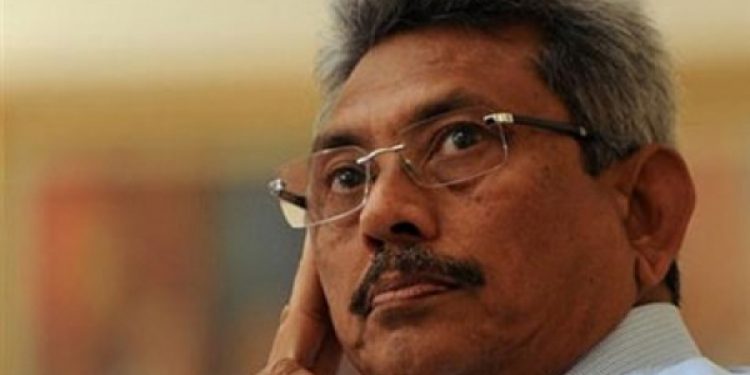
මේ නායකත්වය තවත් කාලයක් පැවතුනොත් අපිට ඉන්න රටක් ඉතුරු වෙයිද කියලා සැකයි. සියල්ලට පෙර රට ගැන සිතිය යුතු කාලයක් නැවතත් එළැඹිලා …………-මහින්ද රාජපක්ෂ –

May 22nd, 2019

ශ්‍රී ලංකා පොදුජන පෙරමුනේ මාධ්‍ය හමුව

බටහිර රටවල් අපේ රටේ කදවුරු බඳින්න බලා සිටිනවා. මේ තත්ත්වය නූපන් දරුවාට පවා අනාගතයේ ප්‍රශ්න ඇති කරන්නක් යැයි විපක්ෂ නායක මහින්ද රාජපක්ෂ මහතා පැවසීය.
ඒ මහතා මෙසේ පැවසුවේ අද (22) බත්තරමුල්ල නෙලුම්මාවතේ පිහිටි ශ්‍රී ලංකා පොදුජන පෙරමුණ කාර්යාලයේදී පැවැති ආසන සංවිධායකවරුන්ගේ රැස්වීමකදීය.
එහිදී වැඩිදුරටත් අදහස් දැක්වූ විපක්ෂ නායකවරයා මෙසේද පැවසීය.
අපි තිස් අවුරුදු යුද්ධයකට මුහුණ දුන් රටක්. ත්‍රස්තවාදයක් රටේ තියෙන අවස්ථාවක බෝම්බ පිපිරෙනවා. නමුත් ඒ කාලේ මේ විදියට රට අස්ථාවර වුනේ නැහැ. එදා ත්‍රිවිධ හමුදාව ඇතුලු රටේ නායකත්වය ගැන ජනතාවට විශ්වාසයක් තිබුණා. මේ බෝම්බ පිපිරීමෙන් ඉතිහාසයේ කවදාවත් නොවූ බියක් ජනතාව තුළ ඇති වුනා.  අපි සියල්ලටම පෙර රටට මූලිකත්වය දිය යුතුයි. මේ නායකත්වය යටතේ තව කාලයක් රට පැවතුනොත් අපිට ඉන්න රටක් ඉතුරු වෙයිද කියලා සැකයි.
මේ ආණ්ඩුව රටේ ආරක්ෂාව ගැන කිසිම අවධානයක් යොමු කලේ නැහැ. පහුගිය අවුරුදු හතරක කාලය පුරාම කලේ ආරක්ෂක අංශ දුර්වල කරමින්, විරුද්ධවාදින් මර්ධනය කරන්න ආරක්ෂක යාන්ත්‍රණය යොදා ගැනීමයි. මෙවැනි වාතාවරණයක් රටට උදාවුනේ මේ නිසයි.
මේ ආණ්ඩුව පළාත් සභා මැතිවරණය පවත්වන එක ගැන නම් කිසිම විශ්වාසයක් නැහැ. ඒ නිසා ජනාධිපතිවරණය මුලින්ම පැවැත්වෙයි කියලා අපිට විශ්වාසය තියන්න පුලුවන්. ජනාධිපතිවරණයත් පුලුවන් නම් නොතියා ඉන්නයි සුදානම. එවැනි තත්ත්වයක් ඇති වුනොත් අපි අධිකරණයට යන්න සූදානම්. මැතිවරණයක් ලංවෙද්දි පහුගිය කාලයට වඩා වැඩියෙන් දේශපාලන පලිගැනීම් සිද්ධ වෙන්න පුලුවන්.
හැමදේම දේශපාලනිකරණය වෙලා රට අස්ථාවර වෙලා තියෙන මේ අවස්ථාවේ ලාබාලම දේශපාලන පක්ෂයක් විදියට ශ්‍රී ලංකා පොදුජන පෙරමුණ දැඩි කැපවීමකින් කටයුතු කරමින් සිටිනවා. ඇමරිකානු හිටපු තානාපතිවරයා ලංකාවට පැමිණි අවස්ථාවේ ශ්‍රී ලංකා පොදුජන පෙරමුණ සම්බන්ධයෙන් පැහැදීමකින් කතාකළා. මීළග ආන්ඩුව බිහිවීම පිළිබද සැකයක් නැති බව ඔහු සදහන් කලේ පක්ෂය රට පුරා ක්‍රියාත්මක වෙන ආකාරය අධ්‍යයනය කිරීමෙන් පසුවයි.
ඉන් අනතුරුව මාධ්‍යවේදීන්ගේ ප්‍රශ්නවලට පිළිතුරු දුන් විපක්ෂ නායකවරයා  
මාධ්‍ය – විශ්වාසභංග යෝජනාවට මොකක් වෙයිද?
මහින්ද රාජපක්ෂ මහතා – විශ්වාසභංග යෝජනාව කාරක සභාවකට දාලා තියෙන්නේ. විපක්ෂය විදියට අපි රැස්වෙලා තීරණය කරනවා මෙයට අපි යා යුතුයිද කියලා. එයාලාගේ ආණ්ඩු පක්ෂයේ කණ්ඩායම වැඩියි කියලා දැන දැනත් අපි ගිහින් එතැන වාඩි වෙලා ඉන්න ඕනෙද කියලා අපේ හදවත් විමසනවා.


Copyright © 2026 LankaWeb.com. All Rights Reserved. Powered by Wordpress