SRI LANKA MUST CONSTITUTIONALLY BE UNITARY AND UNITED
April 30th, 2019BY EDWARD THEOPHILUS
Many people talk that under the constitutional reforms, a Muslim administration unit should be established in the Eastern Province and what is the logical base for this idea is a question when current experience in Sri Lanka is analysed and who created this idea is needed to discuss broadly.
Since the election of yahapalana regime in 2015, the existing constitutional structure of the country wanted to change converting to a federal system in which the hidden motive of the yahapalana advocates was to disunite the country and with a hidden objective of creating a Muslim administration unit in the Eastern province. The aim of the proponents might have expanding IS terrorism to the South and South East Asia. The hidden motive of the yahapalana advocates was strongly opposed by the Sinhala community in Sri Lanka without a religious difference. The yahapalana advocates attempted to define the vote base of the country using dubious points and arguments using unrealistic assumptions that Sinhala votes might divide basically Buddhists and Christians, then UNP and SLFP. Mr. Mangala Samaraweera and Mr. Rajitha Senaratne in the yahapalana coalition pushed to achieve the objective eye washing of the president of Sri Lanka as well as prominent members of UNP. In fact, the secret agenda of Mr. Mangala Samaraweera was to achieve a UN position and Mr. Rajaitha Senarathne was to find a place for his son, who became an unpopular politician in Sri Lanka mainly because he is a popular figure, who lies to the public. Mr. Mangala Samaraweera attempted to get a UN position before, but his qualifications for a UN position (A Tailoring Certificate) was not a foundation qualification for a senior UN position.
Historically, Sri Lanka had been governed by Kings, who treated the country as a unitary state with provincial administrative units like Municipal style governing bodies (Rata) at district levels. The district administrative units (Korala or pattu) was not entirely based on religions, ethnical races or castes. There was some historical evidence that Kings mentioned Demala Pattutu and Vedi Pattuwa as Tamil and Indigenous people lived in those areas, but they were not federal style constitutional units. At present majority residents in those area are Sinhala people. There were not administrative divisions based on religions.
Current population of the country according to the census of 2012, 74.9% Sinhala, 11.2% Lanka Tamil, 4.1% Indian Tamil, 9.3% Muslim and 0.5% others. This ethnic mixture of population assumes to be changed during the past ten years period, the major contributing factor could be considered as migration of Tamil and Christian population overseas and the current Sinhala population, could be assumed that has increased to 77% and Muslim Population also increased to 10% as the women fertility of Muslim women is higher than the average. The national average of women fertility in Sri Lanka is 2.3 (Sinhala 2.3, Sri Lanka Tamil 2.3, Indian Tamil 2.9 and Muslim 3.3), but Muslim women’s fertility is comparatively higher (3.3) than the national average (2.3).
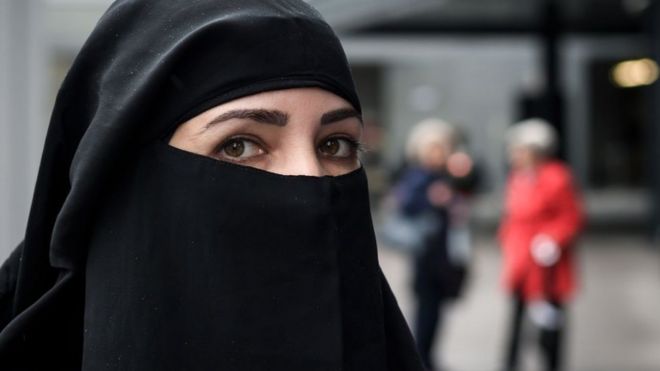
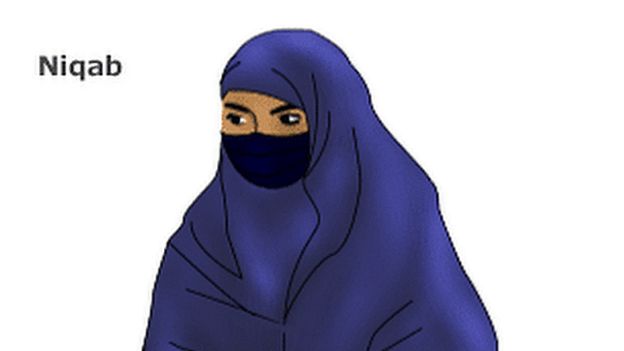
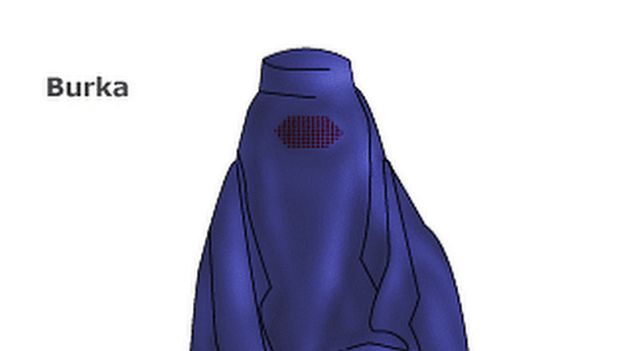
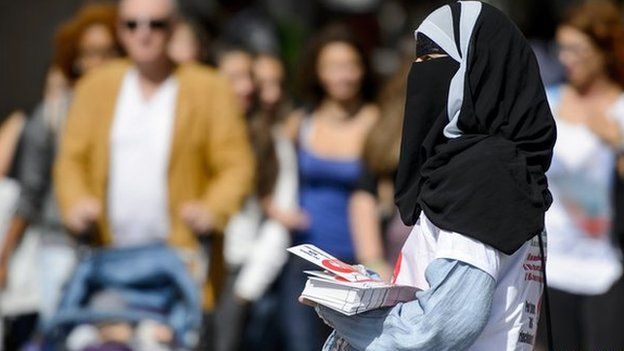
Although the government had a policy agreement to change the women fertility, it has not been successfully implemented by the government and there is an informal view that Muslim women are given encouragement to have more babies. Compared to other races in the country most Muslim women do not willing to go out of houses and work. Muslim women stay at home and look after kids, when they go out wear burqa and walk on the road, no one can recognize them and maintain any relationship and association. Only few Muslim women married with Sinhala or Tamil men and the usual practice is when a Muslim female married to a Sinhala or Tamil person she would be expelled from the family. It seems that Muslims want to increase their population, despite the government policy to control women fertility in the country. The culture of Muslim people in Sri Lanka encourages women to stay in the house and live in a static society without an employment in outside and the purpose of the culture is to look after kids at home. For education, marriage and divorce, Muslim people have more flexible legal provisions in Sri Lanka, which are not available to other ethnic communities in the country.
According to the census of 2012, 70.1% of population in Sri Lanka counts as Buddhist in religion, 12.6% Hindus, 9.7% Islam and 7.6 % Christian and others. It is quite easy to assume that 75% of current population is Buddhist and Islam has increased to more than 10% of population. Within these religions there are sects and accurate statistics of sectoral population of each religion are not available.
The first official census of Sri Lanka was taken place in 1881 and the classification of population included Muslims as an Ethnic race in the country without clear anthropologic or biological evidence. All other ethnic groups were identified based on language they speak. In other countries we cannot see that population is classified by religious basis and in the Middle Eastern countries such as Saudi Arabia, UAE, Syria, Jordan, Iraq, Iran do not classify on religious basis and why Sri Lanka did adapt such a fallacious classification system and it needs to be corrected as soon as possible. According to historical information, Sinhala speaking people converted to Islam in Upcountry and Sothern area and Tamil speaking people in the North, North Central and East, in fact, they should have classified as Sinhala Muslim and Tamil Muslim. The Muslim religious people should have included to Sinhala and Tamil ethnic groups. Why this problem is not corrected by the government?
The historical information indicates that the major reason to Sinhala and Tamil people convert to Muslim was the flexible marriage and divorce legal provisions in the Muslim culture. This reason caused to massively convert people in Indonesia and Malaysia. In the history people in those countries were Buddhist and Hindus. In a society where allowed to polygamy, Muslim religion did not expand rapidly. For example, it can give Papua New Guinea and many South Pacific Countries. In Sri Lanka, when men wanted to divorce and remarry, they converted Muslim as it was easier. When I was a law student in Sri Lanka, I read a new law report that a famous Sinhala political figure, Mr Anil Moonasinghe converted to Muslim to divorce his wife and marry another woman.
The major concentration of this article is to consider the constitutional style of the country and uniting the country with different divisions. As the ambassador of the United States in Sri Lanka it is correct that the unity of people in the country is a key factor to defeat terrorism whether it originated within the country or imported from overseas. The other important factor is that the unity of Sinhala people is vital factor to overcome terrorism issue in the country and to defeat fabricated constitutional reforms.
If Sinhala people are united without political deviations, majority of the parliament would be Sinhala, and Muslim and Hindus will be a minority, which need the consent of majority Sinhala community to make constitutional reforms. Sinhala people divided on political party basis since the era of the State Council. Later it was appeared that Sinhala people was divided by economic policy and it was changed after 1978. Now all Sinhala people agree with the market economic policy and why they have differences now is a question. The most conspicuous answer to the question is power and motive to be unduly enriched achieving political power.
Sri Lanka is a small country and the most appropriate constitutional style to the country is a unitary system with the unity of people. Any other style of a constitution will create never ending political, social and economic problems to the country.
The current problems clearly indicated that Sri Lanka needs anti-discrimination laws to control hate speeches and Muslim women are discriminated by male and the caste system among Tamil discriminate lower caste Tamils