රටක් බලාහිඳි පාස්කු ප්රහාරයේ මහ මොළකරු හෙළිවෙයි ?
April 19th, 2025Three Foreign Nationals Charged in Federal Court in Los Angeles with Conspiring to Provide Material Support to ISIS.
April 18th, 2025Press Release U.S. Attorney’s Office
Friday, January 8, 2021Share 
For Immediate Release
U.S. Attorney’s Office, Central District of California
The men allegedly were members of a group of ISIS supporters that carried out terrorist attacks in Sri Lanka on Easter Day in 2019, killing 268 people
LOS ANGELES – The Justice Department announced today that three Sri Lankan citizens have been charged with terrorism offenses, including conspiring to provide material support to a designated foreign terrorist organization (ISIS). The men were part of a group of ISIS supporters that called itself ISIS in Sri Lanka” and allegedly was responsible for the 2019 Easter attacks in the South Asian nation of Sri Lanka, which killed 268 people, including five U.S. citizens, and injured over 500 others, according to a federal criminal complaint unsealed today.
The complaint outlines the defendants’ roles in the conspiracy and the events that led to near-simultaneous suicide bombings in the Sri Lankan cities of Colombo, Negombo and Batticaloa on April 21, 2019. One of the U.S. citizens killed was a Department of Commerce employee who had traveled to Sri Lanka on official business.
Two days after the attacks, ISIS claimed credit for the terrorist acts, attributing the murders to Islamic State fighters.” In late April 2019, the then-leader of ISIS praised the attackers for what he called a retaliation against the West” for defeating ISIS the prior month in Baghuz, Syria.
This case clearly demonstrates that the United States will take decisive action to ensure terrorists face justice when they target Americans anywhere in the world,” said United States Attorney Nick Hanna. The United States remains confident in the Sri Lankan authorities’ ability to bring the perpetrators to justice – and this complaint makes clear that we stand ready with these charges in the event the defendants attempt to evade justice.”
ISIS’s Easter attacks in Sri Lanka killed 268 people, including five Americans, many while they worshiped,” said Assistant Attorney General for National Security John C. Demers. Today, we charge these defendants with bearing their share of the responsibility for these deaths. According to these charges, the defendants were committed supporters of ISIS, recruited others to ISIS’s violent cause, purchased materials for and made IEDs, helped to prepare and trained others who participated in the attacks, and murdered in the name of this deadly foreign terrorist organization. They are in custody in Sri Lanka. We fully support the Sri Lankan investigation and prosecution of these terrorists and will continue to work with the authorities there to pursue our shared goal of holding these defendants accountable for their crimes. At the same time, these charges reflect that the U.S. justice system remains a powerful tool to bring to bear against those who harm our citizens abroad. We will continue to pursue justice for the victims of these heinous attacks and for all American victims of terrorism.”
The criminal case filed on December 11 in United States District Court in Los Angeles is the result of a nearly two-year investigation by the FBI, which assisted Sri Lankan authorities in the wake of the suicide bombings that targeted Christian churches and luxury hotels frequented by Westerners.
The domestic charges announced today for an attack on foreign soil represent the FBI’s commitment to deliver justice to traveling American victims and to protect U.S. interests here and abroad,” said Kristi K. Johnson, the Assistant Director in Charge of the FBI’s Los Angeles Field Office. For decades, and particularly since 9/11, the FBI has deployed agents to various parts of the world to establish an investigative foothold and to liaison with local counterparts with a shared goal of combating terror globally. Our enduring hope is that criminal prosecution – whether domestic or foreign – will bring some peace to the hundreds of victims killed or injured in Sri Lanka as a result of this horrific attack.”
The defendants named in the complaint, along with other suspects linked to the attacks, currently are detained in Sri Lanka, where a criminal investigation is ongoing.
According to the complaint, the three charged defendants and others involved in the conspiracy – including eight terrorists who died in the suicide bombings – conspired to provide, provided, and attempted to provide material support, including services and personnel, to ISIS through various actions, including: (1) creating, maintaining, and serving as members of a group of ISIS supporters in Sri Lanka devoted to ISIS, its ideology, and to planning and encouraging violent attacks to advance ISIS’s goals; (2) obtaining explosive materials and IED components; (3) manufacturing and testing IEDs, including the types of IEDs ultimately used in attack; (4) recruiting other ISIS in Sri Lanka members; (5) using ISIS-created training materials to instruct and train the attackers and their co-conspirators in the use of firearms and explosives; (6) procuring safe houses for the group to prepare for attacks in the name of ISIS, including the Easter attacks, while avoiding law enforcement detection; (7) following ISIS directives to use specific end-to-end encrypted messaging applications to conceal the criminal conspiracy; (8) murdering two Sri Lankan police offers to obtain the officers’ firearms; and (9) shooting a suspected police informant.
The three defendants named in the criminal complaint, all of whom pledged allegiance to ISIS, are:
• Mohamed Naufar, the second emir” for the group of ISIS supporters that called itself ISIS in Sri Lanka,” who allegedly led the group’s propaganda efforts, recruited others to join ISIS, and led a series of multi-day military-type trainings;
• Mohamed Anwar Mohamed Riskan, who allegedly helped manufacture the IEDs used in the Easter Attacks; and
• Ahamed Milhan Hayathu Moahmed, who allegedly executed a police officer in order to obtain the officer’s firearm, shot a suspected informant, and scouted a location for a separate terrorist attack.
All three defendants are charged with conspiring to provide, providing, and attempting to provide material support to a designated foreign terrorist organization. Additionally, Naufar and Milhan are charged with aiding and abetting the receipt of military-type training from ISIS.
The FBI-led Joint Terrorism Task Force in Los Angeles, including personnel assigned responsibilities for extraterritorial matters, is leading the investigation.
This matter is being prosecuted by Assistant U.S. Attorneys Annamartine Salick, George E. Pence IV and Christine M. Ro of the Terrorism and Export Crimes Section, and Trial Attorney Alicia Cook of the National Security Division’s Counterterrorism Section.
The Criminal Division’s Office of International Affairs and the Los Angeles County Sheriff’s Department provided valuable assistance.
Contact
Thom Mrozek Director of Media Relations thom.mrozek@usdoj.gov (213) 894-6947
Updated April 4, 2023
“LTTE Diaspora speaks of “Genocide” — But say Nothing of the Genocide of Tamil Child Soldiers Childhood”
April 18th, 2025Shenali D Waduge
Has it never occurred to the international media or so-called international community or even UN/UNHRC Officials to question the silence of LTTE fronts to LTTE’s recruitment of Tamil children who were turned into child soldiers forming one third of LTTE’s ground force? How can LTTE fronts call for justice when hiding their own crime of creating child soldiers & sending them to their deaths? How can LTTE fronts who funded LTTE guns & watched child soldier recruitment have any moral authority to demand human rights or draft curriculum for bogus genocide week? How can LTTE fronts hide behind human rights rhetoric when for 30 years they encouraged Tamil children to be kidnapped & turned into child soldiers. They claim to fight for a separate state but don’t mind kidnapping their own people’s children & sending them to die. These were their own people’s children who were denied fundamental rights, plucked away from their homes & loved ones & taught to kill. Prabakaran is no more but LTTE fronts must answer for the Tamil children forced into war. Genocide of these Tamil children’s childhood should take international centre stage not a trumped up 40,000 figure for which no names, no skeletons, no police complaints, no birth certificates have been presented even 16 years after the conclusion of the conflict. These hypocrites in exile watched as LTTE kidnapped, trained their own children to kill & die while they happily sought asylum & sent their kids to foreign schools, universities & secured foreign jobs. Now their children are trained to continue the lies so the LTTE can continue their kitty.
LTTE fronts have taken great pains to open websites, hold conferences, panel discussions, woo international media, make documentaries, hold campaigns/fundraises, lobby politicians & retain lawyers – there’s nothing they have not done since end of LTTE ground force in 2009. They have presented themselves as paragons of virtue, fighting for their people & their rights and begging the people of the world to listen to their grievance. Arguments lined up to fit into their goal for a separate state.
Let’s stop there.
Did these paragons of virtue living in foreign shores not feel an iota of sorrow to watch their own people’s children plucked away from their parents, from schools or orphanages or while returning home & dumped into LTTE camps to be trained to kill? Obviously not.
What kind of a separate state is envisaged when one third or an entire generation of Tamil children have been denied their childhood?
Did these paragons of virtue not count the number of children some as young as 7 years as per Human Rights Watch reports, undergo gruesome training those who fled were shot dead by LTTE?
Why did LTTE fronts — many based in safe, democratic countries — not campaign against this grave war crime committed by the LTTE against their own community’s children? Because they were complicit & were well aware of the recruitment.
What a crying shame to live overseas, have one’s own children educated in Western schools while one’s own people in rural areas were handed rifles
Why has author Harrison who has been counting the dead since 2009, not bothered to count how many Tamil children were kidnapped from 1980s by LTTE – how many died as a result of LTTE training, how many Tamil children were shot dead by LTTE trying to flee? How many Tamil children were raped or served as sexual toys for LTTE men in bunkers?
The conspicuous silence of the UN Agencies is to also be questioned.
LTTE violated Article 38(3) of the UN Convention on the Rights of the Child & Optional Protocol on the involvement of Children in Armed Conflict (2000) which prohibits recruitment of children under 18?
What did UN do to stop LTTE over 30 years of child soldier recruitment?
According to the Paris Principles & Guidelines on Children Associated with Armed Groups, forcible recruitment of children not only violated humanitarian law but was considered a form of slavery under international law.
In over 30 years of recruitment of Tamil children, did the UN & associated agencies do anything to stop LTTE’s child soldier recruitment other than compile beautifully printed reports?
Why did diaspora leaders not rescue even one Tamil child soldier?
Why did Tamil political parties & Tamil politicians talking big in Parliament also not rescue one Tamil child soldier?
Yet LTTE Diaspora & Tamil politicians are happy to parrot genocide” ignoring their own community’s sin & betrayal of their own children.
A generation of children lost their childhood to satisfy an ideological dream of a handful.
How can LTTE Diaspora justify lobbying under banner of human rights” while conveniently ignoring the first & most sacred right – the Right of a Child to live free from war & forced combat.
The genocide” claim is nothing but a hyped charge sans facts or evidence only pumped by propaganda & sensationalism.
The genocide of the Tamil child used as child labor, for suicide, for ethnic cleansing, for assassinations, for killings is a bigger crime that has not received the international attention it should.
Under UN Security Council Resolution 1612 (2005) parties recruiting or using child soldiers must be held accountable.
Rome Statute of the International Criminal Court (Article 8) lists recruitment of children under 15 as a war crime.
Why was nothing done against LTTE?
The UN Basic Principles & Guidelines on the Right to a Remedy (2005) applies to all victims of human rights violations – not just those on one side of a conflict. Where is the justice for LTTE’s child soldiers denied childhood as well as the children LTTE killed from other communities including foreign children?
UK Govt stands guilty of harboring the woman who trained Tamil children as child soldiers. Why has no legal action been taken against Aunty Adele? Why is the aunty behind the cyanide capsule still free?
Optional Protocol to the CRC on the Involvement of Children in Armed Conflict (2000)
Article 4(1): Armed groups should not recruit or use children under 18 in any hostilities.
Article 6: States must take legal measures against those who violate the Protocol.
Why has the UK not prosecuted Adele Balasingham under this Protocol, which it ratified?
Rome Statute of the International Criminal Court (ICC)
Article 8(2)(b)(xxvi) – Conscripting or enlisting children under the age of 15 into armed forces or groups, or using them to participate actively in hostilities = War Crime.
Adele Balasingham trained child soldiers under 15 — and wrote about it. Why no ICC case?
UN Security Council Resolutions on Children in Armed Conflict
UNSC Resolution 1612 (2005) – Calls for accountability for persistent violators of children’s rights in armed conflict.
The LTTE was listed. Adele Balasingham was its face for child recruitment. Why is she not on any sanctions list?
To the UN & Human Rights NGOs:
Why have international investigators failed to name Adele Balasingham, despite her public role in training child soldiers and glorifying their deaths in books?
How is justice credible if those who armed and trained children — not just used them — face no international consequences?
Why has there been no tribunal, arrest warrant, or even public inquiry into her actions, while she freely publishes and lectures abroad?
Denying a child their childhood is a tragedy & a crime against humanity, a theft of their innocence that no separatist cause can justify.
Turning children into soldiers is a genocide of their childhood. Recruiting children as soldiers is illegal & is a systematic destruction of their childhood, a soul lost forever, a genocide that cannot be ignored. No cause, no ideology, justifies turning a child into a killer.
LTTE fronts accuse the Sinhalese of discrimination. But it was not the Sinhalese who robbed Tamil children of their childhood. It was the LTTE who turned their own sons & daughters into weapons. It was the Sinhala soldier who ensured that from May 2009, not a single Tamil child was kidnapped or recruited & trained to kill.
The LTTE fronts who cry discrimination” are reminded that it was they who forced Tamil children to carry rifles instead of books – not the Sinhalese.
Tamil children were denied schooling by LTTE & LTTE Diaspora not the Sinhalese.
It was LTTE & its Diaspora cheer squads who took the childhood away from Tamil children.
It was the Sri Lankan Army who gave the Tamil child soldier a second chance at life.
If the Sinhalese are accused of injustice & discrimination what do you call those who train their own children to die killing?
The hypocrisy is that those who parrot genocide” were the ones who were happy to force their own children to wear suicide vests & cyanide capsules.
This same LTTE Diaspora made a huge ruckus over the deaths of Prabakaran’s children but not a hum for the thousands of Tamil children who were turned into killers by them.
The international media, the so-called international community & the mighty officials of the UN & associated agencies kindly advised to revisit Sri Lanka’s conflict & ask themselves where the real discrimination lay? Was it not in turning innocent Tamil children into child soldiers? Was this genocide of the childhood not a bigger war crime for not only was these Tamil children’s childhood stolen from them, they were forced to kill & taught to commit suicide.
What have the international media/international community/UN done to cover this by questioning the LTTE fronts & Tamil politicians & Political Parties for their role?
Shenali D Waduge
Sri Lanka-India MoUs and their implications
April 18th, 2025by Neville Ladduwahetty Courtesy The Island

President Dissanayake and PM Modi
Of the several MOUs signed by the President of Sri Lanka during Prime Minister Modi’s visit to Sri Lanka, the most consequential in respect of implications to Sri Lanka is the one associated with the Defence Cooperation. Neither the public nor the Parliament is aware of its contents. What the public could glean about the scope of this vital MOU are from articles written by concerned citizens, like the one by Dr. Dayan Jayatilleka in the Daily FT of April 10, 2025. The source of his material is from statements made by the President during political rallies relating to the Defence Cooperation MOU. One such statement is cited below. This reflects a seismic shift in respect of Sri Lanka’s relations not only with India, but also with other Nation-States, that is disturbing to say the least, because of its implications on Sri Lanka’s autonomy to act independently as a sovereign Nation-State and define its own destiny; a status Sri Lanka defended for nearly 2500 years despite repeated interruptions over the years.
SECURING ASSISTANCE
Justifying the need for Defence Cooperation with India, President Dissanayake is reported to have stated the following at an election meeting in Galle:
We need security in this region. We need to safeguard the security of this region. We should secure the assistance of those who have greater technological capacities in defence, greater skills in defence. If not, how can a country move forward? …. For 76 years the world developed rapidly in science and technology. The world developed rapidly in military science. Now, what should we do? We must secure the assistance of those states which have accepted new science and technology. Don’t we have to do that”? (Ibid).
There are two pivotal issues that arise from the President’s comments. The first is discarding the principle of SELF-RELIANCE (SR). SR is the bedrock of Sri Lanka’s civilizational values. The inspiration to rely on one’s SELF to evolve answers to inscrutable questions or to challenges that present themselves as insurmountable comes from the single-minded approach adopted by Lord Buddha in his search for liberation. His attempts to seek the assistance of others failed him. It was the relentless determination to find the answers himself to what he was looking for, that enabled him to realise his goal; a goal that has benefited mankind.
The role model set by him was what inspired the spirit of SELF RELIANCE that enabled Sri Lanka to create a civilisation that was unique over millennia. It was not created by military conquest. It was not created by developing military science”. The monuments left behind are a testimony to the ingenuity and skills of the People of Sri Lanka. It was they, who developed the technologies needed for the Sri Lankan nation to lead a life of peace and contentment.
Throughout Sri Lanka’s history, its sovereignty has been repeatedly violated and its territory vandalised by invading armies. Whenever such invasions occurred, liberation and freedom came from military strategies developed and adopted by those within by relying on SR. They did not go running to sign MOUs seeking assistance from militarily powerful nations. On the other hand, whenever our Rulers sought the assistance of external powers, such as the Dutch, to get rid of the Portuguese who had invaded the country, the Dutch ended up colonising the whole country for nearly 150 years until they lost it to the British, who in turn colonised for a further 150 years. The Defence Cooperation MOU with India has the potential to repeat that history.
SAFEGUARDING REGIONAL SECURITY
The President has stated: We need security in this region. We need to safeguard the security of this region”. If this is a policy of this government, in what way could Sri Lanka contribute towards the security of this region”? Is there a clear understanding as to how Sri Lanka and India are going to undertake safeguarding the security of the region? Whatever it may be, there is no doubt that the contribution Sri Lanka can afford to make is insignificant compared with what India would be making because it is in India’s self-interest as an aspiring Global Power to make the region secure. Furthermore, because of this disparity, the MOU would entitle India to enforce its will as to how regional security is exercised. Does this not amount to sacrificing Sri Lanka’s strategic autonomy?
If it did, would it not compel Sri Lanka to be under the hegemony of India; a condition that would only bolster the security of India based on India’s notion that the security of India depends on the security of Sri Lanka, meaning a weakened Sri Lanka under the control of India? On the other hand, if Sri Lanka exercises its independence and acts in pursuit of its own self-interests, and such actions do not mesh with that of India in its pursuit of becoming a global power, there would be consequences.
Therefore, any arrangement that compromises the independence of Sri Lanka and its ability to exercise its Self- Reliance has to be mindful of India’s interests. This does not mean that Sri Lanka should not heed India’s concerns and interests. Instead, it only means pursuing Sri Lanka’s interests while being conscious of India’s sensibilities, as it was with the Chinese research vessel”. However, under a Defence Cooperation MOU, it would be India that would decide the parameters as to whether to permit entry of foreign vessels or not; a constraint that would compromise Sri Lanka autonomy to pursue its self-interests.
IMPACT on FOREIGN POLICY
An alignment with a power that the President describes as: We sincerely applaud the way India has positioned itself not only as a regional power, but also as global power” (Ibid), means Sri Lanka has decided to disassociate itself with its long cherished position of being Non-Aligned as a founding member of Non-Aligned Movement, that morphed recently into being Neutral in the context of emerging Great Power rivalries in this region. By aligning exclusively with a country that is positioning itself to be a global power and at the cost of distancing itself in its relations with other Global Powers, comes not only at a cost that Sri Lanka cannot afford to bear in the background of overdue debt to them, but also a degree of dependence that is unknown and unfamiliar to independent Sri Lanka.
The need to seek exclusive relations with India is in the hope that India would assist Sri Lanka in case such a need arises because Sri Lanka does not have the needed military science” to defend itself, not realising that there is no free lunch; a fact attested by Sri Lanka’s own history. The President and this Government must accept the hard reality that Sri Lanka or any other small country can ever hope to match the degree of military science” capabilities that Global Powers possess. At the end of the day, it is a smart strategy that matters more than the stacks of military hardware by countries such as Sri Lanka; a fact demonstrated by David’s sling shot against the might of Goliath.
For instance, Sun Tzu, in The Art of War”, states: What is essential for leaders, generals, and ministers in running countries and governing armies is no more than … peak efficiency of knowledge and strategy is to make conflict altogether unnecessary. To overcome others’ armies without fighting is the best of skills”. It is clear from the wisdom of the ages that effective intelligence gathering and appropriate strategy is far more relevant for the security of a Nation such as Sri Lanka than relying on the unrealistic notion of military science to ensure its security.
CONCLUSION
During an election rally, the President is reported to have stated that there is a need not only to safeguard security for the region”, but also that Sri Lanka must secure the assistance of those states which have accepted this new military science technology” if Sri Lanka is to move forward. These objectives are to be incorporated in a Defence Cooperation MOU with India.
How Sri Lanka is to contribute to safeguarding the security of the region”, or what form and type of the assistance Sri Lanka expects from India, is not made public. Despite such lacunae, the implication of any form of Defence Cooperation exclusively with a country such as India that is positioning” itself to be a global Power or one that is already recognised as a Global Power, is bound to affect Sri Lanka’s relations not only with other Global Powers but also with other countries as well.
Furthermore, exclusive alignment with one Power means that Sri Lanka has decided to ditch not only the principle of Non-Alignment and its concepts that it championed for decades, but also, more appropriately, Neutrality, in the emerging context of Great Power rivalries in the region. Such exclusive arrangements for assistance with one country compel Sri Lanka to be in the vortex of India and its interests, the consequence of which for Sri Lanka is to be a vassal State of India.
The nearly 2,500-year old history of Sri Lanka has been to resist and defend such attempts. Throughout its history Sri Lanka has relied on its own strengths and abilities and created the spirit of Self-Reliance modeled on the example set by the founder of the religion of the majority of Sri Lanka. That is to develop its own strategies to create a unique civilization in which its People enjoyed peace and contentment. However, there were occasions when weak leaders abandoned the rewards of Self-Reliance and sought the assistance of the Dutch to overcome the threat of Portuguese occupation, and ended up being colonized for over nearly 150 years. The planned Defence Cooperation MOU with India could very well be a repeat of that history; an outcome that would permanently ensure India’s security.
The attempt to seek external assistance to move forward” is founded on the misguided concept that without the military and technological strength of external agents, Sri Lanka cannot move forward. In view of the fact that countries such as Sri Lanka cannot ever hope to match the capabilities of those who have advanced military technologies, the choice left to Sri Lanka is to be guided by the wisdom of the ages cited above, and develop efficiency of knowledge and strategy”.
That means, the compelling need for Sri Lanka to develop its Intelligence and strategic capabilities to a very much higher level than what exists today so that Sri Lanka is in a position to make conflict both internal or external unnecessary. The importance of strategy over Military capabilities is starkly made evident by the experience of the US in Vietnam. Notwithstanding the fact that the US possesses the most advanced military hardware in the world, the US lost the war in Vietnam because of a wrong strategy. The US relied totally on the capabilities of their military hardware and forgot the strategy of David’s slingshot. The hope is that the President is made aware of these lessons of history.
by Neville Ladduwahetty
iiවන නෛතික විප්ලවයට සුදුසුම කාලය එළඹෙමින් ඇත…!
April 18th, 2025නීතීඥ අරුණ ලක්සිරි උණවටුන B.Sc(Col), PGDC(Col), සමායෝජක, වෛද්ය තිලක පද්මා සුබසිංහ අනුස්මරණ නීති අධ්යයන වැඩසටහන
මහජන ජාතික ආණ්ඩුක්රම ව්යවස්ථාවක් (People’s National Constitution) කෙටුම්පත් කිරීම මේ දක්වා “Gotagogama” තරුණ පරපුර ආරම්භ කර නොතිබීම නීතිය නොදැනීම පිළිබඳ ප්රශ්නයක් පමණක් නොවේ. එය රටේ ජනතාවගේ නෛතික නිදහස පිළිබඳ මූලික ප්රශ්නයකි, “ගෘන්නෝම”/ Grundnorm නීති මූලධර්මය ගැන අවබෝධයක් නැතිකම පිළිබඳ ප්රශ්නයකි. “ගෝඨාභය ජනාධිපතිවරයා ධූරයෙන් ඉවත් කරවීමට පෙර හෝ පසූව මහජන ආණ්ඩුක්රම ව්යවස්ථාව කෙටුම්පත් කර ජනතාව හමුවේ තැබීම “ගෘන්නෝම” මූලධර්මය අනුව සිදුවූයේ නැත.
වැද්දා වටුකූරුල්ලන්ට දැල දැමූ පසු වටුකුරුල්ලන් ඉන් මිදුන ආකාරය ලස්සන සිත් ඇදගන්නා බෞද්ධ කතාවක් පමණක් නොවේ. ඉන් ඉගෙනිය හැකි පාඩම් බොහෝය. පළමු වැන්න වන්නේ අනතුරේ හෙළන්නාගෙන් කිසිවිට සහායක් නොඉල්ලිය යුතු බවයි. ඒ මූලික පාඩම “Gotagogama” අරගලයේ යෙදුනු තරුණ ප්රජාව මේ දක්වා අවබෝධකර නැති බව පෙනී යන්නේ ගෘන්නෝම (Grundnorm) නීති මූලධර්මය ගැන ඔවුන් මේ දක්වා කතිකාවක් ආරම්භ කර නැති හෙයිනි.
එනම් පවතින නීතිය උල්ලංඝනය කරමින් නව මහජන ජාතික ආණ්ඩුක්රම ව්යවස්ථාවක් (People’s National Constitution) කෙටුම්පත් කිරීමට අවශ්ය මූලික සංවාදයවත් ඔවුන් මේ දක්වා ආරම්භ කර නැත.
ඒ පිළිබඳ කතිකාවක් ආරම්භ කිරීමට පවතින ආණ්ඩුක්රම ව්යවස්ථාව උල්ලංඝනය කරමින් අලුත් ආණ්ඩුක්රම ව්යවස්ථාවක් තැනිය හැකි ජර්මන් ජාතික දාර්ශනිකයෙකු වූ කෙල්සන් (Kelsen) ඉදිරිපත් කළ ගෘන්නෝම නීති මූල ධර්මය පිළිබඳ දැනගත යුතුය.
වැද්දා දැල දැමූ විට වටු කුරුල්ලෝ වැද්දාගෙන් දැල අයින් කර දෙන ලෙස ඉල්ලා නොසිටි අතර, වටු කුරුල්ලන්ම එකතු වී දැල අයින් කර ගත්තේය. ඒ සමාජ සිද්ධාන්තය මෙහිදීද අදාල වේ.
වර්තමනයේ සමාජ ආර්ථික ජීවන ප්රශ්නය ඇති කිරීමට මුල් වූයේ පාර්ලිමේන්තුවේ 225 සහ විධායක ජනාධිපතිවරයා පමණක් නොවේ. අධිකරණය සහ පරිපාලන යාන්ත්රණයත් එයට වග කිව යුතුය.
ජනතාව ගෑස්, තෙල් පෝලිමේ දුක් විඳීමට සැළැස්වීමට සහ විදුලිය කප්පාදුවට සහ මෙසමයේ පවතින ආර්ථික අර්බුදයට විධායකය, අධිකරණය සහ ව්යවස්ථාදායකය එකිනෙකා නොදෙවෙනි ලෙස දායක වී ඇත යන්න පිළිනොගන්නේ නම් එය සත්යට දුරස්ථය. ඒ සත්ය එළිදරව් කරන්නෝ බන්ධනාගාර ගත කිරීමෙන් ප්රශ්නය යම්තාක් දුරකට පාලනය විය හැකි වුවත් විසඳුමක් ලැබෙන්නේ නැත.
ජනප්රිය පාසල්වලට සිසුන් ඇතුළත් කරන අයදුම්පත්රවල ලිපින අනුව පාසල් බස් රථ හෝ පාසල් වෑන් රථ මෙතරම් ප්රමාණයක් කොළඹ ඇතුලු නගර වෙත පැමිණීමට අවශ්යතාවයක් නැති වීම සරළ උදාහරණයකි.
විධායක, ව්යවස්ථාදායක සහ අධිකරණ ආයතන ත්රිත්වයේ අකාර්යක්ෂමතාවය,නාස්තිය, දූෂණය පිළිබඳ සමාජයේ සාධාරණ කතිකාවක් ආරම්භ වී නොතිබීම “Gotagogama” තරුණ ප්රජාවේද අසාර්ථකත්වයකි.
ඔවුන් ගෝඨාභය ජනාධිපතිවරයා ඉලක්කකරගත් පෞද්ගලික අවලාද කිරීමක ස්වරූපයෙන් උද්ඝෝෂණ මෙහෙයවනු ලැබූ ආකාරයක් දක්නට ලැබුණි.
ඝාතන කිහිපයක් පමණක් ඉස්මතුකරමින් සහ තෙල්, ගෑස්, විදුලිය අර්බුදයට පමණක් සමාජ ආතතිය සහ සමාජ පීඩනය ලඝු කරමින් වසර ගණනාවක් සමාජය මුහුණ දෙන අර්ධ වහල් සමාජ පාලන ක්රමය පිළිබඳ සාකච්ඡා නොකිරීමට “Gotagogama” තරුණ පරපුර පරිස්සම් වන ආකාරයක්ද දක්නට ලැබුණි.
සමාජයේ පවතින සෑම ආයතනයකම, ව්යුහයකම පවතින බලවන්තයින් විසින් දුබලයන් සහ සම්බන්ධතා නොමැති අය පෙළන පාලන ක්රමයේ ගැටළු “Gotagogama” සාකච්ඡා කරනවා පෙන්නුම් කළේ නැත.
ගෘන්නෝමය (Grundnorm) ගැන නීතීඥවරු පමණක් දැන සිටීම ප්රමාණවත් නොවේ. “Gotagogama” තරුණ ප්රජාවද ඒ පිළිබඳ සකච්ඡා ආරම්භ කළ යුතුය.
“Gotagogama” තරුණ ප්රජාගේ අරගලය සැබෑ ජන අරගලයක් වන්නේ ඔවුන් එය තේරුම් ගැනීමට කල්ගත නොකිරීම සහ දක්වන උනන්දුව මතය.
ආණ්ඩුක්රම ව්යවස්ථාවේ විධිවිධාන නොතකා ආණ්ඩුක්රම ව්යවස්ථාවක් තනා ගැනීම නෛතික විප්ලවයක් වන අතර එය කළ හැක්කේ පාර්ලිමේන්තුවට, අධිකරණයට හෝ විධායකයට නොව ජනතාවටය.
ජනතාවට ආණ්ඩුක්රම ව්යවස්ථා උල්ලංඝනය කළ හැකියි. ගෘන්නෝම මූලධර්මය මගින් කියන්නේත් එයයි.
1970 සමඟි පෙරමුණු ආණ්ඩුව එවකට පැවති 1947 සෝල්බරි ආණ්ඩුක්රම ව්යවස්ථාව උල්ලංඝනය කර 1972 ආණ්ඩුක්රම ව්යවස්ථා ගෙන එන ලදී.
1972 ආණ්ඩුක්රම ව්යවස්ථාව පනවා ගත්තේ එතෙක් පැවති 1947 සෝල්බරි ව්යවස්ථාව අනුව හෝ රාජාධිකරණයේ හෝ බ්රිතාන්යය කිරීටයේ අවසරයෙන් නොවේ. ඒ සම්බන්ධයෙන් සුන්දරලිංගම් ශ්රේෂ්ඨාධිකරණයේ එවකට නඩු පැවරුවද සාර්ථක නොවීය.
1978 ආණ්ඩුක්රම ව්යවස්ථාව ගෙන එන ලද්දේ 1972 ආණ්ඩුක්රම ව්යවස්ථාව අනුවය. 1978 ආණ්ඩුක්රම ව්යවස්ථාව නෛතික විප්ලවයක ඵලයක් නොවේ.
Grundnorm යනු හාන්ස් කෙල්සන් (1881 -1973) විසින් ඔහුගේ ශුද්ධ සිද්ධාන්ත
නීතිය පිළිබඳ න්යාය තුළ අර්ථ දක්වා ඇති නීති විද්යාත්මක යෙදුමකි. ඔහු Grundnorm යනු ඕනෑම නීති පද්ධතියකට පදනම වන මූලික සම්මතය, අනුපිළිවෙල හෝ රීතිය ලෙස අර්ථ දැක්වීය. එම නීති පද්ධතියේ ධනාත්මක නීතියේ වලංගුභාවයේ මූලාශ්රය ලෙස මෙය සැලකිය හැකිය.
කෙල්සන් විස්තර කරන්නේ විප්ලවය යනු නීති පද්ධතියක Grundnorm වෙනස් කළ හැකි එකම ක්රමය බවයි.
1978 ආණ්ඩුක්රම ව්යවස්ථාවේ ජනාධිපති සහ පාර්ලිමේන්තු ධූරකාල සම්බන්ධයෙන් විධිවිධාන දැක්වෙන ආණ්ඩුක්රම ව්යවස්ථාවේ 83වන ව්යවස්ථාවේ දෝෂයක් පවතින බව නීතිපතිවරයාද මේ වන විට පිළිගෙන ඇත. 22වන ආණ්ඩුක්රම ව්යවස්ථා සංශෝධන පනත් කෙටුම්පත ආණ්ඩුක්රම ව්යවස්ථාවේ 78 වන ව්යවස්ථාව යටතේ ගැසට් පත්රයේ 2024.07.18 දින පළ කර ඇත. එනම් වර්තමානයේ ක්රියාත්මක වන්නේද දෝෂ සහිත ආණ්ඩුක්රම ව්යවස්ථාවකි.
“ගෝඨා ගෝ හෝම්” අරගලය ගෘන්නෝමයක් බවට පත් කර නොගත්තේ කවුද, අලුත් ආණ්ඩුක්රම ව්යවස්ථාවක් බිහිකර ගැනීමට “ගෝඨා ගෝ හෝම්” අරගලකරුවෝ ක්රියා නොකළේ ඇයි යන්න අවංකව සංවාදයට ලක්කළ යුතුය.
iiවන නෛතික විප්ලවයට සුදුසුම කාලය එළඹෙමින් ඇත.
http://neethiyalk.blogspot.com/2025/04/ii.html?m=1
නීතීඥ අරුණ ලක්සිරි උණවටුන B.Sc(Col), PGDC(Col), සමායෝජක, වෛද්ය තිලක පද්මා සුබසිංහ අනුස්මරණ නීති අධ්යයන වැඩසටහන.
දුරකථන 0712063394
(2025.04.1
ත්රිකුණාමලයේ සමුද්රීය හා අක්වෙරළ කර්මාන්ත සංවර්ධනය වේගවත් කිරීම සඳහා යෝජනාව
April 18th, 2025ආචාර්ය සරත් ඔබේසේකර
විෂය:
ත්රිකුණාමලයේ සමුද්රීය හා අක්වෙරළ කර්මාන්ත සංවර්ධනය වේගවත් කිරීම සඳහා යෝජනාව
අතිගරු ජනාධිපතිතුමා
හරහා
වරාය ගුවන් සේවා සහ මාර්ග සංවර්ධන නියෝජ්ය අමාත්ය
අපනයන සංවර්ධන මණ්ඩලය යටතේ උපදේශක මණ්ඩලයේ සභාපතිවරයා ලෙස, ශ්රී ලංකාවට ඇති උද්යෝගිමත් අවස්ථාවක් පිළිබඳව සාකච්ඡා කිරීමට මම ඔබ වෙත ළඟා වෙමි, විශේෂයෙන් නිල් ආර්ථිකයක රාමුව තුළ නාවික සංචාරක ව්යාපාරය ඇතුළුව අපගේ සමුද්රීය හා අක්වෙරළ කර්මාන්තය සංවර්ධනය කිරීමේ සන්දර්භය තුළ.
මෑත වසරවලදී, අපනයන සංවර්ධන මණ්ඩලය ත්රිකුණාමලය සංවර්ධනය සඳහා පෙනී සිටිමින්, තෙල් කර්මාන්තයේ භාවිතා කරන වේදිකා මෙන්ම පරිවර්තනය කරන ලද නැව් අලුත්වැඩියා කිරීම සහ ඉදිකිරීම සඳහා මධ්යස්ථානයක් ලෙස එය ස්ථානගත කර ඇත.
විශේෂයෙන්, වරාය අධිකාරිය 2021 දී ආසියානු සංවර්ධන බැංකුව විසින් අරමුදල් සපයන ලද ශක්යතා අධ්යයනයක් සම්පූර්ණ කරන ලද අතර, එය රටට සැලකිය යුතු ආදායම් උත්පාදන මූලාශ්රයක් ලෙස මෙම මුලපිරීමේ විභවය ගෙනහැර දැක්වීය.
සභාපතිවරයා ලෙස මා සේවය කළ කාලය තුළ, දේශීය හා විදේශීය කොන්ත්රාත්කරුවන්ට ක්රියාත්මක විය හැකි පහසුකම් ස්ථාපිත කිරීම සඳහා කදිම වෙරළබඩ ස්ථානයක් ලෙස ත්රිකුණාමලයේ ක්ලැපන්බර්ග් හඳුනා ගත් පසුකාලීන ශක්යතා අධ්යයනයකට මම සම්බන්ධ වී සිටියෙමි.
විදේශීය ආදායම් උත්පාදනය කිරීම සහ කොරියාව, රුමේනියාව සහ එක්සත් අරාබි එමීර් රාජ්යය වැනි රටවල අවස්ථා හඹා යාම සඳහා විදේශගත වෙමින් සිටින අපගේ දක්ෂ ශ්රම බලකායට රැකියා අවස්ථා නිර්මාණය කිරීම සඳහා නැව් තටාකයක් සහ අක්වෙරළ ඉදිකිරීම් අංගනයක් පිහිටුවීම අත්යවශ්ය බව ආයතනික සැලැස්ම විසින් හඳුනාගෙන ඇත.
දැනටමත් දක්වා ඇති මූලික සංකල්ප සමඟින්, මෙම ව්යාපාරය සඳහා ආයෝජනය කිරීම සඳහා විශාල විදේශීය සමාගම් අතර උනන්දුවක් ඇති කිරීම සඳහා වරාය අමාත්යාංශය, කර්මාන්ත අමාත්යාංශය සහ ආයෝජන මණ්ඩලය (BOI) සම්බන්ධ කර ගන්නා ලෙස මම ඔබතුමාගෙන් ගෞරවයෙන් ඉල්ලා සිටිමි.
තවද, ඉන්දියාව ත්රිකුණාමලයේ ඇතැම් සංවර්ධන අයිතිවාසිකම් දරන අතර, IOC හි ගබඩා ටැංකි වලින් ඔබ්බට සැබෑ ආයෝජන අවම වී ඇත.
ත්රිකුණාමලයේ ටැංකි ගොවිපලෙහි ඌන උපයෝජිත සංවර්ධනය, ඉන්දියාවේ සිට ශ්රී ලංකාව දක්වා නල මාර්ගය සහ අදානි සුළං බලශක්ති මුලපිරීම සහ හරිත හයිඩ්රජන් උත්පාදනය වැනි විභව ව්යාපෘති ද අප සලකා බැලිය යුතුය. ස්ථාපිත සිංගප්පූරු හෝ කොරියානු අංගන සමඟ ටාටා, අබාන්ස් සහ එල් ඇන්ඩ් ටී ඇතුළු විදේශීය සමාගම් සමඟ සහයෝගීතාවයෙන් ත්රිකුණාමලයේ අක්වෙරළ ඉදිකිරීම් අංගනයක් සංවර්ධනය කිරීම උත්ප්රේරණය කළ හැකිය.
සුළං, තරංග හෝ සූර්ය බලශක්ති ව්යුහයන් හරහා බලශක්තිය ජනනය කිරීම සඳහා ත්රිකුණාමලයට ඇති විභවය අතිමහත් වන අතර, අපගේ වරාය නගරයේ දක්ෂ අක්වෙරළ විශිෂ්ටතා මධ්යස්ථානයක් ගොඩනැගීම සඳහා අපගේ ඉඩම් සහ සම්පත් උපයෝගී කර ගත යුතුය.
ඩිජිටල්කරණය ඉදිරියට ගෙන යාම සඳහා අපි ඉංජිනේරුවන් සහ මෘදුකාංග සංවර්ධකයින් පුහුණු කරන අතරම, කර්මාන්තයේ දක්ෂ සේවකයින්ගේ අවශ්යතාවය ඉතා වැදගත් වේ. මීට අමතරව, හම්බන්තොට පිරිපහදුවක් සහ ත්රිකුණාමලයේ ටැංකි ගොවිපල සංවර්ධනය සඳහා චීන ආයෝජන ගෙන ඒම අපගේ කාර්මික ධාරිතාව තවදුරටත් ශක්තිමත් කළ හැකිය.
දේශපාලන මැදිහත්වීම් හේතුවෙන් අතීතයේ දී පීඩාවට පත් වූ කර්මාන්ත ඉල්ලුම සපුරාලීම සඳහා වෘත්තීය පුහුණුව විප්ලවීයකරණය කිරීම අත්යවශ්ය වේ.
අපගේම බර කාර්මික අංශවල වැඩ කිරීමට අපගේ තරුණ තරුණියන් බල ගැන්වීමෙන්, අපට පුහුණු ශ්රම සංක්රමණයේ රැල්ල මැඩපැවැත්විය හැකිය.
කර්මාන්ත අමාත්යාංශයේ කාර්මික සංවර්ධන මණ්ඩලයට (IDB) වරාය අධිකාරිය සමඟ සහයෝගයෙන් ඉඩම් සංවර්ධනය සිදු කළ හැකි අතර, නැව් සහ රිග් සඳහා නැංගුරම් පොළවල් සහ නැංගුරම් බෝයා වැනි අවශ්ය යටිතල පහසුකම් නිර්මාණය කළ හැකිය.
ත්රිකුණාමලයේ සංවර්ධනය කඩිනම් කිරීම සඳහා, නිල් ආර්ථිකය ඉදිරියට ගෙන යාම කෙරෙහි විශේෂයෙන් අවධානය යොමු කරන කැපවූ අමාත්යවරයෙකු හෝ රාජ්ය අමාත්යවරයෙකු පත් කිරීමට මම යෝජනා කරමි. මෙම උපායමාර්ගික නායකත්වයට විදේශ ආදායම් උත්පාදනය කිරීමට සහ අපගේ තරුණ තරුණියන්ට රැකියා අවස්ථා නිර්මාණය කිරීමට මුලපිරීම් වේගවත් කළ හැකිය.
අපගේ සමුද්රීය හා අක්වෙරළ කර්මාන්තයේ අනාගතය සඳහා මෙම වැදගත් යෝජනාව සලකා බැලීම ගැන කල්තියා ස්තූතියි.
නීල ආර්ථික මුලපිරීම්වල ප්රමුඛයා බවට ත්රිකුණාමලය පත් කිරීම සඳහා ඔබගේ සහයෝගය මම බලාපොරොත්තු වෙමි.
අවංකවම,
ආචාර්ය සරත් ඔබේසේකර
NPP warns of non-allocation of funds for local bodies controlled by Opposition
April 18th, 2025Courtesy Daily Mirror
Colombo, April 18 (Daily Mirror) – Samagi Jana Balawegaya (SJB) MP Rohini Kaviratne in a letter addressed to Secretary Election Commission and Assistant Commissioner Matale District has lodged a complaint against a leaflet that has been distributed by the ruling National People’s Power (NPP) which indicates that funds for the local bodies which will be secured by the opposition at the Local Government polls will be blocked.
She had apparently urged the commission to halt the distribution of this leaflet.
Ms. Kaviratne said the following in her letter
The leaflet which is attached with my letter says that local bodies gets funds from the Central Government. Won’t the administration of a local body fall if it is won by another party. There will no connection between the Central Government and the local body in such an eventuality. Even President Anura Kumara Dissanayake has also come up with a similar remark at a recent meeting.
Funds have not be allocated for majority of local bodies in Matale District. However, the Central Government collects whatever funds earned by the local bodies in the district
There are legislations that govern funding of local bodies. Guidelines on funding of local bodies have also been specified by the 13th Amendment to the constitution. The Executive does not enjoy powers over the funds of local bodies as per the Municipal Ordinance and the Pradeshiya Sabha Act.
This particular leaflet will no doubt affect the people’s right for franchise. Blocking funds for local bodies run by the Opposition is a principle which is far from being democratic.
I hope that the Election Commission will carry out its duty and safeguard the rights of people in Matale. Therefore, I request the Election Commission to get the NPP to stop distributing this particular leaflet.
Govt. has become a pawn of the thermal power mafia: Sajith
April 18th, 2025Courtesy The Daily Mirror

Colombo, April 18 (Daily Mirror) – The government which has become a pawn of thermal energy mafia is all out to destroy the renewable energy sector, Opposition and Samagi Jana Balawegaya (SJB) Leader Sajith Premadasa charged yesterday.
“Renewable energy is affordable where a country like Sri Lanka is concerned. It is a cost effective source of energy. This government pledged to safeguard renewable energy at the electoral platform. However, it has become a pawn of the thermal power mafia. This government has actually become a slave of coal power and thermal power plant owners,” Mr. Premadasa told a Janahamuwa in Minneriya.
Mr. Premadasa said pressure applied by the people forced the government to reduce electricity tariff by 20 percent.
He also said the following during the janahamuwa.
Electricity tariff could be increased soon because of government’s action. The Government is making falsehood reign in Sri Lanka at the time the whole world is moving towards renewable energy.
There is also a possibility of a fertilizer price hike. Farmers have not been paid compensation for the damages caused by recent floods and by the human elephant conflict.
Price of rice, coconut and milk food have increased. It is not possible to purchase a little quantity of salt. It is time for Sri Lankans to end deceptive politics.
Ancient tanks in Sri Lanka: No records of internal investigations for many
April 18th, 2025By Pamodi Waravita Courtesy The Morning
A recent heated exchange between Trade Minister Wasantha Samarasinghe and an Irrigation Department official has raised questions regarding the safety of ancient tanks islandwide.
Sri Lanka’s ancient irrigation system, which is still functional, networks thousands of small tanks and larger reservoirs to collect rainwater for use during the dry season. This keeps the country’s agriculture operational year-round, divided into two seasons – the Maha and Yala seasons.
Today, reservoirs and tanks don’t just serve agricultural purposes; some also generate electricity and provide sustenance to smaller industries centring them, such as the tourism industry. Almost all come under the oversight of the Irrigation Department and the Mahaweli Authority, but most ancient tanks have not had any internal investigations conducted on them.
Internal investigations only when necessary
Irrigation Department Director General A. Gunasekara shed light on the maintenance process of tanks and reservoirs coming under its jurisdiction. According to him, investigations into the internal structures of these water bodies are only carried out when the need arises – that is, if any issues are observed from the outside.
Earlier this month, at the Anuradhapura District Coordinating Committee (DCC) meeting, Minister Samarasinghe was caught in an exchange of words with an Irrigation Department official, after the former requested the road on the bund of the Nuwara Wewa be opened for tourism purposes.
The official was seen cautioning about the safety issues that could come with allowing vehicles to travel on the tank bund.
An official at the Anuradhapura District Secretariat said the road on the bund had been closed during the war years. However, smaller vehicles, three-wheelers, and motor cycles had used it previously as it was the shortest route from the Anuradhapura town to the Matale junction. It also provides the best view of the historic stupas in the city Anuradhapura.
As such, tourism and commerce stakeholders in the city have requested the DCC to open the road. The DCC had sent a written request on the matter to the Irrigation Department on 29 March.
We have requested only for lighter vehicles,” said the official, adding that if there was water seepage as the Irrigation Department was claiming, then repairs must be done regardless due to the threat to the whole city.
Nuwara Wewa, which was built over 2,000 years ago according to tradition, has no records of any internal investigations or repairs since it was built, according to Gunasekara. This is the case for many ancient tanks and reservoirs, as the Irrigation Department only looks at the internal structures if it perceives a need for doing so.
Irrigation Department limitations
We are observing water seepage from the bottom of the Nuwara Wewa. However, to stop water seepage, we need to cut the bund and rebuild it or drain the tank for a season and build a clay wall inside it from the front,” said Gunasekara.
Prior to deciding on the course of action, the Irrigation Department has to undertake an internal investigation. However, Gunasekara said the Engineering Geology division – which carries out investigations – was currently understaffed.
The machines to check soil quality etc. cannot be taken out because the division needs at least four storekeepers. Currently, we only have one storekeeper, so the storage units are closed because there is no one to take responsibility for the machines. Whereas 320 engineers are required for irrigation, we only have about 150. We need the approved cadre to carry out our duties,” he added.
For the Irrigation Department, duties primarily consist of ensuring there is enough water in tanks to fertilise the crops during the Maha and Yala seasons.
Other stakeholders may have different objectives centring the tank, but we cannot be compromised by those objectives,” said Gunasekara.
He added that the bunds of certain tanks that vehicles currently travelled on had been repaired and widened to ensure safety.
This is not such a bund. It is old and we have not investigated the depth in detail; if it breaks, it will be our responsibility. We have no record at all that the bund was checked,” he noted.
Similarly, many of the ancient tanks have not been investigated in depth, according to Gunasekara. The Irrigation Department has records of conducting in-depth investigations for only a few which had broken in the 1950s.
However, Gunasekara said that conducting in-depth investigations routinely was not a necessity.
We do physical observations and if we observe any issues, we immediately take action. We can do in-depth investigations routinely if we have the staff and if the cost can be borne by the country. It would cost about Rs. 10 million to investigate a tank in such a manner,” he said.
Currently, the department conducts physical observations weekly.
A bund connects two mountains or slopes when a reservoir is being built, forming a ledge of sorts. If a bund is destroyed, it could cause serious harm to people living on either side of the tank as the water would escape.
If there is a national-level discussion to investigate some reservoirs, then we can give high priority to those to conduct the investigations,” said Gunasekara.
Mahaweli Authority
The Mahaweli Authority conducts in-depth investigations in a similar manner. A top official at the authority said routine internal investigations could be conducted if the necessary funds were available.
We do monitoring as and when the need arises; for example, if there is mud or if there are cracks, we do further checks,” the official said.
There are about 700 water bodies under the jurisdiction of the Mahaweli Authority of which 33 are major water bodies.
Multiple attempts to contact Irrigation Minister K.D. Lalkantha and Deputy Minister Dr. Susil Ranasinghe proved futile.
Justice under the Dalada: Maha Nāduwa and the Return of Buddhist Jurisprudence in Sri Lanka
April 17th, 2025Shenali D Waduge

Sri Lanka’s current judicial system stems from Judicature Act 2 of 1978 influenced by English & Roman-Dutch Law a carry-forward from Dutch to British colonial rule. Unfortunately, the leaders of post-independence forgot or ignored Sri Lanka had its own distinct Sinhala legal system. The Maha Naduwa was the Buddhist jurisprudence tribunal of ancient Sinhalese kings. The Kandyan Convention is said to have been signed in the Maha Naduwa on 2 March 1815. Following the 1817-1818 Rebellion, the Maha Naduwa was also the venue that passed death sentences of Keppetipola & Madugalla. The Maha Naduwa was also where the Sacred Tooth Relic is occasionally exhibited for public veneration, an event to take place in Sri Lanka from 18 April – 28 April, 2025. It is only right that Maha Naduwa & Dalada Legacy continues restoring ethical Governance in Sri Lanka through Buddhist Legal traditions rooted in the Dalada and Maha Nāduwa Heritage.
The British guaranteed the continuance of laws, customs & institutions that existed in the Kandyan Convention of 1815 though they abolished the ancient penal system. The 1833 Charter of Justice established the British model of Judiciary in Sri Lanka.
The Maha Naduwa (Great Tribunal) is an important historical site primarily located in Anurdhapura the 1stcapital, the centre of Buddhist jurisprudence, where Buddhist law & moral governance took place.
It was a place where the King, the theroes & the laypeople all came together for spiritual, ethical & legal matters– similar to the Swiss democracy method. The governance by Buddhist principles assured morals, justice & peace prevailed.
The Buddhist vinaya (monastic code), Dhamma (doctrines of Buddha) & Sila (ethical conduct) became the legal framework for decisions. There was never room for loopholes or injustice. It is this type of ethical governance that is absent not only in Sri Lanka but across the world today. In Sri Lanka confounding matters is that inspite of Buddhist principles continuing to influence the lives of Sri Lankan society, Sri Lanka’s current legal system is a cut & paste of colonial laws, secular laws, modern statutes & customary laws. There is a disconnection. This disconnection needs to be addressed as it is a key root cause to why society is in a state of flux.
If Buddhists behave like headless chickens it is because what is missing is the Buddhist jurisprudence to govern this Buddhist state.
The Maha Naduwa’s role was to foster a system where Buddhist teachings shaped governance. Thus from individual, to thero, to society leaders & even ruler all had to follow Buddhist moral leadership & ethics based on Buddha’s principles. This was the national identity & this is why Sri Lanka to regain its National Identity has to return to the system of Maha Naduwa. The moral framework for governances is what is needed to address corruption & the many injustices to which the modern western tools have failed to resolve or solve even by punishments.
The secular groups that promote universarl rights” only make demands for rights but can never solve the ills in society. They only create new groups with new demands for rights.
The Buddhist principles on the other hand promote duties” – if everyone fulfills their duties automatically everyone’s rights are fulfilled.
UN drafts resolutions but no results from any of them.
The Maha Naduwa has been a time-tested & successful Buddhist jurisprudence principle. In comparison to the other western & even easter systems that prevailed, Buddhist jurisprudence has been by far moral & ethical.
King Dutugemuni, one of Sri Lanka’s most famous kings, sought advice of Buddhist theroes not only for religious matters but also to resolve conflicts & for statecraft to follow Buddhist principles.
The Maha Naduwa was a place for mediation where disputes between individuals, groups or communities were resolved abiding to Buddhist values of compassion, mindfulness & restoration of harmony. The emphasis was always on finding peaceful & moral solutions to conflicts rather than punitive measures. Those promoting Truth & Reconciliation Tribunals should study the Buddhist principles of the Maha Naduwa because the templates followed in all of the Western tribunals have been utter failures, waste of years, funding, time & justice to no one.
True restorative justice with focus on mental & moral well being of the individual is what Buddhist jurisprudence practices rather than the printed-wordings in western legal templates.
The concept of karma (action) and kusala-kamma (good deeds) were central to decision-making.
Thus, the Maha Naduwa was more than just a courthouse – it was a symbol of righteous Buddhist governance
The King (ruler) had to uphold the Dasa Raja Dhamma (Ten Royal Virtues of a righteous ruler) The Buddhist righteous king had to be a persound abound in generosity, humility, non-violence & fairness. In Western democracies, leaders are driven by political gain, cunning, electoral manipulations, political deals with no moral code.
The King was the defender of the Buddha Sasana & the ethical steward of the people.
The Theroes had to abide by the Vinaya Pitaka (code governing theroes) The Maha Sangha played a major role offering ethical guidance unlike many of the Sangha today who have become politicized and not following the code expected of them. Buddhist legal order would force them to align to continue being part of the Sangha.
The Lay persons had to also follow dana, sila, metta, karuna, ahimsa,… all of Buddhas principles.
Justice was dispensed not only to maintain order but to safeguard the moral harmony of the kingdom (which is what is lacking in Sri Lanka & across the world) Western law is divorced from spiritual input. In Western law legality comes before morality though that has got this system nowhere.
Yes, individuals who committed wrongful actions had to face consequences but these consequences were to help them develop spiritually & return to a path of good deeds instead of being shamed & discarded from society. The peace councils for mediation to resolve disputes amicably by the Police in Sri Lanka is a continuation of this ancient model.
This traditional Buddhist legal system was seen as a threat to the colonials as Buddhist jurisprudence linked ethics, culture, societal morals. So they quickly replaced with Western jurisprudence because their law was linked to divide & rule & moral governance was not part of their policy.
What makes Buddhist jurisprudence superior in many ways to western jurisprudence is that the Buddhist legal system lay emphasis on compassion, wisdom & non-violence whereas Western secular jurisprudence prioritizes legal precedent, contractual reasoning which have no moral alignment.
Buddhist legal system viewed punishment not as revenge, an eye for an eye but about karmic correction. Criminal law of the West is mostly about retributive justice which always leads to alienation & resentment. From the Inquisitions, to Nuremburg Tribunals to the Ad hoc Tribunals in Geneva, the hatred & revenge continues.
Why shouldn’t Buddhist jurisprudence be returned to its rightful place of jurisprudence in Sri Lanka given that Article 9 affords Buddha Sasana the foremost place?
There are arguments that just a legal system cannot fit into modern international trade, tech law etc. Why can’t Buddhist jurisprudence be made tech savy?
Why cant Sri Lanka develop AI-driven legal tools that incorporate Buddhist ethical reasoning. Even AI apps will admit the Human Intelligence is no match for Artificial Intelligence & the core of Buddha’s teachings is the power of the Mind.
Why cant virtual mediation platforms inspired by gihi vinaya (lay conduct rules) & ancient sangayana models of collective discussion not be rolled out?
Why cant we have AI & Digital Courts guided by the Dhamma?
Can an AI system be developed that not only analyses laws & precedents but can also take into account intention, karmic consequence & community healing? Isnt this better than bogus Truth Commissions?
Why cant we create digital Sangha Councils that can be accessible globally? Why cant these become moral advisory bodies for national disputes using Buddhist ethics as a guiding compass?
Why cant we create mobile apps (Dhamma Resolve App) for the lay people to learn about their duties & rights based on Buddhist values. These apps that offer advice on how to resolve disputes peacefully with karmic responsibility & filter grievances that require moral not just legal solutions.
Why cant we use blockchain or smart contracts to create transparent tamper-proof restorartive justice agreements? Victims & offenders can truly reconcile monitored by ethical AI & community advisors. Instead of sending a juvenile offender to jail, why not put him through meditation & restitution & tracked via an app?
Isnt it time with so many digital efforts taking place a Global Digital Library of Buddhist legal texts like the Vinaya Pitaka / Dasa Raja Dhamma Rules / Ancient Sinhale Kingdoms law codes were powered into a legal algorithm mixing ancient wisdom with modern law & made available in multiple languages, given a large number of Westerners are also being drawn to the teachings of Buddha.
What cant we integrate National Systems with Buddhist jurisprudence for E-Governance? Courts could consult digital Buddhist panels before sentencing or offer Dhamma based pathways.
Ethical AI will reduce mechanical rulings, digital accessibility will make justice reach rural & poor communities, restorative justice reduces prison population & repeat offences, cultural relevance aligns with Sri Lanka’s spiritual heritage while the global potential is that Buddhist jurisprudence offers a humane model to the world where its current legal system is subtly collapsing.
Thus, Constitutionally Article 9 has given Buddha Sasana foremost place. This means logically, constitutionally & morally, it is timely & necessary to reintroduce & integrate Buddhist jurisprudence into the modern legal framework in Sri Lanka. If the State is mandated constitutionally to protect & foster the Buddha Sasana, the spirit of governance must include he justice, leadership & law that reflects Buddha’s principles. Ignoring this while giving legal & policy space to foreign moderls risks violating both the Constitution & cultural sovereignty of the people.
Sri Lanka’s legal roots — from Anuradhapura to Kandyan times — were grounded in Buddhist legal thinking: moral law, intention, fairness, harmony. Why should that legacy be erased or marginalized in favor of purely colonial or Western legal imports?
The majority population — identifying as Sinhala Buddhists — deeply resonate with the values of Buddhist law, not just legally but emotionally, historically, and spiritually. The non-Buddhists too value the non-violence & peaceful teachings & principles of Buddha & these re-incorproted into a legal system is nothing anyone can object to.
Some of the prompt arguments are likely to be that
Buddhist jurisprudence will create a religious dictatorship – Buddhist jurisprudence is not religious rule or theocracy purely based on ethics, fairness & compassion.
Buddhist jurisprudence will violate minority rights – Buddhist jurisprudence is ethical wisdom based on humanity not religion or for a community
Buddhist jurisprudence is outdated – Buddhist legal system is timeless just like the Dhamma – it is more humane & future-ready than many rigid western models
Buddhist jurisprudence is just Sinhala Buddhist nationalism in disguise – Buddhist jurisprudence draws from Buddhist values & promotes moral leadership not racial or religious supremacy – if at all many corrupt Buddhists may not like such a legal system!
Buddhist jurisprudence will fail in a modern economy – A morally governed society attracts trust, peace & long-term investment. Buddhist jurisprudence will harmonize perfectly as a soft-power global tool and further sustains the island as a moral & peaceful non-violent nation.
Bhutan has offered the world a Gross-Happiness Model, Sri Lanka can offer the world an AI-guided by Human Intelligence Buddhist Jurisprudence Model.
We can create DhammaTech (ethical intelligence for Humanity)
BodhiGov (Compassion-Driven Governance)
Sila AI (Wisdom guided codes)
Samadhi Systems (Centred Governance with Artificial Intelligence & Human Intelligence)
We seek solutions because we lack solutions. We seek leaders because we lack leaders. In the Vasala Sutta Buddha redefines who is truly noble.
These are ethical red flags in governance:
- One who harbors anger and bears grudges – resentful leadership
- One who is deceitful and hypocritical – manipulative policy
- One who strikes living beings – abuse of power, violence
- One who does not support aged parents – abandonment of duty
- One who speaks falsely – dishonesty in leadership
- One who destroys villages or communities – warfare, ecological destruction
- One who is greedy, selfish – corrupt governance
- One who lacks gratitude – no accountability or acknowledgment of the people
- One who preaches but does not practice – performative ethics
It is not birth or class, but conduct that defines who is noble” or outcaste” (vasala).
Adhammika Sutra further shows the impact of bad leadership trickling down from ruler to entire Nation.
The Dalada Exposition will commence from 18 April to 28 April. It is more than timely that Buddhist Jurisprudence be reintroduced to regain all the moral high ground lost to our Sacred Nation.
Shenali D Waduge
The strange case of US democracy
April 17th, 2025By Raj Gonsalkorale
Going by some decisions taken by US Presidents that have had very negative consequences for the USA itself and other countries, a dilemma does arise about democracy and what it means and how it is exercised in the USA. The latest being the decision taken by one person, President Donald Trump, that appears quite at odds with the Lincoln model of governance in a democracy, viz, a government of the people, by the people, and for the people”. A question does arise whether this decision, which appears to have had serious negative consequences for the people in the USA, had the support and approval of the people in the USA. If not, whether democracy has been derailed?
Historically, US Presidential elections have had low voter turn outs, generally around 60%. On the average, Presidents winning elections have received around 48 -50 % of that vote, effectively, around 30-35% of the registered number of votes. In effect, the Presidents have been minority leaders. This is not uncommon as similar outcomes do occur in other democracies, and it is a dilemma that needs to be considered and addressed. What stands out in the US and in its democratic” constitution, is the extraordinary power given to one individual via its executive order system, to make decisions that impact on its own citizens and the citizens of the rest of the world, without any consultation within with those who have elected the President, or without, with the rest of the world.
Amongst catastrophic decisions made by US Presidents in relatively recent times, the Vietnam war was one and it resulted in 3 million deaths in Vietnam, some 275,000–310,000 Cambodians, 20,000–62,000 Laotians and the death of 58,220 US service members. The Iraq war killed some 500,000 people in Iraq. The ousting of leaders and the destabilisation that followed in Libya and Egypt, the open ended support given to Israel to decimate Gaza and kill more than 50,000 people, the tacit and implicit support given to leaders, both political and military, in Myanmar and Pakistan to fabricate cases and imprison democratically elected leaders like Aung Sun Su Kyi and Imran Khan and then pretend they do not exist, are some such decisions. Some decisions were for the sake of democracy”, while paradoxically, others like in Myanmar and Pakistan were to remain silent about the ousting of democratically elected leaders and their imprisonment on false, cooked up charges.
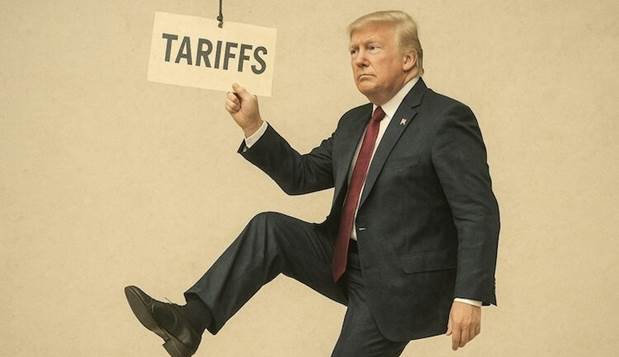
The latest executive order relating to the trade war that has been waged by President Trump and which keeps escalating (EO 14257: Regulating Imports With a Reciprocal Tariff To Rectify Trade Practices That Contribute to Large and Persistent Annual United States Goods Trade Deficits Signed: April 2, 2025, Published: April 7, 2025), is a strange case of US democracy. It has reversed a rules-based order that the US themselves had a lot to do with, the World Trade Organisation (WTO). Created on 1 January 1995, it marked the biggest reform of international trade since the end of the Second World War and its agreements covered trade in services and intellectual property in addition to goods. The birth of the WTO also created new procedures for the settlement of disputes, and which permitted discussion amongst Nations and agreement based as far as possible, by consensus. Rather than addressing shortcomings and anomalies in the WTO, which several countries seem to feel are necessary, President Trump, with the powers that he, just one individual has, turned the world trading system upside down because he was of the opinion it was not serving the interests of the USA.
This article is not about the pros and cons of his decision, and it is not questioning the US constitutional right he had to take the decision. It is about the repercussions that follow for the people in the USA and the rest of humanity in the world, due to a decision taken by one individual. It is about the power that one individual has on account of the military and economic power of his country. It is about the power that a country has acquired by and large riding on the shoulders of other countries of the world. This is how empires came into being historically, and how the US empire, although not falling within the strict definition or understanding what an empire is, came into being in effect as an empire.
Empires were typically built through a combination of military conquest, political manoeuvring, and economic control. A dominant state would expand its power and influence by absorbing or subjugating other states, often relying on superior military technology or organizational structures. This could lead to the creation of territorial empires, where the dominant state directly governed conquered territories, or hegemonic empires, where the dominant state exerted influence through economic or political means.
If one looks at the USA, would one disagree that its might was a result of a combination of military conquest, political manoeuvring, and economic control? The US may not have directly subjugated other states, although it has exerted influence and control through economic, military and/or political means.
This kind of empire building was not uncommon when it came to non-democratic authoritarian States. In recent times, the USSR was a good example. China, in one way or the other, has built its strength and power perhaps more through economic manoeuvring rather than military conquests or political manoeuvring.
But the USA? The citadel of democracy, fairness, justice and promoter of equity which it claims to be, and which faults other countries for not having such values?
In regard to democracy in the USA, the extract noted below from an article by Timothy Snowball, The United States is not a democracy—and it wasn’t meant to be one (https://pacificlegal.org/the-united-states-is-not-a-democracy-and-it-wasnt-meant-to-be-one/?gad_ source=1&gbraid =0AAAAADMUwoLF-YXqK9KBD2dHuFaRWfu2R&gclid =EAIaIQobChMIz7roy8bSjAMV0QyDA x1qNDRkEAAYAiAAEgLn9fD_BwE) is very interesting and it gives a point of view which in all likelihood is at the bedrock of what democracy is understood to be in the USA by many people in the USA who wield real power in the country and who have a significant say in who becomes President, senators and members of the house of representatives, judges of the supreme court etc.
Snowball says Contrary to catchy slogans, memes and other slick forms of electioneering, the government of the United States was never intended to be a pure democracy. In fact, most of the institutions today’s activists complain about were designed to thwart the pernicious effects of too much democracy. They’re anti-democratic by design. Rather than flaws that require remedy, these institutions were (and are) essential safeguards for individual liberty. The Framers knew that in its pure form democracy could be dangerous. The writings of the founding era are replete with warnings of this fact:
- Real liberty is not found in the extremes of democracy, but in moderate governments,” Alexander Hamilton wrote. If we incline too much to democracy we shall soon shoot into a monarchy, or some other form of a dictatorship.”
- Thomas Jefferson lamented that a democracy is nothing more than mob rule, where 51 percent of the people may take away the rights of the other 49.”
- James Madison argued that democracies have ever been spectacles of turbulence and contention; have ever been incompatible with personal security or the rights of property; and have in general been as short in their lives as they have been violent in their deaths.”
- John Adams concluded that democracy never lasts long. It soon wastes, exhausts and murders itself. There never was a democracy yet that did not commit suicide.”
Despite what many of today’s activists would have us believe, the anti-democratic institutions of the American Republic are just as vital now as they were over 200 years ago. For example, the Electoral College ensures that individuals elected to the presidency don’t only have the support of the population-heavy coasts, but broad support throughout the entire country. The function of the Electoral College is to respect and represent the states as sovereign entities within our federal system. Likewise for the Senate. Each state is represented equally in the Senate, irrespective of population, size or prestige. As a check upon democratic extremes, the Senate was even more effective before the unfortunate enactment of the 17th Amendment in 1913 subjected senators to direct election by voters rather than by individual state legislatures.
Finally, the Supreme Court is perhaps the least democratic institution of all. The court’s members are given lifetime appointments by presidents elected via the Electoral College, subject to no democratic oversight or elections. Justices are called upon to decide cases and controversies according to what the law demands, not according to their personal preferences or the passions and prejudices of the electorate.
Lincoln understood the role our institutions play in tempering democracy’s excesses and ensuring deliberation, balance and stability. As he noted in an 1856 speech: Don’t interfere with anything in the Constitution. That must be maintained, for it is the only safeguard of our liberties. And not to Democrats alone do I make this appeal, but to all who love these great and true principles. The advocates for increased democracy would do well to remember Lincoln’s wise warning.
Their demand for more democracy may stem from genuine concern and a desire for progress.” But in seeking to undermine or cast aside the less democratic institutions of the American system, they show a vast misunderstanding and lack of appreciation for our unique system of government.
In the United States, the people rule, but only through institutions designed to protect the individual and minority from the tyranny of the majority. That system is worth protecting and preserving”
The above-mentioned limitation to representative democratic governance is shown as positive limitations by the writer Tomothy Snowball and going by history, it appears that these limitations will continue, and democratic reforms will not be welcome in the US. Any effort to liberalise democracy is bound to be thwarted. While the US system may have its benefits to its people, in terms of the well-being of the people, it is interesting to note some statistics relating to the USA, the richest country in the world which according to the World bank, with a GDP of 27.72 trillion in 2023 and a GDP per capita of $ 82,769.
As per the US Census Bureau, the US had an official poverty rate of 11.1%, with 36.8 million living in poverty. Malnutrition affects a significant portion of the population, including children and older adults, with disparities in food insecurity rates across different demographics. Child Malnutrition: 2022 Facts and Statistics contained in World Hunger Education Service -Hunger Notes (https://www.worldhunger.org/about-whes-hunger-notes/) reports that about one in seven households (13.5%) experienced food insecurity in 2023, with 47.4 million Americans living in these households, 13.8 million children lived in food-insecure households, 1.6% of U.S. adults aged 20 and over are underweight. Obesity or a non-communicable disease coupled with malnutrition, is prevalent in more than half of all malnourished households that reside in the US. Income disparity according to the Wikipedia, in 2021, the top 10% of Americans held nearly 70% of U.S. wealth, up from about 61% at the end of 1989 and the top 1% earned 13.2% of total income in 2019, nearly doubling from 7.3% in 1979. Besides these statistics, disparities relating to health services where, as mentioned by Joseph Stiglitz The U.S. being the richest country in the world, suggesting a highly efficient economy, recorded more than a million deaths from COVID, whereas Vietnam, with a GDP of 409 billion had about 43,000”. All above indicators and a host of other indicators, too many to cite here, questions the beneficial outcomes for its people living in its present form of democracy.
In a research paper titled Understanding democratic decline in the United States (https://www.brookings. edu/articles/understanding -democratic-decline-in-the-united-states/ ) by Vanessa Williamson, Senior Fellow – Governance Studies, Senior Fellow – Urban-Brookings Tax Policy Centre, she highlights the following
- The United States is experiencing two major forms of democratic erosion in its governing institutions: election manipulation and executive overreach.
- Since 2010, state legislatures have instituted laws intended to reduce voters’ access to the ballot, politicize election administration, and foreclose electoral competition via extreme gerrymandering.
- In the U.S., executive power has grown significantly, threatening civil service independence. With a gridlocked, hyper partisan Congress, impartial executive oversight is lacking, and judicial impartiality is in question.
These anti-democratic developments highlighted by Vanessa Williamson would be of concern to many, but they may be consistent with what Timothy Snowball has written in his article that the less democratic institutions of the American system are a unique feature of the system of government in the USA. Perhaps they are regarded as measures needed to protect the system of restricted democratic governance in the US where inequality and inequity seems to part of that unique” system.
Despite Snowball’s statement attributed to Lincoln, the latter’s less publicised view on liberalising governance needs to be quoted here as it is about advancing democratic governance. Most governments have been based, practically, on the denial of equal rights of men, ours began, by affirming those rights. They said, some men are too ignorant, and vicious, to share in government. Possibly so, said we; and, by your system, you would always keep them ignorant, and vicious, to share in government. Possibly so, said we; and, by your system, you would always keep them ignorant, and vicious. We proposed to give all a chance; and we expected the weak to grow stronger, the ignorant wiser; and all better, and happier together.”
The issue for the rest of the world is not about democracy and how it is interpreted and practiced in the USA. It is a matter for the people of the USA. What matters to the rest of the world is the repercussions of some decisions to others in the world, and the political, economic and military interventions that the US engages in other countries claiming they are doing so to lift restrictions on democracy and advance democracy in those countries, although the form of democracy in the US has deliberate mechanisms to restrict rather than advance democracy. One can only hope that this duplicity will end, and as much as turning tables on the world trading system was undesirable and unwelcome, many may wish that President trump will issue an executive order banning US involvement in other countries to engage in political, economic and military interventions in the guise of advancing democracy.
Values and practices relating to advancing democratic governance in countries should be a matter for the United Nations, and not any single country. The purpose and objectives of the United Nations should be revised and its effectiveness strengthened. Democratic governance is a basic human right and all countries should subscribe to a set of values that resonate that right.
Political and economic dominance of others by one rich and powerful country should cease and it is perhaps time that groupings such as the European Union, Asean, the African Union, Mercosur, the Southern Common Market (commonly known by abbreviation Mercosur in Spanish and Mercosul in Portuguese) South American trade bloc with Argentina, Bolivia, Brazil, Paraguay and Uruguay as members, the Union of South American Nations (USAN), BRICS, APEC and other similar trading blocks exert more influence to thwart such dominance by current and would be single country power centres.
Global poverty reduction has slowed to a near standstill
The World Bank gives some very telling information on the well-being status of todays world. These statistics should surely be the sad pointers as to what imperfect governance has delivered to the global population.
It says that today, almost 700 million people (8.5 percent of the global population) live in extreme poverty – on less than $2.15 per day. Progress has stalled amid low growth, setbacks due to COVID-19, and increased fragility. Poverty rates in low-income countries are higher than before the pandemic. Around 3.5 billion people (44 percent of the global population) remain poor by a standard that is more relevant for upper middle-income countries ($6.85 per day), and the number or people living on less than this standard has barely changed since the 1990s due to population growth. In 2024, Sub-Saharan Africa accounted for 16 percent of the world’s population, but 67 percent of the people living in extreme poverty. Two thirds of the world’s population in extreme poverty live in Sub-Saharan Africa, rising to three quarters when including all fragile and conflict-affected countries. About 72 percent of the world’s population in extreme poverty live in countries that are eligible to receive assistance from the International Development Association (IDA).
ප්රභාකරන් සාධකය පිලිබඳ කථිකාවක් WANESA TV සමග
April 17th, 2025Dr Ruwan M Jayatunge M.D.
ප්රභාකරන් තුල ව්යාථවේදී පෞරුෂ සාධක Pathological Personality traits දක්නට ලැබුණි. නමුත් මේ ගැන කතිකාවට බඳුන් වී ඇත්තේ ඉතාම අඩුවෙනි.2004 වසරේ ප්රභාකරන් දේශපාලනමය සහ යුදමය වශයෙන් ඉතා බලවත්ව සිටි අවදියේ දී ඔහුගේ පෞරුෂ සාධක හෙළි කරමින් කරමින් ප්රභාකරන් සාධකය පිලිබඳ මනෝවිද්යාත්මක විශ්ලේෂණයක් යන කෘතිය මම එළි දැක්වුයෙමි. එම ගවේෂණාත්මක කෘතිය මගින් ළමා ප්රභාකරන් චර්යාත්මක අක්රමතාවයකින් (Conduct Disorder) පෙළුණු බවත් පසුකාලීනව වැඩිහිටි දිවියේදී ඔහු තුල සමාජ විරෝධී පෞරුෂ ලක්ෂණ (Antisocial Personality Disorder) තිබෙන බවද ඔහුගේ ජිවිත කතාව සහ චර්යාව මගින් පෙන්වා දුනිමි. මේ මතය ඇතැම් වියතුන්ගේ විවේචනයට ද ලක් විය. නමුත් 2011 වසරේ මම යාපනය විශ්වවිද්යාලයේ මනෝවිද්යා අංශයේ මහාචාර්ය දයා සෝමසුන්දරම් මහතා අමතමින් 2004 වසරේ ප්රභාකරන් පිළිබඳව මගේ අධ්යනයන් ගැන තතු පැවසුවෙමි. වේලුපිල්ලේ ප්රභාකරන් සමාජ විරෝධී පෞරුෂ ලක්ෂණ වලින් යුතු පුද්ගලයෙකු බව මහාචාර්ය දයා සෝමසුන්දරම් ද පිලිගත්තේ ය.
ප්රභාකරන් සාධකය පිලිබඳ කථිකාවක් WANESA TV සමග ( සවන් දෙන්න );
Reforming the Oversight of Donor-Funded Projects in Sri Lanka
April 17th, 2025By Special Correspondent[i]

Visual Aid: Cartoon Created with AI Assistance
Introduction
Sri Lanka has received substantial support from donor-funded development projects aimed at improving the economy and supporting social growth. However, a closer look reveals that many of these projects do not achieve their intended results. The pressing question is: How can Sri Lanka improve its oversight of these projects to better utilize donations?
Current Situation of Development Projects
Many donors, including international banks, have invested billions in Sri Lanka. While the initial results often seem positive—highlighted in reports and on social media—the reality on the ground can be quite different. Many projects struggle with issues like poor performance, misaligned goals, and lack of sustainability, which ultimately limit their effectiveness.
Key Problems in the System
Several common issues weaken the effectiveness of donor-funded projects in Sri Lanka:
- Excessive Spending on Consultancies: A significant amount of money is spent on international consultants, especially during the closure of projects, which takes important resources away from core needs.
- Issues with Procurement: The last stages of projects often involve questionable purchasing decisions that benefit personal interests rather than actual project needs.
- Weak Audit Processes: Current audit systems are often just a formality and do not provide the in-depth analysis needed to ensure proper management or accountability.
- Lack of Public Engagement: There is limited involvement from the public, and feedback mechanisms are often ineffective, which prevents the projects from reflecting the needs of the community.
Missed Opportunities and Sustainability Issues
Even when projects are successful, they often fail to continue after funding ends due to a lack of follow-up and planning. Without clear strategies for continuation, successful initiatives can disappear, leaving their benefits behind. Addressing sustainability must be a crucial part of project planning from the beginning.
Suggestions for Improvement
To manage donor-funded projects effectively, Sri Lanka needs to make several changes:
- Strengthen Internal Audits: Create strategic review committees with the authority to act on red flags and set up independent audits that report directly to leadership.
- Integrate Project Management Units: Incorporate project staff into permanent departments to improve coordination and knowledge sharing.
- Focus on Outcome-Based Monitoring: Shift measurement from activities completed to real-world outcomes, including direct feedback from the community.
- Enhance Transparency: Regularly provide clear spending reports, updates on project progress, and ensure that all procurement practices are openly disclosed.
- Plan for Sustainability from the Start: Develop clear plans for handing projects over to local institutions and integrating successful elements into existing programs right from the beginning.
Immediate Steps for Project Managers
If you are currently managing a donor-funded project, consider these actions:
- Assess how many project components will continue without donor support.
- Create a plan for transferring skills to government staff.
- Form a procurement committee that includes community representatives.
- Set up a feedback system that allows the public to influence project decisions.
Conclusion
As Sri Lanka continues to rely on donor support, it is essential to treat these funds as a national responsibility that requires careful management. Success should not just be measured by the completion of tasks but by the lasting improvements made in people’s lives.
In this new approach, we shift our focus from superficial achievements to genuine, long-lasting benefits.
[i] The views expressed in this article are solely those of the author and do not necessarily reflect the opinions of any organization or institution. The information presented is based on the author’s analysis and research as of the date of publication. Readers are encouraged to conduct their own research and consult relevant sources for a comprehensive understanding of the topic discussed.
අලුත් අවුරුද්ද සැමරීමට රාජ්ය නායකයා ප්රසිද්දියේ පස්ස ගහලා..- විමල්
April 17th, 2025lanka C news

වසර දෙදහස් පන්සියයකට අධික ඉතිහාසයක් ඇති ජාතියක ප්රධාන සංස්කෘතික උත්සවයක් සැමරීමට රටේ රාජ්ය නායකයා ප්රසිද්ධියේ පස්සා ගසා ඇතැයි ජාතික නිදහස් පෙරමුණේ නායක හිටපු පාර්ලිමේන්තු මන්ත්රී විමල් වීරවංශ මහතා පවසයි.
ඒ මහතා සිය සමාජ ජාල ගිණුම ඔස්සේ නිකුත් කර ඇති නිවේදනය මෙසේය.
ගරුතර ස්වාමීන් වහන්ස,
අන්යාගමික පූජකතුමනි,
මවුවරුනි, පියවරුනි,
සහෝදරයා, සහෝදරිය,
සිංහල හා දමිල අලුත් අවුරුද්ද සැමරීම රාජ්ය මට්ටමෙන් සිදු නොවූවද රට පුරා බහුතරයක් පොදු මහජනතාව ආර්ථික අපහසුතා තිබියදී පවා උත්කර්ෂවත් ලෙස අලුත් අවුරුදු සැමරීමට කටයුතු කළහ.
මා මෙවර සමාජ මාධ්යවල නිරීක්ෂණය කළ එක් දෙයක් වූයේ අලුත් අවුරුද්ද සැමරීමේ අර්ථ විරහිත භාවය පිළිබඳ කතිකාවක් සමාජ මාධ්ය තුළට හදිසියේ පැමිණ තිබීමයි. සමහරු මුලු ලොවෙන් මේ උත්සවය සමරන්නේ ශ්රී ලංකාවේ පමණක් බවද මෙය ඒ නිසා අරුම පුදුම අවුරුදු සැමරීමක් බවද කියා සිටියහ.(මුසාවකි.ආසියාවේ බොහෝ ජාතීන් මාර්තු හා මැයි අතර තමන්ට අනන්ය අලුත් අවුරුද්දක් සමරති.) සමහරු සිංහල නක්ෂස්ත්රය තුළ ඇති දර්ශණයේ දුබලතාවය ගැනද තවත් සමහරු අතීත කාමයේ ඇලී ගැලී සිටිමින් වර්තමානයට නොගැලපෙන සිරිත් විරිත් ඉදිරියට ගෙනයාමක් ලෙසද අලුත් අවුරුද්ද අර්ථකතනය කර තිබුනි. අප කලිනුත් කියා ඇති පරිදි වැදගත් වන්නේ අලුත් අවුරුද්ද විවේචනය කරන කිසිදු ගැඹුරු විමංසනයකින් තොර තුන්වන පන්තියේ කුලී මත වාහකයන් නොව සිංහල අලුත් අවුරුද්ද වැනි යම් ජාතියකට අනන්ය සංස්ක්කෘතික උත්සව සැබෑ ගැටළුවක් වී ඇත්තේ කාටද යන්න ගැඹුරින් විමසීමයි.
ෆ්රැන්සිස් ෆුකුයාමා නම් අමෙරිකානු ලිබරල් ආර්ථික චින්තකයා ලෝක අවධානය දිනූ ඔහුගේ End of History and the last man” කෘතියේ පැවසූ පරිදි ලෝක මනුෂ්ය සංස්කෘතික විකාශනයේ අවසානය නිදහස් වෙළඳපොල සමාජ ආර්ථික ක්රමයයි. එය (අතිශය සාධාරණම) මනුෂ්ය සංහතියේ අවසාන සමාජ ආර්ථික නවාතැන් පොළයි.(ෆුකුයාමා පසුව USAID සහ සම්බන්ධිත ආයතයක අධ්යක්ෂක ධූරයකින් පිදුම් ලැබීය.) මේ අනුව විවිධ ජාතීන්ට අනන්ය සංස්කෘතීන් දියවී ලිබරල් වෙලඳ සංස්කෘතියක් හා එකම පාරිභෝජන සමාජයක් ඇතිවීම මේ ප්රවාදයට අනුව අනිවාර්ය ප්රතිඵලයකි.ඒ ප්රතිඵලය ඇතිවීමට නම් ඒ තත්වයට බාධාකරන සංස්කෘතික බාධක ඉවත් කළ යුතුය. හැම්බර්ගරය, හොට්ඩෝගය වැළඳ ගත යුතු සමස්ත ලෝක සංස්කෘතියකට කැකුළු කිරිබත, කැවුම, කොකිස, හැළපය හෝ කුරක්කන් රොටිය ගැලපෙන්නේ නැත. අලුත් අවුරුද්ද අමු හරමානිස්” වී දෙසැම්බර් තිස් එක හෙන මොඩර්න්” වන්නේ මේ නිසාය. අලුත් අවුරුද්දේ නක්ෂස්ත්රමය හෝ තාරකා විද්යාත්මක හෝ සමාජ විද්යාත්මක නිස්සාරත්වය හොයන සමහරුන්ට දෙසැම්බර් හා ජනවාරි අලුත් අවුරුද්දේ ප්රභවය ග්රීක මිත්යා විද්යාවට සුසම්බන්ධ බව ඔළුවට පහරක් ගැසූවද” මතක් නොවන්නේ හෑලි නොලියවෙන්නේ” ඒ නිසාය.දෙසැම්බර් තිස් එක ලෝක ලිබරල් වෙළඳපොලට හා බටහිර සංස්කෘතියට ප්රධාන උත්සවයක් වන නිසා වෙනත් සංස්කෘති වල අලුත් අවුරුදු මොවුන්ට නයාට අඳුකොල” වන්නේ ඒ නිසාය.
මේ තත්වය තේරුම් ගන්නා ජාතික රාජ්යයන් වල විමුක්තිය වෙනුවෙන් කටයුතු කරන රාජ්ය නායකයෝ සිය රටවල් වලට අනන්ය සංස්කෘතික උත්සව ප්රවර්ධනය කරති. අදිසි ලෝක අධිරාජ්යයේ බලපෑමට නතු නොවී සිය ජනයා එකමිටට තබා ගැනීමට සිය සංස්කෘතික මූලයන් ශක්තිමත් කරති.
වසර දෙදහස් පන්සියයකට අධික ඉතිහාසයක් ඇති ජාතියක ප්රධාන සංස්කෘතික උත්සවයක් සැමරීමට රටේ රාජ්ය නායකයා ප්රසිද්ධියේ පස්සා ගැහීම” දෙස අපි ඉතා බැරෑරුම්ව බැලිය යුත්තේ මේ නිසාය.
විමල් වීරවංශ
නායක
ජාතික නිදහස් පෙරමුණ
ලෝක ආර්ථිකය අවිනිශ්චිතයි.. සූදානම් වන්න.. – මහ බැංකුව අනතුරු අඟවයි
April 17th, 2025Courtesy Lanka Leader
ලෝක ආර්ථික පරිසරයේ අවිනිශ්චිත බව සැලකිල්ලට ගෙන ඊට මුහුණ දීම සඳහා ප්රතිපත්තිමය සූදානම ඉහළ නැංවීම අත්යවශ්ය බව ශ්රී ලංකා මහ බැංකුව පවසයි.
විශේෂයෙන් නව නිදහස් වෙළෙඳ ගිවිසුම් සක්රීයව ක්රියාත්මක කිරීම සහ භාණ්ඩ වෙළෙඳාම වෙනස් වීමේ අවස්ථා ශ්රී ලංකාවට වාසිදායක අයුරින් යොදා ගැනීම සඳහා ප්රතිපත්තිමය සූදානම ඉහළ නැංවිය යුතු බවද මහ බැංකුව කියයි.
ශ්රී ලංකා මහ බැංකුව විසින් පසුගියදා නිකුත් කළ පසුගිය වර්ෂය (2024) සඳහා වන මහ බැංකුවේ වාර්ෂික ආර්ථික විවරණ වාර්තාවේ මේ බව සඳහන් වේ. තවදුරටත් එම වාර්තාවේ මෙසේද සඳහන් වේ.
ඇමෙරිකාව විසින් ශ්රී ලංකාවේ අපනයන සඳහා පනවන ඕනෑම අන්යොන්ය තීරු බද්දකින් රටෙහි අපනයන අංශයට විශාල බලපෑමක් ඇති කළ හැකිය.
මීට අමතරව ඇමෙරිකානු රජයේ ප්රතිපත්ති ගැළපීම්වලින් ශ්රී ලංකාවේ අනෙකුත් ප්රධාන වෙළෙඳ හවුල්කරුවන්ට ඇති විය හැකි බලපෑමෙන් ශ්රී ලංකාවේ අපනයන සඳහා අහිතකර බලපෑමක් ඇති විය හැකිය.
– Divaina
Reveal perpetrators behind Easter Sunday attacks, Catholic church urges govt.
April 17th, 2025YOHAN PERERA Courtesy Daily Mirror

Colombo, April 17 (Daily Mirror) – The Catholic Bishops’ Conference in Sri Lanka, in its special message for Easter stressed that ascertaining who the perpetrators of the Easter Sunday attacks in 2019 were and those who have aided and abetted in the dastardly act, is a matter of urgency.
“This Easter also marks the sixth anniversary of the Easter Sunday bomb attacks on innocent worshipers
at Catholic and other Christian Churches and in other places in 2019, causing death and injuries to hundreds of people.
In this regard, we observe that certain positive steps have been taken by the present government to ensure an independent and impartial inquiry into this brutal attack.
While we appreciate the efforts made so far, we insist that as a matter of urgency and justice, the final aim of the inquiries should be to ascertain who the perpetrators are and those who have aided and abetted in the dastardly act.
We shall continue to pray earnestly for wisdom and courage for the leaders of our country, as well as solace and healing for the victims,” the message signed by the President of the Catholic Bishops’ Conference in Sri Lanka, Bishop Harold Anthony Perera and Secretary General Bishop Anthony Jayakody said.
“Easter also calls us to promote with renewed vigour the sanctity of human life. Thus, we are called to condemn all that is detrimental to the promotion of human life, such as interference with procreation, abortion and other forms of killing and destruction of human life,” the message added.
GAMMANPILA SAYS NO CONNECTION ESTABLISHED BETWEEN PILLAYAN AND EASTER ATTACKS
April 17th, 2025Hiru News
The Centre for Society and Religion (CSR) claims that Sivanesathurai Santhirikanthan, also known as Pillaiyan, and his former media spokesperson, Azad Maulana, had connections with individuals involved in the Easter Sunday attacks.
However, former Minister Udaya Gammanpila, speaking at a press conference yesterday (16), stated that the government’s attempt to create a narrative that connects Pillaiyan to the Easter attacks has failed.
Meanwhile, Director of the CSR, Father Rohan Silva, also speaking at a press conference yesterday (16), claimed that evidence has emerged indicating the involvement of local intelligence services in the Easter Sunday attacks.
Safeguarding Sovereignty Through Cultural Integrity and Strategic Neutrality
April 16th, 2025Sunil J. Wimalawansa
(Professor of Medicine)
A nation thrives when it preserves its traditional values, cultural heritage, language, and fundamental beliefs. Nations fail whether these lacks. The mentioned elements form the foundation of national unity, sovereignty, spiritual strength, and cultural identity.
For Sri Lanka, with its ~2,500-year-old Buddhist heritage, protecting this legacy is a matter of pride and a necessity for maintaining independence and dignity on the world stage. We have lost some of these strengths and recognitions over the past 75+ years due to short-sighted and selfish politicians. Should fellow citizens allow the current leadership to continue down a path of destruction that undermines our unitary nature and sovereignty—as appears to be happening with secret MoUs with India?
However, it does not mean we should keep boasting about our historic achievements (e.g., agriculture) and not embrace modern methods and technology—for example, digitization of government agencies and departments, cybernetics for broader development, including eliminating waste, abuse, and fraud, and incorporating artificial intelligence, robotics in manufacturing, etc. These apply to all government departments and to the private sector. Major changes are needed. The lack of preparation and decision-making power in the optimum way to respond to the US tariff is another recent example.
By learning from countries that have successfully upheld their cultural identity while remaining non-aligned (e.g., Sweden, Switzerland, etc.), Sri Lanka must strategically and diplomatically avoid manipulation by global powers—without provoking them—through diplomacy with a well-defined national vision. Unfortunately, many Sri Lankan politicians stray from this path due to ego, ignorance, and personal gain. Sustainable prosperity can only be achieved by remaining neutral in global conflicts, properly utilizing our natural resources, prioritizing economic growth with value-added exports, identifying new markets, facilitating the private sector to succeed by deregulation and tax incentives to boost exports, reducing excessive government expenditure (by at least 30%―unachieved), and focusing on the population’s well-being and happiness.
As part of this broader national strategy, preserving our heritage—which has evolved over generations and been protected through great sacrifice—must remain a top priority. Why are Sri Lankans abandoning the invaluable cultural foundations laid by their ancestors that continue to benefit the country? Nevertheless, embracing modern technologies such as digitalization and cybernetics must never come at the cost of our heritage or national identity.
True sovereignty discourages conflict and ensures the protection of a nation’s citizens. This must be achieved through stable, long-term diplomatic relations and compassionate governance—not through misguided, politicized trade agreements, PTAs, or undisclosed memoranda of understanding with foreign powers, such as India or China—people own the country and have the power over politicians they are only appointed temporary caretakers. There is no reason for the government(s) to hide such information from the public. Despite high expectations, these values and principles remain absent in the current and previous leadership, while entrenched bureaucracies continue to harm the nation and its people.
Rather than merely discussing these issues amongst themselves—or remaining silent—citizens must raise their voices firmly, collectively, and peacefully to compel the leadership to change course. This does not call for street protests or violence but for constructive strength, unity, and a shared vision to guide the country back onto the right path. Through such a revival, Sri Lanka can reclaim peace, success, and prosperity. Reclaiming and upholding these ideals is essential for national renewal and long-term resilience.
Essential Insights on LTTE Crimes: Articles by Shenali Waduge
April 16th, 2025By Palitha Ariyarathna
As Sri Lanka navigates critical discussions on sensitive topics such as international sanctions and allegations against its armed forces, it is imperative to ground deliberations in evidence-based understanding. Shenali Waduge, a renowned analyst and expert on LTTE-related crimes, provides a wealth of invaluable information on the activities and atrocities committed by the LTTE.
Her articles, listed below, serve as key resources for understanding the broader context of LTTE operations, their consequences, and the underlying narratives that have shaped international perceptions. These writings are indispensable for decision-makers, including the Cabinet Sub-Committees tasked with addressing issues of national importance.
Attention to Cabinet Sub-Committees: The articles highlighted here provide critical perspectives necessary for informed deliberations. They not only challenge unsupported allegations but also present well-documented evidence that sheds light on LTTE atrocities and their implications for Sri Lanka. It is strongly recommended that Committee members review these resources thoroughly and incorporate them into their discussions.
Selected Articles:
Chronology of Tamils taking firearms since 1950s
Sri Lanka’s military-humanitarian operation with timelines
https://www.defence.lk/Article/view_article/862
Sri Lanka: Who are the Missing” who are the Dead” & who were killed!
https://www.defence.lk/Article/view_article/845
Foreign Governments disclose ALL TAMIL refugees & asylum seekers to conclude ‘Missing’ ‘Disappeared’ in Sri Lanka
https://www.defence.lk/Article/view_article/874
LTTE ‘DEAD’ RESURFACE: SECURITY FORCES DESERVE PUBLIC APOLOGY AND COMPENSATION
Sri Lanka’s LLRC report claims 22,247 LTTE dead – who are they?
https://www.defence.lk/Article/view_article/863
LTTE War Crimes: Human Shields
Sri Lanka’s genocide witnesses” were living abroad during the May 2009 conflict?
Sri Lanka ends LTTE Terrorism: All foreigners commemorating Mullaivaikkal Massacre” get your facts straight first
Sri Lankan Truth Commission – Sri Lanka’s Armed Forces must not fall for this trap of story-telling & confessions for compensation!
UK Govt – What about UK living White Tiger Aunty Adele” trainer of LTTE Child Soldiers & British MPs abusing their office?
Why is it that Tamil Eelam is sought by only Tamils living overseas?
Wikileaks discloses source of 40,000 (deaths) as Ranil Wickremasinghe
Was life for Tamils better under the LTTE?
LTTE the worlds only terrorists to use Goats & Dogs for target practice – where are the animal rights activists
Did Sri Lanka commit ‘war crimes’? International Legal luminaries Prof. Crane and Sir Desmond de Silva say NO
Did Sri Lanka commit ‘war crimes’? International Legal luminary Prof. Michael Newton says NO
Did Sri Lanka commit ‘war crimes’? International Legal luminary Sir Desmond de Silva says NO
The Tamil ‘problem’: How can Sri Lanka solve a problem that does not exist?
https://www.themorning.lk/articles/ZN8nQWUSeoRyLmCbkrOw
11 years after LTTE defeat – Terrorist head Prabakaran is just a money-making commodity for LTTE Diaspora
…And who looked after Prabakaran’s Parents?
India gave birth to LTTE & Tamil militancy in Sri Lanka
LTTE revival saga exposes ‘civilian’ claim
Why didn’t the LTTE or LTTE diaspora develop the north when the LTTE ruled it?
https://www.themorning.lk/articles/219828
Prabhakaran is dead but not the LTTE and Eelam
http://archives.sundayobserver.lk/2015/01/04/fea05.asp
Sri Lanka Must Eliminate Eelaam Ideology For Reconciliation To Succeed
Sri Lankans respond to channel 4 & the international community
THE UN INVESTIGATIVE PANEL MUST PROBE TNA-LTTE LINKS
Rajiv Gandhi ordered Prabhakaran assassination but…
https://www.vijayvaani.com/ArticleDisplay.aspx?aid=2915
Mullaivaikkal Commemoration: Mourning the Civilians killed by LTTE or LTTE cadres killed in final battle?
SRI LANKA : MOST OF THE 19 ‘JOURNALISTS’ KILLED WERE LTTE OR KILLED BY LTTE
Mullaivaikal Commemoration – Mourning LTTE Dead Under Pretense Of ‘Civilian Dead’
Who can file accountability against Adele/LTTE on behalf of LTTE Child Soldiers/Women?
UK celebrating Women’s Day protecting LTTE Terrorist Aunty Adele
India And Sri Lanka Must Seek War Crimes Against Adele Balasingham For Fostering LTTE Suicide Terrorism
UN/UNHRC: What about the war crimes of ‘Aunty’ Adele Balasingham?
Review: Truth Behind Dare Documentary
http://www.srilankaguardian.org/2021/02/review-truth-behind-dare-documentary.html
Fostering LTTE suicide terrorism
http://archives.sundayobserver.lk/2013/01/20/fea03.asp
Open Letter to the Sigrid Rausing Trust on Yasmin Sooka & ITJP
https://www.defence.lk/Article/view_article/1803
TAMIL CIVILIANS KILLED BY LTTE
https://www.onlanka.com/news/tamil-civilians-killed-by-ltte.html
Shashirekha the wife of Thamilselvan (LTTE political wing leader) says:
UN & so-called International Community did sweet nothing to stop LTTE terrorism
Amnesty International Secretary General Agnes Callamard arrives to commemorate LTTE dead in Mullaivaikkal
TAMIL TEENS promoting LTTE holding foreign passports
Mahaveerar Naal (Great Heroes Day) / ‘Maaveerar Vaaram’ (Great Heroes Week)– Is it a LTTE event?
LTTE had POLICE POWERS without 13A – TNA wants POLICE POWERS with 13A
This Children’s Day we remember the forgotten LTTE Child Soldiers!
NO TRUTH COMMISSION if India’s training & funding LTTE is not included
Tamil Genocide Remembrance Day – Questions for Canada
18 May 2009 Sri Lanka defeats LTTE: If you can’t name the dead 40,000 there is no ‘genocide’
How about thanking Sri Lanka’s Armed Forces for saving Tamil children from becoming Child Soldiers!
When EPRLF kidnapped an American couple in 1984 & sought ransom paid to Tamil Nadu Government
If Maaveerar Naal hails LTTE dead – What do we call event to commemorate Tamils killed by LTTE?
Commemorating Maaveerar Naal is Tamil people’s right – Wigneswaran” – then who is going to commemorate Tamils killed by LTTE
The West falling for LTTE Goebbels Machine
Non-LTTE Tamils/Diaspora vs LTTE-Tamils/Diaspora
Ending Sri Lanka’s Conflict: 7721 Collateral Damage is worth the eventual peace
UNHRC must judge Sri Lanka on violations of IHL not Human Rights
LTTE would have been eliminated in May 1987 & not May 2009 if India did not save LTTE
The capture of Kilinochchi on 2 January 2009 ended military offensive & brought Sri Lanka under one flag
US & UK Military Attache’s demolish UNHRC allegations against Sri Lanka
All foreign passport holding Eelam promoters – You want Eelam, you come to Sri Lanka & create it yourselves”
Remembering PC 3164 A Karunanidhi 1st Policemen killed by LTTE on 14 February 1977
Sri Lanka must demand answers from UNHRC – Prove we killed 40,000 or shut up!
Why is UNHRC not bothered about 5000 Missing Sri Lankan Soldiers
TNA was formed by LTTE & contested December 2004 elections
How many Tamil children did TNA save from being turned to child soldiers by LTTE?
Jaffna STATE University cannot allow proscribed LTTE terrorist monuments
DISGRACEFUL – UK commemorates dead LTTE terrorists by lighting UK Parliament
LTTE has taken murder, extremism and mayhem to the West
MOURNING THE DEAD: A Soldier & a terrorist can never be equal
Sri Lanka’s Victory: LTTE turned children into child soldiers. Sri Lanka brought out the talents in child soldiers
Sri Lanka’s Dead: Are LTTE dead in LLRC report also featured in OMP list?
Sri Lanka’s Military Defeat over LTTE Terrorism – some facts
Who wants Tamil Eelam – Who are asking Political Solutions?
Questions to UNSG/UNHRC: Who killed 6261 soldiers during the final phase – LTTE or Tamil Civilians or Others?
Where’s the Sri Lanka Monitoring Mission report: 3,830 LTTE violations & 356 GOSL violations
Call to Action: Committee members are encouraged to engage with these resources to ensure discussions are based on factual evidence and are reflective of the realities surrounding LTTE operations. For further truth-finding and clarity on these critical topics, Shenali Waduge can be reached through her public platforms, such as her website, or Committee members may coordinate to establish communication where necessary.
By incorporating these insights into deliberations, the Cabinet Sub-Committees can uphold the values of justice, integrity, and sovereignty that define Sri Lanka, paving the way for balanced and effective resolutions.
By Palitha Ariyarathna
What the Country Needs to Do and How it Can Unite as One Nation.
April 16th, 2025By Dr Ramesh Somasunderam. Willetton 6155, Australia.
I believe what Sri Lanka needs most is very good Civil and District Administration. This is what can make the country to function and be governed well.
Sri Lanka for once is united under one party and importantly the present President of our lovely country his Excellency Mr. Anura Kumara Dissanayake. Even the Tamils residing in the North and East of Sri Lanka voted for him as their President. Based on this, all Sri Lankans wanted an honest, fair and equitable leader to give them a fair go and employment prospects including, accountability and a just nation. Based on these facts stated, the President of Sri Lanka can ensure as one nation to make the District Administration nonpolitical and functional again and the civil administration a quality one by training our Sri Lanka Administrative Servants by getting quality men and women from the higher civil service in Britain and India to come and train our men and women in the Sri Lanka Higher Administrative Service. This plus mega projects such as the The Kelani River scheme and the Jaffna Salt Water Scheme should be done including making Off Shore banking and Sri Lanka the United Nations of the Fareast by that ensuring our independence.
Sri Lanka’s foreign policy should be neutral but more towards India. Otherwise they will want the road to be built between India and Sri Lanka and the 13th Amendment for devaluation to the Sri Lankan Tamils in the North and East of the country. They believe like the British to divide the rule the nation of Sri Lanka.
In fact it was the central government of India that trained the LTTE and not Tamil Nadu as viewed by many majority Sinhalese. Tamil Nadu emphasized with the Sri Lankan Tamil situation, but did not military train them. The late Mrs Gandhi the Prime Minister of India got many Sri Lankan Tamil militant groups trained in North Indian as the then President of Sri Lanka J. R. Jayewardene was pro-West rather than pro India. Based on this example it is foolish to play games between China and India. We must be neutral in our foreign policy, but lean more towards India as it is regional and potential superpower. Thereby ensuring Sri Lanka is made the center of South Asia.
The problem at present is the current President not using the SLAS Members in key positions and not envisaging on the projects I have stated above. If all of this is done the Central government which is pro North Indian will be pleased with the current government of Sri Lanka and not against it or work against our President and his government as happened in the past.
The other aspect could be Sri Lanka can have a living cricket academy for three years for a Degree to be granted to a promising cricketer men and women from whole of South Asia and promote grassroots cricket in a professional scale within the region, not just Sri Lanka.
At present there is killings among gag groups and contact killing taking place in Sri Lanka, which is because there is a lack of civil and district administration in Sri Lanka. If one takes India for example their higher civil administration is what keeps the country together and functional, not their politicians who are jokers from a majority perspective, both national and state wise in India, but it is their higher civil service which is the pillar of India and it functionality as a nation or country.
Sri Lanka can unite by ensuring English is the main language in the country and Singhalese and Tamil can be followed by people who want their children to be proficient in their mother language like in India where English is the link language even though Modi wants Hindi as well. I suppose time will tell whether this approach pays deviance to India as a nation.
Proposal for Accelerating the Development of the Marine and Offshore Industry in Trincomalee
April 16th, 2025Dr Sarath Obeysekera
His excellency The President
(Thru Deputy Minister of ,Ports Aviation and Road Development)
As the Chairman of the Advisory Board under the Export Development Board, I am reaching out to discuss an exciting opportunity for Sri Lanka, particularly in the context of developing our marine and offshore industry, including nautical tourism within the framework of a blue economy.
In recent years, the Export Development Board has been advocating for the development of Trincomalee, positioning it as a hub for the repair and construction of platforms as well as converted ships used in the oil industry.
Notably, the Port Authority completed a feasibility study in 2021, funded by the Asian Development Bank, which outlined the potential of this initiative as a significant source of income generation for the country.
During my tenure as Chairman, I was involved in a subsequent feasibility study that identified Clappenburg in Trincomalee as an ideal waterfront location for establishing facilities where local and foreign contractors could operate.
The Corporate Plan recognised the establishment of a shipyard and offshore construction yard as vital to generating foreign income and creating employment opportunities for our skilled workforce, many of whom are currently migrating abroad to pursue opportunities in countries like Korea, Romania, and the UAE.
With the foundational concepts already laid out, I respectfully request your Excellency to engage the Ministry of Ports, the Ministry of Industries, and the Board of Investment (BOI) to generate interest among large foreign conglomerates to invest in this venture.
Furthermore, while India holds certain development rights in Trincomalee, actual investment beyond IOC’s storage tanks has been minimal.
We must also consider the underutilized development of the tank farm in Trincomalee, the pipeline from India to Sri Lanka, and potential projects such as the Adani wind power initiative and green hydrogen generation. Collaboration with foreign companies, including Tata, Abans, and L&T, alongside established Singaporean or Korean yards could catalyze the development of an offshore construction yard in Trincomalee.
Trincomalee’s potential for generating energy through wind, wave, or solar power structures is immense, and we should leverage our land and resources to build a competent offshore Center of Excellence in our port city.
While we are training engineers and software developers to drive digitalization, the need for skilled workers in the industry remains critical. Additionally, bringing in Chinese investment for a refinery in Hambantota and tank farm development in Trincomalee could further strengthen our industrial capacity.
It is essential to revolutionize vocational training to meet industry demands, which have, in the past, suffered due to political interference.
By empowering our youth to work in our own heavy industrial sectors, we can stem the tide of skilled labor migration.
The Industrial Development Board (IDB) of the Ministry of Industries could undertake land development in collaboration with the Port Authority to manage the harbor front, creating necessary infrastructure such as berths and mooring buoys to accommodate ships and rigs.
To expedite the development of Trincomalee, I propose appointing a dedicated Minister or State Minister specifically focused on advancing the blue economy. This strategic leadership can accelerate initiatives to generate foreign income and create employment opportunities for our youth.
Thank you in advance for considering this vital proposal for the future of our marine and offshore industry.
I look forward to your support in making Trincomalee a leader in blue economy initiatives.
Sincerely,
Dr Sarath Obeysekera
ජනපතිගේ ප්රකාශය සෙසු අපේක්ෂකයින්ට අවමානයක් සහ නින්දාවක් -තුසිත බාලසූරිය
April 16th, 2025තුසිත බාලසූරිය
මාලිමාව පරාජය වන පළාත් පාලන ආයතනවලට මුදල් නොදෙනවා යන ජනපතිගේ ප්රකාශය පුරවැසියෙක් ලෙසත් මහරගම නගර සභාවට එක්සත් ජාතික පක්ෂයෙන් ඉදිරිපත් වන අපේක්ෂකයෙක් ලෙසත් දැඩිව හෙළා දකිමි. එය එක් අර්ථයකින් ජනතාවගේ බලයට හා ඡන්ද අයිතියට විරුද්ධව යාමකි. අනෙක් අර්ථයෙන් මාලිමාවේ අපේක්ෂකයන් හැර අනෙක් අපේක්ෂකයන් සියල්ල හොරු බවට පත්කෙරෙන අතිශය අසාධාරණ පුර්ව නිගමනයකි.
අවසන් පළාත් පාලන මැතිවරණයේ සිට පළාත් පාලන ආයතනවලට නියෝජිතයන් තෝරාපත් කරගන්නා ක්රමය වෙනස් කර නව ක්රමය හදුන්වා දෙන ලද්දේ ප්රදේශයට වගකියන නියෝජිතයෙක් එම ප්රදේශයෙන්ම තෝරාපත් කරගැනීම උදෙසා ය. ගමට වගකියන ගමේ නියෝජිතයා යන්න එහි සරලම අර්ථයයි. එය ජාතික දේශපාලනය සමඟ පටලවා ගැනීමම වැරදිසහගත ය. එමනිසා ජනාධිපතිවරයාගේ එම ප්රකාශය නීතිමය මෙන්ම දේශපාලනික අර්ථයෙන්ද වැරදි සහ අවමන් සහගත ප්රකාශයකි.
පොදුවේ සෑම පුරවැසියෙක්ම නියෝජනය කරන ජනාධිපතිවරයා තමන්ගේ පක්ෂයේ නියෝජිතයන් හැර අනෙක් සියල්ල හොරු ලෙස හැදින්වීම අනෙක් අපේක්ෂකයන්ට කරන අවමානයක් සහ නින්දාවකි. දේශපාලනයේ දී පමණක් නොව හොරකම් නොකිරීම පුද්ගලික දිවියේ වටිනාකමක් ලෙස පවත්වාගෙන යන මා වැනි අවංකයින් සෑම පක්ෂයකම ඇත. තමන්ගේ පුද්ගලික ධනය පවා සමාජ සේවය වෙනුවෙන් කැප කරන ලද සැබෑ ජනතා සේවකයන් බහුතරයක් සිට ඇත්තේ එක්සත් ජාතික පක්ෂයේ බව ජනාධිපතිවරයාට අමතක වී ඇත.
පළාත් පාලන ආයතනවල සිදුවන අල්ලස්, හොරකම් හා වංචා ගැන අවධානය යොමු කිරීම වැදගත් වුවත් මාලිමාවේ අපේක්ෂකයන් හැර අනෙක් සියල්ල හොරු වංචනිකයන් කරන මෙම ප්රකාශය ජනාධිපතිවරයා විසින් වහා ඉල්ලා අස්කර ගත යුතුය. ජනපතිගේ මෙම අත්තනෝමතික හා පක්ෂග්රාහී ප්රකාශයට එරෙහිව මුලික අයිතිවාසිකම් පෙත්සමක් ගොනු කිරීමට මෙන්ම විද්වත් පිරිසකගේ සහභාගිත්වයෙන් පළාත් පාලන ආයතනවලට ප්රතිපාදන වෙන් කිරීම සහ ජනාධිපතිවරයාගේ බලතල ගැන වු සම්මන්ත්රණයක් පැවැත්වීමටද මා කටයුතු සංවිධානය කරමින් පවතී.
මෙම ප්රකාශයෙන් මැතිවරණයට ඉදිරිපත් වන මාලිමාවේ නොවන අපේක්ෂකයනට වන බලවත් අසාධාරණය ගැන ජනතාව දැනුවත් කර නිදහස් හා සාධාරණ මැතිවරණයකට ඉඩ හදන මෙන් සියලු පාර්ශවයන්ගෙන් ඉල්ලා සිටී.
එක්සත් ජාතික පක්ෂයේ මහරගම නගර සභා – ගොඩිගමුව උතුර අපේක්ෂක තුසිත බාලසූරිය විසින් 2025.04.16 දින නිකුත් කරන ලද මාධ්ය නිවේදනය.
I2U2 and Modi’s Visit to Colombo: The New QUAD in the Indian Ocean eyes Sri Lanka?
April 16th, 2025Ishani Agnihotri
An MOU to develop an LNG power project on the East Coast of Sri Lanka, near the coveted Indian Ocean Trincomalee Deep Sea Port, with India and the United Arab Emirates was signed on Prime Minister Narendra Modi’s recent visit to Sri Lanka by President Anura Dissanayaka.
The multicultural Eastern Province was decimated during the 30-year war between the Liberation Tigers or LTTE and the Sri Lanka military, when Israel’s Mossad agents operated from bases in the Batticaloa District to set up and train Sri Lanka’s Special Forces, some of which were later linked to Batalanda and other terror and torture house operations by State-run and other Paramilitary Groups accused of disappearences in the South during the so called JVP insurrection 1988-1990.
Israel’s Secret Service, Mossad agents, along with veterans of the British Special Air Services (SAS) , and Keenie Meenie (KMS Group, now Saladin, London) Mercenaries, were imported to Sri Lanka by the Washington-backed J.R. Jayawardena regime in the early eighties after the staged Pogrom/ Riots of 1983. These foreign intelligence agencies and mercenaries were brought to Sri Lanka purportedly to set up and train Special Forces to fight the war against the LTTE. Training Camps were set up in the Eastern Province to train the Special Force in Batticaloa District, where local people called the white mercenaries Mossadu” (cf. Phil Miller’s book, Keenie Meenie: The British Mercenaries who got away with War Crimes”).
What emerged in Sri Lanka was a classic Cold War Proxy war between the LTTE then backed by India closely allied with the Communist Soviet Union/Russia and the US-and Western allies backed regime of Yankie Dickie J.R. Jayawardena, destroying ancient patterns of co-existence among Sinhala and Tamil-speaking people in Sri Lanka. The ensuing internationally networked and run Dirty War in Sri Lanka was called an indigenous, internal ethnic conflict”.
Weaponization of Religion/s in Eastern Province by Foreign Intelligence Agencies- Past and Present
Ethno-religious identities were fragmented and fully Weaponized at the time as part of counter-terrorism operations with Mossad training- as is the case in Israel. From 1984 Israel’s Mossad operated in the Eastern Province. In Colombo they worked out of the Israeli Special Interest Section at the US embassy.
The Kathankudi Mosque Massacre was staged to destroy close relations between Muslims and Tamils in the East, and the LTTE expelled Muslims from Jaffna in 1990. Not coincidentally, Kathankudi was where the leader and members of the ISIS-claimed 2019 Easter Sunday suicide bombers hailed from. The mysterious Evangelical Zion Church was also set up in Batticaloa as part of the Cold War Weaponization of Relgion/s.
Ancient patterns of co-existence and intermarriage among Muslims and Tamils who share the unique matrilineal Kudi System of kinship and descent documented by many social scientists in the Eastern Province, were targeted and broken as in Palestine by Mossad and Shin Bet which destroyed brotherly / sisterly relations between Palestinian Muslims and Christians and Jews to set up the State of Israel. As per counter-terrorism operations.
Is history set to repeat itself in the Eastern Province of Sri Lanka, once again with I2U2 entrenching itself in Trincomalee and religion/s again being weaponized?
Recently, a mysterious boat load of Rohingya Muslims was parachuted into the eastern Seas and Mullaithivu. Red flags should fly in Sri Lanka with the I2U2 (India, Israel, and United Arab Emirates cooperating to build an LNG power plant in Trincomalee given the Mossad Chabad Houses mushrooming in Sri Lanka and Israeli Tourist and Agri-businesses in Arugambay and Kantalai?
Is the US drawing India and Sri Lanka into its latest Indian Ocean Quad, the West Asia war machine via the I2U2?
Few Sri Lankan Geopolitical Pundits, researchers and think tanks seem to know or care about the I2U2, but maybe they should? This, especially as another predictable Disinformation and Cover Up investigation of the external Master-mind of the ISIS-claimed Easter Sunday Terror Attacks, who also removed the cell phones of the culprits and gamed the data unfolds, targeting a bit player called Pillayan.
I2U2 : The Aspects and the Prospects
Ishani Agnihotri | 16 August 2022
Established at the Foreign Ministers’ meet in October, 2021, I2U2 stands for India, Israel, United Arab Emirates (UAE), and the United States (US) quadrilateral partnership. The leaders of the above four member countries met (virtually)[i] for the first time on 14th July, 2022. Combining complementary strengths and capabilities to fulfill mutual socio-economic interests, the new Quad partners look forward to bolstering cooperation and partnership in the region – as indicated in the inaugural summit.[ii]
The changing dynamic of West Asia has however made the foreign policy sphere rife with speculation on the strategic and geopolitical prospects, and the viability of this newly formed mini-lateral. It is in this light that this issue brief examines the aspects of this newly formed body, and the potential prospects of cooperation that lie ahead. With a brief understanding of the purpose of this new Quad, the paper studies the nature of existent bilateral relationships between members, their individual divergent geopolitical interests, and the factors that bring them together, exploring the road ahead.
The Purpose of I2U2
I2U2 identifies 6 areas of cooperation and investment, namely – water, energy, transportation, space, health, and food security. It intends to mobilise private sector capital and expertise to help modernise infrastructure, develop low carbon development pathways for industries, improve public health, and promote the development of critical emerging and green technologies in the member countries.[iii] The countries deny any military angle to their cooperation with the agenda of the mini-lateral focused on the economic and infrastructural development.[iv]
The Nature of Relationship between the Four Member States
Two federal republics, a Jewish democratic state, and a monarchy – the four I2U2 member countries share comprehensive economic, military, and political bilateral relationship with each other. The US is the largest trading partner for both, India and Israel. India, on the other hand, is the second largest trading partner of UAE (2021) and the third-largest Asian trade partner of Israel (2019). India-UAE Comprehensive Economic Partnership Agreement (CEPA) also entered into force recently (February, 2022). In terms of trade in defence, India was the largest importer of arms in 2017-21 with Israel and the US being its third and fourth largest defence supplier respectively.[v] India is also the largest buyer of Israeli military equipment.[vi] The countries are also co-participants in different military exercises, like, the Blue Flag air combat exercise (Israel), or the Desert Flag exercise (UAE), which saw the participation of both India and the US along with other countries.
Bilaterally, India shares prolific relationships with the three other members; boasting of a ‘Global Strategic Partnership’ with the US, ‘Comprehensive Strategic Partnership’ with the UAE, and 30 years of successful diplomatic relationship with Israel. Indian expatriates today make up roughly 30 per cent of UAE’s total residents – double of the original Emirati ethnic population themselves.[vii] US and Israel also share a Strategic Partnership relationship. US was the third country to establish formal diplomatic relations with UAE post its independence in 1971. The strategic proximity of their relationship is exhibited in the fact that UAE hosts the busiest US air base in the wold for surveillance flights, Al Dhafra.[viii] It also hosts the busiest US Navy port of call, Jebel Ali.[ix] Furthermore, the signing of the Abraham Accords brokered by the US in August, 2020 has led to full normalisation of ties between the Jewish state of Israel and the Arab UAE.
The thriving bilateral relationships however do not mean that the four countries share same ideological and strategic interests. For instance, Iranian rivalry is central to the US and Israeli outlook of West Asia. India and UAE, on the other hand, continue to find ways to engage with Tehran. India’s historical and cultural relationship with Iran, though pressured under Western sanctions, continues to thrive as witnessed during the recent diplomatic exchanges between the two states.[x], [xi] Similarly, the rise of China has had different meanings for the four countries in discussion. While the US eyes the rising Chinese footprints in the region and Indo-Pacific with adversarial sight, India has a tight rope to walk with its current belligerent neighbour. Israel and UAE, on the other hand, have been observed to be benefitting from the rising Chinese economic investments in the region. China and UAE recently upgraded their ties to Comprehensive Strategic Partnership status.[xii] There has also been increased defence and technical cooperation between China and Israel which has caused concerns in Western nations, particularly the US. The Chinese investment in the construction of container terminals in Haifa port (Israel) and Khalifa port (UAE) as part of its flagship Belt and Road Initiative (BRI) further exacerbates the US security concerns in the region.[xiii]
The pending resolution of the Palestinian issue is also a point of divergence in the relationship shared by these four countries. For example, the Arab-Israel rivalry and the two states solution advertised by the UN is known to have shaped the West Asian geopolitics since 1947. India also calls for a peaceful resolution of Israel-Palestine issue.[xiv] In the light of these dynamics, India-Israel bilateral relationship remained mostly restricted to technology, defence and agriculture until recent high level visits post 2014.[xv] Economics, energy, and the emerging geopolitical trends have now paved way for a more realist outlook in the current century as witnessed in the signing of the Abraham accords.
What brings the Four Nations Together?
The creation of I2U2 is seen as one of the key dividends of the Abraham Accords that intends to pave the way for normalisation of Arab-Israel ties.[xvi] Today, Israel has newly established diplomatic relationships with four Arab League countries, namely UAE, Bahrain, Sudan and Morocco. The evolving geopolitical, economic, security and social realities of the region are encouraging new diplomatic dialogues. For example, the Neom Meeting between Saudi Crown Prince and Israel Prime Minister was held in November, 2020.[xvii] With the potential coming together of the West Asian region, the four nations’ foreign ministers’ meeting was held in a hybrid format last year. India, Israel, UAE, and the US, explored possibilities for joint infrastructure projects in transportation, tech, maritime security, economics and trade, as well as for additional joint projects. In this meeting, the Ministers decided to establish a forum for economic cooperation to take forward their maiden dialogue which eventually led to the current format of I2U2. In the event of this converging foreign policy interests of the otherwise socially and regionally diverse countries, it becomes essential to understand what brings these nations together.
The four members of I2U2 seem to be bound by two major interests – the regional geopolitical footprint expansion and the global socio-economic security. For the US, the creation of this alliance serves two purposes, firstly, it negates the notion” of the US withdrawal from West Asia, and secondly, it strengthens its strategic footprints in the region by fulfilment of the long term American commitment towards Israeli economic, political and strategic integration in the region.[xviii] For Israel and UAE, the two nations bound by economic realism, this alliance can create blueprint for effective West Asian future cooperation.[xix] The founding membership of this Western mini-lateral also reaffirms the leadership role that India holds today in consolidation of the South Asian rimland. I2U2 offers India a platform to more openly engage with Israel and other Arab countries beyond bilateral means to benefit economically, socially and geopolitically in the region.
Speaking of the global socio-economic security interest, the world, as we know today, is witnessing a new set of emerging challenges beyond the conventional threats. If the global growth was at risk (as reported by the UN)[xx], the COVID-19 pandemic, increasing competition for global dominance, and the current Russia-Ukraine war have made the economic and social costs of dwindling growth more visible. Supply chains break-down, trade wars, energy insecurity and geopolitical-economic issues have been observed to pull down the global economic recovery attempts.[xxi] Whereas ecologically, the food insecurity, declining soil productivity, global warming, and climate change threaten the long term survival of the societies itself.[xxii] It is in this light that the convergence of different capabilities becomes important to counter the forces of unsustainability – as depicted in the agenda for I2U2.[xxiii]
What Benefits Lie for the Four Nations?
For the US, the ‘West Quad’ allows for expansion of the geographic scope of its relationship in the region – securing the East Mediterranean Coast to the Persian Gulf axis. This becomes important when viewed in conjunction with the speculated development of the Russia-China-Iran triangle in the region.[xxiv] It will also help the States reinvigorate the partnerships which suffered during the previous presidency of Donald Trump. A stable, connected and cooperative West Asia further ensures the security of the US’ socio-economic interests and investments in the region as its policy focus expands to the Indo-Pacific.[xxv]
I2U2 also presents India with an opportunity to play global leadership role alongside the US while keeping its strategic autonomy and national interests intact. Deepening of ties with the West Asia region as a whole presents holistic diplomatic and infrastructural connectivity channels for India. This can benefit both, the large Indian diaspora in West Asia, as well as India’s own economic and political interests. For example, the realisation of India-Arab-Mediterranean Corridor, as a next step of India – West Asia connectivity, can provide economically viable alternate trade routes connecting the Indian subcontinent to the European Mainland.[xxvi] The prospective completion of this supply chain corridor will not only benefit the people to people connect but will also strengthen India’s trade and energy security.
The newly formed diplomatic ties between Israel and UAE also have the potential to benefit the West Asia region at large. For UAE, it impresses upon the growing prominence of the country in the Gulf region with its cosmopolitan high economic profile. Whereas for Israel, it presents opportunity for initiation, expansion and solidification of formal diplomatic ties with other Arab states. A successful cooperation between Israel and UAE within the American umbrella and Indian support can open doors for realisation of economic relationship between Israel and Saudi Arabia as a next step.
While on paper this new found grouping is said to be entirely focussed on economic and infrastructural development, one cannot completely ignore the security and geopolitical issues which surround the four member states. Different scholars have questioned the viability of this union when it comes to conflicting ideological and national interests; the response to Iranian threat being a case in point.
Convergence in Divergence
As noted by Winston Churchill, We have no permanent friends, but permanent interests”. The combined fear of weaponisation of Iranian nuclear program is known to bring diverse nations together complemented by American support. While there exists an anti-Iran front, there also coexists a sense of balance in the region when viewed from UAE and Indian perspective. India has been working with and around Western sanctions to maintain the strategic warmth of its historic relationship with Iran.[xxvii] This also becomes important in the light of recent Chinese strategic overtures in the region.
China is overtly known for making its economic inroads into West Asia since the beginning of this century.[xxviii] Although Chinese investments in Israel, UAE, and other Gulf countries have remained economic till now, the surfacing of Iran-China Strategic Partnership Agreement bodes deeper engagement in the region. The growing Chinese economic, and now strategic, heft in the region, bodes a possibility of competition and contestation in the region in the race for polarity. The I2U2 goals would thus benefit by disengaging the forum’s economic and development agendas from the member states’ individual security and strategic interests. The denial of any military angle in the first summit of the grouping hints in this direction.
The Road Ahead
I2U2 offers a unique combination of Israeli innovative technology, US global industrial expertise, Emirati economic resources and Indian market leadership together to present sustainable competitive opportunities that can benefit the global economic order today. In light of current global turmoil like the COVID-19 pandemic fall-outs and the ongoing Russia-Ukraine crisis, the areas of cooperation identified by this grouping namely – water, energy, transportation, space, health, and food security – are both short term requirements and long term imperatives. The burgeoning global population, and the declining planet capacity, in conjunction with potentially destructive multipolarity contestations, can thus use responsible leadership to attain balance in the above domains.
As far as India is concerned, it is no longer content to be passive recipients of outcomes in the West Asian region, and it is with this understanding with which Delhi is becoming more proactive about deepening its relationships in the region. Rather than waiting for the ties to take shape organically or mere reciprocation to events as they occur, I2U2 presents India with a much suited leadership role for shaping the global socio-economic security structure. However, it remains equally essential for the member states to not lose out on the above global goals for individual geopolitical interests. A stable, less volatile, and cooperative West Asia holds hope for the otherwise restive world today.
*****
* Ishani Agnihotri, Research Intern, Indian Council of World Affairs, Sapru House, New Delhi.
Disclaimer: The views are of the author.
Endnotes
[i] Omri Nahmias, (2022, July 14), Leaders of Israel, US, India and the UAE meet for the inaugural ‘I2U2’ virtual summit, Retrieved from The Jerusalem Post: https://www.jpost.com/breaking-news/article-712091, Accessed on July 18, 2022
[ii] The First Post, (2022, July 15). Understanding the new I2U2 bloc and what exactly was agreed at the first summit attended by PM Modi, Retrieved from The Firstpost: https://www.firstpost.com/india/understanding-the-new-i2u2-bloc-and-what-exactly-was-agreed-at-the-first-summit-attended-by-pm-modi-10913811.html, Accessed on July 18, 2022
[iii] Press Release, (2022, July 12), First I2U2 (India-Israel-UAE-USA) Leaders’ Virtual Summit, Retrieved from MEA:https://www.mea.gov.in/press-releases.htm?dtl/35489/First+I2U2+IndiaIsraelUAEUSA+Leaders+Virtual+Summit, Accessed on July 18, 2022
[iv] Kashif Anwar, (2022, July 25), The I2U2 and India’s role in Middle East’s QUAD, Retrieved from The Financial Express: https://www.financialexpress.com/defence/the-i2u2-and-indias-role-in-middle-easts-quad/2605153/ , Accessed on August 10, 2022
[v] Amit Cowshish, (2022, March 14), India emerges as the largest importer of arms in 2017-21, Retrieved from The Financial Express: https://www.financialexpress.com/defence/india-emerges-as-the-largest-importer-of-arms-in-2017-21/2460365/, Accessed on July 18, 2022
[vi] Ibid
[vii] Indian Community in UAE, Retrieved from the Embassy of India in UAE: https://www.indembassyuae.gov.in/indian-com-in-uae.php, Accessed on July 18, 2022
[viii] Matthew Wallin, (2018, June), US Military Bases and Facilities in the Middle East, Retrieved from AmericanSecurityProject.org: https://www.americansecurityproject.org/wp-content/uploads/2018/06/Ref-0213-US-Military-Bases-and-Facilities-Middle-East.pdf, Accessed on July 22, 2022
[ix] Ibid
[x] Media Center, (2022, June 08), Visit of H. E. Dr. Hossein Amir Abdollahian, Foreign Minister of the Islamic Republic of Iran to India (June 08-10, 2022), Retrieved from MEA: https://mea.gov.in/press-releases.htm?dtl/35402/Visit+of++H+E+Dr+Hossein+Amir+Abdollahian+Foreign+Minister+of+the+Islamic+Republic+of+Iran+to+India+June+0810+2022, Accessed on July 18, 2022
[xi] The Hindu, (2020, September 05), Rajnath Singh to meet Iranian Defence Minister, Retrieved from The Hindu: https://www.thehindu.com/news/national/rajnath-singh-to-meet-iranian-defence-minister/article32530014.ece , Accessed on July 18, 2022
[xii] China, UAE agree to lift ties to comprehensive strategic partnership, Retrieved from Ministry of Foreign Affairs of the PRC: https://www.mfa.gov.cn/ce/como/eng/news/t1579379.htm, Accessed on July 18, 2022
[xiii] EurAsian Times Desk, (2021, October 7), Chinese Investments In Israel’s Haifa Port ‘Rattle’ The US; Washington Raises Espionage Concerns, Retrieved from EurAsian Times: https://eurasiantimes.com/chinese-investments-in-israels-haifa-port-rattle-the-US-washington-raises-espionage-concerns/ , Accessed on July 22, 2022
[xiv] ANI, (2022, January 20), India at UN reiterates for peaceful resolution of Israel-Palestine issue, supports two-state solution, Retrieved from https://www.aninews.in/news/world/US/india-at-un-reiterates-for-peaceful-resolution-of-israel-palestine-issue-supports-two-state-solution20220120011443/, Accessed on July 22, 2022
[xv] India, (2019, June), India-Israel Bilateral Relations, Retrieved from MEA: https://www.mea.gov.in/Portal/ForeignRelation/India-Israel_relations.pdf, Accessed on July 22, 2022
[xvi] Dipanjan Roy Chaudhury, (2022, June 15), Maiden I2U2 meet in July, Prime Minister Narendra Modi to attend virtually, Retrieved from The Economic Times: https://economictimes.indiatimes.com/news/india/maiden-i2u2-meet-in-july-prime-minister-narendra-modi-to-attend-virtually/articleshow/92213821.cms?utm_source=contentofinterest&utm_medium=text&utm_campaign=cppst, Accessed on July 14, 2022
[xvii] Al Jazeera, (2020, November 23), Netanyahu met MBS, Pompeo in Saudi Arabia: Israeli media, Retrieved from Al Jazeera: https://www.aljazeera.com/news/2020/11/23/netanyahu-met-with-mbs-pompeo-in-saudi-arabia-israeli-sources, Accessed on August 4, 2022
[xviii] Michael Kugelman, (2022, July 14), Another Quad Rises, Retrieved from Foreignpolicy.com: https://foreignpolicy.com/2022/07/14/i2u2-quad-india-israel-uae-US-south-asia/, Accessed on July 18, 2022
[xix] Ibid
[xx] Elliott Harris, (2019, February 06), Risks to global growth, Retrieved from The Hindu: https://www.thehindu.com/opinion/op-ed/risks-to-global-growth/article26186252.ece?homepage=true , Accessed on July 22, 2022
[xxi] Press Release, (2022, June 7), Stagflation Risk Rises Amid Sharp Slowdown In Growth, Retrieved from the World Bank: https://www.worldbank.org/en/news/press-release/2022/06/07/stagflation-risk-rises-amid-sharp-slowdown-in-growth-energy-markets, Accessed on July 22, 2022
[xxii] IPCC 6th Assessment Report, 2022, Climate Change 2022: Impacts, Adaptation and Vulnerability, Retrieved from IPCC: https://www.ipcc.ch/report/ar6/wg2/, Accessed on July 22, 2022
[xxiii] Press Release, (2022, July 12), First I2U2 (India-Israel-UAE-USA) Leaders’ Virtual Summit, Retrieved from MEA:https://www.mea.gov.in/press-releases.htm?dtl/35489/First+I2U2+IndiaIsraelUAEUSA+Leaders+Virtual+Summit, Accessed on July 18, 2022
[xxiv] Mercy A. Kuo, (2022, July 07), The China-Iran-Russia Triangle: Alternative World Order?, Retrieved from The Diplomat: https://thediplomat.com/2022/07/the-china-iran-russia-triangle-alternative-world-order/ , Accessed on July 22, 2022
[xxv] Michael Kugelman, (2022, July 14), Another Quad Rises, Retrieved from Foreignpolicy.com: https://foreignpolicy.com/2022/07/14/i2u2-quad-india-israel-uae-US-south-asia/, Accessed on July 18, 2022
[xxvi] Michael Tanchum, (2021, August), India’s Arab-Mediterranean Corridor: A Paradigm Shift in Strategic Connectivity to Europe, Retrieved from South Asia Scan, Issue No 14, iSAS, NUS: https://www.isas.nus.edu.sg/wp-content/uploads/2021/08/South-Asia-Scan-Aug-2021-V4.pdf, Accessed on July 18, 2022
[xxvii] Rajeev Agarwal, (2022, June 11), India-Iran ties are ripe for a reset, Retrieved from The Diplomat: https://thediplomat.com/2022/06/india-iran-ties-are-ripe-for-a-reset/, Accessed on July 22, 2022
[xxviii] Zvi Mazel, (2022, April 21), China’s growing economic impact on the Middle East, Retrieved from GIS Reports: https://www.gisreportsonline.com/r/china-middle-east/, Accessed on July 22, 2022
Dharma Gifts That Illuminate Lives: A Grateful Tribute
April 16th, 2025Palitha Ariyarathna

In the ceaseless cycle of Samsara, where beings traverse the realms of existence, the teachings of the Buddha shine as a beacon of wisdom and liberation. The Corporate Body of the Buddha Educational Foundation, based in Taipei, Taiwan, has committed itself to the noble task of sharing these profound teachings by offering Dharma books and materials freely to practitioners around the world.
For many years, I have been privileged to receive their Dharma gifts, which have been a transformative force in my spiritual journey. The books I received during my early adulthood—such as the treasured Pirivana Poth Wahanse—helped me embrace the Dharma deeply and find guidance in the Buddha’s timeless wisdom. These books were not just for me; they became gifts I shared with others. Neighboring households, libraries, and friends were introduced to these sacred teachings, creating ripples of positive impact within our community.
In my home, these books have remained a source of inspiration and spiritual growth. My late mother, in her final years, immersed herself in the teachings they provided. Until her passing, she found comfort and strength in their pages—a reminder of the Buddha’s compassion and the path to liberation. Today, I continue this legacy by exploring titles such as The Gift of Well Being and Loving and Dying.
Loving and Dying, published in 1993 by the Malaysian Buddhist Meditation Centre and gifted to me in 1994by the Buddhist Foundation in Taipei, Taiwan, holds a special place in my spiritual journey. It is a book of profound insights that has deeply resonated with my wife and me as we immerse ourselves in its teachings. One particularly moving reminder from the book encapsulates the Buddha’s ultimate wisdom: Yes, all Buddhists should remember that the Buddha’s last reminder to us was to strive on untiringly to attain the wisdom that can liberate us from birth and death.”
The Corporate Body of the Buddha Educational Foundation’s mission exemplifies the spirit of dana (selfless giving). Their generosity allows practitioners to embrace the Buddha’s teachings without barriers, spreading light and hope to those seeking peace in their lives. Their offerings include materials in multiple languages, such as English, Hindi, Sinhala, French, Tibetan, and more, ensuring accessibility for Dharma friends across cultures and continents.
This foundation’s work deserves recognition and support. They have called upon individuals and organizations to help promote their mission by sharing information through newsletters, publications, TV productions, and websites. By doing so, we can help amplify their outreach, ensuring that more people gain access to their invaluable free resources.
As an author and publisher dedicated to protecting and promoting Buddhism, I feel deeply compelled to contribute to their noble cause. Through my writings, I aspire to highlight their efforts and inspire others to support their work. Together, we can help ensure that the Buddha’s wisdom continues to illuminate lives and guide beings toward liberation from the Samsara.
I also encourage Dharma friends to explore their offerings and share them with others. All materials are provided strictly for free distribution and cannot be sold, reflecting the purity of their intentions and dedication to the Dharma.
The foundation has requested updates to contact details to ensure seamless delivery of materials. I humbly urge recipients to provide the necessary information so that these gifts continue to reach those who need them.
For further details about their offerings or to access their Dharma resources, please visit their official website at
www-old.budaedu.org.
With gratitude for their work and the impact it has had on my life and the lives of others, I extend my heartfelt wishes to the venerable monks and staff of the foundation. May their efforts flourish and bring every living being closer to the light of enlightenment.
Contact Information: Fax: +886-2-2391-3415 E-mail: overseas@budaedu.org Air Mail: 11F, No.55, Hang Chow South Road, Sec. 1, Taipei City, Taiwan (Post Code: 100)
May these Dharma gifts transform lives as they have mine, spreading peace, wisdom, and the boundless compassion of the Buddha across the world.
With highest regards,
Palitha Ariyarathna
Ceo and Founder, Ceylonwatch” Analyst of Buddhist Affairs Desha Abhimani Surya Vansa Ratna Vibhushan Senkadagala Sinha Dwaraya TCFBI PEC President, Unethical Conversion of Buddhist TCFBI International Co-ordinator Hela Abimani National Foundation – Secretary, Founder, Sinhala Prathipaththi Kendraya, President Jathika Bawuddha Balawegaya, Author, Publisher, and Journalist
අනුර හොඳටම බයවෙලාද ඉන්නේ…? | රැලියේ කිව්ව කතාව පත්තුවෙයි | ආණ්ඩුවේ පරස්පර වැඩ මුජිබර් එළියට ගනී
April 16th, 2025ලංකාවට එන ඉන්දීය යුධ අවි කර්මාන්තශාලාවක් ගැන ආචාර්ය දයාන් ජයතිලකගෙන් හෙළිදරව්වක්
April 16th, 2025Hiru News
GOVERNMENT’S EFFORTS TO IMPLICATE PILLAYAN IN EASTER ATTACKS FAILED – GAMMANPILA
April 16th, 2025Niru News
The government’s efforts to create a perception that Sivanesathurai Santhirakanthan, alias Pillayan, is involved in the Easter attacks have failed, says former parliamentarian Udaya Gammanpila.
He stated this at a media briefing today (16).
Former State Minister Chandrakanthan was arrested on the 8th of this month, pertaining to investigations into the abduction and disappearance of Professor Sivasubramaniam Ravindranath, a former Vice-Chancellor of the Eastern University.
The arrest comes 18 years after the alleged abduction, which is said to have occurred on December 15, 2006.
Pillayan, who was arrested under the Prevention of Terrorism Act (PTA), is currently being held in the custody of the Criminal Investigation Department on a 90-day detention order.
Attorney-at-Law Gammanpila met with Pillayan and held discussions for half an hour yesterday (15).
TOWARDS A NEW INTERNATIONAL ORDER?: INDIA, SRI LANKA AND THE NEW COLD WAR
April 15th, 2025By Dr. Asoka Bandarage
Will a peaceful and sustainable multipolar world be born when the rising economic weight of emerging economies is matched with rising geopolitical weight, as argued by renowned economist Jeffrey Sachs in his recent Other News article?[i]
There is no question that, as the US-led world order collapses, a new multipolar world that can foster peace and sustainable development is urgently needed. BRICS (Brazil, Russia, India, China, South Africa) was established to promote the interests of emerging economies by challenging the economic institutions dominated by the West and the supremacy of the US dollar in international trade. Asia alone constitutes around 50% of the world’s GDP today. China is expected to become the world’s leading economy and India, the world’s third largest economy by 2030.
But does economic growth alone reflect improvement in the quality of life of the vast majority of people? And should it continue to be the central criteria for a new international order”?
Unfortunately, BRICS appears to be replicating the same patterns of domination and subordination in its relations with smaller nations that characterize traditional imperial powers. Whether the world is unipolar or multipolar, the continuation of a dominant global economic and financial system based on competitive technological and capitalist growth and environmental, social and cultural destruction will fundamentally not change the world and the disastrous trajectory we are on.
Despite many progressives investing hope in the emerging multipolarity, there is a deep systemic bias that fails to recognize that the emerging economies are pursuing the same economic model as the West. This means we will continue to live in a world that prioritizes unregulated transnational corporate growth and profit over environmental sustainability and social justice. China Communications Construction Company and the Adani Group are just two examples of controversial Chinese and Indian conglomerates reflecting this destructive continuity.
Is India, as Professor Sachs says, providing skillful diplomacy” and superb leadership” in international affairs?[ii] Look, for example, at India’s advancing vision of Greater India,” Akhand Bharat (Undivided India) and behavior towards its neighboring countries. Are these not strikingly similar to US strategies of hegemonic interference?
While India promotes its trade and infrastructure projects as enhancing regional security and welfare, experiences in Nepal demonstrate how Indian trade blockades and electricity grid integration with India have made Nepal dependent on and subordinate to India in meeting its basic energy and consumer needs. Similarly, Bangladesh’s electricity agreement with the Adani Group has created a situation allowing Adani to cut power supply to Bangladeshi consumers.
Since the fall of the Sheikh Hasina regime, there have been widespread demands to cancel the deal with Adani, which is seen as unequal and harmful to Bangladesh. Similarly, recent agreements made with Sri Lanka would expand India’s “energy colonialism” and overall political, economic and cultural dominance threatening Sri Lanka’s national security, sovereignty and identity.[iii]
During Indian Prime Minister Narendra Modi’s visit to Sri Lanka, April 4-6, 2025, according to reports in the Indian media, some seven to ten agreements were signed to strengthen ties in defense, electricity grid interconnection, multi-product petroleum pipeline, digital transformation and pharmacopoeial practices between the two countries. The agreements have been signed using Sri Lankan Presidential power without debate or approval of the Sri Lankan Parliament. The secrecy surrounding the agreements is such that both the Sri Lankan public and media still do not know how many pacts were made, their full contents and whether the documents signed are legally binding agreements or simply Memoranda of Understanding” (MOUs), which can be revoked.
The new five-year Indo-Lanka Defense Cooperation Agreement is meant to ensure that Sri Lankan territory will not be used in any manner that could threaten India’s national security interests and it formally guarantees that Sri Lanka does not allow any third power to use its soil against India. While India has framed the pact as part of its broader Neighborhood First” policy and Vision MAHASAGAR (Great Ocean)” to check the growing influence of China in the Indian Ocean region, it has raised much concern and debate in Sri Lanka.
As a member of the Quadrilateral Security Dialogue (QUAD)—a strategic alliance against Chinese expansion that includes the United States, Australia and Japan—India participates in extensive QUAD military exercises like the Malabar exercises in the Indian Ocean. In 2016, the United States designated India as a Major Defense Partner and in 2024, Senator Marco Rubio, current US Secretary of State, introduced a bill in the US Congress to grant India a status similar to NATO countries. In February 2025, during a visit to the USA by Modi, India and the US entered into a 10-year defense partnership to transfer technology, expand co-production of arms, and strengthen military interoperability.
Does this sound like the start of a new model of geopolitics and economics?
Sri Lankan analysts are also pointing out that with the signing of the defense agreement with India, there is a very real danger of Sri Lanka being dragged into the Quad through the back door as a subordinate of India.”[iv] They point out that Sri Lanka could be made a victim in the US-led Indo-Pacific Strategy compromising its long-held non-aligned status and close relationship with China, a major investor, trade partner and supporter of Sri Lanka in international forums.
The USA and its QUAD partner India, as well as China and other powerful countries, want control over Sri Lanka, due to its strategic location in the maritime trade routes of the Indian Ocean. But Sri Lanka, which is not currently engaged in any conflict with an external actor, has no need to sign any defense agreements. The defense MOU with India represents further militarization of the Indian Ocean as well as a violation of the 1971 UN Declaration of the Indian Ocean as a Zone of Peace and the principles of non-alignment—which both India and Sri Lanka have supported in the past.
Professor Sachs—who attended the Rising Bharat Conference, April 8-9, 2025 in New Delhi—has called for India to be given a seat as a permanent member in the UN Security Council gushing that no other country mentioned as a candidate …comes close to India’s credentials for a seat.” But would this truly represent a move towards a New International Order,” or would it simply be a mutation of the existing paradigm of domination and subordination and geopolitical weight being equated with economic weight, i.e., might is right”?
Instead, the birth of a multipolar world requires the right of countries—especially small countries like India’s neighbors—to remain non-aligned amidst the worsening geopolitical polarization of the new Cold War.
What we see today is not the emergence of a truly multipolar and just international order but continued imperialist expansion with local collaboration prioritizing short-term profit and self-interest over collective welfare, leading to environmental and social destruction. Breaking free from this exploitative world order requires fundamentally reimagining global economic and social systems to uphold harmony and equality. It calls on people everywhere to stand up for their rights, speak up and uplift each other. In this global transformation, India, China and the newly emergent economies have significant roles to play. As nations that have endured centuries of Western imperial domination, their mission should be to lead the global struggle for demilitarization and the creation of an ecological and equitable
Towards a New International Order?: India, Sri Lanka and the New Cold War – Other News – Voices against the tide
https://www.other-news.info/towards-a-new-international-order-india-sri-lanka-and-the-new-cold-war/
[i] Jeffrey D. Sachs, Giving Birth to the New International Order.” Other News (blog), April 11, 2025. https://www.other-news.info/giving-birth-to-the-new-international-order/.
[ii] Ibid.
[iii] Asoka Bandarage, Indian Colonialism in Sri Lanka | Inter Press Service.” Inter Press Service, March 27, 2025. https://www.ipsnews.net/2025/03/indian-colonialism-sri-lanka/.
[iv] Dr. G. Weerasinghe, Defence MoU with Quad Member Will Drag Sri Lanka Further into New Cold War: CP.” Sunday Island Online, April 11, 2025. http://island.lk/defence-mou-with-quad-member-will-drag-sri-lanka-further-into-new-cold-war-cp/.