ETI ගනුදෙනුවේ ඩොලර් මිලියන 17ක හිඟය හිතාමතාම සැඟවූයේ ඇයි ?

February 18th, 2019

 උපුටාගැණීම  මව්බිම

ශ්‍රී ලංකා මහ බැංකුවේ මැදිහත් වීම මත සිදුවූ ඊ.ටී.අයි. ගනුදෙනුවේදී එම ගනුදෙනුව නියම කරන දිනයේම ප්‍රාග්ධන තැන්පතුවක් ලෙස තවත් ඇමෙරිකානු ඩොලර් මිලියන 12ක් ස්වර්ණමහල් ෆයිනෑන්ෂල් සර්විසස් ආයතනයට යෙදවීමට ගනුදෙනුකාර සමාගම එකඟව තිබුණ ද ශ්‍රී ලංකා මහ බැංකුව එම මුදල ගැන නිහඬ පිළිවෙතක් අනුගමනය කරන බව ජාතික නිදහස් පෙරමුණේ නායක පාර්ලිමේන්තු මන්ත්‍රි විමල් වීරවංශ මහ බැංකු අධිපති වෙත ලිපියක් යවමින් සඳහන් කරයි.

එසේ නිහඬ පිළිවෙතක් අනුගමනය කිරීමට හේතු පැහැදිලි කළ යුත්තේ අප විසින් නොවන බව ද වීරවංශ මන්ත්‍රිවරයා මහ බැංකු අධිපති ඉන්ද්‍රජිත් කුමාරස්වාමි වෙත යැවූ ලිපියෙන් යොමු කර තිබේ.

එසේම එම ලිපියට අනුව මන්ත්‍රිවරයා පවසා ඇත්තේ මේ ගනුදෙනුව දෙස බැලීමෙන් කිව හැකි වනුයේ ස්වර්ණමහල් මූල්‍ය ආයතනයේ තැන්පත්කරුවන් තවදුරටත් අපහසුතාවට පත් කිරීම සිදුවනු ඇති බවය.

මන්ත්‍රිවරයා මහ බැංකු අධිපතිවරයා වෙත යොමු කළ ලිපියේ අඩංගු කරුණු පහත පරිදි වේ.

2018.02.01 දාතම සහිතව නිවේදනයක් නිකුත් කරමින් ශ්‍රී ලංකා මහ බැංකුව දැනුම් දෙන්නේ ඊ.ටී.අයි. මූල්‍ය ආයතනයේ සියලු ගනුදෙනු නතර කර එය අධීක්‍ෂණය සඳහා මහ බැංකු නිලධාරීන් පත් කළ බවය. එමෙන්ම ඒ තත්ත්වය යටතේ මහ බැංකුවේ අධීක්‍ෂණයකින් තොරව කිසිදු ගනුදෙනුවක් සිදුවිය නොහැකි බවය. එහෙත් එකී ස්ථාවරය ප්‍රසිද්ධියේම පළ කළ ශ්‍රී ලංකා මහ බැංකුව පසුව 2019.02.11 නිකුත් කරන ලද නිවේදනය මඟින් පවසන්නේ ඊ.ටී.අයි. මූල්‍ය ආයතනයේ අධ්‍යක්‍ෂ මණ්ඩලය විසින් තීන්දු තීරණ ගත් බවත් තමන්ට ඒ සම්බන්ධයෙන් වගකීමක් නොමැති බවත්ය. ශ්‍රී ලංකා මහ බැංකුව තමන් විසින් පෙර දී දැරූ ස්ථාවරයට පසුව පිටුපාන්නේ කුමන වංචා සහගත ක්‍රියාවක් සඟවා ගනු පිණිසද?

2018.02.27 දාතම සහිතව ඊ.ඒ.පී. ආයතනය වෙනුවෙන් ජීවක එදිරිසිංහ මහතා වෙත මහ බැංකුව විසින් යොමු කර ඇති ලිපියෙහි දැක්වෙන්නේ ඇමෙරිකානු ඩොලර් මිලියන 75කට ඉහත ආයතන විකුණා දැමීම සඳහා මහ බැංකුව එකඟ බවත් ඒ පිළිබඳ මහ බැංකුවේ කිසිදු විරෝධතාවක් නොපවතින බවත්ය. එහෙත් අප හමුවේ වන ප්‍රශ්නය වනුයේ එම ආයතන සමූහයේ සම්පූර්ණ වත්කම් මුළුමනින්ම පැවරීමට නම්, මෙම ගනුදෙනුවෙන් කොටස් වශයෙන් වන විසඳුමක් මහ බැංකුව පිළිගත්තේ කුමන පදනමක් මතද යන්නය.

මෙහිදී ශ්‍රී ලංකා මහ බැංකුව එකඟ වී ඇත්තේ සුබාස්කරන් අලිරාජාගේ සමාගම ඩොලර් මිලියන 54ක මුදල වාරික දෙකකින් ගෙවා නිම කිරීමෙන් පසු සමාගම්වල පූර්ණ අයිතිය අලිරාජාගේ සමාගම වෙත ලබාදීමටය. ඒ අනුව ඊ.ඒ.පී. සිනමා ආයතනයේ හිමිකම 100%ක්ද, ස්වර්ණමහල් ස්වර්ණාභරණ ආයතනයේ හිමිකම 100%ක්ද, ඊ.ඒ.පී. මාධ්‍ය සමාගමේ 40%ක කොටස් සහ ඉතිරිය නියාමනයේ අධීක්ෂණයට යටත්ව සිදුකරන බවය. එමඟින් ශ්‍රී ලංකා මහ බැංකුව සුබාස්කරන් අලිරාජාගේ සමාගමට අවස්ථාව සලසා දී ඇත්තේ ඇමෙරිකන් ඩොලර් මිලියන 54ක් ගෙවා ඉතිරි මුදල වන ඇමෙරිකන් ඩොලර් මිලියන 16 ගෙවීම සඳහා වසරක කාලයක් ලබාදී එය අදාළ ව්‍යාපාර වෙතින්ම උපයා ගෙවීමේ අවස්ථාව හිමිකර දීමය. එය නිවැරැදිදැයි පිළිගත හැක්කේ කෙසේද?

එමෙන්ම 2019-02-11 දාතම සහිතව ශ්‍රී ලංකා මහ බැංකුව නිකුත් කර තිබෙන නිවේදනය මඟින් ප්‍රකාශ කර ඇත්තේ සුබාස්කරන් අලිරාජාගේ සමාගම විසින් ඩොලර් මිලියන 16ක ඉතිරි කොටස් ගෙවනු ඇති බවය. එහෙත් එහිදී ස්වර්ණමහල් මූල්‍ය ආයතනය වෙනුවෙන් වූ ඩොලර් මිලියන 5ක මුදල සහ ඩොලර් මිලියන 12ක ප්‍රාග්ධන ආයෝජනය මහ බැංකුව විසින් හිතාමතාම සඟවාගෙන තිබේ.

මහ බැංකුව සමඟ සාකච්ඡා අවසානයේ පොරොන්දු වුවද ඩොලර් මිලියන 5ක මුදල ස්වර්ණමහල් මූල්‍ය ආයතනයට ගෙවීම සහ ඩොලර් මිලියන 12ක ප්‍රාග්ධන ආයෝජනය හිතාමතා මඟහැර සිටීමට සුබාස්කරන් අලිරාජාගේ සමාගම ක්‍රියා කර තිබේ. එය මහ බැංකුව සමඟ සුබාස්කරන් අලිරාජාගේ සමාගම ඇති කරගත් එකඟතාවයේ කොටසක් අතහැර දැමීමට එම සමාගමට ඉඩ සලසා දීමකි. එසේ වන්නට ඉඩදීම මඟින් ශ්‍රී ලංකා මහ බැංකුව සිදුකරනුයේ ගනුදෙනුකරුවන් මුළා කිරීම සඳහා සුබාස්කරන් අලිරාජාට අවස්ථාව සලසා දීම නොවේද?

මෙම ගනුදෙනුව සිදුව ඇත්තේ මෙරට ක්‍රියාත්මක සියලු නීතිරීතිවලට සහ අනෙකුත් රෙගුලාසිවලට පටහැනිවය. මෙහි ගැනුම්කරු විදේශීය ආයෝජකයකු වන හෙයින් ඔහුට මෙරට මාධ්‍ය බලපත්‍රයකට හිමිකම් කිව නොහැකිය. එමෙන්ම එකී සමාගමට අයත් ඉඩම් වුවද මෙරට ඉඩම් නීතිය අනුව එම විදේශීය ආයෝජකයාගේ සමාගම සතු කරගත නොහැකිය.

මෙම සියලු කරුණු සලකා බැලූ කල පෙනී යන්නේ මෙම ව්‍යාපාරික ගනුදෙනුවේදී ශ්‍රී ලංකා මහ බැංකුව එහි විශ්වසනීයභාවය පිළිබඳ වගකීම මුළුමනින්ම බිඳහෙළා ඇති බවත් ‘බෙන් හෝල්ඩින්ස්’ සහ ‘බ්ලූ සමිට් කැපිටල්’ යන සමාගම් දෙක හරහා සැබෑ ලෙසම ප්‍රතිලාභ ලබන සැඟවුණු අයිතිකරුවන් කවුදැයි සොයා බැලීමට ශ්‍රී ලංකා මහ බැංකුවේ මූල්‍ය මණ්ඩලය අසමත්ව තිබෙන බවය. එමෙන්ම ස්වර්ණමහල් මූල්‍ය ආයතනයේ ඉදිරිය සඳහා වූ පිළිගත හැකි ව්‍යාපාර සැලසුමක් ඇතුළුව එම සමාගම පිළිබඳ ව්‍යාපාරික සාකච්ඡා මහ බැංකුව විසින් සිදුකර තිබෙනුයේ ඊ.ටී.අයි. ආයතනයේ හිමිකරුවන් සමඟ නොව සෘජුවම ආයෝජන සමාගම සමඟය. ඒ බව සනාථ කිරීමට අවශ්‍ය වේ නම් සියලු ලිපි ලේඛන ඉදිරිපත් කිරීමට අප සතුව තිබෙන බව පමණක් මෙහිලා අවධාරණය කරමි.

මා මින් පෙරද මාධ්‍ය මඟින් අනාවරණය කර සිටියේ සුබාස්කරන් අලිරාජා යනු ත්‍රස්තවාදී අරමුදල් ව්‍යාපාරික කටයුතු සඳහා යෙදවීමේ හා මුදල් විශුද්ධිකරණය පිළිබඳ බරපතළ චෝදනාවන් සහිත වූවකුම බවය. එබඳු පුද්ගලයකුගේ මුදල් ශ්‍රී ලංකාවේ ආයතන හා දේපළ මිලදී ගැනීමට ව්‍යාජ සමාගම් හරහා ඉදිරිපත් වන විට එකී වෑයම හෙළි කිරීමට ශ්‍රී ලංකා මහ බැංකුවට පැවරී ඇති වගකීමකි. දේශීය සමාගමක් විසින් අදාළ ආයතන ව්‍යුහය මිලදී ගැනීමට ඉදිරිපත්ව ඇති තත්ත්වයක් තුළ එයට අවස්ථාව සලසා නොදී සුබාස්කරන් අලිරාජාගේ සමාගම් වෙත අවස්ථාව සලසා දීමෙන්ම මෙම ගනුදෙනුව තුළ වන සැක කටයුතු ස්වභාවය හෙළිවීම වැළැක්විය හැකි නොවේ. එබැවින් මීට අදාළ වගකීමෙන් ශ්‍රී ලංකා මහ බැංකුවට හෝ එහි අධිපතිවරයා වශයෙන් ඔබටද ගැලවිය නොහැකි බව මාගේ නිගමනයයි.

මේ ගනුදෙනුව සම්බන්ධව ශ්‍රී ලංකා මහ බැංකුව පසුගිය පෙබරවාරි 11 වැනි දින පුවත්පත් නිවේදනයක් නිකුත් කරමින් පවසා තිබුණේ ඇමෙරිකානු ඩොලර් මිලියන 75 ගනුදෙනුවේදී ගැනුම්කාර සමාගම මේ වන විට ඇමෙරිකානු ඩොලර් මිලියන 54ක ප්‍රමාණයක් ඊ.ටී.අයි. ෆිනෑන්ස් ලිමිටඩ් ආයතන වෙත ගෙවා ඇති බවත් පමා වූ ඇමෙරිකානු ඩොලර් මිලියන 16ක මුදල මේ මස අගදී ගෙවීමට නියමිත බවත්ය.

එහිදී ගැනුම්කාර සමාගම ඇමෙරිකානු ඩොලර් මිලියන 21ක් ගෙවිය යුතු වුවද ඉතිරි ඇමෙරිකානු ඩොලර් මිලියන 5 ගැන වචනයකුදු සඳහනක් එම නිවේදනයෙන් ගෙනහැර දක්වා නැත. ශ්‍රී ලංකා මහ බැංකුවට තමන් එදා සඳහන් නොකළ ඇමෙරිකානු ඩොලර් මිලියන 5 ගැන කරුණු දැක්වීමට මතක්ව ඇත්තේ මේ පිළිබඳ පුවත්පත් වාර්තා පළවීමෙන් අනතුරුවය.

කෙසේ වෙතත් ශ්‍රී ලංකා මහ බැංකුව පවසන පරිදි එම ගනුදෙනුව ඊ.ටී.අයි. ෆිනෑන්ස් ලිමිටඩ් ආයතනය සහ බ්ලූ සමිට් කැපිටල් මැනේජ්මන්ට් ආයතනය සමඟ වන අතර ඔවුන් මැදිහත්ව ඇත්තේ තැන්පත්කරුවන්ගේ දෘෂ්ටිකෝණයෙන් සලකා බලාය. එසේම අදාළ වත්කම් සඳහා සාධාරණ වටිනාකමක් ලබා ගැනීමේ අරමුණින්ය.

තැන්පත්කරුවන්ට සාධාරණයක් පතා එම ගනුදෙනුවට ශ්‍රී ලංකා මහ බැංකුව ඊට මැදිහත් වූවා යැයි පසුගිය 15දා නිවේදනයකින් පවසන මහ බැංකුව එම නිවේදනයේම එම ගනුදෙනුව තුළින් ගිලිහී යෑමේ අවදානමක් පවතින ආයතනයක් ගැනද සඳහන් කරයි. එය ස්වර්ණමහල් ෆිනෑන්ෂියල් සර්විසස් පී.එල්.සී. ආයතනය වේ.

එම නිවේදනයට අනුව ශ්‍රී ලංකා මහ බැංකුව පවසන්නේ ගෙවීමට ඇති ඇමෙරිකානු ඩොලර් මිලියන 05 ලබා දීමට වත්මන් ගැනුම්කරුවාට නොහැකි වුවහොත් ඊ.ටී.අයි. ෆිනෑන්ස් ලිමිටඩ් ආයතනය විසින් ස්වර්ණමහල් ෆිනෑන්ෂියල් සර්විසස් පී.එල්.සී. ආයතනය රඳවාගනු ඇති බවත් එවැනි තත්ත්වයක් යටතේ ස්වර්ණමහල් ෆිනෑන්ෂියල් සර්විසස් ආයතනය ප්‍රතිෂ්ඨාපනය කිරීම සඳහා විකල්ප ක්‍රියාමාර්ග ඊ.ටී.අයි. ෆිනෑන්ස් ලිමිටඩ් ආයතනය සලකා බලමින් සිටින බවත්ය.

අප පුවත මඟින්ද හෙළි කළේ ශ්‍රී ලංකා මහ බැංකුව ඒ වන විට මේ ඇමෙරිකානු ඩොලර් මිලියන 05 ගැන සඳහන් නොකිරීම සම්බන්ධවත් 11දා නිවේදනයෙන් සඟවා පුවත්පත්වලින් හෙළි වූ පසු ශ්‍රී ලංකා මහ බැංකුව 15දා නිවේදනයෙන් හෙළි කළ සවර්ණමහල් ෆිනෑන්ෂියල් සර්විසස් ආයතනයට අත්විය හැකි ඉරණම සම්බන්ධවත්ය.

තැන්පත්කරුවන්ගේ දෘෂටිකෝණයෙන් බලා සාධාරණ වටිනාකමක් ලබා ගැනීමේ අරමුණින් මහ බැංකුව මීට මැදිහත්ව ඇතැයි ඔවුන් පවසන්නේ නම් මෙහිදී සිදුව ඇත්තේ තැන්පත්කරුවන්ට අදාළ ආයතන පමණක් එම ආයතන සමූහය අතුරින් අවදානමට පත්වීමට ඉඩහැර තිබීම නොවේද? එහිදී මහ බැංකුවේ මූලික අරමුණ සාක්ෂාත් කරගැනීමට මහ බැංකුව මැදිහත් වී ඇති ප්‍රමාණය ප්‍රමාණාත්මකද යන්න ගැටලුවකි.

ගනුදෙනුවට මැදිහත්වීම සාධාරණීයකරණ කරගන්නා මහ බැංකුව සිය අරමුණු ගත ස්වර්ණමහල් ෆයිනෑන්ෂියල් සර්විසස් ආයතනය පමණක් ලක්වී ඇති අවදානම ගැන නිහඬවීම පුදුම සහගතය.
එසේම ශ්‍රී ලංකා මහ බැංකුව පසුගිය 11දා නිකුත් කළ නිවේදනයට අනුව ඔවුන් එම ගනුදෙනුව ඇමෙරිකානු ඩොලර් මිලියන 60ට තැබූ මුල් ලංසුව ඇමෙරිකානු ඩොලර් මිලියන 75 දක්වා ඉහළ නැංවීම සඳහා මැදිහත් වූ බව කියැවේ. එසේ පවසන ශ්‍රී ලංකා මහ බැංකුවම 15දා පුවත්පත් නිවේදනයක් නිකුත් කරමින් පවසන්නේ නියාමනයට ලක් කෙරෙන ආයතන සහ ආයෝජකයන් අතර සිදුවන සාකච්ඡා සඳහා ශ්‍රී ලංකා මහ බැංකුව ඍජු මැදිහත් වීමක් සිදු නොකරන බවයි.

එසේම මේ ගනුදෙනුව ඊ.ටී.අයි. ෆිනෑන්ස් ලිමිටඩ් ආයතනය සහ බ්ලූ සමිට් කැපිටල් මැනේජ්මන්ට් ආයතනය සමඟ සිදුවන්නක් බව පවසන මහ බැංකුව මෙහි මැදිහත්කරුවකු වීමට දක්වන හේතුව වන්නේ තැන්පත්කරුවන්ගේ දෘෂ්ටිකෝණයෙන් සලකා බැලීම සහ වත්කම් සඳහා සාධාරණ වටිනාකමක් ලබා ගැනීමය.

අදාළ ගනුදෙනුවේදී වත්කම් සඳහා සාධාරණ වටිනාකම යන කරුණ සාක්ෂාත් වී ඇද්ද යන්න ඡ්ඊධ් හිමිකරුවන් දනී. නමුත් තැන්පත්කරුවන්ගේ දෘෂ්ටිකෝණය මහ බැංකුවේ දෘෂ්ටිකෝණය වූවා නම් ස්වර්ණමහල් ෆයිනෑන්ෂියල් සර්විසස් ලිමිටඩ් ආයතනය පමණක් අවදානමකට ලක් වේද යන්න ගැටලුවකි.

එසේම ඊ.ටී.අයි. ෆිනෑන්ස්හි අධ්‍යක්ෂ මණ්ඩලය පවසන පරිදි මේ වන විට එම සමාගම වෙත ලැබී ඇති ඇමෙරිකානු ඩොලර් මිලියන 54ක මුදල තැන්පතු හිමිකරුවන්ගේ මුදල් පියවීම සඳහා යොදා ඇත.
නමුත් පසුගිය 11 වැනිදා ශ්‍රී ලංකා මහ බැංකුව නිකුත් කළ නිවේදනයට අනුව එය මූලික වශයෙන් ආයතනයේ තැන්පතුවලින් 20%ක් සඳහා භාවිත කර තිබේ.

එසේ නම් මහ බැංකුවට අනුව ඉතිරි මුදල් වන ඇමෙරිකානු ඩොලර් මිලියන 16 හෝ අනෙක් ඇමෙරිකානු ඩොලර් මිලියන 5ද සහිතව තවත් තැන්පත්කරුවන් 80%කගේම තැන්පතු පියවිය යුතු වීම අභියෝගාත්මක නොවේද?

අප වාර්තාවල බ්ලූ සමිට් කැපිටල් මැනේජ්මන්ට් ලිමිටඩ් යන ආයතනය අසාදු ලේඛනගත සමාගමක් බව පවසා නැති අතර එහි කොටස් විකුණා දමා ඇති සමාගම අන්තර්ජාතික වශයෙන් අසාදු ලේඛන ගත වී ඇති බව පවසා ඇත.

එසේම ඊ.ටී.අයි. අධ්‍යක්ෂ මණ්ඩලය පවසන පරිදි මේ දක්වා ක්‍රියාත්මක සියලුම ගනුදෙනු සහ ගෙවීම් ශ්‍රී ලංකා මහ බැංකුවේ පූර්ණ නියාමනය යටතේ සිදු වී තිබේ. නමුදු ශ්‍රී ලංකා මහ බැංකුව නිකුත් කළ නිවේදනයන්ට අනුව ඔවුන් එම ගනුදෙනුවට මැදිහත්ව ඇත්තේ තැන්පතුකරුවන්ගේ දෘෂ්ටිකෝණයෙන් බලා සහ තැන්පතුකරුවන්ගේ අයිතීන් ආරක්ෂා කිරීම සඳහාය. මේ හරහා කියැවෙන්නේ ඔවුන් මේ ගනුදෙනුවට පූර්ණ වශයෙන් මැදිහත් වීමක් නොකළ බවය.

එසේම ඊ.ටී.අයි. ෆිනෑන්ස් අධ්‍යක්ෂ මණ්ඩලය සිදු කරන තවත් ප්‍රකාශයක් නම් එම ගැනුම්කරුවන් ඊ.ටී.අයි. සමාගමේ වත්කම් මිලට ගැනීමට මිස සමස්ත සමාගම වෙනුවෙන් මිල ගණන් ඉදිරිපත් නොකළ බවයි.
ඊ.ටී.අයි. සමාගමට අදාළ සියලු වත්කම් මිලට ගත් පසු ඉතිරි වන්නේ මොනවාද යන්න එම ප්‍රකාශයට සවන් දෙන්නන්ට සහ පාඨකයන්ට ගැටලුවකි.

ශ්‍රී ලංකා මහ බැංකුව, ඊ.ටී.අයි. ෆිනෑන්ස් අධ්‍යක්ෂ මණ්ඩලය නිකුත් කරන ප්‍රකාශ එසේ වෙද්දී අප පුවත පරිදිම තවමත් තැන්පතුකරුවන්ගේ ඉරණම අභියෝගාත්මකව පවතී.

අපි මැදිහත් වන්නේ තැන්පත්කරුවන්ගේ අයිතීන් සුරැකීමට පමණයි

ඊ.ටී.අයි. ෆිනෑන්ස් ලිමිටඩ් ආයතනයේ වත්කම් මිලදී ගැනීමට ඉදිරිපත් වී ඇති ගැනුම්කරුවන් විසින් ගෙවීමට ඉතිරිව ඇති ඇමෙරිකානු ඩොලර් මිලියන 5 ලබා දීමට නොහැකි තත්ත්වයක් උදා වුවහොත් ඊ.ටී.අයි. ෆිනෑන්ස් ලිමිටඩ් ආයතනය විසින් ස්වර්ණමහල් ෆිනෑන්ෂියල් සර්විසස් ආයතනය රඳවා ගනු ඇති බව ශ්‍රී ලංකා මහ බැංකුව නිවේදනයක් නිකුත් කරමින් කියා සිටියි.

‘ඊ.ටී.අයි. ගනුදෙනුවේ ලයිකා මොබයිල් හෙලුව එළියට’ මැයෙන් පසුගිය 13 දින ‘මව්බිම’ පුවත්පතේ පළවූ වාර්තාවක් සම්බන්ධව කරුණු පැහැදිලි කරමින් නිකුත් කළ නිවේදනයේ ඒ බව සඳහන්ය.

නියාමනයට ලක් කෙරෙන ආයතනය සහ ආයෝජකයන් අතර සිදුවන සාකච්ඡා සඳහා ශ්‍රී ලංකා මහ බැංකුව ඍජු මැදිහත් වීමක් නොකරන බවද එමඟින් අවධාරණය කොට ඇත.

මහ බැංකුවේ මැදිහත් වීම තැපත්කරුවන්ගේ අයිතීන් ආරක්ෂා කිරීමට පමණක් බව සඳහන් කර ඇති එම නිවේදනයෙන් කියා ඇත්තේ උක්ත ගනුදෙනුව සම්බන්ධයෙන් මැදිහත් වූයේ තැන්පත්කරුවන්ගේ දෘෂ්ටිකෝණයෙන් සලකා බලා අදාළ වත්කම් සඳහා සාධාරණ වටිනාකමක් ලබා ගැනීමේ අපේක්ෂාවෙන් පමණක් බවයි.

ඊ.ටී.අයි. ෆිනෑන්ස් ලිමිටඩ් ආයතනයේ පාලිත සමාගම් සහ ආයෝජන වත්කම් විකිණීම සම්බන්ධයෙන් වන එම ආයතන විසින් ගෙන එන ලද යෝජනාව සඳහා අදාළ වන නීති සහ රෙගුලාසිවලට යටත්ව අවශ්‍ය නියාමන අනුමැතීන් ප්‍රදානය කිරීමට මහ බැංකුවේ කාර්යභාරය සීමා වූ බවද එහි සඳහන් වෙයි.

ශ්‍රී ලංකා මහ බැංකුව කිසිදු අවස්ථාවක ඊ.ටී.අයි. ෆිනෑන්ස් ලිමිටඩ් ආයතනයේ වත්කම් මිලදී ගැනීමට කිසිදු ආයෝජකයකුට සහාය පළ නොකළ බවත් ශ්‍රී ලංකා මහ බැංකුවේ නියාමනයට ලක් නොවන ආයතනවල හිමිකම් පිළිබඳ ඇගයීමක් සිදු කිරීමට ශ්‍රී ලංකා මහ බැංකුවට නීතිමය හැකියාවක් නොමැති බවත් එමඟින් ප්‍රකාශ කොට ඇත.

ස්වර්ණමහල් ෆිනෑන්ෂියල් සර්විසස් පී.එල්.සී. ආයතනය ශ්‍රී ලංකා මහ බැංකුවේ ලියාපදිංචි ආයතනයක් වන බැවින් ආයතනයේ අයිතිය වෙනස් කිරීමට විශේෂිත නියාමන අනුමැතියක් අවශ්‍ය බව අවධාරණය කරන මහ බැංකු නිවේදනයේ වැඩිදුරටත් සඳහන් කර ඇත්තේ ආයතනය විසින් ඉදිරිපත් කරන ලද ව්‍යාපාර යෝජනාවක් සලකා බැලීමෙන් අනතුරුව ශ්‍රී ලංකා මහ බැංකුවේ මුදල් මණ්ඩලය විසින් කොන්දේසි සහිත අනුමැතියක් ඒ සඳහා ප්‍රදානය කරන ලද බවකි.

Pros and cons of new Constitution

February 18th, 2019

By Ananda Ariyarathne Courtesy Ceylon Today

Is Sri Lanka still a poor Nation because we do not have a suitable Constitution? Simply because everyone has a mobile phone, a Hero Honda, a Maruti obtained on some leasing programme, and a credit card from some ‘international bank’, has our Nation become an affluent Nation? Have the housing problems been solved, and critical operations at the hospitals, finding decent schools for children who would end up as future citizens, and for those bright children, are opportunities in the higher learning centres becoming abundant?

The answer to all those is a definite ‘no.’ Then, in that case, will a change in the Constitution give the answers to the problems we have? The ‘problems’ we have are purely administrative deficiencies in our planning. How will the ‘planning’ become positive if the Constitution is changed? Are the changes aimed at, in the Constitution addressing anyone of the above mentioned negative features? If we analyse the effect of the changes aimed at, can we see any positive signs? Have we ever tried to look in that direction?”

Main objectives

‘To provide the Tamil Citizens a better status than now, by making them independent in minding their affairs.’ This concept is put forward by giving the World the impression that Tamil citizens in Sri Lanka are discriminated. At the time of writing, out of our Tamil Citizens, about 55 per cent live among Sinhalese, and work among them. If they are discriminated, how can they be in Sinhalese dominated areas?  It was more during the war, as the Tamil citizens felt safer among Sinhalese people, that in those so-called ‘traditional homelands.’ That is natural, and there is nothing wrong in them making a living among Sinhalese, and in that they do not face any barriers, in settling down in any part of the country.

It is necessary to mention that Sinhalese make up 74.9 per cent of the population, according to the 2012 census, and they are concentrated in the densely populated South-West and Central parts of the country. The Sri Lankan Tamils, who live predominantly in the North and East of our country, had been estimated as the largest minority group, with about 11.1 per cent of the population, according to 2012 statistics. And out of them, more than half can be found in the so-called ‘Sinhalese areas,’ living in harmony.

The Muslims, being the descendants of Arab and Malabari traders, craftsmen, and fishermen, including specialists in pearl hunting, settled in Sri Lanka and married local women over a long period of time. They are the third largest ethnic group, making up 9.3 per cent of the population. They can be found mostly concentrated in the Urban Areas in the Southern Parts of the country, with substantial numbers in the Central, Eastern Provinces. During the time of the Portuguese, they were persecuted, and many were forced to retreat to the Central Highlands and the Eastern Coast. King Senerath helped them settle down in Ampara, protected by the Sinhalese villages, and some of the extremist Muslims talk about ‘Muslim traditional lands.’ Apart from that, there are also the Indian Tamils, who form a distinct ethnic group of 4.1 per cent of the population, and they were brought by the British rulers to Sri Lanka in the 19th century as workers for the plantation sector, that started with coffee plantations, and later saw the addition of tea and other crops, and they were concentrated in the ‘tea country’ of the Central Hill Country. The Indian Tamils of Sri Lanka were considered to be ‘stateless,’ and over 300,000 Indian Tamils were sent back to India, under an agreement reached between India and Sri Lanka in 1964. India granted citizenship to some 200,000, who now live in India. Then about 75,000 Indian Tamils, who applied for Indian citizenship, changed their minds, and remained in Sri Lanka. The Government has stated these Tamils will not be forced to return to India, although they are not technically citizens of Sri Lanka. By the 1990s, most Indian Tamils had received Sri Lankan citizenship.

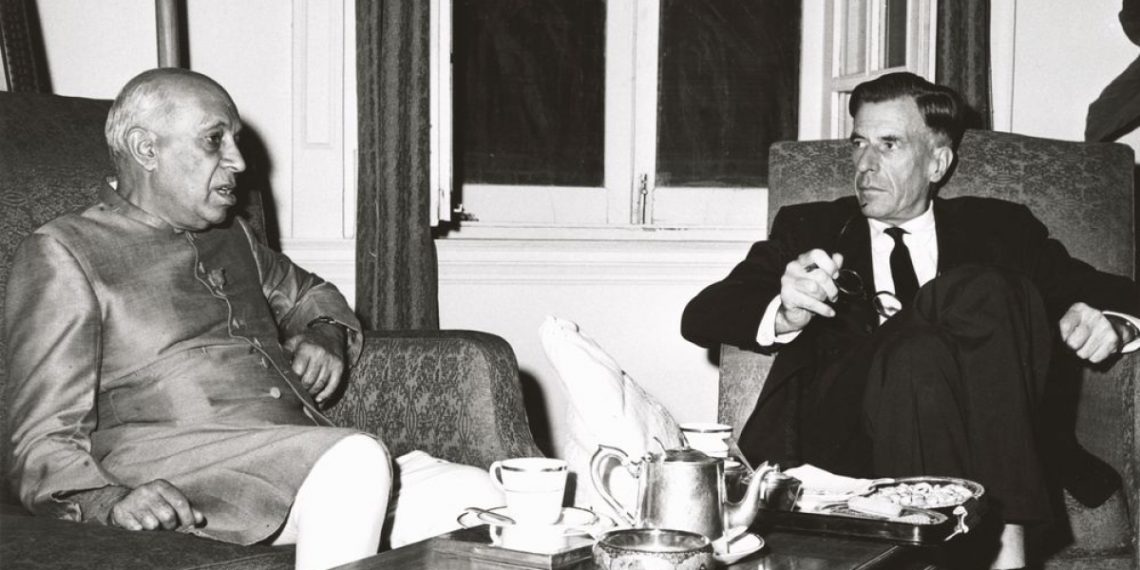
It had been purely due to extremist Tamil leaders, who followed the path chosen by Periyar E.V. Ramasamy, who led Tamil people in the early 1920s, and aspired for a separate State. In 1963, the Prime Minister of India, Jawaharlal Nehru made it very clear that no separation movements would be accepted. Then, those extremists started supporting politicians in Sri Lanka, who wanted a separate State.

The unprofessional approach by the political leaders in Sri Lanka, starting from 1956, gave reasons for Tamil agitators, and it became a very convenient way out for Indian Leaders to do their manoeuvring with the People of Tamil Nadu. Now that Tamil People of Tamil Nadu are convinced that it is better to stay together, the aspirations shall not hold. But, those who still follow that path, want a separate State.

With the decisive defeat of the Tamil Tigers, it became a desperate situation for such factions, which supported the secessionist movement in Sri Lanka. They started attacking the Sri Lankan Government through their international connections, Geneva in particular. The Sri Lankan Government was accused of atrocities and war crimes, in their efforts to promote the idea for a separate State for Tamil People, as the main problem.

Cloak-and-dagger Constitution

The question is whether the Constitution is the answer. It is a case of the Sri Lankan Governments failure to develop this country, to ease the burden of all the people. It is not a case of Tamil people only. It is a case for all, and there is nothing political in that. All those specialists have never shown how the life would become better.

Approving Constitution

Already, the Provincial Council has become a ‘White Elephant,’ and we all know that it was a system forced on Sri Lanka by India through intimidating tactics, in order to balance their image among the Tamil citizens of India. The system that existed in Sri Lankan was quite adequate, under the Soulbury Constitution. Those who objected to the nominal identification of Sri Lanka as a country without freedom, due to the presence of a Governor General who represented the British Monarch, would have been enough, even with a very simple change, like what they did in renaming the position as President.

But, under that, there was no Provincial Council system. See how cunningly those educated crooks have manipulated things. They wanted power to revolve around the Prime Minister, but with Provincial Councils gaining more ‘political’ power. No one talks about abolishing the Provincial Council system, but it is only about trimming the powers of the Executive President. The way they have jotted the path, even the Prime Minister would be powerless. How would the system be balanced?

They don’t give two hoots about that. The weaker the Central Government, the better it is for them. If it happens the way they anticipate, Northern and Eastern Provinces can decide to become one administrative unit, and neither the President nor the Prime Minister shall be powerful enough to maintain the unitary state.

Will such a situation help people? How will people benefit from ‘well planned and well organised chaos’ like that?

Especially in an environment where the ‘voters’ who are the ‘citizens’ are not adequately aware of such complications, such provinces shall be managed by either ‘very mediocre’ puppets, or by sets of scheming extremists, who are more concerned about preserving their authority.

How can we expect truly honest development programmes in such an environment? When it is complicated by the biggest chaos generating machine, the ‘free economy,’ the country will be left with only pieces, not peace.

Prabhakaran’s ill-fated move, in interfering with irrigation and water supply, can be taken as a very good example for what we can anticipate under such a Constitution. Then the revenue systems can play havoc, as the Customs gates which will appear subsequently will choke commercial activities, as transportation cannot take place naturally. Then, how will the producers benefit?

Such a scenario shall be completely lunatic, as the interpretation of the Constitutional stipulations itself shall be a total confusion. Thinking about agriculture, how will the farmers be assured of the basic infrastructure facilities?

Then shall come aspects like water supply and drainage, and power transmission. Then, the sharing of resources like fisheries, and water for irrigation, and so on.

Aren’t we slowly planning our own doom as a Nation?

Erosion of central Police powers

Imagine the situation where there shall not be any Police Department that can act independently, diligently. Think about the miscreant elements getting a free-run all over the country, especially in an environment where crime is on the rise. Economic failure is the root cause for crime to increase. A Constitution that erodes the Central Authority shall be the most fertile ground for the germs of criminal activities to grow.

Economy

In a highly developed society, the awareness and duty consciousness shall also be very high, and in such an environment, the rights of the people shall not be abused. Just imagine a scenario like ours, where politicians like Wigneswaran, Shivajilingam, and Sumanthiran make highly aggressive and provocative utterances. Imagine the situation is such, even before such a mad Constitution has been adopted!

Fake news an Enemy of Democracy!

February 18th, 2019

By Harindra B. Dassanayake Courtesy Ceylon Today

As bizarre and surreal as it may sound, the incumbent President of Nigeria, Muhammadu Buhari, had to repeatedly refute a claim that he was actually dead and it is a clone that is running his office as President. At the time of writing, the pinned tweet of his official twitter account (https://twitter.com/MBuhari) claims he is real! Adding to the chaos and confusion, the Presidential election which had been scheduled for Saturday (16 February) was rescheduled for next Saturday (23), just five hours before the start of polling in the largest democracy in Africa.

No one side alone was responsible for the fake news battle that undermined democratic elections in that oil-rich country of 190 million people. The President’s special aide on social media has more than once been named and shamed for spreading false information. She once had tweeted pictures of a road construction project, which was claimed to have been implemented by President Buhari, only to be proved by activists that it was actually a road construction project in Rwanda. She posted an apology on her verified twitter account, Sorry, it won’t happen again”. However, months later, she posted a picture of lunch packets with Nigerian currency notes and claimed Keep them in poverty, then give them handouts  – ATIKU in Sokoto yesterday”, hitting out at the opposition candidate Atiku Abubakar.

Disinformation is not a new strategy in political campaigns. However, we are increasingly witnessing a very high proliferation of disinformation, rumours and fake claims such as above during elections and social upheavals around the world from the rich to the not-so-rich nations alike.

Our Germs – Their Wind

In March last year, Sri Lanka witnessed an unfortunate outbreak of violence in Digana and many other places around Kandy, caused mainly by unchecked spread of hate speech propagating false claims of temples been set on fire, and Buddhist clergy been attacked. While rumours and ‘cooked-up’ stories are not new, it is the speed at which they spread that is a serious concern today. Social media platforms such as Facebook, Whatsapp, Twitter, Viber, Instagram and Imo are among those popular in Sri Lanka, today. It is not a social media platform that creates fake news, but they carry a message originating from a user. In that sense, social media sites are like fast winds that carry germs that are in our house. What is interesting and concerning is the way they carry the message. These messages spread super-fast and that is the whole feature of the internet.

Interestingly, these messages are often seen by people who are like-minded. Therefore, if it is a falsehood, it is more likely to be believed. If that is hatred inciting violence, the likelihood of converting a message of hatred into a violent act is high. This happens because of the algorithms that these platforms use to decide who should see a post.

During the outbreak of communal violence in Sri Lanka last March, it was evident that social media platforms played a key role in it, especially virally spreading a video from Ampara, where eatery worker is forced to accept there was a sterilisation pill in the food. Later, it was tested to be a lump of flour.  By then, the damage was done and many houses were already on flames. Besides, some were even reluctant to believe the results of the test, conducted by Government agencies, suspecting it was a cover-up by the Government to mitigate the situation. It was in such unchecked spread of falsehoods on social media that the President ordered to restrict access to certain social media platforms, including the social media giant Facebook.

(Anti)-Community Standards?

Social media giants, themselves like Governments, behave in strange ways. During the March outbreak of violence, Sri Lanka’s Minister of Mass Media Managala Samaraweera reported about a post in Sinhala that was outright incitement of violence by calling out people to go and kill members of another community. Instead of immediately responding to the issue Facebook decided to check if the post meets the ‘community standards’ of the social media platform. However, it took so long that until the crackdown on the platform, the said post just continued to spread all over the internet propagating hatred.

This issue was brought up by an agent of the Singapore Government during an international hearing on fake news and disinformation, where a Facebook’s Vice President admitted that the social media giant committed a serious mistake” by not removing the said post reported by non-other than the Minister of Mass Media (It is worth reading the full report on Channel News Asia here: https://goo.gl/f2axN6). Governments continue to engage social media platforms and bring them to respect ‘laws of the land’, and to be sensitive to local realities.

Fact check All!

Just as it is important to control the spreading of falsehoods on the internet, it is mandatory that checking the validity of those news that virally spread on the internet is carried out as a matter of urgency. This is not something Governments are not good at, mainly due to the lack of public trust in Government’s version of an issue, however true it may be.

Mostly, fact checking and verification of news is done by journalists and organised news agencies. In the case of Nigeria, it was a group of journalists who exposed some election related falsehoods. Recently, a new institute by the name Centre for Investigative Reporting” was established in Colombo. The role such agencies will have to play will be critical for safeguarding our democracy.

APPOINTMENT OF TWO NEW DIRECTORS TO COLOMBO STOCK EXCHANGE BOARD

February 17th, 2019

BY EDWARD THEOPHILUS

Last Sunday Island (17.02.2019) reported that two new directors appointed to Colombo Stock Exchange Board.  The new directors were Mr. Dimuthu Sanjaya Abeysekera, who is CEO of Asha Philips Securities, which is affiliated to Philip Capital Singapore and a director of Asha Financial Services Ltd. This director is directly associated with the market operations of the Stock Exchange.  The other direct appointed was Mr. Mutaza Jafferjee, who is the chairman of JB Securities and serves in the Board of Nations Trust Bank. Both firms are market operators of the Colombo Stock Exchange.

Colombo Stock Exchange is regulator and administrator of stock transactions in Sri Lanka. In other countries especially in Western Countries market operators will not appoint to the regulators’ board as it is a clear violation of the disciplines of regulator and appointees must have rejected the appointment, if they educated and experienced people on stock market operation, they should have done so without harming and creating risk to investment in Sri Lanka.  Why did these market operators appoint to the regulatory authority?  Was there some dishonest motivation behind these appointments?

I see that the appointment and accepting the appoints were wrong.  After Central Bank bond scam, the government has not learned a lesson. What did the opposition, Committees of the parliament, Transparency International do this type of undemocratic and dishonest work was going on.

Sri Lanka needs attracting foreign and domestic investments, which are channeled through Colombo Stock Exchange and if the stock exchange administrators have a conflict of interest, investors could not trust the dealing and it might create additional risk to investors.

In the 1990s, Chairman of Bank of Ceylon appointed as Chairman of the Colombo Stock Exchange and I wrote to the President about the conflict of interest and my suggestion was acknowledged by the president and the secretary of the president wrote back to me thank my points.

Prime Minister admits to Sri Lanka committing war crimes?

February 17th, 2019

Courtesy Adaderana

According to the Tamil National Alliance MP M. A. Sumanthiran, Prime Minister Ranil Wickremesinghe has made a statement that both parties had committed mistakes in the civil war.

He made these comments addressing the youth conference of the Illangai Tamil Arasu Katchi party at the Youth Hall in Jaffna yesterday (16).

He says that there were war crimes – international crimes – had happened during the war; especially towards the end of the war. However, in general, it is a well-known truth that these sort of things happen during war times, he said.

It cannot be refuted and it cannot be covered up or forgotten, he added.

The MP says that up until now the Sri Lankan government has insisted that the war heroes had not committed any wrongdoing.

Sumanthiran claims that Mahinda Rajapaksa, 2 weeks earlier, had accidentally stated that the war heroes have committed war crimes.

However, for the first time ever, the Prime Minister of the country had officially admitted that both parties have committed wrongdoings during the war and this should be appreciated, said he.

He further said that it had taken 10 years to this statement to be made.

Meanwhile, former President and Opposition Leader Mahinda Rajapaksa, commenting Prime Minister’s alleged statement that war crimes had been committed during the past administration, stated that he can assure that no war crime had occurred at the war during his administration.

Rajapaksa says that defeating terrorism is not a war crime.

BBC producer says sarin attack on Syrian Douma hospital was staged – proves our distrust in C4 footage against Sri Lanka

February 17th, 2019

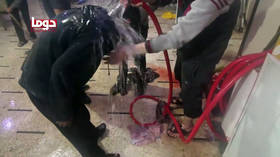
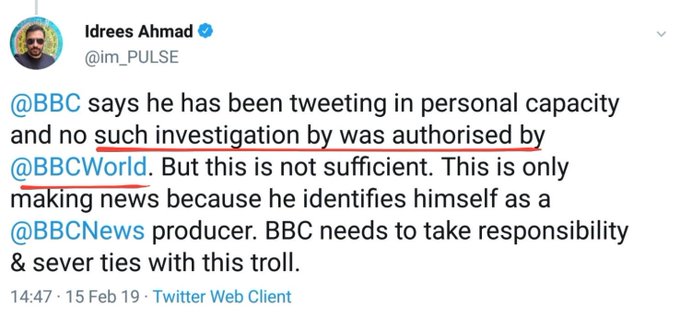
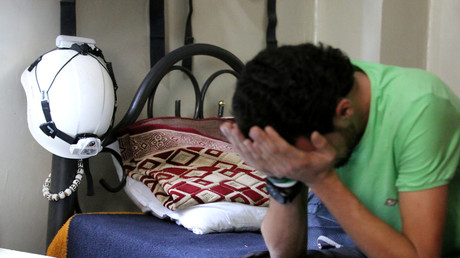
There are very valid reasons why Sri Lankan patriots are backing its National Army being falsely accused of war crimes by individuals & organizations that have been party to Syria’s false flag incidents & countless other falsehoods that were used to justify military interventions, UN tribunals, UN presence, US-NATO presence, UN resolutions all with the objective of weakening a state and enabling neocolonial rule & plunder of nations by a handful of people & their organizations. They say truth will win in the end one day & a truth has dropped out of the blue by BBC producer Riam Dalati – After almost 6 months of investigations, I can prove without a doubt that the Douma Hospital scene was staged. No fatalities occurred in the hospital”.  All that the BBC his employer said was it is his personal opinion”.

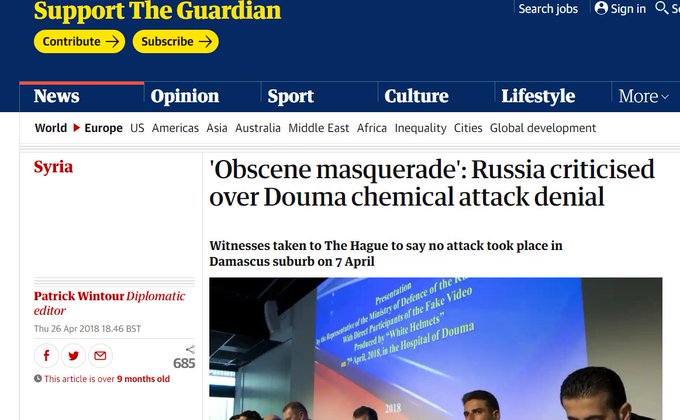
The BBC producers’ revelation is not only stunning it completely shatters the credibility of every media/foreign government, human rights organizations that carried the news of the chemical attack on the city of Duma accusing the Syrian Govt and justifying why the West should once again militarily invade a nation.

According to the BBC producer there was no fatalities at the hospital and no sarin had been used. Which means everything promoted by the media & referred to by western govts was fake & fabricated.

The video claiming the sarin attack was published by the NGO White Helmets in early April 2018. The White Helmet video showed men, women & children being treated after the alleged attack. 9/11 resulted in accusing Afghanistan & US/NATO bombing Afghanistan and continuing to occupy the country since 2001 (18 years). Thus, without establishing that a sarin attack took place US, UK & France carried out missile strikes on Syria.

BBC producer Ria Dalati is not the only reporter to claim the sarin falsehood. British reporter Robert Fisk too insists there was no gas attack at all.

BBC producer also adds no one from the White Helmets or opposition sources were present in Douma by the time the alleged attack had happened”

https://thefreethoughtproject.com/bbc-producer-comes-forward-with-syria-bombshell-sarin-attack-hospital-scene-was-staged/?fbclid=IwAR3IEk_ht4mxlayAEVmvKTaAKiKjsKZXhCJXflAmhhZCWG9h65DdGoWF_x0

The boy is 11 year old Hassan Diab

In April 2018 SPUTNIK news highlighted the story of Hasan Diab who had been videoed by White Helmets. The story surrounds the alleged chemical weapons attack in Duma.

However, the 11year old Diab says someone at poured water at him and put him on a bed and began shooting and thereafter was given sweets & rice for participating.

While the Duma chemical attack is false and the very countries aware of this however goes & attacks Syria – US, UK & France alleging that Syria had attacked the hospital carried out a missile attack on targets in Syria (103 cruise missiles)

BBC’s C4 produced 3 documentaries in 2011, 2012 & 2013 claiming to provide evidence of war crimes committed by Sri Lankan Armed Forces. However, what C4 omits to mention is that LTTE used civilians and civilian infrastructure like hospitals & schools to operate their heavy machinery from which they fired at the armed forces. The videos were full of manipulated footage – upside-down editing, sequences reversed, LTTE dressed in army uniforms, distorting voices and creating shadow faces of people who were never witnesses. The C4 video director Callum Macrae not surprisingly is among a team of anti-Sri Lankan crusaders. Macrae & Yasmin Sooka are in the Advisory Council of the Sri Lanka Campaign for Peace and Justice. Macrae is one of the 4 Board Members. In 2014 the SLCPJ produced a report which was endorsed by international criminal law and human rights law scholar Professor William Schabas who was also interviewed by Macrae in C4 videos. At the 3rd anniversary of GTF (named as a LTTE front by GOSL in 2014) Macrae was a guest speaker alongside Frances Harrison, former UN spokesman Gordon Weiss – the rest of the colourful guest list can be viewed here – http://www.ticonline.org/newsdetails.php?id=53 Callum Macrae was also a panelist in 2013 organized by BTF another LTTE front declared by GOSL in 2014.

BBC also carried Frances Harrison’s Tamils still being raped & tortured in Sri Lanka” where 12 persons including former LTTE combatants are identified as ‘victims of torture & rape’ anyone can be screen making allegations – where is the proof. It is an open secret that there are centres in the UK that charges Tamils to be burnt with cigarette butt ends & thereafter a doctor confirms these are recent acts of torture & then another set of people train Tamils on how to answer immigration authorities and this entire training costs some 5000-6000 sterling pounds just to gain asylum! It’s a racket wherein Tamils & British are also involved & something the British authorities should investigate further.

Quite a lot of lies has taken by the same individuals & groups justifying our caution to believe their versions.

Gen. Colin Powell lied to the UN Security Council in 2003 holding vial of anthrax – WMD was used to invade Iraq. Charles Jaco – CNN reporter pretended to use gas masks amid blazing sirens in Iraq but the entire scene was shot in a US studio. Who remembers Nayirah’s performance which was part of a $12m package to a US PR firm that coached her to cry before US Congress & manufacture a story about Iraqi troops killing babies in incubators.

https://www.youtube.com/watch?v=e_JfqkEXdAg&t=22s

Exposing fake witnesses in Iraq & Sri Lanka: Nayirah & Vany Kumar

https://www.lankaweb.com/news/items/2018/04/21/exposing-fake-witnesses-in-iraq-sri-lanka-nayirah-vany-kumar/

Not stopping there the lies and falsehoods to breakup Yugoslavia and demonize Serbia were many. Media & Western government spread fabricated concentration camps,” rape camps,” and similar Nazi- and Auschwitz-like analogies across media completely fooling the people. Serbian Concentration Camp fabrication – https://www.youtube.com/watch?v=4xss0Ep1MJM (remember the concentration camp/internment camp stories that were making the rounds against Sri Lanka) In 2001 Danny Abdul Dayem was used to justify invasion of Syria. Danny turned out to be a British citizen & one of the rainbow boys paid to kick start the Syrian colour ‘revolution’. His ‘reports’ were used to build anti-Assad sentiment by BBC, CNN & Al Jazeera.

Omran was used by White Helmets & western governments to highlight the ‘brutality’ of Syrian Government.

Omran Daqneesh’s Father Exposes mainstream media https://www.youtube.com/watch?v=7rE0emXxJTo

Who remembers the footage of a Syrian boy rescuing a little girl amidst gunfire? Well that too was staged by a Norwegian team filming in Malta & not Syria – https://www.youtube.com/watch?v=Tjb4XgjuP4A

How about the picture of a little boy lying beside his dead parents posted across FB & twitter – that too was part of an art project by photographer Abdul Aziz al Otaibi & shot in Saudi Arabia & not in Syria.

The Evidence: How lies – Fake Videos – PR stunts – Child Actors justify military interventions of sovereign nations

https://www.lankaweb.com/news/items/2018/04/23/the-evidence-how-lies-fake-videos-pr-stunts-child-actors-justify-military-interventions-of-sovereign-nations/

We cannot stop Western governments following neocolonial imperial policies together with their bosom pals the western media, UN, human rights organizations from making many more fabricated footage, fake news & false flags to justify their plans by fooling the people of the world, however the people should now be a bit more intelligent & start realizing the lies that they have been fed by putting together the lies and distortions that have taken place over the years and link the people who are involved too. They are all in the same family of liars & paid handsomely to fool the world & live off the agony & pain of people whose lives have been ruined by these lies & fake footage.

There is little point saying these people should feel ashamed of their lies – how can they feel ashamed when they have no conscience or morals.

Shenali D Waduge

PULWAMA DRAMA

February 17th, 2019

ALI SUKHANVER

After the Pulwama Attacks, the Indian media has simply added a lot of troubles to the problems of Mr. Modi who is already sailing in troubled waters. The Indian media has done it by raising undue and unnecessary hue and cry over Pulwama suicide attack which claimed lives of more than forty CRPF personnel and left five critically injured? Certainly some of my honourable readers would raise their objection on my use of harsh words like ‘undue and unnecessary’ but fact of the matter is that all hue and cry over this incident is really undue and unnecessary because killing of forty persons is nothing new in the Indian held states of Jammu and Kashmir; it is simply a routine practice there. The only thing different from the routine practice is that the people killed there every day are usually the helpless Kashmiris; this time the murdered ones are the jawans of the Central Reserve Police Force, CRPF. Moreover terrorists’ attack on the security forces is nothing new in present day rapidly changing world scenario. From Pakistan to Afghanistan, such incidents had taken place so many times.

Afghanistan’s Wardak Province witnessed a massive suicide bombing at a military compound on 21st January 2019. This suicide bombing left scores of trainees and others dead or wounded. Afghanistan’s National Security Directorate feared that the death toll might be as high as 126. The attack was claimed by Taliban. In the past Pakistan also had faced same kind of suicide attacks so many times but suicide attack in Pulwama is very much different in nature from the incidents in Pakistan and Afghanistan. It was not designed or planned by some foreign agency or materialized by some hostile force; unfortunately it was all indigenous, native, home-grown or in short purely Made in India. Even the people of India are not ready to accept this attack as a terrorist activity.

A very interesting questionnaire prepared by an Indian got viral on social media after the Pulwama Attack. The basic point highlighted in that questionnaire is the criminal negligence of the Indian security forces with reference to this painful incident. The most important point raised there is how the attacker reached to the most militarized and sensitive area of the world, passing dozens of military check posts carrying 350 kg explosive, in spite of the fact that there were very serious security threat alerts. The attacker was coming from the opposite direction of the road during a sensitive military movement but nobody noticed him; why? Before the attack the road was closed for any type of vehicle because of sensitive military installations around; who ordered to open it for the attacker? Just five minutes after the attack the military officials floated the information that 350 kg of explosive was used in the attack; how was it possible to estimate the quantity in such a short time. How was the picture and video of the attacker uploaded on social media within five minutes after the incident; this is the most interesting question asked by the people.

Social media is replete with the comments on this brutality against the Indian soldiers in Pulwama by their own government. Comments of someone named Radha are the most interesting one. She said criticizing on the planners and planning of this incident, It is very easy to kill the terrorists or eradicate an entire country from the map, but it is very difficult to destroy traitors who live among us.” The time chosen for the Pulwama Drama and the action of putting blame on Pakistan is also very important. The hearing regarding the Kulbhushan case in the International Court of Justice, the visit of Saudi Crown Prince Mohammed bin Salman to Pakistan and above all the upcoming elections in India which are simply slipping out of Modi’s hands; the innocent Indian perpetrators dreamed of killing too many birds with one stone; their hard luck, they could do nothing but murdered their own soldiers.

Certainly the people of India would take to task the Modi government for this brutality. Moreover, Mr. Modi must try to realize a fact that such childish activities like that of Pulwama Drama could never be helpful in winning the elections because winning the election is something like winning the hearts; we can never win  hearts if we make them bleed. Mr. Modi must pay a visit to the wailing mothers of the poor soldiers of Indian army who had to fall a prey to his false-flag operation against Pakistan and look deep into their weeping eyes; he would find there nothing but an agonizing-curse on him. He must try to meet the mothers of hundreds of those Kashmiri young men too who had been butchered by the Indian army in the last many decades; their sin was that they dreamed of liberty and independence and their crime was that they demanded the right of self-determination for the ever-crushed people of the Indian held valley of Kashmir.

මත් කුඩු පානය කරන ඇමතිවරුන් වහාම හෙළිදරව් කොට නීතිය ක්‍රියාත්මක කරන්න…

February 17th, 2019

මාධ්‍ය නිවේදනය යුක්තියට හඩක් කොළබ 5

කුඩු පානය කරන කැබිනට් ඇමතිවරුන් සිටින බවට නියෝජ්‍ය අමාත්‍ය රන්ජන් රාමනායක මහතා පසුගියදා මාධ්‍ය ඔස්සේ ප්‍රසිද්ධ ප්‍රකාශයක් සිදු කලේය. ආණ්ඩුවේ වගකිව යුතු නියෝජ්‍ය අමාත්‍යවරයෙකු ලෙස රන්ජන් රාමනායක මහතා සිදු කල ප්‍රකාශය හුදු හාස්‍යයක් ලෙස බැහැර කල නොහැක. ඵතුමා රංගන ශිල්පියකු ලෙස හාස්‍යය සපයන්නකු වූවත් වගකිව යුතු දේශපාලනඥයකු හා වත්මන් ආණ්ඩුවේ ඇමතිවරයෙකු ලෙස සිදු කල ප්‍රකාශය හාස්‍යයක් හෝ ප්‍රලායක් නොවන බව අපි තරයේ විශ්වාස කරන්නෙමු.

වර්තමානය වන විට කුඩු පානය කරන්නන්ට වඩා මහා පරිමාණයෙන් මත් කුඩු ව්‍යාපාරයේ යෙදෙන්නන්, බෙදා හරින්නන් ඇතුලු ජාවාරම්කරුවන් නීතියේ රැහැනට හසුවෙමින් සිටී. රටත්, සමාජයත්, අනාගත පරපුරත් වනසන මත් රකුසා පසු පස දේශපාලනඥයන් ඇතුලු උසස් සමාජ තල වල ඇතැම් පුද්ගලයන් සිටින බවට සමාජ මතයක් ගොඩ නැගී ඇත. ඵවැනි පසුබිමක් තුල ආණ්ඩුවේ වගකිවයුතු නියෝජ්‍ය ඇමතිවරයකු සිදු කල ප්‍රකාශය බැහැර කල නොහැක. රටේ උත්තරීතර ආයතනය වන පාර්ලිමේන්තුව නියෝජනය කරන මන්ත්‍රිවරුන් මෙන්ම ප්‍රතිපත්ති හා නීති සම්පාදකයන් වන කැබිනට් ඇමතිවරුන් මත් කුඩු පානය කිරීම සත්‍යයක් නම් එය රටටත්, අනාගත පරපුටත් දැවැන්ත ව්‍යවසනයක් බව අපේ පිළිගැනීමයි. ජනාධිපති, අගමැති ඇතුලු තිස් දෙනකුගෙන් යුත් කැබිනට් මණ්ඩලයේ මත් කුඩු පානය කරන ඇමතිවරුන් නාමිකව කවුරුන්ද යන්න හෙලිකිරීම රන්ජන් රාමනායක මහතාගේ පරම යුතුකමකි, වගකීමකි. ඔහු එය ඉතා ඉක්මනින් ඉටු කරනු ඇතැයි අප බලා සිටින්නෙමු.

අතිගරු ජනාධිපතිතුමනි, ගරු අගමැතිතුමනි  මත් කුඩු භාවිතා නොකරනවා යැයි අපි විශ්වාස කරන වත්මන් ආණුඩවේ වගකිව යුතු ඇමතිවරුනි, ඔබතුමන්ලාට ඔබ තුමන්ලාගේම නියෝජ්‍ය ඇමතිවරයකු එල්ල කරන බරපතල චෝදනාව පිළිබඳ වහාම ක්‍රියාත්මක විය යුතුය. කුඩු බොන ඇමතිවරු කවුදැයි නිවැරදිව නිශ්චය කොට විනය ක්‍රියාමාර්ග මෙන්ම නීතිමය පියවර ගනු ඇතැයි රටම බලා සිටී. ඵය රට වෙනුවෙන්, අනාගත පරපුර වෙනුවෙන් ඉටු කල යුතු පරම යුතුකමකි, වගකීමකි. කුඩු පානය කරන්නන් මත් කුඩු ජාවාරම්කරුවන් ආරක්ෂා කර ගැනීමට නිරන්තරයෙන් මැදිහත්වනු නොවනුමානය. වත්මන් ආණ්ඩුවේ කැබිනට් ඇමතිවරුන් කුඩු පානය කරන්නේ නම් ඔවුන් මත් කුඩු ජාවාරම්කරුවන් ආරක්ෂා කොට රැක බලා ගන්නා බවට කිසිසේත්ම බැහැර කල නොහැක. දරුවන් මතට බිලිවීම වලක්වා ගැනීම දෙමව්පියන්ගේ මෙන්ම විදුහල්පතිවරුන්ගේ, ගුරුවරුන්ගේ, විශ්ව විද්‍යල බලධාරීන්ගේ වගකීමක් ලෙස සමාජ ගතව ඇත. ඵහෙත් නියෝජ්‍ය අමාත්‍ය රන්ජන් රාමනායක හෙළිදරව්වත් සමඟ කුඩු පානය කරන තම කැබිනට් සගයන්ගෙන් අනාගත පරපුර බේරා ගැනීමේ වගකීම ගරු අධ්‍යපන ඇමතිතුමාටත්, උසස් අධ්‍යපන ඇමතිතුමාටත් පැවරේ. අතිගරු ජනාධිපතිතුමනි, ගරු අගමැතිතුමනි, ගරු කථානායකතුමනි කුඩු පානය කරන මන්ත්‍රීවරු, ඇමතිවරු, රන්ජන් රාමනායක නියෝජ්‍ය ඇමතිවරයා ප්‍රකාශ කරන පරිදි සිටී නම් ඔවුන් රටට හෙළිදරව් කොට නීතිය ක්‍රියාත්මක කිරීම ඔබතුමන්ලාගේ පරම පවිත්‍ර යුතුකමකි, වගකීමකි. එය ඉටු කරන තෙක් අපි බලා සිටිනවා පමණක් නොව එය ඉටු කරලන්නට අපි අති දැවැන්ත සමාජ බලපෑමද ඇති කරලන්නෙමු.

සභාපති                                                                                                 ලේකම්

       එස්. අමරසේකර                                                                               නීතිඥ ලලිත් පියුම් පෙරේරා

Attack on MFCs and Govt’s knee-jerk response

February 17th, 2019

J.A.A.S.RANASINGHE Colombo 05 Courtesy The Island

Leading businessman, Dudley Sirisena (DS) President’s brother, at a recent meeting in Polonnaruwa is reported to have said that Micro Finance Companies (MFCs) are like leeches that suck blood of the poor people’s livelihood income, and consequently, the rural economy is in a serious state of indebtedness unable to repay their micro loans. This indebtedness malady is reported to be so critical that the vulnerable rural farming community, especially women who were mercilessly exploited by the MFCs, have been prompted to sell their properties as a last resort, according to DS.

This controversial onslaught has caught the attention of the Government, regulatory financial authorities as well as the social and print media, and hence it cannot be easily ignored as mere rubbish. In the absence of any responses to the contrary by the Central Bank or MFCs or their representatives, the general public tends to think what DS said was the truth, the whole truth, and nothing but the truth.

article_image

Thus the assertion of DS, in my view, will definitely have a domino effect (rippling effect) in financial circles, and the immediate response of the Government over the exploitation of this vulnerable segment took an unprecedented reaction within one week, by introducing relief measures to extricate the women who fell prey to the obnoxious coercion practices cleverly manipulated by some of the MFCs.

MFCs are an integral cog of the national economy and its existence and rapid extension to the rural economy, thus fulfilling the aspirations of the poorest of the poor who are unable to provide collaterals in obtaining credit facilities for income generation activities was manna from the heaven, when this mode of facility was introduced two decades ago. As a result, Microfinance became a buzzword in the Sri Lankan Credit Market as an effective tool for poverty reduction and socio-economic development. But, its impact on the alleviation of poverty has to be re-visited in view of what is disclosed by DS.

Having been battered by the 30-year-old war, mostly the landless people affected by it lacked financial support to rebuild their lives and income generating activities. The prolonged droughts, as well as incessant rains and floods, have equally contributed to the debt cycle of the vulnerable borrowers. The income generating in many districts were decimated, thus pushing the debt-ridden people to a pathetic situation. The resultant scenario was that the households, especially headed by women were particularly affected, compelling them to seek microfinance loans simply to survive, in the absence of any support from the government.

The commercial banks and organized financial sector were reluctant to extend credit facilities to the war affected people immediately after the war, and the then government’s concentration was to re-build the infrastructure, and the livelihood income generation projects took a back seat in its rehabilitation agenda for this marginal community.

The MFCs, having realized the business potential prevalent in this sector, successfully moved in by offering numerous micro-facility products without collaterals. If DS’s contention is correct, my stance is that poverty has become a big business for some the MFCs, to subject the marginalized segment to debt traps by way of exploitative microfinance lending products and schemes.

As a matter of fact, several researches undertaken by the Universities, Professional Organizations, Central Bank, Commercial Banks, ARTI etc in regard to the roles played by the MFCs in the last two decades, have revealed no adverse findings against the MFCs to the extent of social upheaval, as alleged by DS.

However, being a successful businessman who have closely interacted with the rural masses, the serious allegation he made against the MFCs are mind boggling and warrant retrospection in the light of the latest revelation. Moreover, the criticisms levelled against the MFCs should have spurred those financial institutions to critically examine whether they have inevitably become blood suckers of the nation at the cost of the rural masses and built up financial empires.

There seems to be an element of truth in what DS emphatically stressed, and the government intervention to bring financial relief to the heavily debt-ridden people, manifestly proves that the question of indebtedness among the rural masses has crossed the Rubicon!

Prime Minister in a public gathering held at the Weerasingham Hall, Jaffna, has offered a relief package to those affected by the Micro Finance institutions, and this initiative itself discloses the extent to which the rural economy is embroiled in the vicious cycle of poverty and indebtedness, as a result of the exploitation by the MFCs.

The Finance and the Media Minister has disclosed that the some of the MFCs had charged exorbitant interest rates as high as 200% per annum, cornering the poor people to an unending cycle of debt. No wonder the chaotic situation manipulated by some of the MFCs would have ruined the marginal segment of the rural community, thus causing them not only economic hardships but also psychological distress.

Empirical studies carried out on the impact of the Micro Finance reveal that Micro Finance has proved to be an effective and powerful tool for poverty reduction, the improvement of the quality of life of the rural community, and the role played by the Micro Finance Companies in this drive should be applauded. But how come, they have become blood sucking institutions, threatening the very fabric of the rural society relatively within a matter of few years, is the question that remain to be answered. The Government has correctly identified that the enactment of new Micro Finance Act will be a panacea for all the financial ills of the rural economy at this juncture.


Petitioning courts against President’s refusal to appoint some MPs as ministers -The Constitutional Madhouse – Part 1

February 17th, 2019

By C. A. Chandraprema

When former minister Sarath Fonseka was denied a ministry by President Sirisena last December, he threatened to go before courts to obtain what he deems to be his rightful place in the UNP government, formed following the restoration of Prime Minister Ranil Wickremasinghe to that post. He has not yet followed up on that threat, but we now hear that some of the SLFP members who defected to the UNP recently are also contemplating petitioning courts because they, too, have been denied ministerial appointments. The fact is that after the 19th Amendment, these aggrieved parties do have provisions under which they can petition courts to seek redress.

article_image

Article 43(1) of the present Constitution, as amended by the 19th Amendment, states that the President shall, in consultation with the Prime Minister, where he considers such consultation to be necessary, determine the number of Cabinet Ministers and the assignment of subjects and functions to such Ministers. Thus, to determine the number of ministries in the government and the assignment of subjects to those ministries, the President is not bound to obtain the Prime Minister’s advice but can do so if he so wishes. However, under Article 43(2) when the President appoints individuals to the Cabinet slots determined in accordance with Article 43(1), he is mandatorily required to obtain the advice of the Prime Minister. Article 43(2) goes as follows: “The President shall, on the advice of the Prime Minister, appoint from among Members of Parliament, Ministers, to be in charge of the Ministries so determined.” The word ‘shall’ denotes a mandatory requirement.

The 19th Amendment made the President’s actions justiciable and that is what gives certain individuals the confidence that they would be able to go to courts and obtain redress. According to the system that all Sri Lankans had got used to until the 19th Amendment came along, it was the President who would decide who got ministries and who didn’t, and there was no higher authority that could be appealed to if the President refused to appoint someone as a minister. What happened after 1994 and 2001 when the parliamentary elections of those years were won by political parties opposed to the incumbent President was that the latter bowed to the public will and appointed as Ministers anybody recommended by the Prime Minister. After 15 December 2018, we once again have a situation where the President represents one party and the Prime Minister another political party.

Where today’s situation differs from that of 1994 and 2001 is that in this case, the President tried to call a general election and was thwarted in that attempt due to new provisions, introduced into the Constitution by the 19th Amendment, and now he is constrained to work with the very people he had tried to get rid of. Thus, the new Article 43(2) now comes into play and though the President is required by the Constitution to heed the advice of the Prime Minister in appointing Ministers, he has not abided by that requirement. In the recent judgment in the fundamental rights case relating to the dissolution of Parliament and the calling of a general election, the Supreme Court has observed as follows:

“Article 35 (1) of the 1978 Constitution stipulated that during the period when a President holds office, no proceedings can be instituted or continued against him in any court or tribunal in respect of anything done or omitted to be done by him in his official or private capacity. Thus, prior to the 19th Amendment, Article 35 (1) conferred a blanket immunity upon a President [so long as he holds office] from being sued in respect of any act or omission done by him in his official capacity qua President or in his private capacity. However, as is well known, the proviso to Article 35 (1) introduced by the 19th Amendment to the Constitution introduced a very significant change. It states, “Provided that nothing in this paragraph shall be read and construed as restricting the right of any person to make an application under Article 126 against the Attorney-General, in respect of anything done or omitted to be done by the President, in his official capacity.”

“Thus, the proviso to Article 35 (1) entitles any person who complains that an act or omission by the President in his official capacity has violated a fundamental right of that person to institute a fundamental rights application under and in terms of Article 126 of the Constitution against the Hon. Attorney General and seek a determination by the Supreme Court with regard to his complaint. In other words, the proviso to Article 35 (1) makes acts or omissions by the President in his official capacity justiciable within the limited sphere of an invocation of the jurisdiction for the protection of fundamental rights conferred on the Supreme Court by Article 118 (b) read with Article 126 of the Constitution and subject to the stipulation that the Hon. Attorney General [and not the President] is to be made the Respondent to the fundamental rights application filed by that person.”

Give and take: Giving and then taking, literally!

If the dissolution of parliament and the calling of a general election are deemed to be within the rubric of ‘executive and administrative’ action of the President, then the appointment of ministers also falls into the same category, and the parties, aggrieved by President Sirisena’s decision to refuse ministerial appointments to some MPs, recommended for appointment by the PM, can, in fact, move the courts. What then is preventing them from filing action in courts? We saw that in the wake of the SC suspending the gazette dissolving Parliament and calling a general election, some people were so emboldened as to actually file a petition in courts asking for an order to have the President’s mental health examined. Then why has no one yet gone to the Supreme Court to complain that there has been a fundamental rights violation due to the President’s refusal to appoint certain individuals as ministers?

The stumbling block is Article 43(3), which was also introduced to the Constitution by the 19th Amendment. What Article 43(3) says is that “the President may at any time change the assignment of subjects and functions and the composition of the Cabinet of Ministers. Such changes shall not affect the continuity of the Cabinet of Ministers and the continuity of its responsibility to Parliament.” What this means is that even if the aggrieved parties go to courts and obtain a judgment to the effect that their fundamental rights have been violated because the President has not abided by Article 43(2) of the Constitution, and the President is forced to swear the said individuals in as ministers of varying rank to the few vacancies still available, the President can sack the whole lot under Article 43(3) even before they leave the Presidential secretariat after the swearing in! Article 43(3) does not restrict the President’s ability to change the composition of the Cabinet in any way he likes and at any time he wishes.

There is a practical issue here in that the 30 Cabinet slots available under the Constitution are already taken and those who have been left out may have to be satisfied with a non-Cabinet portfolio. What Article 44(1) says about non-cabinet Ministers is that “The President may, on the advice of the Prime Minister, appoint from among Members of Parliament, Ministers who shall not be members of the Cabinet of Ministers. The use of the word ‘may’ in this provision indicates that it will be the President who has the discretion to decide whether he is going to appoint any non-Cabinet ministers at all. Even if the Prime Minister advises him to appoint some non-cabinet ministers, the final decision whether to do so or not will be the President’s. If, by some chance, the President decides to have non-Cabinet ministers, under article 44(2) it will be the President who determines the assignment of subjects and functions to those no-Cabinet Ministers. He can consult the Prime Minister on the assignment of functions to those non-Cabinet ministers only if he deems such consultation to be necessary. Furthermore, under Article 44(3) the President may, at any time, change any assignment made to any non-Cabinet Minister. That basically leaves only the deputy minister slots. However, according to Article 45(1), it is the President who has the final discretion to decide whether there will be any deputy minister positions at all. What Article 45(1) says is that The President ‘may’ on the advice of the Prime Minister, appoint from among Members of Parliament, Deputy Ministers to assist Cabinet Ministers in the performance of their duties. Once appointed, it will be the minister concerned who will assign subjects to his deputy and the President has no role in that. However, the initial decision to have a deputy minister for a given Cabinet minister will be with the President. Thus, we see that even though article 43(2) purports to empower the Prime Minister to appoint Cabinet Ministers, he actually has no such power in terms of the other provisions of the 19th Amendment. Welcome to the madhouse that is the Constitution of Sri Lanka today!

An apolitical Constitutional Council full of political stooges The Constitutional Madhouse – Part 2

February 17th, 2019

By C. A. Chandraprema Courtesy The Island

For nearly two decades, the view that appointments to high state positions should be made only on the recommendations of an apolitical vetting body styled the Constitutional Council has been propagated by certain interested parties. The need for some kind of a vetting process in making high state appointments became a matter for discussion because unsuitable appointments were in fact made at various times and certain parties were able to use that to propagate the view that the elected government and especially the elected President could not be trusted to make such appointments and that a mechanism had to be set up to confer that power on an apolitical body that brings both the government and the opposition together along with some wise and distinguished non-politicians. On the face of it, this seems quite a reasonable idea. The problems arise when you try to put what looks like a good idea into practice.

article_image

The key state appointments that were deemed to need a wider consultative process were positions like the Judges of the Supreme Court and the Court of Appeal, the Attorney-General, Auditor-General, Inspector-General of Police, Parliamentary Commissioner for Administration (Ombudsman) and the Secretary-General of Parliament, the Chairmen and members of the Election Commission, Public Service Commission, National Police Commission, Audit Service Commission, Human Rights Commission of Sri Lanka, Commission to Investigate Allegations of Bribery or Corruption, Finance Commission, Delimitation Commission and the National Procurement Commission.

Under our present Constitution (after the 19th Amendment), the Constitutional Council consists of the Prime Minister; the Speaker; the Leader of the Opposition; one Member of Parliament appointed by the President; five persons nominated jointly by both the Prime Minister and the Leader of the Opposition of whom two persons shall be Members of Parliament; and one Member of Parliament nominated by agreement of the majority of the Members of Parliament belonging to political parties or independent groups, other than the political parties to which the Prime Minister and the Leader of the Opposition belong. The Speaker of Parliament is the ex-officio Chairman of the Constitutional Council. Thus at present the Constitutional Council is made up of seven Parliamentarians and three outsiders. In naming their five nominees to the CC, the Prime Minister and the Leader of the Opposition are required to consult the leaders of political parties and independent groups represented in Parliament so as to ensure that the Constitutional Council reflects the ‘pluralistic character’ of Sri Lankan society.

The three non-parliamentarians who are to sit on the CC are to be persons of eminence and integrity have distinguished themselves in public or professional life and who are not members of any political party. Even though the three wise outsiders are not supposed to be members of any political party, the Constitution requires the Prime Minister and Leader of the Opposition to consult the political parties in Parliament when making appointments to these three positions! In the Constitutional Council that was set up immediately after the 19th Amendment was promulgated, appointing the CC was a simple matter because the Prime Minister Ranil Wickremesinghe and Opposition Leader R. Sampanthan were both on the same side and had contributed to getting President Maithripala Sirisena elected to power. Thus the first CC appointed under the 19th Amendment was a 100% yahapalana outfit. The Prime Minister was a yahapalanite, the leader of the opposition was a yahapalanite, the Speaker was a yahapalanite, the five nominess to be appointed by the Prime Minister and leader of the opposition were all yahapalanites, the President’s nominee to the CC was a yahapalanite and the nominee of the political parties to whom neither the Prime Minister nor the leader of the opposition belongs was a yahapalanite.

Thus the body which was supposed to ensure that appointees to high state offices would not be political appointees became the body that guarantees that every person elected to high office in the past four years was a yahapalanite. Even the former Solicitor General turned UNP provincial councilor Srinath Perera admitted in an interview with this newspaper, that top positions were being given to political fellow travelers of the government. Probably, never before in a democratic country has a constitutional provision introduced specifically with a view to ushering in good governance, been perverted in that manner. Despite the fact that the yahapalanites themselves perverted the Constitutional Council in that manner, the idea that this CC should consist of a majority of non-parliamentarians in order to ensure that it was not politicized and continued to hold sway so much so that in the proposed new constitution, provision has been made to reduce the number of parliamentarians on the CC and to make the number of non-parliamentarians the majority.

Going round and round in circles

Under the proposed draft constitution, the Constitutional Council is supposed to be made up of the following persons – the Prime Minister; the Speaker of Parliament; the Leader of the Opposition; the Speaker of the Second Chamber; one person appointed by the President; five persons appointed on nomination by both the Prime Minister and the Leader of the Opposition; and one person nominated by agreement among the majority of the Members of Parliament belonging to political parties or independent groups, other than the political parties to which the Prime Minister and the Leader of the Opposition belong. Thus we see that the number of persons on the CC is to go up from ten to eleven with the addition of the speaker of the second chamber. The composition is also to change from having seven parliamentarians and three non-politicians at present to just four parliamentarians seven non-politicians under the proposed constitution. This is obviously in keeping with the idea that non-politicians were somehow more exalted, more independent, more upright and less likely to do the wrong thing than a politician.

There is a specific provision in the draft constitution which says that other than the Speaker, Prime Minister, Leader of the Opposition and the Speaker of the proposed second chamber, none of the other members of the CC should be Members of Parliament, Members of the proposed Second Chamber, Members of a Provincial Council, or members of any political party. However in selecting their supposedly non-political nominees, the Prime Minister and the Leader of the Opposition are mandatorily required to consult the leaders of political parties represented in Parliament ‘so as to ensure that the Constitutional Council reflects the pluralistic character of Sri Lankan society, including professional and social diversity’. The now defunct 17th Amendment also had very similar provisions in appointing the ostensibly non-political majority in the CC. What the 17th Amendment said was that in nominating the said five persons, the Prime Minister and the Leader of the Opposition are to consult the political parties represented in Parliament and three such persons were to be appointed only in consultation with the Members of Parliament who belong to the respective minority communities, so as to represent minority interests. The proposed draft constitution has not been as specific as the 17th Amendment in stating that the minority community political parties had to be consulted. However, when it is said that the Prime Minister and the Leader of the Opposition have to consult the leaders of political parties and independent groups represented in Parliament ‘so as to ensure that the Constitutional Council reflects the pluralistic character of Sri Lankan society’, what is meant is more or less the same thing.

In an adversarial political system with the Prime Minister and Opposition Leader representing opposing sides, the only practical way an agreement can be reached on making nominations to the CC will be if the two sides divide up the slots among themselves with the PM appointing two of his catchers, the Leader of the Opposition appointing two of his, and taking turns to appoint the remaining member. That is how things happened when the 17th Amendment was operational. In addition to these five persons, the President can appoint someone to represent him and the smaller parties in Parliament who have not been able to get either the position of Prime Minister or the position of Leader of the Opposition can nominate their own representative to the CC.

What happened in these instances also was that the President appointed his catcher and the smaller parties took turns appointing their catchers to the CC in turn. When the 17th Amendment was first promulgated nearly two decades ago, many people thought there would be a gridlock because the adversaries in parliament may not be able to agree on nominees to the CC but a ‘I’ll scratch your back, you scratch my back’ kind of cooperation soon evolved with the political parties sharing out the slots among themselves. From the very first Constitutional Council that was formed, it was painfully obvious that all those sitting on it were stooges of various political parties just as it is obvious today that the three ostensible non-politicians on the CC are all yahapalanites.

Why this proposal for a Constitutional Council has been included in the draft constitution at all is a moot point. The purpose of having a CC was to curb the power of the executive President had in making these appointments. If the executive presidency is going to be abolished as the draft constitution has proposed, then what is the purpose of this Constitutional Council? If the executive power is to be exercised by a Prime Minister and Cabinet appointed from within parliament as has been proposed, why would a committee of Parliament like COPE not be able to do the same job even better? It will of course be argued in keeping with the ideas driving this proposal that even if the executive power is to be exercised by the Prime Minister and cabinet appointed from within Parliament, they are still politicians and therefore they cannot be trusted to make the correct decisions. If politicians elected by the sovereign people are not to be trusted, how can anyone trust the catchers, friends and fellow travelers of these very same politicians who are nominated to the CC?

The purpose of the CC appears to be to provide the cronies of politicians with a respectable station in life. Furthermore if politicians are so untrustworthy, why do we have elections at all? It should be recognized that all mechanisms that have been proposed to keep politicians out of the decision making process are bound to fail because even if the politician is not involved in making the relevant appointments, his catchers will be; under all the hare brained schemes that have been proposed in this regard over the past two decades. Perhaps it’s time to take due cognizance of the fact that the elected representatives of the people cannot be kept out of the loop no matter what mechanism we try to devise. The present arrangement where seven of the ten members are parliamentarians is in fact better than the arrangement that existed under the 17th Amendment and which has now been proposed once again in the draft constitution. At least the seven members of Parliament on the CC are peoples’ representatives and not foreign funded agents masquerading as do gooders. The most rational course of action may be to get rid of the three remaining non-parliamentarians in the CC and to turn it into a permanent parliamentary oversight body like COPE which is made up of representatives of all parties in Parliament.

That should more than suffice to supervise the appointments to high office made by a Prime Minister and Cabinet selected from within the same Parliament. Even if the executive presidency were to remain, such a parliamentary committee will be able to do the work of the CC much better and the people will have the benefit of knowing that these decisions were at least being made by people’s representatives and not by unelected agents of foreign interests and various cronies of politicians.

Parliament: to allow or disallow dissolution? -The Constitutional Madhouse – Part 3.

February 17th, 2019

By C.A.Chandraprema Courtesy The Island

Prior to the promulgation of the 19th Amendment, the President’s power to dissolve Parliament had been stated in Article 70(1) of the Constitution. Under this provision, the President had the power to dissolve Parliament in the following circumstances.

(a) If a General Election has been held consequent to a dissolution of Parliament by the President, the President shall not thereafter dissolve Parliament until the expiration of a period of one year from the date of that General Election.

(b) Parliament may at any time by resolution – passed by a simple majority – request the President to dissolve Parliament.

(c) The president could not dissolve Parliament on the rejection of the Statement of Government Policy at the commencement of the very first session of Parliament after a General Election (but there was no restriction on dissolving Parliament if the Statement of Government Policy was rejected yet again.)

(d) If the President has not dissolved Parliament consequent to the rejection of the Appropriation Bill (budget), the President shall dissolve Parliament if Parliament rejects the next Appropriation Bill.

(e) Parliament cannot be dissolved by the President if the Speaker has entertained an impeachment motion against the President.

article_image

The provisions in the old Article 70(1) were what one could expect in democracy with a Parliamentary form of government. They were all in keeping with the parliamentary system which has gradually evolved over the centuries. The power of dissolution is an important tool to ensure that Parliament always represents the will of the people. It is also a tool that ensures loyalty to policies and political parties among elected MPs. If differences emerge within a ruling party or coalition, the only way in which stability can be restored is to go for a general election. The possibility of a dissolution is what keeps MPs, especially those in the government, from taking personality clashes and unimportant policy differences beyond a certain point. Splits take place only on important issues where reconciliation is virtually impossible.

Hence the power of dissolution is something that has gone hand in hand with the Parliamentary system. When the 19th Amendment was promulgated, Article 70(1) was amended to read as follows: “The President may by Proclamation, summon, prorogue and dissolve Parliament: Provided that the President shall not dissolve Parliament until the expiration of a period of not less than four years and six months from the date appointed for its first meeting, unless Parliament requests the President to do so by a resolution passed by not less than two-thirds of the whole number of Members (including those not present), voting in its favour.” It was very clear that the intention of the 19th Amendment was to make it impossible to dissolve Parliament whatever the circumstances. The change made to Article 70(1) was buttressed by Article 48(2) which was also introduced to the Constitution by the 19th Amendment. What article 48(2) stated was that if Parliament rejected the Statement of Government Policy or the Appropriation Bill or passed a vote of no-confidence against the Government, the Cabinet of Ministers (but not Parliament) shall stand dissolved, and the President shall, unless he has dissolved Parliament in terms of Article 70, appoint a new Prime Minister and a new Cabinet.

A Parliament that cannot be dissolved

So it was very clear that in terms of both Articles 70(1) and 48(2) as introduced by the 19th Amendment, Parliament cannot be dissolved even if the budget was defeated; government policy is defeated and the government is defeated in a vote on a no confidence motion not just once but even a hundred times. Under the 19th Amendment, Parliament can be dissolved before its term is up only if Parliament resolves by a two-thirds majority to recommend to the President to dissolve it. For a while there was some confusion due to the fact that the 19th Amendment had also introduced Article 33(2)(c) to the Constitution which read as follows: “In addition to the powers, duties and functions expressly conferred or imposed on, or assigned to the President by the Constitution or other written law, the President shall have the power to summon, prorogue and dissolve Parliament.”

The term ‘in addition’ to the powers conferred on the President by the Constitution or any other written law was taken to mean that the power conferred by Article 33(2)(c) was in addition to the provisions of Article 70(1) and that therefore under Article 33(2)(c) the President had unfettered power to dissolve Parliament despite anything stated in Article 70(1). However what the Supreme Court decided in the FR application filed by R. Sampanthan et al against the dissolution of Parliament and the summoning of a general election was as follows:

“… although Article 33(2)(c) states that the President has the power to summon, dissolve and prorogue Parliament, Article 33 (2) (c) does not state how that power is to be exercised or state the manner in which the President is entitled to exercise that power. In the absence of any words in Article 33 (2) (c) which describe the manner in which the President is entitled to exercise the power of summoning, proroguing and dissolving Parliament, the Court must look at the other provisions of the Constitution for guidance to ascertain how the power referred to in Article 33 (2) (c) may be lawfully exercised by the President …When that is done, it is seen that the only provision in the Constitution which sets out the manner in which Parliament may be summoned, prorogued or dissolved by the President is Article 70 …”

When the original 19th Amendment Bill was scrutinised by the Supreme Court in 2015, it struck down all provisions that sought to restrict the powers of the President on the grounds that such a change would require approval at a referendum. So, the President after the 19th Amendment is very much the same as the presidential powers that existed before it. The only reduction in power that passed the SC was this change made to article 70(1). Legal experts are of the opinion that the only reason why the change made to Article 70(1) got past the SC was because of the insertion of new Article 33(2)(c) through the 19th Amendment which seemed to restore to the President the power that he was losing through the change made to Article 70(1). Many lawyers are completely convinced that the only purpose of Article 33(2)(c) was to mislead the judiciary.

There are other instances where this kind of shuffling around of powers has taken place through the 19th Amendment. For example, the new Article 43(2), introduced to the Constitution through the 19th Amendment, sought to make it mandatory for the President to consult the Prime Minister when appointing MPs as Ministers. If this had been a standalone provision that would have resulted in an actual reduction of the President’s powers. But the Supreme Court allowed this to pass without requiring a referendum because the very next provision in the Constitution Article 43(3) restores to the President the power that was taken away by Article 43(2) by stating that “the President may at any time change the assignment of subjects and functions and the composition of the Cabinet of Ministers.” It is no surprise, therefore, that so many people including apparently the Supreme Court (back in 2015) thought that Article 33(2)(c) was meant to restore to the President the power that had been taken away by the change made to Article 70(1). However, it later turned out that Article 33(2)(c) was just the ‘driving licence’ and that the ‘road rules’ were contained in Article 70(1).

Doing and undoing in rapid succession

Be that as it may, the 19th Amendment was ‘signed into law in April 2015. One would think that when an amendment is made to a constitution, it has been well thought out and meant to last decades of not centuries. Thus, the change made to Article 70(1) by the 19th Amendment should have been meant to last. However, the proposed draft constitution which was tabled in the Constitutional Assembly last month has the following provision.

“106. (1) The President may by Proclamation, summon Parliament: (2) The President may dissolve Parliament if Parliament requests the President to do so by a resolution passed by not less than two-thirds of the whole number of Members (including those not present), voting in its favour. (3) In the first two years of the Parliament, in the event that the government is unable to secure the passage of an annual Appropriation Bill after three attempts, the President shall dissolve Parliament. (4) After the first two years of the Parliament, in the event that the government is unable to secure the passage of an annual Appropriation Bill after two attempts, the President shall dissolve Parliament.”

Even though dissolution of Parliament has been completely banned by the 19th Amendment even if he budget is defeated not once but even a hundred times, we see from Clause 106 of the draft constitution that the President’s power to dissolve Parliament in the event of a defeat of a vote on the budget has been reintroduced. The provisions in the pre-19th Amendment Constitution, which allowed for dissolution in the event of a defeat of the government at a vote of no confidence or a vote on the statement of government policy, has been dropped, but dissolution upon the rejection of the budget has been reintroduced. Those who drafted the 19th Amendment are the same people who drafted the proposed draft constitution as well. Then why this important difference? What were they thinking when they drafted the 19th Amendment?

There cannot be any such thing as a Parliament that cannot be dissolved under any circumstances – but that is what we have today. Of all the countries that have Parliaments in the world only Norway has a Parliament that cannot be dissolved for any reason until its five-year term is up but in that country, the government always continues in power until the King gives them permission to leave and Parliament never defeats the budget as a matter of custom. With such practices in place Norway can afford to have a Parliament that cannot be dissolved because there is no need to actually dissolve that Parliament, and there is no need in that country even to have a clear majority in Parliament to form and carry on a government. No ordinary nation can afford to have a Parliament that cannot be dissolved but that is what the 19th Amendment saddled us with.

The drafters of the 19th Amendment seem to have belatedly realized the mistake they made by making it impossible to dissolve Parliament even in the event of the defeat of the budget and that is why they have sought to reintroduce in the proposed draft constitution provision for dissolving Parliament if the budget is rejected two or three times. Even though the proposed draft constitution has provisions to correct the mistake made in the 19th Amendment, it has not been passed and the mistake is still law with no possibility of the draft constitution ever being passed into law. Thus we are sitting on a constitutional time bomb.

In order to picture what can go wrong, we have to go back to the year 2001 when President Chandrika Kumaratunga suddenly lost her Parliamentary majority due to defections from her party. At the time, she had more than four full years remaining from her term. The Parliament which had been elected in the year 2000 had more than five years of its term remaining. With the breakaway, the President was staring at the certainty of defeat at the budget vote which was due in a few months in 2001. So, she dissolved Parliament and held a general election in December 2001 and the UNP came into power. That is what corrected the disequilibrium that had taken place in the political system. If the 19th Amendment had been operational at that time, CBK would not have been able to dissolve Parliament and she would have had to sit helplessly while her minority government presented the budget and got defeated.

When defections from the governing party to the opposition takes place as happened in 2001, that is due to the collapse of public confidence in the government. In such circumstances, if the budget is defeated, the only rational course of action will be to call fresh elections. But what will happen under the 19th Amendment is that if the vote on the budget is defeated, since Parliament cannot be dissolved, the President will be compelled to form a new government. But with whom can he or she form a government? In 2001, government MPs were running away from Chandrika. They were fleeing because they did not want to be associated with her as that would have compromised their own political futures. In such circumstances, what is the possibility that a sitting President will be able to find enough MPs to form a government?

Will 19A change political dynamics?

Some may think that because Parliament cannot be dissolved under the 19th Amendment, the political dynamics may change and that there may be MPs who will be willing to form governments even with unpopular Presidents. That possibility does exist because in every political party there are MPs who fail to become ministers and if the position offered is right and there is enough time to enjoy the position say a year or two at least, there may be takers for ministerial positions offered even by the most unpopular President. MPs who accept office in such circumstances will do so with a view to enjoying the perks of office for a limited period and then fading away. That, however, is not how the vast majority of politicians think. After getting elected to Parliament every politician wants to continue there as long as possible and for the most part, he or she will think of the long term rather than the short term. That is the reason why so many UPFA politicians opted to remain with Mahinda Rajapaksa in the opposition and even face unprecedented persecution instead of accepting ministerial positions in the so called national government that was formed in 2015. Subsequent events have shown that the MPs who stood by Mahinda were right to do so because they have a future whereas the others who thought of the short term are now in dire straits.

After seeing the fate of the UPFA politicians who joined the yahapalana government in 2015, will any politician in a future government have the appetite to accept office for an year or two or even three or four years in an unpopular government? Furthermore, after a sitting President’s party has lost its majority in Parliament, and been defeated at a vote on the budget and probably even at a vote on a no confidence motion, how many MPs will want to join such a President to form a government for the remaining period of that Parliament? This is why there are no Parliaments that cannot be dissolved. In that respect, the proposed draft constitution has done the right thing by making provision to restore the President’s ability to dissolve parliament at least when it becomes clear that the incumbent government cannot get a budget passed no matter how hard they try. The usual parliamentary tradition is to allow for dissolution if a budget is defeated, the statement of government policy is defeated or if the government loses a vote of no confidence.

The latter two instances were also provided for in our Constitution as it stood before the 19th Amendment, but they are missing from the proposed draft constitution. While the rejection of a statement of government policy or defeat at a vote of no confidence is a clear indication that the government does not command a majority in Parliament, the real crunch with a stoppage of government functions comes if the government cannot get a budget passed. So, allowing for dissolution at least at this stage is vitally important. But at this moment, what we have is a Constitution, under which Parliament cannot be dissolved under any circumstances not even if the budget is rejected a hundred times. What were the drafters of the 19th Amendment sitting on when they introduced such a provision into the Constitution?

Requiring two-thirds majority for Parliament to dissolve itself -The Constitutional Madhouse – Part 4

February 17th, 2019

By C. A. Chandraprema Courtesy The Island

Under Article 70 (1) in the Constitution before the introduction of the 19th Amendment, Parliament could, at any time, pass a resolution by a simple majority requesting the President to dissolve Parliament. However, after Article 70(1) was amended Parliament cannot under any circumstances be dissolved until the lapse of four and a half years of its five year term unless Parliament requests the President to dissolve Parliament by a resolution passed by not less than two-thirds of the whole number of members (including those not present), voting in its favour. Under both the old article 70 (1) and the new one, even if Parliament passes a resolution requesting the President to dissolve Parliament, the final decision on whether to accede to the request made by Parliament will rest with the President.

article_image

What is the rationale for prohibiting Parliament from requesting dissolution of itself by a simple majority and making a two thirds majority mandatory just to make a non-binding request to the President? It’s not as if MPs like whales suddenly manifest a need to beach themselves for no apparent reason. We have had many Parliaments since Independence and so far as this writer knows not a single Parliament has passed a resolution recommending the dissolution of itself. Such instances will be equally rare in all countries that have supreme legislatures called Parliaments. Then why this need to protect the tenure of Parliament from the MPs themselves by making a special majority mandatory just to recommend dissolution of itself?

One could justify limiting the ability of the executive President to dissolve Parliament on the grounds that he or she is outside Parliament and elected separately and if the President is from one political party and Parliament is controlled by another, such a restriction will provide a measure of protection for parliamentary government. In 2004, President Chandrika Kumaratunga dissolved Parliament and held a general election entirely at her discretion. In 2004, there were none of the situations, in which a Parliament may be dissolved before completing its term. No government has lost a vote on a no-confidence motion. No government has lost a vote on the budget. The then UNP government led by Prime Minister Ranil Wickremesinghe had not lost its majority in Parliament either.

What happened in 2004 is that Kumaratunga had the presidential power to dissolve Parliament and she used it. All that may have happened is that the UNP after having been elected to power in December 2001, had lost some of its popularity. Furthermore, according to the results of the 2001 December Parliamentary election, The People’s Alliance vote, when combined with the JVP vote, exceeded the UNP vote. So, when a partnership was brokered between the PA and the JVP to form the United People’s Freedom Alliance, (UPFA) the UNP’s goose was cooked simply on the arithmetic. It was this political assessment that the UNP will not be able to win a Parliamentary election when the PA and JVP joined forces that led to the dissolution and Parliamentary election of 2004. (It may be pertinent to say as an aside that the JVP, which was at the forefront of opposing the dissolution of Parliament on November 9, 2018, was fully supportive of the dissolution that took place in 2004. In fact, it was following that dissolution that the JVP won 40 seats in Parliament contesting on the UPFA ticket!)

Opportunity to play ducks and drakes with govt.

One has to acknowledge that the dissolution of Parliament, in 2004, by the then executive President was based entirely on cynical political calculations. So one can perhaps forgive the aggrieved party if they as a knee-jerk reaction to the events of 2004, resolved to block the President’s power to dissolve Parliament. To do so, they went to the extent of misleading the public as well as the Supreme Court, as pointed out in the previous article in this series which appeared, on Feb. 08. However, it has to be pointed out that they have been a tad more successful in their endeavor than they should have been. Knee-jerk reactions are not based on reason, and the lesson we have to learn here is that no knee-jerk reaction should ever be incorporated into the Constitution.

The 19th Amendment has not only prohibited the President from dissolving Parliament until the lapse of four and a half years of its five-year term but has also effectively prohibited Parliament from recommending dissolution of itself by making it mandatory to have a two thirds majority even to make a non-binding request to the President to dissolve Parliament. This is an irrational and dangerous restriction. The primary responsibility for maintain stability in the country falls on the government of the day. If the President is deprived of the discretionary power to dissolve Parliament, the Prime Minister and Cabinet should have the power to recommend dissolution of Parliament to the President in order to have fresh elections. Or, at the very least, Parliament should be able to recommend dissolution of itself with a simple majority.

By making it mandatory to have a two thirds majority in Parliament to make any such recommendation, the 19th Amendment has brought about a very dangerous situation where the opposition can play ducks and drakes with a government. In Sri Lanka, now under the 19th Amendment, Parliament cannot be dissolved for any reason without a two thirds majority. If a government loses the budget, a no-confidence motion or the statement of government policy, that would be a sign that they have lost their majority in parliament but they will still officially be the government. The government cannot recommend that parliament be dissolved and fresh elections called because it will need the cooperation of the opposition for that purpose. The opposition can by failing to provide that majority, bring about a situation where the government is both unable to govern or to bow out.

Under such circumstances, it is the government that loses face. In the late 1980s, the JVP’s strategy to destroy the UNP government of the day was to ensure, through a widespread campaign or terror that the government, could not govern the country. The same result can be achieved without firing a single shot or beheading anybody under the 19th Amendment simply by not providing the necessary number of votes to dissolve Parliament and to hold fresh elections. MPs can simply absent themselves the way they did during the last meeting of the Constitutional Assembly. If just a few MPs go abroad or have other engagements, the government of the day will have to flounder on without being able to govern or to give up. One option open to them will be to simply resign en masse and leave the task of forming a new government to the President.

However, under the 19th Amendment even the President cannot dissolve parliament unless he is requested to do so by a resolution passed with a two thirds majority in Parliament.

So, we see that everyone is tied up in knots. No one but a madman would make it mandatory to have a resolution passed with a two thirds majority simply to dissolve Parliament and to have fresh elections. But it has happened in Sri Lanka and we are living through that reality. Before the 1978 Constitution, you could do literally anything with a two thirds majority. Sri Lanka was converted from Dominion into a Republic with a two thirds majority. Its name was changed from Ceylon to Sri Lanka with a two thirds majority. Indeed Parliament abolished itself and became the National State Assembly and later once again became a Parliament with a two thirds majority.

A Parliament that cannot look after itself

Even under the present Constitution you can do virtually anything with a two thirds majority in Parliament except changing the sovereign status of the Republic of Sri Lanka, the unitary character of the state, the reposing of sovereignty in the people, the national flag, the national anthem, the national day, the special status accorded to Buddhism, the right to religious freedom, the ban on subjecting people to cruel and degrading punishments or extending the term of the President or Parliament all for which approval by the people at a referendum will be necessary in addition to a two thirds majority in Parliament. There are many things that can be done without a referendum. The system of elections to Parliament can be changed with a two thirds majority. Why then is it necessary to have a two thirds majority in Parliament to simply call a general election?

If Parliament is going to pass a resolution requesting the President to dissolve Parliament and to call for fresh elections, it will only be due to some situation which cannot be resolved without an election. If the members of Parliament cannot be entrusted with the power to dissolve the institution which gives them status and power (which they will naturally do only in the most dire circumstances), how are they to be trusted with the running of the country? If MPs cannot look after their own affairs, how are they to look after the affairs of others? Furthermore, how is it that the drafters of the 19th Amendment as well as the proposed draft Constitution failed to realize that if more than half the MPs in parliament want a fresh election to be held, the country cannot be governed without that process being allowed to take place?

The proposed draft constitution, while making it mandatory to have a resolution passed in Parliament with a two thirds majority to recommend dissolution of itself, has, at the same time, proposed provisions that will enable Parliament to be dissolved if a budget is defeated two or three times. So, a resentful majority desiring fresh elections may not be able to get Parliament dissolved by requesting the President to do so because they lack a two thirds majority. But they will be able to wait until the end of the year and defeat the budget repeatedly with a simple majority to force an election. If Parliament can be dissolved when the budget is defeated, the logical thing to do would have been to make it possible for Parliament to dissolve itself with the same majority required to pass the budget – a simple majority. So, the provisions of the draft constitution have not been designed rationally.

But even that draft constitution is pie in the sky. What we are saddled with right now, under the 19th Amendment, is a Parliament that cannot be dissolved under any circumstances unless a resolution is passed with a two thirds majority requesting the President to dissolve Parliament and hold a fresh election. Those who drafted the 19th Amendment never gave thought to what this did firstly to the franchise of the sovereign people, secondly to the trust and responsibility reposed in their representatives by the people and thirdly, to the government that may happen to be in power whose main responsibility is to maintain a stable administration and take remedial action if they are not able to run a government. Kumaratunga dissolved Parliament and held fresh elections in December 2001 even though she knew she was going to lose that election. Today, because of the 19th Amendment, no President, Prime Minister, Cabinet, ruling party or even the majority of MPs in Parliament can fulfil that basic duty to ensure that there will be no anarchy in the country.

President Sirisena’s options

February 17th, 2019

By C. A. Chandraprema Courtesy The Island

President Maithripala Sirisena seems to be showing signs of wanting to contest for the presidency, once again, this year even though he came into power, pledging to abolish the executive presidency. There is nothing surprising in that because except for the first two presidents, everyone else came into power, pledging to abolish the position to which they were seeking to get elected. The aggressive initiative he has taken against drugs and corruption and environmental degradation seems to be aimed at making himself popular among the people in preparation for his bid for re-election.

There is no doubt that President Sirisena has won some acceptance for himself by turning against the UNP and ramping up the war on drugs and environmental degradation. However, this is mostly a ‘lone ranger’ style operation, where he performs on his own. While his stock may have gone up, the prospects of the SLFP parliamentarians who took positions in the national government at his behest, now lie in tatters. The 15 MPs who resigned from the national government may have some chance because they were seen by the Sri Lanka Podujana Party (SLPP) constituency to be exerting themselves to break up the national government, and their efforts, in fact, did bear fruit. But the 23 who stood with Sirisena to the last, are in dire straits and that is why a number of them have been negotiating with the UNP to join the UNF.

article_image

If the members of this group of 23 contests on the SLPP ticket, they will get a substantial number of votes because they, too, were once members of the Mahinda Rajapaksa government but they will not get the required number of votes to win. When an election is declared, there is the possibility that the majority of this group of 23 will join the UNF as a separate group. That will be an act of desperation because the prospect of them being able to win even on the UNF ticket is pretty slim because it is very unlikely that their constituents will join them in shifting to the UNF. The political balance of power in the country according to the results of the local government elections held in February last year, is as follows.

The SLPP obtained 5,006,827 votes, which works out to 40.3% of the valid votes cast. The total number of votes won by SLPP backed independent groups in Maharagama, Tirappane, Mahiyangana, Beruwela and Bandarawela is 89,360 or 0.7% of the valid votes cast. Thus the SLPP percentage at the last elections is a maximum of 41%. President Maithripala Sirisena’s UPFA contested some districts as the SLFP and others as the UPFA at the last local government elections. The combined UPFA/SLFP vote at the local government elections was 1,497,234 which works out to 12.10% of the valid votes cast. The district wise breakdown of the UPFA/SLFP vote at the last LG elections is as follows:

Votes received by UPFA/SLFP at the local government elections held in February 2018


If an election is held today and the SLFP/UPFA contests separately, it is highly unlikely that they will get as many votes as at the 2018 local government election. There is not a snowflake’s chance in hell that President Sirisena will be able to improve upon this performance or even hold steady at any future election. The contest is now between the SLPP and the UNP and their respective allies. Some of the allies from the north and east and the Nuwara Eliya district like Douglas Devananda, Arumugam Thondaman, M.L.A.M.Hisbulla, A.L.M.Athaulla, who contested under the UPFA banner or with an understanding with them, will most probably link up with the SLPP for the next election.

The voting patterns will also not remain the same at a local government election and a presidential election. At a local government election, the supporters of ethnic and religious political parties actually vote for their own candidates contesting on a list with other parties. But at a presidential election they have no candidate of their own to vote for and they will be voting for whoever is seen to be most amenable to their parochial demands. So, at a presidential election, the SLPP’s near 5.1 million votes and the UPFA’s near 1.5 million votes obtained at the local government elections will not necessarily translate mechanically into 53% of the votes for the candidate fielded by the SLPP/UPFA combine. Since the voting pattern in the whole country changes at a presidential election, the number of votes received by the SLPP/UPFA candidate could be lower or even higher than their combined vote bank according to the results of the local government election.

However, the coming together of the SLPP and the UPFA is both arithmetically and psychologically important. This arithmetic will be crucial at a presidential election. Back in 2004, the reason why the then President Chandrika Kumaratunga took the calculated risk of dissolving Parliament just two and a half years into the UNP government, elected to power in December 2001, was because according to the results of the 2001 parliamentary election, the votes of the people’s Alliance and the JVP, when combined exceeded that of the UNP. So, once an agreement was reached with the JVP to combine forces and contest on the same list at the forthcoming parliamentary election, it was fairly safe to dissolve parliament. Hence the electoral arithmetic as revealed by the preceding elections is vitally important in deciding on elections strategy. In this case, a linkage between the SLPP and the UPFA/SLFP is vital if the opposition candidate is to win.

Sirisena mistrusted by SLPP constituency

If no presidential candidate succeeds in getting over 50% of the vote as required by Article 94(2) of the Constitution, Article 94(3) will then become operational. Under Article 94(3), the candidates other than the two candidates who received the highest and second highest number of votes will be eliminated from the contest. Thereafter, the second preferences of all the candidates who have been eliminated from the race will be counted and those cast in favour of the remaining candidates will be added to their votes.

The ballot papers of the eliminated candidates whose second preferences have been counted in that manner will then be set aside. Thereafter, the remaining ballot papers of the eliminated candidates will be checked for their third preferences. If the third preferences have been cast in favour of the two candidates still remaining in the race, they will be added to their votes. After this counting process is over, whoever has got the highest number of votes will be declared the winner.

It will be noticed that what kicks in with Article 94(3) is actually a first-past-the-post contest. Under the provisions of Article 94(3), there is no need to obtain 50% of the vote to become President. Technically, even a candidate who polls much less than that can be declared President. If for example there are ten candidates at a presidential election and the two leading candidates get 25% and 20% of the valid votes cast and the other 55% of the valid votes gets distributed among the remaining eight candidates, what will happen under Article 94(3) is that the eight candidates who collectively got 55% of the valid votes cast will be eliminated from the race, and after counting the second and third preferences of the eliminated candidates, one of the two remaining candidates will be declared the winner if he ends up with just one vote more than his rival.

Even though voters can indicate up to three preferences on their presidential election ballot paper, very few people actually indicate their second or third preferences and they vote only for one candidate. Furthermore, at the past three presidential elections, the votes obtained by candidates other than the two main candidates have been less than 2% of the valid votes cast. So, there will not be many second and third preference votes to be counted. Thus, even if no candidate gets 50% of the valid votes cast in the first round, there is the possibility of him or her being elected President under Article 94(3).

Even though some say that Maithripala Sirisena is angling for the SLPP/UPFA presidential candidacy, the bulk of the opposition voters are SLPP supporters who do not trust Sirisena. Even though Sirisena has made a clean break with Ranil Wickremesinghe, many in the SLPP have serious doubts as to whether he has severed links with the UNP. At the first combined public rally of the SLPP/UPFA, held in Battaramulla on the 5th November last year, President Sirisena told the assembled crowd that he had offered the Prime Ministership first to Karu Jayasuriya and then to Sajith Premadasa but they had both declined and that was why he had settled for Mahinda Rajapaksa. So, getting back with Mahinda Rajapaksa was the last resort. Had Karu Jayasuriya or Sajith Premadasa agreed to accept the Prime ministership, Sirisena would never have made Mahinda Rajapaksa Prime Minister. If either Karu or Sajith had become the prime minister we would still have been under a UNP/UPFA national government.

Hence the problem that Sirisena has is not with the UNP but with Ranil Wickremesinghe. If not for Wickremesinghe’s presence, Sirisena would prefer to work with the UNP than with the SLPP. Even after the UNP government was restored to power after Mahinda Rajapaksa resigned on 15 December last year, President Sirisena was heard to publicly praise Sajith Premadasa and the latter reciprocated. Given all that has happened after January 2015, one can be certain that only a very few members of the SLPP will have an appetite to vote for a president that they cannot trust. So, it is very unlikely that President Sirisena will become the candidate of the combined SLPP/UPFA. Even if the SLPP and Joint Opposition high command decides to make Sirisena the candidate of the opposition, there will be a revolt from below with someone from the SLPP coming forward as a candidate.

If Sirisena tries to force himself into the ring, it is almost certain that the SLPP will field its own candidate and in such an eventuality there both th SLPP and the SLFP may lose and the UNP win. On the other hand, if Sirisena takes a step backwards and allows the SLPP and the Joint Opposition to field its candidate and he supports that candidacy, there is a distinct likelihood that the opposition candidate will win and Sirisena himself will have a continued role to play in politics. The key is for both Sirisena and Mahinda Rajapaksa to endorse a candidate. If both of them throw their weight behind one candidate, there is a distinct possibility of being able to win the presidential election this year and that will be to the mutual benefit of both parties.

Auditor General’s controversial claim

Speaking of President Sirisena, it will be recalled that on the day that campaigning was to end before polling began at last year’s local government election, the Auditor General Gamini Wijesinghe held a special press conference and said that no one knew how much the country owed and that the previous government (the Rajapaksa government) was to blame for that situation. At that time, this writer described this as a ‘Polonnaru gundu’ to discredit the previous leaders on the eve of the local government election because the Auditor General was echoing the views that had been expressed earlier by President Sirisena at a meeting with media heads. Last Tuesday, the Auditor General Gamini Wijesinghe once again came on TV at a  talk show made the controversial claim that he did not know how much the country owed. In answer to a question raised by the host, Mr Wijesinghe said that he, too, hailed from Polonnaruwa and knew President Maithripala Sirisena well.

When a Polonnaruwa President makes a statement before the media heads and the Auditor General, who also hails from Polonnaruwa, calls a press conference on the day that campaigning closed for the local government polls and then confirms what the President has said without giving the other side a chance to reply.

What Gamini Wijesinghe said on the eve of the last LG elections was as follows:

“If anybody asks me what the debt of the country is, I will have to tell him to ask Vaima (the son of God Sakra). I can’t say what our national debt is because the management of public debt has been turned into such a mess over the past ten years … There has been excessive recourse to debt and the debt limits set by parliament have been exceeded. Debt has been shifted to other places to conceal the excessive debt … The former Secretary to the Treasury referred to by some as an ‘economic assassin’ has done much to destroy the financial discipline of the country …The debt figures compiled by the finance ministry include only transactions that go through the consolidated fund. The debt of the provincial councils, local authorities and state enterprises have not been included in the public debt figures of the finance ministry, resulting in a situation where there are piles of debt everywhere …

“Over the past five years, a lot of loans were taken and we are now in the grace period before the repayment of these loans commence … All this happened because the Treasury Secretary began to work under the President with his powers …. If the Kapuwa defecates inside the devale, the God does not make an issue of it….”

According to Article 154 of our Constitution, the Auditor General’s assigned task is to audit all departments and agencies of the central government, each and every public enterprise where the shareholding of the government is 50% or above, and all provincial councils and all local authorities – each taken separately. Article 154(5) of the Constitution vests the Auditor-General with sweeping powers to enable him to carry out his duties, making it mandatory for information to be provided to him and giving him as access to all books, records, returns and other documents, stores and other property belonging to the institutions that come under his jurisdiction.

According to Article 154 (6) of the Constitution, the Auditor-General is mandatorily required to report to Parliament within ten months after the close of each financial year and as and when he deems it necessary, on the performance and, discharge of his duties and functions under the Constitution. It should be noted that the Auditor General’s responsibility according to the Constitution is not just to audit the yearly accounts but to make interventions “as and when he deems it necessary”. Moreover the position of Auditor General is an independent office answerable only to Parliament. Since it is the Auditor General’s responsibility to audit each and every agency and department in the central government, and each public enterprise, each provincial council and each local authority separately, he is the last person in this country who can say that he is unaware of how much money each such body owes and to whom.

When the Auditor General says that the debt owed by the public enterprises, the provincial councils and the local authorities have remained unaccounted for the past ten years, that raises the question as to how the four or five Auditor Generals over the past ten years including Gamini Wijesinghe himself had been signing the audit reports of these bodies all this while. Furthermore, there are only a limited number of state owned enterprises, a limited number of provincial councils and a limited number local authorities all of which fall under the direct jurisdiction of the Auditor General and if he comes before the public and claims that he does not know how much these bodies owe and to whom, that means that the Auditor General has not been doing the only task assigned to him. Furthermore, our local authorities and provincial councils cannot borrow money from overseas and they would borrow money only from local banks. Even our state owned enterprises will borrow only from local banks.

Only one or two of the best state owned enterprises like the National Savings Bank will have the clout to be able to raise money in international financial markets and that, too, only with a Treasury guarantee. So even the local banks will be able to provide the Auditor General comprehensive breakdowns of how much they have lent to what government body. Thus, the Auditor General can collect the debt data from each public enterprise, provincial council and local authority and combine it with the debt passing through the consolidated fund and announce the sum total of public debt to the public.

Justice for politicians at the expense of public

February 16th, 2019

Ajit Randeniya

The Supreme Court ruling on President Sirisena’s bold executive attempt to offer the public an opportunity for a fresh beginning is one of the most remarkable judicial intervention in recent history of the country. Following the decision, the ebullient mood of the public that accompanied the October 26 decision was quickly changed in to one of dejection again; The non-performance of the ‘new’ government is adding insult to injury. The people now have to wait, hopefully only for another short while, before they receive real justice in the form of their right to vote.

The harsh reality that follows decisions of the ‘supreme’ court, reminds the hubris of the politician and 11th Chief Justice of the US, Charles Evans Hughes who declared infamously in 1908: ‘We are under a Constitution, but the Constitution is what the judges say it is’. Citizens concerned about the proper operation of the Rule of Law, and are keen to avert ‘government by tribunal’, however, are obliged to comment on the decision. It is also warranted by the awful, but real prospect of judges with power to arbitrate the law also being liable to make mistakes like all human beings.

The objective here is to undertake a critical review of the Supreme Court decision last December on the dissolution of parliament, in the interest of the political well-being of society and its citizenry. It is also important that the mindset of the influential sections of Sri Lankan society be freed from post-colonial, slavish and astoundingly socially insensitive ideological commitments to principles and values that clearly inhibit the economic, political and cultural salvation of a desperately struggling country.

At first glance, the Supreme Court decision (SC FR Application No. 351-361/ 2018) of 13 December appears counter-intuitive from the perspective of millions of poor Sri Lankans who were seeking relief from an incompetent, corrupt, so-called ‘government’ sitting catatonically on top of crumbling economic, political and social structures. The president’s decision to ‘pull the trigger’ did not look a day too early; The virtual absence of public protests against the president’s decision, and lack of public support for the so-called campaign to protect democracy initiated by those who lost power — assisted overtly and covertly by foreign neo-colonialist forces — showed widespread grassroots support for the president’s decision. Alas, the court decision made in ‘splendid isolation’ from ground level realities — by the court’s own admission — appears to have shattered peoples’ expectations of relief, in the name of justice. The question arising is, ‘justice for whom’?

It needs to be pointed out at the outset that the court decision partly reflects the failure of president’s legal team to competently present his case by way of cogent legal arguments and astute courtroom tactics. Tactically, the original submission that relied on challenging the jurisdiction of the highest court of the country to hear the petitions probably served the function similar to that of a red rag to bulls; The suggested alternative remedy of impeaching the president — in a parliament that has been dissolved — was a non sequitur, as has been rightly pointed out by the court. Nor was the inauspicious beginning redressed with later submissions designed to guide the court through issues of fact and law to support the president’s case. The petitioners’ legal teams on the other hand, effectively ‘poisoned the well’ by creating the perception that the Respondent’s legal team exhibited first duty to their client rather than to the court, or indeed to the constitution. The decision amply demonstrates that the court relied exclusively on the petitioners’ legal arguments, almost derisively rejecting every single argument submitted by the president’s legal team. But that is water under the bridge now.

The seemingly ham-fisted handling of the case by the president’s legal team however, does not justify covering the decision with glory; The court decision lends itself to criticism at a preliminary level on a number of grounds, and at a deeper level, on its selection of modes of interpretation and other underlying principles in particular. All in all, a careful reading of the decision suggests, disturbingly, that modern trends in legal thinking have largely passed the upper echelons of constitutional jurisprudence in Sri Lanka by.

At a preliminary level, the ratio of the length of the decision proper to Headnotes in the 88 page document (27 pages to 61) suggests a relatively insignificant level of analysis of issues, compared to the lengthy exposition of the legal submissions. Secondly, the ‘unanimity’ that has apparently been reached by the Bench is atypical, and shows a level of ‘statistical improbability’ in relation to the degree of unison to be expected from a deliberation involving seven mature legal minds; Instances of expression in the first person singular pronoun (e.g., I am compelled, I am unable to agree, and to my mind) in the decision add to scepticism on the level of engagement of the other six judges. Such perceptions conveyed by the decision distract from the democratic values that the court is working to protect.

To focus briefly on the importance of dissenting opinion in judicial decision making, reasoned dissent is regarded vital for maintaining the relevance of law and the delivery of justice to changing community needs and standards; The presence of dissenting opinions is also a pointer to the integrity of the judicial process and independence with which the judiciary discharges its functions. It is known however, that judges have a tendency to stay away from disagreeing with colleagues due to fears of being branded a holder of aberrant views, or a ‘cantankerous’ person. As further analysis of the decision reveals, lack of dissenting opinion on any significant point is one of its major flaws.

Looking at the judicial method adopted by the court in reaching its particular conclusions, the issue of law has been justifiably reduced to one of correctly reading the powers and procedures set out in Articles 33 (2) (c), Article 62 and Article 70 of the Constitution with respect to the constitutionality or otherwise of the presidential Proclamation to dissolve parliament. The court has concluded that the power of the president to dissolve parliament referred to in Article 33 (2) (c) is subject to, and limited by, the second paragraph of Article 70 (1). The Chief Justice has therefore held that the Petitioners’ rights guaranteed under Article 12 (1) of the Constitution have been violated by the issue of the Proclamation, and declared it null, void ‘ab initio’ and without force or effect in law. It is notable that in reaching its conclusions, the court has not ventured beyond the infamous 19th amendment or considered any practical implications of its decision, as forewarned.

The court deserves gratitude for the detailed exposition of the general rules of statutory construction and constitutional interpretation it resorted to, and other principles it relied on, because the choices demonstrate how commitments to ‘colonial’ values and traditions inculcated in general and legal educational systems in post-colonial societies ‘shackle’ progress on delivering justice in a universally beneficial manner.

Obviously, the court’s conclusions have been dictated by the set of ground rules it chose to adhere to. Relying primarily on the chosen authorities (recent editions of Maxwell on the Interpretation of Statues and N S Bindra’s Interpretation of Statutes, supplemented by the court’s own authority in Somawathie v. Weerasinghe), the court has decided to: consider interpretation of the constitution not different from the interpretation of other statues; consider the object of all interpretation as to discover the intention of Parliament (deduced from the ordinary meaning of the language used ignoring any defect in the language, free of notions of what is just and expedient), with a view to enforce the Rule of Law. The court has also adopted the doctrine of separation of powers, and has refused to recognise that any public authority has ‘unfettered’ or absolute discretion or power as underlying values.

The first observation that arises from a reading of the court’s chosen principles is that it has either chosen to ignore, or has been oblivious to, more modern alternate views on each of the chosen principles. Broadly, the court has chosen the American-inspired, intent-seeking ‘originalist’ approach to statutory interpretation in preference to more progressive, dynamic methods.

World has moved on

The court’s declared position of treating the country’s constitution as not different from other statutes is contrary to simply observable facts that have been highlighted in many legal texts and decisions of courts in other jurisdictions: while written constitutions and statutes are similar in that they are instruments designed to provide authoritative directions for officials and citizens within liberal democracies, the similarity ends there. Acknowledgement of the existence of a hierarchy of laws — consisting of a constitution or founding document at the apex; statutes or legislation; regulations; and procedures in descending order of influence — is fundamental to the Rule of Law: the constitution simply is not just another legislative document, but the supreme law of the land that is ‘sui generis’ (in a class by itself; and unique). It deals with more fundamental questions — the setting up of government, the distribution of power within government, and the guarantee of basic rights — than other forms of law. It is made through a different process, and it is ‘entrenched’ in order to render its amendment more difficult, requiring super-majorities in parliament. The interpretation of the constitution is directed at ascertaining the supposedly inherent foundational values as a standard test for all other legislations, therefore requiring innovation in its interpretation.

The court’s adoption of the ascertainment of legislative ‘intent’ as the goal of statutory interpretation has also been challenged by many legal educators and judges over the last quarter century at least. Naturally, promotion of intent as the ‘be all and end all’ of statutory interpretation in a colonial text such as Maxwell on statutory interpretation — a book originally published in 1875 by W. Maxwell and Son of Fleet Street, authored by a committed colonialist named Peter Benson Maxwell (knighted in1856, later serving as chief justice of Straits settlements 1867-71, the island of Muralag 1856-66, and Singapore 1866-71) — is to be expected because colonialists never had cause to suspect the intent of colonial legislations to be anything other than to benefit the tribe through exploitation of other domains. (In fact, Maxwell’s next book published just three years later in 1878 was tellingly titled ‘Our Malay Conquests’); Uncritical adoption of such ideas that were part of colonialism however, can hardly be considered appropriate in any process that is intended to serve justice to the victims of colonialism still trying to emerge from the ravages of it.

The new critical theory challenges the notion that a reader of any written communication can uncover the intention of an author in any meaningful sense. (The same applies to verbal communications too). Theoretical questions about interpreting statutes and constitutions raise general questions about the process of human communications, bringing in issues analogous to those discussed in the philosophy of language and linguistics.

The real criticism of the search for ‘intent’ as the dominant mode in the construction of a legislated text arises from its underlying assumption that legislative texts are the product of ‘reasonable persons pursuing reasonable purposes reasonably’. Modem theories of politics however, view policymaking as an enterprise by governments controlled by organised special interests who capture the so-called democratic political processes and the coercive power of government to feather their own nests. There can hardly be a better example than the 19th amendment to Sri Lanka’s Constitution adopted in 2015 to demonstrate the ‘hidden’ intents of the legislative process: its purpose purely and simply was to insure the reign of a prime minister — who ‘piggybacked’ the popularity of another politician — against the risk of being sacked by the president, based on previous experience. The objective (or the intent) was to curtail the president’s powers to dissolve parliament.

The court’s decision to adopt a superficial literal reading of the words of s19 to determine the ‘intent’ therefore goes to legitimise its nefarious intentions. It is arguable that a deeper and broader examination of the constitutionality of presidential action needed to have involved an evaluation of the intent and processes that led to the adoption of the s19 entrapment. The court’s adopted processes provided no leeway for such progressive approaches, raising issues about the delivery of democratic right or justice to the broader public, other than parliamentarians who complained of violation of their fundamental rights.

On other matters, it is a great pity that the court has been unable to consider (probably due to time constrains) the 10 December decision of the Indian Supreme Court Bench comprising the Chief Justice that dismissed a challenge by the BJP leader of the Jammu and Kashmir state to the dissolution of the State Assembly by the Governor as an ‘arbitrary and illegal’ act in violation of the Article 39A of the Constitution of India.

Separation of powers is not sacred

The court’s apparently uncritical commitment to the concept of separation of powers also lends the decision to similar criticism; As is commonly known, the idea of separation of powers was expounded by the 18th century French philosopher Baron de Montesquieu in his L’Esprit des Lois (The Spirit of the Laws, 1748) as ‘trias politica’ (Separation of Powers), as the best way to prevent tyranny which he saw as the primary threat in any government.

The enthusiastic adoption of this concept by the framers of the US Constitution — who were a collective of land and slave owners — is seen as a cynical exercise aimed at protecting vested interests by creating disunity between the legislature and the executive through the so-called ‘checks and balances’, with a view to ward off threat of reforms such as abolition of slavery and protecting Native Indian rights. Today, the separation of powers is being adopted by all developing countries under American influence as the only means of good government, justified by abstract concerns about tyranny.

A little known fact however, is that Montesquieu’s espousing of trias politica was done under his misapprehension that he was describing the structure of the British Constitution. Walter Bagehot, the 19th century British jurist who debunked Montesquieu in The English Constitution (1867), revealed what he called the ‘efficient secret’ of the Westminster constitution in the UK that the Executive and the Legislature are not separate at all, but are closely intertwined. He also claimed that intertwining of the two arms is the glue that provides stability and efficiency in the operation of government, unlike the impasse that results with the American Constitution when Congress and the President disagree (as is happening right at this moment).

While there is a clear case for separation of powers as far as the judiciary is concerned – judges have to be beyond political interference from Parliament or government – the case for a strict separation between the executive and legislative powers in developing countries like Sri Lanka is much weaker due to such separation introduces the risk of administrative paralysis, inhibiting economic development and strong executive leadership; There is no magic to the classic Doctrine of Separation of Powers, and we need our own common sense-based, decent principles of government than what the American example offers.

Delivering true justice needs critical thinking

Though the court decision lends itself to criticism on a number of other grounds similar to the issues raised above, what is important is to acknowledge that the law is not a complete and coherent system with fixed boundaries. Ultimately, the justification for the exercise of judicial power will need to be located in a socio-political system without adherence to ultimate ground norms, particularly those inappropriate for the current needs of Sri Lankan society. Such an approach is necessary in order to retain confidence on judicial power among the citizenry as the corner stone of representative democracy, engendering a level of social stability needed for the effective operation of the Rule of Law.

The role of judges in society and the special powers granted to them entitles the citizenry to demand that they execute the law to reflect the will of the majority rather than adopt methods and procedures that inadvertently favour vested interests only. Judicial decisions that over-rule actions of elected government leaders and representatives have the potential to lead to the breakdown of Rule of Law and undermine the popular will in a democracy.

The only way to ingest such values relevant to Sri Lanka’s current socio-political status is to contextualise our own national history and modern history of the world as a distortion of value systems and social and political institutions that existed for thousands of years — distorted over the last 500 years by European colonisers; Slavish borrowing of social and political values from the very perpetrators of the distortion is neither logical, nor strategically sound.

The process has not worked in Asia, Africa or Latin America: All attempts by the European colonisers and the inheritor of the empire, the neo-colonial Americans over the last century to transfer political superstructures branded indispensable ‘democratic structures of government’ to former colonies have failed, due to the process being the reverse of what they underwent over the last 500 years: the European democracies were founded on the massive physical and social infrastructure they built with the wealth of the entire world transferred to Europe. The problema the developing world is current facing is based on the fact that they are attempting to build ‘democratic’ superstructures without forming an economic or social foundation, the infrastructure, capable of sustaining them. The process is bric-a-brac. Progress is unlikely to be made until indigenous thinking that sees the role and function of constitutions, parliaments, political parties and other paraphernalia of democracy not as means to serve the interests of politicians, but to ensure the survival and well-being of people is forged in developing country societies.

The court decision, seriously puts in to question the assumption that underlies the powers of judicial review of government actions that judges are always intent on addressing moral issues about democracy, not because judges are corrupt or morally inept, but because the institutional setting in which they act and the particular legalistic way they address issues fails respond to majority expectations, often giving rise to fundamentally undemocratic and morally unjustifiable outcomes. The institutional setting in which they act and the legalistic way they address questions about rights makes it hard for essential moral questions concerning the poor be identified and addressed.

This issue is evidenced by the court’s rejection of the argument by some added Respondents that refusing the Petitioners’ applications will enable a general election, giving effect to the franchise of the people, on the grounds that such considerations are ‘tinged with political considerations’.

Progress is unlikely to be made until the forging of indigenous thinking that sees the role and function of constitutions, parliaments, political parties and other paraphernalia of democracy not as means to serve the interests of politicians, but to ensure the survival and well-being of people.

We might have to wait for quite a while.

මා දැන සිටි සජිත් ප්‍රේමදාස

February 16th, 2019

 වෛද් රුවන් එම් ජයතුංග

සජිත් ප්‍රේමදාස මා සමග කොලඹ වජිරාරාම දහම් පාසලේ ප්‍රාථමික පන්ති වලදී ඉගෙනුම ලැබුවේය. අපගේ ගුරුවරිය වූයේ ඉඳ්‍රරත්න මහත්මියයි. ඒ කාලයේ සජිත් ඉගෙන ගත්තේ ගල්කිස්සේ සාන්ත තෝමස් විදුහලේය. ඔහු නිතරම පන්තියට ඔහුගේ මුද්දර පොත ගෙනා අතර මම කොළ පැහැති ප්ලාස්ටික්  කුඩා සොල්දාදුවන් දෙදෙනෙකු ඔහුට දී මුද්දරයක් ඉල්ලාගත්තෙමි. එය අප අතර සිදුවූ මුල්ම සහ අවසාන ගනුදෙනුව විය. කෙසේ නමුත් මේ පන්තියේදී මම පළවෙනියා වී නාරද හාමුදුරුවන් අතින් ත්‍යාගයක් ලෙස ධර්ම පොතක් ලැබුවෙමි.

සජිත් ගේ සොහොයුරිය වූ දුලාංජලීද අපේ දහම් පාසලේ ඉගෙනුම ලැබුවාය. ඇය කටකාර තැනත්තියක් වූවාය. පන්තියට යාම ප්‍රමාද වීම නිසා වරක් ඇයව ශිෂ්‍ය නායකයෙක් විසින් රඳවා ගත් අතර ඇය ඔහුට මෙසේ කීවාය ” දන්නවද මම කවුද  කියලා, අපේ තාත්තා තමයි යූඑන්පී එකේ දෙවන නායකයා ”  ඒ කාලයේ තිබුනේ සිරිමාවෝ බණ්ඩාරනායක මැතිනියගේ රජයක් වූවද දුලාංජලීගේ පිළිතුර ඇසූ ශිෂ්‍ය නායකයා ඇයට යන්නට දුන්නේය. 

සජිත් ප්‍රේමදාස පසු කාලයක රාජකීය විද්‍යාලයට ගියේය. ඔහු ගණිතය සඳහා ටියුෂන් ගියේ රාජකීය විද්‍යාලයේ ආචාරිනියක වූ බාලසූරිය මිය වෙතටය. මමද ඇය වෙත ටියුෂන් සඳහා බාලසූරිය මියගේ නිවසට ගියෙමි. සජිත් සඳහා අරලිය ගහ මන්දිරයෙන් සතියකට වරක් බාලසූරිය මියගේ නිවසට වාහනයක් ආ අතර බාලසූරිය මිය අරලිය ගහ මන්දිරට ගොස් ඔහුට ගණිතය ටියුෂන් දුන්නාය. කෙසේ නමුත් සාමාන්‍ය පෙළින් පසු ඔහු වැඩිදුර අධ්‍යාපනය සඳහා එංගලන්තයට ගියේය.

මැද කොලඹ දේශපාලකයෙකු වූ රණසිංහ ප්‍රේමදාස ජීවිතයේ කිසි දිනෙක රැකියාවක් නොකලේය. එසේම පරම්පරාවෙන් උරුම වූ ධනයක්ද ඔහුට නොවීය. එහෙත් ඔහුට තම පුතාට එංගලන්තයේ අධ්‍යාපනය ලබා දීමට හැකි විය. එහෙත් සාමාන්‍ය දේපළ උරුමයක් තිබූ  රාජ්‍ය නිලධාරීන් ලෙස සේවය කල මගේ දෙමාපියන්ට මා හට එංගලන්තයේ අධ්‍යාපනය ලබා දීමට නොහැකි විය. තවද 2005 වසරේදී මා හට ලන්ඩන් විශ්ව විද්‍යාලයෙන් මනෝ විද්‍යාව හැදෑරීම සඳහා අර්ධ  ශිෂ්‍යත්වයක් ලැබුනු නමුත් යුද හමුදා රෝහලේ පරාර්ථකාමී  නිලධාරියෙකු විසින් යුද හමුදා ස්වේච්ඡා බළකායට පෙත්සමක් ගසා මා ලැබූ අර්ධ ශිෂ්‍යත්වය බකල් කර දමනු ලැබීය. සජිත්ට තරම් පෙර පින් මට තිබුනේ නැත


තාත්තලාගේ හයිය අරන් ලංකාවට කුඩු අදින උතුරේ දේශපාලන පුත්තු

February 16th, 2019

වවුනියාව – රසාදි චතුරංගි ගමගේ උපුටාගැණීම  මව්බිම

මේ දිනවල රටේ හැම පැත්තකින්ම ඇසෙන්නේ මත්ද්‍රව්‍ය පිළිබඳව වූ කතා පුවත්ය. අසුවන මත්ද්‍රව්‍ය මීට පෙර අසුවූයේ ග්‍රෑම් ගණනින් වුවත් දැන් දැන් අසුවන්නේ මහ පරිමාණයේ කිලෝ ගණනිනි. මත්ද්‍රව්‍ය අලෙවි කිරීම, ප්‍රවාහනය කිරීම, ළඟ තබා ගැනීම හා පානය කිරීම දැන් වැටෙන්නේ අපරාධ ගණයටය. රටේ ක්‍රියාත්මක දණ්ඩ නීති සංග්‍රහයට අනුව අපරාධ, අපරාධ හා බල අපරාධ වශයෙන් වර්ග දෙකකට බෙදනු ලබයි.

මත්ද්‍රව්‍ය පිළිබඳව වූ සිද්ධීන් ඇතුළත් වන්නේ බල අපරාධ ගණයටය.

මත්ද්‍රව්‍ය සම්බන්ධයෙන් වූ වැරැදිවලට හසුවන පුද්ගලයෝ නඩු අසා එල්ලා මැරීමට තීන්දුවක් ගෙන ඇත්තේ මේ මත්ද්‍රව්‍ය ක්‍රියාවන් බල අපරාධයන් ලෙස සලකන නිසාවෙනි.
අපේ රටේ අපරාධ විද්‍යාවේ තැනින් තැන කොට ඇති විවිධ විග්‍රහයන් දෙස බලන විට එක් තැනක සඳහන් වන්නේ ඕනෑම අපරාධයක් සඳහා මුල මැද අග යන ස්ථාන තුනේම හෝ ඉන් අවම වශයෙන් එක් ස්ථානයකවත් කාන්තාවක් සිටින බවයි.

නමුත් මේ කියමන් දැන් කාලානුරූපව වෙනස් කිරීමට සිදුව තිබේ. මත්ද්‍රව්‍ය ජාවාරමේ මුල මැද අග යන ස්ථාන තුනේම හෝ අවම වශයෙන් එක් ස්ථානයක හෝ දේශපාලනඥයකු සිටින්නේ යැයි යනුවෙන් එම කියමන් වෙනස් විය යුතුය.

මේ කියමන උතුරටත් දකුණටත් දෙකටම පොදුය. උතුරේ මහ පරිමාණයෙන් සිදුවන මත්ද්‍රව්‍ය ජාවාරමට උතුරු නැඟෙනහිර පළාත්වල දේශපාලනඥයන් හවුල් බව නොබියව ප්‍රකාශ කළේ අධ්‍යාපන රාජ්‍ය ඇමැතිනි විජයකලා මහේශ්වරන් මහත්මියයි.

මන්නාරම අඩම්පන් මහා විද්‍යාලයේ වාර්ෂික නිවාසාන්තර ක්‍රීඩා උළෙලට ගිය අවස්ථාවේදී එතුමිය මහජනතාව අමතා කළ එම කතාව ජනමාධ්‍ය ඔස්සේ ප්‍රචාරය වන විට ඇයට මුලින්ම දෙහි කපන්නට පටන් ගත්තේ දේශපාලනඥයෝය.

මේ දේශපාලනඥයන්ගේ අණට කීකරු වන පොලිසිය මෙම මත්ද්‍රව්‍ය ජාවාරම්කරුවන්ට එරෙහිව නීතිය ක්‍රියාත්මක කිරීම ඉතා අඩුවෙන් සිදුකරන බැවින් උතුරේ මත්ද්‍රව්‍ය ජාවාරම ඉතා ජයටම සිදුවන බවද අමාත්‍යවරිය කියා සිටියාය. මේ කියමන් දෙකම නිසා දේශපාලනඥයන් හා පොලිසිය යන දෙකොට්ඨාසයම ඇයට විරෝධය
පළ කොට සිටියහ.

නමුත් විජයකලා මහේශ්වරන් අමාත්‍යවරියගේ කතාව හමාර වී පැය හතළිස් අටක් ගත වීමට නොහැකි විය.

යාපනයේ තෙන්මරච්චි පළාතෙන් කේරළ ගංජා කිලෝ ග්‍රෑම් හැත්තෑ හතක් අසුවිය. යාපනය පොලිසියට අනුයුක්තව කටයුතු කරන විස මත්ද්‍රව්‍ය ඒකකයේ නිලධාරීන් පිරිසක් පැමිණ මේ මත්ද්‍රව්‍ය තොගය අත්අඩංගුවට ගනු ලැබුවේ සැකකරුවන් දෙදෙනකුද සමඟිනි.

පොලිසිය මේ සැකකරුවන් දෙදෙනාගෙන් ප්‍රශ්න කිරීමේදී හෙළි වී ඇත්තේ ඔවුන් දෙදෙනාම උතුරේ ක්‍රියාකාරී දේශපාලනඥයන් දෙදෙනකුගේ පුතුන් දෙදෙනකු බවයි.
යාපනයේ තෙන්මරච්චි ප්‍රදේශයේ පදිංචි තංගරාසා නිෂාන් (25) හා ගුණසේකරන් රාගු (32) යන මෙම සැකකරුවන් දෙදෙනාගේ ප්‍රකාශයන් අනුව හෙළිවී ඇත්තේ පසුගිය පළාත් පාලන මැතිවරණයේදී මෙම සැකකරුවන් දෙදෙනාගේම පියවරුන් දෙදෙනා උතුරේ ක්‍රියාත්මක දේශපාලන පක්ෂ දෙකකින් යාපනයේ පේදුරුතුඩුව ප්‍රාදේශීය සභාව සඳහා මන්ත්‍රිවරු ලෙස තේරී පත් වූ දෙදෙනකු බවයි.

මෙම සැකකරුවන් දෙදෙනා කේරළ ගංජා තොගය සමඟ පොලිස් අත්අඩංගුවට පත් වීමෙන් පසුව ඔවුන්ව නිදහස් කරවා ගැනීමට එම පක්ෂ දෙකේ නායකයන් ලවා පොලිසියට විශාල බලපෑමක් සිදුකොට තිබේ.

නමුත් පොලිසිය වහාම ඔවුන්ව චාවාකච්චේරි මහෙස්ත්‍රාත්වරයා වෙත ඉදිරිපත් කරමින් ඔවුන්ට එරෙහිව නීතිය ක්‍රියාත්මක කොට තිබේ.

එක් අයකු ඊ.පී.ඩී.පී. පක්ෂයද, අනෙක් අය දෙමළ ජනතා ජාතික පෙරමුණද නියෝජනය කරයි. කෙසේ වෙතත් උතුරේ ජනමාධ්‍ය මේ දිනවල එම පක්ෂවල එක් එක් නායකයන්ගේ පෙර වැරදි පවා පතුරු ගසන්නට පටන්ගෙන තිබේ. මේ නිසා උතුරේ එක්තරා ප්‍රබල දේශපාලනඥයන් දෙදෙනකු උතුරේ ජනමාධ්‍ය විසින් මේ දිනවල දැඩි විවේචනයට ලක්කොට තිබෙනු දැකිය හැකිය.

මේ සම්බන්ධයෙන් වූ පරීක්ෂණ දිගින් දිගටම සිදුවෙමින් පවතී. ඒ අනුව ඉදිරි කාලයේදී තවත් උතුරේ දේශපාලනඥයන් කිහිපදෙනකුගේ නම් මත්ද්‍රව්‍ය ජාවාරම් සමඟ එළියට පැමිණෙනු ඇතැයි ආරක්ෂක අංශ කියා සිටියි.

මේ අතරවාරයේ උතුරේ ආරක්ෂක අංශ උතුරට විවිධ මත්ද්‍රව්‍ය පැමිණෙන ආකාරයද විස්තර කොට තිබිණි.

උතුරට වැඩි වශයෙන්ම මත්ද්‍රව්‍ය රැගෙන එනු ලබන්නේ ඉන්දියාවෙනි. මත්ද්‍රව්‍ය ජාවාරම්කරුවන්ගේ මත්ද්‍රව්‍ය තොග උතුරට ප්‍රවාහනය කිරීම සිදුකරනු ලබන්නේ ධීවරයන් විසිනි. නාවික හමුදාව ධීවරයන් මත්ද්‍රව්‍ය රැගෙන එන්නේද යන්න ඇතැම් අවස්ථාවලදී බෝට්ටුවලට පැන පරීක්ෂා කරනු ලැබුවත් උතුරේ ආරක්ෂක අංශ කියා සිටින්නේ ධීවරයෝ ඉතා සූක්ෂ්ම අන්දමට මත්ද්‍රව්‍ය ප්‍රවාහනය කරන බවයි.

“නාවික හමුදාවට මේ මත්ද්‍රව්‍ය අසුවීම වළක්වා ගැනීම සඳහා ධීවරයන් කරන්නේ මේ මත්ද්‍රව්‍ය වතුර කාන්දු නොවෙන විදියට හොඳට පොලිතින්වලින් ඔතා ඊට කම්බියක් ගැට ගැසීමයි. එක් කෙළවරක් මත්ද්‍රව්‍ය පාර්සලයේත් අනෙක් කෙළවර බෝට්ටුවේත් ගැට ගසන්නේ තරමක් දුරක් ඇතිවන ආකාරයටයි.

බෝට්ටුව ඉදිරියට යනවිට තරමක් අෑතින් මුහුද යටින් තමයි ඒ පාර්සලය ඇදීගෙන එන්නේ. රාත්‍රි කාලයට මේක කරන නිසා හොයා ගන්න අමාරුයි. නාවික හමුදාව පරීක්ෂා කළත් අහුවෙන්නේ නෑ. මේ වගේ ගොඩක් සූක්ෂ්ම ක්‍රමවලින් තමයි ඉන්දියාවේ ධීවරයෝ උතුරට මත්ද්‍රව්‍ය අරගෙන එන්නේ.

එහෙම අරගෙන එන මත්ද්‍රව්‍ය ඉන්දියාවේ ධීවරයෝ ලංකාවේ ධීවරයන්ගේ බෝට්ටුවලට මාරු කරනවා. ඒ මාරු කරගෙන අරන් එනකොට තමයි ගොඩක් වෙලාවට නාවික හමුදාවේ අත්අඩංගුවට පත්වෙන්නේ” උතුරේ ආරක්ෂක අංශ විසින් ඉන්දියාවේ ධීවරයන් ඉතා සූක්ෂ්ම ලෙස මත්ද්‍රව්‍ය රැගෙන එනු ලබන ක්‍රම සහ විධිවලින් එකක් දෙකක් පමණක් මේ වනවිට සොයාගෙන ඇතිවාට කිසිදු සැකයක් නොමැත. ඒ ක්‍රමය ආරක්ෂක
අංශවලට හසුවන විට ඔවුන් තවත් ක්‍රමයක් සොයා ගනියි.

මේ මත්ද්‍රව්‍ය ජාවාරම හසුකර ගැනීමට නොහැකි වන තවත් ප්‍රබල දේශපාලන සම්බන්ධකමක් පිළිබඳවද උතුරේ ආරක්ෂක අංශ කරුණු හෙළිකරයි.

ඉන්දියාවේ දේශපාලනඥයන්ගෙන් විශාල පිරිසක් ඔවුන්ගේ අමතර ව්‍යාපාරයක් ලෙස කරගෙන යනු ලබන්නේ ට්‍රෝලර් යාත්‍රා මිලට ගෙන බදු ක්‍රමයක් යටතේ ධීවරයන්ව කුලියට යොදවා ධීවර කර්මාන්තයෙන් මුදල් ඉපැයීමයි. ඔවුන් කෝටිපතියන් බවට පත්වීමට මෙම ධීවර කර්මාන්තය ඉවහල් වී තිබේ.

මේ අන්දමට උතුරේ දේශපාලනඥයෝද අමතර රැකියාවක් ලෙස ට්‍රෝලර් යාත්‍රා ධීවර කර්මාන්තයේ යොදවා තිබේ. මේ කර්මාන්තය හරහා ගොඩනැඟී ඇති සබඳකම් මත්ද්‍රව්‍ය ජාවාරම ඉතා පහසුවෙන් කරගෙන යෑමට ඔවුන්ට ශක්තියක් වී තිබේ.

මත්ද්‍රව්‍ය යම් හෙයකින් ආරක්ෂක අංශවල අත්අඩංගුවට පත් වුවහොත් මත්ද්‍රව්‍ය සමඟ හසුවන්නේ එම ජාවාරමේ සිටින දේශපාලනඥයන් නොව කුලියට ධීවර කර්මාන්තයේ නිරත පිරිසයි.

මේ නිසා මත්ද්‍රව්‍ය ජාවාරමෙන් ඉතා විශාල ලෙස මුදල් උපයන දේශපාලනඥයෝ කොටු නොවෙති.

විජයකලා මහේෂ්වරන් අමාත්‍යවරිය ඊළඟට මතු කළ ප්‍රශ්නය වූයේ පොලිසිය මේ උතුරේ මත්ද්‍රව්‍ය ජාවාරම නිට්ටාවටම අවසන් කිරීමට ගන්නා වූ ක්‍රියාමාර්ගයන් ප්‍රමාණවත් නොවන බවයි.

මේ කතාව පැතිර යන අතරතුර උතුරේ පොලිස් ලොක්කා වූ ජේ‍යෂ්ඨ නියෝජ්‍ය පොලිස්පතිවරයාට එරෙහිව පෙත්සමක් ඉදිරිපත් වී තිබේ. ඒ පෙත්සමද මත්ද්‍රව්‍ය ජාවාරම්කරුවන්ට සහාය දැක්වූයේ යැයි යන චෝදනාව මතයි.

උතුරු පළාත් සභාවේ හිටපු විපක්ෂ නායක ටී. තවරාසා මහතා විසින් උතුරු පළාත භාර ජේ‍යෂ්ඨ නියෝජ්‍ය පොලිස්පතිවරයාට එරෙහිව ආණ්ඩුකාරවරයාට හා පොලිස් කොමිසමට පැමිණිල්ලක් ඉදිරිපත් කොට තිබේ.

හිටපු විපක්ෂ නායකවරයා කළ පැමිණිල්ලේ සඳහන් වන්නේ කිලිනොච්චියේ පාසල් සිසුවකුට මත්ද්‍රව්‍ය සම්බන්ධයෙන් වූ සිදුවීමක් මත මත්ද්‍රව්‍ය ජාවාරම්කරුවන් පහරදී තිබියදී ජේ‍යෂ්ඨ නියෝජ්‍ය පොලිස්පතිවරයා එම සිද්ධිය සම්බන්ධයෙන් නිසි පරීක්ෂණයක් නොපැවැත්වීමට එරෙහිවය.

ජනාධිපතිවරයාගේ අදහසක් අනුව පසුගිය දිනවල ක්‍රියාත්මක වූ මත්ද්‍රව්‍ය නිවාරණය සම්බන්ධයෙන් වූ ජාතික පාසල් සතිය ක්‍රියාත්මක වූ අවස්ථාවේදී කිලිනොච්චියේ එක් පාසල් සිසුවකු තමන්ගේ නිවෙසට ආසන්න නිවෙසක මත්ද්‍රව්‍ය අලෙවි කරන බව පොලිසියට පවසා ඇත.

එම තොරතුරු ඔස්සේ පොලිසිය ගොස් අදාළ සැකකරුගේ නිවෙස වටලා මත්ද්‍රව්‍ය අත්අඩංගුවට ගැනීම පිළිබඳව උරණ වූ ව්‍යාපාරිකයා සිසුවාගේ අතපය කැඩෙනතුරු පහරදී තිබේ.

හිටපු විපක්ෂ නායකවරයා පෙත්සම මඟින් කියා සිටින්නේ පොලිසියේ වරද මත සිසුවා බරපතළ ප්‍රහාරයකට ලක්වූ බවයි.

එමෙන්ම මේ පිළිබඳව ජනමාධ්‍යයට අදහස් දැක්වූ ජේ‍යෂ්ඨ නියෝජ්‍ය පොලිස්පතිවරයා මත්ද්‍රව්‍ය ජාවාරම්කරුවා ආරක්ෂා කරමින් පවසා ඇත්තේ පාසල් සිසුවා තුවාල ලබා ඇත්තේ පාපැදි අනතුරකින් බව යැයිද පෙත්සමේ සඳහන් වෙයි.

ඉතාම සැලසුම් සහගත අන්දමට මත්ද්‍රව්‍ය ජාවාරම්කරුවා බේරා ගැනීමට පාසල් සිසුවා බිල්ලට දුන් උතුරු පළාත භාර ජේ‍යෂ්ඨ නියෝජ්‍ය පොලිස්පතිවරයාට එරෙහිව නීතිය ක්‍රියාත්මක කරන ලෙස උතුරු පළාත් සභාවේ හිටපු විපක්ෂ නායකවරයා ඔහුගේ පෙත්සම මඟින් ඉල්ලා ඇත.

මේ පෙත්සම සම්බන්ධයෙන් මූලික අවධානය යොමු කළ උතුරු පළාත් ආණ්ඩුකාරවරයා කිලිනොච්චියේ මත්ද්‍රව්‍ය ව්‍යාපාරිකයන්ගේ පහර කෑමකට ලක්ව බරපතළ ලෙස තුවාල ලබා සිටින සිසුවාට පොලිස් ආරක්ෂාව සපයා දීමට ඇති හැකියාව පිළිබඳව සොයා බලන ලෙස පොලිස් ප්‍රධානීන්ගෙන් ඉල්ලීමක් කොට තිබේ.

මේ ආදී වශයෙන් බලන විට උතුරේ මත්ද්‍රව්‍ය ජාවාරම දේශපාලනඥයන් විසින් කරගෙන යනු ලබන්නේ ඔවුන්ගේ දේශපාලන හයියට තවත් හයියවල් කිහිපයක්ද එකතු කරගනිමින් බව ඉතාම පැහැදිලිය.


New constitution Is this the correct time?

February 16th, 2019

By Gamini Abeywardane Courtesy Ceylon Today

The debate over a new Constitution has come to the fore again.  Many critics, especially those who do not like to see any progress in this regard, due to personal agendas, are raising issues saying that there are many other grave issues facing the country which need to be tackled before introducing a new Constitution.

If there is a strong need for something in a country, that has to be done at whatever time possible. No politically honest person will argue against the need for a totally new Constitution. The election of 2015 was fought on the theme of abolishing the current Constitution and establishing a system of good governance while resolving the national issue once and for all. All the minority communities as well as educated and right-thinking sections of the population whole-heatedly supported a political change with this intention.

The importance of a good Constitution became clearer than ever before during the recent constitutional crisis which finally had to be resolved by the country’s highest Court. Most people who earlier asked whether the Constitution was for the people to eat (Vyavasthava Kannada), were reading that document day and night during this seven weeks of political and economic turmoil. So much so all the printed copies of the Constitution and the nineteenth Amendment were sold out like hot cakes and there was a shortage of these at the Government Publications Bureau.

Need for a new Constitution

The need for a new Constitution began with anti-democratic and authoritarian trends experienced under the present Constitution at different times. That is why both past Presidents, Chandrika Kumaratunga (in 1994) and Mahinda Rajapaksa (in 2005) and present President Maithripala Sirisena (in 2015) included abolition of the executive presidency as one of the main items in their presidential election manifestos.

In most countries the majority of the people do not understand the importance of a Constitution as they mistakenly think it does not have any direct bearing on their lives. Even here our political landscape is full of rhetoric to say there are more important issues than a Constitution at this point of time. All this has become possible because of the ignorance of the majority that a good Constitution is fundamental to all economic and social well-being of a nation.

It becomes more so in a multi-ethnic country which has a history of conflict among different communities. On the top of it, there is a segment of politicians who are not genuinely interested in sorting out any of these issues and try every trick in the book to stifle the implementation of a new Constitution for their own political survival.

For the chauvinist and racist politicians, both in the South and the North, the unresolved northern issue is a very useful thing much like the beggar’s wound (Hingannage Thuwale) as it is easy for them to survive in politics by harping on this issue. It is much easier to inflame communal feelings among people than finding actual solutions to social and economic issues faced by them.

The issue about the constitution has a long history in our country. When we gained our independence there was no demand for separation from the Tamil mainstream politicians. They all agreed upon the Soulbury Constitution, which was drafted after a consultation process, which went on for more than two years. It had adequate protection for minority interests and continued to be our supreme law until 1972.

The first republican constitution of 1972 was a majority community imposed document which took away some of the specific provisions protecting the interests of minorities. It was bulldozed through a revolutionary method by a Constituent Assembly which sat outside the Parliament without the participation of the Tamil Parliamentarians. The whole exercise was carried out with the intention of severing all colonial constitutional links to facilitate quick implementation of socialistic policies of the then United Front Government.

Then, the Constitution of 1978 was similarly forced upon the country by the J. R. Jayewardene Government, by making use of the five-sixth majority they had in the Parliament. It changed the whole governing and electoral system of the country by introducing the Executive Presidency and the underlying intention, it appeared, was to perpetuate the grip of the United National Party in Sri Lankan politics.

A significant constitutional development thereafter, was the introduction of the thirteenth Amendment to the Constitution which drastically changed the nature of the executive by taking away the powers to make key appointments and handing it over to several independent commissions. This was a great achievement because in passing this piece of legislation there was unanimity in the Parliament which is a rare thing.

But unfortunately, this was short-lived as it was replaced by the eighteenth Amendment which gave all those powers back to the Executive President. It enhanced the power of the executive presidency by removing the two-term restriction. This led to a near dictatorial situation threatening rule of law as well as good governance.

The nineteenth Amendment, which is in force at the moment, came as a direct result of the need for changing this situation. However, it addressed only the good governance issue by establishing a Constitutional Council and Independent Commissions and introducing a more democratic mechanism for appointing persons to some high posts. It was a hurriedly introduced interim measure and therefore, did not address the vital national issue of power devolution which was left to an entirely new Constitution as promised in the 2015 election campaign.

Accordingly, a process to draft a new Constitution began with the formation of a Constitutional Assembly in March 2016 where all 225 members of parliament sit as a committee.

Thereafter, a Steering Committee consisting of 21 members, reflecting the general political party leadership within parliament, was appointed for preparation of a constitutional proposal. From that time onwards, through public representation committee and by other means the views of all sections of the people have been accommodated in the process of making a set of constitutional proposals which has finally gone into the tentative draft which has now come before the Steering Committee.

The final draft of a constitutional bill has to be prepared based on these proposals. In order for that to become law, it must be passed in the Parliament by a two thirds majority and finally approved by the people in a nationwide referendum. This sort of long and participatory process will ensure that a Constitution so adopted will have the approbation of the people and therefore, will likely to last long.

Proper procedure

In other words this is the first time a Constitution is being prepared with adequate time allocated for the process and giving opportunities to all segments of the people to make representations akin to the process followed in India when they wrote their own Constitution soon after independence.  This is also the first time after independence, all the communities, particularly the Tamils, are participating in a Constitution making process.

Therefore, if these efforts become successful all the elements that are necessary for this document to be long lasting are present unlike in the previous instances. Therefore, the timing for its finalization is immaterial, if it is going to do some good for the country. The best time is the time whenever two thirds of the members of the Parliament can agree on it.

It could be done by the current Government or could be the first priority for the next Government. Seventy years have passed since independence and it’s time that we develop the right Constitution for the country ending the fears over dividing the country. We need to get all communities and all regions to actively participate in economic development if we are not to become the losers in South Asia in this fast changing world scenario.

මධූෂ්ගේ ජීවිත කථාව ලක්ෂමන් යාපා හෙළිකරයි

February 16th, 2019

මධූෂ්ගේ ජීවිත කථාව ලක්ෂමන් යාපා හෙළිකරයි

The Impact of Mahayana Buddhism on Sri Lanka

February 16th, 2019

By Buddhistdoor International Janaka Perera

When examining the influence of Mahayana Buddhism in Sri Lanka it would be appropriate to approach the topic from a human interest angle before moving into history, archaeology and the academic sphere. A glance at the role of Mahayana in contemporary Sri Lankan society, I believe, will be a guide to the impact of this school of Buddhism here.

 A common practice among Sri Lanka’s Theravada Buddhist families is to give alms to the Sangha on the seventh day after the death of a near and dear one.
The Venerable Balangoda Dhammananda, Chief Incumbent of the Piyarathanarama Temple, Nedimala-Dehiwala, a suburb of Colombo, traces this practice of giving alms (a week after death) to the belief in gandhabba – a state of mind that exists between the death and rebirth of a being. When a person passes away it is hoped to transfer to him/her merit gained by giving alms to the Sangha on the seventh day after death. It is widely accepted that the idea of gandhabba spread in Sri Lanka via Mahayana sects that emerged during the Anuradhapura period of Sri Lanka’s history.
In Theravada there is no gandhabba. Instead rebirth (or re-becoming) occurs at the instant death strikes. Depending on his/her karma the person may be reborn a human, an animal or a spirit (a formless being). So an almsgiving to the Sangha in his/her memory after seven days serves no purpose, if the departed is reborn into a state where merit could not be transferred (like being born a human or animal), according to Theravada. It becomes meaningful only if the deceased is reborn in the spirit world.
Nevertheless the practice of the seventh day alms giving is now in the blood of our Buddhists,” says the Venerable Dhammananda.
A most notable feature of Mahayana influence here was the Bodhisatva concept. King Sirisangabo (A.D. 251-253) was such a strong believer in it that he gave up his throne rather than give orders to kill people when a relative, Prince Gotabhaya led a rebellion to seize power. After the practice of worshipping Bodisatvas began in Sri Lanka, many a Bodhisatva statue came up in different parts of the island. The most well-known of these is Kushtaraja in Weligama. According to Historian, G.C. Mendis, the deity Natha worshipped by Sri Lankan Buddhists is Bodhisatva Avalokiteshwara or Lokeshwara Natha (Ceylon History 1961). A number of local Buddhist temples have within their premises shrines built for this deity.
Mahayana influence began to take hold on Sri Lanka around the seventh Century and reached its zenith during the rule of King Mahasen (A.D. 276-303). By the 7th and 8th Centuries the centres of Mahayana practices were the Abhayagiri and Jethawana monasteries (which also includes the country’s largest stupa) complexes in Anuradhapura, Sri Lanka’s ancient capital.
When the Chinese itinerant monk the Ven. Fa-hsien (A.D. 412-414) arrived in Sri Lanka, Abhayagiri was enjoying a very prosperous period. Sanskrit works such as Deerghagama, Sanyuktagama, Samyukta Sanchayapitaka and the Vinaya Pitaka based on the Mahinsasaka tradition, which he took to China, are believed to have been obtained from Abhayagiri.
Mahayana beliefs, especially the Saddharmapundarika sutra was known in ancient Sri Lanka as Vitulyawada, according to the Venerable Aththudawe Rahula, Ven. Bambarende Pannaloka and Bambarende Mahanama (Buddhist Civilization 1980).
Sanskrit studies received a major boost as a result of the spread of Mahayana in the island. Stone inscriptions on Buddhist beliefs and practices written in Sanskrit have been found in Anuradhapura. An eighth century stone inscription clearly proves that the occupants of Abhayagiri monastery knew Sanskrit well (Ceylon History by G.C. Mendis).
Dr. Nandasena Mudiyanse was the first to do a detailed study of Mahayana in Sri Lanka (Mahayana Monuments in Sri Lanka, Colombo 1967), according to Dr. Hema Goonatilake who covered Mahayana influence in Sri Lanka (The Impact of Mahayana on Sinhalese Buddhism), for her unpublished PhD thesis (London 1974).
There, Dr. Goonatilake notes that Sri Lanka was a centre of non-orthodox teachings from an early period. Fa-hsien had recorded that 5,000 monks were in the Abhayagiri while 3,000 in Mahavihara, the centre of Theravada (Hinayana) Buddhism.
The Abhayagiri stupa was 470 ft in height. The Tooth Relic festival was held at Abhayagiri once year when the relic was brought there once a year for public exhibition. The Vetulla (Vaitulya) school was the most well known Mahayana Sect at the time. King Silakala (518-531) was a samanera at Bodh Gaya monastery during the time Mahayana was gaining ground in India and was a follower of Mahayana. He believed in Dhammadhatu, a treatise on Trikaya (practice of enshrining scriptures of the Trikaya concept) as the true doctrine and supported the Jetavana Vihara.
Chinese sources have revealed that Mahayanism was strongly entrenched in Sri Lanka. Inscriptions depicting aspiration for Buddhahood-invocations to Bodhisattvas (e.g. Tiriyaya inscription of the 7th Century) confirm this. Trikaya doctrine was popular in 8th Century (e.g. Trikayastava inscription of Mahintale). Pragnaparamita sutra was found at Indikatuseya, Mihintale. By the 9th and 10th Centuries, Abhayagiri Vihara complex covered an area of 300 acres. (R.A.L.H Gunawardana).
Among the ruins seen at the Abhayagiri monastery complex is the Mahayana Stupa – situated to the West of Elephant pond (Eth Pokuna). A lead scroll found there with Mahayana mantras written on it caused the structure to be called Mahayana Stupa (Abhayagiri Vihara at Anuradhapura by Professor T.G. Kulatunga – Central Cultural Fund)
By 8th Century, Sri Lanka was a centre of Tantrism or Thanthrayana. The most Influential of the three patriarchs who propagated this sect in China was Amoghavajra. He translated a large number of texts into Chinese and was popular with the Imperial Family and also performed the abhiseka (coronation) of the Emperor. Amoghavajra was born in ‘Simhala’ (Land of the Lions) as Sri Lanka was known in China then. In AD 705 he became a pupil of Vajrabodhi in Yavadvipa (in Java or in South India) and went with him to China. Later he arrived in Sri Lankawith a message from the Chinese Emperor & and accorded royal reception by the then King of Sri Lanka, Ilamegha (Aggabodhi VI A.D.733-772). He was highly venerated by the royal family – the king bathed Amoghavajra every day with scented water (Pachow, Ancient Cultural Relations Between Ceylon & China, UHC, Vol XI. No. 3 & 4, Encyclopaedia of Buddhism).
Acharya Samantabhadra was a well known Tantrist in Sri Lanka at the time. Amoghavajra with his two Chinese disciples received further training from him for two years in Tantric practices such as two mandalas (Garbhadhatu & Vajradhatu), abhisecani, dharani, mudra etc. Amoghavajra collected 100,000 slokas of Vajrasekharayogasutras, 500,000 slokas of mantras, sutras, satras of various schools Yuan-chao’s Sung-kao-seng-chuan), more than 500 sutras and commentaries (Taisho Tripitaka). After returning to China, at Emperor’s request, he translated Sanskrit works into Chinese and intiated thousands of pupils for 40 years.
Amoghavajra’s Malayan teacher Vajrabodhi who studied in Nalanda University too visited Sri Lanka, stayed for half a year in Abhayagiri, went in pilgrimage to Sripada, visited Ruhuna and converted the king (Silamegha) to Mahayana.
An 8th Century inscription recording the establishment of an Abhayagiri Vihara of Sinhalese ascetics” was found in Ratubaka plateau in central Java. Casparis Identified Buddhism at Ratbaka as Mahayana. (‘New evidence on cultural relations between Java and Ceylon’, Artibus Asiae, 24, 1961, pp. 241-248)
An ascetic of the Vajraparvata nikaya in India, also known as Vajiriyavada came to Sri Lanka in the 9th century and resided at Abhayagiri, according to the Nikayasangrahaya.
Most of the Tantra texts attributed to this sect have been in Tibetan and Chinese translations, e.g. Mayajalatantra, Samajatantra, Tattvasangrahatantra, Vajramrutatantra, Cakrasamvaratantra, Dvadasacakratantra, Mahamayatantra, Catuspitahatantra, Sarvabuddhatantra, Samuccayatantra etc. It has been established that Vajiriyavada that was introduced to Sri Lanka was Vajrayana.
By the 10th Century, pillars of a temple within the precincts of the Thuparama Were identified as tridents (vajra), similar to the dorja or thunderbolt of Tibet which is usually held by Mahayana Bodhisattvas (A.M. Hocart, ‘Archaeological Summary).
By the 12th Century, Tantrism became a living force when Parakramabahu I built a dharanighara for the recitation of magic incantations – where Tantrists recited dharanis.
Nalanda Gedige (8h Century) was an image house where Tantric rituals were performed. Tantrimalai (Tantra Hill) (PE.E. Fernando).
The Ven. Rangama Chandawimala of the University of Hong Kong studied for his Ph.D thesis primary literary sources on Tantric practices that were available in Sri Lanka.
Sri Lanka’s former Archaeology Commissioner Dr. Raja De Silva in his scholarly assessment of Sri Lanka’s World Heritage site Sigiriya states that King Kassapa I (478-496) who figures prominently in the history of the famous rock was a follower of Abhayagiri monks. Dr. De Silva believes that available evidence reveals a strong possibility that the site was a Mahayana monastery. According to him that the well-known Sigiriya frescoes which were iconised depict Tara – the consort of the Bodhisatva Avalokiteshwara (Sigiriya and its Significance /Digging into the Past)
There were however periodic conflicts between the bhikkus of Abhayagri and Jethawana on the one side and those of Maha Vihara on the other. The latter Considered themselves the guardians of Orthodox Pali Buddhism (Theravada or Hinyana) At times books were burnt causing great losses.
Many rituals among Sri Lankan Buddhists are rooted in Mahayana. Works such as Nikayasangrahaya, Buthsarana, Daham Sarana and Sanga Sarana have been attributed to its impact on Sri Lankan society. Mahayana also popularised the chanting of sutras (pirith or parithha) and all forms of Buddhist rituals as well as contributed greatly to the development of art forms.
Fourteen years ago a young Sri Lankan researcher H.M. Moratuwegama began observing similarities in the Zen art of story-telling and the art of story telling in certain Theravada scriptures and commentaries. These he included in a book in Sinhala titled Buddhankura (Seeding of Buddhahood).
Some of the gardens of Zen temples such as Japan’s Ryoangi Temple bear a striking similarity to the well-swept sandy floors of Sri Lankan temple gardens.
In conclusion let us recall the words of the late Venerable Professor Walpola Rahula at a seminar organized by the Institute of Pali and Buddhist Studies in 1994. There he told the participants that the differences between Mahayana and Theravada have been over emphasized by Western writers.

Real ‘obscene masquerade’: How BBC depicted staged hospital scenes as proof of Douma chemical attack

February 16th, 2019

Vanessa Beeley is an independent investigative journalist and photographer. She is associate editor at 21st Century Wire. Courtesy RT

In an extraordinary turn of events, corporate media appears to have been exposed again as an extension of state foreign policy, by a member of the establishment media cabal, manufacturing consent for regime change in Syria.

Riam Dalati is on the BBC production team based in Beirut and describes himself, on his Twitter page, as an esteemed colleague” of Quentin Sommerville, the BBC’s Middle East correspondent. Dalati broke ranks with his UK Government-aligned media, on Twitter, to announce that after almost 6 months of investigation, I can prove, without a doubt, that the Douma hospital scene was staged.”

 Real ‘obscene masquerade’: How BBC depicted staged hospital scenes as proof of Douma chemical attack

ALSO ON RT.COMBBC producer says hospital scenes after 2018 Douma ‘chemical attack’ were stagedThe scenes in question are those manufactured by the White Helmet pseudo-humanitarian group and activists affiliated to Jaish al-Islam, the extremist armed group in charge of Douma at the time of the alleged chemical weapon attack on April 7, 2018. The scenes of children being hosed down, following a chemical attack” were immediately accepted as credible and appeared alongside sensationalist headlines in most Western media outlets, including the BBC, CNN and Channel 4. Simon Tisdall of the Guardian wrote an opinion piece, with the headline ‘After Douma the West’s response to Syria regime must be military’ – only two days after Douma, effectively calling for all out war.

vanessa beeley@VanessaBeeley
 @bbclysedoucet will the take instructions fm regime change “troll” Idrees Ahmad? This is turning into a very interesting infight between those who were all on the same side until recently. How will the BBC manage this credibility crisis? @21WIRE @ukcolumn @RussiaUN
While Dalati’s tweets have clearly distressed some notables in the establishment camp, Dalati is no stranger to such controversy. Almost immediately after the alleged incident in Douma, he tweeted out his frustration that activists and rebels” had used corpses of dead children to stage emotive scenes for Western consumption.” The emotive wording of Dalati’s tweet, he was sick and tired” of such manipulation of events, suggested that this was not the first time children had been used as props in a macabre war theatre designed to elicit public sympathy for escalated military intervention in Syria disguised as a necessary humanitarian” crack down on Assad’s gassing of his own people.”

Dalati had been referring to the arranging of two children’s corpses into a last hug” still life composition, a photo that went viral, rocketed into the social media sphere by activists who had collaborated with the brutal Jaish al-Islam regime while it tortured and abused the Syrian civilians under its control.

Perhaps Dalati’s apparent outburst could be explained by his participation in the production of the controversial September 2013 BBC Panorama documentary, ‘Saving Syria’s Children’. An independent researcher, Robert Stuart, has made it his life’s work to present a compelling argument that sequences filmed by BBC personnel and others at Atareb Hospital, Aleppo on August 26, 2013 purporting to show the aftermath of an incendiary bomb attack on a nearby school are largely, if not entirely, staged.” Perhaps Dalati had witnessed one too many stagings of events that would precipitate the potential for war in Syria between the US and Russia.

Whatever the reason for Dalati’s exasperation, the tweet was deleted before a watered down version appeared. Dalati claimed that a breach of editorial policy” and lack of context was behind this alteration. Apparently BBC employees are not allowed to be sick and tired” of the exploitation of children to promote a war that will inevitably kill more children. Simultaneously, Dalati’s account was protected, making tweets visible only to approved followers.

Charles Shoebridge@ShoebridgeC

Here is an example of how BBC’s Riam Dalati, along with so many in US UK media, saw it as their role to smear those who raised legitimate questions suggesting for example that chemical attack scenes eg Douma may have been staged. Now, Dalati (see above) admits it was true

On two significant occasions to date, Dalati appears to deviate from the BBC narrative road map in Syria. However, Dalati had participated in the corporate media lynching of journalists and academics who had dared to question the dominantchemical attack” narrative, at the time of the alleged incident in Douma, dismissing them as conspiracy theorists. Theseconspiracy theorists” included acclaimed journalist, Robert Fisk and Uli Gack, an experienced war correspondent with ZDF, a German public media outlet. Independent journalist, Eva Bartlett, and Pearson Sharpe of One American News Network also reported evidence of staging and mainstream media distortion of events in Douma.

vanessa beeley@VanessaBeeley

Hey @mwendling remember this question you asked me before your smear puff piece? “Do you believe that the alleged chemical attack in Douma was staged, a false flag” event, or was faked?” Any comment now? @21WIRE @stranahan @GarlandNixon @RussiaUN

199 people are talking about this
 I visited Douma shortly after the alleged attack. I interviewed medical staff and civilians who were adamant that a chemical attack had not taken place. Doctors and nurses, some of whom were on duty on the night in question, told me that adults and children were suffering the effects of smoke inhalation. They described the panic generated by the activists and White Helmet operatives who arrived crying chemical attack” before they hosed down the traumatised patients.

20-year-old Suleiman Saour told me: At 7pm we had been receiving wounded people all day long. At 7pm someone came in carrying a little boy, he laid him on a bed and said he had been hit with chemical weapons. Basically I checked the boy […] he was suffering from smoke inhalation [..] we washed his face, used a spray and Ventolin. Later on we found out the child had asthma and it got worse because of the smoke.”

Academics, Professors Piers Robinson and Tim Hayward, came under concerted attack as did other members of the Working Group on Syria, Propaganda and Media when they analysed the events and questioned the veracity of it being a chemical attack. In the UK, the Times published no less than four articles labeling myself and the rogue”academics as Assad’s useful idiots,” timed to perfection on the day that the UK, US and France launched their unlawful bombing campaign against Syria. A bombing campaign that was fully enabled by the ignominious rush to judgement by corporate media in the West.

It has taken Dalati six months to arrive at the same conclusion as those he condemned as compromised conspiracy theorists,” therefore we must question his motives for suddenly releasing these conclusions. Peter Ford, former UK Ambassador to Syria, gave me his opinion on Dalati’s revelations.

The UK joined Trump and Macron in illegally bombing Syria largely on the basis of a video clip shown ad nauseam on the BBC, which a BBC Syria producer has now said he has evidence was staged. The BBC in their statement are not denying the claim. The implications are shattering: firstly that the state broadcaster effectively connived at a manipulation of public opinion, and secondly that the British government launched its attack on Syria on a false and fabricated premise. This demands a public enquiry.”

Ford’s statement highlights the seriousness of Dalati’s statement which must surely raise questions about the possibility of previous chemical attack” narratives also being manipulated, staged or fabricated. Swedish Doctors for Human Rights investigated the alleged chlorine gas attack in Sarmin, March 2015 and found the medical procedures conducted by doctors at the scene to be extremely questionable.

Dr Leif Elinder, a Swedish medical doctor and paediatric specialist, found that after examination of the video material, I found that the measures inflicted upon those children, some of them lifeless, are bizarre, non-medical, non-lifesaving, and even counterproductive in terms of life-saving purposes of children.” This video, produced and presented by the White Helmets and their colleagues at the Syrian American Medical Society (SAMS), was shown during a UN Security Council closed door” session to promote a no-fly zone which translates to protection for the US coalition-backed terrorist forces on the ground in Syria.

As BBC producer has stated publicly that the hospital scenes during the Douma attack” are staged, the BBC has distanced itself by stating that these are the personal claims of an employee which do not mean an attack did not take place. The July 2018 OPCW interim report has already discredited the early sensationalism of western media reporting. No organophosphorus nerve agents or their degradation products were detected, either in the environmental samples or in plasma samples from the alleged casualties,” it stated. No Sarin.

ALSO ON RT.COMWhite Helmets stealing children for ‘chemical attack’ theater in IdlibThe OPCW Fact Finding Mission (FFM) has not yet reached a conclusion that a chemical attack of any kind took place in Douma. The environmental samples were reported to contain chlorinated organic molecules such as trichloroacetic acid and chloral hydrate, which could be attributed to something as basic as chlorinated drinking water. Despite this ambiguity, the BBC initially ran with the headline that ‘Chlorine was used’ in the Douma attack before altering to ‘Possible Chlorine at Douma Attack Site’. Another mistake? Or another deliberate attempt to mislead and shore up the UK FCO regime change storyline in Syria?

Dalati’s revelations must also be viewed in context. They follow similar conclusions arrived at by corporate media colleague and journalist, James Harkin, a Guardian contributor who published a long-winded Douma investigation in the Intercept. Harkin also conceded that the Douma hospital scenes were likely staged and that the Sarin canard was a non-starter.

It is very unlikely, despite the BBC protestation, that Dalati would risk publishing his claims without approval from BBC hierarchy. Timing is always crucial when examining events that have the potential to expose colonial media, particularly the BBC, as the refined state PR agencies they are in reality.

Based on an informed and intelligent interpretation of events with historical context, we could speculate that the OPCW is about to release its final findings on the Douma attack. A report which has the potential to lay bare the full extent of the BBC’s deception and falsification of facts in Douma. A report which could raise unpleasant questions about corporate media reporting, particularly on alleged chemical weapon use by the Syrian government, throughout the 8 year conflict in Syria. Was Dalati’s shock information release nothing more than a damage limitation tactic by the BBC or is Dalati genuinely a rogue truth-teller? Only time will tell.

Charles Shoebridge@ShoebridgeC

1/2 Important to note that Dalati revelation likely isn’t some mea culpa, but the start of a damage limitation process by preempting perhaps imminent @OPCW report, the likely inconvenient findings of which BBC & UK govt by now almost certainly awarehttps://twitter.com/shoebridgec/status/1095825075591397376 

Charles Shoebridge@ShoebridgeC
Replying to @Tim_Hayward_

A belated honesty that he appears even in his own tweet to admit he’s sat on for six months. Some might think it suspicious that the ‘honesty’ only emerges after Harkin’s report, and perhaps just before the OPCW report makes continued denial unsustainablehttps://twitter.com/ShoebridgeC/status/1095785601226420231 

108 people are talking about this

What Dalati has done is highlight the hypocrisy and bias of Western media and government officials. The BBC report on the Russian production” of Douma-chemical-attack-denying witnesses at the HQ of the OPCW in the Hague emphasises the dismissal of the event as a despicable stunt” by the UK, US and France who boycotted the proceedings. French ambassador to the Netherlands described the Syrian civilian testimonies as an obscene masquerade.” The Guardian ran with this statement as its headline, reducing Russia’s attempt to bring some clarity to the Douma attack to the unveiling of supposed witnesses” in order to discredit such attempts to derail their preferred narrative.

vanessa beeley@VanessaBeeley

@patrickwintour “Diplomatic” Editor – do you still claim the Russian presentation of witnesses at The Hague was “obscene masquerade”? You know, now the hospital scenes are confirmed by BBC to be a really obscene masquerade. @21WIRE @PiersRobinson1

69 people are talking about this
Now, it appears that the real obscene masquerade took place in the Medical Point in Douma, was constructed by the UK FCO-financed White Helmets, and was adopted by the BBC and other state stenographers as gospel in order to further criminalise the Syrian Arab Army just as the final liberation of Douma from Jaish al-Islam brutal rule was fast approaching. This obscene masquerade resulted in the unlawful bombing of Syria by the US, France and the UK. As Peter Ford stated, this demands a public enquiry.”

THE TAMIL LANGUAGE IN SRI LANKA Part 6

February 15th, 2019

KAMALIKA PIERIS

The State Council had decided in 1944 that when Ceylon became independent, both Sinhala and Tamil would be declared the national languages. There would be parity.  Therefore the National anthem also had to be in Sinhala and Tamil.

The song selected as the national anthem, Namo Namo Matha was in Sinhala.   Premier D.S Senanayake proposed that a suitable Tamil translation  be formally adopted. The select committee headed by Sir E.A.P Wijeratne had accepted in principle that there be a Tamil version of the national anthem. The Tamil scholar, Pundit M. Nallathamby, was entrusted this task and a  translation was done said one source. There had been a competition to select the best Tamil translation of the Namo Namo Matha in 1950 and Nallathamby had won it said another. Anyway, Prof K. Sivathamby    confirmed that the Tamil translation was composed by Nallathamby.

The Tamil version of the National anthem had it’s debut at the 1949 independence ceremony. The printed programme for the 1949 independence celebrations, which  archivist Haris de Silva   had seen,  had said that at the inauguration of the Independence Memorial Building at Torrington Square, the National Song would be sung in Tamil at 4 p.m on the arrival of the Prime Minister, and in Sinhala at 5 p.m. immediately after the Drill Display.

During the 1950 independence celebrations, at the morning event at Galle Face, the first bars of the National Anthem were played at the march-past. At the evening event at the Havelock Race Course, celebrations commenced with the singing of the National Anthem in Tamil, and concluded with the anthem sung in Sinhala. In 1950, the High Commission in India had requested copies of the national anthem in Sinhala, Tamil, and English, along with the musical scores. Copies had been sent to India, said Haris de Silva.

Haris de Silva states that Oliver Goonetilleke, then Minister in-charge of Home Affairs   had submitted a cabinet memorandum dated 22.11.1951 recommending Namo Namo Matha     as the national anthem. In this memorandum Oliver Goonetilleke stated that ‘Namo namo matha’ had been sung in Sinhala and Tamil at the independence celebrations.

He attached the Tamil translation.  Cabinet wanted a ‘competent authority’ to revise the Tamil translation. This was done by K. Kanagaratnam, Parliamentary Secretary to the Minister of Education  Cabinet  also wanted Sir Oliver to consult G.G. Ponnambalam, who had nothing to say on the matter.

The Cabinet gave its approval to the anthem on 11th March 1952.  A Press Communique was issued on 12th March 1952, saying that the Cabinet had approved the song Namo Namo Matha as the National Anthem, with copies of the approved Sinhala version, and its Tamil and English translations, together with the musical scores. The Tamil translation was the one by Kanagaratnam, and the English translation was that of Kannangara, said Haris.

D.B.S Jeyaraj says on March 12, 1952, the Government published huge advertisements in the Sinhala, Tamil, and English newspapers announcing that Namo Namo Matha” was the National Anthem. While words in Sinhala and Tamil were published in the Sinhala and Tamil newspapers respectively the English newspapers had Sinhala words written in English.

According to D.B.S. Jeyaraj, the Tamil version Namo Namo Thaye” was   sung in 1952 at Independence Day functions at Jaffna, Vavuniya, Mannar, Trincomalee and Batticaloa Kachcheries. The Tamil version was also sung when Sir John Kotelawela visited Jaffna in 1954.

The firm Cargills”, then agents for HMV Records, was given the order to make records of the National Anthem.  The Blind School rendition, with Army Band playing, was recorded on HMV in 1954. Jeyaraj says when a record was made of the national anthem, a disc was also cut for the Tamil version. The melody and music was the same as that of the Sinhala version. The Tamil words were sung by two women singers, Sangari and Meena. The Tamil version was first broadcast officially on Radio Ceylon” on February 4, 1955. Sri Lanka Thaaye, the Tamil version of the Sri Lankan national anthem, is an exact translation of the Sinhala version, said Wikipedia.

Then in 1978, the National Anthem was included in the new Constitution. The 1978 Constitution (Article 7) states: “The National Anthem of the Republic of Sri Lanka shall be “Sri Lanka Matha,”, the words and music of which are set out in the Third Schedule. It was observed that the Tamil translation of the 1978 Constitution has the national anthem in Tamil. Haris de Silva stated that this Tamil version was the Kanagaratnam translation. The Tamil version was included, said one source, following an appeal by K.W.Devanayagam. Devanayagam had pointed out that Muslims and Tamils living in the north and east who spoke mostly Tamil wanted that version for use in schools and  for occasions.

The Sinhala version of the anthem is used at official/state events but the Tamil version is used at official events held in the Tamil speaking regions in the North and East of Sri Lanka, said Wikipedia. The Tamil version is also sung at Tamil medium schools throughout the country. The Tamil version was used even during the period when Sinhala was the only official language of the country (1956–87. (Wikipedia)

While the Sinhala version was sung in most official functions in Colombo and Sinhala majority provinces, the Tamil version was sung in Tamil majority areas and Tamil medium schools, confirmed DBS Jeyaraj. This accommodative attitude was displayed even after Sinhala was made the sole official language and Tamil had no official status at all. The Tamil version had been played at functions attended by Tamils in Jaffna, Vavuniya, Trincomalee, and Batticaloa. The Sinhala version was played at functions attended by the Sinhala community, However when both parties attended, they avoided the national anthem and only played the tune.

There was a sharp difference of opinion regarding singing the national anthem in Tamil. Sinhala hardliners do not want the National Anthem to be sung in Tamil while Tamil hardliners do not want Tamils to sing the National Anthem in Sinhala, observed Jeyaraj. Prime Minister Sirimavo Bandaranaike had walked out of a function in the north where the national anthem was played in Tamil.  This would have probably been in her  two terms of office 1960-65 or 1970-77.

The National anthem was sung in Sinhala and Tamil at the 50th anniversary independence celebrations in Trincomalee in 1998. Is this legal asked critics. On Sinhala New Year day 1999 at a ceremony in Kantalai they had sung it simultaneously in Sinhala and Tamil. This was been scoffed at. Where in the world do we hear national anthems being sung in different languages asked one reader.

In December 2010 the Cabinet decided that Sri Lanka’s national anthem would only be in Sinhala. The Tamil version would no longer be played at any official or state functions. A directive to use only the Sinhala version was to be sent out by the Ministry of Public Administration. All government establishments including district secretariats will be called upon to adhere to this decision.

President Rajapaksa said there could not be two national anthems in a country. This position should be corrected. He said, “We must think of Sri Lanka as one country.” The national anthem should be a ‘national anthem’ not a communal anthem, added a critic. Sri Lanka need not take the new nations such as Canada, New Zealand and South Africa as examples.

According to Jeyaraj, this ban on singing the national anthem in Tamilwas thereafter shelved” but orders however went out quietly to government. Officials and officers of the armed forces that the national anthem should not be sung in Tamil. There was no official decree but officially sanctioned unofficial instructions resulted in the silencing the Tamil National Anthem, said Jeyaraj.

This unofficial diktat was strictly enforced. Schools and government institutions were discouraged” from singing the national anthem in Tamil. The armed forces in the North and East were tasked with the duty of preventing the National Anthem being sung in Tamil. The Tamil people soon got the message and gave up attempts to sing the National Anthem in Tamil. School children were compelled to sing the Sinhala words scripted in Tamil, said Jeyaraj

At three different functions at Kilinochchi, in 2010 army had stopped the singing of Tamil version. They ordered that the recorded Sinhala version be played and it was. They had also distributed the Sinhala version of the national anthem to schools and told them that in future they should play the Sinhala version, reported the media.

The pro-Tamil Yahapalana government of 2015 changed this. President Sirisena withdrew the prohibition on singing the national anthem in Tamil.  In March 2015 President Maithripala     announced that there would be no bar to singing the national anthem in Tamil.

Soon after, on March 23  2015  at  a function  in Valalai in the Jaffna peninsula to return land taken over by the Sri Lankan armed forces to maintain a high security zone, the national anthem was first sung in Tamil and then in Sinhala. The music was played on tape while a choir from the staff of the Jaffna District Secretariat sang in both languages. This was in the presence of President Maitripala Sirisena, Prime Minister Ranil Wickremesinghe, and former President Chandrika Bandaranaike Kumaratunga,

There were protests. Permitting the national anthem to be sung in Sinhala and Tamil, as President Sirisena had done may be a violation of the constitution, said Ladduwahetty. According to Article 7 of the 1978 Constitution the national anthem cannot deviate from the words and music given in the schedule, and the words, are the Sinhala words. The national anthem must be sung in Sinhala at state and national functions. Article 7 enshrining the national anthem is a fundamental article which cannot be amended, repealed or tampered with, said Vernon Botejue.

Despite this, the national anthem was sung in Tamil at the Independence Day proceedings in Colombo in 2016, 2017,  2018 and  It was sung at the end of the proceedings when many were getting ready to leave. Some greeted this gesture positively. The singing of the national anthem in Tamil was a gesture of reconciliation. It was a very significant act of the government to make the Tamils feel equal, said the National Peace Council of Sri Lanka.  Others added, now Sri Lanka had joined South Africa, Canada, Switzerland, New Zealand and Fiji as a country having two national anthems.  Tamil separatists disagreed. ‘If Tamils thought that they had gained a status on par with the majority race they are wrong. Their relegation to second class was shown by the fact that the Tamil anthem was sung later at the ceremony, said one analyst.

There was much comment when the National anthem was  sung in Tamil at the end of the Independence Day proceedings on 4.2.2016.  This surprised many people,    said Jehan Perera. The last time it was sung in Tamil was at national day event in 1949 . In Hambantota they did not like  this. Some did not even know that Tamil was a national language. It came as a shock them. The Tamil version was an exact translation of the  Sinhala one and sung to the same tune, said Perera.

Immediately after the 2016 event, the singing of the national anthem was challenged in Supreme Court as a violation of the constitution. A fundamental rights petition challenging the government decision to sing the national anthem in Tamil was filed. It should be sung only in Sinhala.

It is clear that there are two opposing sets of views on the matter of the Tamil anthem. One group firmly wants to see the anthem sung only in Sinhala. It is imperative to sing the national anthem in one voice not two, they said. The text of a national anthem and the way it is set to music is more an expression of patriotic fervour than a literary composition. The Sinhala national anthem is composed with due regard to the auspicious nature of the words. A national anthem is a symbol of unity.  These  critics dismiss the notion that Tamils cannot think of themselves as Sri Lankan when the national anthem is in a language that they cannot understand,

Why can’t the Tamils learn to sing the national anthem in Sinhala, asked one critic. If they are able to learn other language in the countries they live in now, why can’t they learn Sinhala? They do not ask that the national anthem of the countries they now live in be translated to Tamil so they can sing it with fervor and loyalty.

There was no demand from any Tamil in Jaffna to sing the National anthem in Tamils. It was not an issue, said Rear admiral Sarath Weerasekera. When I was the commanding officer of the Karaingar naval base in 1993 Tamils sang it in Sinhala at various functions.  Today the north is ‘all Tamil,’ and they have with all impunity sung the national anthem in Tamil.

These critics point to India. In India the national anthem is sung in only one language, Bengali.   It is not even in Hindi. It does not contain any Tamil words or stanzas.   But all Indians sing it regardless of whether they understand it or not.  India stipulated that all schools in India have to start the day with the national anthem.

India’s national anthem was originally a patriotic song  written in Sanskritised Bengali, by Tagore, later adopted as the national anthem. Even before independence the Bengalis had sung ‘jana gana mana’ at their rallies. The Bengalis played a significant role in the nationalist struggle, more than any other ethnic group. The Tamils did not play that kind of role in Sri Lanka .

A compromise suggestion has been made, to have a single bi-lingual anthem, with verses in both Sinhala and Tamil or at least have few lines in Tamil be incorporated into our national anthem. Including a Tamil verse in the national anthem will also help chauvinistic Sinhalese to remember that there are people other than the Sinhalese living in this country, said one critic.  Tamils cannot think of themselves as Sri Lankan when the national anthem is in a language that they cannot understand,

Rajapaksa’s argument that no country sings it in two languages,  is incorrect,   said  critics. A whole bouquet of examples were given to justify singing the anthem in Tamil. Canada, has English, French and a bilingual version. The lyrics in the English and French versions differ In the bilingual version. The beginning and end is in English, middle verse is in French. Canada has an Inuit version too. It was suggested that like Canada, Sri Lanka to should have a single bi- lingual version.

The Swiss anthem is in German, Italian, French and Romansch, it has different lyrics in each of the country’s four official languages (French, German, English, and Romansh).  New Zealand  it is in English and Maori. The first verse in Maori and the second in English.  In South Africa, the national anthem of four stanzas is in five languages, Xhosa, Zulu, Swasotho, Afrikaans, and English. First stanza is in Xhosa and Zulu, two lines each, next stanza in Sesotho, third in Afrikaner, fourth in ‘English, Fiji’ has lyrics in English and Fijian which are not translations of each other.  Spain has no words at all in its national anthem. The national anthem has been played without words since 1978.

Those supporting the singing of the national anthem in Tamil have much to say. Some of it is confused. Here is an example. A national anthem is meant to unite and that doesn’t mean singing it in one language in a multi language society where diversity is recognized and accommodated in the Constitution. Accommodating the linguistic diversity of our people increases loyalty by certain a sense of belonging and strengthens unity rather than threatens it. Accommodating diversity strengthens unity.”

Some utterances are not very logical. Here is one: The anthem says ‘eka mawakage.’ If we truly believe that we are the children of one mother we must provide the opportunity for the Tamil speaking people to sing our national anthem in their mother tongue.’ This is absurd. Children of one mother would speak the same language.

Here is a collection of their other  utterances:

  • People who insist that Tamil speaking people should be forced to sing the national anthem in Sinhala wish to demonstrate their superiority to the numerically weaker Tamils. They want to ram the Sinhala anthem down the throat of our Tamils speaking brethren, said one commentator.
  • What is wrong in letting them sing the national anthem in Tamil to the same tune? They would understand and sing with the same feeling.  For this land is as much theirs as ours. We must give the Tamils back their dignity.
  • The Sinhala only national anthem was designed to divide rather than unite, to widen the psychological gulf the majority and the minorities and drive home the lesson that minorities are not so welcome interlopers in a Sinhala country. The anthem being sung simultaneously in two languages must be maintained and supported. There is greater chance of inculcating a sense of Lankan patriotism in Tamil/Muslim children when they are allowed to sing the national anthem in their own language rather than parrot it in a language they barely understand..
  • We must voluntarily learn the national anthem in each other’s language, so we can all sing it together.
  • Listening to the singing of the national anthem in either or both language is indeed a moving experience. It is most moving when it is sung in our mother tongue or both languages. ( continued)

LESSONS TO BE LEARNT FROM SAROJINI CHARLES’ EPISODE

February 15th, 2019

Gamini Gunawardane

This may be a rare occasion that a government backed down form their stance on a Public Servant who stood upto it. Firstly we need to admire this lone woman who stood her ground steadfastly for what she believed was right. Thus she is role model for other Public Servants, particularly to the young.

This may be the first occasion where a trade union stood up and fought gallantly for its boss. That is a rare gesture. They usually fight against the boss to save their own interests or colleagues. In this event they backed her even when she had sacked so many of their errant colleagues.

Of course the Customs Officers Union represented a closed profession. They had sufficient clout to bring down a corrupt government to its knees, because their action caused a huge financial loss to the government on a daily basis. Their cause was backed by the Pettah imposters who put up shutters as they were running out of business. Besides, if the government did not relent, we would have gone into a food shortage.

Another aspect was the strategy adopted by the Customs Union was one of ‘work to rule’, instead of going in for a Strike action. That prevented the government from unleashing any violent reaction. The Union action was disciplined instead of becoming belligerent. Other Trade Unions were waiting on the fringe, if it became necessary. All that clicked well.

All this goes to show that if the Public Servants stand firm against the misdeeds of a government, a government cannot do as they please with both Public servants as well as Public Policy. If only the Bribery commission could do likewise.  Thus what is necessary is senior Public Servants is not to cringe before politicians but to be knowledgeable themselves and to stand up for what is right. If most of them adopt that stand as in the days gone by, this decay could still be restored instead of merely blaming th politicians, while continuing the game of survival.

Customs head had most of the time been held by upright men. We could recall men like D.B.I.P.S. Siriwardane and G. Kumaratunge who held themselves out against difficult and brilliant Finance Minster like Félix Dias Bandranayake. Even later men like P. Weerasekera, Lalith Heengama and Laksman Perera and the like held that position with integrity. So there is precedent. Sarojini Charles adds to this distinguished tradition.

It is also significant to mention here that there were so many campaigners who came forward to fight for anti-corruption who claim have brought down the corrupt Rajapaksa government – those NGOs, good governance people, FUTAs  and what not. But none of these campaigners raised a hum when the Director General of customs was removed by their new government, for corrupt reasons. In fact some of those individuals were found to have been milking funds from Lito Gas and the National Lotteries Board. That may have been the limits of their integrity when faced with oprtunity. So what can we say of the average traffic cop who confronts this oportunity on a daily basis?

Another disconcerting factor was lack of response to this situation from professional organizations like SLAS  union, OPA and GMOA and so many other such alert groups. One wonders what their social responsibility is?

Thus it falls on the shoulders of the Public servants of this country who are the products of Free education and Free health service and who are also enlightened stake holders of this country, as an obligation to stand for non-corruption, whatever others may do.


International Buddhist Flag

February 15th, 2019

Rajendra Alwis

We come across evidence in the annals of history that the flag (Dhaja) has been in use since the dawn of civilization. Dhajagga Sutta of Samyutta Nikaya, sermonized by the Buddha is a case in point. In this sutta, the Buddha has made references to the flag of the Sakka, the King of the Deities, in order to give some instructions to the monks on how to cope with perilous situations by contemplating on the triple gem; Buddha, Dhamma and Sangha. We can glean from this sutta that the flag in this context, has been used as a symbol of identity, superiority and victory.

The Buddhist flag now in use was originally designed in 1885 by the Colombo Committee, in Colombo, Sri Lanka. The Committee consisted of Ven. Hikkaduwe Sri Sumangala Thero (chairman), Ven. Migettuwatte Gunananda Thero, Don Carolis Hewavitharana (father of Anagarika Dharmapala), Andiris Perera Dharmagunawardhana, William de Abrew, Charles A. de Silva, Peter de Abrew, H. William Fernando, N. S. Fernando and Carolis Pujitha Gunawardena (secretary).

The idea of the Buddhist flag is the brainchild of Pujitha Gunawardena who was the secretary of this Committee. He also played the main role in designing the flag. The invention of the Buddhist Flag was widely published in the Sarasavi Sandaresa newspaper of 17 April 1885 and it was first hoisted in public on Vesak full moon day of 28th April 1885 at the Dipaduttamarama, Kotahena, by Ven. Migettuwatte Gunananda Thero.

This was the first Vesak public holiday facilitated under the British rule. Colonel Henry Steel Olcott, an American journalist, founder and first president of the Theosophical Society in Sri Lanka, felt that the long streaming shape of the Buddhist Flag made it inconvenient for general use. Therefore, he suggested modifying it to bring it on par with the size and shape of the Sri Lankan National Flag. Accordingly, the suggested modifications were incorporated into the existing Buddhist Flag which was introduced by the Colombo Committee. The modified flag was again published in the Sarasavi Sandaresa of 8th April 1886 and it was first hoisted on the Vesak full moon day of 1886. In 1889 the modified flag was introduced to Japan by Anagarika Dharmapala and Colonel Olcott and the Emperor of Japan accepted it and subsequently it was also introduced to Burma

At the inaugural conference of the World Fellowship of Buddhists held on 25th May 1950, its founder President Professor G P Malasekera proposed that this flag be adopted as the International Buddhist Flag to be used throughout the world to represent the Buddhist faith and this motion was unanimously passed at the conference.

The five colors of the flag represent the six colours of the aura which Buddhists believe radiated from the body of the Buddha when he attained Enlightenment: blue (neela) yellow (peetha) red (loohitha) white (oodatha) scarlet (maanjestha) and the mixture of all these colours (prabaswara). The horizontal stripes of the Buddhist Flag represent the races of the world living in harmony with each other and the vertical stripes represent eternal world peace. The colours symbolize the perfection and purity of Buddhahood and the Dhamma preached by the Buddha.

In the classical Pali literature, the Buddha was also named as adichcha bandhu” meaning ‘the relative of the sun’. This honourary name has been conferred to the Buddha to compare some of the sun’s qualities with the certain qualities of the Buddha such as radiating colours, combining colours into pristine white (prabaswara), treating everyone alike regardless of race, creed, colour or ethnicity as the sun emanates its light equally to everyone.

Thus some Buddhist luminaries hold the view that the concept of adichcha bandhu” is graphically depicted in the Buddhist flag. Looking through a more philosophical lens it can be interpreted that attaining enlightenment is seeing beyond the six sensors, eyes, ears, nose, tongue, body and mind. The five vertical colour strips of the Buddhist flag represent the mundane five sensors and the horizontal strips with the combination of all the five colours (prabaswara) represent the enlightened mind, beyond the mundane five sensors, the attainment of the ultimate bliss of Nibbaana.

20 වැනිදාට ජාතික ආන්ඩු යෝජනාවක් ගෙනාවොත් අනිවාර්යයෙන්ම පරාජය කරනවා.කුඩුගහන ඇමැතිවරු හොයාගෙන ඔවුන්ම අමාත්‍ය මණ්ඩලයෙන් නෙරපා හරින එක ජනාධිපතිතුමාගේ වගකිමක්

February 15th, 2019

මාධ්‍ය සාකච්ඡාව  ශ්‍රී ලංකා පොදුජන පෙරමුණ

  • මේ ආන්ඩුව තමයි ඉතිහාසයේ බිහිවුනු ආන්ඩු අතරින් ජනතාවට සිවේදීබවින් අඩුම ආන්ඩුව
  • රට විනාශ කරන කිසිම යෝජනාවකට අපි සහාය දෙන්නේ නැහැ.

අද (15) දින මාධ්‍ය සාකච්ඡාවට සහභාගි වූ නියෝජිතයින්

  • පාර්ලිමේන්තු මන්ත්‍රී පියල් නිශාන්ත

  • පාර්ලිමේන්තු මන්ත්‍රී ඩී.වී. චානක

  • හිටපු පළාත් සභා මන්ත්‍රී ඉසුරු දොඩංගොඩ


පාර්ලිමේන්තු මන්ත්‍රී ඩී. වී. චානක

ආණ්ඩුව පත් වෙලා වසර හතරක් ගත වුනත් අපි ලබා ගත්ත ජයග්‍රහණ සිමිතයි. නමුත් රටක් විදියට වේගයෙන් පසුපසට නම් ගියා. මහින්ද රාජපක්ෂ මහතා භාරදුන්නේ දකුණු ආසියාවේ වේගවත්ම ආර්ථික සංවර්ධන වේගය සහිතවයි. අද වෙද්දි අපි ඉන්නේ අවසානයේ. මේ ප්‍රශ්න වලට අත්තර හොයනවා වෙනුවට ආණ්ඩුව උත්සාහ කරන්නේ ආණ්ඩුවේ ප්‍රශ්න බේරගන්න. මෙතුමන්ලාට අද 113 නැහැ. ඒ නිසා ජාතික ආන්ඩුවක් හදන්න උත්සාහ කරන්නේ. කිරිඇල්ල ඇමැතිතුමා කියනවා 20 වැනිදා ජාතික ආන්ඩු යෝජනාව ගේනවලු. අපි කිරිඇල්ල ඇමැතිතුමාට කියන්නේ අනිවාර්යයෙන්ම අපි එදාට ජාතික ආන්ඩු යෝජනාව පරාජය කරනවා. ඒකට අපි විපක්ෂය වශයෙන් සූදානම්. ජවිපේ, දෙමළ සන්ධානයත් අපිට ඒකට සහාය දෙනවා. එතුමන්ලාට ඉදිරි මැතිවරණයකට යන්න අවශ්‍ය නම් අපිට සහාය වෙන්න වෙනවා. මේ ආන්ඩුව තමයි ඉතිහාසයේ බිහිවුනු ආන්ඩු අතරින් ජනතාවට සංවේදීබවින් අඩුම ආන්ඩුව. අපේ කෘෂිකර්මය විනාශ වෙනවා. උපාධිධාරීන් 70000ක් රැකියා නැතිව ඉන්නවා. සේනා දළඹුවා කෘෂිකර්මාන්තය විනාශ කළත් වන්දි නැහැ. ඒවාට විසදුම් හොයනවා වෙනුවට ජාතික ආන්ඩුවක් හදාගන්න එක් ගැනයි හිතන්නේ. ඔබතුමන්ලා ඉස්සර වෙලා මේ රටේ ජනතාවගේ ප්‍රශ්න විසදන්න. උපාධිධාරීන් 70000ට රැකියා දෙන්න යෝජනාවක් ගෙනාවොත්, සේනා දළඹුවාගෙන් හානිවුන ගොවින්ට වන්දි දෙන්න යෝජනාවක් ගෙනාවොත් අපි විපක්ෂය විදියට සහාය දෙනවා. නමුත් රට විනාශ කරන කිසිම යෝජනාවකට අපි සහාය දෙන්නේ නැහැ.

කොකේන් බොන දේශපාලකයින් ඉන්නවා.ක්‍රීඩකයින් ඉන්නවා. කැබිනට් ඇමැතිවරු ඉන්න බව රංජන් රාමනායක මන්ත්‍රීවරයා ප්‍රකාශ කළා. ඇමැතිවරැන් සම්බන්ධයෙන් කරපු හෙලිදරව්ව අපි අගය කරනවා. නමුත් ක්‍රීඩකයින් ගැන කරපු චෝදනාව නම් අපි විශ්වාස කරන්නේ නැහැ. මොකද ඔවුන් කිසියම් තරගයකට යනවා නම් ඊට පෙර පරීක්ෂණවලට බදුන් වෙනවා. නමුත් ඇමැතිවරු ගැන කරපු චෝදනාව නම් නිවැරදි වෙන්න පුලුවන්. පහුගිය කාලයේ රට වෙනුවෙන් ගත්තු යම්යම් තිරන මේ අය ගත්තේ කුඩු ගහලද කියලා අපිටත් වෙලාවකට හිතෙනවා. රටේ ජාතික සම්පත් විකුණපු විදිය, රටේ ආර්ථික විනාශය දැක්කාම එහෙම හිතෙන එක සාධාරණයි. මත්ද්‍රව්‍ය සම්බන්ධයෙන් ජනාධිපතිවරයා දැඩි පියවර ගනිමින් සිටිනවා. එතුමාට ආරම්භය ගන්න සුභ තැනක් දැන් හෙළිවෙලා තියෙන්නේ. කවුද කුඩුගහන ඇමැතිවරු කියලා හොයා ගෙන නෙරපා හරින අතරේ උපරිම දඩුවම් දෙන්න අවශ්‍යයි. බැදුම්කර සිද්ධිය සම්බන්ධයෙන් මන්ත්‍රීවරුන්ට චෝදනා එල්ල වුනත් මෙතෙක් කිසිවක් වුනේ නැහැ. අඩුම ගණනේ දැන් කුඩු ගහන අය සම්බන්ධයෙන් හරි පියවරක් ගන්න අවශයයි.

අපි දැක්කි පොලිසිය ඩුබායි සිංගප්පුරු ගියා මහින්ද රාජපක්ෂ මහතාගේ සල්ලි හොයන්න ගියා. මේ විදියට මදූෂ්ව හොයන්න, අර්ජුන මහේන්ද්‍රන්ව හොයන්න කී පාරක් රට ගියාද කියලා අපි පොලීසියෙන් අහනවා. පොලීසියේ සම්බන්ධකම් නිසයි මොවුන් ගැලවෙන්නේ කියන එක ජනතාව විශ්වාස කරනවා. නාමල් කුමාර ජනාධිපතිවරයා ඝාතනය ගැනත්, හිටපු ආරක්ෂක ලේකම් ඝාතනය ගැනත් හෙළිදරව් කරද්දි ඇමැතිවරයායි පොලිසියයි මේක විහිලුවකට ගත්තා. අද වෙද්දි මදූස්, පාතාලය, පොලිසිය අතර සම්බන්ධකම් හෙළිදරව් වෙමින් තිබෙනවා.  මේ පිටුපස හිටපු දේශපාලන නායකයෝ කවුද කියලා දැන ගන්නත් අපි කැමැතියි. කඩිනමින් පරික්ෂන කරලා මේ පිටුපස හිටපු දේශපාලන නායකයෝ හෙළි කරන්න කියලා අපි ජනාධිපතිතුමාගෙන් ඉල්ලා සිටිනවා.

අද මැතිවරණ කොමසාරිස්, ජනාධිපති, විපක්ෂ නායක හාමෝම මැතිවරණයක් ඉල්ලනවා. ආන්ඩුව මැතිවරණයක් දෙන්න සූදානම්. අපි අද කෑගල්ලෙන් පටන් අරන් මුලු රට පුරාම විරෝධතාවයක් පවත්වන්න තීරණය කරලා තියෙන්නේ මැතවරනය දිනාගන්න තෙක්ම. උතුරේ තරුණයෙක් මාධ්‍යයට ආවා. ඉල්ලන්නේ අධයාපනය සංවර්ධනය. දේශපාලන විසදුමක් කියන දේ යට සැගවිලා උතුර සංවර්ධනය කරන්නේ නැහැ. උතුරට රැකියා දෙන්නේ නැහැ. මහින්ද රාජපක්ෂ සමයේ නිතිය ස්වාධින නැහැ. පොලිසිය ස්වාධීන නැහැ කිව්වා. ඒ කට පිලිතුරු දින 51දි ලැබුනා. ඒ කාලයේ මහින්ද මහත්තයාට එරෙහි නඩු වේගයෙන් විභාග වෙනවා. නමුත් රනිල් වික්‍රමසිංහ මහත්තයාගේ මන්ත්‍රීධූරය සම්බන්ධ නඩුව විභාග වෙන්නේ නැතිව කල් යනවා. එක වසරක කාලයයි ,ධූර කාලයෙන් ඉතිරි වෙලා තියෙන්නේ. නඩුව කල් ගියොත් නඩුවෙන් ධූරය නැති වෙන්න කලින් ධූරකාලය අවසන් වෙනවා. මේ කාලයේ නිතිය පොලිසිය ස්වාධීනද.

  • පළාත් සභා ඇතිකලේ තමන් කියලා උදම් අනපු එජාපයම අද පළාත් සභා කල්දාලා.
  • ප්‍රජාතන්තුවායේ මුලික ලක්ෂණය ආරක්ෂා කරන්න එකතු වෙන්න කියලා ප්‍රජාතන්ත්‍රවාදය ගැන හඩ නගපු අයගෙන් ඉල්ලා සිටිනවා.

පළාත් සභා මන්ත්‍රී ඉසුරු දොඩංගොඩ

පාර්ලිමේන්තු මැතිවරණය දුන්න වෙලාවේ අපේ කාලය ඉතිරි නිසා මැතිවරණයකට යාම අනවශ්‍ය බව කිව්වා. පළාත් සභා හයක කාලය අවසන් වෙලා. තවත් පළාත් සභා දෙකක කාලය ඉකුත් විමට නියමිතයි. පළාත් සභා මහජන නියෝජිතයින් රහිත ආයතන විම නිසා පළාත් සභා ක්‍රමය අඩපන වෙලා. පළාත් සභා ආරම්භ කලේ තමන් කියලා එජාපය උදව් ඇනුවත් අද පළාත් සභා කල් දමලා තියෙන්නේ. පළාත් සභා මැතිවරණය ඉක්මනින් පවත්වන්න කරන්න තියෙන්නේ පොඩි සංශෝධනයක්.

සුලු ජනතාවගේ ඡන්ද තමන්ට වාසිදායක විදියට හැසිරෙයි කියලා හිතලා ජනාධිපතිවරණයක් දක්වා මැතිවරණ කල් දාන්නයි ආන්ඩුව උත්සාහ කරන්නේ. ඒ හිතලුව වැරදි බව ජනාධිපතිවරණය තිබ්බ දවසට තේරුම් ගනියි. ප්‍රජාතන්ත්‍රවාදයේ මූලික ලක්ෂණය ආරක්සා කරන්න එකතු වෙන්න කියලා ප්‍රජාතන්ත්‍රවාදය වෙනුවෙන් හඩ නගන අයගෙන් අපි ඉල්ලා සිටිනවා. මේ පළාත් වල ජනතාවගේ අයිතිය ලබා දෙන්න.

  • කොකේන් ගහන ඇමැතිවරු හෙළි කරන්න
  • කොකේන් ගහන ඇමැතිවරුන් ධූරයෙන් නෙරපා හරින්න
  • එහෙම කලොත් එය තරුණයින් දෙන ආදර්ශයක්

පාර්ලිමේන්තු මන්ත්‍රී පියල් නිශාන්ත

තරුණයින් තිරණාත්මක අවධානම් සහගත තත්ත්වයකට මුහුණ දීලා ඉන්නේ. රනිල් වික්‍රමසිංහ ආන්ඩුවෙන් තරුණයින්ට බලාපොරොත්තු දුන්නා. දිගින් දිගටම එතුමාගේ වැඩසටහන් දියත් කරන්නේ තරුණයින් මුල් කරගෙන කියලයි එතුමා කියන්නේ. රනිල්වික්‍රමසිංහ මහතාගේ දින 100වැඩ පිලිවෙලේදි තරුණයින් වෙනුවෙන් කරන්න හිටපුවා, 2020 වැඩ සටහන, මෙගා පොලිස් වැඩපිළිවෙල අපිට මතක් වෙනවා.දැන් 2025 ක් ගැන කියනවා. අද වෙන කොට සමාජයට නොගැලපෙන තරුණයාගේ කීර්තා නාමය කඩා වැටෙන වැඩපිළිවෙලක් තමයි දියත් වෙන්නේ. උසස් පෙලට ලක්ෂ දෙකහමාරක් පමණ පෙනී හිටියා. විශ්ව විද්‍යාලයේ යන්නේ 25000ක් වගේ ප්‍රමාණයක්. ඉතිරි අයට අද වෙනතුරු වැඩපිළිවෙලක් දියත් වෙන්නේ නැහැ.

රංජන් රාමනායක මන්ත්‍රීවරයා කියනවා කොකේන් ගහන ඇමැතිවරුලු ඉන්නේ. එවැනි අය ඇමැතිවරු නම් අපේ තරුණයින්ට දෙවියන්ගේ පිහිටයි. මේ ඇමැතිවරු පස්දෙනා රටට හදුනා දීලා දේශපාලන භූමිකාවෙන් ඉවත් කරන්න අවශ්‍යයි. ‌මේ දිනවල මදූෂ් ගැන කියමින් තරුණ ප්‍රශ්න යට ගහනවා. විරැකියාව තරුණයින්ට තියෙන ලොකුම ප්‍රශ්නය. රැකියා දස ලක්ෂයක් දෙනවා කියලා රැකියා දස ලක්ෂයක් විතර නැති කරලා. වෙනස වෙනස් කරන්න බහුතරය නැහැ කියලා ජවිපේ කඩිමුඩියේ විශ්වාස භංගයක් ගෙනාවා. දැන් පාඨලී චම්පික කියනවා අපිට ඉන්නේ 103ක් කියනවා. ජවිපේ අද නිෂ්ෂබ්දයි. විශ්වාසභංග ගේන්නේත් නැහැ. කතානායකවරයා බහුතරය ගැන ප්‍රශ්න කරන්නෙත් නැහැ. බහුතරය ගැන හොයපු රාජ්‍ය නොවන සංවිධානත් නැහැ. වෙනත් රටවල තානාපතිවරැ බහුතරය හොයන්න එන්නෙත් නැහැ. මුලු රටම රවටපු ආන්ඩුවක් විදියටයි අපි දකින්නේ. ආන්ඩුව වෙනස් කරන්න ආදරණීය තරුණයිනි දැන් ඉදිරියට එන්න.මේ රටේදැවැන්ත වෙනසක් ඇති කිරීමට හැකි පිරිසක් විදියට ආන්ඩුව පලවා හැරලා තරුණ බලාපොරොත්තු ඉටු කරන්න දායකත්වය ලබා දෙන්න කියලා අපි ඉල්ලා සිටිනවා.

Did the US trick India and China into war in 1962?

February 15th, 2019

New Delhi, February 13: It is now well known that in 1971, as the Indian armed forces were scything through Bangladesh, then US President Richard Nixon’s National Security Adviser Henry Kissinger met a high-ranking Chinese official (believed to be Huang Hua) to urge the People’s Republic to open a front against India to pressure India into backing off.

The Chinese did not bite.

But back in 1962, the United States may well have conned the Chinese into taking action against India by its airdropping of Tibetan Khampa guerrillas and making the Chinese believe that it was India which is attacking.

 In his book on this, JFK’s Forgotten Crisis: Tibet, the CIA and the Sino-India War,” Bruce Riedel strips the mask of what happened prior to the 1962 war.

Reidel was a top CIA official and its in-house expert on South Asia. He is now a senior fellow at the Brookings Institution and Director of the Brookings Intelligence Project.

Reidel writes with immense knowledge and access to hitherto top-secret documents, but with eloquent brevity. He tells all and says all without using up many lines of wordage. He has an eye that can focus with hawk-like precision on relevant details and keep looking at the big picture too.

The complex tale of the evolution of India-US relations is well known. But the close tango by the two for a brief period in 1962 is little known and seldom told.

Indian troops struggle against bad ground conditions

Ever since its birth as a Communist state, China and the US had an intensely adversarial relationship. India’s choice of remaining uncommitted during the age of containment and the Cold War, and Pakistan’s geography making it a ‘frontline’ state and its political choice of becoming a Cold War partisan, largely shaped Indo-American relations, as they do even now.

In 1950, China entered the Korean War against the American-led UN-forged alliance. It will be worth remembering that India sent a military medical unit to Korea to serve with the UN forces.

Nevertheless India served as a conduit between Communist China and the US that helped them come to the table at Panmunjom to end the Korean War.

The US had also conveyed its threat to use atomic weapons should the PLA continue with its offensive via India. The Chinese, like now, and even then, were concerned about a US-Indian collusion, and didn’t take Jawaharlal Nehru at face value.

India and China were never neighbors. India’s northern neighbours were always Tibet and Xinjiang. These two territories have a long history of being alternately under China’s over-lordship and free.

In 1947, when India became independent, both these nations were enjoying freedom from China. Xinjiang was an independent Soviet republic under Russia, and Tibet was enjoying full political freedom.

In 1913, the Tibetans declared independence after the collapse of the Qing dynasty and the establishment of a republic in China under Sun Yat Sen. They attacked and drove the Chinese garrisons in Tibet into India over the Nathu La Pass. Also, in 1913, the British convened the Simla Conference to demarcate the India-Tibet border. The British proposed the 1914 McMahon Line, as we know it. The Tibetans accepted it. The Chinese, however, initialed the agreement under protest.

The 1962 war zone

On October 7, 1950, the Chinese attacked the Tibetans at seven places on their frontier and made known their intention of reasserting control over all of Tibet. As if in response, on February 16, 1951, Maj. Relangnao ‘Bob’ Khating raised the Indian tricolour in Tawang, and took over the administration of the tract.

The point of this narration is to bring home the fact that India’s claim over Arunachal Pradesh doesn’t rest on any great historical tradition or cultural affinity. We are there because the British went there. But the Chinese also have no basis whatsoever to stake a claim, besides a few dreamy cartographic enlargements of the notion of China among some of the hangers-on in the Qing emperor’s court.

After Independence, the relationship between the United States and India was cold and often thorny due to America’s containment policy that sought the active participation of the neighbors of all Communist countries in their ring-fencing.

Pakistan, with its eye on India, happily became a length of this ring fence. India-US ties further soured with India actively and stridently espousing ‘non-alignment’.

But in 1959, the long-festering Sino-Indian border dispute sprang into the open when the Dalai Lama once again sought refuge in India. The Chinese saw it as yet another proof of India’s inimicality towards it.

There were other things happening that further convinced the Chinese of this. In 1950, the CIA office in Calcutta established a link with the Dalai Lama’s older brother, Thupten Norbu. The US was keen to use Tibet to open up another front against China. Which is exactly what they did in 1957.

Defense Minister V.K.Krishna Menon with top Indian Generals during the 1962 war with China.

The CIA began training Khampa warrior tribesmen from Amdo, the home district of the Dalai Lama, in Colorado, where the high altitude almost mirrored Tibetan conditions.

The CIA established a forward base for them at the then Pakistani airbase at Kurmitola near Dhaka. They then parachuted sticks of them into Tibet to lead the expected insurrection. Very few survived.

The US was also to later use this airbase, as well as the airbase at Peshawar, to launch U-2 flights over China and Russia.

The Chinese believed that the Tibetans were being airdropped by the Indian Air Force and protested several times about ‘Indian’ air incursions. New Delhi didn’t seem to have a clue about what these protests were about.

The Americans were quite happy to make the Chinese believe just that, as it served the added purpose of discomfiting Jawaharlal Nehru’s government, which had made the ‘Panchsheel’ doctrine the cornerstone of its foreign policy.

In 1960, newly-elected US President John F. Kennedy initiated a foreign policy change that envisaged India as a democratic bulwark against Communism. JFK invested heavily in this notion and sent a top Presidential confidant, John Kenneth Galbraith, as the US ambassador to India.

Galbraith quickly established a rapport with Nehru and began to be counted as a personal friend of the PM. Galbraith was also a famous economist and Nehru turned to him for advice on domestic policy matters as well.

Galbraith worked his connections with the White House to sponsor a US $1 billion economic assistance package for India. A billion dollars was a colossal sum of money those days.

Clearly, JFK was putting his money where his mouth was.

This only alarmed the Chinese and confirmed to them their still widely held notion of the perfidious Indian.

Chinese troops watch the Indian side in 1962

Mao Zedong believed that Nehru was two-timing China with talk of ‘Panchsheel’ while trying to create a rebellion in Tibet to reestablish it as a buffer, as did the British.

When India and China began playing their silly forward policy of establishing their posts ahead of each other, skirmishing was inevitable.

Within China, Mao was waging a battle against the factions led by Liu Shaoqi and Marshal Peng Dehuai. India became a good excuse for Mao to berate the Marshal and the PLA. He then demanded action.

The aggressive moves near the Thagla Ridge at the India-China-Bhutan border was a readymade situation which the Chinese exploited, and India was sitting with its chin stuck out.

An ill-equipped military along with an ill-informed political leadership made the knockout almost inevitable.

The writer, a policy analyst studying economic and security issues, held senior positions in government and industry. He also specializes in the Chinese economy.

(The featured image at the top shows Indian Prime Minister Jawaharlal Nehry with the US Ambassador John Kenneth Galbraith)

(Mohan Guriswamy is a policy analyst studying economic and security issues, held senior positions in government and industry. He also specializes in the Chinese economy)

Why is it hard to recruit hangmen in Sri Lanka?

February 15th, 2019

Colombo, February 14: If one were to go by the word of President Maithripala Sirisena, Sri Lanka will be seeing its first hanging after 43 years in about two months’ time.

The President has said that, as part of his drive against drug lords, he will sign the death warrant in the case of those in the death row who have been brazenly carrying on this nefarious trade even from behind prison walls.

But while it is easy to sign the death warrant, it is not so easy find an executioner – a hangman- to carry out the sentence.

In the past, Sri Lanka had announced that death sentences would be carried out. But no hangings were held. There were various reasons for this. One of them was the inability to recruit a hangman.

Some years ago, when the Sri Lanka Prisons Department advertised for a hangman or executioner, nearly 200 had applied. No detailed job description was given other than the stipulation that the job was not open to women but only to mentally fit men.

Apparently. most of the applicants had no clue about what the job entailed. Many of those who came for the interview walked away when the duties associated with the job were told to them.

Why is it hard to recruit hangmen in Sri Lanka?
Prof. Siri Hettige

However, in 2013 two hangmen who were hired. But they failed to show up. One hangman who was hired in 2014. But he fled when he was shown the gallows in the Welikade prison in Colombo.

It is obvious that among the essential attributes of a hangman are nerve steel and a stomach lined with steel. In fact the Sinhalese word for a hangman is Alugosuwa, a corruption of the Portuguese word Algoz (a beastly, cruel man).

It is reported that Albert Pierrepont, the celebrated British Chief Executioner, was told by his uncle: If you can’t do it without whisky, don’t do it at all.”

Albert Pierrepont came from a family of hangmen. Therefore, one could presume that hanging came naturally to him. But this cannot be said about people wholly new to the task.

Sociology Of The Job

However, the ugliness of the job is not the only reason for Sri Lankans not to be hangmen. There is a sociological reason for it too.

Improved gallows in Bogambara jail in Kandy. During the period of 1876 – 1975, 534 prisoners were hanged to death at Bogambara. Photo: Dinamina

Colombo University sociologist Prof. Siri Hettige sees the reluctance to take up the job as stemming from Sri Lankans’ obsession with self- identity”. In Sri Lankan society, whether urban or rural, one’s profession or the type of work one is associated with is a critical marker of one’s status.

In the Lankan social hierarchy of status, the executioner would be at the rock bottom. The Sinhalese term used for executioner is indicative of its unacceptable nature – Alugosuwa, a derivative of the Portuguese term Algoz meaning a beastly or cruel person.

Identity is so important that even criminals wear the garb of honesty and moral cleanliness in Sri Lanka. They masquerade as businessmen or politicians in the service of the country and its people. They display this makeover in the dress they wear. They invariably don the white shirt and the white sarong to show that they are lily white in their conduct,” Prof.Hettige said.

Nobody can be even a part-time hangman and keep it a secret in Sri Lanka because of the open-ness of Sri Lankan society, the sociologist added.

Ours is an open society where virtually nothing can be kept a secret. We are a naked society if one may use the term,” the sociologist said.

Killing Is not Taboo

This does not mean that killing per se is taboo in Sri Lanka and that Sri Lanka is entirely guided by the Buddhist philosophy of non-killing. Soldiers and war heroes are celebrated as Ranaviru. Sinhalese names bear witness to the high value attached to heroics in war.

But taking the life of another as a hangman or an executioner is not acceptable even if the execution is a judicial one sanctioned by the State.

This is in spite of the fact that the hangman’s job needs a number of skills. As Reeza Hameed put it in her article in Colombo Telegraph some time ago: The hangman must have a good brain for maths. For a start, it is crucial to get the length of the rope right and have the noose in the right position. It is difficult to get the neck to break instantly; it would require the hangman to accurately work out the ratio between the length of the rope and the weight of the prisoner he needs to hang. The drop has to be right to bring about a quick death. If the drop is too short, it would cause the victim to slowly suffocate to death or, if too long, it would result in his decapitation.”

(The featured image at the top shows Colombo University sociologist Prof.Siri Hettige)

විනිසුරුවරුන්ට නිසි තනතුරු නොලැබෙන්නේ ව්‍යවස්ථා සභාවේ හිතුවක්කාර වැඩ නිසා-ශ්‍රී ලංකා නීතිඥ සංගමයේ සභාපති යූ.ආර්. ද සිල්වා

February 15th, 2019

කුමුදු උපුල් ශාන්ත උපුටාගැණීම  මව්බිම

මෙරට අධිකරණ සේවාවේ නියුතු විනිසුරුවරුන්ට හා විනිසුරුවරියන්ට ඔවුන්ට හිමි විය යුතු තනතුරු නොලැබෙන්නේ ව්‍යවස්ථාදායක සභාව හිතුමතේට වැඩ කිරීමට පටන්ගෙන තිබීම නිසා බව ශ්‍රී ලංකා නීතිඥ සංගමයේ සභාපති යූ.ආර්. ද සිල්වා මහතා පවසයි.

ව්‍යවස්ථාදායක සභාව එසේ හිතුමතේට වැඩ කිරීම නිසා ඉහළ අධිකරණවල තනතුරුදැරිය යුතුව සිටින විනිසුරුවරුන් හා විනිසුරුවරියන් බොහෝ පිරිසකට විශ්‍රාම යන තෙක්ම එකම තනතුරුවල රැඳී සිටීමට සිදුව ඇති බවද ඒ මහතා පෙන්වා දෙයි.

ජනාධිපතිවරයා විසින් ඉහළ අධිකරණ තනතුරු සඳහා නම් කර යවන විනිසුරුවරුන්ගේ හා විනිසුරුවරියන්ගේ නම් ප්‍රතික්ෂේප කිරීමට ව්‍යවස්ථාදායක සභාවට හැකියාවක් ඇති නමුත් එකී නම් ප්‍රතික්ෂේප කරන්නේ ඇයිද යන්න පිළිබඳ ජනාධිපතිවරයාව දැනුවත් කිරීම ඔවුන්ගේ වගකීමක් වුවද ඔවුන් එවැනි දැනුවත් කිරීමක් සිදු කර නොමැති බවද ඒ මහතා පවසයි.

අභියාචනාධිකරණය, ශේ‍ර්ෂ්ඨාධිකරණය වැනි ඉහළ අධිකරණවල විනිසුරුවරුන් නොමැති අවස්ථාවන්හිදී එම අධිකරණවල වැඩ බැලීම සඳහා වෙනත් සුදුසු විනිසුරුවරුන් හා විනිසුරුවරියන් පත් කරන බවද එවැනි වැඩ බැලීම සඳහා පත් කළ අයකුට එවැනි අධිකරණවල ඉහළ තනතුරක් ලබාදීමට කටයුතු කරන අවස්ථාවන්හිදී ව්‍යවස්ථාදායක සභාව එම විනිසුරුවරුන්ගේ නම් ප්‍රතික්ෂේප කරන බවද ඒ මහතා පවසයි.

එම විනිසුරුවරුන් වැඩ බැලීමට සුදුසු නම් ඒ අයව එම අධිකරණවල ඉහළ තනතුරකට නම් කිරීමේදී ප්‍රතික්ෂේප කිරීමට හේතුව විශාල ගැටලු සහගත තත්ත්වයක් බවද ඒ මහතා පෙන්වා දෙයි.

ජනාධිපතිවරයා විසින් නම් කර යවන ලද විනිසුරුවන්ගේ දූෂණ, වංචා, අක්‍රමිකතා තිබෙනවා නම් ඒ බව ජනාධිපතිවරයා වෙත දන්වා ඒ අයට එරෙහිව විනය පරීක්ෂණ පැවැත්වීමට අවශ්‍ය ක්‍රියාමාර්ග ගැනීම ව්‍යවස්ථාදායක සභාවේ වගකීමක් බවත්, එසේ නොකිරීම තුළින්හැඟෙන්නේ එම විනිසුරුවරුන්ට එවැනි චෝදනා නොමැති නිසා බවද පවසන ඒ මහතා තවදුරටත් පෙන්වා දෙන්නේ, චෝදනා ඇති විනිසුරුවරුන්ට ඔවුන්ගේ නිර්දෝෂී භාවය ඔප්පු කිරීමටද ඉඩ ලබාදිය යුතු බවයි.

මේ සම්බන්ධයෙන් තවදුරටත් අදහස් දක්වන ඒ මහතා පෙන්වා දෙන්නේ, විනිසුරුවරුන්ට සිදුවන එකී අසාධාරණකම් සම්බන්ධයෙන් නීතිඥ සංගම් රැස්වීමේදීද සාකච්ඡාවට ගැනුණු බවත් විනිසුරු වෘත්තිය වැදගත් මෙන්ම ගරු ගාම්භීර වෘත්තියක් බවත් එවැනි වෘත්තියක නියැළෙන විනිසුරුවරුන්ට අසාධාරණයක් නොවන ආකාරයට කටයුතු කිරීමට ව්‍යවස්ථාදායක සභාව වගබලා ගත යුතු බවත්ය.

Foreign Office refuses to count destroyed files on Sri Lanka

February 15th, 2019

Courtesy Morning Star

The government is claiming it will cost too much to calculate how many diplomatic files it has destroyed about Britain’s role in Sri Lanka’s civil war.

Foreign Office Minister Mark Field made the comment in response to a parliamentary question from Labour MP Tanmanjeet Singh Dhesi.

Mr Field said his department was unable to collate these estimates of file destruction within the timescale provided without incurring disproportionate cost.”

The Morning Star has previously revealed that the Foreign Office destroyed nearly 400 files on Sri Lanka dating from 1978 to 1985.

All that survives are a list of file titles, showing that many of the papers would have detailed arms sales by the Thatcher administration to Sri Lanka’s right-wing leader, who was fighting Tamil rebels.

Mr Dhesi tried to discover the total number of files destroyed from the 1970s and ’80s.

He told the Star: Considering the sensitive content of these files, the government should be open about the scale of the destruction process.

By not even providing an estimate of the files … the whole process lacks transparency, thereby leaving the government open to accusations of a cover-up.”

Can Dubai teach Sri Lanka lessons on drugs? – EDITORIAL

February 15th, 2019

Editorial Courtesy The Daily Mirror

The drug issue in Sri Lanka made everybody look beyond drug lord Makandure Madush because a leading musician and his son were also among those arrested in Dubai.
Now the focus is on singer Amal Perera who is said to have been at a party where, according to Sri Lankan media, drugs had been used by some of the guests.
Perera’s involvement blows the drug related issue out of proportion and we now even see that much money is spent to hire lawyers and get the artiste released. If Madush’s arrest warranted media attention, a star like Perera being among those arrested made patrons read stories about them in their favourite daily newspapers like browsing through detective thrillers.
A Sri Lankan lawyer appearing for the release of Perera and such a fuss being made to even approach the Consulate in Dubai to facilitate this arrangement, shows the clout those moving in a drug ring have when there is a brush against the law.


While we do sympathize with the family members of Perera, who are in Sri Lanka who see their mental peace being disturbed, it is logical to reason that renowned artistes like Perera should have known with whom they are dealing before attending such parties thrown at overseas locations. It is a little alarming to know that Perera, who is a father, had accompanied his son, also a singer, to the party; exposing his offspring to a crowd which probably was dependent on substance use.
If we are to campaign for the release of Perera then what about other Sri Lankans who are languishing in Dubai prisons for similar offences? It is reported that the Sri Lankan Consulate in Dubai had not shown any willingness to appeal for the release of the singer stating that such a move would be unfair because there are as many as 6000 Sri Lankans who have been sentenced and are in the custody of Dubai Police.
As for Madush, the authorities have caught a big fish. There is great significance in Madush being captured overseas, especially in a country where there is zero tolerance for drug trafficking. We hear reports of drug related cases in Dubai excessively dragging on and the penalty could be as harsh as the wrongdoer being beheaded.

In this wake we also get to hear the Sri Lanka Police complaining to the Prime Minister that the law enforcement officers can’t eradicate the drug menace from society because of interference by politicians. Premier Wickremesinghe in his response to the complaint by the Police had said that the Independent Commission is essential in ridding the society of drugs.
Critics maintain that those trafficking drugs and those who use them expose their loved ones to untold troubles. Now we hear of some vehicles parked at the residence of an individual who is a relation of someone Madush closely associates with being seized. Drug related issue are not only complicated when arrests are made we also see wheels within wheels! For the record a senior police officer has confirmed that plans are afoot to confiscate the properties of as many as 50 underworld gang leaders, including those of Madush. These investigations are to be carried out to determine whether such assets were used in earnings which came through drug trafficking.

Right now only the United National Party has been bold in making a statement in favour of eradicating drugs from the society. UNP MP Hector Appuhamy had said at a recent press conference that the Green Party would fully back the eradicating of narcotics from the society. It is common knowledge that drug lords do move closely with a large number of politicians and fund their election campaigns. It is this link drug lords have with the Politicians which makes the iradicating this menace from the society a herculean task.
It seems that Madush’s capture would jolt the drug business in this island from the perspective of unsuspecting refined individuals. But from the perspective of those dealing with drugs the perishing of Madush would only give rise to a new drug king till he too is nabbed.


Copyright © 2026 LankaWeb.com. All Rights Reserved. Powered by Wordpress