Is judiciary independent?

December 9th, 2018

Geethanjana Kudaligamage

Is judiciary independent? This is the question that is buzzing around us and the Colombo city day and night now. One thing we must understand is that Judiciary is occupied by men and women, like any others, who are also members of the same social fabric of the country in point. If the society is virtuous full of law-abiding people, then the people holding positions in the judiciary also might be righteous, honorable and moral, at least majority of them would be so. When a society become corrupt to its core, I doubt if the people in the judiciary can be immune to such conditions.

For several times judges have been caught in the USA for accepting bribes. USA is said to be the ‘best’ democracy, with a sound system of judiciary and law and order in the world with independent institutions. But they also have judges getting bribes on the basis of pay to play. For example, some judges have received kickbacks for convicting and incarcerating mostly minority people for minor crimes like smoking marijuana. These judges had received money from privately owned prison companies. Because these prisons need steady supply of prisoners to thrive their business. And there are allegations that even politicians receiving hefty illegal payments in millions for bizarre things like making speeches. Then there are campaign donations received by politicians on agreement to work on behalf of those donners. That type of bribery is legalized in the US. So, if that is the case of USA, then can Sri Lanka be different?

But hope is good. Hope keeps us alive to live another day. If it is a false hope due to our ignorance of the realities, then that hope keeps us happy only for short time? As the saying goes, ignorance is bliss. Eventually we will confront with the harsh reality. We hope that our supreme court will be immune to the heavy bags of dollars coming from the west these days to manipulate politics in Sri Lanka. We hope that our judges look other way if they were offered money to make a favorable verdict/decision favorable to the west.

The following article was published by maestro H. L. D. Mahindapala six years ago, in December 2012. I quote the entire article here since it is so relevant to the issues concerning us today.

How independent is the Judiciary?
Posted on December 3rd, 2012 

H. L. D. Mahindapala

The following anecdotal evidence is narrated to test the independence of the judiciary that was supposed to exist before the current contest between Parliament and the Judiciary broke out. The raging controversy is based on the claim that the Judiciary was independent and the appointment of a Parliamentary Select Committee to probe into the conduct of the Chief Justice Dr. Shirani Bandaranayake erodes the independence of the Judiciary. The following anecdotal evidence presents a skeletal profile of the hidden legal system on which the sovereign people were dependent solely for the rule of law and their share of justice:

First story: Reminiscing about the good old days at Hulftsdorp a lawyer friend once told me that it was common in his day to see bewigged lawyers getting off their cars and walking down the solemn corridors of red- brick Hulftsdorp, followed by peons carrying heavy legal tomes on their stretched scrawny arms.

That is all gone now,” he added ruefully. Learned counsel do not take volumes to court now. Nowadays they take the short cut, the easy path, by visiting judges at home with bulging envelopes, offering the kind of irresistible hard evidence that judges cannot refuse.”

Second story: Going back to the late sixties I remember meeting a cross-section of professionals at the AAA — a popular watering hole of journos, politicos, lawyers, etc.– which was located then just behind Gall Face Flats. I also remember having hot, spicy bites of seer fish or venison, washed down with sips of gin, lime and tonic, with a prosperous lawyer-politico who was boasting that he fixes his cases the previous evening before it comes to trial the next morning. I asked him how. That’s easy,” he said. I invite …… (all names withheld for obvious reasons) for drinks the previous evening and over one-too-many he hears the evidence and the verdict he would deliver next morning in courts.”

Third story: I also knew a Magistrate’s driver with an exceptional knowledge of the inner workings of court, especially in the art of making vital evidence disappear the day before the case is due to be taken up. Once he made a miris gala, a vital bit of evidence, disappear just like that from the courts store room — a feat that could have been performed only by someone like Houdini. I have, of course, lost count of the number of times I’ve read or heard of the record rooms of courts going  up in flames, particularly if  it contains files of tax cases of rich big wigs.

Fourth story: Judges, in cahoots with their mates at the bar, offer liberal extensions to lawyers who postpone their clients cases, over and over again, which, in effect, means the helpless clients pays out of their pockets for the needs of the hired lawyers and not theirs.

Fifth Story: The stories about the former Chief Justice, Sarath N. Silva are a legion. Every lawyer and judge know how he tyrannised the judiciary and ran it like his own fiefdom. But one story that sticks out goes right to the top where he colluded with the former President, Chandrika Kumaranatunga, to hold a secret swearing in for the second time, after holding a public one earlier, with the sole intent of extending the President’s term in office.

Sixth story: Chief Justice Shirani Bandaranayake, who has held her sister’s power of attorney for 22 years to manage her investments in Sri Lanka, uses the power embedded in the office of the Chief Justice to sit in judgement over her sister’s case concerning a property deal, knowing that she should not touch it even with a barge pole mile long. Since she, in her defence, claims that the principle of justice seen to be done” should apply to her, how will the public see this sacred principle in operation when she comes to court grabbing her sister’s case in one hand and the sister’s power of attorney in the other? Even illiterate Punchi Banda, who lives in remote Yakdessagala and never heard of the existence of Standing Orders or the Constitution of 1978, won’t take two seconds to see through it.

The anecdotal evidence cited above covers a wide range, from top to bottom. This, of course, is not even the tip of the iceberg. It is only the last tiny flake sitting on the tip of the iceberg. Every practitioner in the legal system knows more than one story which they will not talk about in public because it reflects badly on the integrity and the professional standards. The tragedy — or rather the hypocrisy (Jesus had a lot to say about this) — is that these black-coated professionals are the first to pontificate on the unimpeachable standards that must be preserved at all levels to (1) protect the independence of the judiciary (2) rule of law and (3) delivery of justice to the sovereign people.

With the damning inside knowledge of the goings-on in courts the legal fraternity, which is tearing its hair now about the rule of law” should seriously ask: is Hulftsdorp governed by rule of law or by corrupt, underhand, illegal, immoral practices? Can the judiciary be independent when those in the profession are the first to undermine the independence of the judiciary by selling justice to the highest bidder? The vocal lawyers and moralists are babbling and demonstrating about political threats to the judiciary as if the law-makers are about to pluck judges from their benches and hurl them into the nearest dustbin. But how many of these lawyers have shown the same concern to the sovereign people in villages and cities, who have been fleeced by unscrupulous lawyers because of their incompetence, postponements of cases to suit their personal agendas, corrupt practices or by greasing the palm of judges? When have the lawyers fought as passionately as they do now to protect the independence of the judiciary from the black-coated enemy within?

When have they ever demonstrated publicly protesting that justice cannot be delivered at the exorbitant fees they extract from the sovereign poor? Which lawyer ever broke a coconut in defence of a penurious villager who had been wronged by malpractices of lawyers and judges in courts? The Kalu Koat Karayas have invariably been on the side of the rich and the powerful. Justice was constantly bought and sold over the counter at Hulftsdorp. When did the poor ever have the rule of law on their side? On whose side was the independent judiciary? There were intrepid judges (example: T. S. Fernando) who stood their ground resisting all pressures but they were few and far between. By and large the judiciary would go with the flow. So will the President of Bar Council, the ever-so- righteous Wijedasa Rajapakse, PC, initiate action among fellow black coats to clean up the Augean stables at Hulftsdorp to reform the legal system which he, like his fellow-lawyers, knows is corrupt to the core? Can a corrupt legal system deliver justice to the sovereign people? How can the superficial separation powers at the top deliver justice to the sovereign people if the process at the bottom on which justice depends is rotten to the core?

Standing up for the independence of the judiciary does not begin and end with combating external forces — political, underworld, money bags, reforming outdated and bad laws, etc. These, of course, constitute a part of defending the independence of the judiciary. The struggle to defend the judiciary goes beyond these to the internal factors that corrode the integrity of the judiciary, starting from crooked lawyers and going up to some of the untrained, lazy, judges who sit on the bench with befuddled heads in the morning after the night before.

Independence of the judiciary also does not mean fighting for the privileges of those in upper bracket in the official and unofficial bar. If independence of the bar means delivering justice to the sovereign people, without tilting it  in favour of one side or the other, then there are greater issues at stake like protecting the citizens victimized by the tyranny of courts, malpractices of black-coated hypocrites, costs involved in getting justice, impartiality of the judges, incompetence of  lawyers, and generally lifting the standards of the legal profession to  make it user-friendly for the public who have to wait for donkeys years just to get their cases heard, let alone justice. It is the Bar Association that must be in the forefront of this battle to reform the judiciary to make it independent in a meaningful way to serve the sovereign people. But so far no one has seen lawyers dashing coconuts on behalf of the poor people who had been denied justice from the exploitative legal system.

Independence of the judiciary has had no meaning to the average citizen who had suffered throughout their lives oppressed by the lawyers, judges, and those connected to the legal system. Ask anyone who has come out of the nightmarish legal process and he/she would come out breathing a sigh of relief never wanting to go back to gruelling process ever again. So far the vociferous cry of independence of the judiciary” boils down to ensuring the right of those in the legal profession to rake in as much profit as they can with no consideration for the rights of their clients, especially the poor ones, to obtain some measure of justice. If the Bar Association and those black-coated coconut dashers had devoted one fraction of the concern they spend on saving their privileges in the name of saving the independence of the judiciary to bring some justice and relief to their poor clients by reforming the legal system, the sovereign people could look up to those on Hulftsdorp hill as valuable and sincere contributors to life, liberty and happiness. But one has to wait and see when — if the day ever comes –Wijedasa Rajapakse, who wants to reform everything around him, will ever dare to clean up the rot in his professional backyard and restore an independent judiciary free from legal tyranny and corruption.

It is in this background that respected Justice C. G. Weeramantry’s judiciously couched phraseology directs it censorious force to question the ethics of legal practitioners. In his writing he has been very critical of the legal profession. His latest statement on this aspect goes to the heart of the crisis within the profession. He said: If a judge fails in his duty of judicial integrity, that entire nation is lost. It is only when the community has confidence in the integrity and the capacity of the judiciary that that community is governed by the rule of law. In other words, you don’t have the rule of law, you don’t have democracy in any community where the judge is lacking in integrity.”

Before I place this statement in its local context, I must digress to sketch briefly Justice Weeramantry’s role in the Sri Lankan judiciary. Earlier I mentioned that there are two models established at Hulftsdorp: 1) the model of T. S and Mark Fernandos, both of whom adhered to the law and its spirit with redoubtable tenacity to preserve the purity and the integrity of the judiciary; (2) the model at the other extreme of Chief Justice Sarath N. Silva which doesn’t need any more elaboration.

The third model was established by Justice Weeramantry who reached the pinnacle not only in  the legal profession when he was appointed to the highest court  in the world, the International Court of Justice, but also in his scholarly approach to the law, bringing in inter-disciplinary perspectives to enrich the law and serve the sovereign people through the use of the most civilized and humane force available to humanity: the righteous principles of  law. Those who had read his numerous volumes, including the published two volumes of his biography (the third is on the way), will agree that his legal philosophy is influenced deeply by religion. Just not his Christian faith but all mainstream religions. He sees religious leaders as the primary law-givers for mankind and he draws deeply from religious sources to give depth and meaning to the laws of day. One outstanding contribution in this vein is his book titled The Lord’s Prayer — a path-breaking approach to Christianity from a legal perspective. He delineates the oppressive socio-economic conditions that prevailed in the time of Jesus in Jerusalem and teases out the profound legal principles enshrined in the Lord’s Prayer.

He relates the crises of modernity to either the neglect or abandonment of the fundamentals contained in the highest principles of religions. His criticisms of the crises in environment, politics, science and technology, law etc., are based on religious values and, in his main thesis, he concludes that the security. stability and the future of the good earth — the exclusive home of mankind — can be assured only by returning to the religious values and the life-style prescribed in the sacred texts. By this he does not mean a return to institutionalised religions. He refers essentially to the life-enriching values that can take the individuals lost in crass materialism into the next level of a moral and meaningful life. It is in this spirit of his concern for humanity and their future that he delivered the landmark judgment which declared all weapons of mass destruction illegal at the International Court of Justice. It was a dissenting judgement no doubt. Nevertheless, it resonated globally with a lasting moral impact that is slowly but surely gathering a momentum of its own.

His attitude towards his own legal profession too is drawn from religion. Talking about lawyers at a recent dinner in Melbourne I heard him telling another lawyer that he must read Jesus on lawyers. You must read Mathew from 23: 22. Jesus was very severe on lawyers.”  True. Jesus had never excoriated any other profession as that of the lawyers. His angry verbal explosion is devastating. He calls them hypocrites”, blind fools”, blind guides”. He tears into them saying: You snakes, you vipers’ brood, how can you escape being condemned to hell?” (23:33). He begins his tirade against lawyers on a quieter tone. This is how the long text begins: The doctors of  the law and the Pharisees sit in the chair of Moses; therefore do what they tell you; pay attention to their  words. But do not follow their practice; for they say one thing and do another. They make up heavy packs and pile them on men’s shoulders, but will not raise a finger to life the load themselves. Whatever they do is done for show….” (p.51 — The New English Bible, The British and Foreign Bible Society in association with Oxford University Press and Cambridge University Press, 1962)

The source of Judge Weeramantry’s statement referring to the duty of judicial integrity” can be traced to the Bible. He is quite emphatic when he says: If a judge fails in his duty of judicial integrity, that entire nation is lost.” He, of course, is not referring to the current crisis. He is focused in general on the principle of a judge’s duty to uphold judicial integrity. But there is no doubt that it is a principle that applies directly to the Sri Lankan judiciary. He leaves no doubt that judicial integrity must of the highest unimpeachable standards. The last word on lawyers is with Jesus who said: Alas, for you, lawyers and Pharisees, hypocrites! You travel over sea and land to win one convert; and when you have won him you make him twice as fit for hell as you are yourselves” (Mathew, 23: 15). The lawyers at the bar indeed have done just that — dragged Sri Lanka into another hell!

The current contest between the legislature and the judiciary revolves mainly round the issues of judicial integrity”, independence of the judiciary: rule of law”, separation of powers”, leading finally to who has the final legal authority to lay down the law to whom — is it the judiciary to parliament or vice versa? CJ’s team of lawyers is appealing to the courts urging that in the contest between the courts and the Parliamentary Select Committee the Courts must take away the option available to Parliament to hear the case of the CJ and hand it over to court. On that selection it is respectfully submitted hangs the future of the independence of the judiciary,” says K. Kanag-Iswaran the counsel for CJ.

The issue before the Appellate Court is not that of the independence of the judiciary”. The issue is whether courts can impose a new and arbitrary interpretations of the law and take away the powers vested by the Constitution in Parliament to appoint a select committee and hear the cases of misconduct of the judges in superior courts, including CJ. In his submission Kanag-Iswaran is openly and unequivocally appealing to the Courts to interpret the law in favour of the Courts. He would not ask the courts to interpret it in favour of the courts if the law had not given Parliament the right to hear the case. It is because Parliament is vested with the power of hearing the case of a superior courts judge that Kanag-Iswarn is asking the courts to deny that right to Parliament and hand it over to the courts. If the courts had that exclusive right in law he should ask the Appellate Court to uphold the law — not to interpret it in favour of the courts.

So if the Courts go out of its way to take away the power of Parliament to hear cases against judges in superior courts and hand it over to the courts then it would amount to a dictatorial grab of power to strengthen the hands of judges who can pervert the law with no one to  check them. It would also question the independence of the judiciary”. Can a court be trusted to judge independently, without bias, a case in which the judicial powers constitutionally vested in Parliament is contested with a view to grab it from the legislature and hand it over to the judiciary? Yes, if the judge was like T. S. Fernando. So it is the judges who will be on trial with the issue of the independence of the judiciary”.

Considering that granting judicial powers to an external institution would erode its own powers the natural temptation would be for the courts to interpret the law in its favour. It would be something like the CJ deciding to hear the case of her sister because she has a stake in the investments of her sister by holding in her hands the power of attorney to the family property.

As stated earlier, this issue tests the integrity of the judiciary. Given the high voltage electrifying the political landscape, can the judiciary uphold the rule of law when their interests are at stake? This case as argued by CJ’s counsel, K. Kanag-Isveran, unequivocally concedes that Parliament has the right to hear the case of judges in superior courts. But — hold your breath! —  he says that this right must be transferred to courts for the courts to maintain its independence, disregarding what the Constitution states in black and white. In 107 (3) of the Constitution the law states that Parliament is as good as a court in trying judges of superior courts ONLY. After the Constitution vested in Parliament the legal power to try judges of superior court in principle it was left to Parliament to structure the mechanism for trying judges which is laid down in Standing Order 78A.

The law vesting power to Parliament is in 107 (3) of the Constitution. What is in 78A is the mechanism to implement that power vested in Parliament and it is the right of Parliament to devise its own instrumentality to implement the powers vested in it. It is similar to the Constitution vesting powers in the Judiciary in principle and the judiciary devising its own mechanism to implement those powers. So it’s not a question of what is right and wrong in law. Or who has the power to try judges or not. It is because the Constitution has vested the power in Parliament that the Judiciary is fighting now to grab that power from Parliament.

The precedent for Parliament to act as judge has also been established. Harold Peiris, the Editor of the Sunday Observer, was tried before Parliament on an issue of Parliamentary privilege, and fined Rs. 1,000.00. If citizen Harold Peiris can be tried by Parliament why can’t citizen Dr. Shirani Bandaranayake be tried, especially when the law says that judges of the superior courts, including the Chief Justice, should be tried by the Standing Order of Parliament. Neither the Chief Justice nor the Judiciary is above the law. Trying the superior judges by Parliament is another way of maintaining the checks and balances entailed in the principle of separation of powers. Allowing judges to try each other (no pun intended) is not a healthy practice for the preservation of the rule of law or the independence of the judiciary.

If the courts decide to usurp powers that it does not have and grab power vested in Parliament to empower the judiciary, which is something like grabbing your neighbour’s property to expand and strengthen the base in your little acre, then it amounts to the judiciary acting illegally to place the judiciary above the law with no checks and balances. It would lead to reinforce the Actonian principle that would tend to establish the untrammelled dictatorship of the judiciary. Such a scenario can have serious consequences to the nation. Powers that invariably corrupt individuals and institutions tend to propel both to demand more powers, all in the name of high principles. This leads to the erosion of the integrity and credibility of institutions and individuals. That is why there are checks and balances in the separation of powers.

It is in this context that the warnings of Justice Weeramantry becomes germane. As he stated: If a judge fails in his duty of judicial integrity, that entire nation is lost. It is only when the community has confidence in the integrity and the capacity of the judiciary that that community is governed by the rule of law. In other words, you don’t have the rule of law, you don’t have democracy in any community where the judge is lacking in integrity.”

Next question: So will the judiciary uphold the law or will it bend over backwards to uphold its own interests under the cover of upholding the independence of the judiciary” which doesn’t exist as shown in the anecdotal introduction?

Why Ranil must go before MS

December 9th, 2018

By Shivanthi Ranasinghev Courtesy Ceylon Today

At the time of writing, the legal battle to allow for a general election was before the Supreme Court. Outside, the debate was whether we need a presidential or a parliamentary election. Those calling for a presidential election claim that Maithripala Sirisena is the root cause of the current chaos. He is not the root cause, but he engineered the precipitation of events that have resulted in the current dilemma.

However, the biggest threat comes from the group that he gave leadership to till 26.10.2018. This group came in the guise of good governance, but since then had exposed their evil intentions. The urgency for their removal has arisen because their evil plans are about to bear fruits that will divide our country into nine separate very powerful centres with a very weak Central Government. It is even possible to amalgamate two or three provinces together under one Chief Minister. Had the new Constitution come through as scheduled, then it would be better to contest for a Chief Ministerial post than for the country’s Premiership. The 26/10 simply thwarted that new Constitution that was to be pushed through the backdoor in early November.


MS became the Common Candidate in 2014 to avenge a personal grievance of not being appointed as the Premier. Thus, he joined forces with a group that was centered around Neo-liberalists and separatists. For the first two and half years, his main focus was venting out his bitterness against the Rajapaksa family. It is difficult to say where MS currently stands on this national issue, as he is very good at hiding his true intentions − even from his closest associates.

The Neo-liberalists are headed by Ranil Wickremesinghe and his inner circle, who hardly represent the UNP’s core values. Together they have hijacked the UNP supporters’ loyalty. The true UNP supporter is not with RW, which is the reason that he cannot win an election on his own. MS, who was the SLFP General Secretary before becoming the Common Candidate was able to attract the confidence of the UNP voter base that RW, despite being the UNP leader, could not. Most unfortunately, his dismal performance does not affect his position as the leader of the UNP.

The important point though is the unabated confidence certain external forces have in him.

RW is one politician who does not care about the local media. Sirasa, as one of the biggest electronic media channels in Sri Lanka has not disguised their outright dislike of RW either. Yet, it does not affect RW as he is not a dependent on their support. His support base is the external forces who have a vested interest in Sri Lanka and who sees in him a means to achieve their geopolitical goals.

The separatists are the TNA, the LTTE’s one time political proxy. Despite the eradication of the terrorist group, the TNA remains unabashedly racist and undeterred in their separatist quest. Their confidence is also derived from the very same external forces that keep RW propped up. Their efforts to reverse the 26/10 should pique the curiosity of all. TNA must be the only Opposition that works hard to reinstate an ousted government.

social base

The JVP is also in this group. They no longer represent the true communist or socialist ideologies, but the social base that is angry and frustrated with the society. Therefore, the JVP would not support a government under which the country would prosper as that would affect their core voter base.

Instead, they will always ensure that the government machinery, irrespective of the governing party, never addresses their voters’ grievances, but continues to create issues for the people.

Just like vampires fear the sunlight, the only force that can truly vanquish this Neo-liberal, pro-separatist, opportunistic force is the country’s citizens. Only their sensible vote can save our country and it is the only force against which the powerful external forces are powerless.

This collective group were propelled to power on the platform of good governance”. For this purpose, the then US State Secretary John Kerry is on record as having spent approximately USD 300 million of US taxpayers’ money to spread disinformation against the Rajapaksa administration to change the voters’ opinion against their own government. It is not only the US that has accepted their role of perverting democracy. India too claimed ownership to the regime change”.

In the immediate aftermath of 26/10, RW did not go to his voter, but called upon a select group of foreign envoys and had long discussions with them. Their own agitation was visible. While the German Ambassador Joern Rodhe tweeted that listening to all sides is part of their job, the manner in which they acted at a time where there was a clear division in the country raised eyebrows. RW then summoned the foreign media.

In the immediate aftermath there were only two incidents with one death – quite unlike the current situation in France. Yet, these were blown out of context. Travel warnings were quickly issued, and MS was urged” to stick to the Constitution” or the violence might spill to the streets and that could translate into ethnic violence. In short, a so-called crisis was hyped and blown out of proportion by this select foreign group and their mouthpieces. Only afterwards did RW meet with his voters. Most ironically, during these rallies, the cry to replace him with Sajith Premadasa was heard loud and clear.

The undeniable fact is that the 26/10 plunged the country into chaos. However, it was caused by RW’s actions of refusing to accept his termination citing it as illegal and unconstitutional. He did not take up his case with the Supreme Court. Instead, a No-Confidence Motion was passed by the ex-Yahapalana Government and their Opposition against the PM. This contradiction must be clearly seen through to understand the confusion that is deliberately being created.

The effort is somehow to reverse the 26/10 because they have a contract to fulfill. As explained by a number of legal experts on the Constitution such as President’s Counsel Manohara de Silva, the new Constitution would have been pushed through illegally as was done previously with the Office for the Missing Persons Act and the Enforced Disappearance Bill. While these did not come to public attention, the Speaker took measures to showcase the agitation caused by his carefully calculated steps in handling the two No-Confidence Motions. Again, without getting distracted by the side shows”, it is important to ponder as to why the Speaker did not follow the clear procedural steps of a NCM. Any impartial observer would agree that the Speaker did not behave reasonably or sensibly.

Using money power, the new Constitution too would have come through, which would have reduced the Executive President to a mere puppet of the Parliament. This new Delimitation Commission would be then appointed to change the number of seats from 225 to 233. Experience we had with the Local Government and then Provincial Council elections should tell us whether we can then expect an election in the near future or not.

Without elections in sight, the economic disasters of the  Yahapalana  Government can continue unabated. If one recalls pre-26/10, the Yahapalana economic mess had people at boiling point. Yes, there was the ‘gamperaliya’ and ‘Enterprise SL’. Yet, what’s the use of these programmes when cost of production is high and markets lose to imports.

These would have only pushed people into debt. Without economic independence, there can never be political independence and that was the  Yahapalana Government’s objective.

This general election is not really about sending people like Prasanna Ranaweera or Palitha Thewarruperuma home. It is to send into political exile the truly evil masterminds, who for the past three and half years were manipulating the Constitution, the economy and people’s aspirations to legitimize the era of the LTTE in our country.

ranasingheshivanthi@gmail.com

Asoka Weeraratna Birth Centenary (1918 – 2018)

December 9th, 2018

Press Release German Dharmaduta Society

The 100th Birth anniversary of Asoka Weeraratna will be commemorated at the Mahaweli Centre, Colombo commencing at 3.00 p.m. on Wednesday December 12. 2018

Asoka Weeraratna, born on 12th December 1918 in Galle, played a pioneering role in the dissemination of Buddhism in Germany in the post war period through the German Dharmaduta Society that he founded in 1952. He converted Dr. Paul Dahlke’s Das Buddhistische Haus in Berlin – Frohnau, into a Buddhist Vihara in 1957 by stationing Buddhist monks on a long term footing to spread Buddhism in the West.  He established the Mitirigala Nissarana Vanaya (Mitirigala Forest Hermitage) in 1967 and entered the Order of the Sangha in 1972 as Ven. Mitirigala Dhammanissanti. His name finds resonance alongside other world renowned Buddhist missionaries of the 20th century, for establishing the oldest Theravada Buddhist Vihara in Germany, which has now become the seat of Theravada Buddhism in  continental Europe, conducting a variety of Buddhism related activities.  

A highlight of the event will be the release of a commemorative postage stamp and a Special Commemorative First Day Cover in honour of the Birth Centenary of the late Asoka Weeraratna, by the Philatelic Bureau of the Department of Post.

Life and Legacy of Asoka Weeraratna

Leading Buddhist monks including Ven. (Dr.) Omalpe Sobitha Thera, Ven. Uda Iriyagama Dhammajiva Thera, Chief Preceptor (Mitirigala Nissarana Vanaya), and Buddhist lay leaders such as Mr. Jagath Sumathipala, President, All Ceylon Buddhist Congress, Professor Jayasiri Lankage (President, German Dharmaduta Society) and Mr. Senaka Weeraratna ( Hony. Secretary, GDS), Mr. Ranjith Wickrematilaka (President, Mitirigala Nissarana Vanaya Sanrakshana Sabhawa) and Mr. Hemantha Ranawaka (Secretary, Mitirigala Nissarana Vanaya Sanrakshana Sabhawa) will be addressing the meeting dealing with the life and legacy of Asoka Weeraratna to posterity. A Short documentary will also be screened.

Recital of Poems (Kavi), and a short drama focused on the espousal of vegetarianism and the success Ven. Dhammanissanti achieved in lobbying former President R. Premadasa to stop State Patronage of Inland Fisheries in Sri Lanka, will be staged by children from the Bodhiraja Childrens’ Home, Embilipitiya.

German Dharmaduta Society

December 05, 2018

Progress of the Commission to Investiaget Allegations of Bribery and Corruption (CIABOC)  2017-2018

December 9th, 2018

Press Statement

Bribery Commission is presently in an age of transformation. A prominent aspect in this regard is the maintenance of highest professionalism in the fields of investigation and prosecution. Moreover, for the first time in history, processes are underway to recruit specialised investigators and prevention officers to the commission. after the lapse of 25 years, steps have been taken to amend corresponding laws. Formulation of a National Action Plan as well as the strengthening of international relationships are other key achievements of this year. Above all, the commission has consistently maintained its independence and nonpartisan persona in delivering its various functions.

The progress achieved in the past year can be surmised as follows.

  1. As a result of successful prosecution, convictions have been achieved of 62 trials. In the year 2017, that number was 57. This must be compared with the statistics of the period between 2005 and 2010. In most instances, the number of convictions ranged from 15 to 20. Considering this, it is submitted that the officers of the bribery commission have conducted prosecutions with an aim to achieve convictions, rather than merely filing cases.
  2. A main criticism levelled against the commission is how cases are filed against individuals holding lower positions in the society, while those individuals who hold higher positions, are disregarded. Yet when one looks at the last two years, cases have been filed against the former Attorney General, former judge of the Court of Appeal, 3 former ministers, chairman to the State Printing corporation, chairman to the Sri Lanka Rupavahini Corporation, Director of Sri Lanka Rupavahini Corporation, Chairman of Laksala, Managing Director of Laksala, Director of Finance of Laksala, Project Manager of Laksala, former District Court Judge, official of the Ceylon Electericity Board, Chairman of Avant Guard, Former Brigadier of the Army, Director of Customs, Superintendent of Customs, former Governor, former member of pradeshiya sabha and other officials holding high ranks. A special case has been filed for  two offences of giving and accepting a bribe by a former Brigadier and the Chairman of Avant guard.
  3. 03. Within the span of this year, 48 arrests have been made during raids conducted while bribes were taken. As such, among the arrests made, high ranking officials such as Import and Exports controller, Chairman of the Timber Corporation, Chairman of the Department of Animal Production and Health, Senior Assessor and inspector of police are present.
  4. 04. While for the last 5 years investigations were carried out by police officers, the bribery commission has succeeded in getting the approval to recruit 200 specialised investigators. As such state approval has been taken to recruit accountants, auditors, financial analysts, digital investigators, bonds, securities, banking, international conventions, procurement, construction, engineering, management and public administration as special investigators. Applications have already been called. 8000 applications have been received and the Examination Commissioner has already conducted an aptitude test.
  5. Whilst the Bribery Commission has only focused on investigations and prosecutions, anti- corruption agencies from around the world have prevention mechanisms in place. Drawing inspiration from them, processes are underway to establish a prevention division in the commission. as such, approval has been taking to recruit 50 such prevention officers and applications have already been called. 5000 applications have been received and interviews are underway for recruitment purposes.
  6. Cabinet approval has been taken to amend the 25-year-old law pertaining to bribery and corruption. As such, amendments have been made to the Bribery Act, where jurisdiction has been granted to High Courts to hear bribery cases apart from Magistrate Courts. however, amendments must be done pertaining to other areas as well. as such amendments pertaining to, private sector bribery, sexual bribery, sports bribery, bribery pertaining to foreign diplomats are being carried out by the legal draftsman department.
  7. Amendment to the Commission of Inquiry Act has already been placed before the Parliament. Debates with regards to the amendment was taken up by the Parliament and has been postponed for a future date. This amendment would empower the Bribery Commission to file cases based on the evidence revealed at the Presidential Commissions of Inquiries. As such, the statements made for Presidential Commissions of Inquiries need not be repeated before the Bribery Commission.
  8. As a result of various consultations conducted with national and international experts, processes are underway in the legal draftsman department in order to make the necessary amendments to the Declaration of Assets and Liabilities Act. Additionally, the necessary amendments to the Bribery Commission Act are already underway by the legal draftsman.
  9. The main hurdle in combatting bribery and corruption in the country was the lack of a national policy in this regard. As a member of the United National Convention Against Corruption, the Cabinet has entrusted the Bribery Commission with the task of the formulation of a national action plan. Accordingly, 30 consolations were carried out throughout Sri Lanka, out of which, 4 were carried out in the Parliament. As such, various fields such as public representatives have been given the opportunity to express their views in this regard. Views of public servants, professionals, members of the civil societies, artists have been collated to form 04 strategies for the next 05 years. Formulation of this action plan has already been completed and is intended to be launched soon. The four strategies are Prevention Mechanism, Value-Based Education and Community Engagement, Strengthening of CIABOC and Other Law Enforcement Agencies and Law and Policy Reform.

04 additional handbooks that play a key role in combatting bribery and corruption have also been introduced visa-vi the national action plan. They are,

  1. Proposed guidelines on Gift Rules
  2. Proposed guidelines on Conflict of Interests
  • Handbook pertaining to integrity of public officials
  1. Proposals about asset declaration Law, CIABOC Act, Bribery Act, election campaigns finance Law, Proceeds of crimes Law and whist blower protection Law.

As such, 5 publications including the national action plan and 4 handbooks will be launched, where all publications will be available in all three languages. This would amount to 15 publications altogether.

  1. The past year saw the attention and fellowship of the international community extended to the bribery commission. As such, the bribery commission contributed to the regaining of the GSP+ concession by making successful presentations in the European Union. In order to enhance the specialities of the bribery commission, continuous technical support has been granted by the United Nation. As an appreciation of the bribery commission’s progress, the Global Expert Meeting drawing 35 international experts, was held in Colombo, July this year. This endeavour seemed to enhance the 2012 Jakarta Declaration on strengthening the independence of anti-corruption agencies of the world. as a result, the Colombo Commentary would be published int he near future.
  2. Training programs have been conducted in countries such as Malaysia, Hong-Kong, Bhutan, Korea, Japan and China, for the benefit of investigators and legal officers of the bribery commission. The Hong-Kong anti-corruption agency has already agreed to conduct a more in-depth training session next year. The bribery commission has been able to organise study tours for state officials, with regards to the successful mechanism employed by other countries in the eradication of bribery and corruption. As such the Attorney General, the Secretary to the President, Secretary to the Ministry of Public Administration, Secretary to the Ministry of Local Government and the Legal Draftsman were given the opportunity head to Bhutan and Hong Kong to gather experience. Several consultations have been organised with the chairman of the Malaysian institute and senior state officials of Sri Lanka.
  3. 12. 54 awareness programs have been conducted among school children, youth and public officials across Sri Lanka. Whilst it was not part of the official duties of the legal officers and investigators of the bribery commission, they have dedicated their time and effort to make these programs a success. Discussions are underway to conduct educational-sector-oriented awareness programs in the next year.
  4. As a result of the dangerous situation created by a dilapidated building in the commission premises, the Presidential Secretariat has offered a premise in the Department for Registration of Persons at Keppetipola Road, to relocate the investigations division. The same location is expected to house the prospective prevention officers soon. The Cabinet has granted its approval to utilise the space in Keppetipola Road till a new building has been constructed at the bribery commission premises.
  5. 14. The main challenge faced by the bribery commission is the lack of adequate space. Presently, the commission had to exert much effort to acquire the approval to construct a building in the nearby plot of land. After the lapse of 1.5 years, the National Housing Development Authority has granted its approval.
  6. 15. A proposed framework of prevention for the public sector has already been given approval by the Cabinet. As such, 200 million rupees have been allocated for the next year in this regard. Additionally, Cabinet approval has already been granted for the allocation of 200 million rupees for the training of lawyers, investigators and prevention officers. A massive plan has been formulated to use electronic and other print media to raise awareness among the public by promoting an ideological change towards bribery and corruption. Requests have already been made to the Ministry of Finance in this regard.
  7. 16. A main challenge faced by the bribery commission is the inadequate salary regime which renders the commission unable to attract talented lawyers as legal officers. Most talented lawyers are attracted to the Attorney General’s Department due to its recent salary raise. A main drawback in the success of the bribery commission, is the rejection of its request to increase the salaries of its staff.
  8. 17. Currently, there are 200 investigators in the bribery commission. There are 29 legal officers. This is a very low number compared to the ratio of the population. As an example, Hong Kong which has a population of 06 Million has 1000 investigation officers. 0.282% has been allocated by the budget to the Hong Kong anti-corruption agency.  Sri Lanka has only allocated 0.014% off the budget to CIABOC.
  9. There are 05 investigation divisions and each division has approximately 20 officers. A single division is entrusted with approximately 700, 800 files. Investigations may be delayed due to the limited number of human resources. The year 2017 received 2768 complaints out of while investigations have been conducted on 1652 occasions. By 2018.11.30, the commission has received 3081 complaints, out of which 1863 has been decided for further investigations.

අල්ලස් කොමිෂන් සභාවේ ප්‍රගතිය  2017-2018

December 9th, 2018

මාධ්‍ය ප්‍රකාශය December 9th press release of CIABOC

අ‍ල්ලස් කොමිෂන් සභාව පසු කරමින් සිටින්නේ පරිවර්තනීය යුගයකි. ඒ අතරින් ප්‍රධාන වන්නේ පැමිණිලි මෙහෙයවීම් සහ විමර්ශනය කිරීම සම්බන්ධයෙන් ඉහළම වෘත්තීමයභාවයක් මේ වන විට අත්පත් කර ගෙන සිටීමයි. එසේම ඉතිහාසයේ ප්‍රථම වතාවට විශේෂඥ විමර්ශකයන් බඳවා ගැනීමත් නිවාරණ නිලධාරීන් බඳවා ගැනීමත් සඳහා කටයුතු ආරම්භ කර ඇත. තවද අවුරුදු 25 කට පසුව නීතියේ ස‍ංශෝධන කිරීමට අවශ්‍ය පියවර ගනිමින් සිටී. ජාතික වැඩපිළිවෙලක් සකස් කිරීමත් අන්තර්ජාතික සබඳතාවයන් වැඩිදියුණු කිරීමත් මෙම වසර තුළ දී සිදු වූ ඉතාමත් වැදගත් කාර්යයන් වේ. ඒ සියල්ලටම වඩා ස්වාධීන සහ අපක්ෂපාතීභාවය අතින් ඉහළම ප්‍රතිරූපයක් ගොඩනගා ගැනීමට අල්ලස් කොමිෂන් සභාව සමත් වී සිටී.

මෙම වසර දෙක තුළ දී පිළිබිඹු කළ ප්‍රගතිය ඉතා සැකෙවින් මෙසේ දැක්විය හැකිය.

  1. අධිකරණයේ සාර්ථක ලෙස නඩු මෙහෙයවීමේ ප්‍රතිඵලයක් ලෙස නඩු 62 ක දී විත්තිකරුවන් වරදකරුවන් කරවීමට හැකි වී ඇත. 2017 වර්ෂයේ දී එම සංඛ්‍යාව 57 කි. මෙය සන්සන්දනය කළ යුත්තේ 2005 සිට 2010 දක්වා වූ කාල පරාසයත් සමඟ ය. බොහොමයක් අවස්ථාවල දී, එම කාලය තුළ වසරකට අධිකරණය මගින් වරදකරුවන් කළ විත්තිකරුවන් සංඛ්‍යාව 15 සිට 20 දක්වා වේ. ඒ අනුව හ‍ුදෙක් නඩු පැවරීම් නොව පවරන නඩුවල දී විත්තිකරුවන් වරදකරුවන් බවට පත් කිරීම ඉලක්ක කර ගෙන අල්ලස් කොමිෂන් සභාවේ නිලධාරීන් විසින් පැමිණිල්ල මෙහෙයවා ඇත.
  2. අල්ලස් කොමිෂන් සභාවට නැගෙන ප්‍රධාන චෝදනාවක් වන්නේ සාමාන්‍ය ව්‍යවහාරයේ පවතින පරිදි සුළු තානාත්තර දරණ අයට එරෙහිව ඔවුන් පමණක් ඉලක්ක කර ගනිමින් නඩු පවරන බවයි. නමුත් පසුගිය දෙවසර පරීක්ෂා කිරීමේ දී හිටපු නීතිපති, හිටපු අභියාචනාධිකරණ විනිශ්චයකාර, හිටපු ඇමතිවරු තිදෙනෙක්, රාජ්‍ය මුද්‍රණ නීතිගත සංස්ථාවේ සභාපති, ශ්‍රී ලංකා රූපවාහිනී සංස්ථාවේ සභාපති, ශ්‍රී ලංකා රූපවාහිනී සංස්ථාවේ අධ්‍යක්ෂ, ලක්සල සභාපති, ලක්සල කළමනාකාර අධ්‍යක්ෂ, ලක්සල අධ්‍යක්ෂ මුදල්, ලක්සල ව්‍යාපෘති අධ්‍යක්ෂ, හිටපු දිසා විනිසුරු, විදුලි අධිකාරී, ඇවන්ගාඩ් සභාපති, යුධ හමුදාවේ හිටපු බිග්‍රේඩියර්වරයෙක්, රේගු අධිකාරී, සහකාර රේගු අධිකාරී, හිටපු නගරාධිපති, හිටපු ප්‍රාදේශීය සභා මන්ත්‍රී වැනි ඉහළ තනතුරු දරණ නිලධාරීන්ට ද නඩු පැවරීම් සිදු කර ඇත. ඇවන්ගාඩ් සභාපති සහ හිටපු බිග්‍රේඩියර්වරයෙකුට විරුද්ධව අල්ලස් ලබා දීම හා අල්ලස් ලබා ගැනීම යන වැරදි දෙකටම එකම නඩුවේ චෝදනා ගොනු කරමින් සුවිශේෂි නඩුවක් ද පවරා ඇත.
  3. 03. මෙම වසර තුළ දී වැටලීම් සිදු කොට අල්ලස් ගන්නා අවස්ථාවල දී සැකකරුවන් 48 දෙනෙකු අත්අඩංගුවට ගෙන ඇත. එසේ අත්අඩංගුවට ගත් සැකකරුවන් අතර රාජ්‍ය තන්ත්‍රයේ ඉහළම රාජ්‍ය නිලධාරීන් ද ආනයන අපනයන පාලක, දැව සංස්ථාවේ සභාපති, පශු සම්පත් සංවර්ධන මණ්ඩලයේ සභාපති, ජ්‍යෙෂ්ඨ තක්සේරුකරු, විදුලි අධිකාරී හා පොලිස් පරීක්ෂක වැනි තනතුරු දරණ අය ද වූහ.
  4. 04. අල්ලස් කොමිෂන් සභාවේ පසුගිය වසර 05 මුළුල්ලේම විමර්ශන කටයුතු සිදු කළේ පොලිස් නිලධාරීන් විසිනි. එහෙත් ඉතිහාසයේ පළමු වතාවට විශේෂඥ නිලධාරීන් බඳවා ගැනීමට අනුමැතිය ලබා ගන්නා ලදී. ඒ අනුව ගණකාධිකරණය, විගණනය, මූල්‍ය විශ්ලේෂණය, ඩිජිටල් විමර්ශන, බැඳුම්කර, ආරක්ෂණ, බැංකුකරණය, ජාත්‍යන්තර සම්මුතීන්, ප්‍රසම්පාදනය, ඉදිකිරීම්, ඉංජිනේරු විද්‍යාව, කළමනාකරණය හා රාජ්‍ය පරිපාලනය යන ක්‍ෂේත්‍ර වලට අයත් විශේෂඥයින් 200ක් බඳවා ගැනීමට රාජ්‍ය යාන්ත්‍රණය හරහා අනුමැතිය ලබා ගෙන ඉල්ලුම්පත්‍ර කැඳවන ලදී. ඉල්ලුම්පත්‍ර 8000 කට වැඩි සංඛ්‍යාවක් ලැබුණු අතර විභාග කොමසාරිස්තුමා ඔවුන් හට බුද්ධි පරීක්ෂණ විභාගයක් මේ වන විටත් පවත්වා ඇත.
  5. අල්ලස් කොමිෂන් සභාවේ මේ වන තෙක් අවධානය යොමු ‍කළේ විමර්ශනය සිදු කිරීම හා නඩු පැවරීමේ කාර්යයට පමණක් වුවත් අල්ලස දූෂණය තුරන් කළ ‍ලෝකයේ ‍බොහෝ රටවලින් ලත් අත්දැකීම් අනුව නිවාරණ ඒකකයක් පිහිටුවීමට කටයුතු යොදා ඇත. ඒ අනුව නිවාරණ නිලධාරීන් 50 දෙනෙක් බඳවා ගැනීම සඳහා අවශ්‍ය අනුමැතිය ලබා ගෙන ඔවුන් සඳහා ඉල්ලුම්පත්‍ර කැඳවා ඇත. එම තනතුරු සම්බන්ධයෙන් ඉල්ලුම්පත්‍ර 5000 ක් ලැබී තිබෙන අතර ඔවුන් සම්බන්ධයෙන් සම්මුඛ පරීක්ෂණ මේ දිනවල සිදු කෙරමින් පවතී.
  6. අල්ලස් කොමිෂන් සභාව ඉතිහාසයේ පසුගිය අවුරුදු 25 ටම පවතින නීතිවල කිසිදු සංශෝධනයක් කර නොමැති බැවින් ඒ සඳහා අමාත්‍ය මණ්ඩල අනුමැතිය ලබා ගෙන ඇත. මෙතෙක් දූෂණ නඩු විභාග කිරීමේ බලය මහේස්ත්‍රාත් අධිකරණයට සීමා වුවද මින් ඉදිරියට එම නඩු මහාධිකරණය ඉදිරියේ දී ද විභාග කල හැකි අයුරින් නීතිය සංශෝධනය කර ඇත. ඊට අමතර කාරණා සම්බන්ධයෙන් ද සංශෝධන ඉදිරිපත් කළ යුතුව ඇත. ඒ අනුව පුද්ගලික අංශයේ අල්ලස්, ලිංගික අල්ලස්, ක්‍රීඩා කටයුතු වල අල්ලස්, විදේශීය රාජ්‍ය සේවකයන් සම්බන්ධ අල්ලස් යන ක්ෂේත්‍ර අළලා අල්ලස් නීතිය සංශෝධනය කිරීමේ කටයුතු මේ වන විටත් නීති කෙටුම්පත් සම්පාදකතුමිය සිදු කරමින් සිටී.
  7. ජනාධිපති පරීක්ෂණ කොමිෂන් සභා පනත සංශෝධනය කිරීමට අදාළ කෙටුම්පත සකසා එය මේ අවස්ථාව වන විට පාර්ලිමේන්තුවට යොමු කර ඇත. පාර්ලිමේන්තුවේ දී මෙම විවාදය ආරම්භ වී වෙනත් දිනයකට කල් දමා ඇත. මෙම සංශෝධනයේ ප්‍රතිඵලය වන්නේ ජනාධිපති පරීක්ෂණ කොමිෂන් සභාවකින් හෙළිදරව් වූ සාක්ෂි අධ්‍යයනය කොට නඩු පැවරීමේ බලය අල්ලස් කොමිෂන් සභාව වෙත ලබා ගැනීමය. ඒ අනුව එම සාක්ෂිකරුවන්ගේ ප්‍රකාශ අල්ලස් කොමිෂන් සභාව විසින් නැවත සටහන් කිරීමේ අවශ්‍යතාවයක් පැන නඟින්නේ නැත.
  8. වත්කම් බැරකම් ප්‍රකාශයට අදාළ සංශෝධන සිදු කිරීම සඳහා දේශීය හා විදේශීය විශේෂඥයන් සමඟ සාකච්ඡා වාර ගණනාවක් පවත්වා ඇති අතර එහි ප්‍රතිඵලයක් ලෙස නීති කෙටුම්පත් සම්පාදකතුමිය විසින් මේ වන විටත් අදාළ නීතිය කෙටුම්පත් කිරීමේ කටයුත්ත සිදු කරමින් සිටී. තව ද වර්තමානයේ පවතින අල්ලස් කොමිෂන් සභා පනතේ ද අඩුලුහුඬුකම් ගණනාවක් පවතින බැවින් ඒවා පිළි සකස් කොට එම පනත සංශෝධනය කිරීමට අවශ්‍ය කෙටුම්පත් මේ වන විට නීති කෙටුම්පත් සම්පාදකතුමිය සකස් කරමින් සිටී.
  9. අල්ලස දූෂණය මෙරටින් තුරන් කිරීම සඳහා මෙතෙක් පැවති ප්‍රබල පසුබෑමක් වූයේ ඒ සඳහා නිසි සැලැස්මක් නොතිබීමය. එක්සත් ජාතීන්ගේ දූෂණ විරෝධී ප්‍රඥප්තියේ සාමාජික රටක් ලෙස ජාතික වැඩපිළිවෙලක අවශ්‍යතාවය අමාත්‍ය මණ්ඩල‍යෙන් හඳුනා ගෙන එය සකස් කිරීමේ වගකීම අල්ලස් කොමිෂන් සභාව වෙත භාර දී ඇත. එ් අනුව දිවයින පුරා විද්වත් කතිකා 30 කට ආසන්න ප්‍රමාණයක් පවත්වා ඇති අතර ඉන් අවස්ථා 04 ක් පවත්වා ඇත්තේ ශ්‍රී ලංකා පාර්ලිමේන්තුවේ දී ය. එ් අනුව මහජන න‍ිියෝජිතයන් හට තම අදහස් පළ කිරීමට අවස්ථාව ලබා දී ඇත. රාජ්‍ය නිලධාරීන්, වෘත්තිකයන්, සිවිල් සංවිධාන, කලාකරුවන් ආදී සෑම ක්ෂේත්‍රයකින්ම ලත් අදහස් අනුව ක්ෂේත්‍ර 04 ක් සම්බන්ධයෙන් ඉදිරි වසර 05 තුළ ක්‍රියාත්මක කිරීම සඳහා මෙම සැලැස්ම මේ වන විටත් සකස් කර ඇති අතර නුදුරු දිනයක දී ම එය දියත් කිරීමට අපේක්ෂාවෙන් සිටී. එම ක්ෂේත්‍ර 04 නම් නිවාරණය, යහපත් ආකල්ප වර්ධනය කිරීම, විමර්ශනය හා පැහැදිලි ශක්තිමත් කිරීම සදහා වන නීති හා නව නීති සහ ප්‍රතිපත්ති හඳුන්වා දීම ය.

තවද අල්ලස දූෂණය තුරන් කිරීමේ ලා ඉතාමත්ම තීරණාත්මක සාධකයක් වන කරුණු සම්බන්ධයෙන් ද සකස් කරන ලද ග්‍රන්ථ 04 ක් ජාතික ක්‍රියාකාරී සැලැස්ම සමඟ නිකුත් කිරීමට බලාපෙ‍ාරොත්තු වේ. මෙම ග්‍රන්ථ 04 නම්,

  1. ත්‍යාග රීති අඩංගු යෝජනා කෙටුම්පත
  2. බැඳියාවන් අතර ඝට්ටනයට අදාළ රීති අඩංගු කොට සාදන ලද යෝජනා කෙටුම්පත
  • රාජ්‍ය නිලධාරීන් සඳහා සුපිළිපන්නබවේ අත්පොත
  1. අල්ලස් වත්කම්, බැරකම්, කොමිෂන් සභා මැතිවරණ ප්‍රචාරණ සහ හඬ නඟන්නන්ට අදාළ නීති කෙටුම්පත් යෝජනා

ඒ අනුව ජාතික වැඩපිළිවෙල සහ ඉහත ග්‍රන්ථ 4 දියත් කිරීමට සැලසුම් සකස් කොට ඇත. ජාතික ක්‍රියාකාරී සැලැස්ම සහ මෙම ග්‍රන්ථ 4 ද්‍රවිඩ හා ඉංග්‍රීසි භාෂාවෙන් ද පරිවර්තන කටයුතු කරමින් ඇත. ඒ අනුව ග්‍රන්ථ 15 ක් එළිදැක්වීම සඳහා සූදානමින් සිටී.

  1. පසුගිය වසර තුළ අන්තර්ජාතික අවධානය සහ සහයෝගීතාවය අල්ලස් කොමිෂන් සභාව වෙත නොමදව ලැබුණි. ඒ අනුව GSP + සහනය ලබා ගැනීමේ දී අල්ලස් කොමිසමේ සක්‍රීය දායකත්වය විදේශ අමාත්‍යාංශයට ලබා දී යුරෝපා කොමිසමට ගොස් අල්ලස් කොමිෂන් සභාව විසින් සාර්ථක ලෙස කරුණු ඉදිරිපත් කිරීමට හැකි විය. අල්ලස් කොමිෂන් සභාවේ විශේෂඥතාවය වැඩිදියුණු කිරීමට අවශ්‍ය තාක්ෂණික සහය ලබා දීමට එක්සත් ජාතීන්ගේ සංවිධානය නිරන්තරයෙන්ම ඉදිරිපත් වී ඇත. අල්ලස් කොමිෂන් සභාවේ ප්‍රගතිය ඇගයීමක් වශයෙන් එක්සත් ජාතීන්ගේ විශේෂඥ කණ්ඩායමේ රැස්වීමට මෙම වසරේ ජූලි මස කොළඹ දී විදේශ විශේෂඥයන් 35 කගේ සහභාගිත්වයෙන් පවත්වන්නට හැකි විය. එහි දී ලොව පුරා පිහිටි අල්ලස් කොමිෂන් සභාවල ස්වාධීනත්වය හා ක්‍රියාශීලිත්වය වැඩිදියුණු කිරීම සඳහා 2012 වසරේ දී ඉන්දුනීසියාවේ ජාකර්තා නුවර දී එළි දක්වන ලද ජාකර්තා ප්‍රකාශය තවදුරටත් විවරණය කිරීම සිදු විය. ඒ අනුව ඉතා ඉක්මනින්ම ඊට අදාළ “කොළඹ විවරණය” එක්සත් ජාතීන්ගේ සංවිධානය විසින් එළි දැක්වීමට නියමිතය.
  2. විමර්ශකයන් සහ නීති නිලධාරීන් පුහුණු කිරීම සඳහා මැලේසියාව, හොංකොං, භූතානය, කොරියාව, ජපානය, චීනය යන රටවලට යැවීමට කොමිෂන් සභාවට හැකි වී ඇත. ‍කොමිෂන් සභාවේ නිලධාරීන් හට ලබන වසරේ දී ඉතා ගැඹුරින් පුහුණුව ලබා දීම සඳහා හොංකොංහි කොමිෂන් සභාව විසින් දැනටමත් කැමැත්ත පළ කර ඇත. අල්ලස දූෂණය තුරන් කළ සාර්ථක රටවල් අනුගමනය කළ ක්‍රියාමාර්ග අධ්‍යයනය කිරීම සඳහා ශ්‍රී ලංකාවේ ඉහළම රාජ්‍ය නිලධාරීන්ට අවස්ථාව ලබා දීමටත් එම කටයුතු සංවිධානය කිරීමටත් මෙම කොමිෂන් සභාවට හැකි විය. ඒ අනුව නීතිපතිතුමා, ජනාධිපති ලේකම්තුමා, රාජ්‍ය පරිපාලන අමාත්‍යාංශ ලේකම්තුමා, පළාත් සභා හා පළාත් පාලන අමාත්‍යාංශ ලේකම්තුමා හා නීති කෙටුම්පත් සම්පාදකතුමිය හට භූතානය හා හො‍ංකොං යන රටවල අත්දැකීම් ලබා ගැනීමට අවස්ථාව සලසා දෙන ලදී. මැලේසියාවේ සුපිළිපන් ආයතනයේ සභාපතිතුමා ලංකාවට කැඳවා ලංකාවේ ජ්‍යෙෂ්ඨතම රාජ්‍ය නිලධාරීන් සමඟ සාකච්ඡා වාර ගණනාවක් පවත්වා ඇත.
  3. 12. දිවයින පුරා පාසල් සිසුන්, තරුණයන් හා රාජ්‍ය නිලධාරීන් දැනුවත් කිරීම සඳහා පසුගිය වසර තුළ වැඩසටහන් 54 ක් පවත්වා ඇත. එම කාර්යය නීති නිලධාරීන් හෝ විමර්ශන නිලධාරීන්ගේ රාජකාරියේ කොටසක් නොවූව ද ඔවුන්ගේ කැපවීම නිසා මෙම වැඩමුළු සාර්ථක කර ගැනීමට අවස්ථාවක් ලැබුණි. ලබන වසර සඳහා අධ්‍යාපන ක්ෂේත්‍රය අළලා දැවැන්ත දැනුවත් කිරීමේ වැඩපිළිවෙලක් සංවිධානය කිරීමට අවශ්‍ය සාකච්ඡා පවත්වා ඇත.
  4. අල්ලස් කොමිෂන් සභා පරිශ්‍රයේ පිහිටි එක් ගොඩනැගිල්ලක් කඩා වැටීමට ආසන්න තත්ත්වයකට පත් වී තිබීම නිසා ජනාධිපති ලේකම් කාර්යාලයේ මැදිහත් වීමෙන් කැප්පෙට්ටිපොළ මා‍වතේ පිහිටි පුද්ගලයින් ලියාපදිංචි කිරීමේ දෙපාර්තමේන්තු‍ව පිහිටා තිබූ පැරණි ගොඩනැගිල්ලට විමර්ශන අංශයේ කොටසක් ගෙන යාමට සිදු විය. එසේම නුදුරේදී ම බඳවා ගැනීමට නියමිත නිවාරණ නිලධාරීන් ද එම ස්ථාන‍යේ ස්ථානගත කිරීමට ‍අපේක්ෂා කෙරේ. අල්ලස් කොමිෂන් සභාව වෙනුවෙන් නව ගොඩනැගිල්ලක් සාදන තෙක් කැප්පෙට්ටිපොළ මාවතේ පිහිටි එම ගොඩනැගිල්ල භාවිතා කිරීමට අමාත්‍ය මණ්ඩලය අනුමැතිය ලබා දී ඇත.
  5. 14. අල්ලස් කොමිෂන් සභාවට මුහුණ පෑමට සිදු වී ඇති ප්‍රබල අභියෝගයක් වන්නේ ඉඩ පහසුකම් නොමැති වීමයි. වර්තමාන කොමිෂන් සභා පරිශ්‍රයට යාබද භූමියේ ‍ගොඩනැගිල්ලක් ඉදි කිරීම සඳහා අනුමැතිය ලබා ගැනීමට දැඩි සටනක් කිරීමට සිදු විය. ඒ අනුව අවුරුදු 1 ½ ක කාලයකට පසුව නිවාස සංවර්ධන අධිකාරිය විසින් එම භූමියේ ගොඩනැලිලක් ඉදි කිරීමට අනුමැතිය මේ වන විට ලබා දී ඇත.
  6. 15. රාජ්‍ය අංශය සඳහා නිවාරණ වැඩපිළිවෙලක් යෝජනා කොට ඇති අතර එයට මේ වන විටත් අමාත්‍ය මණ්ඩලයේ අනුමැතිය ලැබී ඇත. ඒ අනුව ලබන වසර සඳහා මිලියන 200 ක පමණ මුදලක් වෙන් කිරීමට අමාත්‍ය මණ්ඩල අනුමැතිය ලබා දී ඇත. තවද නීතිඥවරුන්, විමර්ශන නිලධාරීන් හා නිවාරණ නිලධාරීන් පුහුණු කිරීම සඳහා ලබන වසරේ සිට මිලියන 200 ක මුදල් ප්‍රමාණයක් වෙන් කිරීමේ යෝජනාවට ද අමාත්‍ය මණ්ඩල අනුමැතිය මේ වන විට ලබා දී ඇත. ලබන වසරේ දී විද්‍යුත් හා මුද්‍රිත මාධ්‍ය යොදා ගනිමින් ජනතාව දැනුවත් කිරීමටත් හරයන් හා ආකල්පයන් වෙනස් කිරීමටත් දැවැන්ත සැලසුම් සකස් කොට ඇත. ඒ සඳහා අවශ්‍ය ප්‍රතිපාදන ලබා ගැනීමට මේ වන විටත් මුදල් අමාත්‍යාංශයෙන් ඉල්ලීමක් කොට ඇත.
  7. 16. අල්ලස් කොමිෂන් සභාව මුහුණ පා සිටින ප්‍රධාන අර්බුදයක් වන්නේ ඉතා දක්ෂ නීතිඥවරුන් ආකර්ෂණය කිරීමට තරම් වැටුපක් ලබා දීමට නොහැකි වීමය. මෑතක දී නීතිපති දෙපාර්තමේන්තුවේ නිලධාරීන්ට වැඩි වැටුපක් ලබා දීම නිසා දක්ෂ නීතිඥවරුන් එම ආයතනයට ආකර්ෂණය කිරීමට හැකි වී ඇත. අල්ලස් කොමිෂන් සභාවේ නිලධාරීන්ගේ වැටුප් වැඩි කිරීම සඳහා කරන ලද ඉල්ලීම් ප්‍රතික්ෂේප වීම කොමිෂන් සභාවේ සාර්ථකත්වයට බලපාන ප්‍රධාන අභියෝගයක් වී ඇත.
  8. 17. වර්තමානයේ අල්ලස් කොමිෂන් සභාවේ විමර්ශන නිලධාරීන් සංඛ්‍යාව 200 කි. නීති නිලධාරීන්ගේ සංඛ්‍යාව 29 කි. ර‍ටේ ජන ඝනත්වයට සමානුපාතිකව මෙය ඉතාමත්ම අල්ප සංඛ්‍යාවකි. උදාහරණයක් වශයෙන් මිලියන 06 ක් පමණ ජනගහනයක් සිටින හොංකොං දේශයේ අල්ලස් කොමිෂන් සභාවේ විමර්ශන නිලධාරීන් 1000 ක සංඛ්‍යාවක් ඇත. එම දේශයේ ජාතික අයවැයෙන් 0.282% ප්‍රමාණයක් එම කොමිෂන් සභාව වෙනුවෙන් වෙන් කර ඇත. ශ්‍රී ලංකාවේ අල්ලස් කොමිෂන් සභාවට වෙන් කර ඇත්තේ 0.014% ක ප්‍රමාණයකි.
  9. දූෂණ විමර්ශනය කරන අංශ 05 ක් ඇති අතර එම අංශයක සිටින විමර්ශන නිලධාරීන් ගණන දළ වශයෙන් 20 ක් පමණ වේ. එක් විමර්ශන අංශයකට විමර්ශනය කිරීමට දළ වශයෙන් ගොනු 700, 800 ක පමණ ප්‍රමාණයක් ඇත. සීමිත මානව සම්පත් නිසා සමහර අවස්ථාවල දී විමර්ශනවල ප්‍රමාදයන් ඇති වේ. 2017 වර්ෂය තුළ පැමිණිලි 2768 ක් ලැබී ඇති අතර පැමිණිලි 1652 ක් විමර්ශනය කර ඇත. 2018.11.30 දින වන විට ලද පැමිණිලි 3081ක් වන අතර වැඩිදුර විමර්ශනය සඳහා තීරණය කරන ලද පැමිණිලි සංඛ්‍යාව 1863ක් වේ.

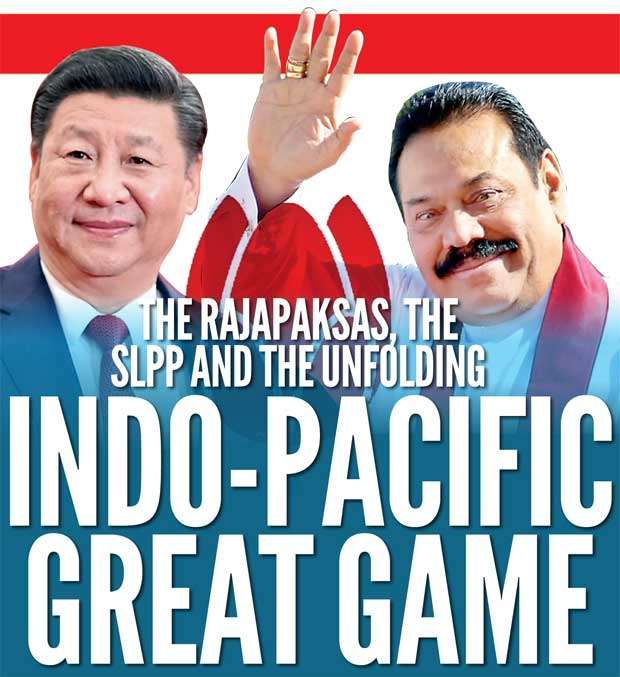
The Rajapaksas, the SLPP and the unfolding Indo-Pacific Great Game

December 9th, 2018

By Robert Blake Courtesy The Daily Mirror

The current political impasse in Sri Lanka marks an important opportunity for Mahinda and Gotabaya Rajapaksa to think about the consequences of their current actions for future support from the United States and others for a government a Rajapaksa could be elected to lead next year.
Despite two no-confidence motions against Prime Minister Rajapaksa’s Government and two motions to halt funding for government ministries, Mr. Rajapaksa has refused to step down.

“The Rajapaksas enjoyed famously good relations with China during Mahinda’s presidency

His refusal not only calls into question his and the Sri Lanka Podujana Peramuna’s (SLPP’s) adherence to Sri Lanka’s Constitution, it begs the question why they are inflicting unnecessary wounds on their and the SLPP’s future.
The strong showing of Rajapaksa and the SLPP in local council elections earlier this year demonstrated the support Rajapaksa continues to enjoy in Sri Lanka. New presidential elections could be called early next year. Although Mahinda Rajapaksa is prohibited by the Constitution from running again for presidency, his brother Gotabaya could be a strong contender.

“A new MCC programme for Sri Lanka is now under consideration”

The Rajapaksas enjoyed famously good relations with China during Mahinda’s presidency.  China financed the port of Hambantota and several other mega projects. The Hambantota port project has since become a cautionary tale for all recipients of China’s Belt and Road Initiative (BRI) largesse. When Sri Lanka could not service its debt payments, China instead negotiated equity control of the port for itself.

Since then, newly-elected governments in the Maldives, Pakistan and Malaysia all have announced reviews of BRI projects in their countries to be sure these projects benefit their countries and will generate good rates of return that would enable them to service their debt to China.
Indeed, as Xi Jinping doubles down on BRI and continues projects that will give Beijing the capacity to exert control over international waters in the South China Sea, countries across Asia increasingly want to maintain good relations with the United States, Japan, India and others to counter-balance China’s growing economic and military influence.

  • SL well-positioned to benefit from new Indo-Pacific initiatives

  • Results of recent mid-term polls in US to bring added scrutiny on SL

The United States, and other members of the Quad – India, Japan and Australia – have responded by enunciating a broad Indo-Pacific strategy to ensure a free, open and prosperous Indo-Pacific.  The US also passed the Better Utilization of Investments Leading to Development (BUILD) Act earlier this year, creating a new International Development Finance Corporation (IDFC) to incentivize US corporations and institutional investors to invest in developing countries and provide an alternative financing mechanism to China’s BRI. The IDFC complements new US Millennium Challenge Corporation (MCC) projects in countries that meet a host of good governance criteria. A new MCC programme for Sri Lanka is now under consideration. Japan and others have developed their own international infrastructure and Indo-Pacific initiatives.

  • Hambantota port project a cautionary tale for all recipients of China’s Belt and Road Initiative  (BRI) largesse

  • SL should expect more intensive congressional review of its recent actions, which could impact SL’s access to financing from the new IDFC or the MCC

Sri Lanka — with its strategic location on the busiest sea lanes in the Indian Ocean, its literate population and the tentative steps it had taken to achieve reconciliation after its bloody war with the Liberation Tigers of Tamil Eelam (LTTE) — had been well-positioned to benefit from these new Indo-Pacific initiatives.
But President Sirisena’s and Prime Minister Rajapaksa’s recent actions have raised serious questions in Washington, New Delhi, Tokyo and elsewhere, about their commitment to democracy and good governance. The results of the recent mid-term elections in the United States will bring added scrutiny on Sri Lanka. The Democratic Party won back control of the House of Representatives and announced that promotion of human rights and democracy would be a priority. So Sri Lanka should expect more intensive congressional review of its recent actions, which could impact Sri Lanka’s access to financing from the new IDFC or the MCC.
The above analysis suggests that Mr. Rajapaksa would be wise to step down as Prime Minister, and instead put his considerable political skills toward helping the SLPP win next year’s presidential elections through a free and fair contest. This would resolve the current political impasse and position Sri Lanka to be a leader and winner as the new Indo-Pacific great game unfolds.

Ambassador Robert Blake served as US Ambassador to Sri Lanka from 2006 to 2009 and then as Assistant Secretary of State for South and Central Asia from 2009 to 2013.
He retired from the US Government in 2016 and now advises US business overseas on behalf of
McLarty Associates. 

Ranil undercuts Sajith by appointing Ravi K as deputy

December 9th, 2018

H. L. D. Mahindapala

A recent photo published in a news paper of a UNP meeting showed Ranil Wickremesinghe presiding, flanked by Sajith Premadasa (on  his right)   and Ravi Karunanayake (on his left). Sajith, of course, had taken  his  rightful place as the  anointed deputy leader of the party. He has proved his loyalty to the Leader and the party by refusing to take over the premiership handed to him by President Maithripala Sirisena. He also fits into the Ranil’s promise of handing over  power to the young and new leadership rising  within the party. Above all, he has a clean record so far – a feature that stands out like Dudley Senanayake in the den of Ranil Wickremesinghe’s uncounted thieves!

If Sajith Premadasa is the anointed Deputy Leader of the UNP, guaranteed to succeed Ranil Wickremesinghe, what the hell was Ravi Karunanayake signalling (politically) by sitting on the left hand side at this Party meeting?  Was Ranil feeling that cold to be flanked by two deputy leaders on either side? Seating arrangements in any significant political  gathering goes by ranking. Only the No. 2 gets the adjacent seat next to Numero Uno. Like the way Ranil twisted the 19th Amendment to expand the Cabinet beyond the limit  of 30 is he planning  to expand the number of  his deputies to secure  his position in the  party? The two deputies sitting  on  either  side, with  Ranil  in the centre, made the UNP leadership look like a three-headed donkey”, in the famous words of Dr. Colvin R. de Silva. But Ranil’s devious plan seems to have a more  sinister motive: as usual he is planning  to have two number twos to vie  with each  other so  that he can remain as No:1  in the  middle. This indicates clearly that he has  not  given up his usual crafty game of pitting one  against the other. It is also possible that he deliberately planted Ravi K next to  him to send a message to President Sirisena saying that his successor is Ravi and not  Sajith. So is Ranil feeling threatened by Sajith, who is preferred not  only from the top (i.e., President Sirisena  inviting him to be  PM) but also from the rank and  file openly opting for Sajith?

Any political observer reading  the disaffected rumblings going on at the grassroots of the Party will know that Sajith, like his father, could easily win in an inner  party leadership contest. Whether  Ranil’s manipulations can tilt the vote to his favourite, which has noticeably been Ravi K going back  in time, is questionable. Ambitious Ravi K has been close  to Ranil with  the sole aim of stepping  into his  Leader’s shoes. He was making his presence felt physically at the last meeting to signal that he has the blessings of Ranil to be next in line to the UNP throne. It was a conjecture when I first saw the photo at first in the newspaper. But the news item in CEYLON TODAY  (7/12) has confirmed my worst fears.  It said:  United National Party and former Prime Minister, Ranil Wickremesinghe, has in writing informed UNP MP Ravi Karunanayake that he will be appointed as the Deputy Leader of the Party and the Minister of Finance in a future Government.”

Where does this leave Sajith  Premadasa? What guarantees are there, when push  comes to shove, that Ranil will back him  the way he has stood by Ranil so far? Ranil expects Sajith to stand by him the way he stood  by President Premadasa when Lalith-Gamini combo led a futile challenge to  impeach the President on ridiculous  charges, one of which being  insane. Up until now Sajith has  paid back his dues with  his loyalty to Ranil. He has done his  bit. But will Ranil reward him  with  his gratitude?

If the news item quoted above is correct then Sajith’s future of  becoming prime minister is as good as Ranil’s future of becoming president in the next election. What  is puzzling is the sudden necessity at this sensitive and critical stage for Ranil to send an official letter confirming the status of Ravi Karunanayake as Deputy Leader in a future government, in addition to being  and future Minister of Finance. The news item does not  say that the Leader has appointed Ravi as an additional deputy in the Party hierarchy. Nor does it say whether Ravi is equal to Sajith in rank, or higher  or lower to Sajith. It says categorically that Ravi K will be appointed as the Deputy Leader of the Party and the Minister of Finance in a future Government.” For all  intents and purposes,  it is a cryptic statement that degrades Sajith and elevates Ravi K. The signs are ominous. First, he  gets Ravi K to sit next to him. Second, he sends an official confirmation of his status in a future government. Combined together  doesn’t this mean that Ranil is preparing the ground to give the boot to Sajith when he has consolidated his  grip on power and party, if and when he wins the next election?

From time to time Ranil had dangled carrots to Sajith to keep  him  quiet. And Sajith seems to have enjoyed the carrots hoping  it will lead him eventually to the seat of leadership. But the latest  move  of Ranil should alert Sajith  to the hard reality facing  him: he cannot  rely on his Leader to honour his  words. He should know by now  that the carrots are dangled  by his Leader only to keep him  happy and make him drag the UNP cart without  upsetting his journey to achieve his personal goals at the expense of the gullible Sajiths who will be sacrificed when  the time  is  ripe.

What is equally intriguing is why Ranil has moved so  hastily, at this early stage, to confirm Ravi K as his successor when there are other young and capable candidates in  the Party? There are young aspirants with unimpeachable integrity and promise like Ruwan Wijewardene, or Navin Dissanayake who is as suave as his  genial father, Gamini Dissanayake. But he skips these leaders of the future and picks the most crooked and corrupted perverter of justice to be his deputy. It is incredible that of all the UNPers Ranil should elevate an immoral and incorrigible liar to be the second-in-command of  the Party, dismissing all norms of Westminster traditions, let alone the basic morality accepted by our Punchi Singhos. What does this appointment say about Ranil’s ability to give moral leadership to  the nation? Isn’t the need of the  hour to find a leader who can  give unsullied moral  leadership? Can  this nation ever accept Ravi K as its leader? Has Ranil lost his marbles? His long  career in political  is nearing  its end with him dragging the nation to the lowest depths of degradation. Isn’t it his duty now  to lift the nation – if he can – to higher  levels of moral probity than handing over leadership to another inveterate crook who will have no compunction in plundering  the nation of even what  is left after the Bond scam”?

With what moral authority can Ranil appoint such a disreputable crook to the seat that was occupied by the Senanayakes, Bandaranaike and Jayewardene? Is the UNP up for sale for  the biggest wheeler-dealers of the  nation? Why is Ranil obsessed  with selling the assets of the nation to its enemies, robbers and crooks? Why select Ravi K of all members  in the UNP? Their past relationship tells the story behind Ranil’s choice. Ravi K has been Ranil’s closest partner in the International Democratic Union (IDU). Both are two halves of the same rotten, Right-wing, Christian, IDU apple. Ravi  K was Ranil’s constant companion in his journeys to the IDU. Both are linked closely to the Western camp. They are also linked to the Tamil lobbies, both in the Tamil diaspora and Sri Lanka. Ravi  K acts as Ranil’s front man  in  all the underhand dealings, particularly with the Tamil diaspora. They are ideological  twins. Ravi K received millions  from the Tamil diaspora. He was accused of money laundering and he got  off in the trial on a procedural technicality and not on the facts of the case. The story behind the court that dismissed his case too is intriguing and needs to be investigated.

Both  are pious humbugs who are skilled in the art of penetrating Buddhist temples and buying their blessings with political donations to either  hire or  silence the monks. Both  have close  links with the  Western embassies. If the West has to choose between Ravi  K and Sajith they would have no  hesitation  in  the picking their most  favoured man from  the IDU – a clone of Ranil — who could be manipulated easily. It is easy to manipulate corrupt people than the honest ones. Ideologically Ranil is after a successor  who would perpetuate his  pro-West, pro-separatist/federalist, pro-Tamil diaspora with an anti-national agenda. There is no one better suited in the Party than Ravi K. The political conduct of Sajith is not linked to this agenda so far. Sajith, rightly or wrongly, is seen as the anti-thesis of Ranil. He  is respected as a leader with  his feet planted firmly on Sri Lankan  soil. Like his father he  is regarded as the only UNPer who can bring the party back to its roots. He is trusted as a more credible Sinhala-Buddhists than Ranil and his running mate, Ravi K, covered in miles of pirith nools.

Ranil and Ravi K are two birds of a feather who have flocked together to dismantle the nation. Ranil’s goal  is to pass the baton to Ravi K. Though the trend in  the  party favours Sajith he cannot  expect Ranil to hand it over to him. The signs are clear: Sajith will have to be on guard and fight  all the way to the winning  post, if he can. Ranil will, of course, throw some crumb Sajith’s way to keep  him quiet. So will Sajith be Ranil’s lap dog and lie low, pleased with pats on his  head for being a good boy to  his master?

Incompetent Politicians from 2015 and their Assumed Putative Democracy -Ranil and his Fictional Constitution of SriLanka

December 9th, 2018

Kanthar Balanathan

As soon as the election was over, Ranil from a minority party was appointed as Prime Minister. There is no need to define or highlight what Democracy is to these political kids. The neurotransmitters in the network of the UNP politicians went blank, as they thought they are in power and they can do anything. E.g. Kidds parliament. The only mindset in their brain was how to blame MR & GR to which imbecilic Tamils gave assistance. E.g. Sambanthar and ITAK planned a strategy of accelerating the admonishing / reprimanding act for GOSL.

The political strategy, of who knows i.e. UN, USA and some mushroom supporters of USA and Ranil and Sambanthar planned to appoint TNA as the opposition party of which Sambanthar was appointed the Opposition Leader. Ref: https://en.wikipedia.org/wiki/Leader_of_the_Opposition_(Sri_Lanka)

The only excuse GOSL can give is that Sambanthar’s appointment is a cunning act to destroy SriLankan political credential. Who are the FOOLS here? MR and Co made a severe mistake of agreeing to make Sambanthar as the LOP. Sambanthar was Prabakaran’s (LTTE) clerk. Why did MR and Co refuse or ignore this acceptance?

We all know that Sambanthar and MAS were driven by LTTE.

Status Quo of the party composition:

United National Party                                     =106—Governing party

United People’s Freedom Alliance                  =95

Ilankai Tamil Arasu Kadchi                           =16—- Leader of Opposition

People’s Liberation Front                               =06

Eelam People’s Democratic Party                  =01

SriLanka Muslim Congress                            =01

This is the most ludicrous and farcical parliament that any country can have. Sambanthar from Ilankai Tamil Arasu Kadchi, undercover TNA, was appointed as the LOP. That is the most hypothetical and imaginary enforced DEMOCRACY in a third world country, i.e. SRILANKA. Since then the governing and the opposition party were operating hand in hand to destroy the Republican state and make the sovereignty disappear for a major force to take over the broken states. One way was the sale of Treasury Bonds to make the republic indebted to external forces and sale of development bonds to accumulate wealth for the individuals and party. Who is the joint force in the Republic: Ranil/Ravi/Sambanthar/Tamil Diaspora/Superpowers. The Chief Adviser for this rebellion, take-over, coup d’état is MA Sumanthiran, a traitor to his motherland.

As a non-partisan writer, with no love for any political party, the writer puts the blame on the leader of UPFA at the time.

What was Sambanthar’s political objective? His vision was to pave the way for Tamil Elam to which Ranil and MA Sumanthiran gave the pathway.

The writer’s articles from 2015 on the incompetent governance are given below:

http://nrnmind.blogspot.com/2015/12/2016-budget-reading-in-sri-lankan.html

http://nrnmind.blogspot.com/2015/01/srilanka-currentregime-and-their_26.html

http://nrnmind.blogspot.com/2015/01/an-interim-government-has-no-right-to.html

http://nrnmind.blogspot.com/2015/01/what-next-after-euphoria-of-january-8th.html

The parliamentarians do not know the three arms of governance. A Bottleneck situation the case is taken to the country’s high court which has happened now. Do we know the integrity of the Judiciary in SL? Let us wait and hope for the best solution that the Court can deliver.

The fundamental mistake the president made did not give an order to arrest Ranil initially for the attempt of murder of the President. Rather removing the PM, the President could have given an order for the arrest.

Today the entire SriLankan population has become a laughing stock to the world.

Just an advice to MA Sumanthiran: Please do not degrade Monash University. I was an old student of this Prestigious University.

Just an advice to Ranil: Please go back to a better university in the UK and do a Law degree.

SriLanka is a Sovereign state. Please do not give in to Sambanthar + MA Sumanthiran and split the Republican state.

Ranil became PM by trickery and now wants to remain as PM by trickery

December 9th, 2018

By Confused Citizen

It is said that Sri Lankans have short memories and most of the younger generation will not even know some of these facts. When it comes to Ranil Wickremasinghe, he has got away with so many wrongdoings it is unthinkable that he can run as a candidate against MR in the near future and hope to win. What he did at Batalanda against the JVP,  the CFA agreement where he gave a free run to the LTTE in  the north and east, the way he disclosed the names of the army long-range intelligence team to the public which resulted in the death of all of them by the LTTE who hunted them down and killed those brave soldiers. Then there is the famous Bond Scam which has cost the public of Lanka many billions of dollars, plus many more traitorous acts.   Those who are following Ranil Wickremasinghe for money are no more than political discards, traitors to Lanka.

If you want to listen to the truth of how Ranil W saved Prabahakaran in 2001 resulting in the continued war and strife in Lanka, please watch the attached. https://www.youtube.com/watch?v=YZWO5fWDikQ

Ranil is supposed to have agreed to a bridge to Sri Lanka from India in 2002. See:http://www.atimes.com/article/sri-lankans-oppose-bridge-with-india/

Ranil tried to give 2/3 of the land to LTTE along with the Norwegians on a bogus Peace deal which was used by the LTTE to strengthen their defense systems. Entire container loads of equipment were allowed to go to the Wanni to LTTE on Ranil’s instructions. See: http://www.island.lk/index.php?page_cat=article-details&page=article-details&code_title=114673

Ranil became a PM by trickery on Jan 2015. He could not contest Jan’15 (sure of losing), so he put Maithri forward and came behind him. Maithri got elected due mainly to the false campaign against MR led by JVP and others funded by foreign sources. The whole campaign against MR was based on lies. Maithri appointed Ranil as PM even when there was DM Jayaratne as PM and there was a UPFA Cabinet. At that time, no diplomats or JVP raised their voices against this illegal act.  MR just gave up as the odds against him were many and he was tired (as Dayan Jayatillke put it), and he went back home to rest. Next, people realized what the Yahapalanaya new govt was up to and went by many thousands to MR’s home begging him to come back. At that time Maithri informed the public that he was forced to appoint Ranil as PM ‘by the west’.  We presume this was part of the ‘Contain China’ program. Ranil then caused the Central Bank bond scam by appointing a foreigner as the Governor of Central Bank (an unlawful act) who proceeded to do a bond scam which has cost Sri Lanka a massive amount of money. Part of this money was used by him for the General Election in Aug 2015 which the UNP won only narrowly. In Aug 2015 Maithri created a problem for MR by announcing two days before the election that he will not appoint MR as PM even if he wins. I assume this was manipulated by Ranil and his foreign friends. Then President Maithri created massive confusion in the mind of the voting public in Aug 2015  first by sacking the two General Secretaries of the SLFP and the UPFA on Aug 14 Friday at 3:00 pm just before the election.

I believe Maithri is a genuinely sincere patriot. I think he believed in Jan 2015 that Ranil will bring foreign help to the country through his contacts with the West. Over three years he saw that this did not happen.  It appears now that Ranil had other plans with his foreign friends. Also in the local government elections this year, Maithri saw the ‘writing on the wall’. The coalition government for 3 1/2 years did very little other than importing luxury cars for MPs tax-free and pay massive salaries to themselves. What was done with the huge amounts of money borrowed by the coalition Government? They only stopped all the work MR had started in 2005 and then after Yahapalanaya govt lost the local Government elections (2018) badly they started frantically trying to do something along the lines of what MR had done in 2005. But the People of Lanka have seen through them.  Ranil’s Neo-liberal policies will not work in Sri Lanka.

The current Parliament is a comedy since the TNA which got only 16 seats is the Opposition while the SLFP and UPFA members who did not join the coalition are in the wilderness without any official recognition. All the JO group members were harassed at every turn by the speaker. Another illegal group called the FCID created by RW harass the opposition in the name of Yahapalanaya. He seems to get all these brilliant ideas which are obviously coming from the think tanks of the powerful countries. They passed the 19a in the parliament with the help of the JVP and the TNA. The 19 a was hurriedly put together by Jayampathy Wickramaratne, a man who was supposed to have been thrown out of the University for cheating, and it is obvious the main objective was to keep the coalition party in power till June 2019. But since the coalition broke up I believe that the President had every right to dissolve the Parliament and appoint a new PM acceptable to the majority in the Parliament which was the UPFA and the SLFP. Furthermore, Ranil tried to bring a bill to sell state land to foreigners which was stopped by the President. It is also stated by the President that Ranil, Sarath Fonseka, and Pujith were involved in a plot to assassinate the President. Ranil had the motive since he would have automatically have become the President if that happened. The TNA would have then got their objective of having a separate state. I am not a lawyer but just an ordinary citizen. Since the coalition broke up I think the best way to resolve the issue is to go before the people by having an election. It is very obvious that Ranil Wickremesinghe has no love for the country or the people. He has been a stooge of the powerful countries right from the beginning.

Any other Govt which comes into power after this ridiculous puppet Govt must carry out a Plan to correct all the mistakes that have been done over the years by the Yahapalanaya govt. We must rename the country as “Sinhale” which was the ORIGINAL name of the country and the name used in the Treaty the British signed with the Chieftains of Sri Lanka in 1815 when they handed over the country to them.  They must have an inquiry into the activities of Ranil Wickremesinghe over the years and prosecute him. When the Batalanda Commission found him guilty and removed his civic rights how did he manage to run for PM? Why is that no govt has carried out the orders given by the Batalanda Commission?

Save the country from TNA’s treachery –Part – VI

December 9th, 2018

By : A.A.M.NIZAM – MATARA

Before proceeding to write about TNAs treachery and Tamil politics I think it is imperative to write about the great contemporary Sri Lankan patriot Tamara Kuumanayakam who was born into a Tamil family in Colombo and went to Geneva for higher studies and got highly qualified on international affairs and who should be a role model for patriotic Sri Lankans.  The Westernophile butterfly clan of the UNP, the anti Sri Lankan TNA, JEPPOS the anti Sri Lankan elements in other political parties, the dollar voracious NGO vultures, the despicable hooligans  accidentally born in Sri Lanka and after becoming qualified in various disciplines at Sri Lanka’s tax payers’ expense and  working to discredit and destabilize Sri Lanka after becoming resident in western countries should be ashamed of in the face of this great patriotic lady the Sri Lankan diplomat Tamara Kumanayakam who after working of Sri Lanka  at the UN in Geneva and as Sri Lanka’s Ambassador in Cuba and some other countries.  I think that the future patriotic government to be formed in Sri Lanka should mysteriously think about appointing her as the country’s Foreign Minister for the great service being done by her in defending Sri Lanka at various meetings.

In a recent interview with an English language weekly she has stressed that the present crisis in Sri Lanka cannot be solved by the present Parliament and it could only be solved  by elected determinedly by discarding foreign servile anti national politicos.  She has explained that the present crisis has its roots with the open economy introduced by J.R.Jayawardene depriving the employment and income avenues of the local people and wide opening doors for the foreigners to exploit the people, the national assets and the national resources.  She states the 3 subsequent governments under Ranil Wickeremasinghe and Chandrika aggravated this situation facilitating the neo-liberal elements to take root in the country.

Tamara further states the open economy greatly affected onion and chillies cultivators in the north, farmers and potatoes cultivator, fishermen, and small industries throughout the country due to flooding the markets with cheap foreign goods and points out that before this measure was taken two third of our fish exports were provided from the fishermen in the North. It is recommended to read her interview to the Sunday Observer which was reproduced by Lankaweb.com website on 6th December under the title Parliament can’t resolve present crisis – Tamara Kunanayakam

Let us now see further matters relating to TNA’S Treachery and Tamil politics.   In the Articles of Association  related to the formation  of the TNA, the LTTE outlined the rules relating to the composition of the constituent parties in the next election and how the MPs from the National List and for the Bonus seats should be  decided.

It said the  constituent parties should refrain from attacking or criticising each other publicly. Special care should be taken during the election campaign about not engaging in propaganda or counter-propaganda against a fellow TNA constituent and intra-TNA disputes and problems. When such issues occurred the TNA constituents should discuss the matter among themselves in a peaceful way and arrive at an amicable solution through a majority vote. If that was not possible the services of an outside facilitator panel should be enlisted to help resolve the issue.

A six-member Colombo based panel was also nominated for this purpose. Under this arrangement TNA was born as a loose formation without a party constitution or structure under the           LTTE.  . The newly formed alliance had its baptism of fire when Parliamentary elections was held on December 5th, 2001. The TNA in its manifesto urged a negotiated settlement of the ethnic conflict and emphasised that the LTTE would represent the Tamil people at such talks.

When the election campaign got underway the LTTE did not openly support the TNA. The reason was that the LTTE believed that an armed struggle was the only way to liberate the Tamil people and ruled out the parliamentary path.

The LTTE had for years criticised representative democracy and accused many elected Tamil representatives of being traitors. The tigers had to assassinate several prominent Tamil MP’s in the past. Now for the first time the LTTE was indirectly supporting a Tamil political grouping at an election. This to its hierarchy was a tremendous come down. That was one reason the leadership based in the Wanni allowed its eastern political commissar Karikalan to do the spadework. The Wanni leadership came in only at the penultimate stages to merely assure the TNA constituents that they did not oppose the move.
This reluctance to identify themselves with parliamentary democracy in anyway was the reason for the LTTE to outsource” the task of forging a Tamil alliance to a core group consisting mainly of journalists and academics in Batticaloa district.
It is relevant to note that several of these Batticaloa journalists and academics who played a part in forming the TNA were killed later by para-military forces aligned to the intelligence apparatus of the state. Some were killed during the fratricidal warfare between the mainstream LTTE and the breakaway faction led by the Karuna-Pillaiyan combine.

A few journalists involved later contested on behalf of the TNA and became MP’s. But many journalists and academic participants of the TNA forming exercise were compelled to flee the country and seek refuge abroad in later years.

has the 2001 election campaign was conducted without overt LTTE participation. The tigers also refused to let TNA candidates conduct election propaganda meetings in areas controlled by it. But the LTTE did not block Tamil voters in regions controlled by it from voting. They could vote in cluster booths set up in border” areas.

However the armed forces were unhappy about this situation. They did not permit voters from LTTE controlled areas to crossover” and vote.
The greatest benefit for the TNA candidates was that they could campaign without fear of violence from the LTTE. But this time the danger was from the Eelam Peoples Democratic Party (EPDP) in the north.

Douglas Devananda identified the TNA as a big political threat to his dream of becoming the sole alternative to the LTTE’s sole representative.TNA candidates were attacked when they engaged in election propaganda in EPDP strongholds.

When the 2001 election results were announced the TNA contesting under the sun symbol of the TULF had done well.

In Jaffna the TNA got six of the nine seats. Anandasangaree, Senathirajah, Raviraj (TULF) Gajendrakumar Ponnambalam, Vinayagamoorthy (ACTC) and MK Sivajilingam (TELO) were elected on behalf of the TNA. The EPDP got two seats and Maheswaran of the UNP also won. In the Wanni the TNA got five of the six seats. Selvam Adaikkalanathan, Vinotharahalingam, Sivasakthi Anandan, Sathasivam Kanagaratnam and Sivanathan Kishore were elected.

The sixth went to Rishard Bathiyutheen of the Muslim Congress. In Trincomalee the TNA received the greatest number of votes and got the bonus seat. Both Sambandan and Thurairatnasingham were elected. In Amparai district the TNA sitting MP Chandranehru lost but a newcomer K. Pathmanathan was elected on the TNA ticket. In Batticaloa the TNA got four of the five seats . T.Kanagasabhai, Thangeswari Kadirgamar,T. Jeyanandamoorthy and Kingsley Rajanayagam were elected. Veteran Batticaloa politician Joseph Parajasingham who had been an MP since 1990 had lost.

Meanwhile the TNA was entitled to two national list seats. Joseph Pararjasingham was appointed to one and MK Kanakendran alias Eelaventhan ”on the other .Eelaventhan though originally from the FP and TULF was now a maverick sycophant of the LTTE. There were now twenty elected and two appointed MP’s. Of these twenty-two, eleven were from the original four constituent parties of the TNA. They were Sambandan,Thurairatnasingham, Senathirajah, Raviraj,Pararajasingham (TULF) Gajendrakumar Ponnambalam (ACTC)SElvam Adaikkalanathan, Vonoharahalingam. Sivajilingam (TELO) and Sivasakthi Anandan, Suresh Premachandran (EPRLF).

There were eleven with non-party affiliation .They were Selva, Gajendran, Padmini Sithamparanathan, Sinnaiah Sivanesan, Sathasivam Kanagaratnam, Sivanathan Kishore, T.Kanagasabhai, Thangeswari Kadirgamar, Jeyanandamoorthy, Ariyanendran , K. Pathmanathan and MK Eelaventhan.
So the TNA parliamentarians were divided equally as those with and without party affiliation. In lighter vein both sides were evenly matched to play Cricket, Soccer or Hockey. G.G. Ponnambalam’s fifty-fifty” formula had at last been implemented.

The TNA electoral triumph of 2004 lost its sheen when the E.U. released its report condemning the election as not being free or fair in the North and East. This did not mean that all those who won on the TNA did so due to fraudulent means. Several of those elected did so in their own right but their majorities were enhanced through dubious means. But there were some who won entirely due to vote rigging.
The tiger factor helped the TNA to sweep the polls in 2004 and get 22 seats. It was however a Faustian bargain. The TNA was seen and depicted as a voice of the tigers rather than the Tamils. They had zero credibility in the eyes of the world and rest of Sri Lankaa.

The LTTE also reduced the TNA to political servitude and ensured that such bondage was well publicised. The TNA was summoned frequently to Kilinochchi where the tiger political commissar Suppiah Paramu Thamilselvan would issue orders and instructions.
At LTTE oriented functions some of these MP’s would wear LTTE badges and sing paeans of praise to Prabakharan and the tigers.

In Parliament the TNA was a pathetic lot. Apart from Sambandan few MP’s made any worthwhile contribution. Many of the TNA members acted abrasively and provocatively in the house. Notorious among them were M.K. Sivajilingam and Selvarajah Gajendran.

The cumulative effect of all this was an erosion of credibility and respect. Likewise, the TNA was looked upon with contempt and scorn by members of the diplomatic community. Though the motions of meetings” were followed there was practically no meeting of minds. This was particularly so with India. Though TNA delegations made customary pilgrimages to New Delhi scant regard was paid.

The TNA was a tiger adjunct and nothing more. The result of all this was that the TNA despite having 22 seats in a house of 225 was unable to accomplish anything worthwhile either in Sri Lanka or abroad.

Many including myself hoped that the TNA would make a clean break from the past after the LTTE was decimated in 2009.That however has not happened. In perhaps the greatest disappointment of all former Supreme court Judge CV Wigneswaran started singing the Pulippaattu” (Tiger song)after being nominated as TNA chief ministerial candidate for the Northern provincial council Sadly this sorry tale of the TNA toeing the tiger line continues even after the fall of the tigers.

The TNA is unable to break away from its pro-tiger past and is generally adopting  the extremist line propagated by LTTE and pro-LTTE elements in the global Tamil Diaspora.  The perception that the TNA is aligned to the LTTE is one that seems to gaining ground  mainly due to the party’s woeful conduct  in the post – May 2009 phase.

One way of shedding this image is for the TNA to  assert itself independently by boldly  exposing the human rights violations of the LTTE before the UN panel probing the  seven    year period between 2002 – 2009. Since the TNA –LTTE Nexus prevailed throughout the   seven yer period under review the TNA should have no difficulty in doing this. The question    at this critical juncture is Will the TNA do so”?

In  English

Mahinda Rajapaksa                                       Ranil Wickremasinghe

What he is asking for                                                  What he is asking for

A General Election                                                     the  post of Prime Minister

For what it is?                                                           For what it is?

People’s Wish                                                            To fulfil  the promises made to  Western counties

Who else stands for an Election                                 Who else stands in support of   Ranil

Maha Sanga, , Professional loving the country,        Foreign Ambassadors, Tiger diaspora,

The General public                                                     TNA, NGOS, JVP

Who is wrong from these tow

Give a General Election to the Public –Mahinda      Give the PM post to me – Ranil

WHO IS THE POWER HUNGRY ONE

(To be continued)

I feel a burning need to talk about Sharmini Seresinghe.

December 8th, 2018

Diannah Paramour Australia

Ayubowan

I feel a burning need to talk about Sharmini Seresinghe.

I guess she’s been sheltered her entire life from the hard facts surrounding Sri Lanka’s grandiose yet terrifying history.

Those whose blood soaks the white sands are that of soldiers who gave their lives in service, in service to save everyone, including her.

As if her article a few years back defaming and insulting the Monks wasn’t enough, now the nasty pen scribbles away yet more hate.

In regards to His Excellency Prime Minister Mahinda Rajapaksa I think she must be so immensely jealous of him that she sees no other recourse other than humiliating herself with her nasty words against him.

You all know, even the enemy knows that we all touched his feet for his bravery in ending the terrorist war.

With his hands towards the international community to help, alas Sri Lanka was alone in her darkest days, it took only sheer bravery to stop the war.

As to his brother Goatabya Rajapaksa, it was his brains outstanding ability for strategy and empathy for all concerned that allowed the kidnapped citizens to be released, it was not his fault that people died, when terrorists unleash their evil, of course people will die after all it was a war zone.

The combination of the two Rajapaksa brothers does not make for a dictatorship, it will be a strong bind that the people understand, when some are still running a mockery of their dedication to you all, unwise mouths like Sharmini dare to flap out ugly words against them, I’m astounded.

As to her continual condemnation of Sri Lankan Monks….

What’s her genuine problem?

Does she seek to strip every single tradition of reverence until nothing is left except a dust bowl of lost opportunities?

Just remember your ancestors and how with dignity your Kings lay their heads down for evil colonial execution.

Does that kind of ultimate gift to Serendip only exist in storybooks?

Or are you prepared to be brave enough to speak up in protection of your Monks and all those who died in the war?

Does Sharmini wish for every Monk to be vanished in some ‘tragedy’ or do they change their direction to help her bit by bit dismantle Sinhala Buddhism?

We have a saying down here:

‘Never pick up mud from the ground and throw it in your own face’

Yes Sharmini you have done just this.

Please, I think deep down she might be a kind person but I’ve yet to see one inch of foresight.

If….

‘Whoever holds the sacred Buddha tooth relic, rules the country’

Then move out of their way Sharmini and stop trying to sell articles by insulting those who meant you no harm.

Without the Rajapaksa brothers bravery you too would be dead right now, in my eyes you are a traitor to the Pearl of the Indian Ocean and all her people.

Trust me, this is not the way to bring about reconciliation and long lasting peace.

Peace be with you Sharmini, just try it for once.

You are a very rude disrespectful little girl, your family must be extremely ashamed of you.

From:

Without prejudice

Diannah Paramour

Australia

SC concludes hearings on parliament dissolution; interim order extended with no date fixed for verdict

December 7th, 2018

Courtesy Adaderana

The Supreme Court today concluded the hearing of the petitions filed challenging the Gazette notification issued by the President dissolving the Parliament.

However, no date was fixed for delivering the verdict in the case, despite the conclusion of hearings at around 7.00 p.m. on Friday (7), the fourth consecutive day of court hearings.

Meanwhile, the interim order issued by the court, suspending the Gazette notification on the dissolution of Parliament, was extended until the verdict is delivered in the case.

During today’s hearing of the petitions, President’s Counsel S. Kanageswaran, representing the Leader of the Tamil National Alliance (TNA) R. Sampanthan presented, submissions on behalf of the petitioners.

He stated that the impunity conferred to the President of the country, under Article 35 of the Constitution, in civil or criminal proceedings has been inhibited to a certain extent by the 19th Amendment to the Constitution.

Pointing out that the 19th Amendment to the Constitution has made provisions to file lawsuits under Fundamental Rights against the executive and administrative actions of the President, he said that the official activities of the President can be queried before the court.

Hence the dissolution of the Parliament is also an official activity carried out by the President, it can be challenged before the court under the Fundamental Rights provisions, President’s Counsel Kanageswaran has further said.

The rest of the attorneys appearing on behalf of the petitioners have also presented submissions in this regard.

The seven-member judge bench of the Supreme Court commenced hearings of the petitions this morning for the fourth consecutive day.

The petitioners presented submissions before the court today in response to the submissions of the intermediate petitioners.

The Supreme Court yesterday (06) extended the interim order issued suspending the Gazette Notification issued by the President on the dissolution of Parliament, until tomorrow (08).

Presenting submissions before the Supreme Court on the 5th of December, the Attorney General had stated that in accordance with Article 38 (02) of the Constitution, the Supreme Court does not have the legal authority to hear these fundamental rights petitions filed against the parliamentary dissolution.

The judge bench consisting of Supreme Court Justices consisting of Chief Justice Nalin Perera, Priyantha Jayawardena, Prasanna Jayawardena, Sisira de Abrew, Vijith Malalgoda, Buwaneka Aluwihare and Murdu Fernando commenced hearing the petitions on the 4th of December.

The petitions have been filed by political parties including United National Party (UNP), Janatha Vimukthi Peramuna (JVP), the Tamil National Alliance (TNA), Tamil Progressive Alliance (TPA) and the All Ceylon People’s Congress.

Organisations and activists such as the Centre for Policy Alternatives (CPA), Attorney Aruna Laksiri and also a member of Elections Commission Prof. S. R. H. Hoole have also filed petitions.

UNP-TNA Separatist Constitution will split our families as in Germany – India – Africa

December 7th, 2018

TNA MP Sumanthiran addressing Tamils in Tamil boldly declared that the new constitution would be going beyond federalism as promised where the Centre will be unable to take back, change, remove or interfere in the powers devolved to the provinces or even reverse all that had been given via another new constitution. This virtually means nothing other than ceding powers permanently whereby we are creating 9 separate & independent states with their own currency, police, military, legal system & conducting their own international relations. More importantly it would mean families will get split & travel restrictions will apply to even visit them. This immediately brings to mind the fate of families in other countries where such splits changed their lives forever. No one can brush these cautionary alarm bells before they happen because there will be little left to do after the drastic changes does happen. We cannot forget that the Maha Sangha & People rejected the need for a new constitution & inspite of this a bunch of questionable individuals & organizations are drafting this separatist constitution.

https://www.facebook.com/118282528507832/videos/554160994919981/UzpfSTExODI4MjUyODUwNzgzMjpWSzo1NTQxNjA5OTQ5MTk5ODE/

Berlin Wall – Germany

In 1971 the Berlin Wall was built dividing East & West Germany. It was 66miles long & 3.5metres in height & 41miles of barbed fencing. Many who attempted to cross over from East to West were killed. The wall divided friends, families & loved ones even causing loss of jobs & livelihoods.

Germany became 2 separate countries in 1949 – the Allies ran the Federal Republic of Germany known as West Germany & the Soviet Union ran the German Democratic Republic or East Germany. Berlin was in East Germany but shared with Britain, France, America & Soviet Union. Essentially the wall became a symbol of division, a barrier between people. The jubilation when the wall came down eventually on 9 November 1989

Partition of India

In 1947 two independent dominions were created called India & Pakistan according to Hindu & Muslims. The artificial line that divided Pakistan from India was called the Radcliffe Line – 2900mile border (which had only 5 crossing points) which split Bengal & Punjab. That partition displaced over 14million people along religious lines creating a huge refugee crisis. Estimated deaths range from 200,000 to 2million. Close to 100,000 women are said to have been raped. On both sides of the border minorities” were rejected.

What is equally interesting and shocking about the division of Pakistan & India is how it was done by Sir Cyril Radcliffe, a barrister by profession who was commissioned by the British. He had never before visited any region of India, he did not know the type of people who lived there, their religions, he knew absolutely nothing about their culture, customs, traditions. There was really no requirement for anyone with any skills if all he had was 5 weeks and a pen to draw a line of division which Sir Cyril did. He was simply ordered to draw a ‘line’ on the principle of communal majority nothing was spelt out with clarity. What resulted was the line” running through houses, dividing families & friends. Ferozepur was originally drawn on Pakistan’s side & later on Mountbattens insistence included to India. He nearly gave Lahore to India too before realizing India had Calcutta. He was paid sterling pounds 3000 for the task – which we are told he refused realizing the damage he had done!

Radcliffe insisted that he had no idea about the Kashmir issue he would give birth to through his awarding of the district. What the British & politicians did is best summarized by historian Mushirul Hasan’s words, man-made catastrophe brought about by cynical and hot-headed politicians who lacked the imagination to resolve their disputes and the foresight to grasp the implications of dividing their country along religious lines.”

In 1885, 14 nations met in Berlin to partition- or divide, Africa. By 1914, European nations controlled 90% of Africa. Europeans controlled most of Africa until the mid to late 1900s.

Africa

None of the present day borders that make up countries in Africa ever existed before 1884 Berlin Conference when European nations again using a pen split up Africa – 44% of its borders were divided as a straight line separating 177 ethnic groups. Somalis were split into 5 different countries. Africa has over 2000 ethno-religious communities. US-European peddling ethno-religious divisions via UN would have to then create 2000 countries in Africa!

Artificial lines dividing people is no solution. Ample examples prove this. The former colonial power houses that created the artificial lines cannot be allowed to create newer lines given that these artificial boundaries are the root causes for the conflicts that prevail globally.

Just as present day India never existed, USA, Australia, Canada, Saudi Arabia, Singapore are all artificially created countries.

The 1893 Durand Line artificial boundary divided present day Pakistan & present Afghanistan dividing Pashtun tribes.

The 1914 McMahon Line became another example of illegal colonial invaders imposing arbitrary borders to serve their advantage – this time Sir Henry McMahon, the foreign secretary who was acting as chief negotiator in the Shimla Conference between Britain, China, Tibet drew the line without Chinese participation making Tawang region of Arunachal Pradesh as part of India.

The 1916 Sykes-Picot Agreement divided the Middle East between Britain & France. Again a pen was used to draw a straight line without a concern for the people or their cultures. North of the line became modern Syria & Lebanon under French mandate. South of the line became modern Israel/Palestine, Jordan, Iraq went to the British. Mosul which was north of the line should have been part of Syria but British took it under Iraq because of oil. The Kurds were divided into 4 states – Turkey, Iran, Iraq & Syria. Shiite Arabs were split between Iraq, Kuwait, Bahrain & eastern provinces of Saudi Arabia. Sunni Arabs were also divided. Saudi Arabia was created from a promise made to Hussein Ibn Ali emir of Mecca by Britain in exchange for support against the Ottoman Turks during World War 1.

These examples suffice to show that in a global village politicized issues claiming to be of ethnic or religious origin cannot be solved by drawing a line & telling people to live on the other side of the border. No solution limited to a piece of paper has ever worked. A pen used to draw artificial lines for political interests have ruined lives of families forever. Despite all this awareness we saw the same mistake repeated in Kosovo & South Sudan and our warnings have proved true – these newly independent states are in utter ruin.

Sri Lanka is an island. We have had at least 17 invasions from South India none of which were able to take over the entire island. We have had 3 colonial Europeans arrive but failing to take over the entire island – all three times our own local traitors had inviting them & virtually ceded power to them for their own personal gain. We see this new constitution as another attempt to cede power as according to TNA Sumanthiran the new constitution proposes to give powers to the provinces which the centre cannot change, remove, reverse or even ever take back even via another new constitution. This is not devolution. This is not federalism. This is not even confederalism which even US rejected. This is creating 9 separate independent states out of small island like Sri Lanka. Given the dangers of this – Citizens must, devoid of any political affiliations denounce this new constitution & throw it into the dustbin or shredder FOREVER. This has nothing to do with providing solutions to the people but will create a plethora of problems none of which can be solved.

All we need to do is take the above examples & realize the damage & dangers we are walking into if we make the same mistake.

Shenali D Waduge


Have the Appeal Court Judges of Sri Lanka  dropped from another planet ?

December 7th, 2018

By Charles S.Perera

The absurdity of the Appeal Court interim ruling to  prevent the Prime Minister and his cabinet of Ministers from carrying out their functions is seen only in reading the  reasons given  by the two judges for their absurd, unjust, anti Mahinda Rajapakse judgement.

The duo had certainly acted not according to the rule of the law, but some prejudice based on their own  personal views favourable to those of 122  movers of the No Confidence Motion in a parliament consisting of 225 parliamentarians. The appeal court judges had not observed the absence of the 103 parliamentarians at the time of the taking of the digital vote on the NCM.

Apart from the illegality of the NCM passed in an unconstitutionally constituted parliamentary session represented  only with the 122 members of the opposition with no parliamentarians of the Government occupying their seats, the NCM was prepared and presented unconstitutionally without giving sufficient time to those opposing the NCM to present their case against  the NCM:

The black coat and tie judges belong to a different class from the majority of the ordinary people represented by the Prime Minister Mahinda Rajapakse and the Ministers of his Cabinet, which is a class nearer to the coat and tie capitalist class Ranil and his UNP hierarchy. So even sitting on the hot seats of law and justice  they could not still forget the class to which they belong.

That is why they say in their judgement why they cannot entrust the function of a Prime Minister and Cabinet of Ministers to a group  that had been sworn in by the President of Sri Lanka.

In the Judgement the duo of the Appeal Court say:

This Court is mindful that wide powers of governance of the Country are vested with the Prime Minister, Cabinet of Ministers and the other Ministers by virtue of various provisions of the Constitution as well as other laws. Thus, whoever holding such office is required to make important decisions which will affect the whole country at large both locally and internationally. Most of such decisions may not be reversible. This Court is also mindful of the damage that would be caused if this Court having granted interim relief to restrain the Respondents from functioning in their public offices and then proceed to subsequently dismiss this application refusing to issue the remedies prayed for by the Petitioners.”

The court which claims to be mindful of the wide powers of governance, cannot however be considered a Court consisting of two reasonable  men  who had lived through the terrorism in  Sri Lanka and seen how efficiently and successfully the then President Mahinda Rajapakse carried out the function of the President and brought  peace and security to the people and how much the people appreciated him and how much of love, trust and confidence they placed on him. It was only a  mere four lacks of the population which  decided against voting for him in January,2015.

The Court mindful of all absurdities seem not to have been mindful that it is this same President Mahinda Rajapakse who has been sworn in today as the Prime Minister, by the President of Sri Lanka. The duo of the Appeal Court if they moved out of the cloud of justice to perceive who is this  Prime Minister  of Sri Lanka today  against whom  the coat and tie wearing Ranil Wickramasinghe and his UNP and its allied  parliamentarians had voted a NCM,  they would have seen that it  is the same President of Sri Lanka who eliminated terrorism, who even in defeat won the  trust of the people  at the local Government elections of the 10 February,2018.

How could have these stupid coat and tie legal duo of the Appeal Court  unless they had a different motive beside the legal arguments , deprived the Prime Minister Mahinda Rajapakse from functioning in his office for the welfare of the people and the country that had been economically ransacked by the Ranil and his UNP and JVP for three and a half years putting the people into an  economic suffering not second to the suffering they underwent  with a ruthless  terrorism.

During the three years of Yahapalanaya the foreign enemies of Sri Lanka have been activated within the country which now abound with CA, MI5,RAW,EU agents, besides the Christian and Evangelical Churches which carry out a subtle  effort in changing the minds of the judiciary, the right wing politicians, including those of the JVP.

We see already in TV Debates ( Derana Aluth Paralimenthuva of  5th December,2018),  and certain public utterances of our legal fraternity,  which way our legal profession is going.

In this respect there is a very informative, well researched article by Shenali Waduge on Foreign Funding of the Bar Association of Sri Lanka.

( https://www.onlanka.com/news/investigate-foreign-funding-of-bar-association-of-sri-lanka-is-national-security-compromised.html)

Sri Lanka is awaiting a SC judgment on the dissolution of Parliament by the President. In that too the interim judgment putting off a court hearing was made without taking into consideration prevailing political situation with an ex Prime Minister refusing to  stand down illegally occupying the official residence of the Prime Minister, with a government sworn in by the President under protest by the opposition.

This interim judgment of the SC has already caused considerable damage to the political climate of the country, and thereby the people have been put into untold economic suffering, with the situation deteriorating every day without a solution other  than a dissolution of the parliament and call for general elections.

Even for that a decision  of the Supreme Court is being awaited  without much confidence which way the judgment of the SC would go. Under such circumstances to whom could the people appeal.

With this reality in view one wonders what decision the SC would make. If they accept the right of the President to dissolve the parliament under Article 33 the present political crisis may end and people may continue with the Present Government of the Prime Minister Mahinda Rajapakse, for their great joy and satisfaction.

However,  if  the SC decides that the President’s decision was wrong and that he has to wait until the end of the four years for the dissolution of the Parliament, it would be a judicial repetition of stupidities not for the welfare of the  people and the country, but to please  some unknown entity which rules the country behind scene, helping its puppet regime to survive with more theatrical performances in the House of  the Parliament.

The SC seems to be taking its own time deciding  which article of the Constitution to accept  and which to reject, quite unconcerned about the people suffering with political uncertainties affecting their existence. The country is slipping into an unredeemable  depth of an economic hellhole dug by the UNP, TNA , JVP and the rest.


මම සුප්‍රීම් උසාවියේ රජ්ජුරුවෝ උනොත්!

December 7th, 2018

සුදත් ගුනසේකර

4.12.2018.

අපි පාසෑල් යන කාලේ රචනාවක්  ලියන්ට  නිතර දෙන මාතෘකාවන් දෙකක් තිබ්බා. එ තමා “මට රුපියල් ලක්ශයක් ලෙබුනොත් සහ මට රටෙ රජකම ලෑබුනොත්” කියන දෙක. අද රට සහ ජාතිය මුහුණ පාලා තියෙන විවස්තාව පිලිබඳ නඩු වැල ඉදිරියේ මට හිතුනා

මම සුප්‍රීම් උසාවියේ රජ්ජුරුවෝ නම් මම මේකට දෙන නන්ඩු තීන්දුව” කියන මාතෘකාව ගෑන හුදීජන පහන්සන්වේගය   සඳහා පොඩි රචනාවක් ලියන්ට.

මේ අර්බුදයෙන් ගොඩ ඒම සඳහා මගෙ තීන්දුව  දීමේ දී  පලමුවත්,  දෙවනුවත් ඒ වගේම තෙවනුවත් අවසානවසයෙනුත් මමනම් සලකා බලන  ප්‍රධාන කාරනය වශයෙන් සලකන්නේ රටේ හා ජනතාවගේ යහපත සහ රටේ ආරක්ෂාව.

එම නිසා

1පලමුවම මම  අබියාචන  උසාවියෙන් පවතින අමාත්තිය මන්ඩලයට විරුධව දීලා තියෙන අතුරු තහනම ඉවත් කරනවා. මන්ද මෙම තහනම නිසා මුලු රාජ්ය යන්ත්‍රයේම ක්‍රියාකාරිත්වය  දෙනටමත් බොහෝදුරට නතරවෙලා මුලු රටම එකම අවුල් ජාලයක් වෙලා තියෙන නිසා. පලමුවෙන්ම රට අරාජකතත්වයෙන් මුදාගන්ට ඔනෑ. එසේකිරීමෙන් රටේ සහ මහජනයාගේ එදිනෙදා  පරිපාලනය බාධාවක් නෑතිව කරගෙන යාමට ලෑබෙන නිසා රටේ ජනතාවට  කරදරයක් නෑතිව ඔවුන්ගේ එදිනෙදා වෑඩ කටයුතු කරගෙන යාමට ලෑබෙනවා.

ඒ  වගේම රටේ ආර්තිකයයට සිදූවන විනාසයත්  නතර වෙනවා

2 දෙවනුව  පර්ලිමේන්තුව  විසුරුවීමට විරුඩ්දව   ඉදිරිපත්කොට ඈති ණඩුසියල්ල නිස්ප්‍රබා කරලා  වහාම පාර්ලිමෙන්තු මෑතිවරනයක් පෑවෙත්විමට අවසර දෙනවා. මන්ද තම මූලික අයිතිවාසිකම් නෑතිවෙනවාය කියන මේ කන්ඩායම් කවුද? මේ සියලු දෙනාම කොලම්බ කේන්ද්‍රකොට ගත් වරප්‍රසාද සහිත සුලු පිරිසක් පමනි. ඔවුන් 122 දෙනාගේ ඉල්ලීම දීමට වඩා එක්කෝටි  පනස් ලහ්ශයකගෙ   මූලික අයිතිවාසිකම් වටින නිසා. ඊට ඉඩ දුන්නොත් මේ රටේ බහුතරය වු කෝටි දෙකක මුලික අයිතිවාසිකම් නෑති වෙනවා. අනෙක් කාරනය මේ සියලුඩෙනම දේසද්‍රෝහි, ජාති ද්‍රෝහි බෙදුම්වාදි පිරිස්. ඒ වගේම  අපගේ රටට විරුඩ්ද එ වගේම  සින්හල බෞඩ්ද විරෝදී බටහිර නව යටත් විජිත වාදීන්ගේ න්යාය පත්‍රයට වෑඩ කරන මේ රටට හෝ ජාතියට කිසිම ආදරයක් නෑති, තම බලය හා ධනය රෑකගෑනීම සන්දහා ඔනෑම පාවාදීමක් කිරීමට සුදානම් කොලම්බ කෙන්ඩ්‍රකොට සිටින කිසිම සින්හල හෝ බෞඩ්ද කමක් නෑති දේසද්‍රෝහි  මුල්සින්දගත් පිරිස්.

මොවුන්ට රටේ කිසිම ජනබලයක්ද නෑත.

මීට වඩා බ්යානකම තත්වය වනුයේ මේ කන්ඩායමට තව මාස දෙකක් බලය දුනහොත් මේ ද්‍රෝහී හෑතිකරය පහත දෑක්වෙන විනාසයන් සියල්ල සිදුකරනවා නියතය.

රනිල්ගේ නව විවස්ථාව  සම්මත කරගෑනීම සහ ඒ මගින් රට කොටස් 9 කට කඩා ෆෙඩෙරල් රාජ්යක් පිහිටුවීම. උතුරු නෑගෙනහිර ජාතිවාදී බෙදුම්වාදී දෙමල ඩේසපාලනග්නයින්ට දීම, අග්නිදිග ලන්කාව හා මන්නාරම ප්‍රදේස මුස්ලිම් අන්තවාදීන්ට දීම, මඩ්යම, ඌව සහ සබරගමුව යන පලාත්දෙක වතුකරයේ සිටින ඉන්දීයවාදී දෙමල මිනිසුන්ට දී 1505 සිට 1948 ඩක්වා මේ රට බටහිර අදිරාජ්ය වාදී කොල්ලකරුවන්ගෙන් ජීවිත පරිත්යාගෙන් ආරක්ශා  කොට දුන් උඩරට සින්හල ජනතාවට ඔවුන්ගේ මව්බිම සදහටම අහිමිකිරීම සහ රටමෑද ඉන්දීය දෙමලුන්ට මලයනාඩුවක් පිහිටුවාදීම, ත්‍රිකුණාමලය වරාය, හම්බන්තොට සහ කොලම්බ වරායන්, පලාලි ගුවන්තොටුපොල ආදි සියල්ල ඉන්දියාවට විකිනීම ඈතුලු සියලුම අපරාධ සිදුකොට මේ රටත්, සින්හල ජාතියත් මිහිපිටින් අතුගා දමා  රනිල් වික්‍රමසින්හ 2002 දී ප්‍රකාශ කල පරිදි.   “මේ රටට හෙනගහලා තියෙන්නේ මේ රටේ මිනිසු බත්කන නිසා, ඒ නිසා බත් කන එක නතර කරන්ට ඕනෑ,   මිනිසුන්ගේ ප්‍රධාන ආහාරය  සොසෙජෙස් සහ බේකන්  කරන්ට ඕනෑ” කියපු ඔහුගේ හීනය ඉශ්ඨකර ගනීවි. ඊට පසු සින්හල ජාතියත් සම්බුඩ්ධ සාසනයත් මේ රටින් සදහටම තුරන්වේවි.

 රනිල් වික්‍රමසින්හ කියන්නේ  මේ රටේ  අන්ක එකේ දේසද්‍රොහීන් වන කෝට්ටෙ දොන් ජුවන් ධර්මපාල,1818 දී සහ 1848 දී  මේ රටේ සින්හලයින් අමු අමුවේ මරා දමමින්, වයස 18  න් ඉහල සියලුම සින්හල පිරිමින් මරාදමමින්, ගෙවල් දොරවල් ගිනිතබා කොල්ලකා මේ රට විනාසකල බ්‍රවුන් රිග්ග් සහ  ටොර්‍රින්ග්ටන්  යන තුන්දෙනාගේම පරගතිකම් සියල්ල එක්තෑන්කොට නෑවත ඉපදීමක් කියල මම හිතන්නෙ.

මේ වියසනයෙන් රට ජාතිය බේරාගෑනීමට තියෙන එකම සහ හොන්දම ක්‍රමය මහා මෑතිවරනයකට වහාම යාමය. එසේවු විට රටේ ජනතාවට අවස්ය රජයක් පත්කරගෑනීමට අවස්තාව ලෑබීමෙන්  ඔවුන්ගේ පරමාධිපත්තිය ආරක්ශාවෙනව. එවගේම 19 වන විවස්ථාවෙන්  අවුරුදු   4 ½ යනතුරු පර්ලිමේන්තුව විසුරුවීම තහනම් කිරීම නිසා අහිමිවූ ජනතාවගෙ  පරමාදිපත්තියත් ආරක්ශා වෙනවා.

 අබියාචන  උසාවියෙන් අතුරු තහනම් නියෝගයක් දීමට පෙර, එවෙනි ගතහොත් ජනතාවට සහ රටට සිදුවෙන හානිය සහ අසීරුතාවන් ගෑනත් හිතන්ට තිබුනා. ඒක ඔවුන් තුට්ටුවකට සලකල නෑ.නීති තර්ක කොර්ටරම් නිඈරෙදි සේ පෙනුනත් පෙනුනත් පහත  සන්දහන් කරුනු නිසා මගේ අවසන තිරනය ගන්නේ මා මුලින් සන්ඩහන්කල ජනතාවගේ සහ රටේ යහපත මුල්කොටගෙනය.

උසාවිය මෙහිදී  මුලිකව සලකා බලා ඈත්තේ ආණ්ඩුක්‍රම විවස්ට්තාවේ 19 වන සන්සෝදනය පමනි. මේ රටට ආගන්තුක රෝම ලන්දේසි නීතියේ මූල ධර්ම අනුව ඊට හාත්පසින්ම වෙනස්වු වසර 2500 ක සන්ස්කෘතියක් ඈති රටකට ගෑලපෙනවාද කියන කරුණුත් අපි මෙහිදී සලකා බෑලිය යුතුය.

 ජනාදිපති වරයා පත් කරල තියෙන්නේ මුලුරටේම මිනිසුන්ගේ චන්දයෙන් නිසා 19  වන සන්සෝදනයෙන් ජනාන්දිපති වරයාගේ බලතල  ජනමත ව්චාරනයකින් තොරව වෙනස් කරන්ට බෑ. එ නිසා මේ 19 විවස්තා සන්සෝදනයෙන් සිද්හුකොට ඈටි වෙනස්කම් ඔක්කොම විවස්තා විරොදිය. අනෙත් කාරනය 19 සන්සොදනය කරල තියෙන්නෙ මුලික වශයෙන් රාජපක්ස පවුල දේසපාලනයෙන් සදාකාලිකවම මුලුමනින්ම ඉවත්කිරීම,  ජනාදිපතිවරයගෙ විධායක බලතල කප්පාදුකොට අමාත්ය මන්ඩලයට ඒ වා ලබාගෑහීමේ මුවාවෙන් රනිල් වික්‍රමසින්හ අතට සියලු බලතල පත්කරගෑනීම සහ බටහිර ජාතීන්ගේ නියාය පත්තරය අනුව මේ රට කෑබලිව්ලට කඩා විනාෂ කිරීම සහ 2500 වසරක ජාතිය හා  උරුමය විනාසකිරීම ආදී ජාතිද්‍රෝහී දෙසද්‍රෝහී අරමුනු ඉටුකොට ගෑනීම සන්දහා බව ඉතා පෑහෑදිලිය.

මේ සියලුම පෙත්සන්කරුවන් 122 දෙනාගේ දුෂ්ට හා ජාතිද්‍රෝහී දේසද්‍රෝහී අරමුණු වලට ඉඩදීමෙන් මේ රටෙ දෙකෝටි විසිලක්ශයකගේ මානව අයිතිවාසිකම් අහෝසිවෙනවා.

මෙම භයානක තත්වයෙන් රට ජාතිය මුදාගෑනීම සන්දහා මේ නඩු දෙකම නිශ්ප්‍රභා කොට වහාම පාර්ලිමෙන්තුව විසුරුවාහෑර ජනතා පරමාධිපත්තිය ආරක්ශා කරගෑනීම සහ රට ජාතිය බේරාගෑනීම සන්දහා හෑකිපමන ඉක්මනින්  මහා මෑතිවරණයක් පෑවෙත්වීමට අවස්සිය කටයුතු කලයුතු බවට මම නියෝග කරනවා.

 අවසාන වසයෙන් තවත් එක් වෑදගත් කරුණක් ගෑන සන්දහන් කල යුතුය. එනම් අද අපට සිස්තාචාරය හ නීතිය ගෑන  උගන්වන්ට දගලන බටහිර ජාතීන්ට ඔවුන් ම්ලේච්චයින් වසයෙන් ගල්ලෑන්වල සිටි මීට වසර 2500 කට පෙරත් අපි සිස්ටාචාරයේ, සදාචාරයේ සහ නීතියේ හිනිපෙට්තටම නෑග සිටි බව ඔවුන්ට හන්ඩගා කිවයුතුය. එ වන විටත් අපේම කියා පාලන ක්‍රමයක් මෙන්ම නීති පත්ධතියක් එසේම සිස්ටාචාරයක්ද  තිබුනු බව මොවුන්ට පෙන්වා දිය යුතුය. එය මිනිසුන්ට පමණක් නොව සතා සර්පයා, ගහකොල සහ   ලොකු කුඩා සතුන්ට පවා පොදු වුවක් බව ඔවුන්ට අපි පෙන්වාදිය යුතුය

ඒ අනුව අපට මුලුමනින්ම ආගන්තුකවූ  එන්ගලන්තයේ, ඈමෙරිකාවේ, දකුනු අප්පිරිකාවේ ,ඔස්ට්‍රෙලියවේ සහ අමෙරිකාවේ  සුඩ්දගේ රෝම ලන්දේසි නීතිය වෙනුවට අපේම සම්ප්‍රදායන් පදනම්කොටගත් නීති ක්‍රමයක්   සකස්කොට ගතයුතු කාලය දෙන් එලම්බ ඈත. එසේම ඒ රටවල්වල නිති පුර්වාදර්ස වෙනුවට   අපගේම රජවරුන් ,පාලකයින්  ගෙන් හා ත්‍රිපිටකයෙන්, ජාතක පොතෙන් සහ බෞඩ්ධ සාහිත්යෙන් උදාහරන ගෙනහෑර දක්වන ක්‍රමයක් සහ දේසපාලනග්නයින්, නීතිග්නයින් හා  විනිශයකාරයින්ගේ පෑවෙත්මට් පදනම්කොට ඈති වර්තමාන නීති ක්‍රමයට තිත තබන දිනය උදාවන තුරුමම මන්ග බලා සිටිමි. තාක්ශනය , නූතන විඩ්යාව  වෑනි අනෙකුත්කරුණු මෙන්ම  නීතියේ  උවද අපට ගෑලපෙන දෙයක් ඈත්නම් එවෑනි ඩේ පිලිගෑනීම  නොකලයුතු බවක් මින් අදහස් නොකරමි.

මේ රටේ සින්හල අපට රෝම ලන්දේසි ඉන්ග්‍රීසි නීතිය. නමුත් දෙමලුන්ට තේසවලමේ නීතය මුස්ලිම්වරුන්ට මුස්ලිම්නීතිය. ඔන්න නිදහස ලබා 70 වසරක් ගතවෙලාත් අපේ තත්වය

අවාසනාවකට මෙන් මෙවෑනි ප්‍රවේශයක් පිලිබන්ද කථාකරන හෝ ලියන  නීතිග්නයකු හෝ ඩේශ  පාලනග්නයකු හෝ ගෑන මා අසා හෝ  ඩෑක නෑත.1965 වසරේදී  හේග් නුවර ජාත්යන්තර නීතිය පිලිබන්ද ආයතනයෙදි   ජාට්යන්තර නීතිය යනු 17 වන සියවසේදී ය්‍රොඉපයෑ  අරම්භවුනු ක්‍රිස්තියානි සන්ස්කෘටියේ  ප්‍රභවයක් වසයෙන් කී අවස්තාවේදි  එය එසේ නොවන බව  පෙන්වාදී  ඊට දහස්වස් ගනනකට පෙර පෙරදිග ලෝකයෙ එබන්දු නීතියක් තිබුනු බවද එහි පදනම බුදුන්වහන්සේ විසින් වදාල ත්‍රිපිටකයෙ තිබෙන බවද එ අනුව ආසියානු ලෝකයෙ ජාත්යන්තර සම්බන්දත තිබුනු බවද් පෙරාදෙනිය සරසවියේ දර්ශනය පිලිබන්ද මහාචාරිය වරයා වූ කේ, එන්. ජයතිලකයන් විසින් පෙන්වාදුන් බව නම් මම දනිමි.   එහි විරුඩ්ද මතය ඩෑරූ එල්. ඕපන්හිමෙ මහතා  එයින් දුර්මුඛ වු බවද ම අසා ඈත. ඊනියා නිදහස ලබා වසර 70ක් ගතව ඈතත්  මෙවෑනි අදහස් හීනෙන් හෝ දෑක ඈති  ලාන්කික නීතිවේදියෙක් ගෑනනවත් මා අසා නෑත.  එපමණක් නොව වඉද්ය, ඉන්ජිනේරු, පරිපාලන හෝ තාක්ෂන  යන සෑම ක්ශෙස්ට්‍රයකම මෙම ඌනතාව දෑකගත හෑක.

 මේ අතර  පසුගිය දිනෙක ලන්කාවේ දෑන් විසිස්ඨ නීතිවේදීන් නෑති වීමට ප්‍රධාන හේතුව 1956  දී  මේ රටේ  රාජ්ජය බාශාව සින්හල කිරීම බව එක් පන්ඩිවරයෙක් කියා තිබීම දෑක මම මවිත වීමි.මොහුගේ අදහසේ හෑටියට් දක්ශ නීතිවේදීන් විය ශෑක්කේ ඉන්ග්‍රීසි භාසාවෙන් පමණි.  ඕනෑම මිනිසකුට විසිස්ඨ අන්දමින් සිතිය හෑක්කේත් ලිවිය හෑක්කේත් සිය මව්බසින් පමණක්  බව  ලොවම පිලිගත් දෙයක් බවවත් මේ පන්ඩිවරයා නොදන්නා සේය  2500 කට අධික කාලයක් මේ රටේ රාජ්ය භාසාව  වු  සින්හල නිදහස ලබා වසර 8 කට පසුව හෝ  රටේ රාජය  භාෂාව නොකරන්නේනම්   එය රාජ්ය භාශාව කරනුයේ හදේදෑ මම  ඒ අමනයාගෙන් අසමි. තවද රටට උඩින් වසරේ දවස් 365 ම ඉර මුදුන්වෙලා තියෙන , වසර පුරා නොමන්දව වෑහි  වෑටෙන, අහසින් වට සෑම වෑහි බින්දුවක්ම මිනිසාගේ ප්‍රයෝජනය සදහා  රෑකගත් වසර 2000 සක සම්ප්‍රදායක් ඈති, ශෝබාවධර්මය විසින් ඒ සන්ඩහා රට මෑද කන්දුකරයක් මවා සිය ගනන් දිය ඈලි දායදකොට දී ඈති, එසේම හෑකිපමන  වසර පුරා සුලන් හමනා මේ රටේ ඒ තරම් ලභය්ට  විදුලිය නිපදවීමට හෑකියාව තිබියදී විදුලිබලය නිපදවීමට ගල්    අන්ගුරු හා ඩීසල් පස්සේම දුවන විදුලි ඉන්ගිනෙරුවෝ ඉන්නෙ ඈයි.

මේ රට ඉදිරියට යාමට නොහෙකිවීමේ තවත් බාදා කීපයක් මම දකිමි.

එනම්;

පලමුවෙන්න මේ රටේ වගකිවයුතු තෑන් වල සිටින  බොහෝ දෙනාට  රටේ ජාතියේ ඉතිහාසය,  සම්ප්‍රදායන් හා සන්ස්කෘතිය ගෑන  කිසිම දෑනුමක් හෝ අවභෝදයක් නෑති කම සහ ඒ වගේම රට ජාතිය හා සමය ගෑන ආදරයක් නෑතිකම

දෙවනුව රට පාලනය කරන  උන්ට බඩගොස්තරය මිස රට ජාතිය ගෑන හෑගීමක් හෝ ආදරයක් නෑති කම

 (මේ හෑම දෙනාටම, විසේසයෙන්ම සියලුම වුර්තිකයින්ට, රටේ භූමිපුත්ත්‍රයින්ගේ ඉතිහාසය . භාශාව, ආගම, සන්ස්කෘතිය හා සිස්ටාචාරය ගෙන  මුලික දෑනීමක් වත් ලබා දෙන අද්යාපන ක්‍රමයක් නෑති කම

තෙවනුව මේ රෙටේ පොලවේ සුවන්ද දෑනෙන, පොලවේ පයගහලා ඉන්න දේසිය මුල් ගෑලවුනු කොලම්බ සමාජයෙන් මිදුනු ගමේ නායකත්වයට රටෙ පාලනයේ මුල්තෑන් නොලෑබීම

 මේ සන්දහා වහාම රාජකීය විඩ්යාල ග්‍රහනයෙන් රට මුදාගෙන  ගමේ පාසෑලෙන් මද්යම මහා විදුහලෙන් ආ උගතුන් අතට මේ රටේ පාලනය භාරදිය යුතුය මන්ද ලන්කාව කියන්නේ එකම ගමක්.කොලම්බ කියන්නේ ලන්කාව නොවන නිසාය.

අනතුරුව මේ රටේ හා ජාතියේ ටිම්බිරිගෙය වන ගම හා පන්සල කේන්දරකොටගත් පාලන ක්‍රමයක් ඈතික්ල යුටුය.

 ජාතියේ මෙම මහා ඛේදවාචකය හා ඌනතාවය පිටුදෑක  නිදහස්, නිවහල් හා අභිමානවත් ජාතියක් වශයෙන්  සිතන හා අපේම දෙපයින්යින් නෑගී සිටින දිනය කවදා උදා වේදෑඉ මම සිහින දකිමින් අවදිව සිටිමි.

අධිකරණයෙන් යුක්තිය යදින ටී.එන්.ඒ. ‘මහත්වරුන්ගේ’ යටගියාව

December 7th, 2018

ආචාර්ය චමිල ලියනගේ

මේ දින වල සුමන්තිරන් පාර්ලිමේන්තු මන්ත්‍රීවරයා නිතර දෙවේලේ ජනමාධ්‍ය ඔස්සේ දැකගන්නට ලැබේ. ඒ ඔහු උසාවි යන නිසාය. ඔහු සමග ජනතා විමුක්ති පෙරමුනද, මුස්ලිම් නායකයින්ද, එක්සත් ජාතික පක්ෂයද අධිකරණයට යන එන රූපරාමු නිතර දැකගැනීමට පුලුවන. පාර්ලිමේන්තුවේ බහුතරය නම් වූ සටන් පාඨය එකම පිහිට කරගනිමින් 2015දී බහුතරයකින් තොර රනිල් වික්‍රමසිංහ මහතා  රටේ අගමැති වූ අයුරුත්, ආර්.සම්බන්ධන් මහතා විපක්ෂ නායකයා වූයේ ප්‍රජාතන්ත්‍රවාදයේ කවර නම් සිද්ධාන්ත අනුවදැයි යන්නත් අපි තවම කල්පනා කරමු. එවෙලේ අමතක වූ ආන්ඩුක්‍රම ව්‍යවස්ථාවේ වගන්ති උපුටමින් අධිකරණයෙන් පිහිට පතන මේ සන්ධානය වනාහි අදිසි සමාගයක් නොවන බව අපගේ අදහසයි. එහෙත් ඒ සන්ධානයේ ඉතිහාසය පිරික්සීමට වඩා වර්තමානයේ උද්ගතව ඇති දේශපාලනික වටාපිටාව සම්බන්ධයෙන් මේසා විශාල මැදිහත්වීමක් කරන්නට සුමන්තිරන් නියෝජනය කරන්නාවූ දෙමළ ජාතික සන්ධානයට ඇති යුක්තියුක්ත අයිතිය පිළිබඳ කෙටි එහෙත් අත්‍යාවශ්‍ය සිහිකැඳවීමක් කිරීම මෙම සටහනෙහි අරමුණයි.

ඈලි මෑලි සෙසු දේශපාලන පක්ෂ නියෝජිතයින් ඉදිරියෙන් පොත් ලිපිගොනු කිහිලි ගන්වාගෙන ගමන් කරන සුමන්තිරන් ඇතුළු දෙමළ ජාතික සන්ධාන නඩය දකිද්දී කෙනෙකුට සිතෙන්නේ ඔවුන් ප්‍රජාතන්ත්‍රවාදය, නීතිය පිළිබඳ පරතෙරට හදාල මහා ප්‍රාඥයින් පිරිසක් ලෙසය. එහෙත් දැන් මහත්වරුන්ගේ වෙසින් ශ්‍රී ලංකා ප්‍රජාතාන්ත්‍රික සමාජවාදී ජනරජයේ අධිකරණයෙන් යුක්තිය ඉල්ලන මුන්නැහේලා කලෙකට ඉහතදී ඊළාම් අධිකරණ වල නඩු ඇසූ හැටි අපට නම් අමතක නැත. එනිසාම ‘ප්‍රජාතන්ත්‍රවාදය’ නැමැති ගර්හිත අසාර්ථක දේශපාලන යාන්ත්‍රණයේ අනුසරණින්, අද පාර්ලිමේන්තුවේ විපක්ෂ නායක පුටුව දක්වා උස්ව උජාරුවෙන් ඒ වරප්‍රසාද ද රට බෙදන්නටම භාවිත කරන සුදු සළු හන්පළන් බෙදුම්වාදී ඒජන්තයින්ගේ සුළමුළ, විකල් මනසින් යුත් බොහෝ දෙනාගේ දැනුම්වත් වීම පිණිස සැකෙවින් ආවර්ජනය කළ යුතුව තිබේ.

පළමුව අප තේරුම් ගත යුතු කරුණ වන්නේ දෙමල ජාතික සංධානය” (ටී.එන්.ඒ) නමින් පෙනී සිටින 1949දී චෙල්වනායගම් විසින් පිහිට වූ ඉලංකෙයි තමිල් අරසු කච්චි හෙවත් දෙමළ රාජ්‍ය පක්ෂය (ඉංග්‍රිසියෙන් ෆෙඩරල් පක්ෂය) ජීවමානව පවතින තුරු මෙරට සිංහල හා දෙමළ ජනයා අතර තිරසාර සාමයක් ගොඩ නැගෙන්නේම නැති බවය. ශ්‍රී ලංකාවේ දෙමළ කතා කරන ජනතාව අපේම සහෝදරයින් යැයි සිතන හා කියන අප එසේ කියන්නේ ඇයි? දෙමළ භාෂාව කතා කරන ජනතාවගේ නිජබිම” යන, අදද ටී.එන්. ඒ ඇතුළු දෙමළ බෙදුම්වාදීන්ගේ බෙදුම්වාදී පදනම පළමුව හඳුන්වා දුන්නේ ඒ ෆෙඩරල් පක්ෂයම ය. 1949දී ෆෙඩරල් පක්ෂය බිහි වූ වකවානුවේ එහි සම්මත වූ ප්‍රධාන යෝජනාවේ අන්තර්ගතය වූයේද, වර්තමාන ආණ්ඩුක්‍රම ව්‍යවස්ථාව බහු භාෂක රටකට නොගැළපෙයි. එය ශ්‍රී ලංකාවේ වෙසෙන දෙමළ ජනතාවගේ අභිලාෂයනට පටහැණි ය” යනුවෙනි. 1951 එම පක්ෂයේ පළමු ජාතික සම්මේලනයේදී ඔවුන් තහවුරු කළේ ශ්‍රී ලංකාවේ දෙමළ ජනයා ජාතිකත්වය පිළිබඳ නිර්නායක අනුව සිංහලයන්ගෙන් වෙනස්” බවය. එතෙකින් නොනවතින ෆෙඩරල් පක්ෂය හෙවත් දෙමළ රාජ්‍ය පක්ෂය ස්වයං පාලනය සහතික කරමින් ස්වයං තීරණ ගැනීමේ අයිතිය තහවුරු කෙරෙන ස්වාධීන රාජ්‍යයක් පිහිටුවා ගැනීම උදෙසා සටන් කිරීම” යන අරමුණ පක්ෂය සිය සමාරම්භක යෝජනාවන්හි ඇතුළත් කරන්නේය.

1948දී දෙමළ ජනතාව වෙනම රටක් ඉල්ලූයේ නැත. එහෙත් 1949 දෙසැම්බර් මස 18 දා චෙල්වනායගම් විසින් දෙමළ රාජ්‍ය පක්ෂය කොළඹ මරදානේදී ප්‍රකාශයට පත් කළ අවස්ථාවේදී වෙනම රාජ්‍යයක් පිළිබඳ  සටන ඇරඹිණි. චෙල්වනායගම් යනු මැලේසියාවේ සිට ලංකාවට පැමිණි කතෝලික කල්ලතෝනියෙකි.  1978 ව්‍යවස්ථාව කෙටුම්පත් කිරීමේ මහ මොළකරුවකු වූ ඒ.ජේ විල්සන් විවාහ වූයේ චෙල්වනායගම් ගේ දෝනියැන්දා සමගය. මේ කුමන්ත්‍රණයේ තවත් පසුකාලීන පැතිකඩ එයින් පැහැදිළි වේ. සදා නොවෙනස් එම බෙදුම්වාදී පිළිවෙත, සාවද්‍ය වුවද මනාව ගොතන ලද න්‍යායික පසුබිමක් මත  බිහිවූ දෙමළ රාජ්‍ය පක්ෂයේ දේශපාලන ක්‍රියාකාරීත්වයෙන් ඉදිරියට යමින් දෙමළ තාරුණ්‍යයේ ජවය සමග මිලිටරීකරණයට ලක් කිරීමේ තීරණාත්මක අපරාධයේ දිග පළල, 1976දී  අනුමත කෙරුණු වඩුක්කෝඩෙයි සම්මුතියෙන්”ම පැහැදිළි වේ. අදාළ සම්මුතිය 2008 වසරේ සංශෝධනය කළා යැයි කියමින් කර ඇත්තේද එම බෙදුම්වාදී සම්මුතිය තවත් වතාවත් ජාත්‍යන්තර ප්‍රජාව ඇතුළු පිරිස් වල අනුග්‍රහයද ලබාගත හැකි මට්ටමින් තහවුරු කිරීමම පමණි. 2008 වසරේ අවස්ථාවාදී සටකපට සංශෝධනය සිදු කරන්නේ එල්. ටී. ටී. ඊ සංවිධානය නැගෙනහිරින් සම්පුර්ණයෙන්ම පරදා අවසන් වූ පසුව වන අතර, උතුරේ පරාජයට පෙරය.

විග්නේශ්වරන් මහ ඇමතිවරයා නව ව්‍යවස්ථාවට ඉදිරිපත් කිරිම සඳහා උතුරු පළාත් සභාවේ ‘සම්මත’ කළ ‘අසම්මත’යෝජනා වලියේ අන්තර්ගතය අපි සිහිපත් කරමු. 2016 මැයි මස පළමු වනදා සන්ඩේ ඔබ්සවර් පුවත් පතෙහි පළවූ ඒ යෝජනා කියා සිටින්නේ භාෂාව පදනම් කරගත් දෙමළ රාජ්‍යයක් උතුරේ හා නැගෙනහිරද, සිංහල පදනම් කරගත් සිංහල රාජ්‍යයක් දකුනේද ඇති කිරීමටය.  එසේම උතුරු හා නැගෙනහිර පළාත් වල මුස්ලිම් ජනතාව සඳහා වෙනම ස්වාධීන පරිපාලන ඒකක ලබාදීමට යෝජනා කරයි. ඒකාබද්ධ කරනු ලබන ප්‍රාන්තයට  උතුරු නැගෙනහිර වෙනම පාර්ලිමේන්තුවක්ද දෙමළ බෙදුම්වාදය ඉල්ලා සිටී. ස්වාධීන පරිපාලන ඒකක හා ප්‍රාන්ත රාජ්‍යයට ස්වයං නිර්න අයිතිය ලබාදීමද, ප්‍රාන්ත රාජ්‍යයේ කටයුතු සඳහා මධ්‍යම රජයේ මැදිහත්වීමද ප්‍රතික්ෂේප කිරීමද, ජාතික ධජයෙන් ‘වාර්ගික නිරූපයන්’ ඉවත් කිරීමද පූර්ණ පොලිස් හා ඉඩම් බලතල ලබාදීමද, හමුදා ඉවත් කිරීමද, දේශපාලනික කරුණු සඳහා වෙනම ජනමත විචාරන පැවැත්වීමේ බලයද ඒ යෝජනා වලිය ඉල්ලා සිටී. මෑතකදී උතුරු පළාත් සභාව උතුරේ ඇතැම් විහාරස්ථාන ඉවත් කිරීමට බලපෑම කර තිබිණි. බෞද්ධ වෙහෙර විහාර උතුරේ ඉදිවීම ඔවුන් අර්ථකතනය කරන්නේ සිංහල බෞද්ධ ව්‍යාප්තවාදයක්” ලෙසය. ගොවි ජනපද ව්‍යාපාරය 1951, 1956 හා 1957 දෙමළ රාජ්‍ය පක්ෂ වාර්ෂික සමුළු වලදී හැඳින්වූයේ දෙමළ නිජබිමෙහි සිංහල ජනාවාසකරණ ප්‍රතිපත්තිය දෙමළ භාෂක ජාතියේ පැවැත්මට එරෙහිව හිතාමතා සැළසුම් කළ ප්‍රහාරයක්” ලෙසනි. ඔවුන්ගේ ස්ථාවරය වෙනස්වී ඇත්ද?

මෙය නව ව්‍යවස්ථාවක් සඳහා වන යෝජනා මාලාවක්ද; නැතහොත් එල්.ටී.ටී.ඊ සංවිධානයේ න්‍යාය පත්‍රයද? නව ව්‍යවස්ථාවක් සම්පාදනය කිරීම හෝ සංශෝධන ක්‍රියාවලියට සුජාතභාවයක් ලබාදීමට පත් කළ ලාල් විජේනායක කමිටු වාර්තාවට බෙදුම්වාදී අදහස් ඇතුලත් කරන්නට දෙමළ ජාතික සන්ධානය උතුරේත් නැගෙනහිරත් ගෙනගිය අනෙකුත් මෙහෙයුම් ද අපි දනිමු. ඉදින් මේ කල්ලිය මහ නාහිමියන් වහන්සේලා බැහැ දකින්නට එන්නේ මොන අරමුණින්ද? විප්ලවාදී නායකයින්, කැරළි නායකයින්, කරුණු අවබෝධ කරගනිමින් පවතින දේශපාලන ප්‍රවාහයන් හා එක්ව සාමකාමීව යථාර්තයට අනුගත වූ අවස්ථා සඳහා ලෝක දේශපාලන ඉතිහාසයේ කොතෙකුත් උදාහරණ ඇත. දෙමළ රාජ්‍ය පක්ෂයේ බෙදුම්වාදී දෘෂ්ටිවාදයේ 1949 කෙටුම්පතට දැන් වයස අවුරුදු 68කි. ඒ කාලය තුළ දශක තුණක ම්ලේච්ඡ මිලිටරි අදියරයකින් පවා ජය ගත නොහැකි වූ සිය ප්‍රාතමික ඉලක්කයන්ගෙන් හැට පැන්නත්” විස්ථාපනය නොවීම සමස්ත දෙමළ අනන්‍යතාවයේම අභාග්‍යයකි. මහ නාහිමිපාණන් වහන්සේලා බැහැදකින්නට යන්නේ රට බෙදීමේ තිරස්චීන අරමුණ උදෙසා උන් වහන්සේලා කැමති කරවා ගැනීමටද?

අනිත් කරුණ නම්, 2008 වසරේදී දෙමළ රාජ්‍ය පක්ෂය සිය ව්‍යවස්ථාව සංශෝධනය කළා පමණක් නොව, 1976 වඩුක්කෝඩෙයි සම්මුතිය මුළුමනින්ම අනුමත කෙරෙන යෝජනාවක්ද සම්මත කරගත්තේය. ඒ අනුව කියවෙන්නේ දෙමළ රාජ්‍ය පක්ෂය හා දෙමළ ජාතික සන්ධානය වෙනම රාජ්‍යයක් සදහා වන යෝජනා” පිළිගන්නා බවකි. ව්‍යවස්ථා සංශෝධන හෝ එවැනි කිසිදු කටයුත්තකදී ඒ උග්‍ර බෙදුම්වාදීන් සම්බන්ධ කර නොගත යුත්තේ එහෙයිනි. එසේම දෙමළ ජාතික සංධානය කටමැත දොඩවන ඒකීය රටක් තුළ ජීවත් වන්නට අපට අවශ්‍ය යැයි කියන නරිවාදම් මෙමගින් මුළු මනින්ම නිෂ්ප්‍රභා වී යයි. ඛේදවාචකය නම් ආර්. සම්බන්ධන් හෙවත් මේ බෙදුම්වාදී න්‍යාය පත්‍රයේ දේශීය නායකයා වර්තමාන පාර්ලිමේන්තුවේ විපක්ෂ නායකයා වීමය.

1949 දෙමළ රාජ්‍ය පක්ෂ ව්‍යවස්ථාවේ 17 (ඩී) වගන්තිය 2008 සංශෝධනය කරමින් ප්‍රකාශ කරන්නේ දෙමළ රාජ්‍ය පක්ෂයේ විධායක කමිටුව 2008.04.24 හා 2008.08.03 දින තීරණය කරන්නේ 1976.05.14 දින එක්සත් දෙමළ විමුක්ති පෙරමුණෙහි (TULF) ක්‍රියා මාර්ග හා යෝජනා අනුමත කරන බවයි. මෙහි සැබෑ අරුත වැටහෙන්නේ 1976 වඩුක්කොඩෙයි සම්මුතිය සම්පූර්ණයෙන්ම වටහා ගත් විටය. එහි කොටසක් මෙසේ දක්වමු. මේ සම්මුතිය යෝජනා කරන්නේ  නිදහස්, ස්වෛරී, අනාගමික, සමාජවාදී, දෙමළ ඊළමක්, ස්වයං නිර්ණ අයිතිය මත ප්‍රතිස්ථාපනයෙන් හා ගොඩ නැංවීමෙන් පමණක් මේ රටේ දෙමළ ජනතාවගේ පැවැත්ම තහවුරු කළ හැකි බවයි. (1985 තිම්පු සාකච්ඡා අනුව මේ ඊනියා ඊළම තුළ රටේ වෙසෙන සියලුම දෙමළ ජනතාවට සමාන පුරවැසිභාවය පිරි නැමීමට කථිකා කෙරිණි. එමගින් ශ්‍රී ලංකාවේ දෙමළ ජනතාව වෙනමම ජාතියක් ලෙස පිළිගැනීමටද යෝජනා කෙරිණ) මේ සම්මුතියෙන් පොදුවේ සමස්ත දෙමළ ජාතියටත්, විශේෂයෙන් දෙමළ තරුණයින්ටත්, මෙම පූජනීය නිදහස් සටනට ආරාධනා කරන අතර ස්වෛරී දේශයක් දිනා ගන්නා තෙක් පසු නොබසින්නටද ආරාධනා කරයි” (වඩුක්කෝඩෙයි සම්මුතිය ප්‍රකාරව උතුරු නැගෙනහිර ඉතිරිවන සිංහලයන් සුළු ජාතිය වන අතර සිංහලෙන් කටයුතු කිරීමේ හැකියාව ඇතත්, රාජ්‍ය භාෂාව වනුයේ දෙමළ බසයි)

එල්.ටී.ටී.ඊ සංවිධානය මිලිටරිමය වශයෙන් අවසන් කිරීමෙන් පසුව දෙමළ ඩයස්පෝරාව ක්ෂණිකව ජනමත විචාරන පැවැත්වීම් ආදිය කළේද මෙම වඩුක්කෝඩෙයි සම්මුතිය ප්‍රකාරවය. 2015 වසරේ දෙසැම්බරයේදී විදෙස්ගත දෙමළ ඊළාම් ආණ්ඩුව” ප්‍රකාශ කළේ 1976 වඩුක්කෝඩෙයි සම්මුතියේ පැහැදිළිව දක්වා ඇති අයුරින් හා අන්තර්වාර ස්වයං පාලන යෝජනාත්, දෙමළ ඊළාම් නිදහස් ප්‍රඥප්තිය අනුවත් ලෝකවාසී දෙමළ ජනතාවගේ අදහස් අනුවත් දෙමළ ඊළාමයේ ව්‍යවස්ථාව කෙටුම්පත් කිරීම ඇරඹීමු” යනුවෙනි. මෙයින් පෙනී යන්නේ දෙමළ ජාතික සන්ධානය, ඔවුන්ගේ ඊළම යුධයෙන් දිනා ගැනීමේ මෙහෙයුම අසාර්ථක වෙත්ම, බෙදුම්වාදය සඳහා වන ජාත්‍යන්තර දේශපාලන දායකත්වය සඳහා ස්වකීය ව්‍යවස්ථාව උපක්‍රමශීලී ලෙස වෙනස් කළ බවයි.

ටී.එන්. ඒ යනු  දෙමළ රාජ්‍ය පක්ෂයේ දෘෂ්ටිවාදය එල්.ටී.ටී.ඊ මිලිටරීකරණ අදියරට සමගාමීව සිය බෙදුම්වාදී සටනේ” දේශපාලන අනුප්‍රාප්තිකයා ය. එයට දෙමළ රාජ්‍ය පක්ෂයේ බෙදුම්වාදී දෘෂ්ටිවාදයෙන්ද, එල්.ටී.ටී.ඊ සංවිධානයේ ම්ලේච්ඡ සහාසික ගුණයෙන්ද විනිර්මුක්ත විය නොහැක. කළ හැකි එකම දෙය නම් කාලීනව විවිධ සළුපිළි වලින් සිට බෙදුම්වාදී ම්ලේච්ඡත්වය ආවරණය කර ගැනීමයි. ටී.එන් ඒ. 2001, 2004, 2010, හා 2013 මැතිවරණ ප්‍රතිපත්ති ප්‍රකාශ වල ඉතා නිර්ලජ්ජිතව එල්.ටී.ටී.ඊ ය දෙමළ ජනතාවගේ එකම නියෝජිතයා බව ප්‍රකාශ කෙරිණ. 2014 වසරේදී ආනන්ද සංගරී මහතා ඉන්දීය අගමැති නරේන්ද්‍ර මෝඩි වෙත යැවූ ලිපියකද ඒ බව ස්ථිරව සටහන් කර තිබිණි.  2004, 2010 දෙමල ජාතික සන්ධානයේ (ටී.එන්.ඒ) ප්‍රතිපත්ති ප්‍රකාශය මුළුමනින්ම වඩුක්කෝඩෙයි සම්මුතිය එහි අන්තර්ගත කරයි.

Tamil organizations got together and resolved on May 14, 1976 to establish a sovereign independent Tamil Eelam based on our inalienable right to selfdetermination.” (දෙමළ ජාතික සන්ධානයේ 2004 මැතිවරණ ප්‍රතිපත්ති ප්‍රකාශනය)

Tamil People are entitled to the right of self determination” (දෙමළ ජාතික සන්ධානයේ 2010 මැතිවරණ ප්‍රතිපත්ති ප්‍රකාශනය)

ITAK and the other Tamil parties came together under a banner called Tamil United Liberation Front (TULF), and in 1976 passed a resolution calling for a restoration of our lost sovereignty in the background of the continued denial of the right of the Tamil People to self determination” (දෙමළ ජාතික සන්ධානයේ 2010 මැතිවරණ ප්‍රතිපත්ති ප්‍රකාශනය)

‘Our expectation for a solution to the ethnic problem of the sovereignty of the Tamil people is based on a political structure OUTSIDE that of a UNITARY GOVERNMENT, in a UNITED SRI LANKA in which Tamil people have all the powers of government needed to live with self-respect and self sufficiency’ (ආර්. සම්බන්ධන් – 2014 දෙමළ රාජ්‍ය පක්ෂ සම්මේලනය)

ඉහතින් කියන්නේ කුමක්ද? දෙමළ ජනතාවගේ අපේක්ෂා මල්පළ ගැන්වෙන, දෙමළ ජනතාවට ආත්මාභිමානයෙන් හා ස්වයං පෝෂිතව ජිවත්වීමට අවශ්‍ය පසුබිම සකස් වන්නේ එකීය ශ්‍රී ලංකාවක් තුළ නොව එක්සත් ශ්‍රී ලංකාවක් තුළ බවය. ආර්.සම්බන්ධන් (විපක්ෂ නායක?) එසේ කියන්නේ 2014 වසරේ පැවැත්වූ දෙමළ රාජ්‍ය පක්ෂ සම්මේලනයේදීය. මෙය අපට සිහිපත් කරවන්නේ නිරන්තරයෙන් අප සිහිපත් කරන්නා වූ වර්තමාන ආණ්ඩුවේ අනුග්‍රාහකයින් එක්ව 2013 වසරේ සිංගප්පූරුවේදී පැවැත්වූ සාකච්ඡාවේ කුප්‍රකට එකඟතාවන්ය. සිංගප්පූරු එකඟතාව අනුව, නව ව්‍යවස්ථා මගඩියේදී, බහුතර සිංහල බෞද්ධයින් රවටාලීම සඳහා උපරිම ලෙස කටයුතු කිරීමට එකඟ වී තිබේ. ඒ එකඟතා ප‍්‍රකාරව, ‘‘රජයේ ස්වභාවය  විස්තර කිරීමේදී වැදගත් වන්නේ ලේබලය නොව හරයයි’’, ‘‘නොබෙදුනු ශි‍්‍ර ලංකාවක් තුල ස්වයං පාලනයේ හා පාලන බලතල හවුලේ බෙදාගැනීමේ පදනම මත බලය බෙදා හැරීම සිදු කළ යුතුය’’, ‘‘ශි‍්‍ර ලංකා සමාජයේ  බහුවාර්ගික බහු ආගමික ස්වභාවය මෙන්ම  ශි‍්‍ර ලංකාව සැදුම්ලත් ජනතාවන්ගේ අනන්‍යතාවයන් හා අභිලාෂයන් ද ආණ්ඩුක‍්‍රම ව්‍යවස්ථාව මගින් පිළිගත යුතුය’’, ‘‘ශි‍්‍ර ලංකා සමාජයේ  බහුවාර්ගික බහු ආගමික ස්වභාවය රජයේ ආයතනයන් තුල පිළිබිඹු විය යුතුය’’, මෙන්ම ‘‘ශි‍්‍ර ලංකා ජනරජය අනාගමික රාජ්‍යයක් විය යුතුය –  බුදු දහමට ප‍්‍රමුඛ ස්ථානයත් අනෙක් ආගම් වලට ඒ හා සමාන තත්වයත් සහතික කළ යුතුය’’ ආදී වගන්ති ඉතා සූක්ෂමව ඇතුළත් කර තිබේ. මේ කාගේ අවශ්‍යතාවන් ද? මෙවන් කල්ලියකට, මහ නාහිමිපාණන් වහන්සේලාගේ ස්ථාවරයන් යළි සළකා බලන්න”යි යැයි කියන්නට කිසිදු අයිතියක් නැත්තේමය.

2014, දෙමළ රාජ්‍ය පක්ෂ සමුළුවේදී සම්බන්ධන් තව දුරටත් කියන්නේ වෙනම රාජ්‍යයක් පිහිටුවීම සඳහා වන ඓතිහාසික තීන්දුවක්” තම පෙරමුණ ගත් බවත්, අර්ථාන්විත බලය බෙදීමක් සඳහා 1987 ව්‍යවස්ථාවට එක් කරනු ලැබූ 13 වන සංශෝධනයෙන් ඔබ්බට යායුතු බවයි.  2015දී  TNA  මැතිවරණ ප්‍රතිපත්ති ප්‍රකාශය කියන්නේ, නොබෙදුනු, ඒකීය ශ්‍රී ලංකාවක  දෙමළ කතා කරන උතුරු නැගෙනහිර ස්වයං පාලනයක් ඇති කිරීම ස්වකීය අභිලාෂය බවයි. මේ වචන හරඹය නෑකම් කියන්නේ යථෝක්ත කුප්‍රකට සිංගප්පූරු එකඟතාවට පමණි. ඒ ප්‍රතිපත්ති ප්‍රකාශය වැඩි දුරටත් කියන්නේ ඉඩම්, නීතිය හා සාමය, අධිකරණය, ආදී ක්ෂේත්‍රයන්ගෙන් ස්වෛරී වූ විට දෙමළ ජනතාවගේ සමාජ ආර්ථික සංවර්ධනය, එනම් සෞඛ්‍යය, අධ්‍යාපනය, උෂස් හා වෘත්තීය අධ්‍යාපනය, කෘෂිකර්මය, ධීවර කර්මාන්තය, කර්මාන්ත, සත්ත්ව පාලනය, සංස්කෘතිය, දේශීයවත් ජාත්‍යන්තර වශයෙනුත් ගුණාත්මකව ඉහල නැංවීම හා මූළ්‍ය බලය තහවුරු කර දෙමළ ජනතාවගේ ආරක්ෂාව හා සුරක්ෂිතභාවය තහවුරු කිරීමට කටයුතු කරනු ලැබේ”. මේ වෙනත් රාජ්‍යයක් නොවේද?

වඩුක්කෝඩෙයි සම්මුතිය දෙමළ බෙදුම්වාදයේ දේශපාලන අරමුණු වඩාත් රැඩිකල්ව කෙටුම්පත් කළ අතර, දෙමළ නොවන සියල්ලන් මත ඇති වෛරය පාදක කරගනිමින් ආයුධ සන්නද්ධ වන්නට දෙමළ තාරුණ්‍යය යොමු කළේය. පසුගිය සමයේ රට බෙදාලීමේ අරමුන පෙරදැරිව ක්‍රියාත්මක වූ ව්‍යවස්ථා කුමන්ත්‍රණයේ එක් පෙරගමන්කරුවකු වූයේ දෙමළ ජාතික සන්ධානයයි. එම සංවාදයන්හි ප්‍රභල පාර්ශවයක් වූයේද දෙමළ ජාතික සංධානයයි. ව්‍යවස්ථා සංශෝධන හෝ සම්පාදන ක්‍රියාවලියේ පූර්ණ අයිතිය පමණක් නොව, අති බහුතර සිංහලයන්ට සංවේදී කරුණු කාරනා ගැන පවා තීන්දු තීරණ ගන්නන් බවට දෙමළ ජාතික සන්ධානයේ න්‍යායාචාර්යවරුන් පත්ව සිටියහ. ඒ උද්දාමය කොතෙක් වීද යත්, විග්නේශ්වරන් මහ ඇමතිවරයා කීවේ දේවානම්පියතිස්ස රජුද දෙමළ ජාතිකයකු බවය. එහෙයින් මිලිටරිමය වශයෙන් අසාර්ථක වූ ස්වකීය ඊළාම් සිහිනය ‘දොන් ජුවන් ධර්මපාලලා’ බලයට ගෙනැවිත් වර්තමාන ‘ජාලස්ති’ හා ‘සුලෙයිමාන්’ලාගේ ආශීර්වාද ඇතිව යථාර්තයක් බවට පත් කරගන්නට දැරූ වෙහෙස අපතේ යන්නට ඉඩදිය නොහැක. පොත් පෙරළමින්, කෙස් පැලෙන තර්ක නිර්මාණය කරමින්, සුමන්තිරන් ඇතුළු දෙමළ ජාතික සන්ධානය දියබත් වන යාත්‍රාවක කපිතාන්ලා වන්නේ එහෙයිනි. සංක්‍රමණිකයින්ට හා සරණාගතයින්ට දේශපාලනයේ තීරක බලය දක්වා ඉලිප්පෙන්නට ඉඩදුන් භූමිපුත්‍රයින්ගේ දේශපාලන නොහැකියාව ගැන අන් දවසක සාකච්ඡා කළ යුතුය.


Sri Lanka: Business as usual

December 7th, 2018

Swaran Singh Author is professor, Jawaharlal Nehru University (New Delhi) and senior fellow, Institute for National Security Studies Sri Lanka (Colombo)

Despite much hyped six-weeks of political turmoil since president Maithripala Sirisena unceremoniously replace prime minister Ranil Wickremesinghe with Mahinda Rajapaksa — who has himself been since sacked by parliament and barred from holding this office by Court of Appeal — little has changed in everyday life. Even the Sri Lankan government as also its interactions with its major partners have continued to keep their usual snail pace with little visible change in sight. As usual, China’s infrastructure building juggernaut remains unstoppable and increasingly most visible locomotive of transformation of this island nation.

Six weeks of Rajapaksa as prime minister have seen him ignore extortions of national parliament and file an appeal in country’s Supreme Court contesting Court of Appeal judgement against him; and, his cabinet last month signed two important infrastructure contracts with Chinese companies. One, a $32 million contract to enhance the deep sea berth capacity by extending the quay at the state-run Jeya Container Terminal in Colombo was given to China Harbour Engineering Company. Second, another $25.7 million contract for the purchase of three Gantry Cranes for the same Terminal was awarded to the Shanghai Zhenhua Heavy Industries. Apparently tenders had been floated much before and the necessary procedures were followed.

With these upgradations, this Terminal is expected to become capable of berthing simultaneously two 350 meter ships. Colombo — where a Chinese company now handles 38 per cent of total cargo — already claims to be the largest port of South Asia and twelfth largest in the world. As for China, these two new contracts also make it the largest investor in Sri Lanka. Chinese companies have already completed investments of over $15 billion involving various infrastructure projects in transportation, water, electricity, ports and other sectors. Much of this Chinese contracts had happened during Rajapaksa’s tenure of president of Sri Lanka. Hambantota — gift of Rajapaksa to his constituency — was China’s single largest project in South Asia. In may quarters, therefore, these two contract given to China last month are likely to be read in terms of Sri Lanka’s return to China under Rajapaksa as the prime minister.

But under Rajapaksa’s watch last six weeks also witnessed India’s Coast Guard ships  CGS Samar and Aryman visiting Sri Lanka during 1st to 7th December 2018. They arrived in Colombo following their India-Sri Lanka-Maldives Tri-lateral Coast Guard Exercise ‘Dosti’ during 25-27 November 2018. Indeed, two Sri Lankan naval officers have been on these ships sine 23rd November 2018 when they departed from India learning first hand about India’s coast guard operations. Likewise, under Ranil Wickeremesinghe as prime minister, India and Sri Lanka Coast Guards had strengthened their cooperation on their inter-operability through regular operational and professional exchanges with just last year witnessing four ship visits by Indian Coast Guard.  Even here hawks see these visits as response to China’s submarines repeatedly ferrying around underneath Indian Ocean waters.

The truth is that calling these seasoned politicians as pro-China or pro-India is an extremely simplistic assessment betraying lack of understanding what drives these leaders. More often than not, they are guided only by their own self interest which is camouflaged as national interest. This is what makes China’s jaggarnaut unstoppable and this is not exclusive to Sri Lanka. So given the track record of these leaders’ speeches at least since 2015, UNP leaders diatribes calling all decisions by Rajapaksa government illegal, to be revoked later, seem nothing but glib talk. These have no relevance beyond presenting saleable pot-shots for media bites that keeps them in public light. Street protests and press conferences likewise remain limited to news rooms and television with rest of city traffic going around or staying clogged as usual. But all this also misses the strength of Sri Lanka’s democratic traditional and institutions that have repeatedly withstood such political whims and fancies. This is why Sri Lanka’s everyday life as also governance continues to muddle through piecemeal.

As regards India, it has clearly learnt its lessons and maintained a studied silence while China chose to play assertive and had congratulated Rajapaksa on his swearing in. However, it is the far away United States, European Union and Australia that have built sharp rhetoric raising intrusive questions asking democracy to be resorted within shortest possible time. The latest is that US Millennium Challenge Corporation has put on hold its discussions with Sri Lanka’s poverty alleviation programs given “this disruption in Sri Lanka’s democratic process”. But its Deputy Assistant Secretary for South and Central Asia Affairs, David Ranz — who recently held a meeting with Tibetan prime minister Lobsang Sangay — will be next week visiting Colombo for a first hand interactions with Sri Lanka leadership. Likewise, EU team of experts is scheduled to visit Colombo early next year while after their series in the United Kingdom, Sri Lankan cricket team’s Ausralia tour is scheduled to start from January 24. Surprisingly, for the first 11 months ending November this year saw tourist influx from UK rising by 60 per cent overtaking China while number of tourist from India rose by 21 per cent. Colombo also continues to host regular visits and seminars including inaugural Colombo-Shangri-la Colloquium to be hosted by Institute for National Security Studies Sri Lanka in Colombo next weekend.

One has to carefully dissect the difference in words and deeds of various stakeholders both inside and outside Sri Lanka. Last six weeks have seen them continuing to seek their interests with little change in their interactions and equations. So as was before, China continues to expand its footprint in Sri Lanka. It also continues to defy all criticism about creating debt traps saying Sri Lanka’s debt to China remains much smaller compared to its debts to Japan or Asian Development Bank though neither of the latter two have sought 99 or 45 years lease on projects they have supported which makes China very different investor or benefactor.

India has learnt from this changing geopolitics as also from its earlier interventions that makes it especially susceptible to emotional over-reactions. New Delhi has, therefore, chosen to be cautious for its intrusive postures could push Sri Lanka further closer to China. India’s six weeks of caution have generated appreciation across Sri Lanka. So while world’s largest democracy continues to wait-and-watch, it is the far way US, EU and Australia that have sought to project themselves as protectors and gold standards for democracies around the world. This indeed has unleashed several jokes in Colombo’s grapevine not only questioning their credentials Western democracies but also sincerity and efficacy of their insinuations.

Thus it will be misleading to assume that things have come to a complete halt in Sri Lanka’s governance howsoever chaotic and slow-moving it may be; which anyway remains a norm across South Asia and beyond even in normal times. These six weeks have, however, showcased each of Sri Lanka’s major interlocutors’ distinct policy response to political events since October 26, and these have been revealing with lessons that must catalyse their future mutual interactions and understandings.


IF 19A DECLARED NULL AND VOID?

December 7th, 2018

By M D P DISSANAYAKE

There had been extensive discussions on the operational regulations and mechanisms pertaining to the 19A.  In the event the SC determines the passage of the Amendment was void, the PEOPLE OF SRI LANKA will be winners.

Secondly, not only PEOPLE  of Sri Lanka will be able to have a General Election, but also open the window for President Mahinda Rajapakse  to contest the next Presidential Election.  That will be another great victory for the PEOPLE OF SRI LANKA.

Limitations of State Power in Democratic Constitutions

December 7th, 2018

Janaki Chandraratna Perth, Western Australia

A codified constitution is a set of rules for the governance of a sovereign state. Constitutions need to have inbuilt limitations in each of the three sectors of the state (i.e. Executive, Legislature and the Judiciary) to prevent any use of excessive authority to the detriment of the rights and entitlements of the individuals or the community as a whole. Similarly safeguards are introduced to the constitution to protect the interests of the minorities as democratic governments are based on majority rule.

The inbuilt constitutional safeguards are not generally used as governments elected by the people conform to the majority will and the interests of the country. The Sri Lankan situation had arisen as the President as well as the country’s majority, through the 2018 local government elections, had clearly expressed a lack of trust in the then Wickremasinghe government. The sale of country’s assets willy-nilly; introduction of non-compliant amendments to the constitution at committee stages to fraudulently circumvent referendums; introducing constitutional amendments bypassing the judiciary procedures to divide the country on ethnic lines and possibly circumvent the referendum process; the bond scam; the degradation of the economy; free trade agreements detrimental to the country, like that with Singapore and the proposed ECTA agreement which would have a huge impact on local employment; co-sponsoring UNHRC resolutions on war crimes without any approval from the cabinet, let alone the parliament; evading provincial council election etc., are some activities of the government that abrogated the trust of the people. In these circumstances the withdrawal of UPFA support to the yahapalanists and the sacking of the PM was an inevitable outcome.

Whilst the legalities of the process is to be decided by the judiciary on 7 December, it is worth noting that sacking of recalcitrant PMs had occurred in other notable democracies as well. The sacking of the PM Gough Whitlam of the Australian Labor Party by the then Governor General (GG), Sir John Kerr, on 11 November 1975 is an example. The money bill of PM Whitlam was defeated by the Senate, which was controlled by the opposition leader Mr. Malcolm Fraser, of the Liberal Party. It is customary for the PM to advise the GG to dissolve parliament if the money bills are defeated. The PM however, sought the approval GG for a mid-term Senate election instead of a general election. The GG sacked the PM and installed the opposition leader as the PM using the inbuilt safeguards in the constitution.

Australia, arguably, is the best democracy in the world. There is no place for incompetence in the Australian government. Political party leaders are replaced if they lose elections or found incapable of winning elections. There is a reasonable group of floating voters. People are not divided as blues, greens or reds. There are over 250 racial groups none of them including the aboriginal groups want a separate state. Australians are well supported by the govt. and people are free from having to worry over their economic and social security. It is a happy country. Our small country needs to emulate countries like Australia and this can only be done by having sufficient inbuilt controls in our constitution to rein-in recalcitrant politicians; our politicians to be honest so that they can be trusted; and sever the bondage between politicians and voters where they need to have chits” from the MPs for employment or for any other government business. In Australia, such a letter is a short circuit to your ineligibility.

19-A and balkanization plan

December 7th, 2018

C. Wijeyawickrema, LL.B., Ph.D.

19-A, passed on April 28, 2015 was the last step of a series of strategic cheating of people before the final act to balkanize Sri Lanka, murder by a legal pen. Unfortunately, only one MP out of 224, Rear Admiral Sarath Weerasekara (Ampara District), realized this impending danger, and voted against it. Subsequently, with UNP+TNA influence, JVP tried to expedite it with a 20-A. The real one, the final orumitthanadu thing, was supposed to come before the MP lot in mid-November. On Oct. 26, 2018 president Sirisena, bombed his yahapalana prison demolishing this balkanization plan, hopefully killing it forever. But international king makers (IKMs) do not give up that easily. They will be really happy if some serious street fighting take place so that the UN could become a three-sided affair. Already UN agents are in the speaker’s lobby, in response to dismissed PM RanilW’s written appeal and speaker Karunasena’s verbal begging bowl before white European embassies in Colombo. The purpose of this essay is to list the historical record to show the link between the current 19-A debacle and the balkanization plan floated by local agents of IKMs. The reader could then fathom the gravity of the case before SLSC. Several secret, dishonest acts (marked in red color) had happened in this game of bogus democracy.

The source of this summary is an essay written in Sinhala on this balkanization plan with maps, printed on LankaWeb (6/15/2017).

https://www.lankaweb.com/news/items/2017/06/15/%e0%b6%9a%e0%b7%85%e0%b7%94-%e0%b7%83%e0%b7%94%e0%b6%af%e0%b7%8a%e0%b6%af%e0%b6%b1%e0%b7%8a-%e0%b7%80%e0%b7%92%e0%b7%83%e0%b7%92%e0%b6%b1%e0%b7%8a-%e0%b6%bd%e0%b6%82%e0%b6%9a%e0%b7%8f%e0%b7%80/

  1. The Christian-led plan to balkanize India was reported in detail in the book, Breaking India: Western interventions in Dravidian and Dalit fault-lines,” by Rajiv Malhothra and Aravindan Nilakandan (2011). This century old plan got buried under new geopolitical developments and propped up surprisingly again by way of Indira Gandhi’s plan to destabilize JRJ for his pro-American overtures. She used tiger terrorists as cat’s paws with suicidal consequences for her son. Later, Indian leaders realized that Prabakaran would be a threat to India itself, and helped SL govt. to get rid of P. But white IKMs had better ideas. They wanted to break SL so that (1) Trinco etc. will be under their control with a Tamil puppet regime (like what is happening now in the newly installed South Sudan) and (2) the only brain-challenge to Western Christian hegemony coming from the principles of Theravada Buddhism in Sri Lanka could be eroded or demolished (Islam fundamentalism is violence). The latter idea can be called CBK-Rosy Senanayaka wish.
  2. Bandaranayaka-Chelvanayagam Pact in 1957 accepted for the first time, that there is a Tamil homeland in N & E. This was given a further boost by the Dudley-Chelva Pact in 1965. JRJ was fully behind this secret pact with federal state party. Unlike B-C P, D-C P was a secret agreement. JRJ and Dudley marched up to Gampaha against B-C pact in 1958 but killed a monk in 1966 when their UNP+FP govt. decided to implement what SWRD tried to implement in 1958 about the use of Tamil language. It was people who got fooled by politicians’ tricks.
  3. Sir DBJ, DSS, SWRD, Dudley, JRJ, RP, CBK or MR did not understand that the 1832 Colebrooke decision to divide Ceylon into five provinces and later into nine was an artificial one and should be changed to fit in with the natural environment and geography of the island. Maithipala S was the first president to say publicly that this province-based division is something the white man forced on us and we are still fighting for land boundaries based on this basis. Only now we know that MS had no power to go beyond giving public talks in such important matters.

If JRJ had any national or patriotic vision for the country, he could have linked his Mahaveli project with moving the capital city to Raja Rata, instead of a new parliament built less than 10 miles on a marshy land blocking the natural drainage pattern and creating annual flooding all over Colombo.

Since 1935 Marxists in Ceylon/SL behaved as strangers to the island’s history and geography. So is JVP today.

  1. In 1987, with 13-A, Sri Lanka was forced to accept a traditional homeland in N & E, and the island came under a federal setup. The danger of this got exposed with Vartharaja Perumal’s UDI in March 1990 and Rpremadasa used his presidential power to chase him away with IPKF help. The federal nature of 13-A was hidden from people’s mind until N province was given on a platter to the so-called educated Tamil moderate with two Sinhala daughters-in-law, Wignesvaran in 2013 by MahindaR, most probably because of IKMs influence, rather than due to any love for TNA’s demand for democracy. NPC began passing resolutions favoring separatism and hating Buddha statutes! This mentality became worse after the yahapalana deal, but after 19-A in 2015, what Rpremadasa did to Vartharaja in 1990, has become an impossible action for an imprisoned president.

13-A did not receive people’s mandate by way of a referendum, and a sharply-divided SC declared it legal because of the executive powers given to a president by the constitution (powers of governors as P’s agents).  It is sad that today nobody speaks about this aspect of the damage done by 19-A. 13-A was passed using intimidation against MPs, kept in a hotel before they were brought down to parliament by busses. MPs gave undated letters of resignation. If challenged 13-A could be declared as a law passed improperly.

  1. 13-A has been a white elephant in the South and it is a death-trap. But for separatists or federal-separatists it has become a gold mine of hope. Their slogan became give us 13-A+. Once 13-A+ is given new slogan will be give us 13-A++ until separate state is carved out. Thus, actually, 13-A, not the dead paper tiger Prabakaran, that has become the real tiger’s tail.

It must be noted that RPremadasa and Chandrika, on two separate occasions, offered NP to Prabakaran for ten years like a sale of a private real estate. Fortunately, for Sri Lanka P was insane or stupid on both occasions to reject this golden key to his Eelam kingdom. He did not follow, little now, more later policy of Chevanayagam.

  1. Chandrika’s 1995-2000 package deals were attempts to expand 13-A to create a union of regions in the island plus a mono Tamil N-E region, Oluvil nadu and a Malaya nadu. These package deals (August 1995, Jan 1996, Oct 1997 & August 2000) and 19-A (2015), all have one person behind it. That person is the hardcore Marxist Jayampathy W. He is known as a cheater of the chemistry honors exam at Peradeniya. How difficult would be for a person of that caliber to act dishonestly in public affairs, even if it is about a sacred task like constitution-making? Of course, there was aiding and abetting by other politicians then and now.

The well laid out balkanization plan covered in the Oct 1997 package deal was removed from the final draft presented to parliament in August 2000. It became a secret known only to a handful of politicians behind it (Chandrika, Neelan Thiru, G L Peiris, JayampathyW, [RanilW?]).  By accident I found this plan in the book written by an Indian, Partha Gosh (Ethnicity vs Nationalism, 2003) on pages 163-65. Please read the essay written in Sinhala mentioned above for details and maps. This Oct 1997 secret is not mentioned even in the new UNP-TNA-JVP orumitthanadu draft that (Jayampathy-Sumanthiran constitution) they planned to present to parliament in November which got derailed due to Oct 26, 2018 bombing of the Yahapalana prison. This yahapalana TNA authored constitutional scheme is full of contradictions and false statements.

  1. RanilW as PM went along with Chandrika’s package deals until he realized that Chandrika has a plan to become the executive PM. Then he got it burned in the parliament. He made his own attempt to get a 19-A, enacted to escape from Chandrika. However, in 2002 SC decided that he must have a referendum if he wants to change the basic framework of the 1978 JRJ constitution. Ironically, RanilW got Jayampathy and Sumanthiran, to get that plan re-incarnated, and a stupid parliament of 224 approved this racket.  Only one MP opposed it. No wonder now politicians of green, blue and lotus bud are all trying to kill each other.
  2. IKMs found that 13-A path is the best approach to reach their target of balkanizing Sri Lanka. Both Chandrika and Ranil were in their bag since the 1990s. What Ranil realized after 2002 was that a 19-A kind of change is a short cut to curb president’s powers and grab executive control. If parliament is taken out of P’s control on national and political matters, then MPs could be manipulated with bribes etc. to pass any law and even the draft orumitthunadu one. This is why Ranil said in the parliament that 19-A (2015) is only a temporary arrangement until a new constitution is presented soon. The speaker was behind this plan supporting a pro-govt. ‘opposition’ of TNA and JVP. The real nature of the speaker got exposed after Oct 26.
  3. The common candidate game is IKMs plan to deceive and defeat Sinhala Buddhists without any extra effort. If it is possible, to get a ‘puppet’ president elected (first attempt they failed, second effort successful for nearly four years), the colonial plan tried in 1921-24 to make majority, a minority could be achieved to a great extent under such scheme. In 2015 P Sirisena won for two reasons: Sinhala Buddhist vote was divided, and minority vote went to him. In 2010 SF got Tamil vote. In addition to this the electoral system makes the two majority parties depending on minority party support in the parliament. 19-A is an attempt to capitalize this situation. If parliament is a permanent body for 5 years, no matter how crazy or criminal it behaves, then speaker, UNP, TNA+JVP leadership could manipulate MPs to run a dirty show as they did in the past 4 years. Few people know that according to the 19-A original draft, parliament could not be dissolved before four and half years unless all its members asked for a dissolution! This means even if one of the members disagree it cannot be dissolved. If one member had to wait for five years to become eligible for the pension that is it. Can there be a parliament free of any constitutional check under a democracy other than a self-check by itself?
  • The gross errors found in 19-A are not accidents, mistakes. They are deliberate acts done by Ranil-Sumanthiran-Jayampathy trio to trick SC or one or two MPs with brain, such as Rajiva Wijesinha and Dinesh G. Thus, 32 (2)c was added so that there was no contempt of SC by 70 (1). This may be why Sripavan CJ was silent when senior lawyer Gomin Dayasiri asked him if 70 (1) was not a violation of the constitutional balance requiring a referendum.
  • During 2014 common candidate saga, two monks led the election campaign from the Sinhala Buddhist side. (1) Ven. Sobhitha wanted executive presidency abolished. He was foolish, unreasonable and left this world a saddened political ghost. He admitted to Gevindu Kumaratunga that he was deceived by Ranil, CBK and the NGO dollar agents. (2) Ven. Rathana and JHU wanted only the arbitrary powers in the presidency removed. The yahapalana crooks signed for both these demands. President S said he will accept changes that do not require a referendum. Therefore, 19-A, allowing a stupid, criminal and corrupt crowd of MPs to decide for themselves to have a free-lunch hotel to continue for five years without any control by people via their elected president is an immoral act.
  • A reduction of arbitrary powers of the presidency, possible without a referendum, should not be used in a confusing and crafty manner to destroy the reasonable and necessary powers given to a president to act in the interest of the country, when such action is needed. One reason given was that the president wanted to prevent the yahapalana plan to present the secretly prepared orumitthanadu papers in the parliament, because in the past the yahapalana speaker and UNP+TNA+JVP manipulated parliamentary standing orders to get such laws passed. This and the selling of the country to foreigners, piece by piece are good enough reasons to dismiss a parliament, which is not really a representative of peoples’ democratic right. MPs are job applicants of Colombo party bosses.
  • The yahapalana crowd agreed in general that, before, with or after 19-A, they will bring 20-A to clean the electoral system, to make it a real representative method like before 1977, which was not fulfilled before the August 2015 parliamentary election. Using MPs who got elected under a stupid method hated by all, to pass laws in strange and secret ways cheating even the SC rulings (a one-page bill becoming a 30-page law) must be condemned as immoral
  • People did not expect, the reduction of president’s power means giving that power to 225 MPs. The best example on how speaker, PM, TNA and JVP cheating people in the name of a new 225 MP democracy comes from the way how 19-A ‘sanitized’ the so-called constitutional council. Seven of this council are members of these 225 (more specifically from the ruling cabal). The other three are known supporters of TNA+UNP+JVP politics. So what independence one can expect from such top-level council as a safeguard from a kind of bad president under 18-A in the past?

A court can interpret a law in either way. It can go blind on how a law was enacted, which in legal parlance known as ‘constitutionalism.’ No matter how rotten the mud in which law originated, how immoral or undemocratic the process and procedures followed, how obvious the deliberate attempts made to confuse legal clauses, a court can still decide any way it likes. This is what SWRdeA Samarasinghe is asking from SC, hiding behind phrases like letter of the constitution, spirit of democracy and rule of law to save democracy (Colombo Telegraph Dec 7, 2018)

But in this 19-A debacle, it is very clear that people’s intentions or aspirations are not appropriately handled by those who enacted 19-A. People’s sovereignty was betrayed by 224 MPS when they passed 19-A. In April 2015 Sripavan, CJ evaded resolving this issue, by not answering Gomin Dayasiri’s question. May be Sripavan acted as a politician-judge or politicians’ judge, then. May be, he thought 32(2)c will take care of any possible vagueness dispute in future.

Now in 2018, it is very clear the issue is not legal. It is a political issue. The SC can put the country in political turmoil if it thinks there is a legal issue and defeat P’s decision to dismiss parliament. The highest court in the country exercising people’s judicial power has a duty to serve the long-term interests of the people. There are more than enough facts and reasons for the SC to shape its decision in favor of people, allowing them to vote at a new general election, irrespective of the fact who are the culprits who created this mess. (cwije77@outlook.com).

The US in Sri Lanka: when does ‘Aid’ become espionage?

December 7th, 2018

Recent media reports in Sri Lanka reveal that a $13.7 million USAID-funded program for ‘democracy and accountability’ is to be implemented by a private US company alleged to have links to the CIA. This has raised questions regarding the nature of the government’s relationship with the US.

Development Alternatives Inc. (DAI) is said to be one of the largest US government contractors in the world, particularly active in Latin America.  Its subversive role in Venezuelan politics has been thoroughly documented by Eva Golinger in her 2005 book ‘The Chavez Code – Cracking US Intervention in Venezuela.’ Golinger called on Venezuela to expel DAI, which she described as a CIA front and ‘an organization dedicated to destabilizing governments unfavourable to US interests.’

Sri Lanka’s Newsfirst TV channel exposed the company’s alleged CIA links after The Island newspaper, citing sources from the US embassy in Colombo, reported that DAI would ‘work closely with the Parliament, Independent Commissions and related ministries’ to carry out the ‘Strengthening Democratic Governance and Accountability Project (SDGAP).’

‘Good governance’ has been a dominant theme of the ‘unity government’ formed in 2015 by Sri Lanka’s two main rival political parties, the SLFP led by President Maithripala Sirisena, and the UNP led by Prime Minister Ranil Wickremesinghe.  The new leadership has pursued closer ties with the West, particularly the US.

In recent years the island’s strategic location, bordering international shipping lanes in the Indian Ocean, has made it a focal point of big-power rivalry in the region. The Chinese have made significant investments in the country’s infrastructure which India, Sri Lanka’s nearest neighbor, seeks to countervail.

Further investigation reveals that this is not the first time DAI and other private US companies have been contracted to carry out USAID ‘projects’ in Sri Lanka:

  • In 2008 a contract to implement the USAID-funded ‘Supporting Regional Governance Programme (SuRG)’ was awarded to a company called ARD Inc. The 3 -5 year program’s main focus was Local Government institutions in the Eastern Province.
  • A contract to implement a USAID-funded project called ‘Reintegration and Stabilisation in the East and North (RISEN) from 2009 to 2013 was awarded to DAI Inc.
  • A contract to implement a USAID-funded project called ‘Increased Responsiveness in the Legal System Project (IRLSP)’ was awarded to a company called Development Professionals Inc. (DPI). Running from 2012 to 2015 it claimed to assist the Government, the Judicial Services Commission and the Judiciary to improve the management and the efficacy of the legal system.
  • A contract to implement a USAID-funded programme called ‘Civil Society Initiatives to promote the Rule of Law (CIS.ROL) targeting the Bar Association of Sri Lanka and the Legal Aid Commission, was awarded to a US company called Millennium DPI Partners. Running from 2013 to 2016 its objectives included legal and policy reforms and a ‘strategic plan’ for the BASL.
  • USAID’s ‘assistance’ to Parliament began in 2015 with a series of workshops with parliament’s staff and its financial committees, and on the Constitution. The three-year US$ 13.7 million SDGAP, contracted to DAI Inc. – the company alleged to be a CIA front – was a follow-up to the previous shorter programme.


It may be seen that US government-funded ‘projects’ over the past several years run the whole gamut of Sri Lanka’s institutions, including Local Government, the Bar Association, the Judiciary, Parliament and the Constitution.  While many citizens agree that there is need for improvement in the country’s democratic institutions, it is a matter of concern that this task is being ‘outsourced,’ outright, to foreign agencies. If programmes are contracted to private US companies, selected by the US government, how can those who implement them be accountable to the people of Sri Lanka?

It’s relevant to note here that Sri Lanka is currently under pressure from the US to implement an unpopular UN resolution (of which the US was the main architect) calling for internal changes widely seen as interference in the affairs of a sovereign state. The new Sri Lanka government took the controversial step of co-sponsoring the resolution, which calls for an ‘international investigation’ into alleged rights abuses by security forces during the war against the separatist Liberation Tigers of Tamil Eelam (LTTE), defeated under the watch of former president Mahinda Rajapaksa.

The octopus-like manner in which the tentacles of US ‘assistance’ have reached every department of government was signaled by US Assistant Secretary Nisha Biswal in her address to a US Congress subcommittee in May, seeking an increased 2017 budgetary allocation for Sri Lanka.  …Our approach to make Sri Lanka’s economy stronger is truly whole-of- government.  ….  And the Treasury Department will soon embed an advisor in Sri Lanka’s Ministry of Finance, who will assist the ministry with public financial management reforms for the next two years” she said.

There are other reasons too, for concern that the CIA currently has a heightened interest, if not presence, in Sri Lanka. Some US institutes that hosted government representatives for discussions in the recent past, and others which have disbursed funds, are reported to have links to the spy agency.

  • In February 2016 Foreign Minister Mangala Samaraweera spoke on ‘Advancing Reconciliation and Democracy’ at the US Institute of Peace in Washington DC. USIP is funded by the US Congress, its board members include the US Secretary of State and Secretary of Defence and the director of the CIA may legally assign officers and employees to the Institute.
  • The above event was co-hosted by the right-wing think-tank ‘Heritage Foundation’ and moderated by Lisa Curtis, a former CIA analyst, according to her bio.
  • It is alleged that the US government-funded National Endowment for Democracy (NED) and its grantees like the National Democratic Institute (NDI) which disburse funds to a number of NGOs in Sri Lanka, are ‘pass-through’ foundations for CIA William Blum, author of ‘Rogue State – A guide to the world’s only superpower’ quotes Allen Weinstein, who helped draft the legislation establishing NED, saying that A lot of what we do today was done covertly 25 years ago by the CIA.”

The controversy regarding USAID contractor DAI’s alleged links to the CIA should draw the attention of Sri Lanka’s political leadership to the new reality in espionage: that what used to be done covertly, is now done openly.  At a time when a country is desperately trying to attract foreign investment, how  ingenious it would seem to embed spies in private ‘companies,’ whose employees would probably travel on business visas, avoiding scrutiny by immigration authorities!

*Lasanda Kurukulasuriya is an independent journalist based in Colombo, Sri Lanka

WETATH NIYARATH GOYAM KAANAM KAATA KIYAMIDA EE AMARUWA!

December 6th, 2018

Sarath Bulathsinghala

7 Dec 2018

THE CONSTITUTION IS A PIECE OF PAPER WRITTEN IN ESSENCE TO SAFEGUARD THE PEOPLE FROM THE RULERS AND THEIR SUPPOSED TO BE REPRESENTATIVES. IF IN THE END, THE VERY CONSTITUTION IS STANDING IN THE WAY OF GETTING RID OF A UTTERLY CORRUPT POLITICIAN, A CRIMINAL WHO IS IN NO SMALL MEASURE IMPLICATED IN MASS SCALE TORTURE AND KILLING, PUBLIC FRAUD AND NOW IN THE END AN ASSASSINATION ATTEMPT ON THE PRESIDENT OF THE REPUBLIC OF SRI LANKA HIMSELF, IT IS DIFFICULT TO UNDERSTAND WHO IS THERE TO DEFEND THE PEOPLE OR THE VERY PARLIAMENT TO WHICH THEY HAVE TO SEND THEIR REPRESENTATIVES TO LEGISLATE THEIR RIGHTS.

THE PRESIDENT OF THE REPUBLIC OF SRI LANKA MUST HAVE THE CHOICE TO HAND OVER THE POSITION OF THE PRIME MINISTER TO A PERSON WHO HE BELIEVES UNDER THE CIRCUMSTANCES AND IN HIS CONSIDERED OPINION, CAPABLE OF GOVERNANCE, HAVE THE EAR OF THE PEOPLE AND THEIR INTERESTS AT HEART TO BE THE NEXT PRIME MINISTER. IN THE EVENT HE DOES NOT HAVE THE NECESSARY MAJORITY TO LEAD THE PARLIAMENT, THE ONLY ALTERNATIVE IS TO GO BEFORE THE VERY SOURCE OF ALL POLITICAL POWER – THE PEOPLE.

THE HONORABLE SUPREME COURT WILL HAVE TO TAKE INTO CONSIDERATION NOT ONLY WHAT IS THERE NOW WRITTEN IN THE CONSTITUTION, BUT ALSO THE WAY IT WAS BROUGHT ABOUT TO BE AND WHAT IT IS TODAY BY THE INTRODUCTION OF THE 19TH AMENDMENT.  THE WAY IT WAS TAKEN TO VOTING IN THE PARLIAMENT AT THE PENULTIMATE HOURS OF THE DAY, DISREGARDING ADVICE OF A SUPREME COURT DECISION SHOWS THE LACKDAISICAL MANNER IN WHICH THE PARLIAMENT CONDUCTED HERSELF THEN AND DURING THE LAST THREE AND A HALF YEARS WHEN THE YAHAPALANA CABAL WAS IN POWER.

THEY ALSO MUST TAKE INTO CONSIDERATION THE ANTI- DEMOCRATIC AND DISGRACEFUL CONDUCT OF THE SPEAKER NOT ONLY DURING THE PAST FEW WEEKS, BUT DURING THE WHOLE TIME HE WAS THE SPEAKER DEPRIVING THE NATION OF A VALID OPPOSITION.  THEY MUST SEE THAT ALL THE THREE PILLARS OF GOVERNANCE – THE EXECUTIVE, THE LEGISLATURE AND THE JUDICIARY HAVE BALANCED POWERS AND WHAT HAS BEEN BROUGHT ABOUT BY THE 19TH AMENDMENT ARE THOSE THAT FAVOURS A PARLIAMENTARY CRYPTOCRACY AND NOTHING ELSE.

WHAT IS SUPREME ARE THE PEOPLE AND NOT THE CONSTITUTION. FOR ALL PURPOSES AND INTENTS NOW IT TURNS OUT THAT THE CURRENT CONSTITUTION TO BE AN IMPERFECT DOCUMENT FULL OF HOLES, LACKING EVEN SIMPLE LOGIC, BROUGHT ABOUT TO SAFEGUARD NOT THE PEOPLE, BUT A FEW POLITICIANS AND DEPRIVE CERTAIN OTHERS OF THEIR LEGITIMATE RIGHTS. IT IS ALSO A LOPSIDED IN THAT IT IS HEAVILY WEIGHTED ON THE SIDE OF THE LEGISLATURE THE PARLIAMENT AND AT PRESENT AND FOR THE LAST ONE MONTH THE PEOPLE OF SRI LANKA ARE HELD HOSTAGE BY A MERE 225 LEGISLATORS WHO THINK THEY ARE THE FONT OF ALL POWER IN SRI LANKA.  THE NATION IS LITERALLY AT A STANDSTILL AND LOOKING IN ASKANCE AND WAITING FOR ENLIGHTENED DECISIONS BY THE SUPREME COURT ON ALL CASES PERTAINING TO THE CRURRENT POLITICAL CRISIS AND THE RESULTANT IMBROGLIO!

PEOPLE OF SRI LANKA EXPECTS THE HONOURABLE COURTS TO TAKE THE WHOLE PICTURE INTO ACCOUNT, THE CONSTITUTION IN ALL ITS INTENTS AND PURPOSES FOR WHICH IT WAS WRITTEN IN MAKING THIER DELIBERATIONS AND ARRIVING AT A NOBLE DECISION THAT WOULD STAND THE TEST OF TIME, BENEFIT THE SRI LANKAN NATION AS A WHOLE AS WELL LEAVE A PRECEDENT WORTH EMULATING BY STUDENTS OF LAW AND THE LEGAL FRATERNITY IN THE FUTURE.

IF ON THE OTHER HAND THE SUPREME COURTS DECISIONS ARE BASED SOLELY ON LEGALESE, THEN NOT TOO FAR IN THE FUTURE THIS FUNCTION WILL BE DELEGATED TO A HEARTLESS SUPER COMPUTER AND THE SUPREME COURT ITSELF BECOME REDUNDANT FOR ALL PURPOSES AND INTENTS!

THE PEOPLE OF SRI LANKA EXPECTS THAT ONLY A PARLIAMENTARY ELECTION CAN BRING ABOUT DEMOCRACY AND SAFETY TO SRI LANKA AND NOT THOSE ENSCONCED IN THE PARLIAMENT WHO HAVE PROVED TIME AND AGAIN TO BE UTTERLY AND IRREDEEMABLY MORALLY AND OTHERWISE CORRUPT. THE WAY THEY HAVE PLAYED POLITICS WITH THE PEOPLE’S RIGHTS DURING THE LAST THREE AND A HALF YEARS MAKE THEM INELIGIBLE TO CALL THEMSELVES PEOPLE’S REPRESENTATIVES.

FOR THIS REASON ALONE, PEOPLE MUST BE GIVEN THE CHANCE TO CHOOSE A NEW SET OF REPRESENTATIVES WITH A FRESH MANDATE.  WE AWAIT AN ENLIGHTENED DECISION BY THE HONOURABLE JUSTICES OF THE SUPREME COURT.

MAY THE TRIPLE GEM BLESS OUR NATION!

Do UNP, TNA and JVP really want an election?

December 6th, 2018

N.A.DE S. AMARATUNGA Courtesy The Island


UNP leader Ranil Wickremesinghe says they would agree to hold an election under a legitimate government. But when he had a legitimate government headed by him he did his utmost to postpone the election. Similarly, Anura Kumara Dissanayake shouts from the tree tops that they want an election. TNA also says they would not mind facing an election. But all these three parties contrived, aided and abetted to postpone the provincial council elections. They resorted to the most undemocratic methods to achieve their goal subverting the Supreme Court decision in the process.

The Supreme Court, which examined a petition against the postponement of PC elections, had ruled that undue postponement of elections is to deprive the rights of people and their franchise. In their attempt to circumvent the court ruling, they resurrected an innocuous act concerning female representation, and at committee stage introduced into this Act clauses on delimitation that virtually made it impossible to hold these elections on time. The President also cooperated with these evil doers to murder democracy, judiciary and sovereignty with a stab in the back. Could we expect an election of any kind from these worthies? Can they afford it?

Now they complain about the lack of democracy which they had already killed! RW has taken the moral high road in denouncing the President and the JO for acting in an undemocratic manner. He has no moral right to talk about democracy, which he had destroyed on a number of occasions. In the first instance, his appointment as PM in 2015 was not exactly democratic. Appointment of Sampanthan as the Leader of the Opposition and Anura Kumara Dissanayake as the Chief Opposition Whip, when their support base in the parliament was in a minority, was not exactly democratic. These dubious dishonest ways aimed at keeping a strong adversary at bay do not resonate well with democratic morals and traditions.

RW says he has the majority in the Parliament and shows 122 signatures as proof, but 16 of them are TNA members with its leader as the Leader of the Opposition, and six are JVP members with its leader as the Chief Opposition Whip. Is he going to form a government which has the support of the Leader of the Opposition and the Chief Opposition Whip? What next? As everybody knows, the Opposition and its important posts such as the Leader of the Opposition and the Chief Opposition Whip have a vital role in achieving balance and transparency in democratic governance. A kept opposition cannot be expected to fill this role. All these undemocratic deeds have been done by those who are now baying for parliamentary democracy.

OK let us assume that RW is reinstalled as PM and Sampanthan the Leader of the Opposition and Anura Kumara the Chief Opposition Whip or any other proxies from those parties. Could we expect an improvement in democratic norms? Most unlikely. They will as quickly as possible and by dubious duplicitous means, like the way they passed so many inimical laws, get the proposed new constitution, which has been imported from abroad and fine-tuned by separatists, passed. That could be the end of the unitary nature of the country and the undivided sovereignty of its people. Nature of the Sri Lankan state would be described by a mixture of Sinhalese and Tamil words probably designed to hoodwink the people. We will have a hotchpotch of a nation, with a permanently divided people at each other’s throats. An easy prey for marauding foreign imperialists.

And what about the election these champions of democracy are clamouring for? Could they afford to have an election? If they could, would they go to the extent of killing the judiciary, democracy and sovereignty to postpone it? Would they not resort to murder again to get the election postponed? Nobody except the JO could afford to face an election. This was shown at the Local Government elections held last February. The UNP, and the SLFP were routed. TNA suffered significant setbacks. If the electoral system is changed to a first past the post system or a mixed system, all these parties including the JVP would lose except the “Pohottuwa”. Therefore, we cannot expect an early election under RW’s legitimate government though he is clamouring for democracy. These three parties and their stalwarts know how to kill democracy in the name of democracy.

The UNP cannot afford to face an election for they have too many skeletons in their cupboard. Many of them, including its present leader, are implicated in the biggest bank robbery. The missing pages of the Bond Scam Commission report is believed to have these names and the spokesperson for the President has threatened to reveal them. Several of their MPs could not secure their electorates at the local government elections held in February 2018. Hence if RW and his legitimate government is reinstated, the hapless people cannot expect an early election. They will initiate an endless haggle on the electoral system, the delimitation report, female representation and such trifles. The TNA, the JVP, pension seekers, and everybody else who is benefited by a postponement of elections would willingly cooperate in this project.

So, what has to be done? Our people are meek and do not know how to clamour for their rights peacefully. They either remain quiet and take everything lying down, or react violently. It is time they learnt how to react in this hour of peril. The intelligentsia, the clergy and the civil society which has a love for this country and therefore a stake in its affairs, must lead the people. They must demand a clean fair election without undue delay. The electoral system must ensure the formation of a stable government that reflects the will of the people with a clear majority, and not a hung parliament. Crossover of elected MPs must be stopped so that they cease to be a marketable commodity. People had voted them to power to represent the policies of a particular political party and to cross over to another party is to betray the voter. Party leaders must be pressurized to nominate honest, patriotic capable people. Money should not be a factor that decide elections, and expensive campaigning should not be allowed so that the richer candidate need not necessarily be the winner.

It is time the patriotic leaders, clergy and the educated got together to save the beloved country from the perilous situation it has been dragged into.

N.A.DE S. AMARATUNGA

Save the country from TNA’s treachery – Part V

December 6th, 2018

BY : A.A.M.NIZAM – MATARA

The Mawbima article a part of which was presented in Part IV continued saying that anyone who observes the political history of Ranil Wickremasinghe would notice that he was not capable of maintaining for more than 2 to 3 years.  Although he has held the post of Prime Minister on 3 previous occasions, he Has failed to complete 3 years on all these occasions.

Even by misleading Sobita through a cunning process provision was made on the initiative of Ranil barring the dissolution of parliament for 4 ½ years unless there was a motion requesting for dissolution signed by 2/3 majority of MPs. The paragethi (foreign servile) Ranil envisaged that during these 4 ½ years he could accomplish all tasks assigned to him by the foreign powers including the adoption the federal and secular constitution. The President realising that he had been made a cat’s Paw in this cunning scheme attempted to appoint Karu Jayasuriya or Sajith Premadasa to replace Ranil but both attempts failed which ultimately made him to launch October 26 revolution and save the country If that October 26th measure was not taken there would not even be a Presidential Election in 2019.

It was also envisaged to increase the number of MPs in the parliament from 225 to 233after getting the proposed constitution adopted.   And the electorate districts were to trim down from 160 to 140 and a delimitation committee to be appointed for this purpose. The deci9sion on this was to be taken by the taken by a President with diluted powers and the committee was to be a one docile to Ranil Wickremasinghe.

What the people should be understood is that if they go for an election it would have not been possible .for them to become victorious easily.  A cunning and horrendous situation that would have denied the voting rights of the people was prevented as a result of prudent steps taken by President Sirisena and the Prime Minister Mahinda Rajapaksa.  What both envisage is to re-entrust the people with their democratic rights.

Write in Sihala by

Dr. Nalaka Godahewa

Former Chairman of the Securities and Exchange Commission.

The Canadian based pro separatist prop diaspora scribe D.B.S.Jeyaraj states that the Tamil people have for long been estranged from the Sri Lankan mainstream politics and they are now slowly and surely coming in from the cold of political wilderness and entering Sri Lanka’s public life again. By doing so they are proving that they are and will be an integral component of the Sri Lankan nation. He says  TNA’s commendable and constructive role in helping defeat the no confidence motion against Ranil was indisputable proof of that positive and progressive process. It needs to be asked from this Jeyaraj

  • Were they not contesting elections from 1947 to be aloof for mainstream politics and were they not holding highly important Ministerial posts in almost all the governments since 1947?
  • Why the TNA remain silent when the LTTE killed their own leaders such as Amirthalingam, Yogeswaran, and many M9inisters including Tamil Ministers such as Lakshman Kadiramar and prominent Tamil scholars such as Neelan Thiruchelvam;
  • Why that TNA which seems to be so precious to him voluntarily allowed the ruthless LTTE to be the sole representatives of the Tamil people in Sri Lanka a[
  • Why the TNA they never condemned their inhuman activities such as killing innocent worshippers at Siri Maha Bopdhjiua in Anuiradhapura Dalada Maligawa.Kandy., a bus load of young Bikkus at Aranthalawa  Nearly 200 worshippers at the Kattankudy mosqie, ., a bus load of innocent school children in the Anuradhapura district,  over 600 Police officers surrendered to LTTE on the instruction of President Premadasa  and more than 100 people hacked to death, children smashed to death pregnant women brutally killed in the East etc, and the TNA endorsed the TNA’s brutal actions in the parliament’
  • Why the TNA leader and their members of that political formation went to Canada, Brittani, USA and other western countries and participated in fund raising campaigns for the LTTE to purchase high tech weapons and armoury?

There were suggestions in the Tamil media that the TNA should promote truth, accountability and reconciliation by  taking the lead in presenting evidence before the investigation to be  conducted by the UN Human Rights Commissioner’s office and that had evoked much controversy. Overseas activists of the LTTE together with their supporters and fellow travellers were furious at the suggestions  and reports indicate that despite t the tigers are now pussycats chanting the mantra of human rights the reaction by these LTTE and pro-LTTE elements shows that the tiger has not changed its stripes. The reports say that the political pundits of the TNA trotting out flimsy excuses to cover up the fact that they never had any genuine intention to introspect” or focus on the crimes of the LTTE More interesting and important than these predictable than these LTTE-TNA responses were the views expressed by a large number of Sri Lankans and people of Sri Lankan origin on this question.
The bulk of these messages  received from these Sri Lankans has spoken of the links between the LTTE and the TNA and that due to this close connection between them  it was impossible for them  to expose the LTTE at the at the UN probe. The messages have also stated that the conduct of the TNA after 2009 had only helped re-enforce the strong impression  in many circles that they are still creatures and lackeys of the LTTE even though the tigers had been militarily defeated five years ago.

Reports further indicated that there was much misinformation about the origins of the Tamil National Alliance. The TNA configuration and it was to many an entity that was formed and fostered by the LTTE.  Some Tamil sources say that at the beginning was not a tiger creation, but it was formed independently with cautious indirect backing by the LTTE. Thereafter the LTTE took it over and controlled it.

As per Tamil political sources the origins of the Tamil National Alliance lie in the East. The factor that triggered it off was the October 10th, 2000 Parliamentary election. The results in the North-East sent shock waves to the Tamils in general and some Tamil political parties. On this election no Tamil including Sambandan was elected in the politically sensitive Trincomalee district. In Batticaloa only two Tamils from the Tamil United Liberation Front (TULF) were elected. Another Tamil won from the ruling People’s Alliance (PA).In Amparai district a Tamil Independent backed by the EPDP was elected.

The Wanni district with six seats saw Two Sinhalese (from PA and UNP) and one Muslim MP from SLMC being elected. Three Tamil MP’s from the Tamil Eelam Liberation Organization (TELO) and one from the Peoples Liberation Organization of Tamil Eelam (PLOTE) were elected. Jaffna with nine seats saw the EPDP getting four including the bonus seat. The TULF got three. The Tamil Congress got one. The United National Party got one. The UNP won in Jaffna after 48 years. In 1952 Sir Ponnambalam Ramanathan’s son in law Suppiapillai Nadesan had won. Now Thiyagarajah Maheswaran was returned.
No Tamil party got enough votes entitling it to a national list seat. 2000 saw the Tamils being under represented in the North-East. Moreover, Sinhala dominated National parties and Tamil parties like the Govt affiliated EPDP had done well. One reason for the non-governmental Tamil political party debacle was disunity, fragmentation of Tamil votes and the lack of an imaginative or inspiring political agenda.

At a seminar chaired by former Daily Mirror” columnist Dharmalingam Sivaram alias Taraki in which several academics, journalists, teachers, professionals, social workers, undergraduates and political representatives participated it was said that the seriousness of the diaunityaming Tamils was acutely felt in the ethnically heterogenous East rather than the near homogenous North.  Hence, they have decided the need to unite under an umbrella organization to prevent fragmentation of votes. It has also been felt that such an organization should be broadly supportive of the LTTE and it has also decided that the LTTE’s approval for the move be obtained. A steering committee with three joint chairs had been formed to coordinate the implementation of this task that consisted of three aspects which were  to obtain the approval and implicit support of the LTTE which  required guarantees of safety and security by the LTTE and that it would not assassinate Tamil politicians in the opposition and in return these Tamil parties had to acknowledge the pre-eminence of the LTTE and endorse it as the sole representative of the Tamils in any negotiations.

Secondly the political parties with a militant history like the Eelam People’s Revolutionary Liberation Front (EPRLF) PLOTE and TELO had to declare that they would lay down arms and not collaborate with the state in hunting the LTTE. They also had to sever links with para-military outfits linked to them like the Razeek group (EPRLF)Mohan group (PLOTE) and Ranjan group (TELO). All were in the East.

Thirdly the non-militant parties like the TULF and Tamil Congress had to agree to work together in a common front with the ex-militant groups. Both parties were reluctant as they felt that the hands of the ex-militant groups were tainted with blood. Besides, the TULF stood for an unarmed democracy”. There was also the long, embittered history of rivalry between the Tamil Congress and the FP-TULF.

TULF at that time was strong with undivided entity and he split had not occurred. Currently the weakened TULF is controlled by Aanandasangaree while most of the erstwhile party members are now part of the IITAK.

The TULF was also wary because of its 1989 experience. Pressure by New Delhi had resulted in militant organizations like the Eelam National Democratic Liberation Front (ENDLF) TELO and EPRLF contesting under the aegis of the TULF sun symbol along with TULF candidates. However, none of the original TULF candidates won. Only Appapillai Amirthalingam got in through the national list (he had  contested and lost in Batticaloa).
The LTTE in the Wanni was not directly involved in the negotiating process. But Karikalan the former tiger political commissar for Batticaloa-Amparai was supportive . Even as the talks were on the LTTE assassinated Robert” the TELO head of Aaraiyampathy pradeshiya Sabha (this Robert was different to the EPRLF Robert” killed by the LTTE in Jaffna in June 2002). The assassination was a major setback as the TELO wanted to pull out of unity talks as a result.
The committee however persisted in its efforts and appealed to the LTTE’s military leadership of the East. The eastern regional military commander then was none other than Vinayagamoorthy Muraleetharan alias Col” Karuna.
The LTTE explained” the assassination as a mistake” due to a communication gap between the intelligence division and political wing.
Subsequently leading personalities from the TELO and EPRLF met with Karikalan in secret and discussed matters. Assurances were obtained. Likewise, some TULF personalities also met with LTTE leaders and had discussions.
There were two hitches. The PLOTE led by Dharmalingam Siddharthan was willing for unity but the PLOTE cadres in Vavuniya (PLOTE stronghold) were unwilling to align with the TELO (also strong in Vavuniya) Likewise the TELO hierarchy was also reluctant to unite with the PLOTE as it feared erosion of support in the Wanni. Finally, the PLOTE or its political party the Democratic People’s Liberation Front (DPLF) opted out.

The second was the long-standing antipathy of the Tamil Congress towards the Federal Party and its successor the TULF. The Tamil Congress wanted all parties to unite under the Tamil Congress symbol of cycle and contest instead of the TULF’s sun symbol.
Dr. Yogalakshmi Ponnambalam was then the dominant personality in the Tamil Congress as her husband Kumar Ponnambalam had been killed on January 2000.After protracted discussions held at her residence she consented to unite and contest under the sun symbol.
Similarly some stalwarts in the TULF were also reluctant to unite with the Congress and other ex-militant groups but gradually they were won over or reduced to silence.
Even as these discussions continued two parallel courses of action were also on.
One was the sudden phenomenon of leaflets and statements to the press by hitherto unheard of organizations like Sankiliyan padai, Kulakkottan padai and Pandara Vanniyan padai.

Asper Tamil ;literature  Sankili is said to be a King of Jaffna, Kulakkottan amonarch of Trincomalee and Pandaravanniyan a chieftainof Adankapatru. All these leaflets and statements urged Tamil unity and threatened those not cooperating with punitive action. They were given wide publicity in Tamil newspapers.

The other parallel course of action was of some Colombo based prominent Tamils to bring about overall Tamil unity. These Tamils comprised leading businessmen, professionals and social workers. Some of them were involved in discussions with counterparts in Batticaloa striving for unity. The efforts of these Colomban Tamils also played a major role in unity talks.
At the penultimate stages the LTTE in the Wanni got indirectly involved. Some leaders of the TULF, Tamil Congress, TELO and EPRLF were contacted by telephone and urged to unite and contest under the TULF Sun” symbol. The LTTE factor galvanised the negotiating parties into concluding talks successfully

A working agreement among the TULF,ACTC, EPRLF and TELO was reached to form a coalition known as the Thamizh Thesieeya Kootamaippu” or Tamil National Alliance . The TNA would contest under the TULF symbol. A scheme apportioning candidates to each party in the different electoral districts was also agreed upon.

The formation of the Tamil National Alliance was announced through a press communiqué dated October 22nd, 2001.The TNA was born! The press communique issued on October 22nd 2001 heralding the formation of the Tamil National Alliance(TNA)was signed by four persons representing the Tamil United Liberation Front (TULF)All Ceylon Tamil Congress (ACTC) Tamil Eelam Liberation Organization (TELO) and Eelam People’s Revolutionary Liberation Front (EPRLF).They were R. SAmbandan (TULF), N.Kumarakuruparan (ACTC) N. Srikantha (TELO) and K.Premachandran(EPRLF) The press statement had four salient points that more or less amounted to an articles of association” for the Tamil National Alliance.

(To be continued)

අපිට යු.ඇන්.පී එක ඕන නැහැ, ජවිපෙ තිබුනම හොඳටම ඇති: කැපුවත් කොළ එජාප පාක්ෂිකයෙක්

December 6th, 2018

කැපුවත් යු.ඇන්.පී අලි පැටිය

අනේ නෝනාවරුනේ මහත්තුරුනේ, මෙන්න මේ වීඩියෝව බලන්නකෝ. මේවා දකිනකොට ඇතිවෙන සන්තෝසෙට ළඟ හිටියනං අනුරලමයව ඉඹගෙන ඉඹගෙන යනවා.

https://www.youtube.com/watch?v=MIwB7EvNPS8

අපේ අනුර ළමය පැහිච්ච දෙසපාලකයෙක් වගේ හොඳ ලස්සනට කතා කරනවානෙ  අප්ප. බලන්නකො මේ ළමයට දැන් හොඳට හිත ඇතුලේ තියෙන දේ හංගගෙන ලස්සනට සැකයක් හිතෙන්නේ නැති විදියට කතා කරන්ඩ පුළුවන්නේ. ඉස්සර අර ජේ වී පී කාරයෝ කතා කරනකොට වගේ මෝඩ විදියට හිත ඇතුලේ තියෙන දේවල් ඔක්කොම එලියට දාන්නේ නැතුව, මෝඩ විදියට ඇත්ත කතා කරන්ඩ ගිහිල්ල අනාගන්නේ නැතුව, බලන්න්ඩකෝ ලස්සනට මූණ උළුක්කු කරගෙන, ලොකු අප්සෙට් එකෙන් වගේ අඹරල දෙනහැටි. ආදරේ හිතෙනවා අප්පා. උම්මා!!!

මම බොරු කියනකොට මගේ මූණෙන් එක පේනවා කියල මගේ පවුල මට හැමතිස්සෙම කියනවා. එනිසා මොන බොරුව කිව්වත් මාව අපේ පවුලට මාට්ටු වෙනවා. බලන්ඩකො ඒඋනාට අනුර ළමය මූණ හොඳට හදාගෙන බොරු කියන්නේ රට ජාතිය බේරගන්ඩ වැඩ කරනවා වගේ සිරා මූණක් දාගෙනනේ. හොඳ දෙසපාලකයෙක් උනාම එහෙමනේ, බලු වැඩක් කරන්ඩ ඕන උනාම එක කරන්ඩ ඕන නිකං දාතු කරඬුව අරන් යනකොට දාන මූනවගේ සිල්වත් මූණක් දාගෙනනේ. රත්තරං කොල්ල. කතා කරනවා දැක්කම ආදරේ හිතෙනවා අප්ප.

අනුර ළමයට හොඳට තෙම්පරාදු වෙච්ච දෙසපාලකයෙකු ළඟ තියෙන්ඩ ඕන ඔක්කොම සූත්තර දාල කතා කරන්ඩ පුළුවන් බව ඒ කතාවෙන්ම තේරෙනවනේ. ඒක දියුණුවක් නෙමෙයිද?  දැන් බලන්ඩ එයා කියනව එයාල වැඩ කරන්නේ රනිල්ව අගමැති කරන්ඩ නෙමෙයිලු. ඒකයි  මම කියන්නේ ජවිපෙ දියුණු වෙලා කියල. රනිල්ව අගමැති කරන්ඩ ඕන කම තියෙන කොට මොන මොඩයද ඒක කෙලින්ම කියන්නෙ? ඔන්න ඉස්සර මෝඩ ජේවීපී කාරයො  නං ඕක මොඩයො වගේ කෙලින්ම කියනවා. ඒඋනාට අනුර ළමය ලස්සනට එක අඹරල ගහනවා. අනික මං කැපුවත් යුඇන්පී කාරය උනත් ඇත්ත කියන්න එපැයි.රනිල් වගේ ගොන් නාම්බෙක්ව අගමැති කරන්ඩ වැඩ කරනවා කියල මට උනත් කෙලින් කියන්නද ලැජ්ජයිනේ. 

දැන් බලන්ඩ අනුර ළමය එයාගේ පක්සේ උනත් හොඳට දියුණු කරලනේ තියෙන්නේ. ඉස්සර වගේ අර ගොන් කතාව, අර විප්ලවය ගැන කතාව දැන් එයා කියන්නෙම නැහැනේ. දැන් එයා කියන්නෙ එයාගේ ප්‍රදාන අරමුණ පරජාත්‍යන්තරවාදය රකින එක කියලනේ. අපේ ලොක්ක, ජේආර් හැම තිස්සෙම කිව්වෙත් ඕකමනේ. අපේ ලොක්ක ජෙආර් ට මොකක්හරි බලු වැඩක් කරන්ඩ ඕන උනාම වැඩිපුරම පාවිච්චිකරපු වචනේ තමයි පරජාත්‍යන්තරවාදය රකින්ඩයි ඒක කරන්නේ කියන එක. අනුර ළමය අපේ ලොක්කගේ සූත්තරේ නියමෙටම අල්ලාගෙන තියනවා.

මම වැඩිය ගනං දන්න කෙනෙක් නෙමෙයි. ඒ උනත් මම ගනං කරලා බැලුව අපේ ලොක්ක එයා ජනාදි පති වෙලා ඉන්නකොට කී පාරක් ඔය   පරජාත්‍යන්තරවාදය කියන වචනේ පාවිච්චි කරලා තියනවද, අනුර ළමය කී පාරක් ඒ වචනෙ පාවිච්චි කරලා තියෙනවද කියල. බැලින්නං අනුර ළමය ඒ වචනෙ අපේ ලොක්ක ජේආර් ට වඩා තුන්දාස් අටසිය තිස් තුන් පාරක් පාවිච්චි කරලා තියනවා නොවැ බොලං. එකෙන්ම තේරෙනවනෙ අනුර ළමය අපේ ලොක්කටත් වඩා දියුණුයි කියල. 

ජේවීපී එක දැන් අපේ ලොක්ක ජේආර් වම තමයි පලෝ කරන්නේ. මතකද අර ජේවීපී එකේ කොළුවෙක් පාර්ලිමේන්තුවට බෝම්බයක් ගහල කීප දෙනෙක් මැරිල වෙච්ච සිද්දිය. ඒ වෙලාවේ අපේ ලොක්ක ජේ ආර් රූපවාහිනියට ඇවිල්ල එයාගේ කමිසේ ලේ පැල්ලමත් පෙන්න පෙන්න හොටු පෙරාගෙන කතාවක් කරා. එවෙලාවේ එයා පෙන්නුවේ ජවිපෙ ත්‍රස්තවාදයෙන් අසරණ වෙච්ච පරජාත්‍යන්තරවාදය වෙනුවෙන් අවිහිංසා වාදයෙන් පෙනී හිටින  කෙනෙක් හැටියටනේ. අපි දවස් කීයක් ඒක දැකල අඬුවද?

ඒකම කොපි කරල ජවිපෙ විජිත හේරත් කොලුවා ලස්සනට පැලැස්තර දාගෙන ටීවී එකේ පෙනී හිටියේ හරියට ශ්‍රීලංකා කාරයොන්ගේ  ත්‍රස්තවාදයෙන්  අසරණ වෙච්ච පරජාත්‍යන්තරවාදය වෙනුවෙන් පෙනී හිටින අහිංසකයෝ විදියට. අපේ විජිත ළමයාගෙ දක්ස කම තමයි අවස්‍ය තැනට අවස්‍ය වචනේ තොරගන්ඩ පුළුවන් කම තිබිච්ච එක. මොකද, අර නැහැදිච්ච සිරිලංකා කාරයෝ විජිත කොලුවට දමල ගහල තිබුනේ කොමිනිස් ප්‍රකාසනයෙන් උනාට, විජිත ළමය ටීවී එකට කිව්වෙ එයාට ආණ්ඩුක්‍රම වියවස්තාවෙන් ගැහුවා කියලනෙ. මොකද කොමිනිස් ප්‍රකාසනයෙන් ගැහුවා කිවුවානං එක නිකං පල් එකක් වගේ නේ. අනික මෝඩ මිනිස්සු හිතනන්ඩ ඉඩතියෙනවනේ මූට ‘කොමිනිස් පරකාසනෙන්’ විතරක් නෙවෙයි ‘දාස් කැපිතාල්’ එකෙනුයි, ‘වටිස් ටුබි ඩන්’ එකෙනුයි ගහන්න ඕන කියල. ඒ කියන්නේ එක පාරක් නෙමෙයි දෙතුන් පාරක්ම ගහන්ඩ ඕන කියල. අර ජේආර් ලොක්ක ලේ ගෑවිච්ච කමිසේ පෙන්නුවා වගේ විජිත ළමයත් මිරිස් වතුර ගෑවිච්ච කමිසේ පෙන්න පෙන්න හොටු පෙර පෙර ඇඩුවාම මොන ජගතට උනත් හිත උනුවෙනවනේ හලෝ. නැද්ද කියන්නේ? එක දැකල මං මුළු දවසම ඇඬුව.

මේකනේ, විජිත ළමය ඔහොම ගුටි කන්ඩ ඕන ළමයෙක්ද? ටී 56 ටී 81 වගේ දේවල් වම් කනෙන් ගහල දකුණු කනෙන් එලියට ගන්ඩ  පුළුවන් කමක් තියෙන ළමයෙක්නේ විජිත කියන්නේ.  ඕනනං 1989 දී වගේ ඔකුන්ගේ  බෙල්ල ගලෝල පාලන් ඇන්ඳක් උඩ තියන්ඩ පුළුවන් කම තියෙද්දී ගිටිකන එක සුළුපටු ඉවසීමක්ද? මට හිතුනේ එක හරියට මර්වින් සිලවා කැශියස් ක්ලේට කනට එකක් ගැහුවම කැශියස් ක්ලේ හොටු පෙර පෙර අඬාගෙන ටීවී එකට ගිහින් අහිංසක මට අහවලා ගැහුවා කියල කිව්වා වගේ දෙයක් කියල. එක නිකං හිතා ගන්ඩවත් බැරි දුක හිතෙන දෙයක්නෙ අප්ප.

මං මාරම ආදරේ පැටිය තමයි අපේ හඳුන්නෙත්ති පැටිය. රත්තරන් කොල්ලෙක් අප්පා. මිනිහ හාමුදුරුවෝ කෙනෙක් වෙලා ඉඳල ජවිපෙ ට ආවද නැත්තං ජවිපෙ ඉඳං මහන වෙන්ඩ  යනවද මන්දා. පොඩි උනාට හඳුන්නෙත්ති පැටිය හොඳට දේසපාලන්යෙන්  ඇට්ටර වෙලා ඉන්නේ. එකනේ එයා ටීවී නිවේදකයා කොරවෙලා යන විදියට එකපාරටම කිව්වේ ආණ්ඩුව අපිට දෙන්නකෝ, අපි කරලා පෙන්නන්නම් කියල. මේකනේ, රනිල් වගේ ගොන් නාම්බෙකුට රන් කරනඩ පුලුවන්නම්, අපේ ආණ්ඩුව අපිට මොකද රන් කරන්ඩ බැරි කියල තමයි හඳුන්නෙත්ති පැටිය හිතන්නේ. තමං බීඩි කඩයක්වත් ජීවිතේට රන් කරලා නැති උනාට, සිරි ලංකාවේ ආණ්ඩුව රන් කරන්ඩ පුළුවන් කියල හඳුන්නෙත්ති පැටිය හිතන්නේ මොකද දන්නවද? රනිල් දිහා බලල. තර්කෙට අනුව හරි! රනිල් වගේ මැට්ටෙකුට රන් කරන්ඩ පුලුවන්නම්, මේ සිරි ලංකාව මට රන් කරන්ඩ බැරි මොකද කියල තමයි එයා හිතන්නේ. ඉතින් හරි නේ.

මේකයි. මං වැඩිය කතා කරන්ඩ යන්නේනෑ. ජවිපෙ මාර විදියට දියුණුවෙලා තියෙන්නේ. අපි යුඑන්පී කාරයෝහැටියට මටනං කියන්න තියෙන්නේ අපිට දැන් යුඇන්පී එක ඕනත් නෑ. අපිට ජවිපෙ ෂුවර්. අපිට හොඳ නායකයෙක් ඉන්නවා අනුර කුමාර එක්ක එකට තිව්වහම රනිල් කියන්නේ මොන පුපුන්සිරියෙක්ද?

කැපුවත් යු.ඇන්.පී අලිපැටිය

අවස්ථානුකූලව පාර්ලිමේන්තුව විසුරුවන්න ජනාධිපතිට පුලුවන්

December 6th, 2018

 උපුටාගැණීම  මව්බිම

ඉතිහාසයේ මින් පෙර නොවූ විරූ ව්‍යවස්ථා අර්බුදයක ශ්‍රී ලංකාව හිරවී තිබේ. අගමැතිවරයෙක් නැහැ. කැබිනට් මණ්ඩලයක් නැහැ. රට විධායක ජනාධිපතිවරයාට කේන්ද්‍රගත වී පාලනය වෙනවා. මේ වනවිට සමස්ත ගැටලුවම අධිකරණයට ඉදිරිපත් කරන විසඳුම කරා යොමුව තිබෙනවා. ඉදිරි දිනවල අපේක්ෂා කළ හැකි විසඳුම පිළිබඳව හිටපු අගවිනිසුරු සරත් නන්ද සිල්වා මහතා සමඟ කරන ලද සාකච්ඡාවකි.

ලංකාව සංකීර්ණ ව්‍යවස්ථා අර්බුදයක සිරව තිබෙනවා. ඔබ හිතන ආකාරයට වත්මන් ව්‍යවස්ථා අර්බුදයේ ඉදිරි දිශානතිය කුමක් විය හැකිද?

ජනාධිපතිවරයා විසින් පාර්ලිමේන්තුව විසුරුවා හැරීම නිසා ස්වකීය මූලික අයිතිවාසිකම් කඩවූ බවට යම් පුද්ගලයන් විසින් ශේ්‍රෂ්ඨාධිකරණයට පෙත්සම් ඉදිරිපත් කර තිබෙනවා. මෙහිදී සඳහන් වන මූලික අයිතිවාසිකම ආණ්ඩුක්‍රම ව්‍යවස්ථාවේ 12/1 තමයි “නීතිය පසිඳලීම සහ ක්‍රියාත්මක කිරීමද රැකවරණයද සර්ව සාධාරණ විය යුත්තේය.” යනුවෙන් එහි සඳහන් වෙනවා. දැන් මෙතැන අසාධාරණය වී තිබෙන්නේ පාර්ලිමේන්තුව විසුරුවා හැරීම සහ මහ මැතිවරණයට දින නියම කිරීම බවයි පෙත්සම්කරුවන් දක්වන්නේ. ඒක බැලූ බැල්මටම සියලුම දෙනාට සාධාරණයි. මන්ත්‍රිවරු සියල්ලන්ටම පොදුයි. මැතිවරණයක් පැවැත්වීමත් රටේ සියලුම ජනයාට සර්ව සාධාරණ දෙයක්.

පෙත්සම්කාර පාර්ශ්වයන් ශේ්‍රෂ්ඨාධිකරණය හමුවට යන්නේ ජනාධිපතිවරයාට ඒ සඳහා ව්‍යවස්ථානුකූල බලයක් නොමැති බව ප්‍රකාශ කරමින්?

අපේ ව්‍යවස්ථාවේ හැටියට පාර්ලිමේන්තුව විසුරුවා හැරීමේ බලය තියෙන්නේ ජනාධිපතිට පමණයි. ඒක බි්‍රතාන්‍ය සම්ප්‍රදාය අනුව එන කාරණයක්. බි්‍රතාන්‍යයේ එම බලය රැජනට පැවරෙනවා. ලංකාවේදී ඒ බලය රාජ්‍ය නායකයා වන ජනාධිපතිට පැවරෙනවා. ඒ බලය ක්‍රියාත්මක කිරීම 33/2 වගන්තිය යටතේ 19 වැනි ව්‍යවස්ථා සංශෝධනයේ දක්වා තිබෙනවා. ඒ මෙහෙමයි.

33/2 වගන්තිය
ආණ්ඩුක්‍රම ව්‍යවස්ථාවෙන් හෝ වෙනත් ලිඛිත නීතියකින් ප්‍රකාශිතව ජනාධිපතිවරයා වෙත පවරා ඇති බලතලවලට සහ කර්තව්‍යයන්ට අමතරව
(ඇ) පාර්ලිමේන්තුව කැඳවීමට වාර අවසන් කිරීමට සහ විසිරවීමට බලය ඇත්තේය.
එහෙම තිබුණත් ජනාධිපතිවරයාට පාර්ලිමේන්තුව විසුරුවා හැරීමේ අභිමතානුසාරී බලයක් නැති බවට චෝදනා එල්ල වෙනවා.
බලය ලබාදී තිබෙනවා. ඒ බලය සාධාරණ හේතූන් මත ක්‍රියාවට නඟනවා. එයට බැහැ පාර්ලිමේන්තුව පත්වී දවසින්, අවුරුද්දෙන් විසුරුවා හරින්න. අවස්ථාවට අනුව කරුණු අනුව විසුරුවන්න ජනපතිට පුළුවන්. ඒ සඳහා බලය ඇත්තේ ඔහුට. බලය ක්‍රියාත්මක වන්නේ සර්ව සාධාරණ ලෙස.

එහෙමනම් සාධාරණ හේතූන් මත නේද ජනපති පාර්ලිමේන්තුව විසුරුවා හළ යුත්තේ? මේ අවස්ථාව එවැනි සාධාරණ අවස්ථාවක්ද?

මේ බලය ක්‍රියාත්මක කළේ පිහිටුවා තිබූ ජාතික ආණ්ඩුව බිඳවැටුණු නිසායි. ජාතික ආණ්ඩුවෙන් එජනිස ඉවත්වුණා. 46/4 ව්‍යවස්ථාව අනුවයි ජාතික ආණ්ඩුව පිහිටුවා තිබුණේ.

ජාතික ආණ්ඩුව බිඳවැටුණු විට ආණ්ඩුක්‍රම ව්‍යවස්ථාවට අනුකූලව ජනාධිපති ක්‍රියාත්මක විය යුත්තේ කෙසේද?

ක්‍රියාත්මක විය යුතු ආකාරය ආණ්ඩුක්‍රම ව්‍යවස්ථාවේ දක්වා නැහැ. ඒ නිසා එයා තම බලය ක්‍රියාත්මක කළා.

ජාතික ආණ්ඩුව බිඳවැටීම ගැන පාර්ලිමේන්තුව දැනුවත් කළ යුතුව තිබුණා?

එහෙම දැනුවත් කළ යුතු බව මේ 33 වැනි වගන්තියේ කොතැනකවත් සඳහන් වන්නේ නැහැ. ජාතික ආණ්ඩුව පිහිටුවා තිබුණේ පාර්ලිමේන්තුවෙන් බාහිරව එජනිස – එජාප ගිවිසුමකින්. ඒ අනුව කැබිනට් මණ්ඩලය 47 කළා. නැත්නම් 30යි. ජාතික ආණ්ඩුව බිඳවැටුණාම කැබිනට් මණ්ඩලය නීති විරෝධී වුණා. ඒ අවස්ථාවේ ජනපති මහින්ද අගමැති කර පාර්ලිමේන්තුව විසුරුවා හැරියා. ජනපති තම බලය ක්‍රියාත්මක කළේ ආණ්ඩුවක් නැති තත්ත්වයකදීයි. ඒක සාධාරණ හේතුවක්.

ජනපතිගේ පාර්ලිමේන්තුව විසුරුවා හැරීමේ බලය තව දුරටත් සීමා කෙරෙන වගන්ති 19 වැනි ව්‍යවස්ථා සංශෝධනයේ තිබෙනවා නේද?

62 දරන ව්‍යවස්ථාව ගැනයි ඔබ කියන්නේ.

“සෑම පාර්ලිමේන්තුවක්ම පළමුවැනි වරට රැස්වීමේ දින පටන් 5 අවුරුද්දකට නොවැඩි කාලයක් පවත්නේය. එහෙත් නියමිත කාල සීමාව ඉකුත් වීමට පෙර පාර්ලිමේන්තුව විසුරුවා හැරිය හැක්කේය. 5 අවුරුදු කාලය ඉකුත් වූ විට පාර්ලිමේන්තුව විසිර ගියා සේ සැලකේ. පාර්ලිමේන්තුව පස් අවුරුද්දක් තිබිය යුතුයි කියලා ආණ්ඩුක්‍රම ව්‍යවස්ථාවේ කොහේවත් සඳහන් වී නැහැ. කාල සීමාව ඉකුත් වීමට පෙර විසුරුවා හැරිය “හැක්කේය” කියලා බලය පවරා තියෙන්නේ ජනාධිපතිට.

පෙත්සම්කරුවන් සඳහන් කරන්නේ 70 වැනි ව්‍යවස්ථාව ගැනයි?

70 කියලා තිබෙන්නේ ජනාධිපතිවරයා විසින් පාර්ලිමේන්තුව කැඳවීම, වාර අවසාන කිරීම, විසුරුවා හැරීම කළ හැක්කේය කියලායි. එහිදී සඳහන් වෙනවා “මන්ත්‍රිවරු සංඛ්‍යාවෙන් 3/2 ක් විසින් යෝජනා සම්මතයක් මඟින් ඉල්ලීමක් කරනු ලබන්නේ නම් මිස ජනාධිපතිවරයා විසින් ප්‍රථම රැස්වීම සඳහා නියම කරනු ලැබූ දිනයෙන් අවුරුදු හතරක් සහ මාස හයක් ගතවන තෙක් ජනාධිපතිවරයා විසින් පාර්ලිමේන්තුව විසිරවීම නොකළ යුත්තේය” මෙතැන විසුරුවා හැරීම සම්බන්ධ ව්‍යවස්ථා තුනක් තිබෙනවා. ඒ සියල්ලේ පොදු ගුණාංගය තමයි විසුරුවා හැරීමේ බලය තියෙන්නේ ජනාධිපතිතුමාට.

19 වැනි ව්‍යවස්ථා සංශෝධනය ගෙන ඒමේ පොදු අරමුණ ජනාධිපතිවරයාගේ බලතල සීමා කිරීම නොවේද?

එවැනි සීමා කිරීමකට අදාළ අනෙක් වගන්තිවලට එදා ශේ්‍රෂ්ඨාධිකරණය තීරණයක් දුන්නා. ඒ වගන්ති සඳහා ජනමත විචාරණයක් අවශ්‍ය බවට.
ජනාධිපතිගේ බලතල ඉවත් කරන සෑම විටම ජනමත විචාරණයකට යා යුතු බව දන්වා තිබුණා. ඒක නිසා ඒවා සංශෝධනය කළා. මෙතන අලුත් වගන්තියක් පමණක් එකතු කර තිබෙනවා.

ජනතාව ඡන්දය ප්‍රකාශ කර තිබෙන්නේ අවුරුදු පහකට. එසේ තිබියදී හදිස්සියේ පාර්ලිමේන්තුව විසිර වීමෙන් ජනතා පරමාධිපත්‍ය කඩ වෙනවා කිව්වොත්.
62/2 ව්‍යවස්ථාවේ අවුරුදු 5 දී තිබෙන්නේ කලින් විසුරුවා හැරීමට යටත්වයි. ඒ අර්ථකථනය දිය හැක්කේ එවැනි වගන්තියක් නොතිබුණා නම් පමණයි. කලින් විසුරුවා හැරිය හැක්කේය කියන එක ඉතා පැහැදිලිව තියෙනවා.

19 වැනි ව්‍යවස්ථා සංශෝධනය පිළිබඳ 2015 වසරේ පැවැති පාර්ලිමේන්තු විවාදයේදී මහාචාර්ය ජී.ඇල් පීරිස් ඇමැතිවරයා කරන ලද ප්‍රකාශයක් මේ දිනවල සමාජ ජාලවල සංසරණය වෙනවා. ඔහු එහිදී ප්‍රකාශ කරනවා 19 වැනි සංශෝධනයෙන් අපි ජනාධිපතිවරයාගේ දෑත් බැඳ දමනවා අවුරුදු 4 1/2කට කියා?

මෙහිදී බලපවත්වන්නේ පාර්ලිමේන්තුවේ කරන කතා නෙවෙයි. අප කියවිය යුතු වන්නේ ආණ්ඩුක්‍රම ව්‍යවස්ථාවේ විධිවිධාන. ජී.ඇල්. පීරිස් ඔය කතාව කියන්නේ 70 විතරක් කියවලා. මේ 33/2 ඇ වගන්තියත් 19 යෙන්මයි දාලා තියෙන්නේ. එයින් ජනාධිපතිට පුළුල් බලයක් ලැබෙනවා.

ජනාධිපති ජන රජයේ ස්වාමියා නොව ජනරජයේ සේවකයා බවට සංකල්පයක් තියෙනවා?

ජනාධිපති, අගමැති, පාර්ලිමේන්තුව හැම කෙනාම ජනතාව වෙනුවෙන් ක්‍රියාකළ යුතුයි, ජාතික ආණ්ඩුව බිඳවැටුණා. නැවත අලුත් පාර්ලිමේන්තුවක් සඳහා පාර්ලිමේන්තුව විසුරුවා ජනතාව අතට බලය පැවරුවා. ඊට වඩා ජනතා සේවයක් නැහැ.

ඇයි එහෙමනම් මහින්ද රාජපක්ෂ මහතා අගමැති වශයෙන් පත් කරන්නේ?

අගමැති පත් කරලා ආණ්ඩුව ගෙනියන්න හදනවා නම් තමයි එතැන තියෙන වැරැද්ද. 2015 අගෝස්තු මාසේ එක පක්ෂයකටවත් පැහැදිලි ජන වරමක් ලැබුණේ නැහැ. එජාප 106යි. එජනිස 96යි. ඒ අවිනිශ්චිත තත්ත්වයෙන් ගොඩ එන්න තමයි ජනාධිපති මැදිහත් වෙලා ජාතික ආණ්ඩුව හැදුවේ. ජනාධිපති හැම ප්‍රයත්නයක්ම දරලා තියෙනවා මේ ආණ්ඩුව ගෙනයන්න. ගෙනයන්න බැරිවූ අවස්ථාවේම පාර්ලිමේන්තුවක් තෝරාගන්න ජනතාවට අවස්ථාව දුන්නා. දැන් මෙතැන ශේ්‍රෂ්ඨාධිකරණයට මේ අය යන්නේ මූලික අයිතිවාසිකම් ගැන. පාර්ලිමේන්තු මැතිවරණයක් පැවැත්වීම සර්ව සාධාරණයි. ජනතාව පැහැදිලි වරමක්් දුන්නොත් ඒ පක්ෂයට පුළුවන් ආණ්ඩුවක් පිහිටුවන්න. ඒක ඉතාමත් යුක්ති සහගත ක්‍රියාමාර්ගයක්.

මූලික අයිතිවාසිකම් කඩවීම ගැන අධිකරණයට පෙත්සම් ඉදිරිපත් කර තිබෙන්නේ එක් එක් පුද්ගලයන් වෙන් වෙන් වශයෙන්. ඒ ඇයි?

126 ව්‍යවස්ථාවෙන් තමයි මූලික අයිතිවාසිකම් කඩවීම් සම්බන්ධව ක්‍රියා කරන්න ශේ්‍රෂ්ඨාධිකරණයට බලය පැවරෙන්නේ. යම්කිසි තැනැත්තකුගේ මූලික අයිතිවාසිකමක් උල්ලංඝනය වී තිබේ නම් විභාග කළ හැකියි. එය විධායක හෝ පරිපාලන ක්‍රියාවක් මඟින් සිදුවිය යුතුයි. ඒ පදනමින් මේ පුද්ගලයන් අධිකරණය හමුවට ගිහින් තියෙනවා.

ජනාධිපතිතුමා ප්‍රකාශ කළා ඉදිරි දින 7 තුළ මේ අර්බුදය අවසන් කරන බව?

එතුමා කියන්නේ එක්කො ශේ්‍රෂ්ඨාධිකරණය තීරණය කරයි, නැත්නම් තමා තීන්දුවක් ගන්නා බව. මේ අර්බුදය තවදුරටත් ඉදිරියට ගෙනියන්න බැරි බව එතුමා දන්නවා.එතුමා සුදුසු යැයි හිතන ක්‍රියාමාර්ග තමයි දැනට අරන් තියෙන්නේ. ඒක පොදුවේ ක්‍රියාවට නඟන දෙයක්. මහ මැතිවරණයක් තියෙනවා. ජනතාව කොයි පැත්තට ඡන්දෙ දෙයිද කවුද දන්නේ?

රනිල් වික්‍රමසිංහ මහතා කියන්නේ නීත්‍යනුකූල ආණ්ඩුවක් යටතේ ඕනම මැතිවරණයකට සූදානම් බව?

19 වැනි සංශෝධනයෙන් එයාලමයි ජනාධිපතිට මේ බලතල දුන්නේ. ඒක අලුත් බලයක්. 33/2 යටතේ අමතර බලයක් දීලා දැන් වික්‍රමසිංහ මහතා ඒ අමතර කියන වචනය ඉවත් කර 70 ව්‍යවස්ථාවේ විධිවිධානයන්ට යටත්ව කියන වචනය ඇතුළත් කරන්න කියනවා. පෙත්සම්කරුවෝ කියන්නෙත් ඒක. ඒක ව්‍යවස්ථාවට නැවත සංශෝධනයක් ගෙන ඒමක්. ඒක මුලින් දාන්න තිබුණා. ආණ්ඩුක්‍රම ව්‍යවස්ථාව මේ විදියට සංශෝධනය කරන්න කියලා අධිකරණයට කියන්න පෙත්සම්කරුවන්ට බැහැ.

ශේ්‍රෂ්ඨාධිකරණය ලබා දෙන තීන්දුව මත මේ අර්බුදය අවසන් වෙයිද?

පාර්ලිමේන්තුව විසුරුවා හැරීමෙන් මූලික අයිතීන් කඩ වී තිබෙනවාද නැද්ද? යන්න තමා අධිකරණයට තීන්දු කළ හැක්කේ.

ආණ්ඩුව මහ මැතිවරණයකට යා යුතු යැයි නියෝගයක් දීමට අධිකරණයට හැකිද?

126 වගන්තියේ අධිකරණයට දිය හැකි නියෝග දක්වා තිබෙනවා. “යම් පෙත්සමක් සම්බන්ධව අවස්ථාගත කරුණු අනුව යුක්ති සහගත සහ සාධාරණ යැයි ශේ්‍රෂ්ඨාධිකරණය තීරණය කරන සහනයක් ප්‍රදානය කිරීමට හා් විධානයක් දීමට ශේ්‍රෂ්ඨාධිකරණයට බලය ඇත්තේය” කියලා. එතකොට අවස්ථාගත කරුණු අනුව යුක්ති සහගත යැයි සහ සාධාරණ යැයි සිතන සහනයක් ප්‍රදානය කිරීමට බලය තිබෙනවා. එය ඉතා පුළුල් අර්ථයක්. ඡන්දයක් පැවැත්වීමෙන් සියලු ජනතාවට ඡන්ද බලය ලැබෙනවා. එය අහිමි කිරීම යුක්ති සහගත යැයි කියනවා නම් ඒක ලොකු ප්‍රශ්නයක්. සර්වජන ඡන්ද බලය ආණ්ඩුක්‍රම ව්‍යවස්ථාවේ 3 වැනි ව්‍යවස්ථාවට අනුව ජනතාවගේ පරමාධිපත්‍යයට කෙළින්ම බලපානවා.

ඔබ කියන්නේ ශේ්‍රෂ්ඨාධිකරණය එයත් සැලකිල්ලට ගන්නා බවද?

ඔව්, අවසානයට ක්‍රියාත්මක වන්නේ ඡන්දයකට යෑම. අවස්ථාගත කරුණු අනුව දිය හැකි හොඳම සහනය ඡන්දයකට යෑම. පෙත්සම්කරුවන් කියන්නේ මේක සාධාරණ නැහැ කියලා. පාර්ලිමේන්තුව විසුරුවා ඡන්දයකට යෑම සාධාරණ නොවනවා නම් විකල්පය කුමක් දැයි ඔවුන් කියන්නේ නැහැ. එවිට අවිචාරවත් තත්ත්වය තවදුරටත් පවත්වාගෙන යෑමට සිදුවෙනවා.

එවැනි තීරණයක් නොලැබුණොත්?

එවැනි තීරණයක් නොලැබෙන්න හේතුවක් නැහැ.
ජනාධිපතිවරයා අවස්ථා ගණනාවක් ප්‍රකාශ කළා මන්ත්‍රිවරු 225ම ඉල්ලා සිටියත් රනිල් වික්‍රමසිංහ මහතා අගමැති ධුරයට පත් නොකරන බව. ඒක ව්‍යවස්ථාවට එකඟද?
ජනාධිපතිවරයා කියන්නේ පවතින පාර්ලිමේන්තුවේ අගමැතිකම වික්‍රමසිංහ මහතාට නොදෙන බව. මගේ අදහස මහ මැතිවරණයකින් අනතුරුව පත්වන ආණ්ඩුවක් ගැන නොවේ එතුමා සඳහන් කරන්නේ.

සංවාදය : උදේනි සමන් කුමාර

මහින්ද චොර වුණා ද?

December 6th, 2018

උපුටාගැණීම  මව්බිම

“මොකක්ද මහින්ද මේ හදිසි වෙලා කරගත්තේ? නිකං නම කැත කරගත්තා විතරයි. තව අවුරුද්දක් ඉවසලා හිටියා නම් කිසි ප්‍රශ්නයක් නැතිව බලය අතට ගන්න තිබ්බා නේ. මෝඩ වැඩක් කර ගත්තේ.”

ඒ මේ දවස්වල ජනතාව මතුරන මන්තරය ය. මහින්ද අගමැතිකමේ දිවුරුම් දීපු දවසේ ඉඳලා, සිදු වෙන දේවල් දිහා ඇස් උඩ තියන් බලාගෙන සිටින ජනතාව මතුරන මන්තරය ය. එක් වරක් අගමැති වෙලා හිටපු, දෙවරක් ජනාධිපති වෙලා හිටපු, දේශපාලන පොර පිටියේ ඇති පදම් තෙම්පරාදු වී සිටින මහින්ද මෙහෙම තීරණයක් ගත්තේ කිසිවක් නොසිතා, නොබලා විය නොහැකි ය. සිදුවන දේ මතු පිටින් බලා මන්තර මතුරනවාට වඩා, සිදුවෙලා තියෙන දේ හරියට දකින එක වඩා වැදගත් ය.
හීනෙකින්වත් පරාජය කරන්න බෑ කියා සිතපු මහින්ද 2015දී පරාජය විය.

මහින්දව එහෙම පරාද කළේ රනිල් ද?

නැත. ඡන්ද 29ක් පැරදිලා හිටපු රනිල්ට මහින්දව පරාද කරනවා තියා හිතන්නටවත් හැකියාවක් තිබුණේ නැත.

එහෙනම් මහින්ද පරාද කළේ මෛත්‍රි ද?

නැත. තනි සටන් කරලා ජනපතිවරණයක් දිනන්න තරම් ප්‍රබල නායකත්ව පදනමක් මෛත්‍රිට තිබුණේ නැත.

එහෙනම් කවුද මහින්දව පරාද කළේ?

ප්‍රශ්නය එතැන ය. ඒ ප්‍රශ්නෙට උත්තරේ පසුගියදා ආචාර්ය නාලක ගොඩහේවාගේ පහත සඳහන් කතාවේ තියෙනවාට සැක නැත.

“එතුමා පරාජය කරන්නට අපිට නොපෙනෙන බලවේග රාශියක් එකතු වෙලා හිටියා. ඒ බලවේග අතර හිටියා ලංකාවට චීන බලපෑම වැඩි වෙනවා කියලා බියට පත්වෙලා හිටපු ඉන්දියාව. ඒ බලවේග අතර හිටියා ලංකාවේ ස්ථාවර රජයක් ඇති වෙලා බටහිරට හිස නොනමන නායකයෙක් දීර්ඝ කාලයක් මේ රට පාලනය කරාවි කියලා අකැමැති වෙච්ච බටහිර බලවේග. ඒ බලවේග අතර හිටියා, අවුරුදු 30ක් තිස්සේ යුද්ධ කරලා අර උතුරු නැඟෙනහිර තමන්ට අවශ්‍ය කරන පාලන තන්ත්‍රය බිහිකර ගැනීමේ සිහිනය බොඳ වෙලා ආයිත් කොහොමද ඒක ඉටු කරගන්නෙ කියලා බලබලා හිටපු පිටරටවල ඉන්න අන්තවාදී දෙමළ ඩයස්පෝරාව.

මෙන්න මේ අය එකතු වෙලා තමයි අවශ්‍ය කරන මූල්‍යමය සහාය, මූලේ‍යා්පායමය සහාය දුන්නෙ එවකට සිටි විපක්ෂයට මහින්ද රාජපක්ෂ මහත්මයා පරාජය කරන්න. 2016 ඇමෙරිකාවෙ පළවෙච්ච වාර්තාවක ඇමෙරිකාවේ රාජ්‍ය ලේකම් ජෝන් කෙරී ලිඛිතව ලියලා තියෙනවා ලංකාවේ, බුරුමයේ සහ නයිජීරියාවේ රාජ්‍ය වෙනස් කරන්න ඇමෙරිකානු ඩොලර් මිලියන හයසිය අසූවක් ඇමෙරිකානු රජය වියදම් කරා කියලා. ඇමෙරිකානු ඩොලර් මිලියන හයසිය අසූවක් රටවල් තුනකට වියදම් කළා නම් ඉන් තුනෙන් එකක් ලංකාව වෙනුවෙන් වියදම් කළා නම් ඒ වෙලාවේ රුපියල්වලින් කියනව නම් රුපියල් කෝටි තුන්දාහක් ඇමෙරිකානු රජය පමණක් වැය කරලා තිබුණා ඒ වෙලාවෙ මහින්ද රාජපක්ෂ මහත්මයා පරාජය කරන්න. ඒසා විශාල මුදලක් වැය වුණා. ඒ සඳහා අවශ්‍ය කරන සියලුම මූලේ‍යා්පායන් සැකසුණේ ලංකාව ඇතුළෙ නෙමෙයි පිටරටවල. ඒ වගේ බරපතළ සැලැස්මක් යටතෙ තමයි ඔවුන්ට ඒ වෙලාවෙ ජයග්‍රහණය කරන්න පුළුවන් වුණේ.”

කතාවේ ඇත්ත නැත්ත අපි දන්නේ නැත.

ඒත්, ඒක එහෙම වුණැයි කියමුකෝ… එතකොට මෛත්‍රි ගහෙන් ගෙඩි එන්න වගේ හිටපු ගමන් රනිල් එළවලා මහින්දව අගමැති කරලා යහපාලන ආණ්ඩුව පෙරළුවේ ඇයි?

ඒකටත් උත්තරේ ආචාර්ය නාලක ගොඩහේවාගේ කතාවේ ඉතිරි කොටසේ මෙසේ සඳහන්ව ඇත.

මේ වගේ විශාල මුදල් ප්‍රමාණයක් වැය කරලා විශාල වශයෙන් කුමන්ත්‍රණය කරලා ආණ්ඩුවක් ගේන්නෙ මොකටද? ආණ්ඩුවක් ගේන්නෙ නිකං ඉන්න නෙමෙයි. මොකක් හරි අරමුණක් ඉටුකර ගන්න. ඒ අරමුණ මොකක්ද කියලා අපි කල්පනා කරලා බලන්න ඕනෙ. ඔවුන්ට අවශ්‍ය වුණා ලංකාවෙ දීර්ඝ කාලීන අස්ථාවරත්වයක් ඇති කරන්න. ඒ අස්ථාවරත්වය ඇති කළාම තමයි ලංකාව පාගගෙන ඉන්න පුළුවන්. ලංකාව තමන්ට අවශ්‍ය විදියට නටවන්න පුළුවන්. ලංකාවෙ නායකයො තමුන්ට බය කරගෙන ඉන්න පුළුවන්. අන්න ඒ සඳහා තමයි බෙදුම්වාදය, අර ත්‍රස්තවාදයෙන් අපි අවසන් කරපු බෙදුම්වාදයට ආයිත් අවස්ථාව ලබාදෙන්න ඔවුන්ට අවශ්‍ය වුණේ. අන්න ඒ ක්‍රියාදාමය තමයි ජනවාරි අටවැනිදා ජයග්‍රහණය සමඟම ඔවුන් ආරම්භ කළේ. එදා පටන් 2018 ඔක්තෝබර් 26 වැනිදා වනතුරු ලංකාවේ පැවැති යහපාලන රජය ක්‍රියාත්මක කළේ එකම එක ක්‍රියාදාම ය. එකම එක අරමුණ තමයි ලංකාව අස්ථාවර කිරීමේ ක්‍රියාමාර්ගය. අන්න ඒ සඳහා ඔවුන්ට අවශ්‍ය වුණා රූකඩ නායකයෙක්. ඔවුන්ට අවශ්‍ය විදියට පාලනය කරන්න පුළුවන් නායකයෙක්. කවුද ඒ නායකයා. 2015 ජනවාරි 08 වැනිදා ජනාධිපති වෙච්ච මෛත්‍රිපාල සිරිසේන මහත්තයා නෙමෙයි ඒ නායකයා. මෛත්‍රිපාල සිරිසේන මහත්තයා කියන්නෙ ඒ වෙලාවේ භාවිත කරපු මෙවලමක් පමණයි. කවුද ඒ නායකයා.

රනිල් වික්‍රමසිංහ මහත්මයා. රනිල් වික්‍රමසිංහ මහත්මයා තමයි ඒගොල්ලන්ගෙ තුරුම්පුව. ඒ අවශ්‍ය සියලු දේ කරන්න. රටට ආදරය නොකරන ඕනෑම අවස්ථාවක රට පාර්සල් කරලා විකුණන්න කැමැති ‍ෙදාන් ජුවන් ධර්මපාලගේ පුනරුත්පත්තිය තමයි රනිල් වික්‍රමසිංහ මහත්තයා. ඒ නිසා රනිල් වික්‍රමසිංහ මහත්තයා තමුන්ට අවශ්‍ය වෙච්ච වැඩපිළිවෙළ අවසන් කරන තුරු මේ රටේ බලයෙ තබා ගැනීමට ඔවුන්ට අවශ්‍ය වුණා. නමුත් රනිල් වික්‍රමසිංහ මහත්තයට ඉතිහාසයක් තියෙනවා. තුන්පාරක් ඊට කලින් අගමැති වෙලා තිබ්බා. කිසිම අවස්ථාවක අවුරුදු තුනක් බලයේ ඉඳලා නැහැ. සුළු කාලෙකින් ජනතා අප්‍රසාදයට ලක්වෙලා පාලනය කර ගන්න බැරුව පාලනයෙන් ඉවත් වෙනවා. ඒ නිසා මේ බලවේග, මේ අය පොඩි කට්ටිය නෙමෙයි. බොහෝම විදියට කල්පනා කරන්න පුළුවන් විශේෂඥයො ගණනාවක් එකට වැඩ කරන, කෝටි ගණන් මුදල් වියදම් කරලා හිතන කණ්ඩායමක්. ඔවුන්ට අවශ්‍ය වුණා ක්‍රමවේදයක් හොයාගන්න රනිල් වික්‍රමසිංහ මහත්මයා අඩුගාණෙ අවුරුදු පහක්වත් පුළුවන්නම් අවුරුදු දහයක්, පුළුවන් නම් මැරෙනතුරු මේ රටේ නායකයා වශයෙන්, සැබෑ නායකයා වශයෙන් තියා ගන්නට ක්‍රමවේදයක්. අන්න ඒ ක්‍රමවේදය තමයි 19 වැනි ව්‍යවස්ථා සංශෝධනය. අපි කිසිකෙනෙක් තේරුම් අරන් නැහැ 19 වැනි ව්‍යවස්ථා සංශෝධනයේ සැබෑ අරමුණ වුණේ රනිල් වික්‍රමසිංහ මහත්මයාට මේ රටේ සම්පූර්ණ බලය ලබාදීලා ඔහුව දීර්ඝකාලයක් බලයේ තබා ගැනීම උදෙසා කියලා.

මොකක්ද 19 වැනි (21, 26) ව්‍යවස්ථාවෙන් කළේ? ඩලස් ඇමැතිතුමා කිව්වා මහින්ද රාජපක්ෂ මහත්මයාට නැවත ඉල්ලන්න බැරි කළා. එක තර්ජනයක් අයින් කළා. ද්විත්ව පුරවැසිභාවය තියෙන අයට ඉල්ලන්න බැහැ කිව්වා. ගෝඨාභය රාජපක්ෂ මහත්තයා, බැසිල් රාජපක්ෂ මහත්තයාගේ තර්ජනය ඉවත් කළා. අවුරුදු 30න් ජනාධිපතිවරණයට ඉදිරිපත් වෙන්න පුළුවන් කියලා තිබුණු එක අවුරුදු 35ට ගෙනිච්චා. නාමල් රාජපක්ෂ මහත්තයාට බැරි වෙලා හරි ඊළඟ ජනාධිපතිවරණයට එන්න බැරි කළා. ඒ විදියට මූලික තර්ජන ටික අයින් කර ගත්තා. ඊළඟට මෛත්‍රිපාල සිරිසේන මහත්මයාවත් දන්නෙ නැතුව මෛත්‍රිපාල සිරිසේන මහත්මයාගේ අවුරුදු හයේ කාල සීමාව අවුරුදු පහට අඩු කළා. එතුමවත් දැනන් හිටියෙ නැහැ ඒක. උසාවි ගිහින් තමයි ඒක හොයාගත්තෙ.

ඊළඟට ගෙනාවා පොඩි නීතියක්, හොර රහසේ කාටවත් තේරුණේ නැහැ. ජනාධිපතිවරයාට මොනවාහරි වෙලා මියගියොත් අගමැතිවරයා ජනාධිපති වෙනවා. ජනාධිපතිවරයා වුණාට පස්සෙ සම්පූර්ණ කාලයම ඔහුට ජනාධිපතිකමේ ඉන්න පුළුවන්. ඒකම තමයි මෛත්‍රිපාල සිරිසේන මහත්තයා ළඟදී තේරුම් අරගෙන බය වුණේ. ඊට අමතරව තව ලොකු කපටිකමක් කළා. ඒ කපටිකම තමා හාමුදුරුවනේ අද මේ ව්‍යවස්ථා අර්බුදයට මූලික හේතුව වෙලා තියෙන්නෙ. මොකක්ද ඔවුන් පසුගිය 1978 ව්‍යවස්ථාවෙ තිබුණු 70 (1) වගන්තිය අයින් කරලා අලුත් වගන්තියක් එතැනට රිංගෙව්වා. ඒකෙන් කිව්වා පාර්ලිමේන්තුව මොනම හේතුවක් නිසාවත් ජනාධිපතිවරයාට අවුරුදු හතරහමාරක් යනකම් විසුරුවන්න බැහැ කියලා. ඇයි ඒක එහෙම ගෙනාවෙ. ඉතිහාසෙ දිහා බැලුවහම රනිල් වික්‍රමසිංහ මහත්මයා දන්නවා රනිල් වික්‍රමසිංහ මහත්තයා අවුරුදු දෙකට වඩා, දෙකහමාරකට වඩා බලයෙ ඉඳලා නැහැ. මේ පාරත් ඒක වෙන්න පුළුවන්. ජනතාව එක්ක ඉන්න බැරි නිසා ඒක වෙන්න පුළුවන් නිසා අර සැලසුම් හදපු කට්ටිය අන්න එහෙම නීතියක් රිංගෙව්වා ව්‍යවස්ථාවට. අඩු ගාණෙ අවුරුදු හතරහමාරක් රනිල් වික්‍රමසිංහ මහත්මයා අගමැති වශයෙන් තියාගෙන ඉන්න.

හැබැයි එක දෙයක් වැරදුණා. අපේ වාසනාවට අපේ හාමුදුරුවනේ එක දෙයක් වැරදුණා. ඒ වැරදිච්ච දේ තමයි, 2012 එක පාරක් රනිල් වික්‍රමසිංහ මහත්මයා අගමැති වෙච්ච වෙලාවේ මේ විදියටම ව්‍යවස්ථා සංශෝධනයක් ගේන්න උත්සාහ කළා. ඒ ව්‍යවස්ථා සංශෝධනයෙනුත් මේ විදියටම පාර්ලිමේන්තුව විසුරුවන්න බෑ කියලා නීතියක් රිංගවන්න උත්සාහ කළා. ඒ වෙලාවෙ ලංකාවේ හිටපු අග්‍රවිනිශ්චයකාරවරයා, සම්පූර්ණ ශේ‍ර්ෂ්ඨාධිකරණ විනිශ්චය මණ්ඩලයම වාඩි වෙලා ඒ නඩුව අහලා තීරණය කරගෙන කිව්වා මෙහෙම නීති ගේන්න බැහැ, මේක පරමාධිපත්‍යයට ජනතා පරමාධිපත්‍යයට විරුද්ධයි. පාර්ලිමේන්තුව විසුරුවන්න බැහැ කියලා කිසි විටෙක නීතියක් ගෙනාවොත් ජනතාවගේ පරමාධිපත්‍ය අයින් කරනවා. ඒ නිසා කරන්න පුළුවන් වැඩිම දේ තමයි පාර්ලිමේන්තුවේ කාල සීමාවෙන් ඕන්නම් හරි අඩකට ඒ නීතිය දාගන්න, එහෙම නැත්නම් ඒක නොකරන එකම තමයි සදාචාරාත්මකව නිවැරදි ක්‍රමය කියලා තීන්දුවක් දීලා තිබුණා. අන්න ඒ තීන්දුව දීලා තිබූ නිසා මේගොල්ලන්ට තේරුණා අර හතරහමාරේ නීති කෑල්ල හැත්තෑවේ එකට රිංගවා ගත්තොත් ඒක ප්‍රශ්නයක් වෙනවා කියලා. ඒ නිසා ඒගොල්ලො මොකද කළේ වෙනත් තැනකට ආයෙ ගිහිල්ලා කොන්දේසියක් එකතු කළා.

ඒගොල්ලොමයි කළේ. 19 වැනි ව්‍යවස්ථාවෙන් දැම්මා 33 (2) (අෑ) වගන්තියෙ දැම්මා ජනාධිපතිවරයාට ඕනෑම වෙලාවක පාර්ලිමේන්තුව විසුරුවන්න පුළුවන් කියලා. හැබැයි කවුරුත් ඒ ගැන වැඩි අවධානයක් යොමු කළේ නැහැ. හැමදාම මේගොල්ලො කතා කළේ පාර්ලිමේන්තුව අවුරුදු හතරහමාරකට විසුරුවන්න බැරි 70 (1) වගන්තිය ගැන විතරයි. සෑහෙන කාලයක් අපේ කට්ටියවත් දැකලා තිබුණේ නැහැ මේ 33 (2) (අෑ) වල ජනාධිපතිවරයාට පාර්ලිමේන්තුව විසිරුවීමේ බලය තියෙනවා කියලා. අන්න ඒ බලය පාවිච්චි කරලා තමයි මෛත්‍රිපාල සිරිසේන මහත්තයා පාර්ලිමේන්තුව විසිරෙව්වෙ. අන්න ඒක තමයි රනිල් වික්‍රමසිංහ මහත්තයා උසාවියට ගිහින් දැන් අභියෝග කරලා තියෙන්නේ.

මෛත්‍රිට දැන් නයාට අඳුකොළ ගාණට රනිල්ව තිත්ත වෙලාය. මෛත්‍රි තීරණයක් ගත්තේ හොඳ වෙලාවට ය. මෛත්‍රි අත් දෙක බැඳගෙන දිගටම වෙන දේ බලාගෙන හිටිය නම්, අපට පුතේ රටක් නැතේ ය. එහෙනම්, 1590-1597 කාල වකවානුවේ කොළඹ සිට රජකම මෙහෙයැ වූ කෝට්ටේ ‍ෙදාන් ජුවන් ධර්මපාල නොහොත් ‘පෙරියපන්ඩාර’ නමැති කතෝලික ආගම වැලඳගත් සිංහල නායකයා කළ දේම වැඩි කලක් යන්නට මත්තෙන් රනිල් වික්‍රමසිංහද කරන්නේ ය.

‍ෙදාන් ජුවන්ට රජකම ගන්න උදවු කළේ පෘතුගීසීන් ය. 1543 දී ධර්මපාල කුමාරයාගේ පිළිරුවක් පෘතුගීසීන් විසින් ගෝවට ගෙන්වාගෙන අවුරුද්දක් වයසැති කුමාරයා බෞතීස්ම කළේ ය. එතැන් පටන් ධර්මපාල කුමරුවා හැදී වැඩුණේ පෘතුගීසීන්ට ඕනෑ විදියට ය. අන්තිමට ලංකාව ගැන කිසිම හැඟීමක් නැති පෘතුගීසි ගැති ‍ෙදාන් ජුවන් ධර්මපාල රටේ කොටසක් තෑගි ඔප්පුවකින් ප්‍රතිකාල් රාජ උරුමයට පැවැරුවේ ය. රජකම ගන්න උදවු කළ ප්‍රතිකාල් රජ පරපුරට ‍ෙදාන් ජුවන් ලංකාව පාවා දුන්නා සේ, අගමැතිකම අරන් ලංකාවේ බලය අල්ලන්න උදවු කළ බටහිර බලවේගවලට රනිල් ලංකාව පාවා නොදේවි කියා සිතන්නට කාරණා නැත.

I’m ready to amend disputed clauses of 19A – President

December 6th, 2018

Courtesy Adaderana

President Maithripala Sirisena says that he is prepared to amend any disputed clauses in the 19th Amendment through a parliamentary process.

However, President has affirmed that this shall be done without damaging its core values, stated the President’s Media Division.

A statement issued by the President’s Media Unit said that if there are any procedural weaknesses in the 19th amendment, the President is dedicated to make relevant amendments while protecting and strengthening the core values and the democratic essence of the 19th amendment.

It further said that following the appointment of Maithripala Sirisena as the President on January 08, 2015 the 19th amendment to the constitution was passed in order to resolve the problematic situation which had prevailed in the country for 3 decades with regard to democracy.

The 19th amendment had provided a number of positive results to the Sri Lankan society such as the establishing of independent commissions and the strengthening of the democratic institution structure.

Lankans expect Supreme Court to help break political deadlock

December 6th, 2018

Courtesy NewsIn.Asia

Colombo, December 6 (newsin.asia): With all political efforts to clear the month-long political and constitutional logjam having failed, Sri Lankans are waiting with bated breath to hear the Supreme Court’s rulings on the divisive issues involved.

The destiny of the 21 million citizens of Sri Lankan is now in the hands of seven judges of the apex court. Their ruling, expected any time after December 6, will determine whether Sri Lanka will have a stable government or it will slide into anarchy.

Meetings between President Maithripala Sirisena and the opposition United National Front (UNF) have consistently ended in deadlock.

A Court of Appeal stay on the functioning of Mahinda Rajapaksa and 49 others as Prime Minister and ministers respectively, has crippled the government. The Lankan government is now being run by the Executive President Sirisena and the Secretaries of the various ministries.  There is neither a Prime Minister nor a council of ministers.

All issues dividing the Executive President and the opposition comprising the United National Front (UNF) and its allies, are now before the Supreme Court .

Lankans expect Supreme Court to help break political deadlock

Political Failures

The first political failure was the inability of President Sirisena to get along with his Prime Minister, Ranil Wickremesinghe, from the day they took office as coalition partners in January 2015.

The two differed on policies. The President was Left of Center and a nationalist while the Prime Minister was a neo-liberal internationalist.  But the differences were not ironed out by discussion.

Wickremesinghe would take decisions without consulting the directly -lected Executive President, Sirisena, and President Sirisena would in turn use his executive powers to countermand Wickremesinghe’s decisions.

This conflict had brought all development work to a standstill,  which in turn led to their dismal performance in the February 10, 2018 local bodies’ elections. The opposition Sri Lanka Podujana Peramuna (SLPP) led by Mahinda Rajapaksa swept the polls.

The second failure was in the manner in which President Sirisena tried to get rid of Wickremesinghe. Sirisena’s efforts to persuade the UNF to put up a more amiable and politically agreeable person for appointment as Prime Minister, failed. He had asked for parliament Speaker Karu Jayasuriya or Deputy Leader Sajith Premadasa, but both spurned the offer.

The President then took the precipitate step of summarily and unceremoniously sacking Wickremesinghe and appointing Mahinda Rajapaksa  of the SLPP as Prime Minister.

This was when Wickremesinghe had majority support in parliament (subsequently shown to be 122 out of the 225 members of parliament).

Subsequent negotiations to being about a compromise failed. President Maithripala Sirisena was adamant about not re-appointing  Wickremesinghe as Prime Minister even if all the 225 members of parliament sign a petition wanting him to be appointed.”

The UNF, on its part, insisted that nobody other than Wickremesinghe would be its candidate for the Premiership.

The UNF’s demand also meant that it disapproved the President’s act of dissolving parliament on November 9 and ordering fresh elections in January 7 ,2019.

The UNF led alliance went to the Supreme Court to get the dissolution annulled. The court stayed the dissolution till December 7.

The UNF went to the Court of Appeal challenging the right of Mahinda Rajapaksa and his 49 member council of ministers to function as Prime Minister and ministers respectively after they had lost a vote on a no confidence motion twice (on November 14 and 16). The Appeal Court stayed their functioning till December 12.

But the Rajapaksa group went on appeal against this to the Supreme Court saying that the Court of Appeal could not hear a case relating to the constitution which is the exclusive preserve of the Supreme Court.

Since the Supreme Court has two cases before it, and since its bench had been expanded from three to seven, a ruling is not expected on December 7  but a few days later.

Legal Issues

The UNF argues that the President has no power to dismiss Wickremesinghe as Prime Minister. The Prime Minister’s tenure in office is defined by Art 46(2 which says: The Prime Minister shall continue to hold office throughout the period during which the Cabinet of Ministers continues to function under the provisions of the Constitution unless (a) he resigns his office by a writing under his hand addressed to the President; (b) ceases to be a Member of Parliament (c) or if parliament rejects the Statement of Government Policy or the Appropriation Bill or passes a vote of no-confidence in the Government.”

Wickremesinghe has not resigned his office. He has not ceased to be a Member of Parliament. He has not lost a vote on an Appropriation Bill or on a Statement of Government Policy or on a No Confidence Motion. And therefore, he ought to stay.

It is also stressed that after the 19 th. Amendment of the constitution, the President has no power to sack a Prime Minister as per his will and pleasure.

Sinhala Text

The UNF also argues that the President’s bid to point out a discrepancy between the English and Sinhala texts to justify the sacking of Wickremesinghe is not grounded on a correct reading of the Sinhala text of Art 48 (1).

The words removal from office” in the Sinhala text about the exit of a Prime Minister, refers to the circumstance of removal from office according to the Constitution. It does not mean that the President can remove a Prime Minister arbitrarily.

Under the constitution, the power of removing the Premier is vested solely in parliament which could do so only by rejecting the Statement of Government Policy or the Appropriation Bill or by passing a vote of No-Confidence in the Government.

Dissolution of the current Parliament  

The President, by proclamation of November 9, dissolved parliament. On November 13 ,2018, the Supreme Court in response to several petitions, issued interim orders suspending the effect of the Proclamation until December 7.

According to the UNF , the dissolution was unconstitutional and in violation of Article 70(1), which says that the President may by Proclamation, summon, prorogue and dissolve Parliament , provided that the President shall not dissolve Parliament until the expiration of a period of not less than four years and six months from the date appointed for its first meeting, unless Parliament requests the President to do so by a resolution passed by not less than two-thirds of the whole number of Members (including those not present), voting in its favor.

It is pointed out that parliament has not competed four and a half years and has not made a request for its dissolution.

Indeed ,the President is the sole authority under the Constitution with power to ‘summon, prorogue and dissolve Parliament’ (Art 33(2). But this power is not absolute. It must be exercised in accordance with Art 70(1) as amended by the 19 th. Amendment of the Constitution in 2015.

Attorney-General’s argument

However, in the Attorney General’s view, the President has the right to dissolve parliament, untrammeled by Art 70 (1).

According to him, if the 19 th.Amendment had really taken away the President’s power to dissolve parliament on his own accord, the Supreme Court in its determination on the 19 th.Amendment would have said that it was violative of the basic structure of the constitution and called for a two thirds majority in parliament and a referendum to pass it.

The President’s power to dissolve parliament was inherent to the constitution. Sri Lanka has a Presidential and not a parliamentary form of government.  The Supreme Court’s determination had kept the Presidential power to dissolve, intact.

‘The 19th Amendment did not require a referendum because executive power was intact as it stood before the referendum. Executive powers cannot be eroded,” the Attorney General said.

Lawyer Canishka Witharana, quotes A.V. Dicey, a British  constitutional theorist, as saying that the Crown has the right to dissolve parliament in extreme circumstances.

A dissolution is in its essence an appeal from the legal to the political sovereign (the people). A dissolution is allowable, or necessary, whenever the wishes of the legislature are, or may fairly be presumed to be, different from the wishes of the nation,” Dicey wrote.

According to Dicey the objective of dissolution is to ascertain that the will of parliament coincides with the will of the nation”.

The President may, subject to the provisions of Article 85, submit to the People by Referendum, any matter which in the opinion of the President is of national importance, Witharana points out. Or he could order a fresh election to parliament.

The problem will be solved if the Supreme Court sanctions the decision to dissolve parliament and go for fresh elections.

But if it says that dissolution was unconstitutional, then the political deadlock might continue. Sri Lanka might continue to be in turmoil and the State would be further crippled, unless all the political stakeholders put their heads together and come up with a workable solution.  .

Is it a judgement to please the UNP and the West ?

December 5th, 2018

By Charles S.Perera

I studied Constitutional law for my Barristers Exam in UK,and I have never read a judgment as shocking as the one recently made by an Appeal  Court of Justice in Sri Lanka.  I have listened to many learned Constitutional lawyers and Academics. The Law is for the people not to please some higher authority.

The Constitutional Law is special,  as there could be several interpretations on the same issue.

The recent interim order given by an Appeal Court in Sri Lanka is in my opinion  flawed. The judges had gone on the assumption that the no confidence motion with 122 digital votes against the Prime Minister and his cabinet of Ministers  is legally acceptable.

The judges are after all human beings, they must have listened to the Television and read the papers and learnt about the much talked about bahutharaya in the parliament”, and after a light study of  the no confidence motion with 122 digital votes and no opposing votes, accepted it on its  face value  as legal,  and the Prime Minister and his Cabinet of Ministers  sworn in by the President of Sri Lanka as illegal as it did not have the much talked, Bahutharaya in Parliament”.

But I argue that the no confidence motion  against the Prime Minister and his Cabinet of Ministers is not legally acceptable.

The judges of the appeal Court had failed  in the first instance to  examine the legal value of the No Confidence motion. A parliamentary session cannot function even without a quorum. If there is no quorum no serious matters such as legislation or even a No Confidence Motion  can be moved.

Now in this particular case in Sri Lanka a no confidence motion had been passed with 122 digital votes of the parliamentarians present at the parliamentary session. But the judges did not apparently examine the background to the No Confidence Motion.


If they did  they would have observed that the Parliamentary  Session at which the No Confidence Motion had been passed was not legally constituted, as the benches of the Government parliamentarians at the time of taking the vote on the No Confidence Motion were empty, and therefore the Speaker of the House had no legal right to have accepted a No Confidence Motion at that session.

I argue that the No Confidence Motion said to have been passed with 122 digital votes was illegal and not acceptable.

Firstly, because at that session the benches of the government side of the Parliament was empty, and the Speaker of the house should have ruled out the passing of an important No Confidence Motion in the absence of the parliamentarians of the Government.

Secondly at that Session in question the No Confidence Motion was not presented following the normal parliamentary procedure. A No Confidence Motion against a government is a serious matter even though the Appeal Court seems to have ignored it.

Thirdly several no confidence motion in a not legally constituted parliamentary session had been passed in the absence of the parliamentarians of the Government, which is also not acceptable as there should be a sufficiently long time between two  no confidence motions passed on the same issue.

The above highlights the aberration of the law by the Appeal Court hastily taking a decision to issue an interim order stopping the Government from functioning , which is anti democratic being a decision that affects the welfare of the people. (A people who had gone through financial and economic  suffering due to financial mismanagement of the previous government of  Ranil Wickramasinghe and his UNP and allied Ministers).

An Appeal Court in my opinion has no right to even temporarily stop the legal and  democratic function of a government, which is  trying to put order into disorder created by the Previous government and give the people their much desired economic  relief.

The Government of Mahinda Rajapakse legally sworn in by the President is neither a dictatorship, nor a military government , but a legally constituted democratic government with a Prime Minister and Ministers popular amoung the majority of the people of the country.

Therefore can the Apeal Court Justify the legal correctness of their decision to issue an interim order stopping the functioning of the Government ?.

In view of my observations expressed above the judgement of the Appeal Court and its arguments to justify their judgement that,

This Court is mindful that wide powers of governance of the Country are vested with the Prime Minister, Cabinet of Ministers and the other Ministers by virtue of various provisions of the Constitution as well as other laws. Thus, whoever holding such office is required to make important decisions which will affect the whole country at large both locally and internationally. Most of such decisions may not be reversible. This Court is also mindful of the damage that would be caused if this Court having granted interim relief to restrain the Respondents from functioning in their public offices and then proceed to subsequently dismiss this application refusing to issue the remedies prayed for by the Petitioners.”,

-are not valid acceptable arguments  to stop a democratically and constitutionally constituted government functioning for the welfare of the people.

These are arguments one may expect  to hear from rabid Marxist politicians,   and not from learned judges. Therefore the judgment of the Appeal Court in my opinion is  flawed  and not acceptable in  law.

Hence the Apeal Court should revise their decision and at least allow the legally constituted Government of  Prime Minister Mahinda Rajapakse to function normally, until it takes a more wise decision on the 12th December,2018.


Copyright © 2026 LankaWeb.com. All Rights Reserved. Powered by Wordpress