Giving proper place to Buddhism is govt.’s responsibility – Mahinda

October 25th, 2018

Former President Mahinda Rajapaksa says that it is the responsibility of the government to give the proper place to Buddhism.

He mentioned this to the media following an event held in Ambalangoda.

Through the 20th Amendment to the Constitution the status and the protection of Buddhism is being removed, Rajapaksa said.

Meanwhile the government is attempting to wash off its hands of the responsibility of nurturing Buddhism, he further said.

Sri Lanka’s pristine coastline is ripe for exploring like Bali 30 years ago

October 25th, 2018

By Jeremy Drake/www.escape.com.au

Meandering the Sri Lankan coast by tuktuk is a 30-year throwback to the way Australians once traveled the empty beaches of Bali and Thailand. When rock band Cinderella’s power ballad, Don’t Know What You Got (Till It’s Gone), reached the top of the charts in 1988, Phuket and Kuta were palm-fringed beaches with cheap drinks, world-class surfing and fresh seafood curries.

Times have changed in these parts of South-East Asia but in 2018, by a combination of both luck and misfortune, Sri Lanka still offers a glimpse into a pristine and unspoiled coastline that’s ripe for exploring.

Sri Lanka’s pristine coastline is ripe for exploring like Bali 30 years ago

Sri Lanka is nestled like a jewel that has been delicately placed by hand in the middle of the Indian Ocean. Needless to say the country has endured more than its fair share of tragedy over the past century — a sharp exit by its British colonialists, a civil war that ripped apart the north and south for over two decades and the 2004 tsunami which ravaged the coastline and killed more than 30,000 people. But these defining moments in history are the key reasons why Sri Lanka’s tourism industry is only now hitting its stride.

GETTING AROUND

Tourists are generally told to hop between their destinations by private taxi to save on travel times. Trains can be busy and notoriously late (albeit picturesque) and travelling by bus in Sri Lanka is akin to a game of Russian roulette. With this in mind, we chose a more quintessential mode of transport — tuktuk. We hopped between beach towns and even the bigger cities by hiring a driver in each new location. If we found one we liked, we had him re-collect us for the next leg of our journey. (There are no female tuktuk drivers in Sri Lanka.)

But much like their road rules, their pricing structures are flexible.

There are standardised prices between popular destinations such as Hikkaduwa to Galle (this keeps tourists from bartering too hard) but as a general rule you can estimate your ride at about 40-60 Sri Lankan rupee a kilometre (or about 50c). Don’t be fooled by a driver who won’t negotiate a price upfront and never let them argue an agreed fare.

Long-distance travel by tuktuk is not for the faint-hearted. Be prepared for a slightly more uncomfortable and sometimes white-knuckled way of experiencing the countryside, its people and its culture. But the best thing about travelling this way is that it offers that distinct smell of adventure, the unmissable aroma of salt, petrol fumes and grilled seafood.

Weligama Bay

WHEN TO GO

The southwest and east coasts are separated by two different seasons. In the west, the best weather is between late November and April. The east coast comes into its own from April to September when the rest of the island is under monsoon. The weather is where their differences end. Across both coasts there’s a shared value in the way Sri Lankans communicate and relate with foreign tourists. There’s a warmness, openness, trust and a desire to help or appease instead of fleece or take advantage.

On both coasts, time also has no meaning. It’s almost elastic. The only thing you can do is embrace this. It comes with the territory and an endearing reminder of why the coastline is still so laid-back.

It’s certainly not too late to discover the beaches of Sri Lanka and if you’re thinking of doing it in a tuktuk, hang on and enjoy the ride.

FIVE COASTAL SECRETS

Here’s an insider’s guide on avoiding the crowds, where to eat and where to stay on both coasts.

  1. Narigama

For your first stop be sure to skip the more well-known and busier village of Hikkaduwa, 110km south of Colombo, and head a mere 5km further south to Narigama Beach.

A beautiful stretch of sand, Narigama is tucked away from the hustle and bustle. Guesthouses and more modest accommodation push out onto the sand like gentle tree roots searching for water, while quiet restaurants and bars dot the shoreline offering up one of the best sunset views in Sri Lanka.

Surfing in Narigama beach

Neela’s Guesthouse is the perfect escape (ask for the penthouse on arrival). Top Secret and Funky De Bar are your two go-to sunset watering holes for a cool afternoon drink.

  1. Galle

The historic fortress town of Galle has been touched by its fair share of marauding colonialists. First the Portuguese, followed by the Dutch and rounded off by the British in 1796, Galle is one of those destinations during peak season that people will tell you to just do a day trip”. But to avoid a stay in Galle is like not visiting the Colosseum when in Rome. The city is an ancient, cultural melting pot of architecture and religion and this is reflected in its accommodation choices, its food and people.

Galle Fort sits perched and proud on its rocky peninsula and has been increasingly fortified over the years. A UNESCO World Heritage site, the fort’s bastions make for incredible exploring, best done in the late afternoon to avoid the heat and to catch a breeze off the Indian Ocean. Shanjei, a former advertising exec, runs history tours and helps decode the fort’s magic and the mystery. For food, head to Hoppa or Lucky Fort, which also runs cooking classes.

For overnight stays, Galle Fort Hotel is like sleeping in a history book. More affordable, Stairway Guesthouse is a breathtaking, single-room Dutch colonial villa.

  1. Gurubebila

Gurubebila is a picturesque and idyllic village located just before Weligama Bay and is a hidden alternative to the now popular and overcrowded Mirissa. Guesthouses and a single hotel are set around a vibrant village green peppered with palm trees and local cows — which make for complex fielding obstacles at a ritualistic Thursday night cricket match between locals. Two beginner-to-intermediate reef surf breaks in Gurubebila — Coconuts and Plantations — can be navigated safely with famous local guide, Lucky, who has surfed the area for 30 years.

Boutique hotel Lion’s Rest has a pool and in-house daily yoga, making it a relaxing spot in this fishing village.

  1. Hiriketiya

While the original shine of this horseshoe-shaped hideaway may be waning, it’s still unmissable in a self-guided tuktuk safari. With its distinct and authentic beach village atmosphere if you pick the right time during monsoon, it’s not unusual to have this paradise all to yourself.

Blue Beach has one of the best beginner surf waves on the island. Hiriketiya is a haven for relaxation. There’s the opportunity to dissolve with a book into one of the many modern and up-market beach cafes, such as the newly constructed Grove Lanka. The natural geographical challenges of Hiriketiya’s size make it a location that will be kept free from overdevelopment and tourism growing pains for years to come.

  1. Arugam Bay
It;s fun on the shore

The popular east coast surf town of Arugam Bay is a sleepy, laid-back and hammock-swinging town. On the southwest coast, fishermen have been forced off many beaches to make way for tourist sun beds — but not in Arugam Bay. Depending on the season, there’s a wave for everyone.

The prevalence of Islamic cultural and food influence in the town is indicative of this part of the country. Accommodation choice are varied but Rocco’s is a breathtaking new resort right on the shoreline.

For those looking for wildlife, here’s a tip: a 30-minute tuktuk return trip down to Panama Village before dusk will bring you face-to-face with wild elephants, without need for any safari.

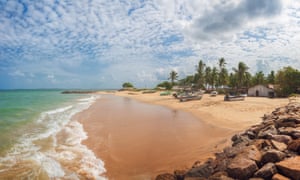
(The featured image at the top is that of Thalpe beach)

A Bouquet to our National Hospital

October 24th, 2018

Garvin Karunaratne

On 23 rd August 2018,  a relation of mine who was unconscious was discharged from a leading Private Hospital in Colombo., because the son and daughter  could no more pay hospital bills They had paid three million rupees to the Hospital  for 17 days stay and had no more funds. Until then they had often graced Private Hospitals.  We  in London were very sad. Everyone expected the worst. The  patient who was not unconscious when admitted, said to be suffering from Viral Flue, diagnosed later  as pneumonia,  even had a bout of heart failure and finally became unconscious.

They contacted the National Hospital in Colombo and explained their plight.  They had no other alternative. They were told that they were welcome to come in

At the National Hospital, the unconscious patient  was admitted to the Intensive Care Unit.. The doctors were very kind and prompt.  ..The doctors and nurses to a man nursed the patient. In a few days the patient recognized the son and daughter. Evidently the patient was out of danger and we in London rejoiced.  The Hospital  brought her around in  twenty six days all due to the care offered by the doctors, consultants and nurses. Consultants Bilshan and Manoj deserve to be congratulated for working beyond  the call of their duty caring for our dear relatives.

The patient was conscious, could talk sensibly and it was great to talk to her over the phone once again.

The patient was released, and asked to gain admission to the Rehabilitation Hospital at Ragama for physiotherapy.

However, though the National Hospital has been taken care of,  the Rehabilitation Center at Ragama where she was next  due to have been admitted for physiotherapy had seen bad days. She has been asked to come as an outpatient on four days a week. There are only some thirteen beds for women and this is all due to the fact that a building is yet under construction. I am told there are some fifty or so women patients who need close attention who have had to reside in nearby homes and become day patients.

It is hoped that the Ministry of Health will take some action- at least to get a temporary donation of a tent from the Army, where more beds can be accommodated till the buildings can be constructed. I hope this request will reach the ears of our Minister or our Hon President.

Many thanks to our National Hospital and its able staff.

Garvin Karunaratne

24/10/18

ජනාධිපති ඝාතන කුමන්ත‍්‍රණය පසුපස ඇමති සරත් ෆොන්සේකා.. නාමල් කුමාරගෙන් රහස් පොලීසියට රහස් ප‍්‍රකාශයක්…

October 24th, 2018

 lanka C news

නියෝජ්‍ය පොලිස්පති නාලක සිල්වා සමගින් දේශපාලනික වශයෙන් ලගම හිතවත්කමක් පවත්වන පුද්ගලයා ඇමති සරත් ෆොන්සේකා යයි තමන් අපරාධ පරීක්‍ෂණ දෙපාර්තමේන්තුවට ලබා දුන් මුල් කට උත්තරයේ සදහන් කරන ලද බව දුෂණ විරෝධී බලකායේ අධ්‍යක්‍ෂ නාමල් කුමාර මහතා සදහන් කරයි.

අද වන විට සරත් ෆොන්සේකා මහතා කරන ප‍්‍රකාශයන්ගෙන් එම ප‍්‍රකාශයේ සත්‍යතාවය තහවුරු වෙමින් ඇතැයිද ඔහු සදහන් කරයි.

‘මේ කේස් එකේ පිටිපස්සේ ඉන්නේ සරත් ෆොන්සේකා මහතා සහ තවත් පිරිසක්’ යයිද ඔහු සදහන් කලේ විශේෂ මාධ්‍ය හමුවක් පවත්වමිනි.

ජනාධිපතිවරයා හා හිටපු ආරක්‍ෂක ලේකම්වරයා ඝාතනය කිරීමට නියෝජ්‍ය පොලිස්පති නාලකද සිල්වා කුමන්ත‍්‍රණය කලේ යයි නාමල් කුමාර මහතා විසින් කරන ලද චෝදනාවක් මත ඔහු විසින් රහස් පොලීසියට ප‍්‍රකාශ ලබා දී ඇත.

ඔහුගේ අද මාධ්‍ය හමුව අනුව ජනාධිපති හා හිටපු ආරක්‍ෂක ලේකම් ඝාතන කුමන්ත‍්‍රණය පසුපස සිටින්නේ සරත් ෆොන්සේකා ඇමතිවරයා හා තවත් පිරිසක් යයි කියැවෙයි.

Is compensating terrorists justifiable? – Gotabaya

October 24th, 2018

Former Defense Secretary Gotabaya Rajapaksa questions the whether it is justifiable to compensate LTTE terrorists.

He mentioned this to the media following an event held in Colombo. The event was attended by former President Mahinda Rajapaksa as well.

Former Defense Secretary points out that when compensating missing persons, the government will have to compensate a suicide bomber who also had disappeared.

Sri Lanka arrests navy officer over wartime murders

October 24th, 2018

 Courtesy Mail Online 

Police said the victims, both from the Tamil minority group, were kidnapped by naval officers and later killed despite their families paying a ransom for their release

Sri Lankan police arrested and charged a senior naval officer Wednesday for the abduction and murder of two Tamil businessmen during the final stages of the island’s brutal civil war.

Lieutenant Commander K. A. Dayananda was taken before a magistrate and remanded in custody over the double murder, which investigators believe took place in January 2009.

Police said the victims, both from the Tamil minority group, were kidnapped by naval officers and later killed despite their families paying a ransom for their release

Police said the victims, both from the Tamil minority group, were kidnapped by naval officers and later killed despite their families paying a ransom for their release.

“The vehicle of the two victims was taken to Welisara navy camp on the pretext that it contained a bomb,” a police official told AFP.

“Later, they dismantled the vehicle and sold the parts after having killed the two men.”

Sri Lanka is investigating the disappearance and presumed murder of 11 young men between 2008 and 2009 in the dying days of the 37-year civil war between government forces and Tamil separatists.

Several navy officers are currently on bail in connection with the alleged disappearances. The missing men are believed to have been murdered before the brutal conflict ended in 2009.

Senior military figures and close associates of former strongman president Mahinda Rajapakse have been accused of murders, cover-ups and extortion during his decade of rule.

Several intelligence officers have also been released on bail for charges related to the assassination of a prominent newspaper editor and attacks on other journalists and dissidents.

The January 2009 killing of journalist Lasantha Wickrematunga, a fierce critic of then-president Rajapakse, sparked international outcry and shone a light on human rights violations in Sri Lanka.

Wickrematunga had accused Rajapakse’s defence secretary and brother Gotabhaya of taking kickbacks in arms purchases, and was due to testify in court when he was murdered.

Gotabhaya Rajapakse has denied running death squads.

The Rajapakses are under investigation for large-scale financial fraud and murder during Mahinda’s presidency, which ended in 2015.

Mahavamsa : 2500-year history of  heroic Sinhalay people mellowed by humanity

October 24th, 2018

By Rohana R. Wasala Courtesy: The Daily Mirror

The  Mahavamsa or The Great Chronicle of Ceylon (to use the title of the English translation by Wilhelm Geiger of the ancient classic) is a book of history in the form of a poem in the Pali language composed by a Bhikkhu named Mahanama at Anuradhapura around the latter part of the 5th or the beginning of the 6th century CE (Common Era). This work was commissioned by King Dhatusena (c. 460 -478 CE). Professor Wilhelm Geiger translated into German his own revised critical edition of the Pali original, which had been published in 1908. He added an introduction, appendices and notes to the German version. Mabel Haynes Bode put Geiger’s German translation into English. Professor Geiger then revised Mrs Bode’s English translation. Geiger’s  Mahavamsa  is in prose. Its first edition, prepared by T.W.Rhys Davids , was published in 1912.

There are several other translations of the Mahavamsa produced before and after this date by  local and foreign scholars such as George Turnour (1837), L.C. Wijesinghe (1889), and Ananda W.P. Guruge (1989), to name some of them. My personal opinion as a lay reader is that the local Sinhalese translators of the book are better guides to its meaning than European oriental scholars because of the formers’ natural cultural affinity with the work and their intuitive attunement to its broad communicative frequency; and it is a fact that visiting European scholars were automatically inclined to consider themselves as being in the intellectual vanguard of those colonizing powers, who hypocritically believed that they were bearing the so-called ‘white man’s burden’ of forcing European civilizational values on them. Naturally, such scholars were reluctant to acknowledge the actual cultural superiority of the Sinhalese that they wanted to ‘civilize’. However, among them Geiger could be an exception. He betrays little evidence of any ‘orientalist’ prejudice (defined by Edward Said in his 1978 book ‘Orientalism’) against the Sinhalese whose ancient cultural-historical classic he tried to interpret.

It was fortunate for us that Western scholars such as Geiger and Rhys Davids tried to understand our history and culture reasonably free from preconceived notions of their own superiority over the ‘natives’ usually prevalent among imperialistic Europeans at that time. Apart from this, the Geiger translation is still the best known and the most commonly used one, particularly among foreign scholars interested in the island history; it is probably the most authentic English version of  The Great Chronicle done by any non-Sinhalese translator. This is the justification of my choice of the Geiger translation as the main source of this brief essay on the monumental work from a nonacademic ordinary reader’s point of view.

The Mahavamsa  is a cherished symbol of the national identity of the Sinhalese, the builders of the unique two and a half millennia old island civilization. Sri Lanka (known in history by an array of different names such as Sivhela/Sihela/Sinhale, Serendib/Swarnadipa, Rathnadeepa, etc) abounds in the ruins of ancient monuments and also restored edifices that bear testimony to that unbroken island-wide historical achievement. There is no evidence of any other independent parallel civilization having evolved within its boundaries. The Mahavamsa gives the Sinhalese a feeling of continuity of nationhood. The danger of the Mahavamsa becoming an unnecessary casualty of ethnic politics is real, but such a fate is something unthinkable for us as a race with a distinct history.

It is criticized by some because it does not  provide a historical precedent that might support  their unjust political claims. Some others treat it with contempt claiming that it divides the Sri Lankans. The truth is that the Mahavamsa refers to the close links that existed between Lanka and India in propitious circumstances in early times, which should actually unite rather than divide different races. Then there are  those  ‘enlightened’ individuals who just cannot  tolerate even the mention of the legitimate claims of the Sinhalese! They are racists who, nevertheless, have no qualms about sticking the label on their victims, the Sinhalese.

The Mahavamsa is a serious book of history, though it was composed at least one thousand five hundred years before modern concepts of historiography evolved. Bhikkhu Mahanama, the author, at the very opening relates himself to the existing historical literature and popular traditions thus: “That (Mahavamsa) which was compiled by the ancient (sages) was here too long drawn out and there too closely knit; and contained many repetitions. Attend ye now to this (Mahavamsa) that is free from such faults, easy to understand and remember, arousing serene joy and emotion and handed down (to us) by tradition, – (attend ye to it) while that ye call up serene joy and emotion (in you) at passages that awaken serene joy and emotion.” Mahanama’s Mahavamsa comes to a conclusion in Chapter 37, which deals with the reign of King Mahasena (c. 325 – 352 CE).

The subject of the Mahavamsa  is  the early phase of the history of the Sinhalese race and that of the establishment of the Buddhist faith in the island. But the Mahavamsa was later continued up to the end of the 18th century by different authors at different times (in the form of the Culavamsa) The Culavamsa  opens in the middle of the 37th chapter where the earlier Mahavamsa came to an abrupt end, and completes the 101th chapter which ends thus: “After they had brought the King, the torturer of his people, to the opposite coast the Ingirisi by name seized the whole kingdom” (i.e. the British took possession of the whole island with the capture of the last king of Sinhale Sri Wickrema Rajasinghe in 1815). The Mahavamsa  has been updated since, and now comprises the whole history of the island to date. So the sixth century Mahavamsa covers roughly the first eight hundred years of the island  civilization since the legendary Vijaya, which period ended about one hundred and fifty years before the reconstruction of its history by Mahanama.

It is appropriate to consider against this background where we are at present in our understanding of our history as a nation (a group of people occupying a specific geographical space, speaking a unique language and generally identified with one spiritual tradition). Today, we have a more national minded generation of local archaeologists and historiographers than before who are free from the enslaving influence of orientalist prejudices of the past, and who are inspired by a sense of  ‘apekame’ (lit. usness) or national pride. Their researches are breaking new ground in the field. For example, the findings of foreign and locally trained archaeologists Drs Shiran Deraniyagala (e.g., relicts of a pre-Vijayan civilization found in excavations in the inner city of Anuradhapura) and Raj Somadeva (objects dug up and rock inscriptions deciphered at many places across the island including Kuragala, Welmeethalawa, and Kegalle, and a gold sheet writing discovered at Vallipuram in Jaffna, for instance) prove beyond doubt that the Sinhalese have a much longer and a more glorious history than that celebrated in the Mahavamsa. Such successful challenges to the authority of the Mahavamsa represent a tribute to its avowed commitment to the elimination of defects found in earlier treatises such as the Dipawansa, which it uses as its sources.

The pre-Vijayan culture predates Vijaya by at least three centuries. Somadeva’s findings (pieces of pottery, bone ornaments, iron implements, clay receptacles found at burial/cremation sites, etc which are signs of a sophisticated culture) have been determined to be over 4350 years through radiocarbon dating. The important thing to mark here is that this culture was independent of any foreign (that is, Indian or other) influence, unlike the Sinhala Buddhist civilization historicized by the Mahavamsa narrative. The brightening prospects of revealing these more ancient historical roots of the Sinhalese (according to Somadeva these could be as old as 6000 years) should not be seen as an emergent threat to the status of the Mahavamsa as the incomparable national monument it is. It only proves that the Sinhalese were heir to a much older, and certainly more advanced civilization than the Mahavamsa author dared to credit them with. The unlocking of the ancient secrets of our history through the use of technologies that are the most advanced to date will be in the interest of not only the Sinhalese and the minorities that make Sri Lanka their common home, but also of the whole of humanity.

The grand purpose of the Mahavamsa author’s whole endeavour was, after all, to compile this history “…for the serene joy and emotion of the pious”, (as the less than ideal English rendering of the original Pali phrase tells us). The book is intended to generate ‘serene joy and emotion’ in the pious. Each chapter  of the Mahavamsa and its sequel the Culavamsa ends with the postscript “Here ends the … chapter, called ‘…….’, in the Mahavamsa, compiled for the serene joy and emotion  of the pious”. (Prof. Geiger glosses the two terms pasada (serene joy) and samvega (emotion) thus: ‘Pasada signifies the feeling of blissfulness, joy and satisfaction in the doctrine of the Buddha, samvega the feeling of horror and recoil from the world and its misery’. This historic monument must be cherished for its humanity as much as for its value as a historical document. It is this noble culture of humanity inspired by Theravada Buddhism that made Sri Lanka a secure home for diverse minorities living in harmony with the majority Sinhalese. Suppressing it is not the way to bring about communal harmony in the land.

Psychological Ailment of Tamil Politicians

October 24th, 2018

Kanthar Balanathan

On independence, GG Ponnambalam became a minister in the Ceylon government. It is to be said that GGP earned his income through his excellent practice in criminal law. SJVC formed the Federal Party joined with several people. For SJVC funds flowed from Malaysia his mother country where he was born. Once they become politicians somehow, they tend to introduce malpractices to earn money. Poor voters without realizing the consequences help people to get jobs, through which Tamil politicians earn money. The author is a Tamil from Vaddukoddai and a nephew of a great medical expert who knew the malpractices of the Tamil politicians. Tamils right from a coolie to the minister had no obligation to be a SriLankan patriot. At KKS cement Officers misused corporation vehicles, tradesmen stole lots of technical items, and most of them were recycled through shops in Jaffna. Tamil Storekeepers were responsible for these corrupt practices. Right from electric bulbs to cables, bearings, and relays etc. were recycled through shops in Jaffna. Executives who try to expose these corrupt practices were threatened by the Coolie gangsters. Therefore, most of Tamil community was/is a corrupt race. It is definite that Prabakaran siphoned explosives from the magazine at cement for his use. Any executive who talks about this was told that it is not his duty to catch a thief and further, it is government property. LTTE damaged transmission towers to make use of the steel and the ancillaries. This is the true history of Tamils in the North.

My intent is to bring out all of the hidden characters of the Tamils.

Ananthi wanted to be a minister. What is the intention? She knows that it will pave the way to accrue wealth. Going through the media readers: please visit this page. Ref: (i) https://www.jvpnews.com/srilanka/04/168361,  (ii) http://www.newjaffna.com/news/14376. If Ananthi wanted to serve the people she could do so without being a minister.

It is a presumption to state that any minister earns money through illegal ways. Ananthi was sworn in on the 29th June 2017. What did she sacrifice for the Tamils? In my view – NONE. Sasitharan AKN Elilan was to be assassinated on the order of V. Prabakaran and he (Sasitharan) went shrouded before the war. Ananthi is/was his wife.

In October 2018 Ananthi has floated a political party. It is called: (ஈழத்தமிழர் சுயாட்சிக் கழகம்) Well the basic translation is: Eelam Tamils Autonomous Corporation. Ananthi; where is this Eelam? Is it buried under the Indian Ocean where your paternal fathers and mothers are? Come to the real world. Do you know about INCARS, red Indians etc. They were the power of the world several thousands of years ago. They all speak English now and live in Americas.the  You  are no different to the red Indians. Some resemblance of the R. Indians. Read the history of Peru, Chilli, Venus vela etc in the S. Americas. Some of you are mentals going in circles shouting Eelam. Where do you think it will take you and your mental mates? CVV is another mental case. Wonder how he got his CJ position?

Well, we knew from the natural characteristics of the Tamils, that when CVV appointed Ananthi as a minister, it was a conspiracy planned to form a party in due course and float funds for such activity. First, he blew up the political situation by floating a congress. Appointed you as a minister and forced you to form a party. The other person is the Terrorist brother, K. Sarveswaran as the minister for education, where money can be siphoned from people. Now Ananthi will be the Secretary-General of ESK (it can only laugh off) and CVV will suck Ananthi and at some stage, it will collapse or merge with TNA. Tamils in the North should understand this strategy.

The main issue here is the character of CV Vigneswaran. How did CVV get his Chief Justice position? Is it by intelligence and/or competency in Law? Or being a relation of Arunachalam? Can he be compared to the former Chief Justice Sriskantharajah? It looks like in his old age, he is acting as if he is suffering from the psychological or bipolar disorder. He has no intention of engaging people in economic and technological development but only accrue power and authority. The main issue here could be attributed to the Tamil Diaspora in the UK forcing him to do things which are outside the norm.

Mr. CVV. A question was thrown to you: What is your IQ score?

To Ananthi- Do you know what IQ score means, and if so, what is your IQ level. Please explain: What has your so-called husband Sasitharan (Elilan)done to the Tamil people?

(Do not assume that IQ means your political crudeness, wickedness or cunningness)

Mr. CVV: Please understand that building a Buddhist temple in the North is the democratic right of the citizens of SL. So many Tamils in Tamil Nadu are Buddhists and in Jaffna will like to pray Buddha.

Basically, with the current illegitimate Opposition and government, you are able to maneuver your way in funding your coffer.

Karuna is able to stand himself as the fifth richest person in SL. Ref: https://www.jvpnews.com/politics/04/163049

Well, the question is he was the commandant for the Eastern province for the LTTE. Apart from that position, is he an engineer, doctor, Architect, or did he do business to earn such 1.7 million US$? The fellow cannot even speak English. He is a murderer and has catchers all over the world with his Ferric Oxide coated money.

The fun part is people think he is an excellent/good politician. The idiocy should be passed onto  Ranil Wickramasinghe and his team to have brought such a killer into politics without realizing the consequences of such an act. The downfall of MR was due to Mervin Silva, Vaas Gunawardane and some untrustworthy people. The downfall of Sirisena and Ranil will be as a consequence of appointing TNA as the opposition and giving into them. Ie being submissive to the TNA.

In the real world is this true governance? It looks like some villagers with lack of education, and most of all lack of intelligence governing a country. All these political imbecilic clowns in SL, visit foreign countries. Why cannot these wags study the system there? Maybe they are governing imbecilic foolish public. If the Jaffna man is supporting Ananthi and CVV, it cannot be ruled out that the public are fools and illiterates.

You cannot be compared to MA Sumanthiran on any functional cerebral capabilities. MAS is a much superior intellect than any of the NPC politicians. Both must read on political science.

The NPC, on the whole, is manned by such people.

The Sinhala politicians are not better, but corrupt unpatriotic foes to the country.

පළාත් සභා ඡන්ද විමසීම හැකි ඉක්මනින් පවත්වන ලෙස ඉල්ලා ප්‍රාදේශිය සභා, නගර සභා, මහ නගර සභාවන්හි යෝජනා සම්මත කර ගන්නා ලෙස කැෆේ සංවිධානය ගරු මන්ත්‍රීවරුන්ගෙන් ඉල්ලයි. 

October 24th, 2018

මාධ්‍ය ඒකකය කැෆේ සංවිධානය 

ආණ්ඩුකාරවරුන්ගේ පාලනයට යටතට පත් කොට ඇති ලංකාවේ පළාත් සභා 9 න් 6 ක හැකි ඉක්මනින් පළාත් සභා ඡන්දය පවත්වන ලෙස ඉල්ලා යෝජනා සම්මත කොට ගන්නා ලෙස කැෆේ සංවිධානය අද සබරගමුව, උතුරු මැද, නැගෙනහිර, වයඹ, මධ්‍ය හා උතුරු පළාත් හි සියළුම පළාත් පාලන ආයතන නියෝජිතවරුන්ගෙන් විවෘත ඉල්ලීමක් සිදු කළේය. 

ආණ්ඩුකාර පාලනය යටතේ පළාත් සභා පැවතීම ඒකාධිපති ව්‍යවහාරයක් බවත්,  හැකි ඉක්මනින් පළාත් සභා ඡන්දය පවත්වා මහජන නියෝජිතයින්ගෙන් සමන්විත පළාත් සභා ස්ථාපනය කිරීමට කටයුතු කරන ලෙස ත්, කැෆේ සංවිධානය යොමු කළ ලිපියේ දැක්වේ.  

එම ලිපිය මේ සමග අමුණා ඇත.>
2018.10.24     

ගරු සභාපතිතුමනි/සභාපතිතුමියනි,

ගරු විපක්ෂනායකවරුනි,

ගරු මන්ත්‍රීතුමනි/මන්ත්‍රීතුමියනි,

 පළාත් සභා ඡන්ද විමසීම පවත්වන ලෙස යෝජනාවක් සම්මත කර ගන්නා ලෙස ඉල්ලීමයි

ලංකාවේ පළාත් සභා 9 න් 6 ක් මේ වන විට මහජන නියෝජිතයින් නොමැතිව ආණ්ඩුකාර/නිලධාරි පාලනයට යටත් කොට ඇති අතර, ඔබගේ පළාත් පාලන ආයතනයේ අධීක්ෂණ කාර්යය ද පැවරී ඇත්තේ එවැනි  කාලය ඉකුත් වූ පළාත් සභාවකට බව ඔබ හොදින් දනී.  

මැතිවරණ කොමිෂන් සභාවේ ගරු සභාපති මහින්ද දේශප්‍රිය මහතා, ඉතා නිවැරදිව ප්‍ර‍කාශ කොට ඇති පරිදි ආණ්ඩුකාර/නිලධාරි පාලනය ඒකාධිපති පාලනයකි.  ඔබ ගේ පලාත් පාලනය ආයතනය ප්‍රජාතන්ත්‍ර‍වාදී නොවන ඒකාධිපති පාලනයක අධීක්ෂණය යටතේ පැවතීම කුමන අයුරකින් හෝ යහපත් ප්‍ර‍ජාතන්ත්‍ර‍වාදී ව්‍යවහාරයක් වන්නේ නැත.

අනෙක් අතට, පළාත් පාලන නියෝජිතයින් ලෙස පුද්ගලිකව ඔබට දේශපාලන ඉනිමගෙහි ඉහළට නැග යාම සදහා වන අවස්ථාව පළාත් සභා ඡන්දය කල් දැමීම තුල ඔබ සියළු දෙනාට අහිමි කොට තිබේ.  පලාත් පාලන ආයතනයන්ට මෙන්ම අනාගත පළාත් සභා ඡන්දයක දී, නාම යෝජනා සැකසීමේ දී කාන්තා අපේක්ෂිකාවන් ගේ නියෝජනය අනිවාර්ය කර ඇත.  ඔබ පලාත් පාලන ආයතනයේ නියෝජිතවරින් ලෙස ප්‍ර‍ශස්ත ලෙස කටයුතු කරන  කරන ගරු මන්ත්‍රීවරියන්ට, පළාත් මට්ටමින් දේශපාලනයට පිවිසීමේ අවස්ථාව ද ඡන්ද කල් දැමීම තුල අහිමි කොට ඇත.

පළාත් සභාවේ  විෂය කේෂ්ත්‍ර‍ට පළාත් පාලන ඇතුලත් ය.  මහජන නියෝජිතයින් විසින් පාලනය වන පළාත් සභාව දී ඔබගේ පලාත් පාලන ආයතනය සම්බන්ධයෙන් තීරණ ගැනීමේ ක්‍ර‍මවේදය වඩා ප්‍ර‍ජාතන්ත්‍ර‍වාදී වේ.  එහ සභාව නියෝජනය කරන දේශපාලන පක්ෂ සාකච්ඡාවට බදුන් කොට, විවාද කර එකගතාවන් ඇති කර සිදු කරන කාර්යයකි.  මහජන නියෝජිතයින් නොමැති පළාත් සභාවක එවැනි සමබර, තීරණ ගැනීමේ ක්‍රිමවේදයක් නොවන අතර පුද්ගලයෙකු හෝ කිහිප දෙනෙකුගේ අත්තනෝමතක තීරණයක් ගේ ගොදුරු බවට ඔබගේ ප්‍රාදේශීය සභාව, නගර සභාව, මහ නගර සභාව පත්විය හැකිය. විශේෂයෙන්ම ජාතික හෝ ප්‍රාදේශීය දේශපාලන නායකත්වයේ අවශ්‍යතාව මත පලාත් පාලන අයතනයන් හි නියෝජිතයින්, පළාත් පාලන ආයතනය පවා පීඩාවට ලක් විය හැකිය.  

ගරු මහජන නියෝජිතවරුනි,

නිදහස් හා සාධාරණ මැතිවරණ වෙනුවෙන් සක්‍රීය කාර්ය භාරයක් ඉටු කරන කැෆේ සංවිධානය ඔබතුමන්ලාගෙන්/ඔබතුමියලාගෙන් ඉතා ගෞරවයෙන් ඉල්ලා සිටින්නේ,

‘‘පළාත් සභා ඡන්ද විමසීම හැකි ඉක්මනින් පවත්වන ලෙසට ඔබගේ පලාත් පාලන ආයතනය විසින් ඉදිරි මහා සභා රැස්වීමේ දී යෝජනාවක් සම්මත කර ගන්නා ලෙසත්, ඒ බව, පළාත් ආණ්ඩුකාරවරුන්, ගරු පළාත් සභා සහ පළාත් පාලන අමාත්‍යවරයා, ගරු අග්‍රාමාත්‍යතුමා, ගරු ජනාධිපතිතුමා වෙත දැනුම්දීම සදහා සුදුසු පියවර ගන්නා ලෙසත්‘‘ ය.

දේශපාලන පක්ෂ භේදයකින් තොරව මෙවැනි යෝජනාවක් ඒකච්ඡන්දයෙන් ඔබගේ පලාත් පාලනය ආයතනය තුල සම්මතවීමට ඇති ඉඩ කඩ පිළිබද කැෆේ සංවිධානය දැඩි විශ්වාසය පළ කරයි. එසේ නොවේ නම්, පළාත් සභා ඡන්ද විමසීම පැවැත්වීමට විරෝධය පළ කරන දේශපාලන පක්ෂ සහ කණ්ඩායම් මෙම යෝජනාව මගින් අනාවරණය කරනු ඇත. එම ප්‍ර‍ජාතන්ත්‍ර‍වාදී මහජන නියෝජනයක් සහිත පළාත් සභාවක් ස්ථාපනය කිරීම සදහා අතිශයින් වැදගත් වනු ඇත. 

එමෙන්ම මෙම යෝජනාව ඉදිරිපත් කිරීම සදහා අදහස් කරන ගරු මන්ත්‍රීතුමන්ලා, මන්ත්‍රීතුමියන්ලාට යම් තාක්ෂණික උපදේශයක්, සහායක් අවශ්‍ය නම් එය ලබා දීමට ද කැෆේ සංවිධානය ඉතාමත් කැමැත්තෙන් සිටින බව ද, එවැනි සහායක් අවශ්‍ය නම් පුද්ගලිකවම 0777791225 දුරකතන අංකයෙන් මා අමතන ලෙස ද ඉල්ලමි.

නිදහස් හා සාධාරණ මැතිවරණයක් මගින් තෝරාපත් කර ගන්නා මහජන නියෝජිතයින්ගෙන් සමන්විත පළාත් සභාවක් ස්ථාපනය කිරීම සදහා ඔබගෙන් ලැබෙන දිරිගැන්වීම, සහාය  ඉතාමත් අගය කොට සලකමි.

මෙයට විශ්වාසී,


කීර්ති තෙන්නකෝන්

විධායක අධ්‍යක්ෂ/කැෆේ සංවිධානය


  1. පළාත් පාලන ආයතනයන් හි ලේකම්වරුන් වෙත – කරුණාකර මෙම ලිපිය ඔබ පළාත් පාලන ආයතනයේ සියළුම මහජන නියෝජිතවරුන්/නියෝජිතවරින් වෙත ලබාදීමට කටයුතු කරන ලෙස කාරුණිකව ඉල්ලමි.


Spousal battery

October 24th, 2018

Editorial Courtesy The Island

Thursday 25th October, 2018

The UNP-SLFP political marriage is on the rocks. They are bashing each other in public. What they are doing to each other may be likened to spousal battery, as it were. Internal problems of the yahapalana coalition have come to a head with the UNP and SLFP leaders clashing at Cabinet meetings. President Maithripala Sirisena has gone to the extent of calling upon the public to elect an honest politician as the next PM. Not to be outdone, the UNP undermines the President’s authority at every turn.

President Sirisena has directed his ire at the UNP apparently for two reasons. He is trying to assert himself vis-a-vis an aggressive UNP. It is also possible that he has chosen to take on the UNP to prevent a further erosion of the SLFP’s support base as his party’s rank and file are not well disposed towards the yahapalana coalition.

Sirisena succeeded in justifying his decision to join forces with the UNP in 2014 to secure the presidency. He praised the UNP to high heaven at Sirikotha, where he received a warm welcome and opened an election office, in Nov. 2014. Now, he is preparing the ground for deserting the UNP and taking swipes at it. He has gone on record as saying, at a recent public function, that today’s UNP is a far cry from the party founded by the late D. S. Senanayake. Nobody will buy into his claim that the UNP is not what he thought it to be, at the last presidential election. He, as the SLFP General Secretary, carried out numerous election campaigns against the UNP, which the SLFP used to vilify.

The President’s current view of the UNP is at variance with the sentiments he expressed in his famous Sirikotha speech in 2014; he spoke very highly of the founders of the UNP as well as its current leaders.

If Sirisena considers the UNP so bad, then it becomes clear that it was out of sheer expediency that he enabled that party to capture power in Jan. 2015 by sacking a strong government led by the SLFP, founded by the late S. W. R. D. Bandaranaike. He also engineered the SLFP-led UPFA’s defeat at a general election about seven months later so that the UNP could win. Under his stewardship, the SLFP coalesced with the UNP to form national governments twice.

President Sirisena must have realised that the UNP was as corrupt as any other political party when the first bond scam was committed a few weeks after the formation of the new UNP-SLFP government in Jan. 2015. The COPE (Committee on Public Enterprises) headed by D. E. W. Gunasekera revealed that scam, but the President dissolved Parliament before it was taken up for debate lest it should ruin the UNP’s chances of winning the August 2015 general election. He admitted, in an address to the nation, in the run-up to the polls that he had been aware of the bond scam. If his commitment to good governance had been genuine he should have allowed Parliament to debate the COPE report so that the people would be able to make an informed decision at the parliamentary polls. The Attorney General’s (AG’s) Department was prevented from prosecuting the perpetrators of the first bond scam and a file recommending legal action shelved. The file (No: C/187/161/2015) containing recommendations for criminal action was later turned into a confidential document (N0: CF/08/2015), recommending civil action and made to disappear.

If Parliament had debated the COPE report on the first bond scam and the AG’s Department had filed criminal action against the racketeers, the second bond racket would not have taken place in 2016; most of all, the then Central Bank Governor Arjuna Mahendran would not have been able to flee the country.

President Sirisena and the SLFP cannot absolve themselves of the responsibility for the yahapalana government’s malpractices which are legion, by bashing the UNP.

Singapore yet to respond to Lanka’s petition Extradition of Mahendran

October 24th, 2018

 By Shamindra Ferdinando Courtesy The Island

  • FM hides behind non-existing clause in the law
  •  Udayanga’s case coming up in Dubai on Oct. 29

The Foreign Ministry, on Tuesday (Oct. 23), declined to disclose information pertaining to ongoing efforts to extradite the former Governor of the Central Bank of Sri Lanka (CBSL) Arjuna Mahendran and former Ambassador in Moscow Udayanga Weeratunga, a non-career diplomat now in the custody of United Arab Emirates (UAE).

Senior Director General (Legal) C. A. H. M. Wijeratne, in his capacity as the Information Officer of the Ministry, said that they weren’t in a position to divulge information at this stage under Article 5 of the RTI (Right to Information Act) as the investigations were ongoing.

article_image

Wijeratne said so in response to the following queries The Island submitted to the Foreign Ministry on Oct 16, 2018 seeking information under RTI Act No 12 of 2016: The Attorney General’s Department recently made representations to Singapore seeking Singaporean Mahendran’s extradition over his alleged involvement in treasury bond scams perpetrated in 2015 and 2016.

The Island understands the Defence Ministry handed over the relevant extradition papers to the Foreign Ministry for onward transfer. The following are the questions (1) When did the Foreign Ministry receive extradition papers from the Defence Ministry (2)When did the Foreign Ministry send extradition papers to Sri Lankan embassy in Singapore (3) When did Sri Lankan embassy in Singapore hand over extradition papers to Singapore Foreign Ministry/relevant authorities (4) Did Singapore respond to Sri Lanka’s request?

In respect of Udayanga Weeratunga’s case now heard in the Federal Court of the UAE in Dubai

(1) Did Sri Lanka handover extradition papers in respect of former Ambassador to Russia? (2) What is the status of the proceedings?

Well informed sources told The Island that Weeratunga’s extradition case would be taken up next Monday (Oct.29) in the Federal Court of the UAE sitting in Abu Dhabi. Sri Lanka made an abortive bid to take charge of Weeratunga in early February this year soon after Weeratunga’s detention at the Dubai airport while in transit to the United States. Sources said that Sri Lanka had no option but to initiate costly legal proceedings there to secure Weeratunga’s custody.

Weeratunga, a close relative of former President Mahinda Rajapaksa, is wanted in connection with ongoing investigations into the acquisition of four MiG 27 fighter jets from Ukrainian arms company ‘Ukrinmash’ in 2006 and overhauling of four MiGs.

The Fort Magistrate issued summons on Weeratunga on July 15, 2016.

Sources said yesterday that Singapore hadn’t so far responded to the extradition papers submitted to the competent authorities there, in respect of Mahendran.

Legal sources told The Island that requests made in terms of the RTI Act No 12 of 2016 couldn’t be simply rejected citing Article 5 of the RTI Act. Sources said that the Foreign Ministry had referred to a non-existing Article 5 of the RTI Act instead of Section 5 (1) that dealt with the denial of access to information.

Responding to another query, sources said that information couldn’t be denied by simply citing the relevant section of the Act. In fact, The Island could now appeal to the Foreign Ministry seeking the specific reason the required information was denied. Sources said that the RTI Act provided for denial of information on the basis of 22 specific reasons and the person seeking disclosure had the right to know why his/her request couldn’t be granted.

Sources said that the RTI Commission intervention could be obtained in case the Foreign Ministry turned down the appeal or fail to respond within the stipulated 21 days.

Mahendran left the country close on the heels of Presidential Commission of Inquiry headed by Justice K.T. Chitrasiri handing over its report to President Maithripala Sirisena in late Dec 2017.

The Criminal Investigation Department (CID) arrested Mahendran’s son-in-law and owner of the Perpetual Treasuries Limited (PTL) Arjuna Aloysius and its CEO Kasun Palisena in early Feb this year in connection with treasury bond scams.

Sri Lanka still to hit on a sensible India policy

October 24th, 2018

Courtesy The Island

Prime Minister Ranil Wickremesinghe chats with Indian premier Narendra Modi during a meeting at Hyderabad House in New Delhi . Wickremesinghe was on a three-day official visit to the Indian capital.

It ought to be quite evident from the most recent controversies in Sri Lanka’s relations with India that the former is continuing to struggle to hit on an appropriate and sensible India policy. Indo-Sri Lanka ties have had their ups and downs over the decades but whether Sri Lanka has ever formulated and practised a far-seeing India policy since 1948 that would protect the legitimate interests of both countries is open to question. The proof of this is the recent discomfiture suffered by Sri Lanka over some completely unwarranted local comments alleging contemplated hostile action towards this country’s President by India’s Research and Analysis Wing.

The Sri Lankan government owes it to this country to lay bare the factual position in this latest controversy, considering its grave nature. What local investigations should come clean on is whether the Sri Lankan President ever accused RAW of attempting to assassinate him. If not, who is responsible for the canard? Needless to say, those responsible for this falsehood should be brought to justice, as the next step. Hopefully, the ‘air will be cleared’ on this unsettling development in this country’s ties with India before long.

article_image

There has been this huge drawback in Sri Lanka’s relations with India of Sri Lanka failing consistently to work in a friendly and constructive spirit with India. It is in this country’s best interests for it to be on the friendliest terms with India. This ought to be a cardinal core value in our India policy. It cannot be otherwise, because, in that case, Sri Lanka will be undermining her national interest.

Considering the highly destabilizing controversies that rock our relations with India every now and then, it ought to be clear that those sections that matter in Sri Lanka are yet to think through this country’s India policy comprehensively and clearly. That damaging rumours do originate in Sri Lanka concerning India in prominent local political circles is proof that important sections of this country’s polity are yet to place optimum value on this country maintaining trouble-free, cordial relations with India, in consideration of the pivotal importance of such ties to Sri Lanka’s national interest.

It is vitally important that local opinion do not in any way permit short term political interests to get in the way and damage this country’s relations with India. If this is continuing to happen, we have here conclusive evidence that thinking in depth on foreign policy issues is not among this country’s strong points. It seems as if talking and acting impulsively comes quite naturally to most local politicians and ‘opinion makers’. It ought to be clear that such proclivities are not in this country’s best interests.

The onus is on Sri Lanka to ensure that she is on the most cordial terms with India. This has to be a dominant strand of our regional policy in general and our India policy in particular. It cannot be otherwise because ‘getting along’ with India is a ‘must’ on account of Sri Lanka’s geographical location in particular. There is, obviously, nothing we could do about this hard reality that would never ‘go away’. It does not follow that Sri Lanka must be ‘subservient’ in any way to India but it is best that the closest neighbours get along on the friendliest of terms. One does not need to be a foreign policy expert to realize this. Common sense would suffice.

There was a time when security was a particularly sensitive issue in India-Sri Lanka relations. Security and defence continue to be principal factors in our ties with India but we have come a considerable distance from those times when the Panikkar Doctrine of Indian origin was a hotly debated topic in Indo-Lanka ties. That is, from that ‘discourse’ some years back when the idea that Sri Lanka comes within the Southern ‘defence perimeter’ of India was a particularly thorny issue. Sections in Sri Lanka were outraged by this notion then and it continues to be a revolting notion among some Southern ultra nationalist groups in Sri Lanka.

The international setting for the dominance of security and defence questions in Sri Lanka’s ties with India was the Cold War. But with the collapse of the Cold War, economics have tended to eclipse security and politics in our bilateral relations. And economics serve to stress the importance of Sri Lanka’s continued good relations with her closest neighbours, as never before.

Local Southern political circles in particular would do well to ponder on the ill consequences Sri Lanka would have to suffer if our current close economic and commercial ties with India are drastically undermined as a result of Indo-Lanka relations turning sour. They should realize that ‘not a shot would need to be fired’ on Sri Lanka if our relatively strong economic relations with India suffer setbacks on account of our politicians being unable to ‘guard their tongues’. A notable drop in our tourist traffic from India would suffice to drive home the point.

The need is great for Sri Lanka’s polity to look well beyond scoring ‘Brownie points’ in local political squabbles. Our considerably strong economic relations with India alone should convince local opinion that it is in Sri Lanka’s national interest to maintain and foster good relations with India. Cordial ties with India should be a principal and inviolable parameter of our India policy. Pragmatic economic considerations, if nothing else, dictate this policy line.

We would be touching on a sensitive issue by stating that there is a ‘primordial fear’ of India among some sections in Sri Lanka. This is most unfortunate and there is no better way to get over it other than by conducting cordial state-to-state relations coupled with increasingly better people-to-people ties. Bridge-building at all conceivable levels needs to be ongoing. And may there be more good will at the tip of Sri Lankan politicians’ tongues.

Sri Lanka calls for global coalition to tackle rising dollar

October 24th, 2018

Courtesy The Island

Colombo, Sri Lanka | AFP | Tuesday: Sri Lanka on Tuesday called for a “coalition of the willing” to help stabilise free-falling emerging market currencies around the globe, as the beleaguered rupee slumped to fresh lows.

The island’s currency bottomed out at a record-low 174.12 rupees to the dollar, resisting a slew of measures by policymakers to arrest its steady decline.

The rupee has shed more than 12 percent of its value this year and Sri Lanka fears it could slide further as US sanctions squeeze Iran, the island’s chief source of oil.

article_image

A stronger dollar has made it difficult for emerging markets to repay debts and battered global currencies from Turkey to India and Argentina.

Finance Minister Mangala Samaraweera invited those nations experiencing currency crises to visit Colombo and hash out a strategy.

“The rise of the dollar is having a serious impact on our currencies. We are not the only one affected,” he told reporters in the Sri Lankan capital.

“I want to build a coalition of the willing to deal with this problem. I don’t see the global situation improving any time soon.”

Washington pulled out of a landmark 2015 nuclear deal with Iran in May and has been reimposing punishing sanctions on the Islamic republic, targeting in particular its financial system.

Iran not only supplies Sri Lanka with most of its oil, but is one of its chief buyers of the island’s celebrated tea.

Samaraweera has warned that blockading Iran will have ripple on effects on Sri Lanka, which has been unable to stop the rupee from nose diving.

Last month, Colombo curbed its state institutions and public servants from importing cars to reduce the outflow of foreign capital.

Banks were also ordered to restrict lending for purchasing overseas and consumer goods, but the rupee has continued its decline.

In August, the government substantially increased taxes on small cars to discourage imports, but officials said there was still pressure on foreign exchange reserves to finance big-ticket imports.

In Lanka President Assassination Plot, Indian Suspect Says Being Framed

October 24th, 2018

Courtesy NDTV

Marceli Thomas appeared in court before the Colombo Fort magistrate on Tuesday.

An Indian national arrested for possible links to an alleged plot to assassinate Sri Lankan President Maithripala Sirisena has told a court that he is innocent saying the police are trying to frame him in the case.

Marceli Thomas appeared in court before the Colombo Fort magistrate on Tuesday.

Thomas said in a written statement that he is innocent but the Sri Lankan police’s criminal investigation department was trying to implicate him in the plot. He said he had been under detention for 34 days and as a result his health had deteriorated.

Thomas was arrested late last month following a complaint by Namal Kumara, who claimed he was representing the Anti-Corruption Force, and who had alleged a plot to assassinate Sirisena and Gotabhaya Rajapaksa, the former top defence ministry bureaucrat and brother of ex-president Mahinda Rajapaksa.

Kumara also claimed that the senior police officer in charge of the police’s counter terrorism division Nalaka Silva had masterminded the plot. Silva has since been interdicted and questioned extensively by the police CID.

The court was also told that voice tapes provided by Kumara and Silva connected to the alleged plot have been verified by the government as carrying their voices.

 In Lanka President Assassination Plot, Indian Suspect Says Being Framed Maithripala Sirisena had called up Prime Minister Narendra Modi over media reports

Last week, it was reported that Sirisena had accused his senior coalition partner, the United National Party (UNP), of not taking seriously an alleged conspiracy to kill him and Gotabhaya Rajapaksa.

A Sri Lankan minister, who declined to be named, had claimed that the president had said India’s external intelligence agency Research and Analysis Wing (RAW) was behind the plot.

The Sri Lankan foreign ministry later termed the reports as “baseless and false”.

COMMENT

Sirisena also called up Prime Minister Narendra Modi and categorically rejected the media reports that he had accused the RAW of plotting his assassination as “utterly baseless and false”.

ජනාධිපති හා එජාප විරසකයට වන්දි ගෙවන්නේ වෙන්නේ පොදු ජනතාවටයි

October 24th, 2018

උදයන්ති මුණසිංහ ඡායාරූප – සරත් කුමාර උපුටාගැණීම  මව්බිම

ජනාධිපති මෛත්‍රිපාල සිරිසේන මහතාට එක්සත් ජාතික පක්ෂය කෙරෙහි දැඩි විරසකයක් සහ විවේචනයක් පැවැතියද වත්මන් ආණ්ඩුව දිගටම ගමන් කරන බවත් ඒ හේතුවෙන් වන්දි ගෙවීමට සිදුවන්නේ මේ රටේ ජනතාවට බවත් ශ්‍රී ලංකා පොදුජන පෙරමුණේ සභාපති මහාචාර්ය ජී.එල්. පීරිස් සඳහන් කළේය.

පසුගියදා බණ්ඩාරනායක අනුස්මරණ ජාත්‍යන්තර සම්මන්ත්‍රණ ශාලාවේදී පැවැති සේනානායක ගුණ සමරු උළෙලට එක්වෙමින් ජනාධිපති මෛත්‍රිපාල සිරිසේන එක්සත් ජාතික පක්ෂය සම්බන්ධයෙන් සිදුකළ ප්‍රකාශය පිළිබඳ අදහස් දක්වමින් ඒ මහතා මේ බව සඳහන් කළේය.

ඒකාබද්ධ විපක්ෂයේ ආර්ථික පර්යේෂණ ඒකකය විසින් ඊයේ (23දා) පුංචි බොරැල්ල පිහිටි වජිරාශ්‍රමයේදී පැවැත්වූ මාධ්‍ය හමුවට එක්වෙමින් ඔහු මෙසේද පැවැසීය.

මෛත්‍රිපාල සිරිසේන මහතා කිව්වා ඩී.එස්. සේනානායක, ඩඩ්ලි සේනානායක යුගයේ දූෂණ වංචා තිබුණේ නැහැ කියලා. නමුත් දැන් තත්ත්වය වෙනස්ලු. ජනාධිපතිතුමාට තේරුම් ගිහින් තියෙන්නේ පස්සේ. ඔහු අවසානයට කිව්වා ඩී.එස්ලා, ඩඩ්ලිලා, ඉඳපු එක්සත් ජාතික පක්ෂයක් යළි බිහිවේවා කියලා ප්‍රාර්ථනා කරනවා කියලා. මේ වගේ ඉතාම විරසකයක්,දරුණු විවේචනයක් තියෙන්නේ එතුමාට. නමුත් මේ ආණ්ඩුව දිගින් දිගටම යනවා. ඒක වෙනස් වෙන්නේ නැහැ. කවුද ඒකට වන්දි ගෙවන්නේ මේ රටේ ජනතාව.

තෙල් මිල සූත්‍රය කිසිම නැවුම් ගතියක් නැහැ. මේ රටට ආනයනය කරන ඕනෑම භාණ්ඩයක් සම්බන්ධයෙන් තියෙන විග්‍රහයම තමයි මේ මිල සූත්‍රයට ඇතුළත් වෙලා තියෙන්නේ.

රටේ ඇතිවෙලා තියෙන ආර්ථික අර්බුදයට හේතුව විදේශීය ගැටලු නෙවෙයි. ඒ වගේම පසුගිය ආණ්ඩුව ගත්ත තීරණ නෙවෙයි. ඒ සියල්ලටම හේතුව මේ ආණ්ඩුවේ තිබෙන ව්‍යාකූලතා හා දුර්වලතා. අපි වගකියන විරුද්ධ පක්ෂයක් විදියට අපි විකල්ප යෝජනා ඉදිරිපත් කළ යුතුයි. රට පත්වෙලා තියෙන තත්ත්වයෙන් ගොඩ එන්න කෙටි කාලීන හා දීර්ඝ කාලීනව ගත යුතු පියවර සහ ප්‍රායෝගික ප්‍රතිකර්ම මොනවාද? කියලා අපි ගැඹුරු විග්‍රහයක් කරනවා. එළඹෙන නොවැම්බර් 05 වැනිදා ඉදිරි අයවැය ඉදිරිපත් කරනවා පාර්ලිමේන්තුවට. ඊට සමාන්තරව අපේ අදහස්, උදහස් යෝජනා ප්‍රතිපත්ති මාලාව අපි ඉදිරිපත් කරන්න බලාපොරොත්තු වෙනවා.

අද උතුරේ පළාත් සභාවත් අහෝසියි. දැන් පළාත් සභා නමයෙන් හයක් අහෝසියි. මෙය ආර්ථිකයට බලපානවා. උතුරේ ආණ්ඩුකාර රෙජිනෝල්ඩ් කුරේ මැතිතුමා ළඟදි විදේශ සංචාරයකදී ප්‍රකාශයක් කළා සම්පූර්ණ අවුරුද්දක කාලයකට උතුරේ ආර්ථිකය භාරව ඉන්නේ එතුමා කියලා. එතුමාට තමයි සියලු වගකීම් තියෙන්නේ උතුරේ ආර්ථිකය මෙහෙයවීමට කියලා. මෙය සම්පූර්ණ නීති විරෝධී වැඩක්, ආණ්ඩුක්‍රම ව්‍යවස්ථාව අමු අමුවේ උල්ලංඝනය කරන ක්‍රියාපටිපාටියක්. ආණ්ඩුකාරවරුන් සියලු බලතල අත්තනෝමතිකව පාවිච්චි කරන්නයි හදන්නේ.

පාර්ලිමේන්තු මන්ත්‍රි බන්දුල ගුණවර්ධන
දැවැන්ත විදියට සිදුවෙන රුපියල මස්තබාල්දු වීම වළක්වා ගැනීම සඳහා ආණ්ඩුව ආරම්භයේ ඉඳලාම ක්‍රියාමාර්ග රාශියක් ගත්තා. නමුත් ඒවායින් කිසිම ප්‍රතිඵලයක් ඇතිවුණේ නැහැ. 2015 වසරේදිත් සියයට නමයයි දශම තුනකින් රුපියල බාල්දු වුණා.
දැන් මේ අර්බුදය ඇතිවුණු අවස්ථාවේදීත් චීන සංවර්ධන බැංකුවෙන් ඩොලර් කෝටි සීයක ණය මුදලක් අරගෙන තියෙනවා. දැන් ජපානයෙනුත් මිලියන 100ක් ණය ගන්න යනවා. මේ නරක තත්ත්වය තුළ ඉතාම විශාල වශයෙන් විදේශ විනිමය කළු කඩේ සක්‍රිය වෙලා තියෙනවා. දැන් මේ යන විදියට 2019 වර්ෂය වනවිට මේ ලෝක වෙළෙඳපළේ ඇතිවන මිල ගණන්වල වෙනස් වීම් සහ ණය සේවාකරණයේ වෙනස්වීම් සැලකිල්ලට ගෙන මේ තත්ත්වයට පිළියම් යෙදුවේ නැත්තම් සියලු දෙනාම දන්නවා 2019 වසරේදී ඩොලරය දෙසීයට ගිහින් තමයි නතර වෙන්නේ.
විදේශ විනිමය ගනුදෙනු ප්‍රමාණයක් ශ්‍රී ලංකාව තුළ කරන්නේ ලංකා බැංකුව සහ මහජන බැංකුව. ඒ බැංකු දෙකේම පසුගිය කාල පරිච්ඡේදවල ඇතිවුණු වංචා, දූෂණ, ආකාර්යක්ෂම කළමනාකරණය නිසා ජනාධිපතිතුමාට නියෝගයක් කරන්න සිද්ධ වුණා දැන් අධ්‍යක්ෂ මණ්ඩල වෙනස් කරලා අලුත් අයව පත් කරන්න. අද වෙනකොට හොරකම, වංචාව වැඩිවෙලා ලංකාවේ ප්‍රධාන රාජ්‍ය බැංකු දෙක හෙල්ලිලා තියෙනවා. මහින්ද රාජපක්ෂ යුගයේදී මේ විදියට බැංකු හෙලවුණේ නැහැ.
තව එක වෙසක් පෝයකින් මේ ආණ්ඩුව භාර ගන්නා ඉන්න පිරිස විදියට අපි මේ ගැන බරපතළ තිගැස්මකට ලක්වෙලයි ඉන්නේ. ඩොලරය දෙසීය දක්වා ගමන් කිරීම වැළැක්වීමේ දැඩි අවශ්‍යතාවක් අපිට තියෙනවා. අපිත් මේ රට කරන්න ඕනි. මේ විදියට ගියහම මේ රටේ කිසිම කෙනකුට ආණ්ඩු කරන්න බැරි තත්ත්වයක් උදාවෙනවා.
ඒ වගේම මේ බැංකු ආයතන පිරිසුදු කරන්න මැදිහත් වෙන්න කියලා පාර්ලිමේන්තුවේදී දිනේෂ් ගුණවර්ධන මැතිතුමා විසින් අගමැතිවරයා දැනුවත් කරන්නත් බලාපොරොත්තු වෙනවා.

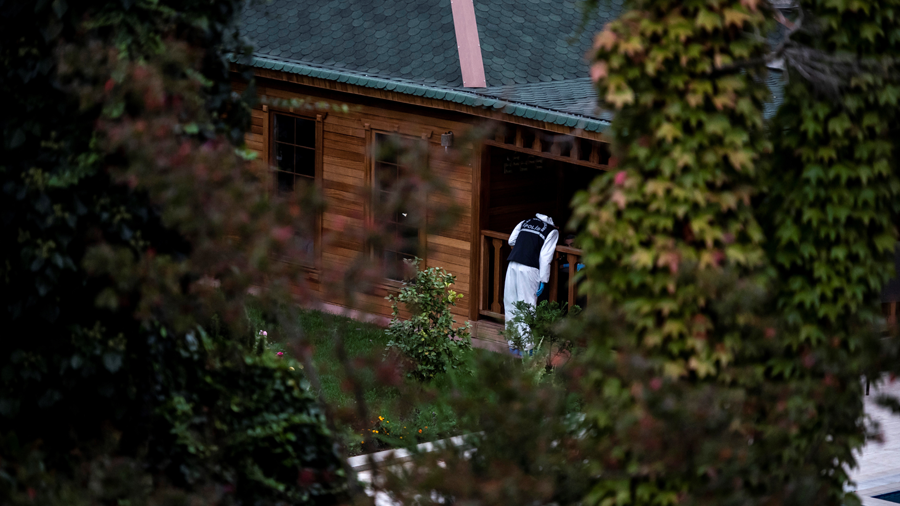
Khashoggi’s body parts found in garden of Saudi consul general’s home – sources

October 23rd, 2018

RT.com

With no photographic evidence to support the Sky News sources’ claim, gruesome and unverified images of body parts – supposedly Khashoggi’s – have been making the rounds in Arabic media.

The sources’ claim echoes a statement by Doğu Perinçek, leader of the left-wing Vatan party on Monday night. Perinçek told Turkish television that Khashoggi’s body parts” had been recovered from a well in the Saudi consul’s garden, and added that President Recep Tayyip Erdogan would explain the findings later on Tuesday.

Khashoggi’s body parts found in garden of Saudi consul general’s home – sources


Speaking before the Turkish parliament on Tuesday, Erdogan said that the evidence we have so far collected indicate that Jamal Khashoggi was slain in a vicious, violent murder,” planned in advance by the Saudi government.

Turkish sources have mainteined from the start that Khashoggi was tortured, killed, and dismembered inside the consulate, and claim to have audio recordings of the journalist’s final minutes alive. According to Erdogan, the individuals named by Saudi Arabia as suspects in the murder are also the same as those identified by a Turkish investigation.

Ankara is now particularly interested in a claim that a Turkish party was involved in the disposal of Khashoggi’s body after the murder and wants to bring that person to justice. But it was up to the Saudis to identify this local co-conspirator,” the Turkish leader argued.

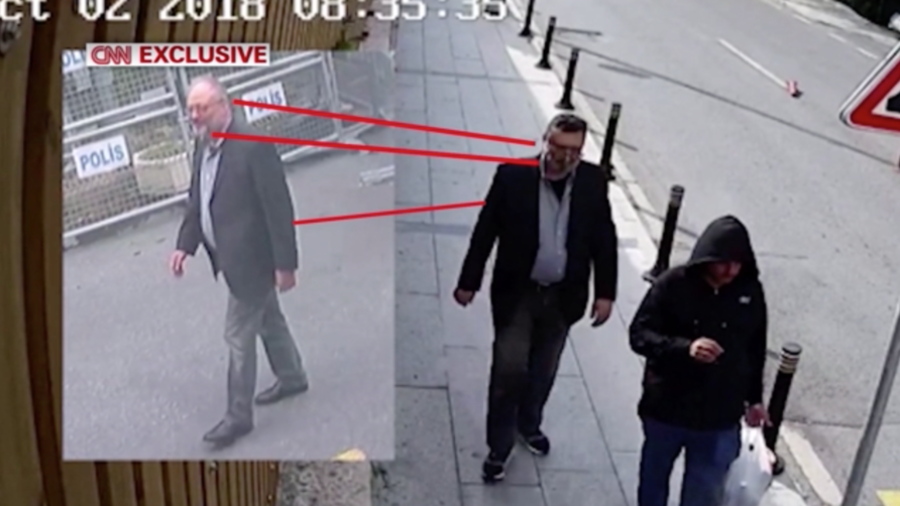
A raft of recent revelations seem to lend support to the Turks’ theory that Khashoggi’s murder was a pre-planned hit. A Turkish source shared CCTV footage with CNN showing a body-double leaving the consulate building in Khashoggi’s clothes, moments after the killing. Leaving through the back door, the doppelganger is seen wearing a fake beard and glasses to appear more like his alleged victim. Hours before the killing, the man is seen entering the building in his own clothes, without the beard and glasses.

Additional video footage obtained by Turkish broadcaster A Haber shows two men burning documents at the consulate on October 3, one day after Khashoggi entered the building for the last time. The footage has not been verified.

Further reports in Turkish media have claimed that Saudi Crown Prince Mohammed bin Salman actually phoned Khashoggi and tried to convince him to return to Saudi Arabia. The journalist declined the prince’s offer to fly to Riyadh, thinking he would be arrested and killed there, and was then murdered by the Saudi hit-team after the talk with MBS ended, the paper, pro-government Yeni Safak, wrote.

US President Donald Trump said on Saturday that he is not yet satisfied” with Riyadh’s fist fight” story, but said he will not halt lucrative arms deals with the Saudis. Trump said that the US would consider other things,” possibly sanctions.

CIA Director Gina Haspel reportedly traveled to Istanbul on Monday night to assist the investigation, according to a Reuters source

Autism may reach epidemic proportions in Lanka, warns WHO expert Dr.Saima Wazed Hossain

October 23rd, 2018

Sunday Observer

Colombo, October 21 (Sunday Observer): WHO’s regional champion for autism in South Asia Dr Saima Wazed Hossain says autism has reached alarming numbers worldwide, and that it may reach epidemic proportions in Sri Lanka. But the causes of autism are still unclear, she adds.

Dr Saima Wazed Hossain, a Specialist in School Psychology and the daughter of the Prime Minister of Bangladesh, Sheikh Hasina was in Sri Lanka recently to take part in a health seminar.

Autism may reach epidemic proportions in Lanka, warns WHO expert Dr.Saima Wazed Hossain

An expert on neuro-developmental disorders and mental health and an accomplished speaker, her efforts have led to international awareness, policy and program changes, and the adoption of three international resolutions at the United Nations and World Health Organization.

She is currently the Chairperson of the Bangladesh National Advisory Committee for Autism and Neuro developmental Disorders as well as a Member of the World Health Organisation’s Expert Advisory Panel on Mental Health.

Dr. Wazed Hossain is also the chairperson of Shuchona Foundation – a not-for-profit advocacy, research and capacity-building organisation based in Dhaka. Shuchona has partnered with various Bangladeshi ministries to provide low cost high impact training and awareness programmes for parents, caregivers, health workers and educators.

Excerpts of the interview:

SO: Reports in health journals caution that Autism is reaching epidemic proportions in Sri Lanka. How true is this claim?

SWH: It is an increasing number all over the world, not just in Sri Lanka. We do not know for certain the reasons behind the alarmingly high numbers. It is believed, awareness and better diagnostic mechanisms are exposing more and more numbers that would not have come to light otherwise.

No specific cause has been established for the rise. It takes time to know if there is a connection to our changing lifestyle, if something related is causing this genetic mutation to effect. Autism has no socio economic differences, rural – urban differences, it has nothing to do with education.

One study looked at how much the high levels of the banned insecticide DDT in the blood stream is affecting newborns. DDT can be inherited from your parents and their parents. It is then passed on to your child. That’s very scary. Although parents are careful with food, the chemical can be inherited from earlier generations, because it stays in your system. But again, there is no conclusive research.

Researchers also try to find if there is a relationship between the cosmetics and preserved or processed food and Autism. The increase is universal, it is not distinctive to any specific country. We see an increase in Autism cases worldwide.

SO: Do you think childhood vaccinations may have contributed to the increase in numbers?

SWH: In one study it was said there was a link to childhood vaccinations and Autism, but now it has been debunked. No matter what respectful research they do, this theory has been disproved, the findings were boycotted.

When research is conducted, sponsors play a key role. It is almost like saying find this result for me, hence it is difficult to know if the results are accurate until another independent research, without a third party sponsoring, is carried out to confirm the outcome of the former study.

A lot of people still talk about this research, but no one so far has replicated this study of relationship of childhood vaccinations to Autism.

Autism is linked to your immune system. There are several types of the disease. In most early diagnosed cases, the child starts showing symptoms around the time of the MMR vaccine.

That is when social and emotional development is manifested. So this claim of childhood vaccines having a link to the disease was very easy to latch on to.

Immune systems are important to stay healthy, vaccinations are important to stay healthy. Nevertheless, it will be important to look at how vaccinations are preserved, what age are they really needed – it should not be given at the health systems’, insurance companies’, pharmaceutical companies’ or doctors’ behest or convenience.

It should be based on the health of the child, the vaccinations are put together so that there are fewer shots and are less costly, and perhaps it can be divided and given not at too young an age.

The WHO approved vaccinations do not cause Autism in children. It has actually been proven.

SO: What are the common issues to Bangladesh and Sri Lanka re mental health?

SWH: In the school I visited all the children looked like Bangladeshi to me. That was a startling similarity. There has to be truth to the legend that King Vijaya came from the region of India where now Bangladesh is.

With regard to mental health, there are cultural similarities, hence the challenges and stigma that exist are common to both. The advantages you have are your health professionals – the psychologists and psychiatrists here, who are highly competent.

SO: Did you identify any gaps where perhaps the state officials are failing when trying to address challenges in the mental health sector?

SWH: The gaps are everywhere in the world, mental health is a challenging and complex issue. Sri Lanka is lucky to have competent experts. What was wonderful to see is the motivation of the experts.

And I think the gaps are not for me to identify. You should get the parents’ perspective, it is like a chef cooking a delicious meal and never knowing how his client feels about it. For example parents know the best for their children.

I visited a college which incorporates autistic children with ordinary children. They help other parents learn those techniques, it is not a place where evidence based intervention is used like in a health clinic but it’s about how to interact and learn from experiences of each other.

Ultimately, the idea is to have an independent, productive person.

In this part of the world we value education and achievement so much we don’t want to see any weakness. I grew up with that stigma, I was not good in math, and that was seen as a handicap. Among family members who excelled in math I felt like a failure.

The cultural expectations are common to Bangladesh, Sri Lanka and most other countries in this region.

SO: Where should you start addressing this issue?

SWH: The children are where we should start with, we must create awareness on acceptance and compassion among children. Then you will have children going home and teaching their parents about those values.

When I was working in the US as an early career psychologist, my daughter came home one day from kindergarten and said you know mum not everyone in my class are walking with their feet. I thought she was talking about kids crawling and playing. But she said, mum some children need wheelchairs. I later learned it was an inclusive classroom.

Through such learning we all get to benefit. She learned early to accept differences, feel when someone is feeling left out. Coming after school one day she said, I made this lonely child smile today.”

We can teach children the skills, reading and math but not how to be kind. So inclusiveness is very important, especially, for countries like Sri Lanka and Bangladesh where we’ve had so much of strife, everyone has experiences of pain.

GL welcomes examination of ‘fresh information’, urges govt to use UK dispatches now

October 23rd, 2018

By Shamindra Ferdinando Courtesy The Island

Accountability issues

Former External Affairs Minister and Chairman of the Sri Lanka Podujana Peramuna (SLPP) Prof. G.L. Peiris yesterday urged the current dispensation to review its position as regards the accountability issue in the wake of UN admission that fresh evidence pertaining to Sri Lanka’s war against the LTTE was open for scrutiny.

Prof. Peiris pointed out that the UN had called for immediate repatriation of Sri Lankan commander of a military contingent deployed in Mali on the basis of what a UN spokesperson called recently received information.

article_image

A UN spokesman announced last Friday (Oct. 19) that the request for Lt. Col. Kalana P.L. Amunupure’s repatriation was made ‘based on recently received information.’

Referring to a statement issued by Yasmin Sooka, executive director, International Truth and Justice Project, Prof. Peiris told The Island that if the UN system was open to examine fresh information in respect of allegations, same opportunity should be given to Sri Lanka.

Foreign media recently quoted Sooka, a member of the UN Panel of Experts (PoE) which accused Sri Lanka of killing 40,000 Tamil civilians, as having said: “We are delighted to see the dossier we submitted on Amunupure to the Department of Peacekeeping Operations in June this year has now resulted in this step.”

Sooka’s outfit identified Amunupure as the Second-in-Command of the 11 CLI (Ceylon Light Infantry) attached to the 58 Division. Sooka found fault with Amunupure for his unit role in the assault on Puthukudirippu in Feb 2009 and Puthumathalan in March 2009.

Pointing out that the UN hadn’t called for repatriation of peacekeeping officers previously on the basis of fresh evidence received from any party; Prof. Peiris said that the UN resorted to the humiliating move close on the heels of President Maithripala Sirisena’s much publicized address to the UNGA.

Prof. Peiris said that if the Department of Peacekeeping Operations could examine and act on fresh evidence received from NGO activist Sooka, the Geneva-based United Nations Human Rights Council (UNHRC), too could inquire into genuine wartime British High Commission dispatches from Colombo which disputed the killing of 40,000 civilians.

British dispatches obtained by Lord Naseby by way of UK Right to Information Law were placed before the House of Lords in Oct last year.

Responding to another query, Prof. Peiris said that the Sirisena-Wickremesinghe dispensation refrained from officially bringing British dispatches to the notice of 47-member Geneva Council. The former External Affairs Minister alleged that there was obviously consensus between the UNP and the SLFP of not using British dispatches to alter the 30/1 and 34/1 Geneva Resolutions adopted in 2015 and 2017. “Just give me one reason to justify Sirisena and Wickremesinghe not exploiting the opportunity created by Lord Naseby,” Prof. Peiris said, underscoring the fact that for over 12 months the government deliberately deprived Sri Lanka of a chance to seek reappraisal of the original Geneva Resolution.

Prof. Peiris called the National Unity Government’s refusal to represent national interests at Geneva a treacherous act that couldn’t be condoned under any circumstances.

Prof. Peiris acknowledged that more troops chosen for overseas UN deployment were awaiting clearance by the Sri Lanka Human Rights Council (SLHRC) and the process seemed to have been severely undermined by the government’s refusal to take up Naseby revelations with Geneva.

Military spokesman Brigadier Sumith Atapattu yesterday said that the officer concerned had served under UN command before and was scheduled to complete his current assignment in several weeks. Brig. Atapattu said that the military would fully cooperate with the UN in that regard.

Prof. Peiris said in addition to British dispatches, the government should bring up everything available, including Wiki leaks revelations before Geneva.

Prof. Peiris pointed out that several senior officers such as Major General Chagie Gallage had been denied an Australian visa on the basis of unsubstantiated war crimes allegations. Another serving officer had been denied US War College on the same basis, Prof. Peiris said.

Sri Lanka ranked top country for travel in 2019 by Lonely Planet

October 23rd, 2018

Improved train services mean it’s easier than ever to explore Sri Lanka but campaigners warn a surge in tourism could ruin its natural beauty

Passenger train crossing the nine arches viaduct near Ella, Sri Lanka.
 Passenger train crossing the nine arches viaduct near Ella, Sri Lanka. Photograph: Alamy

Almost 10 years after the end of its civil war, Sri Lanka has been named the best country in the world to visit in 2019 by Lonely Planet. Better transport links, new hotels and a growing number of activities were cited as the reason the south-Asian island was chosen for the top spot in the guidebook publisher ’s annual Best in Travel awards.

Already notable to intrepid travellers for its mix of religions and cultures, its timeless temples, its rich and accessible wildlife, its growing surf scene and its people who defy all odds by their welcome and friendliness after decades of civil conflict, this is a country revived,” says Lonely Planet author Ethan Gelber in the Best in Travel 2019 book, published today.

Unmissable experiences” include wildlife, such as the 300-strong elephant gathering at Minneriya national park, thousand-year old Buddhist monuments, and hiking and train travel through the Hill Country’s tea plantations.

Tourist visits to Sri Lanka have increased dramatically since the end of the 26-year conflict, from 447,890 in 2009 to an all time high of 2.1 million last year, a figure the Sri Lanka Tourism Development Authority hopes to double by 2020. Renovations made to the rail system have opened up Jaffna and much of north for the first time since 1990 – an area that was previously considered too dangerous for tourists. The scenic rail routes in Sri Lanka are now widely thought to be some of the best in the world. Motorways have also been built as far south as Matara, and the number of domestic flight routes has increased in recent years, too: for instance, from the capital Colombo, on the east coast, to Batticaloa, on the opposite of the island, in 45 minutes.

There has also been a huge investment in new visitor accommodation: from homestays to high-end eco retreats – such as the Wild Coast Lodge’s cocoon-like buildings in Yala national park. Major international hotel chains, including Shangri-La, Mövenpick, Sheraton, and Grand Hyatt, are all opening new properties.

The beach near Kalpitiya, Sri Lanka
Pinterest
 The beach near Kalpitiya, Sri Lanka. Photograph: Getty

While the ratio of tourists to residents is relatively low compared with countries where overtourism is now a major issue, some conservationists have expressed concern over the speed of development in certain areas.

Tourism is a major income generator for the country. Unfortunately, much of our tourism is focused on numbers of tourists [rather than] the investment they make in the country,” says Asha de Vos, marine biologist and founder of Sri Lanka-based conservation organisation Oceanswell.

To accommodate the numbers, we are building more hotels and infrastructure and taking over natural spaces. The pressure on our wildlife and cultural sites is immense and destructive. The over-development is ongoing and unending – and because of the lack of coordination and planning, many hotels lie empty. So while tourism has its positives, if done haphazardly and without planning you destroy the very resources that draw people in.”

De Vos says development is affecting coastal areas and national parks in particular, where capacity is being exceeded in peak season and has led to an increase in pollution from rubbish not being disposed of properly.

She believes tourism in Sri Lanka can be beneficial but says the government needs to regulate, educate, have a longer-term vision and protect areas from over-development. Sustainability should be at the core of any tourism product that is created.”

Human rights charities have also criticised large-scale tourism developments for their negative impact on local people.

Lonely Planet’s Best in Travel lists the top 10 countries, cities and regions alongside other travel experiences for the year ahead, ranked by the staff of Lonely Planet, including editors and contributors from around the world. Germany is rated second in the countries list, with a nod to the centenary of Bauhaus next year, and Zimbabwe – where tourists are starting to return after the resignation of Robert Mugabe – comes in third. In fifth position is Kyrgyzstan, which has 2,700km of newly-marked trekking routes. Copenhagen, Shenzhen in China and Nova Sad in Serbia were named as the best cities to travel to in 2019, while top trends include dark-skies tourism (with an increase in people stargazing and solar eclipse trips) and electric road trips, thanks to a rise in the number of car-rental companies offering alternatives to petrol and diesel vehicles.

For the full list of winners, visit lonelyplanet.com

Sri Lanka wants Chinese help to recover phone evidence over ‘assassination plot’

October 23rd, 2018

Courtesy Reuters

COLOMBO (Reuters) – Sri Lankan police on Tuesday won permission from a court to ask Chinese phone manufacturer Huawei to help recover data from a phone used by a police informant who has alleged a plot to kill President Maithripala Sirisena.

Informant Namal Kumara said at a news conference last month he had discussed the plot by phone with a senior police officer. He has since been questioned but not charged with any offence.

Former Sri Lankan defense secretary Gotabaya Rajapaksa was also a target of the plot, Kumara said.

Officials at the Criminal Investigation Department of police on Tuesday told the court that some of Kumara’s phone data, which could be evidence, had been deleted and they needed Huawei’s technical help to retrieve it.

Sri Lankan law prevents police from asking Huawei to help without first obtaining explicit permission from a court. The court granted it on Tuesday.

A man named as M. Thomas from India’s southern state of Kerala was arrested in Sri Lanka on Sept. 22 on suspicion of involvement in the plot.

Thomas appeared in court on Tuesday and requested that he not remain in CID custody, saying there had been death threats against him by the CID. The magistrate denied Thomas’ request.

The alleged plot briefly threatened to cause tension between Sri Lanka and its much larger neighbor India, after an Indian newspaper report that Sirisena had accused India’s intelligence services of involvement – a claim New Delhi and Colombo have both denied.

ඉන්දීය ධීවරයින් පස් දෙනෙකු හා ඔවුන්ගේ ට්රෝෙලර් යාත්රාොවක් නාවික හමුදාව විසින් 22 දා අත් අඩංගුවට ගෙන තිබේ

October 23rd, 2018

දිනසේන රතුගමගේ

යාපනයේ ඩෙල්ෆ්ට් දූපත්ට ආසන්නයේ මුහුදේ නීති විරෝධී ලෙස මසුන් මරමින් සිටි ඉන්දීය ධීවරයින් පස් දෙනෙකු හා ඔවුන්ගේ ට්‍රෝලර්  යාත්‍රාවක් නාවික හමුදාව විසින් 22 දා අත් අඩංගුවට ගෙන තිබේ

ඉන්දීය ධීවරයින් සහ ට්‍රෝලර් යාත්‍රාව ශ්‍රී ලංකා නාවික නෞකා උත්තර ආයතනය වෙත රැගෙන ඒමට කටයුතු කළ අතර, එම ධීවරයින් පිරිස වෛද්‍ය පරීක්‍ෂණයකට භාජනය කිරීමෙන් අනතුරුව ඉදිරි නීතිමය කටයුතු සඳහා යාපනය, සහකාර ධීවර අධ්‍යක්‍ෂක වෙත බාර දී තිබේ.

උතුරු නාවික විධානයට අයත් ශ්‍රී ලංකා නාවික නෞකා ‘එඩිතර II’ නෞකාවට අනුයුක්ත නාවිකයින් විසින් ඩෙල්ෆ් දුපතට නාවික සැතපුම් 3.5 ක්  පමණ ඔබ්බෙන් වූ මුහුදු ප්‍රදේශයේදී මොවුන් මෙලෙස අත්අඩංගුවට ගෙන ඇත.

අත් අඩංගුවට පත්වූ ඉන්දීය ධීවරයින් පස් දෙනා ධීවර පරීක්ෂක නිලධාරීන් හා කන්කසන්තුරය පොලීසිය විසින් මල්ලාකම් අධිකරණය වෙත ඉදිරිපත් කිරීමට පියවර ගෙන තිබේ.

උතුරු පළාත් සභාවේ අවසන් සැසිවාරය 23 දා පෙරවරුවේදී අවසන් කරයි

October 23rd, 2018

දිනසේන රතුගමගේ

උතුරු පළාත් සභාවේ අවසන් සැසිවාරය 23 දා පෙරවරු දහයට උතුරු පළාත් සභාවේ සභාපති සී.වී.කේ.ශිවඥාණම් මහතාගේ ප්‍රධානත්වයෙන් ආරම්භ විණි.

මෙම සභාවාරය සදහා උතුරු පළාත් ප්‍රධාන අමාත්‍යවරයා සභා ගර්භයට පැමිණෙන විට පක්ෂ විපක්ෂ සියළුම මන්ත්‍රීවරු විග්නේස්වරන් මහතා හමුවට ගොස් ඔහුගේ ජන්ම දිනය නිමිත්තෙන් සුබ පැතීය.

තවත් සමහර මන්ත්‍රීවරුන්  උපන් දිනය වෙණුවෙන් සුබ පතා යළිත් ඔබට මේ සභාවේ ප්‍රධාන අමාත්‍ය ධුරය දැරීමට  අවස්ථාවක් උදාවේවා යනුවෙන්ද ප්‍රාර්ථනා කළහ.

ප්‍රධාන අමාත්‍යවරයා සිනාමුසු මුහුණින් යුතුව සියළු දෙනාගේ සුබ පැතුම් පිළි ගනිමින් ඔවුන්ට පෙරළා ස්තූති කිරීමටද අමතක නොකළේය.

ඔක්තෝබර් 23 වෙනිදා පැවැත්වෙන උතුරු පළාත් සභාවේ අවසන් සැසිවාරයට යෝජනා ඉදිරිපත් කිරීම් ප්‍රශ්න නැගීම් සදහා අවස්ථාව හිමි නොවන බවත් එක් අයෙකුට විනාඩි 3 සිට 7 ක දක්වා කාලයක් පමණක් වෙන් කරණ බවත් මීට ඉහතදී සභාපතිවරයා දැණුම් දී තිබුණි.

උතුරු පළාත් සභාවේ අවසන් සැසිවාරය වෙණුවෙන් සියළු දෙනා වෙණුවෙන් විශේෂ තේ පැන් සංග්‍රහයක්ද පිළියෙල කොට තිබුණි.

උතුරු පළාත් ප්‍රධාන අමාත්‍යවරයා විසින් නායකත්වය දරණ දෙමළ ජාතික සභාවේ අත් පත්‍රිකාවක එල්.ටී.ටී.ඊ.සංවිධානයේ ලාංඡන හා අදහස් ඇතුළත් කොට තිබීම සම්බන්ධයෙන් යාපනයේ ආරක්ෂක අංශ සෙවිල්ලෙන්

October 23rd, 2018

දිනසේන රතුගමගේ

උතුරු පළාත් ප්‍රධාන අමාත්‍යවරයා විසින් නායකත්වය දරණ දෙමළ ජාතික සභාවේ රැස්වීමක් මේ මස 24 වෙනිදා පැවැත්වෙන බව දැණුම් දෙමින් බෙදා ඇති අත් පත්‍රිකාවක එල්.ටී.ටී.ඊ.සංවිධානයේ ලාංඡන හා අදහස් ඇතුළත් කොට තිබීම සම්බන්ධයෙන් යාපනයේ ආරක්ෂක අංශ පරීක්ෂණයක් ආරම්භ කොට තිබේ.

පසුගිය 21 දා සවස සිට යාපනයේ බොහෝ ස්ථාන වල මේ අත් පත්‍රිකාව බෙදා හැර තිබූ අතර  එම පත්‍රිකාවල සදහන්ව ඇත්තේ දෙමළ ජනයාගේ මහා නැගිටීම, මහවිරුවන් සමරණ නොවැම්බර් මාසයේදී සිදුවන අතරතුර දෙමළ ජනතා පෙරමුණ නායකයින්ගේ දෑත් ශක්තිමත් කිරීමට එක්වෙන ලෙසයි.

දෙමළ ජනතා පෙරමුණ හෝ වෙනත් කඩකප්පල්කාරි පිරිසක් අදාළ අත්පත්රිකාව බෙදා හැර ඇතිද යන්න සම්බන්ධයෙන් සොයා පරීක්ෂණ මෙහෙයවන බව ආරක්ෂක අංශ සඳහන් කර යි.

මේ අතර උතුරු පළාත් ප්රධාන අමාත් සී.වී.විග්නේස්වරන් මහතාගේ උපන් දිනය  23 දාට යෙදී ඇති අතර උතුරු පළාත් සභාවේ අවසන් සැසිවාරයද යොදා ගෙන තිබුණේ එදිනටය.

සී.වී.විග්නේස්වරන් මහතා සිය ජන්ම දිනය යාපනයේදී සැමරීම සදහා 22 දා රාත්රී යාපනයට පැමිණ සිටියේ ඔහුගේ පුතණුවන් ඇතුළු පවුලේ සාමාජිකයින් සමගය.

ප්රධාන අමාත්යවරයා හා ඔහුගේ පවුලේ සාමාජිකයින් යාපනයේ සිටින සිය හිතවතුන් හා වැදගත් පුද්ගලයින් හමුවීම සදහාද මේ සංචාරය යොදා ගෙන තිබුණි.

උතුරු පළාත් ප්රධාන අමාත්යවරයා වශයෙන් ඔහු යාපනයට පැමිණි අවසන් අවස්ථාව මෙය වියහැකි යැයි උතුරේ දේශපාලනඥයෝ කියා සිටිති.

කෙසේ වෙතත් මේ මස 24 දා මධ්යම රාත්රියේදී උතුරු පළාත් සභාව විසුරුවා හැරීමට නියමිතය.

ආනන්දි සශිදරන් අමාත්‍යවරියගේ දේශපාලන පක්ෂයට ඇති මානව හා භෞතික සම්පත් ඉතා දුර්වල මට්ටමක

October 23rd, 2018

දිනසේන රතුගමගේ

උතුරු පළාත් සභාවේ ආනන්දි සශිදරන් අමාත්‍යවරිය විසින් අළුතින් පිහිටුවා ගන්නා ලද  දේශපාලන පක්ෂයට ඇති මානව හා භෞතික සම්පත් ඉතා දුර්වල මට්ටමක පවතින නිසා එහි අනාගතය එතරම් පැහැදිලි නැතැයි උතුරු පළාත් සභාවේ හිටපු සෞඛ්‍ය අමාත්‍ය පී.සත්‍යලිංගම් වෛද්‍යවරයා පැවසීය.

වවුනියාවේ පිහිටි ඉලංකෙයි තමිල් අරුසු කච්චි පක්ෂ කාර්යාලයේ පැවති සාකච්ඡාවකදී ඔහු මේ බව කියා සිටියේ නව දේශපාලන පක්ෂය සම්බන්ධයෙන් හිටපු අමාත්‍යවරයාගේ මාධ්‍යවේදීන් අදහස් විමසූ අවස්ථාවේදීය.

ඕනෑම අයෙකුට නව දේශපාලන පක්ෂයක් පිහිටුවීමට ප්‍රජාතාන්ත්‍රික රටක අයිතිවාසිකමක් ඇතත් එම පක්ෂයේ අනාගතය තීරණය වන්නේ වර්ථමානයේ ඒ ඒ පළාත් වල පවතින දේශපාලන වටපිටාව මත යැයි සත්‍යලිංගම් වෛද්‍යවරයා කියා සිටියේය.

මේ කාල වකවානුවේදී උතුරේ දේශපාලන හැසිරීම දෙස බලන විට දෙමළ ජාතික සන්ධානයට වඩා විකල්ප දේශපාලන පක්ෂයකට එකවර නැගී සිටීමට ඇති හැකියාව අඩු බවද හිටපු සෞඛ්‍ය අමාත්‍යවරයා කියා සිටියේය.

දෙමළ ජාතික සන්ධානය සියයට සියයකින්ම ඉතා හොද පක්ෂයක් ලෙස තමන් අර්ථකතනය නොකරණ නමුත් හදිසියේම පිහිටුවා ගන්නා දෙමළ දේශපාලන පක්ෂයකට දෙමළ ජාතික සන්ධානය අභිබවා යාමට ඇති හැකියාව ඉතා අඩු බවද පැවසීය.

ශ්‍රී ලංකාවේ පැරණිම හා ඉතාම ප්‍රබල දෙමළ දේශපාලන පක්ෂය ද්‍රවිඩ එක්සත් විමුක්ති පෙරමුණ වුවත් එම පක්ෂයටවත් දෙමළ ජාතික සන්ධානය අභිබවා ඉදිරියට යාමට නොහැකි වූ උතුරේ දේශපාලන වටපිටාවක අළුතෙන් බිහිවන පක්ෂ වල අනාගතය එතරම් ඈතකට දිව යනු ඇතැයි තමන් විශ්වාස කරණ බව සත්‍යලිංගම් මහතා මෙහිදී තවත් උදාහරණ ගණනාවක් දෙමින් පැහැදිලි කළේය.

මේ අවස්ථාවේදී සෑම දෙමළ දේශපාලනඥයෙකුම සිහි තබා ගත යුතු මූලික කරුණ  වන්නේ තනි තනිවම ගොස් ජයග්‍රහණයක් ලබා ගැනීමට වඩා සියළු දෙනාම එක් අරමුණක් ඔස්සේ ගොස් පොදු අවශ්‍යතා ඉටු කරගැනීම යැයි සත්‍යලිංගම් මහතා අවධාරණය කළේය.

දෙමළ ජාතික සන්ධානය නව රජයන් බලයට පත් කිරීමට විශාල කැප කිරීමක් කළ හෙයින් මේ රජයෙන් දෙමළ ජන්තාව වෙණුවෙන් යමක් ලබා ගැනීමට හැකි යැයි විශ්වාසයෙන් පසුවන අතර තුර දෙමළ ජාතික සන්ධානයේම සිටින පිරිස පක්ෂය විවේචනය කරමින් වෙනත් පක්ෂ පිහිටුවා තනිවම දේශපාලන වාසි ලබා ගැනීමට යාම තමන් අනුමත නොකරණ බවද හිටපු අමාත්‍යවරයා මෙහිදී වැඩි දුරටත් කියා සිටියේය.

APPEASEMENT OF INDU, LANKA AND CHINESE RELATIONSHIP

October 22nd, 2018

By EDWARD THEOPHILUS

The most difficult and dogmatic issue in Sri Lanka at this moment is appeasement of relationship between India and China.  The history gives clear evidence that different style of relationships was maintained between India and China by Sri Lanka for centuries, before Lanka went under the control of European rule. Sri Lankans are ethnically related to India as the anthropological evidence clearly indicates that people in Sri Lanka had been mixed with Indians by the migration of Indian people to Sri Lanka for various purposes. There may had been a relationship with China too as history evidence that Chinese people also visited other countries for various reason especially for trade purposes, but we have no concrete evidence that people of Sri Lanka had been mixed with Chinese blood. The truth that needs to be accepted is that people had been migrated one country to other since they were homo sapiens.

In the history there were conflicts between Sri Lankans and Indians focussing on various reasons such as trade and acquiring power. The religious and cultural relationship also cannot be ignored as strong evidence are available for this reason. There were some historical reports that Sri Lanka also had conflicts with China, and Chinese military groups visited Sri Lanka in various occasions though there were no clearly written the reasons for such visits. Historical evidence further indicates that the conflicts with either India or China were not motivated by official governments in India or China, in fact it is quite correct to state that the conflicts between communities in two counties were individual decisions of such communities and in terms of modern sense they were not unforgettable events. As the human nature is our mind always goes to the past and many times there is a trend to link the thinking with the past events.  People of Sri Lanka, India, and governments in these countries need to understand this truth in the appeasement of relationships.

According to the fundamental wish of Sri Lankans, the major aim of the relationship with India and China is promoting trade between countries, which generates tremendous benefits to the country such as gaining helps to acquire economic growth development base in Asia in relation to macroeconomic factors. As large countries with expanded economies like India and China have various economic, political, international and social aims, which may have conflicts of interest Sri Lanka’s attempt to develop the nation. The relationship of Sri Lanka with these two countries should not be knowing align to conflict with the interest of India and China.

After independence in 1948 Sri Lanka’s policy on dealing with India was targeted the repatriation of Indian immigrants back as the British ruler who were responsible to bring outsiders to the country and when they left the country did not forge a satisfactory solution to India, Sri Lanka and Britain. The policy toward China had a disinterest soon after the independence purely based on Communist alignment due to the influence of Western countries, however, the discomfort changed, when China provided economic supports beginning with the economic down turn after Korean boom to the country until 1977. India did not publicly express the displeasures when gaining economic supports from China.  After 1956, the relationship of Sri Lanka with India and China ideally matched and Mrs Bandaranaike demonstrated an excellent diplomatic knowledge and skills by assertive communication during the conflict between China and India in early 1960s. After the cold war the nature of foreign relationship crucially changed the influence of Western manoeuvring to international affairs.

Sri Lanka as a small country in the world faced to burdensome, especially managing the relationship between China and India as the war with LTTE forced Sri Lanka to go out of the track maintaining the relationship.  As Indira Ghandi expressed after July riots in 1983, although the conflict in Sri Lanka was not directly related to India, it was concern to India.  Tamil people in Sri Lanka theoretically divided to Sri Lankan Tamils and Indian Tamils, nevertheless people in outside have no idea about this illogical classification and Indian people also consider any agony to its people in Sri Lanka (Tamils without difference) an opportunity to demonstrate displease the behaviour of the central government of India.  Mrs India Ghandi expressed concerned on this matter with strong logical points. The so-called behaviour of Mr Jayewardene with Mr Morarji Desai may also have contributed Mrs Gandhi’s concerns as Sri Lanka was a friendly neighbourhood of India.

After 1983 we observed that India had an unwarranted intrusion to Sri Lanka and many nations surrounding India expressed this intrusion as Indian hegemony and if we think logically, it was a result of Russian bloc’s behaviour that expected India to play a police role in South Asia. My observation is Sri Lankan politicians also misunderstood the role and the pressure of India, had not effectively educated the different communities of Sri Lanka with a view to settling the problem. Mr. JR. Jayawardena as a good international strategist positively responded and he clearly stated that the Indu-Lanka agreement in 1987 was a strategy to live under the shadow of India without surrendering.  There was an excellent relationship had between Indian representative, JN Dixit and Mr. JR Jayewardene, but Mr R. Premasa failed to maintain it.

Mr Mahinda Rajapaksa as the leader of Sri Lanka did a successful role for India destroying the LTTE war machine that India wanted to eliminate. Although the LTTE war machine was originated with Indian support, later it was gone out of control and LTTE involved with western secret forces. The involvement of India with the war machine created many disadvantages to India especially the loss of Mr Rajiv Ghandi and the loss of supportive Tamil leaders in Sri Lanka to India, Sri Lanka closely alignment with China and Pakistan, and creating a serious risk to India possibility of terrorist activities in Tamilnadu following LTTE terrorists.  India wanted to eliminated but reluctant or scare to do it.  Mr Rajapaksa did it with the support of his brothers.  The economic problems generated with the war forced Mr Rajapaksa to close with China, but it was not pleasant policy to India, which associated with forces to defeat the Rajapaksa regime in 2015. The other important point needs to consider is Mr Rajapaksa had no options to take rather than taking economic support from China.

The international relations and the manoeuvring of the Western power bloc against the Chinese development has been considerable point in international relationships and it appeared that India attempting to oppose Chinese role with surrounding countries of India.  In this situation, the Rajapaksa regime would have to listen Indian ideas for the post war reconciliation efforts rather than strongly believing Chinese supports. The other option was to conduct a top-level summit between three countries with a view to resolving problems.

Mr Ranil Wickramasinghe was given an excellent opportunity to learn foreign policy development and maintaining foreign relations appointing him as the Deputy Foreign Minister under Mr ACS Hameed. Did Mr. Ranil Wickramasinghe learn foreign policy and maintaining foreign relationship was a question when observing his behaviour during the 2015 elections.  Political leaders in Sri Lanka need to understand that neither party must play politics with the country’s foreign policy and it shouldn’t be critical issue in election plat forms. However, Mr Wickremasinghe irresponsibly made criticism about China and Chinese aided projects.  The result was him to bow down to China and creating an environment seek assistance from China at displeasing of India.

When appeasement of relationships with India and China, the following points need adhering to.

  • The Sri Lanka’s relationships with India and China should not be a tragedy to either party, but it should be a complementary considering honest objectives of each other.
  • The foreign relationship should not be a part of gossip in political platforms and news conferences as the journalists in Sri Lanka has converted news conferences to provide jokes rather than providing information about policy and the progress of policy implementation.
  • The assertive communication on each other’s priorities at an annual summit year could openly discussed and review the progress of relationships and confidentially fix the problems.

National Audit Act; Insights and Look Ahead

October 22nd, 2018

By Dr. Chandana Jayalath, Senior Lecturer, University of Vocational Technology

The National Audit Act came into effect 3 months ago after 23 amendments. A long felt need is an Audit Act in an ‘expanded’ model to provide for the high-handed powers, duties and functions of the position of ‘Auditor General’. As envisaged by those who had a big hope on curbing corruption, making the government officials accountable to the decisions and actions is indeed imperative. However this Act while providing for the establishment of an entity called Audit Service Commission still covers the traditional themes instead of how and what the people truly expected. As usual, the Act specifies that the role of Auditor General; to audit all income received to the Consolidated Fund and all expenditure from the Consolidated Fund; ascertain whether the moneys shown in the accounts of auditee entities as having been disbursed were legally available for purposes to which they have been applied for; determine whether the expenditure confirms to the authority which governs it and in each audit, examine the income, expenditure, transactions and events. The Auditor General shall be responsible to the Parliament in carrying out the provisions of this Act also as customary.

One of the salient features in this Act is that the Auditor-General ‘may’ examine any matter relating to an auditee entity ‘brought to his notice’ by any member of the public in writing along with substantial proof of the matters asserted, and report thereon to Parliament again. However the Auditor General is not required to provide for any feedback as to what kind of actions taken to stop any given corrupt activity. In other words, he is not publicly accountable. Where there are no auditing standards specified in the Sri Lanka Auditing Standards for performance audits, environmental audits, technical audits and any other special audits, the newly set up Audit Service Commission ‘may’ by order published in the gazette, specify the provisions of the international standards of the Supreme Audit Institutions which shall apply to such audits, with necessary amendments to suit local requirements. The Auditor General will inspect accounts of any auditee entity including treasuries and initial or subsidiary accounts of such auditee entities; require that any accounts, books, papers and other documents which deal with or form the basis of or is otherwise relevant to the transactions to which his duties extend, shall be sent to such place as he may appoint for his inspection. He can question or make such observations as he may consider necessary, from the Chief Accounting Officer of the auditee entity and call for such information as he may require for the preparation of any account or report.

The Act is clear in that the Auditor General is to ensure that the set of financial statements presented for audit by the auditee entity is in accordance with the applicable financial reporting standards; have been designed to present a true and fair view of the affairs of the auditee entity for the year under review; is consistent with the preceding year; and includes any recommendations made by the Auditor-General in the previous year. The Auditor-General or any person authorized by him in carrying out an audit shall inspect accounts of any auditee entity including treasuries and initial or subsidiary accounts of such auditee entities; require that any accounts, books, papers and other documents which deal with or form the basis of or is otherwise relevant to the transactions to which his duties extend, shall be sent to such place as he may appoint for his inspection; question or make such observations as he may consider necessary, from the Chief Accounting Officer of the auditee entity and call for such information as he may require for the preparation of any account or report.

The Auditor-General shall table in Parliament the Status Report of every auditee entity, within nine months after the end of each period of three financial years. This report shall include major deficiencies identified, recommendations made by him and preventive measures taken by the auditee entity and the position thereon as at the submission of the report to the Parliament. An auditee entity shall fulfill any requirement of the Auditor General or any person authorized by him, in the performance and discharge of the duties and functions under this Act. Any person who fails or refuses to furnish any information, document, explanation, report or material when requested to do so within a period of not less than twenty one working days from the date of receipt of such request; refuses or fails to nominate a person conversant on the subject, to appear before the Auditor-General or any person authorized by him, when requested to do so; makes any statement or submits a document to the Auditor-General or any person authorized by him knowing it to be false or misleading; resists or obstructs the functions and duties of the Auditor-General or any person authorized by him commits an offence and shall on conviction after summary trial by a Magistrate, be liable to a fine not less than ‘five thousand rupees’ and not more than ‘twenty five thousand rupees’. This is no sense.

Any person convicted for an offence under the provisions of this Act shall not be precluded from being punished for any other offence committed in the process under any another written law. No liability, whether civil or criminal, shall attach to the Auditor-General, any officer of the Sri Lanka State Audit Service, any officer of the National Audit Office or any other person assisting in the discharge of the duties of the Auditor-General as referred to in section 9(1)(a), for anything which ‘in good faith’ is done in the performance or exercise of any function or power imposed or assigned under the provisions of this Act. Good faith is all about sincerity of intention and it is purely a subjective matter.

Under Article 153A (1) of the Constitution, an Audit Service Commission will be appointed to ensure the independence of the Audit Commission. This Commission will consist of the Auditor General and four other members appointed by the President on the recommendation of the Constitutional Council. A new Audit Office is also sanctioned by the new Act, to assist the Auditor General to discharge his duties and responsibilities. The institutions which will come under the AG’s scrutiny will include all Ministries, Provincial Councils, public corporations, Commissions constituted under the Constitution or a Special Presidential Commission of Inquiry; the Presidential Secretariat; the Office of the Secretary General of Parliament or a company registered or deemed to be registered under the Companies Act in which the Government or a public corporation or a local authority holds fifty percent or more of the shares of that company.

As we all know, auditing encompasses a wide array of functions. Construction auditing is in particular keen on investigating overcharges if any for labor and materials, overpriced change orders, why and how for re-work, lost incentives and credits, failure to deliver contracted scope and charges for non-allowable costs. Audit is not just looking for cost recoveries or overbillings, but also provides process improvement recommendations for the project management team. In fact, there are several key risk areas that lend themselves to unnecessary costs that effect overall performance. Auditing function is to provide independent and objective assurance that the public money is handled appropriately. Amongst the benefits are early detection of non-compliance, prevention of abusive behaviors, minimize the I forgot” and lost document syndrome. Detecting frauds and errors along with the identification of misrepresentation of records, check on accounting functions with the analysis of bills and records, identifying information gaps and omissions to check accurate management of the accounts, verifying different costs and expenses to ensure their justified investment, and finally reporting on compliance with policy and procedures are fundamental to any auditing function. This task is not that simple particularly where the ‘technicalities’ or ‘technologies’ have been involved.  Tender invitations and bid proposals, tender addendums, contract amendments, offers and MOUs, contract document, incoming and outgoing correspondence, field notes, field visits, and interview findings, process and procedure manuals, protocols and guidelines, legal and financial instruments, internal logs and inventories, technical and financial reports, risk and contingency reports are a couple of key inputs integral to this important function at all times.

On the foregoing context, the Audit Commission has to be responsible for all the auditing in the government at the end of the saga. At a juncture like this, policy borrowing from other states could at least be most beneficial; for instance, it would be worthwhile to examine and see how the mechanisms of Audit Committees in other countries operate and then apply it to our own circumstances. It is of no harm of visiting what is happening outside our domain at all times. I would say, an inspection of external mechanisms is an important constituency. In the Middle Eastern countries, there are expatriate quantity surveyors who are experts in technical auditing. This is again, hardly anything being discussed in the media about the role of quantity surveyor in technical auditing. At a time where bribery and corruption are facing harsh penalties, the government must also take measures to prevent it from reoccurring, and in that regard, this Act should have essentially served as a crucial piece of legislature.

Notwithstanding, this Act vests the authority to impose surcharge back in the Chief Accounting Officers (Ministry Secretaries/Department Heads), not the Auditor General. In cases where the CAO has been implicated, the power to impose the surcharge lies with the Treasury Secretary. A Surcharge Appeal Committee, not less than five members, with experience in the fields of auditing, law, and public finance management, will be appointed by the Constitutional Council to hear and determine appeals by any person against whom a surcharge has been imposed. The surcharge can be imposed against any person who is responsible for the deficiency or loss, either jointly or singly, followed by a formal disciplinary action by the Disciplinary Authority or a judicial process. The Surcharge Appeal Committee will be empowered to allow the appeal, amend, alter or vary the decision or disallow the appeal.

Once the law is enacted, every public corporation or company in which the Government or a public corporation or a local authority holds fifty percent or more of the shares will be required to include in its annual report the report presented by the Auditor General to the Chairman of such an institution, the performance report for the relevant year, annual audited financial statements and a future projection report, based on sustainable development. This may include details of activities to safeguard the environment and mitigate any negative impact on the environment and where necessary include environment and disaster impact assessment analysis.

In a nutshell, the task of the National Audit Office is to control the reliability and authenticity of the financial statements as well as to provide the Parliament with reliable and objective information. The National Audit Office should therefore be independent in performing its operations.

Article 43 is to deal with influencing. Article 44 states that personnel responsible for deficiency/loss shall not be deemed to be guilty of such offence if it was found to be committing without knowing. Other offences deserve Rs 100,000 or one year imprisonment or both (Article 45). As per Article 46, no one is to be precluded from not being punished for any offence committed under any other law of Sri Lanka. Part IV deals with imposition of surcharge by the Audit Service Commission and Chief Accounting Officer is to follow up notice and initiate disciplinary action, decision and communicate. Appeal Procedure has been cited.

Under circumstances, the National Audit Act has three key provisions, namely the power of surcharge to impose personal financial responsibility on individuals who have caused financial loss to a State entity through fraud, negligence, misappropriation or corruption, the power to examine bank accounts in which the Auditor General believes that monies belonging to a State entity have been fraudulent, irregularly or wrongfully deposited and an independent budgeting mechanism designed to safeguard the independence of the prospective National Audit Office. If the foregoing is to significantly strengthen fiscal accountability in the public sector, there must be some properly laid rendezvous. Of them the social audit and whistleblowing take a pivotal role. Corruption often goes unchallenged when people do not speak out about it. Witness accounts offer invaluable insights into corruption, and are powerful tools in the fight against it. From exposing multi-million dollar financial scams to dangerous medical practices, whistleblowers play a crucial role in saving resources and even lives. But in many instances, blowing the whistle can carry high personal risk – particularly when there is little legal protection against dismissal, humiliation or even physical abuse. Controls on information, libel and defamation laws, and inadequate investigation of whistleblowers’ claims can all deter people from speaking out. Whistleblowers are less likely to report workplace misconduct when their employers do not provide clear internal reporting channels. And in some settings, whistleblowing carries connotations of betrayal rather than being seen as a benefit to the public. Ultimately, societies, institutions and citizens lose out when there is no one willing to cry foul in the face of corruption.

Corruption results in projects that are built to unsafe designs or that use dangerous construction methods, equipment, or materials. Quite simply, corruption kills. Corruption kills not only because money intended for the poor ends up in the pockets of corrupt officials. It kills because the bribes set in motion a chain of harmful events—the selection of unqualified contractors; the gross inflation of costs; the failure to complete work; the delivery of substandard goods, or too often, of nothing at all—that hamper development and add to unproductive debt. In fact, corruption and its progeny of fraud, waste, abuse, neglect, errors and omissions are now widely acknowledged to be the single greatest impediment to the development process. One final remark! Corruption needs to be seen in terms of the full scale of the human misery that it creates.

DIG නාලක සිල්වා පසුපස පොලිස්පති.. පොලිස්පති පසුපස අගමැති.. ජනපතිට එරෙහි රාජ්‍ය මට්ටමේ කුමන්ත‍්‍රණයක්…

October 22nd, 2018

lanka C news

නියෝජ්‍ය පොලිස්පති කාලකද සිල්වා පසුපස සිටින්නේ පොලිස්පතිවරයා බවත් ඔවුන් දෙදෙනා මෑතකදී කැළනි විහාරයට පාන්දර ගොස් පුජාවක්ද පැවැත්වූ බව පාර්ලිමේන්තු මන්ත‍්‍රි එස්.බී දිසානායක මහතා පවසයි.

පොලිස්පති පසුපස සිටින්නේ අගමැති රනිල් වික‍්‍රමසිංහ සිටින බවත් පවසන මන්ත‍්‍රිවරයා මෙම කුමන්ත‍්‍රණය රාජ්‍ය මට්ටමේ කුමන්ත‍්‍රණයක් යයි සිතෙන බවද සදහන් කරයි.

රෝ සංවිධානය විසින් ජනාධිපතිවරයා ඝාතනය කිරීමට කුමන්ත‍්‍රණය කලේ යයි පනල වූ වාර්තාද එජාපයේම කුමන්ත‍්‍රණයක් යයි ඔහු සදහන් කලේය.

Royal Asiatic Society of Sri Lanka Monthly Public Lecture

October 22nd, 2018

Royal Asiatic Society of Sri Lanka (RASSL)

Public Lecture

 The Doctrine of Public Trust and its Application for the Protection of Natural

 Resources in Sri Lanka’

by

Prof. Sarath Mathilal de Silva

Attorney-at-Law

On


Monday 29th October 2018 at 5.00 p.m.

at the


Gamini Dissanayake Auditorium

No. 96, Ananda Coomaraswamy Mawatha, Colombo 07


ALL ARE WELCOME

A Book Review- EXPOSING THE BIG NEO-LIBERAL LIES

October 22nd, 2018

By Noel Ranjith Gampaha.

PROPHETIC INDICTMENTS – The failed Neoliberal Paradigms of Economics, Politics, Governance, Society and Science in Sri Lanka and Globally”

The collected works of Dr. Mervyn D. De Silva

[Published in 2018 by Tulana Jubilee Publications, Gonawala, Kelaniya, 414 pages]

[ISBN 978-955-8459-15-7]

Regular readers of The Island” newspaper over the twenty year period from the 1980’s will remember the almost weekly columns written by Dr. Mervyn D. De Silva, who was in those years a Deputy Director of the Ministry of Planning and Economic Affairs, followed by being appointed as the Director of the Ministry of Plan Implementation, and later becoming a Member of Parliament through the National List. His most profuse and provocative period was during the tenures of four Presidents from Mr. J. R. Jayawardene to Mrs. Chandrika Bandaranaike Kumaratunga. His writings covered a wide range of public and national concerns and took their cue from what the controversial American journalist I.F. Stone believed was the purpose of good journalism  – to comfort the afflicted and afflict the comfortable”.

Dr. De Silva’s critically analytical articles were about the immediate happenings in the country at the time they were written. As a well-placed insider”, he wrote about economic policies and the shortcomings and failures in their planning, implementation, management and monitoring.  He wrote critically insightful pieces about the development strategies of governments irrespective of whether they were ideologically from the right or the left. He spoke about the weaknesses in governance, exposed corruption and was critical of failures in law and order and human rights which led to societal crises of varying seriousness.

The majority of these articles (nearly 83 out of about 100, including three creative pieces – two poems and an imaginary speech” by a politician) have now been collected and published in book form by the Tulana Research Centre for Encounter and Dialogue in Gonawala, Kelaniya, under their Tulana Jubilee Publications umbrella. With an Introduction by the author and a Foreword by Fr. Aloysius Pieris s.j., the founder/director of the Tulana Centre, the book is divided into six chapters. Chapter One has the collection of Dr. De Silva’s writings on Poverty and Economic Injustice”. Chapter Two is devoted to his scathing critiques of those champions of neo-liberalism the IMF, World Bank, GATT and the WTO. The chapter on Planning Issues – Political, Economic and Social” are well-informed pieces written by an insider. In chapter 4 he critiques a range of Socio-Political Issues” and in chapter 5 he boldly exposes  the  mythic interconnections between Façade Democracy and Political Parties”.

At the heart of all his writings is Dr. De Silva’s unwavering humanist rationalism” – his constant cry for economic and social equity, for fairness in justice, for honesty and integrity in governance, and for the protection of the rights of all human beings specially the poor and the marginalized. Reading these articles today, one is struck by their continuing relevance in the questions they pose, the problems they expose and the remedies proposed. These are indeed Prophetic Indictments”.

Noel Ranjith

Gampaha.

A Voice in the Wilderness. (A Review of the collected articles of Dr Mervyn D. De Silva – “Prophetic Indictments”,Tulana Jubilee Publications, 2018, pages 414)

October 22nd, 2018

Fr Chryso Pieris SJ, Galle.     

All authentic prophets, modern or ancient, were voices in the wilderness yet never wavering from their stand, never compromising with power, prestige or pelf, always consistent, comprehensive and compassionate.  Dr Mervyn D. De Silva is one such rare prophet from Sri Lanka in our times. I had, now and then, read some of his articles in the newspapers but this collection is a real boon to all those who are interested in the common good of not only the people of Sri Lanka, especially the poor, but of the whole world.

The world today, for those who have eyes to see and ears to hear and for intelligent and objective observers, has sunk into decadence, economically, socially, culturally, morally, ethically and seems to be immersed in a quagmire of unprecedented superficiality. There are wars between Nations, ethnic and religious groups, social upheavals between haves and have-nots, heinous forms of crimes, domestic violence, political violence, breakdown of law and order, revolutions and counter-revolutions; corruption by the mightiest, politicians, bankers and business men, blatant violations of time-honored principles and codes of conduct and decency; blatant violation of constitutions, democracy, the judiciary and the executive organs of administration.”  – Page 9. Though the author starts this paragraph with the words The world today” actually it is all about the current ugly situation in our own country, Sri Lanka. And that is what the subtitle of the book says: The failed Neoliberal Paradigms of Economics, Politics, Governance, Society and Science in Sri Lanka and Globally”

Agriculture is the specialty of Dr Mervyn and eradication of poverty is his chosen goal in life. For him the two are connected but the powers that be are so ignorantly and culpably superficial about this connection it is tragic. … the governments undertaking utterly puerile tamashas in the rural paddy fields (1977) and farmer seminars in the capital city (1996) reveals the truth that the crux of the success of  the modern techniques of food production and the massive support it requires have not being properly understood by the rulers.” – page 34.

Dr Mervyn has consistently shown that the root cause of every unjust and evil aspect of society is economic poverty. Whether it is hunger and starvation, violence and terrorism, overseas slave labour and human trafficking, drugs and prostitution, inequality and income disparities, ill health and failure in education, are all due to the basic fact that the majority cannot make ends meet at the end of the day. For him the eradication of poverty is top priority and the ethical, moral, social and political imperative of any responsible government.

His scathing attacks on the Washington Consensus institutions, The World Bank, the International Monetary Fund and the World Trade Organization are unmatched by any leftist rhetoric. Nothing escapes his eagle eye: Glasnost-perestroika, GATT and RCN (Remote control neo-colonial status) Debt crisis and Aid, Structural adjustments, Mad cow disease, Free market, super NGOs, Privatization and Ecological disasters. He exposes their hidden agendas, double standards and hypocrisy, objectively and fearlessly.

He was in the planning ministry and later an MP in the Sirimavo Bandaranayake government. He comments on why ‘planning’ became anathema, what the proper role of the ministry is, the presidential responsibilities, performance monitoring and reorganization of the ministry. He reveals with great clarity and responsibility how democracy in our country began to erode from the seventies onward. Today it is a mere façade and the people are left utterly helpless, politically stranded and their dignity dragged in the mud.

The articles are all relevant to the immediate socio-political needs of the country; searching for solutions to vital problems; analyzing the situation and critiquing it; but always Dr Mervin’s basic tenets are clear and demanding; the unitary status of the country, the inalienable sovereignty of the people, a legislature of honest, committed ladies and gentlemen untainted by corruption and nepotism and the top priority of a sustained campaign to eradicate poverty not in some hazy future but within a planned rational time frame and clear deadlines.

A victim of government wrath when he exposed the Dambala Hoax Dr. Mervyn has paid dearly for his uncompromising stand against injustice, dishonesty and corruption. As the director of Tulana, Fr Aloysius Pieris SJ states; Dr De Silva insists that there can be no question of abandoning those in need.”

The dire need of the hour, if we want to save this country intact for another generation, is for us all good and honest people to rouse ourselves and work together to bring about the downfall of the present governing kleptocracy; this indeed is the last plea of Dr Mervin in his collected articles; it is on page 302; Patriotic countrymen with brains, guts and courage take up the gauntlet, get on the phones, make e-mail connections, contact anyone prepared to help, assemble groups, contact professional associations, inspire confidence, do more and talk less, don’t throw cold water. Let’s take one step in the right direction. If the people lead, the leaders will follow our attempts to end this unapologetic barbarism. Rise up to the occasion please.”

I dream somebody taking his articles and translating them into Sinhala and Tamil and publishing them, one by one, serially, in our national vernacular newspapers. I wish very much my dream comes true soon.

The book itself is a beauty, thanks to the Media Unit of the Tulana Research Centre led by Mr Robert Crusz, Mr Sudath Attanayake and the printers Karunaratne & Sons (Pvt) Ltd.

………………………………………

Fr Chryso Pieris SJ, Galle.                                                                                                2018


Copyright © 2026 LankaWeb.com. All Rights Reserved. Powered by Wordpress