ටී.එන්.ඒ. එකට ආණ්ඩුව දුන් පොරොන්දු වහා හෙළි කරන්න

October 17th, 2018

උදයන්ති මුණසිංහ උපුටාගැණීම  මව්බිම

ආණ්ඩුව, දෙමළ ජාතික සන්ධානයට ඉටු කිරීමට පොරොන්දු වූ දේවල් මොනවාදැයි වහාම රටට හෙළිකළ යුතු බව සිංහල රාවය සංවිධානයේ මහ ලේකම් මාගල්කන්දේ සුදත්ත හිමියෝ පැවැසූහ.

දුන් පොරොන්දු ඉටු නොකළහොත් ඉදිරි අය-වැයට විරුද්ධව ඡන්දය ප්‍රකාශ කරන බවට උතුරු පළාත් මහ ඇමැති විග්නේශ්වරන් සහ දෙමළ ජාතික සන්ධානයේ මාධ්‍ය ප්‍රකාශක සුමන්තිරන් සිදු කළේ ආන්දෝලනාත්මක ප්‍රකාශයක් බවත් උන්වහන්සේ සඳහන් කළහ.

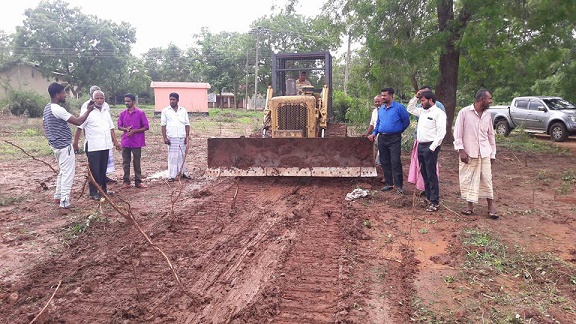
බොදුබල සේනා සංවිධානයේ ප්‍රධාන කාර්යාලයේදී ඊයේ (16දා) පැවැති මාධ්‍ය හමුවකට එක්වෙමින් උන්වහන්සේ මේ බව පැවැසූහ.

මෙහිදී වැඩිදුරටත් අදහස් දැක්වූ සුදත්ත හිමි, මේ වෙනකොට රටේ ඉදිරි වර්ෂය සඳහා අය-වැය පාර්ලිමේන්තුවට ඉදිරිපත් වෙලා තියෙනවා. මේ අය-වැය අන්තර්ගතය පිළිබඳව කිසිදු වග විභාගයකින් තොරව තමන්ගේ පටු දේශපාලන වුවමනාවන් ඉටුකර ගැනීමට, විශේෂයෙන්ම එල්.ටී.ටී.ඊ. සංවිධානය වෙනුවෙන් කොන්දේසි විරහිතව ඍජුවම පෙනී සිටින දෙමළ ජාතික සන්ධානයේ ඒ ප්‍රකාශ එක්ක අපිට ප්‍රශ්න කිහිපයක් ඇතිවෙලා තියෙනවා.

උතුරු පළාත් මහ ඇමැති විග්නේශ්වරන් සහ දෙමළ ජාතික සන්ධානයේ මාධ්‍ය ප්‍රකාශක සුමන්තිරන් ආන්දෝලනාත්මක ප්‍රකාශයක් කළා. ටී.එන්.ඒ. එකෙන් වෙන්වෙලා ඉන්න විග්නේශ්වරන් මහත්තයාගේ ඉල්ලීමක් ඉටු කරන්න ටී.එන්.ඒ. මන්ත්‍රිවරයෙක් වුණු සුමන්තිරන් මේ ප්‍රකාශය කරන්නේ ඇයි කියලා අපිට ප්‍රශ්නයක් තියෙනවා. ඔවුන් ප්‍රකාශ කළා මේ අය-වැයට අනිවාර්යයෙන්ම විරුද්ධව ඡන්දය ප්‍රකාශ කරනවා, ඔවුන්ට පොරොන්දු වුණු දේවල් ඉටු නොකළොත් කියලා.

අපි ආණ්ඩුවට කියනවා වහාම රටට හෙළිදරව් කරන්න කියලා, දෙමළ ජාතික සන්ධානයට ඉටු කරන්නම් කියලා පොරොන්දු වුණේ මොනවාද කියලා.

ඒ පොරොන්දු පත්‍රිකාවේ තියෙන්නේ දෙමළ නිජබිම් සංකල්පය පිළිගන්නවාද? ෆෙඩරල් ආණ්ඩුක්‍රම ව්‍යවස්ථාව ගේනවාද? එල්.ටී.ටී.ඊ. සාමාජිකයන් නිදහස් කරන්නද? අපි අහනවා මේ රටේ තැනින් තැන බෝම්බ පුපුරවලා මේ රටේ අහිංසක නිරායුධ ජනතාව ඝාතනය කරපු එල්.ටී.ටී.ඊ. සැකකරුවන් නිදහස් කරනවාද කියලා වහාම රටට ආණ්ඩුව හෙළිදරව් කළ යුතුයි.

ඒ වගේම උතුර සහ නැඟෙනහිර පළාතේ තිබෙන පුරාවස්තු, විහාරස්ථාන සහ සිංහල ගම්මාන ඉවත් කරන්නත් අද දෙමළ ජාතික සන්ධානය යෝජනා ඉදිරිපත් කරලා තියෙනවා. අපි ආණ්ඩුවෙන් අහනවා දෙමළ ජාතික සන්ධානයේ ඉල්ලීම මත මේ දේවල් ඉවත් කරනවාද කියලා. රටට දැවැන්ත විදියට බලපාන මේ දේවල්වලට ආණ්ඩුව මොකද කරන්නේ කියලා වහාම රටට හෙළිදරව් කළ යුතුයි.

මේවා සුළුකොට තැකිය යුතු කාරණා නෙවෙයි.

අපිට ලැබුණු තොරතුරු අනුව මීට මාස කිහිපයකට කලින් අගමැති රනිල් වික්‍රමසිංහට එරෙහිව පාර්ලිමේන්තුවට ආපු විශ්වාසභංග යෝජනාවට විපක්‍ෂව ඡන්දය භාවිත කිරීම සඳහා දෙමළ ජාතික සන්ධානයට යම් පොරොන්දු මල්ලක් ලබාදීලා තියෙනවා. දෙමළ ජාතික සන්ධානය දැන් කියන්නේ ඒ පොරොන්දු මල්ලේ තිබෙන පොරොන්දු ඉටු කිරීමද කියලා අපි අහනවා.

අපි අහනවා මේ රට බෙදන්න හදන සිවාජිලිංගම්ලාට ඇයි නීතිය ක්‍රියාත්මක නොවෙන්නේ. ඒ වගේම රණවිරුවන්ගේ කැපකිරීම හෑල්ලුවට ලක් කරන විග්නේශ්වරන්ට විරුද්ධව ඇයි නීතිය ක්‍රියාත්මක වෙන්නේ නැත්තේ. මේ රටේ පුරාවස්තු විනාශ කරන ශ්‍රී ධරන් මන්ත්‍රිවරයාට නීතිය ක්‍රියාත්මක කරන්නේ නැත්තේ ඇයි කියලා අපි අහනවා.

එල්.ටී.ටී.ඊ.ය නැවත ඕන කියපු විජයකලාට පැය දෙකෙන් ඇප දෙනවා.

නීතිය විජයකලාටත් පොදු නොවන්නේ ඇයි කියලා අපි අහනවා. මේ හැම නාට්‍යයක්ම නිෂ්පාදනය කරන්නේ පොලිස්පතිතුමා ප්‍රමුඛ පොලිස් දෙපාර්තමේන්තුව. නාට්‍යය අධ්‍යක්‍ෂණය කරනවා අරලිය ගහ මන්දිරයේ. ඊට පස්සේ නාට්‍ය විකාශන කරනවා ජනාධිපති ලේකම් කාර්යාලය. ඒකට අවශ්‍ය පසුබිම නිර්මාණය කරන්නේ නීතිපති දෙපාර්තමේන්තුව. මේක තමයි ඇත්ත. නැතිනම් මේ රටේ ජනාධිපතිවරයාව ඝාතනය කරන්න කුමන්ත්‍රණය කරපු අය එළියේ ඉන්නේ කොහොමද? මේවා ඔක්කොම නාට්‍ය විතරයි.

ඒ වගේම තමයි අපේ ඥානසාර හාමුදුරුවන්ට සිදුවුණේ දැඩි අසාධාරණයක්. නොකරපු වරදවල් කිහිපයක් එකතු කරලා උන්වහන්සේට දඬුවම් ලබා දුන්නා. උන්වහන්සේගේ මෑණියන් ජනාධිපතිතුමාගෙන් ඉල්ලීමක් කරලා තියෙනවා උන්වහන්සේව නිදහස් කරලා දෙන්න කියලා. මේ මෑණියන්ගේ ඉල්ලීම ජනාධිපතිතුමා ඉටුකරයි කියලා අපි බලාපොරොත්තු වෙනවා.

ඡායාරූප: අනුරුද්ධ මැදවත්තේගෙදර

ශ්‍රී ලංකාවට දැන් විදෙස් ප්‍රතිපත්තියක් තිබේද?

October 17th, 2018

උපුටාගැණීම  මව්බිම

අද වන විට ලංකාවට විදේශ ප්‍රතිපත්තියක් තිබේද නැද්ද යන ප්‍රශ්නය අපට ඇසීමට සිදුවී තිබේ. වත්මන් ආණ්ඩුව වෙනත් රටවල් හා සංවිධාන සමඟ පවත්වන සම්බන්ධතා තුළ ඒ තරම්ම පරස්පරතාවන් අද දක්නට ලැබේ. ආණ්ඩුවේ වම් අත කරන දේ දකුණු අත නොදන්නා තත්ත්වයක් අද උද්ගත වී ඇත. මේ සම්බන්ධයෙන් පහත දැක්වෙන කරුණු අපි ගෙනහැර දක්වමු.

1. 2018 සැප්තැම්බර් 25 වැනිදා ජනාධිපති සිරිසේන එක්සත් ජාතීන්ගේ මහ මණ්ඩලය අමතමින් කළ කතාව,
‘….. අපට අපේ ප්‍රශ්න විසඳගන්න ඉඩදෙන්නැයි මම ඉල්ලා සිටිනවා. රටක ස්වාධීනත්වය බොහොම වැදගත්….. ස්වෛරී රාජ්‍යයක් හැටියට අපට විදේශීය බලපෑම් හා තර්ජන අවශ්‍ය නෑ. ඒ අනුව මම නැවත වතාවක් ඉල්ලා සිටින්නේ ස්වාධීන රාජ්‍යයක් හැටියට අපට අපේ ප්‍රශ්න විස¼දාගෙන ඉදිරියට යන්න ඉඩ දෙන්න…..’
මෙය ඉතා පැහැදිලි ප්‍රකාශයක් වුවත්, මීට කලින් වත්මන් ආණ්ඩුව විදෙස් බලවතුන් ඉදිරියේ දුන් ප්‍රතිඥා සමඟ මෙය ගැළපෙන්නේද, යන්න විමසා බැලිය යුතුය.

2. 2015 ඔක්තෝබර් එක්සත් ජාතීන්ගේ මානව හිමිකම් කවුන්සිලයේ 30/1 යෝජනාව,
මෙම යෝජනාව ඇමෙරිකා එක්සත් ජනපදය විසින් ඉදිරිපත් කළ පසු ශ්‍රී ලංකාවේ ආණ්ඩුව එය තමන්ගේද යෝජනාවක් හැටියට පිළිගෙන මානව හිමිකම් කවුන්සිලයේ සියලුම සාමාජික රටවල් එයට සහයෝගය දෙන මෙන්ද ඉල්ලා සිටියේය.

කිසිදු ස්වාධීන ස්වෛරී රාජ්‍යයකට මෙවන් යෝජනාවකට කිසිසේත්ම එකඟ විය නොහැකිය. ශ්‍රී ලංකාවේ ‘යුක්තිය සෙවීමේ’ ක්‍රියාදාමයන් තුළ එක්සත් ජාතීන්ගේ සහභාගිත්වය මෙමඟින්
පිළිගෙන ඇත. ශ්‍රී ලංකාව තුළ වෙනම අධිකරණමය යාන්ත්‍රණයක් පිහිටුවීමටත්, එම යාන්ත්‍රණය තුළ පොදු රාජ්‍ය මණ්ඩලයට අයත් වන හා වෙනත් විදේශීය විනිශ්චයකාරවරුන්ට, නීතිඥයන්ට, පරිචෝදකයන්ට හා විමර්ශන නිලධාරීන්ට කටයුතු කිරීමට ඉඩදීමට ලංකා ආණ්ඩුව එකඟ වී ඇත. මෙම යෝජනාවෙන් ශ්‍රී ලංකාවේ ආණ්ඩුව පහත දැක්වෙන ක්‍රියාකාරකම්වලටද එකඟ වී ඇත.

• එක්සත් ජාතීන්ගේ මානව හිමිකම් කවුන්සිලයේ නිර්දේශ ක්‍රියාත්මක කිරීමට හැකි වන පරිදි ලංකාවේ දේශීය නීති වෙනස් කිරීම.

• ශ්‍රී ලංකාවේ යුක්තිය පිළිබඳ ක්‍රියාදාමයේ කොටසක් ලෙස ආරක්‍ෂක අංශ ප්‍රතිසංවිධානය කිරීම.

• සිවිල් කටයුතුවලට හමුදා මැදිහත්වීම අවසන් කිරීම හා ඉඩම් අයිතිය හා භාවිතය පිළිබඳ ගැටලුව විසඳීම.

• මහජන ආරක්‍ෂණ පනත ප්‍රතිසංස්කරණය කිරීම හා ත්‍රස්තවාදය වැළැක්වීමේ පනත අහෝසි කොට ඒ වෙනුවට මානව හිමිකම් කාර්යාලයට පිළිගත හැකි වෙනත් පනතක් ගෙන ඒම.

• ව්‍යවස්ථාමය ක්‍රියාදාමයක් තුළින් බලතල බෙදීම සම්බන්ධයෙන් ආණ්ඩුව දී ඇති ප්‍රතිඥා ඉටු කිරීම.

• එක්සත් ජාතීන්ගේ සංවිධානයක් මානව හිමිකම් කවුන්සිලයක් විවිධ අංශවල විමර්ශන නිලධාරීන් සමඟ සහයෝගයෙන් කටයුතු කිරීම.

තමාගේ ස්වාධීනත්වය හා ස්වෛරීභාවය ගැන කතා කරන ආණ්ඩුවක් ඉහත දැක්වෙන ආකාරයේ ප්‍රතිඥා විදේශීය රටවලට ලබා දුන්නේ කෙසේද යන්න අපට වටහා ගත නොහැකිය. 2015 30/1 යෝජනාවෙන් සිදුවී ඇත්තේ ලංකාවේ ආණ්ඩුව විදේශීය පාලනයට එකඟ වීමකි.

3. 2017 මාර්තු 23 එක්සත් ජාතීන්ගේ සංවිධානයේ මානව හිමිකම් කවුන්සිලයේ අංක 34/1 යෝජනාව
මෙකී යෝජනාවෙන් ලංකාවේ ආණ්ඩුව කර ඇත්තේ 2015 30/1 යෝජනාව ක්‍රියාත්මක කිරීමට තවත් අවුරුදු දෙකක් ඉල්ලා සිටීමය. 30/1 යෝජනාවේ අඩංගු කරුණු කිසිවක් වෙනස් කරන මෙන් ඉල්ලා නැත. මේ දෙන යෝජනාවෙන් එක්සත් ජාතීන්ගේ මානව හිමිකම් කොමසාරිස්වරයාට ලංකාවේ ක්‍රියාදාමයන් අධීක්‍ෂණය කිරීමට පුළුල් බලතලද පවරා ඇත.

4. ශ්‍රී ලංකාව සම්බන්ධයෙන් ඇති තමුන්ගේ කාර්ය භාරය ගැන එක්සත් ජාතීන්ගේ මානව හිමිකම් කොමසාරිස්වරයාට තිබූ ආකල්පය
2016 පෙබරවාරි 09 වැනිදා එක්සත් ජාතීන්ගේ මානව හිමිකම් කොමසාරිස්වරයා මානව හිමිකම් කවුන්සිලය තුළ සිදුකළ ප්‍රකාශයට අනුව ලංකාවේ මානව හිමිකම් උල්ලංඝනය වීම් විමර්ශනය කිරීමට පිහිටුවන යාන්ත්‍රණය තුළ ‘ජාත්‍යන්තර සහභාගිත්වය’ තිබිය යුතු බවටත් ඒ සම්බන්ධයෙන් තමන්ට ලංකාවේ අගමැතිවරයාත් ජනාධිපතිවරයාත් එකඟත්වය පළකළ බවත් ප්‍රකාශ කළේය.

2016 ජුනි 29 වැනිදා ඔහු කළ ප්‍රකාශයකින් කියවුණේ ලංකාවේ වගකීම් ක්‍රියාවලියේ ස්වාධීනත්වය හා විශ්වසනීය බව තහවුරු කිරීම සඳහා ජාත්‍යන්තර සහභාගිත්වය අත්‍යවශ්‍ය කාරණයක් වන බවයි.

2017 මාර්තු 22 වැනිදා ඔහු මේ අදහස තවත් ඉදිරියට ගෙන යමින් පැවැසුවේ, ආණ්ඩුව තුළ සන්නද්ධ අංශවල සාමාජිකයන්ට එරෙහිව පියවර ගැනීමට ඇති අකැමැත්ත හෝ බිය නිසාත්, ලංකාවේ උසාවි පද්ධතිය මේ සම්බන්ධයෙන් අපක්‍ෂපාතීව කටයුතු කරාවීද යන්න ගැන ඇති සැකය නිසාත් වගවීම් ක්‍රියාවලිය තුළ ජාත්‍යන්තර සහභාගිත්වයේ අවශ්‍යතාව තවත් තීව්‍ර කරන බවත්, විදේශීය විනිසුරුවන්, පරිචෝදකයන්, නීතිඥයන් හා විමර්ශකයන් මේ ක්‍රියාදාමයට හවුල් විය යුතු බවත්ය.

2016 පෙබරවාරි 09 වැනිදා මහ කොමසාරිස්වරයා කළ ප්‍රකාශයේදී ඔහු අවධාරණය කළ කාරණයක් වූයේ, ලංකාවට අසාර්ථක වූ අධිකරණයක් ඇති බවත් ලංකාවේ අගමැතිවරයාත් 2016 ජනවාරි 27 වැනිදා පාර්ලිමේන්තුවේ කතා කරමින් ඒ බව අවංකව පිළිගෙන තිබුණු බවයි.

5. ජනාධිපති සිරිසේන එක්සත් ජාතීන්ගේ මහ මණ්ඩලයේදී කළ කතාව
2015දී ලංකාවට එරෙහිව එක්සත් ජාතීන්ගේ මානව හිමිකම් කවුන්සිලය තුළ යෝජනා ගෙන ආ ඇමෙරිකාවේ ආණ්ඩු පෙරළියක් ඇති වී අද වන විට එම රට මානව හිමිකම් කවුන්සිලයෙන් ඉවත් වී තිබේ. ඉන් ඉවත්වීමේදී එක්සත් ජාතීන්ගේ සංවිධානයේ ඇමෙරිකානු තානාපතිවරිය මානව හිමිකම් කවුන්සිලය හැඳින්වූයේද දේශපාලන පක්‍ෂග්‍රාහී බවින් පිරි ‘අශූචි වළක්’ ලෙසය. ඇමෙරිකාව ඒ ආකාරයට මානව හිමිකම් කවුන්සිලය හැර ගොස් තිබුණද 30/1 හා 34/1 යන යෝජනා තවමත් වලංගුව පවතී. ලංකාවේ ආණ්ඩුව මේ යෝජනාවලට එකඟවීම නිසා අපගේ ස්වාධීනත්වය හා ස්වෛරීභාවය වෙනුවෙන් හඬ නැඟූ රටවල් විශාල ගණනකට අද මුනිවත රැකීමට සිදුවී ඇත.

අංක 30/1 හා 34/1 යන යෝජනාවලට ලංකාව විසින්ම සම අනුග්‍රාහකත්වය ලබාදී තිබෙන නිසා විදේශීය රටක් විසින් ලංකාවට එරෙහිව ගෙන එන ලද යෝජනාවකට වඩා ඒවා වෙනස් වේ. එමඟින් ලංකාවේ ආණ්ඩුවේ අභිමානය පිළිබිඹු වන බවත් ගම්‍ය වේ.

දේශීය ක්‍රියාදාමයන් ප්‍රකාශිතවම අතහැර පශ්චාත් යුද සමයේ ලංකාවේ නැවත ගොඩනැඟීම හා සංහිඳියාව සම්බන්ධයෙන් විදේශීය හවුල්වීම පිළිගෙන ඇත. ඒ අනුව රාජ්‍ය ඉඩම් පරිහරණය, ආරක්‍ෂක අංශ ප්‍රතිසංවිධානය, බලය බෙදීම, ව්‍යවස්ථාමය ප්‍රතිසංස්කරණ යන සියලුම අංශවල විදේශීය මැදිහත්වීම් පිළිගෙන ඇත. මේ නිසා ජනාධිපති මෛත්‍රිපාල සිරිසේන මහතා එක්සත් ජාතීන්ගේ මහා මණ්ඩලයට කළ කතාව ගැන මම මවිත වුණෙමි.

එම කතාව ඇසූ විට මගේ සිත තුළ ඇති වූ ප්‍රශ්නය වූයේ එසේ නම් 30/1 හා 34/1 යන යෝජනාවලට එකඟත්වය පළ කරනු ලැබුවේ ජනාධිපති සිරිසේනගේ ආණ්ඩුවද නැති නම් වෙනත් ආණ්ඩුවක්ද යන්නයි.

ජනාධිපතිතුමා නිව්යෝර්ක් නුවර මහ මණ්ඩලයේ කරන කතා ජිනීවා නුවර මානව හිමිකම් කවුන්සිලයට කිසිසේත්ම බලපාන්නේ නැත. ලංකාව විසින්ම 30/1, 34/1 යන යෝජනාවලට වෙනත් රටවල්ද සහයෝගය දිය යුතු යැයි ඉල්ලා සිට ඇති වාතාවරණයක ජනාධිපතිවරයාගේ වදන්වල කිසිදු ප්‍රායෝගික ප්‍රතිඵලයක් නැත. මෙහි වෙනස්කමක් කිරීමට නම් ආණ්ඩුව 30/1 හා 34/1 යන යෝජනා මානව හිමිකම් කවුන්සිලය තුළ නිෂ්ප්‍රභ කිරීමට යම් ප්‍රායෝගික ක්‍රියාදාමයක් ආරම්භ කළ යුතුමය.

Cabraal-led Expert Committee for economic crisis: Joint Opposition JO

October 17th, 2018

Kalathma Jayawardhane Courtesy The Daily Mirror

Former President Mahinda Rajapaksa had decided to appoint a Special Economic Committee headed by former Central Bank Governor Ajith Nivard Cabraal, to look into the economic crisis in the country, and to provide recommendations, the Joint Opposition (JO) said today.

JO member MP Wimal Weerawansa told a news conference that a decision had been taken in this regard during the JO’s Party Leaders’ meeting headed by Mr Rajapaksa Tuesday evening.

He said the Special Committee of Experts would be appointed in the coming days.

The Special Committee will look into the current economic situation in the country and a report will be issued at the end,” Mr Weerawansa said.

The report will contain steps and suggestions to mitigate the economic crisis,” he said.

He said the Committee would assist in safeguarding the country and its economy at this critical juncture.

DIG interdicted – Prez Media calls special briefing today Assassination bid

October 17th, 2018

by Shamindra Ferdinando and Norman Palihawadana Courtesy The Island

The National Police Commission (NPC) yesterday interdicted Deputy Inspector General (DIG) of Police Nalaka Silva.

The seven-member NPC, headed by P.H. Manatunga, by letter informed IGP Pujith Jayasundera of its decision. Secretary to the NPC Saman Dissanayake told The Island that the NPC deliberated and decided on the matter within hours after Public Administration, Management and Law and Order Ministry recommended the top law enforcement official’s interdiction.

article_image

Public Administration, Management and Law and Order Minister Ranjith Madduma Bandara told The Island that his Ministry Secretary Pathmasiri Liyanage had recommended the immediate interdiction of DIG Nalaka Silva, now on compulsory leave over his alleged involvement in a plot to assassinate President Maithripala Sirisena and wartime Defence Secretary Gotabhaya Rajapaksa.

A senior ministry spokesperson told The Island that the recommendation in respect of the former DIG in charge of the Terrorist Investigation Division (TID) had been made to the National Police Commission (NPC) yesterday.

Police headquarters placed Nalaka Silva on compulsory leave on Sept. 19. Two days later, the Criminal Investigation Department (CID) arrested an Indian, national Mercil Thomas, in connection with the alleged plot.

The ministry spokesman said that Pathmasiri Liyanage called for Nalaka Silva’s interdiction on the basis of findings made by way of the ongoing investigation.

Thomas arrived in Colombo in January 2017.

The CID arrested Thomas at the Warakapola residence of civil society activist and one-time police informant, Namal Kumara, who revealed the alleged plot on Sept 13.

The Public Administration, Management and Law and Order Ministry said Nalaka Silva had been sent on compulsory leave on its recommendation.

The ministry spokesman said that the CID would be able to pursue investigations, in a transparent manner, following the interdiction of DIG Silva.

The Fort Magistrate’s Court, on Sept 27, allowed the CID to detain Thomas for a period of three months, under the Prevention of Terrorism Act (PTA). The CID has been directed to produce the suspect in Court next Tuesday (Oct 23).

Sri Lanka Podujana Peramuna (SLPP) Chairman Prof. G. L. Peiris yesterday told The Island that a thorough inquiry was needed to ascertain the truth. Prof. Peiris pointed out that the Indian, who had visited Namal Kumara at the latter’s Warakapola residence, had been arrested whereas the two antagonists – Nalaka Silva and Namal Kumara – were yet to be taken in.

Prof. Peiris said statements that had been attributed to President Sirisena, at Tuesday’s Cabinet meeting, should be examined against the backdrop of the alleged conspiracy, involving a senior police officer, and an informant. Responding to a query, Prof. Peiris said that a thorough investigation was required as in addition to the alleged assassination plot, allegations pertaining to deliberate moves to cause ethnic violence were in the public domain.

Presidential Secretariat said that Presidential Advisor Shiral Lakthilaka and head of Sri Lanka Foundation Institute (SLFI) former Sri Lanka’s Ambassador in Germany Sarath Kongahage would brief the media at Hotel Nippon on Thursday at 2 pm on the alleged assassination bid. The briefing was earlier scheduled to take place yesterday at the SLFI.

President dissolves Director boards of People’s Bank, BOC and BOI

October 17th, 2018

President Maithripala Sirisena has decided to dissolve the boards of directors of the People’s Bank, the Bank of Ceylon and the Board of Investments (BOI).

The dissolution will be in effect from midnight tonight (17).

Reportedly, this decision has been taken in order to reform the board of directors of the BOI.

Gotabaya’s petition to be taken up on Nov 02

October 17th, 2018

The petition filed by former Defense Secretary Gotabaya Rajapaksa, seeking an injunction halting his arrest over the case against him for the alleged misappropriation of state funds to establish the D.A. Rajapaksa Memorial Museum, will be taken up again on November 02.

The order was issued when the petition was taken up before a Court of Appeal judge bench consisting of Justices Preethi Padman Surasena and Arjuna Obeysekera today (17).

Representing Gotabaya Rajapaksa, President’s Counsel Romesh de Silva informed the court that proceeding with the hearing of the petition is unnecessary as the Court of Appeal has already issued a permanent injunction halting the arrest of his client.

Hence, President’s Counsel Romesh de Silva requested the Court of Appeal to set a date to inform whether proceeding with the petition is necessary.

Accepting the request of the President’s Counsel, the Appeals Court judge bench ordered to take up the petition again on November 02 and to inform the court regarding the necessity of proceeding with the hearing of the petition.

Thebuwana Police Sergeant speaks to Ada Derana

October 17th, 2018

Police Sergeant Sanath Gunawardena holding Police ID number 4925 was a topic of controversy due to an incident of arresting a lorry which illegally transported sand.

Sanath Gunawadena commenced his police career on 10th January 1989 from Bambalapitiya Police Station and has been in the service for nearly 30 years.

In June 1990 he is captured by the LTTE terrorist organization while he was on duty in Oddusuddan area in the Northern Province. He was in captive of the LTTE for 4 years where he suffered through torture.


In 1995, he was serving in the Kalutara Police division, when he had to face another challenge in his career. This was regarding a death as a result of a police shooting in Aluthkade area which he says was ordered by Divisional Superintendant of Police (SP) Chandra Perera.

However, the said SP had claimed before the court that he had not given out any such order, denying Gunawardena any promotions or salary increase for his 26 years of service.

His current basic salary is Rs 25,000 while the other officers who work alongside him receive a basic salary of Rs 45,000, Gunawardena stated to Ada Derana.

According to him, the attorneys’ fees for the court case of the Thebuwana incident costs him Rs 13,000 per session.

The recent controversial incident occurs when he was serving attached to the Thebuwana Police Station, on 29th September. At around 4.30 am that morning, Sergeant Gunawardena arrests a lorry which had been transporting sand without a permit.

However, the relevant lorry had been released without any inquiry and Gunawardena was rebuked by a higher official regarding the arrest, despite there being clear evidence on that the lorry had been transporting sand illegally.

This led to Sergeant Gunawardena expressing his protest over the incident by arriving at the Thebuwana junction along with the T56 assault rifle and refused to budge from spot.

After more than 2 hours the Special Task Force (STF) personnel managed to apprehend the Sergeant while the firearm in his hand fired several times during this operation to subdue him, although no one was harmed.

Police Sergeant Sanath Gunawardena was interdicted and remanded on the charges that he had behaved in an unruly manner while armed with his service weapon.

When tried to prove his innocence, Gunawardena was accused of a mental illness by the police Department.

As this incident was blown out by media, it gained the attention of President Maithripala Sirisena as well. President Sirisena granted Rs 1 million to the Sergeant following a meeting held with Sergeant Gunawardena, yesterday (16). This was considering the financial difficulties faced by him due to the temporarily suspension of his service as well as an assistance for the education of his children.

Meanwhile, Sergeant Gunawardena was reinstated to his post by the order of Inspector General of Police Pujith Jayasundara.

However, he had not officially received the appointment as of yet, he said to Ada Derana.

Although this happened due to his luck, he doesn’t approve of his behavior which happened in an outburst of anger, he stated. However, he will not be afraid to properly fulfill his duties, Sergeant Sanath Gunawardena told Ada Derana.

“WAR CRIMES” IN EELAM WAR IV Part 9

October 17th, 2018

KAMALIKA PIERIS

The ‘war crimes’ of Eelam war IV have come under the purview of   the United Nations Human Rights Council  in Geneva, thanks to Resolution 30/1. It is therefore necessary to look at the scope and functions of the UN.  The United Nations is an organization set up to ensure world peace and nothing else. UN recognizes the sovereign equality of all its members and is explicitly prohibited from meddling in the internal affairs of its member states. (Articles 1.1 and 2.1)

UN Article 2.7 of the UN Charter says Nothing contained in the present Charter shall authorize the United Nations to intervene in matters which are essentially within the domestic jurisdiction of any state or shall require the Members to submit such matters to settlement under the present Charter”   .

UN Resolution A/RES/36/103 of 1981 Declaration on the Inadmissibility of Intervention and Interference in the Internal Affairs of States    has many prohibitions which are relevant to the Eelam War. Here they are

  • no State has the right to intervene for any reason whatsoever in the internal or external affairs of any other State
  • States must refrain from any action in whatever form or under whatever pretext to destabilize or to undermine the stability of another State.
  • States must refrain from the promotion, encouragement or support, direct or indirect, of rebellious or secessionist activities within other States, under any pretext whatsoever, or any action which seeks to disrupt the unity or to undermine or subvert the political order of other States.
  • States must prevent on its territory the training, financing and recruitment of mercenaries, or the  sending of such mercenaries into the territory of another State
  • States must abstain from any defamatory campaign, vilification or hostile propaganda for the purpose of intervening or interfering in the internal affairs of other  States
  • States must  refrain from the exploitation   and the distortion of human rights issues as a means of interference in the internal affairs of States,
  • States have the right to combat, within their constitutional prerogatives, the dissemination of false or distorted news which can be interpreted as interference in the internal affairs of other.

Under the UN Charter, resolutions adopted by the General Assembly, including subsidiary bodies such as the Human Rights Council, are recommendations only and not legally binding on Member States. There are numerous resolutions which have never been implemented. The UN has never implemented the hundreds of resolutions on Occupied Palestine.

The UN Charter describes the Secretary-General of the UN as “chief administrative officer” of the Organization, who shall act in that capacity. Secretary-General is expected to bring to the attention of the Security Council any matter which in his opinion may threaten the maintenance of international peace and security”. This shows that the role of the Secretary-General was directed mainly to matters of world peace, not internal matters of member states. In 1976 the Secretary General of UN was not regarded as equal to head of government, said Leelananda de Silva.

However, President Mahinda Rajapaksa permitted the UN to butt in as soon as Eelam War IV ended. He permitted UN Secretary General Ban Ki Moon to visit.     Moon arrived on 23.May 2009. He spoke with the President and senior officials. He also ‘consulted other relevant stakeholders, members of international humanitarian agencies and civil society.  The Secretary-General visited the internally displaced persons (IDP) sites at Vavuniya and overflew the conflict area, near Mullaitivu that was the scene of the conflict.’

The President and Secretary General then issued a joint statement. This statement   did not make any reference to the praiseworthy victory of the government of Sri Lanka. Sri Lanka was not congratulated on it. Instead, the statement spoke, inter alia, of violations of international humanitarian and human rights law.

Following is the joint statement by the Government of Sri Lanka and the United Nations at the conclusion of UN Secretary-General Ban Ki-moon’s visit to Sri Lanka on 23 May:

  • At the invitation of Mahinda Rajapaksa, President of Sri Lanka, the Secretary-General of the United Nations, Ban Ki-moon, paid a visit to Sri Lanka.  During the course of his visit, he held talks with the President, Foreign Minister as well as other senior leaders of Sri Lanka.  During his stay, he also consulted other relevant stakeholders, members of international humanitarian agencies and civil society.  The Secretary-General visited the internally displaced persons (IDP) sites at Vavuniya and overflew the conflict area, near Mullaitivu that was the scene of the conflict.
  • President Rajapaksa and the Secretary-General agreed that addressing the aspirations and grievances of all communities and working towards a lasting political solution was fundamental to ensuring long-term socio-economic development.  The Secretary-General welcomed the assurance of the President of Sri Lanka contained in his statement in Parliament on 19 May 2009 that a national solution acceptable to all sections of people will be evolved.  President Rajapaksa expressed his firm resolve to proceed with the implementation of the 13th Amendment, as well as to begin a broader dialogue with all parties, including the Tamil parties in the new circumstances, to further enhance this process and to bring about lasting peace and development in Sri Lanka.
  • President Rajapaksa and Secretary-General Ban Ki-moon agreed that following the end of operations against the Liberation Tigers of Tamil Eelam (LTTE), Sri Lanka had entered a new post-conflict beginning.  In this context, the Government of Sri Lanka faced many immediate and long-term challenges relating to issues of relief, rehabilitation, resettlement and reconciliation.  While addressing these critical issues, it was agreed that the new situation offered opportunities for long-term development of the north and for re-establishing democratic institutions and electoral politics after 2 ½ decades.  The Government expressed its commitment to ensure the economic and political empowerment of the people of the north through its programmes.
  • The Secretary-General welcomed the assurance of the President of Sri Lanka contained in his statement in Parliament on 19 May 2009 that a national solution acceptable to all sections of people will be evolved.  The Secretary-General welcomed the announcement by the Government expressing its intention to dismantle the welfare villages at the earliest, as outlined in the Plan to resettle the bulk of IDPs and call for its early implementation.
  • President Rajapaksa informed the Secretary-General regarding ongoing initiatives relating to rehabilitation and reintegration of ex-combatants.  In addition to the ongoing work by the Office of the Commissioner General for Rehabilitation, a National Framework for the Integration of Ex-combatants into Civilian Life is under preparation, with the assistance of the United Nations and other international organizations.
  • Sri Lanka reiterated its strongest commitment to the promotion and protection of human rights, in keeping with international human rights standards and Sri Lanka’s international obligations.  The Secretary-General underlined the importance of an accountability process for addressing violations of international humanitarian and human rights law.  The Government will take measures to address those grievances.

Ban Ki Moon then returned to New York and appointed a three-member Panel of Experts to advise the   UN Secretary General on ‘the modalities, applicable international standards and comparative experience relevant to the fulfillment of the joint commitment to an accountability process having regard to the nature and scope of the alleged violations’. The   Panel would report directly to Secretary General. This Report of the Secretary-General’s Panel of Experts on Accountability in Sri Lanka” is also called the ‘Darusman report’ or ‘PoE report.

The Sri Lankan government reacted angrily to the appointment of this panel, calling it an unwarranted and unnecessary interference with a sovereign nation”. The Panel was not allowed to enter Sri Lanka. Sri Lanka government refused to allow them into the country and refused to talk to them.

The report was heavily criticized. Darusman report was not prepared on the directions of the UN, or the Security Council. It is not a UN report nor does it bear the stamp for the UN, said Gomin Dayasiri.  The Darusman Report cannot be called a UN report at all, said G.L.Pieris. It is a report compiled on the private initiative by the UN Secretary General and has no connection with the UN.

The Secretary General   exceeded his powers when he appointed the Darusman Panel, said critics. The UN Charter (article 100) says. “In the performance of their duties the Secretary General and the staff shall not seek or receive instructions from any government or from any other authority external to the organization. They shall refrain from any action which might reflect on their position as international officials responsible only to the Organization”.

This means that the Secretary General      can only seek advice from those within the United Nations Organization. He is specifically barred from seeking advice from anyone outside the organization. The Darusman panelists do not come from within the UN. Their appointment is therefore a violation of the UN Charter.  The legitimacy of the Panel can be challenged on

Eelam War IV also came under the scrutiny of the  United Nations Human Rights Council. (UNHRC) . The United Nations Human Rights Council was established in 2006 by Resolution 60/251. This resolution declared, inter alia, that the UNHRC shall be responsible for promoting human rights without distinction of any kind and in a fair and equal manner. It must uphold the highest standards in the protection of human rights and its work shall be transparent, objective and non selective,   (Clause 4, 9, 12).

Outgoing United Nations High Commissioner for Human Rights Zeid Ra’ad Al Hussein said in 2018, that there were increasing attacks on the notion of universal human rights. He had heard a UN official saying that there is really no such thing as universal human rights; they were picked from Western imagination.  Why is the Universal Declaration, and the whole body of human rights law that follow it, the object of so much attack now –- not only from the violent extremists,  but also from authoritarian leaders, populists, demagogues, cultural relativists, some Western academics, and even some UN officials, he asked.

Island editorial of 20. June 2018 observed, it looks as if the UNHRC had outlived its original purpose. The UN outfit is no longer a forum where human rights are championed and measures adopted to make this world a better place. Its members are driven by strategic interests and not any concern for human rights. Those who are dependent on the US and other western nations do the bidding of the latter when votes are cast. Others are influenced by the interests of the anti-western power bloc.

The West does not hesitate even to take on the UNHRC chiefs when its interests are threatened. In Geneva, the US and its allies, backed by human rights groups they fund, condemn the nations perceived to be hostile to the West while shielding notorious human rights violators who happen to be their allies. The anti-US bloc defends its friends regardless of their sordid human rights records, the island editorial concluded.

.Zeid Ra’ad Al Hussein, the UN High Commissioner for Human Rights, told staff  that he would not bargain away his agency’s integrity when his job comes up for renewal in August 2017.  He rejected the idea of “wheeling and dealing” with political players to secure a second four-year term in Geneva. Hussein has reportedly been under pressure from UN Secretary-General Antonio Guterres to tone down his human rights criticism of Washington. The United States remains the single biggest donor to UN coffers and Guterres has been keen to  maintain ties with the US administration.  ( Continued)

2019 අයවැය යෝජනා – ශ‍්‍රී ලංකා සමාජ ප‍්‍රජාතන්ත‍්‍රවාදී පක්ෂය

October 17th, 2018

තුසිත බාලසූරිය ප‍්‍රධාන ලේකම් ශ‍්‍රී ලංකා සමාජ ප‍්‍රජාතන්ත‍්‍රවාදී පක්ෂය

ලබන වසරේ රාජ්‍ය අයවැය සදහා ශ‍්‍රී ලංකා සමාජ ප‍්‍රජාතන්ත‍්‍රවාදී පක්ෂයේ යෝජනා පහත පරිදි ය. එහි අය යෝජනා සියල්ලම කංසා නීතිගත කිරීම මත පදනම් ව ඇත්තේ කංසා නීතිගත කිරීමෙන් රජයට අත්වන ආර්ථික වාසි පහදා දීමේ අරමුණ ඇතිව ය. වැය යෝජනා අධ්‍යාපන, සංචාරක, කලා, විනෝදාත්මක, සන්නිවේදන,  තැපැල්, ආහාරපාන, සෞඛ්‍ය සහ කෘෂිකාර්මික යන විෂයයන් ආවරණය කොට ඇත.

අය

පුද්ගලික පරිහරණයට කංසා භාවිතය නීතිගත කොට ඖෂධීය කංසා වගා කිරීම සහ රජයේ ඔසුසැල්වල අලෙවි කිරීම.

උසස් තත්වයේ කංසා යොදාගෙන නිපදවන ආහාරපාන, රූපලාවණ්‍ය ආලේපන හා ඖෂධ නිෂ්පාදනයන්ට වගා සහ අපනයන බලපත‍්‍ර නිකුත් කිරීම.

කර්මාන්තමය කංසා වගාව නීතිගත කිරීම මගින් රෙදිපිළි, කඩදාසි හා කෘත‍්‍රිම දැව නිෂ්පාදනයට කර්මාන්ත ශාලා පිහිටු වීම.

කංසාවලින් ජෛව කොන්ක‍්‍රීට්, ජෛව ඉන්ධන හා ජෛව ප්ලාස්ටික් නිෂ්පාදනය කරන දෙස් විදෙස් සමාගම්වලට යටිතල පහසුකම් හා බදු සහන ලබාදීම.

වැය

පාසල්වල භෞතික හා මානව සම්පත් වැඩිදියුණු කිරීම සහ ඉංග‍්‍රීසි හා තාක්ෂණ දැනම වර්ධනය කිරීමට නව වැඩසටහන් හදුන්වා දීම.

සංචාරක කලාප ආවරණය වන පරිදි සෑම දිස්ත‍්‍රික්යකම ගිමන්හලක්, නවාතැන්පලක් සහ කලාගාරයක් සහිත සංස්කෘතික හා කලා නිකේතන පිහිටුවීම

අන්තර්ජාල සේවා සපයන සන්නිවේදන මධ්‍යස්ථාන ලෙස තැපැල් ස්ථාන වැඩි දියුණු කිරීම සහ තැපැල්පත් බෙදාහරින්නන්ට කුඩා විදුලි වාහන ලබා දීම.

කාබනික පොහොර, ස්භාවික කෘමිනාශක නිෂ්පාදන ආයතනයක් පිහිටුවීම සහ වසවිස තොර ගොවිතැනට අවශ්‍ය තාක්ෂණ හා මූල්‍ය සහාය ලබාදීම.


“මෛත්‍රී රනිල් ට රටේම ඡන්ද කල් දාන්න ඕනි වෙලා.  විපක්ෂ නායක සම්බන්ධන්- සුමන්දිරන්ට උතුරු නැගෙනහිර පළාත් සභා ඡන්දය ඕනි නැති වෙලා. “

October 17th, 2018

අගමැතිවරයා ප්‍ර‍මුඛ සීමා නිර්ණය සමාලෝචන කමිටුවේ කාලය ඔක්. 28 න් පසුව එක් දිනක් හෝ දීර්ඝ කළ නොහැකියි – කීර්ති තෙන්නකෝන්

පළාත් සභා සීමා නිර්ණය සමාලෝචනය සදහා පත් කර ඇති අගමැතිවරයා ප්‍ර‍මුඛ කමිටුවට ඔක්තෝබර් මස 28 න් පසුව එක් දිනකට හෝ කාලය දීර්ඝ කිරීමක් ලබා දීමට කථානායකවරයාට හෝ පාර්ලිමේන්තුවට හෝ නොහැකි බව නිදහස් හා සාධාරණ මැතිවරණයක් සදහා වූ ජනතා ව්‍යාපාරයේ විධායක අධ්‍යක්ෂ කීර්ති තෙන්නකෝන් මහතා පැවසීය.

ලංකා ආණ්ඩුක්‍ර‍ම ව්‍යවස්ථාවට අනුව නම්, අගමැතිවරයාගේ කමිටුව සිය වාර්තාව මේ මස 28 වන දිනට අවසන් කළ එය පාර්ලිමේන්තුවට ඉදිරිපත් කළ යුතුයි.  මේ දක්වා කමිටුව රැස්වෙලා තියෙන්නේ රැස්වීම් දෙකකට පමණයි.  ඉදිරි දින 10 ට තවම රැස්වීමකට දින නියම කර හෝ නෑ.  ඇත්තටම අගමැතිවරයාගේ කමිටුවට ඉදිරිපත් කරන්න විශේෂ වාර්තාවක් නෑ.  මේ කමිටුව පත් කරන්නට සිදු වුණේ පාර්ලිමේන්තුව නියෝජනය කරන පක්ෂ සියල්ලට පළාත් සභා ඡන්දයට බය නිසයි.  ඡන්දය තියන්න බය ආණ්ඩුවකුත්, එයට මුක්කු ගහන නාමික විපක්ෂයකුත් නිසා අද ලංකාවේ සර්වජන ඡන්ද අයිතිය විනාශ මුඛකයට යමින් තියෙනවා යැයි ද තෙන්නකෝන් මහතා පැවසුවේ අද මරදාන සී.එස්.ආර්. හි පැවති මැතිවරණ නිරීක්ෂකයින්ගේ ඒකාබද්ධ පුවත්පත් සාකච්ඡාව අමතමිනි.   

අගමැතිතුමාගේ කමිටුවට දෙන්නට වෙන්නේ ‘හිස් වාර්තාවක්‘. සීමා නිර්ණය ගැන අවබෝධයක් තියෙන ඕනෑම කෙනෙකුට ඒක තේරෙනවා.  අගමැතිවරයාගේ කමිටු වාර්තාව අරගෙන ජනාධිපතිවරයාට එය ගැසට් මගින් ප්‍ර‍කාශයට පත් කරන්නට අනිවාර්යෙන්ම සිදුවෙනවා.

පලාත් සභා පනතේ අනිවාර්ය සංශෝධන ගණනාවක් සකස් කිරීමේ වගකීම පළාත් සභා හා පලාත් පාලන අමාත්‍යවරයාට තියෙනවා.  ඔහුගේ සංශෝධන අඩුම ගානේ කැබිනට් මණ්ඩලයට ඉදිරිපත් කර අනුමැතිය ගත්තාද කියලා වත් අපි තවම දන්නේ නෑ.  ෆයිසර් මුස්තාෆා අමාත්‍යවරයා හරි දක්ෂයි ඡන්ද පනත් සශෝධන රබර් වගේ අදින්න.  ආණ්ඩුවේ ඊලග උත්සාහය පනත සංශෝධනයට කාලය අවශ්‍යයි කියලා පළාත් සභා තියන්නේ නැතිව ඉන්න එකයි.

අගමැති කමිටුව සමාලෝචන කමිටු වාර්තාව පාර්ලිමේන්තුවට ඉදිරිපත් කරන්නේ නැතිනම්, මැතිවරණ කොමිසමත්, මැතිවරණ නිරීක්ෂකයින් ලෙස අපටත් ඉතිරිව ඇත්තේ අධිකරණ ක්‍රියාමාර්ගය ගැනීම පමණයි.  ප්‍රියසාද් ඩෙප්,   හිටපු ගරු අගවිසුරුතුමා, පළාත් පාලන ඡන්දය ප්‍ර‍මාදය ගැන ලබාදුන්  SC/FR 35/ 2016  නඩු තීන්දුවට විශිෂ්ඨයි. ඒ නඩුව අහපු විනිසුරුවන්ගෙන් නලීන් පෙරේරා මැතිතුමා අද අගවිනිසුරු ධූරයට පත්වී තිබෙනවා. 

ලබන 28 වන දාට ලංකාවේ පළාත් සභා 9 න් 6 ක් මහජන නියෝජිතයින් නොමැතිව පාලනය වෙනවා.  නිලධාරි පාලනය ඒකාධිපති පාලනයක් හා සමානයි.  නිලධාරීන් පමණක් රටක් පාලනය කරනවා නම් එය මානුෂිකත්වය නැති, ඒකාධිපති රටක් බවට පත් වෙනවා. 

පළාත් සභා ඡන්දය පැවැත්විය යුතු බව එළිපිට කියන්නේ මැතිවරණ කොමිෂන් සභාවත්, මැතිවරණ නිරීක්ෂකයිනුත්, ප්‍ර‍ධාන දේශපාලන පක්ෂවලින් බැසිල් රාජපක්ෂ මහතා සහ එකම පළාත් සභා මැතිවරණයකටවත් මුහුණ දී නැති එක්සත් ජාතික පෙරමුණේ  මෛත්‍රී ගුණරත්න මහතාත් පමණයි. 

ද්‍ර‍විඩ ජාතික සන්ධානයේ නායකතුමා විපක්ෂ නායක සම්බන්ධන් මහත්තයයි අගමැතිතුමාගේ නීති උපදේශක සුමන්දිරන් මන්ත්‍රීතුමායි  හිතාගෙන ඉන්නවා ඡන්දයක් තිබ්බාම එයාලා කෙටුම්පත් කරපු, අපි කවුරුත් තවම දැකලාවත් නැති ‘ආණ්ඩුක්‍ර‍ම ව්‍යවස්ථාව‘ ගේන්න බැරිවෙයි කියලා. 

උතුරු පළාත් සභා ඡන්දය තියන්න දකුණේ බොහෝ ප්‍ර‍ගතිශීලි ජනතාව එදා  මහින්ද රාජපක්ෂ රජයට බලපෑම් කළා.   දැන් ඔබලාගේ ජනතාව නියෝජනය කරන නැගෙනහිර පළාත් සභාවට මහජන නියෝජිතයින් නැතිව වසරක් ගතවෙලා.  ඔබලා වචනයකින් හෝ විරෝධයක් දක්වන්නේ නෑ.  පාර්ලිමේන්තුවේ දී ආණ්ඩුවට සහාය දෙනවා.  එළියේ දී, පළාත් සභා ඡන්දය කල් දාන්න නීති උපදෙස් දෙනවා.  තව සතියකින් උතුරු පළාත් සභාවේ කාලයත් අවසන් වෙනවා.  පළාත් සභා ඡන්දය තියන්න එපා කියලා තානාපති කාර්යාල ගානේ, ජාත්‍යන්තර ප්‍ර‍ජාව පස්සේ යන්න එපා!   

රටටම වග කියන විපක්ෂ නායකවරයෙක් නම්, රටට වග කියන විපක්ෂයක් නම් උතුරු නැගෙනහිර පළාත් සභා පවත්වන්නට රජයට බල කළ යුතුයි.  රටේම ඡන්ද කල්දානවාට විරුද්ධ විය යුතුයි.  ද්‍ර‍විඩ සන්ධානයත් සම්බන්ධන් විපක්ෂ නායකවරයාත් ජනතාවගේ ඡන්ද අයිතිය අහිමි කරන්න ආණ්ඩුව සමග එකතුවීම ලැජ්ජාවට කාරණයක් යැයි ද තෙන්නකෝන් මහතා පැවසීය.

මාධ්‍ය ඒකකය

කැෆේ සංවිධානය

2018 ඔක්. 17

YAHAPALANA AND “WORLD WAR III” Part 7

October 17th, 2018

KAMALIKA PIERIS

The next World war will be located in the Indian Ocean, say the war mongers, The Bay of Bengal will definitely get caught up in it.   China will be on one side, the USA, India and Japan on the other and Sri Lanka in the middle.   A cartoon showing USA, UK, India and China warships converging on Sri Lanka, appeared in the newspapers.  It looks as h though Sri Lanka is silently preparing for war. The biggest allocation in  2018 Yahapalana budget is for defence. Naval power is expected to play an increasingly significant role.

There might be a war inside Sri Lanka too. China has got Hambantota and Colombo ports and the Quad does not like it.  Yahapalana assured India that Hambantota would not be given to any foreign navy. “I assure you that no action, whatsoever will be taken in our harbour or in our waters that jeopardizes India’s security concerns.” Instead a commercial agreement between Mattala and the Airport authority of India will be signed which see India will take over the management of Mattala airport, said Prime Minister Ranil Wickremasinghe  .

Sitting in the middle of the Indian Ocean at the southern tip of India, Sri Lanka occupies an enviable strategic position, said Palitha Kohona. That is its bane, not its strength, said N.A. de S Amaratunga.

The question today is how a small country like Sri Lanka could survive in a big pond such as the Indian Ocean in the midst of geopolitical interests of great powers, said analysts’. “Since all of them are converging on Sri Lanka, not for the benefit of Sri Lanka but solely for what is best for each of them individually or collectively, how Sri Lanka handles these great power relations is a matter of deep concern .

Because the games that Great Powers play leave in their wake  unintended consequences that countries such Iraq, Libya and Afghanistan are now facing, and Sri Lanka would have to prepare itself to face in the near future. If Sri Lanka hopes to emerge unscathed by the interplay of these five powers in and around Sri Lanka, it is not only being delusional but also fails to acknowledge its limitations, said Ladduwahetty.

How can Sri Lanka extricate itself from this entrapment? So far Sri Lanka has been able to balance the competing interests of India and China. The option for Sri Lanka is either to stay out of the fray of the rivalries of great powers and accept the fallout, or to be mindful of the opportunities that inevitably would be presented by the rivalry among the great power and use it for the benefit of Sri Lanka, he said.

Sri Lanka’s future is with China. India will continue to be only a jealous distracter replied an observer, bluntly. The only way ahead is for Sri Lanka to arm herself with assistance from friendly countries such as China and move forward without waiting for further meddling by poverty-stricken India, by hegemony seeking Christian West and the Jihadist nations in the Middle East,  he concluded,

Chandraprema calls for a defence pact with China. Trincomalee and Hambantota should be full of Chinese warships. China needs the trade routes across the Indian Ocean more than India does. India is not an exporting nation the way China is.

The Pentagon has ‘raised a red flag about Hambantota’ in its Annual report to the U.S. Congress on China’s military and security developments” 2017. But Prime Minister Ranil Wickremasinghe has   rejected US claims that China might establish a “forward military base” at Hambantota. He said that there would be no foreign military presence at Hambantota.  Sri Lanka navy’s Southern Command is being relocated in Hambantota to control port security,”

I state clearly that Sri Lanka’s government does not enter into military alliances with any country or make our bases available to foreign countries. We will continue military cooperation such as training, supply of equipment and taking part in joint exercises with friendly countries. Only the Sri Lanka Armed Forces have the responsibility for military activities in our Ports and Airports.

Sri Lanka has “no security or military relations with China said Rear Admiral Wettewa   of the Sri Lanka Navy.” Sri Lanka has no special military relationship with any country, he added, but has strong lateral partnerships with India, Pakistan, Japan, Australia and the United States. Analysts observed that apart from Pakistan, which is the odd man out in this list, the other four belong to the Quadrilateral Security Dialogue which was created to contain China.

Chinese Ambassador Cheng Xueyuan also said there is no truth in the alleged Chinese militarization of the Hambantota Port. Hambantota is a 100% commercial port, run as a joint venture between Sri Lanka and China. According to the lease agreement, even naval visits, like the stop made by the Japanese ship, Akebono come under the authority of Sri Lanka’s defense.

However, China’s position as a world leader is secure. China will overtake the United States to become the world’s biggest economy by 2030, said HSBC in September 2018. China will remain the biggest contributor to global economic growth over the next decade China’s GDP will increase from $14.1 trillion today to $26 trillion in 2030, while the GDP of the US will grow slowly from $20.4 trillion to $25.2 trillion. HSBC’s prediction is backed by another made by the International Monetary Fund in July, which also said China could become the world’s largest economy by 2030.

Economic ties with China have become so deep that the US, Japan and Australia cannot afford an adversarial relationship with it, observed Ravi Vellor in 2017.  Europe, Japan and Canada know that trade with China will be a big part of their future, observed TIME in 2018. China may even overtake the US as the EU largest trading partner.

China said it was aware of the importance of the Indian Ocean. Eighty percent of Chinese trade worth US$ 4 trillion must go through sea lanes and 50 percent of that passes through the Indian Ocean. So no one is more concerned about safety and security of navigation than China.”  But China has always preferred to deal with nations bilaterally rather than through multilateral organizations, said China.,  Also, despite concerns, the Belt and Road Initiative was an economic endeavor and was not for political or security” reasons.

China has made its position on Sri Lanka very clear. China always respects Sri Lanka’s sovereignty and internal affairs, offering aid given gratis without any attached political conditions, only requiring it to be used for people’s livelihood and benefit the general public as much as possible, said YI Xianliang Chinese ambassador in Sri Lanka,    addressing the media in December 2017.

China-Sri Lanka cooperation doesn’t include any hidden agenda. China has never sought to monopolize ports or any industry in other countries. We always adopt an open, inclusive and win-win way which contribute to the development and prosperity of Sri Lanka. China welcomes any third country to join in the BRI, participate in the project construction by China and countries along the routes and share the cooperative development achievement at any time, said YI Xianliang .

I was surprised to hear that some third country Ambassador said his country was against a particular country using a port exclusively in another country while referring to Hambantota Port recently. According to the agreement signed between a Chinese company and Sri Lanka Port Authority, the two sides will establish two joint ventures to operate the port.

Hambantota is run by several companies, it is not Chinese investments exclusively. So, any decision-making is not by China alone. And it is common sense that a port will never be exclusively used or operated. Hambantota Port just like other ports in the world, is open to ships of all countries, continued YI Xianliang.

I noticed that Ms. Alice Wells, Acting Assistant Secretary of the State of the United States, recently claimed in the Congress that unsustainable debt burdens for Sri Lanka were made out of Chinese non-concessional loans. It is completely unfounded statement. Instead, she stated that the United States was the largest grant provider of assistance to Sri Lanka, continued YI Xianliang. Elsewhere he said that the interest rates on Chinese concessionary loans to Sri Lanka are ‘very low’ compared with international market rates and the loans are given on relatively long repayment structures and grace periods.

China is a great trade power. Nearly 40% of its foreign trade goods have to transport through Indian Ocean shipping line. Each year, more than 5,000 merchant ships depart from China or travel to China through the route, navigating around South Asia, the Middle East, Africa and Europe. Safeguarding the freedom of navigation and security in the Indian Ocean are major interests and concerns of China. China stands as a major force for the development, peace and stability in the Indian Ocean Region concluded YI Xianliang .

A confident China issued a large newspaper supplement in Sri Lanka in 2018 to celebrate the 69 anniversary of the founding of the Republic of China. It ran to 12 pages.  It included developments in modern China as well as China’s assistance to Sri Lanka. There were lots of photos of China assisted projects.   Earlier, in 2018, Bank of China, the fourth largest bank in the world, opened a branch in Colombo. It’s a new chapter in the modern economic history of Sri Lanka and China, said China happily.

The annual Sujata Jayawardene Memorial lecture of the University of Colombo featured on two consecutive years, talks by the Ambassadors for China and India. There was a huge difference in the talks. The Chinese ambassador was confident, as usual and clearly stated China’s vision for Sri Lanka .The High Commissioner for India said, tentatively that what they wanted most was to get on  nicely with Sri Lanka .  India and Sri Lanka had so much in common, starting with Buddhism.

Sri Lanka has a long memory, as China and India well know. The Chinese involvement in Sri Lanka during the long drawn out violent conflict is noteworthy, said Colombage. Although India, Pakistan, USA, Israel, Russia, and Ukraine supported the government of Sri Lanka to battle the most ruthless terrorist organization – the LTTE, the major contribution came from China.

China provided weapons when many other nations shied away citing human right considerations. China even established a bonded warehouse for arms and ammunition that was required to fight the war in Sri Lanka. The post conflict period also witnessed the west and other powers staying away from Sri Lanka’s development programs. China became the number one development partner and biggest Foreign Direct Investor in Sri Lanka, mainly focusing on much needed infrastructure projects such as highways, ports, airports and power generation sectors.

The global power blocs are now shifting. They are shifting very slowly and carefully. China and Russia are rising. They cannot, be easily destabilized through elections, either. Regime change is nearly impossible in those two countries.

In the Middle East, Saudi Arabia has established a relationship with Russia. In South Asia, not wishing to be seen as a mere puppet of USA, India is maintaining relations with Russia and China. India has ambitions of its own.  In South East Asia, North Korea and South Korea will   eventually combine, with the approval of China. This will greatly affect US power in South East Asia. South Korea was its plant in the region. Nobody, anywhere,   is paying diplomatic obeisance to USA.  Instead satellite states supporting USA are running away.

The prospects of the US “containing” China in the Indo-Pacific are also marginal say experts. The South China Sea is China’s front yard. The US allies and friends in East Asia, even Japan, Australia and South Korea are economically intertwined with China and will be reluctant to confront it. Short of war, the US cannot wrest the South China Sea islands from China. A reckless US decision to discard the One-China policy could unleash a Chinese invasion of Taiwan. China’s navy is second only to that of US.

On the other hand it seems unlikely that China would be rash enough to challenge nuclear-armed India in the Indian Ocean for decades to come, said an analyst.  India enjoys overwhelming military superiority in the Indian Ocean and is likely to consolidate this position even further in the future.  Additionally, the U.S. maintains a mammoth base in Diego Garcia to the south of Sri Lanka. It is highly improbable that Chinese policy makers would consider challenging the existing power arrangements in the Indian Ocean any time soon, if ever. (CONCLUDED)

Prez, PM in heated argument over East Terminal

October 16th, 2018

Courtesy The Island

President Maithripala Sirisena and Prime Minister Ranil Wickremesinghe had a heated argument, at yesterday’s Cabinet meeting, over the East Terminal of the Colombo port to India, according to well informed sources.

Responding to a query, sources said that the PM had brought to the notice of the President that India was interested in the terminals, but the latter had said the East Terminal would be given to the Sri Lanka Ports Authority (SLPA).

The Cabinet meeting preceded that of the National Economic Council at the Presidential Secretariat. PM Wickremesinghe did not attend the NEC, chaired by President Sirisena.

article_image

Tempers flared after Ports and shipping Minister Mahinda Samarasinghe tabled a Cabinet paper that dealt with port development.

PM Wickremesinghe revealed India’s interest in the East Terminal. That prompted Sirisena to express serious concern over foreign involvement in everything.

President Sirisena, then revealed that he had already informed India that the East Terminal wouldn’t be given to it and if it wanted a terminal it could look at the West Terminal and make the required investment.

During the meeting President Sirisena mentioned the arrest of an Indian national allegedly involved in assassination plot targeting the President and wartime Defence Secretary, sources said.

Sources pointed out that there had been no consensus between the UNP and the SLFP over the development of the Palaly airport with the latter declaring Sri Lanka would handle the project with the SLAF tasked to lay new runway

Pakistan to co-opt Lanka in developing its Gandharan and Buddhist Studies Center

October 16th, 2018

Courtesy NewsIn.Asia

Colombo, October 17 (newsin.asia): The government of Pakistan has sought Sri Lanka’s cooperation in developing its Gandharan and Buddhist Studies Center located in Taxila (the ancient Taksasila) near Islamabad.

The proposal was mooted at a meeting between the Pakistani High Commissioner in Sri Lanka, Dr.Shahid Ahmad Hashmat, and the Sri Lankan Minister for Foreign Affairs,Tilak Marapana, here on October 9.

Pakistan to co-opt Lanka in developing its Gandharan and Buddhist Studies Center

For the last decade of so, Islamic Pakistan has been trying to impress upon Sri Lanka its eagerness to own, preserve, discover and propagate its Buddhist past pertaining to the 2 nd.Century BC Gandhara era.

Pakistan has been keen on using its Buddhist past to build bridges with Sri Lanka, where Buddhists are in an overwhelming majority.

In 2006, the Pakistan High Commission launched Sri Lankan Professor J.B. Dissanayake’s Sinhala translation of Pakistani academic Ahmed Hassan Dani’s 1992 work,  Gandhara Art in Pakistan.

Map showing the Gandhara region

The following year, the High Commission had M.S. Hussain translate into Sinhala, Ihsan H. Nadiem’s Buddhist Gandhara—History, Art and Architecture.

In 2010, at the request of the then Sri Lankan President Mahinda Rajapaksa, Pakistani President Asif Zardari sent the Buddhist relics of Gandhara for exhibition in Sri Lanka.

In June 2011, to mark the 2600th anniversary of the Buddha’s enlightenment, the government of Pakistan handed over two Buddhist relics from museums in Pakistan to officials from Sri Lanka.

On its part, the Sri Lankan government organized a month-long exhibition of these relics before presenting them to the monks of Bodhigyana Kapuwa temple in Kaduwela near Colombo.

In January 2016, Pakistani Prime Minister Nawaz Sharif visited the holiest Buddhist shrine in Sri Lanka, the Temple of the Sacred Tooth Relic at Kandy.

In May of the same year, by invitation of the Pakistani government, a 43-member delegation of Sri Lankan ministers, monks, scholars, and journalists visited Pakistan to attend the first-ever Pakistani Vesak Festival at Taxila.

Recently, the Pakistan High Commission revamped its website which besides being comprehensive in its coverage, also stressed Pakistan’s links with Buddhism and Sikhism.

The idea behind all this has been to show that despite its problems with Islamic fundamentalism, Pakistan has plenty of tolerant and open-minded people, a fact which is often overlooked by the international media.

Gandharan art

Buddhist Studies

The Center for Gandharan and Buddhist Studies was established in Taxila in 2017 in view of the considerable archeological work that had already been done in the Gandhara region in North Western Pakistan.

But much more needed to be done to get a clearer picture of the role the region in the spread of Hinduism and Buddhism.  The Buddha is said to have visited Gandhara during his wanderings as a teacher. Buddhism is said to survived in the Swat valley till about the 8 th.or the 9 th. Centuries until the advent of Islam.

Kautilya, who authored the Arthashastra, a treatise on politics and economics of the Mauryan era, is believed to have taught at the Buddhist University of Taksasila (Taxila) in the Gandhara region.  

For many centuries, this area had been a meeting place of  cultures and religions, including Hindu, Buddhist and Greco-Indian. But the full extent of the region’s role in the development of these cultures and religions is yet to be fully discovered.

The Gandharan region is full of artifacts of immense value. Many of them are easily available, with even farmers stumbling upon them in their fields.

With easy availability, the region has become a happy hunting ground for artifact hunters and smugglers. Valuable artifacts can be bought for Pakistani Rs. 20,000 and sold abroad for Pakistani Rs. 8 million, according to one estimate.

It is estimated that at least 20,000 ancient Gandharan artifacts have so far been smuggled abroad.

Pakistani High Commissioner, Dr.Shahid Ahmad Hashmat with Sri Lankan Foreign Minister Tilak Marapona

To prevent further looting, the government of Khyber Pakhtunkhwa province has set up eleven museums.

The Center for Gandharan and Buddhist Studies is part of Pakistan’s national effort to preserve and protect its heritage, even if it is not Islamic.

The Center is pushing for grants to do research on the history of  Gandhara. The idea is to revive the spirit of the ancient University of Taxila.

And to facilitate research on Buddhist remains and understand their significance, Pali and Sanskrit will be taught. It is here that the Center would need Sri Lanka’s help as Sri Lanka has Buddhist research institutions and Pali is taught in the universities.

The Gandharan Buddhist Center’s excavations at Badalkot in Taxila had led to the discovery of a monastery. In Barikot in Swat, a large Greco-Indian city was discovered with pottery and coins from Greece and the Mediterranean dating  back to the 2 nd.Century BC.

Rupee will hit 200 if S’pore FTA is on: JO

October 16th, 2018

Lahiru Pothmulla Courtesy The Daily Mirror

The joint opposition (JO) said today the Sri Lanka rupee would hit 200 against the US Dollar by the end of this year if the Singapore FTA, which had enabled thousands of items to be imported without taxes, was still operative.

JO MP Bandula Gunawardana told a news conference that a gazette recently issued in relation to the Singapore FTA had allowed the import of close to 4,000 items without Customs duty.

The President appointed an experts committee to look into the Singapore FTA but the committee is still to release its report. However, it is unknown whether this controversial gazette has been withdrawn,” he said.

The MP said the government’s efforts at limiting imports to strengthen the rupee was futile as long as the New Trade Policy, which formulates FTAs including the Singapore FTA was still operative and pointed out that the New Trade Policy encouraged imports instead of reducing them.

When this is the policy in writing, there is no point in limiting imports. Policy-based decisions should be taken to prevent excessive imports,” he said.

Meanwhile, he rejected government remarks that the local fuel prices had increased due to the increase of crude oil prices in the world market.

This is not true. During the Rajapaksa government, crude oil prices were high and fuel prices were low. Today, the fuel prices are high though the crude oil prices are low. This is a result of depreciation of rupee and high taxes imposed on fuel,” he said.

Fmr. TID DIG Nalaka failed to appear before CID

October 16th, 2018

Tharindu Jayawardane Courtesy The Daily Mirror

Former Terrorist Investigation Division (TID) DIG Kaushal Nalaka de Silva today failed to appear before the Criminal Investigation Department (CID) over the inquiry into the alleged assassination plot on President Maithripala Sirisena and former Defence Secretary Gotabaya Rajapaksa, CID sources said.

Therefore, the CID officials had sent summons via Cinnamon Gardens Police to Mr. Silva to re-appear on October 18.

According to sources, Mr. Nalaka de Silva had informed that he was unable to appear due to sudden illness of his child.

Mr. Silva was summoned before the CID yesterday at 9.00am to obtain a statement over an alleged assassination plot.

He is currently on compulsory leave following a directive made by Law and Order Minister Ranjith Madduma Bandara to prevent any obstruction to the ongoing investigations.

Only 8% of budget promises are on track, says think tank

October 16th, 2018

Courtesy Adaderana

A private sector think-tank says that only 8% of the government’s budget promises are progressing in line with their targets and that the pace of progress is slow, at the end of the first six months of 2018.

Further, progress on 33% of proposals are categorised as either broken, neglected or undisclosed.”

This means that the government is either not doing what it is saying or not saying what it is doing for promises amounting to LKR 60,200 million,” Verité Research said in its report ‘Budget Promises: Beyond Parliament’.

The Colombo-based interdisciplinary think-tank says that the bulk of new expenditure proposals in the 2018 budget (59%) are categorised as lagging in terms of their implementation.

The report also said that while the government’s progress in implementing its budget promises remains stagnant, its willingness to disclose this information has declined.

In the first half of 2018, information on progress for 74% of the tracked promises was either not available or obtained with difficulty.”

In nearly 60% of the promises being tracked, government institutions failed to provide the action plan or progress report in response to a request filed under the RTI Act. Further, only 33% of progress reports could be compared against the action plans received, it said.

‘Budget Promises: Beyond Parliament’ is budget monitoring platform in Sri Lanka which tracks the government’s performance and openness on key promises made in its annual budget.

The platform is motivated by two basic questions: (1) Is the government doing what it is saying? and (2) Is it saying what it is doing?

In 2018, the platform is tracking 38 budget promises amounting to LKR 149,350 million, which accounts for 82% of all new expenditure proposals in the 2018 Budget Speech.

තෙබුවන සැරයන්ට මුහුණු පොතෙන් ලක්ෂ 3ක්

October 16th, 2018

ආරියරත්න ගනේගොඩ උපුටාගැණීම  මව්බිම

පසුගිය දිනවල දැඩිව කතාබහට ලක්වූ තෙබුවන පොලිස් සැරයන් සනත් ගුණවර්ධනට ෆේස්බුක් වෙබ් අඩවි පිරිසක් වැටුප් ගෙවීමට එක්වී සිටිති.

තමන් විසින් අත්අඩංගුවට ගත් වැලි ලොරියක් මුදා හැරීමට විරුද්ධව සටනක් දියත් කළ සැරයන් සනත් ගුණවර්ධන රාජකාරි ගිනි අවියද රැගෙන නගරයට පැමිණ ඉහළ පොලිස් නිලධාරීන්ට විරෝධය දැක්වීම නිසා ඔහු අත්අඩංගුවට පත්විය. පසුව වැඩ තහනමට ලක්විය. එම සිදුවීමෙන් අනතුරුව අසරණ වූ තත්ත්වයට පත්වූ සැරයන් සනත් ගුණවර්ධන මහතාට වැටුප් ගෙවීමට ‘ෆේස්බුක්’ වෙබ් අඩවියේ පිරිසක් එක්ව සිටිති. එම පිරිස විසින් සැරයන් ගුණවර්ධනට ලබාදීමට මුදල් එකතු කිරීමට බැංකු ගිණුමක්ද ආරම්භ කර ඇත.

ඉන් පසුව එම ගිණුමට එක්වූ රුපියල් තුන් ලක්ෂ විසිපන් දහසක මුදලක් සැරයන්වරයාගේ නිවෙසටම ගොස් පරිත්‍යාග කිරීමට එම පිරිස කටයුතු කර ඇති බවද පැවැසේ. ෆේස්බුක් සමාජශාලා ක්‍රියාකාරික නිමල් එදිරිසිංහ මහතා ඇතුළු පිරිසක් මෙම සද්ක්‍රියාවට දායක වූහ.

President grants Rs 1 million to Sergeant interdicted over Thebuwana incident

October 16th, 2018

Courtesy Adaderana

President Maithripala Sirisena has granted Rs 1 million to the Police Sergeant who was interdicted following the incident in Thebuwana.

The President provided the grant following a meeting held with the police officer today (16), the President’s Media Division said.

The Police Sergeant was interdicted after he had displayed ‘unruly behavior’ at the Thebuwana Junction while armed with an assault rifle on October 3.

A lorry transporting sand had been taken into custody by the Sergeant on September 29, however the Officer-in-Charge (OIC) of the Thebuwana Police Station had released the lorry the following day, stating that the vehicle did have a valid permit to transport sand.

In protest of this decision, the Sergeant who is attached to the Thebuwana Police Station had arrived at the Thebuwana Junction along with the T56 assault rifle and refused to budge from spot.

Senior police officers and even the relatives of the Sergeant had attempted to talk him out of his actions, but it was to no avail as he even threatened to shoot himself should anyone get close to him.

However, after more than 2 hours the STF personnel managed to apprehend the Police Sergeant while the firearm in his hand fired several times during this operation to subdue him, although no one was harmed.

The police officer in question was taken into custody on charges that he had behaved in an unruly manner while armed with his service weapon, police said.

He was granted bail by the Mathugama Magistrate on October 9.

The police officer had reportedly spent some 6 months in the custody of the LTTE during the time of the war.

ඉඩම් වලින් නිදහස් කළ හැකි සියළුම ඉඩම් දෙසැම්බර් මස 31 වෙනිදාට පෙර නිදහස් කොට ඒවායෙහි අයිතිකරුවන්ට බාර දීමට කටයුතු කරයි

October 16th, 2018

දිනසේන රතුගමගේ

ආරක්ෂක අංශ විසින් යාපනය දිස්ත්‍රික්කය තුළ තවමත් භාවිතයට ගෙන ඇති ඉඩම් වලින් නිදහස් කළ හැකි සියළුම ඉඩම් දෙසැම්බර් මස 31 වෙනිදාට පෙර නිදහස් කොට ඒවායෙහි අයිතිකරුවන්ට බාර දීමට යාපනයේ ආරක්ෂක අංශ කැමැත්ත පලකොට තිබේ.

ආරක්ෂක අංශ හා රජයේ වෙනත් පිරිස් විසින් තවමත් ප්‍රයෝජනයට ගනිමින් සිටින යාපනයේ ඉඩම් වලින් නිදහස් කළ හැකි ඉඩම් පිළිබදව කරුණු සාකච්ඡා කිරීමට යාපනය දිසාපති නාගලිංගම් වේදනායගම් මහතාගේ ප්‍රධානත්වයෙන් යාපනය දිසාපති කාර්යාලයේදී 16 දා සවස පැවති විශේෂ රැස්වීමේදී මේ තීරණය ගෙන තිබේ.

උතුරේ ජනතාවට අයත් ඉඩම් වලින් ලබා දිය හැකි සියළුම ඉඩම් ලබන දෙසැම්බර් මස 31 වෙනිදාට පෙර සොයා ඒවා බාරදීමට කටයුතු කරණ ලෙස ජනාධිපතිවරයා සිදු කොට ඇති නියෝගයකට අනුව ජනාධිපති ලේකම් කාර්යාලය සියලුම වගකිවයුතු නිලධාරීන් වෙත ලිපියක් යවමින් මේ කටයුත්ත පිළිබදව  ප්‍රමුඛත්වය ලබා දෙන මෙන් දැණුම් දී තිබේ.

ඒ අනුව  කරුණු සාකච්ඡා කිරීමය යාපනය දිසාපති කාර්යාලයේ පැවති මෙම විශේෂ සාකච්ඡාවට යාපනයේ සියළුම දේශපාලනඥයින්ද,යුද,ගුවන්,නාවික හමුදා ප්‍රධානීන්ද යාපනයේ ආයතන ප්‍රධානීන්ද සහභාගී වී සිටියහ.

දේශපාලන බලධාරීන්ටඅවනත නොවීම නිසා හදිසියේම මාරුකරලා

October 16th, 2018

දිනසේන රතුගමගේ

මන්නාරමේ මුසලි ප්‍රාදේශීය ලේකම්වරයා හදිසියේම මාරු කිරීමෙන් යළි පදිංචි කරවීමේ කටයුතු මුළුමනින්ම ඇණ හිටින බව පවසමින් ගම්වැසියෝ විශාල පිරිසක් මන්නාරම දිසාපති කාර්යාලය ඉදිරිපිටදී 16 දා විරෝධතාවයක නිරත වූහ.

මුසලි ප්‍රාදේශීය ලේකම්වරයා වශයෙන් කටයුතු කරණ  කේ.එස්.වසන්ත කුමාර මහතා යුද්ධයෙන්  අවතැන් වී ආපසු මුසලි පළාතට පැමිණි පිරිස යළි පදිංචි කරවීම සදහා විධිමත් සැලැස්මක් දියත් කොට එය ක්‍රියාවට නැංවීමත් සමගම පළාතේ දේශපාලන බලධාරීන්ට ඔහු අවනත නොවීම නිසා ඔහුව හදිසියේම මාරු කොට ඇති බව මුසලි පළාතේ වැසියෝ කියා සිටිති.

පළාතේ දේශපාලානඥයින් විසින් ඉදිරිපත් කළ නුසුදුසු පුදගලයින්ට රජයෙන් ලබා දෙන සහන හා ස්ථිර නිවාස ලබා නොදීම ඔහුගේ ස්ථාන මාරුවට හේතුව නිසා ඔහුගේ ස්ථාන මාරුව වහාම නතර කරණ ලෙස විරෝධතාවයේ නිරත වූ පිරිස දිසාපතිවරයාගෙන් ඉල්ලා සිටියහ.

ජනාධිපතිවරයා ඇතුළු රජයේ වගකිවයුතු නිලධාරීන් වෙත  යැවීම සදහා  විරෝධතාකරුවන් විසින් ඉදිරිපත්  කරණ ලද ලිපියක් දිසාපතිවරයා විසින් බාරගෙන තිබේ.

දෙමළ ජාතික සන්ධානයට දෙමළ ජනතාවගේ අභිලාෂයන් සපුරාලීමට කිසිදු හැකියාවක් නැහැ

October 16th, 2018

දිනසේන රතුගමගේ

උතුරු පළාතේ අහිංසක ජනතාව වෙණුවෙන් සැබෑ ලෙස කටයුතු කිරීමට විශාල ශක්තියක් ඇති විකල්ප දේශපාලන කණ්ඩයමක් වහාම ස්ථාපිත නොකළහොත් දෙමළ ජනතාවගේ අපේක්ෂා මෙන්ම අයිතිවාසිකම් සියල්ල මුලුමනින්ම විනාශ වී යන බව  දෙමළ ජාතික සන්ධානයේ වන්නි දිස්ත්‍රික් පාර්ලිමේන්තු මන්ත්‍රී ශිවසක්ති ආනන්දන් මහතා පැවසීය.

මන්ත්‍රීවරයා එසේ පැවසුවේ වවුනියාවේ මනිපුරම් ප්‍රදේශයේ පැවති රැස්වීමකට සහභාගී වෙමිනි.

තවදුරටත් කතා කළ ශිවශක්ති ආනන්දන් මන්ත්‍රීවරයා කියා සිටියේ දෙමළ ජාතික සන්ධානයට දෙමළ ජනතාවගේ අභිලාෂයන් සපුරාලීමට කිසිදු හැකියාවක් නොමැති බව දැන් ඔප්පු වෙමින් පවතින බවයි.

සම්බන්ධන් මන්ත්‍රීවරයා දෙමළ ජාතික සන්ධානයේ නායකයා වුවත් ඔහු කොතරම්  ප්‍රබල දේශපාලනඥයෙකු වුවත් ඒ පක්ෂය වටා සිටින සෙසු පිරිසට අවශ්‍යව ඇත්තේ දෙමළ ජනතාවගේ වුවමනා එපාකම් ඉටු කිරීම නොව රජයේ අවශ්‍යතා ඉටු කිරීම පමණක් බවද ශිවශක්ති ආනන්දන් මන්ත්‍රීවරයා මෙහිදී කියා සිටියේය.

පසුගිය පළාත් සභා මැතිවරණයේදී දෙමළ ජාතික සන්ධානයට පැහැදිලි ජයක් ලබා ගැනීමට අවස්ථාව උදාවුවත් මේ වන විට උතුරු පළාත් සභාවේ පිරිස දේශපාලනමය වශයෙන් බෙදී වෙන් වී එකිනෙකා විවේචනය කරගනිමින් සිටිනවා මිස ඔවුන් ජනතාවට සේවයක් නොකරණ බවටද මන්ත්‍රීවරයා මෙහිදී චෝදනා කොට සිටියේය.

මේ හේතූන් මත දෙමළ ජනතාවගේ අයිතිවාසිකම් සුරක්ෂිත කොට ඔවුන් වෙණුවන් අනාගතයක් සකස් කිරීමටනම් ඉතා ශක්තිමත් මෙන්ම බලසම්පන්න විකල්ප දේශපාලන කණ්ඩායමක් සැකසීම අනිවාර්යෙන්ම සිදුකළ යුතු කාරණයක් වන බවද  මන්ත්‍රීවරයා පැවසීය.

දෙමළ ජාතික සන්ධානය දෙමළ ජනතාවට පොරොන්දු වූයේ රජය ලවා ව්‍යවස්ථාව සංශෝධනය කොට ඒ ඔස්සේ උතුරු නැගෙනහිර පළාත් දෙක එකට එකතුකොට ඒකීය රාජ්‍යයක් ඔස්සේ දෙමළ ජනතාවට බලය ලැබෙන ක්‍රමයක් සකස් කොට දෙන  බවට යැයි සිහිපත් කළ සිවශක්ති ආනන්දන් මන්ත්‍රීවරයා මේ වන විට දෙමළ වැසියන්ගේ එම බලාපොරොත්තු පමණක් නොව දෙමළ ජාතික සන්ධානයේ කයිවාරුවටද කෙළ වී ඇතැයි මන්ත්‍රීවරයා කියා සිටියේය.

එවැනි පසුබිමක් මත රජයේ අරමුණු සපුරාලීම සදහා පෙනී සිටින දෙමළ ජාතික සන්ධානය සමග දෙමළ ජනතාව තවදුරටත් රැදී සිටීමෙන් පලක් නොවන බව කී මන්ත්‍රීවරයා ඉතා ඉක්මනින්ම ශක්තිමත් විකල්ප දේශපාලන කණ්ඩායමක් උතුරු පළාත තුළ බිහි කිරීම කෙරෙහි අවධානය යොමු වී ඇතැයිද කියා සිටියේය.

වවුනියාව පාවක්කුලමේ පදිංචිව සිට යුද සමයේදී පළාත අතහැර ගිය මුස්ලිම් ජනතාව යළි පදිංචි කරවයි

October 16th, 2018

දිනසේන රතුගමගේ

වවුනියාව පාවක්කුලමේ පදිංචිව සිට යුද සමයේදී පළාත අතහැර ගිය මුස්ලිම් ජනතාව යළි පදිංචි කරවීම සදහා පාවක්කුලමේ අක්කර අටසීයක පමණ කැළයක් සුද්ධ පවිත්‍ර කිරීමේ කටයුතු ආරම්භ කොට තිබේ.

පළාතේ දේශපාලානඥයින් කියා සිටින්නේ එම ඉඩම් මුස්ලිම් වැසියන්ට අයත්ව තිබූ ඉඩම් බවයි.

යුදබිය නිසා ඔවුන් පළාත අතහැර ගොස්  ආපසු පැමිණ ඇති නිසා ඔවුන්ව යළි පදිංචි කරවීම සදහා ඉඩම් සුද්ධ කෙරෙන බව පළාතේ රාජ්‍ය බලධාරීහුද කියා සිටිති.

YAHAPALANA AND “WORLD WAR III” Part 6

October 15th, 2018

KAMALIKA PIERIS

Yahapalana has repeatedly drawn attention to Sri Lanka’s geographical position in the Indian Ocean. The fact that Sri Lanka is in the middle of the Indian Ocean has been known for ages, but no one bothered about it, except the geographers and the diplomats. Now for the first time considerable publicity is given to Sri Lanka’s geographical positioning and how important it is.  This is preparation for World War III and Sri Lanka’s role in it.

We are told that Sri Lanka sits in the middle of one of the busiest sea lanes in the world. All sea routes, from East Africa, Middle East, Pakistan, West India, East India, Bangladesh, Burma, Thailand, and Indonesia converge on Sri Lanka.  Island ran a map which showed the sea routes, from east Africa, Middle East, Pakistan, west India, East India, Bangladesh, Burma, Thailand, and Indonesia all converging on Sri Lanka.

These sea lanes are also some of the most strategically important in the world.  The most important Sea Lines of Communication (SLOC) run past Sri Lanka making it a strategic location for the control and safety of the sea lanes and communication lines, said analysts.

The sea lanes that go past Sri Lanka are vital sea lanes feeding some of Asia largest and rapidly growing economics. All of China’s and Japan’s energy resources from the Persian Gulf transits Sri Lanka and the island has the potential to control or impede the free flow of these resources to China or Japan.  Half of the world’s container traffic passes through Sri Lanka and the island has the potential to control or impede this as well, continued analysts. Sri Lanka of course cannot stop anyone from going past, it is not powerful enough. We all know that. This is preparation for the arrival of a foreign power.

Sri Lanka, under Yahapalana is blossoming into a centre for Indian Ocean Region studies”. The Pathfinder Foundation has done many studies and held many symposia on the Indian Ocean Region”. The Indian Ocean is becoming the key ocean together with the Pacific Ocean, observed Colombage. There is now a shift from the Atlantic and Pacific Oceans to Indo–Pacific. The Bay of Bengal, which contains Sri Lanka, also becomes important as the major corridor that connects the Indian Ocean and the Pacific Ocean.

There was a conference Indian Ocean: Defining our Future” in Colombo in October 2018. It was initiated by the Prime Minister Ranil Wickremesinghe and was held at Temple Trees. This conference, attended by India, China, USA, UN and others, aimed to create a platform for Indian Ocean littoral states and major maritime users to discuss issues of mutual interest and concern.  It was given the diplomatic status of a Track 1.5 exercise, something the public have never heard of. Track 1.5 diplomacy involves discussion among government officials and non government persons such as business leaders.

The conference notice said this conference is held at a time when the Indian Ocean has emerged as one of the world’s busiest and most critical trade corridors, carrying two thirds of global oil shipments and a third of bulk cargo and hosting the most critical Sea Lanes of Communication directly impacting global trade and economy.

The speakers and participants will focus their discussions on four thematic areas, namely:  The Indian Ocean Economy: The New Global Growth Pole;  Life below Water: Reframing the Oceans as Development Spaces; An End to Uncertainty: Safety and Security at Sea; and Reinforcing International Law in the Indian Ocean:  United Nations Convention on the Law of the Sea (UNCLOS) and Emerging Issues.

Representatives of 40 countries attended the conference. At the conference Prime Minister Ranil Wickremasinghe said that Indian Ocean has the potential to become a growth pole in the world economy. He highlighted the need to maintain Freedom of Navigation and Freedom of Digital connectivity in the Indian Ocean for the region to grow and prosper.

Yahapalana’s  ‘Indian Ocean Region’  song is  continuing. The annual international Air symposium conducted by Sri Lanka Air Force in October 2018 is on the topic, ‘Air strategy in substantiating the geo strategic importance of Sri Lanka . It will consider geo strategic deployment of air power for meeting national, regional and global challenges. The conference will also explore the condition and necessities of maritime security in the Indian Ocean with respect to the  geopolitical perspective of Sri Lanka and discuss the role of collaboration..

In order to hide the emergence of the Bay of Bengal as a theatre of war, other aspects of the Indian Ocean are emphasized. The Indian Ocean, we are told,  supports trade and business in East Asia, Southeast Asia, South Asia, the Middle East and Africa, said Japan.   It is a  Sea of Commerce, said Japan.  , Prime Minister Ranil Wickremasinghe  said that today the Indian Ocean has become one of the key development points in the world and Sri Lanka is right in the middle of it.   The Silk Route and the Japan-Africa-India Corridor is also opening up with Sri Lanka being strategically located and Sri Lanka must grab this opportunity.”Sri Lanka must use its geographical location to tap into the growth that is happening around it.

Sri Lanka is  told,  to its surprise, by the Prime Minister  that it has many responsibilities towards the IOR. Small Sri Lanka must take the  lead in keeping sea lanes of communication open by ensuring freedom of navigation in the Indian Ocean. Sri Lanka must also take the initiative to lessen tension in the Indian Ocean region. Sri Lanka has the opportunity of leveraging its strategic location and friendly relations with the key maritime nations to take the initiative to lessen tension in the Indian Ocean region, concluded  Wickremasinghe.

What is important about Sri Lanka , is not the nonsensical suggestions listed above. What is important about Sri Lanka is  that it has Trincomalee .Sri Lanka’s location, coupled with Trincomalee  port, is  vitally important for military activity. Trincomalee  harbour is ideal for warships. A whole fleet can  get into it and stay there  Trincomalee  is  also Ideal for nuclear submarines Given the depth of the harbour, nuclear submarines are able to dive low and stay put, out of  reach of radar and sonar detection,”  A fleet, so protected, was in a position to dominate the Bay of Bengal.

Robert Kaplan in his book Monsoon: Indian Ocean and the future of American power” (2011) says the  Indian Ocean is the ocean of the 21 century.’  It is here that American foreign policy must concentrate if the United States is to remain relevant in  the future.

“Sri Lanka holds an important location in the Indian Ocean and it is vital that we maintain a strong relationship with them” said U.S. Air Force Maj. Gen. James O. Eifert, Air National Guard assistant to the commander of Pacific Air Forces (PACAF), in his speech in July 2018. Sri Lanka’s strategic location in the Indian Ocean makes it an ideal staging area for U.S. forces to provide assistance in the region.

The Yahapalana government is openly on the side of USA. In the process Sri Lanka has lost its dignity and the  neutrality that it enjoyed when it was non-aligned, observed Ladduwahetty. A string of US dignitaries have visited Sri Lanka. The latest arrival is Principal Deputy Assistant Secretary for the Bureau of South and Central Asian Affairs Alice Wells  who came in October 2018. She  would stress the importance US-Sri Lanka relationship,  for the Indo Pacific region,  specially the growing bilateral defence relationship seen as an area of particular promise,  said brief issued by the embassy.

Tissa Vitarana said that US is working towards  establishing a base at Trincomalee   for its Seventh fleet. US is  also trying to divide the country and get the army to vacate the strategically important locations, he added.

Under the Yahapalana” government, military co-operation with the US has increased. In 2018 the US announced  it would grant Sri Lanka $39 million to boost maritime security. There are frequent US military visits  and joint exercises on training Sri Lankan troops

US takes its  military working session with  other countries very seriously said TIME. USA ‘s joint operational military exercises in which ships,    planes, ground forces and special ops practice  are actually  executing defined war plans. War games should not be toyed with. They are necessary for successful war .

However military co-operation exists  with many other countries, too. India continues to offer top slots at its National Defence Academy and other military establishments for senior and mid-career officers. China, which has been a staunch backer of Sri Lanka by providing most of the military hardware for the separatist war against the Tiger guerrillas, also offers training slots in its academies for Sri Lankan security forces personnel  .

Australia is also  providing training.  SLNS ‘Sindurala’ took part in the Exercise KAKADU 18, of the Royal Australian Navy,  held  in Darwin, Australia in September 2018.This is the first time that Sri Lanka had participated in this exercise. KAKADU is the Royal Australian Navy’s premier regional maritime engagement. It includes a harbour phase and a sea phase, and provides an opportunity for  nations to strengthen security and humanitarian partnerships across the Indo-Pacific region.

Yahapalana  announced in August  2018  that Russia will  become the latest partner to train Sri Lankan troops and extend defence co-operation. This is under a Joint Russia-Sri Lanka Working Group on Military Technical Co-operation. Russian troops will train their Sri Lankan counterparts in the Army, Navy and the Air Force, at training academies in Russia and on special visits for joint training exercises in Sri Lanka.

Sri Lanka has had cordial relations with Japan for several decades and there has been much useful aid from Japan, such as the Dental Faculty, Peradeniya. In addition to this, in October 2015 Japan and Sri Lanka finalized a ‘Comprehensive Partnership’ dealing with trade, national development, reconciliation and peace building ,maritime cooperation  and  Human resource development. The partnership should be examined against the backdrop of joint US-Japan-India response to the growing Chinese challenge, said Shamindra Ferdinando. Japan has called for joint-action with other like-minded countries” to counter China’s growing influence in Sri Lanka .

Yahapalana government has  now established close military links with Japan. This is something new. Japan Defense Minister Itsunori Onodera visited Sri Lanka in August 2018  for a three day official visit to discuss military cooperation, in an apparent effort to counter China’s growing influence in the Indian Ocean, added the media. This is the first time a Japanese Defense Minister is visiting Sri Lanka. This visit has signaled that Tokyo is wading deeper into the Indian Ocean, where India and China are increasingly vying for control and influence, said local analysts.

Onodera visited the Colombo, Hambantota and Trincomalee ports. Japan wants Hambantota port to be free of military activities said Onedera. A delegation of Japanese diplomats and defense officials   toured Hambantota port In  August, 2018 and Akebono”, a Maritime Self-Defense Force ship, became the first naval vessel to drop anchor at Hambantota in April  2018.

The third Sri Lanka -Japan Dialogue on Maritime Security, Safety and Oceanic Issues was held in July 2018. The discussion centered ,inter alia, on the  situation in the Indo-Pacific and Indian Ocean region, cooperation on ports and shipping, cooperation in the areas of maritime safety and security  . Sri Lanka and Japan agreed to enhance defense collaboration between the Japan Maritime Self Defense Forces and the Sri Lanka Navy, Sri Lanka Air Force and Sri Lanka Coast Guard in order to ensure maritime security in the Indian Ocean region .

A group of Tri-forces was given training by the Japan Maritime Self-Defense Force (JMSDF) at the Mattala International Airport in August 2018. The group was trained in warfare submarines and combat air craft. The Japanese National JMSDF is known for its anti-submarine warfare and mine sweeping capabilities. For the training they brought a Lockheed P-3 Orion, a four-engine turboprop anti-submarine and maritime surveillance aircraft,

Two Japanese warships ships – ‘Kaga’ and ‘Inazuma’ belonging to JMSDF arrived at the Port of Colombo on goodwill visit in September 2018. ‘Kaga’ is a 248m-long vessel with a displacement of 19,950 tons. Its crew is consisted of 400 naval personnel. ‘Inazuma’ is 151m in length with a displacement of 4,550 tons. It is manned by a crew of 170. The crew members of the two vessels took part in  sports and other programmes arranged for them by the Sri Lanka Navy. Government will construct  massive scale ships with the assistance of Japan, announced  Yahapalana, getting carried away.

Japan has donated Coast Guard ships valued at Rs. 1.8 billion to Sri Lanka. The Sri Lanka Coast Guard (SLCG) commissioned two Japanese-built Fast Patrol Vessels (FPVs). The FPVs were custom-made for SLCG at Sumidagawa Shipyard in Japan and are equipped to perform maritime law enforcement, search and rescue, and marine pollution and oil spill control. They are 30 metres in length, have an endurance of 750 nautical miles and a displacement of 123 tons each. Japan has also provided training to  the Sri Lanka Coast Guard.

Japan is part of the Quadrilateral Security Dialogue consisting of USA, India, Australia and Japan. This Quad is an anti-China combine. Since USA and India are not popular with the Sri Lanka public, the Quad, especially USA would have decided to push Japan forward. Japan has been a consistent source of development funds and political support for Sri Lanka. “Japan is a better bet for the U.S. to counter China in Sri Lanka than India, because Japan is trusted by most Sri Lankans and the Indians are not.

Japan needs the sea routes just as much as China does, and they are now moving in to tap the goodwill they have cultivated independently in Sri Lanka, which no other country can match,” one Western diplomatic source said. However, Sri Lanka will not know at any time whether the four powers  are acting individually or in collusion, observed Ladduwahetty. ( CONTINUED)

Prof. Channa Jayasumana’s shocking revelation: Darusman panel’s 40,000 figure was plucked from what Ranil Wickremasinghe said in 2008!

October 15th, 2018

Prof. Channa Jayasumana has made a startling revelation & one that will add to the already increasing embarrassments the UNHRC is facing. We have all been wondering from where this 40,000 figure that was battered across mainstream media came from & first officially quoted by the Ban Ki Moon personal panel. Initially, it was thought the figure was copied from the media drama associated with Srebrenica ‘genocide’. Same figures – same war crimes /genocide allegation drama. But Prof. Channa Jayasuma using wikileaks cable from the Colombo US office as evidence shows that the figure of 40,000 was FIRST quoted by then Opposition Leader Ranil Wickremasinghe in 2008 & the Ban Ki Moon personal panel simply copied the figure and Wickremasinghe’s ‘as many as 40,000’ deaths became ‘may have’ died. The most hilarious part of this quote comes that it was made by the Opposition Leader on 11 January 2008 to the Co-Chairs & other ambassadors.

Prof. Channa Jayasumana’s revelation was made to a packed audience at a meeting organized by Eliya in which he had asked the Tamil Diaspora in Geneva the source of the 40,000 dead & when pressed they had quoted the Prime Minister. It was as a result of this claim that Prof. Jayasumana sought the wikileaks cable to discover that the figure of 40,000 did in fact originate from none other than Ranil Wickremasinghe.

Prof. Channa Jayasumana refers to the wikileaks cable 08COLOMBO62_a titled OPPOSITION LEADER PROVIDES GLOOMY ASSESSMENT TO CO-CHAIRS” following a meeting he had with Co-Chairs & foreign envoys on 11 January 2008 (1 ½ years BEFOR the conflict ended in May 2009)

The US embassy issues the communique on 16th January 2008 – 5 days after Ranil Wickremasinghe’s meeting and on the very same day that the 2002 ceasefire was abrogated by the GOSL.

The US Communique is issued to: Defense Intelligence Agency France / India – Chennai & Delhi / Japan Tokyo National Security Council / National Security Council Norway / Secretary of State Slovenia / US Mission to European Union in Brussels / United Nations in Geneva / United Nations New York / United States Pacific Command

This means that the UN system, UN office in New York & India were well aware that Sri Lanka’s Opposition Leader was predicting a figure of 40,000 deaths as far back as in January 2008.


At the said meeting on 11 January 2008 then Opposition Leader Ranil Wickremasinghe had also discussed the following with the Co-Chairs & Ambassadors

  • Criticizing Rajapakse government for abrogating the 2002 Cease Fire Agreement
  • Criticized Rajapakse government for not coming up with a devolution package
  • Human rights abuses
  • RanilW predicted a military solution with thousands of casualties & IDPs
  • RanilW claimed to have consensus candidate for constitutional council which would remove president’s appointment & enable commissions to function independently
  • RanilW berated the delay in APRC proposals by Rajapakse government which would go beyond the 13a.

For then Opposition Leader Ranil Wickremasinghe to quote a figure of 40,000 there has to be a valid basis.

The Liberation of the East began in July 2006 & ended in July 2007. The liberation of the East would not have commenced had the LTTE not closed the Mavil Aru sluice gates denying water to thousands of Sinhala & Muslim villages. In what can be said as asking for trouble the armed forces were ordered to open the sluice gats on 28 July 2006. Asking for further trouble, the LTTE began attacking the armed forces from multiple fronts & this led to the security forces deciding to liberate Sampoor on 24 August 2006 which ended on 4 September 2006. With the liberation of Vakari, Batticoloa Bowl, Thoppigala & Trincomalee North the entire Eastern Province was liberated from the LTTE by 10th July 2007. Elections were held for the Northern Provincial Council on 10 May 2008. Throughout the liberation of the East, except for highlighting plight of the displaced there was no claims of excessive civilian casualties that prevented the armed forces proceeding with their quest to liberate the north.

The operation to liberate the North commenced on 5 March 2007.

Poignant to note is the report of the Norwegian Refugee Council covering period April 2006 to April 2007 by Kavita Shukla who claims deaths of 4000 (four thousand) throughout this period. She also highlights 60,000 Muslim IDPs living in Sri Lanka’s western Puttalam district who had been displaced for 17 years! What is interesting about the report is that while it highlights with figures on the displaced it does in no way claim figures of deaths.

When the Opposition Leader met up with Co-Chairs & envoys in January 2008, he had to have a valid basis to claim 40,000 likely deaths and from this report it is baffling how he could even come up with a figure for Kavita Shukla does not cite thousands of deaths in th liberation of the East which was complete by July 2007. What it means is that the 40,000 figure by Ranil W would have been just a figure quoted without any basis & hijacked by the Darusman panel since the figure was floating through the UN system & among foreign envoys!

https://lib.ohchr.org/HRBodies/UPR/Documents/Session2/LK/IDMC_LKA_UPR_S2_2008anx_%20Attachment.pdf

While none of us take the personally appointed 3 member panel report infamously known as the Ban Ki Moon Panel – Darusman Report seriously, we now have further reason to discard it in the light of it hijacking the 40,000 figure from the present Prime Minister who made the claim in January 2008, one and a half years before the conflict ended in May 2009. Now we know why former envoy Robert Blake too quoted 40,000 figure to the US Congressional Hearing Committee.

The lies & hypocrisies surrounding Sri Lanka’s conflict are many all out of jealousy & revenge for eliminating a terrorist movement that helped a handful of people thrive.

Plucking out a figure – 40,000 and battering it without basis is a shameful act & everyone that has used this figure without any evidence should feel ashamed.

Shenali D Waduge


https://www.facebook.com/adeesha.isurunatha/videos/953840664808797/UzpfSTYyODY3OTQ2NToxMDE1ODIyODM2MDE2NDQ2Ng/?comment_id=10158228484534466&notif_id=1539510228637599&notif_t=feed_comment (listen to Dr. Channa Jayasumana in Sinhala)

https://www.facebook.com/adeesha.isurunatha/videos/953840664808797/UzpfSTYyODY3OTQ2NToxMDE1ODIyODM2MDE2NDQ2Ng/?comment_id=10158228484534466&notif_id=1539510228637599&notif_t=feed_comment

Book Review- Indigenous Technology and Sustainability of Peasant Agriculture in Sri Lanka (A Case Study of the Uma Oya Basin)  -S. Godage and Bros. ISBN 978 955 30 7267-2, 339pp. :  By Sudath Gunasekera

October 15th, 2018

C.M. Madduma Bandara,  Emeritus Professor, University of Peradeniya, Angampitiya Road, Kandy

The latest publication by Sudath Gunasekara – A well-known writer and administrator on the above title, comes at a critical juncture in our commemorative history. This year – 1818, marks the 200th anniversary of the 1818 Freedom Struggle that was focused on the Uva region, which forms part of  this study. The writer himself drew some attention to this unforgettable historic event that devastated much of the land as well as the people and the fabric of rural society of this now backward region. The Uma Oya Basin which the writer has chosen as his primary area of study, straddles much of the devastated region Uva by the scorched earth policy of British Colonial rulers of that time. The author attempts to delve into the past, present and future prospects of this selected Upper Uva watershed not only from an academic perspective, but also with a certain element of  nationalistic fervour as well a deep-seated commitment  towards the sustainability of the Kandyan peasantry.

The book consists of three parts with 10 Chapters, beginning with indigenous technology knowledge systems, and sustainable agriculture. In the three introductory chapters in part one, author provides a current state of the art from a more theoretical perspective. While probing into a brief comparison of modern and traditional technologies, he outlines the main schools of thought on this subject. He exalts the value of ‘appropriate technology’ as enunciated by eminent thinkers such as Schumacher as a promising path towards sustainable development. The author also highlights the recent writings of Richard Smith who explains it vividly: Agriculture is in crisis…..There is a need to go back ‘to our roots’ for a more sustainable way of agriculture, which will support life of the planet –soil, plant, animal and man- in perpetuity. This line of reasoning followed  the more philosophical thoughts of writers from the East such as Masanobu Fukuoka as enunciated in his famous work on ‘One Straw Revolution’ much earlier in this debate.

It is somewhat disturbing to observe that, modern schools of agriculture seem to carry on regardless of these trends and truisms, often under  some form of blissful ignorance. Hardly any agricultural scientists seem to have dared to venture into the more philosophical aspects agriculture. It is gratifying to note that, the Author seem to have benefitted from the Land Commission (1989) in which I had the privilege to serve some time ago. At that time too,  we had the audacity to report that, a few years ago a visiting scientist from UK (Adam Pain) observed that, ‘our agricultural scientists are some of the best in the world, who could work from the first principles of science; But he also found that they knew little about agriculture’!.

Part two of the book is more descriptive, dealing with the physical setting of the areas of study, evolution of human settlements, and the pre-colonial irrigation works. Some of these descriptions contain rare information not readily available to average readers. Some examples are Welihinda ancient tank and the Bhoo Ela irrigation works. The latter conveyed water through an underground tunneling system, diverting water from  Upper Kotmala Oya watershed to Uma Oya in the eastern slopes. This may sound somewhat strange to average readers; but then the author fortifies his arguments with not only historical sources but also from folklore and folk poetry. In some of my own journeys into the hydrography of the highlands, once I came across a strange discharge record at Dambagastalawa Oya that forms part of the upper Kothmale watershed. It  indicated a water yield higher than the rainfall on the watershed!. At that time, I guessed that it could be either due to an underground source or simply due to an operational error by the gauge readers.

On another occasion, I was trying to determine the upper limit of paddy cultivation on the eastern slopes of Uma Oya as a practical exercise given to Peradeniya students. We found a general correspondence with the 2500 feet contour that demarcated the boundary reasonably well. Similarly, I was often wondering why the British used the 5000 feet limit to declare the highest elevation area as a ‘climatic reserve’ in 1873. Was there are a scientific basis for this decision or was it just arbitrary?

The third part of the book, which is comparatively short, dealt with the impact of plantation agriculture. Among other things the writer demonstrates the dire effects of deforestation and its negative consequences. As the forester Vincent noted, ‘in the drier Uva Country there were no forests left with the exception of small Namunukula reserve of some 600 acres’. With regard to deforestation for plantations some historians were inclined to believe that the forest areas cleared had relatively less human settlements and therefore the negative impacts were over exaggerated. On the contrary, as noted by the Land Commission (1989), many estate properties had their original names with prefixes or suffixes depicting their early  use for chena cultivation that, provided a vital source of food for villagers. In the writings of some benevolent British administrators such as Le Mersieur, starvation of people due to the dispossession of their chena lands in upper Uva had been reported.

Before concluding the book, the author attempt to develop what he refers to as the ‘Uma Oya Model’ showing the potential for wider applicability of lessons learnt from the agricultural vicissitudes of upper Uma Oya. This demonstrate his desire to link the past with the present and the future.  This chapter contains many valuable recommendations for the future obviously based on writers experience and some theoretical reasoning. However, their coherence and practicability need to be verified only through a professional modelling effort that could be used to test its working efficiency at the grass root level.

Finally, it may be observed that, the book is not only of academic value that stimulates thinking among scholars of agrarian studies, but also a guide to practical farming in hilly and sloping terrains.

C.M. Madduma Bandara,
Emeritus Professor, University of Peradeniya,
Angampitiya Road, Kandy

24th September 2018


DEFAMING SOCIAL WORK      

October 15th, 2018

ALI SUKHANVER

The whole game revolves around the intention in most of the cases; sometimes even very beneficial things become harmful if the brains using them are not positive in their approach. The philosophy behind giving the concept of NGOs is no doubt very positive and constructive but unfortunately NGOs prove a fatal threat to the existence and solidarity of a society if given a free-hand and unchecked liberty.

The term Non-Governmental Organization was first coined in 1945 at the time of creation of the UN. Experts say that the UN itself is also an intergovernmental organization. According to the UN, any kind of private organization that is independent from government control can be termed an NGO, provided it is not-for-profit.

All over the world, most of the NGOs play a very positive role in serving humanity but at the same time there are some NGOs which play a role otherwise. According to different survey reports, there are so many NGOs which are working for their own monetary benefits and so many are there which are involved in maneuvering of political situations and in brain-washing of the innocent people. Most of the NGOs involved in negative activities in different countries are usually of some international background.

Approximately 1.5 million NGOs operate in the United States according to a report published in 2017.  In US, NGOs undertake a wide array of activities, including political advocacy on issues such as foreign policy, elections, the environment, healthcare, women’s rights, economic development, and many other issues.

The US administration never creates any hurdle for any NGO if it follows the rules and regulations framed by the US government. However before getting registered in US every NGO has to pass through a strict process of security clearance; same is the case in other countries. Various surveillance departments keep an eye on the working of NGOs specifically when they are of some foreign origin.

A few years back, the Russian government put a ban on a Washington-based international nongovernmental organization, named The National Endowment for Democracy. It was the ever first International NGO which was banned in Russia under a law against undesirable”. In short NGOs could play a very positive role in the betterment of ailing humanity anywhere in any country but they become dangerously disastrous when they start interfering into the affairs directly linked with the security and existence of a country. Intelligent and wise are the countries which have introduced a set-pattern of rules and regulations for the working of NGOs particularly for the International NGOs.

In countries like US and UK, any INGO found trying to exceed the provided limits is simply banned for a limited time period or on permanent basis. Just to channelize the working of international NGOs in Pakistan, a policy framework was introduced by the Government of Pakistan in 2015. Before that there was no strict policy for the working of international NGOs in the country. So many agents of hostile countries succeeded in intruding here in the garb of international NGO workers particularly after 2008 earthquake and they really created serious problems for the country. To save the country from further complications, the government of Pakistan asked all INGOs present in Pakistan or desirous of operating in Pakistan to register them with the Ministry of Interior.

More than 140 INGOs sent their online applications for their registration in Pakistan and after a very strict screening, 66 of them were approved and allowed to work that time. Among the already working INGOs more than 60 were found working against Pakistan’s security and solidarity. The Government of Pakistan sent notices to 49 of them, first in November 2017 and then in August 2018 and asked them to stop their operation in the country.

Eighteen out of these forty-nine INGOs had their reservations regarding notices served to them, so they filed their appeals against the decision of the government of Pakistan. A special committee was constituted for the purpose of looking into the matter. After a very detailed and independent consideration on the matter, the appeals of all those 18 INGOs were regretted by the special-committee. Now the Interior Ministry has issued these INGOs final notices for winding up their operations in Pakistan within two months.

Instead of acting upon the directions of the government of Pakistan, some ‘well-wishers’ rather patrons of these INGOs have started an anti-Pakistan propaganda move at international level. The world around is being misguided with the disinformation that the government of Pakistan is creating hurdles for INGOs. The fact of the matter is that Pakistan is creating no hurdles for anyone but it is the basic right of Pakistan to put a check on all those who are involved in any type of anti-Pakistan activity.

A report on putting a check on the activities of INGOs says, In the absence of a clear policy prior to 2015, some of the INGOs were successful in penetrating various sectors of society and accomplished agenda of their donors. These INGOs were observed endeavoring to influence our security, religious matters besides breaching social norms and customs. After formulation of policy frame work it was decided to bring all INGOs under scrutiny resulting in formulation of INGOs Policy – 2015.” But that doesn’t mean that Pakistan is discouraging the INGOs and stopping them from working in Pakistan.

At present there are about 81 INGOs which are contributing positively in various welfare and development projects inside Pakistan and they are doing all this after getting permission from the government of Pakistan. These INGOs include 11 from Germany, 14 from UK and 20 from USA and so many from other countries. Certainly no country can allow any foreign organization spying of its strategic sites, collection of sensitive data illegally and running of fake immunization campaigns within its boundaries. If Pakistan is trying to bring things in a proper order, its efforts must be appreciated rather followed.

Far from the madding crowd

October 15th, 2018

Laksiri Warnakula

Finally I put the book back, where it had been lying for so many years, before I decided to break its decades-long hibernation, few days ago.

While at it, I gave a good dedusting to the rest of the books too that were covered in a thin film of dust, of starry origin, I mused on as my damp rag ran delicately over the tops and the bottoms of those little paper treasures, guarding what lie between them, the delightfully varying forms of human thought wonderfully captured and kept in firm form, letting the others get to know the original thinker better and even peep into the depths of his/her soul.

Now as my hands slowly but inexorably went over the interior of the cupboard, the motions carried my mind away and into a solemn mood, which was almost meditative and I began to think about dust, once again.

Yes. ‘From dust we came and to dust to we shall return’.

However, at the time, I was giving more thought to its physicality and its sheer perseverance and persistence that the darn thing somehow always manages to get in.

Finally Thomas Hardy or rather a collection of his creative ruminations, now in readable and tangible format, nicely settled back in where it was before and once again cosily snuggled amongst the rest of its family and friends, I closed the door of the cupboard, stepped back and sat down, and began to dwell on this particular book of TH.

I read Hardy’s ‘Far from the madding crowd’ for the first time, many moons ago meaning that I was quite young then and romance, irrespective of the size of the dose and the type was always welcome with warmth and embraced with emotion.

At the time I thought it was good, though once again it was somewhat typical of Hardy’s portraiture of dark side of life, I even felt elated that Bathsheba finally got married and lived happily ever after (hoped so!), in spite of a calamitous span of life that preceded her marriage to Gabriel.

Now in between, I must have re-read it a couples of times, and each time, I found it less and less enlivening and more and more boring. Perhaps it’s no wonder. Since, I have seen many full moons.

And I wonder whether my sense and taste to appreciate literature have become blander and blunter. Or could this be an inherent quality associated with the passage of time? Father Time is a mysterious creature.

And despite the fact that the Mother Nature always follows the laws of decay to the letter, I dare to declare that this particular instance concerning myself here certainly cannot be one of her seemingly perverted travesties of justice, which is how they are generally perceived by many of us, even though they are not by any means.

On the other hand, the trials and the tribulations, the travails and the troubles of life can be spectacularly multi-coloured and multi-faceted, whilst taking you through calm waters of green and blue, farewell sunsets of doom and gloom dressed in yellows, angry fiery lances and swords of flaming red trying to strike you down (not necessarily in that order though) and to eventual inky black.

And life can bombard you from all directions too. The shrapnel can shape, sharpen or in a worst case scenario shred your wits. I am sure I have had the occasion to taste all that and raise a toast too, while doing it, in recognition of the inevitability and the acceptance of the circumstances, with enlightened resignation.

Now, I am at my wit’s end, for sure.

Perhaps, I suppose then that I need not fear and that there is no case or cause for concern, for it’s the flow of life, taking you far and (away) from the madding crowd!

Freedom, Democracy, Human Rights and the US – EDITORIAL

October 15th, 2018

Editorial Courtesy The Daily Mirror

Liberal-minded Sri Lankans have for long looked on the US as a bastion of democracy, a defender of freedom, democratic values and a promoter of human rights the world over.

The various statements made by the different arms of the US government condemning perceived human rights violations -as during Sri Lanka’s three-decade long ethnic war; election malpractice -as in Russia’s presidential election; authoritarian behaviour of governments cracking down on peaceful protests – as at China’s Tianamen Square- has given credence to this belief, particularly among Colombo’s English-speaking middle and upper class.

Additionally, the US, through a plethora of ‘privately funded organisations’ and its official development arm (USAID) generously contributes, financially and materially to civil society activist groups whose activites range from compiling lists of human rights abuses, to election monitors and Non-Government Organizations (NGOs) involved in poverty alleviation programmes.

The help extends from payment of administrative costs including salaries and travel to social activists, to even helping ‘poor folk’ participate in various activities organised by local civil society groups, via emoluments to participants who would otherwise have to forego a day’s wage to participate  in programmes. It also includes payment for venues, speakers/lecturers, food and beverage, travel grants to the venue and back, in addition to costs of printed material etc.

In-house training as well as international training programmes (for the English-speaking leadership of activist groups) are held outside the country to help activists understand the needs of the funding partner. Seminars, conferences, skills-based training programmes and many other programmes are organised by international backers to help activists to identify the most important problems which affect them, their people and country. It also  provides training to vocalize and publicize these issues.

By mischance perhaps, aid is granted only to programmes which fall within parameters drawn up by USAID to groups conversant in English. Not surprisingly therefore the US is recognised by recipients of its largesse as the upholder of democratic values and THE guarantor of human rights worldwide. The plethora of training programmes, conferences etc., has blinded them to the extent that they cannot see the trees for the wood.
In the early 1970s, in the aftermath of the first JVP uprising we saw the birth of the first activist group in the form of the ‘Civil Rights Movement’ demanding justice, protesting torture and indiscriminate killing of young people suspected to be involved in that uprising. The group was born of the conviction of its small membership and maintained without any external funds. Its voice rattled the powers that be of the day, was heard internationally, forced accountability of the state and brought to an end the extra judicial killings of that era.

Following on, it created awareness on the bloody birth of Bangladesh, the dangers of the Prevention of Terrorism Act of the 1980s and the role of US imperialism in supporting apartheid in South Africa and overthrowing governments from Iran to Latin America to help US multinational companies exploiting those countries. All without foreign funds, no large staff, but having maximum impact.
Today our local human rights groups do not raise their voices against human rights violations under Israeli occupation of Palestine, or the US vetoing any discussion of ongoing atrocities against Palestinians at the United Nations (UN).

While the US brought a motion of censure against Sri Lanka at the UN for actions which occurred during the closing stages of the near three decade-long civil war, this self-same US turns a blind eye to ongoing atrocities committed in Yemen where a coalition led by Saudi Arabia is continuing to bomb Yemeni civillians using weapons provided by the US. Saudi Arabia has also imposed a land sea and air blockade of that country. The UN has described Saudi’s action in Yemen as having created a humanitarian disaster.

Today Saudi Arabia also stands accused of brutally interrogating, torturing, killing and dismembering US resident and Washington Post journalist Jamal Khashoggi for being critical of Saudi’s de facto ruler Prince Mohamed bin Salman.
Yet the US refuses to condemn the war crimes and crimes against humanity committed by Saudi Arabia against Yemenis or the brutal murder of one of its own residents by the Saudi regime.
According to US President Trump, he cannot endanger the billion dollar arms deal with the Saudis.

Will take care of debt issues of Belt and Road projects: China

October 15th, 2018

Courtesy The Daily Mirror

China’s Vice Finance Minister Zou Jiayi has acknowledged debt issues with some of its ‘Belt and Road’ projects, saying the government will strengthen macro-supervision on the debt sustainability aspect of its overseas investments, the Reuters reported on Saturday.

The debt sustainability issue of Belt and Road (projects) is a complicated issue, but we will take care of it,” Zou told a panel on the sidelines of annual International Monetary Fund and World Bank meetings in Indonesia.

She said China could optimize and diversify its Belt and Road debt financing with more foreign direct investment, public-private partnerships, and equity investment, as opposed to commercial loans that could be more expensive.

However, the Reuters reported that the initiative has been met with growing scepticism as some countries, such as Sri Lanka, became saddled with debt that they had difficulty in repaying.

One of the top recipients of China’s largesse, Malaysia, has recently stopped work on a $20 billion rail link between its east and west coasts, a rare setback for the Belt and Road initiative.

Zou said the Chinese government fully respects Malaysia’s decision-making and judgment, stressing the projects were inked on a commercial basis, and countries are free to vet and evaluate the terms of the projects.

Malaysia adequately communicated with the China side on the issue. We respect Malaysia’s decision based on their debt sustainability analysis,” she said.

Rajapaksas all the way!

October 15th, 2018

By N. Sathiya Moorthy The writer is Director, Chennai Chapter of the Observer Research Foundation, the multi-disciplinary Indian public-policy think-tank, headquartered in New Delhi.

There used to be times in the history of a Nation and a people that historians describe a given condition of theirs as being in the ‘crossroads.’ It is often related to cultural and civilisation-related aspects on the one hand, and economic policy and reforms on the other. Occasionally, situations appear where a Nation changes from the ‘old’ to the ‘new’ from a past to the present, on the way to a brighter future, on the political and/or politico-constitutional fronts.

There is a lot of churning, debates and discourses, including dissent bordering on dissidence, during such periods.

The seventies was that time for the Nation, when Sri Lanka went through a series of constitutional changes, leading up to political and electoral reforms, as the authors of the day wanted the Nation to believe. At least, they in their short-sightedness thought they formed a reforms package in its own way. For this, they were hailed as leaders with ‘far-sightedness’ even in their own times. The followers did not wait for the future to dictate the verdict, as they were keener on having the ears of the leaders.


The credit should go to Junius Richard Jayewardene, or is it the blame, for introducing wholesale reforms on all fronts. JR gave the Nation the present Executive Presidency and Constitution. Forget the present, even in his own time, critics said it was person-centric, not institution or principles-centric. So, did he introduce the present-day market-centric economic reforms, which again came with its baggage?

JR was as divisive a politician as any other leader that this country had produced before him, and after him. But, he did it with elan and elegance, making the victim to believe that he was taking a vitamin tablet, not a painkiller, least of all, a killer drug. Yet, so complete was the ‘social reform’ that he introduced into the Nation’s politics, but unintended, that he did not even know that under his own feet there was a new plant growing (Ranasinghe Premadasa), whom the upper crust would not and could not have.

Planning or plotting

To date, no one can say for sure that the multiple reforms introduced by the JR era were the right prescription for the Nation, then as it is now. The fact, however, is that like JR himself, his successors cutting across party lines and the so-called socio-political ideology and electoral identity have continued with the same.

The ‘Executive Presidency’ is a prime example. Including incumbent Maithripala Sirisena, whom the voters elected only to dismantle the Executive Presidency and along with that all that was bad with and to Sri Lanka, seems to be planning/plotting for a second term, which he avowedly did not want in the short run-up to his election.  The elections are more than a year away, but for more than a year now, everyone is focussed, on the presidential poll and not the day-to-day affairs of the Government and of governance.

For now, former minister and veteran parliamentarian belonging to the ‘G-16’ ‘rebel’ MPs of the Sirisena-led SLFP, has declared that he did not facilitate any meeting between the latter and his combat-ready predecessor Mahinda Rajapaksa, over dinner in his house. That does not mean that the two leaders did not meet, or otherwise are in touch with each other, through interlocutors of different grades, nor does it prove that they are in touch, either.

All-round flux

There is an all-round flux on matters related to politics, economy, and political administration as a whole. No one knows which direction the Nation is going, and no one knows where he is placed in this mumbo jumbo. This starts with President Sirisena and his UNP Prime Minister Ranil Wickremesinghe, and their competing rival in Mahinda Rajapaksa and his SLPP-JO.

Thus, we have President Sirisena telling the world in so many words that Sri Lanka would not honour the UNHRC commitments on accountability issues and war-crimes probe. It is, too, serious as affront on the world body and its multiple members with their own set geo-strategic agenda.

Premier Wickremesinghe and his party were mostly quiet over the Sirisena bombshell for days together, before he himself attested the same as much in equally distant Oxford, UK. They are sure that the SLPP-JO has little option in the matter, Mahinda Rajapaksa as President having resisted the UNHRC-centric global prescription in the matter, all through the post-war period, when he was in power.

This does not mean that the UNHRC resolution was right and Sri Lanka is wrong. Where Sri Lanka has erred since is in the incumbent government leaders readily yielding to ‘international pressure’ to co-sponsor a resolution that they possibly did not even intend honouring. The international community (West) would be wondering now as to whom between Mahinda Rajapaksa and his successors was more sincere and honourable about giving a word, and also keeping it. Not that it matters any more.

All the way up

Hopefully, the Government duo have worked out the worst-case scenario in the matter before taking the plunge all over again, but in the reverse in three years. Either the West keeps quiet and looks the other way to avoid global embarrassment, or look at the alternative possibility of Sri Lanka going back to Mahinda’s way of fighting it out to the end, and all the way up to the UN Security Council.

If they let that happen, then the West would see Sri Lanka falling even more heavily on China and Russia, who are as much veto members of the Security Council as three of them are. Anyway, the duo’s Sri Lanka has proved that they too need China more on the economic front than the West, and that they too continue to woo China as much as Mahinda before them, but placing the blame all the time on the latter, hoodwinking the West all over again!

Like JR, and unlike Mahinda, they have acted with elan and elegance, in the game. Going back to the way he surprised the Nation with his candidacy, Sirisena has it in him. Ranil, as is known and/or believed, belongs to the UNP, where it is all institutionalised into a fine art, which their political rivals otherwise have lacked all along. Does it mean Sirisena all along belonged there, and not where he had got caught for forty years, by sheer circumstances than belief?

Political accountability

Sirisena, in his UNGA address, said his Government had done much on the reconciliation front than the predecessor. He was a part of that predecessor’s team, politically and electorally. Maybe, at some point in time and to his own Nation, he should come out with the truth on what went wrong on this score during the Mahinda days. A national political discourse, if nothing else, will at least help fix the political accountability on this score.

Sad but true, the present Government cannot but escape political responsibility for the delays on Constitution-making, which they themselves had piloted, and the Tamil-exclusive TNA had co-sponsored, in a way. It has not made any serious headway, nor is anyone talking about it anymore, not until after the twin polls of 2020, for the presidency and Parliament, not to miss out on the long-due Provincial Council Elections, too.

Pricing formula

The economy is in a mess, but no one is concerned. No one is concerned, about anything, it would seem. On the crucially-alive issue of rising petrol prices and dollar rates, the Government seems to have given up hope, to bring them back to manageable levels, or at least try and stabilise at a higher level than before the current spurt.

Instead, Premier Ranil and his Finance Minister Mangala Samaraweera are exposing their own cluelessness to the petrol pricing formula and the like. The Foreign Minister says he too has not understood how the formula works, but the Premier declares that it’s not linked to the price rise, or some such thing.

Where does it lead the Nation? Of course, the presidential and parliamentary polls on time, but not necessarily the provincial council elections, for which the Nation has to blame Mahinda for holding them at will, rather than when alone they became due. Whatever that be, most of the past three-plus years have been spent on the Rajapaksa discourse than any other issue, serious or not-so-serious. Barring for a time the ‘Central Bank Scam,’ everyday news has been dominated by one Rajapaksa or more, on one issue or more. Worse still, the Government has not only been unable to sideline the Rajapaksas as they had vowed, not only from the Nation’s politics, not even from newspaper headlines.


About the author:

The writer is Director, Chennai Chapter of the Observer Research Foundation, the multi-disciplinary Indian public-policy think-tank, headquartered in New Delhi.
sathiyam54@nsathiyamoorthy.com


Copyright © 2026 LankaWeb.com. All Rights Reserved. Powered by Wordpress