ඌව ප්‍රධාන අමාත්‍ය වරයාට පක්ෂපාතීව අසත්‍ය තොරතුරු වාර්තා කළ මාධ්‍යවේදීන් සම්බන්ධ ‘මාධ්‍යවේදීන්

January 23rd, 2018

කීර්ති තෙන්නකෝන් විධායක අධ්‍යක්ෂ/කැෆේ සංවිධානය හා ශ්‍රී ලංකා මානව හිමිකම් කේන්ද්‍ර‍ය

ඌව ප්‍ර‍ධාන අමත්‍යවරයා විසින් බදුල්ල දෙමළ බාලිකා විද්‍යාලයේ විදුහල්පතිනිය දන ගස්සා, අතවර කිරීමේ සිද්ධිය වසන් කිරීම සදහා ඇයට තර්ජන කර ප්‍ර‍කාශයක් සටහන් කර එය මාධ්‍ය මගින් ප්‍ර‍චාරය කිරීමට සම්බන්ධ ‘මාධ්‍යවේදීන්  ලෙස හඳුන්වාගත් පිරිස සම්බන්ධයෙන් සුදුසු පියවරක් ගන්නැයි ශ්‍රී ලංකා මානව හිමිකම් කේන්ද්‍රය රජයේ ප්‍රවෘත්ති අධ්‍යක්ෂවරයාගෙන් ඉල්ලයි.

රජයේ ප්‍රවෘත්ති දෙපාර්තමේන්තුවෙන් ලබාගත් මාධ්‍ය හැඳුනුම්පත් අවභාවිත කරමින් අසත්‍ය තොරතුරු වාර්තා කාරීමට මෙම පිරිස කටයුතු කර ඇති බව එම ලිපියේ සඳහන් කර තිබේ.

එම ලිපිය පහතින් දැක්වෙයි

යාවත් කාලීන කරන ලද පැමිණිල්ල

2018 ජනවාරි 22

සුදර්ශන ගුණවර්ධන මහතා,

රජයේ ප්‍ර‍වෘත්ති අධ්‍යක්ෂ, ප්‍ර‍වෘත්ති දෙපාර්තමේන්තුව,

නාරාහේන්පිට.

ප්‍රිය අධ්‍යක්ෂතුමනි,

ඌව ප්‍ර‍ධාන අමත්‍යවරයා විසින් බදුල්ල දෙමළ බාලිකා විද්‍යාලයේ විදුහල්පතිනිය දන ගස්සා, අතවර කිරීමේ සිද්ධිය වසන් කිරීම සදහා ඇයට තර්ජන කර ප්‍ර‍කාශයක් සටහන් කර එය මාධ්‍ය මගින් ප්‍ර‍චාරය කිරීමට සම්බන්ධ ‘මාධ්‍යවේදීන් සම්බන්ධයෙනි.

2018 ජනවාරි 9 දින කැෆේ සහ ශ්‍රී ලංකා මානව හිමිකම් කේන්ද්‍ර‍යේ විධායක අධ්‍යක්ෂවරයා ලෙස මම ‘ඌව ප්‍ර‍ධාන අමත්‍යවරයා විසින් බදුල්ල දෙමළ බාලිකා විද්‍යාලයේ විදුහල්පතිනිය දන ගස්සා, අතවර කිරීමේ සිද්ධියක්’ සම්බන්ධයෙන් කරුණු අනාවරණය කළෙමි.  ඒ පිළිබද අධ්‍යාපන අමාත්‍යාංශයේ ලේකම් වෙත ලිඛිත පැමිණිල්ලක් සිදු කළෙමි.

ඌව පළාත් අධ්‍යාපන ලේකම් සන්ධ්‍යා අඹන්වල හා ඌව පළාත් අධ්‍යාපන අධ්‍යක්ෂ පියදාස රත්නායක විසින් මෙම සිද්ධිය සම්බන්ධයෙන් කටයුතු කළ ආකාරය පිළිබද  කරුණු අප විසින් අධ්‍යයානය කොට ඇත.  මේ පිළිබද විමර්ශනයේ දී අතරවරයට පත් විදුහල්පතිනිය විසින් ලබා දිය යුතු කටඋත්තරය ලියා දී, තේරුම් කර දී, එම ප්‍ර‍කාශය මාධ්‍යවේදීන් යැයි කියා ගන්නා නමුත් ඌව පළාත් සභාවෙන් වැටුප් ලබන සේවකයින් විසින් විඩියෝ ගත කොට ‘දෙරණ’ හා ‘හිරු’, ස්වර්ණවාහිනී නාලිකා මගින් විකාශනය කොට ඇත.  පළාත් ප්‍ර‍ධාන අමාත්‍යවරයා විසින් ‘ගුරුවරිය දණ ගැස්සවූයේ නැත’ යන්න සමාජ ගත කිරීමට  මෙම විඩියෝ පටය යොදා ගන්නා ලදී. 

එය මාගේ දැනුම අනුව දෙරණ, හිරු හා ස්වර්ණවාහිනී නාලිකා මගින් ප්‍ර‍චාරය කොට ඇත්තේ  ප්‍ර‍වෘත්තිමය වටිනාකම සලකා යැයි මම සිතමි.  මුළු බදුල්ලම දන්නා කරුණක්, ලොග් සටහන් සාධක ඇති කරුණක්, බදුල්ල නගරයේ උද්ඝෝෂණ දෙකකට හේතු වූ කරුණක්, සිවිල් සංවිධාන මැදිහත්වී ඇති කරුණක් අදාල සිද්ධියට ලක්වූ පුද්ගලයා විසින් ප්‍ර‍තික්ෂේප කරන්නේ නම් එහි ප්‍ර‍වෘත්තිමය වැදගත්කම විශාලය.

නමුත්, සත්‍යය නම් බලහත්කාරයෙන් ඇය බිය වද්දා, මෙම මාධ්‍යවේදීන් යැයි කියා ගන්නා පුද්ගලයින් විසින් ඇයට ‘වචන කියා දී – ඇයගේ කැමැත්තට පරිබාහිරව විඩියෝගත කරන ලද ප්‍ර‍කාශයක්’ බව මේ වන විට හෙළිදරව් වී ඇත.

මෙම සිද්ධියට සම්බන්ධ ප්‍රාදේශීය මාධ්‍යවේදීන් යැයි කියාගන්නා පුද්ගලයින් තිදෙනෙකුට රජයේ ප්‍ර‍වෘත්ති දෙපාර්තමේන්තුවේ මාධ්‍යවේදී හැදුණුම්පත් නිකුත් කර ඇත. ඔවුහු ඌව පළාත් සභාවේ තනතුරු දරමින් වැටුප් ලබති.  එපමණක් ද නොව, මෙම බලහත්කාරී පටිගත කිරීම සදහා පළාත් සභාව සතු මහජන දේපල, (විඩියෝ කැමරා, බැටරි, පටිගත කිරීමේ උපකරණ සහ තවත් දේ) භාවිත කර ඇත.  සියල්ලටම වඩා මෙම බලහත්කාරී පටිගත කිරීම සිදු කරන වේළාව සදහා මෙම මාධ්‍යවේදීන් තිදෙනා රජයේ බදු මුදලින් වැටුප් ලබන ඌව පළාත් සභාවේ සේවයට වාර්තා කර සිටි පුද්ගලයින් වෙති.

විදුහල්පතිනියක් දණ ගැස්වීම පිළිබද අසික්කිත සිදුවීමක් පිළිබද පරීක්ෂණයක් ඉල්ලා සිටි විට එම පරීක්ෂණය සිදු කළ යුතු නිලධාරීන් විසින්  ‘මරණ බිය ඇති කොට, ඌව පළාතේ ඈත කෙරවලට මාරු කරන බවට තර්ජනය කර, වාර්ගික ගැටුම් ඇති කරන්නේ යැයි චෝදනා කොට, ඇය විසින් ප්‍ර‍කාශ කළ යුතු වචන කියා දී ඒවා පටිගත කිරීමේ කාර්යයකට සහභාගි වූ, දායක වූ , අනුබල සැපයූ අය සැබෑ මාධ්‍යවේදීන් විය නොහැකිය.  රජයේ ප්‍ර‍වෘත්ති දෙපාර්තමේන්තුවේ ‘හැදුණුම්පත් දරන මාධ්‍යවේදීන් ලෙස තවදුරටත් ඔවුන්ට කටයුතු කළ හැකි ද යන්න පිළිබද නිගමනය කිරීම අතිශයින්ම වැදගත් වේ.

මෙම සිද්ධියට සම්බන්ධ ප්‍රාදේශීය මාධ්‍යවේදීයා, විදුහල්පතිනියට දණ නොගැස්සු බවට වචන කියා දී හිරු, දෙරණ මයික් අල්ලා සිද්ධිය විඩියෝ ගත කරන ලද්දේ  ප්‍ර‍සන්න පත්මසිරි (ඌව පළාත් සභා මාධ්‍ය ඒකකයේ  කැමරා ශිල්පී) විසිනි. ඔහුගේ සහායකයා ලෙස කටයුතු කර ඇත්තේ ප්‍ර‍වෘත්ති දෙපාර්තමේන්තුවේ මාධ්‍යවේදී හැදුණුම්පතක් දරන පළාත් සභාවේ පරිගණක දත්ත ක්‍රියාකරු අමිල ක්‍රිෂාන්ත රත්නායක විසිනි. 

මෙම විඩියෝ පට හිරු සහ දෙරණ නාලිකා සදහා ලබා දී ඇත්තේ මාධ්‍යවේදී පාලිත ආරියවංශ විසිනි.  ඔහු ඌව පලාත් ප්‍ර‍ධාන අමාත්‍ය මාධ්‍ය උපදේශක හෝ වෙනත් තනතුරු නාමයකින් පළාත් සභාවේ වැටුප් ලබන්නෙකි.

තෙවන මාධ්‍යවේදී හැදුණුම්පත් ධාරියා ද, පළාත් සභාවේ වැටුප් ලබන සේවකයෙකු බව පැවසෙන නමුත් එය තහවුරු කර ගත නොහැකි විය.

රජයේ ප්‍ර‍වෘත්ති අධ්‍යක්ෂතුමනි,

  1. මෙම පුද්ගලයින් ඔබගේ අත්සන සහිතව රජයේ ප්‍ර‍වෘත්ති දෙපාර්තමේන්තුව විසින් නිකුත් කළ ‘මාධ්‍යවේදී හැදුණුම්පත් දරන බැවින් එම හැදුණුම්පත් වහා ආපසු කැදවන ලෙස ද,
  2. මෙම සිද්ධිය පිළිබද රජයේ ප්‍ර‍වෘත්ති දෙපාර්තමේන්තුව මගින් විධිමත් පරීක්ෂණයක්  පවත්වන ලෙස ද,
  3. මෙම මාධ්‍යවේදීන් ජාතික රූපවාහිනිය, හිරු, දෙරණ, ස්වර්ණවාහිනී යන රූපවාහිනී නාලිකා ද ලංකාදීප පුවත්පත ඇතුළු මාධ්‍ය ආයතන 30 කට වැඩි සංඛ්‍යාවක බදුල්ල වාර්තාකරුවන් ලෙස කටයුතු කරති.  එබැවින් ඔවුන්ට මෙම සිද්ධිය පිළිබද බලහත්කාරී, විනාශකාරී වාර්තාකරණයකට ඇති ඉඩ අවම කිරීම සදහා සුදුසු වෙනත් ක්‍රියා මාර්ග ගන්නා ලෙස ද, කාරුණිකව ඉල්ලමි.

මෙයට විශ්වාසී,

කීර්ති තෙන්නකෝන්

විධායක අධ්‍යක්ෂ/කැෆේ සංවිධානය හා ශ්‍රී ලංකා මානව හිමිකම් කේන්ද්‍ර‍ය

පිටපත්

  1. ලේකම්තුමා – ජනමාධ්‍ය අමාත්‍යාංශය මේ පිළිබද පරීක්ෂණයක් පැවැත්වීම පිළිබද ඔබගේ කාරුණික අවධානය සදහා
  2. ලේකම්තුමා – අධ්‍යාපන අමාත්‍යාංශය – මාගේ 2018 ජනවාරි 9 දිනැති පැමිණිල්ලට අමතරව ය
  3. චන්ද්‍ර‍සිරි මහත්මා, අධ්‍යක්ෂ/විමර්ශන අංශය. ශ්‍රී ලංකා මානව හිමිකම් කොමිෂන් සභාව
  4. ප්‍ර‍ධාන විධායක නිලධාරී – දෙරණ, හිරු, ස්වර්ණවාහිනී, ජාතික රූපවාහිනිය
  5. ප්‍ර‍ධාන කර්තෘ – ලංකාදීප
  6. සියලුම ජනමාධ්‍ය 

ජාතිකත්වය සඳහා මිස මැතිවරණ සඳහා එකතුවෙලා වැඩක් නැහැ

January 23rd, 2018

සාකච්ඡා කළේ: නාමල් උඩලමත්ත අද ජනවාරි 22 වැනි දා රිවිර පුවත්පතේ පළ වී ඇති සාකච්ඡාවකි.

පිළිමතලාවෙ සහ මඩුගල්ලෙ, සිංහල රජු ගැන මතභේදයක් ඇති කර ගෙන  කැප්පටිපොළ නිළමෙතුමාට එකතු නොවූ නිසා 1818 වෙල්ලස්සෙන් ඇරඹි නිදහස් සටන පැරදුණා.  අදත් ඒ වගේ දෙයක් සිද්ධ වෙන්න අරිනවා ද?

ජාතිකවාදය, සිංහල බෞද්ධ භික්ෂුවගේ කාර්යභාරය සහ වර්තමාන දේශපාලනය හා සම්බන්ධ ඇතැම් කරුණු අලළා ආචාර්ය නලින් ද සිල්වා මහතා සමග රිවිර කළ සාකච්ඡාවකි.

ජාතිකවාදය, ජාතිවාදය, වර්ගවාදය වැනි වචන නිතර භාවිත කළත් බොහෝ දෙනාට ඒවායේ අර්ථය පිළිබඳ එතරම් අවබෝධයක් නෑ. මේ වචන කෙටියෙන් පැහැදිලි කළ හැකිද?

ලංකාවේ ඇති එකම ජාතිය සිංහල. සිංහල ජාතිය වසර දහස් ගණනක් තිස්සේ මේ රටේ පවතිනවා. රටක ජාතියක් ලෙස පවතින පිරිසකට විතරයි ජාතිකවාදයක් තියෙන්න පුළුවන්. ඒ නිසා ලංකාවේ සිංහල ජාතිකවාදයක් තියෙනවා. සිංහලයා තමන්ගේ ජාතිය සහ සංස්කෘතිය අනුව ප්‍රශ්න දෙස බලලා ඒවා විග්‍රහ කිරීම ජාතිකවාදය කියලා කියන්න පුළුවන්. ජාතිකවාදය කියන්නේ අන් ජන වර්ග පාගා දමා දැමීම නෙමෙයි. දෙමළ මුස්ලිම් කියන්නේ මේ රටේ ජීවත් වන ජනවර්ග. ඔවුන් අතර දෙමළ මුස්ලිම් ජාතිවාදයක් සහ වර්ගවාදයක් තියෙන්න පුළුවන්.

නමුත් සිංහල ජාතිවාදීන් සෙසු අයගේ අයිතිවාසිකම් නොදෙන බවට චෝදනාවක් තියෙනවා?

ඔබ කියන්නේ ජාතිවාදීන් ගැන. ජාතිකවාදීන් ජාතිවාදීන් නො වෙයි. ඒත් ජාතිවාදය/වර්ගවාදය කියන්නෙ මොකක් ද කියලා දැනගන්න ඕන.

කිසියම් ජාතියකට හෝ ජන වර්ගයකට හිමි විය යුතු තැන නොදීම තමා ජාතිවාදය/වර්ගවාදය. මේ රටේ හැමදාම දෙමළ, මුස්ලිම් ජන වර්ගවලට, ඔවුන්ගේ උප සංස්කෘතියට දිය යුතු තැන ලැබුණා. අද කොළඹ පමණක් ඉස්ලාම්, ක්‍රිස්තියානි පල්ලි, හින්දු කෝවිල් කෙතරම් තිබෙනවාද? අද මේ රටේ නත්තල සඳහා කෙතරම් තැනක් ලබා දීලා තිබෙනවාද? අද මේ රටේ මුස්ලිම් පාසල්, මුස්ලිම් නිවාඩු තිබෙනවා. මුස්ලිම් නොවන කිසිම රටක එහෙම අයිතිවාසිකම් ලබා දීලා නෑ. මේ රටේ සෙසු ජන වර්ගවලට වෙනම කිසිම රටක නොමැති තරම් අයිතිවාසිකම් ලබා දීලා තියෙනවා. සිංහලයන් ජාතිවාදී ලෙස හැසිරුණා නම් එහෙම අයිතිවාසිකම් ලැබෙනවාද?

මේ රටේ සිංහල බෞද්ධ සංස්කෘතියට වසර දහස් ගණනක් තිස්සේ සුවිශේෂ තැනක් තිබුණා. නමුත් ඉංගිරිසි පාලකයන්ගේ අනුග්‍රහය සහ ආශීර්වාදය ලබපු දෙමළ මුස්ලිම් ජන වර්ග සිංහල බෞද්ධ සංස්කෘතියට හිමි ඒ සුවිශේෂ තැන අහිමි කළා. අදටත් ඒක දිනාගෙන නෑ. ඒක තමා සැබෑ ප්‍රශ්නය. සිංහලයන් ලබා දී ඇති අයිතිවාසිකම් භුක්ති විඳින අතර සිංහලයාගේ සහනශීලිත්වය දුර්වලකමක් විදිහට සලකන සෙසු ජන වර්ග අදත් සිංහල බෞද්ධ සංස්කෘතියට පහර දෙමින් ඊට හිමිවිය යුතු සුවිශේෂත්වය ලබා දීමට එරෙහිව වර්ගවාදී ලෙස කටයුතු කරනවා. මේ රටේ සිංහල බෞද්ධ සංස්කෘතියට හිමිවිය යුතු තැන ලබා දීමට එරෙහි වන පිරිස තමා වර්ගවාදීන් නැත්නම් ජාතිවාදීන් ලෙස හැඳන්විය යුත්තේ.

ඇතැම් ජාතිකවාදීන්ගේ පසුබිම ව්‍යාජ සමාජවාදය” කියලා ඔබ නිතර කියනවා. සමාජවාදය ව්‍යාජ සමාජවාදය කියලා අඳුන්වන්නේ ඇයි?

සමාජවාදය කියන්නේ පට්ටම පට්ටපල්  බොරුවක්. ඒක කාල් මාක්ස්ගේ හිතේ පහළ වෙච්චි හිතලුවක් විතරයි. නිව්ටන්ගේ ගුරුත්වාකර්ෂණයත් හිතළුවක් තමයි. නමුත් නිකමට හරි කෙනෙකුට කියන්න පුළුවන් පොල් වැටෙන්නේ ගුරුත්වාකර්ෂණය නිසා කියලා. නමුත් මාක්ස්ගේ හිතලුවෙන් මෙලෝ දෙයක් කියන්න බෑ. ඒ නිසායි මම සමාජවාදය පට්ටම පට්ටපල්  බොරුවක් කියන්නේ. ලෙනින්ගේ හිටං විජේවීර දක්වා සමාජවාදීන් කළේ මේ විකාර ඔළුවට අරන් මිනි මරපු එකයි.

මේ ලෝකය ක්‍රියාත්මක වන්නේ පන්ති පදනමක් මත නෙමේ. ඒ සඳහා සංස්කෘතිය ඇතුළු විවිධ හේතු බලපානවා. අද සමස්ත ලෝකය පාලනය කරන ජාත්‍යන්තර සංස්ථාපනයක් තියෙනවා. ඊට විරුද්ධව මේ වන විට ඇමරිකාව, එංගලන්තය, ජර්මනිය, ප්‍රංශය වැඩ කරනවා. ඒ සටන කෙරෙන්නේ පන්ති පදනමකින් නෙමේ ජාතික පදනමකින්. නමුත් අපේ රටවල ව්‍යාජ සමාජවාදීන්ට නඩත්තු කරන්නෙත් මේ රටවල් තමා. ඒ අපේ රටවල ජාතිකවාදය පාගා දමන්න ව්‍යාජ සමාජවාදය යොදා ගැනීම සඳහායි. ඔවුන් දන්නවා තමන්ගේ අභිලාෂයන්ට තර්ජනයක් විය හැක්කේ ව්‍යජා සමාජවාදීන්ට නෙමේ, ජාතිකවාදය බව.

මේ රටේ බොහෝ දෙනා ජාතිකවාදය වෙත පැමිණියේ සමාජවාදය ඔස්සේ නේද?

මේ සමාජවාදීන් අතර ට්‍රොක්කිවාදීන්, ලෙනින්වාදීන්, ස්ටැලින්වාදීන් සහ මාවෝවාදීන් ටිකක් හිටියා. චීන මාවෝවාදීන් අතරින් පිරිසක් තමා ජාතිකවාදයට නැඹුරු වෙන්නේ. අද බොහෝ ජාතිකවාදීන් එසේ සෘජුව හෝ වක්‍රව හෝ මාඕවාදයෙන් පැමිණි අය. විජේවීරලා අයිති මේ කොටසට. ඔවුන් ව්‍යාජ සමාජවාදය සහ ජාතිකවාදය අතර දෝලනය වෙනවා. විමල්, වසන්ත බණ්ඩාර වැනි අය අදත් එහෙමයි.

එතකොට ඔබේ පසුබිම කුමක්ද?

මම  එකල ට්‍රොස්කිවාදියෙක්. මම ට්‍රොස්කිවාදය ඔස්සේ ජාතිකවාදය ආවා නෙමේ, ට්‍රොස්කිවාදයෙන් සම්පූර්ණයෙන් කැඩිලා ඒක ප්‍රතික්ෂේප කරලා ජාතිකවාදයට ආවා කියන එකයි ඇත්ත. මම මාක්ස්වාදය ප්‍රතික්ෂේප කරමින් මාක්ස්වාදයේ දරිද්‍රතාව කියලා පොතකුත් ලීවා. නමුත් බොහෝ දෙනා තවම ජාතිකවාදය සහ ව්‍යාජ සමාජවාදය අතර දෝලනය වෙනවා.

භික්ෂුව රජ දවස සිටි එකම උගත් පිරිස ලෙස රජුට අනුශාසනා කිරීමේ කාර්ය කළත් දැන් සමාජයේ බොහෝ උගතුන් සිටින නිසා භික්ෂුවගේ කාර්ය අහෝසි වී ඇතැයි සමහර උගතුන් කියනවා?

මේ රටේ සංස්කෘතිය, සම්ප්‍රදාය, ඉතිහාසය නොදන්න මිනිහෙක් උගතෙක් වෙන්නේ කොහොමද කියලා මම නම් දන්නේ නෑ. රජුට අනුශාසනා කිරීමේ වගකීම භික්ෂුවට පැවරුණේ උගත්කම නිසා නෙමේ කියලා මේ උගතුන් යැයි කියා ගන්නා නූගතුන්ට තමන්ගේ නූගත්කම නිසා තේරෙන්නේ නෑ.

මෙතන තියෙන්නේ උගත් නූගත්කම පිළිබඳ ප්‍රශ්නයක් නෙමෙයි. ගැමුණු රජ දවස ඉඳලා නැත්නම් ඊටත් ඔබ්බේ ඉඳලා මේ රටේ සිංහල බෞද්ධ සංස්කෘතිය රැකගත්තේ හාමුදුරුවෝ. අපේ සමාජය ක්‍රියාත්මක වුණේ පුරුක් දෙකක් යා වූ කරුවක් මත. එක පුරුකක් රජ්ජුරුවෝ සහ රාජ සභාව. අනික සංඝ සමාජය. ඒ දෙකෙන් එකක් හෝ කඩා වැටුණොත් සමස්ත සමාජය කඩා වැටෙනවා.

භික්ෂුවගේ කාර්ය සිංහල බෞද්ධ සංස්කෘතිය රැක ගැනීම සහ ඒ සඳහා රජුට උපදෙස් දීම. ඒකට උගත්කම අදාළ නෑ. එදා කවුරුවත් කඩහපොළ හෝ වාරියපොළ හාමුදුරුවරුන්ගේ උගත්කම විමසන්න ගියේ නෑ. ත්‍රිපිටකය මුල සිට අගට කියවලා තියෙනවාද කියලාවත් ඇහුවේ නෑ. කියවපු අය ඉන්න පුළුවන්. නමුත් ඒක අපට අදාළ නෑ.

සියලු සංස්කාර අනිත්‍ය යැයි කියලා නිවන් දකින්න පැවිදි වන භික්ෂූන් වහන්සේලා රට රකින්න හදන්නේ ඇයි?

සියල්ල අනිත්‍ය තමයි. ඒ ගැන විවාදයක් නෑ. බෞද්ධ සංස්කෘතියත් අනිත්‍යයයි. බුදු දහම පවතින්නේ අවුරුදු පන්දාහයි. එයින් මතු පැවැත්මක් නෑ. ලෝකේ වැඩි අබුද්දස්ස කාල මිස බුද්ධෝත්පාද කාල නෙමේ. දැන් ප්‍රශ්නය තියෙන්නේ බුදු දහම පන්දාහක් පවත්වා ගෙන යාමයි. අද ඉන්න පඬියෝ කියා ගන්න බෞද්ධ විරෝධීන් ඒකටත් විරුද්ධයි. ඒකයි මේ වගේ මුග්ධ තර්ක නගන්නේ.

ගැමුණු රජ දවස ඉඳලා මේ රටේ සම්ප්‍රදාය අනුව පිරිසක් මහණ වෙන්නේ හුදෙක් නිවන් දැකීම සඳහාම නෙමෙයි. ඒ භික්ෂූන් වහන්සේලාගේ ප්‍රධාන කාර්යක් තමයි සිංහල ජාතිය සහ සිංහල බෞද්ධ සංස්කෘතිය රැක ගැනීම. බුදුන් වහන්සේ පිරිනිවන් පාන අවස්ථාවේ ශ්‍රකයාට විෂ්ණු දෙවියන් එවලා මේ රට රකින්න දේශනා කළා කියලා මහාවංසයේ ලියන්නේ ඒ සම්ප්‍රදාය අනුවයි. රට ජාතිය රකින්නේ බුදු දහම රැක ගන්නයි. පුස්තකාලවල බෞද්ධ පොත් ටික රැකුණා කියලා අභිධර්මය කට පාඩම් කරලා කාටවත් නිවන් දකින්න බෑ. ඒ සඳහා බෞද්ධ සංස්කෘතිය රැකගත යුතුයි.

සිදුහත් කුමාරයාත් උපදින්න කලින් පස්මහ බැලුම් බැලුවා. පස්මහ බැලුම්වල සංස්කෘතිය කියන වචනය නොතිබුණත් අවසාන වශයෙන් විමසලා තියෙන්නේ සංස්කෘතිය. ඒක බෞද්ධ සංස්කෘතිය නොවුණත් ඒ බුද්ධත්වය කරා යා හැකි සංස්කෘතියක්. ඒ තුළ සිට නිවන් දැකිය හැක්කේ බුදු කෙනෙකුට හෝ පසේ බුදු කෙනෙකුට පමණයි. බුදු කෙනෙක් පහළ වූ පසු නව සංස්කෘතියක් ගොඩනැගෙනවා. රහතුන් බිහිවෙනවා. ගෞතම බුදුන් වහන්සේ ඇති කළ සංස්කෘතිය තමා අපේ රටේ භික්ෂූන් වහන්සේලා අවුරුදු දහස් ගණනක් තිස්සේ රකින්නේ.

ඒ විදිහට බුදු දහම බෞද්ධ සංස්කෘතිය රැක ගත්තේ නැත්නම් කිසිවකුට මේ බුද්ධ කාලය තුළ නැවත නිවන් දකින්න බෑ. නිවන් දකින්න තියා සෝවහන් වෙන්නවත් බෑ. අද හෝ තව අවුරුදු 500න් හෝ 1000න් කිසිවකුට නිවන් දකින්න උවමනා නම් ඒ සංස්කෘතිය ආරක්ෂා වී තිබිය යුතුයි. අපි ඒ අවස්ථාව ආරක්ෂා කරලා තියන්න ඕන. මේ පඬියෝ කියන්නේ ඒකටවත් ඉඩ තියන්න එපා කියලා. මිනිසා සසරින් එතෙර කිරීමට යමක් කිරීම වරදක්ද? ඒක ක්‍රිස්තියානි සංස්කෘතිය අනුව නම් වරදක් විය හැකියි.

මේ රටේ නූතන භික්ෂූන් වහන්සේගේ කාර්යභාරය කුමක්ද?

අදත් මේ රටේ හාමුදුරුවන්ට පැවරී ඇති ඓතිහාසික කාර්යභාරය සිංහල ජාතිය සහ බෞද්ධ සංස්කෘතිය රැක ගැනීමයි. අද අපට රජෙක් නෑ, ඉන්නේ දේශපාලකයෝ. ඔවුන්ට අනුශාසනා කිරීම තමා හාමුදුරුවන්ගේ වගකීම. කිසිම දේශපාලනඥයකුට හාමුදුරුවෝ ගරු කළ යුතු නෑ. ඔවුන්ගේ වරද දුටු තැන බණින්න ඕන. එසේ නොකිරීම ගැටලුවක්. පන්සලේ කටයුතුවලට ප්‍රධාන අමුත්තා ලෙස දේශපාලකයන්ට ආරාධන කළ යුතු නෑ. ඒ සඳහා ඔවුන් සහභාගී වුණාට කමක් නෑ. නමුත් ප්‍රධාන අමුත්තා ලෙස නායක භික්ෂූන් වහන්සේ නමකට ආරාධනා කළ යුතුයි. දේශපාලකයන් ඔවුන්ට හිමි විය යුතු නියම තැන තැබීමත් ඔවුන්ගේ කාර්යභාරය පැහැදිලි කර දීමත් අද භික්ෂූන් වහන්සේගේ මූලික කාර්යයක් විය යුතුයි.

අද රට හමුවේ ඇති ප්‍රධාන ප්‍රශ්නය කුමක්ද?

අද රටට ඇති විශාලතම අභියෝගය රනිල්. ඔහු බලයේ සිටීම සිංහල බෞද්ධ සංස්කෘතිය දැඩි හානියක්. රටේ සංස්කෘතියට තර්ජනයක් වන ඒ බලවේගය පරාජය කිරීමට භික්ෂූන් වහන්සේලා ජාතියට මගපෙන්විය යුතුයි. උන් වහන්සේලා අනිත් පක්ෂවල දේශපාලනඥයන්ට පමණක් නෙමේ එජාප දේශපාලනඥයන්ටත් ඒක කියලා දෙන්න ඕන. ඒ සඳහා උපාය මාර්ග සෙවීම තමා අද කළ යුත්තේ.

ජාතික බලවේග රටේ යහපත වෙනුවෙන් ගත යුතු හොඳම විකල්පය ගැන සංවාදයක ඉන්නවා. ඒ ගැන ඔබේ මතය කුමක්ද?

මැතිවරණයක් කටේ තියා ගෙන ඒවා කතා කරලා වැඩක් නෑ. දැන් මොනවා කතා කළත් අපි කතා කරන්නේ මැතිවරණය ඉලක්ක කර ගෙන. ඒක භයානකයි. හැමෝම කතා කරන්නේ එකතු වෙන්න ඕන. බෙදිලා ඉල්ලන්න ඕන වගේ ඡන්දය ඉලක්ක කර ගත් කතා. මම කතා කරන්නේ ජාතිකත්වය සඳහා එකතු වීමක් ගැන මිස මැතිවරණ සඳහා එකතු වීමක් ගැන නෙමේ.

මම මහින්දයි මෛත්‍රීපාලයි එකතු වෙනවාට අකමැති නෑ. මෛත්‍රීපාල ද්‍රෝහීකම් කළා තමයි. බොහෝ දෙනා බනිනවා. නමුත් රනිල් ඉවත් කළ හැකි එකම පුද්ගලයා මෛත්‍රීපාල. මෛත්‍රීපාලයි රනිලුයි ගත්තාම රනිල් කෝටි ගුණයක් භයානකයි. ඒක බොහෝ දෙනාට තේරෙන්නේ නෑ. කැප්පෙටිපොළ නිළමෙත් 1815 ගිවිසුම අත්සන් කරලා සුද්දන්ට සේවය කළා. එහෙත් එතුමා සුද්දන්ට විරුද්ධ වුණා ම අපි ඔහු පිළිගත්තා. මෛත්‍රිපාල රනිල්ට විරුද්ධ නම්  රනිල් ඉවත් කිරීමට ඔහු සමග  එකතු වීම වරදක් නො වෙයි.  පිළිමතලාවෙ සහ මඩුගල්ලෙ, සිංහල රජු ගැන මතභේදයක් ඇති කර ගෙන  කැප්පටිපොළ නිළමෙතුමාට එකතු නොවූ නිසා 1818 වෙල්ලස්සෙන් ඇරඹි නිදහස් සටන පැරදුණා.  අදත් ඒ වගේ දෙයක් සිද්ධ වෙන්න අරිනවා ද?

මේ අවස්ථාවේ ජනතාවගේ වගකීම කුමක්ද?

ජනතාවටත් මේ වෙලාවේ මුකුත් කියලා වැඩක් නෑ. ජනතාව දැන් බලා ඉන්නේ කාට හරි කතිරේ ගහන්න. මට කියන්න බෑ අහවලාට කතිර ගහන්න, අහවලාට ගහන්න එපා කියලා. නමුත් සිංහල බෞද්ධ සංස්කෘතියේ හතුරාට  එරෙහිව කතිර ගහන්න. ඒ වගේම ජාතිකවාදීන්ට, ව්‍යාජ සමාජවාදියෝ වුණත් ඡන්දය දෙන්න. ජාත්‍යන්තරවාදියෝ කියා ගෙන එන අයට නම් මොන පක්ෂයකින් ආවත් ඡන්දය දෙන්න එපා.

හඳුන්නෙත්ති රනිල්ට රෙදි අන්දවයි

January 23rd, 2018

මගේ මූලික විෂය, එහෙමත් නැත්නම් මා වඩාත්ම ප්‍රිය කරන විෂය දැනුමයි. දැනුම යනූ කුමක් දැයි දැන ගැනීම මගේ අභිලාෂයයි. මේ සියලු දැනුම් බොරු බවත් ඒ අතර පට්ටපල් බොරු තිබෙන බවත් මා කලක සිට කියනවා. මේ බොරු බොරු බව පසක් කර ගැනීම, බුද්ධියෙන් තර්කයෙන් නොව, නිවන් අවබෝධය ලෙස මට සිතෙනවා. එතෙක් අපට බොරුවේ ජීවත් වන්න සිදු වෙනවා. මා නමින් ඇති සංකල්පයත් (මම) බොරුවක්. එහෙත් මේ බොරු ප්‍රතික්‍ෂෙප කළ යුතු යැයි මෙයින් ගම්‍ය වන්නේ නැහැ. මේ බොරු අතර මුසාවාද තිබෙනවා. ඒ බොරු විශේෂයක්. අප පන්සිල් ගන්නා විට මුසාවාද කීමෙන් වැළකීමේ සික්ඛාපදය සමාදම් වෙනවා. අප සාමාන්‍යයෙන් බොරු කියා කියන්නේ මුසාවාදවලට. එබැවින් මා බොරු යැයි කියන දේ බොහෝ දෙනා වැරදියට හිතා ගන්නවා.

මා අනෙක් විෂය සියල්ල ම පාහේ ගැන උනන්දුවන්නේ එහි දැනුම් ගැන කියන නිසා. ඒ සියල්ල ගැන ලිවීමට අවශ්‍ය වුවත් මේ දිනවල දේශපාලනයෙන් ඒ සඳහා ඉඩක් ලැබෙන්නේ නැහැ. අදත් මට දැනුම ගැන සාධාරණ ව (පොදුවේ) කතා කිරීමට ලැබෙන්නේ නැහැ. ඒ හඳුන්නෙත්තිගේ විශේෂිත දැනුම ගැන යමක් ලිවීමට තිබෙන නිසා. ඇතැමුන් කියන විධියට හඳුන්නෙත්ති කලකට පෙර ජ වි පෙරමුණෙන් ඉවත් වෙන්න හිටියා. එහෙත් ඔහුට ග්‍රහ (ගෘහ) බලපෑම් නිසා ඉවත් වීමට හැකි වී නැහැ. කොහොමටත් ඒ දැනුම ගැන මට සහතික වෙන්න බැහැ.

හඳුන්නෙත්ති ඊයේ පෙරේදා රැස්වීමක කියා තිබුණා බැඳුම්කරයට ප්‍රධාන වරදකරු මෛත්‍රිපාල කියා. ඔහුගේ නිගමනය පදනම් වන්නේ අර්ජුන් මහේන්දූන් පත් කරනු ලැබුයේ මෛත්‍රිපාල විසින් වීම මත. මෛත්‍රිපාල නම් කියන්නේ අර්ජුන් මහේන්ද්‍රන් පත් කිරීමට තමන් විරුද්ධ වූ බවයි. එහෙත් හඳුන්නෙත්ති පෙන්වා දෙන්නේ මහේන්ද්‍රන් පත් කරනු ලැබ ඇත්තේ ජනාධිපති ලෙස මෛත්‍රිපාල විසින් බවයි.  රනිලගේ/රවිගේ නිර්දේශය මත පදනම් වුවත් පත්වීම කර ඇත්තේ මෛත්‍රිපාල. නිරදේශ හැමවිට ම නිර්දෝෂ නොවන බව මෛත්‍රිපාල දැන හිටින්න ඇති. එහෙත් ඔහු නිර්දේශය පිළිගෙන ඒ අනුව ක්‍රියාත්මක වී තියෙනවා. එබැවින් හඳුන්නෙත්තිට අනුව වරදකරුවා වෙන කිසිවකු නොව මෛත්‍රිපාලයි.

එහෙත් ජනාධිපතිට මුක්තිය තිබෙන බැවින් ඔහුට විරුද්ධව නීත්‍යානුකූල ව ක්‍රියා කරන්න බැහැ. එසේ නම් කළ යුත්තේ කුමක් ද? මෛත්‍රිපාල ජනාධිපති ධුරයෙන් ඉවත් වී රනිල්ට දොර විවෘත කිරීම ද? හඳුන්නෙත්තිලාට අවසානයේ දී අවශ්‍ය වන්නේ රනිල් බව පැහැදිලියි. ඔවුන්ට අනුව බැඳුම්කරය පිළිබඳ ව රනිල්ට වරද පැටවෙන්නේ නැහැ. මෙහි දී අප අමතක නොකළ යුතු වැදගත් කරුණක් තියෙනවා. හඳුන්නෙත්ති කෝප් කමිටෙුව් සභාපති. ඔහු ඒ තනතුරට පත් කෙරුණේ රනිල්ගේ ඕනැ කමට. එහෙත් පත් කෙරුණේ පාර්ලිමේන්තුවෙන්. අනුර කුමාර විපක්‍ෂයේ සංවිධායක වූයේත් ඒ අයුරින්. රනිල් නොවන්නට ඔවුන්ට ඒ තනතුරු නැහැ.

මෙරට විවිධ නිකායවල විවිධ පාර්ශ්ව තියෙන ආකාරයට ආණ්ඩුවේත් විවිධ පාර්ශ්ව තියෙනවා. ඒ පාර්ශ්ව අතර ජ වි පෙ පාර්ශ්වයත් එකක්. දෙමළ සංධානය තවත් පාර්ශ්වයක්. මෛත්‍රිපාල කණ්ඩායමත් එක් පාර්ශ්වයක් පමණයි. අද මෛත්‍රිපාල පාර්ශ්වය තනියම කටයුතු කරනවා. හඳුන්නෙත්තිලා ඒ පාර්ශ්වයට පහර දෙමින් රනිල් ආරක්‍ෂා කරනවා. හඳුන්නෙත්තිගේ කෝප් වාර්තාවෙන් ද රනිල් ආරක්‍ෂා කෙරුණා. ඩිව් ගුණසේකර වාර්තාවෙන් එසේ නොකෙරුණු බවයි මගේ වැටහීම.

අද වෙන කොට රනිල්ගේ රෙදි ගැල වී ගොස්. අර්ජුන් මහේන්ද්‍රන් පත් කරනු ලැබුයේ ජනාධිපති ලෙස මෛත්‍රිපාල විසින් බව ඇත්ත. එහෙත් මහේන්ද්‍රන් එතැනට ගෙනාවේ රනිල්. මෛත්‍රිපාල එකල රනිල් කියන දේ පමණක් නොවෙයි චන්ද්‍රිකා කීියන දේත් පිළිගත්තා. දැනුත් චන්ද්‍රිකා කියන දේ පිළිගන්නවා. මෛත්‍රිපාල අර්ජුන් මහේන්ද්‍රන් පත් කළා පමණක් නොව ඩිව් ගුණසේකර වාර්තාව පාර්ලිමේන්තුවට ඉදිරිපත් කිරීමට ඔන්න මෙන්න තිබිය දී පාර්ලිමේන්තුව විසුරුවා හැරියා. ඒ රනිල් මෙන් ම මහේන්ද්‍රන් ආරක්‍ෂා කිරීම සඳහා. ජ වි පෙ ඒ අවස්ථාවේ දී මෛත්‍රිපාලට විරුද්ධ වූයේ නැහැ. ඔවුන් ද සතුටු සිතින් පාර්ලිමේන්තුව විසුරුවා හැරීම පිළිගත්තා.

අද රනිල් හා එ ජා පක්‍ෂය ද කියන්න සූදානම් වන්නේ මහේන්ද්‍රන් පත් කරනු ලැබුයේ මෛත්‍රිපාල විසින් බවයි. ඒ රෙදි ගැල වී ඇති රනිල්ට රෙදි ඇන්දවීමට. හඳුන්නෙත්ති කරන්නේත් එයයි. ආණ්ඩුවේ ජ වි පෙ පාර්ශ්වයට අද දී ඇති රාජකාරිය හෙවත් රනිල්කාරිය වී ඇත්තේ රනිල්ට රෙදි ඇන්දවීමයි. ඒ අතර ජ වි පෙ රනිල් කෙනිත්තීමකුත් කරනවා ජනතාවට පේන්න.

හඳුන්නෙත්තිලාගේ තරකය එහි තරකානුකුල අන්තයට ගෙන ගියොත් බැඳුම්කරයට වරදකරු වන්නේ හැට දෙලක්‍ෂයක ජනතාවක්. එයට හේතුව මොන යුග පෙරළිකරුවන් හිටියත් ඔවුන් පිටුපස මොන ඔත්තුසේවා හිටීයත් මෛත්‍රිපාල පත් කිරීමට ඡන්දය දී ඇත්තේ හැට දෙලක්‍ෂයක ජනතාවක්. ඒ අතර ජ වි පෙ නායකයන් මෙන් ම පාක්‍ෂිකයන් ද අනුගාමිකයන් ද හිටි බව එකල ජ වි පෙ නායකයන් කළ කතා බහෙන් පැහැදිලි වෙනවා. එසේ නම් මෛත්‍රිපාල පත්කර ගැනීමෙන් ජ වි පෙ නායකයන් ද ඇතුඵ හැට  දෙලක්‍ෂයක ජනතාවක් අර්ජුන් මහේන්ද්‍රන් පත් කිරීමේ ක්‍රියාවලියට සහභාගි වී තියෙනවා. එයට අමතර ව ජ වි පෙ පාර්ලිමේන්තු කණ්ඩායම පාර්ලිමේන්තුවේ දී හා කෝප් කමිටුවේ රනිල් ආරක්‍ෂා කිරීම මගින් මහේන්ද්‍රන් ආරක්‍ෂා කර තියෙනවා. මහේන්ද්‍රන් පත් කිරීමේ දී හා ආරක්‍ෂා කිරීමේ දී වඩාත් ම කාර්යක්‍ෂම ව රනිල්කාරිය කර ඇත්තේ හා කරන්නේ අනුර කුමාර හා හඳුන්නෙත්ති බව පෙනී යනවා.

Bond scams: JO cranks up pressure on President, PM

January 22nd, 2018

By Shamindra Ferdinando Courtesy  The Island

Chairman of Sri Lanka Podujana Peramuna (SLPP) Prof. G. L. Peiris yesterday demaded that Prime Minister Ranil Wickremesinghe step down temporarily to ensure a free and fair judicial investigation into treasury bond scams involving the Central Bank and Perpetual Treasuries Private Limited.

Former External Affairs Minister Prof. Peiris stressed that no other ‘crime’ could be compared with that of the treasury bond scams allegedly perpetrated by the UNP in Feb 2015 and March 2016. Prof. Peiris alleged that both Wickremesinghe and President Maithripala Sirisena were responsible for the second far bigger fraud committed in March 2016.

SLPP Chairman who is also a leading spokesperson for the Joint Opposition said so when The Island asked him whether their demand was fair when the previous Rajapaksa administration ignored calls for the then Prime Minister D.M. Jayaratne’s resignation over his Office intervening in Aug 2013 on behalf of a major heroin dealer.

Prof. Peiris was flanked by attorney-at-law Sagara Kariyawasam and former Western Provincial Council member Renuka Perera at a media briefing at former President Mahinda Rajapaksa’s Nelmum Mawatha office.

The role played by the PM’s Office came to light after the Customs detected over 250 kgs of heroin brought in a container from Pakistan.

When The Island pointed out that had proper action taken in respect of the then Prime Minister, it would have certainly helped the JO/SLPP campaign against Wickremesinghe, Prof. Peiris acknowledged that there had been failures and the previous administration defeated at national level polls. But having campaigned on a platform of good governance and accountability, the Sirisena-Wickremesinghe coalition had plundered the Central Bank, Prof. Peiris said.

The JO contests Feb 10 local government polls on SLPP ticket.

The SLPP refrained from responding to The Island allegation that the previous government, too, should take the responsibility for national economic crisis by blocking the National Audit Bill for over a decade. The Sirisena-Wickremesinghe government is yet to present it in parliament though it was to have been passed at the onset of President Sirisena’s 100-day government programme.

Asked whether extremely bad press about treasury bond scams as well as handing over of the Hambantota port on a 99-year lease to China, Kataragama shooting incident and Uva Chief Minister Chamara Sampath Dassanayake forcing school principal to kneel before him had helped the JO/SLPP LG polls campaign, Prof. Peiris said they didn’t depend on them to win forthcoming polls. The former reputed law professor said the yahapalana leaders had done absolutely nothing since January 2015 change of government. There was nothing but rhetoric, he said. There had never been a government like the present one, Prof. Peiris said, calling Maithripala Sirisena a lame duck President, pathetically struggling to cope up with his ‘arrangement’ with the UNP.

Referring to President Sirisena’s recent speech at Kegalle, Prof. Peiris pointed out that the SLFP leader hadn’t mince his words when he admitted that the UNP had ruined the national economy during the past three years therefore he was compelled to intervene.

Alleging that Wickremesinghe and the UNP had been engaged in desperate propaganda project to save the party from treasury bond scam fallout, Prof. Peiris challenged the UNP leader Wickremesinghe to reveal how he intended to deal with former Finance Minister Ravi Karunanayake named by the presidential commission of inquiry.

Prof. Peiris challenged UNP General Secretary Kabir Hashim’s claim that the bond commission report in no way had found fault with Wickremesinghe and the Premier cleared.

The former Rhodes scholar said the UNP feared to take disciplinary action against Karunanayake as he could cause irreparable damage. It would be interesting to know whether Karunanayake, currently assistant leader of the party would receive UNP nomination at the next parliamentary polls, he said.

Prof. Peiris said that Wickremesinghe would have to consult the decision making UNP Working Committee regarding Karunanayake.

Wickremesinghe certainly owed an explanation to the country as regards contradictory statements issued in respect of the first bond scam. Having cleared Arjuna Mahendran and the PTL on March 17, 2017, Premier last week acknowledged that PLT funds amounting to Rs 12 bn had been frozen and the government was now in a position to recover losses estimated at over 9 bn.

The SLPP Chief said those who had been let down by yahapalana partners could use Feb 10 LG polls to deliver a heavy blow. Yahapalana government, in fact, had turned the poll to a referendum on the three year administration, Prof. Peiris said, declaring Mahinda Rajapaksa as the leader of the lotus bud front.

Prof. Peiris declared that they lacked faith in Attorney General Jayantha Jayasuriya. Commenting on the circumstances, one-time acting AG Suhada Gamlath had been sidelined, Prof. Peiris accused the AG of acting against the interests of the people.

A critical view on British colonial atrocities in Sri Lanka through International Law

January 22nd, 2018

Punsara Amarasinghe PhD Candidate in International Law Higher School of Economics Moscow.

It may not be an exaggeration to describe modern international law as a cloak of legality thrown over the colonized people by imperial powers. In analyzing the roots of international law this factor becomes a salient feature with regard to how those so called European powers maliciously implemented the sovereignty  and statehood whereas more than two third of Asian ,African , Latin American states were fallen to the scum of the civilization in their yardstick. The saga of colonialism is deeply interwoven with creation of modern international law and it rather remains as a forgotten or forsaken issue in legal academia. Being a nation invaded by three European powers and suffered from the gruesome colonial subjugation Sri Lanka too had its encounters with European invaders to protect its integrity against all odds. In fact both 1818 and 1848 rebels against British arose as resistance movements to overthrow British rule and finally suppressed by British colonial rule in the most abominable manner as they practiced in every other colony. Especially in suppressing 1818 Uva Wellassa rebellion British governor Robert Brwonrigg’s policy was utterly destructive and dozens of natives were massacred and leaders of the rebellion such as Keppetipola Dissawe, Madugalla and Ellepola Adikaram were hanged for treason.

Remaining question to this day is whether British has a liability over those atrocities committed in the past due to the unrecognized status of Sri Lanka as a sovereign state at the time those atrocities were perpetrated by British.  British imperial international law in 19th century was reluctant to grant sovereign equality to the states they came across in their colonial expedition and often compelled those states for unequal treaties. In the case of Sri Lanka the correspondence between colonial office in London and British governor Brownrigg shows how British wanted to take the advantage of the internal instability of Kandyan kingdom to cede the territory which they considered vitally important for British hegemony in island. The despicable strategy adopted by British in every oasis territory they infiltrated was to set terms and conditions with native chieftains and later abandoned them after accomplishing the task of acquisition of the land. No exception was given to Sri Lanka as they gradually breached the promises they agreed in Kandyan convention. Especially by Article 5 of the Convention British had agreed upon the protection of Buddhism and worship of deities. But soon after they ceded the Kandyan kingdom the Missionaries of Anglican church appeared in the hill country. Apart from that the promises given to Sinhalese aristocrats were not fulfilled which caused a greater agitation among the Kandyan aristocrats and reached its culmination it in 1818 by taking arms against British.

The way British to suppress the revolt was a macabre as it was a ruthless method to exterminate those were not part of the revolt. The letters exchanged between British governor Brownrigg and commonader of English troops Maj. Gen. Hay MacDowel show how brutally Brownrigg wanted to irradiate the uprising. Slaughter every man, woman and child, burning the paddy fields of Uwa Wellasa was the common policy executed under the orders of Brownrigg during the revolt.

In addressing the colonial atrocities committed by British in Sri Lanka the most complicated question arising in academic sphere is the proving the state responsibility of British over those crimes since the atrocities were perpetrated by colonial officers in the past and at that time legitimacy of Sri Lanka did not exist. This argument was used by Germany in 2003 when a group of Namibians filed a complaint against Germany in the District Court of the District of Columbia alleging violations of international law, crimes against humanity, genocide, slavery, and forced labor before, during, and after the German-Herero War (1904-07).Moreover Germany insisted genocides committed by colonial governments in the nineteenth century did not violate international law at that time. In legal point of view the all forms of genocide were first criminalized and made punishable by the 1948 U.N. Convention on Genocide. This is the sheer reality of existing international law and under this loophole British atrocities committed in past were done for the best interests in the colony. However number of former colonies of British Empire has recently begun to scratch the colonial past of their states. In 2003 Kenyan government appointed truth inquiry commission on the colonial crimes of British conducted their inquiry around the country through memories of the descendants and ultimately declared The British colonial administration in Kenya was responsible for unspeakable and horrific violations of human rights .  In India Supreme Court was bold enough to admit the severe consequences of British colonial rule upon country in 2007 Coelho case. Ironically not a single inquiry or truth finding commission has been appointed by any government in this country thus far. It is a simple fact beyond dispute the horrors of those British crimes in Sri Lanka in its inglorious colonial pasts are heinous crimes in modern international law regardless of the time and applicability factors.  In International Law Jus Cogens” is a term developed by international community of states as a norm from which no derogation is permitted. Indeed the crimes against humanity, genocide and torture are regarded as Jus Cogens and British atrocities in Sri Lankan are theoretically fallen under Jus Cogens. Even from the international treaty laws point of view such as four Geneva conventions and 1948 U.N Convention genocide what British perpetrated in Sri Lanka in Uwa Wellasa rebellion in 1818 and aftermath is a clear depiction of crimes against humanity albeit it’s technical impossibility to prove before the existing standards of modern international law. As I mentioned in the first paragraph the coinage of modern international law is imbued with the story of colonialism and its present actors such as UN or judicial bodies like International Criminal Court have kept the dark memories of colonialism aloof while engaging more about the human rights issues and internal political unrests of de colonized states. As African American legal scholar Derrick Bell pointed out in his thesis on critical race theory, the white supremacy has been predominant in International law and such a context colonialism stands as a peripheral reality.

Interesting question relevant to Sri Lanka is whether any of the government after independence committed to the cause of finding the truth of draconian British crimes in colonial era. Unfortunately answer is no since none of the governments in post independent Sri Lanka paid no concern over fact findings on how British brutally suppressed the liberation movements in the island. Appointing a national inquiry commission to investigate British crimes during their administration will not bound British to pay reparation to us. But its revelation can humiliate the modern Englishmen who are thinking themselves as protectors of human rights and freedom. It can rectify the distorted history taught to our children by saying independence of Sri Lanka was won without dropping a single blood drop. Above all appointing a national commission to investigate those crimes is an hallowed way to pay homage for national heroes died and exiled in 1818 Uwa Wellasa rebellion when its two hundred anniversary is going to be marked in this year

G. L. Peiris challenges Ranil Wickremesinghe

January 22nd, 2018

By Manushi Silva Courtesy adadrana

Former parliamentarian G. L. Peiris challenged Prime Minister Ranil Wickremesinghe to assure that Former Finance Minister Ravi Karunanayake’s name will not be included in UNP’S nomination list that will be presented for the General Elections.

He made this statement at a Sri Lanka Podujana Permuna (SLPP) media briefing held in Colombo today (22).

The Commission report reveals that Ravi should be charged for providing false evidence with intention. However, the PM is ready to keep him as the Deputy Leader of UNP amidst these serious charges levied against him. Is this the policy of UNP?” He questioned.

Ranil Wickremesinghe would not step down Ravi from his Deputy leadership nor would take any action against him fearing that Ravi would set out his secrets” G.L. alleged.

ආර්ථිකය අතට ගන්නේ නම් ඡන්දෙට වේදිකාවල කෑ නොගසා මේ වැඩ කර පෙන්වන්න..- පොහොට්ටුවෙන් ජනපතිට අභියෝගයක..

January 22nd, 2018

– ප‍්‍රදීප් අනුර කුමාර lanka C news

රටේ ආර්ථිකය හැසිරවීම සියතට ගැනීමට සැබෑ වුවමනාවක් ඇතිනම් ගෙවුණු වසර තුන ඇතුළත විකුණා දැමූ රාජ්‍ය සම්පත් යළි පවරාගෙන පෙන්වන්නැයි ඒකාබද්ධ විපක්ෂයේ කැඳවුම්කරු, ගම්පහ දිස්ත්‍රික් පාර්ලිමේන්තු මන්ත්‍රී ප්‍රසන්න රණතුංග මහතා ජනාධිපති මෛත්‍රීපාල සිරිසේන මහතාට අභියෝග කරයි.

එසේ නැතුව අහිංසක මිනිස්සුන්ගේ ඡන්ද කඩාවඩා ගැනීමට මැතිවරණ වේදිකාවල සිංහ නාද පැවැත්වීමෙන් කිසිදු පලක් නොමැති බව පවසන රණතුංග මහතා එක පැත්තකින් එක්සත් ජාතික පක්ෂය සමඟ දීග කන ගමන් අනෙක් පැත්තෙන් බණ්ඩාරනායක ප්‍රතිපත්ති ගැන කතා කිරීම තරම් දේශපාලන කුහකකමක් තවත් නොමැති බවත් අවධාරණය කරයි.

ප්‍රසන්න රණතුංග මහතා මෙම අදහස් පළ කළේ මිනුවන්ගොඩ ප්‍රාදේශීය සභාවට ශ්‍රී ලංකා පොදුජන පෙරමුණෙන් තරග වදින අපේක්ෂකයන්ගේ ජයග්‍රහණය තහවුරු කිරීම සඳහා මිනුවන්ගොඩ, පත්තඬුවන දී පැවැති ජනහමුවකට සහභාගී වෙමිනි. මන්ත්‍රීවරයා එහිදී වැඩිදුරටත් මෙසේද ප්‍රකාශ කළේය.

කප්පරක් බොරු කියලා බලයට ආපු ආණ්ඩුව අද තමන් කියපු බොරු හින්දම අමාරුවේ වැටිලා තියෙනවා. එදා මහින්දට හොරා කිව්ව යහපාලන නඩය අද කම්බා හොරු වෙලා ඉවරයි. මහ දවාලේ මහ බැංකුව මංකොල්ල කාලා රුපියල් බිලියන ගාණක් සාක්කුවට දාගත්තු අය දැන් රටේ ආර්ථිකය ගොඩනඟන්න කතා කරනවා.

මහ බැංකුවේ ගැහිල්ල හින්දා තමයි අද අපේ රටේ ආර්ථිකය බිඳ වැටිලා තියෙන්නේ. ජීවන වියදම අහස උසට නැගලා මිනිස්සුන්ට තුන්වේල කන්න විදියක් නැහැ. බැංකු පොළී වැඩි වීම නිසා ණය ගත්තු මිනිස්සුන්ට ඒවා ගෙවා ගන්න විදියක් නැහැ. මේකද අර මාස හැටෙන් හදනවා කිව්ව අලුත් රට?

දැන් මේ ඡන්දෙට ඇවිත් කියනවා රට හැදුවා වගේ ගම හදන්න භාර දෙන්න කියලා. රට කාපු යහපාලන හොරුන්ට ගමත් දුන්නොත් නියමෙට තියෙයි. මෙයාලා ගම හදන ආණ්ඩුවක් නෙමේ ගම කන ආණ්ඩුවක්. ඒ හින්දා ගමට ආදරේ නම් රටට ආදරේ නම් ආණ්ඩුවේ හවුල්කාර පක්ෂ එකකටවත් ඡන්දය දෙන්න එපා.

අද ආණ්ඩුව කරවන එක්සත් ජාතික පක්ෂයත් ශ්‍රී ලංකා නිදහස් පක්ෂයත් එකම කාසියේ දෙපැත්ත වගෙයි. මේ පක්ෂ දෙකම පිරිලා තියෙන්නේ හොරු සහ කයිවාරුකාරයන්ගෙන්. ජනතා විමුක්ති පෙරමුණ ගැන නම් කතා කරලා වැඩක් නැහැ. ඒක ආණ්ඩුවේ රතු ශාඛාව මිසක් තවදුරටත් මේ රටේ විකල්ප බලවේගයක් නෙමෙයි.

ජනාධිපතිවරයා කියනවා අවුරුදු තුනක් එක්සත් ජාතික පක්ෂයට දීලා තිබ්බ රටේ ආර්ථිකය හැසිරවීමේ වගකීම මේ අවුරුද්දේ ඉඳන් එයා අතට ගන්නවාලු. එතුමා මේ හදන්නේ ආර්ථිකය විනාශ වීමේ වගකීම එක්සත් ජාතික පක්ෂයේ කරේ තියලා මිනිස්සු ඉස්සරහට ඇවිත් සුදනා වෙන්න.

රටේ ආර්ථිකයට වෙච්ච හානියට එක්සත් ජාතික පක්ෂය තරමටම ජනාධිපතිවරයාත් වගකිව යුතුයි. මොකද එතුමා තමයි මේ වැලේ වැල් නැතුව හිටපු එක්සත් ජාතික පක්ෂයට ආණ්ඩු බලයක් අරන් දුන්නේ. එතුමා තමයි පැරැදි පැරැදි හිටපු රනිල් වික්‍රමසිංහව අගමැතිකමට පත් කළේ.

එතුමාගේ කාලේ තමයි රටේ ආර්ථික මර්මස්ථාන විදේශිකයන්ට විකුණලා දැම්මේ. කැබිනට් මණ්ඩලයේ ප්‍රධානියා ලෙස ජනාධිපතිවරයා ඒවාට විරුද්ධ වුණේ නැහැ. ඒ හින්දා දැන් මැතිවරණයක් කටඋඩ තියාගෙන ඇවිත් මිනිස්සු ඉස්සරහා අනෙක් අයට ඇගිල්ල දික්කරාට ජනාධිපතිවරයාට මේ වගකීමෙන් මිදෙන්න බැහැ.

ජනාධිපතිවරයාට ඔය කියන අන්දමේ සැබෑ වුවමනාවක් තියෙනවා නම් අපි අභියෝග කරනවා මේ ආණ්ඩුව විකුණපු රාජ්‍ය සම්පත් ආපහු අපේ රටට පවරා ගන්න කියලා. ඒ වගේම විකුණලා දාන්න සැලසුම් හදමින් තියෙන ආයතන විකුණා දැමීම නතර කරලා පෙන්වන්න කියලා අපි අභියෝග කරනවා.

එහෙම කරන්න එතුමට පුළුවන්කමක් නැහැ. රනිල් විකුණන රාජ්‍ය සම්පත් ආපහු පවරා ගන්න හෝ විකුණන්න හදන එක නතර කරන්න තරම් ශක්තියක් එතුමට නැහැ. එක පැත්තකින් එක්සත් ජාතික පක්ෂය එක්ක දීග කන ගමන් අනෙක් පැත්තෙන් බණ්ඩාරනායක ප්‍රතිපත්ති ගැන කතා කරනවා.

බණ්ඩාරනායක මැතිතුමා එක්සත් ජාතික පක්ෂය අතහැර ශ්‍රී ලංකා නිදහස් පක්ෂය හැදුවේ එ. ජා. ප ප්‍රතිපත්ති පිළිගන්න බැරි නිසයි. ඒ නිසා එක්සත් ජාතික පක්ෂයේ පිළිකනු ගාණේ නිදහස් පක්ෂ සාමාජිකයන් රිංගවන එකෙන් බණ්ඩාරනායක ප්‍රතිපත්ති රැකෙන්නේ නැහැ.

ඇත්ත වශයෙන්ම දෙවැනි වරටත් බණ්ඩාරනායක මැතිතුමාව ඝාතනය කළේ වත්මන් ජනාධිපතිවරයායි. එතුමා තමයි එ. ජා. පයේ කරේ නැගලා ගිහින් ජනාධිපති වුණේ. එතුමා තමයි නිදහස් පක්ෂයේ ජනාධිපතිවරයා, ආණ්ඩුව, පළාත් සභා, පළාත් පාලන ආයතන සියල්ල එ. ජා.පයට පාවා දුන්නේ.

එහෙම කරපු ජනාධිපතිවරයා අද බණ්ඩාරනායක ප්‍රතිපත්ති ගැන කතා කරන එක හරියට වැද්දෝ බණ කියනවා වගේ වැඩක්. එතුමා ආරක්ෂා කරන්නේ චන්ද්‍රිකා බණ්ඩාරනායකගේ ප්‍රතිපත්ති මිසක් අපේ පක්ෂයේ නිර්මාතෘ එස්. ඩබ්ලිව්. ආර්. ඩී. බණ්ඩාරනායක මැතිතුමාගේ ප්‍රතිපත්ති නෙමෙයි.

බණ්ඩාරනායක මැතිතුමා කියන්නේ විජාතිකයන්ට විකුණලා තිබ්බ සම්පත් ජනසතු කරපු නායකයෙක් මිසක් රටේ සම්පත් විකුණන් කාපු නායකයෙක් නෙමෙයි. සිරිමාමෝ මැතිණියත් විජාතිකයන් සතුව තිබුණු ජාතික සම්පත් අපේ රටට නැවතත් පවරා ගත්තා.

එක්සත් ජාතික පක්ෂයේ නායකයන් හැරුණු විට අපේ පක්ෂයෙන් ජනාධිපති වෙලා එහෙම ජාතික සම්පත් විකුණන් කෑවේ චන්ද්‍රිකා බණ්ඩාරනායකයි. චන්ද්‍රිකා මේ රටේ සියලු සම්පත් තමන්ගේ ගජමිතුරන්ට තුට්ටු දෙකට විකුණලා කප් ගහපු කෙනෙක්.

මහින්ද රාජපක්ෂ මැතිතුමාගේ කාලයෙදිත් එකම සම්පතක්වත් විකුණලා දැම්මේ නැහැ. ශ්‍රි ලංකන් එක, ෂෙල් ගෑස් සමාගම, රක්ෂණ සංස්ථාව වගේ ආයතන නැවත පවරා ගත්තේ එතුමාගේ කාලයෙයි. චන්ද්‍රිකාගෙන් පස්සේ මේ රටේ ජාතික සම්පත් විකුණලා දැම්මේ වර්තමාන ජනාධිපතිවරයයි. එතුමට ඒ චෝදනාවෙන් ගැලවෙන්න බැහැ.


Country’s economy no longer under UNP: President

January 22nd, 2018

Courtesy  The Daily Mirror

The country’s economy would be managed by a the Economic Development Council headed by President Maithripala Sirisena from this year onwards, President Sirisena said addressing an election rally in Kegalle yesterday.

The President said that he had set up an Economic Development Council headed by him to manage the country’s economy and he would look to bring down the cost of living and also protect local investors.

“During the past three years, I allowed the UNP to manage the economy. Still people are faced with economic hardships. From this year, I will take the economic management under me to grant people relief,” he said.

https://youtu.be/CjDEjlwXDAY

Bond scam: Dappula sidelined from instituting legal action

January 22nd, 2018

Courtesy  The Daily Mirror

Senior Additional Solicitor General Dappula de Livera, who investigated the Central Bank bond scam along with others, had been sidelined from initiating legal action based on recommendations by the Presidential Commission regarding the fraud, sources said.

Despite him being the senior-most-official in the Criminal Division of the Attorney General’s Department, he had not been assigned to the task of proceeding with legal action as recommended by the Commission in its report, the source said.

Instead, Additional Solicitor General Murdu Fernando, who is attached to the Civil Division, has been assigned to it.

Alongside, President’s Counsel Yasantha Kodagoda and Priyantha Napana and others who played a major role in the investigation of the bond scam through the Presidential Commission, have been sidelined from instituting legal action against the frauds mentioned in the report, the source said. (Ranjith Pathmasiri)

All Opposition parties, sans JO, now in ‘Yahapalana’ Govt., says MR

January 22nd, 2018

Courtesy  The Daily Mirror

Former President Mahinda Rajapaksa yesterday claimed that while there was a yahapalana government in power there was a yahapalana opposition as well.

Issuing a statement, he said after the August 2015 parliamentary election, the UNP Speaker refused to recognize the joint opposition which had over 50 MPs as being a part of the opposition and gave the opposition leadership to the TNA, which had just 16 MPs, instead .

The JVP which had six MPs was given the position of chief opposition whip. Hence, we now have a situation in this country where the joint opposition, which votes against the budget every year and opposes the government both inside and outside parliament, is not considered by the UNP Speaker to be a part of the opposition, while the TNA which always votes with the government during the budget and cooperates with them both inside and outside parliament is considered the main opposition.

The TNA and the JVP were included in the all-powerful National Executive Council which was formed over and above the Cabinet to run the country immediately after the 2015 presidential election. When an Anti-Corruption Committee was formed under the leadership of the Prime Minister for the purpose of persecuting and jailing members of the previous government, the JVP and TNA were once again given prominent roles in this set up. For example, the Urgent Response Unit of this Anti-Corruption Committee was placed under the personal supervision of JVP Leader Anura Kumara Dissanayake. In the first days of the yahapalana government, JVP cadres took over the functions of the police and raided various government and private premises searching for evidence of wrongdoings by the previous government.

When this operation was formalized in the form of the FCID, the leaders of the JVP and TNA continued to function in the Anti-Corruption Committee which controlled the new police unit. While masquerading as opposition political parties, the JVP and the TNA have supported every anti-democratic action taken by this government in the past three years. In August 2017, they helped the government pass a new local government elections law in contravention of the Constitution and the standing orders of parliament. A whole new election system was introduced as committee stage amendments to a Bill that had been introduced in Parliament to correct some technical errors in the then local government elections law. For the first time in parliamentary history, the Bill that was passed at the third reading in Parliament was not the Bill that was debated at the second reading,” he said.

Present day conflicts are a result of artificial borders & divide & rule policies of Colonial Rulers  

January 22nd, 2018

Shenali D Waduge

There is a reason to say majority of conflicts today are a result of policies of colonial rulers. Western European invader-rulers have done much damage to the world. There is little they can argue against this. Creation of artificial states & amalgamating new states have been a legacy that continues to haunt every country colonial invaders occupied. Which international laws will hold these Western European countries accountable for artificial lines, artificial borders, artificial states dividing people as they wished? Should these countries be allowed to resolve the conflicts they created?

Many of the present day countries by name did not exist – they were all christened by these colonial rulers. Many of their borders were drawn by colonial rulers for their own advantage. The present day African countries by name didn’t exist. The Berlin Conference of 1884-5 partitioned Africa among a handful of European countries using a pen – 44% of Africa’s borders were divided as a straight line splitting over 177 ethnic groups into two countries. The Somalis are split between five different countries. The Somali 5 pointed star in its flag represents these 5 divided groups.

The US-Europe are promoting ethno-religious demarcations – if so Africa should have over 2000 countries!

The present day India didn’t exist, colonial British cobbled up independent states and territories and declared it as India. Similarly, countries like Canada, US, Australia came into being having confiscated already occupied lands, killing off these indigenous and claiming it as theirs, while Saudi Arabia, Singapore are also created countries for distinct geo-political and financial purposes.

All of these artificially created borders & countries are having some problem or the other. International laws created immediately after colonial independence were Euro-centric and never dwelt on any of the illegalities committed by their own. This is evident in the Vienna Convention on Succession of States which upholds uti possidetis juris – bilateral agreements are handed down to successor states.

Moreover, Article 50 of Vienna Convention states If the expression of a State’s consent to be bound by a treaty has been procured through the corruption of its representative directly or indirectly by another negotiating State, the State may invoke such corruption as invalidating its consent to be bound by the treaty.” (doesn’t this question the Indian Government giving Rs.5m monthly to LTTE to agree to signing the 1987 Indo-Lanka Accord)

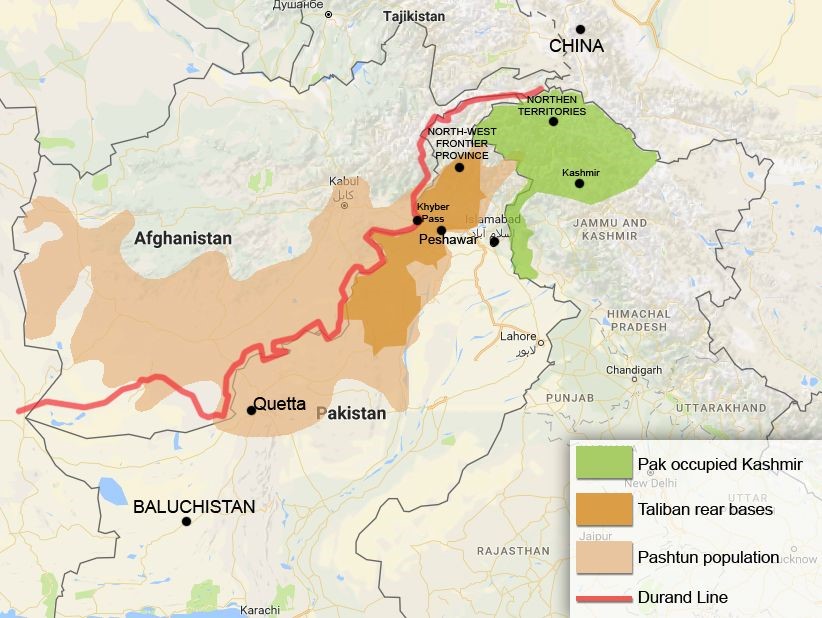
The Durand Line – artificial boundary created in 1893

This arbitrary line is a 1500mile border that divides present day Pakistan (named in 1933) & present Afghanistan (Khorasan). Afghanistan is important for its access to Central Asia & the Indian Ocean. Afghanistan was created to be used as a buffer state by colonial rulers. The Durand Line was established by British India & Kingdom of Afghanistan in 1893. Afghanistan refuses to acknowledge it as a border since creation of Pakistan in 1947.

This line has divided the Pashtun tribes into 2 – who now live in Pakistan & Afghanistan. The line was drawn by British colonial officer Mortimer Duran who disregarded the Pashtun populace. All that Britain wanted was to control the Khyber Pass and make Hindu Kush the northwestern border of British India.

Britain arrived in the Indian sub-continent in the 19th century. Britain annexed parts of Afghanistan in 1879 by an arbitrary treaty in exchange for money – Rs.1,200,000.  Britains puppet Shah Shoja emerged after dethroning Afghan king Dost Mohamma in 1839. Britain’s aim was to protect the opium drug line! Taliban is all Pashtuns.

You will be most surprised to know that King Amanullah who ascended the Afghan throne in 1919 engaged in numerous liberalization programs which included reforming the army, abolishing slavery and forced labor, and encouraging the liberation of women, discouraging use of veil, oppression of women giving them more educational opportunities. Instead of Britain feeling happy about these moves they thought it a threat to their reign and supported extremists against the move! Britain was seen as the culprit in the affair, manipulating the tribes against Amanullah in an attempt to bring about his downfall.” (Afghan historian Abdul Samad Ghaus wrote in 1988)

The British were cunning enough to bind Afghanistan to accepting drawn borders (Article 5 of the Anglo-Afghan Treaty of 1919)

The Durand Line Agreement divides boundaries between Afghanistan, Balochistan & British India. If so a trilateral agreement was required but Balochistan was excluded by making Afghan monarch believe that Balochistan was part of British India. Britain refused Afghan request to relook at borders before it gave independence to India in 1947.

Colonials speak with forked tongues & is a lesson when the same European countries are out to create more new borders claiming to resolve conflicts without acknowledging that they created them!

Did Afghans understand a word the British spoke. Could they read & write English to agree to sign on a dotted line?

Was this ‘treaty’ ratified by the British Parliament if so where are the records if it was gazetted? Has the Durand line been registered in the UN? Validity aside is this line Legal?

How valid & legal are treaties signed by monarchs of these countries and invader occupiers? Can legal experts please elucidate?

Present day issues between Pakistan & Afghanistan is another issue the crux of the matter is that the root cause of these issues associated with the Durand Line is the British who drew the illegal line!

The Radcliffe Line – the root of Kashmir issue

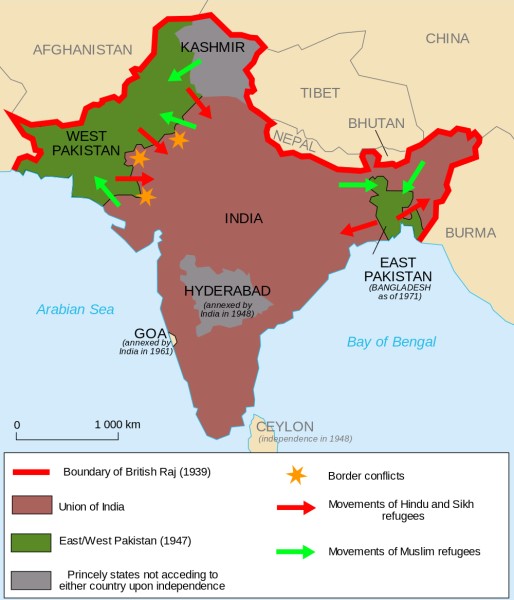
The culprit this time was again Britain & Sir Cyril Radcliffe the Director General of the Ministry of Information was appointed Chairman of the Boundary Commission. His task was to divide India religious lines. Sir Radcliffe had never been to British India & was clueless about the people or the region but was given just 5 weeks to complete the job. He was tasked with equitably dividing 175,000 sq miles with 88m people. That line has impacted India, Pakistan, East Pakistan & Myanmar)

He was not even a cartographer. Sir Radcliffe did the same mistake – dividing villages, separating people and the line at times ran through houses!

Before independence, nearly 40% of India was covered by princely states that were not British possessions and thus not part of British India. It was the choice of the rulers of these independent states to choose which side they wanted to belong to.

The division caused mayhem at independence with 14m fleeing one side of the border to the other & contributed to 3 wars between India & Pakistan in 1947, 1965 and 1971. For the mayhem Radcliffe was made a Peer and made a Knight Grand Cross of the British Empire.

The Radcliffe Line became another example of how a pen destroyed millions of lives.

https://www.youtube.com/watch?v=aIvQ2AyCCu4

https://www.youtube.com/watch?v=TbCxJ6dVceQ

Partition of India, including migrations after the partition.

The Radcliffe Line allocated to Pakistan, the provinces of Sindh and Balochistan, East Bengal (became Bangladesh), Western Punjab.

India was given West Bengal, Eastern Punjab,

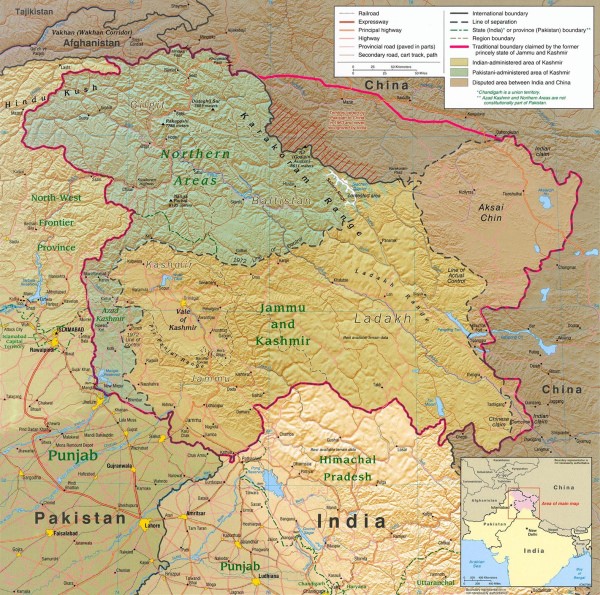
Kashmir is located on the northernmost tip of India & the northeastern part of Pakistan. The British thought the ruler of Kashmir Hari Singh would join Pakistan after the partition as Kashmir population was Muslim. Hari Singh did not join Pakistan and requested British assistance which led to the 1948 agreement that left half of Kashmir under Indian control including the fertile Valley of Kashmir. Pakistan got the impoverished part of the region. To compound matters the area has disputes between India & China too which led to the 1962 Indo-Sino War.

Kashmir

When asked how Britain could help end the conflict over Kashmir during a visit to Pakistan in 2011, Prime Minister David Cameron said, “I don’t want to try to insert Britain in some leading role where, as with so many of the world’s problems, we are responsible for the issue in the first place.”

McMahon Line – 1914

Is another case of illegal colonial invaders imposing arbitrary borders to serve their advantage. Not only are colonial invaders guilty of drawing arbitrary borders they are also guilty of forcing the indigenous to sign treaties with them. How valid are these? In 1914 there was no India – only British controlled parts of present India. There were 565 princely states that were not part of British India (these states were not under British rule)

The line was drawn by Sir Henry McMahon, the foreign secretary of the British-Indian government who was acting as the chief negotiator in the Shimla conference between Britain, China and Tibet. The line was negotiated without Chinese participation and when China opposed the response was to declare it a bilateral agreement between India & Tibet as the land south of Tibet was declared as British India making Tawang region of Arunachal Pradesh a part of India.

Today countries are disputing over borders & territories demarcated purposely by illegal colonial rulers to inflict conflict at future dates. These lines the colonials drew were purposely done over areas that provided major tributaries like water, resources, hydro-electric potential & mountains that were geo-strategic.

Sykes-Picot Agreement (1916)– Dividing Middle East

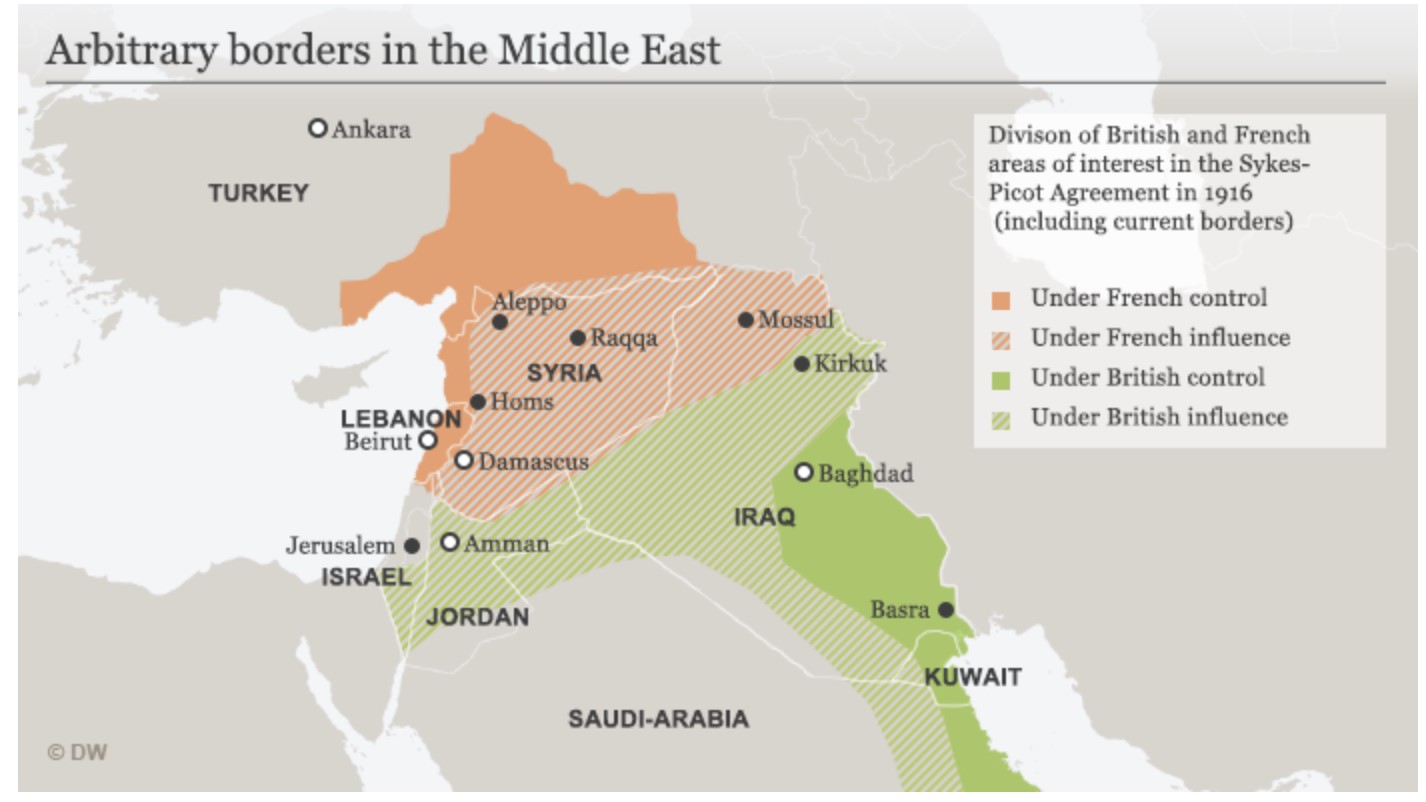
Again it was a British Sir Mark Sykes and a French Francois-Edouard Picot who were tasked to divide the Middle East between the two. It was a secret agreement. It became another example of a straight line pen drawn without any concern for the people living, their cultures or their desire to separate.

North of the line – became modern Syria & Lebanon under French mandate.

South of the line – modern Israel/Palestine, Jordon, Iraq went to the Brits. Issue was Mosul which was north of the line and should have been part of Syria but Brits negotiated & placed it under Iraq. Oil was the reason. Lebanon has historically been part of ‘Greater Syria’ (a region that encompasses Syria, Lebanon, Jordan, Israel/Palestine & western part of Iraq)

The Kurds were divided between 4 states : Turkey, Iran, Iraq, and Syria. Shiite Arabs were split between Iraq, Kuwait, Bahrain, and the eastern provinces of Saudi Arabia. The Alawites, a heterodox Shiite Arab sect, reside today along the northern Lebanese, Syrian, and southwestern Turkish coasts. The Druze were distributed between today’s Israel, Lebanon, and Syria. Lebanon, supposedly a Christian redoubt, included large Sunni and Shiite populations, as well as Alawites and Druze. Sunni Arabs, who formed the dominant population of the Middle East, were divided into numerous states. Pockets of Turkomen, Circassians, Assyrians, Yazidis, and Chaldeans were isolated throughout. At the dawn of the 21st century, minority ethnic groups ruled Iraq, Lebanon, Syria, and Bahrain, often repressively” (Gabriel Scheinmann – The Map that Ruined the Middle East”) http://www.thetower.org/article/the-map-that-ruined-the-middle-east/

Saudi Arabia came into existence after Britain had already promised Hussein ibn Ali, the emir of Mecca, an Arab kingdom in exchange for his military support against the Ottoman Turks in World War I.

https://mic.com/articles/91071/how-the-british-screwed-up-the-middle-east-in-10-classic-cartoons#.apzHQhoSf

There are plenty more artificially created states, borders, territories that colonial invader rulers have forced into being internationally accepted as todays laws are Euro-centric.

If it is illegal for an illegal occupant to enter into any legal agreement that same logic should apply to all of the European colonial countries that went to explore following the 3 concepts of Gold – God – Glory – profit by stealing Asian spices, African slaves, American metals & other resources. Declaring all countries already inhabited as Christian and dispatching missionaries to forcefully convert natives or kill them if they refused to do so. Expand the Western-Christian hegemony across the world and creating an ideology of mercantilism and capitalism where wealth centred around a handful who dictated how the world was to be governed.

The very countries today preaching human rights, good governance, transparency divided the world between them and fleeced countries, subjugating the indigenous and murdering millions of innocent people. None of the present day crimes come anywhere near to the atrocities these Western European countries committed as GOVERNMENT & CHURCH policy upon natives who were peacefully living in their land. We are presented false history by these Western countries who claim to have ‘FOUND’ countries that had people living in them. We can laugh now at how these countries have even celebrated these ‘Founding Fathers’ but have now come to realize these men were horrid murderers. Many of the philosophies and concepts the West claim to be theirs were spoken and practiced by Eastern civilizations. Buddhas teachings covers most of what the West claim to be ‘theirs’! Such confiscation of intellectual property is wrong and immoral without paying due acknowledgement to its original source. But what more can you expect from countries that have historically fleeced, invaded, occupied & murdered and continue to do the same using the cover of international laws & the UN that they control as a puppet.

In highlight some of the above borders that have been artificially created the crux is to draw attention not to the countries presently involved in the dispute but to convey the message that these disputes stem from illegally drawn borders by illegal occupiers and that is why countries fighting over these borders should get together and point fingers at the countries that drew them without fighting with each other.

The Western European countries that invaded, occupied & ruined countries should not be allowed to have any role in resolving the conflicts they created.

Shenali D Waduge

Why have our Universities Failed?

January 22nd, 2018

By Garvin Karunaratne

I am a product of both Universities- Colombo and Peradeniya, entering Colombo in 1950 and ending at Peradeniya in 1954.

It is true that in the initial period, called the Golden Age, Peradeniya did shine and it held personages like Dr Malalasekera and Dr Ediriweera Sarathchandra, who I think were in a super class, inspiring all of us.

The problem today is that Peradeniya as well as our other Universities have concentrated more on teaching, whereas the emphasis should have been wider- a contribution to the country and also to the world. To my mind the many ills of our country today- its foreign debt that has gradually built up, the poverty that engulfs the people etc. deserve attention by our University dons.

In a discussion with my contemporary the late Professor A.V.Suraweera, I was told that a major difference between then and now is that the vibrant relationship that we students then had with the Faculty members are not existent now because most professors decamp the campus after their lectures. Then the Faculty happened to be a part of us throughout. I learnt my econ ideas from Dr GVS de Silva though I was not a student in econ.  The Faculty members inspired us everywhere; they would give us a lift if they passed us in their cars and they would invite us for a morning drink of meera or a cup of tea very often. That was a great relationship that inspired us and was an essential part of campus life which is missing today.

It so happens that Sri Lanka is perhaps the only Third World country that has free tertiary education. It is incumbent therefore  that university education should make a contribution to the development of Sri Lanka. Instead, our universities have kept away from development. I quote instances:

At Matara I was the Government Agent in 1971 and we were concentrating on creating employment for our youth. We had to attend to the import substitution type of industry and I had a graduate in chemistry from the University of Colombo as my Planning Officer. I directed him to find the art of making crayons. He,  aided by  Science teachers conducted a myriad experiments closeted in the science lab at Rahula College, the most equipped science lab in the District, after school hours. In about a month we got somewhere but the product was far from satisfactory. Vetus Fernando, the Planning Officer sought my approval to go to his professors at the Chemistry Department of the University of Colombo from which he had graduated a year earlier. I approved the request and he went off enthusiastically. Vetus approached all the lecturers, spent three days going behind them beseeching advice but was turned away. He was told that they were too busy in lecturing and marking answer scripts and tutorials. Vetus came back with his tale of woe, a broken down man. I was not going to take it lying down. The refusal made us more determined than ever. We concentrated on endless experiments and in around a month we found the formulae to make crayons. We perfected it. A Crayon Factory was established at Morawaka and sales were opened by Minister Subasinghe, the Minister of Industries. Minister Illangaratne when he saw the crayons we made insisted on my establishing a factory at Kolonnawa. Coop Crayon   had islandwide sales and became the flagship industry of the DDC Programme.

It is important to note that the success of the American economy of today is ascribed to the services provided by the Land Grant State Universities– the State universities that took charge of development in addition to teaching. University Teaching was related to achivement in actual practice, a task in which  our Universities failed.

Our country has since the late Seventies moved from a self sufficient, self reliant economy that had no debts,  to a country that following the IMF has today piled up a foreign debt of $ 64 billion. In the Fifties the entire Gal Oya Development Scheme was built with the funds that Sri Lanka held. Not a cent was borrowed.

Sri Lanka became a debt ridden country when from  1978 she followed the IMF teachings to be liberal in spending foreign exchange, allow imports freely and when the expenses exceed demand, was advised to borrow and continue spending. This was the Structural Adjustment Programme of the IMF which was the conditionality to which every country that wanted Aid had to agree to. The IMF has plodded on for four decades, while none of the erudite dons in our Universities dared to critique and prove the ridiculous nature of the IMF teachings. Instead, they played poodle to the IMF.   In 1996 I addressed the dons in the Economics Department at Peradeniya in a lecture on what the IMF was doing to Sri Lanka by imposing its Structural Adjustment Programme. That was to be the beginning of a Visiting Lectureship for me. I came back to Sri Lanka in 1995 and hoped to get engaged in something worthwhile. None of them confronted my views. That lecture also ended my Visiting Lectureship perhaps because the dons felt that I was indoctrinating them with anti IMF and World Bank ideas. I rewrote the lecture and got it published in 1977: Microenterprise Development: A Strategy for Poverty Alleviation and Employment Creation in the Third World: The Way Out of the World Bank and IMF Stranglehold. (Sarasavi). That is  the first book contesting the IMF teachings. Professor Jeffery Sachs spoke of the detrimental effects of the IMF only in 2005 in his book The End of Poverty. That was  a passing reference stating that African countries were actually better off  before the inroads of the IMF and the World Bank. And later still the cat came out of the bag with John Perkins’ Confessions of an Economic Hitman where he confessed to have designed Aid Packages where the projects not only failed but also somehow shunted back the Aid sent to the Donor Countries.

Dons not only at Peradeniya but worldwide have kept away from critiquing the Milton Friedman economics that underlie the IMF’s policies. Professors Stiglitz and Jeffery Sachs have been critical of the policies of the IMF but they only make criticisms but never get into finding an alternative path. They were themselves in the pay of those Institutions and failed to fathom the detrimental effects that their policies would bring to the Third World countries.

I can understand why the dons of Developed Country Universities have desisted from critiquing the IMF’s policies because it is the IMF teachings in implementation that have seen droves of students flocking to their Universities using the liberal use of foreign exchange that is borrowed. In that process it is the fees that these students pay that help those universities to survive. The IMF policies ensure that the Aid given to our countries and the dollars we get on loans move  back to the Developed Countries leaving the country that borrowed in debt. This is sad story narrated in mybook:How the IMF Sabotaged Third World Development (Kindle/Godages: 2017)

It is time that our Universities take on this mantle of delivering the Third World Countries from the clutches of the IMF and that itself will bring great worldwide prestige. That could thrust Peradeniya  or Colombo to the stature of the Ivy League. If only we dare that task could be achieved within a year or two.

I do hope that my Alma Mater the Universities-Peradeniya or Colombo will take on this subject and develop a course structure on this subject. They can be the first in the world if they dare. That will also help our Motherland to find a New Paradigm for Development.

Garvin Karunaratne

B.A Peradeniya 1954, M.A. Peradeniya 1958

M.Ed. Manchester, M.Phil. Edinburgh & Ph.D. Michigan State University

20 th January 2018

Sri Lanka celebrating 70th anniversary under a cloud

January 22nd, 2018

Sri Lanka celebrating 70th anniversary under a cloud

Queen’s representatives due amidst Naseby controversy

SPECIAL REPORT : Part 201

article_image

By Shamindra Ferdinando
A group of British parliamentarians representing the ruling Conservative Party recently declined to respond to The Island queries pertaining to their visit (January 3 to January 8) to Sri Lanka.
The visit took place amidst continuing controversy over Lord Naseby challenging the basis for Geneva Resolution 30/1, co-sponsored by Sri Lanka on Oct 1, 2015.
Conservative Party member Lord Naseby on Oct 12, 2017, in the House of Lords, revealed the treacherous British role in the Geneva project. The UK is struggling to cope up with Naseby’s revelations, with British High Commissioner, in Colombo, James Dauris, playing down Naseby’s challenge. Sri Lanka, too, adopted a similar strategy.
Although the four-member delegation has been named as an All Party Parliamentary Group of Sri Lanka (APPG-SL) all of them represented the Conservative Party. The APPG-SL comprises, in addition to Conservative Party, the Labour Party, the Liberal Democrats, Ulster Unionists and the Democratic Unionist Party (of Northern Ireland).
The Conservative Party group that visited Sri Lanka consisted of MPs, Ranil Jayawardena, Chairman of the APPG-SL, Michelle Donelan, Chris Green, and John Lamont. Jayawardena is a British national of Sri Lankan origin.
The writer forwarded the following questions to the delegation on January 5 through the proper channel and was informed of its decision not to respond on January 10: (1) When did you decide to visit Colombo? (2) Did you raise the Oct 12, 2017 statement in the House of Lords by Lord Naseby with President Sirisena, TNA MP M.A. Sumanthiran or any other politician or Sri Lanka Foreign Ministry (Minister Marapana, Foreign Secretary Prasad Kariyawasam or anyone else) (3) Did President Sirisena, MP Sumanthiran or any other Government representative raise the Naseby issue with you? (4) Did you speak with Lord Naseby before you left London? and finally can you suggest ways and means of establishing the number of dead and missing, during the war, and after?
Obviously, the Conservative Party delegation didn’t want to discuss issues raised by Lord Naseby with the media. Perhaps, the delegation couldn’t have possibly admitted that the revelations made by the former Royal Air Force (RAF) and NATO pilot hadn’t been taken up during its stay here. Statements issued by the Sri Lankan Government in respect of the British delegation’s visit didn’t refer to the Naseby’s affair.
The delegates, also visited Palaly, where they met Maj. Gen. Dharshana Hettiarachchi, Security Forces Commander, Jaffna, and Speaker Karu Jayasuriya in Colombo. Surprisingly, the delegation, nor the hosts, had taken up the Naseby issue seriously. May be, both parties, severely rattled by the Naseby revelations, are of the view they shouldn’t respond to media queries though discussions took place on the contentious issue.
Those who had compelled Sri Lanka to co-sponsor Geneva Resolution 30/1 in Oct 2015 were worried over Naseby’s challenge. They side stepped the issue on several occasions.
UN Special Rapporteur, Pablo de Greiff, too, refused to comment on matters raised by Naseby, in Oct last year. The Island received the following response on Nov 17, 2017, from Pablo’s Office: I regret to inform you that the Special Rapporteur will not be able to comment on the content of private meetings. Thanks for your understanding and best wishes.” His office was responding to our queries.
The Island queries: Greiff has had a series of meetings with political and military leaders in Sri Lanka during his two-week official visit. (a) Did Sri Lankan political and military leaders or civil society representatives make representations to him regarding a statement made by Lord Naseby in respect of accountability issues in Sri Lanka and the responsibility on the part of the UN/Geneva to revisit unsubstantiated war crimes allegations against the country? (b) Did Greiff discuss Lord Naseby’s claims with Sri Lankan officials and civil society?
The UN acknowledged receipt of The Island queries on Nov 1 and promised to answer them, obviously the organization subsequently decided against.
Naseby’s Oct 12 declaration that the Vanni death toll couldn’t have been more than 8,000, though the UN quoted 40,000, and that Sri Lanka never purposely targeted the Vanni population, was made when Pablo de Greiff, UN Special Rapporteur on the promotion of truth, justice, reparation and guarantees of non-recurrence, visiting Colombo.
At the conclusion of his 14-day visit, Colombian de Greiff, at the UN compound, in Colombo, on Oct 23, 2017, referred to Lord Naseby’s statement. Una McCauley, UN Resident Coordinator and UNDP Resident Representative, flanked de Greiff. But, the UN didn’t want to answer the writer’s simple questions.
Now, the UK Conservative Party delegation has adopted similar tactics. The delegation couldn’t have stated anything contrary to the position taken by the British High Commission in Colombo. Sri Lanka Foreign Ministry, too, dismissed Lord Naseby’s statement when The Island sought its response. Subsequently, FM issued another statement to clarify its first comment that earned the wrath of the vast majority of Sri Lankans.
Army headquarters issued the following statement following the British delegation meeting with Maj. Gen. Hettiarachchi in Palaly.”… delegation led by the Chairman of the All Party Parliamentary Group on Sri Lanka (APPG – SL), Ranil Jayawardana was briefed on the post-conflict military commitments in the region and civil-military cooperation projects with special focus on peace-building and reconciliation efforts, by the Jaffna Security Forces Commander during the meeting. They were also educated on other humanitarian projects, initiated by the SFHQ-J in coordination with civil sector participation.”
Although, the Tamil National Alliance (TNA) Jaffna District MP M.A. Sumanthiran had met the British delegation, the Alliance refrained from issuing a statement though a photograph was issued. Having had propagated lies as regards the massacre of Tamil civilians, on the Vanni east front, in 2009, the TNA is yet to answer The Island queries in respect of Naseby’s call to amend the Geneva Resolution 30/1.
The Island submitted the following questions to TNA and Opposition Leader R. Sampanthan on Nov 27, 2017, and repeatedly reminded the Opposition Leader’s Office of the delay on its part: Have you (TNA) studied Lord Naseby’s statement made in the House of Lords on Oct 12, 2017, What is TNA’s position on Naseby’s claims?, Did TNA leaders discuss Naseby’s claim among themselves? Did TNA respond to MP Dinesh Gunawardena’s statements in parliament on Naseby’s statement? And Did TNA take up this issue with UK High Commissioner James Dauris?
Several days ago, The Island was again told of Sampanthan’s readiness to answer queries. However, that promise never materialised even though the Opposition Leader granted an extensive interview (We can’t despair, we can’t abandon things, says Sri Lanka’s R. Sampanthan, posted on January 3, 2018) to Colombo based The Hindu correspondent Meera Srinivasan and subsequently issued a statement to the media to mark Thai pongal. Sampanthan, certainly the senior most MP, in the current parliament, with six decades of experience, in his Thai pongal message expressed hope the country could replace the 1978 Constitution this year. Let me reproduce the relevant section verbatim: “…Tamil people’s long standing aspiration for a lasting political solution to the national question still remains unattained. During last year, meaningful steps were taken to frame a new Constitution in order to address this unresolved issue. As a result of such steps, an interim report of the Steering Committee has been submitted to the Constitutional Assembly which contains matters of importance that merit consideration. My prayer is that a new Constitution will be framed without any further delay in the new year, which will uphold the right of dignity, self respect and justice on the basis of equality amongst all citizens of Sri Lanka so as to ensure goodwill, unity and genuine reconciliation within an undivided and indivisible Sri Lanka.”
Sri Lankans annually celebrates National Reconciliation Week, countrywide, from January 8 to 14. Unfortunately, the government and Western powers have refused to address primary issues that had undermined post-war national reconciliation efforts. The writer is of the view that national reconciliation will never be possible unless tangible measures were taken to disprove lies propagated against Sri Lanka. The Tamil community will never pardon the Sinhala leadership as long as it believed that a slaughter had taken place on the Vanni east front. Silly competitions and various other events, some sponsored by Western governments, will not make any difference as long as the Tamil community believed Sri Lanka military massacred civilians just for the fun of it. Just imagine, the response of the Tamil community if proper international examination of charges directed at Sri Lanka proved Naseby right. Naseby is on record as having declared that Sri Lanka never intentionally targeted the civilian community and the total number of civilians and LTTE cadres killed not more than 8,000. Naseby has asserted on the basis of wartime dispatches from British defence attache Lt. Colonel Anton Gash that one fourth of the dead could be LTTE personnel. Those who had moved Geneva against Sri Lanka during the previous administration and then forced the Sirisena-Wickremesinghe government to co-sponsor Resolution 30/1, in Oct 2015, are now in a dilemma. They realise that in the wake of Naseby’s revelations their project is no longer tenable. They realise Lord Naseby can be dismissed as a corrupt politician if not for wartime dispatches from the British Commission in Colombo. The bottom line is that they cannot discredit Lord Naseby without disregarding the British High Commission in Colombo. Had that happened, it would have brought all dispatches from Colombo to disrepute.
The UK should reconsider its policy towards Sri Lanka as Colombo prepares to welcome Queen Elizabeth’s representatives, Prince Edward, Earl of Wessex, and Countess of Wessex for Sri Lanka’s 70th anniversary celebration of independence on Feb 4. They’ll arrive in Colombo on 31 January and leave 4 February.
The British High Commission spokesperson said: “The Earl and Countess will travel to Colombo and other parts of Sri Lanka, celebrating the long-standing friendship between the two countries and shared interest in the Commonwealth, youth development and education.
“The royal couple will meet participants in The Duke of Edinburgh’s International Award and young Sri Lankans selected as Queen’s Young Leaders, an initiative to recognize and celebrate exceptional young people across the Commonwealth. The Earl and Countess will also meet representatives of a number of projects advancing causes they support through their work, including MENCAFEP, whose work to help differently-abled children and their families in the Nuwara-Eliya, Trincomalee and Batticaloa Districts illustrates the close links between the people of Sri Lanka and the United Kingdom.
“As the United Kingdom looks forward to hosting the Commonwealth Heads of Government Meeting in April 2018, their visit will highlight our countries’ shared ambition to ensure the Commonwealth is well-placed to help deliver a bright future for its Members’ citizens.
“Prince Edward is the youngest child of the Queen and the Duke of Edinburgh. The Earl and Countess support the queen in her official duties and undertake many public engagements each year in support of a wide range of charities and non-governmental organizations.”
Can the UK and the Commonwealth continue to turn a blind eye to a friendly country being overwhelmed by unsubstantiated war crimes allegations. The UK-led Commonwealth never intervened on behalf of Sri Lanka, in the 80s, when regional Commonwealth power, India, destabilized its neighbour to its heart’s content. Top British diplomat here Dauris has earned the contempt of the vast majority of Sri Lankans by his recent silly attempt to dismiss Lord Naseby’s revelations, based on High Commission assessments.
There’ll never be a better opportunity than the forthcoming 70th anniversary celebrations to clear Sri Lanka of unsubstantiated war crimes allegations. The UK needs to give its consent to Lord Naseby’s call to review the Geneva Resolution. There cannot be any harm in examining allegations on the basis of all available information, particularly wartime dispatches from Western and Indian diplomatic missions in Colombo.
The world must not forget the LTTE attack on Dalada Maligawa, a few days before Sri Lanka’s 50th anniversary celebrations scheduled to take place in Kandy, in 1998. In spite of the attack, Prince Charles attended the event though many expected the UK to call off his visit. It would be pertinent to reproduce a statement that was attributed to the then main Opposition party, the UNP, in a CNN report headlined, “8 killed in Sri Lankan blast at temple,” datelined January 25, 1998. The CNN quoted the UNP as having blamed the then Kumaratunga government for the attack. The CNN reported that the UNP, the country’s main opposition party, blamed the government, saying that the celebrations invite trouble.
“The government was baiting the LTTE…. It was a foolish act,” the CNN quoted UNP leader Ranil Wickeremasinghe as having said.
The UNP took a similar controversial stand when the LTTE mounted a devastating attack on a civilian target in Jaffna, also during Kumaratunga administration.
The importance of a comprehensive review of Sri Lanka’s response to war crimes allegations shouldn’t be further delayed by the Sirisena-Wickremesinghe government.

Tuesday, 9 January 2018

A meticulously planned int’l project in jeopardy

T bond scams take their toll

SPECIAL REPORT : Part 200

article_image

July 2, 2016 at Central Bank: President Maithripala Sirisena, Prime Minister Ranil Wickremesinghe and the then CBSL Governor Arjuna Mahendran meet amidst moves to replace the Singaporean over treasury bond scams.

By Shamindra Ferdinando

Japanese Foreign Minister Taro Kono arrived in Colombo on the evening of January 4 with the Sirisena-Wickremesinghe administration in severe turmoil over President Maithripala Sirisena’s statement on Treasury bond scams involving Central Bank and Perpetual Treasuries Limited (PTL).
President Sirisena, who is also the leader of the SLFP, based his statement on the report of the Presidential Commission of Inquiry (CoI) that probed treasury bond scams and findings made by PRECIFAC (Presidential Commission of Inquiry to Investigate and Inquire into Serious Acts of Fraud, Corruption and Abuse of Power, State Resources and Privileges).
Kono was accompanied by a 24-member delegation. The first official visit by a Japanese foreign minister in 15 years, couldn’t have taken place at a worse time for the government.
President Sirisena’s move placed both the UNP, as well as the SLFP, in a deeply embarrassing position, ahead of the February 10 local government polls.
Kono met President Sirisena and Premier Wickremesinghe, in Colombo, amidst desperate damage control efforts undertaken by the latter. The Grand Old Party has never been humiliated and its top leadership castigated like this before.
Premier Wickremesinghe’s Office went to the extent of issuing a statement quoting him as having instructed Central Bank Governor, Indrajith Coomaraswamy, to implement recommendations made by the CoI once it was released.
The enormity of the fraud shook the country with Prime Minister Ranil Wickremesinghe being urged to step down over his role in the treasury bond scams.
Before further comment on treasury scams, let me produce a relevant Japanese Embassy statement that dealt with Kono’s visit: “This visit is aimed at further consolidating the Comprehensive Partnership between Japan and Sri Lanka, based on previous visits by President Maithripala Sirisena in May 2016, and Prime Minister Ranil Wickremesinghe in April 2017.
“Strengthening cooperation and collaboration with Sri Lanka is important for the realization of a free and open Indo-Pacific area, based on the rule of law,” the Japanese Embassy said.
Japan and Sri Lanka finalized the ‘Comprehensive Partnership’, in Oct 2015, within months after the change of the Rajapaksa government, perceived to be very close to China. The partnership should be examined against the backdrop of joint US-Japan-India response to the growing Chinese challenge, with Japan facing an enormous economic and strategic challenge from powerful China in the entire Far East.
It would be important to keep in mind that the change of government, in January 2015, paved the way for the ‘Comprehensive Partnership’. In other words, had the US-spearheaded regime change operation failed for a second time, in January 2015, Japan wouldn’t have sought the Comprehensive Partnership. That is the undeniable truth.
A brief but high level visit took place at a time Japan is concerned about legal problems that had been caused to ITOCHU Corporation/Dole investment in agricultural sector here in addition to the long-delayed Japanese funded ‘Digitization of Television Broadcasting’ project.
Dole is one of the world’s largest producers and marketers of high-quality fresh fruit and fresh vegetables and produces and markets a worldwide line of packaged and frozen foods. Japan is pursuing an agenda of its own here in addition to being party to US operation.
The first US project went awry in January 2010 when war-winning Army Chief General Sarath Fonseka failed to defeat Mahinda Rajapaksa at the presidential poll. In the 2010 operation, those who had wanted the Rajapaksas moved out of office, fielded Fonseka as they believed he was the only one capable of depriving the former of claiming exclusive credit for defeating the LTTE.
The 2015 campaign depicted the Rajapaksas and their cronies as corrupt, while promising good governance and accountability. Those opposed to the Rajapaksas campaigned on anti-corruption platform, vowing to recover USD 18.5 bn Rajapaksa had allegedly stashed in offshore accounts. No less a person than US Secretary of State John Kerry assured US support to recover the stolen assets. The British did the same. Surprisingly, the US and the UK hadn’t said a word on treasury bond scams while foreign-funded NGOs that spearheaded the smear campaign against the overbearing former regime now are struggling to save their faces with the bond scam fallout.
Those who had backed the regime change, in Colombo would never have expected the new government to rob its own Central Bank. That doesn’t mean the US and its allies ever had problem in protecting some very very corrupt governments in various parts of the world. William Blum’s controversial Rogue State has exposed shocking US interventions in support of corrupt and murderous governments over the years. Nahil Wijesiriya, father of Anika, who had exposed Ravi Karunanayake as to how the Karunanayke family lived at a penthouse at the expense of Perpetual Treasuries owner Arjun Aloysius, sent a copy of Rogue State to the writer during the CoI sittings.
The US and its allies are unlikely to voice concern over treasury bond scams, in spite of the world’s solitary superpower currently engaged in high profile project to help Sri Lanka recover stolen assets. Obviously, they are only concerned about assets stolen during the previous administration whereas the present lot continues to remain in the good books of Western powers.
Obviously, the US and its allies will not undermine a government that will pursue their strategic line, in spite of being trapped by Beijing. Soon after the change of government, the Sirisena-Wickremesinghe government acted as if Beijing didn’t matter, with then Finance Minister Ravi Karunanayake publicly challenging powerful China. China hit back hard, swiftly brought Sri Lanka to its knees and caused enough turmoil until Colombo didn’t have any other option other than giving into Beijing’s dictates.
Although Western powers are likely to ignore the 2015 and 2016 treasury bond scams, what will be the reaction of the electorate at the forthcoming local government polls? With those who had contributed to Sirisena’s 2015 triumph over Rajapaksa in the fray with the SLFP sharply divided much to the disadvantage of the Sirisena faction, the polls outcome can be devastating. In fact, the UNP and SLFP partnership, under massive pressure in the wake of the presidential statement, on treasury bond scams, will suffer further, whatever the local government polls outcome be.
Second T bond scam
Had incumbent government’s international supporters intervened in the wake of the first bond scam, perpetrated on the 50th day of President’s100-day project, the UNP wouldn’t have gone ahead with the second, a far bigger heist, in March 2016. Instead, they reiterated support to the corrupt system by endorsing dissolution of parliament to pave the way for the August 2015 parliamentary polls that enabled the re-appointment of Ravi Karunanayake as the Finance Minister. They apparently even ensured that Karunanayake was rewarded with a fake international award as the best Finance Minister in the region.
General Secretary of the Communist Party, Dew Gunasekera, who had inquired into the 2015 treasury bond scam, unequivocally blamed the top UNP leadership for the 2015 and 2016 treasury bond scams. Gunasekera, on January 5, 2018, called a media briefing at CP office, Borella, where he discussed the anatomy of treasury bond scams.
The writer sought a clarification as to the responsibility on the part of President Sirisena regarding the second treasury bond scam. Could the second robbery have been averted if Gunasekera, in his capacity as the COPE (Committee on Public Enterprises) Chairman, was allowed to present his report to parliament? On the eve of its presentation, parliament was dissolved to save the UNP-SLFP coalition.
The decision to dissolve parliament should be examined against the backdrop of the arrangement between the UNP and Sirisena underwritten by the US and its allies. They couldn’t have allowed, under any circumstances, the collapse of a loyalist administration within months after its formation.
The UNP, SLFP and former President Rajapaksa, as well as those civil society groups, owed the country an explanation as to how Rajapaksa’s 2015 defeat automatically resulted in change of government. Rajapaksa, in spite of having a staggering two-thirds majority in parliament, for whatever the reason remained silent when Wickremesinghe was sworn in as the Prime Minister immediately after Sirisena took oaths as the President, before Chief Justice K. Sripavan. Strange, isn’t it?
Gunasekera acknowledged that the change of government, after Rajapaksa’s defeat at the presidential poll, was still a mystery to him.
The parliamentary group loyal to Rajapaksa never bothered to challenge Wickremesinghe or seek a vote in parliament to test whether the UNP leader had the confidence of the majority of the members of parliament. At that time, the UNP parliamentary group comprised less than 50 whereas Rajapaksa commanded very much more than that number.
Joint Opposition heavyweight MP Bandula Gunawardena recently told the writer that they didn’t really know what was happening when an explanation was sought as to why they accepted the change of government.
Gunasekera still insists the change of government is a mystery.
Turning blind eye to mega robbery
President Sirisena, in spite of being strongly opposed to the despicable UNP project, has had no option but to cooperate with the UNP. To his credit, the President made strong effort to discourage PM Wickremesinghe from appointing Singaporean Arjuna Mahendran as the Governor of the Central Bank.
Having named Mahendran as the Governor, those planning to commit the first daylight robbery moved CB employee Deepa Seneviratne to the Public Debt Department as its head in spite of her not been attached to that particular section before. It seems they had obviously felt comfortable in having a lady officer there they thought they could manipulate at will. But Seneviratne turned tables on the bond thieves by putting up a note to register her strong opposition to Mahendran’s move. The rest is history.
It would be of pivotal importance to keep in mind that the President appointed Commission of Inquiry (CoI) in January 2017, about 10 months after the second robbery, and two years after the first. The commission comprised Justice K.T. Chitrasiri, Justice P S Jayawardena and retired Deputy Auditor General V Kandasamy. Sumathipala Udugamsuriya functioned as its Secretary.
During cross examination of witness PM Wickremesinghe, it transpired how the government received US Treasury advice regarding issuance of treasury bonds in the wake of scams here. Wickremesinghe acknowledged that Sri Lanka had sought the expertise of the IMF and the US Treasury in 2017, to examine the system. Such a study wasn’t done before the 2015 change was made.
Recently, the US revealed the assigning of a resident legal advisor to help Colombo to recover funds moved overseas. The announcement was made by the State Department, in early Dec. 2017.
The Island sought an explanation from the Public Affairs Section of the US Embassy, in Colombo on Dec. 11, regarding the State Department categorizing Sri Lanka among a group of countries selected to receive US assistance to combat corruption. In spite of repeated reminders, the following questions went unanswered:
(a) Has the State Department examined treasury bond scams perpetrated in Feb 2015 and March 2016 before offering special assistance to Sri Lanka, including provision of Resident Legal Advisor, Colombo?
(b) As the State Department has revealed allocation of USD 115 mn annually for global anti-corruption activities, could the embassy reveal the allocation for Sri Lanka?
(c) What is the status of Rs 1.92 bn (USD 13 mn) USAID project meant to strengthen accountability and democratic governance in Sri Lanka against the backdrop of the country being named as one of the four countries which required US assistance to tackle corruption?
The US must be certainly ashamed of those who had been elected at the August 2015 general election, particularly against the backdrop of millions of US dollars spent on the regime change operations here.
The Attorney General’s Department that had assisted the Justice Chitrasiri commission sustained inquiry in spite of heavy pressure brought on it by an influential section of the UNP. Karunanayake publicly challenged the commission, both in and outside parliament until the very end and continues to do so even now. The UNP reacted angrily to the commission releasing shocking data pertaining to telephone, Viber and SMS contacts among those who had been investigated.
Senior Additional Solicitor General Dappula de Livera, PC, ASG Yasantha Kodagoda, PC, ASG Priyantha Nawana, PC, Senior DSG Milinda Gunathileka, DSG Dilan Ratnayake, Senior State Counsel Shahida Barrie, Senior State Counsel Nayomi Wickremasekera, Senior State Counsel Dr Avanthi Perera, State Counsel Dhanushan Ganeshayogan, State Counsel Jehan Gunasekera. The Attorney General team was assisted by five-member teams from the Central Bank as well as the Criminal Investigation Department.
The joint AG, CID and Central Bank team proved beyond any doubt that Sri Lanka had the required expertise to undertake complex investigation. Had investigators been given a free hand to inquire into revelations made by COPE and Public Accounts Committee (PAC), many Ministers would have been found guilty of waste, corruption and irregularities. Unfortunately, parliament, in spite of boasting of 70 years of parliamentary democracy, never felt the requirement to amend Standing Orders to enable the watchdog committees to summon ministers.
A former navy chief’s assertion
The likes of National Freedom Front leader Wimal Weerawansa are often ridiculed for alleging US interference in Sri Lanka. For some strange reason, political parties here are struggling to face up to US interference at the highest level. Thanks to Wiki Leaks as well State Department statement and information that had been obtained by US-based Hassina Leelaratne through legal means, the world knows the extent of US intervention here.
Much to the disappointment of the US, the new Sri Lanka leadership had jeopardized the project by robbing Central Bank, certainly a first for any country. Retired Admiral Dr. Jayanath Colombage, Director of the Center for Indo-Lanka relations of the Path Founder Foundation, recently commented on the US intervention here in 2015. The unprecedented comment on US project was made by Admiral Colombage in Islamabad. Colombage alleged that the US and Japan spearheaded the regime change operation here. It would be better to go through verbatim what Colombage said in Islamabad at an event organized by the Center for Global and Strategic Studies (CGSS): “Consequently, India, the USA and Japan realized that the Chinese involvement and influence was seen everywhere in the Indian Ocean Region and especially in South Asia. Chinese maritime infrastructure projects were taking place not only in Sri Lanka but also in Myanmar, Bangladesh, Pakistan and the Maldives. Thus, the major powers that are strategic partners of India preferred to see Sri Lanka move away from Chinese influence. When that did not occur, they considered the next option and supported a regime change in 2015. However, this resulted in a predicament as for nearly two years no nation came forward to help Sri Lanka’s economic development after the 2015 presidential and general elections. Following this, Sri Lanka had to reconnect with China in a position of weakness. During this period our economy suffered and now it has fallen to the 6th place among SAARC countries. This is a result of major strategic competition in the Indian Ocean. It is important to note that this region is heavily militarized and nuclearized. An example of this militarization is evident from the number of warships that belong to different countries visiting Sri Lankan ports. From 2009-2017 a total of 398 war ships have visited Sri Lankan ports. A breakdown of this is as follows: India – 82; Pakistan – 24; Japan – 67; Bangladesh – 23; China – 31; USA – 18; and Russia – 26.”
Political parties should make a genuine effort to examine foreign interventions here without further delay. They lacked the courage to face up to the challenge….a growing challenge that seems to be too tough for Sri Lanka to handle.
One-time Indian High Commissioner in Colombo (1997-2000) Shivshankar Menon, in his Oct, 2016 launched memoirs, ‘Choices: Inside the making of India’s foreign policy’, indicated that New Delhi had reason to desire a change of government, in Sri Lanka, due to the then President Mahinda Rajapaksa going back on his pledge in respect of Sri Lanka-China relations.
Menon directly alleged that the former President received Chinese funds for his political campaigns, and projects.
The change of government, in January 2015, also paved the way for Western powers to secure the Sirisena-Wickremesinghe government’s consent on Geneva Resolution 30/1 meant to humiliate Sri Lanka. In accordance with the Geneva doctrine, Sri Lanka was told to introduce a new Constitution at the expense of its unitary status, with outgoing Human Rights Commissioner Zeid Ra’ad al-Hussein declaring, in June 2016, the new supreme law should be subjected to a referendum.
But now the project seems to be in tatters with the government being overwhelmed by the fallout of the treasury bond scams. Weakened by corruption charges, the government will find it difficult to sustain the constitutional making process, a project entrusted on the Sirisena-Wickremesinghe administration by Western powers.
For a government struggling to cope up with even basic responsibilities such ensuring smooth supply of petrol as well as fertilizer, bringing in a new Constitution, seems certainly a daunting task that cannot be surmounted.

Friday, 5 January 2018

How LTTE’s defeat paved the way for Lanka to accept the Ottawa Convention

SPECIAL REPORT : Part 199

article_image


By ShamindraFerdinando
The road was badly savaged and cratered. Bombs, trucks, armoured vehicles and tanks had corroded its surface. We knew intuitively that to step off the apron and go behind the bushes carried great risk. There were landmines everywhere. The government had tried, before opening up the highway, to secure as many of them as possible.  But, it had been barely two months since the signing of the ceasefire, so how efficient this operation could have been was in doubt – Padma Rao Sundaraji explained in SRI LANKA: THE NEW COUNTRY the circumstances under which she had moved overland to cover a media conference given by LTTE leader, Velupillai Prabhakaran in early 2002.
 The LTTE efficiently used mines, including anti-personnel mines, against Sri Lankan security forces as well as the Indian Army (1987-1990).
 Nearly nine years after the conclusion of the war, Sri Lanka is still engaged in mine clearing operations, in the northern region, with the backing of a section of the international community. Japan is one of the major donors, with a staggering contribution of USD 32 mn to various NGOs, engaged in mine clearing operations, since 2003.
 Sri Lanka, last month, accepted the much touted Anti-Personnel Mine Ban Convention or Ottawa Convention aka anti-personnel Mine Ban Treaty (MBT). Former Secretary General of Parliament and Sri Lanka’s Ambassador in Austria, as well as its Permanent Representative in Austria, Priyani Wijesekera, delivered Sri Lanka’s acceptance statement at the 16th meeting of the States Parties to the MBT at the United Nations, Vienna. The four-day meet began on Dec 18, 2017.
 Close on the heels of Sri Lanka accepting the MBT, Japan granted US 604,731 (approximately Rs 90mn) for mine clearing NGOs, with the overall objective of achieving mine-free status by 2020.
 Interestingly, none of those who had been pushing Sri Lanka to accede to the MBT, never uttered a word when mines were introduced at the onset of the conflict, in the 1980s. The so called international humanitarian disarmament community had been blind to Sri Lanka’s plight and was silent on atrocities committed by terrorists.
 The MBT celebrates its 20th anniversary this year. At an event to mark the 20th anniversary of the Ottawa Convention, titled ‘A World Free of Landmines’ in New York, recently, Sri Lanka’s Permanent Representative there, Dr Rohan Perera, declared, “as a full State Party, we look forward to taking our place in the promotion of this Convention, including through capacity-building and mine clearance.”
 LTTE terrorists utilized a range of mines against security forces, the police, as well as civilians, with impunity. It would be pertinent to address the use of mines in Sri Lanka without restricting the discussion to anti-personnel mines.
Sri Lanka brought an end to the use of mines, of all kinds, on the morning of May 19, 2009, when LTTE leader Velupillai Prabhakaran was shot through his head on the banks of the Nanthikadal lagoon.
In fact, the first major terrorist ambush that had claimed the lives of 13 soldiers at Tinnavely, Jaffna, and plunged the country into chaos, in July 1983, couldn’t have been carried out without the effective use of landmines.
Sri Lankan terrorists received Indian expertise to produce a range of mines in the early ‘80s. The LTTE improved and enhanced its capability and capacity to make mines over the years.
The MBT would have been irrelevant to Sri Lanka had the international community intervened, on behalf of Sri Lanka, when big bully India launched their unprecedented destabilization project in Sri Lanka. India provided the required technology. During the 1983-July 1987 period, Sri Lanka really struggled to cope up with deadly mine attacks. The Army suffered heavily due to mine warfare.
The launch of the second JVP-led insurgency, in the South, in the wake of the Indo-Lanka Accord of July 1987, led to the Marxist party, too, acquiring the know-how to use mines. The possibility of some members of a Tamil terrorist groups (other than the LTTE) carrying out landmine attacks cannot be ruled out. The JVP mounted several landmine attacks in the South. The writer was the first journalist to visit the scene of a landmine blast at Kapparatota, Weligama, with photographer Jude Denzil Pathiraja.
Having taught the LTTE to effectively use anti-personnel mines, against the Sri Lankan military, India faced the challenging task of countering the threat posed by various types of mines. The Indian Army suffered substantial losses, at the hands of the LTTE, during its deployment here.
The Memorial put up by Sri Lanka, for the Indian Army, in Colombo, is nothing but a reminder of New Delhi’s foolish strategy that caused massive death and destruction in Sri Lanka, claimed the life of one-time Indian Prime Minister Rajiv Gandhi and almost resulted in the assassination of Maldivian President, Abdul Gayoom, in early Nov. 1988.
Canadian initiative
Canada has been putting pressure on Sri Lanka to accept the Ottawa Convention – even during the war. Successive Canadian governments allowed the LTTE to receive massive sums of money raised there. Canadian funds were used to acquire arms, ammunition and equipment for the benefit of thousands of terrorists, including children. Canada never really pushed the LTTE to stop suicide attacks, or stop forcible recruitment of child combatants, though it relentlessly pursued Sri Lanka to stop using anti-personnel mines. Ottawa conveniently turned a blind eye to Sri Lanka’s security considerations. Instead, Canada wanted its initiative accepted by Sri Lanka, even at Sri Lanka’s expense. As a key member of the Commonwealth, Canada could have intervened on behalf of Sri Lanka when Commonwealth giant India brazenly sponsored six Sri Lankan terrorist groups. Had Canada, and its backers, been genuine in their efforts, India wouldn’t have been able to destabilize its tiny neighbour with impunity. Even if they couldn’t have thwarted the Indian project, Canada, and like-minded nations, could have certainly blocked large scale fund raising operations in their countries. Funds raised over there, and child soldiers, ensured the continuation of the LTTE terror campaign until Sri Lanka brought the war to an end by crushing it militarily. Canada never felt the need to rein in the LTTE, particularly against the backdrop of growing power and influence of Tamil Canadian voters of Sri Lankan origin who certainly exploited major Canadian political parties.
TULF leader V. Anandasangaree’s son, Gary, now a member of Canadian parliament, is a case in point. Gary Anandasangaree, a vociferous critic of Sri Lankan armed forces, had never dared to discuss the LTTE’s culpability for obvious reasons. The likes of Gary Anandasangaree remained silent as long as they felt the LTTE could somehow overwhelm the Sri Lankan military. They obviously had faith in the LTTE’s prowess vis-a-vis the Sri Lankan military.
The bottom line is that Canada surely prolonged the LTTE’s lifespan by ensuring a steady flow of funds.
 The MBT was opened for signature, in Ottawa, on Dec. 3, 1997, during Chandrika Bandaranaike Kumaratunga’s presidency. Canada obviously expected the Kumaratunga administration to sign the treaty though it was at that time struggling on the Vanni front.
 Sri Lanka asserted that anti personnel mines were a legitimate defensive weapon and the country couldn’t have accepted the MBT at a time her armed forces had been waging war against the LTTE.
Having launched Sri Lanka’s biggest ever ground offensive, Jayasikurui (victory assured), to open the Kandy-Jaffna A9 road, north of Vavuniya, to Elephant Pass, the then government was not in a mood to engage in a foolish exercise. Signing the MBT would have been the last thing on Kumaratunga’s mind. Within two years, after the Ottawa signing ceremony, Kumaratunga had lost the initiative and was struggling to cope up with the growing LTTE challenge. In Dec. 1999, the LTTE nearly succeeded in assassinating her. An irate Kumaratunga revealed how the LTTE had made an attempt on her life, in spite of her being engaged in secret talks with the LTTE, with Norwegian facilitation.
 Those who had been demanding the world to stop using anti-personnel mines, because they maimed civilians, never called for an end to LTTE suicide attacks on civilians. Had Kumaratunga perished in the suicide attack, directed at her on the final day of her presidential polls campaign, she would have been the first female political leader to be eliminated by a suicide bomber.
Having survived a suicide attack, Kumaratunga would have certainly found the Canadian call for Sri Lanka to be a signatory to the MBT ludicrous. Canada, home to the largest population of Sri Lankan Tamils, outside the country, played a pivotal role in the overall LTTE terror project.
 Sri Lanka couldn’t have even considered the MBT as long as the LTTE retained a fighting capacity. It would have been foolish on Sri Lanka’s part to give up, even a minute part of her defence, as long as the LTTE retained fighting capability. The amount of funds that had been provided by Canadian taxpayers must have been one of the largest, during the war, if not the biggest, until the very end of the conflict. Undoubtedly, Canadian funds had been utilized to acquire stocks of explosives that were used to manufacture different types of mines, including anti-personnel mines. Can Canada ever absolve herself of responsibility for providing funds that helped the LTTE acquire conventional fighting capability! A comprehensive examination of Canadian funding methods is essential to understand the enormity of the problem.
 Although Canada proscribed about 40 groups, including the LTTE, in the wake of 9/11attacks, and in January 2008 banned the World Tamil Movement (WTM), the murderous outfit received both funds and moral support from Canada until it was brought to its knees. Devastating four coordinated Al Qaeda attacks, in 2001, promoted Western powers to take some measures against terrorist groups. The Commonwealth, too, threw its weight behind the US counter attack that lay waste to Afghanistan on the basis Al Qaeda operated there. Wouldn’t it be interesting to know why Western powers gave the LTTE an absolutely free hand before the 9/11 strikes? Except the US, those who had tolerated the LTTE always sought to placate Tamil voters. The UK went out of its way to throw a lifeline to the sinking Tigers, in 2009, for purely domestic political reasons. Thanks to Wiki Leaks, the British intervention to save the LTTE from annihilation, on the Vanni east front, is in public domain. The Canadians, too, engaged in some bizarre efforts to save the LTTE.
 The EU also went out of its way to support the Canadian project. One-time European Union head of Delegation, Julian Wilson, declared during Eelam war IV that the EU wouldn’t provide further financial assistance to mine clearing operations as Sri Lanka wasn’t a signatory to the Ottawa Convention. The EU hadn’t been concerned about Sri Lanka’s security considerations. Canada, the EU and their friends hadn’t been worried about Sri Lanka’s security needs. Instead, they wanted to twist Sri Lanka’s arm and compel her to accept the Ottawa MBT, while the LTTE mounted attacks on civilian and military targets, with impunity.
 Those who had been demanding an immediate end to the use of anti-personnel mines turned the other way when the LTTE carried out claymore a mine attack on an SLTB bus, at Kebitigollewa in the Anuradhapura district, in the run-up to all out fighting in August 2006. The blast, on June 15, 2006, claimed the lives of 68 men, women and children.
 While campaigning for the banning of anti-personnel mines, Canada, and some of its allies, allowed the LTTE to receive massive funds. The LTTE had unlimited funds to procure weapons ranging from explosives required to produce anti-personnel mines to China-built long range artillery. In fact, the LTTE acquired a range of Chinese weapons, including mobile anti-aircraft guns as well as ships of Japanese origin. For the LTTE, funds had never been a problem whereas Sri Lanka struggled to equip her armed forces.
 Sri Lanka’s refusal to join the Ottawa Convention hadn’t been an issue for the US as the world’s solitary super power it never intended to ban the use of anti-personnel mines. In addition to the US, China, India, Pakistan, Russia, Cuba, Egypt, North Korea and South Korea, Saudi Arabia and Vietnam are among nearly 35 non signatories.
 Years after the conclusion of the war, Canada, on behalf of the Tamil Diaspora, requested Sri Lanka to do away with the annual Victory Day parade. Canada asserted that such a parade hurt the feelings of the Tamil people. Although, the Rajapaksa administration ignored the Canadian request, the Sirisena-Wickremesinghe administration meekly gave into the Canadian demand. Sri Lanka refrained from holding the annual Victory Day parade in May 2015. However, Canada did absolutely nothing to discourage the LTTE from using the Vanni population as a gigantic human shield, on the Vanni east front. In fact, the EU, in spite of its public concern for the use of anti-personnel mines, never took tangible measures to prevent the LTTE taking cover behind civilians. They did nothing as forcible recruitment of children continued until the very end of the organization militarily. They shed crocodile tears for civilians getting caught in anti-personnel mine blasts while turning a blind eye to thousands trapped in war zone.
LTTE receives overseas funding for mine clearing
Western powers, and some NGOs, acted irresponsibly though they publicly asserted terrorism wouldn’t be tolerated especially in the wake of 9/11. Funnily, a known LTTE front organization – so-called Humanitarian De-Mining Unit (HDU), tasked with mine clearing operations in areas under LTTE control – received significant financial assistance from Norwegian People’s Aid, British Mine Advisory Group, Swiss Foundation for Mine Action and Danish De-Mining Group in the wake of the Norway-arranged Ceasefire Agreement (CFA). The HDU operated as the implementing arm of the LTTE-managed Tamil Rehabilitation Organization (TRO) that was under investigation in several countries.
 It would be also pertinent to inquire why leading NATO member Canada undertook the high profile project to ban anti-personnel mines after having contributed to many destructive missions. Canada deployed its forces in support of the US led actions, on many occasions, though it refrained from taking part in the illegal 2003 invasion of Iraq, certainly a proud moment for the Canadians. The Canadian Air Force caused substantial damage during the murderous air campaign, directed against Yugoslavia. Having read William Blum’s Rogue State, the despicable US-led project, that lay waste to Yugoslavia, was nothing but a war crime. The Canadian project, to introduce the anti-personnel mine treaty, can be compared with Norwegian efforts at international peace making meant to win global recognition.
 Seeking an international ban on anti-personnel mines while dropping massive bombs weighing from 500 pounds to 2000 pounds on countries is pure hypocrisy at the highest level. Canada is reported to have delivered nearly half million pounds of high explosives in Kosovo and Yugoslavia that took place amidst Canadian efforts to ban anti-personnel mines. Can there be anything as silly as demanding an anti-personnel mines ban while dropping 2,000 pound bombs?

How disputes over numbers can distort truth

Controversy over Vanni death toll:

SPECIAL REPORT : Part 198

article_image

By Shamindra Ferdinando
British High Commissioner in Colombo James Dauris recently warned that disputes about the number of people killed or missing, during the war, or in the immediate aftermath of the conclusion of military offensive, in May 2009, could easily distort the truth.
Sri Lanka launched a sustained combined security forces campaign, in Aug/Sept 2006, in response to the massive LTTE offensive, directed at the Jaffna front line, at Muhamalai and Mandathivu island. Western powers had never really tried to stop the LTTE aggression during the Oslo-arranged Ceasefire Agreement (CFA) until the group launched an all out war.
The LTTE quit the Norway arranged CFA, in April 2003. The move was meant to undermine the then Prime Minister Ranil Wickremesinghe. The LTTE destabilization project paved the way for the then President Chandrika Bandaranaike Kumaratunga to call for early parliamentary polls, in April 2004.
The LTTE exploited the change of government to achieve its objectives, both political and military. The group stepped up hostilities.
The Western powers remained silent. The UK allowed LTTE theoretician Anton Balasingham to continue his role, unhindered, in spite of the group committing atrocities. The LTTE violated the CFA at will. Peace facilitator, Norway, as well as the four-country peace co chairs, the US, EU, Japan and Norway, lacked the will to rein in the group.
The UK allowed Balasingham, a British citizen of Sri Lankan origin, to continue his stay there even after the assassination of Sri Lankan Foreign Minister Lakshman Kadirgamar, in Aug 2005. The UK’s current role here should be examined with its previous response to LTTE terrorism.
Subsequently Wiki Leaks revealed how Balasingham and Norwegian government representatives had met in the UK to discuss Kadirgamar’s assassination.
Dauris, in an exclusive interview with The Sunday Island, in its Dec 17, 2017 edition, underscored the UK’s position on the ongoing simmering debate over the number of people killed in Sri Lanka.
Dauris was quoted as having said: “while a single death is a tragedy, a large number of deaths is a statistic. If people allow themselves to lose sight of the tragedy of what had happened, reconciliation and the guarantee of future peace will become more elusive. I think we need to be careful not to allow ourselves to get distracted by arguments about numbers, because figures can too easily get in the way of the truth.”
It must also be noted that the LTTE International Secretariat too was based in London for a long time even after it assassinated Rajiv Gandhi in May 1991. When a visiting Lankan journalist raised the issue during a visit to the BBC, in London that year their stock reply was that the group had not violated English laws!
The British never called Kadirgamar’s assassination a tragedy.
Educated at Oxford and a lawyer by training, Kadirgamar played a key role in getting the group listed as a banned militant organization in the US and the UK.
The UK refrained from condemning the LTTE. The UK could have taken action against the Balasinghams, or blocked the massive fund-raising operation of the terrorist organisation. The UK could have done so to prevent war. Unfortunately, the British did absolutely nothing. Their unwillingness contributed to the hardening of the LTTE’s position. The world demanded that Sri Lanka implemented the CFA, regardless of Kadirgamar’s assassination.
British envoy Dauris was obviously responding to Lord Naseby’s challenge to the UNSG’s Panel of Experts’ (PoE) claim of 40,000 civilians, killed by the Sri Lankan military in his Oct. 12, 2017 speech at the House of Lords on the Vanni east front. The PoE made its claim in March 2011. Interestingly, Lord Naseby in his Oct 12, 2017 speech at the House of Lords strongly criticized the UK for harbouring Balasingham.
Turning blind eye to Male coup attempt
Dauris represents the UK in Colombo and Male, where, in early Nov. 1988, Indian, trained Sri Lankan terrorists mounted a sea-borne raid on Male. Having left Mannar, Sri Lanka, in two large trawlers, the members of the People’s Liberation Tigers of Tamil Eelam (PLOTE) raided Male. India had to intervene to save the then Maldivian President Maumoon Abdul Gayoom, though the Sri Lankan assassins killed several Maldivians before commandeering a ship MV Progress Light.
India called its military operation, to save Gayoom, Operation Cactus. The Indian Navy coffee table book proudly declared: “After the success of this operation, the Time magazine featured the Indian Navy on its cover, hailing it as ‘The Next Military Power.’ Had terrorists succeeded in eliminating Gayoom, the Maldives would have plunged into an unprecedented crisis. The writer had an opportunity, in Nov. 2011 to interview Abdulla Luthufee, who had mounted the operation to oust Gayoom.
What would have happened if Abdulla Luthufee’s bid to oust the then Maldivian President Maumoon Abdul Gayoom succeeded on Nov. 3, 1988?
The Maldives is a founding member of the South Asian Association for Regional Cooperation (SAARC) which was formed in 1985. The grouping NEVER EVER had referred to the Male coup attempt carried out by citizens of one SAARC country, trained by another SAARC nation, targeting citizens of a smaller SAARC member.
Luthufee, in an exclusive interview with the writer on the eve of the 23rd anniversary of his failed takeover bid, said, “I wanted to get rid of Gayoom at any cost. As the election process in my country never gave a reasonable opportunity to the Opposition, I felt an outside force should be used to oust Gayoom. Due to my close association with the then PLOTE leader, Uma Maheswaran, I negotiated for the deployment of an 80-member strong PLOTE raiding party. In fact, we discussed the sea-borne raid since 1987 after the deployment of the Indian Peace Keeping Force, in the Northern and Eastern Provinces of Sri Lanka, in line with the July 1987 Indo-Lanka peace accord.”
The interview was Luthefee’s first since the coup. The writer invited Luthufee to his home at Negombo as Luthufee was reluctant to be interviewed at The Island editorial or some other place. Longtime The Island journalist Ivan Alvis alerted the writer to Luthufee’s presence here after meeting him at a Colombo hotel (formerly the Ramada).
Western powers, including the UK, NEVER EVER referred to the Indian-trained Sri Lankan terrorists storming Male. India, a major member of UK-led Commonwealth, NEVER EVER acknowledged the far reaching consequences of its destabilization of Sri Lanka in the 80s. The Commonwealth NEVER intervened on behalf of tiny Sri Lanka, terrorized by her giant neighbour India.
Maldivian Ambassador, in Colombo, Mohamed Hussain Shareef, recently discussed the Sri Lankan terrorists making an attempt on the Maldivian leader’s life, in response to a query posed to him by the writer on Bandula Jayasekera’s Sirasa Pathikada on Nov. 28, 2017. Asked by Jayasekera, whether Shareef, who has had his education at the Colombo International School, could respond to that query, the Maldivian said: “Absolutely. It’s a day we never forget, third of November 1988.We still marked that day as the Victory Day and you were right. In fact, for a small country it was a dark day. And that is part of the reason why we still stand with the Sri Lankan government in its fight against terrorism. I was 11 years old… personally I have recollections because immediately after that I moved to Sri Lanka to complete my studies.”
Obviously, Shareef, one-time presidential spokesman and top level politician, believed the then JRJ government had nothing to do with the attempt on Gayoom’s life.
The Bottom line is that none of those who had been demanding accountability on Sri Lanka’s part made a genuine effort to compel the LTTE to reach a consensus with Colombo.
Dauris had served in Colombia as UK Deputy Head of Mission, from 2005 to 2009, during Eelam war IV, the period currently under international scrutiny in terms of Geneva Resolution 30/1, co-sponsored by the Sirisena-Wickremesinghe administration, in Oct 2015.
BHC is certainly right
Those who had moved Geneva Resolution on the basis of unsubstantiated allegations never felt uncomfortable until Lord Naseby challenged them, citing wartime Colombo-based UK Defence Attache Colonel Anton Gash’s confidential cables sent to the Foreign and Commonwealth Office. The British officialdom had never expressed concern over various interested parties making wild accusations until Lord Naseby confronted them with their own man’s impeccable reports. When the writer recently sought an explanation from the British High Commission as regards the circumstances under which Lord Naseby had his Oct 12, 2017 declaration, The Island was told such information couldn’t be shared with the media.
Obviously, the UK never anticipated the Geneva lie to be challenged in the House of Lords on the very basis of its own dispatches from Colombo. Suddenly, Dauris has felt threatened by exposure of dispatches, hence the shameful assertion they shouldn’t be distracted by arguments about numbers, because figures could too easily get in the way of the truth. Dauris is certainly right. But, he never uttered a word until the numbers game took a different turn with Lord Naseby bringing up a verifiable account that tallied with still confidential UN report (read C)
Various interested parties, including the British, had propagated lies regarding the number of civilian victims. When Sri Lanka was overwhelmed by propaganda, Dauris, or his predecessor, as well as those wanting Colombo to address accountability issues, never felt such lies could hamper post-war national reconciliation here. Four years after the UN’s so called Panel of Experts declared the Sri Lankan military had massacred 40,000, the British parliament was told the actual figure was 100,000, 60,000 of them LTTE cadres.
(a) British Labor Party MP Siobhan McDonagh (Mitcham and Morden) told the House of Commons, in September, 2011, that 60,000 LTTE cadres and 40,000 Tamil civilians perished during the January-May 2009 military operations. Hers was the only specific reference to the number of LTTE cadres killed during a certain period. The politician ignored the writer’s emails seeking a clarification regarding her sources. The British HC in Colombo declined to comment on the MP’s claim.
(b) Special Amnesty International report, titled When will they get justice: Failures of Sri Lanka’s Lessons Learnt and Reconciliation Commission, also released in September 2011 estimated the number of civilian deaths at 10,000 during the final phase of Eelam war IV. The AI didn’t give a specific period. When the writer raised the sharp discrepancy in figures quoted by various interested parties, including the AI, its current head Indian national, Salil Shetty, struggled to explain shortcomings, at one point seeking another AI official’s help answer the query. Finally, Shetty admitted that the very basis of the Geneva Resolution 30/1 adopted in Oct 1, 2015, was questionable.
The query was raised on April 5, 2017 when the AI called a media conference at the Sri Lanka Press Institute.
The London headquartered AI acknowledged that it couldn’t even vouch for its own report, titled ‘When will they get justice?: Failures of Sri Lanka’s Lessons Learnt and Reconciliation Commission’… The report submitted to the Geneva-based United Nations Human Rights Council (UNHRC) dealt with Eelam war IV (Aug. 2006 to May 2009).
The AI asserted that a credible investigation is required to examine unsubstantiated allegations directed at Sri Lanka. Can there be a situation as ridiculous as calling for a credible investigation to verify accusations two years after adopting Geneva Resolution 30/1 on the basis of the same unproven claims.
AI Secretary General Shetty admitted that a credible investigation was required to ascertain the number of people killed as well as enforced disappearances during the conflict in Sri Lanka. Bengaluru-born Shetty was flanked by Biraj Patnaik (Regional Director, South Asia) and campaigner Yolanda Foster. The AI delegation included David Griffiths, Chief of Staff, Office of the Secretary General, Jeannine Guthrie, researcher, Grant Bayldon, Section Director, AI, New Zealand, and Omar Waraich, Media Manager, South Asia and South East Asia.
(c) A confidential UN report placed the number of the dead and wounded, including LTTE combatants, at 7,721 and 18,479, respectively. The report dealt with the situation in the Vanni, from August 2008 to May 13, 2009. The war ended a week after the UN stopped collecting data due to the intensity of the fighting.
(d) Attorney-at-law Rajavarothiam Sampanthan, MP, recently declared that the nearly three decades long war had claimed the lives of 150,000 Tamils. As always, the Trincomalee district MP conveniently refrained from differentiating civilians from those who had died fighting for the LTTE. Sampanthan asserted that 50 per cent of the Tamil population had fled the country, during the conflict, while blaming successive Sri Lankan governments for the plight of his people. The 84-year-old veteran politician was addressing the Counter Terrorism Conference 2017 at the Hyatt Regency, New Delhi, organized by the India Foundation, in association with the Government of Haryana, and the National Investigation Agency (NIA). India established NIA close on the heels of the devastating Mumbai massacre, in late Nov 2008, blamed on Pakistan-based Islamic terrorist organization Lashkar-e-Taiba (l-e-T). The Indian government-sponsored event coincided with the 34 sessions of the Geneva-based United Nations Human Rights Council (UNHRC).
In spite of being so sure about the numbers killed and fleeing the country, Sampanthan is yet to answer the following questions posed to him by the writer on Nov. 27, 2017.
The TNA hasn’t responded to The Island queries regarding Lord Naseby’s call to amend the Geneva Resolution 30/1. The Island submitted the following questions to TNA and Opposition Leader R. Sampanthan on Nov. 27 and repeatedly reminded the Opposition Leader’s Office of the delay on its part to respond: Have you (TNA) studied Lord Naseby’s statement made in the House of Lords on Oct. 12, 2017, What is TNA’s position on Naseby’s claims? Did TNA leaders discuss Naseby’s claim among themselves? Did TNA respond to MP Dinesh Gunawardena’s statements in parliament on Naseby’s statement? And Did TNA take up this issue with the UK High Commissioner James Dauris?
In the wake of the British rejecting Lord Naseby’s presentation on Sri Lanka’s behalf, the former Royal Air Force and NATO pilot has written to the UNSG, outgoing human rights chief, as well as Special Rapporteurs, underscoring the requirement for reappraisal of Geneva Resolution 30/1.
But an ungrateful and embarrassed Sri Lankan government is struggling to keep its distance with Lord Naseby’s initiative. Having co-sponsored Geneva Resolution, the government is hell bent on undermining the effort. Having spurned an opportunity to exploit Lord Naseby’s initiative at the recently concluded Universal Periodic Review (UPR) to the country’s advantage, the Sirisena-Wickremesinghe government would need to take a clear decision, especially because the next Geneva sessions are just three months away.
How TNA cleared way for national reconciliation
Sampanthan and his colleagues, as well as the people of the northern and eastern electorates, should be cheered for clearing the way for post-war national reconciliation. Whatever the reasons, they voted for war-winning Army Chief Gen. Sarath Fonseka at the 2010 January presidential polls, thereby, in no uncertain terms indicating the Tamils as a community didn’t believe in politically motivated allegations as regards the Vanni death toll.
Unverified allegations have been the biggest obstacle to post-war national reconciliation. Now, the world has been given an opportunity to verify the actual death toll on the basis of verifiable sources/reports such as those provided by the UK and the US diplomatic missions.
Such an endeavor shouldn’t be considered as something that could get in the way of the truth unless those opposed to re-examination of Sri Lanka’s case feared their exposure.
Thanks to Wiki Leaks, the world know why UK Foreign Secretary David Miliband made an abortive bid to throw a lifeline to the sinking Tigers, in early 2009. Miliband personally visited Sri Lanka with the then French counterpart to convince President Mahinda Rajapaksa to call off the offensive as the LTTE was being militarily crushed.
The UK never hesitated to praise Channel 4 News that propagated accusations that the Sri Lankan military had massacred over 40,000 civilians. UK Prime Minister David Cameron went out of his way to praise the Channel 4 team accompanying him to Colombo for CHOGM 2013 when he addressed the media at the BMICH. The writer was not allowed to raise a question. The British High Commission picked those allowed to pose questions. Interestingly, members of the British media, who accompanied Cameron to Jaffna, too, were allowed to ask questions. In sheer frustration over independent local journalists not being allowed to ask any questions from the visiting British Premier senior journalist Rajpal Abeynayake shouted hypcrite at Cameron as he beat a hasty retreat from the media conference.
It was certainly an interesting situation. Obviously, the British High Commission, Colombo, didn’t want any local journalist to raise an embarrassing question. The writer wanted to seek Cameron’s explanation as regards the UK demanding accountability on Sri Lanka’s part for defeating domestic terrorist threat at a time the then UK Deputy PM Clegg declared that US-UK led invasion on Iraq was illegal. How the UK had wickedly manipulated its own intelligence reports to justify invasion is in public domain.
The UK should really examine its role here, how it had intentionally contributed to terrorism much to the disappointment of the majority of Sri Lankans. Let me end this piece by recalling a statement made by one-time UK High Commissioner David Tattham in 1996 soon after the armed forces brought the Jaffna peninsula under government control. Tattham, during a visit to Jaffna, urged the Diaspora not to fund the LTTE. But the UK didn’t take any notice of Tattham’s appeal. The LTTE was allowed to operate there with impunity. Although, the LTTE, had been eradicated for once and for all, its agents operate in the UK and elsewhere demanding accountability on the basis of unproven accusations.
A new kind of terrorism
The Diaspora never wanted to be reminded of the ghastly crimes committed by the LTTE on behalf of the community. Three major cinema companies in the U.K. refused to screen Madras Café in their theatres. The political action thriller, directed by Shoojit Sircar — and set in the background of India-funded terrorist campaign in Sri Lanka in the 1980s and early 1990s — was to have opened in the U.K. on August 28, 2013 in cinemas owned by Cineworld, Odeon and Vue. Tamils launched protests outside the head office of these theatres. Protesters carried placards that said, “Inciting violence is not entertainment,” “Ban Madras Café”, “Ban hate speech.” Tamils shouted slogans and burnt copies of the film’s posters.
The anti-Madras Cafe campaign also went on the Facebook page of the Tamil Youth Organization (UK) that spearheaded the campaign.
Obviously, they couldn’t have allowed Madras Cafe that dealt with the assassination of ex-Indian Prime Minister Rajiv Gandhi shown in the UK.
It would be interesting to know whether the UK had allowed any other community to terrorize UK cinemas not to show a movie. Probably, British voters of Sri Lankan origin have some special status. Could there be any other reason for the UK allowing the Balasinghams, who oversaw mindless terrorism in Sri Lanka and India, to live freely. The British treatment didn’t change even after Kadirgamar’s assassination.
Anton Balasingham passed away in Dec 2006 in the UK, over a year after Kadirgamar’s killing.
The Times of London described Balasingham as “the one man the Tigers could trust with their destiny in what looked like being a breakthrough in talks”
It was a reference to Oslo-led peace talks that at one point threatened Sri Lanka’s unitary status.
Balasingham’s body was kept at the Great Hall of Alexandra Palace, north London. Certainly, some ‘events’ can distort the truth.

දේශපාලන ගැට වලට හසුව ඇති සාක්ෂරතාවය

January 22nd, 2018

තේජා ගොඩකන්දෙආරච්චි

රටේ හැම තැනකම කලබලය. දේශය පාලනය කිරීමට ජනතාව විසින්ම තෝරාපත්කර, උත්තරීතරයට යැවූ උත්තමයින් සභාව මැද ඇඳිවත ඔසවාගෙන ගුටි ඇනගනිති. ඒ අතර ඌව පලාතේ මහඇමති විසින්, විදුහල්පතිවරියක තම නිළ නිවාසයට ගෙන්වා, දණ ගස්වා, තමන්ට වැඳ නමස්කාරකර, සමාව ගන්නට සලස්වා ඇත්තේ ඈ විසින් පාසලට සිසුන් ඇතුලත් කරගැනීමේ නීත්‍යානුකූල පටිපාටියට වැඩකල වරදටය. මෙවන් සිදුවීමක් සිදුවූ ප්‍රථම අවස්ථාව මෙය නොවේ. එදා වයඔ පලාතේදී, එවන් ක්‍රියාවක් කල දේශපාලකයාට ආසන සංවිධායක තනතුරක් ලබාදී ඇගයීමක් කලේ, ඊයේ, ජනවාරි 12 වනදා දෙබරවැවදී, තමන් ශ්‍රී ලංකාව අංග සම්පූර්ණ යහපත් රටක් බවට පත්කරන්නට සිහින මවන බව කී ජනාධිපතිවරයාය.
 
එපමනක් නොව ඌව පලාතේ මහඇමතිට එම රජ පුටුව හිමි කරදුන්නේද ජනාධිපතිමය. තමා ලඟ කඩුවක් ඇති බවට වහසි බස් දෙඩුවත්, කඩුවක් තබා තම දබර ඇඟිල්ලවත් මොවුන්ට එරෙහිව එසවුන බවක් නොපෙනේ.
 
නමුත් ඔහු ලඟ රටේ අනාගතය වෙනුවෙන් ඇති හීන නම් අපමනය. මේ රැස්වීම් භූමි වෙත රජයේ බස්රථ වලින් ගෙනැවිත් බා ඇති ජනතාව, ජනාධිපති ප්‍රමුඛ ගෝලබාලයින්ගේ මෙවන් උද්වේගකාරී කතාවලට අත්පොලසන් දෙමින් ඔල්වර හඬ නගති. කුමන පක්ෂයක් හෝ වෙනුවෙන් මෙසේ එක්රොක්වන ජනතාවගෙන් කීයෙන් කී දෙනෙකුට, තමන් මෙසේ මෙතැනට පැමිනියේ ඇයිද කියා තම බුද්ධියට හෝ අඩුතරමින් හදවතට එකඟව පවසන්නට හැකි අයුරින් ශ්‍රී ලංකාවේ දේශපාලනය ගැන අවබෝධයක් ඇතිද?
 
පාලකයින් තෝරාගන්නේ ජනතාව විසිනි. මේ තෝරාගැනීමේ නිර්ණායක බිහිවනුයේ ඒ ඒ පුද්ගලයාගේ අභ්‍යන්තරය විසින් ඔහු හෝ ඇය මෙහෙයවන අරමුණ ඔස්සේය. මෙය ආත්මාර්ථය පිනිසමද නැතහොත් ඊට වඩා පුලුල් පරාසයක විහිදී යන්නක්ද දන්නේ තමන් පමනි. ජනතාවගේ මනාපය ඉල්ලන අයටද මේ පිලිබඳ අවබෝධයක් තිබිය යුතු බවට සැක නැත.
 
වරින්වර මුහුණු පොතේ සංසරණයවන කියමනක් දකිමි. ‘වරද ඇත්තේ අමන පාලකයන් අත නොව ඔවුන්ව තෝරා පත්කරන අමන ජනතාව අතේය’ යනු ඒ කියමනයි. එය සැබෑවකි. අනිකුත් දිනවල කෙතරම් විවේචනය කලත්, මැතිවරණයක් පැමිනි වහාම එම පිරිසටම යලි කතිරය ගසා රජගෙට යැවීමට මුල් තැන ගන්නේද ජනතාවමය. සමහර දේශපාලකයන් ජනතාව අතින් ප්‍රතික්ෂේපවන අවස්ථාද නැත්තේ නොවේ. නමුත් සෑමවිටම ජනතාව විසින්ම අති විශාල මනාප ප්‍රමානයක් ලබාදෙන පක්ෂයක නායකයා විසින්ම, ජනතාවගේ අකමැත්ත නොසලකා, තමන්ගේ මනාපය පරිදි මෙසේ ප්‍රතික්ෂේපිත පුද්ගලයන් යලි බලයට පත්කරන බවද දුලභ කරුණක් නොවේ. එබැවින් ජනතාවගේ කැමැත්ත තීරණය කරන නිර්ණායක යම් වෙනසකට භාජනය විය යුතුය.
 
ඒ වෙනස කුමක් විය යුතුද? මට නම් සිතෙන්නේ ඒ පදනම් විය යුත්තේ අධ්‍යාපනය මත කියායි. අධ්‍යාපනයේ ප්‍රගතිය මනින එක් ප්‍රධාන සාධකයක් වනුයේ සාක්ෂරතාවයි.
 
සාක්ෂරතාව ගැන කතාකරනවිට, ශ්‍රී ලංකාව සිටිනුයේ ලෝකයේ සහ කලාපයේ ප්‍රමිතීන්ට ඉහලිනි. 96.3% ක් වන ඉහල සාක්ෂරතා අගයක් අපේ රටට ලැබී ඇත. නමුත් එවන් ඉහල සාක්ෂරතාවක් සහිත ජනතාවක් සිටින රටක් මෙසේ දිනෙන් දින ආපස්සට ගමන් කරන්නේ ඇයි? ‘ආපස්සට’ යන වචනය සම්බන්ධව ඔබ මා සමග අමනාප නොවනු ඇතැයි සිතමි. අද රටේ සිදුවෙමින් යන සියලුම විනාශයන්ට මුල රටේ සෑම සියලු දෙයක්ම දේශපාලනීකරනය වීමය. උදාහරණයක් ලෙස 2014 දී, ජනාධිපතිවරනය ප්‍රකාශයට පත්කලදා සිට අන්තර්ජාල සමාජ ජාලාවන් ඔස්සේ ගෙනගිය ප්‍රචාරයන් මගින් ජනතාවගේ ඉස්මොළ අපූරුවට සෝදාලන්නට එක්තරා කොටසක් සමත් වූහ. මා කතා කරන්නේ පසුගිය රජය පිලිබඳව ගෙනගිය ඒ ප්‍රචාරයන් වැරදිද නිවැරදිද යන්න නොවේ. දෙකෙන් කොයික වුනත්  තමන්ට අවශ්‍ය ඉලක්කය කරා යාමට එම පිරිස සමත්වූ අතර අවසානයේ රැවටී සිටින්නේ ජනතාව බව අද පැහැදිලිව පෙනේ. හිටපු ජනාධිපතිවරයා සහ ඔහුගේ පවුලේ සාමාජිකයන් පිලිබඳව නැගී ඇති චෝදනා ඔප්පු කර පෙන්වන්නට මේ රජයේ කිසිවෙකුට අවශ්‍යතාවක් ඇති බවක් දක්නට නැත. හැමදාම පරිදි සිදුවන්නේ මේ ‘කතන්දර’ කාලයේ අවශ්‍යතාවයට අනුව ගොඩ ගැනීම පමනි. පසුගිය දිනවල මහා ඝෝෂාවක් නගමින් කරලියට ගෙනා මහ බැංකු බැඳුම්කර කොමිසම් වාර්තාව පිලිබඳව ජනාධිපතිගේ කතාව විශ්ලේෂණය කර බලන්නේ නම් ඔහු රැවුලත්, කැඳත් දෙකම බේරාගෙන වැඩකල අයුුරු පැහැදිලි වියයුතුය. ඉතාම ලස්සනට අගමැතිවරයා මේ චෝදනාවලින් නිදහස් කරන ඔහු, වැරදිකරුවන්ට දඬුවම් දෙන බව පවසන්නේ පලාත් පාලන මැතිවරණ වේදිකා මතදීය. ඒ සමගම මේ වසරේ කරලියට ගෙනෙන්නට අදහස්කරන එයාර් ලංකා කොමිසමක් ගැනද පවසයි.
 
ඒ සමගම සෞඛ්‍ය ඇමති රාජිත සේනාරත්න වෙත, රාජපක්ෂලා සතුය කියූ විදේශ ගිණුම් ඇත්තේ මොන මොන රටවලද, ඒවායේ තිබෙන මුදල් ප්‍රමානයන් ගැනද සවිස්තර වාර්තාවක් ලැබී ඇති බව පෙනෙයි. මොහු මේ ගැන බලා සිටියා සේ කට මැත දොඩවනවිට මාධ්‍යවේදීන්ද ඔහේ අසාසිට, ලියාගන්නේ කිසිදු හරස් ප්‍රශ්නයක් නොඅසාය. 2010 ජනාධිපතිවරණ සමයේ ඔහු මහින්ද රාජපක්ෂ ගැන කියූ දේවල්වල සිට ඔහුගේ දේශපාලන ගමන්මග පුරාම ඇත්තේ මෙසේ අන්‍යයන්ගේ බුද්ධිය අවතක්සේරු කිරීමේ ස්වභාවයයි. නමුත් මීලඟ මැතිවරණයේදීද නිසැකවම ඔහුගේ නම ඉදිරියේ ලක්ෂ ගණන් මනාප පූජා කෙරෙනු ඇත. මේ දේශපාලකයන්ට මෙතරම් පහසුවෙන් මිලියන 10ක පමන මිනිසුන් පිරිසක් පාවිච්චි කලහැකිව ඇත්තේ කෙසේද යන්න සිතන විට පුදුම සිතෙයි. මන්ද වැරදි පාලන ප්‍රතිපත්තීන් නිසා ඇතිවන භයානක ප්‍රතිඵල භුක්ති විඳින්නේ දේශපාලකයා නොව සාමාන්‍ය ජනතාවය.
 
මේවා මෙසේ සිදුවුනේ මෙවර පමනක් නොවේ. චන්ද්‍රිකා බලයට එන්නට කටයුතු කෙරීගෙන යන අවධියේ සිදුකල සමූහ මිනීවලවල් හෑරීමේ ප්‍රතිඵලය මෙන්ම, බලයට පැමිනි පසුව විභාගකල බටලන්ද කොමිසමේ වාර්තාවද විටින් විට කරළියට පැමිනියේ පසුව පැවැත්වූ මැතිවරණ සමයේදී ජනතාවගේ අවධානය දිනා ගැනීමට භාවිතාකල මෙවලමක් වශයෙනි. ඒ අනුව මහබැංකු බැඳුම්කර වංචාව පිලිබඳ වාර්තාවෙන්ද ඊට වැඩි යමක් අපේක්ෂාකල නොහැක. එයාර් ලංකා තබා තව මොන කොමිසමක් පත්කලත් එයද මේ මැතිවරණය දිනාගනු පිනිස ඉදිරිපත් කරන දෙයකට වැඩි යමක් නොවනු ඇත.
 
මේවා මෙසේ වන්නට අධ්‍යාපනය කොපමන දුරට බලපානු ඇතිද කියා විශ්ලේෂණය කර බැලීම වටී. අධ්‍යාපනයේ ප්‍රශස්ථ භාවය මනින එක මිම්මක් නම් සාක්ෂරතාවයයි. සාමාන්‍යයෙන් සාක්ෂරතාව මනින්නේ ලිවීමට සහ කියවීමට ඇති හැකියාව ඔස්සේය. එහිදී, යම් යම් වයස් මට්ටම්වලදී, ඉගෙනගෙන ඇති වචන සංඛ්‍යාව, ලිවීමට හැකි ප්‍රමානය, මතකයෙන් කිව හැකි සහ ලිවිය හැකි ප්‍රමානය ආදී වශයෙන් ප්‍රමිතිගතකර තිබේ. අපේ රටේ 96.3% ක් සාක්ෂරතාවයෙන් යුතුය කියන්නේ මේ ප්‍රමිතියට අනුව කාරණා සම්පූර්ණ වී ඇති නිසාය.
 
ශ්‍රී ලංකාවේ නිදහස් අධ්‍යාපනය ස්ථාපිත වූයේ 1938 දී ය. ඒ අනුව දේශීය භාෂාවන්ගෙන් ඉගෙන ගැනීමේ අවස්ථාව ශ්‍රී ලාංකික ළමා පරපුරට ලැබුනි. සමාජය තුල ලිවීමේ සහ කියවීමේ හැකියාව වර්ධනය වූයේ ඒ තුලිනි.
 
මේ වනවිට ශ්‍රී ලංකාව තුල රජයේ පාසල් 10,012 ක් ඇති අතර ඊට ජාතික පාසල්, පලාත් පාසල්, සහ පිරිවෙන් ද ඇතුලත් වේ. ඊට අමතරව පුද්ගලික පාසල් සහ ජාත්‍යන්තර පාසල්ද වශයෙන් තවත් පාසල් කොටසක් ඇත. ශ්‍රී ලංකාවේ සාමාන්‍යයෙන් පාසල් ළමුන්ගේ සංඛ්‍යාව දෝලනය වන්නේ මිලියන 4.2 ක ප්‍රමානයක් වටාය. කෙසේ වුවද අවසානයේ ජාත්‍යන්තර පාසල් හැර අනිකුත් සියලුම වර්යේ පාසල්වලින් අධ්‍යාපනය ලබන සිසුන් අතරින් විශ්ව විද්‍යාලයට යාමට වරම් ලබන සංඛ්‍යාව 16,000 ක් පමනි. එය උසස් පෙල විභාගයෙන් විශ්ව විද්‍යාල අධ්‍යාපනය සඳහා සුදුසුකම් ලබන ප්‍රමානයෙන් 10% ක් පමන වේ. විශ්ව විද්‍යාල ප්‍රවේශයට සුදුසුකම් ලබාදෙන ඉසෙඩ් ස්කෝර් ක්‍රමය අනුව සිසුන් අතර ඒ සඳහා දැඩි තරගකාරී බවක් පවතී. සුදුසුකම් ඇතිව සිටියද එම තරගයෙන් ඉවත්වන සිසුන් අතරින් 8% ක් පමන පිටරටවල විශ්ව විද්‍යාල අධ්‍යාපනය ලබා ගනිති. නමුත් ඊට අති විශාල මුදල් කන්දරාවක් අවශ්‍යය. එයට සරිලන වත්කම් නොමැති නම් ඊලඟට තිබෙන අවස්ථාව ගණකාධිකරනය, තොරතුරු තාක්ෂණය, ව්‍යාපාර කළමනාකරනය වැනි විෂයයන් ඉගෙනීම සඳහා ජාත්‍යන්තරව පිලිගත් මහ පරිමානයේ ආයතනයන්හි පාඨමාලාවනට බැඳීමය.
 
කෙසේ වුවද රජයේ පාසල්10,012 අතරින් 350 ක් පමන වන ජාතික පාසලකට තම දරුවා ඇතුලත් කර ගැනීම ඕනෑම දෙමාපියකුම වෙත පාහේ ඇති තදබල අවශ්‍යතාවකි. මෙම අවශ්‍යතාව නිසාම දරුවකු පාසලකට ඇතුලත් කිරීම මුදල් වැය කලයුතු ව්‍යාපාර ජාලයක කොටසක්ව ඇත. එයටද සරිලන මුදල් ප්‍රමානයක් තමන් වෙත නැතිනම්, ඊලඟ විසඳුම පහ ශ්‍රේණියේ ශිෂ්‍යත්වයයි. එය වෙනත් වියදමකින් තොරව දරුවකු පාසලට ඇතුලත්කර ගැනීමට ඇති එක් අවස්ථාවකි. විශ්ව විද්‍යාල අධ්‍යාපනයෙන් පසුව වුවද සැලකිය යුතු සමාජ තත්වයක් හා වැටුපක් ලැබෙන රැකියා අවස්ථා හිමි වන්නේ සීමිත පාඨමාලාවන් කිහිපයකටය. එම පාඨමාලා හැදෑරීමට උසස් පෙල විභාගයෙන් ඉහලම ලකුණු ලබාගත යුතුවෙයි. එබැවින් අද වනවිට අප රටේ දරුවන්ට ඉගෙනීමේ කර්තව්‍ය සඳහා නිම නොවන තරගයකටද, මීට සමගාමීව මව්පියන්ට මුදල් සෙවීමේ තරගයකටද අවතීර්ණ වන්නට සිදුව තිබේ. කෙසේ වුවද මේ ආකාරයෙන් ළමා පරපුර පොතපතේ ඉගෙනුමට තල්ලු කරන ප්‍රමානය අනුව, ලිවීම සහ කියවීම පදනම් කරගත් සාක්ෂරතාව යටතේ නම් ශ්‍රී ලංකාව ඉහල අගයක සිටීම පුදුමයක් නොවේ. නමුත් මේ තරගකාරිත්වය තුල ශ්‍රී ලංකාවේ තව දුරටත් නිදහස් අධ්‍යාපනයක් කියා යමක් ඉතිරි වී තිබේද යන ප්‍රශ්නය මෙහිදී මතුවේ. අද පවතින ක්‍රමය තුල පළමු වසරේ සිට යාන්ත්‍රිකව ඉගෙනුමේ යෙදුනද ඊට එපිටින් ගිය විචාර බුද්ධිය සහ නිර්මාණශීලීත්වය, තාර්කික සහ විශ්ලේෂණ කුසලතා දරුවකු තුල වර්ධනය වීමේ ඉඩකඩ අල්පය. ඒ හැර පවතින තරගකාරී ක්‍රමය තුල ඉස්මතුවන ආත්මාර්ථකාමී බව, සමාජයක් තුල ඇති සාමූහික වගකීම කරා යොමුවීමේ ඉඩකඩ අහුරාලයි.
 
ස්ටෙෆාන් බී. කූචර් නම් අධ්‍යාපන විශේෂඥයාගේ පර්යේෂණයන්ට සහ නිගමනයට අනුව, සාක්ෂරතාව යන්නට, ලිවීමට සහ කියවීමට ඇති හැකියාවට එපිටින් යන මිණුම්දඬු කිහිපයක් තිබේ. ඒ අනුව සාක්ෂරතාවෙන් පරිපූර්ණ වීමට පියවර 4 ක් ඇත. ඒ,
 
අර්ථවත් සන්නිවේදනය; එක ක්‍රමයකට වඩා ක්‍රම කිහිපයක්, භාෂාව, කලාව, සංගීතය, ගණිතය
 
උපාය මාර්ගිකව යමක අර්ථය අන් මනසක් තුල ස්ථාපනය කිරීමේ ක්‍රමවේද; කෙනෙකු නිකම්ම යමක් විස්තර කිරීම සහ අනෙකා එය පිලිගැනීමකට වඩා එතැන නිර්මාණය ඉස්මතු වේ,
 
සමාජ සංස්කෘතිකමය කුසලතා, එනම් විවිධ සමාජ කණ්ඩායම් අතර එකඟතාව සහ විචාර බුද්ධිය තුලින් යහපත් අන්තර් ක්‍රියාවන් ඇතිකිරීම සඳහා ලිවීමේ සහ කියවීමේ හැකියාව යොදා ගැනීම,
 
ඉහත කී අංගයන් වැඩි දියුණු කිරීමට අන්‍යොන්‍ය වශයෙන් භාෂාමය, සංස්කෘතිකමය සහ පුද්ගලික මට්ටමින් අවබෝධය ගොඩ නැගීමයන කරුණුය.
 
මේ සියලු ප්‍රතිමානයන් සලකා බැලූ කල්හි අප සමාජය තුල එවන් සාක්ෂරතාවක් පවතිනවාද යන්න සැක සහිතය.
 
අප රටේ අද පවතින වහල් අධ්‍යාපන රටාව මේ අයුරින් දිගින් දිගටම පවත්වාගෙන යත්නම්, නිවැරදි දේශපාලනයක් සඳහා අපේක්ෂාවක්වත් අප තුල තබාගත නොහැකිය. එය එසේ වන්නේ බහුතරයක්ගේ දේශපාලන නැඹුරුව පටු ආත්මාර්ථකාමී බවක් ගෙන තිබීමයි. එම තත්වය දේශපාලනයේ පමනක් නොව සෑම දිශාවකින්ම ප්‍රකට වේ. හොඳම උදාහරණය පසුගිය සමයේ මුහුණු පොත පුරා පැතිරී ගිය ‘I am proud to be a ……….’ යනුවෙන තමන් ඉගෙනුම ලද පාසලේ නම සඳහන් කිරීමයි. මේ සියලු පෝස්ටරවල අප දුටුවේ ලොකු ලොකු පාසල්වල නම් පමනි. මා අර කලින් සඳහන්කල රජයේ පාසල් 10,012 අතරින් 350 ක පමන පිරිස මෙසේ ප්‍රකාශකලත් ඉතිරි පාසල් 9962 ට අයත් සිසුන් කුමක් කියන්නද? ඇස් කන් ඇරගෙන රටේ සංචාරය කල හෝ තොරතුරු කියැවූ අයෙකුට එකම රටේ විවිධ පලාත්වල පාසැල් අධ්‍යාපන මට්ටම්වල ඇති    ඉතාම අසාධාරණ වූ වෙනස අවබෝධ විය යුතුය. එසේ අවබෝධයක් තිබියදී මේ අයුරින් උජාරු කතා කියවයි නම් ඒ ආත්මාර්ථකාමී බවයි. අනිත් කාරණය නම්, හොඳම පාසල තම නිවස ලඟ තිබුනා නම් හෝ පහ වසර ශිෂ්‍යත්වය සමත් වුනානම් හෝ හැරුනුකොට ඔවැනි පාසලකට තමන්ව ඇතුලත් වුනේ කෙසේද යන්න අවබෝධයක් නිකමට හෝ තිබේ නම් කල යුත්තේ ඒ ගැන ආඩම්බර වෙනු වෙනුවට ලැජ්ජා වීමයි.
 
කලින් කලට එන මෙවැනි විගඩම් දකිනවිට අපේ ශ්‍රී ලාංකික සමාජය කූචර්ගේ සාක්ෂරතා ප්‍රතිමාන අසලින්වත් ගොස් ඇතිදෝ කියා සැක සිතේ. මෙවැනි සමාජයකින් දුරදිග බලා දේශපාලකයන් තෝරා පත්කර ගැනීමක්  අප කෙසේ අපේක්ෂා කරමුද?
 
පාර්ලිමේන්තුවේ සිටින අයගෙන් 94 දෙනෙක් සාමාන්‍ය පෙල සමත් නැතැයි කියුවද, සම්මත උගතුන් යොදාගෙන බහුතර ජනතාවගේ ඉස්මොල සෝදා ගැනීමේ කලාව නම් ඔවුන් අපූරුවට ඉගෙනගෙන තිබේ. අද දේශපාලන වේදිකාවේ කියැවෙන බොහෝ කතා තුලින් ජනතාවගේ විචාර බුද්ධිය ප්‍රශ්න කරන අයුරු ජනතාවට නොපෙනේද? ජනාධිපති නම් සුද්ධවන්තයා විසින් අවලංගු කෙරුන මංගලගේ බාර් පනත වැනි නාඩගම්ද එවැනිමය. පනතක් ප්‍රකාශයට පත් කරන්නට පෙර කැබිනට් මණ්ඩලය තුල කතාබහට ලක්වේ. ඉතින් මේ පනත ජනාධිපති නොදැන අනුමත වූයේ කෙසේද? නිදහසින් පසු ඇතිවූ විවිධ දේශපාලන ප්‍රවාහයන්ට හසුවූ නිදහස් අධ්‍යාපනය සෝදාපාලුවට ලක්ව ගොසිනි. එම බොරදියේ මාලු බාන්නේ අවස්ථාවාදී වත්මන් දේශපාලකයන්ය. ජනතාව අවබෝධ කරගත යුත්තේ එයයි.
 
එක අතකින් ශ්‍රී ලංකාව සාක්ෂරතාව අතින් ඉහලම තැනක සිටින බව පවසා ආඩම්බරවන මේ දේශපාලක ගොල්ල නම් කූචර්ගේ ප්‍රතිමාන අනුව සාක්ෂරතාව තමන් ලඟ ඇතැයි සිතනු වැනිය. ඔවුන් මේ විවිධ භාෂා විලාෂයන්, නාටකීය ක්‍රමවේද හරහා ජනතාවගේ මනසට බලපෑම් කරන්නට තැත් කරන්නේ එහෙයිනි.
 
කලකට පසු තමන් සතු ප්‍රජාතාන්ත්‍රික අයිතිය පාවිච්චි කරන්නට ලැබෙන මේ අවස්ථාවේ තම විචාර බුද්ධිය මෙහෙයවා කටයුතු කිරීමේ වගකීම පිලිබඳව වටහා ගතයුතු වන්නේද චන්දදායකයාමය. විශේෂයෙන් කුලුඳුලේ චන්දය ප්‍රකාශ කරන ඔබය.

පළාත් පාලන මැතිවරණයේ ඉදිරි මග කුමක්ද?

January 22nd, 2018

චන්ද්‍රසේන පණ්ඩිතගේ විසිනි

ජනතාව ඉදිරියේ මැතිවරණයක් ඇත. මේ මැතිවරණයේ තීරණාත්මක සාධකය විය යුත්තේ චන්දය පාවිච්චි කරනු ලබන ජනතාවය. නමුත් සැබෑ ලෙසම තීරණාත්මක සාධකය බවට පත්ව ඇත්තේ, ජනතාව පමණක් නොවන බව දැන් දැන් සිදුවෙමින් පවතින සංසිද්ධීන් විසින් මනාවට පෙන්වා දෙමින් තිබේ. අප විසින් සිදු කලයුත්තේ, මේ මැතිවරණ ක්‍රියාවලියෙන් පරිබාහිරව සිදුවිය හැකි ක්‍රියාකාරකම් මොනවාදැයි දැන හැදිනගෙන ඒවා සම්බන්ධව ජනතාව දැනුවත් කිරීමයි.

ඇත්තටම මේ මැතිවරණ සටන ඇත්තතේ විදේශීය බලවේගයන් හා ස්වදේශීය දේශප්‍රේමී ජනතාව අතරය. විදේශීය බලවේගයන්.

1. බටහිර අධිරාජ්‍යවාදී බලවේග
2. ඉන්දීය බලවේග වශයෙන්,
කණ්ඩායම් දෙකක් ලෙස පෙනී සිටින අතර, මේ කණ්ඩායම් දෙක ඛණ්ඩනයවිම හා විඛණ්ඩනයවීම රදා පවතින්නේ පරිබාහිර දේශපාලන වටපිටාවට අනුවය.

මේ වනවිට එක්සත් ජාතික පක්ෂය සෘජුවම බටහිර අධිරාජ්‍යවාදීන් සමග කටයුතු කරන අතර චන්ද්‍රිකා කුමාරතුන්ගයන්ද ඒ පිල සමග සෘජුවම සිටගෙන ශ්‍රී ලංකා නිදහස් පක්ෂයද ඒ මාර්ගයේ ගමන් කරවීමට වෙරවිරිය දමමින් සිටි.

බටහිරයන් සමග සෘජුව සිට ගැනීමේ අපහසුවක්ද ඇති ජනාධිපති මෛත්‍රිපාල සිරිසේන මේ වනවිට සිටගෙන සිටින්නේ ඉන්දීය බලවේගයන් විසින් මෙහෙයවන කදවුරේය. එය පවතින තත්වයන් විසින් නිර්මාණය කර ඇති අතර මේ නිර්මාණිත තත්වය විසින් ජනාධිපතිතුමාව අධිමානසික පීඩනයකට ලක්කර ඇත. මේ පීඩනය එතුමාව මනාව විකෘතිකරණයකට භාජනය කර ඇති බැවින් මේ අවස්ථාවේදී, රාජ්‍ය නායකයකුගේ මුවින් පිට නොවිය යුතු වදන්ද පිටවීම ආරම්භව ඇත. මෙය රටටත් රාජ්‍ය නායකයාටත්, ජනතාවටත් එතරම් හිත කර තත්වයක් නොවේ. ඒ අපේ පැත්තෙන් අප දකින විට ඇතිවන නිගමනයයි. නමුත් විදේශීය බලවේගයන්ට ජාතික වශයෙන්, රනිල්ට සිදුවෙන හානියවත්, මෛත්‍රීපාලට ජාතික වශයෙන් සිදුවෙන හානියවත් එතරම් වැදගත් කාර්යයක් නොවේ. ඔවුනගේ අවශ්‍යතාවය මේ දෙදෙනා ලවා මේ ලැබී තිබෙන කාලය තුලදී උපරිමයෙන් උරාගැනීමය.

මේ වනවිට මෙරට ජාතික ධනස්කන්දයෙන් විශාල ප්‍රමාණයක් ක්‍රමවේදයන් ගණනාවකින්ම රනිල් ප්‍රමුඛ රජය විසින් බටහිර බලවේගයන්ට ප්‍රධානය කර තිබුනද, ඔවුන් එයින් සෑහීමකට පත්ව නැත. මෙයද බරපතල ජාතික උවදුරක් බවට පත්ව තිබේ. බටහිරට දුන් කුට්ටිය සම්බන්ධව දන්නා ඉන්දීය බල කදවුර මේ වනවිටත් රනිල්ගෙන් වියෝවී. රනිල්ට එරෙහිව මෛත්රිපාලව පන ගන්වමින් මහා මෙහෙයුමක් රට තුල සිදුකරමින් සිටි. මෙවන් තත්වයක් යටතේ පවත්වනු ලබන මේ පළාත් පාලන මැතිවරණය ඉතාමත් තීරණාත්මකය.

බටහිර බලවේගයන්ගේ හා ඉන්දීය බලවේගයන්ගේ පොදු සතුරා මහින්ද රාජපක්ෂ ප්‍රමුඛ පොදුජන පෙරමුණ වන බැවින්, මේ කණ්ඩායම් දෙකම මහින්ද රාජපක්ෂයන්ට එරෙහිව කොන්දේසි විරහිතව නැගී සිටි. එය සත්‍යකි. පවතින තත්වයන්ට අනුකුලව රටපුරාම ඇත්තේ රජයට එරෙහිවූ ජනතා ගිනි දැල් මාලාවකි. එබැවින් සැබෑ සාධාරණ චන්දයක් හමුවේ පවතින රජයට උරුම වන්නේ,අන්ත පරාජයකි. නමුත් විදේශීය බලවේගයන් මේ පරාජයන් දේශ බලන ආකාරය සම්බන්ධව අපට තවම පැහැදිලි දැක්මක් නැත. මෙය නිකම්ම නිකම් පළාත් පාලන මැතිවරණයක් ලෙස ගණනය කොට නොසලකා හැරියොත් ඇතිවන ප්‍රතිපලයට වඩා වෙනස් ප්‍රතිපලයක් ලැබෙන්නේ ඔවුන් මෙයද තීරණාත්මක මැතිවරණයක් සේ සලකා කටයුතු කිරීම ආරම්භ කලොත් පමණි.

විදේශීය බලවේගයන්ට පොහොට්ටුවේ ජයග්‍රහණය වැළැක්වීමට ඇති එකම මග වන්නේ, මැතිවරණයේ පිරිසිදු බාවයට හානිකර සාධාරණ මැතිවරණයක් තිබිය හැකි තත්වයන් විනාශ කිරීම තුලිනි. ඒ සදහා මේ වනවිට විදේශීය බලවේගයන් විසින් නිරන්තරයෙන්ම බාවිතා කරන මෙරට වෘත්තීය සමිති බලමුළු සුදානම් කරමින් පවතින බවක් අපි දකිමු. රජය සහා ජනතා විමුක්ති පෙරමුණේ වෘත්තීය සමිති සන්ධානගතව මහා වැඩ වර්ජනයක් ආරම්භ කර විදුලුබල මණ්ඩලයද එයට අනුයුක්ත කරගෙන මේ මැතිවරණ ප්‍රචණ්ඩත්වය නිර්මාණය වෙමින් තිබෙන බවක් සිතේ දරාගෙන මේ මැතිවරණ සටන මෙහෙයවන් පොහොට්ටුවේ කණ්ඩායම සිය කටයුතු ඉදිරියට මෙහෙයවන්නේ නම් ඉතා හොද ප්‍රතිපල උදාකර ගත හැකිය. එළබෙන පෙබරවාරි මස 7 වෙනිදා විදුලිබල මණ්ඩලය කුමන රැගුමකට සුදානම් වන්නේදැයි අවදියෙන් සිටින්න. විදුලි බලය රහිත චන්ද මධ්‍යස්ථාන නිර්මාණය කිරීමට ඉඩ නොතබන්න.

මෛත්‍රීපාල සිරිසේන  නියෝජනය  කරන ශ්‍රී ලංකා නිදහස් පක්ෂයෙත්  එස් ඩබ්ලියු ආර් ඩී බණඩාරනායක පිහිටෙවු ශ්‍රී ලංකා නිදහස් පක්ෂයෙත් වෙනස.

January 22nd, 2018

චාර්ල්ස්  එස් පෙරේරා විසින්

බණඩාරනායක මැතිතුමාගේ  ශ්‍රී ලංකා නිදහස් පක්ෂය මෛත්‍රීපාල සිරිසේන ජනාධිපතිගේ ශ්‍රී ලංකා නිදහස් පක්ෂය  
 

බණඩාරනායක මැතිතුමා  එක්සත් ජාතික පක්ෂයෙන්වෙන්වී  දේශපාලනය වශයෙන් ඊට සම්පුර්ණයෙන්ම වෙනස් ශ්‍රී ලංකා නිදහස් පක්ෂය පිහිටෙව්වා.


බණඩාරනායක මැතිතුමා  එක්සත් ජාතික පක්ෂයෙන්වෙන්වී  සමාජවාදී ශ්‍රී ලංකා නිදහස් පක්ෂය පිටුවා මහජන එක්සත් පෙරමුණ, ලංකා  සමසමාජ  පක්ෂය, කොමුනිස්ට් පක්ෂය සමග එක්වී සාමුහික සමාජවාදී පාලනක්‍රමයක් සකස්කළා .


2015 ජනවාරි 8වන දා මහින්ද රාජපක්ෂ ජනාධිපති තුමා පරදවා සිරිසේන මැතිතුමා ජනාධිපති ධුරය ලබුවාටපසුව 16 වනදා මහින්ද රාජපක්ෂ මැතිතුමා ශ්‍රී ලංකා නිදහස් පක්ෂයෙ සභාපති ධුරය සිරිසේන මැතිතුමාට භාරදුන්නා.


බණඩාරනායක මැතිතුමා  බටහිරට ආවඩපු පුද්ගලයෙක් නොවේ.   බණඩාරනායක මැතිතුමා  දැනසිටියා  බටහිර දේශපාලකයෝ  උන් නිදහස දුන් රටවල දියුණුවට භාදකරන ඒ රටවල් ඔවුන්ගේම වාසියට යොදාගන්න පිරිසක්බව. උන් සමග ජීවත් වී උන් සමග ආශ්‍රයෙන් උන් ගැන හොඳ වැටහීමක් තිබුණ කෙනෙක් නිසා  බටහිර ධනවාදී රටවල්වලට වඩා  නැගී එන වාමංශික රජයවල් කෙරෙහි විශ්වාසය තැබුවා.


බණඩාරනායක මැතිතුමා  පිහිටෙවු සමාජවාදී ශ්‍රී ලංකා නිදහස් පක්ෂයෙ නායකත්වය ලබාගතහැක්කේ එතුමා ගේ හිතුවිලි හඳුනාගෙන මේ රට බටහිර සන්ස්කෘතියට වහල්නොවූ  සිංහල බෞද්ධ දේශීය සංස්කෘතියක් ගොඩනැංවීමට කැපවූ රටේ සියලු ජනතාවන් එක්රැස්කර ගත හැකි දේශපාලකයෙක් විසින්ය.


අද ශ්‍රී ලංකා නිදහස් පක්ෂ දෙකක් තිබේ.  එකක් මෛත්‍රීපාල සිරිසේන ජනාධිපති තුමාගේ ශ්‍රී ලංකා නිදහස් පක්ෂය අනික ශ්‍රී ලංකා පොදුජනපෙරමුන සමග පෙළගැසී සිටින සමාජවාදී  ශ්‍රී ලංකා නිදහස් පක්ෂය.


බණඩාරනායක මැතිතුමාගේ දේශපාලන චින්තනය ගැබ්වී තිබෙන්නේ මේ දෙකෙන් එකකයි.


බණඩාරනායක මැතිතුමා  පිහිටෙවු එතුමාගේ දේශපාලන චින්තනය  ගැබ්වී තිබෙන්නේ මහින්ද රාජපක්ෂ මැතිතුමාගේ නායකත්වය පිළිගත් ශ්‍රී ලංකා පොදුජන පෙරමුන සමග පෙළගැසී සිටින සමාජවාදී  ශ්‍රී ලංකා නිදහස් පක්ෂයේය.


බණඩාරනායක මැතිතුමා ගේ දේශපාලන චින්තනය  සමාජවාදී දේශපාලන චින්තනයක්  එබැවින්  එතුමා මහජන එක්සත් පෙරමුණ, ලංකා  සමසමාජ  පක්ෂය, කොමුනිස්ට් පක්ෂය  සමග පෙළගැසුනා.


බණඩාරනායක මැතිතුමා ගේ දේශපාලන චින්තනය උරුමකරගෙන ගෞරවාන්විතව ආරක්ෂකරගෙන ඒ අනුව ගිය මහින්ද  රාජපක්ෂ ජනාධිපති තුමා එතුමාගේ පාලන කාලයේදී රටට  සාමය ගෙනැවිත් සියලු ජාතීන් එකුති කිරීම සඳහා උතුර නැගෙනහිර දකුණ මෙන්ම දියුණුකර ඔහුගේ ජනාධිපති නිවස කර ගත් අරලියගහමන්දිරය අපේ බුදුපියන්නන්වහන්සේ දෙශනාකර වදාළ නිර්මලධර්මය පතුරුවා හරින ජේතවනාරාමයක්බවට පත්කලා.


බණඩාරනායක මැතිතුමා  කාලයක් ජීවත් උනානම් ඔහුටත් හොරෙක්යයි හන්වඩු ගහන අධමයන් සිටිනවාට අනුමානයක් නැත. ලෝකයේ දේශපාලනය පටන්ගැනීමේ සිට දේශපාලකයන්ට හොරුන්, දුශිකයන්,වංචනිකයන් යයි වැරදිව හෝ නිවැරදිව ප්‍රචාරය උනා.  මේක අලුත් දෙයක් නොවෙයි  වැරදි අල්ලනවා කියන  මෛත්‍රීපාල සිරිසේන ජනාධිපතිතුමාටත්  ඔස්ට්‍රලියානු කොම් පැනියකින් අල්ලස් ගැනීමක් සම්බන්ධව කතාවක් තියෙනවා. ඔය කවුරු කෙසේකීවත්  මහින්ද  රාජපක්ෂ ජනාධිපති තුමා හොරෙක් හෝ වංචනිකයෙක් නොවෙයි.


ඒ නිසා  ඔය මෛත්‍රීපාල සිරිසේන ජනාධිපති තුමා කරන්ට යනවා කියන හොරු දඩයම නතරකර රටහදන්ට දැන්වත් පටන්ගන්නවා නම් හොඳයි නේද ?


මෛත්‍රීපාල සිරිසේන ශ්‍රී ලංකා නිදහස් පක්ෂයෙන් වෙන්වී ඊටහාත්පසින්ම වෙනස් බණඩාරනායක මැතිතුමා  අත්හැරදැමූ එක්සත් ජාතික පක්ෂයට රින්ගා ගත්තා.


මෛත්‍රීපාල සිරිසේන මැතිතුමා  ඒ සමාජවාදී ශ්‍රී ලංකා නිදහස් පක්ෂයෙන් වෙන්ව දක්ෂිණාංශික ධනවාදී එක්සත් ජාතික පක්ෂය හා ඊට සම්බන්ධ පක්ෂ සමග එක්වී මහජන එක්සත් පෙරමුණ, ලංකා  සමසමාජ  පක්ෂය, කොමුනිස්ට් පක්ෂය ආදී වාමාන්ශික පක්ෂවලට විරුද්ධ දක්ශිනාන්ශික පාලනක්‍රමයක්  ගෙනයමින් ඔහු ශ්‍රී ලංකා නිදහස් පක්ෂයෙ නායකයායයි කියාගන්නවා.


මේ ව්‍යජ නායකයත්වය  බණඩාරනායක මැතිතුමා ගේ ශ්‍රී ලංකා නිදහස් පක්ෂය පිළිගත් පාක්ෂකයින්ට පිළිගන්ට පුලුවන්ද ? බැ මේ කරන්නේ ජනතාව මෝඩයන්ට ඇන්දවීමක් .


ජනවාරි 16 වනදා මහින්ද රාජපක්ෂ මැතිතුමා ශ්‍රී ලංකා නිදහස් පක්ෂයෙ සභාපති ධුරය සිරිසේන මැතිතුමාට භාරදුන්නට සමාජවාදී ශ්‍රී ලංකා නිදහස් පක්ෂය අත්හැර ගොස්  ධනවාදී එක්සත් ජාතික පක්ෂයත් සමග පෙළගැසුණු මෛත්‍රීපාල සිරිසේන මැතිතුමා ට  බණඩාරනායක මැතිතුමා පිහිටෙවු ශ්‍රී ලංකා නිදහස් පක්ෂයෙ සභාපති ධුරය ලබාගැනීමට කිසිසේත්ම පුළුවන්කමක්  නැ.


ලංකාවේ ගමක ඉපිද  ලන්කාවෙම හැදුන වැදඩුන ඉංග්‍රීසි අද්යාපනයක්ද  නොලත් මෛත්‍රීපාල සිරිසේන මැතිතුමා   බටහිර ජාතීන් ගැන කිසිවක් නොදන්නා  පුද්ගලයෙක් නිසා ජනාධිපති ධුරයෙන් ලබාගත්  පිළිගැනීමක් නිසා සුද්දන් හමුවී මහරැජින හමුවී අතට අත දීමෙන් මහා ගෞරවයක් ලබාගත් කෙනෙක්යයි හිතන මෛත්‍රීපාල සිරිසේන මැතිතුමා  දැන් බටහිරට ආවඩනකෙනක්වෙලා.එහෙම කෙනෙක් කොහොමද සමාජවාදී  දේශපාලනයක් පිහිටෙවු

බණඩාරනායක මැතිතුමාට  සමාන වන්නේ

හෝ එතුමා පිහිටෙවු සමාජවාදී ශ්‍රී ලංකා නිදහස් පක්ෂයෙ  නායකයායි කියාගන්නේ ?


මෛත්‍රීපාල සිරිසේන ජනාධිපති තුමා

ධනවාදී එක්සත් ජාතික පක්ෂයට එක්ව බටහිරින් කරන  බලපෑම් මත ව්‍යාජ සංහිදියාවක් සඳහා දෙමලජනතාව නොමග යවන දෙමළ දේශපාලකයන්සමග එක්වී ජාතික ගීයත් පාවාදී එක්සත්පක්ෂයට ඔනැ විධියේ බෞද්ධ ආගමට විශේෂ තැනක් නොදී  සිංහල බෞද්ධ සංකෘතිය විකුර්තිකරන එක්සත් ජාතික පක්ෂයත් එක්ක යහපාලනයක් ගෙනයන මෛත්‍රීපාල සිරිසේන මැතිතුමාට තිබෙන්නේ ශ්‍රී ලංකා නිදහස් පක්ෂය කියන නමේ නායකත්වය මිස බණඩාරනායක මැතිතුමාගේ දේශපාලන චින්තනය ගැබ්වූ දේශපාලනපක්ෂයෙ නායකත්වය නොවේ.


මෛත්‍රීපාල සිරිසේන ජනාධිපති තුමාගේ ශ්‍රී ලංකා නිදහස් පක්ෂය හිස් නමක් පමණයි.


මෛත්‍රීපාල සිරිසේන ජනාධිපති තුමා එක්වසිටින්නේ  දක්ෂිණාංශික ධනවාදී එක්සත් ජාතික පක්ෂය හා ඊට සම්බන්ධ පක්ෂ සමග. එබැවින් මෛත්‍රීපාල සිරිසේන ජනාධිපති නායකත්වය දෙන ශ්‍රී ලංකා නිදහස් පක්ෂය බණඩාරනායක මැතිතුමා ගේ දේශපාලන චින්තනය ට හාත්පසින්ම වෙනස් පක්ෂයකි.


මෛත්‍රීපාල සිරිසේන ජනාධිපති තුමාට  බණඩාරනායක මැතිතුමාගේ දේශපාලන චින්තනය සහිත සමාජවාදී ශ්‍රී ලංකා නිදහස් පක්ෂයෙ උරුමක්කාරයකු වන්නට ඕනෑනම්  රනිල් වික්‍රමසිංහ මහතා අග්‍රාමාත්‍ය ධුරයෙන් අස්කර තාමත්  බණඩාරනායක මැතිතුමාගේ දේශපාලන චින්තනයෙ ගෞරවය ආරක්ෂාකරගෙන සිටින මහින්ද රාජපක්ෂ මැතිතුමාට අගමැතිධුරය පැවරිය යුතුවන්නේ නොවේද ?


එතෙක් මේ ගම්සභා චන්දයේදී මෛත්‍රීපාල සිරිසේන ජනාධිපති තුමාට ත් අපේ රට විනාශය කරා ගෙන යන රනිල් වික්රමසින්හ මහතාට හා ඔහුගේ එක්සත් ජාතික පක්ශයටත් රට හදන්ට නොව රට කඩන්ට එක්සත් ජාතික පක්ශයට පිටිපස්සේ සිට උපකාරකරන ජනතා වීමුක්ති පෙරමුණටත් පාඩමක් උගන්වන්නට සිංහල බෞද්ධයෝ නොකැඩී එකාමෙන් මහින්ද රාජපක්ෂ මහතාගේ නායකත්වය පිළිගත්  ශ්‍රී ලංකා පොදුජන පෙරමුණේ පොහුට්ටුව ලකුණට චන්දය දෙන්න.


Political moves after Feb 10th

January 21st, 2018

By Dr. DAYAN JAYATILLEKA Courtesy  The Island

Who or what is the main political problem facing Sri Lanka today?

The answer you give will reveal where you are on the ideological spectrum, and will in turn have determined your answer. Here are the answers that form the political spectrum of our society:

1. The UNP is the main problem.

2. The current leadership of the UNP –Prime Minister Wickremesinghe–is the main problem.

3. The SLFP is the main problem.

4. The leadership of the SLFP- President Sirisena- is the main problem.

5. The UNP-SLFP alliance is the main problem.

6. The TNA as Opposition is the main problem.

7. The JO-SLPP led by Mahinda Rajapaksa is the main problem.

8. All of the above are the main problem.

The anti-UNP populist bloc, currently consisting of the JO-SLPP and the vote base of the SLFP, which regards itself as progressive and left-of-center, tend to feel that the rightwing UNP with its pro-western, anti-national policies, is the main problem. Their solution is that the UNP as a whole should be defeated and thrown out of office.

A subset within this bloc, and even some within the UNP, feel that it is not the UNP that is the main problem, but the current and longstanding leadership of the UNP, Mr. Wickremesinghe and his cronies, that constitute the main problem. While the JO leaders feel that a non-Ranil government of the SLFP and JO could provide a viable interim solution, the UNP dissidents feel that a reshuffle by the President and a substitution of Sajith or Thalatha for Ranil as the PM and/or leader of the UNP, will be adequate to set the country on the right path.

Those within the UNP, TNA, and the NGOs and INGOs which support Prime Minister Wickremesinghe and his neoliberal globalism, feel that the SLFP is a retrogressive force in government and that President Sirisena is by his own ideological convictions, a problem. They believe the country would be better off with the UNP government led by the PM (they oppose the UNP’s nationalists and populists such as Wijayadasa Rajapakshe and Sajith Premadasa).They further believe that the SLFP should adhere to CBK Chinthana and permanently converge with the UNP as junior partner or leave the government, allowing the UNP and TNA to govern.

In an interesting twist, there are hardliners in the JO-SLPP who believe that President Sirisena and the SLFP prop up the UNP and screen it from public displeasure, and therefore play the worst role in politics today. These elements believe that the main blow should be aimed at the SLFP collaborationists including the President. In a mirror image of the UNP-NGO bloc, theirs is a strategy of polarization in which the main blow is aimed at the intermediate element which is their competitor.

Then there are those who believe that the abandonment of the two-party system by the contradiction-ridden convergence of the UNP and SLFP, is what has gone wrong, and that the traditional competition between the Government and strong center-left Opposition would have been the best chance for Sri Lanka’s progress.

There are others who feel that the TNA with 16 seats, as the official opposition, is the biggest disappointment of all, and that the JO or SLFP should have been allowed to play its rightful role, bringing pressure to bear from the populist center-left upon the government, thereby improving its performance.

There are still others, especially the hardcore UNPers and the minorities, the CBK faction and the NGO-INGOs, most of whom are concentrated in Colombo, who believe that Mahinda Rajapaksa, his family and the JO, are the most retrogressive element in Sri Lanka’s politics. Their favorite political figure is Mangala Samaraweera and they believe in his message that the local authorities’ election will be “the third defeat inflicted on Mahinda”.

Finally there are those on the independent or radical Left, namely the JVP and FSP, who believe that all those named above are the main problem or are outward manifestations of the problem because they all constitute the Establishment and are culpable.

In the interests of transparency and full disclosure, my diagnosis as a political scientist and ex-diplomat, of Sri Lanka’s main political problem today is No 2 on the list I have set out at the commencement of this article: Prime Minister Wickremesinghe. No Sri Lankan leader was willing to give India a footprint in Trincomalee harbor.

No Sri Lankan leader for millennia was willing to give India a strategic base (in this case a dual-use airport) in the island’s Deep South, the Ruhuna. Ranil Wickremesinghe has done both. Worse, he has promised India a stake in the strategic locations of KKS-Trinco-Mannar-Colombo-Mattala, which constitutes a noose around this small island. All this comes on top of his protection of Prabhakaran from an LRRP hit on Dec 20th 2001 and his appeasement of the separatist Tamil Tigers during which Lakshman Kadirgamar was killed. Add to this the giant bond scam. All this makes Ranil one of the worst ever political figures in this island’s long history. Leave alone the allegations of facilitating, aiding and abetting massive crookedness, theacts of treachery alone make him a reviled figure.

Mercifully for this island, there are three people who can stop this treacherous project in its tracks. One is President Maithripala Sirisena. He is best positioned to intervene at this moment and hit the brakes because he is at the apex. The others who are more inclined to do so, are not yet in power, are two heroes from the Ruhuna, one who is now on the march yet again, as in 2005, in a possible Mahindaagamanaya 3, and the other who is in waiting or on the horizon. These heroes can, singly or together, liberate us from the Ranil roadmap. They are, in the first place Mahinda Rajapaksa and in the second, Gotabhaya.

Which of these options or which basket of options listed at the beginning of this article are preferred by which political actors, will become obvious on the morning after February 10th. The election will show the percentages of shares of the political marketplace that each player holds. That in turn will indicate the likely results of the Presidential election late next year.

The UNP will know whether or not to retain the present leadership in order to be viable by next year. President Sirisena will know whether or not to run, and who his partners must be if he is to run.

The SLFP will know which way the wind is blowing. It will know whether its partner should be the UNP or the JO-SLPP. It will perceive whether it should remain with the UNP and if so whether that should be with Ranil as PM and UNP leader, or whether it should remain with the UNP only if there is an immediate reshuffle of that party’s leadership.

Mahinda will know whether he is within striking distance of the country’s leadership or the powerful No 2 spot, as Prime Minister.

The JVP will know whether it has actually carved out a third space of real consequence i.e. whether it can be a credible base for a serious third candidacy in 2019.

February 10th 2018 will be the day everyone’s chickens come home to roost.

The SLFP should be thinking not only of Feb 10th but even more so of Feb 11th. It should position itself so as to be able to form the local councils in alliance with the JO-SLPP.

The JO-SLPP (Pohottuwa) too, should be planning to form anti-UNP administrations in the councils, preferably under its leadership, together with the SLFP and the JVP.

Both the JO-SLPP and the SLFP should be willing to reach out to the JVP while the JVP should be unsectarian enough to ally with the non-UNP forces in forming administrations. If it fails to do so it stands in danger of being labeled indirect allies of the UNP.

The SLFP will have to decide whether it wants to be the junior partner of the UNP or the JO-SLPP. The “blue-greens i.e. the Chandrikaistas and ex-UNP closet Ranilistas, will prefer the former option whilethe centrists such as Susil Premjayanth, John Seneviratne and Dayasiri Jayasekara will prefer the latter.

Much will be decided by the pressure emanating from a different level of the party and government: the SLFP Chief Ministers and Provincial Councilors, who will be thinking of their chances of victory or even survival at the Provincial Council elections later this year.

The SLFP now seems doomed to be the junior partner of either the UNP or the JO-SLPP, unless it is able to reunify the SLFP, which in turn means breaking out of the Ranil-Chandrika axis, ditching the alliance with the UNP and displacing Chandrika, replacing it with a Mahinda –Maithripala joint leadership, a duumvirate, instead, at whatever political cost or with whatever sacrifice.

The bottom line, as I see it, it this: just as Mahinda Rajapaksa lost his Presidency in 2015 because he failed to make Maithripala Sirisena the PM in time, President Sirisena may lose his Presidency in 2019 or may find it unwise to run and may opt to bow out like DB Wijetunga, if he mirrors/repeats his predecessor’s mistake and doesn’t make Mahinda Rajapaksa the PM soon enough.

If so, the SLFP and the JO-SLPP will have little option but to agree on a Presidential candidate who can bring both camps together under a single umbrella, in a united front if not a reunified party, while securing the wholehearted endorsement and active support of Mahinda Rajapaksa, the Prime Ministerial candidate in 2020.

මිග් ගනුදෙනුවට අදාළ මුදල් මාගේ ගිණුම් වලට බැර වී ඇති බවට සත්‍ය සාක්ෂි ලිඛිතව අධිකරණයට ඉදිරිපත්කර නිතිය ක්‍රියාත්මක කරන ලෙස ආණ්ඩුවට අභියෝග කරමි.

January 21st, 2018

 මාධ්‍ය නිවේදනය උදයාංග වීරතුංග – රුසියාවේ හිටපු ශ්‍රී ලංකා තානාපති.  

2018 ජනවාරි 21 වෙනිදා

 මා විසින් අයුතු ලෙස උපයාගත් දේපල ඇති බව හුවා දැක්වීමට යහපාලන ආණ්ඩුව අලුත්ම උත්සාහයක නිරතව ඇත. එතෙර ජිවත් වූ වසර 32 තුල නීත්‍යනුකූලව පිටරට දී උපයන ලද විදේශ විනිමය, ශ්‍රී ලංකාවේ අනේවාසික විදේශ ගිණුම් වල (NRFC) තැන්පත් කර ඇති අතර එම විදේශ විනිමය ආයෝජනය කර මෙම දේපල මිලදීගෙන ඇති බව කිව යුතුය. යහපාලනය වසර තුනකට ආසන්න කාලයක්‌ මගේ සියලු ගිණුම් සක්‍රීය කර ඇති අතර සියලු ගිණුම් පරික්ෂා කරන ලදී. මා විසින් නිත්‍යානුකූලව මිලදී ගෙන ඇති වත්කම් බැරකම් ප්‍රකාශය මගීන් වාර්ෂිකව රජයට ඉදිරිපත් කර ඇති දේපල විකිණීම හෝ පැවරීම අත්හිටු වීම හුදෙක් දේශපාලන පළිගැනීමකි. 2006 වර්ෂයේ සිට වත්කම් බැරකම් ප්‍රකාශය මගීන් රජයට ඉදිරිපත්කර ඇති මෙම දේපල සැගවීමට අවශ්‍ය නැත.

              මිග් ගනුදෙනුවට අදාළ ගිවිසුම අත්සන් කල කාලය තුල මා, ශ්‍රී ලංකාවට පැමිණ නැති බව ආගමනය විගමන දත්ත අනුව සරලව ඔප්පුවන නමුත්, මා එම ගිවිසුම ලංකාවට රැගෙනවිත් ගුවන් හමුදාපතිගේ අත්සන් ලබාගෙන නැවත රැගෙන ගිය බවට පොලිසිය සාවද්‍ය තොරතුරු ඉදිරිපත් කර අධිකරණය හරහා මා සැකකරුවනකු ලෙස නම් කරන ලදී. මෙවරත් කිසිදු සාක්ෂියක් ඉදිරිපත් නොකර මිග් ගනුදෙනුවේ මුදල් මගේ ගිණුම්වලට ලැබී ඇති බවට අසත්‍ය තොරතුරු අධිකරණයට ඉදිරිපත් කර ඇත. එසේ ගිවිසුමට අදාළ මුදල් මගේ ගිණුම්වලට බැරවී ඇති බවට සාක්ෂි ඇත්නම්, ඒවා වහාම අධිකරණයට ඉදිරිපත් කර නිතිය ක්‍රියාත්මක කරන ලෙස ආණ්ඩුවට මා අභියෝග කරමි. 

              ඒ අතර මිග් ගිවිසුම යුක්රේන්මාෂ් අත්සන් නොකළ බව මුල්‍ය අපරාධ විමර්ශන ආයතනය චෝදනා කරන අතර එම ගිවිසුමට අමතරව වෙනත් ගිවිසුමක් ඇති බව යහපාලන ඇමතිවරුන් චෝදනා කරයි. එසේ නම් ගුවන් හමුදාවේ ඇති මිග් ගුවන්යානා 8 අප රටට ලබා දී ඇත්තේ කුමන ගිවිසුමක් යටතේද යන්න යුක්රේනියානු රජයෙන් දැනගත යුතු අතර දෙවන ගිවිසුමකට ගුවන්හමුදාව විසින් අත්සන් කර ඇතිනම් ඊට වගකිව යුතු සැකකරුවන් වහාම අධිකරණයට ඉදිරිපත් කල යුතුය.

             ගුවන්යානා තත්ව පරික්ෂාකිරීමේන් පසු Factory Acceptance Certificate” සහතික දෙපාර්ශවය විසින් අත්සන් කර ඇත. ගුවන්හමුදාවේ නිර්දේශ මත එම සහතිකය අදාළ විදේශ බැංකුවට ඉදිරිපත්කර විකුණුම් පාර්ශවය විසින් අදාළ මුදල් වසර 3ක් තුල ලබාගෙන ඇත. එම මුදල් මගේ ගිණුම්වලට බැරවී ඇති බව පොලිසිය විසින් ජනවාරි 18 දින උසාවියට දැනුම් දී ඇත. එසේ නම් එම චෝදනා සනාථ කිරීමට සත්‍ය සාක්ෂි අධිකරණයට වහාම ඉදිරිපත්කර දේශපාලන බලපෑමකින් තොරව නිතිය ක්‍රියාත්මක කරන ලෙස යහපාලනය ආණ්ඩුවට මා අභියෝග කරමි. වසර තුනකට ආසන්න කාලයක්‌ ඊට අදාළ කිසිදු සත්‍යය සාක්ෂියක් පොලිස් මුල්‍ය අපරාධ විමර්ශන ආයතනය අධිකරණයට ඉදිරිපත් කර නැති නමුත්, බැංකු ගිණුම් අක්‍රීය කිරීම මෙන්ම දේපල විකිණීමට තහනම් නියෝගයක් පැනවීමට කටයුතු කිරීම වනාහි පොලිස් රාජ්‍යයේ උපරිම ලක්ෂණ පෙන්නුම් කිරීමකි.

              ආණ්ඩුවේ බොරු සියල්ලම අතේ පත්තු වී හමාර නිසා දැන් ජන්ද වාසි ලබා ගැනීමට වෙනත් බොරු ගොතමින් සිටී. ඔවුන් මට විරුද්ධව එල්ල කරන චෝදනා සියල්ල අමූලික බොරු බව ලාංකික ජනතාවට දැනගැනීම පිණිස ඉතා වගකීමෙන් මෙම ප්‍රකාශ කරමි.


උදයාංග වීරතුංග – රුසියාවේ හිටපු ශ්‍රී ලංකා තානාපති.      

The role of the yahapalana opposition

January 21st, 2018

MEDIA RELEASE Mahinda Rajapaksa Former President of Sri Lanka

 There is a yahapalana government as well as a yahapalana opposition in this country. After the August 2015 parliamentary election, the UNP Speaker refused to recognize the Joint Opposition which had over 50 MPs as a part of the opposition, and gave the opposition leadership to the TNA which had 16 MPs. The JVP which had six MPs was given the position of chief opposition whip. Hence, we now have a situation in this country where the Joint Opposition which votes against the budget every year and opposes the government both inside and outside parliament, is not considered by the UNP Speaker to be a part of the opposition, while the TNA which always votes with the government at the budget and cooperates with them both inside and outside parliament is considered to be the main opposition party.

The TNA and the JVP were included in the all-powerful National Executive Council which was formed over and above the Cabinet to run the country immediately after the 2015 presidential election. When an Anti-Corruption Committee was formed under the leadership of the Prime Minister for the purpose of persecuting and jailing members of the previous government, the JVP and TNA were once again given prominent roles in this set up. For example, the Urgent Response Unit of this Anti-Corruption Committee was placed under the personal supervision of JVP leader Anura Kumara Dissanayake. In the first days of the yahapalana government, JVP cadres took over the functions of the police and raided various government and private premises searching for evidence of wrongdoing by the previous government.

When this operation was formalized in the form of the FCID, the leaders of the JVP and TNA continued to function in the Anti-Corruption Committee which controlled the new police unit. While masquerading as opposition political parties, the JVP and the TNA have supported every anti-democratic action taken by this government in the past three years. In August 2017, they helped the government pass a new local government elections law in contravention of the Constitution and the standing orders of parliament. A whole new elections system was introduced as committee stage amendments to a Bill that had been introduced in Parliament to correct some technical errors in the then local government elections law. For the first time in parliamentary history, the Bill that was passed at the third reading in Parliament was not the Bill that was debated at the second reading.

It was the JVP that praised and defended the new local government electoral system before the public. In September 2017, the JVP once again helped the government to postpone the Provincial Council elections by providing the two thirds majority required to get a Bill passed in parliament to change the provincial council elections system. In this instance too, committee stage amendments were brought to a Bill that had originally been meant to increase female representation in the provincial councils. Just days ago, when the yahapalana President tried to get his term extended from five to six years, neither the JVP nor the TNA made representations in the Supreme Court against it thus showing where their loyalties lay. It should be borne in mind that the yahapalana President was elected to power on JVP and TNA votes.

Since 1971, the aim of the JVP has been to destroy the state and the country and to create the confusion that will enable them to seize political power. In 1971, they tried to overthrow by force of arms a government that had taken office just nine months earlier, reportedly resulting in the deaths of 10,000 youths. Though the JVP caused the deaths of an estimated 60,000 people in 1987-89 in an insurgency against the introduction of the present provincial councils system, today, they show no opposition the proposed new constitution which will divide Sri Lanka into nine semi-independent federal units. It may be the case that they feel that the anarchy resulting from the breakup of the country will be their ticket to power.

In their failed bids to seize power in 1971 and 1987-89 through armed rebellion, the JVP banned elections and murdered voters who went to the polling booth. They killed hundreds of minor government officials such as grama sevakas to disrupt the functioning of the government. They killed hundreds of transport workers in an effort to disrupt the transport system. They killed policemen in a bid to bring law enforcement to a halt. They attacked army camps in the South to collect weapons for their campaign of terror when the entire Army had been mobilized for the Vadamarachchi operation to dislodge the LTTE from the Jaffna peninsula in 1987. They killed members of the armed forces and police in their bid to capture power and even went beyond the LTTE by murdering family members of armed forces personnel as well.

During the JVP’s second insurrection in 1987-89, its main leaders were not hiding in the jungles like most leaders of guerilla movements but living a comfortable life disguised as a prosperous planters and businessmen with the money and gold looted from banks and money extorted from businesses. Yet today, JVP parliamentarians stand before the people as the most incorrupt, innocent politicians ever to be born in this country. The TNA for its part supported the terrorism of the LTTE until the latter was destroyed by my government.

Organisations like the TNA and the JVP may excel at talking but are failures in administration. In 2004-2005 the JVP held four powerful portfolios in the Chandrika Kumaratunga government one of which was the Agriculture, Land, Irrigation and Livestock ministry run by Anura Kumara Dissanayake with Bimal Ratnayake as his deputy. It was Minister Dissanayake who presented to the Cabinet paper No: 05/0036/039/002 dated 4 January 2005 to initiate the Uma Oya project. My government later implemented this project which had been under discussion by various governments for more than fifty years.

At the end of December 2014 just days before my government was voted out of power, water began seeping into a tunnel being constructed as part of the Uma Oya project. The incompetent government that assumed power after me, failed to take remedial steps in time and the water seepage increased and caused a depletion of ground water in the entire area resulting in damage to buildings and crops. When problems arose in the Uma Oya project the JVP dived under their beds and while concealing from the public their own role in initiating the Uma Oya project, they tried to lay the blame for everything on  my government saying that all these problems had been caused by my attempt to divert up-country water resources to the south.

If the JVP is unable to stand by and defend or even acknowledge the role they played in the only large scale development project ever initiated by a JVP minister, and they dive under their beds at the slightest sign trouble, how are they to carry out any kind of development work? When tunnels are being constructed, the ground water above it naturally seeps into the passageway. This has to be controlled by sealing the tunnel as the drilling proceeds. The Uma Oya contractors have now brought down the necessary equipment and the water seepage has been contained. In implementing development projects, problems do emerge and they have to be solved – that is what administrators are supposed to do. The JVP does not have what it takes to deliver results. This is why over 70,000 young people lost their lives in the JVP’s armed insurgency misadventures. One cannot expect failed rebels to become effective administrators.

In 2002, the JVP won the Tissamaharama Pradeshiya Sabha after they linked up with the Chandrika Kumaratunga government in 2001. They won the Tissamaharama PS again when they were supporting my government in 2006. But after they stopped working with us in 2011, they lost the Tissamaharama PS and went down to third place. Political parties like the JVP and the TNA are parties of agitators and can never be successful administrators. The JVP’s administration of their four ministries in 2004-2005 was similar to the TNA’s administration of the Northern Provincial Council. The voting public should understand that what we have in this country is an incompetent yahapalana government and an equally incompetent yahapalana opposition – both of which should be rejected by the people. 

Mahinda Rajapaksa

Former President of Sri Lanka

“ගුරුවරිය දණගැස්වීමෙන් ඌව මහ ඇමතිවරයා සිදු කර තිබෙන්නේ අපරාධමය වරදක් – අධ්‍යාපන ඇමතිකමින් අස්වීම පමණක් අපරාධමය වරදට දඩුවමක් නොවෙයි.”

January 21st, 2018

මාධ්‍ය ඒකකය ශ්‍රී ලංකා මානව හිමිකම් කේන්ද්‍රය

මහ ඇමතිවරයාට සහ මෙම ක්‍රියාවට සහය දැක්වූ පිම්පි ” රාජ්‍ය නිලධාරීන් වහා අත් අඩංගුවට ගත යුතුයි – ශ්‍රී ලංකා මානව හිමිකම් කේන්ද්‍රයේ විධායක අධ්‍යක්ෂ කීර්ති  තෙන්නකෝන් කියයි.

බදුල්ල දෙමළ බාලිකා විද්‍යාලයේ විදුහල්පතිනියක දණගැස්වීම සම්බන්ධයෙන් පරීක්ෂණ පැවැත්වෙන තුරු අධ්‍යාපන අමාත්‍ය ධුරයෙන් ඉවත්වීම පමණක් අපරාධ වරදකට දඩුවමක් නොවන බව ශ්‍රී ලංකා මානව හිමිකම් කේන්ද්‍රය අවධාරණය කරයි. එහි විධායක අධ්‍යක්ෂ කීර්ති තෙන්නකෝන් මහතා පෙන්වා දුන්නේ අපරාධමය වරදකින් ගැලවී යාමට අධ්‍යාපන ඇමතිකම පමණක් බිල්ලට දීම කිසිසේත්ම අනුමත කළ නොහැකි බවයි.

ඌව පළාත් මහ ඇමති චාමර සම්පත් දිසානායක මහතා පමණක් නොව එම අපරාධමය වරදට සහය දක්වමින් අදාල විදුහල්පතිනියට තර්ජනය කොට, බලපෑම් මඟින් අතවර කරමින් බොරු ප්‍රකාශ ලබාගත් “පිම්පි” රාජ්‍ය නිලධාරීන්ද වහාම අත් අඩංගුවට ගත යුතු බවයි. ඌව පළාත් සභාවෙන් වැටුප් ලබන මාධ්‍යවේදීන් යැයි කියාගන්නා පිරිසක් යොදාගනිමින් එම තර්ජනය කොට ලබාගත් ප්‍රවෘත්තිය මාධ්‍ය වෙත යොමු කර ඇති බවත්, එම පුද්ගලයින් සම්බන්ධයෙන්ද සියලු කරුනු තමන් සතුව පවතින බවත් ඒවා රජයේ ප්‍රවෘත්ති දෙපාර්තමේන්තුව සහ අදාල ජනමාධ්‍ය ආයතන වෙත ලබාදී ඇති බවත් හෙතෙම වැඩිදුරටත් පැවසීය.

මේ සම්බන්ධයෙන් මේ වනවිට අධ්‍යාපන අමාත්‍යංශ ලේකම් වරයා වෙත, පොලිස්පති වරයා වෙත මෙන්ම ජාතික පොලිස් කොමිසම වෙත ශ්‍රී ලංකා මානව හිමිකම් කේන්ද්‍රය විසින්  පැමිණිලි 3ක් ඉදිරිපත්  කර ඇති බවද තෙන්නකෝන් මහත මෙහිදී පෙන්වා දුන්නේය.

මෙම මාධ්‍ය හමුව සඳහා ලංකා බැංකු සේවක සංගමයේ රුසිරිපාල තෙන්නකෝන් මහතා සහ අචාර්ය නිර්මාල් රංජිත් දේවසිරි මහතා ද සහභාගි වූහ.

සම්පූර්ණ හඩ පටය  මෙතැනින් 

 https://soundcloud.com/livemediasl/presss

විදුහල්පතිනිය දණ ගැස්වීමෙන් බදුල්ලේ උණුසුම් තත්වයක්.

January 21st, 2018

CaFFE NEWS

අද  පෙරවරුවේ කට උත්තරයක් ලබාදීම සඳහා බදුල්ල පොලිසිය වෙත ගිය ඌව මහ ඇමතිවරයා විසින් දණගැස්වූ බව හෙළිවූ  බදුල්ල දෙමළ මහා විද්‍යාලයේ විදුහල්පතිනිය බදුල්ල පොලිසිය විසින් ස්ථාන පරීක්ෂාවක් යැයි පවසා ඌව පළාත් ප්‍රධාන අමාත්‍ය චාමර සම්පත් දසනායක මහතාගේ නිල නිවසට රැගෙන ගොස් ඇති අතර මේ වනවිට බදුල්ල පොලිසිය විසින් ඇයට මානසික රෝගයක් ඇති බව පවසා බදුල්ල මහ රෝහලේ මානසික වෛද්‍යවරයෙකු වෙත යොමු කිරීමට කටයුතු කර තිබේ. 
 
මෙම සිදුවීමත් සමඟ බදුල්ල පොලිසිය සහ මහ රෝහල ආශ්‍රිතව උණුසුම් කාරී තත්වයක් ඇතිව තිබෙන බව වාර්තා වෙයි.

PAKISTAN-A SAFELAND FOR THE MINORITIES

January 21st, 2018

ALI SUKHANVER

How interesting is the fact that on one hand the world around has joined hands together to blame and defame Pakistan for religious extremism, inter-sect intolerance and for patronizing terrorist and terrorism but at the same time on the other hand there are people, certainly not Muslims, who seem thankful to Pakistan for taking care of their places of worship in Pakistan and for providing all basic religious rights to the minorities living in Pakistan as citizens and even to those who come to Pakistan for visiting their places of worship. The Sikh community is a wonderful example in this regard. Our Sikh brothers are always obliged and thankful to Pakistan for showering kindness and hospitality onto the members of their community. On 20th Jan 2018 at Asia Pacific University Kuala Lumpur, a book launching seminar was organized by the Malaysian-Sikh community. The title of the book is ‘Lost Heritage-the Sikh Legacy in Pakistan, the Quest Continues.’ Singapore based Mr. Amardeep Singh is the author of this book. Earlier he had penned-down a book on the same topic; this one is his second book. Mr. Mohammad Nafees Zakria, the High Commissioner of Pakistan was invited to the seminar as the Chief Guest. The book in itself is a documented proof of the fact that Pakistan is a land of safety and security for the minorities particularly for the Sikh community. The author of the book Mr. Amardeep Singh was also there to express his views on the occasion. In his address he told the audience about the warm welcome extended to him by the people of Pakistan during his frequent visits to the country for the completion of his research work on the topic. He appreciated Pakistani authorities for their warm hospitality and complete support by providing him logistics, security and access to the innumerable Sikh heritage sites across Pakistan. In short the seminar at the Asia Pacific University Kuala Lumpur became the voice of the whole Sikh community in favour and appreciation of Pakistan.

Pakistan is a land enriched with precious cultural heritage of many ancient civilizations and religions and this precious heritage is taken care by a nation which always follows a tolerant, hospitable, and just policy towards adherents of all faiths and religions including Sikhs. There are13 major Gurdwara Sahibs in Pakistan and the government of Pakistan in consultation with Pakistani Sikh community is constantly striving to upgrade and restore historical Sikh sites in phases. Recently, 3 major Gurdwaras have been rehabilitated in Lahore. Every year thousands of Sikhs come to Pakistan from various parts of the world to visit their religious places and most of the times while going back to their home they say that Pakistan is their second home and they never feel they are strange here. As far as the Sikh community is concerned, the people of Pakistan have a special kind of sincere love for this community. It is only because of the warm welcoming tradition of the people of Pakistan that in 2017 over 70,000 Sikh pilgrims visited their sacred places in Pakistan and it is being anticipated that the number of Sikh pilgrims to Pakistan would keep on increasing in the coming years.

Pakistan, being a Muslim society knows it very well what the rights of the minorities are. Here, in every field of life the minorities enjoy complete opportunities of making progress and a complete freedom of leading their lives according to their own will. It is also true that sometimes someone from a minority has to face some unpleasant situation but that is always at individual or personal level. As a nation and as a country Pakistan provides all possible safety and security to all minorities along with all possible opportunities of making progress. If we talk of the Sikh community, we find its members in Pakistani Parliament, the Armed Forces and the civil services as well as in show-business and journalism. It is not only limited to the Sikh community only; we have examples from the Hindus and the Christian community too. From honourable Justice A. R. Cornelius to honourable Justice Bhagwan Das, there had been so many others who played a very important role in making Pakistan’s a very successful society.  Harcharan Singh became the first Sikh Officer of Pakistan’s army. Another Sikh officer named Sikh Amarjit Singh joined the Pakistan Rangers in 2010; the same year another Sikh young man joined the Pakistan Coast Guard. A report on the status of the Sikh community in Pakistan says, ‘ Recently in Lahore greetings, such as sat sari kaal, jo bolay so nihal and ballay ballay from car and bus drivers, motorcyclists and children were being yelled out to Gulab Singh, the first-ever Sikh to be appointed as a traffic police warden in Pakistan.’ Commenting on his training process, Gulab Singh said talking to media, The attitude of my fellow trainees and officers was very good towards me. Nobody ever forced me to do anything against my religious beliefs.” He said he had no problems wearing his kara or keeping his kirpan on him. He added that green meals were arranged for him in the mess during the training period as he was a vegetarian. In spite of the propaganda move run by the forces hostile to Pakistan, all these incidents and happenings prove that Pakistan is a safe-land for all minorities whether they belong to Pakistan or some other country.

2018 පළාත් පාලන මැතිවරණ පූර්ව ඡන්ද ප්‍රතිඵල – 2018 ජනවාරි 11 වැනි දිනට….

January 21st, 2018

Government admits ‘losing’ thousands of papers from National Archives

January 21st, 2018

Courtesy  The Guardian

Documents on the Falklands, Northern Ireland’s Troubles, and the infamous Zinoviev letter among those ‘misplaced’, leaving historians suspicious

A photograph showing a round up of Mau Mau suspects in Nairobi, Kenya, in 1952.

Thousands of government papers detailing some of the most controversial episodes in 20th-century British history have vanished after civil servants removed them from the country’s National Archives and then reported them as lost.

Documents concerning the Falklands war, Northern Ireland’s Troubles and the infamous Zinoviev letter – in which MI6 officers plotted to bring about the downfall of the first Labour government – are all said to have been misplaced.

Other missing files concern the British colonial administration in Palestine, tests on polio vaccines and long-running territorial disputes between the UK and Argentina.

Almost 1,000 files, each thought to contain dozens of papers, are affected. In most instances the entire file is said to have been mislaid after being removed from public view at the archives and taken back to Whitehall.

An entire file on the Zinoviev letter scandal is said to have been lost after Home Office civil servants took it away. The Home Office declined to say why it was taken or when or how it was lost. Nor would its say whether any copies had been made.

In other instances, papers from within files have been carefully selected and taken away.

Foreign Office officials removed a small number of papers in 2015 from a file concerning the 1978 murder of Georgi Markov, a dissident Bulgarian journalist who died after being shot in the leg with a tiny pellet containing ricin while crossing Waterloo Bridge in central London.

The Foreign Office subsequently told the National Archives that the papers taken were nowhere to be found.

After being questioned by the Guardian, it said it had managed to locate most of the papers and return them to the archives. A couple, however, are still missing. The FO declined to say why it had taken the papers, or whether it had copies.

Other files the National Archives has listed as misplaced while on loan to government department” include one concerning the activities of the Communist party of Great Britain at the height of the cold war; another detailing the way in which the British government took possession of Russian government funds held in British banks after the 1917 revolution; an assessment for government ministers on the security situation in Northern Ireland in the early 1970s; and three files about defence agreements between the UK and newly independent Malaya in the late 1950s, shortly before the two countries went to war with Indonesia.

The disappearances highlight the ease with which government departments can commandeer official papers long after they have been declassified and made available to historians and the public at the archives at Kew, south-west London.

A Freedom of Information Act request in 2014 showed that 9,308 files were returned to government departments in this way in 2011. The following year 7,122 files were loaned out, and 7,468 in 2013. The National Archives says Whitehall departments are strongly encouraged to promptly return them, but they are not under any obligation to do so.

The National Archives regularly sends lists to government departments of files that they have out on loan,” a spokesperson said. If we are notified that a file is missing, we do ask what actions have been done and what action is being taken to find the file.”

Some historians have been particularly distrustful of the Foreign Office since 2013, when the Guardian disclosed that the department had been unlawfully hoarding 1.2m historical files at a high-security compound near Milton Keynes in Buckinghamshire.

The hoard came to light during high court proceedings brought by a group of elderly Kenyans who were detained and abused during the Mau Mau insurgency in 1950s Kenya, when the Foreign Office admitted it had withheld thousands of colonial-era files.

A few years earlier, the Ministry of Defence refused to consider a number of files for release under the Freedom of Information Act on the grounds that they may have been exposed to asbestos.

The files concerned such matters as arms sales to Saudi Arabia, UK special forces operations against Indonesia and interrogation techniques. The MoD denied it was using the presence of asbestos in an old archive building as an excuse to suppress the documents.

BUDDHISM IN ANCIENT JAFFNA (revised)

January 21st, 2018

KAMALIKA PIERIS

(Revised January 2018).

According to the Mahavamsa, the Buddha’s second visit was to ‘Nagadipa’ to settle a quarrel between Chulodara and Mahodara over the possession of a gem-studded throne.  Mahavamsa records many Buddhist shrines at ‘Nagadipa.’ ‘Nagadipa’ is one of the Solosmastana, the 16 places of worship to which Buddhists go on pilgrimage.

Paul. E. Pieris researched into the location of ‘Nagadipa’. He found that the main embarkation point to north India in ancient times was ‘Jambukola’ in ‘Nagadipa’. From Jambukola it took seven days to get to Tamralipti, a port at the mouth of the Ganges. Jambukola therefore had to be in the Jaffna peninsula.   Up to the end of the 17th century, Jaffna was an island separated from the mainland by a narrow strip of water. It was known as Nagadipa. It was linked to the mainland only in the 18 century, said Vinnie Vitarana.

Pieris read a paper before the Royal Asiatic Society, Ceylon Branch, saying that ‘Nagadipa’ was the name given to the Jaffna peninsula and its islands. John M Senaveratne who was present at the talk said that Pieris has ‘confirmed for us what was for long suspected and indicated’ by B. Horsburgh and J.P.Lewis, that Jaffna was a part of the ancient Sinhala Buddhist civilization.  The paper was published as ‘Nagadipa and Buddhist remains in Jaffna’ (1917). The Vallipuram gold plate, found around 1936, settled the matter. It confirmed that ‘Nakadiva’ was the ancient name for Jaffna.

Jaffna was a part of the Sinhala Buddhist civilization.  Devanampiyatissa had built several viharas at Jambukola. Mallaka naga had founded Sali pabbata vihara and Aggabodhi I built the relic house, Rajayatana.    Mahavamsa also records that Mangala vihara was restored by Dhatusena, Vijayabahu I repaired Jambukola vihara and Voharaka tissa built walls around the vihara named Tissa.  Kanitta tissa   had repaired a temple at Nagadipa

Evidence of this Buddhist civilization emerged during British rule. A stone image of the Buddha about 8 feet in height was unearthed near Vishnu temple in Vallipuram, in 1903, together with ruins of buildings, pottery and coins.  The statue was kept in the lumber room of the temple.  J.P.Lewis, then Government Agent, Jaffna, placed it in the Old Park at Jaffna.  Another image of the Buddha found at Chunnakam was also placed there. In 1906, the Vallipuram Buddha was presented by Governor, Sir Henry Blake, to the King of Siam who was particularly anxious to have it, owing to its antiquity. It is now in Bangkok.

Paul. E. Pieris   traveling by train to Jaffna in 1913 had spotted an interesting mound at Chunnakam. He investigated it and found it to be a dagoba. It was the first dagoba to be found in Jaffna. Then he excavated at Kantarodai (Kadurugoda), six miles southwest of Kankesanturai, adjoining Uduvil.

At Kantarodai, he found a vast area containing mounds of dagobas and several badly destroyed Buddha images. A Buddha image of ‘heroic size’ was found abandoned, in sections, in a field.   Another large   Buddha statue measured nearly five and a half feet across the shoulders and weighed nearly three quarters of a ton.  The size indicated ‘the high degree of sanctity once attached to this place’. There was evidence of a huge building complex. One building had a floor area of fifty six feet by thirty six. A religious establishment of great importance had been established here, said Pieris. It had extended on to the adjoining lands as well. The complex was within a shout’s distance of Uduppili tank.

Kantarodai appeared to be a miniature Anuradhapura buried in Tamil country”, said Pieris. No attention had been paid to this complex and instead it was getting systematically erased. The villagers were regularly removing stones from the site to use for other purposes. The materials and images were used as doorsteps, stepping stones, aids for washing at wells and for Hindu worship. Pieris found a large fragment of the torso of what must have been at one time a gigantic stone statue, being used at a well for washing clothes. Pieris renovated some of the dagobas . Total cost was Rs 100.

Pieris (1917) noted that Kantarodai, Uduvil and Chunnakam are in the centre of an extensive Buddhist ‘chunk’ located in the Valikamam division. Valikamam is ‘Weligama”. A chain of other Sinhala place names, like Tellipalam, Vimankam, Chunnakam and Kokuvil can be seen in the division, going up to Kankesanturai, said Pieris .

John M Senaveratne (1917) said that Vallipuram should also be investigated. There seems to be another centre of Buddhism there. Vallipuram had sand heaps with masses of broken blocks extending 3 miles in length.  Ceylon Observer (14.October 1949) noted that Buddhist remains were found at Delft  and that Pieris had  discovered a remarkably fine image of the Buddha at Makayappiddi, in the courtyard of the Meenachchi Amman Temple.

In 1982 M. H. Sirisoma, Asst. Commissioner of Archaeology,   compiled a map of places of archaeological interest in the north and east. The following places in the Jaffna peninsula were listed.  It could be safely assumed, I think, that these were a part of the Buddhist civilization of the ancient period. The places shown on the map are Allaipitti,   Chummakam, Delft, Gotamaluwawatta (  Kattupulam) Kadurugoda, Kilinochchi.  Oddiyawattai, Mahaiyapitti,    Mallakam,  Nagadeepaya,  Nagaviharaya, Nilavarai, Puloli,  Puttur  , Sambiliturai ( Jambukolapatuna) Uduvil,   Urutiruputam,  Vallipuram,  Vavunikulam,   Viralai, and   Waddumakaddu,

E.T. Kannangara in his book Jaffna and the Sinhala heritage (1984) has provided a list of the places in the Jaffna peninsula where Buddhist remains have been found in modern times. Several Buddha images were found at Puttur. Some were in Dhiyana mudra, one was 8 ft tall.  Remains of a dagoba and Buddha statue were found at Mahiyapiti.  Buddha images, shrine and yantra gala were found at Mallakam.  Buddha image, moonstone, door frame, pillars and three mounds of earth were found at Vavunikulam.

A Buddha image and dagoba was found at Koddiyawattai, a hamlet in Chunnakam. Buddha image was found in the village of Navakiri at Nilavarai. A Buddha footprint   was found at Puloli, two miles from Point Pedro.    Remains of dagobas have been found at Nilavari,   Tellipali  Uduvil  and Uruthirupuram. There is evidence of a Buddhist vihara in Keerimalai.  Buddhist ruins were also found at Anakottai,  Chulipuram    and Uruthirupuram. Vallipuram contained old bricks, foundations of buildings, damaged Buddha images, ruins of a Buddhist vihara and a place named ‘sakkawattai’, said Kannangara.

Kannangara stated that place names also showed that Jaffna had been Buddhist. Places named Sakkavattai (sangha watta) are found at Kankesanturai, Mawatapuram and the adjacent villages. Until the 1980s a hamlet close to Tellippalai was known as ‘Buddha Walauwwa’. Puttur is ‘Budugama’. ‘Ur’ means village in Tamil . .There is ‘Gothamaluwawatta’ about a quarter mile from Ponnalai.  There is ‘Pinwatte’  and also ‘Buddhawattai’ close to Kantarodai.

Kannangara says that there were Buddhist temples on the sites of some present day kovils.  Kandasamy kovil at Nallur was earlier a Buddhist shrine with an altar for Skanda.  Buddha images were found quarter mile from this kovil. The Hindu kovil at Mawatupuram, a village near Kankesanturai, was earlier Mawatupura vihara. An ancient Buddhist vihara near the 9th mile post along Jaffna-Karaingar road across Manipay is now a Hindu kovil.

Ven. Ellawela Medhananda  explored the Buddhist monuments of Jaffna Peninsula, starting in 1978. He   said that Valipuram,  known earlier  as Valipura, had been a flourishing town. The evidence is in the massive wall encircling the whole area of the ruins, running more than a mile towards the North east. Most of the Buddhist ruins are now buried under the Vishnu kovil that has been built on top of these Buddhist ruins.

Ven.  Medhananda   found that the following places contained Buddhist ruins: Accuveli, Analutivu,  Anei kottai,Ariyalei,  Buddha valavva, Buddhatotttm, Culipuram,  Cunnakam, Delft, Elvativu,   Gotamaluva watta,  Araitivu,  Kodiyavatta, Mahiyapiddi, Mallakam ,Manipai, Aratamadam ,Mavaddiputam, Nagacca kovil  area,  Nagarkovil,  Nainativu, Nallur , Nilavarai, Pinvatta, Ponnalai, Puloli, Punarin,  Punkudutivu, Puttur, Sambiliturai,  Telippali, Tenavali, Tiruadiniilei, Tisamalei, Tondamannar, Tunukai,  Uduppidi, Uduvil, Uratota, Vadukkode, Vakaveli, Valikanam, Valvetiturai and  Vangane.

Kantarodai, known earlier as Kadurugoda has received much attention. Three acres of the Kantarodai complex were  declared an archaeological reserve and excavated further. Some stupas had been renovated in 1975 and 1976. D.G.B de Silva (2002) stated that the complex would have extended well beyond the three acres recovered. . The available stupas, which have not been precisely recorded, are clearly only a part of the total number of stupas in the original complex.   The stupas are different to the usual stupas and merit closer examination He saw some similarity between Kantarodai and Borobudur and asked could Kantarodai have been a centre for Tantric (Vajrayana) Buddhism?

Ven. Medhananda had  visited Kadurugoda in 1977. The site was bisected, he said. The Uduvil Kantarodai main road runs in between. There are more ruins  outside these boundaries too,  in coconut and talipot palm groves.  An area of about  50 acres can be said to contain ancient Buddhist   ruins, he said. Ven. Medhananda looked at the  literary  evidence  and decided that Kadurugoda was a part of a religious complex known as Nagavehera. He thinks that all these stupas were  around one important central monument. He was told by his informant that this site had earlier been known as  ‘Rajayatana cetiya’

Ven. S. Dhammika (2007) observed that the pinnacles found at Kantarodai indicate that there would have been many more stupas than the ones seen today. Today, there are   only 20 complete stupas. The largest stupa is about 23 feet in diameter and the smallest about 6 feet. The base of each stupa is made of coral stone moulded into four bands and the domes are made of coral rubble coated with plaster fashioned to look like blocks of stone. The hamikas and spires are made of stone, with the pinnacle fitting into a hole in the hamika. The site had been in use from about the 2nd century BC to about the 13th century AD.

Historians see a bleak future for the Buddhist ruins of Jaffna. Nearly all the Buddhist remains in the Jaffna peninsula have now disappeared, due to neglect, pilfering or deliberate destruction, said Ven.  Dhammika.  The extensive ruins at Chunnakam, with stupa, monastery and several large Buddha images were not there now.,  Most of the Buddhist religious sites have vanished   from Jaffna, said Ven. Medhananda in 2005.

D.G.B. de Silva (2002) said that even after Kantarodai was declared an archeological reserve, some stupas disappeared and others are in ruins. Ven. S Dhammika (2007) pointed out that there were only 20 complete stupas now at Kantarodai. Ven. Medhananda re-visited Kandarodai in 2001. It was much changed, he said.  The site had been encroached on all sides, new houses had been built.

Today, Jaffna is not known as ‘Nagadipa’ but as ‘Yalpanam’. The name ‘Nagadipa’, tamilised to ‘Nainativu’,   is now given to a small islet, 2 by 1 ½ miles wide, adjoining the Jaffna peninsula.   This islet is smaller than Delft, Karaitivu or Kayts. Buddhist pilgrims are today, worshipping happily in this small, insignificant island, away from the mainland, accessible only by boat.  E.T .Kannangara (1984) observed that the meeting between Chulodara and Mahodara would not have been on such a small islet when the Jaffna peninsula was within easy reach. Jaffna is the largest of the islands and the one closest to the mainland.

Nainativu had no historical buildings whatsoever when I, then a schoolgirl, visited in the 1950s with my parents.   It only had a small temple which definitely was not ancient.  There was  nothing of archaeological interest there either. There was just one priest. No worshippers either on that day. The deliberate transfer of the ‘solosmastana’ location to a remote island may have taken place during British rule, since the British wanted to turn Jaffna into a Tamil settlement. On the other hand the transfer may have taken place during Pandya rule in Jaffna. That would will tally with the date of 13th century given to Kandarodai.

Buddhists must insist, without delay, that Jaffna be given back its original name ‘Nagadipa’. Jaffna must now replace Nainativu in the list of   ‘solosmastana’ and facilities must be provided for Buddhists to worship in Jaffna on a ‘solosmastana’ pilgrimage. The Nainativu temple should be relocated to Jaffna and the worship conducted there. Buddhists should have asked for this long ago.  They must not delay any longer.  The Maha sangha, particularly he Mahanayakes of Malwatte and Asgiriya, must take this matter immediately.

මහින්ද ජවිපෙ රෙදි ගලවයි… යහපාලන විපක්‍ෂයේ හොර දීගය හෙලි කරයි..

January 21st, 2018

හිටපු ජනාධිපති මහින්ද රාජපක්‍ෂ මහතා විසින් නිකුත් කරන ලද මාධ්‍ය නිවේදනයක් පහත දැක්වෙයි.

යහපාලන විපක්‍ෂයේ භූමිකාව

මේ රටේ යහපාලන ආණ්ඩුවක් මෙන්ම යහපාලන විපක්‍ෂයක්ද තිබේ. 2015 අගෝස්තු පාර්ලිමේන්තු මැතිවරණයෙන් පසු එජාප කතානායකවරයා මන්ත්‍රීවරුන් 50කට වඩා සිටි ඒකාබද්ධ විපක්‍ෂය, විපක්‍ෂයේ කොටසක් හැටියට පිළිනොගෙන, මන්ත්‍රීවරුන් 16 ක් සිටින දෙමළ ජාතික සන්ධානයට විපක්‍ෂ නායකකම පිරිනැමුවේය. මන්ත්‍රීවරුන් 6ක් සිටින ජනතා විමුක්ති පෙරමුණට විපක්‍ෂයේ ප්‍රධාන සංවිධායක තනතුර ලැබුණේය. මේ අනුව සෑම වසරකම යහපාලන ආණ්ඩුවේ අයවැයට විරුද්ධව ඡන්දය දෙමින්, පාර්ලිමේන්තුව ඇතුළෙත්, පිටතත් ආණ්ඩුවට විරුද්ධව කටයුතු කරන  ඒකාබද්ධ විපක්‍ෂය, විපක්‍ෂයේ කොටසක් නොවන ලෙසත්, සෑම වසරකම යහපාලන අයවැයට පක්‍ෂව ඡන්දය දෙමින් පාර්ලිමේන්තුව ඇතුලේත් පිටතත් ආණ්ඩුවට පක්‍ෂව කටයුතු කරන දෙමල ජාතික සන්ධානය ප්‍රධාන විපක්‍ෂය හැටියටත් යු.එන්.පී කතානායකවරයා විසින් සලකනු ලබයි. මෙවැනි විකෘත්තියක් ශ්‍රී ලංකා පාර්ලිමේන්තු ඉතිහාසයේ කිසිදාක අපි අත්දැක නැත.

2015 ජනාධිපතිවරණයෙන් පසු රට පාලනය කිරීම සඳහා කැබිනට් මණ්ඩලයටත් ඉහලින් ජාතික විධායක සභාවක්” පිහිටවූ විට ජවිපෙ හා දෙමළ සංධානය එම සභාවේ ප්‍රධාන කොටස්කරුවන් විය. එයත් සමඟම යු.එන්.පී අගමැතිවරයාගේ ප්‍රධානත්වයෙන් පරාජය වූ ආණ්ඩුවේ සාමාජිකයන් දඩයම් කොට සිරගත කිරීම සඳහා පිහිටුවන ලද ඊනියා දූෂණ විරෝධී කමිටුව” තුළද ජවිපෙට හා දෙමළ සන්ධානයට කැපී පෙනෙන කාර්යභාරයක්  හිමිවිය. එම දූෂණ විරෝධී කමිටුවේ අංගයක් හැටියට පිහිටවනු ලැබූ හදිසි වැටලීම් ඒකකය” ක්‍රියාත්මක වූයේ ජවිපෙ නායක අනුර කුමාර දිසානායකගේ පුද්ගලික අධීක්‍ෂණය යටතේය. ඒ අනුව යහපාලන ආණ්ඩුවේ මුල් දවස්වල ජවිපෙ සාමාජිකයන් පොලීසියේ කාර්යභාරය සියතට ගෙන පරණ ආණ්ඩුවේ වැරදි සෙවීමට ආණ්ඩුවේ මෙන්ම පුද්ගලික ආයතනද වැටලුවේය.

මේ ක්‍රියාදාමයට පොලිස් මූල්‍ය අපරාධ විමර්ශන කොට්ඨාශය පිහිටුවීම තුළින් විධිමත් භාවයක් ලබාදෙනු ලැබූ පසුත්, එම නව පොලිස් ඒකකය පාලනය කළ කමිටුවේ සාමාජිකයන් හැටියට ජවිපෙ හා දෙමළ සන්ධාන නායකයන්ද දිගටම ක්‍රියා කලේය.  විපක්‍ෂයේ දේශපාලන පක්‍ෂ හැටියට ජනතාව ඉදිරියේ පෙනී සිටිමින් රඟපෑමක් කරන අතරම මේ  පක්‍ෂ දෙක පසුගිය අවුරුදු තුන මුලුල්ලේ යහපාලන ආණ්ඩුව විසින් ගෙන තිබෙන සෑම ප්‍රජාතන්ත්‍ර  විරෝධී ක්‍රියාවකටම සහයෝගය දක්වා තිබේ. 2017 අගෝස්තු මාසයේදී ව්‍යවස්ථාවට මෙන්ම පාර්ලිමේන්තුවේ ස්ථාවර නියෝග වලටද පටහැනිව පලාත් පාලන ඡන්ද නීතිය වෙනස් කිරීමට ජවිපෙ හා දෙමළ සන්ධානය ආණ්ඩුවට සහයෝගය දක්වන ලදී. ඒ අවස්ථාවේදී සිදුවූයේ එවක පැවති පලාත් පාලන ඡන්ද නීතියේ තිබුණු සුලු තාක්‍ෂණික දෝෂ ගණනාවක් නැවැරදි කිරීමට ගැසට් කරන ලද පනත් කෙටුම්පතකට පාර්ලිමේන්තුවේ කමිටු අවස්ථාවේදී නව සංශෝධන විශාල ප්‍රමාණයක් එක් කිරීමෙන් සම්පූර්ණයෙන්ම අලුත් ඡන්ද ක්‍රමයක්  හඳුන්වා දීමයි.

පාර්ලිමේන්තු ඉතිහාසයේ ප්‍රථම වතාවට තුන්වන කියවීමේදී සම්මත වූයේ දෙවනි කියවීමෙන් පසු ඇති වූ විවාදයේදී සාකච්ඡා වූ පනත් කෙටුම්පත නොවේ. මේ ආකාරයට හඳුන්වා දෙනු ලැබූ නව පලාත් පාලන ඡන්ද ක්‍රමය ප්‍රසංශා  කරමින් එය ජනතාව ඉදිරියේ සාධාරණීකරනය කලේ ජවිපෙ මන්ත්‍රීවරුන්ය.  එමෙන්ම 2017 සැප්තැම්බර් මාසයේදී පලාත් සභා ඡන්ද ක්‍රමයද වෙනස් කොට පලාත් සභා ඡන්දයද කල් දමා ගැනීමට අණ්ඩුවට පාර්ලිමේන්තුවේ අවශ්‍ය වූ තුනෙන් දෙකේ බලය ලබා දුන්නේද  ජවිපෙය. මේ අවස්ථාවේදීද සිදුවූයේ පලාත් සභා වල කාන්තා නියෝජනය වැඩි කිරීමට හඳුන්වා දී තිබූ පනත් කෙටුම්පතකට පාර්ලිමේන්තුවේ කමිටු අවස්ථාවේදී විශාල සංශෝධන ප්‍රමාණයක්ගෙන ඒමෙන්  සම්පූර්ණයෙන්ම අලුත් ඡන්ද ක්‍රමයක් හඳුන්වා දීමයි.

පසුගියදා යහපාලන ජනාධිපතිවරයා තම ධූර කාලය අවුරුදු 5 සිට 6 දක්වා වැඩිකර ගැනීමට උත්සාහ කළ අවස්ථාවේදී පාර්ලිමේන්තුවේ නිල විපක්‍ෂය හැටියට තනතුරු හොබවන දෙමළ ජාතික සන්ධානය හා ජවිපෙ එයට එරෙහිව ශ්‍රේෂ්ඨාධිකරණයේ  පෙනී නොසිටීමෙන්ද ඔවුන් සැබවින්ම සිටින්නේ ආණ්ඩුව පැත්තේ යැයි නැවත වතාවක් රටට ඔප්පුකර පෙන්වීය. වත්මන් ජනාධිපතිවරයා ජවිපෙ – දෙමළ සන්ධාන ඡන්ද වලින් පත් කරගත් අයෙක් බවද අපි අමතක නොකළ යුතුය.

1971 සිටම ජවිපෙ අරමුණ වී ඇත්තේ රටේ පාලනය සම්පූර්ණයෙන්ම  ව්‍යාකූල කොට තමන්ට බලය ලබා ගැනීමට හැකි තත්වයක් ඇති කර ගැනීමයි. 1971 දී අලුත් ආණ්ඩුවක් බලයට පත්වී මාස 9ක් ඇතුළත ආයුධ සන්නද්ධ  කැරැල්ලකින් එම ආණ්ඩුව බලයෙන් පහ කිරීමට උත්සාහ කිරීම තුළින් ඔවුන්  තරුණ ජීවිත 10,000ක් බිල්ලට දුන්නේය. 1987 – 89 සමයේදී, අද පවතින පලාත් සභා ක්‍රමය හඳුන්වාදීමට  එරෙහිව නැවත වතාවක් සන්නද්ධ අරගලයක් දියත්  කර තරුණ ජීවිත 60,000කට අධික ප්‍රමාණයක් බිල්ලට දුන් ජවිපෙ අද යහපාලන ආණ්ඩුව ගෙන ඒමට සැරසෙන රට ෆෙඩරල් ඒකක නවයකට කඩන නව ව්‍යවස්ථා යෝජනාවලියට කිසිදු විරෝධයක් දක්වන්නේ නැත. ඔවුන්ගේ බලාපොරොත්තුව වන්නේ මේ ආකාරයට රට කැබලි කිරීමෙන් ඇතිවන අරාජිකත්වය ප්‍රයෝජනයට ගෙන ජවිපෙට බලය ඩැහැ ගැනීමට හැකිවෙන වාතාවරණයක් නිර්මාණය කර ගැනීම විය හැක.

1971 හා 1987– 89 සමයේදී සන්නද්ධ කැරළි තුළින් දේශපාලන බලය ඩැහැ ගැනීමට ජවිපෙ කළ උත්සාහයන් වලදී,  ඡන්ද පැවැත්වීම තහනම් කොට ඡන්දපොලට ගිය ඡන්ද දායකයන් බුරුතු පිටින් ඝාතනය කරන ලදී. රාජ්‍ය පරිපාලනය කඩාකප්පල් කිරීමේ අටියෙන් ග්‍රාම සේවක නිලධාරීන් ඇතුලු රජයේ සුළු නිලධාරීන් සිය ගණන් ඔවුන් මරා දමන ලදී. ප්‍රවාහන  පද්ධතිය කඩාකප්පල් කිරීමේ අටියෙන් ප්‍රවාහන සේවකයන් සිය ගණන් ඝාතනය කරන ලදී. රටේ නීතිය ක්‍රියාත්මක වීම නැවැත්වීම සඳහා පොලිස් නිලධාරීන් ඝාතනය කරන ලදී.  තම ත්‍රස්ථ ව්‍යාපාරය සඳහා ආයුධ එකතු කිරීමට ඔවුන් හමුදා කඳවුරු වලට පහර දුන්නේ, මුලු යුද හමුදාවම 1987 කොටි සංවිධානයට එරෙහිව වඩමාරච්චි මෙහෙයුම සඳහා යොමුකොට තිබෙන අවස්ථාවකය. ඔවුන් දේශපාලන බලය ඩැහැ ගැනීම සඳහා කළ අරගලයේදී සන්නද්ධ හමුදා සාමාජිකයන් මරා දැමුවා පමණක් නොව කොටි සංව්ධානයවත් නොකල ආකාරයට සන්නද්ධ හමුදා සමාජිකයන්ගේ පවුල් වල සාමාජිකයන්ද ඝාතනය කලේය.

1987 – 89 ජවිපෙ දෙවන කැරැල්ල සමයේදී එහි ප්‍රධාන නායකයන් සිටියේ වෙනත් ගරිල්ලා සංවිධාන වල නායකයන් මෙන් කැලෑ වල නොව ධනවත් ව්‍යාපාරිකයන් හා ඉඩම් හිමියන් හැටියට වෙස් වලාගෙන සුඛෝපබෝගී ජීවති ගත කරමිනි. මේ සඳහා ඔවුන් මුදල් සොයා ගත්තේ බැංකු මංකොල්ල කෑමෙන් හා මහජනතාවගෙන් හා ව්‍යාපාරිකයන්ගෙන් කප්පම් මුදල් ලබාගැනීමෙන්ය. ජවිපෙ මන්ත්‍රීවරුන් මේ රටේ ඉපදී සිටින අවංකම, අහිංසකම දේශපාලඥයන් හැටියට රඟපාන හැටි පමණක් දැක තිබෙන අලුත් පරපුර ඔවුන්ගේ බිහිසුණු යටගියාව ගැන කිසිවක් දන්නේ නැත. අද නිල විපක්‍ෂ නායකත්වය දරණ දෙමළ ජාතික සන්ධානයද, අවසන් මොහාත දක්වාම කොටි ත්‍රස්තවාදීන්ට සහයෝගය දැක්වූ දේශපාලන පක්‍ෂයක් බවද අපි අමතක නොකල යුතුය.

ජවිපෙ හා දෙමළ සන්ධානය වැනි දේශපාලන පක්‍ෂ නෛයිසර් ගිකව කතාවට දක්‍ෂ වුවත්, පරිපාලනයේදී අසමත්ය. 2004–2005 සමයේදී ජවිපෙට චන්ද්‍රිකා කුමාරතුංග ආණ්ඩුව යටතේ බලගතු අමාත්‍යංශ හතරක් ලැබුණු  අතර ඉන් එකක් වූයේ කෘෂිකර්ම ඉඩම්, වාරිමාර්ග හා පශුසම්පත් අමාත්‍යංශයයි. එහි ඇමතිවරයා අනුර කුමාර දිසානායක වූ අතර නියෝජ්‍ය ඇමතිවරයා වුයේ බිමල් රත්නායකය. 2005 ජනවාරි 4 වන දා උමා ඔය ව්‍යාපෘතිය ආරම්භ කිරීමට අංක 05/0036/039/002 දරණ කැබිනට් පත්‍රිකාව කැබිනට් මණ්ඩලයට ඉදිරිපත් කරනු ලැබුවේ දිසානාක ඇමතිවරයා විසිනි. අවුරුදු පනහක පමණ කාලයක් මුලුල්ලේ විවිධ ආණ්ඩු යටතේ සාකඡ්චා වෙමින් පැවති උමා ඔය ව්‍යාපෘතිය මගේ ආණ්ඩුව විසින් ක්‍රියාවට  නංවන ලදී.

2014 දෙසැම්බර් අවසානයේදී මගේ ආණ්ඩුව  පරාජය වීමට දින කිපයකට කලින් උමා ඔය ව්‍යාපෘතිය සඳහා ඉඳිකරමින් පැවති උමං මාර්ගයක් තුළට ජලය කාන්දු වීමට පටන් ගත්තේය. මගෙන් පසු බලයට පත් වූ වැඩ බැරි ආන්ඩුව මේ ගැන නිසි කලට නිසි පියවර නොගැනීම නිසා ජල කාන්දුව වැඩිවී පලාත පුරාම භූගත ජලය අඩුවී ගොඩනැගිලි හා වගාවන් වලටද හානි සිදුවිය. මේ ආකාරයට උමා ඔය ව්‍යාපෘතියේ ගැටලු ඇති වූ විට ජවිපෙ කළේ මේ ව්‍යාපෘතිය ආරම්භ කිරීමට තමන් කල කාර්යභාරය  ජනතාවගෙන් වසන් කරමින් ඇඳ යටට රිංගාගෙන මේ සියලුම ප්‍රශ්න ඇති වූයේ මගේ ආණ්ඩුව විසින් උඩරට ජල සම්පත් දකුණට හැරවීමට ගත් උත්සාහය නිසා යැයි ජනතාවට කීමයි.

ජවිපෙ ඇමතිවරයෙකු විසින් මුලපුරන ලද එකම මහා පරිමාන සංවර්ධන ව්‍යාපෘතිය  වෙනුවෙන් පෙනී සිටීම තියා එයට ඔවුන් මුලපුරපු බවවත් පිලිගැනීමට ආත්ම ශක්තියක් නැති,  සුලු ගැටලුවක් මතුවුවත් වහාම ඇඳ යටට රිංගා ගන්නා පක්‍ෂයකට රටේ සංවර්ධනයක් ඇතිකල හැකිද? උමං හෑරීමේදී අනිවාර්යෙන්ම එයට ඉහලින් ඇති භූගත ජලය උමඟ තුළට කාන්දු වේ. මෙය වැලැක්වීමට උමඟ හාරන අතරම එය සීල් කල යුතු වේ. මේ වන විට උමා ඔය ව්‍යාපෘතියේ කොන්ත්‍රාත්කරුවන් අදාල උපකරණ ගෙන්වාගෙන ජල කාන්දුව පාලනය කර ඇත. සංවර්ධන ව්‍යාපෘති ක්‍රියාත්මක කිරීමේදී ගැටලු නිරන්තරයෙන්ම ඇති වේ. පරිපාලකයන්ගේ කාර්යභාරය වන්නේ එවැනි ගැටලු ඇතිවූ විට විසඳුම් ලබාදීමය. ජනතා විමුක්ති පෙරමුණ පසුගිය වකවානුව පුරාම නැවත නැවතත් ඔප්පුකොට ඇත්තේ ඔවුන්ට කතා පැවැත්වීමට දක්‍ෂතාවයක් තිබුණත් වැඩ කිරීමට දක්‍ෂතාවයක් නැති බවයි. ඔවුන් විසින් දියත් කරන ලද සන්නද්ධ කැරළි අසාර්ථක වී, තරුණ ජීවිත 70,000 කට අධික ගණනක් නැති වූයේද මේ නිසාය. අසාර්ථක කැරළිකරුවන්ට සාර්ථක පරිපාලකයන් විය හැකි යැයි සිතන්නේ කවුද?

2001 චන්ද්‍රිකා කුමාරතුංග ආණ්ඩුව සමඟ සම්බන්ධතාවයක් ඇතිකර ගැනීමෙන් පසු 2002 දී ජවිපෙට මුල් වතාවට තිස්සමහාරාම ප්‍රාදේශීය සභාවේ බලය ලබාගැනීමට හැකි විය. 2006 දී මගේ ආණ්ඩුවට සහයෝගය දෙමින් සිටින සමයේ ඔවුන්ට නැවත වතාවක් තිස්සමහාරාම ප්‍රාදේශීය සභාව දිනා ගැනීමට හැකි විය. නමුත් 2011 දී අපෙන් වෙන්වීමෙන් පසු ඔවුන් තිස්සමහාරාම ප්‍රාදේශීය සභාව පරාජය වී තුන්වන තැනට ඇද වැටුනේය. ජනතා විමුක්ති පෙරමුණ හා දෙමළ ජාතික සන්ධානය වැනි දේශපාලන පක්‍ෂ, හුදු විරෝධකල්පික උද්ඝෝෂණකරුවන්ගේ දේශපාලන පක්‍ෂ වේ. 2004–2005 කාලය තුළදී ජවිපෙ අමාත්‍යංශ හතරක් පාලනය කිරීම, දෙමළ ජාතික සන්ධානය උතුරු පලාත් සභාව පාලනය කිරීමට සමාන විය. වැඩබැරි යහපාලන ආණ්ඩුවක් මෙන්ම වැඩබැරි යහපාලන විපක්‍ෂයක්ද මේ රටේ තිබෙන බව සියලුම ඡන්ද දායකයන් අවබෝධ කර ගැනීම වැදගත්ය. මේ යහපාලන පාර්ශව  දෙකම ජනතාව විසින් ප්‍රතික්‍ෂේප කළ යුතු වේ.

මහින්ද රාජපක්‍ෂ
ශ්‍රී ලංකාවේ හිටපු ජනාධිපති

Dangerous Provisions in Proposed SL Constitution

January 21st, 2018

Mahinda Gunasekera 

Please watch the video sent in attachment to ascertain the high degree
of federalism envisaged by the proposed new constitution for Sri Lanka
giving more powers to the peripheral units which are not obtained even
in Federal Republic of Germany.

Please share this with your contacts and impress on them the need to
defeat these Constitutional proposals at the very first opportunity
these are taken up for discussion and a vote in the parliament. Every
voter must convey their strongest objections to their respective member
of parliament and ensure that the MP carries out the wishes of the
general public to reject the draft constitution which would lead to the
break up of our little island homeland.

Yours sincerely,
Mahinda Gunasekera


How satisfied are you with the BOND REPORT? Special discussion with Rusiripala Tennakoon

January 21st, 2018

Newsfirst.lk Sri Lanka’s Number One News Provider.

https://youtu.be/Ju7ARvN7TRw

Our country’s  image

January 20th, 2018

S. Akurugoda

As per the news items appearing in the media, almost daily, it is apparent that our country has earned notoriety as a rogues’ paradise. Both the Country’s President Sirisena and the Parliamentarians  of the same ruling gang  such as MP Marikar pointing each other  as “pick-pocketer” while no legal action has been taken up to now against the well-known crooks of the country’s  biggest financial robbery which have caused colossal losses to some state banks and the Employees’ Provident Fund.

Looking at the way things are going on and considering the fate of the previous Presidential  Reports on various issues, it is very unlikely that culprits responsible for the  ‘Central Bank Bond Scams’ will be produced before courts and any action will be taken to recover the lost money  from the bond racketeers.  Instead, the rulers of the current regime are trying to divert the attention of the public, talking about alleged impropriety in the issue of bonds during the period 2008-2014 and alleged  corruption issues of Sri Lankan Air Line and Mihin Air Line etc. in the past.

The bare truth about the policies of the both UNP and the SLFP of the current regime is that neither of the leaders of the day represents the interest of  the country, but standing for their own self interest of either hanging onto power or to grab power by hook or crook. Both leaders need each other’s support for survival.

The country’s rulers  have been elected by the people and hence those who voted and those who promoted the voters to choose the rulers are also at fault to some extent to the current situation.

After the introduction of the so-called free economy and the preferential voting system in 1977, the priorities of some of the population and those of politicians have changed drastically during the last few decades and their needs are self-centred and not the country first. They too do not hesitate to involve in insider-dealings, malpractices, bribery (taking or giving) etc to achieve their own needs.

It is also a well known fact that most of these people have voted, during the last presidential and general elections, expecting to buy cheaper cars, to have free Wi-Fi etc , expecting whatever more than they were receiving before. Most of the politicians preferred by them , too, play the same game and do anything to be elected or to enter parliament (even though the backdoor, as nominated MPs, if they were not elected by the people) and to achieve whatever comforts to their maximum.

The entire country is now aware who appointed the leader of the UNP as the country’s  PM within minutes after taking oath as the country’s President, who appointed Ravi Karunanayake as the Minister of Finance and  Central Bank Governor Arjuna Mahendran, who recommended  the racketeers to those positions, who attempted to cover-up the bond racket by appointing a fake investigating committee comprising party lawyers, who dissolved the Parliament preventing the tabling of the COPE report in order to protect the crooks and who are responsible for letting the crooks moving around freely without any charges are being laid up to now.

As per a news item appeared in local media, few weeks ago, former Central Bank Governor Ajith Nivard Cabraal requested the President to initiate a serious and independent investigation so as to ascertain whether there is any truth in the allegation made in Australian press reports against bribery citing the name of  a senior minister of the previous government of Sri Lanka and his advisor with a political “donation”.

Although Mr Cabraal had not mentioned the name of the Senior Minister, the following news item appeared in The Sydney Morning Herald identifies the name of Mr. Maithripala Sirisena when he was a cabinet minister in 2009.

http://www.canberratimes.com.au/federal-politics/political-news/turnbull-government-faces-questions-over-snowy-hydro-20-as-firm-banned-over-corruption-allegations-20171004-gyu7q4.html

It is reported that Mr Sirisena said he had “no knowledge of the incident” and requested further information to “ascertain the involvement of any of his office staff”.

Since all most all printed media in Australia (where a sizable  Sri Lankan community is living) were giving wide publicity over the outcome of Investigation of the SMEC corruption  charges citing  the name of our country’s current President, it would be better to initiate an investigation in line with the  proposed ones  for Sri Lankan Air Line and Mihin Air Line to clear the image of our country.

S. Akurugoda

Sirisena’s Final Task

January 20th, 2018

R Chandrasoma

The President grandly announced that the moment of quitting the august position he holds is very clearly defined  – and he has no qualms about divulging the defining moment to the public if only to appease the thirst of his enemies in politics. He will quit when his sacred task is over – when the last rogue in the public arena – together with all crooks, cheats and deceivers – will be banished from public life and consigned to the nethermost region of that punitive torture-chamber called Hell.

Politicians and moralists alike will wilt in astonishment at this statement from an All-Powerful Politician. In politics, the good and the bad are public issues and consent is reached by consensus. The bad in Politics is not morally heinous – it is merely a miss-judgement on matters pertaining to the public good. It is, of course, possible that unsavoury politicians may be moved by the love of money and the allure of public positions  so as to betray the trust of the people – but such failings are part of the human condition and need correction – not condemnation. If – as our President believes – all wrong-doers (dooshithayan) must rot in hell before sanity and well-being are restored to the World, it is going to be a long wait. As Gandhi and the late Martin Luther King famously stated, the sword of the bearer of Evil is blunted by compassion and understanding – not by crossing weapons of hatred. A final point – there is a great difference between the Moral Law and the Secular Law of the Republic. The latter is a man-made edifice and there are times when its questioning – even its defiance – is not a moral blemish – indeed ‘dissidence’ is a natural part of the fruitful intercourse between peoples. The ‘Rouge Mania’ – ‘Okkoma Horu’ – has fatally distorted politics in this country  and the latest statement of the President gives additional muscle to this political dystopia.


Copyright © 2026 LankaWeb.com. All Rights Reserved. Powered by Wordpress