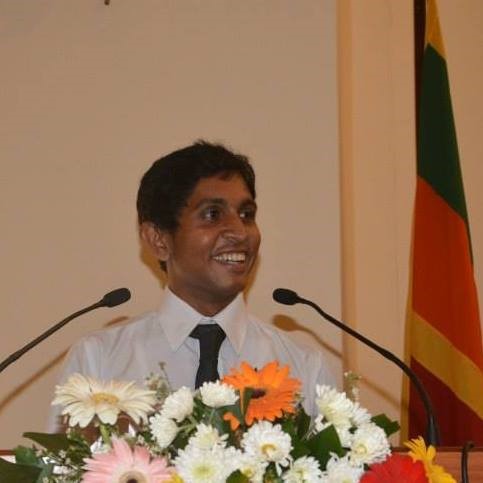
Former Governor of the Central Bank of Sri Lanka, Ajith Nivard Cabraal, says that he believes the losses caused by the bond scam is a lot more than what has been stated in the commission report.
I see it as a loss of somewhere between Rs 500 billion and Rs 1,000 billion.”
He also said that he is glad that the report of the Presidential Commission on the bond scam has recommended an investigation into the issuance of bonds during the period from 2008 to 2014.
I’m glad that was said. Because such an investigation has already being carried out by the country’s Auditor General as per the request of Finance Minister Ravi Karunanayake and the relevant report has been uploaded in his website. It is still there in that website to this day,” he told Ada Derana.
However, if the report states that an inquiry should be carried out on the bonds issued during that time period despite the fact that it has already been done, then we should be glad about that, Cabraal said.
General Secretary of the Communist Party D. E. W. Gunasekera yesterday said that the top UNP leadership couldn’t absolve itself of the responsibility for the bond scams.
Gunasekera said so addressing the media at the Communist Party headquarters in Borella.
The former minister said he had earlier addressed the media as the Chairman of the 13-member COPE (Committee on Public Enterprises) that proved the first bond scam in 2015 February.
They perpetrated the first treasury bond scam on Feb 27, 2015, on the 50th day of 100-day yahapalana government, Gunasekera said.
Gunasekera paid a glowing tribute to those members of both the print and electronic media who had relentlessly followed the treasury bond scam. “Let me explain the phenomenal growth of Perpetual Treasuries Ltd (PTL) since its establishment in 2013 during the previous administration. Having launched operations with Rs. 300 mn as capital, how could PTL manage to obtain Rs. 11 bn in profits within five months?”
Gunasekera said that PTL had received Central Bank recognition as the 16th primary dealer authorised to operate in the lucrative treasury bond market.
The PTL group wielded political influence at the highest level, Gunasekera said, alleging that a spate of attempts had been made to sabotage the inquiry until the very end.
Gunasekera pointed out that PTL had earned profits at the expense of the Employees’ Provident Fund (EPF), National Savings Bank, Mahapola Scholarship Fund and Sri Lanka Insurance Corporation (SLIC). The PTL had, with political backing, borrowed from the state and then the same funds were given back at a higher interest, Gunasekera said. He said it was absurd for the government to borrow funds through a third party from state institutions.
The Communist Party Leader said there had never been a bigger scam than the treasury bond racket and the alleged complicity of the UNP leadership therein had come to light within weeks of the first scam.
Gunasekera faulted Prime Minister Ranil Wickremesinghe for appointing a three-member committee comprising UNP lawyers to inquire into the issue.
Alleging that the lawyers lacked knowledge or expertise to handle such an investigation, Gunasekera.
“PM Wickremesinghe should take the responsibility for that attempt to misdirect the inquiry,” Gunasekera alleged.
As an influential section of Parliament had refused to accept the UNP report, the then Speaker Chamal Rajapaksa had intervened to set up a 13-member COPE team to speedily inquire into the alleged fraud. Gunasekera said that the parliament had been dissolved to prevent the presentation of his report with UNP MP Sujeewa Senasinghe moving District court of Colombo to restrain Gunasekera from releasing it ahead of parliamentary polls in 2015 August.
A smiling Gunasekera said that the case was pending and would come up next month.
Asked by The Island whether the second bond scam in March 2016 could have been prevented if not for the dissolution of parliament, Gunasekera said that question should be posed to President Sirisena as the latter had done so.
Gunasekera acknowledged that the political situation at that time, too, should be taken into consideration when the dissolution of parliament was examined.
The events leading to the treasury bond scam including the appointment of UNP leader Wickremesinghe as the Prime Minister while Mahinda Rajapaksa still had a two thirds majority in Parliament were mind-boggling, Gunasekera said
The group loyal to Rajapaksa had failed to come to terms with what had taken place even three years after the war winning President’s defeat, said Gunasekera, adding that he had strongly advised President Rajapaksa not to call early polls and when he was ignored a public warning was given through the media. Only The Island had reported his warning in early Oct. 2014 to President Rajapaksa, Gunasekera told the media.
Appreciating the presidential commission members, SC judges, K. T. Chitrasiri, Prasanna Jayawardena, and former deputy Auditor General Velupillai as well as incumbent Auditor General Gamini Wijesinghe, top AG Department officials, including Senior Additional Solicitor General Dappula de Livera and Additional Solicitor General Yasantha Kodagoda as well as the Deputy Auditor General Chula Wickremaratne, who assisted the first COPE commission, Gunasekera praised the then head of the public debt department Deepa Seneviratne for serving the interests of the nation.
Gunasekera said the bond scams wouldn’t have come to light without the expert opinion given by former Deputy Governor of the Central Bank Dr. W. A. Wijewardena.
He ended the media briefing with dire warning that the country would never get an opportunity to clean up the society if President Sirisena failed to go all out to achieve that goal.
Emphasizing that if the President had appointed a commission with judicial powers, those responsible could have been promptly dealt with, Gunasekera said that still the President’s action was laudable against the backdrop of his political alliance with the UNP.
Gunasekera compared President Sirisena’s actions with that of SWRD Bandaranaike in 1959 against three corrupt members of his cabinet.
National Freedom Front leader MP Wimal Weerawansa yesterday said that the Joint Opposition (JO) would move a motion of no-confidence against Prime Minister Ranil Wickremesinghe over the treasury bond scams.
Addressing the media at a press conference held at the NM Perera Centre in Borella, MP Weerawansa said the JO leaders would meet on Sunday to decide on the content of the no-confidence motion to be moved against the Prime Minister.
Weerawansa said the treasury bond scam was the biggest ever fraud in the country’s history and Prime Minister Wickremesinghe was on the top of the list of persons responsible for it. The PM could not absolve himself from the crime by trying to find a scapegoat in former Finance Minister Ravi Karunanayake, Weerawansa said.
The NFF leader said the Prime Minister and other ministers responsible for the bond scam had no moral right to hold their portfolios further and they should resign forthwith If they did not resign then President Maithripala Sirisena had to remove them, the NFF leader said.
January 5, 2018, 9:55 pm
The biggest threat to the nation’s coffers comes not from outsiders as such but from the rogues among its custodians. Troubled by a spate of bank heists, a desperate police once sought to slap a ban on full-face helmets, which are usually worn by robbers to hide their identities. But, those who robbed the Central Bank not just once but twice, so to speak, wore no helmets and carried no guns, at all. Arrayed in designer suits with official IDs dangling from expensive lanyards, they were the very custodians of the bank. Gamekeepers turned poachers, one may say. Centuries ago, Juvenal, the Roman poet, posed a very pertinent question which Sri Lankans are asking themselves today: Quis custodiet ipsos custodes? (Who guards the guards?)
The presidential commission of inquiry report on the Central Bank bond scams is now with President Maithripala Sirisena, who has selectively disclosed some of its recommendations. The full text of the document has not yet been made public and it is doubtful whether it will ever see the light of day, but what is already known thereof is sufficient to conclude that the scams have actually happened. Some of the culprits have also been identified and action against them recommended. However, it looks as if the process of initiating legal action would take a month of Sundays. For, the wheels of justice always turn at a politically determined speed in this country.
How would the yahapalana government have acted if a presidential commission had recommended legal action in respect of corrupt deals involving its political enemies? It would have had all of them arrested forthwith with the highly politicised special police units working overtime to cause the suspects to be held on remand indefinitely. But, the bond racketeers with yahapalana connections are still at large! The government leaders keep haranguing us on their commitment to good governance and the rule of law!
The grandees of the previous dispensation were thrown out of power over allegations which had not been proved. That doesn’t mean they were not corrupt and what they stood accused of were baseless. Corruption was so rampant under their rule that people readily bought into claims the then Opposition made in the run-up to the 2015 presidential election. The public expected those allegations to be probed and legal action taken against the corrupt swiftly after the change of government. They wanted the stolen public wealth recovered as a national priority. Instead, the potentates of the incumbent administration have been busy lining their pockets without going the whole hog to substantiate the allegations they themselves made against their enemies let alone seize the stolen wealth. Having been in political wilderness for years, they are apparently making up for lost time.
President Sirisena tells us that he has a sword, which will spare none, in his efforts to rid the country of corruption. (We hope the blade in his hand doesn’t belong to Justitia.) But, as regards corruption within the ranks of the yahapalana administration, he apparently uses the sheath instead of the sword when he takes on the bad eggs within the government ranks.
A fish is said to rot from the head down. Irrefutable evidence has emerged that the bond racketeers had the blessings of the highest echelons of government. The rest of the yahapalana fish is no better than its rotten head if one is to go by the damning allegations against other government worthies. But, no action is taken against anyone associated with the powers that be. Under the previous government a minister got away with a cheque fraud thanks to the Attorney General’s Department, which yielded to political pressure. The 2015 regime change has not made any difference. A minister involved in a vehicle racket, a criminal offence, has been let off the hook!
Will anyone with a modicum of intelligence expect the highly-connected bond racketeers who are likely to rat on their political bosses, in case of being considered expendable and treated as such, to be brought to justice?
Are we to be left at the mercy of the Attorney-General’s Department, and for how long more?
This is the latest puzzle on the Bond Scam probe.
President Sirisena has made his statement that the AG has been asked to act on the recommendations of the Presidential Commission.
We also have it from the Prime Minister that he referred the COPE Report on the Bond Scams to the AG for necessary legal action, and that was many months ago.
There is also the CID file on a Bond Scam referred to the AG’s Department in June 2015 for necessary action.
So the Attorney-General is the Man of the Moment, for the people who want action on the Treasury Bond frauds.
Have these delays by the A-G’s Department anything to do with it being under the Ministry of Justice – that comes under the UNP – which is the continuing and current rival of the SLFP in the slippery path of Good Governance or Yahapalanaya?
We know very well that the Law is a slow mover, and the Court System is not there to speed up the process. But, for how long can the law be delayed on an issue that is so much in the public eye, is very much part of the political campaigns of today, involves the loss of billions of public funds, and the very structure and functioning of the Central Bank?
We have also read that the Law is an Ass, as told by Dickens, and just now it has many more asinine situations than when it was written.
Will our law be able to bring Arjuna Mahendran to book, for all the millions that his manipulations helped the county lose and largely go to that company of perpetual fraud, known as Perpetual Treasuries, run by his son-in-law Arjun Aloysius?
How fast will the AG act to bring these perpetual crooks to book, or will it be a situation of constant or perpetual delays that can only please the crooked and not the people?
Is it possible that we will be seeing more situations of conflicts of interest, which apparently was the biggest burden the Prime Minister had in dealings with his much-trusted friend Arjuna Mahendran?
How long will it take for our law to act on the Commission’s recommendations on Ravi Karunanayake (RK), former Finance Minister, who remains in the front ranks of the UNP? Interestingly, the uniquely forgetful RK has said he is at a loss to understand how he turned up as a suspect in the Central Bank situ, when the Central and other State banks did not come under him?
This is possibly another case of his perpetual and penthouse amnesia. But, will the law look at it as memory loss, or ask whether he is saying that any charges should come against his party leader, the Prime Minister, under whom the Central Bank and State banks are placed? The path of politics can certainly give many interesting twists to the interpretation of the law.
How fast will the Central Bank carry out its own forensic probe into Treasury bond dealings from 2008 to 2015, as the Commission has recommended? Will it be done fast because Mahinda Rajapaksa is in favour of it, or will it be slow because of the concerns of the SLFP ‘creepers’ who are now in Yahapalanaya?
With Law and Justice being so close, in politics and governance, how long will it take for the Legal Draftsman to produce the new Bills required to be passed by parliament to take speedy action on the Treasury Bond Scams, and to recover the losses incurred by the EPF and other important public funds?
It is best not to forget that the crooked people in parliament who do not declare their assets are fined only one or two thousand rupees when their income and benefits are soaring high, compared to when that law was passed.
Also, are we not aware that the National Audit Bill has still not come to Parliament for approval … possibly because the Law does not believe in good and speedy audits of public funds?
President Sirisena has scored a big hit by making his statement on the Bond Scam Commission Report, and his statement that everything has been sent to the AG and Bribery Commission for action. The Prime Minister is also making his own case for referring the earlier COPE Report to the AG.
The AG is certainly in a very big spin for speedy implementation. But what is the reality? Should we recall how so many Commission and Committee Reports of importance have gone into hiding and are buried amidst the files in the AG’s Department?
What the public need now is the AG to show how fast the law can function in the public interest when we all know it moves very slow in the interests of power politics. The President and Prime Minister too should know that getting the law to act with speed on the Treasury Bond Scams is the path to the public confidence of any sort, at best before the coming local government polls.
The proof of such speedy action will also be the substance for continued unity between the UNP and SLFP, in the months ahead, if both parties seek such unity.
General Secretary of the Sri Lanka Communist Party D.E.W. Gunasekara says that the appointing of a Commission of Inquiry by the President to probe the bond scam has proven to be a correct decision although some had condemned it back then.
In that way we have to be grateful to the President for appointing the commission,” he said.
He stated that the judge panel toiled for 10 months continuously and not only did they hear the case they also investigated, but they did not have judicial powers.
We asked for a commission which had judicial powers. The commission should have powers to met out punishment. Like the Thalgodapitiya Commission. But the President appointed a different commission,” he told reporters in Colombo.
If this commission had been given true judicial power under the Constitution, then today Ravi Karunanayake and the others would already be sentenced to jail.”
However, he said that they are satisfied that such a commission was appointed in the country for the first time in 59 years, the last time being in 1959. On that side it is important.”
Since the late S.W.R.D. Bandaranaike took a decision to appoint a commission and sack three ministers from his Cabinet, the party and politics, no other head of state or leader of government had taken such a decision until now,” the former minister said.
The Monetary Board of the Central Bank has decided to extend the suspension of Perpetual Treasuries Limited (PTL) to function as a Primary Dealer for further six months with effect from today (January 05).
The Central Bank said the suspension was extended to continue its own investigations into the dealer.
Perpetual Treasuries is connected to Arjun Aloysius, son-in-law of ex-Central Bank Governor Arjuna Mahendran.
The decision has been made acting in terms of the Regulations made under the Registered Stock and Securities Ordinance and the Local Treasury Bills Ordinance.
The final report of the Presidential Commission of Inquiry (PCoI) which investigated the Bond Issuance of the Central Bank was handed over to the President on 30th December.
The President appointed the Commission of Inquiry on 27th January to investigate, inquire into and report on the Issuance of Treasury Bonds during the period 1st February 2015 to 31st March, 2016.
The three day 123rd Annual Convention (Jalsa Salana) of the Ahmadiyya Muslim Community in Qadian, India, concluded with a faith inspiring address by the World Head of the Ahmadiyya Muslim Community, the Fifth Khalifa (Caliph), His Holiness, Hazrat Mirza Masroor Ahmad, on 31 December 2017.
His Holiness addressed the final session via satellite link from the Baitul Futuh Mosque in London. Over 20,000 people attended the Convention in Qadian from 44 countries including Sri Lanka, while more than 5,000 gathered in London for the concluding session.
During his address, His Holiness explained the true meaning of the title, ‘Seal of the Prophets’ given to the Holy Prophet Muhammad (peace be upon him) in the Holy Quran.
His Holiness said that whilst Muslim religious clerics continued to allege that Ahmadi Muslims denied this status of the Holy Prophet Muhammad (peace be upon him), nothing could be further from the truth. To the contrary, His Holiness said that Ahmadi Muslims understood and fully believed in the true status of the Holy Prophet Muhammad (peace be upon him) and always had.
Furthermore, His Holiness said that it was a cause of regret that so-called Muslim religious clerics continued to incite the masses against the Ahmadiyya Muslim Community by propagating grievous lies and making false claims.
Hazrat Mirza Masroor Ahmad said:
From its inception, the Ahmadiyya Muslim Community has constantly reiterated and proven the fact that that the Muslim religious clerics and opponents of the community are completely wrong in their assertion that Ahmadi Muslims do not believe the Holy Prophet (peace be upon him) to be the Seal of the Prophets. Their assertions are not based upon facts but only upon lies.”
Hazrat Mirza Masroor Ahmad continued:
Whilst, the religious clerics have continued to incite the masses and sown seeds of hatred against us, those willing to look at the facts objectively are realising the truth. They understand that the Holy Quran and the sayings of the Holy Prophet Muhammad (peace be upon him) testify to the fact that Ahmadi Muslims are true Muslims. They realise that the true exalted status of the Holy Prophet Muhammad (peace be upon him) can only be understood once a person accepts that the Founder of the Ahmadiyya Muslim Community was the awaited Messiah and the true servant of the Holy Prophet Muhammad (peace be upon him).”
His Holiness said that the opponents of the Ahmadiyya Muslim Community would remain forever frustrated in their efforts to stop the spread of Ahmadiyyat.
Hazrat Mirza Masroor Ahmad said:
The opponents of the Ahmadiyya Muslim Community seek to turn people against us, however they should remember that their human efforts and tactics are bound to fail and are worthless compared to the plans of God. It is destined by God Almighty that the followers of the Promised Messiah (peace be upon him) will one day become the majority.”
Hazrat Mirza Masroor Ahmad continued:
God Almighty revealed to the Promised Messiah (peace be upon him) that He would grant him honour and would increase his community and we are seeing the fulfilment of this prophecy every single day. Despite the opponents making all possible efforts to stop us by propagating falsehood about our belief in ‘Seal of the Prophets’, hundreds of thousands of people continue to join us each year, mostly from amongst other Muslims.”
Hazrat Mirza Masroor Ahmad drew the attention of the attendees towards their individual responsibilities to inform people about the truth of their faith and the actual meaning of ‘Seal of the Prophets’ as given to the Holy Prophet Muhammad (peace be upon him) by God Almighty.
Regarding the status of the Holy Prophet (peace be upon him), His Holiness quoted the founder of the Ahmadiyya Muslim Community, His Holiness, Hazrat Mirza Ghulam Ahmad, the Promised Messiah (peace be upon him).
The Promised Messiah (peace be upon him) said:
No person can be deemed a true Muslim and nor can anyone follow the Holy Prophet Muhammad (peace be upon him) until they accept him to be the ‘Seal of the Prophets’.”
Emphasising the true status of the Holy Prophet (peace be upon him), Hazrat Mirza Masroor Ahmad stated:
Let it be clear to the world that the Promised Messiah, Hazrat Mirza Ghulam Ahmad of Qadian (peace be upon him) brought no new religious law, nor can any new religious law henceforth be revealed. Furthermore, the Holy Prophet Muhammad’s (peace be upon him) exalted status is the very reason that God Almighty granted the status of Prophethood to the Promised Messiah (peace be upon him). He attained this status due to his complete obedience and servitude to his master, the Holy Prophet Muhammad (peace be upon him).”
His Holiness also highlighted the need for the advent of the Promised Messiah (peace be upon him).
Hazrat Mirza Masroor Ahmad said:
God Almighty sent the Promised Messiah (peace be upon him) to re-establish and spread the true religion of Islam, a faith established by the most beloved of God, the Holy Prophet Muhammad (peace be upon him). The Promised Messiah (peace be upon him) was sent with the promise of God that He will grant him victory and so how can the constraints of worldly powers or the injustices and abuse of so-called religious clerics hinder his Community from succeeding?”
Discussing the continued opposition faced by Islam more generally, Hazrat Mirza Masroor Ahmad said:
In this era, where the so-called Muslim religious clerics are defaming Islam, we are also seeing worldly and materialistic people in all parts of the world opposing Islam and seeking to undermine it. They are vilifying Islam with the intention of gaining territorial and political power and seizing the wealth of Muslim countries. In other words, Islam and Muslims are being targeted through both religious and material channels.”
Concluding with an emotional and faith inspiring message to Ahmadi Muslims worldwide, Hazrat Mirza Masroor Ahmad stated:
Let the so-called religious Muslim scholars and governments pass edicts against us and incite common Muslims to harm and murder us by falsely stating that we do not believe in the ‘Seal of Prophethood’ or by claiming that we do not believe that the Holy Prophet Muhammad (peace be upon him) was the last law-bearing prophet. Whatever they say or claim, they can never shake or weaken our faith, for we have found that which the Holy Prophet Muhammad (peace be upon him) desired for us to find. We have learned the principles of love for Allah the Almighty and for His Prophet (peace be upon him) through the Promised Messiah (peace be upon him).”
Hazrat Mirza Masroor Ahmad continued:
In the face of opposition and hatred, it is the responsibility of every Ahmadi Muslim to elevate themselves by seeking continuous spiritual and moral development and attaining the nearness of God Almighty.”
The session concluded with silent prayers followed by various poems recited by attendees in Qadian via satellite link.
Many countries have experienced the resignation of their Presidents and Prime Ministers when they face allegations of corruption and the latest to do so was the former Prime Minister of Pakistan Mr. Nawaz Sheriff. Ihese resignations have occurred because those ressignees valued their integrity more than the luxury of the office they were holding. We wonder whether such things will happen in our country as well?
All newspapers, websites, and TV outlets including the foreign press have given much publicity to the Presidential Commission of Inquiry report that probed the Treasury Bond Scam which is considered as the biggest robbery that has taken place in the history of our country.
The Commission in its 1257 Pages report of inquiry conducted for 10 months has recommended and stated the following:
That Prime Minister had erred in going by the information and assurances given by the then Governor Mahendran, on the question of conflict of interest in regard to his son in law and primary dealer Arjun Aloysius. It said that the Prime Minister has told Parliament that believing in information provided by Mr. Arjun Mahendran he appointed Mr. Mahendran as the Governor of the Central Bank and the Prime Minister should not have done that.
That the penthouse apartment occupied by former Finance Minister Mr. Ravi Karunanyaake belonged to the Aloysius Family and their Walt and Rowe Company and has recommended that the government should take necessary action against Mr. Ravi Karunanayake under the section of bribery and corruption Act and further legal action under the penal codes for giving false evidence at the Commission.
That Central Bank officials were rendered inactive before former Central Bank Governor Mahendran and that Mahendran has made interference into bond auctions through a system of incorrect and unconventional methods and he was responsible for providing internal information to outsiders.
That Perpetual Treasuries Limited has earned a profit of at least Rs. 688 million from the bond auction held on Feb 27, 2015 and it has earned a profit of Rs. 11.545 billion from its secondary market deals and the losses caused to the Employees Provident Fund (EPF) and state institutions amounted to more than Rs 8,529 million (Rs 8.5 billion). The commission has identified Arjun Alloysius, Kasun Palisena of PTL as those responsible for these losses to government and has recommended civil and criminal action against all those responsible..
That legal action should be taken against relevant persons and officials who are responsible for the fraud including Perpetual Treasuries Limited, Arjun Aloysius and Kasun Palihena.
That Members of Monetary Board and Central Bank Governor must be appointed by the Constitutional Council in concurrence of the members and regulations must be amended accordingly.
That there should be utmost supervision over the State Credit Department as auditing at the Central Bank has not been conducted in a proper manner, the Commission recommends that the Audit Department must be reconstituted completely. A Legal Department must be established in the Central Bank and ensure that the Legal Department functions efficiently.
That the Attorney General and the Bribery or Corruption Commission must take legal actions to implement the recommendations of the Commission.
That under normal circumstances, recovery of money is done through civil legal action but however, sincec it is a time consuming method an alternative, a Parliamentary Legislation should be passed and the money should be recovered in a speedy manner through a Parliamentary procedure.
That all the expenditure occurred for the Commission must be recovered from the Perpetual Treasuries Limited.
(Thirudaathe paappa thirudaathe – Don’t rob babaa don’t rob –A song from the Tamil film Thirudaathe)
The President has assured that he will not attempt to cover anyone and promised to implement the Commission recommendarions by entrusting the task to the Attorney General’s Department. Can we trust this assurance? Sri Lankans have not forgotten that when Mr. DEW Gunasekera was to present the first COPE report on the Tresury Bond Scam it was this same Sirissena who dissolved the then Parliament and obstructed Mr. Gunasekera from publishing that report. If that report was published the profit earned by Perpetual Treasuries Limited would have been Rs. 688 million from the bond auction held on Feb 27, 2015, and the loss to the government of Rs. 11.545 billion from its secondary market deals could have been prevented. As such President Sirisena should be directly held responsible for the loss incurred by the government from the second Treasury Bond Sales deal.
The Island editorial on 14th November said that President Maithripala Sirisena who has lamented that the first bond scam occurred within weeks of the formation of the yahapalana government is blameworthy because he dissolved Parliament, foreclosing the submission of the COPE report on that financial crime and he cannot absolve himself of the responsibility for the second bond scam carried out by those who captured power in the August General Election with his help.
Was the issuance of this report was timed with a hidden sinister motive underneath. It has been observed that after the August 2015 parliamentary election, there was a clear deterioration in the relationship between the SLFP and the UNP when Sirisena grabbed many of the best ministries to be distributed to his SLFP loyalists while the UNP got the crumbs.For the last one year or so we do not find Sirisena and Ranil going on the same wave length. Ranil is firmly on his usual and committed cosmopolitan neo liberalist path and Sirisena desperately attempting to get crowned as the rural based SLFP leader. We wonder whether this Commission report was timed to release end of the year as Sirisena prevented some of the SLFP Ministers who were to leave the government asking them to wait until December end expecting some positive changes.
For the last several months we do not find Sirisena’s much hyped so-called national reconciliation talks as well. It may be another aspect of his sinister plan that he made a formidable attempt to unify the two SLFP factions with the assistance of some prominent members of the Maha Sangha. Whatever that may be it is naive for him to expect to form a government of his own and he will never succeed in mustering 113 MPs to appoint his own Prime Minister.
Upholding his infamous talk last week of chopping the heads off of anyone who indulge in wrong doings he may use the commission report to take action against the 2Rs and against the 2As and show that he is an upholder of justice. But taking action against Ranil at this juncture he is bound to strike the hornets nest as he is a person who is being intensely despised by grass root level SLFPers who are waiting for a moment and a cause to rebel against him and they will be joined in this spectacle by the infuriated UNPers as well.
Meanwhile the Joint Opposition says the extra set of Cabinet and non-Cabinet ministers appointed by the Government have become unconstitutional and illegal. It said the number of Cabinet and non-Cabinet ministers had been determined by the 19th Amendment to the Constitution and that number stands at 70 and according to clause 46 (a) and (b) of the Constitution, the number of Cabinet ministers shouldn’t exceed 30 and non-Cabinet ministers 40. However, in an event where a National Government was formed, the number of ministers could be increased. Hence, we have 100 ministers, having 30 extra. The National Organiser of JO and MP Dullas Alahapperuma told a news briefing that with the expiration of the agreement between the Sri Lanka Freedom Party (SLFP) and the United National Party (UNP) for a National Government on December 31, the functioning of excess 30 ministers is unconstitutional and illegal.
This situation could lead to chaos in the country and collapse of the government as this Commission report has ruptured the SLFP-UNP ill fated honeymoon and the biggest losers will be the Ministers of the SLFP Sirisena faction.
We waited, with bated breath, for a pulse-pounding, earth-shattering revelation on Wednesday. But, President Maithripala Sirisena only read out a statement, selectively disclosing some of the recommendations made by the Presidential Commission of Inquiry (PCoI), which probed the Treasury bond scams. However, he, credit where credit is due, has at least done that much unlike his immediate predecessor, Mahinda Rajapaksa, who swallowed presidential probe committee reports whole and flashed grins like a Cheshire cat.
President Sirisena revealed that the PCoI had recommended criminal and civil action against former Governor of the Central Bank of Sri Lanka (CBSL) Arjuna Mahendran, his son-in-law and owner of Perpetual Treasuries Arjun Aloysius, former Finance Minister Ravi Karunanayake et al. We were also told that action would be taken to introduce new laws to recover the losses caused to the Employees’ Provident Fund, the Mahapola Scholarship Fund, the NSB etc.
The PCoI recommendations, as revealed by President Sirisena, are most welcome. However, what the President has done by way of a presidential commission probe is akin to reinventing the wheel. For, a similar course of action was recommended by the Attorney General’s (AG’s) Department way back on June 30, 2015. We pointed out, in this space, on August 2, 2017, while the bond probe commission proceedings were still on, that no probe into the racket would be complete without an investigation into the AG’s Department file which had been either shelved or made to disappear.
On June 30, 2015, the CID handed over a file (No: C/187/161/2015) on the first bond scam to the AG’s Department, during the tenure of Attorney General Yuwanjana Wijethilake. A senior official who happened to accept the file found a prima facie case of insider trading and market manipulation and duly opened a criminal file and handed it over to a counsel for further action. In the mean time, President Sirisena dissolved Parliament and held the August 2015 general election, thwarting an attempt by the COPE (Committee on Public Enterprises) headed by D. E. W. Gunasekera to place its report on the first bond scam before Parliament. A UNP-SLFP government was formed after the polls.
We revealed that, strangely, criminal action against the bond racketeers had been terminated by the AG’s Department and the file at issue turned into a confidential document (CF/08/2015), which was passed on to another senior counsel. In June 2016, that counsel had, acting within the parameters set by his superiors, recommended that civil action be taken against Perpetual Treasuries to recover funds, we revealed. The file has not been sighted ever since.
We called upon the PCoI to summon the incumbent AG and ask him what had become of the file and why criminal action as regards the first bond scam had been terminated. But, no such action was taken and the mystery remains unsolved. Will President Sirisena care to order an investigation with a view to tracing that vital document? If action had been taken against the bond racketeers on the basis of the AG’s Department recommendations in June 2015, the second bond scam (2016) which was far worse than the first one—like the second wave of the Boxing Day tsunami—could have been averted.
President Sirisena told the nation in the lead-up to the Aug. 2015 general election that he had wanted Mahendran removed as the CBSL Governor in view of serious allegations against the latter. He should explain why he baulked at brining adequate pressure to bear on the government to remove Mahendran, who was under a cloud. Can he deny that he succumbed to political expediency at the expense of good governance?
The PCoI has not found anything irregular as regards the appointment of Mahendran as CBSL Governor by Prime Minister Ranil Wickremesinghe, according to what the President told us on Wednesday. But, what about the PM’s all-out effort to re-appoint Mahendran as the CBSL Governor despite the availability of irrefutable evidence that the latter had been involved in the bond scams? It was the President’s intervention which put paid to the PM’s attempt. The President deserves praise for his bold decision which almost caused the collapse of the government. However, according to what the President revealed on Wednesday, it is not clear whether the PCoI has commented on the issue of the deplorable reappointment bid which dented the much-flaunted good governance credentials of the government irreparably. Has the PCoI chosen to ignore the vital issue completely?
The PCoI has suggested that the bond transactions during the period from 2008 and 2015, too, be probed. This is a welcome suggestion, but the government must not use such an investigation to obfuscate the issue at hand and delay action against the perpetrators of the mega bond scams in 2015 and 2016. It is imperative that the recommendations of the PCoI anent the scams it probed last year be implemented, first of all while a serious effort is made to bring the self-righteous politicians who masterminded the racket to justice.
Parliament must be summoned immediately and the new legislation as well as amendments to the existing laws, which the President promised on Wednesday, introduced as a national priority. This must be done before the LG polls. One shouldn’t be so naïve as to expect the ill-gotten wealth of the bond racketeers to be seized and the main culprits brought to justice. There is reason to believe that all the fraudulently acquired money has been taken out of the country. However, new laws are called for to enable the seizure of stolen funds because they will, at least, have a deterrent effect on other rogues of the same ilk. Besides, People have a right to know who will support the proposed course of legislative action to recover losses and who will not so that they can make an informed decision when they exercise their franchise on Feb. 10.
President Sirisena denied the public their right to know what the first COPE report on the Feb. 27, 2015 bond scam contained in time for the last general election. Voters were kept in the dark. The least the President can do to atone for that cardinal political sin, if at all, is to have the new laws and amendments drafted and Parliament summoned forthwith to pass them before the upcoming polls.
Meanwhile, a sine qua non of ensuring the success of the forensic audit, recommended by the PCoI, is to prevent the desperate racketeers from covering their tracks and trying to derail investigations. Let President Sirisena be urged to take over the CBSL immediately. A few moons ago, we reported that CBSL Deputy Governor P. Samarasiri, bracketed with Mahendran in the PCoI report, had removed a whole slew of files from the bank and security officers had been ordered not to stop him. The President must act fast if he is genuinely desirous of making the bond racketeers and their confederates in the CBSL pay for the biggest ever financial crime in the country. It is the moment of truth for the President, who wears his commitment to good governance on his sleeve. Now that he has talked the talk so eloquently, he has to walk the walk.
According to media reports, when the name of Arjuna Mahendran came up to the Cabinet of Ministers as a nominee for the post of Governor of the Central Bank, several cabinet members had apparently objected to his being considered for the post, but the Prime Minister (PM) had insisted that Mahendran be appointed highlighting his merits and saying that he would take the full responsibility for the appointment.
Now that the misdeeds of Mahendran, as the Governor, have been revealed resulting in the loss of over eleven billion rupees to the government, the best the PM could do at this stage, as a gentleman to honour his word, is to tender his resignation from the position of Prime Minister. More than the loss of money, the loss of reputation of the Central Bank and the highly respected position it had both locally and internationally is a greater loss to the country.
When the Employees’ Provident Fund scheme was established many decades ago to grant retirement benefits to employees in the private sector who were not entitled to a pension, instead of establishing a separate body to manage it, its management was entrusted to the Central Bank on the presumption that the hard-earned money of the people would be in safe hands. But, now it was proved to be otherwise, breaching the trust the employees and the government had in the Bank.
In the President’s statement telecast over electronic media on the 3rd, reference was made to several recommendations made by the Commission to prevent recurring of such losses in the future, including amending existing laws and bringing in new laws. However, it is very doubtful whether such damage control measures could erase the damage already inflicted and restore the Bank’s reputation, which like a girl’s virginity once lost is lost forever.
It may be recalled that the PM on several occasions, both within and outside the Parliament, made attempts to cover up Mahendran’s misdeeds. He first appointed a committee of three attorneys handpicked up by him to report on the issue, who exonerated Mahendran fully. When the COPE report on the bond issue was submitted to Parliament, before the report was taken up for debate, it was conveneintly dissolved. Further, the PM defended Mahendran at every opportunity he got. Covering up a misdeed is equally an offence as doing the misdeed itself. The Commission did not want to take PM into task on this issue probably to avoid toppling the apple cart.
With all the damage done to the country and to its economy by Mahendran, the PM should not be allowed to go scot free for handing over the Central Bank to Mahendran, particularly when there was opposition at the Cabinet, as if the Bank was his inherited property. Though the Commission has not held the PM responsible explicitly for Mahendran’s misdeeds, unlike in the case of his buddy who was found guilty of lying to the Commission, the PM has no option other than to tender his resignation if he has even an iota of self-respect.
Thirteen financiers accused of funnelling more than CH15 million ($15.3 million) to the Sri Lankan Tamil separatist group Liberation Tigers of Tamil Elam (LTTE) will stand trial before the Swiss Federal Criminal Court on Monday.
The accused are from Switzerland, Germany and Sri Lanka. Some are former members of the World Tamil Coordinating Committee (WTCC), which represented the LTTE in Switzerland until 2009, and include its founder, his deputy and the person in charge of finances.
Between 1999 and 2009, they allegedly created a complex fundraising structure which involved coaxing members of the Tamil diaspora to obtain loans from banks. To raise higher amounts, the WTCC was accused of creating fictitious companies in the name of borrowers that issued fake salary certificates.
Up to a 100,000 people are estimated to have been killed during the 26-year brutal civil war between the LTTE and Sri Lankan armed forces(Keystone)
The 13 on trial face charges of fraud, false documentation, money laundering and extortion. As the LTTE was never declared a terror organisation in Switzerland, they will not face charges of funding a terror group, unlike cases involving Islamic State or al-Qaeda.
The Attorney General strongly suspects the LTTE fraction under investigation of having collected the money in question by means of threats and by creating a regime of fear to induce them to make the payments,” says a court documentexternal link.
The Swiss funds were transported in cash by couriers to Singapore and Dubai, eventually reaching the LTTE in Sri Lanka who allegedly used the money to purchase arms. This funding system collapsed in 2009 after the LTTE’s military defeat at the hands of the Sri Lankan armed forces.
I don’t think [the 13 suspects] should face trial as the LTTE struggled for the freedom and self-determination of Tamils, which is not a crime. It takes two parties to make a war and Switzerland should investigate the war crimes of the Sri Lankan army as well,” Anna Annor, president of Swiss Council of Eelam Tamils, told swissinfo.ch on Thursday.
Long-drawn saga
The whole process was set in motion in 2009 when the Office of the Attorney General launched an investigation against unknown persons” for extortion, coercion, money laundering and organised crime.
In 2011, a vast sting operation in several Swiss cantons resulted in the arrest of several suspects who were later released within a span of two months. A year later, a delegation from the Office of the Attorney General and the Federal Office of Police travelled to Sri Lanka to interview around 15 witnesses.
Around 80% of Tamils living in Switzerland had made payments to support LTTE at the time to support the struggle against genocide. That does not make Tamils supporters of terrorism,” says Kuruparan Kurusamy, former president of the Swiss Council of Eelam Tamils.
The trial of the accused was originally scheduled for June 2016. However, proceedings were delayed when the lawyer of one of the accused demanded that a bank involved in the financial transactions also be cited by the judge as one of the defendants. According to Kurusamy, the bank in question was Credit Suisse and he claims it had accepted 135 loans under the name of one Sri Lankan national based in Germany.
However, the Federal Supreme Court dismissed the appeal, allowing the trial to go ahead. A verdict is expected around mid-March.
Around 50,000 people from Sri Lanka live in Switzerland, mostly ethnic Tamils, who fled the island’s 30-year civil war that ended in 2009. Many applied for Swiss citizenship and as of 2016 there were slightly more than 28,000 people with Sri Lankan citizenship residing in Switzerland. In 2016, the Swiss government announced it would apply more stringent criteria for granting Sri Lankan nationals refugee status.
Last week I wrote that Wilpattu should be the core issue of the forthcoming local government elections because the said election has taken on a national character and because ‘Wilpattu’ is a national issue.
I defined Wilpattu thus:
‘Wilpattu’ in the sense the term is used here is not a forest reserve located in the North Western Province.Wilpattu is every forest under threat of encroachment; Wilpattu is every tree that is marked for felling; Wilpattu is every creature whose habitat has been threatened by deforestation, development and human settlement; Wilpattu is the oxygen we breathe and take for granted; Wilpattu is the climate change we ought to have foreseen, did not and suffered as a result; Wilpattu is the nation.”
In this article I mentioned the communal element that Wilpattu has come to be associated with. I did not mention any community by name but said that the minister concerned belongs to a communalist party and pointed out that the objectors had a history of violence confrontations with that particular community. That’s it.
Such things need to be mentioned because not to do so would be telling just part of the story.However, the article and the argument therein went beyond the parochial interests of extremists belonging to various religious communities.
Now a person named Reza Nasser has referred to this article and indulged in a bit of fear-mongering, claiming that making Wilpattu an election issue could lead to ‘an ethno-religious bloodbath.’ Nasser has made some tendentious remarks about my political loyalties which are to hilarious to comment on.For me, they are as much a distraction as the ‘communal factor’ with respect to Wilpattu.Nasser would do well to re-read the article and see if (as claimed) I have forgotten other instances of forest reserves, by what he/she calls ‘Royal offspring of the previous regime’ or anyone else.
Now Nasser refers to me as a Sinhala writer.Should I refer to Nasser by the communal identity associated with the name ‘Nasser’?Who then is making this a communal issue and why?The argument is weak: ‘Hands off Wilpattu because Wilpattu is communal-loaded!’Hands off the destruction, that is.In other words the communal card is being used to stop the debate and to clear the pathway for further destruction.
Let’s get some fact in here.The name ‘Wilpattu’ is derived from ancient administrative system where provinces were called ‘Pattu’.Wil+pattu then refers to a province of lakes. This area with these special villu eco-system spans from Karuwalagaswewa in the Puttlam district to the Yoda Wewa or Giant Tank in Mannar and spreads across parts of the current Puttalam and Mannar districts which belongs to two difference provinces, the North Eastern and Northern.Therefore, all the unseparated and undivided forests reserves, national parks and sanctuaries in this area are together identified as the Wilpattu Forest Complex (WFC) or Wilpattu Ramsar Wetland Cluster of International Importance.The Auditor General’s report on the issue has clearly indicated wrongdoing in the name of settlement of IDPs in so-called ‘ancestral lands’ where ancestry has not been established.
Trees, forests and protected areas do not have communal identities.If trees are illegally felled and if land is illegally cleared then it is wrong.Communal identity of any kind being used to justify such acts is communalistic and should be abhorred, regardless of the community. The difference between what’s happening in the WFC and elsewhere is this: action was taken when environmentalists objected in all such locations except Wilpattu.If communalism is the reason for this difference then the issue is communal, unfortunately. All the more reason to see beyond identity and community in this and similar issues.
People insist, however.For example, I received an email from one Musali Marikkar where in the midst of untenable claims the following is stated: ‘Had the Muslims of the north and east cooperated with the LTTE, you may now have to obtain a VISA to enter into Tamil Eelam. We safeguarded our beloved motherland from the clutches of LTTE and their declaration of a separate state.’
Marikkar too uses the communal card.How should one respond?One possible response is this:
‘An alternative outcome-prediction could be if they did so, they very well have ended their story in Vellimullivaikkal.”I fail to see how fleeing an area (the LTTE was not saying ‘join or leave’ by the way) amounts to protecting the motherland.”This kind of rabidly communalist statement undermines the amazing contribution of others of the same community to defeat the LTTE, especially in but not limited to the intelligence units of the security forces.’
But that would be pandering to those who want to keep the WFC communally-colored.
Just this morning I read about another claim regarding encroachment.This, orchestrated by State Minister Range Bandara.Here’s a name that’s part of the WFC: Pukkulama.It is located on the coastal edge of the WFC and is around 40 km from the Eluwankulama entrance to the National Park.It is a fishing village.It is an area that is used seasonally by fisherfolk from areas like Kalpitiya and Puttalam. They come, they stay, they fish and once the season is over they return to their homes elsewhere.Although there are some permanent structures and a church, these too were used only seasonally.There are no land routes to the area. Indeed, it was unused for the most part during the thirty-year long conflict.
After the end of the war, the authorities resumed issuing annual permits to the families that have traditionally used this village during the fishing season.These are issued with conditions annually and for a fee of Rs 2,500.
The previous regime, recognizing perhaps the potential to use this scenic area for economic purposes, cleared a strip of land more than 50m wide to construct a road.They, just like in the case of the settlements that made Wilpattu ‘communal,’ used the ancestral-land claim to create a settlement.Next, steps were taken to carve the area out of the National Park.Finally, a helipad was constructed in Kuduramale.
A committee was appointed to expedite the ‘resettlement’ (sic) process in 2010.The committee recommended the alienation of land for settlement. Relevant agencies objected and have remained intransigent.Environmentalists objected too and were able to dent these plans somewhat. Today, the ‘yahapalana’ successors to the previous regime have revived this ‘project’ and ironically it is led by the man who built a hotel in the catchment of the Thabbowa Wewa, Range Bandara.
Now are we to focus on Bandara’s ethnicity? Are we to say, ‘well, he belongs to a multi-ethnic, multi-religious party that stands for secularism, namely the United National Party, and therefore this is not a communal issue and for this reason look the other way?’Or are we to say ‘this is a Sinhala communal intrusion’ and paint the entire community as a bunch of tree-fellers?
Pukkulama is larger than a community and a communal issue just as Vilaittikulam is larger than a community and a communal issue.Citing ‘community’ and fear-mongering together constitute a red-herring. No, ‘Wilpattu’ in the manner in which the name has been used metaphorically above, remains a national interest and it is in the interest of all communities to take a stand on it.We cannot let communality blur the issue.We cannot allow communality to blind us or numb us into inaction.
The tree that is felled, the forest that is cleared, has no ethnic identity and neither is it associated with any religious faith.For this very reason both tree and forest belong to all Sinhalese, Tamils, Muslims, Burghers and other communities; for this very reason they belong to people of all faith, Buddhists, Hindus, Muslims and Christians.If you insist on secularity, well then they are all ‘secular’ so to speak.Leave religion and ethnic identity out of it.Keep it, and then rest assured you will be named as a communalist.
Government must be really disappointed that police still couldn’t find a valid reason to arrest former Defence Secretary Gotabaya Rajapaksa. Any foreigner who reads the above opening statement of this article may wonder what is happening in this country. A government is looking for reasons to arrest people? Such things happen only under dictatorships, fascist regimes and undemocratic circumstances.
SLLRDC should return Rs. 185,741.60 to the foundation
An interesting document that police and the AG’s Dept. hid from even courts has now surfaced.
But this is the sad reality in Sri Lanka today. Since the current government came to power promising good governance, we only see the exact opposite being practised. The entire government machinery is targeted towards harassing the current and potential opponents. The laws are twisted at will to achieve the sinister motives of the ruling politicians.
Over the last three years, if the government had been effective in just one thing that is the abuse of the legal system and the police powers. Thousands of people have been questioned by the CID, Bribery Commission, presidential commissions and of course by the FCID whose legality itself is in question. Every time one of these institutes start an inquiry about a politically important individual, the information is passed on to the media quickly and the usual media show begins. If the target is very important, then it is quite likely that a charge is framed under the Public Property Act.
Why public property act? That is because under the public property act the magistrate courts have no powers to grant bail to those who are arrested by police unless there are some exceptional circumstances justifying bail. That is how those who manipulate the case can enjoy keeping the victim in remand custody for several weeks or months.
Once the person is framed as a suspect and remanded, the government media is used to completely tarnish the image of the suspect. Sadly the private media follows suit due to its news value. The target is no longer a suspect. He is already projected as a culprit. Long before an indictment is even served the persons character is completely destroyed in the public eyes. To the outside world now he is positioned as a criminal who misappropriated public funds.
How many times have we seen this drama being played over and over again. Since the current government came to power, they have conducted a number of inquiries on Gotabaya. Public may remember only a few. Investigations on Avant Garde maritime services, Rakna Araksha security services, MiG aircraft, attacks on some journalists, Welikada prison massacre and the D. A. Rajapaksa memorial were just a few of them. Even after three years of investigations government has so far not been able to find anything that former defence secretary has actually done wrong. This has led to huge frustration in the government quarters.
This calculation is fundamentally wrong because it has taken into account only Rs. 25,000,000/- of the Rs. 33,944,741.60 that the D.A. Rajapaksa foundation has already paid
With three years of their tenure expired and only two more years to remain in power, the government leaders are desperate to tarnish the image of Gotabaya who is gradually gaining acceptance as a potential national leader at a future election. Therefore it looks like they have now settled for the last resort of framing Gotabaya on a public property misappropriation charge on the construction of the D. A. Rajapaksa memorial in Weeraketiya, Hambanthota. Accordingly, the FCID sought advice from the AG’s Department a few weeks ago to arrest and question seven people including Gotabaya. It was widely reported that AG’s department had given the consent and the arrest was imminent.
However the legal team of the former defence secretary wasted no time and filed a writ in the appeal court against the conspiracy of FCID to charge him using the public property Act provisions. Their argument was that if at all it should be a civil case related to a dispute over a contract and not a criminal case that can be charged under public property. The courts responded positively and prevented the imminent arrest having favourably considered the arguments of the councils. The case is still continuing. What is important is that the courts have observed that there is no prima facie evidence of any wrong intention or a misappropriation in this case.
Now let us analyse the facts related to this case to understand how FCID is manipulating this whole issue to please their political masters.
It was in early 2014, the D.A. Rajapaksa foundation had come to an agreement with the Sri Lanka Land Reclamation and Development Corporation (SLLRDC ) to obtain their assistance for the construction of a memorial and a museum at Weeraketiya. The minutes of the 537th Board meeting of SLLRDC confirms a decision of the board to construct this memorial. The intention to recover the cost from the D.A. Rajapaksa foundation is evident from the correspondences between the two parties. The foundation has paid the SLLRDC Rs. 33,944,741.60 on two occasions. In the process, SLLRDC had informed the foundation that they would submit a final bill, which was a clear proof of a contractual agreement to deliver a service.
So how did the government get involved and create an issue here? As we all know, in August 2017 the parliamentary elections were held and a new minister took charge of SLLRDC. Thereafter a bill was sent to the D. A. Rajapaksa foundation claiming Rs. 81,313,374.14 as total dues. This is where the dispute is currently because the foundation is of the view that they have already paid for the services provided by the SLLRDC whilst the latter demands settlement of a further Rs. 56,313,374.14. This calculation is fundamentally wrong because it has taken into account only Rs. 25,000,000/- of the Rs. 33,944,741.60 that the D.A. Rajapaksa foundation has already paid. It is very clear that under someone instructions SLLRDC meddled with the final bill just to create an issue.
Even if there is a dispute on the bill value, still it is a civil dispute between two contractual parties; the D. A. Rajapaksa foundation and SLLRDC. Then how come FCID gets involved and goes to AG’s department highlighting a criminal misappropriation of public funds? This clearly shows the political motive behind this whole episode. Interestingly, Gotabaya was never part of any of these discussions. His name has been dragged in purely based on the fact that he was the secretary to the ministry of the UDA at the time the D. A. Rajapaksa memorial was built. What a long path the government has taken to trap a political opponent.
An interesting document that police and the AG’s Dept. hid from even courts has now surfaced. Its a document that Gotabaya’s lawyers have gained access to using the Right to Information Act. This is a valuation done by none other than the chief government valuer on the request of FCID. In this letter dated July 3, 2017 the chief valuer asses the construction cost of the D.A. Rajapaksa memorial and museum as Rs. 33,759,000/- .
In that case the D. A. Rajapaksa foundation has already paid more than the actual construction cost, in reality, the SLLRDC should return Rs. 185,741.60 to the foundation.
It is very clear that FCID and the AG’s Department are conniving together with the current management of SLLRDC to fabricate a story that will tarnish the good will of Gotabaya Rajapaksa. The current leadership of the country is continuing its disgraceful behaviour of trying to deceive the public with loads of lies.
There is an old saying that One can fool some people all the time and all the people some times. But no one can fool all the people all the time”. People of this country have begun to realize that they have been taken for a good ride by the current leadership. No longer they are willing to accept these lies.
(Niranjan Dissanayake is a CEO of a multinational company operating in Sri Lanka. He is also a freelance writer)
In the wake of President Maithripala Sirisena’s statement on the Central Bank bond scam, the joint opposition today said President Sirisena should also be held responsible for the fraud as he was the appointing authority of Arjuna Mahendran as the Central Bank Governor who cleaned out the Treasury.
Addressing a news conference on behalf of the joint opposition, former minister Prof. G.L. Peiris said President Sirisena had only appointed Mr. Mahendran. He also said yesterday’s President Sirisena’s statement was merely to distance himself from the fraud which had caused a whopping loss of Rs. 11 billion to the state.
Though President Sirisena vowed to recover money through legal means as Mr. Mahendran being a Singaporean would have spirited away the stolen money. Therefore, it is practically difficult to prosecute him. Even if he is prosecuted, the extradition law has to be applied which is a long and complicated process,” he added.
He said the second bond scam had taken place after the Parliament was dissolved and added that it could have been prevented if President Sirisena had not dissolved the Parliament allowing the the Parliamentary Committee on Public Enterprises (COPE) headed by former Minister D.E.W. Gunasekera to proceed with the investigations.
While referring to the statement by President Sirisena that the Bond Commission is of the opinion that similar incidents as revealed in the Commission Report had happened even in 2008, he said it was completely outside the scope of the commission to consider about it and urged the authorities not to distract the attention of the people. ()
Colombo, January 3 (newsin.asia): The report of the Sri Lankan Presidential Commission which probed a massive illegality in the issue of Treasury Bonds by the Central Bank of Sri Lanka (CBSL) in 2015, serves the political interest of President Maithripala Sirisena.
The report on the multi billion rupee scam, the main contents of which were revealed to the country by Sirisena on Wednesday, helps him keep the coalition with the United National Party (UNP) going despite sharp differences and moves within to scuttle it.
By only mildly ticking off UNP leader and Prime Minister Ranil Wickremesinghe for going by the false assurances given by the erring bank Governor Arjuna Mahendran, the report helps Sirisena safeguard his relations with his Prime Minister, who heads the single largest party in parliament.
By saying that similar scams had taken place when Mahinda Rajapaksa was President, and his man Ajith Cabraal was CBSL Governor, and that the bonds issued between 2008 and 2015 should also be investigated and legal action taken, the report helps put Joint Opposition leader and carping critic Rajapaksa and his henchmen in the dock.
Arjuna Mahendran. former Governor of Central Bank of Sri Lanka
With Sirisena saying that he has asked the Attorney General to begin the legal process, the Rajapaksa camp will have cause to worry in the run up to the crucial local bodies elections in February.
President Sirisena, who is now portraying himself as a crusader against corruption and thereby against the corrupt former regime headed by Rajapaksa, has declared that he will go by the commission’s recommendations to reform the monetary system and also the Central Bank.
The President’s faction of the Sri Lanka Freedom Party (SLFP), which has been losing public support for not living up to its 2015 election promises, is expected to use the anti-corruption plank provided by the bond scam report to weaken the Rajapaksa camp ahead of the February elections.
The report has recommended legal action against former Governor Arjuna Mahendran and his son in law Arjun Aloysius, head of Perpetual Treasuries (PTL), a primary dealer. The only politician singled out for punishment is former Finance Minister Ravi Karunanayake, though the CBSL was under the purview of the Prime Minister and not the Finance Minister.
The Scam
In late February 2015, soon after Sirisena and Wickremesinghe came to power replacing the Mahinda Rajapaksa regime, the Central Bank suddenly decided to raise LKR 10 billion from a sale of 30-year government bonds with a coupon (fixed interest rate) of 12.5% , when it had initially advertised an offer of LKR 1 billion with a fixed interest rate of 9.5%.
Despite the sudden change in the terms, Perpetual Treasuries Limited, a primary dealer owned by Arjun Aloysius, who is also the son-in-law of then Central Bank Governor Arjuna Mahendran, and its associate Bank of Ceylon, took 73.5% at an an interest rate of 11.5%. It was suspected that Aloysius had inside information about the hike and was prepared for it while others were in the dark.
Ranil Wickremesinghe after testifying before the bond commission. Seattle Times
Arjuna Mahendran, a Sri Lankan-Singaporean banker, had been chosen for the top banking job by Wickremesinghe. But under a cloud over the scam, Mahendran resigned and was replaced by Dr.Indrajit Coomaraswamy, said to be a nominee of President Sirisena.
Sirisena’s Sri Lanka Freedom Party (SLFP) and Wickremesinghe’s United National Party (UNP) were sharply divided on the bond issue though they were both part of the National Unity government.
Early in 2017, Sirisena felt that the SLFP would lose political credibility if it did not clear itself of the charge that it was also protecting the wrong doers. Sirisena then asked the Prime Minister (under whom the Central Bank functioned) to clear his name. Instead of making his submissions in writing Wickremesinghe decided to appear before the commission and answer all questions.
Extent of Scam
The bond commission found that the illegal bond issue made to benefit the PTL headed by Arjun Aloysius , CBSL Governor Mahendran’s son-in-law, had caused a total loss of LKR 11,145 million. Out of that LKR 8529 million had been from the Employees Provident Fund (EPF), the Mahapola Scholarship Fund, National Savings Bank and Sri Lanka Insurance Corporation. The balance was from private institutions.
Hence the loss to the public sector – EPF, Mahapola, NDB and SLIC – was over Rs 8.5 billion. Perpetual Treasuries Limited (PTL), the primary dealer and the kingpin of the scam, had made a profit of LKR 11,145 million within five months, the report found.
In the auction held on 27th February 2015 alone, Perpetual Treasuries Limited has made a minimum profit not less than LKR 688 million. The Commission is of the opinion that further investigations could reveal that this amount could even be more than that. As revealed during the investigations, PTL had made an undue profit of Rs 11,145 millions in the secondary market. In this, EPF and other government institutions had lost more than LKR 8,524 million or LKR 8.5 billion,” the report said.
The report stated that PTL had earned profits through means that are not legal, with the involvement of Governor Arjuna Mahendran, CBSL officials and some external parties.
Prime Minister’s Role
The report said that Prime Minister Wickremesinghe had erred in going by the information and assurances given by the then Governor, Mahendran, on the question of conflict of interest” in regard to his son in law and primary dealer Arjun Aloysius.
The Commission is of the opinion that the Prime Minister made his statement in parliament regarding the appointment of Mahendran believing in the facts presented by Mahendran and Samarasiri, especially, the promises made by Mahendran. The report also says that the Prime Minister should not have done that. The Commission further stated that these facts were before the parliamentary Committee on Public Enterprises (COPE) and the Prime Minister had not stated these, because of that he had not taken proper action against Mahendran,” President Sirisena quoted the report as saying.
When Wickremesinghe testified before the commission, he revealed that in January 2015, he was told that Aloysius would be resigning from PTL and that he was going to spend his time developing the Mendis distilleries business.
That was all I knew. Other than that, I didn’t know his affairs,” the Prime Minister had said. I had no information that he (Mahendran) in fact deliberately misled me,” he added.
After the matter went to parliament, he had left it to parliament to proceed further in the matter, the Prime Minister said. Wickremesinghe added that the conflict of interest issue had been there before too, referring to former Governor Ajith Nivard Cabraal’s sister’s alleged Directorship in PTL.
Arjun Aloysius. Director Perpetrual Treasuries Ltd.
Spineless CBSL Officials
The report stated that senior officials of the CBSL were inactive” before Arjuna Mahendran. Bad decisions were made because these officers had become inactive.
Mahendran had made interference into Treasury bond auctions through a process of incorrect and unconventional methods and he was responsible for providing internal information to outsiders. Such conduct has allowed one party to obtain undue monetary gains,” the report states.
Former Finance Minister’s Role
The Commission’s report refers to the allegation against former Minister of Finance Ravi Karunanayake regarding the payment of rent for the ‘Penthouse’ apartment by Walt and Raw Company owned and controlled by the Aloysius family.
Karunanayake was responsible for that and recommended that the government should to take necessary action against Ravi Karunanayake under the section of bribery and corruption, and further legal action should be taken under the penal code for giving false evidence at the Commission,” the President said.
Misuse of Employment Provident Fund
The Commission mentioned the misuse of funds of the Employees Provident Fund (EPF), and stated that a forensic audit examination should be conducted to find out the amount of losses of EPF. The people responsible for these frauds have been identified and the Commission recommends legal action against them ,the President said.
The report recommends that, the legal action be taken against relevant persons and officials who are responsible for the fraud including Perpetual Treasuries Limited, Arjuna Aloysius and Kasun Palihena. It also recommends action to recover lost funds. Accordingly, the government is in consultation with the legal authorities ,the President said.
Probing Past Illegalities
The Commission pointed out that similar scams had happened even in 2008-2015 (when Joint Opposition leader Mahinda Rajapaksa was in power). It recommended that the CBSL should first conduct a forensic audit with regard to the alleged fraud and corrupt practices from 2008 onwards, and based on such findings, legal actions should be taken.
The present report dealt only with the events in 2015 and 2016, but funds of the EPF were lost mostly between 2008 and 2015 ,the President said.
I have already submitted this report to Attorney-General and the Commission recommends that the criminal and civil court action must be taken through the Criminal Investigations Department and the Commission to Investigate Allegations of Bribery or Corruption,” he said .
Recommendations
Considering the recommendations of the Commission, the government is to make new Monetary Law Act to avoid such malpractices in the CBSL in future. The existing legal provisions are old and need replacement,” President Sirisena said.
The commission also recommended that the Registered Share Market Act must be replaced by a new legal act. Members of Monetary Board and Central Bank Governor must be appointed by the Constitutional Council in concurrence of the members. The regulations must be amended accordingly ,the report said.
The report recommended that there should be highest levels of supervision over the Public Debt Department.
As auditing at the Central Bank has not been conducted in a proper manner, the Commission recommends that the Audit Department must be reorganized completely. A Legal Department must be established in the Central Bank and ensure that the Legal Department functions efficiently.”
In a broader recommendation ,the commission stated that the Attorney General and the Commission to investigate Bribery or Corruption must take legal actions to implement the recommendations of the Commission.
Ravi Karunanayake. former Finance Minister
Recovering Money
As regards recovering money from fraudsters, the Commission recommended that parliament legislate for speedy recovery. The commission had also said that all the expenditure occurred for the Commission must be recovered from Perpetual Treasuries Limited.
We agree to that recommendation,” the President said.
I have already submitted a copy of the Commission Report to the Attorney-General and he will identify the persons against whom the legal action must be taken and initiate necessary criminal or civil legal action to implement the recommendations of the Commission , the President stated.
Reform of CBSL
The confidentiality, astuteness and auditing methods of the Central Bank of Sri Lanka were extremely weak, the report said. There were no tele-recording systems, electronic monitoring or even CCTVs. The current Governor of the Central bank has already taken steps to remove weaknesses and rectify these errors.
The Governor has informed that he has suspended some employees of the Central Bank after their malpractices were revealed in the investigations in the Commission and disciplinary actions are being taken against those officers. I expect the Governor to make a statement in the near future regarding the shortcomings in the Central bank as revealed in the commission’s report,” the President said.
Monthly Review
I have informed my Secretary to hold monthly review meetings with the heads of relevant departments and institutions to examine the progress in implementations of the recommendations of the commission to take legal steps against those individuals and take other required steps in an efficient and speedy manner,” the President said.
I would like to specifically state here that I would not hesitate to take steps to recover the loss of Rs 11,145 million to the government and take legal action against the offenders and punish them,” he assured.
The President said that his approach will be non-partisan and alleged wrong doers from both political parties will be investigated.
(The featured picture at the top shows Sri Lankan President Maithripala Sirisena addressing the nation on the bond commission report)
Punsara Amarasinghe Doctoral Candidate in International Law Higher School of Economics Moscow, LL.B (Colombo), LL.M SAU( New Delhi )
Love for the school as you love thy self is a common phase for those who have read the English novel Tom Brown’s School days” which vividly portrays the changes of English secondary education system in the19th century England. The plot in Tom Brown’s Schooldays was set in Rugby school in England, which was considered to be a potential academic center to build the needed gentleman for Victorian society. In fact the idea of loving one’s school was rather a strategy conceived in English psyche to inculcate one’s patriotism to country. After defeating Napoleon, Wellington had uttered The battle of Waterloo was won on the playing fields of Eton” and it was a symbolic statement to indicate how much school has affected in nourishing a personality of a boy to serve his country. The idea of school loyalty was not only confined within the corners in England when the empire on which the sun never set began to expand its frontiers in the East. Especially Lord Macaulay’s proposal on the colonial education in India in 1832 simply urged the idea of introducing English public school models to the British Raj in the subcontinent and being a colony of the British Empire Ceylon too was not exempted from Macaulay’s tactic. 1833 Coloboorke recommendation was the implementation of Macaulaite dream in Ceylon and few years after Colbrooke recommendations Governor Horton decided to patronize Colombo Academy as the foremost government school in the country.
Perhaps this article could agitate the old boys who have hailed from public schools in the island but my intention is purely to examine how such a loyalty on one’s own alma mater has made tremendous impacts in Sri Lankan society where the old public school mania still remains even 69 years after British left. Especially prominent members of Yahapalana government represent the old public school tradition or commonly called Royal Thomian bond which seems to be thicker than the blood in its action. Even the prime minster of the Government is notorious for his treating his classmates in a different level of dignity than treating his own loyal followers who have waited with him in the line to power. The psychological tactic of British in building schools in their colonies happened to be mainly for producing a class for clerical service and local clergy which would reduce their expenditure of importing Englishmen for the colony , but the lessons taught in those British modeled public schools in the island strongly affected the young native boys who studied there and they carried their legacy to become the leaders of nationalist movement in 20thncentry , moreover some of them became the leading statesmen of post-colonial Ceylon.
The remaining question regarding the school loyalties or glorifying the college even many years after le it is have such infatuations brought anything worthy to the nation. It is a fact beyond dispute that many of the children in the country are not educating in those so called colleges and this country still there are schools where very few number of teachers teach for students and some students just have to grin and bear every agony they undergo for the cause of learning. Mad love on own school is completely a peculiar ideal for such class of children. In the same country we have a prime minister who has complete trust on his school friends to hand over any responsibilities in the statehood and we have ministers who like to wear the school tie when they have been accused over fraud and corruption. The deplorable truth is that very British ideals planted by them in Sri Lanka are no longer exist in Britain now and the old Victorian myth of loving your school would lead you to serve your motherland better had been refuted within England. Though many of English lads from best public schools had joined the army to serve the empire they were traitors came from the same schools like Kim Philby and Guy Bugrgges both of them had education at Eton and ended up being Soviet spies. In post independent Sri Lanka the 62 military coup was led by the military officers who emerged from British public school tradition in the island. In plain truth that illusion of school loyalty as a path to love your country or as a ladder to be a more successful man in life lies in tatters and the lessons from this country have simply proven how colonial we are in our psyche . Being the jewel of British Empire, India drastically got rid of her colonial legacies in the school education with the visionary idealism of Nehru and in the time of Indira Gandhi Indian policy makers developed concept of Kendriya Vidyalaya all around the country and today kendriya vidyalayas in India hold the helm of producing bureaucrats and military officers for the nation. Whereas the maha vidyalaya convept developed by C.W.W Kannangara has been faded into oblivion and still parents are eager to rally around those labeled schools to admit their children.
The school infatuation remaining in Sri Lanka can be aptly analyzed from the writings of Algerian writer Franz fanon and in his most popular work The Wretched on the Earth” , Fanon points out how minds of a colonized nation can be crippled after spending many years under a colonial occupation and even after gaining freedom the effects of colonial influence in every aspect of life continues to exist. The cult of venerating schools in Sri Lanka is a simple continuation of Fenon’s analysis of a colonial psyche. Ironically the schools emerged in the colonial period to resist the colonial education became the models of the same hierarchy. As Prof. Nalin de Silva pointed out in his writings often those schools established by Olcott and his Theosophical Association simply followed the standards of Royal and S.Thomas’ in their structure and only difference was that fact that they had adopted a Buddhist and more nationalistic outlook which stands firm to this day. In my opinion creating a set of communal schools to react those British modeled public schools have made some repercussions as they stimulate sentiments confined to one particular community.
Sri Lankan is approaching the 70th land mark of her independence in two months and the overall growth of the country stands in the doldrums. No wonder why the growth of the nation has been so sluggish, because we have been trained to be divided from their schools with different sets of ideologies. Moreover the products that are coming from the old elite school brigade would certainly carry the school ego in the public domain and the trend of getting more career opportunities for the students is another pathetic situation exists in Sri Lanka. If Lord Maccukay is alive today he would be over the moon to see how successfully his dream of producing Englishmen in ideals have accomplished in this island where glorifying schools have benighted its people for a worthless cause.
COLOMBO, Sri Lanka – Sri Lanka’s president said Wednesday that a commission he appointed to investigate alleged irregularities in the sale of treasury bonds has recommended the prosecution of the country’s former finance minister on bribery charges.
Former Finance Minister Ravi Karunanayake, who later became foreign minister, resigned from the Cabinet last year when it was exposed that he was allegedly occupying a luxury apartment, the rents for which were being paid by a businessman being investigated for insider trading.
Making a special statement, President Maithripala Sirisena said the commission has also recommended criminal action against Karunanayake for allegedly giving false evidence before the commission. He said he has sent the inquiry report to the attorney general for legal action.
Karunanayake has previously denied the allegation, saying the apartment deal was handled by his family and he was unaware of the parties involved.
The businessman in question is the son-in-law of former Central Bank Governor Arjun Mahendran, who the report says is responsible for leaking inside information and of interfering with bond auctions.
Sirisena said that according to the report, the company of the Central Bank governor’s son-in-law made profits exceeding $72 million in a short time span and the losses to the state from the dealings were around $55 million.
The scandal has tainted the reputation of Sirisena’s government, which came to power promising to eradicate corruption.
Candidate for the Post of President of the All Ceylon Buddhist Congress (ACBC)
Dear Dhamma brothers and sisters
As you are aware, a new Executive Committee for the All Ceylon Buddhist Congress (ACBC) will soon be elected on January 06, 2018 with your vote. I write to inform you of my well-considered decision to contest for the post of ACBC President. I seek your unqualified support to enable me to serve once again as head of the ACBC for the sustenance and uplift of the Buddha Sasana. I have made this decision because I believe I will be a great asset to the ACBC in meeting the numerous challenges lying ahead.
I have led the ACBC during difficult times in the past. I am totally committed to the cause of protection and promotion of Buddhism and fostering the Buddha Sasana. This has always been one of my main objectives in life since childhood. As a past President of the ACBC, I have demonstrated sincerity and selfless approach, coupled with a proven track record of high achievement and significant universally-recognised contributions to the spread and consolidation of Buddhism. In managing the affairs of the ACBC I have helped in a variety of ways the enhancement of the Buddhist religion and culture, nationally and internationally.
I was privileged to serve as ACBC President for three consecutive terms in the past from (2006 to 2014). During my tenure, I have delivered exemplary, disciplined and skilful leadership for the ACBC, bringing unprecedented operational stability from its disarrayed past, thus fostering respect, significance and esteemed community perception towards ACBC. My leadership strategies have successfully and consistently achieved fine balance of economic viability and reputation building of ACBC, which was understandably a challenging and arduous task. But, most importantly, I have launched and completed numerous initiatives, nationally and internationally, to deliver unparalleled contributions to promote Buddhism and culture through ACBC activities. Wider Sri Lankan and overseas Buddhist communities, and the ACBC membership have overwhelmingly recognised and endorsed with gratitude my intense personal devotion and the highest priority given to uphold Buddhist values in a society fast changing with diminishing respect for Sinhala cultural traditions and Buddhist tenets.
Serving the cause of Buddhism and its advancement is an inherent trait in my personal character for I belong to a very strong and conservative Buddhist family. This disposition was enhanced by the guidance and direction that I have received from my education at Ananda College, the leading Buddhist School in Sri Lanka. Even during school days I developed an enthusiasm to participate in Buddhist social activities. I was actively involved in the school Buddhist Society, which I continued even after leaving school by becoming the President of the Old Anandians’ Buddhist Association. I am currently the Patron of this Association.
Supported by my established family business background, I have pursued in adulthood my life-long ambition to serve Buddhism. My association with ACBC commenced when I initially worked alongside my late mother Mrs Milina Sumathipala, who was the ACBC’s First Lady President. Subsequently, I was elected as ACBC President. In both these phases, I have made well-regarded and unique contributions to the consolidation of Buddhism of which some milestone achievements/deeds of the highest significance are listed below for purpose of information and reference.
I have acted as Chair of ACBC’s Media and Publicity Committee whilst my mother was the President. At that time, ACBC was in a grave financial crisis with highly diminished and negative recognition coming from virtually all sections of the Buddhist community in Sri Lanka. It needed an immediate and urgent salvaging operation. My entrepreneurial strategies and acumen coupled with foresight, effectively addressed the precarious financial situation the ACBC was in, reversed the decline, and made it into a financially sound institute of high repute. The public assessment of ACBC was thus elevated to high unprecedented levels, helping sustenance and re-vitalization of Buddhism all over Sri Lanka. Key underlying evidence of these includes:
Revival of Bauddhaloka Sangarawa” (Buddhist Magazine), which has been left neglected for over a decade since its inception by Dr. Gunapala Malalasekera to commemorate the 2500 Buddha Jayanthiya” in 1956”;
Organisation of a Devotional Public Walk involving thousands of Buddhists to endorse the society’s need to Build a Religiously-Disciplined (Dharmika) Nation”. Also, this movement acted wisely to rename the Borella roundabout near ACBC to highlight the Sathara Brakma Vivarana;
Production of a badge displaying Buddhist identity for devotees whereby their sense of belonging to the Buddhist faith, spirituality and practice are enhanced and uplifted. With overwhelming support, thousands of these badges have been circulated island-wide promoting public awareness and association with Buddhism;
Launching of the Vesak Commemorative programme (Bauddhaloka Vesak) at the ACBC premises for the first time in its history to add significance and mark this sacred Buddhist annual event. Prior to this, ACBC was left in an uncelebrated and trifle state during Vesak, devoid of any marked celebration of the Buddha’s Themagula, with a grim uncared appearance of this highest lay Buddhist office. Since then, this tradition of lighting has continued and rapidly spread to other regions of Sri Lanka, rejuvenating public interest and enhanced recognition for ACBC’s socio-religious undertakings;
Resolving of many legal issues in respect to the rightful ownership of land donated to ACBC by numerous devoted philanthropists, hence freeing ACBC of legal encumbrances and ensuring future financial security (In many of these court cases, our personal funds were used to cover legal expenses, without any expectation of refund or re- imbursement);
Launching ACBC sponsorship programme for rebuilding of Tsunami-affected temples. These religious sites in predominantly Buddhist Sri Lanka were not supported by international charities that were deliberately channelled to rehabilitate lay communities and non-Buddhist places of worship.
Since I became the ACBC President after my mother’s term, I continued my implementation programmes and strategies with much vigour and enthusiasm to strengthen ACBC’s status as the highest lay Buddhist Office in the country. I launched initiatives to further improve the disposition, public perception and recognition of ACBC within Sri Lanka and in overseas Buddhist countries. Unique projects were commenced to rediscover Buddhist archaeological heritage for generating public awareness and national pride. The key achievements include:
Formulation of a 3-year strategic plan and governance policies for ACBC, allowing transparent and clear operational plan for all ACBC-related activities. Also, a committee was formed to set up action plans to highlight unethical religious conversions and eradicate alleged corruption practices. A data bank was established to record any incidences of malpractice or injustice caused to the Buddhist community;
Launched a Work Plan to rehabilitate regional Buddhist organisations in the country and to strengthen their financial position. These have enhanced participation of rural communities in Buddhist cultural activities i.e. commemorating significant religious events and attendant spiritual development;
Launching an unique and ambitious archaeological programme to unearth buried Buddhist heritage. One such example is the excavation of over 2000-Year old Vijayarama Temple Complex in Anuradhapura that provided accommodation for monks to pursue spiritual development. Similarly, refurbishment was carried out on the 1500-Year old Hennanithenna Temple Complex, thereby adding the name of ACBC to the historical record in Sri Lanka for such a rare deed;
Organisation of the Inaugural Buddhist Literature Festival in 2007. Granting Literature Excellence Awards to recognise noted culture-based achievements of Buddhist monks and significant literary works. This Festival has now become a significant annual event of the ACBC. Such an esteemed and learned gathering was not convened in the country before although Sri Lanka was the first country in the world to have had Buddhist scriptures recited and recorded in writing;
Re – establishment of the ACBC branch in Jaffna after 30 years to protect and restore Buddhist heritage affected by Tamil terrorism in Sri Lanka, and to facilitate the spread of Buddhism among the local Tamil community. This goodwill gesture acts as a bridge of humanity to curb animosities between ethnic groups and nurture racial and religious harmony through Buddhist practices and values;
Development of children orphanages and senior citizens’ homes under ACBC management. These schemes care for orphaned children until adulthood whilst providing vocational training, and subsequently sponsoring their marriage, securing steady livelihood for them. Also, ACBC-funded senior citizen homes offer alternative high-care residence for needy older people in the society, and
Establishing new international links and partnerships for ACBC with prominent overseas Buddhist organisations, and restoring the old relationship with the World Fellowship of Buddhists, which had become strained due to the misconduct of the then officials of the ACBC in the late 1990s, thus becoming a voice for the Buddhists of Sri Lanka in these organisations, and co – operating in promoting Buddhism as a global religion.
Reflecting on the numerous contributions I have made and services rendered through ACBC, I am inspired and highly motivated to carry on with these strategies and work plans into the future. Contesting once again for the post of President provides a great opportunity for me to apply my proven leadership skills and past experience to further develop this prime lay Buddhist Office, to a new higher level of operational effectiveness and stability, and build upon my life-long aspiration and devotion to promote Buddhism. In managing future challenges and making strategic decisions, I have very carefully assembled an executive team, who are well-disciplined, highly-experienced, exceptionally-dedicated and honest to support me in all areas of ACBC management. The first and foremost aim of my team is to engage in the protection and development of Sinhala Buddhist culture in Sri Lanka through ACBC efforts, give leadership to the cause of Buddhism to forestall threats from whatever quarter including changes to the Constitution of Sri Lanka i.e. Article 9, which mandates the State to protect and give the foremost place to Buddhism, and foster the Buddha Sasana, and raise the ACBC to a higher level of recognition in the public arena and enhance its influence in the decision making process, locally and internationally. I will also take steps to ensure that Buddhist opinion on crucial matters of public importance such as proposed reforms of the Constitution of Sri Lanka, Animal Welfare Bill, denigration of Buddhism and the Sangha in the mass media is given a due hearing by the ACBC with a view to addressing the dangers to Buddhism and erosion of Buddhist values in the country.
I am highly confident that under my leadership and the support from this outstanding executive team, ACBC will rise to new heights, fulfil its set of defined objectives in serving the Buddhist populace of Sri Lanka, comprising of both clergy and laity, whilst concomitantly serving the cause of global Buddhism seeking official recognition of Buddhism and freedom of worship and non – discrimination of Buddhists, in countries within and outside Asia.
In concluding, I appeal to you in earnest for your vote for my team and myself in support of our objective to serve the All Ceylon Buddhist Congress for another term of office, with dedication, honesty, diligence, respect and due care.
May all living beings be well and happy
May we be protected with the blessings of the Noble Triple Gem
NEW DELHI: Members of the BJP should refrain from wearing Western attire, as it is “foreign imposed slavishness” and not suited to the Indian climate, Rajya Sabha MP Subramanian Swamy averred on Tuesday.
Swamy took to Twitter and expounded on ways to improve and enforce party discipline in the BJP.
“Western dress is a foreign imposed slavishness. BJP should make it of party discipline for Ministers to wear Indian climate friendly clothes,” he said in a tweet.
The BJP leader also suggested that party members should not imbibe alcohol. Citing Article 49 of the constitution, Swamy said he was against penal action for consumption of liquor, but the saffron party should adopt a ban on alcohol as the official party line.
“Article 49 of Constitution directs alcohol drinks be banned. While I am not for penal action, BJP should make as part of party discipline,” he said in another tweet.
It should be noted that Article 49 does not in any way impose bans or penalize consumption of liquor. However, the Directive Principle in Article 47 states “the State shall endeavour to bring about prohibition of intoxicating drinks and drugs which are injurious to health.”

-UWS-1.jpg)
-UWS.jpg) How fast will the AG act to bring these perpetual crooks to book, or will it be a situation of constant or perpetual delays that can only please the crooked and not the people?
How fast will the AG act to bring these perpetual crooks to book, or will it be a situation of constant or perpetual delays that can only please the crooked and not the people?


 පාර්ලිමේන්තු මැතිවරණයේදී ඡුන්ද දුන්නේ,රනිල් අගමැති කරන්න නෙවේ. නමුත් ඒකයි උනේ…ඒ දෙපාරම ජනතාවට කොකා පෙන්නුව



 But this is the sad reality in Sri Lanka today. Since the current government came to power promising good governance, we only see the exact opposite being practised. The entire government machinery is targeted towards harassing the current and potential opponents. The laws are twisted at will to achieve the sinister motives of the ruling politicians.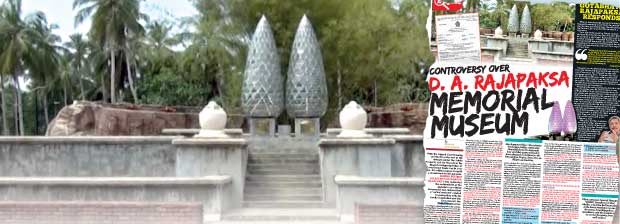
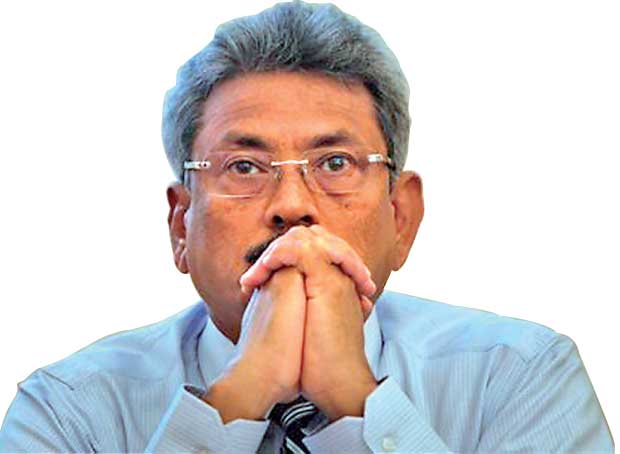
 D. A. Rajapaksa foundation and SLLRDC. Then how come FCID gets involved and goes to AG’s department highlighting a criminal misappropriation of public funds? This clearly shows the political motive behind this whole episode. Interestingly, Gotabaya was never part of any of these discussions. His name has been dragged in purely based on the fact that he was the secretary to the ministry of the UDA at the time the D. A. Rajapaksa memorial was built. What a long path the government has taken to trap a political opponent.