‘Go to the jungle!’

February 24th, 2017

Editorial The Island

How civilised a nation is can perhaps be judged by the cleanliness of its public toilets. Sri Lankans boast of a glorious past and what is described as a hydraulic civilisation. They also take pride in the fascinating engineering feats of their forebears such as vast irrigation reservoirs and huge dagobas. Excavations in the archeological sites continue to throw up many surprises. Interestingly, ruins of ancient toilets have been unearthed in places like Anuradhapura and Polonnaruwa.

Sadly, we learn that foreigners who visit Sigiriya or the Lion Rock cannot use toilets, which have been in a state of disrepair for a long time. An apparently jerrybuilt public convenience with cesspits overflowing was shown on television the other day. Some members of the cleaning staff were heard telling a group of resentful tourists in a callous manner, ‘Go to the jungle!’ So, these workers and their bosses seem to think decent men, women and children come all the way from faraway lands, spending their hard earned money and pay a hefty entry fee to relieve themselves behind bushes! This is certainly not the way to treat humans whether they are foreigners or Sri Lankans.

The Sigiriya rock fortress, a world heritage site, built by King Kashyapa circa 5th Century AD is a showpiece of the country’s cultural prowess besides reflecting the engineering and architectural achievements of ancient Sri Lankans. A panoramic view of the forest-clad terrain below, from its summit, is simply breathtaking; its comely damsels immortalised in frescos in rocky boudoirs, moss covered ponds and symmetrical garden adorned with fountains which still function are fabulous. Why so many people including foreign tourists do not consider a tour of Sri Lanka’s ancient kingdoms complete without an arduous yet exhilarating climb to the Sigiriya summit is not surprising.

As for the Lion Rock, one may say with apologies to Bishop Heber that every prospect pleases and only those who manage the place are vile. Foreign tourists are charged exorbitant fees though they are not provided with even basic facilities. They are friends of this country and must be treated as such. It is incumbent upon the tourism and cultural authorities to ensure that they are not exploited. It is reported that they have to pay as much Rs. 4,700 each to visit Sigiriya and this fee ought to be reduced.

Lack of proper sanitary facilities seems to be a national problem in that toilets in most public institutions are far worse than pigsties. The same is true of some private ventures which do not treasure their human resources. Anyone who steps into a toilet at a railway station comes out, running faster than an express train!

Badly maintained public toilets also spoil an otherwise pleasant climb up the holy mountain, Sripada; some of the cesspits overflow, flooding sections of the road leading to the summit and emanating a foul smell. The same goes for many other places of religious and archeological significance.

President Maithripala Sirisena himself said the other day that teachers of a public school had informed him that their students were wary of drinking water during school hours as there were no toilets. Surveys commissioned by the National Water Supply and Drainage Board and some non-governmental organisations have revealed that many schools are without safe drinking water and sanitary facilities; students are left with no alternative but to ‘go to the jungle’. But, politicians wax eloquent ad nauseam, claiming that they have developed the education sector.

Sri Lankans also find it gut-wrenching to use public toilets at Sigiriya and other tourist attractions. Let the government be urged to send mobile toilets in sufficient numbers urgently to these places and take immediate action to renovate the existing toilets or build new ones.

PTSD and the Soviet Culture

February 23rd, 2017

Dr Ruwan M Jayatunge 

According to the Diagnostic and Statistical Manual of Mental Disorders (DSM-4) Posttraumatic Stress Disorder (PTSD) is an anxiety disorder that can develop after an individual has experienced or witnessed a major trauma. DSM-IV-TR Criteria for Posttraumatic Stress Disorder highlights that the person has been exposed to a traumatic event in which both of the following were present: (1) The person experienced, witnessed, or was confronted with an event or events that involved actual or threatened death or serious injury, or a threat to the physical integrity of self or others (2) The person’s response involved intense fear, helplessness, or horror. The traumatic event is persistently re-experienced by the victim and he / she is persistently avoiding the stimuli associated with the trauma. In addition the victims have numbing of general responsiveness.

It has been argued that post-traumatic stress disorder (PTSD) is a timeless condition, which existed before it was codified in modern diagnostic classifications but was described by different names such as ‘railway spine’ and ‘shellshock (Jones et al., 2003).

PTSD is predominantly a Western culture-bound disorder. The Western culture regards PTSD as an individual disorder with unique symptoms. Some experts view PTSD as a culture specific entity.  Cross-cultural applicability of the posttraumatic stress disorder (PTSD) category is still under debate.  Hinton & Lewis-Fernández (2011) indicate that although substantial evidence of the cross-cultural validity of PTSD was found. However, evidence of cross-cultural variability in certain areas suggests the need for further research.

Ethno -cultural studies of PTSD offer an opportunity to identify the universal and the culture-specific aspects of the PTSD experience by comparing ethnocultural group differences in the distribution, expression, and treat­ment of PTSD (Marsella et al., 1992). According to Young (1997) PTSD is not a timeless or universal phenomenon, nor is it a discovery. Rather, it is a cultural product.  PTSD cannot be separated from the routines, technologies, and patterns of thinking through which it is encountered.

However trauma is a near universal experience and the Soviet society too impacted it in great proportions. The Soviet society faced rapid changes within short periods. From the mid-nineteenth century, Russia as a nation-state struggled to reform, collapsed, re-constituted itself in a bloody civil war, metastasized into a violent totalitarian” regime, reformed and stagnated under mature socialism” and then embraced capitalism and managed democracy” at the end of the twentieth century. These upheavals had indelible effects on policing and the administration of justice, and on psychiatry’s relationship with them (Healey, 2014).

Russian life and the people are full of paradoxes and contradictions that are not easily understood by the Western mind (O’Neil, 1993). Karyani (2014) hypothesizes that in collective societies such as in the former Soviet Union strong cultural and social buffers created against ailments like PTSD. Therefore in manmade or natural disasters populations were less affected. Brooke (2014) states that the role of community is crucial in understanding the PTSD and societies with strong local communities with strong cultural identity the incidence of PTSD is rare.

No culture is immune to psychological trauma and each culture has different ways of interpreting as well as reacting to psycho-trauma. Culture has an immeasurable impact on trauma that can range from differences in interpretations of traumatic events to symptoms of disordered behavior to societal norms about interventions (Baldachin, 2010).

The Soviet people encountered multiple traumatic events that created a collective trauma among its population. However it is reasonable to believe that the Soviet people had some protective mechanisms against psycho trauma which may have acquired through historical experiences (desensitization) and living in a collective culture dedicated to a common social constructive course.


According to O’Neil (1993) some individuals in the Soviet Union living in the double” meaning that there were two distinct personalities within the same person that could be activated depending on the situation.  One personality conformed to the politically correct Socialist principles and another one reflected his/her own personal viewpoints. A number of contacts admitted that this dual personality was very common and a product of the Soviet state’s continuous monitoring of individuals. This separation of personalities or “double life” was being discussed openly and had diminished somewhat after the Coup d’ etat of August 1991. The disbanding of the KGB and the Communist Party gave the people some confidence that they could be individuals without fear of harassment. Yet, this double life has been operating for many decades and raises special clinical questions about Russian interpersonal relations and conflicts. Formation of two distinct personalities within the same person sometimes acts as a buffer against psycho trauma.

The PTSD symptoms that the Soviets experienced were not hundred percent matching as the PTSD symptoms that are seen in the Western World. The Soviet PTSD sufferers used to internalize their symptoms and often these symptoms were manifested as vague psychosomatic reactions. They presented with emotional numbing, social isolation, and fear of authoritative figures, deep suspicion, and sense of foreshortened future, heavy alcohol / tobacco addiction, poor social attachments and somatization. The stress related physical symptoms frequently manifested as gastric ulcers. The PTSD affected populations often used the term Yazva (gastric and duodenal ulcers) connecting their physical symptoms.


Suicide and self-harm were common among the Soviet people who were affected by PTSD. The suicide rate in the former Soviet Union rose from 17.1 per 100,000 inhabitants in 1965 to 29.6 in 1984 (Värnik et al., 1992). The Soviet Authorities concealed the actual figures of suicides. As indicated by Wasserman, and Värnik  (2007) reliability of statistics on violent death and suicide in the former USSR was often questioned. In some Soviet republics suicides were under reported.

Addictions were widespread. PTSD victims used to drink Vodka / homemade illicit liquor (Samagon) in large quantities. Some used toxic substances (household cleaning chemicals) as substance of abuse. Family break ups, child abuses recorded in large proportions. But all these maladies were not addressed appropriately and frequently kept in secret. The young generation who were tormented by social and economic cataclysm later became the members of the underworld gangs or became the supporters of the neo Nazi groups in Russia.


GROWING TALIBAN INFLUENCE IN AFGHANISTAN

February 23rd, 2017

ALI SUKHANVER

Everyone knows that Ashraf Ghani’s success in the presidential elections was warmly welcomed rather celebrated in Pakistan. The people in Pakistan were of the opinion that Ashraf Ghani would try his utmost to bring these brotherly countries more close to each other but Mr. Ghani did altogether otherwise. Pak-Afghan relationship is at present facing the ever-worst situation and this all is the handiwork of the Afghan President Ashraf Ghani. He is so unfortunate that he could not bring peace even to his own country.

International analysts are pointing towards a rapidly increasing violence in Afghanistan and to the fast growing Taliban influence as well. At so many places the Talban are directly running the government affairs instead of the Afghan government. There is a very visible political conflict and turmoil in spite of Afghan NUG’s claim of peace in the country. In the beginning days of Ashraf Ghani government a very clear situation of conflict and confrontation was being noticed between Ashraf Ghani and Abdullah Abdullah but now the first Vice President Abdul Rashid Dostum has also joined this war as the third party.

The Parliament is hosting different ethnic rivalries and as a result of this rivalry seven ministers have yet been impeached. The foreign minister Mr. Salahuddin Rabbani was also among the impeached ones. There is a situation of political anarchy and chaos in Afghanistan and the leaders are washing their ‘dirty linen’ in the public by accusing one another of nepotism and ethnicity. Analysts are of the opinion that after Trump’s victory in the US elections Afghan political leaders are under pressure and stress because of the expected change in US policy towards Afghanistan.

The Washington Post said commenting upon the fears and apprehensions of the Afghan leaders, ‘The tensions have resurfaced just as the United States, a mainstay of Afghan defense and economic aid for years, has elected a new president with different priorities and no investment in Afghanistan’s success. Many Afghans fear President-elect Donald Trump may withdraw the 10,000 U.S. troops that President Obama kept here to help Afghan security forces take over the anti-insurgent fight.’

The most shameful issue which Afghanistan is facing now-a-days is that of the First Vice President General Abdul Rashid Dostum. He is under severe criticism for abducting and sexually harassing former Jowzjan governor Ahmad Eshchi. According to details this incident allegedly took place somewhere in the second week of the last December.

Ahmad Eshchi accused that the vice-president General Abdul Rashid Dostum and ten other men assaulted him while he was forcibly kept at the former warlord’s residence for five days. Though Gen Dostum has denied the accusation, describing it as a ‘provocation’ but this allegation has given birth to a very serious controversy in the Afghan political circles. Pamela Constable, the reporter of the Washington Post said in a report commenting on the political war-like situation in Afghanistan, The revolt in the parliament is only one symptom of the disarray. In recent weeks, several aides to President Ashraf Ghani have publicly criticized his administration, while opposition leaders are plotting to divide it from the outside.

Long-promised elections are still far off, and public confidence is weakening.” But instead of paying attention to this serious situation of conflict and confrontation in Afghanistan, President Ashraf Ghani is spending all his time and all his vigour in promoting terrorism and patronizing terrorists in Pakistan.

Let us see how he responds to Pakistan’s surgical strikes in the areas across the Afghan border; usually terrorists refer to these areas as ‘Safe Haven’ for them. Use of Afghan soil for terrorist activities in Pakistan is nothing new; it is simply an old story. If Pakistan had responded to this involvement in the way it is now responding, things could have been far better.

Indian Foreign Secretary Urges Tamil National Alliance to Unite to Fight for Tamil Rights

February 23rd, 2017

I. de Silva

The Editor
New Indian Express

India

Dear Sir:

Re: Indian Foreign Secretary Urges Tamil National Alliance to Unite to Fight for Tamil Rights

This is an example of blatant Indian interference in the internal affairs of Sri Lanka. India has been the regional bully for decades and it appears that Indian foreign policy for the region is based on the misguided notion that they can dictate to their neighbours. Is it ethical for a  foreign representative to ask a particular ethnic group in Sri Lanka to fight for special rights? Should Sri Lanka, Pakistan, Bangladesh, Nepal meet with Indian representatives on issues such as Kashmir? 

It is a well known fact that the TNA was and is the representative of the LTTE i.e. Tamil terrorists which was a group created, financed and supported by India to destabilize Sri Lanka. This type of statement by the Indian Foreign Secretary indicates that once again India is supportive of LTTE  sympathisers and is giving them advice and support against an elected government.These representatives have been elected to the Sri Lankan parliament to represent the people of Sri Lanka. Why does the Indian Foreign secretary believe that he needs to represent them to the Sri Lankan government?. 

The Indian Foreign Secretary asks for the co-operation of the Tamil parties to promote “economic development of the Tamil speaking northern and eastern provinces”.  Asking them to cooperate with India in the economic development of the Tamil-speaking Northern and Eastern provinces indicates his racist, biased attitude and the reason for his support. He is using them to get for India what it wants from Sri Lanka. India’s support of the LTTE  resulted in immense loss of life ALL over Sri Lanka as well as damage to the economy of ALL Sri Lanka. India is attempting to use the Tamil bloc to force an economic agreement with Sri Lanka which is detrimental to Sri Lanka but beneficial to India. The Tamil bloc sees India as a means to get their dream of a Tamil only state in Sri Lanka which was the goal of the LTTE.   India is once again supporting their separatist agenda for India’s benefit. If India is genuine in it’s offer of promoting economic development it should be for all areas of Sri Lanka and all communities  not restricted to particular areas and one community. Further, India should consider their “aid” as a form of compensation for promoting terrorism in another sovereign country not as a “gift”.

 As for the Indo-Lanka Agreement,  the 13th Amendment that followed  and the demand for a merger of the Northern and Eastern Provinces as a pre-requisite for the Tamils accepting any constitutional set-up, he states that while it is true that the merger is a part of the India-Sri Lanka Accord of 1987, much water has flowed under the bridge since then, making the merger difficult “at this stage”. Why does he not state the fact that India did not fulfill its part of the Accord so it could be argued that the “Accord” was null and void. The merger is not difficult “at this stage” implies that it is legal and applicable. It is not applicable now or at any stage and the sooner India clarifies this the easier it will be for the Tamil separatist minded groups in Sri Lanka to arrive at a settlement with the Sri Lankan Government without Indian mediation or interference. 

Yours truly,

I. de Silva

Canada

TAMILS OF SRILANKA AND THE MEXICANS OF USA

February 23rd, 2017

Kanthar Balanathan,

HE Mr Donald Trump
The President of the USA
The White House
1600 Pennsylvania Avenue NW
Washington, DC 20500

His Excellency the President,

TAMILS OF SRILANKA AND THE MEXICANS OF USA

Sir, I am a supporter of your excellency, and continue to be supportive on various topics on a multiple dimensional perspective. On the question of Mexicans we SriLankans support your ideas whole heartedly. The question of influx of illegal migrants should be addressed. Purely because those who crawl into US are mostly uneducated, with no skill, no expertise, and no job orientation. Only performance they are competent is drug & human trafficking, smuggling and all illegal activities that will generate millions of dollars income to their personal coffer.

I am a Tamil SriLankan Australian, although I prefer to identify me as an Australian. It has befallen necessary to write this letter to the White House, as an appeal, after reading the various political divergences of the Tamil Diaspora in the US & Canada particularly, and how they are attempting to intrude and pollute the minds of the administration to portray as if Tamils in SriLanka are being subjected to discrimination and human rights violation.

I am a very senior person who has worked in the UK, SriLanka, Nigeria, Zimbabwe, New Zealand & Australia. I have quite comprehended Tamils’ pugnacious behaviour on a socio-economic & political perspective. As Tamils, majority of us lack knowledge in listening skills & Conflict Resolution, and always resort to man handling opponents, killing or engage in subversive activities. Majority of us have a narrow mind with thoughts generated, as if we live in a fish bowl.

My experience drives me to assent that Expertise + Reliability + Flexibility = Capability” (E+R+F=C). The general perception is that Intelligence is to understand with pure reasoning. I quite doubt on how Tamils & Diaspora interpret this formula to understand with pure reasoning to achieve a high level of IQ.

SriLankan Diaspora then and now

Tamils in the US formed two associations called, Tamils for Obama” and Tamils for Clinton” when Obama and Clinton were contesting for the Presidency. They supported both candidates so that no matter who was elected they would be able to get their dirty work done through either one. The Tamil diaspora in Canada attempted to canvass Oprah Winfrey’s support by organizing Walk for Oprah” (http://sandeshaya-canada.blogspot.com.au/2009/04/oprah-winfrey-says-no.html) from Canada to US and appear on her Show to appeal to the US public.

During the current (past) election, Tamils again supported Hillary Clinton via their Facebook page; (https://www.facebook.com/Tamilsforhillary/) Tamils for Clinton”. In Sri Lanka they even held religious ceremonies to invoke celestial blessings on their favourite candidate Hillary. It is clear that the Tamil diaspora in the US had millions of dollars accrued from the LTTE funds to be spent on their favourite candidates. All LTTE operatives are now millionaires. FBI should investigate in US and Canada.

Now media claims that Tamils have formed an org called; Tamils for Trump”. I am sure these orgs cannot mislead the head of the USA, because you are a patriot who believe in remoulding USA and not any other countries.

Truth of SriLankan Affairs

Excellency; I do not wish to acme historical facts in detail, but briefly affirm who the victims in SriLanka were and are over centuries. I have published three books on SriLankan politics and history.

SriLanka, the island of paradise, was a Sinhala speaking Buddhist country since 5 BC. Invasions by the Indian non Tamil kingdoms and the Southern Kingdoms befell over several centuries. These invasions resulted in the massacre & carnage of several hundreds of thousands of Sinhalese people over several centuries. These invasions ended with the invaders looting and plundering the assets of the locals, and get back to India.

In the 14th century a rowdy called, Megha” crawled into the North and established a settlement in Jaffna. N&E settled non-Tamil speaking, Malabar, Karnataka, Marathi, Javanese, Telugus & other minor ethnic groups from India and Java. As Tamil in South India was a link language, those who settled in the N&E spoke Tamil. Today, majority of congenitally imbeciles (Tamils), view that they have been Tamils over thousands of centuries in a country called Elam. The White House historians would agree that Elam” empire was a country/region in the then Persia”, which is now Iran. (Ref: http://www.cais-soas.com/CAIS/History/Elamite/elam_history.htm). History states that several races invaded the Indus Valley and India, some invaded South East Asia (Indochina), while others invaded the South of India. Ref: http://www.gloriousindia.com/history/ancient_history.html.

The sequence of episodes within the Tamil political discords gave directions to politician, SJV Chelvanayagam starting the racial thrust by forming a federal party, notion on Tamil nation, and phrasing his political party to carry a different meaning to convince the Tamils. It is speculated that his actions were as a result of refusal of a ministerial portfolio in the then government.

70 million Tamils live in Tamil Nadu which is part of India. Tamil population in SriLanka was less than 11% in the 50s. The minority Tamils in SriLanka are living with a majority complex just because of the 70 million Tamils in India. However, up to the 20th century, Labourers from Tamil Nadu, and Andra kept on sneaking into the North. My dad was a Police Inspector (OIC) in the North and he was working with a military unit knows as TFAII”, (Task Force for Anti Illicit Immigration) in the 50s. (Quote ref: https://thecarthaginiansolution.files.wordpress.com/2012/08/sri-lankas-military-the-search-for-a-mission-2004-blodgett.pdf.

SriLanka cannot build a wall between India and SL because the two countries are separated by sea. Ie the Palk Strait. This made it easy for the Indians to sneak into SL.

As a patriotic American President, Sir, you will understand the psychological trauma experienced by the military, Navy, police and the citizens of SL. The victims of SriLanka are the Sinhalese community.

Further, Tamils are in every country in Europe, Americas, and SE Asia. They are not political refugees, but, economic refugees (ER). Literates will agree that these ER are better off overseas than in SL because of the living conditions. Once they get permanent residence, they change their names; however, there is a possibility that they become missing persons in SL.

Hence in my view, Tamils could be paralleled to the Mexicans of the USA.

Majority of these illegal migrants are uneducated, coolies, labourers and may be drug traffickers and smugglers. Current situation is that the illegal entry has been brought to zero, however, our PM, Mr Ranil Wickramasinghe, is attempting to bring Indians via legal route, an agreement called ETCA”. India is a large country where space could be developed with its natural resources; however, SL is a small island struggling to feed its own people.

Whatever Tamil Diaspora claims, we Tamils are illegal migrants into the island since the 14th century. May be Tamil language is old as 4000 years, however, the language is not old as 4000 years in SL and was not spoken in SL, but in India, Persia, Sumerian and Africa. We Tamils should understand this truth and agree, not boast, and enter in to arguments.

Appended below is a schedule of the population distribution in SL in 2011.

With a total population of 20,263,723, the Sinhalese people; 15,173,820, SriLanka Tamils; 2,270,924 and the Indian Tamils; 842,323. On a percentage basis, Sinhalese strength is 74.88%, SL Tamils 11.21%, and Indian Tamils 4.16%.

If the Hill country (Tea-growing area) Tamils are merged with the Tamils from the Northern and Eastern Provinces as a Tamil entity, the percentage of Tamils living outside the North and East is 49 %. This means that only 51% live in the North & East.

Population Distribution in SriLanka

Only 993,741 live in the North. Sir, do we really think that this population need a separate administration. Will that be economically and politically a good attempt to govern in the small country which begs for aid and grants from the west.

If the Mexicans fight for a separate administration in the US, will the president and the US government be happy to oblige?

Liberation Tigers of Tamil Eelam

The leader of LTTE Vellupillai Prabakaran (VP) is an eighth standard educated person with absolute zero level knowledge in the areas of social science, political science, economics, & political economics. He hails from a town where majority were involved in smuggling for living. It cannot be debated and disagreed that, initially; India gave the support and trained these LTTE & other terrorists on Indian soil. The LTTE was based in Indira-Nagar, Madras supported by the late Chief Minister MG Ramachandran.

In this context, India should be sturdily liable for wrenching SriLanka into their international politics. None of the international world was interested in decreeing LTTE as a terrorist organisation. It is only after the 9/11, US declared LTTE as a terrorist organisation followed by others. Afghanistan and Iraq was invaded by Bush in the name of Al-Qaida and the WMD. Will US invade India for helping and aiding LTTE?

During the period 1995 – 2009, the 300,000+ Tamils in Vanni were only slave labour hobbled by the LTTE for their own advantage. No Tamil was able to get out of Vanni for fear of facing death. In May 2009, our then President freed the Tamils from bondage and since then Tamils want a peaceful living.

LTTE Associates

Those who were associated with the LTTE, Tamil Diaspora and those who illegally migrated have now formed several different organisations, congress and associations under the pretext of democratic societies/organisations.

It is worth to mention that Tamils have formed associations in each of the western countries.

The Tamil Co-ordinating Committee was a diaspora arm of the LTTE, who were directing subversive activities. Although LTTE was decreed as a terrorist organisation, the TCC was overlooked and TCC is still operating in most of the countries. If LTTE terrorism has to be eliminated fully, then those organisations which have LTTE associates or members should be banned to achieve positive results.

Transnational Government of Tamil Elam-TGTE

It is relevant to state at this juncture that Visvanathan Rudrakumaran was associated with VP and the LTTE. Evidence is the picture below.


Image 1:
           Mr Visvanathan Rudrakumaran, so called Prime Minister of fictitious Transnational Government of Tamil Elam with LTTE supremo Mr Vellupillai Prabakaran (Ref: http://www.allvoices.com/contributed-news/8543437/image/75769908-visivanathan-rudrakumaran-with-ltte-leader-prabakaran)
Image 2: Rudrakumaran (2nd from left) beside LTTE Supreme Commander Prabakaran                                              Image 1                                                      Image 2

His intellectual contribution to the US and the people is questionable. How does he earn his income for living? FBI should investigate into their financial transactions. How is it possible for him to have a cabinet and have several ministers? How are they paid?

Ref: http://thelionandsword.wordpress.com/tag/visvanathan-rudrakumaran/

TGTE is an illegal organisation and no one can dispute to proof that at least some members who supported or associates of the LTTE are within the TGTE group. TGTE is neither a community nor social organisation, but it hurls challenges to the sovereignty and integrity of a sovereign republic: SL.

I quote an article https://www.lankaweb.com/news/items/2013/01/13/security-forces-bust-tgte-tna-jsu-terrorist-plot/.

  • SriLanka is a small country with unique people and does not want to be dragged into international politics.
  • An appeal to US to support SL to be a republic, one nation, one country with Sinhalese, Tamils, Burgers and Muslims as members of the community.
  • Ban TGTE and the Global Tamil Forum.
  • Ban TCC.
  • Bring all those insurrectionary & destabilising terrorists hiding under fictitious names to justice.

TGTE, not only is wasting funds and posing a threat to harmony around the globe, but has created a precedence for other radicals around the world. Just an example: The White House cannot rule out the possibility, in time to come, of Indians/Mexicans creating a Transnational Government of Apache Land, in Canada or any other American countries.

Excellency,

It is to be complemented that every country has the right to defend & protect its territory and boarders from invasion by placing its troops at the border, and SriLanka is no exception.

Every SriLankan should have the right to live anywhere in SriLanka, and Tamils should not raise their voice and object, because it’s internal demographic movement of citizens. If Tamils can live in the South then Sinhalese people should have every right to live and work in the N&E. SriLanka has given equal rights to every citizen of SL. It’s not clear as to what the Tamils claim as equal rights. Tamils should join the governance and ask for a couple of ministerial portfolios, if Tamils are after power sharing. Tamils should not demand removal of Sinhalese from the North and east, because they have lived there for centuries and it’s our (SriLankans) country.

We love the United States and will always love and be pro-US.

Thank you Sir,

Kanthar P Balanathan

Population Distribution in SriLanka

RECONCILIATION PORNOGRAPHY

February 23rd, 2017

The Rajpal Abeynayake Column

The entire show of the reconciliation pornography now taking place in Sri Lanka replete with tear jerking video images of all and sundry, especially the boring but earnest and amiable, is in fact polarizing the communities more than ever.

It is not the images themselves of course but the reverse engineering that is taking place by targeted attacks on war heroes, etc. that is the rub.

Everyone knows what these attacks are and there is no need for any special articulation of the fact, but the sowing of hatred and revenge, passing off for reconciliation, could be called reconciliation pornography

However those who appear in sleek black and white videos are not responsible for the further polarization of society as a result of ‘reconciliation.’
But, as usual the polarization of society is being carried out on the backs of those who lend themselves for a cause whose repercussions they know not.

A major part of these reconciliation efforts have been thrust upon us by a body of ‘liberals’ from various parts of the world, whose actions are only too well known to us.

These people would eventually have to bear the burden of fissures that would occur in this society as a result of the polarizing reconciliation pornography that is taking place in society today. It comes in the form of harassment — quite deliberate — of soldiers by a certain coterie with support from high places, and such harassment is worn as a badge of honor by the perpetrators. It comes in various other forms of harassment and marginalization of people whose views are not kosher in the minds of the currently dominant coterie.

We do not need to elaborate on the causative reasons behind this mentality. The banality of this evil speaks for itself.

SAITM issue: A rational approach needed

February 23rd, 2017

Professor R. P. Gunawardane

There have been wide ranging views in all media regarding the degree awarding status of the South Asian Institute of Technology and Medicine (SAITM) in respect of their medical degree program. I consider this an extremely important national issue with regard to the expansion of the higher education sector in Sri Lanka. Therefore, we need to address this issue without any bias, and considering the current realities, global trends in university education, and long term national interests in Sri Lanka.

Sri Lanka Medical Council (SLMC), the University Grants Commission (UGC) and the Ministry of Health are the three most important organizations responsible to settle this issue. It is apparent from recent developments, particularly after the Appeal Court decision, that all interested parties pursue a confrontational approach, rather than trying to move towards settling the issue in the best interests of the students who have gone through the SAITM programme. It is also regrettable to note that some trade unions of respected professions are resorting to trade union action against an order issued by the Court of Appeal.

In any country the independent judiciary is responsible for interpretation of the law and for checks and balances of the executive, and therefore, the decisions of the judiciary should be respected. A good example is coming from the US, where the President, considered to be the most powerful person in the world, had to accept a lower court ruling to suspend his executive order preventing immigration from some selected countries. Thus, such legal disputes could only be settled by legal means alone.

The suggestion by some interested parties for this institution to be taken over by government is counterproductive. It will definitely make matters worse. It is grossly unfair to bring down an important institution built by a dedicated group of Sri Lankans, just because it has some deficiencies. It is much wiser to get the SAITM to correct the deficiencies and conform to the guidelines stipulated by the regulatory bodies. Closing down or government takeover will seriously hamper much needed non-state sector participation in the expansion and diversification of higher education in this country. Instead, such ventures should be encouraged and promoted under a proper regulatory mechanism so that similar issues will not arise in the future. Thus, deficiencies in the SAITM medical degree program should be addressed and remedial measures taken immediately by the SAITM administration in consultation with the SLMC, UGC and the Health Ministry.

It is regrettable to note that SAITM, on its part has continuously disregarded the guidelines issued by the regulatory bodies in their development process. Their gross negligence towards the stipulated guidelines is clearly evident, as reported by Professor Carlo Fonseka. In addition, SAITM authorities have not explained the current status of their degree program to the students at the time of admission. It is rather unfortunate that no action has been taken by the appropriate authorities well in advance to avoid the present situation. Now the first batch of SAITM medical students is already graduated and they are really the victims of the lapses on the part of the SAITM and regulatory bodies. There is evidence to show that the SAITM authorities have made some attempts to use government hospitals for clinical training with no success. It is important to point out that their attempt to use a government hospital for clinical training was stopped by the same group vehemently opposing the provisional registration of SAITM graduates!


The most important point raised against SAITM medical training is the inadequacy of their clinical training component, and perhaps the lack of sufficient qualified staff required for different disciplines. These deficiencies can be addressed in the short term in respect of those who graduated recently, while a long term permanent solution may also be worked out as suggested by some parties.


In the short term, the most urgent issue is to sort out the provisional registration of the first batch of students graduated from SAITM. It is essential that the authorities work out a plan immediately, in the best interest of these students who are really the innocent victims. In this connection, the proposal presented by the Deans of the state medical schools merits serious consideration, although it does not appear to be perfect. They have proposed that these students should be given clinical training in four specified disciplines for a period of one month, in each case in a teaching hospital. However, it is difficult to imagine that this short training program would be sufficient to cover up their deficiency, since the students in state medical schools go through a rigorous clinical program for a period of over 3 years. Yet, it is necessary under the circumstances to implement an acceptable fast-track clinical training program for these affected students by the Ministry of Health, as early as possible with the agreement of the SLMC.


The most serious issue, with regard to private medical schools as well as newly established state medical schools, is the quality of clinical training. Lack of a proper teaching hospital for clinical training at the SAITM is a very valid issue that should be addressed as early as possible for a long term solution. A suggestion to use the Avissawella hospital for clinical training has been raised. This may be a good idea because it does not seriously affect medical students of other faculties. Once an acceptable hospital is selected, the government may establish a state-private sector partnership to develop the selected hospital under the guidance of the Health Ministry. SAITM can upgrade this hospital under the guidance of the Health Ministry to satisfy the needs of clinical training of SAITM students. This will satisfy SLMC requirements and benefit both the government and the SAITM in the long term.


It is extremely important to note that all the requirements and standards stipulated by the SLMC or UGC, or any other relevant regulatory body, should be applicable equally to all state and private sector medical schools. This is the internationally accepted and a fair procedure, which should be acceptable by any court of justice. The SLMC will have to demonstrate that this is the case. If a private medical college operating in Sri Lanka satisfies these conditions, there is no need for their students to sit the ERPM exam for SLMC registration. They should be treated exactly the same way as for students from state medical schools.


We have 8 (Colombo, Peradeniya, Kelaniya, SJP, Ruhuna, Jaffna, Rajarata and Eastern) state medical schools in the university system coming under the purview of the UGC. In addition, another medical school was also opened recently at the Kotalawala Defence Academy (KDA) outside the purview of the UGC. State medical schools coming under the UGC are well regulated through the UGC itself and its Standing Committees, but it is not the same for KDA which is functioning under the Ministry of Defence. In these circumstances, it is hard to believe that the KDA maintains the same standard of training as in other state medical schools. It is in this context, most observers question the rejection of SAITM while the same SLMC has accepted the KDA Medical School, in addition to the newly established and poorly equipped state medical schools such as Rajarata and Eastern universities.


The general public expects regulatory bodies such as SLMC to be completely impartial and independent in dealing with these matters of national importance. If there are any plans to amend the Medical Act/ Ordinance, it is also important to consider broad basing the composition of the SLMC, to include some non-medical professionals, so that SLMC is not dominated by a particular interest group. Similar medical councils in most developed countries have wide representation including professionals from other disciplines and prominent civil society members.


Since KDA Medical School has come up for discussion, it is necessary to examine its setting up by the Defence Ministry. It is also a state medical school, although it does not come under the UGC. In the state sector, new medical schools are established based on the need, after a careful study of the infrastructure needs for teaching, clinical work, library and availability of teaching staff in different academic and clinical disciplines, among many other factors. This is usually done by the UGC through its Standing Committee on Medical and Dental Sciences. Apparently the UGC has not been consulted officially and this procedure has not been followed. In such a scenario it is hard to imagine how standards can be maintained or monitored in the absence of any expertise in the defence establishment.


In addition, there are other pertinent questions. How many doctors are needed to the defence establishment per year? Why not train the few doctors needed by the Army, Navy and Air Force in the existing medical schools in Colombo, Peradeniya, Ruhuna, or any other faculty, by spending a fraction of the colossal amount used for the establishment of a separate medical school? This is extremely important because the existing medical schools are already under funded and they need extra funding to improve their facilities.


In a previous article (Island, December 9, 2016) the author highlighted the importance of establishing an independent Accreditation and Quality Assurance Council (AQAC), applicable to all state and private sector university level institutions in Sri Lanka. The role of such an institution in this particular case is accreditation (a form of licensing) and quality assurance of the degree programs, in collaboration with the relevant professional body in each discipline, such as SLMC in the case of Medicine. In the absence of such an authority (AQAC), this function has to be performed by the UGC along with the SLMC.


In the accreditation process for medical schools, due consideration must be given specifically to minimum criteria (A/L requirements) for admission, availability of infrastructure facilities for teaching, laboratory work and library, plan for clinical teaching/ teaching hospital, quality of academic/ clinical staff and availability of scholarships/ loan schemes for needy students.


While this specific issue regarding non-state sector medical schools is being discussed, some interested parties are bringing a general issue against the establishment of private universities in Sri Lanka. They claim that it is against the free education policy in this country. Thus, it has become more of a political issue. It is surprising that no one is bothered about private sector participation in the education, health care and in many other sectors in this country. It must be realized that the state and private sector institutions can coexist and compete without harming the free education policy, as it happens now in the education sector.


Almost all Montessori preschools are run by the private sector. There are many private sector primary/ secondary schools operating throughout the island while we practice free education to all. Some of these private schools are of extremely high standard. There are many non-state sector universities and other degree awarding institutes operating in the country for many years. High quality private hospitals operate side by side with state hospitals providing valuable service, while we practice free health care to all. Government doctors are free to practice in private hospitals, although some tend to abuse this freedom. Similarly, private sector organizations operate in competition with the state sector in the transport, insurance, banking, media, fuel, energy, trade and in many other fields, giving people enough choice and thus benefitting the customers. Then, why this fuss about private universities and private medical schools as long as they comply with common rules stipulated by the regulatory bodies?

It is important to note that the top and highly rated medical schools in the world are all private, but non-profit institutions. Examples are Harvard, Stanford, Johns Hopkins medical schools in USA. Their admission is based purely on merit worldwide, and financial aid is mostly need-based. Private medical schools are operating in parallel with state medical schools in our neighboring countries such as India, Nepal, Bangladesh and Pakistan. Our students go to these countries and others like China, Malaysia, Cuba and East European countries to study medicine. When they return, they sit the ERPM exam and start practicing in Sri Lanka. We know very little about the quality of their medical education, for that matter SLMC has not sent teams to inspect these medical schools. Yet, they are allowed to practice medicine in Sri Lanka. Then, why this double standard approach to SAITM, when they are ready to fulfil requirements stipulated by the regulating authorities? Thus, all parties should assist and cooperate with SAITM in their effort to overcome deficiencies and upgrade facilities for clinical training.

We have seen over the years in this country that the state monopoly on university education has hindered expansion, diversification and innovation in the higher education sector. It is also evident that the state alone is not in a position to provide sufficient opportunities to satisfy the current and future demand for university education. Broad-basing the providers of tertiary education also introduces an element of competition to the system, which is expected to improve quality, provide more variety and reduce cost of training.Thus, it is time for us to promote and facilitate private sector participation to establish universities in all disciplines including medicine, with the implementation of national accreditation and a monitoring mechanism in association with professional and regulatory bodies, which includes SLMC in the field of Medicine.

Professor R. P. Gunawardane

(The author is a Professor Emeritus, University of Peradeniya, formerly Secretary, Ministry of Education and Higher Education, and Chairman, National Education Commission, Sri Lanka)

Bellanwila Anunayake Thero slams ETCA, Indian expansionism People’s Commission to formulate national policy on international trade and treaties

February 23rd, 2017

*PM flayed for his determination to sign ETCA
* Padeniya bitterly criticises India-Sri Lanka FTA
*Sale of state assets condemned
*Prof. Lakshman warns against employing foreign workers

The inauguration of the People’s Commission to formulate a policy framework for international trade and treaties appointed by the Professionals’ National Front was held last Wednesday (22 Feb.) at the Sri Lanka Foundation Institute. The need for such a policy framework arose as a result of the numerous discussions the Professionals’ National Front had with the government about ETCA and the need to be guided by a set of criteria in entering into trade treaties. The auditorium was packed to capacity with standing room only. The Professionals’ National Front is a consortium of a dozen professionals’ associations including among others, the Government Medical Officers’ Association (GMOA), the Electrical Engineers’ Association, the Customs Officers’ Union and the National University Teachers’ Association. Explaining the objectives that led to the setting up of the People’s Commission to formulate a national policy on international trade and treaties, Dr Anurudda Padeniya of the GMOA said that the word ‘development’ used in days gone by had now been replaced by the phrase ‘sustainable development’ and that our people’s representatives keep uttering this phrase all the time.

article_image

The President, Dr. Padeniya pointed out, utters this phrase even if he happens to be addressing a daham school ceremony. However, if the politicians had any understanding of this phrase, they will know that what it means is that economic development has to take into account factors other than just the economic considerations in isolation and that matters like the environmental impact of the development, its effect on health etc also have to be taken into account. Giving an example he said that there was talk of building a bridge between Sri Lanka and India but that he had never seen even a newspaper article outlining the benefits that this bridge is supposed to bring to Sri Lanka but that medical experts have told him that this bridge will bring communicable diseases like Malaria, AIDS and tuberculosis into Sri Lanka.

Dr Padeniya drew reference to the existing India- Sri Lanka Free Trade Agreement and said that this agreement has not benefitted Sri Lanka but that on the contrary Sri Lanka had suffered losses as a result of it. Drawing attention to a booklet published by the GMOA on the FTA with India, he pointed out that one of the top exports from Sri Lanka to India after 15 years of the FTA was animal feed and wanted to know whether the objective of having an FTA with India was to promote poonac exports. (The booklet pointed out that though arecanut was the main export from Sri Lanka to India even this had not resulted in a development of arecanut cultivation in Sri Lanka because arecanut is imported from Indonesia to be re-exported.)

He stated that India was seeking to subjugate the countries in the South Asian region and that Sikkim is now a state of India and Nepal was completely at India’s mercy and that certain people were now suggesting that Nepal too should become a state of India. Padeniya went on to state that some economic advisors retain their positions despite changes of government and that these individuals claim to have been educated in Oxford and Harvard and say they know what is best for this country. He stated that something akin to match fixing was going on with regard negotiating the trade deal between India and Sri Lanka and that even the people who were supposed to represent us were actually representing the other side. Dr Padeniya stated that the Prime Minister has said that ETCA would be signed in June despite all opposition to it, and that under such circumstances professionals cannot stand by idly and do nothing.

Dr Bellanwila Wimalaratnana Anunayke Thero of Sri Kalyani Samagri Dharma Maha Sangha Sabha of the Siyam Nikaya addressing the gathering said that Sri Lanka has set a world record by having no national policy for anything. He said that some time ago, politicians deceived the people saying that they were going to build a ‘dharmista’ society but that it turned out to be an absolute canard. In recent times said the Anunayake Thero, the people have been promised yahapalanaya but nobody can understand what this yahapalanaya is. The Anunayke thera said that people were being bamboozled with fairytales. He stated that treaties were being entered into without a proper study of their implications. He said that he was not opposed to trade treaties with other countries if they were of benefit to this country. For example, the Rubber-Rice Pact with China was a good treaty which benefitted Sri Lanka for many years.

The Anunayake thero stated that the authorities claimed that when the ETCA agreement is signed, both goods and services will be able to move freely between India and Sri Lanka but that even a child could say who would stand to benefit from such an arrangement. He said Indian professionals will be able to come to Sri Lanka but will Sri Lankan professionals be able to go to India and find work? He stated that there were PhDs driving trishaws in India. He said that in days gone by, a certain youth movement had a theory about Indian expansionism and that ETCA was another example of Indian expansionism and that people should talk about these things. He stated that the leaders of the nation had no right to say that they would go ahead with a trade treaty no matter who opposed it.

He said that the professionals had embarked on an important endeavour and he likened the National Commission to formulate a national policy on trade and international treaties to the Buddhist Affairs Commission in the 1950’s headed by Professor Gunapala Malalasekera. The Anunayake thero observed that the recommendations made by that commission had a major impact on the 1956 general election with S. W. R. D. Bandaranaike undertaking to implement those recommendations.

Speaking on this occasion, entrepreneur Samantha Kumarasinghe of Nature’s Secrets stated that an agreement was entered into in the 1980s with a Singaporean Company to mill wheat imported into Sri Lanka for 30 years on a ‘build operate and transfer’ basis but that in 2001, the then President sold the business that was to come into the hands of the government in 2007, for 60 million USD. The turnover of that enterprise since then had been well in excess of eight billion USD and that abuses like this happened due to the lack of a national policy on trade and investment. The point that Kumarasinghe made was that in the absence of a policy framework, leaders and governments could make arbitrary decisions with regard to national assets. He said that people are being hauled to courts for misusing vehicles, but there is not even a discussion about the abuses that took place in selling assets to foreigners.

Kumarasinghe said that likewise fuel distribution rights were given to an Indian company for 75 million USD simply to import fuel and to distribute it without even refining it in Sri Lanka. He stated that even the Central Bank Governor was saying that our country is in a debt crisis and that assets have to be sold to get out of this trap. He said that the debt to GDP ratio in Japan was over 250% but that nobody was talking in terms of selling off Japanese state assets to foreigners. He appealed to the government not to sell the Hambantota harbour. Prof W. D. Lakshman the Co-Chairman of the people’s Commission to formulate a national policy on trade and international treaties stated that while the powers that be in Sri Lanka have placed their faith in the neo-liberal economic model of free trade, sweeping changes were taking place in the world with Brexit, and the Trump administration in the USA reviewing NAFTA and the Trans Pacific Partnership (TPP).

Speaking further, Prof. Lakshman stated that foreign remittances from Sri Lankans employed abroad was what enabled us to meet our foreign exchange needs but if Indian employees coming into Sri Lanka under ETCA and the opening up of the services sector, were allowed to remit money from Sri Lanka that would deplete Sri Lanka’s biggest source of foreign exchange. The members of the People’s Commission to formulate a national policy on international trade and treaties are Prof. Lakshman and Palitha Fernando PC (co-chairmen) P. D. Fernando, R. P. L. Weerasinghe, Dr Bandula Weerasekera, Dr Anula Wijesundera and Lakshman Perera.

Mystery gazette forces suspension of sittings Probe on CBSL bond scam

February 23rd, 2017

Chairman of the Special Presidential Commission of Inquiry probing the Bond Scam, Supreme Court Judge K. T. Chithrasiri yesterday temporarily suspended its sittings after halting the recording of evidence from Finance Ministry Secretary Dr. R. H. S. Samaratunge.

The commission ceased to record evidence from the Finance Ministry Secretary due to the controversial situation which arose with regard to the Special Gazette notification issued on January 1, 2015 pertaining to the issuance of Central Bank bonds.

The dispute arose about the actual date on which the special gazette notification dated January 1, 2015 was printed.Hence the Commission ordered that a statement should be recorded from the Government Printer prior to the Commission resumed recording of evidence of others said the Commission Chairman K. T. Chithrasiri.

He said the Commission needed to establish on which date the gazette notification dated January 1, 2015 was actually printed.

It further elaborated that former Finance and Policy Planning Minister Mahinda Rajapaksa’s name was mentioned as one of the signatories to the gazette notification and it had to be corroborated.

When a copy of the said gazette notification was forwarded to Finance Ministry Secretary Dr. Samaratunge by Senior State Counsel Dr. Avanthi Perera and questioned about the veracity of it, Samaratunge had said he had no knowledge about it.

Samaratunge in his evidence said that when the gazette notification was issued he was not the Secretary to the Finance Ministry.

When Senior State Counsel Dr. Avanthi Perera told him that in the gazette notification dated January 1, 2015 it was mentioned about the issuance of Treasury Bonds of 30 years worth Rs. 10,058 million at an interest of 12.5 percent on March 15, 2015, Dr. Amaratunge had said he had no knowledge of it.

Since the Commission was hitherto not aware of the existence of such a gazette notification, the date of its publication had to be established from the Government Printer, the Commission Chairman said.

Supreme Court Judge K. A. Chandrasiri after issuing the order to obtain the above statement ordered the Finance Ministry Secretary to appear before the Commission on Monday February 27.

The Presidential Commission of inquiry probing the alleged Central Bank Bond Scam of February 15, 2015 comprises Supreme Court judges K. T. Chitrasiri and Prasanna S. Jayawardena and Deputy Auditor General (Rtd.) K. Velupillai.

අවුරුදු 10 කදී ගත් ණය වගේ දෙගුණයක් වසර දෙකකදී අරගෙන-හිටපු ජනපති මහින්ද කියයි

February 23rd, 2017

උපුටා ගැන්ම ලංකාදීප

තම රජය අවුරුදු 10 කදී ගත් ණයට වඩා වැඩි ණය ප්‍රමාණයක් වත්මන් රජය පසුගිය වසර දෙකේ ගෙන තිබෙන බව හිටපු ජනපති මහින්ද රාජපක්ෂ මහතා අද (23) පැවසීය. රටේ ජාතික සම්පත් විකිණීමට එරෙහිව ඒකාබද්ධ විපක්ෂය ආරම්භ කළ ජාතික සම්පත් සුරැකීමේ මධ්‍යස්ථානය නාරාහේන්පිට අභයාරාමයේ දී විවෘත කරමින් හිටපු ජනපතිවරයා එසේ කීවේය.

රාජ්‍ය කළමනාකරණය නොදන්නා බැවින් අද වන විට ආර්ථික අර්බුදයක් ඇතිව තිබෙන බවත් මේ හැම අර්බුදයකටම මුල රාජපක්ෂලා කියමින් ඇඟ බේරාගැනීමට රජය උත්සාහ ගත්තද බුද්ධිමත් ජනතාව සත්‍ය වටහාගෙන ඇතැයි ද රාජපක්ෂ මහතා කීවේය.

Sri Lanka’s lack of national policies a world record – Prof. Wimalarathana Thero

February 23rd, 2017

By Yusuf Ariff  Courtesy Adaderana

Ven. Professor Bellanwila Wimalarathana Thero says that Sri Lanka will go down in the history books as a country with no national policies.

Sri Lanka has many world records. I think that this country not having any national policies on the likes of education, culture and media is also a world record,” the Chancellor of the University of Sri Jayawardenepura said.

He was speaking during an event to launch the public commission formulating a national policy on international trade and agreements on Wednesday (22).

He said that in other countries no matter which government is elected or no matter which party is in power, the country’s national policies remains unchanged.

He said that even neighboring India, which is sometimes called Sri Lanka’s big brother,” has a national policy and that although the governments of that country changed, its national policies did not change.

In comparison, he said, that Sri Lanka’s education system changed every time a new Education Minister was appointed.

Who are the victims of this? It is our children,” Wimalarathana Thero said.

He stated that the country’s media should stick to one policy no matter what government comes to power cut instead the policies continue to shift depending on the people in power.

– See more at: http://www.adaderana.lk/news/39254/sri-lankas-lack-of-national-policies-a-world-record-prof-wimalarathana-thero#sthash.QZnqKGLB.dpuf

Chandrika Bandaranaike Kumaratunga using her position to bring disrepute upon armed forces – Former President Mahinda Rajapaksa

February 23rd, 2017

  By Yusuf Ariff Courtesy Adaderana

Former President Mahinda Rajapaksa says that the statement made by Chandrika Bandaranaike Kumaratunga to foreign correspondents in Colombo last week to the effect that war widows in Sri Lanka now face ‘widespread’ sexual exploitation by members of the army among others, is a matter of grave concern.”

The rape and sexual exploitation of women in the war zone both during and after the war was one of the main unsubstantiated accusations made by two irregularly set up investigations against Sri Lanka within the UN system – the Darusman report of 31 March 2011 and the Navi Pillai/Zeid Al Hussein report of 16 September 2015.”

The latter report had a whole chapter of about ten pages devoted to the subject of rape and sexual exploitation, the UPFA MP said in a statement.

He said that with days to go for the 34th Sessions of the UN Human Rights Council, a former President of Sri Lanka and a former Commander in Chief of the armed forces now says that our armed forces are sexually exploiting war widows in the north.

What we have here is a former President of Sri Lanka and a former Commander in Chief of our armed forces echoing the accusations made by our enemies in what is obviously a deliberate attempt to vilify our armed forces on the eve of the UNHRC meeting.”

Rajapaksa said that Kumaratunga holds the position of head of the Office for National Unity and Reconciliation (ONUR) which functions under the Presidential Secretariat and the statements she makes goes to the world as the official position of the Sri Lankan government.

The Sri Lanka Army’s statement rebutting Mrs Kumaratunga’s accusations does not carry any weight, he said, adding that the President himself should condemn the statement.

When a former President and commander in chief makes such a statement the person to respond should be the present President and the Commander in Chief.”

As a former President and Commander in Chief myself, I call upon the President to publicly condemn the statement made by Mrs Kumaratunga.”

The government should also seriously consider whether Mrs Kumaratunga is fit to be the head of ONUR as she is using that position to bring disrepute upon the armed forces of Sri Lanka,” he said.

– See more at: http://www.adaderana.lk/news/39260/cbk-using-her-position-to-bring-disrepute-upon-armed-forces-mr#sthash.KjrQakE3.dpuf

හොරකම්,වංචා,දූෂණ නෑ කියූ යහපාලනය අපට තේරුම් ගන්න බෑ.. අපිට පිස්සුද.. මේකද යහපාලනය.. – බෙල්ලන්විල නාහිමියෝ යහපාලනයේ පළු අරිති..

February 23rd, 2017

ලංකා සී නිවුස්

එදා මිනිස්සුන්ගේ ඡන්දය ගන්න එක නායකයකු කිව්වා අපි බලයට ආවොත් මේ රට ධර්මිෂ්ඨ සාමාජයක් කරනවා කියලා” කොච්චර හොදද ධර්මිෂ්ඨ කිව්වම, මේ සම්පූර්ණ අමූලික බොරුවක් නේ කලේ යයි උත්සව සභාවක් අමතමින් ශ්‍රි ජයවර්ධනපුර විශ්ව විද්‍යාලය කුලපති මහාචාර්ය බෙල්ලන්විල විමලරත්න නායක හිමියන් ප්‍රකාශ කරන ලදි.

උන්වහන්සේ වැඩිදුරටත් සඳහන් කලේ ඉන් පසුත් නොයෙක් නායකයින් තම ප්‍රතිපත්ති ප්‍රකාශන ඉදිරිපත් කරමින් බලයට පැමිණි බවත් පසුගිය කාලයේ ජනතාව කියා සිටියේ යහපාලනයක් අපි කරන්නේ කියලා, මේකේ දූෂණ නැහ, වංචා නැහ, හොරකම් නැහ, මොකක්වත් නැහ, දැන් මිනිස්සුන්ට මොකක්ද මේ යහපාලනය කියන්නේ කියන එක තේරුම් අරගන්න බැරිවෙලා තියෙනවා, දැන් අපිටයි පිස්සු, අපිට තේරුම් ගන්න බැහ මොකක්ද මේ යහපාලනය කියනනේ කියලා යයි උන්වහන්සේ ප්‍රකාශ කරන ලදි.

මීට පෙරද නාරාහේන්පිට අභයාරාමයෙදි ජනාධිපති මෛත්‍රීපාල සිරිසේන මහතාගේ ප්‍රධානත්වයෙන් පැවති උත්සවයක දි මහාචාර්ය බෙල්ලන්විල විමලරත්න නායක හිමියන් පැවසුවේ මේ රටේ ඕනම දරුවෙකු පවා දන්නා මහා බැංකු බැදුම්කර වංචාව සම්බන්ධව කොමිෂන් පත් කොට නිකම් කාලය කා දමන්නේ නැතිව ජනාධිපතිවරයා මෙම මහා හොරකම සිදු කල අයව නීතියේ ඉදිරියට ගෙනවිත් දඩුවම් කල යුතුය යන්නයි.


චන්ද්‍රිකා කලේ නොහොබිනා වැඩක්.. ඇය අපේ හතුරන් හා එක් වෙලා.. මහින්දගෙන් තදබල නිවේදනයක්..

February 23rd, 2017

ලංකා සී නිවුස්

හිටපු ජනාධිපති චන්ද්‍රිකා කුමාරතුංග විසින් ජාත්‍යන්තරය ඉදිරියේ මෙරට සන්නද්ධ හමුදාවලට අවලාද නැගීම සම්බන්දයෙන් හිටපු ජනාධිපති මහින්ද රාජපක්‍ෂ මහතා විරෝධය පල කරයි.

තම විරෝධය සදහන් කරමින් ඒ මහතා විසින් නිකුත් කර ඇති නිවේදනය මෙසේය.

මාධ්‍ය නිවේදනය

චන්ද්‍රිකා කුමාරතුංග මැතිනිය ජාත්‍යන්තරය ඉදිරියේ අපේ සන්නද්ධ හමුදාවලට අවලාද නැගීම

යුද්ධය නිසා උතු‍රේ වැන්දඹු තත්වයට පත් වූ කාන්තාවන් ශ්‍රී ලංකා යුද හමුදාවද ඇතුළු පිරිස් විසින් ලිංගික සූරා කෑමකට ලක් කරමින්  සිටින බවට චන්ද්‍රිකා කුමාරතුංග මැතිනිය පසුගිය සතියේ කොළඹ විදෙස් ජනමාධ්‍යවේදීන් අමතමින් කල කතාව කාගේත් අවධානයට යොමුවිය යුතුය. යුද කලාපයේ කාන්තාවන් අපේ හමුදාවන් විසින් ලිංගික අපයෝජනයට හා ලිංගිකව සූරා කෑමට ලක් කරනවාය යන්න එක්සත් ජාතීන්ගේ පද්ධතිය තුළ ශ්‍රී ලංකාවට එරෙහිව සාමාන්‍ය ක්‍රියා පටිපාටි නොසලකා හරිමින් පිහිටුවන ලද විමර්ශන දෙකකින්ද එනම් 2011 මාර්තු 31 වන දා එලිදක්වනු ලැබූ දරුස්මාන් වාර්ථාවේද 2015 සැප්තම්බර් 16 වනදා එළිදක්වන ලද නවි පිල්ලේ / සෙයිඩ් අල් හුසේන වාර්ථාවේද සාක්ෂි රහිතව නගා තිබූ  ප්‍රධාන අවලාදයක් විය. සෙයිඩ් අල් හුසේන්ගේ වාර්තාවේ ‘ස්ත්‍රී දූෂණය හා ලිංගික සූරාකෑම’ යන මැයෙන්  පිටු 10 ක පමණ සම්පූර්ණ පරිච්ඡේදයක්ද තිබුණි. දැන් එක්සත් ජාතීන්ගේ මානව හිමිකම් කවුන්සිලයේ 34 වන සැසි වාරය ආරම්භ වීමට දින ගණනක් තිබියදී ශ්‍රී ලංකාවේ හිටපු ජනාධිපති හා හිටපු සේනාධිනායිකාව අපේ සන්නද්ධ හමුදා උතුරේ යුද්ධයෙන් වැන්දඹු තත්වයට පත් වූ කාන්තාවන් ලිංගිකව සූරා කන බවට විදෙස් ජනමාධ්‍ය කරුවන් ගෙන්වා ප්‍රසිද්ධ ප්‍රකාශයක් කර ඇත.

මෙය මානව  හිමිකම් කවුන්සිලයේ රැස්වීමට පෙර අපේ සන්නද්ධ හමුදාවන්ට එරෙහිව සිතා මතාම නගන ලද අවලාදයකි. මෙතනදී සිදු වි ඇත්තේ ශ්‍රී ලංකාවේ සතුරන් අපේ සන්නද්ධ හමුදා වලට නගන අවලාද ශ්‍රී ලංකාවේ හිටපු ජනාධිපතිවරිය හා හිටපු සේනාධිනායිකාවද ඒ ආකාරයෙන්ම පැවසීමයි. කුමාරතුංග මැතිනිය ජනාධිපති ලේකම් කාර්යාලය යටතේ පවතින ජාතික සමඟිය හා සන්හිඳියාව පිළිබඳ කාර්යාලයේ ප්‍රධානියාය. එවන් තනතුරක් දරණ අයෙක් මේ ආකාරයේ ප්‍රකාශයක් කල විට එය ශ්‍රී ලංකා ආණ්ඩුවේ නිල ප්‍රකාශයක් හැටියට ලෝකයට යයි. ශ්‍රී ලංකා යුද හමුදාව කුමාරතුංග මැතිනියගේ අවලාද වලට පිළිතුරු බැඳීමෙන් පලක් නැත. රටේ හිටපු ජනාධිපතිවරයෙකු හා සේනාධිනායකවරයෙකු මෙවන් ප්‍රකාශයක් කල විට එයට ප්‍රතිචාර දැක්විය යුත්තේ වත්මන් ජනාධිපති හා සේනාධිනායකයායි. වත්මන් ජනාධිපතිවරයා අපේ සන්නද්ධ හමුදා හා ජනතාව වෙනුවෙන් කුමාරතුංග මැතිනිය කල ඒ නොහොබිනා ප්‍රකාශය ප්‍රසිද්ධියේ හෙලා දැකිය යුතු බව හිටපු ජනාධිපතිවරයෙකු හා සේනාධිනායකවරයෙකු වන මම ප්‍රකාශ කිරීමට කැමැත්තෙමි.  එමෙන්ම රජයේ ONUR ආයනයේ ප්‍රධානී තනතුර දරමින් සිටියදී ශ්‍රී ලංකා සන්නද්ධ හමුදාව මේ ආකාරයට අපකීර්තියට පත්කිරීම නිසා චන්ද්‍රිකා කුමාරතුංග මැතිනිය මෙවන් තනතුරක් දැරීමට සුදුසු පුද්ගලයෙක්ද  යන්නත් ආණ්ඩුව තීරණය කල යුතුය.

මහින්ද රාජපක්‍ෂ
ශ්‍රී ලංකාවේ හිටපු ජනාධිපති

Former President and MP Mahinda Rajapaksa urges Maithri to condemn CBK’s allegations

February 23rd, 2017

Courtesy The Daily Mirror

 Former president Chandrika Bandaranaike Kumaratunga’s allegations that war widows face sexual exploitation by members of the army among others should be condemned publically by President Maithripala Sirisena, former president and MP Mahinda Rajapaksa said today.

Issuing a statement, he said Ms. Kumaratunga’s allegations were a matter of grave concern and the Army’s statement rejecting these allegations did not carry any weight.

When a former president and commander-in-chief makes such a statement the person who should respond should be the current President and the Commander in Chief.  Therefore, as a former president and commander-in-chief, I urge the President to publicly condemn the statement made by Ms. Kumaratunga,” he said.

Mr. Rajapaksa said the government should also seriously consider whether Ms. Kumaratunga is fit to be the head of the Office for National Unity and Reconciliation (ONUR) because she was using that position to tarnish the image of the armed forces of Sri Lanka.

Since Ms. Kumaratunga holds the position of head of the ONUR which functions under the Presidential Secretariat, the statements she makes goes to the world as the official position of the Sri Lankan government,” he said.

Mr. Rajapaksa said the rape and sexual exploitation of women in the war zone both during and after the war was one of the main unsubstantiated accusations made by two irregularly set up investigations against Sri Lanka within the UN system – the Darusman report of 31 March 2011 and the Navi Pillai/Zeid Al Hussein report of 16 September 2015.

The latter report had a whole chapter of about ten pages devoted to the subject of rape and sexual exploitation,” he said.

Now, with days to go for the 34th Sessions of the UN Human Rights Council, a former President of Sri Lanka and a former Commander in Chief of our armed forces says that our armed forces are sexually exploiting war widows in the north. What we have here is a former President echoing the accusations made by our enemies in what is obviously a deliberate attempt to vilify our armed forces on the eve of the UNHRC meeting,” he said.

Hong Kong asylum seekers who sheltered Edward Snowden ‘in fear’ after reports Sri Lankan agents travelled to city to look for them

February 23rd, 2017

Raquel Carvalho South China Morning Post

‘I don’t know what they would do, because they are cruel,’ says father of two

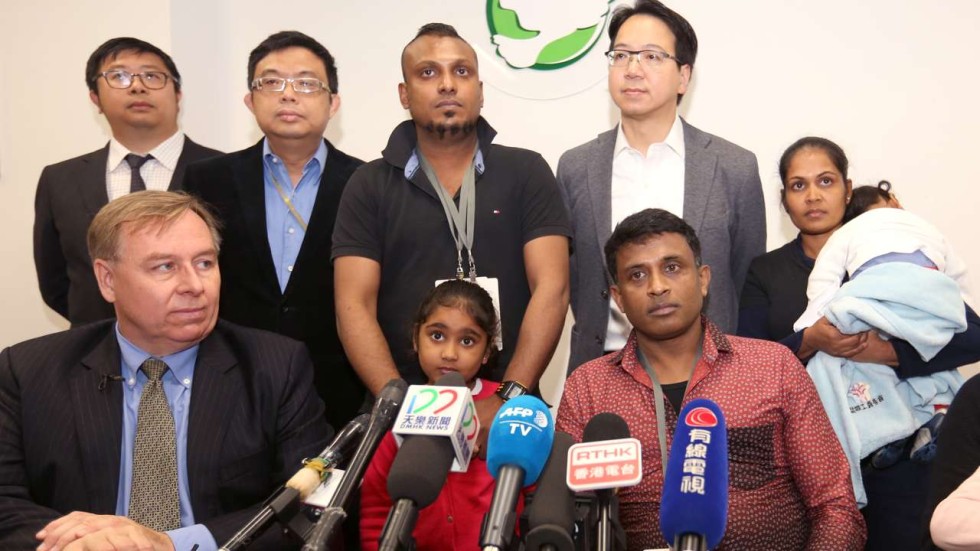
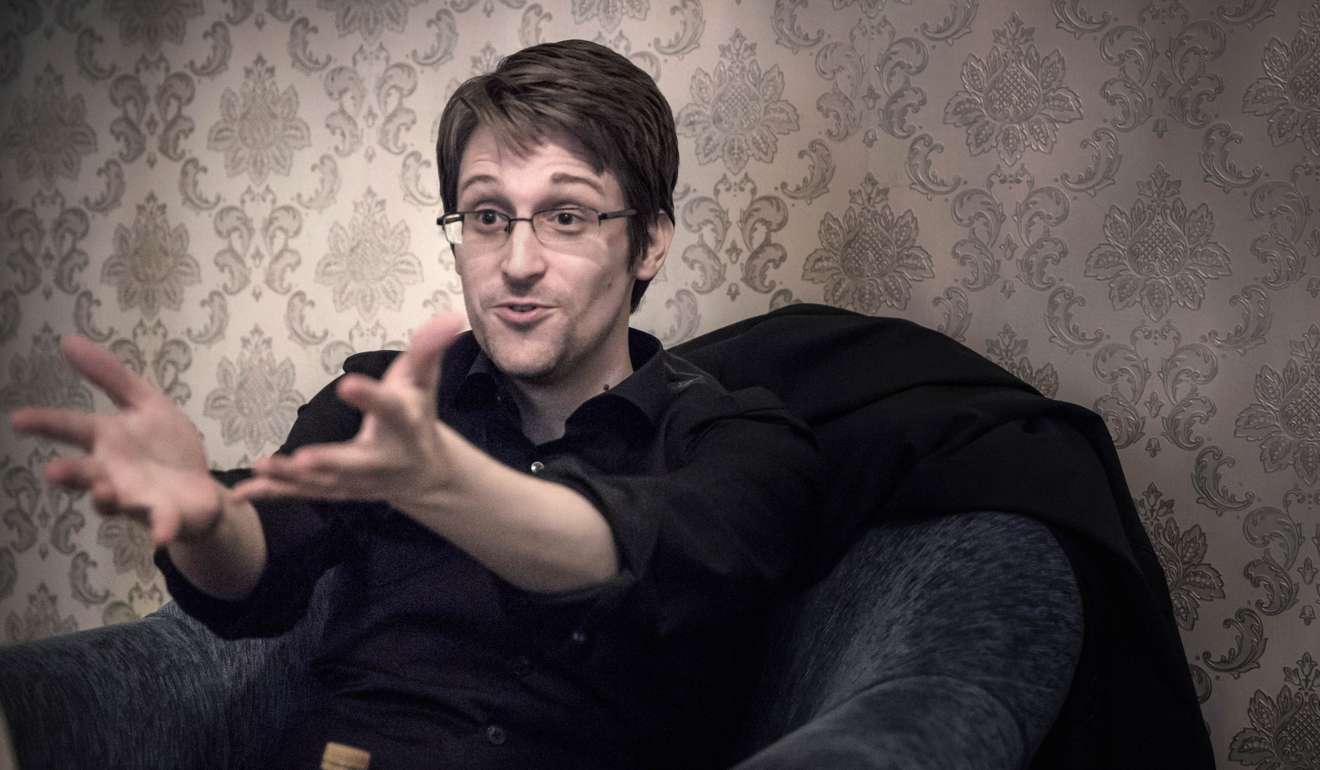
The asylum seekers who sheltered former US intelligence contractor turned whistle-blower Edward Snowden in Hong Kong have said they fear for their safety, after reports that Sri Lankan police had been in the city looking for them.

I felt very scared and nervous… maybe they can arrest me… I don’t know what they would do, because they are cruel,” Supun Thilina Kellapatha said, describing his feelings after he was told about the presence of Sri Lankan agents in the city where he has filed a protection claim.

Raquel CarvalhoRaquel Carvalho

I don’t feel stable. I walk on the road, I don’t know if the Criminal Investigation Department is there,” he said.

In 2013, Snowden – who had just leaked sensitive US intelligence files – hid out in Hong Kong, before heading to Russia, where he lives under asylum himself.

 A Sri Lankan family of four – Kellapatha, his wife Nadeeka Dilrukshi Nonis and their two children – and Ajith Pushpakumara, a former soldier, sheltered him. They are all waiting for the government to screen their protection claims.

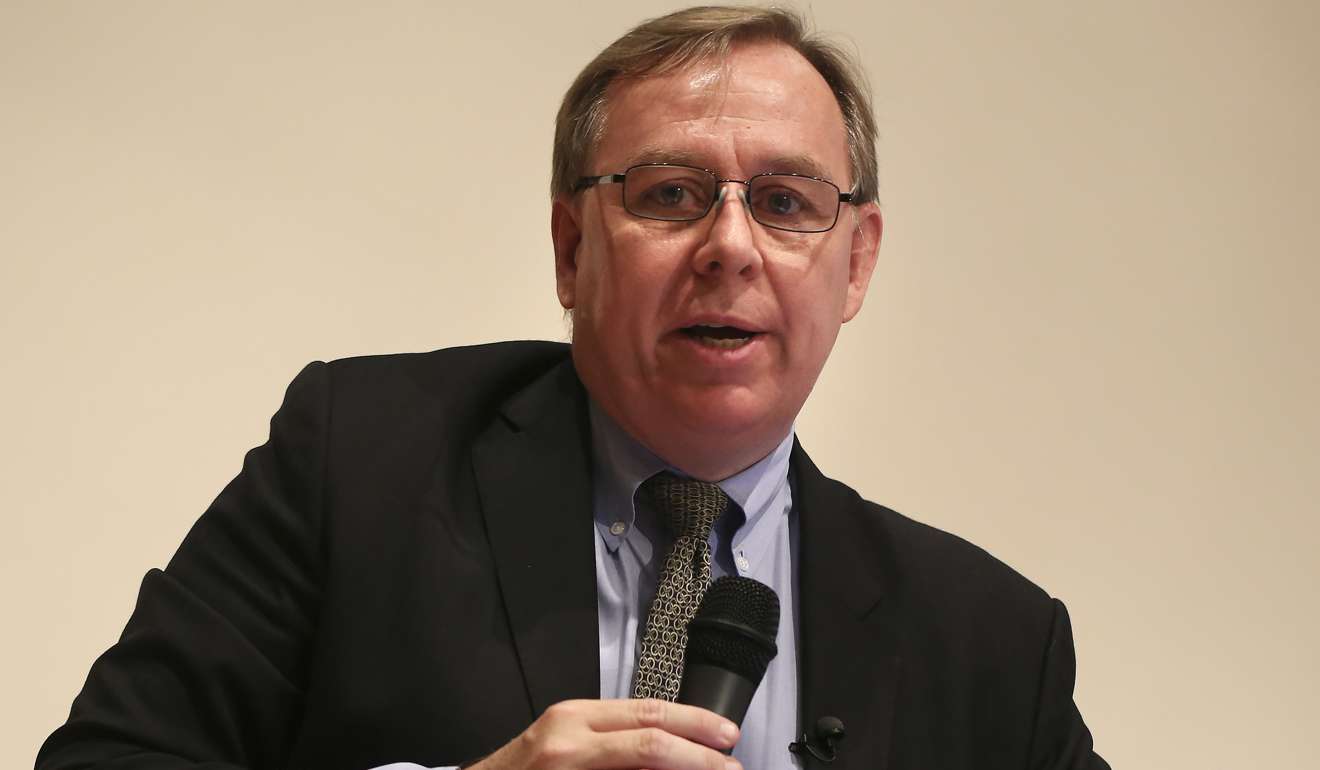
They spoke on Thursday at a press conference organised by two pan-democrat legislators, Charles Mok and James To Kun-sun, who called on the government to investigate the case and protect the family.

The five, who said they were afraid of being snatched back to their home country, planned to report the case to the police. Their lawyer, Robert Tibbo, said that they already reported the situation to the Immigration Department.

Tibbo said multiple sources in Hong Kong, including other asylum seekers and Sri Lankan residents, said agents from the Sri Lankan Police Criminal Investigation Department approached them in two separate visits, one in November and another at the end of December.

 The Canadian barrister said agents had had files on, and photos of, the asylum seekers.

One of the five asylum seekers also reported that officials in Sri Lanka had harassed, questioned and threatened their immediate family members in the country.

According to Tibbo, the officials asked the relatives about the asylum seekers’ addresses and phone numbers as well as of their friends in Hong Kong.

The identity of the refugees, who housed Snowden for about two weeks, was only revealed last September.

A UN Committee Against Torture report updated in January called for institutional reform of the security sector in Sri Lanka. It noted previous investigations that showed the country’s security forces had committed widespread or systematic torture, enforced disappearances and other serious human rights violations.”

Engaged in a political sport!

February 22nd, 2017

By Bandara Courtesy Ceylon Today

“By virtue of the powers vested in me by Section 25A of the Universities Act, No. 16 of 1978, I, Dissanayake Mudiyanselage Sumanaweera Banda Dissanayake, Minister of Higher Education, having obtained a report under Section 70C of the aforesaid Act in respect of the South Asian Institute of Technology and Medicine (Pvt.) Ltd. (SAITM), a company incorporated in Sri Lanka under the Companies Act, No. 7 of 2007, do by this Order and subject to the conditions specified in the Schedule hereto, recognize the South Asian Institute of Technology and Medicine (Pvt.) Ltd. as a Degree Awarding Institute for the purpose of developing higher education therein, leading to the award of the Degree of Bachelor of Medicine and Bachelor of Surgery (MBBS).”

This is the Government Gazette Notification which granted the right to SAITM to award a Medical Degree, which has now caused much controversy and is being branded as the ‘fraudulent degree boutique’ (hora upadhi kade) at present, and was issued by the then Minister of Higher Education of the Mahinda Rajapaksa Government.

Then when the SAITM was legally empowered to award a Medical Degree, during the Rajapaksa administration, the Government Medical Officers Association and the Sri Lanka Medical Council who are screaming their heads off today stayed as silent as mice. They did not raise their voices at all nor did they protest in the slightest manner. It was the Mahinda Government that provided loans for the establishment of SAITM. Scholarships were provided by the Mahinda Government. Official permission was granted by the Mahinda Government. It is said that son Namal is the one who engaged in an observation tour to find out more about SAITM. All privileges and sponsorship required by SAITM was provided then. Then the Medical Council and the GMOA seemed as if they had swallowed sleeping pills!

In addition, when then Defence Secretary Gotabhaya Rajapaksa set up the Medical Faculty at the Sir John Kotelawala Defence University the GMOA and the SLMC stayed dumb similar to crocodiles that had swallowed clay. They appeared not to care.

Shameless opportunism

The students at Sir John Kotelawala Medical Faculty do not have a proper hospital for clinical training. What happens is that these medical students are deployed at various hospitals in order to obtain clinical training? Why does the GMOA, which believes even today that Medical Faculty students who do not have a proper hospital for training can be sent to other hospitals for clinical training, object to SAITM which does have a proper hospital for training their Medical Students?

This is opportunism and hypocrisy, which cannot be understood. Mahinda Rajapaksa who encouraged and provided all sponsorship for SAITM then, has today come to a position where they are displaying the nakedness of greediness for political power and shameless opportunism. Haven’t the members of the GMOA who kept their mouths shut with both hands then, who are howling today, become pawns of opportunistic power hungry politics?

Mahinda Rajapaksa who considered SAITM to be of national importance then is today opposed to SAITM by ignoring the national importance, which existed then. The requirement today is only to create some kind of opposition and regain power in any way possible. The anti-governmental protesters led by Mahinda are making use of democracy, which was granted to this country through the Rainbow Revolution on 8 January 2015. They make wrong use of this opportunity engaging in behaviour that is extremely disgusting.

The main argument of the SLMC is that because there are no proper standards at SAITM, the medical graduates who will pass out of it will not have quality. It would be dangerous for the people of our country to be treated by such doctors. Therefore, SAITM has to be abolished. The GMOA which has suddenly developed an amazing love and affection for the people of the country and are shedding crocodile tears, launch strikes to receive duty free permits for the GMOA, for salary increases, to obtain superior schools for their children, to restrict the duties of midwives, is against the ambulance service received from India for free and make appeals regarding their income tax problems, put thousands of patients who come to the hospitals in this country to their utmost inconvenience, not even thinking of the patients on life saving machines in heart disease units? Did they think of the infants curled up in the premature babies units who are seeking to breathe on their own after seeing the light of day? They never considered the overall patients and engaged in strikes in the medical profession in a most disgusting manner, which does not comply with the Hippocratic Oath.

It is the people who were rendered destitute then, who are asking where the social affection being shown through the SAITM issue was hidden by the GMOA during those strikes. Was it an unqualified doctor who cut off the left hand of a young woman who came to obtain treatment for her right hand? Was it an unqualified doctor who raped a young woman at the Negombo General Hospital, when she came to seek treatment, and threw her from an upper storey on to the ground? Was it an unqualified doctor who kicked a child and assaulted him with a slipper recently when the toddler’s foot had accidently hit him? We can point out enough and more examples of where doctors committed wrongs. However, the people never rose against these doctors. Should they be considered as faults or negligence? Where did these doctors who spoke in a heartfelt manner about the people and engaged in a strike in the morning, spend the evenings?

Hippocratic Oath

The majority of doctors spend their time at private clinics and private hospitals. These doctors who rejected treating patients during the morning hours and those who took the Hippocratic Oath, went and treated patients at private hospitals surprisingly enough complying with the agreement they had with those hospitals.

The government should publicize a list of names of the doctors who on days they strike went to provide treatment at private hospitals. There is another objective to these nonsensical protests, which are being carried out with the SAITM issue in the forefront.

Whatever anyone says, this government did adopt the Pharmaceuticals Bill. It was a deathblow to the pharmaceutical giants. The prices of medicines were reduced to some extent. Providing stents free of charge to heart patients from whom certain doctors charged whatever amount they wanted, did not agree with some. Supplying lenses for eye patients free of charge was also a hole in the purse for some in the medical profession.

Such progressive steps of the government caused discomfort to certain income earners who had taken the Hippocratic Oath. Therefore SAITM became a good weapon against the government. That is why they kept quiet then and is now creating a huge fuss. The nakedness behind the political power greed is unpleasant.

How many students are there in this country that sit for the GCE Advanced Level Examination but are not able to enter the university, even though they lost out due to a mark or two? Do the students who sat for the London A/L Examination who wanted a medical degree, have a future? If SAITM is not up to the standard, what should the people friendly GMOA and the SLMC do?

The government, the administration of SAITM and the relevant professionals should gather round one discussion table and come to a common agreement to raise the standards. If that agreement is a fair solution, which everyone can accept, how much of a relief will it be, to everyone!

However, that is not what is happening. They said the Kotelawala Medical Faculty is ‘very good’ and approved of it while they say SAITM is no good. What is within this is opportunistic hypocrisy and mindless political henchman-ship.

Students of SAITM say that they are prepared to sit for any examination that the Medical Council wants them to. They say they are flexible. However, the GMOA and the SLMC remain deaf and dumb.

In May 2016, SAITM students had faced a part of the practical examinations under the supervision of great authorities such as Paediatric Consultant Ramya De Silva, Professor Mandika Wijeratne, Consultant Jayan Mendis and Heart Specialist Ruwan Ekanayake.

Are the above-mentioned doctors unqualified or undervalued? What is basically taking place here is political illegitimacy. They have no justified reasons to show that they should be accepted as tied to the responsibilities of the nation as much as Hippocrates or as Shylock who asked for the entire pound of flesh.

What is being shown here is the power of each person’s dominance! What they are engaged in is a political sport!

Ceylon Today 22.02.2017 –Page 8 Printed Edition

පාදෙණියට ලකුණු නැතිව ඊ-බාර් සමත් වෙන්න ලකුණු මට්ටම පහළට දා ගත් හැටි: වෛද්‍ය සභාවේ ලේඛකාධිකාරීගේ දියණිය සයිටම් ඉගෙන ගත් හැටි

February 22nd, 2017

එස්බී සයිටම් විරෝධීන්ගේ රෙදි ගලවයි..! ලංකාවේ වෙනදේ

වෛද් සභාවම සයිටම් උපාධිය ලංකාවේ දෙන්න යෝජනා කළ හැටි: සයිටම් පරීක්ෂා කළ 10න් 9ක් අනුමත කළ හැටි: වෛද් පීඨ ලොක්කන්ගේ දූරු පිටරට ඉගන ගන්න හැටි

(ලංකා ඊ නිව්ස් -2017.පෙබ.22, පෙ.ව‍.11.45) සයිටම් ආයතනය ශ්රී ලංකාවේ උපාධි ප්රදානය කරන ආයතනයක් ලෙස ලියාපදිංචි කරන්නැයි එදා යෝජනා කරන ලද්දේ අන් කිසිවෙක් නොව වෛද් සභාව විසින්ම යැයිද, එදා වෛද් සභාව විසින් සයිටම් ආයතනය පරීක්ෂා කිරීමට යවන ලද මහාචාර්යවරුන් පීඨාධිපතිවරුන් 10 දෙනාගෙන් 9 දෙනෙකුම කීවේ සයිටම් උපාධිධාරීන් ලියාපදිංචි කළ යුතු යැයිද,  නමුත් අද අධිකරණය කුමන නියෝගයක් දුන්නත් තමන් සයිටම් උපාධිධාරීන් ලියා පදිංචි කරන්නේ නැතැයි වෛද් සභාවේ සභාපති කාලෝ ෆොන්සේකා කියනවා නම් එවැනි නීතියක් ඇත්තේකොකා දූපතේමිස ලංකාවේ නොවේ යයි හිටපු උසස් අධ්යාපන ඇමැති වත්මන් සමෘද්ධි ඇමැති එස්.බී. දිසානායක මහතා සයිටම් විරෝධීන්ගේ රෙදි ගලවමින් ප්රකාශ කෙළේය.

ඔහු මේ ප්‍රකාශයන් කෙළේ ඊයේ පැවැති මාධ්‍ය හමුවකදී ය.

මාධ්‍යවේදීන් නැගූ ප්‍රශ්න වලට පිළිතුරු දෙමින් විශාල රහස් රැසක් හෙළිකළ එස්.බී. ඇමැතිවරයා කියා සිටියේ දොස්තර සංගමයේ සභාපති පාදෙනිය බාර් සමත් වුනේ සෞඛ් අමාත්යාංශයට බලපෑම් කර සමත් වන ලකුණු මට්ටම පහල දමා ගැනීමෙන් යයි පැවසීය. සමත් ලකුණු ගණන 50 ක් තිබියදී පාදෙනියට තිබුනේ ලකුණු 35 ක් යැයිද ලකුණු මට්ටම 34 පහත දමාගෙන ඔහු සමත් වූ බව කී ඇමැතිවරයා ඔවුන් කියනාප්රමිතියගැන වෙන කුමන කතා දැයි විමසීය

පුද්ගලික උපාධි ආයතන ඉන්දියාවේ තුන්දහස් ගණනක් තිබියදී, නේපාලයේ පවා පනස් ගණනක් තිබියදී, ලංකාවේ මේ විරෝධය මොන පිස්සුවක් දැයි එස්.බී. විමසීය. අන් කිසිවක් නොව වෛද් සභාවේ ලේඛකාධිකාරියේ දියණිය සයිටම්හි 4 වන කණ්ඩායමේ ඉගෙන ගත් බවත්, කොළඹ වෛද් විද්යාලයේ පීඨාධිපතිනියගේ දියණිය යන්නේද නේපාලයේ පුද්ගලික වෛද් විද්යාලයකට බවත් රජරට වෛද් පීඨයේ පීඨාධිතිනියගේ දියණිය ඉගෙන ගන්නේත්  වෙනත් රටක පුද්ගලික වෛද් විද්යාලයක බවත් හෙළිකරමින් එස්බී කීවේ ප්‍රමිතිය ගැන කතා කරන අයගේ කුහකම ගැන තනි තනි පුද්ගලයාගේ සිට තව බොහෝ දේවල් තමන් දන්නා බවයි.

පුද්ගලික සරසවි විරෝධීන්ගේ රෙදි ගැලවූ එස්බීගේ සම්පූර්ණ කතාවේ හඬ පටය මෙතැන ක්ලික් කිරීමෙන් ශ්රවනය කළ හැකිය.

අදාල වීඩියෝව පහතින්

The Concept of  Trauma in the Ancient Sri Lankan Societies

February 22nd, 2017

Dr Ruwan M Jayatunge 

According to the archaeological evidence, the island was inhabited as early as 10,000 B.C.  The Sri Lanka’s ancient cultural heritage dates back over 2,500 years. The Buddhism was introduced to Sri Lanka in the 3ed Century. The Buddhism became an integral part of Sinhalese culture and civilization.  Sri Lanka became one of the few countries with a very vast and rich cultural diversity. The Sri Lankan culture was influenced by India and subsequently by Europe. The European influence was a result of invasion from the Dutch and Portuguese and finally the British in the 19th Century.

The concept of combat trauma dates back to the ancient times. Combat trauma had a profound historical, cultural, social, and religious significance to Sri Lanka and the notion of combat trauma is not new to the Sri Lankans. Throughout the Sri Lankan history, there were foreign invasions, internal conflicts and the Islanders had to confront fearsome battles.

According to the Mahawansa – the great chronicle history of Sri Lanka and one of the oldest chronologies in the world (a German translation of Mahavamsa was completed by the Deutsche Academic Wilhelm Geiger in 1912) describes the devastating impact of the great Wijithapura Battle that occurred in 205 B.C. The triumphant King Dutugemunu experienced severe depressive feelings soon after the battle. This could have been a negative emotional reaction due to post combat depression. The King had guilty feelings over the men that perished in the war. He felt that he was personally responsible for these lives. Later the King’s emotional suffering was healed by a monk.

From 103B.C to 89 B.C, Sri Lanka faced a series of foreign invasions from South India. The King Walagamba fought against the invaders for a long period. When he reestablished his kingdom, the King Walagamba was exhausted following long battles. The enemies had destroyed the irrigation systems, the economy had been collapsed and the country was suffering a starvation. The population manly consisted of war widows and orphans. The King Walagamba took unmourns measures to heal the land that was tormented by 14 year war.

In 110 A.D, South Indian Sovereigns invaded Sri Lanka and took 12,000 people as prisoners. The Bhilla tribal men kidnaped young healthy Sinhala males to work in the South Indian paddy fields. The men suffered immensely in these ancient day gulags. The King Gajaba conquered these kingdoms and rescued the POWs. Up-to-date the fear of Bhilla tribal men remains in the Sri Lankan collective unconscious. Even today, if a child does a mischief parents often say Billa the boogeyman will come and get you.

The King Wijayabahu who ruled Sri Lanka from 1055AD to 1110 AD had to fight   against the  Chola  invaders. His military campaign lasted for 17 years. During these years, he faced numerous war related stress conditions.

The Western Nations arrived in 1505 AD and until 1815 A.D, the Sri Lankans fought against three Western Nations- the Portuguese, the Dutch and the English. Some of the local warriors who fought against the foreign invaders later became the victims of combat trauma.

According to the Western chronological records, the first patients who showed PTSD like symptomatology were recorded in 1666. These records were based on Samuel Pepy’s diary which described the bizarre behavior pattern of   the survivors of the Great Fire of London.  Samuel Pepy vividly portrayed the nightmares, intrusions and flashbacks experienced by these survivors.

Although the Western World recorded PTSD like symptoms in 1666 the King Seethawaka Rajasinghe – the 16th century monarch of Sri Lanka is believed to have suffered from combat related PTSD and his disturbed behavior was recorded in the ancient scripts. The king’s abnormal behavior pattern was described in the Chulawansaya – the ancient chronicle and by the Portuguese historian Fernão de Queyroz .  In his publication titled ‘Temporal and Spiritual Conquest of Ceylon Queyroz writes about the King Seethawaka Rajasinghe ‘s behavior in the later stages in detail. These writings came prior to Samuel Pepy’s diary.

The Portuguese came to Sri Lanka in 1505 and launched a massive armed campaign against the islanders. The King Seethawaka Rajasinghe (1544 A.D – 1593 A.D) was a great warrior who came to the battlefield at the age of 16. He fought against the Portuguese invaders and witnessed many deaths and destructions. He was a fearless fighter who used proficient war tactics and overpowered the fully equipped and fully trained Portuguese Army that was considered as a superpower in the 16th century World. The King Seethawaka Rajasinghe defeated the Portuguese in a number of decisive battles. His military campaigns prevented Sri Lanka becoming a Portuguese Colony. Following long years of combat, the King Seethawaka Rajasinghe was exhausted and unquestionably suffered from battle fatigue. In the later years, the King Seethawaka Rajasinghe showed outburst of anger, irritability, deep mistrust, alienation, emotional numbing and various other PTSD related symptoms.

RAGGING .ARE WE CONDONING ??

February 22nd, 2017

Dr Sarath Obeysekera

Every year University Dons and the ministers keep promising about bringing laws to curb the menace of ragging .There were many instances where many young undergraduates have ended up physically handicapped or mentally disturbed .JVP affiliated  Inter University Student Union is also trying to safe guard the culprits .JVP always has the dirty habit in putting their hand in anything ,where they could muster some young mentally disturbed students and try to gain popularity. Why don’t they condemn the ragging outright and make public statement. When they are showered with water using cannons and subjected to rear gas attacks they keep talking about police brutality . Just now I heard the radio where one of prominent JVP MP asking a minister whether government intends to install Private Court Houses to clear the backlog of court cases !

This is the mental status of JVP and the affiliated university students .We hire many students passed out from local universities and quite a few of them are so backward in taking courageous  decisions .I assume that ragging has made them so timid and when they continue ragging after they become seniors is obviously to take revenge out of novices ,for what they have been subjected to and they live on with hatred .

I have never heard of ragging in foreign universities in Easten Europe ,Asia and Western Europe .They welcome the novices  and hold a party and  enjoy few beers and become friendly .

It is high time that all the union leaders muster a force and stage stahygarha near the University Grants commission and fast unto death if needed ,forcing bringing laws to abolish ragging


BASL PRESIDENT IN HOT WATER ON THE JUDICIAL APPOINTMENT?

February 22nd, 2017

Sarath Wjesinghe a former Secretary – Bar Association and a former Administrator Legal Aid Commission

Appointment of a High Court Judge from the Unofficial Bar

The thorny issue on the appointment of the High Court judge from the private Bar is brewing fast at a rapid phase, with conflicting statements, from various sources. Justice R Kandiah Kannan is appointed from the Batticaloe Private Bar allegedly on the recommendations of the Bar Association, which is the only statutory body of Attorneys- at – law in Sri Lanka established in 1974 with the merger of then professions Advocates and Proctors creating a powerful professional body of renamed as Attorneys- at – Law, which catalysed and initiated  the formation of the Organization of Professionals which is the professional body of the majority of  recognised professional associations  in Sri Lanka. The powers of appointment of High court Judges outside the accepted and legal procedure is laid down in the Constitution to be enforced on special circumstances strictly on the advice of the Judicial Service Commission established under the same chapter. It is a mandatory requirement that the JSC should advice the President on the appointment on their own initiative and merits of the candidates free from influence or interference of political or other considerations. It is not clear on what basis the JSC could select candidates from the service, which is the normal procedure.

The Law

Article 111(1)    

There shall be a High Court of Sri Lanka, which shall exercise such jurisdiction and powers as Parliament may by law vest or ordain. ] (2) The Judges of the High Court shall be appointed by the President of the Republic by warrant under his hand and be removable and be subject to disciplinary control by the President on the recommendation of the Judicial Service Commission established under this Chapter. (3) Subject to the provisions of paragraph (2) of this Article, Parliament may by law provide for matters relating to the retirement of the Judge of such High Court. It is abundantly clear that the President has the mandate to make the appointment at his wish and will.

Article 111(A) Commissioners of the High Court.

Where the Minister in charge of the subject of Justice represents to the President that it is expedient that the number of the Judges exercising the jurisdiction and powers of the High Court in any judicial zone should be temporarily increased the President may, by warrant, appoint one or more Commissioners of the High Court to exercise the jurisdiction and powers of the High Court within such judicial zone as is specified in the warrant of appointment of such Commissioner of the High Court.” This procedure permits Ministerial intervention unlike the previous Article in which the it  is not imperative, but always complementary in the  practice of good governance.

112(1) the Judicial Service Commission

There shall be a Judicial Commission which shall consist of the Chief Justice, who shall be the Chairman, and two other judges of the Supreme Court appointment of the President of the Republic.

It is clear that the President has power to appoint High Court Judges at his will and following conventions and practices which are discretionary.

A Constitutional Requirement?

Though not a constitutional requirement, it is generally the practice and the convention to consult the Minister of Justice and the Bar Association as a matter for safety, courtesy and guidance to the President in such appointments on exceptional situations. Whether this procedure was followed previously is a mot issue though it is not in the public domain, it is obvious and imperative that the Judicial Service Commission shall recommend with   the Attorney General is nod” as the advisor of the State and the President. Then how was the appointment initiated?, and recommended to the Judicial Service Commission, as JSC can recommend the appointment to the President only from and among 66 serving judges awaiting for promotions, who apparently have shown the strong protest by refusing to take part as returning officers at the BASL election which is postponed     indefinitely which is considered to be a matter of serious nature. By Convention the Judges act as returning officers of BASL elections and the AG on the apex body in conducting and supervising election procedure.

President made it clear in the presence of the President BASL, and the Chief Justice at a function that Bar Association has made a request, when the Minister of Justice denies of any knowledge or involvement on any such appointment. President’s position is substantiated by a statement by a group of lawyers responsible for the Regime Change, using the phrase Upon a nomination by the president BASL, and not from the Executive body, recommendation was made” which is unconstitutional and irregular as the President BASL is bound to act strictly on the advice and directions of the Executive Body alone. He cannot take arbitrary decisions which are illegal and unconstitutional.

Issue has become still complicated by the statements of the former President and former Foreign Minister alleging involvement of a political party in the recommendation process requesting the President to make the appointment under his powers and prerogative, which is rarely used. Making matters worse the Secretary of the Bar Association has denied any involvement or connection by the Secretary as the Chief Executive officer. Bar Council which is the Executive Body of the Bar Association deciding on all issues pertaining to the Association. Neither the President of the Bar Association nor the Social and active groups except  a pro government group of lawyers have made any comments or statements, on this thorny issue of paramount importance to the independence of Judiciary.   Dead silence by the social groups’ active in the campaign of good governance and independence of the Judiciary is raising eyebrows of the public awaiting action on the issue close their hearts of adjudication of justice and maintenance   of Rule of Law.

Logically and constitutionally citizen is bound to believe the convincing statement made by the President on the issue and it is clear that the Bar Association should not dabble in politics or appointment of judges. Bar Association had an ugly history in dabbling in politics and the citizen still remembers by the BASL in the role played in the Regime Change process, for which the President of BASL was amply compensated with a plum office, and using USA aid by allowing them to function in the BASL premises and using data which are confined to the Lawyers alone. The Hulftsdrop Gossip” is that the current Leader BASL is looking for a plump diplomatic appointment in a powerful western state, by killing two birds from one stone.  Judges are appointed from and among the official and unofficial Bar with strict procedures adopted by the JSC alone with no political or any kind of interference. Head of the State and the Executive is expected to perform the sacred duty of the appointment of judges with great care, and impartiality appointing fit and proper learned and respected in the profession.

First Appointment of this nature based on Article 111(A)

The President made an appointment of appointing a retiring High Court Judge under Warrant for a specified period, despite protests from the Bar Association, after she discharged Hon Ravi Karunanayaka from the charges on a technical ground on the controversial case involving millions of foreign dollars connected to disgraced Raj Rajartnam –   a USA ballooner national of Sri Lankan origin. The current appointment is the second appointment under the first part of the Article, which is rarely used on extremely circumstances. Protest from the Bar was not considered seriously.

Judges unhappy

Judicial Service Association which is the only body of the serving Judges have shown the protest on the appointment for reasons left to themselves and as a result the BASL election is postponed indefinitely for want of returning officers, which is a serious matter that may ignite further unless immediate steps are taken to remedy as there appear to be no constitutional remedy on an appointment made by the President despite technical defeats. It appears that the Judicial Officers Association will stick to their guns, with displeasure and unpleasantness growing among the minor judiciary, depending on job security and due promotions they toil for during their service of employment.

A Noble Profession/Way forward

Legal Profession is one of the noblest professions depending on the good will and reputation with the society maintaining highest integrity of individual members and the association collectively. President of the Bar Association is the Leader of the Unofficial Bar when the Attorney General is the Leader of the Official Bar all of whom are selected by and among the lawyers of high repute and professional standings, who are expected to be whiter than white in their personal and professional conduct before the public, judges and litigants, where the integrity is judged by the conduct of the member of the profession. In this instance we are in the dark until the tip of the ice bag is wide open by concerned parties in high office for the benefit of the citizen waiting for justice, fair play and remedies for laws delays and justice they are clamouring for with defective systems and want of facilities and learned judges and judicial system on the tract. Leader of the Bar should be responsive, responsible and live up to the expectations of the Nation, Judiciary and the members of the profession elected the leader with the highest expectations expecting  no shady deeds or deals with ulterior motives or personal gains by acting arbitrarily and independently when there are clear  guidelines to follow the  due process. As all those involved in this issue are members of the legal profession, apart from the President holding sole authority on appointments members of the Bar and the citizen expects the parties concerned to shed light to the public, and we as a part of the concerned citizens request the NGOs and Active social groups demanding good governance to take the campaign over in this matter of public interest and importance in promoting independence of judiciary, rule of law and good governance.

Writer could be contacted on sarath7@hotmail.co.u/Views expressed are that of the Author.

Sri Lankan rupee falls on importer dollar demand; dealers see more pain ahead

February 22nd, 2017

Courtesy Nasdaq

COLOMBO, Feb 22 (Reuters) – The Sri Lankan rupee ended weaker on Wednesday on importer dollar demand as local traders bought the U.S. currency as a precaution amid concerns of a steep depreciation in the rupee in the absence of central bank intervention, dealers said.

Rupee forwards <SLKR> were active with two-week forwards ending at 153.40/70 per dollar, after hitting a low of 153.65 during the day, weaker than Tuesday’s close of 152.70/90.

They have fallen 1.04 percent so far this week. “Importers are trying to buy dollars as they expect a sharp fall in the currency due to a lack of central bank intervention.

Exporters are not selling dollars and are waiting to see the bottom,” said a currency dealer, requesting not to be named. “There is some panic at the moment. We have seen a sharp depreciation since Feb. 2 and it has created panic. I don’t see central bank doing anything to prevent the sharp fall.” The apex bank’s decision to not intervene in the market was in contrast to its governor Indrajit Coomaraswamy’s comment early this month.

He said the bank was not planning to abruptly stop supporting the rupee. The rupee will fall further because of seasonal importer demand until the traditional Sinhala-Tamil new year in mid-April, another dealer said.

The currency fall comes even as a mission from the International Monetary Fund (IMF), which has asked the central bank to maintain a flexible exchange rate, is in Colombo for the second review of a $1.5 billion loan.

The currency is under pressure due to foreign outflows from government securities. Foreign investors have net sold $325.70 million worth of securities in the seven weeks to Feb. 15, surpassing the total net foreign outflow of $324.3 million in 2016, according to the latest central bank and government data. Sri Lanka could face balance-of-payments pressure due to foreign outflows from government securities, a government document showed on Thursday, even as the island-nation is in the process of raising up to $2.5 billion from foreign borrowing. [nL4N1G14B2]

Finance Minister Ravi Karunanayake said last week that protecting a fragile rupee was more important than controlling interest rates as the local currency tended not to rebound after depreciating. [nL4N1FZ4QL] The rupee has weakened 1.3 percent so far this year, under pressure from rising imports and net selling of government securities by foreign investors. It fell 3.9 percent last year, following a 10 percent drop in 2015. ($1 = 151.1500 Sri Lankan rupees)

Read more: http://www.nasdaq.com/article/sri-lankan-rupee-falls-on-importer-dollar-demand-dealers-see-more-pain-ahead-20170222-00307#ixzz4ZS3594vd

Police urged to probe claims that Sri Lankan investigators came to Hong Kong to find asylum seekers who sheltered Snowden

February 22nd, 2017

South China Morning Post

Family of four and individual from Sri Lanka are worried about their safety given reputation of investigators for human rights abuses, lawmakers say

Two local lawmakers are calling on the police to investigate claims that Sri Lankan police investigators were in Hong Kong looking for the asylum seekers from the country who sheltered American whistle-blower Edward Snowden in the city.

The families [one family of four and one individual] are very afraid of the Sri Lankan government, in particular the Sri Lankan Police Criminal Investigation Department and the military, as these bodies have been cited for their human rights abuses by the United Nations,” a statement sent by pan-democrat legislators Charles Mok and James To Kun-sun read.

The note said the five, who are afraid of being illegally deported, would report the case to the city’s police. It also said they expected the local authorities to investigate the matter and wanted necessary protection” to prevent any illegal cross-border law enforcement activities in Hong Kong.

Mok, To and the asylum seekers’ lawyer, Robert Tibbo, were not available for comment on Wednesday night.

Snowden was sheltered in Hong Kong in 2013 by a Sri Lankan family of four – Nadeeka Dilrukshi Nonis and Supun Thilina Kellapatha and their two children – and Ajith Pushpakumara, who is a former soldier. They are all waiting for the city’s government to process their protection claims.

The American whistle-blower who leaked sensitive intelligence files was also helped by a Filipino asylum seeker, who has a four-year-old daughter.

The role of the refugees who sheltered Snowden for about two weeks was only reported last September.

Tibbo, who gave legal advice to Snowden and who has represented the three groups of asylum seekers since 2012, previously told the Post that their identities had been revealed to ensure their safety.

According to the note sent by the local lawmakers, one of the asylum seekers reported that their immediate family members in Sri Lanka had been questioned, harassed and threatened by the Sri Lankan Criminal Investigation Department, the military and government officials.

The statement said they were asked about the address and phone numbers of those who sheltered Snowden in Hong Kong.

Information on friends and other contacts of such persons were demanded with warnings to comply,” the note read.

The United Nations Committee Against Torture reported last year that the Sri Lankan security forces had committed widespread or systematic torture, enforced disappearances and other serious human rights violations.”

The UN committee said it was seriously concerned at the failure of the state party to carry out an institutional reform of the security sector.”

Buddhism and Transhumanism

February 22nd, 2017

R Chandrasoma

According to some versions of Buddhist apocrypha, the condition of our species – mankind – varied tremendously across vast ages. We live in an age of decadence and finitude wherein life is short and mankind is inexorably menaced by pain and death. Under these conditions, The Compassionate Buddhas bearing a salvific message appear before us and preach the sublime doctrine of total liberation from the forces of Karma and endless reincarnation.

All is not gloom and doom however because of the ‘cyclicity’ of nature and its processes – there were periods in the grand history of the Cosmos when our kind – Homo sapiens – were long-lived giants leading a salubrious existence with pain and suffering a distant shadow. Such beings, perforce, were unreceptive to the noble message of salvation and total release from the bondage of Karma – hence The Buddhas did not appear to solace a grieving cohort of mankind and the healing truth lay in abeyance for long periods.

The great question to be answered is whether such periods of existential joy can be ‘recaptured’ by the clever use of the science and learning now available for the advancement of our species – when heavens and hells are forgotten and Planet Earth – albeit briefly – becomes the New Elysium.

The Transhumanists – led by such stalwarts as Ray Kurzweil and Noah Harari – believe that Homo sapiens can be made Homo deus by the clever use of the science and technology currently available – if this goal is assiduously pursued. They pose the question ‘What is it to be God-like?’ They find – and most will agree – that immortality, bliss and the power to do things at will are key attributes of divinity.

These seemingly divine attributes can be made part of the equipage of Homo sapiens with a sufficiently advanced science and the collective will to make the best of what we know and have. Heavens and Hells become paltry and negligible when divinity becomes commonplace.

Most futurologists believe that the life-span of Homo sapiens can be indefinitely extended and our knowledge base made God-like so that we can have what we wish. The issue of ‘bliss’ is tricky because conventional Gods are debarred from the ‘Four Fs’ and spend their idle ‘days’ contemplating a non-functional navel.

Transhumanists believe that Homo deus can do much better with a form of active divinity based on a study of virtual worlds and computer simulations. In brief, death and the terrors of the associated afterlife can be actively expunged while all that is good and gracious can be made the norm.

If such a beatific scenario is a possibility our best efforts must be attuned to its realization – religions must fade away and the torture-chambers called ‘hells’ that disfigure all religions will become emblematic of a false spirituality that sees the suffering of others as a kind of sounding board for the boastfully virtuous.

A NURSERY OF TERRORISTS IN AFGHANISTAN

February 22nd, 2017

ALI SUKHANVER

February usually brings a very pleasant weather for the people all over the world but this February proved very unlucky for the people of Pakistan. More than hundred innocent ones became victim to brutal terrorist activities; countless injured; hundreds of families were pushed to the hell of helplessness and a lot of damage was caused to the public and private properties. And this injustice was done for what; no one knows.

Some people might be of the opinion that the attack on Lal Shebaz Qalander’s shrine in Sehwan had some religious rather sectarian background but what about the suicide-attack on the Chairing-Cross Lahore and what about the terrorist’s attack on the Levies Headquarter in Mohmand Agency. According to the details provided to media, all these terrorist activities were planned, acted upon and monitored by different terrorist groups now settled in Afghanistan. Most of the terrorists in these groups are those who had to run away from Pakistan as a result of the Operation Zarb-e-Azb.

Unfortunately Pakistan’s closest brotherly neighbour Afghanistan welcomed these terrorists with open arms and officially provided them all possible shelter and support. These terrorists were not so strong   when they stepped into the Afghan lands; it was because of the care and support of the Afghanistan government that they succeeded in strengthening themselves.

The government of Pakistan so many times made serious requests to the Ashraf Ghani government regarding the hide-outs of these terrorists but no such request was ever given any importance. Pakistan Army’s that time chief Gen (R) Raheel Sharif personally went to Afghanistan and talked to the Afghan president in this context but it all went useless.

The terrorists started getting stronger when they got a green signal from the Afghan government and it all gave birth to a new wave of terrorism in Pakistan. Here another thing is also very important; the terrorists were misguided with a misconception that after the retirement of Gen. Raheel Sharif, the scenario of Pakistan Army’s patriotic involvement in war against the terrorists would altogether change. They were thinking that the Operation Zarb-e-Azb was revolving around some personal desire of Gen. Raheel Sharif and the next commander would simply put a full-stop to this operation against terrorists but their dreams did not come true.

The Chief of the Army staff General Bajwa carried on the Operation Zarb-e-Azb with the same speed and the same velocity. Just to exert pressure on the new military hierarchy and to check its capability of responding, the terrorists in Afghanistan began with new insurgency in the Pakistani areas adjacent to the Afghan borders.

At the same time the terrorists started activating and motivating their well-wishers in Pakistan. Most of these well-wishers were the Afghan Refugees who have succeeded in hiding their actual identities and are now living in different cities of Pakistan as Pakistani nationals.

This is also something very important to be kept in mind that for a common man in Pakistan it is very difficult to differentiate between the Pakistani Pathans and the Afghan refugees. They both own the same racial features and throughout Pakistan they all are titled as ‘Khan Sahab.’

The terrorists took full advantage of this misunderstanding. From Karachi to Lahore and from Quetta to Peshawar, in most of the terrorist activities, we find involvement of some Afghan refugee. Pakistan’s Chief of the Army Staff Gen. Bajwa also confirmed the use of Afghan soil in recent terrorist activities in Pakistan.

In a telephonic conversation with US General John Nicholson on17th February, he said, Most of the incidents in Pakistan are claimed by terrorist organizations with leadership hiding in Afghanistan.”

He further said, Such terrorist activities and inaction against them are testing our current policy of cross-border restraint.” To avoid this situation it is need of the time to send back all Afghan refugees to their own country.

Nowhere in the world, are the foreigners allowed such a free movement and liberty as the Afghan refugees are enjoying in Pakistan.

It must also be kept in minds that love for one’s own land always remains dominant. It would simply be a foolish expectation from the Afghan refugees that they would give priority to the safety and security of Pakistan and ignore the interest of their own country.

INTERNATIONAL EXPO ON TEA & COFFEE COMES BACK TO MUMBAI WITH BRAND NEW FEATURES FROM 16TH – 18TH NOV 2017

February 22nd, 2017

Press release – Global Expo on Tea & Coffee at Mumbai INDIA

The vision of World Tea Coffee Expo Mumbai India is to expand the Indian Beverage business by providing all sourcing requirements under one roof

Growing in size and stature every year, the 5th edition of World Tea Coffee Expo comes back to Mumbai from 16th Nov – 18th Nov 2017 with a host of enhanced features and activities covering the entire gamut of the Hot Beverage sector. Globally recognized at a complete trade show for Tea, Coffee and allied sectors, the three day annual event shall witness about 90+ exhibitors from 8 countries showcasing latest innovative products, machineries, equipment, packaging, technologies, vending solutions, flavours, Retail Chains, certifications, Premixes, government boards etc.

The 5th edition shall have additional features like an upscale Display showcase, wider range of networking events, a special section for e-commerce companies, more educational content and speakers at Conference and interactive workshops – including tasting sessions – by some of the best Baristas/Trainers, Tea Sommeliers and Chefs. 5th World Tea Coffee Expo Mumbai India is supported by Sri Lanka Tea Board and leading associations and chambers from across the world have pledged their support to this important industry initiative.

Since its launch in 2013, the expo has brought global industry players closer, enabled mega deals in addition to being the definite launch pad for new products and technologies especially for start-ups and SMEs who aspire for national / international expansion but have low budgets.

The 2016 edition hosted 67 companies – including Pavilions from Tea Board of India and Sri Lanka Tea Board – which showcased their best to a business visitor base of 3400+ which included senior level decision makers comprising of Retailers, Wholesalers, Distributors, hypermarkets/multi-product retail chains, Tea/Coffee Estate owners, potential franchisees, purchase managers of medium-to-large offices, HoReCa sector professionals many of whom placed large orders with exhibitors. The 2-day hi level conference discussed issues facing the sector and workshops on last day imparted technical skills. Experts from across India were a part of the conference and workshops.

This niche Expo provides the perfect environment for the hot beverage industry to meet face-to-face and develop real business opportunities. WTCE facilitates participants to strike bulk deals, joint ventures/alliances, franchise deals, appoint marketing agents, knowledge-sharing, meeting government officials and generate large number of business leads.” said Ms Priti Kapadia, Director, Sentinel Exhibitions Asia Pvt. Ltd, the organizers of this unique trade show.

The global market for RTD (Ready-to-Drink) Tea and Coffee is expected to reach $150 billion by 2021 with an annual growth rate of 7%. The Asia-Pacific region is the largest market and also showing maximum growth. The Indian tea and coffee market is one of the largest in world in terms of production, consumption and growth prospects. However, future success depends largely on use of latest technology, seamless upgradation of existing facilities, adapting to ecommerce and cost effective processing – something WTCE strives for.  For further information please log onto www.worldteacoffeeexpo.com  or call on +912228625131 or email to info@worldteacoffeeexpo.com

PUBLICATION OF THE SECOND SPOT REPORT by Sri Lanka Monitoring Accountability Panel (MAP)

February 22nd, 2017

PRESS RELEASE: 22 February 2017

On 28 February 2017, the Monitoring Accountability Panel (MAP”) will issue its Second Spot Report, which will coincide with the 34th session of the UN Human Rights Council (the ‘HRC’) scheduled for 27 February to 24 March 2017 in Geneva. In the 27-page report, the MAP’s international legal experts will outline their assessment of the Sri Lankan Government’s transitional justice efforts to date, and provide recommendations going forward.

Since co-sponsoring the UN Human Rights Council Resolution on ‘Promoting reconciliation, accountability and human rights in Sri Lanka,’ (A/HRC/30/L.29, October 2015), the Sri Lankan President and Government Ministers have backtracked on their commitments to implement effectively the four transitional justice pillars. In particular, the Sri Lankan Government has reversed its own pledge to include foreign judges and prosecutors in a special war crimes court, and appears intent on ignoring legitimate recommendations of the Consultation Task Force.

In its Second Spot Report, the MAP will analyse these and other issues and provide its views on whether or not the Sri Lankan Government has fulfilled its legal obligations to the victims of mass human rights abuses.

The MAP provides independent monitoring, advice, and recommendations, focusing on the effectiveness of accountability measures from a victims’ perspective.  The views and recommendations of the Panel enable victims and other stakeholders to participate more effectively in the transitional justice processes. For more information, please visit:  http://war-victims-map.org/

On 19 November 2015 the Transitional Government of Tamil Eelam nominated a panel of five legal experts to monitor the design and implementation of the transitional justice mechanisms in Sri Lanka, including the judicial measures to investigate and prosecute war crimes, crimes against humanity and genocide.

The Monitoring Accountability Panel – or MAP” – started its work on 1st December 2015.

Assault on sitting judge in Assam, PPFA demands stern actions against anti-national culprits

February 22nd, 2017

By Our Correspondent

Guwahati: Patriotic Peoples’ Front Assam (PPFA) expresses serious concern over the Goalpara incident, where a sitting judge was physically manhandled by some lawyers recently and demands stern actions against those unruly law practitioners to maintain the dignity of the Indian judicial entity.

The  forum strongly  argues that the anti-national culprits, who targeted the Foreigners Tribunal member Ajay Kumar Phukan inside his office at Goalpara in western Assam, must be punished  to protect the image of  judicial personalities among the mass.

It may be noted that a group of lawyers, while engaging with heated arguments with the sitting judge on 15 February 2017 over a D

(doubtful)- voters case, ended up in physically assaulting Phukan and vandalized the office.

Tribunal member Phukan on 9 February opined that eight out of 13 D-voters, whose cases were dealt in his court, were foreigners. It angered the lawyers, hired by the individuals, and they along with few other law practitioners started arguing with Phukan that finally turned hostile.

Phukhan had lodged an FIR with the Goalpara Sadar police station and the police have reportedly arrested five lawyers namely Najrul Islam, Abdur Baten, Safiqur Islam, Anowar Hussain and Nurjamal Islam suspecting their roles in the assault case. Other accused (Omar Farooq and Shahjahan Ali), whose names were figured in Phukan’s FIR are absconding.

Following the shocking incident, a team from Gauhati High Court visited Goalpara to inquire about the investigation. Led by Justice Ujjal Bhuyan, the team included Assam’s additional chief secretary(home) TY Das, the State police chief Mukesh Sahay, special director-general of police (law  & order) Kuladhar Saikia along with few high profile officials. Goalpara district magistrate JVN Subramanyam and the district police chief Amitava Sinha also accompanied the team.

The incident evoked sharp reactions from the civil society groups in Assam and they demanded immediate actions against those involved in the case. Condemnations poured from All Assam Layers Association, All Assam Students’ Union, All Assam Goria Moria Deshi Jatiya Parishad, Prabrajan Virodhi Mancha, Guwahati Senior Citizens’ Association etc.

We would like to urge the Supreme Court, which constituted the Foreigners Tribunals for expediting identification & determination of illegal migrants, to take serious note of the incident,” said a statement issued by the PPFA, adding that the Bar Council of India must take exemplary actions against the lawyers, who engaged themselves in the dastardly  act of physical assaults with a  judge.”

Issued by Rupam Barua, Nava Thakuria, Jagadindra Raichoudhury, Anup Sarma, Devjyoti Saikia etc for the PPFA

‘යුද ජයේ හිමිකරු මමයි’ කිය ෆොන්සේකාට කට උත්තර නැතිවෙන සුපිරි පිළිතුරක් කරුණා අම්මාන්ගෙන්..

February 21st, 2017

ලංකා සී නිවුස්

කොටි සංවිධානය පරාජය කිරීමේ යුධ ජයග‍්‍රහණයේ මුල් ගෞරවය හිමිවුය යුත්තේ හිටපු ජනාධිපති මහින්ද රාජපක්‍ෂ මහතාට බව හිටපු නියෝජ්‍ය ඇමති විනයාගමූර්ති මුරලිදරන් (කරුණා අම්මාන්) පවසයි.

දෙරණ රූපවාහිනියේ 360 වැඩසටහනට එක්වෙමින් ඔහු කියා මේ බව කියා සිටියේය. මහා යුද විරුවා තමන් යයි ඇමති සරත් ෆොන්සේකා යයි සිදු කරන ප‍්‍රකාශයන්ට ප‍්‍රතිචාර ලෙස ඔහු කියා සිටියේ මහින්ද රාජපක්‍ෂ මහතා ජනාධිපති වන්නට පෙරද වසර ගණනාවක් ෆොන්සේකා හමුාවේ රාජකාර කල බවත් එම කාලයේදී කොටි පරදන්නට එකී මහා යුද විරුවාට හැකියාවක් තිබූ බවයි.

‘යුද ජයේ හිමිකරු මමයි’ කිය ෆොන්සේකාට කට උත්තර නැතිවෙන සුපිරි පිළිතුරක් කරුණා අම්මාන්ගෙන්..

එකල තමන්ද කොටි සංවිධානයේ කටයුතු කල බවද කී කරුණා අම්මාන් එම කිසි කලෙක ෆොන්සේකා විසින් කොටි සංවිධානය පරාජය වන තරමේ ප‍්‍රහාරයක් එල්ල නොල බවද පැවසීය.

කෙසේ වෙතත් යුද ජයග‍්‍රහණයේ හමුදාපතිවරුන්ටද සියළු හමුදා සෙබළුන්ටද යම් ගෞරවයක් ලැබිය යුතු වුවද සේනාධිනායකයා ලෙස හිටපු ජනාධිපතිවරයා අති මහත් දෙස් විදෙස් පීඩනය හමුවේ නොසැලී එයට නායකත්වය දුන් නිසා යුද්දය ජය ගැනීමට හැකියාව ලැබූ බවද ඔහු වැඩි දුරටත් කීවේය.

HASHIM PUTS THE SCREWS on RAVI

February 21st, 2017

By Dhammika Ranaweera Courtesy  Ceylon Today

A determined stand-off between Minister of Public Enterprises Development Kabir Hashim and the Finance Ministry at yesterday’s Cabinet meeting sent emotions…… roaring in connection with a clash of opinions on the amount of compensation to be paid for cancellation of an agreement signed by the previous regime to purchase aircraft.
Hashim objected to the Finance Ministry’s cancellation compensation estimate of US$ 154 million though Cabinet had agreed on a payment of between USS 75-85 million.
Informed sources said the previous UPFA regime had signed an agreement with Aircap Corporation in 2012 to purchase several aircraft.

However, the current government had decided to cancel that agreement on the basis that the intended purchase was not necessary.
As a result of that agreement being cancelled the government was under compulsion to pay compensation to the afore-mentioned firm, with the Cabinet agreeing to it.
The sum of compensation had been ratified by Cabinet after a Cabinet Sub-Committee formed to look into the matter sanctioned it.

However, sources revealed that Minister Hashim had pointed out at the Cabinet meeting yesterday that the decision taken by the Finance Ministry to pay a hefty sum as compensation, having disregarded the amount agreed by the subject Minister and the Cabinet, was unethical and was an arbitrary decision.
The source added that Minister Patali Ranawaka and Dr. Sarath Amunugama had also spoken in support of Minister Kabir Hashim at the Cabinet meeting.

It is also learnt that President Maithripala Sirisena has advised the Finance Ministry to temporarily suspend the payment of compensation to Aircap Corporation.


Copyright © 2026 LankaWeb.com. All Rights Reserved. Powered by Wordpress