Sri Lanka: Pledge to End Police Abuse Not Met

February 21st, 2017

Human Rights Watch

(New York) – The Sri Lankan government has not met its pledge to curtail police abuses prior to the March 2017 session of the United Nations Human Rights Council, Human Rights Watch said today. Security sector reform was one of 25 undertakings by Sri Lanka in the Human Rights Council resolution adopted by consensus in October 2015.

sri lanka 20170220 PG

Members of the Sri Lankan police march with an elephant during Sri Lanka’s 69th Independence day celebrations in Colombo, Sri Lanka February 4, 2017.

The Sri Lankan government has failed to repeal the abusive Prevention of Terrorism Act or take serious measures to reduce torture in custody.

It’s crucial that the Human Rights Council consider closely whether Sri Lanka made progress in the security sector as well as its other commitments such as transitional justice,” said Brad Adams, Asia director. Nearly 18 months after making important promises to the council, Sri Lanka’s leaders appear to be backtracking on key human rights issues, including reforming the police.”

Reform of the security sector has lagged behind action on the council resolution’s four pillars of transitional justice: accountability, the disappeared, truth-seeking, and reconciliation. A recent report from the UN Special Rapporteur on torture, Juan Mendez, highlighted the ongoing culture of torture” in the country. A 2015 report by Human Rights Watch also found that Sri Lankans routinely face torture and other ill-treatment by the police. In the vast majority of cases, the victims were unable to obtain any meaningful redress.

The government has also yet to repeal the draconian Prevention of Terrorism Act (PTA), which has been used to arbitrarily detain terrorism suspects and others without charge for years. During the country’s 26-year-long civil war, the government asserted that the PTA was a necessary tool in its battle against the Liberation Tigers of Tamil Eelam. Yet, nearly eight years after the war’s end in May 2009, the PTA not only remains on the books but continues to be used to arrest and detain people.

Lawyers and relatives of PTA detainees told Human Rights Watch in May 2016 that police arrests were still being made in the notorious white vans used by the previous government, creating fear of a return to a culture of enforced disappearances. The practice has abated somewhat after an outcry from the rejuvenated national Human Rights Commission and rights lawyers. Lawyers, families, and the Human Rights Commission report having access to PTA detainees, an improvement from past practice.

Curtailing torture in Sri Lanka requires serious reforms of the security sector, prosecutions of those responsible, and sustained political will from the top.  Brad Adams  Asia Director

A number of those arrested in 2016 under the Prevention of Terrorism Act were implicated in committing or plotting terrorist crimes,” Adams said. Yet there was no good reason for not using the regular criminal code rather than an abusive law that should have been repealed years ago.”

The Special Rapporteur on torture, following a May 2016 visit to Sri Lanka, found that torture to produce confessions, including beatings, sexual violence, extreme stress positions and asphyxiation, was being committed in police stations, military facilities and detention centers throughout the country.

Human Rights Watch’s own investigations found that police routinely use torture to compel confessions for even minor offenses, such as petty theft and making illicit alcohol, and this affected all ethnicities and social groups. The Special Rapporteur described a worrying lack of will within the Attorney General’s Department and the judiciary” to investigate and take action against those considered responsible for torture, noting that authorities kept repeating to him that there had been no complaints of ill-treatment or torture, and consequently no investigations.

Deeply embedded practices linked to the war, like police torture, don’t just go away once the war is over,” Adams said. Curtailing torture in Sri Lanka requires serious reforms of the security sector, prosecutions of those responsible, and sustained political will from the top.”

In June 2016, President Maithripala Sirisena issued a directive to the police and military to refrain from torture but the impact of the directive has gone unreported. Legal provisions in violation of international law remain on the books, such as permitting criminal liability at the age of 8. Ensuring the right to counsel at all stages of detention has also not been remedied.

The upcoming Human Rights Council session provides an important opportunity for UN member countries to closely examine the Special Rapporteur on torture’s report and the problem of torture and other police abuse in Sri Lanka. They should press the government to address these concerns as part of the overall reform efforts underway under the Human Rights Council resolution. And they need to be careful not to endorse measures that would set back human rights protections, such as earlier draft counter-terrorism bills to replace the PTA.

The Mendez report on torture maps out a detailed reform proposal that the Sri Lankan government should embrace and implement,” Adams said. The Human Rights Council can rev up this process by addressing torture and police reform in its review of Sri Lanka’s compliance with the council’s resolution.”

SLFP won’t support Constitutional amendments which require referendum: S.B.Dissanayake

February 21st, 2017

Courtesy The Daily News

The Sri Lanka Freedom Party(SLFP) decided not to support any amendments to the Constitution which could harm the country’s unitary character, territorial integrity and sovereignty, Social Empowerment & Welfare Minister S.B.Dissanayake said yesterday. He also noted that the President and the SLFP has decided not to support any amendments which require a referendum.

Speaking to the media in Colombo Dissanayake further noted that the SLFP also has decided not to fully abolish the Executive Presidency. Dissanayake also re-confirmed the SLFP stance that there will be no foreign judges in the domestic mechanism which is to be established to probe the alleged war crimes and human rights violations during the three-decade long conflict.

On Constitutional amendments, Dissanayake said that the SLFP will only support changes which will help further strengthen democracy and the country’s sovereignty.

Activist guilty of screening unapproved war documentary

February 21st, 2017

BY M. MAGESWARI Courtesy The Star on line

KUALA LUMPUR: Activist Lena Hendry was convicted by a magistrate’s court for screening a Sri Lankan civil war documentary that had not been approved by the Censorship Board.

Hendry, 32, who stood expressionless in the dock upon hearing the verdict, later said she was disappointed with the judgment.

Her sentencing is scheduled for March 22, and she is currently out on bail.

We will definitely appeal,” Hendry, who was accompanied by her lawyer New Sin Yew, said.

Hendry, who was also the programme coordinator for human rights group Pusat Komas, claimed trial in a magistrate’s court on Sept 19, 2013, to illegally screening the documentary No Fire Zone: The Killing Fields of Sri Lanka.

After the judgment yesterday, well-wishers, friends and supporters surrounded, hugged and consoled her.

One supporter was holding a placard that read: Human Rights Documentaries are not dangerous.”

Among those present for Hendry in the public gallery was Ivy Josiah, who is Hakam’s (National Human Rights Society) exco member and former executive director of Women Aid Organisation.

A disappointed Josiah said the film had been shown everywhere in the world”.

In his judgment, magistrate Mohd Rehan Mohd Aris ruled that the defence had failed to raise a reasonable doubt in the case.

The accused is found guilty,” he told the packed courtroom.

The same magistrate had on March 10, last year, acquitted Hendry at the end of the prosecution’s case.

On Sept 21, last year, the High Court set aside the acquittal following an appeal by the prosecution and ordered her to enter her defence.

Judicial Commissioner Mohamad Shariff Abu Samah found that there was a prima facie case against Hendry.

Eight prosecution witnesses and three defence witnesses, including Hendry, had given sworn evidence in the trial.

The film, which was directed by British national Callum Macrae, explores the alleged oppression of Tamils in Sri Lanka by the Sri Lankan government.

Hendry committed the offence at the Kuala Lumpur and Selangor Chinese Assembly Hall at Jalan Maharajalela here at 9pm on July 3, 2013.

The charge under Section 6(1)(b) of the Film Censorship Act 2002 carries a jail term of up to three years or a fine of up to RM30,000 or both upon conviction.

DPP Nurakmal Farhan Aziz represented the prosecution.
Read more at http://www.thestar.com.my/news/nation/2017/02/22/activist-guilty-of-screening-unapproved-war-documentary/#Oi277G0GKID8wKLf.99

ශ‍්‍රි ලංකා ආර්ථිකය අවදානමේ.. පියවර 19කින් පහලට.. ජාත්‍යන්තර දර්ශකයක් ලොව පුරා ආයෝජකයින්ට කියයි..

February 21st, 2017

ලංකා සී නිවුස්

එක්සත් ජනපදයේ Heritage Foundation විසින් වාර්ෂිකව ප්‍රකාශයට පත්කරනු ලබන ආර්ථික ස්වාධීනත්ව දර්ශකයට (Index of Economic Freedom) අනුව ශ්‍රී ලංකාව ස්ථාන 19 කින් පහලට ගොස් තිබේ.

මේ අනුව නොබෝදා එළිදක්වන ලද 2017 ආර්ථික ස්වාධීනත්ව දර්ශකයේ 112 වැනි ස්ථානයට ශ්‍රී ලංකාව පත්ව තිබෙන අතර 2016 වසරේ දී ශ්‍රී ලංකාව 93 වැනි ස්ථානයේ පසුවිය.

මෙහිදී ශ්‍රී ලංකාවට 57.1 ක ලකුණු ප්‍රමාණයක් ලැබී තිබෙන අතර පසුගිය වසර 6 ක කාලයක් තුළ ශ්‍රී ලංකාවට ලැබුණු අඩුම ලකුණු ප්‍රමාණය ලෙසින් මෙය වාර්තා වේ. ලකුණු 100 ක සමස්තයකින් හිමිවන මෙම ලකුණු ප්‍රමාණය 2016 වසරේ දී 59.9 ක් විය.

මෙම වර්ගීකරණයේ දී ලකුණු 50 ට වඩා අඩුවෙන් ලබා ගන්නා රටවල් ආර්ථික ස්වාධීනත්වය යටපත් කරනු ලැබූ (Repressed) රටවල් ලෙසින් හඳුන්වා ඇති අතර ලකුණු 50-70 අතර රටවල් වැඩිවශයෙන් ආර්ථික පරාධීන (Mostly Unfree) රටවල් ලෙසින් හඳුන්වා තිබේ. ශ්‍රී ලංකාව අයත් වන්නේ එම කාණ්ඩයට ය.

70-80 ලකුණු කාණ්ඩයේ රටවල් වැඩිවශයෙන් ආර්ථික ස්වාධීනත්වයක් ඇති රටවල් ලෙසත් ලකුණු 80 ට වඩා ලබා ඇති රටවල් පූර්ණ නිදහස් රටවල් ලෙසත් හඳුන්වා ඇත.

මෙහිදී ආර්ථික නිදහස ඇති ලොව හොඳම රටවල් 5 වශයෙන් හොංකොං, සිංගප්පූරුව, නවසීලන්තය, ඕස්ට්‍රේලියාව හා ස්විස්ටර්ලන්තය නම් කර තිබේ.

රටවල් 180 ක් මෙම ඇගයීමට යොදාගෙන ඇති අතර ඉරාකය, ලිබියාව, සෝමාලියාව, සිරියාව, යේමනය හා Liechtenstein යන රාජ්‍යයන් මෙම අධ්‍යයනයට යොදා ගෙන නොමැත.

– Adaderana

802 Viewers

Maithri’s ire

February 21st, 2017

Editorial Courtesy The Island

Politicians are a peculiar lot. They think no end of themselves and never own up to their lapses. Of them, one may say, with apologies to Bernard Shaw, those who can, do, and those who can’t, bash the media. Politicians who are capable of living up to people’s expectations can be counted on the fingers of one hand. Hence, we often have most of those at the levers of power venting their spleens on journalists to cover up their failures which are legion.

Yahapalana leaders seem to believe in their own false propaganda. Having failed to make good on their election promises, they are now trying to have the frustrated public believe that the situation is peachy-keen, but the media are all out to paint a bleak picture of it.

President Maithripala Sirisena has recently faulted the electronic and print media for ‘negative reporting’ and ‘attempts to increase their ratings or circulation at the expense of the government and its development programme’. He is entitled to his opinion, but the messenger should not be blamed for the message.

The government has, under its control, a publishing house, television channels and radio stations to praise its leaders; its propagandists, credit where credit is due, are doing an excellent job with no heed for their credibility where singing hosannas is concerned. So, why should the government leaders worry about the independent media which tell them what they don’t want to hear?

President Sirisena needs to be told that the media cannot be expected to report on the Moragahakanda reservoir being flooded, on a daily basis. Ceremonies to launch road construction projects are held frequently, but no road has got built so far. The yahapalana leaders, before the last general election, promised the people of Kurunegala a Volkswagen factory, but that has become pie in the sky. Crafty local businessmen are making the most of the government’s yen for dollars to tide it over and putting various crooked deals through. Some of them have already obtained vast extents of state-owned land for a song on the pretext of launching mega factories to bring in foreign exchange.

The yahapalana leaders also took the youth for a ride before the last two elections by pledging to create one million job opportunities. The cost of living has gone into the stratosphere. A coconut sells at Rs. 85 and a kilo of rice at Rs. 100.00 or more. Only the super rich can afford the luxury of eating rice with pol sambol three times a day! Corruption is rampant among government politicians and their bureaucrats. Sri Lanka’s ranking on the global Corruption Perception Index 2016 has dropped to 95 from 83 in 2015. The government is all out to cover up the biggest ever financial fraud in the country—the Central Bank bond scam—and this may be the main reason for the sharp drop in the country’s corruption perception index rankings. Officials are hounded out of their jobs for exposing mega rackets. The recent sacking of Chairman of the state-owned Lanka Coal Company, Maithri Gunaratne, is a case in point. Such an intrepid official would have been rewarded in any other country for blowing the lid off a mega racket and trying to save a great deal of public funds. Ruling politicians menacingly heap abuse on upright state officials like the Auditor General in public in a bid to intimidate them. Nepotism continues and police steer clear of government politicians and their backers. No media organisation worth its salt can ignore the seamier side of yahapalanaya.

If the government fulfils its pre-election promises to bring economic relief to the masses, eliminate bribery and corruption, restore the rule of law, create one million jobs and launch development projects then the media will be without anything negative to report on. They will be left with no alternative but to write sunshine stories and President Sirisena will be able to watch TV, listen to radio and read newspapers without seeing red.

Congratulations Mister Prime Minister!

February 21st, 2017

BY MALINDA SENEVIRATNE

Prime Minister Ranil Wickremesinghe was conferred an honorary doctorate by Deakin University, Australia. He’s not the first premier thus honored and he probably will not be the last.  However, an honor it is and as such warranted media coverage.    What was newsy, though, was not the event but a statement he had made that was almost missed; it was an add-on that was at once a de-conferring, so to speak, at the tail end of the report.
It was reported thus: Immediately after the convocation ceremony Prime Minister Ranil Wickremesinghe directed Prime Minister’s Secretary Saman Ekanayake to ensure that the ‘Dr’ tag is not attached to his name in official or personal matters.”
That might be called ‘classy’ if not for anything, it separates him from the many others who have received honorary doctorates.  Some people love titles.  Indeed titles adorn some.  In other cases, the person adorns the title.  I don’t think the Prime Minister falls into either category, but this mild and minor directive reveals character.  Ranil is not about ‘show’ except of course when he heeds the advice of the near and dear of his inner political circles, and even then more out of trust than out of conviction.
He deserves a bit of applause, for both the honor he received and for being humble about it, not least of all because he is heads and shoulders above the vast majority who have name cards with the ‘Doctor Tag’ courtesy honors bestowed.  Intellectually, he is clearly up there among the best of that lot.  
Our Prime Minister is reputed to be a voracious reader on a wide range of subjects.  He also does his homework before making speeches.  The worst he can do is to extrapolate on an error, as he has done for example while making observations at the launch of a book by a loyalist, Sujith Akkarawatte, a few years ago.  Yes, he does his homework.  This was apparent in the speech he made at Deakin.  He observed that Alfred Deakin, the Australian Prime Minister in whose name the university was founded had actually visited  Sri Lanka (then Ceylon) in 1893 to study the island’s 1000 year old irrigation system.  
He may very well have taken a wiki-peek but then again that’s much more than many would do.  In any event, Wikileaks only mentions that Deakin ‘played a major part in establishing irrigation in Australia’.  Wickremesinghe appears to have dug deeper when preparing the speech or, more likely, had already filed away the fact during the course of educating himself in general.  That does not make him a scholar of course, but it does make him a different and even special kind of politician.
His detractors may say he was undeserving.  That’s politics.  He is, after all, no Mervin Silva or the innumerable doctorate holders who have in word and deed brought much disgrace on all spheres of scholarship.  They need to drop the tag, not Wickremesinghe but on the other hand it’s because they cling to it that dropping it demonstrates as much wisdom as it does humility.  Let there be no debate over this: Ranil Wickremesinghe is one of the more well-read of our parliamentarians if not the best read.  If we consider all the prime ministers since Independence and if we were to assess doctorate-worthiness of them all, on the counts of intellect and vision (and not ideological bent or the balance sheet on delivery), only a handful are deserving.  There’s D.S. Senanayake, Sirimavo Bandaranaike, in their own way J.R. Jayewardene and Ranasinghe Premadasa, and there’s Ranil Wickremesinghe. 
Let us applaud.
It is indeed a pity, then, that Deakin University got it all wrong in the relevant citation. They were correct in recognizing his long service as a parliamentarian, minster and prime minister.  Longevity is certainly praiseworthy, even though it is that same longevity or rather the fact that he survived while others fell to ill-health, old age, assassinations and terrorist attacks, which paved the way for him to become prime minister on multiple occasions.  All that may have been fortuitous but let us not discount his tenaciousness and shrewd political skills.  His tenure as the Leader of the United National Party may be described as dictatorial but that’s less due to iron-fist than to subtle maneuvering, preying on the weaknesses of would-be ousters and deft footwork to dodge political bullets.  None of this requires elaboration.  In hindsight, one might argue that had he not done all that he has, the party could very well have disintegrated or at best continued to remain in the political wilderness.  Whether it deserves doctoral recognition is of course another matter. 
Deakin University cites ‘the role he played in steering the country to a high status in the economic, education and human rights fields’.   Prof. Jane Den Hollander reading out the citation in the presence of the Chancellor of the University, Prof John Stanhope, said several factors including Prime Minister Wickremesinghe’s contribution towards steering the country to a high international status, tactfulness in getting LTTE terrorists into the negotiating table, creating the groundwork for obtaining financial assistance from the international community and dedication towards setting up good governance were taken into account.”
If one were generous, one might say ‘contentious’ or if less generous, ‘tendentious’.  Let’s take the economic, educational and human rights fields separately.  He was in charge of the economy in 2001 and is in charge of it now (for all intents and purposes).  In 2001 he inherited an economy in its death throes.  He was hemmed in on the one side by the chief executive, Chandrika Kumaratunga, who belonged to a rival party, and a seemingly never ending battle with terrorists.  Kumaratunga didn’t really let him carry out his ‘Regaining Sri Lanka’ program, seizing three key ministries by the end of 2003 and dissolving Parliament a few months later.  In April 2004, the UNP was routed in the 2004 General Election.  That was probably less about the economy than his demonstrable naiveté regarding the LTTE.  We’ll come to that presently. The bottom line about his economic policies was (and still is) selling off national assets.  That might tickle the fancy of the like of Hollander who might call it judicious and enlightened, but stripped of sanitizing terminology used by economic pundits with dubious agenda, it’s pretty simple and simplistic thinking.  Today, once again at the helm, his thinking hasn’t changed.  National pauperization can only be hailed by the beneficiaries, not be the pauperized.   
Another thing that pretty much undressed Wickremesinghe’s economic ‘wizardry’ is the downright stupidity in believing that pleasing the USA and Europe would result in those countries backing his economic program by putting money where their mouths are.  Someone who does not know that these countries’ national debts are essentially owned by China and Japan is not an economic expert.  The ‘Brexit Moment’ saw Wickremesinghe suddenly realizing the existence of China.  He said ‘We’ll look East’.  That’s, incidentally, where the previous regime had been looking, a gaze-preference that was ridiculed by Wickremesinghe.  The gaze-change clearly indicates a certain myopia.  Applauding him on his economic thinking says as much about Deakin as of Wickremesinghe.
Education.  Whether one agrees or not with the thinking, it’s Wickremesinghe’s vision on this subject that has prevailed.  What we’ve seen over the past 35 years is the sometimes open and sometimes subtle implementation of the White Paper on Education that he presented in the early eighties.  Whether this alone accounts for the current crisis in education, it is hard to conclude, but certain things have to be acknowledged: a) we still don’t have an occupation classification which takes into account economic realities, policies and projections, so that the education system is in line with these, b) much of the agitation and controversies that have troubled this sector comes from the absence of a national education policy, c) incompetence and corruption override all else in this sector.  
Human rights.  That’s a favorite term used by those who want to rap Sri Lanka on her national knuckles, especially those who either violate human rights or look askance when their friends do so.  Let’s leave Batalanda out of it.  Wickremesinghe was a minister during the eighties, i.e. when the most serious human rights violations took place with over 60,000 people being killed in the course of two years.  That was a time when the government unleashed the security forces, police and vigilante groups on the population, a time marked by proxy arrests, abduction, torture and assassination and was rightly dubbed ‘thebheeshanaya (terror).’  He can’t complicit, he was an approver and it is hard to claim that he has no blood on his hands.  The eighties, let us not forget, was the period when the security forces had next to no discipline.  That’s when the greatest atrocities were committed against Tamils in the country.  Let us not forget either the decisive role played by the trade union of his party in the attacks on Tamils by mobs in July 1983 nor the fact that his government deliberately reined in the law enforcing authorities during those terrible days. He was a junior minister back then, but if he is the principled man that Deakin paints him as, he could have resigned.  He did not.
Let’s now consider the more specific factors that Deakin claims contributed to the decision: contribution towards steering the country to a high international status, tactfulness in getting LTTE terrorists into the negotiating table, creating the groundwork for obtaining financial assistance from the international community and dedication towards setting up good governance.”
Deakin cannot be faulted for delusion about the ‘international community’ and the relevant moral high horses that its principal movers and shakers often ride.  We live in a world where those countries enjoying ‘high international status’ include Saudi Arabia and that such character certificates are dished out by countries such as the USA, Canada, the UK and the EU.  Salutation is all about complying, about being an Uncle Tom, genuflection and all that kind of thing.  That’s pretty old. 
Tact.  Now that’s a laugh.  There are two broad justifications for the choices that Wickremesinghe made regarding the LTTE in early 2002.  The first is that the economy was in such a bad situation that the Government had no choice but to come to some kind of agreement that allowed for recovery.  The second is the view carefully orchestrated by those who were and still are soft on the LTTE and the Eelam Project that the LTTE cannot be militarily defeated.  Neither of these ‘reasons’ go with ‘tact’.  The truth is that the LTTE had its own problems at the time.  The LTTE badly needed time and space to recruit, regroup and re-arm.  Wickremesinghe’s ‘tact’ allowed the LTTE to do just that and in fact more since the government facilitated the movement of equipment and arms directly or indirectly to LTTE-controlled areas and also severely compromised its security forces by betraying the intelligence units to the enemy.  That’s not tact. That’s at best stupidity; the more appropriate terms would be betrayal and treachery.
Deakin claims that Wickremesinghe had ‘[created] the groundwork for obtaining financial assistance from the international community.’  That’s difficult, now?  All it takes is say something like ‘whatever you say’ to each and every proposal tossed with disdain at you. It’s a yes-sir or yes-ma’am business.  It’s about getting the script from the US State Department, for instance, and reading it out to the letter.  Any idiot can do it.  But what really happened?  True, one could claim that the international community provided financial assistance, China after all is part of this ‘international community’.  China never needs any country to do any ‘groundwork’.  China is also about business.  The only difference is that China has money.  That’s what the Rajapaksa regime knew. They didn’t the only ground work necessary — they asked and were given (for terms that were clearly poor but still richer than what the Wickremesinghe-Sirisena dispensation have apparently got).
Finally, there’s this claim about ‘dedication towards setting up good governance.’  He gets a lot of brownie points here.  The 19th Amendment fell short of what was promised to the people, but it did erase the negatives of the 18th Amendment.  The Right to Information Act finally saw the light of day.  Things took more time than promised, but that’s easily forgivable.  Things haven’t changed much, but legislation alone will not dramatically change political culture.  There is still corruption, there’s still nepotism, there’s still wastage and abuse of state resources.  In any event, the brownie points, as such there are, should be shared between Wickremesinghe and Sirisena.  Neither talks of electoral reform; this too should be thrown into the overall assessment.  The balance sheet is nevertheless positive. On ‘good governance’ that is.
All things considered, Deakin seems to have failed to do the necessary homework and this makes us think that the honor has more to do with ‘liking’ than about what’s deserved.  Deakin University got it wrong or rather made some iffy things sound solid, ‘iffy’ being a kind word here.  Alfred Deakin, on the other hand, got it right.  He had his country at heart.  He came to Sri Lanka, got what he wanted and enriched his own country.  Wickremesinghe, considering his entire track record and that of the Governments he has served and led, is the polar opposite.  What is surprising is that it was Deakin University and not Johns Hopkins University that has conferred an honorary doctorate on him.  
Still, as we pointed out above, he is deserving.  In a relative sense.  In a comparative sense.  He is deserving, most of all, for the quick, intelligent, damage-controlling and diplomatic instructions to his media point man, namely the decision to disavow it without disavowing the title ‘doctor’.  Now that we can most certainly call ‘tact’.  Congratulations Prime Minister!

30 year War in Sri Lanka and PTSD

February 21st, 2017

Dr Ruwan M Jayatunge

Sri Lankan conflict was one of the longest armed conflicts of the 20th centaury. Sri Lankan society was shattered by hate and brutalization as a result of the internal war which caused over 95,000 lives and destruction of property worth over billions. This prolonged conflict generated massive numbers of PTSD victims. Combatants as well as a large numbers of civilians including members of the LTTE had undergone a tremendous amount of stress for the last three decades.
The civilians of the Northern Sri Lanka witnessed the War in firsthand. Many became the victims of the collateral damages. Prof Daya Somasundaram in the Journal of Mental Health Systems 2007 estimates that 14% of the Tamil population living in the Northern Sri Lanka suffer from PTSD.
Many civilians in the endangered villages and in the South became physical and psychological casualties following the attacks conducted by the LTTE aiming civilian targets.
There had been large military operations where the combatants were directly exposed to hostile conditions. Many combatants suffered combat trauma. The shock wave of combat still echoes the Sri Lankan society. Although the war is over the psychosocial scars of the war will remain for a long time.
There are no empirical data that directly address the prevalence of PTSD among the Sri Lankan combatants. But the 3 year study (2002-2005) done by the author with the Consultant Psychiatrist of the Sri Lanka Army Dr. Neil Fernando reveals that combat related PTSD is emerging in Sri Lanka. In one separate study which was done with the 824 Sri Lankan combatants who were referred to the Psychiatric ward Military Hospital Colombo, , full blown symptoms of PTSD was found among 56 people. PTSD diagnosed done according to the DSM 4.
Based on our rough estimations 8% – 12 % of combatants are severely affected by combat stress and many of them are not under any type of treatment. According to our survey among the 824 combatants who were referred to the Psychiatric Unit Military Hospital Colombo from August 2002 to March 2005 found a prevalence of conditions like PTSD (6.8%) depression (15.6%) alcohol abuse (3.5%), Somatoform Disorders (7.89%) and psychiatric illnesses such as Schizophrenia, Bipolar Affective Disorder, Acute Transient Psychotic Disorders etc (9.4%).
This may be the tip of the ice burg that is visible yet. This sample was referred to the Military Hospital Colombo for various psychiatric as well as stress and anxiety related conditions. Although this was not a randomly selected field sample it includes combatants who were exposed prolonged combat trauma. Over 95 % of the participants were on active duty. This survey discloses the bitter truth about the war and effective measures would be needed to prevent further damage. A traumatized soldier can transform his stresses to his family and to the community. Hence, in the long run the whole country will be affected by the repercussions of combat stress. This would lead to a vicious cycle and the scares will remain for decades.
The American Psychiatric Association (2000) discusses risk factors that affect the likelihood of developing PTSD. Among the risk factors the severity, duration, and proximity of an individual’s exposure to the traumatic event are the most important factors affecting the likelihood of developing this disorder. The researches indicate that social support, family history, childhood experiences, personality variables, and preexisting mental disorders may influence the development of posttraumatic Stress Disorder. It can develop in individuals without any predisposing conditions, particularly if the stressor is especially extreme.
There were several risk factors that affected the Sri Lankan combatants and it played a crucial role in developing combat related PTSD. The authorities did not welcome the term PTSD for a long time and they considered PTSD as an American illness that cannot be found in Sri Lanka. Therefore, psychological management of combat stress was not in the priority list during the 30-year war. Unfortunately, combat stress was not identified as a vital factor that should be dealt with effectively. The authorities felt that talking about combat stress could affect the soldier’s morale. Many filed military doctors disregarded psychological wounds of the war and gave immense attention to the physical wounds. Lack of experts in military psychology as well as the lack of funds has made psychological trauma management painstakingly difficult.
Some of the socioeconomic factors too contributed high rates in PTSD following combat related stress. During the height of the war, youth from the lower socio economic levels joined the Army and some of them had faced severe economic hardships, affected by the Middle East syndrome (maternal deprivation) or subjected to childhood trauma. Their psychological makeup had been changed negatively and they were psychologically vulnerable. Our 2002 – 2006 combat related PTSD study revealed that among the 56 Sri Lankan combatants who suffered from PTSD 30 of them had experienced childhood trauma such as chronic maternal deprivation, physical and sexual abuses, neglect etc. during the childhood.
As Gen Gerry De Silva- the former Commander of the Sri Lankan Army points out, the Sri Lanka army was the only army in the world whose full binate strength had been mobilized for over three decades. A large number of soldiers had served in the operational areas for 10-15 years facing hostile combat events. These factors had increased the psychological casualties in the military.
Even though the war over by 2009, the psychological aftermath of war has not ceased. Today we see the psychological reverberations of the Eelam War in our society. Murders, suicides, rapes and child abuses have been increased over the past few years. There is a sense of alienation; mistrust and culture of silence prevailing in the post war Sri Lankan society. The war stress especially the posttraumatic reactions of the Eelam war will echo in the Sri Lankan society for another generation unless we take appropriate measures to heal the Nation.

නූගත් භික්‍ෂූන් ගෙන් බණ අසන සිංහල බෞද්ධයා

February 21st, 2017

වෛද්‍ය රුවන් එම් ජයතුංග 

මීට දශක කීපයකට පෙර සිංහල බෞද්ධයා බණ ඇසුවේ හේන්පිටගෙදර ඥානසීහ , නාරාවිල ධම්මරතන , පොල්වත්තේ බුද්ධදත්ත ,බඹරැන්දේ සිරි සීවලී ,රේරුකානේ චන්දවිමල, වල්පොළ රාහුල වැනි බහුශ්‍රත භික්‍ෂූන් ගෙනි. ධර්ම ඥාණය මෙන්ම බොහෝ ඇසූ පිරූ දැණුම තිබූ මේ යතිවරු  ධර්මය අසන්නා තුල බුද්ධි කළම්බනයක් ඇති කිරීමට සමත් වූහ​. එහෙත් අහේතුවකට මෙන් මේ ශික්‍ෂිත කාලපරිච්ඡේදය අවසන් වූ වහාම ධර්ම විනයක් නොමැති නූගත් භික්‍ෂූන් ගෙන් ලංකාවේ සඟ සසුන පිරී ගියේය​. 
සමාජ ආර්ථික ගැටළු නිසා මහණවූ  මෙකී නූගත් භික්‍ෂූන්ට බුද්ධි වර්ධනයක් හෝ සීල වර්ධනයක් අවශ්‍ය නොවීය​. ඔවුන් ගේ මූලික අභිප්‍රායන් වූයේ ගිහි ජීවිතයේදී සිහිනෙන්වත් පැතීමට නොහැකිවූ සුඛ විහරණයන් වැළඳීමටය​. මේ නිසා යන්තම් පන්සිල් ටිකක් දී ජාතක කතාවක් දෙකක් කියා මොකක් හෝ බණක් කීම මේ භික්‍ෂූන් විසින් කරන ලදි. තවත් සමහරෙක් මින් ඉදිරියටද ගොස් ලාභ ජනප්‍රියතාව උදෙසා වෛරී බණද දෙසන්නට වූහ​. සමහරු බුදුපියානන්  අත්හැරදමා දේශපාලකයන්  වන්දනාවේ ගියා පමණක් නොව මහජන මුදල් හොරකම් කල  චෞරයන්ට පිරිත් කීමට බන්ධනාගාර වලටද වැඩම කළහ​. 
බුදු දහම ගැඹුරින් නොදත් භික්‍ෂුව විද්‍යාවෙන් බණ කීමට ගොස් විද්‍යාව අවිද්‍යාව පටලවා ගනී. නැතහොත් බණ මඩුව විනෝද සමයක් කර ගනී. බහුශ්‍රත භාවයක් නොමැති ඇසූ පිරූ දැණුමක් නැති නූගත් භික්‍ෂූන්   සිංහල බෞද්ධයාට දෙසන්නේ අවිචාර බණ වෙති. මේ නිසා පොත පත කියවීමෙන් අන්තර්ජාලය ඇසුරු කිරීමෙන් දැණුමෙන් සන්නද්ධ වූ තරුණ පරපුර ඉදිරියේ අවිචාර බණ කියන මේ භික්‍ෂූන් නිරායාසයෙන්ම ප්‍රතික්‍ෂේප වූහ. එහෙත් එතරම් දැන උගත්කමක් නොමැති ග්‍රාමීය වැඩිහිටියන් මේ අවිචාර බණ වල ගොදුරු වෙති. උදාහරණයක් ලෙස ආහාර හා පෝෂණය  ගැන හරි හැටි දැණුමක් නොමැති වූවද මෙකී භික්‍ෂූන් වැඩිහිටියන්ට  ආහාර පිළිබඳවද​ උපදෙස් දෙති. එසේම වෛද්‍ය උපදෙස් ඇවසි තැන් වලට ආගමික උපදෙස් දෙති. මේ සාවද්‍ය උපදෙස් නිසා බොහෝ වැඩිහිටියන් පෝෂණ ඌණතා වලට මෙන්ම වෙනත් රෝගාබාධ වල​ට ගොදුරු වෙති  
සිවුරක් දා ගත් විට බුද්ධිය පහළ වන බව සිතන බොහෝ ලාමක භික්‍ෂූන් සමාජ ආර්ථික ගැටළු වලදී තම විශේෂඥ මතයන් පළ කිරීමට ගොස් සමාජය ඉදිරියේ හෑල්ලු වෙති.  සමහර විට මෙකී භික්‍ෂූන් ප්‍රසිද්ධියේ ජන මාධ්‍ය වලින් පවසන අවිචාර අතාර්කික කතා  අසන විට මොවුන් බුදු දහම පමණක් නොව මූලික මානව සාරාර්ථයන් පවා නොදන්නා බව පෙනී යයි. මේ නිසා බුද්ධියට ප්‍රමුඛතාව දුන් දර්ශනයක් වන බුදු දහමටද මේ භික්‍ෂූන් අවමන් කරති. 
මා දන්නා පරිදි බුදු දහම ගැඹුරින් හැදෑරීමට සිතැති විදෙස්ගත  ලාංකිකයන් බණ අසන්නේ ශ්‍රී ලාංකික භික්‍ෂූන් ගෙන් නොව යුරෝපීය හෝ උතුරු ඇමරිකානු සුදු භික්‍ෂූන් ගෙනි. ඊට එක් හේතුවක් නම් මේ සුදු භික්‍ෂූන් බුදු දහම විශ්ලේෂණාත්මකව හදාරා  තර්කාණුකූලව බණ දෙසීමයි. එසේම ඔවුන් අන්තවාදය තම ධර්ම දේශනා වලට මිශ්‍ර නොකර ගනිති. 
අතීතයේ නිර්මළ බුදු දහම ඉගෙන ගැනීමට විදේශිකයෝ ලංකාවට පැමිනියහ​. එහෙත් තව නොබෝ කලකින් නිර්මළ බුදු දහම ඉගෙන ගැනීමට සිංහල බෞද්ධයාට විදේශ ගත් වීමට සිදු වනු ඇත​. 

Tripura web media forum launched

February 21st, 2017

By Our Correspondent

Agartala: Alternate media users among the practicing journalists of Tripura have taken a pioneering initiative to form an organization named Tripura Web Media Forum (TWMF) with an aim to pursue independent journalism from the alienated region of India.

The launching of the web media forum was initiated with a delegate conference and a dialogue on Web Media-Importance and Challenges on 20 February 2017 at Agartala Press Club. Veteran journalist of the State, Gautam Kar Bhowmik inaugurated the dialogue, where the key note address was delivered by senior journalist Nava Thakuria.

Agartala based senior journalist Pranab Sarkar was honoured with Justice SM Ali Award for Excellence in Journalism 2017 in the function. Syed Sajjad Ali, chief advisor of TWMF and Thakuria, who is the secretary of Journalists’ Forum Assam and Guwahati Press Club, handed over the award to Sarkar.

In his acceptance speech, Sarkar appreciated the forum for its endeavour and expressed happiness in receiving the award instituted in affectionate remembrance of Justice SM Ali, who was the first judicial officer from Tripura in Gauhati High Court, erstwhile the higher court for all northeastern States.

A tiny State of the region bordering Bangladesh, Tripura supports over

30 daily newspapers, few cable television channels and many news portals, mostly in Bengali with English and Kokborok language, where thousands are involved professionally. The State with an area of

10,492 sq km and  population of 3.66 million (2012) has wide readership of print media outlets.

Presided over by the Tripura Chamber of Commerce & Industry chief ML Debnath, the dialogue witnessed vivid participations by the media persons including TWMF convener Santanu Biswas in response to Thakuria’s point of views on the alternate media. He termed it is the era of alternate media and the mainstream media outlets should (must) understand and reorganize to face the potential threats from the web media.

There is no denying fact that the limitation, partiality and often biasness adopted by a section of mainstream newspaper and news channels have paved the way for the alternate media to grow in a faster pace. However, the web media is still lacking the credibility and it may need few more years to emerge  the alternate media as a trusted medium,” said Thakuria.

An extensive user for the alternate media, Thakuria also pointed out that ‘today we are now living in a world of journalists  as the number of citizen scribes has increased because of easy web access’. He however asserted that the committed journalist with professionalism would always remain the leader.

Thakuria also asked the young journalists to go for in-depth and analytical reports rather than merely reporting an event or incident.

He also opined that a northeastern forum or even a national forum of web journalists is the need of the hour to deal with the growing influence and challenges faced by the new medium of mass communication.

Govt. turns down all JO proposals on new Constitution: Vidura

February 21st, 2017

Thilanka Kanakarathna Courtesy The Daily Mirror

The Government had turned down all proposals made to the Subcommittee on Centre-Peripheral Relations by the Joint Opposition (JO), depriving the opportunity to establish the unitary nature of the State in the process of making the country’s new Constitution, the JO claimed today.

Addressing a press briefing the JO’s subcommittee representative Parliamentarian Vidura Wickramanayake said that on behalf of the group he produced 14 suggestions with the support of MP Sanath Nishantha, which had been rejected by the government.

Not a single suggestion, we made, was considered while setting this up. The Steering Committee with six subcommittees has been assigned to this responsibility under the patronage of Prime Minister Ranil Wickremesinghe,” he said.

He said that though the Government though utters continuously that it would not breach the unitary state of the country, the content of the new constitution was not consistent.

The facts in the new Constitution report could divide the country. Today the President has the authority to pressurise the Provincial Councils and control the wrongdoings through the Governor. So far Parliament has the sole power in law making. But it could be loosened if the Government enacts this new Constitution,” he said.

https://youtu.be/nk_6i_1CbFk

Mr. Wickramanayake also said that they suspected the intention of producing such a constitutional report might be a step to push the country back to the dark ages.

No one could save the country becoming the next Israel or Lebanon,” he said.
Meantime, he said that a Constitution was a document that used for decades for the purpose of securing the people’s privileges.

The MP warned that the Constitution report government had introduced was preplanned and not fulfilled the country’s true needs.

Mr. Wickramanayake said that discussions were under way to withdraw their membership from the subcommittee as there was no room for the Joint Opposition’s voice.

The Constitution the Government is trying to implement only pose unhealthy results to the country as it will only serve a few politicians,” he said. (Thilanka Kanakarathna)

– See more at: http://www.dailymirror.lk/article/Govt-turns-down-all-JO-proposals-on-new-Constitution-Vidura–124146.html#sthash.3UOeSg0y.dpuf

Kashmir and the myth of indivisible India

February 21st, 2017

by Farhan Mujahid Chak Farhan Mujahid Chak is an associate professor of international affairs at Qatar University.

Saving the region from descending into a total chaos can only come through embracing a radical new thinking.

This summer has been among the bloodiest over the past few years in Kashmir.

There are no celebrations throughout this fabled valley, just atrocities carried out, justice denied and the  laments of a cold, uncaring world.

The occupying Indian armed forces enforced a curfew during Eid al-Adha. On a day that Prophet Abraham is believed to have been willing to sacrifice what he loved most, Kashmiris remember the sacrifices they make for freedom – “azadi“.

Kashmir was cast into despair as news spread of two deaths on Eid al-Adh. Nasir Shafi, aged 11, was killed, while walking home from Friday prayers.

“What crime did my son commit?” wailed his distraught father, as tens of thousands attended the funeral. Nasir’s death came 70 days after the start of an uprising that has claimed 82 lives so far, fuelled by the killing of the now lionised Burhan Wani.

Losing touch with reality

India continues to claim that those killed are marginal troublemakers, in a total denial of what reality portrays.

New Delhi has sent military reinforcementsto Kashmir to confront this so-called meagre threat three times already. The truth is that the valley is out of control, and the Indian government remains out of touch – both with the Kashmiris and the reality on the ground.

India, a country with tremendous people and power, harms itself by refusing to acknowledge what everyone else already knows: The need for Kashmiri self-determination.

Importantly, the creme de la creme of Indian society are courageously questioning their government’s logic.

The Indian scholar Pankaj Mishra wrote in 2010: “Once known for its extraordinary beauty, the valley of Kashmir now hosts the biggest, bloodiest and also the most obscure military occupation in the world. With more than 80,000 people dead in an anti-India insurgency backed by Pakistan, the killings fields of Kashmir dwarf those of Palestine and Tibet.”

New Delhi’s response to unrest is grotesque, including mass rapes, forced disappearances and more than 2,700 unidentified bodies in mass graves, documented by Human Rights Watch and Amnesty International.

Recently, in a stunning admission, senior Indian Congress Party member Jyotiraditya Scindia said that there should be “plebiscite” in Kashmir.

Furthermore, Arundhati Roy, renowned Indian Booker Prize winner, said in 2010 that Kashmir has never been an integral part of India. In addition, leading Indian columnists and intellectuals Swaminathan Aiyar and Gautam Navlakha, Angana Chatterji and Vir Sanghvi – and a host of others – are saying it is time for India to allow a referendum in Kashmir.

Between a rock and a hard place

Kashmir’s cry for freedom existed before the British transferred the control of Kashmir in 1846. Political machinations managed to placate or channel this inevitable revolutionary process of self-determination, but never exert a total control over it.

The collective social feelings of Kashmiris is keeping this process in motion, although its intensity varies. The chronic resurfacing and unpredictability of explosive Kashmiri protest is what bewilders New Delhi.

OPINION: The ghosts of Kashmir’s past

Essentially, what the reputable Indian intelligentsia appreciate – perhaps better than their government – is that Kashmir is about its people, not land. And, the Kashmiri social consciousness is intensely aware of its arrested civilisation, of liberties denied and injustices perpetrated.

This is what has and continues to fuel agitation, even before the hanging of the Kashmiri icon Maqbool Butt in 1984.

New Delhi’s response to unrest has been grotesque, including mass rapes, forced disappearances and more than 2,700 unidentified bodies in mass graves, documented by Human Rights Watch and Amnesty International.

OPINION: Kashmir and Palestine – The story of two occupations

Certainly, whether recognisable or not, India is between a rock and a hard place. Yet  if it seized the opportunity, it could achieve an advantageous outcome, something that could even serve its interests.

By including Pakistan and the All Parties Hurriyat Conference (APHC), India can secure the moral high ground. Otherwise the situation will worsen, as the recent killing of 17 Indian soldiers attests.

India’s military advantages are also increasingly irrelevant, as thousands of Kashmiri villagers have expelled all remnants of the Indian state from their lands.

India as a geographical term

Unfortunately, saner voices are drowned out by fanatics, who believe in short-sighted violence. The UN High Commissioner for Human Rights, Zeid Ra’ad al-Hussein, speaking in Geneva, called for unconditional access in divided Kashmir. Pakistan later agreed a conditional access, but India flatly rejected the idea.

Hussein said: “Human rights violations will not disappear if a government blocks access to international observers and then invests in a public relations campaign to offset any unwanted publicity.”

Perversely, India’s ruling Bharatiya Janata Party government is doubling-down by construing a narrative portraying resistance to India as “foreign” and refusing to accept UN intervention.

Of course, this is understandable. After all, Winston Churchill said “India is a geographical term … no more a united nation than the equator”. And, the fear-mongering of Hindutva extremists revolve around this nightmare disintegration possibility, especially if alternative identities perpetuate.

The dangers posed by ignoring the Kashmiri dispute go without saying. The conflict has led to three wars between India and Pakistan and nearly led to a catastrophic fourth, nuclear, war.

In order to save the region from descending into the chaos, brave decisions must be made. This can only come through embracing a radical new thinking in regards to identity.

Now, more than ever, round-table talks including Pakistan, India and the legitimate representatives of the Kashmiri people under the auspices of the UN should commence.

Farhan Mujahid Chak is an associate professor of international affairs at Qatar University. His latest publication, ‘Islam and Pakistan’s Political Culture’ was published by Routledge in October 2014.

The views expressed in this article are the author’s own and do not necessarily reflect Al Jazeera’s editorial policy.S

What’s really behind the idea of a new constitution? The crisis of constitution-making:

February 21st, 2017

Sri Lanka needs constitutional change but not a change of Constitution.

A little Political Economy and a touch of class (analysis) can help in comprehending what’s going on and why. Why a new Constitution/Referendum while an economic crisis looms? Because the economic crisis stems from the same mindset and agenda as the drive for a new constitution. Both originate in the neoliberal globalization project of the current UNP leadership, which necessitates the weakening of the state via its partial disaggregation and dismantling of the strong state the center left (Colvin’s unitary model) and center right ( JR’s Gaullist model) administrations bequeathed us. A referendum will inevitably take place in conditions of economic pain under this government—unless it is drastically reconfigured in a centrist direction—because such pain is the inevitable result of the Ranilist economic doctrine and model.

Ranil and CBK represent the “comprador” mentality which no Sri Lankan leader, UNP or SLFP, suffered from. Those leaders stood for a strong development of the Sri Lankan economy, of Sri Lankan capitalism and one may say the Sri Lankan capitalist class. In that sense all leaders from DS Senanayaka to Mahinda Rajapaksa (barring CBK) were for a national project. “Comprador’ is Portuguese for intermediary between the foreigner and the local. The comprador bourgeoisie is a class that is intermediary between foreign powers, foreign capital and foreign markets, and the local/domestic/national. They do not engage in the development of a national industrial class which then reaches outwards to the world. Instead they sell off national assets and open national economic space to foreigners, and gather rent from doing so. They are a rent-seeking (“rentier”) class; not a directly productive one. Theirs is a parasitic mentality of foreign agents.

The Ranil-CBK comprador agenda requires the dismantling of the strong Sri Lankan state that was the prerequisite and product of the national capitalist developmental project of the UNP and SLFP traditions. The comprador project finds the strong Sri Lankan state to be an obstacle to foreign penetration and sell-off.

What the comprador project needs is a Sri Lankan state that opens the floodgates to foreignization; not one that protects Sri Lanka, its material assets, its sovereignty and its national interests. As far as the Ranil-CBK mentality goes there is no such thing as the national interest because there is no such thing as ‘the national’.

The “new Constitution” agenda is about such a weakening of the state. It is not a developmental state that is sought. It is a de-developmental state. It will not lead to development but precisely to its opposite: de-development.

The case for fast-tracking the new constitution is a scam. The argument is that Sri Lanka will buy time to implement the Geneva resolution which the government co-sponsored, by leapfrogging the accountability/transitional justice issues and moving directly to the political resolution of the ethnic conflict by means of a new Constitution.  But even the Geneva 2015 Resolution makes no mention of a new Constitution.

There is another “Geneva commitment” however, to a new Constitution. In his report on Sri Lanka UN High Commissioner for Human Rights Zeid al Hussein referred to a commitment by the Government of Sri Lanka to enact a new constitution via a referendum in 2017; a new Constitution in which international law relating to war crimes and crimes against humanity would be embedded, enabling their retroactive prosecution. So Mangala Samaraweera has promised Zeid al Hussein, and not the UNHRC, to have a new Constitution in place by 2017. Sri Lanka is not under pressure to enact a new constitution due to the need to comply with the Geneva 2015 resolution, but as part of this despicable understanding between Mangala Samaraweera and Zeid al Hussein and his office which would enable the retroactive prosecution of the Sri Lankan military and war-winning national political and bureaucratic leadership.

The case has not been made for a brand new Constitution as distinct from reforms to the existing one. The 19th amendment demonstrated what could be done by observing the strictures of the Supreme Court, and striving for an all-parties consensus, without recourse to a referendum. A necessary revisiting of the 13th amendment after 30 years of experience with it and amending certain clauses so as to make it run more effectively could be achieved without a new Constitution and a divisive, polarizing referendum.

It is only changes which seek to replace the 13th amendment with something that supersedes it qualitatively and structurally, i.e. goes beyond it to such an extent that a two thirds majority in parliament will not suffice for its passage, that require a referendum.

Given that the Supreme Court headed by Chief Justice Sharvananda ruled in 1987 that the 13th amendment barely kept within the parameters of the unitary state and that too due to the powers of the Governor and the Executive Presidency from which they derived, we must logically conclude that any move beyond the 13th amendment such as that the present government envisages will take the Constitution beyond the parameters of the unitary state itself—and hereby require a referendum rather than a mere two thirds majority.

MR did say ‘13 plus’ on occasion but ‘13 plus’ only means an incremental improvement on 13A, not going beyond its parameters. ‘13 plus’ would only require a two thirds majority in parliament.

Even in the conversations that Prime Minister Manmohan Singh had with President Rajapaksa, the term the Indian leader used was “building on the 13th amendment”, rather than “going beyond the 13th amendment”. So even if one were to accommodate Delhi’s formula, “building on 13A” would be the equivalent of MR’s “13 Plus”, and require only a two thirds majority rather than a brand new Constitution via a referendum. The concrete form of “building upon 13A”/”13Plus” would be a Senate and the reshuffle by swaps (not total transfer or abolition) of the Concurrent list—and this would need only a two thirds majority.

The other macro change that the Government envisages that warrants a referendum rather than merely a two thirds in the House, is the abolition of the Executive Presidential system.

The abolition of the Executive Presidency, the reduction of the powers of the Governors and the enhancement of the executive and legislative powers of the Provincial Councils and Chief Ministers, when taken together, would unlock the stable door that JR Jayewardene and Rajiv Gandhi bolted with the 13th amendment. This is why the TNA, in the form of the TULF, did not accept the 13th amendment at its birth thirty years ago and consistently refuses to base the negotiation for constitutional reform upon the 13th amendment.

While the Tamil community spread out all over the world probably deserves a federal unit, such a Tamil majority/Tamil led federal state exists in at least two countries, namely India and Malaysia. It must not be on this small island of Sri Lanka, next door to 80 million Tamils across 18 miles of water. This island, with almost two thirds of its population belonging to a community that has no other large collective presence anywhere else on the planet, requires the cohesion of a unitary form of state. The government obviously wishes to eliminate the unitary character of the Sri Lankan state, which is why it seeks a new Constitution rather than a reform of the existing one.

The abolition of the Executive Presidency will not only weaken the state but will effectively signal the transfer of power to the Prime Minister and the Chief Ministers, i.e. Wickremesinghe, Wigneswaran and Ahamed. If the Presidency had been abolished as the PM obviously wished, going by the draft he submitted in 2015 to the Supreme Court and came back truncated, the PM would have had those executive powers, Arjuna Mahendran would still be the Governor of the Central Bank and the financial hemorrhage which Auditor-General Gamini Wijesinghe as well as the two COPE reports had set out, would still be going on! Is that the kind of shift of political power we Sri Lankans want?

Chief Minister Wigneswaran already behaves as if he is the head, not of the Northern Provincial Council under the 13thamendment, but of the ISGA (the Interim Self-Governing Authority) proposed by the LTTE.

Just recently, the Chief Minister of the Northern Province went over to and led a demonstration in the Eastern Province, named the Eluga Tamil (“Arise, Tamils”), modelled explicitly on the LTTE’s “Pongu Tamil”, and raised the slogans of an international investigation into “genocidal crimes against the Tamils”, the removal of the Sri Lankan military from the North and East and the re-merger of the two provinces under a federal system. Wigneswaran has since promised to block the extension of the Palaly runway.

Why should the Sri Lankan military be removed from two provinces of Sri Lanka? The North and East are not another country—or is it that Chief Minister Wigneswaran, Gajan Ponnambalam, the PLOT and the EPRLF (all of which demonstrated with him), believe that these two provinces are indeed another country? One can call for the withdrawal of the military from two areas only if they are an army of occupation, and no military can be an army of occupation in any part of their own country—only in annexed and occupied territory under international law, which no part of this island is. What does this call for withdrawal of the army from the North and East reflect, if not a separatist mindset masquerading as federalism?

If we gave the Northern Provincial Council and its Chief Minister powers and functions beyond the 13th amendment, they would almost certainly go for a referendum in the North and East, calling for re-merger/federalism and eventually for “self-determination”/secession, as the Scottish did and Catalonia has done.

Each minister costs taxpayer an arm and a leg

February 21st, 2017

By Shamindra Ferdinando Courtesy The Island

Former Central Bank Governor Dr. W.A. Wijewardena said that tangible measures were urgently needed to restrict taxpayers’ money being spent on members of cabinet.

Dr. Wijewardena said that the yahapalana administration experiencing severe difficulties on the economic front couldn’t afford to squander funds under any circumstances.

Responding to Joint Opposition spokesman MP Bandula Gunawardena’s declaration that lawmakers couldn’t be deprived of perks and privileges in spite of the prevailing economic crisis, the outspoken former official said that a recent study by him had revealed that the cost of maintaining a cabinet minister amounted to Rs 8.5 mn a month.

article_image

Gunawardena said that for want of an efficient system various ministers had been allowed to obtain funds and services from different ‘sources’ thereby at the expense of expenditure controls.

Dr. Wijewardena noted that the 19 Amendment was originally meant to restrict the number of ministers and deputy ministers though that couldn’t be achieved due to marriage of convenience between the UNP and the SLFP.

Referring to a recent reference made by Premier Ranil Wickremesinghe as regards scheduled repayment of loans, Dr. Wijewardena said that the actual situation was far worse than it was made out to be by the UNP. As Prime Minister Ranil Wickremesinghe hadn’t taken into consideration loans obtained by various state institutions over a period of time during the previous administration, it would be necessary to take a fresh look at the situation, the former Central Banker said.

Trump Stops the Surrogate Neoliberals in Their Tracks (Part 1)

February 21st, 2017

By Gandara John

The 100 year tyranny of the Plutocrats in the US came to an abrupt halt when Trump stopped the money grubbing Neoliberals in their tracks.

The US Presidential Election of 2016 is a watershed in global politics, with Trump decisively defeating ‘Uranium’ Clinton who had profited unconscionably through ‘ The Clinton Foundations’ making trade deals with many countries.

The Plutocrats used social climbers from the middle class tailoring them in Neoliberal attire and employing them to surrogate for the Plutocrats in the US Administration, the Legislation, the Judiciary and the NGOs; the Plutocrats made sure the Neoliberal wallets bulged and the Neoliberals cringingly worked as the factotums of the Plutocrats.

The Neoliberals are the modern day version of the 18th Century Christian Missionaries.

Voicing the neglected and muted aspirations of a defiant US working class, Trump secured a victory that has made a major impact on the social fabric of US society.

The Neoliberal defeat saw, to borrow Malcolm X’s turn of phrase, the ignominious exit of the house – Negro from the house, the White House.

And there remains today in the US Administration and Judiciary the hangovers from the discredited Obama regime, like the sacked Sally Yates or the local embassy chief an obvious varlet of the plutocrats, deliberately putting obstacles to thwart the aspirations of the US people.

It was on 23 Dec 1913 when the Plutocrats in a neatly contrived coup d’état took financial and political control of the US when they succeeded in passing into law, the controversial ‘Federal Reserve Act’ bitterly opposed by the people of the US. In  a deft move, the Bill was hurriedly taken up in both houses and passed when many Congressmen opposing the Bill were on Christmas vacation.

The Federal Reserve Act empowered ‘The Federal Reserve’, a privately owned Central Bank of a handful of plutocrats, to print and issue money on behalf of the US as and when the US government requested funds from it.

These plutocrats, besides owning the Federal Reserve, have a virtual monopoly in the US of many industries such as the armament, research, petroleum, print media, television, electronic media, banking, aircraft, motor vehicle, pharmaceutical, universities, motion picture, power, railway and food to name a few.

The passing of the Act enabled the US government, when short of funds to meet any of its declared military, political and administrative requirements, to turn to the Federal Reserve Bank to bridge the shortfall.

All what the Federal Reserve does when the US government seeks its help is to make a debit entry in its books of account against the US government and thereafter print and issue to the US government the money requested.

The US government from a debt of 2.9 billion US Dollars – the money it owed this private bank in 1914 – today owes this bank a 19.9 Trillion US Dollars.

In short, successive US Presidents have successfully pauperised their people who ultimately carry the burden of settling the plutocrats the 19.9 Trillion US dollars, owed them by the people of the US.

It is in the interest of the Federal Reserve Bank for the US to wage wars around the world. It is in the interest of the Federal Reserve Bank to encourage banking scams in the US so that banks could go belly up and the US government feels obliged to resuscitate these banks by way of a bail out.

When the US goes to war, the government needs funds; when a bank bail out is called for, the US government needs funds (the bank bail out in 2008 was around 750 Billion USD); when the US funds terrorist organisations like Al Qaida, USIS, Contras, LTTE, Tamil Diaspora and Boko Haram the US government needs funds. The Federal Reserve then makes that entry in their books of account and forks out the money to the US government after printing them.

With each book entry made the sum of money owed by the people to the plutocrats increases and the plutocrats get further enriched.

Wars, terrorism and scams have fattened the plutocrats beyond belief and have pauperized the people of the US for life and several of their generations to come. When will they be able to repay the near $2o Trillion debt?

What else does this Federal Reserve System hold in store for the working classes of the US? The system portends for them a ‘Last Post’, a bier draped with Stars and Stripes, five minutes of orchestrated glory and thereafter eternal oblivion.

Is it any wonder why the Neoliberal factotums of recent times like the Obamas, the Clintons, the Bushes, the Reagans, surrogating for the plutocrats, initiated and waged so many wars around the world, funded scores of terrorist organisations and permitted wanton financial fraud?

Is it any wonder why the Neoliberals are pulling out all the stops to regain ‘their world’ and in their frenzied fury to eliminate Trump who has vowed to close down the US Empire and initiate friendly relations with Russia?

To boot, the house Negro accepted a bribe of over 1 Million USD from ‘Nobel’ to commit US to senseless wars and like a clown, to wear on his crown a laurel wreath!

Given a cookie from the cookie jar by the ‘white Massa’ did not stop the house Negro dipping his hand into that jar and easing himself to more.

The irony of it all is that this process of creating debt is a double whammy for the people of the US; the Federal Reserve, when they print and issue money, has a US government pledge that the money will be repaid by the US to this private company at a future date.

When the money thus printed by the Federal Reserve (to meet  US government requirements), is handed over to the government, the money is given back to the plutocrats by way of payment for services/equipment provided by them; (the debt to the Federal Reserve remains unaltered in the book of accounts).

What is the rationale for this ambiguous transaction?

If the printing of money was related to meeting war expenditure, the ‘Federal Reserve’ plutocrats wearing one of their other hats are the recipients of these monies, being paid for providing war resources to the government; again they are the same people receiving money in a bank bail out because these ‘Federal Reserve’ plutocrats also own those banks that collapsed in the banking crisis, a scam caused by lending money without collateral. In the case of terrorism spawned by the Neoliberals, the plutocrats get paid for the war resources provided by them to both sides of the conflict.

Trump is breathing fire and has pledged to the US people that he shall put an end to all this; he has pledged that he would audit the Federal Reserve Bank.

With plutocracy under threat and signs of democracy returning to the US, the fake news factory -the mainstream media – is drawing up battle lines as the US appears to be hurtling towards a Civil war; a war between the plutocrat backed Neoliberal rebel minority and the democratically elected Trump government backed by the people.

Anything could happen; given the Machiavellian record of the Neoliberals and their financial strength; assassinations and coup d’états are options on their table.

In Sri Lanka those taking an anti Trump line include Neoliberal apologists like Ranil  Wickramasinghe, Sri Lanka’s controversial Prime Minister who has charges of murder hanging over him (not exonerated as some would like others to believe), Jaffna’s Vigneswaran who immediately on retirement was working closely with US AID and a despairing Kumaranatunge fighting against age and all travails that come with age.

/ to be continued

The IMF In Sri Lanka: ‘Bull In A China Shop’ Syndrome? Part I

February 21st, 2017

By C. R. de Silva. Ex-World Bank.


RECENT IMF REVIEW

The IMF Review Mission in September for the $ 1.5 Billion EFF to Sri Lanka (in seven semi-annual instalments) started as a love fest on a familiar note under a well-known mission leader, and some ten days later, ended on an undiplomatic tone, with unfamiliar mission leaders throwing the book at Sri Lanka, in an overt, uncharacteristic display of interference in domestic policy, and threatening to delay further payments if IMF diktats were not complied with in a timely manner.

The media reported at the outset of the mission that “the IMF admired the progress made in the right direction under the reform agenda … and expressed the hope that the Government would be able to achieve desired economic progress in the near future with the stimulation provided by that agenda”. Minister of Finance Ravi Karunanayake in turn thanked the IMF for its “timely assistance” although only $ 168 million had been actually received.

article_image

Some ten days later the IMF mission stressed to the Minister that any further delay in passing the VAT increase legislation could lead to the postponement of the second tranche (of another $ 168 million). The (new) mission chief was effectively dictating to the government by stating : “We want to see the VAT Amendment Bill to be submitted (sic) to Parliament…if it does not happen in a timely manner we might have to postpone the next review”.

The mission discussion also identified another area of disagreement between the IMF and the Government, with the IMF noting that they see the enhanced VAT level as a permanent revenue measure in contrast to the Government claim that the VAT increase to 15% was a temporary ploy, until other direct revenues came on stream. The IMF also expected the Government to revise its income tax structure in order to bring direct and indirect taxes into balance given that today it is in a 20%/80% ratio, respectively. Further divergences in judgement followed with the IMF estimating Sri Lanka’s GDP growth at 5% during 2016-17, disagreeing with the earlier 6.5% target of the Government.

Lastly, an unprecedented and undiplomatic measure of disrespect was shown to the Minister of Finance by this IMF mission arriving at the concluding meeting 45 minutes late, as highlighted in front page news, reportedly causing the Minister to “complain of IMF harassment”. This whole regrettable episode not only symbolized an unexpected attitude but also a rather uncommon IMF mission strategy, if it was one, which clearly contravenes long-established codes of conduct, viz. for IMF/World Bank staff to be diplomatic and very discreet in the confidential policy exchanges with the Government, and absolutely correct and courteous in interacting with government personages, which is well known conduct to both IMF and World Bank staff, in this writer’s three decade experience at the latter institution’s headquarters. To arrive so late for a mission wrap-up with the IMF’s Governor for a member country is unknown conduct in Washington D.C.

PROTOCOL RULES & CULTURAL QUIRKS

The failure to observe established rules of well known protocol and orders of official precedence in dealing with foreign officials on the part of governmental authorities result in the strong likelihood of the above-mentioned types of episodes taking place. In India, these rules are strictly observed, and it is this writer’s experience that IMF and World Bank mission staff at the operational level do not ever get to meet the Minister of Finance. Their mission work is strictly regulated and managed at Deputy Secretary level, while meetings for Department Heads from the international institutions are always arranged at Joint Secretary level. It is only the Heads of international institutions like IMF and World Bank, currently Christine Lagarde and Jim Yong Kim, respectively, who get to even call on the Minister of Finance, who is also Governor for the member country on the Boards of Governors running these institutions as their shareholders. In like manner, in Washington D.C. headquarters, the Minister of Finance will only relate to the same heads of institutions, and discuss any outstanding policy issues that the country may have with them. Unlike in Sri Lanka, in most Asian countries including India, negotiations with visiting operational mission staff will never take place at Ministerial level. Sri Lanka flouts these rules of protocol and diplomacy to the disadvantage of its officials, and it leaves very little or no space for these bureaucrats to interact as equals with the staff of international institutions, reducing their power and discretion in the process, and resulting in instances of potential disrespect to our Ministers, like the occasion reported above in daily newspapers.

International officials brought up in the Confucian cultures of China and the East Asian tiger economies, where everyone is very accustomed to march unquestionably and single-mindedly, being highly disciplined as nations mostly schooled under historic dictatorships, to the tune of a single drummer, who calls the shots; will have difficulty appreciating the inherently raucous democratic milieu of the South Asian polity; especially in a coalition regime in which historically opposing parties try to reach a difficult policy consensus, even at the very top, and where opinions diverge, and reaching agreement on issues among diverse opinions, affecting the large mass of the people take much longer than in some other Asian countries. This is a singular reason for such foreign nationals demonstrating impatience and imposing “the fierce urgency of now” in Sri Lanka’s present circumstances on a country that cannot cope with that exceptional level of crisis management in compliance with unreasonable deadlines carved in stone, over which the authorities do not even have complete control.

ECONOMIC PROGRESS

The not-so-veiled threat extended by the IMF mission to a sovereign government, to suspend the grant of the second tranche of $ 168 million, assumes easy passage of amending legislation and approval by Parliament before November, and that it will not be subject to judicial review again. Such an assumption is quite unjustified; especially given the latest results of best efforts made by the Government over the past eighteen months to improve macroeconomic fundamentals, such as the fiscal deficit which is an obsession of the IMF, rate of inflation, balance of payments (BOP) deficit, foreign reserve position and local currency valuations, all recording improvements. The fiscal deficit has contracted significantly by an impressive 18% from the first half of 2015. Inflation is showing signs of a downturn by over !% to 4.5%. The one-year Treasury yield has declined impressively to over 10% in the primary market. The historically recurring increases in the BOP deficit seems largely in abeyance by mid-2016, following an overseas bond issue. Foreign reserves have stopped declining with prudent management of foreign exchange and depreciation in the value of the Rupee is also showing signs of greater stability. That said, all this is not to forecast that macro challenges do not remain on the immediate horizon including reduction of the budget deficit even more, the importance of increasing both export income and raising domestic revenue, and the difficult prospect of curtailing inflation as direct as well as indirect taxes rise with amending legislation when brought into effect. (Enterprise Ceylon Capital, October 2016).

ISSUES ARISING FROM IKF DIKTATS

VAT ISSUES. While the Government has no option but to increase revenue through higher indirect taxes, it does not help to enhance business confidence, because it adversely affects the already declining export sector whose inputs, including most raw materials, are imported and the finished product, already hurt by the depreciating rupee, becomes less competitive in export markets. Higher VAT will also mean a pull back in local consumer demand, again affecting economic growth

VAT is a good taxing tool in developed economies where payments and receipts are digitally or electronically documented and business accounts are routinely audited, so actual turnover is not in question, but of controversial value with small and medium enterprises in Sri Lanka, where business documentation is not always accurate, receipts are unreliable or nonexistent, and therefore, business volumes can be deliberately under-counted. Which goods are eligible for the increased VAT also seems undecided, as also the effective date from which higher VAT wiil be collected – attempts at giving retrospective effect to the legislation to May 2, may result, quite possibly, in further judicial review for the third time.

RETROSPECTIVE VAT IMPOSITION

A daily newspaper commented editorially on 30 September 2016 : “under the proposed VAT law amendments, retrospective legislation is included in the agenda…from 2 May 2016… such retrospective legislation would also apply in respect of the VAT threshold for business activities other than wholesale and retail sectors…such as services and manufacturing…with retrospective effect from 1 April, 2016”. The same editorial added that the Principal in charge of Tax and Regulatory Affairs at KPMG Sri Lanka, a globally reputed audit firm, has commented that such “retrospective legislation is bad in law”.

Similar comments have also been made in the relevant literature for a long time, that a tax can be made retroactive only when it does not thereby attach consequences that taxpayers could not have reasonably foreseen or expected, especially by the poor and middle class.

A December 2015 comment has recently appeared there that “such dishonest steps are taken by a government to undo some decision of a supreme or other high court, which the governing authorities do not like”. The confidence of good taxpayers or of the business community is shaken by such acts as retrospective tax legislation. It may also lead to foreign direct investment being diverted elsewhere due to the precedent that it establishes, which could be repeated in the future, and it may hinder the continuing stability of business activity, since it impairs and prejudicially affects existing rights and obligations under contracts already in force.

So, to pre-condition a second IMF tranche of what is effectively ‘dollar peanuts’ (given the massive foreign exchange requirements of our economy) and the attempt to effectively “blackmail” the authorities into jumping through all these hoops, not totally within the Government’s control, in such a public manner, to reach a preset tax target, is an unbelievable saga coming from a ‘last resort’ lending agency, committed primarily to relieve short-term BOP constraints of member countries.

Higher VAT will also mean a pull-back in local consumer demand, when higher retail prices are in force with the tax increase being passed on to consumers. In fact, some slowdown in growth had already been identified in 2016, which the IMF mission attributed to the drought and floods, but such a consequential slowdown in GDP growth was already forecast by the rating agencies as a result of this mandated VAT increase, even before the fact.

VAT ON TELECOM SERVICES

The imposition of higher VAT on telecommunication services, which are now enjoyed by a vast cross-section of the public countrywide, who are armed with cell phones, has already caused open controversy and criticism among civil society, businesses as well as sector experts. This indirect revenue tool also adversely affects greater penetration of the country by BroadBand services, an avowed objective of the Government, and is significantly an essential component in the country’s quest to move to a ‘knowledge’ economy, on the path to digitization and the introduction of ‘smart’ cities etc. A pull-back in demand and consequently in investment in these innovations is going to obstruct the country’s quest for the vaunted ‘lift-off’ in the Sri Lankan economy that the IMF forecast is the real objective of the economic reform agenda.

Since Sri Lanka enjoyed some of the world’s lowest data tariffs, BroadBand, leased-line and satellite connectivity were widely available, and ICT export revenues increased from $ 128 million in 2007 to $ 713 million in 2013, and are forecast to top $ 1 billion this year, the question arises whether increased VAT applicable to telecommunication services, including BroadBand, will seriously slow down the significant growth in ICT revenues, particularly exports, in Sri Lanka’s quest to remain a top global destination for business process outsourcing (BPO) and ICT. Therefore, broad applicability of increased VAT could again operate in reality as a double-edged sword inhibiting the forward march of export revenues and increasing the overall cost of living, with potentially serious political repercussions.

VAT ON HEALTH CARE SERVICES

In regard to the very principle of applying increased VAT on healthcare services, even though some specific items have been exempted in response to civil society protests, it has been pointed out that in the absence of a national health insurance scheme in Sri Lanka or social security payments for seniors, imposition of a steep 15% VAT on most healthcare services, and payable by those who are sick, in a country where the vast majority of patients are either working class or lower middle class, or are seniors in a fast aging population, none of them eligible for health or social insurance, but have no choice but to seek private healthcare facilities, is unconscionable and quite unjustifiable, especially when done on a IMF mandate to qualify for a few million dollars. The traumatic experience of indigent patients seeking treatment in unequipped public health facilities should be personally experienced to be believed.

It has also been pointed out that a 2014 Price, Waterhouse Coopers’ review found that 31 out of 32 OECD countries (the rich man’s club, whose member countries have health and social insurance) and 24 out of 25 African countries, either had a VAT exemption or a reduced rate of VAT on healthcare services. So, the question arises : Is it humane or fair to expect such poor or aging patients to subsidize the colossal financial losses of badly run state-owned enterprises (SOEs) like Sri Lankan Airlines, the Petroleum Corporation and one hundred other SOE’s, which have attracted the criticism of the IMF ? But as this writer commented in a previously published article on “Sri Lanka – The Case for a $ 3-4.5 Billion IMF/EFF” in The Island on 13 May, 2016, “but who in this cash-strapped, poor so-called Third World country, said to be in post-conflict transition, will take risky issue with the uncompromising staff of the Oracle of Delphi, since 1946 located on 19th Street N.W. in the U.S. capital ?”

CONCLUSION

While the recent IMF review mission has publicly sought to make agreed timely legislation of increased VAT a significant enough issue to make or break the continuity of IMF/EFF’s $ 168 million (several) tranche instalments, in a seemingly narrowly focused dialogue with the Government which appears mainly to concentrate on improving the purely fiscal position in which the country finds itself, IMF authorities do not seem to publicly highlight the other structural issues which have to be addressed, also in a timely manner, if the originally stated overriding IMF objective of the current $ 1.5 Billion EFF operation, when it was approved earlier this year, is to “help the Government achieve ‘lift-off’ of the economy and fully tap Sri Lanka’s significant economic potential” during the 3-year period of its disbursement. These are summarized below, but their elaboration belongs in another place and at another time:

First, currently Sri Lanka’s sovereign foreign debt stands at near $ 50 Billion and annual debt service payments at about $ 5 Billion. Several prominent economists have commented that this high level of foreign debt is not sustainable, and concluded that the country is already in a debt trap. According to the U.K.-based Jubilee Debt Campaign (JDC), a global movement “demanding relief from the slavery of unjust debts”, countries like Sri Lanka with a foreign debt over 30% of GDP and debt service payments exceeding 15% of external revenue, have unsustainable foreign debt. JDC classifies Sri Lanka in a group of 22 countries already in a debt crisis, which include the Eurozone countries of GREECE, Portugal, Ireland, Spain and Cyprus, which have all at some point received the tender, loving care of IMF economic and financial panacea. See Sri Lanka – Avoiding the ‘Road to Greece’ in The Island of 13 June 2016. Sri Lanka should raise at the highest level at the IMF/World Bank Annual Meetings the question of restructuring its massive foreign debt, and stretching out periodic repayments to make them affordable, without waiting for last minute IMF intervention. See “Sri Lanka – Reliability of IMF’s Judgements and Program Efficacy” in The Island on 3-4 August 2016.

Second, comment is unavoidable on the IMF’s very controversial judgement that the 3-year reform program under the EFF which it outlined for the Government, narrowly focused mainly on fiscal issues, “will help the Government to achieve ‘lift off’ of the economy…”. For a middle income developing country at the lower ranges to achieve that kind of giant economic leap forward or ‘lift off’ to the next level of development, will require very much more planning, innovation, investment and structural change, than satisfaction of a few identified, mostly unpopular, policy reform measures, supported by a very modest $ 1.5 Billion EFF, doled out in $ 168 million tranche payments over a three-year period.

Third, given the rapid advances now taking place in the new technology revolution, with robotics and artificial intelligence replacing human thinking and even skilled labour, and sweeping the world from the western countries to China, Japan and India, and Sri Lanka’s own massive investment program in the planned ‘smart cities’ included in the Western Region Megapolis Project (WRMP), revolutionary structural changes are called for in education curricula, vocational training and technical education to prepare the work force to be able to cope with coming information and communication technology (ICT) developments – if a crisis later in employment is to be avoided. However, the authorities have not proceeded beyond the first World Bank-financed “e-Sri Lanka Project – an ICT Development Road Map”, already completed years ago, which has only created a satisfactory platform for further ICT development in Sri Lanka. No follow-up initiative has been taken by the Government to request further multilateral assistance. See “The New Technology Revolution – Impact on Sri Lanka” in The Island of 2-3 September 2016.

THE IMF IN SRI LANKA – PART II -Sri Lanka: IMF-Directed, Slow Development Strategy

February 21st, 2017

by Chanaka R. De Silva,Ex-World Bank (The writer, a member of the former C.C.S. was later a senior professional at World Bank Headquarters in Washington D.C. for three decades).

February 9, 2017, 9:16 pm

(“The IMF in Sri Lanka – Part I” – Special Report – appeared above.)

Sri Lanka: IMF’s Economic Philosophy

The International Monetary Fund (IMF) has closely monitored Sri Lanka’s economic development during the last two decades and has also made a $ 5.2 billion loan available from the Stand-by Facility several years ago. Now, IMF has made a commitment of about $ 1.5 Billion through an Extended Fund Facility to Sri Lanka in June 2016, which will be disbursed in half-yearly tranches of about $ 162 Million over three years, on evidence of the Government of Sri Lanka’s good economic performance, meaning satisfaction of specific agreed conditions, which are pretty standard hurdles most developing country governments have to jump over, when they fall into serious balance of payments (BOP) crisis – a euphemism which economists use to denote near country bankruptcy – and are compelled to seek an IMF bail-out as a last resort.

article_image

The onerous and unpopular, standardized conditions, to be performed to the satisfaction of the IMF during its continuous “intensive surveillance”, which all IMF beneficiaries are subjected to, consists of the recipient country having to build up its economy on the very same neo-liberal pillars of economic policy on which the so-called Washington Consensus (between the IMF, U.S. Treasury and originally, the World Bank as well) was built in the heyday of ‘Globalization’ in the 1980s and ‘90s, as the panacea for all economic ills; and applied without much variation, from country to country, in furtherance of the IMF’s macroeconomic ideology – which invariably included: higher taxes to strengthen government revenues; fiscal consolidation through greater discipline, expressed by narrowing existing budgetary deficits, through public financial management (and by reducing government expenditure, inter alia, by cutting welfare entitlements and government subsidies); in one word, “austerity”; enhancing monetary policy – (controlling inflation – if necessary by tightening monetary policy, which generally means increasing interest rates); state-owned enterprise (SOE) reform through privatization, preferably to foreign buyers, and euphemistically termed PPPs in Sri Lanka (public private partnerships), which very often entail the government offering for long periods, very major portions of equity for debt owed by the country; strong foreign reserves, if necessary, by Central Bank’s foreign currency purchases; exchange rate flexibility, allowing the Rupee to float and for market forces to determine exchange rate levels; relaxation or abolition of foreign exchange controls, (even in foreign exchange scarce situations, as in Sri Lanka); elimination of utility and production subsidies; liberalization of factor markets, particularly land ownership, mainly to ease the investment climate for foreign direct investment (FDI); finding resolution mechanisms for distressed financial institutions; incentivized foreign investment in the government securities market; and policies to reduce foreign debt; development of better infrastructure to stimulate more private (including foreign) direct investment (FDI); and finally, capacity (institutional) development to ensure success of Sri Lanka’s economic reform program with IMF technical assistance (from the only people who know how to carry out these numerous policies).

On November 19, 2016, the Board of Executive Directors of the IMF (in practice, more a rubber stamp for ratifying staff decisions already made in the field), met and having reviewed reform progress made after the disbursement of the first tranche of about $ 162 million under the $ 1.5 Billion IMF Extended Fund Facility, expressed “broad satisfaction” that, following the rough lines of IMF staff’s policy prescriptions, which have been scrupulously adopted by the Government, Sri Lanka’s “macroeconomic conditions have begun to stabilize, inflation has trended down, and the BOP has improved; fiscal performance has been encouraging, higher value added tax (VAT) will help boost revenues, the 2017 budget proposals will help to boost government revenues through revenue mobilization, the new Inland Revenue Act should result in a more efficient, broad-based and transparent tax system, foreign reserves will be built up through outright (dollar) purchases, while allowing greater exchange rate flexibility, and that reforms will be undertaken to enhance governance and oversight of SOEs, which is critical”. In summary, Sri Lanka had committed itself to all the attributes of conventional IMF policy dogma, detailed earlier.

IMF Staff’s Persistent, Media Megaphone

Since the last IMF review mission to Sri Lanka, and the change in staff leadership, the modus operandi of “intensive surveillance” to which this country is being subjected, appears to have changed materially, and the people of Sri Lanka are being served an almost daily stream of newspaper headlines demonstrating in no uncertain terms, through a very loud megaphone, unlike at any other time or place, who is in charge of economic policymaking here, far exceeding the IMF’s usual periodic supportive, almost ‘invisible’ monitoring role during an EFF disbursement period, giving political elements in the country the welcome opportunity to complain that Sri Lanka’s sovereignty has been seriously compromised, and the IMF is directing economic affairs, with the Government’s role reduced to a subordinate and non-discretionary one of merely carrying out detailed IMF policy instructions – certainly not the election mandate. The evidence for these conclusions are as follows:

1. The news headline on a Sunday, states “IMF: Sri Lanka faces currency risk on debt servicing”, due to vulnerabilities linked to inadequate reserves (then $5.65 Billion) and currency depreciation by 3.1%.(Sunday Island Business, 11 December 2016). On the very same day, another headline read: “2016 fiscal targets within reach, despite VAT delay, says IMF”(Sunday Business Observer,11Dec2016). (Comment: however, the “currency risk” is a direct outcome of IMF insistence on market determined rupee value, which is expected to tumble further in 2007, especially with expected periodic U.S. rate increases).

2. On December 14, 2016 the news headline read “IMF TELLS Government to Wind Down Forex Swaps”, with detailed IMF instructions; WARNS swaps open a new front of vulnerability, wants reserves grown from direct foreign exchange purchases; swaps could be gradually reduced to 0%; IMF calls on Central Bank to be ready for possible policy tightening in 2017; IMF wants a flexible exchange rate and Inflation targeting; “IMF staff team head Jaewoo Lee talking to reporters … WARNED that Sri Lanka should avoid opening up a fresh front of vulnerability given its high debt and other macroeconomic challenges…He WARNED that credit growth still remained high…he INSISTED there was a need to strengthen…etc”.(Verbatim Headline in DailyFT,14 December 2016).

3. On the very same day, another newspaper headlined in a front page Business Report: “IMF cuts growth forecasts for Sri Lanka on external volatilities”; expresses concerns over falling reserves; urges authorities to act swiftly to fend off vulnerabilities – the mission leader referred to was “addressing the Sri Lankan Press from Washington D.C. via live teleconferencing. (DMBusiness,14 December 2016). On the same day, this report also carried a double column, close-up photo of the responsible working-level IMF staff member(CeylonFT, 14 December 2016).

4. On the next day December 15, in another headlined front page story “IMF calls for faster structural reforms to keep program on track”; IMF says strong political commitment and sustained actions will be instrumental in advancing reforms; progress in fiscal structural reforms is a bit slower than had been originally intended – IMF. (DM Business, 15December2016).

5. On another Sunday, 18 December 2016, a major headline cautioned: “IMF “WARNS of impending challenges against Sri Lanka’s economic reforms”….and that “the political challenge of tax reforms will remain a policy risk”. In addition, the IMF found that the Central Bank Monetary Law Act falls short of international practices, especially in the area of the Central Bank’s autonomy…IMF mission chief disclosed that economic growth would be 4.5% and 4.8% for 2016 and 2017…”(BusinessTimes, 18 December 2016).

6. On the very same Sunday, another headline – “Fifteen Finance Companies in Trouble: IMF;”…the IMF revealed that out of the registered 46, fifteen presently facing liquidity issues, with six at a high level of distress with non-performing loans ranging from 50 to 90%, according to the IMF in a recent staff report completed on 4 November 2016. (Sunday Island/Business,18December2016).

7. On December 29, a banner headline read “IMF calls for stronger financial sector supervision and regulation” and added that IMF technical assistance on this subject “could be forthcoming”, since the recent rapid growth seen in credit has slightly lowered the capital adequacy ratios (CARs) of banks and finance companies. This news supplemented by astonishingly detailed data published on CARs was attributed to IMF Mission Chief Jaewoo Lee from the same live teleconferencing event referred to earlier. (DM Business, 29.12.2016)

IMF Protocol – Issues.

Preliminary, but significant issues for Sri Lanka, that arise are: In the writer’s long experience, this sort of IMF-public conduct is unprecedented; in-your-face, near ‘intimidation’ of a member government is unknown in Bretton Woods institutional history. Do IMF staff have the absolute freedom to communicate directly with the public, sensitive data on the Sri Lankan economy given to the institution in confidence? Have these IMF staff judgements, which substantively differ from the Press Release of December 9 of the Executive Directors’ meeting dated 19 November, just three weeks earlier, been first conveyed to the highest levels of the government? Should the Sri Lankan authorities believe the Executive Directors’ “broad satisfaction” with economic progress or the IMF staff’s very critical, but needlessly overt, contrary public declarations? What is the governing IMF protocol on this issue of direct contacts with the press in beneficiary countries, which can be misused by detractors to criticize the policy actions of the government? Why is this level of minute detail on the economy, (such as decimal point changes in growth forecasts, which could – and may – turn out wrong, anyway) and politically sensitive policy actions, important for the public to know – from the IMF? Should publicity on such data not be at the Government’s sole discretion to release, rather than IMF’s primary and daily business to spew out? Why is the IMF staff taking this adventurous path to brassy publicity, especially about adverse economic news derived from government data, and especially judgements about political risk, forbidden ground for IMF/WB staff, if the IMF, an external agency, is only an economic advisor to the Government, which is its legitimate role? The writer believes that it is the height of absurdity, for IMF staff to even presume to WARN a respected member government in good standing, of the political risk of tax reforms, which the IMF itself is insisting on, in a specific time frame. Politics is definitely not the concern of any external financing agency!

It was entrenched policy at the Bretton Woods institutions that the sovereignty of member governments and confidentiality of sensitive government data should be respected unreservedly, in every single staff encounter with client governments. This writer wishes to record here his vivid recollection that during the transformational and eventful Presidency of the World Bank by the late Robert S. McNamara (1968-1992), a Department Director was eased out for giving unauthorized publicity in a newspaper interview about the Bank’s role (or absence of it) in a certain member country in Asia. This incident testifies to the strict preservation of country confidences entrusted to a financing institution of which the country is a respected member and shareholder. Staff used to know they flout this code of conduct at their own peril, because it ‘brings the institution into disrepute’, unless codes of conduct have radically changed for the worse, at the risk of the IMF losing still more clients.

These important protocol issues are raised in the context of the notorious public perception of the IMF as an interfering institution which financially burdens the middle and working classes, not only in Sri Lanka but also in other financially beleaguered countries. These highly public IMF news pronouncements corroborate the perception that it is the IMF that is causing cost of living increases, impacting large sections of the people, by compelling the authorities to adopt politically unpopular policies, not in the country’s best long-term interests. Only the other day, a former senior government official wrote: “These days not only foreign experts but also the IMF carry out clandestine operations to ensure that we will remain stuck in debt. The IMF told us to import freely, use foreign exchange freely and gave us loans…Aid now comes to our country to make us more indebted, so that our economy would never recover”. (The Island, Opinion,23Dec2016). Such popular perceptions die hard, and are well justified by recent local events!

In the writer’s 30 year experience at World Bank headquarters, direct staff contacts with the press were frowned upon by senior management of both agencies, since it could have the direct consequence of embarrassing the client Government politically, quite apart from presenting the awkward spectacle of an international organization, invited as a guest to the country and given access to confidential data, appearing to override the accepted and unquestioned sovereignty of countries in which the IMF and World Bank operate, especially when such staff are critical of policy actions or lack thereof, directly speaking to the people who elected the government, through the free media. Then the IMF and its staff (with their photographs in the newspapers) become the headlined main story, and not the travails of the country they have been invited to advise, which borders on outright neo-colonialism in its very worst manifestation.

Finally, it should be pointed out that protocol problems with the current IMF staff review missions started in September, 2016 but with outright inaction by the authorities at both ends, have now visibly aggravated as seen from the above (See IMF in Sri Lanka: ‘Bull in a China Shop’ Syndrome, The Island, 7 October 2016). Such IMF inaction at the top, on staff conduct and judgements, sometimes mildly critical but always indecisive, will be perpetuated by a passive, laid-back IMF Board of so-called ‘Executive Directors’, who have watched helplessly, after endorsing wrong staff economic forecasts and reckless judgements on Greece for seven years, and seen a Western, OECD member country borrow billions of dollars, but go down the tubes, and into one catastrophe after another (see “Reliability of IMF Judgements and Program Efficacy”, published in The Island on 3-4 August, 2016), evoking no comment from the IMF.

Policy Issues

On a more substantive note, this progression of events also lays bare the stark divide between the Executive Board’s supportive and favourable views on Sri Lanka on November 19, 2016 and the IMF staff’s critical judgements barely three weeks later, which overtly erodes the credibility of the IMF as a responsible financial institution, charged with the highly responsible duty of advising on policies affecting millions of people, which have made some countries come a cropper like Argentina and Mexico in the past, and lately Greece, which is still reeling from adopting IMF prescriptions (See Sri Lanka: Avoiding the Road to Greece, The Island, 13 June 2016). The financial plight of Greece today is paraphrased in the final paragraphs of this series of articles.

The substantive issues that also arise in relation to the course of extensive policy actions, explicitly or implicitly agreed by Sri Lanka with the IMF, by signing on to receive a bail-out, are: Why has the IMF not alerted Sri Lanka that its foreign debt level is unsustainable, especially given that commercial and non-concessionary borrowing now exceeds 70% of that debt? Government announcement of a proposed new borrowing of $ 1 Billion in a ‘foreign currency term facility’ only aggravates the stormy horizon in prospect; while it was reported (without being contradicted), that the ‘Economic Council’ shot down an offer of $ 1.8 Billion, in an interest-free loan from Iran for oil refinery expansion – for yet unexplained reasons?

Why has the IMF not advised the Government to seek debt rescheduling to ease unaffordable interest and loan amortization payments, especially of the $ 8 Billion debt to China? One possible explanation, advanced by some, is that the IMF is waiting for a worsening of Sri Lanka’s BOP crisis, by approving only a paltry commitment of funds, so that a second, larger bail-out, with even more onerous conditionality, will become inevitable. A provocative viewpoint!

At what cost to the people of this country has the government agreed to carry out IMF diktats on consumer taxes in pursuance of an unproductive, neo-liberal set of economic philosophy and policy fundamentals, which have proved to be disastrous for some IMF-beneficiary, developing countries in the past, as already alluded to?

Will these agreed actions not implicitly result in the impoverishment of the country’s middle and working classes, with 40% of the people already living under the poverty line and a reported 25% youth unemployment, in the course of further enriching a national and global elite, among whom are multinational companies and foreign direct investors, whose role is being welcomed? In this respect, the World Bank’s just approved IDA credit of $ 75 Million, to upgrade welfare programs and to help improve the equity, efficiency and transparency of the social safety net, is to be applauded as addressing Sri Lanka’s highest priority issue. Likewise, ADB’s recent generous assistance to upgrade the power distribution system of the country is noteworthy, as prospective brown-outs are in the offing, in a country expecting to mobilize $ 2.5 Billion in FDI in 2017.

Does not youth unemployment at that 25% level referred to, represent a ticking time bomb, even before IMF-dictated, increased VAT and higher cell phone charges, directly resulting in majot cost of living increases, affecting a broad cross-section of the population, kicked in on November 1, 2016 ?; finally, and – Most importantly, has Sri Lanka probed how other developing countries in East Asia Region adopted quite markedly different economic policies to those of the IMF and achieved more speedy and broad-based sustainable development to higher standards of living for the large mass of their people?,

In the paragraphs that follow, it is proposed to present arguments for, and evidence of, this innovative strategy of the “Development State” that has proved much more effective than progress under IMF-dictated slow-paced, economic reform programs, and made those countries’ ‘miracle’ or tiger economies, which reached prosperity, in a much speedier time-frame, with equity for all – a first in development history.


THE IMF IN SRI LANKA – PART III -The Development Strategy of The ‘Miracle’ Economies of East Asia

February 21st, 2017

by Chanaka R. de Silva Ex-World Bank

Introduction – Resurgent Nationalism vs Globalization in Decline.

Today, nationalism and its fellow travelers protectionism and populism, are sweeping across the Western world, ever since the global financial crisis of 2007-8, which started in the U.S., essentially on Wall Street, in a paroxysm of financial greed for quick enrichment, resulting in a financial apocalypse significantly not forecast by either the IMF’s or the World Bank’ phalanxes of Ph.D-qualified specialist economists!

Nationalism presents a major backlash against globalization, and its far-reaching, underlying economic philosophy, which is the foundation on which the neo-liberal dogmas of the ‘Washington Consensus’, and now-obsolete IMF policy prescriptions applied to its clients, like Sri Lanka, have been grounded and developed. In retrospect, it would almost seem that the authorities in the several countries in East Asia, who pioneered a novel development strategy forecast future events, including the waxing of globalism and the emergence of protectionism.

An important victim of this new protectionist wave is so-called liberalized trade, now translated into IMF-advised, preferential trade pacts, which Sri Lanka is currently negotiating with several economies, more industrialized and developed than Sri Lanka (about which, later essays will provide analyses), interpreted by knowledgeable critics to symbolize the victimization by the globalized elite of the economic interests of the unsuspecting middle and working classes of developing countries, struggling to improve their living standards. At the very early stage of their development, the miracle economies adopted protection and import substitution, and shunned liberalized free trade, until their industrial bases was developed and stabilized.

Following on this anti-globalization tsunami, the current phenomenon is of some 350 protectionist measures entered into recently by members of the Club of G-20 rich countries to safeguard their own productive enterprises from global competition, through changes in trade regulations and anti-dumping procedures; while the virtual collapse of Obama’s brainchild, the abortive Trans Pacific Partnership (TPP) and the impending emasculation of the North American Free Trade Agreement (NAFTA), operating since the Bill Clinton era in the 1990s, but a likely early casualty of Trump’s obsession with protectionism, will collectively lead to a reinvigorated, western wave of serious new barriers to international business, trade and migration. In addition, if Brexit is followed by UK’s withdrawal from the EU single market as expected – all these current developments will send a very negative signal to developing countries like Sri Lanka, whose politicians and bureaucrats seem unable to visualize the tea leaves, meaning that even well-established free trade pacts are collapsing in the wake of the rising anti-globalization wave, also purposefully unrecognized by the IMF, which is still urging preferential trade arrangements on an unsuspecting Sri Lanka.(See Anti-Globalization on the March, Free Trade Under Fire, The Economist, 2016, which recently convened an economic pow-wow in Hong Kong, which the Prime Minister also attended). After all, we’re all nationalists, we’re all patriots, but none claim to be statesmen, an absolute prerequisite to the economy “taking-off” to the next level of development – a hollow promise by the IMF when its EFF was approval in June 2016.

Read the musings of a perceptive local commentator, waxing eloquent in colourful prose: “Globalization was the poster child of Imperialism; free trade, open markets, (free) capital movement, curbing wages and workers’ rights, eliminating tax on multinationals and removing currency restrictions. For decades, this was the IMF, Washington (Consensus) and (U.K.’s) Whitehall chorus, the refrain of learned economists, some of them Nobel Prize winners, now strangely deaf and dumb, and of course our very own J.R. and his mouthpieces (now in power?). Then what on earth went wrong? Unexpectedly, millions in the West were left out and left behind; globalization did not work in the Appalachian coal mines, Detroit (in the U.S), industrial regions of France and in the north of U.K., The sorcerer’s apprentice, capitalist globalization, turned on its master, globalization per se, and devoured it? Brexit, Trump and the rise of the European far right manifests this wrath, but none have the foggiest notion how to stop this slide…Globalization has gone sour” (except in Sri Lanka, thanks to the IMF)…”Obama laments: ‘globalization needs course correction’”(Dr Kumar David, It’s Back to the Drawing Board for Globalization, Sunday Island, 27Nov2016).

Then again, more sense by the very same author: “The underlying concerns about the economic consequences of globalization and accelerating technological change are understandable. We need to put this alongside the financial crash which brought home that a very few individuals in the financial sector accrue huge rewards and that the rest underwrite that success, and pick up the bill when their greed goes astray. We are living in a world of widening, not diminishing, inequality, in which many people can see not just their standard of living, but their ability to earn a living disappearing. It is no wonder that they are searching for a new deal…the opposite of what we have been force-fed for decades…Events have verified that the working and lower-middle classes are in revolt…it is at one and the same time the expression of real suffering and a protest against real suffering…” (Confronting the Advance of New Populism,SundayIsland,25Dec2016). Welcome to the consequences of IMF dogma! Several countries in East Asia had much earlier found the “new deal” referred to earlier, and prospered from a different economic development strategy, the substance of which will be detailed below.

Development Strategy of the ‘Miracle’ Economies of East Asia. (delete dividing line here)

The IMF’s unproductive, slow-motion prescription for development followed for many decades by Sri Lanka and even more obsessively today, was not given any recognition or respect by the most successful development practitioners in economic history – the original miracle economies of Korea, Taiwan, Hong Kong and Singapore, which emulated Japan’s example to achieve first-world prosperity, nor by the later miracle economies that followed their unique strategy closely thereafter, Thailand, Malaysia, Indonesia, and in some respects, China. All these countries determined that the IMF’s prescription based on economic liberalization, privatization, open markets, fiscal discipline, price stability, founded on the utmost confidence in unregulated markets, to lead a poor country’s development effort, to the near exclusion of a dominant government role, was destined to fail in a reasonably short time frame.

Several world famous economists, including Nobel Prize winner in Economics Professor Joseph Stiglitz, former Senior Vice President/Chief Economist of the World Bank (1997-2000) and now Professor of Economics at Columbia University; Professor Dani Rodrik, Economics Professor at Harvard University’s Kennedy School of Government, a prolific writer on development economics; as well as Dr Stanley Fischer, one time First Deputy Managing Director in charge of the IMF itself (1994-2001), later Governor of the Bank of Israel (2005-13), have all articulated the unique attributes of what has come to be called the “Development State”, as the right answer to the IMF’s slow motion, numbers-centric, outdated, people impoverishing development strategy, which has left many poor countries, like Argentina, Mexico, etc, – and right now Greece, still in the throes of an economic tailspin – in an economic shambles at one time or another – and Sri Lanka today is now well on the road to emulate this brand of development failures, which the IMF has micro-managed by their application of the sheer supremacy of “numbers”; such countries are destined to fall by the wayside, causing untold suffering to many millions of middle and working class people in these targeted countries, compared to the ‘miracle’ economies of East Asia..

In 1993, the World Bank identified the unique strategy to speedy, sustainable development with equity, of several ‘miracle’ economies, to most of whom it was making development loans for decades, and commissioned a path-breaking study (with Prof Stiglitz’ participation) which expressly recognized the merit of their new philosophy. In mid-2016, an internal revolt among three senior economists in the IMF itself has brought into the open, the realization that the earlier mentioned three distinguished economic thinkers were right after all, and they have articulated their dissident views of IMF strategy in IMF’s own internal publication “Finance and Development”. More about these express as well as implied criticisms in later parts of this eassay.

These distinguished scholars of development economics diagnosed that the IMF’s strategies (born mainly out of the Washington Consensus), based essentially on a basic numbers game (into which its beneficiary client countries get involuntarily sucked in!) in watching GNP growth, fiscal correctness data, foreign reserve accumulation, etc, did not –

(i) arise from a correct understanding of the unique economic structures in developing countries; e.g. the pervasive spread of the cash-intensive, booming, informally employed rural communities and huge expansion of urban communities in secondary towns, the satellites of provincial centres in Sri Lanka, resulting from the expansion of a considerable countrywide consumer base, partly fueled by emigrant worker remittances to dependents, for many years now, the largest source of the country’s foreign income, and often transferred through non-banking channels, which have raised standards of living generally, but not reflected in IMF/Central Bank-monitored data bases, including per capita GNP figures;

(ii) appreciate that there were “invisible dynamic processes” at work at the very heart of development strategy (which IMF’s obsession with national data fail to catch); e.g. GNP per capita and other numbers do not pick up, nor does enhanced VAT encompass, unrecorded/unreceipted small and medium-sized business earnings, or the high levels of underground “black” money generated by the fruits of rampant, unchecked corruption at political, and other levels of society, as well as the substantial, untaxed incomes which make many so-called ‘poor’ economies like India, Sri Lanka, Pakistan, or Bangladesh very wealthy at the upper echelons of the largely urbanized social ladder; (it is appropriate to comment that the IMF-advised new draft income tax legislation in Sri Lanka, incorporating an outsourced – possibly, foreign origin – tax collection provision, may possibly paralyse tax collection countrywide, due to likely trade union action and understandably diminished morale, among responsible officialdom);

(iii) nor admit that governments had a very active and vital, interventionist role to play to steer the “Development State”;

(iv) IMF applies standard, well worn out by now, one size fits all formulae, which do not individually account for the distinctive attributes of each developing country’s set of circumstances, unique to each economy, and varying from one district to the other, in material respects; (for example, the operation of sharecropping contractual obligations, taxing farmers 50-66%, especially in South Asia, which deplete vital public savings);

(v) the realization that the IMF’s obsession with “market fundamentalism” does not lead to economic efficiency; ignoring distributional concerns leads to poverty escalation, occurring right now in Sri Lanka, where 40% of the population, over 8 million, a staggeringly large number, receive incomes which are below the poverty line; the IMF belief is that political remedies (sometimes unexpected ones, could also well follow) should accommodate the vital and impoverishing consequences of its development model;

(vi) IMF’s minimization, following neoliberal dogma, of the State’s role in development, stands out in stark contrast to the dominant and essential role of the ‘Development State’, which actively steered the ‘miracle’ economies to prosperity, on the basis that policy intervention was essential to a successful development process; and, therefore,

(vii) a proper balance should be struck between the government’s role and the market’s unforeseeable vagaries, which could irreparably damage vulnerable economies at the earlier stage of development, if left alone, e.g. probable in Sri Lanka, as current events unfold.

In summary, in the prophetic words of a Nobel Laureate in Economics (none produced by the IMF in nearly 70 years; nor was IMF able to forecast the 2007-8 global financial meltdown, despite deploying several hundred or more Ph D. economists from 189 countries, probably due to absence of original thinkers among them?); the bottom line is that: “There is no theoretical underpinning to believe that in the early stages of the development cycle, markets by themselves lead to efficient development outcomes”. (Joseph Stiglitz).

Since the development practitioners of the ‘miracle’ economies of East Asia were convinced that the IMF-dictated strategy was a slow-motion road to near stagnation, the ‘Development State’ sponsored and practiced the winning strategy of reaching sustained, high income levels for a broad-based population in three decades by essentially experimenting with a totally different development model, based on – (a) the significant role of grass roots, village level organizations in the development ‘war’, viz. publicly owned township-level and village enterprises in China, and the kabupaten (village improvement) government-funded program in post-Sukarno Indonesia after 1968, both mechanisms of vibrant development success, especially in accelerating agricultural productivity, at the early development stage;

(b) active, government-directed, subsidized, initially heavily protected industrial policies, frowned on in IMF theology, but practiced by Taiwan, Korea, etc (the writer was told in Seoul how the embattled lady President’s father General Park Chung-Hee, who as President, laid the very foundation for Korea’s development, had regular meetings with nascent “chaebols” (now giant industrial conglomerates) like Hyundai, Lucky Goldstar (now LG) and Samsung, and assigned specific tasks/roles to each in a designated sub-sector of industry, and monitored progress periodically and personally; likewise, Korea single-mindedly fought the development battle on a ‘war’ footing;

(c) high public savings rates, rising to 40% of incomes, not copying IMF dogma to indirectly ‘kill’ savings by applying an unlimited variety of indirect taxes like VAT, doubling cell phone charges, impoverishing the middle and working class backbone of the country. In comparison, Sri Lanka’s public savings rate is at a low 17%;

(d) governments of the miracle economies supplied subsidized capital through the state banking system to propel export industry development, principally in high value sectors like technology, electronics and automobiles, turning out world beaters like Samsung in semi-conductor electronics, LG in home appliances and TV, Hyundai and KIA in automobile production; these industries, protected in their formative phase, quite unknown in the IMF playbook, had spillover or secondary benefits enriching many other sectors, like supply of parts and components; (again, the writer learned in Seoul that to gain insights into advanced technology, where reverse engineering was not practical, Korean companies flew Japanese engineering talent to Seoul, handsomely compensated, during weekends to informally achieve technology transfer. The writer also recollects Korea being granted World Bank loans to subsidize the cost of repatriating Korean engineers and experts in technology, who had earlier migrated to the U.S, to build up a sophisticated, indigenous talent pool);

(e) trade protection, easy credit and import substitution, therefore, characterized early stage development of industry in the ‘miracle’ economies for all export-oriented subsectors, to give them a valuable kick-start before cutting them loose to global competition, obviously not the case with IMF-advised preferential trade agreements being pursued by Sri Lanka, (which has only the nucleus of a narrow industrial base at the very low end of the export ladder). Can Sri Lanka compete, even under FTAs, with China (with whom U.S. industry has miserably failed to compete with; and is carrying a huge adverse trade balance), Singapore, a world class high-tech manufacturing and entrepot centre (and one of the four original tiger economies) or India, whose industry was developed under heavy protectionism in its formative decades?;

(g) good infrastructure availability, specifically a sound road system, for which the last regime in Sri Lanka is frequently faulted; (the writer was told, again in Seoul, that when the Korean government first requested a highway loan from the World Bank in the early-1980s to build the trunk highway from the Seoul industrial zone to Pusan, the only large port Korea had in the far south end of the peninsula, World Bank’s western-educated transport economists reacted that the low traffic count did not generate an adequate cost-benefit to justify the project; and the then cash-strapped government built a basic road which soon became congested with heavy traffic, and became inadequate as the export economy gathered steam rapidly);

(h) conversely, Latin American and sub-Saharan African economies followed IMF-dictated economic reform strategies in the decade of the 1990s, just like Sri Lanka now, and fell short of the resounding prosperity of the East Asian miracle economies; (i) conversely again, IMF-advised open capital markets policies exposed developing countries to the “volatility of international capital movements” that directly led to the global, but mainly Asian, financial crises of 1997-98, due to the sudden flight of speculative capital, including from the miracle economies of East Asia, testifying to the failed reform strategies of the ‘openness’ ideology. Victims were first Mexico (despite fiscal balance) in crisis, later Russia and Argentina, and Greece, still in the economic doldrums after a first $350 billion IMF/EEC bailout in 2010. There is also mounting evidence that capital market liberalization did not contribute to economic growth (see IMF Occasional Paper #220 of 9/2003). But who in Sri Lanka is sensitive enough to react to the results of these IMF-designed disaster scenarios of the recent past?

(j) While Sri Lanka and the IMF staff fine-tune GNP/GDP growth numbers every few weeks, that is not the end objective of a sensible development strategy, which is sustained improvements in living standards and the achievement of broad-based, equitable development. But the IMF considers distributional concerns as issues for politics – otherwise, onerous indirect taxation through VAT, etc (while turning a blind eye to expenditure profligacy at the political level, unconscionable vehicle duty exemptions and irrational increases in politicians’ emoluments) and the IMF’s insistence on increased total revenue, none of that will pass muster; the carrying out of IMF’s policy advice on enhanced indirect taxation and privatization/PPP have already led to social tensions and may lead progressively to civil strife in due course, as recent events in the deep south forecast;

(k) IMF pushes for institutional transparency in beneficiary countries, while it is the least transparent, most secretive, of the international financing agencies, where Board of Executive Directors’ (edited) summaries of minutes of meetings are issued years later, mainly to forestall, and also safeguard, effective staff criticism from adverse publicity. In fact, coincidentally, the current as well as last two heads of IMF, have run into legal problems of their own in their home countries;

(l) in recognition of the reality that developing economies varied widely in their resource endowments, both physical and human, and the ever present prospect of market failures, the wise decision was made at the post-WWII, Bretton Woods Conference of 1946 in New Hampshire, U.S.A. to establish also an International Bank for Reconstruction and Development (popularly called the World Bank) – mainly to mobilize surplus capital from advanced and oil-rich economies by issuing (soon to be AAA) bonds, and transfer resources for investment projects and programs in poor countries. So, the world sees one institution which applies and fine tunes pure numbers as theoretical yardsticks of development to relieve temporary financial crises, and a World Bank that is concerned with the advancement of higher and sustainable living standards of a broad cross-section of people in the real world, charged primarily with the demand for poverty alleviation of targeted populations; its latest $ 75 Million IDA credit for improving welfare and existing safety nets in Sri Lanka, should be commended for focusing on the topmost priority for the urban and rural poor, being progressively impoverished by the adoption of IMF policies;

(m) IMF’s one-size-fits-all, standard policies, applied uniformly to every crisis, are often doomed to fail, since every country, people and set of circumstances are unique, and development practice has proved to be not mechanically transferable like that. In recognition of this dynamism and uniqueness of countries and peoples, the East Asian ‘miracle’ economies grew rapidly following a totally different development strategy their governments crafted, which deviated fundamentally from IMF dogma; and,

(n) lastly, at the top political level, these successful East Asian regimes, mostly under authoritarian rule at their formative stage, kept the super-structure simple, with few Ministers who fully delegated the responsibility for planning development projects, financing and implementing them, to a small cadre of qualified and experienced bureaucrats, who were left completely independent of political interference once policies were formulated. Staff in external aid agencies, like the World Bank, interacted on development issues, negotiated loans and obtained government decisions, directly from these top bureaucrats, never at Ministerial level. Governments maintained peace, law and order, while the bureaucrats executed the regimes’ development policies. (For example, in post-Soekarno Indonesia, in the first two decades of concerted development, the Generals entrusted the entire development program to the so-called ‘Berkeley Mafia’, a small set of U.S. qualified economists; and a super- Minister, drawn from their own ranks, appeared in charge of Finance, Economic Affairs and Trade, only in the third decade of the country’s development, once a solid foundation had been laid, and purely to achieve an excellent level of agency coordination as development activities needed greater fine-tuning, to expedite ‘take-off’ of the economy, which duly occurred). It is unfortunate that such a very successful politico-administrative system is not feasible in the highly politicized milieu of today’s public sector in Sri Lanka.

(The writer, a member of the former C.C.S was later responsible at World Bank Headquarters for program development in, and loan negotiations with, several governments of ‘miracle’ economies in East Asia Region)

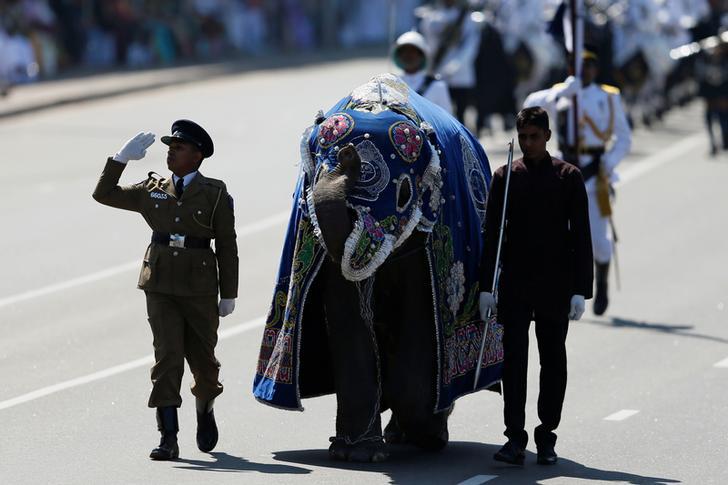
 

THE IMF IN SRI LANKA – PART IV The Development Strategy of The ‘Miracle’ Economies of East Asia

February 21st, 2017

by Chanaka R. de Silva Ex-World Bank

The Korean Development Example.

Korea is an outstanding phenomenon of the economic policy strategy of the so-called “Development State”. To summarize the foregoing part, Korea, now an OECD (the rich countries’ club) member and an aid funding source through its own KOICA agency (with a bi-lateral development program In Sri Lanka), which spearheaded the “Development State” strategy of government-led, subsidized, protected, exchange-controlled, first import substitution-then-export led economy, directed by a State selected conglomerate-centric (chaebol) industrial growth strategy, admittedly under authoritarian rulers, along with three other original ‘tiger’ economies (Taiwan, Hong Kong and Singapore), with several in East Asia (viz. Malaysia, Thailand and Indonesia) emulating and following their lead, sped ahead in their economic development, leaving IMF’s disciple countries way behind.

For example, Sri Lanka had a slightly higher per capita income than Korea after WWII ended in 1945, but today, following IMF-type, conventional, western development strategies has limited Sri Lanka to under $4,000 in per capita income, after seven decades of Independence, while Korea’s ‘Development State’ has generated nearly $28,000 in per capita income, or a seven-fold increase in nearly seventy years; both these countries having had destructive, intervening wars in some of those years. Urbanized South Korea, a rocky peninsula with almost no natural resources (even oil or gas), except its obsessively energetic and educated population, was almost flattened during the Korean war, when the country was divided by the Big Powers, but soon became an export power house with mostly U.S. and World Bank assistance and advice, and only an insignificant FDI role. Lights are completely out in satellite photos of North Korea, under a destructive, militarized, communist-type autocracy, with lights blazing brightly throughout the now democratic South, where corruption is frowned upon and heavily penalized, even at Presidential level, with several of them convicted and imprisoned, and the current President in impeachment proceedings for a like delinquency. Sri Lanka would do well to emulate that model, if it wants its economy to develop speedily.

The Nobel Laureate in Economics of 2001, Professor Joseph Stiglitz, has commented: “If there were fruits of the Washington Consensus (identical with IMF ideology) they are yet to be enjoyed, at least by the average citizens in many of the (developing) countries. Countries like Bolivia which were early IMF followers are still asking: ‘we have felt the pain, when do we get the gain ?’. If the reforms exposed these countries to more risk, they did not evidently provide them with the strengths for a rapid recovery; in Latin America, as a whole, there followed almost half a decade of declining per capita incomes”.

(The writer owes a debt to the above-named, since the foregoing commentary on the ‘miracle’ economies is substantially a summary of ideas and points extracted from his lengthy paper titled “The Post Washington Consensus”, presented at the Initiative for Policy Dialogue, Barcelona, Spain, September 2004). East Asian ‘Miracle’ Economies’ Strategy vs IMF-designed Slow Development.

Corroboration is important when presenting an unconventional case to a potentially sceptical audience, schooled in much publicized pro-IMF ideology and development practice for decades, as in Sri Lanka – an ideology readily embraced by its political class and top bureaucrats. Therefore, it is important to point out that the Nobel Laureate in Economics, whose views on the questionable economic theories underlying the Washington Consensus and IMF-sponsored neo-liberal strategies, which were articulated in the earlier part of this feature story, has a substantial following among development thinkers and academics. A summary of those views follows.

Evaluation by a Harvard Economics Professor.

Professor Dani Rodrik of Harvard University, who has acquired an intimate familiarity with the ‘tiger’ economies, has confirmed in his prolific writings, that none of the seven miracle economies, whose development strategies were analyzed, “with the possible exception (of the historically free port of ) Hong Kong, even came close to being a free-market economy…their strategies mirrored Japan’s…and required a government that was single-mindedly focused on economic growth…removing the obstacles to private investment : excessive taxation, red tape and bureaucratic corruption, inadequate infrastructure and high inflation (cumulatively, characterized as the ‘investment climate’)…equally important were interventionist (State) policies, government incentives to stimulate investment in modern manufactures…in priority sectors, and businesses stimulated with generous subsidies…in Korea, these largely took the form of subsidized loans, administered through the banking system…in Taiwan, tax incentives for investments in designated sectors…in both countries, bureaucrats often played the role of ‘midwife’ to new industries, they coordinated private firms’ investments, supplied the inputs, twisted arms when needed and provided sweeteners…neither country exposed its nascent industries to much import competition until well into the 1980s…they enjoyed protection from international competition…were goaded to export…by a combination of explicit export subsidies…(and) bureaucratic pressure to ensure that export targets were met;…they would be beneficiaries of State largesse, but only as long as they exported and did so in increasing amounts…at loss-making prices early on… which could be recouped by the subsidies and profits in the home market…another example of an ‘unorthodox’ development strategy was China’s shift from a predominantly rural, centrally planned economy to the industrial giant we know today”(Extracted from Dani Rodrik, “Getting Globalization Right : The East Asian Tigers’, 3May2012).

A Former Top IMF Official’s Assessment

Likewise, Dr Stanley Fischer, one-time First Deputy Managing Director of the IMF, who de facto managed that institution, has also written about “the development strategies followed by the eight East Asian tigers (he includes Japan)…they had much in common…exchange rates were pegged against the dollar, high savings rates, combined with fairly accurate price signals, helped fuel high levels of productive investments…complementing high physical investments was investment in people…educational standards were, and are, extremely high…literacy is over 85%…Japan and Korea (unlike China) discouraged FDI (foreign direct investment),…in less orthodox parts of the strategy…East Asian economies had successfully intervened in markets…intended to accelerate industrialization and growth of trade…through exchange rate policies to favour exporters, export incentives, selective tariff protection, ‘financial repression’ (slowing financial sector development), and consumer lending to provide cheap financing to industries for exports…and a high level of consultation between bureaucrats and business…and in most cases, a very slow opening of the capital account” – so, no Financial City hub between Dubai and Singapore, no open capital account or free markets as in the IMF/Sri Lanka model! – “bureaucrats were of very high caliber, responsive to the needs of business, yet isolated from corruption or undue pressure from special interests…governments were pragmatic rather than dogmatic…trying to steer the economy as a whole…the State intervened to improve on market decisions…East Asian economies maintained supra-normal growth rates for so long…human capital accumulation was essential to East Asian growth…better trained, more educated labour…more productive…As to East Asian industrial policy, I believe the World Bank’s view over a decade ago remains sensible : that some degree of government involvement can in principle be successful, and that it was successful in practice…to allow new industries to overcome coordination failures and exploit economies of scale…the country should NOT open the capital account to short-term capital flows…to say the exchange rate should become more flexible is NOT to say it should necessarily float freely …for most countries holding foreign reserves is costly. (Extracted from Dr Stanley A. Fischer, Development Strategy for East Asian Countries : A Korean Perspective – a Paper presented at the Annual Meeting of Asian Development Bank, Cheju, Korea, May !5,2014).

World Bank’s Research Results.

The above views expressed by IMF’s former top manager are very divergent to current IMF staff advice being dispensed, and complied with in every detail, by Sri Lanka today, and by other poor countries in financial crises, to their economies’ peril. What are the World Bank’s views (which Dr Fischer so readily endorsed), and were articulated in its ground-breaking 1993 research study referred to earlier in this story? The World Bank’s economists examined the public policies of eight ‘high-performing’ East Asian economies from 1965 to 1990, to discover the unconventional and unique role – deviating from IMF (and even previous World Bank) advice – a role played by their Governments in “the dramatic economic growth, improved human welfare and more equitable income distribution in Japan, Hong Kong, Indonesia, Korea, Malaysia, Singapore, Taiwan and Thailand”, and concluded that –

i. these ‘miracle’ economies primarily “adopted policies at variance with the notion of the level playing field of open market free enterprise” or a neutral incentive regime, an important pillar of western development ideology; (which, of course, is very beneficial to advanced industrial economies);

ii. activist public policies established a unique relationship between governments, the private sector and the market;

iii. these governments “were better able than most to strictly manage the allocation of physical and human resources to highly productive investments” – by selective interventions through multiple channels, targeting key industries, subsidizing credit for selected and declining industries, protecting domestic import substitutes, holding interest rates below market-clearing levels, establishing financial support through the government banking system, making public investments in applied R&D, specifying firm- and industry-specific export targets, and establishing government institutions to market the trade in manufactured exports; iv. tax, tariff and exchange rate policies were applied, which kept the relative price of investment goods below market norms, with the result that output increased and investment returns were higher; v. these governments shared widely, information between public and private sectors, “established and monitored appropriate economic performance criteria to evaluate specific, contest-based interventions”, using commercial criteria, within constraints set by government priorities; vi. their experience “reinforces the view that economic policies and policy advice must be country specific to be effective”. (In other words, not IMF’s standardized numbers-centric, one-size-fits-all, approach to development); – vii. these eight economies were unusually successful in sharing the fruits of growth – rapid growth and improved equity were the defining characteristics of the East Asian miracle; South Asia, the Middle Eastern countries and Latin America grew at less than half the speed of the miracle economies in 25 years (1965-90); East Asian strategies of selective promotion of industries generated high rates of productivity growth; and viii. improved the integrity of the banking system to make it more accessible to non-traditional savers; ix. Agriculture, while declining in relative importance, experienced rapid growth and productivity improvement, stimulated by light taxation of rural economy incomes; x. Human welfare improved dramatically, with average life expectancy increasing from 56 years in 1960 to 71 years in 1990; while the proportion of people living in absolute poverty (lacking clean water, adequate food and shelter) dropping – in Indonesia from 58% to 17%, and in Malaysia from 37% to 5% – during the same period; xi. specialized development banks were established to provide long-term finance for investment (e.g. a Government Technology Development Corporation in Korea, (KTDC), funded venture capital providing seed-money to entrepreneurs to promote innovation, (assisted substantially by several World Bank loans), this idea originating in Japan, but later replicated in Indonesia and Taiwan; xii. The miracle economies applied “financial repression” to aid the banking system or bolster ailing industries, (not shut them down following market signals); but xiii. they improved the institutional framework for capital market development much later, and this was not responsible for the economies “taking off” during the period covered by the research.

(The writer, a member of the former C.C.S. was later at World Bank Headquarters, responsible for program development , and loan negotiation with, Governments of several ‘miracle’ economies of East Asia Region, for some twenty years).

The IMF in Sri Lanka – Part V Signs of internal differences on IMF policies

February 21st, 2017

by Chanaka R. de Silva.

February 14, 2017, 8:43 am

IMF’s Own Research Views Change

Following the epochal research effort and conclusions arrived at by the World Bank in 1993 (set out in the previous section), motivated partly by the early ‘graduation’ or cut-off of Korea from World Bank’s lending in 1992 – having achieved surprisingly speedy per capita income growth and sustained prosperity with equity for its people – more than two decades had to transpire before some senior economists in the IMF have begun to question parts of the Washington Consensus, and therefore, IMF dogma, on which its development prescriptions are based. Three senior IMF economists, including a department director and a division chief, have recently committed their divergent views to writing in the IMF’s official quarterly publication, “Finance and Development”, in June 2016.

These significant departures from the standard IMF path Sri Lanka has been, and is now treading, may be summarized as follows: 1. Capital account liberalization and fiscal consolidation, or “austerity”, being policies to reduce fiscal deficits and levels of public debt, have three specific consequences: (a) there is no evidence of resulting increased economic growth; (b) increased inequality ensues prominently; and (c) such inequality inhibits the level and sustainability of growth. 2. There are “genuine hazards” of foreign financial flows to developing countries, especially portfolio investment and ‘hot’, or speculative inflows, which may result in greater economic volatility and increasing crisis frequencies; since 1980, 150 capital inflow surges were recorded by IMF in over 50 emerging economies, ending partly in financial crises and causing large declines in GNP output; 3. Financial openness has effects on distribution, and inequality intensifies when a crash occurs. (Now there is increasing IMF acceptance of capital controls to limit short-term inflows, which compound financial crises. Therefore, full capital inflow liberalization is not always an end-goal); 4. IMF is concerned with the pace of government’s reducing fiscal deficits – but too fast could derail economic recovery; 5. accompanying “austerity” policies (tax increases and expenditure cuts) generate substantial adverse welfare ‘costs’ – also hurts consumer demand, worsens employment, and increases unemployment; 6. Episodes of fiscal consolidation have been followed, on average, by GNP output drops rather than by expansion in GNP output; 7. Economic damage from greater inequality, associated with following the neo-liberal agenda, can be mitigated by increasing expenditure on education and training – expanding equality of opportunity; and 8. therefore, the bottom line is “no fixed agenda delivers good outcomes for all countries at all times. Policymakers, and institutions like the IMF that advise them, must be guided not by faith, but by evidence of what has worked” (Extracted from Ostry, Loungani and Furceri, “Neo-Liberalism Oversold?”, IMF’s Finance & Development, June, 2016).

Re-thinking IMF Management’s Views .

The views of these three senior IMF economists are not unique in that institution, although IMF staff now ‘dictating’ to Sri Lanka are trotting out the same-old-same-old, ineffective, unproductive theories. Maurice Obstfeld, the Chief Economist of the IMF currently in overall charge of IMF’s economics complex, states: “The global financial crisis (2007-8) led to a broad re-think of macroeconomic and financial policies in the global academic and policy communities…Nobody wants needless austerity. We are in favour of fiscal policies that support growth and equity over the long term. What those policies will be can differ from country to country, and from situation to situation…this requires us to recognize situations in which excessive budget cutting can be counter-productive to growth, equity and even fiscal sustainability goals…it is important always to consider the most vulnerable when planning fiscal adjustment. Of course, there are limits to the pain economies can or should sustain; so, in especially difficult cases we recommend debt re-profiling or debt reduction, which requires creditors to bear part of the cost of adjustment…capital inflow surges could have destabilizing effects…when the direction of capital flow reversed and money headed for the exits…(finally) changes in income and job distribution, many countries have addressed inadequately.” (IMF Survey : Evolution Not Revolution : Rethinking Policy at the IMF”, 2June2016).

Conclusion.

It is clear from the obvious thrust of the foregoing policy realities, that more than ‘reasonable doubt’ has been clearly cast at the numbers-driven, neo-liberal ideology leading to the slow road to unsustainable development, Sri Lanka is being goaded to follow by IMF staff, as a quid-pro-quo for a paltry ‘conditional commitment’ of $ 1.5 Billion EFF, one tiny drop in the vast ocean of Sri Lanka’s foreign debt obligations! IMF’s data-based prescriptions become still more incredible when serious doubt has been cast for decades by insider stories doubting the reliability and correctness of the basic economic data being churned out by the authorities, which the IMF staff keep analyzing ad infinitum, and pronouncing almost daily to the public, massaging every decimal point change in growth numbers, which have absolutely no impact on uplifting over the short- or even long-term – the lot of the middle and working classes, who are the country’s backbone, and suffering grievously under the severe strain of IMF-inflicted tax and allied neo-liberal, “austerity” fiscal policies.

This seemingly outrageous assertion about data unreliability, becomes very credible when a former top official of the Central Bank himself charged that “there was a deliberate attempt at massaging the main economic numbers painting a rosy picture about a fast-growing, vibrant economy”…and confirmed very recently that “…economic data was manipulated,…starting from growth numbers and then poverty and unemployment numbers. Growth was shown as a super achievement, but the actual growth was pretty much lower than what was publicized…foreign borrowing numbers were cooked and published in a special debt report by the Central Bank to show a rosy picture…the growth numbers had been massaged by the top economic policy makers to suit their petty objectives…” (W.A. Wijewardena, former Deputy Governor, Central Bank, in “Economy 2017 : The Alarming Signs should not be Ignored”, Daily FT, 27.12.2017). Since no contradiction has been issued on behalf of the authorities, this case too may be shelved, unless it is another alleged ‘scam’ amenable to “unspecified” action, following closed circuit snooping of suspected staff sources, now the prevailing drill – with suspected bond-related delinquents, whoever they may be, still very much in business, unaffected by the said “unspecified action”! There are many ways Sri Lanka loses tax payer funds.

Only the other day, Dr Saman Kelegama, Executive Director of IPS, reminded his listeners of a World Bank quote, as follows : “Why do statistics matter? In simple terms, they are the evidence on which policies are built. They help identify needs, set goals and monitor progress. Without good statistics, the development process is blind; policy makers cannot learn from their mistakes, the public cannot hold them accountable” (Keynote Address, Institute of Applied Statistics, Sri Lanka, 20.12.2016). The lesson is that the Government and the public may, therefore, be getting the wrong picture of the economy.

Consequently, it appears that the real story about the economy today is not as publicized in almost daily public IMF-staff pronouncements derived from suspect data, but as follows :”Sri Lanka is sitting on an economic volcano which is to erupt at any moment, destroying everything in the vicinity…the economic volcano is the deep economic crisis which the country has been going through since 2012…the symptoms took the form of a worsening external sector, unusual growth in money and credit, suppressed inflation, slow-down of economic growth and an undisciplined budget, causing the accumulation of public debt…The external sector is fragile today with mounting pressure for the rupee to depreciate against the dollar in 2017…Sri Lanka, without sufficient foreign exchange reserves, cannot avoid a massive depreciation of the rupee in 2017…The year 2017 and beyond is not rosy for Sri Lanka” (W, A, Wijewardena, as cited above). Latest reports indicate new money printing passing the Rupees 300 Billion mark to provide funds for local debt payments (increasing inflation over 4%, and rising), and that Rs 56 Billion equivalent in foreign funds have just exited the securities market. For a more comprehensive and accurate picture of the country’s economic condition, reference should be made to the “State of the Economy” Reports issued annually, the latest in 2016, by the government-supported and highly respected Institute of Policy Studies(IPS). Since external financing agencies are in the business of development, in a fast depleting client milieu, they are no longer the objective source of accurate conclusions, nor will they ‘rock’ the status quo too hard when addressing significant development issues, facing the potential risk of being cut out of business altogether, given the availability of easier alternative sources of funding, without stringent conditionality.

Is Sri Lanka Well on the ‘Road’ to Greece ?

In a previous feature story titled “Sri Lanka – Avoiding the ‘Road’ to Greece” in The Island of 13 June 2016, this writer analyzed important issues arising from the IMF-aided $ 1.5 Billion EFF program, which should be addressed to prevent Sri Lanka descending into the deep economic crisis now forecast by several local economists, and to avoid the disastrous fate Greece and its 11 million people have suffered, following seven years of IMF’s “intensive surveillance”, two IMF/EEC financial bail-outs amounting to over $ 350 Billion, and with one more (for $ 75 Billion?) currently in the works. What has hundreds of billions of borrowed dollars and continuing, gratuitous IMF advice since 2009 bought for Greece in 2016?

What follows is the consensus of well-informed Greece watchers and astute commentators : “It is the year (2016) of the slow grind…squeezed by the IMF and Germany…wages have fallen significantly…manufacturers hard hit by falling domestic sales and a desperate lack of bank credit to finance export drives…small producers are the worst hit by capital controls and the squeeze on bank liquidity, especially to import raw materials…Senior IMF officials have rejected claims it is seeking to impose more fiscal austerity on Greece…which is struggling to meet strict fiscal targets in a recession-scarred country, weary of austerity…main IMF worries are that Greece is pursuing policies ‘unfriendly to growth’ and that Greece’s debt is highly unsustainable…workers are protesting creditor demands for labour reform…Greece remains the cradle of European dysfunction…its multiple challenges seemingly buried under a tide of bailout cash…For the Greek drama’s failure to reach a denouement, blame the scriptwriters…the IMF and the nation’s Eurozone partners. Year after year, each contributes a farrago of actors’ lines and stage directors. Yet, the curtain never falls and the play drags interminably on”. (Extracted from ‘Greece’s New Year of Living Dangerously’, The Greek Crisis, 21 December 2016).

We end with the following, positive last thoughts: Should Sri Lanka revise its basic development strategies? If it does not, will Sri Lanka deserve the unfortunate fate of Greece? Should Sri Lanka, at a very minimum, negotiate foreign debt rescheduling – at the least, with China – to ease its debt repayment burdens? Is the IMF still assuring Sri Lanka of imminent, economic “take off”, following its $ 1.5 Billion EFF commitment? (See analysis by the writer in “Sri Lanka – Case for $ 3-4.5 Billion in IMF Funding in The Island of 13 May 2016)

(The writer is a member of the former C.C.S. He was later at World Bank Headquarters and responsible for program development and loan negotiations with Governments of several ‘miracle’ economies in East Asia Region, for some 20 years).

(Concluded)

The golden statue at Sanda Hiru Seya

February 21st, 2017

RANJITH SOYSA

The former Defence Secretary had been summoned by the FCID who is obviously inquiring into the issue of obtaining confiscated gold in the possession of Sri Lanka Navy, to mould a Buddha statue for Sanda Hiru Seya , Anuradhapura. The Sanda Hiru Seya Chaitaya is a national monument constructed in memory of 29,000  persons of defence services who made the supreme sacrifice and 14,000 others who were injured in emancipating the country from the yoke of Tamil Tiger Terrorists who waged war against Sri Lankan people and the State for over 30 years.

One wonders how ethical is it to conduct such an inquiry when the State takes steps to construct a Chaitya as Sri Lanka had engaged in such hallowed actions from King Devanampiytissa’s time to the Kandyan period. Even during JRJ’s rule late Mr Gamini Dissanayake erected Mahaveli Seya after completing the Mahaveli scheme utilizing the State resources.

One wonders how the FCID was activated to investigate into this issue and it is important for a responsible organization or an individual to initiate action under Freedom of Information process to ascertain the source so that the general public who will never forget the sacrifices made by the Defence forces to protect the country and the nation will be able to know the traitorous forces which are at work,

The concerned authorities and the Government should be ashamed to have summoned Mr Gotabhaya Rajapakase , one of the architects of the victory over the terrorists like a common criminal to the FCID to inquire into an offering of a Buddha Statue to a Buddhist stupa, especially at a time when the billion rupee bond thieves et are in business as usual.

RANJITH SOYSA

COAL STORY ,WHAT A MESS ……….

February 21st, 2017

Dr Sarath Obeysekera

We read many news items about Coal .CEB ,Ceylon Shipping Corporation (CSE) ,Lanka Coal Company are have contributed to this mess .

When Norrocholai was built by Chinese ,CEB never obtained any proper advise from Marine Engineers to decide how to unload coal from bulk carries on to the conveyor belts on the pier .They misjudged the depth of the sea near the purpose built pier.When Chinese offered to supply two tugs and a non-self propelled barges to CEB to transport coal from a bulk carrier anchored in deep sea ,CEB should have checked whether the barges and tugs can be effectively handled near the pier .Barge being pulled by the tugs could not be kept stationery in deep sea due to the fact that they are non propelled and when the un loaded coal was brought to the pier it was difficult to keep stationery at the pier .

Both new rugs tugs and three 5000 tugs were sent to Trinco and now rusting .Tenders were called to sell and the offers were quite low.We offered to make the barges self propelled and buy the tugs .CEB just ignored our offer .They now rusting and soon they will be scrapped .

What a waste ? and CEB does not want to admit that they messed up.

With connivance of some VVIP ‘s in the previous regime the contract for transporting coal from bulk carriers to the Norrocholai pier was awarded to an Indian Company with heavy kick backs .CSE is handling the contract.

Lanka Coal Company was formed to get more and more kickbacks and stooges were appointed by the ministers to earn money .

Now they have changed the Board of Directors and what Yahaplana advocates were doing during the last two years .

We also heard about the irregular handing of coal tenders .Ministers are keeping mum ?

How can this country go forward like this ??

Dr Sarath Obeysekera

Gratitudinal Windows of 2016, II: Encountering Col. Olcott in New Jersey, USA

February 21st, 2017

by Prof. Suwanda H J Sugunasiri, writing from Canada

February 18, 2017, 5:48 pm(This article is partly in commemoration of the death of Col. Henry Steele Olcott, in Adyar, Chennai, India, on Feb. 17, 1907, born August 2, 1832.)

If my first gratitudinal window related to the personal realm, but ended up social, the second relates exclusively to the social. Preparing for my visit to the Philadelphia, and the Washington DC area, I had gone online. And what a pleasant surprise it was to come across the following article: “The Man from New Jersey” by Stefany Anne Golberg <http://thesmartset.com/article03121201/>. She writes, “Buddhism was waning in British Sri Lanka. Then Henry Steel Olcott came along…”. What intrigued me was when I read that a statue had been put up in his honour in the US – in New Jersey. But what was the connection to New Jersey, I wondered. I knew from my Fulbright days that NJ was not too far from Philadelphia. The photo accompanying the article had the Buddhist flag of the five-colours all around the statue. So I dearly wanted to see for myself, since I was going to be in the area. I had expected the statue to be in the public square, somewhere in Orange, Olcott’s hometown in New Jersey, as I was to find out. But guess what. I was to discover the statue to be in a Sri Lankan temple, appropriately in New Jersey.

article_image

It was at the end of the day when I got to the temple. The venerable monks had been attending a Katina ceremony at another temple. The resident monks of the New Jersey Buddhist Vihara <http://njbv.org/ > were happy to meet me, and certainly happy to join me visiting the Olcott statue at the back of the temple. Standing life-size, the Colonel was in his full suit, gilded. So my mind ran to some of what I had read about him in Dr. Guruge’s book on Anagarika Dharmapala. Later, I was to come across online as well some material written by Olcott himself. Arriving in Ceylon in 1880 (Guruge, 365), the Colonel, along with Madame Blavatsky took their Buddhist vows, on May 25, 1880, under Ven.Hikkaduwe Sri Sumangala Nayaka Thero. While the first American to take the vows was Chas I. Strauss of New York, Olcott was the first to do so on Ceylonese soil. A Report of the Buddhist-Christian Panadura Debate of 1873, led by Ven. Migettuwatte Gunananda on the Buddhist side, had been shown to Col. Olcott and Madame Blavatsky (685) by the American Dr . J M. Peebles who had happened to be in the island. It was the Report that had kindled the Colonel’s interest in Buddhism.

As I would read online, <https://en.wikipedia.org/wiki/Henry_Steel_Olcott>, Olcott was the oldest child of Emily and Presbyterian businessman Henry. In 1860, he married Mary Epplee Morgan, daughter of the rector of Trinity parish, New Rochelle, New York. They had four children, two of whom died in infancy. In the work world, he was a Military Officer, Journalist and Lawyer, who assisted in the investigation of the assassination of President Abraham Lincoln.

But what made a name for himself in the public arena was his work as a journalist. Hearing about “the séances of the Eddy Brothers of Chittenden, Vermont”, he had made a visit to the Eddy Farms, where he would also meet Madame Blavatsky. His interest aroused, Olcott “wrote an article for the New York Sun, in which he investigated Eddy Farms. His article was popular enough that other papers, such as the New York Daily Graphic, republished it. His 1874 publication People from the Other World began with his early articles concerning the Spiritualist movement”.

What got his eyes to the East, however, was his interest in Theosophy, in the hopes of bringing together all of the worlds religions. Co-founding, along with Madame Blavatsky, the Theosophical Society in America, in 1875, and elected First President, the two of them were soon in India. The advent of the Theosophical party in Ceylon in May 1880 marked his first landing on Ceylonese soil. Interestingly, and ironically, he “delivered a series of addresses to the Sinhalese people upon the subject of their religion which profoundly moved their hearts” (365). As Goldberg was to write in her piece, “Buddhism was waning in British Sri Lanka” and so he would make representations to the British Home Office so the Buddhists could practice their religion in their country. In his pan-Buddhist thrust, he was to write a Buddhist Catechism, in consultation with Ven. Sri Sumangala, which he used in his travels to countries like Japan. While, standing in front of the Olcott statue at the Vihara, I saw no Buddhist flags, I was in for a big surprise. It was a statue of Anagarika Dharmapala, standing just beside the statue of the Colonel! I had never heard nor read about its presence there. But there he was, the Anagarika (born Sept 16, 1864; died April 29, 1933), also in a gilded vest. [Pix: Author between Olcott and Dharmapala].

We, of course, know Dharmapala as the one who helped revive Buddhism in the land of its birth, founding the Mahabodhi Society, and the Mahabodhi Journal, successfully recovering the places of pilgrimage into Buddhist hands. If he took issue with the British for colonizing his country, the Sinhala Buddhists, including the Sangha, didn’t escape his scathing attention either – for not doing enough for themselves to benefit from the Buddha’s Teachings. However, a soft side had he! Reminiscing about a “short sojourn in that Land of the Rising Sun”, meaning Japan, where he had gone in 1889 with Col. Olcott, Dharmapala says how “there exists [in the Japanese people] a conspiracy to be agreeable”! “I have experienced Japanese hospitality; and a more loveable, kind, refined, and gentle people there does not exist..” [636]

But there were other things I was to learn about the Anagarika, thank you Dr. Guruge. Did you know, e.g., that he founded the first weaving school for children (694), and that he “fasted once a month on Full Moon Day” (682)? Judging from Dharmapala’s writings, he was an erudite scholar of Pali, and the Tipitaka. And ironically, this from an expert on the Bible! As a boarding student in the Christian Boarding School at Kotte, he “had to recite prayers, learn the scripture texts..” for 2 ½ years (698-9). Rick Fields, in How the Swans Came to the Lake (p. 99) says that by the time Dharmapala met the Theosophists, “he knew Exodus, Deuteronomy, Numbers, Joshua, The Four Gospels and the Acts of the Apostles by heart”. Indeed he was to deliver a lecture in London on Oct 3, 1927 on “An Appreciation of Christianity” (Guruge, 443-450).

Let’s listen to Dharmapala himself now. “From my childhood, I was inclined towards justice, ascetic life, and was on the lookout for news about Arahats and the science of Abhinna” (699) – clairvoyance, clairaudience, telepathy, etc. But if all this tells us of the religious persona, here is another surprise: “I still love Shelley”, showing his interest in literature, not to mention his interest in music. It was from him, in fact, that I first heard the term Sarabhanna – a way of Buddhist chanting. (See my forthcoming paper.) “At the Pettah Library .. I read everything – ethics, philosophy, psychology, art and especially biography and history” (686). If this speaks to his erudition and learnedness, he had a sharp eye, too. In a talk given in India on “the close kinship between Hinduism and Buddhism”, Olcott says that he found at the Calcutta Museum, “a number of statues of Hindu deities .. which have carved upon their foreheads, on their head dresses the conventional figure of the sitting Buddha”. And this was “brought to my notice only yesterday by Mr Dharmapala” (380). It was all this, then, in full oratorical skill, that must have kept the audience spellbound at the World Parliament of Religions in Chicago, USA, on Sept. 18, 1893. Topic? “The World’s debt to Buddha” (see Guruge, 3-23 for the full text). Sometime later, he was to visit the class of Prof. William James at Harvard University. Seeing him, the Professor walks up to him and says, “Take my Chair. You’re better equipped to teach Psychology than I”. After the class when Dharmapala outlines “the major Buddhist doctrines”, the Professor tells his class, “This is the psychology everybody will be studying twenty-five years from now” (Fields, 135). Well, I don’t know how far it has come true, but I do know that Mindfulness Meditation is now a ‘meme’ – something fashionable to do. Bhante Gunaratana who has written on it is a hit! So is Medical Doctor Jon Kabat-Zinn who is credited with initiating a 10-day retreat in medical and health settings, but now in many settings – Hospitals, Boardrooms, Government Departments, Educational and Police settings and so on.

But why, I still wondered, is Dharmapala standing beside Olcott in this far away land of the United States of America? For one thing, it was with Col. Olcott, and Madame Blavatsky, that Dharmapala went to India. Mention was made earlier that Olcott was to talk to the Sinhala people on their religion. But, of course, he needed a translator. Looking high and low, it was the young Dharmapala who ended up becoming not only his translator (703), but his protégé as well. Olcott must have been so impressed by him that, even though Dharmapala was underage (teenager), he was admitted to Theosophical society (701). Dharmapala has more to say of Madame Blavatsky. “Madame B one time told me that, since I was physically and mentally pure, I could come in contact with the Himalayan adepts. So in my nineteenth year, I had decided to spend a lifetime in the study of the occult science. Madame B opposed my plan. “It will be much wiser for you to dedicate your life to the service of humanity”, she said. “And, first of all, learn Pali, the sacred language of the Buddha.” (687). “Thanks to her advice, I spent my spare time in Colombo to the study of those beautiful old manuscripts..” (687). “I was drawn to Madame B intutionally, never expecting that four years later …[that she] would forcibly take me with her to Adyar [India]” against the protests of my father, grandfather, the High Priest Sumangala and Col. Olcott” (701). “That boy will die if you do not let him go. I will take him with me anyway” (687). “I owe everything to my parents, to the late Madame B and to the late Mrs. Foster of Honolulu” (768), who had supported Dharmapala financially in his public work. In gratitude, Dharmapala writes (The Buddhist, 1892), “Let the names of Colonel Olcott and Madame Blavatsky be inscribed in the list of great missionaries who were sent out by the [President of the Third Buddhist Council], Arahanta Moggaliputtatissa” (648), who also, of course, sent Arahant Mahinda to Tambapanni, as Sri Lanka was then known.

Impressed as I was by being in the presence of two historical personae, the bigger surprise had come earlier. It was the 30 ft. sitting Buddha, all white, set against the greenery. I was now paying homage to the biggest sitting Buddha in North America. Myself introducing Wesak in Toronto in 1981, to be told that it was the first ever in North America, I confess to feeling a little nostalgic – being in the presence of another first! I was also happy to read that behind the Buddha figure project were Alumni of Ananda College, founded by Olcott with C. W. Leadbeater as its first Principal. My temple visit ended with a surprise meeting with a colleague from my Ananda College days. Of course, you would not be surprised that I took the opportunity to donate some of my books, which the Incumbent Chief Ven Bhante Hungampola Nayaka Thero was happy to receive, right in front of the Buddha [Picture here]. My musings are up and running again. I go to Philadelphia to visit the university and end up meeting Madame Blavatsky. Here I come to see Col. Olcott, but end up meeting the Anagarika. So, again, I ask, did I have anything to do with them in my past life? Am I answering a psychic call? Again, I can only ask! Hm!

[Founder, Canadian Journal of Buddhist Studies, and Pres., Buddhist Council of Canada, Sugunasiri is featured in Harding, Hori and Soucy (Ed.), 2010, Wild Geese: Buddhism in Canada, McGill-Queen’s University. He may be reached at suwanda.sugunasiri@utoronto.ca.]

  ශ්‍රී ලාංකීය මහජනතාව විසින් සිදුකරනු ලබන ‘දෙවොල් දෙවියන්’ උදෙසාවූ කන්නලව්ව

February 20th, 2017

චන්ද්‍රසේන පණ්ඩිතගේ විසිනි

සිද්ධ වාහල දෙවොල් සත්දෙනා වහන්ස! මහකුරුම්බර සේනාවන්ට අධිගෘහිතව වැඩසිටි තමුන්නාන්සේලා ගුණ නැණින් පින්සිරින් තෙදබලෙන් අභිතව කීර්ති රශ්මි ධාරාවන් දසදිගත ප්‍රචලිතකර ස්වර්ණ වර්ණ කුම්භස්තල නංවා පටසළු රන් ධජ ලෙලවා රන්කොත් පිහිටුවා, ස්වර්ණ වර්ණාලංකාරයෙන් උජවලිතවන, ඉරිදා අස්ලිස නක්ෂත්‍ර තාරකාවෙන් නැව් සතක් කරවා, සදුදිනට යෙදී ආ බෙරණය නක්‍ෂත්‍ර තාරකාවෙන් බඩු පටවා සප්ත තාරකා සමුහය මෙන් දිලිසි දිලිසි සපිරිවර කැටිව ගැන නැව් සතක් දියත් කර සාගර තරණය කරමින් වැඩ වදාරණ කල්හි, නපුරු සැඩ සුළගින් නැව් සත කැඩී බිදී ගොස් අහසට පොළොවට දෙස් කියමින් සීනිගමට ගොඩබසින්නට ආ තැනේදී සිද්ධ පත්තිනි දිව්‍යාංගනාවුන් වහන්සේ ඉදිරියට පැමිණ, දෙවොල් සත්දෙනාගේ තෙද බලම්මැයි සිතා අද තොපට මෙතෙරට ගොඩබසිනු නොදෙම්මැයි  කියා ගිනිකදු සතක් මවාපෑ තැනේදී, සිනහ පහළකර ඒ ගිනිකදු සතට පන සිසිල්කර සිද්ධ පත්තිනි වරය ලෙස සීනිගමට ගොඩබැස පුද පුජා ලැබීමට වරම් ලබාගත් සිද්ධවාහල දෙවොල් සත්දෙනා වහන්සේට සැලකර සිටින සකල අභිමතාර්ථයන් සපල කරදී වදාරණ සේක්වා!

සිද්ධ වාහල දෙවොල් සත්දෙනා වහන්ස! එදා කොටි ත්‍රස්තවාදීන් විසින් මාවිල්ආරු සොරොව්ව වසා දමා ජනතාවට අත්‍යවශ්‍ය ජලය, ජනතාව අතරට යාම වලකා ජනතාව පෙලුවාසේම, 2015 ජනවාරි මස 9 වෙනිදා මෙරට බලය ලබාගත් යහපාලන රජය, ක්ෂණයකින්ම රටේ සියලු සංවර්ධන කටයුතු නවතා, ජනතාවට අත්‍යවශ්‍ය මුදල් ජනතාව අතට ගලායාම නවතා දමා ඒවා මහා භාණ්ඩාගාරයේ සිරකරගෙන, ඒ  අති විශාල මුදල් සම්භාරය බැදුම්කර වංචාව මගින් තමන් අතට ගෙන ඇති බව වටහා ගත් ජනතාව හා ජන නායකත්වය, එෆ්. සී.අයි.ඩී. නම් මර්ධන යාන්ත්‍රණය ගොඩනංවා,මේ සිදු කරගෙනයන ජාතික මහා විනාශය සම්බන්ධවඔබ වහන්සේලා දැනුවත්කර, ඔබ වහන්සේලාගෙන් පිහිටක් අපේකෂවෙන් සීනිගම පුද භුමිය වෙත 2016 පෙබරවාරි මස  පැමිණ, පුද පුජා පවත්වා මේ යහපාලනය රටටත් ජාතියටත් මෙරට බහුතරයකගේ දර්ශනයවූ බුදු දහමටත් සිදුකරමින් සිටින විනාශය නවතා දඩුවම් ලැබිය යුත්තන්ට දඩුවම් ලබාදෙන ලෙසත්, මේ ව්‍යසනයෙන් රට ගොඩනැගීමට පිහිට වෙන ලෙසත් යදීමින්, සිදුකරන ලද කන්නලව්වෙන් පසු ඔබ වහන්සේලාගේ දිව්‍යමය බලයෙන් මේ සිදු කරමින් යන්නාවූ සියලුම කාර්යයන් දෙස මෙරට ජනතාව බලා සිටින්නේ, ඉමහත් ආශ්වාදයකින් යුතුවමය.

සිද්ධ වාහල දෙවොල් සත්දෙනා වහන්ස! මෙයට වසරකට පෙර පත්වන ලද ඒ මහ දේව කන්නලව්වෙන් පසු මේ දක්වාවූ කාලය තුලදී මේ යහපාලනයට  ඔබ වහන්සේලාගේ දිව්‍යමය දැක්ම උපයෝගී කරගෙන සිදුකර ඇති විනාශය කොතෙක්ද යත් අද වෙනවිට යහපාලනය මේ බිමේ ස්ථාපිත කිරීම උදෙසා කැපවුන ජාත්‍යන්තර තලයේ බලවත්ව සිටි එකද රාජ්‍ය නයක්‍යකුවත් සොයාගැනීමටවත් නොහැකි ආකාරයට අතුරුදන් කිරීමට තරම ඔබවහන්සේලා කටයුතු කර තිබීම; ලෝකයේ කිසිම කාලයක කිසිම තැනක නොසිදුවුණ සංසිද්ධියක් ලෙස අපි දනිමු. වසරක් තරම් කෙටි කාලයක් තුලදී, යහපාලනය ස්ථාපිත කර පෝෂණය කිරීමට වෙර දැරූ සියලුම ජාත්‍යන්තර රාජ්‍ය නායකත්වය ඔබවන්සේලා විසින් මර්ධනය කර ඇත. ඒ අනුව,

1. මහා බ්‍රිතාන්යෙ අගමැති ඩේවිඩ් කැමරන් බලයෙන් විසිව ගිය අතර.
2. ඇමරිකාවේ, කොටි හිතවාදී හා යහපාලන හිතවාදී පාලනයද විනාශකාරී තත්වයකට පත්කර ඇත.
3. එකසත් ජාතීන්ගේ මහා මණ්ඩලයේ අපට එරෙහි යෝජනා ගෙන ආ සියලුම බලමුළු අකර්මන්‍ය කල දිව්‍යමය බලය,
4. අපේ රටට එරෙහිව කටයුතු කලාවූ මහා ලේකම්ද එහි නැති තත්වයකට ඇද දමා අන්තර්ජාතික එම මහා ආයතනයද අර්බුදකාරී තත්වයකට පත්කර ඇත.
5.අප රටේ මුස්ලිම් තරස්තවදය ව්‍යාප්තකරමින් යහපාලන හිතවාදීව කටයුතු කල සව්දි අරාබිය, තුර්කිය,හා කටාර් රාජ්‍ය ආර්ථිකම ලෙස බිදවට්ටමින්ද,
6. මුළු මහත් යුරෝපයටම අප අත් වින්ද ඒ මහ ත්‍රස්ත බිය කමක්දයි වටහා ගැනීම සදහා ඒ රාජ්‍ය පද්ධතීන් තුලටද ත්‍රස්ත බිය ඇතුලත් කර, අවසන්ව,
7. කාලාන්තරයක්ම අප රට පිඩනයට පත්කලාවූ තමිල්නාඩු ප්‍රාන්ත රජයට පිවිස එහි රාජ්‍ය නායකත්වය වනසා දමා,
මෙරට ජනතාවට කිසිදා කල නොහැකි මහා බාරදුර කාර්යයක් ජාත්‍යන්තරය පුරාම සිදුකර මෙහි වැඩ සිටින්නාවූ ඔබ වහන්සේලාට අප වැද නමස්කාර කර අපගේ හදපිරි භක්ති ප්‍රණාමය පුද කරන්නෙමු

.තවද අසීමිත තෙජානුභාවයෙන් විරාජමානව හිරුරැස් හාමිය සදරැස් හාමිය, තෙදරැස් හාමිය, අනුසස් හාමිය මහා සාමිය, දේව රජ්ජුරු භණ්ඩාරය, අලුත් නුවර බණ්ඩාරය, යන දෙවොල් සත් බාගයට අධිගෘහිතව මෙකි පිරිවර සත්කට්ටුව,සමග දෙවුන්දරට, රිටිගලට, උණවටුනට, සීනිගමට,යහතින් දිවැස් කරුණාකර වැඩවදාරමින් ගිනිකුරුම්බර සත්කට්ටුව පූනා යක්ෂයෝය, කඩවරයෝය යන මෙකි යක්‍ෂයන් උපපිරිවරකොට ගෙන,ගම්මඩු, දෙවොල්මඩු, ගිනිමඩු, පාන්මඩු  යන මෙතෙක් දෑට දිෂ්ටි දීවැස් කරුණාකර, බල වැඩ වදාරමින්, ගම කොරොටු බාරව මේ නරලොව නර සත්වයින්ගේ සකලාභිවෘද්ධි වර්ධනය සලසා දෙන්නාවූ සිද්ධ දෙවොල් සත් දෙනාවහන්සේලගේ දිවය කරුණාවට භක්ත්‍යාදර ගෞරවයෙන් සැළකර සිටින කන්නලව්ව දිවකනින් අසා, දිව නෙතින් බලා,ශ්‍රී ලංකාද්වීපයේ වෙසෙන මේ බිම තමන්ගේ මාතෘ භුමිය ලෙස ආදරයෙන් රැකබලා ගැනීමට සුදානම් මෙරටවාසී යහපාලනයෙන් පීඩා විදින මේ ආතුරයින්ගේ සකල අභිවෘද්ධි වර්ධනය සලසාදී වැඩ වදාරණ සේක්වා!

සිද්ධ වාහල දෙවොල් සත්දෙනා වහන්ස! ඔබ වහන්සේලා විසින් වසරක් වැනි කෙටි කාලයක් තුලදී, මෙරට ජනතාව විසින් කරන ලද කන්නලව්වකට සවන්දී ජාත්‍යන්ත්‍රණය පුරා සිදුකර ඇති ඒ මහා මෙහෙවුම නිම කර, ජාතික සතුරන්ව විනාශ කිරීම ආරම්භ කර ඇති මේ මොහොතේදී, මෙරට දේශප්‍රේමී ජනතාව සිහිපත් කරනුයේ, එදා මහත් වික්‍රම තේජසින් පුලුප්පර දේසේ සිට,බඩු නැව් සතක් සාදා පැදගෙන මෙතරට ගොඩ බසිමුයි කියා එන ගමනේදී, වාත  ගර්ජනාවෙන් නැව් සත කැඩී බිදී ගිය මොහොතේදී, පෙර කරන ලද පුණ්‍යකර්ම තේජසින්, මුහුද මණිමෙකලාවුන් වහන්සේ මේ දැක නැව් සතම ඉලිප්පෙන්ඩ වරදී මෙතරට ගොඩ බැස්සවිමේදී දේව රජ්ජුරු දෙවියෝත්, සිද්ධ පත්තිනි දෙවියොත් මවාපෑ බුර බුරා ඇවිලෙන මහා ගිනි කදු සතම සිසිල් කරගෙන මේතර වැල්ලට ගොඩ බැස, වැලි සාල් කර, කරදියෙන් පාන් එළිය ඔප්පු සිද්ධකර ගත් ස්ත්‍යනුභාවයෙන් ඔබ දෙවියන් වහන්සේට කියා සිටින කන්නලව්ව දිවස් කරුණාවට ගෙන වදාරා, මෙරට ජනතා සකලාරිෂ්ට දෝෂාන්දකාර දුරින් දුර ගසා සිය පවුල්වල දන්නා නොදන්නා සියලුදෙනාටම සුබ සෙත් ශාන්තියක් සලසාදී, වදාරනවයි, පිනට පිහිට වෙනවයි, පින්ගන්නවයි, පස්වාන් දහසක් ආයු බොහෝ වේවා!

හමුදාව උතුරු නැඟෙනහිර ඉන්නම ඕනෑ-කරුණා අම්මාන්

February 20th, 2017

තාරක වික්‍රමසේකර උපුටා ගැන්ම සිළුමිණ

Sunday, 19 February 2017

පසුගිය සතියේ දේශපාලන ක්ෂේත්‍රයේ වැඩි වශයෙන් කතා බහට ලක් වූ චරිතයක් වූයේ නැවත පදිංචි කිරීම් පිළිබඳ හිටපු නියෝජ්‍ය අමාත්‍ය විනයාගමූර්ති මුරලිදරන් හෙවත් කරුණා අම්මාන් ය. දෙමළ ජනතාව වෙනුවෙන් නව දේශපාලන පක්ෂයක් පිහිටුවීම නිසා දේශපාලන ක්ෂේත්‍රයේද ඔහු සම්බන්ධව විවිධ කතා බහ ඇති විය. ඔහුගේ නව දේශපාලන පක්ෂය හා රටේ පවත්නා වත්මන් වාතාවරණය පිළිබඳ අද සිළුමිණ කතා බහට එක් වන්නේ හිටපු නියෝජ්‍ය අමාත්‍ය විනයාගමූර්ති මුරලිදරන් මහතාය.

කලක් නිහඬව හිටපු ඔබ එක්වරම කරළියට මතු වෙන්නේ නව පක්ෂයක් ආරම්භ කිරීමෙන්. නව පක්ෂයක් ආරම්භ කරන්න හිතුවේ ඇයි?

අද උතුරු නැඟෙනහිර දෙමළ ජනතාවට නිවැරැදි නායකත්වයක් නෑ. හැම දේශපාලනඥයාම කරන්නේ තමන්ගේ පක්ෂය වර්ධනය කර ගන්න ජනතාව රවට්ටන එකයි. කාලාන්තරයක් තිස්සේ යුද්ධයකට මැදිව හිටි ඔවුන් තව දුරටත් රැවටීමෙන් වළක්වා ගෙන ඔවුන්ට නිවැරැදි නායකත්වයක් දෙන්නයි නව පක්ෂය පිහිටුවා ගත්තේ.

ඔබ එහෙම කිව්වත් අද උතුරු හා නැඟෙනහිර දෙමළ ජාතීන් වෙනුවෙන් කතා කරන ඔවුන් වෙනුවෙන් හඬ නඟන අය කොයිතරම් ඉන්නවද?

ඒ හැම කෙනෙක්ම ජාතිවාදීවයි විසඳුම සොයන්නේ. අපි අවුරුදු 30ක් පීඩා වින්දා හොඳටම ඇති. ජාතිවාදය නවත්වා සාකච්ඡා මට්ටමින් විසඳුම් සොයන්න ඕන.

ඔබ ඔහොම කිව්වත් ඔබත් ජාතිවාදීව යුද්ධයකින් විසඳුම් සොයන්න ගියා

ඒ වරද අපි නිවැරැදිව තේරුම් අරගෙනයි ප්‍රජාතන්ත්‍රවාදී ප්‍රවාහයට එක් වුණේ. ජාතිවාදය පැතිරවීමෙන් සිංහල දෙමළ මුස්ලිම් අසමගිය පැතිරවීමෙන් අපට මොනවද ඉතිරි වුණේ. එකිනෙකා මරා ගන්නා සංස්කෘතියක් විතරයි. ඒ බව දැන දැනත් දෙමළ දේශපාලන නායකයො තව තවත් ජනතාව යුද්ධයකට බර කරන ක්‍රියාවන්හි නිරත වෙනවා.

ඒ වුණත් පහුගිය දිනවල මඩකළපුවේ විග්නෙෂ්වරන් මහතාගේ මූලිකත්වයෙන් තිබුණු පිබිදෙව් දෙමළුනිරැලියට අතිවිශාල ජනතාවක් සහභාගි වුණා. මේ ජනතාව සියලු දෙනාම රැවටිලාද?

ජනතාව පෙරටු කරගෙන ඔවුන්ගේ අවශ්‍යතා ඉල්ලීම් ඉටු කරන බව පෙන්වා ,තම තමන්ගේ දේශපාලන අවශ්‍යතා ඉටු කරන්ගන්නයි විග්නේෂ්වරන් ප්‍රමුඛ කට්ටිය හදන්නේ. ජනතා ප්‍රශ්න ගැන කතා කරන බවට ජනතාව රවට්ටලා ඔවුන්ගේ දේශපාලනයයි එතැනින් එළියට ගෙනාවේ. එදා දෙමළ ජනතාවගේ එක ප්‍රශ්නයක් කතා කළාද කියල මම අහනවා. ජනතාව උසි ගන්වලා ඔවුන්ගේ මොළයට විෂබීජ දානවා. රටේ සමගිය බිඳ දාන්න එපා කියලා මම කාරුණිකව ඉල්ලා සිටිනවා. ඒ රැලියෙදි දෙමළ ජාතික සන්ධානයේ දේශපාලන ක්‍රියාදාමය ඉදිරියට ගෙන යාම අවශ්‍ය බවටයි කතා වුණේ.

ඔබ අලුත් පක්ෂය හරහා දෙමළ ජනතාවට නිවැරැදි නායකත්වයක් ලබා දෙන්නේ කෙසේද?

මම දෙමළ එක්සත් නිදහස් පක්ෂය ඇති කළේ ජනතා ප්‍රශ්න සාකච්ඡාවෙන් කතා කරල විසඳා ගන්නයි. මාත් එක්ක හිටපු සේරම අද ඉන්නේ පිටරට. මම විතරයි ලංකාවේ ඉන්නේ. ඒ අයගෙනුත් මට ඉල්ලීම් ආවා පක්ෂයක් පිහිටුවන්න කියලා. ඒ අයට පිටරට ඉඳල බැලුවමත් පේනව ඇති විග්නේෂ්වරන්ලාගේ ක්‍රියා දාමයේ තියෙන ජාතිවාදය ගැන. ඒ එක්කම සාකච්ඡාවෙන් ප්‍රශ්න විසඳාගන්න ගොඩක් දෙමළ ජනතාව කැමැතියි. නමුත් එයාල තනිවෙලා වගේ පේනවා. සාකච්ඡා කියන්නේ එක පාරක් කතා කරලා හරිගියේ නැත්නම් ඊළග දවසේ හර්තාල් කරන එක නෙමෙයි. ඒක විග්නේෂ්වරන්ලා දන්නේ නෑ. එක්කො දැනගෙන ඒකෙන් අයුතු ප්‍රයෝජන ගන්නවා.

ඒ කියන්නේ ඔබ ආණ්ඩුවට එකතු වෙන පක්ෂයක්ද හදන්නේ

ආණ්ඩුවට එකතු වෙන කතාවක් නෙමෙයි. ආණ්ඩුවත් එක්ක කතා කරල සාකච්ඡාවෙන් ප්‍රශ්න විසඳා ගැනීම වගේම ජනතා ඉල්ලීම් ලබා ගැනීමයි අපේ අරමුණ.

ඔබ දීර්ඝ කාලයක් යුද්දෙන් දිනන්න හදපු නායකයෙක්. ඔබ කොහොමද සාකච්ඡාවෙන් ප්‍රශ්න විසඳා ගැනීම ගැන අවබෝධයක් ඇති කර ගන්නේ

මම දේශපාලනයට ආධුනික නැහැ. අමතක කරන්න එපා මම අවුරුදු 10ක් පාර්ලිමේන්තුවේ හිටියා. මම නියෝජ්‍ය ඇමැතිකමක් දැරුවා. ඒ වගේම මම ශ්‍රී ලංකා නිදහස් පක්ෂයේ උප සභාපති ලෙසත් කටයුතු කළ බව අමතක කරන්න එපා. අවුරුදු 10ක් පාර්ලිමේන්තුව නියෝජනය කළ මට සාකච්ඡාවෙන් ප්‍රශ්න විසඳා ගැනීම ගැන හොඳ දැක්මක් තියෙනවා. යුද්ධය ගැන මතක් කරන්න එපා‍ අපි ඒක අමතක කරලයි දැන් සමඟිව ඉන්නේ.

ඔබ ජාතිවාදී ලෙස හුවා දක්වන පක්ෂ ඔබට විරුද්ධව නැඟී සිටියොත් ඔබට ජනතා සහයෝගයක් ලැබේවිද?

ජනතාව ඇත්ත තේරුම් ගනීවි. මම අස්ගිරි මල්වතු මහනායක හාමුදුරුවරු්‍න් එක්කත් හොඳ සබඳතාවක් ගොඩ නඟාගෙන තිබෙනවා. උන් වහන්සේලා දන්නවා මගේ අදහස් ගැන. මම නියෝජනය කරන ක්‍රමවේදය ගැන.

ඔබගේ පක්ෂය ඇරැඹීම පිටුපස කිසියම් දේශපාලන පක්ෂයක් පසුපසින් ඉන්නවද?

කිසිම කෙනෙක් මේ පක්ෂය පසුපස නැහැ. දෙමළ ජනතාවට නිවැරැදි නායකත්වයක් ලබා දී තනි වූ ඔවුන් වෙනුවෙන් කටයුතු කිරීමයි එකම අරමුණ වන්නේ.

දෙමළ ජනතාවගේ නිජබිම් සංකල්පයක් ගැන විග්නේෂ්වරන් කතා කරනවා. හමුදාව කඳවුරු පිහිටා ඇති ඉඩම් ඉල්ලනවා. මේ තත්ත්වය ඔබ දකින්නේ කොහොමද?

මම මුලින්ම කිව්වේ ඒකයි ඔහුගේ අදහස් ජාතිවාදීයි කියලා, නැඟෙනහිර ජනතාවගේ ඉඩම් සියල්ලම යළි ජනතාවට බාරදීලා තියෙන්නේ. ඇයි ඒ. අපි සාකච්ඡා කළා. හමුදාවට අවශ්‍ය ආරක්ෂක ස්ථාන ගැන අපිට හොඳ අවබෝධයක් තිබෙනවා. නමුත් විග්නේෂ්වරන්ට ඒ අවබෝධය නැහැ. එයා යන්නේ හැම තිස්සෙම බලහත්කාරයෙන් වගේ ලබා ගන්න. ආරක්ෂාව ගැනත් හිතන්න ඕන. ඒ දැක්ම ඔහුට නැහැ.

නමුත් විග්නේෂ්වරන් කියනවා උතුරේ හමුදා කඳවුරු අවශ්‍ය නැහැ කියලා. උතුරින් හමුදාව ඉවත් කරන්න කියන එකත් ඔහුගේ ඉල්ලීමක්.

විග්නේෂ්වරන් මොනවද ආරක්ෂාව ගැන දන්නේ. එයා යුද්ධ කරපු කෙනෙක්ද? ඕක තමයි දෙමළ ජනතාවට තියෙන ප්‍රශ්නෙ. සැබෑ දැක්මක් ඇති යමක් ගැන හරි අවබෝධයක් ඇති නායකයෙක් නැති එකේ අඩුව. ජාතික ආරක්ෂාවට අනිවාර්යෙන්ම හමුදාව උතුරු නැඟෙනහිර ඉන්න ඕන. දැන් නැඟෙනහිර කිසිම ප්‍රශ්නයක් නැහැනේ. ඇයි මේ උතුරේ විතරක් ප්‍රශ්නයක් කර ගන්නේ. තනිකරම දේශපාලන වැඩක්නේ.

උතුරු නැඟෙනහිර එකතු කිරීම ගැනත් වරින් වර කියැවෙනවා. ‍මේ තත්ත්වය ජාතික සමඟියට බාධාවක් නේද?

ජනතා කැමැත්ත අනුවයි සියල්ල සිදුවිය යුත්තේ. දෙමළ ජනතාව කැමැතියි උතුරු නැඟෙනහිර එක්ව තිබෙනවාට. නමුත් සිංහල ජනතාවත් මුස්ලිම් ජනතාවත් ඊට කැමැති විය යුතුයි. එහෙම නොකර තීරණ ගත්තොත් ඇති වන්නේ ගැටුමක් විතරයි.

ජාතීන් අතර එකමුතුව සමඟිය ඇති කරන්න ඔබ යෝජනා කරන්නේ කුමනාකාරයේ ක්‍රියාදාමයක්ද?

ජාති අනුව ආගම් අනුව බෙදී වෙන්වීම නෙමෙයි එකමුතුව රටක් හැටියට වැඩ කරන්න හැම කෙනෙක්ම සිහි තබා ගත්තානම් සමඟිය ඇති කරන්න පුළුවන්. නමුත් ඒකට දේශපාලනඥයන්ගේ සහාය අත්‍යවශ්‍යයි. ඔවුන්ට තමයි සමඟිය ඇති කරන්නත් නැති කරන්නත් පුළුවන් වෙන්නේ.

ඔබ නැවත පදිංචි කිරීම් නියෝජ්‍ය ඇමැති ලෙසත් කටයුතු කළා. නැඟෙනහිර අවතැන් ජනතාවගේ දැන් තත්ත්වය කොහොමද?

කිසිම අවතැන් කඳවුරක් නෑ. සියලු දෙනාම නැවත පදිංචි කර අවසන්. මම ජනතා නියෝජනය අකුරටම කළා. කිසිම භේදයක් වුණේ නැහැනේ. ආරක්ෂක ප්‍රශ්නත් නැහැනේ. මට අවශ්‍ය ඒ වගේ සාමකාමී පරිසරයක දේශපාලන ගමනක්.

උතුරු නැඟෙනහිර ඇතුළු රටේ බොහෝ ප්‍රදේශවල දැන් සංවර්ධන වැඩ නැවතිලා කියලා ඇතැමුන් කියනවා, නමුත් මධ්‍යම අධිවේගී මාර්ගය ඇතුළු අධිවේගී මාර්ග කිහිපයකම වැඩ පටන් ගත්තා

අපට නම් මේ රජයේ කිසිම සංවර්ධනයක් පේන්න නැහැ. උතුරු නැඟෙනහිර තිබුණු ශීඝ්‍ර සංවර්ධනය දැන් ඇන හිටිලා. මේ රජය කරන්නේ මහින්ද රාජපක්ෂ මහතා හදාගෙන ආපු සංවර්ධන වැඩ විවෘත කරන එක විතරයි. මහින්ද මහතා තියපු සමහර මුල්ගල් තවම එහෙමමයි. ඒවා සංවර්ධනය කරන්න මේ රජයේ කිසිම උනන්දුවක් නැහැ.

මහින්ද රාජපක්ෂ මහතා දෙවරක් විධායක ජනාධිපතිවරයා ලෙස කටයුතු කළා. එතුමා තව දුරටත් දේශපාලනයේ යෙදී සිටිමින් මැතිවරණ තරග කිරීම ඔබ අනුමත කරනවද?

දේශපාලනයේ රැදී සිටීම හෝ නොසිටීම එතුමාගේ තීරණයක්. නමුත් එතුමාට තිබෙන ජනතා ප්‍රචාරය වැඩි වෙන බවයි අපට පෙනෙන්නේ.

ඔබ පවසන්නේ මේ රජය කිසිදු සංවර්ධන වැඩක් නොකරන බවයි

මේ රජයේ පළි ගැනීම් වැඩියි. මම ඉල්ලා සිටින්නේ පලි ගැනීම් නතර කරලා සංවර්ධනය කරන්න කියලා. හැම තැනම වර්ජන පිකටිං, බඩු මිල අහස උසට ගිහින් අද හාල් කිලෝ එකක් කීයද? මේවා ජනතාවට දරා ගන්න බැහැ. ඒ තත්ත්වයයි රජය තේරුම් ගන්න ඕන.

ඔබේ නව දේශපාලන පක්ෂයේ ගමන් මඟ කොහොමද?

මම පක්ෂයේ නායකයා, ලේකම්වරයා ලෙස ටී. කමලදාසන් මහතා පත් කර තිබෙනවා. ඔහු මානව හිමිකම් සම්බන්ධව කටයුතු කළ හොඳ දැක්මක් ඇති කෙනෙක්. ඉදිරියේදී දිස්ත්‍රික් මට්ටමින් කමිටු පිහිටුවා පක්ෂය තර කරනවා.

පළාත් පාලන ඡන්දෙට තරග කරන්න එහෙම බලාපොරොත්තුවක් තියෙනවද?

අනිවාර්යෙන්ම තරග කරනවා,

ඔබගේ නැත්නම් පක්ෂයේ අනාගත බලාපොරොත්තු මොනවාද?

පක්ෂයේ බලාපොරොත්තුව නම් ඒකීය ශ්‍රී ලංකාවක් තුළ සිංහල, දෙමළ, මුස්ලිම් සියලු දෙනාටම සමඟිව දිවි ගෙවන්න පුළුවන් ක්‍රමවේදයක් ගොඩ නැඟීමයි.මගේ ලොකුම බලාපොරොත්තුවක් වෙන්නේ සිංහල ඉගෙන ගන්න එකයි.

‘මහින්දගේ ප්‍රජා අයිතිය නැති කිරීම ලේසි නැහැ’

February 20th, 2017

sinhala.srilankamirror.com

හිටපු ජනාධිපති මහින්ද රාජපක්ෂ මහතාගේ ප්‍රජා අයිතිය අහෝසි කිරීම එතරම් පහසු කටයුත්තක් නොවන බව ආණ්ඩුවේ ජ්‍යේෂඨ අමාත්‍යවරයකු ‘ශ්‍රී ලංකා මිරර්’ වෙත පැවසිය.

හිටපු ජනාධිපති, කුරුණෑගල දිස්ත්‍රික් පාර්ලිමේන්තු මන්ත්‍රී මහින්ද රාජපක්ෂ මහතාට එල්ල වී ඇති චෝදනා පදනම් කරගෙන ඔහුගේ ප්‍රජා අයිතිය අහෝසි කිරීම සඳහා මේ වන විට ආණ්ඩුවේ සූදානමක් පවතින බවට ‘සත්හඬ’ පුවත්පතේ පලවී තිබු වාර්තාවක් උපුටා දක්වමින් ‘ශ්‍රී ලංකා මිරර්’ වෙබ් අඩවිය ඊයේ පළකර තිබු පුවත සම්බන්ධයෙන් අදහස් දක්වමින් ඇමතිවරයා එබව කිය.

හිටපු ජනාධිපතිවරයාගේ විෂමාචාර ක්‍රියාවන් සම්බන්ධයෙන් සොයා බැලීමට විශේෂ ජනාධිපති කොමිසමක් පත් කර එහි නිර්දේශ මත, ඔහුගේ ප්‍රජා අයිතිය අහෝසි කිරීමේ යෝජනාවක් පාර්ලිමේන්තුවට ඉදිරිපත් කලද එය සම්මත කර ගැනීම සඳහා තුනෙන් දෙකක් අවශ්‍ය බවත්, මේ මොහොතේ ඒ වැන්නකට තුන් දෙකේ අනුමැතියක් ලබා ගැනීම දුෂ්කර බවත් එම ඇමතිවරයා අවධාරණය කළේය.

ඒකාබද්ධය සමගිකරන වැඩක් :

” මහින්ද රාජපක්ෂ මහතාගේ ප්‍රජා අයිතිය නැති කරන්න ආණ්ඩුවේ ඉන්න ශ්‍රීලනිප ඇමතිවරුන් පවා එකඟ වෙන එකක් නැහැ. ජනාධිපතිතුමාට මේ යෝජනාව ගෙන්න යන්නේ නීතිය පිළිබඳව විශාරදයෙක් කියලා හිතාගෙන ශ්‍රී ලංකා නිදහස් පක්ෂයේ ඇමති කෙනෙක්. මේකෙන් වෙන්නේ මේවෙනකොට එකාබද්ධ විපක්ෂය තුල තියන බෙදීම් අහෝසිවෙලා සමගියක් ඇතිවෙන එක විතරයි.

ජේ.ආර්. ජයවර්ධන ජනාධිපතිවරයාත් මෙවැනි යෝජනාවක් ගෙනෙල්ල සිරිමා මැතිනියගේ ප්‍රජා අයිතිය අහෝසි කළා. රනිල් වික්‍රමසිංහ අගමැතිතුමා, මහින්ද රාජපක්ෂ මහත්තයාගේ ප්‍රජා අයිතිය අහෝසි කරන යෝජනාවක් පාර්ලිමේන්තුවට ගෙනාවොත් ශ්‍රී ලංකා නිදහස් පක්ෂයම ඊට එරෙහිව පෙලගසේවි. එක ජනාධිපති මෛත්‍රීපාල සිරිසේන මහත්තයාගේ දේශපාලන සෞඛ්‍යයට එතරම් හොඳ නැහැ ..” යයි ඇමතිවරයා වැඩි දුරටත් පැවසිය.

මුහුද දෙබෑ කෙරුව.. අහස පොළොව සිම්ඹ… රටට සෙනෙහේ පිදුව.. ලෙයින් මසින් සැදුණ.. ඔවුහු තැවෙති අද මහමඟ…

February 20th, 2017

 සමන් ගමගේ උපුටා ගැන්ම දිවයින

පෙනෙන්නට ඇති පරිදි නම් යහපාලනයට දැන් ලැඡ්ජාවක්‌ බයක්‌ ඇත්තේම නැති සේය. රටේ නීතිය, සමාජ සාධාරණය සහ යුක්‌තිය අතුරුදන්ව ගොසිනි. යුතුකම්, වගකීම් සහ ජනතාවාදී විය යුතු රාජ්‍ය සේවය ඇත්තේ සක්‌වල ගලින් එපිටය. මේ හමුවේ අනේ කාලේ වනේ වාසේ කියනු හැර වෙන කියන්නට දෙයක්‌ නම් අපට ඉතිරිව නැත.

“රටට සෙනෙහෙ පුදන.. ලෙයින් මසින් සැදුන.. අපෙන් එකෙකි මේ මිනිසා” යෑයි පවසමින් එදා මුළු රටම වන්දනීය ලෙස බුහුමන් දැක්‌වූ විරෝදාර රණවිරුවා නොකා නොබී, මහපාරේ නිදන යාචකයකුගේ තත්ත්වයට ඇද වැටී සිටියදී සහ රණවිරුවා නිකරුණේ සිරගත කෙරෙමින් තිබියදීත් ඇස්‌ කන් නැති වුන් සේ කකා බිබී නටන යහපාලකයන් දකිද්දී මෙසේ කියනු හැර අප වෙන කුමක්‌ කියන්නද?

නිරුවතින් නටන එකා දුටු කල කවුරුත් කරනුයේ අත කට ළඟට ගෙන හූවක්‌ තැබීමය. ඒ නටන එකාට නිරුවත වසා ගන්නට ඉඟි කරනු පිණිසය. එහෙත් වත්මන් ආණ්‌ඩුවේ නිරුවත දැක අප කොතෙක්‌ හූ කීවද මේ වන විට නිර්වින්දනය වී තිබෙන යහපාලනයේ ලැ-ජා නහර ප්‍රකෘතියට පත්වී නිරුවත වසා ගන්නට පියවර ගන්නා බවක්‌ නම් පෙනෙන්නට නැත.

උපන් බිම වෙනුවෙන් ඇස්‌, මස්‌, අත්, පා දන් දී රට රැක ගැන්මට ජීවිත පරිත්‍යාගයෙන් සටන් වැදුණා වූ අබාධිත රණවිරුවන් පිරිසක්‌ තමන්ගේ අයිතිය ඉල්ලා මේ මොහොතේත් වීදි බැස කොටුව දුම්රියපළ ආසන්නයේ මාරාන්තික උපවාසයක නිරතව සිටීමෙන්ම පැහැදිලි වන්නේ ආණ්‌ඩුවේ එකී පශ්චාත්භාගය ලෝකෙට පෙනෙන මොණර රංගනය නොවේද?

ඇත්තෙන්ම රට බේරා ගන්නට කැප වුණු සහ එදා රටේම ජනතාව හදවතින්ම ආශීර්වාදාත්මකව සෙත් පැතූ රණවිරුවන් අද මෙසේ වීදි බැස සිටින්නේ කුමක්‌ නිසාද? රජයේ සම මාධ්‍ය ප්‍රකාශක ඇමැති රාජිත සේනාරත්නට අනුව නම් උන්ට පිස්‌සුය. ඔහු කියන ලෙස රණවිරුවන් දේශපාලන කුමන්ත්‍රණයක්‌ කරමින් සිටින්නේය. එහෙත් රාජිත ඇමැතිගේ මේ කතාව ඇසෙද්දී පිස්‌සු කාටදැයි රටේ ජනතාව කිසිදු සැකසංකාවක්‌ නැතිවම තීන්දු කරනු ඇත.

මෙසේ රණවිරුවා දේශපාලන කුමන්ත්‍රණකරුවකු ලෙස දකින මැති ඇමැත්තෝද එදා පණ කෙන්ද රැකගෙන මහ මඟ යමින් දේශය පාලනය කරන්නට වෙහෙසුනේ රණවිරුවාගේ රැකවරණය නිසාම වූහ. එහෙත් කලින් කලට එහෙට මෙහෙට පනිමින් බඩගෝස්‌තරවාදී දේශපාලනයක නිරත ඇතැම් දේශපාලනඥයෝ අද පහත් කතා කියමින් පස්‌සට පයින් ඇන තුට්‌ටු දෙකට දමා කතා කරන්නේද එසේ තමන්ගේ ජීවිතය බේරා දුන්නා සේම සමස්‌ත ජනතාවගේම මර බිය තුරන් කළ රණවිරුවාටය.

තිස්‌වසරක්‌ තිස්‌සේ මේ රට වෙලාගෙන තිබූ එලිටීටීඊ ත්‍රස්‌තවාදය තුරන් කර විරෝදාර රණවිරුවන් රටට සැබෑ නිදහස දිනා දුන්නේ ඉකුත් 2009 වසරේ මැයි 19 වැනිදාය. ඒ වසර තුනක්‌ තිස්‌සේ සිදු කළ බිහිසුණු සටනකින් අනතුරුවය.

අපට ඒ විජයග්‍රහණය උරුම වන විට රණවිරුවෝ විසිහත්දහසක්‌ පමණ රට වෙනුවෙන් ජීවිත පූජා කර තිබුණු අතර තවත් විසිපන්දහසක්‌ පමණ පූර්ණ සහ අර්ධ ආබාධිත තත්ත්වයට පත් වූහ. ඔවුන් මේසා කැප කිරීමක්‌ කරනු ලැබුවේ අප සහ රට වෙනුවෙනි.

එහෙත් ඒ විජයග්‍රහණයට පස්‌ වසරක කාලයක්‌ ගෙවී යද්දී කරළියට පැමිණි යහපාලනයත් සමඟ සංහිඳියාව සහ සහජීවනය අදහන්නට වූයෙන් රණවිරුවාට ගරු කරමින් පැවැත්වුණු විජයග්‍රහණයේ සැමරුමද කුණු කූඩයට දැමිණි. එදාත් ඇමැති රාජිතලා වැනි අය කීවේ අප විජයග්‍රහණය සැමරීම දෙමළ ජනතාවගේ සිත් පාරවන්නක්‌ යෑයි කියාය.

යහපාලනය ඉස්‌මතු වීමත් සමඟ රණවිරුවා පසෙකට දමමින් සිදු කෙරුණේ විජයග්‍රහණයේ සමරුව නතර කිරීම පමණක්‌ද? නැත. තව බොහෝ දේ රටම බලා සිටියදී සිදු වන්නට විය.

රට බේරා ගන්නට කැපවූ රණවිරුවෝ මිනී මරුවන් කර සිරගත කිරීම හෙවත් පාවා දීම ආරම්භ වූහ. එය ඊයේ සහ පෙර්දා (17දා සහ 18 දා) ත් සිදුව ඇත. ආරක්‍ෂක අමාත්‍යංශයට අදාළ ඩිෙµන්ස්‌ ඩොට්‌ එල්කේ (deෙeබජැගකන) වැනි රාජ්‍ය වෙබ් අඩවිවල ගබඩා වී තිබුණු අපේ රණවිරුවන්ගේ එඩිතර බව සහ මානුෂීය බව විදහා දැක්‌වුණු සියලුම මතකයන් මකා දමන තරමටම යහපාලනයට රණවිරුවා තිත්ත විය. මේ අන්දමට රණවිරුවා පීඩනයට පත් කෙරෙද්දී එල්ටීටීඊ ත්‍රස්‌තවාදීන්ටනම් සැලකුම් ලැබුණේ සුජාත පුත්‍ර න්‍යායෙනි.
ත්‍රස්‌තවාදය නසන්නට ගෙනා ත්‍රස්‌තවාදය වැළැක්‌වීමේ පනතින්ම ත්‍රස්‌තවාදීන්ට එරෙහිව සටන් වැදුණාවූ රණවිරුවන් සිරගත කෙරෙද්දී බෝම්බ තබා අමු අමුවේ මිනිසුන් ඝාතනය කළ ත්‍රස්‌තවාදීහු සිරගෙදරින් නිදහස්‌ව ගියහ. සිදු වූයේ එවන් දේය.

ආණ්‌ඩුව මෙසේ හැසිරෙද්දී තවත් පැත්තකින් සිදුවෙමින් තිබූ දෙයක්‌ද විය. ඒ යුද්ධය නිමවී ගෙවී ගිය වසර අටක පමණ කාල පරාසයේදී රණවිරුවාට එදා නොතිබූ එහෙත් වර්තමානයට බලපාන ගැටලු රැසක්‌ ඔවුන්ගේ මනසට වද දෙන්නට වීමය. කාලයක්‌ ඔවුන් ඒ සියල්ල විඳදරාගෙන සිටියද යහපාලනය රණවිරුවා අමතක කර අමුතුම ගමනක යන බව ඔවුන්ට වැටහීමත් සමඟ යුද්ධයෙන් මියගිය රණවිරුවන්ගේ බිරින්දැවරු ඇතුළු ආබාධිත රණවිරුවෝ තුළ අවිනිශ්චිත බවක්‌ ගොඩනැගෙන්නට වූහ.

එහි අවසන් ප්‍රතිඵලය වූයේ අනාගතයේ අන්ත අසරණ වීමේ අවදානමක පවතින තමන්ගේ ජීවිතය කෙරෙහි ඔවුන් සිතන්නට පෙළඹීමය. ආණ්‌ඩුවේ නොසලකා හැරීම රණවිරුවන්ට බොහෝ දේ මතක්‌ කර දුන්නේය. ඒ හමුවේ ඔවුහු පෙරට ආහ. තමන්ගේ අයිතිය ඉල්ලා ආණ්‌ඩුවට බල කළේය. යහපාලනය ඊට කන් නොදෙන තැන ඔවුහු වීදි බැස්‌සාහ.

මෙහිදී ඔවුන් කළ ඉල්ලීම් හෙවත් තමන්ගේ ජීවිතය සුරක්‍ෂිත කර ගැනීම සඳහා ආණ්‌ඩුවට කියා සිටියේ කුමක්‌ද? යුද්ධයේදී ආබාධිත වූ එහෙත් ත්‍රිවිධ හමුදාව තුළ වසර දොළහක සේවා කාලයක්‌ සම්පූර්ණ නොකළ රණවිරුවෝ පිරිසක්‌ ආබාධිත තත්ත්වය නිසාම විටින් විට වෛද්‍ය හේතූන් මත විශ්‍රාම ගන්වන්නට පසුගිය කාලයේ ත්‍රිවිධ හමුදාවටම සිදු විය.

එසේ විශ්‍රාම ගැන්වුවද ඔවුනට සෙසු ආබාධිත රණවිරුවන්ට මෙන් දුබලතා විශ්‍රාම වැටුපේ හිමිකාරීත්වයක්‌ නොතිබිණ. මුලින්ම යහපාලනයෙන් තමන්ගේ දුබලතා විශ්‍රාම වැටුප ඉල්ලා පාරට ආවේ මෙකී වසර දොළහට අඩු සේවා කාලයකින් විශ්‍රාම ගැන්වූ රණවිරුවන්ය.

ඔවුන් එසේ පාරට එද්දී රටම තිබුණේ දුබලතා විශ්‍රාම වැටුප ඉල්ලා පාරට බැසිය යුතු තැනක බවද මෙහිදී අප සඳහන් කරන්නේ නිකමට වගේය.

ඉකුත් ජනවාරියේ එසේ තම අයිතිය ඉල්ලා පාරට ආ ආබාධිත රණවිරුවන් දින ගණනාවක්‌ උපවාසයක නිරත වීමෙන් පසුත් තම අයිතිය නොලැබීම හමුවේ අරගල කරන්නට වීමත් සමඟ ඔවුන්ට ආණ්‌ඩුවෙන් ලැබුණේ විශ්‍රාම වැටුප වෙනුවට අමානුෂික වූ පොලිස්‌ ප්‍රහාරයකි.

එකී ප්‍රහාරයෙන් පසුව ඔවුන්ට දුබලතා විශ්‍රාම වැටුප ගෙවීමට කටයුතු කරන බව ප්‍රසිද්ධියේ කියන්නට ආණ්‌ඩුවට සිදු විය. ඒ ආබාධිතයන්ට එල්ල කළ පොලිස්‌ ප්‍රහාරයත් සමඟ මතුවූ සමාජ අපකීර්තිය හමුවේය.

ඉකුත් නව වැනිදා කී ලෙස එකී දුබලතා විශ්‍රාම වැටුප දෙන්නට ආණ්‌ඩුව කටයුතු කළද එහිදීද සිදුව තිබුණේ පැහැදිලි ලෙසම රණවිරුවන් රැවටීමකි. එහෙයින් ඔවුහු යළි වීදි බැස්‌සාහ. දැනුදු කොටුව දුම්රිපළ ඉදිරිපිට උපවාසයක නිරතව සිටින්නේ එසේ වීදි බට රණවිරුවෝය.

මේ අතරේ සටනේදී රට වෙනුවෙන් දිවි දුන් රණවිරුවන්ගේ බිරින්දැවරුන්ද කලක සිට ආණ්‌ඩුවට තම දුක කියන්නට විය. එහිදී ඔවුන්ගේ ඉල්ලීම වූයේ මියගිය රණවිරුවාට වයස අවුරුදු 55 පිරීමේදී එතෙක්‌ ලබා දුන් වැටුප නතර කර විශ්‍රාම වැටුප ලබාදීම වෙනුවට තම දරු පවුල් වෙනුවෙන් සියයට සියයක විශ්‍රාම වැටුපක්‌ ලබා දියයුතුයෑයි යන්නය. එහෙත් අදටත් ඊට විසඳුමක්‌ දෙන්නට ආණ්‌ඩුවට නොහැකි වී ඇත.

රණවිරු බිරින්දෑවරුන්ගේ ප්‍රශ්නය එසේ වෙද්දී ආබාධිතව විශ්‍රාම ගැන්වීමෙන් පසු වසර ගණනාවක්‌ දුබලතා විශ්‍රාම වැටුප නොලැබුණු රණවිරුවන් පිරිසකගේ හිඟ වැටුප් ගැටලුවක්‌ද තවත් පැත්තකින් ඉදිරිපත් විය. එයද මේ දක්‌වා විසඳී නැත.

ඔවුන් ඒ හිඟ වැටුප ආණ්‌ඩුවෙන් ඉල්ලා සිටියදී සමස්‌ත ආබාධිත රණවිරුවෝ තමන්ට වයස අවුරුදු 55 සම්පූර්ණ වීමෙන් පසු විශ්‍රාම වැටුප ලබා දීම වෙනුවට මෙතෙක්‌ ලබා දෙන වැටුප සහ දුබලතා විශ්‍රම වැටුප ජීවිත කාලය පුරා ලබා දෙන ලෙස ආණ්‌ඩුවෙන් ඉල්ලා සිටින්නට වූහ.

එහිදී ඔවුන් මතු කළ අපූරු තර්කයක්‌ද විය. ඒ වයස අවුරුදු 55 සම්පූර්ණ වූ පසු තමන්ගේ වැටුප නවතා විශ්‍රාම වැටුප ලබා දෙන්නට කටයුතු කරනුයේ තම අහිමි වූ අත්පා යළි වැවෙන නිසාදොaයි යන්නය. සැබැවින්ම රට වෙනුවෙන් සටන් වැද අත් පා අහිමිව අද අසරණව දිවි ගෙවන ඔවුන්ගේ තර්කය ඉතාම නිවැරදිය.
මෙසේ යහපාලනයේ දෙවර්ෂ පූර්ණය සමඟ මේ අන්දමින් රණවිරු ගැටලු එක පිට එක මතුවන්නට ප්‍රධාන වශයෙන් බලපෑ තවත් හේතුවක්‌ද තිබිණ. ඒ ආබාධිත හා මියගිය රණවිරුවා වෙනුවෙන්ම පෙනී සිසිටින්නට ඇති එකම රාජ්‍ය ආයතනය වූ රණවිරු සේවා අධිකාරියේ වත්මන් ක්‍රියාකාරීත්වය ය. මේ මොහොත වන විට රණවිරු සේවා අධිකාරිය ඇත්තේ සම්පූර්ණයෙන්ම දේශපාලනීකරණයකට ලක්‌ව බව රණවිරුවෝම සඳහන් කරන්නාහ. එය ඔවුන්ට මානසිකව පීඩා ගෙන දෙන්නක්‌ බවට පත්ව ඇත.

අද රණවිරු සේවා අධිකාරිය යනු තමන් වෙනුවෙන් පෙනී සිටින්නක්‌ නොව එහි සභාපතිනියගේ සුඛ විහරණය වෙනුවෙන් වෙන්වූවක්‌ බව එසේ පීඩනයට පත්ව සිටින රණවිරුවෝ සඳහන් කරන්නාහ.

මේ අන්දමට රට වෙනුවෙන් උපරිමයෙන් කැපවූ රණවිරුවන් තමන්ගේ අයිතිය ඉල්ලා පෙළ ගැසෙද්දී අද ආණ්‌ඩුව උත්සාහ දරමින් සිටින්නේ ඔවුන් පිස්‌සන් ලෙස හංවඩු ගසන අතරේ එකට එකතුව පෙරට එන්නට සැරසෙන රණවිරුවන් බේද කොට ප්‍රශ්නයෙන් ගැලවී යැමට නොවේද?

පැහැදිලිවම පෙනෙන්නට තිබෙන අන්දමට නම් සිදු වෙමින් තිබෙන්නේ එවැන්නකි. එහෙත් එසේ රණවිරුවා රවටා බේද කොට ප්‍රශ්නයෙන් ගැලවී යන්නට හැකි යෑයි ආණ්‌ඩුව කල්පනා කරන්නේ නම් නූතනයේ සිදු වන ලොකුම මෝඩකම එය වනු ඇත.

මන්ද තමන් වෙන් වූ කල පරදින්නේ සහ අසරණ වන්නේ තමන්ම බව අද පැහැදිලිවම රණවිරුවා වටහාගෙන සිටින නිසාය. එහෙයින් ඔවුහුq මේ මොහොතේත් එක පවුරක්‌ සේ තම අයිතිය වෙනුවෙන් සටන් වදින්නට සූදානමින් සිටින්නාහ.

මේ මිනිසුන් ඉල්ලන්නේ අතිශය සාධාරණ ඉල්ලීම්ය. එහි කිසිදු තර්කයක්‌ නැත. වර්තමානයේ දේශපාලනඥයකු නඩත්තු කිරීමට මේ රටේ ජනතාවගේ මුදල් මිලියන ගණනින් වැය කෙරෙන්නේ නම් රට බේරා ගත් රණවිරුවන් රැක බලා ගැනීමට අපට නොහැකි වන්නේ කුමක්‌ නිසාද?

රණවිරුවා ඉල්ලන දුබලතා විශ්‍රාම වැටුප අසාධාරණ ඉල්ලීමක්‌යෑයි යම් දේශපාලනඥයකු පවසන්නේ නම් වසර පහක පාර්ලිමේන්තු කාලයකින් පසු තමන්ට හිමි වන විශ්‍රාම වැටුප අතහරින්නට හේ සූදානම් විය යුතුය. එහෙත් එසේ කිරීමට අපේ දේශපාලනඥයන්ට හැකිද?

මේ මිනිසුන් ඇස්‌, මස්‌,අත් පා දන් දී ජීවිත පරිත්‍යාග කර උපන් බිම රැක ගත්තේ අප වෙනුවෙනි. එනිසා ඔවුන් අමතක කිරීමේ සදාචාරාත්මක අයිතියක්‌ දේශපාලනඥයන්ට තබා මතු මත්තේ මේ රටේ ඉපදෙන කිසිවකුටත් නැත. අප ජාති ජාතීත් මේ විරුවන්ට ණයගැතිය.

එහෙයින් කොන්දේසි විරහිතව ඔවුන් රැක බලා ගැනීමට ආණ්‌ඩුවට හැකිවිය යුතුය. එහෙත් ඒ වෙනුවට අද සිදු වෙමින් තිබෙන්නේ රණවිරුවා අමතක කර දමන අතරේ එල්ටීටීඊයේ කාඩරයන්ට වන්දි ගෙවමින් ඔවුන්ට ප්‍රතිලාභ දෙන්නට විවිධ අන්දමින් කටයුතු කිරීමය.

පසුගිය දා රණවිරු සේවා අධිකාරිය මගින් නැගෙනහිර ප්‍රදේශයේදී සිදු කළ එක්‌තරා ප්‍රදානයකදී “කොටින්ට ගොඩායි.. අනිත් අයට ටිකායි..” ලෙසින් කර ඇති දේ දෙස බැලීමේදී ද ඒ බව මනාව පැහැදිලි වන්නේය.

සංහිඳියාව සහ සහජීවනය ගැන සම්මුතිවාදයේ ඔස්‌තාර්ලා මොන බයිලා කීවත් අපට ගැටලුවක්‌ නැත. මේ රට විජයග්‍රහණය කළා වූ රණවිරුවා රැක ගන්නට වහා පියවර ගත යුතුය. එසේ නොකළහොත් සහජීවනයේ සහ සංහිඳයාවේ නාමයෙන් සිදු කර ගත්තේ සියදිවි නසා ගැනීමක්‌ බව වැඩි කල් යන්නට මත්තෙන් යහපාලනයටම වැටහෙනු ඇත.

සමන් ගමගේ

දේශද්‍රෝහීන් හඳුනා ගැනීම.සහ හොර ව‍යවස්ථා නාටකය…දැනගන්න !!!

February 20th, 2017

 රියර් අද්මිරාල් (ආචාර්ය) සරත් වීරසේකර

මාතෘභූමිය යනු තමත් උපන් භූමියයි. උපන් භූමිය මාතෘභූමිය නැතහොත් “මවුබිම” යෑයි හඳුන්වන්නේ තම මවට මෙන්ම උපන් බිමටත් ආදරය කළ යුතු නිසාය. තම මව මෙන්ම උපන් බිමත් ආරක්‍ෂා කළ යුතු නිසාය. මවුබිමට ආදරය නොකරන, මවුබිම ආරක්‍ෂා නොකරන්නා තම මෑණියන්ටද කිසිම සැළකිල්ලක්‌ නොදක්‌වන නරුමයෙක්‌ය යන්න ලොවම පිළිගන්නා න්‍යායකි. ආහාර, නින්ද, භය, මෛථුනය යන කරුණු 4 ම තිරිසනාටත් මනුෂ්‍යයාටත් පොදු වන අතර මනුෂ්‍යයා තිරිසනාගෙන් වෙනස්‌ වන්නේ තම මාතෘභූමියට ආදරය කළ හැක්‌කේ මනුෂ්‍යයාට පමණක්‌ වන නිසාය. හිවලෙක්‌ට, බල්ලෙක්‌ට, ඌරෙක්‌ට මවුබිමට ආදරය කළ නොහැක. ඒ අනුවසම්පූර්ණයෙන් තම මව්බිමට ආදරය නොකරන්නේ නම් ඉහත කී පොදු ලක්‍ෂණ හතර අනුව ඒකී පුද්ගලයා සහ තිරිසනා අතර කිසිදු වෙනසක්‌ නැති බව භාරතීය ශ්ලෝකයක සඳහන් වේ. එසේ නම් අද අප වර්තමාන සමාජයේ මනුෂ්‍ය වේශයෙන් සිටින තිරිසනුන් කවුරුන් දැයි හඳුනාගත යුතු කාලය එළඹ තිබේ.ජාතිද්‍රෝහියා වනාහී ඌට හෝ උන්ට ජාතියක් ජන්මයක් ආගමක් නොමැත.වෙනත් උන් ඵකා මෙන් නැගීසිට තම ජාතිය වෙනුවෙන් හඬ නගද්දී ජාතිභ්‍රෂ්ඨයන් වෙනත් අනෙක් ජාතීන් වෙනුවෙන් රට,ජාතිය පාවා දෙයි මේ තිරිසන් සත්වයන් අප හඳුනා ගත යුතුය.
දේශද්‍රෝහීයා” යනු උපන් දේශයට ද්‍රෝහී වන්නාය. දේශයට ප්‍රේම කරන්නා, ගරු කරන්නා, ආරක්‍ෂා කරන්නා “දේශප්‍රේමියෙකි. දේශයේ වටිනා සම්පත් කුණු කොල්ලයට විදේශිකයන්ට විකිණීම දේශද්‍රෝහී දේශයට  වීමකි. වසර දහස්‌ ගණනක්‌ තිස්‌සේ ලක්‍ෂ ගණනක්‌ දිවිපුදා රැකගත් “ඒකීය” රට පළාත් නවයකට බෙදා ස්‌වාධීන රාජ්‍ය නවයකින් යුත් පෙඩරල් රටක්‌ බවට පත් කිරීමට තැත් කිරීම දේශද්‍රෝහී දේශයට  වීමකි. දශක තුනක්‌ තිස්‌සේ රට පෙළු ත්‍රස්‌තවාදය තුරන්කොට දිවිහිමියෙන් රට ආරක්‍ෂා කළ රණවිරුවා ත්‍රස්‌තයාටම පාවා දීම දේශයටදේශද්‍රෝහී වීමකි.
වසර දහස්‌ ගණනක්‌ තිස්‌සේ විවිධ විදේශීය ආක්‍රමණ හමුවේ දිවි පුදමින් ථෙරවාදී බුදු දහම ආරක්‍ෂා කරමින් නිර්මල බුදු දහම පවතින බෞද්ධ රටක්‌ වශයෙන් ප්‍රචලිත අප මවුබිම අනාගමික (multiconfessional country  ) රටක්‌ යෑයි හැඳින්වීමට වෑයම් කිරීම දේශයට අතිශයින්දේශද්‍රෝහී වීමකි. ඉතාමත් අවාසනාවන්ත ලෙස අද අපේ රටේ ඉහත කී දේශද්‍රෝහී ක්‍රියා සියල්ලක්‌ම සිදුවෙමින් පවතී. එය නිසිකල්හි හඳුනාගෙන එවැනි දේශද්‍රෝහීන්ගෙන් මාතෘභූමිය ආරක්‍ෂා කර ගැනීම දේශප්‍රේමීන්ගේ යුතුකම වේ.

අද නව ව්‍යවස්‌ථා සංශෝධනයක්‌ ගෙන එමින් පවතී. ව්‍යවස්‌ථා සංශෝධනය සඳහා අනු කමිටු 6 ක්‌ පත් කොට ඇති අතර එම අනුකමිටු 6 ට නිර්දේශ අඩංගු වාර්තා දැන් ප්‍රසිද්ධියට පත් කොට තිබේ. එහි ප්‍රධානම අනුකමිටුව වනුයේ මධ්‍ය පර්යන්ත සබඳතා අනුකමිටුව වන අතර එහි කමිටු සභාපති ලෙස ක්‍රියා කළේ එවකට ප්ලොට්‌ සාමාජිකයෙක්‌ව සිටි ධර්මලිංගම් සිද්ධාර්ථන් මන්ත්‍රීවරයාය. ඔහුගේ නිර්දේශයන් ආරම්භ කොට ඇත්තේ රටේ “ඒකීය භාවය” පළාත් සභාවල සුමට ක්‍රියාකාරීත්වයට තිබෙන විශාල බාධාවක්‌ යන්නෙනි. ඉන්පසු එම කමිටුව ඉදිරිපත් කර ඇත්තේ මධ්‍යම රජයේ කිසිදු බලපෑමකින් තොරව, පළාත්වලට ස්‌වාධීනව කටයුතු කළ හැකි ආකාරයේ නිර්දේශයන්ය. නොඑසේ නම් රට පෙඩරල්කරණය කිරීමේ නිර්දේශයන්ය.

අපේ රටට මෙසේ කඩිමුඩියේ නව ව්‍යවස්‌ථාවක්‌ හෝ ව්‍යවස්‌ථා සංශෝධනයක්‌ ගෙන ඒමට ඇති අවශ්‍යතාවය කුමක්‌ද? සෝල්බරි කොමිසමෙන් නව ව්‍යවස්‌ථාවක්‌ ගෙන ආවේ 1948 අප නිදහස ලබන විට ඇති වූ අවශ්‍යතාවයටය 1972 දී අප ජන රජයක්‌ බවට පත් වන විට නව ව්‍යවස්‌ථාවක්‌ අවශ්‍ය විය. 1978 දී විධායක ජනපති ක්‍රමය හඳුන්වාදෙන විටද නව ව්‍යවස්‌ථාවක්‌ ඕනෑ විය. ඉන්පසු විවිධ අවස්‌ථාවල අවශ්‍යතාවයන් අනුව සංශෝධන ඉදිරිපත් විය. නමුත් රටේ පවතින වර්තමාන තත්ත්වය තුළ නව ව්‍යවස්‌ථාවකට හෝ ව්‍යවස්‌ථා සංශෝධනයකට කිසිදු අවශ්‍යතාවයක්‌ නොපෙනේ. ඒ සම්බන්ධයෙන් පත් කළ අනුකමිටු 6 ක්‌ම යෝජනා කර නිර්දේශ කර ඇත්තේ අපේ මව්බිමේ අනන්‍යතාවය විනාශ කරමින් රට පෙඩරල් රාජ්‍යයක්‌ බවට පත් කිරීමටය. ඒ අනුව උතුර වෙනම රාජ්‍යයක්‌ වන අතර උතුර නැගෙනහිර එක්‌වීමටද 13 වන සංශෝධනය අනුව ඉඩ ලැබේ. එසේ වුවහොත් රට බෙදී අවසන්ය.

රටේ සරුසාර සහ සංවර්ධනය කළ හැකි ඉඩම් විශාල සංඛ්‍යාවක්‌ තිබෙන්නේ උතුරු නැගෙනහිරය. එහි පුරා විද්‍යාත්මක ස්‌ථාන 276 තිබේ. ලෝකයේ වටිනාම ගැඹුරු වරායක්‌ වූ ත්‍රිකුණාමල වරාය පිහිටා ඇත්තේ නැගෙනහිරය. කන්කසන්තුරේ වරාය ඇත්තේ උතුරේය. රටේ වෙරළින් 2/3 ක්‌ පිහිටා ඇත්තේ උතුරු නැගෙනහිරය. එයට ඉදිරිපස නාවික සැතැපුම් 200 ක්‌ ඈතට විහිදෙන අපට අයත් ආර්ථික කලාපයේ ඛණිජ/ගෑස්‌ සම්පත් විශාල ප්‍රමාණයක්‌ නිධන්ගතව තිබේ. ඉතා වටිනා දැවැන්ත ඉල්මනයිට්‌ නිධිය පිහිටා තිබෙන්නේ නැඟෙනහිර පුල්මුඩේය. ව්‍යවස්‌ථා සංශෝධන නිර්දේශ ක්‍රියාත්මක වුවහොත් මේ සියලුම සම්පත් බෙදුම්වාදී දෙමළ දේශපාලනඥයන් අතට යනු ඇත. රටේ සමස්‌ත ජනතාවටම අයිති මෙම සම්පත් මෙසේ අහිමිකර ගැනීම දේශද්‍රෝහී ක්‍රියාවක්‌ නොවන්නේ කෙසේද? එසේ නම් ව්‍යවස්‌ථා සංශෝධන නව ව්‍යවස්‌ථාවක්‌ යෝජනා කරන්නන් සහ රට පෙඩරල් සහ අනාගමික බවට පත්වන නිර්දේශ කරන සියල්ලන් දේශද්‍රෝහීන් ලෙස සැලකීම වැරදිද…?

රනිල් වික්‍රමසිංහ අගමැතිවරයා විසින් “සංහිඳියාව” උදෙසා නිර්දේශයන් ඉදිරිපත් කිරීමට කාර්ය සාධක මණ්‌ඩලයක්‌ පත් කොට තිබේ. එම කමිටුවේ සාමාජික සාමාජිකාවන්ගේ නම් ජනතාවගේ දැන ගැනීම සඳහා මෙසේ සඳහන් කරමි. මනෝරි මුත්තෙට්‌ටුවගම, පාක්‍යසෝති සරවනමුත්තු, ශාන්ත අභිමානසිංහම්, විශාඛා ධර්මදාස, ෂර්සානා Haneef, කේ. ඩබ්. ජනරංජන, චිත්‍රලේකා මෞනගුරු, පිරාක්‌ රහීම්, ගමිල සමරසිංහ, දයා සෝමසුන්දරම්, ගාමිණී වියන්ගොඩ.
මෙම කමිටුව විසින් ඉදිරිපත් කරන ලද සංහිඳියාව උදෙසා යෑයි කියනු ලබන ” අරුම පුදුම” නිර්දේශ පහත සඳහන් පරිදි වේ.

1. ලංකාව අනාගමික රාජ්‍යයක්‌ විය යුතුය.

2. හමුදාව සිවිල් සුබසාධන කටයුතුවලට නොයෙදවිය යුතුය.

3. හමුදාව විසින් අත් කර ගෙන ඇති සියලුම ඉඩම් වහාම නැවත දිය යුතුය.

4. ත්‍රස්‌තවාදය වැළැක්‌වීමේ පනත අහෝසි කළ යුතුය.

5. සංහිඳියාවට පූර්ව අවශ්‍යතාවයක්‌ වශයෙන් දේශපාලන/ව්‍යවස්‌ථාමය විසඳුමක්‌ දිය යුතුය.

6. අනෙකුත් ජාතීන් විසින් ධීවර සම්පත් ලබා ගැනීම තහනම් කළ යුතුය. (එමගින් සිංහල ධීවරයන්ට මෝසම් සුළං කාලවලදී උතුරු නැගෙනහිර මුහුදට යා නොහැක)

7. වන්දි ලබා දිය යුතු අතර රජය විසින් නිල වශයෙන් සමාව ඉල්ලිය යුතුය.

8. මිය ගිය/ අතුරුදන් අය වෙනුවෙන් ස්‌මාරක ඉදිකළ යුතුය.

9. මහාවීර දිනය දිගටම පවත්වා ගෙන යා යුතුය.

10. මියගිය කොටි ත්‍රස්‌තවාදීන්ගේ ඥාතීන්ගේ නිවෙස්‌වල එම ත්‍රස්‌තවාදියාගේ නිල ඇඳුම සහිත ඡායාරූපය එල්ලා තැබීමට අවසර දිය යුතුය.

11. කොටි සාමාජිකයන්ගේ සොහොන් කොත් නැවත ඉදි කළ යුතුය.

එහි ගොඩනැඟිලි පසුව ඉදිකොට ඇත්නම් ඒවා කඩා දැමිය යුතුය.

12. යුධ අපරාධ පිළිබඳව සොයා බැලීමට සහ නඩු පැවරීමට විශේෂ කමිටුවක්‌ පත් කළ යුතුය.

13. එම කමිටුවේ සොයා ගැනීම් පාසල් පොත්වල අන්තර්ගත කළ යුතුය.

14. විදේශ විනිසුරුවන් සහිත විශේෂ අධිකරණයක්‌ පිහිටුවිය යුතුය.

15. පුනරුත්ථාපනය වූ සහ නඩු පැවරූ කිසිම එල්. ටී. ටී. ඊ. සාමාජිකයෙක්‌ට විරුද්ධව ක්‍රියා නොකළ යුතුය. රජයට බැඳුණු සහ විදේශීය රටවල්වල සිටින කොටි සාමාජිකයන්ට පමණක්‌ එරෙහිව කටයුතු කළ යුතුය.

16. ආකර්ෂණීය දීමනා ඉදිරිපත් කොට ක්‍රමයෙන් හමුදාව “නිර්මිලිටරිකරණයට” ලක්‌ කළ යුතුය.

රට ගැන අල්ප මාත්‍රයකුදු හැඟêමක්‌ තිබෙන කුමන පුද්ගලයෙකුට හෝ ඉහත සඳහන් නිර්දේශ කියවන විට ඇතිවන හැඟêම කුමක්‌ විය හැකිද? ප්‍රභාකරන්ගේ දේශපාලන නායක තමිල් චෙල්වම් අද ජීවතුන් අතර සිටියා නම් ඔහු විසින් දෙනු ලබන නිර්දේශද මෙයම නොවේද? මෙම කමිටුවේ සියලුම සාමාජිකයන් කොටි බෙදුම්වාදී දෙමළ ඩයස්‌පෝරාවේ මුදල්වලට රට පාවා දෙන දේශද්‍රෝහීන් බව පෙන්වීමට මීටත් වඩා හොඳ සාක්‍ෂි තිබේද?

වසර 2550 ක ඉතිහාසය තුළ මේ රට විදේශීය ආක්‍රමණයන්ගෙන් බේරාගෙන ඒකීය රටක්‌ ලෙස තබා ගැනීමට දිවිකැප කළේ සිංහලයන්ය. අපේ රජවරු යුද්ධ කළේ රජ සැප පිණිස නොව බුද්ධ ශාසනය සුරක්‍ෂිත කිරීමටය. ලංකාවේ අස්‌සක්‌ මුල්ලක්‌ පාහේ බෞද්ධ වෙහෙර විහාර, නටබුන් තිබෙන්නේ ඒ නිසාය. 1815 උඩරට ගිවිසුම අත්සන් කරන විටත් බ්‍රිතාන්‍ය නීතිඥ බුද්ධ ශාසනය රැකීමට (බොරුවට හෝ) පොරොන්දු වූයේ ඒ ඓතිහාසික පසුබිම හේතුවෙනි. එවැනි පූජනීය ඉතිහාසයක්‌ තිබෙන අපේ රට අනාගමික රටක්‌ විය යුතු යෑයි නිර්දේශ කරන අමනයන් සහිත මෙම කමිටුව සමස්‌ත ජනතාවගේම පිළිකුලට භාජන විය යුතුය.

ලෝකයේ ඕනෑම රටක හමුදාව සාමය පවතින කාලයේ පමණක්‌ නොව යුද සමයේදී පවා ජනතාවගේ සුබසාධනය සඳහා තම ශ්‍රමය යොදවයි. හමුදාව සුබ සාධක වැඩට යෙදවිය යුතු නැතැයි යෝජනා කරන මුත්තෙට්‌ටුවගමට, පාක්‍යසෝතිට සහ වියන්ගොඩට අප කියා සිටින්නේ එසේ නම් ගංවතුර, නායයැම්, භූමිකම්පා, නියඟයන් යන ආපදාවලදී පවා හමුදාව පැත්ත පළාතේ නොගෙන්වන ලෙසය. එවැනි තත්ත්වයකදී ජනතාවගේ සුබ සාධන කටයුතුවල පූර්ණ වගකීම මෙම ඊනියා කමිටුව විසින් භාර ගත යුතුවේ.

මහාවීර දිනය යනු මරාගෙන මැරෙන කොටි කල්ලියේ මරාගෙන මැරුණු කොටින් සමරන දිනයයි. කොටි මරාගෙන මැරුණේ නිකම්ම නොව අහිංසක, නිරායුධ කිරිකැටියන්ද ඇතුළුව ජනතාව නිකරුණේ මරා දමමිනි.

වියන්ගොඩලා කියන්නේ ඒ සැමරුම දිගටම ගෙන යා යුතු බවයි. තම මාතෘභූමියේ අහිංසක සහෝදර සහෝදරියන් දහස්‌ ගණනක්‌ ම්ලේච්ජ ලෙස ඝාතනය කළ කොටි ත්‍රස්‌තයන් සැමරිය යුතු යෑයි නිර්දේශ කරන මෙම කමිටුව මුදලට තම තමන්ගේ මෑණියන් වුවද පාවා දිය හැකි නිර්ලඡ්ජිත අපතයන් නොවේද?

ජාතික ආරක්‍ෂාව පිළිබඳව මෙලෝහසරක්‌ නොදන්නා මෙම කමිටුව උතුරේ හමුදාව ඉවත් විය යුතු යෑයිද, හමුදාව නිර්මිලිටරිකරණය කළ යුතු යෑයිද කියනුයේ කුමන පදනමකින්ද? ත්‍රස්‌තවාදය නැවත හිස ඔසවමින් සිටින මෙවන් කාලයක මේ ආකාරයේ නිර්දේශ කළ හැක්‌කේද කොටි හිතවාදීන්ටම නොවේද? රට බෙදීම සඳහා රටේම ඉඳගෙන මෙවන් දීන නිර්දේශ ඉදිරිපත් කරන දේශද්‍රෝහීන් ඉන්නේ ලෝකෙන්ම අපේ රටේ පමණක්‌ විය යුතුය. එසේම එවන් නිර්දේශ කරමින්, දෙකට නැමී ඒවා ඉදිරිපත් කරමින්, ඊට පසුවද නිවෙස්‌වල නිරුපද්‍රිතව සිටින මිනිසුන් සිටින්නේද අපේ රටේ පමණක්‌ විය යුතුය.

2015 ඇමරිකාව සමඟ මංගල සමරවීර සම අනුග්‍රහය දැක්‌ වූ අපට විරුද්ධ ජිනීවා යෝජනාව මේ වසරේ මාර්තු මස නැවත සාකච්ඡා කිරීමට නියමිතය. ඇමරිකාවේ ඔබාමා සහ එංගලන්තයේ ඩේවිඩ් කැමරන් දැන් බලයේ නැති නිසා පසු දිනෙක, විදේශීය මාධ්‍යකරුවෙක්‌, මංගල සමරවීරගෙන් අසා ඇත්තේ මෙම යෝජනාව සම්බන්ධව දැන් එංගලන්තය සහ ඇමෙරිකාව එතරම් බලපෑම් නොකරනු ඇතැයි නේද යනුවෙනි. එවිට මංගල සමරවීර පිළිතුරු දී ඇත්තේ ඔවුන් බලපෑම් නොකළත් අපි ඒක ක්‍රියාත්මක කරනවා.” යනුවෙනි. රණවිරුවා යුද අපරාධ කළා යෑයි ජාත්‍යන්තර යුද අධිකරණයට ගෙන යැමට මංපෙත් විවර කරන උක්‌ත ජීනීවා යෝජනාව කිසිම බලපෑමකින් තොරව හෝ ක්‍රියාත්මක කරන බව කියන මංගල සමරවීර කොටි සාමාජිකයෙක්‌ම බව සනාථ කිරීමට මීටත් වඩා තවත් ප්‍රබල සාක්‍ෂියක්‌ තිබේද? රට වැසියෙක්‌ට තම දේශයට මීට වඩා දේශද්‍රෝහී විය හැකිද?

එසේ නම් අප විසින් දේශද්‍රෝහීන් කවුරුන්දැයි ඉතා හොඳින් හඳුනා ගත යුතු කාලය දැන් එළඹ තිබේ. ඒ නිසි කල ආවිට ඔවුන්ට නිසි දඬුවම් දිය යුතු බැවිනි.

 රියර් අද්මිරාල් (ආචාර්ය) සරත් වීරසේකර

එෆ්.සී.අයි.ඩී. ගෙන යා යුතු දුටුගැමුණු මහ රජතුමා

February 20th, 2017

උපුටා ගැන්ම දිවයින

ගිය ආණ්‌ඩුව යුද්ධය දිනුවේ ය. ඊළඟට එකී ජයග්‍රහණය වෙනුවෙන් වූ ආධ්‍යාත්මික හිලව්ව වශයෙන් සඳහිරු සෑය නමින් දාගැබක්‌ සෑදීමට ආරක්‍ෂක ලේකම් ගෝඨාභය රාජපක්‍ෂ ප්‍රමුඛ යුද හමුදාව තීන්දු කළේය.
සඳහිරු සෑය අඩක්‌ ඉදිකිරීමෙන් පසු එහි නිදන් වස්‌තු තැන්පත් කරන ලදී. ඒ සඳහා ඇඹිලිපිටිය පොළේ කිරි විකුණන මහලු අම්මාගේ පටන් පිටකොටුවේ ලොකුම මුදලාලි දක්‌වා වූ සියලු දෙනා සියලු භේද පසෙකට ලා දායකත්වය දුන්හ. සමහරු රත්තරන් දුන්හ. සමහරු මැණික්‌ දුන්හ. තවත් සමහරු පොත්පත්, පිත්තල පහන්, විසිතුරු තඹ භාජන පූජා කළහ.

සාමාන්‍ය මිනිසා මෙසේ කරන විට ආණ්‌ඩුව කට ඇරගෙන බලා සිටිය යුතුද? කෙසේවත් නැත. රටේ මහනාහිමිවරුන් එවිට නිර්දේශ කළේ ආණ්‌ඩුව ගණනේ රන් බුදු පිළිමයක්‌ දාගැබ තුළ නිදන් කළ යුතු බව ය. ඉතින් ආණ්‌ඩුවට රත්තරන් කොහෙන්ද? ආණ්‌ඩුව කළේ රේගුව භාරයේ ඇති රාජසන්තක කෙරුණු හොර රතAරන් තොගයකින් ටිකක්‌ නිත්‍යානුකූලව ගෙන එයින් රන් බුදුපිළිමයක්‌ තැනීම ය. ආරක්‍ෂක ලේකම් ගෝඨාභය රාජපක්‍ෂ එය ගෙනගොස්‌ සඳහිරු සෑයේ තැන්පත් කළේ ය.

එසේ පූජා කිරීම නිසා කටඋත්තරයක්‌ ලබාගැනීම සඳහා ගෝඨාභය රාජපක්‍ෂ එµa. සී. අයි. ඩී. යට කැඳවා තිබේ. ඒ බව බ්‍රහස්‌පතින්දා (16 දා) ජනමාධ්‍ය මගින් ප්‍රචාරය විය.

බලයට ආ දවසේ පටන් හරක්‌ පට්‌ටි දෙක තුනකට සෑහෙන තරම් ගොන්කම් මේ ආණ්‌ඩුව විසින් කරනු ලැබ තිබේ. මේ ඒ වර්ගයේ අලුත් ම ගොන්කම ය. බහුතරය සිංහලයන් වන, ඒ බහුතරයෙනුත් බහුතරය බෞද්ධයන් වන රටක, දාගැබක්‌ සඳහා රන් බුදුපිළිමයක්‌ පූජා කිරීම ගැන එµa. සී. අයි. ඩී. ය කට උත්තර ගන්නේ නම් මේ ආණ්‌ඩුව වඩාත් සුදුසු වන්නේ රාජ්‍ය පාලනය පිණිසද එසේ නැත්නම් අඹේවෙල කිරිපට්‌ටිවල වැස්‌සියන්ගේ ආරක්‍ෂක කටයුතු පිණිස ද යන්න සොයා බැලීම වැදගත් ය. එක්‌ අතකට බලන විට මෙය ආණ්‌ඩුවේ වරද නො වේ. ආණ්‌ඩුවට ලණු දෙන බූරුවන්ගේ වරද ය. සම්පූර්ණ කිරි බැරල් එකක්‌ නරක්‌ කිරීමට ඇසට නො පෙනෙන කුඩා බැක්‌ටීරියාවකට පුළුවන. හොඳට තිබෙන බඩට කොළරාව ගෙන එන්නේ ඇසට නො පෙනෙන කුඩා වෛරසයකි. වසූරිය විෂබීජය අල්පෙනෙත්ති තුඩකටත් කුඩා නමුත් ඉතා සුළු කාලයක්‌ තුළ සකල ශරීරය ම වණයක්‌ බවට පත්කිරීමට තරම් සාහසික ය. ඒ අනුව ආණ්‌ඩුව කළ යුත්තේ ඒ තුළ සිටින වසූරිය උපදේශකයන් කවරෙක්‌ද යන්න සොයා උන් තුරන් කිරීම ය. නැතහොත් යහපාලන ආණ්‌ඩුව කිසිදු යහපතකුත් නැති කිසිදු පාලනයකුත් නැති විකාරයක්‌ වනු ඇත.

චෛත්‍යයක්‌ යනු සංස්‌කෘතික සහ ආධ්‍යාත්මික වස්‌තුවකි. කෝවිලක්‌, පල්ලියක්‌ දේවාලයක්‌ ද ඒ හා සමාන ය. ධර්මචක්‍රයටත්, කුරුසයටත්, අඩසඳ සහ තරුවටත් එවැනි වටිනාකමක්‌ තිබේ. එළාර සමඟ යුද්ධයට යැමට පළමු දුටුගැමුණු රජතුමා කතරගම දෙවියන්ට බාරහාර විය. යුද්ධය දිනා ආපසු පැමිණි ඔහු සිය රාජාභරණ සහ රන් කඩුව කතරගම දේවාලයට පූජා කළේ ය. රුවන්වැලි මහා සෑය තනන විටත් දුටුගැමුණු රජතුමා රනින් කළ පූජා භාණ්‌ඩ එහි තැන්පත් කරවී ය. දුටුගැමුණු රජතුමාට රත්තරන් ලැබුණේ රාජ්‍ය භාණ්‌ඩාගාරයෙනි. ඒ ඇරෙන්නට ඇමරිකාව හෝ ඔස්‌ටේ්‍රලියාව වැනි රටවල එතුමාට අයත් රත්තරන් පතල් තිබුණේ නැත. එසේ නම් එසේ රත්තරන් පූජා කිරීම සම්බන්ධයෙනුත් මේ තිබෙන එµa.සී.අයි.ඩි.ය පරීක්‍ෂණ පවත්වනවාද? වසීම් තාජුඩීන්ගේ මළ සිරුර ගොඩ ගත්තාක්‌ මෙන් සැකකාර දුටුගැමුණු රජතුමාගේ දේහය සෙවීමටත් පරීක්‍ෂණ පවත්වනවාද? මේ කෙරෙන ගොන් වැඩවල හැටියට එවැනි දෙයක්‌ සිදු විය නො හැකිද?

සඳහිරු සෑයේ වැඩ දැන් නවත්වා දමා තිබේ. එය රටේ බහුජනතාව අදහන ආගමෙන් කළ පළි ගැනීමකි. මේ කාරණයට මෛත්‍රී ජනාධිපතිතුමා මැදිහත් විය යුතුම ය.


රනිල් ජවිපෙට සල්ලි දුන්නා.. මිලියන ගනන් දුන් හැටි සාක්‍ෂී සහිතව ඔප්පු කරන්න සූදානම්..

February 20th, 2017

ලංකා සී නිවුස්

එජාප නායක රනිල් වික‍්‍රමසිංහ විසින් ලබා දුන් මුදල් තමන් විසින් ජනතා විමුක්ති පෙරමුණට ලබා දුන් බවට පාර්ලිමේන්තු මන්ත‍්‍රී චතුර සේනාරත්න සදහන් කරයි.මෙම ප‍්‍රකාශය සම්බන්ධයෙන් ගමන් ලෙයින් සහතික කිරීමට වුවද සූදානම් යයිද ඔහු කියයි.

ජවිපෙට ලබා දුන් මිලියන දෙක-තුන ඉතා පොඩි ගණන් බවත් ඊට වඩා ඉතා වැඩි මුදලක් එම පක්‍ෂයට අවස්ථා ගණනාවකදී ලබා දී ඇති බව තමන් හඬ පට සහිතව ඔප්පු කිරීමටද සූදානම් යයි ඔහු සදහන් කරයි.

වීඩියෝවට සවන් දෙන්න මෙතනින් –

48,534 Viewers

මහින්ද රාජපක්‌ෂගේ ආණ්‌ඩුව ඇවිත් පැය 72 ක්‌ ඇතුළත රනිල්ගේ අත්දෙකට මාංචු දමනවා- රංජිත් සොයිසා

February 20th, 2017

ඕමල්පේ – ප්‍රගීත් ජනක උපුටා ගැන්ම දිවයින

මහින්ද රාජපක්‌ෂගේ ආණ්‌ඩුව ඇවිල්ලා පළමු පැය හැත්තදෙක ඇතුළත ස්‌ථීර වශයෙන්ම රනිල්ගේ අත්දෙකට මාංචු දානවා, නැත්නම් අපි එදාට පාරට බහිනවා යෑයි ඒකාබද්ධ විපක්‌ෂයේ නියෝජ්‍ය සංවිධායක රත්නපුර දිසුත්‍රික්‌ පාර්ලිමේන්තු මන්ත්‍රී රංජිත් සොයිසා මහතා පැවසීය.

මන්ත්‍රීවරයා මෙම අදහස්‌ පළ කළේ කොළොන්න මැතිවරණ කොට්‌ඨාසයේ දොරපනේ සහ කැම්පනේ පැවැති ජනහමු දෙකක්‌ අමතමිනි.

ශ්‍රී ලංකා පොදුජන පෙරමුණේ ශාඛා සමිති පිහිටුවීම වෙනුවෙන් කොළොන්න ප්‍රාදේශීය සභාවේ හිටපු මන්ත්‍රී ඉඳුනිල් රාජපක්‌ෂ මහතා විසින් මෙම ජනහමු සංවිධානය කර තිබුණි.

මෙම අවස්‌ථාවට පාර්ලිමේන්තු මන්ත්‍රී පවිත්‍රා වන්නිආරච්චි, ඇඹිලිපිටිය නගර සභාවේ හිටපු නගරාධිපති ලලිත් ගමගේ, ගයාන් දිසානායක ඇතුළු විශාල පිරිසක්‌ සහභාගි වූහ, මෙහිදී වැඩිදුරටත් කතා කළ මන්ත්‍රීවරයා, යහපාලන ආණ්‌ඩුව රටට සිදුකර තිබෙන වැරදිවලට ස්‌ථිර දඬුqවම් දිය යුතුයි. ඒ මොහොත වෙනකම් අපි ඇඟිලි ගැන ගැන ඉන්නේ. අගමැති රනිල් වික්‍රමසිංහ මාංචු කූට්‌ටමේ මුලින් යනවා. හිටපු මහ බැංකු අධිපති අර්ජුන් මහෙන්ද්‍රන් පිටිපස්‌සෙන් යනවා. ඇමැති මලික්‌ සමරවික්‍රම ඊළඟට යනවා. මුදල් ඇමැති රවි කරුණානායක පස්‌සෙන් යනවා. මේ අයට තල තලා ගෙනියන්න ඕන හිරගෙදරට. 

මහින්ද රාජපක්‌ෂ මහත්තයා වටේ මේ කහ සිවුරු වටකර තිබෙනවා. ඔබ වගේ රටේ දුක්‌විඳින ජනතාව මහා පවුරක්‌ වගේ ඉන්නවා, එදත් හිටියා අදත් ඉන්නවා. එහෙම නොවෙන්න මහින්ද රාජපක්‌ෂ මහත්තයාට වෙන්නේ ලිබියාවේ ගඩාµsට වෙච්චදේ. ඔහු මරලා කාන්තාරයේ වැලලුවා..ඒක කරන්නයි මේ අය ලෑස්‌ති වුණේ. තමුන්නාන්සේලා අපි නොහිටින්aන මේ මහා සංඝරත්නය නොහිටින්න මහින්ද රාජපක්‌ෂ මහත්තයා ඝාතනය කරල ඉවරයි. අද උසාවියේ පිළිසරණක්‌ නැහැ. අපිට පොලිසියෙන් පිළිසරණක්‌ නැහැ. අපිට කිසිම තැනක පිළිසරණක්‌ නැහැ. තියෙන එකම පිළිසරණ මහජනතාවගේ පිළිසරණ විතරයි. බලන්නකෝ උසාවියක්‌ තියනවා ඒකාබද්ධ විපක්‌ෂයේ කට්‌ටිය එතනට ගෙනියනවා විතරයි ආපසු එන්නේ නැහැ. හරියට කුවේණිගේ වළට ගියා වගේ. කුවේණිගේ වළට ගිය අඩි තියනවා ආපසු ආපු අඩි තිබුණේ නැහැ කියනවා නේ. කොටුවේ උසාවියට ගිය කෙනෙක්‌ ආපසු ආවේ නැහැ ආපසු කෙලින්ම යන්නේ රිමාන්ඩ් එකට. කොයිකාලෙ ද හාමුදුරුවනේ සෙනසුරාදට නඩු අහලා, රෑ දොළහට තීන්දු දුන්නේ. මහින්ද රාජපක්‌ෂ මැතිතුමා ඇතුළු ඒකාබද්ධ විපක්‌ෂයේ අපිට සෙනසුරාදා අත්අඩංගුවට අරගෙන රෑ 12.00 ට තීන්දු දීලා කෙලින්ම හිරගෙදරට දානවා. උසාවියට ගේනකොට හිරගෙදර කාමර සුද්ද වෙනවා. නඩුකාරතුමා හිරගෙදරට යවනවද, නැද්ද කියලා කොහොමද හිරගෙදර දන්නේ, හිරගෙදරට කියනවා ඕකා රිමාන්ඩ් කරනවා කූඩුව හදල තියාපන් කියල.

ඒකාබද්ධ විපක්‌ෂයේ නවදෙනයි ඉන්නේ මේ වටේ බන්ධනාගාරගත නොවිච්ච අය ලෙස. ඒ නව දෙනාගෙන් එක්‌කෙනෙක්‌ මම. මම බලාපොරොත්තු වෙනවා ඉදිරි මාස දෙක තුනේදී එහේ යන්න.

මෛත්‍රීගේ ආණ්‌ඩුව හොරු අල්ලනවලු. දැන් අවුරුදු දෙකක්‌ තිස්‌සේ හොරු අල්ලනවලු. අල්ලපු හොරෙක්‌ නැහැ ඔප්පු කොරපු හොරකමක්‌ නැහැ. කෝටි දාහතර දහසක්‌ මංකොල්ලකෑවා බලයට ඇවිත් දින 32 ක්‌ ඇතුළත මම වගකීමෙන් කියනවා මේ ගත්ත සල්ලිවලින් එක්‌සත් ජාතික පක්‌ෂයේ සංවිධායකවරුන් එක්‌ අයකුට ලක්‌ෂ පනහත්, විසිපහත් අතර බෙදීයන සේ ලබා දුන්නා.

අර්ජුන් මහේන්ද්‍රන් මහත්තයා මහ බැංකුවෙන් දීපු ඒ. ටී. එම් කාඩ් එකෙන් ලක්‌ෂ හයසිය හැටක්‌ පිටරට ගමන්වලට වියදම් කරලා. එක දවසේ හෝටල් තුනකට එක වෙලාවේ බිල් ගෙවලා. අහිංසක මිනිස්‌සුන්ගේ සල්ලි. සපත්තු දෙකයි කලිසමයි. කෝට්‌ එකයි, ටයිs එකටයි ලක්‌ෂ විස්‌සක්‌ අරගෙන. හොඳයි නේද යහපාලනය. මේවා මහජන මුදල්. සාංඝික දේපළ හොරාකන හැටියට අපේ අම්මා, තාත්තා කියලාදීල තියෙන්නේ කෑවොත් බල්ලෝ, කපුටෝa වෙනවා, ගල් පෙරේතයෝ වෙනවා කියලා.

මේවා බොරු නම් අපිට නඩු දාන්න. යන්න උසාවියට අපි ලෑස්‌තියි සියලු කඩදාසි අපි ළඟ තියනවා. _අවුරුදු 42 කට පස්‌සේ හාල් පෝළිම රටේ ඇතිවෙලා තියෙනවා. ඇයි මේ ඇතිවෙන්නේ කවුද ලංකාවේ හිටිය හාල් කොම්පැණිකාරයා. මහින්ද මහත්තයාගේ මල්ලි ද කාගේ මල්ලී අතේ ද හාල් පාලනය පවතින්නේ අද.

මේ ආණ්‌ඩුවට බැරිවී තියෙනවා හතරමං හන්දියක පිච්චුන වීදි ලාම්පුව දාගන්න. කාපට්‌ පාරවල් දැක්‌කේ මහින්ද රාජපක්‌ෂ කාලේ. මේ අය කළේ රටේ තියෙන හාල් ටික වෙළෙඳපළට නිකුත් කරන්නේ නැතිව එක තැනකට ගොඩ ගහගෙන හාල් ඒකාධිකාරයක්‌ හැදීමයි. මේ අයට දෙයියන්ගේ හාල් කැවිලා.

බුලත් කොළෙන් පාර්ලිමේන්තුවට ගිහින් කවදාවත් රනිල් ඉන්න ආණ්‌ඩුවේ අපි ඉන්නේ නැහැ. මේ ආත්මයේ නෙවෙයි උපනූපන් ජාතීත් සම්ම ජාතීත් අපි එ. ජා. පයත් එක්‌ක සම්බන්ධයක්‌ නැහැ.

මේ ආණ්‌ඩුවේ ආයුකාලය අවසන් වෙනවා සැප්තැම්බර්. දේශපාලන අර්බුදයක්‌ රට තුළ නිර්මාණය වෙනවා. අන්න ඒ වෙලාවේදී ප්‍රජාතන්ත්‍රවාදීව ආණ්‌ඩු බලය ලබාගැනීමට අපි සූදානම් කරල තියෙනවා. වහාම ඡන්දය තියාපල්ලා කියල අපි රටපුරා සෑම ප්‍රාදේශීය සභා බල ප්‍රදේශයකම සත්‍යග්‍රහ පවත්වනවා.


Copyright © 2026 LankaWeb.com. All Rights Reserved. Powered by Wordpress