ශ‍්‍රී ලංගමය ශක්තිමත් කර විධිමත් මගී ප‍්‍රවාහන සේවයක් ජනතාවට

January 16th, 2017

සමස්ත ලංකා ප‍්‍රවාහන සේවක සංගමය

ගරු ජනාධිපති,
මෛත‍්‍රීපාල සිරිසේන මැතිතුමා,
ජනාධිපති ලේකම් කාර්යාලය,
කොළඹ 01.

ගරු ජනාධිපතිතුමනි,

රී ලංගමය ශක්තිමත් කර විධිමත් මගී රවාහන සේවයක් ජනතාවට ලබාදීමට සියලූම පෞද්ගලික බස්රථ කිසිදු වන්දියක් ලබානොදී රජයට පවරාගන්නා ලෙස ඉල්ලා සිටීම.

මගී ජනතාවට විධිමත් ප‍්‍රවාහන සේවයක් සපයන, පාසල්  ළමුන් සඳහා 90% ක මාසික ප‍්‍රවේශපත‍්‍ර සඳහා සහනයක් ලබාදී අගනා සේවයක් ඉටුකරන,  වැඩකරන ජනතාවට 35% ක සහනසේවාවක් ලබාදෙන, අභිමානවත් ශ‍්‍රී ලංකා ගමනාගමන මණ්ඩලය වසා දමන ලෙසටත්, එ්කාබද්ධ කාලසටහන් ක‍්‍රියාත්මක කරන ලෙසටත්, ශ‍්‍රී ලංගමයට නව බස්රථ ආනයනය නොකරන ලෙසටත්, පෞද්ගලික බස් සංගම් ජනමාධ්‍ය මගින් ආණ්ඩුවෙන් ඉල්ලා සිටීමේ ප‍්‍රකාශය තුළ ශ‍්‍රී ලංගමය විනාශ කිරීමේ සැබෑම කුමන්ත‍්‍රණය දියත් කර ඇති බව අප සංගමය ඔබතුමාට ප‍්‍රථමයෙන් දන්වා සිටින්නෙමු.  එවැනි ඉල්ලීමක් සිදුකිරීමට පෞද්ගලික බස් සංගම්වලට නීතිමය හා සදාචාරාත්මක අයිතියක්  ද නැත. එම ඉල්ලීම ඇතුළත්  මාධ්‍යවල පළවූ  ප‍්‍රකාශන් ඔබතුමාගේ අවධානය සඳහා මේ සමඟ අමුණා ඇත.

මගී ජනතාවට විධිමත් ප‍්‍රවාහන සේවාවක් සැපයීමට නොහැකිවූ නිසාත්, ජනතාවට දැඩි පීඩනයක් ලබාදුන් නිසාත්,  පෞද්ගලික බස්රථ මාෆියාව හරහා ජනතාවට සිදුකරන ලද බලවත් අසාධාරණ ක‍්‍රියාවන් හා මානසික වේදනාවන් නිසාත්, මුදල් උපයාගැනීමේ එකම අරමුණ ඇතිව බස්රථ ධාවනය කළ නිසාත්, සමස්ත ජනතාවගේ බලවත් ඉල්ලීමට අවනත වූ 1956 ස්ථාපිත කරන ලද ආණ්ඩුව 1958 ජනවාරි 01 වන දින පෞද්ගලික  බස්රථ ව්‍යාපාරය අහෝසිකර අභිමානවත් ශ‍්‍රී ලංකා ගමනාගමන මණ්ඩලය ස්ථාපිත කරන ලද බව මෙවැනි මන්දබුද්ධික ඉල්ලීම්  ඉල්ලන පෞද්ගලික බස්රථ සංගම් මේ මොහොතේ තේරුම් ගෙන නැත. වටහාගෙන නැත. අවබෝධකරගෙන නැත.

මුදල් උපයාගැනීම හා ලාභය ලබාගැනිමේ ක‍්‍රියාවලිය එකම අරමුණ කරගෙන අප රට තුළ ක‍්‍රියාත්මක කරන පෞද්ගලික බස්රථ සංගම් අගනා සේවාවක් වශයෙන් පවත්වාගෙන යන අභිමානවත් ශ‍්‍රී ලංගමය වසා දමන ලෙසත් ශ‍්‍රී ලංගමයට අළුතින්  බස්රථ ආනයනය නොකරන ලෙසත්, එ්කාබද්ධ කාලසටහන් ක‍්‍රියාත්මක කරන ලෙසත් ප‍්‍රකාශ කර සිටීම  රජයට සහ ශ‍්‍රී ලංගමට කරනු ලබන තර්ජනාත්මක ප‍්‍රකාශයක් වන අතර ශ‍්‍රී ලංගමයේ අභිමානය කෙළසා දමා ශ‍්‍රී ලංගමය අපකීර්තියට ලක් කිරීම මේ තුළින් සිදුකර ඇත.

ශ‍්‍රී ලංගමයට කළ හැකි උපරිම අපහාස, අවමාන, නින්දා, අවලාද  සිදුකරමින් ශ‍්‍රී ලංගමය විනාශ කරන එ්කාබද්ධ කාලසටහන් ක‍්‍රමවේදය ක‍්‍රියාත්මක කිරීමට සහයෝගය ලබාදීම ප‍්‍රතික්ෂේප කළහොත් ශ‍්‍රී ලංගමයට නඩු පවරන බවටත්, ශ‍්‍රී ලංගමය වටලන බවටත් තර්ජනය කරන ලද මෙම පෞද්ගලික බස්රථ සංගම්  ශ‍්‍රී ලංගමය වසා දමන ලෙස ආණ්ඩුවෙන් ඉල්ලා සිටීම අප සංගමය දැඩි පිළිකුලකින් යුතුව හෙලා දකින්නෙමු.

ගරු ජනාධිපතිතුමනි,
මුදල් උපයාගැනීමේ එකම අරමුණ බවට පත්කරගෙන පවත්වාගෙන යන සමස්ත පෞද්ගලික බස්රථ ව්‍යාපාරයම 1958 ජනවාරි 01 වන දින සිදුකරන ලද ඓතිහාසික කාර්යභාරය ඉක්මවා ගොස් කිසිදු වන්දි මුදලක් ලබානොදී රජයට පවරාගෙන ශ‍්‍රී ලංගමය ශක්තිමත් කර විධිමත් මගී ප‍්‍රවාහන සේවයක් ජනතාවට ලබාදීමට අවශ්‍ය මැදිහත්වීම සිදුකරන ලෙස ඔබතුමාගෙන් අප සංගමය ඉමහත් ගෞරවයෙන් යුතුව ඉල්ලා සිටින්නෙමු.

ස්තූතියි.
මෙයට – විශ්වාසී,
සේපාල ලියනගේ
ප‍්‍රධාන ලේකම්
සමස්ත ලංකා ප‍්‍රවාහන සේවක සංගමය

සම්බන්ධීකරණය :  071 5152319

ෆෝර්සෙප්ස් ඩිලිවරි

January 16th, 2017

වෛද් රුවන් එම් ජයතුංග 

දරු උපත් වලදී ෆෝර්සෙප්ස් හෙවත් ඩැහි අඬු සමහරක් විට භාවිතා කරති. මෙලෙස ඩැහි අඬු භාවිතා කරන්නේ දරුවාගේ හිස උපත් මාර්ගයේ සිරවී ඇති අවස්ථා වලදීය. සමහර විට දරුවාගේ තට්ටම් ද උපත් මාර්ගයේ සිරවී ඇති අවස්ථා තිබේ. එවැනි අවස්ථා වලදී ද ඩැහි අඬු භාවිතා කරති.

ෆෝර්සෙප්ස් හෙවත් ඩැහි අඬු භාවිතය සියවස්  තුන හතරක් ඈත අතීතයට යයි. මධ්‍යකාලීන යුරෝපයේ ඩැහි අඬු භාවිතා කොට ප්‍රසව වේදනා අඩු කොට දරු උපතකට උදව් කල වින්නඹුවක්  පල්ලිය විසින් පණ පිටින් පුලුස්සා මරා දමන ලදි. ඊට හේතුව වූයේ දෙවියන් විසින් ගැහැණියට ආරෝපණය කර තිබූ ප්‍රසව වේදනාව කෘතිම ලෙස ඩැහි අඬු භාවිතයෙන් වින්නඹුව අඩු කරන ලද නිසාය.

ෆෝර්සෙප්ස් ඩිලිවරි වල සංකූලතා තිබිය හැකිය. ළදරු හිස හෝ තට්ටම් උපත් මාර්ගයේ සිරවී ඇති අවස්ථා වලදී අඞු භාවිතා කල යුත්තේ ඉතා ප්‍රවේශමිනි. අනිසි ලෙස අඞු භාවිතා කල හොත් මවගේ යෝනි මාර්ගය ඉරී යාම , ළදරු හිස තුවාලවී පසුකාලීනව වලිප්පු වැනි තත්වයන් , අධ්‍යාපන දුබලතා ඇතිවීමේ සම්භාවිතාවන් තිබේ.

ruwan16011701

වරක් මාතලේ මූලික රෝහලේදී එක් නවක වෛද්‍යවරියක් වැරදි ලෙස අඞු දමා ළමයා එලියට ගැනීමට තැත් කල අතර ළදරු හිස ගෙලෙන් වෙන් වී අතට ආවේය. ළදරු හිස චක් හඞ නගමින් සූතිකාගාරයේ පොළවට වැටුනි. මෙය දුටු සූතිකාගාරයේ හෙදියක් ක්ලාන්ත වූවාය.  ළදරු සිරුර කවන්ධ රූපයක් සේ ප්‍රසව මාර්ගයේ හිරවී තිබූ අතර පසුව එය ඉවතට ඇද ගන්නා ලදි.

අද මෙන් නොව ඒ කාලයේ (1994) සෝෂල් මීඩියා නොතිබූ නිසා මේ සිද්ධිය යට ගියේය. එසේම නවක සීමාවාසික වෛද්‍යවරියක වූ නිසා මේ සඳහා ඇයට චෝදනා ගොනු නොකරන ලදි.   සිතා මතා නොවූවද මේ සිදු වූ අභාග්‍ය සම්පන්න සිදුවීම එකී  වෛද්‍යවරියට බලපෑ අතර ඇය නිහඞව තැවුනා කියා මම සිතමි.

මාගේ වෘත්තීය ජිවිතයේදී මම ෆෝර්සෙප්ස් ඩිලිවරි විසි පහක් තිහක් පමණ කොට තිබේ. දෙවියන්ට ස්තූති වන්නට මේ ෆෝර්සෙප්ස් ඩිලිවරි වලදී සංකූලතා මතු වූයේ නැත. මෙලෙස නිවැරදි අන්දමින් මට ෆෝර්සෙප්ස් නොහොත් අඞු භාවිතා කිරීම උගන්වන ලද්දේ ආනන්ද රණතුංග , නීල් සෙනෙවිරත්න , අජිත් සේමගේ යන නාරි හා ප්‍රසව විශේෂඥ වෛද්‍යවරු විසිනි. ඒ නිසා මම ඔවුන් විසින් දුන් දැණුමට නය ගැති වෙමි.

මීගමුව රෝහලේදී මා විසින් කරන ලද ෆෝර්සෙප්ස් ඩිලිවරියක් මට තවමත් මතකය.

උදෑසන දහයට පමණ ලේබර් රූම් එකේ සිටි මාතාවක් තවමත් දරුවා ප්‍රසූත කර නැති බව සීමාවාසික වෛද්‍ය බාස්කරන් මට දැණුම් දුන්නේය. මම මේ කාන්තාව පරික්‍ෂා කොට බැලුවෙමි. ළදරු හිස ප්‍රසව මාර්ගය අවහිර කොට ඇත. අඞු දමා දරු උපත සිදු කල යුතුය. ඒ සඳහා මම නාරි හා ප්‍රසව විශේෂඥ වෛද්‍යතුමාව දුරකතනයෙන් අමතා ඔහුගේ අනුමැතිය ගත්තෙමි.

ගුණපාල මිස් මට කොළ පැහැති රෙද්දක ඔතා තිබූ ෆෝර්සෙප්ස් දෙක දුන්නාය. මම අඞු දෙක ප්‍රසව මාර්ගයට දමා ළදරු හිස දෙපසට තබා ස්ථායි කර ගත්තෙමි. වෛද්‍ය බාස්කරන් මගේ දකුණු පසින් ද මිඩ් වයිෆ් තිසේරා වම් පසින් ද සිටි අතර ගුණපාල මිස් මඳක් පසුපසට වී සිටියාය.

මම සෙමෙන් සෙමෙන්  අඞු දෙක ඇද්දෙමි. උපත් මාර්ගයේ සිරවී තිබූ ළදරු හිස ක්‍රමක් ක්‍රමයෙන් එලියට එන්නට විය. ඒ අතර පවුල් සෞඛ්‍ය නිලධාරිනිය වූ තිසේරා ගැබිණි මවට ” තටමන්න තටමන්න “කියා නියෝග කලාය. ගතවූයේ මොහොතකි. ගැබිණි මවට මළපහ පිට වූවාය. ලේබර් රූම් එකට ඒමට පෙර මව්වරුන්ට වස්ති දෙන ලෙස පවුල් සෞඛ්‍ය නිලධාරිනියන්ට දන්වා තිබුනද මේ වස්ති දීම නිසි ලෙස සිදු නොවන බව මට තේරී තිබුනි. එය මම දැන් අත් විඳිමි.

ගැබිණි මව තැටමීමත් සමගම දියර ලෙස හෝස් ගා කක්කා පිටවූ අතර මගේ අත් වල සහ කමිසයේ කලිසමේ අසූචි තැවරිනි. බාස්කරන් සහ තිසේරා ඇසිපිය හෙලන මොහොතකදී පසෙකට දිව් අතර ළදරුවා අතරමග හිරවී සිටින නිසා මම අසූචි ස්ප්‍රේ එකද නොතකා අඞු දෙක සෙමෙන් සෙමෙන් ඇද්දෙමි.

ගුණපාල මිස් ” අනේ ඩොක්ටර් කක්කා නෑවුනා නේද?  කියා අනුකම්පිත ස්වරයකින් කීවාය. එය ඇසූ මා මඳක් කෝපව ” ඒකට කමක් නෑ පී.එච්.ඕ ට එන්න කියන්න කියා උස් හඞින් කීවෙමි. ගුණපාල මිස් දුරකථනය වෙත දිව්වාය. ඒ අතරවාරයේ මම ළමයාව එලියට ගත්තෙමි.

ළදරුවා හුස්ම ගන්නේ නැත. මම ළදරුවාව කකුල් දෙකෙන් ඔසවා පිටට තට්ටු කලෙමි. තවද සකර් එක ක්‍රියාත්මක කොට ළදරුවාගේ නාස් මාර්ගය මුඛය සුද්ද කලෙමි. ඒ අතර වාරයේ පී.එච්.ඕ හෙවත් ළදරු වෛද්‍යවරිය ආවාය. ඇය නාසය වසාගෙන මඳක් ඈතින් සිට ළමයා මවගේ ඇඳ මත තබන ලෙස කීවාය. මම ඇයට කීකරු වූයෙමි.

පී.එච්.ඕ ළදරුවා අරගෙන  අවශ්‍ය කටයුතු කළාය. මම මව වෙත ගොස් ඇයගේ එපිස් එක මසා රුධිර වහනය නවතා දැමුවෙමි.

එදින ක්ලිනික් දිනයක් නිසා මා ඇඳ සිටියේ අත් දිග කමිසයකි. ටයි   එකක්ද දමා සිටියෙමි. නමුත් දැන් මා කක්කා වලින් නෑවී තිබේ. සමහරු මා වසූරිය රෝගියෙකු මෙන් සලකා ඈත් වූවද ගුණපාල මිස් ග්ලවුස් දෙකක් දමාගෙන මගේ කමිසයේ තැවරී තිබූ අසූචි ගෝස් කැබැල්ලකින් සුද්ද කලාය.

ඒ අතරවාරයේ ක්ලිනික් එකට එන්නට කියා මට නාරි හා ප්‍රසව විශේෂඥ වෛද්‍යවරයා ගෙන් ඇමතුමක්ද ආවේය. එය මගේ ඛණ්ඩන සීමාව විය. ” ගුණපාල මිස් මම ක්වාටස් එකට යනවා ” කියා මම නිල නිවස වෙත ගියෙමි. අතර මගදී මාව හමුවූ වෛද්‍යවරු , හෙදියෝ රෝගීහු  වහ වහා ඈත් වූහ.

නිල නිවසට ගිය මම ඇඳුම් සියල්ල කුණු ගොඩට දමා පැයක් පමණ ස්නානය කලෙමි. ඉන් පසු අළුත් ඇඳුමක් ඇඳ සෙන්ට් පවුඩර් දමාගෙන  වාට්ටුවට ගියෙමි. ඒ යන අතරමගදී වෛද්‍ය සිරිවර්ධන මට හමු විය.

වෛද්‍ය සිරිවර්ධන ශල්‍ය වෛද්‍ය ජ්‍යෙෂ්ඨ නිලධාරීය. ඔහු ශල්‍ය වෛද්‍ය විශේෂඥ බදුර්දීන් මහතා යටතේ වැඩ කලේය. ගම්පහ බණ්ඩාරනායක විද්‍යාලයේ ආදි සිසුවෙකි. එසේම ක්‍රිකට් ක්‍රීඩකයෙකි. වෛද්‍ය සිරිවර්ධන විහිළුවට බරය. මා දුටු විගසම ඔහු මට කතා කලේය.

” රුවන් කොහොමද ? ජී – සෙවන් ( ගූ හතයි) කියලා ආරංචියි මොකද උනේ ?

” කක්කා වේලෙන්නත් ඉස්සර උඹලට නිවුස් එක ගියානේද ? කියා මම සිරාගෙන් ඇසුවෙමි.

වෛද්‍ය සිරිවර්ධන කිසිවක් කීවේ නැත. ඔහු සිනාසුනේය. මමට සිරාට සිනහවකින් සංග්‍රහ කොට ලේබර් රූම් එකට ගියෙමි.

අඞු දැමූ මව දරුවාට කිරි පොවමින් සිටියාය. සංකූලතාවයකින් තොරව අඞු උපත සිදුවී තිබේ. මවත් ළදරුවාත් සුවෙනි. මම සුසුමක් හෙළුවෙමි.

වෛද් රුවන් එම් ජයතුංග 

Ven. Ratana: Govt. has reneged on its promises Hambantoa deal has irked India

January 16th, 2017

By Harischandra Gunaratna Courtesy The Island

National list MP and Head of Pivithuru Hetak Organisation Ven. Athulraliye Ratana Thera yesterday admitted that the government had not fulfilled its pre-election promises and what the masses should do was not to topple the government, but to make it fulfil its pledges.

“Today, I am an independent MP striving to bring about a radical change in the country politically, economically and socially, which should have taken place many years ago,” the monk said.

Addressing journalists at the Sri Lanka Foundation, the former Jathika Hela Urumaya stalwart said: “I have formed a potent force, a broad national force, consisting of specialists in different fields, scholars, intellectuals etc., to bring the country on the right track and arrest the rot in politics.”

“I am just a people’s representative. I cannot bring about the changes alone and need the support of the masses.”

Ven. Ratana said former President Mahinda Rajapaksa would not be able to form another government and the powers enjoyed by the President should be reduced as promised before the election.

“We should bring in constitutional amendments to return to the first-past-the-post system,” he said.

The parliamentarian said both the Prime Minister and the President should listen to the voice of the people.

Ven. Ratana said he was opposed to handing over 15,000 acres of land at Hambantota to the Chinese as he felt there was no transparency in the deal.

The former JHU stalwart was of the view that the government by handing over the Hambantota Port to the Chinese had antagonised India and it should not have happened.

Both the previous government and the incumbent government should take the responsibility for this fatal mistake which would have severe repercussions on the country.

He said that former President J.R. Jayewardene too antagonised India and he had been brought to his knees.

Following JRs blunder India under Indira Gandhi allowed terrorist bases in Tamil Nadu and it could happen again albeit in a different manner, the monk warned.

Another land grab in Hambantota – in Village in the Jungle

January 16th, 2017

by Dr. Prasanna Coorey Courtesy The Island


Close on the heels a move to hand over 15,000 acre land to the Chinese in Medilla in the Ambalantota Divisional Secretary Division in Hambantota District, come the news of a land grab comes from another corner of the same district––in the Suriyawewa Divisional Secretary Division. This time around, it is in a village in the jungle called Nabadegaswewa.

The Nabadegaswewa catchment reserve is a stretch of lush vegetation inhabited by a copious array of wildlife. This stretch of land has an exciting history to boost its vital environmental significance. It is home to two important watersheds of the Manamperi and Katuwewa tanks. These reservoirs provides the source of life – water – to the people in the nearby villages for their household and agricultural purposes. About 280 families are directly dependent on these two tanks for their livelihood. It is also a safe haven for the wildlife.

article_image

The two tanks and the thicket around also attract the roaming wild elephants, thus preventing them from frequenting the village and the farmlands around. The pachyderms are contented with the abundance of food available for them in the catchment reserve for the most part of the year. Thus, it also serves as an important buffer against the human elephant conflict in the area. The destruction of this interface, needless to say, will pave the way for a serious human elephant conflict in future opine the villagers.

Ven. Wekadawela Rahula Thera, spokesperson for Centre for Environmental and Nature Studies (CENS) and the Chief Incumbent of Kudabibula Raja Maha Vihara, spearheads the campaign to protect the Nabadegaswewa reserve observes. He says: “This reserve prevents a serious human elephant conflict in the area as generally elephants rest there without invading the villages. They find enough food there.”

The catchment reserve is also home to wildlife such as deer, mouse-deer (meeminna), porcupine, rabbit, peacock and jungle fowl. Many valuable trees such as kumbuk (Terminalia arjuna), mee (Madhuca longifolia), kohomba (neem/ Azadirachta indica), siyambala (tamarind/ Tamarindus indica), kos (jak/ Artocarpus heterophyllus) and magul karada (Pongamia pinnata) are also found in abundance in this stretch of land.

The Thera adds: “For the villagers this reserve is very precious. It is something they inherited, preserved and further enhanced over the years. This is also the watershed of the two tanks, Manamperi and Katuwewa, which are the main sources of water for the villages around.”

Part of this reserve was once planted by the villagers with the assistance of Mahaweli Authority (MA), a take home example of community forestry project. The stretch of land in the thick of controversy comes under the MA.

But, one fine day in December, the Road Development Authority’s (RDA) heavy machinery stormed the area in a deforestation frenzy. According to the villagers, the RDA already had cleared about eight acres of the thick catchment reserve.

The RDA’s involvement comes from the claim that the land clearing was done for the resettlement of the families to be displaced by the construction of phase III of the southern highway, the stretch between Matara and Hambantota. However, so far there haven’t been any notices issued to the families who are said to be losing their land, thus the RDA’s claim has raised many an eyebrow and it project is viewed with suspicion.

According to the MA’s letter dated 19.10.2016. it has issued permission to the RDA to acquire four acres of bare land “free of trees” from the lot B 6836 of the Nabadegaswewa area. Based on this letter the RDA has embarked on the forest clearing act. It further states it has cleared less than four acres, and that, too, was on a barren stretch of land free of trees. However, the truth could be ascertained only by visiting the location. The pictures of the site of controversy released by the CENS clearly show stumps of large trees, contrary to the claims of both MA and RDA. The Survey Department could determine the exact extent of the destruction of the forest.

Both MA and RDA maintain that the clearing of this particular forest stretch does not need an EIA!

The villagers were swift to act against the mindless destruction of forest by the aforesaid two authorities. Their do-or-die protests caused the RDA to halt jungle clearing and withdraw its heavy machinery.

The National Environmental (Amendment) Act No. 56 of 1988 clarifies the need to conduct an Environment Impact Assessment (EIA) prior to any development activity in such restricted terrain.

Director of Environment Conservation Trust, environmentalist Sajeewa Chamikara points, “The government notification number 772/22 dated 18.06.1993. under the National Environmental Act, No. 47 of 1980, as amended by Act, No. 56 of 1988 clearly stipulates such clearing of forest land over 1 hectare in extent needs a prior Environment Impact Assessment (EIA).”

When the country’s laws are such, two governmental agencies, MA and RDA, hand in glove, have come together in this blatant forest destruction act, 250 km away from Colombo!


How come their crime has gone unnoticed?

And, are the people who live in far flung villages considered mere pushovers? If so, the humble villagers of Nebadagaswewa have shown it’s not gonna be the case. Let them be praised for their courage and love for the environment.

Joint Opposition flays govt. for offering croton and jak leaves to hungry people

January 15th, 2017

By Shamindra Ferdinando Courtesy The Island

Top Joint Opposition Spokesman Prof. G. L. Peiris yesterday said that recent government declaration Sri Lankans should get accustomed to living on croton, jak leaves (kos kola) as well as yam was in accordance with the foolish agricultural policy of the Sirisena-Wickremesinghe administration.

Those who had been boasting of the yahapalana rule should be ashamed of the government they elected in Jan. 2015, former External Affairs Minister Prof. Peiris told The Island yesterday.

Pointing out that croton and jack leaves had been offered on the third anniversary of Maithripala Sirisena’s victory at the last presidential poll, Prof. Peiris said that the electorate would surely give a fitting response to both UNP and the SLFP at forthcoming Local Government and Provincial Council polls.

Prof. Peiris pointed out that yahapalana government’s agriculture policy had been articulated by Dr. Rohan Wijekoon, Director General, Department of Agriculture at a recent meeting held in Kandy where ways and means of coping with drought and other environmental challenges were discussed. Dr. Wijekoon had wittingly or unwittingly exposed the folly of the government policy, Prof. Peiris said.

He said the people would certainly like to know whether the decision in respect of new agricultural policy had been taken at the cabinet and who proposed the move. Prof. Peiris said that people had expressed shock and anger when he explained the government proposal at several meetings held over the weekend in Dompe and Moratuwa electorates.

Alleging that the government had been successful in its despicable project to discourage the farming community, the former minister claimed that tens of thousands of acres of paddy land hadn’t been cultivated in 2016. The situation would deteriorate further this year, Prof. Peiris said, noting that former President Mahinda Rajapaksa had, on several occasions, pointed out the danger in short-sighted and reckless policies of the ruling coalition.

Having pledged to alleviate poverty in 2017, the people had been offered jack leaves, Prof. Peiris said, alleging that the government was only capable of robbing the country. If the coalition continued till 2020, the people would be forced to live on a variety of leaves not only during drought, the Prof. said.

Recent declaration made by attorney-at-law Maithri Gunaratne, Chairman, Lanka Coal Company pertaining to massive corruption in the controversial contract to Swiss Singapore Overseas Enterprises Pvt Limited alleged to have caused losses amounting to nearly four billion rupees at an earlier occasion revealed the pathetic situation, Prof. Peiris said those who had promised good governance and accountability in the wake of 19th Amendment to the Constitution were silent today.

Recollecting how the Supreme had declared that the questionable coal deal had shaken the conscience of the apex court, Prof. Peiris pointed out that Maithri Gunaratne was of the opinion the country could have obtained coal supplies at much better terms if he had been allowed to call for fresh tenders. Prof. Peiris said the government should take the responsibility for the increases in the electricity tariff.

Prof. Peiris alleged that the UNP had tricked President Maithripala Sirisena into participating in the launch of a project at Kuliyapitiya by a local investor after having pledged to bring in investment from Volkswagen. The former minister challenged the government to reveal the entire range of concessions given to Western Automobile, formerly Senok to bring in USD 25.5 mn in new investments.

The JO spokesman said that the forthcoming parliamentary debate on Central Bank bond scams would give an opportunity to the country to comprehend the magnitude of the robbery perpetrated on the people. The top UNP leadership couldn’t absolve itself of the responsibility for causing such a colossal fraud for the benefit of a few, Prof. Peiris said, pointing out that Perpetual Treasuries had received as much as Rs. 25 bn in profits at the expense of the country.

Curry leaves, crowbars and Maithri

January 15th, 2017

Editorial The Island

The SLFP (Maithri faction), which is toying with the idea of fielding President Maithripala Sirisena at the next presidential election, has been testing the water for the last few days. Some of its prominent members have, at media briefings, said the party wants him to contest again.

Interestingly, not even former President Chandrika Kumaratunga, who, together with others, helped Sirisena secure the presidency, seems enamoured of the idea. She has recalled, at a recent media conference, President Sirisena’s solemn pledge at his induction ceremony that he would not seek a second term. Sirisena loyalists claim he said so as the common Opposition candidate and now that he is the SLFP leader he can contest another presidential election.

Some people in this country seek to protect themselves against lightning by throwing crowbars out during thunderstorms. Politically speaking, the UNP made a crowbar of Sirisena at the last presidential election. UNP leader Ranil Wickremesinghe, troubled by an intra-party power struggle with some prominent members all out to knock him off his perch, did not want another defeat at a presidential election to contend with. So, he joined others including civil society groups in looking for someone to take the huge gamble and was more than happy to field Sirisena as the common Opposition candidate.

True, Sirisena would not have been able to win without the UNP block vote. However, the UNP alone cannot claim the credit for that feat; the TNA, too, made a tremendous contribution to Sirisena’s victory. The same goes for the SLMC etc. It is equally true that the UNP would not have been able to ensure anyone else’s victory. Else, it would have fielded Wickremesinghe as its presidential candidate. Therefore, what we see between the UNP and Sirisena is a symbiotic relationship like the famous one between the sea anemone and the hermit crab. Both have gained from their cohabitation.

The UNP and its civil society cronies have faulted Sirisena for taking over the reins of the SLFP. They never expected that adroit political move which wrong-footed not only them but also Mahinda Rajapaksa, who was still reeling from a crushing defeat. They wanted to give President the so-called karapincha (curry leaves) treatment or, in other words, use and discard him. But, they underestimated his political acumen; their plan went awry.

What would have happened if President Sirisena had not taken over SLFP leadership? Perhaps, the UNP would not have been able to form a government in August 2015. He, as the SLFP leader, queered the pitch for former President Rajapaksa in the parliamentary fray hoping to be the Prime Minister and, thereby, ruined the party’s chances of winning; he then prevented the Rajapaksa loyalists from entering Parliament via the National List by appointing his lackeys as SLFP and UPFA General Secretaries and preempted the Joint Opposition’s attempt to secure the post of the Opposition Leader. But for the President’s control over the SLFP there would have been no ‘unity government’. If the SLFP had been helmed by Rajapaksa, it would perhaps have been able to win the 2015 parliamentary polls, thus landing President Sirisena in the same predicament as President Chandrika Kumaratunga during the 2001-2004 period; she had to put up with a hostile UNP-controlled parliament.

If President Sirisena had remained politically independent and the UNP had won the last general election with a comfortable majority by any chance he would have become the UNP’s prisoner. For, an executive president without any power in Parliament is like ‘a banana without the skin’ as a local saying goes; he would not have been able to voice his opinion, let alone act, as regards vital issues and the Prime Minister would have been able to act as the de facto President.

It is said that victory has many fathers and defeat is an orphan. Everybody now claims the credit for the 2015 regime change. But, if Rajapaksa had won, Sirisena alone would have faced the consequences; he would perhaps have been arraigned on trumped up charges and even thrown behind bars; others would have been sipping coffee with Rajapaksa at Temple Trees!

An NGO has reportedly threatened to defeat Sirisena if he seeks a second term! Some NGO chiefs are full of themselves. They think they are kingmakers and can run parallel governments with the help of a section of the media. Their contribution to the 2015 regime change can best be described as political midwifery. President Rajapaksa, ably assisted by his siblings, cronies and other hangers-on, snatched defeat from the jaws of victory, so to speak. It was his political hara-kiri that paved the way for the birth of the yahapalana baby.

Why President Sirisena has incurred the wrath of his strange bedfellows is clear. They wanted him to be their slave and do their bidding with no questions asked, but he has asserted himself and come to be considered an obstacle in their path.

මුං කන්නෙ කාගෙන නෙමෙයි… **ගෙන.. මහ එකාට මුට්ටි අල්ලන්න බෑ.. ඉල්ලා අස්වූ ප‍්‍රියංකර අමු සිංහලෙන් ආණ්ඩුවට අමතයි..

January 15th, 2017

ලංකා සී නිවුස්

මුං කන්නෙ කාගෙන නෙමෙයි… **ගෙන.. මහ එකාට මුට්ටි අල්ලන්න බෑ.. ඉල්ලා අස්වූ ප‍්‍රියංකර අමු සිංහලෙන් ආණ්ඩුවට අමතයි..

මෑතකදී සිය ධුරයෙන් ඉල්ලා අස්වුනු හිටපු රාජ්‍ය ඇමති ප‍්‍රියංකර ජයරත්න මහතා ආනමඩුව ප‍්‍රදේශයේදී පැවති ජනහමුවකදී අදහස් පල කලේය.

වීඩියෝව මෙතනින්

https://youtu.be/mHHY4Rlsg-M

India: Qazis Have No Power To Declare Marriages Invalid: Madras High Court

January 15th, 2017

By Siva Sekaran, Jan 12, 2017  Courtesy The Muslim Times

CHENNAI: Holding that Qazis had no power to certify the marriages of Muslims invalid after the utterance of the husbands ‘talaq’  thrice, the first bench of the Madras High Court has restrained them from issuing any such certificates, until further orders.

The bench of Chief Justice SK Kaul and Justice MM Sundresh gave the ruling while passing interim orders on a PIL from advocate and former MLA Bader Syed on Wednesday.

The petition assailed the declarations issued by Qazis, certifying a talaq and to consequently restrain them from issuing certificates and other documents certifying or approving talaq. Referring to Sec. 4 of The Qazis Act, 1880, the bench held that the office of Khazi does not confer on the person any judicial or administrative power.

The All India Muslim Personal Law Board and the Shariath Defence Forum submitted that the nature of the certificates issued by the Chief Khazi is only an opinion having expertise of Shariath Law. In support of this, they referred to Sec 2 of the Muslim Personal Law (Shariath) Application Act, 1937.

However, Syed and others supporting the petitioner, including the Women Lawyers Association, contended that the nature of certificates issued by the Qazis are causing immense confusion in the matrimonial proceedings and also in the understanding by both the spouses of the effect of such a certificate being issued by the Chief Khazi.

In this behalf, they also produced some certificates issued from 1997 to 2015, which merely stated that on a representation of the spouse of a particular date, the talaq pronounced in respect of the wife is valid as per Islamic Shariath. But neither the facts, which prompted the Khazi to opine so, have been set out nor it clarified that it is only in the nature of opinion, the bench pointed out.

The counsel for the Board submitted that the Board is willing to examine the format in which a certificate may be issued purely as an opinion of the Chief Khazi having expertise on Shariat Law, so that there will be no ambiguity before any legal forum or otherwise understanding the effect of it i.e. that it is a mere opinion.

And the bench granted time to the Board to formulate the format of the certificate and place a draft of the same before it, so that the inputs from other stakeholders are made available. In the meantime, to avoid any confusion, the bench held that no certificate in respect of talaq would be issued as an opinion by the Chief Khazi.

India: Qazis Have No Power To Declare Marriages Invalid: Madras High Court


Where is democracy in Sri Lanka heading to?

January 15th, 2017

By Prof. Hector Perera Sydney Australia Courtesy The Daily Mirror

It is now time that we discuss some key factors relating to democracy, given that the name of our country is the ‘Democratic Socialist Republic of Sri Lanka.’ But, unfortunately, ours is still far from being a true democratic state.

Democracy, which refers to the idea that people should rule themselves, was first established in Greece in the 5th century B.C. Henceforth, many countries, using different methods, have experimented to govern their societies and it is today recognised as the best form of governance.
It has been described as a system of governance ‘of the people, by the people and for the people,’ in which the supreme power is vested with the citizens. Accordingly, this authority is exercised by people, generally governed through their representatives elected periodically at held free and fair elections. Importantly, democracy means a set of principles about individual freedom and related practices and procedures. It is characterised by the institutionalisation of freedom. Hence, the idea of democracy consists of rights and responsibilities for both the government and the governed (citizens). This is the basis of ‘good governance.’


In a democratic society, political decisions are freely made by majority rule. But, rule by the majority is not necessarily democratic, as no one would call a system fair or just if the majority oppresses the minority in their name. In making political decisions, majority rule must be coupled with guarantees of human rights of all stakeholders irrespective of their ethnicity, religion or political affiliation. The rights of minorities do not depend on the goodwill of the majority. The country’s Constitution protects the rights of all citizens through the democratic laws and institutions. Democratic society is also characterised by constitutional limits on government.
Citizens’ freedom and democracy are often used interchangeably, but they are not the same although they are inseparable. Freedom is the condition of having the power of self-determination, which emphasises the opportunity for the exercise of one’s rights, particularly basic human rights. However, in a democratic society, the freedom to exercise individual’s (or a group’s) rights cannot be unlimited, as it is limited by the freedom to exercise the rights of other individuals (and groups) in society. However, in Sri  Lanka, the terms ‘democracy’ and ‘freedom’ seem to be misunderstood, misinterpreted and misused too. Politicians and others often use these titles inappropriately to achieve various objectives driven by self-interest.


‘DEMOCRACY’ IN SRI LANKA 
There seem to be at least two prerequisites to be recognised as a true democratic state. First, the citizens should have the power to govern themselves and the freedom to protect their rights, and they should also comprehend the sense of that freedom in order to be able to use it rightfully. Second, everyone should realise that corruption is a major obstacle to democracy, and have a genuine interest to contribute towards eradicating it. Undoubtedly, these would be difficult prerequisites to fulfil as they require a paradigm shift in the way many people in the country are used to think. However, with a determined effort by all citizens to make a change, they are not unachievable goals.

Citizens’ Freedom — a main characteristic of democracy 
Citizens’ freedom to protest is a good sign of a democratic society. Such a society is characterised by individuals’ (and groups’) freedom of expression. For instance, according to the Constitution of Sri Lanka, every citizen is entitled to the freedom of peaceful assembly. However, it is vital that individual freedom of expression cannot be unlimited, as it is limited by the freedom of other individuals in society. Infringing the freedom of others in society is unacceptable. Those who infringe on the rights of others should remind themselves of the following: Those who deny freedom to others deserve it not for themselves.” (Abraham Lincoln)

In the present local context, the idea of freedom of expression (or the opportunity to protest) seems to be misused. Such freedom should be used in a peaceful manner and that the decision to protest should be the last resort to solve matters (particularly of political nature). From the society’s point of view, it would be preferable to resolve such issues amicably through negotiation. But for various aggrieved groups, especially those politically motivated, protest seem to be the first step in showing disagreement.

Politically-motivated protests and protest rallies have become part of the everyday life. They are usually characterised by slogans, shouting and road blocking, with no regard to the inconvenience caused to the non-protesting community including bus commuters, motorists, children going home after school or tuition classes, people returning home from work and so forth. It would be a violation of human rights of those non-protesting groups of citizens. It would also cause a large loss of productivity to the country due to the time wasted on the streets. Such activities must be against the law of the land.  In a democratic society, the government of the day has a pivotal role to play in nurturing democracy. For instance, when the human rights of a section of the community are violated, it is the paramount responsibility of the government to take action to ensure the Law and Order situation is restored. Failing to do so would be interpreted as a weakness and the government’s inability to perform as expected. On the other hand, citizens may also have genuine grievances or displeasure with some government policies. On such occasions, they should be able to express their views peacefully. The government is responsible to provide facilities for people to have protest meetings or rallies, for example, by earmarking suitable locations and making it widely-known that only set places could be used for such purposes. It is not unreasonable, however, to expect that individuals (and groups) who break the law should face the consequences (legal and other) of their actions. It is also possible for some sections of the society to become aggrieved due to other reasons than government policy (such as natural disasters). It is a duty of the government to listen and respond to the aggrieved parties for some reason in a positive and inclusive manner, and resolve the issues amicably. Failing to do so might trigger protest action.

Freedom also means the ability to communicate with fellow citizens. Language is a crucial factor, and the country’s education system takes centre stage in removing the language barrier. For this purpose, the government should develop appropriate policies for the country’s schooling system to ensure all citizens have this ability. This would have a unification effect among different ethnic groups in the state. As the founder of the Ford Motor Company late Henry Ford once said; Coming together is a beginning; keeping together is progress; working together is success.”

Corruption – a main obstacle to democracy 

As pointed out in a recent panel discussion held in Colombo, corruption is ingrained in the Sri Lankan society almost as a part of the country’s culture. People from all walks of life, irrespective of their social status, are accustomed to engage in corrupt practices for their convenience and/or to accumulate wealth unlawfully. The menace of corruption in the country has grown into an epidemic proportion, and it appears to sit on an exponential growth curve. It is a major obstacle to democracy as it causes an individual or a group to take undue advantages at the expense of others. Its eradication from society would require a mammoth collective effort by the general public and many groups such as the media, independent citizen, professionals and so forth, in addition to the government.

People in Sri Lanka tend to blindly follow what the ‘corrupted people’ say and do. Fighting corruption could only be successful with the involvement of all Sri Lankans for which the country’s education system can also play a pivotal role. People need to change their mindset and stop bribing. Freedom does not mean license to engage in corrupt practices, even without breaking the law. It is also important that law and justice do not mean the same thing (law is a rule enacted and recognised as prohibiting certain actions and enforced by the imposition of penalties, whereas justice is just conduct).

Corruption refers to both illegal and unjust conduct which should be eradicated from the country in order to strengthen democracy. Furthermore, people must believe that corruption could be wiped out. Although this sounds like a dream, it would be a dream that could come true. It has been done in other countries, for example the Hong Kong police force.

Various professional groups in the country have a responsibility to uphold the standards in their respective fields so that corruption would not thrive. However, the professions in Sri Lanka seem to have contributed to the growth of this menace. Lawyers, bankers and accountants are often criticised for letting set standards lapse.

The subject of the panel discussion jointly organised by the Colombo MBA Alumni Association and the Daily FT was ‘Fighting Corruption.’ The panel consisted of the chairpersons of the Corruption Commission and Committee on Public Enterprises (COPE), Cabinet Minister of the present government and representatives from a number of professional organisations.

For example, it was pointed out during the aforesaid discussion that the bankers believed (when they gave loans) they knew 60% of the audits reports and accounts were misrepresentations, falsifications and were incorrect. Banks have also been criticised for deliberately targeting to collect drug money and filter it into the legitimate financial system to increase their profits. Similarly, legal and accounting professions have been criticised for manipulating the system, which makes corruption worse in Sri  Lanka.

In addition, the media have also been criticised for contributing to the growth of corruption in the country. They are expected to be unbiased and impartial, and when they disseminate distorted and biased information for some reason that should be exposed so that the public won’t be mislead.
If the rulers are involved in politicising the professions for taking undue political advantages, citizens’ groups such as the ‘Puravesi Balaya’ should divulge it (among other things), thereby making a positive contribution to eradicate corruption. De-politicisation of public service is crucial as political interferences in the public service seem to be one of the main causes of corruption. For instance, it is vital to ensure the independence of the public service including the judiciary, and is also crucial to empower public officials who could identify wrongdoers including parliamentarians and bring them to justice. Unless politicians in all persuasions understand the weight of public expectations on them, they run the risk of having the situation escalated.

It is obvious that the government alone cannot take full responsibility of wiping out corruption. However, the government should recognise that ‘lip service’ only is not sufficient. At present, the characteristic features of the government’s political agenda seem to talk about democracy and good governance on the one hand, and continuation of some corrupt practices (irrespective of what was promised before coming into power) on the other. The appointment to state institutions is an area where rampant corruption could take place. As pointed out at the same panel discussion mentioned earlier; such a policy must recognise that just the ability to speak in English, having a privileged family background and education in an elite school are inadequate to run a state institution economically, effectively and efficiently.”

It would also be important to a country like Sri  Lanka to bring in international standards that would test domestic systems against global best practices. Whether one likes it or not, in today’s globalised world, no country can afford to exist and grow in isolation. There are greater, more pressing challenges in the global geopolitical landscape that is changing constantly, which ultimately shape everything domestically. Therefore, it is important that the global context is part of the country’s national conversation; otherwise the country will struggle to deal with challenges that lie ahead, both locally and internationally. Lack of understanding about the global context, which is becoming increasingly-complex, would make us look like ‘frogs in a well’ and tend towards attempting to apply simple answers to complex issues.

– See more at: http://www.dailymirror.lk/article/Where-is-democracy-in-Sri-Lanka-heading-to–122144.html#sthash.AycYkibD.dpuf

Is there a tie, or a snake?

January 15th, 2017

By Gamini Akmeemana Courtesy The Daily Mirror

President Maithripala Sirisena has a penchant for getting worked up over things most of us take for granted. This time, it was a tie. Having spotted a Divisional Secretary wearing a tie at a Pirith ceremony in Polonnaruwa, he was moved to ask if a tie was necessary for the occasion (‘mama ehuwa Pirith nisa tie eka oneda kiyala’).
He was told that a circular issued by a former president required public servants to be in Western attire at official functions. Not to be outdone, President Sirisena followed up with this rather ambiguous statement. I quote:


Ape enduma sakas kara ganna one rate parisarika, deshagunika sanskruthika thathwayan ekkayi….sudusu athyawashya welawata ape rajya niladharin tie coat demmata prashnayak nehe….namuth kalagunika deshagunika thibena parisarika pasubima selakillata gena tie coat endath nethath waradak nehe…apita gelapena sudusu de bhawitha karamu.”

ඇපේ ඇදුම සකස් කර ගන්න ඕනෙ රටේ පරිසරික, දෙශගුනික සංස්කෘතික තත්වයන් එක්කයි….සුදුසු අත්‍යවස්‍ය වෙලාවට අපෙ රජ්‍ය නිලදාරින් ටයි කෝට් දෙම්මට ප්‍රශ්නයක් නැහෙ….නමුත් කාලගුනික දේශගුනික තිබෙන පරිසරයක පසුබිම සැලකිල්ලට ගෙන ටයි කෝට් ඇන්දත් නැතත් වරදක් නැහැ…අපිට ගැලපෙන සුදුසු දේ භාවිතා කරමු.”


Translated, what he said was – we should wear clothes according to the country’s climatic and cultural criteria…. there is nothing wrong with state officials wearing tie and coat when it is absolutely necessary…. but, after taking into consideration the existing climatic and environmental background, there is nothing wrong with either wearing or not wearing tie and coat…. we should use what is suitable for us.”

This is typical political double talk. It does not tell anyone clearly what they should or should not wear. Western attire (tie and suit) may be worn ‘when absolutely necessary.’ On the other hand, what exactly is suitable for us, and what is more suitable when considering climatic and environmental conditions (usually hot and dusty all over Sri Lanka) isn’t quite clear. Polonnaruwa could be warmer than Colombo but then, the capital isn’t Greenwich.

This writer isn’t a regular tie user. He may wear one once every year on average. In a hot climate, ties are uncomfortable. This is evident at most weddings, where people other than state officials tie the knot. But the other alternative, the high-necked, long sleeved shalwar-type upper garment of Indian origin, isn’t any more comfortable. This can be tested by walking under direct sunlight at noon wearing either outfit.

The President has given examples of countries where public officials favour indigenous attire – namely India and Myanmar. That is where we really get to the point, which is culture. As every politician knows, culture is a vote-getting weapon leaving climate and environment in the dust. By rejecting the tie and promoting ‘suitable attire,’ we are hitting the cultural nail right on the head.
Each country has its own peculiar culture. If Indian politicians reject Western attire for formal occasions, it is their business. What is Indian is good for us when a politician finds something Indian to be politically-correct. Much of the time, things Indian aren’t seen that way. In Myanmar, it is the xenophobic former junta which promoted indigenous attire as a means of keeping the masses under control. In China, which has equally strong reasons for promoting tradition, no Chinese leader appears in public in indigenous dress. They know which way the world is going.

The Arabs and Africans have two approaches – they are equally-comfortable in both traditional address and Western suit. Actually, if you take climatic factors seriously, both Middle Easterners and Africans have a case for wearing their traditional, long-flowing robes in public, because they are very comfortable in hot climates compared to any other. The same may be said for traditional dresses from the far East. But one has trouble recalling any modern Vietnamese, Chinese, Korean or Japanese leader rejecting Western attire for official appearances. Ho Chi Ming and Mao Tse Tung went for a compromise because they were vehemently anti-Western. The Russians are not Westerners, but leaders from Lenin to Putin have never officially worn traditional attire.

Scratch most of our leaders and the latent anti-Western hysteria shows up. For some, the tie is a snake in disguise. But it is no longer thought of as Western. As a result of colonialism (which is history) and ensuing globalisation, millions of people all over the world wear ties for work or business as a matter of course. It is silly to think of a man wearing a tie as ‘Westernised.’ When a national leader sees a bureaucrat wearing a tie for a religious ceremony as cause enough to issue a public statement, the trouble lies not with the tie but with our national leaders.

– See more at: http://www.dailymirror.lk/article/Is-there-a-tie-or-a-snake–122143.html#sthash.RCTvfrTq.dpuf

ට්‍රාන්ස්පේරන්සි ඉන්ටනැෂනල් ආයතනයේත් මූල්‍ය වංචා

January 15th, 2017

උපුටා ගැන්ම ලංකාදීප

ට්‍රාන්ස්පේරන්සි ඉන්ටනැෂනල් ශ්‍රී ලංකා ආයතනයට යුරෝපා සංගමයෙන් ලැබෙන මූල්‍යාධාර අයථා ලෙස භාවිත කර ඇතැයි එම ආයතනය රැකගැනීමේ කමිටු සාමාජික පිරිස එහි සභාපති නීතිඥ ලක්ෂාන් ඩයස් මහතාට ලිපියක් යොමුකරමින් කියා සිටී.

අල්ලස් හා දූෂණ විරෝධී රාජ්‍ය නොවන සංවිධානයක් ලෙස ශ්‍රී ලංකාවේ කටයුතු කරන ට්‍රාන්ස්පේරන්සි ආයතනයේ උසස් නිලධාරිනියක සහ තවත් උසස්ම නිලධාරියකුගේද සහාය ඇතිව රුපියල් ලක්ෂ 11ක මූල්‍ය වංචාවක් කර ඇතැයි ද ඔවුහු කියා සිටිති.

මෙම සමස්ත වංචාව ඉතාම සැළසුම්සහගතව කරන ලද්දක් බව දැනට හෙළිදරව් වී ඇති තොරතුරු අනුව පෙනෙන බවත් මේ ගැන මීට පෙර අධ්‍යක්ෂ මණ්ඩලය දැනුවත්කර තිබියදීත් එය වැළැක්වීමට   නොහැකිවී ඇත්තේ ඇතැම් නිලධාරීන්ගේ දැඩි බලපෑම් නිසා බවටද චෝදනා එල්ලවී ඇත.

Parakrama Niriella to open Bahuroopi theatre festival

January 15th, 2017

Courtesy Adaderana

Veteran Sri Lankan dramatist and theater director, Parakrama Niriella, will inaugurate Bahuroopi international theatre festival which will start on January 13 in Mysore, India.

Earlier, veteran Indian actor Om Puri was to inaugurate the six-day festival. His demise prompted Rangayana authorities to make the change.

K A Dayananda, Kannada and culture department director and in-charge director of Rangayana, on Monday said 18 plays will be staged as part of Bahuroopi.  Troupes from Poland, Bangladesh, London and Sri Lanka will stage their productions at Bhoomigeetha, Vanaranga in Rangayana campus, mini-theatre and Kalamandir.

Parakrama Niriella to open Bahuroopi theatre festival

Mini- theatre is the new addition to the venues this year, he added. Three plays will be staged in Kalaburagi and Shivamogga on January 15 and 16, respectively. Rs 50 lakh has been sanctioned forthe festival, he said, adding that Rs 50 is the entry fee for plays by Indian troupes, and Rs 100 for foreign plays.

– See more at: http://www.adaderana.lk/entertainment/38569/parakrama-niriella-to-open-bahuroopi-theatre-festival#sthash.lC81Tmcn.dpuf


YAHAPALANA AND THE UNITED STATES OF AMERICA Part 2

January 14th, 2017

KAMALIKA PIERIS

The Yahapalana    government has no meaningful foreign policy, said one critic. Instead there is a clear tilt to the US. Mangala Samaraweera said, ‘Obama would come up to President Sirisena to say ‘Hello’ at whichever international forum they used to meet. This shows how far American relations have improved during the recent times.’  America is very important to us, said Minister Harsha de Silva. 25% of our exports go to US and 70% of that is garments. Changes in US trade policy have a large repercussion on Sri Lanka, because of our dependency on the US economy, he added. Tissa Vitharana said that Prime Minister Ranil Wickremasinghe was going to make Sri Lanka a puppet of the USA like the Philippines. We seem to be venerating ‘Uncle Sam’ at every juncture said Upul Wijayawardhana

Until recently, India and Sri Lanka remained out of the American sphere of influence. This attitude changed with the rise of China. Now the US is   deeply interested in Sri Lanka, because of Sri Lanka’s strategic position in the Indian Ocean and because China has established links with Sri Lanka. The US has been told by its advisers to go carefully with Sri Lanka. The US cannot afford to ‘lose’ Sri Lanka. This does not mean changing the relationship overnight, they said.  It means trying new approaches that would increase U.S. leverage.  There should be a broader and more robust U.S. approach to Sri Lanka.  An approach that appreciates the new political and economic realities in Sri Lanka and U.S.

The US is trying to prevent the rise of China as a superpower. It is setting up an anti-Chinese axis using India and Japan. There was a trilateral joint military exercise involving Japan, US and India in June 2016.  Sri Lanka is interested primarily in the US link with India. US has established a military alliance with India.  The purpose of this US-India alliance is to contain China. The US National Defence Authorization Act of 2017 recognizes India as a major defence partner of the US. Before that in 2016, US and India signed an agreement, allowing the use of each other’s land, air and naval bases for repair and resupply. This allowed the Indian and US navies to support each other in joint operations and exercises.

US supported India in its   surgical strikes on Pakistan occupied Kashmir in 2016. There were Joint US-India military exercises near India- China border in 2016. USA has also entered into a civilian nuclear program with India. However, the west sees China, not India, as the emerging power in Asia, said an analyst. Col Hariharan of India   observed that the preferred link for the west is with China, and China will continue to occupy a larger space than India in the coming years, in the US horizon, regardless of the ups and downs of US -China relations.  US only turned to India when an impasse arose in US China relations.

India is a willing partner in all this. India has ‘great power ‘dreams and is worried about China’s entry into South Asia.  India is particularly concerned about China’s ‘string of pearls’ which is like a naval necklace around India. India sees China everywhere, said an analyst in 2012. China’s extraordinary economic performance over the last three decades has changed things. China has overtaken India in economic performance.  New Delhi must now accept a Chinese presence in many sectors previously considered as India’s exclusive domain.  China on the other hand, sees India as an unstable state with weak leadership, deep religious and linguistic divisions.

India, TIME said in 2014, was once seen as an emerging geopolitical player comparable to mighty China, but today, India’s economy is weak, its vision as a nation is unclear.  It is a nation in decline. A report by London School of Economics in 2012, concluded, that India is not a superpower and will not become one in the foreseeable future. It has too many weaknesses, such as poor leadership, extreme social divisions, poverty and religious extremism.

Standard and Poor said in 2012 that India may be the first BRIC economy to become an economy which is not favorable for investment. India might instead go backwards, rather than forwards to super power status. Sri Lanka, on the other hand, has shown advancement. Sri Lanka had the best growth rate among SAARC countries during 2009-2014. In 2013 India’s infant mortality was 41.4.  in Sri Lanka it was 8.2.  India’s ‘Under five mortality rate’ was 52.7, in Sri Lanka it was 9.6. In the Human Development Index for 2015, Sri Lanka ranked 73, India ranked 130.

USA is actively opposing China in the Pacific Ocean and is only too ready to do so in the Indian Ocean as well. To justify this, the US has concocted a new international region, the ‘Indo-Asia-Pacific Region’, which includes the Indian Ocean and the Pacific Ocean.  USA keeps announcing that India and China will engage in super power rivalry in the Indian Ocean, very soon. The Indian Ocean is where global struggles will play out in the twenty-first century, said Robert D. Kaplan. In the coming years, Indian Ocean region is likely to become the scene of power assertion, agreed Col. Hariharan. However other analysts say that it is unlikely that India and China will go to war, in which case this war becomes a US invention.

In this invented India-China war in Indian Ocean, USA proposes, like a   savior, to enter the Indian Ocean to keep peace in it. The US, we are told is the ‘only truly substantial blue-water force which does not have territorial ambitions on the Asian mainland.’ It will be the one great power from outside, and will therefore be able to act as a broker between India and China in their own backyard. The US role will be ‘protective oversight,’ policing the region, not winning wars. Indispensability, rather than dominance, must be its goal, says Kaplan, Admiral Harris, Head of the US Pacific command   spoke at Galle Dialogue 2016 about the US partnership in the Indo-Asia-Pacific with special mention of US special relationship with Colombo. He was pleased to see a growing military-to-military relationship between Sri Lanka and the United States. US looks forward to working with Sri Lanka as a key force for maritime security, he said.

The relative military strengths of these three ‘Indian Ocean’ powers are of interest. In 2009 Kaplan said it is unclear how much longer U.S. naval dominance will last. At the end of the Cold War, the U.S. Navy boasted about 600 warships. It is now down to 279. That number might rise to 313 in the coming years with the addition of the new “littoral combat ships,” but it could also drop to the low 200s given the increasing costs and the slow pace of shipbuilding, he concluded.

India recently launched the nuclear-capable Agni V missile, with an expected range of over 5,000 kilometres. The missile achieved its objective and landed off Australian waters. All major cities of China are now within Indian missile range.  India has naval bases in Andaman and Nicobar Islands Currently about 3000 Indian soldiers trained in amphibious warfare are deployed there. The latest landing ships can carry 10 armored vehicles, 11 armored personnel carriers and more than 500 troops.  However, Agni V is not a surprise to China. India has been working on it for years.

The Indian economy is still one fifth of China and the defence budget is way below, said Karkar.  The Indian Navy is ahead at present, but China is rapidly developing its naval power.  Robert D Kaplan said in   2009 that in the next decade, China’s navy will have more warships than the United States. China is producing and acquiring submarines five times as fast as is the United States. In addition to submarines, the Chinese have wisely focused on buying naval mines, ballistic missiles that can hit moving targets at sea, and technology that blocks signals from GPS satellites, on which the U.S. Navy depends.

The dominant presence of USA and India in Sri Lanka has been noted by the public.   Instead of admiration and fear, there is utter contempt towards US and India. This is due to the political situation in the two countries, particularly   what we see on television. There is no chance now of saying that Sri Lanka must obey US and India because they are superior.

The critical attitude of Sri Lanka to America has been discussed in the first part of this essay. Now let us look at the attitude towards India.  Sri Lankan public is openly anti-India. They say that India has forfeited the respect and confidence of Sri Lanka. Relations between India and Sri Lanka should be based on mutual respect, not superiority.  One side should not be in a perpetual state of superior bargaining power (Editorial Sunday Times 6.6.10) When reminded that India is Sri Lanka’s closest neighbor, one newspaper reader replied that he wished Sri Lanka was, not 20 miles, but 200 miles away from India. When the International Indian Film academy awards were held in Colombo in 2010, Sri Lankans said this was an attention getting stunt and complained about the cost.  Thirty years ago, a naval rating hit Rajiv Gandhi with his rifle butt at an honor guard in 1987.

The Yahapalana government has tilted towards USA and India, at time when the US is declining and India turns out to be a non-starter.  A country is expected to link with emerging powers not with fading powers. The emerging powers are China and Russia. Mahinda Rajapakse established relations with both.

A new development in US-Sri Lanka relations is the triumphant arrival of the CIA. The CIA has been here for ages, under the ground.  We all know that.  The political NGOs in the island, working in human rights, ethnic studies, social science, women, children, poverty and so on were funded indirectly by the CIA. The JVP was considered a CIA creation.  Until now such support was covert. Now it has become overt. USA is getting more confident in Sri Lanka.

The US Agency for International Development (USAID) is going to implement a  USD13.7 million programme, called ‘Strengthening Democratic Governance and Accountability Project’ (SDGAP), to be implemented by a private US company,  Development Alternatives Incorporated (DAI). Development Alternatives Incorporated (DAI) is said to be one of the largest US government contractors in the world. It was mainly active in Latin America.  Now it has moved from its traditional ‘hunting ground’ of Latin America and is engaged in a program of expansion in South Asia. It is currently managing a USAID-funded Maternal and Newborn Health program in 10 remote regions of Indonesia.

DAI has been speedily denounced in Sri Lanka    as a CIA front. Lasanda Kurukulasuriya described DAI as a CIA front organization dedicated to destabilizing governments unfavorable to US interests.’ She noted that under the terms of the agreement, the SDGAP project is not subject to Sri Lankan law but to the laws and regulations of the US. It does not come under the purview of Sri Lanka’s Auditor General.  She adds that the Auditor General’s Department itself is apparently under scrutiny in another USAID project.

Kamal Wickremasinghe also says Development Alternatives Incorporated is a known CIA front. Its specialty is ‘democracy promotion’.    The pretext of promoting democracy” is a modern form of CIA subversion tactics, added Lasanda, seeking to infiltrate and penetrate civil society groups and provide funding to encourage regime change” in strategically important nations, such as Venezuela.

Development Alternatives Incorporated   carries out the ‘dirty work’ of CIA’s Office of Transition Initiatives(OTI) that sits at the head of a network of front entities which include International Republican Institute (IRI), National Endowment for Democracy (NED), National Democratic Institute for International Affairs (NDI), Freedom House and numerous others, said Kamal Wickremasinghe.  These organizations are used to transfer US funds to opposition parties and other pro-American groups in countries of strategic interest, using the pretext of ‘promoting democracy’.  The OTI’s charter is to finance the formation of, and deep infiltration of civil society groups (NGOs) for use in their subversive activities including regime change in strategically important nations with governments unwilling to succumb to US dictates.

Wickremasinghe observes that DAI also plans to ‘engage’ with the Sri Lanka Institute of Development Administration to introduce international best practices into the role of public servants in policy development and implementation. It    will provide technical assistance and grants to support government and civil society stakeholders to address priority laws and policies identified as affecting the rights of women and under-represented groups.  These words reveal, says Wickremasinghe, to the discerning reader, the ulterior motives behind the impending US intervention in our country.

The US is also interested in the Sri Lanka economy.  That is because the easiest way to control a country is by strangling its economy. At the Sri Lanka Economic Forum of 2016, there was a 3 year plan put together by a team of foreign and local experts led by Harvard University academic Ricardo Haussmann. It was funded by Open Society Foundation of George Soros. Soros also participated together with Harvard professor Joseph Stiglitz.  Local economists and social scientist criticized this plan and wanted it dismissed.

Hausmann’s presentation was compared to a power point presentation of a postgraduate student. Hausmann has offered no sound policy alternative to Sri Lanka problems. He has used Venezuela as an example, the participants said. Stieglitz fared no better. His analysis is defective, participants said. He showed no understanding of the country’s needs.  Soros, it was pointed out was here looking to invest, as well as assist the government economic progamme. Soros presence will boost foreign investment, the government said. Soros will set up an office here. Critics pointed out that Soros is a financial speculator who has made his money by manipulating currency markets.   He is the last person we need here, they said.  It was also observed, inter alia, that there were two teams heading to Harvard, each unaware of the other, one from Prime Minister’s Office, the other from Finance ministry, for a Harvard study programme.

එකෙකුටවත් නොරැවටී 13සංශෝධන  සුදුඅලියා කැලෑ වද්දමු

January 14th, 2017

සෝමපාල සෙනරත්

පිටරටවල ඉන්නා අයට පෙනෙන්නේ ලංකවේ මහා කලබලයක් පවතින බවය. ඒත් ඕනෑම විසිටර් කෙනෙකුට පෙනෙන්නේ “බිස්නස් ඈස් යූශුවල්” ලෙසයි. කෙසේ වෙතත් වෙබ් අඩවිවල කියන කතන්දර  අනුවත්,  වික්‍රමසිංහගේ ඉතිහාසය අනුවත් ඊලාම් දීමට සූදානමක් ඇතිබව පෙනේ. එසේනම් එය නවැත්විය යුතුය. මෙය කරන්නේ කෙසේද ?

අලුතෙන් දෙන්න දෙයක් නැති තරමට ෆෙඩරල් දැනටමත් දී හමාර බව පැහැදිලිය. හොඳම උදාහරණ දෙක නම්, මහින්ද අගවිනිසුරිය ගෙදර යැවීමට තුඩුදුන් නඩු තීන්දුවත් , ඊයේ පෙරේදා රනිල් ගේ සුපර් ඇමති පණත පළාත් සභාවලින් පරාජය කිරීමත් ය. පාර්ලිමේන්තුවත ඉහලින් සිටින 13වැනි සංශෝධනය නමැති ඉන්දියන් දඩෝරියා  අපේ අත පය නහර ගලවද්දී දේසපාලක සුනඛයෝ ඌව හුරතල් කරමින් කටු ලෙවකති. එදා ජේ ආර් මුදියන්සේ   රජීව් ගේ  තර්ජන නිසා බලෙන් ව්‍යවස්තාවට දැමූ මේ පළාත් සභා අසික්කිත සංසෝධනය ඉවත් කිරීමට තරම් වීරයෙක් අපේ පාර්ලිමේතුවේ පහල වී නැත. අලුත් පාර්ලිමේන්තුවක පහල වන්නේත් නැත.

මේ ගැන “ව්‍යවස්ථා එක්ස්පර්ට්” කියන ජයම්පති නමැති මන්තිරියාගේ (මොහු විශේසඥ නීතිඥයෙකි)  කියමන බලමු.

දහතුන්වැනි සංශෝධනය ගැන අවුරුදු විසිඅටක අත්දැකීම් අපට තියෙනවා. ඒක රටට ගැළපෙන්නේ නැති බව හැමෝම දන්නවා. මේක සුදු අලියෙක් කියලා හැමෝම කියනවා. මේ ගැන වාර්තා ඇතිවෙන්න තියෙනවා. මේවා අපි අඳුනාගෙන තියෙන්නේ. ඒවා ආමන්ත්‍රණය කළ යුතුයි. පළාත් සභා අහෝසි කරන්න හෝ ඒවාගේ බලතල අඩුකරන්න කොහොමත් බැහැ. සංවර්ධන පනත සම්බන්ධ කාරණයේදී පෙනුණු යථාර්ථය ඒක. එහෙම පළාත් සභා තියෙනවා නම් නිකන්ම තියලා වැඩක් නැහැනේ. ඒකට ක්‍රියාත්මක වෙන්න දෙන්න ඕනෑ.

සුදු අලියෙක් බව හඳුනාගෙන, අලියා වල් උනාට කමක් නෑ කලු කරන්නයි මොහු කියන්නේ. මොහු විශේසඥයකු නොව  විශේෂ ආඥානයෙක් බව මෙයින් පැහැදිලි නැද්ද ? මෙවැනි මන්තිරියන් හදන ව්‍යවස්තා වලින් මුන්ගේ වස්ත්‍ර ගැලවී යනු මිස ඊට වැඩි දෙයක් වන්නේ නැත. මේ පලාත් සභා රටේ දියුනුවට අත දුන්නා ද ? රටේ ආර්ථිකය වැඩිපුර කාර්‍යක්‍ෂම කලා ද ? මේ අවුරුදු 30 ක් තුල අලියා මොන මගුලක් කරාද කියාවත් හොයන්නේ නැද්ද?

මෙතනදී වැදගත් වන කරුණ නම් ආණ්ඩු පෙරලීම නොව පලාත් සභා 13සං  සුදුඅලියා විනාශ කිරීමට පමණක්ම සටන් වැදීමයි. එක අරමුණකින් සටන් වැදුනොත් මොන ආණ් ඩුවක් තිබුණත් කල හැකිය. එහම නැතුව වෙන වෙන අජෙන්ඩා ඇති එවුන් ගේ නැට්ටේ එල්ලී ගිහින් කම් නැත්තේ මීට කලින් ආණ් ඩුවත් 2/3 බලය තිබිය දී එය නොකළ බැවිනි.

එසේ හෙයින් උඹලාට අපේ චන් දය ඕනෑනම් සුදු අලියා කැලෑ වැද්දවිය යුතු බවම අවධාරණය කළ යුතුමය. මුන්ව හුරතල් කර , රජ කර, බොරු “ක්ලීන් මෑන්” නම් දී මෙය කල නොහැක්කේ මුන් කිසිකෙනෙක් රටට ජනතාවට ආදරයක් ඇති අය නොවන නිසයි. මුන් බලා සිටින්නේ ගසා කා පිටරට සවාරි ගසා රටේ කෑලි කෑලි විකුණා බැංකු ගිනුම් තරකර පිට රට ගොස් පදිංචි වීමටයි. මුන් දන්නා හොඳම දේ නම් පිටරටවල ජීවත් වීමට ලොකු ලොකු මුදල් ඕන බවයි.

හම්බන්තොට වරාය චීනයට පැවරීමේදී වරාය අධිකාරිය නොසලකා හැරලා News Item …….Opinion not to be ignored

January 14th, 2017

Dr Sarath Obeysekera  Shipyard Operator

SLPA has been ignored when Hambantota was entrusted (to Chinese)………….

No wonder………. Sri Lanka Ports Authority have always been of Non Progressive thinking .In the past Serendib Flower Mill, Mahaweli Cement Bagging Factory, and later Tokyo  Cement , Prima Flower Storage SGT container Terminal, CICT ,Colombo Dockyard are all private investments in the Colombo Harbour. SLPA never wanted to allocate because they were not interested to develop the Harbour.When SAGT was promoted officials as well as unions were dead against .Work force is one of the most inefficient and most of the are involved in various corruptive practice, hence they do not like anyone else coming in .

Land in the Port were allocated to private investors were done by the Government intervention .Ministers in charge of Ports always had the problem with SLPA to agree to lease lands to these private investments. SLPA hierarchy and the Bureaucratic Officials have most of the time have  been of Non Progressive thinking .Managing Director of SLPA is the Chief Executive Officer according their act.  Lately Chairmen of SLPA have been dictating terms to officials. If the Chairman is appointed by the President, he tends to take rein   into his hands and Managing Directors loses control.

Minister of Ports is the most sought after Ministries among supporting politicians to any President .Because it is one of the most lucrative Ministries which governs PORTS.MAHAPOLA .SECRETARIAT OF MERCHANT SHIPPING ETC. They even hold some clout on Ocean outside harbour and even GalleFace.

Another example is Galle Harbour which   was  to be developed for various reasons .Government is  quite willing to develop the  harbour to attract Yachts and Leisure Crafts .Government proposed to have a Yacht Repair Yard to attract more and more yachts and gradually develop the harbour for tourism .They prepared a Master Plan which is quite clear about this .Japanese funds were sourced to build an out harbour breakwater to expand water basin .Then Politicians interfere and change the plans ,They do not want Jaica of Japan  to provide funds ,They prefer Indians to come and put up a Marina .Officials claim that plan to remove Navy and Fishery Harbour etc from the harbour is short sighted .If the break water is built It will boost Galle development

This is the exact situation with Hambantota, SLPA wants to keep all the harbours under their control because they want to be almighty. If government wants to develop the country, National Economic Policy should be established and all key Ministries should come under a forward thinking authoritarian President or a Prime Minister.

I am not sure whether 1500 acres should be given to Chinese, but giving Hambantota Port to be managed   by a private company is a worthwhile move if the deal is straight forward.

Government should appoint a private sector Ex CEO to be the government representative to the Board who should have vetoing powers for certain selected decisions taken by Chinese .Chinese should not use the port for Military purposes .Port rates to be charged from shipping companies in Hambantota to be in in par with Colombo and Galle to avoid undercutting.

Other condition government should impose is as follows .In the event Chinese Company intends to sub-let part of the harbour ,Government should approve the same with conditions that shares should be allocated to the State without diluting the shares in Hambantota  Harbour .

Third condition should be that any development in outer harbour Ocean of Hambantota should not be included in the main agreement except the harbour channel .In the event ant other Chinese company like Cosco or any other investor comes in to develop a Shipyard outside harbour ,state should have a different agreement .

Any future Bunkering Operation to be handed over to another subcontractor should also be reviewed and agreed so that state can attract more revenue.

Dr Sarath Obeysekera

Shipyard Operator

යුද හමුදාවට දඬුවම් කිරීමේ සංහිඳියා බළකායේ භයානක නිර්දේශ

January 14th, 2017

කීර්ති වර්ණකුලසූරිය උපුටා ගැන්ම දිවයින

ජිනීවා මානව හිමිකම් සමුළුවේ 34 වැනි සැසිවාරය මේ වසරේ මාර්තු මස ආරම්භ වේ. මෙහිදී ශ්‍රී ලංකාවට එරෙහිව 2015 ඔක්‌තෝබර් 1 දා සම්මත වූ ජිනීවා යෝජනාව පිළිබඳ ව රජය කටයුතු කර තිබේද යන්න ගැන විමර්ශනය කෙරෙනු ඇත. ජිනීවා මානව හිමිකම් සමුළුව ආරම්භ වීමට මාස 2 ක්‌ තිබියදී රජයේ සංහිඳියා කාර්ය සාධක බළකාය සිය නිර්දේශ ප්‍රකාශයට පත් කරනු ලැබීය. එම නිර්දේශ රජයට එල්ලවූ බෝම්බ ප්‍රහාරයක්‌ විය. මේ නිර්දේශවලින් ප්‍රධානතම නිර්දේශය වූයේ යුද අපරාධ ගැන සෙවීමට ජාත්‍යන්තර විනිසුරුවෙක්‌ සහිත හයිබ්‍රිඩ් අධිකරණයක්‌ ස්‌ථාපිත කළ යුතු බවයි. එසේම ජිනීවා මානව හිමිකම් කොමසාරිස්‌ කාර්යාලය සමග එක්‌වී කාර්ය බළකායේ නිර්දේශ ක්‍රියාත්මක කළ යුතු බවද නිර්දේශ කර ඇත.

සංහිඳියා යාන්ත්‍රණය සඳහා පිහිට වූ ප්‍රවිචාරණ කාර්ය සාධක බලකාය හෙවත් සංහිඳියා බළකාය සිය නිර්දේශ ඉදිරිපත් කිරීමට පෙර ආරක්‍ෂක අංශ බලධාරීන්ගෙන් අදහස්‌ විමසා ඇත. එහිදී ආරක්‍ෂක අංශ සියලුම නිලධාරීහු වගවීම් යාන්ත්‍රණයට ජාත්‍යන්තර මැදිහත්වීම තදින්ම ප්‍රතික්‍ෂේප කරනු ලැබීය. ඊට පෙර ජනාධිපති මෛත්‍රිපාල සිරිසේන මහතා වගවීමේ යාන්ත්‍රණයට විදේශ විනිසුරුවන් සම්බන්ධ කර ගන්නේ නැතැයි තරයේ කියා සිටියේය. එහෙත් සංහිඳියා බළකාය ආරක්‍ෂක අංශවල විරෝධය සහ ජනාධිපති ප්‍රකාශය තුට්‌ටුවකටවත් ගණන් ගත්තේ නැත.

saravana

ජාත්‍යන්තර විනිසුරුවන් සහිත හයිබ්‍රිඩ් අධිකරණයක්‌ අවශ්‍ය බවට සංහිඳියා බළකාය නිර්දේශ කර පැය 24 ක්‌ ගතවීමට පෙර මානව හිමිකම් කොමසාරිස්‌ සෙයිද් රාද් හුසේන් එම නිර්දේශ ගැන සිය සතුට පළ කළේය.

මේ නිසා බළලා මල්ලෙන් එළියට පැන්නා යන කියමන සනාථ විය. 2017 වසරේ හාහාපුරා කියමින් මෙම සංහිඳියා බළකාය සිය නිර්දේශවලින් රජයට කියා සිටියේ කොටි ත්‍රස්‌තවාදය පරාජය කළ ශ්‍රී ලංකා හමුදාවට එරෙහි යුද අපරාධ චෝදනා විමර්ශනයට ජාත්‍යන්තර විනිසුරුවන් අවශ්‍ය බවයි.

මෙම නිර්දේශ තුළින් තහවුරු වූයේ එම නිර්දේශ ජිනීවා යෝජනාවේ කාබන් කොපිය බවයි. රටේ බහුතරයක්‌ ජනතාවගේ දැඩි අවධානය උදෙසා මේ සංහිඳියා නිර්දේශ මෙලෙස දක්‌වන්නෙමු.

1. සිවිල් ජීවිතයට සහ සමාජ ජීවිතයට යළි ඒකාබද්ධ කිරීම පිණිස …..පුනරුත්ථාපනයක්‌ සමඟින් ආරක්‍ෂක බළකායන් පියවරින් පියවර ඉවත් කරලීම අවශ්‍ය වන්නේය.

2. තම ආදරණීයයන්ගේ මරණය සහ අතුරුදන්වීම විමර්ශනය කිරීමට හෝ ඒ වෙනුවෙන් දුක්‌වීමට වින්දිතයන්ට ඇති අයිතිය රජය පිළිගත යුතුය.

3. පවුලේ සාමාජිකයන්ට සොහොන්බිම් ප්‍රතිසංස්‌කරණය කරදීම සහ පසුකාලීනව එම ස්‌ථානවල ඉදිකරන ලද සියලුම ගොඩනැඟිලි ඉවත් කිරීම නිර්දේශ කෙරේ.

4. ත්‍රස්‌තවාදය වැළැක්‌වීමේ පනත අහෝසි කළ යුතුය.

5. අතීතයේ සිදු කරන ලද යුද අපරාධයන් ගැන මනුෂ්‍යත්වයට එරෙහි අපරාධයන්ට එරෙහි අපරාධයන්ට නඩු පැවරීමට අවසර ලැබෙන සේ යුද අපරාධ සහ මනුෂ්‍යත්වයට එරෙහි අපරාධයන් වැනි ජාත්‍යන්තර අපරාධයන් අපරාධ ලෙස පිළිගෙන ව්‍යවස්‌ථාදායකය හරහා වහාම ඒවා ශ්‍රී ලංකාවේ නීති පද්ධතියට ඇතුළත් කළ යුතුයි.

6. නීතිපති කාර්යාලයේ වත්මන් තත්ත්වයට අමතරව අධි චෝදනා ඉදිරිපත් කිරීම සඳහා විශේෂ නිලධාරියකු පත් කිරීම.

7. යුද අපරාධ සඳහා සමාව දීම නීතිවිරෝධී වේ.

8. ජාත්‍යන්තර විනිසුරුවන් පත් කිරීම සඳහා එක්‌සත් ජාතීන්ගේ මානව හිමිකම් පිළිබඳ මහ කොමසාරිස්‌ කාර්යාලය ඇමතීම.

9. ජාත්‍යන්තර අධිකරණයේ අධිකරණ වගකීම පිළිබඳ වෘත්තීය මාර්ගෝපදේශ ද ඇතුළත්ව යුද අපරාධ පිළිබඳ නඩු ඇසීමේ අධිකරණයක්‌ සඳහා අදාළ ප්‍රධාන ජාත්‍යන්තර සම්මතයන් ඇතුළත් කිරීම.

10. ප්‍රමාණවත් තරම් ජාත්‍යන්තර විනිසුරුවන් යුක්‌ත හයිබ්‍රිඩ් අධිකරණයක්‌ ස්‌ථාපිත කිරීම.

සංහිඳියා කාර්ය සාධක බළකායේ නිර්දේශ අතරින් කොටි පුනරුත්ථාපනය කළාක්‌ මෙන් හමුදාවද පුනරුත්ථාපනය කළ යුතු බව දැක්‌වීම යනු මෙරට සමස්‌ත හමුදාවටම සිදුවු බලවත් අවමානයකි.

අපේ හමුදාව පුනරුත්ථාපනය කළ යුතු බව කියන්නේ හමුදාව මත්ද්‍රව්‍යවලට ඇබ්බැහි වූවන් හෝ මානසික රෝගීන් යෑයි සිතාගෙනද?

මෙයට අමතරව ගැටුම්වලදී මියගිය පුද්ගලයන්ගේ පවුල්වලට එක්‌වරක්‌ පමණක්‌ කෙරෙන ගෙවීමක්‌ කළ යුතු බවටද සංහිඳියා බළකාය නිර්දේශ කර තිබේ. එහිදී ගැටුම්වලදී මියගිය පුද්ගලයන් යෑයි හඳුන්වන්නේ කොටි ත්‍රස්‌තයන් නොවේද? යුද හමුදාව සමඟ සිවිල් වැසියන් ගැටුම් ඇති කරගත්තේ නැත. මෙයට පෙර රජයේ ඇමැතිවරයෙක්‌ මියගිය කොටින්ට වන්දි ගෙවීමට ගෙන ආ යෝජනාවක්‌ දැඩි විරෝධතාව මැද ප්‍රතික්‍ෂේප විය. මේ පසුබිම මැද සංස්‌කෘතික අනන්‍යතාවන්ට එරෙහිව කරන ලද බරපතළ උල්ලංඝනය කිරීම් පාසල් ඉතිහාස පොත්වල විස්‌තර කළ යුතු බවද සංහිඳියා බළකාය දක්‌aවා ඇත. එවැනි උල්ලංඝනය කිරීම් ලෙස යාපනය පුස්‌තකාලය ගිනිතැබීම, 1983 දෙමළ විරෝධී වධ බන්ධනය, යාපනය රෝහල, අරන්තලාව, අනුරාධපුර, සතුරු කෝඩවන් කාතන්කුඩි, ශ්‍රී දළදා මාළිගා ප්‍රහාරය සහ බිදුණුවැව ඝාතනය ද දක්‌වා ඇත.

එහෙත් යාපනය රෝහලට ප්‍රහාර එල්ල වූයේ ඉන්දියා හමුදාවෙනි. සංහිඳියා බලකාය දක්‌වන මේ උදාහරණවලට පිටකොටුව, මරදාන, කොටුව මහ බැංකුව, වැලිවේරිය, නුගේගොඩ, කැබිතිගොල්ලෑව, ගල්කිස්‌ස- දෙහිවල, කොටුව දුම්රිය ස්‌ථානය, පිලියන්දල වැනි ස්‌ථානවල බෝම්බ පිපිරවීම්, මෙන්ම හිටපු විදේශ ඇමැති ලක්‍ෂ්මන් කදිරගාමර්, නීsලන් තිරුචෙල්වම්, අමිතර්ලිංගම්, ආර්. ප්‍රේමදාස, ගාමිණි දිසානායක වැනි දේශපාලකයන්ගේ ඝාතන ඉතිහාස පොත්වලට ඇතුළත් කරන ලෙස දක්‌වා නැත්තේ මන්ද?

එසේම සංහිඳියා කාර්යාලයේ සංයුතිය පිළිබඳ විමර්ශනය කරන විට සාමාජිකයන් 11 කගෙන් හයක්‌ සුළුතරයට අයත් වූවන් වේ. මෙරට බහුතරය සිංහල ජනතාව වූ විට සුළුතරයේ හයදෙනකුගේ නිර්දේශ කෙරේ විශ්වාසනීයත්වයක්‌ ඇතිවේද?

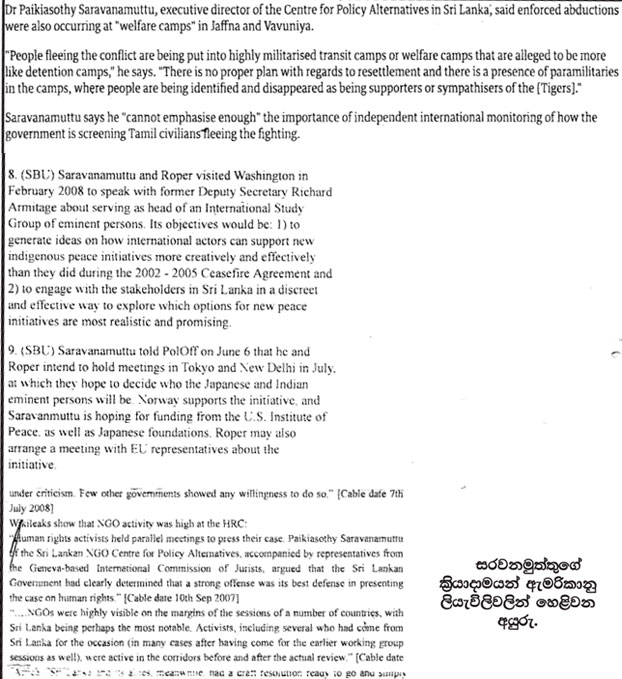
මේ හැර සංහිඳියා කාර්ය සාධක බළකායේ ලේකම් ලෙස කටයුතු කළ පාක්‍යසෝති සරවනමුත්තු යනු නෝර්වේ අරමුදල් ලැබෙන කොළඹ විකල්ප ප්‍රතිපත්ති කේන්ද්‍රයේ ප්‍රධානියායි. ඔහු පසුගිය වසර කීපය මුළුල්ලේ ජිනීවා මානව හිමිකම් කවුන්සිලය වෙත ගොස්‌ එහි ක්‍රියාකාරීන් අමතා ජාත්‍යන්තර විනිසුරුවරුන් සහිත අධිකරණයකින් ශ්‍රී ලංකාවේ හමුදාව ගැන විමර්ශනය කළ යුතු බව පවසා ඇත.

ජිනීවා මානව හිමිකම් කවුන්සිලයට පාක්‍යසෝති රිංගන අයුරු අපි කිහිපවිටක්‌ම දුටුවෙමු. එසේම ඇමරිකානු තානාපති කාර්යාලය ඇමරිකානු රාජ්‍ය දෙපාර්තමේන්තුවට යෑවූ රහස්‌ වාර්තාවල පාක්‍යසෝaති නියෝජනය කරන විකල්ප ප්‍රතිපත්ති කේන්ද්‍රය කර ඇති ප්‍රකාශ සඳහන් වී තිබේ.

මෙම සංහිඳියා නිර්දේශ ගැන පාක්‍යසෝති සරවනමුත්තු තවදුරටත් පවසා ඇත්තේ සිය නිර්දේශ ක්‍රියාවට නඟන මෙන් ආණ්‌ඩුවට බල කිරීම සිවිල් සමාජයේ වගකීම බවයි.

විදෙස්‌ විනිසුරුවන් සහිත හයිබ්‍රිඩ් අධිකරණයක්‌ අවශ්‍ය බව දක්‌වමින් විදේශ ඇමැති මංගල සමරවීර වෙත ජනවාරි 3 දා මෙම නිර්දේශ පිළිගැන්වූ අවස්‌ථාවට ද්‍රවිඩ සංධාන නායක ආර්. සම්බන්දන් ද සහභාගි විය. ඔහු එහිදී පැවසුවේ යුද්ධයෙන් සිවිල් වැසියන්ද දුෂ්කරතාවලට මුහුණපා ඇති නිසා එල්ලවී ඇති යුද අපරාධ චෝදනා විමර්ශනයට ජාත්‍යන්තර විමර්ශනයක්‌ අවශ්‍ය බවයි.

මේ අතර සංහිඳියා කාර්ය සාධක බලකායට අදහස්‌ ඉදිරිපත් කර ඇත්තේද සුළු පිරිසක්‌ බව එම බළකායේ වාර්තාවෙන් හෙළි වී ඇත. ඒ 7306 ක පිරිසකි. වයඹ සහ බස්‌නාහිර පළාත්වලදී අදහස්‌ ඉදිරිපත් කළ සංඛ්‍යාවද 250 ට අඩුය.

මෙම අපූරු සංහිඳියා බළකාය ජිනීවා යෝජනාව මුළුමනින්ම අනුමත කිරීමද විස්‌මයජනක ක්‍රියාවකි. එය අත ඊසොප්ගේ වුවත් හඬ ජෙකොබ්ගේ යන කියමනට සමානය. ඔවුන් රජයට ඉදිරිපත් කර ඇති නිර්දේශයේ මෙලෙස සඳහන් කර ඇත. ඒ මානව හිමිකම් සමුළුවේදී සම්මත වූ යෝජනාව ප්‍රකාර සෑම නඩුවාරයකදීම දේශීය විනිසුරුවන් බහුතරයක්‌ සහ අවම වශයෙන් ජාත්‍යන්තර විනිසුරුවකු සිටින බවට අධිකරණය සහතික විය යුතුය. එසේම විශේෂ උපදේශක කාර්යාලයේ කාර්ය මණ්‌aඩලයටත් ජාත්‍යන්තර විශේෂඥයන් සම්බන්ධ විය යුතුයි.

මේ සංහිඳියා කාර්ය සාධක බළකාය ජාත්‍යන්තර අධිකරණයේ අධිකරණ වගකීම් ඇතුළත් ජාත්‍යන්තර නීතිරීතිවලට ශ්‍රී ලංකාව යොමු කිරීමට උත්සාහ කිරීමේ භයානක ක්‍රියාදාමයක්‌ද නිර්දේශ කර තිබේ. ශ්‍රී ලංකාව රෝම සම්මුතියට අදාළ ජාත්‍යන්තර අධිකරණයට අත්සන් තබා නැත. එම අන්තර්ජාතික අධිකරණයට අත්සන් කිරීමෙන් වළකින ලෙස විදේශ ඇමැතිව සිටි ලක්‍ෂ්මන් කදිරගාමර් එවකට ජනාධිපතිනියව සිටි චන්ද්‍රිකා කුමාරතුංග වෙත උපදෙස්‌ දුන් විට ඇය ඊට අත්සන් කළේ නැත.

එහෙත් ඉතා සූක්‍ෂම ලෙස ජාත්‍යන්තර අධිකරණයේ නීතිරීති හයිබ්‍රිඩ් අධිකරණයට ඇතුළත් කළ යුතු යෑයි සංහිඳියා කාර්ය සාධක බළකාය නිර්දේශ කිරීමෙන් සනාථ වන්නේ එම ජාත්‍යන්තර අධිකරණ ක්‍රමවේදය පිළිගැනීම නොවේද?

සංහිඳියා බළකායේ ලේකම් ලෙස කටයුතු කළ පී සරා හෙවත් සරවනමුත්තු 2013 සැප්තැම්බර් මස ඇමරිකානු ජනාධිපති ඔබාමාගේ වටමේස සාකච්ඡාවට ද සහභාගි වී ඇත.

එසේම ඔහු 2009 අප්‍රේල් මස බ්‍රිතාන්‍ය ගාඩියන් පුවත්පතේ ඇනී කෙලි නමැති මාධ්‍යවේදිනිය අමතා පවසා ඇත්තේ වවුනියාව සහ යාපනයේ සුබසාධක කඳවුරුවල පවා පැහැර ගැනීම් සිදුවන බවයි. මේ හැර යුද ගැටුම්වලින් පලා යන සිවිල් වැසියන් පිළිබඳව රජය සිදු කරන නිsරීක්‍ෂණ ක්‍රියාවලිය පරීක්‍ෂාවට ලක්‌ කිරීම සඳහා ස්‌වාධීන ජාත්‍යන්තර නිරීක්‍ෂණයක්‌ වැදගත් වන බවද ඔහු තවදුරටත් පවසා ඇත.

මෙයට අමතරව 2008 පෙබරවාරි මස සරවනමුත්තු සහ බර්ග්හොµaa නමැති ජර්මානු රාජ්‍ය නොවන සංවිධානයේ නායක නෝබට්‌ රූපර් ඇමරිකාවේ වොෂින්ටන් නුවරට පැමිණ හිටපු ඇමරිකානු නියෝජ්‍ය ලේකම් රිචඩ් ආමිටේඡ් හමුවී තම සාම ක්‍රියාදාමය සඳහා ජාHන්තර සහය ලබා ගැනීම ගැන සාකච්ඡා පවත්වා ඇත. මේ සාම ක්‍රියාදාමය සඳහා ඇමරිකානු සාම ආයතනයෙන් අරමුදල් ලබා ගැනීමට සරවනමුත්තු බලාපොරොත්තු වී ඇත.

මෙම තොරතුරු විකිලික්‌ස්‌ අඩවිය අනාවරණය කර තිබේ. ඇමරිකානු රාජ්‍ය දෙපාර්තමේන්තුව වෙත කොළඹ ඇමරිකානු තානාපති කාර්යාලය යෑවූ රහසිගතයි යන පණිවුඩයේ තවදුරටත් දක්‌වා ඇත්තේ 2002- 2005 සමයේ ක්‍රියාත්මක වූ සටන්විරාම ගිවිසුම ඔවුන් දෙදෙනාගේ නිර්මාණයක්‌ බවත් ඊට වඩා කාර්යක්‍ෂම නව සාම ක්‍රියාදාමයකට ඔවුන් රිචඩ් ආම්ටේඡ් සමග සාකච්ඡා කළ බවයි.

කොළඹ ඇමරිකානු තානාපති කාර්යාල රහස්‌ පණිවුඩයෙන් තහවුරු වන්නේ වන්නි මෙහෙයුම ක්‍රියාත්මක වන අවස්‌ථාවේ සරවනමුත්තු සහ නෝබට්‌ රූපර්a දෙවැනි සටන් විරාමයකට ඇමරිකානුවන් සමග එක්‌වී මුලපිරූ බවයි.

මෙම පසුබිම මැද අමාත්‍ය රාජිත සේනාරත්න සංහිඳියා බළකායට චරිත සහතිකයක්‌ දුන්නේය. “ඒ ගොල්ලෝ අමුතු විඥනයක්‌ තියෙන මහලොකු ශේ්‍රෂ්aඨ ලෝකේ පහළ වුණුq මහා බුද්ධිමතුන් නොවෙයිනේ” යෑයි අමාත්‍යවරයා කියා සිටියේය.

මේ අතර සංහිඳියා වාර්තාව ප්‍රකාශයට පත්වී පැය 48 ක්‌ ගත වීමට මත්තෙන් කිලිනොච්චියේ කනගපුරම් කොටි ත්‍රස්‌ත සුසානභූමිය වෙත හිටපු කොටින්ගේ ඥතීන් පිරිසක්‌ සහ ප්‍රාදේශීය සභා නියෝජිත පිරිසක්‌ පැමිණ පූජාවක්‌ පවත්වා කොටි ස්‌මාරකයක්‌ ඉදිකිරීමට කටයුතු කර ඇත.

මෙම අවස්‌ථාවේ කිලිනොච්චිය සහකාර පොලිස්‌ අධිකාරීවරයෙක්‌ පැමිණ අදාළ ස්‌ථානයේ ඉදිකිරීමක්‌ කිරීමට අවශ්‍යනම් පොලිසිය දැනුවත්කර අධිකරණයෙන් අවසර ඉල්ලා සිටින ලෙස පවසා තිබේ.

එම අවස්‌ථාවේ කිලිනොච්චිය කරච්චි ප්‍රාදේශීය සභාවේ ලේකම් කමිසනාදන් පැමිණ ස්‌මාරකය ඉදිකිරීමට අවසරයක්‌ නැති බවත් එම ස්‌ථානය ප්‍රාදේශීය සභාවට අයත් ඉඩමක්‌ බවට ප්‍රකාශ කර ඇත.

එහෙත් කොටි සංවිධානය තහනම් සංවිධානයක්‌ නිසා එවන් ස්‌මාරකයක්‌ ඉදිකිරීමද තහනම් වේ. එසේ නම් පොලිස්‌ නිලධාරියකු හිටපු කොටින්ගේ ඥතීන් අමතා මෙවන් ප්‍රකාශයක්‌ කරන්නේ කෙසේද? මේ එම ප්‍රකාශයයි. “මට ඔබලාව අත්අඩංගුවට ගන්න පුළුවන්. නමුත් මම එලෙස කටයුතු කරන්නේ නැහැ. මේ කාරණය මානුෂිකව බැලිය යුතුයි. මම මෙම ප්‍රදේශයේ උපන්නේ නම් මමත් මේ ක්‍රියාදාමය අනුගමනය කරනවා. දුෂ්කරතාවයට පත්වූවන් එහි වේදනාව දන්නවා. මේ කරුණ ගැන සාකච්ඡා කිරීමට පොලිසියට පැමිණ බේරුමක්‌ ඇති කර ගන්නා ලෙස මා ඉල්ලා සිටිනවා.

එසේ වුවත් කිලිනොච්චියේ පොලිස්‌ බලධාරියාට කොටි ස්‌මාරක ඉදිකිරීමේ ප්‍රශ්නය බේරුම් කර ගැනීමට හැකිවූයේ නැත. ඒ නිසා හිටපු කොටි ක්‍රියාකාරීන් හයදෙනකු පොලිසියට කැඳවා ඇති පොලිසිය ඔවුන්ගෙන් කටඋත්තර ගෙන මුදාහැර ඇත.

මෙහිදී නැඟෙන බරපතළ ප්‍රශ්නය නම් මමත් කිලිනොච්චියේ උපන්නේ නම් කොටි ස්‌මාරකය ඉදිකිරීමට එන බව එම පොලිස්‌ නිලධාරියා පැවසීමයි. මොහු කවුදැයි දැන් හඳුනා ගෙන ඇත.

කොටි ත්‍රස්‌තයන් ළදරුවන් කැති ගා දමමින් බස්‌ බෝම්බ පුපුරුවද්දී මේ පොලිස්‌ නිලධාරියා සිටියේ කොහේද?

මෙම තත්ත්වය මැද සංහිඳියා බළකායේ හයිබ්‍රිඩ් අධිකරණ යෝජනාව රජය ප්‍රතික්‍ෂේප කර ඇත.

මේ අපූරු බළකායේ න්‍යාය පත්‍රය දැන් සනාථ වී තිබේ.

ලොව කිසිම රටක්‌ බිහිසුණු ත්‍රස්‌තවාදීන්ගෙන් රට මුදාගත් ආරක්‍ෂක හමුදාවට දඬුවම් කිරීමට හයිබ්‍රිඩ් අධිකරණයන් පිහිටුවා නැත. මෙහිදී අවධානයට යොමු විය යුතු ප්‍රධාන කරුණ නම් ශ්‍රී ලංකාවේ හමුදාවට දඬුවම් කිරීමට ජිනීවා යෝජනාව සම්මත කළ ඇමරිකාව ප්‍රභාකරන්ව බේරා ගැනීමට දැරූ උත්සාහයයි. එම ඇමරිකානු රහස්‌ සැලසුම ඉන්දියාවේ හිටපු ආරක්‍ෂක උපදේශක ශිවශංකර් මෙනන් විසින් පසුගියදා හෙළි කර තිබුණි. ඇමරිකාවේ එම උපායමාර්ගික සැලසුම ව්‍යර්ථ කළේ හිටපු ජනාධිපති මහින්ද රාජපක්‍ෂ සහ ඉන්දියාව බව මෙනන් තවදුරටත් අනාවරණය කර තිබුණි.

මේ අතර උතුරු පළාත් මහඇමැති සී. විග්නේශ්වරන් කැනඩාවට ගොස්‌ එරට ද්‍රවිඩ සංධාන සමග සාකච්ඡා පවත්වා ඇත. ඔහු කැනඩාවේදී ප්‍රකාශයක්‌ කරමින් යුද අපරාධ චෝදනා විමර්ශනය කිරීමේ දේශීය යාන්ත්‍රණය විශ්වාස නැති බව සඳහන් කර ඇත. රවිරාඡ් ඝාතනයේ චූදිතයන් නිදහස්‌ වීම ගැනද කරුණු දක්‌වමින් විග්නේශ්වරන් වැඩිදුරටත් දක්‌වා ඇත්තේ ජාත්‍යන්තර අධිකරණයක්‌ අවශ්‍ය බවයි.

විග්නේශ්වරන් පැවැත්වූ මාධ්‍ය සාකච්ඡාවට ඔහුගේ උපදේශක නිර්මලන් කාර්තිකේයන් සහ කැනඩාවේ මර්ක්‌හම් නගර සභා මන්ත්‍රී ලෝගන් කනපතිද පැමිණ සිටියේය.

මේ නිර්මලන් කාර්තිකේයන් යනු ජාතික සාම මණ්‌ඩලය විසින් කොටින්ට අත්වාරු බෙදාදීමේ උත්සවයට සම්බන්ධ වූ එම රාජ්‍ය නොවන සංවිධානයේ හිටපු ක්‍රියාකාරියෙකි. ලෝගන් කනපති නමැත්තා කොටි හිතවාදියකු වන අතර වන්නි මෙහෙයුම නතර කිරීමට ක්‍රියා කරන ලෙස කැනඩා රජයට දැඩි බලපෑම් සිදු කළ අයෙකු බව අනාවරණය වේ. විග්නේශ්වරන් මෙහිදී තවදුරටත් පවසා ඇත්තේ මාර්තු මස පැවැත්වෙන ජිනීවා මානව හිමිකම් සමුළුවේදී කැනඩා රජය ක්‍රියාත්මක වන බවයි.

මේ පසුබිම මැද දේශප්‍රේමී සංවිධාන 25 කට අධික සංඛ්‍යාවක්‌ ඒකාබද්ධවී ජාතික සංවිධානය සම්මේලනයේ කැඳවුම් කරු ලෙස හිටපු ජ්‍යෙෂ්ඨ නාවික නිලධාරියකු වූ සරත් වීරසේකර පත් කරගෙන ඇත. මේ අතර රජය හයිබ්‍රිඩ් අධිකරණය පිහිටු වීම ප්‍රතික්‍ෂේප කිරීම නිසා කෝපයට පත් කොළඹ රාජ්‍ය නොවන සංවිධාන ක්‍රියාකාරීන් ජිනීවා මානව හිමිකම් කොමසාරිස්‌ වෙත හදිසි සංදේශයක්‌ යවමින් ජිනීවා යෝජනාව වහාම ඉදිරියට ගෙන යන ලෙස ඉල්ලීමක්‌ කර ඇත.
 

ජී.එස්‌.පී දෙන්න කොන්දේසි 58ක්‌

January 14th, 2017

ශ්‍යාම් නුවන් ගනේවත්ත උපුටා ගැන්ම දිවයින

පළාත් සභාවලට බලය බෙදීම
ඉඩම් ආඥා පනත සංශෝධනය
මැතිවරණ ප්‍රතිසංස්‌කරණ ඇතිකිරීම
අපරාධ නීතිය සංශෝධනය කිරීම

යුරෝපා සංගමයේ ජී. එස්‌. පී. ප්ලස්‌ (GSP+) බදු සහනය යළි ශ්‍රී ලංකාවට ලබා ගැනීම සඳහා රටට ඉතා අනතුරුදායක කොන්දේසි 58 කට රජය එකඟවී ඇතැයි රජයේ ඉහළ පෙළේ ආරංචි මාර්ගවලින් ‘දිවයින ඉරිදා සංග්‍රහය’ ට වාර්තා වේ.

මේ කොන්දේසිවලට එකඟ වී ඒ පිළිබඳ ප්‍රගතිය යුරෝපා කොමිසමට දැක්‌වීමට ද රජය ක්‍රියාකර ඇති බවද වාර්තා වේ.

ත්‍රස්‌තවාදය වැළැක්‌වීමේ පනත ඉවත්කර ඒ වෙනුවට ගෙනෙන නව නීතිය සමාලෝචනය කර එය ජාත්‍යන්තර ප්‍රමිතීන්ට අනුව සම්පාදනය කිරීම, අත්අඩංගුවේ සිටින රැඳවියන් සම්බන්ධ නඩු කටයුතු කඩිනමින් අවසන් කිරීම, සියලු එල්. ටී. ටී. ඊ. හිටපු සටන්කරුවන් පුනරුත්ථාපනය කිරීම අවසන් කිරීම, රැඳවියන්ගේ අයිතිවාසිකම් සම්බන්ධයෙන් ශ්‍රී ලංකාවේ අපරාධ නීතියට සංශෝධන ගෙනඒම, මහජන ආරක්‌ෂණ ආඥා පනත සමාලෝචනය කිරීම, අතුරුදන් වූවන් සම්බන්ධයෙන් වෙනම කාර්යාලයක්‌ ස්‌ථාපිත කිරීම, නව මානව හිමිකම් ක්‍රියාකාරී සැලැස්‌මක්‌ (2017- 2021) හඳුන්වාදීම, ත්‍රස්‌තවාදී සංවිධාන ලෙස ලැයිස්‌තුගත කර ඇති දෙමළ සංවිධාන හා පුද්ගලයන් සම්බන්ධ තත්ත්වය සමාලෝචනයට ලක්‌ කිරීම (මින් පුද්ගලයන් 86 දෙනෙක්‌ සහ සංවිධාන 08 ක්‌ කරන ලද පරීක්‍ෂණ අනුව එම ලැයිස්‌තුවෙන් ඉවත් කිරීමට අපේක්‌ෂා කරන බව රජය දන්වා ඇත.)

පොලිස්‌ මූල්‍ය අපරාධ කොට්‌ඨාසය, නීතිපති දෙපාර්තමේන්තුව සහ අල්ලස්‌ කොමිසම හමුවේ ඇති දූෂණ චෝදනා නඩු කටයුතු කඩිනමින් අවසන් කිරීම, දූෂණවලට එරෙහිව අල්ලස්‌ කොමිසම මගින් නව ක්‍රියාකාරී සැලැස්‌මක්‌ ඵලදායී ලෙස ක්‍රියාත්මක කිරීම. නව ආණ්‌ඩුක්‍රම ව්‍යවස්‌ථාව යටතේ පළාත්වලට බලය බෙදාහැරීම යන කරුණු සලකා බැලීම, නව ආණ්‌ඩුක්‍රම ව්‍යවස්‌ථාව යටතේ මැතිවරණ ප්‍රතිසංස්‌කරණ හඳුන්වාදීම, ඉඩම් ආඥාපනතට සංශෝධන සිදුකිරීම, දෙමළ භාෂාව කතා කරන කාන්තා පොලිස්‌ නිලධාරිනියන් ප්‍රමාණය ඉහළ නැංවීම, පාර්ලිමේන්තුවේ අවම වශයෙන් සියයට 25 කාන්තා නියෝජනයක්‌ ඇතිකිරීම සහ මුස්‌ලිම් නීතිය යටතේ විවාහ විය හැකි අවම වයස නීතියෙන් නියම කිරීම (මේ සඳහා කැබිනට්‌ අනුකාරක සභාවක්‌ පත්කිරීමට නියමිතය.) ඇතුළු ඉතා බරපතල කොන්දේසි රැසක්‌ මෙම බදු සහනය ලබා ගැනීම සඳහා රජය විසින් යුරෝපා කොමිසම වෙත එකඟවී එම කොන්දේසි ඉටු කිරීමේ ප්‍රගතියද එම කොමිසම වෙත වාර්තා කර තිබෙන බවද රජයේ ඉහළ පෙළේ ආරංචි මාර්ගවලින් තවදුරටත් ‘දිවයින ඉරිදා සංග්‍රහයට” වාර්තා වේ.

Calcium and Magnesium in Drinking-water Public health significance

January 14th, 2017

World Health Organization 2009

This document identifies knowledge gaps and recommends research priorities in order to build an evidence base to inform decisions on managing processed” drinking-water. This is important because of increasing consumption of water arising from advanced treatment processes such as desalination and uncertainty about the resulting heatlh implications.

The World Health Organization (WHO) assembled a diverse group of nutrition, medical, epidemiological and other scientific experts and water technologists at the Pan American Health Organization in Washington, DC, USA, on 27–28 April 2006 to address the possible role of drinking-water containing calcium and/or magnesium as a contribution to the daily intake of those minerals.

The overarching issue addressed was whether consumption of drinking-water containing a relatively small contribution to total daily dietary intake of calcium and/or magnesium would provide positive health benefits, especially with respect to cardiovascular disease mortality (the so-called hard water cardiovascular disease benefits hypothesis”), in the population, particularly in people whose dietary intake was deficient in either of those nutrients. The meeting of experts immediately followed the International Symposium on Health Aspects of Calcium and Magnesium in Drinking Water, which was organized by NSF International and the International Life Sciences Institute in Baltimore, MD, USA.

Both calcium and magnesium are essential to human health. Inadequate intake of either nutrient can impair health. Recommended daily intakes of each element have been set at national and international levels. Food is the principal source of both calcium and magnesium. Dairy products are the richest sources of dietary calcium, contributing over 50% of the total calcium in many diets. Some plant foods, including legumes, green leafy vegetables and broccoli, can also contribute to dietary calcium, but the content is lower than in dairy products, and the bioavailability of calcium in plant foods can be low if the concentration of oxalate or phytate is high. Dietary sources of magnesium are more varied; dairy products, vegetables, grain, fruits and nuts are important contributors.

Individuals vary considerably in their needs for and consumption of these elements. Available evidence suggests that, because of food habits, many people in most countries fail to obtain from their diets the recommended intakes of one or both of these nutrients. While the concentrations of calcium and magnesium in drinking-water vary markedly from one supply to another, mineral-rich drinking-waters may provide substantial contributions to total intakes of these nutrients in some populations or population subgroups. Water treatment processes can affect mineral concentrations and, hence, the total intake of calcium and magnesium for some individuals.

On the basis of the findings of the World Health Organization (WHO) meeting of experts held in Rome, Italy, in 2003 to discuss nutrients in drinkingwater (WHO 2005), the present group focused its consideration on calcium and magnesium, for which, next to fluoride, evidence of health benefits associated with their presence in drinking-water is strongest. The present group also noted that the issue of fluoride was addressed by the Rome meeting in detail and adopted its review and recommendations (see below). In addition, the group concluded that other elements may also have health relevance and should be considered by future groups.

1.2 CALCIUM

Over 99% of total body calcium is found in bones and teeth, where it functions as a key structural element. The remaining body calcium functions in metabolism, serving as a signal for vital physiological processes, including vascular contraction, blood clotting, muscle contraction and nerve transmission. Inadequate intakes of calcium have been associated with increased risks of osteoporosis, nephrolithiasis (kidney stones), colorectal cancer, hypertension and stroke, coronary artery disease, insulin resistance and obesity.

Most of these disorders have treatments but no cures. Owing to a lack of compelling evidence for the role of calcium as a single contributory element in relation to these diseases, estimates of calcium requirement have been made on the basis of bone health outcomes, with the goal of optimizing bone mineral density. Calcium is unique among nutrients, in that the body’s reserve is also functional: increasing bone mass is linearly related to reduction in fracture risk.

1.2.1 Osteoporosis

Osteoporosis is a condition of skeletal fragility characterized by low bone mass and by microarchitectural deterioration of bone tissue, with a consequent increase in risk of fracture. Calcium is the largest constituent of bone, comprising 32% by weight. A large body of primary evidence from randomized controlled trials shows that increasing calcium intake, especially in those who have had habitually low calcium intakes, increases bone mass during growth andreduces bone loss and fracture risk late in life. Osteoporosis is one of the most prevalent of age-related diseases.

1.2.2 Kidney stones

The relationship between calcium intake and the incidence of kidney stones is dependent on whether calcium is consumed with food or separately. Calcium that reaches the lower small intestine actually protects against kidney stones by binding oxalic acid (a precursor to common kidney stones) in foods and reducing its absorption. Calcium ingested from water together with food would have the same effect. Epidemiological evidence is strong that dietary calcium reduces the incidence of kidney stones. In contrast, the results of a large randomized trial1 suggest an increased risk of kidney stones associated with calcium supplements, possibly because the calcium was not ingested with food or the supplements were taken by those who exceeded the upper level of 2500 mg/day.

1.2.3 Hypertension and stroke

Hypertension (high blood pressure) is a risk factor for several diseases. It is an important health problem especially in developed countries, but also in developing countries. Although hypertension is multifactorial in origin, adequate calcium intake has been associated with lowered risk of elevated blood pressure in some, but not all, studies. A clear mechanism has not been identified. Dairy products, more than calcium, per se, have been associated with reduced blood pressure in randomized prospective studies and with reduced risk of stroke in prospective studies.

1.2.4 Insulin resistance

Insulin resistance is associated with type 2 diabetes mellitus, the prevalence of which is escalating with the rise in obesity worldwide. Dietary calcium may be implicated in the etiology of insulin resistance through the fluctuations in calcium-regulating hormones in states of calcium sufficiency and deficiency. This is an area of active research; thus, it is premature to use such a clinical outcome as the basis for deriving recommendations for dietary intake of calcium. 1 From the Women’s Health Initiative, a 15-year programme established by the United States National Institutes of Health in 1991. Expert consensus

 1.2.5 Vulnerable populations

Those individuals who avoid dairy products or lack access to them may be at increased risk of calcium deficiency. Formula-fed infants will not normally be at risk from deficient or excess amounts of calcium. Even extremely low or high calcium concentrations in water would not lead to absorption of unphysiological amounts of calcium from infant formula reconstituted with the water. If, however, other feeds are used that do not provide the calcium content of fullstrength formula, then water may represent an important source of the mineral for the infants.

1.2.6 Excess calcium intakes

To a great extent, individuals are protected from excess intakes of calcium by a tightly regulated intestinal absorption mechanism through the action of 1,25- dihydroxyvitamin D, the hormonally active form of vitamin D. When absorbed calcium is in excess of need, the excess is excreted by the kidney in most healthy people. Concern for excess calcium intake is directed primarily to those who are prone to milk alkali syndrome (the simultaneous presence of hypercalcaemia, metabolic alkalosis and renal insufficiency) and hypercalcaemia. Although calcium can interact with iron, zinc, magnesium and phosphorus within the intestine, thereby reducing the absorption of these minerals, available data do not suggest that these minerals are depleted when humans consume diets containing calcium above the recommended levels. For example, even though high intakes of calcium can exert acute effects on iron absorption, there is no evidence of reduced iron status or iron stores with long-term calcium supplementation

1.3 MAGNESIUM

Magnesium is the fourth most abundant cation in the body and the second most abundant cation in intracellular fluid. It is a cofactor for some 350 cellular enzymes, many of which are involved in energy metabolism. It is also involved in protein and nucleic acid synthesis and is needed for normal vascular tone and insulin sensitivity. Low magnesium levels are associated with endothelial dysfunction, increased vascular reactions, elevated circulating levels of Creactive protein and decreased insulin sensitivity. Low magnesium status has been implicated in hypertension, coronary heart disease, type 2 diabetes mellitus and metabolic syndrome.

1.3.1 Hypertension

Magnesium deficiency has been implicated in the pathogenesis of hypertension, with some epidemiological and experimental studies demonstrating a negative correlation between blood pressure and serum magnesium levels. However, data from clinical studies have been less convincing.

1.3.2 Cardiac arrhythmias

Cardiac arrhythmias of ventricular and atrial origin have been reported in patients with hypomagnesaemia. Indeed, a serious cardiac arrhythmia, Torsade de Pointes, is treated with intravenous magnesium therapy.

1.3.3 Pre-eclampsia

Pre-eclampsia (defined as hypertension after 20 weeks of gestation) with proteinuria has been treated with magnesium salts for many decades. A recent clinical trial (Altman et al. 2002) using magnesium sulfate showed a 50% decreased risk of eclampsia.

1.3.4 Atherosclerosis

Animal studies have documented an inverse (protective) relationship between magnesium intake and the rate or incidence of atherosclerosis.

1.3.5 Coronary heart disease

In humans, there is evidence for an inverse (protective) relationship between magnesium and coronary heart disease. Three cross-sectional studies have now documented an inverse relationship between the concentration of C-reactive protein (a proinflammatory marker that is a risk factor for coronary heart disease) and magnesium intake or serum magnesium concentration, suggesting that magnesium may have an anti-inflammatory effect.

1.3.6 Diabetes mellitus

Several studies have documented the importance of magnesium in type 2 diabetes mellitus. Two recent studies have documented an inverse (protective) relationship between magnesium intake and risk of developing type 2 diabetes mellitus. Oral magnesium supplementation improves insulin sensitivity and metabolic control in type 2 diabetes mellitus.

1.3.7 Magnesium depletion status

Alcoholism and intestinal malabsorption are conditions associated with magnesium deficiency. Certain drugs, such as diuretics, some antibiotics and some chemotherapy treatments, increase the loss of magnesium through the kidney.

1.3.8 Hypermagnesaemia

The major cause of hypermagnesaemia is renal insufficiency associated with a significantly decreased ability to excrete magnesium. Increased intake of magnesium salts may cause a change in bowel habits (diarrhoea), but seldom causes hypermagnesaemia in persons with normal kidney function.

1.3.9 Gastrointestinal function

Drinking-water in which both magnesium and sulfate are present in high concentrations can have a laxative effect, although data suggest that consumers adapt to these levels as exposures continue. Laxative effects have also been associated with excess intake of magnesium taken in the form of supplements, but not with magnesium in diet.

Read full WHO Report

http://apps.who.int/iris/bitstream/10665/43836/1/9789241563550_eng.pdf?ua=1

Additional Readings

The high heart health value of drinking-water magnesium  Andrea Rosanoff ⇑http://www.mgwater.com/rosanoff_high_heart_health_value_of_drinking_water_magnesium2013.pdf

W.H.O. PROOF THAT R.O. WATER IS BAD FOR YOUR HEALTH UNLESS IT IS REMINERALIZED

January 14th, 2017

 I can’t begin to tell you how much pleasure it gives me to write this article. I will never forget being severly chastized a few years ago by a senior executive of a company that sells thousands of RO systems per year for not knowing what I’m talking about” and that my challenge to him and the industry about RO water being unhealthy was preposterous”. At the time of the meeting I was not equipped to fend off his accusations because I hadn’t put in the research that I have now.

Despite being torn to shreds by the marketing executive at the meeting, I never believed the RO industry claim that it didn’t matter if their systems removed everything from the source water because the human body couldn’t absorb inorganic molecules anyway. After all, most of the supplements that are available on the market are inorganic, which means that either the RO industry was protecting its ass-ets” or the entire supplement industry was a scam.

The RO industry has been disseminating inaccurate (that’s about as politically correct as I can get) information for years. Doctors and other health care professionals have unwittingly been endorsing the RO water is the best drinking water” message for years which makes the myth worse because we trust these people with our health.

Proof that RO water is unhealthy

I could write about the dozens of interviews I have conducted with water industry experts and biochemists, or about the hundreds of scientific articles I have reviewed but nobody would take the time to read it. In order to keep things brief, I offer two sources of evidence that unequivically reveal the fact that the water produced by RO systems is bad for your health if you drink the water over the long term.

The American government’s online health website www.pubmed.gov is an arm of the National Institutes of Health. The site offers a collection of:

more than 22 million citations for biomedical literature from MEDLINE, life science journals, and online books

I spent several long days poring over numerous studies related to the ability of the human body to absorb inorganic elements such as Calcium and Magnesium. I managed to find 14 scientific studies on the site that provide irrefutable evidence that the human body can and does absorb inorganic matter such as Calcium and Magnesium.

The bottom line of what I learned from reviewing the studies is that your body will absorb anywhere fro 6% to 30% of its daily requirement of essential elements from tap water. In a world where our soil is virtually devoid of nutriets from too many crops and not enough recovery time, and where diets are anything but healthy, it is very important to your long term health that you ingest calcium and magnesium from drinking water.

The second website that drives a dagger into the RO industry myth that its pure water is healthy comes from the World Health Organization (W.H.O.). The WHO provides us with a Position Paper titled The Health risks from drinking
demineralized water” which was written by F. Kozisek. You can tell by the title where the article is headed.

Here is a link to the article: http://www.who.int/water_sanitation_health/dwq/nutdemineralized.pdf

Here are some of the highlights from the article:

The final report, published as an internal working document (WHO 1980), concluded that not only does completely demineralised water (distillate) have unsatisfactory organoleptic properities, but it also has a definite adverse influence on the animal and human organism.”

The potential for adverse health effects from long term consumption of demineralised water is of interest not only in countries lacking adequate fresh water but also in countries where some types of home water treatment systems
are widely used or where some types of bottled water are consumed

The WHO provided recommendations in 2004 as to what they believe should be included in drinking water and in what concentrations:

* For magnesium, a minimum of 10 mg/l (Novikov et al. 1983; Rubenowitz et al. 2000) and an optimum of about 20-30 mg/l (Durlach et al. 1989; Kozisek 1992);

* For calcium, a minimum of 20 mg/l (Novikov et al. 1983) and an optimum of about 50 (40-80) mg/l (Rakhmanin et al. 1990; Kozisek 1992);

* For total water hardness, the sum of calcium and magnesium should be 2 to 4 mmol/l (Plitman et al. 1989; Lutai 1992; Muzalevskaya et al. 1993; Golubev and Zimin 1994).

At these concentrations, minimum or no adverse health effects were observed. The maximum protective or beneficial health effects of drinking water appeared to occur at the estimated desirable or optimum concentrations. The recommended magnesium levels were based on cardiovascular system effects, while changes in calcium metabolism and ossification were used as a basis for the recommended calcium levels

Summary of the research:

Scientific testing and the best unbiased” brains in the world have repeatedly demonstrated that long term consumption of demineralized (RO) water is bad for your health.

What should you do if you are drinking demineralized RO” water?

You don’t need to disconnect your RO system and throw it away (unless it is operating ineffectively which often happens if the system is not properly maintained). RO systems do a great job of removing impurities/contaminants from the water and that is a good thing. The problem with RO systems is that they don’t discriminate between good stuff and bad stuff as they remove everything. What you need to do is remineralize the water once it has passed through the RO membrane. Adding back Magnesium and Caclium in the proper concentrations fixes the problem.

The RO industry is just waking up to the reality that long term consumption of demineralized water is bad for your health. The sellers of RO equipment are now racing around trying to find a solution to making their water healthy. From what I can see from the initial offerings, the industry has not done its homework because they are offering Corosex and Calcite solutions. While Corosex and Calcite will remineralize water, they were never designed to work with the aggressive acidic water produced by RO systems. As a result, Calcite and Corosex filters can dump more minerals into the water than your kidneys can digest and result in the formation of kidney stones. Calcite and Corosex filters are obviously not the right solution for remineralizing aggressive acidic water produced by RO machines.

What is the solution?

My focus for the past couple of years has been on natural remineralizing filters which can be used on their own as basic ionizing filters, or in conjunction with RO systems. Intuitively, one would think that the media of the various remineralization filters on the market would be very similar, and to some degree they are. However, I have found that even the smallest changes in the media, or the amounts of media used, and even the way that the media is layered inside the filter can make a big difference in the performance and life expectancy of the filter. Based upon my testing and what I see in the market, the best remineralization filter that I have found is the Vitev Remin filter which you can find at: www.vitev.com/alkaline-water-ionizers-p/remin.htm. I think the Vitev Remin filter is a little pricey for its category, but it is very effective and imo, is worth a few extra dollars per year.

Clean drinking water filtration has remained almost in the exclusive domain of RO systems for the past 45 years. Today, Nano filtration and Ultra filtration have been gaining market share as the filters are cost effective, are much smaller, and allow for much higher water flow rates.

The best filter for your needs will depend upon your source water. If you are drinking water supplied by a municipality, you don’t really need a RO system unless the municipality adds fluoride to the drinking water.

If your municipality does add fluoride to the water supply, there is a new American made water filter that removes 85% of fluoride at a flow rate of 2 liters per minute (this comment was added to the article in June 2016). If the flow rate is slowed down to 1 liter per minute, the new filter may remove as much (92% to 95%) fluoride as RO systems. The filter consists of two types of activated carbon and Zeolite minerals bound with polymers to form a carbon block.

I learned about this filter technology from the makers of H2FX (see http://h2fx.com/#oid=22092_2007 ), who will be incorporating the new fluoride” filter in their Hydrogen Infusion (HIM) system going forward. That is good news for those that don’t want fluoride in their drinking water. I expect other companies will adopt the fluoride filters as the news gets out.

India to grant rainwater harvesting systems to be used for collecting drinking water but our experts should understand its limitation.

January 14th, 2017

Lankaweb Science Editor

India and Sri Lanka today signed a Memorandum of Understanding (MoU) to construct 3000 rain water harvesting systems at a cost of Rs 300 million in Jaffna District.

According to Adaderana news report, the MoU was signed by Mr. Arindam Bagchi, Acting High Commissioner of India and Mr. V. Sivagnanasothy, Secretary, Ministry of National Integration and Reconciliation in the presence of A. H. M. Fowzie, State Minister of National Integration and Reconciliation.

The project envisages construction of 3000 rainwater harvesting systems for 3000 households in selected divisions of Jaffna District. The scope of the project also includes training of the households on operation and maintenance of the systems.

Beneficiaries will be identified by Government of Sri Lanka in consultation with the Government of India. The selected beneficiaries would include women headed families and recently resettled families, the High Commission of India said in a statement.

This grant project was approved by Government of India in response to a request received from the Office for National Unity and Reconciliation of Government of Sri Lanka, it said.

The project aims to assist people by supporting resettlement efforts focused on reintegrating internally displaced families in Jaffna by providing modern rain water harvesting systems to provide clean drinking water supply facility to households. The project will generate employment opportunities in Sri Lanka.”

Most of the developed countries like Australia and New Zealand promotes house builders, as part of the main construction scope, to construct rain water harvesting systems to be used exclusively for toilet flushing, car washing and other utility purpose only and never for drinking purposes.

This requirement is in line with the Guidelines for Drinking-water Quality FIRST ADDENDUM TO THIRD EDITION set by the World Health Organization publication ISBN 92 4 154696 4 wherein document clearly states rainwater which is a type of distilled or desalinated water may be considered bland, flavourless and unacceptable,and desalinated water is commonly treated by adding chemical constituents such as calcium and magnesium carbonate with carbon dioxide. Once such treatment has been applied, desalinated waters should be no more aggressive than waters normally encountered in the drinking-water supply.

Tamil population might one day accuse the government for genocide

The long-term health effects of drinking rain water are deprived mineral intake that can affect our organs and functioning of our tissues and bones as also our immune system. So drinking desalinated water whether it is RO water or rain water is not advisable without further treatment.

We need re-mineralization to partly replace essential minerals removed from the water collected as rain water. Although this process has proved to be costly and not very convenient

The possible adverse consequences of low mineral content water consumption are discussed in the following categories:

  • Direct effects on the intestinal mucous membrane, metabolism and mineral homeostasis or other body functions.
  • Little or no intake of calcium and magnesium from low-mineral water.
  • Low intake of other essential elements and microelements.
  • Loss of calcium, magnesium and other essential elements in prepared food.
  • Possible increased dietary intake of toxic metals.

Even though food is a much richer source of calcium and magnesium intake than water, demineralized water can significantly affect the balance of these key minerals in the body.

One of the reasons for this is because the elements are usually present in water as free ions and, therefore, are more readily absorbed from water compared to food where they are mostly bound to other substances.”

Many studies throughout the world have reported that people drinking water that is low in calcium and magnesium (i.e., soft water) is tied to higher incidence of death from cardiovascular disease compared to those drinking regular water.

Recent studies also suggest that the intake of soft water may be associated with a higher risk of fracture in children and decreased bone density in adults.

In addition, studies found that cooking with demineralized water caused a huge loss of essential elements from most foods. In some cases, the loss of calcium and magnesium was as much as 60%.

Health of infants feeding powdered infant formula are significantly at high risk as infants consume drinking water from the day they are born owing to the fact that it is used to reconstitute the product. Their mineral intake only through the drinking water used for preparing infant formula up until complementary foods are introduced.

HEALTH RISKS FROM DRINKING DEMINERALISED WATER

Frantisek Kozisek National Institute of Public Health Czech Republic
(Courtesy  WHO Publication http://www.who.int/water_sanitation_health/dwq/nutrientschap12.pdf)

I. INTRODUCTION

The composition of water varies widely with local geological conditions. Neither groundwater nor surface water has ever been chemically pure H2O, since water contains small amounts of gases, minerals and organic matter of natural origin. The total concentrations of substances dissolved in fresh water considered to be of good quality can be hundreds of mg/L. Thanks to epidemiology and advances in microbiology and chemistry since the 19th century, numerous waterborne disease causative agents have been identified. The knowledge that water may contain some constituents that are undesirable is the point of departure for establishing guidelines and regulations for drinking water quality. Maximum acceptable concentrations of inorganic and organic substances and microorganisms have been established internationally and in many countries to assure the safety of drinking water.

The potential effects of totally unmineralised water had not generally been considered, since this water is not found in nature except possibly for rainwater and naturally formed ice. Although rainwater and ice are not used as community drinking water sources in industrialized countries where drinking water regulations were developed, they are used by individuals in some locations. In addition, many natural waters are low in many minerals or soft (low in divalent ions), and hard waters are often artificially softened.

Awareness of the importance of minerals and other beneficial constituents in drinking water has existed for thousands years, being mentioned in the Vedas of ancient India. In the book Rig Veda, the properties of good drinking water were described as follows: Sheetham (cold to touch), Sushihi (clean), Sivam (should have nutritive value, requisite minerals and trace elements), Istham (transparent), Vimalam lahu Shadgunam (its acid base balance should be within normal limits)” (1). That water may contain desirable substances has received less attention in guidelines and regulations, but an increased awareness of the biological value of water has occurred in the past several decades.

Artificially-produced demineralised waters, first distilled water and later also deionized or reverse osmosis-treated water, had been used mainly for industrial, technical and laboratory purposes. These technologies became more extensively applied in drinking water treatment in the 1960’s as limited drinking water sources in some coastal and inland arid areas could not meet the increasing water demands resulting from increasing populations, higher living standards, development of industry, and mass tourism. Demineralisation of water was needed where the primary or the only abundant water source available was highly mineralized brackish water or sea water. Drinking water supply was also of concern to ocean-going ships, and spaceships as well. Initially, these water treatment methods were not used elsewhere since they were technically exacting and costly

In this chapter, demineralised water is defined as water almost or completely free of dissolved minerals as a result of distillation, deionization, membrane filtration (reverse osmosis or nanofiltration), electrodialysis or other technology. The total dissolved solids (TDS) in such water can vary but TDS could be as low as 1 mg/L. The electrical conductivity is generally less than 2 mS/m and may even be lower (<0.1 mS/m). Although the technology had its beginnings in the 1960’s, demineralization was not widely used at that time. However, some countries focused on public health research in this field, mainly the former USSR where desalination was introduced to produce drinking water in some Central Asian cities. It was clear from the very beginning that desalinated or demineralised water without further enrichment with some minerals might not be fully appropriate for consumption. There were three reasons for this:

• Demineralised water is highly aggressive and if untreated, its distribution through pipes and storage tanks would not be possible. The aggressive water attacks the water distribution piping and leaches metals and other materials from the pipes and associated plumbing materials.

• Distilled water has poor taste characteristics.

• Preliminary evidence was available that some substances present in water could have beneficial effects on human health as well as adverse effects. For example, experience with artificially fluoridated water showed a decrease in the incidence of tooth caries, and some epidemiological studies in the 1960’s reported lower morbidity and mortality from some cardiovascular diseases in areas with hard water.

Therefore, researchers focused on two issues: 1.) what are the possible adverse health effects of demineralised water, and 2.) what are the minimum and the desirable or optimum contents of the relevant substances (e.g., minerals) in drinking water needed to meet both technical and health considerations. The traditional regulatory approach, which was previously based on limiting the health risks from excessive concentrations of toxic substances in water, now took into account possible adverse effects due to the deficiency of certain constituents.

At one of the working meetings for preparation of guidelines for drinking water quality, the World Health Organization (WHO) considered the issue of the desired or optimum mineral composition of desalinated drinking water by focusing on the possible adverse health effects of removing some substances that are naturally present in drinking water (2). In the late 1970’s, the WHO also commissioned a study to provide background information for issuing guidelines for desalinated water. That study was conducted by a team of researchers of the A.N. Sysin Institute of General and Public Hygiene and USSR Academy of Medical Sciences under the direction of Professor Sidorenko and Dr. Rakhmanin. The final report, published in 1980 as an internal working document (3), concluded that not only does completely demineralised water (distillate) have unsatisfactory organoleptic properities, but it also has a definite adverse influence on the animal and human organism”. After evaluating the available health, organoleptic, and other information, the team recommended that demineralised water contain 1.) a minimum level for dissolved salts (100 mg/L), bicarbonate ion (30 mg/L), and calcium (30 mg/L); 2.) an optimum level for total dissolved salts (250-500 mg/L for chloride-sulfate water and 250-500 mg/L for bicarbonate water); 3.) a maximum level for alkalinity (6.5 meq/l), sodium (200 mg/L), boron (0.5 mg/L), and bromine (0.01 mg/L). Some of these recommendations are discussed in greater detail in this chapter.

During the last three decades, desalination has become a widely practiced technique in providing new fresh water supplies. There are more than 11 thousand desalination plants all over the world with an overall production of more than 6 billion gallons of desalinated water per day (Cotruvo, in this book). In some regions such as the Middle East and Western Asia more than half of the drinking water is produced in this way. Desalinated waters are commonly further treated by adding chemical constituents such as calcium carbonate or limestone, or blended with small volumes of more mineral-rich waters to improve their taste and reduce their aggressiveness to the distribution network as well as plumbing materials. However, desalinated waters may vary widely in composition, especially in terms of the minimum TDS content. Numerous facilities were developed without compliance with any uniform guidelines regarding minimum mineral content for final product quality.

The potential for adverse health effects from long term consumption of demineralised water is of interest not only in countries lacking adequate fresh water, but also in countries where some types of home water treatment systems are widely used or where some types of bottled water are consumed. Some natural mineral waters, in particular glacial mineral waters, are low in TDS (less than 50 mg/l) and in some countries, even distilled bottled water has been supplied for drinking purposes. Otherbrands of bottled water are produced by demineralising fresh water and then adding minerals for desirable taste. Persons consuming certain types of water may not be receiving the additional minerals that would be present in more highly mineralized waters. Consequently, the exposures and risks should be considered not only at the community level, but also at the individual or family level.

II. HEALTH RISKS FROM CONSUMPTION OF DEMINERALISED OR LOW-MINERAL WATER

Knowledge of some effects of consumption of demineralised water is based on experimental and observational data. Experiments have been conducted in laboratory animals and human volunteers, and observational data have been obtained from populations supplied with desalinated water, individuals drinking reverse osmosis-treated demineralised water, and infants given beverages prepared with distilled water. Because limited information is available from these studies, we should also consider the results of epidemiological studies where health effects were compared for populations using low-mineral (soft) water and more mineral-rich waters. Demineralised water that has not been remineralised is considered an extreme case of low-mineral or soft water because it contains only small amounts of dissolved minerals such as calcium and magnesium that are the major contributors to hardness.

The possible adverse consequences of low mineral content water consumption are discussed in the following categories:

• Direct effects on the intestinal mucous membrane, metabolism and mineral homeostasis or other body functions.

• Little or no intake of calcium and magnesium from low-mineral water.

• Low intake of other essential elements and microelements.

• Loss of calcium, magnesium and other essential elements in prepared food.

• Possible increased dietary intake of toxic metals.

1. Direct effects of low mineral content water on the intestinal mucous membrane, metabolism and mineral homeostasis or other body functions

Distilled and low mineral content water (TDS < 50 mg/L) can have negative taste characteristics to which the consumer may adapt with time. This water is also reported to be less thirst quenching (3). Although these are not considered to be health effects, they should be taken into account when considering the suitability of low mineral content water for human consumption. Poor organoleptic and thirst-quenching characteristics may affect the amount of water consumed or cause persons to seek other, possibly less satisfactory water sources.

Williams (4) reported that distilled water introduced into the intestine caused abnormal changes in epithelial cells of rats, possibly due to osmotic shock. However, the same conclusions were not reached by Schumann et al. (5) in a more recent study based on 14-day experiments in rats. Histology did not reveal any signs of erosion, ulceration or inflammation in the oesophagus, stomach and jejunum. Altered secretory function in animals (i.e., increased secretion and acidity of gastric juice) and altered stomach muscle tone were reported in studies for WHO (3), but currently available data have not unambiguously demonstrated a direct negative effect of low mineral content water on the gastrointestinal mucous membrane.

It has been adequately demonstrated that consuming water of low mineral content has a negative effect on homeostasis mechanisms, compromising the mineral and water metabolism in the body. An increase in urine output (i.e., increased diuresis) is associated with an increase in excretion of major intra- and extracellular ions from the body fluids, their negative balance, and changes in body water levels and functional activity of some body water management-dependent hormones.Experiments in animals, primarily rats, for up to one-year periods have repeatedly shown that the intake of distilled water or water with TDS ≤ 75 mg/L leads to: 1.) increased water intake, diuresis, extracellular fluid volume, and serum concentrations of sodium (Na) and chloride (Cl) ions and their increased elimination from the body, resulting in an overall negative balance.., and 2.) lower volumes of red cells and some other hematocrit changes (3). Although Rakhmanin et al. (6) did not find mutagenic or gonadotoxic effects of distilled water, they did report decreased secretion of tri-iodothyronine and aldosterone, increased secretion of cortisol, morphological changes in the kidneys including a more pronounced atrophy of glomeruli, and swollen vascular endothelium limiting the blood flow. Reduced skeletal ossification was also found in rat foetuses whose dams were given distilled water in a one-year study. Apparently the reduced mineral intake from water was not compensated by their diets, even if the animals were kept on standardized diet that was physiologically adequate in caloric value, nutrients and salt composition.

Results of experiments in human volunteers evaluated by researchers for the WHO report (3) are in agreement with those in animal experiments and suggest the basic mechanism of the effects of water low in TDS (e.g. < 100 mg/L) on water and mineral homeostasis. Low-mineral water markedly: 1.) increased diuresis (almost by 20%, on average), body water volume, and serum sodium concentrations, 2.) decreased serum potassium concentration, and 3.) increased the elimination of sodium, potassium, chloride, calcium and magnesium ions from the body. It was thought that low-mineral water acts on osmoreceptors of the gastrointestinal tract, causing an increased flow of sodium ions into the intestinal lumen and slight reduction in osmotic pressure in the portal venous system with subsequent enhanced release of sodium into the blood as an adaptation response. This osmotic change in the blood plasma results in the redistribution of body water; that is, there is an increase in the total extracellular fluid volume and the transfer of water from erythrocytes and interstitial fluid into the plasma and between intracellular and interstitial fluids. In response to the changed plasma volume, baroreceptors and volume receptors in the bloodstream are activated, inducing a decrease in aldosterone release and thus an increase in sodium elimination. Reactivity of the volume receptors in the vessels may result in a decrease in ADH release and an enhanced diuresis. The German Society for Nutrition reached similar conclusions about the effects of distilled water and warned the public against drinking it (7). The warning was published in response to the German edition of The Shocking Truth About Water (8), whose authors recommended drinking distilled water instead of “ordinary” drinking water. The Society in its position paper (7) explains that water in the human body always contains 152 electrolytes (e.g. potassium and sodium) at certain concentrations controlled by the body. Water resorption by the intestinal epithelium is also enabled by sodium transport. If distilled water is ingested, the intestine has to add electrolytes to this water first, taking them from the body reserves. Since the body never eliminates fluid in form of “pure” water but always together with salts, adequate intake of electrolytes must be ensured. Ingestion of distilled water leads to the dilution of the electrolytes dissolved in the body water. Inadequate body water redistribution between compartments may compromise the function of vital organs. Symptoms at the very beginning of this condition include tiredness, weakness and headache; more severe symptoms are muscular cramps and impaired heart rate.

Additional evidence comes from animal experiments and clinical observations in several countries. Animals given zinc or magnesium dosed in their drinking water had a significantly higher concentration of these elements in the serum than animals given the same elements in much higher amounts with food and provided with low-mineral water to drink. Based on the results of experiments and clinical observations of mineral deficiency in patients whose intestinal absorption did not need to be taken into account and who received balanced intravenous nutrition diluted with distilled water, Robbins and Sly (9) presumed that intake of low-mineral water was responsible for an increased elimination of minerals from the body.

Regular intake of low-mineral content water could be associated with the progressive evolution of the changes discussed above, possibly without manifestation of symptoms or causal symptoms over the years. Nevertheless, severe acute damage, such as hyponatremic shock or delirium, may occur following intense physical efforts and ingestion of several litres of lowmineral water (10). The so-called “water intoxication” (hyponatremic shock) may also occur with rapid ingestion of excessive amounts not only of low-mineral water but also tap water. The “intoxication” risk increases with decreasing levels of TDS. In the past, acute health problems were reported in mountain climbers who had prepared their beverages with melted snow that was not supplemented with necessary ions. A more severe course of such a condition coupled with brain oedema, convulsions and metabolic acidosis was reported in infants whose drinks had been prepared with distilled or low-mineral bottled water (11).

2. Little or no intake of calcium and magnesium from low-mineral water Calcium and magnesium are both essential elements.

Calcium is a substantial component of bones and teeth. In addition, it plays a role in neuromuscular excitability (i.e., decreases it), the proper function of the conducting myocardial system, heart and muscle contractility, intracellular information transmission and the coagulability of blood. Magnesium plays an important role as a cofactor and activator of more than 300 enzymatic reactions including glycolysis, ATP metabolism, transport of elements such as sodium, potassium, and calcium through membranes, synthesis of proteins and nucleic acids, neuromuscular excitability and muscle contraction.

Although drinking water is not the major source of our calcium and magnesium intake, the health significance of supplemental intake of these elements from drinking water may outweigh its nutritional contribution expressed as the proportion of the total daily intake of these elements. Even in industrialized countries, diets deficient in terms of the quantity of calcium and magnesium, may not be able to fully compensate for the absence of calcium and, in particular, magnesium, in drinking water.

For about 50 years, epidemiological studies in many countries all over the world have reported that soft water (i.e., water low in calcium and magnesium) and water low in magnesium is associated with increased morbidity and mortality from cardiovascular disease (CVD) compared to hard water and water high in magnesium. An overview of epidemiological evidence is provided by recent review articles (12-15) and summarized in other chapters of this monograph (Calderon and Craun, Monarca et al.). Recent studies also suggest that the intake of soft water, i.e. water low in calcium, may be associated with higher risk of fracture in children (16), certain neurodegenerative diseases (17), pre-term birth and low weight at birth (18) and some types of cancer (19, 20). In addition to an increased risk of sudden death (21-23), the intake of water low in magnesium seems to be associated with a higher risk of motor neuronal disease (24), pregnancy disorders (so-called preeclampsia) (25), and some cancers (26-29).

Specific knowledge about changes in calcium metabolism in a population supplied with desalinated water (i.e., distilled water filtered through limestone) low in TDS and calcium, was obtained from studies carried out in the Soviet city of Shevchenko (3, 30, 31). The local population showed decreased activity of alkaline phosphatase, reduced plasma concentrations of calcium and phosporus and enhanced decalcification of bone tissue. The changes were most marked in women, especially pregnant women and were dependent on the duration of residence in Shevchenko. The importance of water calcium was also confirmed in a one-year study of rats on a fully adequate diet in terms of nutrients and salts and given desalinated water with added dissolved solids of 400 mg/L and either 5 mg/L, 25 mg/L, or 50 mg/L of calcium (3, 32). The animals given water dosed with 5 mg/L of calcium exhibited a reduction in thyroidal and other associated functions compared to the animals given the two higher doses of calcium.

While the effects of most chemicals commonly found in drinking water manifest themselves after long exposure, the effects of calcium and, in particular, those of magnesium on the cardiovascular system are believed to reflect recent exposures. Only a few months exposure may be sufficient consumption time effects from water that is low in magnesium and/or calcium (33). Illustrative of such short-term exposures are cases in the Czech and Slovak populations who began using reverse osmosis-based systems for final treatment of drinking water at their home taps in 2000-2002. Within several weeks or months various complaints suggestive of acute magnesium (and possibly calcium) deficiency were reported (34). The complaints included cardiovascular disorders, tiredness, weakness or muscular cramps and were essentially the same symptoms listed in the warning of the German Society for Nutrition (7).

3. Low intake of some essential elements and microelements from low-mineral water

Although drinking water, with some rare exceptions, is not the major source of essential elements for humans, its contribution may be important for several reasons. The modern diet of many people may not be an adequate source of minerals and microelements. In the case of borderline deficiency of a given element, even the relatively low intake of the element with drinking water may play a relevant protective role. This is because the elements are usually present in water as free ions and therefore, are more readily absorbed from water compared to food where they are mostly bound to other substances.

Animal studies are also illustrative of the significance of microquantities of some elements present in water. For instance, Kondratyuk (35) reported that a variation in the intake of microelements was associated with up to six-fold differences in their content in muscular tissue. These results were found in a 6-month experiment in which rats were randomized into 4 groups and given: a.) tap water, b.) low-mineral water, c.) low-mineral water supplemented with iodide, cobalt, copper, manganese, molybdenum, zinc and fluoride in tap water, d.) low-mineral water supplemented with the same elements but at ten times higher concentrations. Furthermore, a negative effect on the blood formation process was found to be associated with non-supplemented demineralised water. The mean hemoglobin content of red blood cells was as much as 19% lower in the animals that received non-supplemented demineralised water compared to that in animals given tap water. The haemoglobin differences were even greater when compared with the animals given the mineral supplemented waters.

Recent epidemiological studies of an ecologic design among Russian populations supplied with water varying in TDS suggest that low-mineral drinking water may be a risk factor for hypertension and coronary heart disease, gastric and duodenal ulcers, chronic gastritis, goitre, pregnancy complications and several complications in newborns and infants, including jaundice, anemia, fractures and growth disorders (36). However, it is not clear whether the effects observed in these studies are due to the low content of calcium and magnesium or other essential elements, or due to other factors.

Lutai (37) conducted a large cohort epidemiological study in the Ust-Ilim region of Russia. The study focused on morbidity and physical development in 7658 adults, 562 children and 1582 pregnant women and their newborns in two areas supplied with water different in TDS. One of these areas was supplied with water lower in minerals (mean values: TDS 134 mg/L, calcium 18.7 mg/L, magnesium 4.9 mg/L, bicarbonates 86.4 mg/L) and the other was supplied with water higher in minerals (mean values: TDS 385 mg/L, calcium 29.5 mg/L, magnesium 8.3 mg/L, bicarbonates 243.7 mg/L). Water levels of sulfate, chloride, sodium, potassium, copper, zinc, manganese and molybdenum were also determined. The populations of the two areas did not differ from each other in eating habits, air quality, social conditions and time of residence in the respective areas. The population of the area supplied with water lower in minerals showed higher incidence rates of goiter, hypertension, ischemic heart disease, gastric and duodenal ulcers, chronic gastritis, cholecystitis and nephritis. Children living in this area exhibited slower physical development and more growth abnormalities, pregnant women suffered more frequently from edema and anemia. Newborns of this area showed higher morbidity. The lowest morbidity was associated with water having calcium levels of 30-90 mg/L, magnesium levels of 17-35 mg/L, and TDS of about 400 mg/L (for bicarbonate containing waters). The author concluded that such water could be considered as physiologically optimum.

4. High loss of calcium, magnesium and other essential elements in food prepared in low-mineral water

When used for cooking, soft water was found to cause substantial losses of all essential elements from food (vegetables, meat, cereals). Such losses may reach up to 60 % for magnesium and calcium or even more for some other microelements (e.g., copper 66 %, manganese 70 %, cobalt 86 %). In contrast, when hard water is used for cooking, the loss of these elements is much lower, and in some cases, an even higher calcium content was reported in food as a result of cooking (38-41).

Since most nutrients are ingested with food, the use of low-mineral water for cooking and processing food may cause a marked deficiency in total intake of some essential elements that was much higher than expected with the use of such water for drinking only. The current diet of many persons usually does not provide all necessary elements in sufficient quantities, and therefore, any factor that results in the loss of essential elements and nutrients during the processing and preparation of food could be detrimental for them.

5. Possible increased dietary intake of toxic metals

Increased risk from toxic metals may be posed by low-mineral water in two ways: 1.) higher leaching of metals from materials in contact with water resulting in an increased metal content in drinking water, and 2.) lower protective (antitoxic) capacity of water low in calcium and magnesium.

Low-mineralized water is unstable and therefore, highly aggressive to materials with which it comes into contact. Such water more readily dissolves metals and some organic substances from pipes, coatings, storage tanks and containers, hose lines and fittings, being incapable of forming low-absorbable complexes with some toxic substances and thus reducing their negative effects.

Among eight outbreaks of chemical poisoning from drinking water reported in the USA in 1993-1994, there were three cases of lead poisoning in infants who had blood-lead levels of 15 µg/dL, 37 µg/dL, and 42 µg/dL. The level of concern is 10 µg/dL. For all three cases, lead had leached from brass fittings and lead-soldered seams in drinking water storage tanks. The three water systems used low mineral drinking water that had intensified the leaching process (42). First-draw water samples at the kitchen tap had lead levels of 495 to 1050 µg/L for the two infants with the highest blood lead; 66 µg/L was found in water samples collected at the kitchen tap of the third infant (43).

Calcium and, to a lesser extent, magnesium in water and food are known to have antitoxic activity. They can help prevent the absorption of some toxic elements such as lead and cadmium from the intestine into the blood, either via direct reaction leading to formation of an unabsorbable compound or via competition for binding sites (44-50). Although this protective effect is limited, it should not be dismissed. Populations supplied with low-mineral water may be at a higher risk in terms of adverse effects from exposure to toxic substances compared to populations supplied with water of average mineralization and hardness.

6. Possible bacterial contamination of low-mineral water

All water is prone to bacterial contamination in the absence of a disinfectant residual either at source or as a result of microbial re-growth in the pipe system after treatment. Re-growth may also occur in desalinated water. Bacterial re-growth within the pipe system is encouraged by higher initial temperatures, higher temperatures of water in the distribution system due to hot climates, lack of a residual disinfectant, and possibly greater availability of some nutrients due to the aggressive nature of the water to materials in contact with it. Although an intact desalination membrane should remove all bacteria, it may not be 100 % effective (perhaps due to leaks) as can be documented by an outbreak of typhoid fever caused by reverse osmosis-treated water in Saudi Arabia in 1992 (51). Thus, virtually all waters including desalinated waters are disinfected after treatment. Non pathogenic bacterial re-growth in water treated with different types of home water treatment devices was reported by Geldreich et al. (52) and Payment et al. (53, 54) and many others. The Czech National Institute of Public Health (34) in Prague has tested products intended for contact with drinking water and found, for example, that the pressure tanks of reverse osmosis units are prone to bacterial regrowth, primarily do to removal of residual disinfectant by the treatment. They also contain a rubber bag whose surface appears to be favourable for bacterial growth.

III. DESIRABLE MINERAL CONTENT OF DEMINERALISED DRINKING WATER

The corrosive nature of demineralised water and potential health risks related to the distribution and consumption of low TDS water has led to recommendations of the minimum and optimum mineral content in drinking water and then, in some countries, to the establishment of obligatory values in the respective legislative or technical regulations for drinking water quality. Organoleptic characteristics and thirst-quenching capacity were also considered in the recommendations. For example, human volunteer studies (3) showed that the water temperatures of 15-350 C best satisfied physiological needs. Water temperatures above 350 or below 150 C  resulted in a reduction in water consumption. Water with a TDS of 25-50 mg/L was described tasteless (3).

1. The 1980 WHO report

Salts are leached from the body under the influence of drinking water with a low TDS. Because adverse effects such as altered water-salt balance were observed not only in completely desalinated water but also in water with TDS between 50 and 75 mg/L, the team that prepared the 1980 WHO report (3) recommended that the minimum TDS in drinking water should be 100 mg/L. The team also recommended that the optimum TDS should be about 200-400 mg/L for chloride-sulphate waters and 250-500 mg/L for bicarbonate waters (WHO 1980). The recommendations were based on extensive experimental studies conducted in rats, dogs and human volunteers. Water exposures included Moscow tap water, desalinated water of approximately 10 mg/L TDS, and laboratory-prepared water of 50, 100, 250, 300, 500, 750, 1000, and 1500 mg/L TDS using the following constituents and proportions: Cl- (40%), HCO3 (32%), SO4 (28%) / Na (50%), Ca (38%), Mg (12%). A number of health outcomes were investigated including: dynamics of body weight, basal and nitrogen metabolism, enzyme activity, water-salt homeostasis and its regulatory system, mineral content of body tissues and fluids, hematocrit, and ADH activity. The optimal TDS was associated with the lowest incidence of adverse effect, negative changes to the human, dog, or rat, good organoleptic characteristics and thirst-quenching properties, and reduced corrosivity of water.

In addition to the TDS levels, the report (3) recommended that the minimum calcium content of desalinated drinking water should be 30 mg/L. These levels were based on health concerns with the most critical effects being hormonal changes in calcium and phosphorus metabolism and reduced mineral saturation of bone tissue. Also, when calcium is increased to 30 mg/L, the corrosive activity of desalinated water would be appreciably reduced and the water would be more stable (3). The report (3) also recommended a bicarbonate ion content of 30 mg/L as a minimum essential level needed to achieve acceptable organoleptic characteristics, reduced corrosivity, and an equilibrium concentration for the recommended minimum level of calcium.

2. Recent recommendations

More recent studies have provided additional information about minimum and optimum levels of minerals that should be in demineralised water. For example, the effect of drinking water of different hardness on the health status of women aged from 20 to 49 years was the subject of two cohort epidemiological studies (460 and 511 women) in four South Siberian cities (55, 56). The water in city A water had the lowest levels of calcium and magnesium (3.0 mg/L calcium and 2.4 mg/L magnesium). The water in city B had slightly higher levels (18.0 mg/L calcium and 5.0 mg/L magnesium). The highest levels were in city C (22.0 mg/L calcium and 11.3 mg/L magnesium) and city D (45.0 mg/L calcium and 26.2 mg/L magnesium). Women living in cities A and B more frequently showed cardiovascular changes (as measured by ECG), higher blood pressure, somatoform autonomic dysfunctions, headache, dizziness, and osteoporosis (as measured by X-ray absorptiometry) compared to those of cities C and D. These results suggest that the minimum magnesium content of drinking water should be 10 mg/L and the minimum calcium content should be 20 mg/L rather than 30 mg/L as recommended in the 1980 WHO report (3).

Based on the currently available data, various researchers have recommended that the following levels of calcium, magnesium, and water hardness should be in drinking water:

• For magnesium, a minimum of 10 mg/L (33, 56) and an optimum of about 20-30 mg/L (49, 57);

• For calcium, a minimum of 20 mg/L (56) and an optimum of about 50 (40-80) mg/L (57, 58);

• For total water hardness, the sum of calcium and magnesium should be 2 to 4 mmol/L (37, 50, 59, 60).

At these concentrations, minimum or no adverse health effects were observed. The maximum protective or beneficial health effects of drinking water appeared to occur at the estimated desirable or optimum concentrations. The recommended magnesium levels were based on cardiovascular system effects, while changes in calcium metabolism and ossification were used as a basis for the recommended calcium levels. The upper limit of the hardness optimal range was derived from data that showed a higher risk of gall stones, kidney stones, urinary stones, arthrosis and arthropathies in populations supplied with water of hardness higher than 5 mmol/L.

Long-term intake of drinking water was taken into account in estimating these concentrations. For short-term therapeutic indications of some waters, higher concentrations of these elements may be considered.

IV. GUIDELINES AND DIRECTIVES FOR CALCIUM, MAGNESIUM, AND HARDNESS LEVELS IN DRINKING WATER

The WHO in the 2nd edition of Guidelines for Drinking-water Quality (61) evaluated calcium and magnesium in terms of water hardness but did not recommend either minimum levels or maximum limits for calcium, magnesium, or hardness.The first European Directive (62) established a requirement for minimum hardness for softened or desalinated water (≥ 60 mg/L as calcium or equivalent cations). This requirement appeared obligatorily in the national legislations of all EEC members, but this Directive expired in December 2003 when a new Directive (63) became effective. The new Directive does not contain a requirement for calcium, magnesium, or water hardness levels. On the other hand, it does not prevent member states from implementing such a requirement into their national legislation. Only a few EU Member States (e.g. the Netherlands) have included calcium, magnesium, or water hardness into their national regulations as a binding requirement. Some EU Member States (e.g. Austria, Germany) included these parameters at lower levels as unbinding regulations, such as technical standards (e.g., different measures for reduction of water corrosivity). All four Central European countries that became part of the EU in May 2004 have included the following requirements in their respective regulations but varying in binding power;

• Czech Republic (2004): for softened water ≥ 30 mg/L calcium and ≥ 10 mg/L magnesium; guideline levels of 40-80 mg/L calcium and 20–30 mg/L magnesium (hardness as Σ Ca + Mg = 2.0 – 3.5 mmol/L).

• Hungary (2001): hardness 50 – 350 mg/L (as CaO); minimum required concentration of 50 mg/L must be met in bottled drinking water, new water sources, and softened and desalinated water.

• Poland (2000): hardness 60–500 mg/L (as CaCO3).

• Slovakia (2002): guideline levels > 30 mg/L calcium and 10 – 30 mg/L magnesium.

The Russian technical standard Astronaut environment in piloted spaceships – general medical and technical requirements (64) defines qualitative requirements for recycled water intended for drinking in spaceships. Among other requirements, the TDS should range between 100 and 1000 mg/L with minimum levels of fluoride, calcium and magnesium being specified by

a special commission separately for each cosmic flight. The focus is on how to supplement recycled water with a mineral concentrate to make it physiologically valuable” (65).

V. CONCLUSIONS

Drinking water should contain minimum levels of certain essential minerals (and other components such as carbonates). Unfortunately, over the two past decades, little research attention has been given to the beneficial or protective effects of drinking water substances. The main focus has been on the toxicological properties of contaminants. Nevertheless, some studies have attempted to define the minimum content of essential elements or TDS in drinking water, and some countries have included requirements or guidelines for selected substances in their drinking water regulations. The issue is relevant not only where drinking water is obtained by desalination (if not adequately re-mineralised) but also where home treatment or central water treatment reduces the content of important minerals and low-mineral bottled water is consumed.

Drinking water manufactured by desalination is stabilized with some minerals, but this is usually not the case for water demineralised as a result of household treatment. Even when stabilized, the final composition of some waters may not be adequate in terms of providing health benefits. Although desalinated waters are supplemented mainly with calcium (lime) or other carbonates, they may be deficient in magnesium and other microelements such as fluorides and potassium. Furthermore, the quantity of calcium that is supplemented is based on technical considerations (i.e., reducing the aggressiveness) rather than on health concerns. Possibly none of the commonly used ways of re-mineralization could be considered optimum, since the water does not contain all of its beneficial components. Current methods of stabilization are primarily intended to decrease the corrosive effects of demineralised water.

Demineralised water that has not been remineralized, or low-mineral content water – in the light of the absence or substantial lack of essential minerals in it – is not considered ideal drinking water, and therefore, its regular consumption may not be providing adequate levels of some beneficial nutrients. This chapter provides a rationale for this conclusion. The evidence in terms of experimental effects and findings in human volunteers related to highly demineralised water is mostly found in older studies, some of which may not meet current methodological criteria. However, these findings and conclusions should not be dismissed. Some of these studies were unique, and the intervention studies, although undirected, would hardly be scientifically, financially, or ethically feasible to the same extent today. The methods, however, are not so questionable as to necessarily invalidate their results. The older animal and clinical studies on health risks from drinking demineralised or low-mineral water yielded consistent results both with each other, and recent research has tended to be supportive.

Sufficient evidence is now available to confirm the health consequences from drinking water deficient in calcium or magnesium. Many studies show that higher water magnesium is related to decreased risks for CVD and especially for sudden death from CVD. This relationship has been independently described in epidemiological studies with different study designs, performed in different areas, different populations, and at different times. The consistent epidemiological observations are supported by the data from autopsy, clinical, and animal studies. Biological plausibility for a protective effect of magnesium is substantial, but the specificity is less evident due to the multifactorial aetiology of CVD. In addition to an increased risk of sudden death, it has been suggested that intake of water low in magnesium may be associated with a higher risk of motor neuronal disease, pregnancy disorders (so-called preeclampsia), sudden death in infants, and some types of cancer. Recent studies suggest that the intake of soft water, i.e. water low in calcium, is associated with a higher risk of fracture in children, certain neurodegenerative diseases, pre-term birth and low weight at birth and some types of cancer. Furthermore, the possible role of water calcium in the development of CVD cannot be excluded.

International and national authorities responsible for drinking water quality should consider guidelines for desalination water treatment, specifying the minimum content of the relevant elements such as calcium and magnesium and TDS. If additional research is required to establish guidelines, authorities should promote targeted research in this field to elaborate the health benefits. If guidelines are established for substances that should be in deminerialised water, authorities should ensure that the guidelines also apply to uses of certain home treatment devices and bottled waters.

References

1. Sadgir P, Vamanrao A. Water in Vedic Literature. In: Abstract Proceedings of the 3rd international Water History Association Conference (http://www.iwha.net/a_abstract.htm), Alexandria: 2003.

2. Working group report (Brussels, 20-23 March 1978). Health effects of the removal of substances occurring naturally in drinking water, with special reference to demineralized and desalinated water. EURO Reports and Studies 16. Copenhagen: World Health Organization, 1979.

3. Guidelines on health aspects of water desalination. ETS/80.4. Geneva: World Health Organization, 1980.

4. Williams AW. Electron microscopic changes associated with water absorption in the jejunum.Gut 1963; 4: 1-7.

5. Schumann K, Elsenhans B, Reichl FX, et al. Does intake of highly demineralized water damage the rat gastrointestinal tract? Vet Hum Toxicol 1993; 35: 28-31.

6. Rakhmanin YuA, Mikhailova RI, Filippova AV, et al. On some aspects of biological effects of distilled water. (In Russian.) Gig Sanit 1989; 3: 92-93.

7. Deutsche Gesellschaft für Ernährung. Drink distilled water? (In German.) Med Mo Pharm1993; 16: 146.

8. Bragg PC, Bragg P. The Shocking Truth about Water. 27th ed. Santa Barbara, CA, Health Science, 1993.

9. Robbins DJ, Sly MR. Serum zinc and demineralized water. Am J Clin Nutr 1981; 34: 962- 963.

10. Basnyat B, Sleggs J, Spinger M. Seizures and delirium in a trekker: the consequences of excessive water drinking? Wilderness Environ Med 2000;

11: 69-70. 11. Anonymous. Hyponatremic seizures among infants fed with commercial bottled drinking water – Wisconsin, 1993. MMWR 1994; 43: 641-643.

12. Sauvant M-P, Pepin D. Drinking water and cardiovascular disease. Food Chem Toxicol 2002; 40: 1311-1325.

13. Donato F, Monarca S, Premi S, Gelatti U. Drinking water hardness and chronic degenerative diseases. Part III. Tumors, urolithiasis, fetal malformations, deterioration of the cognitive function in the aged and atopic eczema. (In Italian.) Ann Ig 2003; 15: 57-70.

14. Monarca S, Zerbini I, Simonati C, Gelatti U. Drinking water hardness and chronic degenerative diseases. Part II. Cardiovascular diseases. (In Italian.) Ann Ig 2003;

15: 41-56. 15. Nardi G, Donato F, Monarca S, Gelatti U. Drinking water hardness and chronic degenerative diseases. Part I. Analysis of epidemiological research. (In Italian.) Annali di igiene – medicina preventiva e di comunita 2003; 15: 35-40.

16. Verd Vallespir S, Domingues Sanches J, Gonzales Quintial M, et al. Association between calcium content of drinking water and fractures in children. (In Spanish.) An Esp Pediatr 1992; 37: 461-465.

17. Jacqmin H, Commenges D, Letenneur L, et al. Components of drinking water and risk of cognitive impairment in the elderly. Am J Epidemiol 1994; 139: 48-57. 161

18. Yang CY, Chiu HF, Chang C, et al. Association of very low birth weight with calcium levels in drinking water. Environ Research 2002; Section A, 89: 189-194.

19. Yang CY, Chiu HF, Chiu JF, et al. Calcium and magnesium in drinking water and risk of death from colon cancer. Jpn J Cancer Res 1997; 88: 928-933.

20. Yang CY, Cheng MF, Tsai SS, et al. Calcium, magnesium, and nitrate in drinking water and gastric cancer mortality. Jpn J Cancer Res 1998; 89: 124-130.

21. Eisenberg MJ. Magnesium deficiency and sudden death. Am Heart J 1992; 124: 544-549.

22. Bernardi D, Dini FL, Azzarelli A, et al. Sudden cardiac death rate in an area characterized by high incidence of coronary artery disease and low hardness of drinking water. Angiology 1995; 46: 145-149.

23. Garzon P, Eisenberg MJ. Variation in the mineral content of commercially available bottled waters: implication for health and disease. Am J Med 1998; 105: 125-130.

24. Iwami O, Watanabe T, Moon CS, et al. Motor neuron disease on the Kii Peninsula of Japan: excess manganese intake from food coupled with low magnesium in drinking water as a risk factor. Sci Total Environ 1994; 149: 121-135.

25. Melles Z, Kiss SA. Influence of the magnesium content of drinking water and of magnesium therapy on the occurrence of esalinized a. Magnes Res 1992; 5: 277-279.

26. Yang CY, Chiu HF, Cheng MF, et al. Esophageal cancer mortality and total hardness levels in Taiwan’s drinking water. Environ Research 1999; 81: 302-308.

27. Yang CY, Chiu HF, Cheng MF, et al. Pancreatic cancer mortality and total hardness levels in Taiwan’s drinking water. J Toxicol Environ Health 1999; 56: 361-369.

28. Yang CY, Tsai SS, Lai TC, et al. Rectal cancer mortality and total hardness levels in Taiwan’s drinking water. Environ Research 1999; 80: 311-316.

29. Yang CY, Chiu HF, Cheng MF, et al. Calcium and magnesium in drinking water and the risk of death from breast cancer. J Toxicol Environ Health 2000; 60: 231-241.

30. Pribytkov YuN. Status of phosphate-calcium metabolism (turnover) at inhabitants of town Shevchenko using desalinated drinking water. (In Russian.) Gig Sanit 1972; 1: 103-105.

31. Rakhmanin YA, Lycnikova TD, Michailova RI. Water Hygiene and the Public Health Protection of Water Bodies. (In Russian.). Moscow: Acad. Med. Sci. USSR, 1973: 44-51.

32. Rakhmanin YA, Bonasevskaya TI, Lestrovoy AP, et al. Public Health Aspects of Environmental Protection. (In Russian.). Moscow: Acad. Med. Sci. USSR, 1976: (fasc 3) 68-71. 33. Rubenowitz E, Molin I, Axelsson G, Rylander R. Magnesium in drinking water in relation to morbidity and mortality from acute myocardial infarction. Epidemiology 2000; 11: 416-421.
34. National Institute of Public Health. Internal data. Prague: 2003.

35. Kondratyuk VA. On the health significance of microelements in low-mineral water. (In Russian.) Gig Sanit 1989; 2: 81-82.

36. Mudryi IV. Effects of the mineral composition of drinking water on the population´s health (review). (In Russian.) Gig Sanit 1999; 1: 15-18.

37. Lutai GF. Chemical composition of drinking water and the health of population. (In Russian.) Gig Sanit 1992; 1: 13-15. 162

38. Anonymous. How trace elements in water contribute to health. WHO Chronicle 1978; 32: 382-385.

39. Haring BSA, Van Delft W. Changes in the mineral composition of food as a result of cooking in hard and soft waters. Arch Environ Health 1981; 36: 33-35.

40. Oh CK, Lücker PW, Wetzelsberger N, et al. The determination of magnesium, calcium, sodium and potassium in assorted foods with special attention to the loss of electrolytes after various forms of food preparations. Mag Bull 1986; 8: 297-302.

41. Durlach J. (1988) The importance of magnesium in water. In Magnesium in Clinical Practice Durlach J, ed. London: John Libbey & Co Ltd, 1988:221-222.

42. Kramer MH, Herwaldt BL, Craun GF, et al.. Surveillance for Waterborne-Disease Outbreaks–United States, 1993-1994. MMWR 1996; 45 (No. SS-1): 1-33.

43. Anonymous. Epidemiologic notes and reports lead-contaminated drinking water in bulkstorage tanks – Arizona and California, 1993. MMWR 1994; 43(41): 751; 757-758.

44. Thompson DJ. Trace element in animal nutrition. 3rd ed. Illinois: Int. Minerals and Chem. Corp., 1970.

45. Levander OA. Nutritional factors in relation to heavy metal toxicants. Fed Proc 1977; 36: 1683-1687.

46. Oehme FW, ed. Toxicity of heavy metals in the environment. Part 1. New York: M.Dekker, 1979.

47. Hopps HC, Feder GL. Chemical qualities of water that contribute to human health in a positive way. Sci Total Environ 1986; 54: 207-216.

48. Nadeenko VG, Lenchenko VG, Krasovskii GN. Combined effect of metals during their intake with drinking water. (In Russian.) Gig Sanit 1987; 12: 9-12.

49. Durlach J, Bara M, Guiet-Bara A. Magnesium level in drinking water: its importance in cardiovascular risk. In: Itokawa Y, Durlach J. eds. Magnesium in Health and Disease. London: J.Libbey & Co Ltd, 1989: 173-182.

50. Plitman SI, Novikov YV, Tulakina NV, et al. On the issue of correction of esalini standards with account of drinking water hardness. (In Russian.) Gig Sanit 1989; 7: 7-10.

51. al-Qarawi SN, el Bushra HE, Fontaine RE. Et al. Typhoid fever from water esalinized using reverse osmosis. Epidemiol Infect 1995; 114: 41-50.

52. Geldreich EE, Taylor RH, Blannon JC, et al. Bacterial colonization of point-of-use water treatment devices. J Amer Water Works Assoc 1985; 77: 72-80.

53. Payment P. Bacterial colonization of reverse-osmosis water filtration units. Can J Microbiol 1989; 35: 1065-1067.

54. Payment P, Franco E, Richardson L, et al. Gastrointestinal health effects associated with the consumption of drinking water produced by point-of-use domestic reverse-osmosis filtration units. Appl Environ Microbiol 1991; 57: 945-948.

55. Levin AI, Novikov JV, Plitman SI, et al. Effect of water of varying degrees of hardness on the cardiovascular system. (In Russian.) Gig Sanit 1981; 10: 16-19.

56. Novikov JV, Plitman SI, Levin AI, et al. Hygienic regulation for the minimum magnesium level in drinking water. (In Russian.) Gig Sanit 1983; 9: 7-11.

57. Kozisek F. Biogenic value of drinking water. (In Czech.) PhD thesis. Praha: National Institute of Public Health, 1992.

58. Rachmanin YA, Filippova AV, Michailova RI. Hygienic assessment of mineralizing lime materials used for the correction of mineral composition of low-mineralized water. (In Russian.) Gig Sanit 1990; 8: 4-8.

59. Muzalevskaya LS, Lobkovskii AG, Kukarina NI. Incidence of chole- and nephrolithiasis, osteoarthrosis, and salt arthropathies and drinking water hardness. (In Russian.) Gig Sanit 1993; 12: 17-20.

60. Golubev IM, Zimin VP. On the standard of total hardness in drinking water. (In Russian.) Gig Sanit 1994; 3: 22-23.

61. Guidelines for Drinking-water Quality. 2nd edn, vol. 2, Health Criteria and Other Supporting Information. Geneva: World Health Organization, 1996: 237-240.

62. European Union Council Directive 80/778/EEC of 15 July 1980 relating to the quality of water intended for human consumption. Off J Eur Commun 1980; L229: 11-29.

63. European Union Council Directive 98/83/EC of 3 November 1998 on the quality of water intended for human consumption. Off J Eur Commun 1998; L330: 32-54.

64. Anonymous. GOST R 50804-95 Astronaut environment in piloted spaceships – general medical and technical requirements. (In Russian.) Moscow: Gosstandard Rossii, 1995. 65. Sklyar EF, Amiragov MS, Berezkin SV, Kurochkin MG, Skuratov VM. Recovered water mineralization technique. (In Russian.) Aviakosm Ekolog Med 2001; 35(5): 55-59.

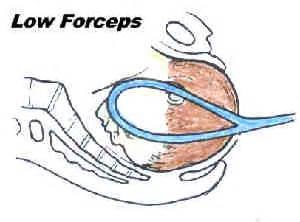
Traffic Fines and Loss of Life.

January 14th, 2017

By Dr. Tilak S. Fernando

Sri Lankans faced a shocking and distressing spell during the LTTE conflict when the death smell was in the air persistently. A few decades ago, prior to such an abhorrent phase, the sound of the word ‘death’ or having to attend a ‘funeral’ managed to generate apprehension and fear among the people because death occurred in a neighbourhood only once in a blue moon. For the first time people in Sri Lankans were traumatised having to witness cold blooded murder or decapitated humans burning on spikes along the road sides, with fetid human body oil draining out of such scorching bodies, due to a drastic policy adopted by the JVP (Peoples’ Liberation Front) policy once, as a result of their social struggle against the government as much as due to tit for tat operations by the security forces to eradicate the problem. The word ‘death’ seemingly began to benumb the human feelings to such an extent that the revulsion of hearing of a murder or a person dying a natural death diminished and transformed into something inconsequential.

tilak14011701

Thank heavens! There are no more such killings or deaths in the country, but contrary to such reassuring and encouraging thoughts, what the nation has been facing was a different version of loss of human life and injury due to motor vehicles and road accidents. In this regard, the National Hospital of Sri Lanka once launched a ‘Road safety awareness project’ on traffic accidents on roads, to report on a daily basis, the sole idea being to bring about sensitivity and awareness to all authorities concerned.

Similarly, the Institute of Legal Medicine and Toxicology revealed that more than 50 per cent of ‘unnecessary’ deaths were caused due to road accidents; sufferers from road traffic injuries added up to thousands with no compensation or insurance payments to victims, which brought not only misery to the people but became a heavy burden on the Ministry of Health budget as unwarranted expenses could have otherwise been easily utilized to improve hospitals and medical healthcare in the country.

Social problem

Everyone was aware of the basic fact that road accidents were due to the indiscipline on the part of road users, including both pedestrians and motorists. Many erudite individuals have filled the newspaper columns with their concerns and suggestions on the subject, which appeared to be ever increasing as a social menace. News coverage on TV and the print media talked about it incessantly. Even the police spokesmen came on TV ‘chat shows’ and accepted the dilemma, but everything unfortunately was confined only to a lip service! Motorists, who sat behind a steering wheel, displayed conjoint naivety about the Highway Code and road discipline. Even those who were familiar with the rule of the law on road began to espouse a mindset of joining the ‘road-idiots’ with the premise of ‘If you can’t beat them, join them’ attitude.

It is very unfortunate that pedestrians as much as private bus drivers seem to consider public roads as their private domain; pedestrians crossing the roads willy nilly from any place, without paying any heed to moving vehicles or to their own lives. At traffic signals when red lights flash and buses stop, commuters keep jumping out of the buses into the traffic queues that make the problem very acute and thorny. This is partly because in Sri Lanka, unlike in developed countries, bus drivers are unable to close and open doors to ingress and exit of passengers (except at the bus halts) due to the type of buses both, private as well as SLTB not having such facilities. On the other hand, private bus drivers’ main aim appears to be only to fill the buses with many passengers as possible to sardine-packed level, disregarding the commuter comfort, just to make an extra buck!

Responsibility

In this regard the general responsibility has been thrust upon the traffic police, they being the official custodians of accident prevention by implementing the motor traffic laws to the very letter. Undoubtedly quite often, even the police have been subjected to heavy pressures coming from above, which have reduced them to pawns on a chessboard.

At long last the unity government has introduced a new system of imposing heavy fines up to Rs 25,000 on errant drivers who overtake from the left, drive without a valid driving licence, minus any insurance on the vehicle they drive, permitting anyone who does not hold a valid driving licence, driving under the influence of liquor, disobeying railway crossing regulations erratically.

Such an initiative has been taken after consultations and advice from the officials attached to Sri Lanka Transport, Justice and Finance Ministry, Road Safety Authority, Transport Commission, the Motor traffic Department and the Police, taking into account the increasing number of road accidents and deaths.

There were many arguments to start with, for and against the heavy fines. Some, including a few government ministers stuck to their guns and stood firmly by the new penalty decision on errant drivers insisting that it should be increased even up to Rs 50,000. On the other hand, critics pointed an accusing finger at the corrupt police officers stating that the increase in fines would only help the traffic police officers to make hay while the sun shines. Their argument was based on drunken drivers, for example, who might be tempted to part with say Rs 10,000 to a shady cop and show a clean pair of heels after committing an offence, rather than having to waste time in Magistrates Courts later, thus saving Rs 15,000 also by avoiding such a hassle.

Rational arguments

To a certain degree such accusations become rational arguments, because on many an occasion rotten eggs in the basket full of dedicated and honest police officers have tarnished the force’s name. The writer was an eyewitness to such a ‘rotten apple in the core’ of the police force when his driver was stopped suddenly on 21 December 2016 by a traffic police officer from Kosgoda police station, for no reason at all, when the driver was simply going behind a van while driving towards Induruwa.

The traffic police officer’s excuse for stopping was that the driver attempted to overtake a three-wheeler. His driver’s reasoning out with explanations fell on deaf ears of the police constable, which ended up the poor guy having to surrender his driving licence and getting a receipt (No.459726/ I/2579569) along with a penalty charge sheet for Rs 500.

On the charge sheet he noticed that a wrong endorsement had been made which read, ‘Overtaking a vehicle recklessly 148(4)’. Due to a postal strike on that day we were inconvenienced to no end. The driver wanted to pay the fine and collect his driving licence while in the area, without having to make another trip later. Finally, after a long drive to locate the nearest Provincial Secretariat and paying the fine (which again was a cumbersome operation) the driver went back to the spot where the two traffic police officers were on duty. After recovering his licence he told the officer, “Sir, you charged me for no fault of mine. Can you see a little camera attached to the windscreen? It records every movement in front of the vehicle with time and date”.

I never did overtake a vehicle but you have on the ‘dada kolaya’ (charge sheet) written something completely wrong. My boss writes to newspapers and I am sure he will highlight this with facts.” But the police constable’s response was owa paththarawala daanne nehe (newspapers do not publish such stories.). I am still awaiting the printout of the incident from the camera, to write to the IGP to expose such deficiencies in the police force, which should help him to root out the evil before critics’ forewarnings become a reality when heavy fines come into effect.

On the brighter side, the mention of the word heavy fine proposal has been able to jerk many who did not either have a driving licence or those who had their licences expired, including those drivers who were involved in driving heavy vehicles with light vehicle licences, queuing up to get medical clearances, which is a prerequisite to get a new licence or renew expired driving licences.

On 3 January 2017, the writer travelled on the road from Colombo to Trincomalee and was pleased to see not a single motor car overtaking from the left, except of course the odd private bus engaged in a mad rush in the early hours disregarding anyone on the road and overtaking at speed quite recklessly. Similarly the motorcyclists still pose a dangerous threat on the road as they seem to hug the middle of the road, during the peak traffic hours jumping out of traffic queues and ride on opposite lanes while crossing the white middle lane, which is hazardous to oncoming vehicles. Therefore, it would be appropriate to take drastic steps in the form of heavy fines on them too, to eradicate the menace and discipline them. After all, what matters is not a heavy fine but a loss of human life!

tilakfernando@gmail.com

Yahapalanaya 2017 –A Dismal Anniversary

January 14th, 2017

By Anura Gunasekera Courtesy The Island

The MP for Kurunegala, Mahinda Rajapaksa, has announced a wish, intent and threat, a three-in-one package for the New Year. Perhaps it is also a resolution; that is to topple the existing Sirisena/Wickramasinghe coalition and to establish a new government . Its composition and contours have not been defined but it is a certainty, that the new regime he is contemplating will be totally controlled by him, even if he does not have an official position in it.

Mahinda Rajapaksa , by nature, inclination and habit is given to making vainglorious statements. Purple rhetoric has been his political stock-in-trade, whether talking about confronting real and imaginary enemies, improving the economy, ushering in a golden era for the nation, offering a fair deal and equitability in the treatment of the minorities and combating corruption ( the noise in the background is the derisive bray of equine laughter ) or any other question of national importance. However, to give the man the credit that is his due, he presided over the conclusion of 30 years of war, making good on his assurances. As for the rest, it was mostly insincerity and actorish posturing.

Leaving aside the customary Rajapaksa mendacity and his yet unrealized dream, let us focus on the ugliness of current political realities, especially the unraveling of the ” Yahapalanaya ” covenant.

“Yahapalanaya” was a concept, a vision, a promise for a better tomorrow, an assurance extended to a despairing public, a last straw that disillusioned millions collectively clutched at. But the painful truth is that a concept and a vision and an assurance do not become a reality unless there is content, action and delivery of stated objectives. Of the last there were many noble statements but they still occupy the limbo of unachieved goals.

On the Yahapalanaya agenda were the restoration of genuine democracy, re-engineering of the economy and the curtailment of wasteful expenditure, total freedom of expression for the press and other dissenters, without fear of official reprisal as a response to the exposure of unpalatable truths, restitution of denied rights to the minorities and the implementation of measures for genuine reconciliation, the impartial investigation of allegations of mega –corruption of the previous regime and the re-investigation of serious crimes, especially politically motivated murder, shelved or otherwise sanitized by the Rajapaksa regime.

Before the “Yahapalanaya” could even gird its loins, the waste from the Central Bank Bond scandal hit the proverbial fan; the inept and transparently biased damage control operation only served to smear the odour on every surface, incriminating all actors in the drama and their patrons beyond the possibility of sanitization. Whilst CB Governor Mahendran was eventually removed no credit accrues to Yahapalanaya , as this action came as a reluctant and belated response to overwhelming external pressure, and not as an immediate and spontaneous internal acknowledgement of a massive financial impropriety.

Despite this early fiasco, in the first year there was reason for hope. The Right to Information Bill was passed and despite its detractors, it is still a commendable achievement. Major financial improprieties were under official scrutiny and other crime investigations , shelved during the Rajapaksa years, were being speedily revisited. Questioning of alleged wrongdoers became a daily drama, paraded ostentatiously before an expectant public. The Baratha Premachandra murder case was concluded, with former MP Duminda Silva being among those convicted; in the Rajapakse regime Silva’s exoneration would have been a certainty, even if the case had been concluded.

Then came the bombshell of the President’s castigation of the investigative bodies, resulting in the Bribery Commissioner herself becoming the most high profile casualty in the criminal investigation process; in this writer’s view, the biggest body blow to Yahapalanaya, delivered by its chief architect.

On another side, the inefficiencies in the management of the economy and the implementation of political strategy have been nothing short of comical. There was the farce of the first Yahapalanaya budget, with Minister Ravi Karunanayake blustering before the public, his face covered in egg, defending a budget document which was systematically dismantled from the very moment of its presentation. Official statements on major issues made by high-profile government spokesmen, particularly by Minister Rajitha Senaratne, would be contradicted or amended almost immediately thereafter, by another high-profile representative. The lack of cohesive policy and the cracks within an uneasy alliance were being exposed with a cruel clarity.

Amongst the most contentious issues the government now needs to resolve are the accords with regional powers. The CEPA agreement, now presented to the public as ETCA with, supposedly, the harmful elements of the former excised, is yet to be clarified to the satisfaction of its critics. The government assures that Indians will only be employed in IT and skilled occupations in the Dockyard. The immediate and logical question is: why cannot locals be trained to do those jobs? When the state is unable to resolve the daily unlawful intrusion of Indian fishermen in to national waters, how will they manage an Indian entrenchment on land, underwritten by a bi-lateral agreement?

More serious than the Indian involvement is the extent of the Chinese incursion. Undeniably, those two sterile projects, the Hambantota harbour and the Airport, have been foisted on this government as a result of Rajapaksa megalomania and major measures have to be implemented to ease the consequent debt burden on the nation. The question is: has the government’s anxiety to throw the deformed baby out with the bath water totally clouded their view of the ground realities? Or have they decided to ignore public opinion?

How will the government alienate 15,000 acres from Hambantota for Chinese occupation, without causing massive disruption to local life? Hambantota is largely rural, with fishing, agriculture and related occupations being the main sources of income generation for its inhabitants. This contemplated land area will carry forest reservations, villages, schools, farmland, paddy land, grazing for cattle, water ways, inland water bodies and places of religious worship. What is the state strategy to compensate local citizens for the loss of all these facilities and resources? What will China do in this land area? What are the new industries they propose to set up? What impact will that have on the environment and local society? If new employment is created, what proportion of locals will they employ?

Sri Lanka is a small nation, surrounded by much larger countries, all with economic and military power, greater than its own by an order of magnitude. Whilst maintaining mutually beneficial economic and political ties with them is an imperative, Sri Lanka has to take the utmost care to ensure that it does not enter in to asymmetrical agreements of long duration with a super power as, eventually, the damage to national interests will be irreparable. Once entrenched, the super power will not relinquish its hold unless staying on is detrimental to its own interests. It will only ask for more. National interest will not even be a consideration in their calculations. We have to bear in mind at all times that we do not have the wherewithal, to exert economic, political or military force to evict an undesirable occupant from our soil.

The government is yet to provide a workable solution to the demands in the North, a highly emotive national issue, without alienating the Sinhala south. It is yet to address the issue of the disruption caused to locals by the Uma Oya project. The SAITM question is yet unresolved, with the GMOA arraigned solidly behind the IUSF in their demand to nationalize the private medical college. The protests at Hambantota are taking an ugly turn and whilst we can be fairly confident that there will be no repetition of the Rajapaksa suppression of dissent with the killing of unarmed protestors, as in Rathupaswela, continued dissent by citizens against major state initiatives can eventually crystallize in to a concerted move against the state itself.

Over time, all governments lose allure, credibility and, in the course of democratic process, are unseated. Mahinda Rajapaksa lost despite having as a lifelong credit balance, the victory over the LTTE. This regime, and its principal actors, have no such fall back resource and will either survive or perish, entirely on the merits of achievements during its tenure. What is deeply worrisome to its supporters is that the present regime seems to be fast losing touch with its base and the realities of the conditions which brought it in to power. One has to remove Ranil Wickremesinghe from this equation as, combined with his highly privileged background and a congenital inability for empathy, he has never understood or listened to the voice of the ordinary man. But inexplicably, President Sirisena, very much a man of the people, appears to have distanced himself from both the forces and the assurances which catapulted him in to power.

The only other alternative to this regime is a return to Rajapaksa rule. Mahinda Rajapaksa does not have any solutions to the problems the present regime is grappling with, many of them the results of his own misrule. He has demonstrated beyond doubt that he has no understanding of macro-economic concepts and protocols of governance, and that he has no regard for constitutional restraints on unethical rule. However, he understands political ground realities and is an expert at exploiting discord and intra-party fissures. What is in power is an unnatural cohabitation and all Rajapaksa has to do is to keep public attention focused on its inadequacies and glaring inability to read popular opinion, whilst selling to the masses his evangelical brand of patriotism. The result will be, even before the fullness of time, the disintegration of the Sirisena-Wickremesinghe alliance and the opening of the door for the re-creation of the sordid Rajapaksa past.

Govt. exults over GSP+

January 14th, 2017

Courtesy The Island

Even though it appeared as if the two partners in the government had closed ranks and resolved to carry on the unity government till 2020, new divergences of opinion appeared in the ruling coalition between the UNP and the SLFP (Sirisena faction) on the one hand and among Sirisena loyalists on the other. This was over who the candidate of the SLFP at the next presidential election was going to be. Sirisena loyalists like ministers Duminda Dissanayake, S.B.Dissanayake and Dayasiri Jayasekera want MS to be the next presidential candidate. In a suprising twist, minister Rajitha Senaratne who is also a Sirisena loyalist, has unequivocally said that the executive presidency will be abolished and there will be no presidential elections in 2020. Ajith P.Perera of the UNP has echoed much the same views. Minister Rajitha Senaratne appears to have cast his lot with the UNP and is now articulating the interests of the UNP rather than that of the SLFP (Sirisena faction).

After marking the second anniversary of Maithripala Sirisena’s victory everybody in the government now seems to be preoccupied with survival strategies for the future. Ministers like Duminda Dissanayake and S.B.Dissanayake obviously cannot think of any other option but retaining Sirisena as the presidential candidate. It does not appear to have struck them that Sirisena may not be viable candidate. His record as the president of this country has been wanting. The UNP voter who made him president last time will not make him president again because the SLFP which did nothing to make him president has got the best ministries in the government. The angst of the rank and file UNPer who can’t get anything done by the government he elected into power, is due to Sirisena’s pampering of the SLFP. While it is very unlikely that he will get the UNP vote, what proportion of the SLFP vote Sirisena can command is also open to question.

article_image

Last Friday, minister Susil Premajayanth was heard expressing the view at a meeting held in Malabe that if he had not been sacked by President Sirisena just 48 hours before the last parliamentary election, it would have been the UPFA that got the most number of seats on parliament and that such a prevention of an SLFP victory cannot happen again. He also said that there is a need to get both groups of the UPFA back together. Striking a completely contradictory line to that of President Sirisena and his closest loyalists like Mahinda Amaraweera that this government will continue till 2020, Premajayanth said openly that once a people’s movement against the government emerges, you can’t stop it and that things can change in a hitherto unanticipated manner.

Selling the family silver

Last year (2016) the government had hoped to raise a lot of money through the privatization of state owned assets. The revenue estimates in the 2016 budget had projected non-tax revenue of Rs. 378 billion as against the Rs. 126 billion raised in 2015  – an year on year increase of Rs. 252 billion. The policy announced in the 2016 budget was to form a government owned holding company similar to that of Temasek Holdings of Singapore. This public company would be operated based on sound financial principles and market economics. The shares of these enterprises will be passed onto a Public Wealth Trust, the shares of which could be traded on the stock market. There was also a proposal to set up a Special Purpose Vehicle (SPV) for the Southern Expressway and the Katunayake Expressway whereby private investors will be invited to invest in the SPV for which the government will guarantee a minimum return. The funds generated from the investments in the SPV were to be utilized to clear the national debt. Such an SPV was to be established for the Norochcholai coal power plant as well.

However none of these plans materialized in 2016. The non-tax revenue actually raised that year was just Rs. 144 billion. The increase in non-tax revenue projected for 2017 is Rs. 189 billion, a year on year increase of Rs. 45 billion. The finance minister said in his 2017 budget speech that non-strategic enterprises such as Hyatt, Grand Oriental Hotel, Waters Edge, West Coast, Manthai Salt, Hambantota Salt and Hilton would be listed during 2017 and this was expected to raise at least USD 1,000 million which was to be used to settle our debts. It is in this backdrop that the government arrived at a decision to give the Hambantota harbour on a long lease for 99 years for 1,080 million USD. A framework agreement has already been signed but the signing of the final agreement which was scheduled for January 7 ran into problems with Minister Arjuna Ranatunga (Ports and Shipping) writing that letter mentioned in this column last week.

The SLFP group in the government appears to have distanced themselves from the ceremony that was held on January 7 and only one SLFP minister represented the SLFP group. It is in this context that minister Lakshman Kiriella had said that if the Hambantota deal does not go through, taxes will have to be increased. Ven Medagoda Abhayatissa Thera had personally gone to see the president to request him not to privatize the port and the president had told the monk that the money was needed not just to pay off debts but also to meet day to day expenditure. If the privatization of the Hambantota Port takes place for 1,080 million USD, that will bring in Rs. 162 billion offsetting at least partially the shortfall in the non-tax revenue anticipated in 2016.

The question of course is what will happen if the UNP is forced to cancel the sale and settle for the other bidder? Last week, former president Mahinda Rajapaksa also put out a statement on the Hambantota deal saying that the other bid rejected by the government was more favourable to Sri Lanka than the one that has been accepted and as in the case of the Bond scam, there seems to be some consensus that has been built between the SLFP group in government and the Joint Opposition as regards the Hambantota deal. Even if the other bid is finally accepted, the government will still get an upfront payment of 750 million USD or Rs. 112 Billion which will provide much needed relief.

This column has pointed out on an earlier occasion that there was a massive increase in tax income from Rs.1,050 billion in 2014 to Rs.1,356 in 2015 – an increase of Rs.306 billion in just one year. But that was achieved due to the massive import of cars during 2015 which increased customs income from Rs. 557 billion in 2014 to Rs. 790 billion in 2015. The super gains tax imposed on the business community increased income tax revenue from Rs. 69 billion in 2014 to Rs. 105 billion in 2015. You can’t keep increasing revenue in that manner. Last year, taxes on vehicles were increased and there are reports to say that this caused a reduction in the import of vehicles with a concomitant reduction in tax revenue. The price of cigarettes was increased and there are reports to say that the consumption of cigarettes and the tax income there from has halved. As the government loses revenue from these sources, they have to meet the shortfall from the sale of national assets which is why there is this unseemly scramble to privatize the Hambantota harbour and alienate a further 15,000 acres of land to foreign parties.

In the meantime, the government has been crowing in triumph at being able to get the GSP+ trade concession back. It certainly came at an opportune moment and would help somewhat to offset the embarrassment suffered over the Volkswagen fiasco. A new German Ambassador has taken over in Colombo and everywhere he goes he is asked about the Volkawagen factory. He was the chief guest at a Rotary club meeting held at the Galadari last week and he said in his speech that neither the Volkswagen company or the German embassy had anything to do with whatever was started in Kuliyapitiya. Then he attended a Newsline programme at Sirasa with Faraz Shauketaly and said much the same thing and even drew attention to the other controversy that arose about the Italian rubber products manufacturer who is supposed to have set up a factory in Horana which the principals in Italy seem to be unaware of. The government badly needed the diversion that was provided by the decision of the EU to grant GSP+ to Sri Lanka again.

GSP+ over the years

At this present moment, there are eight recipients of GSP+ – Armenia, Bolivia, Cape Verde, Kyrgyzstan, Mongolia, Pakistan, Paraguay and the Philippines. When Sri Lanka is granted GSP+ we will be the ninth nation to benefit from this trade concession. At the time Sri Lanka lost the GSP+ trade concession in 2010, there were 15 beneficiaries in this programme.  Armenia, Azerbaijan, Bolivia, Colombia, Costa Rica, Ecuador, El Salvador, Georgia, Guatemala, Honduras, Mongolia, Nicaragua, Peru, Paraguay and Sri Lanka. We see that nine nations have dropped out since 2010 – Colombia, Costa Rica, Ecuador, El Salvador, Georgia, Guatemala, Honduras, Nicaragua, Peru and four new nations have joined since 2010 – Kyrgystan, Cape Verde, Pakistan and the Philippines.

The question that all Lankans should be asking themselves is, if this is such a desirable trade concession, how is it that there is such a large turnover in the list of beneficiaries? If this is a trade concession that can alter the destiny of a nation for the better, why would any country drop out of it? The truth of the matter is that GSP+  is the most unsuccessful trade preference programme ever launched by the EU. This was started in 2005 to promote good governance in middle income countries by making them sign and adhere to 27 international conventions in exchange for getting zero duty access to the EU. The beneficiary countries would be monitored by the EU for compliance. This scheme was a flop from the beginning because very few countries want to lose their sovereignty in exchange for a trade concession.

When the GSP+ programme started in 2005, they had 16 original members Armenia, Azerbaijan, Bolivia, Colombia, Costa Rica, Ecuador, El Salvador, Georgia, Guatemala, Honduras, Mongolia, Nicaragua, Peru, Paraguay, Sri Lanka and Venezuela. Of these countries, only Armenia, Azerbaijan, Georgia and Sri Lanka were genuine applicants; the other 12 nations – Bolivia, Colombia, Costa Rica, Ecuador, El Salvador, Guatemala, Honduras, Nicaragua, Panama, Peru, and Venezuela were nations that were put into the GSP+ programme by the EU when the World Trade Organization shot down the Special incentive scheme for drug producing countries which had been started by the EU in order to help those countries to move away from drug production into conventional economic activities.

From the very beginning, the EU had the discretion to decide whether they would pursue the implementation of the 27 international conventions or soft pedal it.

The 16 original beneficiaries of the GSP+ were not equal. The countries affected by narcotic production would have had no problems even if they violate all 27 conventions in broad daylight. The scheme of preferences they were under earlier was given to them unconditionally and it was only too plain by the manner in which all of them were simply absorbed into GSP+ when the ‘drugs programme’ had to be jettisoned; that this was a continuation of the drugs programme under a different name. However the genuine applicants for GSP+ would have come in for scrutiny if the EU did not like the government of that country – which is what happened to Sri Lanka in 2010.

GSP+ is not an incentive given to the garment producers at the Sri Lankan end. It is a concession given to the importer at the European end so that the importer will not have to pay duty when importing garments from Sri Lanka which will motivate the importer to import more from Sri Lanka which now has this trade concession which is supposed to work for the benefit of the recipient. So we have to realize that Sri Lankan garment factories may not get anything more than they are now getting per piece of clothing after GSP+ is restored. The volume of clothing ordered may increase but without a significant change in the price per piece that the local producer gets. Someone may argue that it is not just the garment industry that benefits from GSP+ and that tea, coconut products, other items like?fish, cut flowers, vegetables, fruits and ceramics can be exported duty free to the EU if GSP+ is restored. GSP+ will no doubt help the exporters of such items especially because exporters of produce like cut flowers and vegetables will not be hamstrung by rules of origin issues. But how much can SL export of these items? Fish, vegetables and fruit cannot be exported in quantities that will starve the local market.

The EU has stringent ‘rules of origin’ criteria to prove that the goods originate in the GSP+ recipient nation. Goods produced with raw materials imported into a GSP+ recipient country can qualify for the duty concession if it can be proved that the raw material has been sufficiently worked or processed to qualify as an item produced in that country. In the garment industry for example, for an item to qualify, it is not sufficient for the garment to be sewn in the recipient country. It has to be preceded by at least two or three other processes such as the weaving of the fabric, printing, bleaching, shrink resistance processing etcetera. Besides, there is the condition that the value of the unprinted fabric should not exceed 47.5% of the ex-factory price of the finished product. So it’s not easy to qualify for duty free status in the EU. The EU’s regulations allow for raw material originating in the South Asian region in countries such as Bangladesh, Bhutan, India, Maldives, Nepal and Pakistan to be considered to have originated in Sri Lanka.

Why we should aim for LDC status

The Sri Lankan garment industry did not fall when the GSP+ concession was removed.  Quite to the contrary, the industry continued to grow at around 6% to 7% annually even after the GSP+ was removed in 2010. The Sri Lankan garment industry was doing well before GSP+ was obtained in 2005 and it continued to do well after 2010 when the GSP+ concession was withdrawn. So the question is why do we need this concession? We will in reality be putting our sovereignty on the line for very little. Besides, the principle on which the GSP+ concession is based is in itself a perversion of the original philosophy behind the Generalized System of Preferences that was mooted by UNCTAD in the late 1960s. The idea then was to give the least developed countries duty free access to the EU and as a country develops, it would move up to paying a concessionary import duty and at the final stage, the usual import tax would be charged once the country is a developed nation.

When the garment industry first began in this country, we were at the first stage of receiving duty free access as one of the least developed countries. Now we are on the second tier – the ordinary GSP scheme paying a concessionary import tax when our goods enter the EU market. That is the normal progression. If you have an export industry that is unable to make it through this natural progression and is perpetually dependent on zero duty access to foreign markets, that is not a sign of progress. This again is another reason why none of the great exporting nations in Asia have applied for GSP+ because it can condemn a nation to perpetual dependency on concessions which can unilaterally be withdrawn by the EU at any time. Even at present, the EU guarantees the continuation of the GSP+ scheme only until 2023.

If at that time the EU decides that it cannot continue with these trade concessions, we will be left high and dry after becoming dependent on exports to the EU. Zero duty access even after a country reaches middle income status breeds dependency. Sri Lanka provides a striking case study in that respect. Before receiving GSP+ in January 2006, this country was exporting to the EU under the concessionary rate of duty applicable to the Standard GSP scheme and exports were growing year by year. Then for five years from 2006 to 2010 we enjoyed zero duty concessions under the GSP+ scheme.  From the time GSP+ was withdrawn in 2010, we have been hearing a chorus of voices saying that the economy is going to go belly up unless we get GSP+ back. What we see here is a country that was doing just fine without GSP+ prior to 2005 reduced to the level of a supplicant for duty free access after just five years of GSP+.

This is obviously why no major exporting nation has ever applied for GSP+.  It would ruin the existing levels of competitiveness and spawn industries which are unable to survive without special concessions. The biggest success for the GSP+ scheme up to now is in managing to rope in the Philippines, the most successful exporting nation they have among their beneficiaries. But this seems more a political move during the presidency of Benigno Aquino III than anything else. The roping in of Pakistan is not really an achievement because they were originally one of the countries in the ‘drugs programme’.

This writer has suggested previously in this column that if Sri Lanka wants to enjoy duty free access to the EU without any conditions, the way to do that would be to once again become one of the least developed nations.  Another way of getting duty free access to the EU with no conditions is to become a narcotics producing country and getting GSP+ on a platter. But because of the difference in the rules of origin conditions between the programme for the least developed nations and GSP+, it’s not worth our while to get GSP+. We should aim for least developed country status because that comes with much less stringent rules of origin criteria.

Weerawansa, sheep and goats

January 14th, 2017

Editorial Courtesy The Island

It is not for us to judge whether former Minister Wimal Weerawansa is guilty or not of flagrant abuse of public property, as alleged in charges filed against him by investigatory authorities of the State in ongoing court proceedings. He has been remanded on these charges and will probably be bailed out as the long drawn legal procedure drags on as they always do in this country. The business of determining guilt or otherwise is not the task of the media or of public opinion. That is the job of the courts. But everybody in this country knows all too well that politicians of all hues, from the dawn of Independence up to the present day, have abused public property. This was not a problem that had assumed today’s gigantic proportions in the early post-Independence years when most politicians had a sense of right and wrong and public servants did their jobs without fear or favour. We need hardly labour the fact that this is no longer the case. Abuse of State-owned vehicles, particularly, by politicians as well as officials has grown unbelievably with each administration outdoing its predecessor.

It has been alleged that Weerawansa had caused a loss of Rs. 90 million to the State by hiring and releasing about 40 vehicles to various persons including his close relatives during the tenure of the previous regime. In its editorial yesterday, The Island commented that if the very serious charges preferred against the former minister are proved at a fair trial, deterrent punishment should certainly be imposed. Ninety million rupees is certainly not peanuts and the vast majority of Lankans will not see that kind of money in their lifetimes even though the rupee is no longer what it was and anybody who owns a motorbike is a laxapathiya. But compared to the alleged bond scam that ran into billions of rupees and profited a company controlled by the son-in-law of the then Governor of the Central Bank on a scale unseen in the commercial history of this country, the former minister’s vehicle abuse cost would be a mere bagatelle. While statements have been recorded over the bond matter, there have been no high profile arrests as in the case of Weerawansa. His party had last week tossed out the names two other vehicle beneficiaries serving as deputy minister in his ministry and the chairman of a corporation under it and dared the powers that are to probe them as well. Those worthies have now switched allegiance, like many others we might add, with one even securing admission to Parliament on the UNP National List! They now belong to the protected species.

While Wimal Weerawansa is being hauled over the coals, rampant vehicle abuse continues unchecked by those in political and official authority. It would be no exaggeration to say that many highways and even another Hambantota port could have been built with the price that the taxpayer have paid over the years on abused official transport. Instead of doing something about that, we are treated to hearing our leaders both in government and opposition justifying the duty free vehicle permits worth millions being issued to MPs. These are often flogged at mind-boggling prices no sooner they are issued and such brazen actions defended on the basis that the present system of elections require massive expenditure and costs incurred must be recouped. This implies, as we have said before in this space, that the taxpayers owe their lawmakers a living – not an ordinary living but lavish one with all the trimmings. When no less than the prime minister says that MPs must be paid a monthly allowance of Rs. 100,000 as they would otherwise have to find ‘sponsors’ to run their electoral offices, we can only resort to the pithy Sinhala idiom to ask karta kiyanneda?

It was reported that in the course of the investigation of the Weerawansa case it has been stated that officials must know their jobs. That suggests that political functionaries held to account for wrongdoing are taking recourse in the age old strategy of passing the buck. They may have ordered the release of a vehicle to so and so appears to have been the excuse, but the allocation is made by an official on whom it is incumbent to do only what is proper and legitimate. So the buck must lie at the official’s door. Given that one Ministry Secretary who recently held back on doing what he believed was illegal was told to “sign or resign,” what are hapless officials expected to do? Unfortunately the fact is that many bureaucrats are anointed in high office by political patronage. Meritocracy has long flown out of the window and seniority too is not always respected. Patronage appointees bend over backwards to please their patrons and there are few with the backbone of the late IGP Cyril Herath to tender their resignation rather that fall in line with improper political demands. To his credit, Herath also declined a compensatory diplomatic appointment sop thrown in his direction. But most officials are compliant and do as bidden with a supplicatory ehei hamaduruwaney.

It is a long time since the late President J.R. Jayewardene pledged a dharmishta government. Yahapalanaya today is attracting as much derision as dharmishta did then. The present government was elected to office to change everything that was wrong in the way the previous administration conducted business. Progress of bringing the guilty to book is painfully slow and the foreign minister has spoken in London about special courts in the offing. There must be no selectivity between sheep and goats on who is being held to account. It was recently reported that a minister’s son without a Sri Lankan driving licence met with an accident and the matter was settled on a payment. That may be well and good if normal process regarding speeding or reckless driving is followed. But importantly, the minister also must be held to account for his son driving an official vehicle. That is what is expected of real yahaplanaya than the spurious product on offer today.

Govt. gives the nod to 58 EU conditions to regain GSP+ facility ‘Adverse and detrimental to the interests of Sri Lanka

January 14th, 2017

Courtesy The Island

The government has agreed to comply with 58 European Union (EU) conditions, which high-ranking sources in Colombo described as “adverse and detrimental to the interests of Sri Lanka” to regain the GSP+ facility.

On deciding to accommodate the stipulated conditions, moves are now underway to officially inform the EU that the Sri Lanka government is prepared to implement them in return for the restoration of the duty free concession, the sources asserted.

Amongst the conditions laid down by the EU are the repeal of the Prevention of Terrorism Act (PTA) and to introduce in its place new legislation which should be reviewed and drafted in terms of international standards, wind up all court cases against detainees in custody, end the rehabilitation of LTTE combatants, introduce amendments to the criminal law to accommodate the rights of these detainees, review the Public Security Act, establish a separate office for missing persons, introduce a new human rights action plan (2017-2021), review the situation on Tamil organizations and individuals listed as terrorist outfits. (The government has informed the EU that it hopes to de-list 86 persons and eight organizations based on investigations conducted).

As part of the conditions, the EU has also demanded that court cases relating to corruption charges handled by the FCID, Attorney General’s Department and Bribery Commission be expedited and a new action plan be introduced by the Bribery Commission to tackle bribery and corruption.

The EU also wants issues such as the decentralization of power to the provinces be considered under the proposed new Constitution in addition to electoral reforms, amendments to the Land Act, increase in the number of Tamil-speaking women police personnel, ensuring at least 25% female representation in parliament and stipulation by law the marraigeable age under Muslim law (A Cabinet sub committee has already been appointed in this regard).

The government has given its consent to comply with these conditions and keep the EU informed of the progress in their implementation, these sources claimed.

හම්බන්තොට වරාය විකුණන්නේ නැතිව බෑ.. පඩි ගෙවන්න, වියදමට සල්ලි නෑ.. – ජනපති

January 14th, 2017

ලංකා සී නිවුස්

හම්බන්තොට වරාය විකුණන්නේ නැතිව මේ මහා ණය කන්දරාව ගෙවන්නේ කෙසේදැයි ජනාධිපතිවරයා තමන් හා පැවසූ බව පූජ්‍ය මැදගොඩ අභයතිස්ස හිමියෝ පවසති.

පසුගියදා ජනාධිපතිවරයා හමු වූ අවස්ථාවක තමන් වහන්සේ කල විමසීමකට ජනාධිපතිවරයා පිලිතුරක් ලෙස එසේ කී බවද උන් වහන්සේ කීහ.

වරාය විකුණන්නේ ණය ගෙවන්නමදැයි විමසූ විට ‘ණය ගෙවන්නම නොවෙයි. අවශ්‍ය කරන පඩි නඩි ගෙවන්න. විය පැහැදම් කරන්න’ යයි ජනාධිපතිවරයා කී බවද එහිමියෝ කීහ.

වීඩියෝව මෙතනින්

https://youtu.be/N8TBE8cD4D0

යුරෝපයට කේලාම් කියා GSP+ සහනය අහිමි කලේ කවුද.. හත් වසක් පැරණි වීඩියෝවකින් කතා දහසක් මෙන්න..

January 13th, 2017

ලංකා සී නිවුස්

මෙරටට GSP+ බදු සහනය අහිමි වීම සම්බන්ධයෙන් දැනට වසර හතකට පමණ පෙර එවකට ඇමතිවරයෙකු වූ දිනේෂ් ගුණර්ධන හා එවකට විපක්‍ෂ නායක රනිල් වික‍්‍රමසිංහ අතර පාර්ලිමේන්තුවේදී වූ විවාදයකි මේ.

https://youtu.be/sNcv-F9k7DY

Re: proposed marriage of the City of Brampton with Sri Lanka’s northern city Vavuniya as your gender specific, ‘sister-city’.

January 13th, 2017

 Asoka Weerasinghe Grove Crescent . Gloucester . Ontario . Canada

13 January 2017

Mayor Linda Jeffrey
City of Brampton the ‘Flower City’
2 Wellington Street West,
Brampton, ON. L6Y 4R2

Dear Madam Mayor Linda Jeffrey:

Re: proposed  marriage of the City of Brampton with Sri Lanka’s northern city Vavuniya as your gender specific, ‘sister-city’.

Wow!  What’s going on in your neck of the woods of Ontario?  I am told that Ontario’s City of Markham has been or will be married with Mullaitivu, a Northern city of Sri Lanka as their sister-city.

But at least Markham was smart to pick a historical city to join hands with, as that is the city where Velupillai Prabhakaran, the fascist leader of the Tamil terrorist organization Liberation Tigers of Tamil Eelam (LTTE aka Tamil Tigers) was shot dead on the shores of the Nandikadal lagoon on 19 May 2009, after he haemorrhaged that beautiful little island with bombs, bullets, claymore mines and suicide bombs in a war of 30 long years. A war that killed over 100,000 peoples among them was two heads of states, Rajiv Gandhi of India and President Ranasinghe Premadasa of Sri Lanka.   All for the want of a mono-ethnic, racist, separate Tamil state, Eelam.

What pride have you got to speak of Vavuniya as your sister-city?  The only legitimacy that I can think  of is that you may want to change the name of your City of Brampton to, City of Bramptamil, sounding musically apt, after your city’s Tamil population will mutate  from 20,000 to 40,000 and then to 60,000 with Tamil immigrants, Tamil refugees and family unifications in a few years.  It will be a windfall of Votes…votes…votes for you and your party colleagues as City Councillors.  Isn’t that so Madam. Mayor!   To me it is cheap, disingenuous and stinks .   I am baffled that you did not want to have your city marry with the City of Killinochchi, also from the North of Sri Lanka, as this city has history.  That is where the Tamil Tiger Headquarters was, where our Canadian  Mission diplomats went to pay their hosannas to these Tamil Tiger terrorists, according to the UN was the most ruthless of all terrorist organizations in the world.  These are the guys who perfected the art of suicide bombing by perfecting the suicide body pack.  By the time the Tamil Tigers were militarily defeated they had detonated 388 human suicide bombs, over half of them were young kidnapped and brain-washed females.

The last census of 2012 told us that there were 141,269 Tamils in the District of Vavuniya and of them 119,286 were Hindus.  So I suppose you will want to hand-pick the best and high-caste Vavuniya Tamils to be brought over to your City of Bramptamil…I mean Brampton.  I suppose you got the best real estate to see a few Hindu Kovils of worship mushrooming around your City to beautify it architectually, and scores of eateries, like Bramptamil Curry Hut, Vavuniya Kanji Cafe, Tamil-Linda Restaurant,etc.,  popping up that will help the city’s economy.  Good thinking, Madam Mayor!

Madam I wonder which of the Ontario cities would want to marry with Cities like Jaffna,  Velvettithurai and Chavakachcheri.  There are plenty of Tamils in these cities who would love to and are dreaming of coming to Canada even in sardine-packed rickety, rusty boats endangering their lives.

It is luck of the draw and there are hundreds, and      hundreds, and hundreds of votes right there in the Tamil community.  And their moto will be, you scratch my back and I will scratch yours.  Bring our people to Brampton, and you will have our bloc vote.

And such is Canadian democracy, federal, provincial and municipal.  Cunning and nasty.

But let me make one prediction. Be careful what you wish for.  Down the years, these Tamils will finally want to claim the City of Bramptamil as their third homeland, as they already have Tamil Nadu in South India,as their homeland where 72 million of their kith and kin live.  They ethnically cleansed Sri Lanka’s North and East by terrorizing, killing, stoning and chasing away non-Tamils who had lived in Sri Lanka’s North and East provinces for generations.   And now these Tamils in Sri Lanka are claiming the North and East of the island as their second homeland.  And be sure that the City of Bramptamil  will not be claimed as their third homeland.  And I bet my last dollar you that down the road they will, and Bramptamil will be a trilingual city – Tamil, English and French.  Write this prediction, encase it in a metal tube as a ‘Time-capsule’ and bury it somewhere in  Brampton’s City Hall to be opened only on January 1, 2050.  My crystal ball reading says that the Bramptamilians will light crackers and jump up and down with joy sipping on imported small bottles of Vauniya- toddy when they find out that my prediction was absolute correct – BINGO!

You know Madam Mayor, ego is part and parcel of a politician that gives them currency to win votes.  So be careful of the Tamil cunning that will boost your ego by naming one of your ‘sister-city’  Vavuniya’s streets as ‘Linda Jeffrey Boulevard’ and expecting you to reciprocate by naming one of Bramptamil streets as ‘Prabhakaran Street’.  And that is the catch.  You won’t have created a precedent as Markham already has with aTamil-Eelam name.  Vanni Street which was unveiled on May 11, 2013, at the site on 14th Avenue between Middlefield Road and Markham Road.  And I bet there will be more to come.

The name Vanni is the name given to the mainland area of Sri Lanka’s Northern Province where the Tamil Tiger terrorists ruled for many years as their de facto separate Tamil state.  So watch it Madam Mayor.  You are now caught in their cunning-vice.

When it happens, all what I will tell you is, Holy-moly Madam Mayor, I warned you, didn’t I!”

How ever much it sounds  disingenuous and stupid, I wish you good luck, Madam Linda Jeffrey,  and may your dreams of winning the next election with the profusion of the Tamil votes will happen to boost your pathetic ego.

Sincerely,

Asoka Weerasinghe (Mr.)

  1. Councillor John Sprovieri

Councillor Grant Gibson

Councillor Elaine Moore

Councillor Doug Whillans

Councillor Michael Palleschi

Councillor Jeff Bowman

Councillor Martin Medeiros

Councillor Pat Fortini

Councillor Gael Miles

Coiuncillor Gurpreet Dhillon


සෝවියට් දේශයේ සංස්කෘතික

January 13th, 2017

වෛද්‍ය රුවන් එම් ජයතුංග 

දේශය සංස්කෘතික වශයෙන් ඉතා ඉහල දර්ශකයක් අත් පත් කරගෙන තිබූ දේශයක්විය. සෝවියට් දේශයේ සාහිත් , නාට් , ගීත , ඔපෙරා , සෝවියට් චිත්රපට අන්තර් ජාතික කීර්තියඅත්පත් කරගෙන තිබුණි. ලෝකයේ කුඩා දිවයිනක කුඩා ජන  සමාජයක් නියෝජනය කල අපදමෙම සෝවියට් සංස්කෘතියෙන් පෝෂණය වූයෙමු.

ලෝ ප්රකට බල්ශෝයි තියාතරය අසලින් මම කිහිප විටක් මේ අත ගොස් තිබුනද බල්ශෝයිරඟහලට ගොඩවී නාට්යක් ඔපෙරාවක් නැරඹීමේ වාසනාව නොලද්දෙමි. එහෙත් බල්ශෝයිතියාතරයේ රඟ දක්වන ලද ස්වෝන් ලේක් සහ නට්ක්රැකර් යන බැලේ නාට් කියෙව් නගරයේදීමම නැරඹුවෙමි.

ඔපෙරා වලට ආලය කළ සෝවියට් ජනතාව ඇමොඩේයස් මෝසාට් ගේ ජීවිත කතාව අඩංගු වූඇමොඩේයස් නම් ඇමරිකානු චිත්රපටය බැලීමට පොදි ගැසුනහ. ඇමොඩේයස් චිත්රපටය මමනැරඹුවේ සෝවියට් දේශයේදීය. මේ හැර ඉතලියානු සහ ජර්මානු ඔපෙරා එකල සෝවියට්දේශයේ පෙන්වන ලදි. සෝවියට් සහ නැගෙනහිර යුරෝපීය ඔපෙරා රූබල් තුනක් වැනි සුළුමුදලක් ගෙවා මම නැරඹුවෙමි. මෙවැනි උත්කෘෂ්ට ඔපෙරාවක් බැලීමට ප්රවේශ පත්රයක්බටහිර ලෝකයේ අවම වශයෙන් ඩොලර් සියයක්වත් වේ.

සෝවියට්වරු සතුව උසස් සිනමාවක් තිබුනේය. ඔවුන් ගේ බැට්ල්ශිප් පතොම්කින් නම්අන්තර්ජාතික කීර්තියට ලක් වූ චිත්රපටය සෝවියට් රූපාවාහිනියෙන් මම කිහිප වතාවක්මනරඹා තිබේ. එසේම මෑන් විත් මූවි කැමරා, සර්ජි බන්ඩර්චුක් රඟපෑ ; වෝ ඇන්ඩ් පීස්,මොස්කව් ඩස් නොට් බිලීව් ඉන් ටියර්ස් , ඩයමන්ඩ් ආර්ම්තිහි දොන් ( දොන් නදිය ගලා බසී ) යන  ලෝක  පූජිත  චිත්රපට  නැරඹුවෙමි.

 සිනමාව අධ්යනය කරන ඕනෑම ආධුනිකයෙකු  මේචිත්රපට නැරඹීම අනිවාර් බව මම කියමි. මේ හැර හැට , හැත්තෑව සහ අසූව දශකයේසෝවියට් චිත්රපටද මම ආශාවෙන් නැරඹුවෙමි. අද වූවද ඉඳ හිට යූ ටියුබ් ගොස් සෝවියට්චිත්රපට නැරඹීම මම කරමි.

මේ චිත්රපට අතර පිදිසත් ත්රීතය හොලද ලීතිය, අෆෝන්යා, මාලිංකය වේරා යන චිත්රපටතිබේ. මේ චිත්රපට සිනමාව වින්දනය කරන රසිකයන් නැරඹිය යුතුය. එසේම ලෝකයේහොඳම යුද චිත්රපට සෝවියට් යුද චිත්රපට බව මම කියමි. මෙසේ කියන්නේ ලෝංගස්ට් ඩේ ,ගන්ස් ඔෆ් නැවරොන් , ඇපකොලිප්ස් නව් , ප්ලැටූන්, බ්රිජ් ටූ ෆාර් , තින් රෙඩ් ලයින් ,සේවිංප්රයිවෙට් රයන් යන බටහිර චිත්රපටද නරඹා තිබෙන රසිකයෙකු වශයෙනි. එසේම ලිබරේශන්නම් සෝවියට් යුද චිත්රපටය නොබැලුව දෑස් මක්කටද ? කියා මම අසමි.

සෝවියට් නාට් පිළිබඳවද කතා කල යුතුය. සෝවියට් නාට් ගැන ඉගෙන ගැනීමට බටහිරනාට්යකරුවන් බොහෝ දෙනකු සෝවියට් දේශයට ආහ. එසේම සොලමන් ෆොන්සේකා,හෙන්රි  ජයසේන සෝවියට් නාට් අධ්යනය කළහ. නාට් අධ්යනයට බ්රෝඩ්වේ යාමටහැකියාව තිබුනද හෙන්රි ජයසේන සෝවියට් දේශයට බව ඔහුගේ මිනිසුන් වූ දරුවන් ස්වයංචරිතාපදානයේ සඳහන් වේ.

ruwan13011701

සෝවියට් දේශයේ ජීවත් වූ කාලයේ මම ඉරාන , චෙකස්ලෝවේකියානු , රුමේනියානු,හංගේරියානු, පෝලන්ත, නැගෙනහිර ජර්මානු, බල්ගේරියානු චිත්රපට නැරඹුවෙමි. ලංකාවේදීහෝ බටහිරදී මෙම චිත්රපට නැරඹීම දැන් සිහිනයක් පමණි. මේ හැර පාස්පෝර්ට් නම්ගුරුසියානු කවට චිත්රපටයද මගේ සිත් ගත්තේය. ගුරුසියානු  චිත්රපටයක් ලෙස්ටර් ජේම්ස්පීරිස් මහතා නරඹා තිබේද කියා සැකය.

සුප්රකට වොල්ගා වොල්ගා චිත්රපටය වරක් මම කැනඩාවේ රුසියන් ප්රජාව සිටි ප්රදේශයකදීනැරඹුවෙමිවොල්ගා වොල්ගා චිත්රපටය ස්ටාලින් ගේ ප්රියතම චිත්රපටය විය.

සෝවියට් ගීත වලට අප ප්රිය කලෙමු. ආලා පුගචෝවා, ව්ලැදිමීර් විසෝස්කි, වික්තර් සෝයිවැලේරි ලියොන්තීයෙව් , ලයිමා වයිකූලෙ ( ලයිමා ලැත්වියානු ජාතික කාන්තාවකි ) මෝල්දෝවාජාතිකාවක වූ සොෆියා රතාරෝ යනාදීන් ගේ ගීත මෙන්ම මෂ්ශිනා ව්රේම්නි , කිනෝයනසංගීත කණ්ඩායම්ද , අරියා වැනි රොක් මෙට්ල් සංගීත කණ්ඩායම්ද ගීත වලටද අපි සවන්දුන්නෙමු

වරක් මම  ව්ලැදිමීර් විසෝස්කි ගේ ගීත ප්රිය කරන බව ඇසූ ක්රොඒශියානු කැනේඩියානුවෛද්යවරයෙකු වූ වෛද් අයිවන් පෙරුස්කෝ විමතියට පත්වී  ” ඔබ ජාත්යන්තර සංස්කෘතිකලෝකයකට නිරාවරණය වී තිබෙන බව කීවේය.   ඊට පිළිතුරු ලෙස මා කීවේ මේ සඳහා මමසෝවියට් දේශයේ සංස්කෘතික ජීවිතයට නය ගැති බවයි.

ව්ලැදිමීර් විසෝස්කි ගේ ගීත බටහිර ලෝකයටද ලඟා වී තිබූ අතර බටහිර චිත්රපටයක් වූ වයිට්නයිට්ස් චිත්රපටයේ තේමා ගීත සඳහා ලයනල් රිචී සහ ව්ලැදිමීර් විසෝස්කි ගේ ගීත තෝරාගන්නා ලදි. තවද මම  ව්ලැදිමීර් විසෝස්කි ගේ ගීතයක් සිංහලටද පරිවර්තනයකලෙමි. මර්ලේනා සීම්නා විසින් විසෝස්කිගේ ගීත භාෂා 59 පරිවර්තනය කොට පොතක් ලෙස පළ කොට තිබේ. මේ පොතේ මා විසින් පරිවර්තනය කල Koni Priveredlivye”  ගීතයේ සිංහල අනුවාදය අන්තර්ගතය.

සෝවියට් දේශයේ රූපාවාහිනී සේවයද විශිෂ්ඨ සේවාවක් විය. පහත් රුචිකත්වයෙන් යුත් අවරගනයේ වැඩසටහන් වෙනුවට ඔවුන් නිතරම සම්භාව් චිත්රපට පෙන්වූ අතර උසස් ගනයේබටහිර චිත්රපට ටෙලි නාට් හඞ කවා විකාශනය කරන ලදි. මේ සම්භාව් ටෙලි නාට් අතරප්රන්ස , ආර්ජෙන්ටීන, බ්රසීල සහ ඇමරිකානු , බ්රිතාන් නිර්මාණ වූහ

සෝවියට් අර්ථ ක්රමයේ යම් යම් අඩුපාඩු මෙන්ම පුද්ගලික නිදහසේ සීමාවන් තිබුණු බව සැබෑය. එහෙත් සංස්කෘතික මිනිසෙකු නිර්මාණය කිරීමේලා ඔවුන් බටහිර රටවල් වලට ඉදිරියෙන් සිටිබව මට සිතේ. ඔබට සෝවියට් මිනිසෙකු සමග රුඩොල්ෆ් වැලැන්ටීනෝ , ඕසෝන් වේල්ස්, අතර්මිලර් , වෝල්ටර් ස්කොට්, අගතා ක්රිස්ටි, ඉයන් ගිලන් , ඩේවිඩ් බෝවි , ඩාර්ලි , හෙමිං වේබොරිස්  කාලෝෆ්වැග්නර්  යනාදීන්  ගැන කතා කල හැකිය.

 සෝවියට්  මිනිසා ඔබව තේරුම්ගනු ඇත. එසේම ඔහු ඩොස්ටයෙව්ස්කිගේ, පුෂ්කින්ගේ , ශේක්ස්පියර්ගේ,   රොමේන්  රොලාන්ඩ්ගේහර්මන් මෙල්විල් ගේ  , ජෙෆ්රි චෝසර්  ගේ පොත් කියවා ඇති මිනිසෙකි

සෝවියට් විශ්ව විද්යාල වලද මේ  සංස්කෘතික දියුණුව තිබුනේය. බොහෝ යුරෝපීය විශ්වවිද්යාල වල මෙන් ලිංගික නිදහසද තිබූ නිසා ඔවුන් අතර පර පීඩක චර්යා, අන්යන්කෙරෙහි කායික , වාචික හෝ ලිංගික හිංසනයන් ප්රචණ්ඩ හැසිරීම් රටා දක්නට තිබුනේ නැත.මෙතැන මම ලිංගික නිදහස කියන්නේ බල්ලන් බලලුන් මෙන් පාරේ සංසර්ගයේ යෙදීමේ නිදහසකියන අර්ථයෙන් නොවේකාන්තාවකට අතවරයකට ලක් නොවී පොදු ප්රවාහන සේවාවක යා නොහැකි ලංකාව වැනි ලිංගික පීඩනය සහ ලිංගික කුහකකම උඩුදුවා තිබෙන සමාජයක්ලිංගික නිදහස කියූ විගස එය අර්ථ කථනය කරන්නේ පාර දිගේ සංසර්ගයේ යෙදීමේ නිදහසකියායඑවැනි සමාජයක්  ගැහැනියෙක් කොට ගවුමක් ඇඳගෙන ගිය විට සලිත වෙති. එසේමතරුණ තරුණියන් අතර තිබෙන ආදරය තේරුම් නොගෙන ලිංගික ඉරිසියාව මත ඔවුනටඅවහිර සීමා දමති. උගන්වන්නේ අනෙකාට ආදරය කිරීම නොව ද්වේශ කිරීමටය.  

මෙවැනි ලිංගික පීඩන තත්වයක් සෝවියට් සමාජය තුල තිබ්බේ නැත. සෝවියට් විශ්ව විද්යාලසිසුන් බැලේ වැනි නර්තනයන් හැදෑරූහ. බෝල් රූම් ඩාන්සිං පන්ති ගියහ. එසේම පරිසරආශ්රිත වැඩසටහන් බොහෝ තිබුණි. සති අන්තයේ ඔවුන්  ඩිස්කොතේක්  ගියහ.

සංස්කෘතික මිනිසෙකු නිර්මාණය කිරීමේලා සෝවියට් පද්ධතිය භාවිතා කළ ක්රියා මාර්ගයන්අධ්යනයට ලක් කිරීම සුදුසුය. සෝවියට් දේශයේ සිට උතුරු ඇමරිකා විශ්ව විද්යාල වලට පැමිණිසිසු සිසුවියන් මගේ නිරීක්ෂණයට ලක්වී තිබේ. ඔවුන් උතුරු ඇමරිකානු සිසු සිසුවියන්ට වඩාලෝකය පිලිබඳ ප්රතිවේධයකින් යුක්තය.

මෙලෙස පැරණි සෝවියට් දේශයේ සිට පැමිණි මරීනා යෝක් විශ්ව විද්යාලයේ උපාධිධාරිනියකි.මරීනා සමග දේශපාලනය , කලාව , සාහිත් ගැන කතා කිරීමට මම ප්රිය කරමි. ඇය ඩන්ටේඅලගියෙරි, වුල්ෆ්ගැං වොන් ගර්ටර් (ගතේ)  ,  ඔස්කා වයිල්ඩ්එමලි බ්රොන්ටේජෙෆ්රරි ආචර්මෙන්ම  අයිසෙක් ඇසිමෝව්   කියවා තිබේ.

 එහෙත් ඛේදජනක ලෙස වර්තමාන රුසියානු නවපරම්පරාව කියවීමෙන් ඈත් වෙමින් සිටිති. ඔවුන් බොහෝ සෙයින් නරඹන්නේ Vin Diesel රඟනඇක්ශන් වර්ගයේ චිත්රපටය. ඔවුන් ගේ රසාඥතාව බොහෝ සෙයින් පිරිහී තිබේ. පැරණිසෝවියට් සංස්කෘතික මිනිසා මරාගෙන නව මිනිසෙකු පැමිණ තිබේ. එහෙත් ඔහු සංස්කෘතිකවශයෙන් හිස් මිනිසෙකි. සංස්කෘතික වශයෙන් දුගී  මිනිසෙකි.

 වෛද් රුවන් එම් ජයතුංග


JFA demands stern action against Burmese scribe’s killer

January 13th, 2017

 By NJ Thakuria

Guwahati: Journalists’ Forum Assam (JFA), while appreciating the Myanmar police for arresting  three persons suspecting their role in the murder of  Ko Soe Moe Tun on the night of 12 December last, urged the authority for stringent action against the culprits. The northeast India based scribe’s forum argued that killing a journalist because of his reporting on environmental issues must be dealt with utmost seriousness as it is against the Mother Nature.

It may be mentioned that the Sagaing region based Burmese journalist was targeted by the goons for his extensive investigation & coverage over the wood smuggling, illegal logging and mining in northwest Myanmar. The reporter, engaged with Daily Eleven newspaper, also recently posted in his facebook account some details about the people involved with illegal timber trades in his locality.

Myanmar, which possesses some of the most important biodiversity areas in the world, also faces massive deforestations because of its prized teak wood and other wildlife. The Northeast bordering country has lost two million hectares of its virgin forest cover to illegal logging.

The destruction of forests implicated in rare wildlife species, including snub-nosed monkeys.

Soe Moe Tun (35) left behind his young wife (Daw Khin Cho Latt) and a minor son. The family source claimed that he was popular in his locality with no enmity to anyone. Hence, they believe that he was killed because of his works and urged for a proper enquiry to identify the killers.

Myanmar, which has recently adopted a multi-party democracy after decades of military rule, is yet to improve the safety & security scenario for working journalists. The idea of freedom of the press remains very new in the southeast Asian nation, which is still identified as one of the most censored countries in the globe.

According to the New York based Committee to Protect Journalists (CPJ), since 1999 at least five reporters had been murdered in Myanmar with impunity. Earlier the country lost   Aung Kyaw Naing (also known as Ko Par Gyi in 2014), Kenji Nagai (2007), Hla Han & Tha Win (1999) to assailants. The CPJ also urged the authority to punch the perpetrators under the law.

Myanmar Journalists Association (MJA), International Federation of Journalists (IFJ), Reporters Sans Frontier (RSF) etc deplored the murder of Soe and demanded actions against the criminals. Myanmar Journalist Network (MJN), while condoling over the demise of Soe Moe Tun, revealed that the young scribe used to write regularly on conservation issues and also received threats from the illegal logging traders prior to his death.

The murder of Soe  must be probed thoroughly to identify the actual killers for appropriate punishment,” commented JFA president Rupam Barua and secretary Nava Thakuria adding that Nobel laureate Aung San Suu Kyi, who has been virtually leading the government in NayPieTaw, should intervene in the matter and help the victim family to get justice on time.


Copyright © 2026 LankaWeb.com. All Rights Reserved. Powered by Wordpress